window.__IS_SSR__=true
window.__INITIAL_STATE__={
"attachmentsReducer": {
"audio_0": {
"type": "attachments",
"id": "audio_0",
"imgSizes": {
"kqedFullSize": {
"file": "https://ww2.kqed.org/news/wp-content/themes/KQED-unified/img/audio_bgs/background0.jpg"
}
}
},
"audio_1": {
"type": "attachments",
"id": "audio_1",
"imgSizes": {
"kqedFullSize": {
"file": "https://ww2.kqed.org/news/wp-content/themes/KQED-unified/img/audio_bgs/background1.jpg"
}
}
},
"audio_2": {
"type": "attachments",
"id": "audio_2",
"imgSizes": {
"kqedFullSize": {
"file": "https://ww2.kqed.org/news/wp-content/themes/KQED-unified/img/audio_bgs/background2.jpg"
}
}
},
"audio_3": {
"type": "attachments",
"id": "audio_3",
"imgSizes": {
"kqedFullSize": {
"file": "https://ww2.kqed.org/news/wp-content/themes/KQED-unified/img/audio_bgs/background3.jpg"
}
}
},
"audio_4": {
"type": "attachments",
"id": "audio_4",
"imgSizes": {
"kqedFullSize": {
"file": "https://ww2.kqed.org/news/wp-content/themes/KQED-unified/img/audio_bgs/background4.jpg"
}
}
},
"placeholder": {
"type": "attachments",
"id": "placeholder",
"imgSizes": {
"thumbnail": {
"file": "https://cdn.kqed.org/wp-content/uploads/2024/12/KQED-Default-Image-816638274-2000x1333-1-160x107.jpg",
"width": 160,
"height": 107,
"mimeType": "image/jpeg"
},
"medium": {
"file": "https://cdn.kqed.org/wp-content/uploads/2024/12/KQED-Default-Image-816638274-2000x1333-1-800x533.jpg",
"width": 800,
"height": 533,
"mimeType": "image/jpeg"
},
"medium_large": {
"file": "https://cdn.kqed.org/wp-content/uploads/2024/12/KQED-Default-Image-816638274-2000x1333-1-768x512.jpg",
"width": 768,
"height": 512,
"mimeType": "image/jpeg"
},
"large": {
"file": "https://cdn.kqed.org/wp-content/uploads/2024/12/KQED-Default-Image-816638274-2000x1333-1-1020x680.jpg",
"width": 1020,
"height": 680,
"mimeType": "image/jpeg"
},
"1536x1536": {
"file": "https://cdn.kqed.org/wp-content/uploads/2024/12/KQED-Default-Image-816638274-2000x1333-1-1536x1024.jpg",
"width": 1536,
"height": 1024,
"mimeType": "image/jpeg"
},
"fd-lrg": {
"file": "https://cdn.kqed.org/wp-content/uploads/2024/12/KQED-Default-Image-816638274-2000x1333-1-1536x1024.jpg",
"width": 1536,
"height": 1024,
"mimeType": "image/jpeg"
},
"fd-med": {
"file": "https://cdn.kqed.org/wp-content/uploads/2024/12/KQED-Default-Image-816638274-2000x1333-1-1020x680.jpg",
"width": 1020,
"height": 680,
"mimeType": "image/jpeg"
},
"fd-sm": {
"file": "https://cdn.kqed.org/wp-content/uploads/2024/12/KQED-Default-Image-816638274-2000x1333-1-800x533.jpg",
"width": 800,
"height": 533,
"mimeType": "image/jpeg"
},
"post-thumbnail": {
"file": "https://cdn.kqed.org/wp-content/uploads/2024/12/KQED-Default-Image-816638274-2000x1333-1-672x372.jpg",
"width": 672,
"height": 372,
"mimeType": "image/jpeg"
},
"twentyfourteen-full-width": {
"file": "https://cdn.kqed.org/wp-content/uploads/2024/12/KQED-Default-Image-816638274-2000x1333-1-1038x576.jpg",
"width": 1038,
"height": 576,
"mimeType": "image/jpeg"
},
"xxsmall": {
"file": "https://cdn.kqed.org/wp-content/uploads/2024/12/KQED-Default-Image-816638274-2000x1333-1-160x107.jpg",
"width": 160,
"height": 107,
"mimeType": "image/jpeg"
},
"xsmall": {
"file": "https://cdn.kqed.org/wp-content/uploads/2024/12/KQED-Default-Image-816638274-2000x1333-1-672x372.jpg",
"width": 672,
"height": 372,
"mimeType": "image/jpeg"
},
"small": {
"file": "https://cdn.kqed.org/wp-content/uploads/2024/12/KQED-Default-Image-816638274-2000x1333-1-672x372.jpg",
"width": 672,
"height": 372,
"mimeType": "image/jpeg"
},
"xlarge": {
"file": "https://cdn.kqed.org/wp-content/uploads/2024/12/KQED-Default-Image-816638274-2000x1333-1-1020x680.jpg",
"width": 1020,
"height": 680,
"mimeType": "image/jpeg"
},
"full-width": {
"file": "https://cdn.kqed.org/wp-content/uploads/2024/12/KQED-Default-Image-816638274-2000x1333-1-1920x1280.jpg",
"width": 1920,
"height": 1280,
"mimeType": "image/jpeg"
},
"guest-author-32": {
"file": "https://cdn.kqed.org/wp-content/uploads/2025/01/KQED-Default-Image-816638274-1333x1333-1-160x160.jpg",
"width": 32,
"height": 32,
"mimeType": "image/jpeg"
},
"guest-author-50": {
"file": "https://cdn.kqed.org/wp-content/uploads/2025/01/KQED-Default-Image-816638274-1333x1333-1-160x160.jpg",
"width": 50,
"height": 50,
"mimeType": "image/jpeg"
},
"guest-author-64": {
"file": "https://cdn.kqed.org/wp-content/uploads/2025/01/KQED-Default-Image-816638274-1333x1333-1-160x160.jpg",
"width": 64,
"height": 64,
"mimeType": "image/jpeg"
},
"guest-author-96": {
"file": "https://cdn.kqed.org/wp-content/uploads/2025/01/KQED-Default-Image-816638274-1333x1333-1-160x160.jpg",
"width": 96,
"height": 96,
"mimeType": "image/jpeg"
},
"guest-author-128": {
"file": "https://cdn.kqed.org/wp-content/uploads/2025/01/KQED-Default-Image-816638274-1333x1333-1-160x160.jpg",
"width": 128,
"height": 128,
"mimeType": "image/jpeg"
},
"detail": {
"file": "https://cdn.kqed.org/wp-content/uploads/2025/01/KQED-Default-Image-816638274-1333x1333-1-160x160.jpg",
"width": 160,
"height": 160,
"mimeType": "image/jpeg"
},
"kqedFullSize": {
"file": "https://cdn.kqed.org/wp-content/uploads/2024/12/KQED-Default-Image-816638274-2000x1333-1.jpg",
"width": 2000,
"height": 1333
}
}
},
"news_11958488": {
"type": "attachments",
"id": "news_11958488",
"meta": {
"index": "attachments_1716263798",
"site": "news",
"id": "11958488",
"found": true
},
"title": "Climate Change Wine Blues",
"publishDate": 1692298642,
"status": "inherit",
"parent": 12044748,
"modified": 1750196819,
"caption": "Workers trim leaves on Pinot Noir vines in Petaluma on May 21, 2018.",
"credit": "Eric Risberg/AP Photo",
"altTag": "Two people wearing long sleeves, hats and face coverings work in a large outdoor field of grape vines on a sunny day.",
"description": null,
"imgSizes": {
"medium": {
"file": "https://cdn.kqed.org/wp-content/uploads/sites/10/2023/08/230817-PETALUMA-VINEYARD-FARMWORKERS-AP-ER-KQED-800x533.jpg",
"width": 800,
"height": 533,
"mimeType": "image/jpeg"
},
"large": {
"file": "https://cdn.kqed.org/wp-content/uploads/sites/10/2023/08/230817-PETALUMA-VINEYARD-FARMWORKERS-AP-ER-KQED-1020x680.jpg",
"width": 1020,
"height": 680,
"mimeType": "image/jpeg"
},
"thumbnail": {
"file": "https://cdn.kqed.org/wp-content/uploads/sites/10/2023/08/230817-PETALUMA-VINEYARD-FARMWORKERS-AP-ER-KQED-160x107.jpg",
"width": 160,
"height": 107,
"mimeType": "image/jpeg"
},
"1536x1536": {
"file": "https://cdn.kqed.org/wp-content/uploads/sites/10/2023/08/230817-PETALUMA-VINEYARD-FARMWORKERS-AP-ER-KQED-1536x1024.jpg",
"width": 1536,
"height": 1024,
"mimeType": "image/jpeg"
},
"post-thumbnail": {
"file": "https://cdn.kqed.org/wp-content/uploads/sites/10/2023/08/230817-PETALUMA-VINEYARD-FARMWORKERS-AP-ER-KQED-672x372.jpg",
"width": 672,
"height": 372,
"mimeType": "image/jpeg"
},
"twentyfourteen-full-width": {
"file": "https://cdn.kqed.org/wp-content/uploads/sites/10/2023/08/230817-PETALUMA-VINEYARD-FARMWORKERS-AP-ER-KQED-1038x576.jpg",
"width": 1038,
"height": 576,
"mimeType": "image/jpeg"
},
"full-width": {
"file": "https://cdn.kqed.org/wp-content/uploads/sites/10/2023/08/230817-PETALUMA-VINEYARD-FARMWORKERS-AP-ER-KQED-1920x1280.jpg",
"width": 1920,
"height": 1280,
"mimeType": "image/jpeg"
},
"kqedFullSize": {
"file": "https://cdn.kqed.org/wp-content/uploads/sites/10/2023/08/230817-PETALUMA-VINEYARD-FARMWORKERS-AP-ER-KQED.jpg",
"width": 2000,
"height": 1333
}
},
"isLoading": false,
"fetchFailed": false
},
"news_11958386": {
"type": "attachments",
"id": "news_11958386",
"meta": {
"index": "attachments_1716263798",
"site": "news",
"id": "11958386",
"found": true
},
"parent": 0,
"imgSizes": {
"twentyfourteen-full-width": {
"file": "https://ww2.kqed.org/app/uploads/sites/10/2023/08/081623-SAN-DIEGO-MIGRATION-GETTY-MT-KQED-1038x576.jpg",
"width": 1038,
"mimeType": "image/jpeg",
"height": 576
},
"thumbnail": {
"file": "https://ww2.kqed.org/app/uploads/sites/10/2023/08/081623-SAN-DIEGO-MIGRATION-GETTY-MT-KQED-160x107.jpg",
"width": 160,
"mimeType": "image/jpeg",
"height": 107
},
"post-thumbnail": {
"file": "https://ww2.kqed.org/app/uploads/sites/10/2023/08/081623-SAN-DIEGO-MIGRATION-GETTY-MT-KQED-672x372.jpg",
"width": 672,
"mimeType": "image/jpeg",
"height": 372
},
"kqedFullSize": {
"file": "https://ww2.kqed.org/app/uploads/sites/10/2023/08/081623-SAN-DIEGO-MIGRATION-GETTY-MT-KQED.jpg",
"width": 2000,
"height": 1333
},
"large": {
"file": "https://ww2.kqed.org/app/uploads/sites/10/2023/08/081623-SAN-DIEGO-MIGRATION-GETTY-MT-KQED-1020x680.jpg",
"width": 1020,
"mimeType": "image/jpeg",
"height": 680
},
"1536x1536": {
"file": "https://ww2.kqed.org/app/uploads/sites/10/2023/08/081623-SAN-DIEGO-MIGRATION-GETTY-MT-KQED-1536x1024.jpg",
"width": 1536,
"mimeType": "image/jpeg",
"height": 1024
},
"full-width": {
"file": "https://ww2.kqed.org/app/uploads/sites/10/2023/08/081623-SAN-DIEGO-MIGRATION-GETTY-MT-KQED-1920x1280.jpg",
"width": 1920,
"mimeType": "image/jpeg",
"height": 1280
},
"medium": {
"file": "https://ww2.kqed.org/app/uploads/sites/10/2023/08/081623-SAN-DIEGO-MIGRATION-GETTY-MT-KQED-800x533.jpg",
"width": 800,
"mimeType": "image/jpeg",
"height": 533
}
},
"publishDate": 1692222719,
"modified": 1692230390,
"caption": "Federal law enforcement agents and officers keep watch as immigrants line up to be transported from a makeshift camp between the US and Mexico border walls on May 13, 2023 in San Diego.",
"description": null,
"title": "Migrant Crossings At Southern Border Increase As Title 42 Policy Expires",
"credit": "Mario Tama/Getty Images",
"status": "inherit",
"altTag": "A group of people including children stand in line as people wearing camouflage clothing observe them.",
"isLoading": false,
"fetchFailed": false
},
"news_11957582": {
"type": "attachments",
"id": "news_11957582",
"meta": {
"index": "attachments_1716263798",
"site": "news",
"id": "11957582",
"found": true
},
"parent": 11957568,
"imgSizes": {
"twentyfourteen-full-width": {
"file": "https://ww2.kqed.org/app/uploads/sites/10/2023/08/072623_Movimiento_Juventud_Migrants_AH_CM_04-1038x576.jpg",
"width": 1038,
"mimeType": "image/jpeg",
"height": 576
},
"thumbnail": {
"file": "https://ww2.kqed.org/app/uploads/sites/10/2023/08/072623_Movimiento_Juventud_Migrants_AH_CM_04-160x107.jpg",
"width": 160,
"mimeType": "image/jpeg",
"height": 107
},
"post-thumbnail": {
"file": "https://ww2.kqed.org/app/uploads/sites/10/2023/08/072623_Movimiento_Juventud_Migrants_AH_CM_04-672x372.jpg",
"width": 672,
"mimeType": "image/jpeg",
"height": 372
},
"kqedFullSize": {
"file": "https://ww2.kqed.org/app/uploads/sites/10/2023/08/072623_Movimiento_Juventud_Migrants_AH_CM_04.jpg",
"width": 2000,
"height": 1333
},
"large": {
"file": "https://ww2.kqed.org/app/uploads/sites/10/2023/08/072623_Movimiento_Juventud_Migrants_AH_CM_04-1020x680.jpg",
"width": 1020,
"mimeType": "image/jpeg",
"height": 680
},
"1536x1536": {
"file": "https://ww2.kqed.org/app/uploads/sites/10/2023/08/072623_Movimiento_Juventud_Migrants_AH_CM_04-1536x1024.jpg",
"width": 1536,
"mimeType": "image/jpeg",
"height": 1024
},
"full-width": {
"file": "https://ww2.kqed.org/app/uploads/sites/10/2023/08/072623_Movimiento_Juventud_Migrants_AH_CM_04-1920x1280.jpg",
"width": 1920,
"mimeType": "image/jpeg",
"height": 1280
},
"medium": {
"file": "https://ww2.kqed.org/app/uploads/sites/10/2023/08/072623_Movimiento_Juventud_Migrants_AH_CM_04-800x533.jpg",
"width": 800,
"mimeType": "image/jpeg",
"height": 533
}
},
"publishDate": 1691434315,
"modified": 1691439475,
"caption": "A group of migrants at Moviemiento Juventud 2000, a shelter in Tijuana, on July 26, 2023.",
"description": null,
"title": "072623_Movimiento_Juventud_Migrants_AH_CM_04",
"credit": "Adriana Heldiz / CalMatters",
"status": "inherit",
"altTag": "People of various ages are seen in colorful tents in a warehouse.",
"isLoading": false,
"fetchFailed": false
},
"news_11956456": {
"type": "attachments",
"id": "news_11956456",
"meta": {
"index": "attachments_1716263798",
"site": "news",
"id": "11956456",
"found": true
},
"parent": 0,
"imgSizes": {
"twentyfourteen-full-width": {
"file": "https://ww2.kqed.org/app/uploads/sites/10/2023/07/RS67229_20230724-NBJWJPresser-08-JY-KQED-1-1038x576.jpg",
"width": 1038,
"mimeType": "image/jpeg",
"height": 576
},
"thumbnail": {
"file": "https://ww2.kqed.org/app/uploads/sites/10/2023/07/RS67229_20230724-NBJWJPresser-08-JY-KQED-1-160x107.jpg",
"width": 160,
"mimeType": "image/jpeg",
"height": 107
},
"post-thumbnail": {
"file": "https://ww2.kqed.org/app/uploads/sites/10/2023/07/RS67229_20230724-NBJWJPresser-08-JY-KQED-1-672x372.jpg",
"width": 672,
"mimeType": "image/jpeg",
"height": 372
},
"kqedFullSize": {
"file": "https://ww2.kqed.org/app/uploads/sites/10/2023/07/RS67229_20230724-NBJWJPresser-08-JY-KQED-1.jpg",
"width": 2000,
"height": 1333
},
"large": {
"file": "https://ww2.kqed.org/app/uploads/sites/10/2023/07/RS67229_20230724-NBJWJPresser-08-JY-KQED-1-1020x680.jpg",
"width": 1020,
"mimeType": "image/jpeg",
"height": 680
},
"1536x1536": {
"file": "https://ww2.kqed.org/app/uploads/sites/10/2023/07/RS67229_20230724-NBJWJPresser-08-JY-KQED-1-1536x1024.jpg",
"width": 1536,
"mimeType": "image/jpeg",
"height": 1024
},
"full-width": {
"file": "https://ww2.kqed.org/app/uploads/sites/10/2023/07/RS67229_20230724-NBJWJPresser-08-JY-KQED-1-1920x1280.jpg",
"width": 1920,
"mimeType": "image/jpeg",
"height": 1280
},
"medium": {
"file": "https://ww2.kqed.org/app/uploads/sites/10/2023/07/RS67229_20230724-NBJWJPresser-08-JY-KQED-1-800x533.jpg",
"width": 800,
"mimeType": "image/jpeg",
"height": 533
}
},
"publishDate": 1690306440,
"modified": 1690311797,
"caption": "Farmworker Sandra de Leon attends a press conference at Healdsburg Plaza in Healdsburg, Sonoma County, on Monday, July 24, 2023. Farmworkers and advocates with the labor rights group North Bay Jobs With Justice gathered in the plaza to celebrate settling a lawsuit with Mauritson Farms Inc. after filing an unfair labor practices claim with California regulators.",
"description": null,
"title": "RS67229_20230724-NBJWJPresser-08-JY-KQED-1",
"credit": "Juliana Yamada/KQED",
"status": "inherit",
"altTag": "A person with long hair and a plaid shirt stands in front of others holding signs reading \"Farmworkers Deserve Disaster Pay\" in an outdoor setting.",
"isLoading": false,
"fetchFailed": false
},
"news_11955363": {
"type": "attachments",
"id": "news_11955363",
"meta": {
"index": "attachments_1716263798",
"site": "news",
"id": "11955363",
"found": true
},
"parent": 0,
"imgSizes": {
"twentyfourteen-full-width": {
"file": "https://ww2.kqed.org/app/uploads/sites/10/2023/07/CalMattersFarmworkers01-1038x576.jpg",
"width": 1038,
"mimeType": "image/jpeg",
"height": 576
},
"thumbnail": {
"file": "https://ww2.kqed.org/app/uploads/sites/10/2023/07/CalMattersFarmworkers01-160x107.jpg",
"width": 160,
"mimeType": "image/jpeg",
"height": 107
},
"post-thumbnail": {
"file": "https://ww2.kqed.org/app/uploads/sites/10/2023/07/CalMattersFarmworkers01-672x372.jpg",
"width": 672,
"mimeType": "image/jpeg",
"height": 372
},
"kqedFullSize": {
"file": "https://ww2.kqed.org/app/uploads/sites/10/2023/07/CalMattersFarmworkers01.jpg",
"width": 1920,
"height": 1280
},
"large": {
"file": "https://ww2.kqed.org/app/uploads/sites/10/2023/07/CalMattersFarmworkers01-1020x680.jpg",
"width": 1020,
"mimeType": "image/jpeg",
"height": 680
},
"1536x1536": {
"file": "https://ww2.kqed.org/app/uploads/sites/10/2023/07/CalMattersFarmworkers01-1536x1024.jpg",
"width": 1536,
"mimeType": "image/jpeg",
"height": 1024
},
"medium": {
"file": "https://ww2.kqed.org/app/uploads/sites/10/2023/07/CalMattersFarmworkers01-800x533.jpg",
"width": 800,
"mimeType": "image/jpeg",
"height": 533
}
},
"publishDate": 1689096303,
"modified": 1689096440,
"caption": "Arturo Villanueva, 37, a tractor driver, in Oxnard on July 2, 2023.",
"description": null,
"title": "CalMattersFarmworkers01",
"credit": "Julie Leopo-Bermudez/CalMatters",
"status": "inherit",
"altTag": "A man in a blue T-shirt stands beside a large tractor's tire as he overlooks a blooming, green field of crops. His arm rests on the large, black and yellow tractor tire. His back is toward the camera.",
"isLoading": false,
"fetchFailed": false
},
"news_11955062": {
"type": "attachments",
"id": "news_11955062",
"meta": {
"index": "attachments_1716263798",
"site": "news",
"id": "11955062",
"found": true
},
"parent": 0,
"imgSizes": {
"twentyfourteen-full-width": {
"file": "https://ww2.kqed.org/app/uploads/sites/10/2023/07/CalMattersCaste01-1038x576.jpg",
"width": 1038,
"mimeType": "image/jpeg",
"height": 576
},
"thumbnail": {
"file": "https://ww2.kqed.org/app/uploads/sites/10/2023/07/CalMattersCaste01-160x107.jpg",
"width": 160,
"mimeType": "image/jpeg",
"height": 107
},
"post-thumbnail": {
"file": "https://ww2.kqed.org/app/uploads/sites/10/2023/07/CalMattersCaste01-672x372.jpg",
"width": 672,
"mimeType": "image/jpeg",
"height": 372
},
"kqedFullSize": {
"file": "https://ww2.kqed.org/app/uploads/sites/10/2023/07/CalMattersCaste01.jpg",
"width": 1920,
"height": 1279
},
"large": {
"file": "https://ww2.kqed.org/app/uploads/sites/10/2023/07/CalMattersCaste01-1020x679.jpg",
"width": 1020,
"mimeType": "image/jpeg",
"height": 679
},
"1536x1536": {
"file": "https://ww2.kqed.org/app/uploads/sites/10/2023/07/CalMattersCaste01-1536x1023.jpg",
"width": 1536,
"mimeType": "image/jpeg",
"height": 1023
},
"medium": {
"file": "https://ww2.kqed.org/app/uploads/sites/10/2023/07/CalMattersCaste01-800x533.jpg",
"width": 800,
"mimeType": "image/jpeg",
"height": 533
}
},
"publishDate": 1688662913,
"modified": 1688663059,
"caption": "People listen to testimony at the Assembly Judiciary Hearing for SB 403 at the state Capitol in Sacramento on July 5, 2023.",
"description": null,
"title": "CalMattersCaste01",
"credit": "Semantha Norris/CalMatters",
"status": "inherit",
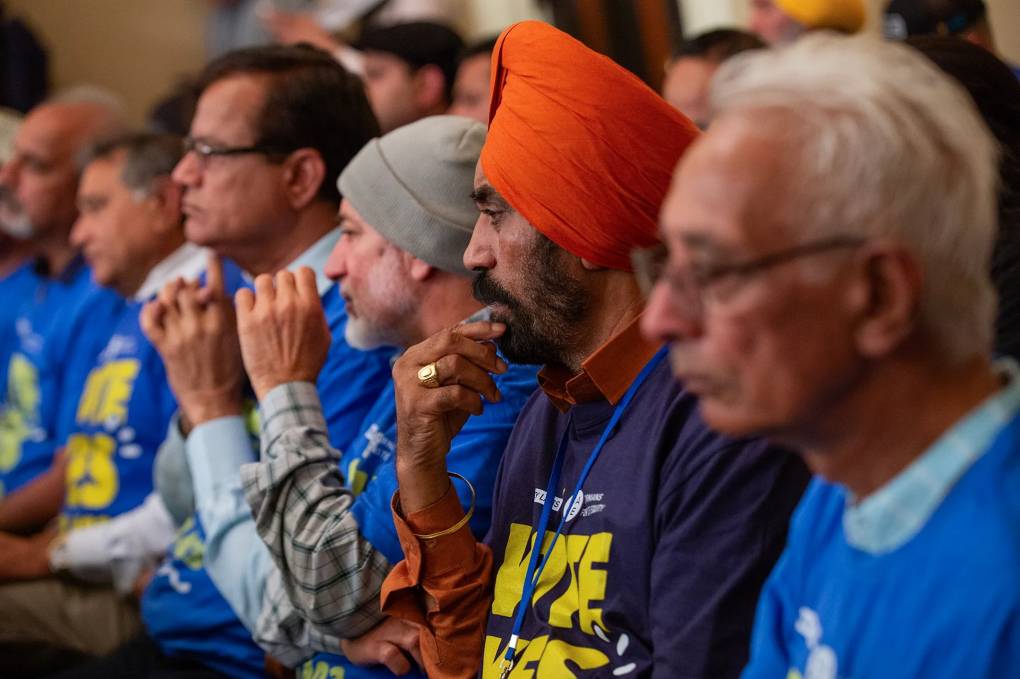
"altTag": "A row of men with tan skin are all wearing blue T-shirts as they sit inside California's Assembly Judiciary Hearing. One man wears an orange headwrap, another a tan beanie. All are seated and looking forward as if listening to a speaker off camera.",
"isLoading": false,
"fetchFailed": false
},
"news_11952645": {
"type": "attachments",
"id": "news_11952645",
"meta": {
"index": "attachments_1716263798",
"site": "news",
"id": "11952645",
"found": true
},
"parent": 0,
"imgSizes": {
"twentyfourteen-full-width": {
"file": "https://ww2.kqed.org/app/uploads/sites/10/2023/06/CalMatters01-1038x576.jpg",
"width": 1038,
"mimeType": "image/jpeg",
"height": 576
},
"thumbnail": {
"file": "https://ww2.kqed.org/app/uploads/sites/10/2023/06/CalMatters01-160x107.jpg",
"width": 160,
"mimeType": "image/jpeg",
"height": 107
},
"post-thumbnail": {
"file": "https://ww2.kqed.org/app/uploads/sites/10/2023/06/CalMatters01-672x372.jpg",
"width": 672,
"mimeType": "image/jpeg",
"height": 372
},
"kqedFullSize": {
"file": "https://ww2.kqed.org/app/uploads/sites/10/2023/06/CalMatters01.jpg",
"width": 1920,
"height": 1279
},
"large": {
"file": "https://ww2.kqed.org/app/uploads/sites/10/2023/06/CalMatters01-1020x679.jpg",
"width": 1020,
"mimeType": "image/jpeg",
"height": 679
},
"1536x1536": {
"file": "https://ww2.kqed.org/app/uploads/sites/10/2023/06/CalMatters01-1536x1023.jpg",
"width": 1536,
"mimeType": "image/jpeg",
"height": 1023
},
"medium": {
"file": "https://ww2.kqed.org/app/uploads/sites/10/2023/06/CalMatters01-800x533.jpg",
"width": 800,
"mimeType": "image/jpeg",
"height": 533
}
},
"publishDate": 1686336350,
"modified": 1686336463,
"caption": "A worshipper at the Shri Guru Ravidass Temple in Rio Linda on June 3, 2023.",
"description": null,
"title": "CalMatters01",
"credit": "Miguel Gutierrez Jr./CalMatters",
"status": "inherit",
"altTag": "A man inside a temple worships and is holding a white feathery fan and is standing next to a microphone at the front of the room.",
"isLoading": false,
"fetchFailed": false
},
"news_11952345": {
"type": "attachments",
"id": "news_11952345",
"meta": {
"index": "attachments_1716263798",
"site": "news",
"id": "11952345",
"found": true
},
"parent": 0,
"imgSizes": {
"twentyfourteen-full-width": {
"file": "https://ww2.kqed.org/app/uploads/sites/10/2023/06/RS48090_034_SanFrancisco_NewsomBontaPressConference_03242021-qut-1038x576.jpg",
"width": 1038,
"mimeType": "image/jpeg",
"height": 576
},
"thumbnail": {
"file": "https://ww2.kqed.org/app/uploads/sites/10/2023/06/RS48090_034_SanFrancisco_NewsomBontaPressConference_03242021-qut-160x107.jpg",
"width": 160,
"mimeType": "image/jpeg",
"height": 107
},
"post-thumbnail": {
"file": "https://ww2.kqed.org/app/uploads/sites/10/2023/06/RS48090_034_SanFrancisco_NewsomBontaPressConference_03242021-qut-672x372.jpg",
"width": 672,
"mimeType": "image/jpeg",
"height": 372
},
"kqedFullSize": {
"file": "https://ww2.kqed.org/app/uploads/sites/10/2023/06/RS48090_034_SanFrancisco_NewsomBontaPressConference_03242021-qut.jpg",
"width": 1920,
"height": 1278
},
"large": {
"file": "https://ww2.kqed.org/app/uploads/sites/10/2023/06/RS48090_034_SanFrancisco_NewsomBontaPressConference_03242021-qut-1020x679.jpg",
"width": 1020,
"mimeType": "image/jpeg",
"height": 679
},
"1536x1536": {
"file": "https://ww2.kqed.org/app/uploads/sites/10/2023/06/RS48090_034_SanFrancisco_NewsomBontaPressConference_03242021-qut-1536x1022.jpg",
"width": 1536,
"mimeType": "image/jpeg",
"height": 1022
},
"medium": {
"file": "https://ww2.kqed.org/app/uploads/sites/10/2023/06/RS48090_034_SanFrancisco_NewsomBontaPressConference_03242021-qut-800x533.jpg",
"width": 800,
"mimeType": "image/jpeg",
"height": 533
}
},
"publishDate": 1686070989,
"modified": 1686071278,
"caption": "California Attorney General Rob Bonta said about 20 people ranging in age from 21 to 30 were flown by private jet to Sacramento on Monday, June 5, 2023. It was the second such flight in four days.",
"description": null,
"title": "RS48090_034_SanFrancisco_NewsomBontaPressConference_03242021-qut",
"credit": "Beth LaBerge/KQED",
"status": "inherit",
"altTag": "A man in a navy blue suit and tie speaks from a podium with one hand extended out as he wears a serious expression. His black hair has little gray. Gov. Gavin Newsom is seen standing in the background, blurred.",
"isLoading": false,
"fetchFailed": false
},
"news_11952234": {
"type": "attachments",
"id": "news_11952234",
"meta": {
"index": "attachments_1716263798",
"site": "news",
"id": "11952234",
"found": true
},
"parent": 0,
"imgSizes": {
"twentyfourteen-full-width": {
"file": "https://ww2.kqed.org/app/uploads/sites/10/2023/06/060523-SACRAMENTO-DIOCESE-MIGRANTS-AP-TN-KQED-1038x576.jpg",
"width": 1038,
"mimeType": "image/jpeg",
"height": 576
},
"thumbnail": {
"file": "https://ww2.kqed.org/app/uploads/sites/10/2023/06/060523-SACRAMENTO-DIOCESE-MIGRANTS-AP-TN-KQED-160x107.jpg",
"width": 160,
"mimeType": "image/jpeg",
"height": 107
},
"post-thumbnail": {
"file": "https://ww2.kqed.org/app/uploads/sites/10/2023/06/060523-SACRAMENTO-DIOCESE-MIGRANTS-AP-TN-KQED-672x372.jpg",
"width": 672,
"mimeType": "image/jpeg",
"height": 372
},
"kqedFullSize": {
"file": "https://ww2.kqed.org/app/uploads/sites/10/2023/06/060523-SACRAMENTO-DIOCESE-MIGRANTS-AP-TN-KQED.jpg",
"width": 1920,
"height": 1280
},
"large": {
"file": "https://ww2.kqed.org/app/uploads/sites/10/2023/06/060523-SACRAMENTO-DIOCESE-MIGRANTS-AP-TN-KQED-1020x680.jpg",
"width": 1020,
"mimeType": "image/jpeg",
"height": 680
},
"1536x1536": {
"file": "https://ww2.kqed.org/app/uploads/sites/10/2023/06/060523-SACRAMENTO-DIOCESE-MIGRANTS-AP-TN-KQED-1536x1024.jpg",
"width": 1536,
"mimeType": "image/jpeg",
"height": 1024
},
"medium": {
"file": "https://ww2.kqed.org/app/uploads/sites/10/2023/06/060523-SACRAMENTO-DIOCESE-MIGRANTS-AP-TN-KQED-800x533.jpg",
"width": 800,
"mimeType": "image/jpeg",
"height": 533
}
},
"publishDate": 1686000094,
"modified": 1686010550,
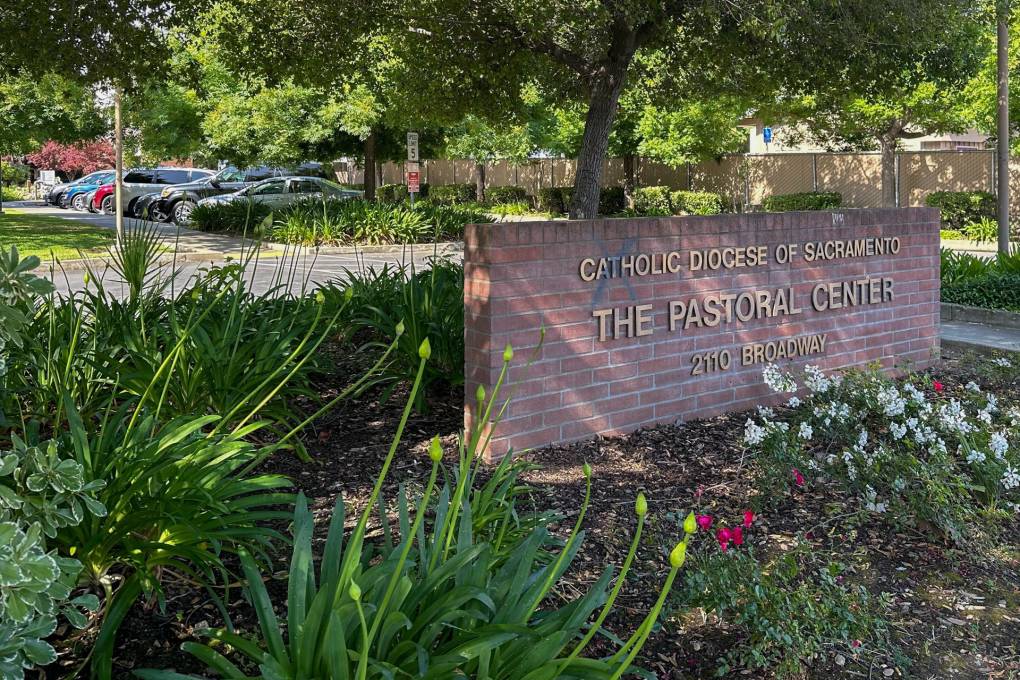
"caption": "The Roman Catholic Diocese of Sacramento, in Sacramento on June 5, 2023. Migrants from Venezuela and Colombia were brought to the diocese's offices on Friday, June 2, 2023, after being flown from New Mexico, by way of Texas, to Sacramento.",
"description": null,
"title": "Immigration Migrant Flights",
"credit": "Tran Nguyen/AP Photo",
"status": "inherit",
"altTag": "A brick, rectangular sign with gold letters surrounded by brown bark, white and red flowers and green bushes reads, \"Catholic Diocese of Sacramento: The Pastoral Center 2110 Broadway.\" It's daytime and a parking lot full of vehicles is seen in the background.",
"isLoading": false,
"fetchFailed": false
},
"news_11936471": {
"type": "attachments",
"id": "news_11936471",
"meta": {
"index": "attachments_1716263798",
"site": "news",
"id": "11936471",
"found": true
},
"parent": 11936453,
"imgSizes": {
"twentyfourteen-full-width": {
"file": "https://ww2.kqed.org/app/uploads/sites/10/2022/12/GettyImages-1245732182-1024x576.jpg",
"width": 1024,
"mimeType": "image/jpeg",
"height": 576
},
"thumbnail": {
"file": "https://ww2.kqed.org/app/uploads/sites/10/2022/12/GettyImages-1245732182-160x107.jpg",
"width": 160,
"mimeType": "image/jpeg",
"height": 107
},
"post-thumbnail": {
"file": "https://ww2.kqed.org/app/uploads/sites/10/2022/12/GettyImages-1245732182-672x372.jpg",
"width": 672,
"mimeType": "image/jpeg",
"height": 372
},
"kqedFullSize": {
"file": "https://ww2.kqed.org/app/uploads/sites/10/2022/12/GettyImages-1245732182.jpg",
"width": 1024,
"height": 683
},
"large": {
"file": "https://ww2.kqed.org/app/uploads/sites/10/2022/12/GettyImages-1245732182-1020x680.jpg",
"width": 1020,
"mimeType": "image/jpeg",
"height": 680
},
"medium": {
"file": "https://ww2.kqed.org/app/uploads/sites/10/2022/12/GettyImages-1245732182-800x534.jpg",
"width": 800,
"mimeType": "image/jpeg",
"height": 534
}
},
"publishDate": 1672344122,
"modified": 1672344273,
"caption": "View of a fence on the US-Mexico border at the San Ysidro crossing port seen from Tijuana, Baja California state, Mexico, on Dec. 19, 2022.",
"description": null,
"title": "MEXICO-US-MIGRATION-BORDER-TITLE 42",
"credit": "Guillermo Arias/AFP via Getty Images",
"status": "inherit",
"altTag": "A view of a border with a Mexican and US flag and high steel barriers.",
"isLoading": false,
"fetchFailed": false
},
"news_11950064": {
"type": "attachments",
"id": "news_11950064",
"meta": {
"index": "attachments_1716263798",
"site": "news",
"id": "11950064",
"found": true
},
"parent": 0,
"imgSizes": {
"twentyfourteen-full-width": {
"file": "https://ww2.kqed.org/app/uploads/sites/10/2023/05/RS38497_GettyImages-73909601-qut-1038x576.jpg",
"width": 1038,
"mimeType": "image/jpeg",
"height": 576
},
"thumbnail": {
"file": "https://ww2.kqed.org/app/uploads/sites/10/2023/05/RS38497_GettyImages-73909601-qut-160x115.jpg",
"width": 160,
"mimeType": "image/jpeg",
"height": 115
},
"post-thumbnail": {
"file": "https://ww2.kqed.org/app/uploads/sites/10/2023/05/RS38497_GettyImages-73909601-qut-672x372.jpg",
"width": 672,
"mimeType": "image/jpeg",
"height": 372
},
"kqedFullSize": {
"file": "https://ww2.kqed.org/app/uploads/sites/10/2023/05/RS38497_GettyImages-73909601-qut.jpg",
"width": 1920,
"height": 1376
},
"large": {
"file": "https://ww2.kqed.org/app/uploads/sites/10/2023/05/RS38497_GettyImages-73909601-qut-1020x731.jpg",
"width": 1020,
"mimeType": "image/jpeg",
"height": 731
},
"1536x1536": {
"file": "https://ww2.kqed.org/app/uploads/sites/10/2023/05/RS38497_GettyImages-73909601-qut-1536x1101.jpg",
"width": 1536,
"mimeType": "image/jpeg",
"height": 1101
},
"medium": {
"file": "https://ww2.kqed.org/app/uploads/sites/10/2023/05/RS38497_GettyImages-73909601-qut-800x573.jpg",
"width": 800,
"mimeType": "image/jpeg",
"height": 573
}
},
"publishDate": 1684445486,
"modified": 1684445661,
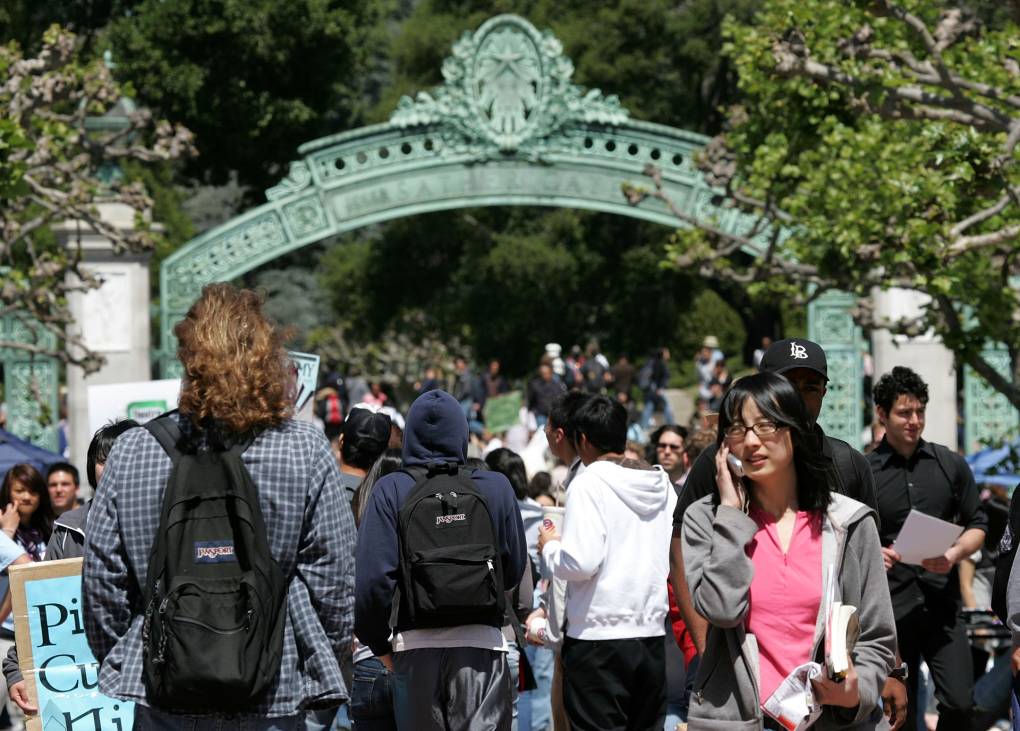
"caption": "UC Berkeley students walk through Sather Gate on the UC Berkeley campus April 17, 2007 in Berkeley, California. ",
"description": null,
"title": "U.S. Campus Security Scrutinized In Wake Of Virginia Tech Tragedy",
"credit": "Justin Sullivan/Getty Images",
"status": "inherit",
"altTag": "College students walk through a large, green archway surrounded by lush, tall trees. Many students wear black Jansport brand backpacks. Another female student with black hair and glasses talks on her cellphone in the foreground.",
"isLoading": false,
"fetchFailed": false
},
"news_11946681": {
"type": "attachments",
"id": "news_11946681",
"meta": {
"index": "attachments_1716263798",
"site": "news",
"id": "11946681",
"found": true
},
"parent": 11946661,
"imgSizes": {
"twentyfourteen-full-width": {
"file": "https://ww2.kqed.org/app/uploads/sites/10/2023/04/SB_277_SafetyNet-1038x576.jpg",
"width": 1038,
"mimeType": "image/jpeg",
"height": 576
},
"thumbnail": {
"file": "https://ww2.kqed.org/app/uploads/sites/10/2023/04/SB_277_SafetyNet-160x107.jpg",
"width": 160,
"mimeType": "image/jpeg",
"height": 107
},
"post-thumbnail": {
"file": "https://ww2.kqed.org/app/uploads/sites/10/2023/04/SB_277_SafetyNet-672x372.jpg",
"width": 672,
"mimeType": "image/jpeg",
"height": 372
},
"kqedFullSize": {
"file": "https://ww2.kqed.org/app/uploads/sites/10/2023/04/SB_277_SafetyNet.jpg",
"width": 1920,
"height": 1280
},
"large": {
"file": "https://ww2.kqed.org/app/uploads/sites/10/2023/04/SB_277_SafetyNet-1020x680.jpg",
"width": 1020,
"mimeType": "image/jpeg",
"height": 680
},
"1536x1536": {
"file": "https://ww2.kqed.org/app/uploads/sites/10/2023/04/SB_277_SafetyNet-1536x1024.jpg",
"width": 1536,
"mimeType": "image/jpeg",
"height": 1024
},
"medium": {
"file": "https://ww2.kqed.org/app/uploads/sites/10/2023/04/SB_277_SafetyNet-800x533.jpg",
"width": 800,
"mimeType": "image/jpeg",
"height": 533
}
},
"publishDate": 1681429681,
"modified": 1681499769,
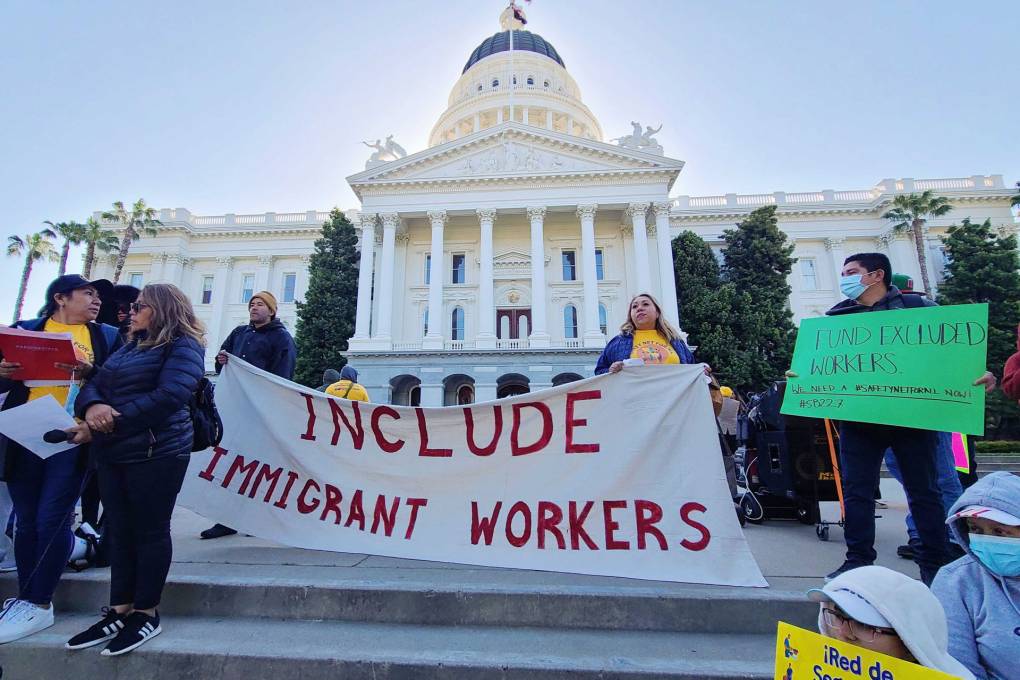
"caption": "Hundreds of people converged at the California state Capitol in support of SB 227, a bill that would offer unemployment benefits to undocumented workers, on Thursday, April 13, 2023.\n",
"description": null,
"title": "SB_227_SafetyNet",
"credit": "Carlos Cabrera-Lomelí/KQED",
"status": "inherit",
"altTag": "People hold up a sign in front of the state Capitol that reads, \"Include Immigrant Workers\"",
"isLoading": false,
"fetchFailed": false
}
},
"audioPlayerReducer": {
"postId": "stream_live",
"isPaused": true,
"isPlaying": false,
"pfsActive": false,
"pledgeModalIsOpen": true,
"playerDrawerIsOpen": false,
"liveAudioPlayStartedAt": 0,
"liveAudioPlayContext": ""
},
"authorsReducer": {
"byline_news_11957568": {
"type": "authors",
"id": "byline_news_11957568",
"meta": {
"override": true
},
"slug": "byline_news_11957568",
"name": "\u003ca href=\"https://calmatters.org/author/wendy-fry/\">Wendy Fry\u003c/a>",
"isLoading": false
},
"byline_news_11955359": {
"type": "authors",
"id": "byline_news_11955359",
"meta": {
"override": true
},
"slug": "byline_news_11955359",
"name": "\u003ca href=\"https://calmatters.org/california-divide/2023/07/undocumented-immigrants-california/\">Jeanne Kuang, Nicole Foy\u003c/a>",
"isLoading": false
},
"byline_news_11955060": {
"type": "authors",
"id": "byline_news_11955060",
"meta": {
"override": true
},
"slug": "byline_news_11955060",
"name": "\u003ca href=\"https://calmatters.org/author/sameea-kamal//\">Sameea Kamal\u003c/a>",
"isLoading": false
},
"byline_news_11952543": {
"type": "authors",
"id": "byline_news_11952543",
"meta": {
"override": true
},
"slug": "byline_news_11952543",
"name": "\u003ca href=\"https://calmatters.org/politics/2023/06/caste-discrimination-california/\">Sameea Kamal and Jeanne Kuang\u003c/a>",
"isLoading": false
},
"byline_news_11952335": {
"type": "authors",
"id": "byline_news_11952335",
"meta": {
"override": true
},
"slug": "byline_news_11952335",
"name": "Trân Nguyen and Olga R. Rodriguez\u003cbr>\u003ca href=\"https://apnews.com/\">The Associated Press\u003c/a>",
"isLoading": false
},
"byline_news_11952227": {
"type": "authors",
"id": "byline_news_11952227",
"meta": {
"override": true
},
"slug": "byline_news_11952227",
"name": "\u003ca href=\"https://apnews.com/\">Trân Nguyen and Olga R. Rodriguez\u003c/a>\u003cbr>The Associated Press",
"isLoading": false
},
"byline_news_11949956": {
"type": "authors",
"id": "byline_news_11949956",
"meta": {
"override": true
},
"slug": "byline_news_11949956",
"name": "\u003ca href=\"https://edsource.org/author/mburke\">Michael Burke\u003c/a>\u003cbr> EdSource",
"isLoading": false
},
"tychehendricks": {
"type": "authors",
"id": "259",
"meta": {
"index": "authors_1716337520",
"id": "259",
"found": true
},
"name": "Tyche Hendricks",
"firstName": "Tyche",
"lastName": "Hendricks",
"slug": "tychehendricks",
"email": "thendricks@kqed.org",
"display_author_email": true,
"staff_mastheads": [
"news"
],
"title": "KQED Senior Editor, Immigration",
"bio": "\u003cspan style=\"font-weight: 400;\">Tyche Hendricks is KQED’s senior editor for immigration, leading coverage of the policy and politics that affect California’s immigrant communities. Her work for KQED’s radio and online audiences is also carried on NPR and other national outlets. She has been recognized with awards from the Radio and Television News Directors Association, the Society for Professional Journalists; the Education Writers Association; the Best of the West and the National Federation of Community Broadcasters. Before joining KQED in 2010, Tyche spent more than a dozen years as a newspaper reporter, notably at the \u003c/span>\u003ci>\u003cspan style=\"font-weight: 400;\">San Francisco Chronicle\u003c/span>\u003c/i>\u003cspan style=\"font-weight: 400;\">. At different times she has covered criminal justice, government and politics and urban planning. Tyche has taught in the MFA Creative Writing program at the University of San Francisco and at UC Berkeley’s Graduate School of Journalism, where she was co-director of a national immigration symposium for professional journalists. She is the author of \u003c/span>\u003ci>\u003cspan style=\"font-weight: 400;\">The Wind Doesn't Need a Passport: Stories from the U.S.-Mexico Borderlands\u003c/span>\u003c/i>\u003cspan style=\"font-weight: 400;\"> (University of California Press). \u003c/span>",
"avatar": "https://secure.gravatar.com/avatar/b8ee458e2731c2d43df86882ce17267e?s=600&d=blank&r=g",
"twitter": "tychehendricks",
"facebook": null,
"instagram": null,
"linkedin": null,
"sites": [
{
"site": "news",
"roles": [
"editor"
]
},
{
"site": "stateofhealth",
"roles": [
"editor"
]
}
],
"headData": {
"title": "Tyche Hendricks | KQED",
"description": "KQED Senior Editor, Immigration",
"ogImgSrc": "https://secure.gravatar.com/avatar/b8ee458e2731c2d43df86882ce17267e?s=600&d=blank&r=g",
"twImgSrc": "https://secure.gravatar.com/avatar/b8ee458e2731c2d43df86882ce17267e?s=600&d=blank&r=g"
},
"isLoading": false,
"link": "/author/tychehendricks"
},
"ecruzguevarra": {
"type": "authors",
"id": "8654",
"meta": {
"index": "authors_1716337520",
"id": "8654",
"found": true
},
"name": "Ericka Cruz Guevarra",
"firstName": "Ericka",
"lastName": "Cruz Guevarra",
"slug": "ecruzguevarra",
"email": "ecruzguevarra@kqed.org",
"display_author_email": true,
"staff_mastheads": [
"news"
],
"title": "Producer, The Bay Podcast",
"bio": "Ericka Cruz Guevarra is host of \u003ca href=\"https://www.kqed.org/podcasts/thebay\">\u003cem>The Bay\u003c/em>\u003c/a> podcast at KQED. Before host, she was the show’s producer. Her work in that capacity includes a three-part reported series on policing in Vallejo, which won a 2020 excellence in journalism award from the Society of Professional Journalists. Ericka has worked as a breaking news reporter at Oregon Public Broadcasting, helped produce the Code Switch podcast, and was KQED’s inaugural Raul Ramirez Diversity Fund intern. She’s also an alumna of NPR’s Next Generation Radio program. Send her an email if you have strong feelings about whether Fairfield and Suisun City are the Bay. Ericka is represented by SAG-AFTRA.",
"avatar": "https://secure.gravatar.com/avatar/25e5ab8d3d53fad2dcc7bb2b5c506b1a?s=600&d=blank&r=g",
"twitter": "NotoriousECG",
"facebook": null,
"instagram": null,
"linkedin": null,
"sites": [
{
"site": "arts",
"roles": [
"subscriber"
]
},
{
"site": "news",
"roles": [
"editor",
"manage_categories"
]
},
{
"site": "futureofyou",
"roles": [
"subscriber"
]
},
{
"site": "stateofhealth",
"roles": [
"subscriber"
]
},
{
"site": "science",
"roles": [
"editor"
]
},
{
"site": "forum",
"roles": [
"subscriber"
]
}
],
"headData": {
"title": "Ericka Cruz Guevarra | KQED",
"description": "Producer, The Bay Podcast",
"ogImgSrc": "https://secure.gravatar.com/avatar/25e5ab8d3d53fad2dcc7bb2b5c506b1a?s=600&d=blank&r=g",
"twImgSrc": "https://secure.gravatar.com/avatar/25e5ab8d3d53fad2dcc7bb2b5c506b1a?s=600&d=blank&r=g"
},
"isLoading": false,
"link": "/author/ecruzguevarra"
},
"fjhabvala": {
"type": "authors",
"id": "8659",
"meta": {
"index": "authors_1716337520",
"id": "8659",
"found": true
},
"name": "Farida Jhabvala Romero",
"firstName": "Farida",
"lastName": "Jhabvala Romero",
"slug": "fjhabvala",
"email": "fjhabvala@kqed.org",
"display_author_email": true,
"staff_mastheads": [
"news"
],
"title": "KQED Contributor",
"bio": "\u003cspan style=\"font-weight: 400;\">Farida Jhabvala Romero is a Labor Correspondent for KQED. She previously covered immigration. Farida was \u003ca href=\"https://www.ccnma.org/2022-most-influential-latina-journalists\">named\u003c/a> one of the 10 Most Influential Latina Journalists in California in 2022 by the California Chicano News Media Association. Her work has won awards from the Society of Professional Journalists (Northern California), as well as a national and regional Edward M. Murrow Award for the collaborative reporting projects “Dangerous Air” and “Graying California.” \u003c/span>\u003cspan style=\"font-weight: 400;\">Before joining KQED, Farida worked as a producer at Radio Bilingüe, a national public radio network. Farida earned her master’s degree in journalism from Stanford University.\u003c/span>",
"avatar": "https://secure.gravatar.com/avatar/c3ab27c5554b67b478f80971e515aa02?s=600&d=blank&r=g",
"twitter": "FaridaJhabvala",
"facebook": null,
"instagram": null,
"linkedin": "https://www.linkedin.com/in/faridajhabvala/",
"sites": [
{
"site": "news",
"roles": [
"editor"
]
},
{
"site": "stateofhealth",
"roles": [
"author"
]
}
],
"headData": {
"title": "Farida Jhabvala Romero | KQED",
"description": "KQED Contributor",
"ogImgSrc": "https://secure.gravatar.com/avatar/c3ab27c5554b67b478f80971e515aa02?s=600&d=blank&r=g",
"twImgSrc": "https://secure.gravatar.com/avatar/c3ab27c5554b67b478f80971e515aa02?s=600&d=blank&r=g"
},
"isLoading": false,
"link": "/author/fjhabvala"
},
"hmcdede": {
"type": "authors",
"id": "11635",
"meta": {
"index": "authors_1716337520",
"id": "11635",
"found": true
},
"name": "Holly McDede",
"firstName": "Holly",
"lastName": "McDede",
"slug": "hmcdede",
"email": "hmcdede@KQED.org",
"display_author_email": false,
"staff_mastheads": [],
"title": "KQED Contributor",
"bio": null,
"avatar": "https://secure.gravatar.com/avatar/999d9bf31bb3a2f0511932d99526cb3e?s=600&d=blank&r=g",
"twitter": null,
"facebook": null,
"instagram": null,
"linkedin": null,
"sites": [
{
"site": "arts",
"roles": [
"editor"
]
},
{
"site": "news",
"roles": [
"edit_others_posts",
"editor"
]
},
{
"site": "science",
"roles": [
"editor"
]
},
{
"site": "forum",
"roles": [
"editor"
]
},
{
"site": "perspectives",
"roles": [
"administrator"
]
}
],
"headData": {
"title": "Holly McDede | KQED",
"description": "KQED Contributor",
"ogImgSrc": "https://secure.gravatar.com/avatar/999d9bf31bb3a2f0511932d99526cb3e?s=600&d=blank&r=g",
"twImgSrc": "https://secure.gravatar.com/avatar/999d9bf31bb3a2f0511932d99526cb3e?s=600&d=blank&r=g"
},
"isLoading": false,
"link": "/author/hmcdede"
},
"amontecillo": {
"type": "authors",
"id": "11649",
"meta": {
"index": "authors_1716337520",
"id": "11649",
"found": true
},
"name": "Alan Montecillo",
"firstName": "Alan",
"lastName": "Montecillo",
"slug": "amontecillo",
"email": "amontecillo@kqed.org",
"display_author_email": false,
"staff_mastheads": [
"news"
],
"title": "KQED Contributor",
"bio": "Alan Montecillo is the senior editor of \u003cem>\u003ca href=\"http://kqed.org/thebay\">The Bay\u003c/a>, \u003c/em> KQED's local news podcast. Before moving to the Bay Area, he worked as a senior talk show producer for WILL in Champaign-Urbana, Illinois and at Oregon Public Broadcasting in Portland, Oregon. He has won journalism awards from the Society of Professional Journalists Northern California, the Public Media Journalists Association, The Signal Awards, and has also received a regional Edward R. Murrow award. Alan is a Filipino American from Hong Kong and a graduate of Reed College.",
"avatar": "https://secure.gravatar.com/avatar/d5e4e7a76481969ccba76f4e2b5ccabc?s=600&d=blank&r=g",
"twitter": "alanmontecillo",
"facebook": null,
"instagram": null,
"linkedin": null,
"sites": [
{
"site": "",
"roles": [
"editor"
]
},
{
"site": "news",
"roles": [
"editor",
"manage_categories"
]
}
],
"headData": {
"title": "Alan Montecillo | KQED",
"description": "KQED Contributor",
"ogImgSrc": "https://secure.gravatar.com/avatar/d5e4e7a76481969ccba76f4e2b5ccabc?s=600&d=blank&r=g",
"twImgSrc": "https://secure.gravatar.com/avatar/d5e4e7a76481969ccba76f4e2b5ccabc?s=600&d=blank&r=g"
},
"isLoading": false,
"link": "/author/amontecillo"
},
"ccabreralomeli": {
"type": "authors",
"id": "11708",
"meta": {
"index": "authors_1716337520",
"id": "11708",
"found": true
},
"name": "Carlos Cabrera-Lomelí",
"firstName": "Carlos",
"lastName": "Cabrera-Lomelí",
"slug": "ccabreralomeli",
"email": "ccabreralomeli@KQED.org",
"display_author_email": true,
"staff_mastheads": [
"news"
],
"title": "Community Reporter",
"bio": "Carlos Cabrera-Lomelí is a community reporter with KQED's digital engagement team. He also reports and co-produces for KQED's bilingual news hub KQED en Español. He grew up in San Francisco's Mission District and has previously worked with Univision, 48 Hills and REFORMA in Mexico City.",
"avatar": "https://secure.gravatar.com/avatar/e95ff80bb2eaf18a8f2af4dcf7ffb54b?s=600&d=mm&r=g",
"twitter": "@LomeliCabrera",
"facebook": null,
"instagram": null,
"linkedin": null,
"sites": [
{
"site": "arts",
"roles": [
"editor"
]
},
{
"site": "news",
"roles": [
"editor"
]
},
{
"site": "about",
"roles": [
"editor"
]
},
{
"site": "science",
"roles": [
"editor"
]
},
{
"site": "perspectives",
"roles": [
"editor"
]
},
{
"site": "elections",
"roles": [
"editor"
]
},
{
"site": "liveblog",
"roles": [
"contributor"
]
}
],
"headData": {
"title": "Carlos Cabrera-Lomelí | KQED",
"description": "Community Reporter",
"ogImgSrc": "https://secure.gravatar.com/avatar/e95ff80bb2eaf18a8f2af4dcf7ffb54b?s=600&d=mm&r=g",
"twImgSrc": "https://secure.gravatar.com/avatar/e95ff80bb2eaf18a8f2af4dcf7ffb54b?s=600&d=mm&r=g"
},
"isLoading": false,
"link": "/author/ccabreralomeli"
},
"mesquinca": {
"type": "authors",
"id": "11802",
"meta": {
"index": "authors_1716337520",
"id": "11802",
"found": true
},
"name": "Maria Esquinca",
"firstName": "Maria",
"lastName": "Esquinca",
"slug": "mesquinca",
"email": "mesquinca@kqed.org",
"display_author_email": false,
"staff_mastheads": [],
"title": "Producer, The Bay",
"bio": "María Esquinca is a producer of The Bay. Before that, she was a New York Women’s Foundation IGNITE Fellow at Latino USA. She worked at Radio Bilingue where she covered the San Joaquin Valley. Maria has interned at WLRN, News 21, The New York Times Student Journalism Institute and at Crain’s Detroit Business as a Dow Jones News Fund Business Reporting Intern. She is an MFA graduate from the University of Miami. In 2017, she graduated from the Walter Cronkite School of Journalism and Mass Communication with a Master of Mass Communication. A fronteriza, she was born in Ciudad Juárez, Chihuahua, Mexico and grew up in El Paso, Texas.",
"avatar": "https://secure.gravatar.com/avatar/77cedba18aae91da775038ba06dcd8d0?s=600&d=blank&r=g",
"twitter": "@m_esquinca",
"facebook": null,
"instagram": null,
"linkedin": null,
"sites": [
{
"site": "news",
"roles": []
}
],
"headData": {
"title": "Maria Esquinca | KQED",
"description": "Producer, The Bay",
"ogImgSrc": "https://secure.gravatar.com/avatar/77cedba18aae91da775038ba06dcd8d0?s=600&d=blank&r=g",
"twImgSrc": "https://secure.gravatar.com/avatar/77cedba18aae91da775038ba06dcd8d0?s=600&d=blank&r=g"
},
"isLoading": false,
"link": "/author/mesquinca"
},
"jherdman": {
"type": "authors",
"id": "11844",
"meta": {
"index": "authors_1716337520",
"id": "11844",
"found": true
},
"name": "Jehlen Herdman",
"firstName": "Jehlen",
"lastName": "Herdman",
"slug": "jherdman",
"email": "jherdman@kqed.org",
"display_author_email": false,
"staff_mastheads": [],
"title": "KQED Contributor",
"bio": null,
"avatar": "https://secure.gravatar.com/avatar/ecf8a8048cad2aa4bfa7eec2a24b7015?s=600&d=blank&r=g",
"twitter": null,
"facebook": null,
"instagram": null,
"linkedin": null,
"sites": [
{
"site": "news",
"roles": [
"editor"
]
}
],
"headData": {
"title": "Jehlen Herdman | KQED",
"description": "KQED Contributor",
"ogImgSrc": "https://secure.gravatar.com/avatar/ecf8a8048cad2aa4bfa7eec2a24b7015?s=600&d=blank&r=g",
"twImgSrc": "https://secure.gravatar.com/avatar/ecf8a8048cad2aa4bfa7eec2a24b7015?s=600&d=blank&r=g"
},
"isLoading": false,
"link": "/author/jherdman"
}
},
"pagesReducer": {
"news_tag_immigration": {
"type": "terms",
"id": "news_20202",
"meta": {
"index": "terms_1716263798",
"site": "news",
"id": "20202",
"score": 6.90447
},
"featImg": null,
"name": "immigration",
"description": null,
"taxonomy": "tag",
"headData": {
"twImgId": null,
"twTitle": null,
"ogTitle": null,
"ogImgId": null,
"twDescription": null,
"description": null,
"title": "immigration Archives | KQED News",
"ogDescription": null
},
"ttid": 20219,
"slug": "immigration",
"isLoading": false,
"title": "immigration",
"pageMeta": {
"site": "news",
"WpPageTemplate": "page-topic-editorial",
"currentPage": 46
},
"blocks": [
{
"blockName": "kqed/post-list",
"attrs": {
"layout": "cardArticle2",
"query": "posts/news?tag=immigration",
"seeMore": false,
"paginated": true,
"page": 46
}
},
{
"blockName": "kqed/ad"
}
]
}
},
"pfsSessionReducer": {},
"postsReducer": {
"stream_live": {
"type": "live",
"id": "stream_live",
"audioUrl": "https://streams.kqed.org/kqedradio",
"title": "Live Stream",
"excerpt": "Live Stream information currently unavailable.",
"link": "/radio",
"featImg": "",
"label": {
"name": "KQED Live",
"link": "/"
}
},
"stream_kqedNewscast": {
"type": "posts",
"id": "stream_kqedNewscast",
"audioUrl": "https://www.kqed.org/.stream/anon/radio/RDnews/newscast.mp3?_=1",
"title": "KQED Newscast",
"featImg": "",
"label": {
"name": "88.5 FM",
"link": "/"
}
},
"news_11958506": {
"type": "posts",
"id": "news_11958506",
"meta": {
"index": "posts_1716263798",
"site": "news",
"id": "11958506",
"score": null,
"sort": [
1692788423000
]
},
"guestAuthors": [],
"slug": "guide-unsafe-working-conditions-employer-retaliation-and-worker-protections",
"title": "California Farmworkers Guide to Unsafe Working Conditions and Worker Protections",
"publishDate": 1692788423,
"format": "standard",
"headTitle": "California Farmworkers Guide to Unsafe Working Conditions and Worker Protections | KQED",
"labelTerm": {
"site": "news"
},
"content": "\u003cp>\u003ca href=\"https://www.kqed.org/news/11960536/trabaja-en-los-campos-de-california-que-hacer-si-sufre-represalias\">\u003cem>Leer en español\u003c/em>\u003c/a>\u003c/p>\n\u003cp>Twenty-one immigrant farmworkers will collectively receive $328,077 from their former employer, Mauritson Farms, a Sonoma County vineyard company, \u003ca href=\"https://www.kqed.org/news/11956413/how-california-farmworkers-took-on-a-sonoma-winery-over-abuses-and-won\">after the grower reached a settlement with state labor regulators\u003c/a> earlier this summer. Officials with the California Agricultural Labor Relations Board (ALRB) announced in July that their investigation determined Mauritson Farms retaliated against the workers — who were in the U.S. on H-2A visas — after they spoke up about unsafe conditions in the fields.\u003c/p>\n\u003cp>Such incidents of employer retaliation against workers who speak up are unfortunately not rare. In the agriculture industry, many workers get punished by their boss — or the person that connected them to employment — after they request a better or safer workplace.\u003c/p>\n\u003cp>\u003cstrong>Jump straight to specific advice: \u003c/strong>\u003c/p>\n\u003cul>\n\u003cli>\u003cstrong>\u003ca href=\"#unsafe\">What’s considered ‘unsafe working conditions’ for farmworkers?\u003c/a>\u003c/strong>\u003c/li>\n\u003cli>\u003cstrong>\u003ca href=\"#retaliation\">What is retaliation by an employer?\u003c/a>\u003c/strong>\u003c/li>\n\u003cli>\u003cstrong>\u003ca href=\"#undocumented\">Do these protections still apply for undocumented employees?\u003c/a>\u003c/strong>\u003c/li>\n\u003cli>\u003cstrong>\u003ca href=\"#enforce\">Which agencies enforce labor rules in California?\u003c/a>\u003c/strong>\u003c/li>\n\u003cli>\u003cstrong>\u003ca href=\"#speakingup\">I believe my employer retaliated against me for speaking up about conditions at work. What should I do?\u003c/a>\u003c/strong>\u003c/li>\n\u003cli>\u003cstrong>\u003ca href=\"#options\">I am nervous about my immigration situation if I report what happened at work. What are my options?\u003c/a>\u003c/strong>\u003c/li>\n\u003c/ul>\n\u003cp>In California, it is illegal for an employer to retaliate against their employee, regardless of their immigration or documentation status. But that still doesn’t prevent some growers from punishing workers that speak up.\u003c/p>\n\u003cp>That’s why we have created this guide to inform farmworkers about their rights and protections. When you work in the fields, even if you are in the United States without documentation, your employer needs to respect your rights — and this is how they can be held accountable if they don’t.\u003c/p>\n\u003ch2>\u003ca id=\"unsafe\">\u003c/a>What’s considered unsafe working conditions for farmworkers?\u003c/h2>\n\u003cp>California has \u003ca href=\"https://www.dir.ca.gov/dosh/dosh_publications/ag-field-operations.pdf\">a complex set of rules for what a safe working environment is in the agriculture industry (PDF)\u003c/a>, which cover things like worker safety during wildfires, handling farm machinery, and even in the case of dairies and grain facilities, how to prevent accidents in confined spaces.\u003c/p>\n\u003cp>Regardless of \u003ca href=\"https://www.kqed.org/news/11886628/feeling-the-heat-how-workers-can-advocate-for-safer-working-conditions-under-the-sun\">how hot it is\u003c/a>, employers must always provide farmworkers with enough drinking water near their stations. Each employee should have access to at least one quart of water every hour. And even if folks bring their own water bottles, employers must still have enough water available on site.[aside postID=news_11886628]When temperatures rise above 80 degrees, employers must also provide an area with enough shade to accommodate every worker on-site. On days hotter than 95 degrees, supervisors must check in with laborers consistently throughout the day and ensure workers take breaks that are at least 10 minutes long every 2 hours to prevent overheating. Just “offering” these breaks is not sufficient.\u003c/p>\n\u003cp>These heat-safety rules apply to workers in all industries, not just the agricultural sector.\u003c/p>\n\u003cul>\n\u003cli>\u003cstrong>\u003ca href=\"#tellus\">Tell us: What else do you need information about right now?\u003c/a>\u003c/strong>\u003c/li>\n\u003c/ul>\n\u003ch2>\u003ca id=\"retaliation\">\u003c/a>What is retaliation by an employer?\u003c/h2>\n\u003cp>In California, retaliation means when an employer fires, punishes or cuts the wages or hours of a worker because that individual sought to improve their working conditions. This includes \u003ca href=\"https://www.kqed.org/news/11956413/how-california-farmworkers-took-on-a-sonoma-winery-over-abuses-and-won\">cases of growers refusing to rehire seasonal workers for the next harvest after they have spoken up\u003c/a>.\u003c/p>\n\u003cp>Asking your boss to improve working conditions doesn’t have to be something big like organizing a strike or a march. It can also include:\u003c/p>\n\u003cul>\n\u003cli>Asking for more water and shade to be provided on very hot days.\u003c/li>\n\u003cli>Asking for equipment necessary to keep you safe when working in the fields.\u003c/li>\n\u003cli>Pointing out that some of your wages are missing.\u003c/li>\n\u003c/ul>\n\u003cp>If there is a law concerning your safety, your labor rights or your wages that your employer is not following, you should be able to talk about it with your boss freely and safely.\u003c/p>\n\u003cp>\u003ca id=\"undocumented\">\u003c/a>\u003cstrong>Do these protections still apply for undocumented employees?\u003c/strong>\u003c/p>\n\u003cp>Yes. California’s safety rules benefit all workers, regardless of their immigration status. Your employer cannot use your immigration status as a reason to exclude you from safety protections.[pullquote size=\"medium\" align=\"right\" citation=\"Jessica Arciniega, regional director, ALRB\"]‘Immigration status, if that’s an issue, is not anything that our office asks folks about.’[/pullquote]Additionally, undocumented workers can still seek help from state agencies that enforce labor protections — that is, being undocumented doesn’t disqualify them from seeking (and getting) this help from the state.\u003c/p>\n\u003cp>“Immigration status, if that’s an issue, is not anything that our office asks folks about,” confirmed Jessica Arciniega, regional director of the ALRB, which investigates possible workplace abuses in the agricultural industry.\u003c/p>\n\u003cp>\u003ca id=\"withoutcontract\">\u003c/a>\u003cstrong>Do these protections still apply for those working without a formal contract?\u003c/strong>\u003c/p>\n\u003cp>If you’re working for an individual or a business without a formal job contract, labor rights experts say that these protections still apply to you — as long as it can be proven that you, as a worker, have provided labor in exchange for payment.\u003c/p>\n\u003cp>In some cases, that proof could include written communication between a worker and an employer — like an email, or a text message — that confirms that an exchange of services for payment took place.\u003c/p>\n\u003ch2>\u003ca id=\"enforce\">\u003c/a>Which agencies enforce labor rules in California?\u003c/h2>\n\u003cp>There are three state agencies that investigate labor violations and have the authority to penalize bad employers. All three agencies can investigate cases in the agricultural industry.\u003c/p>\n\u003cp>\u003cstrong>The Agricultural Labor Relations Board\u003c/strong>\u003c/p>\n\u003cp>The ALRB was created in 1975 after then-Gov. Jerry Brown signed the California Agricultural Labor Relations Act in 1975. This legislation also defines what an unfair labor practice is: actions taken by an employer that violate the rights of farmworkers, which includes retaliation — firing or cutting the wages of employees who ask for better working conditions. \u003cstrong>\u003ca href=\"#speakingup\">Jump straight to what you can do if you believe your employer has retaliated against you.\u003c/a>\u003c/strong>\u003c/p>\n\u003cp>“I would encourage anybody that’s considering whether or not their rights were violated to call our office,” said the ALRB’s Arciniega. “Not only is our staff bilingual, but they’re culturally competent. Many of them, their families or past generations have worked in agriculture or are farmworkers.”\u003c/p>\n\u003cp>You can contact the ALRB directly by calling 1-800-449-3699 or \u003ca href=\"https://www.alrb.ca.gov/contact-us/\">reach out to its regional offices located in Santa Rosa, Salinas, Visalia, Oxnard and Indio\u003c/a>. Bay Area workers should contact the Santa Rosa office.\u003c/p>\n\u003cp>An ALRB official can talk to you more about workplace safety rules and your rights as a worker specific to your situation. Additionally, they can explain how you can file an unfair labor practice charge against your employer which could set off a formal investigation of your employer by the ALRB.\u003c/p>\n\u003cp>\u003cstrong>California Division of Occupational Safety and Health\u003c/strong>\u003c/p>\n\u003cp>Cal/OSHA creates and enforces the state’s rules on workplace safety, making sure that employees are not exposed to dangerous chemicals or placed in risky situations.\u003c/p>\n\u003cp>If your boss is making you or your colleagues do something you are not sure is safe, you can check in with the agency by calling (833) 579-0927.\u003c/p>\n\u003cp>\u003cstrong>The Labor Commissioner’s Office\u003c/strong>\u003c/p>\n\u003cp>The Labor Commissioner’s Office — which is also known as the Division of Labor Standards Enforcement (DLSE) — is the part of California’s Department of Industrial Relations that looks into wage theft and retaliation by employers against workers.\u003c/p>\n\u003cp>If you think your boss is not paying you correctly for the hours you work or refuses to pay you for overtime, this is the agency you should contact.\u003c/p>\n\u003ch2>\u003ca id=\"speakingup\">\u003c/a>I believe my employer retaliated against me for speaking up about conditions at work. What should I do?\u003c/h2>\n\u003cp>\u003cstrong>Pause while you document everything.\u003c/strong>\u003c/p>\n\u003cp>If you just lost your job or wages, and you think it’s because of retaliation, first take some time to process the situation, and collect your thoughts.\u003c/p>\n\u003cp>“I’d recommend folks to write down everything they remember that led up to this, because with the strong feelings you have at the moment, it is easy to forget important details,” said Ana Salgado, former farmworker and board member of North Bay Jobs With Justice (NBJWJ), a labor rights group that assisted the former employees of Mauritson Farms in their case with the ALRB.\u003c/p>\n\u003cp>“Believe in yourself and in what you know happened to you,” she added.\u003c/p>\n\u003cp>[ad fullwidth]\u003c/p>\n\u003cp>\u003cstrong>Collect past evidence\u003c/strong>\u003c/p>\n\u003cp>As you’re jotting down your experiences, also look for written messages between you and your employer where you describe conditions at work and your supervisor’s response. This could be letters, emails or even screenshots of a text message conversation.\u003c/p>\n\u003cp>Other important pieces of information to look for are your pay stubs that show a cut in wages or hours after you spoke, or photos of conditions in the fields, your workstation or housing, if it’s employer-provided.\u003c/p>\n\u003cp>\u003cstrong>\u003ca id=\"laborrightsgroups\">\u003c/a>Seek help from the professionals\u003c/strong>\u003c/p>\n\u003cp>Salgado also recommends looking for the help of a labor rights organization in your area. Advocates can help you create a timeline of what happened, help you contact your employer if you want to try resolving the situation directly, or even prepare you for talking to state officials if you choose to take that step.\u003c/p>\n\u003cp>Based on their resources, like staff numbers, some groups can provide more help than others. So if you think you may need extra guidance and support, consider reaching out to more than one organization.\u003c/p>\n\u003cp>Here are some organizations in the Bay Area that can connect farmworkers with help:\u003c/p>\n\u003cul>\n\u003cli>California Rural Legal Assistance: (800) 337-0690\u003c/li>\n\u003cli>Legal Aid at Work: (415) 864-8208\u003c/li>\n\u003cli>North Bay Organizing Project: (707) 843-7858\u003c/li>\n\u003cli>Asian Americans Advancing Justice/Asian Law Caucus: (415) 896-1701\u003c/li>\n\u003cli>Centro Legal de la Raza (Oakland): (510) 437-1554\u003c/li>\n\u003cli>La Raza Centro Legal (San Francisco): (415) 575-3500\u003c/li>\n\u003c/ul>\n\u003ch2>\u003ca id=\"fileclaim\">\u003c/a>I want to file a claim so officials can investigate my situation. What’s next?\u003c/h2>\n\u003cp>If you are ready to report what happened, the ALRB will be the agency you contact. You will need a \u003ca href=\"https://www.alrb.ca.gov/wp-content/uploads/sites/196/2018/05/alrb_form38_en.pdf\">Charge Against Employer form (PDF)\u003c/a>, which you need to print out, complete and either email or mail to your \u003ca href=\"https://www.alrb.ca.gov/contact-us/\">nearest ALRB field office\u003c/a>.\u003c/p>\n\u003cp>For Bay Area residents, that’s the Santa Rosa office:\u003c/p>\n\u003cul>\n\u003cli>Phone: (707) 527-3256\u003c/li>\n\u003cli>Email: Contact regional director Jessica Arciniega at \u003ca href=\"Jessica.Arciniega@alrb.ca.gov\">Jessica.Arciniega@alrb.ca.gov\u003c/a>\u003c/li>\n\u003cli>Mail: 606 Healdsburg Avenue Santa Rosa, CA 95401\u003c/li>\n\u003c/ul>\n\u003cp>If you need to complete the form in another language that is not English, \u003ca href=\"https://www.alrb.ca.gov/contact-us/\">reach out to your nearest field office directly\u003c/a>.\u003c/p>\n\u003cp>Keep in mind that the ALRB requires at least two workers to come together to file a charge. If you are nervous about this step, a workers’ rights group can file a charge on your behalf — \u003ca href=\"https://www.kqed.org/news/11956413/how-california-farmworkers-took-on-a-sonoma-winery-over-abuses-and-won\">which is what happened in the Mauritson Farms case\u003c/a>.\u003c/p>\n\u003ch2>Why you should file a charge as soon as possible (even if you’re anxious)\u003c/h2>\n\u003cp>Labor advocates recommend employees report what happened to them as soon as they can. This gives state officials more time to talk to laborers and investigate what happened in the fields.\u003c/p>\n\u003cp>Timing becomes even more important when farmworkers are in the country on a temporary work permit, like the H-2A visa.\u003c/p>\n\u003cp>It is completely understandable if you are feeling very nervous about filing a report — especially if you are afraid your employer or the person that got you the job is threatening you with further retaliation. But keep in mind that there is a time limit to report an incident with the state. You only have six months from the moment you experienced retaliation (when your hours were cut, or you were fired or knew you would not be rehired) to file a charge with the ALRB.\u003c/p>\n\u003cp>After the six-month mark, officials cannot launch an investigation.\u003c/p>\n\u003cp>What if your boss — or the individual that connected you with employment, like a job recruiter — continues to threaten you with further retaliation if you talk to the state?\u003c/p>\n\u003cp>In this case, it could be a good idea to seek help from a labor rights group to protect yourself. \u003ca href=\"#laborrightsgroups\">See a list of labor rights groups you can contact.\u003c/a>\u003c/p>\n\u003ch2>Once I file a charge with the ALRB, what happens?\u003c/h2>\n\u003cp>\u003cstrong>The agency assesses your case.\u003c/strong>\u003c/p>\n\u003cp>Officials will first decide if your situation meets the requirements to begin an investigation.\u003c/p>\n\u003cp>Some examples of when the ALRB wouldn’t be able to take your case: if you were fired — two years ago — and you think your boss did that to retaliate against you, that exceeds the ALRB’s six-month time limit and the agency cannot launch an investigation. Or if the incident took place in a farm in another state, that is also out of the ALRB’s jurisdiction.\u003c/p>\n\u003cp>\u003cstrong>An investigation begins, and your employer is notified.\u003c/strong>\u003c/p>\n\u003cp>If the agency is able to take the case, ALRB officials will confirm that with you. They will then notify your employer about the charge, and that an investigation will begin, says ALRB General Counsel Julia Montgomery.\u003c/p>\n\u003cp>“A team of lawyers and investigators will take on the investigation, which can include the workers involved in the investigation, other employees, supervisors and anyone else that could have relevant information,” said Montgomery. Investigators can also request documents and other written records from both employers and workers, she said.\u003c/p>\n\u003cp>This step can take months, or even years. If you are no longer in the U.S. during the investigation because of your immigration situation, the ALRB will still look to contact you. In past cases, agency officials have sought out farmworkers even when they have traveled back to remote rural communities in their countries of origin.\u003c/p>\n\u003cp>\u003cstrong>A decision is made about the charge.\u003c/strong>\u003c/p>\n\u003cp>After the investigation, officials will determine if there is enough evidence to confirm if retaliation or another unfair labor practice took place. If there is not enough evidence, the charge is dismissed.\u003c/p>\n\u003cp>If the evidence is sufficient, however, the ALRB regional director will present a formal complaint against the employer.\u003c/p>\n\u003cp>But, hold on, that doesn’t mean you have won your case yet.\u003c/p>\n\u003ch2>How the ALRB brings a case against an employer\u003c/h2>\n\u003cp>A date for a hearing will be set and an administrative judge will decide whether the employer did in fact break the law.\u003c/p>\n\u003cp>Both sides will have an opportunity to defend their case: your employer and their legal representatives, and the ALRB which will argue that you experienced retaliation.\u003c/p>\n\u003cp>If the judge decides in favor of the ALRB and the employees involved, workers can receive compensation to make up for lost wages and potentially even be re-employed if they lost their jobs. ALRB officials will travel to the farm and inform other employees of the case. Additionally, employers could face heavy fines.\u003c/p>\n\u003cp>At any step of the process, the ALRB can strike a settlement agreement with the employer. A settlement can also include compensation for the affected workers or even employment offers.\u003c/p>\n\u003ch2>\u003ca id=\"options\">\u003c/a>I am nervous about my immigration situation if I report what happened at work. What are my options?\u003c/h2>\n\u003cp>On July 19, Gov. Gavin Newsom announced a \u003ca href=\"https://www.kqed.org/news/11956315/some-migrant-farmworkers-to-get-free-legal-help-with-immigration\">$4.5 million pilot program to provide free immigration legal services to farmworkers who are involved in state labor investigations\u003c/a>. This would include case-review services, legal advice and representation by an attorney to laborers in California who have a pending case with either the ALRB, the Labor Commissioner’s Office or Cal/OSHA.[aside postID=news_11956315]The goal of this program, officials say, is to address one of the fears that prevents employees from speaking up — the fear of losing their visa or not being rehired — by connecting them to immigration experts who could help them find ways to stay in this country. And earlier this year, the \u003ca href=\"https://www.kqed.org/news/11940316/fear-of-deportation-keeps-some-workers-from-reporting-labor-abuses-a-new-biden-program-aims-to-change-that\">Biden administration unveiled a new, streamlined “deferred action” initiative\u003c/a> that allows workers to apply for a work permit and two years of protection from deportation, if they are cooperating with a labor rights investigation.\u003c/p>\n\u003cp>To learn more about the pilot program and whether your case could qualify for free legal services from the state, \u003ca href=\"https://www.alrb.ca.gov/contact-us/\">talk to your ALRB field office\u003c/a>.\u003c/p>\n\u003ch2>\u003ca id=\"tellus\">\u003c/a>Tell us: What else do you need information about?\u003c/h2>\n\u003cp>At KQED News, we know that it can sometimes be hard to track down the answers to navigate life in the Bay Area in 2023. We’ve published \u003ca href=\"https://www.kqed.org/news/tag/coronavirus-resources-and-explainers\">clear, practical explainers and guides about COVID\u003c/a>, \u003ca href=\"https://www.kqed.org/news/11936674/how-to-prepare-for-this-weeks-atmospheric-river-storm-sandbags-emergency-kits-and-more\">how to cope with intense winter weather\u003c/a> and \u003ca href=\"https://www.kqed.org/news/11821950/how-to-safely-attend-a-protest-in-the-bay-area\">how to exercise your right to protest safely\u003c/a>.\u003c/p>\n\u003cp>So tell us: What do you need to know more about? Tell us, and you could see your question answered online or on social media. What you submit will make our reporting stronger, and help us decide what to cover here on our site, and on KQED Public Radio, too.\u003c/p>\n\u003cp>[hearken id=\"10483\" src=\"https://modules.wearehearken.com/kqed/embed/10483.js\"]\u003c/p>\n\u003cp>[ad floatright]\u003c/p>\n",
"blocks": [],
"excerpt": "In California, it's illegal for an employer to retaliate against workers, regardless of immigration or documentation status. Still, some employers punish workers for speaking up. Here's what you can do.",
"status": "publish",
"parent": 0,
"modified": 1746621467,
"stats": {
"hasAudio": false,
"hasVideo": false,
"hasChartOrMap": false,
"iframeSrcs": [],
"hasGoogleForm": false,
"hasGallery": false,
"hasHearkenModule": true,
"hasPolis": false,
"paragraphCount": 73,
"wordCount": 2827
},
"headData": {
"title": "Know Your Rights: Reporting Unsafe Work Conditions in California | KQED",
"description": "Know how to identify unsafe working conditions, protections against employer retaliation & discover steps to report violations—regardless of immigration status.",
"ogTitle": "",
"ogDescription": "",
"ogImgId": "",
"twTitle": "",
"twDescription": "",
"twImgId": "",
"socialTitle": "Know Your Rights: Reporting Unsafe Work Conditions in California | KQED",
"socialDescription": "Know how to identify unsafe working conditions, protections against employer retaliation & discover steps to report violations—regardless of immigration status.",
"schema": {
"@context": "https://schema.org",
"@type": "NewsArticle",
"headline": "California Farmworkers Guide to Unsafe Working Conditions and Worker Protections",
"datePublished": "2023-08-23T04:00:23-07:00",
"dateModified": "2025-05-07T05:37:47-07:00",
"image": "https://cdn.kqed.org/wp-content/uploads/2020/02/KQED-OG-Image@1x.png",
"isAccessibleForFree": "True",
"publisher": {
"@type": "NewsMediaOrganization",
"@id": "https://www.kqed.org/#organization",
"name": "KQED",
"logo": "https://cdn.kqed.org/wp-content/uploads/2020/02/KQED-OG-Image@1x.png",
"url": "https://www.kqed.org",
"sameAs": [
"https://www.facebook.com/KQED",
"https://twitter.com/KQED",
"https://www.instagram.com/kqed/",
"https://www.tiktok.com/@kqedofficial",
"https://www.linkedin.com/company/kqed",
"https://www.youtube.com/channel/UCeC0IOo7i1P_61zVUWbJ4nw"
]
}
}
},
"sticky": false,
"templateType": "standard",
"featuredImageType": "standard",
"excludeFromSiteSearch": "Include",
"articleAge": "0",
"path": "/news/11958506/guide-unsafe-working-conditions-employer-retaliation-and-worker-protections",
"audioTrackLength": null,
"parsedContent": [
{
"type": "contentString",
"content": "\u003cdiv class=\"post-body\">\u003cp>\u003cp>\u003ca href=\"https://www.kqed.org/news/11960536/trabaja-en-los-campos-de-california-que-hacer-si-sufre-represalias\">\u003cem>Leer en español\u003c/em>\u003c/a>\u003c/p>\n\u003cp>Twenty-one immigrant farmworkers will collectively receive $328,077 from their former employer, Mauritson Farms, a Sonoma County vineyard company, \u003ca href=\"https://www.kqed.org/news/11956413/how-california-farmworkers-took-on-a-sonoma-winery-over-abuses-and-won\">after the grower reached a settlement with state labor regulators\u003c/a> earlier this summer. Officials with the California Agricultural Labor Relations Board (ALRB) announced in July that their investigation determined Mauritson Farms retaliated against the workers — who were in the U.S. on H-2A visas — after they spoke up about unsafe conditions in the fields.\u003c/p>\n\u003cp>Such incidents of employer retaliation against workers who speak up are unfortunately not rare. In the agriculture industry, many workers get punished by their boss — or the person that connected them to employment — after they request a better or safer workplace.\u003c/p>\n\u003cp>\u003cstrong>Jump straight to specific advice: \u003c/strong>\u003c/p>\n\u003cul>\n\u003cli>\u003cstrong>\u003ca href=\"#unsafe\">What’s considered ‘unsafe working conditions’ for farmworkers?\u003c/a>\u003c/strong>\u003c/li>\n\u003cli>\u003cstrong>\u003ca href=\"#retaliation\">What is retaliation by an employer?\u003c/a>\u003c/strong>\u003c/li>\n\u003cli>\u003cstrong>\u003ca href=\"#undocumented\">Do these protections still apply for undocumented employees?\u003c/a>\u003c/strong>\u003c/li>\n\u003cli>\u003cstrong>\u003ca href=\"#enforce\">Which agencies enforce labor rules in California?\u003c/a>\u003c/strong>\u003c/li>\n\u003cli>\u003cstrong>\u003ca href=\"#speakingup\">I believe my employer retaliated against me for speaking up about conditions at work. What should I do?\u003c/a>\u003c/strong>\u003c/li>\n\u003cli>\u003cstrong>\u003ca href=\"#options\">I am nervous about my immigration situation if I report what happened at work. What are my options?\u003c/a>\u003c/strong>\u003c/li>\n\u003c/ul>\n\u003cp>In California, it is illegal for an employer to retaliate against their employee, regardless of their immigration or documentation status. But that still doesn’t prevent some growers from punishing workers that speak up.\u003c/p>\n\u003cp>That’s why we have created this guide to inform farmworkers about their rights and protections. When you work in the fields, even if you are in the United States without documentation, your employer needs to respect your rights — and this is how they can be held accountable if they don’t.\u003c/p>\n\u003ch2>\u003ca id=\"unsafe\">\u003c/a>What’s considered unsafe working conditions for farmworkers?\u003c/h2>\n\u003cp>California has \u003ca href=\"https://www.dir.ca.gov/dosh/dosh_publications/ag-field-operations.pdf\">a complex set of rules for what a safe working environment is in the agriculture industry (PDF)\u003c/a>, which cover things like worker safety during wildfires, handling farm machinery, and even in the case of dairies and grain facilities, how to prevent accidents in confined spaces.\u003c/p>\n\u003cp>Regardless of \u003ca href=\"https://www.kqed.org/news/11886628/feeling-the-heat-how-workers-can-advocate-for-safer-working-conditions-under-the-sun\">how hot it is\u003c/a>, employers must always provide farmworkers with enough drinking water near their stations. Each employee should have access to at least one quart of water every hour. And even if folks bring their own water bottles, employers must still have enough water available on site.\u003c/p>\u003c/div>",
"attributes": {
"named": {},
"numeric": []
}
},
{
"type": "component",
"content": "",
"name": "aside",
"attributes": {
"named": {
"postid": "news_11886628",
"label": ""
},
"numeric": []
}
},
{
"type": "contentString",
"content": "\u003cdiv class=\"post-body\">\u003cp>When temperatures rise above 80 degrees, employers must also provide an area with enough shade to accommodate every worker on-site. On days hotter than 95 degrees, supervisors must check in with laborers consistently throughout the day and ensure workers take breaks that are at least 10 minutes long every 2 hours to prevent overheating. Just “offering” these breaks is not sufficient.\u003c/p>\n\u003cp>These heat-safety rules apply to workers in all industries, not just the agricultural sector.\u003c/p>\n\u003cul>\n\u003cli>\u003cstrong>\u003ca href=\"#tellus\">Tell us: What else do you need information about right now?\u003c/a>\u003c/strong>\u003c/li>\n\u003c/ul>\n\u003ch2>\u003ca id=\"retaliation\">\u003c/a>What is retaliation by an employer?\u003c/h2>\n\u003cp>In California, retaliation means when an employer fires, punishes or cuts the wages or hours of a worker because that individual sought to improve their working conditions. This includes \u003ca href=\"https://www.kqed.org/news/11956413/how-california-farmworkers-took-on-a-sonoma-winery-over-abuses-and-won\">cases of growers refusing to rehire seasonal workers for the next harvest after they have spoken up\u003c/a>.\u003c/p>\n\u003cp>Asking your boss to improve working conditions doesn’t have to be something big like organizing a strike or a march. It can also include:\u003c/p>\n\u003cul>\n\u003cli>Asking for more water and shade to be provided on very hot days.\u003c/li>\n\u003cli>Asking for equipment necessary to keep you safe when working in the fields.\u003c/li>\n\u003cli>Pointing out that some of your wages are missing.\u003c/li>\n\u003c/ul>\n\u003cp>If there is a law concerning your safety, your labor rights or your wages that your employer is not following, you should be able to talk about it with your boss freely and safely.\u003c/p>\n\u003cp>\u003ca id=\"undocumented\">\u003c/a>\u003cstrong>Do these protections still apply for undocumented employees?\u003c/strong>\u003c/p>\n\u003cp>Yes. California’s safety rules benefit all workers, regardless of their immigration status. Your employer cannot use your immigration status as a reason to exclude you from safety protections.\u003c/p>\u003c/div>",
"attributes": {
"named": {},
"numeric": []
}
},
{
"type": "component",
"content": "‘Immigration status, if that’s an issue, is not anything that our office asks folks about.’",
"name": "pullquote",
"attributes": {
"named": {
"size": "medium",
"align": "right",
"citation": "Jessica Arciniega, regional director, ALRB",
"label": ""
},
"numeric": []
}
},
{
"type": "contentString",
"content": "\u003cdiv class=\"post-body\">\u003cp>Additionally, undocumented workers can still seek help from state agencies that enforce labor protections — that is, being undocumented doesn’t disqualify them from seeking (and getting) this help from the state.\u003c/p>\n\u003cp>“Immigration status, if that’s an issue, is not anything that our office asks folks about,” confirmed Jessica Arciniega, regional director of the ALRB, which investigates possible workplace abuses in the agricultural industry.\u003c/p>\n\u003cp>\u003ca id=\"withoutcontract\">\u003c/a>\u003cstrong>Do these protections still apply for those working without a formal contract?\u003c/strong>\u003c/p>\n\u003cp>If you’re working for an individual or a business without a formal job contract, labor rights experts say that these protections still apply to you — as long as it can be proven that you, as a worker, have provided labor in exchange for payment.\u003c/p>\n\u003cp>In some cases, that proof could include written communication between a worker and an employer — like an email, or a text message — that confirms that an exchange of services for payment took place.\u003c/p>\n\u003ch2>\u003ca id=\"enforce\">\u003c/a>Which agencies enforce labor rules in California?\u003c/h2>\n\u003cp>There are three state agencies that investigate labor violations and have the authority to penalize bad employers. All three agencies can investigate cases in the agricultural industry.\u003c/p>\n\u003cp>\u003cstrong>The Agricultural Labor Relations Board\u003c/strong>\u003c/p>\n\u003cp>The ALRB was created in 1975 after then-Gov. Jerry Brown signed the California Agricultural Labor Relations Act in 1975. This legislation also defines what an unfair labor practice is: actions taken by an employer that violate the rights of farmworkers, which includes retaliation — firing or cutting the wages of employees who ask for better working conditions. \u003cstrong>\u003ca href=\"#speakingup\">Jump straight to what you can do if you believe your employer has retaliated against you.\u003c/a>\u003c/strong>\u003c/p>\n\u003cp>“I would encourage anybody that’s considering whether or not their rights were violated to call our office,” said the ALRB’s Arciniega. “Not only is our staff bilingual, but they’re culturally competent. Many of them, their families or past generations have worked in agriculture or are farmworkers.”\u003c/p>\n\u003cp>You can contact the ALRB directly by calling 1-800-449-3699 or \u003ca href=\"https://www.alrb.ca.gov/contact-us/\">reach out to its regional offices located in Santa Rosa, Salinas, Visalia, Oxnard and Indio\u003c/a>. Bay Area workers should contact the Santa Rosa office.\u003c/p>\n\u003cp>An ALRB official can talk to you more about workplace safety rules and your rights as a worker specific to your situation. Additionally, they can explain how you can file an unfair labor practice charge against your employer which could set off a formal investigation of your employer by the ALRB.\u003c/p>\n\u003cp>\u003cstrong>California Division of Occupational Safety and Health\u003c/strong>\u003c/p>\n\u003cp>Cal/OSHA creates and enforces the state’s rules on workplace safety, making sure that employees are not exposed to dangerous chemicals or placed in risky situations.\u003c/p>\n\u003cp>If your boss is making you or your colleagues do something you are not sure is safe, you can check in with the agency by calling (833) 579-0927.\u003c/p>\n\u003cp>\u003cstrong>The Labor Commissioner’s Office\u003c/strong>\u003c/p>\n\u003cp>The Labor Commissioner’s Office — which is also known as the Division of Labor Standards Enforcement (DLSE) — is the part of California’s Department of Industrial Relations that looks into wage theft and retaliation by employers against workers.\u003c/p>\n\u003cp>If you think your boss is not paying you correctly for the hours you work or refuses to pay you for overtime, this is the agency you should contact.\u003c/p>\n\u003ch2>\u003ca id=\"speakingup\">\u003c/a>I believe my employer retaliated against me for speaking up about conditions at work. What should I do?\u003c/h2>\n\u003cp>\u003cstrong>Pause while you document everything.\u003c/strong>\u003c/p>\n\u003cp>If you just lost your job or wages, and you think it’s because of retaliation, first take some time to process the situation, and collect your thoughts.\u003c/p>\n\u003cp>“I’d recommend folks to write down everything they remember that led up to this, because with the strong feelings you have at the moment, it is easy to forget important details,” said Ana Salgado, former farmworker and board member of North Bay Jobs With Justice (NBJWJ), a labor rights group that assisted the former employees of Mauritson Farms in their case with the ALRB.\u003c/p>\n\u003cp>“Believe in yourself and in what you know happened to you,” she added.\u003c/p>\n\u003cp>\u003c/p>\u003c/div>",
"attributes": {
"named": {},
"numeric": []
}
},
{
"type": "component",
"content": "",
"name": "ad",
"attributes": {
"named": {
"label": "fullwidth"
},
"numeric": [
"fullwidth"
]
}
},
{
"type": "contentString",
"content": "\u003cdiv class=\"post-body\">\u003cp>\u003c/p>\n\u003cp>\u003cstrong>Collect past evidence\u003c/strong>\u003c/p>\n\u003cp>As you’re jotting down your experiences, also look for written messages between you and your employer where you describe conditions at work and your supervisor’s response. This could be letters, emails or even screenshots of a text message conversation.\u003c/p>\n\u003cp>Other important pieces of information to look for are your pay stubs that show a cut in wages or hours after you spoke, or photos of conditions in the fields, your workstation or housing, if it’s employer-provided.\u003c/p>\n\u003cp>\u003cstrong>\u003ca id=\"laborrightsgroups\">\u003c/a>Seek help from the professionals\u003c/strong>\u003c/p>\n\u003cp>Salgado also recommends looking for the help of a labor rights organization in your area. Advocates can help you create a timeline of what happened, help you contact your employer if you want to try resolving the situation directly, or even prepare you for talking to state officials if you choose to take that step.\u003c/p>\n\u003cp>Based on their resources, like staff numbers, some groups can provide more help than others. So if you think you may need extra guidance and support, consider reaching out to more than one organization.\u003c/p>\n\u003cp>Here are some organizations in the Bay Area that can connect farmworkers with help:\u003c/p>\n\u003cul>\n\u003cli>California Rural Legal Assistance: (800) 337-0690\u003c/li>\n\u003cli>Legal Aid at Work: (415) 864-8208\u003c/li>\n\u003cli>North Bay Organizing Project: (707) 843-7858\u003c/li>\n\u003cli>Asian Americans Advancing Justice/Asian Law Caucus: (415) 896-1701\u003c/li>\n\u003cli>Centro Legal de la Raza (Oakland): (510) 437-1554\u003c/li>\n\u003cli>La Raza Centro Legal (San Francisco): (415) 575-3500\u003c/li>\n\u003c/ul>\n\u003ch2>\u003ca id=\"fileclaim\">\u003c/a>I want to file a claim so officials can investigate my situation. What’s next?\u003c/h2>\n\u003cp>If you are ready to report what happened, the ALRB will be the agency you contact. You will need a \u003ca href=\"https://www.alrb.ca.gov/wp-content/uploads/sites/196/2018/05/alrb_form38_en.pdf\">Charge Against Employer form (PDF)\u003c/a>, which you need to print out, complete and either email or mail to your \u003ca href=\"https://www.alrb.ca.gov/contact-us/\">nearest ALRB field office\u003c/a>.\u003c/p>\n\u003cp>For Bay Area residents, that’s the Santa Rosa office:\u003c/p>\n\u003cul>\n\u003cli>Phone: (707) 527-3256\u003c/li>\n\u003cli>Email: Contact regional director Jessica Arciniega at \u003ca href=\"Jessica.Arciniega@alrb.ca.gov\">Jessica.Arciniega@alrb.ca.gov\u003c/a>\u003c/li>\n\u003cli>Mail: 606 Healdsburg Avenue Santa Rosa, CA 95401\u003c/li>\n\u003c/ul>\n\u003cp>If you need to complete the form in another language that is not English, \u003ca href=\"https://www.alrb.ca.gov/contact-us/\">reach out to your nearest field office directly\u003c/a>.\u003c/p>\n\u003cp>Keep in mind that the ALRB requires at least two workers to come together to file a charge. If you are nervous about this step, a workers’ rights group can file a charge on your behalf — \u003ca href=\"https://www.kqed.org/news/11956413/how-california-farmworkers-took-on-a-sonoma-winery-over-abuses-and-won\">which is what happened in the Mauritson Farms case\u003c/a>.\u003c/p>\n\u003ch2>Why you should file a charge as soon as possible (even if you’re anxious)\u003c/h2>\n\u003cp>Labor advocates recommend employees report what happened to them as soon as they can. This gives state officials more time to talk to laborers and investigate what happened in the fields.\u003c/p>\n\u003cp>Timing becomes even more important when farmworkers are in the country on a temporary work permit, like the H-2A visa.\u003c/p>\n\u003cp>It is completely understandable if you are feeling very nervous about filing a report — especially if you are afraid your employer or the person that got you the job is threatening you with further retaliation. But keep in mind that there is a time limit to report an incident with the state. You only have six months from the moment you experienced retaliation (when your hours were cut, or you were fired or knew you would not be rehired) to file a charge with the ALRB.\u003c/p>\n\u003cp>After the six-month mark, officials cannot launch an investigation.\u003c/p>\n\u003cp>What if your boss — or the individual that connected you with employment, like a job recruiter — continues to threaten you with further retaliation if you talk to the state?\u003c/p>\n\u003cp>In this case, it could be a good idea to seek help from a labor rights group to protect yourself. \u003ca href=\"#laborrightsgroups\">See a list of labor rights groups you can contact.\u003c/a>\u003c/p>\n\u003ch2>Once I file a charge with the ALRB, what happens?\u003c/h2>\n\u003cp>\u003cstrong>The agency assesses your case.\u003c/strong>\u003c/p>\n\u003cp>Officials will first decide if your situation meets the requirements to begin an investigation.\u003c/p>\n\u003cp>Some examples of when the ALRB wouldn’t be able to take your case: if you were fired — two years ago — and you think your boss did that to retaliate against you, that exceeds the ALRB’s six-month time limit and the agency cannot launch an investigation. Or if the incident took place in a farm in another state, that is also out of the ALRB’s jurisdiction.\u003c/p>\n\u003cp>\u003cstrong>An investigation begins, and your employer is notified.\u003c/strong>\u003c/p>\n\u003cp>If the agency is able to take the case, ALRB officials will confirm that with you. They will then notify your employer about the charge, and that an investigation will begin, says ALRB General Counsel Julia Montgomery.\u003c/p>\n\u003cp>“A team of lawyers and investigators will take on the investigation, which can include the workers involved in the investigation, other employees, supervisors and anyone else that could have relevant information,” said Montgomery. Investigators can also request documents and other written records from both employers and workers, she said.\u003c/p>\n\u003cp>This step can take months, or even years. If you are no longer in the U.S. during the investigation because of your immigration situation, the ALRB will still look to contact you. In past cases, agency officials have sought out farmworkers even when they have traveled back to remote rural communities in their countries of origin.\u003c/p>\n\u003cp>\u003cstrong>A decision is made about the charge.\u003c/strong>\u003c/p>\n\u003cp>After the investigation, officials will determine if there is enough evidence to confirm if retaliation or another unfair labor practice took place. If there is not enough evidence, the charge is dismissed.\u003c/p>\n\u003cp>If the evidence is sufficient, however, the ALRB regional director will present a formal complaint against the employer.\u003c/p>\n\u003cp>But, hold on, that doesn’t mean you have won your case yet.\u003c/p>\n\u003ch2>How the ALRB brings a case against an employer\u003c/h2>\n\u003cp>A date for a hearing will be set and an administrative judge will decide whether the employer did in fact break the law.\u003c/p>\n\u003cp>Both sides will have an opportunity to defend their case: your employer and their legal representatives, and the ALRB which will argue that you experienced retaliation.\u003c/p>\n\u003cp>If the judge decides in favor of the ALRB and the employees involved, workers can receive compensation to make up for lost wages and potentially even be re-employed if they lost their jobs. ALRB officials will travel to the farm and inform other employees of the case. Additionally, employers could face heavy fines.\u003c/p>\n\u003cp>At any step of the process, the ALRB can strike a settlement agreement with the employer. A settlement can also include compensation for the affected workers or even employment offers.\u003c/p>\n\u003ch2>\u003ca id=\"options\">\u003c/a>I am nervous about my immigration situation if I report what happened at work. What are my options?\u003c/h2>\n\u003cp>On July 19, Gov. Gavin Newsom announced a \u003ca href=\"https://www.kqed.org/news/11956315/some-migrant-farmworkers-to-get-free-legal-help-with-immigration\">$4.5 million pilot program to provide free immigration legal services to farmworkers who are involved in state labor investigations\u003c/a>. This would include case-review services, legal advice and representation by an attorney to laborers in California who have a pending case with either the ALRB, the Labor Commissioner’s Office or Cal/OSHA.\u003c/p>\u003c/div>",
"attributes": {
"named": {},
"numeric": []
}
},
{
"type": "component",
"content": "",
"name": "aside",
"attributes": {
"named": {
"postid": "news_11956315",
"label": ""
},
"numeric": []
}
},
{
"type": "contentString",
"content": "\u003cdiv class=\"post-body\">\u003cp>The goal of this program, officials say, is to address one of the fears that prevents employees from speaking up — the fear of losing their visa or not being rehired — by connecting them to immigration experts who could help them find ways to stay in this country. And earlier this year, the \u003ca href=\"https://www.kqed.org/news/11940316/fear-of-deportation-keeps-some-workers-from-reporting-labor-abuses-a-new-biden-program-aims-to-change-that\">Biden administration unveiled a new, streamlined “deferred action” initiative\u003c/a> that allows workers to apply for a work permit and two years of protection from deportation, if they are cooperating with a labor rights investigation.\u003c/p>\n\u003cp>To learn more about the pilot program and whether your case could qualify for free legal services from the state, \u003ca href=\"https://www.alrb.ca.gov/contact-us/\">talk to your ALRB field office\u003c/a>.\u003c/p>\n\u003ch2>\u003ca id=\"tellus\">\u003c/a>Tell us: What else do you need information about?\u003c/h2>\n\u003cp>At KQED News, we know that it can sometimes be hard to track down the answers to navigate life in the Bay Area in 2023. We’ve published \u003ca href=\"https://www.kqed.org/news/tag/coronavirus-resources-and-explainers\">clear, practical explainers and guides about COVID\u003c/a>, \u003ca href=\"https://www.kqed.org/news/11936674/how-to-prepare-for-this-weeks-atmospheric-river-storm-sandbags-emergency-kits-and-more\">how to cope with intense winter weather\u003c/a> and \u003ca href=\"https://www.kqed.org/news/11821950/how-to-safely-attend-a-protest-in-the-bay-area\">how to exercise your right to protest safely\u003c/a>.\u003c/p>\n\u003cp>So tell us: What do you need to know more about? Tell us, and you could see your question answered online or on social media. What you submit will make our reporting stronger, and help us decide what to cover here on our site, and on KQED Public Radio, too.\u003c/p>\n\u003cp>\u003c/p>\u003c/div>",
"attributes": {
"named": {},
"numeric": []
}
},
{
"type": "component",
"content": "",
"name": "hearken",
"attributes": {
"named": {
"id": "10483",
"src": "https://modules.wearehearken.com/kqed/embed/10483.js",
"label": ""
},
"numeric": []
}
},
{
"type": "contentString",
"content": "\u003cdiv class=\"post-body\">\u003cp>\u003c/p>\n\u003cp>\u003c/p>\u003c/div>",
"attributes": {
"named": {},
"numeric": []
}
},
{
"type": "component",
"content": "",
"name": "ad",
"attributes": {
"named": {
"label": "floatright"
},
"numeric": [
"floatright"
]
}
},
{
"type": "contentString",
"content": "\u003cdiv class=\"post-body\">\u003cp>\u003c/p>\n\u003c/div>\u003c/p>",
"attributes": {
"named": {},
"numeric": []
}
}
],
"link": "/news/11958506/guide-unsafe-working-conditions-employer-retaliation-and-worker-protections",
"authors": [
"11708"
],
"categories": [
"news_1758",
"news_1169",
"news_34551",
"news_6188",
"news_28250",
"news_8"
],
"tags": [
"news_32707",
"news_6145",
"news_27626",
"news_20202",
"news_19904",
"news_33039",
"news_31275",
"news_244",
"news_31320",
"news_31387"
],
"featImg": "news_11958488",
"label": "news"
},
"news_11958372": {
"type": "posts",
"id": "news_11958372",
"meta": {
"index": "posts_1716263798",
"site": "news",
"id": "11958372",
"score": null,
"sort": [
1692270016000
]
},
"guestAuthors": [],
"slug": "biden-border-policies-face-challenges-from-left-and-right",
"title": "Biden Border Policies Face Challenges From Left and Right",
"publishDate": 1692270016,
"format": "standard",
"headTitle": "Biden Border Policies Face Challenges From Left and Right | KQED",
"labelTerm": {
"site": "news"
},
"content": "\u003cp>In San Francisco, immigrants’ rights lawyers are preparing court filings this month in a legal fight to end the Biden administration’s border policies, which they say are too restrictive and violate the rights of asylum seekers.\u003c/p>\n\u003cp>In Los Angeles, migrants keep arriving on buses sent from Texas by Republican Gov. Greg Abbott, who says President Joe Biden’s policies are not restrictive enough and create chaos at the border.\u003c/p>\n\u003cp>Asylum and border politics are playing out across California and, as the presidential election season begins to heat up, the rhetoric — and the stakes — are likely to get more intense in coming months.\u003c/p>\n\u003cp>With the ending in May of pandemic border restrictions known as Title 42 that first allowed former President Donald Trump and then Biden to expel migrants without a legally required asylum screening, the Biden administration is trying to thread the needle with an approach to \u003ca href=\"https://www.theguardian.com/us-news/2023/jul/26/us-homeland-security-chief-house-hearing-border-policies\">border management that officials describe as both secure and humane\u003c/a>.\u003c/p>\n\u003cp>But at a time of \u003ca href=\"https://www.unhcr.org/spotlight/2023/01/2023-a-moment-of-truth-for-global-displacement/\">high migration globally\u003c/a>, including at the U.S.-Mexico border, the administration is facing criticism from both the left and the right.\u003c/p>\n\u003cp>[ad fullwidth]\u003c/p>\n\u003cp>On the one hand, progressives accuse the president of caring more about the political optics of border control than respect for the legal duty to provide refuge. On the other, Republicans see a political advantage in portraying the border as out of control and are denouncing what they call the “Biden Border Crisis” in \u003ca href=\"https://rondesantis.com/mission/stop-the-invasion/\">campaign material\u003c/a>, \u003ca href=\"https://oversight.house.gov/landing/bidens-border-crisis/\">Congressional hearings\u003c/a>, \u003ca href=\"https://www.heritage.org/biden-border-crisis\">conservative think tanks\u003c/a> and \u003ca href=\"https://www.foxnews.com/us/bidens-border-crisis-forced-rancher-caretaking-drug-traffickers-migrants\">right-wing news outlets\u003c/a>.\u003c/p>\n\u003cp>“[Americans] say, ‘We’d like to admit legitimate refugees,’ but there’s political pushback due to the high numbers and the perceived disorderliness,” said Theresa Cardinal Brown, \u003ca href=\"https://bipartisanpolicy.org/person/theresa-cardinal-brown/\">an immigration expert at the Bipartisan Policy Center\u003c/a> in Washington, D.C. “It’s clearly an issue Republicans want to hammer Biden over… It’s highly motivating for the Republican base.”\u003c/p>\n\u003cp>In California, the dynamics may be a little different. \u003ca href=\"https://carnegieendowment.org/2023/06/21/importance-of-californians-views-on-immigration-policies-pub-90018\">Two-thirds of Californians overall believe immigrants are a benefit to the state\u003c/a>, though only a quarter of Republicans do, according to polling by the Public Policy Institute of California.\u003c/p>\n\u003ch2>Biden’s new border management rule\u003c/h2>\n\u003cp>Just as Title 42 lifted on May 11, the Department of Homeland Security put in place \u003ca href=\"https://www.dhs.gov/news/2023/05/11/fact-sheet-circumvention-lawful-pathways-final-rule\">a new rule aimed at deterring unlawful border crossings, anticipating a surge in the number of asylum seekers trying to come to the U.S.\u003c/a>[aside label=\"Related Stories\" tag=\"asylum\"]Under the rule, migrants are required to make an appointment, using the Biden administration’s \u003ca href=\"https://www.cbp.gov/about/mobile-apps-directory/cbpone\">CBP One smartphone app,\u003c/a> to be screened at an official port of entry. People caught entering the country illegally — even those with an asylum claim — face swift deportation and a five-year bar to reentry, unless they can show they were turned down for asylum in another country on the way here, or unless they face an acute medical emergency or an imminent threat to their safety.\u003c/p>\n\u003cp>To further reduce the number of people waiting at the border, the government is granting \u003ca href=\"https://www.uscis.gov/CHNV\">up to 30,000 people a month from Cuba, Haiti, Nicaragua and Venezuela\u003c/a> a two-year humanitarian parole — similar to programs for Ukrainians and Afghans.\u003c/p>\n\u003cp>It’s too soon to tell whether these policies will reduce illegal border crossings. In June, the first month after the border rule took effect, the \u003ca href=\"https://www.cbp.gov/newsroom/stats/southwest-land-border-encounters\">number of people encountered by the Border Patrol dropped dramatically\u003c/a> — by more than 40% — to just below 100,000 arrests. But preliminary numbers for July, \u003ca href=\"https://www.washingtonpost.com/immigration/2023/08/01/border-arrests-migrants-biden/\">first reported in \u003cem>The\u003c/em> \u003cem>Washington Post\u003c/em>\u003c/a>, were ticking back up again, though they are still lower than in recent months.\u003c/p>\n\u003ch2>First stop: shelter in San Diego\u003c/h2>\n\u003cp>Many migrants in Tijuana and other border cities report frustrating challenges with the government’s app and \u003ca href=\"https://www.kqed.org/news/11957568/long-wait-for-asylum-at-california-border-leaves-migrants-vulnerable\">months of failed attempts\u003c/a> to get an appointment — and some still try to cross illegally. But nationally, \u003ca href=\"https://www.cbp.gov/newsroom/national-media-release/cbp-one-appointments-increased-1450-day\">nearly 1,500 people a day\u003c/a> are getting access to the U.S.-Mexico border using the app, officials say.\u003c/p>\n\u003cp>Those who cross into San Diego — roughly 250 a day, advocates say — are met by representatives from the San Diego Rapid Response Network and taken to the network’s \u003ca href=\"https://www.jfssd.org/our-services/refugees-immigration/shelter-services/\">shelter, operated by Jewish Family Service of San Diego\u003c/a>. There they can rest for a couple of days and get a health screening, legal orientation and help with travel arrangements to their destinations.\u003c/p>\n\u003cp>After three years in which Title 42 gave asylum seekers no way to cross the border legally, the new system is safe, humane and orderly, said Kate Clark, who runs the immigration program at Jewish Family Service.[pullquote size='medium' align='right' citation=\"Kate Clark, senior director of immigration services, Jewish Family Service\"]‘I think that there has been significant progress and we have some more work to do.’[/pullquote]“I am absolutely supportive of the port of entry processing,” said Clark. “Also I’m very keenly aware of the challenges that non-citizens in very vulnerable circumstances are having in getting appointments… I think that there has been significant progress and we have some more work to do.”\u003c/p>\n\u003cp>But \u003ca href=\"https://www.aclu.org/documents/complaint-east-bay-sanctuary-covenant-v-biden\">a federal lawsuit filed by the East Bay Sanctuary Covenant and other immigrant advocacy groups\u003c/a> charged that the administration’s rule violates U.S. immigration law — which says\u003ca href=\"https://www.law.cornell.edu/uscode/text/8/1158\"> anyone on U.S. soil may request asylum\u003c/a>, regardless of how they entered the country.\u003c/p>\n\u003cp>Late last month, \u003ca href=\"https://www.npr.org/2023/07/25/1189794196/asylum-border-migrants-judge-cbpone-justice-department\">U.S. District Judge Jon Tigar in Oakland agreed\u003c/a>. The Biden administration appealed the ruling to the 9th U.S. Circuit Court of Appeals, in San Francisco, with a hearing likely in late September.\u003c/p>\n\u003cp>Homeland Security Secretary Alejandro Mayorkas has said the administration is working with limited resources and a dysfunctional immigration system that Congress has not updated, but \u003ca href=\"https://www.youtube.com/watch?v=Ns7XCYY7JYk\">he defends the legality of the asylum rule\u003c/a>.\u003c/p>\n\u003cp>Lawsuits make it more difficult for officials to implement a coherent border policy — and they send mixed messages to migrants and smugglers, said Doris Meissner, \u003ca href=\"https://www.migrationpolicy.org/about/staff/doris-meissner\">a senior fellow at the nonpartisan Migration Policy Institute\u003c/a>, in Washington, D.C.\u003c/p>\n\u003cp>“I give the administration credit for trying to cobble together legal pathways and a humanitarian dimension to a more orderly border regime, in the face of no help from Congress, and litigation that could stop the initiatives,” said Meissner, who was the commissioner of the former Immigration and Naturalization Service under President Bill Clinton.[pullquote size='medium' align='right' citation=\"Nicole Elizabeth Ramos, border rights project director, Al Otro Lado\"]‘People are dying that don’t have to die because they don’t want to process people. This is not a capacity issue. This is a lack of willingness.’[/pullquote]But to Nicole Elizabeth Ramos, director of the border rights project at the immigrant advocacy group \u003ca href=\"https://alotrolado.org\">Al Otro Lado\u003c/a>, the Biden administration’s restrictions on access to asylum are no different than more sweeping rules imposed by former President Trump.\u003c/p>\n\u003cp>Ramos works in Tijuana, where many thousands of migrants are still waiting for slots to seek asylum in the U.S., and \u003ca href=\"https://www.kqed.org/news/11957568/long-wait-for-asylum-at-california-border-leaves-migrants-vulnerable\">becoming increasingly desperate\u003c/a>. She described one family who spent four months trying to make an appointment through the app and were only allowed into the U.S. after the father in the family was murdered.\u003c/p>\n\u003cp>“People are dying that don’t have to die because they don’t want to process people,” she said. “This is not a capacity issue,” she said. “This is a lack of willingness.”\u003c/p>\n\u003cp>Al Otro Lado filed suit last month in federal court in San Diego\u003ca href=\"https://cgrs.uclawsf.edu/our-work/litigation/al-otro-lado-and-haitian-bridge-alliance-v-mayorkas\"> to prevent the government from requiring asylum seekers to use the app\u003c/a>.\u003c/p>\n\u003ch2>Bussing migrants to California to make a political point\u003c/h2>\n\u003cp>Meanwhile, Republicans have sought to keep the spotlight on \u003ca href=\"https://www.theguardian.com/us-news/2023/may/29/texas-invasion-clause-migrants-racist-dangerous\">what Abbott has called an “invasion,”\u003c/a> at the border.\u003c/p>\n\u003cp>Florida Gov. Ron DeSantis has made headlines by flying migrants from Texas to Martha’s Vineyard, and to Sacramento in June — in an incident that \u003ca href=\"https://www.kqed.org/news/11952335/california-investigates-desantis-role-in-migrants-arrival-in-sacramento\">California Attorney General Rob Bonta vowed to investigate\u003c/a>. And Abbott is waging a campaign of bussing migrants from Texas to Democratic-led cities, including Los Angeles, saying Texas border towns are “\u003ca href=\"https://gov.texas.gov/news/post/governor-abbott-announces-first-bus-of-migrants-arrives-in-los-angeles\">overwhelmed and overrun\u003c/a>” because Biden is failing to enforce the law.[aside label=\"More Coverage\" tag=\"immigration\"]The latest of eight buses to Los Angeles arrived today. City officials have coordinated with faith and human rights groups to welcome the 323 asylum seekers who’ve come so far.\u003c/p>\n\u003cp>In a statement, \u003ca href=\"https://mayor.lacity.gov/news/mayor-bass-issues-statement-regarding-arrival-migrants-los-angeles\">Los Angeles Mayor Karen Bass called the practice a “despicable stunt,”\u003c/a> adding it’s “abhorrent that an American elected official is using human beings as pawns in his cheap political games.”\u003c/p>\n\u003cp>As California’s Democratic leaders push back against Republicans, Biden’s team is conscious that public perception of his border management could sway independent voters next year — and that’s led to a tougher border policy with the 2024 election in mind, says Meissner, of the Migration Policy Institute.\u003c/p>\n\u003cp>“If what they’ve done can hold, so the ‘chaos at the border’ narratives are off the front page, that’s the best they can hope for,” she said. “If the Abbott/DeSantis rhetoric can start to ring hollow, [Biden and his advisors] don’t mind pressure from the left. They want to be positioned as taking a tougher stance.”\u003c/p>\n\u003cp>But advocates like Kate Clark, who works with asylum seekers in San Diego every day, says what’s often missing in the political conversation is empathy for migrants as human beings.\u003c/p>\n\u003cp>[ad floatright]\u003c/p>\n\u003cp>“It’s about centering humanity,” she said. “If there was more of a focus on the humanity behind this issue, maybe others would better understand the challenges that are faced and be more comfortable with moving forward with [welcoming] policies.”\u003c/p>\n\n",
"blocks": [],
"excerpt": "President Biden is getting heat from progressives over a restrictive new asylum rule, while Republicans are intensifying their attacks as election season gets underway.\r\n",
"status": "publish",
"parent": 0,
"modified": 1727475554,
"stats": {
"hasAudio": false,
"hasVideo": false,
"hasChartOrMap": false,
"iframeSrcs": [],
"hasGoogleForm": false,
"hasGallery": false,
"hasHearkenModule": false,
"hasPolis": false,
"paragraphCount": 31,
"wordCount": 1685
},
"headData": {
"title": "Biden Border Policies Face Challenges From Left and Right | KQED",
"description": "President Biden is getting heat from progressives over a restrictive new asylum rule, while Republicans are intensifying their attacks as election season gets underway.\r\n",
"ogTitle": "",
"ogDescription": "",
"ogImgId": "",
"twTitle": "",
"twDescription": "",
"twImgId": "",
"schema": {
"@context": "https://schema.org",
"@type": "NewsArticle",
"headline": "Biden Border Policies Face Challenges From Left and Right",
"datePublished": "2023-08-17T04:00:16-07:00",
"dateModified": "2024-09-27T15:19:14-07:00",
"image": "https://cdn.kqed.org/wp-content/uploads/2020/02/KQED-OG-Image@1x.png",
"isAccessibleForFree": "True",
"publisher": {
"@type": "NewsMediaOrganization",
"@id": "https://www.kqed.org/#organization",
"name": "KQED",
"logo": "https://cdn.kqed.org/wp-content/uploads/2020/02/KQED-OG-Image@1x.png",
"url": "https://www.kqed.org",
"sameAs": [
"https://www.facebook.com/KQED",
"https://twitter.com/KQED",
"https://www.instagram.com/kqed/",
"https://www.tiktok.com/@kqedofficial",
"https://www.linkedin.com/company/kqed",
"https://www.youtube.com/channel/UCeC0IOo7i1P_61zVUWbJ4nw"
]
}
}
},
"audioUrl": "https://traffic.omny.fm/d/clips/0af137ef-751e-4b19-a055-aaef00d2d578/ffca7e9f-6831-4[…]f-aaef00f5a073/68c955cd-6a06-4924-981b-b060010007d8/audio.mp3",
"sticky": false,
"excludeFromSiteSearch": "Include",
"articleAge": "0",
"path": "/news/11958372/biden-border-policies-face-challenges-from-left-and-right",
"audioTrackLength": null,
"parsedContent": [
{
"type": "contentString",
"content": "\u003cdiv class=\"post-body\">\u003cp>\u003cp>In San Francisco, immigrants’ rights lawyers are preparing court filings this month in a legal fight to end the Biden administration’s border policies, which they say are too restrictive and violate the rights of asylum seekers.\u003c/p>\n\u003cp>In Los Angeles, migrants keep arriving on buses sent from Texas by Republican Gov. Greg Abbott, who says President Joe Biden’s policies are not restrictive enough and create chaos at the border.\u003c/p>\n\u003cp>Asylum and border politics are playing out across California and, as the presidential election season begins to heat up, the rhetoric — and the stakes — are likely to get more intense in coming months.\u003c/p>\n\u003cp>With the ending in May of pandemic border restrictions known as Title 42 that first allowed former President Donald Trump and then Biden to expel migrants without a legally required asylum screening, the Biden administration is trying to thread the needle with an approach to \u003ca href=\"https://www.theguardian.com/us-news/2023/jul/26/us-homeland-security-chief-house-hearing-border-policies\">border management that officials describe as both secure and humane\u003c/a>.\u003c/p>\n\u003cp>But at a time of \u003ca href=\"https://www.unhcr.org/spotlight/2023/01/2023-a-moment-of-truth-for-global-displacement/\">high migration globally\u003c/a>, including at the U.S.-Mexico border, the administration is facing criticism from both the left and the right.\u003c/p>\n\u003cp>\u003c/p>\u003c/div>",
"attributes": {
"named": {},
"numeric": []
}
},
{
"type": "component",
"content": "",
"name": "ad",
"attributes": {
"named": {
"label": "fullwidth"
},
"numeric": [
"fullwidth"
]
}
},
{
"type": "contentString",
"content": "\u003cdiv class=\"post-body\">\u003cp>\u003c/p>\n\u003cp>On the one hand, progressives accuse the president of caring more about the political optics of border control than respect for the legal duty to provide refuge. On the other, Republicans see a political advantage in portraying the border as out of control and are denouncing what they call the “Biden Border Crisis” in \u003ca href=\"https://rondesantis.com/mission/stop-the-invasion/\">campaign material\u003c/a>, \u003ca href=\"https://oversight.house.gov/landing/bidens-border-crisis/\">Congressional hearings\u003c/a>, \u003ca href=\"https://www.heritage.org/biden-border-crisis\">conservative think tanks\u003c/a> and \u003ca href=\"https://www.foxnews.com/us/bidens-border-crisis-forced-rancher-caretaking-drug-traffickers-migrants\">right-wing news outlets\u003c/a>.\u003c/p>\n\u003cp>“[Americans] say, ‘We’d like to admit legitimate refugees,’ but there’s political pushback due to the high numbers and the perceived disorderliness,” said Theresa Cardinal Brown, \u003ca href=\"https://bipartisanpolicy.org/person/theresa-cardinal-brown/\">an immigration expert at the Bipartisan Policy Center\u003c/a> in Washington, D.C. “It’s clearly an issue Republicans want to hammer Biden over… It’s highly motivating for the Republican base.”\u003c/p>\n\u003cp>In California, the dynamics may be a little different. \u003ca href=\"https://carnegieendowment.org/2023/06/21/importance-of-californians-views-on-immigration-policies-pub-90018\">Two-thirds of Californians overall believe immigrants are a benefit to the state\u003c/a>, though only a quarter of Republicans do, according to polling by the Public Policy Institute of California.\u003c/p>\n\u003ch2>Biden’s new border management rule\u003c/h2>\n\u003cp>Just as Title 42 lifted on May 11, the Department of Homeland Security put in place \u003ca href=\"https://www.dhs.gov/news/2023/05/11/fact-sheet-circumvention-lawful-pathways-final-rule\">a new rule aimed at deterring unlawful border crossings, anticipating a surge in the number of asylum seekers trying to come to the U.S.\u003c/a>\u003c/p>\u003c/div>",
"attributes": {
"named": {},
"numeric": []
}
},
{
"type": "component",
"content": "",
"name": "aside",
"attributes": {
"named": {
"label": "Related Stories ",
"tag": "asylum"
},
"numeric": []
}
},
{
"type": "contentString",
"content": "\u003cdiv class=\"post-body\">\u003cp>Under the rule, migrants are required to make an appointment, using the Biden administration’s \u003ca href=\"https://www.cbp.gov/about/mobile-apps-directory/cbpone\">CBP One smartphone app,\u003c/a> to be screened at an official port of entry. People caught entering the country illegally — even those with an asylum claim — face swift deportation and a five-year bar to reentry, unless they can show they were turned down for asylum in another country on the way here, or unless they face an acute medical emergency or an imminent threat to their safety.\u003c/p>\n\u003cp>To further reduce the number of people waiting at the border, the government is granting \u003ca href=\"https://www.uscis.gov/CHNV\">up to 30,000 people a month from Cuba, Haiti, Nicaragua and Venezuela\u003c/a> a two-year humanitarian parole — similar to programs for Ukrainians and Afghans.\u003c/p>\n\u003cp>It’s too soon to tell whether these policies will reduce illegal border crossings. In June, the first month after the border rule took effect, the \u003ca href=\"https://www.cbp.gov/newsroom/stats/southwest-land-border-encounters\">number of people encountered by the Border Patrol dropped dramatically\u003c/a> — by more than 40% — to just below 100,000 arrests. But preliminary numbers for July, \u003ca href=\"https://www.washingtonpost.com/immigration/2023/08/01/border-arrests-migrants-biden/\">first reported in \u003cem>The\u003c/em> \u003cem>Washington Post\u003c/em>\u003c/a>, were ticking back up again, though they are still lower than in recent months.\u003c/p>\n\u003ch2>First stop: shelter in San Diego\u003c/h2>\n\u003cp>Many migrants in Tijuana and other border cities report frustrating challenges with the government’s app and \u003ca href=\"https://www.kqed.org/news/11957568/long-wait-for-asylum-at-california-border-leaves-migrants-vulnerable\">months of failed attempts\u003c/a> to get an appointment — and some still try to cross illegally. But nationally, \u003ca href=\"https://www.cbp.gov/newsroom/national-media-release/cbp-one-appointments-increased-1450-day\">nearly 1,500 people a day\u003c/a> are getting access to the U.S.-Mexico border using the app, officials say.\u003c/p>\n\u003cp>Those who cross into San Diego — roughly 250 a day, advocates say — are met by representatives from the San Diego Rapid Response Network and taken to the network’s \u003ca href=\"https://www.jfssd.org/our-services/refugees-immigration/shelter-services/\">shelter, operated by Jewish Family Service of San Diego\u003c/a>. There they can rest for a couple of days and get a health screening, legal orientation and help with travel arrangements to their destinations.\u003c/p>\n\u003cp>After three years in which Title 42 gave asylum seekers no way to cross the border legally, the new system is safe, humane and orderly, said Kate Clark, who runs the immigration program at Jewish Family Service.\u003c/p>\u003c/div>",
"attributes": {
"named": {},
"numeric": []
}
},
{
"type": "component",
"content": "‘I think that there has been significant progress and we have some more work to do.’",
"name": "pullquote",
"attributes": {
"named": {
"size": "medium",
"align": "right",
"citation": "Kate Clark, senior director of immigration services, Jewish Family Service",
"label": ""
},
"numeric": []
}
},
{
"type": "contentString",
"content": "\u003cdiv class=\"post-body\">\u003cp>“I am absolutely supportive of the port of entry processing,” said Clark. “Also I’m very keenly aware of the challenges that non-citizens in very vulnerable circumstances are having in getting appointments… I think that there has been significant progress and we have some more work to do.”\u003c/p>\n\u003cp>But \u003ca href=\"https://www.aclu.org/documents/complaint-east-bay-sanctuary-covenant-v-biden\">a federal lawsuit filed by the East Bay Sanctuary Covenant and other immigrant advocacy groups\u003c/a> charged that the administration’s rule violates U.S. immigration law — which says\u003ca href=\"https://www.law.cornell.edu/uscode/text/8/1158\"> anyone on U.S. soil may request asylum\u003c/a>, regardless of how they entered the country.\u003c/p>\n\u003cp>Late last month, \u003ca href=\"https://www.npr.org/2023/07/25/1189794196/asylum-border-migrants-judge-cbpone-justice-department\">U.S. District Judge Jon Tigar in Oakland agreed\u003c/a>. The Biden administration appealed the ruling to the 9th U.S. Circuit Court of Appeals, in San Francisco, with a hearing likely in late September.\u003c/p>\n\u003cp>Homeland Security Secretary Alejandro Mayorkas has said the administration is working with limited resources and a dysfunctional immigration system that Congress has not updated, but \u003ca href=\"https://www.youtube.com/watch?v=Ns7XCYY7JYk\">he defends the legality of the asylum rule\u003c/a>.\u003c/p>\n\u003cp>Lawsuits make it more difficult for officials to implement a coherent border policy — and they send mixed messages to migrants and smugglers, said Doris Meissner, \u003ca href=\"https://www.migrationpolicy.org/about/staff/doris-meissner\">a senior fellow at the nonpartisan Migration Policy Institute\u003c/a>, in Washington, D.C.\u003c/p>\n\u003cp>“I give the administration credit for trying to cobble together legal pathways and a humanitarian dimension to a more orderly border regime, in the face of no help from Congress, and litigation that could stop the initiatives,” said Meissner, who was the commissioner of the former Immigration and Naturalization Service under President Bill Clinton.\u003c/p>\u003c/div>",
"attributes": {
"named": {},
"numeric": []
}
},
{
"type": "component",
"content": "‘People are dying that don’t have to die because they don’t want to process people. This is not a capacity issue. This is a lack of willingness.’",
"name": "pullquote",
"attributes": {
"named": {
"size": "medium",
"align": "right",
"citation": "Nicole Elizabeth Ramos, border rights project director, Al Otro Lado",
"label": ""
},
"numeric": []
}
},
{
"type": "contentString",
"content": "\u003cdiv class=\"post-body\">\u003cp>But to Nicole Elizabeth Ramos, director of the border rights project at the immigrant advocacy group \u003ca href=\"https://alotrolado.org\">Al Otro Lado\u003c/a>, the Biden administration’s restrictions on access to asylum are no different than more sweeping rules imposed by former President Trump.\u003c/p>\n\u003cp>Ramos works in Tijuana, where many thousands of migrants are still waiting for slots to seek asylum in the U.S., and \u003ca href=\"https://www.kqed.org/news/11957568/long-wait-for-asylum-at-california-border-leaves-migrants-vulnerable\">becoming increasingly desperate\u003c/a>. She described one family who spent four months trying to make an appointment through the app and were only allowed into the U.S. after the father in the family was murdered.\u003c/p>\n\u003cp>“People are dying that don’t have to die because they don’t want to process people,” she said. “This is not a capacity issue,” she said. “This is a lack of willingness.”\u003c/p>\n\u003cp>Al Otro Lado filed suit last month in federal court in San Diego\u003ca href=\"https://cgrs.uclawsf.edu/our-work/litigation/al-otro-lado-and-haitian-bridge-alliance-v-mayorkas\"> to prevent the government from requiring asylum seekers to use the app\u003c/a>.\u003c/p>\n\u003ch2>Bussing migrants to California to make a political point\u003c/h2>\n\u003cp>Meanwhile, Republicans have sought to keep the spotlight on \u003ca href=\"https://www.theguardian.com/us-news/2023/may/29/texas-invasion-clause-migrants-racist-dangerous\">what Abbott has called an “invasion,”\u003c/a> at the border.\u003c/p>\n\u003cp>Florida Gov. Ron DeSantis has made headlines by flying migrants from Texas to Martha’s Vineyard, and to Sacramento in June — in an incident that \u003ca href=\"https://www.kqed.org/news/11952335/california-investigates-desantis-role-in-migrants-arrival-in-sacramento\">California Attorney General Rob Bonta vowed to investigate\u003c/a>. And Abbott is waging a campaign of bussing migrants from Texas to Democratic-led cities, including Los Angeles, saying Texas border towns are “\u003ca href=\"https://gov.texas.gov/news/post/governor-abbott-announces-first-bus-of-migrants-arrives-in-los-angeles\">overwhelmed and overrun\u003c/a>” because Biden is failing to enforce the law.\u003c/p>\u003c/div>",
"attributes": {
"named": {},
"numeric": []
}
},
{
"type": "component",
"content": "",
"name": "aside",
"attributes": {
"named": {
"label": "More Coverage ",
"tag": "immigration"
},
"numeric": []
}
},
{
"type": "contentString",
"content": "\u003cdiv class=\"post-body\">\u003cp>The latest of eight buses to Los Angeles arrived today. City officials have coordinated with faith and human rights groups to welcome the 323 asylum seekers who’ve come so far.\u003c/p>\n\u003cp>In a statement, \u003ca href=\"https://mayor.lacity.gov/news/mayor-bass-issues-statement-regarding-arrival-migrants-los-angeles\">Los Angeles Mayor Karen Bass called the practice a “despicable stunt,”\u003c/a> adding it’s “abhorrent that an American elected official is using human beings as pawns in his cheap political games.”\u003c/p>\n\u003cp>As California’s Democratic leaders push back against Republicans, Biden’s team is conscious that public perception of his border management could sway independent voters next year — and that’s led to a tougher border policy with the 2024 election in mind, says Meissner, of the Migration Policy Institute.\u003c/p>\n\u003cp>“If what they’ve done can hold, so the ‘chaos at the border’ narratives are off the front page, that’s the best they can hope for,” she said. “If the Abbott/DeSantis rhetoric can start to ring hollow, [Biden and his advisors] don’t mind pressure from the left. They want to be positioned as taking a tougher stance.”\u003c/p>\n\u003cp>But advocates like Kate Clark, who works with asylum seekers in San Diego every day, says what’s often missing in the political conversation is empathy for migrants as human beings.\u003c/p>\n\u003cp>\u003c/p>\u003c/div>",
"attributes": {
"named": {},
"numeric": []
}
},
{
"type": "component",
"content": "",
"name": "ad",
"attributes": {
"named": {
"label": "floatright"
},
"numeric": [
"floatright"
]
}
},
{
"type": "contentString",
"content": "\u003cdiv class=\"post-body\">\u003cp>\u003c/p>\n\u003cp>“It’s about centering humanity,” she said. “If there was more of a focus on the humanity behind this issue, maybe others would better understand the challenges that are faced and be more comfortable with moving forward with [welcoming] policies.”\u003c/p>\n\n\u003c/div>\u003c/p>",
"attributes": {
"named": {},
"numeric": []
}
}
],
"link": "/news/11958372/biden-border-policies-face-challenges-from-left-and-right",
"authors": [
"259"
],
"categories": [
"news_1169",
"news_8",
"news_13"
],
"tags": [
"news_23087",
"news_26233",
"news_29052",
"news_20458",
"news_1323",
"news_27626",
"news_20202",
"news_717",
"news_30868",
"news_23796",
"news_21038"
],
"featImg": "news_11958386",
"label": "news"
},
"news_11957568": {
"type": "posts",
"id": "news_11957568",
"meta": {
"index": "posts_1716263798",
"site": "news",
"id": "11957568",
"score": null,
"sort": [
1691449211000
]
},
"parent": 0,
"labelTerm": {
"site": "news",
"term": 18481
},
"blocks": [],
"publishDate": 1691449211,
"format": "standard",
"title": "Long Wait for Asylum at California Border Leaves Migrants Vulnerable",
"headTitle": "Long Wait for Asylum at California Border Leaves Migrants Vulnerable | KQED",
"content": "\u003cp>María Guadalupe Cruz has been trying every day since January to get on the Biden administration’s electronic waitlist, so she could seek asylum in the United States for her and her family.\u003c/p>\n\u003cp>The 32-year-old mother left Honduras in 2021 with her husband and two children after local gangs tried charging a “war tax” on her home that she couldn’t pay, she said.\u003c/p>\n\u003cp>Organized criminal gangs fighting for territory near San Pedro Sula, the northern city where Cruz’s family lived, have progressed from extorting protection money from businesses to collecting it from households, she said.\u003c/p>\n\u003cp>“I told them I couldn’t pay, so they gave me 24 hours to abandon the country,” she recently told CalMatters, at the Tijuana shelter where her family lives in a tent. “And they said if we ever came back, they’d kill us all.”\u003c/p>\n\u003cfigure id=\"attachment_11957581\" class=\"wp-caption aligncenter\" style=\"max-width: 800px\">\u003ca href=\"https://ww2.kqed.org/app/uploads/sites/10/2023/08/072623_Movimiento_Juventud_Migrants_AH_CM_01.jpg\">\u003cimg decoding=\"async\" loading=\"lazy\" class=\"size-medium wp-image-11957581\" src=\"https://ww2.kqed.org/app/uploads/sites/10/2023/08/072623_Movimiento_Juventud_Migrants_AH_CM_01-800x533.jpg\" alt=\"A group of people of various ages standing in line with some holding children near colorful tents in a warehouse.\" width=\"800\" height=\"533\" srcset=\"https://ww2.kqed.org/app/uploads/sites/10/2023/08/072623_Movimiento_Juventud_Migrants_AH_CM_01-800x533.jpg 800w, https://ww2.kqed.org/app/uploads/sites/10/2023/08/072623_Movimiento_Juventud_Migrants_AH_CM_01-1020x680.jpg 1020w, https://ww2.kqed.org/app/uploads/sites/10/2023/08/072623_Movimiento_Juventud_Migrants_AH_CM_01-160x107.jpg 160w, https://ww2.kqed.org/app/uploads/sites/10/2023/08/072623_Movimiento_Juventud_Migrants_AH_CM_01-1536x1024.jpg 1536w, https://ww2.kqed.org/app/uploads/sites/10/2023/08/072623_Movimiento_Juventud_Migrants_AH_CM_01-1920x1280.jpg 1920w, https://ww2.kqed.org/app/uploads/sites/10/2023/08/072623_Movimiento_Juventud_Migrants_AH_CM_01.jpg 2000w\" sizes=\"(max-width: 800px) 100vw, 800px\">\u003c/a>\u003cfigcaption class=\"wp-caption-text\">Migrants wait in line to receive toiletry items at Moviemiento Juventud 2000 in Tijuana on July 26, 2023. \u003ccite>(Adriana Heldiz/CalMatters)\u003c/cite>\u003c/figcaption>\u003c/figure>\n\u003cp>The family had traveled along the northern border of Mexico, trying to find an access point where they could legally approach the United States to seek asylum.\u003c/p>\n\u003cp>Now it’s up to technology. The Biden administration requires asylum seekers to seek asylum appointments through its CBP One smartphone app.[pullquote size=\"medium\" align=\"right\" citation=\"Eleanor Acer, director of refugee protection, Human Rights First\"]‘The bottom line … is that no policy that endangers lives, tramples on due process and unlawfully denies some people the right to seek asylum can be considered a success.’[/pullquote]But so far, Cruz, like thousands of others, has been unable to get an appointment through the U.S. Customs and Border Protection’s app using her cell phone. Mexican and U.S. authorities are blocking people without appointments from even approaching land ports of entry, contributing to increased risks at the Mexico-California border.\u003c/p>\n\u003cp>“I don’t want to try to throw ourselves across the (border) because I know it’s a crime,” she said. “Even though migration isn’t a crime, I just want to do everything legally. We just want to follow the rules — whatever they are — because if we don’t, and they send us back to Honduras, we’ll be killed.”\u003c/p>\n\u003ch2>Legal challenges to asylum rules\u003c/h2>\n\u003cp>What exactly those rules are seems to become less clear every day, she said.\u003c/p>\n\u003cp>A federal judge in San Francisco ruled in July that the Biden administration cannot restrict how individuals apply for asylum, even by requiring them to use an app.[aside postID=\"news_11949678,news_11949267,news_11936453\" label=\"Related Stories\"]The Biden administration has appealed to the 9th Circuit Court of Appeals, asking it to block U.S. District Judge Jon S. Tigar’s decision. The administration indicated it plans to fight the issue all the way to the Supreme Court, if necessary.\u003c/p>\n\u003cp>The legal challenge could disrupt what had been a downward trend in the number of unauthorized border crossings at U.S. border cities, Biden administration officials warn. That outcome could substantially impact California, where many migrants arrive hoping to find more humane treatment than at other places along the 2,000-mile stretch of border.\u003c/p>\n\u003cp>In Texas last week, two migrants drowned near Eagle Pass, where the state has installed razor wire and floating buoy barriers in the Rio Grande to deter migrants. Although the Texas Department of Public Safety denies either migrant died from getting entangled in the barriers, Mexico President Andrés Manuel López Obrador blasted the Texas governor, calling the buoy system a ‘death trap.’\u003c/p>\n\u003cp>“No good person would do this,” said López Obrador at a recent news briefing in Mexico City.\u003c/p>\n\u003ch2>California seen as safer\u003c/h2>\n\u003cp>By contrast, California officials tout the state’s more welcoming and humane border. Gov. Gavin Newsom’s office has declined to comment on the federal asylum ruling or on California’s specific plans should the court’s stay be lifted, allowing more asylum seekers entry.\u003c/p>\n\u003cfigure id=\"attachment_11957592\" class=\"wp-caption aligncenter\" style=\"max-width: 2000px\">\u003cimg decoding=\"async\" loading=\"lazy\" class=\"size-full wp-image-11957592\" src=\"https://ww2.kqed.org/app/uploads/sites/10/2023/08/072623_Movimiento_Juventud_Migrants_AH_CM_06.jpg\" alt=\"A person holds a cellphone with a message that displays a red, white and blue logo from the U.S. Department of Homeland Security.\" width=\"2000\" height=\"1333\" srcset=\"https://ww2.kqed.org/app/uploads/sites/10/2023/08/072623_Movimiento_Juventud_Migrants_AH_CM_06.jpg 2000w, https://ww2.kqed.org/app/uploads/sites/10/2023/08/072623_Movimiento_Juventud_Migrants_AH_CM_06-800x533.jpg 800w, https://ww2.kqed.org/app/uploads/sites/10/2023/08/072623_Movimiento_Juventud_Migrants_AH_CM_06-1020x680.jpg 1020w, https://ww2.kqed.org/app/uploads/sites/10/2023/08/072623_Movimiento_Juventud_Migrants_AH_CM_06-160x107.jpg 160w, https://ww2.kqed.org/app/uploads/sites/10/2023/08/072623_Movimiento_Juventud_Migrants_AH_CM_06-1536x1024.jpg 1536w, https://ww2.kqed.org/app/uploads/sites/10/2023/08/072623_Movimiento_Juventud_Migrants_AH_CM_06-1920x1280.jpg 1920w\" sizes=\"(max-width: 2000px) 100vw, 2000px\">\u003cfigcaption class=\"wp-caption-text\">Maria Guadalupe Cruz, a Honduran migrant staying at Movimiento Juventud 2000, tries to log in to the CBP One mobile application on July 26, 2023. \u003ccite>(Adriana Heldiz / CalMatters)\u003c/cite>\u003c/figcaption>\u003c/figure>\n\u003cp>The officials have said California has helped 423,000 people since April 2021, with “temporary services and travel coordination,” and spent $1.3 billion since 2019, helping the federal government provide humanitarian services to new arrivals at the border.\u003c/p>\n\u003cp>“While the federal government is responsible for immigration policy and processing, California has served as a model of partnership for a safe and welcoming border, undertaking humanitarian efforts in border communities,” wrote Scott Murray, deputy director for public affairs and outreach programs for the California Department of Social Services, in a statement.\u003c/p>\n\u003cp>California has long been home to the largest number of immigrants in the United States. According to the \u003ca href=\"https://www.americanimmigrationcouncil.org/\">American Immigration Council\u003c/a>, they make up more than a quarter of the state’s population and a third of its labor force, and \u003ca href=\"https://map.americanimmigrationcouncil.org/locations/california/?_gl=1*1qio4ha*_ga*MjI2MjM1NjE0LjE2ODk5NjI0MTQ.*_ga_W0MSMD2GPV*MTY5MDkyMTM4Ni40LjEuMTY5MDkyMTQ4Ni4wLjAuMA..\">they contribute $124.3 billion a year in taxes\u003c/a>.\u003c/p>\n\u003cp>The Golden State has worked around limits in federal law that bar many immigrants — those with and without legal status — from social programs. That has meant building its own, state-funded programs. But California still struggles to protect its most vulnerable citizens from such issues as \u003ca href=\"https://calmatters.org/series/unpaid-wages-california-workers/\">wage theft\u003c/a> and substandard housing.\u003c/p>\n\u003cp>The judge’s order lifting Biden’s asylum rule requiring migrants to use the app was set to take effect this week, though the federal government received a stay while it argues its case to a higher court.\u003c/p>\n\u003ch2>A right to request asylum\u003c/h2>\n\u003cp>In addition to requiring migrants to use the app, the Biden rule, known as the “Circumvention of Lawful Pathways,” blocks those who attempt to enter the country between designated ports of entry.\u003c/p>\n\u003cp>Federal law says anyone fleeing persecution may request asylum once they get a foot on U.S. soil, no matter how they got there — whether they used an app first or not, the judge said. The Immigration and Naturalization Act passed by Congress in 1965 spells that out further, saying any immigrant who has arrived in the U.S. may apply for asylum “whether or not at a designated port of arrival.”\u003c/p>\n\u003cp>The Biden administration argues its rule — put in place when COVID restrictions \u003ca href=\"https://calmatters.org/california-divide/2022/12/california-border-immigrants/\">known as Title 42\u003c/a> ended — encourages legal pathways for immigration. The administration notes there has since been a dramatic drop in unauthorized border crossings.\u003c/p>\n\u003cp>Advocates say the policy amounts to an asylum ban that is harmful and not working.\u003c/p>\n\u003cp>They say the drop in numbers is artificial because Title 42 led to a significant increase in “repeat” crossings by migrants who were sent back across the border only to attempt crossings multiple times a day.\u003c/p>\n\u003cp>Besides, advocates say, regardless of whether the app policy is working or not, it’s illegal.\u003c/p>\n\u003cp>“The bottom line … is that no policy that endangers lives, tramples on due process and unlawfully denies some people the right to seek asylum can be considered a success,” said Eleanor Acer, director of refugee protection at Human Rights First, a New York-based international human rights organization.\u003c/p>\n\u003ch2>Desperate and in danger\u003c/h2>\n\u003cp>Christina Asencio, also a director at Human Rights First, said increasingly unsafe and inhumane conditions in Mexico are making people desperate while waiting for an app appointment. Many are attempting irregular crossings.\u003c/p>\n\u003cp>Asencio said in the two months since Biden’s rule took effect, her team of researchers has spoken to a Venezuelan family who was kidnaped and tortured in Reynosa by members of an organized criminal group, a Honduran woman who was raped while sleeping in her tent in the encampment in Matamoros and a Central American man who was kidnapped and tortured.\u003c/p>\n\u003cp>She said she also met asylum seekers who “would tie cable wires around themselves and their children for fear that while they were sleeping, their children would be abducted from them.”\u003c/p>\n\u003cp>The federal judge agreed that families may not be safe waiting in Mexico. “The record suggests that migrants waiting in Mexico are at serious risk of violence,” wrote Tigar.\u003c/p>\n\u003cp>David Pérez Tejada Padilla, regional Baja California delegate for Mexico’s National Institute of Migration, issued a warning in July to migrants in Baja California to not to be fooled by smugglers who may later abandon them in extreme heat, pointing to several recent life-threatening incidents.\u003c/p>\n\u003cp>“The best, fastest and safest thing to do is to process your asylum application to the United States through the CBP One application, through which they authorize 12,000 entries per month from Baja California,” said Pérez Tejada.\u003c/p>\n\u003ch2>Risks of crossing\u003c/h2>\n\u003cp>Pérez Tejeda said approximately 10,000 migrants arrive each month in Baja California, south of San Diego and Imperial counties. They come from 46 different countries, although the majority come from Mexico and Latin America.\u003c/p>\n\u003cp>He said U.S. border authorities process through the app about 370 asylum seekers a day in Tijuana and 70 in Mexicali, totaling approximately 3,080 people processed weekly, he said.\u003c/p>\n\u003cp>“We want more people to get across safely and orderly, instead of doing it by irregular ways through the desert, rivers and mountains, risking their lives with high temperatures,” he said.\u003c/p>\n\u003cp>The delegate highlighted a few incidents in July when migrants’ lives were endangered by smugglers encouraging people to cross into the United States without CBP One appointments.\u003c/p>\n\u003cp>In one incident a 9-year-old girl got separated from her family in the Tijuana river canal at night. Her family was trying to cross illegally with about 60 people. Border Patrol agents found her unharmed the next day in Imperial Beach. Authorities said she was being reunited with her family.\u003c/p>\n\u003cp>Another incident involved a 14-hour rescue in La Rumorosa, a mountainous area with steep ravines between Mexicali and Tecate. Five people, including a 4-year-old child, were severely dehydrated by the time they were pulled out of a ravine by Grupos Beta, the rescue arm of Mexico’s federal migration agency, Pérez Tejeda said.\u003c/p>\n\u003cp>He added that Mexican border authorities also found 17 migrants from south Mexico who were apparently tricked into getting into a fake Customs and Border Patrol truck in Mexicali, south of Calexico in Imperial County. The truck was painted with green CBP logos and had a false US government license plate, he said.\u003c/p>\n\u003ch2>Choosing to stay or go\u003c/h2>\n\u003cp>Pérez Tejeda said authorities on both sides of the border are concerned about migrants getting stuck in car trunks in higher-than-normal temperatures, as they attempt to cross the border undetected.\u003c/p>\n\u003cp>The choice to wait or to try to cross isn’t always so easy, said José María García Lara, director of the Movimiento Juventud 2000 shelter in Tijuana.\u003c/p>\n\u003cp>“The coordination is good between the United States and Mexico on these agreements to bring order,” he said, “but unfortunately, they forgot the human side, and the humanitarian side of the people who come here to the border with problems of insecurity. And they should be a little more sensitive and understand that these communities need help.”\u003c/p>\n\u003cfigure id=\"attachment_11957583\" class=\"wp-caption aligncenter\" style=\"max-width: 800px\">\u003ca href=\"https://ww2.kqed.org/app/uploads/sites/10/2023/08/072623_Movimiento_Juventud_Migrants_AH_CM_11.jpg\">\u003cimg decoding=\"async\" loading=\"lazy\" class=\"size-medium wp-image-11957583\" src=\"https://ww2.kqed.org/app/uploads/sites/10/2023/08/072623_Movimiento_Juventud_Migrants_AH_CM_11-800x533.jpg\" alt=\"A man wearing glasses and a purple and white checkered button-down shirt and blue jeans leans with both arms against a desk in an office.\" width=\"800\" height=\"533\" srcset=\"https://ww2.kqed.org/app/uploads/sites/10/2023/08/072623_Movimiento_Juventud_Migrants_AH_CM_11-800x533.jpg 800w, https://ww2.kqed.org/app/uploads/sites/10/2023/08/072623_Movimiento_Juventud_Migrants_AH_CM_11-1020x680.jpg 1020w, https://ww2.kqed.org/app/uploads/sites/10/2023/08/072623_Movimiento_Juventud_Migrants_AH_CM_11-160x107.jpg 160w, https://ww2.kqed.org/app/uploads/sites/10/2023/08/072623_Movimiento_Juventud_Migrants_AH_CM_11-1536x1024.jpg 1536w, https://ww2.kqed.org/app/uploads/sites/10/2023/08/072623_Movimiento_Juventud_Migrants_AH_CM_11-1920x1280.jpg 1920w, https://ww2.kqed.org/app/uploads/sites/10/2023/08/072623_Movimiento_Juventud_Migrants_AH_CM_11.jpg 2000w\" sizes=\"(max-width: 800px) 100vw, 800px\">\u003c/a>\u003cfigcaption class=\"wp-caption-text\">José María García Lara, founder and director of Movimiento Juventud 2000, in his office on July 26, 2023. \u003ccite>(Adriana Heldiz / CalMatters)\u003c/cite>\u003c/figcaption>\u003c/figure>\n\u003cp>The family that got separated from the 9-year-old girl had waited at the shelter for more than a month before deciding they could no longer stay put in Tijuana, he said.\u003c/p>\n\u003cp>The Cruz family at the Tijuana shelter, and dozens of other families from Honduras, El Salvador, Guatemala, Venezuela and Haiti are still waiting in tents at the border. García Lara said with legal rulings constantly changing the rules, families have a hard time understanding what they’re supposed to do.\u003c/p>\n\u003cp>Chelsea Sachau, managing attorney at Florence Immigrant & Refugee Rights Project, agrees.\u003c/p>\n\u003cp>“If you think that it is hard and you struggle to understand asylum laws … imagine how overwhelmed and heartbroken you would feel if your life depended on understanding it, if your child’s life depended on you understanding a system that’s been designed for you to fail at every step along the way,” she said.\u003c/p>\n\u003cp>Cruz says she and her family plan to continue waiting, hoping to cross legally.\u003c/p>\n\u003cp>“If we have to keep waiting, well, we’ll just have to keep waiting,” she said.\u003c/p>\n\u003cp>[ad fullwidth]\u003c/p>\n\u003cp>[ad floatright]\u003c/p>\n",
"stats": {
"hasVideo": false,
"hasChartOrMap": false,
"hasAudio": false,
"hasPolis": false,
"wordCount": 2147,
"hasGoogleForm": false,
"hasGallery": false,
"hasHearkenModule": false,
"iframeSrcs": [],
"paragraphCount": 49
},
"modified": 1691536994,
"excerpt": "The Biden administration’s app rule makes it harder for migrants to assert a right to asylum, advocates say. Lawsuits are sparking debate about immigration control, and safety.",
"headData": {
"twImgId": "",
"twTitle": "",
"ogTitle": "",
"ogImgId": "",
"twDescription": "",
"description": "The Biden administration’s app rule makes it harder for migrants to assert a right to asylum, advocates say. Lawsuits are sparking debate about immigration control, and safety.",
"title": "Long Wait for Asylum at California Border Leaves Migrants Vulnerable | KQED",
"ogDescription": "",
"schema": {
"@context": "https://schema.org",
"@type": "NewsArticle",
"headline": "Long Wait for Asylum at California Border Leaves Migrants Vulnerable",
"datePublished": "2023-08-07T16:00:11-07:00",
"dateModified": "2023-08-08T16:23:14-07:00",
"image": "https://cdn.kqed.org/wp-content/uploads/2020/02/KQED-OG-Image@1x.png",
"isAccessibleForFree": "True",
"publisher": {
"@type": "NewsMediaOrganization",
"@id": "https://www.kqed.org/#organization",
"name": "KQED",
"logo": "https://cdn.kqed.org/wp-content/uploads/2020/02/KQED-OG-Image@1x.png",
"url": "https://www.kqed.org",
"sameAs": [
"https://www.facebook.com/KQED",
"https://twitter.com/KQED",
"https://www.instagram.com/kqed/",
"https://www.tiktok.com/@kqedofficial",
"https://www.linkedin.com/company/kqed",
"https://www.youtube.com/channel/UCeC0IOo7i1P_61zVUWbJ4nw"
]
}
}
},
"guestAuthors": [],
"slug": "long-wait-for-asylum-at-california-border-leaves-migrants-vulnerable",
"status": "publish",
"nprByline": "\u003ca href=\"https://calmatters.org/author/wendy-fry/\">Wendy Fry\u003c/a>",
"excludeFromSiteSearch": "Include",
"showOnAuthorArchivePages": "No",
"articleAge": "0",
"path": "/news/11957568/long-wait-for-asylum-at-california-border-leaves-migrants-vulnerable",
"audioTrackLength": null,
"parsedContent": [
{
"type": "contentString",
"content": "\u003cdiv class=\"post-body\">\u003cp>\u003cp>María Guadalupe Cruz has been trying every day since January to get on the Biden administration’s electronic waitlist, so she could seek asylum in the United States for her and her family.\u003c/p>\n\u003cp>The 32-year-old mother left Honduras in 2021 with her husband and two children after local gangs tried charging a “war tax” on her home that she couldn’t pay, she said.\u003c/p>\n\u003cp>Organized criminal gangs fighting for territory near San Pedro Sula, the northern city where Cruz’s family lived, have progressed from extorting protection money from businesses to collecting it from households, she said.\u003c/p>\n\u003cp>“I told them I couldn’t pay, so they gave me 24 hours to abandon the country,” she recently told CalMatters, at the Tijuana shelter where her family lives in a tent. “And they said if we ever came back, they’d kill us all.”\u003c/p>\n\u003cfigure id=\"attachment_11957581\" class=\"wp-caption aligncenter\" style=\"max-width: 800px\">\u003ca href=\"https://ww2.kqed.org/app/uploads/sites/10/2023/08/072623_Movimiento_Juventud_Migrants_AH_CM_01.jpg\">\u003cimg decoding=\"async\" loading=\"lazy\" class=\"size-medium wp-image-11957581\" src=\"https://ww2.kqed.org/app/uploads/sites/10/2023/08/072623_Movimiento_Juventud_Migrants_AH_CM_01-800x533.jpg\" alt=\"A group of people of various ages standing in line with some holding children near colorful tents in a warehouse.\" width=\"800\" height=\"533\" srcset=\"https://ww2.kqed.org/app/uploads/sites/10/2023/08/072623_Movimiento_Juventud_Migrants_AH_CM_01-800x533.jpg 800w, https://ww2.kqed.org/app/uploads/sites/10/2023/08/072623_Movimiento_Juventud_Migrants_AH_CM_01-1020x680.jpg 1020w, https://ww2.kqed.org/app/uploads/sites/10/2023/08/072623_Movimiento_Juventud_Migrants_AH_CM_01-160x107.jpg 160w, https://ww2.kqed.org/app/uploads/sites/10/2023/08/072623_Movimiento_Juventud_Migrants_AH_CM_01-1536x1024.jpg 1536w, https://ww2.kqed.org/app/uploads/sites/10/2023/08/072623_Movimiento_Juventud_Migrants_AH_CM_01-1920x1280.jpg 1920w, https://ww2.kqed.org/app/uploads/sites/10/2023/08/072623_Movimiento_Juventud_Migrants_AH_CM_01.jpg 2000w\" sizes=\"(max-width: 800px) 100vw, 800px\">\u003c/a>\u003cfigcaption class=\"wp-caption-text\">Migrants wait in line to receive toiletry items at Moviemiento Juventud 2000 in Tijuana on July 26, 2023. \u003ccite>(Adriana Heldiz/CalMatters)\u003c/cite>\u003c/figcaption>\u003c/figure>\n\u003cp>The family had traveled along the northern border of Mexico, trying to find an access point where they could legally approach the United States to seek asylum.\u003c/p>\n\u003cp>Now it’s up to technology. The Biden administration requires asylum seekers to seek asylum appointments through its CBP One smartphone app.\u003c/p>\u003c/div>",
"attributes": {
"named": {},
"numeric": []
}
},
{
"type": "component",
"content": "‘The bottom line … is that no policy that endangers lives, tramples on due process and unlawfully denies some people the right to seek asylum can be considered a success.’",
"name": "pullquote",
"attributes": {
"named": {
"size": "medium",
"align": "right",
"citation": "Eleanor Acer, director of refugee protection, Human Rights First",
"label": ""
},
"numeric": []
}
},
{
"type": "contentString",
"content": "\u003cdiv class=\"post-body\">\u003cp>But so far, Cruz, like thousands of others, has been unable to get an appointment through the U.S. Customs and Border Protection’s app using her cell phone. Mexican and U.S. authorities are blocking people without appointments from even approaching land ports of entry, contributing to increased risks at the Mexico-California border.\u003c/p>\n\u003cp>“I don’t want to try to throw ourselves across the (border) because I know it’s a crime,” she said. “Even though migration isn’t a crime, I just want to do everything legally. We just want to follow the rules — whatever they are — because if we don’t, and they send us back to Honduras, we’ll be killed.”\u003c/p>\n\u003ch2>Legal challenges to asylum rules\u003c/h2>\n\u003cp>What exactly those rules are seems to become less clear every day, she said.\u003c/p>\n\u003cp>A federal judge in San Francisco ruled in July that the Biden administration cannot restrict how individuals apply for asylum, even by requiring them to use an app.\u003c/p>\u003c/div>",
"attributes": {
"named": {},
"numeric": []
}
},
{
"type": "component",
"content": "",
"name": "aside",
"attributes": {
"named": {
"postid": "news_11949678,news_11949267,news_11936453",
"label": "Related Stories "
},
"numeric": []
}
},
{
"type": "contentString",
"content": "\u003cdiv class=\"post-body\">\u003cp>The Biden administration has appealed to the 9th Circuit Court of Appeals, asking it to block U.S. District Judge Jon S. Tigar’s decision. The administration indicated it plans to fight the issue all the way to the Supreme Court, if necessary.\u003c/p>\n\u003cp>The legal challenge could disrupt what had been a downward trend in the number of unauthorized border crossings at U.S. border cities, Biden administration officials warn. That outcome could substantially impact California, where many migrants arrive hoping to find more humane treatment than at other places along the 2,000-mile stretch of border.\u003c/p>\n\u003cp>In Texas last week, two migrants drowned near Eagle Pass, where the state has installed razor wire and floating buoy barriers in the Rio Grande to deter migrants. Although the Texas Department of Public Safety denies either migrant died from getting entangled in the barriers, Mexico President Andrés Manuel López Obrador blasted the Texas governor, calling the buoy system a ‘death trap.’\u003c/p>\n\u003cp>“No good person would do this,” said López Obrador at a recent news briefing in Mexico City.\u003c/p>\n\u003ch2>California seen as safer\u003c/h2>\n\u003cp>By contrast, California officials tout the state’s more welcoming and humane border. Gov. Gavin Newsom’s office has declined to comment on the federal asylum ruling or on California’s specific plans should the court’s stay be lifted, allowing more asylum seekers entry.\u003c/p>\n\u003cfigure id=\"attachment_11957592\" class=\"wp-caption aligncenter\" style=\"max-width: 2000px\">\u003cimg decoding=\"async\" loading=\"lazy\" class=\"size-full wp-image-11957592\" src=\"https://ww2.kqed.org/app/uploads/sites/10/2023/08/072623_Movimiento_Juventud_Migrants_AH_CM_06.jpg\" alt=\"A person holds a cellphone with a message that displays a red, white and blue logo from the U.S. Department of Homeland Security.\" width=\"2000\" height=\"1333\" srcset=\"https://ww2.kqed.org/app/uploads/sites/10/2023/08/072623_Movimiento_Juventud_Migrants_AH_CM_06.jpg 2000w, https://ww2.kqed.org/app/uploads/sites/10/2023/08/072623_Movimiento_Juventud_Migrants_AH_CM_06-800x533.jpg 800w, https://ww2.kqed.org/app/uploads/sites/10/2023/08/072623_Movimiento_Juventud_Migrants_AH_CM_06-1020x680.jpg 1020w, https://ww2.kqed.org/app/uploads/sites/10/2023/08/072623_Movimiento_Juventud_Migrants_AH_CM_06-160x107.jpg 160w, https://ww2.kqed.org/app/uploads/sites/10/2023/08/072623_Movimiento_Juventud_Migrants_AH_CM_06-1536x1024.jpg 1536w, https://ww2.kqed.org/app/uploads/sites/10/2023/08/072623_Movimiento_Juventud_Migrants_AH_CM_06-1920x1280.jpg 1920w\" sizes=\"(max-width: 2000px) 100vw, 2000px\">\u003cfigcaption class=\"wp-caption-text\">Maria Guadalupe Cruz, a Honduran migrant staying at Movimiento Juventud 2000, tries to log in to the CBP One mobile application on July 26, 2023. \u003ccite>(Adriana Heldiz / CalMatters)\u003c/cite>\u003c/figcaption>\u003c/figure>\n\u003cp>The officials have said California has helped 423,000 people since April 2021, with “temporary services and travel coordination,” and spent $1.3 billion since 2019, helping the federal government provide humanitarian services to new arrivals at the border.\u003c/p>\n\u003cp>“While the federal government is responsible for immigration policy and processing, California has served as a model of partnership for a safe and welcoming border, undertaking humanitarian efforts in border communities,” wrote Scott Murray, deputy director for public affairs and outreach programs for the California Department of Social Services, in a statement.\u003c/p>\n\u003cp>California has long been home to the largest number of immigrants in the United States. According to the \u003ca href=\"https://www.americanimmigrationcouncil.org/\">American Immigration Council\u003c/a>, they make up more than a quarter of the state’s population and a third of its labor force, and \u003ca href=\"https://map.americanimmigrationcouncil.org/locations/california/?_gl=1*1qio4ha*_ga*MjI2MjM1NjE0LjE2ODk5NjI0MTQ.*_ga_W0MSMD2GPV*MTY5MDkyMTM4Ni40LjEuMTY5MDkyMTQ4Ni4wLjAuMA..\">they contribute $124.3 billion a year in taxes\u003c/a>.\u003c/p>\n\u003cp>The Golden State has worked around limits in federal law that bar many immigrants — those with and without legal status — from social programs. That has meant building its own, state-funded programs. But California still struggles to protect its most vulnerable citizens from such issues as \u003ca href=\"https://calmatters.org/series/unpaid-wages-california-workers/\">wage theft\u003c/a> and substandard housing.\u003c/p>\n\u003cp>The judge’s order lifting Biden’s asylum rule requiring migrants to use the app was set to take effect this week, though the federal government received a stay while it argues its case to a higher court.\u003c/p>\n\u003ch2>A right to request asylum\u003c/h2>\n\u003cp>In addition to requiring migrants to use the app, the Biden rule, known as the “Circumvention of Lawful Pathways,” blocks those who attempt to enter the country between designated ports of entry.\u003c/p>\n\u003cp>Federal law says anyone fleeing persecution may request asylum once they get a foot on U.S. soil, no matter how they got there — whether they used an app first or not, the judge said. The Immigration and Naturalization Act passed by Congress in 1965 spells that out further, saying any immigrant who has arrived in the U.S. may apply for asylum “whether or not at a designated port of arrival.”\u003c/p>\n\u003cp>The Biden administration argues its rule — put in place when COVID restrictions \u003ca href=\"https://calmatters.org/california-divide/2022/12/california-border-immigrants/\">known as Title 42\u003c/a> ended — encourages legal pathways for immigration. The administration notes there has since been a dramatic drop in unauthorized border crossings.\u003c/p>\n\u003cp>Advocates say the policy amounts to an asylum ban that is harmful and not working.\u003c/p>\n\u003cp>They say the drop in numbers is artificial because Title 42 led to a significant increase in “repeat” crossings by migrants who were sent back across the border only to attempt crossings multiple times a day.\u003c/p>\n\u003cp>Besides, advocates say, regardless of whether the app policy is working or not, it’s illegal.\u003c/p>\n\u003cp>“The bottom line … is that no policy that endangers lives, tramples on due process and unlawfully denies some people the right to seek asylum can be considered a success,” said Eleanor Acer, director of refugee protection at Human Rights First, a New York-based international human rights organization.\u003c/p>\n\u003ch2>Desperate and in danger\u003c/h2>\n\u003cp>Christina Asencio, also a director at Human Rights First, said increasingly unsafe and inhumane conditions in Mexico are making people desperate while waiting for an app appointment. Many are attempting irregular crossings.\u003c/p>\n\u003cp>Asencio said in the two months since Biden’s rule took effect, her team of researchers has spoken to a Venezuelan family who was kidnaped and tortured in Reynosa by members of an organized criminal group, a Honduran woman who was raped while sleeping in her tent in the encampment in Matamoros and a Central American man who was kidnapped and tortured.\u003c/p>\n\u003cp>She said she also met asylum seekers who “would tie cable wires around themselves and their children for fear that while they were sleeping, their children would be abducted from them.”\u003c/p>\n\u003cp>The federal judge agreed that families may not be safe waiting in Mexico. “The record suggests that migrants waiting in Mexico are at serious risk of violence,” wrote Tigar.\u003c/p>\n\u003cp>David Pérez Tejada Padilla, regional Baja California delegate for Mexico’s National Institute of Migration, issued a warning in July to migrants in Baja California to not to be fooled by smugglers who may later abandon them in extreme heat, pointing to several recent life-threatening incidents.\u003c/p>\n\u003cp>“The best, fastest and safest thing to do is to process your asylum application to the United States through the CBP One application, through which they authorize 12,000 entries per month from Baja California,” said Pérez Tejada.\u003c/p>\n\u003ch2>Risks of crossing\u003c/h2>\n\u003cp>Pérez Tejeda said approximately 10,000 migrants arrive each month in Baja California, south of San Diego and Imperial counties. They come from 46 different countries, although the majority come from Mexico and Latin America.\u003c/p>\n\u003cp>He said U.S. border authorities process through the app about 370 asylum seekers a day in Tijuana and 70 in Mexicali, totaling approximately 3,080 people processed weekly, he said.\u003c/p>\n\u003cp>“We want more people to get across safely and orderly, instead of doing it by irregular ways through the desert, rivers and mountains, risking their lives with high temperatures,” he said.\u003c/p>\n\u003cp>The delegate highlighted a few incidents in July when migrants’ lives were endangered by smugglers encouraging people to cross into the United States without CBP One appointments.\u003c/p>\n\u003cp>In one incident a 9-year-old girl got separated from her family in the Tijuana river canal at night. Her family was trying to cross illegally with about 60 people. Border Patrol agents found her unharmed the next day in Imperial Beach. Authorities said she was being reunited with her family.\u003c/p>\n\u003cp>Another incident involved a 14-hour rescue in La Rumorosa, a mountainous area with steep ravines between Mexicali and Tecate. Five people, including a 4-year-old child, were severely dehydrated by the time they were pulled out of a ravine by Grupos Beta, the rescue arm of Mexico’s federal migration agency, Pérez Tejeda said.\u003c/p>\n\u003cp>He added that Mexican border authorities also found 17 migrants from south Mexico who were apparently tricked into getting into a fake Customs and Border Patrol truck in Mexicali, south of Calexico in Imperial County. The truck was painted with green CBP logos and had a false US government license plate, he said.\u003c/p>\n\u003ch2>Choosing to stay or go\u003c/h2>\n\u003cp>Pérez Tejeda said authorities on both sides of the border are concerned about migrants getting stuck in car trunks in higher-than-normal temperatures, as they attempt to cross the border undetected.\u003c/p>\n\u003cp>The choice to wait or to try to cross isn’t always so easy, said José María García Lara, director of the Movimiento Juventud 2000 shelter in Tijuana.\u003c/p>\n\u003cp>“The coordination is good between the United States and Mexico on these agreements to bring order,” he said, “but unfortunately, they forgot the human side, and the humanitarian side of the people who come here to the border with problems of insecurity. And they should be a little more sensitive and understand that these communities need help.”\u003c/p>\n\u003cfigure id=\"attachment_11957583\" class=\"wp-caption aligncenter\" style=\"max-width: 800px\">\u003ca href=\"https://ww2.kqed.org/app/uploads/sites/10/2023/08/072623_Movimiento_Juventud_Migrants_AH_CM_11.jpg\">\u003cimg decoding=\"async\" loading=\"lazy\" class=\"size-medium wp-image-11957583\" src=\"https://ww2.kqed.org/app/uploads/sites/10/2023/08/072623_Movimiento_Juventud_Migrants_AH_CM_11-800x533.jpg\" alt=\"A man wearing glasses and a purple and white checkered button-down shirt and blue jeans leans with both arms against a desk in an office.\" width=\"800\" height=\"533\" srcset=\"https://ww2.kqed.org/app/uploads/sites/10/2023/08/072623_Movimiento_Juventud_Migrants_AH_CM_11-800x533.jpg 800w, https://ww2.kqed.org/app/uploads/sites/10/2023/08/072623_Movimiento_Juventud_Migrants_AH_CM_11-1020x680.jpg 1020w, https://ww2.kqed.org/app/uploads/sites/10/2023/08/072623_Movimiento_Juventud_Migrants_AH_CM_11-160x107.jpg 160w, https://ww2.kqed.org/app/uploads/sites/10/2023/08/072623_Movimiento_Juventud_Migrants_AH_CM_11-1536x1024.jpg 1536w, https://ww2.kqed.org/app/uploads/sites/10/2023/08/072623_Movimiento_Juventud_Migrants_AH_CM_11-1920x1280.jpg 1920w, https://ww2.kqed.org/app/uploads/sites/10/2023/08/072623_Movimiento_Juventud_Migrants_AH_CM_11.jpg 2000w\" sizes=\"(max-width: 800px) 100vw, 800px\">\u003c/a>\u003cfigcaption class=\"wp-caption-text\">José María García Lara, founder and director of Movimiento Juventud 2000, in his office on July 26, 2023. \u003ccite>(Adriana Heldiz / CalMatters)\u003c/cite>\u003c/figcaption>\u003c/figure>\n\u003cp>The family that got separated from the 9-year-old girl had waited at the shelter for more than a month before deciding they could no longer stay put in Tijuana, he said.\u003c/p>\n\u003cp>The Cruz family at the Tijuana shelter, and dozens of other families from Honduras, El Salvador, Guatemala, Venezuela and Haiti are still waiting in tents at the border. García Lara said with legal rulings constantly changing the rules, families have a hard time understanding what they’re supposed to do.\u003c/p>\n\u003cp>Chelsea Sachau, managing attorney at Florence Immigrant & Refugee Rights Project, agrees.\u003c/p>\n\u003cp>“If you think that it is hard and you struggle to understand asylum laws … imagine how overwhelmed and heartbroken you would feel if your life depended on understanding it, if your child’s life depended on you understanding a system that’s been designed for you to fail at every step along the way,” she said.\u003c/p>\n\u003cp>Cruz says she and her family plan to continue waiting, hoping to cross legally.\u003c/p>\n\u003cp>“If we have to keep waiting, well, we’ll just have to keep waiting,” she said.\u003c/p>\n\u003cp>\u003c/p>\u003c/div>",
"attributes": {
"named": {},
"numeric": []
}
},
{
"type": "component",
"content": "",
"name": "ad",
"attributes": {
"named": {
"label": "fullwidth"
},
"numeric": [
"fullwidth"
]
}
},
{
"type": "contentString",
"content": "\u003cdiv class=\"post-body\">\u003cp>\u003c/p>\n\u003cp>\u003c/p>\u003c/div>",
"attributes": {
"named": {},
"numeric": []
}
},
{
"type": "component",
"content": "",
"name": "ad",
"attributes": {
"named": {
"label": "floatright"
},
"numeric": [
"floatright"
]
}
},
{
"type": "contentString",
"content": "\u003cdiv class=\"post-body\">\u003cp>\u003c/p>\n\u003c/div>\u003c/p>",
"attributes": {
"named": {},
"numeric": []
}
}
],
"link": "/news/11957568/long-wait-for-asylum-at-california-border-leaves-migrants-vulnerable",
"authors": [
"byline_news_11957568"
],
"categories": [
"news_1169",
"news_8"
],
"tags": [
"news_32989",
"news_23653",
"news_29052",
"news_20202",
"news_32990"
],
"affiliates": [
"news_18481"
],
"featImg": "news_11957582",
"label": "news_18481"
},
"news_11956413": {
"type": "posts",
"id": "news_11956413",
"meta": {
"index": "posts_1716263798",
"site": "news",
"id": "11956413",
"score": null,
"sort": [
1690282871000
]
},
"guestAuthors": [],
"slug": "how-california-farmworkers-took-on-a-sonoma-winery-over-abuses-and-won",
"title": "How Workers Took on a Sonoma County Vineyard Company Over Abuses — and Won",
"publishDate": 1690282871,
"format": "standard",
"headTitle": "How Workers Took on a Sonoma County Vineyard Company Over Abuses — and Won | KQED",
"labelTerm": {
"site": "news"
},
"content": "\u003cp>\u003cem>\u003ca href=\"https://www.kqed.org/news/11957505/campesinos-denunciaron-a-un-vinedo-por-abusos-laborales-y-ganaron\">Leer en español\u003c/a>\u003c/em>\u003c/p>\n\u003cp>\u003cem>\u003ca href=\"#correction\">This story contains a correction.\u003c/a>\u003c/em>\u003c/p>\n\u003cp>[dropcap]M[/dropcap]auritson Farms Inc. in Sonoma County will pay $328,077 to \u003ca href=\"https://www.kqed.org/news/11918317/blacklisted-for-speaking-up-how-california-farmworkers-fighting-abuses-are-vulnerable-to-retaliation\">21 of its former workers\u003c/a> as part of a \u003ca href=\"https://s3.documentcloud.org/documents/23885712/settlement-agreement-june-2023.pdf\">settlement\u003c/a> with the California Agricultural Labor Relations Board (ALRB) — the largest monetary settlement the agency has reached at its Santa Rosa office. ALRB officials, along with dozens of labor advocates and farmworkers, announced the settlement at a press conference Monday evening in Healdsburg.\u003c/p>\n\u003cp>Mauritson Farms Inc., which manages vineyards, is a separate and distinct business from \u003ca href=\"https://www.mauritsonwines.com/About-Us/Our-Team\">Mauritson Wines\u003c/a>. Both businesses are owned by the Mauritson family.\u003c/p>\n\u003cp>Following an investigation spurred by the farmworkers’ complaints, ALRB officials determined that Mauritson Farms retaliated against an entire crew of former employees because some of them organized at the end of the 2021 growing season to speak out against unsafe working conditions in Mauritson’s vineyards.\u003c/p>\n\u003cp>“We must recognize that this is a victory started by workers to defend not just their rights, but their dignity as well,” said organizer Davin Cárdenas at Monday’s conference. Cárdenas is the director of organizing at North Bay Jobs With Justice (NBJWJ), a labor rights group that supported the former Mauritson employees through the ALRB investigation.\u003c/p>\n\u003cp>“This is a case that sets a precedent for other workers in the region,” he said.\u003c/p>\n\u003cp>[pullquote size=\"medium\" align=\"right\" citation=\"Miguel Ángel Bravo Silva, one of the six laborers who spoke up about their treatment at Mauritson\"]‘After so much abuse, I think it’s fair that our rights are respected and we are respected for who we are.’[/pullquote]The workers involved were immigrants from Oaxaca, Mexico, and were in the country on an H-2A visa, which lets agricultural workers stay in the U.S. for limited periods of time. KQED first reported last year that despite promises from company leadership, \u003ca href=\"https://www.kqed.org/news/11918317/blacklisted-for-speaking-up-how-california-farmworkers-fighting-abuses-are-vulnerable-to-retaliation\">none of the workers who spoke out were called back from Oaxaca for the 2022 season\u003c/a>. In its complaint filed against Mauritson this past March, the ALRB \u003ca href=\"https://s3.documentcloud.org/documents/23885711/alrb-complaint-march-2023.pdf\">determined that Mauritson not rehiring these laborers constituted an illegal labor practice\u003c/a>.\u003c/p>\n\u003cp>“When I got the news, I thanked God it went this way, because this was not at all easy. We were very afraid to speak up. It was a complicated process but you have to let go of that fear,” said Martín Sandoval Rivera, one of the workers who spoke up against the conditions at Mauritson Farms. He’s currently in Oaxaca, working several jobs to support his wife who is expecting their first child.\u003c/p>\n\u003cp>[ad fullwidth]\u003c/p>\n\u003cp>Sandoval Rivera and his colleagues said they experienced verbal harassment from their supervisor, were denied shade while working in the fields on days hotter than 90 degrees and did not receive their break and lunch periods on a few occasions — all of which violates California labor regulations. Six of the workers, including Sandoval Rivera, sought the support of labor rights group North Bay Jobs With Justice (NBJWJ) to mediate the situation. NBJWJ arranged a meeting with the workers and company higher-ups in October 2021.\u003c/p>\n\u003cp>At that meeting, vineyard manager Cameron Mauritson promised that conditions would improve and assured the workers that he would hire them again in 2022 — relieving the workers’ biggest worry: being denied future employment for speaking up. Then the company — which workers said had previously handled the recruitment process directly using social media — chose to contract with a third-party recruiter, CIERTO Global, to handle hiring for the 2022 season.\u003c/p>\n\u003cp>The group from Oaxaca never had a real chance to come back. According to the ALRB complaint, CIERTO Global recruits exclusively from a completely different state in Mexico for grape-growing companies. On top of that, screengrabs from a Facebook group the Oaxacan workers shared with KQED showed that Mauritson management shared incorrect information on how workers should contact CIERTO for future employment. CIERTO representatives confirmed to KQED that Mauritson’s instructions to either submit a form at a specific location on CIERTO’s website or to email a given email address were false.\u003c/p>\n\u003cp>“These instructions do not reflect our practices involving any of the workers we serve,” a CIERTO representative said in an emailed response. “Mauritson’s instructions were not cleared or disseminated by CIERTO.”\u003c/p>\n\u003cp>[aside postID=news_11918317]When the workers realized what was happening, they alerted NBJWJ. In February 2022, organizers filed a claim with the ALRB on behalf of the six workers who attended the meeting with Mauritson. Six initially spoke up — but in its investigation, the ALRB found that Mauritson retaliated against the entire 21-person team the six workers belonged to.\u003c/p>\n\u003cp>The $328,077 settlement, which will benefit all 21 laborers, represents what the workers lost by missing the 2022 growing season, according to calculations from the ALRB. A hearing with an administrative law judge had been scheduled for later this summer, but the settlement concludes this process.\u003c/p>\n\u003cp>In a statement emailed to KQED, Mauritson Farms declared that it “strongly believes that [it was] not in any violation of the Agricultural Labor Relations Act (ALRA). This settlement is strictly a business decision that allows us to resolve this issue without the need for further litigation.”\u003c/p>\n\u003cfigure id=\"attachment_11956408\" class=\"wp-caption aligncenter\" style=\"max-width: 2000px\">\u003cimg loading=\"lazy\" decoding=\"async\" class=\"size-full wp-image-11956408\" src=\"https://ww2.kqed.org/app/uploads/sites/10/2023/07/RS67230_20230724-NBJWJPresser-10-JY-KQED.jpg\" alt='A group of people sit together holding signs reading \"La Unión Hace La Fuerza\" in an outdoor setting.' width=\"2000\" height=\"1333\" srcset=\"https://cdn.kqed.org/wp-content/uploads/sites/10/2023/07/RS67230_20230724-NBJWJPresser-10-JY-KQED.jpg 2000w, https://cdn.kqed.org/wp-content/uploads/sites/10/2023/07/RS67230_20230724-NBJWJPresser-10-JY-KQED-800x533.jpg 800w, https://cdn.kqed.org/wp-content/uploads/sites/10/2023/07/RS67230_20230724-NBJWJPresser-10-JY-KQED-1020x680.jpg 1020w, https://cdn.kqed.org/wp-content/uploads/sites/10/2023/07/RS67230_20230724-NBJWJPresser-10-JY-KQED-160x107.jpg 160w, https://cdn.kqed.org/wp-content/uploads/sites/10/2023/07/RS67230_20230724-NBJWJPresser-10-JY-KQED-1536x1024.jpg 1536w, https://cdn.kqed.org/wp-content/uploads/sites/10/2023/07/RS67230_20230724-NBJWJPresser-10-JY-KQED-1920x1280.jpg 1920w\" sizes=\"(max-width: 2000px) 100vw, 2000px\">\u003cfigcaption class=\"wp-caption-text\">Farmworkers Antonio Flores (left) and his son Mateo, Rosalba Gutierrez (center) and Valentina Sosa (right) sit at the NBJWJ press conference announcing the settlement with Mauritson at Healdsburg Plaza on Monday. \u003ccite>(Juliana Yamada/KQED)\u003c/cite>\u003c/figcaption>\u003c/figure>\n\u003cp>“After so much abuse, I think it’s fair that our rights are respected and we are respected for who we are,” said Miguel Ángel Bravo Silva, one of the six laborers who met with Mauritson. During the past year and a half, he’s hustled to work any job he can find in his rural Oaxacan community to support his wife and two children, and at the same time, kept in touch with ALRB officials who were investigating the situation.\u003c/p>\n\u003cp>For months, the ALRB worked to track down the 21 workers who were not rehired. After the 2021 season ended, many returned to remote villages in Oaxaca, where access to the internet and cell phone reception is extremely limited and for some, non-existent. Tracking folks down was one challenge, said ALRB regional director Jessica Arciniega. The other was establishing trust.\u003c/p>\n\u003cp>“With many of our cases, there’s challenges in maintaining communication with workers,” she said. “They [could be] unfamiliar with our process, they [could be] unfamiliar with us, as a government agency. and what we actually do. So they may not always feel 100% ready or comfortable to share all of this information.”\u003c/p>\n\u003cp>[pullquote size=\"medium\" align=\"right\" citation=\"Ana Salgado, former farmworker and member of the NBJWJ board\"]‘So many [H-2A laborers] are afraid of losing the opportunity they have… They may be experiencing many abuses but they do not want to say anything because they are afraid of losing what they consider to be a privilege.’[/pullquote]Workers are not just afraid of experiencing further retaliation from the same employer, but \u003ca href=\"https://www.kqed.org/news/11918317/blacklisted-for-speaking-up-how-california-farmworkers-fighting-abuses-are-vulnerable-to-retaliation\">as KQED reported last year, many H-2A employers use a network of recruiters to block workers who speak up from finding a job\u003c/a> in other agricultural industries. In that same story, KQED shared the story of Kevin and Samuel, two former Mauritson employees who were among the six that initially spoke up.\u003c/p>\n\u003cp>Kevin and Samuel were actually aliases for Sandoval Rivera and Bravo Silva, respectively.\u003c/p>\n\u003cp>At the time, both men were very afraid of what the repercussions would be if they shared their identities publicly during the ALRB investigation. As weeks turned into months, Sandoval Rivera felt less and less confident that there would be an answer from officials, especially as his family’s economic situation worsened. “Necessity makes you think many things,” he said.\u003c/p>\n\u003cp>Nevertheless, he and Bravo Silva are glad they waited for the results of the investigation and the settlement. This won’t just benefit them, Bravo Silva says, “but also the immigrant workers who are now working at that company, so that they are respected more and they don’t feel alone. There are laws that protect agricultural workers.”\u003c/p>\n\u003ch2>Celebrating a hard-won victory\u003c/h2>\n\u003cp>With banners and signs — many of them emblazoned with Emiliano Zapata’s quote “La tierra es de quien la trabaja,” or “The land belongs to those who work it with their hands” — farmworkers and NBJWJ organizers filled up part of Healdsburg’s main plaza for Monday’s press conference.\u003c/p>\n\u003cp>“You represent the farmworkers who are not able to be here today but whose courage has left us this legacy: that by fighting and finding allies, we, as workers, can achieve many things,” said Ana Salgado former farmworker, community organizer and member of the NBJWJ board.\u003c/p>\n\u003cfigure id=\"attachment_11956412\" class=\"wp-caption aligncenter\" style=\"max-width: 2000px\">\u003cimg loading=\"lazy\" decoding=\"async\" class=\"size-full wp-image-11956412\" src=\"https://ww2.kqed.org/app/uploads/sites/10/2023/07/RS67238_20230724-NBJWJPresser-16-JY-KQED.jpg\" alt='A person wearing earrings speaks in front of others holding signs reading \"La Unión Hace la Fuerza\" and \"Farmworkers Deserve Disaster Pay\" in an outdoor setting.' width=\"2000\" height=\"1333\" srcset=\"https://cdn.kqed.org/wp-content/uploads/sites/10/2023/07/RS67238_20230724-NBJWJPresser-16-JY-KQED.jpg 2000w, https://cdn.kqed.org/wp-content/uploads/sites/10/2023/07/RS67238_20230724-NBJWJPresser-16-JY-KQED-800x533.jpg 800w, https://cdn.kqed.org/wp-content/uploads/sites/10/2023/07/RS67238_20230724-NBJWJPresser-16-JY-KQED-1020x680.jpg 1020w, https://cdn.kqed.org/wp-content/uploads/sites/10/2023/07/RS67238_20230724-NBJWJPresser-16-JY-KQED-160x107.jpg 160w, https://cdn.kqed.org/wp-content/uploads/sites/10/2023/07/RS67238_20230724-NBJWJPresser-16-JY-KQED-1536x1024.jpg 1536w, https://cdn.kqed.org/wp-content/uploads/sites/10/2023/07/RS67238_20230724-NBJWJPresser-16-JY-KQED-1920x1280.jpg 1920w\" sizes=\"(max-width: 2000px) 100vw, 2000px\">\u003cfigcaption class=\"wp-caption-text\">NBJWJ board member and former farmworker Ana Salgado (center) speaks at Monday’s press conference at Healdsburg Plaza. \u003ccite>(Juliana Yamada/KQED)\u003c/cite>\u003c/figcaption>\u003c/figure>\n\u003cp>Only a few blocks away from that plaza is the community center where Salgado originally met several of the men then working for Mauritson. She remembers the first conversations she had with the laborers.\u003c/p>\n\u003cp>“I looked at one of them and saw the worry in his face,” she said in Spanish, “I reached out to hold his hands and told him, ‘you can open up now, you’re in a safe space.’”\u003c/p>\n\u003cp>“So many [H-2A laborers] are afraid of losing the opportunity they have because employers tell them that it is a privilege to be brought from Mexico with a visa,” she explained. “They may be experiencing many abuses but they do not want to say anything because they are afraid of losing what they consider to be a privilege.”\u003c/p>\n\u003ch2>‘Just law on paper’\u003c/h2>\n\u003cp>The H-2A visa program is the successor of the Bracero Program, \u003ca href=\"https://www.npr.org/sections/thesalt/2018/07/31/634442195/when-the-u-s-government-tried-to-replace-migrant-farmworkers-with-high-schoolers\">which brought Mexican workers to American farms during the 1940s\u003c/a>. The current H-2A system now brings laborers from all over the world to work in the U.S. and as part of the program, employers must provide housing, transportation and meals — giving businesses an incredible amount of power over the personal lives of their workers.\u003c/p>\n\u003cp>And just like the Bracero Program, \u003ca href=\"https://prismreports.org/2023/04/14/h2a-visa-wage-theft-exploitation/\">the H-2A system is rife with wage theft, physical and mental abuse of employees and retaliation from employers for workers who speak up\u003c/a>, according to an 18-month investigation by Prism, Futuro Investigates, and Latino USA published in April.\u003c/p>\n\u003cfigure id=\"attachment_11956409\" class=\"wp-caption aligncenter\" style=\"max-width: 2000px\">\u003cimg loading=\"lazy\" decoding=\"async\" class=\"size-full wp-image-11956409\" src=\"https://ww2.kqed.org/app/uploads/sites/10/2023/07/RS67234_20230724-NBJWJPresser-13-JY-KQED.jpg\" alt='A person with a shaved head speaks in front of others holding signs reading \"Farmworkers Deserve Disaster Pay\" in an outdoor setting.' width=\"2000\" height=\"1333\" srcset=\"https://cdn.kqed.org/wp-content/uploads/sites/10/2023/07/RS67234_20230724-NBJWJPresser-13-JY-KQED.jpg 2000w, https://cdn.kqed.org/wp-content/uploads/sites/10/2023/07/RS67234_20230724-NBJWJPresser-13-JY-KQED-800x533.jpg 800w, https://cdn.kqed.org/wp-content/uploads/sites/10/2023/07/RS67234_20230724-NBJWJPresser-13-JY-KQED-1020x680.jpg 1020w, https://cdn.kqed.org/wp-content/uploads/sites/10/2023/07/RS67234_20230724-NBJWJPresser-13-JY-KQED-160x107.jpg 160w, https://cdn.kqed.org/wp-content/uploads/sites/10/2023/07/RS67234_20230724-NBJWJPresser-13-JY-KQED-1536x1024.jpg 1536w, https://cdn.kqed.org/wp-content/uploads/sites/10/2023/07/RS67234_20230724-NBJWJPresser-13-JY-KQED-1920x1280.jpg 1920w\" sizes=\"(max-width: 2000px) 100vw, 2000px\">\u003cfigcaption class=\"wp-caption-text\">NBJWJ Director Davin Cárdenas speaks at Monday’s press conference at Healdsburg Plaza. \u003ccite>(Juliana Yamada/KQED)\u003c/cite>\u003c/figcaption>\u003c/figure>\n\u003cp>Both the federal government and California have beefed up their labor laws since the 1940s, so why does abuse of H-2A laborers persist?\u003c/p>\n\u003cp>One reason is that regulatory agencies need more personnel and resources to enforce labor standards, says Josephine Weinberg, attorney with California Rural Legal Assistance (CRLA), a nonprofit law firm that represents farmworkers who have experienced retaliation and workplace abuse.\u003c/p>\n\u003cp>“We have agencies in place. We have a lot of the rules in place. But the mechanisms to really enforce those rules and monitor are really lacking. So it really is just law on paper,” she said.\u003c/p>\n\u003cp>About 1 in 3 positions remain vacant at the California Labor Commissioner’s Office, one of the agencies tasked with investigating wage theft and retaliation across all industries in the state. Such understaffing leaves current staff overburdened with cases, which means workers who file a complaint often have to wait years for a result. \u003ca href=\"https://www.kqed.org/news/11955920/california-wage-theft-investigators-staffing-crisis\">Dozens of agency employees implored lawmakers to take action in a letter obtained by KQED earlier this month\u003c/a>, arguing that “we are failing in our mission if we cannot hire and retain the necessary staff.”\u003c/p>\n\u003cp>[aside postID=news_11955920]Over at the ALRB, regional director Arciniega points out that her agency has five offices spread over several agricultural regions, “but California is a humongous state and there’s a lot of farmworkers throughout the state.”\u003c/p>\n\u003cp>“We don’t have offices in all of the agricultural regions,” she said, “so we do our best in this large state to cover wherever workers are.” She adds that the department works closely with community and labor organizations, like NBJWJ, to connect with laborers.\u003c/p>\n\u003cp>But labor advocates insist that more must be done to better enforce labor standards and improve the H-2A program as a whole. Weinberg with the CRLA adds that regulators need to monitor farms more closely, with randomized visits during the growing season. And on the flip side, employers must make it easier for agencies and labor groups to speak to farmworkers in an unrestricted manner.\u003c/p>\n\u003cp>The way the H-2A program was designed, where businesses have direct control over their employees’ housing, transportation, immigration status and even food, makes it incredibly difficult for laborers to speak freely.\u003c/p>\n\u003cp>“They don’t have access to a place where they feel that they can speak confidentially or anonymously about what’s going on,” Weinberg said.\u003c/p>\n\u003cp>On July 19, Gov. Gavin Newsom \u003ca href=\"https://www.kqed.org/news/11956315/some-migrant-farmworkers-to-get-free-legal-help-with-immigration\">announced a $4.5 million pilot program to provide free immigration legal services to farmworkers who are involved in state labor investigations\u003c/a>. This would include case review services, legal advice and representation by an attorney to laborers in California who have a pending case with either the ALRB, the Labor Commissioner’s Office or Cal/OSHA.\u003c/p>\n\u003cp>[aside postID=news_11956315]The goal of this program, officials say, is to address one of the fears that prevents employees from speaking up — the fear of losing their visa or not being rehired — by connecting them to immigration experts who could help them find ways to stay in this country. And earlier this year, \u003ca href=\"https://www.kqed.org/news/11940316/fear-of-deportation-keeps-some-workers-from-reporting-labor-abuses-a-new-biden-program-aims-to-change-that\">the Biden administration unveiled a new, streamlined “deferred action” initiative\u003c/a> that allows workers to apply for a work permit and two years of protection from deportation, if they are cooperating with a labor rights investigation.\u003c/p>\n\u003cp>But above all, what really helps folks feel safe enough to speak up, Salgado from NBJWJ says, is knowing that there are cases when the system works in favor of workers. “Without a doubt, the outcome from the Mauritson case, reaffirms the faith amongst ourselves, but also the credibility of the work we do when we go out to talk to the workers.”\u003c/p>\n\u003cp>\u003cem>\u003ca id=\"correction\">\u003c/a>Editor’s note: The original version of this story mischaracterized Mauritson Farms, Inc. as a winery. The story has been updated to clarify the relationship between Mauritson Farms, Inc. and Mauritson Wines.\u003c/em>\u003c/p>\n\u003cp>\u003cem>This story includes reporting from KQED’s Farida Jhabvala Romero and Tyche Hendricks.\u003c/em>\u003c/p>\n\u003cp>[ad floatright]\u003c/p>\n",
"blocks": [],
"excerpt": "Mauritson Farms Inc. will pay $328,077 to 21 former workers from Oaxaca after California regulators found the Healdsburg company retaliated against them.",
"status": "publish",
"parent": 0,
"modified": 1721133787,
"stats": {
"hasAudio": false,
"hasVideo": false,
"hasChartOrMap": false,
"iframeSrcs": [],
"hasGoogleForm": false,
"hasGallery": false,
"hasHearkenModule": false,
"hasPolis": false,
"paragraphCount": 46,
"wordCount": 2496
},
"headData": {
"title": "How Workers Took on a Sonoma County Vineyard Company Over Abuses — and Won | KQED",
"description": "Mauritson Farms Inc. will pay $328,077 to 21 former workers from Oaxaca after California regulators found the Healdsburg company retaliated against them.",
"ogTitle": "",
"ogDescription": "",
"ogImgId": "",
"twTitle": "",
"twDescription": "",
"twImgId": "",
"schema": {
"@context": "https://schema.org",
"@type": "NewsArticle",
"headline": "How Workers Took on a Sonoma County Vineyard Company Over Abuses — and Won",
"datePublished": "2023-07-25T04:01:11-07:00",
"dateModified": "2024-07-16T05:43:07-07:00",
"image": "https://cdn.kqed.org/wp-content/uploads/2020/02/KQED-OG-Image@1x.png",
"isAccessibleForFree": "True",
"publisher": {
"@type": "NewsMediaOrganization",
"@id": "https://www.kqed.org/#organization",
"name": "KQED",
"logo": "https://cdn.kqed.org/wp-content/uploads/2020/02/KQED-OG-Image@1x.png",
"url": "https://www.kqed.org",
"sameAs": [
"https://www.facebook.com/KQED",
"https://twitter.com/KQED",
"https://www.instagram.com/kqed/",
"https://www.tiktok.com/@kqedofficial",
"https://www.linkedin.com/company/kqed",
"https://www.youtube.com/channel/UCeC0IOo7i1P_61zVUWbJ4nw"
]
}
}
},
"sticky": false,
"excludeFromSiteSearch": "Include",
"articleAge": "0",
"path": "/news/11956413/how-california-farmworkers-took-on-a-sonoma-winery-over-abuses-and-won",
"audioTrackLength": null,
"parsedContent": [
{
"type": "contentString",
"content": "\u003cdiv class=\"post-body\">\u003cp>\u003cp>\u003cem>\u003ca href=\"https://www.kqed.org/news/11957505/campesinos-denunciaron-a-un-vinedo-por-abusos-laborales-y-ganaron\">Leer en español\u003c/a>\u003c/em>\u003c/p>\n\u003cp>\u003cem>\u003ca href=\"#correction\">This story contains a correction.\u003c/a>\u003c/em>\u003c/p>\n\u003cp>\u003c/p>\u003cp>\u003cspan class=\"utils-parseShortcode-shortcodes-__dropcapShortcode__dropcap\">M\u003c/span>\u003c/p>\u003cp>auritson Farms Inc. in Sonoma County will pay $328,077 to \u003ca href=\"https://www.kqed.org/news/11918317/blacklisted-for-speaking-up-how-california-farmworkers-fighting-abuses-are-vulnerable-to-retaliation\">21 of its former workers\u003c/a> as part of a \u003ca href=\"https://s3.documentcloud.org/documents/23885712/settlement-agreement-june-2023.pdf\">settlement\u003c/a> with the California Agricultural Labor Relations Board (ALRB) — the largest monetary settlement the agency has reached at its Santa Rosa office. ALRB officials, along with dozens of labor advocates and farmworkers, announced the settlement at a press conference Monday evening in Healdsburg.\u003c/p>\n\u003cp>Mauritson Farms Inc., which manages vineyards, is a separate and distinct business from \u003ca href=\"https://www.mauritsonwines.com/About-Us/Our-Team\">Mauritson Wines\u003c/a>. Both businesses are owned by the Mauritson family.\u003c/p>\n\u003cp>Following an investigation spurred by the farmworkers’ complaints, ALRB officials determined that Mauritson Farms retaliated against an entire crew of former employees because some of them organized at the end of the 2021 growing season to speak out against unsafe working conditions in Mauritson’s vineyards.\u003c/p>\n\u003cp>“We must recognize that this is a victory started by workers to defend not just their rights, but their dignity as well,” said organizer Davin Cárdenas at Monday’s conference. Cárdenas is the director of organizing at North Bay Jobs With Justice (NBJWJ), a labor rights group that supported the former Mauritson employees through the ALRB investigation.\u003c/p>\n\u003cp>“This is a case that sets a precedent for other workers in the region,” he said.\u003c/p>\n\u003cp>\u003c/p>\u003c/div>",
"attributes": {
"named": {},
"numeric": []
}
},
{
"type": "component",
"content": "‘After so much abuse, I think it’s fair that our rights are respected and we are respected for who we are.’",
"name": "pullquote",
"attributes": {
"named": {
"size": "medium",
"align": "right",
"citation": "Miguel Ángel Bravo Silva, one of the six laborers who spoke up about their treatment at Mauritson",
"label": ""
},
"numeric": []
}
},
{
"type": "contentString",
"content": "\u003cdiv class=\"post-body\">\u003cp>The workers involved were immigrants from Oaxaca, Mexico, and were in the country on an H-2A visa, which lets agricultural workers stay in the U.S. for limited periods of time. KQED first reported last year that despite promises from company leadership, \u003ca href=\"https://www.kqed.org/news/11918317/blacklisted-for-speaking-up-how-california-farmworkers-fighting-abuses-are-vulnerable-to-retaliation\">none of the workers who spoke out were called back from Oaxaca for the 2022 season\u003c/a>. In its complaint filed against Mauritson this past March, the ALRB \u003ca href=\"https://s3.documentcloud.org/documents/23885711/alrb-complaint-march-2023.pdf\">determined that Mauritson not rehiring these laborers constituted an illegal labor practice\u003c/a>.\u003c/p>\n\u003cp>“When I got the news, I thanked God it went this way, because this was not at all easy. We were very afraid to speak up. It was a complicated process but you have to let go of that fear,” said Martín Sandoval Rivera, one of the workers who spoke up against the conditions at Mauritson Farms. He’s currently in Oaxaca, working several jobs to support his wife who is expecting their first child.\u003c/p>\n\u003cp>\u003c/p>\u003c/div>",
"attributes": {
"named": {},
"numeric": []
}
},
{
"type": "component",
"content": "",
"name": "ad",
"attributes": {
"named": {
"label": "fullwidth"
},
"numeric": [
"fullwidth"
]
}
},
{
"type": "contentString",
"content": "\u003cdiv class=\"post-body\">\u003cp>\u003c/p>\n\u003cp>Sandoval Rivera and his colleagues said they experienced verbal harassment from their supervisor, were denied shade while working in the fields on days hotter than 90 degrees and did not receive their break and lunch periods on a few occasions — all of which violates California labor regulations. Six of the workers, including Sandoval Rivera, sought the support of labor rights group North Bay Jobs With Justice (NBJWJ) to mediate the situation. NBJWJ arranged a meeting with the workers and company higher-ups in October 2021.\u003c/p>\n\u003cp>At that meeting, vineyard manager Cameron Mauritson promised that conditions would improve and assured the workers that he would hire them again in 2022 — relieving the workers’ biggest worry: being denied future employment for speaking up. Then the company — which workers said had previously handled the recruitment process directly using social media — chose to contract with a third-party recruiter, CIERTO Global, to handle hiring for the 2022 season.\u003c/p>\n\u003cp>The group from Oaxaca never had a real chance to come back. According to the ALRB complaint, CIERTO Global recruits exclusively from a completely different state in Mexico for grape-growing companies. On top of that, screengrabs from a Facebook group the Oaxacan workers shared with KQED showed that Mauritson management shared incorrect information on how workers should contact CIERTO for future employment. CIERTO representatives confirmed to KQED that Mauritson’s instructions to either submit a form at a specific location on CIERTO’s website or to email a given email address were false.\u003c/p>\n\u003cp>“These instructions do not reflect our practices involving any of the workers we serve,” a CIERTO representative said in an emailed response. “Mauritson’s instructions were not cleared or disseminated by CIERTO.”\u003c/p>\n\u003cp>\u003c/p>\u003c/div>",
"attributes": {
"named": {},
"numeric": []
}
},
{
"type": "component",
"content": "",
"name": "aside",
"attributes": {
"named": {
"postid": "news_11918317",
"label": ""
},
"numeric": []
}
},
{
"type": "contentString",
"content": "\u003cdiv class=\"post-body\">\u003cp>When the workers realized what was happening, they alerted NBJWJ. In February 2022, organizers filed a claim with the ALRB on behalf of the six workers who attended the meeting with Mauritson. Six initially spoke up — but in its investigation, the ALRB found that Mauritson retaliated against the entire 21-person team the six workers belonged to.\u003c/p>\n\u003cp>The $328,077 settlement, which will benefit all 21 laborers, represents what the workers lost by missing the 2022 growing season, according to calculations from the ALRB. A hearing with an administrative law judge had been scheduled for later this summer, but the settlement concludes this process.\u003c/p>\n\u003cp>In a statement emailed to KQED, Mauritson Farms declared that it “strongly believes that [it was] not in any violation of the Agricultural Labor Relations Act (ALRA). This settlement is strictly a business decision that allows us to resolve this issue without the need for further litigation.”\u003c/p>\n\u003cfigure id=\"attachment_11956408\" class=\"wp-caption aligncenter\" style=\"max-width: 2000px\">\u003cimg loading=\"lazy\" decoding=\"async\" class=\"size-full wp-image-11956408\" src=\"https://ww2.kqed.org/app/uploads/sites/10/2023/07/RS67230_20230724-NBJWJPresser-10-JY-KQED.jpg\" alt='A group of people sit together holding signs reading \"La Unión Hace La Fuerza\" in an outdoor setting.' width=\"2000\" height=\"1333\" srcset=\"https://cdn.kqed.org/wp-content/uploads/sites/10/2023/07/RS67230_20230724-NBJWJPresser-10-JY-KQED.jpg 2000w, https://cdn.kqed.org/wp-content/uploads/sites/10/2023/07/RS67230_20230724-NBJWJPresser-10-JY-KQED-800x533.jpg 800w, https://cdn.kqed.org/wp-content/uploads/sites/10/2023/07/RS67230_20230724-NBJWJPresser-10-JY-KQED-1020x680.jpg 1020w, https://cdn.kqed.org/wp-content/uploads/sites/10/2023/07/RS67230_20230724-NBJWJPresser-10-JY-KQED-160x107.jpg 160w, https://cdn.kqed.org/wp-content/uploads/sites/10/2023/07/RS67230_20230724-NBJWJPresser-10-JY-KQED-1536x1024.jpg 1536w, https://cdn.kqed.org/wp-content/uploads/sites/10/2023/07/RS67230_20230724-NBJWJPresser-10-JY-KQED-1920x1280.jpg 1920w\" sizes=\"(max-width: 2000px) 100vw, 2000px\">\u003cfigcaption class=\"wp-caption-text\">Farmworkers Antonio Flores (left) and his son Mateo, Rosalba Gutierrez (center) and Valentina Sosa (right) sit at the NBJWJ press conference announcing the settlement with Mauritson at Healdsburg Plaza on Monday. \u003ccite>(Juliana Yamada/KQED)\u003c/cite>\u003c/figcaption>\u003c/figure>\n\u003cp>“After so much abuse, I think it’s fair that our rights are respected and we are respected for who we are,” said Miguel Ángel Bravo Silva, one of the six laborers who met with Mauritson. During the past year and a half, he’s hustled to work any job he can find in his rural Oaxacan community to support his wife and two children, and at the same time, kept in touch with ALRB officials who were investigating the situation.\u003c/p>\n\u003cp>For months, the ALRB worked to track down the 21 workers who were not rehired. After the 2021 season ended, many returned to remote villages in Oaxaca, where access to the internet and cell phone reception is extremely limited and for some, non-existent. Tracking folks down was one challenge, said ALRB regional director Jessica Arciniega. The other was establishing trust.\u003c/p>\n\u003cp>“With many of our cases, there’s challenges in maintaining communication with workers,” she said. “They [could be] unfamiliar with our process, they [could be] unfamiliar with us, as a government agency. and what we actually do. So they may not always feel 100% ready or comfortable to share all of this information.”\u003c/p>\n\u003cp>\u003c/p>\u003c/div>",
"attributes": {
"named": {},
"numeric": []
}
},
{
"type": "component",
"content": "‘So many [H-2A laborers] are afraid of losing the opportunity they have… They may be experiencing many abuses but they do not want to say anything because they are afraid of losing what they consider to be a privilege.’",
"name": "pullquote",
"attributes": {
"named": {
"size": "medium",
"align": "right",
"citation": "Ana Salgado, former farmworker and member of the NBJWJ board",
"label": ""
},
"numeric": []
}
},
{
"type": "contentString",
"content": "\u003cdiv class=\"post-body\">\u003cp>Workers are not just afraid of experiencing further retaliation from the same employer, but \u003ca href=\"https://www.kqed.org/news/11918317/blacklisted-for-speaking-up-how-california-farmworkers-fighting-abuses-are-vulnerable-to-retaliation\">as KQED reported last year, many H-2A employers use a network of recruiters to block workers who speak up from finding a job\u003c/a> in other agricultural industries. In that same story, KQED shared the story of Kevin and Samuel, two former Mauritson employees who were among the six that initially spoke up.\u003c/p>\n\u003cp>Kevin and Samuel were actually aliases for Sandoval Rivera and Bravo Silva, respectively.\u003c/p>\n\u003cp>At the time, both men were very afraid of what the repercussions would be if they shared their identities publicly during the ALRB investigation. As weeks turned into months, Sandoval Rivera felt less and less confident that there would be an answer from officials, especially as his family’s economic situation worsened. “Necessity makes you think many things,” he said.\u003c/p>\n\u003cp>Nevertheless, he and Bravo Silva are glad they waited for the results of the investigation and the settlement. This won’t just benefit them, Bravo Silva says, “but also the immigrant workers who are now working at that company, so that they are respected more and they don’t feel alone. There are laws that protect agricultural workers.”\u003c/p>\n\u003ch2>Celebrating a hard-won victory\u003c/h2>\n\u003cp>With banners and signs — many of them emblazoned with Emiliano Zapata’s quote “La tierra es de quien la trabaja,” or “The land belongs to those who work it with their hands” — farmworkers and NBJWJ organizers filled up part of Healdsburg’s main plaza for Monday’s press conference.\u003c/p>\n\u003cp>“You represent the farmworkers who are not able to be here today but whose courage has left us this legacy: that by fighting and finding allies, we, as workers, can achieve many things,” said Ana Salgado former farmworker, community organizer and member of the NBJWJ board.\u003c/p>\n\u003cfigure id=\"attachment_11956412\" class=\"wp-caption aligncenter\" style=\"max-width: 2000px\">\u003cimg loading=\"lazy\" decoding=\"async\" class=\"size-full wp-image-11956412\" src=\"https://ww2.kqed.org/app/uploads/sites/10/2023/07/RS67238_20230724-NBJWJPresser-16-JY-KQED.jpg\" alt='A person wearing earrings speaks in front of others holding signs reading \"La Unión Hace la Fuerza\" and \"Farmworkers Deserve Disaster Pay\" in an outdoor setting.' width=\"2000\" height=\"1333\" srcset=\"https://cdn.kqed.org/wp-content/uploads/sites/10/2023/07/RS67238_20230724-NBJWJPresser-16-JY-KQED.jpg 2000w, https://cdn.kqed.org/wp-content/uploads/sites/10/2023/07/RS67238_20230724-NBJWJPresser-16-JY-KQED-800x533.jpg 800w, https://cdn.kqed.org/wp-content/uploads/sites/10/2023/07/RS67238_20230724-NBJWJPresser-16-JY-KQED-1020x680.jpg 1020w, https://cdn.kqed.org/wp-content/uploads/sites/10/2023/07/RS67238_20230724-NBJWJPresser-16-JY-KQED-160x107.jpg 160w, https://cdn.kqed.org/wp-content/uploads/sites/10/2023/07/RS67238_20230724-NBJWJPresser-16-JY-KQED-1536x1024.jpg 1536w, https://cdn.kqed.org/wp-content/uploads/sites/10/2023/07/RS67238_20230724-NBJWJPresser-16-JY-KQED-1920x1280.jpg 1920w\" sizes=\"(max-width: 2000px) 100vw, 2000px\">\u003cfigcaption class=\"wp-caption-text\">NBJWJ board member and former farmworker Ana Salgado (center) speaks at Monday’s press conference at Healdsburg Plaza. \u003ccite>(Juliana Yamada/KQED)\u003c/cite>\u003c/figcaption>\u003c/figure>\n\u003cp>Only a few blocks away from that plaza is the community center where Salgado originally met several of the men then working for Mauritson. She remembers the first conversations she had with the laborers.\u003c/p>\n\u003cp>“I looked at one of them and saw the worry in his face,” she said in Spanish, “I reached out to hold his hands and told him, ‘you can open up now, you’re in a safe space.’”\u003c/p>\n\u003cp>“So many [H-2A laborers] are afraid of losing the opportunity they have because employers tell them that it is a privilege to be brought from Mexico with a visa,” she explained. “They may be experiencing many abuses but they do not want to say anything because they are afraid of losing what they consider to be a privilege.”\u003c/p>\n\u003ch2>‘Just law on paper’\u003c/h2>\n\u003cp>The H-2A visa program is the successor of the Bracero Program, \u003ca href=\"https://www.npr.org/sections/thesalt/2018/07/31/634442195/when-the-u-s-government-tried-to-replace-migrant-farmworkers-with-high-schoolers\">which brought Mexican workers to American farms during the 1940s\u003c/a>. The current H-2A system now brings laborers from all over the world to work in the U.S. and as part of the program, employers must provide housing, transportation and meals — giving businesses an incredible amount of power over the personal lives of their workers.\u003c/p>\n\u003cp>And just like the Bracero Program, \u003ca href=\"https://prismreports.org/2023/04/14/h2a-visa-wage-theft-exploitation/\">the H-2A system is rife with wage theft, physical and mental abuse of employees and retaliation from employers for workers who speak up\u003c/a>, according to an 18-month investigation by Prism, Futuro Investigates, and Latino USA published in April.\u003c/p>\n\u003cfigure id=\"attachment_11956409\" class=\"wp-caption aligncenter\" style=\"max-width: 2000px\">\u003cimg loading=\"lazy\" decoding=\"async\" class=\"size-full wp-image-11956409\" src=\"https://ww2.kqed.org/app/uploads/sites/10/2023/07/RS67234_20230724-NBJWJPresser-13-JY-KQED.jpg\" alt='A person with a shaved head speaks in front of others holding signs reading \"Farmworkers Deserve Disaster Pay\" in an outdoor setting.' width=\"2000\" height=\"1333\" srcset=\"https://cdn.kqed.org/wp-content/uploads/sites/10/2023/07/RS67234_20230724-NBJWJPresser-13-JY-KQED.jpg 2000w, https://cdn.kqed.org/wp-content/uploads/sites/10/2023/07/RS67234_20230724-NBJWJPresser-13-JY-KQED-800x533.jpg 800w, https://cdn.kqed.org/wp-content/uploads/sites/10/2023/07/RS67234_20230724-NBJWJPresser-13-JY-KQED-1020x680.jpg 1020w, https://cdn.kqed.org/wp-content/uploads/sites/10/2023/07/RS67234_20230724-NBJWJPresser-13-JY-KQED-160x107.jpg 160w, https://cdn.kqed.org/wp-content/uploads/sites/10/2023/07/RS67234_20230724-NBJWJPresser-13-JY-KQED-1536x1024.jpg 1536w, https://cdn.kqed.org/wp-content/uploads/sites/10/2023/07/RS67234_20230724-NBJWJPresser-13-JY-KQED-1920x1280.jpg 1920w\" sizes=\"(max-width: 2000px) 100vw, 2000px\">\u003cfigcaption class=\"wp-caption-text\">NBJWJ Director Davin Cárdenas speaks at Monday’s press conference at Healdsburg Plaza. \u003ccite>(Juliana Yamada/KQED)\u003c/cite>\u003c/figcaption>\u003c/figure>\n\u003cp>Both the federal government and California have beefed up their labor laws since the 1940s, so why does abuse of H-2A laborers persist?\u003c/p>\n\u003cp>One reason is that regulatory agencies need more personnel and resources to enforce labor standards, says Josephine Weinberg, attorney with California Rural Legal Assistance (CRLA), a nonprofit law firm that represents farmworkers who have experienced retaliation and workplace abuse.\u003c/p>\n\u003cp>“We have agencies in place. We have a lot of the rules in place. But the mechanisms to really enforce those rules and monitor are really lacking. So it really is just law on paper,” she said.\u003c/p>\n\u003cp>About 1 in 3 positions remain vacant at the California Labor Commissioner’s Office, one of the agencies tasked with investigating wage theft and retaliation across all industries in the state. Such understaffing leaves current staff overburdened with cases, which means workers who file a complaint often have to wait years for a result. \u003ca href=\"https://www.kqed.org/news/11955920/california-wage-theft-investigators-staffing-crisis\">Dozens of agency employees implored lawmakers to take action in a letter obtained by KQED earlier this month\u003c/a>, arguing that “we are failing in our mission if we cannot hire and retain the necessary staff.”\u003c/p>\n\u003cp>\u003c/p>\u003c/div>",
"attributes": {
"named": {},
"numeric": []
}
},
{
"type": "component",
"content": "",
"name": "aside",
"attributes": {
"named": {
"postid": "news_11955920",
"label": ""
},
"numeric": []
}
},
{
"type": "contentString",
"content": "\u003cdiv class=\"post-body\">\u003cp>Over at the ALRB, regional director Arciniega points out that her agency has five offices spread over several agricultural regions, “but California is a humongous state and there’s a lot of farmworkers throughout the state.”\u003c/p>\n\u003cp>“We don’t have offices in all of the agricultural regions,” she said, “so we do our best in this large state to cover wherever workers are.” She adds that the department works closely with community and labor organizations, like NBJWJ, to connect with laborers.\u003c/p>\n\u003cp>But labor advocates insist that more must be done to better enforce labor standards and improve the H-2A program as a whole. Weinberg with the CRLA adds that regulators need to monitor farms more closely, with randomized visits during the growing season. And on the flip side, employers must make it easier for agencies and labor groups to speak to farmworkers in an unrestricted manner.\u003c/p>\n\u003cp>The way the H-2A program was designed, where businesses have direct control over their employees’ housing, transportation, immigration status and even food, makes it incredibly difficult for laborers to speak freely.\u003c/p>\n\u003cp>“They don’t have access to a place where they feel that they can speak confidentially or anonymously about what’s going on,” Weinberg said.\u003c/p>\n\u003cp>On July 19, Gov. Gavin Newsom \u003ca href=\"https://www.kqed.org/news/11956315/some-migrant-farmworkers-to-get-free-legal-help-with-immigration\">announced a $4.5 million pilot program to provide free immigration legal services to farmworkers who are involved in state labor investigations\u003c/a>. This would include case review services, legal advice and representation by an attorney to laborers in California who have a pending case with either the ALRB, the Labor Commissioner’s Office or Cal/OSHA.\u003c/p>\n\u003cp>\u003c/p>\u003c/div>",
"attributes": {
"named": {},
"numeric": []
}
},
{
"type": "component",
"content": "",
"name": "aside",
"attributes": {
"named": {
"postid": "news_11956315",
"label": ""
},
"numeric": []
}
},
{
"type": "contentString",
"content": "\u003cdiv class=\"post-body\">\u003cp>The goal of this program, officials say, is to address one of the fears that prevents employees from speaking up — the fear of losing their visa or not being rehired — by connecting them to immigration experts who could help them find ways to stay in this country. And earlier this year, \u003ca href=\"https://www.kqed.org/news/11940316/fear-of-deportation-keeps-some-workers-from-reporting-labor-abuses-a-new-biden-program-aims-to-change-that\">the Biden administration unveiled a new, streamlined “deferred action” initiative\u003c/a> that allows workers to apply for a work permit and two years of protection from deportation, if they are cooperating with a labor rights investigation.\u003c/p>\n\u003cp>But above all, what really helps folks feel safe enough to speak up, Salgado from NBJWJ says, is knowing that there are cases when the system works in favor of workers. “Without a doubt, the outcome from the Mauritson case, reaffirms the faith amongst ourselves, but also the credibility of the work we do when we go out to talk to the workers.”\u003c/p>\n\u003cp>\u003cem>\u003ca id=\"correction\">\u003c/a>Editor’s note: The original version of this story mischaracterized Mauritson Farms, Inc. as a winery. The story has been updated to clarify the relationship between Mauritson Farms, Inc. and Mauritson Wines.\u003c/em>\u003c/p>\n\u003cp>\u003cem>This story includes reporting from KQED’s Farida Jhabvala Romero and Tyche Hendricks.\u003c/em>\u003c/p>\n\u003cp>\u003c/p>\u003c/div>",
"attributes": {
"named": {},
"numeric": []
}
},
{
"type": "component",
"content": "",
"name": "ad",
"attributes": {
"named": {
"label": "floatright"
},
"numeric": [
"floatright"
]
}
},
{
"type": "contentString",
"content": "\u003cdiv class=\"post-body\">\u003cp>\u003c/p>\n\u003c/div>\u003c/p>",
"attributes": {
"named": {},
"numeric": []
}
}
],
"link": "/news/11956413/how-california-farmworkers-took-on-a-sonoma-winery-over-abuses-and-won",
"authors": [
"11708"
],
"categories": [
"news_31795",
"news_1169",
"news_8"
],
"tags": [
"news_18269",
"news_27626",
"news_20202",
"news_19904",
"news_31269",
"news_4981",
"news_244",
"news_31320",
"news_18208"
],
"featImg": "news_11956456",
"label": "news"
},
"news_11955359": {
"type": "posts",
"id": "news_11955359",
"meta": {
"index": "posts_1716263798",
"site": "news",
"id": "11955359",
"score": null,
"sort": [
1689104510000
]
},
"guestAuthors": [],
"slug": "california-immigrant-status-bars-many-undocumented-workers-from-benefits",
"title": "In California, Immigrant Status Bars Many Undocumented Workers From Benefits",
"publishDate": 1689104510,
"format": "standard",
"headTitle": "In California, Immigrant Status Bars Many Undocumented Workers From Benefits | KQED",
"labelTerm": {},
"content": "\u003cp>Driving a tractor for his job in the Oxnard lettuce fields doesn’t make Arturo Villanueva rich, but it’s usually been enough to make rent and support his family.\u003c/p>\n\u003cp>Farm labor is the only thing the 37-year-old father of five says he knows how to do well. When months of rain flooded the fields and made most of his usual work in February and March impossible, he struggled to earn enough to cover rent and allow his family “to live well.”\u003c/p>\n\u003cp>His family cut back on the amount and type of food they purchased. They rarely left the house, to save money on gas. They tried to buy only what they absolutely needed.\u003c/p>\n\u003cp>Months later, Villanueva still isn’t working his usual hours because rainy weather delayed planting some crops by at least two months. California set aside \u003ca href=\"https://www.cdss.ca.gov/inforesources/cdss-programs/immigration-services/immigrant-storm-services\">$95 million\u003c/a> in \u003ca href=\"https://www.cdss.ca.gov/inforesources/cdss-programs/immigration-services/immigrant-storm-services\">state funds\u003c/a> to help people like him \u003ca href=\"https://calmatters.org/california-divide/2023/05/california-flooding-fund/\">who lost work\u003c/a> or experienced hardships due to storms and floods, but Villanueva told CalMatters in June he didn’t know how to access it.\u003c/p>\n\u003cp>[ad fullwidth]\u003c/p>\n\u003cp>“So many of us who work in the fields are undocumented,” he said in Spanish. “We who are the most affected receive the least. I would like there to be support for the undocumented workers — and not just those working in the fields.”\u003c/p>\n\u003cp>Villanueva can’t receive unemployment insurance because he’s undocumented — one of about \u003ca href=\"https://www.ppic.org/publication/immigrants-in-california/\">2.3 million Californians\u003c/a> whose immigration status bars them from receiving a variety of social safety net benefits.\u003c/p>\n\u003cp>His predicament illustrates the gaps that remain in California’s safety net for undocumented immigrants despite a two-decade-long expansion of social and health services.\u003c/p>\n\u003cp>[pullquote size=\"medium\" align=\"right\" citation=\"Arturo Villanueva, Oxnard farmworker\"]‘So many of us who work in the fields are undocumented. We who are the most affected receive the least. I would like there to be support for the undocumented workers.’[/pullquote]\u003c/p>\n\u003cp>In a major reversal since the 1990s, California has opened up government programs to undocumented residents more than any other state — issuing driver’s licenses, college scholarships, low-income tax credits, direct cash aid during the pandemic and now Medi-Cal health coverage. In 2025 California will be the first state to issue food stamps to undocumented immigrants, allowing those 55 and older to qualify.\u003c/p>\n\u003cp>But budget realities are putting the brakes on other expansions that advocates want like a $330 million proposal to offer unemployment benefits to undocumented workers.\u003c/p>\n\u003cp>Lucas Zucker, co-executive director of the \u003ca href=\"https://causenow.org/\">Central Coast nonprofit CAUSE\u003c/a>, which advocates for working class and immigrant workers\u003cstrong>,\u003c/strong> said it can be a difficult hurdle to extend benefits because some Americans view immigrants primarily as a source of labor.\u003c/p>\n\u003cp>“Providing someone a social safety net when they’re not able to work is almost counterintuitive to this racist and kind of exploitative way that we’ve been viewing immigrants in this country,” Zucker said.\u003c/p>\n\u003cfigure id=\"attachment_11955364\" class=\"wp-caption aligncenter\" style=\"max-width: 1200px\">\u003cimg loading=\"lazy\" decoding=\"async\" class=\"size-full wp-image-11955364\" src=\"https://ww2.kqed.org/app/uploads/sites/10/2023/07/CalMattersFarmworkers02.jpg\" alt=\"A man in a blue T-shirt walks through rows of lettuce crops in a field in Oxnard, California. The sky is gray above and farm equipment is seen in the background.\" width=\"1200\" height=\"800\" srcset=\"https://cdn.kqed.org/wp-content/uploads/sites/10/2023/07/CalMattersFarmworkers02.jpg 1200w, https://cdn.kqed.org/wp-content/uploads/sites/10/2023/07/CalMattersFarmworkers02-800x533.jpg 800w, https://cdn.kqed.org/wp-content/uploads/sites/10/2023/07/CalMattersFarmworkers02-1020x680.jpg 1020w, https://cdn.kqed.org/wp-content/uploads/sites/10/2023/07/CalMattersFarmworkers02-160x107.jpg 160w\" sizes=\"auto, (max-width: 1200px) 100vw, 1200px\">\u003cfigcaption class=\"wp-caption-text\">Arturo Villanueva, 37, a tractor driver, walks through a lettuce field in Oxnard on July 2, 2023. \u003ccite>(Julie Leopo-Bermudez/CalMatters)\u003c/cite>\u003c/figcaption>\u003c/figure>\n\u003cp>California has worked around limits in federal law that bar many immigrants — those with and without legal status — from social programs. That has meant building its own, state-funded programs during years of flush budget surpluses.\u003c/p>\n\u003cp>But this year, lawmakers and Gov. Gavin Newsom had to plug a $31.5 billion deficit.\u003c/p>\n\u003cp>Newsom has backed several program expansions including public health coverage for immigrants, which will total $2.6 billion annually. But he has said he wants to avoid cutting services in deficit years, so he \u003ca href=\"https://calmatters.org/california-divide/2022/12/california-budget-deficit-safety-net/\">won’t commit\u003c/a> to further expanding programs unless the state has funds to sustain them long-term.\u003c/p>\n\u003cp>The proposal for an unemployment program for workers like Villanueva failed to gain funding in the state budget for the second year in a row. \u003ca href=\"https://leginfo.legislature.ca.gov/faces/billNavClient.xhtml?bill_id=202320240SB227\">A bill\u003c/a> to create the program at a cost of $330 million a year — not counting implementation costs — has passed the Senate and awaits a hearing in the Assembly Appropriations Committee. Newsom vetoed a similar measure last year.\u003c/p>\n\u003cp>“The Governor will weigh the merits of any bill that eventually reaches his desk,” Daniel Lopez, a spokesperson for Newsom, said in an email. “The state will continue to be a leader and uphold the dignity and respect of everyone who calls California home.”\u003c/p>\n\u003cp>Critics argue further expanding services to undocumented immigrants is financially unsustainable for the state.\u003cstrong> \u003c/strong>\u003c/p>\n\u003cp>Assemblymember Bill Essayli, a Riverside Republican, opposes the unemployment proposal, saying the state should instead spend its funds paying off the existing unemployment system’s $20 billion loan from the federal government, to avoid raising payroll taxes on businesses.\u003c/p>\n\u003cp>“We have to prioritize,” he said. “If you really care about getting people out of poverty, you’d help ease the burden on businesses so they can hire people and pay them living wages.”[aside postID=news_11946661 hero='https://ww2.kqed.org/app/uploads/sites/10/2023/04/SB_277_SafetyNet-1020x680.jpg']Still, to advocates, some proposals are popular enough with the Democratic supermajority to seem inevitable. Nourish California, a food policy advocacy group, is pushing the state to open its food stamps program to all low-income undocumented immigrants, regardless of age, said Betzabel Estudillo, director of engagement at Nourish California.\u003c/p>\n\u003cp>“The Legislature has been very supportive and so has the governor,” she said. “The question is about when.”\u003c/p>\n\u003cp>California’s 1.1 million undocumented workers \u003ca href=\"https://clc.ucmerced.edu/sites/clc.ucmerced.edu/files/page/documents/essential_fairness.pdf\">make up 6%\u003c/a> of its labor force, according to UC Merced’s Community and Labor Center.\u003c/p>\n\u003cp>In 2019, undocumented immigrants paid an estimated $3.7 billion in state and local taxes, \u003ca href=\"https://immigrantdataca.org/about\">according to\u003c/a> USC’s California Immigrant Data Portal.\u003c/p>\n\u003cp>And, like the rest of the population, immigrant workers are aging, so they’ll increasingly need retirement support and health care.\u003c/p>\n\u003cp>In a report this year UC Merced estimated 165,000 of \u003ca href=\"https://clc.ucmerced.edu/sites/clc.ucmerced.edu/files/page/documents/a_golden_age.pdf\">California’s undocumented workers\u003c/a> were older than 55 in 2019, the highest “since Mexican mass migration began in the 1970s.” Undocumented immigrants also make up \u003ca href=\"https://www.sciencedirect.com/science/article/pii/S1876285921003752#:~:text=Children%20in%20immigrant%20families%20are%20becoming%20a%20larger%20share%20of,of%20all%20children%20in%20poverty.&text=The%20vast%20majority%20of%20children,91%25)%20are%20US%20citizens.\">the largest share\u003c/a> of Californians without health insurance.\u003c/p>\n\u003cp>Leisy Abrego, chair of Chicana/o Studies at UCLA, said California has shown it can do more to help immigrants\u003cstrong> \u003c/strong>in the absence of federal immigration policy reform.\u003c/p>\n\u003cp>“There’s an economic need for immigrant labor, and California, they realize that that need is being met,” Abrego said. “And advocates are wanting to treat those people meeting those needs as human beings who also need health care, who also need educational opportunities.”\u003c/p>\n\u003ch2>California’s road to inclusion\u003c/h2>\n\u003cp>Before she qualified for full Medi-Cal coverage in 2022, Oliva Huerta had learned to live with little or sporadic medical care for a host of illnesses, including anxiety and pain linked to diabetes, high blood pressure and a cancer battle in the 1990s. Medi-Cal was paying for emergency care only.\u003c/p>\n\u003cp>At 61, she’s unable to do much besides care for her four grandkids while their parents work in Los Angeles.\u003c/p>\n\u003cp>But when staff at \u003ca href=\"https://locator.lacounty.gov/dcfs/Location/3173568/maternal-and-child-health-access\">Maternal and Child Health Access\u003c/a>, a health nonprofit in Los Angeles, helped Huerta switch her emergency coverage to full coverage, she noticed an immediate difference.\u003c/p>\n\u003cp>She was able to select a primary care doctor at the clinic where she usually went for specialist care. She could see a doctor for non-emergency care much quicker. Recently she scheduled a mammogram and consulted with a urologist in a virtual appointment.\u003cstrong> \u003c/strong>\u003c/p>\n\u003cp>“It can be hard for undocumented people,” Huerta said in Spanish. “I imagine a lot of other people are benefitting like we are.”\u003c/p>\n\u003cp>Medi-Cal began covering undocumented children in 2018 and adults up to age 26 in 2020. Last May, older undocumented immigrants like Huerta became eligible. She is \u003ca href=\"https://data.chhs.ca.gov/dataset/eligible-older-adult-expansion-individuals-enrolled-in-medi-cal/resource/7271b885-7340-49e2-ba56-5435b698a972\">one of nearly 350,000\u003c/a>\u003cstrong> \u003c/strong>who have signed up for full, state-funded coverage.\u003c/p>\n\u003cfigure id=\"attachment_11955365\" class=\"wp-caption aligncenter\" style=\"max-width: 1200px\">\u003cimg loading=\"lazy\" decoding=\"async\" class=\"size-full wp-image-11955365\" src=\"https://ww2.kqed.org/app/uploads/sites/10/2023/07/CalMattersFarmworkers03.jpg\" alt=\"A woman with a relaxed expression poses with her hands clasped in front of her beside some large plants.\" width=\"1200\" height=\"800\" srcset=\"https://cdn.kqed.org/wp-content/uploads/sites/10/2023/07/CalMattersFarmworkers03.jpg 1200w, https://cdn.kqed.org/wp-content/uploads/sites/10/2023/07/CalMattersFarmworkers03-800x533.jpg 800w, https://cdn.kqed.org/wp-content/uploads/sites/10/2023/07/CalMattersFarmworkers03-1020x680.jpg 1020w, https://cdn.kqed.org/wp-content/uploads/sites/10/2023/07/CalMattersFarmworkers03-160x107.jpg 160w\" sizes=\"auto, (max-width: 1200px) 100vw, 1200px\">\u003cfigcaption class=\"wp-caption-text\">Oliva Huerta, outside the Maternal and Child Health Access office in Los Angeles on July 5, 2023. \u003ccite>(Julie A Hotz/CalMatters)\u003c/cite>\u003c/figcaption>\u003c/figure>\n\u003cp>Next January coverage will open to low-income immigrants of all ages; an estimated 700,000 will be eligible. The full-fledged expansion will cost $2.6 billion a year.\u003c/p>\n\u003cp>It marks a significant turnaround from the policy debates of 1994 when California voters passed a measure barring immigrants without legal status from public services such as non-emergency health care, elementary and secondary schools and public colleges.\u003c/p>\n\u003cp>The measure drew mass protests, but passed with 59% of the vote. A federal judge ultimately blocked it from taking effect on constitutional grounds. But activists saw xenophobic sentiments that galvanized them to rally around immigrants’ rights. Abrego said many Latino advocates and politicians today \u003ca href=\"https://calmatters.org/newsletters/whatmatters/2019/11/looking-back-on-proposition-187-the-initiative-that-transformed-california-politics/\">remain fueled\u003c/a> by opposition to the policies of the 1990s.\u003c/p>\n\u003cp>In 2001, California became one of the first states to make undocumented students eligible for in-state tuition at public colleges, if they’d graduated from high school in-state. Ten years later, it allowed undocumented students to get state financial aid.\u003c/p>\n\u003cp>In 2013, California allowed undocumented residents to get driver’s licenses. \u003ca href=\"https://calmatters.org/california-divide/2023/01/drivers-licenses-undocumented-immigrants/\">More than 1 million\u003c/a> have received them since 2015.\u003c/p>\n\u003cp>In 2020, the state \u003ca href=\"https://www.gov.ca.gov/2020/09/18/governor-newsom-signs-bill-putting-money-back-into-the-pockets-of-more-california-workers-and-their-families/#:~:text=SACRAMENTO%20%E2%80%93%20Governor%20Gavin%20Newsom%20today,Child%20Tax%20Credit%20(YCTC).\">allowed\u003c/a> undocumented tax filers to receive the state’s earned income tax credit, returning thousands of dollars to low-income families each year. That year Californians \u003ca href=\"https://www.ftb.ca.gov/about-ftb/data-reports-plans/California-Earned-Income-Tax-Credit-and-Young-Child-Tax-credit-Report.pdf\">claimed $120 million more\u003c/a> in tax credits than the year before, according to the Franchise Tax Board.\u003c/p>\n\u003cp>Policymakers continue to make new proposals for immigrants living without legal status.\u003c/p>\n\u003cp>A bill \u003ca href=\"https://leginfo.legislature.ca.gov/faces/billNavClient.xhtml?bill_id=202320240AB1536\">introduced this year\u003c/a> would give undocumented residents access to the Cash Assistance Program for Immigrants, a state-funded\u003cstrong> \u003c/strong>benefit created for elderly and disabled residents who don’t qualify for Social Security because federal law bars most noncitizens.\u003c/p>\n\u003cp>\u003ca href=\"https://leginfo.legislature.ca.gov/faces/billTextClient.xhtml?bill_id=202320240AB4\">Another bill\u003c/a> aims to let undocumented residents who earn too much to qualify for Medi-Cal get subsidized health insurance in the Covered California marketplace\u003cstrong>. \u003c/strong>That move would require federal approval.\u003c/p>\n\u003ch2>Immigrant poverty\u003c/h2>\n\u003cp>Poverty plunged in California from 16.4% in 2019 to nearly 12% in 2021, \u003ca href=\"https://calmatters.org/california-divide/2022/11/child-tax-credit/\">thanks to such pandemic aid programs\u003c/a> as expanded child tax credits and food and cash assistance, \u003ca href=\"https://www.ppic.org/publication/poverty-in-california/\">according to\u003c/a> the Public Policy Institute of California.\u003c/p>\n\u003cp>But undocumented immigrants were much harder hit. While 16% of immigrant Californians lived in poverty in 2021, 25% of undocumented immigrants did.\u003c/p>\n\u003cp>The \u003ca href=\"https://www.sciencedirect.com/science/article/pii/S1876285921003752#:~:text=Children%20in%20immigrant%20families%20are%20becoming%20a%20larger%20share%20of,of%20all%20children%20in%20poverty.&text=The%20vast%20majority%20of%20children,91%25)%20are%20US%20citizens.\">disparities extend\u003c/a> to immigrants’ children — many of whom are U.S.-born. Thirteen percent of children in immigrant families live in poverty in California, which is double the rate for children of parents who are U.S. citizens, according to Patricia Malagon, a Public Policy Institute researcher.\u003c/p>\n\u003cp>A March analysis by the Public Policy Institute predicts that fully expanding Medi-Cal next year could \u003ca href=\"https://www.ppic.org/publication/the-impact-of-health-insurance-on-poverty-in-california/\">lower poverty\u003c/a> among non-citizen Californians by up to 3%.\u003c/p>\n\u003cp>The programs that reduce poverty the most are tax credits and CalFresh — the state’s food stamps program, said Paulette Cha, a Public Policy Institute researcher.[pullquote size=\"medium\" align=\"right\" citation=\"Lucas Zucker, co-executive director, CAUSE\"]‘Providing someone a social safety net when they’re not able to work is almost counterintuitive to this racist and kind of exploitative way that we’ve been viewing immigrants.’[/pullquote]California already uses its own funds to \u003ca href=\"https://calmatters.org/california-divide/2022/06/california-food-assistance/\">pay for food assistance\u003c/a> for about 35,000 legally present immigrants — primarily recent green card holders — who are barred from the traditional food stamps program by federal law.\u003c/p>\n\u003cp>Undocumented immigrants who are 55 and older \u003ca href=\"https://calmatters.org/california-divide/2022/06/california-food-assistance/\">will qualify\u003c/a> in October 2025; administration officials said they \u003ca href=\"https://calmatters.org/politics/2023/05/california-budget-deficit-newsom/\">need time\u003c/a> to make computer system upgrades before enrolling new recipients. At its peak, the state estimates 75,000 older immigrants will get food assistance at a cost of $113 million annually.\u003c/p>\n\u003ch2>Unemployment benefits battle\u003c/h2>\n\u003cp>Advocates want California officials to commit to food stamps for undocumented immigrants of all ages. And they’re disappointed at the lack of action on unemployment benefits. Colorado and New York have started programs to pay jobless benefits to undocumented workers.\u003c/p>\n\u003cp>California lawmakers passed a bill last year to start a pilot program that would pay unemployment benefits to workers who are ineligible because of immigration status, but \u003ca href=\"https://www.gov.ca.gov/wp-content/uploads/2022/09/AB-2847-VETO.pdf?emrc=87cd0d\">Newsom vetoed\u003c/a> it, citing costs amid signs of a deficit. This spring hundreds of activists and workers marched on the Capitol to demand the benefits, pointing to those who lost work in both the pandemic and this year’s floods.\u003c/p>\n\u003cp>A bill this year would give undocumented workers who lose work $300 in weekly benefits for up to 20 weeks, the maximum time allowed in the traditional unemployment program. Aside from the cost of benefits, the Economic Development Department estimates it would need at least $271 million to implement the program.[pullquote size=\"medium\" align=\"right\" citation=\"Assemblymember Bill Essayli (R-Bakersfield)\"]‘We have to prioritize. If you really care about getting people out of poverty, you’d help ease the burden on businesses so they can hire people and pay them living wages.’[/pullquote]In May, after Newsom presented a bigger deficit than previously predicted, advocates pared down their proposal to instead seek a working group to study the issue. Still, that failed to make it into the budget.\u003c/p>\n\u003cp>Advocates with the Safety Net For All Coalition said they hoped lawmakers could still reach a deal to fund the working group during this\u003cstrong> \u003c/strong>legislative session.\u003c/p>\n\u003cp>That leaves relief still unavailable for California farmworkers — over half of whom are undocumented — still recovering from the winter floods, and the pandemic before them.\u003c/p>\n\u003cp>Jorge Ruiz, a Santa Maria area farmworker, is one of them. Usually, he works year-round, rotating between labor-intensive crops like lettuce, broccoli, grapes and other vegetables. Beginning in December, months of heavy rain cost him $3,000 to $4,000 in lost wages, he said. Plus his family is still recovering from the pandemic.\u003c/p>\n\u003cp>“Simply put, the government has tossed us aside,” Ruiz said in Spanish. “Even though we use all of our strength to get those products to the store, the government leaves us behind and doesn’t help us. So we are left without money.”\u003c/p>\n\u003cp>[ad floatright]\u003c/p>\n",
"blocks": [],
"excerpt": "As California gives immigrants access to more public programs, its poverty rate declines, some say. But budget and recession worries slow that progress.",
"status": "publish",
"parent": 0,
"modified": 1738715551,
"stats": {
"hasAudio": false,
"hasVideo": false,
"hasChartOrMap": false,
"iframeSrcs": [],
"hasGoogleForm": false,
"hasGallery": false,
"hasHearkenModule": false,
"hasPolis": false,
"paragraphCount": 57,
"wordCount": 2444
},
"headData": {
"title": "In California, Immigrant Status Bars Many Undocumented Workers From Benefits | KQED",
"description": "As California gives immigrants access to more public programs, its poverty rate declines, some say. But budget and recession worries slow that progress.",
"ogTitle": "In California, Immigrant Status Bars Many Undocumented Workers From Benefits",
"ogDescription": "",
"ogImgId": "",
"twTitle": "In California, Immigrant Status Bars Many Undocumented Workers From Benefits",
"twDescription": "",
"twImgId": "",
"schema": {
"@context": "https://schema.org",
"@type": "NewsArticle",
"headline": "In California, Immigrant Status Bars Many Undocumented Workers From Benefits",
"datePublished": "2023-07-11T12:41:50-07:00",
"dateModified": "2025-02-04T16:32:31-08:00",
"image": "https://cdn.kqed.org/wp-content/uploads/2020/02/KQED-OG-Image@1x.png",
"isAccessibleForFree": "True",
"publisher": {
"@type": "NewsMediaOrganization",
"@id": "https://www.kqed.org/#organization",
"name": "KQED",
"logo": "https://cdn.kqed.org/wp-content/uploads/2020/02/KQED-OG-Image@1x.png",
"url": "https://www.kqed.org",
"sameAs": [
"https://www.facebook.com/KQED",
"https://twitter.com/KQED",
"https://www.instagram.com/kqed/",
"https://www.tiktok.com/@kqedofficial",
"https://www.linkedin.com/company/kqed",
"https://www.youtube.com/channel/UCeC0IOo7i1P_61zVUWbJ4nw"
]
}
}
},
"source": "CalMatters",
"sourceUrl": "https://calmatters.org/",
"sticky": false,
"nprByline": "\u003ca href=\"https://calmatters.org/california-divide/2023/07/undocumented-immigrants-california/\">Jeanne Kuang, Nicole Foy\u003c/a>",
"excludeFromSiteSearch": "Include",
"showOnAuthorArchivePages": "No",
"articleAge": "0",
"path": "/news/11955359/california-immigrant-status-bars-many-undocumented-workers-from-benefits",
"audioTrackLength": null,
"parsedContent": [
{
"type": "contentString",
"content": "\u003cdiv class=\"post-body\">\u003cp>\u003cp>Driving a tractor for his job in the Oxnard lettuce fields doesn’t make Arturo Villanueva rich, but it’s usually been enough to make rent and support his family.\u003c/p>\n\u003cp>Farm labor is the only thing the 37-year-old father of five says he knows how to do well. When months of rain flooded the fields and made most of his usual work in February and March impossible, he struggled to earn enough to cover rent and allow his family “to live well.”\u003c/p>\n\u003cp>His family cut back on the amount and type of food they purchased. They rarely left the house, to save money on gas. They tried to buy only what they absolutely needed.\u003c/p>\n\u003cp>Months later, Villanueva still isn’t working his usual hours because rainy weather delayed planting some crops by at least two months. California set aside \u003ca href=\"https://www.cdss.ca.gov/inforesources/cdss-programs/immigration-services/immigrant-storm-services\">$95 million\u003c/a> in \u003ca href=\"https://www.cdss.ca.gov/inforesources/cdss-programs/immigration-services/immigrant-storm-services\">state funds\u003c/a> to help people like him \u003ca href=\"https://calmatters.org/california-divide/2023/05/california-flooding-fund/\">who lost work\u003c/a> or experienced hardships due to storms and floods, but Villanueva told CalMatters in June he didn’t know how to access it.\u003c/p>\n\u003cp>\u003c/p>\u003c/div>",
"attributes": {
"named": {},
"numeric": []
}
},
{
"type": "component",
"content": "",
"name": "ad",
"attributes": {
"named": {
"label": "fullwidth"
},
"numeric": [
"fullwidth"
]
}
},
{
"type": "contentString",
"content": "\u003cdiv class=\"post-body\">\u003cp>\u003c/p>\n\u003cp>“So many of us who work in the fields are undocumented,” he said in Spanish. “We who are the most affected receive the least. I would like there to be support for the undocumented workers — and not just those working in the fields.”\u003c/p>\n\u003cp>Villanueva can’t receive unemployment insurance because he’s undocumented — one of about \u003ca href=\"https://www.ppic.org/publication/immigrants-in-california/\">2.3 million Californians\u003c/a> whose immigration status bars them from receiving a variety of social safety net benefits.\u003c/p>\n\u003cp>His predicament illustrates the gaps that remain in California’s safety net for undocumented immigrants despite a two-decade-long expansion of social and health services.\u003c/p>\n\u003cp>\u003c/p>\u003c/div>",
"attributes": {
"named": {},
"numeric": []
}
},
{
"type": "component",
"content": "‘So many of us who work in the fields are undocumented. We who are the most affected receive the least. I would like there to be support for the undocumented workers.’",
"name": "pullquote",
"attributes": {
"named": {
"size": "medium",
"align": "right",
"citation": "Arturo Villanueva, Oxnard farmworker",
"label": ""
},
"numeric": []
}
},
{
"type": "contentString",
"content": "\u003cdiv class=\"post-body\">\u003cp>\u003c/p>\n\u003cp>In a major reversal since the 1990s, California has opened up government programs to undocumented residents more than any other state — issuing driver’s licenses, college scholarships, low-income tax credits, direct cash aid during the pandemic and now Medi-Cal health coverage. In 2025 California will be the first state to issue food stamps to undocumented immigrants, allowing those 55 and older to qualify.\u003c/p>\n\u003cp>But budget realities are putting the brakes on other expansions that advocates want like a $330 million proposal to offer unemployment benefits to undocumented workers.\u003c/p>\n\u003cp>Lucas Zucker, co-executive director of the \u003ca href=\"https://causenow.org/\">Central Coast nonprofit CAUSE\u003c/a>, which advocates for working class and immigrant workers\u003cstrong>,\u003c/strong> said it can be a difficult hurdle to extend benefits because some Americans view immigrants primarily as a source of labor.\u003c/p>\n\u003cp>“Providing someone a social safety net when they’re not able to work is almost counterintuitive to this racist and kind of exploitative way that we’ve been viewing immigrants in this country,” Zucker said.\u003c/p>\n\u003cfigure id=\"attachment_11955364\" class=\"wp-caption aligncenter\" style=\"max-width: 1200px\">\u003cimg loading=\"lazy\" decoding=\"async\" class=\"size-full wp-image-11955364\" src=\"https://ww2.kqed.org/app/uploads/sites/10/2023/07/CalMattersFarmworkers02.jpg\" alt=\"A man in a blue T-shirt walks through rows of lettuce crops in a field in Oxnard, California. The sky is gray above and farm equipment is seen in the background.\" width=\"1200\" height=\"800\" srcset=\"https://cdn.kqed.org/wp-content/uploads/sites/10/2023/07/CalMattersFarmworkers02.jpg 1200w, https://cdn.kqed.org/wp-content/uploads/sites/10/2023/07/CalMattersFarmworkers02-800x533.jpg 800w, https://cdn.kqed.org/wp-content/uploads/sites/10/2023/07/CalMattersFarmworkers02-1020x680.jpg 1020w, https://cdn.kqed.org/wp-content/uploads/sites/10/2023/07/CalMattersFarmworkers02-160x107.jpg 160w\" sizes=\"auto, (max-width: 1200px) 100vw, 1200px\">\u003cfigcaption class=\"wp-caption-text\">Arturo Villanueva, 37, a tractor driver, walks through a lettuce field in Oxnard on July 2, 2023. \u003ccite>(Julie Leopo-Bermudez/CalMatters)\u003c/cite>\u003c/figcaption>\u003c/figure>\n\u003cp>California has worked around limits in federal law that bar many immigrants — those with and without legal status — from social programs. That has meant building its own, state-funded programs during years of flush budget surpluses.\u003c/p>\n\u003cp>But this year, lawmakers and Gov. Gavin Newsom had to plug a $31.5 billion deficit.\u003c/p>\n\u003cp>Newsom has backed several program expansions including public health coverage for immigrants, which will total $2.6 billion annually. But he has said he wants to avoid cutting services in deficit years, so he \u003ca href=\"https://calmatters.org/california-divide/2022/12/california-budget-deficit-safety-net/\">won’t commit\u003c/a> to further expanding programs unless the state has funds to sustain them long-term.\u003c/p>\n\u003cp>The proposal for an unemployment program for workers like Villanueva failed to gain funding in the state budget for the second year in a row. \u003ca href=\"https://leginfo.legislature.ca.gov/faces/billNavClient.xhtml?bill_id=202320240SB227\">A bill\u003c/a> to create the program at a cost of $330 million a year — not counting implementation costs — has passed the Senate and awaits a hearing in the Assembly Appropriations Committee. Newsom vetoed a similar measure last year.\u003c/p>\n\u003cp>“The Governor will weigh the merits of any bill that eventually reaches his desk,” Daniel Lopez, a spokesperson for Newsom, said in an email. “The state will continue to be a leader and uphold the dignity and respect of everyone who calls California home.”\u003c/p>\n\u003cp>Critics argue further expanding services to undocumented immigrants is financially unsustainable for the state.\u003cstrong> \u003c/strong>\u003c/p>\n\u003cp>Assemblymember Bill Essayli, a Riverside Republican, opposes the unemployment proposal, saying the state should instead spend its funds paying off the existing unemployment system’s $20 billion loan from the federal government, to avoid raising payroll taxes on businesses.\u003c/p>\n\u003cp>“We have to prioritize,” he said. “If you really care about getting people out of poverty, you’d help ease the burden on businesses so they can hire people and pay them living wages.”\u003c/p>\u003c/div>",
"attributes": {
"named": {},
"numeric": []
}
},
{
"type": "component",
"content": "",
"name": "aside",
"attributes": {
"named": {
"postid": "news_11946661",
"hero": "https://ww2.kqed.org/app/uploads/sites/10/2023/04/SB_277_SafetyNet-1020x680.jpg",
"label": ""
},
"numeric": []
}
},
{
"type": "contentString",
"content": "\u003cdiv class=\"post-body\">\u003cp>Still, to advocates, some proposals are popular enough with the Democratic supermajority to seem inevitable. Nourish California, a food policy advocacy group, is pushing the state to open its food stamps program to all low-income undocumented immigrants, regardless of age, said Betzabel Estudillo, director of engagement at Nourish California.\u003c/p>\n\u003cp>“The Legislature has been very supportive and so has the governor,” she said. “The question is about when.”\u003c/p>\n\u003cp>California’s 1.1 million undocumented workers \u003ca href=\"https://clc.ucmerced.edu/sites/clc.ucmerced.edu/files/page/documents/essential_fairness.pdf\">make up 6%\u003c/a> of its labor force, according to UC Merced’s Community and Labor Center.\u003c/p>\n\u003cp>In 2019, undocumented immigrants paid an estimated $3.7 billion in state and local taxes, \u003ca href=\"https://immigrantdataca.org/about\">according to\u003c/a> USC’s California Immigrant Data Portal.\u003c/p>\n\u003cp>And, like the rest of the population, immigrant workers are aging, so they’ll increasingly need retirement support and health care.\u003c/p>\n\u003cp>In a report this year UC Merced estimated 165,000 of \u003ca href=\"https://clc.ucmerced.edu/sites/clc.ucmerced.edu/files/page/documents/a_golden_age.pdf\">California’s undocumented workers\u003c/a> were older than 55 in 2019, the highest “since Mexican mass migration began in the 1970s.” Undocumented immigrants also make up \u003ca href=\"https://www.sciencedirect.com/science/article/pii/S1876285921003752#:~:text=Children%20in%20immigrant%20families%20are%20becoming%20a%20larger%20share%20of,of%20all%20children%20in%20poverty.&text=The%20vast%20majority%20of%20children,91%25)%20are%20US%20citizens.\">the largest share\u003c/a> of Californians without health insurance.\u003c/p>\n\u003cp>Leisy Abrego, chair of Chicana/o Studies at UCLA, said California has shown it can do more to help immigrants\u003cstrong> \u003c/strong>in the absence of federal immigration policy reform.\u003c/p>\n\u003cp>“There’s an economic need for immigrant labor, and California, they realize that that need is being met,” Abrego said. “And advocates are wanting to treat those people meeting those needs as human beings who also need health care, who also need educational opportunities.”\u003c/p>\n\u003ch2>California’s road to inclusion\u003c/h2>\n\u003cp>Before she qualified for full Medi-Cal coverage in 2022, Oliva Huerta had learned to live with little or sporadic medical care for a host of illnesses, including anxiety and pain linked to diabetes, high blood pressure and a cancer battle in the 1990s. Medi-Cal was paying for emergency care only.\u003c/p>\n\u003cp>At 61, she’s unable to do much besides care for her four grandkids while their parents work in Los Angeles.\u003c/p>\n\u003cp>But when staff at \u003ca href=\"https://locator.lacounty.gov/dcfs/Location/3173568/maternal-and-child-health-access\">Maternal and Child Health Access\u003c/a>, a health nonprofit in Los Angeles, helped Huerta switch her emergency coverage to full coverage, she noticed an immediate difference.\u003c/p>\n\u003cp>She was able to select a primary care doctor at the clinic where she usually went for specialist care. She could see a doctor for non-emergency care much quicker. Recently she scheduled a mammogram and consulted with a urologist in a virtual appointment.\u003cstrong> \u003c/strong>\u003c/p>\n\u003cp>“It can be hard for undocumented people,” Huerta said in Spanish. “I imagine a lot of other people are benefitting like we are.”\u003c/p>\n\u003cp>Medi-Cal began covering undocumented children in 2018 and adults up to age 26 in 2020. Last May, older undocumented immigrants like Huerta became eligible. She is \u003ca href=\"https://data.chhs.ca.gov/dataset/eligible-older-adult-expansion-individuals-enrolled-in-medi-cal/resource/7271b885-7340-49e2-ba56-5435b698a972\">one of nearly 350,000\u003c/a>\u003cstrong> \u003c/strong>who have signed up for full, state-funded coverage.\u003c/p>\n\u003cfigure id=\"attachment_11955365\" class=\"wp-caption aligncenter\" style=\"max-width: 1200px\">\u003cimg loading=\"lazy\" decoding=\"async\" class=\"size-full wp-image-11955365\" src=\"https://ww2.kqed.org/app/uploads/sites/10/2023/07/CalMattersFarmworkers03.jpg\" alt=\"A woman with a relaxed expression poses with her hands clasped in front of her beside some large plants.\" width=\"1200\" height=\"800\" srcset=\"https://cdn.kqed.org/wp-content/uploads/sites/10/2023/07/CalMattersFarmworkers03.jpg 1200w, https://cdn.kqed.org/wp-content/uploads/sites/10/2023/07/CalMattersFarmworkers03-800x533.jpg 800w, https://cdn.kqed.org/wp-content/uploads/sites/10/2023/07/CalMattersFarmworkers03-1020x680.jpg 1020w, https://cdn.kqed.org/wp-content/uploads/sites/10/2023/07/CalMattersFarmworkers03-160x107.jpg 160w\" sizes=\"auto, (max-width: 1200px) 100vw, 1200px\">\u003cfigcaption class=\"wp-caption-text\">Oliva Huerta, outside the Maternal and Child Health Access office in Los Angeles on July 5, 2023. \u003ccite>(Julie A Hotz/CalMatters)\u003c/cite>\u003c/figcaption>\u003c/figure>\n\u003cp>Next January coverage will open to low-income immigrants of all ages; an estimated 700,000 will be eligible. The full-fledged expansion will cost $2.6 billion a year.\u003c/p>\n\u003cp>It marks a significant turnaround from the policy debates of 1994 when California voters passed a measure barring immigrants without legal status from public services such as non-emergency health care, elementary and secondary schools and public colleges.\u003c/p>\n\u003cp>The measure drew mass protests, but passed with 59% of the vote. A federal judge ultimately blocked it from taking effect on constitutional grounds. But activists saw xenophobic sentiments that galvanized them to rally around immigrants’ rights. Abrego said many Latino advocates and politicians today \u003ca href=\"https://calmatters.org/newsletters/whatmatters/2019/11/looking-back-on-proposition-187-the-initiative-that-transformed-california-politics/\">remain fueled\u003c/a> by opposition to the policies of the 1990s.\u003c/p>\n\u003cp>In 2001, California became one of the first states to make undocumented students eligible for in-state tuition at public colleges, if they’d graduated from high school in-state. Ten years later, it allowed undocumented students to get state financial aid.\u003c/p>\n\u003cp>In 2013, California allowed undocumented residents to get driver’s licenses. \u003ca href=\"https://calmatters.org/california-divide/2023/01/drivers-licenses-undocumented-immigrants/\">More than 1 million\u003c/a> have received them since 2015.\u003c/p>\n\u003cp>In 2020, the state \u003ca href=\"https://www.gov.ca.gov/2020/09/18/governor-newsom-signs-bill-putting-money-back-into-the-pockets-of-more-california-workers-and-their-families/#:~:text=SACRAMENTO%20%E2%80%93%20Governor%20Gavin%20Newsom%20today,Child%20Tax%20Credit%20(YCTC).\">allowed\u003c/a> undocumented tax filers to receive the state’s earned income tax credit, returning thousands of dollars to low-income families each year. That year Californians \u003ca href=\"https://www.ftb.ca.gov/about-ftb/data-reports-plans/California-Earned-Income-Tax-Credit-and-Young-Child-Tax-credit-Report.pdf\">claimed $120 million more\u003c/a> in tax credits than the year before, according to the Franchise Tax Board.\u003c/p>\n\u003cp>Policymakers continue to make new proposals for immigrants living without legal status.\u003c/p>\n\u003cp>A bill \u003ca href=\"https://leginfo.legislature.ca.gov/faces/billNavClient.xhtml?bill_id=202320240AB1536\">introduced this year\u003c/a> would give undocumented residents access to the Cash Assistance Program for Immigrants, a state-funded\u003cstrong> \u003c/strong>benefit created for elderly and disabled residents who don’t qualify for Social Security because federal law bars most noncitizens.\u003c/p>\n\u003cp>\u003ca href=\"https://leginfo.legislature.ca.gov/faces/billTextClient.xhtml?bill_id=202320240AB4\">Another bill\u003c/a> aims to let undocumented residents who earn too much to qualify for Medi-Cal get subsidized health insurance in the Covered California marketplace\u003cstrong>. \u003c/strong>That move would require federal approval.\u003c/p>\n\u003ch2>Immigrant poverty\u003c/h2>\n\u003cp>Poverty plunged in California from 16.4% in 2019 to nearly 12% in 2021, \u003ca href=\"https://calmatters.org/california-divide/2022/11/child-tax-credit/\">thanks to such pandemic aid programs\u003c/a> as expanded child tax credits and food and cash assistance, \u003ca href=\"https://www.ppic.org/publication/poverty-in-california/\">according to\u003c/a> the Public Policy Institute of California.\u003c/p>\n\u003cp>But undocumented immigrants were much harder hit. While 16% of immigrant Californians lived in poverty in 2021, 25% of undocumented immigrants did.\u003c/p>\n\u003cp>The \u003ca href=\"https://www.sciencedirect.com/science/article/pii/S1876285921003752#:~:text=Children%20in%20immigrant%20families%20are%20becoming%20a%20larger%20share%20of,of%20all%20children%20in%20poverty.&text=The%20vast%20majority%20of%20children,91%25)%20are%20US%20citizens.\">disparities extend\u003c/a> to immigrants’ children — many of whom are U.S.-born. Thirteen percent of children in immigrant families live in poverty in California, which is double the rate for children of parents who are U.S. citizens, according to Patricia Malagon, a Public Policy Institute researcher.\u003c/p>\n\u003cp>A March analysis by the Public Policy Institute predicts that fully expanding Medi-Cal next year could \u003ca href=\"https://www.ppic.org/publication/the-impact-of-health-insurance-on-poverty-in-california/\">lower poverty\u003c/a> among non-citizen Californians by up to 3%.\u003c/p>\n\u003cp>The programs that reduce poverty the most are tax credits and CalFresh — the state’s food stamps program, said Paulette Cha, a Public Policy Institute researcher.\u003c/p>\u003c/div>",
"attributes": {
"named": {},
"numeric": []
}
},
{
"type": "component",
"content": "‘Providing someone a social safety net when they’re not able to work is almost counterintuitive to this racist and kind of exploitative way that we’ve been viewing immigrants.’",
"name": "pullquote",
"attributes": {
"named": {
"size": "medium",
"align": "right",
"citation": "Lucas Zucker, co-executive director, CAUSE",
"label": ""
},
"numeric": []
}
},
{
"type": "contentString",
"content": "\u003cdiv class=\"post-body\">\u003cp>California already uses its own funds to \u003ca href=\"https://calmatters.org/california-divide/2022/06/california-food-assistance/\">pay for food assistance\u003c/a> for about 35,000 legally present immigrants — primarily recent green card holders — who are barred from the traditional food stamps program by federal law.\u003c/p>\n\u003cp>Undocumented immigrants who are 55 and older \u003ca href=\"https://calmatters.org/california-divide/2022/06/california-food-assistance/\">will qualify\u003c/a> in October 2025; administration officials said they \u003ca href=\"https://calmatters.org/politics/2023/05/california-budget-deficit-newsom/\">need time\u003c/a> to make computer system upgrades before enrolling new recipients. At its peak, the state estimates 75,000 older immigrants will get food assistance at a cost of $113 million annually.\u003c/p>\n\u003ch2>Unemployment benefits battle\u003c/h2>\n\u003cp>Advocates want California officials to commit to food stamps for undocumented immigrants of all ages. And they’re disappointed at the lack of action on unemployment benefits. Colorado and New York have started programs to pay jobless benefits to undocumented workers.\u003c/p>\n\u003cp>California lawmakers passed a bill last year to start a pilot program that would pay unemployment benefits to workers who are ineligible because of immigration status, but \u003ca href=\"https://www.gov.ca.gov/wp-content/uploads/2022/09/AB-2847-VETO.pdf?emrc=87cd0d\">Newsom vetoed\u003c/a> it, citing costs amid signs of a deficit. This spring hundreds of activists and workers marched on the Capitol to demand the benefits, pointing to those who lost work in both the pandemic and this year’s floods.\u003c/p>\n\u003cp>A bill this year would give undocumented workers who lose work $300 in weekly benefits for up to 20 weeks, the maximum time allowed in the traditional unemployment program. Aside from the cost of benefits, the Economic Development Department estimates it would need at least $271 million to implement the program.\u003c/p>\u003c/div>",
"attributes": {
"named": {},
"numeric": []
}
},
{
"type": "component",
"content": "‘We have to prioritize. If you really care about getting people out of poverty, you’d help ease the burden on businesses so they can hire people and pay them living wages.’",
"name": "pullquote",
"attributes": {
"named": {
"size": "medium",
"align": "right",
"citation": "Assemblymember Bill Essayli (R-Bakersfield)",
"label": ""
},
"numeric": []
}
},
{
"type": "contentString",
"content": "\u003cdiv class=\"post-body\">\u003cp>In May, after Newsom presented a bigger deficit than previously predicted, advocates pared down their proposal to instead seek a working group to study the issue. Still, that failed to make it into the budget.\u003c/p>\n\u003cp>Advocates with the Safety Net For All Coalition said they hoped lawmakers could still reach a deal to fund the working group during this\u003cstrong> \u003c/strong>legislative session.\u003c/p>\n\u003cp>That leaves relief still unavailable for California farmworkers — over half of whom are undocumented — still recovering from the winter floods, and the pandemic before them.\u003c/p>\n\u003cp>Jorge Ruiz, a Santa Maria area farmworker, is one of them. Usually, he works year-round, rotating between labor-intensive crops like lettuce, broccoli, grapes and other vegetables. Beginning in December, months of heavy rain cost him $3,000 to $4,000 in lost wages, he said. Plus his family is still recovering from the pandemic.\u003c/p>\n\u003cp>“Simply put, the government has tossed us aside,” Ruiz said in Spanish. “Even though we use all of our strength to get those products to the store, the government leaves us behind and doesn’t help us. So we are left without money.”\u003c/p>\n\u003cp>\u003c/p>\u003c/div>",
"attributes": {
"named": {},
"numeric": []
}
},
{
"type": "component",
"content": "",
"name": "ad",
"attributes": {
"named": {
"label": "floatright"
},
"numeric": [
"floatright"
]
}
},
{
"type": "contentString",
"content": "\u003cdiv class=\"post-body\">\u003cp>\u003c/p>\n\u003c/div>\u003c/p>",
"attributes": {
"named": {},
"numeric": []
}
}
],
"link": "/news/11955359/california-immigrant-status-bars-many-undocumented-workers-from-benefits",
"authors": [
"byline_news_11955359"
],
"categories": [
"news_31795",
"news_1169",
"news_8"
],
"tags": [
"news_18538",
"news_21027",
"news_20202",
"news_24303",
"news_244",
"news_32380"
],
"affiliates": [
"news_18481"
],
"featImg": "news_11955363",
"label": "source_news_11955359"
},
"news_11955060": {
"type": "posts",
"id": "news_11955060",
"meta": {
"index": "posts_1716263798",
"site": "news",
"id": "11955060",
"score": null,
"sort": [
1688671057000
]
},
"guestAuthors": [],
"slug": "california-caste-discrimination-bill-full-assembly-vote",
"title": "California's Caste Discrimination Bill Now Moves to Full Assembly Vote",
"publishDate": 1688671057,
"format": "standard",
"headTitle": "California’s Caste Discrimination Bill Now Moves to Full Assembly Vote | KQED",
"labelTerm": {},
"content": "\u003cp>An effort to ban \u003ca href=\"https://www.kqed.org/news/11952188/california-caste-discrimination\">caste discrimination in California\u003c/a> survived in committee Wednesday, July 5, despite months of opposition organized by groups that alleged the bill would unfairly target South Asians.\u003c/p>\n\u003cp>\u003ca href=\"https://leginfo.legislature.ca.gov/faces/billNavClient.xhtml?bill_id=202320240SB403\">Senate Bill 403\u003c/a>, authored by Fremont Democratic Sen. \u003ca href=\"https://calmatters.org/legislator-tracker/aisha-wahab-1987/\">Aisha Wahab\u003c/a>, would add caste — a centuries-old social hierarchy system that has historically determined what jobs or education people can attain — to the list of protected classes in the state’s civil rights, employment and housing laws, alongside race, gender and sexual orientation.\u003c/p>\n\u003cp>What would be the first law of its kind in the nation has been watered down somewhat, but was approved in a 9-0 vote by the Assembly Judiciary Committee and now goes to the full Assembly. The Senate approved a similar version by a 34-1 vote in May.\u003c/p>\n\u003cp>The bill that passed through the committee today includes amendments added over the weekend that categorize caste as a subset of ancestry — an already protected trait under state anti-discrimination laws. Wahab accepted that amendment, saying it represented a concept of the bill her office “discussed at length weeks ago.”\u003c/p>\n\u003cp>[ad fullwidth]\u003c/p>\n\u003cp>But the senator rejected earlier\u003cstrong> \u003c/strong>suggestions from Assembly Judiciary Chairperson \u003ca href=\"https://calmatters.org/legislator-tracker/brian-maienschein-1969/\">Brian Maienschein\u003c/a>, a San Diego Democrat, to \u003ca href=\"https://calmatters.org/newsletters/whatmatters/2023/06/robert-rivas-new-speaker/#wm-story-1\">remove the word “caste” from the bill\u003c/a> and replace it with “inherited social status.”\u003c/p>\n\u003cp>“SB 403 will end caste discrimination. The definition and protections included in this bill will protect millions,” Wahab said in a statement after the committee’s hearing, which drew around 200 people representing both sides.\u003c/p>\n\u003cp>[pullquote size=\"medium\" align=\"right\" citation=\"Fremont Democratic Sen. Aisha Wahab, the bill’s author\"]‘SB 403 will end caste discrimination. The definition and protections included in this bill will protect millions.’[/pullquote]\u003c/p>\n\u003cp>Supporters said current laws don’t go far enough to protect against caste-based discrimination because it’s difficult to make such claims against an employer or potential landlord who may share the same race or national origin.\u003c/p>\n\u003cp>“\u003ca href=\"https://twitter.com/hashtag/SB403?src=hashtag_click\">SB 403\u003c/a> is a critical bill to make California a just and equitable place for all,” said workplace lawyer Tarina Mand, one of the two witnesses who spoke in support of the bill.\u003c/p>\n\u003cp>After the vote, supporters marched out of the hearing room chanting “SB 403 zindabad,” which translates to “Long live SB 403.” They continued to celebrate outside the Capitol with more chanting, joyful embraces and even a little dancing.\u003c/p>\n\u003cp>Just feet away, opponents also regrouped, but in more somber tones — reflecting on their efforts, and a pledge by some to keep fighting.\u003c/p>\n\u003cp>Opponents — including groups who organized against a similar ordinance in Seattle — said the prevalence of caste in South Asian countries would lead to racial profiling. They oppose any mention of “caste” in the bill.\u003c/p>\n\u003cp>Samir Kalra, managing director of the \u003ca href=\"https://twitter.com/HinduAmerican/status/1676773377460039684?s=20\">Hindu American Foundation\u003c/a>, which organized some of the opposition, said he was disappointed, but that the group plans to continue to try to “educate lawmakers on the issue” before the full Assembly votes on the bill.\u003c/p>\n\u003cp>“We feel it was a step in the right direction but not far enough,” he told CalMatters after the hearing. “We’re disappointed that the committee didn’t remove ‘caste’ entirely from even the clarification of ancestry.”\u003c/p>\n\u003cp>In a concession to critics, Wahab \u003ca href=\"https://calmatters.org/newsletters/whatmatters/2023/06/gavin-newsom-pushback/#wm-story-1\">amended the bill on June 15 to strip out language\u003c/a> that references any South Asian origins of caste, but said that did not change the intent of the legislation.\u003c/p>\n\u003cfigure id=\"attachment_11955063\" class=\"wp-caption aligncenter\" style=\"max-width: 1200px\">\u003cimg loading=\"lazy\" decoding=\"async\" class=\"size-full wp-image-11955063\" src=\"https://ww2.kqed.org/app/uploads/sites/10/2023/07/CalMattersCaste02.jpg\" alt=\"Inside the Assembly Judiciary Committee chambers: There is a California state flag hanging in the background. There are various women in suits and business attire listening to one another. Seats with skinny, black microphones are also seen in the background.\" width=\"1200\" height=\"800\" srcset=\"https://cdn.kqed.org/wp-content/uploads/sites/10/2023/07/CalMattersCaste02.jpg 1200w, https://cdn.kqed.org/wp-content/uploads/sites/10/2023/07/CalMattersCaste02-800x533.jpg 800w, https://cdn.kqed.org/wp-content/uploads/sites/10/2023/07/CalMattersCaste02-1020x680.jpg 1020w, https://cdn.kqed.org/wp-content/uploads/sites/10/2023/07/CalMattersCaste02-160x107.jpg 160w\" sizes=\"(max-width: 1200px) 100vw, 1200px\">\u003cfigcaption class=\"wp-caption-text\">Supporters testify on a caste discrimination bill before the Assembly Judiciary Committee at the state Capitol in Sacramento on July 5, 2023. \u003ccite>(Semantha Norris/CalMatters)\u003c/cite>\u003c/figcaption>\u003c/figure>\n\u003cp>The bill is the \u003ca href=\"https://calmatters.org/politics/2023/06/caste-discrimination-california/\">latest example of international conflict coming to California\u003c/a>, a magnet for immigrants. Due to immigration laws that favor skilled workers, immigrants from India’s lower caste are more recent arrivals — and some are left to escape discrimination, only to confront it in the workplace and social settings here.\u003c/p>\n\u003cp>While caste systems exist in several countries, it’s commonly associated with India, where it was outlawed in 1950 but its legacy remains.\u003c/p>\n\u003cp>But trying to legislate such conflicts is difficult and controversial.\u003c/p>\n\u003cp>There are two South Asians in the Legislature. Democratic Assemblymember \u003ca href=\"https://calmatters.org/legislator-tracker/jasmeet-bains-1985/\">Jasmeet Bains\u003c/a> from Bakersfield signed on as a co-sponsor of the bill.[aside postID=news_11952543 hero='https://ww2.kqed.org/app/uploads/sites/10/2023/06/CalMatters01-1020x679.jpg']Democratic Assemblymember \u003ca href=\"https://calmatters.org/legislator-tracker/ash-kalra-1972/\">Ash Kalra\u003c/a> of San Jose, who is on the committee, hadn’t spoken on the bill — until today. In an emotional testimony at times, he spoke about the divisions he had witnessed and said he understood concerns from constituents, but concluded that the amendments address those.\u003c/p>\n\u003cp>“Ultimately, there are certain things we must do as a state to protect everyone in our state,” he said.\u003c/p>\n\u003cp>Wahab, the first Afghan American in the Legislature, isn’t South Asian, but represents many in her district. Since introducing the bill, she said she has been threatened and she’s now the target of a recall campaign.\u003c/p>\n\u003cp>Assemblymembers \u003ca href=\"https://calmatters.org/legislator-tracker/alex-lee-1995/\">Alex Lee\u003c/a> and \u003ca href=\"https://calmatters.org/legislator-tracker/evan-low-1983/\">Evan Low\u003c/a> represent parts of Silicon Valley, where many tech workers are South Asian and where allegations of caste bias have hit top companies, including Cisco and Google. In a June letter, they suggested pausing the bill for further study. While Low leads the California Asian American and Pacific Islander Legislative Caucus, the group declined to take a position on the matter.\u003c/p>\n\u003cp>\u003c/p>\n",
"blocks": [],
"excerpt": "'SB 403 will end caste discrimination. The definition and protections included in this bill will protect millions,' said Fremont Democratic Sen. Aisha Wahab.",
"status": "publish",
"parent": 0,
"modified": 1721159071,
"stats": {
"hasAudio": false,
"hasVideo": false,
"hasChartOrMap": false,
"iframeSrcs": [],
"hasGoogleForm": false,
"hasGallery": false,
"hasHearkenModule": false,
"hasPolis": false,
"paragraphCount": 24,
"wordCount": 947
},
"headData": {
"title": "California's Caste Discrimination Bill Now Moves to Full Assembly Vote | KQED",
"description": "'SB 403 will end caste discrimination. The definition and protections included in this bill will protect millions,' said Fremont Democratic Sen. Aisha Wahab.",
"ogTitle": "",
"ogDescription": "",
"ogImgId": "",
"twTitle": "",
"twDescription": "",
"twImgId": "",
"schema": {
"@context": "https://schema.org",
"@type": "NewsArticle",
"headline": "California's Caste Discrimination Bill Now Moves to Full Assembly Vote",
"datePublished": "2023-07-06T12:17:37-07:00",
"dateModified": "2024-07-16T12:44:31-07:00",
"image": "https://cdn.kqed.org/wp-content/uploads/2020/02/KQED-OG-Image@1x.png",
"isAccessibleForFree": "True",
"publisher": {
"@type": "NewsMediaOrganization",
"@id": "https://www.kqed.org/#organization",
"name": "KQED",
"logo": "https://cdn.kqed.org/wp-content/uploads/2020/02/KQED-OG-Image@1x.png",
"url": "https://www.kqed.org",
"sameAs": [
"https://www.facebook.com/KQED",
"https://twitter.com/KQED",
"https://www.instagram.com/kqed/",
"https://www.tiktok.com/@kqedofficial",
"https://www.linkedin.com/company/kqed",
"https://www.youtube.com/channel/UCeC0IOo7i1P_61zVUWbJ4nw"
]
}
}
},
"source": "CalMatters",
"sourceUrl": "https://calmatters.org/",
"sticky": false,
"nprByline": "\u003ca href=\"https://calmatters.org/author/sameea-kamal//\">Sameea Kamal\u003c/a>",
"excludeFromSiteSearch": "Include",
"showOnAuthorArchivePages": "No",
"articleAge": "0",
"path": "/news/11955060/california-caste-discrimination-bill-full-assembly-vote",
"audioTrackLength": null,
"parsedContent": [
{
"type": "contentString",
"content": "\u003cdiv class=\"post-body\">\u003cp>\u003cp>An effort to ban \u003ca href=\"https://www.kqed.org/news/11952188/california-caste-discrimination\">caste discrimination in California\u003c/a> survived in committee Wednesday, July 5, despite months of opposition organized by groups that alleged the bill would unfairly target South Asians.\u003c/p>\n\u003cp>\u003ca href=\"https://leginfo.legislature.ca.gov/faces/billNavClient.xhtml?bill_id=202320240SB403\">Senate Bill 403\u003c/a>, authored by Fremont Democratic Sen. \u003ca href=\"https://calmatters.org/legislator-tracker/aisha-wahab-1987/\">Aisha Wahab\u003c/a>, would add caste — a centuries-old social hierarchy system that has historically determined what jobs or education people can attain — to the list of protected classes in the state’s civil rights, employment and housing laws, alongside race, gender and sexual orientation.\u003c/p>\n\u003cp>What would be the first law of its kind in the nation has been watered down somewhat, but was approved in a 9-0 vote by the Assembly Judiciary Committee and now goes to the full Assembly. The Senate approved a similar version by a 34-1 vote in May.\u003c/p>\n\u003cp>The bill that passed through the committee today includes amendments added over the weekend that categorize caste as a subset of ancestry — an already protected trait under state anti-discrimination laws. Wahab accepted that amendment, saying it represented a concept of the bill her office “discussed at length weeks ago.”\u003c/p>\n\u003cp>\u003c/p>\u003c/div>",
"attributes": {
"named": {},
"numeric": []
}
},
{
"type": "component",
"content": "",
"name": "ad",
"attributes": {
"named": {
"label": "fullwidth"
},
"numeric": [
"fullwidth"
]
}
},
{
"type": "contentString",
"content": "\u003cdiv class=\"post-body\">\u003cp>\u003c/p>\n\u003cp>But the senator rejected earlier\u003cstrong> \u003c/strong>suggestions from Assembly Judiciary Chairperson \u003ca href=\"https://calmatters.org/legislator-tracker/brian-maienschein-1969/\">Brian Maienschein\u003c/a>, a San Diego Democrat, to \u003ca href=\"https://calmatters.org/newsletters/whatmatters/2023/06/robert-rivas-new-speaker/#wm-story-1\">remove the word “caste” from the bill\u003c/a> and replace it with “inherited social status.”\u003c/p>\n\u003cp>“SB 403 will end caste discrimination. The definition and protections included in this bill will protect millions,” Wahab said in a statement after the committee’s hearing, which drew around 200 people representing both sides.\u003c/p>\n\u003cp>\u003c/p>\u003c/div>",
"attributes": {
"named": {},
"numeric": []
}
},
{
"type": "component",
"content": "‘SB 403 will end caste discrimination. The definition and protections included in this bill will protect millions.’",
"name": "pullquote",
"attributes": {
"named": {
"size": "medium",
"align": "right",
"citation": "Fremont Democratic Sen. Aisha Wahab, the bill’s author",
"label": ""
},
"numeric": []
}
},
{
"type": "contentString",
"content": "\u003cdiv class=\"post-body\">\u003cp>\u003c/p>\n\u003cp>Supporters said current laws don’t go far enough to protect against caste-based discrimination because it’s difficult to make such claims against an employer or potential landlord who may share the same race or national origin.\u003c/p>\n\u003cp>“\u003ca href=\"https://twitter.com/hashtag/SB403?src=hashtag_click\">SB 403\u003c/a> is a critical bill to make California a just and equitable place for all,” said workplace lawyer Tarina Mand, one of the two witnesses who spoke in support of the bill.\u003c/p>\n\u003cp>After the vote, supporters marched out of the hearing room chanting “SB 403 zindabad,” which translates to “Long live SB 403.” They continued to celebrate outside the Capitol with more chanting, joyful embraces and even a little dancing.\u003c/p>\n\u003cp>Just feet away, opponents also regrouped, but in more somber tones — reflecting on their efforts, and a pledge by some to keep fighting.\u003c/p>\n\u003cp>Opponents — including groups who organized against a similar ordinance in Seattle — said the prevalence of caste in South Asian countries would lead to racial profiling. They oppose any mention of “caste” in the bill.\u003c/p>\n\u003cp>Samir Kalra, managing director of the \u003ca href=\"https://twitter.com/HinduAmerican/status/1676773377460039684?s=20\">Hindu American Foundation\u003c/a>, which organized some of the opposition, said he was disappointed, but that the group plans to continue to try to “educate lawmakers on the issue” before the full Assembly votes on the bill.\u003c/p>\n\u003cp>“We feel it was a step in the right direction but not far enough,” he told CalMatters after the hearing. “We’re disappointed that the committee didn’t remove ‘caste’ entirely from even the clarification of ancestry.”\u003c/p>\n\u003cp>In a concession to critics, Wahab \u003ca href=\"https://calmatters.org/newsletters/whatmatters/2023/06/gavin-newsom-pushback/#wm-story-1\">amended the bill on June 15 to strip out language\u003c/a> that references any South Asian origins of caste, but said that did not change the intent of the legislation.\u003c/p>\n\u003cfigure id=\"attachment_11955063\" class=\"wp-caption aligncenter\" style=\"max-width: 1200px\">\u003cimg loading=\"lazy\" decoding=\"async\" class=\"size-full wp-image-11955063\" src=\"https://ww2.kqed.org/app/uploads/sites/10/2023/07/CalMattersCaste02.jpg\" alt=\"Inside the Assembly Judiciary Committee chambers: There is a California state flag hanging in the background. There are various women in suits and business attire listening to one another. Seats with skinny, black microphones are also seen in the background.\" width=\"1200\" height=\"800\" srcset=\"https://cdn.kqed.org/wp-content/uploads/sites/10/2023/07/CalMattersCaste02.jpg 1200w, https://cdn.kqed.org/wp-content/uploads/sites/10/2023/07/CalMattersCaste02-800x533.jpg 800w, https://cdn.kqed.org/wp-content/uploads/sites/10/2023/07/CalMattersCaste02-1020x680.jpg 1020w, https://cdn.kqed.org/wp-content/uploads/sites/10/2023/07/CalMattersCaste02-160x107.jpg 160w\" sizes=\"(max-width: 1200px) 100vw, 1200px\">\u003cfigcaption class=\"wp-caption-text\">Supporters testify on a caste discrimination bill before the Assembly Judiciary Committee at the state Capitol in Sacramento on July 5, 2023. \u003ccite>(Semantha Norris/CalMatters)\u003c/cite>\u003c/figcaption>\u003c/figure>\n\u003cp>The bill is the \u003ca href=\"https://calmatters.org/politics/2023/06/caste-discrimination-california/\">latest example of international conflict coming to California\u003c/a>, a magnet for immigrants. Due to immigration laws that favor skilled workers, immigrants from India’s lower caste are more recent arrivals — and some are left to escape discrimination, only to confront it in the workplace and social settings here.\u003c/p>\n\u003cp>While caste systems exist in several countries, it’s commonly associated with India, where it was outlawed in 1950 but its legacy remains.\u003c/p>\n\u003cp>But trying to legislate such conflicts is difficult and controversial.\u003c/p>\n\u003cp>There are two South Asians in the Legislature. Democratic Assemblymember \u003ca href=\"https://calmatters.org/legislator-tracker/jasmeet-bains-1985/\">Jasmeet Bains\u003c/a> from Bakersfield signed on as a co-sponsor of the bill.\u003c/p>\u003c/div>",
"attributes": {
"named": {},
"numeric": []
}
},
{
"type": "component",
"content": "",
"name": "aside",
"attributes": {
"named": {
"postid": "news_11952543",
"hero": "https://ww2.kqed.org/app/uploads/sites/10/2023/06/CalMatters01-1020x679.jpg",
"label": ""
},
"numeric": []
}
},
{
"type": "contentString",
"content": "\u003cdiv class=\"post-body\">\u003cp>Democratic Assemblymember \u003ca href=\"https://calmatters.org/legislator-tracker/ash-kalra-1972/\">Ash Kalra\u003c/a> of San Jose, who is on the committee, hadn’t spoken on the bill — until today. In an emotional testimony at times, he spoke about the divisions he had witnessed and said he understood concerns from constituents, but concluded that the amendments address those.\u003c/p>\n\u003cp>“Ultimately, there are certain things we must do as a state to protect everyone in our state,” he said.\u003c/p>\n\u003cp>Wahab, the first Afghan American in the Legislature, isn’t South Asian, but represents many in her district. Since introducing the bill, she said she has been threatened and she’s now the target of a recall campaign.\u003c/p>\n\u003cp>Assemblymembers \u003ca href=\"https://calmatters.org/legislator-tracker/alex-lee-1995/\">Alex Lee\u003c/a> and \u003ca href=\"https://calmatters.org/legislator-tracker/evan-low-1983/\">Evan Low\u003c/a> represent parts of Silicon Valley, where many tech workers are South Asian and where allegations of caste bias have hit top companies, including Cisco and Google. In a June letter, they suggested pausing the bill for further study. While Low leads the California Asian American and Pacific Islander Legislative Caucus, the group declined to take a position on the matter.\u003c/p>\n\u003cp>\u003c/p>\n\u003c/div>\u003c/p>",
"attributes": {
"named": {},
"numeric": []
}
}
],
"link": "/news/11955060/california-caste-discrimination-bill-full-assembly-vote",
"authors": [
"byline_news_11955060"
],
"categories": [
"news_31795",
"news_1169",
"news_8"
],
"tags": [
"news_18538",
"news_30069",
"news_914",
"news_32790",
"news_20228",
"news_20202"
],
"affiliates": [
"news_18481"
],
"featImg": "news_11955062",
"label": "source_news_11955060"
},
"news_11952543": {
"type": "posts",
"id": "news_11952543",
"meta": {
"index": "posts_1716263798",
"site": "news",
"id": "11952543",
"score": null,
"sort": [
1686398431000
]
},
"guestAuthors": [],
"slug": "caste-discrimination-california",
"title": "How Caste Discrimination Continues to Affect South Asian Californians",
"publishDate": 1686398431,
"format": "standard",
"headTitle": "How Caste Discrimination Continues to Affect South Asian Californians | KQED",
"labelTerm": {},
"content": "\u003cp>Like many recent arrivals to California, Prem Pariyar searched for work and a home within communities of fellow immigrants.\u003c/p>\n\u003cp>So when coworkers at a South Asian restaurant in Davis refused to room with him in an apartment his employer provided, he was shocked by their reason: \u003ca href=\"https://www.kqed.org/news/11952188/california-caste-discrimination\">his caste\u003c/a>. Not his race, religion, or nationality, but the centuries-old social hierarchies still prevalent in some South Asian societies.\u003c/p>\n\u003cp>Pariyar is Dalit, which means “broken” in Sanskrit and is considered the \u003ca href=\"https://apnews.com/article/india-government-seattle-religion-9acca1a7e005231ecfff35756f211c9c\">lowest-ranking caste\u003c/a>, formerly known as “untouchables.” In Nepal, he said, his family faced violence and harassment. He thought he had escaped that here.\u003c/p>\n\u003cp>“I was speechless,” he said of his coworkers’ actions, which left him depressed, traumatized and living in a van for a month in 2015 until he quit the restaurant. “Why did these people practice these kinds of things here in the U.S.?”\u003c/p>\n\u003cp>[ad fullwidth]\u003c/p>\n\u003cp>Today Pariyar, who won asylum and became a U.S. citizen, is one of California’s most vocal activists for a ban on caste discrimination. After successfully pushing for \u003ca href=\"https://calstate.policystat.com/policy/12891658/latest\">California State University to adopt a ban\u003c/a> in 2022, Pariyar, a social worker in the East Bay, is focused on getting protections for so-called lower-caste people into the state’s fair housing and employment laws.[pullquote size=\"medium\" align=\"right\" citation=\"Prem Pariyar, caste discrimination activist\"]‘I was speechless. Why did these people practice these kinds of things here in the US?’[/pullquote]\u003ca href=\"https://leginfo.legislature.ca.gov/faces/billNavClient.xhtml?bill_id=202320240SB403\">Legislation\u003c/a> to do that is contentious. In April, it drew one of the largest public hearing turnouts for any bill before California’s Legislature this session. It would be the first statewide measure of its kind in the nation, although Seattle passed a similar ordinance in February.\u003c/p>\n\u003cp>While many Californians may never know anyone who experiences caste discrimination, or even what it is, for some, it’s both hidden and inescapable.\u003c/p>\n\u003cp>For many worshipers at \u003ca href=\"https://www.facebook.com/shrigururavidasstemplesacramento/\">Shri Guru Ravidass Temple\u003c/a> on the outskirts of Sacramento, the issue is about their families’ futures: Will the discrimination they experienced as Dalits in India follow them to California? Will it stop their children from achieving the American Dream?\u003c/p>\n\u003cp>\u003ca href=\"https://apnews.com/article/caste-discrimination-california-religion-ravidassia-sikhs-8646f44e891dd681807fe26c06b421c3\">Followers of the Ravidass religion\u003c/a>, which is related to Sikhism, belong to the Dalit caste but formed their distinct faith \u003ca href=\"http://www.cnn.com/2010/WORLD/asiapcf/02/03/india.new.religion/index.html\">as a move against caste discrimination\u003c/a>. On a recent Sunday, between services and a meal, members swapped anecdotes about the discrimination they encountered, including in the U.S.\u003c/p>\n\u003cp>In social settings among other South Asians, they said, they’ve heard derogatory comments about Dalits. One man, a hospital janitor, believes he got tougher assignments because his supervisors and colleagues from upper castes played favorites.\u003c/p>\n\u003cp>Some said bosses, coworkers and classmates asked\u003cstrong> \u003c/strong>probing questions — about their last names, the temple they attended, their relatives’ jobs back home — that to an outsider may seem innocuous, but are common ways to discern someone’s caste background in India.\u003c/p>\n\u003cp>[pullquote size=\"medium\" align=\"right\" citation=\"Raj Rohl, truck driver\"]‘It was really hard for our people to get up, to get a high-paying job and higher education. We struggled a lot. We don’t want that to happen here, so our kids struggle again here to get the education they want, to get the jobs they want.’[/pullquote]\u003c/p>\n\u003cp>Several who spoke to CalMatters work as truck drivers. In many ways, they said, the legacy of the caste system had already shaped the trajectory of their lives, because it limits the jobs and education available to them both in India and now the U.S.\u003c/p>\n\u003cp>“It was really hard for our people to get up, to get a high-paying job and higher education,” said Raj Rohl, 40. “We struggled a lot. We don’t want that to happen here, so our kids struggle again here to get the education they want, to get the jobs they want.”\u003c/p>\n\u003cp>“Honestly, we don’t really deal with that many Brahmins here,” said Raj Vadhan, 50, referring to the highest caste classification. The bill, he said, would help more with “discrimination going on at the upper-level jobs, the higher-paying jobs.”\u003c/p>\n\u003cfigure id=\"attachment_11952646\" class=\"wp-caption aligncenter\" style=\"max-width: 1200px\">\u003cimg loading=\"lazy\" decoding=\"async\" class=\"size-full wp-image-11952646\" src=\"https://ww2.kqed.org/app/uploads/sites/10/2023/06/CalMatters02.jpg\" alt=\"Inside a temple there is an alter covered in white and gold fabric and a man standing in the front of the room. A vase of colorful flowers is at the head of the alter.\" width=\"1200\" height=\"800\" srcset=\"https://cdn.kqed.org/wp-content/uploads/sites/10/2023/06/CalMatters02.jpg 1200w, https://cdn.kqed.org/wp-content/uploads/sites/10/2023/06/CalMatters02-800x533.jpg 800w, https://cdn.kqed.org/wp-content/uploads/sites/10/2023/06/CalMatters02-1020x680.jpg 1020w, https://cdn.kqed.org/wp-content/uploads/sites/10/2023/06/CalMatters02-160x107.jpg 160w\" sizes=\"(max-width: 1200px) 100vw, 1200px\">\u003cfigcaption class=\"wp-caption-text\">Priest Bhai Manhor Singh at the Shri Guru Ravidass Temple in Rio Linda on June 3, 2023. \u003ccite>(Miguel Gutierrez Jr./CalMatters)\u003c/cite>\u003c/figcaption>\u003c/figure>\n\u003cp>South Asians on the other side of the debate say the bill is unnecessary — and unfair.\u003c/p>\n\u003cp>“To tackle discrimination, we have very strong existing laws and existing protections under categories of ancestry and national origin. They can, and should, be used to deal with any issues of caste-based discrimination as they arise — and they have actually already been used,” said Samir Kalra, managing director of the \u003ca href=\"https://www.hinduamerican.org/\">Hindu American Foundation\u003c/a>, an advocacy group opposing the bill.\u003c/p>\n\u003cp>“Creating an entire separate category and law that only applies to minority communities is inconsistent with our constitutional norms.”\u003c/p>\n\u003ch2>\u003cstrong>The bill’s historical roots\u003c/strong>\u003c/h2>\n\u003cp>Sen. \u003ca href=\"https://calmatters.org/legislator-tracker/aisha-wahab-1987/\">Aisha Wahab\u003c/a>, a first-term Democrat from Fremont, \u003ca href=\"https://calmatters.org/newsletters/whatmatters/2023/04/gavin-newsom-walgreens/#wm-story-1\">wants to add caste as a protected category\u003c/a> to the state Unruh Civil Rights Act, the California Fair Employment and Housing Act and the state policy that bans discrimination in public schools.\u003c/p>\n\u003cp>“As our state and country become more and more diverse, our laws have to go further and deeper and clarify more specifically, what is being protected,” she told CalMatters. “And caste discrimination is something that should not take place here in the United States, let alone in California.”\u003c/p>\n\u003cp>The Senate approved her bill, \u003ca href=\"https://leginfo.legislature.ca.gov/faces/billNavClient.xhtml?bill_id=202320240SB403\">SB 403\u003c/a>, on a 34–1 vote on May 11, but advocacy groups opposed to the measure will try again to kill or change it in the Assembly. \u003ca href=\"https://calmatters.org/legislator-tracker/brian-jones-1968/\">Senate Republican leader Brian Jones\u003c/a> of El Cajon was the lone “no” vote, \u003ca href=\"https://calmatters.org/newsletters/whatmatters/2023/05/california-propositions-pigs/#wm-story-2\">calling the bill “duplicative and unnecessarily divisive.”\u003c/a>\u003c/p>\n\u003cp>The concept of the South Asian caste system has been in the U.S. since at least 1965 when a \u003ca href=\"https://history.house.gov/Exhibitions-and-Publications/APA/Historical-Essays/Growing-Diversity/Hart-Celler/\">federal immigration law overhaul\u003c/a> resulted in immigrants from more Asian countries receiving visas. But because those visas focused on skilled labor, the legacy of caste discrimination in India meant upper-caste Indian immigrants were able to establish themselves in the U.S. decades before lower-caste Hindus.\u003c/p>\n\u003cp>The issue became more prominent recently, partly because the \u003ca href=\"https://www.npr.org/2019/05/03/706808616/the-powerful-group-shaping-the-rise-of-hindu-nationalism-in-india\">rise of the Hindu nationalist movement\u003c/a> in Indian politics reinforced caste divisions as it sought to unify and strengthen the Hindu identity in India.\u003c/p>\n\u003cp>One of the earliest examples of caste making headlines in California: In 1999, federal prosecutors charged Berkeley real estate magnate Lakireddy Bali Reddy, as well as his brother, sister-in-law and sons, for smuggling Indian women into the U.S. for illegal sexual activity. Prosecutors said Reddy “took advantage of casteism and economic class to exploit these women.” He was convicted of sex trafficking and \u003ca href=\"https://www.berkeleyside.org/2021/11/12/lakireddy-bali-reddy-dead-berkeley\">spent eight years in federal prison\u003c/a> before dying in Oakland in 2021.[aside postID=news_11952188 hero='https://ww2.kqed.org/app/uploads/sites/10/2023/03/RS63760_AP23081730685175-qut-1020x680.jpg']Caste issues have surfaced prominently in Silicon Valley, where \u003ca href=\"https://siliconvalleyindicators.org/data/people/talent-flows-diversity/tech-talent/share-of-residents-in-technical-occupations-with-a-bachelors-degree-or-higher-by-place-of-origin/\">Indian workers with bachelor’s degrees made up 27% of tech workers in Santa Clara and San Mateo counties in 2021\u003c/a>. In April 2021, the Santa Clara County Human Rights Commission held informational hearings about caste discrimination.\u003c/p>\n\u003cp>In 2020, what is now the \u003ca href=\"https://calcivilrights.ca.gov/\">state Civil Rights Department\u003c/a> sued Cisco, the San José-based networking and cloud management company, and two engineers after an employee filed a complaint alleging he received less pay and fewer opportunities because he was Dalit. He also said the defendants retaliated against him when he spoke out.\u003c/p>\n\u003cp>The two engineers denied the allegations, saying in court filings they reject caste hierarchies and recruited the employee to Cisco with competitive pay and stock options.\u003cstrong> \u003c/strong>The state dropped its case against the engineers, but \u003ca href=\"https://www.nbcnews.com/news/asian-america/calif-scraps-caste-bias-case-cisco-engineers-company-still-sued-rcna79434\">continues the suit against the company\u003c/a>. The state and Cisco are in mediation talks. Attorneys for the company and the two engineers did not respond to requests for comment.\u003c/p>\n\u003ch2>Legislating conflict\u003c/h2>\n\u003cp>While caste discrimination is difficult for corporations to navigate, it’s also a thorny issue for politicians.\u003c/p>\n\u003cp>Rohit Chopra, a professor of global media and cultural identity at Santa Clara University, said some politicians don’t want to be seen as targeting any community — including the Indian community, which has political clout. That gives the opposition a window of opportunity, particularly those in the “Hindu right,” he said.\u003c/p>\n\u003cp>“Whatever organizations are sort of spearheading this … they keep appropriating this right to speak for all Hindus and all Indians,” he said.\u003c/p>\n\u003cp>Wahab, the first Afghan-American lawmaker in the Legislature, is not South Asian, but represents a district that is home to many. In response to the bill, she said she has been the \u003ca href=\"https://time.com/6267016/aisha-wahab-interview-caste-discrimination/\">target of threats and derogatory comments about her identity\u003c/a>, as well as \u003ca href=\"https://www.sacbee.com/news/politics-government/capitol-alert/article274935271.html\">a recall campaign\u003c/a> led by \u003ca href=\"https://twitter.com/tandon4congress/status/1658112022062551042\">congressional candidate Ritesh Tandon\u003c/a>, a San José-area former Cisco engineer. He says his platform includes protecting Silicon Valley jobs, addressing climate change and ending racial preferences in hiring.\u003c/p>\n\u003cp>There are two South Asians in the Legislature: Democratic Assemblymembers \u003ca href=\"https://calmatters.org/legislator-tracker/ash-kalra-1972/\">Ash Kalra\u003c/a> from San José and \u003ca href=\"https://calmatters.org/legislator-tracker/jasmeet-bains-1985/\">Jasmeet Bains\u003c/a> from Bakersfield.\u003c/p>\n\u003cp>Bains, who represents a large Sikh population, signed on as a co-sponsor to the bill in mid-April, but did not respond to requests for an interview on her reasons.\u003cstrong> \u003c/strong>Kalra, who is not a co-sponsor and represents part of Silicon Valley, declined an interview. Neither has had to vote on the bill yet.\u003c/p>\n\u003cp>Naindeep Singh, executive director of \u003ca href=\"https://www.jakara.org/\">Jakara Movement\u003c/a>, a community organizing group for Sikh Californians, said the group supports the bill because “while Sikh theology calls for caste abolitionism, still among some Sikh societies casteism is still practiced.”\u003c/p>\n\u003cp>While some opponents say the bill will make them targets for discrimination, Singh argues that much of the opposition is in bad faith. “The argument that the bill singles out South Asian communities is a canard,” he said. “It is rather simple: If you don’t discriminate against others based on caste, you have little to fear with SB 403’s passage.”\u003c/p>\n\u003cp>Kalra, of the Hindu American Foundation, pushed back on that argument.\u003c/p>\n\u003cp>“You’re already going to be assumed to be caste-ist just as a South Asian, so you are already facing suspicion. And if you are falsely accused, it’s a nightmare to go through that process,” he said.\u003c/p>\n\u003cp>The foundation has submitted amendments to the bill that would remove language such as “caste-oppressed,” which it says would result in racial profiling of South Asians, he said.\u003c/p>\n\u003cp>Amar Shergill, the former chairperson of the \u003ca href=\"https://mailchi.mp/shergilllawfirm/amarchair?fbclid=IwAR0n976oPLPphVKUk9wFhiizn2BDTW8PChbOHP_6VTprCEK9DfpFD80j6Wk\">California Democratic Party’s Progressive Caucus\u003c/a> whose family is from India, said politicians have hesitated to discuss caste, but “thankfully, we are at that place now.”\u003c/p>\n\u003cp>“Let’s face it, this is a difficult issue to discuss,” he said. “Like so many issues of oppression within the community — whether it’s sex discrimination or child abuse or caste oppression — folks don’t want to talk about the pain in their own community.”\u003c/p>\n\u003ch2>It’s a small world\u003c/h2>\n\u003cp>The caste bill is the latest flashpoint as immigrants bring conflicts from their home country to California.\u003c/p>\n\u003cp>The \u003ca href=\"https://www.ppic.org/publication/immigrants-in-california/\">state is home to 10.5 million immigrants\u003c/a> — 23% of the foreign-born population nationwide, according to the Public Policy Institute of California. Nearly a third of California’s population is foreign-born, and almost half of California children have at least one immigrant parent. The fall of the Soviet Union, wars and other global conflicts touched off new waves of migration to California.\u003c/p>\n\u003cp>Included in those waves are Asian Americans, who make up about 15% of the state’s population, according to the 2020 Census. In 2021, nearly \u003ca href=\"https://www.sfchronicle.com/projects/2022/california-asian-population/\">1 million in California self-identified as South Asian\u003c/a> — from India, Pakistan, Nepal, Bangladesh, Bhutan and Sri Lanka, according to an analysis by the University of Minnesota.\u003c/p>\n\u003cp>Data on subgroups of immigrants, such as by caste, can be more difficult to track.\u003c/p>\n\u003cp>A 2016 national survey by the Oakland-based activist group Equality Labs \u003ca href=\"https://www.equalitylabs.org/castesurvey/#key-findings\">found that\u003c/a> \u003ca href=\"https://www.equalitylabs.org/\">two-thirds of Dalit respondents said they had been mistreated at work\u003c/a>, one-third said they experienced discrimination during their education and one-half said they feared being “outed.” In a 2022 research paper Pariyar co-authored while studying at Cal State East Bay, \u003ca href=\"https://journals.library.brandeis.edu/index.php/caste/article/view/320/106\">24 of 27 Dalit Nepalis interviewed in the Bay Area said they had experienced some form of caste-based discrimination\u003c/a>, including two who said they were forced out by roommates or landlords when their caste was discovered.\u003c/p>\n\u003cp>Opponents of the bill say \u003ca href=\"https://twitter.com/search?q=carnegie%20(from%3ACoHNAOfficial)&src=typed_query\">caste discrimination reports are overstated\u003c/a> in the Equality Labs survey. They point instead to a broader 2021 survey of Indian Americans in the U.S. by the \u003ca href=\"https://carnegieendowment.org/2021/06/09/social-realities-of-indian-americans-results-from-2020-indian-american-attitudes-survey-pub-84667\">Carnegie Endowment for International Peace\u003c/a> in which only 5% of respondents reported experiencing caste discrimination — though the study notes that the majority of respondents who were Hindu and identified with a caste reported being from an upper caste.\u003c/p>\n\u003cul>\n\u003cli>\u003cstrong>What is caste?\u003c/strong>\u003cbr>\nA centuries-old class system in South Asia, determined by birth. People in the lowest social and religious class were long called “untouchables.” The concept has been in the U.S. since at least the mid-1960s when more immigrants arrived from South Asia.\u003c/li>\n\u003cli>\u003cstrong>How does caste lead to discrimination?\u003c/strong>\u003cbr>\nAt work, people in lower castes say those in higher castes give them less pay, fewer promotions and tougher assignments. In social settings, caste can limit relationships and marriages and lead to isolation. In the most extreme cases, it has led to harassment, or even violence.\u003c/li>\n\u003cli>\u003cstrong>What would this bill do?\u003c/strong>\u003cbr>\n\u003ca href=\"https://leginfo.legislature.ca.gov/faces/billNavClient.xhtml?bill_id=202320240SB403\">Senate Bill 403\u003c/a> would add caste as a legally protected category to the state Unruh Civil Rights Act, the California Fair Employment and Housing Act and the state anti-discrimination policy in public schools. The bill bans discrimination based on caste, whether the person is in a high or low position.\u003c/li>\n\u003cli>\u003cstrong>What do supporters say?\u003c/strong>\u003cbr>\n\u003ca href=\"https://calmatters.org/wp-content/uploads/2022/06/202320240SB403_Senate-Judiciary.pdf\">California has expanded protections to other marginalized groups (PDF)\u003c/a>, and discrimination based on caste is common enough that businesses and schools need clarity on what state law requires.\u003c/li>\n\u003cli>\u003cstrong>What do opponents say?\u003c/strong>\u003cbr>\n\u003ca href=\"https://calmatters.org/wp-content/uploads/2022/06/202320240SB403_Senate-Judiciary.pdf\">California already bans discrimination based ancestry, national origin and religion (PDF)\u003c/a> so this bill is unnecessary. It could deepen caste divisions and could target all South Asians for legal scrutiny.\u003c/li>\n\u003c/ul>\n\u003cp>Scholars such as Audrey Truschke, a historian of South Asia and associate professor at Rutgers University, say California has set a precedent for addressing issues that affect even “micro-minorities.”\u003c/p>\n\u003cp>That may be due to California’s diverse population, which has long forced its lawmakers to confront broader issues.\u003c/p>\n\u003cp>Take, for instance, an international dispute between Armenian and Turkish people. Among California’s oldest and largest immigrant populations, Armenians first settled in Fresno as early as the 1870s and in larger numbers after World War I, following their deportation from what is now Turkey. Hundreds of thousands of Armenians died from starvation or disease during the forced expulsion in 1915 and 1916 to Syria and elsewhere, in what most scholars call a genocide.\u003c/p>\n\u003cp>California officially recognized the genocide in 1968. But the Republic of Turkey balked, acknowledging the deaths but denying what occurred was systemic. And due to its alliance with Turkey, \u003ca href=\"https://www.washingtonpost.com/politics/2021/04/24/us-formally-recognized-armenian-genocide-why-now-century-later/\">the United States did not recognize the conflict as a genocide until April 2021\u003c/a>.\u003c/p>\n\u003cp>Former Assemblymember \u003ca href=\"https://calmatters.org/legislator-tracker/adrin-nazarian-1973/\">Adrin Nazarian\u003c/a>, who pushed for a 2022 law establishing Genocide Remembrance Day in California, said he wrote the bill in a way that would not just solely acknowledge the trauma of the Armenian community\u003cstrong>. \u003c/strong>\u003c/p>\n\u003cp>“It’s only respectful if we have a day of commemoration that every community can identify with,” he said. “No one’s trauma is at the end of the day greater than the others, or at least we should never treat it that way.”\u003c/p>\n\u003cp>A more recent example was in 2017, when then-Assemblymember Rob Bonta authored a bill to repeal a Cold War-era \u003ca href=\"https://www.sacbee.com/news/politics-government/the-state-worker/article151145112.html\">ban on communists working for the state\u003c/a>, though it was rarely enforced. Bonta, now attorney general, said he pulled his bill out of respect for Vietnamese immigrants who had fled the communist regime in Vietnam.\u003c/p>\n\u003cp>Vincent Tran, organizing director for VietRise, an advocacy group for the Vietnamese community in Orange County, said many immigrants’ political activism is rooted in both the conflicts they fled and quality-of-life issues such as affordable housing.\u003c/p>\n\u003cp>“It’s part of the bigger plan to institutionalize the identity,” Tran said. “What does it mean to be Vietnamese American?”\u003c/p>\n\u003cp>In the case of caste, Dalit activist Thenmozhi Soundararajan of Equality Labs said the anti-discrimination bill is more than a statement on international politics.\u003c/p>\n\u003cp>“It’s not about, ‘We need to make a moral stand,’” she said, “It’s actually that California institutions, California workers and California renters are being impacted.”\u003c/p>\n\u003ch2>Necessary, or duplicative?\u003c/h2>\n\u003cp>At the heart of the state’s debate now: \u003ca href=\"https://calmatters.org/wp-content/uploads/2022/06/202320240SB403_Senate-Judiciary.pdf\">Does California already prohibit caste discrimination? (PDF)\u003c/a>\u003c/p>\n\u003cp>The Cisco case shows that the state can already act on allegations of caste discrimination, though the company in court filings has contended that caste is not a protected identity.\u003cstrong> \u003c/strong>California’s civil rights department said current law allows renters and employees to make caste-based discrimination claims under the state’s bans of discrimination based on race or ancestry.\u003c/p>\n\u003cp>The department could not say — out of the more than 10,000 annual complaints of racial or ancestry-based discrimination — how many mention caste. Nor would it comment on how adding caste to the law would specifically affect how it handles those complaints.\u003c/p>\n\u003cp>\u003c!-- iframe plugin v.4.3 wordpress.org/plugins/iframe/ -->\u003cbr>\n\u003ciframe loading=\"lazy\" src=\"https://e.infogram.com/3cdbfbc6-92b0-42d5-b15d-ab647b2c2b68?src=embed\" title=\"Employment discrimination\" width=\"550\" height=\"882\" scrolling=\"no\" frameborder=\"0\" style=\"border:none;\" allowfullscreen=\"allowfullscreen\" class=\"iframe-class\">\u003c/iframe>\u003c/p>\n\u003cp>“Generally speaking, any effort to further strengthen existing civil rights protections may result in an increase in complaints filed with our office,” a spokesperson wrote in an emailed statement. “Should that occur, the Civil Rights Department will work with the Legislature to ensure any new workload is adequately resourced.”\u003c/p>\n\u003cp>But Jessica Ramey Stender, policy director with \u003ca href=\"https://www.equalrights.org/\">Equal Rights Advocates\u003c/a>, which provides legal assistance to workers, said the bill is necessary to add clarity, despite existing protections.\u003c/p>\n\u003cp>“The key to a discrimination case, of course, is that you are treated differently or adversely based on a protected characteristic,” she said. “And so if the two workers who are being treated differently are of the same race, national origin or ancestry, they may not be able to establish a claim if (they’re) being discriminated against based on being of a different caste.”\u003c/p>\n\u003cp>Guha Krishnamurthi, an associate professor of law at the University of Oklahoma who has studied the bill, said he understands the “ever-present anxiety that one might worry about being sued.\u003c/p>\n\u003cp>“You’re balancing the potential for frivolous cases against making sure people who are facing legitimate cases of caste discrimination have a way of remedying that,” he said. “As a lawyer who believes in the truth-finding function, I am not as worried about our system not being able to ferret out frivolous cases.”\u003c/p>\n\u003cp>He said that the bill also serves an educational purpose: “It tells managers and companies, don’t do this. But it also tells HR departments — be vigilant about this.”\u003c/p>\n\u003cfigure id=\"attachment_11952647\" class=\"wp-caption aligncenter\" style=\"max-width: 1200px\">\u003cimg loading=\"lazy\" decoding=\"async\" class=\"wp-image-11952647 size-full\" src=\"https://ww2.kqed.org/app/uploads/sites/10/2023/06/CalMatters03.jpg\" alt=\"A bearded Indian man with glasses, a dark blue turban priest, and a long, light-blue tunic stands before a wall-size, colorful graphic illustration of another bearded Indian man.\" width=\"1200\" height=\"800\" srcset=\"https://cdn.kqed.org/wp-content/uploads/sites/10/2023/06/CalMatters03.jpg 1200w, https://cdn.kqed.org/wp-content/uploads/sites/10/2023/06/CalMatters03-800x533.jpg 800w, https://cdn.kqed.org/wp-content/uploads/sites/10/2023/06/CalMatters03-1020x680.jpg 1020w, https://cdn.kqed.org/wp-content/uploads/sites/10/2023/06/CalMatters03-160x107.jpg 160w\" sizes=\"(max-width: 1200px) 100vw, 1200px\">\u003cfigcaption class=\"wp-caption-text\">Head priest Bhai Gurdeep Singh at the Shri Guru Ravidass Temple in Rio Linda on June 3, 2023. \u003ccite>(Miguel Gutierrez Jr./CalMatters)\u003c/cite>\u003c/figcaption>\u003c/figure>\n\u003cp>While state law could address discrimination in the workplace, it would be far more difficult to do so in other parts of daily life.\u003c/p>\n\u003cp>In interviews, several Californians of Dalit descent described experiencing how other South Asians had subtly divided them based on caste. Some said it came in the form of ostracism at school — sometimes by parents of their classmates who found out about their family background — and in university groups or immigrant social circles.\u003c/p>\n\u003cp>Pooja Singh, founder of Hindus for Caste Equity, one of the bill’s sponsors, said that when a health care colleague bragged about her family’s upper-caste background, she could see her promotion opportunities shrink because her boss was also from that upper-caste.\u003c/p>\n\u003cp>“When I found out you could go to HR, I just didn’t even take it, because nobody would understand that,” she said. “Americans see, like, Asians fighting Asians. They think it’s personal grudges or something. They don’t understand it’s a caste issue.”\u003c/p>\n\u003cp>\u003cem>CalMatters newsletter writer \u003c/em>\u003ca href=\"https://calmatters.org/author/lynn-la/\">\u003cem>Lynn La\u003c/em>\u003c/a>\u003cem> contributed to this story.\u003c/em>\u003c/p>\n\u003cp>[ad floatright]\u003c/p>\n",
"blocks": [],
"excerpt": "A bill to ban caste discrimination in California brings a global conflict to the Legislature. While many South Asian groups support it, some anticipate it may backfire.",
"status": "publish",
"parent": 0,
"modified": 1721159076,
"stats": {
"hasAudio": false,
"hasVideo": false,
"hasChartOrMap": true,
"iframeSrcs": [
"https://e.infogram.com/3cdbfbc6-92b0-42d5-b15d-ab647b2c2b68"
],
"hasGoogleForm": false,
"hasGallery": false,
"hasHearkenModule": false,
"hasPolis": false,
"paragraphCount": 72,
"wordCount": 3562
},
"headData": {
"title": "How Caste Discrimination Continues to Affect South Asian Californians | KQED",
"description": "A bill to ban caste discrimination in California brings a global conflict to the Legislature. While many South Asian groups support it, some anticipate it may backfire.",
"ogTitle": "",
"ogDescription": "",
"ogImgId": "",
"twTitle": "",
"twDescription": "",
"twImgId": "",
"schema": {
"@context": "https://schema.org",
"@type": "NewsArticle",
"headline": "How Caste Discrimination Continues to Affect South Asian Californians",
"datePublished": "2023-06-10T05:00:31-07:00",
"dateModified": "2024-07-16T12:44:36-07:00",
"image": "https://cdn.kqed.org/wp-content/uploads/2020/02/KQED-OG-Image@1x.png",
"isAccessibleForFree": "True",
"publisher": {
"@type": "NewsMediaOrganization",
"@id": "https://www.kqed.org/#organization",
"name": "KQED",
"logo": "https://cdn.kqed.org/wp-content/uploads/2020/02/KQED-OG-Image@1x.png",
"url": "https://www.kqed.org",
"sameAs": [
"https://www.facebook.com/KQED",
"https://twitter.com/KQED",
"https://www.instagram.com/kqed/",
"https://www.tiktok.com/@kqedofficial",
"https://www.linkedin.com/company/kqed",
"https://www.youtube.com/channel/UCeC0IOo7i1P_61zVUWbJ4nw"
]
}
}
},
"source": "CalMatters",
"sourceUrl": "https://calmatters.org/",
"sticky": false,
"nprByline": "\u003ca href=\"https://calmatters.org/politics/2023/06/caste-discrimination-california/\">Sameea Kamal and Jeanne Kuang\u003c/a>",
"excludeFromSiteSearch": "Include",
"showOnAuthorArchivePages": "No",
"articleAge": "0",
"path": "/news/11952543/caste-discrimination-california",
"audioTrackLength": null,
"parsedContent": [
{
"type": "contentString",
"content": "\u003cdiv class=\"post-body\">\u003cp>\u003cp>Like many recent arrivals to California, Prem Pariyar searched for work and a home within communities of fellow immigrants.\u003c/p>\n\u003cp>So when coworkers at a South Asian restaurant in Davis refused to room with him in an apartment his employer provided, he was shocked by their reason: \u003ca href=\"https://www.kqed.org/news/11952188/california-caste-discrimination\">his caste\u003c/a>. Not his race, religion, or nationality, but the centuries-old social hierarchies still prevalent in some South Asian societies.\u003c/p>\n\u003cp>Pariyar is Dalit, which means “broken” in Sanskrit and is considered the \u003ca href=\"https://apnews.com/article/india-government-seattle-religion-9acca1a7e005231ecfff35756f211c9c\">lowest-ranking caste\u003c/a>, formerly known as “untouchables.” In Nepal, he said, his family faced violence and harassment. He thought he had escaped that here.\u003c/p>\n\u003cp>“I was speechless,” he said of his coworkers’ actions, which left him depressed, traumatized and living in a van for a month in 2015 until he quit the restaurant. “Why did these people practice these kinds of things here in the U.S.?”\u003c/p>\n\u003cp>\u003c/p>\u003c/div>",
"attributes": {
"named": {},
"numeric": []
}
},
{
"type": "component",
"content": "",
"name": "ad",
"attributes": {
"named": {
"label": "fullwidth"
},
"numeric": [
"fullwidth"
]
}
},
{
"type": "contentString",
"content": "\u003cdiv class=\"post-body\">\u003cp>\u003c/p>\n\u003cp>Today Pariyar, who won asylum and became a U.S. citizen, is one of California’s most vocal activists for a ban on caste discrimination. After successfully pushing for \u003ca href=\"https://calstate.policystat.com/policy/12891658/latest\">California State University to adopt a ban\u003c/a> in 2022, Pariyar, a social worker in the East Bay, is focused on getting protections for so-called lower-caste people into the state’s fair housing and employment laws.\u003c/p>\u003c/div>",
"attributes": {
"named": {},
"numeric": []
}
},
{
"type": "component",
"content": "‘I was speechless. Why did these people practice these kinds of things here in the US?’",
"name": "pullquote",
"attributes": {
"named": {
"size": "medium",
"align": "right",
"citation": "Prem Pariyar, caste discrimination activist",
"label": ""
},
"numeric": []
}
},
{
"type": "contentString",
"content": "\u003cdiv class=\"post-body\">\u003cp>\u003ca href=\"https://leginfo.legislature.ca.gov/faces/billNavClient.xhtml?bill_id=202320240SB403\">Legislation\u003c/a> to do that is contentious. In April, it drew one of the largest public hearing turnouts for any bill before California’s Legislature this session. It would be the first statewide measure of its kind in the nation, although Seattle passed a similar ordinance in February.\u003c/p>\n\u003cp>While many Californians may never know anyone who experiences caste discrimination, or even what it is, for some, it’s both hidden and inescapable.\u003c/p>\n\u003cp>For many worshipers at \u003ca href=\"https://www.facebook.com/shrigururavidasstemplesacramento/\">Shri Guru Ravidass Temple\u003c/a> on the outskirts of Sacramento, the issue is about their families’ futures: Will the discrimination they experienced as Dalits in India follow them to California? Will it stop their children from achieving the American Dream?\u003c/p>\n\u003cp>\u003ca href=\"https://apnews.com/article/caste-discrimination-california-religion-ravidassia-sikhs-8646f44e891dd681807fe26c06b421c3\">Followers of the Ravidass religion\u003c/a>, which is related to Sikhism, belong to the Dalit caste but formed their distinct faith \u003ca href=\"http://www.cnn.com/2010/WORLD/asiapcf/02/03/india.new.religion/index.html\">as a move against caste discrimination\u003c/a>. On a recent Sunday, between services and a meal, members swapped anecdotes about the discrimination they encountered, including in the U.S.\u003c/p>\n\u003cp>In social settings among other South Asians, they said, they’ve heard derogatory comments about Dalits. One man, a hospital janitor, believes he got tougher assignments because his supervisors and colleagues from upper castes played favorites.\u003c/p>\n\u003cp>Some said bosses, coworkers and classmates asked\u003cstrong> \u003c/strong>probing questions — about their last names, the temple they attended, their relatives’ jobs back home — that to an outsider may seem innocuous, but are common ways to discern someone’s caste background in India.\u003c/p>\n\u003cp>\u003c/p>\u003c/div>",
"attributes": {
"named": {},
"numeric": []
}
},
{
"type": "component",
"content": "‘It was really hard for our people to get up, to get a high-paying job and higher education. We struggled a lot. We don’t want that to happen here, so our kids struggle again here to get the education they want, to get the jobs they want.’",
"name": "pullquote",
"attributes": {
"named": {
"size": "medium",
"align": "right",
"citation": "Raj Rohl, truck driver",
"label": ""
},
"numeric": []
}
},
{
"type": "contentString",
"content": "\u003cdiv class=\"post-body\">\u003cp>\u003c/p>\n\u003cp>Several who spoke to CalMatters work as truck drivers. In many ways, they said, the legacy of the caste system had already shaped the trajectory of their lives, because it limits the jobs and education available to them both in India and now the U.S.\u003c/p>\n\u003cp>“It was really hard for our people to get up, to get a high-paying job and higher education,” said Raj Rohl, 40. “We struggled a lot. We don’t want that to happen here, so our kids struggle again here to get the education they want, to get the jobs they want.”\u003c/p>\n\u003cp>“Honestly, we don’t really deal with that many Brahmins here,” said Raj Vadhan, 50, referring to the highest caste classification. The bill, he said, would help more with “discrimination going on at the upper-level jobs, the higher-paying jobs.”\u003c/p>\n\u003cfigure id=\"attachment_11952646\" class=\"wp-caption aligncenter\" style=\"max-width: 1200px\">\u003cimg loading=\"lazy\" decoding=\"async\" class=\"size-full wp-image-11952646\" src=\"https://ww2.kqed.org/app/uploads/sites/10/2023/06/CalMatters02.jpg\" alt=\"Inside a temple there is an alter covered in white and gold fabric and a man standing in the front of the room. A vase of colorful flowers is at the head of the alter.\" width=\"1200\" height=\"800\" srcset=\"https://cdn.kqed.org/wp-content/uploads/sites/10/2023/06/CalMatters02.jpg 1200w, https://cdn.kqed.org/wp-content/uploads/sites/10/2023/06/CalMatters02-800x533.jpg 800w, https://cdn.kqed.org/wp-content/uploads/sites/10/2023/06/CalMatters02-1020x680.jpg 1020w, https://cdn.kqed.org/wp-content/uploads/sites/10/2023/06/CalMatters02-160x107.jpg 160w\" sizes=\"(max-width: 1200px) 100vw, 1200px\">\u003cfigcaption class=\"wp-caption-text\">Priest Bhai Manhor Singh at the Shri Guru Ravidass Temple in Rio Linda on June 3, 2023. \u003ccite>(Miguel Gutierrez Jr./CalMatters)\u003c/cite>\u003c/figcaption>\u003c/figure>\n\u003cp>South Asians on the other side of the debate say the bill is unnecessary — and unfair.\u003c/p>\n\u003cp>“To tackle discrimination, we have very strong existing laws and existing protections under categories of ancestry and national origin. They can, and should, be used to deal with any issues of caste-based discrimination as they arise — and they have actually already been used,” said Samir Kalra, managing director of the \u003ca href=\"https://www.hinduamerican.org/\">Hindu American Foundation\u003c/a>, an advocacy group opposing the bill.\u003c/p>\n\u003cp>“Creating an entire separate category and law that only applies to minority communities is inconsistent with our constitutional norms.”\u003c/p>\n\u003ch2>\u003cstrong>The bill’s historical roots\u003c/strong>\u003c/h2>\n\u003cp>Sen. \u003ca href=\"https://calmatters.org/legislator-tracker/aisha-wahab-1987/\">Aisha Wahab\u003c/a>, a first-term Democrat from Fremont, \u003ca href=\"https://calmatters.org/newsletters/whatmatters/2023/04/gavin-newsom-walgreens/#wm-story-1\">wants to add caste as a protected category\u003c/a> to the state Unruh Civil Rights Act, the California Fair Employment and Housing Act and the state policy that bans discrimination in public schools.\u003c/p>\n\u003cp>“As our state and country become more and more diverse, our laws have to go further and deeper and clarify more specifically, what is being protected,” she told CalMatters. “And caste discrimination is something that should not take place here in the United States, let alone in California.”\u003c/p>\n\u003cp>The Senate approved her bill, \u003ca href=\"https://leginfo.legislature.ca.gov/faces/billNavClient.xhtml?bill_id=202320240SB403\">SB 403\u003c/a>, on a 34–1 vote on May 11, but advocacy groups opposed to the measure will try again to kill or change it in the Assembly. \u003ca href=\"https://calmatters.org/legislator-tracker/brian-jones-1968/\">Senate Republican leader Brian Jones\u003c/a> of El Cajon was the lone “no” vote, \u003ca href=\"https://calmatters.org/newsletters/whatmatters/2023/05/california-propositions-pigs/#wm-story-2\">calling the bill “duplicative and unnecessarily divisive.”\u003c/a>\u003c/p>\n\u003cp>The concept of the South Asian caste system has been in the U.S. since at least 1965 when a \u003ca href=\"https://history.house.gov/Exhibitions-and-Publications/APA/Historical-Essays/Growing-Diversity/Hart-Celler/\">federal immigration law overhaul\u003c/a> resulted in immigrants from more Asian countries receiving visas. But because those visas focused on skilled labor, the legacy of caste discrimination in India meant upper-caste Indian immigrants were able to establish themselves in the U.S. decades before lower-caste Hindus.\u003c/p>\n\u003cp>The issue became more prominent recently, partly because the \u003ca href=\"https://www.npr.org/2019/05/03/706808616/the-powerful-group-shaping-the-rise-of-hindu-nationalism-in-india\">rise of the Hindu nationalist movement\u003c/a> in Indian politics reinforced caste divisions as it sought to unify and strengthen the Hindu identity in India.\u003c/p>\n\u003cp>One of the earliest examples of caste making headlines in California: In 1999, federal prosecutors charged Berkeley real estate magnate Lakireddy Bali Reddy, as well as his brother, sister-in-law and sons, for smuggling Indian women into the U.S. for illegal sexual activity. Prosecutors said Reddy “took advantage of casteism and economic class to exploit these women.” He was convicted of sex trafficking and \u003ca href=\"https://www.berkeleyside.org/2021/11/12/lakireddy-bali-reddy-dead-berkeley\">spent eight years in federal prison\u003c/a> before dying in Oakland in 2021.\u003c/p>\u003c/div>",
"attributes": {
"named": {},
"numeric": []
}
},
{
"type": "component",
"content": "",
"name": "aside",
"attributes": {
"named": {
"postid": "news_11952188",
"hero": "https://ww2.kqed.org/app/uploads/sites/10/2023/03/RS63760_AP23081730685175-qut-1020x680.jpg",
"label": ""
},
"numeric": []
}
},
{
"type": "contentString",
"content": "\u003cdiv class=\"post-body\">\u003cp>Caste issues have surfaced prominently in Silicon Valley, where \u003ca href=\"https://siliconvalleyindicators.org/data/people/talent-flows-diversity/tech-talent/share-of-residents-in-technical-occupations-with-a-bachelors-degree-or-higher-by-place-of-origin/\">Indian workers with bachelor’s degrees made up 27% of tech workers in Santa Clara and San Mateo counties in 2021\u003c/a>. In April 2021, the Santa Clara County Human Rights Commission held informational hearings about caste discrimination.\u003c/p>\n\u003cp>In 2020, what is now the \u003ca href=\"https://calcivilrights.ca.gov/\">state Civil Rights Department\u003c/a> sued Cisco, the San José-based networking and cloud management company, and two engineers after an employee filed a complaint alleging he received less pay and fewer opportunities because he was Dalit. He also said the defendants retaliated against him when he spoke out.\u003c/p>\n\u003cp>The two engineers denied the allegations, saying in court filings they reject caste hierarchies and recruited the employee to Cisco with competitive pay and stock options.\u003cstrong> \u003c/strong>The state dropped its case against the engineers, but \u003ca href=\"https://www.nbcnews.com/news/asian-america/calif-scraps-caste-bias-case-cisco-engineers-company-still-sued-rcna79434\">continues the suit against the company\u003c/a>. The state and Cisco are in mediation talks. Attorneys for the company and the two engineers did not respond to requests for comment.\u003c/p>\n\u003ch2>Legislating conflict\u003c/h2>\n\u003cp>While caste discrimination is difficult for corporations to navigate, it’s also a thorny issue for politicians.\u003c/p>\n\u003cp>Rohit Chopra, a professor of global media and cultural identity at Santa Clara University, said some politicians don’t want to be seen as targeting any community — including the Indian community, which has political clout. That gives the opposition a window of opportunity, particularly those in the “Hindu right,” he said.\u003c/p>\n\u003cp>“Whatever organizations are sort of spearheading this … they keep appropriating this right to speak for all Hindus and all Indians,” he said.\u003c/p>\n\u003cp>Wahab, the first Afghan-American lawmaker in the Legislature, is not South Asian, but represents a district that is home to many. In response to the bill, she said she has been the \u003ca href=\"https://time.com/6267016/aisha-wahab-interview-caste-discrimination/\">target of threats and derogatory comments about her identity\u003c/a>, as well as \u003ca href=\"https://www.sacbee.com/news/politics-government/capitol-alert/article274935271.html\">a recall campaign\u003c/a> led by \u003ca href=\"https://twitter.com/tandon4congress/status/1658112022062551042\">congressional candidate Ritesh Tandon\u003c/a>, a San José-area former Cisco engineer. He says his platform includes protecting Silicon Valley jobs, addressing climate change and ending racial preferences in hiring.\u003c/p>\n\u003cp>There are two South Asians in the Legislature: Democratic Assemblymembers \u003ca href=\"https://calmatters.org/legislator-tracker/ash-kalra-1972/\">Ash Kalra\u003c/a> from San José and \u003ca href=\"https://calmatters.org/legislator-tracker/jasmeet-bains-1985/\">Jasmeet Bains\u003c/a> from Bakersfield.\u003c/p>\n\u003cp>Bains, who represents a large Sikh population, signed on as a co-sponsor to the bill in mid-April, but did not respond to requests for an interview on her reasons.\u003cstrong> \u003c/strong>Kalra, who is not a co-sponsor and represents part of Silicon Valley, declined an interview. Neither has had to vote on the bill yet.\u003c/p>\n\u003cp>Naindeep Singh, executive director of \u003ca href=\"https://www.jakara.org/\">Jakara Movement\u003c/a>, a community organizing group for Sikh Californians, said the group supports the bill because “while Sikh theology calls for caste abolitionism, still among some Sikh societies casteism is still practiced.”\u003c/p>\n\u003cp>While some opponents say the bill will make them targets for discrimination, Singh argues that much of the opposition is in bad faith. “The argument that the bill singles out South Asian communities is a canard,” he said. “It is rather simple: If you don’t discriminate against others based on caste, you have little to fear with SB 403’s passage.”\u003c/p>\n\u003cp>Kalra, of the Hindu American Foundation, pushed back on that argument.\u003c/p>\n\u003cp>“You’re already going to be assumed to be caste-ist just as a South Asian, so you are already facing suspicion. And if you are falsely accused, it’s a nightmare to go through that process,” he said.\u003c/p>\n\u003cp>The foundation has submitted amendments to the bill that would remove language such as “caste-oppressed,” which it says would result in racial profiling of South Asians, he said.\u003c/p>\n\u003cp>Amar Shergill, the former chairperson of the \u003ca href=\"https://mailchi.mp/shergilllawfirm/amarchair?fbclid=IwAR0n976oPLPphVKUk9wFhiizn2BDTW8PChbOHP_6VTprCEK9DfpFD80j6Wk\">California Democratic Party’s Progressive Caucus\u003c/a> whose family is from India, said politicians have hesitated to discuss caste, but “thankfully, we are at that place now.”\u003c/p>\n\u003cp>“Let’s face it, this is a difficult issue to discuss,” he said. “Like so many issues of oppression within the community — whether it’s sex discrimination or child abuse or caste oppression — folks don’t want to talk about the pain in their own community.”\u003c/p>\n\u003ch2>It’s a small world\u003c/h2>\n\u003cp>The caste bill is the latest flashpoint as immigrants bring conflicts from their home country to California.\u003c/p>\n\u003cp>The \u003ca href=\"https://www.ppic.org/publication/immigrants-in-california/\">state is home to 10.5 million immigrants\u003c/a> — 23% of the foreign-born population nationwide, according to the Public Policy Institute of California. Nearly a third of California’s population is foreign-born, and almost half of California children have at least one immigrant parent. The fall of the Soviet Union, wars and other global conflicts touched off new waves of migration to California.\u003c/p>\n\u003cp>Included in those waves are Asian Americans, who make up about 15% of the state’s population, according to the 2020 Census. In 2021, nearly \u003ca href=\"https://www.sfchronicle.com/projects/2022/california-asian-population/\">1 million in California self-identified as South Asian\u003c/a> — from India, Pakistan, Nepal, Bangladesh, Bhutan and Sri Lanka, according to an analysis by the University of Minnesota.\u003c/p>\n\u003cp>Data on subgroups of immigrants, such as by caste, can be more difficult to track.\u003c/p>\n\u003cp>A 2016 national survey by the Oakland-based activist group Equality Labs \u003ca href=\"https://www.equalitylabs.org/castesurvey/#key-findings\">found that\u003c/a> \u003ca href=\"https://www.equalitylabs.org/\">two-thirds of Dalit respondents said they had been mistreated at work\u003c/a>, one-third said they experienced discrimination during their education and one-half said they feared being “outed.” In a 2022 research paper Pariyar co-authored while studying at Cal State East Bay, \u003ca href=\"https://journals.library.brandeis.edu/index.php/caste/article/view/320/106\">24 of 27 Dalit Nepalis interviewed in the Bay Area said they had experienced some form of caste-based discrimination\u003c/a>, including two who said they were forced out by roommates or landlords when their caste was discovered.\u003c/p>\n\u003cp>Opponents of the bill say \u003ca href=\"https://twitter.com/search?q=carnegie%20(from%3ACoHNAOfficial)&src=typed_query\">caste discrimination reports are overstated\u003c/a> in the Equality Labs survey. They point instead to a broader 2021 survey of Indian Americans in the U.S. by the \u003ca href=\"https://carnegieendowment.org/2021/06/09/social-realities-of-indian-americans-results-from-2020-indian-american-attitudes-survey-pub-84667\">Carnegie Endowment for International Peace\u003c/a> in which only 5% of respondents reported experiencing caste discrimination — though the study notes that the majority of respondents who were Hindu and identified with a caste reported being from an upper caste.\u003c/p>\n\u003cul>\n\u003cli>\u003cstrong>What is caste?\u003c/strong>\u003cbr>\nA centuries-old class system in South Asia, determined by birth. People in the lowest social and religious class were long called “untouchables.” The concept has been in the U.S. since at least the mid-1960s when more immigrants arrived from South Asia.\u003c/li>\n\u003cli>\u003cstrong>How does caste lead to discrimination?\u003c/strong>\u003cbr>\nAt work, people in lower castes say those in higher castes give them less pay, fewer promotions and tougher assignments. In social settings, caste can limit relationships and marriages and lead to isolation. In the most extreme cases, it has led to harassment, or even violence.\u003c/li>\n\u003cli>\u003cstrong>What would this bill do?\u003c/strong>\u003cbr>\n\u003ca href=\"https://leginfo.legislature.ca.gov/faces/billNavClient.xhtml?bill_id=202320240SB403\">Senate Bill 403\u003c/a> would add caste as a legally protected category to the state Unruh Civil Rights Act, the California Fair Employment and Housing Act and the state anti-discrimination policy in public schools. The bill bans discrimination based on caste, whether the person is in a high or low position.\u003c/li>\n\u003cli>\u003cstrong>What do supporters say?\u003c/strong>\u003cbr>\n\u003ca href=\"https://calmatters.org/wp-content/uploads/2022/06/202320240SB403_Senate-Judiciary.pdf\">California has expanded protections to other marginalized groups (PDF)\u003c/a>, and discrimination based on caste is common enough that businesses and schools need clarity on what state law requires.\u003c/li>\n\u003cli>\u003cstrong>What do opponents say?\u003c/strong>\u003cbr>\n\u003ca href=\"https://calmatters.org/wp-content/uploads/2022/06/202320240SB403_Senate-Judiciary.pdf\">California already bans discrimination based ancestry, national origin and religion (PDF)\u003c/a> so this bill is unnecessary. It could deepen caste divisions and could target all South Asians for legal scrutiny.\u003c/li>\n\u003c/ul>\n\u003cp>Scholars such as Audrey Truschke, a historian of South Asia and associate professor at Rutgers University, say California has set a precedent for addressing issues that affect even “micro-minorities.”\u003c/p>\n\u003cp>That may be due to California’s diverse population, which has long forced its lawmakers to confront broader issues.\u003c/p>\n\u003cp>Take, for instance, an international dispute between Armenian and Turkish people. Among California’s oldest and largest immigrant populations, Armenians first settled in Fresno as early as the 1870s and in larger numbers after World War I, following their deportation from what is now Turkey. Hundreds of thousands of Armenians died from starvation or disease during the forced expulsion in 1915 and 1916 to Syria and elsewhere, in what most scholars call a genocide.\u003c/p>\n\u003cp>California officially recognized the genocide in 1968. But the Republic of Turkey balked, acknowledging the deaths but denying what occurred was systemic. And due to its alliance with Turkey, \u003ca href=\"https://www.washingtonpost.com/politics/2021/04/24/us-formally-recognized-armenian-genocide-why-now-century-later/\">the United States did not recognize the conflict as a genocide until April 2021\u003c/a>.\u003c/p>\n\u003cp>Former Assemblymember \u003ca href=\"https://calmatters.org/legislator-tracker/adrin-nazarian-1973/\">Adrin Nazarian\u003c/a>, who pushed for a 2022 law establishing Genocide Remembrance Day in California, said he wrote the bill in a way that would not just solely acknowledge the trauma of the Armenian community\u003cstrong>. \u003c/strong>\u003c/p>\n\u003cp>“It’s only respectful if we have a day of commemoration that every community can identify with,” he said. “No one’s trauma is at the end of the day greater than the others, or at least we should never treat it that way.”\u003c/p>\n\u003cp>A more recent example was in 2017, when then-Assemblymember Rob Bonta authored a bill to repeal a Cold War-era \u003ca href=\"https://www.sacbee.com/news/politics-government/the-state-worker/article151145112.html\">ban on communists working for the state\u003c/a>, though it was rarely enforced. Bonta, now attorney general, said he pulled his bill out of respect for Vietnamese immigrants who had fled the communist regime in Vietnam.\u003c/p>\n\u003cp>Vincent Tran, organizing director for VietRise, an advocacy group for the Vietnamese community in Orange County, said many immigrants’ political activism is rooted in both the conflicts they fled and quality-of-life issues such as affordable housing.\u003c/p>\n\u003cp>“It’s part of the bigger plan to institutionalize the identity,” Tran said. “What does it mean to be Vietnamese American?”\u003c/p>\n\u003cp>In the case of caste, Dalit activist Thenmozhi Soundararajan of Equality Labs said the anti-discrimination bill is more than a statement on international politics.\u003c/p>\n\u003cp>“It’s not about, ‘We need to make a moral stand,’” she said, “It’s actually that California institutions, California workers and California renters are being impacted.”\u003c/p>\n\u003ch2>Necessary, or duplicative?\u003c/h2>\n\u003cp>At the heart of the state’s debate now: \u003ca href=\"https://calmatters.org/wp-content/uploads/2022/06/202320240SB403_Senate-Judiciary.pdf\">Does California already prohibit caste discrimination? (PDF)\u003c/a>\u003c/p>\n\u003cp>The Cisco case shows that the state can already act on allegations of caste discrimination, though the company in court filings has contended that caste is not a protected identity.\u003cstrong> \u003c/strong>California’s civil rights department said current law allows renters and employees to make caste-based discrimination claims under the state’s bans of discrimination based on race or ancestry.\u003c/p>\n\u003cp>The department could not say — out of the more than 10,000 annual complaints of racial or ancestry-based discrimination — how many mention caste. Nor would it comment on how adding caste to the law would specifically affect how it handles those complaints.\u003c/p>\n\u003cp>\u003c!-- iframe plugin v.4.3 wordpress.org/plugins/iframe/ -->\u003cbr>\n\u003ciframe loading=\"lazy\" src=\"https://e.infogram.com/3cdbfbc6-92b0-42d5-b15d-ab647b2c2b68?src=embed\" title=\"Employment discrimination\" width=\"550\" height=\"882\" scrolling=\"no\" frameborder=\"0\" style=\"border:none;\" allowfullscreen=\"allowfullscreen\" class=\"iframe-class\">\u003c/iframe>\u003c/p>\n\u003cp>“Generally speaking, any effort to further strengthen existing civil rights protections may result in an increase in complaints filed with our office,” a spokesperson wrote in an emailed statement. “Should that occur, the Civil Rights Department will work with the Legislature to ensure any new workload is adequately resourced.”\u003c/p>\n\u003cp>But Jessica Ramey Stender, policy director with \u003ca href=\"https://www.equalrights.org/\">Equal Rights Advocates\u003c/a>, which provides legal assistance to workers, said the bill is necessary to add clarity, despite existing protections.\u003c/p>\n\u003cp>“The key to a discrimination case, of course, is that you are treated differently or adversely based on a protected characteristic,” she said. “And so if the two workers who are being treated differently are of the same race, national origin or ancestry, they may not be able to establish a claim if (they’re) being discriminated against based on being of a different caste.”\u003c/p>\n\u003cp>Guha Krishnamurthi, an associate professor of law at the University of Oklahoma who has studied the bill, said he understands the “ever-present anxiety that one might worry about being sued.\u003c/p>\n\u003cp>“You’re balancing the potential for frivolous cases against making sure people who are facing legitimate cases of caste discrimination have a way of remedying that,” he said. “As a lawyer who believes in the truth-finding function, I am not as worried about our system not being able to ferret out frivolous cases.”\u003c/p>\n\u003cp>He said that the bill also serves an educational purpose: “It tells managers and companies, don’t do this. But it also tells HR departments — be vigilant about this.”\u003c/p>\n\u003cfigure id=\"attachment_11952647\" class=\"wp-caption aligncenter\" style=\"max-width: 1200px\">\u003cimg loading=\"lazy\" decoding=\"async\" class=\"wp-image-11952647 size-full\" src=\"https://ww2.kqed.org/app/uploads/sites/10/2023/06/CalMatters03.jpg\" alt=\"A bearded Indian man with glasses, a dark blue turban priest, and a long, light-blue tunic stands before a wall-size, colorful graphic illustration of another bearded Indian man.\" width=\"1200\" height=\"800\" srcset=\"https://cdn.kqed.org/wp-content/uploads/sites/10/2023/06/CalMatters03.jpg 1200w, https://cdn.kqed.org/wp-content/uploads/sites/10/2023/06/CalMatters03-800x533.jpg 800w, https://cdn.kqed.org/wp-content/uploads/sites/10/2023/06/CalMatters03-1020x680.jpg 1020w, https://cdn.kqed.org/wp-content/uploads/sites/10/2023/06/CalMatters03-160x107.jpg 160w\" sizes=\"(max-width: 1200px) 100vw, 1200px\">\u003cfigcaption class=\"wp-caption-text\">Head priest Bhai Gurdeep Singh at the Shri Guru Ravidass Temple in Rio Linda on June 3, 2023. \u003ccite>(Miguel Gutierrez Jr./CalMatters)\u003c/cite>\u003c/figcaption>\u003c/figure>\n\u003cp>While state law could address discrimination in the workplace, it would be far more difficult to do so in other parts of daily life.\u003c/p>\n\u003cp>In interviews, several Californians of Dalit descent described experiencing how other South Asians had subtly divided them based on caste. Some said it came in the form of ostracism at school — sometimes by parents of their classmates who found out about their family background — and in university groups or immigrant social circles.\u003c/p>\n\u003cp>Pooja Singh, founder of Hindus for Caste Equity, one of the bill’s sponsors, said that when a health care colleague bragged about her family’s upper-caste background, she could see her promotion opportunities shrink because her boss was also from that upper-caste.\u003c/p>\n\u003cp>“When I found out you could go to HR, I just didn’t even take it, because nobody would understand that,” she said. “Americans see, like, Asians fighting Asians. They think it’s personal grudges or something. They don’t understand it’s a caste issue.”\u003c/p>\n\u003cp>\u003cem>CalMatters newsletter writer \u003c/em>\u003ca href=\"https://calmatters.org/author/lynn-la/\">\u003cem>Lynn La\u003c/em>\u003c/a>\u003cem> contributed to this story.\u003c/em>\u003c/p>\n\u003cp>\u003c/p>\u003c/div>",
"attributes": {
"named": {},
"numeric": []
}
},
{
"type": "component",
"content": "",
"name": "ad",
"attributes": {
"named": {
"label": "floatright"
},
"numeric": [
"floatright"
]
}
},
{
"type": "contentString",
"content": "\u003cdiv class=\"post-body\">\u003cp>\u003c/p>\n\u003c/div>\u003c/p>",
"attributes": {
"named": {},
"numeric": []
}
}
],
"link": "/news/11952543/caste-discrimination-california",
"authors": [
"byline_news_11952543"
],
"categories": [
"news_1169",
"news_8"
],
"tags": [
"news_18538",
"news_32790",
"news_20202"
],
"affiliates": [
"news_18481"
],
"featImg": "news_11952645",
"label": "source_news_11952543"
},
"news_11952335": {
"type": "posts",
"id": "news_11952335",
"meta": {
"index": "posts_1716263798",
"site": "news",
"id": "11952335",
"score": null,
"sort": [
1686075605000
]
},
"parent": 0,
"labelTerm": {
"site": "news"
},
"blocks": [],
"publishDate": 1686075605,
"format": "standard",
"title": "California Investigates DeSantis' Role in Migrants' Arrival in Sacramento",
"headTitle": "California Investigates DeSantis’ Role in Migrants’ Arrival in Sacramento | KQED",
"content": "\u003cp>Officials were investigating Tuesday whether Florida Gov. Ron DeSantis was behind \u003ca href=\"https://www.kqed.org/news/11952227/migrants-flown-to-california-were-intentionally-deceived\">a flight that picked up asylum seekers\u003c/a> on the Texas border and flew them — apparently without their knowledge — to California’s capital, where faith-based groups scrambled to find housing and food for them.\u003c/p>\n\u003cp>About 20 people ranging in age from 21 to 30 were flown by private jet to Sacramento on Monday, California Attorney General Rob Bonta said. It was the second such flight in four days.\u003c/p>\n\u003cp>Sacramento Mayor Darrell Steinberg and faith-based groups who have been assisting the migrants scheduled a news conference for Tuesday morning.\u003c/p>\n\u003cp>Meanwhile, California Gov. Gavin Newsom lashed out at DeSantis on Twitter, calling him a “small, pathetic man” and suggesting that his state could pursue kidnapping charges.\u003c/p>\n\u003cp>https://twitter.com/gavinnewsom/status/1665769565261840387\u003c/p>\n\u003cp>DeSantis and other Florida officials have remained mum, as they initially did last year when they flew 49 Venezuelan migrants to the upscale Massachusetts island of Martha’s Vineyard, luring them onto private jets from a shelter in San Antonio. The governor didn’t mention the flights during a Tuesday bill-signing ceremony, and his administration hasn’t provided information on the flights despite multiple requests from The Associated Press.\u003c/p>\n\u003cp>[ad fullwidth]\u003c/p>\n\u003cp>DeSantis, who is \u003ca href=\"https://apnews.com/article/ron-desantis-2024-presidential-election-live-updates-0495d567326db1e760179d01f1f7c45e\">seeking the Republican nomination\u003c/a> for president, has been a fierce critic of federal immigration policy under President Joe Biden and has heavily publicized Florida’s role in past instances in which migrants were transported to Democratic-led states.\u003c/p>\n\u003cp>He has made the \u003ca href=\"https://apnews.com/article/florida-desantis-immigration-bill-74d3efde87fe376202ebda74bab123b8\">migrant relocation program\u003c/a> one of his signature political priorities, using the state legislative process to direct millions of dollars to it and working with multiple contractors to carry out the flights.\u003c/p>\n\u003cp>\u003ca href=\"https://apnews.com/article/texas-florida-immigration-massachusetts-san-antonio-e88805be61d7a1a7cf71581d1c20c19f\">Vertol Systems Co.\u003c/a>, which was paid by Florida to fly migrants to Martha’s Vineyard, appears to be behind the flights to Sacramento on Monday and last Friday, Bonta said, adding that the migrants were carrying “an official document from the state of Florida” that mentions the company. The company didn’t respond to an email seeking comment.\u003c/p>\n\u003cp>Altogether, more than three dozen migrants arrived in Sacramento on the flights Friday and Monday. Most are from Colombia and Venezuela. California had not been their intended destination, and shelters and aid workers were taken by surprise, authorities said.\u003c/p>\n\u003cp>Friday’s group was dropped off at the Roman Catholic Church diocese’s headquarters in Sacramento. U.S. immigration officials had already processed them in Texas and given them court dates for their asylum cases, and none had planned to arrive in California, said Eddie Carmona, campaign director at PICO California, a faith-based group helping the migrants in Sacramento.\u003c/p>\n\u003cp>Asylum seekers can change the location of their court appearances, but many are reluctant to try and instead prefer sticking with a firm date, at least for their initial appearances. They figure it is a guarantee, even if horribly inconvenient.\u003c/p>\n\u003cp>The Republican governors of Texas and Arizona have previously sent thousands of migrants on buses to New York, Chicago and Washington, D.C., but the rare charter flights by DeSantis mark an escalation in tactics. The two groups sent to Sacramento never went through Florida. Instead, they were approached in El Paso, Texas, by people with Florida-linked paperwork, sent to New Mexico, then put on private flights to California’s capital, California officials and advocates said.\u003c/p>\n\u003cfigure id=\"attachment_11952343\" class=\"wp-caption aligncenter\" style=\"max-width: 1920px\">\u003cimg decoding=\"async\" loading=\"lazy\" class=\"size-full wp-image-11952343\" src=\"https://ww2.kqed.org/app/uploads/sites/10/2023/06/060623-SACRAMENTO-DIOCESE-MIGRANTS-02-AP-TN-KQED.jpg\" alt='A brick building with verdant landscaping on a sunny day and a brick sign reading \"Catholic Diocese of Sacramento: The Pastoral Center.\"' width=\"1920\" height=\"1281\" srcset=\"https://ww2.kqed.org/app/uploads/sites/10/2023/06/060623-SACRAMENTO-DIOCESE-MIGRANTS-02-AP-TN-KQED.jpg 1920w, https://ww2.kqed.org/app/uploads/sites/10/2023/06/060623-SACRAMENTO-DIOCESE-MIGRANTS-02-AP-TN-KQED-800x534.jpg 800w, https://ww2.kqed.org/app/uploads/sites/10/2023/06/060623-SACRAMENTO-DIOCESE-MIGRANTS-02-AP-TN-KQED-1020x681.jpg 1020w, https://ww2.kqed.org/app/uploads/sites/10/2023/06/060623-SACRAMENTO-DIOCESE-MIGRANTS-02-AP-TN-KQED-160x107.jpg 160w, https://ww2.kqed.org/app/uploads/sites/10/2023/06/060623-SACRAMENTO-DIOCESE-MIGRANTS-02-AP-TN-KQED-1536x1025.jpg 1536w\" sizes=\"(max-width: 1920px) 100vw, 1920px\">\u003cfigcaption class=\"wp-caption-text\">The offices of the Roman Catholic Diocese of Sacramento are seen in Sacramento on June 5, 2023. Sixteen migrants from Venezuela and Colombia were brought to the diocese’s offices on Friday, June 2, 2023, after being flown from Texas to Sacramento. \u003ccite>(Trân Nguyen/AP Photo)\u003c/cite>\u003c/figcaption>\u003c/figure>\n\u003cp>Bonta, who met with some of the migrants who arrived Friday, said they told him they were approached by two women who spoke broken Spanish and promised them jobs. The women traveled with them by land from El Paso to Deming, New Mexico, where two men then accompanied them on the flight to Sacramento. The same men were on the flight Monday, Bonta said.\u003c/p>\n\u003cp>“To see leaders and governments of other states and the state of Florida, Governor Ron DeSantis, acting with cruelty and inhumanity and moral bankruptcy and being petty and small and hurtful and harmful to those vulnerable asylum seekers is blood-boiling,” Bonta said in a Monday interview.\u003c/p>\n\u003cp>Some of the migrants who arrived Friday told Bonta they had met each other on their nearly three-month journey to the United States and decided to stick together to keep each other safe as they slept on the streets in several countries, he said.\u003c/p>\n\u003cp>As the migrants arrived in California Monday, a Texas sheriff’s office announced it had recommended criminal charges over the two flights to \u003ca href=\"https://apnews.com/article/texas-florida-immigration-ron-desantis-san-antonio-fc33092bca2af532841e583b73e24b7f\">Martha’s Vineyard last year\u003c/a>.\u003c/p>\n\u003cp>Johnny Garcia, a spokesperson for the Bexar County Sheriff’s Office, said the office is not naming suspects at this time. It’s not clear whether the local district attorney will pursue the charges, which include misdemeanor and felony counts of unlawful restraint, according to the sheriff’s office.\u003c/p>\n\u003cp>[aside label='More Stories on Immigration' tag='immigration']\u003c/p>\n\u003cp>The office of New Mexico Democratic Gov. Michelle Lujan Grisham had no specifics as to why the immigrants were taken from Texas to New Mexico before being flown to California.\u003c/p>\n\u003cp>“Gov. Lujan Grisham stresses, yet again, the urgent need for comprehensive, thoughtful federal immigration reform which is rooted in a humanitarian response that keeps border communities in mind,” the governor’s spokesperson, Caroline Sweeney, said Monday.\u003c/p>\n\u003cp>Last year, DeSantis directed Republican lawmakers in Florida to create a program in his office dedicated to migrant relocations. It specified that the state could transport migrants from locations anywhere in the country. The law was designed to get around questions about the legality of transporting people on a flight that originated in Texas.\u003c/p>\n\u003cp>Florida’s alleged role in the arrival of the two groups in Sacramento is sure to escalate the \u003ca href=\"https://apnews.com/article/california-governor-newsom-president-democrats-2024-843877ca6aca701a5a68b8cb022203a2\">political feud between DeSantis and Newsom\u003c/a>, who have offered conflicting visions on immigration, abortion and a host of other issues.\u003c/p>\n\u003cp>\u003cem>Olga Rodriguez reported from San Francisco. Associated Press writers Anthony Izaguirre in Tallahassee, Fla., Paul J. Weber in Austin, Texas, Susan Montoya Bryan in Albuquerque, New Mexico, and Elliot Spagat in San Diego contributed.\u003c/em>\u003c/p>\n\u003cp>[ad floatright]\u003c/p>\n",
"stats": {
"hasVideo": false,
"hasChartOrMap": false,
"hasAudio": false,
"hasPolis": false,
"wordCount": 1065,
"hasGoogleForm": false,
"hasGallery": false,
"hasHearkenModule": false,
"iframeSrcs": [],
"paragraphCount": 25
},
"modified": 1692913986,
"excerpt": "About 20 asylum seekers, age 21 to 30, were flown by private jet to Sacramento on Monday, California Attorney General Rob Bonta said. It's the second such flight in four days.",
"headData": {
"twImgId": "",
"twTitle": "",
"ogTitle": "",
"ogImgId": "",
"twDescription": "",
"description": "About 20 asylum seekers, age 21 to 30, were flown by private jet to Sacramento on Monday, California Attorney General Rob Bonta said. It's the second such flight in four days.",
"title": "California Investigates DeSantis' Role in Migrants' Arrival in Sacramento | KQED",
"ogDescription": "",
"schema": {
"@context": "https://schema.org",
"@type": "NewsArticle",
"headline": "California Investigates DeSantis' Role in Migrants' Arrival in Sacramento",
"datePublished": "2023-06-06T11:20:05-07:00",
"dateModified": "2023-08-24T14:53:06-07:00",
"image": "https://cdn.kqed.org/wp-content/uploads/2020/02/KQED-OG-Image@1x.png",
"isAccessibleForFree": "True",
"publisher": {
"@type": "NewsMediaOrganization",
"@id": "https://www.kqed.org/#organization",
"name": "KQED",
"logo": "https://cdn.kqed.org/wp-content/uploads/2020/02/KQED-OG-Image@1x.png",
"url": "https://www.kqed.org",
"sameAs": [
"https://www.facebook.com/KQED",
"https://twitter.com/KQED",
"https://www.instagram.com/kqed/",
"https://www.tiktok.com/@kqedofficial",
"https://www.linkedin.com/company/kqed",
"https://www.youtube.com/channel/UCeC0IOo7i1P_61zVUWbJ4nw"
]
}
}
},
"guestAuthors": [],
"slug": "california-investigates-desantis-role-in-migrants-arrival-in-sacramento",
"status": "publish",
"nprByline": "Trân Nguyen and Olga R. Rodriguez\u003cbr>\u003ca href=\"https://apnews.com/\">The Associated Press\u003c/a>",
"excludeFromSiteSearch": "Include",
"showOnAuthorArchivePages": "No",
"articleAge": "0",
"path": "/news/11952335/california-investigates-desantis-role-in-migrants-arrival-in-sacramento",
"audioTrackLength": null,
"parsedContent": [
{
"type": "contentString",
"content": "\u003cdiv class=\"post-body\">\u003cp>\u003cp>Officials were investigating Tuesday whether Florida Gov. Ron DeSantis was behind \u003ca href=\"https://www.kqed.org/news/11952227/migrants-flown-to-california-were-intentionally-deceived\">a flight that picked up asylum seekers\u003c/a> on the Texas border and flew them — apparently without their knowledge — to California’s capital, where faith-based groups scrambled to find housing and food for them.\u003c/p>\n\u003cp>About 20 people ranging in age from 21 to 30 were flown by private jet to Sacramento on Monday, California Attorney General Rob Bonta said. It was the second such flight in four days.\u003c/p>\n\u003cp>Sacramento Mayor Darrell Steinberg and faith-based groups who have been assisting the migrants scheduled a news conference for Tuesday morning.\u003c/p>\n\u003cp>Meanwhile, California Gov. Gavin Newsom lashed out at DeSantis on Twitter, calling him a “small, pathetic man” and suggesting that his state could pursue kidnapping charges.\u003c/p>\u003c/p>\u003c/div>",
"attributes": {
"named": {},
"numeric": []
}
},
{
"type": "component",
"content": "",
"name": "singleTwitterStatus",
"attributes": {
"named": {
"id": "1665769565261840387"
},
"numeric": []
}
},
{
"type": "contentString",
"content": "\u003cdiv class=\"post-body\">\u003cp>\n\u003cp>DeSantis and other Florida officials have remained mum, as they initially did last year when they flew 49 Venezuelan migrants to the upscale Massachusetts island of Martha’s Vineyard, luring them onto private jets from a shelter in San Antonio. The governor didn’t mention the flights during a Tuesday bill-signing ceremony, and his administration hasn’t provided information on the flights despite multiple requests from The Associated Press.\u003c/p>\n\u003cp>\u003c/p>\u003c/div>",
"attributes": {
"named": {},
"numeric": []
}
},
{
"type": "component",
"content": "",
"name": "ad",
"attributes": {
"named": {
"label": "fullwidth"
},
"numeric": [
"fullwidth"
]
}
},
{
"type": "contentString",
"content": "\u003cdiv class=\"post-body\">\u003cp>\u003c/p>\n\u003cp>DeSantis, who is \u003ca href=\"https://apnews.com/article/ron-desantis-2024-presidential-election-live-updates-0495d567326db1e760179d01f1f7c45e\">seeking the Republican nomination\u003c/a> for president, has been a fierce critic of federal immigration policy under President Joe Biden and has heavily publicized Florida’s role in past instances in which migrants were transported to Democratic-led states.\u003c/p>\n\u003cp>He has made the \u003ca href=\"https://apnews.com/article/florida-desantis-immigration-bill-74d3efde87fe376202ebda74bab123b8\">migrant relocation program\u003c/a> one of his signature political priorities, using the state legislative process to direct millions of dollars to it and working with multiple contractors to carry out the flights.\u003c/p>\n\u003cp>\u003ca href=\"https://apnews.com/article/texas-florida-immigration-massachusetts-san-antonio-e88805be61d7a1a7cf71581d1c20c19f\">Vertol Systems Co.\u003c/a>, which was paid by Florida to fly migrants to Martha’s Vineyard, appears to be behind the flights to Sacramento on Monday and last Friday, Bonta said, adding that the migrants were carrying “an official document from the state of Florida” that mentions the company. The company didn’t respond to an email seeking comment.\u003c/p>\n\u003cp>Altogether, more than three dozen migrants arrived in Sacramento on the flights Friday and Monday. Most are from Colombia and Venezuela. California had not been their intended destination, and shelters and aid workers were taken by surprise, authorities said.\u003c/p>\n\u003cp>Friday’s group was dropped off at the Roman Catholic Church diocese’s headquarters in Sacramento. U.S. immigration officials had already processed them in Texas and given them court dates for their asylum cases, and none had planned to arrive in California, said Eddie Carmona, campaign director at PICO California, a faith-based group helping the migrants in Sacramento.\u003c/p>\n\u003cp>Asylum seekers can change the location of their court appearances, but many are reluctant to try and instead prefer sticking with a firm date, at least for their initial appearances. They figure it is a guarantee, even if horribly inconvenient.\u003c/p>\n\u003cp>The Republican governors of Texas and Arizona have previously sent thousands of migrants on buses to New York, Chicago and Washington, D.C., but the rare charter flights by DeSantis mark an escalation in tactics. The two groups sent to Sacramento never went through Florida. Instead, they were approached in El Paso, Texas, by people with Florida-linked paperwork, sent to New Mexico, then put on private flights to California’s capital, California officials and advocates said.\u003c/p>\n\u003cfigure id=\"attachment_11952343\" class=\"wp-caption aligncenter\" style=\"max-width: 1920px\">\u003cimg decoding=\"async\" loading=\"lazy\" class=\"size-full wp-image-11952343\" src=\"https://ww2.kqed.org/app/uploads/sites/10/2023/06/060623-SACRAMENTO-DIOCESE-MIGRANTS-02-AP-TN-KQED.jpg\" alt='A brick building with verdant landscaping on a sunny day and a brick sign reading \"Catholic Diocese of Sacramento: The Pastoral Center.\"' width=\"1920\" height=\"1281\" srcset=\"https://ww2.kqed.org/app/uploads/sites/10/2023/06/060623-SACRAMENTO-DIOCESE-MIGRANTS-02-AP-TN-KQED.jpg 1920w, https://ww2.kqed.org/app/uploads/sites/10/2023/06/060623-SACRAMENTO-DIOCESE-MIGRANTS-02-AP-TN-KQED-800x534.jpg 800w, https://ww2.kqed.org/app/uploads/sites/10/2023/06/060623-SACRAMENTO-DIOCESE-MIGRANTS-02-AP-TN-KQED-1020x681.jpg 1020w, https://ww2.kqed.org/app/uploads/sites/10/2023/06/060623-SACRAMENTO-DIOCESE-MIGRANTS-02-AP-TN-KQED-160x107.jpg 160w, https://ww2.kqed.org/app/uploads/sites/10/2023/06/060623-SACRAMENTO-DIOCESE-MIGRANTS-02-AP-TN-KQED-1536x1025.jpg 1536w\" sizes=\"(max-width: 1920px) 100vw, 1920px\">\u003cfigcaption class=\"wp-caption-text\">The offices of the Roman Catholic Diocese of Sacramento are seen in Sacramento on June 5, 2023. Sixteen migrants from Venezuela and Colombia were brought to the diocese’s offices on Friday, June 2, 2023, after being flown from Texas to Sacramento. \u003ccite>(Trân Nguyen/AP Photo)\u003c/cite>\u003c/figcaption>\u003c/figure>\n\u003cp>Bonta, who met with some of the migrants who arrived Friday, said they told him they were approached by two women who spoke broken Spanish and promised them jobs. The women traveled with them by land from El Paso to Deming, New Mexico, where two men then accompanied them on the flight to Sacramento. The same men were on the flight Monday, Bonta said.\u003c/p>\n\u003cp>“To see leaders and governments of other states and the state of Florida, Governor Ron DeSantis, acting with cruelty and inhumanity and moral bankruptcy and being petty and small and hurtful and harmful to those vulnerable asylum seekers is blood-boiling,” Bonta said in a Monday interview.\u003c/p>\n\u003cp>Some of the migrants who arrived Friday told Bonta they had met each other on their nearly three-month journey to the United States and decided to stick together to keep each other safe as they slept on the streets in several countries, he said.\u003c/p>\n\u003cp>As the migrants arrived in California Monday, a Texas sheriff’s office announced it had recommended criminal charges over the two flights to \u003ca href=\"https://apnews.com/article/texas-florida-immigration-ron-desantis-san-antonio-fc33092bca2af532841e583b73e24b7f\">Martha’s Vineyard last year\u003c/a>.\u003c/p>\n\u003cp>Johnny Garcia, a spokesperson for the Bexar County Sheriff’s Office, said the office is not naming suspects at this time. It’s not clear whether the local district attorney will pursue the charges, which include misdemeanor and felony counts of unlawful restraint, according to the sheriff’s office.\u003c/p>\n\u003cp>\u003c/p>\u003c/div>",
"attributes": {
"named": {},
"numeric": []
}
},
{
"type": "component",
"content": "",
"name": "aside",
"attributes": {
"named": {
"label": "More Stories on Immigration ",
"tag": "immigration"
},
"numeric": []
}
},
{
"type": "contentString",
"content": "\u003cdiv class=\"post-body\">\u003cp>\u003c/p>\n\u003cp>The office of New Mexico Democratic Gov. Michelle Lujan Grisham had no specifics as to why the immigrants were taken from Texas to New Mexico before being flown to California.\u003c/p>\n\u003cp>“Gov. Lujan Grisham stresses, yet again, the urgent need for comprehensive, thoughtful federal immigration reform which is rooted in a humanitarian response that keeps border communities in mind,” the governor’s spokesperson, Caroline Sweeney, said Monday.\u003c/p>\n\u003cp>Last year, DeSantis directed Republican lawmakers in Florida to create a program in his office dedicated to migrant relocations. It specified that the state could transport migrants from locations anywhere in the country. The law was designed to get around questions about the legality of transporting people on a flight that originated in Texas.\u003c/p>\n\u003cp>Florida’s alleged role in the arrival of the two groups in Sacramento is sure to escalate the \u003ca href=\"https://apnews.com/article/california-governor-newsom-president-democrats-2024-843877ca6aca701a5a68b8cb022203a2\">political feud between DeSantis and Newsom\u003c/a>, who have offered conflicting visions on immigration, abortion and a host of other issues.\u003c/p>\n\u003cp>\u003cem>Olga Rodriguez reported from San Francisco. Associated Press writers Anthony Izaguirre in Tallahassee, Fla., Paul J. Weber in Austin, Texas, Susan Montoya Bryan in Albuquerque, New Mexico, and Elliot Spagat in San Diego contributed.\u003c/em>\u003c/p>\n\u003cp>\u003c/p>\u003c/div>",
"attributes": {
"named": {},
"numeric": []
}
},
{
"type": "component",
"content": "",
"name": "ad",
"attributes": {
"named": {
"label": "floatright"
},
"numeric": [
"floatright"
]
}
},
{
"type": "contentString",
"content": "\u003cdiv class=\"post-body\">\u003cp>\u003c/p>\n\u003c/div>\u003c/p>",
"attributes": {
"named": {},
"numeric": []
}
}
],
"link": "/news/11952335/california-investigates-desantis-role-in-migrants-arrival-in-sacramento",
"authors": [
"byline_news_11952335"
],
"categories": [
"news_1169",
"news_8"
],
"tags": [
"news_16",
"news_20202",
"news_3674",
"news_29586"
],
"featImg": "news_11952345",
"label": "news"
},
"news_11952227": {
"type": "posts",
"id": "news_11952227",
"meta": {
"index": "posts_1716263798",
"site": "news",
"id": "11952227",
"score": null,
"sort": [
1686011424000
]
},
"guestAuthors": [],
"slug": "migrants-flown-to-california-were-intentionally-deceived",
"title": "Migrants Flown to California Were 'Intentionally Deceived'",
"publishDate": 1686011424,
"format": "standard",
"headTitle": "Migrants Flown to California Were ‘Intentionally Deceived’ | KQED",
"labelTerm": {
"site": "news"
},
"content": "\u003cp>The state of Florida picked up \u003ca href=\"https://www.kqed.org/news/11901984/for-asylum-seekers-finding-a-lawyer\">asylum seekers\u003c/a> on the Texas border Monday and took them by private jet to California’s capital city at taxpayer expense for the second time in four days, California officials said, prompting allegations that migrants were misled and catching shelters and aid workers by surprise.\u003c/p>\n\u003cp>Florida Gov. \u003ca href=\"https://www.kqed.org/mindshift/tag/ron-desantis\">Ron DeSantis\u003c/a> and other state officials were mum, as they were initially last year when they flew 49 Venezuelan migrants to the upscale Massachusetts enclave of Martha’s Vineyard, luring them onto private jets from a shelter in San Antonio.\u003c/p>\n\u003cp>As California Attorney General Rob Bonta investigated the migrants’ transportation, local officials and faith-based groups sought to provide housing, food and other resources to the more than three dozen new arrivals. Many were from Colombia and Venezuela, and California had not been their intended destination.\u003c/p>\n\u003cp>[ad fullwidth]\u003c/p>\n\u003cp>California Gov. Gavin Newsom, meanwhile, lashed out at DeSantis as a “small, pathetic man” and suggested the state could pursue kidnapping charges.\u003c/p>\n\u003cp>And as the migrants arrived in California, a Texas sheriff’s office announced Monday it has recommended criminal charges over the two flights to Martha’s Vineyard last year.\u003c/p>\n\u003cp>Johnny Garcia, spokesperson for the Bexar County Sheriff’s Office, said that at this time they are not naming suspects. It’s not clear whether the district attorney will pursue the charges, which include misdemeanor and felony counts of unlawful restraint, according to the sheriff’s office.\u003c/p>\n\u003cfigure id=\"attachment_11952238\" class=\"wp-caption aligncenter\" style=\"max-width: 1920px\">\u003cimg loading=\"lazy\" decoding=\"async\" class=\"wp-image-11952238 size-full\" src=\"https://ww2.kqed.org/app/uploads/sites/10/2023/06/RS48059_003_SanFrancisco_NewsomBontaPressConference_03242021-qut.jpg\" alt=\"A middle-aged white man is looking off to his right shoulder in a room full of large paintings that hang on white walls. He wears a navy suit and tie with his salt and pepper hair slicked back.\" width=\"1920\" height=\"1278\" srcset=\"https://cdn.kqed.org/wp-content/uploads/sites/10/2023/06/RS48059_003_SanFrancisco_NewsomBontaPressConference_03242021-qut.jpg 1920w, https://cdn.kqed.org/wp-content/uploads/sites/10/2023/06/RS48059_003_SanFrancisco_NewsomBontaPressConference_03242021-qut-800x533.jpg 800w, https://cdn.kqed.org/wp-content/uploads/sites/10/2023/06/RS48059_003_SanFrancisco_NewsomBontaPressConference_03242021-qut-1020x679.jpg 1020w, https://cdn.kqed.org/wp-content/uploads/sites/10/2023/06/RS48059_003_SanFrancisco_NewsomBontaPressConference_03242021-qut-160x107.jpg 160w, https://cdn.kqed.org/wp-content/uploads/sites/10/2023/06/RS48059_003_SanFrancisco_NewsomBontaPressConference_03242021-qut-1536x1022.jpg 1536w\" sizes=\"(max-width: 1920px) 100vw, 1920px\">\u003cfigcaption class=\"wp-caption-text\">Gov. Gavin Newsom said in a statement that he met with the newly arrived migrants and officials were working to ensure that they are ‘treated with respect and dignity.’ \u003ccite>(Beth LaBerge/KQED)\u003c/cite>\u003c/figcaption>\u003c/figure>\n\u003cp>The Republican governors of Texas and Arizona have previously sent thousands of migrants on buses to New York, Chicago and Washington, D.C., but the rare charter flights by DeSantis mark an escalation in tactics.\u003c/p>\n\u003cp>The two groups of people sent to Sacramento never went through Florida. Instead, they were approached in El Paso by people with Florida-linked paperwork, sent to New Mexico, then put on private flights to California’s capital, California officials and advocates said.\u003c/p>\n\u003cp>DeSantis, who is seeking the Republican nomination to run for president, has been a fierce critic of federal immigration policy under President Joe Biden and has heavily publicized Florida’s role in past instances in which migrants were transported to Democratic-led states.\u003c/p>\n\u003cp>[aside label='More Stories on Immigration' tag='immigration']\u003c/p>\n\u003cp>He has made the migrant relocation program one of his signature political priorities, using the state legislative process to direct millions of dollars to it and working with multiple contractors to carry out the flights. \u003ca class=\"paragraph-link\" href=\"https://apnews.com/article/texas-florida-immigration-massachusetts-san-antonio-e88805be61d7a1a7cf71581d1c20c19f\">Vertol Systems\u003c/a>, which was paid by Florida to fly migrants to Martha’s Vineyard, appears to be behind the flights to Sacramento, California officials said. The company didn’t respond to an email seeking comment.\u003c/p>\n\u003cp>In Sacramento, the flight that arrived Monday carried about 20 migrants and followed the arrival Friday of 16 others from Colombia and Venezuela. The newest arrivals remained at the airport for a couple of hours and were fed before being transported to a “religious institution,” said Kim Nava, a Sacramento County spokesperson. Nava said she didn’t know the nationalities of the new arrivals or where they had intended to go in the U.S.\u003c/p>\n\u003cp>“Our county social workers are en route and are going to assess all those folks, make sure they have the services and support that they need,” Nava said.\u003c/p>\n\u003cp>The first group of migrants was dropped off at the Roman Catholic Church diocese’s headquarters in Sacramento.\u003c/p>\n\u003cp>Speaking over the weekend about the first group to arrive in Sacramento, Eddie Carmona, campaign director at PICO California, a faith-based group that helps migrants, said U.S. immigration officials had already processed the young women and men and given them court dates for their asylum cases when “individuals representing a private contractor” approached them outside a migrant center in El Paso, Texas, and offered to help them get jobs and get them to their final destinations.[pullquote size=\"medium\" align=\"right\" citation=\"Kim Nava, Sacramento County spokesperson\"]‘Our county social workers are en route and are going to assess all those folks, make sure they have the services and support that they need.’[/pullquote]“They were lied to and intentionally deceived,” Carmona said, adding that the migrants had no idea where they were after being dropped off in Sacramento. He said they have court dates in cities throughout the country and that none of them meant to end up in California.\u003c/p>\n\u003cp>Asylum seekers can change the location of their court appearances, but many are reluctant to try and instead prefer sticking with a firm date, at least for their initial appearances. They figure it is a guarantee, even if horribly inconvenient.\u003c/p>\n\u003cp>The office of New Mexico Democratic Gov. Michelle Lujan Grisham had no specifics as to why the immigrants were taken from Texas to New Mexico before being flown to California.\u003c/p>\n\u003cp>“Gov. Lujan Grisham stresses, yet again, the urgent need for comprehensive, thoughtful federal immigration reform, which is rooted in a humanitarian response that keeps border communities in mind,” the governor’s spokesperson, Caroline Sweeney, said Monday.\u003c/p>\n\u003cp>Last year, DeSantis directed Republican lawmakers in Florida to create a program in his office dedicated to migrant relocations. It specified that the state could transport migrants from locations anywhere in the country. The law was designed to get around questions about the legality of transporting people on a flight that originated in Texas.\u003c/p>\n\u003cp>Florida’s alleged role in the arrival of the two groups in Sacramento is sure to escalate the political feud between DeSantis and Newsom, who have offered conflicting visions on immigration, abortion and a host of other issues.\u003c/p>\n\u003cp>\u003cem>Olga Rodriguez reported from San Francisco. Associated Press writers Anthony Izaguirre in Tallahassee, Fla., Paul J. Weber in Austin, Texas, Susan Montoya Bryan in Albuquerque, New Mexico, and Elliot Spagat in San Diego contributed.\u003c/em>\u003c/p>\n\u003cp>\u003c/p>\n",
"blocks": [],
"excerpt": "Asylum seekers in El Paso, Texas, were approached by people with Florida-linked paperwork, sent to New Mexico, then flown to Sacramento.",
"status": "publish",
"parent": 0,
"modified": 1721118202,
"stats": {
"hasAudio": false,
"hasVideo": false,
"hasChartOrMap": false,
"iframeSrcs": [],
"hasGoogleForm": false,
"hasGallery": false,
"hasHearkenModule": false,
"hasPolis": false,
"paragraphCount": 23,
"wordCount": 1019
},
"headData": {
"title": "Migrants Flown to California Were 'Intentionally Deceived' | KQED",
"description": "Asylum seekers in El Paso, Texas, were approached by people with Florida-linked paperwork, sent to New Mexico, then flown to Sacramento.",
"ogTitle": "",
"ogDescription": "",
"ogImgId": "",
"twTitle": "",
"twDescription": "",
"twImgId": "",
"schema": {
"@context": "https://schema.org",
"@type": "NewsArticle",
"headline": "Migrants Flown to California Were 'Intentionally Deceived'",
"datePublished": "2023-06-05T17:30:24-07:00",
"dateModified": "2024-07-16T01:23:22-07:00",
"image": "https://cdn.kqed.org/wp-content/uploads/2020/02/KQED-OG-Image@1x.png",
"isAccessibleForFree": "True",
"publisher": {
"@type": "NewsMediaOrganization",
"@id": "https://www.kqed.org/#organization",
"name": "KQED",
"logo": "https://cdn.kqed.org/wp-content/uploads/2020/02/KQED-OG-Image@1x.png",
"url": "https://www.kqed.org",
"sameAs": [
"https://www.facebook.com/KQED",
"https://twitter.com/KQED",
"https://www.instagram.com/kqed/",
"https://www.tiktok.com/@kqedofficial",
"https://www.linkedin.com/company/kqed",
"https://www.youtube.com/channel/UCeC0IOo7i1P_61zVUWbJ4nw"
]
}
}
},
"sticky": false,
"nprByline": "\u003ca href=\"https://apnews.com/\">Trân Nguyen and Olga R. Rodriguez\u003c/a>\u003cbr>The Associated Press",
"excludeFromSiteSearch": "Include",
"showOnAuthorArchivePages": "No",
"articleAge": "0",
"path": "/news/11952227/migrants-flown-to-california-were-intentionally-deceived",
"audioTrackLength": null,
"parsedContent": [
{
"type": "contentString",
"content": "\u003cdiv class=\"post-body\">\u003cp>\u003cp>The state of Florida picked up \u003ca href=\"https://www.kqed.org/news/11901984/for-asylum-seekers-finding-a-lawyer\">asylum seekers\u003c/a> on the Texas border Monday and took them by private jet to California’s capital city at taxpayer expense for the second time in four days, California officials said, prompting allegations that migrants were misled and catching shelters and aid workers by surprise.\u003c/p>\n\u003cp>Florida Gov. \u003ca href=\"https://www.kqed.org/mindshift/tag/ron-desantis\">Ron DeSantis\u003c/a> and other state officials were mum, as they were initially last year when they flew 49 Venezuelan migrants to the upscale Massachusetts enclave of Martha’s Vineyard, luring them onto private jets from a shelter in San Antonio.\u003c/p>\n\u003cp>As California Attorney General Rob Bonta investigated the migrants’ transportation, local officials and faith-based groups sought to provide housing, food and other resources to the more than three dozen new arrivals. Many were from Colombia and Venezuela, and California had not been their intended destination.\u003c/p>\n\u003cp>\u003c/p>\u003c/div>",
"attributes": {
"named": {},
"numeric": []
}
},
{
"type": "component",
"content": "",
"name": "ad",
"attributes": {
"named": {
"label": "fullwidth"
},
"numeric": [
"fullwidth"
]
}
},
{
"type": "contentString",
"content": "\u003cdiv class=\"post-body\">\u003cp>\u003c/p>\n\u003cp>California Gov. Gavin Newsom, meanwhile, lashed out at DeSantis as a “small, pathetic man” and suggested the state could pursue kidnapping charges.\u003c/p>\n\u003cp>And as the migrants arrived in California, a Texas sheriff’s office announced Monday it has recommended criminal charges over the two flights to Martha’s Vineyard last year.\u003c/p>\n\u003cp>Johnny Garcia, spokesperson for the Bexar County Sheriff’s Office, said that at this time they are not naming suspects. It’s not clear whether the district attorney will pursue the charges, which include misdemeanor and felony counts of unlawful restraint, according to the sheriff’s office.\u003c/p>\n\u003cfigure id=\"attachment_11952238\" class=\"wp-caption aligncenter\" style=\"max-width: 1920px\">\u003cimg loading=\"lazy\" decoding=\"async\" class=\"wp-image-11952238 size-full\" src=\"https://ww2.kqed.org/app/uploads/sites/10/2023/06/RS48059_003_SanFrancisco_NewsomBontaPressConference_03242021-qut.jpg\" alt=\"A middle-aged white man is looking off to his right shoulder in a room full of large paintings that hang on white walls. He wears a navy suit and tie with his salt and pepper hair slicked back.\" width=\"1920\" height=\"1278\" srcset=\"https://cdn.kqed.org/wp-content/uploads/sites/10/2023/06/RS48059_003_SanFrancisco_NewsomBontaPressConference_03242021-qut.jpg 1920w, https://cdn.kqed.org/wp-content/uploads/sites/10/2023/06/RS48059_003_SanFrancisco_NewsomBontaPressConference_03242021-qut-800x533.jpg 800w, https://cdn.kqed.org/wp-content/uploads/sites/10/2023/06/RS48059_003_SanFrancisco_NewsomBontaPressConference_03242021-qut-1020x679.jpg 1020w, https://cdn.kqed.org/wp-content/uploads/sites/10/2023/06/RS48059_003_SanFrancisco_NewsomBontaPressConference_03242021-qut-160x107.jpg 160w, https://cdn.kqed.org/wp-content/uploads/sites/10/2023/06/RS48059_003_SanFrancisco_NewsomBontaPressConference_03242021-qut-1536x1022.jpg 1536w\" sizes=\"(max-width: 1920px) 100vw, 1920px\">\u003cfigcaption class=\"wp-caption-text\">Gov. Gavin Newsom said in a statement that he met with the newly arrived migrants and officials were working to ensure that they are ‘treated with respect and dignity.’ \u003ccite>(Beth LaBerge/KQED)\u003c/cite>\u003c/figcaption>\u003c/figure>\n\u003cp>The Republican governors of Texas and Arizona have previously sent thousands of migrants on buses to New York, Chicago and Washington, D.C., but the rare charter flights by DeSantis mark an escalation in tactics.\u003c/p>\n\u003cp>The two groups of people sent to Sacramento never went through Florida. Instead, they were approached in El Paso by people with Florida-linked paperwork, sent to New Mexico, then put on private flights to California’s capital, California officials and advocates said.\u003c/p>\n\u003cp>DeSantis, who is seeking the Republican nomination to run for president, has been a fierce critic of federal immigration policy under President Joe Biden and has heavily publicized Florida’s role in past instances in which migrants were transported to Democratic-led states.\u003c/p>\n\u003cp>\u003c/p>\u003c/div>",
"attributes": {
"named": {},
"numeric": []
}
},
{
"type": "component",
"content": "",
"name": "aside",
"attributes": {
"named": {
"label": "More Stories on Immigration ",
"tag": "immigration"
},
"numeric": []
}
},
{
"type": "contentString",
"content": "\u003cdiv class=\"post-body\">\u003cp>\u003c/p>\n\u003cp>He has made the migrant relocation program one of his signature political priorities, using the state legislative process to direct millions of dollars to it and working with multiple contractors to carry out the flights. \u003ca class=\"paragraph-link\" href=\"https://apnews.com/article/texas-florida-immigration-massachusetts-san-antonio-e88805be61d7a1a7cf71581d1c20c19f\">Vertol Systems\u003c/a>, which was paid by Florida to fly migrants to Martha’s Vineyard, appears to be behind the flights to Sacramento, California officials said. The company didn’t respond to an email seeking comment.\u003c/p>\n\u003cp>In Sacramento, the flight that arrived Monday carried about 20 migrants and followed the arrival Friday of 16 others from Colombia and Venezuela. The newest arrivals remained at the airport for a couple of hours and were fed before being transported to a “religious institution,” said Kim Nava, a Sacramento County spokesperson. Nava said she didn’t know the nationalities of the new arrivals or where they had intended to go in the U.S.\u003c/p>\n\u003cp>“Our county social workers are en route and are going to assess all those folks, make sure they have the services and support that they need,” Nava said.\u003c/p>\n\u003cp>The first group of migrants was dropped off at the Roman Catholic Church diocese’s headquarters in Sacramento.\u003c/p>\n\u003cp>Speaking over the weekend about the first group to arrive in Sacramento, Eddie Carmona, campaign director at PICO California, a faith-based group that helps migrants, said U.S. immigration officials had already processed the young women and men and given them court dates for their asylum cases when “individuals representing a private contractor” approached them outside a migrant center in El Paso, Texas, and offered to help them get jobs and get them to their final destinations.\u003c/p>\u003c/div>",
"attributes": {
"named": {},
"numeric": []
}
},
{
"type": "component",
"content": "‘Our county social workers are en route and are going to assess all those folks, make sure they have the services and support that they need.’",
"name": "pullquote",
"attributes": {
"named": {
"size": "medium",
"align": "right",
"citation": "Kim Nava, Sacramento County spokesperson",
"label": ""
},
"numeric": []
}
},
{
"type": "contentString",
"content": "\u003cdiv class=\"post-body\">\u003cp>“They were lied to and intentionally deceived,” Carmona said, adding that the migrants had no idea where they were after being dropped off in Sacramento. He said they have court dates in cities throughout the country and that none of them meant to end up in California.\u003c/p>\n\u003cp>Asylum seekers can change the location of their court appearances, but many are reluctant to try and instead prefer sticking with a firm date, at least for their initial appearances. They figure it is a guarantee, even if horribly inconvenient.\u003c/p>\n\u003cp>The office of New Mexico Democratic Gov. Michelle Lujan Grisham had no specifics as to why the immigrants were taken from Texas to New Mexico before being flown to California.\u003c/p>\n\u003cp>“Gov. Lujan Grisham stresses, yet again, the urgent need for comprehensive, thoughtful federal immigration reform, which is rooted in a humanitarian response that keeps border communities in mind,” the governor’s spokesperson, Caroline Sweeney, said Monday.\u003c/p>\n\u003cp>Last year, DeSantis directed Republican lawmakers in Florida to create a program in his office dedicated to migrant relocations. It specified that the state could transport migrants from locations anywhere in the country. The law was designed to get around questions about the legality of transporting people on a flight that originated in Texas.\u003c/p>\n\u003cp>Florida’s alleged role in the arrival of the two groups in Sacramento is sure to escalate the political feud between DeSantis and Newsom, who have offered conflicting visions on immigration, abortion and a host of other issues.\u003c/p>\n\u003cp>\u003cem>Olga Rodriguez reported from San Francisco. Associated Press writers Anthony Izaguirre in Tallahassee, Fla., Paul J. Weber in Austin, Texas, Susan Montoya Bryan in Albuquerque, New Mexico, and Elliot Spagat in San Diego contributed.\u003c/em>\u003c/p>\n\u003cp>\u003c/p>\n\u003c/div>\u003c/p>",
"attributes": {
"named": {},
"numeric": []
}
}
],
"link": "/news/11952227/migrants-flown-to-california-were-intentionally-deceived",
"authors": [
"byline_news_11952227"
],
"categories": [
"news_1169",
"news_8"
],
"tags": [
"news_18538",
"news_596",
"news_22608",
"news_16",
"news_20202",
"news_23978",
"news_856",
"news_3674",
"news_29586",
"news_95",
"news_21540"
],
"featImg": "news_11952234",
"label": "news"
},
"news_11950246": {
"type": "posts",
"id": "news_11950246",
"meta": {
"index": "posts_1716263798",
"site": "news",
"id": "11950246",
"score": null,
"sort": [
1684749630000
]
},
"guestAuthors": [],
"slug": "with-the-end-of-title-42-east-san-jose-is-ready-to-welcome-the-stranger",
"title": "With the End of Title 42, East San Jose is Ready to ‘Welcome the Stranger’",
"publishDate": 1684749630,
"format": "audio",
"headTitle": "With the End of Title 42, East San Jose is Ready to ‘Welcome the Stranger’ | KQED",
"labelTerm": {},
"content": "\u003cp>\u003cspan style=\"font-weight: 400\">With the end of a pandemic-era immigration policy known as Title 42, Bay Area cities and nonprofits in Santa Clara County have been preparing for the arrival of asylum seekers who’ve been waiting months, if not years, to find refuge in places like the South Bay.\u003c/span>\u003c/p>\n\u003cp>\u003cspan style=\"font-weight: 400\">Title 42 left thousands of asylum-seekers on the other side of the U.S. border or back to the countries they fled. Since the Biden administration lifted the order earlier this month, \u003c/span>\u003cspan style=\"font-weight: 400\">Amigos de Guadalupe in East San Jose has helped several new families find food and shelter in a community that has long welcomed immigrants.\u003c/span>\u003c/p>\n\u003cp>\u003ca href=\"https://drive.google.com/file/d/1YfPbabf-FNzyjLYLS-SfnUHmNTjqZKxz/view?usp=share_link\">\u003cem>Episode transcript\u003c/em>\u003c/a>\u003c/p>\n\u003cp>\u003cb>Guest: \u003c/b>\u003cspan style=\"font-weight: 400\">Maritza Maldonado, founder and executive director of Amigos de Guadalupe in East San Jose\u003c/span>\u003c/p>\n\u003cp>\u003c!-- iframe plugin v.4.3 wordpress.org/plugins/iframe/ -->\u003cbr>\n\u003ciframe loading=\"lazy\" frameborder=\"0\" height=\"200\" scrolling=\"no\" src=\"https://playlist.megaphone.fm/?e=KQINC9022882365\" width=\"100%\" class=\"iframe-class\">\u003c/iframe>\u003c/p>\n\u003cp>[ad fullwidth]\u003c/p>\n\u003cp>\u003cb>Links:\u003c/b>\u003c/p>\n\u003cul>\n\u003cli>\u003ca href=\"https://www.kqed.org/news/11949477/a-firsthand-look-at-the-border-after-title-42-ended\">\u003cb>A Firsthand Look at the Border After Title 42 Ended\u003c/b>\u003c/a>\u003c/li>\n\u003c/ul>\n\u003cp>\u003c/p>\n\u003cp> \u003c/p>\n\n",
"blocks": [],
"excerpt": "Since the Biden administration lifted the order, a nonprofit in East San Jose has helped several new families into a community that has long welcomed immigrants.",
"status": "publish",
"parent": 0,
"modified": 1738096100,
"stats": {
"hasAudio": true,
"hasVideo": false,
"hasChartOrMap": false,
"iframeSrcs": [],
"hasGoogleForm": false,
"hasGallery": false,
"hasHearkenModule": false,
"hasPolis": false,
"paragraphCount": 8,
"wordCount": 137
},
"headData": {
"title": "With the End of Title 42, East San Jose is Ready to ‘Welcome the Stranger’ | KQED",
"description": "Since the Biden administration lifted the order, a nonprofit in East San Jose has helped several new families into a community that has long welcomed immigrants.",
"ogTitle": "",
"ogDescription": "",
"ogImgId": "",
"twTitle": "",
"twDescription": "",
"twImgId": "",
"schema": {
"@context": "https://schema.org",
"@type": "NewsArticle",
"headline": "With the End of Title 42, East San Jose is Ready to ‘Welcome the Stranger’",
"datePublished": "2023-05-22T03:00:30-07:00",
"dateModified": "2025-01-28T12:28:20-08:00",
"image": "https://cdn.kqed.org/wp-content/uploads/2020/02/KQED-OG-Image@1x.png",
"isAccessibleForFree": "True",
"publisher": {
"@type": "NewsMediaOrganization",
"@id": "https://www.kqed.org/#organization",
"name": "KQED",
"logo": "https://cdn.kqed.org/wp-content/uploads/2020/02/KQED-OG-Image@1x.png",
"url": "https://www.kqed.org",
"sameAs": [
"https://www.facebook.com/KQED",
"https://twitter.com/KQED",
"https://www.instagram.com/kqed/",
"https://www.tiktok.com/@kqedofficial",
"https://www.linkedin.com/company/kqed",
"https://www.youtube.com/channel/UCeC0IOo7i1P_61zVUWbJ4nw"
]
}
}
},
"source": "The Bay",
"sourceUrl": "https://www.kqed.org/podcasts/thebay",
"audioUrl": "https://www.podtrac.com/pts/redirect.mp3/chrt.fm/track/A511B8/traffic.megaphone.fm/KQINC9022882365.mp3?updated=1684531758",
"sticky": false,
"excludeFromSiteSearch": "Include",
"articleAge": "0",
"path": "/news/11950246/with-the-end-of-title-42-east-san-jose-is-ready-to-welcome-the-stranger",
"audioTrackLength": null,
"parsedContent": [
{
"type": "contentString",
"content": "\u003cdiv class=\"post-body\">\u003cp>\u003cp>\u003cspan style=\"font-weight: 400\">With the end of a pandemic-era immigration policy known as Title 42, Bay Area cities and nonprofits in Santa Clara County have been preparing for the arrival of asylum seekers who’ve been waiting months, if not years, to find refuge in places like the South Bay.\u003c/span>\u003c/p>\n\u003cp>\u003cspan style=\"font-weight: 400\">Title 42 left thousands of asylum-seekers on the other side of the U.S. border or back to the countries they fled. Since the Biden administration lifted the order earlier this month, \u003c/span>\u003cspan style=\"font-weight: 400\">Amigos de Guadalupe in East San Jose has helped several new families find food and shelter in a community that has long welcomed immigrants.\u003c/span>\u003c/p>\n\u003cp>\u003ca href=\"https://drive.google.com/file/d/1YfPbabf-FNzyjLYLS-SfnUHmNTjqZKxz/view?usp=share_link\">\u003cem>Episode transcript\u003c/em>\u003c/a>\u003c/p>\n\u003cp>\u003cb>Guest: \u003c/b>\u003cspan style=\"font-weight: 400\">Maritza Maldonado, founder and executive director of Amigos de Guadalupe in East San Jose\u003c/span>\u003c/p>\n\u003cp>\u003c!-- iframe plugin v.4.3 wordpress.org/plugins/iframe/ -->\u003cbr>\n\u003ciframe loading=\"lazy\" frameborder=\"0\" height=\"200\" scrolling=\"no\" src=\"https://playlist.megaphone.fm/?e=KQINC9022882365\" width=\"100%\" class=\"iframe-class\">\u003c/iframe>\u003c/p>\n\u003cp>\u003c/p>\u003c/div>",
"attributes": {
"named": {},
"numeric": []
}
},
{
"type": "component",
"content": "",
"name": "ad",
"attributes": {
"named": {
"label": "fullwidth"
},
"numeric": [
"fullwidth"
]
}
},
{
"type": "contentString",
"content": "\u003cdiv class=\"post-body\">\u003cp>\u003c/p>\n\u003cp>\u003cb>Links:\u003c/b>\u003c/p>\n\u003cul>\n\u003cli>\u003ca href=\"https://www.kqed.org/news/11949477/a-firsthand-look-at-the-border-after-title-42-ended\">\u003cb>A Firsthand Look at the Border After Title 42 Ended\u003c/b>\u003c/a>\u003c/li>\n\u003c/ul>\n\u003cp>\u003c/p>\n\u003cp> \u003c/p>\n\n\u003c/div>\u003c/p>",
"attributes": {
"named": {},
"numeric": []
}
}
],
"link": "/news/11950246/with-the-end-of-title-42-east-san-jose-is-ready-to-welcome-the-stranger",
"authors": [
"8654",
"11649",
"11802"
],
"programs": [
"news_28779"
],
"categories": [
"news_1169",
"news_8",
"news_33520"
],
"tags": [
"news_29546",
"news_1323",
"news_20202",
"news_22598",
"news_30868"
],
"featImg": "news_11936471",
"label": "source_news_11950246"
},
"news_11949956": {
"type": "posts",
"id": "news_11949956",
"meta": {
"index": "posts_1716263798",
"site": "news",
"id": "11949956",
"score": null,
"sort": [
1684459417000
]
},
"guestAuthors": [],
"slug": "uc-signals-support-for-hiring-of-undocumented-students-following-six-month-study",
"title": "UC Signals Support for Hiring of Undocumented Students, Following 6-Month Study",
"publishDate": 1684459417,
"format": "standard",
"headTitle": "UC Signals Support for Hiring of Undocumented Students, Following 6-Month Study | KQED",
"labelTerm": {},
"content": "\u003cp>The University of California on Thursday took a first step toward allowing the hiring of undocumented students for jobs across the 10-campus system, a move that follows months of pleas from those students.\u003c/p>\n\u003cp>\u003ca href=\"https://regents.universityofcalifornia.edu/regmeet/may23/b2.pdf\">The action by the system’s board of regents (PDF)\u003c/a> Thursday does not immediately authorize the employment of undocumented students. Instead, UC plans to create a working group that will spend the next six months considering the proposal.\u003c/p>\n\u003cp>Regent leaders insisted Thursday that their intention is to ultimately permit the hiring of undocumented students, but said they want time to carefully consider the issue, including legal strategies. If implemented, UC would be the first known institution to argue that a federal statute barring the hiring of undocumented immigrants doesn’t apply to state entities. Doing so could attract a legal challenge.\u003c/p>\n\u003cp>“It is our intention to find a way to allow employment opportunities for all our students regardless of their immigration status,” John Pérez, a regent and former chair of the board, told reporters following the vote.\u003c/p>\n\u003cp>[pullquote size=\"medium\" align=\"right\" citation=\"Richard Leib, chair, Board of Regents, University of California\"]‘We have a moral obligation to try to do what we can, because it is ridiculous. We are the University of California. We’re educating people. What are we educating them for? In part, to get into the workforce.’[/pullquote]First, though, the regents want to ensure they have “the best case to do that” legally, said Richard Leib, the current chair of the board who will be responsible for creating the working group, which will be made up entirely of regents.\u003c/p>\n\u003cp>“I think people would enjoy having a decision right away, but it would be irresponsible from our standpoint,” he said.\u003c/p>\n\u003cp>The working group will complete its work by Nov. 30, at which point it will direct the system’s president, Michael Drake, on how to move forward.\u003c/p>\n\u003cp>[ad fullwidth]\u003c/p>\n\u003cp>Since last fall, a coalition of undocumented students and their allies, including legal scholars at UCLA, \u003ca href=\"https://edsource.org/2023/university-of-californias-undocumented-students-push-for-right-to-work-campus-jobs/690413\">have called on the system to authorize the hiring of undocumented students\u003c/a> who don’t have protections offered under the Obama-era Deferred Action for Childhood Arrivals program. DACA offered permission to work for tens of thousands of young people, but the Trump administration ended the program in 2017 and no new applications have been accepted since then, leaving many undocumented students in higher education ineligible to work.\u003c/p>\n\u003cp>Undocumented student leaders with the Opportunity for All Campaign, the coalition that advocated for the policy, said they consider Thursday’s vote a victory. Students had lobbied the regents with a demonstration Wednesday, the second day of the three-day regents meeting, on the campus of UCLA, where the meeting was held. The students and their allies held signs calling for UC to allow the hiring of undocumented students as they took turns speaking and then marching across the campus.\u003c/p>\n\u003cp>“What we were going for was full implementation, but I still consider this a win,” said Carlos Alarcón, who is pursuing a master’s degree in public policy at UCLA. “They’re creating a working group to come up with a plan of how the UC will implement and there’s a deadline of November. That is very important to us, so we can hold them accountable.”\u003c/p>\n\u003cp>Alarcón said the campaign’s goal over the next several months will be to engage the regents and make sure the working group is considering the input of undocumented students.\u003c/p>\n\u003cp>“We don’t have the same opportunities our classmates are afforded,” said Carelia Maya Rios, an undocumented student who spoke during the regents meeting. “Yesterday, hundreds of students marched and rallied for victory… to let you know this is a critical and urgent need.”\u003c/p>\n\u003cfigure id=\"attachment_11950066\" class=\"wp-caption aligncenter\" style=\"max-width: 1920px\">\u003cimg loading=\"lazy\" decoding=\"async\" class=\"size-full wp-image-11950066\" src=\"https://ww2.kqed.org/app/uploads/sites/10/2023/05/RS19451_GettyImages-143309520-qut.jpg\" alt=\"A large, bronze statue of a bear showing its teeth is displayed outdoors on an university campus. Six students in UCLA hooded sweatshirts and jeans walk around the statue on their way to class. One young woman sits on a tan, chunky bench writing on a notepad.\" width=\"1920\" height=\"1291\" srcset=\"https://cdn.kqed.org/wp-content/uploads/sites/10/2023/05/RS19451_GettyImages-143309520-qut.jpg 1920w, https://cdn.kqed.org/wp-content/uploads/sites/10/2023/05/RS19451_GettyImages-143309520-qut-800x538.jpg 800w, https://cdn.kqed.org/wp-content/uploads/sites/10/2023/05/RS19451_GettyImages-143309520-qut-1020x686.jpg 1020w, https://cdn.kqed.org/wp-content/uploads/sites/10/2023/05/RS19451_GettyImages-143309520-qut-160x108.jpg 160w, https://cdn.kqed.org/wp-content/uploads/sites/10/2023/05/RS19451_GettyImages-143309520-qut-1536x1033.jpg 1536w\" sizes=\"auto, (max-width: 1920px) 100vw, 1920px\">\u003cfigcaption class=\"wp-caption-text\">Students sit around the Bruin Bear statue during lunchtime on the campus of UCLA on April 23, 2012 in Los Angeles, California. \u003ccite>(Kevork Djansezian/Getty Images)\u003c/cite>\u003c/figcaption>\u003c/figure>\n\u003cp>Diana Ortiz Aguilar, a student advocate and organizer for the group Opportunity4All at UC Berkeley, told KQED she’s familiar with the hardships many undocumented students face trying to find jobs on campus. She said, as an undocumented student herself, the regents’ decision directly impacts her life.\u003c/p>\n\u003cp>[aside label='More Stories on Education' tag='education']\u003c/p>\n\u003cp>“I’ve been barred from multiple opportunities to continue developing my career and even [getting] financial security,” she said. “This isn’t the first time that [the regents are] deciding on undocumented rights, on my rights. Mainly, it’s fear of just continuing to live in uncertainty and living in a state where I don’t feel welcome. But I’m also just very hopeful, mainly because we’ve had such strong support from multiple UCs across the UC system. So it’s a little bit of both, happiness and just fear.”\u003c/p>\n\u003cp>The legal theory was developed by \u003ca href=\"https://law.ucla.edu/academics/centers/center-immigration-law-and-policy\">UCLA’s Center for Immigration Law and Policy\u003c/a> and is supported by legal scholars including \u003ca href=\"https://www.law.berkeley.edu/our-faculty/faculty-profiles/erwin-chemerinsky/\">Erwin Chemerinsky, the dean of UC Berkeley’s School of Law.\u003c/a>\u003c/p>\n\u003cfigure id=\"attachment_11950082\" class=\"wp-caption aligncenter\" style=\"max-width: 1920px\">\u003cimg loading=\"lazy\" decoding=\"async\" class=\"size-full wp-image-11950082\" src=\"https://ww2.kqed.org/app/uploads/sites/10/2023/05/RS18894_GettyImages-52237594-qut.jpg\" alt=\"A tall, white clock tower punctuates the middle of a college campus outdoor space. Sections of grass and chunky trees are scattered throughout. The sky is gray. Three college students walk down a brick pathway together toward the clock tower. They wear book bags and jackets.\" width=\"1920\" height=\"1282\" srcset=\"https://cdn.kqed.org/wp-content/uploads/sites/10/2023/05/RS18894_GettyImages-52237594-qut.jpg 1920w, https://cdn.kqed.org/wp-content/uploads/sites/10/2023/05/RS18894_GettyImages-52237594-qut-800x534.jpg 800w, https://cdn.kqed.org/wp-content/uploads/sites/10/2023/05/RS18894_GettyImages-52237594-qut-1020x681.jpg 1020w, https://cdn.kqed.org/wp-content/uploads/sites/10/2023/05/RS18894_GettyImages-52237594-qut-160x107.jpg 160w, https://cdn.kqed.org/wp-content/uploads/sites/10/2023/05/RS18894_GettyImages-52237594-qut-1536x1026.jpg 1536w\" sizes=\"auto, (max-width: 1920px) 100vw, 1920px\">\u003cfigcaption class=\"wp-caption-text\">Students walk near Sather Tower on the University of California at Berkeley campus on February 24, 2005, in Berkeley, California. \u003ccite>(Justin Sullivan/Getty Images)\u003c/cite>\u003c/figcaption>\u003c/figure>\n\u003cp>Historically, states have followed a 1986 federal statute, the Immigration Reform and Control Act, that bans the hiring of undocumented immigrants without legal status and have required proof of legal status for employment. But in the view of UC’s undocumented students and their allies, UC is free to hire undocumented students because the statute doesn’t apply to state entities like UC. The legal theory was developed by \u003ca href=\"https://law.ucla.edu/academics/centers/center-immigration-law-and-policy\">UCLA’s Center for Immigration Law and Policy\u003c/a>.\u003c/p>\n\u003cp>If the idea were to ultimately be adopted, it could impact thousands of students at UC. There are more than 4,000 undocumented students across the ten campuses. It’s not known how many are without DACA protections, but it’s at least hundreds and likely many more, according to a spokesperson for the Opportunity for All Campaign.\u003c/p>\n\u003cp>Without the ability to work at UC, undocumented students not only have a harder time affording college, but they are also shut out of critical opportunities that further their educational experience, such as internships and research jobs.\u003c/p>\n\u003cp>“We have a moral obligation to try to do what we can, because it is ridiculous,” Leib said. “We are the University of California. We’re educating people. What are we educating them for? In part, to get into the workforce.”\u003c/p>\n\u003cp>If UC were to ultimately allow the hiring of undocumented students, it could have national implications, Pérez predicted. He compared it to \u003ca href=\"https://edsource.org/2020/in-historic-action-uc-moves-to-drop-sat-act-and-develop-a-replacement-exam-for-admissions/632174\">UC’s decision to drop the SAT and ACT as admissions requirements\u003c/a>, a policy that many other universities across the country later adopted.\u003c/p>\n\u003cp>“We are often at the cutting edge of big national conversations. I think this will be much in the same way,” he said.\u003c/p>\n\u003cp>\u003cem>This story includes reporting from KQED’s \u003ca href=\"https://www.kqed.org/author/bwatt#:~:text=Brian%20Watt%20is%20KQED's%20morning,his%20work%20won%20several%20awards.\">Brian Watt\u003c/a>, \u003ca href=\"https://www.kqed.org/author/agonzalez\">Alexander Gonzalez\u003c/a> and \u003ca href=\"https://www.kqed.org/author/lesleymcclurg\">Lesley McClurg\u003c/a>. \u003c/em>\u003c/p>\n\u003cp>\u003cem>\u003ca href=\"https://edsource.org/2023/uc-signals-support-for-hiring-of-undocumented-students-following-six-month-study/690855\">This story was originally published in EdSource.\u003c/a>\u003c/em>\u003c/p>\n\u003cp>[ad floatright]\u003c/p>\n",
"blocks": [],
"excerpt": "The University of California on Thursday took a first step toward allowing the hiring of undocumented students for jobs across the 10-campus system, a move that follows months of pleas from those students.\r\n",
"status": "publish",
"parent": 0,
"modified": 1740612857,
"stats": {
"hasAudio": false,
"hasVideo": false,
"hasChartOrMap": false,
"iframeSrcs": [],
"hasGoogleForm": false,
"hasGallery": false,
"hasHearkenModule": false,
"hasPolis": false,
"paragraphCount": 26,
"wordCount": 1223
},
"headData": {
"title": "UC Signals Support for Hiring of Undocumented Students, Following 6-Month Study | KQED",
"description": "The University of California on Thursday took a first step toward allowing the hiring of undocumented students for jobs across the 10-campus system, a move that follows months of pleas from those students.\r\n",
"ogTitle": "",
"ogDescription": "",
"ogImgId": "",
"twTitle": "",
"twDescription": "",
"twImgId": "",
"schema": {
"@context": "https://schema.org",
"@type": "NewsArticle",
"headline": "UC Signals Support for Hiring of Undocumented Students, Following 6-Month Study",
"datePublished": "2023-05-18T18:23:37-07:00",
"dateModified": "2025-02-26T15:34:17-08:00",
"image": "https://cdn.kqed.org/wp-content/uploads/2020/02/KQED-OG-Image@1x.png",
"isAccessibleForFree": "True",
"publisher": {
"@type": "NewsMediaOrganization",
"@id": "https://www.kqed.org/#organization",
"name": "KQED",
"logo": "https://cdn.kqed.org/wp-content/uploads/2020/02/KQED-OG-Image@1x.png",
"url": "https://www.kqed.org",
"sameAs": [
"https://www.facebook.com/KQED",
"https://twitter.com/KQED",
"https://www.instagram.com/kqed/",
"https://www.tiktok.com/@kqedofficial",
"https://www.linkedin.com/company/kqed",
"https://www.youtube.com/channel/UCeC0IOo7i1P_61zVUWbJ4nw"
]
}
}
},
"source": "EdSource",
"sourceUrl": "https://edsource.org/2023/university-of-californias-undocumented-students-push-for-right-to-work-campus-jobs/690413",
"sticky": false,
"nprByline": "\u003ca href=\"https://edsource.org/author/mburke\">Michael Burke\u003c/a>\u003cbr> EdSource",
"excludeFromSiteSearch": "Include",
"showOnAuthorArchivePages": "No",
"articleAge": "0",
"path": "/news/11949956/uc-signals-support-for-hiring-of-undocumented-students-following-six-month-study",
"audioTrackLength": null,
"parsedContent": [
{
"type": "contentString",
"content": "\u003cdiv class=\"post-body\">\u003cp>\u003cp>The University of California on Thursday took a first step toward allowing the hiring of undocumented students for jobs across the 10-campus system, a move that follows months of pleas from those students.\u003c/p>\n\u003cp>\u003ca href=\"https://regents.universityofcalifornia.edu/regmeet/may23/b2.pdf\">The action by the system’s board of regents (PDF)\u003c/a> Thursday does not immediately authorize the employment of undocumented students. Instead, UC plans to create a working group that will spend the next six months considering the proposal.\u003c/p>\n\u003cp>Regent leaders insisted Thursday that their intention is to ultimately permit the hiring of undocumented students, but said they want time to carefully consider the issue, including legal strategies. If implemented, UC would be the first known institution to argue that a federal statute barring the hiring of undocumented immigrants doesn’t apply to state entities. Doing so could attract a legal challenge.\u003c/p>\n\u003cp>“It is our intention to find a way to allow employment opportunities for all our students regardless of their immigration status,” John Pérez, a regent and former chair of the board, told reporters following the vote.\u003c/p>\n\u003cp>\u003c/p>\u003c/div>",
"attributes": {
"named": {},
"numeric": []
}
},
{
"type": "component",
"content": "‘We have a moral obligation to try to do what we can, because it is ridiculous. We are the University of California. We’re educating people. What are we educating them for? In part, to get into the workforce.’",
"name": "pullquote",
"attributes": {
"named": {
"size": "medium",
"align": "right",
"citation": "Richard Leib, chair, Board of Regents, University of California",
"label": ""
},
"numeric": []
}
},
{
"type": "contentString",
"content": "\u003cdiv class=\"post-body\">\u003cp>First, though, the regents want to ensure they have “the best case to do that” legally, said Richard Leib, the current chair of the board who will be responsible for creating the working group, which will be made up entirely of regents.\u003c/p>\n\u003cp>“I think people would enjoy having a decision right away, but it would be irresponsible from our standpoint,” he said.\u003c/p>\n\u003cp>The working group will complete its work by Nov. 30, at which point it will direct the system’s president, Michael Drake, on how to move forward.\u003c/p>\n\u003cp>\u003c/p>\u003c/div>",
"attributes": {
"named": {},
"numeric": []
}
},
{
"type": "component",
"content": "",
"name": "ad",
"attributes": {
"named": {
"label": "fullwidth"
},
"numeric": [
"fullwidth"
]
}
},
{
"type": "contentString",
"content": "\u003cdiv class=\"post-body\">\u003cp>\u003c/p>\n\u003cp>Since last fall, a coalition of undocumented students and their allies, including legal scholars at UCLA, \u003ca href=\"https://edsource.org/2023/university-of-californias-undocumented-students-push-for-right-to-work-campus-jobs/690413\">have called on the system to authorize the hiring of undocumented students\u003c/a> who don’t have protections offered under the Obama-era Deferred Action for Childhood Arrivals program. DACA offered permission to work for tens of thousands of young people, but the Trump administration ended the program in 2017 and no new applications have been accepted since then, leaving many undocumented students in higher education ineligible to work.\u003c/p>\n\u003cp>Undocumented student leaders with the Opportunity for All Campaign, the coalition that advocated for the policy, said they consider Thursday’s vote a victory. Students had lobbied the regents with a demonstration Wednesday, the second day of the three-day regents meeting, on the campus of UCLA, where the meeting was held. The students and their allies held signs calling for UC to allow the hiring of undocumented students as they took turns speaking and then marching across the campus.\u003c/p>\n\u003cp>“What we were going for was full implementation, but I still consider this a win,” said Carlos Alarcón, who is pursuing a master’s degree in public policy at UCLA. “They’re creating a working group to come up with a plan of how the UC will implement and there’s a deadline of November. That is very important to us, so we can hold them accountable.”\u003c/p>\n\u003cp>Alarcón said the campaign’s goal over the next several months will be to engage the regents and make sure the working group is considering the input of undocumented students.\u003c/p>\n\u003cp>“We don’t have the same opportunities our classmates are afforded,” said Carelia Maya Rios, an undocumented student who spoke during the regents meeting. “Yesterday, hundreds of students marched and rallied for victory… to let you know this is a critical and urgent need.”\u003c/p>\n\u003cfigure id=\"attachment_11950066\" class=\"wp-caption aligncenter\" style=\"max-width: 1920px\">\u003cimg loading=\"lazy\" decoding=\"async\" class=\"size-full wp-image-11950066\" src=\"https://ww2.kqed.org/app/uploads/sites/10/2023/05/RS19451_GettyImages-143309520-qut.jpg\" alt=\"A large, bronze statue of a bear showing its teeth is displayed outdoors on an university campus. Six students in UCLA hooded sweatshirts and jeans walk around the statue on their way to class. One young woman sits on a tan, chunky bench writing on a notepad.\" width=\"1920\" height=\"1291\" srcset=\"https://cdn.kqed.org/wp-content/uploads/sites/10/2023/05/RS19451_GettyImages-143309520-qut.jpg 1920w, https://cdn.kqed.org/wp-content/uploads/sites/10/2023/05/RS19451_GettyImages-143309520-qut-800x538.jpg 800w, https://cdn.kqed.org/wp-content/uploads/sites/10/2023/05/RS19451_GettyImages-143309520-qut-1020x686.jpg 1020w, https://cdn.kqed.org/wp-content/uploads/sites/10/2023/05/RS19451_GettyImages-143309520-qut-160x108.jpg 160w, https://cdn.kqed.org/wp-content/uploads/sites/10/2023/05/RS19451_GettyImages-143309520-qut-1536x1033.jpg 1536w\" sizes=\"auto, (max-width: 1920px) 100vw, 1920px\">\u003cfigcaption class=\"wp-caption-text\">Students sit around the Bruin Bear statue during lunchtime on the campus of UCLA on April 23, 2012 in Los Angeles, California. \u003ccite>(Kevork Djansezian/Getty Images)\u003c/cite>\u003c/figcaption>\u003c/figure>\n\u003cp>Diana Ortiz Aguilar, a student advocate and organizer for the group Opportunity4All at UC Berkeley, told KQED she’s familiar with the hardships many undocumented students face trying to find jobs on campus. She said, as an undocumented student herself, the regents’ decision directly impacts her life.\u003c/p>\n\u003cp>\u003c/p>\u003c/div>",
"attributes": {
"named": {},
"numeric": []
}
},
{
"type": "component",
"content": "",
"name": "aside",
"attributes": {
"named": {
"label": "More Stories on Education ",
"tag": "education"
},
"numeric": []
}
},
{
"type": "contentString",
"content": "\u003cdiv class=\"post-body\">\u003cp>\u003c/p>\n\u003cp>“I’ve been barred from multiple opportunities to continue developing my career and even [getting] financial security,” she said. “This isn’t the first time that [the regents are] deciding on undocumented rights, on my rights. Mainly, it’s fear of just continuing to live in uncertainty and living in a state where I don’t feel welcome. But I’m also just very hopeful, mainly because we’ve had such strong support from multiple UCs across the UC system. So it’s a little bit of both, happiness and just fear.”\u003c/p>\n\u003cp>The legal theory was developed by \u003ca href=\"https://law.ucla.edu/academics/centers/center-immigration-law-and-policy\">UCLA’s Center for Immigration Law and Policy\u003c/a> and is supported by legal scholars including \u003ca href=\"https://www.law.berkeley.edu/our-faculty/faculty-profiles/erwin-chemerinsky/\">Erwin Chemerinsky, the dean of UC Berkeley’s School of Law.\u003c/a>\u003c/p>\n\u003cfigure id=\"attachment_11950082\" class=\"wp-caption aligncenter\" style=\"max-width: 1920px\">\u003cimg loading=\"lazy\" decoding=\"async\" class=\"size-full wp-image-11950082\" src=\"https://ww2.kqed.org/app/uploads/sites/10/2023/05/RS18894_GettyImages-52237594-qut.jpg\" alt=\"A tall, white clock tower punctuates the middle of a college campus outdoor space. Sections of grass and chunky trees are scattered throughout. The sky is gray. Three college students walk down a brick pathway together toward the clock tower. They wear book bags and jackets.\" width=\"1920\" height=\"1282\" srcset=\"https://cdn.kqed.org/wp-content/uploads/sites/10/2023/05/RS18894_GettyImages-52237594-qut.jpg 1920w, https://cdn.kqed.org/wp-content/uploads/sites/10/2023/05/RS18894_GettyImages-52237594-qut-800x534.jpg 800w, https://cdn.kqed.org/wp-content/uploads/sites/10/2023/05/RS18894_GettyImages-52237594-qut-1020x681.jpg 1020w, https://cdn.kqed.org/wp-content/uploads/sites/10/2023/05/RS18894_GettyImages-52237594-qut-160x107.jpg 160w, https://cdn.kqed.org/wp-content/uploads/sites/10/2023/05/RS18894_GettyImages-52237594-qut-1536x1026.jpg 1536w\" sizes=\"auto, (max-width: 1920px) 100vw, 1920px\">\u003cfigcaption class=\"wp-caption-text\">Students walk near Sather Tower on the University of California at Berkeley campus on February 24, 2005, in Berkeley, California. \u003ccite>(Justin Sullivan/Getty Images)\u003c/cite>\u003c/figcaption>\u003c/figure>\n\u003cp>Historically, states have followed a 1986 federal statute, the Immigration Reform and Control Act, that bans the hiring of undocumented immigrants without legal status and have required proof of legal status for employment. But in the view of UC’s undocumented students and their allies, UC is free to hire undocumented students because the statute doesn’t apply to state entities like UC. The legal theory was developed by \u003ca href=\"https://law.ucla.edu/academics/centers/center-immigration-law-and-policy\">UCLA’s Center for Immigration Law and Policy\u003c/a>.\u003c/p>\n\u003cp>If the idea were to ultimately be adopted, it could impact thousands of students at UC. There are more than 4,000 undocumented students across the ten campuses. It’s not known how many are without DACA protections, but it’s at least hundreds and likely many more, according to a spokesperson for the Opportunity for All Campaign.\u003c/p>\n\u003cp>Without the ability to work at UC, undocumented students not only have a harder time affording college, but they are also shut out of critical opportunities that further their educational experience, such as internships and research jobs.\u003c/p>\n\u003cp>“We have a moral obligation to try to do what we can, because it is ridiculous,” Leib said. “We are the University of California. We’re educating people. What are we educating them for? In part, to get into the workforce.”\u003c/p>\n\u003cp>If UC were to ultimately allow the hiring of undocumented students, it could have national implications, Pérez predicted. He compared it to \u003ca href=\"https://edsource.org/2020/in-historic-action-uc-moves-to-drop-sat-act-and-develop-a-replacement-exam-for-admissions/632174\">UC’s decision to drop the SAT and ACT as admissions requirements\u003c/a>, a policy that many other universities across the country later adopted.\u003c/p>\n\u003cp>“We are often at the cutting edge of big national conversations. I think this will be much in the same way,” he said.\u003c/p>\n\u003cp>\u003cem>This story includes reporting from KQED’s \u003ca href=\"https://www.kqed.org/author/bwatt#:~:text=Brian%20Watt%20is%20KQED's%20morning,his%20work%20won%20several%20awards.\">Brian Watt\u003c/a>, \u003ca href=\"https://www.kqed.org/author/agonzalez\">Alexander Gonzalez\u003c/a> and \u003ca href=\"https://www.kqed.org/author/lesleymcclurg\">Lesley McClurg\u003c/a>. \u003c/em>\u003c/p>\n\u003cp>\u003cem>\u003ca href=\"https://edsource.org/2023/uc-signals-support-for-hiring-of-undocumented-students-following-six-month-study/690855\">This story was originally published in EdSource.\u003c/a>\u003c/em>\u003c/p>\n\u003cp>\u003c/p>\u003c/div>",
"attributes": {
"named": {},
"numeric": []
}
},
{
"type": "component",
"content": "",
"name": "ad",
"attributes": {
"named": {
"label": "floatright"
},
"numeric": [
"floatright"
]
}
},
{
"type": "contentString",
"content": "\u003cdiv class=\"post-body\">\u003cp>\u003c/p>\n\u003c/div>\u003c/p>",
"attributes": {
"named": {},
"numeric": []
}
}
],
"link": "/news/11949956/uc-signals-support-for-hiring-of-undocumented-students-following-six-month-study",
"authors": [
"byline_news_11949956"
],
"categories": [
"news_18540",
"news_1169",
"news_8"
],
"tags": [
"news_18085",
"news_29912",
"news_20013",
"news_20202",
"news_3457",
"news_2792",
"news_794",
"news_206"
],
"featImg": "news_11950064",
"label": "source_news_11949956"
},
"news_11947061": {
"type": "posts",
"id": "news_11947061",
"meta": {
"index": "posts_1716263798",
"site": "news",
"id": "11947061",
"score": null,
"sort": [
1681898454000
]
},
"guestAuthors": [],
"slug": "will-california-extend-unemployment-insurance-to-undocumented-workers",
"title": "Will California Extend Unemployment Insurance to Undocumented Workers?",
"publishDate": 1681898454,
"format": "audio",
"headTitle": "Will California Extend Unemployment Insurance to Undocumented Workers? | KQED",
"labelTerm": {},
"content": "\u003cp>An estimated 1.1 million undocumented immigrants work in California, with large numbers laboring in low-wage jobs like agriculture, construction, and food service. But none of those workers are eligible for unemployment insurance, even though their wages contribute to the system.\u003c/p>\n\u003cp>That’s why workers and advocates have been pushing the state to step in. Senate Bill 227 would use state funds to extend unemployment benefits to undocumented workers: provide unemployed workers $300 per week for 20 weeks.\u003c/p>\n\u003cp>The state legislature passed a similar bill last year, but Gov. Gavin Newsom vetoed it, citing concerns over cost. Will that it happen again?\u003c/p>\n\u003cp>\u003ca href=\"https://bit.ly/44N2B64\">\u003cem>Episode transcript\u003c/em>\u003c/a>\u003c/p>\n\u003cp>\u003cb>Guest: \u003c/b> \u003cspan style=\"font-weight: 400\">\u003ca href=\"https://www.kqed.org/author/fjhabvala\">Farida Jhabvala Romero\u003c/a>, KQED labor correspondent\u003c/span>\u003c/p>\n\u003cdiv class=\"card card--enclosed grey\">\n\u003cp id=\"embed-code\" class=\"inconsolata\">\n\u003c!-- iframe plugin v.4.3 wordpress.org/plugins/iframe/ -->\u003cbr>\n\u003ciframe loading=\"lazy\" frameborder=\"0\" height=\"200\" scrolling=\"no\" src=\"https://playlist.megaphone.fm/?e=KQINC4805043366&light=true\" width=\"100%\" class=\"iframe-class\">\u003c/iframe>\n\u003c/p>\n\u003c/div>\n\u003cp>\u003cb> Links: \u003c/b>\u003c/p>\n\u003cul>\n\u003cli>\u003ca href=\"https://www.kqed.org/about/17653/help-make-the-bay-even-better\">The Bay Survey\u003c/a>\u003c/li>\n\u003cli>\u003ca href=\"https://www.kqed.org/news/11946661/ive-been-contributing-undocumented-workers-are-key-to-californias-economy-a-new-bill-would-give-them-unemployment-benefits\">‘I’ve Been Contributing’: Undocumented Workers Are Key to California’s Economy. A New Bill Would Give Them Unemployment Benefits\u003c/a>\u003c/li>\n\u003c/ul>\n\u003cp>[ad fullwidth]\u003c/p>\u003cp>\u003c/p>\n",
"blocks": [],
"excerpt": "An estimated 1.1 million undocumented workers in California are not eligible for unemployment benefits, even though they pay into the system.",
"status": "publish",
"parent": 0,
"modified": 1721136157,
"stats": {
"hasAudio": true,
"hasVideo": false,
"hasChartOrMap": false,
"iframeSrcs": [],
"hasGoogleForm": false,
"hasGallery": false,
"hasHearkenModule": false,
"hasPolis": false,
"paragraphCount": 8,
"wordCount": 143
},
"headData": {
"title": "Will California Extend Unemployment Insurance to Undocumented Workers? | KQED",
"description": "An estimated 1.1 million undocumented workers in California are not eligible for unemployment benefits, even though they pay into the system.",
"ogTitle": "",
"ogDescription": "",
"ogImgId": "",
"twTitle": "",
"twDescription": "",
"twImgId": "",
"schema": {
"@context": "https://schema.org",
"@type": "NewsArticle",
"headline": "Will California Extend Unemployment Insurance to Undocumented Workers?",
"datePublished": "2023-04-19T03:00:54-07:00",
"dateModified": "2024-07-16T06:22:37-07:00",
"image": "https://cdn.kqed.org/wp-content/uploads/2020/02/KQED-OG-Image@1x.png",
"isAccessibleForFree": "True",
"publisher": {
"@type": "NewsMediaOrganization",
"@id": "https://www.kqed.org/#organization",
"name": "KQED",
"logo": "https://cdn.kqed.org/wp-content/uploads/2020/02/KQED-OG-Image@1x.png",
"url": "https://www.kqed.org",
"sameAs": [
"https://www.facebook.com/KQED",
"https://twitter.com/KQED",
"https://www.instagram.com/kqed/",
"https://www.tiktok.com/@kqedofficial",
"https://www.linkedin.com/company/kqed",
"https://www.youtube.com/channel/UCeC0IOo7i1P_61zVUWbJ4nw"
]
}
}
},
"source": "The Bay",
"sourceUrl": "https://www.kqed.org/podcasts/thebay",
"audioUrl": "https://www.podtrac.com/pts/redirect.mp3/chrt.fm/track/A511B8/traffic.megaphone.fm/KQINC4805043366.mp3",
"sticky": false,
"excludeFromSiteSearch": "Include",
"articleAge": "0",
"path": "/news/11947061/will-california-extend-unemployment-insurance-to-undocumented-workers",
"audioTrackLength": null,
"parsedContent": [
{
"type": "contentString",
"content": "\u003cdiv class=\"post-body\">\u003cp>\u003cp>An estimated 1.1 million undocumented immigrants work in California, with large numbers laboring in low-wage jobs like agriculture, construction, and food service. But none of those workers are eligible for unemployment insurance, even though their wages contribute to the system.\u003c/p>\n\u003cp>That’s why workers and advocates have been pushing the state to step in. Senate Bill 227 would use state funds to extend unemployment benefits to undocumented workers: provide unemployed workers $300 per week for 20 weeks.\u003c/p>\n\u003cp>The state legislature passed a similar bill last year, but Gov. Gavin Newsom vetoed it, citing concerns over cost. Will that it happen again?\u003c/p>\n\u003cp>\u003ca href=\"https://bit.ly/44N2B64\">\u003cem>Episode transcript\u003c/em>\u003c/a>\u003c/p>\n\u003cp>\u003cb>Guest: \u003c/b> \u003cspan style=\"font-weight: 400\">\u003ca href=\"https://www.kqed.org/author/fjhabvala\">Farida Jhabvala Romero\u003c/a>, KQED labor correspondent\u003c/span>\u003c/p>\n\u003cdiv class=\"card card--enclosed grey\">\n\u003cp id=\"embed-code\" class=\"inconsolata\">\n\u003c!-- iframe plugin v.4.3 wordpress.org/plugins/iframe/ -->\u003cbr>\n\u003ciframe loading=\"lazy\" frameborder=\"0\" height=\"200\" scrolling=\"no\" src=\"https://playlist.megaphone.fm/?e=KQINC4805043366&light=true\" width=\"100%\" class=\"iframe-class\">\u003c/iframe>\n\u003c/p>\n\u003c/div>\n\u003cp>\u003cb> Links: \u003c/b>\u003c/p>\n\u003cul>\n\u003cli>\u003ca href=\"https://www.kqed.org/about/17653/help-make-the-bay-even-better\">The Bay Survey\u003c/a>\u003c/li>\n\u003cli>\u003ca href=\"https://www.kqed.org/news/11946661/ive-been-contributing-undocumented-workers-are-key-to-californias-economy-a-new-bill-would-give-them-unemployment-benefits\">‘I’ve Been Contributing’: Undocumented Workers Are Key to California’s Economy. A New Bill Would Give Them Unemployment Benefits\u003c/a>\u003c/li>\n\u003c/ul>\n\u003cp>\u003c/p>\u003c/div>",
"attributes": {
"named": {},
"numeric": []
}
},
{
"type": "component",
"content": "",
"name": "ad",
"attributes": {
"named": {
"label": "fullwidth"
},
"numeric": [
"fullwidth"
]
}
},
{
"type": "contentString",
"content": "\u003cdiv class=\"post-body\">\u003cp>\u003c/p>\u003cp>\u003c/p>\n\u003c/div>\u003c/p>",
"attributes": {
"named": {},
"numeric": []
}
}
],
"link": "/news/11947061/will-california-extend-unemployment-insurance-to-undocumented-workers",
"authors": [
"11649",
"8659",
"11844",
"11635",
"11802"
],
"programs": [
"news_28779"
],
"categories": [
"news_8",
"news_33520"
],
"tags": [
"news_20202",
"news_22598",
"news_631"
],
"featImg": "news_11946681",
"label": "source_news_11947061"
}
},
"podcastsReducer": {
"isFetching": false,
"fetchFailed": false,
"hasFetched": false,
"podcasts": {}
},
"radioProgramsReducer": {
"isFetching": false,
"fetchFailed": false,
"hasFetched": false,
"radioPrograms": {}
},
"programsReducer": {
"all-things-considered": {
"id": "all-things-considered",
"title": "All Things Considered",
"info": "Every weekday, \u003cem>All Things Considered\u003c/em> hosts Robert Siegel, Audie Cornish, Ari Shapiro, and Kelly McEvers present the program's trademark mix of news, interviews, commentaries, reviews, and offbeat features. Michel Martin hosts on the weekends.",
"airtime": "MON-FRI 1pm-2pm, 4:30pm-6:30pm\u003cbr />SAT-SUN 5pm-6pm",
"imageSrc": "https://cdn.kqed.org/wp-content/uploads/2024/04/All-Things-Considered-Podcast-Tile-360x360-1.jpg",
"officialWebsiteLink": "https://www.npr.org/programs/all-things-considered/",
"meta": {
"site": "news",
"source": "npr"
},
"link": "/radio/program/all-things-considered"
},
"american-suburb-podcast": {
"id": "american-suburb-podcast",
"title": "American Suburb: The Podcast",
"tagline": "The flip side of gentrification, told through one town",
"info": "Gentrification is changing cities across America, forcing people from neighborhoods they have long called home. Call them the displaced. Now those priced out of the Bay Area are looking for a better life in an unlikely place. American Suburb follows this migration to one California town along the Delta, 45 miles from San Francisco. But is this once sleepy suburb ready for them?",
"imageSrc": "https://cdn.kqed.org/wp-content/uploads/2024/04/American-Suburb-Podcast-Tile-703x703-1.jpg",
"officialWebsiteLink": "/news/series/american-suburb-podcast",
"meta": {
"site": "news",
"source": "kqed",
"order": 19
},
"link": "/news/series/american-suburb-podcast/",
"subscribe": {
"npr": "https://rpb3r.app.goo.gl/RBrW",
"apple": "https://itunes.apple.com/WebObjects/MZStore.woa/wa/viewPodcast?mt=2&id=1287748328",
"tuneIn": "https://tunein.com/radio/American-Suburb-p1086805/",
"rss": "https://ww2.kqed.org/news/series/american-suburb-podcast/feed/podcast",
"google": "https://podcasts.google.com/feed/aHR0cHM6Ly9mZWVkcy5tZWdhcGhvbmUuZm0vS1FJTkMzMDExODgxNjA5"
}
},
"baycurious": {
"id": "baycurious",
"title": "Bay Curious",
"tagline": "Exploring the Bay Area, one question at a time",
"info": "KQED’s new podcast, Bay Curious, gets to the bottom of the mysteries — both profound and peculiar — that give the Bay Area its unique identity. And we’ll do it with your help! You ask the questions. You decide what Bay Curious investigates. And you join us on the journey to find the answers.",
"imageSrc": "https://cdn.kqed.org/wp-content/uploads/2024/04/Bay-Curious-Podcast-Tile-703x703-1.jpg",
"imageAlt": "KQED Bay Curious",
"officialWebsiteLink": "/news/series/baycurious",
"meta": {
"site": "news",
"source": "kqed",
"order": 3
},
"link": "/podcasts/baycurious",
"subscribe": {
"apple": "https://podcasts.apple.com/us/podcast/bay-curious/id1172473406",
"npr": "https://www.npr.org/podcasts/500557090/bay-curious",
"rss": "https://ww2.kqed.org/news/category/bay-curious-podcast/feed/podcast",
"amazon": "https://music.amazon.com/podcasts/9a90d476-aa04-455d-9a4c-0871ed6216d4/bay-curious",
"stitcher": "https://www.stitcher.com/podcast/kqed/bay-curious",
"spotify": "https://open.spotify.com/show/6O76IdmhixfijmhTZLIJ8k"
}
},
"bbc-world-service": {
"id": "bbc-world-service",
"title": "BBC World Service",
"info": "The day's top stories from BBC News compiled twice daily in the week, once at weekends.",
"airtime": "MON-FRI 9pm-10pm, TUE-FRI 1am-2am",
"imageSrc": "https://cdn.kqed.org/wp-content/uploads/2024/04/BBC-World-Service-Podcast-Tile-360x360-1.jpg",
"officialWebsiteLink": "https://www.bbc.co.uk/sounds/play/live:bbc_world_service",
"meta": {
"site": "news",
"source": "BBC World Service"
},
"link": "/radio/program/bbc-world-service",
"subscribe": {
"apple": "https://itunes.apple.com/us/podcast/global-news-podcast/id135067274?mt=2",
"tuneIn": "https://tunein.com/radio/BBC-World-Service-p455581/",
"rss": "https://podcasts.files.bbci.co.uk/p02nq0gn.rss"
}
},
"californiareport": {
"id": "californiareport",
"title": "The California Report",
"tagline": "California, day by day",
"info": "KQED’s statewide radio news program providing daily coverage of issues, trends and public policy decisions.",
"imageSrc": "https://cdn.kqed.org/wp-content/uploads/2024/04/The-California-Report-Podcast-Tile-703x703-1.jpg",
"imageAlt": "KQED The California Report",
"officialWebsiteLink": "/californiareport",
"meta": {
"site": "news",
"source": "kqed",
"order": 8
},
"link": "/californiareport",
"subscribe": {
"apple": "https://podcasts.apple.com/us/podcast/kqeds-the-california-report/id79681292",
"amazon": "https://music.amazon.com/podcasts/26099305-72af-4542-9dde-ac1807fe36d5/kqed-s-the-california-report",
"npr": "https://www.npr.org/podcasts/432285393/the-california-report",
"stitcher": "https://www.stitcher.com/podcast/kqedfm-kqeds-the-california-report-podcast-8838",
"rss": "https://ww2.kqed.org/news/tag/tcram/feed/podcast"
}
},
"californiareportmagazine": {
"id": "californiareportmagazine",
"title": "The California Report Magazine",
"tagline": "Your state, your stories",
"info": "Every week, The California Report Magazine takes you on a road trip for the ears: to visit the places and meet the people who make California unique. The in-depth storytelling podcast from the California Report.",
"airtime": "FRI 4:30pm-5pm, 6:30pm-7pm, 11pm-11:30pm",
"imageSrc": "https://cdn.kqed.org/wp-content/uploads/2024/04/The-California-Report-Magazine-Podcast-Tile-703x703-1.jpg",
"imageAlt": "KQED The California Report Magazine",
"officialWebsiteLink": "/californiareportmagazine",
"meta": {
"site": "news",
"source": "kqed",
"order": 10
},
"link": "/californiareportmagazine",
"subscribe": {
"apple": "https://podcasts.apple.com/us/podcast/the-california-report-magazine/id1314750545",
"google": "https://podcasts.google.com/feed/aHR0cHM6Ly9mZWVkcy5tZWdhcGhvbmUuZm0vS1FJTkM3NjkwNjk1OTAz",
"npr": "https://www.npr.org/podcasts/564733126/the-california-report-magazine",
"stitcher": "https://www.stitcher.com/podcast/kqed/the-california-report-magazine",
"rss": "https://ww2.kqed.org/news/tag/tcrmag/feed/podcast"
}
},
"city-arts": {
"id": "city-arts",
"title": "City Arts & Lectures",
"info": "A one-hour radio program to hear celebrated writers, artists and thinkers address contemporary ideas and values, often discussing the creative process. Please note: tapes or transcripts are not available",
"imageSrc": "https://ww2.kqed.org/radio/wp-content/uploads/sites/50/2018/05/cityartsandlecture-300x300.jpg",
"officialWebsiteLink": "https://www.cityarts.net/",
"airtime": "SUN 1pm-2pm, TUE 10pm, WED 1am",
"meta": {
"site": "news",
"source": "City Arts & Lectures"
},
"link": "https://www.cityarts.net",
"subscribe": {
"tuneIn": "https://tunein.com/radio/City-Arts-and-Lectures-p692/",
"rss": "https://www.cityarts.net/feed/"
}
},
"closealltabs": {
"id": "closealltabs",
"title": "Close All Tabs",
"tagline": "Your irreverent guide to the trends redefining our world",
"info": "Close All Tabs breaks down how digital culture shapes our world through thoughtful insights and irreverent humor.",
"imageSrc": "https://cdn.kqed.org/wp-content/uploads/2025/02/CAT_2_Tile-scaled.jpg",
"imageAlt": "KQED Close All Tabs",
"officialWebsiteLink": "/podcasts/closealltabs",
"meta": {
"site": "news",
"source": "kqed",
"order": 1
},
"link": "/podcasts/closealltabs",
"subscribe": {
"apple": "https://podcasts.apple.com/us/podcast/close-all-tabs/id214663465",
"rss": "https://feeds.megaphone.fm/KQINC6993880386",
"amazon": "https://music.amazon.com/podcasts/92d9d4ac-67a3-4eed-b10a-fb45d45b1ef2/close-all-tabs",
"spotify": "https://open.spotify.com/show/6LAJFHnGK1pYXYzv6SIol6?si=deb0cae19813417c"
}
},
"code-switch-life-kit": {
"id": "code-switch-life-kit",
"title": "Code Switch / Life Kit",
"info": "\u003cem>Code Switch\u003c/em>, which listeners will hear in the first part of the hour, has fearless and much-needed conversations about race. Hosted by journalists of color, the show tackles the subject of race head-on, exploring how it impacts every part of society — from politics and pop culture to history, sports and more.\u003cbr />\u003cbr />\u003cem>Life Kit\u003c/em>, which will be in the second part of the hour, guides you through spaces and feelings no one prepares you for — from finances to mental health, from workplace microaggressions to imposter syndrome, from relationships to parenting. The show features experts with real world experience and shares their knowledge. Because everyone needs a little help being human.\u003cbr />\u003cbr />\u003ca href=\"https://www.npr.org/podcasts/510312/codeswitch\">\u003cem>Code Switch\u003c/em> offical site and podcast\u003c/a>\u003cbr />\u003ca href=\"https://www.npr.org/lifekit\">\u003cem>Life Kit\u003c/em> offical site and podcast\u003c/a>\u003cbr />",
"airtime": "SUN 9pm-10pm",
"imageSrc": "https://cdn.kqed.org/wp-content/uploads/2024/04/Code-Switch-Life-Kit-Podcast-Tile-360x360-1.jpg",
"meta": {
"site": "radio",
"source": "npr"
},
"link": "/radio/program/code-switch-life-kit",
"subscribe": {
"apple": "https://podcasts.apple.com/podcast/1112190608?mt=2&at=11l79Y&ct=nprdirectory",
"google": "https://podcasts.google.com/feed/aHR0cHM6Ly93d3cubnByLm9yZy9yc3MvcG9kY2FzdC5waHA_aWQ9NTEwMzEy",
"spotify": "https://open.spotify.com/show/3bExJ9JQpkwNhoHvaIIuyV",
"rss": "https://feeds.npr.org/510312/podcast.xml"
}
},
"commonwealth-club": {
"id": "commonwealth-club",
"title": "Commonwealth Club of California Podcast",
"info": "The Commonwealth Club of California is the nation's oldest and largest public affairs forum. As a non-partisan forum, The Club brings to the public airwaves diverse viewpoints on important topics. The Club's weekly radio broadcast - the oldest in the U.S., dating back to 1924 - is carried across the nation on public radio stations and is now podcasting. Our website archive features audio of our recent programs, as well as selected speeches from our long and distinguished history. This podcast feed is usually updated twice a week and is always un-edited.",
"airtime": "THU 10pm, FRI 1am",
"imageSrc": "https://cdn.kqed.org/wp-content/uploads/2024/04/Commonwealth-Club-Podcast-Tile-360x360-1.jpg",
"officialWebsiteLink": "https://www.commonwealthclub.org/podcasts",
"meta": {
"site": "news",
"source": "Commonwealth Club of California"
},
"link": "/radio/program/commonwealth-club",
"subscribe": {
"apple": "https://itunes.apple.com/us/podcast/commonwealth-club-of-california-podcast/id976334034?mt=2",
"google": "https://podcasts.google.com/feed/aHR0cDovL3d3dy5jb21tb253ZWFsdGhjbHViLm9yZy9hdWRpby9wb2RjYXN0L3dlZWtseS54bWw",
"tuneIn": "https://tunein.com/radio/Commonwealth-Club-of-California-p1060/"
}
},
"forum": {
"id": "forum",
"title": "Forum",
"tagline": "The conversation starts here",
"info": "KQED’s live call-in program discussing local, state, national and international issues, as well as in-depth interviews.",
"airtime": "MON-FRI 9am-11am, 10pm-11pm",
"imageSrc": "https://cdn.kqed.org/wp-content/uploads/2024/04/Forum-Podcast-Tile-703x703-1.jpg",
"imageAlt": "KQED Forum with Mina Kim and Alexis Madrigal",
"officialWebsiteLink": "/forum",
"meta": {
"site": "news",
"source": "kqed",
"order": 9
},
"link": "/forum",
"subscribe": {
"apple": "https://podcasts.apple.com/us/podcast/kqeds-forum/id73329719",
"google": "https://podcasts.google.com/feed/aHR0cHM6Ly9mZWVkcy5tZWdhcGhvbmUuZm0vS1FJTkM5NTU3MzgxNjMz",
"npr": "https://www.npr.org/podcasts/432307980/forum",
"stitcher": "https://www.stitcher.com/podcast/kqedfm-kqeds-forum-podcast",
"rss": "https://feeds.megaphone.fm/KQINC9557381633"
}
},
"freakonomics-radio": {
"id": "freakonomics-radio",
"title": "Freakonomics Radio",
"info": "Freakonomics Radio is a one-hour award-winning podcast and public-radio project hosted by Stephen Dubner, with co-author Steve Levitt as a regular guest. It is produced in partnership with WNYC.",
"imageSrc": "https://ww2.kqed.org/news/wp-content/uploads/sites/10/2018/05/freakonomicsRadio.png",
"officialWebsiteLink": "http://freakonomics.com/",
"airtime": "SUN 1am-2am, SAT 3pm-4pm",
"meta": {
"site": "radio",
"source": "WNYC"
},
"link": "/radio/program/freakonomics-radio",
"subscribe": {
"npr": "https://rpb3r.app.goo.gl/4s8b",
"apple": "https://itunes.apple.com/us/podcast/freakonomics-radio/id354668519",
"tuneIn": "https://tunein.com/podcasts/WNYC-Podcasts/Freakonomics-Radio-p272293/",
"rss": "https://feeds.feedburner.com/freakonomicsradio"
}
},
"fresh-air": {
"id": "fresh-air",
"title": "Fresh Air",
"info": "Hosted by Terry Gross, \u003cem>Fresh Air from WHYY\u003c/em> is the Peabody Award-winning weekday magazine of contemporary arts and issues. One of public radio's most popular programs, Fresh Air features intimate conversations with today's biggest luminaries.",
"airtime": "MON-FRI 7pm-8pm",
"imageSrc": "https://cdn.kqed.org/wp-content/uploads/2024/04/Fresh-Air-Podcast-Tile-360x360-1.jpg",
"officialWebsiteLink": "https://www.npr.org/programs/fresh-air/",
"meta": {
"site": "radio",
"source": "npr"
},
"link": "/radio/program/fresh-air",
"subscribe": {
"npr": "https://rpb3r.app.goo.gl/4s8b",
"apple": "https://itunes.apple.com/WebObjects/MZStore.woa/wa/viewPodcast?s=143441&mt=2&id=214089682&at=11l79Y&ct=nprdirectory",
"tuneIn": "https://tunein.com/radio/Fresh-Air-p17/",
"rss": "https://feeds.npr.org/381444908/podcast.xml"
}
},
"here-and-now": {
"id": "here-and-now",
"title": "Here & Now",
"info": "A live production of NPR and WBUR Boston, in collaboration with stations across the country, Here & Now reflects the fluid world of news as it's happening in the middle of the day, with timely, in-depth news, interviews and conversation. Hosted by Robin Young, Jeremy Hobson and Tonya Mosley.",
"airtime": "MON-THU 11am-12pm",
"imageSrc": "https://cdn.kqed.org/wp-content/uploads/2024/04/Here-And-Now-Podcast-Tile-360x360-1.jpg",
"officialWebsiteLink": "http://www.wbur.org/hereandnow",
"meta": {
"site": "news",
"source": "npr"
},
"link": "/radio/program/here-and-now",
"subsdcribe": {
"apple": "https://itunes.apple.com/WebObjects/MZStore.woa/wa/viewPodcast?mt=2&id=426698661",
"tuneIn": "https://tunein.com/radio/Here--Now-p211/",
"rss": "https://feeds.npr.org/510051/podcast.xml"
}
},
"hidden-brain": {
"id": "hidden-brain",
"title": "Hidden Brain",
"info": "Shankar Vedantam uses science and storytelling to reveal the unconscious patterns that drive human behavior, shape our choices and direct our relationships.",
"imageSrc": "https://ww2.kqed.org/radio/wp-content/uploads/sites/50/2018/05/hiddenbrain.jpg",
"officialWebsiteLink": "https://www.npr.org/series/423302056/hidden-brain",
"airtime": "SUN 7pm-8pm",
"meta": {
"site": "news",
"source": "NPR"
},
"link": "/radio/program/hidden-brain",
"subscribe": {
"apple": "https://itunes.apple.com/us/podcast/hidden-brain/id1028908750?mt=2",
"tuneIn": "https://tunein.com/podcasts/Science-Podcasts/Hidden-Brain-p787503/",
"rss": "https://feeds.npr.org/510308/podcast.xml"
}
},
"how-i-built-this": {
"id": "how-i-built-this",
"title": "How I Built This with Guy Raz",
"info": "Guy Raz dives into the stories behind some of the world's best known companies. How I Built This weaves a narrative journey about innovators, entrepreneurs and idealists—and the movements they built.",
"imageSrc": "https://ww2.kqed.org/news/wp-content/uploads/sites/10/2018/05/howIBuiltThis.png",
"officialWebsiteLink": "https://www.npr.org/podcasts/510313/how-i-built-this",
"airtime": "SUN 7:30pm-8pm",
"meta": {
"site": "news",
"source": "npr"
},
"link": "/radio/program/how-i-built-this",
"subscribe": {
"npr": "https://rpb3r.app.goo.gl/3zxy",
"apple": "https://itunes.apple.com/us/podcast/how-i-built-this-with-guy-raz/id1150510297?mt=2",
"tuneIn": "https://tunein.com/podcasts/Arts--Culture-Podcasts/How-I-Built-This-p910896/",
"rss": "https://feeds.npr.org/510313/podcast.xml"
}
},
"hyphenacion": {
"id": "hyphenacion",
"title": "Hyphenación",
"tagline": "Where conversation and cultura meet",
"info": "What kind of no sabo word is Hyphenación? For us, it’s about living within a hyphenation. Like being a third-gen Mexican-American from the Texas border now living that Bay Area Chicano life. Like Xorje! Each week we bring together a couple of hyphenated Latinos to talk all about personal life choices: family, careers, relationships, belonging … everything is on the table. ",
"imageSrc": "https://cdn.kqed.org/wp-content/uploads/2025/03/Hyphenacion_FinalAssets_PodcastTile.png",
"imageAlt": "KQED Hyphenación",
"officialWebsiteLink": "/podcasts/hyphenacion",
"meta": {
"site": "news",
"source": "kqed",
"order": 15
},
"link": "/podcasts/hyphenacion",
"subscribe": {
"apple": "https://podcasts.apple.com/us/podcast/hyphenaci%C3%B3n/id1191591838",
"spotify": "https://open.spotify.com/show/2p3Fifq96nw9BPcmFdIq0o?si=39209f7b25774f38",
"youtube": "https://www.youtube.com/c/kqedarts",
"amazon": "https://music.amazon.com/podcasts/6c3dd23c-93fb-4aab-97ba-1725fa6315f1/hyphenaci%C3%B3n",
"rss": "https://feeds.megaphone.fm/KQINC2275451163"
}
},
"jerrybrown": {
"id": "jerrybrown",
"title": "The Political Mind of Jerry Brown",
"tagline": "Lessons from a lifetime in politics",
"info": "The Political Mind of Jerry Brown brings listeners the wisdom of the former Governor, Mayor, and presidential candidate. Scott Shafer interviewed Brown for more than 40 hours, covering the former governor's life and half-century in the political game – and Brown has some lessons he'd like to share. ",
"imageSrc": "https://cdn.kqed.org/wp-content/uploads/2024/04/The-Political-Mind-of-Jerry-Brown-Podcast-Tile-703x703-1.jpg",
"imageAlt": "KQED The Political Mind of Jerry Brown",
"officialWebsiteLink": "/podcasts/jerrybrown",
"meta": {
"site": "news",
"source": "kqed",
"order": 18
},
"link": "/podcasts/jerrybrown",
"subscribe": {
"npr": "https://www.npr.org/podcasts/790253322/the-political-mind-of-jerry-brown",
"apple": "https://itunes.apple.com/us/podcast/id1492194549",
"rss": "https://ww2.kqed.org/news/series/jerrybrown/feed/podcast/",
"tuneIn": "http://tun.in/pjGcK",
"stitcher": "https://www.stitcher.com/podcast/kqed/the-political-mind-of-jerry-brown",
"spotify": "https://open.spotify.com/show/54C1dmuyFyKMFttY6X2j6r?si=K8SgRCoISNK6ZbjpXrX5-w",
"amazon": "https://music.amazon.com/podcasts/44420f75-3b0e-4301-ab3b-16da6b09e543/the-political-mind-of-jerry-brown"
}
},
"latino-usa": {
"id": "latino-usa",
"title": "Latino USA",
"airtime": "MON 1am-2am, SUN 6pm-7pm",
"info": "Latino USA, the radio journal of news and culture, is the only national, English-language radio program produced from a Latino perspective.",
"imageSrc": "https://ww2.kqed.org/radio/wp-content/uploads/sites/50/2018/04/latinoUsa.jpg",
"officialWebsiteLink": "http://latinousa.org/",
"meta": {
"site": "news",
"source": "npr"
},
"link": "/radio/program/latino-usa",
"subscribe": {
"npr": "https://rpb3r.app.goo.gl/xtTd",
"apple": "https://itunes.apple.com/WebObjects/MZStore.woa/wa/viewPodcast?s=143441&mt=2&id=79681317&at=11l79Y&ct=nprdirectory",
"tuneIn": "https://tunein.com/radio/Latino-USA-p621/",
"rss": "https://feeds.npr.org/510016/podcast.xml"
}
},
"marketplace": {
"id": "marketplace",
"title": "Marketplace",
"info": "Our flagship program, helmed by Kai Ryssdal, examines what the day in money delivered, through stories, conversations, newsworthy numbers and more. Updated Monday through Friday at about 3:30 p.m. PT.",
"airtime": "MON-FRI 4pm-4:30pm, MON-WED 6:30pm-7pm",
"imageSrc": "https://cdn.kqed.org/wp-content/uploads/2024/04/Marketplace-Podcast-Tile-360x360-1.jpg",
"officialWebsiteLink": "https://www.marketplace.org/",
"meta": {
"site": "news",
"source": "American Public Media"
},
"link": "/radio/program/marketplace",
"subscribe": {
"apple": "https://itunes.apple.com/WebObjects/MZStore.woa/wa/viewPodcast?s=143441&mt=2&id=201853034&at=11l79Y&ct=nprdirectory",
"tuneIn": "https://tunein.com/radio/APM-Marketplace-p88/",
"rss": "https://feeds.publicradio.org/public_feeds/marketplace-pm/rss/rss"
}
},
"masters-of-scale": {
"id": "masters-of-scale",
"title": "Masters of Scale",
"info": "Masters of Scale is an original podcast in which LinkedIn co-founder and Greylock Partner Reid Hoffman sets out to describe and prove theories that explain how great entrepreneurs take their companies from zero to a gazillion in ingenious fashion.",
"airtime": "Every other Wednesday June 12 through October 16 at 8pm (repeats Thursdays at 2am)",
"imageSrc": "https://cdn.kqed.org/wp-content/uploads/2024/04/Masters-of-Scale-Podcast-Tile-360x360-1.jpg",
"officialWebsiteLink": "https://mastersofscale.com/",
"meta": {
"site": "radio",
"source": "WaitWhat"
},
"link": "/radio/program/masters-of-scale",
"subscribe": {
"apple": "http://mastersofscale.app.link/",
"rss": "https://rss.art19.com/masters-of-scale"
}
},
"mindshift": {
"id": "mindshift",
"title": "MindShift",
"tagline": "A podcast about the future of learning and how we raise our kids",
"info": "The MindShift podcast explores the innovations in education that are shaping how kids learn. Hosts Ki Sung and Katrina Schwartz introduce listeners to educators, researchers, parents and students who are developing effective ways to improve how kids learn. We cover topics like how fed-up administrators are developing surprising tactics to deal with classroom disruptions; how listening to podcasts are helping kids develop reading skills; the consequences of overparenting; and why interdisciplinary learning can engage students on all ends of the traditional achievement spectrum. This podcast is part of the MindShift education site, a division of KQED News. KQED is an NPR/PBS member station based in San Francisco. You can also visit the MindShift website for episodes and supplemental blog posts or tweet us \u003ca href=\"https://twitter.com/MindShiftKQED\">@MindShiftKQED\u003c/a> or visit us at \u003ca href=\"/mindshift\">MindShift.KQED.org\u003c/a>",
"imageSrc": "https://cdn.kqed.org/wp-content/uploads/2024/04/Mindshift-Podcast-Tile-703x703-1.jpg",
"imageAlt": "KQED MindShift: How We Will Learn",
"officialWebsiteLink": "/mindshift/",
"meta": {
"site": "news",
"source": "kqed",
"order": 12
},
"link": "/podcasts/mindshift",
"subscribe": {
"apple": "https://podcasts.apple.com/us/podcast/mindshift-podcast/id1078765985",
"google": "https://podcasts.google.com/feed/aHR0cHM6Ly9mZWVkcy5tZWdhcGhvbmUuZm0vS1FJTkM1NzY0NjAwNDI5",
"npr": "https://www.npr.org/podcasts/464615685/mind-shift-podcast",
"stitcher": "https://www.stitcher.com/podcast/kqed/stories-teachers-share",
"spotify": "https://open.spotify.com/show/0MxSpNYZKNprFLCl7eEtyx"
}
},
"morning-edition": {
"id": "morning-edition",
"title": "Morning Edition",
"info": "\u003cem>Morning Edition\u003c/em> takes listeners around the country and the world with multi-faceted stories and commentaries every weekday. Hosts Steve Inskeep, David Greene and Rachel Martin bring you the latest breaking news and features to prepare you for the day.",
"airtime": "MON-FRI 3am-9am",
"imageSrc": "https://cdn.kqed.org/wp-content/uploads/2024/04/Morning-Edition-Podcast-Tile-360x360-1.jpg",
"officialWebsiteLink": "https://www.npr.org/programs/morning-edition/",
"meta": {
"site": "news",
"source": "npr"
},
"link": "/radio/program/morning-edition"
},
"onourwatch": {
"id": "onourwatch",
"title": "On Our Watch",
"tagline": "Deeply-reported investigative journalism",
"info": "For decades, the process for how police police themselves has been inconsistent – if not opaque. In some states, like California, these proceedings were completely hidden. After a new police transparency law unsealed scores of internal affairs files, our reporters set out to examine these cases and the shadow world of police discipline. On Our Watch brings listeners into the rooms where officers are questioned and witnesses are interrogated to find out who this system is really protecting. Is it the officers, or the public they've sworn to serve?",
"imageSrc": "https://cdn.kqed.org/wp-content/uploads/2024/04/On-Our-Watch-Podcast-Tile-703x703-1.jpg",
"imageAlt": "On Our Watch from NPR and KQED",
"officialWebsiteLink": "/podcasts/onourwatch",
"meta": {
"site": "news",
"source": "kqed",
"order": 11
},
"link": "/podcasts/onourwatch",
"subscribe": {
"apple": "https://podcasts.apple.com/podcast/id1567098962",
"google": "https://podcasts.google.com/feed/aHR0cHM6Ly9mZWVkcy5ucHIub3JnLzUxMDM2MC9wb2RjYXN0LnhtbD9zYz1nb29nbGVwb2RjYXN0cw",
"npr": "https://rpb3r.app.goo.gl/onourwatch",
"spotify": "https://open.spotify.com/show/0OLWoyizopu6tY1XiuX70x",
"tuneIn": "https://tunein.com/radio/On-Our-Watch-p1436229/",
"stitcher": "https://www.stitcher.com/show/on-our-watch",
"rss": "https://feeds.npr.org/510360/podcast.xml"
}
},
"on-the-media": {
"id": "on-the-media",
"title": "On The Media",
"info": "Our weekly podcast explores how the media 'sausage' is made, casts an incisive eye on fluctuations in the marketplace of ideas, and examines threats to the freedom of information and expression in America and abroad. For one hour a week, the show tries to lift the veil from the process of \"making media,\" especially news media, because it's through that lens that we see the world and the world sees us",
"airtime": "SUN 2pm-3pm, MON 12am-1am",
"imageSrc": "https://ww2.kqed.org/radio/wp-content/uploads/sites/50/2018/04/onTheMedia.png",
"officialWebsiteLink": "https://www.wnycstudios.org/shows/otm",
"meta": {
"site": "news",
"source": "wnyc"
},
"link": "/radio/program/on-the-media",
"subscribe": {
"apple": "https://itunes.apple.com/us/podcast/on-the-media/id73330715?mt=2",
"tuneIn": "https://tunein.com/radio/On-the-Media-p69/",
"rss": "http://feeds.wnyc.org/onthemedia"
}
},
"pbs-newshour": {
"id": "pbs-newshour",
"title": "PBS NewsHour",
"info": "Analysis, background reports and updates from the PBS NewsHour putting today's news in context.",
"airtime": "MON-FRI 3pm-4pm",
"imageSrc": "https://cdn.kqed.org/wp-content/uploads/2024/04/PBS-News-Hour-Podcast-Tile-360x360-1.jpg",
"officialWebsiteLink": "https://www.pbs.org/newshour/",
"meta": {
"site": "news",
"source": "pbs"
},
"link": "/radio/program/pbs-newshour",
"subscribe": {
"apple": "https://itunes.apple.com/us/podcast/pbs-newshour-full-show/id394432287?mt=2",
"tuneIn": "https://tunein.com/radio/PBS-NewsHour---Full-Show-p425698/",
"rss": "https://www.pbs.org/newshour/feeds/rss/podcasts/show"
}
},
"perspectives": {
"id": "perspectives",
"title": "Perspectives",
"tagline": "KQED's series of daily listener commentaries since 1991",
"info": "KQED's series of daily listener commentaries since 1991.",
"imageSrc": "https://cdn.kqed.org/wp-content/uploads/2025/01/Perspectives_Tile_Final.jpg",
"imageAlt": "KQED Perspectives",
"officialWebsiteLink": "/perspectives/",
"meta": {
"site": "radio",
"source": "kqed",
"order": 14
},
"link": "/perspectives",
"subscribe": {
"apple": "https://podcasts.apple.com/us/podcast/id73801135",
"npr": "https://www.npr.org/podcasts/432309616/perspectives",
"rss": "https://ww2.kqed.org/perspectives/category/perspectives/feed/",
"google": "https://podcasts.google.com/feed/aHR0cHM6Ly93dzIua3FlZC5vcmcvcGVyc3BlY3RpdmVzL2NhdGVnb3J5L3BlcnNwZWN0aXZlcy9mZWVkLw"
}
},
"planet-money": {
"id": "planet-money",
"title": "Planet Money",
"info": "The economy explained. Imagine you could call up a friend and say, Meet me at the bar and tell me what's going on with the economy. Now imagine that's actually a fun evening.",
"airtime": "SUN 3pm-4pm",
"imageSrc": "https://ww2.kqed.org/radio/wp-content/uploads/sites/50/2018/04/planetmoney.jpg",
"officialWebsiteLink": "https://www.npr.org/sections/money/",
"meta": {
"site": "news",
"source": "npr"
},
"link": "/radio/program/planet-money",
"subscribe": {
"npr": "https://rpb3r.app.goo.gl/M4f5",
"apple": "https://itunes.apple.com/us/podcast/planet-money/id290783428?mt=2",
"tuneIn": "https://tunein.com/podcasts/Business--Economics-Podcasts/Planet-Money-p164680/",
"rss": "https://feeds.npr.org/510289/podcast.xml"
}
},
"politicalbreakdown": {
"id": "politicalbreakdown",
"title": "Political Breakdown",
"tagline": "Politics from a personal perspective",
"info": "Political Breakdown is a new series that explores the political intersection of California and the nation. Each week hosts Scott Shafer and Marisa Lagos are joined with a new special guest to unpack politics -- with personality — and offer an insider’s glimpse at how politics happens.",
"airtime": "THU 6:30pm-7pm",
"imageSrc": "https://cdn.kqed.org/wp-content/uploads/2024/04/Political-Breakdown-2024-Podcast-Tile-703x703-1.jpg",
"imageAlt": "KQED Political Breakdown",
"officialWebsiteLink": "/podcasts/politicalbreakdown",
"meta": {
"site": "radio",
"source": "kqed",
"order": 5
},
"link": "/podcasts/politicalbreakdown",
"subscribe": {
"apple": "https://podcasts.apple.com/us/podcast/political-breakdown/id1327641087",
"amazon": "https://music.amazon.com/podcasts/e0c2d153-ad36-4c8d-901d-f1da6a724824/political-breakdown",
"npr": "https://www.npr.org/podcasts/572155894/political-breakdown",
"stitcher": "https://www.stitcher.com/podcast/kqed/political-breakdown",
"spotify": "https://open.spotify.com/show/07RVyIjIdk2WDuVehvBMoN",
"rss": "https://ww2.kqed.org/news/tag/political-breakdown/feed/podcast"
}
},
"possible": {
"id": "possible",
"title": "Possible",
"info": "Possible is hosted by entrepreneur Reid Hoffman and writer Aria Finger. Together in Possible, Hoffman and Finger lead enlightening discussions about building a brighter collective future. The show features interviews with visionary guests like Trevor Noah, Sam Altman and Janette Sadik-Khan. Possible paints an optimistic portrait of the world we can create through science, policy, business, art and our shared humanity. It asks: What if everything goes right for once? How can we get there? Each episode also includes a short fiction story generated by advanced AI GPT-4, serving as a thought-provoking springboard to speculate how humanity could leverage technology for good.",
"airtime": "SUN 2pm",
"imageSrc": "https://cdn.kqed.org/wp-content/uploads/2024/04/Possible-Podcast-Tile-360x360-1.jpg",
"officialWebsiteLink": "https://www.possible.fm/",
"meta": {
"site": "news",
"source": "Possible"
},
"link": "/radio/program/possible",
"subscribe": {
"apple": "https://podcasts.apple.com/us/podcast/possible/id1677184070",
"spotify": "https://open.spotify.com/show/730YpdUSNlMyPQwNnyjp4k"
}
},
"pri-the-world": {
"id": "pri-the-world",
"title": "PRI's The World: Latest Edition",
"info": "Each weekday, host Marco Werman and his team of producers bring you the world's most interesting stories in an hour of radio that reminds us just how small our planet really is.",
"airtime": "MON-FRI 2pm-3pm",
"imageSrc": "https://cdn.kqed.org/wp-content/uploads/2024/04/The-World-Podcast-Tile-360x360-1.jpg",
"officialWebsiteLink": "https://www.pri.org/programs/the-world",
"meta": {
"site": "news",
"source": "PRI"
},
"link": "/radio/program/pri-the-world",
"subscribe": {
"apple": "https://itunes.apple.com/us/podcast/pris-the-world-latest-edition/id278196007?mt=2",
"tuneIn": "https://tunein.com/podcasts/News--Politics-Podcasts/PRIs-The-World-p24/",
"rss": "http://feeds.feedburner.com/pri/theworld"
}
},
"radiolab": {
"id": "radiolab",
"title": "Radiolab",
"info": "A two-time Peabody Award-winner, Radiolab is an investigation told through sounds and stories, and centered around one big idea. In the Radiolab world, information sounds like music and science and culture collide. Hosted by Jad Abumrad and Robert Krulwich, the show is designed for listeners who demand skepticism, but appreciate wonder. WNYC Studios is the producer of other leading podcasts including Freakonomics Radio, Death, Sex & Money, On the Media and many more.",
"airtime": "SUN 12am-1am, SAT 2pm-3pm",
"imageSrc": "https://ww2.kqed.org/radio/wp-content/uploads/sites/50/2018/04/radiolab1400.png",
"officialWebsiteLink": "https://www.wnycstudios.org/shows/radiolab/",
"meta": {
"site": "science",
"source": "WNYC"
},
"link": "/radio/program/radiolab",
"subscribe": {
"apple": "https://itunes.apple.com/us/podcast/radiolab/id152249110?mt=2",
"tuneIn": "https://tunein.com/radio/RadioLab-p68032/",
"rss": "https://feeds.wnyc.org/radiolab"
}
},
"reveal": {
"id": "reveal",
"title": "Reveal",
"info": "Created by The Center for Investigative Reporting and PRX, Reveal is public radios first one-hour weekly radio show and podcast dedicated to investigative reporting. Credible, fact based and without a partisan agenda, Reveal combines the power and artistry of driveway moment storytelling with data-rich reporting on critically important issues. The result is stories that inform and inspire, arming our listeners with information to right injustices, hold the powerful accountable and improve lives.Reveal is hosted by Al Letson and showcases the award-winning work of CIR and newsrooms large and small across the nation. In a radio and podcast market crowded with choices, Reveal focuses on important and often surprising stories that illuminate the world for our listeners.",
"airtime": "SAT 4pm-5pm",
"imageSrc": "https://ww2.kqed.org/radio/wp-content/uploads/sites/50/2018/04/reveal300px.png",
"officialWebsiteLink": "https://www.revealnews.org/episodes/",
"meta": {
"site": "news",
"source": "npr"
},
"link": "/radio/program/reveal",
"subscribe": {
"apple": "https://itunes.apple.com/us/podcast/reveal/id886009669",
"tuneIn": "https://tunein.com/radio/Reveal-p679597/",
"rss": "http://feeds.revealradio.org/revealpodcast"
}
},
"rightnowish": {
"id": "rightnowish",
"title": "Rightnowish",
"tagline": "Art is where you find it",
"info": "Rightnowish digs into life in the Bay Area right now… ish. Journalist Pendarvis Harshaw takes us to galleries painted on the sides of liquor stores in West Oakland. We'll dance in warehouses in the Bayview, make smoothies with kids in South Berkeley, and listen to classical music in a 1984 Cutlass Supreme in Richmond. Every week, Pen talks to movers and shakers about how the Bay Area shapes what they create, and how they shape the place we call home.",
"imageSrc": "https://cdn.kqed.org/wp-content/uploads/2024/04/Rightnowish-Podcast-Tile-500x500-1.jpg",
"imageAlt": "KQED Rightnowish with Pendarvis Harshaw",
"officialWebsiteLink": "/podcasts/rightnowish",
"meta": {
"site": "arts",
"source": "kqed",
"order": 16
},
"link": "/podcasts/rightnowish",
"subscribe": {
"npr": "https://www.npr.org/podcasts/721590300/rightnowish",
"rss": "https://ww2.kqed.org/arts/programs/rightnowish/feed/podcast",
"apple": "https://podcasts.apple.com/us/podcast/rightnowish/id1482187648",
"stitcher": "https://www.stitcher.com/podcast/kqed/rightnowish",
"google": "https://podcasts.google.com/feed/aHR0cHM6Ly9mZWVkcy5tZWdhcGhvbmUuZm0vS1FJTkMxMjU5MTY3NDc4",
"spotify": "https://open.spotify.com/show/7kEJuafTzTVan7B78ttz1I"
}
},
"science-friday": {
"id": "science-friday",
"title": "Science Friday",
"info": "Science Friday is a weekly science talk show, broadcast live over public radio stations nationwide. Each week, the show focuses on science topics that are in the news and tries to bring an educated, balanced discussion to bear on the scientific issues at hand. Panels of expert guests join host Ira Flatow, a veteran science journalist, to discuss science and to take questions from listeners during the call-in portion of the program.",
"airtime": "FRI 11am-1pm",
"imageSrc": "https://cdn.kqed.org/wp-content/uploads/2024/04/Science-Friday-Podcast-Tile-360x360-1.jpg",
"officialWebsiteLink": "https://www.wnycstudios.org/shows/science-friday",
"meta": {
"site": "news",
"source": "npr"
},
"link": "/radio/program/science-friday",
"subscribe": {
"apple": "https://itunes.apple.com/WebObjects/MZStore.woa/wa/viewPodcast?s=143441&mt=2&id=73329284&at=11l79Y&ct=nprdirectory",
"tuneIn": "https://tunein.com/radio/Science-Friday-p394/",
"rss": "http://feeds.wnyc.org/science-friday"
}
},
"snap-judgment": {
"id": "snap-judgment",
"title": "Snap Judgment",
"tagline": "Real stories with killer beats",
"info": "The Snap Judgment radio show and podcast mixes real stories with killer beats to produce cinematic, dramatic radio. Snap's musical brand of storytelling dares listeners to see the world through the eyes of another. This is storytelling... with a BEAT!! Snap first aired on public radio stations nationwide in July 2010. Today, Snap Judgment airs on over 450 public radio stations and is brought to the airwaves by KQED & PRX.",
"airtime": "SAT 1pm-2pm, 9pm-10pm",
"imageSrc": "https://cdn.kqed.org/wp-content/uploads/2024/05/Snap-Judgment-Podcast-Tile-703x703-1.jpg",
"imageAlt": "KQED Snap Judgment",
"officialWebsiteLink": "https://snapjudgment.org",
"meta": {
"site": "arts",
"source": "kqed",
"order": 4
},
"link": "https://snapjudgment.org",
"subscribe": {
"apple": "https://podcasts.apple.com/us/podcast/snap-judgment/id283657561",
"npr": "https://www.npr.org/podcasts/449018144/snap-judgment",
"stitcher": "https://www.pandora.com/podcast/snap-judgment/PC:241?source=stitcher-sunset",
"spotify": "https://open.spotify.com/show/3Cct7ZWmxHNAtLgBTqjC5v",
"rss": "https://snap.feed.snapjudgment.org/"
}
},
"soldout": {
"id": "soldout",
"title": "SOLD OUT: Rethinking Housing in America",
"tagline": "A new future for housing",
"info": "Sold Out: Rethinking Housing in America",
"imageSrc": "https://cdn.kqed.org/wp-content/uploads/2024/04/Sold-Out-Podcast-Tile-703x703-1.jpg",
"imageAlt": "KQED Sold Out: Rethinking Housing in America",
"officialWebsiteLink": "/podcasts/soldout",
"meta": {
"site": "news",
"source": "kqed",
"order": 13
},
"link": "/podcasts/soldout",
"subscribe": {
"npr": "https://www.npr.org/podcasts/911586047/s-o-l-d-o-u-t-a-new-future-for-housing",
"apple": "https://podcasts.apple.com/us/podcast/introducing-sold-out-rethinking-housing-in-america/id1531354937",
"rss": "https://feeds.megaphone.fm/soldout",
"spotify": "https://open.spotify.com/show/38dTBSk2ISFoPiyYNoKn1X",
"stitcher": "https://www.stitcher.com/podcast/kqed/sold-out-rethinking-housing-in-america",
"tunein": "https://tunein.com/radio/SOLD-OUT-Rethinking-Housing-in-America-p1365871/"
}
},
"spooked": {
"id": "spooked",
"title": "Spooked",
"tagline": "True-life supernatural stories",
"info": "",
"imageSrc": "https://cdn.kqed.org/wp-content/uploads/2024/10/Spooked-Podcast-Tile-703x703-1.jpg",
"imageAlt": "KQED Spooked",
"officialWebsiteLink": "https://spookedpodcast.org/",
"meta": {
"site": "news",
"source": "kqed",
"order": 7
},
"link": "https://spookedpodcast.org/",
"subscribe": {
"apple": "https://podcasts.apple.com/us/podcast/spooked/id1279361017",
"npr": "https://www.npr.org/podcasts/549547848/snap-judgment-presents-spooked",
"spotify": "https://open.spotify.com/show/76571Rfl3m7PLJQZKQIGCT",
"rss": "https://feeds.simplecast.com/TBotaapn"
}
},
"tech-nation": {
"id": "tech-nation",
"title": "Tech Nation Radio Podcast",
"info": "Tech Nation is a weekly public radio program, hosted by Dr. Moira Gunn. Founded in 1993, it has grown from a simple interview show to a multi-faceted production, featuring conversations with noted technology and science leaders, and a weekly science and technology-related commentary.",
"airtime": "FRI 10pm",
"imageSrc": "https://cdn.kqed.org/wp-content/uploads/2024/04/Tech-Nation-Radio-Podcast-Tile-360x360-1.jpg",
"officialWebsiteLink": "http://technation.podomatic.com/",
"meta": {
"site": "science",
"source": "Tech Nation Media"
},
"link": "/radio/program/tech-nation",
"subscribe": {
"rss": "https://technation.podomatic.com/rss2.xml"
}
},
"ted-radio-hour": {
"id": "ted-radio-hour",
"title": "TED Radio Hour",
"info": "The TED Radio Hour is a journey through fascinating ideas, astonishing inventions, fresh approaches to old problems, and new ways to think and create.",
"airtime": "SUN 3pm-4pm, SAT 10pm-11pm",
"imageSrc": "https://ww2.kqed.org/radio/wp-content/uploads/sites/50/2018/04/tedRadioHour.jpg",
"officialWebsiteLink": "https://www.npr.org/programs/ted-radio-hour/?showDate=2018-06-22",
"meta": {
"site": "news",
"source": "npr"
},
"link": "/radio/program/ted-radio-hour",
"subscribe": {
"npr": "https://rpb3r.app.goo.gl/8vsS",
"apple": "https://itunes.apple.com/WebObjects/MZStore.woa/wa/viewPodcast?s=143441&mt=2&id=523121474&at=11l79Y&ct=nprdirectory",
"tuneIn": "https://tunein.com/radio/TED-Radio-Hour-p418021/",
"rss": "https://feeds.npr.org/510298/podcast.xml"
}
},
"thebay": {
"id": "thebay",
"title": "The Bay",
"tagline": "Local news to keep you rooted",
"info": "Host Devin Katayama walks you through the biggest story of the day with reporters and newsmakers.",
"imageSrc": "https://cdn.kqed.org/wp-content/uploads/2024/04/The-Bay-Podcast-Tile-703x703-1.jpg",
"imageAlt": "KQED The Bay",
"officialWebsiteLink": "/podcasts/thebay",
"meta": {
"site": "radio",
"source": "kqed",
"order": 2
},
"link": "/podcasts/thebay",
"subscribe": {
"apple": "https://podcasts.apple.com/us/podcast/the-bay/id1350043452",
"amazon": "https://music.amazon.com/podcasts/d800ea4c-7a2c-42f2-b861-edaf78a5db0b/the-bay",
"npr": "https://www.npr.org/podcasts/586725995/the-bay",
"stitcher": "https://www.stitcher.com/podcast/kqed/the-bay",
"spotify": "https://open.spotify.com/show/4BIKBKIujizLHlIlBNaAqQ",
"rss": "https://feeds.megaphone.fm/KQINC8259786327"
}
},
"thelatest": {
"id": "thelatest",
"title": "The Latest",
"tagline": "Trusted local news in real time",
"info": "",
"imageSrc": "https://cdn.kqed.org/wp-content/uploads/2025/05/The-Latest-2025-Podcast-Tile-703x703-1.jpg",
"imageAlt": "KQED The Latest",
"officialWebsiteLink": "/thelatest",
"meta": {
"site": "news",
"source": "kqed",
"order": 6
},
"link": "/thelatest",
"subscribe": {
"apple": "https://podcasts.apple.com/us/podcast/the-latest-from-kqed/id1197721799",
"npr": "https://www.npr.org/podcasts/1257949365/the-latest-from-k-q-e-d",
"spotify": "https://open.spotify.com/show/5KIIXMgM9GTi5AepwOYvIZ?si=bd3053fec7244dba",
"rss": "https://feeds.megaphone.fm/KQINC9137121918"
}
},
"theleap": {
"id": "theleap",
"title": "The Leap",
"tagline": "What if you closed your eyes, and jumped?",
"info": "Stories about people making dramatic, risky changes, told by award-winning public radio reporter Judy Campbell.",
"imageSrc": "https://cdn.kqed.org/wp-content/uploads/2024/04/The-Leap-Podcast-Tile-703x703-1.jpg",
"imageAlt": "KQED The Leap",
"officialWebsiteLink": "/podcasts/theleap",
"meta": {
"site": "news",
"source": "kqed",
"order": 17
},
"link": "/podcasts/theleap",
"subscribe": {
"apple": "https://podcasts.apple.com/us/podcast/the-leap/id1046668171",
"npr": "https://www.npr.org/podcasts/447248267/the-leap",
"stitcher": "https://www.stitcher.com/podcast/kqed/the-leap",
"spotify": "https://open.spotify.com/show/3sSlVHHzU0ytLwuGs1SD1U",
"rss": "https://ww2.kqed.org/news/programs/the-leap/feed/podcast"
}
},
"the-moth-radio-hour": {
"id": "the-moth-radio-hour",
"title": "The Moth Radio Hour",
"info": "Since its launch in 1997, The Moth has presented thousands of true stories, told live and without notes, to standing-room-only crowds worldwide. Moth storytellers stand alone, under a spotlight, with only a microphone and a roomful of strangers. The storyteller and the audience embark on a high-wire act of shared experience which is both terrifying and exhilarating. Since 2008, The Moth podcast has featured many of our favorite stories told live on Moth stages around the country. For information on all of our programs and live events, visit themoth.org.",
"airtime": "SAT 8pm-9pm and SUN 11am-12pm",
"imageSrc": "https://ww2.kqed.org/radio/wp-content/uploads/sites/50/2018/04/theMoth.jpg",
"officialWebsiteLink": "https://themoth.org/",
"meta": {
"site": "arts",
"source": "prx"
},
"link": "/radio/program/the-moth-radio-hour",
"subscribe": {
"apple": "https://itunes.apple.com/us/podcast/the-moth-podcast/id275699983?mt=2",
"tuneIn": "https://tunein.com/radio/The-Moth-p273888/",
"rss": "http://feeds.themoth.org/themothpodcast"
}
},
"the-new-yorker-radio-hour": {
"id": "the-new-yorker-radio-hour",
"title": "The New Yorker Radio Hour",
"info": "The New Yorker Radio Hour is a weekly program presented by the magazine's editor, David Remnick, and produced by WNYC Studios and The New Yorker. Each episode features a diverse mix of interviews, profiles, storytelling, and an occasional burst of humor inspired by the magazine, and shaped by its writers, artists, and editors. This isn't a radio version of a magazine, but something all its own, reflecting the rich possibilities of audio storytelling and conversation. Theme music for the show was composed and performed by Merrill Garbus of tUnE-YArDs.",
"airtime": "SAT 10am-11am",
"imageSrc": "https://cdn.kqed.org/wp-content/uploads/2024/04/The-New-Yorker-Podcast-Tile-360x360-1.jpg",
"officialWebsiteLink": "https://www.wnycstudios.org/shows/tnyradiohour",
"meta": {
"site": "arts",
"source": "WNYC"
},
"link": "/radio/program/the-new-yorker-radio-hour",
"subscribe": {
"apple": "https://itunes.apple.com/us/podcast/id1050430296",
"tuneIn": "https://tunein.com/podcasts/WNYC-Podcasts/New-Yorker-Radio-Hour-p803804/",
"rss": "https://feeds.feedburner.com/newyorkerradiohour"
}
},
"the-sam-sanders-show": {
"id": "the-sam-sanders-show",
"title": "The Sam Sanders Show",
"info": "One of public radio's most dynamic voices, Sam Sanders helped launch The NPR Politics Podcast and hosted NPR's hit show It's Been A Minute. Now, the award-winning host returns with something brand new, The Sam Sanders Show. Every week, Sam Sanders and friends dig into the culture that shapes our lives: what's driving the biggest trends, how artists really think, and even the memes you can't stop scrolling past. Sam is beloved for his way of unpacking the world and bringing you up close to fresh currents and engaging conversations. The Sam Sanders Show is smart, funny and always a good time.",
"airtime": "FRI 12-1pm AND SAT 11am-12pm",
"imageSrc": "https://cdn.kqed.org/wp-content/uploads/2025/11/The-Sam-Sanders-Show-Podcast-Tile-400x400-1.jpg",
"officialWebsiteLink": "https://www.kcrw.com/shows/the-sam-sanders-show/latest",
"meta": {
"site": "arts",
"source": "KCRW"
},
"link": "https://www.kcrw.com/shows/the-sam-sanders-show/latest",
"subscribe": {
"rss": "https://feed.cdnstream1.com/zjb/feed/download/ac/28/59/ac28594c-e1d0-4231-8728-61865cdc80e8.xml"
}
},
"the-splendid-table": {
"id": "the-splendid-table",
"title": "The Splendid Table",
"info": "\u003cem>The Splendid Table\u003c/em> hosts our nation's conversations about cooking, sustainability and food culture.",
"imageSrc": "https://cdn.kqed.org/wp-content/uploads/2024/04/The-Splendid-Table-Podcast-Tile-360x360-1.jpg",
"officialWebsiteLink": "https://www.splendidtable.org/",
"airtime": "SUN 10-11 pm",
"meta": {
"site": "radio",
"source": "npr"
},
"link": "/radio/program/the-splendid-table"
},
"this-american-life": {
"id": "this-american-life",
"title": "This American Life",
"info": "This American Life is a weekly public radio show, heard by 2.2 million people on more than 500 stations. Another 2.5 million people download the weekly podcast. It is hosted by Ira Glass, produced in collaboration with Chicago Public Media, delivered to stations by PRX The Public Radio Exchange, and has won all of the major broadcasting awards.",
"airtime": "SAT 12pm-1pm, 7pm-8pm",
"imageSrc": "https://ww2.kqed.org/radio/wp-content/uploads/sites/50/2018/04/thisAmericanLife.png",
"officialWebsiteLink": "https://www.thisamericanlife.org/",
"meta": {
"site": "news",
"source": "wbez"
},
"link": "/radio/program/this-american-life",
"subscribe": {
"apple": "https://itunes.apple.com/WebObjects/MZStore.woa/wa/viewPodcast?s=143441&mt=2&id=201671138&at=11l79Y&ct=nprdirectory",
"rss": "https://www.thisamericanlife.org/podcast/rss.xml"
}
},
"tinydeskradio": {
"id": "tinydeskradio",
"title": "Tiny Desk Radio",
"info": "We're bringing the best of Tiny Desk to the airwaves, only on public radio.",
"airtime": "SUN 8pm and SAT 9pm",
"imageSrc": "https://cdn.kqed.org/wp-content/uploads/2025/04/300x300-For-Member-Station-Logo-Tiny-Desk-Radio-@2x.png",
"officialWebsiteLink": "https://www.npr.org/series/g-s1-52030/tiny-desk-radio",
"meta": {
"site": "news",
"source": "npr"
},
"link": "/radio/program/tinydeskradio",
"subscribe": {
"rss": "https://feeds.npr.org/g-s1-52030/rss.xml"
}
},
"wait-wait-dont-tell-me": {
"id": "wait-wait-dont-tell-me",
"title": "Wait Wait... Don't Tell Me!",
"info": "Peter Sagal and Bill Kurtis host the weekly NPR News quiz show alongside some of the best and brightest news and entertainment personalities.",
"airtime": "SUN 10am-11am, SAT 11am-12pm, SAT 6pm-7pm",
"imageSrc": "https://cdn.kqed.org/wp-content/uploads/2024/04/Wait-Wait-Podcast-Tile-300x300-1.jpg",
"officialWebsiteLink": "https://www.npr.org/programs/wait-wait-dont-tell-me/",
"meta": {
"site": "news",
"source": "npr"
},
"link": "/radio/program/wait-wait-dont-tell-me",
"subscribe": {
"npr": "https://rpb3r.app.goo.gl/Xogv",
"apple": "https://itunes.apple.com/WebObjects/MZStore.woa/wa/viewPodcast?s=143441&mt=2&id=121493804&at=11l79Y&ct=nprdirectory",
"tuneIn": "https://tunein.com/radio/Wait-Wait-Dont-Tell-Me-p46/",
"rss": "https://feeds.npr.org/344098539/podcast.xml"
}
},
"weekend-edition-saturday": {
"id": "weekend-edition-saturday",
"title": "Weekend Edition Saturday",
"info": "Weekend Edition Saturday wraps up the week's news and offers a mix of analysis and features on a wide range of topics, including arts, sports, entertainment, and human interest stories. The two-hour program is hosted by NPR's Peabody Award-winning Scott Simon.",
"airtime": "SAT 5am-10am",
"imageSrc": "https://cdn.kqed.org/wp-content/uploads/2024/04/Weekend-Edition-Podcast-Tile-360x360-1.jpg",
"officialWebsiteLink": "https://www.npr.org/programs/weekend-edition-saturday/",
"meta": {
"site": "news",
"source": "npr"
},
"link": "/radio/program/weekend-edition-saturday"
},
"weekend-edition-sunday": {
"id": "weekend-edition-sunday",
"title": "Weekend Edition Sunday",
"info": "Weekend Edition Sunday features interviews with newsmakers, artists, scientists, politicians, musicians, writers, theologians and historians. The program has covered news events from Nelson Mandela's 1990 release from a South African prison to the capture of Saddam Hussein.",
"airtime": "SUN 5am-10am",
"imageSrc": "https://cdn.kqed.org/wp-content/uploads/2024/04/Weekend-Edition-Podcast-Tile-360x360-1.jpg",
"officialWebsiteLink": "https://www.npr.org/programs/weekend-edition-sunday/",
"meta": {
"site": "news",
"source": "npr"
},
"link": "/radio/program/weekend-edition-sunday"
}
},
"racesReducer": {},
"racesGenElectionReducer": {},
"racesGenElection2026Reducer": {},
"radioSchedulesReducer": {},
"listsReducer": {
"posts/news?tag=immigration": {
"isFetching": false,
"latestQuery": {
"from": 540,
"size": 12
},
"vitalsOnly": false,
"totalRequested": 12,
"isLoading": false,
"isLoadingMore": true,
"total": {
"value": 1099,
"relation": "eq"
},
"items": [
"news_11958506",
"news_11958372",
"news_11957568",
"news_11956413",
"news_11955359",
"news_11955060",
"news_11952543",
"news_11952335",
"news_11952227",
"news_11950246",
"news_11949956",
"news_11947061"
],
"complete": true
}
},
"recallGuideReducer": {
"intros": {},
"policy": {},
"candidates": {}
},
"savedArticleReducer": {
"articles": [],
"status": {}
},
"newslettersReducer": {
"isFetching": false,
"fetchFailed": false,
"hasFetched": false,
"newsletters": {},
"isSubscribing": false,
"isUnsubscribing": false,
"subscribedNewsletters": {}
},
"termsReducer": {
"about": {
"name": "About",
"type": "terms",
"id": "about",
"slug": "about",
"link": "/about",
"taxonomy": "site"
},
"arts": {
"name": "Arts & Culture",
"grouping": [
"arts",
"pop",
"trulyca"
],
"description": "KQED Arts provides daily in-depth coverage of the Bay Area's music, art, film, performing arts, literature and arts news, as well as cultural commentary and criticism.",
"type": "terms",
"id": "arts",
"slug": "arts",
"link": "/arts",
"taxonomy": "site"
},
"artschool": {
"name": "Art School",
"parent": "arts",
"type": "terms",
"id": "artschool",
"slug": "artschool",
"link": "/artschool",
"taxonomy": "site"
},
"bayareabites": {
"name": "KQED food",
"grouping": [
"food",
"bayareabites",
"checkplease"
],
"parent": "food",
"type": "terms",
"id": "bayareabites",
"slug": "bayareabites",
"link": "/food",
"taxonomy": "site"
},
"bayareahiphop": {
"name": "Bay Area Hiphop",
"type": "terms",
"id": "bayareahiphop",
"slug": "bayareahiphop",
"link": "/bayareahiphop",
"taxonomy": "site"
},
"campaign21": {
"name": "Campaign 21",
"type": "terms",
"id": "campaign21",
"slug": "campaign21",
"link": "/campaign21",
"taxonomy": "site"
},
"careers": {
"name": "Careers",
"type": "terms",
"id": "careers",
"slug": "careers",
"link": "/careers",
"taxonomy": "site"
},
"checkplease": {
"name": "KQED food",
"grouping": [
"food",
"bayareabites",
"checkplease"
],
"parent": "food",
"type": "terms",
"id": "checkplease",
"slug": "checkplease",
"link": "/food",
"taxonomy": "site"
},
"education": {
"name": "Education",
"grouping": [
"education"
],
"type": "terms",
"id": "education",
"slug": "education",
"link": "/education",
"taxonomy": "site"
},
"elections": {
"name": "Elections",
"type": "terms",
"id": "elections",
"slug": "elections",
"link": "/elections",
"taxonomy": "site"
},
"events": {
"name": "Events",
"type": "terms",
"id": "events",
"slug": "events",
"link": "/events",
"taxonomy": "site"
},
"event": {
"name": "Event",
"alias": "events",
"type": "terms",
"id": "event",
"slug": "event",
"link": "/event",
"taxonomy": "site"
},
"filmschoolshorts": {
"name": "Film School Shorts",
"type": "terms",
"id": "filmschoolshorts",
"slug": "filmschoolshorts",
"link": "/filmschoolshorts",
"taxonomy": "site"
},
"food": {
"name": "KQED food",
"grouping": [
"food",
"bayareabites",
"checkplease"
],
"type": "terms",
"id": "food",
"slug": "food",
"link": "/food",
"taxonomy": "site"
},
"forum": {
"name": "Forum",
"relatedContentQuery": "posts/forum?",
"parent": "news",
"type": "terms",
"id": "forum",
"slug": "forum",
"link": "/forum",
"taxonomy": "site"
},
"futureofyou": {
"name": "Future of You",
"grouping": [
"science",
"futureofyou"
],
"parent": "science",
"type": "terms",
"id": "futureofyou",
"slug": "futureofyou",
"link": "/futureofyou",
"taxonomy": "site"
},
"jpepinheart": {
"name": "KQED food",
"relatedContentQuery": "posts/food,bayareabites,checkplease",
"parent": "food",
"type": "terms",
"id": "jpepinheart",
"slug": "jpepinheart",
"link": "/food",
"taxonomy": "site"
},
"liveblog": {
"name": "Live Blog",
"type": "terms",
"id": "liveblog",
"slug": "liveblog",
"link": "/liveblog",
"taxonomy": "site"
},
"livetv": {
"name": "Live TV",
"parent": "tv",
"type": "terms",
"id": "livetv",
"slug": "livetv",
"link": "/livetv",
"taxonomy": "site"
},
"lowdown": {
"name": "The Lowdown",
"relatedContentQuery": "posts/lowdown?",
"parent": "news",
"type": "terms",
"id": "lowdown",
"slug": "lowdown",
"link": "/lowdown",
"taxonomy": "site"
},
"mindshift": {
"name": "Mindshift",
"parent": "news",
"description": "MindShift explores the future of education by highlighting the innovative – and sometimes counterintuitive – ways educators and parents are helping all children succeed.",
"type": "terms",
"id": "mindshift",
"slug": "mindshift",
"link": "/mindshift",
"taxonomy": "site"
},
"news": {
"name": "News",
"grouping": [
"news",
"forum"
],
"type": "terms",
"id": "news",
"slug": "news",
"link": "/news",
"taxonomy": "site"
},
"newsletters": {
"name": "newsletters",
"type": "terms",
"id": "newsletters",
"slug": "newsletters",
"link": "/newsletters",
"taxonomy": "site"
},
"perspectives": {
"name": "Perspectives",
"parent": "radio",
"type": "terms",
"id": "perspectives",
"slug": "perspectives",
"link": "/perspectives",
"taxonomy": "site"
},
"podcasts": {
"name": "Podcasts",
"type": "terms",
"id": "podcasts",
"slug": "podcasts",
"link": "/podcasts",
"taxonomy": "site"
},
"pop": {
"name": "Pop",
"parent": "arts",
"type": "terms",
"id": "pop",
"slug": "pop",
"link": "/pop",
"taxonomy": "site"
},
"pressroom": {
"name": "Pressroom",
"type": "terms",
"id": "pressroom",
"slug": "pressroom",
"link": "/pressroom",
"taxonomy": "site"
},
"quest": {
"name": "Quest",
"parent": "science",
"type": "terms",
"id": "quest",
"slug": "quest",
"link": "/quest",
"taxonomy": "site"
},
"radio": {
"name": "Radio",
"grouping": [
"forum",
"perspectives"
],
"description": "Listen to KQED Public Radio – home of Forum and The California Report – on 88.5 FM in San Francisco, 89.3 FM in Sacramento, 88.3 FM in Santa Rosa and 88.1 FM in Martinez.",
"type": "terms",
"id": "radio",
"slug": "radio",
"link": "/radio",
"taxonomy": "site"
},
"root": {
"name": "KQED",
"image": "https://ww2.kqed.org/app/uploads/2020/02/KQED-OG-Image@1x.png",
"imageWidth": 1200,
"imageHeight": 630,
"headData": {
"title": "KQED | News, Radio, Podcasts, TV | Public Media for Northern California",
"description": "KQED provides public radio, television, and independent reporting on issues that matter to the Bay Area. We’re the NPR and PBS member station for Northern California."
},
"type": "terms",
"id": "root",
"slug": "root",
"link": "/root",
"taxonomy": "site"
},
"science": {
"name": "Science",
"grouping": [
"science",
"futureofyou"
],
"description": "KQED Science brings you award-winning science and environment coverage from the Bay Area and beyond.",
"type": "terms",
"id": "science",
"slug": "science",
"link": "/science",
"taxonomy": "site"
},
"stateofhealth": {
"name": "State of Health",
"parent": "science",
"type": "terms",
"id": "stateofhealth",
"slug": "stateofhealth",
"link": "/stateofhealth",
"taxonomy": "site"
},
"support": {
"name": "Support",
"type": "terms",
"id": "support",
"slug": "support",
"link": "/support",
"taxonomy": "site"
},
"thedolist": {
"name": "The Do List",
"parent": "arts",
"type": "terms",
"id": "thedolist",
"slug": "thedolist",
"link": "/thedolist",
"taxonomy": "site"
},
"trulyca": {
"name": "Truly CA",
"grouping": [
"arts",
"pop",
"trulyca"
],
"parent": "arts",
"type": "terms",
"id": "trulyca",
"slug": "trulyca",
"link": "/trulyca",
"taxonomy": "site"
},
"tv": {
"name": "TV",
"type": "terms",
"id": "tv",
"slug": "tv",
"link": "/tv",
"taxonomy": "site"
},
"voterguide": {
"name": "Voter Guide",
"parent": "elections",
"alias": "elections",
"type": "terms",
"id": "voterguide",
"slug": "voterguide",
"link": "/voterguide",
"taxonomy": "site"
},
"guiaelectoral": {
"name": "Guia Electoral",
"parent": "elections",
"alias": "elections",
"type": "terms",
"id": "guiaelectoral",
"slug": "guiaelectoral",
"link": "/guiaelectoral",
"taxonomy": "site"
},
"news_tag_immigration": {
"isLoading": true
},
"news_20202": {
"type": "terms",
"id": "news_20202",
"meta": {
"index": "terms_1716263798",
"site": "news",
"id": "20202",
"found": true
},
"relationships": {},
"featImg": null,
"name": "immigration",
"description": null,
"taxonomy": "tag",
"headData": {
"twImgId": null,
"twTitle": null,
"ogTitle": null,
"ogImgId": null,
"twDescription": null,
"description": null,
"title": "immigration Archives | KQED News",
"ogDescription": null
},
"ttid": 20219,
"slug": "immigration",
"isLoading": false,
"link": "/news/tag/immigration"
},
"source_news_11955359": {
"type": "terms",
"id": "source_news_11955359",
"meta": {
"override": true
},
"name": "CalMatters",
"link": "https://calmatters.org/",
"isLoading": false
},
"source_news_11955060": {
"type": "terms",
"id": "source_news_11955060",
"meta": {
"override": true
},
"name": "CalMatters",
"link": "https://calmatters.org/",
"isLoading": false
},
"source_news_11952543": {
"type": "terms",
"id": "source_news_11952543",
"meta": {
"override": true
},
"name": "CalMatters",
"link": "https://calmatters.org/",
"isLoading": false
},
"source_news_11950246": {
"type": "terms",
"id": "source_news_11950246",
"meta": {
"override": true
},
"name": "The Bay",
"link": "https://www.kqed.org/podcasts/thebay",
"isLoading": false
},
"source_news_11949956": {
"type": "terms",
"id": "source_news_11949956",
"meta": {
"override": true
},
"name": "EdSource",
"link": "https://edsource.org/2023/university-of-californias-undocumented-students-push-for-right-to-work-campus-jobs/690413",
"isLoading": false
},
"source_news_11947061": {
"type": "terms",
"id": "source_news_11947061",
"meta": {
"override": true
},
"name": "The Bay",
"link": "https://www.kqed.org/podcasts/thebay",
"isLoading": false
},
"news_1758": {
"type": "terms",
"id": "news_1758",
"meta": {
"index": "terms_1716263798",
"site": "news",
"id": "1758",
"found": true
},
"relationships": {},
"featImg": null,
"name": "Economy",
"description": null,
"taxonomy": "category",
"headData": {
"twImgId": null,
"twTitle": null,
"ogTitle": null,
"ogImgId": null,
"twDescription": null,
"description": "Full coverage of the economy",
"title": "Economy Archives | KQED News",
"ogDescription": null
},
"ttid": 2648,
"slug": "economy",
"isLoading": false,
"link": "/news/category/economy"
},
"news_1169": {
"type": "terms",
"id": "news_1169",
"meta": {
"index": "terms_1716263798",
"site": "news",
"id": "1169",
"found": true
},
"relationships": {},
"featImg": null,
"name": "Immigration",
"description": null,
"taxonomy": "category",
"headData": {
"twImgId": null,
"twTitle": null,
"ogTitle": null,
"ogImgId": null,
"twDescription": null,
"description": null,
"title": "Immigration Archives | KQED News",
"ogDescription": null
},
"ttid": 1180,
"slug": "immigration",
"isLoading": false,
"link": "/news/category/immigration"
},
"news_34551": {
"type": "terms",
"id": "news_34551",
"meta": {
"index": "terms_1716263798",
"site": "news",
"id": "34551",
"found": true
},
"relationships": {},
"name": "Labor",
"slug": "labor",
"taxonomy": "category",
"description": "We examine worker safety, workplace regulation, employment trends and union organizing.",
"featImg": null,
"headData": {
"title": "Labor | KQED News",
"description": "We examine worker safety, workplace regulation, employment trends and union organizing.",
"ogTitle": null,
"ogDescription": null,
"ogImgId": null,
"twTitle": null,
"twDescription": null,
"twImgId": null
},
"ttid": 34568,
"isLoading": false,
"link": "/news/category/labor"
},
"news_6188": {
"type": "terms",
"id": "news_6188",
"meta": {
"index": "terms_1716263798",
"site": "news",
"id": "6188",
"found": true
},
"relationships": {},
"featImg": null,
"name": "Law and Justice",
"description": null,
"taxonomy": "category",
"headData": {
"twImgId": null,
"twTitle": null,
"ogTitle": null,
"ogImgId": null,
"twDescription": null,
"description": null,
"title": "Law and Justice Archives | KQED News",
"ogDescription": null
},
"ttid": 6212,
"slug": "law-and-justice",
"isLoading": false,
"link": "/news/category/law-and-justice"
},
"news_28250": {
"type": "terms",
"id": "news_28250",
"meta": {
"index": "terms_1716263798",
"site": "news",
"id": "28250",
"found": true
},
"relationships": {},
"featImg": null,
"name": "Local",
"description": null,
"taxonomy": "category",
"headData": {
"twImgId": null,
"twTitle": null,
"ogTitle": null,
"ogImgId": null,
"twDescription": null,
"description": null,
"title": "Local Archives | KQED News",
"ogDescription": null
},
"ttid": 28267,
"slug": "local",
"isLoading": false,
"link": "/news/category/local"
},
"news_8": {
"type": "terms",
"id": "news_8",
"meta": {
"index": "terms_1716263798",
"site": "news",
"id": "8",
"found": true
},
"relationships": {},
"featImg": null,
"name": "News",
"description": null,
"taxonomy": "category",
"headData": {
"twImgId": null,
"twTitle": null,
"ogTitle": null,
"ogImgId": null,
"twDescription": null,
"description": null,
"title": "News Archives | KQED News",
"ogDescription": null
},
"ttid": 8,
"slug": "news",
"isLoading": false,
"link": "/news/category/news"
},
"news_32707": {
"type": "terms",
"id": "news_32707",
"meta": {
"index": "terms_1716263798",
"site": "news",
"id": "32707",
"found": true
},
"relationships": {},
"featImg": null,
"name": "audience-news",
"description": null,
"taxonomy": "tag",
"headData": {
"twImgId": null,
"twTitle": null,
"ogTitle": null,
"ogImgId": null,
"twDescription": null,
"description": null,
"title": "audience-news Archives | KQED News",
"ogDescription": null
},
"ttid": 32724,
"slug": "audience-news",
"isLoading": false,
"link": "/news/tag/audience-news"
},
"news_6145": {
"type": "terms",
"id": "news_6145",
"meta": {
"index": "terms_1716263798",
"site": "news",
"id": "6145",
"found": true
},
"relationships": {},
"featImg": null,
"name": "Cal-OSHA",
"description": null,
"taxonomy": "tag",
"headData": {
"twImgId": null,
"twTitle": null,
"ogTitle": null,
"ogImgId": null,
"twDescription": null,
"description": null,
"title": "Cal-OSHA Archives | KQED News",
"ogDescription": null
},
"ttid": 6169,
"slug": "cal-osha",
"isLoading": false,
"link": "/news/tag/cal-osha"
},
"news_27626": {
"type": "terms",
"id": "news_27626",
"meta": {
"index": "terms_1716263798",
"site": "news",
"id": "27626",
"found": true
},
"relationships": {},
"featImg": null,
"name": "featured-news",
"description": null,
"taxonomy": "tag",
"headData": {
"twImgId": null,
"twTitle": null,
"ogTitle": null,
"ogImgId": null,
"twDescription": null,
"description": null,
"title": "featured-news Archives | KQED News",
"ogDescription": null
},
"ttid": 27643,
"slug": "featured-news",
"isLoading": false,
"link": "/news/tag/featured-news"
},
"news_19904": {
"type": "terms",
"id": "news_19904",
"meta": {
"index": "terms_1716263798",
"site": "news",
"id": "19904",
"found": true
},
"relationships": {},
"name": "Labor",
"slug": "labor",
"taxonomy": "tag",
"description": null,
"featImg": null,
"headData": {
"title": "Labor | KQED News",
"description": null,
"ogTitle": null,
"ogDescription": null,
"ogImgId": null,
"twTitle": null,
"twDescription": null,
"twImgId": null
},
"ttid": 19921,
"isLoading": false,
"link": "/news/tag/labor"
},
"news_33039": {
"type": "terms",
"id": "news_33039",
"meta": {
"index": "terms_1716263798",
"site": "news",
"id": "33039",
"found": true
},
"relationships": {},
"name": "Labor Commissioner’s Office",
"slug": "labor-commissioners-office",
"taxonomy": "tag",
"description": null,
"featImg": null,
"headData": {
"title": "Labor Commissioner’s Office | KQED News",
"description": null,
"ogTitle": null,
"ogDescription": null,
"ogImgId": null,
"twTitle": null,
"twDescription": null,
"twImgId": null,
"metaRobotsNoIndex": "noindex"
},
"ttid": 33056,
"isLoading": false,
"link": "/news/tag/labor-commissioners-office"
},
"news_31275": {
"type": "terms",
"id": "news_31275",
"meta": {
"index": "terms_1716263798",
"site": "news",
"id": "31275",
"found": true
},
"relationships": {},
"featImg": null,
"name": "retaliation",
"description": null,
"taxonomy": "tag",
"headData": {
"twImgId": null,
"twTitle": null,
"ogTitle": null,
"ogImgId": null,
"twDescription": null,
"description": null,
"title": "retaliation Archives | KQED News",
"ogDescription": null
},
"ttid": 31292,
"slug": "retaliation",
"isLoading": false,
"link": "/news/tag/retaliation"
},
"news_244": {
"type": "terms",
"id": "news_244",
"meta": {
"index": "terms_1716263798",
"site": "news",
"id": "244",
"found": true
},
"relationships": {},
"featImg": null,
"name": "undocumented immigrants",
"description": null,
"taxonomy": "tag",
"headData": {
"twImgId": null,
"twTitle": null,
"ogTitle": null,
"ogImgId": null,
"twDescription": null,
"description": null,
"title": "undocumented immigrants Archives | KQED News",
"ogDescription": null
},
"ttid": 252,
"slug": "undocumented-immigrants",
"isLoading": false,
"link": "/news/tag/undocumented-immigrants"
},
"news_31320": {
"type": "terms",
"id": "news_31320",
"meta": {
"index": "terms_1716263798",
"site": "news",
"id": "31320",
"found": true
},
"relationships": {},
"name": "visa H-2A",
"slug": "visa-h-2a",
"taxonomy": "tag",
"description": null,
"featImg": null,
"headData": {
"title": "visa H-2A | KQED News",
"description": null,
"ogTitle": null,
"ogDescription": null,
"ogImgId": null,
"twTitle": null,
"twDescription": null,
"twImgId": null,
"metaRobotsNoIndex": "noindex"
},
"ttid": 31337,
"isLoading": false,
"link": "/news/tag/visa-h-2a"
},
"news_31387": {
"type": "terms",
"id": "news_31387",
"meta": {
"index": "terms_1716263798",
"site": "news",
"id": "31387",
"found": true
},
"relationships": {},
"featImg": null,
"name": "workers' rights",
"description": null,
"taxonomy": "tag",
"headData": {
"twImgId": null,
"twTitle": null,
"ogTitle": null,
"ogImgId": null,
"twDescription": null,
"description": null,
"title": "workers' rights Archives | KQED News",
"ogDescription": null
},
"ttid": 31404,
"slug": "workers-rights",
"isLoading": false,
"link": "/news/tag/workers-rights"
},
"news_13": {
"type": "terms",
"id": "news_13",
"meta": {
"index": "terms_1716263798",
"site": "news",
"id": "13",
"found": true
},
"relationships": {},
"name": "Politics",
"slug": "politics",
"taxonomy": "category",
"description": null,
"featImg": null,
"headData": {
"title": "Politics | KQED News",
"description": null,
"ogTitle": null,
"ogDescription": null,
"ogImgId": null,
"twTitle": null,
"twDescription": null,
"twImgId": null
},
"ttid": 13,
"isLoading": false,
"link": "/news/category/politics"
},
"news_23087": {
"type": "terms",
"id": "news_23087",
"meta": {
"index": "terms_1716263798",
"site": "news",
"id": "23087",
"found": true
},
"relationships": {},
"featImg": null,
"name": "Asylum",
"description": null,
"taxonomy": "tag",
"headData": {
"twImgId": null,
"twTitle": null,
"ogTitle": null,
"ogImgId": null,
"twDescription": null,
"description": null,
"title": "Asylum Archives | KQED News",
"ogDescription": null
},
"ttid": 23104,
"slug": "asylum",
"isLoading": false,
"link": "/news/tag/asylum"
},
"news_26233": {
"type": "terms",
"id": "news_26233",
"meta": {
"index": "terms_1716263798",
"site": "news",
"id": "26233",
"found": true
},
"relationships": {},
"featImg": null,
"name": "asylum seeker",
"description": null,
"taxonomy": "tag",
"headData": {
"twImgId": null,
"twTitle": null,
"ogTitle": null,
"ogImgId": null,
"twDescription": null,
"description": null,
"title": "asylum seeker Archives | KQED News",
"ogDescription": null
},
"ttid": 26250,
"slug": "asylum-seeker",
"isLoading": false,
"link": "/news/tag/asylum-seeker"
},
"news_29052": {
"type": "terms",
"id": "news_29052",
"meta": {
"index": "terms_1716263798",
"site": "news",
"id": "29052",
"found": true
},
"relationships": {},
"featImg": null,
"name": "biden administration",
"description": null,
"taxonomy": "tag",
"headData": {
"twImgId": null,
"twTitle": null,
"ogTitle": null,
"ogImgId": null,
"twDescription": null,
"description": null,
"title": "biden administration Archives | KQED News",
"ogDescription": null
},
"ttid": 29069,
"slug": "biden-administration",
"isLoading": false,
"link": "/news/tag/biden-administration"
},
"news_20458": {
"type": "terms",
"id": "news_20458",
"meta": {
"index": "terms_1716263798",
"site": "news",
"id": "20458",
"found": true
},
"relationships": {},
"featImg": null,
"name": "border",
"description": null,
"taxonomy": "tag",
"headData": {
"twImgId": null,
"twTitle": null,
"ogTitle": null,
"ogImgId": null,
"twDescription": null,
"description": null,
"title": "border Archives | KQED News",
"ogDescription": null
},
"ttid": 20475,
"slug": "border",
"isLoading": false,
"link": "/news/tag/border"
},
"news_1323": {
"type": "terms",
"id": "news_1323",
"meta": {
"index": "terms_1716263798",
"site": "news",
"id": "1323",
"found": true
},
"relationships": {},
"featImg": null,
"name": "Donald Trump",
"description": null,
"taxonomy": "tag",
"headData": {
"twImgId": null,
"twTitle": null,
"ogTitle": null,
"ogImgId": null,
"twDescription": null,
"description": null,
"title": "Donald Trump Archives | KQED News",
"ogDescription": null
},
"ttid": 1335,
"slug": "donald-trump",
"isLoading": false,
"link": "/news/tag/donald-trump"
},
"news_717": {
"type": "terms",
"id": "news_717",
"meta": {
"index": "terms_1716263798",
"site": "news",
"id": "717",
"found": true
},
"relationships": {},
"featImg": null,
"name": "Joe Biden",
"description": null,
"taxonomy": "tag",
"headData": {
"twImgId": null,
"twTitle": null,
"ogTitle": null,
"ogImgId": null,
"twDescription": null,
"description": null,
"title": "Joe Biden Archives | KQED News",
"ogDescription": null
},
"ttid": 726,
"slug": "joe-biden",
"isLoading": false,
"link": "/news/tag/joe-biden"
},
"news_30868": {
"type": "terms",
"id": "news_30868",
"meta": {
"index": "terms_1716263798",
"site": "news",
"id": "30868",
"found": true
},
"relationships": {},
"featImg": null,
"name": "Title 42",
"description": null,
"taxonomy": "tag",
"headData": {
"twImgId": null,
"twTitle": null,
"ogTitle": null,
"ogImgId": null,
"twDescription": null,
"description": null,
"title": "Title 42 Archives | KQED News",
"ogDescription": null
},
"ttid": 30885,
"slug": "title-42",
"isLoading": false,
"link": "/news/tag/title-42"
},
"news_23796": {
"type": "terms",
"id": "news_23796",
"meta": {
"index": "terms_1716263798",
"site": "news",
"id": "23796",
"found": true
},
"relationships": {},
"featImg": null,
"name": "U.S. Border Patrol",
"description": null,
"taxonomy": "tag",
"headData": {
"twImgId": null,
"twTitle": null,
"ogTitle": null,
"ogImgId": null,
"twDescription": null,
"description": null,
"title": "U.S. Border Patrol Archives | KQED News",
"ogDescription": null
},
"ttid": 23813,
"slug": "u-s-border-patrol",
"isLoading": false,
"link": "/news/tag/u-s-border-patrol"
},
"news_21038": {
"type": "terms",
"id": "news_21038",
"meta": {
"index": "terms_1716263798",
"site": "news",
"id": "21038",
"found": true
},
"relationships": {},
"featImg": null,
"name": "U.S. Mexico border",
"description": null,
"taxonomy": "tag",
"headData": {
"twImgId": null,
"twTitle": null,
"ogTitle": null,
"ogImgId": null,
"twDescription": null,
"description": null,
"title": "U.S. Mexico border Archives | KQED News",
"ogDescription": null
},
"ttid": 21055,
"slug": "u-s-mexico-border",
"isLoading": false,
"link": "/news/tag/u-s-mexico-border"
},
"news_23653": {
"type": "terms",
"id": "news_23653",
"meta": {
"index": "terms_1716263798",
"site": "news",
"id": "23653",
"found": true
},
"relationships": {},
"featImg": null,
"name": "Asylum-seekers",
"description": null,
"taxonomy": "tag",
"headData": {
"twImgId": null,
"twTitle": null,
"ogTitle": null,
"ogImgId": null,
"twDescription": null,
"description": null,
"title": "Asylum-seekers Archives | KQED News",
"ogDescription": null
},
"ttid": 23670,
"slug": "asylum-seekers",
"isLoading": false,
"link": "/news/tag/asylum-seekers"
},
"news_18481": {
"type": "terms",
"id": "news_18481",
"meta": {
"index": "terms_1716263798",
"site": "news",
"id": "18481",
"found": true
},
"relationships": {},
"featImg": null,
"name": "CALmatters",
"description": null,
"taxonomy": "affiliate",
"headData": {
"twImgId": null,
"twTitle": null,
"ogTitle": null,
"ogImgId": null,
"twDescription": null,
"description": null,
"title": "CALmatters Archives | KQED Arts",
"ogDescription": null
},
"ttid": 18515,
"slug": "calmatters",
"isLoading": false,
"link": "/news/affiliate/calmatters"
},
"news_31795": {
"type": "terms",
"id": "news_31795",
"meta": {
"index": "terms_1716263798",
"site": "news",
"id": "31795",
"found": true
},
"relationships": {},
"featImg": null,
"name": "California",
"description": null,
"taxonomy": "category",
"headData": {
"twImgId": null,
"twTitle": null,
"ogTitle": null,
"ogImgId": null,
"twDescription": null,
"description": null,
"title": "California Archives | KQED News",
"ogDescription": null
},
"ttid": 31812,
"slug": "california",
"isLoading": false,
"link": "/news/category/california"
},
"news_18269": {
"type": "terms",
"id": "news_18269",
"meta": {
"index": "terms_1716263798",
"site": "news",
"id": "18269",
"found": true
},
"relationships": {},
"featImg": null,
"name": "farmworkers",
"description": null,
"taxonomy": "tag",
"headData": {
"twImgId": null,
"twTitle": null,
"ogTitle": null,
"ogImgId": null,
"twDescription": null,
"description": null,
"title": "farmworkers Archives | KQED News",
"ogDescription": null
},
"ttid": 18303,
"slug": "farmworkers",
"isLoading": false,
"link": "/news/tag/farmworkers"
},
"news_31269": {
"type": "terms",
"id": "news_31269",
"meta": {
"index": "terms_1716263798",
"site": "news",
"id": "31269",
"found": true
},
"relationships": {},
"name": "Mauritson Wines",
"slug": "mauritson-wines",
"taxonomy": "tag",
"description": null,
"featImg": null,
"headData": {
"title": "Mauritson Wines | KQED News",
"description": null,
"ogTitle": null,
"ogDescription": null,
"ogImgId": null,
"twTitle": null,
"twDescription": null,
"twImgId": null,
"metaRobotsNoIndex": "noindex"
},
"ttid": 31286,
"isLoading": false,
"link": "/news/tag/mauritson-wines"
},
"news_4981": {
"type": "terms",
"id": "news_4981",
"meta": {
"index": "terms_1716263798",
"site": "news",
"id": "4981",
"found": true
},
"relationships": {},
"featImg": null,
"name": "Sonoma County",
"description": null,
"taxonomy": "tag",
"headData": {
"twImgId": null,
"twTitle": null,
"ogTitle": null,
"ogImgId": null,
"twDescription": null,
"description": null,
"title": "Sonoma County Archives | KQED News",
"ogDescription": null
},
"ttid": 5000,
"slug": "sonoma-county",
"isLoading": false,
"link": "/news/tag/sonoma-county"
},
"news_18208": {
"type": "terms",
"id": "news_18208",
"meta": {
"index": "terms_1716263798",
"site": "news",
"id": "18208",
"found": true
},
"relationships": {},
"featImg": null,
"name": "wage theft",
"description": null,
"taxonomy": "tag",
"headData": {
"twImgId": null,
"twTitle": null,
"ogTitle": null,
"ogImgId": null,
"twDescription": null,
"description": null,
"title": "wage theft Archives | KQED News",
"ogDescription": null
},
"ttid": 18242,
"slug": "wage-theft",
"isLoading": false,
"link": "/news/tag/wage-theft"
},
"news_18538": {
"type": "terms",
"id": "news_18538",
"meta": {
"index": "terms_1716263798",
"site": "news",
"id": "18538",
"found": true
},
"relationships": {},
"featImg": null,
"name": "California",
"description": null,
"taxonomy": "tag",
"headData": {
"twImgId": null,
"twTitle": null,
"ogTitle": null,
"ogImgId": null,
"twDescription": null,
"description": null,
"title": "California Archives | KQED News",
"ogDescription": null
},
"ttid": 31,
"slug": "california",
"isLoading": false,
"link": "/news/tag/california"
},
"news_21027": {
"type": "terms",
"id": "news_21027",
"meta": {
"index": "terms_1716263798",
"site": "news",
"id": "21027",
"found": true
},
"relationships": {},
"featImg": null,
"name": "ICE",
"description": null,
"taxonomy": "tag",
"headData": {
"twImgId": null,
"twTitle": null,
"ogTitle": null,
"ogImgId": null,
"twDescription": null,
"description": null,
"title": "ICE Archives | KQED News",
"ogDescription": null
},
"ttid": 21044,
"slug": "ice",
"isLoading": false,
"link": "/news/tag/ice"
},
"news_24303": {
"type": "terms",
"id": "news_24303",
"meta": {
"index": "terms_1716263798",
"site": "news",
"id": "24303",
"found": true
},
"relationships": {},
"featImg": null,
"name": "immigration policy",
"description": null,
"taxonomy": "tag",
"headData": {
"twImgId": null,
"twTitle": null,
"ogTitle": null,
"ogImgId": null,
"twDescription": null,
"description": null,
"title": "immigration policy Archives | KQED News",
"ogDescription": null
},
"ttid": 24320,
"slug": "immigration-policy",
"isLoading": false,
"link": "/news/tag/immigration-policy"
},
"news_32380": {
"type": "terms",
"id": "news_32380",
"meta": {
"index": "terms_1716263798",
"site": "news",
"id": "32380",
"found": true
},
"relationships": {},
"featImg": null,
"name": "undocumented workers",
"description": null,
"taxonomy": "tag",
"headData": {
"twImgId": null,
"twTitle": null,
"ogTitle": null,
"ogImgId": null,
"twDescription": null,
"description": null,
"title": "undocumented workers Archives | KQED News",
"ogDescription": null
},
"ttid": 32397,
"slug": "undocumented-workers",
"isLoading": false,
"link": "/news/tag/undocumented-workers"
},
"news_30069": {
"type": "terms",
"id": "news_30069",
"meta": {
"index": "terms_1716263798",
"site": "news",
"id": "30069",
"found": true
},
"relationships": {},
"featImg": null,
"name": "california law",
"description": null,
"taxonomy": "tag",
"headData": {
"twImgId": null,
"twTitle": null,
"ogTitle": null,
"ogImgId": null,
"twDescription": null,
"description": null,
"title": "california law Archives | KQED News",
"ogDescription": null
},
"ttid": 30086,
"slug": "california-law",
"isLoading": false,
"link": "/news/tag/california-law"
},
"news_914": {
"type": "terms",
"id": "news_914",
"meta": {
"index": "terms_1716263798",
"site": "news",
"id": "914",
"found": true
},
"relationships": {},
"featImg": null,
"name": "California Senate",
"description": null,
"taxonomy": "tag",
"headData": {
"twImgId": null,
"twTitle": null,
"ogTitle": null,
"ogImgId": null,
"twDescription": null,
"description": null,
"title": "California Senate Archives | KQED News",
"ogDescription": null
},
"ttid": 924,
"slug": "california-senate",
"isLoading": false,
"link": "/news/tag/california-senate"
},
"news_32790": {
"type": "terms",
"id": "news_32790",
"meta": {
"index": "terms_1716263798",
"site": "news",
"id": "32790",
"found": true
},
"relationships": {},
"name": "Caste discrimination",
"slug": "caste-discrimination",
"taxonomy": "tag",
"description": null,
"featImg": null,
"headData": {
"title": "Caste discrimination | KQED News",
"description": null,
"ogTitle": null,
"ogDescription": null,
"ogImgId": null,
"twTitle": null,
"twDescription": null,
"twImgId": null,
"metaRobotsNoIndex": "noindex"
},
"ttid": 32807,
"isLoading": false,
"link": "/news/tag/caste-discrimination"
},
"news_20228": {
"type": "terms",
"id": "news_20228",
"meta": {
"index": "terms_1716263798",
"site": "news",
"id": "20228",
"found": true
},
"relationships": {},
"featImg": null,
"name": "discrimination",
"description": null,
"taxonomy": "tag",
"headData": {
"twImgId": null,
"twTitle": null,
"ogTitle": null,
"ogImgId": null,
"twDescription": null,
"description": null,
"title": "discrimination Archives | KQED News",
"ogDescription": null
},
"ttid": 20245,
"slug": "discrimination",
"isLoading": false,
"link": "/news/tag/discrimination"
},
"news_16": {
"type": "terms",
"id": "news_16",
"meta": {
"index": "terms_1716263798",
"site": "news",
"id": "16",
"found": true
},
"relationships": {},
"featImg": null,
"name": "Gavin Newsom",
"description": null,
"taxonomy": "tag",
"headData": {
"twImgId": null,
"twTitle": null,
"ogTitle": null,
"ogImgId": null,
"twDescription": null,
"description": null,
"title": "Gavin Newsom Archives | KQED News",
"ogDescription": null
},
"ttid": 16,
"slug": "gavin-newsom",
"isLoading": false,
"link": "/news/tag/gavin-newsom"
},
"news_3674": {
"type": "terms",
"id": "news_3674",
"meta": {
"index": "terms_1716263798",
"site": "news",
"id": "3674",
"found": true
},
"relationships": {},
"featImg": null,
"name": "Rob Bonta",
"description": null,
"taxonomy": "tag",
"headData": {
"twImgId": null,
"twTitle": null,
"ogTitle": null,
"ogImgId": null,
"twDescription": null,
"description": null,
"title": "Rob Bonta Archives | KQED News",
"ogDescription": null
},
"ttid": 3692,
"slug": "rob-bonta",
"isLoading": false,
"link": "/news/tag/rob-bonta"
},
"news_29586": {
"type": "terms",
"id": "news_29586",
"meta": {
"index": "terms_1716263798",
"site": "news",
"id": "29586",
"found": true
},
"relationships": {},
"featImg": null,
"name": "ron desantis",
"description": null,
"taxonomy": "tag",
"headData": {
"twImgId": null,
"twTitle": null,
"ogTitle": null,
"ogImgId": null,
"twDescription": null,
"description": null,
"title": "ron desantis Archives | KQED News",
"ogDescription": null
},
"ttid": 29603,
"slug": "ron-desantis",
"isLoading": false,
"link": "/news/tag/ron-desantis"
},
"news_596": {
"type": "terms",
"id": "news_596",
"meta": {
"index": "terms_1716263798",
"site": "news",
"id": "596",
"found": true
},
"relationships": {},
"featImg": null,
"name": "Darrell Steinberg",
"description": null,
"taxonomy": "tag",
"headData": {
"twImgId": null,
"twTitle": null,
"ogTitle": null,
"ogImgId": null,
"twDescription": null,
"description": null,
"title": "Darrell Steinberg Archives | KQED News",
"ogDescription": null
},
"ttid": 605,
"slug": "darrell-steinberg",
"isLoading": false,
"link": "/news/tag/darrell-steinberg"
},
"news_22608": {
"type": "terms",
"id": "news_22608",
"meta": {
"index": "terms_1716263798",
"site": "news",
"id": "22608",
"found": true
},
"relationships": {},
"featImg": null,
"name": "Florida",
"description": null,
"taxonomy": "tag",
"headData": {
"twImgId": null,
"twTitle": null,
"ogTitle": null,
"ogImgId": null,
"twDescription": null,
"description": null,
"title": "Florida Archives | KQED News",
"ogDescription": null
},
"ttid": 22625,
"slug": "florida",
"isLoading": false,
"link": "/news/tag/florida"
},
"news_23978": {
"type": "terms",
"id": "news_23978",
"meta": {
"index": "terms_1716263798",
"site": "news",
"id": "23978",
"found": true
},
"relationships": {},
"featImg": null,
"name": "migrants",
"description": null,
"taxonomy": "tag",
"headData": {
"twImgId": null,
"twTitle": null,
"ogTitle": null,
"ogImgId": null,
"twDescription": null,
"description": null,
"title": "migrants Archives | KQED News",
"ogDescription": null
},
"ttid": 23995,
"slug": "migrants",
"isLoading": false,
"link": "/news/tag/migrants"
},
"news_856": {
"type": "terms",
"id": "news_856",
"meta": {
"index": "terms_1716263798",
"site": "news",
"id": "856",
"found": true
},
"relationships": {},
"featImg": null,
"name": "Religion",
"description": null,
"taxonomy": "tag",
"headData": {
"twImgId": null,
"twTitle": null,
"ogTitle": null,
"ogImgId": null,
"twDescription": null,
"description": null,
"title": "Religion Archives | KQED News",
"ogDescription": null
},
"ttid": 866,
"slug": "religion",
"isLoading": false,
"link": "/news/tag/religion"
},
"news_95": {
"type": "terms",
"id": "news_95",
"meta": {
"index": "terms_1716263798",
"site": "news",
"id": "95",
"found": true
},
"relationships": {},
"featImg": null,
"name": "Sacramento",
"description": null,
"taxonomy": "tag",
"headData": {
"twImgId": null,
"twTitle": null,
"ogTitle": null,
"ogImgId": null,
"twDescription": null,
"description": null,
"title": "Sacramento Archives | KQED News",
"ogDescription": null
},
"ttid": 411,
"slug": "sacramento",
"isLoading": false,
"link": "/news/tag/sacramento"
},
"news_21540": {
"type": "terms",
"id": "news_21540",
"meta": {
"index": "terms_1716263798",
"site": "news",
"id": "21540",
"found": true
},
"relationships": {},
"featImg": null,
"name": "Texas",
"description": null,
"taxonomy": "tag",
"headData": {
"twImgId": null,
"twTitle": null,
"ogTitle": null,
"ogImgId": null,
"twDescription": null,
"description": null,
"title": "Texas Archives | KQED News",
"ogDescription": null
},
"ttid": 21557,
"slug": "texas",
"isLoading": false,
"link": "/news/tag/texas"
},
"news_28779": {
"type": "terms",
"id": "news_28779",
"meta": {
"index": "terms_1716263798",
"site": "news",
"id": "28779",
"found": true
},
"relationships": {},
"featImg": null,
"name": "The Bay",
"description": null,
"taxonomy": "program",
"headData": {
"twImgId": null,
"twTitle": null,
"ogTitle": null,
"ogImgId": null,
"twDescription": null,
"description": "The Bay is a daily news and culture program from KQED that covers the latest headlines, trends, and stories that matter to the Bay Area.",
"title": "The Bay Area Archives | KQED",
"ogDescription": null
},
"ttid": 28796,
"slug": "the-bay",
"isLoading": false,
"link": "/news/program/the-bay"
},
"news_33520": {
"type": "terms",
"id": "news_33520",
"meta": {
"index": "terms_1716263798",
"site": "news",
"id": "33520",
"found": true
},
"relationships": {},
"featImg": null,
"name": "Podcast",
"description": null,
"taxonomy": "category",
"headData": {
"twImgId": null,
"twTitle": null,
"ogTitle": null,
"ogImgId": null,
"twDescription": null,
"description": null,
"title": "Podcast Archives | KQED News",
"ogDescription": null
},
"ttid": 33537,
"slug": "podcast",
"isLoading": false,
"link": "/news/category/podcast"
},
"news_29546": {
"type": "terms",
"id": "news_29546",
"meta": {
"index": "terms_1716263798",
"site": "news",
"id": "29546",
"found": true
},
"relationships": {},
"featImg": null,
"name": "Covid 19 Pandemic",
"description": null,
"taxonomy": "tag",
"headData": {
"twImgId": null,
"twTitle": null,
"ogTitle": null,
"ogImgId": null,
"twDescription": null,
"description": null,
"title": "Covid 19 Pandemic Archives | KQED News",
"ogDescription": null
},
"ttid": 29563,
"slug": "covid-19-pandemic",
"isLoading": false,
"link": "/news/tag/covid-19-pandemic"
},
"news_22598": {
"type": "terms",
"id": "news_22598",
"meta": {
"index": "terms_1716263798",
"site": "news",
"id": "22598",
"found": true
},
"relationships": {},
"featImg": null,
"name": "The Bay",
"description": "\u003cimg class=\"alignnone size-medium wp-image-11638190\" src=\"https://ww2.kqed.org/news/wp-content/uploads/sites/10/2018/02/TheBay_1200x6301.png\" alt=\"\" />\r\n\u003cbr/>\r\n\r\nEvery good story starts local. So that’s where we start. \u003ci>The Bay\u003c/i> is storytelling for daily news. KQED host Devin Katayama talks with reporters to help us make sense of what’s happening in the Bay Area. One story. One conversation. One idea.\r\n\r\n\u003cstrong>Subscribe to The Bay:\u003c/strong>\r\n\r\n\u003ca href=\"https://itunes.apple.com/us/podcast/the-bay/id1350043452?mt=2\">\u003cimg src=\"https://ww2.kqed.org/news/wp-content/uploads/sites/10/2018/01/Listen_on_Apple_Podcasts_sRGB_US-e1515635079510.png\" />\u003c/a>",
"taxonomy": "tag",
"headData": {
"twImgId": null,
"twTitle": null,
"ogTitle": null,
"ogImgId": null,
"twDescription": null,
"description": "Every good story starts local. So that’s where we start. The Bay is storytelling for daily news. KQED host Devin Katayama talks with reporters to help us make sense of what’s happening in the Bay Area. One story. One conversation. One idea. Subscribe to The Bay:",
"title": "The Bay Archives | KQED News",
"ogDescription": null
},
"ttid": 22615,
"slug": "the-bay",
"isLoading": false,
"link": "/news/tag/the-bay"
},
"news_18540": {
"type": "terms",
"id": "news_18540",
"meta": {
"index": "terms_1716263798",
"site": "news",
"id": "18540",
"found": true
},
"relationships": {},
"featImg": null,
"name": "Education",
"description": null,
"taxonomy": "category",
"headData": {
"twImgId": null,
"twTitle": null,
"ogTitle": null,
"ogImgId": null,
"twDescription": null,
"description": null,
"title": "Education Archives | KQED News",
"ogDescription": null
},
"ttid": 2595,
"slug": "education",
"isLoading": false,
"link": "/news/category/education"
},
"news_18085": {
"type": "terms",
"id": "news_18085",
"meta": {
"index": "terms_1716263798",
"site": "news",
"id": "18085",
"found": true
},
"relationships": {},
"name": "College",
"slug": "college",
"taxonomy": "tag",
"description": null,
"featImg": null,
"headData": {
"title": "College | KQED News",
"description": null,
"ogTitle": null,
"ogDescription": null,
"ogImgId": null,
"twTitle": null,
"twDescription": null,
"twImgId": null
},
"ttid": 18119,
"isLoading": false,
"link": "/news/tag/college"
},
"news_29912": {
"type": "terms",
"id": "news_29912",
"meta": {
"index": "terms_1716263798",
"site": "news",
"id": "29912",
"found": true
},
"relationships": {},
"featImg": null,
"name": "EdSource",
"description": null,
"taxonomy": "tag",
"headData": {
"twImgId": null,
"twTitle": null,
"ogTitle": null,
"ogImgId": null,
"twDescription": null,
"description": null,
"title": "EdSource Archives | KQED News",
"ogDescription": null
},
"ttid": 29929,
"slug": "edsource",
"isLoading": false,
"link": "/news/tag/edsource"
},
"news_20013": {
"type": "terms",
"id": "news_20013",
"meta": {
"index": "terms_1716263798",
"site": "news",
"id": "20013",
"found": true
},
"relationships": {},
"featImg": null,
"name": "education",
"description": null,
"taxonomy": "tag",
"headData": {
"twImgId": null,
"twTitle": null,
"ogTitle": null,
"ogImgId": null,
"twDescription": null,
"description": null,
"title": "education Archives | KQED News",
"ogDescription": null
},
"ttid": 20030,
"slug": "education",
"isLoading": false,
"link": "/news/tag/education"
},
"news_3457": {
"type": "terms",
"id": "news_3457",
"meta": {
"index": "terms_1716263798",
"site": "news",
"id": "3457",
"found": true
},
"relationships": {},
"name": "Students",
"slug": "students",
"taxonomy": "tag",
"description": null,
"featImg": null,
"headData": {
"title": "Students | KQED News",
"description": null,
"ogTitle": null,
"ogDescription": null,
"ogImgId": null,
"twTitle": null,
"twDescription": null,
"twImgId": null
},
"ttid": 3475,
"isLoading": false,
"link": "/news/tag/students"
},
"news_2792": {
"type": "terms",
"id": "news_2792",
"meta": {
"index": "terms_1716263798",
"site": "news",
"id": "2792",
"found": true
},
"relationships": {},
"featImg": null,
"name": "UCLA",
"description": null,
"taxonomy": "tag",
"headData": {
"twImgId": null,
"twTitle": null,
"ogTitle": null,
"ogImgId": null,
"twDescription": null,
"description": null,
"title": "UCLA Archives | KQED News",
"ogDescription": null
},
"ttid": 2810,
"slug": "ucla",
"isLoading": false,
"link": "/news/tag/ucla"
},
"news_794": {
"type": "terms",
"id": "news_794",
"meta": {
"index": "terms_1716263798",
"site": "news",
"id": "794",
"found": true
},
"relationships": {},
"name": "Unions",
"slug": "unions",
"taxonomy": "tag",
"description": null,
"featImg": null,
"headData": {
"title": "Unions | KQED News",
"description": null,
"ogTitle": null,
"ogDescription": null,
"ogImgId": null,
"twTitle": null,
"twDescription": null,
"twImgId": null
},
"ttid": 804,
"isLoading": false,
"link": "/news/tag/unions"
},
"news_206": {
"type": "terms",
"id": "news_206",
"meta": {
"index": "terms_1716263798",
"site": "news",
"id": "206",
"found": true
},
"relationships": {},
"featImg": null,
"name": "University of California",
"description": null,
"taxonomy": "tag",
"headData": {
"twImgId": null,
"twTitle": null,
"ogTitle": null,
"ogImgId": null,
"twDescription": null,
"description": null,
"title": "University of California Archives | KQED News",
"ogDescription": null
},
"ttid": 214,
"slug": "university-of-california",
"isLoading": false,
"link": "/news/tag/university-of-california"
},
"news_631": {
"type": "terms",
"id": "news_631",
"meta": {
"index": "terms_1716263798",
"site": "news",
"id": "631",
"found": true
},
"relationships": {},
"featImg": null,
"name": "unemployment",
"description": null,
"taxonomy": "tag",
"headData": {
"twImgId": null,
"twTitle": null,
"ogTitle": null,
"ogImgId": null,
"twDescription": null,
"description": null,
"title": "unemployment Archives | KQED News",
"ogDescription": null
},
"ttid": 640,
"slug": "unemployment",
"isLoading": false,
"link": "/news/tag/unemployment"
}
},
"userPermissionsReducer": {
"wpLoggedIn": false
},
"eventsReducer": {},
"fssReducer": {},
"tvDailyScheduleReducer": {},
"tvWeeklyScheduleReducer": {},
"tvPrimetimeScheduleReducer": {},
"tvMonthlyScheduleReducer": {},
"userAccountReducer": {
"user": {
"email": null,
"emailStatus": "EMAIL_UNVALIDATED",
"loggedStatus": "LOGGED_OUT",
"loggingChecked": false,
"articles": [],
"firstName": null,
"lastName": null,
"phoneNumber": null,
"fetchingMembership": false,
"membershipError": false,
"memberships": [
{
"id": null,
"startDate": null,
"firstName": null,
"lastName": null,
"familyNumber": null,
"memberNumber": null,
"memberSince": null,
"expirationDate": null,
"pfsEligible": false,
"isSustaining": false,
"membershipLevel": "Prospect",
"membershipStatus": "Non Member",
"lastGiftDate": null,
"renewalDate": null,
"lastDonationAmount": null
}
]
},
"authModal": {
"isOpen": false,
"view": "LANDING_VIEW"
},
"error": null
},
"youthMediaReducer": {},
"checkPleaseReducer": {
"filterData": {
"region": {
"key": "Restaurant Region",
"filters": [
"Any Region"
]
},
"cuisine": {
"key": "Restaurant Cuisine",
"filters": [
"Any Cuisine"
]
}
},
"restaurantDataById": {},
"restaurantIdsSorted": [],
"error": null
},
"userAgentReducer": {
"userAgent": "Mozilla/5.0 AppleWebKit/537.36 (KHTML, like Gecko; compatible; ClaudeBot/1.0; +claudebot@anthropic.com)",
"isBot": true
}
}