window.__IS_SSR__=true
window.__INITIAL_STATE__={
"attachmentsReducer": {
"audio_0": {
"type": "attachments",
"id": "audio_0",
"imgSizes": {
"kqedFullSize": {
"file": "https://ww2.kqed.org/news/wp-content/themes/KQED-unified/img/audio_bgs/background0.jpg"
}
}
},
"audio_1": {
"type": "attachments",
"id": "audio_1",
"imgSizes": {
"kqedFullSize": {
"file": "https://ww2.kqed.org/news/wp-content/themes/KQED-unified/img/audio_bgs/background1.jpg"
}
}
},
"audio_2": {
"type": "attachments",
"id": "audio_2",
"imgSizes": {
"kqedFullSize": {
"file": "https://ww2.kqed.org/news/wp-content/themes/KQED-unified/img/audio_bgs/background2.jpg"
}
}
},
"audio_3": {
"type": "attachments",
"id": "audio_3",
"imgSizes": {
"kqedFullSize": {
"file": "https://ww2.kqed.org/news/wp-content/themes/KQED-unified/img/audio_bgs/background3.jpg"
}
}
},
"audio_4": {
"type": "attachments",
"id": "audio_4",
"imgSizes": {
"kqedFullSize": {
"file": "https://ww2.kqed.org/news/wp-content/themes/KQED-unified/img/audio_bgs/background4.jpg"
}
}
},
"placeholder": {
"type": "attachments",
"id": "placeholder",
"imgSizes": {
"thumbnail": {
"file": "https://cdn.kqed.org/wp-content/uploads/2024/12/KQED-Default-Image-816638274-2000x1333-1-160x107.jpg",
"width": 160,
"height": 107,
"mimeType": "image/jpeg"
},
"medium": {
"file": "https://cdn.kqed.org/wp-content/uploads/2024/12/KQED-Default-Image-816638274-2000x1333-1-800x533.jpg",
"width": 800,
"height": 533,
"mimeType": "image/jpeg"
},
"medium_large": {
"file": "https://cdn.kqed.org/wp-content/uploads/2024/12/KQED-Default-Image-816638274-2000x1333-1-768x512.jpg",
"width": 768,
"height": 512,
"mimeType": "image/jpeg"
},
"large": {
"file": "https://cdn.kqed.org/wp-content/uploads/2024/12/KQED-Default-Image-816638274-2000x1333-1-1020x680.jpg",
"width": 1020,
"height": 680,
"mimeType": "image/jpeg"
},
"1536x1536": {
"file": "https://cdn.kqed.org/wp-content/uploads/2024/12/KQED-Default-Image-816638274-2000x1333-1-1536x1024.jpg",
"width": 1536,
"height": 1024,
"mimeType": "image/jpeg"
},
"fd-lrg": {
"file": "https://cdn.kqed.org/wp-content/uploads/2024/12/KQED-Default-Image-816638274-2000x1333-1-1536x1024.jpg",
"width": 1536,
"height": 1024,
"mimeType": "image/jpeg"
},
"fd-med": {
"file": "https://cdn.kqed.org/wp-content/uploads/2024/12/KQED-Default-Image-816638274-2000x1333-1-1020x680.jpg",
"width": 1020,
"height": 680,
"mimeType": "image/jpeg"
},
"fd-sm": {
"file": "https://cdn.kqed.org/wp-content/uploads/2024/12/KQED-Default-Image-816638274-2000x1333-1-800x533.jpg",
"width": 800,
"height": 533,
"mimeType": "image/jpeg"
},
"post-thumbnail": {
"file": "https://cdn.kqed.org/wp-content/uploads/2024/12/KQED-Default-Image-816638274-2000x1333-1-672x372.jpg",
"width": 672,
"height": 372,
"mimeType": "image/jpeg"
},
"twentyfourteen-full-width": {
"file": "https://cdn.kqed.org/wp-content/uploads/2024/12/KQED-Default-Image-816638274-2000x1333-1-1038x576.jpg",
"width": 1038,
"height": 576,
"mimeType": "image/jpeg"
},
"xxsmall": {
"file": "https://cdn.kqed.org/wp-content/uploads/2024/12/KQED-Default-Image-816638274-2000x1333-1-160x107.jpg",
"width": 160,
"height": 107,
"mimeType": "image/jpeg"
},
"xsmall": {
"file": "https://cdn.kqed.org/wp-content/uploads/2024/12/KQED-Default-Image-816638274-2000x1333-1-672x372.jpg",
"width": 672,
"height": 372,
"mimeType": "image/jpeg"
},
"small": {
"file": "https://cdn.kqed.org/wp-content/uploads/2024/12/KQED-Default-Image-816638274-2000x1333-1-672x372.jpg",
"width": 672,
"height": 372,
"mimeType": "image/jpeg"
},
"xlarge": {
"file": "https://cdn.kqed.org/wp-content/uploads/2024/12/KQED-Default-Image-816638274-2000x1333-1-1020x680.jpg",
"width": 1020,
"height": 680,
"mimeType": "image/jpeg"
},
"full-width": {
"file": "https://cdn.kqed.org/wp-content/uploads/2024/12/KQED-Default-Image-816638274-2000x1333-1-1920x1280.jpg",
"width": 1920,
"height": 1280,
"mimeType": "image/jpeg"
},
"guest-author-32": {
"file": "https://cdn.kqed.org/wp-content/uploads/2025/01/KQED-Default-Image-816638274-1333x1333-1-160x160.jpg",
"width": 32,
"height": 32,
"mimeType": "image/jpeg"
},
"guest-author-50": {
"file": "https://cdn.kqed.org/wp-content/uploads/2025/01/KQED-Default-Image-816638274-1333x1333-1-160x160.jpg",
"width": 50,
"height": 50,
"mimeType": "image/jpeg"
},
"guest-author-64": {
"file": "https://cdn.kqed.org/wp-content/uploads/2025/01/KQED-Default-Image-816638274-1333x1333-1-160x160.jpg",
"width": 64,
"height": 64,
"mimeType": "image/jpeg"
},
"guest-author-96": {
"file": "https://cdn.kqed.org/wp-content/uploads/2025/01/KQED-Default-Image-816638274-1333x1333-1-160x160.jpg",
"width": 96,
"height": 96,
"mimeType": "image/jpeg"
},
"guest-author-128": {
"file": "https://cdn.kqed.org/wp-content/uploads/2025/01/KQED-Default-Image-816638274-1333x1333-1-160x160.jpg",
"width": 128,
"height": 128,
"mimeType": "image/jpeg"
},
"detail": {
"file": "https://cdn.kqed.org/wp-content/uploads/2025/01/KQED-Default-Image-816638274-1333x1333-1-160x160.jpg",
"width": 160,
"height": 160,
"mimeType": "image/jpeg"
},
"kqedFullSize": {
"file": "https://cdn.kqed.org/wp-content/uploads/2024/12/KQED-Default-Image-816638274-2000x1333-1.jpg",
"width": 2000,
"height": 1333
}
}
},
"news_11969878": {
"type": "attachments",
"id": "news_11969878",
"meta": {
"index": "attachments_1716263798",
"site": "news",
"id": "11969878",
"found": true
},
"parent": 11969846,
"imgSizes": {
"twentyfourteen-full-width": {
"file": "https://cdn.kqed.org/wp-content/uploads/sites/10/2023/12/231017-StonecutterSilicosis-002-BL-qut-1038x576.jpg",
"width": 1038,
"mimeType": "image/jpeg",
"height": 576
},
"thumbnail": {
"file": "https://cdn.kqed.org/wp-content/uploads/sites/10/2023/12/231017-StonecutterSilicosis-002-BL-qut-160x107.jpg",
"width": 160,
"mimeType": "image/jpeg",
"height": 107
},
"post-thumbnail": {
"file": "https://cdn.kqed.org/wp-content/uploads/sites/10/2023/12/231017-StonecutterSilicosis-002-BL-qut-672x372.jpg",
"width": 672,
"mimeType": "image/jpeg",
"height": 372
},
"kqedFullSize": {
"file": "https://cdn.kqed.org/wp-content/uploads/sites/10/2023/12/231017-StonecutterSilicosis-002-BL-qut.jpg",
"width": 1920,
"height": 1280
},
"large": {
"file": "https://cdn.kqed.org/wp-content/uploads/sites/10/2023/12/231017-StonecutterSilicosis-002-BL-qut-1020x680.jpg",
"width": 1020,
"mimeType": "image/jpeg",
"height": 680
},
"1536x1536": {
"file": "https://cdn.kqed.org/wp-content/uploads/sites/10/2023/12/231017-StonecutterSilicosis-002-BL-qut-1536x1024.jpg",
"width": 1536,
"mimeType": "image/jpeg",
"height": 1024
},
"medium": {
"file": "https://cdn.kqed.org/wp-content/uploads/sites/10/2023/12/231017-StonecutterSilicosis-002-BL-qut-800x533.jpg",
"width": 800,
"mimeType": "image/jpeg",
"height": 533
}
},
"publishDate": 1702589130,
"modified": 1702589197,
"caption": "Jorge Moreno places his hand on a table that he cut at his home in San Francisco on Oct. 17, 2023.",
"description": null,
"title": "231017-StonecutterSilicosis-002-BL-qut",
"credit": "Beth LaBerge/KQED",
"status": "inherit",
"altTag": "A man's hand is seen resting on a table.",
"isLoading": false,
"fetchFailed": false
},
"news_11963870": {
"type": "attachments",
"id": "news_11963870",
"meta": {
"index": "attachments_1716263798",
"site": "news",
"id": "11963870",
"found": true
},
"title": "The UC Berkeley Campus in Berkeley on Aug. 17, 2023.",
"publishDate": 1696875591,
"status": "inherit",
"parent": 12052533,
"modified": 1755379640,
"caption": "Students walk across the UC Berkeley campus on Aug. 17, 2023.",
"credit": "Martin do Nascimento/KQED",
"altTag": "Young people walk outdoors in front of a large ornate tower.",
"description": null,
"imgSizes": {
"medium": {
"file": "https://cdn.kqed.org/wp-content/uploads/sites/10/2023/10/230817-UC-BERKELEY-CAMPUS-MD-03-KQED-800x533.jpg",
"width": 800,
"height": 533,
"mimeType": "image/jpeg"
},
"large": {
"file": "https://cdn.kqed.org/wp-content/uploads/sites/10/2023/10/230817-UC-BERKELEY-CAMPUS-MD-03-KQED-1020x680.jpg",
"width": 1020,
"height": 680,
"mimeType": "image/jpeg"
},
"thumbnail": {
"file": "https://cdn.kqed.org/wp-content/uploads/sites/10/2023/10/230817-UC-BERKELEY-CAMPUS-MD-03-KQED-160x107.jpg",
"width": 160,
"height": 107,
"mimeType": "image/jpeg"
},
"1536x1536": {
"file": "https://cdn.kqed.org/wp-content/uploads/sites/10/2023/10/230817-UC-BERKELEY-CAMPUS-MD-03-KQED-1536x1024.jpg",
"width": 1536,
"height": 1024,
"mimeType": "image/jpeg"
},
"post-thumbnail": {
"file": "https://cdn.kqed.org/wp-content/uploads/sites/10/2023/10/230817-UC-BERKELEY-CAMPUS-MD-03-KQED-672x372.jpg",
"width": 672,
"height": 372,
"mimeType": "image/jpeg"
},
"twentyfourteen-full-width": {
"file": "https://cdn.kqed.org/wp-content/uploads/sites/10/2023/10/230817-UC-BERKELEY-CAMPUS-MD-03-KQED-1038x576.jpg",
"width": 1038,
"height": 576,
"mimeType": "image/jpeg"
},
"full-width": {
"file": "https://cdn.kqed.org/wp-content/uploads/sites/10/2023/10/230817-UC-BERKELEY-CAMPUS-MD-03-KQED-1920x1280.jpg",
"width": 1920,
"height": 1280,
"mimeType": "image/jpeg"
},
"kqedFullSize": {
"file": "https://cdn.kqed.org/wp-content/uploads/sites/10/2023/10/230817-UC-BERKELEY-CAMPUS-MD-03-KQED.jpg",
"width": 2000,
"height": 1333
}
},
"isLoading": false,
"fetchFailed": false
},
"news_11964921": {
"type": "attachments",
"id": "news_11964921",
"meta": {
"index": "attachments_1716263798",
"site": "news",
"id": "11964921",
"found": true
},
"parent": 0,
"imgSizes": {
"twentyfourteen-full-width": {
"file": "https://ww2.kqed.org/app/uploads/sites/10/2023/10/231017-StonecutterSilicosis-016-BL-KQED-1038x576.jpg",
"width": 1038,
"mimeType": "image/jpeg",
"height": 576
},
"thumbnail": {
"file": "https://ww2.kqed.org/app/uploads/sites/10/2023/10/231017-StonecutterSilicosis-016-BL-KQED-160x107.jpg",
"width": 160,
"mimeType": "image/jpeg",
"height": 107
},
"post-thumbnail": {
"file": "https://ww2.kqed.org/app/uploads/sites/10/2023/10/231017-StonecutterSilicosis-016-BL-KQED-672x372.jpg",
"width": 672,
"mimeType": "image/jpeg",
"height": 372
},
"kqedFullSize": {
"file": "https://ww2.kqed.org/app/uploads/sites/10/2023/10/231017-StonecutterSilicosis-016-BL-KQED.jpg",
"width": 2000,
"height": 1333
},
"large": {
"file": "https://ww2.kqed.org/app/uploads/sites/10/2023/10/231017-StonecutterSilicosis-016-BL-KQED-1020x680.jpg",
"width": 1020,
"mimeType": "image/jpeg",
"height": 680
},
"1536x1536": {
"file": "https://ww2.kqed.org/app/uploads/sites/10/2023/10/231017-StonecutterSilicosis-016-BL-KQED-1536x1024.jpg",
"width": 1536,
"mimeType": "image/jpeg",
"height": 1024
},
"full-width": {
"file": "https://ww2.kqed.org/app/uploads/sites/10/2023/10/231017-StonecutterSilicosis-016-BL-KQED-1920x1280.jpg",
"width": 1920,
"mimeType": "image/jpeg",
"height": 1280
},
"medium": {
"file": "https://ww2.kqed.org/app/uploads/sites/10/2023/10/231017-StonecutterSilicosis-016-BL-KQED-800x533.jpg",
"width": 800,
"mimeType": "image/jpeg",
"height": 533
}
},
"publishDate": 1697674642,
"modified": 1697674789,
"caption": "Jorge Moreno sits in his bedroom at his home in San Francisco on Oct. 17, 2023.",
"description": null,
"title": "Jorge Moreno sits in his bedroom at his home in San Francisco on Oct. 17, 2023.",
"credit": "Beth LaBerge/KQED",
"status": "inherit",
"altTag": "A person in a baseball cap sits on a bed in an indoor setting.",
"isLoading": false,
"fetchFailed": false
},
"news_11968105": {
"type": "attachments",
"id": "news_11968105",
"meta": {
"index": "attachments_1716263798",
"site": "news",
"id": "11968105",
"found": true
},
"parent": 11968089,
"imgSizes": {
"twentyfourteen-full-width": {
"file": "https://cdn.kqed.org/wp-content/uploads/sites/10/2023/11/110123nVoters-Registration-Tulare-ZS-CM-103-1038x576.jpg",
"width": 1038,
"mimeType": "image/jpeg",
"height": 576
},
"thumbnail": {
"file": "https://cdn.kqed.org/wp-content/uploads/sites/10/2023/11/110123nVoters-Registration-Tulare-ZS-CM-103-160x107.jpg",
"width": 160,
"mimeType": "image/jpeg",
"height": 107
},
"post-thumbnail": {
"file": "https://cdn.kqed.org/wp-content/uploads/sites/10/2023/11/110123nVoters-Registration-Tulare-ZS-CM-103-672x372.jpg",
"width": 672,
"mimeType": "image/jpeg",
"height": 372
},
"kqedFullSize": {
"file": "https://cdn.kqed.org/wp-content/uploads/sites/10/2023/11/110123nVoters-Registration-Tulare-ZS-CM-103.jpg",
"width": 2000,
"height": 1333
},
"large": {
"file": "https://cdn.kqed.org/wp-content/uploads/sites/10/2023/11/110123nVoters-Registration-Tulare-ZS-CM-103-1020x680.jpg",
"width": 1020,
"mimeType": "image/jpeg",
"height": 680
},
"1536x1536": {
"file": "https://cdn.kqed.org/wp-content/uploads/sites/10/2023/11/110123nVoters-Registration-Tulare-ZS-CM-103-1536x1024.jpg",
"width": 1536,
"mimeType": "image/jpeg",
"height": 1024
},
"full-width": {
"file": "https://cdn.kqed.org/wp-content/uploads/sites/10/2023/11/110123nVoters-Registration-Tulare-ZS-CM-103-1920x1280.jpg",
"width": 1920,
"mimeType": "image/jpeg",
"height": 1280
},
"medium": {
"file": "https://cdn.kqed.org/wp-content/uploads/sites/10/2023/11/110123nVoters-Registration-Tulare-ZS-CM-103-800x533.jpg",
"width": 800,
"mimeType": "image/jpeg",
"height": 533
}
},
"publishDate": 1700598223,
"modified": 1707337024,
"caption": "Voting booths in front of an altar for Día de los Muertos during the Latino Mock Voting event organized by The League of United Latin American Citizens in Tulare on Nov. 1, 2023. ",
"description": null,
"title": "110123nVoters-Registration-Tulare-ZS-CM-103",
"credit": "Zaydee Sanchez/CalMatters.",
"status": "inherit",
"altTag": "A woman has her back turned showing a jean jacket with an image in the middle, to the left of a sign with an American flag that reads \"Vote.\"",
"isLoading": false,
"fetchFailed": false
},
"news_11960227": {
"type": "attachments",
"id": "news_11960227",
"meta": {
"index": "attachments_1716263798",
"site": "news",
"id": "11960227",
"found": true
},
"parent": 0,
"imgSizes": {
"twentyfourteen-full-width": {
"file": "https://ww2.kqed.org/app/uploads/sites/10/2023/09/RS68665_230901-CentralValleyClimateSolutions-40-BL-KQED-1038x576.jpg",
"width": 1038,
"mimeType": "image/jpeg",
"height": 576
},
"thumbnail": {
"file": "https://ww2.kqed.org/app/uploads/sites/10/2023/09/RS68665_230901-CentralValleyClimateSolutions-40-BL-KQED-160x107.jpg",
"width": 160,
"mimeType": "image/jpeg",
"height": 107
},
"post-thumbnail": {
"file": "https://ww2.kqed.org/app/uploads/sites/10/2023/09/RS68665_230901-CentralValleyClimateSolutions-40-BL-KQED-672x372.jpg",
"width": 672,
"mimeType": "image/jpeg",
"height": 372
},
"kqedFullSize": {
"file": "https://ww2.kqed.org/app/uploads/sites/10/2023/09/RS68665_230901-CentralValleyClimateSolutions-40-BL-KQED.jpg",
"width": 2000,
"height": 1333
},
"large": {
"file": "https://ww2.kqed.org/app/uploads/sites/10/2023/09/RS68665_230901-CentralValleyClimateSolutions-40-BL-KQED-1020x680.jpg",
"width": 1020,
"mimeType": "image/jpeg",
"height": 680
},
"1536x1536": {
"file": "https://ww2.kqed.org/app/uploads/sites/10/2023/09/RS68665_230901-CentralValleyClimateSolutions-40-BL-KQED-1536x1024.jpg",
"width": 1536,
"mimeType": "image/jpeg",
"height": 1024
},
"full-width": {
"file": "https://ww2.kqed.org/app/uploads/sites/10/2023/09/RS68665_230901-CentralValleyClimateSolutions-40-BL-KQED-1920x1280.jpg",
"width": 1920,
"mimeType": "image/jpeg",
"height": 1280
},
"medium": {
"file": "https://ww2.kqed.org/app/uploads/sites/10/2023/09/RS68665_230901-CentralValleyClimateSolutions-40-BL-KQED-800x533.jpg",
"width": 800,
"mimeType": "image/jpeg",
"height": 533
}
},
"publishDate": 1694030988,
"modified": 1699570919,
"caption": "Huron Mayor Rey León walks through a community garden and compost hub run by the Latino Equity Advocacy & Policy Institute offices, known as LEAP, in Huron, Calif., on Sept. 1, 2023.",
"description": null,
"title": "RS68665_230901-CentralValleyClimateSolutions-40-BL-KQED",
"credit": "Beth LaBerge/KQED",
"status": "inherit",
"altTag": "A person with a mustache wearing a baseball cap looks at a plant in a garden.",
"isLoading": false,
"fetchFailed": false
},
"news_11963528": {
"type": "attachments",
"id": "news_11963528",
"meta": {
"index": "attachments_1716263798",
"site": "news",
"id": "11963528",
"found": true
},
"parent": 0,
"imgSizes": {
"twentyfourteen-full-width": {
"file": "https://ww2.kqed.org/app/uploads/sites/10/2023/10/231005-GAVIN-NEWSOM-GETTY-TC-KQED-1038x576.jpg",
"width": 1038,
"mimeType": "image/jpeg",
"height": 576
},
"thumbnail": {
"file": "https://ww2.kqed.org/app/uploads/sites/10/2023/10/231005-GAVIN-NEWSOM-GETTY-TC-KQED-160x115.jpg",
"width": 160,
"mimeType": "image/jpeg",
"height": 115
},
"post-thumbnail": {
"file": "https://ww2.kqed.org/app/uploads/sites/10/2023/10/231005-GAVIN-NEWSOM-GETTY-TC-KQED-672x372.jpg",
"width": 672,
"mimeType": "image/jpeg",
"height": 372
},
"kqedFullSize": {
"file": "https://ww2.kqed.org/app/uploads/sites/10/2023/10/231005-GAVIN-NEWSOM-GETTY-TC-KQED.jpg",
"width": 2000,
"height": 1436
},
"large": {
"file": "https://ww2.kqed.org/app/uploads/sites/10/2023/10/231005-GAVIN-NEWSOM-GETTY-TC-KQED-1020x732.jpg",
"width": 1020,
"mimeType": "image/jpeg",
"height": 732
},
"1536x1536": {
"file": "https://ww2.kqed.org/app/uploads/sites/10/2023/10/231005-GAVIN-NEWSOM-GETTY-TC-KQED-1536x1103.jpg",
"width": 1536,
"mimeType": "image/jpeg",
"height": 1103
},
"full-width": {
"file": "https://ww2.kqed.org/app/uploads/sites/10/2023/10/231005-GAVIN-NEWSOM-GETTY-TC-KQED-1920x1379.jpg",
"width": 1920,
"mimeType": "image/jpeg",
"height": 1379
},
"medium": {
"file": "https://ww2.kqed.org/app/uploads/sites/10/2023/10/231005-GAVIN-NEWSOM-GETTY-TC-KQED-800x574.jpg",
"width": 800,
"mimeType": "image/jpeg",
"height": 574
}
},
"publishDate": 1696525947,
"modified": 1696526084,
"caption": "California Governor Gavin Newsom speaks in Sacramento on Sept. 12, 2023.",
"description": null,
"title": "California Governor Newsom joins 'Politico' in conversation",
"credit": "Tayfun Coskun/Anadolu Agency via Getty Images",
"status": "inherit",
"altTag": "A person in a suit gesticulates with their hands.",
"isLoading": false,
"fetchFailed": false
},
"news_11962975": {
"type": "attachments",
"id": "news_11962975",
"meta": {
"index": "attachments_1716263798",
"site": "news",
"id": "11962975",
"found": true
},
"parent": 0,
"imgSizes": {
"twentyfourteen-full-width": {
"file": "https://ww2.kqed.org/app/uploads/sites/10/2023/09/230929-DIANNE-FEINSTEIN-IMMIGRATION-03-KQED-1038x576.jpeg",
"width": 1038,
"mimeType": "image/jpeg",
"height": 576
},
"thumbnail": {
"file": "https://ww2.kqed.org/app/uploads/sites/10/2023/09/230929-DIANNE-FEINSTEIN-IMMIGRATION-03-KQED-160x120.jpeg",
"width": 160,
"mimeType": "image/jpeg",
"height": 120
},
"post-thumbnail": {
"file": "https://ww2.kqed.org/app/uploads/sites/10/2023/09/230929-DIANNE-FEINSTEIN-IMMIGRATION-03-KQED-672x372.jpeg",
"width": 672,
"mimeType": "image/jpeg",
"height": 372
},
"kqedFullSize": {
"file": "https://ww2.kqed.org/app/uploads/sites/10/2023/09/230929-DIANNE-FEINSTEIN-IMMIGRATION-03-KQED.jpeg",
"width": 2000,
"height": 1500
},
"large": {
"file": "https://ww2.kqed.org/app/uploads/sites/10/2023/09/230929-DIANNE-FEINSTEIN-IMMIGRATION-03-KQED-1020x765.jpeg",
"width": 1020,
"mimeType": "image/jpeg",
"height": 765
},
"1536x1536": {
"file": "https://ww2.kqed.org/app/uploads/sites/10/2023/09/230929-DIANNE-FEINSTEIN-IMMIGRATION-03-KQED-1536x1152.jpeg",
"width": 1536,
"mimeType": "image/jpeg",
"height": 1152
},
"full-width": {
"file": "https://ww2.kqed.org/app/uploads/sites/10/2023/09/230929-DIANNE-FEINSTEIN-IMMIGRATION-03-KQED-1920x1440.jpeg",
"width": 1920,
"mimeType": "image/jpeg",
"height": 1440
},
"medium": {
"file": "https://ww2.kqed.org/app/uploads/sites/10/2023/09/230929-DIANNE-FEINSTEIN-IMMIGRATION-03-KQED-800x600.jpeg",
"width": 800,
"mimeType": "image/jpeg",
"height": 600
}
},
"publishDate": 1696036799,
"modified": 1696036838,
"caption": "Sen. Dianne Feinstein (center) poses with the Mendoza family on the San Francisco waterfront in February 2019, after Maria Mendoza returned from Mexico on a work visa. Feinstein offered Vianney Mendoza (right) an internship in her district office shortly thereafter.",
"description": null,
"title": "230929-DIANNE-FEINSTEIN-IMMIGRATION-03-KQED",
"credit": "Courtesy of María Mendoza",
"status": "inherit",
"altTag": "A group of people pose for a photo in front of a large bridge over a body of water.",
"isLoading": false,
"fetchFailed": false
},
"news_11962420": {
"type": "attachments",
"id": "news_11962420",
"meta": {
"index": "attachments_1716263798",
"site": "news",
"id": "11962420",
"found": true
},
"parent": 0,
"imgSizes": {
"twentyfourteen-full-width": {
"file": "https://ww2.kqed.org/app/uploads/sites/10/2023/09/230925-Wendy-Carrillo-JX-KQED-1038x576.jpg",
"width": 1038,
"mimeType": "image/jpeg",
"height": 576
},
"thumbnail": {
"file": "https://ww2.kqed.org/app/uploads/sites/10/2023/09/230925-Wendy-Carrillo-JX-KQED-160x107.jpg",
"width": 160,
"mimeType": "image/jpeg",
"height": 107
},
"post-thumbnail": {
"file": "https://ww2.kqed.org/app/uploads/sites/10/2023/09/230925-Wendy-Carrillo-JX-KQED-672x372.jpg",
"width": 672,
"mimeType": "image/jpeg",
"height": 372
},
"kqedFullSize": {
"file": "https://ww2.kqed.org/app/uploads/sites/10/2023/09/230925-Wendy-Carrillo-JX-KQED.jpg",
"width": 1920,
"height": 1281
},
"large": {
"file": "https://ww2.kqed.org/app/uploads/sites/10/2023/09/230925-Wendy-Carrillo-JX-KQED-1020x681.jpg",
"width": 1020,
"mimeType": "image/jpeg",
"height": 681
},
"1536x1536": {
"file": "https://ww2.kqed.org/app/uploads/sites/10/2023/09/230925-Wendy-Carrillo-JX-KQED-1536x1025.jpg",
"width": 1536,
"mimeType": "image/jpeg",
"height": 1025
},
"medium": {
"file": "https://ww2.kqed.org/app/uploads/sites/10/2023/09/230925-Wendy-Carrillo-JX-KQED-800x534.jpg",
"width": 800,
"mimeType": "image/jpeg",
"height": 534
}
},
"publishDate": 1695680707,
"modified": 1695683667,
"caption": "Assemblymember Wendy Carrillo speaks at a rally in Sacramento on June 21, 2022.",
"description": null,
"title": "230925-Wendy Carrillo-JX-KQED",
"credit": "Courtesy of Joyce Xi",
"status": "inherit",
"altTag": "A person with long hair speaks into a microphone while surrounded by a crowd in an outdoor setting.",
"isLoading": false,
"fetchFailed": false
},
"news_11960809": {
"type": "attachments",
"id": "news_11960809",
"meta": {
"index": "attachments_1716263798",
"site": "news",
"id": "11960809",
"found": true
},
"parent": 0,
"imgSizes": {
"twentyfourteen-full-width": {
"file": "https://ww2.kqed.org/app/uploads/sites/10/2023/09/GettyImages-450371241-qut-1038x576.jpg",
"width": 1038,
"mimeType": "image/jpeg",
"height": 576
},
"thumbnail": {
"file": "https://ww2.kqed.org/app/uploads/sites/10/2023/09/GettyImages-450371241-qut-160x107.jpg",
"width": 160,
"mimeType": "image/jpeg",
"height": 107
},
"post-thumbnail": {
"file": "https://ww2.kqed.org/app/uploads/sites/10/2023/09/GettyImages-450371241-qut-672x372.jpg",
"width": 672,
"mimeType": "image/jpeg",
"height": 372
},
"kqedFullSize": {
"file": "https://ww2.kqed.org/app/uploads/sites/10/2023/09/GettyImages-450371241-qut.jpg",
"width": 1920,
"height": 1280
},
"large": {
"file": "https://ww2.kqed.org/app/uploads/sites/10/2023/09/GettyImages-450371241-qut-1020x680.jpg",
"width": 1020,
"mimeType": "image/jpeg",
"height": 680
},
"1536x1536": {
"file": "https://ww2.kqed.org/app/uploads/sites/10/2023/09/GettyImages-450371241-qut-1536x1024.jpg",
"width": 1536,
"mimeType": "image/jpeg",
"height": 1024
},
"medium": {
"file": "https://ww2.kqed.org/app/uploads/sites/10/2023/09/GettyImages-450371241-qut-800x533.jpg",
"width": 800,
"mimeType": "image/jpeg",
"height": 533
}
},
"publishDate": 1694540341,
"modified": 1694557561,
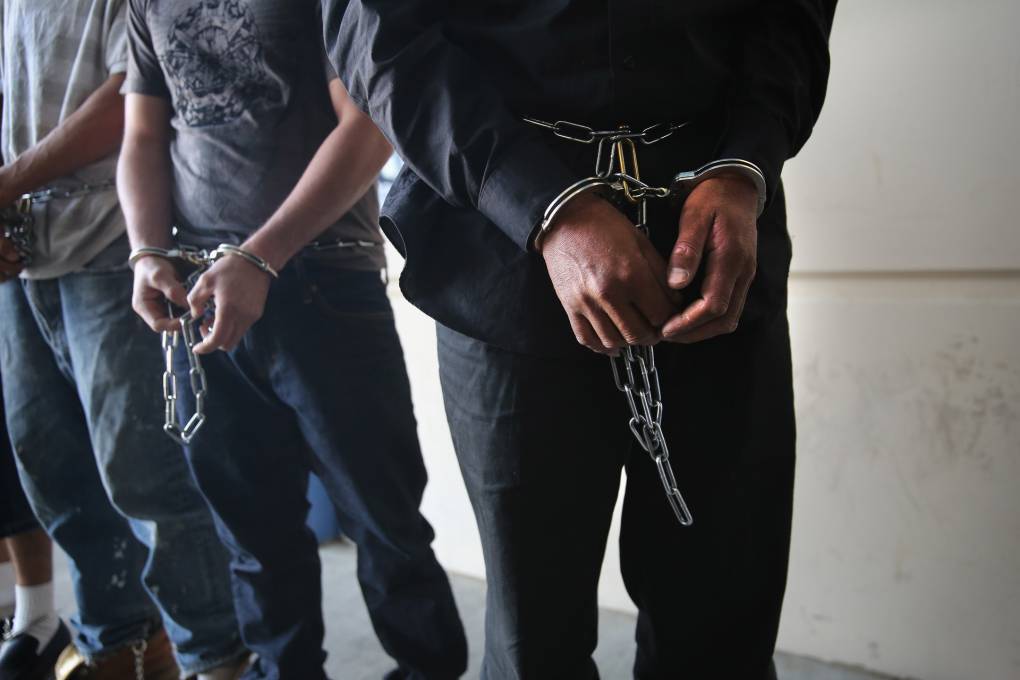
"caption": "On average, nearly 1,600 people come out of state prison each year with an immigration detainer that leads to their transfer to ICE to be deported, according to an estimate by state Senate staff.",
"description": null,
"title": "GettyImages-450371241-qut",
"credit": "John Moore/Getty Images",
"status": "inherit",
"altTag": "A line of individuals are shown from their wrists down. Their hands are shackles with handcuffs. They are incarcerated individuals seemingly on their way to be transported to a different area.",
"isLoading": false,
"fetchFailed": false
},
"news_11960537": {
"type": "attachments",
"id": "news_11960537",
"meta": {
"index": "attachments_1716263798",
"site": "news",
"id": "11960537",
"found": true
},
"parent": 11960536,
"imgSizes": {
"twentyfourteen-full-width": {
"file": "https://ww2.kqed.org/app/uploads/sites/10/2023/09/farmworker-in-vineyard-1020x576.jpg",
"width": 1020,
"mimeType": "image/jpeg",
"height": 576
},
"thumbnail": {
"file": "https://ww2.kqed.org/app/uploads/sites/10/2023/09/farmworker-in-vineyard-160x107.jpg",
"width": 160,
"mimeType": "image/jpeg",
"height": 107
},
"post-thumbnail": {
"file": "https://ww2.kqed.org/app/uploads/sites/10/2023/09/farmworker-in-vineyard-672x372.jpg",
"width": 672,
"mimeType": "image/jpeg",
"height": 372
},
"kqedFullSize": {
"file": "https://ww2.kqed.org/app/uploads/sites/10/2023/09/farmworker-in-vineyard.jpg",
"width": 1020,
"height": 680
},
"medium": {
"file": "https://ww2.kqed.org/app/uploads/sites/10/2023/09/farmworker-in-vineyard-800x533.jpg",
"width": 800,
"mimeType": "image/jpeg",
"height": 533
}
},
"publishDate": 1694393822,
"modified": 1694393849,
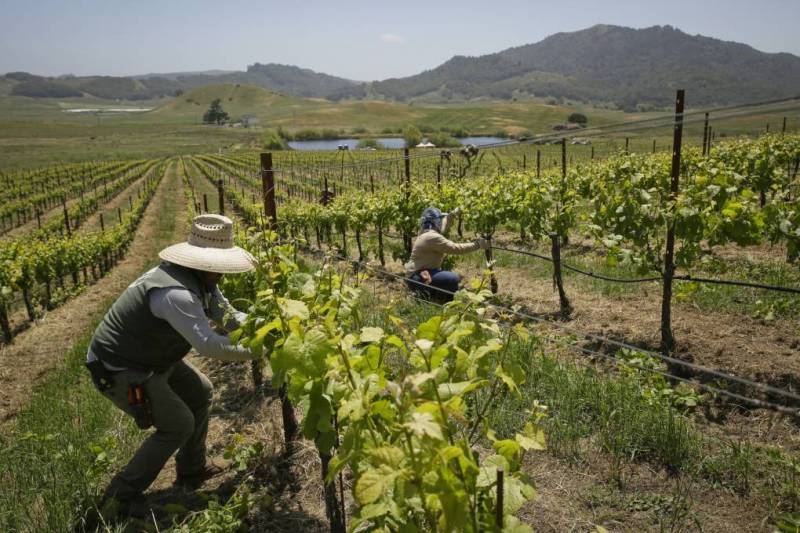
"caption": "Trabajadores cortan las hojas de las vides de Pinot Noir en Petaluma el 21 de mayo de 2018.",
"description": null,
"title": "farmworker in vineyard",
"credit": "Eric Risberg/Foto AP",
"status": "inherit",
"altTag": null,
"isLoading": false,
"fetchFailed": false
},
"news_11957506": {
"type": "attachments",
"id": "news_11957506",
"meta": {
"index": "attachments_1716263798",
"site": "news",
"id": "11957506",
"found": true
},
"parent": 11957505,
"imgSizes": {
"twentyfourteen-full-width": {
"file": "https://ww2.kqed.org/app/uploads/sites/10/2023/08/farmworker-lady-and-supporters-1020x576.jpg",
"width": 1020,
"mimeType": "image/jpeg",
"height": 576
},
"thumbnail": {
"file": "https://ww2.kqed.org/app/uploads/sites/10/2023/08/farmworker-lady-and-supporters-160x107.jpg",
"width": 160,
"mimeType": "image/jpeg",
"height": 107
},
"post-thumbnail": {
"file": "https://ww2.kqed.org/app/uploads/sites/10/2023/08/farmworker-lady-and-supporters-672x372.jpg",
"width": 672,
"mimeType": "image/jpeg",
"height": 372
},
"kqedFullSize": {
"file": "https://ww2.kqed.org/app/uploads/sites/10/2023/08/farmworker-lady-and-supporters.jpg",
"width": 1020,
"height": 680
},
"medium": {
"file": "https://ww2.kqed.org/app/uploads/sites/10/2023/08/farmworker-lady-and-supporters-800x533.jpg",
"width": 800,
"mimeType": "image/jpeg",
"height": 533
}
},
"publishDate": 1691215775,
"modified": 1694506565,
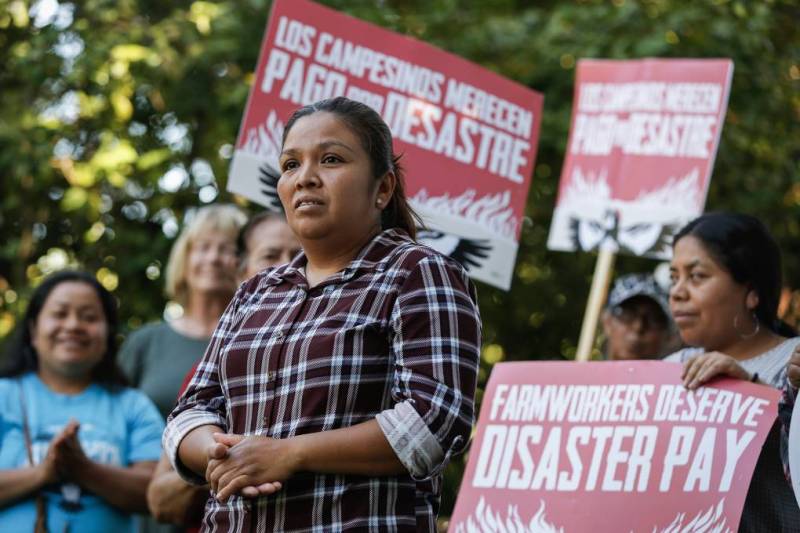
"caption": "La trabajadora agrícola Sandra de León asiste a una conferencia de prensa en la plaza central de Healdsburg, en el condado de Sonoma, el lunes 24 de julio de 2023. Trabajadores agrícolas y defensores del grupo de derechos laborales North Bay Jobs With Justice se reunieron en la plaza para celebrar la resolución de una demanda con Mauritson Farms Inc. después de presentar una demanda por prácticas laborales injustas ante los reguladores de California.",
"description": null,
"title": "farmworker lady and supporters",
"credit": " (Juliana Yamada/KQED)",
"status": "inherit",
"altTag": null,
"isLoading": false,
"fetchFailed": false
},
"news_11958488": {
"type": "attachments",
"id": "news_11958488",
"meta": {
"index": "attachments_1716263798",
"site": "news",
"id": "11958488",
"found": true
},
"title": "Climate Change Wine Blues",
"publishDate": 1692298642,
"status": "inherit",
"parent": 12044748,
"modified": 1750196819,
"caption": "Workers trim leaves on Pinot Noir vines in Petaluma on May 21, 2018.",
"credit": "Eric Risberg/AP Photo",
"altTag": "Two people wearing long sleeves, hats and face coverings work in a large outdoor field of grape vines on a sunny day.",
"description": null,
"imgSizes": {
"medium": {
"file": "https://cdn.kqed.org/wp-content/uploads/sites/10/2023/08/230817-PETALUMA-VINEYARD-FARMWORKERS-AP-ER-KQED-800x533.jpg",
"width": 800,
"height": 533,
"mimeType": "image/jpeg"
},
"large": {
"file": "https://cdn.kqed.org/wp-content/uploads/sites/10/2023/08/230817-PETALUMA-VINEYARD-FARMWORKERS-AP-ER-KQED-1020x680.jpg",
"width": 1020,
"height": 680,
"mimeType": "image/jpeg"
},
"thumbnail": {
"file": "https://cdn.kqed.org/wp-content/uploads/sites/10/2023/08/230817-PETALUMA-VINEYARD-FARMWORKERS-AP-ER-KQED-160x107.jpg",
"width": 160,
"height": 107,
"mimeType": "image/jpeg"
},
"1536x1536": {
"file": "https://cdn.kqed.org/wp-content/uploads/sites/10/2023/08/230817-PETALUMA-VINEYARD-FARMWORKERS-AP-ER-KQED-1536x1024.jpg",
"width": 1536,
"height": 1024,
"mimeType": "image/jpeg"
},
"post-thumbnail": {
"file": "https://cdn.kqed.org/wp-content/uploads/sites/10/2023/08/230817-PETALUMA-VINEYARD-FARMWORKERS-AP-ER-KQED-672x372.jpg",
"width": 672,
"height": 372,
"mimeType": "image/jpeg"
},
"twentyfourteen-full-width": {
"file": "https://cdn.kqed.org/wp-content/uploads/sites/10/2023/08/230817-PETALUMA-VINEYARD-FARMWORKERS-AP-ER-KQED-1038x576.jpg",
"width": 1038,
"height": 576,
"mimeType": "image/jpeg"
},
"full-width": {
"file": "https://cdn.kqed.org/wp-content/uploads/sites/10/2023/08/230817-PETALUMA-VINEYARD-FARMWORKERS-AP-ER-KQED-1920x1280.jpg",
"width": 1920,
"height": 1280,
"mimeType": "image/jpeg"
},
"kqedFullSize": {
"file": "https://cdn.kqed.org/wp-content/uploads/sites/10/2023/08/230817-PETALUMA-VINEYARD-FARMWORKERS-AP-ER-KQED.jpg",
"width": 2000,
"height": 1333
}
},
"isLoading": false,
"fetchFailed": false
}
},
"audioPlayerReducer": {
"postId": "stream_live",
"isPaused": true,
"isPlaying": false,
"pfsActive": false,
"pledgeModalIsOpen": true,
"playerDrawerIsOpen": false,
"liveAudioPlayStartedAt": 0,
"liveAudioPlayContext": ""
},
"authorsReducer": {
"byline_news_11969685": {
"type": "authors",
"id": "byline_news_11969685",
"meta": {
"override": true
},
"slug": "byline_news_11969685",
"name": "\u003ca href=\"https://edsource.org/author/zstavely\">Zaidee Stavely\u003c/a>",
"isLoading": false
},
"byline_news_11968089": {
"type": "authors",
"id": "byline_news_11968089",
"meta": {
"override": true
},
"slug": "byline_news_11968089",
"name": "Yue Stella Yu",
"isLoading": false
},
"tychehendricks": {
"type": "authors",
"id": "259",
"meta": {
"index": "authors_1716337520",
"id": "259",
"found": true
},
"name": "Tyche Hendricks",
"firstName": "Tyche",
"lastName": "Hendricks",
"slug": "tychehendricks",
"email": "thendricks@kqed.org",
"display_author_email": true,
"staff_mastheads": [
"news"
],
"title": "KQED Senior Editor, Immigration",
"bio": "\u003cspan style=\"font-weight: 400;\">Tyche Hendricks is KQED’s senior editor for immigration, leading coverage of the policy and politics that affect California’s immigrant communities. Her work for KQED’s radio and online audiences is also carried on NPR and other national outlets. She has been recognized with awards from the Radio and Television News Directors Association, the Society for Professional Journalists; the Education Writers Association; the Best of the West and the National Federation of Community Broadcasters. Before joining KQED in 2010, Tyche spent more than a dozen years as a newspaper reporter, notably at the \u003c/span>\u003ci>\u003cspan style=\"font-weight: 400;\">San Francisco Chronicle\u003c/span>\u003c/i>\u003cspan style=\"font-weight: 400;\">. At different times she has covered criminal justice, government and politics and urban planning. Tyche has taught in the MFA Creative Writing program at the University of San Francisco and at UC Berkeley’s Graduate School of Journalism, where she was co-director of a national immigration symposium for professional journalists. She is the author of \u003c/span>\u003ci>\u003cspan style=\"font-weight: 400;\">The Wind Doesn't Need a Passport: Stories from the U.S.-Mexico Borderlands\u003c/span>\u003c/i>\u003cspan style=\"font-weight: 400;\"> (University of California Press). \u003c/span>",
"avatar": "https://secure.gravatar.com/avatar/b8ee458e2731c2d43df86882ce17267e?s=600&d=blank&r=g",
"twitter": "tychehendricks",
"facebook": null,
"instagram": null,
"linkedin": null,
"sites": [
{
"site": "news",
"roles": [
"editor"
]
},
{
"site": "stateofhealth",
"roles": [
"editor"
]
}
],
"headData": {
"title": "Tyche Hendricks | KQED",
"description": "KQED Senior Editor, Immigration",
"ogImgSrc": "https://secure.gravatar.com/avatar/b8ee458e2731c2d43df86882ce17267e?s=600&d=blank&r=g",
"twImgSrc": "https://secure.gravatar.com/avatar/b8ee458e2731c2d43df86882ce17267e?s=600&d=blank&r=g"
},
"isLoading": false,
"link": "/author/tychehendricks"
},
"fjhabvala": {
"type": "authors",
"id": "8659",
"meta": {
"index": "authors_1716337520",
"id": "8659",
"found": true
},
"name": "Farida Jhabvala Romero",
"firstName": "Farida",
"lastName": "Jhabvala Romero",
"slug": "fjhabvala",
"email": "fjhabvala@kqed.org",
"display_author_email": true,
"staff_mastheads": [
"news"
],
"title": "KQED Contributor",
"bio": "\u003cspan style=\"font-weight: 400;\">Farida Jhabvala Romero is a Labor Correspondent for KQED. She previously covered immigration. Farida was \u003ca href=\"https://www.ccnma.org/2022-most-influential-latina-journalists\">named\u003c/a> one of the 10 Most Influential Latina Journalists in California in 2022 by the California Chicano News Media Association. Her work has won awards from the Society of Professional Journalists (Northern California), as well as a national and regional Edward M. Murrow Award for the collaborative reporting projects “Dangerous Air” and “Graying California.” \u003c/span>\u003cspan style=\"font-weight: 400;\">Before joining KQED, Farida worked as a producer at Radio Bilingüe, a national public radio network. Farida earned her master’s degree in journalism from Stanford University.\u003c/span>",
"avatar": "https://secure.gravatar.com/avatar/c3ab27c5554b67b478f80971e515aa02?s=600&d=blank&r=g",
"twitter": "FaridaJhabvala",
"facebook": null,
"instagram": null,
"linkedin": "https://www.linkedin.com/in/faridajhabvala/",
"sites": [
{
"site": "news",
"roles": [
"editor"
]
},
{
"site": "stateofhealth",
"roles": [
"author"
]
}
],
"headData": {
"title": "Farida Jhabvala Romero | KQED",
"description": "KQED Contributor",
"ogImgSrc": "https://secure.gravatar.com/avatar/c3ab27c5554b67b478f80971e515aa02?s=600&d=blank&r=g",
"twImgSrc": "https://secure.gravatar.com/avatar/c3ab27c5554b67b478f80971e515aa02?s=600&d=blank&r=g"
},
"isLoading": false,
"link": "/author/fjhabvala"
},
"ccabreralomeli": {
"type": "authors",
"id": "11708",
"meta": {
"index": "authors_1716337520",
"id": "11708",
"found": true
},
"name": "Carlos Cabrera-Lomelí",
"firstName": "Carlos",
"lastName": "Cabrera-Lomelí",
"slug": "ccabreralomeli",
"email": "ccabreralomeli@KQED.org",
"display_author_email": true,
"staff_mastheads": [
"news"
],
"title": "Community Reporter",
"bio": "Carlos Cabrera-Lomelí is a community reporter with KQED's digital engagement team. He also reports and co-produces for KQED's bilingual news hub KQED en Español. He grew up in San Francisco's Mission District and has previously worked with Univision, 48 Hills and REFORMA in Mexico City.",
"avatar": "https://secure.gravatar.com/avatar/e95ff80bb2eaf18a8f2af4dcf7ffb54b?s=600&d=mm&r=g",
"twitter": "@LomeliCabrera",
"facebook": null,
"instagram": null,
"linkedin": null,
"sites": [
{
"site": "arts",
"roles": [
"editor"
]
},
{
"site": "news",
"roles": [
"editor"
]
},
{
"site": "about",
"roles": [
"editor"
]
},
{
"site": "science",
"roles": [
"editor"
]
},
{
"site": "perspectives",
"roles": [
"editor"
]
},
{
"site": "elections",
"roles": [
"editor"
]
},
{
"site": "liveblog",
"roles": [
"contributor"
]
}
],
"headData": {
"title": "Carlos Cabrera-Lomelí | KQED",
"description": "Community Reporter",
"ogImgSrc": "https://secure.gravatar.com/avatar/e95ff80bb2eaf18a8f2af4dcf7ffb54b?s=600&d=mm&r=g",
"twImgSrc": "https://secure.gravatar.com/avatar/e95ff80bb2eaf18a8f2af4dcf7ffb54b?s=600&d=mm&r=g"
},
"isLoading": false,
"link": "/author/ccabreralomeli"
},
"nkhan": {
"type": "authors",
"id": "11867",
"meta": {
"index": "authors_1716337520",
"id": "11867",
"found": true
},
"name": "Nisa Khan",
"firstName": "Nisa",
"lastName": "Khan",
"slug": "nkhan",
"email": "nkhan@kqed.org",
"display_author_email": false,
"staff_mastheads": [],
"title": "KQED Contributor",
"bio": "Nisa Khan is a reporter for KQED's Audience News Desk. She was formerly a data reporter at Michigan Radio. She earned a Bachelor of Science in Information from the University of Michigan and a Master of Arts in Communication from Stanford University.",
"avatar": "https://secure.gravatar.com/avatar/a3bf1efcfbe7658d13a434cc54d0b2e3?s=600&d=blank&r=g",
"twitter": "mnisakhan",
"bluesky": null,
"facebook": null,
"instagram": null,
"linkedin": null,
"sites": [
{
"site": "arts",
"roles": [
"editor"
]
},
{
"site": "news",
"roles": [
"editor"
]
},
{
"site": "science",
"roles": [
"editor",
"author"
]
},
{
"site": "forum",
"roles": [
"editor"
]
},
{
"site": "liveblog",
"roles": [
"contributor"
]
}
],
"headData": {
"title": "Nisa Khan | KQED",
"description": "KQED Contributor",
"ogImgSrc": "https://secure.gravatar.com/avatar/a3bf1efcfbe7658d13a434cc54d0b2e3?s=600&d=blank&r=g",
"twImgSrc": "https://secure.gravatar.com/avatar/a3bf1efcfbe7658d13a434cc54d0b2e3?s=600&d=blank&r=g"
},
"isLoading": false,
"link": "/author/nkhan"
}
},
"pagesReducer": {
"news_tag_immigration": {
"type": "terms",
"id": "news_20202",
"meta": {
"index": "terms_1716263798",
"site": "news",
"id": "20202",
"score": 6.90447
},
"featImg": null,
"name": "immigration",
"description": null,
"taxonomy": "tag",
"headData": {
"twImgId": null,
"twTitle": null,
"ogTitle": null,
"ogImgId": null,
"twDescription": null,
"description": null,
"title": "immigration Archives | KQED News",
"ogDescription": null
},
"ttid": 20219,
"slug": "immigration",
"isLoading": false,
"title": "immigration",
"pageMeta": {
"site": "news",
"WpPageTemplate": "page-topic-editorial",
"currentPage": 45
},
"blocks": [
{
"blockName": "kqed/post-list",
"attrs": {
"layout": "cardArticle2",
"query": "posts/news?tag=immigration",
"seeMore": false,
"paginated": true,
"page": 45
}
},
{
"blockName": "kqed/ad"
}
]
}
},
"pfsSessionReducer": {},
"postsReducer": {
"stream_live": {
"type": "live",
"id": "stream_live",
"audioUrl": "https://streams.kqed.org/kqedradio",
"title": "Live Stream",
"excerpt": "Live Stream information currently unavailable.",
"link": "/radio",
"featImg": "",
"label": {
"name": "KQED Live",
"link": "/"
}
},
"stream_kqedNewscast": {
"type": "posts",
"id": "stream_kqedNewscast",
"audioUrl": "https://www.kqed.org/.stream/anon/radio/RDnews/newscast.mp3?_=1",
"title": "KQED Newscast",
"featImg": "",
"label": {
"name": "88.5 FM",
"link": "/"
}
},
"news_11969846": {
"type": "posts",
"id": "news_11969846",
"meta": {
"index": "posts_1716263798",
"site": "news",
"id": "11969846",
"score": null,
"sort": [
1702602879000
]
},
"guestAuthors": [],
"slug": "california-regulators-approve-emergency-rules-to-protect-stonecutters-from-deadly-disease",
"title": "California Regulators Approve Emergency Rules to Protect Stonecutters From Deadly Disease ",
"publishDate": 1702602879,
"format": "standard",
"headTitle": "California Regulators Approve Emergency Rules to Protect Stonecutters From Deadly Disease | KQED",
"labelTerm": {
"site": "news"
},
"content": "\u003cp>A state occupational safety board on Thursday approved new temporary emergency regulations to stall a surge of silicosis, an irreversible lung disease disabling and killing countertop fabrication workers who handle engineered stone.\u003c/p>\n\u003cp>The factory-made material, commonly used to make kitchen countertops, is \u003ca href=\"https://www.kqed.org/news/11969381/california-regulators-to-vote-on-emergency-rules-for-stonecutters-safety\">uniquely hazardous to workers\u003c/a> because of the toxic silica dust it releases when cut or drilled.\u003c/p>\n\u003cp>The state \u003ca href=\"https://www.dir.ca.gov/oshsb/oshsb.html\">Occupational Safety & Health Standards Board\u003c/a>, a seven-member body appointed by Gov. Gavin Newsom, voted to simplify and strengthen current protections in the industry.\u003c/p>\n\u003cp>“Clearly, this is a seriously hazardous material similar to what asbestos is,” said Laura Stock, a board member who supported the regulation changes. “Can we, in fact, create a circumstance where we use this hazardous material, but workers are protected? That’s what we can learn.”\u003c/p>\n\u003cp>The vote came a day after Australia announced it \u003ca href=\"https://www.theguardian.com/australia-news/2023/dec/13/engineered-stone-bench-top-ban-confirmed-begin-2024-when\">would ban\u003c/a> the use and imports of all engineered stone products starting next year.\u003c/p>\n\u003cp>[ad fullwidth]\u003c/p>\n\u003cp>Inhaling tiny, airborne silica particles has led to silicosis among builders, miners and stonemasons for centuries. But cutting engineered stone is linked to an accelerated and more aggressive form of the disease because it may contain more than 93% silica, much more than natural stones.\u003c/p>\n\u003cp>No silicosis cases were associated with artificial stone recorded before 2010 in California, according to the state’s Department of Public Health. The agency has now identified 100 stonecutters who contracted the disease in the last five years. At least 10 have died.\u003c/p>\n\u003cp>[aside label=\"more on silicosis\" tag=\"silicosis\"]Nearly all of the workers are young to middle-aged Latino immigrants. Some must rely on oxygen machines to breathe while they await lung transplants, including a \u003ca href=\"https://www.kqed.org/news/11956246/california-fast-tracks-rules-to-protect-stonecutters-from-horrible-deaths\">27-year-old man profiled by KQED\u003c/a>.\u003c/p>\n\u003cp>“No amount of business is worth the lives lost and the suffering this is generating,” Dr. Jane Fazio, a pulmonologist at Olive View-UCLA Medical Center who has diagnosed and treated dozens of silicosis patients, said during public comment. “Almost weekly, I have to sit down with able-bodied men in my clinic, and give them a death sentence.”\u003c/p>\n\u003cp>“I take away their livelihoods, and I watch as their wives and children try to understand that they will lose their loved one,” she said.\u003c/p>\n\u003cp>Hundreds more cases are expected if harmful exposure continues, according to officials with the California Division of Occupational Safety and Health, known as Cal/OSHA.\u003c/p>\n\u003cp>The agency estimates that most of the roughly 800 stone fabrication shops in the state don’t comply with current safety rules, which require employers to monitor permissible silica levels before taking protective steps.\u003c/p>\n\u003cp>The \u003ca href=\"https://www.dir.ca.gov/OSHSB/Respirable-Crystalline-Silica-Emergency.html\">new emergency regulations\u003c/a> effectively prohibit the dry cutting of engineered stone with 0.1% or more silica or natural stone with 10% or more. High-risk tasks such as drilling and polishing require wet-cutting saws or other tools that spread water on the material to suppress dust.\u003c/p>\n\u003cp>Some industry representatives urged the board to postpone its vote and said the new requirements would be too costly and drive businesses out of state. But several medical professionals countered that California could not afford to wait.\u003c/p>\n\u003cp>Cal/OSHA officials said they plan to conduct proactive inspections of stone fabrication shops and will also gain new enforcement tools. Inspectors who observe the dry cutting of engineered stone must issue an \u003ca href=\"https://www.dir.ca.gov/DOSHPol/P&PC-8.pdf\">order prohibiting the use\u003c/a> of employees’ labor until the hazards are fixed.\u003c/p>\n\u003cp>“Adoption of the silica emergency temporary standard will absolutely save lives,” Cal/OSHA Chief Jeff Killip told board members.\u003c/p>\n\u003cp>\u003c/p>\n\u003cp>The standard goes into effect on Dec. 29 and lasts for one year. Cal/OSHA officials said they will work to craft permanent silica regulations.\u003c/p>\n\n",
"blocks": [],
"excerpt": "The new temporary emergency regulations are intended to stem the recent surge of silicosis, an irreversible lung disease that has disabled and killed countertop fabrication workers who handle engineered stone.",
"status": "publish",
"parent": 0,
"modified": 1726004450,
"stats": {
"hasAudio": false,
"hasVideo": false,
"hasChartOrMap": false,
"iframeSrcs": [],
"hasGoogleForm": false,
"hasGallery": false,
"hasHearkenModule": false,
"hasPolis": false,
"paragraphCount": 19,
"wordCount": 619
},
"headData": {
"title": "California Regulators Approve Emergency Rules to Protect Stonecutters From Deadly Disease | KQED",
"description": "The new temporary emergency regulations are intended to stem the recent surge of silicosis, an irreversible lung disease that has disabled and killed countertop fabrication workers who handle engineered stone.",
"ogTitle": "",
"ogDescription": "",
"ogImgId": "",
"twTitle": "",
"twDescription": "",
"twImgId": "",
"schema": {
"@context": "https://schema.org",
"@type": "NewsArticle",
"headline": "California Regulators Approve Emergency Rules to Protect Stonecutters From Deadly Disease ",
"datePublished": "2023-12-14T17:14:39-08:00",
"dateModified": "2024-09-10T14:40:50-07:00",
"image": "https://cdn.kqed.org/wp-content/uploads/2020/02/KQED-OG-Image@1x.png",
"isAccessibleForFree": "True",
"publisher": {
"@type": "NewsMediaOrganization",
"@id": "https://www.kqed.org/#organization",
"name": "KQED",
"logo": "https://cdn.kqed.org/wp-content/uploads/2020/02/KQED-OG-Image@1x.png",
"url": "https://www.kqed.org",
"sameAs": [
"https://www.facebook.com/KQED",
"https://twitter.com/KQED",
"https://www.instagram.com/kqed/",
"https://www.tiktok.com/@kqedofficial",
"https://www.linkedin.com/company/kqed",
"https://www.youtube.com/channel/UCeC0IOo7i1P_61zVUWbJ4nw"
]
}
}
},
"sticky": false,
"excludeFromSiteSearch": "Include",
"articleAge": "0",
"path": "/news/11969846/california-regulators-approve-emergency-rules-to-protect-stonecutters-from-deadly-disease",
"audioTrackLength": null,
"parsedContent": [
{
"type": "contentString",
"content": "\u003cdiv class=\"post-body\">\u003cp>\u003cp>A state occupational safety board on Thursday approved new temporary emergency regulations to stall a surge of silicosis, an irreversible lung disease disabling and killing countertop fabrication workers who handle engineered stone.\u003c/p>\n\u003cp>The factory-made material, commonly used to make kitchen countertops, is \u003ca href=\"https://www.kqed.org/news/11969381/california-regulators-to-vote-on-emergency-rules-for-stonecutters-safety\">uniquely hazardous to workers\u003c/a> because of the toxic silica dust it releases when cut or drilled.\u003c/p>\n\u003cp>The state \u003ca href=\"https://www.dir.ca.gov/oshsb/oshsb.html\">Occupational Safety & Health Standards Board\u003c/a>, a seven-member body appointed by Gov. Gavin Newsom, voted to simplify and strengthen current protections in the industry.\u003c/p>\n\u003cp>“Clearly, this is a seriously hazardous material similar to what asbestos is,” said Laura Stock, a board member who supported the regulation changes. “Can we, in fact, create a circumstance where we use this hazardous material, but workers are protected? That’s what we can learn.”\u003c/p>\n\u003cp>The vote came a day after Australia announced it \u003ca href=\"https://www.theguardian.com/australia-news/2023/dec/13/engineered-stone-bench-top-ban-confirmed-begin-2024-when\">would ban\u003c/a> the use and imports of all engineered stone products starting next year.\u003c/p>\n\u003cp>\u003c/p>\u003c/div>",
"attributes": {
"named": {},
"numeric": []
}
},
{
"type": "component",
"content": "",
"name": "ad",
"attributes": {
"named": {
"label": "fullwidth"
},
"numeric": [
"fullwidth"
]
}
},
{
"type": "contentString",
"content": "\u003cdiv class=\"post-body\">\u003cp>\u003c/p>\n\u003cp>Inhaling tiny, airborne silica particles has led to silicosis among builders, miners and stonemasons for centuries. But cutting engineered stone is linked to an accelerated and more aggressive form of the disease because it may contain more than 93% silica, much more than natural stones.\u003c/p>\n\u003cp>No silicosis cases were associated with artificial stone recorded before 2010 in California, according to the state’s Department of Public Health. The agency has now identified 100 stonecutters who contracted the disease in the last five years. At least 10 have died.\u003c/p>\n\u003cp>\u003c/p>\u003c/div>",
"attributes": {
"named": {},
"numeric": []
}
},
{
"type": "component",
"content": "",
"name": "aside",
"attributes": {
"named": {
"label": "more on silicosis ",
"tag": "silicosis"
},
"numeric": []
}
},
{
"type": "contentString",
"content": "\u003cdiv class=\"post-body\">\u003cp>Nearly all of the workers are young to middle-aged Latino immigrants. Some must rely on oxygen machines to breathe while they await lung transplants, including a \u003ca href=\"https://www.kqed.org/news/11956246/california-fast-tracks-rules-to-protect-stonecutters-from-horrible-deaths\">27-year-old man profiled by KQED\u003c/a>.\u003c/p>\n\u003cp>“No amount of business is worth the lives lost and the suffering this is generating,” Dr. Jane Fazio, a pulmonologist at Olive View-UCLA Medical Center who has diagnosed and treated dozens of silicosis patients, said during public comment. “Almost weekly, I have to sit down with able-bodied men in my clinic, and give them a death sentence.”\u003c/p>\n\u003cp>“I take away their livelihoods, and I watch as their wives and children try to understand that they will lose their loved one,” she said.\u003c/p>\n\u003cp>Hundreds more cases are expected if harmful exposure continues, according to officials with the California Division of Occupational Safety and Health, known as Cal/OSHA.\u003c/p>\n\u003cp>The agency estimates that most of the roughly 800 stone fabrication shops in the state don’t comply with current safety rules, which require employers to monitor permissible silica levels before taking protective steps.\u003c/p>\n\u003cp>The \u003ca href=\"https://www.dir.ca.gov/OSHSB/Respirable-Crystalline-Silica-Emergency.html\">new emergency regulations\u003c/a> effectively prohibit the dry cutting of engineered stone with 0.1% or more silica or natural stone with 10% or more. High-risk tasks such as drilling and polishing require wet-cutting saws or other tools that spread water on the material to suppress dust.\u003c/p>\n\u003cp>Some industry representatives urged the board to postpone its vote and said the new requirements would be too costly and drive businesses out of state. But several medical professionals countered that California could not afford to wait.\u003c/p>\n\u003cp>Cal/OSHA officials said they plan to conduct proactive inspections of stone fabrication shops and will also gain new enforcement tools. Inspectors who observe the dry cutting of engineered stone must issue an \u003ca href=\"https://www.dir.ca.gov/DOSHPol/P&PC-8.pdf\">order prohibiting the use\u003c/a> of employees’ labor until the hazards are fixed.\u003c/p>\n\u003cp>“Adoption of the silica emergency temporary standard will absolutely save lives,” Cal/OSHA Chief Jeff Killip told board members.\u003c/p>\n\u003cp>\u003c/p>\n\u003cp>The standard goes into effect on Dec. 29 and lasts for one year. Cal/OSHA officials said they will work to craft permanent silica regulations.\u003c/p>\n\n\u003c/div>\u003c/p>",
"attributes": {
"named": {},
"numeric": []
}
}
],
"link": "/news/11969846/california-regulators-approve-emergency-rules-to-protect-stonecutters-from-deadly-disease",
"authors": [
"8659"
],
"categories": [
"news_457",
"news_8"
],
"tags": [
"news_1153",
"news_27626",
"news_18543",
"news_20202",
"news_38",
"news_32943"
],
"featImg": "news_11969878",
"label": "news"
},
"news_11969685": {
"type": "posts",
"id": "news_11969685",
"meta": {
"index": "posts_1716263798",
"site": "news",
"id": "11969685",
"score": null,
"sort": [
1702468848000
]
},
"parent": 0,
"labelTerm": {},
"blocks": [],
"publishDate": 1702468848,
"format": "standard",
"title": "Many California College Employees With DACA Protections Lack Backup Plans If Program Ends",
"headTitle": "Many California College Employees With DACA Protections Lack Backup Plans If Program Ends | KQED",
"content": "\u003cp>Iveth Díaz has spent much of her career helping undocumented immigrant students navigate college. But when her own application to renew her work permit and temporary protection from deportation was delayed because of backlogs, she had to resign from her job for three months.\u003c/p>\n\u003cp>“It was extremely stressful. It was a time when I suffered from anxiety and depression, which is unfortunately very common within our community,” Díaz said.[pullquote align=\"right\" size=\"medium\" citation=\"Iveth Díaz, a student counselor at Cerritos College\"]‘Are we waiting until the program is canceled altogether, or are institutions being proactive in creating ways to retain their employees?[/pullquote]Díaz and other college and university employees with work permits and protection under the Deferred Action for Childhood Arrivals, or DACA, program are calling on universities to do more to help them prepare for alternative employment plans in case the program ends. Some proposals include helping employees become independent consultants, preparing a severance package or sponsoring work visas.\u003c/p>\n\u003cp>DACA offers temporary protection from deportation and work permits to about \u003ca class=\"external\" href=\"https://www.migrationpolicy.org/programs/data-hub/deferred-action-childhood-arrivals-daca-profiles\" target=\"_blank\" rel=\"noopener\">579,000\u003c/a> young people who were brought to the U.S. as children and graduated from high school, completed a GED or are veterans of the U.S. military. Every two years, recipients must apply for renewal. But the program could end at any time. It was \u003ca href=\"https://edsource.org/updates/advocates-urge-permanent-immigration-solution-after-another-daca-ruling\">found to be illegal\u003c/a> by a federal judge in Texas, and that case will likely end up in the U.S. Supreme Court.\u003c/p>\n\u003cp>The program, launched during the Obama administration, has long been associated with high school and college students, but most recipients are now working adults. The U.S. Citizenship and Immigration Services has not accepted new applications since 2017, making the youngest DACA recipients currently 21 years old and the oldest now 42.\u003c/p>\n\u003cp>“The DACA generation are not kids anymore,” said Madeleine Villanueva, higher education manager of Immigrants Rising, an organization based in San Francisco that helps undocumented people achieve career and educational goals, and published \u003ca class=\"external\" href=\"https://immigrantsrising.org/resource/building-effective-support-for-undocueducators-in-higher-education-action-plans/\" target=\"_blank\" rel=\"noopener\">a guide for colleges and universities\u003c/a> to support undocumented employees. “A lot of us are in our 30s and 40s. We’re doing this work so that the future generation of undocumented students doesn’t have such a hard time like we did when we were going to school.”\u003c/p>\n\u003cp>[ad fullwidth]\u003c/p>\n\u003cp>Hundreds of faculty and staff at California colleges and universities are DACA recipients, although the exact total is unclear. According to the Presidents’ Alliance on Higher Education and Immigration’s\u003ca class=\"external\" href=\"https://www.higheredimmigrationportal.org/state/california/\" target=\"_blank\" rel=\"noopener\"> Higher Ed Immigration Portal\u003c/a>, about 9,211 recipients work in education in California, from elementary school to college. The University of California estimates it has more than 400 employee recipients, some of them students. Spokespersons for the California State University and California Community Colleges said they did not have data on how many employees are temporarily protected from deportation.\u003c/p>\n\u003cp>Díaz worked for over eight years at CSU San Bernardino as an administrative support coordinator for graduate researchers and an admissions counselor. She now leads a program for Cerritos College students living in the country illegally. As a fellow at Immigrants Rising, she surveyed about 65 employees of California colleges and universities who, at one time, were living in the U.S. without permission, most of whom now have DACA protections. The employees included faculty, counselors, researchers and financial aid and admissions workers.\u003c/p>\n\u003cp>She said most respondents said their colleges and universities have not prepared them for what to do if the program ends.\u003c/p>\n\u003cp>“Are we waiting until the program is canceled altogether, or are institutions being proactive in creating ways to retain their employees?” Díaz said. “I found that 70% of respondents stated that their institutions have not even brought it up, have not even had a conversation to their knowledge about what a response plan would be, which is really worrisome.”\u003c/p>\n\u003cp>Laura Bohórquez García, the director of the AB 540 and Undocumented Student Center at UC Davis, decided to start her own business, Inner Work Collective Freedom, to employ herself if the program ends and she loses her work permit.\u003c/p>\n\u003cp>“I’m like, OK, how do I prepare? Because I don’t feel like the university would be ready to jump in,” Bohórquez García said.\u003c/p>\n\u003cp>In addition to plans in case DACA ends, concerned university employees and advocates recommended that universities offer more mental health benefits and that supervisors check in on their employees’ mental health.\u003c/p>\n\u003cp>Many recipients working in colleges and universities are employed in positions dedicated to supporting immigrant students on their campuses, helping them get legal services or mental health counseling. But many of these positions are part-time and don’t offer health benefits, which are crucial when living with the uncertainty of losing temporary protection from deportation, advocates said.\u003c/p>\n\u003cp>“So much of what they’re doing and the fires they’re turning off when it comes to students, it impacts them as well,” said Luz Bertadillo Rodríguez, director of campus engagement at the Presidents’ Alliance on Higher Education and Immigration, a group of college and university leaders dedicated to increasing public understanding of how immigration policies and practices impact students. “The constant word or feeling I hear when there’s a new DACA update is, ‘I’m exhausted.’ They’re just like, ‘I’m tired of living my life two years at a time and then even that not being certain.’”[aside label=\"more on DACA\" tag=\"daca\"]Whenever a new court decision comes out about the program, employees in the immigrant resource centers often find themselves holding workshops or trainings to help explain the decision to students. Yet, they are also processing the decision themselves.\u003c/p>\n\u003cp>“You have to check in with the students, but sometimes no one is checking in with you,” said Eric Yang, a recipient who has worked with immigrant students at two different California universities. “How can we help others if we can’t even advocate for ourselves?”\u003c/p>\n\u003cp>University of California officials are currently examining ways to support employees if the temporary deportation protections are terminated, according to UC Office of the President spokesperson Stett Holbrook. He added that the UC Immigrant Legal Services Center offered immigration consultation workshops for recipient employees last summer, “many of which identified eligibility for employment, family or humanitarian relief.”\u003c/p>\n\u003cp>“The University of California has a long record of support for DACA recipients, and we will continue to support our students, staff and faculty regardless of their immigration status,” Holbrook said.\u003c/p>\n\u003cp>The University of California is also currently \u003ca href=\"https://edsource.org/2023/uc-signals-support-for-hiring-of-undocumented-students-following-six-month-study/690855\">considering a proposal\u003c/a> to allow the university to hire students who do not have work permits under DACA. A coalition of immigrant students and allies, including legal scholars at UCLA and elsewhere, have argued that a federal law barring hiring immigrants living in the country without permission doesn’t apply to state entities.\u003c/p>\n\u003cp>California State University and California Community Colleges offer free legal services to employees with temporary work permits. However, advocates said many faculty and staff are unaware that these services are not just for students.\u003c/p>\n\u003cp>Melissa Villarin, spokesperson for the California Community Colleges Chancellor’s Office, said the community colleges have also recently included resources for staff and faculty during the annual Undocumented Student Action Week.\u003c/p>\n\u003cp>Díaz also recommended more training for university staff about DACA recipients. She said survey respondents said there was a lack of awareness or understanding among other staff and faculty about their colleagues living in the country illegally.\u003c/p>\n\u003cp>“There was just no knowledge by institutions of higher ed about even having undocumented staff and faculty on campus,” Díaz said.\u003c/p>\n\u003cp>She said lack of awareness can lead to insensitivity. At one point, for example, she said a human resources director asked her why she didn’t just fix her status or apply for a green card, not understanding that Díaz, like most immigrants who entered or stayed in the U.S. illegally, didn’t have a way to apply for a green card without leaving the country and possibly having to stay out for up to 10 years.\u003c/p>\n\u003cp>Yang said universities should do more to highlight the stories of staff covered by the Deferred Action for Childhood Arrivals program “so that people in the public know that there are professional staff who are also potentially without any protection or support.”\u003c/p>\n\u003cp>Despite the challenges these immigrants face, Rodríguez, from the Presidents’ Alliance on Higher Education and Immigration, said they should be commended for their work. “They’re very involved in the students’ lives because they’re able to create such strong bonds with the students,” she said. “They’re some of the most exceptional and brilliant practitioners that I’ve come across in higher education.”\u003c/p>\n\u003cp>[ad floatright]\u003c/p>\n\u003cp>\u003ca href=\"https://edsource.org/2023/faculty-staff-urge-california-colleges-to-make-backup-plans-in-case-daca-ends/702129\">This story was originally published by EdSource.\u003c/a>\u003c/p>\n\n",
"stats": {
"hasVideo": false,
"hasChartOrMap": false,
"hasAudio": false,
"hasPolis": false,
"wordCount": 1541,
"hasGoogleForm": false,
"hasGallery": false,
"hasHearkenModule": false,
"iframeSrcs": [],
"paragraphCount": 28
},
"modified": 1702495917,
"excerpt": "Some university employees who have work permits and protection under the Deferred Action for Childhood Arrivals, or DACA, program are calling on their institutions to do more to help them prepare for alternative employment plans in case the program ends.",
"headData": {
"twImgId": "",
"twTitle": "",
"ogTitle": "",
"ogImgId": "",
"twDescription": "",
"description": "Some university employees who have work permits and protection under the Deferred Action for Childhood Arrivals, or DACA, program are calling on their institutions to do more to help them prepare for alternative employment plans in case the program ends.",
"title": "Many California College Employees With DACA Protections Lack Backup Plans If Program Ends | KQED",
"ogDescription": "",
"schema": {
"@context": "https://schema.org",
"@type": "NewsArticle",
"headline": "Many California College Employees With DACA Protections Lack Backup Plans If Program Ends",
"datePublished": "2023-12-13T04:00:48-08:00",
"dateModified": "2023-12-13T11:31:57-08:00",
"image": "https://cdn.kqed.org/wp-content/uploads/2020/02/KQED-OG-Image@1x.png",
"isAccessibleForFree": "True",
"publisher": {
"@type": "NewsMediaOrganization",
"@id": "https://www.kqed.org/#organization",
"name": "KQED",
"logo": "https://cdn.kqed.org/wp-content/uploads/2020/02/KQED-OG-Image@1x.png",
"url": "https://www.kqed.org",
"sameAs": [
"https://www.facebook.com/KQED",
"https://twitter.com/KQED",
"https://www.instagram.com/kqed/",
"https://www.tiktok.com/@kqedofficial",
"https://www.linkedin.com/company/kqed",
"https://www.youtube.com/channel/UCeC0IOo7i1P_61zVUWbJ4nw"
]
}
}
},
"guestAuthors": [],
"slug": "faculty-urge-california-colleges-to-make-backup-plans-in-case-daca-ends",
"status": "publish",
"sourceUrl": "https://www.kqed.org/news/tag/edsource",
"nprByline": "\u003ca href=\"https://edsource.org/author/zstavely\">Zaidee Stavely\u003c/a>",
"excludeFromSiteSearch": "Include",
"sticky": false,
"source": "EdSource",
"showOnAuthorArchivePages": "No",
"articleAge": "0",
"path": "/news/11969685/faculty-urge-california-colleges-to-make-backup-plans-in-case-daca-ends",
"audioTrackLength": null,
"parsedContent": [
{
"type": "contentString",
"content": "\u003cdiv class=\"post-body\">\u003cp>\u003cp>Iveth Díaz has spent much of her career helping undocumented immigrant students navigate college. But when her own application to renew her work permit and temporary protection from deportation was delayed because of backlogs, she had to resign from her job for three months.\u003c/p>\n\u003cp>“It was extremely stressful. It was a time when I suffered from anxiety and depression, which is unfortunately very common within our community,” Díaz said.\u003c/p>\u003c/div>",
"attributes": {
"named": {},
"numeric": []
}
},
{
"type": "component",
"content": "‘Are we waiting until the program is canceled altogether, or are institutions being proactive in creating ways to retain their employees?",
"name": "pullquote",
"attributes": {
"named": {
"align": "right",
"size": "medium",
"citation": "Iveth Díaz, a student counselor at Cerritos College",
"label": ""
},
"numeric": []
}
},
{
"type": "contentString",
"content": "\u003cdiv class=\"post-body\">\u003cp>Díaz and other college and university employees with work permits and protection under the Deferred Action for Childhood Arrivals, or DACA, program are calling on universities to do more to help them prepare for alternative employment plans in case the program ends. Some proposals include helping employees become independent consultants, preparing a severance package or sponsoring work visas.\u003c/p>\n\u003cp>DACA offers temporary protection from deportation and work permits to about \u003ca class=\"external\" href=\"https://www.migrationpolicy.org/programs/data-hub/deferred-action-childhood-arrivals-daca-profiles\" target=\"_blank\" rel=\"noopener\">579,000\u003c/a> young people who were brought to the U.S. as children and graduated from high school, completed a GED or are veterans of the U.S. military. Every two years, recipients must apply for renewal. But the program could end at any time. It was \u003ca href=\"https://edsource.org/updates/advocates-urge-permanent-immigration-solution-after-another-daca-ruling\">found to be illegal\u003c/a> by a federal judge in Texas, and that case will likely end up in the U.S. Supreme Court.\u003c/p>\n\u003cp>The program, launched during the Obama administration, has long been associated with high school and college students, but most recipients are now working adults. The U.S. Citizenship and Immigration Services has not accepted new applications since 2017, making the youngest DACA recipients currently 21 years old and the oldest now 42.\u003c/p>\n\u003cp>“The DACA generation are not kids anymore,” said Madeleine Villanueva, higher education manager of Immigrants Rising, an organization based in San Francisco that helps undocumented people achieve career and educational goals, and published \u003ca class=\"external\" href=\"https://immigrantsrising.org/resource/building-effective-support-for-undocueducators-in-higher-education-action-plans/\" target=\"_blank\" rel=\"noopener\">a guide for colleges and universities\u003c/a> to support undocumented employees. “A lot of us are in our 30s and 40s. We’re doing this work so that the future generation of undocumented students doesn’t have such a hard time like we did when we were going to school.”\u003c/p>\n\u003cp>\u003c/p>\u003c/div>",
"attributes": {
"named": {},
"numeric": []
}
},
{
"type": "component",
"content": "",
"name": "ad",
"attributes": {
"named": {
"label": "fullwidth"
},
"numeric": [
"fullwidth"
]
}
},
{
"type": "contentString",
"content": "\u003cdiv class=\"post-body\">\u003cp>\u003c/p>\n\u003cp>Hundreds of faculty and staff at California colleges and universities are DACA recipients, although the exact total is unclear. According to the Presidents’ Alliance on Higher Education and Immigration’s\u003ca class=\"external\" href=\"https://www.higheredimmigrationportal.org/state/california/\" target=\"_blank\" rel=\"noopener\"> Higher Ed Immigration Portal\u003c/a>, about 9,211 recipients work in education in California, from elementary school to college. The University of California estimates it has more than 400 employee recipients, some of them students. Spokespersons for the California State University and California Community Colleges said they did not have data on how many employees are temporarily protected from deportation.\u003c/p>\n\u003cp>Díaz worked for over eight years at CSU San Bernardino as an administrative support coordinator for graduate researchers and an admissions counselor. She now leads a program for Cerritos College students living in the country illegally. As a fellow at Immigrants Rising, she surveyed about 65 employees of California colleges and universities who, at one time, were living in the U.S. without permission, most of whom now have DACA protections. The employees included faculty, counselors, researchers and financial aid and admissions workers.\u003c/p>\n\u003cp>She said most respondents said their colleges and universities have not prepared them for what to do if the program ends.\u003c/p>\n\u003cp>“Are we waiting until the program is canceled altogether, or are institutions being proactive in creating ways to retain their employees?” Díaz said. “I found that 70% of respondents stated that their institutions have not even brought it up, have not even had a conversation to their knowledge about what a response plan would be, which is really worrisome.”\u003c/p>\n\u003cp>Laura Bohórquez García, the director of the AB 540 and Undocumented Student Center at UC Davis, decided to start her own business, Inner Work Collective Freedom, to employ herself if the program ends and she loses her work permit.\u003c/p>\n\u003cp>“I’m like, OK, how do I prepare? Because I don’t feel like the university would be ready to jump in,” Bohórquez García said.\u003c/p>\n\u003cp>In addition to plans in case DACA ends, concerned university employees and advocates recommended that universities offer more mental health benefits and that supervisors check in on their employees’ mental health.\u003c/p>\n\u003cp>Many recipients working in colleges and universities are employed in positions dedicated to supporting immigrant students on their campuses, helping them get legal services or mental health counseling. But many of these positions are part-time and don’t offer health benefits, which are crucial when living with the uncertainty of losing temporary protection from deportation, advocates said.\u003c/p>\n\u003cp>“So much of what they’re doing and the fires they’re turning off when it comes to students, it impacts them as well,” said Luz Bertadillo Rodríguez, director of campus engagement at the Presidents’ Alliance on Higher Education and Immigration, a group of college and university leaders dedicated to increasing public understanding of how immigration policies and practices impact students. “The constant word or feeling I hear when there’s a new DACA update is, ‘I’m exhausted.’ They’re just like, ‘I’m tired of living my life two years at a time and then even that not being certain.’”\u003c/p>\u003c/div>",
"attributes": {
"named": {},
"numeric": []
}
},
{
"type": "component",
"content": "",
"name": "aside",
"attributes": {
"named": {
"label": "more on DACA ",
"tag": "daca"
},
"numeric": []
}
},
{
"type": "contentString",
"content": "\u003cdiv class=\"post-body\">\u003cp>Whenever a new court decision comes out about the program, employees in the immigrant resource centers often find themselves holding workshops or trainings to help explain the decision to students. Yet, they are also processing the decision themselves.\u003c/p>\n\u003cp>“You have to check in with the students, but sometimes no one is checking in with you,” said Eric Yang, a recipient who has worked with immigrant students at two different California universities. “How can we help others if we can’t even advocate for ourselves?”\u003c/p>\n\u003cp>University of California officials are currently examining ways to support employees if the temporary deportation protections are terminated, according to UC Office of the President spokesperson Stett Holbrook. He added that the UC Immigrant Legal Services Center offered immigration consultation workshops for recipient employees last summer, “many of which identified eligibility for employment, family or humanitarian relief.”\u003c/p>\n\u003cp>“The University of California has a long record of support for DACA recipients, and we will continue to support our students, staff and faculty regardless of their immigration status,” Holbrook said.\u003c/p>\n\u003cp>The University of California is also currently \u003ca href=\"https://edsource.org/2023/uc-signals-support-for-hiring-of-undocumented-students-following-six-month-study/690855\">considering a proposal\u003c/a> to allow the university to hire students who do not have work permits under DACA. A coalition of immigrant students and allies, including legal scholars at UCLA and elsewhere, have argued that a federal law barring hiring immigrants living in the country without permission doesn’t apply to state entities.\u003c/p>\n\u003cp>California State University and California Community Colleges offer free legal services to employees with temporary work permits. However, advocates said many faculty and staff are unaware that these services are not just for students.\u003c/p>\n\u003cp>Melissa Villarin, spokesperson for the California Community Colleges Chancellor’s Office, said the community colleges have also recently included resources for staff and faculty during the annual Undocumented Student Action Week.\u003c/p>\n\u003cp>Díaz also recommended more training for university staff about DACA recipients. She said survey respondents said there was a lack of awareness or understanding among other staff and faculty about their colleagues living in the country illegally.\u003c/p>\n\u003cp>“There was just no knowledge by institutions of higher ed about even having undocumented staff and faculty on campus,” Díaz said.\u003c/p>\n\u003cp>She said lack of awareness can lead to insensitivity. At one point, for example, she said a human resources director asked her why she didn’t just fix her status or apply for a green card, not understanding that Díaz, like most immigrants who entered or stayed in the U.S. illegally, didn’t have a way to apply for a green card without leaving the country and possibly having to stay out for up to 10 years.\u003c/p>\n\u003cp>Yang said universities should do more to highlight the stories of staff covered by the Deferred Action for Childhood Arrivals program “so that people in the public know that there are professional staff who are also potentially without any protection or support.”\u003c/p>\n\u003cp>Despite the challenges these immigrants face, Rodríguez, from the Presidents’ Alliance on Higher Education and Immigration, said they should be commended for their work. “They’re very involved in the students’ lives because they’re able to create such strong bonds with the students,” she said. “They’re some of the most exceptional and brilliant practitioners that I’ve come across in higher education.”\u003c/p>\n\u003cp>\u003c/p>\u003c/div>",
"attributes": {
"named": {},
"numeric": []
}
},
{
"type": "component",
"content": "",
"name": "ad",
"attributes": {
"named": {
"label": "floatright"
},
"numeric": [
"floatright"
]
}
},
{
"type": "contentString",
"content": "\u003cdiv class=\"post-body\">\u003cp>\u003c/p>\n\u003cp>\u003ca href=\"https://edsource.org/2023/faculty-staff-urge-california-colleges-to-make-backup-plans-in-case-daca-ends/702129\">This story was originally published by EdSource.\u003c/a>\u003c/p>\n\n\u003c/div>\u003c/p>",
"attributes": {
"named": {},
"numeric": []
}
}
],
"link": "/news/11969685/faculty-urge-california-colleges-to-make-backup-plans-in-case-daca-ends",
"authors": [
"byline_news_11969685"
],
"categories": [
"news_18540",
"news_8"
],
"tags": [
"news_33638",
"news_20226",
"news_20013",
"news_27626",
"news_20202"
],
"featImg": "news_11963870",
"label": "source_news_11969685"
},
"news_11969381": {
"type": "posts",
"id": "news_11969381",
"meta": {
"index": "posts_1716263798",
"site": "news",
"id": "11969381",
"score": null,
"sort": [
1702296033000
]
},
"guestAuthors": [],
"slug": "california-regulators-to-vote-on-emergency-rules-for-stonecutters-safety",
"title": "California Regulators to Vote on Emergency Rules for Stonecutters' Safety",
"publishDate": 1702296033,
"format": "standard",
"headTitle": "California Regulators to Vote on Emergency Rules for Stonecutters’ Safety | KQED",
"labelTerm": {
"site": "news"
},
"content": "\u003cp>Jorge Estrella Moreno remembers the day he arrived at the studio apartment he shares with his wife and collapsed on the bed, weighed down by sadness and worry.\u003c/p>\n\u003cp>His wife asked him what was wrong. “I have bad news,” he recalled telling her as he cried.\u003c/p>\n\u003cp>That day nearly a year ago, a doctor had diagnosed him with silicosis, an often fatal lung disease. Estrella Moreno, who lives in San Francisco, had unknowingly inhaled toxic silica dust for years while power-cutting slabs of engineered stone to make kitchen countertops and floor panelings. [pullquote size=\"medium\" align=\"right\" citation=\"Jorge Estrella Moreno, stonecutter, San Francisco\"]‘It felt like my world fell apart. It’s very sad to live with this disease because I’m alive today, but tomorrow, who knows? And my family still needs me.’[/pullquote]His lungs were irreversibly damaged, he remembers the doctor saying. There was no cure.\u003c/p>\n\u003cp>“It felt like my world fell apart,” the 48-year-old father of three told KQED in Spanish. “It’s very sad to live with this disease because I’m alive today, but tomorrow, who knows? And my family still needs me.”\u003c/p>\n\u003cp>On Thursday, a California occupational safety board is \u003ca href=\"https://www.dir.ca.gov/OSHSB/Respirable-Crystalline-Silica-Emergency.html\">set to vote\u003c/a> on approving new emergency regulations to protect countertop fabrication workers handling engineered stone, a factory-made product that can have a much higher silica content than natural stone. The material has been linked to an accelerated and more aggressive form of silicosis with a \u003ca href=\"https://www.dir.ca.gov/OSHSB/documents/Respirable-Crystalline-Silica-Emergency-FOE.pdf\">fatality rate of 19%\u003c/a> in the industry, according to state workplace regulators.\u003c/p>\n\u003cp>Medical professionals have known the health risks of inhaling silica dust for centuries. Silica is a mineral found in the earth’s crust. Cutting granite, sandstone and other stones releases \u003ca href=\"https://depts.washington.edu/silica/silica.html#:~:text=The%20most%20common%20form%20of,%2C%20silicon%20carbide%2C%20and%20silicone.\">crystalline silica\u003c/a> into the air. When inhaled, tiny particles can get lodged in the lungs and, over decades, lead to scarring and difficulty breathing.\u003c/p>\n\u003cp>[ad fullwidth]\u003c/p>\n\u003cp>But artificial stone, a popular and relatively new material in the U.S. market, is \u003ca href=\"https://www.dir.ca.gov/oshsb/documents/petition-597-CalOSHAeval.pdf\">uniquely hazardous\u003c/a> to stonecutters because it may contain more than 93% silica, according to officials with the California Division of Occupational Safety and Health, or Cal/OSHA.\u003c/p>\n\u003cp>Dozens of young to middle-aged countertop fabrication workers in California, overwhelmingly Latino immigrants, have been disabled or killed by the disease in recent years. Some died while awaiting lung transplants. Others must rely on oxygen machines, including a \u003ca href=\"https://www.kqed.org/news/11956246/california-fast-tracks-rules-to-protect-stonecutters-from-horrible-deaths\">27-year-old man\u003c/a> featured in a KQED story in July.\u003c/p>\n\u003cp>Nationwide, 165 people died from silicosis between 2018 and 2021, said Nick Spinelli, a spokesperson for the Centers for Disease Control and Prevention, though the data is not specific to the countertop fabrication industry. [pullquote size=\"medium\" align=\"right\" citation=\"Dr. Sheiphali Gandhi, occupational pulmonologist, UCSF\"]‘It’s a public health disaster. We will keep seeing patients because a lot of people have already been exposed. So I think that, really, we are looking to improve things like five to 10 years down the road.’[/pullquote]There were no silicosis cases associated with artificial stone recorded before 2010 in California, according to the state’s Department of Public Health. However, the agency identified 93 stone workers who had contracted the disease in the last five years. As of Nov. 30, at least 10 had died.\u003c/p>\n\u003cp>Hundreds more are expected to be diagnosed with silicosis if harmful exposures continue. That’s partly because most of the roughly 800 stone fabrication shops in California are small and often don’t have the capacity to comply with existing safety regulations, Cal/OSHA officials said. The agency is now working to streamline and strengthen rules to stall the risk of silica exposure, which can also cause lung cancer.\u003c/p>\n\u003cp>“It’s a public health disaster,” said Dr. Sheiphali Gandhi, an occupational pulmonologist at UCSF who participated in a Cal/OSHA advisory committee to bolster existing silica standards. “We will keep seeing patients because a lot of people have already been exposed. So I think that, really, we are looking to improve things like five to 10 years down the road.”\u003c/p>\n\u003cp>The \u003ca href=\"https://www.dir.ca.gov/OSHSB/Respirable-Crystalline-Silica-Emergency.html\">emergency regulations\u003c/a>, if approved by the Occupational Safety and Health Standards Board, would restrict the dry cutting of artificial stone with more than 0.1% crystalline silica and natural stone that contains more than 10%. Tasks such as power cutting or drilling would require the use of wet-cutting saws or other tools that cover a material’s surface with water to suppress the dust. Employers would also be required to provide workers with powered air-purifying respirators or other highly protective masks.\u003c/p>\n\u003cp>Current \u003ca href=\"https://www.dir.ca.gov/title8/1532_3.html#:~:text=(1)%20Permissible%20exposure%20limit%20(,as%20an%208%2Dhour%20TWA.\">rules\u003c/a> say employers must first complete sophisticated air monitoring of permissible silica levels before determining required protective steps.\u003c/p>\n\u003cp>“The fact that we’re actually defining high risk based on the type of work rather than the air monitoring is a huge step in the right direction,” said Gandhi, who has diagnosed several silicosis patients, including Estrella Moreno. “Ideally, the best thing is to eliminate the toxic substance altogether. But if we are working with it, how can we do it safely?”\u003c/p>\n\u003cp>Estrella Moreno began working as a stonecutter in San Francisco shortly after immigrating from Mexico more than two decades ago. He liked using his hands to carve stone and install projects in kitchens and living rooms.\u003c/p>\n\u003cfigure id=\"attachment_11964918\" class=\"wp-caption aligncenter\" style=\"max-width: 2000px\">\u003cimg loading=\"lazy\" decoding=\"async\" class=\"size-full wp-image-11964918\" src=\"https://cdn.kqed.org/wp-content/uploads/sites/10/2023/10/231017-StonecutterSilicosis-003-BL-KQED.jpg\" alt=\"A hand holds a phone showing the photo of a stone fireplace.\" width=\"2000\" height=\"1333\" srcset=\"https://cdn.kqed.org/wp-content/uploads/sites/10/2023/10/231017-StonecutterSilicosis-003-BL-KQED.jpg 2000w, https://cdn.kqed.org/wp-content/uploads/sites/10/2023/10/231017-StonecutterSilicosis-003-BL-KQED-800x533.jpg 800w, https://cdn.kqed.org/wp-content/uploads/sites/10/2023/10/231017-StonecutterSilicosis-003-BL-KQED-1020x680.jpg 1020w, https://cdn.kqed.org/wp-content/uploads/sites/10/2023/10/231017-StonecutterSilicosis-003-BL-KQED-160x107.jpg 160w, https://cdn.kqed.org/wp-content/uploads/sites/10/2023/10/231017-StonecutterSilicosis-003-BL-KQED-1536x1024.jpg 1536w, https://cdn.kqed.org/wp-content/uploads/sites/10/2023/10/231017-StonecutterSilicosis-003-BL-KQED-1920x1280.jpg 1920w\" sizes=\"(max-width: 2000px) 100vw, 2000px\">\u003cfigcaption class=\"wp-caption-text\">Jorge Moreno holds a photo on his phone of stonecutting work from his job at his home in San Francisco on Oct. 17, 2023. \u003ccite>(Beth LaBerge/KQED)\u003c/cite>\u003c/figcaption>\u003c/figure>\n\u003cp>At his home in the Lower Nob Hill neighborhood, Estrella Moreno’s eyes lit up as he pointed to the smooth stone tables he had made. He proudly pulled up photographs on his phone of modern chimney panels and kitchen countertops he had also crafted.\u003c/p>\n\u003cp>It’s an “honest job” that allowed him to raise his three kids in the U.S., he said, even though he doesn’t know how to read and write. His parents never sent him to school as a child. Even before Estrella Moreno was orphaned by age 11, he worked in agricultural fields sowing corn and other crops in Michoacan. He’s provided for himself ever since. [pullquote size=\"medium\" align=\"right\" citation=\"Jorge Estrella Moreno, stonecutter, San Francisco\"]‘One comes to this country to support one’s family, to get ahead. Unfortunately, this turned out to be a dangerous job.’[/pullquote]“One comes to this country to support one’s family, to get ahead. Unfortunately, this turned out to be a dangerous job,” Estrella Moreno said before burying his head in his hands.\u003c/p>\n\u003cp>Silicosis makes him feel like he’s asphyxiating when walking uphill. Talking requires loud breaths in between words. Exertion can make him dizzy, Estrella Moreno said. His family has been warned that he might need an oxygen machine or a lung transplant as the disease progresses.\u003c/p>\n\u003cp>Yet, Estrella Moreno has refused to quit his job as a stonecutter, where he earns about $28 an hour.\u003c/p>\n\u003cp>“I have no other option. I have to work to support my family and pay rent,” said Estrella Moreno, adding that one of his sons is struggling with mental illness and can’t work. He needs money to pay for his son’s care.\u003c/p>\n\u003cfigure id=\"attachment_11964920\" class=\"wp-caption aligncenter\" style=\"max-width: 2000px\">\u003cimg loading=\"lazy\" decoding=\"async\" class=\"size-full wp-image-11964920\" src=\"https://cdn.kqed.org/wp-content/uploads/sites/10/2023/10/231017-StonecutterSilicosis-012-BL-KQED.jpg\" alt=\"A hand holds a photo of an adult with three children.\" width=\"2000\" height=\"1333\" srcset=\"https://cdn.kqed.org/wp-content/uploads/sites/10/2023/10/231017-StonecutterSilicosis-012-BL-KQED.jpg 2000w, https://cdn.kqed.org/wp-content/uploads/sites/10/2023/10/231017-StonecutterSilicosis-012-BL-KQED-800x533.jpg 800w, https://cdn.kqed.org/wp-content/uploads/sites/10/2023/10/231017-StonecutterSilicosis-012-BL-KQED-1020x680.jpg 1020w, https://cdn.kqed.org/wp-content/uploads/sites/10/2023/10/231017-StonecutterSilicosis-012-BL-KQED-160x107.jpg 160w, https://cdn.kqed.org/wp-content/uploads/sites/10/2023/10/231017-StonecutterSilicosis-012-BL-KQED-1536x1024.jpg 1536w, https://cdn.kqed.org/wp-content/uploads/sites/10/2023/10/231017-StonecutterSilicosis-012-BL-KQED-1920x1280.jpg 1920w\" sizes=\"(max-width: 2000px) 100vw, 2000px\">\u003cfigcaption class=\"wp-caption-text\">Jorge Moreno holds a photo of his family when his kids were younger at their home in San Francisco on Oct. 17, 2023. \u003ccite>(Beth LaBerge/KQED)\u003c/cite>\u003c/figcaption>\u003c/figure>\n\u003cp>Estrella Moreno’s eldest daughter, Rosa Estrella, told KQED she has pleaded with her father to stop working. A medical assistant, she said she has watched in anguish as her dad can no longer do things they enjoyed together, like a carefree walk in the park.\u003c/p>\n\u003cp>She said she wanted to save money to pay for college and eventually become a nurse. Instead, she is looking for a second job to help her parents.\u003c/p>\n\u003cp>“I have to think of them first,” Rosa Estrella, 29, said. “It’s so hard to be in this situation and watch my dad go through this and struggle so much.” [pullquote size=\"medium\" align=\"right\" citation=\"Rosa Estrella, daughter of Jorge Estrella Moreno\"]‘It’s so hard to be in this situation and watch my dad go through this and struggle so much.’[/pullquote]Artificial stone workers in Israel, Spain, Australia and other countries have contracted a rapid onset of silicosis, which \u003ca href=\"https://www.cdc.gov/niosh/topics/silica/risks.html#:~:text=The%20type%20with%20the%20quickest,causing%20severe%20illness%20or%20death.\">can start developing\u003c/a> after only a few months of very high exposure.\u003c/p>\n\u003cp>In Australia, occupational safety authorities recently \u003ca href=\"https://www.safeworkaustralia.gov.au/sites/default/files/2023-10/decision_ris_-_prohibition_on_the_use_of_engineered_stone_-_27_october_2023.pdf\">recommended\u003c/a> a national ban on using all engineered stone, including newer products manufacturers have developed with 50% or less silica content.\u003c/p>\n\u003cp>Cal/OSHA officials \u003ca href=\"https://www.dir.ca.gov/oshsb/documents/petition-597-CalOSHAeval.pdf\">warned\u003c/a> that if widespread non-compliance with safety rules continues, the state should also develop plans to prohibit the use of engineered stone products, something major manufacturers and distributors vehemently oppose.\u003c/p>\n\u003cp>Public health officials in Los Angeles County, the state’s silicosis epicenter, recently \u003ca href=\"https://file.lacounty.gov/SDSInter/bos/bc/1150183_SilicosisPreventionandCareItem10BoardAgendaof6.6.2023.pdf\">concluded\u003c/a> that a local ban, which would only apply to the county’s unincorporated areas, could help protect workers and encourage safer alternatives.\u003c/p>\n\u003cp>Major artificial stone manufacturers maintain the material is being handled safely when appropriate measures, such as wet cutting and ventilation, are followed and that a ban would unnecessarily kill jobs.\u003c/p>\n\u003cfigure id=\"attachment_11964919\" class=\"wp-caption aligncenter\" style=\"max-width: 2000px\">\u003cimg loading=\"lazy\" decoding=\"async\" class=\"wp-image-11964919 size-full\" src=\"https://cdn.kqed.org/wp-content/uploads/sites/10/2023/10/231017-StonecutterSilicosis-009-BL-KQED.jpg\" alt=\"A person wearing a baseball cap lies down on a bed.\" width=\"2000\" height=\"1333\" srcset=\"https://cdn.kqed.org/wp-content/uploads/sites/10/2023/10/231017-StonecutterSilicosis-009-BL-KQED.jpg 2000w, https://cdn.kqed.org/wp-content/uploads/sites/10/2023/10/231017-StonecutterSilicosis-009-BL-KQED-800x533.jpg 800w, https://cdn.kqed.org/wp-content/uploads/sites/10/2023/10/231017-StonecutterSilicosis-009-BL-KQED-1020x680.jpg 1020w, https://cdn.kqed.org/wp-content/uploads/sites/10/2023/10/231017-StonecutterSilicosis-009-BL-KQED-160x107.jpg 160w, https://cdn.kqed.org/wp-content/uploads/sites/10/2023/10/231017-StonecutterSilicosis-009-BL-KQED-1536x1024.jpg 1536w, https://cdn.kqed.org/wp-content/uploads/sites/10/2023/10/231017-StonecutterSilicosis-009-BL-KQED-1920x1280.jpg 1920w\" sizes=\"(max-width: 2000px) 100vw, 2000px\">\u003cfigcaption class=\"wp-caption-text\">Jorge Estrella Moreno rests while his wife Maria Valencia reads the bible at their home in San Francisco on Oct. 17, 2023. \u003ccite>(Beth LaBerge/KQED)\u003c/cite>\u003c/figcaption>\u003c/figure>\n\u003cp>“Silicosis is entirely preventable,” said Eric Rose, a spokesman with the Stone Coalition, which represents manufacturers, distributors and fabricators. “Any contractor that follows Cal/OSHA’s guidelines ensures that any product cutting is done safely and with little risk to workers. Almost all experts agree that what is being cut matters less than how the stone is cut.”\u003c/p>\n\u003cp>Top manufacturers, such as Cosentino, a company based in Spain, and the Israel-based Caesarstone, have told California regulators that they support creating a licensing program to sell engineered stone slabs only to fabrication businesses equipped to handle them safely.\u003c/p>\n\u003cp>Engineered stone, also known as quartz, is made of crushed stone bonded with adhesives and resins compacted into slabs in factories. Demand for it \u003ca href=\"https://www.freedoniagroup.com/industry-study/engineered-stone-countertops-4395.htm\">skyrocketed\u003c/a> in the U.S. over the last decade, becoming the top countertop material with a market size of \u003ca href=\"https://www.dir.ca.gov/OSHSB/documents/Respirable-Crystalline-Silica-Emergency-FOE.pdf\">$17.7 billion\u003c/a>, according to a Cal/OSHA review.\u003c/p>\n\u003cp>Consumers prefer it because it’s usually cheaper than natural stones such as marble. Its nonporous surface makes it easy to clean and difficult to stain, and it comes in a variety of colors and patterns. [pullquote size=\"medium\" align=\"right\" citation=\"James Nevin, attorney for Jorge Estrella Moreno and other plaintiffs\"]‘These companies knew they were selling a deadly product that was going to kill workers who have to fabricate it before it gets to the consumer.’[/pullquote]Estrella Moreno said he first cut engineered stone slabs in 2007. But he said he didn’t know until his diagnosis about the risk of inhaling the fine dust clouds as he worked. He said he wore an N95 mask, but those are less efficient at filtering silica particles than other respirators.\u003c/p>\n\u003cp>Estrella Moreno blames the manufacturers and suppliers of engineered stone that he and his wife have sued for damages. Almost 60 fabrication workers with silicosis in California are also suing, according to James Nevin, an attorney for Estrella Moreno and other plaintiffs.\u003c/p>\n\u003cp>The lawsuits allege that the largest manufacturers — Caesarstone, Cosentino and Cambria, which is based in the U.S. — failed to adequately label and warn of the hazards of their products and didn’t issue effective instructions on how to use them safely.\u003c/p>\n\u003cp>“These companies knew they were selling a deadly product that was going to kill workers who have to fabricate it before it gets to the consumer,” Nevin said. “If there’s not a more clear case for a lawsuit, I don’t know what is.”\u003c/p>\n\u003cp>Maria Valencia, Estrella Moreno’s wife, said she and her husband hope that by speaking up, they help prevent others from going through the suffering their family is experiencing.\u003c/p>\n\u003cp>“The companies that are producing those materials that are so toxic, that have so much silica, they just want to enrich themselves at the expense of so many people they are going to kill,” said Valencia, 49, who works as a manager at a fast food restaurant. “For me, it’s an injustice that they are putting people in that risk. It’s inhumane.”\u003c/p>\n\u003cp>Caesarstone, Cosentino and Cambria declined to comment on the lawsuits.\u003c/p>\n\u003cp>Earlier this year, the owner of Cosentino \u003ca href=\"https://www.reuters.com/business/owner-spains-cosentino-admits-concealing-cause-silicosis-1900-workers-2023-02-07/\">admitted negligence\u003c/a> in a Spanish court for hiding the health risks of one of its best-selling artificial stone products, which allegedly led to nearly 1,900 workers developing silicosis. He agreed to pay 1.1 million euros to five stonemasons, one of whom had died and was given a six-month suspended sentence as part of a plea deal.\u003c/p>\n\u003cp>In the Bay Area, the father and son duo, who run a well-established stone fabrication facility in Santa Clara, are also calling for solutions, including a more regulated distribution market, stricter enforcement, and the sale of engineered stone products developed with a lower silica content. [aside label='More Stories on Workers’ Rights' tag='workers-rights']Manny De Oliveira, who founded United Marble & Granite Inc. in 1998, and his son, Shawn, lamented what they described as a proliferation of slab yards and stone distributors along nearby highways that sell engineered stone to “anyone with a credit card.” That’s led to “poor guys that don’t even speak English that get taken advantage of” laboring in the back of a truck or store “with just a T-shirt pulled up to cover their nose,” said De Oliveira, 67.\u003c/p>\n\u003cp>The De Oliveiras estimate that a small fabrication shop, with just two or three workers, would need to invest hundreds of thousands of dollars in basic equipment and other measures to keep workers safe.\u003c/p>\n\u003cp>On a recent visit to the company’s cavernous workspace, a KQED reporter observed employees in hardhats operating large robotic saws neatly slicing stone slabs layered in water from a computer screen. Others held smaller tools, releasing a water flow as they cut pieces. And in a blocked-off area, two workers wearing white industrial coveralls and powered air-purifying respirators finished the edges of a countertop as a ventilation system sucked dust into a duct with a running water curtain.\u003c/p>\n\u003cp>“If you go to a lot of other shops, you’ll see this activity without the machines, without the suit. That’s the problem — guys are working dry without engineering controls, the equipment or protection,” Shawn De Oliveira, 42, said. “Everybody wants to be a fabricator, but nobody wants to do the safety part because it’s expensive. And the customer doesn’t even know what’s going on.”\u003c/p>\n\u003cp>[ad floatright]\u003c/p>\n",
"blocks": [],
"excerpt": "CalOSHA to vote on emergency rules for workers facing deadly silicosis from toxic silica dust in engineered stone, revealing a 19% industry fatality rate.",
"status": "publish",
"parent": 0,
"modified": 1726004452,
"stats": {
"hasAudio": false,
"hasVideo": false,
"hasChartOrMap": false,
"iframeSrcs": [],
"hasGoogleForm": false,
"hasGallery": false,
"hasHearkenModule": false,
"hasPolis": false,
"paragraphCount": 44,
"wordCount": 2545
},
"headData": {
"title": "California Regulators to Vote on Emergency Rules for Stonecutters' Safety | KQED",
"description": "CalOSHA to vote on emergency rules for workers facing deadly silicosis from toxic silica dust in engineered stone, revealing a 19% industry fatality rate.",
"ogTitle": "",
"ogDescription": "",
"ogImgId": "",
"twTitle": "",
"twDescription": "",
"twImgId": "",
"schema": {
"@context": "https://schema.org",
"@type": "NewsArticle",
"headline": "California Regulators to Vote on Emergency Rules for Stonecutters' Safety",
"datePublished": "2023-12-11T04:00:33-08:00",
"dateModified": "2024-09-10T14:40:52-07:00",
"image": "https://cdn.kqed.org/wp-content/uploads/2020/02/KQED-OG-Image@1x.png",
"isAccessibleForFree": "True",
"publisher": {
"@type": "NewsMediaOrganization",
"@id": "https://www.kqed.org/#organization",
"name": "KQED",
"logo": "https://cdn.kqed.org/wp-content/uploads/2020/02/KQED-OG-Image@1x.png",
"url": "https://www.kqed.org",
"sameAs": [
"https://www.facebook.com/KQED",
"https://twitter.com/KQED",
"https://www.instagram.com/kqed/",
"https://www.tiktok.com/@kqedofficial",
"https://www.linkedin.com/company/kqed",
"https://www.youtube.com/channel/UCeC0IOo7i1P_61zVUWbJ4nw"
]
}
}
},
"audioUrl": "https://traffic.omny.fm/d/clips/0af137ef-751e-4b19-a055-aaef00d2d578/ffca7e9f-6831-41c5-bcaf-aaef00f5a073/edb7b8d0-2173-4e91-a1d3-b0d501140d19/audio.mp3",
"sticky": false,
"excludeFromSiteSearch": "Include",
"articleAge": "0",
"path": "/news/11969381/california-regulators-to-vote-on-emergency-rules-for-stonecutters-safety",
"audioTrackLength": null,
"parsedContent": [
{
"type": "contentString",
"content": "\u003cdiv class=\"post-body\">\u003cp>\u003cp>Jorge Estrella Moreno remembers the day he arrived at the studio apartment he shares with his wife and collapsed on the bed, weighed down by sadness and worry.\u003c/p>\n\u003cp>His wife asked him what was wrong. “I have bad news,” he recalled telling her as he cried.\u003c/p>\n\u003cp>That day nearly a year ago, a doctor had diagnosed him with silicosis, an often fatal lung disease. Estrella Moreno, who lives in San Francisco, had unknowingly inhaled toxic silica dust for years while power-cutting slabs of engineered stone to make kitchen countertops and floor panelings. \u003c/p>\u003c/div>",
"attributes": {
"named": {},
"numeric": []
}
},
{
"type": "component",
"content": "‘It felt like my world fell apart. It’s very sad to live with this disease because I’m alive today, but tomorrow, who knows? And my family still needs me.’",
"name": "pullquote",
"attributes": {
"named": {
"size": "medium",
"align": "right",
"citation": "Jorge Estrella Moreno, stonecutter, San Francisco",
"label": ""
},
"numeric": []
}
},
{
"type": "contentString",
"content": "\u003cdiv class=\"post-body\">\u003cp>His lungs were irreversibly damaged, he remembers the doctor saying. There was no cure.\u003c/p>\n\u003cp>“It felt like my world fell apart,” the 48-year-old father of three told KQED in Spanish. “It’s very sad to live with this disease because I’m alive today, but tomorrow, who knows? And my family still needs me.”\u003c/p>\n\u003cp>On Thursday, a California occupational safety board is \u003ca href=\"https://www.dir.ca.gov/OSHSB/Respirable-Crystalline-Silica-Emergency.html\">set to vote\u003c/a> on approving new emergency regulations to protect countertop fabrication workers handling engineered stone, a factory-made product that can have a much higher silica content than natural stone. The material has been linked to an accelerated and more aggressive form of silicosis with a \u003ca href=\"https://www.dir.ca.gov/OSHSB/documents/Respirable-Crystalline-Silica-Emergency-FOE.pdf\">fatality rate of 19%\u003c/a> in the industry, according to state workplace regulators.\u003c/p>\n\u003cp>Medical professionals have known the health risks of inhaling silica dust for centuries. Silica is a mineral found in the earth’s crust. Cutting granite, sandstone and other stones releases \u003ca href=\"https://depts.washington.edu/silica/silica.html#:~:text=The%20most%20common%20form%20of,%2C%20silicon%20carbide%2C%20and%20silicone.\">crystalline silica\u003c/a> into the air. When inhaled, tiny particles can get lodged in the lungs and, over decades, lead to scarring and difficulty breathing.\u003c/p>\n\u003cp>\u003c/p>\u003c/div>",
"attributes": {
"named": {},
"numeric": []
}
},
{
"type": "component",
"content": "",
"name": "ad",
"attributes": {
"named": {
"label": "fullwidth"
},
"numeric": [
"fullwidth"
]
}
},
{
"type": "contentString",
"content": "\u003cdiv class=\"post-body\">\u003cp>\u003c/p>\n\u003cp>But artificial stone, a popular and relatively new material in the U.S. market, is \u003ca href=\"https://www.dir.ca.gov/oshsb/documents/petition-597-CalOSHAeval.pdf\">uniquely hazardous\u003c/a> to stonecutters because it may contain more than 93% silica, according to officials with the California Division of Occupational Safety and Health, or Cal/OSHA.\u003c/p>\n\u003cp>Dozens of young to middle-aged countertop fabrication workers in California, overwhelmingly Latino immigrants, have been disabled or killed by the disease in recent years. Some died while awaiting lung transplants. Others must rely on oxygen machines, including a \u003ca href=\"https://www.kqed.org/news/11956246/california-fast-tracks-rules-to-protect-stonecutters-from-horrible-deaths\">27-year-old man\u003c/a> featured in a KQED story in July.\u003c/p>\n\u003cp>Nationwide, 165 people died from silicosis between 2018 and 2021, said Nick Spinelli, a spokesperson for the Centers for Disease Control and Prevention, though the data is not specific to the countertop fabrication industry. \u003c/p>\u003c/div>",
"attributes": {
"named": {},
"numeric": []
}
},
{
"type": "component",
"content": "‘It’s a public health disaster. We will keep seeing patients because a lot of people have already been exposed. So I think that, really, we are looking to improve things like five to 10 years down the road.’",
"name": "pullquote",
"attributes": {
"named": {
"size": "medium",
"align": "right",
"citation": "Dr. Sheiphali Gandhi, occupational pulmonologist, UCSF",
"label": ""
},
"numeric": []
}
},
{
"type": "contentString",
"content": "\u003cdiv class=\"post-body\">\u003cp>There were no silicosis cases associated with artificial stone recorded before 2010 in California, according to the state’s Department of Public Health. However, the agency identified 93 stone workers who had contracted the disease in the last five years. As of Nov. 30, at least 10 had died.\u003c/p>\n\u003cp>Hundreds more are expected to be diagnosed with silicosis if harmful exposures continue. That’s partly because most of the roughly 800 stone fabrication shops in California are small and often don’t have the capacity to comply with existing safety regulations, Cal/OSHA officials said. The agency is now working to streamline and strengthen rules to stall the risk of silica exposure, which can also cause lung cancer.\u003c/p>\n\u003cp>“It’s a public health disaster,” said Dr. Sheiphali Gandhi, an occupational pulmonologist at UCSF who participated in a Cal/OSHA advisory committee to bolster existing silica standards. “We will keep seeing patients because a lot of people have already been exposed. So I think that, really, we are looking to improve things like five to 10 years down the road.”\u003c/p>\n\u003cp>The \u003ca href=\"https://www.dir.ca.gov/OSHSB/Respirable-Crystalline-Silica-Emergency.html\">emergency regulations\u003c/a>, if approved by the Occupational Safety and Health Standards Board, would restrict the dry cutting of artificial stone with more than 0.1% crystalline silica and natural stone that contains more than 10%. Tasks such as power cutting or drilling would require the use of wet-cutting saws or other tools that cover a material’s surface with water to suppress the dust. Employers would also be required to provide workers with powered air-purifying respirators or other highly protective masks.\u003c/p>\n\u003cp>Current \u003ca href=\"https://www.dir.ca.gov/title8/1532_3.html#:~:text=(1)%20Permissible%20exposure%20limit%20(,as%20an%208%2Dhour%20TWA.\">rules\u003c/a> say employers must first complete sophisticated air monitoring of permissible silica levels before determining required protective steps.\u003c/p>\n\u003cp>“The fact that we’re actually defining high risk based on the type of work rather than the air monitoring is a huge step in the right direction,” said Gandhi, who has diagnosed several silicosis patients, including Estrella Moreno. “Ideally, the best thing is to eliminate the toxic substance altogether. But if we are working with it, how can we do it safely?”\u003c/p>\n\u003cp>Estrella Moreno began working as a stonecutter in San Francisco shortly after immigrating from Mexico more than two decades ago. He liked using his hands to carve stone and install projects in kitchens and living rooms.\u003c/p>\n\u003cfigure id=\"attachment_11964918\" class=\"wp-caption aligncenter\" style=\"max-width: 2000px\">\u003cimg loading=\"lazy\" decoding=\"async\" class=\"size-full wp-image-11964918\" src=\"https://cdn.kqed.org/wp-content/uploads/sites/10/2023/10/231017-StonecutterSilicosis-003-BL-KQED.jpg\" alt=\"A hand holds a phone showing the photo of a stone fireplace.\" width=\"2000\" height=\"1333\" srcset=\"https://cdn.kqed.org/wp-content/uploads/sites/10/2023/10/231017-StonecutterSilicosis-003-BL-KQED.jpg 2000w, https://cdn.kqed.org/wp-content/uploads/sites/10/2023/10/231017-StonecutterSilicosis-003-BL-KQED-800x533.jpg 800w, https://cdn.kqed.org/wp-content/uploads/sites/10/2023/10/231017-StonecutterSilicosis-003-BL-KQED-1020x680.jpg 1020w, https://cdn.kqed.org/wp-content/uploads/sites/10/2023/10/231017-StonecutterSilicosis-003-BL-KQED-160x107.jpg 160w, https://cdn.kqed.org/wp-content/uploads/sites/10/2023/10/231017-StonecutterSilicosis-003-BL-KQED-1536x1024.jpg 1536w, https://cdn.kqed.org/wp-content/uploads/sites/10/2023/10/231017-StonecutterSilicosis-003-BL-KQED-1920x1280.jpg 1920w\" sizes=\"(max-width: 2000px) 100vw, 2000px\">\u003cfigcaption class=\"wp-caption-text\">Jorge Moreno holds a photo on his phone of stonecutting work from his job at his home in San Francisco on Oct. 17, 2023. \u003ccite>(Beth LaBerge/KQED)\u003c/cite>\u003c/figcaption>\u003c/figure>\n\u003cp>At his home in the Lower Nob Hill neighborhood, Estrella Moreno’s eyes lit up as he pointed to the smooth stone tables he had made. He proudly pulled up photographs on his phone of modern chimney panels and kitchen countertops he had also crafted.\u003c/p>\n\u003cp>It’s an “honest job” that allowed him to raise his three kids in the U.S., he said, even though he doesn’t know how to read and write. His parents never sent him to school as a child. Even before Estrella Moreno was orphaned by age 11, he worked in agricultural fields sowing corn and other crops in Michoacan. He’s provided for himself ever since. \u003c/p>\u003c/div>",
"attributes": {
"named": {},
"numeric": []
}
},
{
"type": "component",
"content": "‘One comes to this country to support one’s family, to get ahead. Unfortunately, this turned out to be a dangerous job.’",
"name": "pullquote",
"attributes": {
"named": {
"size": "medium",
"align": "right",
"citation": "Jorge Estrella Moreno, stonecutter, San Francisco",
"label": ""
},
"numeric": []
}
},
{
"type": "contentString",
"content": "\u003cdiv class=\"post-body\">\u003cp>“One comes to this country to support one’s family, to get ahead. Unfortunately, this turned out to be a dangerous job,” Estrella Moreno said before burying his head in his hands.\u003c/p>\n\u003cp>Silicosis makes him feel like he’s asphyxiating when walking uphill. Talking requires loud breaths in between words. Exertion can make him dizzy, Estrella Moreno said. His family has been warned that he might need an oxygen machine or a lung transplant as the disease progresses.\u003c/p>\n\u003cp>Yet, Estrella Moreno has refused to quit his job as a stonecutter, where he earns about $28 an hour.\u003c/p>\n\u003cp>“I have no other option. I have to work to support my family and pay rent,” said Estrella Moreno, adding that one of his sons is struggling with mental illness and can’t work. He needs money to pay for his son’s care.\u003c/p>\n\u003cfigure id=\"attachment_11964920\" class=\"wp-caption aligncenter\" style=\"max-width: 2000px\">\u003cimg loading=\"lazy\" decoding=\"async\" class=\"size-full wp-image-11964920\" src=\"https://cdn.kqed.org/wp-content/uploads/sites/10/2023/10/231017-StonecutterSilicosis-012-BL-KQED.jpg\" alt=\"A hand holds a photo of an adult with three children.\" width=\"2000\" height=\"1333\" srcset=\"https://cdn.kqed.org/wp-content/uploads/sites/10/2023/10/231017-StonecutterSilicosis-012-BL-KQED.jpg 2000w, https://cdn.kqed.org/wp-content/uploads/sites/10/2023/10/231017-StonecutterSilicosis-012-BL-KQED-800x533.jpg 800w, https://cdn.kqed.org/wp-content/uploads/sites/10/2023/10/231017-StonecutterSilicosis-012-BL-KQED-1020x680.jpg 1020w, https://cdn.kqed.org/wp-content/uploads/sites/10/2023/10/231017-StonecutterSilicosis-012-BL-KQED-160x107.jpg 160w, https://cdn.kqed.org/wp-content/uploads/sites/10/2023/10/231017-StonecutterSilicosis-012-BL-KQED-1536x1024.jpg 1536w, https://cdn.kqed.org/wp-content/uploads/sites/10/2023/10/231017-StonecutterSilicosis-012-BL-KQED-1920x1280.jpg 1920w\" sizes=\"(max-width: 2000px) 100vw, 2000px\">\u003cfigcaption class=\"wp-caption-text\">Jorge Moreno holds a photo of his family when his kids were younger at their home in San Francisco on Oct. 17, 2023. \u003ccite>(Beth LaBerge/KQED)\u003c/cite>\u003c/figcaption>\u003c/figure>\n\u003cp>Estrella Moreno’s eldest daughter, Rosa Estrella, told KQED she has pleaded with her father to stop working. A medical assistant, she said she has watched in anguish as her dad can no longer do things they enjoyed together, like a carefree walk in the park.\u003c/p>\n\u003cp>She said she wanted to save money to pay for college and eventually become a nurse. Instead, she is looking for a second job to help her parents.\u003c/p>\n\u003cp>“I have to think of them first,” Rosa Estrella, 29, said. “It’s so hard to be in this situation and watch my dad go through this and struggle so much.” \u003c/p>\u003c/div>",
"attributes": {
"named": {},
"numeric": []
}
},
{
"type": "component",
"content": "‘It’s so hard to be in this situation and watch my dad go through this and struggle so much.’",
"name": "pullquote",
"attributes": {
"named": {
"size": "medium",
"align": "right",
"citation": "Rosa Estrella, daughter of Jorge Estrella Moreno",
"label": ""
},
"numeric": []
}
},
{
"type": "contentString",
"content": "\u003cdiv class=\"post-body\">\u003cp>Artificial stone workers in Israel, Spain, Australia and other countries have contracted a rapid onset of silicosis, which \u003ca href=\"https://www.cdc.gov/niosh/topics/silica/risks.html#:~:text=The%20type%20with%20the%20quickest,causing%20severe%20illness%20or%20death.\">can start developing\u003c/a> after only a few months of very high exposure.\u003c/p>\n\u003cp>In Australia, occupational safety authorities recently \u003ca href=\"https://www.safeworkaustralia.gov.au/sites/default/files/2023-10/decision_ris_-_prohibition_on_the_use_of_engineered_stone_-_27_october_2023.pdf\">recommended\u003c/a> a national ban on using all engineered stone, including newer products manufacturers have developed with 50% or less silica content.\u003c/p>\n\u003cp>Cal/OSHA officials \u003ca href=\"https://www.dir.ca.gov/oshsb/documents/petition-597-CalOSHAeval.pdf\">warned\u003c/a> that if widespread non-compliance with safety rules continues, the state should also develop plans to prohibit the use of engineered stone products, something major manufacturers and distributors vehemently oppose.\u003c/p>\n\u003cp>Public health officials in Los Angeles County, the state’s silicosis epicenter, recently \u003ca href=\"https://file.lacounty.gov/SDSInter/bos/bc/1150183_SilicosisPreventionandCareItem10BoardAgendaof6.6.2023.pdf\">concluded\u003c/a> that a local ban, which would only apply to the county’s unincorporated areas, could help protect workers and encourage safer alternatives.\u003c/p>\n\u003cp>Major artificial stone manufacturers maintain the material is being handled safely when appropriate measures, such as wet cutting and ventilation, are followed and that a ban would unnecessarily kill jobs.\u003c/p>\n\u003cfigure id=\"attachment_11964919\" class=\"wp-caption aligncenter\" style=\"max-width: 2000px\">\u003cimg loading=\"lazy\" decoding=\"async\" class=\"wp-image-11964919 size-full\" src=\"https://cdn.kqed.org/wp-content/uploads/sites/10/2023/10/231017-StonecutterSilicosis-009-BL-KQED.jpg\" alt=\"A person wearing a baseball cap lies down on a bed.\" width=\"2000\" height=\"1333\" srcset=\"https://cdn.kqed.org/wp-content/uploads/sites/10/2023/10/231017-StonecutterSilicosis-009-BL-KQED.jpg 2000w, https://cdn.kqed.org/wp-content/uploads/sites/10/2023/10/231017-StonecutterSilicosis-009-BL-KQED-800x533.jpg 800w, https://cdn.kqed.org/wp-content/uploads/sites/10/2023/10/231017-StonecutterSilicosis-009-BL-KQED-1020x680.jpg 1020w, https://cdn.kqed.org/wp-content/uploads/sites/10/2023/10/231017-StonecutterSilicosis-009-BL-KQED-160x107.jpg 160w, https://cdn.kqed.org/wp-content/uploads/sites/10/2023/10/231017-StonecutterSilicosis-009-BL-KQED-1536x1024.jpg 1536w, https://cdn.kqed.org/wp-content/uploads/sites/10/2023/10/231017-StonecutterSilicosis-009-BL-KQED-1920x1280.jpg 1920w\" sizes=\"(max-width: 2000px) 100vw, 2000px\">\u003cfigcaption class=\"wp-caption-text\">Jorge Estrella Moreno rests while his wife Maria Valencia reads the bible at their home in San Francisco on Oct. 17, 2023. \u003ccite>(Beth LaBerge/KQED)\u003c/cite>\u003c/figcaption>\u003c/figure>\n\u003cp>“Silicosis is entirely preventable,” said Eric Rose, a spokesman with the Stone Coalition, which represents manufacturers, distributors and fabricators. “Any contractor that follows Cal/OSHA’s guidelines ensures that any product cutting is done safely and with little risk to workers. Almost all experts agree that what is being cut matters less than how the stone is cut.”\u003c/p>\n\u003cp>Top manufacturers, such as Cosentino, a company based in Spain, and the Israel-based Caesarstone, have told California regulators that they support creating a licensing program to sell engineered stone slabs only to fabrication businesses equipped to handle them safely.\u003c/p>\n\u003cp>Engineered stone, also known as quartz, is made of crushed stone bonded with adhesives and resins compacted into slabs in factories. Demand for it \u003ca href=\"https://www.freedoniagroup.com/industry-study/engineered-stone-countertops-4395.htm\">skyrocketed\u003c/a> in the U.S. over the last decade, becoming the top countertop material with a market size of \u003ca href=\"https://www.dir.ca.gov/OSHSB/documents/Respirable-Crystalline-Silica-Emergency-FOE.pdf\">$17.7 billion\u003c/a>, according to a Cal/OSHA review.\u003c/p>\n\u003cp>Consumers prefer it because it’s usually cheaper than natural stones such as marble. Its nonporous surface makes it easy to clean and difficult to stain, and it comes in a variety of colors and patterns. \u003c/p>\u003c/div>",
"attributes": {
"named": {},
"numeric": []
}
},
{
"type": "component",
"content": "‘These companies knew they were selling a deadly product that was going to kill workers who have to fabricate it before it gets to the consumer.’",
"name": "pullquote",
"attributes": {
"named": {
"size": "medium",
"align": "right",
"citation": "James Nevin, attorney for Jorge Estrella Moreno and other plaintiffs",
"label": ""
},
"numeric": []
}
},
{
"type": "contentString",
"content": "\u003cdiv class=\"post-body\">\u003cp>Estrella Moreno said he first cut engineered stone slabs in 2007. But he said he didn’t know until his diagnosis about the risk of inhaling the fine dust clouds as he worked. He said he wore an N95 mask, but those are less efficient at filtering silica particles than other respirators.\u003c/p>\n\u003cp>Estrella Moreno blames the manufacturers and suppliers of engineered stone that he and his wife have sued for damages. Almost 60 fabrication workers with silicosis in California are also suing, according to James Nevin, an attorney for Estrella Moreno and other plaintiffs.\u003c/p>\n\u003cp>The lawsuits allege that the largest manufacturers — Caesarstone, Cosentino and Cambria, which is based in the U.S. — failed to adequately label and warn of the hazards of their products and didn’t issue effective instructions on how to use them safely.\u003c/p>\n\u003cp>“These companies knew they were selling a deadly product that was going to kill workers who have to fabricate it before it gets to the consumer,” Nevin said. “If there’s not a more clear case for a lawsuit, I don’t know what is.”\u003c/p>\n\u003cp>Maria Valencia, Estrella Moreno’s wife, said she and her husband hope that by speaking up, they help prevent others from going through the suffering their family is experiencing.\u003c/p>\n\u003cp>“The companies that are producing those materials that are so toxic, that have so much silica, they just want to enrich themselves at the expense of so many people they are going to kill,” said Valencia, 49, who works as a manager at a fast food restaurant. “For me, it’s an injustice that they are putting people in that risk. It’s inhumane.”\u003c/p>\n\u003cp>Caesarstone, Cosentino and Cambria declined to comment on the lawsuits.\u003c/p>\n\u003cp>Earlier this year, the owner of Cosentino \u003ca href=\"https://www.reuters.com/business/owner-spains-cosentino-admits-concealing-cause-silicosis-1900-workers-2023-02-07/\">admitted negligence\u003c/a> in a Spanish court for hiding the health risks of one of its best-selling artificial stone products, which allegedly led to nearly 1,900 workers developing silicosis. He agreed to pay 1.1 million euros to five stonemasons, one of whom had died and was given a six-month suspended sentence as part of a plea deal.\u003c/p>\n\u003cp>In the Bay Area, the father and son duo, who run a well-established stone fabrication facility in Santa Clara, are also calling for solutions, including a more regulated distribution market, stricter enforcement, and the sale of engineered stone products developed with a lower silica content. \u003c/p>\u003c/div>",
"attributes": {
"named": {},
"numeric": []
}
},
{
"type": "component",
"content": "",
"name": "aside",
"attributes": {
"named": {
"label": "More Stories on Workers Rights ",
"tag": "workers-rights"
},
"numeric": []
}
},
{
"type": "contentString",
"content": "\u003cdiv class=\"post-body\">\u003cp>Manny De Oliveira, who founded United Marble & Granite Inc. in 1998, and his son, Shawn, lamented what they described as a proliferation of slab yards and stone distributors along nearby highways that sell engineered stone to “anyone with a credit card.” That’s led to “poor guys that don’t even speak English that get taken advantage of” laboring in the back of a truck or store “with just a T-shirt pulled up to cover their nose,” said De Oliveira, 67.\u003c/p>\n\u003cp>The De Oliveiras estimate that a small fabrication shop, with just two or three workers, would need to invest hundreds of thousands of dollars in basic equipment and other measures to keep workers safe.\u003c/p>\n\u003cp>On a recent visit to the company’s cavernous workspace, a KQED reporter observed employees in hardhats operating large robotic saws neatly slicing stone slabs layered in water from a computer screen. Others held smaller tools, releasing a water flow as they cut pieces. And in a blocked-off area, two workers wearing white industrial coveralls and powered air-purifying respirators finished the edges of a countertop as a ventilation system sucked dust into a duct with a running water curtain.\u003c/p>\n\u003cp>“If you go to a lot of other shops, you’ll see this activity without the machines, without the suit. That’s the problem — guys are working dry without engineering controls, the equipment or protection,” Shawn De Oliveira, 42, said. “Everybody wants to be a fabricator, but nobody wants to do the safety part because it’s expensive. And the customer doesn’t even know what’s going on.”\u003c/p>\n\u003cp>\u003c/p>\u003c/div>",
"attributes": {
"named": {},
"numeric": []
}
},
{
"type": "component",
"content": "",
"name": "ad",
"attributes": {
"named": {
"label": "floatright"
},
"numeric": [
"floatright"
]
}
},
{
"type": "contentString",
"content": "\u003cdiv class=\"post-body\">\u003cp>\u003c/p>\n\u003c/div>\u003c/p>",
"attributes": {
"named": {},
"numeric": []
}
}
],
"link": "/news/11969381/california-regulators-to-vote-on-emergency-rules-for-stonecutters-safety",
"authors": [
"8659"
],
"categories": [
"news_457",
"news_8"
],
"tags": [
"news_32132",
"news_18543",
"news_20202",
"news_32943"
],
"featImg": "news_11964921",
"label": "news"
},
"news_11968089": {
"type": "posts",
"id": "news_11968089",
"meta": {
"index": "posts_1716263798",
"site": "news",
"id": "11968089",
"score": null,
"sort": [
1700654439000
]
},
"guestAuthors": [],
"slug": "many-latino-californians-arent-voting-can-u-s-senate-candidates-motivate-them",
"title": "Can US Senate Candidates Motivate Latino Californians to Vote?",
"publishDate": 1700654439,
"format": "standard",
"headTitle": "Can US Senate Candidates Motivate Latino Californians to Vote? | KQED",
"labelTerm": {
"term": 18481,
"site": "news"
},
"content": "\u003cp>For six generations since emigrating from Mexico to America, Clarissa Renteria’s family never voted.\u003c/p>\n\u003cp>If any campaign mailers arrived during election season, Renteria’s parents — who both worked as warehouse workers in Woodlake, an agricultural town of 7,600 in California’s citrus belt — would throw them away. When their neighbor was elected mayor of Woodlake, Renteria’s father shrugged it off. “Look at him trying to fit in,” Renteria remembers her father saying.\u003c/p>\n\u003cp>“My family just didn’t feel included in the politics, didn’t feel seen,” Renteria, 25, said in an interview at a voter registration event in Tulare. “It was just like, ‘You guys obviously don’t care about me. I don’t care about you, and I’m not going to vote. I’m just going to work to live, and that’s it.’”\u003c/p>\n\u003cp>Lack of engagement is shared by millions of eligible Latino Californians who miss out on voting each year. Latinos are \u003ca href=\"https://latino.ucla.edu/research/voter-turnout-gaps-2020/\">the least likely to vote\u003c/a>, though they comprise the single largest racial and ethnic group statewide, research shows. They account for just 25% of the state’s likely voters despite making up 36% of the adult population statewide, \u003ca href=\"https://www.ppic.org/publication/californias-likely-voters/\">according to the Public Policy Institute of California\u003c/a>.\u003c/p>\n\u003cp>But they could hold the key to the 2024 U.S. Senate race since they’re a voting bloc largely untapped by the leading candidates.\u003c/p>\n\u003cp>[ad fullwidth]\u003c/p>\n\u003cp>“Whoever wins over Latino voters is going to win the March primary in 2024,” said \u003ca href=\"https://latinocf.org/our-team/christian-arana/\">Christian Arana\u003c/a>, vice president of policy at the Latino Community Foundation.\u003c/p>\n\u003cp>But who’s that going to be? With less than four months until the March 5 primary, many Latino voters are still unsure.\u003c/p>\n\u003cp>[pullquote size=\"medium\" align=\"right\" citation=\"Mindy Romero, founder and director, Center for Inclusive Democracy\"]‘We know that often in the Latino community … that you need to make the case and build trust and use trusted messengers.’[/pullquote]The leading Democratic candidates — U.S. Reps. Barbara Lee, Katie Porter and Adam Schiff — are mainly polling less than 20% among Latino voters, while 30% to 40% remain undecided, according to surveys \u003ca href=\"https://escholarship.org/uc/item/5gk3z8qc\">conducted this year\u003c/a>. In an \u003ca href=\"https://bspresearch.com/wp-content/uploads/2023/10/Toplines-LCF-Survey-of-Latinos-in-California-October-2023.pdf\">October Latino Community Foundation and BSP Research poll\u003c/a> of 900 Latino voters, roughly half said they did not have an opinion about the Senate candidates yet or did know enough about them to form one.\u003c/p>\n\u003cp>“We are not seeing yet any of the Latino electorate connect with any particular candidates for U.S. Senate,” said \u003ca href=\"http://mattbarreto.com/\">Matt Barreto\u003c/a>, founder of BSP Research and the Latino Policy and Politics Institute at the University of California, Los Angeles.\u003c/p>\n\u003cp>“I think all of these candidates who are running right now are behind.”\u003c/p>\n\u003cp>Among all voters, Schiff and Porter are the \u003ca href=\"https://escholarship.org/uc/item/4ss4k2bj\">frontrunners in polls in the past two months\u003c/a>, well ahead of Lee and Republicans, though roughly one-third of those surveyed are still undecided. Regardless of party, the top two vote-getters on March 5 advance to the November general election.\u003c/p>\n\u003cp>Candidates have met with Latino leaders, conducted listening tours in communities of color and visited Latino business owners around the state, some as early as \u003ca href=\"https://twitter.com/katieporteroc/status/1625200808718639104\">February\u003c/a>, according to the campaigns. They have also been racking up endorsements from Latino leaders locally and nationally. On Nov. 4, the three top Democrats — Lee, Porter and Schiff — participated in \u003ca href=\"https://www.youtube.com/watch?v=EDjXgqoxigY\">a forum on immigration issues\u003c/a> hosted by The Coalition for Humane Immigrant Rights Action Fund.\u003c/p>\n\u003cp>But political experts say gaining support from Latino voters requires much more: Early, consistent and aggressive campaign outreach, but more importantly, issues that resonate enough to persuade Latinos to not only vote but vote for them.\u003c/p>\n\u003cp>“Low voter turnout is almost as significant an indicator of a lack of appeal of a message as voting for another party,” said Mike Madrid, former political director for the California Republican Party and a political strategist with expertise on Latino voting.\u003c/p>\n\u003cp>“I don’t care how early you start. If you don’t have a message that resonates, it doesn’t matter.”\u003c/p>\n\u003cp>\u003c!-- iframe plugin v.4.3 wordpress.org/plugins/iframe/ -->\u003cbr>\n\u003ciframe loading=\"lazy\" src=\"https://flo.uri.sh/visualisation/15765630/embed#?secret=XfA4wgFgKs\" width=\"800\" height=\"800\" scrolling=\"yes\" class=\"iframe-class\" frameborder=\"0\">\u003c/iframe>\u003c/p>\n\u003cp>Population-wise, the potential political power of Latinos in California seems unmatched.\u003c/p>\n\u003cp>\u003ca href=\"https://www.census.gov/quickfacts/fact/table/CA/PST045222\">They are the biggest racial and ethnic group, accounting for 40% of the state’s population.\u003c/a> California is also home to 8 million — or one quarter — of the nation’s eligible Latino voters, more than any other state, \u003ca href=\"https://www.pewresearch.org/short-reads/2022/10/12/key-facts-about-hispanic-eligible-voters-in-2022/#:~:text=California%20is%20home%20to%20about,state%20of%20California%20in%202020.\">according to the Pew Research Center\u003c/a>. And that number is growing as young Latinos come of age, \u003ca href=\"https://www.ppic.org/blog/californias-changing-immigration-is-reshaping-its-electorate/\">increasing their share of the state’s eligible voting population. \u003c/a>\u003c/p>\n\u003cp>However, Latinos are significantly underrepresented in voter registration and turnout statewide and nationwide.\u003c/p>\n\u003cp>They made up just 14% of “frequent voters” (those who voted in at least five of the seven most recent elections), while white voters made up 71%, according to an August poll from the \u003ca href=\"https://escholarship.org/uc/item/8s0525pm\">University of California Berkeley Institute of Government Studies\u003c/a>.\u003c/p>\n\u003cp>Latinos also had the lowest turnout rate of all groups in the 2020 election statewide and nationwide, \u003ca href=\"https://latino.ucla.edu/research/voter-turnout-gaps-2020/\">according to a 2022 analysis by the UCLA Latino Policy and Politics Institute\u003c/a>. Just 60% of eligible Latinos in California registered to vote, and just 55% of eligible Latinos voted, the data shows. They accounted for 32% of California’s eligible voters but only 27% of those who voted that year.\u003c/p>\n\u003ch2>Poorer + younger = less engaged\u003c/h2>\n\u003cp>Why are Latinos less likely to vote?\u003c/p>\n\u003cp>One contributing factor: Latinos are disproportionately poorer, especially in California, \u003ca href=\"https://statehealthcompare.shadac.org/map/82/income-inequality-gini-coefficient#a/42/119\">which is among states with the highest income inequality\u003c/a>, Madrid noted.\u003c/p>\n\u003cp>\u003ca href=\"https://www.ppic.org/publication/poverty-in-california/#:~:text=The%20Latino%20poverty%20rate%20increased,but%2039.7%25%20of%20all%20Californians.\">More than half of Californians living in poverty\u003c/a> are Latinos, according to data from the Public Policy Institute of California. \u003ca href=\"https://www.car.org/aboutus/mediacenter/newsreleases/2023-News-Releases/2022haibyethnicity\">Only 1 in 10 Latino households\u003c/a> can afford a median-priced home in the state — a percentage lower than their white and Asian counterparts, according to the California Association of Realtors.\u003c/p>\n\u003cp>[aside postID=\"news_11957686\" label=\"Related Story\"]“When you have no upward economic mobility … that’s a very big problem for turnout,” Madrid said.\u003c/p>\n\u003cp>Jovonna Renteria, a 26-year-old Latino voter in Tulare County, said working-class Latinos in her neighborhood prioritize their immediate needs — such as housing, food and childcare — over voting. Her mother works in a warehouse, and she is a first-generation college student majoring in social work.\u003c/p>\n\u003cp>“When people are so focused on just trying to survive, (voting) gets pushed to the side,” said Jovonna Renteria, who is not related to Clarissa Renteria.\u003c/p>\n\u003cp>Latinos in California also \u003ca href=\"https://latino.ucla.edu/wp-content/uploads/2022/06/15-facts-about-Latino-Well-Being-R11.pdf\">tend to be younger\u003c/a>, and \u003ca href=\"https://www.ppic.org/publication/californias-population/\">more than half of the state’s population ages 24 and younger are Latinos\u003c/a>, research shows. Nationwide, \u003ca href=\"https://abcnews.go.com/Politics/growing-latino-vote-factor-2024-election/story?id=103641807\">34 million young Latinos will be qualified to vote\u003c/a> next year.\u003c/p>\n\u003cp>But younger voters are less likely to participate, political experts say. They tend to be less affluent and motivated to vote not by habit but by issues that matter to them, said \u003ca href=\"https://www.ppic.org/person/mark-baldassare/\">Mark Baldassare\u003c/a>, survey director at the Public Policy Institute of California.\u003c/p>\n\u003cp>Youths also have a lower “stake in society” since they are less likely to be parents or homeowners, who tend to be more invested in local politics such as property taxes or school bonds, Madrid said.\u003c/p>\n\u003cp>“If you don’t do that, you have a very transient mobile society, and that is a very civically disengaged one, which is not good for democracy,” he said.\u003c/p>\n\u003ch2>‘Disenfranchised’ and disconnected\u003c/h2>\n\u003cp>Mateo Fernandez, 17, will be a first-time voter next year. While he is excited, the San Diego native said no one around him talked about voting until he was in eighth grade.\u003c/p>\n\u003cp>“A lot of people will tell you: ‘I just don’t know … how that works.’ Or they feel hopeless like they have no power in what’s going on around them because everyone else seems so much more powerful,” he said.\u003c/p>\n\u003cp>Jovonna Renteria saw the same in her community. She said Latinos feel “disenfranchised” and have “lost faith in the system” since they don’t see how they can benefit from those elections.\u003c/p>\n\u003cp>The feeling of disconnect is partly due to a historical and current lack of outreach from political campaigns, said \u003ca href=\"https://priceschool.usc.edu/people/mindy-romero/\">Mindy Romero\u003c/a>, founder and director of the Center for Inclusive Democracy and a political scientist who studies voting and underrepresentation among communities of color.\u003c/p>\n\u003cp>It’s a chicken-and-egg problem \u003ca href=\"https://www.dallasnews.com/news/politics/2020/09/23/study-says-many-latinos-dont-vote-because-they-arent-sought-and-they-arent-sought-because-they-dont-vote/\">echoed in other states such as Texas\u003c/a>: Latinos are less likely to vote because campaigns rarely reach out to them, but campaigns are less inclined to reach out to them because they focus on likely voters, Romero noted.\u003c/p>\n\u003cp>“We know that often in the Latino community … that you need to make the case and build trust and use trusted messengers,” she said. “We still don’t see candidates doing it, or at least not in a sustained way.”\u003c/p>\n\u003cp>But when campaigns do reach out, some rely on stereotypes about the Latino communities, holding events featuring mariachi bands, sprinkling in a few Spanish words and “parachuting” in and out, Romero said.\u003c/p>\n\u003cfigure id=\"attachment_11968102\" class=\"wp-caption aligncenter\" style=\"max-width: 800px\">\u003ca href=\"https://ww2.kqed.org/app/uploads/sites/10/2023/11/110123-Voters-Registration-Tulare-ZS-CM-118.jpg\">\u003cimg loading=\"lazy\" decoding=\"async\" class=\"size-medium wp-image-11968102\" src=\"https://ww2.kqed.org/app/uploads/sites/10/2023/11/110123-Voters-Registration-Tulare-ZS-CM-118-800x533.jpg\" alt=\"A woman dressed in green talks to a woman wearing glasses sitting on the other side of a table with people walking around in the background.\" width=\"800\" height=\"533\" srcset=\"https://cdn.kqed.org/wp-content/uploads/sites/10/2023/11/110123-Voters-Registration-Tulare-ZS-CM-118-800x533.jpg 800w, https://cdn.kqed.org/wp-content/uploads/sites/10/2023/11/110123-Voters-Registration-Tulare-ZS-CM-118-1020x680.jpg 1020w, https://cdn.kqed.org/wp-content/uploads/sites/10/2023/11/110123-Voters-Registration-Tulare-ZS-CM-118-160x107.jpg 160w, https://cdn.kqed.org/wp-content/uploads/sites/10/2023/11/110123-Voters-Registration-Tulare-ZS-CM-118-1536x1024.jpg 1536w, https://cdn.kqed.org/wp-content/uploads/sites/10/2023/11/110123-Voters-Registration-Tulare-ZS-CM-118-1920x1280.jpg 1920w, https://cdn.kqed.org/wp-content/uploads/sites/10/2023/11/110123-Voters-Registration-Tulare-ZS-CM-118.jpg 2000w\" sizes=\"(max-width: 800px) 100vw, 800px\">\u003c/a>\u003cfigcaption class=\"wp-caption-text\">In Tulare, organizers inform attendees about their rights as voters and the available resources within the community on Nov. 1, 2023. \u003ccite>(Zaydee Sanchez/CalMatters.)\u003c/cite>\u003c/figcaption>\u003c/figure>\n\u003cp>Presidential campaigns are also known to hold events at taco shops to rally the Latino vote, running the risk of what Barreto called \u003ca href=\"https://www.latimes.com/california/story/2019-11-23/2020-elections-mexican-restaurants\">“Hispandering.”\u003c/a> Both Hillary Clinton and Joe Biden dined at King Taco — a famous Los Angeles joint — during their presidential bids.\u003c/p>\n\u003cp>“But there’s so much more to our community than that one particular taco shop in East L.A.,” Arana said.\u003c/p>\n\u003cp>The inconsistent outreach makes Latino voters feel ignored, said \u003ca href=\"https://lulac.org/about/board/\">Jose Barrera\u003c/a>, national vice president for the Far West at the League of United Latin American Citizens.\u003c/p>\n\u003cp>“Come every four years, it seems like everybody wants our vote,” he said. “But once elected, candidates seem to forget about us. …Why should we as a community support some people who really promise everything but never deliver?”\u003c/p>\n\u003ch2>A wide-open race\u003c/h2>\n\u003cp>When asked by CalMatters how they have connected with Latino voters, the leading U.S. Senate candidates pointed to their outreach efforts, endorsements and track record.\u003c/p>\n\u003cp>Lee, Porter and Schiff have all met with Latino business owners and leaders in Southern California, the Central Valley and the Bay area, holding most events in San Francisco, Los Angeles, San Diego, Fresno or nearby areas, according to their campaigns.\u003c/p>\n\u003cp>All three campaigns pointed to their advocacy in Congress for a path to citizenship for undocumented immigrants and for expanding health care coverage. They are all \u003ca href=\"https://www.congress.gov/bill/118th-congress/house-bill/1511?s=1&r=94&q=%7B%22search%22%3A%5B%22hr+6%22%5D%7D\">co-sponsors of the House version of the “Registry Act,”\u003c/a> which would allow some undocumented immigrants to qualify for lawful status.\u003c/p>\n\u003cp>Schiff’s campaign highlighted his support for expanded child tax credits, affordable housing, clean energy and more, as well as his role in leading the first impeachment trial against former President Donald Trump. He also introduced the Head Start Expansion and Improvement Act, which would invest billions in providing services to children from low-income families.\u003c/p>\n\u003cp>Porter’s campaign also noted that she pushed for more language assistance for non-English-speaking voters and advocated for free COVID-19 testing for all. She was also the first Senate candidate to launch her campaign website in multiple languages, including Spanish, her campaign said.\u003c/p>\n\u003cp>Lee — who responded to CalMatters after the story was published — mainly touted her stance on immigration issues, noting she is the only candidate to have \u003ca href=\"https://www.govtrack.us/congress/votes/107-2002/h367\">voted against the creation of U.S. Immigration and Customs Enforcement in 2002\u003c/a> and said she now wants to slash Customs and Border Protection funding in half. Schiff, then in his first term, voted in favor of creating ICE. Lee also noted her long history of supporting Medicare for All and said she supports canceling all student debts.\u003c/p>\n\u003cp>Lexi Reese, a Democratic candidate who is barely registering in polls, said her background as a business owner helps her understand the struggles of small businesses. She said she is the only fluent Spanish speaker in the race and conducted listening tours in both languages.\u003c/p>\n\u003cp>A spokesperson for Eric Early, a top GOP contender, said that Latino voters he spoke to want a lower cost of living, tougher regulations on violent crimes and a stop to “the indoctrination of our children in schools” and “the flood of illegal immigration and fentanyl across the southern border.” He also touted his lawsuit against the Santa Barbara Unified School District for diversity training, \u003ca href=\"https://law.justia.com/cases/california/court-of-appeal/2021/b309248.html\">which was thrown out\u003c/a> in federal court.\u003c/p>\n\u003cp>Republican Steve Garvey, the L.A. Dodgers legend who \u003ca href=\"https://calmatters.org/newsletters/whatmatters/2023/10/mental-health-newsom/#wm-story-1\">entered the race last month\u003c/a>, did not respond to a CalMatters inquiry.\u003c/p>\n\u003cp>While Latino advocacy groups haven’t announced endorsements or have no plans for them, some notable community leaders have made up their minds.\u003c/p>\n\u003cp>Schiff, who has received dozens of endorsements from Latino lawmakers and leaders, gained support from state Assembly Speaker Robert Rivas, U.S. Rep. Nanette Barragán, chairperson of the Congressional Hispanic Caucus, and recently from former Los Angeles Mayor Antonio Villaraigosa. Porter’s campaign stressed her support from nearly a dozen Latino leaders, including U.S. Rep. and former Long Beach mayor Robert Garcia, as well as Eddie Martinez, executive director of Latino Equality Alliance and mayor of Huntington Park. Lee also received endorsements from Dolores Huerta, longtime activist and co-founder of United Farm Workers.\u003c/p>\n\u003cfigure id=\"attachment_11968103\" class=\"wp-caption aligncenter\" style=\"max-width: 800px\">\u003ca href=\"https://ww2.kqed.org/app/uploads/sites/10/2023/11/110123-Voters-Registration-Tulare-ZS-CM-131.jpg\">\u003cimg loading=\"lazy\" decoding=\"async\" class=\"size-medium wp-image-11968103\" src=\"https://ww2.kqed.org/app/uploads/sites/10/2023/11/110123-Voters-Registration-Tulare-ZS-CM-131-800x533.jpg\" alt='A side view of a woman wearing glasses seated next to other people with a sign that reads \"Register to Vote\" on the floor.' width=\"800\" height=\"533\" srcset=\"https://cdn.kqed.org/wp-content/uploads/sites/10/2023/11/110123-Voters-Registration-Tulare-ZS-CM-131-800x533.jpg 800w, https://cdn.kqed.org/wp-content/uploads/sites/10/2023/11/110123-Voters-Registration-Tulare-ZS-CM-131-1020x680.jpg 1020w, https://cdn.kqed.org/wp-content/uploads/sites/10/2023/11/110123-Voters-Registration-Tulare-ZS-CM-131-160x107.jpg 160w, https://cdn.kqed.org/wp-content/uploads/sites/10/2023/11/110123-Voters-Registration-Tulare-ZS-CM-131-1536x1024.jpg 1536w, https://cdn.kqed.org/wp-content/uploads/sites/10/2023/11/110123-Voters-Registration-Tulare-ZS-CM-131-1920x1280.jpg 1920w, https://cdn.kqed.org/wp-content/uploads/sites/10/2023/11/110123-Voters-Registration-Tulare-ZS-CM-131.jpg 2000w\" sizes=\"(max-width: 800px) 100vw, 800px\">\u003c/a>\u003cfigcaption class=\"wp-caption-text\">Rosalinda Avitia, 73, listens to organizers as they review voter registration information in Tulare on Nov. 1, 2023. \u003ccite>(Zaydee Sanchez/CalMatters.)\u003c/cite>\u003c/figcaption>\u003c/figure>\n\u003cp>But despite the monthslong outreach by some campaigns, a sizable portion of Latino voters are still undecided, polls show. That’s partly because none of the top candidates have been on a statewide ballot and, therefore, have low name recognition, some experts say.\u003c/p>\n\u003cp>“I don’t think that any of the candidates come with a natural advantage,” Baldassare said. “(Schiff) has been high-profile in Washington, but that doesn’t mean he’s high-profile with the California voters.”\u003c/p>\n\u003cp>Additionally, campaigns must expand beyond immigration as a top issue, which is a “relic of the past,” Madrid said. A fast-growing portion of the electorate are U.S.-born Latinos who are not as motivated by the issue, and \u003ca href=\"https://bspresearch.com/wp-content/uploads/2023/10/LCF-October-2023-Survey-Crosstab-Results.pdf\">polls have shown\u003c/a> that the economy, inflation and joblessness — not immigration — are consistently the top issue among Latinos, he said.\u003c/p>\n\u003cp>“How do you have the largest ethnic group in the state with the lowest voter turnout rates when they are telling you … that the No. 1 issue they have is jobs and the economy, and yet, all the Latino advocacy groups are talking about is immigration?”\u003c/p>\n\u003cp>The Nov. 4 forum was focused almost exclusively on immigration. Madrid argues that while the issue was important, it shouldn’t be all there is.\u003c/p>\n\u003cp>Fatima Flores, a spokesperson for the coalition that hosted the forum, said it was to “uplift the intersections of other issues within immigration” so members could “walk away informed and knowledgeable.”\u003c/p>\n\u003cp>And Angelica Salas, the coalition’s executive director, said it wants to see a “torch bearer” on immigration issues among the Senate candidates seeking to succeed the late Sen. Dianne Feinstein, who Salas deemed a “vanguard” of immigration reform.\u003c/p>\n\u003cp>“Yes, they are all supportive,” Salas said of top Democrats in the race. “But we are looking for the leader who is going to advance this cause, but more importantly, is going to finally be part of the leadership that’s going to get immigration reform over the finish line.”\u003c/p>\n\u003cp>Arana said he is glad candidates have been out engaging Latino voters. But they must make sure the outreach is consistent and the message is on point, he said, pointing to \u003ca href=\"https://calmatters.org/politics/elections/2020/04/bernie-california-vote-update-primary-results-charts/\">Vermont Sen. Bernie Sanders’ win in the California presidential primary in 2020\u003c/a>.\u003c/p>\n\u003cp>Sanders proposed debt-free public colleges and universal health care, which resonated with young Latino voters, Arana said.\u003c/p>\n\u003cp>“He opened offices in areas where campaigns … normally wouldn’t,” he said. “Not only did he open that office, he hired people from the community, so it almost made it seem like it was a partnership to change the country.”\u003c/p>\n\u003cfigure id=\"attachment_11968104\" class=\"wp-caption aligncenter\" style=\"max-width: 800px\">\u003ca href=\"https://ww2.kqed.org/app/uploads/sites/10/2023/11/110123-Voters-Registration-Tulare-ZS-CM-137.jpg\">\u003cimg loading=\"lazy\" decoding=\"async\" class=\"size-medium wp-image-11968104\" src=\"https://ww2.kqed.org/app/uploads/sites/10/2023/11/110123-Voters-Registration-Tulare-ZS-CM-137-800x533.jpg\" alt=\"A woman wearing face paint and a green, floral print dress stands next to a window.\" width=\"800\" height=\"533\" srcset=\"https://cdn.kqed.org/wp-content/uploads/sites/10/2023/11/110123-Voters-Registration-Tulare-ZS-CM-137-800x533.jpg 800w, https://cdn.kqed.org/wp-content/uploads/sites/10/2023/11/110123-Voters-Registration-Tulare-ZS-CM-137-1020x680.jpg 1020w, https://cdn.kqed.org/wp-content/uploads/sites/10/2023/11/110123-Voters-Registration-Tulare-ZS-CM-137-160x107.jpg 160w, https://cdn.kqed.org/wp-content/uploads/sites/10/2023/11/110123-Voters-Registration-Tulare-ZS-CM-137-1536x1024.jpg 1536w, https://cdn.kqed.org/wp-content/uploads/sites/10/2023/11/110123-Voters-Registration-Tulare-ZS-CM-137-1920x1280.jpg 1920w, https://cdn.kqed.org/wp-content/uploads/sites/10/2023/11/110123-Voters-Registration-Tulare-ZS-CM-137.jpg 2000w\" sizes=\"(max-width: 800px) 100vw, 800px\">\u003c/a>\u003cfigcaption class=\"wp-caption-text\">Clarissa Renteria, 25, a resident of Tulare County at the voter registration event in downtown Tulare on Nov. 1, 2023. \u003ccite>(Zaydee Sanchez/CalMatters.)\u003c/cite>\u003c/figcaption>\u003c/figure>\n\u003cp>As for now, things have mostly been quiet in the city of Tulare.\u003c/p>\n\u003cp>At the local voter registration drive and Día de Los Muertos celebration hosted by several Latino advocacy groups, including the League of United Latin American Citizens, two dozen residents showed up, some drawn by the free food. Half a block away, a train whooshed by every few minutes on the railway track that sliced through the city, the blaring horn contrasting with the sleepy downtown.\u003c/p>\n\u003cp>“I thought it was not real,” Clarissa Renteria said outside the event venue, joking about when she first heard about it. Such events are rare in Tulare, she said. No one has knocked on her door for the Senate candidates, and she has seen no signs of campaign outreach in the area.\u003c/p>\n\u003cp>[ad floatright]\u003c/p>\n\u003cp>“We don’t really have a lot of that around here,” she said. “But I feel like as soon as you get other people who are also Mexican, like myself, to see: ‘Hey, I’m talking about these issues,’ maybe they’ll get more engaged. I think that’s what we need to see.”\u003c/p>\n\n",
"blocks": [],
"excerpt": "Latino voters are up for grabs in the 2024 California election and could help decide who wins the U.S. Senate seat. But will the campaigns do enough outreach to convince them?",
"status": "publish",
"parent": 0,
"modified": 1721158928,
"stats": {
"hasAudio": false,
"hasVideo": false,
"hasChartOrMap": true,
"iframeSrcs": [
"https://flo.uri.sh/visualisation/15765630/embed#"
],
"hasGoogleForm": false,
"hasGallery": false,
"hasHearkenModule": false,
"hasPolis": false,
"paragraphCount": 70,
"wordCount": 2998
},
"headData": {
"title": "Can US Senate Candidates Motivate Latino Californians to Vote? | KQED",
"description": "Latino voters are up for grabs in the 2024 California election and could help decide who wins the U.S. Senate seat. But will the campaigns do enough outreach to convince them?",
"ogTitle": "",
"ogDescription": "",
"ogImgId": "",
"twTitle": "",
"twDescription": "",
"twImgId": "",
"schema": {
"@context": "https://schema.org",
"@type": "NewsArticle",
"headline": "Can US Senate Candidates Motivate Latino Californians to Vote?",
"datePublished": "2023-11-22T04:00:39-08:00",
"dateModified": "2024-07-16T12:42:08-07:00",
"image": "https://cdn.kqed.org/wp-content/uploads/2020/02/KQED-OG-Image@1x.png",
"isAccessibleForFree": "True",
"publisher": {
"@type": "NewsMediaOrganization",
"@id": "https://www.kqed.org/#organization",
"name": "KQED",
"logo": "https://cdn.kqed.org/wp-content/uploads/2020/02/KQED-OG-Image@1x.png",
"url": "https://www.kqed.org",
"sameAs": [
"https://www.facebook.com/KQED",
"https://twitter.com/KQED",
"https://www.instagram.com/kqed/",
"https://www.tiktok.com/@kqedofficial",
"https://www.linkedin.com/company/kqed",
"https://www.youtube.com/channel/UCeC0IOo7i1P_61zVUWbJ4nw"
]
}
}
},
"sticky": false,
"nprByline": "Yue Stella Yu",
"excludeFromSiteSearch": "Include",
"showOnAuthorArchivePages": "No",
"articleAge": "0",
"path": "/news/11968089/many-latino-californians-arent-voting-can-u-s-senate-candidates-motivate-them",
"audioTrackLength": null,
"parsedContent": [
{
"type": "contentString",
"content": "\u003cdiv class=\"post-body\">\u003cp>\u003cp>For six generations since emigrating from Mexico to America, Clarissa Renteria’s family never voted.\u003c/p>\n\u003cp>If any campaign mailers arrived during election season, Renteria’s parents — who both worked as warehouse workers in Woodlake, an agricultural town of 7,600 in California’s citrus belt — would throw them away. When their neighbor was elected mayor of Woodlake, Renteria’s father shrugged it off. “Look at him trying to fit in,” Renteria remembers her father saying.\u003c/p>\n\u003cp>“My family just didn’t feel included in the politics, didn’t feel seen,” Renteria, 25, said in an interview at a voter registration event in Tulare. “It was just like, ‘You guys obviously don’t care about me. I don’t care about you, and I’m not going to vote. I’m just going to work to live, and that’s it.’”\u003c/p>\n\u003cp>Lack of engagement is shared by millions of eligible Latino Californians who miss out on voting each year. Latinos are \u003ca href=\"https://latino.ucla.edu/research/voter-turnout-gaps-2020/\">the least likely to vote\u003c/a>, though they comprise the single largest racial and ethnic group statewide, research shows. They account for just 25% of the state’s likely voters despite making up 36% of the adult population statewide, \u003ca href=\"https://www.ppic.org/publication/californias-likely-voters/\">according to the Public Policy Institute of California\u003c/a>.\u003c/p>\n\u003cp>But they could hold the key to the 2024 U.S. Senate race since they’re a voting bloc largely untapped by the leading candidates.\u003c/p>\n\u003cp>\u003c/p>\u003c/div>",
"attributes": {
"named": {},
"numeric": []
}
},
{
"type": "component",
"content": "",
"name": "ad",
"attributes": {
"named": {
"label": "fullwidth"
},
"numeric": [
"fullwidth"
]
}
},
{
"type": "contentString",
"content": "\u003cdiv class=\"post-body\">\u003cp>\u003c/p>\n\u003cp>“Whoever wins over Latino voters is going to win the March primary in 2024,” said \u003ca href=\"https://latinocf.org/our-team/christian-arana/\">Christian Arana\u003c/a>, vice president of policy at the Latino Community Foundation.\u003c/p>\n\u003cp>But who’s that going to be? With less than four months until the March 5 primary, many Latino voters are still unsure.\u003c/p>\n\u003cp>\u003c/p>\u003c/div>",
"attributes": {
"named": {},
"numeric": []
}
},
{
"type": "component",
"content": "‘We know that often in the Latino community … that you need to make the case and build trust and use trusted messengers.’",
"name": "pullquote",
"attributes": {
"named": {
"size": "medium",
"align": "right",
"citation": "Mindy Romero, founder and director, Center for Inclusive Democracy",
"label": ""
},
"numeric": []
}
},
{
"type": "contentString",
"content": "\u003cdiv class=\"post-body\">\u003cp>The leading Democratic candidates — U.S. Reps. Barbara Lee, Katie Porter and Adam Schiff — are mainly polling less than 20% among Latino voters, while 30% to 40% remain undecided, according to surveys \u003ca href=\"https://escholarship.org/uc/item/5gk3z8qc\">conducted this year\u003c/a>. In an \u003ca href=\"https://bspresearch.com/wp-content/uploads/2023/10/Toplines-LCF-Survey-of-Latinos-in-California-October-2023.pdf\">October Latino Community Foundation and BSP Research poll\u003c/a> of 900 Latino voters, roughly half said they did not have an opinion about the Senate candidates yet or did know enough about them to form one.\u003c/p>\n\u003cp>“We are not seeing yet any of the Latino electorate connect with any particular candidates for U.S. Senate,” said \u003ca href=\"http://mattbarreto.com/\">Matt Barreto\u003c/a>, founder of BSP Research and the Latino Policy and Politics Institute at the University of California, Los Angeles.\u003c/p>\n\u003cp>“I think all of these candidates who are running right now are behind.”\u003c/p>\n\u003cp>Among all voters, Schiff and Porter are the \u003ca href=\"https://escholarship.org/uc/item/4ss4k2bj\">frontrunners in polls in the past two months\u003c/a>, well ahead of Lee and Republicans, though roughly one-third of those surveyed are still undecided. Regardless of party, the top two vote-getters on March 5 advance to the November general election.\u003c/p>\n\u003cp>Candidates have met with Latino leaders, conducted listening tours in communities of color and visited Latino business owners around the state, some as early as \u003ca href=\"https://twitter.com/katieporteroc/status/1625200808718639104\">February\u003c/a>, according to the campaigns. They have also been racking up endorsements from Latino leaders locally and nationally. On Nov. 4, the three top Democrats — Lee, Porter and Schiff — participated in \u003ca href=\"https://www.youtube.com/watch?v=EDjXgqoxigY\">a forum on immigration issues\u003c/a> hosted by The Coalition for Humane Immigrant Rights Action Fund.\u003c/p>\n\u003cp>But political experts say gaining support from Latino voters requires much more: Early, consistent and aggressive campaign outreach, but more importantly, issues that resonate enough to persuade Latinos to not only vote but vote for them.\u003c/p>\n\u003cp>“Low voter turnout is almost as significant an indicator of a lack of appeal of a message as voting for another party,” said Mike Madrid, former political director for the California Republican Party and a political strategist with expertise on Latino voting.\u003c/p>\n\u003cp>“I don’t care how early you start. If you don’t have a message that resonates, it doesn’t matter.”\u003c/p>\n\u003cp>\u003c!-- iframe plugin v.4.3 wordpress.org/plugins/iframe/ -->\u003cbr>\n\u003ciframe loading=\"lazy\" src=\"https://flo.uri.sh/visualisation/15765630/embed#?secret=XfA4wgFgKs\" width=\"800\" height=\"800\" scrolling=\"yes\" class=\"iframe-class\" frameborder=\"0\">\u003c/iframe>\u003c/p>\n\u003cp>Population-wise, the potential political power of Latinos in California seems unmatched.\u003c/p>\n\u003cp>\u003ca href=\"https://www.census.gov/quickfacts/fact/table/CA/PST045222\">They are the biggest racial and ethnic group, accounting for 40% of the state’s population.\u003c/a> California is also home to 8 million — or one quarter — of the nation’s eligible Latino voters, more than any other state, \u003ca href=\"https://www.pewresearch.org/short-reads/2022/10/12/key-facts-about-hispanic-eligible-voters-in-2022/#:~:text=California%20is%20home%20to%20about,state%20of%20California%20in%202020.\">according to the Pew Research Center\u003c/a>. And that number is growing as young Latinos come of age, \u003ca href=\"https://www.ppic.org/blog/californias-changing-immigration-is-reshaping-its-electorate/\">increasing their share of the state’s eligible voting population. \u003c/a>\u003c/p>\n\u003cp>However, Latinos are significantly underrepresented in voter registration and turnout statewide and nationwide.\u003c/p>\n\u003cp>They made up just 14% of “frequent voters” (those who voted in at least five of the seven most recent elections), while white voters made up 71%, according to an August poll from the \u003ca href=\"https://escholarship.org/uc/item/8s0525pm\">University of California Berkeley Institute of Government Studies\u003c/a>.\u003c/p>\n\u003cp>Latinos also had the lowest turnout rate of all groups in the 2020 election statewide and nationwide, \u003ca href=\"https://latino.ucla.edu/research/voter-turnout-gaps-2020/\">according to a 2022 analysis by the UCLA Latino Policy and Politics Institute\u003c/a>. Just 60% of eligible Latinos in California registered to vote, and just 55% of eligible Latinos voted, the data shows. They accounted for 32% of California’s eligible voters but only 27% of those who voted that year.\u003c/p>\n\u003ch2>Poorer + younger = less engaged\u003c/h2>\n\u003cp>Why are Latinos less likely to vote?\u003c/p>\n\u003cp>One contributing factor: Latinos are disproportionately poorer, especially in California, \u003ca href=\"https://statehealthcompare.shadac.org/map/82/income-inequality-gini-coefficient#a/42/119\">which is among states with the highest income inequality\u003c/a>, Madrid noted.\u003c/p>\n\u003cp>\u003ca href=\"https://www.ppic.org/publication/poverty-in-california/#:~:text=The%20Latino%20poverty%20rate%20increased,but%2039.7%25%20of%20all%20Californians.\">More than half of Californians living in poverty\u003c/a> are Latinos, according to data from the Public Policy Institute of California. \u003ca href=\"https://www.car.org/aboutus/mediacenter/newsreleases/2023-News-Releases/2022haibyethnicity\">Only 1 in 10 Latino households\u003c/a> can afford a median-priced home in the state — a percentage lower than their white and Asian counterparts, according to the California Association of Realtors.\u003c/p>\n\u003cp>\u003c/p>\u003c/div>",
"attributes": {
"named": {},
"numeric": []
}
},
{
"type": "component",
"content": "",
"name": "aside",
"attributes": {
"named": {
"postid": "news_11957686",
"label": "Related Story "
},
"numeric": []
}
},
{
"type": "contentString",
"content": "\u003cdiv class=\"post-body\">\u003cp>“When you have no upward economic mobility … that’s a very big problem for turnout,” Madrid said.\u003c/p>\n\u003cp>Jovonna Renteria, a 26-year-old Latino voter in Tulare County, said working-class Latinos in her neighborhood prioritize their immediate needs — such as housing, food and childcare — over voting. Her mother works in a warehouse, and she is a first-generation college student majoring in social work.\u003c/p>\n\u003cp>“When people are so focused on just trying to survive, (voting) gets pushed to the side,” said Jovonna Renteria, who is not related to Clarissa Renteria.\u003c/p>\n\u003cp>Latinos in California also \u003ca href=\"https://latino.ucla.edu/wp-content/uploads/2022/06/15-facts-about-Latino-Well-Being-R11.pdf\">tend to be younger\u003c/a>, and \u003ca href=\"https://www.ppic.org/publication/californias-population/\">more than half of the state’s population ages 24 and younger are Latinos\u003c/a>, research shows. Nationwide, \u003ca href=\"https://abcnews.go.com/Politics/growing-latino-vote-factor-2024-election/story?id=103641807\">34 million young Latinos will be qualified to vote\u003c/a> next year.\u003c/p>\n\u003cp>But younger voters are less likely to participate, political experts say. They tend to be less affluent and motivated to vote not by habit but by issues that matter to them, said \u003ca href=\"https://www.ppic.org/person/mark-baldassare/\">Mark Baldassare\u003c/a>, survey director at the Public Policy Institute of California.\u003c/p>\n\u003cp>Youths also have a lower “stake in society” since they are less likely to be parents or homeowners, who tend to be more invested in local politics such as property taxes or school bonds, Madrid said.\u003c/p>\n\u003cp>“If you don’t do that, you have a very transient mobile society, and that is a very civically disengaged one, which is not good for democracy,” he said.\u003c/p>\n\u003ch2>‘Disenfranchised’ and disconnected\u003c/h2>\n\u003cp>Mateo Fernandez, 17, will be a first-time voter next year. While he is excited, the San Diego native said no one around him talked about voting until he was in eighth grade.\u003c/p>\n\u003cp>“A lot of people will tell you: ‘I just don’t know … how that works.’ Or they feel hopeless like they have no power in what’s going on around them because everyone else seems so much more powerful,” he said.\u003c/p>\n\u003cp>Jovonna Renteria saw the same in her community. She said Latinos feel “disenfranchised” and have “lost faith in the system” since they don’t see how they can benefit from those elections.\u003c/p>\n\u003cp>The feeling of disconnect is partly due to a historical and current lack of outreach from political campaigns, said \u003ca href=\"https://priceschool.usc.edu/people/mindy-romero/\">Mindy Romero\u003c/a>, founder and director of the Center for Inclusive Democracy and a political scientist who studies voting and underrepresentation among communities of color.\u003c/p>\n\u003cp>It’s a chicken-and-egg problem \u003ca href=\"https://www.dallasnews.com/news/politics/2020/09/23/study-says-many-latinos-dont-vote-because-they-arent-sought-and-they-arent-sought-because-they-dont-vote/\">echoed in other states such as Texas\u003c/a>: Latinos are less likely to vote because campaigns rarely reach out to them, but campaigns are less inclined to reach out to them because they focus on likely voters, Romero noted.\u003c/p>\n\u003cp>“We know that often in the Latino community … that you need to make the case and build trust and use trusted messengers,” she said. “We still don’t see candidates doing it, or at least not in a sustained way.”\u003c/p>\n\u003cp>But when campaigns do reach out, some rely on stereotypes about the Latino communities, holding events featuring mariachi bands, sprinkling in a few Spanish words and “parachuting” in and out, Romero said.\u003c/p>\n\u003cfigure id=\"attachment_11968102\" class=\"wp-caption aligncenter\" style=\"max-width: 800px\">\u003ca href=\"https://ww2.kqed.org/app/uploads/sites/10/2023/11/110123-Voters-Registration-Tulare-ZS-CM-118.jpg\">\u003cimg loading=\"lazy\" decoding=\"async\" class=\"size-medium wp-image-11968102\" src=\"https://ww2.kqed.org/app/uploads/sites/10/2023/11/110123-Voters-Registration-Tulare-ZS-CM-118-800x533.jpg\" alt=\"A woman dressed in green talks to a woman wearing glasses sitting on the other side of a table with people walking around in the background.\" width=\"800\" height=\"533\" srcset=\"https://cdn.kqed.org/wp-content/uploads/sites/10/2023/11/110123-Voters-Registration-Tulare-ZS-CM-118-800x533.jpg 800w, https://cdn.kqed.org/wp-content/uploads/sites/10/2023/11/110123-Voters-Registration-Tulare-ZS-CM-118-1020x680.jpg 1020w, https://cdn.kqed.org/wp-content/uploads/sites/10/2023/11/110123-Voters-Registration-Tulare-ZS-CM-118-160x107.jpg 160w, https://cdn.kqed.org/wp-content/uploads/sites/10/2023/11/110123-Voters-Registration-Tulare-ZS-CM-118-1536x1024.jpg 1536w, https://cdn.kqed.org/wp-content/uploads/sites/10/2023/11/110123-Voters-Registration-Tulare-ZS-CM-118-1920x1280.jpg 1920w, https://cdn.kqed.org/wp-content/uploads/sites/10/2023/11/110123-Voters-Registration-Tulare-ZS-CM-118.jpg 2000w\" sizes=\"(max-width: 800px) 100vw, 800px\">\u003c/a>\u003cfigcaption class=\"wp-caption-text\">In Tulare, organizers inform attendees about their rights as voters and the available resources within the community on Nov. 1, 2023. \u003ccite>(Zaydee Sanchez/CalMatters.)\u003c/cite>\u003c/figcaption>\u003c/figure>\n\u003cp>Presidential campaigns are also known to hold events at taco shops to rally the Latino vote, running the risk of what Barreto called \u003ca href=\"https://www.latimes.com/california/story/2019-11-23/2020-elections-mexican-restaurants\">“Hispandering.”\u003c/a> Both Hillary Clinton and Joe Biden dined at King Taco — a famous Los Angeles joint — during their presidential bids.\u003c/p>\n\u003cp>“But there’s so much more to our community than that one particular taco shop in East L.A.,” Arana said.\u003c/p>\n\u003cp>The inconsistent outreach makes Latino voters feel ignored, said \u003ca href=\"https://lulac.org/about/board/\">Jose Barrera\u003c/a>, national vice president for the Far West at the League of United Latin American Citizens.\u003c/p>\n\u003cp>“Come every four years, it seems like everybody wants our vote,” he said. “But once elected, candidates seem to forget about us. …Why should we as a community support some people who really promise everything but never deliver?”\u003c/p>\n\u003ch2>A wide-open race\u003c/h2>\n\u003cp>When asked by CalMatters how they have connected with Latino voters, the leading U.S. Senate candidates pointed to their outreach efforts, endorsements and track record.\u003c/p>\n\u003cp>Lee, Porter and Schiff have all met with Latino business owners and leaders in Southern California, the Central Valley and the Bay area, holding most events in San Francisco, Los Angeles, San Diego, Fresno or nearby areas, according to their campaigns.\u003c/p>\n\u003cp>All three campaigns pointed to their advocacy in Congress for a path to citizenship for undocumented immigrants and for expanding health care coverage. They are all \u003ca href=\"https://www.congress.gov/bill/118th-congress/house-bill/1511?s=1&r=94&q=%7B%22search%22%3A%5B%22hr+6%22%5D%7D\">co-sponsors of the House version of the “Registry Act,”\u003c/a> which would allow some undocumented immigrants to qualify for lawful status.\u003c/p>\n\u003cp>Schiff’s campaign highlighted his support for expanded child tax credits, affordable housing, clean energy and more, as well as his role in leading the first impeachment trial against former President Donald Trump. He also introduced the Head Start Expansion and Improvement Act, which would invest billions in providing services to children from low-income families.\u003c/p>\n\u003cp>Porter’s campaign also noted that she pushed for more language assistance for non-English-speaking voters and advocated for free COVID-19 testing for all. She was also the first Senate candidate to launch her campaign website in multiple languages, including Spanish, her campaign said.\u003c/p>\n\u003cp>Lee — who responded to CalMatters after the story was published — mainly touted her stance on immigration issues, noting she is the only candidate to have \u003ca href=\"https://www.govtrack.us/congress/votes/107-2002/h367\">voted against the creation of U.S. Immigration and Customs Enforcement in 2002\u003c/a> and said she now wants to slash Customs and Border Protection funding in half. Schiff, then in his first term, voted in favor of creating ICE. Lee also noted her long history of supporting Medicare for All and said she supports canceling all student debts.\u003c/p>\n\u003cp>Lexi Reese, a Democratic candidate who is barely registering in polls, said her background as a business owner helps her understand the struggles of small businesses. She said she is the only fluent Spanish speaker in the race and conducted listening tours in both languages.\u003c/p>\n\u003cp>A spokesperson for Eric Early, a top GOP contender, said that Latino voters he spoke to want a lower cost of living, tougher regulations on violent crimes and a stop to “the indoctrination of our children in schools” and “the flood of illegal immigration and fentanyl across the southern border.” He also touted his lawsuit against the Santa Barbara Unified School District for diversity training, \u003ca href=\"https://law.justia.com/cases/california/court-of-appeal/2021/b309248.html\">which was thrown out\u003c/a> in federal court.\u003c/p>\n\u003cp>Republican Steve Garvey, the L.A. Dodgers legend who \u003ca href=\"https://calmatters.org/newsletters/whatmatters/2023/10/mental-health-newsom/#wm-story-1\">entered the race last month\u003c/a>, did not respond to a CalMatters inquiry.\u003c/p>\n\u003cp>While Latino advocacy groups haven’t announced endorsements or have no plans for them, some notable community leaders have made up their minds.\u003c/p>\n\u003cp>Schiff, who has received dozens of endorsements from Latino lawmakers and leaders, gained support from state Assembly Speaker Robert Rivas, U.S. Rep. Nanette Barragán, chairperson of the Congressional Hispanic Caucus, and recently from former Los Angeles Mayor Antonio Villaraigosa. Porter’s campaign stressed her support from nearly a dozen Latino leaders, including U.S. Rep. and former Long Beach mayor Robert Garcia, as well as Eddie Martinez, executive director of Latino Equality Alliance and mayor of Huntington Park. Lee also received endorsements from Dolores Huerta, longtime activist and co-founder of United Farm Workers.\u003c/p>\n\u003cfigure id=\"attachment_11968103\" class=\"wp-caption aligncenter\" style=\"max-width: 800px\">\u003ca href=\"https://ww2.kqed.org/app/uploads/sites/10/2023/11/110123-Voters-Registration-Tulare-ZS-CM-131.jpg\">\u003cimg loading=\"lazy\" decoding=\"async\" class=\"size-medium wp-image-11968103\" src=\"https://ww2.kqed.org/app/uploads/sites/10/2023/11/110123-Voters-Registration-Tulare-ZS-CM-131-800x533.jpg\" alt='A side view of a woman wearing glasses seated next to other people with a sign that reads \"Register to Vote\" on the floor.' width=\"800\" height=\"533\" srcset=\"https://cdn.kqed.org/wp-content/uploads/sites/10/2023/11/110123-Voters-Registration-Tulare-ZS-CM-131-800x533.jpg 800w, https://cdn.kqed.org/wp-content/uploads/sites/10/2023/11/110123-Voters-Registration-Tulare-ZS-CM-131-1020x680.jpg 1020w, https://cdn.kqed.org/wp-content/uploads/sites/10/2023/11/110123-Voters-Registration-Tulare-ZS-CM-131-160x107.jpg 160w, https://cdn.kqed.org/wp-content/uploads/sites/10/2023/11/110123-Voters-Registration-Tulare-ZS-CM-131-1536x1024.jpg 1536w, https://cdn.kqed.org/wp-content/uploads/sites/10/2023/11/110123-Voters-Registration-Tulare-ZS-CM-131-1920x1280.jpg 1920w, https://cdn.kqed.org/wp-content/uploads/sites/10/2023/11/110123-Voters-Registration-Tulare-ZS-CM-131.jpg 2000w\" sizes=\"(max-width: 800px) 100vw, 800px\">\u003c/a>\u003cfigcaption class=\"wp-caption-text\">Rosalinda Avitia, 73, listens to organizers as they review voter registration information in Tulare on Nov. 1, 2023. \u003ccite>(Zaydee Sanchez/CalMatters.)\u003c/cite>\u003c/figcaption>\u003c/figure>\n\u003cp>But despite the monthslong outreach by some campaigns, a sizable portion of Latino voters are still undecided, polls show. That’s partly because none of the top candidates have been on a statewide ballot and, therefore, have low name recognition, some experts say.\u003c/p>\n\u003cp>“I don’t think that any of the candidates come with a natural advantage,” Baldassare said. “(Schiff) has been high-profile in Washington, but that doesn’t mean he’s high-profile with the California voters.”\u003c/p>\n\u003cp>Additionally, campaigns must expand beyond immigration as a top issue, which is a “relic of the past,” Madrid said. A fast-growing portion of the electorate are U.S.-born Latinos who are not as motivated by the issue, and \u003ca href=\"https://bspresearch.com/wp-content/uploads/2023/10/LCF-October-2023-Survey-Crosstab-Results.pdf\">polls have shown\u003c/a> that the economy, inflation and joblessness — not immigration — are consistently the top issue among Latinos, he said.\u003c/p>\n\u003cp>“How do you have the largest ethnic group in the state with the lowest voter turnout rates when they are telling you … that the No. 1 issue they have is jobs and the economy, and yet, all the Latino advocacy groups are talking about is immigration?”\u003c/p>\n\u003cp>The Nov. 4 forum was focused almost exclusively on immigration. Madrid argues that while the issue was important, it shouldn’t be all there is.\u003c/p>\n\u003cp>Fatima Flores, a spokesperson for the coalition that hosted the forum, said it was to “uplift the intersections of other issues within immigration” so members could “walk away informed and knowledgeable.”\u003c/p>\n\u003cp>And Angelica Salas, the coalition’s executive director, said it wants to see a “torch bearer” on immigration issues among the Senate candidates seeking to succeed the late Sen. Dianne Feinstein, who Salas deemed a “vanguard” of immigration reform.\u003c/p>\n\u003cp>“Yes, they are all supportive,” Salas said of top Democrats in the race. “But we are looking for the leader who is going to advance this cause, but more importantly, is going to finally be part of the leadership that’s going to get immigration reform over the finish line.”\u003c/p>\n\u003cp>Arana said he is glad candidates have been out engaging Latino voters. But they must make sure the outreach is consistent and the message is on point, he said, pointing to \u003ca href=\"https://calmatters.org/politics/elections/2020/04/bernie-california-vote-update-primary-results-charts/\">Vermont Sen. Bernie Sanders’ win in the California presidential primary in 2020\u003c/a>.\u003c/p>\n\u003cp>Sanders proposed debt-free public colleges and universal health care, which resonated with young Latino voters, Arana said.\u003c/p>\n\u003cp>“He opened offices in areas where campaigns … normally wouldn’t,” he said. “Not only did he open that office, he hired people from the community, so it almost made it seem like it was a partnership to change the country.”\u003c/p>\n\u003cfigure id=\"attachment_11968104\" class=\"wp-caption aligncenter\" style=\"max-width: 800px\">\u003ca href=\"https://ww2.kqed.org/app/uploads/sites/10/2023/11/110123-Voters-Registration-Tulare-ZS-CM-137.jpg\">\u003cimg loading=\"lazy\" decoding=\"async\" class=\"size-medium wp-image-11968104\" src=\"https://ww2.kqed.org/app/uploads/sites/10/2023/11/110123-Voters-Registration-Tulare-ZS-CM-137-800x533.jpg\" alt=\"A woman wearing face paint and a green, floral print dress stands next to a window.\" width=\"800\" height=\"533\" srcset=\"https://cdn.kqed.org/wp-content/uploads/sites/10/2023/11/110123-Voters-Registration-Tulare-ZS-CM-137-800x533.jpg 800w, https://cdn.kqed.org/wp-content/uploads/sites/10/2023/11/110123-Voters-Registration-Tulare-ZS-CM-137-1020x680.jpg 1020w, https://cdn.kqed.org/wp-content/uploads/sites/10/2023/11/110123-Voters-Registration-Tulare-ZS-CM-137-160x107.jpg 160w, https://cdn.kqed.org/wp-content/uploads/sites/10/2023/11/110123-Voters-Registration-Tulare-ZS-CM-137-1536x1024.jpg 1536w, https://cdn.kqed.org/wp-content/uploads/sites/10/2023/11/110123-Voters-Registration-Tulare-ZS-CM-137-1920x1280.jpg 1920w, https://cdn.kqed.org/wp-content/uploads/sites/10/2023/11/110123-Voters-Registration-Tulare-ZS-CM-137.jpg 2000w\" sizes=\"(max-width: 800px) 100vw, 800px\">\u003c/a>\u003cfigcaption class=\"wp-caption-text\">Clarissa Renteria, 25, a resident of Tulare County at the voter registration event in downtown Tulare on Nov. 1, 2023. \u003ccite>(Zaydee Sanchez/CalMatters.)\u003c/cite>\u003c/figcaption>\u003c/figure>\n\u003cp>As for now, things have mostly been quiet in the city of Tulare.\u003c/p>\n\u003cp>At the local voter registration drive and Día de Los Muertos celebration hosted by several Latino advocacy groups, including the League of United Latin American Citizens, two dozen residents showed up, some drawn by the free food. Half a block away, a train whooshed by every few minutes on the railway track that sliced through the city, the blaring horn contrasting with the sleepy downtown.\u003c/p>\n\u003cp>“I thought it was not real,” Clarissa Renteria said outside the event venue, joking about when she first heard about it. Such events are rare in Tulare, she said. No one has knocked on her door for the Senate candidates, and she has seen no signs of campaign outreach in the area.\u003c/p>\n\u003cp>\u003c/p>\u003c/div>",
"attributes": {
"named": {},
"numeric": []
}
},
{
"type": "component",
"content": "",
"name": "ad",
"attributes": {
"named": {
"label": "floatright"
},
"numeric": [
"floatright"
]
}
},
{
"type": "contentString",
"content": "\u003cdiv class=\"post-body\">\u003cp>\u003c/p>\n\u003cp>“We don’t really have a lot of that around here,” she said. “But I feel like as soon as you get other people who are also Mexican, like myself, to see: ‘Hey, I’m talking about these issues,’ maybe they’ll get more engaged. I think that’s what we need to see.”\u003c/p>\n\n\u003c/div>\u003c/p>",
"attributes": {
"named": {},
"numeric": []
}
}
],
"link": "/news/11968089/many-latino-californians-arent-voting-can-u-s-senate-candidates-motivate-them",
"authors": [
"byline_news_11968089"
],
"categories": [
"news_8"
],
"tags": [
"news_27626",
"news_20202",
"news_2027"
],
"affiliates": [
"news_18481"
],
"featImg": "news_11968105",
"label": "news_18481"
},
"news_11966862": {
"type": "posts",
"id": "news_11966862",
"meta": {
"index": "posts_1716263798",
"site": "news",
"id": "11966862",
"score": null,
"sort": [
1699876819000
]
},
"guestAuthors": [],
"slug": "how-central-valley-farmworker-communities-are-tackling-climate-change",
"title": "How Central Valley Farmworker Communities Are Tackling Climate Change",
"publishDate": 1699876819,
"format": "standard",
"headTitle": "How Central Valley Farmworker Communities Are Tackling Climate Change | KQED",
"labelTerm": {
"term": 72,
"site": "news"
},
"content": "\u003cp>A rural community on the banks of the San Joaquin River was spared from flooding during last winter’s powerful storms after hundreds of acres of former farmland were \u003ca href=\"https://www.kqed.org/news/11965257/california-looks-to-restore-floodplains-to-protect-communities-from-impacts-of-climate-change\">restored to their natural state as floodplains\u003c/a>, giving the rising water a place to go.\u003c/p>\n\u003cp>An immigrant family in the Central Valley city of Tulare got relief from 100-degree heat and sky-high energy bills with insulation and energy retrofits installed under a state program to weatherize the homes of low-income farmworkers.\u003c/p>\n\u003cp>A small town mayor in a region with some of the most polluted air in the nation launched a free rideshare program with a fleet of electric vehicles — the first step in his goal of creating hundreds of green jobs.\u003c/p>\n\u003cp>These are a few of the climate resilience strategies emerging in hard-hit agricultural communities in California’s Central Valley, supported by state and federal funds that could enable local initiatives to scale up. But the very places that need help the most may have the hardest time accessing the funding available, \u003ca href=\"https://protect-us.mimecast.com/s/aYv2COYZQzi2BvYEskPu2V?domain=next10.org\">research shows\u003c/a>.\u003c/p>\n\u003cp>[ad fullwidth]\u003c/p>\n\u003cp>Residents of San Joaquin Valley face a barrage of challenges as the planet warms and weather patterns shift, often with catastrophic results. Land development has been engineered over decades to maximize agricultural productivity, with little attention to environmental resilience. And low-income immigrant workers, who are the backbone of this economy, are on the front lines, living in communities that lack resources and critical infrastructure to cope.\u003c/p>\n\u003cp>Summer temperatures throughout the valley routinely spike into triple digits, making outdoor work dangerous and shoddily built homes stifling. Wildfires repeatedly blanket the region with smoke, exacerbating the air pollution that leads to the state’s worst rates of asthma.\u003c/p>\n\u003cfigure id=\"attachment_11966814\" class=\"wp-caption aligncenter\" style=\"max-width: 2000px\">\u003cimg loading=\"lazy\" decoding=\"async\" class=\"size-full wp-image-11966814\" src=\"https://ww2.kqed.org/app/uploads/sites/10/2023/11/231108-CLIMATE-FLOODPLAIN-TH-02-KQED.jpg\" alt=\"A dry field with an irrigation channel alongside it.\" width=\"2000\" height=\"1333\" srcset=\"https://cdn.kqed.org/wp-content/uploads/sites/10/2023/11/231108-CLIMATE-FLOODPLAIN-TH-02-KQED.jpg 2000w, https://cdn.kqed.org/wp-content/uploads/sites/10/2023/11/231108-CLIMATE-FLOODPLAIN-TH-02-KQED-800x533.jpg 800w, https://cdn.kqed.org/wp-content/uploads/sites/10/2023/11/231108-CLIMATE-FLOODPLAIN-TH-02-KQED-1020x680.jpg 1020w, https://cdn.kqed.org/wp-content/uploads/sites/10/2023/11/231108-CLIMATE-FLOODPLAIN-TH-02-KQED-160x107.jpg 160w, https://cdn.kqed.org/wp-content/uploads/sites/10/2023/11/231108-CLIMATE-FLOODPLAIN-TH-02-KQED-1536x1024.jpg 1536w, https://cdn.kqed.org/wp-content/uploads/sites/10/2023/11/231108-CLIMATE-FLOODPLAIN-TH-02-KQED-1920x1280.jpg 1920w\" sizes=\"(max-width: 2000px) 100vw, 2000px\">\u003cfigcaption class=\"wp-caption-text\">An irrigation channel carries water to new plantings in the recently restored floodplain on the banks of the San Joaquin River near Grayson, Calif., on Aug. 31. The restoration work was conducted by the nonprofit River Partners to allow the fast-moving river to spread out over a wider expanse, diminishing its destructive force and preventing catastrophic flooding. \u003ccite>(Tyche Hendricks/KQED)\u003c/cite>\u003c/figcaption>\u003c/figure>\n\u003cp>Violent floods wash away homes and livelihoods in communities with neglected levees and insufficient storm drains. And recurring drought contributes to the fact that most of the \u003ca href=\"https://www.auditor.ca.gov/reports/2021-118/index.html\">nearly 1 million Californians who lack access to safe drinking water\u003c/a> live in the Central Valley. [pullquote size=\"medium\" align=\"right\" citation=\"Pablo Ortiz-Partida, senior water and climate scientist, Union of Concerned Scientists\"]‘The biggest problem is the combination of things: farmworker communities not having a rest from one climate impact to another.’[/pullquote]“The biggest problem is the combination of things: farmworker communities not having a rest from one climate impact to another,” said Pablo Ortiz-Partida, senior water and climate scientist with the Union of Concerned Scientists. “All these things start interconnecting.”\u003c/p>\n\u003cp>Ortiz-Partida said policymakers must listen to those who live with these impacts daily.\u003c/p>\n\u003cp>“There needs to be some top-down solutions, but also some bottom-up solutions,” he said. “How can we start that process of equitable transition to cleaner energies? … How can we start bringing a new, more sustainable vision of agriculture in the San Joaquin Valley?”\u003c/p>\n\u003ch2>Left behind in the clean energy transition\u003c/h2>\n\u003cp>California has established itself as a national leader in climate policy. The \u003ca href=\"https://www.nrdc.org/bio/merrian-borgeson/ca-climate-energy-policy-update-summer-2023\">Natural Resources Defense Council estimates\u003c/a> the state has committed to spend more than $52 billion over the next several years to \u003ca href=\"https://ww2.arb.ca.gov/our-work/programs/ab-32-climate-change-scoping-plan/2022-scoping-plan-documents\">transition off fossil fuels\u003c/a> and tackle the effects of climate change. That’s in addition to the hundreds of millions of dollars from President Joe Biden’s Infrastructure Act and \u003ca href=\"https://www.whitehouse.gov/wp-content/uploads/2022/08/California.pdf\">Inflation Reduction Act\u003c/a> that will soon flow to the state to fight climate change.\u003c/p>\n\u003cp>Yet low-income immigrant communities in rural areas that are among the most impacted have not always seen the benefit — and could be at risk of losing out again. [aside postID=news_11943590 hero='https://ww2.kqed.org/app/uploads/sites/10/2023/03/CalMatters_01-1020x680.jpg'] A \u003ca href=\"https://www.next10.org/publications/local-climate\">new report\u003c/a> from UC Berkeley’s Center for Law, Energy, & the Environment, and two nonprofits — the Institute for Local Government and Next 10 — found that many California municipalities, especially smaller ones, need to staff up and develop detailed climate action plans if they want a shot at competitive grants for the unprecedented funding.\u003c/p>\n\u003cp>“As the state faces worsening impacts from climate change, local governments are the front-line defense for our communities,” said F. Noel Perry, founder of Next 10. “We need to identify the barriers cities and counties face so we can take full advantage of the historic federal and state funding available to better protect ourselves now and in the future.”\u003c/p>\n\u003cp>State Sen. Anna Caballero represents some of the San Joaquin Valley’s poorest places and said climate policies don’t work if they only benefit wealthier residents of coastal cities like Los Angeles and San Francisco.\u003c/p>\n\u003cp>She’s seen plenty of well-intentioned climate programs miss the mark for her Central Valley constituents. One example is rebates for purchasing electric cars and solar panels, which require paying the full price upfront and getting the discount later.\u003c/p>\n\u003cp>“The urgency of getting this right and including rural communities in our discussion about climate change is that we’re going to end up with two separate worlds,” she said. “If you can afford it, you have an electric vehicle and a solar rooftop. And if you can’t, there’s nothing for you. There’s no job. There’s no way to pay your bills. And your community has no way of sustaining itself.” [pullquote size=\"medium\" align=\"right\" citation=\"State Sen. Anna Caballero\"]‘If you can afford it, you have an electric vehicle and a solar rooftop. And if you can’t, there’s nothing for you.’[/pullquote]The region’s economy is dominated by agriculture and fossil fuel extraction industries, whose leaders trend Republican and have often resisted Democratic moves to slash carbon emissions and protect water and ecosystems.\u003c/p>\n\u003cp>Meanwhile, 55% of the San Joaquin Valley’s 4.3 million residents live in disadvantaged communities, according to \u003ca href=\"https://www.energy.ca.gov/sites/default/files/2022-01/CA4_CCA_SJ_Region_Eng_ada.pdf\">California’s Fourth Climate Change Assessment\u003c/a> for the region. \u003ca href=\"https://www.dol.gov/sites/dolgov/files/ETA/naws/pdfs/NAWS%20Research%20Report%2015.pdf\">Among California farmworkers, 9 in 10 are immigrants\u003c/a>, and 8 in 10 are not citizens. Though their labor is essential, and many have lived here for decades, they can’t vote, so their voices and experiences aren’t always represented.\u003c/p>\n\u003cp>Yet Caballero, a Democrat, and many other lawmakers and advocates have been pushing for equitable solutions, and some are beginning to bear fruit.\u003c/p>\n\u003ch2>‘The river is their backyard’\u003c/h2>\n\u003cp>The unincorporated community of Grayson, on the west bank of the San Joaquin River, is just five-by-six blocks. The only business, The One-Stop, is a gas station, convenience store, lunch counter and laundromat rolled into one. Residents rely on wells for drinking water that are often contaminated with agricultural chemicals from surrounding fields. Flooding has long been a risk.\u003c/p>\n\u003cp>Lilia Lomelí-Gil, who runs the Grayson United Community Center, pointed out some older homes on Charles Street, where the water rose ominously as rain pounded the region last winter.\u003c/p>\n\u003cfigure id=\"attachment_11966813\" class=\"wp-caption aligncenter\" style=\"max-width: 2000px\">\u003cimg loading=\"lazy\" decoding=\"async\" class=\"size-full wp-image-11966813\" src=\"https://ww2.kqed.org/app/uploads/sites/10/2023/11/231108-CLIMATE-FLOODPLAIN-TH-01-KQED.jpg\" alt=\"A person with long hair stands in front of a dry field.\" width=\"2000\" height=\"1333\" srcset=\"https://cdn.kqed.org/wp-content/uploads/sites/10/2023/11/231108-CLIMATE-FLOODPLAIN-TH-01-KQED.jpg 2000w, https://cdn.kqed.org/wp-content/uploads/sites/10/2023/11/231108-CLIMATE-FLOODPLAIN-TH-01-KQED-800x533.jpg 800w, https://cdn.kqed.org/wp-content/uploads/sites/10/2023/11/231108-CLIMATE-FLOODPLAIN-TH-01-KQED-1020x680.jpg 1020w, https://cdn.kqed.org/wp-content/uploads/sites/10/2023/11/231108-CLIMATE-FLOODPLAIN-TH-01-KQED-160x107.jpg 160w, https://cdn.kqed.org/wp-content/uploads/sites/10/2023/11/231108-CLIMATE-FLOODPLAIN-TH-01-KQED-1536x1024.jpg 1536w, https://cdn.kqed.org/wp-content/uploads/sites/10/2023/11/231108-CLIMATE-FLOODPLAIN-TH-01-KQED-1920x1280.jpg 1920w\" sizes=\"(max-width: 2000px) 100vw, 2000px\">\u003cfigcaption class=\"wp-caption-text\">Lilia Lomelí-Gil walks along the recently restored floodplain on the banks of the San Joaquin River near her home in Grayson, Calif., on Aug. 31. Lomelí-Gil, who runs the Grayson United Community Center, said the natural floodplain protected Grayson from flooding last winter and creates a place where community residents can get closer to nature. \u003ccite>(Tyche Hendricks/KQED)\u003c/cite>\u003c/figcaption>\u003c/figure>\n\u003cp>“The river is their backyard,” she said. “The lady that lives right there in that little house was at risk of getting flooded. It did go up to their yard.”\u003c/p>\n\u003cp>Lomelí-Gil, 71, knows that risk firsthand. Back in 1997, she was living in nearby Modesto when \u003ca href=\"https://www.youtube.com/watch?v=mXEza6kPyFk\">a massive flood hit on New Year’s Day\u003c/a>.\u003c/p>\n\u003cp>“I lost my home,” she said. “Because the waters came in 4-feet high. And since we were downriver from the sewage plant, of course, it was all contaminated waters.”\u003c/p>\n\u003cp>She salvaged what she could and moved back to Grayson, where she’d grown up the daughter of farmworkers from Mexico. [pullquote size=\"medium\" align=\"right\" citation=\"Lilia Lomelí-Gil, co-founder, Grayson United Community Center\"]‘Going back to nature … It works with mental health and your physical health and your spiritual health. I think that triangle is the key to facing life’s challenges.’[/pullquote]During last winter’s storms, levees failed and catastrophic floods devastated other farmworker communities, like Pajaro and Planada.\u003c/p>\n\u003cp>In Grayson, the San Joaquin River surged, but the outcome was very different: the town did not flood. One reason? A \u003ca href=\"https://www.npr.org/2023/05/28/1178441292/flood-protection-california\">recent floodplain restoration project\u003c/a> allowed the fast-moving river to spread over a wider expanse, diminishing its destructive force.\u003c/p>\n\u003cp>The work was done by \u003ca href=\"https://riverpartners.org\">River Partners\u003c/a>, a nonprofit organization that restores riverside habitats around California. The group purchased unused farmland abutting the river, then removed the earthen berms holding the water in its channel. Dozens of people from the local community, including Lomelí-Gil, got involved in planting native tree saplings and grasses to restore wildlife habitat in the new floodplain.\u003c/p>\n\u003cp>On a recent weekday, Lomelí-Gil tramped down an abandoned road at the end of Minnie Street to show off the plantings. Once the work is complete, she said, she’s looking forward to taking kids and seniors from the community center out to walk along trails by the river.\u003c/p>\n\u003cp>“Going back to nature … It works with mental health and your physical health and your spiritual health,” she said, stopping to listen to the sound of the birds and the babbling water. “I think that triangle is the key to facing life’s challenges.”\u003c/p>\n\u003cp>Removing levees to allow floods to flow across fallow farmland is a low-tech solution with significant payoffs, River Partners executive director Julie Rentner said. It not only reduces flood risk and expands wildlife habitat and space for recreation, but it refills underground aquifers that have been depleted by decades of over-pumping — and that should lead to cleaner drinking water for Lomelí-Gil and her neighbors.\u003c/p>\n\u003cp>Similar projects will soon break ground. In the wake of last winter’s storms, state lawmakers budgeted nearly half a billion dollars to shore up levees and rebuild damaged communities. Tucked in there was $40 million for River Partners to restore natural floodplains on 2,500 more acres elsewhere along the San Joaquin River.\u003c/p>\n\u003cp>That money is only a downpayment on what’s ultimately needed, Rentner said, but it’s an important step that could be a game-changer.\u003c/p>\n\u003cp>“It’s thinking more holistically about how we manage our water and our soil and our communities,” she said. ”So that we can find solutions to climate resilience that benefit us all.”\u003c/p>\n\u003ch2>‘Weatherization on steroids’\u003c/h2>\n\u003cp>Extreme heat is another consequence of climate change hitting the San Joaquin Valley hard. Scientists calculate that annual average maximum \u003ca href=\"https://www.energy.ca.gov/sites/default/files/2022-01/CA4_CCA_SJ_Region_Eng_ada.pdf\">temperatures increased by 1F from 1950 to 2020\u003c/a>. In 2021, Fresno experienced \u003ca href=\"https://www.weather.gov/media/hnx/SEPTEMBER%202021%20WEATHER%20SUMMARY.pdf\">a record 69 straight days with temperatures over 100F\u003c/a>.\u003c/p>\n\u003cp>Outside the little city of Tulare, nearly three hours south of Grayson, Arturo Yañez, 55, unloads crates of kiwis and pomegranates. He said in the three decades he’s lived in the valley, he’s felt it get a little hotter each year.\u003c/p>\n\u003cfigure id=\"attachment_11966816\" class=\"wp-caption aligncenter\" style=\"max-width: 2000px\">\u003cimg loading=\"lazy\" decoding=\"async\" class=\"size-full wp-image-11966816\" src=\"https://ww2.kqed.org/app/uploads/sites/10/2023/11/231108-CLIMATE-FLOODPLAIN-TH-04-KQED.jpg\" alt=\"A person in a baseball cap looks at photos on a shelf inside a home.\" width=\"2000\" height=\"1333\" srcset=\"https://cdn.kqed.org/wp-content/uploads/sites/10/2023/11/231108-CLIMATE-FLOODPLAIN-TH-04-KQED.jpg 2000w, https://cdn.kqed.org/wp-content/uploads/sites/10/2023/11/231108-CLIMATE-FLOODPLAIN-TH-04-KQED-800x533.jpg 800w, https://cdn.kqed.org/wp-content/uploads/sites/10/2023/11/231108-CLIMATE-FLOODPLAIN-TH-04-KQED-1020x680.jpg 1020w, https://cdn.kqed.org/wp-content/uploads/sites/10/2023/11/231108-CLIMATE-FLOODPLAIN-TH-04-KQED-160x107.jpg 160w, https://cdn.kqed.org/wp-content/uploads/sites/10/2023/11/231108-CLIMATE-FLOODPLAIN-TH-04-KQED-1536x1024.jpg 1536w, https://cdn.kqed.org/wp-content/uploads/sites/10/2023/11/231108-CLIMATE-FLOODPLAIN-TH-04-KQED-1920x1280.jpg 1920w\" sizes=\"(max-width: 2000px) 100vw, 2000px\">\u003cfigcaption class=\"wp-caption-text\">Arturo Yañez looks at family photos at his home in Tulare on Aug. 31. He received home weatherization and solar panels through a state program for green energy retrofits for farmworkers’ households. \u003ccite>(Tyche Hendricks/KQED)\u003c/cite>\u003c/figcaption>\u003c/figure>\n\u003cp>“This year, too, it was extremely hot,” he said in Spanish. “To work in these temperatures is tough.”\u003c/p>\n\u003cp>To help mitigate the heat, California uses funds from the state’s \u003ca href=\"https://ww2.arb.ca.gov/our-work/programs/california-climate-investments\">cap-and-trade program\u003c/a> to weatherize homes of low-income families, with some of that money \u003ca href=\"https://www.csd.ca.gov/Pages/Farmworker-Housing-Component.aspx\">carved out for the small percentage of farmworkers who are homeowners\u003c/a>.\u003c/p>\n\u003cp>Yañez is one of them. On a late summer afternoon, he showed where a crew had laid insulation in his attic and installed ceiling fans. An efficient, electric air-conditioning system was on the way.\u003c/p>\n\u003cp>With the thermometer outdoors still reading 103 F at 5 p.m., those measures would make the house more comfortable, he said, and keep his energy costs more manageable.\u003c/p>\n\u003cp>“Sometimes, it’s tough to cover all the bills,” he said, adding that when it’s too hot to safely work outside, farmworkers are sent home early, costing them hours on their paychecks. [pullquote size=\"medium\" align=\"right\" citation=\"Arturo Yañez, San Joaquin Valley resident\"]‘We’ll be saving energy. And we can help reduce global warming too.’[/pullquote]Yañez had also applied for solar panels through the weatherization program, and that afternoon he learned that he’d qualified. His face lit up in relief.\u003c/p>\n\u003cp>“That’s wonderful!” he said. “We’ll be saving energy. And we can help reduce global warming too.”\u003c/p>\n\u003cp>Caballero said efforts like these are exactly what the valley needs but they must expand rapidly, to include hundreds of thousands of farmworker families who rent, often in shoddy homes with poor insulation and no air conditioning.\u003c/p>\n\u003cp>“It’s kind of ‘weatherization on steroids,’” she said. “The benefits could be very, very powerful.”\u003c/p>\n\u003cp>Last year, Gov. Gavin Newsom’s office published an \u003ca href=\"https://resources.ca.gov/-/media/CNRA-Website/Files/Initiatives/Climate-Resilience/2022-Final-Extreme-Heat-Action-Plan.pdf\">extreme heat action plan\u003c/a>, and the legislature budgeted $1.1 billion for “decarbonization” retrofits in the homes of low- and moderate-income Californians, such as electric appliances and heat pumps for heating and cooling.\u003c/p>\n\u003cp>This year, Caballero wrote a bill, signed by Gov. Newsom, to monitor where those funds are spent.\u003c/p>\n\u003cp>“We wanted to make sure that, with limited funds, we started with the communities that had the worst extreme heat,” she said.\u003c/p>\n\u003ch2>Building a greener economy\u003c/h2>\n\u003cp>In the town of Huron, becoming more climate resilient is also about creating new jobs.\u003c/p>\n\u003cp>Surrounded by tomato fields and almond orchards, the Fresno County town of about 6,000 is not the kind of place you’d expect to see Teslas and Chevy Volts. The poverty rate is 40%, and just 3 in 10 adults have finished high school.\u003c/p>\n\u003cfigure id=\"attachment_11960228\" class=\"wp-caption aligncenter\" style=\"max-width: 2000px\">\u003cimg loading=\"lazy\" decoding=\"async\" class=\"size-full wp-image-11960228\" src=\"https://ww2.kqed.org/app/uploads/sites/10/2023/09/RS68672_230901-CentralValleyClimateSolutions-50-BL-KQED-1.jpg\" alt=\"A person with a moustache and wearing a baseball cap stands in front of a white car.\" width=\"2000\" height=\"1333\" srcset=\"https://cdn.kqed.org/wp-content/uploads/sites/10/2023/09/RS68672_230901-CentralValleyClimateSolutions-50-BL-KQED-1.jpg 2000w, https://cdn.kqed.org/wp-content/uploads/sites/10/2023/09/RS68672_230901-CentralValleyClimateSolutions-50-BL-KQED-1-800x533.jpg 800w, https://cdn.kqed.org/wp-content/uploads/sites/10/2023/09/RS68672_230901-CentralValleyClimateSolutions-50-BL-KQED-1-1020x680.jpg 1020w, https://cdn.kqed.org/wp-content/uploads/sites/10/2023/09/RS68672_230901-CentralValleyClimateSolutions-50-BL-KQED-1-160x107.jpg 160w, https://cdn.kqed.org/wp-content/uploads/sites/10/2023/09/RS68672_230901-CentralValleyClimateSolutions-50-BL-KQED-1-1536x1024.jpg 1536w, https://cdn.kqed.org/wp-content/uploads/sites/10/2023/09/RS68672_230901-CentralValleyClimateSolutions-50-BL-KQED-1-1920x1280.jpg 1920w\" sizes=\"(max-width: 2000px) 100vw, 2000px\">\u003cfigcaption class=\"wp-caption-text\">Huron Mayor Rey León stands near an electric vehicle outside the Latino Equity Advocacy & Policy Institute offices, known as LEAP, in Huron, Calif., on Sept. 1, 2023. \u003ccite>(Beth LaBerge/KQED)\u003c/cite>\u003c/figcaption>\u003c/figure>\n\u003cp>Yet, from a former diesel garage on an alley behind the struggling main street, a busy rideshare service dispatches drivers in shiny electric cars to ferry Huron residents to the doctor and other appointments.\u003c/p>\n\u003cp>The free program is called \u003ca href=\"https://greenraiteros.org\">Green Raiteros\u003c/a>, a play on the Spanish slang for someone who gives rides. The five-year-old project is the brainchild of Rey León, founding director of the nonprofit \u003ca href=\"https://theleapinstitute.org\">Latino Equity Advocacy & Policy Institute\u003c/a>, or LEAP. Green Raiteros is funded with state grants. And drivers are employees, not gig workers, with pay starting at $18 per hour, according to LEAP staff.\u003c/p>\n\u003cp>León, who’s also Huron’s mayor, said the program is part of his vision of meeting basic needs like transportation while leaning into the green economy. The hope is to both reduce emissions and create jobs, preparing the workforce as climate change-induced drought disrupts the agricultural economy of the Central Valley. [pullquote size=\"medium\" align=\"right\" citation=\"Huron Mayor Rey León\"]‘Huron is in an area that’s been not just drought-stricken, but poverty-stricken for a very long time.’[/pullquote]“Huron is in an area that’s been not just drought-stricken, but poverty-stricken for a very long time,” said León, sitting in his office upstairs from the dispatchers. “We hope we can make the investments necessary to employ, empower and really animate folks from the community to advance their economy — with innovative technologies so that we can simultaneously fight the climate crisis.”\u003c/p>\n\u003cp>León sees the physical health of his community as intertwined with its economic health — and both as inextricably linked with the health of the environment where they live: \u003ca href=\"https://www.pbs.org/newshour/nation/california-has-some-of-the-worst-air-quality-in-the-country-the-problem-is-rooted-in-the-san-joaquin-valley\">one of the most contaminated air basins in the nation\u003c/a>. Huron residents breathe air that carries dust from the fields, pesticides and smog from nearby Interstate 5.\u003c/p>\n\u003cp>Among other efforts, León has installed 30 EV charging stations around town, planted 300 street trees and enacted measures to promote water conservation.\u003c/p>\n\u003cp>Meanwhile, León is aware that \u003ca href=\"https://www.kvpr.org/environment/2022-11-03/amid-californias-three-year-drought-a-san-joaquin-valley-farmworker-considers-seeking-work-outside-the-region\">tens of thousands of agricultural jobs could dry up\u003c/a> in coming years, as climate-change-fueled drought persists and environmental laws to restore depleted aquifers take effect. The LEAP headquarters on the alley is an incubator for projects he hopes will eventually lead to hundreds of well-paying jobs in manufacturing and environmental stewardship.\u003c/p>\n\u003cfigure id=\"attachment_11960224\" class=\"wp-caption aligncenter\" style=\"max-width: 2000px\">\u003cimg loading=\"lazy\" decoding=\"async\" class=\"size-full wp-image-11960224\" src=\"https://ww2.kqed.org/app/uploads/sites/10/2023/09/RS68646_230901-CentralValleyClimateSolutions-13-BL-KQED-1.jpg\" alt=\"A person wearing a baseball cap looks out the window from the backseat of a car.\" width=\"2000\" height=\"1333\" srcset=\"https://cdn.kqed.org/wp-content/uploads/sites/10/2023/09/RS68646_230901-CentralValleyClimateSolutions-13-BL-KQED-1.jpg 2000w, https://cdn.kqed.org/wp-content/uploads/sites/10/2023/09/RS68646_230901-CentralValleyClimateSolutions-13-BL-KQED-1-800x533.jpg 800w, https://cdn.kqed.org/wp-content/uploads/sites/10/2023/09/RS68646_230901-CentralValleyClimateSolutions-13-BL-KQED-1-1020x680.jpg 1020w, https://cdn.kqed.org/wp-content/uploads/sites/10/2023/09/RS68646_230901-CentralValleyClimateSolutions-13-BL-KQED-1-160x107.jpg 160w, https://cdn.kqed.org/wp-content/uploads/sites/10/2023/09/RS68646_230901-CentralValleyClimateSolutions-13-BL-KQED-1-1536x1024.jpg 1536w, https://cdn.kqed.org/wp-content/uploads/sites/10/2023/09/RS68646_230901-CentralValleyClimateSolutions-13-BL-KQED-1-1920x1280.jpg 1920w\" sizes=\"(max-width: 2000px) 100vw, 2000px\">\u003cfigcaption class=\"wp-caption-text\">Enrique Contreras gets a ride in an all-electric vehicle from the Green Raiteros rideshare program in Huron, Calif., to a doctor’s appointment on Sept. 1, 2023. The program is run by Latino Equity Advocacy & Policy Institute offices, known as Leap. \u003ccite>(Beth LaBerge/KQED)\u003c/cite>\u003c/figcaption>\u003c/figure>\n\u003cp>In one bay of the garage, several men were building prototypes of portable trailers with solar panels on top, that the \u003ca href=\"https://www.grants.ca.gov/grants/gfo-20-310-mobile-renewable-backup-generation-morbugs/\">California Energy Commission hopes can serve as emergency shelters\u003c/a> and power stations, to deploy during wildfires or other disasters.\u003c/p>\n\u003cp>And in a greenhouse behind the garage, two workers are running an experiment, funded by the USDA, to test a liquid organic fertilizer on tomatoes — with hopes of scaling up production and using local agricultural waste.\u003c/p>\n\u003cp>As Huron’s mayor, León is also \u003ca href=\"https://www.grants.ca.gov/grants/gfo-20-310-mobile-renewable-backup-generation-morbugs/\">scoping the possibility of developing a park\u003c/a> and nature conservancy on 3,000 acres of overgrown federal land just outside of town. He envisions replenishing the underground aquifer there using the town’s treated wastewater, and employing residents to build trails and plant native trees grown in LEAP greenhouses.\u003cbr>\n[pullquote size=\"medium\" align=\"right\" citation=\"Solange Gould, co-director, Human Impact Partners\"]‘There’s a lot of funding, but the state needs to provide more technical assistance to Central Valley groups to be able to access that money.’[/pullquote]León’s dreams are big, but they’ll take more money, political muscle and capacity building to realize. He knows they won’t happen overnight and, for now, he’s experimenting at a small scale. The Green Raiteros fleet in Huron has 11 cars, but state grants are funding an expansion, with five additional vehicles in Fresno and three more in the Salinas Valley town of Pajaro. In a poor community like his, León said, such government funding has been essential.\u003c/p>\n\u003cp>“If not for the resources provided by state agencies, it really wouldn’t be possible,” he said. “We’re farmworkers and, traditionally, farmworkers have never been afforded the privilege of being able to build up wealth. … We hope that with the projects we’re doing, they could see them as pilots for what could be done in similar communities throughout the state.”\u003c/p>\n\u003cp>Small farming towns like Huron have had some success winning competitive grants. But even with all the new money flowing from state and federal governments, it often goes to big cities and large nonprofits with sophisticated fundraising operations, leaving small, rural places at a disadvantage — even if their need is intense, some advocates say.\u003c/p>\n\u003cp>“There are dire inequities on every measure of human wellbeing in the Central Valley because of past and current policies and disinvestment,” said Solange Gould, co-director of Human Impact Partners, a nonprofit that advocates for health equity. “There’s a lot of funding, but the state needs to provide more technical assistance to Central Valley groups to be able to access that money.”\u003c/p>\n\u003cp>[ad floatright]\u003c/p>\n",
"blocks": [],
"excerpt": "The Central Valley’s agriculture-driven communities strive for climate resilience with state and federal aid, but funding hurdles persist for its most vulnerable residents.",
"status": "publish",
"parent": 0,
"modified": 1727905235,
"stats": {
"hasAudio": false,
"hasVideo": false,
"hasChartOrMap": false,
"iframeSrcs": [],
"hasGoogleForm": false,
"hasGallery": false,
"hasHearkenModule": false,
"hasPolis": false,
"paragraphCount": 60,
"wordCount": 3418
},
"headData": {
"title": "How Central Valley Farmworker Communities Are Tackling Climate Change | KQED",
"description": "The Central Valley’s agriculture-driven communities strive for climate resilience with state and federal aid, but funding hurdles persist for its most vulnerable residents.",
"ogTitle": "",
"ogDescription": "",
"ogImgId": "",
"twTitle": "",
"twDescription": "",
"twImgId": "",
"schema": {
"@context": "https://schema.org",
"@type": "NewsArticle",
"headline": "How Central Valley Farmworker Communities Are Tackling Climate Change",
"datePublished": "2023-11-13T04:00:19-08:00",
"dateModified": "2024-10-02T14:40:35-07:00",
"image": "https://cdn.kqed.org/wp-content/uploads/2020/02/KQED-OG-Image@1x.png",
"isAccessibleForFree": "True",
"publisher": {
"@type": "NewsMediaOrganization",
"@id": "https://www.kqed.org/#organization",
"name": "KQED",
"logo": "https://cdn.kqed.org/wp-content/uploads/2020/02/KQED-OG-Image@1x.png",
"url": "https://www.kqed.org",
"sameAs": [
"https://www.facebook.com/KQED",
"https://twitter.com/KQED",
"https://www.instagram.com/kqed/",
"https://www.tiktok.com/@kqedofficial",
"https://www.linkedin.com/company/kqed",
"https://www.youtube.com/channel/UCeC0IOo7i1P_61zVUWbJ4nw"
]
}
}
},
"audioUrl": "https://traffic.omny.fm/d/clips/0af137ef-751e-4b19-a055-aaef00d2d578/ffca7e9f-6831-41c5-bcaf-aaef00f5a073/52c0dce5-45de-4888-8ce0-b0b9010e9b06/audio.mp3",
"sticky": false,
"excludeFromSiteSearch": "Include",
"articleAge": "0",
"path": "/news/11966862/how-central-valley-farmworker-communities-are-tackling-climate-change",
"audioTrackLength": null,
"parsedContent": [
{
"type": "contentString",
"content": "\u003cdiv class=\"post-body\">\u003cp>\u003cp>A rural community on the banks of the San Joaquin River was spared from flooding during last winter’s powerful storms after hundreds of acres of former farmland were \u003ca href=\"https://www.kqed.org/news/11965257/california-looks-to-restore-floodplains-to-protect-communities-from-impacts-of-climate-change\">restored to their natural state as floodplains\u003c/a>, giving the rising water a place to go.\u003c/p>\n\u003cp>An immigrant family in the Central Valley city of Tulare got relief from 100-degree heat and sky-high energy bills with insulation and energy retrofits installed under a state program to weatherize the homes of low-income farmworkers.\u003c/p>\n\u003cp>A small town mayor in a region with some of the most polluted air in the nation launched a free rideshare program with a fleet of electric vehicles — the first step in his goal of creating hundreds of green jobs.\u003c/p>\n\u003cp>These are a few of the climate resilience strategies emerging in hard-hit agricultural communities in California’s Central Valley, supported by state and federal funds that could enable local initiatives to scale up. But the very places that need help the most may have the hardest time accessing the funding available, \u003ca href=\"https://protect-us.mimecast.com/s/aYv2COYZQzi2BvYEskPu2V?domain=next10.org\">research shows\u003c/a>.\u003c/p>\n\u003cp>\u003c/p>\u003c/div>",
"attributes": {
"named": {},
"numeric": []
}
},
{
"type": "component",
"content": "",
"name": "ad",
"attributes": {
"named": {
"label": "fullwidth"
},
"numeric": [
"fullwidth"
]
}
},
{
"type": "contentString",
"content": "\u003cdiv class=\"post-body\">\u003cp>\u003c/p>\n\u003cp>Residents of San Joaquin Valley face a barrage of challenges as the planet warms and weather patterns shift, often with catastrophic results. Land development has been engineered over decades to maximize agricultural productivity, with little attention to environmental resilience. And low-income immigrant workers, who are the backbone of this economy, are on the front lines, living in communities that lack resources and critical infrastructure to cope.\u003c/p>\n\u003cp>Summer temperatures throughout the valley routinely spike into triple digits, making outdoor work dangerous and shoddily built homes stifling. Wildfires repeatedly blanket the region with smoke, exacerbating the air pollution that leads to the state’s worst rates of asthma.\u003c/p>\n\u003cfigure id=\"attachment_11966814\" class=\"wp-caption aligncenter\" style=\"max-width: 2000px\">\u003cimg loading=\"lazy\" decoding=\"async\" class=\"size-full wp-image-11966814\" src=\"https://ww2.kqed.org/app/uploads/sites/10/2023/11/231108-CLIMATE-FLOODPLAIN-TH-02-KQED.jpg\" alt=\"A dry field with an irrigation channel alongside it.\" width=\"2000\" height=\"1333\" srcset=\"https://cdn.kqed.org/wp-content/uploads/sites/10/2023/11/231108-CLIMATE-FLOODPLAIN-TH-02-KQED.jpg 2000w, https://cdn.kqed.org/wp-content/uploads/sites/10/2023/11/231108-CLIMATE-FLOODPLAIN-TH-02-KQED-800x533.jpg 800w, https://cdn.kqed.org/wp-content/uploads/sites/10/2023/11/231108-CLIMATE-FLOODPLAIN-TH-02-KQED-1020x680.jpg 1020w, https://cdn.kqed.org/wp-content/uploads/sites/10/2023/11/231108-CLIMATE-FLOODPLAIN-TH-02-KQED-160x107.jpg 160w, https://cdn.kqed.org/wp-content/uploads/sites/10/2023/11/231108-CLIMATE-FLOODPLAIN-TH-02-KQED-1536x1024.jpg 1536w, https://cdn.kqed.org/wp-content/uploads/sites/10/2023/11/231108-CLIMATE-FLOODPLAIN-TH-02-KQED-1920x1280.jpg 1920w\" sizes=\"(max-width: 2000px) 100vw, 2000px\">\u003cfigcaption class=\"wp-caption-text\">An irrigation channel carries water to new plantings in the recently restored floodplain on the banks of the San Joaquin River near Grayson, Calif., on Aug. 31. The restoration work was conducted by the nonprofit River Partners to allow the fast-moving river to spread out over a wider expanse, diminishing its destructive force and preventing catastrophic flooding. \u003ccite>(Tyche Hendricks/KQED)\u003c/cite>\u003c/figcaption>\u003c/figure>\n\u003cp>Violent floods wash away homes and livelihoods in communities with neglected levees and insufficient storm drains. And recurring drought contributes to the fact that most of the \u003ca href=\"https://www.auditor.ca.gov/reports/2021-118/index.html\">nearly 1 million Californians who lack access to safe drinking water\u003c/a> live in the Central Valley. \u003c/p>\u003c/div>",
"attributes": {
"named": {},
"numeric": []
}
},
{
"type": "component",
"content": "‘The biggest problem is the combination of things: farmworker communities not having a rest from one climate impact to another.’",
"name": "pullquote",
"attributes": {
"named": {
"size": "medium",
"align": "right",
"citation": "Pablo Ortiz-Partida, senior water and climate scientist, Union of Concerned Scientists",
"label": ""
},
"numeric": []
}
},
{
"type": "contentString",
"content": "\u003cdiv class=\"post-body\">\u003cp>“The biggest problem is the combination of things: farmworker communities not having a rest from one climate impact to another,” said Pablo Ortiz-Partida, senior water and climate scientist with the Union of Concerned Scientists. “All these things start interconnecting.”\u003c/p>\n\u003cp>Ortiz-Partida said policymakers must listen to those who live with these impacts daily.\u003c/p>\n\u003cp>“There needs to be some top-down solutions, but also some bottom-up solutions,” he said. “How can we start that process of equitable transition to cleaner energies? … How can we start bringing a new, more sustainable vision of agriculture in the San Joaquin Valley?”\u003c/p>\n\u003ch2>Left behind in the clean energy transition\u003c/h2>\n\u003cp>California has established itself as a national leader in climate policy. The \u003ca href=\"https://www.nrdc.org/bio/merrian-borgeson/ca-climate-energy-policy-update-summer-2023\">Natural Resources Defense Council estimates\u003c/a> the state has committed to spend more than $52 billion over the next several years to \u003ca href=\"https://ww2.arb.ca.gov/our-work/programs/ab-32-climate-change-scoping-plan/2022-scoping-plan-documents\">transition off fossil fuels\u003c/a> and tackle the effects of climate change. That’s in addition to the hundreds of millions of dollars from President Joe Biden’s Infrastructure Act and \u003ca href=\"https://www.whitehouse.gov/wp-content/uploads/2022/08/California.pdf\">Inflation Reduction Act\u003c/a> that will soon flow to the state to fight climate change.\u003c/p>\n\u003cp>Yet low-income immigrant communities in rural areas that are among the most impacted have not always seen the benefit — and could be at risk of losing out again. \u003c/p>\u003c/div>",
"attributes": {
"named": {},
"numeric": []
}
},
{
"type": "component",
"content": "",
"name": "aside",
"attributes": {
"named": {
"postid": "news_11943590",
"hero": "https://ww2.kqed.org/app/uploads/sites/10/2023/03/CalMatters_01-1020x680.jpg",
"label": ""
},
"numeric": []
}
},
{
"type": "contentString",
"content": "\u003cdiv class=\"post-body\">\u003cp> A \u003ca href=\"https://www.next10.org/publications/local-climate\">new report\u003c/a> from UC Berkeley’s Center for Law, Energy, & the Environment, and two nonprofits — the Institute for Local Government and Next 10 — found that many California municipalities, especially smaller ones, need to staff up and develop detailed climate action plans if they want a shot at competitive grants for the unprecedented funding.\u003c/p>\n\u003cp>“As the state faces worsening impacts from climate change, local governments are the front-line defense for our communities,” said F. Noel Perry, founder of Next 10. “We need to identify the barriers cities and counties face so we can take full advantage of the historic federal and state funding available to better protect ourselves now and in the future.”\u003c/p>\n\u003cp>State Sen. Anna Caballero represents some of the San Joaquin Valley’s poorest places and said climate policies don’t work if they only benefit wealthier residents of coastal cities like Los Angeles and San Francisco.\u003c/p>\n\u003cp>She’s seen plenty of well-intentioned climate programs miss the mark for her Central Valley constituents. One example is rebates for purchasing electric cars and solar panels, which require paying the full price upfront and getting the discount later.\u003c/p>\n\u003cp>“The urgency of getting this right and including rural communities in our discussion about climate change is that we’re going to end up with two separate worlds,” she said. “If you can afford it, you have an electric vehicle and a solar rooftop. And if you can’t, there’s nothing for you. There’s no job. There’s no way to pay your bills. And your community has no way of sustaining itself.” \u003c/p>\u003c/div>",
"attributes": {
"named": {},
"numeric": []
}
},
{
"type": "component",
"content": "‘If you can afford it, you have an electric vehicle and a solar rooftop. And if you can’t, there’s nothing for you.’",
"name": "pullquote",
"attributes": {
"named": {
"size": "medium",
"align": "right",
"citation": "State Sen. Anna Caballero",
"label": ""
},
"numeric": []
}
},
{
"type": "contentString",
"content": "\u003cdiv class=\"post-body\">\u003cp>The region’s economy is dominated by agriculture and fossil fuel extraction industries, whose leaders trend Republican and have often resisted Democratic moves to slash carbon emissions and protect water and ecosystems.\u003c/p>\n\u003cp>Meanwhile, 55% of the San Joaquin Valley’s 4.3 million residents live in disadvantaged communities, according to \u003ca href=\"https://www.energy.ca.gov/sites/default/files/2022-01/CA4_CCA_SJ_Region_Eng_ada.pdf\">California’s Fourth Climate Change Assessment\u003c/a> for the region. \u003ca href=\"https://www.dol.gov/sites/dolgov/files/ETA/naws/pdfs/NAWS%20Research%20Report%2015.pdf\">Among California farmworkers, 9 in 10 are immigrants\u003c/a>, and 8 in 10 are not citizens. Though their labor is essential, and many have lived here for decades, they can’t vote, so their voices and experiences aren’t always represented.\u003c/p>\n\u003cp>Yet Caballero, a Democrat, and many other lawmakers and advocates have been pushing for equitable solutions, and some are beginning to bear fruit.\u003c/p>\n\u003ch2>‘The river is their backyard’\u003c/h2>\n\u003cp>The unincorporated community of Grayson, on the west bank of the San Joaquin River, is just five-by-six blocks. The only business, The One-Stop, is a gas station, convenience store, lunch counter and laundromat rolled into one. Residents rely on wells for drinking water that are often contaminated with agricultural chemicals from surrounding fields. Flooding has long been a risk.\u003c/p>\n\u003cp>Lilia Lomelí-Gil, who runs the Grayson United Community Center, pointed out some older homes on Charles Street, where the water rose ominously as rain pounded the region last winter.\u003c/p>\n\u003cfigure id=\"attachment_11966813\" class=\"wp-caption aligncenter\" style=\"max-width: 2000px\">\u003cimg loading=\"lazy\" decoding=\"async\" class=\"size-full wp-image-11966813\" src=\"https://ww2.kqed.org/app/uploads/sites/10/2023/11/231108-CLIMATE-FLOODPLAIN-TH-01-KQED.jpg\" alt=\"A person with long hair stands in front of a dry field.\" width=\"2000\" height=\"1333\" srcset=\"https://cdn.kqed.org/wp-content/uploads/sites/10/2023/11/231108-CLIMATE-FLOODPLAIN-TH-01-KQED.jpg 2000w, https://cdn.kqed.org/wp-content/uploads/sites/10/2023/11/231108-CLIMATE-FLOODPLAIN-TH-01-KQED-800x533.jpg 800w, https://cdn.kqed.org/wp-content/uploads/sites/10/2023/11/231108-CLIMATE-FLOODPLAIN-TH-01-KQED-1020x680.jpg 1020w, https://cdn.kqed.org/wp-content/uploads/sites/10/2023/11/231108-CLIMATE-FLOODPLAIN-TH-01-KQED-160x107.jpg 160w, https://cdn.kqed.org/wp-content/uploads/sites/10/2023/11/231108-CLIMATE-FLOODPLAIN-TH-01-KQED-1536x1024.jpg 1536w, https://cdn.kqed.org/wp-content/uploads/sites/10/2023/11/231108-CLIMATE-FLOODPLAIN-TH-01-KQED-1920x1280.jpg 1920w\" sizes=\"(max-width: 2000px) 100vw, 2000px\">\u003cfigcaption class=\"wp-caption-text\">Lilia Lomelí-Gil walks along the recently restored floodplain on the banks of the San Joaquin River near her home in Grayson, Calif., on Aug. 31. Lomelí-Gil, who runs the Grayson United Community Center, said the natural floodplain protected Grayson from flooding last winter and creates a place where community residents can get closer to nature. \u003ccite>(Tyche Hendricks/KQED)\u003c/cite>\u003c/figcaption>\u003c/figure>\n\u003cp>“The river is their backyard,” she said. “The lady that lives right there in that little house was at risk of getting flooded. It did go up to their yard.”\u003c/p>\n\u003cp>Lomelí-Gil, 71, knows that risk firsthand. Back in 1997, she was living in nearby Modesto when \u003ca href=\"https://www.youtube.com/watch?v=mXEza6kPyFk\">a massive flood hit on New Year’s Day\u003c/a>.\u003c/p>\n\u003cp>“I lost my home,” she said. “Because the waters came in 4-feet high. And since we were downriver from the sewage plant, of course, it was all contaminated waters.”\u003c/p>\n\u003cp>She salvaged what she could and moved back to Grayson, where she’d grown up the daughter of farmworkers from Mexico. \u003c/p>\u003c/div>",
"attributes": {
"named": {},
"numeric": []
}
},
{
"type": "component",
"content": "‘Going back to nature … It works with mental health and your physical health and your spiritual health. I think that triangle is the key to facing life’s challenges.’",
"name": "pullquote",
"attributes": {
"named": {
"size": "medium",
"align": "right",
"citation": "Lilia Lomelí-Gil, co-founder, Grayson United Community Center",
"label": ""
},
"numeric": []
}
},
{
"type": "contentString",
"content": "\u003cdiv class=\"post-body\">\u003cp>During last winter’s storms, levees failed and catastrophic floods devastated other farmworker communities, like Pajaro and Planada.\u003c/p>\n\u003cp>In Grayson, the San Joaquin River surged, but the outcome was very different: the town did not flood. One reason? A \u003ca href=\"https://www.npr.org/2023/05/28/1178441292/flood-protection-california\">recent floodplain restoration project\u003c/a> allowed the fast-moving river to spread over a wider expanse, diminishing its destructive force.\u003c/p>\n\u003cp>The work was done by \u003ca href=\"https://riverpartners.org\">River Partners\u003c/a>, a nonprofit organization that restores riverside habitats around California. The group purchased unused farmland abutting the river, then removed the earthen berms holding the water in its channel. Dozens of people from the local community, including Lomelí-Gil, got involved in planting native tree saplings and grasses to restore wildlife habitat in the new floodplain.\u003c/p>\n\u003cp>On a recent weekday, Lomelí-Gil tramped down an abandoned road at the end of Minnie Street to show off the plantings. Once the work is complete, she said, she’s looking forward to taking kids and seniors from the community center out to walk along trails by the river.\u003c/p>\n\u003cp>“Going back to nature … It works with mental health and your physical health and your spiritual health,” she said, stopping to listen to the sound of the birds and the babbling water. “I think that triangle is the key to facing life’s challenges.”\u003c/p>\n\u003cp>Removing levees to allow floods to flow across fallow farmland is a low-tech solution with significant payoffs, River Partners executive director Julie Rentner said. It not only reduces flood risk and expands wildlife habitat and space for recreation, but it refills underground aquifers that have been depleted by decades of over-pumping — and that should lead to cleaner drinking water for Lomelí-Gil and her neighbors.\u003c/p>\n\u003cp>Similar projects will soon break ground. In the wake of last winter’s storms, state lawmakers budgeted nearly half a billion dollars to shore up levees and rebuild damaged communities. Tucked in there was $40 million for River Partners to restore natural floodplains on 2,500 more acres elsewhere along the San Joaquin River.\u003c/p>\n\u003cp>That money is only a downpayment on what’s ultimately needed, Rentner said, but it’s an important step that could be a game-changer.\u003c/p>\n\u003cp>“It’s thinking more holistically about how we manage our water and our soil and our communities,” she said. ”So that we can find solutions to climate resilience that benefit us all.”\u003c/p>\n\u003ch2>‘Weatherization on steroids’\u003c/h2>\n\u003cp>Extreme heat is another consequence of climate change hitting the San Joaquin Valley hard. Scientists calculate that annual average maximum \u003ca href=\"https://www.energy.ca.gov/sites/default/files/2022-01/CA4_CCA_SJ_Region_Eng_ada.pdf\">temperatures increased by 1F from 1950 to 2020\u003c/a>. In 2021, Fresno experienced \u003ca href=\"https://www.weather.gov/media/hnx/SEPTEMBER%202021%20WEATHER%20SUMMARY.pdf\">a record 69 straight days with temperatures over 100F\u003c/a>.\u003c/p>\n\u003cp>Outside the little city of Tulare, nearly three hours south of Grayson, Arturo Yañez, 55, unloads crates of kiwis and pomegranates. He said in the three decades he’s lived in the valley, he’s felt it get a little hotter each year.\u003c/p>\n\u003cfigure id=\"attachment_11966816\" class=\"wp-caption aligncenter\" style=\"max-width: 2000px\">\u003cimg loading=\"lazy\" decoding=\"async\" class=\"size-full wp-image-11966816\" src=\"https://ww2.kqed.org/app/uploads/sites/10/2023/11/231108-CLIMATE-FLOODPLAIN-TH-04-KQED.jpg\" alt=\"A person in a baseball cap looks at photos on a shelf inside a home.\" width=\"2000\" height=\"1333\" srcset=\"https://cdn.kqed.org/wp-content/uploads/sites/10/2023/11/231108-CLIMATE-FLOODPLAIN-TH-04-KQED.jpg 2000w, https://cdn.kqed.org/wp-content/uploads/sites/10/2023/11/231108-CLIMATE-FLOODPLAIN-TH-04-KQED-800x533.jpg 800w, https://cdn.kqed.org/wp-content/uploads/sites/10/2023/11/231108-CLIMATE-FLOODPLAIN-TH-04-KQED-1020x680.jpg 1020w, https://cdn.kqed.org/wp-content/uploads/sites/10/2023/11/231108-CLIMATE-FLOODPLAIN-TH-04-KQED-160x107.jpg 160w, https://cdn.kqed.org/wp-content/uploads/sites/10/2023/11/231108-CLIMATE-FLOODPLAIN-TH-04-KQED-1536x1024.jpg 1536w, https://cdn.kqed.org/wp-content/uploads/sites/10/2023/11/231108-CLIMATE-FLOODPLAIN-TH-04-KQED-1920x1280.jpg 1920w\" sizes=\"(max-width: 2000px) 100vw, 2000px\">\u003cfigcaption class=\"wp-caption-text\">Arturo Yañez looks at family photos at his home in Tulare on Aug. 31. He received home weatherization and solar panels through a state program for green energy retrofits for farmworkers’ households. \u003ccite>(Tyche Hendricks/KQED)\u003c/cite>\u003c/figcaption>\u003c/figure>\n\u003cp>“This year, too, it was extremely hot,” he said in Spanish. “To work in these temperatures is tough.”\u003c/p>\n\u003cp>To help mitigate the heat, California uses funds from the state’s \u003ca href=\"https://ww2.arb.ca.gov/our-work/programs/california-climate-investments\">cap-and-trade program\u003c/a> to weatherize homes of low-income families, with some of that money \u003ca href=\"https://www.csd.ca.gov/Pages/Farmworker-Housing-Component.aspx\">carved out for the small percentage of farmworkers who are homeowners\u003c/a>.\u003c/p>\n\u003cp>Yañez is one of them. On a late summer afternoon, he showed where a crew had laid insulation in his attic and installed ceiling fans. An efficient, electric air-conditioning system was on the way.\u003c/p>\n\u003cp>With the thermometer outdoors still reading 103 F at 5 p.m., those measures would make the house more comfortable, he said, and keep his energy costs more manageable.\u003c/p>\n\u003cp>“Sometimes, it’s tough to cover all the bills,” he said, adding that when it’s too hot to safely work outside, farmworkers are sent home early, costing them hours on their paychecks. \u003c/p>\u003c/div>",
"attributes": {
"named": {},
"numeric": []
}
},
{
"type": "component",
"content": "‘We’ll be saving energy. And we can help reduce global warming too.’",
"name": "pullquote",
"attributes": {
"named": {
"size": "medium",
"align": "right",
"citation": "Arturo Yañez, San Joaquin Valley resident",
"label": ""
},
"numeric": []
}
},
{
"type": "contentString",
"content": "\u003cdiv class=\"post-body\">\u003cp>Yañez had also applied for solar panels through the weatherization program, and that afternoon he learned that he’d qualified. His face lit up in relief.\u003c/p>\n\u003cp>“That’s wonderful!” he said. “We’ll be saving energy. And we can help reduce global warming too.”\u003c/p>\n\u003cp>Caballero said efforts like these are exactly what the valley needs but they must expand rapidly, to include hundreds of thousands of farmworker families who rent, often in shoddy homes with poor insulation and no air conditioning.\u003c/p>\n\u003cp>“It’s kind of ‘weatherization on steroids,’” she said. “The benefits could be very, very powerful.”\u003c/p>\n\u003cp>Last year, Gov. Gavin Newsom’s office published an \u003ca href=\"https://resources.ca.gov/-/media/CNRA-Website/Files/Initiatives/Climate-Resilience/2022-Final-Extreme-Heat-Action-Plan.pdf\">extreme heat action plan\u003c/a>, and the legislature budgeted $1.1 billion for “decarbonization” retrofits in the homes of low- and moderate-income Californians, such as electric appliances and heat pumps for heating and cooling.\u003c/p>\n\u003cp>This year, Caballero wrote a bill, signed by Gov. Newsom, to monitor where those funds are spent.\u003c/p>\n\u003cp>“We wanted to make sure that, with limited funds, we started with the communities that had the worst extreme heat,” she said.\u003c/p>\n\u003ch2>Building a greener economy\u003c/h2>\n\u003cp>In the town of Huron, becoming more climate resilient is also about creating new jobs.\u003c/p>\n\u003cp>Surrounded by tomato fields and almond orchards, the Fresno County town of about 6,000 is not the kind of place you’d expect to see Teslas and Chevy Volts. The poverty rate is 40%, and just 3 in 10 adults have finished high school.\u003c/p>\n\u003cfigure id=\"attachment_11960228\" class=\"wp-caption aligncenter\" style=\"max-width: 2000px\">\u003cimg loading=\"lazy\" decoding=\"async\" class=\"size-full wp-image-11960228\" src=\"https://ww2.kqed.org/app/uploads/sites/10/2023/09/RS68672_230901-CentralValleyClimateSolutions-50-BL-KQED-1.jpg\" alt=\"A person with a moustache and wearing a baseball cap stands in front of a white car.\" width=\"2000\" height=\"1333\" srcset=\"https://cdn.kqed.org/wp-content/uploads/sites/10/2023/09/RS68672_230901-CentralValleyClimateSolutions-50-BL-KQED-1.jpg 2000w, https://cdn.kqed.org/wp-content/uploads/sites/10/2023/09/RS68672_230901-CentralValleyClimateSolutions-50-BL-KQED-1-800x533.jpg 800w, https://cdn.kqed.org/wp-content/uploads/sites/10/2023/09/RS68672_230901-CentralValleyClimateSolutions-50-BL-KQED-1-1020x680.jpg 1020w, https://cdn.kqed.org/wp-content/uploads/sites/10/2023/09/RS68672_230901-CentralValleyClimateSolutions-50-BL-KQED-1-160x107.jpg 160w, https://cdn.kqed.org/wp-content/uploads/sites/10/2023/09/RS68672_230901-CentralValleyClimateSolutions-50-BL-KQED-1-1536x1024.jpg 1536w, https://cdn.kqed.org/wp-content/uploads/sites/10/2023/09/RS68672_230901-CentralValleyClimateSolutions-50-BL-KQED-1-1920x1280.jpg 1920w\" sizes=\"(max-width: 2000px) 100vw, 2000px\">\u003cfigcaption class=\"wp-caption-text\">Huron Mayor Rey León stands near an electric vehicle outside the Latino Equity Advocacy & Policy Institute offices, known as LEAP, in Huron, Calif., on Sept. 1, 2023. \u003ccite>(Beth LaBerge/KQED)\u003c/cite>\u003c/figcaption>\u003c/figure>\n\u003cp>Yet, from a former diesel garage on an alley behind the struggling main street, a busy rideshare service dispatches drivers in shiny electric cars to ferry Huron residents to the doctor and other appointments.\u003c/p>\n\u003cp>The free program is called \u003ca href=\"https://greenraiteros.org\">Green Raiteros\u003c/a>, a play on the Spanish slang for someone who gives rides. The five-year-old project is the brainchild of Rey León, founding director of the nonprofit \u003ca href=\"https://theleapinstitute.org\">Latino Equity Advocacy & Policy Institute\u003c/a>, or LEAP. Green Raiteros is funded with state grants. And drivers are employees, not gig workers, with pay starting at $18 per hour, according to LEAP staff.\u003c/p>\n\u003cp>León, who’s also Huron’s mayor, said the program is part of his vision of meeting basic needs like transportation while leaning into the green economy. The hope is to both reduce emissions and create jobs, preparing the workforce as climate change-induced drought disrupts the agricultural economy of the Central Valley. \u003c/p>\u003c/div>",
"attributes": {
"named": {},
"numeric": []
}
},
{
"type": "component",
"content": "‘Huron is in an area that’s been not just drought-stricken, but poverty-stricken for a very long time.’",
"name": "pullquote",
"attributes": {
"named": {
"size": "medium",
"align": "right",
"citation": "Huron Mayor Rey León",
"label": ""
},
"numeric": []
}
},
{
"type": "contentString",
"content": "\u003cdiv class=\"post-body\">\u003cp>“Huron is in an area that’s been not just drought-stricken, but poverty-stricken for a very long time,” said León, sitting in his office upstairs from the dispatchers. “We hope we can make the investments necessary to employ, empower and really animate folks from the community to advance their economy — with innovative technologies so that we can simultaneously fight the climate crisis.”\u003c/p>\n\u003cp>León sees the physical health of his community as intertwined with its economic health — and both as inextricably linked with the health of the environment where they live: \u003ca href=\"https://www.pbs.org/newshour/nation/california-has-some-of-the-worst-air-quality-in-the-country-the-problem-is-rooted-in-the-san-joaquin-valley\">one of the most contaminated air basins in the nation\u003c/a>. Huron residents breathe air that carries dust from the fields, pesticides and smog from nearby Interstate 5.\u003c/p>\n\u003cp>Among other efforts, León has installed 30 EV charging stations around town, planted 300 street trees and enacted measures to promote water conservation.\u003c/p>\n\u003cp>Meanwhile, León is aware that \u003ca href=\"https://www.kvpr.org/environment/2022-11-03/amid-californias-three-year-drought-a-san-joaquin-valley-farmworker-considers-seeking-work-outside-the-region\">tens of thousands of agricultural jobs could dry up\u003c/a> in coming years, as climate-change-fueled drought persists and environmental laws to restore depleted aquifers take effect. The LEAP headquarters on the alley is an incubator for projects he hopes will eventually lead to hundreds of well-paying jobs in manufacturing and environmental stewardship.\u003c/p>\n\u003cfigure id=\"attachment_11960224\" class=\"wp-caption aligncenter\" style=\"max-width: 2000px\">\u003cimg loading=\"lazy\" decoding=\"async\" class=\"size-full wp-image-11960224\" src=\"https://ww2.kqed.org/app/uploads/sites/10/2023/09/RS68646_230901-CentralValleyClimateSolutions-13-BL-KQED-1.jpg\" alt=\"A person wearing a baseball cap looks out the window from the backseat of a car.\" width=\"2000\" height=\"1333\" srcset=\"https://cdn.kqed.org/wp-content/uploads/sites/10/2023/09/RS68646_230901-CentralValleyClimateSolutions-13-BL-KQED-1.jpg 2000w, https://cdn.kqed.org/wp-content/uploads/sites/10/2023/09/RS68646_230901-CentralValleyClimateSolutions-13-BL-KQED-1-800x533.jpg 800w, https://cdn.kqed.org/wp-content/uploads/sites/10/2023/09/RS68646_230901-CentralValleyClimateSolutions-13-BL-KQED-1-1020x680.jpg 1020w, https://cdn.kqed.org/wp-content/uploads/sites/10/2023/09/RS68646_230901-CentralValleyClimateSolutions-13-BL-KQED-1-160x107.jpg 160w, https://cdn.kqed.org/wp-content/uploads/sites/10/2023/09/RS68646_230901-CentralValleyClimateSolutions-13-BL-KQED-1-1536x1024.jpg 1536w, https://cdn.kqed.org/wp-content/uploads/sites/10/2023/09/RS68646_230901-CentralValleyClimateSolutions-13-BL-KQED-1-1920x1280.jpg 1920w\" sizes=\"(max-width: 2000px) 100vw, 2000px\">\u003cfigcaption class=\"wp-caption-text\">Enrique Contreras gets a ride in an all-electric vehicle from the Green Raiteros rideshare program in Huron, Calif., to a doctor’s appointment on Sept. 1, 2023. The program is run by Latino Equity Advocacy & Policy Institute offices, known as Leap. \u003ccite>(Beth LaBerge/KQED)\u003c/cite>\u003c/figcaption>\u003c/figure>\n\u003cp>In one bay of the garage, several men were building prototypes of portable trailers with solar panels on top, that the \u003ca href=\"https://www.grants.ca.gov/grants/gfo-20-310-mobile-renewable-backup-generation-morbugs/\">California Energy Commission hopes can serve as emergency shelters\u003c/a> and power stations, to deploy during wildfires or other disasters.\u003c/p>\n\u003cp>And in a greenhouse behind the garage, two workers are running an experiment, funded by the USDA, to test a liquid organic fertilizer on tomatoes — with hopes of scaling up production and using local agricultural waste.\u003c/p>\n\u003cp>As Huron’s mayor, León is also \u003ca href=\"https://www.grants.ca.gov/grants/gfo-20-310-mobile-renewable-backup-generation-morbugs/\">scoping the possibility of developing a park\u003c/a> and nature conservancy on 3,000 acres of overgrown federal land just outside of town. He envisions replenishing the underground aquifer there using the town’s treated wastewater, and employing residents to build trails and plant native trees grown in LEAP greenhouses.\u003cbr>\n\u003c/p>\u003c/div>",
"attributes": {
"named": {},
"numeric": []
}
},
{
"type": "component",
"content": "‘There’s a lot of funding, but the state needs to provide more technical assistance to Central Valley groups to be able to access that money.’",
"name": "pullquote",
"attributes": {
"named": {
"size": "medium",
"align": "right",
"citation": "Solange Gould, co-director, Human Impact Partners",
"label": ""
},
"numeric": []
}
},
{
"type": "contentString",
"content": "\u003cdiv class=\"post-body\">\u003cp>León’s dreams are big, but they’ll take more money, political muscle and capacity building to realize. He knows they won’t happen overnight and, for now, he’s experimenting at a small scale. The Green Raiteros fleet in Huron has 11 cars, but state grants are funding an expansion, with five additional vehicles in Fresno and three more in the Salinas Valley town of Pajaro. In a poor community like his, León said, such government funding has been essential.\u003c/p>\n\u003cp>“If not for the resources provided by state agencies, it really wouldn’t be possible,” he said. “We’re farmworkers and, traditionally, farmworkers have never been afforded the privilege of being able to build up wealth. … We hope that with the projects we’re doing, they could see them as pilots for what could be done in similar communities throughout the state.”\u003c/p>\n\u003cp>Small farming towns like Huron have had some success winning competitive grants. But even with all the new money flowing from state and federal governments, it often goes to big cities and large nonprofits with sophisticated fundraising operations, leaving small, rural places at a disadvantage — even if their need is intense, some advocates say.\u003c/p>\n\u003cp>“There are dire inequities on every measure of human wellbeing in the Central Valley because of past and current policies and disinvestment,” said Solange Gould, co-director of Human Impact Partners, a nonprofit that advocates for health equity. “There’s a lot of funding, but the state needs to provide more technical assistance to Central Valley groups to be able to access that money.”\u003c/p>\n\u003cp>\u003c/p>\u003c/div>",
"attributes": {
"named": {},
"numeric": []
}
},
{
"type": "component",
"content": "",
"name": "ad",
"attributes": {
"named": {
"label": "floatright"
},
"numeric": [
"floatright"
]
}
},
{
"type": "contentString",
"content": "\u003cdiv class=\"post-body\">\u003cp>\u003c/p>\n\u003c/div>\u003c/p>",
"attributes": {
"named": {},
"numeric": []
}
}
],
"link": "/news/11966862/how-central-valley-farmworker-communities-are-tackling-climate-change",
"authors": [
"259"
],
"programs": [
"news_72"
],
"categories": [
"news_34165",
"news_6266",
"news_1169",
"news_8",
"news_33520"
],
"tags": [
"news_4092",
"news_18538",
"news_311",
"news_21349",
"news_19204",
"news_255",
"news_20023",
"news_18269",
"news_27626",
"news_3431",
"news_37",
"news_32157",
"news_2929",
"news_31551",
"news_5525",
"news_1775",
"news_32889",
"news_20202",
"news_32519",
"news_4695",
"news_18699"
],
"featImg": "news_11960227",
"label": "news_72"
},
"news_11963514": {
"type": "posts",
"id": "news_11963514",
"meta": {
"index": "posts_1716263798",
"site": "news",
"id": "11963514",
"score": null,
"sort": [
1696684029000
]
},
"guestAuthors": [],
"slug": "labor-rights-ice-and-self-driving-trucks-the-biggest-bills-vetoed-by-newsom-so-far",
"title": "Psychedelics, Caste, High School Condoms and Jury Pay: The Biggest Bills Vetoed by Newsom So Far",
"publishDate": 1696684029,
"format": "standard",
"headTitle": "Psychedelics, Caste, High School Condoms and Jury Pay: The Biggest Bills Vetoed by Newsom So Far | KQED",
"labelTerm": {
"site": "news"
},
"content": "\u003cp>\u003cem>Updated 1:41 p.m. Tuesday\u003c/em>\u003c/p>\n\u003cp>This is the time of year when Californians learn which bills their governor has decided to take forward to become state law — and which will be rejected in the process known as vetoing.\u003c/p>\n\u003cp>\u003ca href=\"https://www.kqed.org/news/11963061/newsom-rejects-bill-to-give-unemployment-checks-to-striking-workers\">Governor Gavin Newsom vetoed several bills in September\u003c/a>, with two specifically about labor concerns that have been in heated discussion in California. And \u003ca href=\"https://laist.com/brief/news/politics/gov-newsom-vetoed-three-bills-including-wide-supported-proposal-against-ice-transfers-of-non-citizen-prisoners\">Newsom has hundreds of more bills to look over by October 14\u003c/a>, either to sign them in or veto them.\u003c/p>\n\u003cp>More bills were vetoed by the governor on\u003ca href=\"https://www.gov.ca.gov/2023/10/07/governor-newsom-issues-legislative-update-10-7-23/\"> October 7\u003c/a>, including a bill that would have banned discrimination on grounds of caste, and one that would have decriminalized the possession and use of psychedelic substances for those over the age of 21.\u003c/p>\n\u003cp>\u003ca href=\"https://www.senate.ca.gov/legislativeprocess#:~:text=If%20the%20Governor%20vetoes%20the,needed%20to%20override%20the%20veto.\">If a bill is vetoed by a governor, it goes back to the state Legislature\u003c/a> where it needs a two-thirds vote in both chambers to override the veto. However,\u003ca href=\"https://www.kqed.org/news/11963061/newsom-rejects-bill-to-give-unemployment-checks-to-striking-workers\"> it has been decades since that has happened in California.\u003c/a>\u003c/p>\n\u003cp>Keep reading for an overview of some of the most notable vetoes Newsom has made so far, starting with his latest. \u003ca href=\"https://www.gov.ca.gov/2023/10/\">You can follow a complete list of Newsom’s vetoes on the state’s website\u003c/a> under “Governor Newsom Legislative Updates,” which includes a variety of topics such as hazing in schools, providing broadband access and a cap on campaign finances.\u003c/p>\n\u003ch2>A bill that would have required more mental health training for school staff\u003c/h2>\n\u003cp>\u003cstrong>When did this veto happen?\u003c/strong> October 13\u003c/p>\n\u003cp>\u003cstrong>Who does this affect?\u003c/strong> School staff, students, parents\u003c/p>\n\u003cp>\u003cstrong>What’s the deeper dive? \u003c/strong>State Senator Anthony Portantino (D-Burbank) \u003ca href=\"https://sd25.senate.ca.gov/news/2023-02-14/senator-portantino-introduces-bill-implement-mental-health-education-and-training\">introduced this bill\u003c/a> to address \u003ca href=\"https://www.kqed.org/mindshift/61186/what-parents-need-to-know-about-their-teens-mental-health\">the growing mental health crisis among young Californians\u003c/a>. SB 509 would have mandated youth behavioral health training for all certified staff and for 40 percent of classified employees who interact with students.\u003c/p>\n\u003cp>In \u003ca href=\"https://www.gov.ca.gov/wp-content/uploads/2023/10/SB-509-Veto-Message.pdf\">his veto message\u003c/a>, Newsom said he had concerns with aspects of the bill, including the scope of the training and the “the lack of an appropriate mechanism to fund the bill via the Gun Violence Prevention and School Safety Fund.” He referred to the Department of Finance to propose new language – meaning there is a chance for the bill in January’s state budget proposal.\u003c/p>\n\u003ch2>A bill that would have prevented counties from taking foster kids’ money\u003c/h2>\n\u003cp>\u003cstrong>When did this veto happen?\u003c/strong> October 8\u003c/p>\n\u003cp>\u003cstrong>Who does this affect?\u003c/strong> Foster children or people once in the foster care system\u003c/p>\n\u003cp>\u003cstrong>What’s the deeper dive?\u003c/strong> After \u003ca href=\"https://www.npr.org/2021/04/22/988806806/state-foster-care-agencies-take-millions-of-dollars-owed-to-children-in-their-ca\">an investigation by criminal justice outlet The Marshall Project and NPR\u003c/a>, states like Arizona, New Mexico and Oregon have been cracking down on agencies who have been taking benefits from \u003ca href=\"https://calmatters.org/california-divide/2023/10/california-foster-kids-money/\">foster children’s Social Security checks\u003c/a>. California’s AB 1512 would have prevented counties from using those benefits to pay for the cost of foster care, instead of going to the children directly.\u003c/p>\n\u003cp>Newsom, however, said changing this reimbursement practice would cost the state too much.\u003c/p>\n\u003cp>“…This bill creates implementation challenges that should be considered as part of the annual budget process,” he \u003ca href=\"https://www.gov.ca.gov/wp-content/uploads/2023/10/AB-1512-VETO.pdf\">wrote in his veto message\u003c/a>. “Both Supplemental Security Income (SSI) and foster care benefits are intended to provide for the daily care and supervision of youth, including costs for housing and food. If counties are not permitted to use SSI to cover the cost of providing care to foster youth, the General Fund will need to offset those costs.”\u003c/p>\n\u003ch2>A bill that would have allowed cannabis cafes in California\u003c/h2>\n\u003cp>\u003cstrong>When did this veto happen?\u003c/strong> October 8\u003c/p>\n\u003cp>\u003cstrong>Who does this affect?\u003c/strong> Businesses, people who use cannabis recreationally[aside postID=news_11963827 hero='https://cdn.kqed.org/wp-content/uploads/sites/10/2022/12/RS61679_GettyImages-1241629214-qut.jpg']\u003c/p>\n\u003cp>\u003cstrong>What’s the deeper dive?\u003c/strong> This bill would have allowed\u003ca href=\"https://www.kqed.org/news/11963827/newsom-vetoes-more-bills-including-bill-that-would-have-legalized-cannabis-cafes\"> “Amsterdam-style” cannabis cafes in California\u003c/a>, with food and live music. In his message vetoing the bill, Newsom said he was concerned about its conflict with California’s smoke-free workplace protections. The governor said he nonetheless “appreciates the author’s intent to provide cannabis retailers with increased business opportunities.”\u003c/p>\n\u003ch2>A bill that would have expanded benefits to Californians, regardless of immigration status\u003c/h2>\n\u003cp>\u003cstrong>When did this veto happen?\u003c/strong> October 8\u003c/p>\n\u003cp>\u003cstrong>Who does this affect?\u003c/strong> Undocumented Californians\u003c/p>\n\u003cp>\u003cstrong>What’s the deeper dive?\u003c/strong> \u003ca href=\"https://leginfo.legislature.ca.gov/faces/billNavClient.xhtml?bill_id=202320240AB1536\">AB 1536 would have extended a state-funded, monthly cash assistance to lower-income aged, blind, or disabled immigrants in California\u003c/a> – regardless of whether they are undocumented or not.\u003c/p>\n\u003cp>Newsom vetoed the bill, saying that despite supporting the goal of the bill, he couldn’t approve the policy without funding.\u003c/p>\n\u003ch2>A bill that would have paid lower-income jurors $100 for their service\u003c/h2>\n\u003cp>\u003cstrong>When did this happen?\u003c/strong> October 8\u003c/p>\n\u003cp>\u003cstrong>Who does this affect?\u003c/strong> Lower-income California residents\u003c/p>\n\u003cp>\u003cstrong>What’s the deeper dive?\u003c/strong> Expanding on \u003ca href=\"https://sfgov.org/financialjustice/files/2022-11/Be%20the%20Jury%20Report_Final.pdf\">a San Francisco pilot program called Be the Jury\u003c/a>, this bill would have paid lower-to-moderate income jurors $100 for each day of service, in hopes of making jury duty more accessible and diverse. \u003ca href=\"https://abc7.com/sf-be-the-jury-ca-duty-pay-la-county-alameda/13434126/\">Californians are currently given $15 a day to serve on a jury.\u003c/a>\u003c/p>\n\u003cp>San Francisco Mayor London Breed called the concept “groundbreaking” in a report about the pilot program.\u003c/p>\n\u003cp>“In our country’s history, laws barred certain communities from serving on juries,” said Breed, according to the release. “…Even when those discriminatory laws changed, low-income jurors — many being Black, Asian, Latino — struggled to be able to serve because they couldn’t give up their wages.” Breed called the SF pilot program “the kind of smart, innovative change that will create a more equitable and fair criminal justice system.”\u003c/p>\n\u003cp>\u003ca href=\"https://www.gov.ca.gov/wp-content/uploads/2023/10/AB-881-VETO.pdf\">Newsom vetoed this for a statewide measure\u003c/a>, citing budget concerns.\u003c/p>\n\u003ch2>A bill that would have enforced a nurse-to-patient ratio\u003c/h2>\n\u003cp>\u003cstrong>When did this veto happen?\u003c/strong> October 8\u003c/p>\n\u003cp>\u003cstrong>Who does this affect?\u003c/strong> Healthcare workers\u003c/p>\n\u003cp>\u003cstrong>What’s the deeper dive?\u003c/strong> Encino Democrat Assemblymember Jesse Gabriel introduced a bill that would ask the California Department of Public Health (CDPH) to annually review its enforcement of hospital nurse-to-patient ratio and \u003ca href=\"https://www.gov.ca.gov/wp-content/uploads/2023/10/AB-1063-VETO.pdf\">submit a public report to the state legislature in January\u003c/a>. Every two years, the CDPH would also have to hold a public hearing to receive input from nurses.\u003c/p>\n\u003cp>Newsroom vetoed the bill – amidst\u003ca href=\"https://www.kqed.org/news/11963568/kaiser-strike-to-end-saturday-but-negotiations-will-continue\"> labor discussions among healthcare workers\u003c/a> at one of California’s largest private insurers, Kaiser Permanente – writing in his message that since the \u003ca href=\"https://www.gov.ca.gov/wp-content/uploads/2023/10/AB-1063-VETO.pdf\">CDPH already “prioritizes open engagement with stakeholders,”\u003c/a> a biennial public hearing would be unnecessary for the state to make changes, and that the information the bill seeks is publicly available.\u003c/p>\n\u003ch2>A bill that would have prevented public agencies from selling firearms\u003c/h2>\n\u003cp>\u003cstrong>When did this happen?\u003c/strong> October 8\u003c/p>\n\u003cp>\u003cstrong>Who does this affect?\u003c/strong> Proponents of gun control\u003c/p>\n\u003cp>\u003cstrong>What’s the deeper dive?\u003c/strong> AB 733 aimed to prohibit public agencies – like police departments – from selling firearms, ammunition and body armor. Newsom wrote in his veto message that while \u003ca href=\"https://www.gov.ca.gov/wp-content/uploads/2023/10/AB-733-VETO.pdf\">he applauded the author’s efforts to curb gun violence\u003c/a>, he was “concerned about the cost implications of this legislation” writing that “law enforcement agencies, both local and state, oftentimes sell their firearms to a dealer when they upgrade.”\u003c/p>\n\u003cp>“I am concerned that this bill, which limits these sales to a dealer who contractually agrees to resell only to a law enforcement agency, will restrict the ability to trade in these firearms and will cost law enforcement agencies across the state millions of dollars,” wrote Newsom – saying that this bill was being proposed “at a time when resources are limited, and staffing is low.”\u003c/p>\n\u003ch2>A bill that would have allowed condoms to be sold to high schoolers\u003c/h2>\n\u003cp>\u003cstrong>When did this veto happen?\u003c/strong> October 8\u003c/p>\n\u003cp>\u003cstrong>Who does this affect?\u003c/strong> Proponents of sex-ed, high school age Californians\u003c/p>\n\u003cp>\u003cstrong>What’s the deeper dive?\u003c/strong> Senate Bill 541 would require all public high schools to make free condoms available – and prohibit retailers from refusing to sell to teenagers.\u003c/p>\n\u003cp>Newsom said while evidence showed that increasing access to contraceptives improve adolescent sexual health, the bill would cause economic uncertainty for the state.\u003c/p>\n\u003cp>“With our state facing continuing economic risk and revenue uncertainty,\u003ca href=\"https://www.gov.ca.gov/wp-content/uploads/2023/10/SB-541-Veto-Message.pdf\"> it is important to remain disciplined when considering bills with significant fiscal implications\u003c/a>, such as this measure,” he wrote in his veto message.\u003c/p>\n\u003ch2>A bill that would have capped insulin costs at $35\u003c/h2>\n\u003cp>\u003cstrong>When did this veto happen?\u003c/strong> October 7\u003c/p>\n\u003cp>\u003cstrong>Who does this affect?\u003c/strong> Diabetes patients\u003c/p>\n\u003cp>\u003cstrong>What’s the deeper dive?\u003c/strong> Insulin – \u003ca href=\"https://apnews.com/article/health-prices-diabetes-congress-a2f9986b7bf3500b81d1ec80a01e5abb\">an important medication for most people with diabetes that helps control glucose levels\u003c/a> – is uniquely expensive in America, with \u003ca href=\"https://www.vox.com/2019/4/3/18293950/why-is-insulin-so-expensive\">insulin costs tripling in the past decade\u003c/a>. SB90 aimed to cap these costs at $35.\u003c/p>\n\u003cp>\u003ca href=\"https://www.gov.ca.gov/wp-content/uploads/2023/10/SB-90-Veto.pdf\">Newsom said bringing down costs of prescription drugs is a priority\u003c/a> in his veto message. However, he said the state is creating its own line of CalRX biosimilar insulins, which will cost around $30.[aside postID=forum_2010101892595 hero='https://ww2.kqed.org/app/uploads/sites/43/2023/03/Prescription-shelves-George-Frey-via-Getty-Images-1020x680.jpg']\u003c/p>\n\u003cp>“This is a fraction of the current price for most insulins, and CalRx biosimilar insulins will be available to insured and uninsured patients nationwide,” he wrote. “With CalRx, we are getting at the underlying cost, which is the true sustainable solution to high-cost pharmaceuticals. With copay caps however, the long-term costs are still passed down to consumers through higher premiums from health plans.”\u003c/p>\n\u003ch2>\u003cstrong>A bill that would have decriminalized the possession and use of psychedelics for people over 21\u003c/strong>\u003c/h2>\n\u003cp>\u003cstrong>When did this veto happen?\u003c/strong> October 7.\u003c/p>\n\u003cp>\u003cstrong>Who does this affect?\u003c/strong> Those over age 21 who use, or are interested in using, psychedelic treatments for therapeutic purposes.\u003c/p>\n\u003cp>\u003cstrong>What’s the deeper dive?\u003c/strong> Senate Bill 58, which was introduced by state Sen. Scott Wiener (D-San Francisco), would’ve decriminalized the possession and ingesting of certain quantities of mescaline; ibogaine; dimethyltryptamine (DMT); and the psychoactive ingredients — psilocybin and psilocin — in hallucinogenic mushrooms.\u003c/p>\n\u003cp>In a \u003ca href=\"https://www.gov.ca.gov/wp-content/uploads/2023/10/SB-58-Veto-1.pdf\">statement (PDF) \u003c/a>Saturday, Gov. Newsom said “peer-reviewed science and powerful personal anecdotes” have led him to believe psychedelics can relieve people suffering from conditions such as depression, PTSD, traumatic brain injury, and other addictive personality traits and that this was “an exciting frontier and California will be on the front-end of leading it.” But Newsom refused to sign the bill, saying that it doesn’t have guidelines for the drugs’ therapeutic use.\u003c/p>\n\u003cp>At an Assembly Health Committee hearing in July, Sen. Wiener argued that a “huge number” of people have already been using psychedelics despite the ban, and that decriminalizing these substances would promote responsible use. Numerous clinical trials have also shown \u003ca href=\"https://www.kqed.org/news/11959628/california-advocates-push-to-decriminalize-psychedelics-with-therapeutic-benefits\">promising results\u003c/a>.\u003c/p>\n\u003cp>But Gov. Newsom left the door open for compromise.\u003c/p>\n\u003cp>“I urge the legislature to send me legislation next year that includes therapeutic guidelines,” read Newsom’s statement. “I am, additionally, committed to working with the legislature and sponsors of this bill to craft legislation that would authorize permissible uses and consider a framework for potential broader decriminalization in the future, once the impacts, dosing, best practice, and safety guardrails are thoroughly contemplated and put in place.”\u003c/p>\n\u003cp>In a \u003ca href=\"https://www.psychiatry.org/getattachment/d5c13619-ca1f-491f-a7a8-b7141c800904/Position-Use-of-Psychedelic-Empathogenic-Agents.pdf\">position statement from July 2022 (PDF)\u003c/a>, the American Psychiatric Association stated “There is currently inadequate scientific evidence for endorsing the use of psychedelics to treat any psychiatric disorder except within the context of approved investigational studies.”\u003c/p>\n\u003ch2>\u003cstrong>A bill that would’ve banned discrimination based on caste\u003c/strong>\u003c/h2>\n\u003cp>\u003cstrong>When did this veto happen?\u003c/strong> October 7.\u003c/p>\n\u003cp>\u003cstrong>Who does this affect?\u003c/strong> Members of South Asian communities.\u003c/p>\n\u003cp>\u003cstrong>What’s the deeper dive? \u003c/strong>Gov. Newsom vetoed SB 403 from state Sen. Aisha Wahab, which would have made California the first state in the nation to ban discrimination on the basis of caste.\u003c/p>\n\u003cp>In his \u003ca href=\"https://www.gov.ca.gov/wp-content/uploads/2023/10/SB-403-Veto-1.pdf\">veto message (PDF)\u003c/a>, Newsom said the bill is “unnecessary” because caste discrimination is already prohibited under existing civil rights protections that “shall be liberally construed.”\u003c/p>\n\u003cp>But supporters of the bill argue that further legislation is needed in light of the emergence of several high profile discrimination claims in Silicon Valley’s South Asian community that were brought by Dalits, who belong to the lowest stratum of the castes in the Indian subcontinent, and who say they faced blatant prejudice from coworkers and were punished when they tried to speak out. The issue has led to \u003ca href=\"https://twitter.com/EqualityLabs/status/1710340631682564401?s=20\">protests and a hunger strike\u003c/a>.\u003c/p>\n\u003cfigure id=\"attachment_11963801\" class=\"wp-caption alignnone\" style=\"max-width: 2560px\">\u003cimg loading=\"lazy\" decoding=\"async\" class=\"size-full wp-image-11963801\" src=\"https://ww2.kqed.org/app/uploads/sites/10/2023/10/GettyImages-1246541284-scaled.jpg\" alt=\"A South Asian woman in a gray suit speaks into a mic.\" width=\"2560\" height=\"1707\" srcset=\"https://cdn.kqed.org/wp-content/uploads/sites/10/2023/10/GettyImages-1246541284-scaled.jpg 2560w, https://cdn.kqed.org/wp-content/uploads/sites/10/2023/10/GettyImages-1246541284-800x533.jpg 800w, https://cdn.kqed.org/wp-content/uploads/sites/10/2023/10/GettyImages-1246541284-1020x680.jpg 1020w, https://cdn.kqed.org/wp-content/uploads/sites/10/2023/10/GettyImages-1246541284-160x107.jpg 160w, https://cdn.kqed.org/wp-content/uploads/sites/10/2023/10/GettyImages-1246541284-1536x1024.jpg 1536w, https://cdn.kqed.org/wp-content/uploads/sites/10/2023/10/GettyImages-1246541284-2048x1365.jpg 2048w, https://cdn.kqed.org/wp-content/uploads/sites/10/2023/10/GettyImages-1246541284-1920x1280.jpg 1920w\" sizes=\"(max-width: 2560px) 100vw, 2560px\">\u003cfigcaption class=\"wp-caption-text\">State Sen. Aisha Wahab (D-10) speaks during the 50th Anniversary of Roe v. Wade at San Francisco, City Hall on Jan. 25, 2023. \u003ccite>(Tayfun Coskun/Anadolu Agency via Getty Images)\u003c/cite>\u003c/figcaption>\u003c/figure>\n\u003cp>“It’s incredibly important to civil rights,” said Sen. Wahab, who represents California’s 10th district, including a large South Asian population. “It’s incredibly important to the state of California as we grow more and more diverse. Our laws need to go further and deeper to protect more people.”\u003c/p>\n\u003cp>Seattle was the first city to pass a caste discrimination ordinance earlier this year, and last month Fresno in the Central Valley also passed a city ordinance.\u003c/p>\n\u003cp>Opponents of the bill question the prevalence of caste discrimination in the United States and say the legal focus fuels negative stereotypes of South Asians and Hindus.\u003c/p>\n\u003ch2>A bill that would have offered unemployment to striking workers\u003c/h2>\n\u003cp>\u003cstrong>When did this veto happen?\u003c/strong> September 30.\u003c/p>\n\u003cp>\u003cstrong>Who does this affect?\u003c/strong> Workers who are on strike.\u003c/p>\n\u003cp>\u003cstrong>What’s the deeper dive?\u003c/strong> Inspired by the widespread strikes in Hollywood and the hotel industry, Senate Bill 799 — sponsored by Burbank Democratic Sen. Anthony Portantino — aimed to\u003ca href=\"https://leginfo.legislature.ca.gov/faces/billNavClient.xhtml?bill_id=202320240SB799\"> provide Unemployment Insurance to workers\u003c/a> who have been on strike for more than two weeks.\u003c/p>\n\u003cp>\u003ca href=\"https://www.gov.ca.gov/wp-content/uploads/2023/09/SB-799-Veto-Message.pdf\">Newsom said he supported the workers, but vetoed the bill (PDF)\u003c/a> over concerns that the bill could significantly increase the number of people receiving unemployment insurance benefits, which are financed by taxes on employers. California borrowed billions of dollars from the federal government to keep the UI fund afloat after \u003ca href=\"https://www.kqed.org/news/11893715/californias-unemployment-fraud-balloons-to-20-billion#:~:text=California%20has%20given%20away%20at,the%20start%20of%20the%20pandemic\">the state paid fraudulent claims during the pandemic.\u003c/a>[aside postID=news_11963061 hero='https://ww2.kqed.org/app/uploads/sites/10/2023/10/GettyImages-1532794346-1020x680.jpg']\u003c/p>\n\u003cp>“Any expansion of eligibility for (Unemployment Insurance) benefits could increase California’s outstanding federal UI debt projected to be nearly $20 billion by the end of the year and could jeopardize California’s Benefit Cost Ratio add-on waiver application, significantly increasing taxes on employers,” he wrote in a statement.\u003c/p>\n\u003ch2>A bill that would have extended OSHA protections for domestic workers\u003c/h2>\n\u003cp>\u003cstrong>When did this veto happen?\u003c/strong> September 30.\u003c/p>\n\u003cp>\u003cstrong>Who does this affect?\u003c/strong> An estimated 350,000 domestic workers in California, including nannies, housecleaners and home care aides\u003c/p>\n\u003cp>\u003cstrong>What’s the deeper dive?\u003c/strong> The California Occupational Safety and Health Act of 1973 requires that employers comply with standards that ensure healthy and safe working conditions. However, \u003ca href=\"https://leginfo.legislature.ca.gov/faces/billNavClient.xhtml?bill_id=202320240SB686\">domestic workers are not included in the act’s definition of employment\u003c/a>. Senate Bill 686 is the third attempt by Los Angeles Democrat Sen. María Elena Durazo to change that — and this is the second time Newsom has vetoed it.\u003c/p>\n\u003cp>In his most recent veto, Newsom said while his administration approved an education grant and advisory committee for domestic workers, \u003ca href=\"https://www.gov.ca.gov/wp-content/uploads/2023/09/SB-686-Veto-Message.pdf\">current OSHA regulations were meant for businesses (PDF),\u003c/a> not private individuals. If this bill were to pass, private households employers would need to follow certain obligations, like an eyewash station if workers were using bleach, the governor said.\u003c/p>\n\u003cp>“The households that employ domestic workers include middle- and low-income families and older Californians who require daily assistance, ranging from personal care to home cleaning to childcare,” Newsom wrote. “I am particularly concerned given that approximately 44% of the households that employ domestic workers are low-income themselves, that this bill creates severe cost burdens and penalties for many people who cannot afford them.”\u003c/p>\n\u003cp>In a texted statement, Durazo told KQED she was “deeply disappointed that the Governor does not recognize the inherent worth and dignity of the women who care for our homes and families by vetoing SB 686.”\u003c/p>\n\u003cp>Kimberly Alvarenga, who directs the California Domestic Workers Coalition, said that without the inclusion of domestic workers in health and safety protections, this workforce will continue to face the risk of injury and illness at their jobs.\u003c/p>\n\u003cp>“We have worked tirelessly over the last four years to create a framework to bring California forward, and the Governor’s office has been unwilling to recognize the women who make up this workforce as equal to other workers,” she wrote in a statement.\u003c/p>\n\u003cp>“We will not back down from this fight,” wrote Alvarenga.\u003c/p>\n\u003cfigure id=\"attachment_11963529\" class=\"wp-caption alignnone\" style=\"max-width: 2000px\">\u003cimg loading=\"lazy\" decoding=\"async\" class=\"size-full wp-image-11963529\" src=\"https://ww2.kqed.org/app/uploads/sites/10/2023/10/231005-TRUCK-GETTY-KQED.jpg\" alt=\"A big rig tractor trailer semi truck on a freeway.\" width=\"2000\" height=\"1334\" srcset=\"https://cdn.kqed.org/wp-content/uploads/sites/10/2023/10/231005-TRUCK-GETTY-KQED.jpg 2000w, https://cdn.kqed.org/wp-content/uploads/sites/10/2023/10/231005-TRUCK-GETTY-KQED-800x534.jpg 800w, https://cdn.kqed.org/wp-content/uploads/sites/10/2023/10/231005-TRUCK-GETTY-KQED-1020x680.jpg 1020w, https://cdn.kqed.org/wp-content/uploads/sites/10/2023/10/231005-TRUCK-GETTY-KQED-160x107.jpg 160w, https://cdn.kqed.org/wp-content/uploads/sites/10/2023/10/231005-TRUCK-GETTY-KQED-1536x1025.jpg 1536w, https://cdn.kqed.org/wp-content/uploads/sites/10/2023/10/231005-TRUCK-GETTY-KQED-1920x1281.jpg 1920w\" sizes=\"(max-width: 2000px) 100vw, 2000px\">\u003cfigcaption class=\"wp-caption-text\">A semitruck on a freeway. \u003ccite>(Getty Images)\u003c/cite>\u003c/figcaption>\u003c/figure>\n\u003ch2>A bill that would have banned driverless testing of autonomous trucks\u003c/h2>\n\u003cp>\u003cstrong>When did this veto happen?\u003c/strong> September 22.\u003c/p>\n\u003cp>\u003cstrong>Who does this affect?\u003c/strong> The Teamsters Union, which represents workers like freight drivers and warehouse employees.\u003c/p>\n\u003cp>\u003cstrong>What’s the deeper dive?\u003c/strong> This bill, introduced by Winters Democratic Assemblymember Cecilia Aguiar-Curry, aimed to require a human driver on board of a self-driving truck. The Teamsters heavily supported this bill, saying the bill is not a ban on self-driving trucks themselves.\u003c/p>\n\u003cp>“Rather,\u003ca href=\"https://teamster.org/2023/08/teamsters-call-on-gov-newsom-to-put-safety-before-big-tech-by-supporting-autonomous-vehicle-bill-ab-316/\"> it protects good jobs and keeps roads safe by requiring a trained human operator behind the wheel\u003c/a> of autonomous vehicles weighing over 10,000 pounds,” a Teamsters’ news release from last month reads, pleading with Newsom to end his opposition to the bill and his support of “Big Tech.”\u003c/p>\n\u003cp>However, in his veto \u003ca href=\"https://www.gov.ca.gov/wp-content/uploads/2023/09/AB-316-Veto-Message.pdf\">Newsom wrote that Assembly Bill 316 was “unnecessary,” (PDF)\u003c/a> and that existing law provides sufficient regulations for self-driving vehicles. Newsom highlights the Department of Motor Vehicles as the body to monitor the testing and operations of automated vehicles.\u003c/p>\n\u003ch2>A bill that would have included a parental recognition of a child’s gender identity in custody disputes\u003c/h2>\n\u003cp>\u003cstrong>When did this veto happen?\u003c/strong> September 22.\u003c/p>\n\u003cp>\u003cstrong>Who does this affect?\u003c/strong> Parents in custody battles, transgender children.\u003c/p>\n\u003cp>\u003cstrong>What’s the deeper dive?\u003c/strong> Assembly Bill 957 — introduced by Suisun City Democratic Assemblymember Lori Wilson — would require that as the court determined the best interest of a child in a custody proceeding, it should determine a parent’s affirmation of their gender identity.\u003c/p>\n\u003cp>The bill attracted misinformation online, with \u003ca href=\"https://www.thedailybeast.com/elon-musk-slams-california-bill-aimed-at-protecting-trans-kids\">critics like Tesla and X (formerly Twitter) owner Elon Musk claiming it would take away custody\u003c/a> from parents who chose not to affirm their child’s gender identity.\u003c/p>\n\u003cp>However, \u003ca href=\"https://apnews.com/article/misinformation-lgbtq-transgender-california-custody-3cc6d2b5282d6b0e8ba9d1ffc55edeb7\">the bill does not actually suggest this, according to The Associated Press\u003c/a> — and California prioritizes legal joint custody when parents can cooperate with decision-making. When it comes to parent affirmation,\u003ca href=\"https://leginfo.legislature.ca.gov/faces/billAnalysisClient.xhtml?bill_id=202320240AB957\"> the “bill does not compel the court to come to a particular outcome,”\u003c/a> a state Senate analysis reads.\u003c/p>\n\u003cp>In his veto, Newsom wrote that he appreciated the passion behind the bill, and shared the commitment to advancing the rights of transgender Californians. However, he said the existing law already takes a child’s health into consideration, and that would include a child’s gender identity.\u003c/p>\n\u003cp>“\u003ca href=\"https://www.gov.ca.gov/wp-content/uploads/2023/09/AB-957-Veto-Message.pdf\">That said, I urge caution (PDF)\u003c/a> when the Executive and Legislative branches of state government attempt to dictate — in prescriptive terms that single out one characteristic — legal standards for the Judicial branch to apply,” Newsom wrote. “Other-minded elected officials, in California and other states, could very well use this strategy to diminish the civil rights of vulnerable communities.”\u003c/p>\n\u003cp>[ad fullwidth]\u003c/p>\n\u003ch2>A bill that would have prevented state prisons from releasing information to ICE in some cases\u003c/h2>\n\u003cp>\u003cstrong>When did this veto happen?\u003c/strong> September 22.\u003c/p>\n\u003cp>\u003cstrong>Who does this affect?\u003c/strong> Incarcerated non-citizens who are set to be released under recent criminal justice reforms.\u003c/p>\n\u003cp>\u003cstrong>What’s the deeper dive?\u003c/strong> Assembly Bill 1306 — by Los Angeles Democratic Assemblymember Wendy Carrillo — aimed to prohibit the California Department of Corrections and Rehabilitation (CDCR) from providing any information facilitating transfers to U.S. Immigration and Customs Enforcement (ICE), of non-citizens who win release under recent laws aimed at reducing mass incarceration.[aside postID=news_11960794 hero='https://ww2.kqed.org/app/uploads/sites/10/2023/09/GettyImages-450371241-qut-1020x680.jpg']\u003c/p>\n\u003cp>“I believe current law strikes the right balance on limiting interaction to support community trust and cooperation between law enforcement and local communities,” \u003ca href=\"https://www.gov.ca.gov/wp-content/uploads/2023/09/AB-1306-Veto-Message.pdf\">Newsom wrote in his veto (PDF)\u003c/a>. “For this reason, I cannot sign this bill.”\u003c/p>\n\u003cp>Newsom also wrote that “as an Administration, we recognize that improvements in this process are important,” and as part of this, CDCR would “limit how it communicates with ICE as a federal law enforcement agency, so information is only provided to ICE when a non-citizen individual enters prison and is approaching their release date.” At that point, ICE would then “determine how it will proceed with its enforcement of federal law.”\u003c/p>\n\u003cp>\u003ca href=\"https://a52.asmdc.org/press-releases/20230922-assemblywoman-wendy-carrillos-statement-governor-newsom-vetoing-ab-1306#:~:text=%E2%80%9CI%20am%20disappointed%20in%20Governor,immigrants%20who%20have%20earned%20parole.\">Assemblymember Carrillo expressed her disappointment\u003c/a> at the veto, saying it was never the intention of the Legislature to exclude immigrants from restorative justice reform policies.\u003c/p>\n\u003cp>In her statement, Carrillo referred to public records obtained by the ACLU that give a window into CDCR practices. In two months, the agency transferred over 200 people from CDCR facilities to ICE, according to the ACLU.\u003c/p>\n\u003cp>“\u003ca href=\"https://www.aclunc.org/news/california-prisons-systematically-profile-and-report-suspected-immigrants-ice-new-report\">Emails between CDCR and ICE reveal that prison staff ignore their own records \u003c/a>to flag people for ICE based on racist assumptions about their names, the languages they speak, and where they were born,” the ACLU report reads. “When marked with a ‘potential ICE hold’ — a category invented by CDCR — people are denied rehabilitation, training, education, and credit-earning opportunities, and have little to no recourse to challenge their treatment.”\u003c/p>\n\u003cp>“In one exchange, an official at Avenal State Prison joked ‘should we just put US citizen on a piece of paper fold it up and put it in a hat, and then write on another piece of paper Mexican, fold it up and also throw that in the hat and pick one,’” the ACLU release reads.\u003c/p>\n\u003cp>\u003ca href=\"https://www.gov.ca.gov/2023/09/30/governor-newsom-issues-legislative-update-9-30-23/\">Read more of Newsom’s veto messages on the Office of the Governor’s website\u003c/a>. We’ll be updating this story with more notable vetoes.\u003c/p>\n\u003cp>\u003cem>KQED’s Farida Jhabvala Romero, Tyche Hendricks, Lakshmi Sarah and Attila Pelit contributed to this story.\u003c/em>\u003c/p>\n\u003cp>[ad floatright]\u003c/p>\n",
"blocks": [],
"excerpt": "Gov. Newsom vetoed more bills Saturday, including one that would ban discrimination based on caste and another that would decriminalize some psychedelics. Here's a look at some of the most notable vetoes Newsom has made so far.",
"status": "publish",
"parent": 0,
"modified": 1721133167,
"stats": {
"hasAudio": false,
"hasVideo": false,
"hasChartOrMap": false,
"iframeSrcs": [],
"hasGoogleForm": false,
"hasGallery": false,
"hasHearkenModule": false,
"hasPolis": false,
"paragraphCount": 101,
"wordCount": 3784
},
"headData": {
"title": "Psychedelics, Caste, High School Condoms and Jury Pay: The Biggest Bills Vetoed by Newsom So Far | KQED",
"description": "Gov. Newsom vetoed more bills Saturday, including one that would ban discrimination based on caste and another that would decriminalize some psychedelics. Here's a look at some of the most notable vetoes Newsom has made so far.",
"ogTitle": "",
"ogDescription": "",
"ogImgId": "",
"twTitle": "",
"twDescription": "",
"twImgId": "",
"schema": {
"@context": "https://schema.org",
"@type": "NewsArticle",
"headline": "Psychedelics, Caste, High School Condoms and Jury Pay: The Biggest Bills Vetoed by Newsom So Far",
"datePublished": "2023-10-07T06:07:09-07:00",
"dateModified": "2024-07-16T05:32:47-07:00",
"image": "https://cdn.kqed.org/wp-content/uploads/2020/02/KQED-OG-Image@1x.png",
"isAccessibleForFree": "True",
"publisher": {
"@type": "NewsMediaOrganization",
"@id": "https://www.kqed.org/#organization",
"name": "KQED",
"logo": "https://cdn.kqed.org/wp-content/uploads/2020/02/KQED-OG-Image@1x.png",
"url": "https://www.kqed.org",
"sameAs": [
"https://www.facebook.com/KQED",
"https://twitter.com/KQED",
"https://www.instagram.com/kqed/",
"https://www.tiktok.com/@kqedofficial",
"https://www.linkedin.com/company/kqed",
"https://www.youtube.com/channel/UCeC0IOo7i1P_61zVUWbJ4nw"
]
}
}
},
"sticky": false,
"excludeFromSiteSearch": "Include",
"articleAge": "0",
"path": "/news/11963514/labor-rights-ice-and-self-driving-trucks-the-biggest-bills-vetoed-by-newsom-so-far",
"audioTrackLength": null,
"parsedContent": [
{
"type": "contentString",
"content": "\u003cdiv class=\"post-body\">\u003cp>\u003cp>\u003cem>Updated 1:41 p.m. Tuesday\u003c/em>\u003c/p>\n\u003cp>This is the time of year when Californians learn which bills their governor has decided to take forward to become state law — and which will be rejected in the process known as vetoing.\u003c/p>\n\u003cp>\u003ca href=\"https://www.kqed.org/news/11963061/newsom-rejects-bill-to-give-unemployment-checks-to-striking-workers\">Governor Gavin Newsom vetoed several bills in September\u003c/a>, with two specifically about labor concerns that have been in heated discussion in California. And \u003ca href=\"https://laist.com/brief/news/politics/gov-newsom-vetoed-three-bills-including-wide-supported-proposal-against-ice-transfers-of-non-citizen-prisoners\">Newsom has hundreds of more bills to look over by October 14\u003c/a>, either to sign them in or veto them.\u003c/p>\n\u003cp>More bills were vetoed by the governor on\u003ca href=\"https://www.gov.ca.gov/2023/10/07/governor-newsom-issues-legislative-update-10-7-23/\"> October 7\u003c/a>, including a bill that would have banned discrimination on grounds of caste, and one that would have decriminalized the possession and use of psychedelic substances for those over the age of 21.\u003c/p>\n\u003cp>\u003ca href=\"https://www.senate.ca.gov/legislativeprocess#:~:text=If%20the%20Governor%20vetoes%20the,needed%20to%20override%20the%20veto.\">If a bill is vetoed by a governor, it goes back to the state Legislature\u003c/a> where it needs a two-thirds vote in both chambers to override the veto. However,\u003ca href=\"https://www.kqed.org/news/11963061/newsom-rejects-bill-to-give-unemployment-checks-to-striking-workers\"> it has been decades since that has happened in California.\u003c/a>\u003c/p>\n\u003cp>Keep reading for an overview of some of the most notable vetoes Newsom has made so far, starting with his latest. \u003ca href=\"https://www.gov.ca.gov/2023/10/\">You can follow a complete list of Newsom’s vetoes on the state’s website\u003c/a> under “Governor Newsom Legislative Updates,” which includes a variety of topics such as hazing in schools, providing broadband access and a cap on campaign finances.\u003c/p>\n\u003ch2>A bill that would have required more mental health training for school staff\u003c/h2>\n\u003cp>\u003cstrong>When did this veto happen?\u003c/strong> October 13\u003c/p>\n\u003cp>\u003cstrong>Who does this affect?\u003c/strong> School staff, students, parents\u003c/p>\n\u003cp>\u003cstrong>What’s the deeper dive? \u003c/strong>State Senator Anthony Portantino (D-Burbank) \u003ca href=\"https://sd25.senate.ca.gov/news/2023-02-14/senator-portantino-introduces-bill-implement-mental-health-education-and-training\">introduced this bill\u003c/a> to address \u003ca href=\"https://www.kqed.org/mindshift/61186/what-parents-need-to-know-about-their-teens-mental-health\">the growing mental health crisis among young Californians\u003c/a>. SB 509 would have mandated youth behavioral health training for all certified staff and for 40 percent of classified employees who interact with students.\u003c/p>\n\u003cp>In \u003ca href=\"https://www.gov.ca.gov/wp-content/uploads/2023/10/SB-509-Veto-Message.pdf\">his veto message\u003c/a>, Newsom said he had concerns with aspects of the bill, including the scope of the training and the “the lack of an appropriate mechanism to fund the bill via the Gun Violence Prevention and School Safety Fund.” He referred to the Department of Finance to propose new language – meaning there is a chance for the bill in January’s state budget proposal.\u003c/p>\n\u003ch2>A bill that would have prevented counties from taking foster kids’ money\u003c/h2>\n\u003cp>\u003cstrong>When did this veto happen?\u003c/strong> October 8\u003c/p>\n\u003cp>\u003cstrong>Who does this affect?\u003c/strong> Foster children or people once in the foster care system\u003c/p>\n\u003cp>\u003cstrong>What’s the deeper dive?\u003c/strong> After \u003ca href=\"https://www.npr.org/2021/04/22/988806806/state-foster-care-agencies-take-millions-of-dollars-owed-to-children-in-their-ca\">an investigation by criminal justice outlet The Marshall Project and NPR\u003c/a>, states like Arizona, New Mexico and Oregon have been cracking down on agencies who have been taking benefits from \u003ca href=\"https://calmatters.org/california-divide/2023/10/california-foster-kids-money/\">foster children’s Social Security checks\u003c/a>. California’s AB 1512 would have prevented counties from using those benefits to pay for the cost of foster care, instead of going to the children directly.\u003c/p>\n\u003cp>Newsom, however, said changing this reimbursement practice would cost the state too much.\u003c/p>\n\u003cp>“…This bill creates implementation challenges that should be considered as part of the annual budget process,” he \u003ca href=\"https://www.gov.ca.gov/wp-content/uploads/2023/10/AB-1512-VETO.pdf\">wrote in his veto message\u003c/a>. “Both Supplemental Security Income (SSI) and foster care benefits are intended to provide for the daily care and supervision of youth, including costs for housing and food. If counties are not permitted to use SSI to cover the cost of providing care to foster youth, the General Fund will need to offset those costs.”\u003c/p>\n\u003ch2>A bill that would have allowed cannabis cafes in California\u003c/h2>\n\u003cp>\u003cstrong>When did this veto happen?\u003c/strong> October 8\u003c/p>\n\u003cp>\u003cstrong>Who does this affect?\u003c/strong> Businesses, people who use cannabis recreationally\u003c/p>\u003c/div>",
"attributes": {
"named": {},
"numeric": []
}
},
{
"type": "component",
"content": "",
"name": "aside",
"attributes": {
"named": {
"postid": "news_11963827",
"hero": "https://cdn.kqed.org/wp-content/uploads/sites/10/2022/12/RS61679_GettyImages-1241629214-qut.jpg",
"label": ""
},
"numeric": []
}
},
{
"type": "contentString",
"content": "\u003cdiv class=\"post-body\">\u003cp>\u003c/p>\n\u003cp>\u003cstrong>What’s the deeper dive?\u003c/strong> This bill would have allowed\u003ca href=\"https://www.kqed.org/news/11963827/newsom-vetoes-more-bills-including-bill-that-would-have-legalized-cannabis-cafes\"> “Amsterdam-style” cannabis cafes in California\u003c/a>, with food and live music. In his message vetoing the bill, Newsom said he was concerned about its conflict with California’s smoke-free workplace protections. The governor said he nonetheless “appreciates the author’s intent to provide cannabis retailers with increased business opportunities.”\u003c/p>\n\u003ch2>A bill that would have expanded benefits to Californians, regardless of immigration status\u003c/h2>\n\u003cp>\u003cstrong>When did this veto happen?\u003c/strong> October 8\u003c/p>\n\u003cp>\u003cstrong>Who does this affect?\u003c/strong> Undocumented Californians\u003c/p>\n\u003cp>\u003cstrong>What’s the deeper dive?\u003c/strong> \u003ca href=\"https://leginfo.legislature.ca.gov/faces/billNavClient.xhtml?bill_id=202320240AB1536\">AB 1536 would have extended a state-funded, monthly cash assistance to lower-income aged, blind, or disabled immigrants in California\u003c/a> – regardless of whether they are undocumented or not.\u003c/p>\n\u003cp>Newsom vetoed the bill, saying that despite supporting the goal of the bill, he couldn’t approve the policy without funding.\u003c/p>\n\u003ch2>A bill that would have paid lower-income jurors $100 for their service\u003c/h2>\n\u003cp>\u003cstrong>When did this happen?\u003c/strong> October 8\u003c/p>\n\u003cp>\u003cstrong>Who does this affect?\u003c/strong> Lower-income California residents\u003c/p>\n\u003cp>\u003cstrong>What’s the deeper dive?\u003c/strong> Expanding on \u003ca href=\"https://sfgov.org/financialjustice/files/2022-11/Be%20the%20Jury%20Report_Final.pdf\">a San Francisco pilot program called Be the Jury\u003c/a>, this bill would have paid lower-to-moderate income jurors $100 for each day of service, in hopes of making jury duty more accessible and diverse. \u003ca href=\"https://abc7.com/sf-be-the-jury-ca-duty-pay-la-county-alameda/13434126/\">Californians are currently given $15 a day to serve on a jury.\u003c/a>\u003c/p>\n\u003cp>San Francisco Mayor London Breed called the concept “groundbreaking” in a report about the pilot program.\u003c/p>\n\u003cp>“In our country’s history, laws barred certain communities from serving on juries,” said Breed, according to the release. “…Even when those discriminatory laws changed, low-income jurors — many being Black, Asian, Latino — struggled to be able to serve because they couldn’t give up their wages.” Breed called the SF pilot program “the kind of smart, innovative change that will create a more equitable and fair criminal justice system.”\u003c/p>\n\u003cp>\u003ca href=\"https://www.gov.ca.gov/wp-content/uploads/2023/10/AB-881-VETO.pdf\">Newsom vetoed this for a statewide measure\u003c/a>, citing budget concerns.\u003c/p>\n\u003ch2>A bill that would have enforced a nurse-to-patient ratio\u003c/h2>\n\u003cp>\u003cstrong>When did this veto happen?\u003c/strong> October 8\u003c/p>\n\u003cp>\u003cstrong>Who does this affect?\u003c/strong> Healthcare workers\u003c/p>\n\u003cp>\u003cstrong>What’s the deeper dive?\u003c/strong> Encino Democrat Assemblymember Jesse Gabriel introduced a bill that would ask the California Department of Public Health (CDPH) to annually review its enforcement of hospital nurse-to-patient ratio and \u003ca href=\"https://www.gov.ca.gov/wp-content/uploads/2023/10/AB-1063-VETO.pdf\">submit a public report to the state legislature in January\u003c/a>. Every two years, the CDPH would also have to hold a public hearing to receive input from nurses.\u003c/p>\n\u003cp>Newsroom vetoed the bill – amidst\u003ca href=\"https://www.kqed.org/news/11963568/kaiser-strike-to-end-saturday-but-negotiations-will-continue\"> labor discussions among healthcare workers\u003c/a> at one of California’s largest private insurers, Kaiser Permanente – writing in his message that since the \u003ca href=\"https://www.gov.ca.gov/wp-content/uploads/2023/10/AB-1063-VETO.pdf\">CDPH already “prioritizes open engagement with stakeholders,”\u003c/a> a biennial public hearing would be unnecessary for the state to make changes, and that the information the bill seeks is publicly available.\u003c/p>\n\u003ch2>A bill that would have prevented public agencies from selling firearms\u003c/h2>\n\u003cp>\u003cstrong>When did this happen?\u003c/strong> October 8\u003c/p>\n\u003cp>\u003cstrong>Who does this affect?\u003c/strong> Proponents of gun control\u003c/p>\n\u003cp>\u003cstrong>What’s the deeper dive?\u003c/strong> AB 733 aimed to prohibit public agencies – like police departments – from selling firearms, ammunition and body armor. Newsom wrote in his veto message that while \u003ca href=\"https://www.gov.ca.gov/wp-content/uploads/2023/10/AB-733-VETO.pdf\">he applauded the author’s efforts to curb gun violence\u003c/a>, he was “concerned about the cost implications of this legislation” writing that “law enforcement agencies, both local and state, oftentimes sell their firearms to a dealer when they upgrade.”\u003c/p>\n\u003cp>“I am concerned that this bill, which limits these sales to a dealer who contractually agrees to resell only to a law enforcement agency, will restrict the ability to trade in these firearms and will cost law enforcement agencies across the state millions of dollars,” wrote Newsom – saying that this bill was being proposed “at a time when resources are limited, and staffing is low.”\u003c/p>\n\u003ch2>A bill that would have allowed condoms to be sold to high schoolers\u003c/h2>\n\u003cp>\u003cstrong>When did this veto happen?\u003c/strong> October 8\u003c/p>\n\u003cp>\u003cstrong>Who does this affect?\u003c/strong> Proponents of sex-ed, high school age Californians\u003c/p>\n\u003cp>\u003cstrong>What’s the deeper dive?\u003c/strong> Senate Bill 541 would require all public high schools to make free condoms available – and prohibit retailers from refusing to sell to teenagers.\u003c/p>\n\u003cp>Newsom said while evidence showed that increasing access to contraceptives improve adolescent sexual health, the bill would cause economic uncertainty for the state.\u003c/p>\n\u003cp>“With our state facing continuing economic risk and revenue uncertainty,\u003ca href=\"https://www.gov.ca.gov/wp-content/uploads/2023/10/SB-541-Veto-Message.pdf\"> it is important to remain disciplined when considering bills with significant fiscal implications\u003c/a>, such as this measure,” he wrote in his veto message.\u003c/p>\n\u003ch2>A bill that would have capped insulin costs at $35\u003c/h2>\n\u003cp>\u003cstrong>When did this veto happen?\u003c/strong> October 7\u003c/p>\n\u003cp>\u003cstrong>Who does this affect?\u003c/strong> Diabetes patients\u003c/p>\n\u003cp>\u003cstrong>What’s the deeper dive?\u003c/strong> Insulin – \u003ca href=\"https://apnews.com/article/health-prices-diabetes-congress-a2f9986b7bf3500b81d1ec80a01e5abb\">an important medication for most people with diabetes that helps control glucose levels\u003c/a> – is uniquely expensive in America, with \u003ca href=\"https://www.vox.com/2019/4/3/18293950/why-is-insulin-so-expensive\">insulin costs tripling in the past decade\u003c/a>. SB90 aimed to cap these costs at $35.\u003c/p>\n\u003cp>\u003ca href=\"https://www.gov.ca.gov/wp-content/uploads/2023/10/SB-90-Veto.pdf\">Newsom said bringing down costs of prescription drugs is a priority\u003c/a> in his veto message. However, he said the state is creating its own line of CalRX biosimilar insulins, which will cost around $30.\u003c/p>\u003c/div>",
"attributes": {
"named": {},
"numeric": []
}
},
{
"type": "component",
"content": "",
"name": "aside",
"attributes": {
"named": {
"postid": "forum_2010101892595",
"hero": "https://ww2.kqed.org/app/uploads/sites/43/2023/03/Prescription-shelves-George-Frey-via-Getty-Images-1020x680.jpg",
"label": ""
},
"numeric": []
}
},
{
"type": "contentString",
"content": "\u003cdiv class=\"post-body\">\u003cp>\u003c/p>\n\u003cp>“This is a fraction of the current price for most insulins, and CalRx biosimilar insulins will be available to insured and uninsured patients nationwide,” he wrote. “With CalRx, we are getting at the underlying cost, which is the true sustainable solution to high-cost pharmaceuticals. With copay caps however, the long-term costs are still passed down to consumers through higher premiums from health plans.”\u003c/p>\n\u003ch2>\u003cstrong>A bill that would have decriminalized the possession and use of psychedelics for people over 21\u003c/strong>\u003c/h2>\n\u003cp>\u003cstrong>When did this veto happen?\u003c/strong> October 7.\u003c/p>\n\u003cp>\u003cstrong>Who does this affect?\u003c/strong> Those over age 21 who use, or are interested in using, psychedelic treatments for therapeutic purposes.\u003c/p>\n\u003cp>\u003cstrong>What’s the deeper dive?\u003c/strong> Senate Bill 58, which was introduced by state Sen. Scott Wiener (D-San Francisco), would’ve decriminalized the possession and ingesting of certain quantities of mescaline; ibogaine; dimethyltryptamine (DMT); and the psychoactive ingredients — psilocybin and psilocin — in hallucinogenic mushrooms.\u003c/p>\n\u003cp>In a \u003ca href=\"https://www.gov.ca.gov/wp-content/uploads/2023/10/SB-58-Veto-1.pdf\">statement (PDF) \u003c/a>Saturday, Gov. Newsom said “peer-reviewed science and powerful personal anecdotes” have led him to believe psychedelics can relieve people suffering from conditions such as depression, PTSD, traumatic brain injury, and other addictive personality traits and that this was “an exciting frontier and California will be on the front-end of leading it.” But Newsom refused to sign the bill, saying that it doesn’t have guidelines for the drugs’ therapeutic use.\u003c/p>\n\u003cp>At an Assembly Health Committee hearing in July, Sen. Wiener argued that a “huge number” of people have already been using psychedelics despite the ban, and that decriminalizing these substances would promote responsible use. Numerous clinical trials have also shown \u003ca href=\"https://www.kqed.org/news/11959628/california-advocates-push-to-decriminalize-psychedelics-with-therapeutic-benefits\">promising results\u003c/a>.\u003c/p>\n\u003cp>But Gov. Newsom left the door open for compromise.\u003c/p>\n\u003cp>“I urge the legislature to send me legislation next year that includes therapeutic guidelines,” read Newsom’s statement. “I am, additionally, committed to working with the legislature and sponsors of this bill to craft legislation that would authorize permissible uses and consider a framework for potential broader decriminalization in the future, once the impacts, dosing, best practice, and safety guardrails are thoroughly contemplated and put in place.”\u003c/p>\n\u003cp>In a \u003ca href=\"https://www.psychiatry.org/getattachment/d5c13619-ca1f-491f-a7a8-b7141c800904/Position-Use-of-Psychedelic-Empathogenic-Agents.pdf\">position statement from July 2022 (PDF)\u003c/a>, the American Psychiatric Association stated “There is currently inadequate scientific evidence for endorsing the use of psychedelics to treat any psychiatric disorder except within the context of approved investigational studies.”\u003c/p>\n\u003ch2>\u003cstrong>A bill that would’ve banned discrimination based on caste\u003c/strong>\u003c/h2>\n\u003cp>\u003cstrong>When did this veto happen?\u003c/strong> October 7.\u003c/p>\n\u003cp>\u003cstrong>Who does this affect?\u003c/strong> Members of South Asian communities.\u003c/p>\n\u003cp>\u003cstrong>What’s the deeper dive? \u003c/strong>Gov. Newsom vetoed SB 403 from state Sen. Aisha Wahab, which would have made California the first state in the nation to ban discrimination on the basis of caste.\u003c/p>\n\u003cp>In his \u003ca href=\"https://www.gov.ca.gov/wp-content/uploads/2023/10/SB-403-Veto-1.pdf\">veto message (PDF)\u003c/a>, Newsom said the bill is “unnecessary” because caste discrimination is already prohibited under existing civil rights protections that “shall be liberally construed.”\u003c/p>\n\u003cp>But supporters of the bill argue that further legislation is needed in light of the emergence of several high profile discrimination claims in Silicon Valley’s South Asian community that were brought by Dalits, who belong to the lowest stratum of the castes in the Indian subcontinent, and who say they faced blatant prejudice from coworkers and were punished when they tried to speak out. The issue has led to \u003ca href=\"https://twitter.com/EqualityLabs/status/1710340631682564401?s=20\">protests and a hunger strike\u003c/a>.\u003c/p>\n\u003cfigure id=\"attachment_11963801\" class=\"wp-caption alignnone\" style=\"max-width: 2560px\">\u003cimg loading=\"lazy\" decoding=\"async\" class=\"size-full wp-image-11963801\" src=\"https://ww2.kqed.org/app/uploads/sites/10/2023/10/GettyImages-1246541284-scaled.jpg\" alt=\"A South Asian woman in a gray suit speaks into a mic.\" width=\"2560\" height=\"1707\" srcset=\"https://cdn.kqed.org/wp-content/uploads/sites/10/2023/10/GettyImages-1246541284-scaled.jpg 2560w, https://cdn.kqed.org/wp-content/uploads/sites/10/2023/10/GettyImages-1246541284-800x533.jpg 800w, https://cdn.kqed.org/wp-content/uploads/sites/10/2023/10/GettyImages-1246541284-1020x680.jpg 1020w, https://cdn.kqed.org/wp-content/uploads/sites/10/2023/10/GettyImages-1246541284-160x107.jpg 160w, https://cdn.kqed.org/wp-content/uploads/sites/10/2023/10/GettyImages-1246541284-1536x1024.jpg 1536w, https://cdn.kqed.org/wp-content/uploads/sites/10/2023/10/GettyImages-1246541284-2048x1365.jpg 2048w, https://cdn.kqed.org/wp-content/uploads/sites/10/2023/10/GettyImages-1246541284-1920x1280.jpg 1920w\" sizes=\"(max-width: 2560px) 100vw, 2560px\">\u003cfigcaption class=\"wp-caption-text\">State Sen. Aisha Wahab (D-10) speaks during the 50th Anniversary of Roe v. Wade at San Francisco, City Hall on Jan. 25, 2023. \u003ccite>(Tayfun Coskun/Anadolu Agency via Getty Images)\u003c/cite>\u003c/figcaption>\u003c/figure>\n\u003cp>“It’s incredibly important to civil rights,” said Sen. Wahab, who represents California’s 10th district, including a large South Asian population. “It’s incredibly important to the state of California as we grow more and more diverse. Our laws need to go further and deeper to protect more people.”\u003c/p>\n\u003cp>Seattle was the first city to pass a caste discrimination ordinance earlier this year, and last month Fresno in the Central Valley also passed a city ordinance.\u003c/p>\n\u003cp>Opponents of the bill question the prevalence of caste discrimination in the United States and say the legal focus fuels negative stereotypes of South Asians and Hindus.\u003c/p>\n\u003ch2>A bill that would have offered unemployment to striking workers\u003c/h2>\n\u003cp>\u003cstrong>When did this veto happen?\u003c/strong> September 30.\u003c/p>\n\u003cp>\u003cstrong>Who does this affect?\u003c/strong> Workers who are on strike.\u003c/p>\n\u003cp>\u003cstrong>What’s the deeper dive?\u003c/strong> Inspired by the widespread strikes in Hollywood and the hotel industry, Senate Bill 799 — sponsored by Burbank Democratic Sen. Anthony Portantino — aimed to\u003ca href=\"https://leginfo.legislature.ca.gov/faces/billNavClient.xhtml?bill_id=202320240SB799\"> provide Unemployment Insurance to workers\u003c/a> who have been on strike for more than two weeks.\u003c/p>\n\u003cp>\u003ca href=\"https://www.gov.ca.gov/wp-content/uploads/2023/09/SB-799-Veto-Message.pdf\">Newsom said he supported the workers, but vetoed the bill (PDF)\u003c/a> over concerns that the bill could significantly increase the number of people receiving unemployment insurance benefits, which are financed by taxes on employers. California borrowed billions of dollars from the federal government to keep the UI fund afloat after \u003ca href=\"https://www.kqed.org/news/11893715/californias-unemployment-fraud-balloons-to-20-billion#:~:text=California%20has%20given%20away%20at,the%20start%20of%20the%20pandemic\">the state paid fraudulent claims during the pandemic.\u003c/a>\u003c/p>\u003c/div>",
"attributes": {
"named": {},
"numeric": []
}
},
{
"type": "component",
"content": "",
"name": "aside",
"attributes": {
"named": {
"postid": "news_11963061",
"hero": "https://ww2.kqed.org/app/uploads/sites/10/2023/10/GettyImages-1532794346-1020x680.jpg",
"label": ""
},
"numeric": []
}
},
{
"type": "contentString",
"content": "\u003cdiv class=\"post-body\">\u003cp>\u003c/p>\n\u003cp>“Any expansion of eligibility for (Unemployment Insurance) benefits could increase California’s outstanding federal UI debt projected to be nearly $20 billion by the end of the year and could jeopardize California’s Benefit Cost Ratio add-on waiver application, significantly increasing taxes on employers,” he wrote in a statement.\u003c/p>\n\u003ch2>A bill that would have extended OSHA protections for domestic workers\u003c/h2>\n\u003cp>\u003cstrong>When did this veto happen?\u003c/strong> September 30.\u003c/p>\n\u003cp>\u003cstrong>Who does this affect?\u003c/strong> An estimated 350,000 domestic workers in California, including nannies, housecleaners and home care aides\u003c/p>\n\u003cp>\u003cstrong>What’s the deeper dive?\u003c/strong> The California Occupational Safety and Health Act of 1973 requires that employers comply with standards that ensure healthy and safe working conditions. However, \u003ca href=\"https://leginfo.legislature.ca.gov/faces/billNavClient.xhtml?bill_id=202320240SB686\">domestic workers are not included in the act’s definition of employment\u003c/a>. Senate Bill 686 is the third attempt by Los Angeles Democrat Sen. María Elena Durazo to change that — and this is the second time Newsom has vetoed it.\u003c/p>\n\u003cp>In his most recent veto, Newsom said while his administration approved an education grant and advisory committee for domestic workers, \u003ca href=\"https://www.gov.ca.gov/wp-content/uploads/2023/09/SB-686-Veto-Message.pdf\">current OSHA regulations were meant for businesses (PDF),\u003c/a> not private individuals. If this bill were to pass, private households employers would need to follow certain obligations, like an eyewash station if workers were using bleach, the governor said.\u003c/p>\n\u003cp>“The households that employ domestic workers include middle- and low-income families and older Californians who require daily assistance, ranging from personal care to home cleaning to childcare,” Newsom wrote. “I am particularly concerned given that approximately 44% of the households that employ domestic workers are low-income themselves, that this bill creates severe cost burdens and penalties for many people who cannot afford them.”\u003c/p>\n\u003cp>In a texted statement, Durazo told KQED she was “deeply disappointed that the Governor does not recognize the inherent worth and dignity of the women who care for our homes and families by vetoing SB 686.”\u003c/p>\n\u003cp>Kimberly Alvarenga, who directs the California Domestic Workers Coalition, said that without the inclusion of domestic workers in health and safety protections, this workforce will continue to face the risk of injury and illness at their jobs.\u003c/p>\n\u003cp>“We have worked tirelessly over the last four years to create a framework to bring California forward, and the Governor’s office has been unwilling to recognize the women who make up this workforce as equal to other workers,” she wrote in a statement.\u003c/p>\n\u003cp>“We will not back down from this fight,” wrote Alvarenga.\u003c/p>\n\u003cfigure id=\"attachment_11963529\" class=\"wp-caption alignnone\" style=\"max-width: 2000px\">\u003cimg loading=\"lazy\" decoding=\"async\" class=\"size-full wp-image-11963529\" src=\"https://ww2.kqed.org/app/uploads/sites/10/2023/10/231005-TRUCK-GETTY-KQED.jpg\" alt=\"A big rig tractor trailer semi truck on a freeway.\" width=\"2000\" height=\"1334\" srcset=\"https://cdn.kqed.org/wp-content/uploads/sites/10/2023/10/231005-TRUCK-GETTY-KQED.jpg 2000w, https://cdn.kqed.org/wp-content/uploads/sites/10/2023/10/231005-TRUCK-GETTY-KQED-800x534.jpg 800w, https://cdn.kqed.org/wp-content/uploads/sites/10/2023/10/231005-TRUCK-GETTY-KQED-1020x680.jpg 1020w, https://cdn.kqed.org/wp-content/uploads/sites/10/2023/10/231005-TRUCK-GETTY-KQED-160x107.jpg 160w, https://cdn.kqed.org/wp-content/uploads/sites/10/2023/10/231005-TRUCK-GETTY-KQED-1536x1025.jpg 1536w, https://cdn.kqed.org/wp-content/uploads/sites/10/2023/10/231005-TRUCK-GETTY-KQED-1920x1281.jpg 1920w\" sizes=\"(max-width: 2000px) 100vw, 2000px\">\u003cfigcaption class=\"wp-caption-text\">A semitruck on a freeway. \u003ccite>(Getty Images)\u003c/cite>\u003c/figcaption>\u003c/figure>\n\u003ch2>A bill that would have banned driverless testing of autonomous trucks\u003c/h2>\n\u003cp>\u003cstrong>When did this veto happen?\u003c/strong> September 22.\u003c/p>\n\u003cp>\u003cstrong>Who does this affect?\u003c/strong> The Teamsters Union, which represents workers like freight drivers and warehouse employees.\u003c/p>\n\u003cp>\u003cstrong>What’s the deeper dive?\u003c/strong> This bill, introduced by Winters Democratic Assemblymember Cecilia Aguiar-Curry, aimed to require a human driver on board of a self-driving truck. The Teamsters heavily supported this bill, saying the bill is not a ban on self-driving trucks themselves.\u003c/p>\n\u003cp>“Rather,\u003ca href=\"https://teamster.org/2023/08/teamsters-call-on-gov-newsom-to-put-safety-before-big-tech-by-supporting-autonomous-vehicle-bill-ab-316/\"> it protects good jobs and keeps roads safe by requiring a trained human operator behind the wheel\u003c/a> of autonomous vehicles weighing over 10,000 pounds,” a Teamsters’ news release from last month reads, pleading with Newsom to end his opposition to the bill and his support of “Big Tech.”\u003c/p>\n\u003cp>However, in his veto \u003ca href=\"https://www.gov.ca.gov/wp-content/uploads/2023/09/AB-316-Veto-Message.pdf\">Newsom wrote that Assembly Bill 316 was “unnecessary,” (PDF)\u003c/a> and that existing law provides sufficient regulations for self-driving vehicles. Newsom highlights the Department of Motor Vehicles as the body to monitor the testing and operations of automated vehicles.\u003c/p>\n\u003ch2>A bill that would have included a parental recognition of a child’s gender identity in custody disputes\u003c/h2>\n\u003cp>\u003cstrong>When did this veto happen?\u003c/strong> September 22.\u003c/p>\n\u003cp>\u003cstrong>Who does this affect?\u003c/strong> Parents in custody battles, transgender children.\u003c/p>\n\u003cp>\u003cstrong>What’s the deeper dive?\u003c/strong> Assembly Bill 957 — introduced by Suisun City Democratic Assemblymember Lori Wilson — would require that as the court determined the best interest of a child in a custody proceeding, it should determine a parent’s affirmation of their gender identity.\u003c/p>\n\u003cp>The bill attracted misinformation online, with \u003ca href=\"https://www.thedailybeast.com/elon-musk-slams-california-bill-aimed-at-protecting-trans-kids\">critics like Tesla and X (formerly Twitter) owner Elon Musk claiming it would take away custody\u003c/a> from parents who chose not to affirm their child’s gender identity.\u003c/p>\n\u003cp>However, \u003ca href=\"https://apnews.com/article/misinformation-lgbtq-transgender-california-custody-3cc6d2b5282d6b0e8ba9d1ffc55edeb7\">the bill does not actually suggest this, according to The Associated Press\u003c/a> — and California prioritizes legal joint custody when parents can cooperate with decision-making. When it comes to parent affirmation,\u003ca href=\"https://leginfo.legislature.ca.gov/faces/billAnalysisClient.xhtml?bill_id=202320240AB957\"> the “bill does not compel the court to come to a particular outcome,”\u003c/a> a state Senate analysis reads.\u003c/p>\n\u003cp>In his veto, Newsom wrote that he appreciated the passion behind the bill, and shared the commitment to advancing the rights of transgender Californians. However, he said the existing law already takes a child’s health into consideration, and that would include a child’s gender identity.\u003c/p>\n\u003cp>“\u003ca href=\"https://www.gov.ca.gov/wp-content/uploads/2023/09/AB-957-Veto-Message.pdf\">That said, I urge caution (PDF)\u003c/a> when the Executive and Legislative branches of state government attempt to dictate — in prescriptive terms that single out one characteristic — legal standards for the Judicial branch to apply,” Newsom wrote. “Other-minded elected officials, in California and other states, could very well use this strategy to diminish the civil rights of vulnerable communities.”\u003c/p>\n\u003cp>\u003c/p>\u003c/div>",
"attributes": {
"named": {},
"numeric": []
}
},
{
"type": "component",
"content": "",
"name": "ad",
"attributes": {
"named": {
"label": "fullwidth"
},
"numeric": [
"fullwidth"
]
}
},
{
"type": "contentString",
"content": "\u003cdiv class=\"post-body\">\u003cp>\u003c/p>\n\u003ch2>A bill that would have prevented state prisons from releasing information to ICE in some cases\u003c/h2>\n\u003cp>\u003cstrong>When did this veto happen?\u003c/strong> September 22.\u003c/p>\n\u003cp>\u003cstrong>Who does this affect?\u003c/strong> Incarcerated non-citizens who are set to be released under recent criminal justice reforms.\u003c/p>\n\u003cp>\u003cstrong>What’s the deeper dive?\u003c/strong> Assembly Bill 1306 — by Los Angeles Democratic Assemblymember Wendy Carrillo — aimed to prohibit the California Department of Corrections and Rehabilitation (CDCR) from providing any information facilitating transfers to U.S. Immigration and Customs Enforcement (ICE), of non-citizens who win release under recent laws aimed at reducing mass incarceration.\u003c/p>\u003c/div>",
"attributes": {
"named": {},
"numeric": []
}
},
{
"type": "component",
"content": "",
"name": "aside",
"attributes": {
"named": {
"postid": "news_11960794",
"hero": "https://ww2.kqed.org/app/uploads/sites/10/2023/09/GettyImages-450371241-qut-1020x680.jpg",
"label": ""
},
"numeric": []
}
},
{
"type": "contentString",
"content": "\u003cdiv class=\"post-body\">\u003cp>\u003c/p>\n\u003cp>“I believe current law strikes the right balance on limiting interaction to support community trust and cooperation between law enforcement and local communities,” \u003ca href=\"https://www.gov.ca.gov/wp-content/uploads/2023/09/AB-1306-Veto-Message.pdf\">Newsom wrote in his veto (PDF)\u003c/a>. “For this reason, I cannot sign this bill.”\u003c/p>\n\u003cp>Newsom also wrote that “as an Administration, we recognize that improvements in this process are important,” and as part of this, CDCR would “limit how it communicates with ICE as a federal law enforcement agency, so information is only provided to ICE when a non-citizen individual enters prison and is approaching their release date.” At that point, ICE would then “determine how it will proceed with its enforcement of federal law.”\u003c/p>\n\u003cp>\u003ca href=\"https://a52.asmdc.org/press-releases/20230922-assemblywoman-wendy-carrillos-statement-governor-newsom-vetoing-ab-1306#:~:text=%E2%80%9CI%20am%20disappointed%20in%20Governor,immigrants%20who%20have%20earned%20parole.\">Assemblymember Carrillo expressed her disappointment\u003c/a> at the veto, saying it was never the intention of the Legislature to exclude immigrants from restorative justice reform policies.\u003c/p>\n\u003cp>In her statement, Carrillo referred to public records obtained by the ACLU that give a window into CDCR practices. In two months, the agency transferred over 200 people from CDCR facilities to ICE, according to the ACLU.\u003c/p>\n\u003cp>“\u003ca href=\"https://www.aclunc.org/news/california-prisons-systematically-profile-and-report-suspected-immigrants-ice-new-report\">Emails between CDCR and ICE reveal that prison staff ignore their own records \u003c/a>to flag people for ICE based on racist assumptions about their names, the languages they speak, and where they were born,” the ACLU report reads. “When marked with a ‘potential ICE hold’ — a category invented by CDCR — people are denied rehabilitation, training, education, and credit-earning opportunities, and have little to no recourse to challenge their treatment.”\u003c/p>\n\u003cp>“In one exchange, an official at Avenal State Prison joked ‘should we just put US citizen on a piece of paper fold it up and put it in a hat, and then write on another piece of paper Mexican, fold it up and also throw that in the hat and pick one,’” the ACLU release reads.\u003c/p>\n\u003cp>\u003ca href=\"https://www.gov.ca.gov/2023/09/30/governor-newsom-issues-legislative-update-9-30-23/\">Read more of Newsom’s veto messages on the Office of the Governor’s website\u003c/a>. We’ll be updating this story with more notable vetoes.\u003c/p>\n\u003cp>\u003cem>KQED’s Farida Jhabvala Romero, Tyche Hendricks, Lakshmi Sarah and Attila Pelit contributed to this story.\u003c/em>\u003c/p>\n\u003cp>\u003c/p>\u003c/div>",
"attributes": {
"named": {},
"numeric": []
}
},
{
"type": "component",
"content": "",
"name": "ad",
"attributes": {
"named": {
"label": "floatright"
},
"numeric": [
"floatright"
]
}
},
{
"type": "contentString",
"content": "\u003cdiv class=\"post-body\">\u003cp>\u003c/p>\n\u003c/div>\u003c/p>",
"attributes": {
"named": {},
"numeric": []
}
}
],
"link": "/news/11963514/labor-rights-ice-and-self-driving-trucks-the-biggest-bills-vetoed-by-newsom-so-far",
"authors": [
"11867"
],
"categories": [
"news_8"
],
"tags": [
"news_16",
"news_20202",
"news_19904"
],
"featImg": "news_11963528",
"label": "news"
},
"news_11962997": {
"type": "posts",
"id": "news_11962997",
"meta": {
"index": "posts_1716263798",
"site": "news",
"id": "11962997",
"score": null,
"sort": [
1696100410000
]
},
"parent": 0,
"labelTerm": {
"site": "news"
},
"blocks": [],
"publishDate": 1696100410,
"format": "audio",
"title": "One Family Remembers Dianne Feinstein's Assistance During a Difficult Time",
"headTitle": "One Family Remembers Dianne Feinstein’s Assistance During a Difficult Time | KQED",
"content": "\u003cp>As Sen. Dianne Feinstein is being eulogized for her long career in elected office, and her impact on gun control, water policy and other political issues, one Oakland family is remembering a more personal side of the late Senator.\u003c/p>\n\u003cp>In 2013, Highland Hospital oncology nurse María Mendoza reached out to Feinstein’s office for help when she and her husband Eusebio Sánchez, a truck driver, were at risk of deportation to Mexico. Feinstein advocated vigorously, even sponsoring a private bill, to keep the parents in the U.S. with their four children.\u003c/p>\n\u003cp>But the bill failed and, in August 2017, U.S. Immigration and Customs Enforcement warned the parents they would be deported.\u003c/p>\n\u003cp>Vianney Mendoza, now 29, remembers getting a call from the Senator’s staff the day before her parents were to board a plane. They were startled to hear that Feinstein was going to pay them a visit.\u003c/p>\n\u003cp>“We were confused because we didn’t know what they meant. And it turned out that the senator had her staff drive her from her office in San Francisco all the way to our little neighborhood in East Oakland,” said Vianney. “She came into our house, took my mother by the hand, and let her know, ‘I’m sorry that I couldn’t stop this. But your kids are going to be okay. I promise you that they’re going to be okay.’ And she hugged my mom. She hugged us.”\u003c/p>\n\u003cfigure id=\"attachment_11962980\" class=\"wp-caption alignnone\" style=\"max-width: 1642px\">\u003cimg decoding=\"async\" loading=\"lazy\" class=\"size-full wp-image-11962980\" src=\"https://ww2.kqed.org/app/uploads/sites/10/2023/09/230929-DIANNE-FEINSTEIN-IMMIGRATION-01-KQED.jpeg\" alt=\"A group of people sit on a sofa indoors and smile for the camera.\" width=\"1642\" height=\"1095\" srcset=\"https://ww2.kqed.org/app/uploads/sites/10/2023/09/230929-DIANNE-FEINSTEIN-IMMIGRATION-01-KQED.jpeg 1642w, https://ww2.kqed.org/app/uploads/sites/10/2023/09/230929-DIANNE-FEINSTEIN-IMMIGRATION-01-KQED-800x533.jpeg 800w, https://ww2.kqed.org/app/uploads/sites/10/2023/09/230929-DIANNE-FEINSTEIN-IMMIGRATION-01-KQED-1020x680.jpeg 1020w, https://ww2.kqed.org/app/uploads/sites/10/2023/09/230929-DIANNE-FEINSTEIN-IMMIGRATION-01-KQED-160x107.jpeg 160w, https://ww2.kqed.org/app/uploads/sites/10/2023/09/230929-DIANNE-FEINSTEIN-IMMIGRATION-01-KQED-1536x1024.jpeg 1536w\" sizes=\"(max-width: 1642px) 100vw, 1642px\">\u003cfigcaption class=\"wp-caption-text\">Sen. Dianne Feinstein (second from left) visited María Mendoza and her family at their home in Oakland in August 2017, the day before she and her husband flew to Mexico in the face of deportation. \u003ccite>(Courtesy of María Mendoza)\u003c/cite>\u003c/figcaption>\u003c/figure>\n\u003cp>Vianney said she was struck that Feinstein was not there for media recognition or to make a public statement, but because these were her constituents.\u003c/p>\n\u003cp>“She made my family feel like we mattered,” she said. “She made us feel like we did belong here.”\u003c/p>\n\u003cp>[pullquote align=\"right\" size=\"medium\" citation=\"María Mendoza \"]‘Senator Feinstein was the answer to my prayers. From the first time I reached out to her for help, she was there for us. … She will forever live in my heart.’[/pullquote]That fall, as Vianney, a new graduate from UC Santa Cruz, was struggling to raise her younger sisters, she got another call: Feinstein invited them to join her family’s Thanksgiving dinner in San Francisco.\u003c/p>\n\u003cp>“I’ll never forget me and my siblings scrambling to think of what we were going to wear to such an event,” she recalled. “It was an intimate setting. And for the entertainment, she hired a magician. So before dinner, we all saw a magic show in her living room.”\u003c/p>\n\u003cp>With Feinstein’s help, a year and a half later, María Mendoza was able to return to California and her job at Highland Hospital on an H-1B visa, a temporary visa for skilled workers. Shortly afterward, in February 2019, the senator invited María to be her guest at President Donald Trump’s State of the Union speech in Washington, D.C.\u003c/p>\n\u003cp>“Senator Feinstein was the answer to my prayers,” María said Friday. “From the first time I reached out to her for help, she was there for us. … She will forever live in my heart.”\u003c/p>\n\u003cfigure id=\"attachment_11962979\" class=\"wp-caption alignright\" style=\"max-width: 1242px\">\u003cimg decoding=\"async\" loading=\"lazy\" class=\"size-full wp-image-11962979\" src=\"https://ww2.kqed.org/app/uploads/sites/10/2023/09/230929-DIANNE-FEINSTEIN-IMMIGRATION-02-KQED-2.jpeg\" alt=\"Two people hug and pose for the camera in an indoor setting.\" width=\"1242\" height=\"1863\" srcset=\"https://ww2.kqed.org/app/uploads/sites/10/2023/09/230929-DIANNE-FEINSTEIN-IMMIGRATION-02-KQED-2.jpeg 1242w, https://ww2.kqed.org/app/uploads/sites/10/2023/09/230929-DIANNE-FEINSTEIN-IMMIGRATION-02-KQED-2-800x1200.jpeg 800w, https://ww2.kqed.org/app/uploads/sites/10/2023/09/230929-DIANNE-FEINSTEIN-IMMIGRATION-02-KQED-2-1020x1530.jpeg 1020w, https://ww2.kqed.org/app/uploads/sites/10/2023/09/230929-DIANNE-FEINSTEIN-IMMIGRATION-02-KQED-2-160x240.jpeg 160w, https://ww2.kqed.org/app/uploads/sites/10/2023/09/230929-DIANNE-FEINSTEIN-IMMIGRATION-02-KQED-2-1024x1536.jpeg 1024w\" sizes=\"(max-width: 1242px) 100vw, 1242px\">\u003cfigcaption class=\"wp-caption-text\">Sen. Dianne Feinstein (left) poses with María Mendoza in her Washington, DC office before the State of the Union speech in February 2019, after Mendoza, an oncology nurse at Highland Hospital in Oakland, was able to return to the US on an H-1B visa. \u003ccite>(Courtesy of María Mendoza)\u003c/cite>\u003c/figcaption>\u003c/figure>\n\u003cp>Some time later, the Senator invited the family to lunch at Water Bar, a seafood restaurant on San Francisco’s Embarcadero. Vianney recalled that Feinstein turned to her during the meal and asked her what she wanted to do with her life, now that her mother was home and she could think about her own plans again.\u003c/p>\n\u003cp>“That was a very daunting question to be asked by a Senator,” said Vianney, who has temporary immigration status through Deferred Action for Childhood Arrivals, or DACA. “I didn’t have too much of an answer, but I just let her know that I want to use my experience of what we went through to help people in my community.”\u003c/p>\n\u003cp>Vianney said Feinstein gave it some thought, then turned to her staff and asked if there were any openings in her district office. Shortly afterwards, Vianney was offered an internship.\u003c/p>\n\u003cp>That experience enabled Vianney to land a job at the Alameda County District Attorney’s office, where she still works today, assisting crime victims and their families.\u003c/p>\n\u003cp>“The senator is someone who, to this day I hold near and dear to my heart,” she said. “She truly demonstrated to me the impact that one person can have.”\u003c/p>\n\u003cp>[ad fullwidth]\u003c/p>\n\u003cp>\u003c/p>\n",
"stats": {
"hasVideo": false,
"hasChartOrMap": false,
"hasAudio": false,
"hasPolis": false,
"wordCount": 863,
"hasGoogleForm": false,
"hasGallery": false,
"hasHearkenModule": false,
"iframeSrcs": [],
"paragraphCount": 18
},
"modified": 1696619133,
"excerpt": "'She made my family feel like we mattered,' said Vianney Mendoza. 'She made us feel like we did belong here.'",
"headData": {
"twImgId": "",
"twTitle": "",
"ogTitle": "",
"ogImgId": "",
"twDescription": "",
"description": "'She made my family feel like we mattered,' said Vianney Mendoza. 'She made us feel like we did belong here.'",
"title": "One Family Remembers Dianne Feinstein's Assistance During a Difficult Time | KQED",
"ogDescription": "",
"schema": {
"@context": "https://schema.org",
"@type": "NewsArticle",
"headline": "One Family Remembers Dianne Feinstein's Assistance During a Difficult Time",
"datePublished": "2023-09-30T12:00:10-07:00",
"dateModified": "2023-10-06T12:05:33-07:00",
"image": "https://cdn.kqed.org/wp-content/uploads/2020/02/KQED-OG-Image@1x.png",
"isAccessibleForFree": "True",
"publisher": {
"@type": "NewsMediaOrganization",
"@id": "https://www.kqed.org/#organization",
"name": "KQED",
"logo": "https://cdn.kqed.org/wp-content/uploads/2020/02/KQED-OG-Image@1x.png",
"url": "https://www.kqed.org",
"sameAs": [
"https://www.facebook.com/KQED",
"https://twitter.com/KQED",
"https://www.instagram.com/kqed/",
"https://www.tiktok.com/@kqedofficial",
"https://www.linkedin.com/company/kqed",
"https://www.youtube.com/channel/UCeC0IOo7i1P_61zVUWbJ4nw"
]
}
}
},
"guestAuthors": [],
"slug": "one-family-remembers-dianne-feinsteins-assistance-during-a-difficult-time",
"status": "publish",
"audioUrl": "https://omny.fm/shows/kqed-segmented-audio/newscast835am-9302023",
"excludeFromSiteSearch": "Include",
"articleAge": "0",
"path": "/news/11962997/one-family-remembers-dianne-feinsteins-assistance-during-a-difficult-time",
"audioTrackLength": null,
"parsedContent": [
{
"type": "contentString",
"content": "\u003cdiv class=\"post-body\">\u003cp>\u003cp>As Sen. Dianne Feinstein is being eulogized for her long career in elected office, and her impact on gun control, water policy and other political issues, one Oakland family is remembering a more personal side of the late Senator.\u003c/p>\n\u003cp>In 2013, Highland Hospital oncology nurse María Mendoza reached out to Feinstein’s office for help when she and her husband Eusebio Sánchez, a truck driver, were at risk of deportation to Mexico. Feinstein advocated vigorously, even sponsoring a private bill, to keep the parents in the U.S. with their four children.\u003c/p>\n\u003cp>But the bill failed and, in August 2017, U.S. Immigration and Customs Enforcement warned the parents they would be deported.\u003c/p>\n\u003cp>Vianney Mendoza, now 29, remembers getting a call from the Senator’s staff the day before her parents were to board a plane. They were startled to hear that Feinstein was going to pay them a visit.\u003c/p>\n\u003cp>“We were confused because we didn’t know what they meant. And it turned out that the senator had her staff drive her from her office in San Francisco all the way to our little neighborhood in East Oakland,” said Vianney. “She came into our house, took my mother by the hand, and let her know, ‘I’m sorry that I couldn’t stop this. But your kids are going to be okay. I promise you that they’re going to be okay.’ And she hugged my mom. She hugged us.”\u003c/p>\n\u003cfigure id=\"attachment_11962980\" class=\"wp-caption alignnone\" style=\"max-width: 1642px\">\u003cimg decoding=\"async\" loading=\"lazy\" class=\"size-full wp-image-11962980\" src=\"https://ww2.kqed.org/app/uploads/sites/10/2023/09/230929-DIANNE-FEINSTEIN-IMMIGRATION-01-KQED.jpeg\" alt=\"A group of people sit on a sofa indoors and smile for the camera.\" width=\"1642\" height=\"1095\" srcset=\"https://ww2.kqed.org/app/uploads/sites/10/2023/09/230929-DIANNE-FEINSTEIN-IMMIGRATION-01-KQED.jpeg 1642w, https://ww2.kqed.org/app/uploads/sites/10/2023/09/230929-DIANNE-FEINSTEIN-IMMIGRATION-01-KQED-800x533.jpeg 800w, https://ww2.kqed.org/app/uploads/sites/10/2023/09/230929-DIANNE-FEINSTEIN-IMMIGRATION-01-KQED-1020x680.jpeg 1020w, https://ww2.kqed.org/app/uploads/sites/10/2023/09/230929-DIANNE-FEINSTEIN-IMMIGRATION-01-KQED-160x107.jpeg 160w, https://ww2.kqed.org/app/uploads/sites/10/2023/09/230929-DIANNE-FEINSTEIN-IMMIGRATION-01-KQED-1536x1024.jpeg 1536w\" sizes=\"(max-width: 1642px) 100vw, 1642px\">\u003cfigcaption class=\"wp-caption-text\">Sen. Dianne Feinstein (second from left) visited María Mendoza and her family at their home in Oakland in August 2017, the day before she and her husband flew to Mexico in the face of deportation. \u003ccite>(Courtesy of María Mendoza)\u003c/cite>\u003c/figcaption>\u003c/figure>\n\u003cp>Vianney said she was struck that Feinstein was not there for media recognition or to make a public statement, but because these were her constituents.\u003c/p>\n\u003cp>“She made my family feel like we mattered,” she said. “She made us feel like we did belong here.”\u003c/p>\n\u003cp>\u003c/p>\u003c/div>",
"attributes": {
"named": {},
"numeric": []
}
},
{
"type": "component",
"content": "‘Senator Feinstein was the answer to my prayers. From the first time I reached out to her for help, she was there for us. … She will forever live in my heart.’",
"name": "pullquote",
"attributes": {
"named": {
"align": "right",
"size": "medium",
"citation": "María Mendoza ",
"label": ""
},
"numeric": []
}
},
{
"type": "contentString",
"content": "\u003cdiv class=\"post-body\">\u003cp>That fall, as Vianney, a new graduate from UC Santa Cruz, was struggling to raise her younger sisters, she got another call: Feinstein invited them to join her family’s Thanksgiving dinner in San Francisco.\u003c/p>\n\u003cp>“I’ll never forget me and my siblings scrambling to think of what we were going to wear to such an event,” she recalled. “It was an intimate setting. And for the entertainment, she hired a magician. So before dinner, we all saw a magic show in her living room.”\u003c/p>\n\u003cp>With Feinstein’s help, a year and a half later, María Mendoza was able to return to California and her job at Highland Hospital on an H-1B visa, a temporary visa for skilled workers. Shortly afterward, in February 2019, the senator invited María to be her guest at President Donald Trump’s State of the Union speech in Washington, D.C.\u003c/p>\n\u003cp>“Senator Feinstein was the answer to my prayers,” María said Friday. “From the first time I reached out to her for help, she was there for us. … She will forever live in my heart.”\u003c/p>\n\u003cfigure id=\"attachment_11962979\" class=\"wp-caption alignright\" style=\"max-width: 1242px\">\u003cimg decoding=\"async\" loading=\"lazy\" class=\"size-full wp-image-11962979\" src=\"https://ww2.kqed.org/app/uploads/sites/10/2023/09/230929-DIANNE-FEINSTEIN-IMMIGRATION-02-KQED-2.jpeg\" alt=\"Two people hug and pose for the camera in an indoor setting.\" width=\"1242\" height=\"1863\" srcset=\"https://ww2.kqed.org/app/uploads/sites/10/2023/09/230929-DIANNE-FEINSTEIN-IMMIGRATION-02-KQED-2.jpeg 1242w, https://ww2.kqed.org/app/uploads/sites/10/2023/09/230929-DIANNE-FEINSTEIN-IMMIGRATION-02-KQED-2-800x1200.jpeg 800w, https://ww2.kqed.org/app/uploads/sites/10/2023/09/230929-DIANNE-FEINSTEIN-IMMIGRATION-02-KQED-2-1020x1530.jpeg 1020w, https://ww2.kqed.org/app/uploads/sites/10/2023/09/230929-DIANNE-FEINSTEIN-IMMIGRATION-02-KQED-2-160x240.jpeg 160w, https://ww2.kqed.org/app/uploads/sites/10/2023/09/230929-DIANNE-FEINSTEIN-IMMIGRATION-02-KQED-2-1024x1536.jpeg 1024w\" sizes=\"(max-width: 1242px) 100vw, 1242px\">\u003cfigcaption class=\"wp-caption-text\">Sen. Dianne Feinstein (left) poses with María Mendoza in her Washington, DC office before the State of the Union speech in February 2019, after Mendoza, an oncology nurse at Highland Hospital in Oakland, was able to return to the US on an H-1B visa. \u003ccite>(Courtesy of María Mendoza)\u003c/cite>\u003c/figcaption>\u003c/figure>\n\u003cp>Some time later, the Senator invited the family to lunch at Water Bar, a seafood restaurant on San Francisco’s Embarcadero. Vianney recalled that Feinstein turned to her during the meal and asked her what she wanted to do with her life, now that her mother was home and she could think about her own plans again.\u003c/p>\n\u003cp>“That was a very daunting question to be asked by a Senator,” said Vianney, who has temporary immigration status through Deferred Action for Childhood Arrivals, or DACA. “I didn’t have too much of an answer, but I just let her know that I want to use my experience of what we went through to help people in my community.”\u003c/p>\n\u003cp>Vianney said Feinstein gave it some thought, then turned to her staff and asked if there were any openings in her district office. Shortly afterwards, Vianney was offered an internship.\u003c/p>\n\u003cp>That experience enabled Vianney to land a job at the Alameda County District Attorney’s office, where she still works today, assisting crime victims and their families.\u003c/p>\n\u003cp>“The senator is someone who, to this day I hold near and dear to my heart,” she said. “She truly demonstrated to me the impact that one person can have.”\u003c/p>\n\u003cp>\u003c/p>\u003c/div>",
"attributes": {
"named": {},
"numeric": []
}
},
{
"type": "component",
"content": "",
"name": "ad",
"attributes": {
"named": {
"label": "fullwidth"
},
"numeric": [
"fullwidth"
]
}
},
{
"type": "contentString",
"content": "\u003cdiv class=\"post-body\">\u003cp>\u003c/p>\n\u003cp>\u003c/p>\n\u003c/div>\u003c/p>",
"attributes": {
"named": {},
"numeric": []
}
}
],
"link": "/news/11962997/one-family-remembers-dianne-feinsteins-assistance-during-a-difficult-time",
"authors": [
"259"
],
"categories": [
"news_1169",
"news_8"
],
"tags": [
"news_274",
"news_33272",
"news_20202",
"news_17968",
"news_24071"
],
"featImg": "news_11962975",
"label": "news"
},
"news_11962387": {
"type": "posts",
"id": "news_11962387",
"meta": {
"index": "posts_1716263798",
"site": "news",
"id": "11962387",
"score": null,
"sort": [
1695682501000
]
},
"parent": 0,
"labelTerm": {
"site": "news"
},
"blocks": [],
"publishDate": 1695682501,
"format": "standard",
"title": "Advocates Vow to Fight On After Newsom Vetoes Bill to End Some Transfers From Prison to ICE",
"headTitle": "Advocates Vow to Fight On After Newsom Vetoes Bill to End Some Transfers From Prison to ICE | KQED",
"content": "\u003cp>Lawmakers and immigrant advocates vow to persist after Gov. Gavin Newsom vetoed a bill that would have protected some immigrants from federal authorities if they’re released from prison under state criminal justice reforms.\u003c/p>\n\u003cp>State Assemblymember Wendy Carrillo (D-Los Angeles), the bill’s author, said she was disappointed in Newsom’s decision to veto \u003ca href=\"https://www.kqed.org/news/11946255/california-bill-would-protect-immigrants-freed-under-criminal-justice-reforms-from-being-handed-to-ice\">AB 1306, known as the HOME Act\u003c/a>, saying collaboration with U.S. Immigration and Customs Enforcement amounts to “double punishment” for immigrants who have earned parole.\u003c/p>\n\u003cp>“It was never the intention of the Legislature to exclude immigrants from restorative justice reform policies,” Carrillo said. “I am committed to re-introducing the policy and ending a dual system of justice in California that treats immigrants as less than and unworthy of a second chance.”\u003c/p>\n\u003cp>[pullquote size=\"medium\" align=\"right\" citation=\"ICE Out of California Coalition\"]‘The Governor may claim that he supports rehabilitation and second chances. Yet he cannot praise rehabilitation in one breath, but condone the racist targeting of immigrants for detention and deportation in the next.’[/pullquote]The bill would have required the California Department of Corrections and Rehabilitation to let noncitizens return to their homes and communities, as U.S. citizens do, if they earn clemency from the governor or resentencing under \u003ca href=\"https://www.kqed.org/news/11714104/jerry-brown-will-leave-lasting-impact-on-criminal-justice-in-california\">recent laws aimed at rehabilitation and reducing mass incarceration\u003c/a> and racial disparities in sentencing.\u003c/p>\n\u003cp>Under current practice, prison officials alert federal authorities and arrange to transfer noncitizen inmates to immigration custody upon their release. Even longtime legal residents with green cards can spend months or years in ICE detention, and many are eventually deported.\u003c/p>\n\u003cp>Newsom vetoed the bill Friday evening and issued a statement explaining the decision.\u003c/p>\n\u003cp>“The bill would prevent information sharing and coordination upon a person’s release from CDCR custody for a significant number of people and, as a result, would impede CDCR’s interaction with a federal law enforcement agency charged with assessing public safety risks,” he wrote. “I believe current law strikes the right balance on limiting interaction to support community trust and cooperation between law enforcement and local communities. For this reason, I cannot sign this bill.”\u003c/p>\n\u003cp>Advocates called Newsom’s veto a calculated move to protect his presidential aspirations. A statement from the ICE Out of California Coalition reads in part: “We denounce Gov. Newsom’s cruel, callous and cowardly decision to veto this common-sense solution. When policy-making is driven by vanity and crass ambition rather than sound judgment, all Californians suffer.”\u003c/p>\n\u003cp>[ad fullwidth]\u003c/p>\n\u003cp>Under federal immigration law, even legal permanent residents can lose their lawful status and be deported if they have committed certain crimes. Nothing in the state bill would have prevented ICE from locating those people after they returned home. But it would have restricted the state’s role in cooperating with ICE’s enforcement efforts.\u003c/p>\n\u003cp>The HOME Act is more limited than a different bill last year, the VISION Act, which would have blocked all transfers from prison to ICE. That bill \u003ca href=\"https://www.kqed.org/news/11924388/effort-to-block-prison-to-ice-transfers-in-california-fails-in-final-hours-of-legislative-session\">narrowly failed in the state Legislature last August\u003c/a>. But the \u003ca href=\"https://www.kqed.org/news/11960794/a-bill-to-stop-some-prison-to-ice-transfers-heads-to-newsoms-desk\">HOME Act overwhelmingly passed both the state Assembly and Senate this year\u003c/a>. It would have shielded incarcerated people from ICE if they qualified for release under criminal justice reform bills signed by Newsom and former Gov. Jerry Brown, including:\u003c/p>\n\u003cul>\n\u003cli>Elderly people or those suffering severe medical conditions.\u003c/li>\n\u003cli>People whose crimes were committed in their youth and have already served long sentences.\u003c/li>\n\u003cli>People whose crimes were a direct result of suffering sexual assault or domestic violence.\u003c/li>\n\u003c/ul>\n\u003cp>Several states, including Oregon, Illinois, plus Washington, D.C., have already enacted legislation to restrict prison-to-ICE transfers.\u003c/p>\n\u003cp>Law enforcement groups that had opposed the broader VISION Act took no position on the HOME Act, so the bill faced no organized opposition.\u003c/p>\n\u003cp>In California, sanctuary laws prevent local police and sheriffs from cooperating in immigration enforcement much of the time. But there’s a broad exemption for prisons. CDCR documents recently obtained under public records laws by the ACLU of Northern California show that in just two months last year California turned over 200 people to ICE after they’d served their time in prison. In addition, the records show, incarcerated people who have been flagged for ICE are barred from many re-entry programs in prison.\u003c/p>\n\u003cp>“The Governor may claim that he supports rehabilitation and second chances,” said the ICE Out of California Coalition. “Yet he cannot praise rehabilitation in one breath, but condone the racist targeting of immigrants for detention and deportation in the next.”\u003c/p>\n\u003cp>One person who knows the toll of the current policy is Los Angeles resident Sandra Castañeda. She served 19 years of a 40-year murder sentence she received for driving a van out of which a man shot and killed someone. But her conviction was vacated after California reformed a law that had caused people like her to be sentenced for murders they did not commit. In addition, Newsom commuted her sentence, based on her rehabilitation in prison.\u003c/p>\n\u003cp>[aside postID=news_11943030,news_11946255]But instead of going home, Castañeda, who’s had a legal green card since she was 9, spent an additional year in ICE detention fighting until her deportation case was dropped by an immigration judge last year. She said she feels devastated for other immigrants who will suffer a similar fate.\u003c/p>\n\u003cp>“It’s like a slap in the face,” she said of the governor’s veto. “He commuted me! We’ve been rehabilitated, and then you want us to get deported? But the fight doesn’t stop here. Hopefully someday somebody will realize that this law should pass.”\u003c/p>\n\u003cp>Meanwhile, another criminal justice bill that was well on its way to the governor’s desk was pulled back at the last minute. Lawmakers carrying the California Mandela Act (AB 280) — a bill to restrict the use of solitary confinement in jails, prisons and ICE facilities — decided to make it a two-year bill after indications that Newsom would veto it.\u003c/p>\n\u003cp>The bill had passed the Assembly and the state Senate but the two houses have yet to concur on amendments. But the Mandela Act faces opposition from law enforcement groups. Supporters of that bill say they will try to establish a productive dialogue with Newsom and move it forward next year.\u003c/p>\n\u003cp>[ad floatright]\u003c/p>\n",
"stats": {
"hasVideo": false,
"hasChartOrMap": false,
"hasAudio": false,
"hasPolis": false,
"wordCount": 1086,
"hasGoogleForm": false,
"hasGallery": false,
"hasHearkenModule": false,
"iframeSrcs": [],
"paragraphCount": 21
},
"modified": 1695770215,
"excerpt": "The HOME Act had aimed to align prison treatment of immigrants with recent criminal justice reforms focused on rehabilitation and reducing mass incarceration.\r\n",
"headData": {
"twImgId": "",
"twTitle": "",
"ogTitle": "",
"ogImgId": "",
"twDescription": "",
"description": "The HOME Act had aimed to align prison treatment of immigrants with recent criminal justice reforms focused on rehabilitation and reducing mass incarceration.\r\n",
"title": "Advocates Vow to Fight On After Newsom Vetoes Bill to End Some Transfers From Prison to ICE | KQED",
"ogDescription": "",
"schema": {
"@context": "https://schema.org",
"@type": "NewsArticle",
"headline": "Advocates Vow to Fight On After Newsom Vetoes Bill to End Some Transfers From Prison to ICE",
"datePublished": "2023-09-25T15:55:01-07:00",
"dateModified": "2023-09-26T16:16:55-07:00",
"image": "https://cdn.kqed.org/wp-content/uploads/2020/02/KQED-OG-Image@1x.png",
"isAccessibleForFree": "True",
"publisher": {
"@type": "NewsMediaOrganization",
"@id": "https://www.kqed.org/#organization",
"name": "KQED",
"logo": "https://cdn.kqed.org/wp-content/uploads/2020/02/KQED-OG-Image@1x.png",
"url": "https://www.kqed.org",
"sameAs": [
"https://www.facebook.com/KQED",
"https://twitter.com/KQED",
"https://www.instagram.com/kqed/",
"https://www.tiktok.com/@kqedofficial",
"https://www.linkedin.com/company/kqed",
"https://www.youtube.com/channel/UCeC0IOo7i1P_61zVUWbJ4nw"
]
}
}
},
"guestAuthors": [],
"slug": "advocates-vow-to-fight-on-after-newsom-vetoes-bill-to-end-some-transfers-from-prison-to-ice",
"status": "publish",
"excludeFromSiteSearch": "Include",
"articleAge": "0",
"path": "/news/11962387/advocates-vow-to-fight-on-after-newsom-vetoes-bill-to-end-some-transfers-from-prison-to-ice",
"audioTrackLength": null,
"parsedContent": [
{
"type": "contentString",
"content": "\u003cdiv class=\"post-body\">\u003cp>\u003cp>Lawmakers and immigrant advocates vow to persist after Gov. Gavin Newsom vetoed a bill that would have protected some immigrants from federal authorities if they’re released from prison under state criminal justice reforms.\u003c/p>\n\u003cp>State Assemblymember Wendy Carrillo (D-Los Angeles), the bill’s author, said she was disappointed in Newsom’s decision to veto \u003ca href=\"https://www.kqed.org/news/11946255/california-bill-would-protect-immigrants-freed-under-criminal-justice-reforms-from-being-handed-to-ice\">AB 1306, known as the HOME Act\u003c/a>, saying collaboration with U.S. Immigration and Customs Enforcement amounts to “double punishment” for immigrants who have earned parole.\u003c/p>\n\u003cp>“It was never the intention of the Legislature to exclude immigrants from restorative justice reform policies,” Carrillo said. “I am committed to re-introducing the policy and ending a dual system of justice in California that treats immigrants as less than and unworthy of a second chance.”\u003c/p>\n\u003cp>\u003c/p>\u003c/div>",
"attributes": {
"named": {},
"numeric": []
}
},
{
"type": "component",
"content": "‘The Governor may claim that he supports rehabilitation and second chances. Yet he cannot praise rehabilitation in one breath, but condone the racist targeting of immigrants for detention and deportation in the next.’",
"name": "pullquote",
"attributes": {
"named": {
"size": "medium",
"align": "right",
"citation": "ICE Out of California Coalition",
"label": ""
},
"numeric": []
}
},
{
"type": "contentString",
"content": "\u003cdiv class=\"post-body\">\u003cp>The bill would have required the California Department of Corrections and Rehabilitation to let noncitizens return to their homes and communities, as U.S. citizens do, if they earn clemency from the governor or resentencing under \u003ca href=\"https://www.kqed.org/news/11714104/jerry-brown-will-leave-lasting-impact-on-criminal-justice-in-california\">recent laws aimed at rehabilitation and reducing mass incarceration\u003c/a> and racial disparities in sentencing.\u003c/p>\n\u003cp>Under current practice, prison officials alert federal authorities and arrange to transfer noncitizen inmates to immigration custody upon their release. Even longtime legal residents with green cards can spend months or years in ICE detention, and many are eventually deported.\u003c/p>\n\u003cp>Newsom vetoed the bill Friday evening and issued a statement explaining the decision.\u003c/p>\n\u003cp>“The bill would prevent information sharing and coordination upon a person’s release from CDCR custody for a significant number of people and, as a result, would impede CDCR’s interaction with a federal law enforcement agency charged with assessing public safety risks,” he wrote. “I believe current law strikes the right balance on limiting interaction to support community trust and cooperation between law enforcement and local communities. For this reason, I cannot sign this bill.”\u003c/p>\n\u003cp>Advocates called Newsom’s veto a calculated move to protect his presidential aspirations. A statement from the ICE Out of California Coalition reads in part: “We denounce Gov. Newsom’s cruel, callous and cowardly decision to veto this common-sense solution. When policy-making is driven by vanity and crass ambition rather than sound judgment, all Californians suffer.”\u003c/p>\n\u003cp>\u003c/p>\u003c/div>",
"attributes": {
"named": {},
"numeric": []
}
},
{
"type": "component",
"content": "",
"name": "ad",
"attributes": {
"named": {
"label": "fullwidth"
},
"numeric": [
"fullwidth"
]
}
},
{
"type": "contentString",
"content": "\u003cdiv class=\"post-body\">\u003cp>\u003c/p>\n\u003cp>Under federal immigration law, even legal permanent residents can lose their lawful status and be deported if they have committed certain crimes. Nothing in the state bill would have prevented ICE from locating those people after they returned home. But it would have restricted the state’s role in cooperating with ICE’s enforcement efforts.\u003c/p>\n\u003cp>The HOME Act is more limited than a different bill last year, the VISION Act, which would have blocked all transfers from prison to ICE. That bill \u003ca href=\"https://www.kqed.org/news/11924388/effort-to-block-prison-to-ice-transfers-in-california-fails-in-final-hours-of-legislative-session\">narrowly failed in the state Legislature last August\u003c/a>. But the \u003ca href=\"https://www.kqed.org/news/11960794/a-bill-to-stop-some-prison-to-ice-transfers-heads-to-newsoms-desk\">HOME Act overwhelmingly passed both the state Assembly and Senate this year\u003c/a>. It would have shielded incarcerated people from ICE if they qualified for release under criminal justice reform bills signed by Newsom and former Gov. Jerry Brown, including:\u003c/p>\n\u003cul>\n\u003cli>Elderly people or those suffering severe medical conditions.\u003c/li>\n\u003cli>People whose crimes were committed in their youth and have already served long sentences.\u003c/li>\n\u003cli>People whose crimes were a direct result of suffering sexual assault or domestic violence.\u003c/li>\n\u003c/ul>\n\u003cp>Several states, including Oregon, Illinois, plus Washington, D.C., have already enacted legislation to restrict prison-to-ICE transfers.\u003c/p>\n\u003cp>Law enforcement groups that had opposed the broader VISION Act took no position on the HOME Act, so the bill faced no organized opposition.\u003c/p>\n\u003cp>In California, sanctuary laws prevent local police and sheriffs from cooperating in immigration enforcement much of the time. But there’s a broad exemption for prisons. CDCR documents recently obtained under public records laws by the ACLU of Northern California show that in just two months last year California turned over 200 people to ICE after they’d served their time in prison. In addition, the records show, incarcerated people who have been flagged for ICE are barred from many re-entry programs in prison.\u003c/p>\n\u003cp>“The Governor may claim that he supports rehabilitation and second chances,” said the ICE Out of California Coalition. “Yet he cannot praise rehabilitation in one breath, but condone the racist targeting of immigrants for detention and deportation in the next.”\u003c/p>\n\u003cp>One person who knows the toll of the current policy is Los Angeles resident Sandra Castañeda. She served 19 years of a 40-year murder sentence she received for driving a van out of which a man shot and killed someone. But her conviction was vacated after California reformed a law that had caused people like her to be sentenced for murders they did not commit. In addition, Newsom commuted her sentence, based on her rehabilitation in prison.\u003c/p>\n\u003cp>\u003c/p>\u003c/div>",
"attributes": {
"named": {},
"numeric": []
}
},
{
"type": "component",
"content": "",
"name": "aside",
"attributes": {
"named": {
"postid": "news_11943030,news_11946255",
"label": ""
},
"numeric": []
}
},
{
"type": "contentString",
"content": "\u003cdiv class=\"post-body\">\u003cp>But instead of going home, Castañeda, who’s had a legal green card since she was 9, spent an additional year in ICE detention fighting until her deportation case was dropped by an immigration judge last year. She said she feels devastated for other immigrants who will suffer a similar fate.\u003c/p>\n\u003cp>“It’s like a slap in the face,” she said of the governor’s veto. “He commuted me! We’ve been rehabilitated, and then you want us to get deported? But the fight doesn’t stop here. Hopefully someday somebody will realize that this law should pass.”\u003c/p>\n\u003cp>Meanwhile, another criminal justice bill that was well on its way to the governor’s desk was pulled back at the last minute. Lawmakers carrying the California Mandela Act (AB 280) — a bill to restrict the use of solitary confinement in jails, prisons and ICE facilities — decided to make it a two-year bill after indications that Newsom would veto it.\u003c/p>\n\u003cp>The bill had passed the Assembly and the state Senate but the two houses have yet to concur on amendments. But the Mandela Act faces opposition from law enforcement groups. Supporters of that bill say they will try to establish a productive dialogue with Newsom and move it forward next year.\u003c/p>\n\u003cp>\u003c/p>\u003c/div>",
"attributes": {
"named": {},
"numeric": []
}
},
{
"type": "component",
"content": "",
"name": "ad",
"attributes": {
"named": {
"label": "floatright"
},
"numeric": [
"floatright"
]
}
},
{
"type": "contentString",
"content": "\u003cdiv class=\"post-body\">\u003cp>\u003c/p>\n\u003c/div>\u003c/p>",
"attributes": {
"named": {},
"numeric": []
}
}
],
"link": "/news/11962387/advocates-vow-to-fight-on-after-newsom-vetoes-bill-to-end-some-transfers-from-prison-to-ice",
"authors": [
"259"
],
"categories": [
"news_31795",
"news_1169",
"news_6188",
"news_8",
"news_13"
],
"tags": [
"news_33168",
"news_21027",
"news_20202",
"news_17968"
],
"featImg": "news_11962420",
"label": "news"
},
"news_11960794": {
"type": "posts",
"id": "news_11960794",
"meta": {
"index": "posts_1716263798",
"site": "news",
"id": "11960794",
"score": null,
"sort": [
1694558099000
]
},
"parent": 0,
"labelTerm": {
"site": "news"
},
"blocks": [],
"publishDate": 1694558099,
"format": "standard",
"title": "A Bill to Stop Some Prison-to-ICE Transfers Heads to Newsom's Desk",
"headTitle": "A Bill to Stop Some Prison-to-ICE Transfers Heads to Newsom’s Desk | KQED",
"content": "\u003cp>The California Legislature took steps Monday to close an exception to the state’s sanctuary laws and offer incarcerated immigrants the same opportunity as U.S. citizens to restart their lives upon release from prison.\u003c/p>\n\u003cp>By a vote of 29–9, the California state Senate gave final approval to a bill that would bar state officials from turning some immigrants over to federal authorities when they’re granted parole. The bill, known as \u003ca href=\"https://leginfo.legislature.ca.gov/faces/billTextClient.xhtml?bill_id=202320240AB1306\">the HOME Act\u003c/a>, now goes to Gov. Gavin Newsom’s desk. He has until Oct. 14 to decide whether to sign it into law.\u003c/p>\n\u003cp>Passage is a victory for advocates, who have pressed for years to end the practice by the California Department of Corrections and Rehabilitation of flagging foreign-born people in its custody and, after they’ve served their times, transferring them to U.S. Immigration and Customs Enforcement for detention and possible deportation.\u003c/p>\n\u003cp>[ad fullwidth]\u003c/p>\n\u003cp>“The existing state sanctuary laws have not covered people in CDCR custody, and that’s been heartbreaking for a lot of families who’ve been separated because an individual obtained release from state prison but then was handed over to ICE,” said Angela Chan, an immigration expert at the San Francisco Public Defender’s Office who helped craft the bill. “To have the HOME Act pass the Legislature, and hopefully, get signed by the governor, means we’re going to make a significant dent in covering this glaring gap.”[pullquote size=\"medium\" align=\"right\" citation=\"Asm. Wendy Carrillo (D-Echo Park)\"]‘It was never the intent of the Legislature to create a dual system of justice that treats immigrants differently and as second-class individuals. We now look to the governor in putting a stop to this inhumane practice …’[/pullquote]AB 1306 would bar prison-to-ICE transfers specifically for people who win clemency from the governor or are released from prison under any of several criminal justice reform laws recently enacted in California.\u003c/p>\n\u003cp>The bill’s author, Assemblymember Wendy Carrillo (D-Echo Park), said she was elated by the overwhelming support for the bill, which would allow immigrants to benefit from recent laws that aim to reduce over-incarceration and racial disparities in sentencing.\u003c/p>\n\u003cp>“It was never the intent of the Legislature to create a dual system of justice that treats immigrants differently and as second-class individuals,” she said. “We now look to the governor in putting a stop to this inhumane practice, which results in the indefinite incarceration of justice-impacted individuals when transferred to immigration detention centers to serve an additional sentence that is never handed down by a criminal court or a judge.”\u003c/p>\n\u003cp>Under federal immigration law, even legal permanent residents with green cards can lose their lawful status and be deported if they have committed certain crimes. Nothing in the state bill prevents ICE from locating those people after they return home, but it reduces the state’s role in cooperating with ICE’s enforcement efforts.\u003c/p>\n\u003cp>The HOME Act is more limited than a different bill last year, the VISION Act, which would have blocked all transfers from prison to ICE. That bill\u003ca href=\"https://www.kqed.org/news/11924388/effort-to-block-prison-to-ice-transfers-in-california-fails-in-final-hours-of-legislative-session\"> narrowly failed in the state Legislature\u003c/a> last August after three Democratic senators joined Republicans to vote against the bill and nine others abstained from voting. A number of those Democrats voted in support of the HOME Act on Monday.\u003c/p>\n\u003cp>One was Sen. Susan Talamantes Eggman.[aside label='More on California Law' tag='california-law']“Last year’s bill was far more expansive than I could support due to public safety concerns,” Eggman told KQED. “This year’s bill is a more measured approach that protects immigrants and helps keep families together without putting public safety at risk.”\u003c/p>\n\u003cp>ICE officials say the agency does not comment on pending legislation.\u003c/p>\n\u003cp>The Peace Officers Research Association of California opposed the broader VISION Act last year, but chose not to take a position on the HOME Act.\u003c/p>\n\u003cp>On average, \u003ca href=\"https://leginfo.legislature.ca.gov/faces/billAnalysisClient.xhtml?bill_id=202120220AB937\">nearly 1,600 people come out of state prison each year with an immigration detainer\u003c/a> that leads to their transfer to ICE to be deported, according to an estimate by state Senate staff.\u003c/p>\n\u003cp>The HOME Act would bar prisons from handing over noncitizens to ICE who are being released as a result of several criminal justice reforms signed by Gov. Newsom or his predecessor, Jerry Brown. They include:\u003c/p>\n\u003cul>\n\u003cli>People eligible for compassionate release or parole because they are older or suffering severe medical conditions.\u003c/li>\n\u003cli>People eligible for early parole after serving a set amount of time because their crimes were committed in their youth.\u003c/li>\n\u003cli>People whose crimes were a direct result of having been victims of sexual assault or domestic violence.\u003c/li>\n\u003cli>People eligible for release because they demonstrate that racial bias affected their case.\u003c/li>\n\u003cli>People eligible for resentencing because they were originally convicted under the felony murder rule but did not kill anyone.\u003c/li>\n\u003c/ul>\n\u003cp>The bill would also protect people whose sentences were commuted by the governor. And, where the unsuccessful \u003ca href=\"https://www.kqed.org/news/11923465/immigrant-advocates-make-final-push-to-pass-bill-ending-prison-to-ice-transfers-in-california\">VISION Act also would have banned transfers from local jails to ICE\u003c/a>, the HOME Act only focuses on restricting transfers by the California Department of Corrections and Rehabilitation, or CDCR.\u003c/p>\n\u003cp>In coming weeks, advocates plan to press Newsom to support the bill, and Chan noted that it passed both the Senate and Assembly with veto-proof supermajorities.\u003c/p>\n\u003cp>“We are going to hold his feet to the fire and make sure that we strongly encourage him to sign the HOME Act into law,” she said. “He certainly hasn’t said anything yet, so we’re reading the tea leaves. But we’re pretty hopeful because the bills have passed the legislature with no opposition.”\u003c/p>\n\u003cp>\u003c/p>\n",
"stats": {
"hasVideo": false,
"hasChartOrMap": false,
"hasAudio": false,
"hasPolis": false,
"wordCount": 974,
"hasGoogleForm": false,
"hasGallery": false,
"hasHearkenModule": false,
"iframeSrcs": [],
"paragraphCount": 18
},
"modified": 1694558099,
"excerpt": "The HOME Act would protect immigrants in California prisons from being handed to ICE — if they're released under recent criminal justice reforms. ",
"headData": {
"twImgId": "",
"twTitle": "",
"ogTitle": "",
"ogImgId": "",
"twDescription": "",
"description": "The HOME Act would protect immigrants in California prisons from being handed to ICE — if they're released under recent criminal justice reforms. ",
"title": "A Bill to Stop Some Prison-to-ICE Transfers Heads to Newsom's Desk | KQED",
"ogDescription": "",
"schema": {
"@context": "https://schema.org",
"@type": "NewsArticle",
"headline": "A Bill to Stop Some Prison-to-ICE Transfers Heads to Newsom's Desk",
"datePublished": "2023-09-12T15:34:59-07:00",
"dateModified": "2023-09-12T15:34:59-07:00",
"image": "https://cdn.kqed.org/wp-content/uploads/2020/02/KQED-OG-Image@1x.png",
"isAccessibleForFree": "True",
"publisher": {
"@type": "NewsMediaOrganization",
"@id": "https://www.kqed.org/#organization",
"name": "KQED",
"logo": "https://cdn.kqed.org/wp-content/uploads/2020/02/KQED-OG-Image@1x.png",
"url": "https://www.kqed.org",
"sameAs": [
"https://www.facebook.com/KQED",
"https://twitter.com/KQED",
"https://www.instagram.com/kqed/",
"https://www.tiktok.com/@kqedofficial",
"https://www.linkedin.com/company/kqed",
"https://www.youtube.com/channel/UCeC0IOo7i1P_61zVUWbJ4nw"
]
}
}
},
"guestAuthors": [],
"slug": "a-bill-to-stop-some-prison-to-ice-transfers-heads-to-newsoms-desk",
"status": "publish",
"audioUrl": "https://traffic.omny.fm/d/clips/0af137ef-751e-4b19-a055-aaef00d2d578/ffca7e9f-6831-41c5-bcaf-aaef00f5a073/714af746-7749-4f3f-b38c-b07b0167478c/audio.mp3",
"excludeFromSiteSearch": "Include",
"articleAge": "0",
"path": "/news/11960794/a-bill-to-stop-some-prison-to-ice-transfers-heads-to-newsoms-desk",
"audioTrackLength": null,
"parsedContent": [
{
"type": "contentString",
"content": "\u003cdiv class=\"post-body\">\u003cp>\u003cp>The California Legislature took steps Monday to close an exception to the state’s sanctuary laws and offer incarcerated immigrants the same opportunity as U.S. citizens to restart their lives upon release from prison.\u003c/p>\n\u003cp>By a vote of 29–9, the California state Senate gave final approval to a bill that would bar state officials from turning some immigrants over to federal authorities when they’re granted parole. The bill, known as \u003ca href=\"https://leginfo.legislature.ca.gov/faces/billTextClient.xhtml?bill_id=202320240AB1306\">the HOME Act\u003c/a>, now goes to Gov. Gavin Newsom’s desk. He has until Oct. 14 to decide whether to sign it into law.\u003c/p>\n\u003cp>Passage is a victory for advocates, who have pressed for years to end the practice by the California Department of Corrections and Rehabilitation of flagging foreign-born people in its custody and, after they’ve served their times, transferring them to U.S. Immigration and Customs Enforcement for detention and possible deportation.\u003c/p>\n\u003cp>\u003c/p>\u003c/div>",
"attributes": {
"named": {},
"numeric": []
}
},
{
"type": "component",
"content": "",
"name": "ad",
"attributes": {
"named": {
"label": "fullwidth"
},
"numeric": [
"fullwidth"
]
}
},
{
"type": "contentString",
"content": "\u003cdiv class=\"post-body\">\u003cp>\u003c/p>\n\u003cp>“The existing state sanctuary laws have not covered people in CDCR custody, and that’s been heartbreaking for a lot of families who’ve been separated because an individual obtained release from state prison but then was handed over to ICE,” said Angela Chan, an immigration expert at the San Francisco Public Defender’s Office who helped craft the bill. “To have the HOME Act pass the Legislature, and hopefully, get signed by the governor, means we’re going to make a significant dent in covering this glaring gap.”\u003c/p>\u003c/div>",
"attributes": {
"named": {},
"numeric": []
}
},
{
"type": "component",
"content": "‘It was never the intent of the Legislature to create a dual system of justice that treats immigrants differently and as second-class individuals. We now look to the governor in putting a stop to this inhumane practice …’",
"name": "pullquote",
"attributes": {
"named": {
"size": "medium",
"align": "right",
"citation": "Asm. Wendy Carrillo (D-Echo Park)",
"label": ""
},
"numeric": []
}
},
{
"type": "contentString",
"content": "\u003cdiv class=\"post-body\">\u003cp>AB 1306 would bar prison-to-ICE transfers specifically for people who win clemency from the governor or are released from prison under any of several criminal justice reform laws recently enacted in California.\u003c/p>\n\u003cp>The bill’s author, Assemblymember Wendy Carrillo (D-Echo Park), said she was elated by the overwhelming support for the bill, which would allow immigrants to benefit from recent laws that aim to reduce over-incarceration and racial disparities in sentencing.\u003c/p>\n\u003cp>“It was never the intent of the Legislature to create a dual system of justice that treats immigrants differently and as second-class individuals,” she said. “We now look to the governor in putting a stop to this inhumane practice, which results in the indefinite incarceration of justice-impacted individuals when transferred to immigration detention centers to serve an additional sentence that is never handed down by a criminal court or a judge.”\u003c/p>\n\u003cp>Under federal immigration law, even legal permanent residents with green cards can lose their lawful status and be deported if they have committed certain crimes. Nothing in the state bill prevents ICE from locating those people after they return home, but it reduces the state’s role in cooperating with ICE’s enforcement efforts.\u003c/p>\n\u003cp>The HOME Act is more limited than a different bill last year, the VISION Act, which would have blocked all transfers from prison to ICE. That bill\u003ca href=\"https://www.kqed.org/news/11924388/effort-to-block-prison-to-ice-transfers-in-california-fails-in-final-hours-of-legislative-session\"> narrowly failed in the state Legislature\u003c/a> last August after three Democratic senators joined Republicans to vote against the bill and nine others abstained from voting. A number of those Democrats voted in support of the HOME Act on Monday.\u003c/p>\n\u003cp>One was Sen. Susan Talamantes Eggman.\u003c/p>\u003c/div>",
"attributes": {
"named": {},
"numeric": []
}
},
{
"type": "component",
"content": "",
"name": "aside",
"attributes": {
"named": {
"label": "More on California Law ",
"tag": "california-law"
},
"numeric": []
}
},
{
"type": "contentString",
"content": "\u003cdiv class=\"post-body\">\u003cp>“Last year’s bill was far more expansive than I could support due to public safety concerns,” Eggman told KQED. “This year’s bill is a more measured approach that protects immigrants and helps keep families together without putting public safety at risk.”\u003c/p>\n\u003cp>ICE officials say the agency does not comment on pending legislation.\u003c/p>\n\u003cp>The Peace Officers Research Association of California opposed the broader VISION Act last year, but chose not to take a position on the HOME Act.\u003c/p>\n\u003cp>On average, \u003ca href=\"https://leginfo.legislature.ca.gov/faces/billAnalysisClient.xhtml?bill_id=202120220AB937\">nearly 1,600 people come out of state prison each year with an immigration detainer\u003c/a> that leads to their transfer to ICE to be deported, according to an estimate by state Senate staff.\u003c/p>\n\u003cp>The HOME Act would bar prisons from handing over noncitizens to ICE who are being released as a result of several criminal justice reforms signed by Gov. Newsom or his predecessor, Jerry Brown. They include:\u003c/p>\n\u003cul>\n\u003cli>People eligible for compassionate release or parole because they are older or suffering severe medical conditions.\u003c/li>\n\u003cli>People eligible for early parole after serving a set amount of time because their crimes were committed in their youth.\u003c/li>\n\u003cli>People whose crimes were a direct result of having been victims of sexual assault or domestic violence.\u003c/li>\n\u003cli>People eligible for release because they demonstrate that racial bias affected their case.\u003c/li>\n\u003cli>People eligible for resentencing because they were originally convicted under the felony murder rule but did not kill anyone.\u003c/li>\n\u003c/ul>\n\u003cp>The bill would also protect people whose sentences were commuted by the governor. And, where the unsuccessful \u003ca href=\"https://www.kqed.org/news/11923465/immigrant-advocates-make-final-push-to-pass-bill-ending-prison-to-ice-transfers-in-california\">VISION Act also would have banned transfers from local jails to ICE\u003c/a>, the HOME Act only focuses on restricting transfers by the California Department of Corrections and Rehabilitation, or CDCR.\u003c/p>\n\u003cp>In coming weeks, advocates plan to press Newsom to support the bill, and Chan noted that it passed both the Senate and Assembly with veto-proof supermajorities.\u003c/p>\n\u003cp>“We are going to hold his feet to the fire and make sure that we strongly encourage him to sign the HOME Act into law,” she said. “He certainly hasn’t said anything yet, so we’re reading the tea leaves. But we’re pretty hopeful because the bills have passed the legislature with no opposition.”\u003c/p>\n\u003cp>\u003c/p>\n\u003c/div>\u003c/p>",
"attributes": {
"named": {},
"numeric": []
}
}
],
"link": "/news/11960794/a-bill-to-stop-some-prison-to-ice-transfers-heads-to-newsoms-desk",
"authors": [
"259"
],
"categories": [
"news_1169",
"news_8"
],
"tags": [
"news_18538",
"news_26658",
"news_30069",
"news_16",
"news_33168",
"news_20202",
"news_20857"
],
"featImg": "news_11960809",
"label": "news"
},
"news_11960536": {
"type": "posts",
"id": "news_11960536",
"meta": {
"index": "posts_1716263798",
"site": "news",
"id": "11960536",
"score": null,
"sort": [
1694517349000
]
},
"guestAuthors": [],
"slug": "trabaja-en-los-campos-de-california-que-hacer-si-sufre-represalias",
"title": "¿Trabaja en los campos de California? Qué hacer si su patrón toma represalias contra usted",
"publishDate": 1694517349,
"format": "standard",
"headTitle": "¿Trabaja en los campos de California? Qué hacer si su patrón toma represalias contra usted | KQED",
"labelTerm": {},
"content": "\u003cp>\u003ca href=\"https://www.kqed.org/news/11958506/guide-unsafe-working-conditions-employer-retaliation-and-worker-protections\">\u003cem>Read in English\u003c/em>\u003c/a>\u003c/p>\n\u003cp>21 trabajadores agrícolas inmigrantes \u003ca href=\"https://www.kqed.org/news/11957505/campesinos-denunciaron-a-un-vinedo-por-abusos-laborales-y-ganaron\">recibirán colectivamente 328 mil 077 dólares de su antiguo empleador, Mauritson Farms\u003c/a>, una empresa de viñedos del condado de Sonoma, después de que el productor llegó a un acuerdo con los reguladores laborales estatales este verano.\u003c/p>\n\u003cp>Funcionarios de la Junta de Relaciones Laborales Agrícolas de California (ALRB, por sus siglas en inglés) anunciaron en julio que su investigación había determinado que Mauritson Farms tomó represalias contra los trabajadores, quienes se encontraban en Estados Unidos con una visa H-2A.\u003c/p>\n\u003cp>Después de haber pedido mejoras laborales en los campos de Mauritson Farms, los campesinos no recibieron una oferta de empleo para la siguiente temporada de cultivo. El acuerdo de 328 mil 077 dólares que beneficiará a los 21 trabajadores representa lo que los trabajadores perdieron en ingresos por haber sido excluidos de la temporada de 2022, según los cálculos del ALRB.[aside postID=\"news_11957505\" hero=\"https://ww2.kqed.org/app/uploads/sites/10/2023/08/farmworker-lady-and-supporters.jpg\"]“Cuando recibí la noticia, agradecí a Dios que se ganó porque no fue nada fácil. Teníamos mucho miedo de hablar. Fue un proceso complicado, pero hay que quitarse ese miedo”, dijo Martín Sandoval Rivera, uno de los trabajadores que denunció las condiciones en Mauritson Farms. Actualmente se encuentra en el estado de Oaxaca, México, manejando varios trabajos para poder mantener a su familia.\u003c/p>\n\u003cp>Desgraciadamente, es algo común en la industria agrícola ver casos donde los patrones toman represalias contra trabajadores que alzan la voz. En la industria agrícola muchos trabajadores son castigados por su jefe, o por la persona que les dio empleo, después de solicitar un lugar de trabajo mejor o más seguro.\u003c/p>\n\u003cp>\u003cstrong>Al hacer clic en una de estas preguntas, tendrá más información específica:\u003c/strong>\u003c/p>\n\u003cul>\n\u003cli>\u003ca href=\"#considera\">\u003cstrong>¿Cuándo es que un lugar de trabajo se vuelve “inseguro” para los campesinos?\u003c/strong>\u003c/a>\u003c/li>\n\u003cli>\u003ca href=\"#represalias\">\u003cstrong>¿Qué son las represalias por parte de un empresario?\u003c/strong>\u003c/a>\u003c/li>\n\u003cli>\u003ca href=\"#siguen\">\u003cstrong>¿Estas protecciones también benefician a los trabajadores indocumentados?\u003c/strong>\u003c/a>\u003c/li>\n\u003cli>\u003ca href=\"#organismos\">\u003cstrong>¿Qué organismos hacen cumplir las leyes laborales en California?\u003c/strong>\u003c/a>\u003c/li>\n\u003cli>\u003ca href=\"#creo\">\u003cstrong>Creo que mi empleador ha tomado represalias contra mí por denunciar las condiciones de trabajo. ¿Qué debo hacer?\u003c/strong>\u003c/a>\u003c/li>\n\u003cli>\u003ca href=\"#preocupa\">\u003cstrong>Me preocupa mi situación migratoria si denuncio algo que pasó en el trabajo. ¿Cuáles son mis opciones?\u003c/strong>\u003c/a>\u003c/li>\n\u003c/ul>\n\u003cp>En California es ilegal que un empresario tome represalias contra un empleado, independientemente de su situación en materia de inmigración o documentación. Pero eso no impide que algunos cultivadores castiguen a los trabajadores que denuncian.\u003c/p>\n\u003cp>Cuando trabaja en el campo, aunque esté en Estados Unidos sin papeles, su empleador tiene que respetar sus derechos, por eso hemos creado esta guía para informar a los trabajadores agrícolas sobre sus derechos y qué hacer si su empleador no los respeta.\u003cbr>\n[ad fullwidth]\u003c/p>\n\u003ch3>\u003ca id=\"considera\">\u003c/a>¿Cuándo es que un lugar de trabajo se vuelve inseguro?\u003c/h3>\n\u003cp>California cuenta con una \u003ca href=\"https://www.dir.ca.gov/dosh/dosh_publications/ag-field-operations.pdf\">larga lista de normas que definen lo que es un lugar de trabajo seguro en la agricultura\u003c/a>. Esta lista cubre temas como la seguridad de los trabajadores durante los incendios forestales, el manejo de maquinaria agrícola, e incluso en el caso de las lecherías e instalaciones de grano, cómo prevenir accidentes en espacios confinados.\u003c/p>\n\u003cp>Sin importar la temperatura, \u003ca href=\"https://www.kqed.org/news/11955907/derechos-laborales-ola-de-calor\">los empresarios deben siempre proveer a los campesinos suficiente agua potable cerca de donde están trabajando.\u003c/a> Cada empleado debe tener acceso al menos a un litro de agua cada hora, e incluso si la gente trae sus propias botellas de agua, los empleadores deben tener suficiente agua disponible en el lugar.[aside postID=\"news_11955907\" hero=\"https://ww2.kqed.org/app/uploads/sites/10/2023/07/RS50596_019_SanFrancisco_HeatWaveImpacts_08062021-qut-1020x680-1.jpg\"]Cuando las temperaturas superan los 80 grados Fahrenheit (equivalente a 27 centígrados), los empresarios también deben proporcionar una zona con sombra suficiente para acomodar a todos los trabajadores en la propiedad. En los días en que la temperatura supere los 95 grados Fahrenheit (equivalente a 35 centígrados), los supervisores deben monitorear el bienestar de los trabajadores a lo largo del día y asegurarse de que tomen descansos de al menos 10 minutos cada 2 horas para evitar la insolación. No basta con “ofrecer” estas pausas.\u003c/p>\n\u003cp>Es importante recalcar que estas normas de seguridad contra el calor se aplican a los trabajadores de todas las industrias, no sólo del sector agrícola.\u003c/p>\n\u003ch3>\u003ca id=\"represalias\">\u003c/a>¿Qué son las represalias por parte de un empresario?\u003c/h3>\n\u003cp>En California, se entiende por represalia cuando un empresario despide, castiga o recorta el salario o el horario de un trabajador porque éste ha intentado mejorar sus condiciones laborales. Esto incluye los \u003ca href=\"https://www.kqed.org/news/11956413/how-california-farmworkers-took-on-a-sonoma-winery-over-abuses-and-won\">casos de cultivadores que se niegan a volver a contratar a trabajadores de temporada para la próxima cosecha después de que hayan denunciado su situación\u003c/a>.\u003c/p>\n\u003cp>Pedirle a su jefe que mejore las condiciones de trabajo no tiene que ser algo grande como organizar una huelga o una marcha. También puede ser el:\u003c/p>\n\u003cul>\n\u003cli>Pedir más agua y sombra para los días de mucho calor.\u003c/li>\n\u003cli>Pedir el equipo necesario para trabajar con seguridad en el campo.\u003c/li>\n\u003cli>Señalar que le falta parte de su salario.\u003c/li>\n\u003c/ul>\n\u003cp>Si hay una ley que tenga que ver con su seguridad, sus derechos laborales o su salario, y su empleador no la está cumpliendo, debe poder hablar de ello con libertad y seguridad con su jefe.\u003c/p>\n\u003ch3>\u003ca id=\"siguen\">\u003c/a>¿Estas protecciones aplican incluso si uno no tiene papeles?\u003c/h3>\n\u003cp>Sí. Las normas de seguridad de California benefician a todos los trabajadores, sin importar su estatus migratorio. Su empleador no puede usar su situación migratoria como razón para excluir a usted o sus colegas de las protecciones de seguridad.[pullquote align=\"right\" size=\"medium\" citation=\"Jessica Arciniega, directora regional del ALRB\"]‘Nuestra oficina no pregunta por su estatus migratorio, si usted cree que podría traerle problemas.’[/pullquote]Además, los trabajadores indocumentados pueden pedir ayuda a las dependencias estatales que hacen cumplir las leyes laborales; es decir, ser indocumentado no les impide solicitar (y obtener) esta ayuda del estado de California.\u003c/p>\n\u003cp>“Nuestra oficina no pregunta por su estatus migratorio, si usted cree que podría traerle problemas”, confirma Jessica Arciniega, directora regional del ALRB, que investiga posibles abusos laborales en el sector agrícola.\u003c/p>\n\u003ch3>¿Y si no tengo un contrato formal para trabajar, siguen aplicándose estas protecciones?\u003c/h3>\n\u003cp>Si trabaja para un particular o una empresa sin un contrato de trabajo formal, los expertos en derechos laborales afirman que estas protecciones siguen siendo aplicables en su caso, siempre y cuando pueda demostrar que, como trabajador, ha proporcionado mano de obra a cambio de una remuneración, o sea un pago.\u003c/p>\n\u003cp>En algunos casos, esa prueba puede incluir una comunicación escrita entre el trabajador y el empresario, como un correo electrónico o un mensaje de texto, que confirme que se ha producido un intercambio de servicios a cambio de dinero.\u003c/p>\n\u003ch3>\u003ca id=\"organismos\">\u003c/a>¿Qué organismos hacen cumplir las normas laborales en California?\u003c/h3>\n\u003cp>Existen tres dependencias estatales que investigan las infracciones laborales y tienen autoridad para sancionar a los malos empleadores. Las tres agencias pueden investigar casos en la industria agrícola.\u003c/p>\n\u003cp>\u003cstrong>La Junta de Relaciones Laborales Agrícolas\u003c/strong>\u003c/p>\n\u003cp>El ALRB fue creado en 1975 después de que el entonces gobernador Jerry Brown firmara la Ley de Relaciones Laborales Agrícolas de California en 1975. Esta legislación también define lo que es una violación de derechos laborales, lo que incluye represalias, despedir o recortar el salario de los empleados que piden mejores condiciones de trabajo.\u003c/p>\n\u003cp>“A quienes creen que sus derechos laborales no fueron respetados, yo recomendaría que llamen a nuestra oficina”, dijo Arciniega del ALRB. “Nuestro personal no sólo es bilingüe, sino que también entiende bien la cultura. Muchos de ellos, sus familias o generaciones pasadas han trabajado en la agricultura o actualmente son trabajadores agrícolas.”\u003c/p>\n\u003cp>Puede ponerse en contacto directamente con el ALRB llamando al 1-800-449-3699 o \u003ca href=\"https://www.alrb.ca.gov/contact-us/\">dirigirse a sus oficinas regionales situadas en Indio, Oxnard, Salinas, Santa Rosa, o Visalia\u003c/a>. Los trabajadores del Área de la Bahía deben ponerse en contacto con la oficina de Santa Rosa (el teléfono para esa oficina es: (707) 527-3256)\u003c/p>\n\u003cp>Un funcionario del ALRB puede hablarle más sobre cuáles son las normas de seguridad en el trabajo y qué derechos aplican en su situación. Además, pueden explicarle cómo usted puede presentar una denuncia contra su empleador, lo que podría desencadenar una investigación formal de su empleador por parte del ALRB.\u003c/p>\n\u003cp>\u003cstrong>Cal/OSHA\u003c/strong>\u003c/p>\n\u003cp>Cal/OSHA crea y hace cumplir las normas estatales sobre seguridad en el lugar de trabajo, asegurándose de que los empleados no estén expuestos a sustancias químicas peligrosas ni se encuentren en situaciones de riesgo.\u003c/p>\n\u003cp>Si su jefe le obliga a usted o a sus compañeros a hacer algo que no sabe si es seguro o no, puede ponerse en contacto con la agencia llamando al (415) 557-0100 o \u003ca href=\"https://www.dir.ca.gov/dosh/complaint.htm\">visitando la página web de la agencia\u003c/a>.\u003c/p>\n\u003cp>\u003cstrong>Oficina del Comisionado Laboral\u003c/strong>\u003c/p>\n\u003cp>La Oficina del Comisionado Laboral, también conocida como la División de Cumplimiento de Normas Laborales (DLSE por sus siglas en inglés), es la parte del Departamento de Relaciones Industriales de California y se encarga de investigar el robo de salarios y las represalias de los empleadores contra los trabajadores.\u003c/p>\n\u003cp>Si usted cree que su jefe no le paga correctamente por las horas que trabaja o se niega a pagar las horas extra, \u003ca href=\"https://www.dir.ca.gov/dlse/howtoreportviolationtobofe.htm\">éste es el organismo al que debe dirigirse\u003c/a>.\u003c/p>\n\u003ch3>\u003ca id=\"creo\">\u003c/a>Creo que mi jefe ha tomado represalias contra mí por denunciar las condiciones de trabajo. ¿Qué debo hacer?\u003c/h3>\n\u003cp>\u003cstrong>Haga una pausa mientras lo documenta todo.\u003c/strong>\u003c/p>\n\u003cp>Si acaba de perder su empleo o su salario y cree que se debe a represalias, primero dese tiempo para procesar la situación y ordenar sus ideas.\u003c/p>\n\u003cp>“Yo recomendio que escribas todo lo que te pasó, porque con todas esas emociones fuertes que uno tiene en ese momento, es fácil olvidar los detalles importantes”, dijo Ana Salgado, ex trabajadora agrícola e integrante de la junta directiva de North Bay Jobs With Justice (NBJWJ), un grupo de derechos laborales que ayudó a los campesinos que denunciaron a Mauritson Farms.\u003c/p>\n\u003cp>“Cree en ti mismo y en lo que tú sabes que pasó”, añadió.\u003c/p>\n\u003cfigure id=\"attachment_11957508\" class=\"wp-caption aligncenter\" style=\"max-width: 1920px\">\u003cimg loading=\"lazy\" decoding=\"async\" class=\"size-full wp-image-11957508\" src=\"https://ww2.kqed.org/app/uploads/sites/10/2023/08/healdsburg-plaza-farm-workers-rally.jpg\" alt=\"Una mujer habla enfrente de una multitud. Muchos en la multitud sostienen letreros y pancartas con lemas de justicia labora.\" width=\"1920\" height=\"1280\" srcset=\"https://cdn.kqed.org/wp-content/uploads/sites/10/2023/08/healdsburg-plaza-farm-workers-rally.jpg 1920w, https://cdn.kqed.org/wp-content/uploads/sites/10/2023/08/healdsburg-plaza-farm-workers-rally-800x533.jpg 800w, https://cdn.kqed.org/wp-content/uploads/sites/10/2023/08/healdsburg-plaza-farm-workers-rally-1020x680.jpg 1020w, https://cdn.kqed.org/wp-content/uploads/sites/10/2023/08/healdsburg-plaza-farm-workers-rally-160x107.jpg 160w, https://cdn.kqed.org/wp-content/uploads/sites/10/2023/08/healdsburg-plaza-farm-workers-rally-1536x1024.jpg 1536w\" sizes=\"(max-width: 1920px) 100vw, 1920px\">\u003cfigcaption class=\"wp-caption-text\">Ana Salgado (centro), ex trabajadora agrícola y miembro de la junta directiva de NBJWJ, habla en una rueda de prensa del lunes, 24 de julio de 2023, en la plaza central de Healdsburg. \u003ccite>(Juliana Yamada/KQED)\u003c/cite>\u003c/figcaption>\u003c/figure>\n\u003cp>\u003cstrong>Recopile pruebas anteriores\u003c/strong>\u003c/p>\n\u003cp>Mientras anota sus experiencias, busque también mensajes escritos entre usted y su empleador en los que describen las condiciones de trabajo y la respuesta de su supervisor. Puede tratarse de cartas, correos electrónicos o incluso capturas de pantalla de una conversación por mensaje de texto.\u003c/p>\n\u003cp>Otros detalles importantes que debe buscar: sus recibos o comprobantes de pago si es que hubo un recorte en su salario o las horas que trabajó. Además, tenga fotos de donde trabaja, lo que puede incluir los campos o cualquier otro sitio donde usted labora y ha visto condiciones laborales inseguras, y su vivienda, si esa es proporcionada por su empleador.\u003c/p>\n\u003cp>\u003cstrong>Busque ayuda de los profesionales\u003c/strong>\u003c/p>\n\u003cp>Salgado, activista con NBJWJ, también recomienda buscar la ayuda de una organización de derechos laborales en su zona. Los integrantes del grupo pueden ayudarle a crear una cronología de lo ocurrido, a ponerse en contacto con su empresa si quiere intentar resolver la situación directamente, o incluso prepararle para hablar con funcionarios estatales si decide dar ese paso.\u003c/p>\n\u003cp>En función de sus recursos, como el número de empleados, algunos grupos pueden ofrecer más ayuda que otros. Por eso, si cree que necesitas más orientación y apoyo, considere la posibilidad de acudir a más de una organización.\u003c/p>\n\u003cp>Aquí hay algunas organizaciones en el Área de la Bahía que pueden conectar a los trabajadores agrícolas con ayuda:\u003c/p>\n\u003cul>\n\u003cli>California Rural Legal Assistance: (800) 337-0690\u003c/li>\n\u003cli>Legal Aid at Work: (415) 864-8208\u003c/li>\n\u003cli>North Bay Organizing Project: (707) 843-7858\u003c/li>\n\u003cli>Asian Americans Advancing Justice/Asian Law Caucus: (415) 896-1701\u003c/li>\n\u003cli>Centro Legal de la Raza (Oakland): (510) 437-1554\u003c/li>\n\u003cli>Centro Legal de la Raza (San Francisco): (415) 575-3500\u003c/li>\n\u003c/ul>\n\u003ch3>Quiero presentar una denuncia para que los funcionarios investiguen mi situación. ¿Qué hay que hacer?\u003c/h3>\n\u003cp>Si está dispuesto a denunciar lo ocurrido, el ALRB será el organismo al que deberá dirigirse. Necesitará \u003ca href=\"https://www.alrb.ca.gov/wp-content/uploads/sites/196/2018/05/alrb_form38_en.pdf\">un formulario de Denuncia contra el empleador\u003c/a>, el cual deberá imprimir, rellenar y enviar por correo electrónico o postal, a la oficina local del ALRB más cercana, y si necesita rellenar el formulario en otro idioma que no sea el inglés, también contacte al ALRB.\u003c/p>\n\u003cp>Para los residentes del Área de la Bahía, la oficina indicada se encuentra en Santa Rosa:\u003c/p>\n\u003cul>\n\u003cli>Teléfono: (707) 527-3256\u003c/li>\n\u003cli>Correo electrónico: Póngase en contacto con la directora regional Jessica Arciniega escribiendo a Jessica.Arciniega@alrb.ca.gov\u003c/li>\n\u003cli>Correo postal: 606 Healdsburg Avenue, Santa Rosa, CA 95401\u003c/li>\n\u003c/ul>\n\u003cp>Tenga en cuenta que el ALRB requiere que al menos dos trabajadores se reúnan para presentar una denuncia. Si le pone nervioso este paso, un grupo de derechos laborales puede presentar una denuncia en su nombre, que es lo que ocurrió en el caso de Mauritson Farms.\u003c/p>\n\u003ch3>Por qué debe presentar una denuncia lo antes posible (aunque esté nervioso)\u003c/h3>\n\u003cp>Quienes abogan por los derechos de los campesinos recomiendan que uno denuncie lo que pasó lo más antes posible. De este modo, los funcionarios del estado tienen más tiempo para hablar con los trabajadores e investigar lo ocurrido en los campos.\u003c/p>\n\u003cp>El tiempo es aún más importante cuando los trabajadores agrícolas están en el país con un permiso de trabajo temporal, como la visa H-2A.[aside label='Más en español' tag='kqed-en-espanol']Es comprensible que se sienta muy nervioso a la hora de presentar una denuncia, sobre todo si teme que su empleador o la persona que le consiguió el trabajo le amenace con más represalias. Pero tenga en cuenta que hay un límite de tiempo para denunciar un incidente ante el estado. Sólo tiene seis meses desde el momento en que sufrió represalias (cuando le recortaron horas, o le despidieron o supo que no le volverían a contratar) para presentar una denuncia ante el ALRB.\u003c/p>\n\u003cp>Una vez que ya hayan pasado los seis meses, los funcionarios no pueden iniciar una investigación.\u003c/p>\n\u003cp>¿Y si su jefe, o la persona que le conectó con el empleo, como un reclutador, sigue amenazándole con más represalias si habla con el estado?\u003c/p>\n\u003cp>En este caso, podría ser una buena idea buscar ayuda de un grupo de derechos laborales para protegerse.\u003c/p>\n\u003ch4>Ya que yo haya presentado una denuncia ante el ALRB, ¿qué ocurre?\u003c/h4>\n\u003cp>\u003cstrong>La agencia evalúa su caso\u003c/strong>\u003c/p>\n\u003cp>Los funcionarios decidirán primero si su situación cumple los requisitos para iniciar una investigación.\u003c/p>\n\u003cp>Algunos ejemplos de cuándo el ALRB no podría tomar su caso son: si fue despedido, hace dos años, y cree que su jefe lo hizo para tomar represalias contra usted, ya que esa situación excede el límite de tiempo de seis meses del ALRB, y la agencia no puede iniciar una investigación. O si el incidente tuvo lugar en un rancho ubicado en otro estado, eso también queda fuera de la jurisdicción del ALRB.\u003c/p>\n\u003cfigure id=\"attachment_11956406\" class=\"wp-caption aligncenter\" style=\"max-width: 2000px\">\u003cimg loading=\"lazy\" decoding=\"async\" class=\"size-full wp-image-11956406\" src=\"https://ww2.kqed.org/app/uploads/sites/10/2023/07/RS67225_20230724-NBJWJPresser-05-JY-KQED.jpg\" alt='Una persona con cabello largo y ropa forma; habla frente a otras personas con carteles que dicen \"Los campesinos merecen pago por desastre\". El grupo se encuentra en un parque.' width=\"2000\" height=\"1333\" srcset=\"https://cdn.kqed.org/wp-content/uploads/sites/10/2023/07/RS67225_20230724-NBJWJPresser-05-JY-KQED.jpg 2000w, https://cdn.kqed.org/wp-content/uploads/sites/10/2023/07/RS67225_20230724-NBJWJPresser-05-JY-KQED-800x533.jpg 800w, https://cdn.kqed.org/wp-content/uploads/sites/10/2023/07/RS67225_20230724-NBJWJPresser-05-JY-KQED-1020x680.jpg 1020w, https://cdn.kqed.org/wp-content/uploads/sites/10/2023/07/RS67225_20230724-NBJWJPresser-05-JY-KQED-160x107.jpg 160w, https://cdn.kqed.org/wp-content/uploads/sites/10/2023/07/RS67225_20230724-NBJWJPresser-05-JY-KQED-1536x1024.jpg 1536w, https://cdn.kqed.org/wp-content/uploads/sites/10/2023/07/RS67225_20230724-NBJWJPresser-05-JY-KQED-1920x1280.jpg 1920w\" sizes=\"(max-width: 2000px) 100vw, 2000px\">\u003cfigcaption class=\"wp-caption-text\">Julia Montgomery, abogada principal del ALRB, habla en una rueda de prensa organizada por el grupo de derechos laborales NBJWJ, el lunes, 24 de julio de 2023. Montgomery, junto con otros funcionarios del ALRB, compartieron detalles sobre el acuerdo legal entre su dependencia y el empleador Mauritson Farms, para resolver una denuncia presentada por un grupo de campesinos que previamente trabajaban en los viñedos de Mauritson. \u003ccite>(Juliana Yamada/KQED)\u003c/cite>\u003c/figcaption>\u003c/figure>\n\u003cp>\u003cstrong>Se inicia una investigación y su empleador es notificado\u003c/strong>\u003c/p>\n\u003cp>Si el organismo puede aceptar el caso, los funcionarios del ALRB se lo confirmarán. A partir de ese momento, notificarán a su empleador de la acusación y que se iniciará una investigación, explica Julia Montgomery, abogada principal del ALRB.\u003c/p>\n\u003cp>“Un equipo de abogados e investigadores se encargará de la investigación, que puede incluir a los trabajadores implicados en la investigación, otros empleados, supervisores y cualquier otra persona que pueda tener información relevante”, dijo Montgomery. Los investigadores también pueden solicitar documentos y otros registros escritos tanto a los empresarios como a los trabajadores, explicó.\u003c/p>\n\u003cp>Este paso puede tardar meses, o incluso años. Si ya no se encuentra en EE.UU. debido a su situación migratoria, el ALRB seguirá intentando ponerse en contacto con usted. En casos anteriores, los funcionarios de la agencia han localizado a trabajadores agrícolas incluso cuando han viajado de regreso a comunidades rurales remotas en sus países de origen.\u003c/p>\n\u003cp>\u003cstrong>Se toma una decisión sobre la acusación\u003c/strong>\u003c/p>\n\u003cp>Tras la investigación, los funcionarios determinarán si hay pruebas suficientes para confirmar si hubo represalias u otra práctica laboral injusta. Si no hay pruebas suficientes, se desestima la denuncia, o sea que se termina el proceso de investigación.\u003c/p>\n\u003cp>Sin embargo, si las pruebas son suficientes, el director regional del ALRB presentará una denuncia formal contra el empresario.\u003c/p>\n\u003cp>Pero espere, eso no significa que haya ganado su caso todavía — falta aún más.\u003c/p>\n\u003ch3>El ALRB presenta una demanda legal contra un empresario\u003c/h3>\n\u003cp>Se fijará una fecha para una audiencia con un juez, el cual decidirá si el empresario violó la ley.\u003c/p>\n\u003cp>Ambas partes tendrán la oportunidad de defender su caso: su empleador y sus representantes legales, y el ALRB, que argumentará que usted sufrió represalias.\u003c/p>\n\u003cp>Si el juez falla a favor del ALRB y de los empleados implicados, los trabajadores pueden recibir un monto para compensar los salarios perdidos y, potencialmente, incluso volver a ser contratados si perdieron su empleo. Los funcionarios del ALRB se desplazarán al rancho e informarán a los demás empleados del caso. Además, los empresarios podrían enfrentarse a fuertes multas.\u003c/p>\n\u003cp>En cualquier momento del proceso, el ALRB puede llegar a un acuerdo con el empresario. Un acuerdo puede incluir indemnizaciones para los trabajadores afectados o incluso ofertas de empleo.\u003c/p>\n\u003ch3>\u003ca id=\"preocupa\">\u003c/a>Me preocupa mi situación de inmigración si denuncio lo ocurrido en el trabajo. ¿Cuáles son mis opciones?\u003c/h3>\n\u003cp>El 19 de julio, el gobernador Gavin Newsom anunció un \u003ca href=\"https://www.kqed.org/news/11956315/some-migrant-farmworkers-to-get-free-legal-help-with-immigration\">programa piloto de 4.5 millones de dólares para proporcionar servicios legales de inmigración gratuitos a los trabajadores agrícolas que están involucrados en investigaciones laborales estatales (enlace sólo en inglés)\u003c/a>.\u003c/p>\n\u003cp>Esto incluiría servicios de revisión de casos, asesoría legal y representación por un abogado a los trabajadores en California que tengan un caso pendiente ya sea con la ALRB, la Oficina del Comisionado Laboral o Cal/OSHA.[aside postID=\"news_11941448\" hero=\"https://ww2.kqed.org/app/uploads/sites/10/2023/02/FARMWORKETS-SHOVELING-DIRT-YELLOW-RAINGEAR.jpg\"]El objetivo de este programa, según los funcionarios, es abordar uno de los temores que impiden a los empleados hablar, el miedo a perder su visado o a no volver a ser contratados, poniéndolos en contacto con expertos en inmigración que podrían ayudarles a encontrar formas de permanecer en este país. Y a principios de este año, \u003ca href=\"https://www.kqed.org/news/11941448/que-es-el-programa-de-accion-diferida-de-la-administracion-biden-para-trabajadores-indocumentados\">el gobierno del presidente Biden presentó una nueva y simplificada iniciativa de “acción diferida”\u003c/a> que permite a los trabajadores solicitar un permiso de trabajo y dos años de protección frente a la deportación si cooperan con una investigación sobre derechos laborales.\u003c/p>\n\u003cp>Para obtener más información sobre el programa piloto y si su caso podría calificar para servicios legales gratuitos del estado, \u003ca href=\"https://www.alrb.ca.gov/contact-us/\">contacte la oficina de ALRB más cercana a usted\u003c/a>.\u003c/p>\n\u003chr>\n\u003cp>\u003cem>Este artículo fue traducido por la periodista \u003ca href=\"https://www.kqed.org/author/mpena/\">María Peña\u003c/a> y editado por el periodista \u003ca href=\"https://www.kqed.org/author/ccabreralomeli\">Carlos Cabrera-Lomelí\u003c/a>.\u003c/em>\u003c/p>\n\u003cp>[ad fullwidth]\u003c/p>\n\u003cp>[ad floatright]\u003c/p>\n",
"blocks": [],
"excerpt": "En California, es ilegal que un patrón castigue o corra a un campesino por pedir mejoras laborales. Le explicamos sus derechos, los cuales aplican a todos, incluso a los inmigrantes indocumentados.",
"status": "publish",
"parent": 0,
"modified": 1721133874,
"stats": {
"hasAudio": false,
"hasVideo": false,
"hasChartOrMap": false,
"iframeSrcs": [],
"hasGoogleForm": false,
"hasGallery": false,
"hasHearkenModule": false,
"hasPolis": false,
"paragraphCount": 70,
"wordCount": 3703
},
"headData": {
"title": "¿Trabaja en los campos de California? Qué hacer si su patrón toma represalias contra usted | KQED",
"description": "En California, es ilegal que un patrón castigue o corra a un campesino por pedir mejoras laborales. Le explicamos sus derechos, los cuales aplican a todos, incluso a los inmigrantes indocumentados.",
"ogTitle": "",
"ogDescription": "",
"ogImgId": "",
"twTitle": "",
"twDescription": "",
"twImgId": "",
"schema": {
"@context": "https://schema.org",
"@type": "NewsArticle",
"headline": "¿Trabaja en los campos de California? Qué hacer si su patrón toma represalias contra usted",
"datePublished": "2023-09-12T04:15:49-07:00",
"dateModified": "2024-07-16T05:44:34-07:00",
"image": "https://cdn.kqed.org/wp-content/uploads/2020/02/KQED-OG-Image@1x.png",
"isAccessibleForFree": "True",
"publisher": {
"@type": "NewsMediaOrganization",
"@id": "https://www.kqed.org/#organization",
"name": "KQED",
"logo": "https://cdn.kqed.org/wp-content/uploads/2020/02/KQED-OG-Image@1x.png",
"url": "https://www.kqed.org",
"sameAs": [
"https://www.facebook.com/KQED",
"https://twitter.com/KQED",
"https://www.instagram.com/kqed/",
"https://www.tiktok.com/@kqedofficial",
"https://www.linkedin.com/company/kqed",
"https://www.youtube.com/channel/UCeC0IOo7i1P_61zVUWbJ4nw"
]
}
}
},
"source": "KQED en Español",
"sourceUrl": "https://www.kqed.org/kqedenespanol",
"audioUrl": "https://traffic.omny.fm/d/clips/0af137ef-751e-4b19-a055-aaef00d2d578/ffca7e9f-6831-41c5-bcaf-aaef00f5a073/4479236b-6b94-45b8-aea6-b05301139438/audio.mp3",
"sticky": false,
"excludeFromSiteSearch": "Include",
"articleAge": "0",
"path": "/news/11960536/trabaja-en-los-campos-de-california-que-hacer-si-sufre-represalias",
"audioTrackLength": null,
"parsedContent": [
{
"type": "contentString",
"content": "\u003cdiv class=\"post-body\">\u003cp>\u003cp>\u003ca href=\"https://www.kqed.org/news/11958506/guide-unsafe-working-conditions-employer-retaliation-and-worker-protections\">\u003cem>Read in English\u003c/em>\u003c/a>\u003c/p>\n\u003cp>21 trabajadores agrícolas inmigrantes \u003ca href=\"https://www.kqed.org/news/11957505/campesinos-denunciaron-a-un-vinedo-por-abusos-laborales-y-ganaron\">recibirán colectivamente 328 mil 077 dólares de su antiguo empleador, Mauritson Farms\u003c/a>, una empresa de viñedos del condado de Sonoma, después de que el productor llegó a un acuerdo con los reguladores laborales estatales este verano.\u003c/p>\n\u003cp>Funcionarios de la Junta de Relaciones Laborales Agrícolas de California (ALRB, por sus siglas en inglés) anunciaron en julio que su investigación había determinado que Mauritson Farms tomó represalias contra los trabajadores, quienes se encontraban en Estados Unidos con una visa H-2A.\u003c/p>\n\u003cp>Después de haber pedido mejoras laborales en los campos de Mauritson Farms, los campesinos no recibieron una oferta de empleo para la siguiente temporada de cultivo. El acuerdo de 328 mil 077 dólares que beneficiará a los 21 trabajadores representa lo que los trabajadores perdieron en ingresos por haber sido excluidos de la temporada de 2022, según los cálculos del ALRB.\u003c/p>\u003c/div>",
"attributes": {
"named": {},
"numeric": []
}
},
{
"type": "component",
"content": "",
"name": "aside",
"attributes": {
"named": {
"postid": "news_11957505",
"hero": "https://ww2.kqed.org/app/uploads/sites/10/2023/08/farmworker-lady-and-supporters.jpg",
"label": ""
},
"numeric": []
}
},
{
"type": "contentString",
"content": "\u003cdiv class=\"post-body\">\u003cp>“Cuando recibí la noticia, agradecí a Dios que se ganó porque no fue nada fácil. Teníamos mucho miedo de hablar. Fue un proceso complicado, pero hay que quitarse ese miedo”, dijo Martín Sandoval Rivera, uno de los trabajadores que denunció las condiciones en Mauritson Farms. Actualmente se encuentra en el estado de Oaxaca, México, manejando varios trabajos para poder mantener a su familia.\u003c/p>\n\u003cp>Desgraciadamente, es algo común en la industria agrícola ver casos donde los patrones toman represalias contra trabajadores que alzan la voz. En la industria agrícola muchos trabajadores son castigados por su jefe, o por la persona que les dio empleo, después de solicitar un lugar de trabajo mejor o más seguro.\u003c/p>\n\u003cp>\u003cstrong>Al hacer clic en una de estas preguntas, tendrá más información específica:\u003c/strong>\u003c/p>\n\u003cul>\n\u003cli>\u003ca href=\"#considera\">\u003cstrong>¿Cuándo es que un lugar de trabajo se vuelve “inseguro” para los campesinos?\u003c/strong>\u003c/a>\u003c/li>\n\u003cli>\u003ca href=\"#represalias\">\u003cstrong>¿Qué son las represalias por parte de un empresario?\u003c/strong>\u003c/a>\u003c/li>\n\u003cli>\u003ca href=\"#siguen\">\u003cstrong>¿Estas protecciones también benefician a los trabajadores indocumentados?\u003c/strong>\u003c/a>\u003c/li>\n\u003cli>\u003ca href=\"#organismos\">\u003cstrong>¿Qué organismos hacen cumplir las leyes laborales en California?\u003c/strong>\u003c/a>\u003c/li>\n\u003cli>\u003ca href=\"#creo\">\u003cstrong>Creo que mi empleador ha tomado represalias contra mí por denunciar las condiciones de trabajo. ¿Qué debo hacer?\u003c/strong>\u003c/a>\u003c/li>\n\u003cli>\u003ca href=\"#preocupa\">\u003cstrong>Me preocupa mi situación migratoria si denuncio algo que pasó en el trabajo. ¿Cuáles son mis opciones?\u003c/strong>\u003c/a>\u003c/li>\n\u003c/ul>\n\u003cp>En California es ilegal que un empresario tome represalias contra un empleado, independientemente de su situación en materia de inmigración o documentación. Pero eso no impide que algunos cultivadores castiguen a los trabajadores que denuncian.\u003c/p>\n\u003cp>Cuando trabaja en el campo, aunque esté en Estados Unidos sin papeles, su empleador tiene que respetar sus derechos, por eso hemos creado esta guía para informar a los trabajadores agrícolas sobre sus derechos y qué hacer si su empleador no los respeta.\u003cbr>\n\u003c/p>\u003c/div>",
"attributes": {
"named": {},
"numeric": []
}
},
{
"type": "component",
"content": "",
"name": "ad",
"attributes": {
"named": {
"label": "fullwidth"
},
"numeric": [
"fullwidth"
]
}
},
{
"type": "contentString",
"content": "\u003cdiv class=\"post-body\">\u003cp>\u003c/p>\n\u003ch3>\u003ca id=\"considera\">\u003c/a>¿Cuándo es que un lugar de trabajo se vuelve inseguro?\u003c/h3>\n\u003cp>California cuenta con una \u003ca href=\"https://www.dir.ca.gov/dosh/dosh_publications/ag-field-operations.pdf\">larga lista de normas que definen lo que es un lugar de trabajo seguro en la agricultura\u003c/a>. Esta lista cubre temas como la seguridad de los trabajadores durante los incendios forestales, el manejo de maquinaria agrícola, e incluso en el caso de las lecherías e instalaciones de grano, cómo prevenir accidentes en espacios confinados.\u003c/p>\n\u003cp>Sin importar la temperatura, \u003ca href=\"https://www.kqed.org/news/11955907/derechos-laborales-ola-de-calor\">los empresarios deben siempre proveer a los campesinos suficiente agua potable cerca de donde están trabajando.\u003c/a> Cada empleado debe tener acceso al menos a un litro de agua cada hora, e incluso si la gente trae sus propias botellas de agua, los empleadores deben tener suficiente agua disponible en el lugar.\u003c/p>\u003c/div>",
"attributes": {
"named": {},
"numeric": []
}
},
{
"type": "component",
"content": "",
"name": "aside",
"attributes": {
"named": {
"postid": "news_11955907",
"hero": "https://ww2.kqed.org/app/uploads/sites/10/2023/07/RS50596_019_SanFrancisco_HeatWaveImpacts_08062021-qut-1020x680-1.jpg",
"label": ""
},
"numeric": []
}
},
{
"type": "contentString",
"content": "\u003cdiv class=\"post-body\">\u003cp>Cuando las temperaturas superan los 80 grados Fahrenheit (equivalente a 27 centígrados), los empresarios también deben proporcionar una zona con sombra suficiente para acomodar a todos los trabajadores en la propiedad. En los días en que la temperatura supere los 95 grados Fahrenheit (equivalente a 35 centígrados), los supervisores deben monitorear el bienestar de los trabajadores a lo largo del día y asegurarse de que tomen descansos de al menos 10 minutos cada 2 horas para evitar la insolación. No basta con “ofrecer” estas pausas.\u003c/p>\n\u003cp>Es importante recalcar que estas normas de seguridad contra el calor se aplican a los trabajadores de todas las industrias, no sólo del sector agrícola.\u003c/p>\n\u003ch3>\u003ca id=\"represalias\">\u003c/a>¿Qué son las represalias por parte de un empresario?\u003c/h3>\n\u003cp>En California, se entiende por represalia cuando un empresario despide, castiga o recorta el salario o el horario de un trabajador porque éste ha intentado mejorar sus condiciones laborales. Esto incluye los \u003ca href=\"https://www.kqed.org/news/11956413/how-california-farmworkers-took-on-a-sonoma-winery-over-abuses-and-won\">casos de cultivadores que se niegan a volver a contratar a trabajadores de temporada para la próxima cosecha después de que hayan denunciado su situación\u003c/a>.\u003c/p>\n\u003cp>Pedirle a su jefe que mejore las condiciones de trabajo no tiene que ser algo grande como organizar una huelga o una marcha. También puede ser el:\u003c/p>\n\u003cul>\n\u003cli>Pedir más agua y sombra para los días de mucho calor.\u003c/li>\n\u003cli>Pedir el equipo necesario para trabajar con seguridad en el campo.\u003c/li>\n\u003cli>Señalar que le falta parte de su salario.\u003c/li>\n\u003c/ul>\n\u003cp>Si hay una ley que tenga que ver con su seguridad, sus derechos laborales o su salario, y su empleador no la está cumpliendo, debe poder hablar de ello con libertad y seguridad con su jefe.\u003c/p>\n\u003ch3>\u003ca id=\"siguen\">\u003c/a>¿Estas protecciones aplican incluso si uno no tiene papeles?\u003c/h3>\n\u003cp>Sí. Las normas de seguridad de California benefician a todos los trabajadores, sin importar su estatus migratorio. Su empleador no puede usar su situación migratoria como razón para excluir a usted o sus colegas de las protecciones de seguridad.\u003c/p>\u003c/div>",
"attributes": {
"named": {},
"numeric": []
}
},
{
"type": "component",
"content": "‘Nuestra oficina no pregunta por su estatus migratorio, si usted cree que podría traerle problemas.’",
"name": "pullquote",
"attributes": {
"named": {
"align": "right",
"size": "medium",
"citation": "Jessica Arciniega, directora regional del ALRB",
"label": ""
},
"numeric": []
}
},
{
"type": "contentString",
"content": "\u003cdiv class=\"post-body\">\u003cp>Además, los trabajadores indocumentados pueden pedir ayuda a las dependencias estatales que hacen cumplir las leyes laborales; es decir, ser indocumentado no les impide solicitar (y obtener) esta ayuda del estado de California.\u003c/p>\n\u003cp>“Nuestra oficina no pregunta por su estatus migratorio, si usted cree que podría traerle problemas”, confirma Jessica Arciniega, directora regional del ALRB, que investiga posibles abusos laborales en el sector agrícola.\u003c/p>\n\u003ch3>¿Y si no tengo un contrato formal para trabajar, siguen aplicándose estas protecciones?\u003c/h3>\n\u003cp>Si trabaja para un particular o una empresa sin un contrato de trabajo formal, los expertos en derechos laborales afirman que estas protecciones siguen siendo aplicables en su caso, siempre y cuando pueda demostrar que, como trabajador, ha proporcionado mano de obra a cambio de una remuneración, o sea un pago.\u003c/p>\n\u003cp>En algunos casos, esa prueba puede incluir una comunicación escrita entre el trabajador y el empresario, como un correo electrónico o un mensaje de texto, que confirme que se ha producido un intercambio de servicios a cambio de dinero.\u003c/p>\n\u003ch3>\u003ca id=\"organismos\">\u003c/a>¿Qué organismos hacen cumplir las normas laborales en California?\u003c/h3>\n\u003cp>Existen tres dependencias estatales que investigan las infracciones laborales y tienen autoridad para sancionar a los malos empleadores. Las tres agencias pueden investigar casos en la industria agrícola.\u003c/p>\n\u003cp>\u003cstrong>La Junta de Relaciones Laborales Agrícolas\u003c/strong>\u003c/p>\n\u003cp>El ALRB fue creado en 1975 después de que el entonces gobernador Jerry Brown firmara la Ley de Relaciones Laborales Agrícolas de California en 1975. Esta legislación también define lo que es una violación de derechos laborales, lo que incluye represalias, despedir o recortar el salario de los empleados que piden mejores condiciones de trabajo.\u003c/p>\n\u003cp>“A quienes creen que sus derechos laborales no fueron respetados, yo recomendaría que llamen a nuestra oficina”, dijo Arciniega del ALRB. “Nuestro personal no sólo es bilingüe, sino que también entiende bien la cultura. Muchos de ellos, sus familias o generaciones pasadas han trabajado en la agricultura o actualmente son trabajadores agrícolas.”\u003c/p>\n\u003cp>Puede ponerse en contacto directamente con el ALRB llamando al 1-800-449-3699 o \u003ca href=\"https://www.alrb.ca.gov/contact-us/\">dirigirse a sus oficinas regionales situadas en Indio, Oxnard, Salinas, Santa Rosa, o Visalia\u003c/a>. Los trabajadores del Área de la Bahía deben ponerse en contacto con la oficina de Santa Rosa (el teléfono para esa oficina es: (707) 527-3256)\u003c/p>\n\u003cp>Un funcionario del ALRB puede hablarle más sobre cuáles son las normas de seguridad en el trabajo y qué derechos aplican en su situación. Además, pueden explicarle cómo usted puede presentar una denuncia contra su empleador, lo que podría desencadenar una investigación formal de su empleador por parte del ALRB.\u003c/p>\n\u003cp>\u003cstrong>Cal/OSHA\u003c/strong>\u003c/p>\n\u003cp>Cal/OSHA crea y hace cumplir las normas estatales sobre seguridad en el lugar de trabajo, asegurándose de que los empleados no estén expuestos a sustancias químicas peligrosas ni se encuentren en situaciones de riesgo.\u003c/p>\n\u003cp>Si su jefe le obliga a usted o a sus compañeros a hacer algo que no sabe si es seguro o no, puede ponerse en contacto con la agencia llamando al (415) 557-0100 o \u003ca href=\"https://www.dir.ca.gov/dosh/complaint.htm\">visitando la página web de la agencia\u003c/a>.\u003c/p>\n\u003cp>\u003cstrong>Oficina del Comisionado Laboral\u003c/strong>\u003c/p>\n\u003cp>La Oficina del Comisionado Laboral, también conocida como la División de Cumplimiento de Normas Laborales (DLSE por sus siglas en inglés), es la parte del Departamento de Relaciones Industriales de California y se encarga de investigar el robo de salarios y las represalias de los empleadores contra los trabajadores.\u003c/p>\n\u003cp>Si usted cree que su jefe no le paga correctamente por las horas que trabaja o se niega a pagar las horas extra, \u003ca href=\"https://www.dir.ca.gov/dlse/howtoreportviolationtobofe.htm\">éste es el organismo al que debe dirigirse\u003c/a>.\u003c/p>\n\u003ch3>\u003ca id=\"creo\">\u003c/a>Creo que mi jefe ha tomado represalias contra mí por denunciar las condiciones de trabajo. ¿Qué debo hacer?\u003c/h3>\n\u003cp>\u003cstrong>Haga una pausa mientras lo documenta todo.\u003c/strong>\u003c/p>\n\u003cp>Si acaba de perder su empleo o su salario y cree que se debe a represalias, primero dese tiempo para procesar la situación y ordenar sus ideas.\u003c/p>\n\u003cp>“Yo recomendio que escribas todo lo que te pasó, porque con todas esas emociones fuertes que uno tiene en ese momento, es fácil olvidar los detalles importantes”, dijo Ana Salgado, ex trabajadora agrícola e integrante de la junta directiva de North Bay Jobs With Justice (NBJWJ), un grupo de derechos laborales que ayudó a los campesinos que denunciaron a Mauritson Farms.\u003c/p>\n\u003cp>“Cree en ti mismo y en lo que tú sabes que pasó”, añadió.\u003c/p>\n\u003cfigure id=\"attachment_11957508\" class=\"wp-caption aligncenter\" style=\"max-width: 1920px\">\u003cimg loading=\"lazy\" decoding=\"async\" class=\"size-full wp-image-11957508\" src=\"https://ww2.kqed.org/app/uploads/sites/10/2023/08/healdsburg-plaza-farm-workers-rally.jpg\" alt=\"Una mujer habla enfrente de una multitud. Muchos en la multitud sostienen letreros y pancartas con lemas de justicia labora.\" width=\"1920\" height=\"1280\" srcset=\"https://cdn.kqed.org/wp-content/uploads/sites/10/2023/08/healdsburg-plaza-farm-workers-rally.jpg 1920w, https://cdn.kqed.org/wp-content/uploads/sites/10/2023/08/healdsburg-plaza-farm-workers-rally-800x533.jpg 800w, https://cdn.kqed.org/wp-content/uploads/sites/10/2023/08/healdsburg-plaza-farm-workers-rally-1020x680.jpg 1020w, https://cdn.kqed.org/wp-content/uploads/sites/10/2023/08/healdsburg-plaza-farm-workers-rally-160x107.jpg 160w, https://cdn.kqed.org/wp-content/uploads/sites/10/2023/08/healdsburg-plaza-farm-workers-rally-1536x1024.jpg 1536w\" sizes=\"(max-width: 1920px) 100vw, 1920px\">\u003cfigcaption class=\"wp-caption-text\">Ana Salgado (centro), ex trabajadora agrícola y miembro de la junta directiva de NBJWJ, habla en una rueda de prensa del lunes, 24 de julio de 2023, en la plaza central de Healdsburg. \u003ccite>(Juliana Yamada/KQED)\u003c/cite>\u003c/figcaption>\u003c/figure>\n\u003cp>\u003cstrong>Recopile pruebas anteriores\u003c/strong>\u003c/p>\n\u003cp>Mientras anota sus experiencias, busque también mensajes escritos entre usted y su empleador en los que describen las condiciones de trabajo y la respuesta de su supervisor. Puede tratarse de cartas, correos electrónicos o incluso capturas de pantalla de una conversación por mensaje de texto.\u003c/p>\n\u003cp>Otros detalles importantes que debe buscar: sus recibos o comprobantes de pago si es que hubo un recorte en su salario o las horas que trabajó. Además, tenga fotos de donde trabaja, lo que puede incluir los campos o cualquier otro sitio donde usted labora y ha visto condiciones laborales inseguras, y su vivienda, si esa es proporcionada por su empleador.\u003c/p>\n\u003cp>\u003cstrong>Busque ayuda de los profesionales\u003c/strong>\u003c/p>\n\u003cp>Salgado, activista con NBJWJ, también recomienda buscar la ayuda de una organización de derechos laborales en su zona. Los integrantes del grupo pueden ayudarle a crear una cronología de lo ocurrido, a ponerse en contacto con su empresa si quiere intentar resolver la situación directamente, o incluso prepararle para hablar con funcionarios estatales si decide dar ese paso.\u003c/p>\n\u003cp>En función de sus recursos, como el número de empleados, algunos grupos pueden ofrecer más ayuda que otros. Por eso, si cree que necesitas más orientación y apoyo, considere la posibilidad de acudir a más de una organización.\u003c/p>\n\u003cp>Aquí hay algunas organizaciones en el Área de la Bahía que pueden conectar a los trabajadores agrícolas con ayuda:\u003c/p>\n\u003cul>\n\u003cli>California Rural Legal Assistance: (800) 337-0690\u003c/li>\n\u003cli>Legal Aid at Work: (415) 864-8208\u003c/li>\n\u003cli>North Bay Organizing Project: (707) 843-7858\u003c/li>\n\u003cli>Asian Americans Advancing Justice/Asian Law Caucus: (415) 896-1701\u003c/li>\n\u003cli>Centro Legal de la Raza (Oakland): (510) 437-1554\u003c/li>\n\u003cli>Centro Legal de la Raza (San Francisco): (415) 575-3500\u003c/li>\n\u003c/ul>\n\u003ch3>Quiero presentar una denuncia para que los funcionarios investiguen mi situación. ¿Qué hay que hacer?\u003c/h3>\n\u003cp>Si está dispuesto a denunciar lo ocurrido, el ALRB será el organismo al que deberá dirigirse. Necesitará \u003ca href=\"https://www.alrb.ca.gov/wp-content/uploads/sites/196/2018/05/alrb_form38_en.pdf\">un formulario de Denuncia contra el empleador\u003c/a>, el cual deberá imprimir, rellenar y enviar por correo electrónico o postal, a la oficina local del ALRB más cercana, y si necesita rellenar el formulario en otro idioma que no sea el inglés, también contacte al ALRB.\u003c/p>\n\u003cp>Para los residentes del Área de la Bahía, la oficina indicada se encuentra en Santa Rosa:\u003c/p>\n\u003cul>\n\u003cli>Teléfono: (707) 527-3256\u003c/li>\n\u003cli>Correo electrónico: Póngase en contacto con la directora regional Jessica Arciniega escribiendo a Jessica.Arciniega@alrb.ca.gov\u003c/li>\n\u003cli>Correo postal: 606 Healdsburg Avenue, Santa Rosa, CA 95401\u003c/li>\n\u003c/ul>\n\u003cp>Tenga en cuenta que el ALRB requiere que al menos dos trabajadores se reúnan para presentar una denuncia. Si le pone nervioso este paso, un grupo de derechos laborales puede presentar una denuncia en su nombre, que es lo que ocurrió en el caso de Mauritson Farms.\u003c/p>\n\u003ch3>Por qué debe presentar una denuncia lo antes posible (aunque esté nervioso)\u003c/h3>\n\u003cp>Quienes abogan por los derechos de los campesinos recomiendan que uno denuncie lo que pasó lo más antes posible. De este modo, los funcionarios del estado tienen más tiempo para hablar con los trabajadores e investigar lo ocurrido en los campos.\u003c/p>\n\u003cp>El tiempo es aún más importante cuando los trabajadores agrícolas están en el país con un permiso de trabajo temporal, como la visa H-2A.\u003c/p>\u003c/div>",
"attributes": {
"named": {},
"numeric": []
}
},
{
"type": "component",
"content": "",
"name": "aside",
"attributes": {
"named": {
"label": "Más en español ",
"tag": "kqed-en-espanol"
},
"numeric": []
}
},
{
"type": "contentString",
"content": "\u003cdiv class=\"post-body\">\u003cp>Es comprensible que se sienta muy nervioso a la hora de presentar una denuncia, sobre todo si teme que su empleador o la persona que le consiguió el trabajo le amenace con más represalias. Pero tenga en cuenta que hay un límite de tiempo para denunciar un incidente ante el estado. Sólo tiene seis meses desde el momento en que sufrió represalias (cuando le recortaron horas, o le despidieron o supo que no le volverían a contratar) para presentar una denuncia ante el ALRB.\u003c/p>\n\u003cp>Una vez que ya hayan pasado los seis meses, los funcionarios no pueden iniciar una investigación.\u003c/p>\n\u003cp>¿Y si su jefe, o la persona que le conectó con el empleo, como un reclutador, sigue amenazándole con más represalias si habla con el estado?\u003c/p>\n\u003cp>En este caso, podría ser una buena idea buscar ayuda de un grupo de derechos laborales para protegerse.\u003c/p>\n\u003ch4>Ya que yo haya presentado una denuncia ante el ALRB, ¿qué ocurre?\u003c/h4>\n\u003cp>\u003cstrong>La agencia evalúa su caso\u003c/strong>\u003c/p>\n\u003cp>Los funcionarios decidirán primero si su situación cumple los requisitos para iniciar una investigación.\u003c/p>\n\u003cp>Algunos ejemplos de cuándo el ALRB no podría tomar su caso son: si fue despedido, hace dos años, y cree que su jefe lo hizo para tomar represalias contra usted, ya que esa situación excede el límite de tiempo de seis meses del ALRB, y la agencia no puede iniciar una investigación. O si el incidente tuvo lugar en un rancho ubicado en otro estado, eso también queda fuera de la jurisdicción del ALRB.\u003c/p>\n\u003cfigure id=\"attachment_11956406\" class=\"wp-caption aligncenter\" style=\"max-width: 2000px\">\u003cimg loading=\"lazy\" decoding=\"async\" class=\"size-full wp-image-11956406\" src=\"https://ww2.kqed.org/app/uploads/sites/10/2023/07/RS67225_20230724-NBJWJPresser-05-JY-KQED.jpg\" alt='Una persona con cabello largo y ropa forma; habla frente a otras personas con carteles que dicen \"Los campesinos merecen pago por desastre\". El grupo se encuentra en un parque.' width=\"2000\" height=\"1333\" srcset=\"https://cdn.kqed.org/wp-content/uploads/sites/10/2023/07/RS67225_20230724-NBJWJPresser-05-JY-KQED.jpg 2000w, https://cdn.kqed.org/wp-content/uploads/sites/10/2023/07/RS67225_20230724-NBJWJPresser-05-JY-KQED-800x533.jpg 800w, https://cdn.kqed.org/wp-content/uploads/sites/10/2023/07/RS67225_20230724-NBJWJPresser-05-JY-KQED-1020x680.jpg 1020w, https://cdn.kqed.org/wp-content/uploads/sites/10/2023/07/RS67225_20230724-NBJWJPresser-05-JY-KQED-160x107.jpg 160w, https://cdn.kqed.org/wp-content/uploads/sites/10/2023/07/RS67225_20230724-NBJWJPresser-05-JY-KQED-1536x1024.jpg 1536w, https://cdn.kqed.org/wp-content/uploads/sites/10/2023/07/RS67225_20230724-NBJWJPresser-05-JY-KQED-1920x1280.jpg 1920w\" sizes=\"(max-width: 2000px) 100vw, 2000px\">\u003cfigcaption class=\"wp-caption-text\">Julia Montgomery, abogada principal del ALRB, habla en una rueda de prensa organizada por el grupo de derechos laborales NBJWJ, el lunes, 24 de julio de 2023. Montgomery, junto con otros funcionarios del ALRB, compartieron detalles sobre el acuerdo legal entre su dependencia y el empleador Mauritson Farms, para resolver una denuncia presentada por un grupo de campesinos que previamente trabajaban en los viñedos de Mauritson. \u003ccite>(Juliana Yamada/KQED)\u003c/cite>\u003c/figcaption>\u003c/figure>\n\u003cp>\u003cstrong>Se inicia una investigación y su empleador es notificado\u003c/strong>\u003c/p>\n\u003cp>Si el organismo puede aceptar el caso, los funcionarios del ALRB se lo confirmarán. A partir de ese momento, notificarán a su empleador de la acusación y que se iniciará una investigación, explica Julia Montgomery, abogada principal del ALRB.\u003c/p>\n\u003cp>“Un equipo de abogados e investigadores se encargará de la investigación, que puede incluir a los trabajadores implicados en la investigación, otros empleados, supervisores y cualquier otra persona que pueda tener información relevante”, dijo Montgomery. Los investigadores también pueden solicitar documentos y otros registros escritos tanto a los empresarios como a los trabajadores, explicó.\u003c/p>\n\u003cp>Este paso puede tardar meses, o incluso años. Si ya no se encuentra en EE.UU. debido a su situación migratoria, el ALRB seguirá intentando ponerse en contacto con usted. En casos anteriores, los funcionarios de la agencia han localizado a trabajadores agrícolas incluso cuando han viajado de regreso a comunidades rurales remotas en sus países de origen.\u003c/p>\n\u003cp>\u003cstrong>Se toma una decisión sobre la acusación\u003c/strong>\u003c/p>\n\u003cp>Tras la investigación, los funcionarios determinarán si hay pruebas suficientes para confirmar si hubo represalias u otra práctica laboral injusta. Si no hay pruebas suficientes, se desestima la denuncia, o sea que se termina el proceso de investigación.\u003c/p>\n\u003cp>Sin embargo, si las pruebas son suficientes, el director regional del ALRB presentará una denuncia formal contra el empresario.\u003c/p>\n\u003cp>Pero espere, eso no significa que haya ganado su caso todavía — falta aún más.\u003c/p>\n\u003ch3>El ALRB presenta una demanda legal contra un empresario\u003c/h3>\n\u003cp>Se fijará una fecha para una audiencia con un juez, el cual decidirá si el empresario violó la ley.\u003c/p>\n\u003cp>Ambas partes tendrán la oportunidad de defender su caso: su empleador y sus representantes legales, y el ALRB, que argumentará que usted sufrió represalias.\u003c/p>\n\u003cp>Si el juez falla a favor del ALRB y de los empleados implicados, los trabajadores pueden recibir un monto para compensar los salarios perdidos y, potencialmente, incluso volver a ser contratados si perdieron su empleo. Los funcionarios del ALRB se desplazarán al rancho e informarán a los demás empleados del caso. Además, los empresarios podrían enfrentarse a fuertes multas.\u003c/p>\n\u003cp>En cualquier momento del proceso, el ALRB puede llegar a un acuerdo con el empresario. Un acuerdo puede incluir indemnizaciones para los trabajadores afectados o incluso ofertas de empleo.\u003c/p>\n\u003ch3>\u003ca id=\"preocupa\">\u003c/a>Me preocupa mi situación de inmigración si denuncio lo ocurrido en el trabajo. ¿Cuáles son mis opciones?\u003c/h3>\n\u003cp>El 19 de julio, el gobernador Gavin Newsom anunció un \u003ca href=\"https://www.kqed.org/news/11956315/some-migrant-farmworkers-to-get-free-legal-help-with-immigration\">programa piloto de 4.5 millones de dólares para proporcionar servicios legales de inmigración gratuitos a los trabajadores agrícolas que están involucrados en investigaciones laborales estatales (enlace sólo en inglés)\u003c/a>.\u003c/p>\n\u003cp>Esto incluiría servicios de revisión de casos, asesoría legal y representación por un abogado a los trabajadores en California que tengan un caso pendiente ya sea con la ALRB, la Oficina del Comisionado Laboral o Cal/OSHA.\u003c/p>\u003c/div>",
"attributes": {
"named": {},
"numeric": []
}
},
{
"type": "component",
"content": "",
"name": "aside",
"attributes": {
"named": {
"postid": "news_11941448",
"hero": "https://ww2.kqed.org/app/uploads/sites/10/2023/02/FARMWORKETS-SHOVELING-DIRT-YELLOW-RAINGEAR.jpg",
"label": ""
},
"numeric": []
}
},
{
"type": "contentString",
"content": "\u003cdiv class=\"post-body\">\u003cp>El objetivo de este programa, según los funcionarios, es abordar uno de los temores que impiden a los empleados hablar, el miedo a perder su visado o a no volver a ser contratados, poniéndolos en contacto con expertos en inmigración que podrían ayudarles a encontrar formas de permanecer en este país. Y a principios de este año, \u003ca href=\"https://www.kqed.org/news/11941448/que-es-el-programa-de-accion-diferida-de-la-administracion-biden-para-trabajadores-indocumentados\">el gobierno del presidente Biden presentó una nueva y simplificada iniciativa de “acción diferida”\u003c/a> que permite a los trabajadores solicitar un permiso de trabajo y dos años de protección frente a la deportación si cooperan con una investigación sobre derechos laborales.\u003c/p>\n\u003cp>Para obtener más información sobre el programa piloto y si su caso podría calificar para servicios legales gratuitos del estado, \u003ca href=\"https://www.alrb.ca.gov/contact-us/\">contacte la oficina de ALRB más cercana a usted\u003c/a>.\u003c/p>\n\u003chr>\n\u003cp>\u003cem>Este artículo fue traducido por la periodista \u003ca href=\"https://www.kqed.org/author/mpena/\">María Peña\u003c/a> y editado por el periodista \u003ca href=\"https://www.kqed.org/author/ccabreralomeli\">Carlos Cabrera-Lomelí\u003c/a>.\u003c/em>\u003c/p>\n\u003cp>\u003c/p>\u003c/div>",
"attributes": {
"named": {},
"numeric": []
}
},
{
"type": "component",
"content": "",
"name": "ad",
"attributes": {
"named": {
"label": "fullwidth"
},
"numeric": [
"fullwidth"
]
}
},
{
"type": "contentString",
"content": "\u003cdiv class=\"post-body\">\u003cp>\u003c/p>\n\u003cp>\u003c/p>\u003c/div>",
"attributes": {
"named": {},
"numeric": []
}
},
{
"type": "component",
"content": "",
"name": "ad",
"attributes": {
"named": {
"label": "floatright"
},
"numeric": [
"floatright"
]
}
},
{
"type": "contentString",
"content": "\u003cdiv class=\"post-body\">\u003cp>\u003c/p>\n\u003c/div>\u003c/p>",
"attributes": {
"named": {},
"numeric": []
}
}
],
"link": "/news/11960536/trabaja-en-los-campos-de-california-que-hacer-si-sufre-represalias",
"authors": [
"11708"
],
"categories": [
"news_1169",
"news_28523"
],
"tags": [
"news_32707",
"news_6145",
"news_28586",
"news_29423",
"news_30152",
"news_17708",
"news_20202",
"news_28535",
"news_28790",
"news_28640",
"news_27775",
"news_28444",
"news_19904",
"news_33039",
"news_29865",
"news_31269",
"news_244"
],
"featImg": "news_11960537",
"label": "source_news_11960536"
},
"news_11957505": {
"type": "posts",
"id": "news_11957505",
"meta": {
"index": "posts_1716263798",
"site": "news",
"id": "11957505",
"score": null,
"sort": [
1694516454000
]
},
"guestAuthors": [],
"slug": "campesinos-denunciaron-a-un-vinedo-por-abusos-laborales-y-ganaron",
"title": "Cómo un grupo de campesinos denunció a un viñedo por abusos laborales y ganó",
"publishDate": 1694516454,
"format": "standard",
"headTitle": "Cómo un grupo de campesinos denunció a un viñedo por abusos laborales y ganó | KQED",
"labelTerm": {},
"content": "\u003cp>\u003ca href=\"https://www.kqed.org/news/11956413/how-california-farmworkers-took-on-a-sonoma-winery-over-abuses-and-won\">\u003cem>Read in English\u003c/em>\u003c/a>\u003c/p>\n\u003cp>Mauritson Farms Inc. en el condado de Sonoma pagará 328 mil 077 dólares a \u003ca href=\"https://www.kqed.org/news/11919450/trabajar-con-una-visa-h-2a-en-estados-unidos-represalias-derechos\">21 de sus ex empleados\u003c/a> como parte de un \u003ca href=\"https://s3.documentcloud.org/documents/23885712/settlement-agreement-june-2023.pdf\">acuerdo legal\u003c/a> con la Junta de Relaciones Laborales Agrícolas de California (ALRB, por sus siglas en inglés), el mayor acuerdo monetario que se ha visto en la oficina de Santa Rosa de esta dependencia. Funcionarios de la ALRB, junto con decenas de activistas laborales y trabajadores agrícolas, anunciaron el acuerdo en una conferencia de prensa el lunes 24 de julio de 2023 en Healdsburg.\u003c/p>\n\u003cp>Mauritson Farms Inc, que gestiona los viñedos, es una empresa independiente y distinta de Mauritson Wines. Ambas empresas son propiedad de la familia Mauritson.\u003c/p>\n\u003cp>Tras una investigación impulsada por las quejas de los trabajadores agrícolas, los funcionarios del ALRB determinaron que Mauritson Farms tomó represalias contra el equipo entero de antiguos empleados porque algunos de ellos se organizaron a finales de la temporada de cultivo de 2021 para denunciar las condiciones de trabajo inseguras en los viñedos de Mauritson.\u003c/p>\n\u003cp>“Debemos reconocer que se trata de una victoria iniciada por los trabajadores para defender no sólo sus derechos, sino también su dignidad”, dijo el activista Davin Cárdenas en una conferencia que se llevó a cabo el pasado 24 de julio. Cárdenas es el director de la organización North Bay Jobs With Justice (NBJWJ, por sus siglas en inglés), un grupo de derechos laborales que apoyó a los trabajadores en su denuncia.\u003c/p>\n\u003cp>“Se trata de un caso que establece un precedente para otros trabajadores de la región”, afirmó Cárdenas.[pullquote align=\"right\" size=\"medium\" citation=\"Miguel Ángel Bravo Silva, uno de los seis trabajadores que denunciaron el trato recibido en Mauritson\"]‘Después de tantos abusos, creo que es justo que se respeten nuestros derechos y se nos respete por lo que somos.’[/pullquote]Los trabajadores implicados eran inmigrantes mexicanos, originarios del estado de Oaxaca, y se encontraban en los Estados Unidos con la visa H-2A, que permite a los trabajadores agrícolas permanecer en el país por períodos limitados.\u003c/p>\n\u003cp>KQED r\u003ca href=\"https://www.kqed.org/news/11919450/trabajar-con-una-visa-h-2a-en-estados-unidos-represalias-derechos\">eportó por vez primera el año pasado\u003c/a> que ninguno de los trabajadores oaxaqueños que denunciaron los hechos en 2021 fueron recontratados para la temporada de cultivo de 2022, pese a las promesas que hizo la dirección de la empresa. En su denuncia presentada contra Mauritson el pasado mes de marzo, el ALRB \u003ca href=\"https://s3.documentcloud.org/documents/23885711/alrb-complaint-march-2023.pdf\">determinó que el hecho de que Mauritson no volviera a contratar a estos trabajadores representa una violación de sus derechos laborales\u003c/a>.\u003c/p>\n\u003cp>“Cuando recibí la noticia, agradecí a Dios que se ganó porque no fue nada fácil. Teníamos mucho miedo de hablar. Fue un proceso complicado, pero hay que quitarse ese miedo”, dijo Martín Sandoval Rivera, uno de los trabajadores que denunció las condiciones en Mauritson Farms. Actualmente se encuentra en Oaxaca, con varios trabajos para mantener a su familia.\u003cbr>\n[ad fullwidth]\u003cbr>\nSandoval Rivera y sus compañeros dijeron que sufrieron acoso verbal por parte de su supervisor, que se les negó sombra mientras trabajaban en los campos cuando las temperaturas superaban los 90 grados Fahrenheit (equivalente a 32 centígrados) y que no recibieron sus períodos de descanso y almuerzo en algunas ocasiones. Todo esto viola las regulaciones laborales de California.\u003c/p>\n\u003cp>Seis de los trabajadores, incluido Sandoval Rivera, buscaron el apoyo del grupo de derechos laborales NBJWJ para mediar en la situación. NBJWJ organizó una reunión con los trabajadores y los directivos de la empresa en octubre de 2021.\u003c/p>\n\u003cp>En esa reunión, el director del viñedo, Cameron Mauritson, prometió que las condiciones en los campos mejorarían y \u003ca href=\"https://www.kqed.org/news/11919450/trabajar-con-una-visa-h-2a-en-estados-unidos-represalias-derechos\">aseguró a los trabajadores que volvería a contratarlos en 2022\u003c/a>, aliviando así la mayor preocupación de los trabajadores: que se les fuera a negar empleo en el futuro por haber pedido mejoras laborales. Después de esa plática, Mauritson Farms, que según los trabajadores previamente gestionaba el proceso de contratación a través de las redes sociales, contrató a CIERTO Global, una empresa multinacional que busca mano de obra en el extranjero para el sector agrícola de Estados Unidos.[aside postID=\"news_11919450\" hero=\"https://ww2.kqed.org/app/uploads/sites/10/2022/07/FarmworkersIlloVignet-1020x659-1.jpg\"]Mauritson Farms pide a CIERTO Global que busque a trabajadores para la temporada de 2022, y por ende le cierra la puerta a los campesinos oaxaqueños. Según la denuncia del ALRB, para las empresas de cultivo de uva, CIERTO Global sólo recluta a trabajadores que viven en el estado mexicano de Baja California, no en Oaxaca.\u003c/p>\n\u003cp>Además, las capturas de pantalla de un grupo de Facebook que los trabajadores oaxaqueños compartieron con KQED mostraron que los directivos de Mauritson compartieron información incorrecta sobre cómo debían ponerse en contacto los trabajadores con CIERTO para ser considerados para la temporada de 2022. Representantes de CIERTO confirmaron a KQED que esas instrucciones eran falsas.\u003c/p>\n\u003cp>“Estas instrucciones no reflejan nuestras prácticas con ninguno de los trabajadores a los que atendemos”, respondió por correo electrónico un representante de CIERTO. “Las instrucciones de Mauritson no fueron autorizadas ni difundidas por CIERTO”.\u003c/p>\n\u003cp>Cuando los trabajadores se dieron cuenta de lo que estaba ocurriendo, alertaron al grupo NBJWJ. En febrero de 2022, los activistas \u003ca href=\"https://www.kqed.org/news/11919450/trabajar-con-una-visa-h-2a-en-estados-unidos-represalias-derechos\">presentaron una demanda ante el ALRB en nombre de los seis trabajadores que asistieron a la reunión con Mauritson\u003c/a>. Inicialmente, seis de ellos hablaron, pero en su investigación, el ALRB descubrió que Mauritson había tomado represalias contra todo la cuadrilla de 21 personas al que pertenecían los seis trabajadores.\u003c/p>\n\u003cp>El acuerdo de 328 mil 077 dólares que beneficiará a los 21 trabajadores representa lo que los trabajadores perdieron en ingresos por haber sido excluidos de la temporada de 2022, según los cálculos del ALRB. Una audiencia con un juez ya había sido programada para finales de este verano, pero el acuerdo entre la empresa y el ALRB concluye este proceso.\u003c/p>\n\u003cp>En una declaración enviada por correo electrónico a KQED, Mauritson Farms declaró que “cree firmemente que [no estaba] en ninguna violación de la Ley de Relaciones Laborales Agrícolas (ALRA). Este acuerdo es estrictamente una decisión empresarial que nos permite resolver este asunto sin necesidad de más litigios”.\u003c/p>\n\u003cfigure id=\"attachment_11957507\" class=\"wp-caption aligncenter\" style=\"max-width: 1920px\">\u003cimg loading=\"lazy\" decoding=\"async\" class=\"wp-image-11957507 size-full\" src=\"https://ww2.kqed.org/app/uploads/sites/10/2023/08/LA-UNION-HACE-LA-FUERZA-BANNERS.jpg\" alt='Varias personas de distintas edades sostienen letreros con consignas. Algunos letreros dicen, \"La unión hace la fuerza\".' width=\"1920\" height=\"1280\" srcset=\"https://cdn.kqed.org/wp-content/uploads/sites/10/2023/08/LA-UNION-HACE-LA-FUERZA-BANNERS.jpg 1920w, https://cdn.kqed.org/wp-content/uploads/sites/10/2023/08/LA-UNION-HACE-LA-FUERZA-BANNERS-800x533.jpg 800w, https://cdn.kqed.org/wp-content/uploads/sites/10/2023/08/LA-UNION-HACE-LA-FUERZA-BANNERS-1020x680.jpg 1020w, https://cdn.kqed.org/wp-content/uploads/sites/10/2023/08/LA-UNION-HACE-LA-FUERZA-BANNERS-160x107.jpg 160w, https://cdn.kqed.org/wp-content/uploads/sites/10/2023/08/LA-UNION-HACE-LA-FUERZA-BANNERS-1536x1024.jpg 1536w\" sizes=\"(max-width: 1920px) 100vw, 1920px\">\u003cfigcaption class=\"wp-caption-text\">Los trabajadores agrícolas Antonio Flores (izquierda) y su hijo Mateo, Rosalba Gutiérrez (centro) y Valentina Sosa (derecha) se sientan en la conferencia de prensa organizada por el grupo de derechos laborales NBJWJ, donde se dio a conocer el acuerdo con Mauritson Farms en la plaza central de Healdsburg el lunes 24 de julio de 2023. \u003ccite>(Juliana Yamada/KQED)\u003c/cite>\u003c/figcaption>\u003c/figure>\n\u003cp>“Después de tantos abusos, creo que es justo que se respeten nuestros derechos y se nos respete por lo que somos”, dijo Miguel Ángel Bravo Silva, uno de los seis trabajadores que se reunieron con Mauritson. Durante el último año y medio, ha buscado cualquier trabajo en su comunidad rural de Oaxaca para mantener a su esposa y sus dos hijos y, al mismo tiempo, se ha mantenido en contacto con funcionarios del ALRB que investigaban la situación.\u003c/p>\n\u003cp>Durante meses, el ALRB trabajó para localizar a los 21 trabajadores que no fueron recontratados. Una vez finalizada la temporada de 2021, muchos regresaron a pueblos remotos de Oaxaca, donde el acceso al internet y la cobertura de telefonía móvil son extremadamente limitados y, para algunos, inexistentes. Localizar a la gente fue uno de los retos, dijo la directora regional de ALRB, Jessica Arciniega. El otro era establecer confianza.\u003c/p>\n\u003cp>“En muchos casos, resulta difícil mantener la comunicación con los trabajadores”, explica. “Pueden no estar familiarizados con nuestro proceso, con nosotros como agencia gubernamental y con lo que realmente hacemos. Así que puede que no siempre se sientan 100% preparados o cómodos de compartir toda esta información”.[pullquote align=\"right\" size=\"medium\" citation=\"Ana Salgado, antigua trabajadora agrícola y miembro de la junta de NBJWJ\"]‘Muchos [trabajadores H-2A] tienen miedo de perder la oportunidad que tienen \u003cspan style=\"font-weight: 400\">… \u003c/span> Pueden estar sufriendo muchos abusos, pero no quieren decir nada porque temen perder lo que consideran un privilegio.’[/pullquote]Los trabajadores no sólo temen sufrir más represalias del mismo empleador, sino que, \u003ca href=\"https://www.kqed.org/news/11919450/trabajar-con-una-visa-h-2a-en-estados-unidos-represalias-derechos\">como informó KQED el año pasado, muchos empleadores utilizan una red de reclutadores para impedir que los trabajadores que denuncian encuentren otro empleo en el futuro\u003c/a>. En ese mismo reportaje, KQED compartió la historia de Kevin y Samuel, dos ex empleados de Mauritson que estaban entre los seis que hicieron la primera denuncia.\u003c/p>\n\u003cp>Kevin y Samuel eran en realidad los alias de Sandoval Rivera y Bravo Silva, respectivamente.\u003c/p>\n\u003cp>En aquel momento, ambos hombres tenían mucho miedo de las repercusiones que podría tener el compartir públicamente sus identidades durante la investigación del ALRB. A medida la investigación se hacía más larga, Sandoval Rivera sentía cada vez menos confianza en que hubiera una respuesta por parte de las autoridades, especialmente a medida que empeoraba la situación económica de su familia. “La necesidad te hace pensar muchas cosas”, dijo.\u003c/p>\n\u003cp>Sin embargo, él y Bravo Silva se alegran de haber esperado los resultados de la investigación y el acuerdo. Esto no sólo les beneficiará a ellos, dice Bravo Silva, “sino también a los trabajadores inmigrantes que ahora trabajan en esa empresa, para que se les respete más y no se sientan solos. Hay leyes que protegen a los trabajadores agrícolas”.\u003c/p>\n\u003ch3>\u003cstrong>Celebrando una difícil victoria\u003c/strong>\u003c/h3>\n\u003cp>Con pancartas y carteles, muchos de ellos con la frase de Emiliano Zapata, como “La tierra es de quien la trabaja”, decenas de trabajadores agrícolas y activistas con NBJWJ llenaron parte de la plaza principal de Healdsburg para la conferencia de prensa que se realizó el pasado 24 de julio.\u003c/p>\n\u003cp>“Ustedes representan a los trabajadores agrícolas que no pueden estar hoy aquí, pero cuya valentía nos ha dejado este legado, que luchando y encontrando aliados, los trabajadores podemos lograr muchas cosas”, dijo Ana Salgado, quien anteriormente era una trabajadora agrícola y ahora es una activista comunitaria y forma parte de la junta directiva de NBJWJ.\u003c/p>\n\u003cfigure id=\"attachment_11957508\" class=\"wp-caption aligncenter\" style=\"max-width: 1920px\">\u003cimg loading=\"lazy\" decoding=\"async\" class=\"wp-image-11957508 size-full\" src=\"https://ww2.kqed.org/app/uploads/sites/10/2023/08/healdsburg-plaza-farm-workers-rally.jpg\" alt=\"Una mujer habla enfrente de una multitud. Muchos en la multitud sostienen letreros y pancartas con lemas de justicia labora.\" width=\"1920\" height=\"1280\" srcset=\"https://cdn.kqed.org/wp-content/uploads/sites/10/2023/08/healdsburg-plaza-farm-workers-rally.jpg 1920w, https://cdn.kqed.org/wp-content/uploads/sites/10/2023/08/healdsburg-plaza-farm-workers-rally-800x533.jpg 800w, https://cdn.kqed.org/wp-content/uploads/sites/10/2023/08/healdsburg-plaza-farm-workers-rally-1020x680.jpg 1020w, https://cdn.kqed.org/wp-content/uploads/sites/10/2023/08/healdsburg-plaza-farm-workers-rally-160x107.jpg 160w, https://cdn.kqed.org/wp-content/uploads/sites/10/2023/08/healdsburg-plaza-farm-workers-rally-1536x1024.jpg 1536w\" sizes=\"(max-width: 1920px) 100vw, 1920px\">\u003cfigcaption class=\"wp-caption-text\">Ana Salgado (centro), ex trabajadora agrícola y miembro de la junta directiva de NBJWJ, habla en la rueda de prensa del lunes, 24 de julio de 2023, en la plaza central de Healdsburg. \u003ccite>(Juliana Yamada/KQED)\u003c/cite>\u003c/figcaption>\u003c/figure>\n\u003cp>A pocas calles de esa plaza se encuentra el centro comunitario donde Salgado conoció a varios de los hombres que entonces trabajaban para Mauritson. Recuerda las primeras conversaciones que mantuvo con los trabajadores.\u003c/p>\n\u003cp>“Miré a uno de ellos y vi la preocupación en su cara”, dijo, “tomé su mano y le dije ‘ya puedes abrirte, estás en un espacio seguro'”.\u003c/p>\n\u003cp>“Tantos trabajadores que tienen la visa H-2A temen perder la oportunidad que tienen porque los empleadores les dicen que es un privilegio ser traídos de México con una visa”, explicó. “Pueden estar sufriendo muchos abusos, pero no quieren decir nada porque tienen miedo de perder lo que consideran un privilegio”.\u003c/p>\n\u003ch3>\u003cstrong>‘Leyes que no se cumplen’\u003c/strong>\u003c/h3>\n\u003cp>El programa de visados H-2A es el sucesor del Programa Bracero, \u003ca href=\"https://www.npr.org/sections/thesalt/2018/07/31/634442195/when-the-u-s-government-tried-to-replace-migrant-farmworkers-with-high-schoolers\">que trajo trabajadores mexicanos a los campos agrícolas de Estados Unidos durante la década de 1940\u003c/a>. El actual sistema H-2A ahora trae a trabajadores de todo el mundo para trabajar en Estados Unidos y, como parte del programa, los empleadores deben proporcionar alojamiento, transporte y comidas, lo que da a las empresas un increíble poder sobre la vida personal de sus trabajadores.\u003c/p>\n\u003cp>Y al igual que el Programa Bracero, \u003ca href=\"https://prismreports.org/2023/04/14/h2a-visa-wage-theft-exploitation/\">el sistema H-2A está plagado de robo de salarios, abuso físico y mental a los empleados, y represalias por parte de los empleadores hacia los trabajadores que denuncian\u003c/a> las condiciones laborales, esto según una investigación de 18 meses publicada en abril por las agencias de noticias Prism, Futuro Investigates y Latino USA.\u003c/p>\n\u003cfigure id=\"attachment_11957509\" class=\"wp-caption aligncenter\" style=\"max-width: 1920px\">\u003cimg loading=\"lazy\" decoding=\"async\" class=\"wp-image-11957509 size-full\" src=\"https://ww2.kqed.org/app/uploads/sites/10/2023/08/davin-cardenas-with-migrant-workers-at-rally.jpg\" alt=\"Un hombre da un discurso ante una multitud. Muchos de los asistentes sostienen pancartas con consignas de protesta. El grupo se encuentra en un parque.\" width=\"1920\" height=\"1280\" srcset=\"https://cdn.kqed.org/wp-content/uploads/sites/10/2023/08/davin-cardenas-with-migrant-workers-at-rally.jpg 1920w, https://cdn.kqed.org/wp-content/uploads/sites/10/2023/08/davin-cardenas-with-migrant-workers-at-rally-800x533.jpg 800w, https://cdn.kqed.org/wp-content/uploads/sites/10/2023/08/davin-cardenas-with-migrant-workers-at-rally-1020x680.jpg 1020w, https://cdn.kqed.org/wp-content/uploads/sites/10/2023/08/davin-cardenas-with-migrant-workers-at-rally-160x107.jpg 160w, https://cdn.kqed.org/wp-content/uploads/sites/10/2023/08/davin-cardenas-with-migrant-workers-at-rally-1536x1024.jpg 1536w\" sizes=\"(max-width: 1920px) 100vw, 1920px\">\u003cfigcaption class=\"wp-caption-text\">Davin Cárdenas, director del grupo de derechos laborales NBJWJ, habla en la rueda de prensa del 24 de agosto en la plaza central de Healdsburg. \u003ccite>(Juliana Yamada/KQED)\u003c/cite>\u003c/figcaption>\u003c/figure>\n\u003cp>Tanto el gobierno federal como el de California han reforzado sus leyes laborales desde la década de 1940, así que ¿por qué persiste el abuso de los trabajadores H-2A?\u003c/p>\n\u003cp>Una de las razones es que las dependencias regulatorias necesitan más personal y recursos para hacer cumplir las normas laborales, dice Josephine Weinberg, abogada de California Rural Legal Assistance (CRLA, por sus siglas en inglés), un bufete de abogados sin fines de lucro que representa a campesinos que han sufrido represalias y abusos en el lugar de trabajo.\u003c/p>\n\u003cp>“Contamos con las dependencias. Contamos con normas. Pero faltan los mecanismos para hacer cumplir las leyes y monitorear los campos. Así que lo que nos toca no es más que leyes simbólicas'”, dijo.\u003c/p>\n\u003cp>Aproximadamente 1 de cada 3 puestos sigue vacante en la Oficina del Comisionado Laboral de California, uno de los organismos encargados de investigar el robo de sueldos y las represalias en todas las industrias en el estado. La escasez de empleados en esta dependencia deja al personal actual sobrecargado de casos, lo que significa que quienes presentan una denuncia a menudo tienen que esperar años para obtener un resultado. Decenas de empleados de esta agencia mandaron una carta a legisladores estatales a principios de julio, argumentando que ellos están “fracasando en nuestra misión si no podemos contratar y retener al personal necesario”.\u003c/p>\n\u003cp>En el ALRB, la directora regional Jessica Arciniega señala que su agencia tiene cinco oficinas repartidas por varias regiones agrícolas del estado, “pero California es un estado inmenso y hay muchos trabajadores agrícolas en todo el estado”.\u003c/p>\n\u003cp>“No tenemos oficinas en todas las regiones agrícolas”, dice, “así que hacemos lo que podemos en este enorme estado para cubrir dondequiera que estén los trabajadores”. Añade que el departamento colabora estrechamente con organizaciones comunitarias y sindicales, como NBJWJ, para conectar con más obreros.\u003c/p>\n\u003cp>Pero activistas laborales insisten en que hay que hacer más para aplicar mejor las normas laborales y mejorar el programa H-2A en su conjunto. Weinberg, de CRLA, añade que los reguladores deben vigilar más de cerca los campos agrícolas, con visitas aleatorias durante la temporada de cultivo. Y por otro lado, los empleadores deben facilitar que las agencias y los grupos laborales hablen con los campesinos sin restricciones.\u003c/p>\n\u003cp>La forma en que se diseñó el programa H-2A, en el que las empresas tienen un control directo sobre el alojamiento, el transporte, la situación migratoria e incluso la alimentación de sus empleados, dificulta enormemente que los trabajadores puedan hablar libremente.\u003c/p>\n\u003cp>“No tienen acceso a un lugar donde sientan que pueden hablar confidencialmente o de forma anónima sobre lo que está pasando”, dijo Weinberg.[aside label='Más en español' tag='kqed-en-espanol']El 19 de julio, el gobernador Gavin Newsom \u003ca href=\"https://www.kqed.org/news/11956315/some-migrant-farmworkers-to-get-free-legal-help-with-immigration\">anunció un programa piloto de 4.5 millones de dólares para proporcionar servicios legales gratuitos de inmigración a los trabajadores agrícolas que están involucrados en investigaciones laborales estatales\u003c/a>. Esto incluiría servicios de revisión de casos, asesoramiento jurídico y representación por un abogado a los trabajadores en California que tienen un caso pendiente ya sea con el ALRB, la Oficina del Comisionado Laboral o Cal/OSHA.\u003c/p>\n\u003cp>El objetivo de este programa, según los funcionarios, es abordar uno de los temores que impiden a los empleados hablar, que es el miedo a perder su visado o a no volver a ser contratado, poniéndolos en contacto con expertos en inmigración que podrían ayudarles a encontrar formas de permanecer en este país. Y a principios de este año, \u003ca href=\"https://www.kqed.org/news/11941448/que-es-el-programa-de-accion-diferida-de-la-administracion-biden-para-trabajadores-indocumentados\">el gobierno del presidente Biden presentó una nueva y simplificada iniciativa de “acción diferida”\u003c/a> que permite a los trabajadores solicitar un permiso de trabajo y dos años de protección frente a la deportación si cooperan con una investigación sobre derechos laborales.\u003c/p>\n\u003cp>Pero, por encima de todo, afirma Salgado de NBJWJ, lo que realmente ayuda a la gente a sentirse con la seguridad de hablar es saber que hay casos en los que el sistema funciona a favor de los trabajadores. “Sin duda, el resultado del caso Mauritson, reafirma la fe entre nosotros, pero también la credibilidad del trabajo que hacemos cuando salimos a hablar con los trabajadores”.\u003c/p>\n\u003cp>\u003cem>Nota del editor: La versión original de este reportaje describió de manera errónea a Mauritson Farms como una bodega vinícola, en vez de una empresa de viñedos. Este reportaje ha sido actualizado para aclarar la relación entre Mauritson Farms, Inc. y Mauritson Wines.\u003c/em>\u003c/p>\n\u003chr>\n\u003cp>\u003cem>Este artículo incluye información de las periodistas Farida Jhabvala Romero y Tyche Hendricks, de KQED. Además fue traducido por \u003ca href=\"https://www.kqed.org/author/mpena/\">María Peña\u003c/a> y editado por \u003ca href=\"https://www.kqed.org/author/ccabreralomeli\">Carlos Cabrera-Lomelí\u003c/a>\u003c/em>\u003c/p>\n\u003cp>[ad fullwidth]\u003c/p>\n\u003cp>[ad floatright]\u003c/p>\n",
"blocks": [],
"excerpt": "El viñedo Mauritson Farms Inc. ubicado en California, pagará $328,077 a 21 de sus ex empleados, quienes trabajaron por varios años por este empleador con una visa H-2A y reportaron faltas a sus derechos laborales.",
"status": "publish",
"parent": 0,
"modified": 1721146013,
"stats": {
"hasAudio": false,
"hasVideo": false,
"hasChartOrMap": false,
"iframeSrcs": [],
"hasGoogleForm": false,
"hasGallery": false,
"hasHearkenModule": false,
"hasPolis": false,
"paragraphCount": 43,
"wordCount": 3143
},
"headData": {
"title": "Cómo un grupo de campesinos denunció a un viñedo por abusos laborales y ganó | KQED",
"description": "El viñedo Mauritson Farms Inc. ubicado en California, pagará $328,077 a 21 de sus ex empleados, quienes trabajaron por varios años por este empleador con una visa H-2A y reportaron faltas a sus derechos laborales.",
"ogTitle": "",
"ogDescription": "",
"ogImgId": "",
"twTitle": "",
"twDescription": "",
"twImgId": "",
"schema": {
"@context": "https://schema.org",
"@type": "NewsArticle",
"headline": "Cómo un grupo de campesinos denunció a un viñedo por abusos laborales y ganó",
"datePublished": "2023-09-12T04:00:54-07:00",
"dateModified": "2024-07-16T09:06:53-07:00",
"image": "https://cdn.kqed.org/wp-content/uploads/2020/02/KQED-OG-Image@1x.png",
"isAccessibleForFree": "True",
"publisher": {
"@type": "NewsMediaOrganization",
"@id": "https://www.kqed.org/#organization",
"name": "KQED",
"logo": "https://cdn.kqed.org/wp-content/uploads/2020/02/KQED-OG-Image@1x.png",
"url": "https://www.kqed.org",
"sameAs": [
"https://www.facebook.com/KQED",
"https://twitter.com/KQED",
"https://www.instagram.com/kqed/",
"https://www.tiktok.com/@kqedofficial",
"https://www.linkedin.com/company/kqed",
"https://www.youtube.com/channel/UCeC0IOo7i1P_61zVUWbJ4nw"
]
}
}
},
"source": "KQED en Español",
"sourceUrl": "https://www.kqed.org/kqedenespanol",
"audioUrl": "https://traffic.omny.fm/d/clips/0af137ef-751e-4b19-a055-aaef00d2d578/ffca7e9f-6831-41c5-bcaf-aaef00f5a073/4479236b-6b94-45b8-aea6-b05301139438/audio.mp3",
"sticky": false,
"excludeFromSiteSearch": "Include",
"articleAge": "0",
"path": "/news/11957505/campesinos-denunciaron-a-un-vinedo-por-abusos-laborales-y-ganaron",
"audioTrackLength": null,
"parsedContent": [
{
"type": "contentString",
"content": "\u003cdiv class=\"post-body\">\u003cp>\u003cp>\u003ca href=\"https://www.kqed.org/news/11956413/how-california-farmworkers-took-on-a-sonoma-winery-over-abuses-and-won\">\u003cem>Read in English\u003c/em>\u003c/a>\u003c/p>\n\u003cp>Mauritson Farms Inc. en el condado de Sonoma pagará 328 mil 077 dólares a \u003ca href=\"https://www.kqed.org/news/11919450/trabajar-con-una-visa-h-2a-en-estados-unidos-represalias-derechos\">21 de sus ex empleados\u003c/a> como parte de un \u003ca href=\"https://s3.documentcloud.org/documents/23885712/settlement-agreement-june-2023.pdf\">acuerdo legal\u003c/a> con la Junta de Relaciones Laborales Agrícolas de California (ALRB, por sus siglas en inglés), el mayor acuerdo monetario que se ha visto en la oficina de Santa Rosa de esta dependencia. Funcionarios de la ALRB, junto con decenas de activistas laborales y trabajadores agrícolas, anunciaron el acuerdo en una conferencia de prensa el lunes 24 de julio de 2023 en Healdsburg.\u003c/p>\n\u003cp>Mauritson Farms Inc, que gestiona los viñedos, es una empresa independiente y distinta de Mauritson Wines. Ambas empresas son propiedad de la familia Mauritson.\u003c/p>\n\u003cp>Tras una investigación impulsada por las quejas de los trabajadores agrícolas, los funcionarios del ALRB determinaron que Mauritson Farms tomó represalias contra el equipo entero de antiguos empleados porque algunos de ellos se organizaron a finales de la temporada de cultivo de 2021 para denunciar las condiciones de trabajo inseguras en los viñedos de Mauritson.\u003c/p>\n\u003cp>“Debemos reconocer que se trata de una victoria iniciada por los trabajadores para defender no sólo sus derechos, sino también su dignidad”, dijo el activista Davin Cárdenas en una conferencia que se llevó a cabo el pasado 24 de julio. Cárdenas es el director de la organización North Bay Jobs With Justice (NBJWJ, por sus siglas en inglés), un grupo de derechos laborales que apoyó a los trabajadores en su denuncia.\u003c/p>\n\u003cp>“Se trata de un caso que establece un precedente para otros trabajadores de la región”, afirmó Cárdenas.\u003c/p>\u003c/div>",
"attributes": {
"named": {},
"numeric": []
}
},
{
"type": "component",
"content": "‘Después de tantos abusos, creo que es justo que se respeten nuestros derechos y se nos respete por lo que somos.’",
"name": "pullquote",
"attributes": {
"named": {
"align": "right",
"size": "medium",
"citation": "Miguel Ángel Bravo Silva, uno de los seis trabajadores que denunciaron el trato recibido en Mauritson",
"label": ""
},
"numeric": []
}
},
{
"type": "contentString",
"content": "\u003cdiv class=\"post-body\">\u003cp>Los trabajadores implicados eran inmigrantes mexicanos, originarios del estado de Oaxaca, y se encontraban en los Estados Unidos con la visa H-2A, que permite a los trabajadores agrícolas permanecer en el país por períodos limitados.\u003c/p>\n\u003cp>KQED r\u003ca href=\"https://www.kqed.org/news/11919450/trabajar-con-una-visa-h-2a-en-estados-unidos-represalias-derechos\">eportó por vez primera el año pasado\u003c/a> que ninguno de los trabajadores oaxaqueños que denunciaron los hechos en 2021 fueron recontratados para la temporada de cultivo de 2022, pese a las promesas que hizo la dirección de la empresa. En su denuncia presentada contra Mauritson el pasado mes de marzo, el ALRB \u003ca href=\"https://s3.documentcloud.org/documents/23885711/alrb-complaint-march-2023.pdf\">determinó que el hecho de que Mauritson no volviera a contratar a estos trabajadores representa una violación de sus derechos laborales\u003c/a>.\u003c/p>\n\u003cp>“Cuando recibí la noticia, agradecí a Dios que se ganó porque no fue nada fácil. Teníamos mucho miedo de hablar. Fue un proceso complicado, pero hay que quitarse ese miedo”, dijo Martín Sandoval Rivera, uno de los trabajadores que denunció las condiciones en Mauritson Farms. Actualmente se encuentra en Oaxaca, con varios trabajos para mantener a su familia.\u003cbr>\n\u003c/p>\u003c/div>",
"attributes": {
"named": {},
"numeric": []
}
},
{
"type": "component",
"content": "",
"name": "ad",
"attributes": {
"named": {
"label": "fullwidth"
},
"numeric": [
"fullwidth"
]
}
},
{
"type": "contentString",
"content": "\u003cdiv class=\"post-body\">\u003cp>\u003cbr>\nSandoval Rivera y sus compañeros dijeron que sufrieron acoso verbal por parte de su supervisor, que se les negó sombra mientras trabajaban en los campos cuando las temperaturas superaban los 90 grados Fahrenheit (equivalente a 32 centígrados) y que no recibieron sus períodos de descanso y almuerzo en algunas ocasiones. Todo esto viola las regulaciones laborales de California.\u003c/p>\n\u003cp>Seis de los trabajadores, incluido Sandoval Rivera, buscaron el apoyo del grupo de derechos laborales NBJWJ para mediar en la situación. NBJWJ organizó una reunión con los trabajadores y los directivos de la empresa en octubre de 2021.\u003c/p>\n\u003cp>En esa reunión, el director del viñedo, Cameron Mauritson, prometió que las condiciones en los campos mejorarían y \u003ca href=\"https://www.kqed.org/news/11919450/trabajar-con-una-visa-h-2a-en-estados-unidos-represalias-derechos\">aseguró a los trabajadores que volvería a contratarlos en 2022\u003c/a>, aliviando así la mayor preocupación de los trabajadores: que se les fuera a negar empleo en el futuro por haber pedido mejoras laborales. Después de esa plática, Mauritson Farms, que según los trabajadores previamente gestionaba el proceso de contratación a través de las redes sociales, contrató a CIERTO Global, una empresa multinacional que busca mano de obra en el extranjero para el sector agrícola de Estados Unidos.\u003c/p>\u003c/div>",
"attributes": {
"named": {},
"numeric": []
}
},
{
"type": "component",
"content": "",
"name": "aside",
"attributes": {
"named": {
"postid": "news_11919450",
"hero": "https://ww2.kqed.org/app/uploads/sites/10/2022/07/FarmworkersIlloVignet-1020x659-1.jpg",
"label": ""
},
"numeric": []
}
},
{
"type": "contentString",
"content": "\u003cdiv class=\"post-body\">\u003cp>Mauritson Farms pide a CIERTO Global que busque a trabajadores para la temporada de 2022, y por ende le cierra la puerta a los campesinos oaxaqueños. Según la denuncia del ALRB, para las empresas de cultivo de uva, CIERTO Global sólo recluta a trabajadores que viven en el estado mexicano de Baja California, no en Oaxaca.\u003c/p>\n\u003cp>Además, las capturas de pantalla de un grupo de Facebook que los trabajadores oaxaqueños compartieron con KQED mostraron que los directivos de Mauritson compartieron información incorrecta sobre cómo debían ponerse en contacto los trabajadores con CIERTO para ser considerados para la temporada de 2022. Representantes de CIERTO confirmaron a KQED que esas instrucciones eran falsas.\u003c/p>\n\u003cp>“Estas instrucciones no reflejan nuestras prácticas con ninguno de los trabajadores a los que atendemos”, respondió por correo electrónico un representante de CIERTO. “Las instrucciones de Mauritson no fueron autorizadas ni difundidas por CIERTO”.\u003c/p>\n\u003cp>Cuando los trabajadores se dieron cuenta de lo que estaba ocurriendo, alertaron al grupo NBJWJ. En febrero de 2022, los activistas \u003ca href=\"https://www.kqed.org/news/11919450/trabajar-con-una-visa-h-2a-en-estados-unidos-represalias-derechos\">presentaron una demanda ante el ALRB en nombre de los seis trabajadores que asistieron a la reunión con Mauritson\u003c/a>. Inicialmente, seis de ellos hablaron, pero en su investigación, el ALRB descubrió que Mauritson había tomado represalias contra todo la cuadrilla de 21 personas al que pertenecían los seis trabajadores.\u003c/p>\n\u003cp>El acuerdo de 328 mil 077 dólares que beneficiará a los 21 trabajadores representa lo que los trabajadores perdieron en ingresos por haber sido excluidos de la temporada de 2022, según los cálculos del ALRB. Una audiencia con un juez ya había sido programada para finales de este verano, pero el acuerdo entre la empresa y el ALRB concluye este proceso.\u003c/p>\n\u003cp>En una declaración enviada por correo electrónico a KQED, Mauritson Farms declaró que “cree firmemente que [no estaba] en ninguna violación de la Ley de Relaciones Laborales Agrícolas (ALRA). Este acuerdo es estrictamente una decisión empresarial que nos permite resolver este asunto sin necesidad de más litigios”.\u003c/p>\n\u003cfigure id=\"attachment_11957507\" class=\"wp-caption aligncenter\" style=\"max-width: 1920px\">\u003cimg loading=\"lazy\" decoding=\"async\" class=\"wp-image-11957507 size-full\" src=\"https://ww2.kqed.org/app/uploads/sites/10/2023/08/LA-UNION-HACE-LA-FUERZA-BANNERS.jpg\" alt='Varias personas de distintas edades sostienen letreros con consignas. Algunos letreros dicen, \"La unión hace la fuerza\".' width=\"1920\" height=\"1280\" srcset=\"https://cdn.kqed.org/wp-content/uploads/sites/10/2023/08/LA-UNION-HACE-LA-FUERZA-BANNERS.jpg 1920w, https://cdn.kqed.org/wp-content/uploads/sites/10/2023/08/LA-UNION-HACE-LA-FUERZA-BANNERS-800x533.jpg 800w, https://cdn.kqed.org/wp-content/uploads/sites/10/2023/08/LA-UNION-HACE-LA-FUERZA-BANNERS-1020x680.jpg 1020w, https://cdn.kqed.org/wp-content/uploads/sites/10/2023/08/LA-UNION-HACE-LA-FUERZA-BANNERS-160x107.jpg 160w, https://cdn.kqed.org/wp-content/uploads/sites/10/2023/08/LA-UNION-HACE-LA-FUERZA-BANNERS-1536x1024.jpg 1536w\" sizes=\"(max-width: 1920px) 100vw, 1920px\">\u003cfigcaption class=\"wp-caption-text\">Los trabajadores agrícolas Antonio Flores (izquierda) y su hijo Mateo, Rosalba Gutiérrez (centro) y Valentina Sosa (derecha) se sientan en la conferencia de prensa organizada por el grupo de derechos laborales NBJWJ, donde se dio a conocer el acuerdo con Mauritson Farms en la plaza central de Healdsburg el lunes 24 de julio de 2023. \u003ccite>(Juliana Yamada/KQED)\u003c/cite>\u003c/figcaption>\u003c/figure>\n\u003cp>“Después de tantos abusos, creo que es justo que se respeten nuestros derechos y se nos respete por lo que somos”, dijo Miguel Ángel Bravo Silva, uno de los seis trabajadores que se reunieron con Mauritson. Durante el último año y medio, ha buscado cualquier trabajo en su comunidad rural de Oaxaca para mantener a su esposa y sus dos hijos y, al mismo tiempo, se ha mantenido en contacto con funcionarios del ALRB que investigaban la situación.\u003c/p>\n\u003cp>Durante meses, el ALRB trabajó para localizar a los 21 trabajadores que no fueron recontratados. Una vez finalizada la temporada de 2021, muchos regresaron a pueblos remotos de Oaxaca, donde el acceso al internet y la cobertura de telefonía móvil son extremadamente limitados y, para algunos, inexistentes. Localizar a la gente fue uno de los retos, dijo la directora regional de ALRB, Jessica Arciniega. El otro era establecer confianza.\u003c/p>\n\u003cp>“En muchos casos, resulta difícil mantener la comunicación con los trabajadores”, explica. “Pueden no estar familiarizados con nuestro proceso, con nosotros como agencia gubernamental y con lo que realmente hacemos. Así que puede que no siempre se sientan 100% preparados o cómodos de compartir toda esta información”.\u003c/p>\u003c/div>",
"attributes": {
"named": {},
"numeric": []
}
},
{
"type": "component",
"content": "‘Muchos [trabajadores H-2A] tienen miedo de perder la oportunidad que tienen \u003cspan style=\"font-weight: 400\">… \u003c/span> Pueden estar sufriendo muchos abusos, pero no quieren decir nada porque temen perder lo que consideran un privilegio.’",
"name": "pullquote",
"attributes": {
"named": {
"align": "right",
"size": "medium",
"citation": "Ana Salgado, antigua trabajadora agrícola y miembro de la junta de NBJWJ",
"label": ""
},
"numeric": []
}
},
{
"type": "contentString",
"content": "\u003cdiv class=\"post-body\">\u003cp>Los trabajadores no sólo temen sufrir más represalias del mismo empleador, sino que, \u003ca href=\"https://www.kqed.org/news/11919450/trabajar-con-una-visa-h-2a-en-estados-unidos-represalias-derechos\">como informó KQED el año pasado, muchos empleadores utilizan una red de reclutadores para impedir que los trabajadores que denuncian encuentren otro empleo en el futuro\u003c/a>. En ese mismo reportaje, KQED compartió la historia de Kevin y Samuel, dos ex empleados de Mauritson que estaban entre los seis que hicieron la primera denuncia.\u003c/p>\n\u003cp>Kevin y Samuel eran en realidad los alias de Sandoval Rivera y Bravo Silva, respectivamente.\u003c/p>\n\u003cp>En aquel momento, ambos hombres tenían mucho miedo de las repercusiones que podría tener el compartir públicamente sus identidades durante la investigación del ALRB. A medida la investigación se hacía más larga, Sandoval Rivera sentía cada vez menos confianza en que hubiera una respuesta por parte de las autoridades, especialmente a medida que empeoraba la situación económica de su familia. “La necesidad te hace pensar muchas cosas”, dijo.\u003c/p>\n\u003cp>Sin embargo, él y Bravo Silva se alegran de haber esperado los resultados de la investigación y el acuerdo. Esto no sólo les beneficiará a ellos, dice Bravo Silva, “sino también a los trabajadores inmigrantes que ahora trabajan en esa empresa, para que se les respete más y no se sientan solos. Hay leyes que protegen a los trabajadores agrícolas”.\u003c/p>\n\u003ch3>\u003cstrong>Celebrando una difícil victoria\u003c/strong>\u003c/h3>\n\u003cp>Con pancartas y carteles, muchos de ellos con la frase de Emiliano Zapata, como “La tierra es de quien la trabaja”, decenas de trabajadores agrícolas y activistas con NBJWJ llenaron parte de la plaza principal de Healdsburg para la conferencia de prensa que se realizó el pasado 24 de julio.\u003c/p>\n\u003cp>“Ustedes representan a los trabajadores agrícolas que no pueden estar hoy aquí, pero cuya valentía nos ha dejado este legado, que luchando y encontrando aliados, los trabajadores podemos lograr muchas cosas”, dijo Ana Salgado, quien anteriormente era una trabajadora agrícola y ahora es una activista comunitaria y forma parte de la junta directiva de NBJWJ.\u003c/p>\n\u003cfigure id=\"attachment_11957508\" class=\"wp-caption aligncenter\" style=\"max-width: 1920px\">\u003cimg loading=\"lazy\" decoding=\"async\" class=\"wp-image-11957508 size-full\" src=\"https://ww2.kqed.org/app/uploads/sites/10/2023/08/healdsburg-plaza-farm-workers-rally.jpg\" alt=\"Una mujer habla enfrente de una multitud. Muchos en la multitud sostienen letreros y pancartas con lemas de justicia labora.\" width=\"1920\" height=\"1280\" srcset=\"https://cdn.kqed.org/wp-content/uploads/sites/10/2023/08/healdsburg-plaza-farm-workers-rally.jpg 1920w, https://cdn.kqed.org/wp-content/uploads/sites/10/2023/08/healdsburg-plaza-farm-workers-rally-800x533.jpg 800w, https://cdn.kqed.org/wp-content/uploads/sites/10/2023/08/healdsburg-plaza-farm-workers-rally-1020x680.jpg 1020w, https://cdn.kqed.org/wp-content/uploads/sites/10/2023/08/healdsburg-plaza-farm-workers-rally-160x107.jpg 160w, https://cdn.kqed.org/wp-content/uploads/sites/10/2023/08/healdsburg-plaza-farm-workers-rally-1536x1024.jpg 1536w\" sizes=\"(max-width: 1920px) 100vw, 1920px\">\u003cfigcaption class=\"wp-caption-text\">Ana Salgado (centro), ex trabajadora agrícola y miembro de la junta directiva de NBJWJ, habla en la rueda de prensa del lunes, 24 de julio de 2023, en la plaza central de Healdsburg. \u003ccite>(Juliana Yamada/KQED)\u003c/cite>\u003c/figcaption>\u003c/figure>\n\u003cp>A pocas calles de esa plaza se encuentra el centro comunitario donde Salgado conoció a varios de los hombres que entonces trabajaban para Mauritson. Recuerda las primeras conversaciones que mantuvo con los trabajadores.\u003c/p>\n\u003cp>“Miré a uno de ellos y vi la preocupación en su cara”, dijo, “tomé su mano y le dije ‘ya puedes abrirte, estás en un espacio seguro'”.\u003c/p>\n\u003cp>“Tantos trabajadores que tienen la visa H-2A temen perder la oportunidad que tienen porque los empleadores les dicen que es un privilegio ser traídos de México con una visa”, explicó. “Pueden estar sufriendo muchos abusos, pero no quieren decir nada porque tienen miedo de perder lo que consideran un privilegio”.\u003c/p>\n\u003ch3>\u003cstrong>‘Leyes que no se cumplen’\u003c/strong>\u003c/h3>\n\u003cp>El programa de visados H-2A es el sucesor del Programa Bracero, \u003ca href=\"https://www.npr.org/sections/thesalt/2018/07/31/634442195/when-the-u-s-government-tried-to-replace-migrant-farmworkers-with-high-schoolers\">que trajo trabajadores mexicanos a los campos agrícolas de Estados Unidos durante la década de 1940\u003c/a>. El actual sistema H-2A ahora trae a trabajadores de todo el mundo para trabajar en Estados Unidos y, como parte del programa, los empleadores deben proporcionar alojamiento, transporte y comidas, lo que da a las empresas un increíble poder sobre la vida personal de sus trabajadores.\u003c/p>\n\u003cp>Y al igual que el Programa Bracero, \u003ca href=\"https://prismreports.org/2023/04/14/h2a-visa-wage-theft-exploitation/\">el sistema H-2A está plagado de robo de salarios, abuso físico y mental a los empleados, y represalias por parte de los empleadores hacia los trabajadores que denuncian\u003c/a> las condiciones laborales, esto según una investigación de 18 meses publicada en abril por las agencias de noticias Prism, Futuro Investigates y Latino USA.\u003c/p>\n\u003cfigure id=\"attachment_11957509\" class=\"wp-caption aligncenter\" style=\"max-width: 1920px\">\u003cimg loading=\"lazy\" decoding=\"async\" class=\"wp-image-11957509 size-full\" src=\"https://ww2.kqed.org/app/uploads/sites/10/2023/08/davin-cardenas-with-migrant-workers-at-rally.jpg\" alt=\"Un hombre da un discurso ante una multitud. Muchos de los asistentes sostienen pancartas con consignas de protesta. El grupo se encuentra en un parque.\" width=\"1920\" height=\"1280\" srcset=\"https://cdn.kqed.org/wp-content/uploads/sites/10/2023/08/davin-cardenas-with-migrant-workers-at-rally.jpg 1920w, https://cdn.kqed.org/wp-content/uploads/sites/10/2023/08/davin-cardenas-with-migrant-workers-at-rally-800x533.jpg 800w, https://cdn.kqed.org/wp-content/uploads/sites/10/2023/08/davin-cardenas-with-migrant-workers-at-rally-1020x680.jpg 1020w, https://cdn.kqed.org/wp-content/uploads/sites/10/2023/08/davin-cardenas-with-migrant-workers-at-rally-160x107.jpg 160w, https://cdn.kqed.org/wp-content/uploads/sites/10/2023/08/davin-cardenas-with-migrant-workers-at-rally-1536x1024.jpg 1536w\" sizes=\"(max-width: 1920px) 100vw, 1920px\">\u003cfigcaption class=\"wp-caption-text\">Davin Cárdenas, director del grupo de derechos laborales NBJWJ, habla en la rueda de prensa del 24 de agosto en la plaza central de Healdsburg. \u003ccite>(Juliana Yamada/KQED)\u003c/cite>\u003c/figcaption>\u003c/figure>\n\u003cp>Tanto el gobierno federal como el de California han reforzado sus leyes laborales desde la década de 1940, así que ¿por qué persiste el abuso de los trabajadores H-2A?\u003c/p>\n\u003cp>Una de las razones es que las dependencias regulatorias necesitan más personal y recursos para hacer cumplir las normas laborales, dice Josephine Weinberg, abogada de California Rural Legal Assistance (CRLA, por sus siglas en inglés), un bufete de abogados sin fines de lucro que representa a campesinos que han sufrido represalias y abusos en el lugar de trabajo.\u003c/p>\n\u003cp>“Contamos con las dependencias. Contamos con normas. Pero faltan los mecanismos para hacer cumplir las leyes y monitorear los campos. Así que lo que nos toca no es más que leyes simbólicas'”, dijo.\u003c/p>\n\u003cp>Aproximadamente 1 de cada 3 puestos sigue vacante en la Oficina del Comisionado Laboral de California, uno de los organismos encargados de investigar el robo de sueldos y las represalias en todas las industrias en el estado. La escasez de empleados en esta dependencia deja al personal actual sobrecargado de casos, lo que significa que quienes presentan una denuncia a menudo tienen que esperar años para obtener un resultado. Decenas de empleados de esta agencia mandaron una carta a legisladores estatales a principios de julio, argumentando que ellos están “fracasando en nuestra misión si no podemos contratar y retener al personal necesario”.\u003c/p>\n\u003cp>En el ALRB, la directora regional Jessica Arciniega señala que su agencia tiene cinco oficinas repartidas por varias regiones agrícolas del estado, “pero California es un estado inmenso y hay muchos trabajadores agrícolas en todo el estado”.\u003c/p>\n\u003cp>“No tenemos oficinas en todas las regiones agrícolas”, dice, “así que hacemos lo que podemos en este enorme estado para cubrir dondequiera que estén los trabajadores”. Añade que el departamento colabora estrechamente con organizaciones comunitarias y sindicales, como NBJWJ, para conectar con más obreros.\u003c/p>\n\u003cp>Pero activistas laborales insisten en que hay que hacer más para aplicar mejor las normas laborales y mejorar el programa H-2A en su conjunto. Weinberg, de CRLA, añade que los reguladores deben vigilar más de cerca los campos agrícolas, con visitas aleatorias durante la temporada de cultivo. Y por otro lado, los empleadores deben facilitar que las agencias y los grupos laborales hablen con los campesinos sin restricciones.\u003c/p>\n\u003cp>La forma en que se diseñó el programa H-2A, en el que las empresas tienen un control directo sobre el alojamiento, el transporte, la situación migratoria e incluso la alimentación de sus empleados, dificulta enormemente que los trabajadores puedan hablar libremente.\u003c/p>\n\u003cp>“No tienen acceso a un lugar donde sientan que pueden hablar confidencialmente o de forma anónima sobre lo que está pasando”, dijo Weinberg.\u003c/p>\u003c/div>",
"attributes": {
"named": {},
"numeric": []
}
},
{
"type": "component",
"content": "",
"name": "aside",
"attributes": {
"named": {
"label": "Más en español ",
"tag": "kqed-en-espanol"
},
"numeric": []
}
},
{
"type": "contentString",
"content": "\u003cdiv class=\"post-body\">\u003cp>El 19 de julio, el gobernador Gavin Newsom \u003ca href=\"https://www.kqed.org/news/11956315/some-migrant-farmworkers-to-get-free-legal-help-with-immigration\">anunció un programa piloto de 4.5 millones de dólares para proporcionar servicios legales gratuitos de inmigración a los trabajadores agrícolas que están involucrados en investigaciones laborales estatales\u003c/a>. Esto incluiría servicios de revisión de casos, asesoramiento jurídico y representación por un abogado a los trabajadores en California que tienen un caso pendiente ya sea con el ALRB, la Oficina del Comisionado Laboral o Cal/OSHA.\u003c/p>\n\u003cp>El objetivo de este programa, según los funcionarios, es abordar uno de los temores que impiden a los empleados hablar, que es el miedo a perder su visado o a no volver a ser contratado, poniéndolos en contacto con expertos en inmigración que podrían ayudarles a encontrar formas de permanecer en este país. Y a principios de este año, \u003ca href=\"https://www.kqed.org/news/11941448/que-es-el-programa-de-accion-diferida-de-la-administracion-biden-para-trabajadores-indocumentados\">el gobierno del presidente Biden presentó una nueva y simplificada iniciativa de “acción diferida”\u003c/a> que permite a los trabajadores solicitar un permiso de trabajo y dos años de protección frente a la deportación si cooperan con una investigación sobre derechos laborales.\u003c/p>\n\u003cp>Pero, por encima de todo, afirma Salgado de NBJWJ, lo que realmente ayuda a la gente a sentirse con la seguridad de hablar es saber que hay casos en los que el sistema funciona a favor de los trabajadores. “Sin duda, el resultado del caso Mauritson, reafirma la fe entre nosotros, pero también la credibilidad del trabajo que hacemos cuando salimos a hablar con los trabajadores”.\u003c/p>\n\u003cp>\u003cem>Nota del editor: La versión original de este reportaje describió de manera errónea a Mauritson Farms como una bodega vinícola, en vez de una empresa de viñedos. Este reportaje ha sido actualizado para aclarar la relación entre Mauritson Farms, Inc. y Mauritson Wines.\u003c/em>\u003c/p>\n\u003chr>\n\u003cp>\u003cem>Este artículo incluye información de las periodistas Farida Jhabvala Romero y Tyche Hendricks, de KQED. Además fue traducido por \u003ca href=\"https://www.kqed.org/author/mpena/\">María Peña\u003c/a> y editado por \u003ca href=\"https://www.kqed.org/author/ccabreralomeli\">Carlos Cabrera-Lomelí\u003c/a>\u003c/em>\u003c/p>\n\u003cp>\u003c/p>\u003c/div>",
"attributes": {
"named": {},
"numeric": []
}
},
{
"type": "component",
"content": "",
"name": "ad",
"attributes": {
"named": {
"label": "fullwidth"
},
"numeric": [
"fullwidth"
]
}
},
{
"type": "contentString",
"content": "\u003cdiv class=\"post-body\">\u003cp>\u003c/p>\n\u003cp>\u003c/p>\u003c/div>",
"attributes": {
"named": {},
"numeric": []
}
},
{
"type": "component",
"content": "",
"name": "ad",
"attributes": {
"named": {
"label": "floatright"
},
"numeric": [
"floatright"
]
}
},
{
"type": "contentString",
"content": "\u003cdiv class=\"post-body\">\u003cp>\u003c/p>\n\u003c/div>\u003c/p>",
"attributes": {
"named": {},
"numeric": []
}
}
],
"link": "/news/11957505/campesinos-denunciaron-a-un-vinedo-por-abusos-laborales-y-ganaron",
"authors": [
"11708"
],
"categories": [
"news_31795",
"news_1169",
"news_28523"
],
"tags": [
"news_28586",
"news_18269",
"news_4338",
"news_32889",
"news_20202",
"news_27775",
"news_28444",
"news_19904",
"news_29865",
"news_31269",
"news_31275",
"news_4981",
"news_244",
"news_31320",
"news_18208"
],
"featImg": "news_11957506",
"label": "source_news_11957505"
},
"news_11958506": {
"type": "posts",
"id": "news_11958506",
"meta": {
"index": "posts_1716263798",
"site": "news",
"id": "11958506",
"score": null,
"sort": [
1692788423000
]
},
"guestAuthors": [],
"slug": "guide-unsafe-working-conditions-employer-retaliation-and-worker-protections",
"title": "California Farmworkers Guide to Unsafe Working Conditions and Worker Protections",
"publishDate": 1692788423,
"format": "standard",
"headTitle": "California Farmworkers Guide to Unsafe Working Conditions and Worker Protections | KQED",
"labelTerm": {
"site": "news"
},
"content": "\u003cp>\u003ca href=\"https://www.kqed.org/news/11960536/trabaja-en-los-campos-de-california-que-hacer-si-sufre-represalias\">\u003cem>Leer en español\u003c/em>\u003c/a>\u003c/p>\n\u003cp>Twenty-one immigrant farmworkers will collectively receive $328,077 from their former employer, Mauritson Farms, a Sonoma County vineyard company, \u003ca href=\"https://www.kqed.org/news/11956413/how-california-farmworkers-took-on-a-sonoma-winery-over-abuses-and-won\">after the grower reached a settlement with state labor regulators\u003c/a> earlier this summer. Officials with the California Agricultural Labor Relations Board (ALRB) announced in July that their investigation determined Mauritson Farms retaliated against the workers — who were in the U.S. on H-2A visas — after they spoke up about unsafe conditions in the fields.\u003c/p>\n\u003cp>Such incidents of employer retaliation against workers who speak up are unfortunately not rare. In the agriculture industry, many workers get punished by their boss — or the person that connected them to employment — after they request a better or safer workplace.\u003c/p>\n\u003cp>\u003cstrong>Jump straight to specific advice: \u003c/strong>\u003c/p>\n\u003cul>\n\u003cli>\u003cstrong>\u003ca href=\"#unsafe\">What’s considered ‘unsafe working conditions’ for farmworkers?\u003c/a>\u003c/strong>\u003c/li>\n\u003cli>\u003cstrong>\u003ca href=\"#retaliation\">What is retaliation by an employer?\u003c/a>\u003c/strong>\u003c/li>\n\u003cli>\u003cstrong>\u003ca href=\"#undocumented\">Do these protections still apply for undocumented employees?\u003c/a>\u003c/strong>\u003c/li>\n\u003cli>\u003cstrong>\u003ca href=\"#enforce\">Which agencies enforce labor rules in California?\u003c/a>\u003c/strong>\u003c/li>\n\u003cli>\u003cstrong>\u003ca href=\"#speakingup\">I believe my employer retaliated against me for speaking up about conditions at work. What should I do?\u003c/a>\u003c/strong>\u003c/li>\n\u003cli>\u003cstrong>\u003ca href=\"#options\">I am nervous about my immigration situation if I report what happened at work. What are my options?\u003c/a>\u003c/strong>\u003c/li>\n\u003c/ul>\n\u003cp>In California, it is illegal for an employer to retaliate against their employee, regardless of their immigration or documentation status. But that still doesn’t prevent some growers from punishing workers that speak up.\u003c/p>\n\u003cp>That’s why we have created this guide to inform farmworkers about their rights and protections. When you work in the fields, even if you are in the United States without documentation, your employer needs to respect your rights — and this is how they can be held accountable if they don’t.\u003c/p>\n\u003ch2>\u003ca id=\"unsafe\">\u003c/a>What’s considered unsafe working conditions for farmworkers?\u003c/h2>\n\u003cp>California has \u003ca href=\"https://www.dir.ca.gov/dosh/dosh_publications/ag-field-operations.pdf\">a complex set of rules for what a safe working environment is in the agriculture industry (PDF)\u003c/a>, which cover things like worker safety during wildfires, handling farm machinery, and even in the case of dairies and grain facilities, how to prevent accidents in confined spaces.\u003c/p>\n\u003cp>Regardless of \u003ca href=\"https://www.kqed.org/news/11886628/feeling-the-heat-how-workers-can-advocate-for-safer-working-conditions-under-the-sun\">how hot it is\u003c/a>, employers must always provide farmworkers with enough drinking water near their stations. Each employee should have access to at least one quart of water every hour. And even if folks bring their own water bottles, employers must still have enough water available on site.[aside postID=news_11886628]When temperatures rise above 80 degrees, employers must also provide an area with enough shade to accommodate every worker on-site. On days hotter than 95 degrees, supervisors must check in with laborers consistently throughout the day and ensure workers take breaks that are at least 10 minutes long every 2 hours to prevent overheating. Just “offering” these breaks is not sufficient.\u003c/p>\n\u003cp>These heat-safety rules apply to workers in all industries, not just the agricultural sector.\u003c/p>\n\u003cul>\n\u003cli>\u003cstrong>\u003ca href=\"#tellus\">Tell us: What else do you need information about right now?\u003c/a>\u003c/strong>\u003c/li>\n\u003c/ul>\n\u003ch2>\u003ca id=\"retaliation\">\u003c/a>What is retaliation by an employer?\u003c/h2>\n\u003cp>In California, retaliation means when an employer fires, punishes or cuts the wages or hours of a worker because that individual sought to improve their working conditions. This includes \u003ca href=\"https://www.kqed.org/news/11956413/how-california-farmworkers-took-on-a-sonoma-winery-over-abuses-and-won\">cases of growers refusing to rehire seasonal workers for the next harvest after they have spoken up\u003c/a>.\u003c/p>\n\u003cp>Asking your boss to improve working conditions doesn’t have to be something big like organizing a strike or a march. It can also include:\u003c/p>\n\u003cul>\n\u003cli>Asking for more water and shade to be provided on very hot days.\u003c/li>\n\u003cli>Asking for equipment necessary to keep you safe when working in the fields.\u003c/li>\n\u003cli>Pointing out that some of your wages are missing.\u003c/li>\n\u003c/ul>\n\u003cp>If there is a law concerning your safety, your labor rights or your wages that your employer is not following, you should be able to talk about it with your boss freely and safely.\u003c/p>\n\u003cp>\u003ca id=\"undocumented\">\u003c/a>\u003cstrong>Do these protections still apply for undocumented employees?\u003c/strong>\u003c/p>\n\u003cp>Yes. California’s safety rules benefit all workers, regardless of their immigration status. Your employer cannot use your immigration status as a reason to exclude you from safety protections.[pullquote size=\"medium\" align=\"right\" citation=\"Jessica Arciniega, regional director, ALRB\"]‘Immigration status, if that’s an issue, is not anything that our office asks folks about.’[/pullquote]Additionally, undocumented workers can still seek help from state agencies that enforce labor protections — that is, being undocumented doesn’t disqualify them from seeking (and getting) this help from the state.\u003c/p>\n\u003cp>“Immigration status, if that’s an issue, is not anything that our office asks folks about,” confirmed Jessica Arciniega, regional director of the ALRB, which investigates possible workplace abuses in the agricultural industry.\u003c/p>\n\u003cp>\u003ca id=\"withoutcontract\">\u003c/a>\u003cstrong>Do these protections still apply for those working without a formal contract?\u003c/strong>\u003c/p>\n\u003cp>If you’re working for an individual or a business without a formal job contract, labor rights experts say that these protections still apply to you — as long as it can be proven that you, as a worker, have provided labor in exchange for payment.\u003c/p>\n\u003cp>In some cases, that proof could include written communication between a worker and an employer — like an email, or a text message — that confirms that an exchange of services for payment took place.\u003c/p>\n\u003ch2>\u003ca id=\"enforce\">\u003c/a>Which agencies enforce labor rules in California?\u003c/h2>\n\u003cp>There are three state agencies that investigate labor violations and have the authority to penalize bad employers. All three agencies can investigate cases in the agricultural industry.\u003c/p>\n\u003cp>\u003cstrong>The Agricultural Labor Relations Board\u003c/strong>\u003c/p>\n\u003cp>The ALRB was created in 1975 after then-Gov. Jerry Brown signed the California Agricultural Labor Relations Act in 1975. This legislation also defines what an unfair labor practice is: actions taken by an employer that violate the rights of farmworkers, which includes retaliation — firing or cutting the wages of employees who ask for better working conditions. \u003cstrong>\u003ca href=\"#speakingup\">Jump straight to what you can do if you believe your employer has retaliated against you.\u003c/a>\u003c/strong>\u003c/p>\n\u003cp>“I would encourage anybody that’s considering whether or not their rights were violated to call our office,” said the ALRB’s Arciniega. “Not only is our staff bilingual, but they’re culturally competent. Many of them, their families or past generations have worked in agriculture or are farmworkers.”\u003c/p>\n\u003cp>You can contact the ALRB directly by calling 1-800-449-3699 or \u003ca href=\"https://www.alrb.ca.gov/contact-us/\">reach out to its regional offices located in Santa Rosa, Salinas, Visalia, Oxnard and Indio\u003c/a>. Bay Area workers should contact the Santa Rosa office.\u003c/p>\n\u003cp>An ALRB official can talk to you more about workplace safety rules and your rights as a worker specific to your situation. Additionally, they can explain how you can file an unfair labor practice charge against your employer which could set off a formal investigation of your employer by the ALRB.\u003c/p>\n\u003cp>\u003cstrong>California Division of Occupational Safety and Health\u003c/strong>\u003c/p>\n\u003cp>Cal/OSHA creates and enforces the state’s rules on workplace safety, making sure that employees are not exposed to dangerous chemicals or placed in risky situations.\u003c/p>\n\u003cp>If your boss is making you or your colleagues do something you are not sure is safe, you can check in with the agency by calling (833) 579-0927.\u003c/p>\n\u003cp>\u003cstrong>The Labor Commissioner’s Office\u003c/strong>\u003c/p>\n\u003cp>The Labor Commissioner’s Office — which is also known as the Division of Labor Standards Enforcement (DLSE) — is the part of California’s Department of Industrial Relations that looks into wage theft and retaliation by employers against workers.\u003c/p>\n\u003cp>If you think your boss is not paying you correctly for the hours you work or refuses to pay you for overtime, this is the agency you should contact.\u003c/p>\n\u003ch2>\u003ca id=\"speakingup\">\u003c/a>I believe my employer retaliated against me for speaking up about conditions at work. What should I do?\u003c/h2>\n\u003cp>\u003cstrong>Pause while you document everything.\u003c/strong>\u003c/p>\n\u003cp>If you just lost your job or wages, and you think it’s because of retaliation, first take some time to process the situation, and collect your thoughts.\u003c/p>\n\u003cp>“I’d recommend folks to write down everything they remember that led up to this, because with the strong feelings you have at the moment, it is easy to forget important details,” said Ana Salgado, former farmworker and board member of North Bay Jobs With Justice (NBJWJ), a labor rights group that assisted the former employees of Mauritson Farms in their case with the ALRB.\u003c/p>\n\u003cp>“Believe in yourself and in what you know happened to you,” she added.\u003c/p>\n\u003cp>[ad fullwidth]\u003c/p>\n\u003cp>\u003cstrong>Collect past evidence\u003c/strong>\u003c/p>\n\u003cp>As you’re jotting down your experiences, also look for written messages between you and your employer where you describe conditions at work and your supervisor’s response. This could be letters, emails or even screenshots of a text message conversation.\u003c/p>\n\u003cp>Other important pieces of information to look for are your pay stubs that show a cut in wages or hours after you spoke, or photos of conditions in the fields, your workstation or housing, if it’s employer-provided.\u003c/p>\n\u003cp>\u003cstrong>\u003ca id=\"laborrightsgroups\">\u003c/a>Seek help from the professionals\u003c/strong>\u003c/p>\n\u003cp>Salgado also recommends looking for the help of a labor rights organization in your area. Advocates can help you create a timeline of what happened, help you contact your employer if you want to try resolving the situation directly, or even prepare you for talking to state officials if you choose to take that step.\u003c/p>\n\u003cp>Based on their resources, like staff numbers, some groups can provide more help than others. So if you think you may need extra guidance and support, consider reaching out to more than one organization.\u003c/p>\n\u003cp>Here are some organizations in the Bay Area that can connect farmworkers with help:\u003c/p>\n\u003cul>\n\u003cli>California Rural Legal Assistance: (800) 337-0690\u003c/li>\n\u003cli>Legal Aid at Work: (415) 864-8208\u003c/li>\n\u003cli>North Bay Organizing Project: (707) 843-7858\u003c/li>\n\u003cli>Asian Americans Advancing Justice/Asian Law Caucus: (415) 896-1701\u003c/li>\n\u003cli>Centro Legal de la Raza (Oakland): (510) 437-1554\u003c/li>\n\u003cli>La Raza Centro Legal (San Francisco): (415) 575-3500\u003c/li>\n\u003c/ul>\n\u003ch2>\u003ca id=\"fileclaim\">\u003c/a>I want to file a claim so officials can investigate my situation. What’s next?\u003c/h2>\n\u003cp>If you are ready to report what happened, the ALRB will be the agency you contact. You will need a \u003ca href=\"https://www.alrb.ca.gov/wp-content/uploads/sites/196/2018/05/alrb_form38_en.pdf\">Charge Against Employer form (PDF)\u003c/a>, which you need to print out, complete and either email or mail to your \u003ca href=\"https://www.alrb.ca.gov/contact-us/\">nearest ALRB field office\u003c/a>.\u003c/p>\n\u003cp>For Bay Area residents, that’s the Santa Rosa office:\u003c/p>\n\u003cul>\n\u003cli>Phone: (707) 527-3256\u003c/li>\n\u003cli>Email: Contact regional director Jessica Arciniega at \u003ca href=\"Jessica.Arciniega@alrb.ca.gov\">Jessica.Arciniega@alrb.ca.gov\u003c/a>\u003c/li>\n\u003cli>Mail: 606 Healdsburg Avenue Santa Rosa, CA 95401\u003c/li>\n\u003c/ul>\n\u003cp>If you need to complete the form in another language that is not English, \u003ca href=\"https://www.alrb.ca.gov/contact-us/\">reach out to your nearest field office directly\u003c/a>.\u003c/p>\n\u003cp>Keep in mind that the ALRB requires at least two workers to come together to file a charge. If you are nervous about this step, a workers’ rights group can file a charge on your behalf — \u003ca href=\"https://www.kqed.org/news/11956413/how-california-farmworkers-took-on-a-sonoma-winery-over-abuses-and-won\">which is what happened in the Mauritson Farms case\u003c/a>.\u003c/p>\n\u003ch2>Why you should file a charge as soon as possible (even if you’re anxious)\u003c/h2>\n\u003cp>Labor advocates recommend employees report what happened to them as soon as they can. This gives state officials more time to talk to laborers and investigate what happened in the fields.\u003c/p>\n\u003cp>Timing becomes even more important when farmworkers are in the country on a temporary work permit, like the H-2A visa.\u003c/p>\n\u003cp>It is completely understandable if you are feeling very nervous about filing a report — especially if you are afraid your employer or the person that got you the job is threatening you with further retaliation. But keep in mind that there is a time limit to report an incident with the state. You only have six months from the moment you experienced retaliation (when your hours were cut, or you were fired or knew you would not be rehired) to file a charge with the ALRB.\u003c/p>\n\u003cp>After the six-month mark, officials cannot launch an investigation.\u003c/p>\n\u003cp>What if your boss — or the individual that connected you with employment, like a job recruiter — continues to threaten you with further retaliation if you talk to the state?\u003c/p>\n\u003cp>In this case, it could be a good idea to seek help from a labor rights group to protect yourself. \u003ca href=\"#laborrightsgroups\">See a list of labor rights groups you can contact.\u003c/a>\u003c/p>\n\u003ch2>Once I file a charge with the ALRB, what happens?\u003c/h2>\n\u003cp>\u003cstrong>The agency assesses your case.\u003c/strong>\u003c/p>\n\u003cp>Officials will first decide if your situation meets the requirements to begin an investigation.\u003c/p>\n\u003cp>Some examples of when the ALRB wouldn’t be able to take your case: if you were fired — two years ago — and you think your boss did that to retaliate against you, that exceeds the ALRB’s six-month time limit and the agency cannot launch an investigation. Or if the incident took place in a farm in another state, that is also out of the ALRB’s jurisdiction.\u003c/p>\n\u003cp>\u003cstrong>An investigation begins, and your employer is notified.\u003c/strong>\u003c/p>\n\u003cp>If the agency is able to take the case, ALRB officials will confirm that with you. They will then notify your employer about the charge, and that an investigation will begin, says ALRB General Counsel Julia Montgomery.\u003c/p>\n\u003cp>“A team of lawyers and investigators will take on the investigation, which can include the workers involved in the investigation, other employees, supervisors and anyone else that could have relevant information,” said Montgomery. Investigators can also request documents and other written records from both employers and workers, she said.\u003c/p>\n\u003cp>This step can take months, or even years. If you are no longer in the U.S. during the investigation because of your immigration situation, the ALRB will still look to contact you. In past cases, agency officials have sought out farmworkers even when they have traveled back to remote rural communities in their countries of origin.\u003c/p>\n\u003cp>\u003cstrong>A decision is made about the charge.\u003c/strong>\u003c/p>\n\u003cp>After the investigation, officials will determine if there is enough evidence to confirm if retaliation or another unfair labor practice took place. If there is not enough evidence, the charge is dismissed.\u003c/p>\n\u003cp>If the evidence is sufficient, however, the ALRB regional director will present a formal complaint against the employer.\u003c/p>\n\u003cp>But, hold on, that doesn’t mean you have won your case yet.\u003c/p>\n\u003ch2>How the ALRB brings a case against an employer\u003c/h2>\n\u003cp>A date for a hearing will be set and an administrative judge will decide whether the employer did in fact break the law.\u003c/p>\n\u003cp>Both sides will have an opportunity to defend their case: your employer and their legal representatives, and the ALRB which will argue that you experienced retaliation.\u003c/p>\n\u003cp>If the judge decides in favor of the ALRB and the employees involved, workers can receive compensation to make up for lost wages and potentially even be re-employed if they lost their jobs. ALRB officials will travel to the farm and inform other employees of the case. Additionally, employers could face heavy fines.\u003c/p>\n\u003cp>At any step of the process, the ALRB can strike a settlement agreement with the employer. A settlement can also include compensation for the affected workers or even employment offers.\u003c/p>\n\u003ch2>\u003ca id=\"options\">\u003c/a>I am nervous about my immigration situation if I report what happened at work. What are my options?\u003c/h2>\n\u003cp>On July 19, Gov. Gavin Newsom announced a \u003ca href=\"https://www.kqed.org/news/11956315/some-migrant-farmworkers-to-get-free-legal-help-with-immigration\">$4.5 million pilot program to provide free immigration legal services to farmworkers who are involved in state labor investigations\u003c/a>. This would include case-review services, legal advice and representation by an attorney to laborers in California who have a pending case with either the ALRB, the Labor Commissioner’s Office or Cal/OSHA.[aside postID=news_11956315]The goal of this program, officials say, is to address one of the fears that prevents employees from speaking up — the fear of losing their visa or not being rehired — by connecting them to immigration experts who could help them find ways to stay in this country. And earlier this year, the \u003ca href=\"https://www.kqed.org/news/11940316/fear-of-deportation-keeps-some-workers-from-reporting-labor-abuses-a-new-biden-program-aims-to-change-that\">Biden administration unveiled a new, streamlined “deferred action” initiative\u003c/a> that allows workers to apply for a work permit and two years of protection from deportation, if they are cooperating with a labor rights investigation.\u003c/p>\n\u003cp>To learn more about the pilot program and whether your case could qualify for free legal services from the state, \u003ca href=\"https://www.alrb.ca.gov/contact-us/\">talk to your ALRB field office\u003c/a>.\u003c/p>\n\u003ch2>\u003ca id=\"tellus\">\u003c/a>Tell us: What else do you need information about?\u003c/h2>\n\u003cp>At KQED News, we know that it can sometimes be hard to track down the answers to navigate life in the Bay Area in 2023. We’ve published \u003ca href=\"https://www.kqed.org/news/tag/coronavirus-resources-and-explainers\">clear, practical explainers and guides about COVID\u003c/a>, \u003ca href=\"https://www.kqed.org/news/11936674/how-to-prepare-for-this-weeks-atmospheric-river-storm-sandbags-emergency-kits-and-more\">how to cope with intense winter weather\u003c/a> and \u003ca href=\"https://www.kqed.org/news/11821950/how-to-safely-attend-a-protest-in-the-bay-area\">how to exercise your right to protest safely\u003c/a>.\u003c/p>\n\u003cp>So tell us: What do you need to know more about? Tell us, and you could see your question answered online or on social media. What you submit will make our reporting stronger, and help us decide what to cover here on our site, and on KQED Public Radio, too.\u003c/p>\n\u003cp>[hearken id=\"10483\" src=\"https://modules.wearehearken.com/kqed/embed/10483.js\"]\u003c/p>\n\u003cp>[ad floatright]\u003c/p>\n",
"blocks": [],
"excerpt": "In California, it's illegal for an employer to retaliate against workers, regardless of immigration or documentation status. Still, some employers punish workers for speaking up. Here's what you can do.",
"status": "publish",
"parent": 0,
"modified": 1746621467,
"stats": {
"hasAudio": false,
"hasVideo": false,
"hasChartOrMap": false,
"iframeSrcs": [],
"hasGoogleForm": false,
"hasGallery": false,
"hasHearkenModule": true,
"hasPolis": false,
"paragraphCount": 73,
"wordCount": 2827
},
"headData": {
"title": "Know Your Rights: Reporting Unsafe Work Conditions in California | KQED",
"description": "Know how to identify unsafe working conditions, protections against employer retaliation & discover steps to report violations—regardless of immigration status.",
"ogTitle": "",
"ogDescription": "",
"ogImgId": "",
"twTitle": "",
"twDescription": "",
"twImgId": "",
"socialTitle": "Know Your Rights: Reporting Unsafe Work Conditions in California | KQED",
"socialDescription": "Know how to identify unsafe working conditions, protections against employer retaliation & discover steps to report violations—regardless of immigration status.",
"schema": {
"@context": "https://schema.org",
"@type": "NewsArticle",
"headline": "California Farmworkers Guide to Unsafe Working Conditions and Worker Protections",
"datePublished": "2023-08-23T04:00:23-07:00",
"dateModified": "2025-05-07T05:37:47-07:00",
"image": "https://cdn.kqed.org/wp-content/uploads/2020/02/KQED-OG-Image@1x.png",
"isAccessibleForFree": "True",
"publisher": {
"@type": "NewsMediaOrganization",
"@id": "https://www.kqed.org/#organization",
"name": "KQED",
"logo": "https://cdn.kqed.org/wp-content/uploads/2020/02/KQED-OG-Image@1x.png",
"url": "https://www.kqed.org",
"sameAs": [
"https://www.facebook.com/KQED",
"https://twitter.com/KQED",
"https://www.instagram.com/kqed/",
"https://www.tiktok.com/@kqedofficial",
"https://www.linkedin.com/company/kqed",
"https://www.youtube.com/channel/UCeC0IOo7i1P_61zVUWbJ4nw"
]
}
}
},
"sticky": false,
"templateType": "standard",
"featuredImageType": "standard",
"excludeFromSiteSearch": "Include",
"articleAge": "0",
"path": "/news/11958506/guide-unsafe-working-conditions-employer-retaliation-and-worker-protections",
"audioTrackLength": null,
"parsedContent": [
{
"type": "contentString",
"content": "\u003cdiv class=\"post-body\">\u003cp>\u003cp>\u003ca href=\"https://www.kqed.org/news/11960536/trabaja-en-los-campos-de-california-que-hacer-si-sufre-represalias\">\u003cem>Leer en español\u003c/em>\u003c/a>\u003c/p>\n\u003cp>Twenty-one immigrant farmworkers will collectively receive $328,077 from their former employer, Mauritson Farms, a Sonoma County vineyard company, \u003ca href=\"https://www.kqed.org/news/11956413/how-california-farmworkers-took-on-a-sonoma-winery-over-abuses-and-won\">after the grower reached a settlement with state labor regulators\u003c/a> earlier this summer. Officials with the California Agricultural Labor Relations Board (ALRB) announced in July that their investigation determined Mauritson Farms retaliated against the workers — who were in the U.S. on H-2A visas — after they spoke up about unsafe conditions in the fields.\u003c/p>\n\u003cp>Such incidents of employer retaliation against workers who speak up are unfortunately not rare. In the agriculture industry, many workers get punished by their boss — or the person that connected them to employment — after they request a better or safer workplace.\u003c/p>\n\u003cp>\u003cstrong>Jump straight to specific advice: \u003c/strong>\u003c/p>\n\u003cul>\n\u003cli>\u003cstrong>\u003ca href=\"#unsafe\">What’s considered ‘unsafe working conditions’ for farmworkers?\u003c/a>\u003c/strong>\u003c/li>\n\u003cli>\u003cstrong>\u003ca href=\"#retaliation\">What is retaliation by an employer?\u003c/a>\u003c/strong>\u003c/li>\n\u003cli>\u003cstrong>\u003ca href=\"#undocumented\">Do these protections still apply for undocumented employees?\u003c/a>\u003c/strong>\u003c/li>\n\u003cli>\u003cstrong>\u003ca href=\"#enforce\">Which agencies enforce labor rules in California?\u003c/a>\u003c/strong>\u003c/li>\n\u003cli>\u003cstrong>\u003ca href=\"#speakingup\">I believe my employer retaliated against me for speaking up about conditions at work. What should I do?\u003c/a>\u003c/strong>\u003c/li>\n\u003cli>\u003cstrong>\u003ca href=\"#options\">I am nervous about my immigration situation if I report what happened at work. What are my options?\u003c/a>\u003c/strong>\u003c/li>\n\u003c/ul>\n\u003cp>In California, it is illegal for an employer to retaliate against their employee, regardless of their immigration or documentation status. But that still doesn’t prevent some growers from punishing workers that speak up.\u003c/p>\n\u003cp>That’s why we have created this guide to inform farmworkers about their rights and protections. When you work in the fields, even if you are in the United States without documentation, your employer needs to respect your rights — and this is how they can be held accountable if they don’t.\u003c/p>\n\u003ch2>\u003ca id=\"unsafe\">\u003c/a>What’s considered unsafe working conditions for farmworkers?\u003c/h2>\n\u003cp>California has \u003ca href=\"https://www.dir.ca.gov/dosh/dosh_publications/ag-field-operations.pdf\">a complex set of rules for what a safe working environment is in the agriculture industry (PDF)\u003c/a>, which cover things like worker safety during wildfires, handling farm machinery, and even in the case of dairies and grain facilities, how to prevent accidents in confined spaces.\u003c/p>\n\u003cp>Regardless of \u003ca href=\"https://www.kqed.org/news/11886628/feeling-the-heat-how-workers-can-advocate-for-safer-working-conditions-under-the-sun\">how hot it is\u003c/a>, employers must always provide farmworkers with enough drinking water near their stations. Each employee should have access to at least one quart of water every hour. And even if folks bring their own water bottles, employers must still have enough water available on site.\u003c/p>\u003c/div>",
"attributes": {
"named": {},
"numeric": []
}
},
{
"type": "component",
"content": "",
"name": "aside",
"attributes": {
"named": {
"postid": "news_11886628",
"label": ""
},
"numeric": []
}
},
{
"type": "contentString",
"content": "\u003cdiv class=\"post-body\">\u003cp>When temperatures rise above 80 degrees, employers must also provide an area with enough shade to accommodate every worker on-site. On days hotter than 95 degrees, supervisors must check in with laborers consistently throughout the day and ensure workers take breaks that are at least 10 minutes long every 2 hours to prevent overheating. Just “offering” these breaks is not sufficient.\u003c/p>\n\u003cp>These heat-safety rules apply to workers in all industries, not just the agricultural sector.\u003c/p>\n\u003cul>\n\u003cli>\u003cstrong>\u003ca href=\"#tellus\">Tell us: What else do you need information about right now?\u003c/a>\u003c/strong>\u003c/li>\n\u003c/ul>\n\u003ch2>\u003ca id=\"retaliation\">\u003c/a>What is retaliation by an employer?\u003c/h2>\n\u003cp>In California, retaliation means when an employer fires, punishes or cuts the wages or hours of a worker because that individual sought to improve their working conditions. This includes \u003ca href=\"https://www.kqed.org/news/11956413/how-california-farmworkers-took-on-a-sonoma-winery-over-abuses-and-won\">cases of growers refusing to rehire seasonal workers for the next harvest after they have spoken up\u003c/a>.\u003c/p>\n\u003cp>Asking your boss to improve working conditions doesn’t have to be something big like organizing a strike or a march. It can also include:\u003c/p>\n\u003cul>\n\u003cli>Asking for more water and shade to be provided on very hot days.\u003c/li>\n\u003cli>Asking for equipment necessary to keep you safe when working in the fields.\u003c/li>\n\u003cli>Pointing out that some of your wages are missing.\u003c/li>\n\u003c/ul>\n\u003cp>If there is a law concerning your safety, your labor rights or your wages that your employer is not following, you should be able to talk about it with your boss freely and safely.\u003c/p>\n\u003cp>\u003ca id=\"undocumented\">\u003c/a>\u003cstrong>Do these protections still apply for undocumented employees?\u003c/strong>\u003c/p>\n\u003cp>Yes. California’s safety rules benefit all workers, regardless of their immigration status. Your employer cannot use your immigration status as a reason to exclude you from safety protections.\u003c/p>\u003c/div>",
"attributes": {
"named": {},
"numeric": []
}
},
{
"type": "component",
"content": "‘Immigration status, if that’s an issue, is not anything that our office asks folks about.’",
"name": "pullquote",
"attributes": {
"named": {
"size": "medium",
"align": "right",
"citation": "Jessica Arciniega, regional director, ALRB",
"label": ""
},
"numeric": []
}
},
{
"type": "contentString",
"content": "\u003cdiv class=\"post-body\">\u003cp>Additionally, undocumented workers can still seek help from state agencies that enforce labor protections — that is, being undocumented doesn’t disqualify them from seeking (and getting) this help from the state.\u003c/p>\n\u003cp>“Immigration status, if that’s an issue, is not anything that our office asks folks about,” confirmed Jessica Arciniega, regional director of the ALRB, which investigates possible workplace abuses in the agricultural industry.\u003c/p>\n\u003cp>\u003ca id=\"withoutcontract\">\u003c/a>\u003cstrong>Do these protections still apply for those working without a formal contract?\u003c/strong>\u003c/p>\n\u003cp>If you’re working for an individual or a business without a formal job contract, labor rights experts say that these protections still apply to you — as long as it can be proven that you, as a worker, have provided labor in exchange for payment.\u003c/p>\n\u003cp>In some cases, that proof could include written communication between a worker and an employer — like an email, or a text message — that confirms that an exchange of services for payment took place.\u003c/p>\n\u003ch2>\u003ca id=\"enforce\">\u003c/a>Which agencies enforce labor rules in California?\u003c/h2>\n\u003cp>There are three state agencies that investigate labor violations and have the authority to penalize bad employers. All three agencies can investigate cases in the agricultural industry.\u003c/p>\n\u003cp>\u003cstrong>The Agricultural Labor Relations Board\u003c/strong>\u003c/p>\n\u003cp>The ALRB was created in 1975 after then-Gov. Jerry Brown signed the California Agricultural Labor Relations Act in 1975. This legislation also defines what an unfair labor practice is: actions taken by an employer that violate the rights of farmworkers, which includes retaliation — firing or cutting the wages of employees who ask for better working conditions. \u003cstrong>\u003ca href=\"#speakingup\">Jump straight to what you can do if you believe your employer has retaliated against you.\u003c/a>\u003c/strong>\u003c/p>\n\u003cp>“I would encourage anybody that’s considering whether or not their rights were violated to call our office,” said the ALRB’s Arciniega. “Not only is our staff bilingual, but they’re culturally competent. Many of them, their families or past generations have worked in agriculture or are farmworkers.”\u003c/p>\n\u003cp>You can contact the ALRB directly by calling 1-800-449-3699 or \u003ca href=\"https://www.alrb.ca.gov/contact-us/\">reach out to its regional offices located in Santa Rosa, Salinas, Visalia, Oxnard and Indio\u003c/a>. Bay Area workers should contact the Santa Rosa office.\u003c/p>\n\u003cp>An ALRB official can talk to you more about workplace safety rules and your rights as a worker specific to your situation. Additionally, they can explain how you can file an unfair labor practice charge against your employer which could set off a formal investigation of your employer by the ALRB.\u003c/p>\n\u003cp>\u003cstrong>California Division of Occupational Safety and Health\u003c/strong>\u003c/p>\n\u003cp>Cal/OSHA creates and enforces the state’s rules on workplace safety, making sure that employees are not exposed to dangerous chemicals or placed in risky situations.\u003c/p>\n\u003cp>If your boss is making you or your colleagues do something you are not sure is safe, you can check in with the agency by calling (833) 579-0927.\u003c/p>\n\u003cp>\u003cstrong>The Labor Commissioner’s Office\u003c/strong>\u003c/p>\n\u003cp>The Labor Commissioner’s Office — which is also known as the Division of Labor Standards Enforcement (DLSE) — is the part of California’s Department of Industrial Relations that looks into wage theft and retaliation by employers against workers.\u003c/p>\n\u003cp>If you think your boss is not paying you correctly for the hours you work or refuses to pay you for overtime, this is the agency you should contact.\u003c/p>\n\u003ch2>\u003ca id=\"speakingup\">\u003c/a>I believe my employer retaliated against me for speaking up about conditions at work. What should I do?\u003c/h2>\n\u003cp>\u003cstrong>Pause while you document everything.\u003c/strong>\u003c/p>\n\u003cp>If you just lost your job or wages, and you think it’s because of retaliation, first take some time to process the situation, and collect your thoughts.\u003c/p>\n\u003cp>“I’d recommend folks to write down everything they remember that led up to this, because with the strong feelings you have at the moment, it is easy to forget important details,” said Ana Salgado, former farmworker and board member of North Bay Jobs With Justice (NBJWJ), a labor rights group that assisted the former employees of Mauritson Farms in their case with the ALRB.\u003c/p>\n\u003cp>“Believe in yourself and in what you know happened to you,” she added.\u003c/p>\n\u003cp>\u003c/p>\u003c/div>",
"attributes": {
"named": {},
"numeric": []
}
},
{
"type": "component",
"content": "",
"name": "ad",
"attributes": {
"named": {
"label": "fullwidth"
},
"numeric": [
"fullwidth"
]
}
},
{
"type": "contentString",
"content": "\u003cdiv class=\"post-body\">\u003cp>\u003c/p>\n\u003cp>\u003cstrong>Collect past evidence\u003c/strong>\u003c/p>\n\u003cp>As you’re jotting down your experiences, also look for written messages between you and your employer where you describe conditions at work and your supervisor’s response. This could be letters, emails or even screenshots of a text message conversation.\u003c/p>\n\u003cp>Other important pieces of information to look for are your pay stubs that show a cut in wages or hours after you spoke, or photos of conditions in the fields, your workstation or housing, if it’s employer-provided.\u003c/p>\n\u003cp>\u003cstrong>\u003ca id=\"laborrightsgroups\">\u003c/a>Seek help from the professionals\u003c/strong>\u003c/p>\n\u003cp>Salgado also recommends looking for the help of a labor rights organization in your area. Advocates can help you create a timeline of what happened, help you contact your employer if you want to try resolving the situation directly, or even prepare you for talking to state officials if you choose to take that step.\u003c/p>\n\u003cp>Based on their resources, like staff numbers, some groups can provide more help than others. So if you think you may need extra guidance and support, consider reaching out to more than one organization.\u003c/p>\n\u003cp>Here are some organizations in the Bay Area that can connect farmworkers with help:\u003c/p>\n\u003cul>\n\u003cli>California Rural Legal Assistance: (800) 337-0690\u003c/li>\n\u003cli>Legal Aid at Work: (415) 864-8208\u003c/li>\n\u003cli>North Bay Organizing Project: (707) 843-7858\u003c/li>\n\u003cli>Asian Americans Advancing Justice/Asian Law Caucus: (415) 896-1701\u003c/li>\n\u003cli>Centro Legal de la Raza (Oakland): (510) 437-1554\u003c/li>\n\u003cli>La Raza Centro Legal (San Francisco): (415) 575-3500\u003c/li>\n\u003c/ul>\n\u003ch2>\u003ca id=\"fileclaim\">\u003c/a>I want to file a claim so officials can investigate my situation. What’s next?\u003c/h2>\n\u003cp>If you are ready to report what happened, the ALRB will be the agency you contact. You will need a \u003ca href=\"https://www.alrb.ca.gov/wp-content/uploads/sites/196/2018/05/alrb_form38_en.pdf\">Charge Against Employer form (PDF)\u003c/a>, which you need to print out, complete and either email or mail to your \u003ca href=\"https://www.alrb.ca.gov/contact-us/\">nearest ALRB field office\u003c/a>.\u003c/p>\n\u003cp>For Bay Area residents, that’s the Santa Rosa office:\u003c/p>\n\u003cul>\n\u003cli>Phone: (707) 527-3256\u003c/li>\n\u003cli>Email: Contact regional director Jessica Arciniega at \u003ca href=\"Jessica.Arciniega@alrb.ca.gov\">Jessica.Arciniega@alrb.ca.gov\u003c/a>\u003c/li>\n\u003cli>Mail: 606 Healdsburg Avenue Santa Rosa, CA 95401\u003c/li>\n\u003c/ul>\n\u003cp>If you need to complete the form in another language that is not English, \u003ca href=\"https://www.alrb.ca.gov/contact-us/\">reach out to your nearest field office directly\u003c/a>.\u003c/p>\n\u003cp>Keep in mind that the ALRB requires at least two workers to come together to file a charge. If you are nervous about this step, a workers’ rights group can file a charge on your behalf — \u003ca href=\"https://www.kqed.org/news/11956413/how-california-farmworkers-took-on-a-sonoma-winery-over-abuses-and-won\">which is what happened in the Mauritson Farms case\u003c/a>.\u003c/p>\n\u003ch2>Why you should file a charge as soon as possible (even if you’re anxious)\u003c/h2>\n\u003cp>Labor advocates recommend employees report what happened to them as soon as they can. This gives state officials more time to talk to laborers and investigate what happened in the fields.\u003c/p>\n\u003cp>Timing becomes even more important when farmworkers are in the country on a temporary work permit, like the H-2A visa.\u003c/p>\n\u003cp>It is completely understandable if you are feeling very nervous about filing a report — especially if you are afraid your employer or the person that got you the job is threatening you with further retaliation. But keep in mind that there is a time limit to report an incident with the state. You only have six months from the moment you experienced retaliation (when your hours were cut, or you were fired or knew you would not be rehired) to file a charge with the ALRB.\u003c/p>\n\u003cp>After the six-month mark, officials cannot launch an investigation.\u003c/p>\n\u003cp>What if your boss — or the individual that connected you with employment, like a job recruiter — continues to threaten you with further retaliation if you talk to the state?\u003c/p>\n\u003cp>In this case, it could be a good idea to seek help from a labor rights group to protect yourself. \u003ca href=\"#laborrightsgroups\">See a list of labor rights groups you can contact.\u003c/a>\u003c/p>\n\u003ch2>Once I file a charge with the ALRB, what happens?\u003c/h2>\n\u003cp>\u003cstrong>The agency assesses your case.\u003c/strong>\u003c/p>\n\u003cp>Officials will first decide if your situation meets the requirements to begin an investigation.\u003c/p>\n\u003cp>Some examples of when the ALRB wouldn’t be able to take your case: if you were fired — two years ago — and you think your boss did that to retaliate against you, that exceeds the ALRB’s six-month time limit and the agency cannot launch an investigation. Or if the incident took place in a farm in another state, that is also out of the ALRB’s jurisdiction.\u003c/p>\n\u003cp>\u003cstrong>An investigation begins, and your employer is notified.\u003c/strong>\u003c/p>\n\u003cp>If the agency is able to take the case, ALRB officials will confirm that with you. They will then notify your employer about the charge, and that an investigation will begin, says ALRB General Counsel Julia Montgomery.\u003c/p>\n\u003cp>“A team of lawyers and investigators will take on the investigation, which can include the workers involved in the investigation, other employees, supervisors and anyone else that could have relevant information,” said Montgomery. Investigators can also request documents and other written records from both employers and workers, she said.\u003c/p>\n\u003cp>This step can take months, or even years. If you are no longer in the U.S. during the investigation because of your immigration situation, the ALRB will still look to contact you. In past cases, agency officials have sought out farmworkers even when they have traveled back to remote rural communities in their countries of origin.\u003c/p>\n\u003cp>\u003cstrong>A decision is made about the charge.\u003c/strong>\u003c/p>\n\u003cp>After the investigation, officials will determine if there is enough evidence to confirm if retaliation or another unfair labor practice took place. If there is not enough evidence, the charge is dismissed.\u003c/p>\n\u003cp>If the evidence is sufficient, however, the ALRB regional director will present a formal complaint against the employer.\u003c/p>\n\u003cp>But, hold on, that doesn’t mean you have won your case yet.\u003c/p>\n\u003ch2>How the ALRB brings a case against an employer\u003c/h2>\n\u003cp>A date for a hearing will be set and an administrative judge will decide whether the employer did in fact break the law.\u003c/p>\n\u003cp>Both sides will have an opportunity to defend their case: your employer and their legal representatives, and the ALRB which will argue that you experienced retaliation.\u003c/p>\n\u003cp>If the judge decides in favor of the ALRB and the employees involved, workers can receive compensation to make up for lost wages and potentially even be re-employed if they lost their jobs. ALRB officials will travel to the farm and inform other employees of the case. Additionally, employers could face heavy fines.\u003c/p>\n\u003cp>At any step of the process, the ALRB can strike a settlement agreement with the employer. A settlement can also include compensation for the affected workers or even employment offers.\u003c/p>\n\u003ch2>\u003ca id=\"options\">\u003c/a>I am nervous about my immigration situation if I report what happened at work. What are my options?\u003c/h2>\n\u003cp>On July 19, Gov. Gavin Newsom announced a \u003ca href=\"https://www.kqed.org/news/11956315/some-migrant-farmworkers-to-get-free-legal-help-with-immigration\">$4.5 million pilot program to provide free immigration legal services to farmworkers who are involved in state labor investigations\u003c/a>. This would include case-review services, legal advice and representation by an attorney to laborers in California who have a pending case with either the ALRB, the Labor Commissioner’s Office or Cal/OSHA.\u003c/p>\u003c/div>",
"attributes": {
"named": {},
"numeric": []
}
},
{
"type": "component",
"content": "",
"name": "aside",
"attributes": {
"named": {
"postid": "news_11956315",
"label": ""
},
"numeric": []
}
},
{
"type": "contentString",
"content": "\u003cdiv class=\"post-body\">\u003cp>The goal of this program, officials say, is to address one of the fears that prevents employees from speaking up — the fear of losing their visa or not being rehired — by connecting them to immigration experts who could help them find ways to stay in this country. And earlier this year, the \u003ca href=\"https://www.kqed.org/news/11940316/fear-of-deportation-keeps-some-workers-from-reporting-labor-abuses-a-new-biden-program-aims-to-change-that\">Biden administration unveiled a new, streamlined “deferred action” initiative\u003c/a> that allows workers to apply for a work permit and two years of protection from deportation, if they are cooperating with a labor rights investigation.\u003c/p>\n\u003cp>To learn more about the pilot program and whether your case could qualify for free legal services from the state, \u003ca href=\"https://www.alrb.ca.gov/contact-us/\">talk to your ALRB field office\u003c/a>.\u003c/p>\n\u003ch2>\u003ca id=\"tellus\">\u003c/a>Tell us: What else do you need information about?\u003c/h2>\n\u003cp>At KQED News, we know that it can sometimes be hard to track down the answers to navigate life in the Bay Area in 2023. We’ve published \u003ca href=\"https://www.kqed.org/news/tag/coronavirus-resources-and-explainers\">clear, practical explainers and guides about COVID\u003c/a>, \u003ca href=\"https://www.kqed.org/news/11936674/how-to-prepare-for-this-weeks-atmospheric-river-storm-sandbags-emergency-kits-and-more\">how to cope with intense winter weather\u003c/a> and \u003ca href=\"https://www.kqed.org/news/11821950/how-to-safely-attend-a-protest-in-the-bay-area\">how to exercise your right to protest safely\u003c/a>.\u003c/p>\n\u003cp>So tell us: What do you need to know more about? Tell us, and you could see your question answered online or on social media. What you submit will make our reporting stronger, and help us decide what to cover here on our site, and on KQED Public Radio, too.\u003c/p>\n\u003cp>\u003c/p>\u003c/div>",
"attributes": {
"named": {},
"numeric": []
}
},
{
"type": "component",
"content": "",
"name": "hearken",
"attributes": {
"named": {
"id": "10483",
"src": "https://modules.wearehearken.com/kqed/embed/10483.js",
"label": ""
},
"numeric": []
}
},
{
"type": "contentString",
"content": "\u003cdiv class=\"post-body\">\u003cp>\u003c/p>\n\u003cp>\u003c/p>\u003c/div>",
"attributes": {
"named": {},
"numeric": []
}
},
{
"type": "component",
"content": "",
"name": "ad",
"attributes": {
"named": {
"label": "floatright"
},
"numeric": [
"floatright"
]
}
},
{
"type": "contentString",
"content": "\u003cdiv class=\"post-body\">\u003cp>\u003c/p>\n\u003c/div>\u003c/p>",
"attributes": {
"named": {},
"numeric": []
}
}
],
"link": "/news/11958506/guide-unsafe-working-conditions-employer-retaliation-and-worker-protections",
"authors": [
"11708"
],
"categories": [
"news_1758",
"news_1169",
"news_34551",
"news_6188",
"news_28250",
"news_8"
],
"tags": [
"news_32707",
"news_6145",
"news_27626",
"news_20202",
"news_19904",
"news_33039",
"news_31275",
"news_244",
"news_31320",
"news_31387"
],
"featImg": "news_11958488",
"label": "news"
}
},
"podcastsReducer": {
"isFetching": false,
"fetchFailed": false,
"hasFetched": false,
"podcasts": {}
},
"radioProgramsReducer": {
"isFetching": false,
"fetchFailed": false,
"hasFetched": false,
"radioPrograms": {}
},
"programsReducer": {
"all-things-considered": {
"id": "all-things-considered",
"title": "All Things Considered",
"info": "Every weekday, \u003cem>All Things Considered\u003c/em> hosts Robert Siegel, Audie Cornish, Ari Shapiro, and Kelly McEvers present the program's trademark mix of news, interviews, commentaries, reviews, and offbeat features. Michel Martin hosts on the weekends.",
"airtime": "MON-FRI 1pm-2pm, 4:30pm-6:30pm\u003cbr />SAT-SUN 5pm-6pm",
"imageSrc": "https://cdn.kqed.org/wp-content/uploads/2024/04/All-Things-Considered-Podcast-Tile-360x360-1.jpg",
"officialWebsiteLink": "https://www.npr.org/programs/all-things-considered/",
"meta": {
"site": "news",
"source": "npr"
},
"link": "/radio/program/all-things-considered"
},
"american-suburb-podcast": {
"id": "american-suburb-podcast",
"title": "American Suburb: The Podcast",
"tagline": "The flip side of gentrification, told through one town",
"info": "Gentrification is changing cities across America, forcing people from neighborhoods they have long called home. Call them the displaced. Now those priced out of the Bay Area are looking for a better life in an unlikely place. American Suburb follows this migration to one California town along the Delta, 45 miles from San Francisco. But is this once sleepy suburb ready for them?",
"imageSrc": "https://cdn.kqed.org/wp-content/uploads/2024/04/American-Suburb-Podcast-Tile-703x703-1.jpg",
"officialWebsiteLink": "/news/series/american-suburb-podcast",
"meta": {
"site": "news",
"source": "kqed",
"order": 19
},
"link": "/news/series/american-suburb-podcast/",
"subscribe": {
"npr": "https://rpb3r.app.goo.gl/RBrW",
"apple": "https://itunes.apple.com/WebObjects/MZStore.woa/wa/viewPodcast?mt=2&id=1287748328",
"tuneIn": "https://tunein.com/radio/American-Suburb-p1086805/",
"rss": "https://ww2.kqed.org/news/series/american-suburb-podcast/feed/podcast",
"google": "https://podcasts.google.com/feed/aHR0cHM6Ly9mZWVkcy5tZWdhcGhvbmUuZm0vS1FJTkMzMDExODgxNjA5"
}
},
"baycurious": {
"id": "baycurious",
"title": "Bay Curious",
"tagline": "Exploring the Bay Area, one question at a time",
"info": "KQED’s new podcast, Bay Curious, gets to the bottom of the mysteries — both profound and peculiar — that give the Bay Area its unique identity. And we’ll do it with your help! You ask the questions. You decide what Bay Curious investigates. And you join us on the journey to find the answers.",
"imageSrc": "https://cdn.kqed.org/wp-content/uploads/2024/04/Bay-Curious-Podcast-Tile-703x703-1.jpg",
"imageAlt": "KQED Bay Curious",
"officialWebsiteLink": "/news/series/baycurious",
"meta": {
"site": "news",
"source": "kqed",
"order": 3
},
"link": "/podcasts/baycurious",
"subscribe": {
"apple": "https://podcasts.apple.com/us/podcast/bay-curious/id1172473406",
"npr": "https://www.npr.org/podcasts/500557090/bay-curious",
"rss": "https://ww2.kqed.org/news/category/bay-curious-podcast/feed/podcast",
"amazon": "https://music.amazon.com/podcasts/9a90d476-aa04-455d-9a4c-0871ed6216d4/bay-curious",
"stitcher": "https://www.stitcher.com/podcast/kqed/bay-curious",
"spotify": "https://open.spotify.com/show/6O76IdmhixfijmhTZLIJ8k"
}
},
"bbc-world-service": {
"id": "bbc-world-service",
"title": "BBC World Service",
"info": "The day's top stories from BBC News compiled twice daily in the week, once at weekends.",
"airtime": "MON-FRI 9pm-10pm, TUE-FRI 1am-2am",
"imageSrc": "https://cdn.kqed.org/wp-content/uploads/2024/04/BBC-World-Service-Podcast-Tile-360x360-1.jpg",
"officialWebsiteLink": "https://www.bbc.co.uk/sounds/play/live:bbc_world_service",
"meta": {
"site": "news",
"source": "BBC World Service"
},
"link": "/radio/program/bbc-world-service",
"subscribe": {
"apple": "https://itunes.apple.com/us/podcast/global-news-podcast/id135067274?mt=2",
"tuneIn": "https://tunein.com/radio/BBC-World-Service-p455581/",
"rss": "https://podcasts.files.bbci.co.uk/p02nq0gn.rss"
}
},
"californiareport": {
"id": "californiareport",
"title": "The California Report",
"tagline": "California, day by day",
"info": "KQED’s statewide radio news program providing daily coverage of issues, trends and public policy decisions.",
"imageSrc": "https://cdn.kqed.org/wp-content/uploads/2024/04/The-California-Report-Podcast-Tile-703x703-1.jpg",
"imageAlt": "KQED The California Report",
"officialWebsiteLink": "/californiareport",
"meta": {
"site": "news",
"source": "kqed",
"order": 8
},
"link": "/californiareport",
"subscribe": {
"apple": "https://podcasts.apple.com/us/podcast/kqeds-the-california-report/id79681292",
"amazon": "https://music.amazon.com/podcasts/26099305-72af-4542-9dde-ac1807fe36d5/kqed-s-the-california-report",
"npr": "https://www.npr.org/podcasts/432285393/the-california-report",
"stitcher": "https://www.stitcher.com/podcast/kqedfm-kqeds-the-california-report-podcast-8838",
"rss": "https://ww2.kqed.org/news/tag/tcram/feed/podcast"
}
},
"californiareportmagazine": {
"id": "californiareportmagazine",
"title": "The California Report Magazine",
"tagline": "Your state, your stories",
"info": "Every week, The California Report Magazine takes you on a road trip for the ears: to visit the places and meet the people who make California unique. The in-depth storytelling podcast from the California Report.",
"airtime": "FRI 4:30pm-5pm, 6:30pm-7pm, 11pm-11:30pm",
"imageSrc": "https://cdn.kqed.org/wp-content/uploads/2024/04/The-California-Report-Magazine-Podcast-Tile-703x703-1.jpg",
"imageAlt": "KQED The California Report Magazine",
"officialWebsiteLink": "/californiareportmagazine",
"meta": {
"site": "news",
"source": "kqed",
"order": 10
},
"link": "/californiareportmagazine",
"subscribe": {
"apple": "https://podcasts.apple.com/us/podcast/the-california-report-magazine/id1314750545",
"google": "https://podcasts.google.com/feed/aHR0cHM6Ly9mZWVkcy5tZWdhcGhvbmUuZm0vS1FJTkM3NjkwNjk1OTAz",
"npr": "https://www.npr.org/podcasts/564733126/the-california-report-magazine",
"stitcher": "https://www.stitcher.com/podcast/kqed/the-california-report-magazine",
"rss": "https://ww2.kqed.org/news/tag/tcrmag/feed/podcast"
}
},
"city-arts": {
"id": "city-arts",
"title": "City Arts & Lectures",
"info": "A one-hour radio program to hear celebrated writers, artists and thinkers address contemporary ideas and values, often discussing the creative process. Please note: tapes or transcripts are not available",
"imageSrc": "https://ww2.kqed.org/radio/wp-content/uploads/sites/50/2018/05/cityartsandlecture-300x300.jpg",
"officialWebsiteLink": "https://www.cityarts.net/",
"airtime": "SUN 1pm-2pm, TUE 10pm, WED 1am",
"meta": {
"site": "news",
"source": "City Arts & Lectures"
},
"link": "https://www.cityarts.net",
"subscribe": {
"tuneIn": "https://tunein.com/radio/City-Arts-and-Lectures-p692/",
"rss": "https://www.cityarts.net/feed/"
}
},
"closealltabs": {
"id": "closealltabs",
"title": "Close All Tabs",
"tagline": "Your irreverent guide to the trends redefining our world",
"info": "Close All Tabs breaks down how digital culture shapes our world through thoughtful insights and irreverent humor.",
"imageSrc": "https://cdn.kqed.org/wp-content/uploads/2025/02/CAT_2_Tile-scaled.jpg",
"imageAlt": "KQED Close All Tabs",
"officialWebsiteLink": "/podcasts/closealltabs",
"meta": {
"site": "news",
"source": "kqed",
"order": 1
},
"link": "/podcasts/closealltabs",
"subscribe": {
"apple": "https://podcasts.apple.com/us/podcast/close-all-tabs/id214663465",
"rss": "https://feeds.megaphone.fm/KQINC6993880386",
"amazon": "https://music.amazon.com/podcasts/92d9d4ac-67a3-4eed-b10a-fb45d45b1ef2/close-all-tabs",
"spotify": "https://open.spotify.com/show/6LAJFHnGK1pYXYzv6SIol6?si=deb0cae19813417c"
}
},
"code-switch-life-kit": {
"id": "code-switch-life-kit",
"title": "Code Switch / Life Kit",
"info": "\u003cem>Code Switch\u003c/em>, which listeners will hear in the first part of the hour, has fearless and much-needed conversations about race. Hosted by journalists of color, the show tackles the subject of race head-on, exploring how it impacts every part of society — from politics and pop culture to history, sports and more.\u003cbr />\u003cbr />\u003cem>Life Kit\u003c/em>, which will be in the second part of the hour, guides you through spaces and feelings no one prepares you for — from finances to mental health, from workplace microaggressions to imposter syndrome, from relationships to parenting. The show features experts with real world experience and shares their knowledge. Because everyone needs a little help being human.\u003cbr />\u003cbr />\u003ca href=\"https://www.npr.org/podcasts/510312/codeswitch\">\u003cem>Code Switch\u003c/em> offical site and podcast\u003c/a>\u003cbr />\u003ca href=\"https://www.npr.org/lifekit\">\u003cem>Life Kit\u003c/em> offical site and podcast\u003c/a>\u003cbr />",
"airtime": "SUN 9pm-10pm",
"imageSrc": "https://cdn.kqed.org/wp-content/uploads/2024/04/Code-Switch-Life-Kit-Podcast-Tile-360x360-1.jpg",
"meta": {
"site": "radio",
"source": "npr"
},
"link": "/radio/program/code-switch-life-kit",
"subscribe": {
"apple": "https://podcasts.apple.com/podcast/1112190608?mt=2&at=11l79Y&ct=nprdirectory",
"google": "https://podcasts.google.com/feed/aHR0cHM6Ly93d3cubnByLm9yZy9yc3MvcG9kY2FzdC5waHA_aWQ9NTEwMzEy",
"spotify": "https://open.spotify.com/show/3bExJ9JQpkwNhoHvaIIuyV",
"rss": "https://feeds.npr.org/510312/podcast.xml"
}
},
"commonwealth-club": {
"id": "commonwealth-club",
"title": "Commonwealth Club of California Podcast",
"info": "The Commonwealth Club of California is the nation's oldest and largest public affairs forum. As a non-partisan forum, The Club brings to the public airwaves diverse viewpoints on important topics. The Club's weekly radio broadcast - the oldest in the U.S., dating back to 1924 - is carried across the nation on public radio stations and is now podcasting. Our website archive features audio of our recent programs, as well as selected speeches from our long and distinguished history. This podcast feed is usually updated twice a week and is always un-edited.",
"airtime": "THU 10pm, FRI 1am",
"imageSrc": "https://cdn.kqed.org/wp-content/uploads/2024/04/Commonwealth-Club-Podcast-Tile-360x360-1.jpg",
"officialWebsiteLink": "https://www.commonwealthclub.org/podcasts",
"meta": {
"site": "news",
"source": "Commonwealth Club of California"
},
"link": "/radio/program/commonwealth-club",
"subscribe": {
"apple": "https://itunes.apple.com/us/podcast/commonwealth-club-of-california-podcast/id976334034?mt=2",
"google": "https://podcasts.google.com/feed/aHR0cDovL3d3dy5jb21tb253ZWFsdGhjbHViLm9yZy9hdWRpby9wb2RjYXN0L3dlZWtseS54bWw",
"tuneIn": "https://tunein.com/radio/Commonwealth-Club-of-California-p1060/"
}
},
"forum": {
"id": "forum",
"title": "Forum",
"tagline": "The conversation starts here",
"info": "KQED’s live call-in program discussing local, state, national and international issues, as well as in-depth interviews.",
"airtime": "MON-FRI 9am-11am, 10pm-11pm",
"imageSrc": "https://cdn.kqed.org/wp-content/uploads/2024/04/Forum-Podcast-Tile-703x703-1.jpg",
"imageAlt": "KQED Forum with Mina Kim and Alexis Madrigal",
"officialWebsiteLink": "/forum",
"meta": {
"site": "news",
"source": "kqed",
"order": 9
},
"link": "/forum",
"subscribe": {
"apple": "https://podcasts.apple.com/us/podcast/kqeds-forum/id73329719",
"google": "https://podcasts.google.com/feed/aHR0cHM6Ly9mZWVkcy5tZWdhcGhvbmUuZm0vS1FJTkM5NTU3MzgxNjMz",
"npr": "https://www.npr.org/podcasts/432307980/forum",
"stitcher": "https://www.stitcher.com/podcast/kqedfm-kqeds-forum-podcast",
"rss": "https://feeds.megaphone.fm/KQINC9557381633"
}
},
"freakonomics-radio": {
"id": "freakonomics-radio",
"title": "Freakonomics Radio",
"info": "Freakonomics Radio is a one-hour award-winning podcast and public-radio project hosted by Stephen Dubner, with co-author Steve Levitt as a regular guest. It is produced in partnership with WNYC.",
"imageSrc": "https://ww2.kqed.org/news/wp-content/uploads/sites/10/2018/05/freakonomicsRadio.png",
"officialWebsiteLink": "http://freakonomics.com/",
"airtime": "SUN 1am-2am, SAT 3pm-4pm",
"meta": {
"site": "radio",
"source": "WNYC"
},
"link": "/radio/program/freakonomics-radio",
"subscribe": {
"npr": "https://rpb3r.app.goo.gl/4s8b",
"apple": "https://itunes.apple.com/us/podcast/freakonomics-radio/id354668519",
"tuneIn": "https://tunein.com/podcasts/WNYC-Podcasts/Freakonomics-Radio-p272293/",
"rss": "https://feeds.feedburner.com/freakonomicsradio"
}
},
"fresh-air": {
"id": "fresh-air",
"title": "Fresh Air",
"info": "Hosted by Terry Gross, \u003cem>Fresh Air from WHYY\u003c/em> is the Peabody Award-winning weekday magazine of contemporary arts and issues. One of public radio's most popular programs, Fresh Air features intimate conversations with today's biggest luminaries.",
"airtime": "MON-FRI 7pm-8pm",
"imageSrc": "https://cdn.kqed.org/wp-content/uploads/2024/04/Fresh-Air-Podcast-Tile-360x360-1.jpg",
"officialWebsiteLink": "https://www.npr.org/programs/fresh-air/",
"meta": {
"site": "radio",
"source": "npr"
},
"link": "/radio/program/fresh-air",
"subscribe": {
"npr": "https://rpb3r.app.goo.gl/4s8b",
"apple": "https://itunes.apple.com/WebObjects/MZStore.woa/wa/viewPodcast?s=143441&mt=2&id=214089682&at=11l79Y&ct=nprdirectory",
"tuneIn": "https://tunein.com/radio/Fresh-Air-p17/",
"rss": "https://feeds.npr.org/381444908/podcast.xml"
}
},
"here-and-now": {
"id": "here-and-now",
"title": "Here & Now",
"info": "A live production of NPR and WBUR Boston, in collaboration with stations across the country, Here & Now reflects the fluid world of news as it's happening in the middle of the day, with timely, in-depth news, interviews and conversation. Hosted by Robin Young, Jeremy Hobson and Tonya Mosley.",
"airtime": "MON-THU 11am-12pm",
"imageSrc": "https://cdn.kqed.org/wp-content/uploads/2024/04/Here-And-Now-Podcast-Tile-360x360-1.jpg",
"officialWebsiteLink": "http://www.wbur.org/hereandnow",
"meta": {
"site": "news",
"source": "npr"
},
"link": "/radio/program/here-and-now",
"subsdcribe": {
"apple": "https://itunes.apple.com/WebObjects/MZStore.woa/wa/viewPodcast?mt=2&id=426698661",
"tuneIn": "https://tunein.com/radio/Here--Now-p211/",
"rss": "https://feeds.npr.org/510051/podcast.xml"
}
},
"hidden-brain": {
"id": "hidden-brain",
"title": "Hidden Brain",
"info": "Shankar Vedantam uses science and storytelling to reveal the unconscious patterns that drive human behavior, shape our choices and direct our relationships.",
"imageSrc": "https://ww2.kqed.org/radio/wp-content/uploads/sites/50/2018/05/hiddenbrain.jpg",
"officialWebsiteLink": "https://www.npr.org/series/423302056/hidden-brain",
"airtime": "SUN 7pm-8pm",
"meta": {
"site": "news",
"source": "NPR"
},
"link": "/radio/program/hidden-brain",
"subscribe": {
"apple": "https://itunes.apple.com/us/podcast/hidden-brain/id1028908750?mt=2",
"tuneIn": "https://tunein.com/podcasts/Science-Podcasts/Hidden-Brain-p787503/",
"rss": "https://feeds.npr.org/510308/podcast.xml"
}
},
"how-i-built-this": {
"id": "how-i-built-this",
"title": "How I Built This with Guy Raz",
"info": "Guy Raz dives into the stories behind some of the world's best known companies. How I Built This weaves a narrative journey about innovators, entrepreneurs and idealists—and the movements they built.",
"imageSrc": "https://ww2.kqed.org/news/wp-content/uploads/sites/10/2018/05/howIBuiltThis.png",
"officialWebsiteLink": "https://www.npr.org/podcasts/510313/how-i-built-this",
"airtime": "SUN 7:30pm-8pm",
"meta": {
"site": "news",
"source": "npr"
},
"link": "/radio/program/how-i-built-this",
"subscribe": {
"npr": "https://rpb3r.app.goo.gl/3zxy",
"apple": "https://itunes.apple.com/us/podcast/how-i-built-this-with-guy-raz/id1150510297?mt=2",
"tuneIn": "https://tunein.com/podcasts/Arts--Culture-Podcasts/How-I-Built-This-p910896/",
"rss": "https://feeds.npr.org/510313/podcast.xml"
}
},
"hyphenacion": {
"id": "hyphenacion",
"title": "Hyphenación",
"tagline": "Where conversation and cultura meet",
"info": "What kind of no sabo word is Hyphenación? For us, it’s about living within a hyphenation. Like being a third-gen Mexican-American from the Texas border now living that Bay Area Chicano life. Like Xorje! Each week we bring together a couple of hyphenated Latinos to talk all about personal life choices: family, careers, relationships, belonging … everything is on the table. ",
"imageSrc": "https://cdn.kqed.org/wp-content/uploads/2025/03/Hyphenacion_FinalAssets_PodcastTile.png",
"imageAlt": "KQED Hyphenación",
"officialWebsiteLink": "/podcasts/hyphenacion",
"meta": {
"site": "news",
"source": "kqed",
"order": 15
},
"link": "/podcasts/hyphenacion",
"subscribe": {
"apple": "https://podcasts.apple.com/us/podcast/hyphenaci%C3%B3n/id1191591838",
"spotify": "https://open.spotify.com/show/2p3Fifq96nw9BPcmFdIq0o?si=39209f7b25774f38",
"youtube": "https://www.youtube.com/c/kqedarts",
"amazon": "https://music.amazon.com/podcasts/6c3dd23c-93fb-4aab-97ba-1725fa6315f1/hyphenaci%C3%B3n",
"rss": "https://feeds.megaphone.fm/KQINC2275451163"
}
},
"jerrybrown": {
"id": "jerrybrown",
"title": "The Political Mind of Jerry Brown",
"tagline": "Lessons from a lifetime in politics",
"info": "The Political Mind of Jerry Brown brings listeners the wisdom of the former Governor, Mayor, and presidential candidate. Scott Shafer interviewed Brown for more than 40 hours, covering the former governor's life and half-century in the political game – and Brown has some lessons he'd like to share. ",
"imageSrc": "https://cdn.kqed.org/wp-content/uploads/2024/04/The-Political-Mind-of-Jerry-Brown-Podcast-Tile-703x703-1.jpg",
"imageAlt": "KQED The Political Mind of Jerry Brown",
"officialWebsiteLink": "/podcasts/jerrybrown",
"meta": {
"site": "news",
"source": "kqed",
"order": 18
},
"link": "/podcasts/jerrybrown",
"subscribe": {
"npr": "https://www.npr.org/podcasts/790253322/the-political-mind-of-jerry-brown",
"apple": "https://itunes.apple.com/us/podcast/id1492194549",
"rss": "https://ww2.kqed.org/news/series/jerrybrown/feed/podcast/",
"tuneIn": "http://tun.in/pjGcK",
"stitcher": "https://www.stitcher.com/podcast/kqed/the-political-mind-of-jerry-brown",
"spotify": "https://open.spotify.com/show/54C1dmuyFyKMFttY6X2j6r?si=K8SgRCoISNK6ZbjpXrX5-w",
"amazon": "https://music.amazon.com/podcasts/44420f75-3b0e-4301-ab3b-16da6b09e543/the-political-mind-of-jerry-brown"
}
},
"latino-usa": {
"id": "latino-usa",
"title": "Latino USA",
"airtime": "MON 1am-2am, SUN 6pm-7pm",
"info": "Latino USA, the radio journal of news and culture, is the only national, English-language radio program produced from a Latino perspective.",
"imageSrc": "https://ww2.kqed.org/radio/wp-content/uploads/sites/50/2018/04/latinoUsa.jpg",
"officialWebsiteLink": "http://latinousa.org/",
"meta": {
"site": "news",
"source": "npr"
},
"link": "/radio/program/latino-usa",
"subscribe": {
"npr": "https://rpb3r.app.goo.gl/xtTd",
"apple": "https://itunes.apple.com/WebObjects/MZStore.woa/wa/viewPodcast?s=143441&mt=2&id=79681317&at=11l79Y&ct=nprdirectory",
"tuneIn": "https://tunein.com/radio/Latino-USA-p621/",
"rss": "https://feeds.npr.org/510016/podcast.xml"
}
},
"marketplace": {
"id": "marketplace",
"title": "Marketplace",
"info": "Our flagship program, helmed by Kai Ryssdal, examines what the day in money delivered, through stories, conversations, newsworthy numbers and more. Updated Monday through Friday at about 3:30 p.m. PT.",
"airtime": "MON-FRI 4pm-4:30pm, MON-WED 6:30pm-7pm",
"imageSrc": "https://cdn.kqed.org/wp-content/uploads/2024/04/Marketplace-Podcast-Tile-360x360-1.jpg",
"officialWebsiteLink": "https://www.marketplace.org/",
"meta": {
"site": "news",
"source": "American Public Media"
},
"link": "/radio/program/marketplace",
"subscribe": {
"apple": "https://itunes.apple.com/WebObjects/MZStore.woa/wa/viewPodcast?s=143441&mt=2&id=201853034&at=11l79Y&ct=nprdirectory",
"tuneIn": "https://tunein.com/radio/APM-Marketplace-p88/",
"rss": "https://feeds.publicradio.org/public_feeds/marketplace-pm/rss/rss"
}
},
"masters-of-scale": {
"id": "masters-of-scale",
"title": "Masters of Scale",
"info": "Masters of Scale is an original podcast in which LinkedIn co-founder and Greylock Partner Reid Hoffman sets out to describe and prove theories that explain how great entrepreneurs take their companies from zero to a gazillion in ingenious fashion.",
"airtime": "Every other Wednesday June 12 through October 16 at 8pm (repeats Thursdays at 2am)",
"imageSrc": "https://cdn.kqed.org/wp-content/uploads/2024/04/Masters-of-Scale-Podcast-Tile-360x360-1.jpg",
"officialWebsiteLink": "https://mastersofscale.com/",
"meta": {
"site": "radio",
"source": "WaitWhat"
},
"link": "/radio/program/masters-of-scale",
"subscribe": {
"apple": "http://mastersofscale.app.link/",
"rss": "https://rss.art19.com/masters-of-scale"
}
},
"mindshift": {
"id": "mindshift",
"title": "MindShift",
"tagline": "A podcast about the future of learning and how we raise our kids",
"info": "The MindShift podcast explores the innovations in education that are shaping how kids learn. Hosts Ki Sung and Katrina Schwartz introduce listeners to educators, researchers, parents and students who are developing effective ways to improve how kids learn. We cover topics like how fed-up administrators are developing surprising tactics to deal with classroom disruptions; how listening to podcasts are helping kids develop reading skills; the consequences of overparenting; and why interdisciplinary learning can engage students on all ends of the traditional achievement spectrum. This podcast is part of the MindShift education site, a division of KQED News. KQED is an NPR/PBS member station based in San Francisco. You can also visit the MindShift website for episodes and supplemental blog posts or tweet us \u003ca href=\"https://twitter.com/MindShiftKQED\">@MindShiftKQED\u003c/a> or visit us at \u003ca href=\"/mindshift\">MindShift.KQED.org\u003c/a>",
"imageSrc": "https://cdn.kqed.org/wp-content/uploads/2024/04/Mindshift-Podcast-Tile-703x703-1.jpg",
"imageAlt": "KQED MindShift: How We Will Learn",
"officialWebsiteLink": "/mindshift/",
"meta": {
"site": "news",
"source": "kqed",
"order": 12
},
"link": "/podcasts/mindshift",
"subscribe": {
"apple": "https://podcasts.apple.com/us/podcast/mindshift-podcast/id1078765985",
"google": "https://podcasts.google.com/feed/aHR0cHM6Ly9mZWVkcy5tZWdhcGhvbmUuZm0vS1FJTkM1NzY0NjAwNDI5",
"npr": "https://www.npr.org/podcasts/464615685/mind-shift-podcast",
"stitcher": "https://www.stitcher.com/podcast/kqed/stories-teachers-share",
"spotify": "https://open.spotify.com/show/0MxSpNYZKNprFLCl7eEtyx"
}
},
"morning-edition": {
"id": "morning-edition",
"title": "Morning Edition",
"info": "\u003cem>Morning Edition\u003c/em> takes listeners around the country and the world with multi-faceted stories and commentaries every weekday. Hosts Steve Inskeep, David Greene and Rachel Martin bring you the latest breaking news and features to prepare you for the day.",
"airtime": "MON-FRI 3am-9am",
"imageSrc": "https://cdn.kqed.org/wp-content/uploads/2024/04/Morning-Edition-Podcast-Tile-360x360-1.jpg",
"officialWebsiteLink": "https://www.npr.org/programs/morning-edition/",
"meta": {
"site": "news",
"source": "npr"
},
"link": "/radio/program/morning-edition"
},
"onourwatch": {
"id": "onourwatch",
"title": "On Our Watch",
"tagline": "Deeply-reported investigative journalism",
"info": "For decades, the process for how police police themselves has been inconsistent – if not opaque. In some states, like California, these proceedings were completely hidden. After a new police transparency law unsealed scores of internal affairs files, our reporters set out to examine these cases and the shadow world of police discipline. On Our Watch brings listeners into the rooms where officers are questioned and witnesses are interrogated to find out who this system is really protecting. Is it the officers, or the public they've sworn to serve?",
"imageSrc": "https://cdn.kqed.org/wp-content/uploads/2024/04/On-Our-Watch-Podcast-Tile-703x703-1.jpg",
"imageAlt": "On Our Watch from NPR and KQED",
"officialWebsiteLink": "/podcasts/onourwatch",
"meta": {
"site": "news",
"source": "kqed",
"order": 11
},
"link": "/podcasts/onourwatch",
"subscribe": {
"apple": "https://podcasts.apple.com/podcast/id1567098962",
"google": "https://podcasts.google.com/feed/aHR0cHM6Ly9mZWVkcy5ucHIub3JnLzUxMDM2MC9wb2RjYXN0LnhtbD9zYz1nb29nbGVwb2RjYXN0cw",
"npr": "https://rpb3r.app.goo.gl/onourwatch",
"spotify": "https://open.spotify.com/show/0OLWoyizopu6tY1XiuX70x",
"tuneIn": "https://tunein.com/radio/On-Our-Watch-p1436229/",
"stitcher": "https://www.stitcher.com/show/on-our-watch",
"rss": "https://feeds.npr.org/510360/podcast.xml"
}
},
"on-the-media": {
"id": "on-the-media",
"title": "On The Media",
"info": "Our weekly podcast explores how the media 'sausage' is made, casts an incisive eye on fluctuations in the marketplace of ideas, and examines threats to the freedom of information and expression in America and abroad. For one hour a week, the show tries to lift the veil from the process of \"making media,\" especially news media, because it's through that lens that we see the world and the world sees us",
"airtime": "SUN 2pm-3pm, MON 12am-1am",
"imageSrc": "https://ww2.kqed.org/radio/wp-content/uploads/sites/50/2018/04/onTheMedia.png",
"officialWebsiteLink": "https://www.wnycstudios.org/shows/otm",
"meta": {
"site": "news",
"source": "wnyc"
},
"link": "/radio/program/on-the-media",
"subscribe": {
"apple": "https://itunes.apple.com/us/podcast/on-the-media/id73330715?mt=2",
"tuneIn": "https://tunein.com/radio/On-the-Media-p69/",
"rss": "http://feeds.wnyc.org/onthemedia"
}
},
"pbs-newshour": {
"id": "pbs-newshour",
"title": "PBS NewsHour",
"info": "Analysis, background reports and updates from the PBS NewsHour putting today's news in context.",
"airtime": "MON-FRI 3pm-4pm",
"imageSrc": "https://cdn.kqed.org/wp-content/uploads/2024/04/PBS-News-Hour-Podcast-Tile-360x360-1.jpg",
"officialWebsiteLink": "https://www.pbs.org/newshour/",
"meta": {
"site": "news",
"source": "pbs"
},
"link": "/radio/program/pbs-newshour",
"subscribe": {
"apple": "https://itunes.apple.com/us/podcast/pbs-newshour-full-show/id394432287?mt=2",
"tuneIn": "https://tunein.com/radio/PBS-NewsHour---Full-Show-p425698/",
"rss": "https://www.pbs.org/newshour/feeds/rss/podcasts/show"
}
},
"perspectives": {
"id": "perspectives",
"title": "Perspectives",
"tagline": "KQED's series of daily listener commentaries since 1991",
"info": "KQED's series of daily listener commentaries since 1991.",
"imageSrc": "https://cdn.kqed.org/wp-content/uploads/2025/01/Perspectives_Tile_Final.jpg",
"imageAlt": "KQED Perspectives",
"officialWebsiteLink": "/perspectives/",
"meta": {
"site": "radio",
"source": "kqed",
"order": 14
},
"link": "/perspectives",
"subscribe": {
"apple": "https://podcasts.apple.com/us/podcast/id73801135",
"npr": "https://www.npr.org/podcasts/432309616/perspectives",
"rss": "https://ww2.kqed.org/perspectives/category/perspectives/feed/",
"google": "https://podcasts.google.com/feed/aHR0cHM6Ly93dzIua3FlZC5vcmcvcGVyc3BlY3RpdmVzL2NhdGVnb3J5L3BlcnNwZWN0aXZlcy9mZWVkLw"
}
},
"planet-money": {
"id": "planet-money",
"title": "Planet Money",
"info": "The economy explained. Imagine you could call up a friend and say, Meet me at the bar and tell me what's going on with the economy. Now imagine that's actually a fun evening.",
"airtime": "SUN 3pm-4pm",
"imageSrc": "https://ww2.kqed.org/radio/wp-content/uploads/sites/50/2018/04/planetmoney.jpg",
"officialWebsiteLink": "https://www.npr.org/sections/money/",
"meta": {
"site": "news",
"source": "npr"
},
"link": "/radio/program/planet-money",
"subscribe": {
"npr": "https://rpb3r.app.goo.gl/M4f5",
"apple": "https://itunes.apple.com/us/podcast/planet-money/id290783428?mt=2",
"tuneIn": "https://tunein.com/podcasts/Business--Economics-Podcasts/Planet-Money-p164680/",
"rss": "https://feeds.npr.org/510289/podcast.xml"
}
},
"politicalbreakdown": {
"id": "politicalbreakdown",
"title": "Political Breakdown",
"tagline": "Politics from a personal perspective",
"info": "Political Breakdown is a new series that explores the political intersection of California and the nation. Each week hosts Scott Shafer and Marisa Lagos are joined with a new special guest to unpack politics -- with personality — and offer an insider’s glimpse at how politics happens.",
"airtime": "THU 6:30pm-7pm",
"imageSrc": "https://cdn.kqed.org/wp-content/uploads/2024/04/Political-Breakdown-2024-Podcast-Tile-703x703-1.jpg",
"imageAlt": "KQED Political Breakdown",
"officialWebsiteLink": "/podcasts/politicalbreakdown",
"meta": {
"site": "radio",
"source": "kqed",
"order": 5
},
"link": "/podcasts/politicalbreakdown",
"subscribe": {
"apple": "https://podcasts.apple.com/us/podcast/political-breakdown/id1327641087",
"amazon": "https://music.amazon.com/podcasts/e0c2d153-ad36-4c8d-901d-f1da6a724824/political-breakdown",
"npr": "https://www.npr.org/podcasts/572155894/political-breakdown",
"stitcher": "https://www.stitcher.com/podcast/kqed/political-breakdown",
"spotify": "https://open.spotify.com/show/07RVyIjIdk2WDuVehvBMoN",
"rss": "https://ww2.kqed.org/news/tag/political-breakdown/feed/podcast"
}
},
"possible": {
"id": "possible",
"title": "Possible",
"info": "Possible is hosted by entrepreneur Reid Hoffman and writer Aria Finger. Together in Possible, Hoffman and Finger lead enlightening discussions about building a brighter collective future. The show features interviews with visionary guests like Trevor Noah, Sam Altman and Janette Sadik-Khan. Possible paints an optimistic portrait of the world we can create through science, policy, business, art and our shared humanity. It asks: What if everything goes right for once? How can we get there? Each episode also includes a short fiction story generated by advanced AI GPT-4, serving as a thought-provoking springboard to speculate how humanity could leverage technology for good.",
"airtime": "SUN 2pm",
"imageSrc": "https://cdn.kqed.org/wp-content/uploads/2024/04/Possible-Podcast-Tile-360x360-1.jpg",
"officialWebsiteLink": "https://www.possible.fm/",
"meta": {
"site": "news",
"source": "Possible"
},
"link": "/radio/program/possible",
"subscribe": {
"apple": "https://podcasts.apple.com/us/podcast/possible/id1677184070",
"spotify": "https://open.spotify.com/show/730YpdUSNlMyPQwNnyjp4k"
}
},
"pri-the-world": {
"id": "pri-the-world",
"title": "PRI's The World: Latest Edition",
"info": "Each weekday, host Marco Werman and his team of producers bring you the world's most interesting stories in an hour of radio that reminds us just how small our planet really is.",
"airtime": "MON-FRI 2pm-3pm",
"imageSrc": "https://cdn.kqed.org/wp-content/uploads/2024/04/The-World-Podcast-Tile-360x360-1.jpg",
"officialWebsiteLink": "https://www.pri.org/programs/the-world",
"meta": {
"site": "news",
"source": "PRI"
},
"link": "/radio/program/pri-the-world",
"subscribe": {
"apple": "https://itunes.apple.com/us/podcast/pris-the-world-latest-edition/id278196007?mt=2",
"tuneIn": "https://tunein.com/podcasts/News--Politics-Podcasts/PRIs-The-World-p24/",
"rss": "http://feeds.feedburner.com/pri/theworld"
}
},
"radiolab": {
"id": "radiolab",
"title": "Radiolab",
"info": "A two-time Peabody Award-winner, Radiolab is an investigation told through sounds and stories, and centered around one big idea. In the Radiolab world, information sounds like music and science and culture collide. Hosted by Jad Abumrad and Robert Krulwich, the show is designed for listeners who demand skepticism, but appreciate wonder. WNYC Studios is the producer of other leading podcasts including Freakonomics Radio, Death, Sex & Money, On the Media and many more.",
"airtime": "SUN 12am-1am, SAT 2pm-3pm",
"imageSrc": "https://ww2.kqed.org/radio/wp-content/uploads/sites/50/2018/04/radiolab1400.png",
"officialWebsiteLink": "https://www.wnycstudios.org/shows/radiolab/",
"meta": {
"site": "science",
"source": "WNYC"
},
"link": "/radio/program/radiolab",
"subscribe": {
"apple": "https://itunes.apple.com/us/podcast/radiolab/id152249110?mt=2",
"tuneIn": "https://tunein.com/radio/RadioLab-p68032/",
"rss": "https://feeds.wnyc.org/radiolab"
}
},
"reveal": {
"id": "reveal",
"title": "Reveal",
"info": "Created by The Center for Investigative Reporting and PRX, Reveal is public radios first one-hour weekly radio show and podcast dedicated to investigative reporting. Credible, fact based and without a partisan agenda, Reveal combines the power and artistry of driveway moment storytelling with data-rich reporting on critically important issues. The result is stories that inform and inspire, arming our listeners with information to right injustices, hold the powerful accountable and improve lives.Reveal is hosted by Al Letson and showcases the award-winning work of CIR and newsrooms large and small across the nation. In a radio and podcast market crowded with choices, Reveal focuses on important and often surprising stories that illuminate the world for our listeners.",
"airtime": "SAT 4pm-5pm",
"imageSrc": "https://ww2.kqed.org/radio/wp-content/uploads/sites/50/2018/04/reveal300px.png",
"officialWebsiteLink": "https://www.revealnews.org/episodes/",
"meta": {
"site": "news",
"source": "npr"
},
"link": "/radio/program/reveal",
"subscribe": {
"apple": "https://itunes.apple.com/us/podcast/reveal/id886009669",
"tuneIn": "https://tunein.com/radio/Reveal-p679597/",
"rss": "http://feeds.revealradio.org/revealpodcast"
}
},
"rightnowish": {
"id": "rightnowish",
"title": "Rightnowish",
"tagline": "Art is where you find it",
"info": "Rightnowish digs into life in the Bay Area right now… ish. Journalist Pendarvis Harshaw takes us to galleries painted on the sides of liquor stores in West Oakland. We'll dance in warehouses in the Bayview, make smoothies with kids in South Berkeley, and listen to classical music in a 1984 Cutlass Supreme in Richmond. Every week, Pen talks to movers and shakers about how the Bay Area shapes what they create, and how they shape the place we call home.",
"imageSrc": "https://cdn.kqed.org/wp-content/uploads/2024/04/Rightnowish-Podcast-Tile-500x500-1.jpg",
"imageAlt": "KQED Rightnowish with Pendarvis Harshaw",
"officialWebsiteLink": "/podcasts/rightnowish",
"meta": {
"site": "arts",
"source": "kqed",
"order": 16
},
"link": "/podcasts/rightnowish",
"subscribe": {
"npr": "https://www.npr.org/podcasts/721590300/rightnowish",
"rss": "https://ww2.kqed.org/arts/programs/rightnowish/feed/podcast",
"apple": "https://podcasts.apple.com/us/podcast/rightnowish/id1482187648",
"stitcher": "https://www.stitcher.com/podcast/kqed/rightnowish",
"google": "https://podcasts.google.com/feed/aHR0cHM6Ly9mZWVkcy5tZWdhcGhvbmUuZm0vS1FJTkMxMjU5MTY3NDc4",
"spotify": "https://open.spotify.com/show/7kEJuafTzTVan7B78ttz1I"
}
},
"science-friday": {
"id": "science-friday",
"title": "Science Friday",
"info": "Science Friday is a weekly science talk show, broadcast live over public radio stations nationwide. Each week, the show focuses on science topics that are in the news and tries to bring an educated, balanced discussion to bear on the scientific issues at hand. Panels of expert guests join host Ira Flatow, a veteran science journalist, to discuss science and to take questions from listeners during the call-in portion of the program.",
"airtime": "FRI 11am-1pm",
"imageSrc": "https://cdn.kqed.org/wp-content/uploads/2024/04/Science-Friday-Podcast-Tile-360x360-1.jpg",
"officialWebsiteLink": "https://www.wnycstudios.org/shows/science-friday",
"meta": {
"site": "news",
"source": "npr"
},
"link": "/radio/program/science-friday",
"subscribe": {
"apple": "https://itunes.apple.com/WebObjects/MZStore.woa/wa/viewPodcast?s=143441&mt=2&id=73329284&at=11l79Y&ct=nprdirectory",
"tuneIn": "https://tunein.com/radio/Science-Friday-p394/",
"rss": "http://feeds.wnyc.org/science-friday"
}
},
"snap-judgment": {
"id": "snap-judgment",
"title": "Snap Judgment",
"tagline": "Real stories with killer beats",
"info": "The Snap Judgment radio show and podcast mixes real stories with killer beats to produce cinematic, dramatic radio. Snap's musical brand of storytelling dares listeners to see the world through the eyes of another. This is storytelling... with a BEAT!! Snap first aired on public radio stations nationwide in July 2010. Today, Snap Judgment airs on over 450 public radio stations and is brought to the airwaves by KQED & PRX.",
"airtime": "SAT 1pm-2pm, 9pm-10pm",
"imageSrc": "https://cdn.kqed.org/wp-content/uploads/2024/05/Snap-Judgment-Podcast-Tile-703x703-1.jpg",
"imageAlt": "KQED Snap Judgment",
"officialWebsiteLink": "https://snapjudgment.org",
"meta": {
"site": "arts",
"source": "kqed",
"order": 4
},
"link": "https://snapjudgment.org",
"subscribe": {
"apple": "https://podcasts.apple.com/us/podcast/snap-judgment/id283657561",
"npr": "https://www.npr.org/podcasts/449018144/snap-judgment",
"stitcher": "https://www.pandora.com/podcast/snap-judgment/PC:241?source=stitcher-sunset",
"spotify": "https://open.spotify.com/show/3Cct7ZWmxHNAtLgBTqjC5v",
"rss": "https://snap.feed.snapjudgment.org/"
}
},
"soldout": {
"id": "soldout",
"title": "SOLD OUT: Rethinking Housing in America",
"tagline": "A new future for housing",
"info": "Sold Out: Rethinking Housing in America",
"imageSrc": "https://cdn.kqed.org/wp-content/uploads/2024/04/Sold-Out-Podcast-Tile-703x703-1.jpg",
"imageAlt": "KQED Sold Out: Rethinking Housing in America",
"officialWebsiteLink": "/podcasts/soldout",
"meta": {
"site": "news",
"source": "kqed",
"order": 13
},
"link": "/podcasts/soldout",
"subscribe": {
"npr": "https://www.npr.org/podcasts/911586047/s-o-l-d-o-u-t-a-new-future-for-housing",
"apple": "https://podcasts.apple.com/us/podcast/introducing-sold-out-rethinking-housing-in-america/id1531354937",
"rss": "https://feeds.megaphone.fm/soldout",
"spotify": "https://open.spotify.com/show/38dTBSk2ISFoPiyYNoKn1X",
"stitcher": "https://www.stitcher.com/podcast/kqed/sold-out-rethinking-housing-in-america",
"tunein": "https://tunein.com/radio/SOLD-OUT-Rethinking-Housing-in-America-p1365871/"
}
},
"spooked": {
"id": "spooked",
"title": "Spooked",
"tagline": "True-life supernatural stories",
"info": "",
"imageSrc": "https://cdn.kqed.org/wp-content/uploads/2024/10/Spooked-Podcast-Tile-703x703-1.jpg",
"imageAlt": "KQED Spooked",
"officialWebsiteLink": "https://spookedpodcast.org/",
"meta": {
"site": "news",
"source": "kqed",
"order": 7
},
"link": "https://spookedpodcast.org/",
"subscribe": {
"apple": "https://podcasts.apple.com/us/podcast/spooked/id1279361017",
"npr": "https://www.npr.org/podcasts/549547848/snap-judgment-presents-spooked",
"spotify": "https://open.spotify.com/show/76571Rfl3m7PLJQZKQIGCT",
"rss": "https://feeds.simplecast.com/TBotaapn"
}
},
"tech-nation": {
"id": "tech-nation",
"title": "Tech Nation Radio Podcast",
"info": "Tech Nation is a weekly public radio program, hosted by Dr. Moira Gunn. Founded in 1993, it has grown from a simple interview show to a multi-faceted production, featuring conversations with noted technology and science leaders, and a weekly science and technology-related commentary.",
"airtime": "FRI 10pm",
"imageSrc": "https://cdn.kqed.org/wp-content/uploads/2024/04/Tech-Nation-Radio-Podcast-Tile-360x360-1.jpg",
"officialWebsiteLink": "http://technation.podomatic.com/",
"meta": {
"site": "science",
"source": "Tech Nation Media"
},
"link": "/radio/program/tech-nation",
"subscribe": {
"rss": "https://technation.podomatic.com/rss2.xml"
}
},
"ted-radio-hour": {
"id": "ted-radio-hour",
"title": "TED Radio Hour",
"info": "The TED Radio Hour is a journey through fascinating ideas, astonishing inventions, fresh approaches to old problems, and new ways to think and create.",
"airtime": "SUN 3pm-4pm, SAT 10pm-11pm",
"imageSrc": "https://ww2.kqed.org/radio/wp-content/uploads/sites/50/2018/04/tedRadioHour.jpg",
"officialWebsiteLink": "https://www.npr.org/programs/ted-radio-hour/?showDate=2018-06-22",
"meta": {
"site": "news",
"source": "npr"
},
"link": "/radio/program/ted-radio-hour",
"subscribe": {
"npr": "https://rpb3r.app.goo.gl/8vsS",
"apple": "https://itunes.apple.com/WebObjects/MZStore.woa/wa/viewPodcast?s=143441&mt=2&id=523121474&at=11l79Y&ct=nprdirectory",
"tuneIn": "https://tunein.com/radio/TED-Radio-Hour-p418021/",
"rss": "https://feeds.npr.org/510298/podcast.xml"
}
},
"thebay": {
"id": "thebay",
"title": "The Bay",
"tagline": "Local news to keep you rooted",
"info": "Host Devin Katayama walks you through the biggest story of the day with reporters and newsmakers.",
"imageSrc": "https://cdn.kqed.org/wp-content/uploads/2024/04/The-Bay-Podcast-Tile-703x703-1.jpg",
"imageAlt": "KQED The Bay",
"officialWebsiteLink": "/podcasts/thebay",
"meta": {
"site": "radio",
"source": "kqed",
"order": 2
},
"link": "/podcasts/thebay",
"subscribe": {
"apple": "https://podcasts.apple.com/us/podcast/the-bay/id1350043452",
"amazon": "https://music.amazon.com/podcasts/d800ea4c-7a2c-42f2-b861-edaf78a5db0b/the-bay",
"npr": "https://www.npr.org/podcasts/586725995/the-bay",
"stitcher": "https://www.stitcher.com/podcast/kqed/the-bay",
"spotify": "https://open.spotify.com/show/4BIKBKIujizLHlIlBNaAqQ",
"rss": "https://feeds.megaphone.fm/KQINC8259786327"
}
},
"thelatest": {
"id": "thelatest",
"title": "The Latest",
"tagline": "Trusted local news in real time",
"info": "",
"imageSrc": "https://cdn.kqed.org/wp-content/uploads/2025/05/The-Latest-2025-Podcast-Tile-703x703-1.jpg",
"imageAlt": "KQED The Latest",
"officialWebsiteLink": "/thelatest",
"meta": {
"site": "news",
"source": "kqed",
"order": 6
},
"link": "/thelatest",
"subscribe": {
"apple": "https://podcasts.apple.com/us/podcast/the-latest-from-kqed/id1197721799",
"npr": "https://www.npr.org/podcasts/1257949365/the-latest-from-k-q-e-d",
"spotify": "https://open.spotify.com/show/5KIIXMgM9GTi5AepwOYvIZ?si=bd3053fec7244dba",
"rss": "https://feeds.megaphone.fm/KQINC9137121918"
}
},
"theleap": {
"id": "theleap",
"title": "The Leap",
"tagline": "What if you closed your eyes, and jumped?",
"info": "Stories about people making dramatic, risky changes, told by award-winning public radio reporter Judy Campbell.",
"imageSrc": "https://cdn.kqed.org/wp-content/uploads/2024/04/The-Leap-Podcast-Tile-703x703-1.jpg",
"imageAlt": "KQED The Leap",
"officialWebsiteLink": "/podcasts/theleap",
"meta": {
"site": "news",
"source": "kqed",
"order": 17
},
"link": "/podcasts/theleap",
"subscribe": {
"apple": "https://podcasts.apple.com/us/podcast/the-leap/id1046668171",
"npr": "https://www.npr.org/podcasts/447248267/the-leap",
"stitcher": "https://www.stitcher.com/podcast/kqed/the-leap",
"spotify": "https://open.spotify.com/show/3sSlVHHzU0ytLwuGs1SD1U",
"rss": "https://ww2.kqed.org/news/programs/the-leap/feed/podcast"
}
},
"the-moth-radio-hour": {
"id": "the-moth-radio-hour",
"title": "The Moth Radio Hour",
"info": "Since its launch in 1997, The Moth has presented thousands of true stories, told live and without notes, to standing-room-only crowds worldwide. Moth storytellers stand alone, under a spotlight, with only a microphone and a roomful of strangers. The storyteller and the audience embark on a high-wire act of shared experience which is both terrifying and exhilarating. Since 2008, The Moth podcast has featured many of our favorite stories told live on Moth stages around the country. For information on all of our programs and live events, visit themoth.org.",
"airtime": "SAT 8pm-9pm and SUN 11am-12pm",
"imageSrc": "https://ww2.kqed.org/radio/wp-content/uploads/sites/50/2018/04/theMoth.jpg",
"officialWebsiteLink": "https://themoth.org/",
"meta": {
"site": "arts",
"source": "prx"
},
"link": "/radio/program/the-moth-radio-hour",
"subscribe": {
"apple": "https://itunes.apple.com/us/podcast/the-moth-podcast/id275699983?mt=2",
"tuneIn": "https://tunein.com/radio/The-Moth-p273888/",
"rss": "http://feeds.themoth.org/themothpodcast"
}
},
"the-new-yorker-radio-hour": {
"id": "the-new-yorker-radio-hour",
"title": "The New Yorker Radio Hour",
"info": "The New Yorker Radio Hour is a weekly program presented by the magazine's editor, David Remnick, and produced by WNYC Studios and The New Yorker. Each episode features a diverse mix of interviews, profiles, storytelling, and an occasional burst of humor inspired by the magazine, and shaped by its writers, artists, and editors. This isn't a radio version of a magazine, but something all its own, reflecting the rich possibilities of audio storytelling and conversation. Theme music for the show was composed and performed by Merrill Garbus of tUnE-YArDs.",
"airtime": "SAT 10am-11am",
"imageSrc": "https://cdn.kqed.org/wp-content/uploads/2024/04/The-New-Yorker-Podcast-Tile-360x360-1.jpg",
"officialWebsiteLink": "https://www.wnycstudios.org/shows/tnyradiohour",
"meta": {
"site": "arts",
"source": "WNYC"
},
"link": "/radio/program/the-new-yorker-radio-hour",
"subscribe": {
"apple": "https://itunes.apple.com/us/podcast/id1050430296",
"tuneIn": "https://tunein.com/podcasts/WNYC-Podcasts/New-Yorker-Radio-Hour-p803804/",
"rss": "https://feeds.feedburner.com/newyorkerradiohour"
}
},
"the-sam-sanders-show": {
"id": "the-sam-sanders-show",
"title": "The Sam Sanders Show",
"info": "One of public radio's most dynamic voices, Sam Sanders helped launch The NPR Politics Podcast and hosted NPR's hit show It's Been A Minute. Now, the award-winning host returns with something brand new, The Sam Sanders Show. Every week, Sam Sanders and friends dig into the culture that shapes our lives: what's driving the biggest trends, how artists really think, and even the memes you can't stop scrolling past. Sam is beloved for his way of unpacking the world and bringing you up close to fresh currents and engaging conversations. The Sam Sanders Show is smart, funny and always a good time.",
"airtime": "FRI 12-1pm AND SAT 11am-12pm",
"imageSrc": "https://cdn.kqed.org/wp-content/uploads/2025/11/The-Sam-Sanders-Show-Podcast-Tile-400x400-1.jpg",
"officialWebsiteLink": "https://www.kcrw.com/shows/the-sam-sanders-show/latest",
"meta": {
"site": "arts",
"source": "KCRW"
},
"link": "https://www.kcrw.com/shows/the-sam-sanders-show/latest",
"subscribe": {
"rss": "https://feed.cdnstream1.com/zjb/feed/download/ac/28/59/ac28594c-e1d0-4231-8728-61865cdc80e8.xml"
}
},
"the-splendid-table": {
"id": "the-splendid-table",
"title": "The Splendid Table",
"info": "\u003cem>The Splendid Table\u003c/em> hosts our nation's conversations about cooking, sustainability and food culture.",
"imageSrc": "https://cdn.kqed.org/wp-content/uploads/2024/04/The-Splendid-Table-Podcast-Tile-360x360-1.jpg",
"officialWebsiteLink": "https://www.splendidtable.org/",
"airtime": "SUN 10-11 pm",
"meta": {
"site": "radio",
"source": "npr"
},
"link": "/radio/program/the-splendid-table"
},
"this-american-life": {
"id": "this-american-life",
"title": "This American Life",
"info": "This American Life is a weekly public radio show, heard by 2.2 million people on more than 500 stations. Another 2.5 million people download the weekly podcast. It is hosted by Ira Glass, produced in collaboration with Chicago Public Media, delivered to stations by PRX The Public Radio Exchange, and has won all of the major broadcasting awards.",
"airtime": "SAT 12pm-1pm, 7pm-8pm",
"imageSrc": "https://ww2.kqed.org/radio/wp-content/uploads/sites/50/2018/04/thisAmericanLife.png",
"officialWebsiteLink": "https://www.thisamericanlife.org/",
"meta": {
"site": "news",
"source": "wbez"
},
"link": "/radio/program/this-american-life",
"subscribe": {
"apple": "https://itunes.apple.com/WebObjects/MZStore.woa/wa/viewPodcast?s=143441&mt=2&id=201671138&at=11l79Y&ct=nprdirectory",
"rss": "https://www.thisamericanlife.org/podcast/rss.xml"
}
},
"tinydeskradio": {
"id": "tinydeskradio",
"title": "Tiny Desk Radio",
"info": "We're bringing the best of Tiny Desk to the airwaves, only on public radio.",
"airtime": "SUN 8pm and SAT 9pm",
"imageSrc": "https://cdn.kqed.org/wp-content/uploads/2025/04/300x300-For-Member-Station-Logo-Tiny-Desk-Radio-@2x.png",
"officialWebsiteLink": "https://www.npr.org/series/g-s1-52030/tiny-desk-radio",
"meta": {
"site": "news",
"source": "npr"
},
"link": "/radio/program/tinydeskradio",
"subscribe": {
"rss": "https://feeds.npr.org/g-s1-52030/rss.xml"
}
},
"wait-wait-dont-tell-me": {
"id": "wait-wait-dont-tell-me",
"title": "Wait Wait... Don't Tell Me!",
"info": "Peter Sagal and Bill Kurtis host the weekly NPR News quiz show alongside some of the best and brightest news and entertainment personalities.",
"airtime": "SUN 10am-11am, SAT 11am-12pm, SAT 6pm-7pm",
"imageSrc": "https://cdn.kqed.org/wp-content/uploads/2024/04/Wait-Wait-Podcast-Tile-300x300-1.jpg",
"officialWebsiteLink": "https://www.npr.org/programs/wait-wait-dont-tell-me/",
"meta": {
"site": "news",
"source": "npr"
},
"link": "/radio/program/wait-wait-dont-tell-me",
"subscribe": {
"npr": "https://rpb3r.app.goo.gl/Xogv",
"apple": "https://itunes.apple.com/WebObjects/MZStore.woa/wa/viewPodcast?s=143441&mt=2&id=121493804&at=11l79Y&ct=nprdirectory",
"tuneIn": "https://tunein.com/radio/Wait-Wait-Dont-Tell-Me-p46/",
"rss": "https://feeds.npr.org/344098539/podcast.xml"
}
},
"weekend-edition-saturday": {
"id": "weekend-edition-saturday",
"title": "Weekend Edition Saturday",
"info": "Weekend Edition Saturday wraps up the week's news and offers a mix of analysis and features on a wide range of topics, including arts, sports, entertainment, and human interest stories. The two-hour program is hosted by NPR's Peabody Award-winning Scott Simon.",
"airtime": "SAT 5am-10am",
"imageSrc": "https://cdn.kqed.org/wp-content/uploads/2024/04/Weekend-Edition-Podcast-Tile-360x360-1.jpg",
"officialWebsiteLink": "https://www.npr.org/programs/weekend-edition-saturday/",
"meta": {
"site": "news",
"source": "npr"
},
"link": "/radio/program/weekend-edition-saturday"
},
"weekend-edition-sunday": {
"id": "weekend-edition-sunday",
"title": "Weekend Edition Sunday",
"info": "Weekend Edition Sunday features interviews with newsmakers, artists, scientists, politicians, musicians, writers, theologians and historians. The program has covered news events from Nelson Mandela's 1990 release from a South African prison to the capture of Saddam Hussein.",
"airtime": "SUN 5am-10am",
"imageSrc": "https://cdn.kqed.org/wp-content/uploads/2024/04/Weekend-Edition-Podcast-Tile-360x360-1.jpg",
"officialWebsiteLink": "https://www.npr.org/programs/weekend-edition-sunday/",
"meta": {
"site": "news",
"source": "npr"
},
"link": "/radio/program/weekend-edition-sunday"
}
},
"racesReducer": {},
"racesGenElectionReducer": {},
"racesGenElection2026Reducer": {},
"radioSchedulesReducer": {},
"listsReducer": {
"posts/news?tag=immigration": {
"isFetching": false,
"latestQuery": {
"from": 528,
"size": 12
},
"vitalsOnly": false,
"totalRequested": 12,
"isLoading": false,
"isLoadingMore": true,
"total": {
"value": 1098,
"relation": "eq"
},
"items": [
"news_11969846",
"news_11969685",
"news_11969381",
"news_11968089",
"news_11966862",
"news_11963514",
"news_11962997",
"news_11962387",
"news_11960794",
"news_11960536",
"news_11957505",
"news_11958506"
],
"complete": true
}
},
"recallGuideReducer": {
"intros": {},
"policy": {},
"candidates": {}
},
"savedArticleReducer": {
"articles": [],
"status": {}
},
"newslettersReducer": {
"isFetching": false,
"fetchFailed": false,
"hasFetched": false,
"newsletters": {},
"isSubscribing": false,
"isUnsubscribing": false,
"subscribedNewsletters": {}
},
"termsReducer": {
"about": {
"name": "About",
"type": "terms",
"id": "about",
"slug": "about",
"link": "/about",
"taxonomy": "site"
},
"arts": {
"name": "Arts & Culture",
"grouping": [
"arts",
"pop",
"trulyca"
],
"description": "KQED Arts provides daily in-depth coverage of the Bay Area's music, art, film, performing arts, literature and arts news, as well as cultural commentary and criticism.",
"type": "terms",
"id": "arts",
"slug": "arts",
"link": "/arts",
"taxonomy": "site"
},
"artschool": {
"name": "Art School",
"parent": "arts",
"type": "terms",
"id": "artschool",
"slug": "artschool",
"link": "/artschool",
"taxonomy": "site"
},
"bayareabites": {
"name": "KQED food",
"grouping": [
"food",
"bayareabites",
"checkplease"
],
"parent": "food",
"type": "terms",
"id": "bayareabites",
"slug": "bayareabites",
"link": "/food",
"taxonomy": "site"
},
"bayareahiphop": {
"name": "Bay Area Hiphop",
"type": "terms",
"id": "bayareahiphop",
"slug": "bayareahiphop",
"link": "/bayareahiphop",
"taxonomy": "site"
},
"campaign21": {
"name": "Campaign 21",
"type": "terms",
"id": "campaign21",
"slug": "campaign21",
"link": "/campaign21",
"taxonomy": "site"
},
"careers": {
"name": "Careers",
"type": "terms",
"id": "careers",
"slug": "careers",
"link": "/careers",
"taxonomy": "site"
},
"checkplease": {
"name": "KQED food",
"grouping": [
"food",
"bayareabites",
"checkplease"
],
"parent": "food",
"type": "terms",
"id": "checkplease",
"slug": "checkplease",
"link": "/food",
"taxonomy": "site"
},
"education": {
"name": "Education",
"grouping": [
"education"
],
"type": "terms",
"id": "education",
"slug": "education",
"link": "/education",
"taxonomy": "site"
},
"elections": {
"name": "Elections",
"type": "terms",
"id": "elections",
"slug": "elections",
"link": "/elections",
"taxonomy": "site"
},
"events": {
"name": "Events",
"type": "terms",
"id": "events",
"slug": "events",
"link": "/events",
"taxonomy": "site"
},
"event": {
"name": "Event",
"alias": "events",
"type": "terms",
"id": "event",
"slug": "event",
"link": "/event",
"taxonomy": "site"
},
"filmschoolshorts": {
"name": "Film School Shorts",
"type": "terms",
"id": "filmschoolshorts",
"slug": "filmschoolshorts",
"link": "/filmschoolshorts",
"taxonomy": "site"
},
"food": {
"name": "KQED food",
"grouping": [
"food",
"bayareabites",
"checkplease"
],
"type": "terms",
"id": "food",
"slug": "food",
"link": "/food",
"taxonomy": "site"
},
"forum": {
"name": "Forum",
"relatedContentQuery": "posts/forum?",
"parent": "news",
"type": "terms",
"id": "forum",
"slug": "forum",
"link": "/forum",
"taxonomy": "site"
},
"futureofyou": {
"name": "Future of You",
"grouping": [
"science",
"futureofyou"
],
"parent": "science",
"type": "terms",
"id": "futureofyou",
"slug": "futureofyou",
"link": "/futureofyou",
"taxonomy": "site"
},
"jpepinheart": {
"name": "KQED food",
"relatedContentQuery": "posts/food,bayareabites,checkplease",
"parent": "food",
"type": "terms",
"id": "jpepinheart",
"slug": "jpepinheart",
"link": "/food",
"taxonomy": "site"
},
"liveblog": {
"name": "Live Blog",
"type": "terms",
"id": "liveblog",
"slug": "liveblog",
"link": "/liveblog",
"taxonomy": "site"
},
"livetv": {
"name": "Live TV",
"parent": "tv",
"type": "terms",
"id": "livetv",
"slug": "livetv",
"link": "/livetv",
"taxonomy": "site"
},
"lowdown": {
"name": "The Lowdown",
"relatedContentQuery": "posts/lowdown?",
"parent": "news",
"type": "terms",
"id": "lowdown",
"slug": "lowdown",
"link": "/lowdown",
"taxonomy": "site"
},
"mindshift": {
"name": "Mindshift",
"parent": "news",
"description": "MindShift explores the future of education by highlighting the innovative – and sometimes counterintuitive – ways educators and parents are helping all children succeed.",
"type": "terms",
"id": "mindshift",
"slug": "mindshift",
"link": "/mindshift",
"taxonomy": "site"
},
"news": {
"name": "News",
"grouping": [
"news",
"forum"
],
"type": "terms",
"id": "news",
"slug": "news",
"link": "/news",
"taxonomy": "site"
},
"newsletters": {
"name": "newsletters",
"type": "terms",
"id": "newsletters",
"slug": "newsletters",
"link": "/newsletters",
"taxonomy": "site"
},
"perspectives": {
"name": "Perspectives",
"parent": "radio",
"type": "terms",
"id": "perspectives",
"slug": "perspectives",
"link": "/perspectives",
"taxonomy": "site"
},
"podcasts": {
"name": "Podcasts",
"type": "terms",
"id": "podcasts",
"slug": "podcasts",
"link": "/podcasts",
"taxonomy": "site"
},
"pop": {
"name": "Pop",
"parent": "arts",
"type": "terms",
"id": "pop",
"slug": "pop",
"link": "/pop",
"taxonomy": "site"
},
"pressroom": {
"name": "Pressroom",
"type": "terms",
"id": "pressroom",
"slug": "pressroom",
"link": "/pressroom",
"taxonomy": "site"
},
"quest": {
"name": "Quest",
"parent": "science",
"type": "terms",
"id": "quest",
"slug": "quest",
"link": "/quest",
"taxonomy": "site"
},
"radio": {
"name": "Radio",
"grouping": [
"forum",
"perspectives"
],
"description": "Listen to KQED Public Radio – home of Forum and The California Report – on 88.5 FM in San Francisco, 89.3 FM in Sacramento, 88.3 FM in Santa Rosa and 88.1 FM in Martinez.",
"type": "terms",
"id": "radio",
"slug": "radio",
"link": "/radio",
"taxonomy": "site"
},
"root": {
"name": "KQED",
"image": "https://ww2.kqed.org/app/uploads/2020/02/KQED-OG-Image@1x.png",
"imageWidth": 1200,
"imageHeight": 630,
"headData": {
"title": "KQED | News, Radio, Podcasts, TV | Public Media for Northern California",
"description": "KQED provides public radio, television, and independent reporting on issues that matter to the Bay Area. We’re the NPR and PBS member station for Northern California."
},
"type": "terms",
"id": "root",
"slug": "root",
"link": "/root",
"taxonomy": "site"
},
"science": {
"name": "Science",
"grouping": [
"science",
"futureofyou"
],
"description": "KQED Science brings you award-winning science and environment coverage from the Bay Area and beyond.",
"type": "terms",
"id": "science",
"slug": "science",
"link": "/science",
"taxonomy": "site"
},
"stateofhealth": {
"name": "State of Health",
"parent": "science",
"type": "terms",
"id": "stateofhealth",
"slug": "stateofhealth",
"link": "/stateofhealth",
"taxonomy": "site"
},
"support": {
"name": "Support",
"type": "terms",
"id": "support",
"slug": "support",
"link": "/support",
"taxonomy": "site"
},
"thedolist": {
"name": "The Do List",
"parent": "arts",
"type": "terms",
"id": "thedolist",
"slug": "thedolist",
"link": "/thedolist",
"taxonomy": "site"
},
"trulyca": {
"name": "Truly CA",
"grouping": [
"arts",
"pop",
"trulyca"
],
"parent": "arts",
"type": "terms",
"id": "trulyca",
"slug": "trulyca",
"link": "/trulyca",
"taxonomy": "site"
},
"tv": {
"name": "TV",
"type": "terms",
"id": "tv",
"slug": "tv",
"link": "/tv",
"taxonomy": "site"
},
"voterguide": {
"name": "Voter Guide",
"parent": "elections",
"alias": "elections",
"type": "terms",
"id": "voterguide",
"slug": "voterguide",
"link": "/voterguide",
"taxonomy": "site"
},
"guiaelectoral": {
"name": "Guia Electoral",
"parent": "elections",
"alias": "elections",
"type": "terms",
"id": "guiaelectoral",
"slug": "guiaelectoral",
"link": "/guiaelectoral",
"taxonomy": "site"
},
"news_tag_immigration": {
"isLoading": true
},
"news_20202": {
"type": "terms",
"id": "news_20202",
"meta": {
"index": "terms_1716263798",
"site": "news",
"id": "20202",
"found": true
},
"relationships": {},
"featImg": null,
"name": "immigration",
"description": null,
"taxonomy": "tag",
"headData": {
"twImgId": null,
"twTitle": null,
"ogTitle": null,
"ogImgId": null,
"twDescription": null,
"description": null,
"title": "immigration Archives | KQED News",
"ogDescription": null
},
"ttid": 20219,
"slug": "immigration",
"isLoading": false,
"link": "/news/tag/immigration"
},
"source_news_11969685": {
"type": "terms",
"id": "source_news_11969685",
"meta": {
"override": true
},
"name": "EdSource",
"link": "https://www.kqed.org/news/tag/edsource",
"isLoading": false
},
"source_news_11960536": {
"type": "terms",
"id": "source_news_11960536",
"meta": {
"override": true
},
"name": "KQED en Español",
"link": "https://www.kqed.org/kqedenespanol",
"isLoading": false
},
"source_news_11957505": {
"type": "terms",
"id": "source_news_11957505",
"meta": {
"override": true
},
"name": "KQED en Español",
"link": "https://www.kqed.org/kqedenespanol",
"isLoading": false
},
"news_457": {
"type": "terms",
"id": "news_457",
"meta": {
"index": "terms_1716263798",
"site": "news",
"id": "457",
"found": true
},
"relationships": {},
"featImg": null,
"name": "Health",
"description": null,
"taxonomy": "category",
"headData": {
"twImgId": null,
"twTitle": null,
"ogTitle": null,
"ogImgId": null,
"twDescription": null,
"description": null,
"title": "Health Archives | KQED News",
"ogDescription": null
},
"ttid": 16998,
"slug": "health",
"isLoading": false,
"link": "/news/category/health"
},
"news_8": {
"type": "terms",
"id": "news_8",
"meta": {
"index": "terms_1716263798",
"site": "news",
"id": "8",
"found": true
},
"relationships": {},
"featImg": null,
"name": "News",
"description": null,
"taxonomy": "category",
"headData": {
"twImgId": null,
"twTitle": null,
"ogTitle": null,
"ogImgId": null,
"twDescription": null,
"description": null,
"title": "News Archives | KQED News",
"ogDescription": null
},
"ttid": 8,
"slug": "news",
"isLoading": false,
"link": "/news/category/news"
},
"news_1153": {
"type": "terms",
"id": "news_1153",
"meta": {
"index": "terms_1716263798",
"site": "news",
"id": "1153",
"found": true
},
"relationships": {},
"featImg": null,
"name": "California Department of Public Health",
"description": null,
"taxonomy": "tag",
"headData": {
"twImgId": null,
"twTitle": null,
"ogTitle": null,
"ogImgId": null,
"twDescription": null,
"description": null,
"title": "California Department of Public Health Archives | KQED News",
"ogDescription": null
},
"ttid": 1164,
"slug": "california-department-of-public-health",
"isLoading": false,
"link": "/news/tag/california-department-of-public-health"
},
"news_27626": {
"type": "terms",
"id": "news_27626",
"meta": {
"index": "terms_1716263798",
"site": "news",
"id": "27626",
"found": true
},
"relationships": {},
"featImg": null,
"name": "featured-news",
"description": null,
"taxonomy": "tag",
"headData": {
"twImgId": null,
"twTitle": null,
"ogTitle": null,
"ogImgId": null,
"twDescription": null,
"description": null,
"title": "featured-news Archives | KQED News",
"ogDescription": null
},
"ttid": 27643,
"slug": "featured-news",
"isLoading": false,
"link": "/news/tag/featured-news"
},
"news_18543": {
"type": "terms",
"id": "news_18543",
"meta": {
"index": "terms_1716263798",
"site": "news",
"id": "18543",
"found": true
},
"relationships": {},
"featImg": null,
"name": "Health",
"description": null,
"taxonomy": "tag",
"headData": {
"twImgId": null,
"twTitle": null,
"ogTitle": null,
"ogImgId": null,
"twDescription": null,
"description": null,
"title": "Health Archives | KQED News",
"ogDescription": null
},
"ttid": 466,
"slug": "health",
"isLoading": false,
"link": "/news/tag/health"
},
"news_38": {
"type": "terms",
"id": "news_38",
"meta": {
"index": "terms_1716263798",
"site": "news",
"id": "38",
"found": true
},
"relationships": {},
"featImg": null,
"name": "San Francisco",
"description": null,
"taxonomy": "tag",
"headData": {
"twImgId": null,
"twTitle": null,
"ogTitle": null,
"ogImgId": null,
"twDescription": null,
"description": null,
"title": "San Francisco Archives | KQED News",
"ogDescription": null
},
"ttid": 58,
"slug": "san-francisco",
"isLoading": false,
"link": "/news/tag/san-francisco"
},
"news_32943": {
"type": "terms",
"id": "news_32943",
"meta": {
"index": "terms_1716263798",
"site": "news",
"id": "32943",
"found": true
},
"relationships": {},
"featImg": null,
"name": "silicosis",
"description": null,
"taxonomy": "tag",
"headData": {
"twImgId": null,
"twTitle": null,
"ogTitle": null,
"ogImgId": null,
"twDescription": null,
"description": null,
"title": "silicosis Archives | KQED News",
"ogDescription": null
},
"ttid": 32960,
"slug": "silicosis",
"isLoading": false,
"link": "/news/tag/silicosis"
},
"news_18540": {
"type": "terms",
"id": "news_18540",
"meta": {
"index": "terms_1716263798",
"site": "news",
"id": "18540",
"found": true
},
"relationships": {},
"featImg": null,
"name": "Education",
"description": null,
"taxonomy": "category",
"headData": {
"twImgId": null,
"twTitle": null,
"ogTitle": null,
"ogImgId": null,
"twDescription": null,
"description": null,
"title": "Education Archives | KQED News",
"ogDescription": null
},
"ttid": 2595,
"slug": "education",
"isLoading": false,
"link": "/news/category/education"
},
"news_33638": {
"type": "terms",
"id": "news_33638",
"meta": {
"index": "terms_1716263798",
"site": "news",
"id": "33638",
"found": true
},
"relationships": {},
"featImg": null,
"name": "california colleges",
"description": null,
"taxonomy": "tag",
"headData": {
"twImgId": null,
"twTitle": null,
"ogTitle": null,
"ogImgId": null,
"twDescription": null,
"description": null,
"title": "california colleges Archives | KQED News",
"ogDescription": null
},
"ttid": 33655,
"slug": "california-colleges",
"isLoading": false,
"link": "/news/tag/california-colleges"
},
"news_20226": {
"type": "terms",
"id": "news_20226",
"meta": {
"index": "terms_1716263798",
"site": "news",
"id": "20226",
"found": true
},
"relationships": {},
"featImg": null,
"name": "DACA",
"description": null,
"taxonomy": "tag",
"headData": {
"twImgId": null,
"twTitle": null,
"ogTitle": null,
"ogImgId": null,
"twDescription": null,
"description": null,
"title": "DACA Archives | KQED News",
"ogDescription": null
},
"ttid": 20243,
"slug": "daca",
"isLoading": false,
"link": "/news/tag/daca"
},
"news_20013": {
"type": "terms",
"id": "news_20013",
"meta": {
"index": "terms_1716263798",
"site": "news",
"id": "20013",
"found": true
},
"relationships": {},
"featImg": null,
"name": "education",
"description": null,
"taxonomy": "tag",
"headData": {
"twImgId": null,
"twTitle": null,
"ogTitle": null,
"ogImgId": null,
"twDescription": null,
"description": null,
"title": "education Archives | KQED News",
"ogDescription": null
},
"ttid": 20030,
"slug": "education",
"isLoading": false,
"link": "/news/tag/education"
},
"news_32132": {
"type": "terms",
"id": "news_32132",
"meta": {
"index": "terms_1716263798",
"site": "news",
"id": "32132",
"found": true
},
"relationships": {},
"featImg": null,
"name": "chronic disease",
"description": null,
"taxonomy": "tag",
"headData": {
"twImgId": null,
"twTitle": null,
"ogTitle": null,
"ogImgId": null,
"twDescription": null,
"description": null,
"title": "chronic disease Archives | KQED News",
"ogDescription": null
},
"ttid": 32149,
"slug": "chronic-disease",
"isLoading": false,
"link": "/news/tag/chronic-disease"
},
"news_2027": {
"type": "terms",
"id": "news_2027",
"meta": {
"index": "terms_1716263798",
"site": "news",
"id": "2027",
"found": true
},
"relationships": {},
"featImg": null,
"name": "voting",
"description": null,
"taxonomy": "tag",
"headData": {
"twImgId": null,
"twTitle": null,
"ogTitle": null,
"ogImgId": null,
"twDescription": null,
"description": null,
"title": "voting Archives | KQED News",
"ogDescription": null
},
"ttid": 2042,
"slug": "voting",
"isLoading": false,
"link": "/news/tag/voting"
},
"news_18481": {
"type": "terms",
"id": "news_18481",
"meta": {
"index": "terms_1716263798",
"site": "news",
"id": "18481",
"found": true
},
"relationships": {},
"featImg": null,
"name": "CALmatters",
"description": null,
"taxonomy": "affiliate",
"headData": {
"twImgId": null,
"twTitle": null,
"ogTitle": null,
"ogImgId": null,
"twDescription": null,
"description": null,
"title": "CALmatters Archives | KQED Arts",
"ogDescription": null
},
"ttid": 18515,
"slug": "calmatters",
"isLoading": false,
"link": "/news/affiliate/calmatters"
},
"news_72": {
"type": "terms",
"id": "news_72",
"meta": {
"index": "terms_1716263798",
"site": "news",
"id": "72",
"found": true
},
"relationships": {},
"featImg": "https://ww2.kqed.org/app/uploads/sites/10/2014/10/TCR-2-Logo-Web-Banners-03.png",
"name": "The California Report",
"description": null,
"taxonomy": "program",
"headData": {
"twImgId": null,
"twTitle": null,
"ogTitle": null,
"ogImgId": null,
"twDescription": null,
"description": null,
"title": "The California Report Archives | KQED News",
"ogDescription": null
},
"ttid": 6969,
"slug": "the-california-report",
"isLoading": false,
"link": "/news/program/the-california-report"
},
"news_34165": {
"type": "terms",
"id": "news_34165",
"meta": {
"index": "terms_1716263798",
"site": "news",
"id": "34165",
"found": true
},
"relationships": {},
"name": "Climate",
"slug": "climate",
"taxonomy": "category",
"description": null,
"featImg": null,
"headData": {
"title": "Climate Archives | KQED News",
"description": null,
"ogTitle": null,
"ogDescription": null,
"ogImgId": null,
"twTitle": null,
"twDescription": null,
"twImgId": null
},
"ttid": 34182,
"isLoading": false,
"link": "/news/category/climate"
},
"news_6266": {
"type": "terms",
"id": "news_6266",
"meta": {
"index": "terms_1716263798",
"site": "news",
"id": "6266",
"found": true
},
"relationships": {},
"featImg": null,
"name": "Housing",
"description": null,
"taxonomy": "category",
"headData": {
"twImgId": null,
"twTitle": null,
"ogTitle": null,
"ogImgId": null,
"twDescription": null,
"description": null,
"title": "Housing Archives | KQED News",
"ogDescription": null
},
"ttid": 6290,
"slug": "housing",
"isLoading": false,
"link": "/news/category/housing"
},
"news_1169": {
"type": "terms",
"id": "news_1169",
"meta": {
"index": "terms_1716263798",
"site": "news",
"id": "1169",
"found": true
},
"relationships": {},
"featImg": null,
"name": "Immigration",
"description": null,
"taxonomy": "category",
"headData": {
"twImgId": null,
"twTitle": null,
"ogTitle": null,
"ogImgId": null,
"twDescription": null,
"description": null,
"title": "Immigration Archives | KQED News",
"ogDescription": null
},
"ttid": 1180,
"slug": "immigration",
"isLoading": false,
"link": "/news/category/immigration"
},
"news_33520": {
"type": "terms",
"id": "news_33520",
"meta": {
"index": "terms_1716263798",
"site": "news",
"id": "33520",
"found": true
},
"relationships": {},
"featImg": null,
"name": "Podcast",
"description": null,
"taxonomy": "category",
"headData": {
"twImgId": null,
"twTitle": null,
"ogTitle": null,
"ogImgId": null,
"twDescription": null,
"description": null,
"title": "Podcast Archives | KQED News",
"ogDescription": null
},
"ttid": 33537,
"slug": "podcast",
"isLoading": false,
"link": "/news/category/podcast"
},
"news_4092": {
"type": "terms",
"id": "news_4092",
"meta": {
"index": "terms_1716263798",
"site": "news",
"id": "4092",
"found": true
},
"relationships": {},
"featImg": null,
"name": "agriculture",
"description": null,
"taxonomy": "tag",
"headData": {
"twImgId": null,
"twTitle": null,
"ogTitle": null,
"ogImgId": null,
"twDescription": null,
"description": null,
"title": "agriculture Archives | KQED News",
"ogDescription": null
},
"ttid": 4111,
"slug": "agriculture-2",
"isLoading": false,
"link": "/news/tag/agriculture-2"
},
"news_18538": {
"type": "terms",
"id": "news_18538",
"meta": {
"index": "terms_1716263798",
"site": "news",
"id": "18538",
"found": true
},
"relationships": {},
"featImg": null,
"name": "California",
"description": null,
"taxonomy": "tag",
"headData": {
"twImgId": null,
"twTitle": null,
"ogTitle": null,
"ogImgId": null,
"twDescription": null,
"description": null,
"title": "California Archives | KQED News",
"ogDescription": null
},
"ttid": 31,
"slug": "california",
"isLoading": false,
"link": "/news/tag/california"
},
"news_311": {
"type": "terms",
"id": "news_311",
"meta": {
"index": "terms_1716263798",
"site": "news",
"id": "311",
"found": true
},
"relationships": {},
"featImg": null,
"name": "Central Valley",
"description": null,
"taxonomy": "tag",
"headData": {
"twImgId": null,
"twTitle": null,
"ogTitle": null,
"ogImgId": null,
"twDescription": null,
"description": null,
"title": "Central Valley Archives | KQED News",
"ogDescription": null
},
"ttid": 319,
"slug": "central-valley",
"isLoading": false,
"link": "/news/tag/central-valley"
},
"news_21349": {
"type": "terms",
"id": "news_21349",
"meta": {
"index": "terms_1716263798",
"site": "news",
"id": "21349",
"found": true
},
"relationships": {},
"featImg": null,
"name": "clean energy",
"description": null,
"taxonomy": "tag",
"headData": {
"twImgId": null,
"twTitle": null,
"ogTitle": null,
"ogImgId": null,
"twDescription": null,
"description": null,
"title": "clean energy Archives | KQED News",
"ogDescription": null
},
"ttid": 21366,
"slug": "clean-energy",
"isLoading": false,
"link": "/news/tag/clean-energy"
},
"news_19204": {
"type": "terms",
"id": "news_19204",
"meta": {
"index": "terms_1716263798",
"site": "news",
"id": "19204",
"found": true
},
"relationships": {},
"featImg": null,
"name": "climate",
"description": null,
"taxonomy": "tag",
"headData": {
"twImgId": null,
"twTitle": null,
"ogTitle": null,
"ogImgId": null,
"twDescription": null,
"description": null,
"title": "climate Archives | KQED News",
"ogDescription": null
},
"ttid": 19221,
"slug": "climate",
"isLoading": false,
"link": "/news/tag/climate"
},
"news_255": {
"type": "terms",
"id": "news_255",
"meta": {
"index": "terms_1716263798",
"site": "news",
"id": "255",
"found": true
},
"relationships": {},
"featImg": null,
"name": "climate change",
"description": null,
"taxonomy": "tag",
"headData": {
"twImgId": null,
"twTitle": null,
"ogTitle": null,
"ogImgId": null,
"twDescription": null,
"description": null,
"title": "climate change Archives | KQED News",
"ogDescription": null
},
"ttid": 263,
"slug": "climate-change",
"isLoading": false,
"link": "/news/tag/climate-change"
},
"news_20023": {
"type": "terms",
"id": "news_20023",
"meta": {
"index": "terms_1716263798",
"site": "news",
"id": "20023",
"found": true
},
"relationships": {},
"featImg": null,
"name": "environment",
"description": null,
"taxonomy": "tag",
"headData": {
"twImgId": null,
"twTitle": null,
"ogTitle": null,
"ogImgId": null,
"twDescription": null,
"description": null,
"title": "environment Archives | KQED News",
"ogDescription": null
},
"ttid": 20040,
"slug": "environment",
"isLoading": false,
"link": "/news/tag/environment"
},
"news_18269": {
"type": "terms",
"id": "news_18269",
"meta": {
"index": "terms_1716263798",
"site": "news",
"id": "18269",
"found": true
},
"relationships": {},
"featImg": null,
"name": "farmworkers",
"description": null,
"taxonomy": "tag",
"headData": {
"twImgId": null,
"twTitle": null,
"ogTitle": null,
"ogImgId": null,
"twDescription": null,
"description": null,
"title": "farmworkers Archives | KQED News",
"ogDescription": null
},
"ttid": 18303,
"slug": "farmworkers",
"isLoading": false,
"link": "/news/tag/farmworkers"
},
"news_3431": {
"type": "terms",
"id": "news_3431",
"meta": {
"index": "terms_1716263798",
"site": "news",
"id": "3431",
"found": true
},
"relationships": {},
"name": "Flooding",
"slug": "flooding",
"taxonomy": "tag",
"description": null,
"featImg": null,
"headData": {
"title": "Flooding | KQED News",
"description": null,
"ogTitle": null,
"ogDescription": null,
"ogImgId": null,
"twTitle": null,
"twDescription": null,
"twImgId": null
},
"ttid": 3449,
"isLoading": false,
"link": "/news/tag/flooding"
},
"news_37": {
"type": "terms",
"id": "news_37",
"meta": {
"index": "terms_1716263798",
"site": "news",
"id": "37",
"found": true
},
"relationships": {},
"featImg": null,
"name": "Fresno",
"description": null,
"taxonomy": "tag",
"headData": {
"twImgId": null,
"twTitle": null,
"ogTitle": null,
"ogImgId": null,
"twDescription": null,
"description": null,
"title": "Fresno Archives | KQED News",
"ogDescription": null
},
"ttid": 37,
"slug": "fresno",
"isLoading": false,
"link": "/news/tag/fresno"
},
"news_32157": {
"type": "terms",
"id": "news_32157",
"meta": {
"index": "terms_1716263798",
"site": "news",
"id": "32157",
"found": true
},
"relationships": {},
"featImg": null,
"name": "green energy",
"description": null,
"taxonomy": "tag",
"headData": {
"twImgId": null,
"twTitle": null,
"ogTitle": null,
"ogImgId": null,
"twDescription": null,
"description": null,
"title": "green energy Archives | KQED News",
"ogDescription": null
},
"ttid": 32174,
"slug": "green-energy",
"isLoading": false,
"link": "/news/tag/green-energy"
},
"news_2929": {
"type": "terms",
"id": "news_2929",
"meta": {
"index": "terms_1716263798",
"site": "news",
"id": "2929",
"found": true
},
"relationships": {},
"featImg": null,
"name": "heat",
"description": null,
"taxonomy": "tag",
"headData": {
"twImgId": null,
"twTitle": null,
"ogTitle": null,
"ogImgId": null,
"twDescription": null,
"description": null,
"title": "heat Archives | KQED News",
"ogDescription": null
},
"ttid": 2947,
"slug": "heat",
"isLoading": false,
"link": "/news/tag/heat"
},
"news_31551": {
"type": "terms",
"id": "news_31551",
"meta": {
"index": "terms_1716263798",
"site": "news",
"id": "31551",
"found": true
},
"relationships": {},
"featImg": null,
"name": "heat illness",
"description": null,
"taxonomy": "tag",
"headData": {
"twImgId": null,
"twTitle": null,
"ogTitle": null,
"ogImgId": null,
"twDescription": null,
"description": null,
"title": "heat illness Archives | KQED News",
"ogDescription": null
},
"ttid": 31568,
"slug": "heat-illness",
"isLoading": false,
"link": "/news/tag/heat-illness"
},
"news_5525": {
"type": "terms",
"id": "news_5525",
"meta": {
"index": "terms_1716263798",
"site": "news",
"id": "5525",
"found": true
},
"relationships": {},
"name": "high temperatures",
"slug": "high-temperatures",
"taxonomy": "tag",
"description": null,
"featImg": null,
"headData": {
"title": "high temperatures | KQED News",
"description": null,
"ogTitle": null,
"ogDescription": null,
"ogImgId": null,
"twTitle": null,
"twDescription": null,
"twImgId": null,
"metaRobotsNoIndex": "noindex"
},
"ttid": 5548,
"isLoading": false,
"link": "/news/tag/high-temperatures"
},
"news_1775": {
"type": "terms",
"id": "news_1775",
"meta": {
"index": "terms_1716263798",
"site": "news",
"id": "1775",
"found": true
},
"relationships": {},
"featImg": null,
"name": "housing",
"description": null,
"taxonomy": "tag",
"headData": {
"twImgId": null,
"twTitle": null,
"ogTitle": null,
"ogImgId": null,
"twDescription": null,
"description": null,
"title": "housing Archives | KQED News",
"ogDescription": null
},
"ttid": 1790,
"slug": "housing",
"isLoading": false,
"link": "/news/tag/housing"
},
"news_32889": {
"type": "terms",
"id": "news_32889",
"meta": {
"index": "terms_1716263798",
"site": "news",
"id": "32889",
"found": true
},
"relationships": {},
"featImg": null,
"name": "immigrant farmworkers",
"description": null,
"taxonomy": "tag",
"headData": {
"twImgId": null,
"twTitle": null,
"ogTitle": null,
"ogImgId": null,
"twDescription": null,
"description": null,
"title": "immigrant farmworkers Archives | KQED News",
"ogDescription": null
},
"ttid": 32906,
"slug": "immigrant-farmworkers",
"isLoading": false,
"link": "/news/tag/immigrant-farmworkers"
},
"news_32519": {
"type": "terms",
"id": "news_32519",
"meta": {
"index": "terms_1716263798",
"site": "news",
"id": "32519",
"found": true
},
"relationships": {},
"featImg": null,
"name": "pajaro",
"description": null,
"taxonomy": "tag",
"headData": {
"twImgId": null,
"twTitle": null,
"ogTitle": null,
"ogImgId": null,
"twDescription": null,
"description": null,
"title": "pajaro Archives | KQED News",
"ogDescription": null
},
"ttid": 32536,
"slug": "pajaro",
"isLoading": false,
"link": "/news/tag/pajaro"
},
"news_4695": {
"type": "terms",
"id": "news_4695",
"meta": {
"index": "terms_1716263798",
"site": "news",
"id": "4695",
"found": true
},
"relationships": {},
"featImg": null,
"name": "solar energy",
"description": null,
"taxonomy": "tag",
"headData": {
"twImgId": null,
"twTitle": null,
"ogTitle": null,
"ogImgId": null,
"twDescription": null,
"description": null,
"title": "solar energy Archives | KQED News",
"ogDescription": null
},
"ttid": 4714,
"slug": "solar-energy",
"isLoading": false,
"link": "/news/tag/solar-energy"
},
"news_18699": {
"type": "terms",
"id": "news_18699",
"meta": {
"index": "terms_1716263798",
"site": "news",
"id": "18699",
"found": true
},
"relationships": {},
"featImg": null,
"name": "Tulare",
"description": null,
"taxonomy": "tag",
"headData": {
"twImgId": null,
"twTitle": null,
"ogTitle": null,
"ogImgId": null,
"twDescription": null,
"description": null,
"title": "Tulare Archives | KQED News",
"ogDescription": null
},
"ttid": 18716,
"slug": "tulare",
"isLoading": false,
"link": "/news/tag/tulare"
},
"news_16": {
"type": "terms",
"id": "news_16",
"meta": {
"index": "terms_1716263798",
"site": "news",
"id": "16",
"found": true
},
"relationships": {},
"featImg": null,
"name": "Gavin Newsom",
"description": null,
"taxonomy": "tag",
"headData": {
"twImgId": null,
"twTitle": null,
"ogTitle": null,
"ogImgId": null,
"twDescription": null,
"description": null,
"title": "Gavin Newsom Archives | KQED News",
"ogDescription": null
},
"ttid": 16,
"slug": "gavin-newsom",
"isLoading": false,
"link": "/news/tag/gavin-newsom"
},
"news_19904": {
"type": "terms",
"id": "news_19904",
"meta": {
"index": "terms_1716263798",
"site": "news",
"id": "19904",
"found": true
},
"relationships": {},
"name": "Labor",
"slug": "labor",
"taxonomy": "tag",
"description": null,
"featImg": null,
"headData": {
"title": "Labor | KQED News",
"description": null,
"ogTitle": null,
"ogDescription": null,
"ogImgId": null,
"twTitle": null,
"twDescription": null,
"twImgId": null
},
"ttid": 19921,
"isLoading": false,
"link": "/news/tag/labor"
},
"news_274": {
"type": "terms",
"id": "news_274",
"meta": {
"index": "terms_1716263798",
"site": "news",
"id": "274",
"found": true
},
"relationships": {},
"featImg": null,
"name": "Dianne Feinstein",
"description": null,
"taxonomy": "tag",
"headData": {
"twImgId": null,
"twTitle": null,
"ogTitle": null,
"ogImgId": null,
"twDescription": null,
"description": null,
"title": "Dianne Feinstein Archives | KQED News",
"ogDescription": null
},
"ttid": 282,
"slug": "dianne-feinstein",
"isLoading": false,
"link": "/news/tag/dianne-feinstein"
},
"news_17968": {
"type": "terms",
"id": "news_17968",
"meta": {
"index": "terms_1716263798",
"site": "news",
"id": "17968",
"found": true
},
"relationships": {},
"name": "Politics",
"slug": "politics",
"taxonomy": "tag",
"description": null,
"featImg": null,
"headData": {
"title": "Politics | KQED News",
"description": null,
"ogTitle": null,
"ogDescription": null,
"ogImgId": null,
"twTitle": null,
"twDescription": null,
"twImgId": null
},
"ttid": 18002,
"isLoading": false,
"link": "/news/tag/politics"
},
"news_24071": {
"type": "terms",
"id": "news_24071",
"meta": {
"index": "terms_1716263798",
"site": "news",
"id": "24071",
"found": true
},
"relationships": {},
"featImg": null,
"name": "Sen. Dianne Feinstein",
"description": null,
"taxonomy": "tag",
"headData": {
"twImgId": null,
"twTitle": null,
"ogTitle": null,
"ogImgId": null,
"twDescription": null,
"description": null,
"title": "Sen. Dianne Feinstein Archives | KQED News",
"ogDescription": null
},
"ttid": 24088,
"slug": "sen-dianne-feinstein",
"isLoading": false,
"link": "/news/tag/sen-dianne-feinstein"
},
"news_31795": {
"type": "terms",
"id": "news_31795",
"meta": {
"index": "terms_1716263798",
"site": "news",
"id": "31795",
"found": true
},
"relationships": {},
"featImg": null,
"name": "California",
"description": null,
"taxonomy": "category",
"headData": {
"twImgId": null,
"twTitle": null,
"ogTitle": null,
"ogImgId": null,
"twDescription": null,
"description": null,
"title": "California Archives | KQED News",
"ogDescription": null
},
"ttid": 31812,
"slug": "california",
"isLoading": false,
"link": "/news/category/california"
},
"news_6188": {
"type": "terms",
"id": "news_6188",
"meta": {
"index": "terms_1716263798",
"site": "news",
"id": "6188",
"found": true
},
"relationships": {},
"featImg": null,
"name": "Law and Justice",
"description": null,
"taxonomy": "category",
"headData": {
"twImgId": null,
"twTitle": null,
"ogTitle": null,
"ogImgId": null,
"twDescription": null,
"description": null,
"title": "Law and Justice Archives | KQED News",
"ogDescription": null
},
"ttid": 6212,
"slug": "law-and-justice",
"isLoading": false,
"link": "/news/category/law-and-justice"
},
"news_13": {
"type": "terms",
"id": "news_13",
"meta": {
"index": "terms_1716263798",
"site": "news",
"id": "13",
"found": true
},
"relationships": {},
"name": "Politics",
"slug": "politics",
"taxonomy": "category",
"description": null,
"featImg": null,
"headData": {
"title": "Politics | KQED News",
"description": null,
"ogTitle": null,
"ogDescription": null,
"ogImgId": null,
"twTitle": null,
"twDescription": null,
"twImgId": null
},
"ttid": 13,
"isLoading": false,
"link": "/news/category/politics"
},
"news_33168": {
"type": "terms",
"id": "news_33168",
"meta": {
"index": "terms_1716263798",
"site": "news",
"id": "33168",
"found": true
},
"relationships": {},
"name": "HOME Act",
"slug": "home-act",
"taxonomy": "tag",
"description": null,
"featImg": null,
"headData": {
"title": "HOME Act | KQED News",
"description": null,
"ogTitle": null,
"ogDescription": null,
"ogImgId": null,
"twTitle": null,
"twDescription": null,
"twImgId": null,
"metaRobotsNoIndex": "noindex"
},
"ttid": 33185,
"isLoading": false,
"link": "/news/tag/home-act"
},
"news_21027": {
"type": "terms",
"id": "news_21027",
"meta": {
"index": "terms_1716263798",
"site": "news",
"id": "21027",
"found": true
},
"relationships": {},
"featImg": null,
"name": "ICE",
"description": null,
"taxonomy": "tag",
"headData": {
"twImgId": null,
"twTitle": null,
"ogTitle": null,
"ogImgId": null,
"twDescription": null,
"description": null,
"title": "ICE Archives | KQED News",
"ogDescription": null
},
"ttid": 21044,
"slug": "ice",
"isLoading": false,
"link": "/news/tag/ice"
},
"news_26658": {
"type": "terms",
"id": "news_26658",
"meta": {
"index": "terms_1716263798",
"site": "news",
"id": "26658",
"found": true
},
"relationships": {},
"featImg": null,
"name": "California Department of Correction and Rehabilitation",
"description": null,
"taxonomy": "tag",
"headData": {
"twImgId": null,
"twTitle": null,
"ogTitle": null,
"ogImgId": null,
"twDescription": null,
"description": null,
"title": "California Department of Correction and Rehabilitation Archives | KQED News",
"ogDescription": null
},
"ttid": 26675,
"slug": "california-department-of-correction-and-rehabilitation",
"isLoading": false,
"link": "/news/tag/california-department-of-correction-and-rehabilitation"
},
"news_30069": {
"type": "terms",
"id": "news_30069",
"meta": {
"index": "terms_1716263798",
"site": "news",
"id": "30069",
"found": true
},
"relationships": {},
"featImg": null,
"name": "california law",
"description": null,
"taxonomy": "tag",
"headData": {
"twImgId": null,
"twTitle": null,
"ogTitle": null,
"ogImgId": null,
"twDescription": null,
"description": null,
"title": "california law Archives | KQED News",
"ogDescription": null
},
"ttid": 30086,
"slug": "california-law",
"isLoading": false,
"link": "/news/tag/california-law"
},
"news_20857": {
"type": "terms",
"id": "news_20857",
"meta": {
"index": "terms_1716263798",
"site": "news",
"id": "20857",
"found": true
},
"relationships": {},
"featImg": null,
"name": "Immigration Customs and Enforcement",
"description": null,
"taxonomy": "tag",
"headData": {
"twImgId": null,
"twTitle": null,
"ogTitle": null,
"ogImgId": null,
"twDescription": null,
"description": null,
"title": "Immigration Customs and Enforcement Archives | KQED News",
"ogDescription": null
},
"ttid": 20874,
"slug": "immigration-customs-and-enforcement",
"isLoading": false,
"link": "/news/tag/immigration-customs-and-enforcement"
},
"news_28523": {
"type": "terms",
"id": "news_28523",
"meta": {
"index": "terms_1716263798",
"site": "news",
"id": "28523",
"found": true
},
"relationships": {},
"featImg": null,
"name": "KQED en Español",
"description": null,
"taxonomy": "category",
"headData": {
"twImgId": null,
"twTitle": null,
"ogTitle": null,
"ogImgId": null,
"twDescription": null,
"description": null,
"title": "KQED en Español Archives | KQED News",
"ogDescription": null
},
"ttid": 28540,
"slug": "kqed-en-espanol",
"isLoading": false,
"link": "/news/category/kqed-en-espanol"
},
"news_32707": {
"type": "terms",
"id": "news_32707",
"meta": {
"index": "terms_1716263798",
"site": "news",
"id": "32707",
"found": true
},
"relationships": {},
"featImg": null,
"name": "audience-news",
"description": null,
"taxonomy": "tag",
"headData": {
"twImgId": null,
"twTitle": null,
"ogTitle": null,
"ogImgId": null,
"twDescription": null,
"description": null,
"title": "audience-news Archives | KQED News",
"ogDescription": null
},
"ttid": 32724,
"slug": "audience-news",
"isLoading": false,
"link": "/news/tag/audience-news"
},
"news_6145": {
"type": "terms",
"id": "news_6145",
"meta": {
"index": "terms_1716263798",
"site": "news",
"id": "6145",
"found": true
},
"relationships": {},
"featImg": null,
"name": "Cal-OSHA",
"description": null,
"taxonomy": "tag",
"headData": {
"twImgId": null,
"twTitle": null,
"ogTitle": null,
"ogImgId": null,
"twDescription": null,
"description": null,
"title": "Cal-OSHA Archives | KQED News",
"ogDescription": null
},
"ttid": 6169,
"slug": "cal-osha",
"isLoading": false,
"link": "/news/tag/cal-osha"
},
"news_28586": {
"type": "terms",
"id": "news_28586",
"meta": {
"index": "terms_1716263798",
"site": "news",
"id": "28586",
"found": true
},
"relationships": {},
"featImg": null,
"name": "en español",
"description": null,
"taxonomy": "tag",
"headData": {
"twImgId": null,
"twTitle": null,
"ogTitle": null,
"ogImgId": null,
"twDescription": null,
"description": null,
"title": "en español Archives | KQED News",
"ogDescription": null
},
"ttid": 28603,
"slug": "en-espanol",
"isLoading": false,
"link": "/news/tag/en-espanol"
},
"news_29423": {
"type": "terms",
"id": "news_29423",
"meta": {
"index": "terms_1716263798",
"site": "news",
"id": "29423",
"found": true
},
"relationships": {},
"featImg": null,
"name": "guia",
"description": null,
"taxonomy": "tag",
"headData": {
"twImgId": null,
"twTitle": null,
"ogTitle": null,
"ogImgId": null,
"twDescription": null,
"description": null,
"title": "guia Archives | KQED News",
"ogDescription": null
},
"ttid": 29440,
"slug": "guia",
"isLoading": false,
"link": "/news/tag/guia"
},
"news_30152": {
"type": "terms",
"id": "news_30152",
"meta": {
"index": "terms_1716263798",
"site": "news",
"id": "30152",
"found": true
},
"relationships": {},
"featImg": null,
"name": "guías de KQED",
"description": null,
"taxonomy": "tag",
"headData": {
"twImgId": null,
"twTitle": null,
"ogTitle": null,
"ogImgId": null,
"twDescription": null,
"description": null,
"title": "guías de KQED Archives | KQED News",
"ogDescription": null
},
"ttid": 30169,
"slug": "guias-de-kqed",
"isLoading": false,
"link": "/news/tag/guias-de-kqed"
},
"news_17708": {
"type": "terms",
"id": "news_17708",
"meta": {
"index": "terms_1716263798",
"site": "news",
"id": "17708",
"found": true
},
"relationships": {},
"featImg": null,
"name": "immigrants",
"description": null,
"taxonomy": "tag",
"headData": {
"twImgId": null,
"twTitle": null,
"ogTitle": null,
"ogImgId": null,
"twDescription": null,
"description": null,
"title": "immigrants Archives | KQED News",
"ogDescription": null
},
"ttid": 17742,
"slug": "immigrants",
"isLoading": false,
"link": "/news/tag/immigrants"
},
"news_28535": {
"type": "terms",
"id": "news_28535",
"meta": {
"index": "terms_1716263798",
"site": "news",
"id": "28535",
"found": true
},
"relationships": {},
"featImg": null,
"name": "inmigración",
"description": null,
"taxonomy": "tag",
"headData": {
"twImgId": null,
"twTitle": null,
"ogTitle": null,
"ogImgId": null,
"twDescription": null,
"description": null,
"title": "inmigración Archives | KQED News",
"ogDescription": null
},
"ttid": 28552,
"slug": "inmigracion",
"isLoading": false,
"link": "/news/tag/inmigracion"
},
"news_28790": {
"type": "terms",
"id": "news_28790",
"meta": {
"index": "terms_1716263798",
"site": "news",
"id": "28790",
"found": true
},
"relationships": {},
"featImg": null,
"name": "inmigrantes",
"description": null,
"taxonomy": "tag",
"headData": {
"twImgId": null,
"twTitle": null,
"ogTitle": null,
"ogImgId": null,
"twDescription": null,
"description": null,
"title": "inmigrantes Archives | KQED News",
"ogDescription": null
},
"ttid": 28807,
"slug": "inmigrantes",
"isLoading": false,
"link": "/news/tag/inmigrantes"
},
"news_28640": {
"type": "terms",
"id": "news_28640",
"meta": {
"index": "terms_1716263798",
"site": "news",
"id": "28640",
"found": true
},
"relationships": {},
"featImg": null,
"name": "inmigrantes indocumentados",
"description": null,
"taxonomy": "tag",
"headData": {
"twImgId": null,
"twTitle": null,
"ogTitle": null,
"ogImgId": null,
"twDescription": null,
"description": null,
"title": "inmigrantes indocumentados Archives | KQED News",
"ogDescription": null
},
"ttid": 28657,
"slug": "inmigrantes-indocumentados",
"isLoading": false,
"link": "/news/tag/inmigrantes-indocumentados"
},
"news_27775": {
"type": "terms",
"id": "news_27775",
"meta": {
"index": "terms_1716263798",
"site": "news",
"id": "27775",
"found": true
},
"relationships": {},
"featImg": null,
"name": "kqed en español",
"description": null,
"taxonomy": "tag",
"headData": {
"twImgId": null,
"twTitle": null,
"ogTitle": null,
"ogImgId": null,
"twDescription": null,
"description": null,
"title": "kqed en español Archives | KQED News",
"ogDescription": null
},
"ttid": 27792,
"slug": "kqed-en-espanol",
"isLoading": false,
"link": "/news/tag/kqed-en-espanol"
},
"news_28444": {
"type": "terms",
"id": "news_28444",
"meta": {
"index": "terms_1716263798",
"site": "news",
"id": "28444",
"found": true
},
"relationships": {},
"featImg": null,
"name": "kqedenespanol",
"description": null,
"taxonomy": "tag",
"headData": {
"twImgId": null,
"twTitle": null,
"ogTitle": null,
"ogImgId": null,
"twDescription": null,
"description": null,
"title": "kqedenespanol Archives | KQED News",
"ogDescription": null
},
"ttid": 28461,
"slug": "kqedenespanol",
"isLoading": false,
"link": "/news/tag/kqedenespanol"
},
"news_33039": {
"type": "terms",
"id": "news_33039",
"meta": {
"index": "terms_1716263798",
"site": "news",
"id": "33039",
"found": true
},
"relationships": {},
"name": "Labor Commissioner’s Office",
"slug": "labor-commissioners-office",
"taxonomy": "tag",
"description": null,
"featImg": null,
"headData": {
"title": "Labor Commissioner’s Office | KQED News",
"description": null,
"ogTitle": null,
"ogDescription": null,
"ogImgId": null,
"twTitle": null,
"twDescription": null,
"twImgId": null,
"metaRobotsNoIndex": "noindex"
},
"ttid": 33056,
"isLoading": false,
"link": "/news/tag/labor-commissioners-office"
},
"news_29865": {
"type": "terms",
"id": "news_29865",
"meta": {
"index": "terms_1716263798",
"site": "news",
"id": "29865",
"found": true
},
"relationships": {},
"featImg": null,
"name": "labor rights",
"description": null,
"taxonomy": "tag",
"headData": {
"twImgId": null,
"twTitle": null,
"ogTitle": null,
"ogImgId": null,
"twDescription": null,
"description": null,
"title": "labor rights Archives | KQED News",
"ogDescription": null
},
"ttid": 29882,
"slug": "labor-rights",
"isLoading": false,
"link": "/news/tag/labor-rights"
},
"news_31269": {
"type": "terms",
"id": "news_31269",
"meta": {
"index": "terms_1716263798",
"site": "news",
"id": "31269",
"found": true
},
"relationships": {},
"name": "Mauritson Wines",
"slug": "mauritson-wines",
"taxonomy": "tag",
"description": null,
"featImg": null,
"headData": {
"title": "Mauritson Wines | KQED News",
"description": null,
"ogTitle": null,
"ogDescription": null,
"ogImgId": null,
"twTitle": null,
"twDescription": null,
"twImgId": null,
"metaRobotsNoIndex": "noindex"
},
"ttid": 31286,
"isLoading": false,
"link": "/news/tag/mauritson-wines"
},
"news_244": {
"type": "terms",
"id": "news_244",
"meta": {
"index": "terms_1716263798",
"site": "news",
"id": "244",
"found": true
},
"relationships": {},
"featImg": null,
"name": "undocumented immigrants",
"description": null,
"taxonomy": "tag",
"headData": {
"twImgId": null,
"twTitle": null,
"ogTitle": null,
"ogImgId": null,
"twDescription": null,
"description": null,
"title": "undocumented immigrants Archives | KQED News",
"ogDescription": null
},
"ttid": 252,
"slug": "undocumented-immigrants",
"isLoading": false,
"link": "/news/tag/undocumented-immigrants"
},
"news_4338": {
"type": "terms",
"id": "news_4338",
"meta": {
"index": "terms_1716263798",
"site": "news",
"id": "4338",
"found": true
},
"relationships": {},
"featImg": null,
"name": "Healdsburg",
"description": null,
"taxonomy": "tag",
"headData": {
"twImgId": null,
"twTitle": null,
"ogTitle": null,
"ogImgId": null,
"twDescription": null,
"description": null,
"title": "Healdsburg Archives | KQED News",
"ogDescription": null
},
"ttid": 4357,
"slug": "healdsburg",
"isLoading": false,
"link": "/news/tag/healdsburg"
},
"news_31275": {
"type": "terms",
"id": "news_31275",
"meta": {
"index": "terms_1716263798",
"site": "news",
"id": "31275",
"found": true
},
"relationships": {},
"featImg": null,
"name": "retaliation",
"description": null,
"taxonomy": "tag",
"headData": {
"twImgId": null,
"twTitle": null,
"ogTitle": null,
"ogImgId": null,
"twDescription": null,
"description": null,
"title": "retaliation Archives | KQED News",
"ogDescription": null
},
"ttid": 31292,
"slug": "retaliation",
"isLoading": false,
"link": "/news/tag/retaliation"
},
"news_4981": {
"type": "terms",
"id": "news_4981",
"meta": {
"index": "terms_1716263798",
"site": "news",
"id": "4981",
"found": true
},
"relationships": {},
"featImg": null,
"name": "Sonoma County",
"description": null,
"taxonomy": "tag",
"headData": {
"twImgId": null,
"twTitle": null,
"ogTitle": null,
"ogImgId": null,
"twDescription": null,
"description": null,
"title": "Sonoma County Archives | KQED News",
"ogDescription": null
},
"ttid": 5000,
"slug": "sonoma-county",
"isLoading": false,
"link": "/news/tag/sonoma-county"
},
"news_31320": {
"type": "terms",
"id": "news_31320",
"meta": {
"index": "terms_1716263798",
"site": "news",
"id": "31320",
"found": true
},
"relationships": {},
"name": "visa H-2A",
"slug": "visa-h-2a",
"taxonomy": "tag",
"description": null,
"featImg": null,
"headData": {
"title": "visa H-2A | KQED News",
"description": null,
"ogTitle": null,
"ogDescription": null,
"ogImgId": null,
"twTitle": null,
"twDescription": null,
"twImgId": null,
"metaRobotsNoIndex": "noindex"
},
"ttid": 31337,
"isLoading": false,
"link": "/news/tag/visa-h-2a"
},
"news_18208": {
"type": "terms",
"id": "news_18208",
"meta": {
"index": "terms_1716263798",
"site": "news",
"id": "18208",
"found": true
},
"relationships": {},
"featImg": null,
"name": "wage theft",
"description": null,
"taxonomy": "tag",
"headData": {
"twImgId": null,
"twTitle": null,
"ogTitle": null,
"ogImgId": null,
"twDescription": null,
"description": null,
"title": "wage theft Archives | KQED News",
"ogDescription": null
},
"ttid": 18242,
"slug": "wage-theft",
"isLoading": false,
"link": "/news/tag/wage-theft"
},
"news_1758": {
"type": "terms",
"id": "news_1758",
"meta": {
"index": "terms_1716263798",
"site": "news",
"id": "1758",
"found": true
},
"relationships": {},
"featImg": null,
"name": "Economy",
"description": null,
"taxonomy": "category",
"headData": {
"twImgId": null,
"twTitle": null,
"ogTitle": null,
"ogImgId": null,
"twDescription": null,
"description": "Full coverage of the economy",
"title": "Economy Archives | KQED News",
"ogDescription": null
},
"ttid": 2648,
"slug": "economy",
"isLoading": false,
"link": "/news/category/economy"
},
"news_34551": {
"type": "terms",
"id": "news_34551",
"meta": {
"index": "terms_1716263798",
"site": "news",
"id": "34551",
"found": true
},
"relationships": {},
"name": "Labor",
"slug": "labor",
"taxonomy": "category",
"description": "We examine worker safety, workplace regulation, employment trends and union organizing.",
"featImg": null,
"headData": {
"title": "Labor | KQED News",
"description": "We examine worker safety, workplace regulation, employment trends and union organizing.",
"ogTitle": null,
"ogDescription": null,
"ogImgId": null,
"twTitle": null,
"twDescription": null,
"twImgId": null
},
"ttid": 34568,
"isLoading": false,
"link": "/news/category/labor"
},
"news_28250": {
"type": "terms",
"id": "news_28250",
"meta": {
"index": "terms_1716263798",
"site": "news",
"id": "28250",
"found": true
},
"relationships": {},
"featImg": null,
"name": "Local",
"description": null,
"taxonomy": "category",
"headData": {
"twImgId": null,
"twTitle": null,
"ogTitle": null,
"ogImgId": null,
"twDescription": null,
"description": null,
"title": "Local Archives | KQED News",
"ogDescription": null
},
"ttid": 28267,
"slug": "local",
"isLoading": false,
"link": "/news/category/local"
},
"news_31387": {
"type": "terms",
"id": "news_31387",
"meta": {
"index": "terms_1716263798",
"site": "news",
"id": "31387",
"found": true
},
"relationships": {},
"featImg": null,
"name": "workers' rights",
"description": null,
"taxonomy": "tag",
"headData": {
"twImgId": null,
"twTitle": null,
"ogTitle": null,
"ogImgId": null,
"twDescription": null,
"description": null,
"title": "workers' rights Archives | KQED News",
"ogDescription": null
},
"ttid": 31404,
"slug": "workers-rights",
"isLoading": false,
"link": "/news/tag/workers-rights"
}
},
"userPermissionsReducer": {
"wpLoggedIn": false
},
"eventsReducer": {},
"fssReducer": {},
"tvDailyScheduleReducer": {},
"tvWeeklyScheduleReducer": {},
"tvPrimetimeScheduleReducer": {},
"tvMonthlyScheduleReducer": {},
"userAccountReducer": {
"user": {
"email": null,
"emailStatus": "EMAIL_UNVALIDATED",
"loggedStatus": "LOGGED_OUT",
"loggingChecked": false,
"articles": [],
"firstName": null,
"lastName": null,
"phoneNumber": null,
"fetchingMembership": false,
"membershipError": false,
"memberships": [
{
"id": null,
"startDate": null,
"firstName": null,
"lastName": null,
"familyNumber": null,
"memberNumber": null,
"memberSince": null,
"expirationDate": null,
"pfsEligible": false,
"isSustaining": false,
"membershipLevel": "Prospect",
"membershipStatus": "Non Member",
"lastGiftDate": null,
"renewalDate": null,
"lastDonationAmount": null
}
]
},
"authModal": {
"isOpen": false,
"view": "LANDING_VIEW"
},
"error": null
},
"youthMediaReducer": {},
"checkPleaseReducer": {
"filterData": {
"region": {
"key": "Restaurant Region",
"filters": [
"Any Region"
]
},
"cuisine": {
"key": "Restaurant Cuisine",
"filters": [
"Any Cuisine"
]
}
},
"restaurantDataById": {},
"restaurantIdsSorted": [],
"error": null
},
"userAgentReducer": {
"userAgent": "Mozilla/5.0 AppleWebKit/537.36 (KHTML, like Gecko; compatible; ClaudeBot/1.0; +claudebot@anthropic.com)",
"isBot": true
}
}