window.__IS_SSR__=true
window.__INITIAL_STATE__={
"attachmentsReducer": {
"audio_0": {
"type": "attachments",
"id": "audio_0",
"imgSizes": {
"kqedFullSize": {
"file": "https://ww2.kqed.org/news/wp-content/themes/KQED-unified/img/audio_bgs/background0.jpg"
}
}
},
"audio_1": {
"type": "attachments",
"id": "audio_1",
"imgSizes": {
"kqedFullSize": {
"file": "https://ww2.kqed.org/news/wp-content/themes/KQED-unified/img/audio_bgs/background1.jpg"
}
}
},
"audio_2": {
"type": "attachments",
"id": "audio_2",
"imgSizes": {
"kqedFullSize": {
"file": "https://ww2.kqed.org/news/wp-content/themes/KQED-unified/img/audio_bgs/background2.jpg"
}
}
},
"audio_3": {
"type": "attachments",
"id": "audio_3",
"imgSizes": {
"kqedFullSize": {
"file": "https://ww2.kqed.org/news/wp-content/themes/KQED-unified/img/audio_bgs/background3.jpg"
}
}
},
"audio_4": {
"type": "attachments",
"id": "audio_4",
"imgSizes": {
"kqedFullSize": {
"file": "https://ww2.kqed.org/news/wp-content/themes/KQED-unified/img/audio_bgs/background4.jpg"
}
}
},
"placeholder": {
"type": "attachments",
"id": "placeholder",
"imgSizes": {
"thumbnail": {
"file": "https://cdn.kqed.org/wp-content/uploads/2024/12/KQED-Default-Image-816638274-2000x1333-1-160x107.jpg",
"width": 160,
"height": 107,
"mimeType": "image/jpeg"
},
"medium": {
"file": "https://cdn.kqed.org/wp-content/uploads/2024/12/KQED-Default-Image-816638274-2000x1333-1-800x533.jpg",
"width": 800,
"height": 533,
"mimeType": "image/jpeg"
},
"medium_large": {
"file": "https://cdn.kqed.org/wp-content/uploads/2024/12/KQED-Default-Image-816638274-2000x1333-1-768x512.jpg",
"width": 768,
"height": 512,
"mimeType": "image/jpeg"
},
"large": {
"file": "https://cdn.kqed.org/wp-content/uploads/2024/12/KQED-Default-Image-816638274-2000x1333-1-1020x680.jpg",
"width": 1020,
"height": 680,
"mimeType": "image/jpeg"
},
"1536x1536": {
"file": "https://cdn.kqed.org/wp-content/uploads/2024/12/KQED-Default-Image-816638274-2000x1333-1-1536x1024.jpg",
"width": 1536,
"height": 1024,
"mimeType": "image/jpeg"
},
"fd-lrg": {
"file": "https://cdn.kqed.org/wp-content/uploads/2024/12/KQED-Default-Image-816638274-2000x1333-1-1536x1024.jpg",
"width": 1536,
"height": 1024,
"mimeType": "image/jpeg"
},
"fd-med": {
"file": "https://cdn.kqed.org/wp-content/uploads/2024/12/KQED-Default-Image-816638274-2000x1333-1-1020x680.jpg",
"width": 1020,
"height": 680,
"mimeType": "image/jpeg"
},
"fd-sm": {
"file": "https://cdn.kqed.org/wp-content/uploads/2024/12/KQED-Default-Image-816638274-2000x1333-1-800x533.jpg",
"width": 800,
"height": 533,
"mimeType": "image/jpeg"
},
"post-thumbnail": {
"file": "https://cdn.kqed.org/wp-content/uploads/2024/12/KQED-Default-Image-816638274-2000x1333-1-672x372.jpg",
"width": 672,
"height": 372,
"mimeType": "image/jpeg"
},
"twentyfourteen-full-width": {
"file": "https://cdn.kqed.org/wp-content/uploads/2024/12/KQED-Default-Image-816638274-2000x1333-1-1038x576.jpg",
"width": 1038,
"height": 576,
"mimeType": "image/jpeg"
},
"xxsmall": {
"file": "https://cdn.kqed.org/wp-content/uploads/2024/12/KQED-Default-Image-816638274-2000x1333-1-160x107.jpg",
"width": 160,
"height": 107,
"mimeType": "image/jpeg"
},
"xsmall": {
"file": "https://cdn.kqed.org/wp-content/uploads/2024/12/KQED-Default-Image-816638274-2000x1333-1-672x372.jpg",
"width": 672,
"height": 372,
"mimeType": "image/jpeg"
},
"small": {
"file": "https://cdn.kqed.org/wp-content/uploads/2024/12/KQED-Default-Image-816638274-2000x1333-1-672x372.jpg",
"width": 672,
"height": 372,
"mimeType": "image/jpeg"
},
"xlarge": {
"file": "https://cdn.kqed.org/wp-content/uploads/2024/12/KQED-Default-Image-816638274-2000x1333-1-1020x680.jpg",
"width": 1020,
"height": 680,
"mimeType": "image/jpeg"
},
"full-width": {
"file": "https://cdn.kqed.org/wp-content/uploads/2024/12/KQED-Default-Image-816638274-2000x1333-1-1920x1280.jpg",
"width": 1920,
"height": 1280,
"mimeType": "image/jpeg"
},
"guest-author-32": {
"file": "https://cdn.kqed.org/wp-content/uploads/2025/01/KQED-Default-Image-816638274-1333x1333-1-160x160.jpg",
"width": 32,
"height": 32,
"mimeType": "image/jpeg"
},
"guest-author-50": {
"file": "https://cdn.kqed.org/wp-content/uploads/2025/01/KQED-Default-Image-816638274-1333x1333-1-160x160.jpg",
"width": 50,
"height": 50,
"mimeType": "image/jpeg"
},
"guest-author-64": {
"file": "https://cdn.kqed.org/wp-content/uploads/2025/01/KQED-Default-Image-816638274-1333x1333-1-160x160.jpg",
"width": 64,
"height": 64,
"mimeType": "image/jpeg"
},
"guest-author-96": {
"file": "https://cdn.kqed.org/wp-content/uploads/2025/01/KQED-Default-Image-816638274-1333x1333-1-160x160.jpg",
"width": 96,
"height": 96,
"mimeType": "image/jpeg"
},
"guest-author-128": {
"file": "https://cdn.kqed.org/wp-content/uploads/2025/01/KQED-Default-Image-816638274-1333x1333-1-160x160.jpg",
"width": 128,
"height": 128,
"mimeType": "image/jpeg"
},
"detail": {
"file": "https://cdn.kqed.org/wp-content/uploads/2025/01/KQED-Default-Image-816638274-1333x1333-1-160x160.jpg",
"width": 160,
"height": 160,
"mimeType": "image/jpeg"
},
"kqedFullSize": {
"file": "https://cdn.kqed.org/wp-content/uploads/2024/12/KQED-Default-Image-816638274-2000x1333-1.jpg",
"width": 2000,
"height": 1333
}
}
},
"news_11992114": {
"type": "attachments",
"id": "news_11992114",
"meta": {
"index": "attachments_1716263798",
"site": "news",
"id": "11992114",
"found": true
},
"title": "010_KQED_AlamedaAffordableHousing_01122023",
"publishDate": 1719435503,
"status": "inherit",
"parent": 11992046,
"modified": 1719435512,
"caption": "The Del Monte warehouse is under construction to become an apartment building in Alameda on Jan. 12, 2023.",
"credit": "Beth LaBerge/KQED",
"altTag": null,
"description": null,
"imgSizes": {
"medium": {
"file": "https://cdn.kqed.org/wp-content/uploads/sites/10/2024/06/010_KQED_AlamedaAffordableHousing_01122023-800x533.jpg",
"width": 800,
"height": 533,
"mimeType": "image/jpeg"
},
"large": {
"file": "https://cdn.kqed.org/wp-content/uploads/sites/10/2024/06/010_KQED_AlamedaAffordableHousing_01122023-1020x680.jpg",
"width": 1020,
"height": 680,
"mimeType": "image/jpeg"
},
"thumbnail": {
"file": "https://cdn.kqed.org/wp-content/uploads/sites/10/2024/06/010_KQED_AlamedaAffordableHousing_01122023-160x107.jpg",
"width": 160,
"height": 107,
"mimeType": "image/jpeg"
},
"1536x1536": {
"file": "https://cdn.kqed.org/wp-content/uploads/sites/10/2024/06/010_KQED_AlamedaAffordableHousing_01122023-1536x1024.jpg",
"width": 1536,
"height": 1024,
"mimeType": "image/jpeg"
},
"post-thumbnail": {
"file": "https://cdn.kqed.org/wp-content/uploads/sites/10/2024/06/010_KQED_AlamedaAffordableHousing_01122023-672x372.jpg",
"width": 672,
"height": 372,
"mimeType": "image/jpeg"
},
"twentyfourteen-full-width": {
"file": "https://cdn.kqed.org/wp-content/uploads/sites/10/2024/06/010_KQED_AlamedaAffordableHousing_01122023-1038x576.jpg",
"width": 1038,
"height": 576,
"mimeType": "image/jpeg"
},
"kqedFullSize": {
"file": "https://cdn.kqed.org/wp-content/uploads/sites/10/2024/06/010_KQED_AlamedaAffordableHousing_01122023.jpg",
"width": 1920,
"height": 1280
}
},
"isLoading": false,
"fetchFailed": false
},
"news_11992070": {
"type": "attachments",
"id": "news_11992070",
"meta": {
"index": "attachments_1716263798",
"site": "news",
"id": "11992070",
"found": true
},
"title": "028_KQED_TenderloinHousingClinicStrike_07272022",
"publishDate": 1719428612,
"status": "inherit",
"parent": 11992055,
"modified": 1719434689,
"caption": "Supervisor Dean Preston speaks during a Tenderloin Housing Clinic workers rally for a new contract and higher wages in San Francisco on July 27, 2022. In his reelection paperwork, Preston said he has approved 30,000 new housing units. A lawsuit filed by a pro-development activist says that’s a lie.",
"credit": "Beth LaBerge/KQED",
"altTag": null,
"description": null,
"imgSizes": {
"medium": {
"file": "https://cdn.kqed.org/wp-content/uploads/sites/10/2024/06/028_KQED_TenderloinHousingClinicStrike_07272022-800x532.jpg",
"width": 800,
"height": 532,
"mimeType": "image/jpeg"
},
"large": {
"file": "https://cdn.kqed.org/wp-content/uploads/sites/10/2024/06/028_KQED_TenderloinHousingClinicStrike_07272022-1020x678.jpg",
"width": 1020,
"height": 678,
"mimeType": "image/jpeg"
},
"thumbnail": {
"file": "https://cdn.kqed.org/wp-content/uploads/sites/10/2024/06/028_KQED_TenderloinHousingClinicStrike_07272022-160x106.jpg",
"width": 160,
"height": 106,
"mimeType": "image/jpeg"
},
"1536x1536": {
"file": "https://cdn.kqed.org/wp-content/uploads/sites/10/2024/06/028_KQED_TenderloinHousingClinicStrike_07272022-1536x1022.jpg",
"width": 1536,
"height": 1022,
"mimeType": "image/jpeg"
},
"post-thumbnail": {
"file": "https://cdn.kqed.org/wp-content/uploads/sites/10/2024/06/028_KQED_TenderloinHousingClinicStrike_07272022-672x372.jpg",
"width": 672,
"height": 372,
"mimeType": "image/jpeg"
},
"twentyfourteen-full-width": {
"file": "https://cdn.kqed.org/wp-content/uploads/sites/10/2024/06/028_KQED_TenderloinHousingClinicStrike_07272022-1038x576.jpg",
"width": 1038,
"height": 576,
"mimeType": "image/jpeg"
},
"kqedFullSize": {
"file": "https://cdn.kqed.org/wp-content/uploads/sites/10/2024/06/028_KQED_TenderloinHousingClinicStrike_07272022.jpg",
"width": 1920,
"height": 1277
}
},
"isLoading": false,
"fetchFailed": false
},
"news_11991975": {
"type": "attachments",
"id": "news_11991975",
"meta": {
"index": "attachments_1716263798",
"site": "news",
"id": "11991975",
"found": true
},
"title": "240625-SOLANO COUNTY BOARD OF SUPES-MD-03-KQED",
"publishDate": 1719363399,
"status": "inherit",
"parent": 0,
"modified": 1719363755,
"caption": "Solano County Supervisors (from left) John M. Vasquez, Mitch Mashburn and Monica Brown attend a Solano County Board of Supervisors meeting in Fairfield on June 25, 2024. The board voted unanimously to delay adding a controversial plan to the November ballot that proposes to build a city from scratch over what is now farmland. ",
"credit": "Martin do Nascimento/KQED",
"altTag": null,
"description": null,
"imgSizes": {
"medium": {
"file": "https://cdn.kqed.org/wp-content/uploads/sites/10/2024/06/240625-SOLANO-COUNTY-BOARD-OF-SUPES-MD-03-KQED-800x533.jpg",
"width": 800,
"height": 533,
"mimeType": "image/jpeg"
},
"large": {
"file": "https://cdn.kqed.org/wp-content/uploads/sites/10/2024/06/240625-SOLANO-COUNTY-BOARD-OF-SUPES-MD-03-KQED-1020x680.jpg",
"width": 1020,
"height": 680,
"mimeType": "image/jpeg"
},
"thumbnail": {
"file": "https://cdn.kqed.org/wp-content/uploads/sites/10/2024/06/240625-SOLANO-COUNTY-BOARD-OF-SUPES-MD-03-KQED-160x107.jpg",
"width": 160,
"height": 107,
"mimeType": "image/jpeg"
},
"1536x1536": {
"file": "https://cdn.kqed.org/wp-content/uploads/sites/10/2024/06/240625-SOLANO-COUNTY-BOARD-OF-SUPES-MD-03-KQED-1536x1024.jpg",
"width": 1536,
"height": 1024,
"mimeType": "image/jpeg"
},
"post-thumbnail": {
"file": "https://cdn.kqed.org/wp-content/uploads/sites/10/2024/06/240625-SOLANO-COUNTY-BOARD-OF-SUPES-MD-03-KQED-672x372.jpg",
"width": 672,
"height": 372,
"mimeType": "image/jpeg"
},
"twentyfourteen-full-width": {
"file": "https://cdn.kqed.org/wp-content/uploads/sites/10/2024/06/240625-SOLANO-COUNTY-BOARD-OF-SUPES-MD-03-KQED-1038x576.jpg",
"width": 1038,
"height": 576,
"mimeType": "image/jpeg"
},
"full-width": {
"file": "https://cdn.kqed.org/wp-content/uploads/sites/10/2024/06/240625-SOLANO-COUNTY-BOARD-OF-SUPES-MD-03-KQED-1920x1280.jpg",
"width": 1920,
"height": 1280,
"mimeType": "image/jpeg"
},
"kqedFullSize": {
"file": "https://cdn.kqed.org/wp-content/uploads/sites/10/2024/06/240625-SOLANO-COUNTY-BOARD-OF-SUPES-MD-03-KQED.jpg",
"width": 2000,
"height": 1333
}
},
"isLoading": false,
"fetchFailed": false
},
"news_11991923": {
"type": "attachments",
"id": "news_11991923",
"meta": {
"index": "attachments_1716263798",
"site": "news",
"id": "11991923",
"found": true
},
"title": "PublicHousing01",
"publishDate": 1719354158,
"status": "inherit",
"parent": 11991827,
"modified": 1719354199,
"caption": "Article 34, which requires a public vote for new public housing, has limited affordable housing construction for decades and has long been criticized as discriminatory.",
"credit": "Beth LaBerge/KQED",
"altTag": null,
"description": null,
"imgSizes": {
"medium": {
"file": "https://cdn.kqed.org/wp-content/uploads/sites/10/2024/06/PublicHousing01-800x533.jpg",
"width": 800,
"height": 533,
"mimeType": "image/jpeg"
},
"large": {
"file": "https://cdn.kqed.org/wp-content/uploads/sites/10/2024/06/PublicHousing01-1020x680.jpg",
"width": 1020,
"height": 680,
"mimeType": "image/jpeg"
},
"thumbnail": {
"file": "https://cdn.kqed.org/wp-content/uploads/sites/10/2024/06/PublicHousing01-160x107.jpg",
"width": 160,
"height": 107,
"mimeType": "image/jpeg"
},
"1536x1536": {
"file": "https://cdn.kqed.org/wp-content/uploads/sites/10/2024/06/PublicHousing01-1536x1024.jpg",
"width": 1536,
"height": 1024,
"mimeType": "image/jpeg"
},
"post-thumbnail": {
"file": "https://cdn.kqed.org/wp-content/uploads/sites/10/2024/06/PublicHousing01-672x372.jpg",
"width": 672,
"height": 372,
"mimeType": "image/jpeg"
},
"twentyfourteen-full-width": {
"file": "https://cdn.kqed.org/wp-content/uploads/sites/10/2024/06/PublicHousing01-1038x576.jpg",
"width": 1038,
"height": 576,
"mimeType": "image/jpeg"
},
"kqedFullSize": {
"file": "https://cdn.kqed.org/wp-content/uploads/sites/10/2024/06/PublicHousing01.jpg",
"width": 1920,
"height": 1280
}
},
"isLoading": false,
"fetchFailed": false
},
"news_11991871": {
"type": "attachments",
"id": "news_11991871",
"meta": {
"index": "attachments_1716263798",
"site": "news",
"id": "11991871",
"found": true
},
"title": "005_KQED_SanFrancisco_SafeSleepingVillage_05142020",
"publishDate": 1719343564,
"status": "inherit",
"parent": 11991834,
"modified": 1719343645,
"caption": "The Bay Area needs an additional $9.5 billion to reduce street homelessness by 75% over the next five years, according to a report released Tuesday by the research nonprofit All Home. ",
"credit": "Beth LaBerge/KQED",
"altTag": null,
"description": null,
"imgSizes": {
"medium": {
"file": "https://cdn.kqed.org/wp-content/uploads/sites/10/2024/06/005_KQED_SanFrancisco_SafeSleepingVillage_05142020-800x533.jpg",
"width": 800,
"height": 533,
"mimeType": "image/jpeg"
},
"large": {
"file": "https://cdn.kqed.org/wp-content/uploads/sites/10/2024/06/005_KQED_SanFrancisco_SafeSleepingVillage_05142020-1020x680.jpg",
"width": 1020,
"height": 680,
"mimeType": "image/jpeg"
},
"thumbnail": {
"file": "https://cdn.kqed.org/wp-content/uploads/sites/10/2024/06/005_KQED_SanFrancisco_SafeSleepingVillage_05142020-160x107.jpg",
"width": 160,
"height": 107,
"mimeType": "image/jpeg"
},
"1536x1536": {
"file": "https://cdn.kqed.org/wp-content/uploads/sites/10/2024/06/005_KQED_SanFrancisco_SafeSleepingVillage_05142020-1536x1024.jpg",
"width": 1536,
"height": 1024,
"mimeType": "image/jpeg"
},
"post-thumbnail": {
"file": "https://cdn.kqed.org/wp-content/uploads/sites/10/2024/06/005_KQED_SanFrancisco_SafeSleepingVillage_05142020-672x372.jpg",
"width": 672,
"height": 372,
"mimeType": "image/jpeg"
},
"twentyfourteen-full-width": {
"file": "https://cdn.kqed.org/wp-content/uploads/sites/10/2024/06/005_KQED_SanFrancisco_SafeSleepingVillage_05142020-1038x576.jpg",
"width": 1038,
"height": 576,
"mimeType": "image/jpeg"
},
"kqedFullSize": {
"file": "https://cdn.kqed.org/wp-content/uploads/sites/10/2024/06/005_KQED_SanFrancisco_SafeSleepingVillage_05142020.jpg",
"width": 1920,
"height": 1280
}
},
"isLoading": false,
"fetchFailed": false
},
"news_11991425": {
"type": "attachments",
"id": "news_11991425",
"meta": {
"index": "attachments_1716263798",
"site": "news",
"id": "11991425",
"found": true
},
"title": "Sheep graze on farmland west of Rio Vista on May 2, 2024.",
"publishDate": 1718989123,
"status": "inherit",
"parent": 11991234,
"modified": 1719259819,
"caption": "Sheep graze on farmland west of Rio Vista on May 2, 2024.",
"credit": "Beth LaBerge/KQED",
"altTag": "Sheep grazing green grass with farm equipment.",
"description": null,
"imgSizes": {
"medium": {
"file": "https://cdn.kqed.org/wp-content/uploads/sites/10/2024/06/240502-CaliforniaForever-88-BL_qut-800x533.jpg",
"width": 800,
"height": 533,
"mimeType": "image/jpeg"
},
"large": {
"file": "https://cdn.kqed.org/wp-content/uploads/sites/10/2024/06/240502-CaliforniaForever-88-BL_qut-1020x680.jpg",
"width": 1020,
"height": 680,
"mimeType": "image/jpeg"
},
"thumbnail": {
"file": "https://cdn.kqed.org/wp-content/uploads/sites/10/2024/06/240502-CaliforniaForever-88-BL_qut-160x107.jpg",
"width": 160,
"height": 107,
"mimeType": "image/jpeg"
},
"1536x1536": {
"file": "https://cdn.kqed.org/wp-content/uploads/sites/10/2024/06/240502-CaliforniaForever-88-BL_qut-1536x1024.jpg",
"width": 1536,
"height": 1024,
"mimeType": "image/jpeg"
},
"post-thumbnail": {
"file": "https://cdn.kqed.org/wp-content/uploads/sites/10/2024/06/240502-CaliforniaForever-88-BL_qut-672x372.jpg",
"width": 672,
"height": 372,
"mimeType": "image/jpeg"
},
"twentyfourteen-full-width": {
"file": "https://cdn.kqed.org/wp-content/uploads/sites/10/2024/06/240502-CaliforniaForever-88-BL_qut-1038x576.jpg",
"width": 1038,
"height": 576,
"mimeType": "image/jpeg"
},
"kqedFullSize": {
"file": "https://cdn.kqed.org/wp-content/uploads/sites/10/2024/06/240502-CaliforniaForever-88-BL_qut.jpg",
"width": 1920,
"height": 1280
}
},
"isLoading": false,
"fetchFailed": false
},
"news_11991615": {
"type": "attachments",
"id": "news_11991615",
"meta": {
"index": "attachments_1716263798",
"site": "news",
"id": "11991615",
"found": true
},
"title": "062822_Fresno-Home-File_LV_CM_03 copy",
"publishDate": 1719103742,
"status": "inherit",
"parent": 11991614,
"modified": 1719105807,
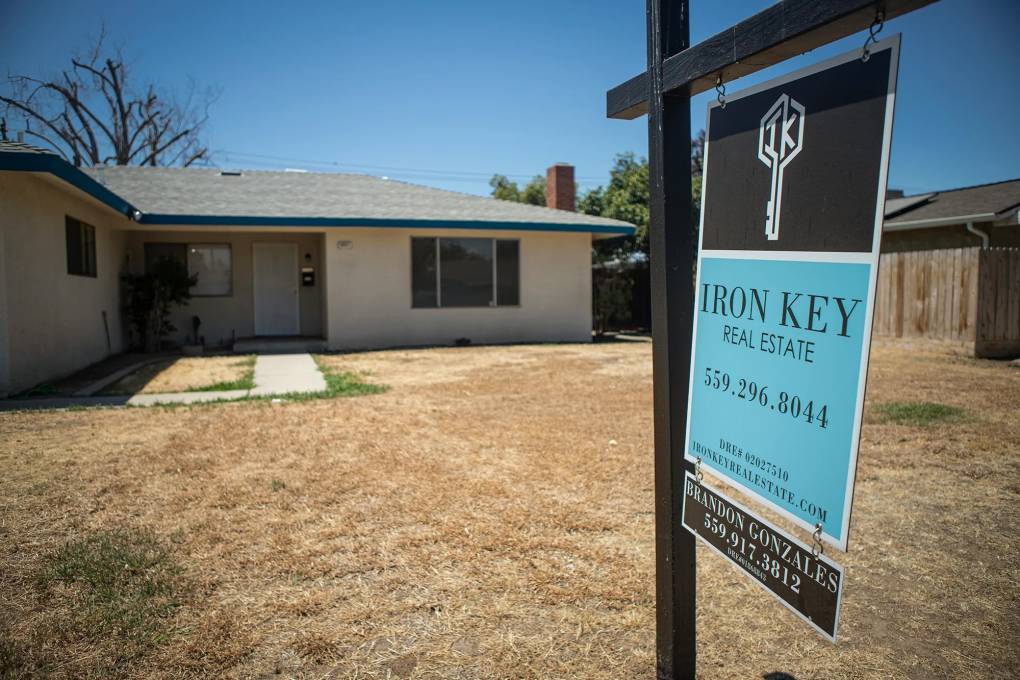
"caption": "A for sale sign in front of a home in the Tower District in central Fresno on June 28, 2022. ",
"credit": "Larry Valenzuela/CalMatters/CatchLight Local",
"altTag": null,
"description": null,
"imgSizes": {
"medium": {
"file": "https://cdn.kqed.org/wp-content/uploads/sites/10/2024/06/062822_Fresno-Home-File_LV_CM_03-copy-800x533.jpg",
"width": 800,
"height": 533,
"mimeType": "image/jpeg"
},
"large": {
"file": "https://cdn.kqed.org/wp-content/uploads/sites/10/2024/06/062822_Fresno-Home-File_LV_CM_03-copy-1020x680.jpg",
"width": 1020,
"height": 680,
"mimeType": "image/jpeg"
},
"thumbnail": {
"file": "https://cdn.kqed.org/wp-content/uploads/sites/10/2024/06/062822_Fresno-Home-File_LV_CM_03-copy-160x107.jpg",
"width": 160,
"height": 107,
"mimeType": "image/jpeg"
},
"1536x1536": {
"file": "https://cdn.kqed.org/wp-content/uploads/sites/10/2024/06/062822_Fresno-Home-File_LV_CM_03-copy-1536x1024.jpg",
"width": 1536,
"height": 1024,
"mimeType": "image/jpeg"
},
"post-thumbnail": {
"file": "https://cdn.kqed.org/wp-content/uploads/sites/10/2024/06/062822_Fresno-Home-File_LV_CM_03-copy-672x372.jpg",
"width": 672,
"height": 372,
"mimeType": "image/jpeg"
},
"twentyfourteen-full-width": {
"file": "https://cdn.kqed.org/wp-content/uploads/sites/10/2024/06/062822_Fresno-Home-File_LV_CM_03-copy-1038x576.jpg",
"width": 1038,
"height": 576,
"mimeType": "image/jpeg"
},
"full-width": {
"file": "https://cdn.kqed.org/wp-content/uploads/sites/10/2024/06/062822_Fresno-Home-File_LV_CM_03-copy-1920x1280.jpg",
"width": 1920,
"height": 1280,
"mimeType": "image/jpeg"
},
"kqedFullSize": {
"file": "https://cdn.kqed.org/wp-content/uploads/sites/10/2024/06/062822_Fresno-Home-File_LV_CM_03-copy.jpg",
"width": 2000,
"height": 1333
}
},
"isLoading": false,
"fetchFailed": false
},
"news_11990861": {
"type": "attachments",
"id": "news_11990861",
"meta": {
"index": "attachments_1716263798",
"site": "news",
"id": "11990861",
"found": true
},
"title": "061624_Pleasanton_LE_CM_03",
"publishDate": 1718728834,
"status": "inherit",
"parent": 11990860,
"modified": 1718728978,
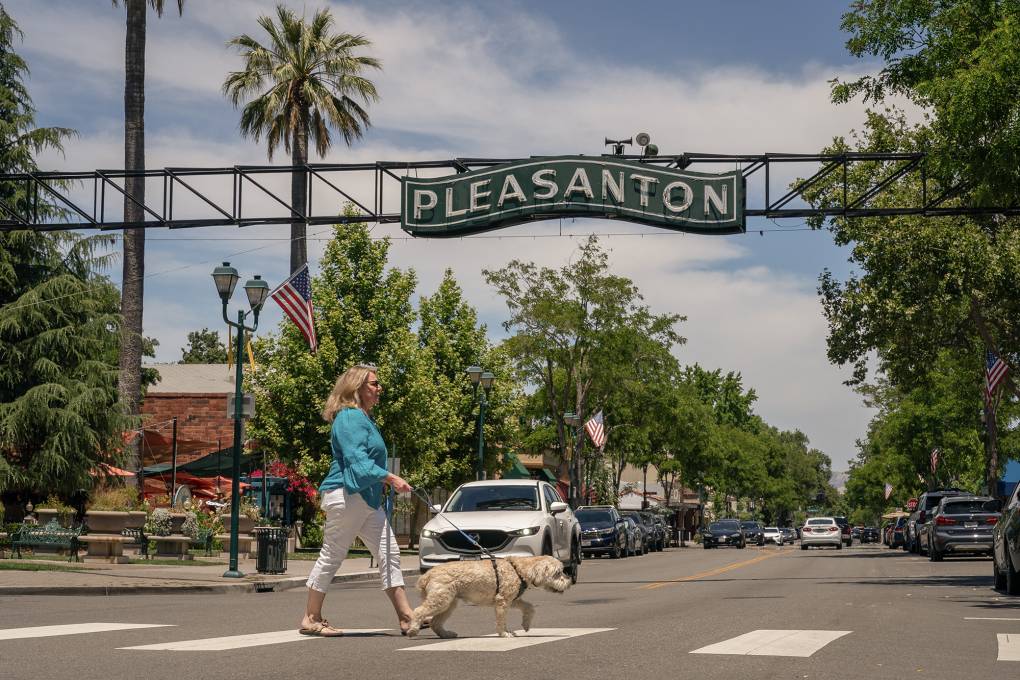
"caption": "A pedestrian walks their dog through downtown Pleasanton on June 16, 2024. The city of Pleasanton has voted to explore the possibility of becoming a charter city. ",
"credit": "Loren Elliott/CalMatters",
"altTag": "A white woman wearing a blue shirt and white pants walks a dog across the street with a sign that says \"Pleasanton\" above her.",
"description": null,
"imgSizes": {
"medium": {
"file": "https://cdn.kqed.org/wp-content/uploads/sites/10/2024/06/061624_Pleasanton_LE_CM_03-800x533.jpg",
"width": 800,
"height": 533,
"mimeType": "image/jpeg"
},
"large": {
"file": "https://cdn.kqed.org/wp-content/uploads/sites/10/2024/06/061624_Pleasanton_LE_CM_03-1020x680.jpg",
"width": 1020,
"height": 680,
"mimeType": "image/jpeg"
},
"thumbnail": {
"file": "https://cdn.kqed.org/wp-content/uploads/sites/10/2024/06/061624_Pleasanton_LE_CM_03-160x107.jpg",
"width": 160,
"height": 107,
"mimeType": "image/jpeg"
},
"1536x1536": {
"file": "https://cdn.kqed.org/wp-content/uploads/sites/10/2024/06/061624_Pleasanton_LE_CM_03-1536x1024.jpg",
"width": 1536,
"height": 1024,
"mimeType": "image/jpeg"
},
"post-thumbnail": {
"file": "https://cdn.kqed.org/wp-content/uploads/sites/10/2024/06/061624_Pleasanton_LE_CM_03-672x372.jpg",
"width": 672,
"height": 372,
"mimeType": "image/jpeg"
},
"twentyfourteen-full-width": {
"file": "https://cdn.kqed.org/wp-content/uploads/sites/10/2024/06/061624_Pleasanton_LE_CM_03-1038x576.jpg",
"width": 1038,
"height": 576,
"mimeType": "image/jpeg"
},
"full-width": {
"file": "https://cdn.kqed.org/wp-content/uploads/sites/10/2024/06/061624_Pleasanton_LE_CM_03-1920x1280.jpg",
"width": 1920,
"height": 1280,
"mimeType": "image/jpeg"
},
"kqedFullSize": {
"file": "https://cdn.kqed.org/wp-content/uploads/sites/10/2024/06/061624_Pleasanton_LE_CM_03.jpg",
"width": 2000,
"height": 1333
}
},
"isLoading": false,
"fetchFailed": false
},
"news_11990724": {
"type": "attachments",
"id": "news_11990724",
"meta": {
"index": "attachments_1716263798",
"site": "news",
"id": "11990724",
"found": true
},
"title": "DrugFreeRecoveryHousing01",
"publishDate": 1718651960,
"status": "inherit",
"parent": 11990693,
"modified": 1718665035,
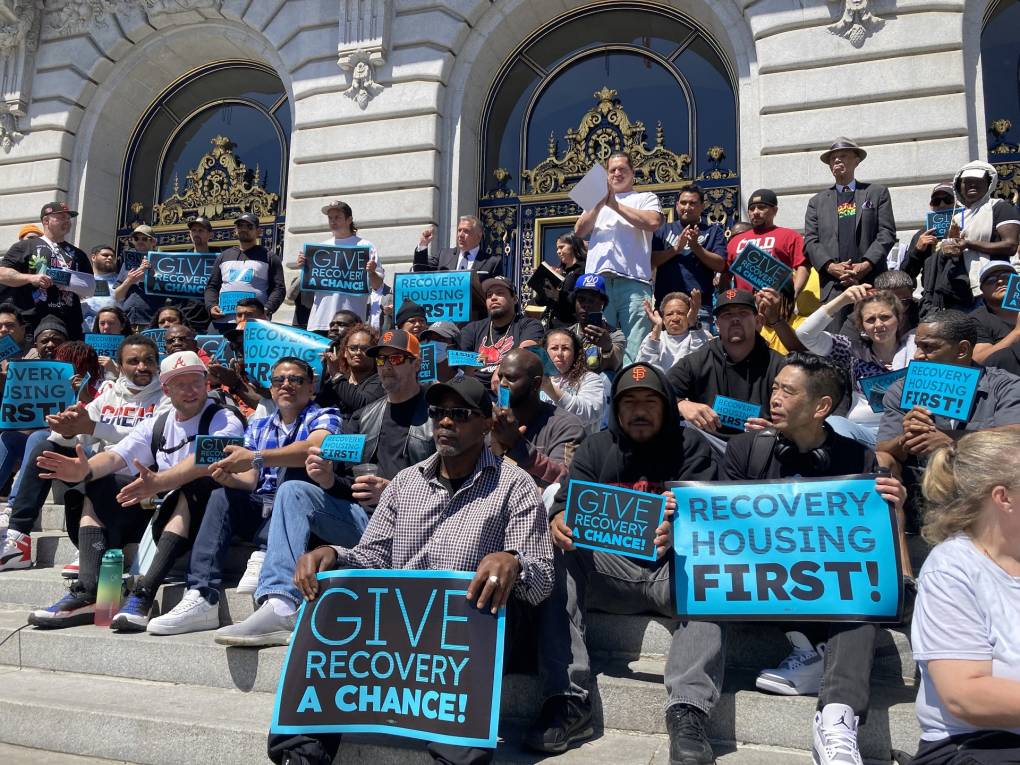
"caption": "San Francisco Supervisor Matt Dorsey (top-center) speaks from a podium at City Hall on June 17. Together, he and Supervisor Rafael Mandelman announced their new legislation to prioritize drug-free recovery housing in front of advocates and the community.",
"credit": "Katherine Monahan/KQED",
"altTag": null,
"description": null,
"imgSizes": {
"medium": {
"file": "https://cdn.kqed.org/wp-content/uploads/sites/10/2024/06/DrugFreeRecoveryHousing01-800x600.jpg",
"width": 800,
"height": 600,
"mimeType": "image/jpeg"
},
"large": {
"file": "https://cdn.kqed.org/wp-content/uploads/sites/10/2024/06/DrugFreeRecoveryHousing01-1020x765.jpg",
"width": 1020,
"height": 765,
"mimeType": "image/jpeg"
},
"thumbnail": {
"file": "https://cdn.kqed.org/wp-content/uploads/sites/10/2024/06/DrugFreeRecoveryHousing01-160x120.jpg",
"width": 160,
"height": 120,
"mimeType": "image/jpeg"
},
"1536x1536": {
"file": "https://cdn.kqed.org/wp-content/uploads/sites/10/2024/06/DrugFreeRecoveryHousing01-1536x1152.jpg",
"width": 1536,
"height": 1152,
"mimeType": "image/jpeg"
},
"post-thumbnail": {
"file": "https://cdn.kqed.org/wp-content/uploads/sites/10/2024/06/DrugFreeRecoveryHousing01-672x372.jpg",
"width": 672,
"height": 372,
"mimeType": "image/jpeg"
},
"twentyfourteen-full-width": {
"file": "https://cdn.kqed.org/wp-content/uploads/sites/10/2024/06/DrugFreeRecoveryHousing01-1038x576.jpg",
"width": 1038,
"height": 576,
"mimeType": "image/jpeg"
},
"kqedFullSize": {
"file": "https://cdn.kqed.org/wp-content/uploads/sites/10/2024/06/DrugFreeRecoveryHousing01.jpg",
"width": 1920,
"height": 1440
}
},
"isLoading": false,
"fetchFailed": false
},
"news_11988725": {
"type": "attachments",
"id": "news_11988725",
"meta": {
"index": "attachments_1716263798",
"site": "news",
"id": "11988725",
"found": true
},
"title": "20240601-PEOPLESPARK-JY-035-KQED",
"publishDate": 1717441213,
"status": "inherit",
"parent": 0,
"modified": 1718252957,
"caption": "Lisa Teague, left, serves Richard Rodriguez a plate of food on June 1, 2024, at a small open space near People's Park in Berkeley. Teague, a local community activist, volunteered at the park until UC Berkeley closed it in January to build new student and low-income housing on the site.",
"credit": "Juliana Yamada/KQED",
"altTag": "A woman serves a man food on a street.",
"description": null,
"imgSizes": {
"medium": {
"file": "https://cdn.kqed.org/wp-content/uploads/sites/10/2024/06/20240601-PEOPLESPARK-JY-035-KQED-800x533.jpg",
"width": 800,
"height": 533,
"mimeType": "image/jpeg"
},
"large": {
"file": "https://cdn.kqed.org/wp-content/uploads/sites/10/2024/06/20240601-PEOPLESPARK-JY-035-KQED-1020x680.jpg",
"width": 1020,
"height": 680,
"mimeType": "image/jpeg"
},
"thumbnail": {
"file": "https://cdn.kqed.org/wp-content/uploads/sites/10/2024/06/20240601-PEOPLESPARK-JY-035-KQED-160x107.jpg",
"width": 160,
"height": 107,
"mimeType": "image/jpeg"
},
"1536x1536": {
"file": "https://cdn.kqed.org/wp-content/uploads/sites/10/2024/06/20240601-PEOPLESPARK-JY-035-KQED-1536x1024.jpg",
"width": 1536,
"height": 1024,
"mimeType": "image/jpeg"
},
"post-thumbnail": {
"file": "https://cdn.kqed.org/wp-content/uploads/sites/10/2024/06/20240601-PEOPLESPARK-JY-035-KQED-672x372.jpg",
"width": 672,
"height": 372,
"mimeType": "image/jpeg"
},
"twentyfourteen-full-width": {
"file": "https://cdn.kqed.org/wp-content/uploads/sites/10/2024/06/20240601-PEOPLESPARK-JY-035-KQED-1038x576.jpg",
"width": 1038,
"height": 576,
"mimeType": "image/jpeg"
},
"full-width": {
"file": "https://cdn.kqed.org/wp-content/uploads/sites/10/2024/06/20240601-PEOPLESPARK-JY-035-KQED-1920x1280.jpg",
"width": 1920,
"height": 1280,
"mimeType": "image/jpeg"
},
"kqedFullSize": {
"file": "https://cdn.kqed.org/wp-content/uploads/sites/10/2024/06/20240601-PEOPLESPARK-JY-035-KQED.jpg",
"width": 2000,
"height": 1333
}
},
"isLoading": false,
"fetchFailed": false
},
"news_11989941": {
"type": "attachments",
"id": "news_11989941",
"meta": {
"index": "attachments_1716263798",
"site": "news",
"id": "11989941",
"found": true
},
"title": "240409-MAHAN HOMELESS-JG-01_qut",
"publishDate": 1718216228,
"status": "inherit",
"parent": 11989926,
"modified": 1718216259,
"caption": "San José Mayor Matt Mahan speaks about a state audit of spending on homelessness outside City Hall on April 9, 2024.",
"credit": "Joseph Geha/KQED",
"altTag": null,
"description": null,
"imgSizes": {
"medium": {
"file": "https://cdn.kqed.org/wp-content/uploads/sites/10/2024/06/240409-MAHAN-HOMELESS-JG-01_qut-800x533.jpg",
"width": 800,
"height": 533,
"mimeType": "image/jpeg"
},
"large": {
"file": "https://cdn.kqed.org/wp-content/uploads/sites/10/2024/06/240409-MAHAN-HOMELESS-JG-01_qut-1020x680.jpg",
"width": 1020,
"height": 680,
"mimeType": "image/jpeg"
},
"thumbnail": {
"file": "https://cdn.kqed.org/wp-content/uploads/sites/10/2024/06/240409-MAHAN-HOMELESS-JG-01_qut-160x107.jpg",
"width": 160,
"height": 107,
"mimeType": "image/jpeg"
},
"1536x1536": {
"file": "https://cdn.kqed.org/wp-content/uploads/sites/10/2024/06/240409-MAHAN-HOMELESS-JG-01_qut-1536x1024.jpg",
"width": 1536,
"height": 1024,
"mimeType": "image/jpeg"
},
"post-thumbnail": {
"file": "https://cdn.kqed.org/wp-content/uploads/sites/10/2024/06/240409-MAHAN-HOMELESS-JG-01_qut-672x372.jpg",
"width": 672,
"height": 372,
"mimeType": "image/jpeg"
},
"twentyfourteen-full-width": {
"file": "https://cdn.kqed.org/wp-content/uploads/sites/10/2024/06/240409-MAHAN-HOMELESS-JG-01_qut-1038x576.jpg",
"width": 1038,
"height": 576,
"mimeType": "image/jpeg"
},
"kqedFullSize": {
"file": "https://cdn.kqed.org/wp-content/uploads/sites/10/2024/06/240409-MAHAN-HOMELESS-JG-01_qut.jpg",
"width": 1920,
"height": 1280
}
},
"isLoading": false,
"fetchFailed": false
},
"news_11989773": {
"type": "attachments",
"id": "news_11989773",
"meta": {
"index": "attachments_1716263798",
"site": "news",
"id": "11989773",
"found": true
},
"title": "A California Forever billboard stands along I-80 in Vacaville on April 2, 2024.",
"publishDate": 1718126485,
"status": "inherit",
"parent": 11989766,
"modified": 1718126541,
"caption": "A California Forever billboard stands along I-80 in Vacaville on April 2, 2024.",
"credit": "Beth LaBerge/KQED",
"altTag": "A billboard among tall weeds reads, \"15,000 local jobs paying $88,000 or more.\" Paid for by California Forever.",
"description": null,
"imgSizes": {
"medium": {
"file": "https://cdn.kqed.org/wp-content/uploads/sites/10/2024/06/240502-CaliforniaForever-13-BL_qut-800x533.jpg",
"width": 800,
"height": 533,
"mimeType": "image/jpeg"
},
"large": {
"file": "https://cdn.kqed.org/wp-content/uploads/sites/10/2024/06/240502-CaliforniaForever-13-BL_qut-1020x680.jpg",
"width": 1020,
"height": 680,
"mimeType": "image/jpeg"
},
"thumbnail": {
"file": "https://cdn.kqed.org/wp-content/uploads/sites/10/2024/06/240502-CaliforniaForever-13-BL_qut-160x107.jpg",
"width": 160,
"height": 107,
"mimeType": "image/jpeg"
},
"1536x1536": {
"file": "https://cdn.kqed.org/wp-content/uploads/sites/10/2024/06/240502-CaliforniaForever-13-BL_qut-1536x1024.jpg",
"width": 1536,
"height": 1024,
"mimeType": "image/jpeg"
},
"post-thumbnail": {
"file": "https://cdn.kqed.org/wp-content/uploads/sites/10/2024/06/240502-CaliforniaForever-13-BL_qut-672x372.jpg",
"width": 672,
"height": 372,
"mimeType": "image/jpeg"
},
"twentyfourteen-full-width": {
"file": "https://cdn.kqed.org/wp-content/uploads/sites/10/2024/06/240502-CaliforniaForever-13-BL_qut-1038x576.jpg",
"width": 1038,
"height": 576,
"mimeType": "image/jpeg"
},
"kqedFullSize": {
"file": "https://cdn.kqed.org/wp-content/uploads/sites/10/2024/06/240502-CaliforniaForever-13-BL_qut.jpg",
"width": 1920,
"height": 1280
}
},
"isLoading": false,
"fetchFailed": false
}
},
"audioPlayerReducer": {
"postId": "stream_live",
"isPaused": true,
"isPlaying": false,
"pfsActive": false,
"pledgeModalIsOpen": true,
"playerDrawerIsOpen": false,
"liveAudioPlayStartedAt": 0,
"liveAudioPlayContext": ""
},
"authorsReducer": {
"byline_news_11991614": {
"type": "authors",
"id": "byline_news_11991614",
"meta": {
"override": true
},
"slug": "byline_news_11991614",
"name": "\u003ca href=\"https://calmatters.org/author/ben-christopher/\">Ben Christopher\u003c/a>, CalMatters",
"isLoading": false
},
"byline_news_11990860": {
"type": "authors",
"id": "byline_news_11990860",
"meta": {
"override": true
},
"slug": "byline_news_11990860",
"name": "Ben Christopher, CalMatters",
"isLoading": false
},
"gmarzorati": {
"type": "authors",
"id": "227",
"meta": {
"index": "authors_1716337520",
"id": "227",
"found": true
},
"name": "Guy Marzorati",
"firstName": "Guy",
"lastName": "Marzorati",
"slug": "gmarzorati",
"email": "gmarzorati@KQED.org",
"display_author_email": true,
"staff_mastheads": [
"news"
],
"title": "Correspondent",
"bio": "Guy Marzorati is a correspondent on KQED's California Politics and Government Desk, based in San Jose. A graduate of Santa Clara University, Guy joined KQED in 2013. He reports on state and local politics and produces KQED's digital voter guide.",
"avatar": "https://secure.gravatar.com/avatar/e7038b8dbfd55b104369b76b1cd0b9de?s=600&d=blank&r=g",
"twitter": "guymarzorati",
"facebook": null,
"instagram": null,
"linkedin": null,
"sites": [
{
"site": "",
"roles": [
"editor"
]
},
{
"site": "news",
"roles": [
"editor"
]
},
{
"site": "science",
"roles": [
"editor"
]
},
{
"site": "forum",
"roles": [
"editor"
]
},
{
"site": "elections",
"roles": [
"editor"
]
},
{
"site": "liveblog",
"roles": [
"editor"
]
}
],
"headData": {
"title": "Guy Marzorati | KQED",
"description": "Correspondent",
"ogImgSrc": "https://secure.gravatar.com/avatar/e7038b8dbfd55b104369b76b1cd0b9de?s=600&d=blank&r=g",
"twImgSrc": "https://secure.gravatar.com/avatar/e7038b8dbfd55b104369b76b1cd0b9de?s=600&d=blank&r=g"
},
"isLoading": false,
"link": "/author/gmarzorati"
},
"lesleymcclurg": {
"type": "authors",
"id": "11229",
"meta": {
"index": "authors_1716337520",
"id": "11229",
"found": true
},
"name": "Lesley McClurg",
"firstName": "Lesley",
"lastName": "McClurg",
"slug": "lesleymcclurg",
"email": "lmcclurg@KQED.org",
"display_author_email": false,
"staff_mastheads": [
"news",
"science"
],
"title": "KQED Health Correspondent",
"bio": "Lesley McClurg is a health correspondent and fill-in host whose work is regularly rebroadcast on NPR and PBS programs. She’s earned multiple regional Emmy awards, a national and a regional Edward R. Murrow award, and was named Best Beat Reporter by the Association of Health Care Journalists. The Society of Professional Journalists has recognized her work several times, and the Society of Environmental Journalists spotlighted her coverage of California’s historic drought.\r\n\r\nBefore joining KQED in 2016, Lesley covered food and sustainability for Capital Public Radio, environmental issues for Colorado Public Radio, and reported for KUOW and KCTS 9 in Seattle. Away from the newsroom, she loves skiing with her daughter, mountain biking with her partner, and playing with Ollie, the family’s goldendoodle. On deadline, she runs almost entirely on chocolate chips.\r\n\r\n ",
"avatar": "https://secure.gravatar.com/avatar/bab49e972ea10c774fe0f5e29dba1722b158f7c0d58a360923d1389d380b2978?s=600&d=blank&r=g",
"twitter": "lesleywmcclurg",
"bluesky": null,
"facebook": null,
"instagram": null,
"linkedin": null,
"sites": [
{
"site": "arts",
"roles": [
"author"
]
},
{
"site": "news",
"roles": [
"editor"
]
},
{
"site": "futureofyou",
"roles": [
"editor"
]
},
{
"site": "stateofhealth",
"roles": [
"author"
]
},
{
"site": "science",
"roles": [
"editor"
]
},
{
"site": "quest",
"roles": [
"subscriber"
]
},
{
"site": "forum",
"roles": [
"administrator"
]
},
{
"site": "liveblog",
"roles": [
"author"
]
}
],
"headData": {
"title": "Lesley McClurg | KQED",
"description": "KQED Health Correspondent",
"ogImgSrc": "https://secure.gravatar.com/avatar/bab49e972ea10c774fe0f5e29dba1722b158f7c0d58a360923d1389d380b2978?s=600&d=blank&r=g",
"twImgSrc": "https://secure.gravatar.com/avatar/bab49e972ea10c774fe0f5e29dba1722b158f7c0d58a360923d1389d380b2978?s=600&d=blank&r=g"
},
"isLoading": false,
"link": "/author/lesleymcclurg"
},
"vrancano": {
"type": "authors",
"id": "11276",
"meta": {
"index": "authors_1716337520",
"id": "11276",
"found": true
},
"name": "Vanessa Rancaño",
"firstName": "Vanessa",
"lastName": "Rancaño",
"slug": "vrancano",
"email": "vrancano@kqed.org",
"display_author_email": false,
"staff_mastheads": [
"news"
],
"title": "Reporter",
"bio": "Vanessa Rancaño is a features reporter for KQED. She’s also covered homelessness and education for the station and reported from the Central Valley. Her work has aired across public radio, from flagship national news shows to longform narrative podcasts. Before taking up a mic, she worked as a freelance print journalist. She’s been recognized with a number of national and regional awards. Vanessa grew up in California's Central Valley. She's a former NPR Kroc Fellow, and a graduate of the UC Berkeley Graduate School of Journalism.",
"avatar": "https://secure.gravatar.com/avatar/b3a383dfb0e7ee1c17568f2cf067904ab654d6e3de9743fc661f3c788ade1bed?s=600&d=blank&r=g",
"twitter": "vanessarancano",
"bluesky": null,
"facebook": null,
"instagram": null,
"linkedin": null,
"sites": [
{
"site": "arts",
"roles": [
"editor"
]
},
{
"site": "news",
"roles": [
"editor"
]
},
{
"site": "liveblog",
"roles": [
"contributor"
]
}
],
"headData": {
"title": "Vanessa Rancaño | KQED",
"description": "Reporter",
"ogImgSrc": "https://secure.gravatar.com/avatar/b3a383dfb0e7ee1c17568f2cf067904ab654d6e3de9743fc661f3c788ade1bed?s=600&d=blank&r=g",
"twImgSrc": "https://secure.gravatar.com/avatar/b3a383dfb0e7ee1c17568f2cf067904ab654d6e3de9743fc661f3c788ade1bed?s=600&d=blank&r=g"
},
"isLoading": false,
"link": "/author/vrancano"
},
"abandlamudi": {
"type": "authors",
"id": "11672",
"meta": {
"index": "authors_1716337520",
"id": "11672",
"found": true
},
"name": "Adhiti Bandlamudi",
"firstName": "Adhiti",
"lastName": "Bandlamudi",
"slug": "abandlamudi",
"email": "abandlamudi@kqed.org",
"display_author_email": false,
"staff_mastheads": [
"news"
],
"title": "KQED Housing Reporter",
"bio": "Adhiti Bandlamudi reports for KQED's Housing desk. She focuses on how housing gets built across the Bay Area. Before joining KQED in 2020, she reported for WUNC in Durham, North Carolina, WABE in Atlanta, Georgia and Capital Public Radio in Sacramento. In 2017, she was awarded a Kroc Fellowship at NPR where she reported on everything from sprinkles to the Golden State Killer's arrest. When she's not reporting, she's baking new recipes in her kitchen or watching movies with friends and family. She's originally from Georgia and has strong opinions about Great British Bake Off.",
"avatar": "https://secure.gravatar.com/avatar/868129c8b257bb99a3500e2c86a65400?s=600&d=mm&r=g",
"twitter": "oddity_adhiti",
"facebook": null,
"instagram": null,
"linkedin": null,
"sites": [
{
"site": "arts",
"roles": [
"author"
]
},
{
"site": "news",
"roles": [
"editor"
]
},
{
"site": "liveblog",
"roles": [
"author"
]
}
],
"headData": {
"title": "Adhiti Bandlamudi | KQED",
"description": "KQED Housing Reporter",
"ogImgSrc": "https://secure.gravatar.com/avatar/868129c8b257bb99a3500e2c86a65400?s=600&d=mm&r=g",
"twImgSrc": "https://secure.gravatar.com/avatar/868129c8b257bb99a3500e2c86a65400?s=600&d=mm&r=g"
},
"isLoading": false,
"link": "/author/abandlamudi"
},
"kdebenedetti": {
"type": "authors",
"id": "11913",
"meta": {
"index": "authors_1716337520",
"id": "11913",
"found": true
},
"name": "Katie DeBenedetti",
"firstName": "Katie",
"lastName": "DeBenedetti",
"slug": "kdebenedetti",
"email": "kdebenedetti@kqed.org",
"display_author_email": false,
"staff_mastheads": [
"news",
"science"
],
"title": "KQED Contributor",
"bio": "Katie DeBenedetti is a digital reporter covering daily news for the Express Desk. Prior to joining KQED as a culture reporting intern in January 2024, she covered education and city government for the Napa Valley Register.",
"avatar": "https://secure.gravatar.com/avatar/6e31073cb8f7e4214ab03f42771d0f45?s=600&d=blank&r=g",
"twitter": null,
"facebook": null,
"instagram": null,
"linkedin": null,
"sites": [
{
"site": "news",
"roles": [
"author"
]
},
{
"site": "science",
"roles": [
"author"
]
},
{
"site": "liveblog",
"roles": [
"author"
]
}
],
"headData": {
"title": "Katie DeBenedetti | KQED",
"description": "KQED Contributor",
"ogImgSrc": "https://secure.gravatar.com/avatar/6e31073cb8f7e4214ab03f42771d0f45?s=600&d=blank&r=g",
"twImgSrc": "https://secure.gravatar.com/avatar/6e31073cb8f7e4214ab03f42771d0f45?s=600&d=blank&r=g"
},
"isLoading": false,
"link": "/author/kdebenedetti"
},
"jzuloaga": {
"type": "authors",
"id": "11916",
"meta": {
"index": "authors_1716337520",
"id": "11916",
"found": true
},
"name": "Joseph Zuloaga",
"firstName": "Joseph",
"lastName": "Zuloaga",
"slug": "jzuloaga",
"email": "jzuloaga@KQED.org",
"display_author_email": false,
"staff_mastheads": [
"news"
],
"title": "KQED Contributor",
"bio": null,
"avatar": "https://secure.gravatar.com/avatar/4502d992d5f0fa0cbf521a71e0bbd16a?s=600&d=blank&r=g",
"twitter": null,
"facebook": null,
"instagram": null,
"linkedin": null,
"sites": [
{
"site": "news",
"roles": [
"author"
]
}
],
"headData": {
"title": "Joseph Zuloaga | KQED",
"description": "KQED Contributor",
"ogImgSrc": "https://secure.gravatar.com/avatar/4502d992d5f0fa0cbf521a71e0bbd16a?s=600&d=blank&r=g",
"twImgSrc": "https://secure.gravatar.com/avatar/4502d992d5f0fa0cbf521a71e0bbd16a?s=600&d=blank&r=g"
},
"isLoading": false,
"link": "/author/jzuloaga"
},
"slim": {
"type": "authors",
"id": "11920",
"meta": {
"index": "authors_1716337520",
"id": "11920",
"found": true
},
"name": "Samantha Lim",
"firstName": "Samantha",
"lastName": "Lim",
"slug": "slim",
"email": "slim@KQED.org",
"display_author_email": false,
"staff_mastheads": [],
"title": "KQED Contributor",
"bio": null,
"avatar": "https://secure.gravatar.com/avatar/82e592e6c15fe1a04d385e8ad0fb0b4e?s=600&d=blank&r=g",
"twitter": null,
"facebook": null,
"instagram": null,
"linkedin": null,
"sites": [
{
"site": "news",
"roles": []
}
],
"headData": {
"title": "Samantha Lim | KQED",
"description": "KQED Contributor",
"ogImgSrc": "https://secure.gravatar.com/avatar/82e592e6c15fe1a04d385e8ad0fb0b4e?s=600&d=blank&r=g",
"twImgSrc": "https://secure.gravatar.com/avatar/82e592e6c15fe1a04d385e8ad0fb0b4e?s=600&d=blank&r=g"
},
"isLoading": false,
"link": "/author/slim"
}
},
"pagesReducer": {
"news_tag_housing": {
"type": "terms",
"id": "news_1775",
"meta": {
"index": "terms_1716263798",
"site": "news",
"id": "1775",
"score": 7.0360975
},
"featImg": null,
"name": "housing",
"description": null,
"taxonomy": "tag",
"headData": {
"twImgId": null,
"twTitle": null,
"ogTitle": null,
"ogImgId": null,
"twDescription": null,
"description": null,
"title": "housing Archives | KQED News",
"ogDescription": null
},
"ttid": 1790,
"slug": "housing",
"isLoading": false,
"title": "housing",
"pageMeta": {
"site": "news",
"WpPageTemplate": "page-topic-editorial",
"currentPage": 34
},
"blocks": [
{
"blockName": "kqed/post-list",
"attrs": {
"layout": "cardArticle2",
"query": "posts/news?tag=housing",
"seeMore": false,
"paginated": true,
"page": 34
}
},
{
"blockName": "kqed/ad"
}
]
}
},
"pfsSessionReducer": {},
"postsReducer": {
"stream_live": {
"type": "live",
"id": "stream_live",
"audioUrl": "https://streams.kqed.org/kqedradio",
"title": "Live Stream",
"excerpt": "Live Stream information currently unavailable.",
"link": "/radio",
"featImg": "",
"label": {
"name": "KQED Live",
"link": "/"
}
},
"stream_kqedNewscast": {
"type": "posts",
"id": "stream_kqedNewscast",
"audioUrl": "https://www.kqed.org/.stream/anon/radio/RDnews/newscast.mp3?_=1",
"title": "KQED Newscast",
"featImg": "",
"label": {
"name": "88.5 FM",
"link": "/"
}
},
"news_11992046": {
"type": "posts",
"id": "news_11992046",
"meta": {
"index": "posts_1716263798",
"site": "news",
"id": "11992046",
"score": null,
"sort": [
1719436462000
]
},
"guestAuthors": [],
"slug": "20-billion-affordable-housing-bond-heads-to-bay-area-voters",
"title": "$20 Billion Affordable Housing Bond Heads to Bay Area Voters",
"publishDate": 1719436462,
"format": "standard",
"headTitle": "$20 Billion Affordable Housing Bond Heads to Bay Area Voters | KQED",
"labelTerm": {
"site": "news"
},
"content": "\u003cp>Bay Area voters will be asked to decide on a $20 billion \u003ca href=\"https://www.kqed.org/news/tag/affordable-housing\">affordable housing\u003c/a> bond in November after the Bay Area Housing Finance Authority (BAHFA) voted unanimously Wednesday to place it on the ballot.\u003c/p>\n\u003cp>The bond, years in the making, would be used to build or preserve at least 70,000 affordable housing units across all nine Bay Area counties, with close to half of them reserved for very low-income households.\u003c/p>\n\u003cp>“This is huge,” Amie Fishman, executive director of the Non-Profit Housing Association of Northern California, told commissioners. The organization has been one of the key champions of the measure. “This will give voters the opportunity to address one of the most critical issues facing our region and our communities.”\u003c/p>\n\u003cp>With state funding constrained by a \u003ca href=\"https://calmatters.org/politics/capitol/2024/06/california-budget-deal-4/\">multibillion-dollar budget deficit\u003c/a>, advocates say the bond is crucial to making a dent in the homelessness crisis in the Bay Area.\u003c/p>\n\u003cp>[ad fullwidth]\u003c/p>\n\u003cp>Bond revenue would provide funding for all nine counties and region-wide programs. \u003ca href=\"https://mtc.ca.gov/sites/default/files/meetings/attachments/6036/7c_Resolution_0034_Attachment_A_2024_Housing_Bond_Language_6_18_24_v9_.pdf\">Distribution estimates\u003c/a> indicate Santa Clara County would receive the most funding, around $4.5 billion, while Napa would receive the least, about $364 million. Roughly $4 billion would be dedicated to regional needs.\u003c/p>\n\u003cp>Nevada Merriman, vice president of policy and advocacy for MidPen Housing, a nonprofit affordable housing developer, told commissioners that there’s a roster of developments ready to tap into the funding.\u003c/p>\n\u003cp>“There’s a pipeline here that’s ready to go,” she said, noting MidPen alone has 1,300 units awaiting financing. As a measure of need, she pointed out that there’s a waitlist of about 100,000 people for the roughly 10,000 affordable apartments the organization operates across the region.\u003c/p>\n\u003cp>Leonor Godinez, an organizer with Faith in Action East Bay, noted that she had hoped to see a tax exemption in the ballot measure for low-income homeowners but expressed support nonetheless.\u003c/p>\n\u003cp>“I believe it will allow local officials to invest in the community and provide much-needed affordable housing in a critical housing crisis,” she said.\u003c/p>\n\u003cp>Many of those who spoke against the bond at Wednesday’s BAHFA meeting focused on concerns about the cost to property owners.\u003c/p>\n\u003cp>“This bond attacks homeowners,” said Lafayette resident Libby Henry, who identified herself as part of the group Livable California and added that she doesn’t feel the accountability provisions built into the measure are sufficient.\u003c/p>\n\u003cp>The ballot measure requires a citizens oversight committee to be assembled to review annual spending and for an audit to be submitted to BAHFA annually.\u003c/p>\n\u003cp>BAHFA officials estimate the bond would raise property taxes by around $20 on average for every $100,000 of assessed home value. The total cost of the bond, including principal and interest, is estimated to be about $48 billion, and it is expected to be paid off by fiscal year 2077.\u003c/p>\n\u003cp>Roma Dawson, the former president of the League of Women Voters Bay Area, said the group supports the bond but pushed for robust oversight.\u003c/p>\n\u003cp>“We are trusting in all of you to set a new standard for public engagement and transparency,” she said.\u003c/p>\n\u003cp>Preliminary polling shows voters are nearly evenly split on the bond. The authority hired data analytics firm EMC Research to test the viability of such a bond in the months before Wednesday’s vote. The pollsters found between 54% and 55% of likely voters surveyed across the nine counties supported it.\u003c/p>\n\u003cp>Special taxes like the bond currently require a two-thirds majority to pass. However, the regional bond is timed to coincide with a statewide vote on a constitutional amendment, ACA 1, that would lower the threshold to 55% approval for local taxes dedicated to affordable housing or infrastructure projects. If ACA 1 passes, the regional bond measure would be subject to the lower threshold.\u003c/p>\n\u003cp>In the face of the tough odds, several advocates expressed their commitment to campaigning hard for the bond.\u003c/p>\n\u003cp>“The message the polling tells us is ‘All hands on deck,’” said Warren Cushman, an organizer with Community Resources for Independent Living. “Well, I’m one of the hands, I’m on deck. I’m looking for other hands, and we’re going to make this work.”\u003c/p>\n\u003cp>The Bay Area Housing Finance Authority has until Aug. 9 to submit the bond measure to the registrar of voters in each county.\u003c/p>\n\u003cp>“We have a chance to get it right. We have a chance to create real outcomes,” BAHFA chair and Napa County Supervisor Alfredo Pedroza said. “So it’s upon us … the stakeholders, to make sure we do this right.”\u003c/p>\n\u003cp>\u003c/p>\n",
"blocks": [],
"excerpt": "With state funding constrained by a budget deficit, advocates say the bond is crucial to making a dent in the homelessness crisis.",
"status": "publish",
"parent": 0,
"modified": 1740530285,
"stats": {
"hasAudio": false,
"hasVideo": false,
"hasChartOrMap": false,
"iframeSrcs": [],
"hasGoogleForm": false,
"hasGallery": false,
"hasHearkenModule": false,
"hasPolis": false,
"paragraphCount": 23,
"wordCount": 791
},
"headData": {
"title": "$20 Billion Affordable Housing Bond Heads to Bay Area Voters | KQED",
"description": "With state funding constrained by a budget deficit, advocates say the bond is crucial to making a dent in the homelessness crisis.",
"ogTitle": "",
"ogDescription": "",
"ogImgId": "",
"twTitle": "",
"twDescription": "",
"twImgId": "",
"schema": {
"@context": "https://schema.org",
"@type": "NewsArticle",
"headline": "$20 Billion Affordable Housing Bond Heads to Bay Area Voters",
"datePublished": "2024-06-26T14:14:22-07:00",
"dateModified": "2025-02-25T16:38:05-08:00",
"image": "https://cdn.kqed.org/wp-content/uploads/2020/02/KQED-OG-Image@1x.png",
"isAccessibleForFree": "True",
"publisher": {
"@type": "NewsMediaOrganization",
"@id": "https://www.kqed.org/#organization",
"name": "KQED",
"logo": "https://cdn.kqed.org/wp-content/uploads/2020/02/KQED-OG-Image@1x.png",
"url": "https://www.kqed.org",
"sameAs": [
"https://www.facebook.com/KQED",
"https://twitter.com/KQED",
"https://www.instagram.com/kqed/",
"https://www.tiktok.com/@kqedofficial",
"https://www.linkedin.com/company/kqed",
"https://www.youtube.com/channel/UCeC0IOo7i1P_61zVUWbJ4nw"
]
}
}
},
"sticky": false,
"nprStoryId": "kqed-11992046",
"excludeFromSiteSearch": "Include",
"articleAge": "0",
"path": "/news/11992046/20-billion-affordable-housing-bond-heads-to-bay-area-voters",
"audioTrackLength": null,
"parsedContent": [
{
"type": "contentString",
"content": "\u003cdiv class=\"post-body\">\u003cp>\u003cp>Bay Area voters will be asked to decide on a $20 billion \u003ca href=\"https://www.kqed.org/news/tag/affordable-housing\">affordable housing\u003c/a> bond in November after the Bay Area Housing Finance Authority (BAHFA) voted unanimously Wednesday to place it on the ballot.\u003c/p>\n\u003cp>The bond, years in the making, would be used to build or preserve at least 70,000 affordable housing units across all nine Bay Area counties, with close to half of them reserved for very low-income households.\u003c/p>\n\u003cp>“This is huge,” Amie Fishman, executive director of the Non-Profit Housing Association of Northern California, told commissioners. The organization has been one of the key champions of the measure. “This will give voters the opportunity to address one of the most critical issues facing our region and our communities.”\u003c/p>\n\u003cp>With state funding constrained by a \u003ca href=\"https://calmatters.org/politics/capitol/2024/06/california-budget-deal-4/\">multibillion-dollar budget deficit\u003c/a>, advocates say the bond is crucial to making a dent in the homelessness crisis in the Bay Area.\u003c/p>\n\u003cp>\u003c/p>\u003c/div>",
"attributes": {
"named": {},
"numeric": []
}
},
{
"type": "component",
"content": "",
"name": "ad",
"attributes": {
"named": {
"label": "fullwidth"
},
"numeric": [
"fullwidth"
]
}
},
{
"type": "contentString",
"content": "\u003cdiv class=\"post-body\">\u003cp>\u003c/p>\n\u003cp>Bond revenue would provide funding for all nine counties and region-wide programs. \u003ca href=\"https://mtc.ca.gov/sites/default/files/meetings/attachments/6036/7c_Resolution_0034_Attachment_A_2024_Housing_Bond_Language_6_18_24_v9_.pdf\">Distribution estimates\u003c/a> indicate Santa Clara County would receive the most funding, around $4.5 billion, while Napa would receive the least, about $364 million. Roughly $4 billion would be dedicated to regional needs.\u003c/p>\n\u003cp>Nevada Merriman, vice president of policy and advocacy for MidPen Housing, a nonprofit affordable housing developer, told commissioners that there’s a roster of developments ready to tap into the funding.\u003c/p>\n\u003cp>“There’s a pipeline here that’s ready to go,” she said, noting MidPen alone has 1,300 units awaiting financing. As a measure of need, she pointed out that there’s a waitlist of about 100,000 people for the roughly 10,000 affordable apartments the organization operates across the region.\u003c/p>\n\u003cp>Leonor Godinez, an organizer with Faith in Action East Bay, noted that she had hoped to see a tax exemption in the ballot measure for low-income homeowners but expressed support nonetheless.\u003c/p>\n\u003cp>“I believe it will allow local officials to invest in the community and provide much-needed affordable housing in a critical housing crisis,” she said.\u003c/p>\n\u003cp>Many of those who spoke against the bond at Wednesday’s BAHFA meeting focused on concerns about the cost to property owners.\u003c/p>\n\u003cp>“This bond attacks homeowners,” said Lafayette resident Libby Henry, who identified herself as part of the group Livable California and added that she doesn’t feel the accountability provisions built into the measure are sufficient.\u003c/p>\n\u003cp>The ballot measure requires a citizens oversight committee to be assembled to review annual spending and for an audit to be submitted to BAHFA annually.\u003c/p>\n\u003cp>BAHFA officials estimate the bond would raise property taxes by around $20 on average for every $100,000 of assessed home value. The total cost of the bond, including principal and interest, is estimated to be about $48 billion, and it is expected to be paid off by fiscal year 2077.\u003c/p>\n\u003cp>Roma Dawson, the former president of the League of Women Voters Bay Area, said the group supports the bond but pushed for robust oversight.\u003c/p>\n\u003cp>“We are trusting in all of you to set a new standard for public engagement and transparency,” she said.\u003c/p>\n\u003cp>Preliminary polling shows voters are nearly evenly split on the bond. The authority hired data analytics firm EMC Research to test the viability of such a bond in the months before Wednesday’s vote. The pollsters found between 54% and 55% of likely voters surveyed across the nine counties supported it.\u003c/p>\n\u003cp>Special taxes like the bond currently require a two-thirds majority to pass. However, the regional bond is timed to coincide with a statewide vote on a constitutional amendment, ACA 1, that would lower the threshold to 55% approval for local taxes dedicated to affordable housing or infrastructure projects. If ACA 1 passes, the regional bond measure would be subject to the lower threshold.\u003c/p>\n\u003cp>In the face of the tough odds, several advocates expressed their commitment to campaigning hard for the bond.\u003c/p>\n\u003cp>“The message the polling tells us is ‘All hands on deck,’” said Warren Cushman, an organizer with Community Resources for Independent Living. “Well, I’m one of the hands, I’m on deck. I’m looking for other hands, and we’re going to make this work.”\u003c/p>\n\u003cp>The Bay Area Housing Finance Authority has until Aug. 9 to submit the bond measure to the registrar of voters in each county.\u003c/p>\n\u003cp>“We have a chance to get it right. We have a chance to create real outcomes,” BAHFA chair and Napa County Supervisor Alfredo Pedroza said. “So it’s upon us … the stakeholders, to make sure we do this right.”\u003c/p>\n\u003cp>\u003c/p>\n\u003c/div>\u003c/p>",
"attributes": {
"named": {},
"numeric": []
}
}
],
"link": "/news/11992046/20-billion-affordable-housing-bond-heads-to-bay-area-voters",
"authors": [
"11276"
],
"categories": [
"news_6266",
"news_8"
],
"tags": [
"news_3921",
"news_1386",
"news_32945",
"news_27626",
"news_4020",
"news_1775",
"news_21358",
"news_20147"
],
"featImg": "news_11992114",
"label": "news"
},
"news_11992055": {
"type": "posts",
"id": "news_11992055",
"meta": {
"index": "posts_1716263798",
"site": "news",
"id": "11992055",
"score": null,
"sort": [
1719433078000
]
},
"guestAuthors": [],
"slug": "san-francisco-supervisor-defends-housing-record-calling-lawsuit-a-publicity-stunt",
"title": "San Francisco Supervisor Defends Housing Record, Calling Lawsuit a Publicity Stunt",
"publishDate": 1719433078,
"format": "standard",
"headTitle": "San Francisco Supervisor Defends Housing Record, Calling Lawsuit a Publicity Stunt | KQED",
"labelTerm": {
"site": "news"
},
"content": "\u003cp>San Francisco Supervisor \u003ca href=\"https://www.kqed.org/news/tag/dean-preston\">Dean Preston\u003c/a>, like other progressive city leaders, is no stranger to fending off NIMBY allegations from pro-development groups.\u003c/p>\n\u003cp>The latest swipe came this week in a lawsuit accusing him of lying in his reelection paperwork when he said he had approved 30,000 new housing units. Corey Smith, executive director of the Housing Action Coalition, filed a writ of mandate on Monday asking the San Francisco Department of Elections to remove Preston’s claim from his candidate statement, arguing that the number is closer to 14,000, according to the California Department of Housing and Community Development data.\u003c/p>\n\u003cp>Preston called the move a publicity stunt “splitting hairs” over his housing record.\u003c/p>\n\u003cp>The lawsuit cites UC Berkeley political science professor David Broockman, who in 2021 created “\u003ca href=\"https://nimby.report/preston\">Dean Preston’s Housing Graveyard\u003c/a>,” a website listing housing projects the supervisor has voted against since taking office in 2019.\u003c/p>\n\u003cp>[ad fullwidth]\u003c/p>\n\u003cp>In December 2023, volunteers supporting Preston released their own report, slighting the “graveyard” and critiques of his housing record as “disinformation.” According to their site, “\u003ca href=\"https://www.deanshousingrecord.com/\">Dean’s Housing Record\u003c/a>,” Preston voted to approve over 29,800 housing units through 2023, 86% of which were affordable.\u003c/p>\n\u003cp>A few of the projects it includes are among those Smith’s lawsuit said were false and misleading, such as the temporary transition of hotel rooms to low-income housing during the COVID-19 pandemic and 10,000 units of municipal housing approved through Proposition K, a ballot measure passed by voters in 2020.\u003c/p>\n\u003cp>“If I had voted against [authorizing] Proposition K, my critics would say I was opposing 10,000 units,” Preston said, arguing against Smith’s claim that voters, not board members, approved these units.\u003c/p>\n\u003cp>“Somehow, when I’m the author of that ballot measure [and] I voted for that ballot measure at the [Board of Supervisors] to put it on the ballot, somehow it’s incorrect for someone to characterize that as a vote for 10,000 units of housing,” he said.\u003c/p>\n\u003cp>Smith said he believes Preston is opposed to building market-rate housing, which he calls a hindrance to increasing development.\u003c/p>\n\u003cp>“Some people think, ‘The only thing we need to be building is affordable housing,’ and I think that’s actually a mask for those who actually want to oppose housing but are scared to do so politically,” Smith said.\u003c/p>\n\u003cp>Smith’s Housing Action Coalition and other pro-development groups like SF YIMBY argue that building more housing at every level will bring all housing costs down, often going toe to toe with Preston and other progressive city leaders like Supervisor Aaron Peskin, who is running for mayor. Preston and Mayor London Breed have commonly sparred over the number of affordable units in housing projects.\u003c/p>\n\u003cp>One of Preston’s two challengers in his reelection campaign, the SF YIMBY-endorsed Bilal Mahmood, has also parrotted the claim that Preston is a NIMBY.\u003c/p>\n\u003cp>“He has blocked thousands of units of housing, not just affordable housing but middle-income housing,” Mahmood told KQED in March. “We need to be building housing at all levels, and Dean has been standing in the way of that progress.”\u003c/p>\n\u003cp>In pushing back against this week’s lawsuit, Preston called the Housing Action Coalition, which describes itself as a nonprofit advocating for more homes at all levels, a “landlord lobbyist group” and said its leaders have sued to try to halt multiple of his office’s affordable housing efforts.\u003c/p>\n\u003cp>“I can only describe it as a publicity stunt and probably designed to drain our campaign of time and resources defending ourselves,” Preston said, adding that his voting record is public and saying that he favors affordable housing.\u003c/p>\n\u003cp>Preston also pointed to a recent report from the city’s Housing Stability Fund Oversight Board that examined affordable housing funds his 2020 ballot measure, \u003ca href=\"https://www.spur.org/voter-guide/2020-11/sf-prop-i-transfer-tax-increase#:~:text=Proposition%20I%20would%20double%20San%20Francisco%E2%80%99s%20property%20transfer,%2425%20million%20or%20more%20from%203%25%20to%206%25.\">Proposition I\u003c/a>, which doubles the transfer tax on properties sold for over $10 million, has generated.\u003c/p>\n\u003cp>Proposition I revenue, which flows into the general fund but is intended for use on rent relief and affordable housing, according to Preston, has reached $324 million since 2021. Of it, $203 million has advanced affordable housing initiatives and provided emergency rent relief, including by acquiring five sites for affordable housing projects totaling 550 units and a sixth to build 66 units of educator housing.\u003c/p>\n\u003cp>The efforts to further affordable housing have been an uphill battle, Preston said, blaming Breed for not earmarking any general fund money for affordable housing projects in her annual budget since Proposition I passed.\u003c/p>\n\u003cp>“I don’t want to sugarcoat, at the end of the day, we need massive federal and state investment to really scale up affordable housing in San Francisco, but through Prop. I, we really showed that people are willing to levy this kind of tax in order to push to fund these kind of alternate strategies for affordable housing locally,” he said.\u003c/p>\n\u003cp>\u003c/p>\n",
"blocks": [],
"excerpt": "Supervisor Dean Preston said in his reelection paperwork that he has approved 30,000 units of new housing. A lawsuit filed by a pro-development activist says that’s a lie.",
"status": "publish",
"parent": 0,
"modified": 1725490784,
"stats": {
"hasAudio": false,
"hasVideo": false,
"hasChartOrMap": false,
"iframeSrcs": [],
"hasGoogleForm": false,
"hasGallery": false,
"hasHearkenModule": false,
"hasPolis": false,
"paragraphCount": 21,
"wordCount": 853
},
"headData": {
"title": "San Francisco Supervisor Defends Housing Record, Calling Lawsuit a Publicity Stunt | KQED",
"description": "Supervisor Dean Preston said in his reelection paperwork that he has approved 30,000 units of new housing. A lawsuit filed by a pro-development activist says that’s a lie.",
"ogTitle": "",
"ogDescription": "",
"ogImgId": "",
"twTitle": "",
"twDescription": "",
"twImgId": "",
"schema": {
"@context": "https://schema.org",
"@type": "NewsArticle",
"headline": "San Francisco Supervisor Defends Housing Record, Calling Lawsuit a Publicity Stunt",
"datePublished": "2024-06-26T13:17:58-07:00",
"dateModified": "2024-09-04T15:59:44-07:00",
"image": "https://cdn.kqed.org/wp-content/uploads/2020/02/KQED-OG-Image@1x.png",
"isAccessibleForFree": "True",
"publisher": {
"@type": "NewsMediaOrganization",
"@id": "https://www.kqed.org/#organization",
"name": "KQED",
"logo": "https://cdn.kqed.org/wp-content/uploads/2020/02/KQED-OG-Image@1x.png",
"url": "https://www.kqed.org",
"sameAs": [
"https://www.facebook.com/KQED",
"https://twitter.com/KQED",
"https://www.instagram.com/kqed/",
"https://www.tiktok.com/@kqedofficial",
"https://www.linkedin.com/company/kqed",
"https://www.youtube.com/channel/UCeC0IOo7i1P_61zVUWbJ4nw"
]
}
}
},
"sticky": false,
"nprStoryId": "kqed-11992055",
"excludeFromSiteSearch": "Include",
"articleAge": "0",
"path": "/news/11992055/san-francisco-supervisor-defends-housing-record-calling-lawsuit-a-publicity-stunt",
"audioTrackLength": null,
"parsedContent": [
{
"type": "contentString",
"content": "\u003cdiv class=\"post-body\">\u003cp>\u003cp>San Francisco Supervisor \u003ca href=\"https://www.kqed.org/news/tag/dean-preston\">Dean Preston\u003c/a>, like other progressive city leaders, is no stranger to fending off NIMBY allegations from pro-development groups.\u003c/p>\n\u003cp>The latest swipe came this week in a lawsuit accusing him of lying in his reelection paperwork when he said he had approved 30,000 new housing units. Corey Smith, executive director of the Housing Action Coalition, filed a writ of mandate on Monday asking the San Francisco Department of Elections to remove Preston’s claim from his candidate statement, arguing that the number is closer to 14,000, according to the California Department of Housing and Community Development data.\u003c/p>\n\u003cp>Preston called the move a publicity stunt “splitting hairs” over his housing record.\u003c/p>\n\u003cp>The lawsuit cites UC Berkeley political science professor David Broockman, who in 2021 created “\u003ca href=\"https://nimby.report/preston\">Dean Preston’s Housing Graveyard\u003c/a>,” a website listing housing projects the supervisor has voted against since taking office in 2019.\u003c/p>\n\u003cp>\u003c/p>\u003c/div>",
"attributes": {
"named": {},
"numeric": []
}
},
{
"type": "component",
"content": "",
"name": "ad",
"attributes": {
"named": {
"label": "fullwidth"
},
"numeric": [
"fullwidth"
]
}
},
{
"type": "contentString",
"content": "\u003cdiv class=\"post-body\">\u003cp>\u003c/p>\n\u003cp>In December 2023, volunteers supporting Preston released their own report, slighting the “graveyard” and critiques of his housing record as “disinformation.” According to their site, “\u003ca href=\"https://www.deanshousingrecord.com/\">Dean’s Housing Record\u003c/a>,” Preston voted to approve over 29,800 housing units through 2023, 86% of which were affordable.\u003c/p>\n\u003cp>A few of the projects it includes are among those Smith’s lawsuit said were false and misleading, such as the temporary transition of hotel rooms to low-income housing during the COVID-19 pandemic and 10,000 units of municipal housing approved through Proposition K, a ballot measure passed by voters in 2020.\u003c/p>\n\u003cp>“If I had voted against [authorizing] Proposition K, my critics would say I was opposing 10,000 units,” Preston said, arguing against Smith’s claim that voters, not board members, approved these units.\u003c/p>\n\u003cp>“Somehow, when I’m the author of that ballot measure [and] I voted for that ballot measure at the [Board of Supervisors] to put it on the ballot, somehow it’s incorrect for someone to characterize that as a vote for 10,000 units of housing,” he said.\u003c/p>\n\u003cp>Smith said he believes Preston is opposed to building market-rate housing, which he calls a hindrance to increasing development.\u003c/p>\n\u003cp>“Some people think, ‘The only thing we need to be building is affordable housing,’ and I think that’s actually a mask for those who actually want to oppose housing but are scared to do so politically,” Smith said.\u003c/p>\n\u003cp>Smith’s Housing Action Coalition and other pro-development groups like SF YIMBY argue that building more housing at every level will bring all housing costs down, often going toe to toe with Preston and other progressive city leaders like Supervisor Aaron Peskin, who is running for mayor. Preston and Mayor London Breed have commonly sparred over the number of affordable units in housing projects.\u003c/p>\n\u003cp>One of Preston’s two challengers in his reelection campaign, the SF YIMBY-endorsed Bilal Mahmood, has also parrotted the claim that Preston is a NIMBY.\u003c/p>\n\u003cp>“He has blocked thousands of units of housing, not just affordable housing but middle-income housing,” Mahmood told KQED in March. “We need to be building housing at all levels, and Dean has been standing in the way of that progress.”\u003c/p>\n\u003cp>In pushing back against this week’s lawsuit, Preston called the Housing Action Coalition, which describes itself as a nonprofit advocating for more homes at all levels, a “landlord lobbyist group” and said its leaders have sued to try to halt multiple of his office’s affordable housing efforts.\u003c/p>\n\u003cp>“I can only describe it as a publicity stunt and probably designed to drain our campaign of time and resources defending ourselves,” Preston said, adding that his voting record is public and saying that he favors affordable housing.\u003c/p>\n\u003cp>Preston also pointed to a recent report from the city’s Housing Stability Fund Oversight Board that examined affordable housing funds his 2020 ballot measure, \u003ca href=\"https://www.spur.org/voter-guide/2020-11/sf-prop-i-transfer-tax-increase#:~:text=Proposition%20I%20would%20double%20San%20Francisco%E2%80%99s%20property%20transfer,%2425%20million%20or%20more%20from%203%25%20to%206%25.\">Proposition I\u003c/a>, which doubles the transfer tax on properties sold for over $10 million, has generated.\u003c/p>\n\u003cp>Proposition I revenue, which flows into the general fund but is intended for use on rent relief and affordable housing, according to Preston, has reached $324 million since 2021. Of it, $203 million has advanced affordable housing initiatives and provided emergency rent relief, including by acquiring five sites for affordable housing projects totaling 550 units and a sixth to build 66 units of educator housing.\u003c/p>\n\u003cp>The efforts to further affordable housing have been an uphill battle, Preston said, blaming Breed for not earmarking any general fund money for affordable housing projects in her annual budget since Proposition I passed.\u003c/p>\n\u003cp>“I don’t want to sugarcoat, at the end of the day, we need massive federal and state investment to really scale up affordable housing in San Francisco, but through Prop. I, we really showed that people are willing to levy this kind of tax in order to push to fund these kind of alternate strategies for affordable housing locally,” he said.\u003c/p>\n\u003cp>\u003c/p>\n\u003c/div>\u003c/p>",
"attributes": {
"named": {},
"numeric": []
}
}
],
"link": "/news/11992055/san-francisco-supervisor-defends-housing-record-calling-lawsuit-a-publicity-stunt",
"authors": [
"11913"
],
"categories": [
"news_6266",
"news_8",
"news_13"
],
"tags": [
"news_27045",
"news_1775",
"news_17968",
"news_38"
],
"featImg": "news_11992070",
"label": "news"
},
"news_11991788": {
"type": "posts",
"id": "news_11991788",
"meta": {
"index": "posts_1716263798",
"site": "news",
"id": "11991788",
"score": null,
"sort": [
1719362812000
]
},
"guestAuthors": [],
"slug": "solano-county-supervisors-want-to-know-more-about-california-forever-before-its-on-the-ballot",
"title": "Solano County Supervisors Want To Know More About California Forever Before It’s on the Ballot",
"publishDate": 1719362812,
"format": "standard",
"headTitle": "Solano County Supervisors Want To Know More About California Forever Before It’s on the Ballot | KQED",
"labelTerm": {
"site": "news"
},
"content": "\u003cp>\u003cspan style=\"font-weight: 400\">After a packed three-hour meeting Tuesday, the Solano County Board of Supervisors voted unanimously to delay placing a \u003ca href=\"https://www.kqed.org/news/11972769/not-just-a-crazy-idea-california-forever-releases-ballot-details-for-new-bay-area-city\" target=\"_blank\" rel=\"noopener\">controversial proposal\u003c/a>\u003c/span>\u003cspan style=\"font-weight: 400\"> on the November ballot to build a city from scratch over what is now farmland. \u003c/span>\u003c/p>\n\u003cp>\u003cspan style=\"font-weight: 400\">The board followed the suggestion of the county administrator’s office and requested a study looking at the project’s impacts on existing cities in the area. The administrator’s office and the Solano County Department of Resource Management will compile the report and present it to the board in late July, at which time the board could decide to approve the proposed new city or place it on the November ballot.\u003c/span>\u003c/p>\n\u003cp>The initiative from the billionaire-backed California Forever company — which promises a walkable city with enough housing to eventually bring some 400,000 new residents and \u003ca href=\"https://www.kqed.org/news/11986569/california-forever-says-12-start-ups-will-open-workplaces-in-its-new-city\">15,000 new jobs\u003c/a>, along with millions of dollars in down payment assistance programs for first-time homebuyers — has drawn skepticism, criticism and admiration since it was first proposed last fall. Some of the skepticism was on display Tuesday, with Supervisor Monica Brown refraining from swearing outright in her initial comments to the board, but coming close.\u003c/p>\n\u003cp>\u003cspan style=\"font-weight: 400\">“All of us need to know what the ‘H’ this is going to do to our community,” Brown said, adding that requesting the report “is the only option I would ever agree to.”\u003c/span>\u003c/p>\n\u003cp>\u003cspan style=\"font-weight: 400\">Supervisor John Vasquez said the county will hire consultants to help compile the report and added that the administrator’s office has already started to analyze the plan’s impacts. \u003c/span>\u003c/p>\n\u003cp>[ad fullwidth]\u003c/p>\n\u003cp>\u003cspan style=\"font-weight: 400\">“I just want the public to know that we haven’t just been sitting here waiting for this day,” he said. “The work has already proceeded, and it has been going on for a number of months.”\u003c/span>\u003c/p>\n\u003cfigure id=\"attachment_11991978\" class=\"wp-caption aligncenter\" style=\"max-width: 2000px\">\u003ca href=\"https://cdn.kqed.org/wp-content/uploads/sites/10/2024/06/240625-SOLANO-COUNTY-BOARD-OF-SUPES-MD-09-KQED.jpg\">\u003cimg loading=\"lazy\" decoding=\"async\" class=\"size-full wp-image-11991978\" src=\"https://cdn.kqed.org/wp-content/uploads/sites/10/2024/06/240625-SOLANO-COUNTY-BOARD-OF-SUPES-MD-09-KQED.jpg\" alt=\"\" width=\"2000\" height=\"1333\" srcset=\"https://cdn.kqed.org/wp-content/uploads/sites/10/2024/06/240625-SOLANO-COUNTY-BOARD-OF-SUPES-MD-09-KQED.jpg 2000w, https://cdn.kqed.org/wp-content/uploads/sites/10/2024/06/240625-SOLANO-COUNTY-BOARD-OF-SUPES-MD-09-KQED-800x533.jpg 800w, https://cdn.kqed.org/wp-content/uploads/sites/10/2024/06/240625-SOLANO-COUNTY-BOARD-OF-SUPES-MD-09-KQED-1020x680.jpg 1020w, https://cdn.kqed.org/wp-content/uploads/sites/10/2024/06/240625-SOLANO-COUNTY-BOARD-OF-SUPES-MD-09-KQED-160x107.jpg 160w, https://cdn.kqed.org/wp-content/uploads/sites/10/2024/06/240625-SOLANO-COUNTY-BOARD-OF-SUPES-MD-09-KQED-1536x1024.jpg 1536w, https://cdn.kqed.org/wp-content/uploads/sites/10/2024/06/240625-SOLANO-COUNTY-BOARD-OF-SUPES-MD-09-KQED-1920x1280.jpg 1920w\" sizes=\"(max-width: 2000px) 100vw, 2000px\">\u003c/a>\u003cfigcaption class=\"wp-caption-text\">Jan Sramek (second from right), CEO of California Forever, listens to public comments during a Solano County Board of Supervisors meeting in Fairfield on June 25, 2024. \u003ccite>(Martin do Nascimento/KQED)\u003c/cite>\u003c/figcaption>\u003c/figure>\n\u003cp>On Monday, \u003ca href=\"https://eastsolanoplan.com/news/northbay-health-announces-partnership-with-california-forever-to-accelerate\">California Forever announced a partnership \u003c/a>with the healthcare company NorthBay Health, which plans to open at least six clinics throughout the county over the next two years, including one in Rio Vista. It’s one of the \u003ca href=\"https://www.kqed.org/news/11987138/california-forever-hands-out-500k-to-solano-nonprofits-ahead-of-november-election\">many promises\u003c/a> the company has made on its path to the November ballot as it seeks to \u003ca href=\"https://www.kqed.org/news/11984830/california-forever-shells-out-2m-in-campaign-to-build-city-from-scratch\">woo potential voters\u003c/a>.\u003c/p>\n\u003cp>Those promises have included building a new \u003ca href=\"https://eastsolanoplan.com/news/california-forever-secures-water-for-the-first-100-000-residents-of-the-new\">wastewater treatment facility\u003c/a> to process thousands of gallons of recycled water and to build a regional sports complex with facilities for \u003ca href=\"https://eastsolanoplan.com/news/community-working-group-to-co-design-solano-sports-complex\">almost any sport imaginable\u003c/a>.\u003c/p>\n\u003cp>But several supervisors were skeptical of the company’s ability to deliver on all those promises, with Supervisor Wanda Williams particularly curious about the company’s “\u003ca href=\"https://eastsolanoplan.com/10-guarantees\">Ten Guarantees”\u003c/a> and how the county could hold California Forever accountable to deliver on all of them.\u003c/p>\n\u003cp>\u003cspan style=\"font-weight: 400\">“We would have to depend on California Forever and this initiative to make sure they do it themselves; we can’t force them to do it,” she said of the company’s promises. “We don’t even have an environmental impact report to understand the implications of the initiative.”\u003c/span>\u003c/p>\n\u003cfigure id=\"attachment_11991977\" class=\"wp-caption aligncenter\" style=\"max-width: 2000px\">\u003ca href=\"https://cdn.kqed.org/wp-content/uploads/sites/10/2024/06/240625-SOLANO-COUNTY-BOARD-OF-SUPES-MD-08-KQED.jpg\">\u003cimg loading=\"lazy\" decoding=\"async\" class=\"size-full wp-image-11991977\" src=\"https://cdn.kqed.org/wp-content/uploads/sites/10/2024/06/240625-SOLANO-COUNTY-BOARD-OF-SUPES-MD-08-KQED.jpg\" alt=\"\" width=\"2000\" height=\"1333\" srcset=\"https://cdn.kqed.org/wp-content/uploads/sites/10/2024/06/240625-SOLANO-COUNTY-BOARD-OF-SUPES-MD-08-KQED.jpg 2000w, https://cdn.kqed.org/wp-content/uploads/sites/10/2024/06/240625-SOLANO-COUNTY-BOARD-OF-SUPES-MD-08-KQED-800x533.jpg 800w, https://cdn.kqed.org/wp-content/uploads/sites/10/2024/06/240625-SOLANO-COUNTY-BOARD-OF-SUPES-MD-08-KQED-1020x680.jpg 1020w, https://cdn.kqed.org/wp-content/uploads/sites/10/2024/06/240625-SOLANO-COUNTY-BOARD-OF-SUPES-MD-08-KQED-160x107.jpg 160w, https://cdn.kqed.org/wp-content/uploads/sites/10/2024/06/240625-SOLANO-COUNTY-BOARD-OF-SUPES-MD-08-KQED-1536x1024.jpg 1536w, https://cdn.kqed.org/wp-content/uploads/sites/10/2024/06/240625-SOLANO-COUNTY-BOARD-OF-SUPES-MD-08-KQED-1920x1280.jpg 1920w\" sizes=\"(max-width: 2000px) 100vw, 2000px\">\u003c/a>\u003cfigcaption class=\"wp-caption-text\">Attendees of a Solano County Board of Supervisors meeting wait in line to give public comment on the California Forever/East Solano Plan in Fairfield on June 25, 2024. \u003ccite>(Martin do Nascimento/KQED)\u003c/cite>\u003c/figcaption>\u003c/figure>\n\u003cp>Undeterred by the supervisors’ skepticism, California Forever CEO Jan Sramek left the meeting optimistic of his initiative’s chances at the ballot box and said, “If the election was held today, we would win.”\u003c/p>\n\u003cp>“If you look at the people who really believe in this plan, so many of them are working parents, young parents, people who have full time jobs,” he said. “Despite that, so many of them took time out of their day to come here and speak for the plan. So, we’re very confident about November.”\u003c/p>\n\u003cp>\u003cspan style=\"font-weight: 400\">Throughout the two hours of public comment, support and opposition to California Forever’s plan was nearly evenly split. Those in favor mentioned the need for more affordable housing, jobs, and business opportunities and said growth in the county had come to a “standstill.”\u003c/span>\u003c/p>\n\u003cp>\u003cspan style=\"font-weight: 400\">Robert McGary, an ironworker and Fairfield resident, was particularly interested in California Forever’s promise to bring jobs to the county. \u003c/span>\u003c/p>\n\u003cp>\u003cspan style=\"font-weight: 400\">“I have a son who is an ironworker, and he had to move out of California because he can’t afford to buy here, even though he makes a premium wage,” McGary said. “I think a lot of people [against the plan] are small minded in this — they don’t realize the future. It’s like steam engines back in the 1880s. Everybody wanted to keep their horses.”\u003c/span>\u003c/p>\n\u003cfigure id=\"attachment_11991973\" class=\"wp-caption aligncenter\" style=\"max-width: 2000px\">\u003ca href=\"https://cdn.kqed.org/wp-content/uploads/sites/10/2024/06/240625-SOLANO-COUNTY-BOARD-OF-SUPES-MD-01-KQED.jpg\">\u003cimg loading=\"lazy\" decoding=\"async\" class=\"size-full wp-image-11991973\" src=\"https://cdn.kqed.org/wp-content/uploads/sites/10/2024/06/240625-SOLANO-COUNTY-BOARD-OF-SUPES-MD-01-KQED.jpg\" alt=\"\" width=\"2000\" height=\"1333\" srcset=\"https://cdn.kqed.org/wp-content/uploads/sites/10/2024/06/240625-SOLANO-COUNTY-BOARD-OF-SUPES-MD-01-KQED.jpg 2000w, https://cdn.kqed.org/wp-content/uploads/sites/10/2024/06/240625-SOLANO-COUNTY-BOARD-OF-SUPES-MD-01-KQED-800x533.jpg 800w, https://cdn.kqed.org/wp-content/uploads/sites/10/2024/06/240625-SOLANO-COUNTY-BOARD-OF-SUPES-MD-01-KQED-1020x680.jpg 1020w, https://cdn.kqed.org/wp-content/uploads/sites/10/2024/06/240625-SOLANO-COUNTY-BOARD-OF-SUPES-MD-01-KQED-160x107.jpg 160w, https://cdn.kqed.org/wp-content/uploads/sites/10/2024/06/240625-SOLANO-COUNTY-BOARD-OF-SUPES-MD-01-KQED-1536x1024.jpg 1536w, https://cdn.kqed.org/wp-content/uploads/sites/10/2024/06/240625-SOLANO-COUNTY-BOARD-OF-SUPES-MD-01-KQED-1920x1280.jpg 1920w\" sizes=\"(max-width: 2000px) 100vw, 2000px\">\u003c/a>\u003cfigcaption class=\"wp-caption-text\">Areanna Deloney holds a sign advocating against the California Forever/East Solano Plan outside a Solano County Board of Supervisors meeting in Fairfield on June 25, 2024. \u003ccite>(Martin do Nascimento/KQED)\u003c/cite>\u003c/figcaption>\u003c/figure>\n\u003cp>California YIMBY, a prominent pro-housing organization, \u003ca href=\"https://cayimby.org/news-events/statement-in-support-of-the-east-solano-plan/\">voiced its support\u003c/a> last week for the company’s project, claiming that the proposal “calls for housing densities that would rival the most walkable neighborhoods in California.”\u003c/p>\n\u003cp>\u003cspan style=\"font-weight: 400\">This endorsement came as a shock to many others in the\u003c/span>\u003cspan style=\"font-weight: 400\"> pro-housing movement\u003c/span>\u003cspan style=\"font-weight: 400\">, especially those who worry the ambitious plan could \u003c/span>\u003ca href=\"https://x.com/IDoTheThinking/status/1803290117483930094\">\u003cspan style=\"font-weight: 400\">fizzle out into a collection of sleepy suburbs\u003c/span>\u003c/a>\u003cspan style=\"font-weight: 400\">.\u003c/span>\u003c/p>\n\u003cp>\u003cspan style=\"font-weight: 400\">Residents who spoke in opposition raised concerns about the new city’s impacts on Travis Air Force Base, its \u003c/span>\u003ca href=\"https://www.kqed.org/news/11991234/california-forever-releases-water-plan-but-there-are-still-some-questions\">\u003cspan style=\"font-weight: 400\">water rights\u003c/span>\u003c/a>\u003cspan style=\"font-weight: 400\">, the traffic it could bring and whether the housing would truly be affordable. \u003c/span>\u003c/p>\n\u003cp>Members from Solano Together, the leading organization opposed to the plan, came out in full force during the meeting, donning bright red stickers with the organization’s name and carrying signs reading, “No to California Forever.”\u003c/p>\n\u003cp>\u003cspan style=\"font-weight: 400\">[aside label=\"Related Stories\" postID=\"news_11991234,news_11986569,news_11984830\"]Sarah Sorokin, a member of the organization, said her main concern was the loss of habitat in the Jepson Prairie and its vernal pools. \u003c/span>\u003c/p>\n\u003cp>\u003cspan style=\"font-weight: 400\">“It contains species that are endemic just to these systems, and for me, I don’t see the rationale of getting rid of it,” she said. “Infill development, where there’s already infrastructure — our dollars will go much farther [there].”\u003c/span>\u003c/p>\n\u003cp>Despite stark divisions among the meeting’s attendees, Supervisor Mitch Mashburn lauded their cordial conduct as emblematic of a functioning democracy.\u003c/p>\n\u003cp>“I hope the world is watching, and they see what it means for people to be able to come together and participate in the democratic process,” he said. “That is the way democracy should work.”\u003c/p>\n\u003cp>[ad floatright]\u003c/p>\n\u003cp>Mashburn has previously said he opposes the plan “on a personal level.” At Tuesday’s meeting, Mashburn said his final vote will come at the board’s next meeting in July. Regardless of how he feels, however, the supervisors will have only two options in front of them at that meeting: to approve California Forever’s plan or let the voters decide.\u003c/p>\n\n",
"blocks": [],
"excerpt": "If voters approve the proposed new city in November, it would initially add some 50,000 new residents on what is now exurban farmland, growing to some 400,000 over the next several decades.",
"status": "publish",
"parent": 0,
"modified": 1725927992,
"stats": {
"hasAudio": false,
"hasVideo": false,
"hasChartOrMap": false,
"iframeSrcs": [],
"hasGoogleForm": false,
"hasGallery": false,
"hasHearkenModule": false,
"hasPolis": false,
"paragraphCount": 26,
"wordCount": 1202
},
"headData": {
"title": "Solano County Supervisors Want To Know More About California Forever Before It’s on the Ballot | KQED",
"description": "If voters approve the proposed new city in November, it would initially add some 50,000 new residents on what is now exurban farmland, growing to some 400,000 over the next several decades.",
"ogTitle": "",
"ogDescription": "",
"ogImgId": "",
"twTitle": "",
"twDescription": "",
"twImgId": "",
"schema": {
"@context": "https://schema.org",
"@type": "NewsArticle",
"headline": "Solano County Supervisors Want To Know More About California Forever Before It’s on the Ballot",
"datePublished": "2024-06-25T17:46:52-07:00",
"dateModified": "2024-09-09T17:26:32-07:00",
"image": "https://cdn.kqed.org/wp-content/uploads/2020/02/KQED-OG-Image@1x.png",
"isAccessibleForFree": "True",
"publisher": {
"@type": "NewsMediaOrganization",
"@id": "https://www.kqed.org/#organization",
"name": "KQED",
"logo": "https://cdn.kqed.org/wp-content/uploads/2020/02/KQED-OG-Image@1x.png",
"url": "https://www.kqed.org",
"sameAs": [
"https://www.facebook.com/KQED",
"https://twitter.com/KQED",
"https://www.instagram.com/kqed/",
"https://www.tiktok.com/@kqedofficial",
"https://www.linkedin.com/company/kqed",
"https://www.youtube.com/channel/UCeC0IOo7i1P_61zVUWbJ4nw"
]
}
}
},
"sticky": false,
"nprStoryId": "kqed-11991788",
"excludeFromSiteSearch": "Include",
"articleAge": "0",
"path": "/news/11991788/solano-county-supervisors-want-to-know-more-about-california-forever-before-its-on-the-ballot",
"audioTrackLength": null,
"parsedContent": [
{
"type": "contentString",
"content": "\u003cdiv class=\"post-body\">\u003cp>\u003cp>\u003cspan style=\"font-weight: 400\">After a packed three-hour meeting Tuesday, the Solano County Board of Supervisors voted unanimously to delay placing a \u003ca href=\"https://www.kqed.org/news/11972769/not-just-a-crazy-idea-california-forever-releases-ballot-details-for-new-bay-area-city\" target=\"_blank\" rel=\"noopener\">controversial proposal\u003c/a>\u003c/span>\u003cspan style=\"font-weight: 400\"> on the November ballot to build a city from scratch over what is now farmland. \u003c/span>\u003c/p>\n\u003cp>\u003cspan style=\"font-weight: 400\">The board followed the suggestion of the county administrator’s office and requested a study looking at the project’s impacts on existing cities in the area. The administrator’s office and the Solano County Department of Resource Management will compile the report and present it to the board in late July, at which time the board could decide to approve the proposed new city or place it on the November ballot.\u003c/span>\u003c/p>\n\u003cp>The initiative from the billionaire-backed California Forever company — which promises a walkable city with enough housing to eventually bring some 400,000 new residents and \u003ca href=\"https://www.kqed.org/news/11986569/california-forever-says-12-start-ups-will-open-workplaces-in-its-new-city\">15,000 new jobs\u003c/a>, along with millions of dollars in down payment assistance programs for first-time homebuyers — has drawn skepticism, criticism and admiration since it was first proposed last fall. Some of the skepticism was on display Tuesday, with Supervisor Monica Brown refraining from swearing outright in her initial comments to the board, but coming close.\u003c/p>\n\u003cp>\u003cspan style=\"font-weight: 400\">“All of us need to know what the ‘H’ this is going to do to our community,” Brown said, adding that requesting the report “is the only option I would ever agree to.”\u003c/span>\u003c/p>\n\u003cp>\u003cspan style=\"font-weight: 400\">Supervisor John Vasquez said the county will hire consultants to help compile the report and added that the administrator’s office has already started to analyze the plan’s impacts. \u003c/span>\u003c/p>\n\u003cp>\u003c/p>\u003c/div>",
"attributes": {
"named": {},
"numeric": []
}
},
{
"type": "component",
"content": "",
"name": "ad",
"attributes": {
"named": {
"label": "fullwidth"
},
"numeric": [
"fullwidth"
]
}
},
{
"type": "contentString",
"content": "\u003cdiv class=\"post-body\">\u003cp>\u003c/p>\n\u003cp>\u003cspan style=\"font-weight: 400\">“I just want the public to know that we haven’t just been sitting here waiting for this day,” he said. “The work has already proceeded, and it has been going on for a number of months.”\u003c/span>\u003c/p>\n\u003cfigure id=\"attachment_11991978\" class=\"wp-caption aligncenter\" style=\"max-width: 2000px\">\u003ca href=\"https://cdn.kqed.org/wp-content/uploads/sites/10/2024/06/240625-SOLANO-COUNTY-BOARD-OF-SUPES-MD-09-KQED.jpg\">\u003cimg loading=\"lazy\" decoding=\"async\" class=\"size-full wp-image-11991978\" src=\"https://cdn.kqed.org/wp-content/uploads/sites/10/2024/06/240625-SOLANO-COUNTY-BOARD-OF-SUPES-MD-09-KQED.jpg\" alt=\"\" width=\"2000\" height=\"1333\" srcset=\"https://cdn.kqed.org/wp-content/uploads/sites/10/2024/06/240625-SOLANO-COUNTY-BOARD-OF-SUPES-MD-09-KQED.jpg 2000w, https://cdn.kqed.org/wp-content/uploads/sites/10/2024/06/240625-SOLANO-COUNTY-BOARD-OF-SUPES-MD-09-KQED-800x533.jpg 800w, https://cdn.kqed.org/wp-content/uploads/sites/10/2024/06/240625-SOLANO-COUNTY-BOARD-OF-SUPES-MD-09-KQED-1020x680.jpg 1020w, https://cdn.kqed.org/wp-content/uploads/sites/10/2024/06/240625-SOLANO-COUNTY-BOARD-OF-SUPES-MD-09-KQED-160x107.jpg 160w, https://cdn.kqed.org/wp-content/uploads/sites/10/2024/06/240625-SOLANO-COUNTY-BOARD-OF-SUPES-MD-09-KQED-1536x1024.jpg 1536w, https://cdn.kqed.org/wp-content/uploads/sites/10/2024/06/240625-SOLANO-COUNTY-BOARD-OF-SUPES-MD-09-KQED-1920x1280.jpg 1920w\" sizes=\"(max-width: 2000px) 100vw, 2000px\">\u003c/a>\u003cfigcaption class=\"wp-caption-text\">Jan Sramek (second from right), CEO of California Forever, listens to public comments during a Solano County Board of Supervisors meeting in Fairfield on June 25, 2024. \u003ccite>(Martin do Nascimento/KQED)\u003c/cite>\u003c/figcaption>\u003c/figure>\n\u003cp>On Monday, \u003ca href=\"https://eastsolanoplan.com/news/northbay-health-announces-partnership-with-california-forever-to-accelerate\">California Forever announced a partnership \u003c/a>with the healthcare company NorthBay Health, which plans to open at least six clinics throughout the county over the next two years, including one in Rio Vista. It’s one of the \u003ca href=\"https://www.kqed.org/news/11987138/california-forever-hands-out-500k-to-solano-nonprofits-ahead-of-november-election\">many promises\u003c/a> the company has made on its path to the November ballot as it seeks to \u003ca href=\"https://www.kqed.org/news/11984830/california-forever-shells-out-2m-in-campaign-to-build-city-from-scratch\">woo potential voters\u003c/a>.\u003c/p>\n\u003cp>Those promises have included building a new \u003ca href=\"https://eastsolanoplan.com/news/california-forever-secures-water-for-the-first-100-000-residents-of-the-new\">wastewater treatment facility\u003c/a> to process thousands of gallons of recycled water and to build a regional sports complex with facilities for \u003ca href=\"https://eastsolanoplan.com/news/community-working-group-to-co-design-solano-sports-complex\">almost any sport imaginable\u003c/a>.\u003c/p>\n\u003cp>But several supervisors were skeptical of the company’s ability to deliver on all those promises, with Supervisor Wanda Williams particularly curious about the company’s “\u003ca href=\"https://eastsolanoplan.com/10-guarantees\">Ten Guarantees”\u003c/a> and how the county could hold California Forever accountable to deliver on all of them.\u003c/p>\n\u003cp>\u003cspan style=\"font-weight: 400\">“We would have to depend on California Forever and this initiative to make sure they do it themselves; we can’t force them to do it,” she said of the company’s promises. “We don’t even have an environmental impact report to understand the implications of the initiative.”\u003c/span>\u003c/p>\n\u003cfigure id=\"attachment_11991977\" class=\"wp-caption aligncenter\" style=\"max-width: 2000px\">\u003ca href=\"https://cdn.kqed.org/wp-content/uploads/sites/10/2024/06/240625-SOLANO-COUNTY-BOARD-OF-SUPES-MD-08-KQED.jpg\">\u003cimg loading=\"lazy\" decoding=\"async\" class=\"size-full wp-image-11991977\" src=\"https://cdn.kqed.org/wp-content/uploads/sites/10/2024/06/240625-SOLANO-COUNTY-BOARD-OF-SUPES-MD-08-KQED.jpg\" alt=\"\" width=\"2000\" height=\"1333\" srcset=\"https://cdn.kqed.org/wp-content/uploads/sites/10/2024/06/240625-SOLANO-COUNTY-BOARD-OF-SUPES-MD-08-KQED.jpg 2000w, https://cdn.kqed.org/wp-content/uploads/sites/10/2024/06/240625-SOLANO-COUNTY-BOARD-OF-SUPES-MD-08-KQED-800x533.jpg 800w, https://cdn.kqed.org/wp-content/uploads/sites/10/2024/06/240625-SOLANO-COUNTY-BOARD-OF-SUPES-MD-08-KQED-1020x680.jpg 1020w, https://cdn.kqed.org/wp-content/uploads/sites/10/2024/06/240625-SOLANO-COUNTY-BOARD-OF-SUPES-MD-08-KQED-160x107.jpg 160w, https://cdn.kqed.org/wp-content/uploads/sites/10/2024/06/240625-SOLANO-COUNTY-BOARD-OF-SUPES-MD-08-KQED-1536x1024.jpg 1536w, https://cdn.kqed.org/wp-content/uploads/sites/10/2024/06/240625-SOLANO-COUNTY-BOARD-OF-SUPES-MD-08-KQED-1920x1280.jpg 1920w\" sizes=\"(max-width: 2000px) 100vw, 2000px\">\u003c/a>\u003cfigcaption class=\"wp-caption-text\">Attendees of a Solano County Board of Supervisors meeting wait in line to give public comment on the California Forever/East Solano Plan in Fairfield on June 25, 2024. \u003ccite>(Martin do Nascimento/KQED)\u003c/cite>\u003c/figcaption>\u003c/figure>\n\u003cp>Undeterred by the supervisors’ skepticism, California Forever CEO Jan Sramek left the meeting optimistic of his initiative’s chances at the ballot box and said, “If the election was held today, we would win.”\u003c/p>\n\u003cp>“If you look at the people who really believe in this plan, so many of them are working parents, young parents, people who have full time jobs,” he said. “Despite that, so many of them took time out of their day to come here and speak for the plan. So, we’re very confident about November.”\u003c/p>\n\u003cp>\u003cspan style=\"font-weight: 400\">Throughout the two hours of public comment, support and opposition to California Forever’s plan was nearly evenly split. Those in favor mentioned the need for more affordable housing, jobs, and business opportunities and said growth in the county had come to a “standstill.”\u003c/span>\u003c/p>\n\u003cp>\u003cspan style=\"font-weight: 400\">Robert McGary, an ironworker and Fairfield resident, was particularly interested in California Forever’s promise to bring jobs to the county. \u003c/span>\u003c/p>\n\u003cp>\u003cspan style=\"font-weight: 400\">“I have a son who is an ironworker, and he had to move out of California because he can’t afford to buy here, even though he makes a premium wage,” McGary said. “I think a lot of people [against the plan] are small minded in this — they don’t realize the future. It’s like steam engines back in the 1880s. Everybody wanted to keep their horses.”\u003c/span>\u003c/p>\n\u003cfigure id=\"attachment_11991973\" class=\"wp-caption aligncenter\" style=\"max-width: 2000px\">\u003ca href=\"https://cdn.kqed.org/wp-content/uploads/sites/10/2024/06/240625-SOLANO-COUNTY-BOARD-OF-SUPES-MD-01-KQED.jpg\">\u003cimg loading=\"lazy\" decoding=\"async\" class=\"size-full wp-image-11991973\" src=\"https://cdn.kqed.org/wp-content/uploads/sites/10/2024/06/240625-SOLANO-COUNTY-BOARD-OF-SUPES-MD-01-KQED.jpg\" alt=\"\" width=\"2000\" height=\"1333\" srcset=\"https://cdn.kqed.org/wp-content/uploads/sites/10/2024/06/240625-SOLANO-COUNTY-BOARD-OF-SUPES-MD-01-KQED.jpg 2000w, https://cdn.kqed.org/wp-content/uploads/sites/10/2024/06/240625-SOLANO-COUNTY-BOARD-OF-SUPES-MD-01-KQED-800x533.jpg 800w, https://cdn.kqed.org/wp-content/uploads/sites/10/2024/06/240625-SOLANO-COUNTY-BOARD-OF-SUPES-MD-01-KQED-1020x680.jpg 1020w, https://cdn.kqed.org/wp-content/uploads/sites/10/2024/06/240625-SOLANO-COUNTY-BOARD-OF-SUPES-MD-01-KQED-160x107.jpg 160w, https://cdn.kqed.org/wp-content/uploads/sites/10/2024/06/240625-SOLANO-COUNTY-BOARD-OF-SUPES-MD-01-KQED-1536x1024.jpg 1536w, https://cdn.kqed.org/wp-content/uploads/sites/10/2024/06/240625-SOLANO-COUNTY-BOARD-OF-SUPES-MD-01-KQED-1920x1280.jpg 1920w\" sizes=\"(max-width: 2000px) 100vw, 2000px\">\u003c/a>\u003cfigcaption class=\"wp-caption-text\">Areanna Deloney holds a sign advocating against the California Forever/East Solano Plan outside a Solano County Board of Supervisors meeting in Fairfield on June 25, 2024. \u003ccite>(Martin do Nascimento/KQED)\u003c/cite>\u003c/figcaption>\u003c/figure>\n\u003cp>California YIMBY, a prominent pro-housing organization, \u003ca href=\"https://cayimby.org/news-events/statement-in-support-of-the-east-solano-plan/\">voiced its support\u003c/a> last week for the company’s project, claiming that the proposal “calls for housing densities that would rival the most walkable neighborhoods in California.”\u003c/p>\n\u003cp>\u003cspan style=\"font-weight: 400\">This endorsement came as a shock to many others in the\u003c/span>\u003cspan style=\"font-weight: 400\"> pro-housing movement\u003c/span>\u003cspan style=\"font-weight: 400\">, especially those who worry the ambitious plan could \u003c/span>\u003ca href=\"https://x.com/IDoTheThinking/status/1803290117483930094\">\u003cspan style=\"font-weight: 400\">fizzle out into a collection of sleepy suburbs\u003c/span>\u003c/a>\u003cspan style=\"font-weight: 400\">.\u003c/span>\u003c/p>\n\u003cp>\u003cspan style=\"font-weight: 400\">Residents who spoke in opposition raised concerns about the new city’s impacts on Travis Air Force Base, its \u003c/span>\u003ca href=\"https://www.kqed.org/news/11991234/california-forever-releases-water-plan-but-there-are-still-some-questions\">\u003cspan style=\"font-weight: 400\">water rights\u003c/span>\u003c/a>\u003cspan style=\"font-weight: 400\">, the traffic it could bring and whether the housing would truly be affordable. \u003c/span>\u003c/p>\n\u003cp>Members from Solano Together, the leading organization opposed to the plan, came out in full force during the meeting, donning bright red stickers with the organization’s name and carrying signs reading, “No to California Forever.”\u003c/p>\n\u003cp>\u003cspan style=\"font-weight: 400\">\u003c/p>\u003c/div>",
"attributes": {
"named": {},
"numeric": []
}
},
{
"type": "component",
"content": "",
"name": "aside",
"attributes": {
"named": {
"label": "Related Stories ",
"postid": "news_11991234,news_11986569,news_11984830"
},
"numeric": []
}
},
{
"type": "contentString",
"content": "\u003cdiv class=\"post-body\">\u003cp>Sarah Sorokin, a member of the organization, said her main concern was the loss of habitat in the Jepson Prairie and its vernal pools. \u003c/span>\u003c/p>\n\u003cp>\u003cspan style=\"font-weight: 400\">“It contains species that are endemic just to these systems, and for me, I don’t see the rationale of getting rid of it,” she said. “Infill development, where there’s already infrastructure — our dollars will go much farther [there].”\u003c/span>\u003c/p>\n\u003cp>Despite stark divisions among the meeting’s attendees, Supervisor Mitch Mashburn lauded their cordial conduct as emblematic of a functioning democracy.\u003c/p>\n\u003cp>“I hope the world is watching, and they see what it means for people to be able to come together and participate in the democratic process,” he said. “That is the way democracy should work.”\u003c/p>\n\u003cp>\u003c/p>\u003c/div>",
"attributes": {
"named": {},
"numeric": []
}
},
{
"type": "component",
"content": "",
"name": "ad",
"attributes": {
"named": {
"label": "floatright"
},
"numeric": [
"floatright"
]
}
},
{
"type": "contentString",
"content": "\u003cdiv class=\"post-body\">\u003cp>\u003c/p>\n\u003cp>Mashburn has previously said he opposes the plan “on a personal level.” At Tuesday’s meeting, Mashburn said his final vote will come at the board’s next meeting in July. Regardless of how he feels, however, the supervisors will have only two options in front of them at that meeting: to approve California Forever’s plan or let the voters decide.\u003c/p>\n\n\u003c/div>\u003c/p>",
"attributes": {
"named": {},
"numeric": []
}
}
],
"link": "/news/11991788/solano-county-supervisors-want-to-know-more-about-california-forever-before-its-on-the-ballot",
"authors": [
"11672"
],
"categories": [
"news_6266",
"news_8"
],
"tags": [
"news_3921",
"news_34061",
"news_33689",
"news_1775",
"news_27208",
"news_23938"
],
"featImg": "news_11991975",
"label": "news"
},
"news_11991827": {
"type": "posts",
"id": "news_11991827",
"meta": {
"index": "posts_1716263798",
"site": "news",
"id": "11991827",
"score": null,
"sort": [
1719354365000
]
},
"guestAuthors": [],
"slug": "california-shelves-repeal-of-1950-housing-law-that-stoked-racial-tension",
"title": "California Shelves Repeal of 1950 Housing Law That Stoked Racial Tension",
"publishDate": 1719354365,
"format": "standard",
"headTitle": "California Shelves Repeal of 1950 Housing Law That Stoked Racial Tension | KQED",
"labelTerm": {
"site": "news"
},
"content": "\u003cp>The repeal of a constitutional roadblock to building publicly subsidized housing that has long been criticized as discriminatory was delayed — again — after lawmakers voted Monday to withdraw it from the November ballot.\u003c/p>\n\u003cp>Had voters passed it, the measure co-authored by state Sens. Benjamin Allen (D-El Segundo) and Scott Wiener (D-San Francisco), \u003ca href=\"https://elections.cdn.sos.ca.gov/ballot-measures/pdf/sca-2.pdf\">SCA 2,\u003c/a> would have repealed \u003ca href=\"https://www.kqed.org/news/11931068/in-pushing-affordable-housing-measures-local-leaders-ask-voters-to-contend-with-racist-housing-law\">Article 34 of the California Constitution\u003c/a>, a nearly 75-year-old provision that requires local voters to approve new public housing before it gets built. California is the only state in the U.S. with such a provision.\u003c/p>\n\u003cp>Voters previously rejected attempts to repeal Article 34 in 1974, 1977 and 1993. Legislators in 2022 approved putting the latest attempt before voters, but late last month, Allen introduced a measure to remove it from the ballot, saying it lacked the funding required to educate voters about Article 34 and encourage them to approve its repeal.\u003c/p>\n\u003cp>The withdrawal passed on a 60–2 vote, with 17 senators who did not vote.\u003c/p>\n\u003cp>[ad fullwidth]\u003c/p>\n\u003cp>“While SCA 2 was one of many efforts to help address the housing crisis, the November’s ballot will be very crowded, and reaching voters will be difficult and expensive,” Allen said in a statement. “In addition, the legislature recently passed my SB 469, which substantially addresses some of the most significant concerns about how Article 34 might be impacting housing production.”\u003c/p>\n\u003cp>SB 469 clarifies that the use of state affordable housing dollars does not trigger Article 34’s requirement for voter approval. Allen said his focus is on determining whether these efforts are “making a significant dent in addressing the problem,” adding that quickly building more affordable housing is a priority.\u003c/p>\n\u003cp>Backed by the California Real Estate Association, the forerunner to the current California Association of Realtors, Article 34 was first adopted by voters in 1950. Realtors \u003ca href=\"https://www.latimes.com/california/story/2022-03-14/why-killing-article-34-on-affordable-housing-has-been-hard\">played on voters’ fears\u003c/a> that affordable housing would lead to greater racial integration of exclusively white neighborhoods.\u003c/p>\n\u003cp>CAR issued a \u003ca href=\"https://www.car.org/en/aboutus/mediacenter/newsreleases/2022releases/apology#:~:text=CREA%20was%20behind%20Article%2034,Fair%20Housing%20Act%2C%20was%20passed.\">formal apology\u003c/a> in 2022 for its past support of Article 34, with association President Otto Catrina condemning the actions and vowing to address the legacy of its “discriminatory policies and practices.”\u003c/p>\n\u003cp>The organization “remains a strong supporter of the repeal of Article 34 … which adds unnecessary hurdles and costs to the creation of affordable housing,” CAR spokesperson Sanjay Wagle said in a statement.\u003c/p>\n\u003cp>Wagle noted that a majority of Californians support repealing the provision but cited research showing a voter education campaign would be needed to explain the article’s effects.\u003c/p>\n\u003cp>“The cost of such a campaign in an election year with so many initiatives on the ballot made this campaign more costly and difficult, thus making it more logical to pursue a repeal on a future ballot,” Wagle wrote. “We thank Sen. Allen and Sen. Wiener for their efforts on this repeal effort and look forward to working [with] them and other stakeholders on this issue in the future.”\u003c/p>\n\u003cp>\u003c/p>\n",
"blocks": [],
"excerpt": "Article 34, which requires a public vote for new public housing, has limited affordable housing construction for decades and has long been criticized as discriminatory.",
"status": "publish",
"parent": 0,
"modified": 1721068719,
"stats": {
"hasAudio": false,
"hasVideo": false,
"hasChartOrMap": false,
"iframeSrcs": [],
"hasGoogleForm": false,
"hasGallery": false,
"hasHearkenModule": false,
"hasPolis": false,
"paragraphCount": 13,
"wordCount": 510
},
"headData": {
"title": "California Shelves Repeal of 1950 Housing Law That Stoked Racial Tension | KQED",
"description": "Article 34, which requires a public vote for new public housing, has limited affordable housing construction for decades and has long been criticized as discriminatory.",
"ogTitle": "",
"ogDescription": "",
"ogImgId": "",
"twTitle": "",
"twDescription": "",
"twImgId": "",
"schema": {
"@context": "https://schema.org",
"@type": "NewsArticle",
"headline": "California Shelves Repeal of 1950 Housing Law That Stoked Racial Tension",
"datePublished": "2024-06-25T15:26:05-07:00",
"dateModified": "2024-07-15T11:38:39-07:00",
"image": "https://cdn.kqed.org/wp-content/uploads/2020/02/KQED-OG-Image@1x.png",
"isAccessibleForFree": "True",
"publisher": {
"@type": "NewsMediaOrganization",
"@id": "https://www.kqed.org/#organization",
"name": "KQED",
"logo": "https://cdn.kqed.org/wp-content/uploads/2020/02/KQED-OG-Image@1x.png",
"url": "https://www.kqed.org",
"sameAs": [
"https://www.facebook.com/KQED",
"https://twitter.com/KQED",
"https://www.instagram.com/kqed/",
"https://www.tiktok.com/@kqedofficial",
"https://www.linkedin.com/company/kqed",
"https://www.youtube.com/channel/UCeC0IOo7i1P_61zVUWbJ4nw"
]
}
}
},
"sticky": false,
"nprStoryId": "kqed-11991827",
"excludeFromSiteSearch": "Include",
"showOnAuthorArchivePages": "No",
"articleAge": "0",
"path": "/news/11991827/california-shelves-repeal-of-1950-housing-law-that-stoked-racial-tension",
"audioTrackLength": null,
"parsedContent": [
{
"type": "contentString",
"content": "\u003cdiv class=\"post-body\">\u003cp>\u003cp>The repeal of a constitutional roadblock to building publicly subsidized housing that has long been criticized as discriminatory was delayed — again — after lawmakers voted Monday to withdraw it from the November ballot.\u003c/p>\n\u003cp>Had voters passed it, the measure co-authored by state Sens. Benjamin Allen (D-El Segundo) and Scott Wiener (D-San Francisco), \u003ca href=\"https://elections.cdn.sos.ca.gov/ballot-measures/pdf/sca-2.pdf\">SCA 2,\u003c/a> would have repealed \u003ca href=\"https://www.kqed.org/news/11931068/in-pushing-affordable-housing-measures-local-leaders-ask-voters-to-contend-with-racist-housing-law\">Article 34 of the California Constitution\u003c/a>, a nearly 75-year-old provision that requires local voters to approve new public housing before it gets built. California is the only state in the U.S. with such a provision.\u003c/p>\n\u003cp>Voters previously rejected attempts to repeal Article 34 in 1974, 1977 and 1993. Legislators in 2022 approved putting the latest attempt before voters, but late last month, Allen introduced a measure to remove it from the ballot, saying it lacked the funding required to educate voters about Article 34 and encourage them to approve its repeal.\u003c/p>\n\u003cp>The withdrawal passed on a 60–2 vote, with 17 senators who did not vote.\u003c/p>\n\u003cp>\u003c/p>\u003c/div>",
"attributes": {
"named": {},
"numeric": []
}
},
{
"type": "component",
"content": "",
"name": "ad",
"attributes": {
"named": {
"label": "fullwidth"
},
"numeric": [
"fullwidth"
]
}
},
{
"type": "contentString",
"content": "\u003cdiv class=\"post-body\">\u003cp>\u003c/p>\n\u003cp>“While SCA 2 was one of many efforts to help address the housing crisis, the November’s ballot will be very crowded, and reaching voters will be difficult and expensive,” Allen said in a statement. “In addition, the legislature recently passed my SB 469, which substantially addresses some of the most significant concerns about how Article 34 might be impacting housing production.”\u003c/p>\n\u003cp>SB 469 clarifies that the use of state affordable housing dollars does not trigger Article 34’s requirement for voter approval. Allen said his focus is on determining whether these efforts are “making a significant dent in addressing the problem,” adding that quickly building more affordable housing is a priority.\u003c/p>\n\u003cp>Backed by the California Real Estate Association, the forerunner to the current California Association of Realtors, Article 34 was first adopted by voters in 1950. Realtors \u003ca href=\"https://www.latimes.com/california/story/2022-03-14/why-killing-article-34-on-affordable-housing-has-been-hard\">played on voters’ fears\u003c/a> that affordable housing would lead to greater racial integration of exclusively white neighborhoods.\u003c/p>\n\u003cp>CAR issued a \u003ca href=\"https://www.car.org/en/aboutus/mediacenter/newsreleases/2022releases/apology#:~:text=CREA%20was%20behind%20Article%2034,Fair%20Housing%20Act%2C%20was%20passed.\">formal apology\u003c/a> in 2022 for its past support of Article 34, with association President Otto Catrina condemning the actions and vowing to address the legacy of its “discriminatory policies and practices.”\u003c/p>\n\u003cp>The organization “remains a strong supporter of the repeal of Article 34 … which adds unnecessary hurdles and costs to the creation of affordable housing,” CAR spokesperson Sanjay Wagle said in a statement.\u003c/p>\n\u003cp>Wagle noted that a majority of Californians support repealing the provision but cited research showing a voter education campaign would be needed to explain the article’s effects.\u003c/p>\n\u003cp>“The cost of such a campaign in an election year with so many initiatives on the ballot made this campaign more costly and difficult, thus making it more logical to pursue a repeal on a future ballot,” Wagle wrote. “We thank Sen. Allen and Sen. Wiener for their efforts on this repeal effort and look forward to working [with] them and other stakeholders on this issue in the future.”\u003c/p>\n\u003cp>\u003c/p>\n\u003c/div>\u003c/p>",
"attributes": {
"named": {},
"numeric": []
}
}
],
"link": "/news/11991827/california-shelves-repeal-of-1950-housing-law-that-stoked-racial-tension",
"authors": [
"11916"
],
"categories": [
"news_6266",
"news_8"
],
"tags": [
"news_3921",
"news_18538",
"news_30069",
"news_1775",
"news_5813"
],
"featImg": "news_11991923",
"label": "news"
},
"news_11991834": {
"type": "posts",
"id": "news_11991834",
"meta": {
"index": "posts_1716263798",
"site": "news",
"id": "11991834",
"score": null,
"sort": [
1719343815000
]
},
"guestAuthors": [],
"slug": "slashing-bay-area-homelessness-would-cost-9-5-billion-report-says",
"title": "Slashing Bay Area Homelessness Would Cost $9.5 Billion, Report Says",
"publishDate": 1719343815,
"format": "standard",
"headTitle": "Slashing Bay Area Homelessness Would Cost $9.5 Billion, Report Says | KQED",
"labelTerm": {
"site": "news"
},
"content": "\u003cp>What would it cost to dramatically reduce \u003ca href=\"https://www.kqed.org/news/tag/homelessness\">homelessness\u003c/a> in the Bay Area? About $9.5 billion on top of current spending, according to a \u003ca href=\"https://www.allhomeca.org/2024/06/25/what-it-will-take-modeling-solutions-to-homelessness-in-the-bay-area/\">report released Tuesday\u003c/a> from the research and policy nonprofit All Home.\u003c/p>\n\u003cp>That could cut unsheltered homelessness across the Bay Area by 75% over the next five years and reduce the number of new people falling into homelessness by 15%, the nonprofit projects.\u003c/p>\n\u003cp>The projections are part of the nonprofit’s new \u003ca href=\"https://www.allhomeca.org/regionalactionplan/\">Regional Action Plan\u003c/a>, a roadmap for achieving “functional zero,” a state in which homelessness is “rare, brief and one-time.” The organization’s first such plan, \u003ca href=\"https://www.allhomeca.org/wp-content/themes/allhome/library/images/plan/210413_Regional_Action_Plan_Final.pdf\">released in 2021\u003c/a>, laid a roadmap for shrinking the homeless population by three-quarters in three years.\u003c/p>\n\u003cp>Three years later, there are still around 25,000 unsheltered, unhoused people in the region — a 30% drop from All Home’s approximation of 35,000 in 2021 — and the nonprofit estimates that at least three people fall into homelessness for every one person who gets housing.\u003c/p>\n\u003cp>[ad fullwidth]\u003c/p>\n\u003cp>“We just haven’t had the level of resources needed to achieve very significant change,” said Ken Kirkey, chief partnerships officer with All Home.\u003c/p>\n\u003cp>The blueprint emphasizes prevention — for every unit of temporary housing built, the nonprofit calls for two permanent units and four preventive interventions, such as emergency rental assistance to help with a security deposit — and has garnered endorsements from cities and counties across the region. However, the updated report cites several key roadblocks to progress, including a failure to invest in programs aimed at prevention, public frustration that stymies the political will to fund homelessness solutions at scale and inadequate funding.\u003c/p>\n\u003cp>In an effort to chip away at those, the new report comes with an interactive \u003ca href=\"https://www.allhomeca.org/rap-dashboard/\">dashboard\u003c/a> that allows users to see how spending money on one preventive solution affects the overall cost of reducing homelessness.\u003c/p>\n\u003cp>For instance, according to All Home’s modeling, reducing Bay Area homelessness by 75% in five years without spending any money on programs to prevent new homelessness would require some 10,000 units of temporary housing and 47,000 permanent homes at a cost of nearly $11 billion.\u003c/p>\n\u003cp>Spending about $1.4 billion on prevention efforts, the model shows, would reduce the number of new temporary shelter beds needed to about 2,400 and bring down the number of new permanent homes to about 31,000, reducing the total cost to achieve the same decrease in homelessness to about $8.6 billion.\u003c/p>\n\u003cp>“It really highlights that investments in targeted prevention are not only vitally important to helping individuals and households avoid the trauma of experiencing homelessness, but from an administrative standpoint, it is also more cost-effective,” said Adrian Gonzales, deputy chief of programs for All Home.\u003c/p>\n\u003cp>The dashboard allows users to explore costs for individual counties or the entire region. It draws on data from the federal government’s \u003ca href=\"https://www.huduser.gov/portal/datasets/ahar/2023-ahar-part-1-pit-estimates-of-homelessness-in-the-us.html\">Point-In-Time Count\u003c/a> and \u003ca href=\"https://www.hudexchange.info/programs/hmis/\">Homeless Management Information System\u003c/a>.\u003c/p>\n\u003cp>The updated regional plan reflects recommendations from a \u003ca href=\"https://www.kqed.org/news/11982237/california-audit-questions-state-homelessness-spending-san-jose\">recent state audit \u003c/a>that found the state lacks the infrastructure to evaluate how well its response to homelessness works. It includes \u003ca href=\"https://www.allhomeca.org/support-card/\">a tool aimed at helping cities and counties\u003c/a> hold themselves accountable by tracking their progress using key metrics, like the number of people returning to homelessness and the number leaving temporary placements for permanent homes.\u003c/p>\n\u003cp>“We know pretty well what prevents and ends homelessness,” said Ray Bramson, chief operating officer at the nonprofit Destination: Home, who served on an advisory committee that helped shape the action plan.\u003c/p>\n\u003cp>It’s putting those solutions to work at the necessary scale that’s the challenge, he said. “The best way to get those dollars that we need to make these solutions work is to look at a regional level and get all the communities together rowing in the same direction.”\u003c/p>\n\u003cp>Bay Area voters may soon get a chance to do just that. On Wednesday, the Bay Area Housing Finance Authority \u003ca href=\"https://mtc.ca.gov/meetings-events/bay-area-housing-finance-authority-2024-06-26t163500\">is expected to decide\u003c/a> whether to put a $20 billion regional affordable housing bond on the November ballot.\u003c/p>\n\u003cp>Revenue from the bond would be used to create affordable housing for local workers, seniors, veterans and people experiencing homelessness. It would provide funding for all nine counties and region-wide programs.\u003c/p>\n\u003cp>It’s timed to coincide with the statewide vote on a constitutional amendment, ACA 1, that would lower the threshold needed to pass a bond measure to 55% of votes cast instead of two-thirds. If ACA 1 passes, the regional bond measure would be subject to the lower threshold.\u003c/p>\n\u003cp>\u003c/p>\n",
"blocks": [],
"excerpt": "A roadmap to reduce homelessness in the Bay Area by 75% in five years calls for coordination, accountability and a lot of money, with an emphasis on prevention.",
"status": "publish",
"parent": 0,
"modified": 1740516485,
"stats": {
"hasAudio": false,
"hasVideo": false,
"hasChartOrMap": false,
"iframeSrcs": [],
"hasGoogleForm": false,
"hasGallery": false,
"hasHearkenModule": false,
"hasPolis": false,
"paragraphCount": 19,
"wordCount": 776
},
"headData": {
"title": "Slashing Bay Area Homelessness Would Cost $9.5 Billion, Report Says | KQED",
"description": "A roadmap to reduce homelessness in the Bay Area by 75% in five years calls for coordination, accountability and a lot of money, with an emphasis on prevention.",
"ogTitle": "",
"ogDescription": "",
"ogImgId": "",
"twTitle": "",
"twDescription": "",
"twImgId": "",
"schema": {
"@context": "https://schema.org",
"@type": "NewsArticle",
"headline": "Slashing Bay Area Homelessness Would Cost $9.5 Billion, Report Says",
"datePublished": "2024-06-25T12:30:15-07:00",
"dateModified": "2025-02-25T12:48:05-08:00",
"image": "https://cdn.kqed.org/wp-content/uploads/2020/02/KQED-OG-Image@1x.png",
"isAccessibleForFree": "True",
"publisher": {
"@type": "NewsMediaOrganization",
"@id": "https://www.kqed.org/#organization",
"name": "KQED",
"logo": "https://cdn.kqed.org/wp-content/uploads/2020/02/KQED-OG-Image@1x.png",
"url": "https://www.kqed.org",
"sameAs": [
"https://www.facebook.com/KQED",
"https://twitter.com/KQED",
"https://www.instagram.com/kqed/",
"https://www.tiktok.com/@kqedofficial",
"https://www.linkedin.com/company/kqed",
"https://www.youtube.com/channel/UCeC0IOo7i1P_61zVUWbJ4nw"
]
}
}
},
"sticky": false,
"nprStoryId": "kqed-11991834",
"excludeFromSiteSearch": "Include",
"articleAge": "0",
"path": "/news/11991834/slashing-bay-area-homelessness-would-cost-9-5-billion-report-says",
"audioTrackLength": null,
"parsedContent": [
{
"type": "contentString",
"content": "\u003cdiv class=\"post-body\">\u003cp>\u003cp>What would it cost to dramatically reduce \u003ca href=\"https://www.kqed.org/news/tag/homelessness\">homelessness\u003c/a> in the Bay Area? About $9.5 billion on top of current spending, according to a \u003ca href=\"https://www.allhomeca.org/2024/06/25/what-it-will-take-modeling-solutions-to-homelessness-in-the-bay-area/\">report released Tuesday\u003c/a> from the research and policy nonprofit All Home.\u003c/p>\n\u003cp>That could cut unsheltered homelessness across the Bay Area by 75% over the next five years and reduce the number of new people falling into homelessness by 15%, the nonprofit projects.\u003c/p>\n\u003cp>The projections are part of the nonprofit’s new \u003ca href=\"https://www.allhomeca.org/regionalactionplan/\">Regional Action Plan\u003c/a>, a roadmap for achieving “functional zero,” a state in which homelessness is “rare, brief and one-time.” The organization’s first such plan, \u003ca href=\"https://www.allhomeca.org/wp-content/themes/allhome/library/images/plan/210413_Regional_Action_Plan_Final.pdf\">released in 2021\u003c/a>, laid a roadmap for shrinking the homeless population by three-quarters in three years.\u003c/p>\n\u003cp>Three years later, there are still around 25,000 unsheltered, unhoused people in the region — a 30% drop from All Home’s approximation of 35,000 in 2021 — and the nonprofit estimates that at least three people fall into homelessness for every one person who gets housing.\u003c/p>\n\u003cp>\u003c/p>\u003c/div>",
"attributes": {
"named": {},
"numeric": []
}
},
{
"type": "component",
"content": "",
"name": "ad",
"attributes": {
"named": {
"label": "fullwidth"
},
"numeric": [
"fullwidth"
]
}
},
{
"type": "contentString",
"content": "\u003cdiv class=\"post-body\">\u003cp>\u003c/p>\n\u003cp>“We just haven’t had the level of resources needed to achieve very significant change,” said Ken Kirkey, chief partnerships officer with All Home.\u003c/p>\n\u003cp>The blueprint emphasizes prevention — for every unit of temporary housing built, the nonprofit calls for two permanent units and four preventive interventions, such as emergency rental assistance to help with a security deposit — and has garnered endorsements from cities and counties across the region. However, the updated report cites several key roadblocks to progress, including a failure to invest in programs aimed at prevention, public frustration that stymies the political will to fund homelessness solutions at scale and inadequate funding.\u003c/p>\n\u003cp>In an effort to chip away at those, the new report comes with an interactive \u003ca href=\"https://www.allhomeca.org/rap-dashboard/\">dashboard\u003c/a> that allows users to see how spending money on one preventive solution affects the overall cost of reducing homelessness.\u003c/p>\n\u003cp>For instance, according to All Home’s modeling, reducing Bay Area homelessness by 75% in five years without spending any money on programs to prevent new homelessness would require some 10,000 units of temporary housing and 47,000 permanent homes at a cost of nearly $11 billion.\u003c/p>\n\u003cp>Spending about $1.4 billion on prevention efforts, the model shows, would reduce the number of new temporary shelter beds needed to about 2,400 and bring down the number of new permanent homes to about 31,000, reducing the total cost to achieve the same decrease in homelessness to about $8.6 billion.\u003c/p>\n\u003cp>“It really highlights that investments in targeted prevention are not only vitally important to helping individuals and households avoid the trauma of experiencing homelessness, but from an administrative standpoint, it is also more cost-effective,” said Adrian Gonzales, deputy chief of programs for All Home.\u003c/p>\n\u003cp>The dashboard allows users to explore costs for individual counties or the entire region. It draws on data from the federal government’s \u003ca href=\"https://www.huduser.gov/portal/datasets/ahar/2023-ahar-part-1-pit-estimates-of-homelessness-in-the-us.html\">Point-In-Time Count\u003c/a> and \u003ca href=\"https://www.hudexchange.info/programs/hmis/\">Homeless Management Information System\u003c/a>.\u003c/p>\n\u003cp>The updated regional plan reflects recommendations from a \u003ca href=\"https://www.kqed.org/news/11982237/california-audit-questions-state-homelessness-spending-san-jose\">recent state audit \u003c/a>that found the state lacks the infrastructure to evaluate how well its response to homelessness works. It includes \u003ca href=\"https://www.allhomeca.org/support-card/\">a tool aimed at helping cities and counties\u003c/a> hold themselves accountable by tracking their progress using key metrics, like the number of people returning to homelessness and the number leaving temporary placements for permanent homes.\u003c/p>\n\u003cp>“We know pretty well what prevents and ends homelessness,” said Ray Bramson, chief operating officer at the nonprofit Destination: Home, who served on an advisory committee that helped shape the action plan.\u003c/p>\n\u003cp>It’s putting those solutions to work at the necessary scale that’s the challenge, he said. “The best way to get those dollars that we need to make these solutions work is to look at a regional level and get all the communities together rowing in the same direction.”\u003c/p>\n\u003cp>Bay Area voters may soon get a chance to do just that. On Wednesday, the Bay Area Housing Finance Authority \u003ca href=\"https://mtc.ca.gov/meetings-events/bay-area-housing-finance-authority-2024-06-26t163500\">is expected to decide\u003c/a> whether to put a $20 billion regional affordable housing bond on the November ballot.\u003c/p>\n\u003cp>Revenue from the bond would be used to create affordable housing for local workers, seniors, veterans and people experiencing homelessness. It would provide funding for all nine counties and region-wide programs.\u003c/p>\n\u003cp>It’s timed to coincide with the statewide vote on a constitutional amendment, ACA 1, that would lower the threshold needed to pass a bond measure to 55% of votes cast instead of two-thirds. If ACA 1 passes, the regional bond measure would be subject to the lower threshold.\u003c/p>\n\u003cp>\u003c/p>\n\u003c/div>\u003c/p>",
"attributes": {
"named": {},
"numeric": []
}
}
],
"link": "/news/11991834/slashing-bay-area-homelessness-would-cost-9-5-billion-report-says",
"authors": [
"11276"
],
"categories": [
"news_6266",
"news_8"
],
"tags": [
"news_3921",
"news_1386",
"news_18538",
"news_20472",
"news_21214",
"news_4020",
"news_1775",
"news_29607"
],
"featImg": "news_11991871",
"label": "news"
},
"news_11991234": {
"type": "posts",
"id": "news_11991234",
"meta": {
"index": "posts_1716263798",
"site": "news",
"id": "11991234",
"score": null,
"sort": [
1719262829000
]
},
"guestAuthors": [],
"slug": "california-forever-releases-water-plan-but-there-are-still-some-questions",
"title": "California Forever Releases Water Plan, but There Are Still Some Questions",
"publishDate": 1719262829,
"format": "standard",
"headTitle": "California Forever Releases Water Plan, but There Are Still Some Questions | KQED",
"labelTerm": {
"site": "news"
},
"content": "\u003cp>One of the biggest questions surrounding California Forever’s ambitious proposal to build a city from scratch in eastern Solano County is about water, where it will come from and whether the company’s plan can withstand the inevitable yearslong drought.\u003c/p>\n\u003cp>Last week, the company released its \u003ca href=\"https://eastsolanoplan.com/news/california-forever-secures-water-for-the-first-100-000-residents-of-the-new\">long-awaited plan\u003c/a>, outlining how it expects to provide water to a new city of 100,000 residents initially and that will eventually grow to serve 400,000 when it is fully built out.\u003c/p>\n\u003cp>“This will be the most sustainable city on Earth,” Bronson Johnson, the company’s head of infrastructure and sustainability, said to KQED. “We are creating a diverse portfolio of water supplies. It’s what you need to manage through drought conditions and what you need to manage seasonally.”\u003c/p>\n\u003cp>California Forever plans to use a combination of water sources to supply the needs of the new city, including tapping into groundwater and surface water rights, which the company already owns thanks to its purchase of more than 60,000 acres of farmland. Right now, the water is being used to irrigate “some marginal [almond] orchards that don’t produce very much,” according to CEO Jan Sramek.\u003c/p>\n\u003cp>They expect the groundwater and local surface water to make up more than a quarter of the new city’s water supply and will be used for some of the drinking water.\u003c/p>\n\u003cp>[ad fullwidth]\u003c/p>\n\u003cp>California Forever representatives said they also plan to import almost a third of their water supply “upriver from out-of-county sites in California,” conveying it through “existing points of diversion on the Sacramento River and its associated tributaries.”\u003c/p>\n\u003cp>Water experts who have reviewed California Forever’s plan said it’s clear the company did its homework, but some vital questions remain — especially around its plan to rely on water diverted from rivers in a state where drought is so commonplace.\u003c/p>\n\u003cp>“I am impressed that California Forever has engaged water resource management and legal experts to evaluate the complex issues that are raised by the proposed city,” Brian Gray, a senior fellow at the Public Policy Institute of California’s Water Policy Center, said to KQED. “However, the projected short- and long-term water supplies will be tight, and there are many details that remain unresolved.”\u003c/p>\n\u003cp>While Gray said it’s not uncommon for California cities to import water to serve their residents, he noted how precarious it might be for California Forever to rely so heavily on that amount of imported water.\u003c/p>\n\u003cp>“The way they’re describing their imported water strategy suggests that the long-term water supplies are tenuous,” Gray said. “I’m not saying it’s impossible, but I think there’s a lot of red flags.”\u003c/p>\n\u003cp>Gray also questioned where the company could import enough surface water to make up a third of the new city’s total supply, especially because California Forever has stated it will not seek water from Lake Berryessa via Solano County’s irrigation district. They have not identified precisely any other long-term water supply source.\u003c/p>\n\u003cp>Company representatives said they are in “advanced talkes on numerous aquisitions” and the details will be ironed out before it releases an environmental impact report.\u003c/p>\n\u003cp>“It can’t be some loose thing in the future that we’ll acquire what we need, we actually have to have the control of that water,” he said. “We’ll acquire some amount greater than what we actually need for resilience in drought years.”\u003c/p>\n\u003cp>Gray noted that water acquired from existing users in the Sacramento River basin would have to be conveyed through the California Department of Water Resources’ North Bay Aqueduct, which is currently “oversubscribed” by other cities.\u003c/p>\n\u003cp>In addition to importing water, California Forever plans to pump groundwater from the Fairfield-Suisun and Solano Subbasins, whose 60,000-acre property sits atop. A concern there, Gray said, is that the basins could become overdrafted, like many others, over years of drought.\u003c/p>\n\u003cp>So much water has been pumped from the Solano subbasin that the state’s Department of Water Resources has required local agencies to limit the amount of water landowners can use from the ground in times of drought.\u003c/p>\n\u003cp>The biggest percentage of the new city’s water supply — about 40% — will come from what the company calls a “circular economy” of recycled water powered by water and wastewater treatment plants to be built in the new city. The recycled water won’t be used for drinking, cooking, laundry or other household uses, but instead will be put to agricultural, industrial, commercial and other uses.\u003c/p>\n\u003cp>\u003cimg loading=\"lazy\" decoding=\"async\" class=\"alignnone size-full wp-image-11991588\" src=\"https://cdn.kqed.org/wp-content/uploads/sites/10/2024/06/Image-6-21-24-at-6.25%E2%80%AFPM-scaled-e1719020205883.jpg\" alt=\"\" width=\"2201\" height=\"1414\" srcset=\"https://cdn.kqed.org/wp-content/uploads/sites/10/2024/06/Image-6-21-24-at-6.25 PM-scaled-e1719020205883.jpg 2201w, https://cdn.kqed.org/wp-content/uploads/sites/10/2024/06/Image-6-21-24-at-6.25 PM-scaled-e1719020205883-800x514.jpg 800w, https://cdn.kqed.org/wp-content/uploads/sites/10/2024/06/Image-6-21-24-at-6.25 PM-scaled-e1719020205883-1020x655.jpg 1020w, https://cdn.kqed.org/wp-content/uploads/sites/10/2024/06/Image-6-21-24-at-6.25 PM-scaled-e1719020205883-160x103.jpg 160w, https://cdn.kqed.org/wp-content/uploads/sites/10/2024/06/Image-6-21-24-at-6.25 PM-scaled-e1719020205883-1536x987.jpg 1536w, https://cdn.kqed.org/wp-content/uploads/sites/10/2024/06/Image-6-21-24-at-6.25 PM-scaled-e1719020205883-2048x1316.jpg 2048w, https://cdn.kqed.org/wp-content/uploads/sites/10/2024/06/Image-6-21-24-at-6.25 PM-scaled-e1719020205883-1920x1233.jpg 1920w\" sizes=\"(max-width: 2201px) 100vw, 2201px\">\u003c/p>\n\u003cp>\u003cimg loading=\"lazy\" decoding=\"async\" class=\"alignnone size-full wp-image-11991589\" src=\"https://cdn.kqed.org/wp-content/uploads/sites/10/2024/06/Image-6-21-24-at-6.26%E2%80%AFPM-scaled-e1719020231518.jpg\" alt=\"\" width=\"2180\" height=\"1431\" srcset=\"https://cdn.kqed.org/wp-content/uploads/sites/10/2024/06/Image-6-21-24-at-6.26 PM-scaled-e1719020231518.jpg 2180w, https://cdn.kqed.org/wp-content/uploads/sites/10/2024/06/Image-6-21-24-at-6.26 PM-scaled-e1719020231518-800x525.jpg 800w, https://cdn.kqed.org/wp-content/uploads/sites/10/2024/06/Image-6-21-24-at-6.26 PM-scaled-e1719020231518-1020x670.jpg 1020w, https://cdn.kqed.org/wp-content/uploads/sites/10/2024/06/Image-6-21-24-at-6.26 PM-scaled-e1719020231518-160x105.jpg 160w, https://cdn.kqed.org/wp-content/uploads/sites/10/2024/06/Image-6-21-24-at-6.26 PM-scaled-e1719020231518-1536x1008.jpg 1536w, https://cdn.kqed.org/wp-content/uploads/sites/10/2024/06/Image-6-21-24-at-6.26 PM-scaled-e1719020231518-2048x1344.jpg 2048w, https://cdn.kqed.org/wp-content/uploads/sites/10/2024/06/Image-6-21-24-at-6.26 PM-scaled-e1719020231518-1920x1260.jpg 1920w\" sizes=\"(max-width: 2180px) 100vw, 2180px\">\u003c/p>\n\u003cp>“We’re focusing on that lower-hanging fruit,” Johnson said. “We can design those plants so that we’re able to move that recycled water where it is best used and then maintain those precious potable water supplies.”\u003c/p>\n\u003cp>California Forever argued its new city won’t require as much water as other, more suburban cities because it will be dense by design and will not have room for lush, green lawns and sprawling golf courses. Its residents will only use 60 gallons of water per day, far less than other cities in Solano County, which average about 100 gallons each day. For reference, \u003ca href=\"https://sfpuc.org/sites/default/files/documents/Water%20Resources%20Annual%20Report%20FY%2020-21.pdf\">San Francisco residents\u003c/a> use up to 42 gallons per day, while \u003ca href=\"https://www.cityofsacramento.org/-/media/SacDOU_2019_AnnualReport-Web.pdf?db=master&la=en&vs=1&ts=20201229T1935107284#:~:text=As%20of%202009%2C%20the%20City,time%20low%20of%20152%20GPCD.\">Sacramento uses about 152 gallons per day\u003c/a>.\u003c/p>\n\u003cp>Some experts noticed similarities between California Forever’s water plan and those of other cities that are now amending their water plans to withstand drought. David Sedlak, director of Berkeley’s Water Center, said the use of recycled water to irrigate landscape and agriculture “is a very well-established approach in California.”\u003c/p>\n\u003cp>[aside label=\"Related Stories\" postID=\"news_11989766,news_11987138,news_11986569\"]“The per capita water use that they use in their calculations are not very different from what is being obtained in similar developments,” he said to KQED.\u003c/p>\n\u003cp>An outstanding question is where the new city’s wastewater might filter out to, Sedlak said, once it has been processed in the new treatment facilities. There could be environmental issues if a river or stream becomes overly saturated with waste.\u003c/p>\n\u003cp>Company representatives said if the initiative is approved, they will study these options in an environmental impact report to be published next year.\u003c/p>\n\u003cp>The company asked at least three water engineering firms to review its plan, and company representatives have repeatedly said that the new city will not strain water access for existing cities in the county.\u003c/p>\n\u003cp>Support for the company’s plan is slowly growing as residents and outsiders alike watch the project gradually take shape. California YIMBY, a powerful pro-housing advocacy group, \u003ca href=\"https://cayimby.org/news-events/statement-in-support-of-the-east-solano-plan/\">voiced their support for California Forever\u003c/a> this week, citing that more discussion must happen before the project is at its “best version” but that a better future starts with “yes.”\u003c/p>\n\u003cp>Still, some are unconvinced by the company’s promises. The Solano Land Trust, an open space advocate for the county, opposes California Forever’s plan, with water scarcity listed as their biggest concern.\u003c/p>\n\u003cp>“When we’re talking about surface water, we’re talking about water that flows right into the delta and where Solano residents are currently pulling some of our water,” said Nicole Braddock, the group’s executive director. “It’s hard to imagine how that doesn’t affect our current water sources.”\u003c/p>\n\u003cp>California Forever’s view is that their water plan would not impact Solano’s current water situation, as they plan to use the same amount of surface water as ranches and farms have in the past, substituting any new diversions with recycled water.\u003c/p>\n\u003cp>But Braddock remains unconvinced about the ambitious project and think the acres in east Solano County are best kept for dryland farming.\u003c/p>\n\u003cp>[ad floatright]\u003c/p>\n\u003cp>“Right now, they’re proposing this huge development about the size of Vacaville, which is one of our larger cities and operating it on dryland farms — basically growing food only using rainwater,” she said. “To me, [farming] is the best use of that land.”\u003c/p>\n\n",
"blocks": [],
"excerpt": "Water remains one of the biggest mysteries surrounding the billionaire-backed initiative to build a city on what is currently Solano County farmland. The company behind the project has released its plan, but experts said some key details are missing.",
"status": "publish",
"parent": 0,
"modified": 1719340850,
"stats": {
"hasAudio": false,
"hasVideo": false,
"hasChartOrMap": false,
"iframeSrcs": [],
"hasGoogleForm": false,
"hasGallery": false,
"hasHearkenModule": false,
"hasPolis": false,
"paragraphCount": 34,
"wordCount": 1409
},
"headData": {
"title": "California Forever Releases Water Plan, but There Are Still Some Questions | KQED",
"description": "Water remains one of the biggest mysteries surrounding the billionaire-backed initiative to build a city on what is currently Solano County farmland. The company behind the project has released its plan, but experts said some key details are missing.",
"ogTitle": "",
"ogDescription": "",
"ogImgId": "",
"twTitle": "",
"twDescription": "",
"twImgId": "",
"schema": {
"@context": "https://schema.org",
"@type": "NewsArticle",
"headline": "California Forever Releases Water Plan, but There Are Still Some Questions",
"datePublished": "2024-06-24T14:00:29-07:00",
"dateModified": "2024-06-25T11:40:50-07:00",
"image": "https://cdn.kqed.org/wp-content/uploads/2020/02/KQED-OG-Image@1x.png",
"isAccessibleForFree": "True",
"publisher": {
"@type": "NewsMediaOrganization",
"@id": "https://www.kqed.org/#organization",
"name": "KQED",
"logo": "https://cdn.kqed.org/wp-content/uploads/2020/02/KQED-OG-Image@1x.png",
"url": "https://www.kqed.org",
"sameAs": [
"https://www.facebook.com/KQED",
"https://twitter.com/KQED",
"https://www.instagram.com/kqed/",
"https://www.tiktok.com/@kqedofficial",
"https://www.linkedin.com/company/kqed",
"https://www.youtube.com/channel/UCeC0IOo7i1P_61zVUWbJ4nw"
]
}
}
},
"sticky": false,
"nprStoryId": "kqed-11991234",
"excludeFromSiteSearch": "Include",
"articleAge": "0",
"path": "/news/11991234/california-forever-releases-water-plan-but-there-are-still-some-questions",
"audioTrackLength": null,
"parsedContent": [
{
"type": "contentString",
"content": "\u003cdiv class=\"post-body\">\u003cp>\u003cp>One of the biggest questions surrounding California Forever’s ambitious proposal to build a city from scratch in eastern Solano County is about water, where it will come from and whether the company’s plan can withstand the inevitable yearslong drought.\u003c/p>\n\u003cp>Last week, the company released its \u003ca href=\"https://eastsolanoplan.com/news/california-forever-secures-water-for-the-first-100-000-residents-of-the-new\">long-awaited plan\u003c/a>, outlining how it expects to provide water to a new city of 100,000 residents initially and that will eventually grow to serve 400,000 when it is fully built out.\u003c/p>\n\u003cp>“This will be the most sustainable city on Earth,” Bronson Johnson, the company’s head of infrastructure and sustainability, said to KQED. “We are creating a diverse portfolio of water supplies. It’s what you need to manage through drought conditions and what you need to manage seasonally.”\u003c/p>\n\u003cp>California Forever plans to use a combination of water sources to supply the needs of the new city, including tapping into groundwater and surface water rights, which the company already owns thanks to its purchase of more than 60,000 acres of farmland. Right now, the water is being used to irrigate “some marginal [almond] orchards that don’t produce very much,” according to CEO Jan Sramek.\u003c/p>\n\u003cp>They expect the groundwater and local surface water to make up more than a quarter of the new city’s water supply and will be used for some of the drinking water.\u003c/p>\n\u003cp>\u003c/p>\u003c/div>",
"attributes": {
"named": {},
"numeric": []
}
},
{
"type": "component",
"content": "",
"name": "ad",
"attributes": {
"named": {
"label": "fullwidth"
},
"numeric": [
"fullwidth"
]
}
},
{
"type": "contentString",
"content": "\u003cdiv class=\"post-body\">\u003cp>\u003c/p>\n\u003cp>California Forever representatives said they also plan to import almost a third of their water supply “upriver from out-of-county sites in California,” conveying it through “existing points of diversion on the Sacramento River and its associated tributaries.”\u003c/p>\n\u003cp>Water experts who have reviewed California Forever’s plan said it’s clear the company did its homework, but some vital questions remain — especially around its plan to rely on water diverted from rivers in a state where drought is so commonplace.\u003c/p>\n\u003cp>“I am impressed that California Forever has engaged water resource management and legal experts to evaluate the complex issues that are raised by the proposed city,” Brian Gray, a senior fellow at the Public Policy Institute of California’s Water Policy Center, said to KQED. “However, the projected short- and long-term water supplies will be tight, and there are many details that remain unresolved.”\u003c/p>\n\u003cp>While Gray said it’s not uncommon for California cities to import water to serve their residents, he noted how precarious it might be for California Forever to rely so heavily on that amount of imported water.\u003c/p>\n\u003cp>“The way they’re describing their imported water strategy suggests that the long-term water supplies are tenuous,” Gray said. “I’m not saying it’s impossible, but I think there’s a lot of red flags.”\u003c/p>\n\u003cp>Gray also questioned where the company could import enough surface water to make up a third of the new city’s total supply, especially because California Forever has stated it will not seek water from Lake Berryessa via Solano County’s irrigation district. They have not identified precisely any other long-term water supply source.\u003c/p>\n\u003cp>Company representatives said they are in “advanced talkes on numerous aquisitions” and the details will be ironed out before it releases an environmental impact report.\u003c/p>\n\u003cp>“It can’t be some loose thing in the future that we’ll acquire what we need, we actually have to have the control of that water,” he said. “We’ll acquire some amount greater than what we actually need for resilience in drought years.”\u003c/p>\n\u003cp>Gray noted that water acquired from existing users in the Sacramento River basin would have to be conveyed through the California Department of Water Resources’ North Bay Aqueduct, which is currently “oversubscribed” by other cities.\u003c/p>\n\u003cp>In addition to importing water, California Forever plans to pump groundwater from the Fairfield-Suisun and Solano Subbasins, whose 60,000-acre property sits atop. A concern there, Gray said, is that the basins could become overdrafted, like many others, over years of drought.\u003c/p>\n\u003cp>So much water has been pumped from the Solano subbasin that the state’s Department of Water Resources has required local agencies to limit the amount of water landowners can use from the ground in times of drought.\u003c/p>\n\u003cp>The biggest percentage of the new city’s water supply — about 40% — will come from what the company calls a “circular economy” of recycled water powered by water and wastewater treatment plants to be built in the new city. The recycled water won’t be used for drinking, cooking, laundry or other household uses, but instead will be put to agricultural, industrial, commercial and other uses.\u003c/p>\n\u003cp>\u003cimg loading=\"lazy\" decoding=\"async\" class=\"alignnone size-full wp-image-11991588\" src=\"https://cdn.kqed.org/wp-content/uploads/sites/10/2024/06/Image-6-21-24-at-6.25%E2%80%AFPM-scaled-e1719020205883.jpg\" alt=\"\" width=\"2201\" height=\"1414\" srcset=\"https://cdn.kqed.org/wp-content/uploads/sites/10/2024/06/Image-6-21-24-at-6.25 PM-scaled-e1719020205883.jpg 2201w, https://cdn.kqed.org/wp-content/uploads/sites/10/2024/06/Image-6-21-24-at-6.25 PM-scaled-e1719020205883-800x514.jpg 800w, https://cdn.kqed.org/wp-content/uploads/sites/10/2024/06/Image-6-21-24-at-6.25 PM-scaled-e1719020205883-1020x655.jpg 1020w, https://cdn.kqed.org/wp-content/uploads/sites/10/2024/06/Image-6-21-24-at-6.25 PM-scaled-e1719020205883-160x103.jpg 160w, https://cdn.kqed.org/wp-content/uploads/sites/10/2024/06/Image-6-21-24-at-6.25 PM-scaled-e1719020205883-1536x987.jpg 1536w, https://cdn.kqed.org/wp-content/uploads/sites/10/2024/06/Image-6-21-24-at-6.25 PM-scaled-e1719020205883-2048x1316.jpg 2048w, https://cdn.kqed.org/wp-content/uploads/sites/10/2024/06/Image-6-21-24-at-6.25 PM-scaled-e1719020205883-1920x1233.jpg 1920w\" sizes=\"(max-width: 2201px) 100vw, 2201px\">\u003c/p>\n\u003cp>\u003cimg loading=\"lazy\" decoding=\"async\" class=\"alignnone size-full wp-image-11991589\" src=\"https://cdn.kqed.org/wp-content/uploads/sites/10/2024/06/Image-6-21-24-at-6.26%E2%80%AFPM-scaled-e1719020231518.jpg\" alt=\"\" width=\"2180\" height=\"1431\" srcset=\"https://cdn.kqed.org/wp-content/uploads/sites/10/2024/06/Image-6-21-24-at-6.26 PM-scaled-e1719020231518.jpg 2180w, https://cdn.kqed.org/wp-content/uploads/sites/10/2024/06/Image-6-21-24-at-6.26 PM-scaled-e1719020231518-800x525.jpg 800w, https://cdn.kqed.org/wp-content/uploads/sites/10/2024/06/Image-6-21-24-at-6.26 PM-scaled-e1719020231518-1020x670.jpg 1020w, https://cdn.kqed.org/wp-content/uploads/sites/10/2024/06/Image-6-21-24-at-6.26 PM-scaled-e1719020231518-160x105.jpg 160w, https://cdn.kqed.org/wp-content/uploads/sites/10/2024/06/Image-6-21-24-at-6.26 PM-scaled-e1719020231518-1536x1008.jpg 1536w, https://cdn.kqed.org/wp-content/uploads/sites/10/2024/06/Image-6-21-24-at-6.26 PM-scaled-e1719020231518-2048x1344.jpg 2048w, https://cdn.kqed.org/wp-content/uploads/sites/10/2024/06/Image-6-21-24-at-6.26 PM-scaled-e1719020231518-1920x1260.jpg 1920w\" sizes=\"(max-width: 2180px) 100vw, 2180px\">\u003c/p>\n\u003cp>“We’re focusing on that lower-hanging fruit,” Johnson said. “We can design those plants so that we’re able to move that recycled water where it is best used and then maintain those precious potable water supplies.”\u003c/p>\n\u003cp>California Forever argued its new city won’t require as much water as other, more suburban cities because it will be dense by design and will not have room for lush, green lawns and sprawling golf courses. Its residents will only use 60 gallons of water per day, far less than other cities in Solano County, which average about 100 gallons each day. For reference, \u003ca href=\"https://sfpuc.org/sites/default/files/documents/Water%20Resources%20Annual%20Report%20FY%2020-21.pdf\">San Francisco residents\u003c/a> use up to 42 gallons per day, while \u003ca href=\"https://www.cityofsacramento.org/-/media/SacDOU_2019_AnnualReport-Web.pdf?db=master&la=en&vs=1&ts=20201229T1935107284#:~:text=As%20of%202009%2C%20the%20City,time%20low%20of%20152%20GPCD.\">Sacramento uses about 152 gallons per day\u003c/a>.\u003c/p>\n\u003cp>Some experts noticed similarities between California Forever’s water plan and those of other cities that are now amending their water plans to withstand drought. David Sedlak, director of Berkeley’s Water Center, said the use of recycled water to irrigate landscape and agriculture “is a very well-established approach in California.”\u003c/p>\n\u003cp>\u003c/p>\u003c/div>",
"attributes": {
"named": {},
"numeric": []
}
},
{
"type": "component",
"content": "",
"name": "aside",
"attributes": {
"named": {
"label": "Related Stories ",
"postid": "news_11989766,news_11987138,news_11986569"
},
"numeric": []
}
},
{
"type": "contentString",
"content": "\u003cdiv class=\"post-body\">\u003cp>“The per capita water use that they use in their calculations are not very different from what is being obtained in similar developments,” he said to KQED.\u003c/p>\n\u003cp>An outstanding question is where the new city’s wastewater might filter out to, Sedlak said, once it has been processed in the new treatment facilities. There could be environmental issues if a river or stream becomes overly saturated with waste.\u003c/p>\n\u003cp>Company representatives said if the initiative is approved, they will study these options in an environmental impact report to be published next year.\u003c/p>\n\u003cp>The company asked at least three water engineering firms to review its plan, and company representatives have repeatedly said that the new city will not strain water access for existing cities in the county.\u003c/p>\n\u003cp>Support for the company’s plan is slowly growing as residents and outsiders alike watch the project gradually take shape. California YIMBY, a powerful pro-housing advocacy group, \u003ca href=\"https://cayimby.org/news-events/statement-in-support-of-the-east-solano-plan/\">voiced their support for California Forever\u003c/a> this week, citing that more discussion must happen before the project is at its “best version” but that a better future starts with “yes.”\u003c/p>\n\u003cp>Still, some are unconvinced by the company’s promises. The Solano Land Trust, an open space advocate for the county, opposes California Forever’s plan, with water scarcity listed as their biggest concern.\u003c/p>\n\u003cp>“When we’re talking about surface water, we’re talking about water that flows right into the delta and where Solano residents are currently pulling some of our water,” said Nicole Braddock, the group’s executive director. “It’s hard to imagine how that doesn’t affect our current water sources.”\u003c/p>\n\u003cp>California Forever’s view is that their water plan would not impact Solano’s current water situation, as they plan to use the same amount of surface water as ranches and farms have in the past, substituting any new diversions with recycled water.\u003c/p>\n\u003cp>But Braddock remains unconvinced about the ambitious project and think the acres in east Solano County are best kept for dryland farming.\u003c/p>\n\u003cp>\u003c/p>\u003c/div>",
"attributes": {
"named": {},
"numeric": []
}
},
{
"type": "component",
"content": "",
"name": "ad",
"attributes": {
"named": {
"label": "floatright"
},
"numeric": [
"floatright"
]
}
},
{
"type": "contentString",
"content": "\u003cdiv class=\"post-body\">\u003cp>\u003c/p>\n\u003cp>“Right now, they’re proposing this huge development about the size of Vacaville, which is one of our larger cities and operating it on dryland farms — basically growing food only using rainwater,” she said. “To me, [farming] is the best use of that land.”\u003c/p>\n\n\u003c/div>\u003c/p>",
"attributes": {
"named": {},
"numeric": []
}
}
],
"link": "/news/11991234/california-forever-releases-water-plan-but-there-are-still-some-questions",
"authors": [
"11672"
],
"categories": [
"news_6266",
"news_8"
],
"tags": [
"news_3921",
"news_34061",
"news_33689",
"news_20447",
"news_18299",
"news_27626",
"news_1775",
"news_23938",
"news_483"
],
"featImg": "news_11991425",
"label": "news"
},
"news_11991614": {
"type": "posts",
"id": "news_11991614",
"meta": {
"index": "posts_1716263798",
"site": "news",
"id": "11991614",
"score": null,
"sort": [
1719162010000
]
},
"guestAuthors": [],
"slug": "california-realtor-group-wont-fight-affordable-housing-measure-for-a-price",
"title": "California Realtor Group Won't Fight Affordable Housing Measure — for a Price",
"publishDate": 1719162010,
"format": "standard",
"headTitle": "California Realtor Group Won’t Fight Affordable Housing Measure — for a Price | KQED",
"labelTerm": {
"term": 18481,
"site": "news"
},
"content": "\u003cp>A November ballot measure to make it easier for local governments to borrow money for new infrastructure and affordable housing will likely include a big exception, preventing that money from being used to buy single-family homes. That’s thanks to a last-minute deal hammered out between a top legislative Democrat and the state real estate lobby.\u003c/p>\n\u003cp>Next Thursday is the deadline for state lawmakers to get their preferred initiatives finalized for the Nov. 5 ballot. That makes these final weeks of June peak sausage-making season in the state Capitol.\u003c/p>\n\u003cp>The affordable housing measure is a prime example of legislative bratwurst.\u003c/p>\n\u003cp>[ad fullwidth]\u003c/p>\n\u003cp>Last year, Davis Democratic Assemblymember \u003ca href=\"https://digitaldemocracy.calmatters.org/legislators/cecilia-aguiar-curry-101332\">Cecilia Aguiar-Curry\u003c/a> pushed through the \u003ca href=\"https://elections.cdn.sos.ca.gov/ballot-measures/pdf/aca-1.pdf\">proposed amendment to the state constitution (PDF)\u003c/a> that would lower the electoral bar that local infrastructure and housing bonds need to clear. Currently, that threshold sits at a heightened two-thirds majority of voters. Aguiar-Curry’s proposal, which had failed to get out of the Legislature three times until last session, would bring that figure down to a \u003ca href=\"https://calmatters.org/housing/2023/08/housing-bonds/\">more attainable 55%\u003c/a>.\u003c/p>\n\u003cp>Though the amendment passed last year, it left some implementation questions unanswered. Two bills — \u003ca href=\"https://digitaldemocracy.calmatters.org/bills/ca_202320240aca10\">ACA 10\u003c/a> and \u003ca href=\"https://digitaldemocracy.calmatters.org/bills/ca_202320240ab2813\">AB 2813\u003c/a> — were introduced to do that tweaking. That set off a fresh months-long round of negotiations.\u003c/p>\n\u003cp>After winning an exemption for single-family home, duplex, triplex and fourplex purchases, the California Association of Realtors announced that it would no longer oppose the legislation — and by implication, the Nov. 5 ballot measure.\u003c/p>\n\u003cp>“Over the course of several months, the author, her staff and stakeholders were able to reach an agreement that satisfies the concerns C.A.R. raised. C.A.R. would like to thank the author for her leadership and steadfast commitment to ensuring that homeownership can become a reality for generations of Californians,” the organization’s lobbyist Vanessa Chavez said in a letter obtained by CalMatters.\u003c/p>\n\u003cp>The association did not respond to a request for comment late today.\u003c/p>\n\u003cp>The ballot measure would still allow local bond issues to provide funds for the construction of smaller affordable units. The ban applies to purchasing existing homes — notably, one of the ways that Realtors make money.\u003c/p>\n\u003cp>The neutrality of the Realtors — regularly \u003ca href=\"https://calmatters.org/politics/2020/10/california-lawmakers-big-donors-special-interest-independent-expenditures/\">among the biggest campaign spenders in California\u003c/a> — is a political win for backers of the initiative. (It is still opposed by the Howard Jarvis Taxpayers Association, which \u003ca href=\"https://x.com/Susan_Shelley/status/1804585518723940378\">issued a statement\u003c/a> saying it will fight it “with all our strength.”)\u003c/p>\n\u003cp>But many of the supporters of the constitutional amendment aren’t pleased about the last-minute agreement. Earlier this week, a coalition of tenant rights groups, “Yes in My Backyard” advocates and legal aid associations penned a letter urging Aguiar-Curry not to accept the Realtors deal, saying that it would “enshrine a discriminatory housing policy in state law.”\u003c/p>\n\u003cp>[aside label=\"Related Stories\" postID=\"forum_2010101905160,news_11980019,news_11985468\"]Exempting single-family homes from a statewide affordable housing policy is also symbolically hard to swallow, said Francisco Dueñas, executive director of the nonprofit advocacy organization Housing Now!\u003c/p>\n\u003cp>“The single family map that we have now comes from a lot of redlining, from racist systems that we’ve had in the past,” he said. “If we are again saying that those areas are off the table for these solutions, are we then further enshrining the legacy of these racist policies?”\u003c/p>\n\u003cp>Dueñas also said the new restrictions on bond funds would prohibit local governments from pursuing novel approaches to housing affordability, including \u003ca href=\"https://www.nytimes.com/2023/07/08/realestate/community-land-trusts-gentrification.html\">community land trusts\u003c/a>.\u003c/p>\n\u003cp>Though the Realtors won a key exemption, there are exceptions to that exemption. Local governments could still use the funds to purchase homes and reserve them for “survivors of domestic violence, refugees, or people with developmental disabilities.”\u003c/p>\n\u003cp>Making it easier to pass housing bonds is a top priority for affordable housing advocates this year. That’s especially true for those in the San Francisco Bay Area, where a first-of-its-kind regional housing finance authority plans to \u003ca href=\"https://www.mercurynews.com/2024/06/20/could-a-20-billion-bond-measure-help-solve-the-bay-areas-affordable-housing-crisis/\">float an IOU of as much as $20 billion\u003c/a> to fund housing projects across the region, if voters approve in November.\u003c/p>\n\u003cp>\u003c/p>\n",
"blocks": [],
"excerpt": "The California Association of Realtors agrees not to oppose a constitutional amendment to reduce the voter approval threshold for housing bonds. In exchange, the measure will not apply to single-family homes. Some housing advocates are angry about the carve-out.",
"status": "publish",
"parent": 0,
"modified": 1719105881,
"stats": {
"hasAudio": false,
"hasVideo": false,
"hasChartOrMap": false,
"iframeSrcs": [],
"hasGoogleForm": false,
"hasGallery": false,
"hasHearkenModule": false,
"hasPolis": false,
"paragraphCount": 18,
"wordCount": 720
},
"headData": {
"title": "California Realtor Group Won't Fight Affordable Housing Measure — for a Price | KQED",
"description": "The California Association of Realtors agrees not to oppose a constitutional amendment to reduce the voter approval threshold for housing bonds. In exchange, the measure will not apply to single-family homes. Some housing advocates are angry about the carve-out.",
"ogTitle": "",
"ogDescription": "",
"ogImgId": "",
"twTitle": "",
"twDescription": "",
"twImgId": "",
"schema": {
"@context": "https://schema.org",
"@type": "NewsArticle",
"headline": "California Realtor Group Won't Fight Affordable Housing Measure — for a Price",
"datePublished": "2024-06-23T10:00:10-07:00",
"dateModified": "2024-06-22T18:24:41-07:00",
"image": "https://cdn.kqed.org/wp-content/uploads/2020/02/KQED-OG-Image@1x.png",
"isAccessibleForFree": "True",
"publisher": {
"@type": "NewsMediaOrganization",
"@id": "https://www.kqed.org/#organization",
"name": "KQED",
"logo": "https://cdn.kqed.org/wp-content/uploads/2020/02/KQED-OG-Image@1x.png",
"url": "https://www.kqed.org",
"sameAs": [
"https://www.facebook.com/KQED",
"https://twitter.com/KQED",
"https://www.instagram.com/kqed/",
"https://www.tiktok.com/@kqedofficial",
"https://www.linkedin.com/company/kqed",
"https://www.youtube.com/channel/UCeC0IOo7i1P_61zVUWbJ4nw"
]
}
}
},
"sticky": false,
"nprByline": "\u003ca href=\"https://calmatters.org/author/ben-christopher/\">Ben Christopher\u003c/a>, CalMatters",
"excludeFromSiteSearch": "Include",
"showOnAuthorArchivePages": "No",
"articleAge": "0",
"path": "/news/11991614/california-realtor-group-wont-fight-affordable-housing-measure-for-a-price",
"audioTrackLength": null,
"parsedContent": [
{
"type": "contentString",
"content": "\u003cdiv class=\"post-body\">\u003cp>\u003cp>A November ballot measure to make it easier for local governments to borrow money for new infrastructure and affordable housing will likely include a big exception, preventing that money from being used to buy single-family homes. That’s thanks to a last-minute deal hammered out between a top legislative Democrat and the state real estate lobby.\u003c/p>\n\u003cp>Next Thursday is the deadline for state lawmakers to get their preferred initiatives finalized for the Nov. 5 ballot. That makes these final weeks of June peak sausage-making season in the state Capitol.\u003c/p>\n\u003cp>The affordable housing measure is a prime example of legislative bratwurst.\u003c/p>\n\u003cp>\u003c/p>\u003c/div>",
"attributes": {
"named": {},
"numeric": []
}
},
{
"type": "component",
"content": "",
"name": "ad",
"attributes": {
"named": {
"label": "fullwidth"
},
"numeric": [
"fullwidth"
]
}
},
{
"type": "contentString",
"content": "\u003cdiv class=\"post-body\">\u003cp>\u003c/p>\n\u003cp>Last year, Davis Democratic Assemblymember \u003ca href=\"https://digitaldemocracy.calmatters.org/legislators/cecilia-aguiar-curry-101332\">Cecilia Aguiar-Curry\u003c/a> pushed through the \u003ca href=\"https://elections.cdn.sos.ca.gov/ballot-measures/pdf/aca-1.pdf\">proposed amendment to the state constitution (PDF)\u003c/a> that would lower the electoral bar that local infrastructure and housing bonds need to clear. Currently, that threshold sits at a heightened two-thirds majority of voters. Aguiar-Curry’s proposal, which had failed to get out of the Legislature three times until last session, would bring that figure down to a \u003ca href=\"https://calmatters.org/housing/2023/08/housing-bonds/\">more attainable 55%\u003c/a>.\u003c/p>\n\u003cp>Though the amendment passed last year, it left some implementation questions unanswered. Two bills — \u003ca href=\"https://digitaldemocracy.calmatters.org/bills/ca_202320240aca10\">ACA 10\u003c/a> and \u003ca href=\"https://digitaldemocracy.calmatters.org/bills/ca_202320240ab2813\">AB 2813\u003c/a> — were introduced to do that tweaking. That set off a fresh months-long round of negotiations.\u003c/p>\n\u003cp>After winning an exemption for single-family home, duplex, triplex and fourplex purchases, the California Association of Realtors announced that it would no longer oppose the legislation — and by implication, the Nov. 5 ballot measure.\u003c/p>\n\u003cp>“Over the course of several months, the author, her staff and stakeholders were able to reach an agreement that satisfies the concerns C.A.R. raised. C.A.R. would like to thank the author for her leadership and steadfast commitment to ensuring that homeownership can become a reality for generations of Californians,” the organization’s lobbyist Vanessa Chavez said in a letter obtained by CalMatters.\u003c/p>\n\u003cp>The association did not respond to a request for comment late today.\u003c/p>\n\u003cp>The ballot measure would still allow local bond issues to provide funds for the construction of smaller affordable units. The ban applies to purchasing existing homes — notably, one of the ways that Realtors make money.\u003c/p>\n\u003cp>The neutrality of the Realtors — regularly \u003ca href=\"https://calmatters.org/politics/2020/10/california-lawmakers-big-donors-special-interest-independent-expenditures/\">among the biggest campaign spenders in California\u003c/a> — is a political win for backers of the initiative. (It is still opposed by the Howard Jarvis Taxpayers Association, which \u003ca href=\"https://x.com/Susan_Shelley/status/1804585518723940378\">issued a statement\u003c/a> saying it will fight it “with all our strength.”)\u003c/p>\n\u003cp>But many of the supporters of the constitutional amendment aren’t pleased about the last-minute agreement. Earlier this week, a coalition of tenant rights groups, “Yes in My Backyard” advocates and legal aid associations penned a letter urging Aguiar-Curry not to accept the Realtors deal, saying that it would “enshrine a discriminatory housing policy in state law.”\u003c/p>\n\u003cp>\u003c/p>\u003c/div>",
"attributes": {
"named": {},
"numeric": []
}
},
{
"type": "component",
"content": "",
"name": "aside",
"attributes": {
"named": {
"label": "Related Stories ",
"postid": "forum_2010101905160,news_11980019,news_11985468"
},
"numeric": []
}
},
{
"type": "contentString",
"content": "\u003cdiv class=\"post-body\">\u003cp>Exempting single-family homes from a statewide affordable housing policy is also symbolically hard to swallow, said Francisco Dueñas, executive director of the nonprofit advocacy organization Housing Now!\u003c/p>\n\u003cp>“The single family map that we have now comes from a lot of redlining, from racist systems that we’ve had in the past,” he said. “If we are again saying that those areas are off the table for these solutions, are we then further enshrining the legacy of these racist policies?”\u003c/p>\n\u003cp>Dueñas also said the new restrictions on bond funds would prohibit local governments from pursuing novel approaches to housing affordability, including \u003ca href=\"https://www.nytimes.com/2023/07/08/realestate/community-land-trusts-gentrification.html\">community land trusts\u003c/a>.\u003c/p>\n\u003cp>Though the Realtors won a key exemption, there are exceptions to that exemption. Local governments could still use the funds to purchase homes and reserve them for “survivors of domestic violence, refugees, or people with developmental disabilities.”\u003c/p>\n\u003cp>Making it easier to pass housing bonds is a top priority for affordable housing advocates this year. That’s especially true for those in the San Francisco Bay Area, where a first-of-its-kind regional housing finance authority plans to \u003ca href=\"https://www.mercurynews.com/2024/06/20/could-a-20-billion-bond-measure-help-solve-the-bay-areas-affordable-housing-crisis/\">float an IOU of as much as $20 billion\u003c/a> to fund housing projects across the region, if voters approve in November.\u003c/p>\n\u003cp>\u003c/p>\n\u003c/div>\u003c/p>",
"attributes": {
"named": {},
"numeric": []
}
}
],
"link": "/news/11991614/california-realtor-group-wont-fight-affordable-housing-measure-for-a-price",
"authors": [
"byline_news_11991614"
],
"categories": [
"news_31795",
"news_6266",
"news_8"
],
"tags": [
"news_3921",
"news_1775",
"news_137"
],
"affiliates": [
"news_18481"
],
"featImg": "news_11991615",
"label": "news_18481"
},
"news_11990860": {
"type": "posts",
"id": "news_11990860",
"meta": {
"index": "posts_1716263798",
"site": "news",
"id": "11990860",
"score": null,
"sort": [
1718737243000
]
},
"guestAuthors": [],
"slug": "these-cities-are-using-a-controversial-new-tactic-to-sidestep-california-housing-laws",
"title": "These Cities Are Using a Controversial New Tactic to Sidestep California Housing Laws",
"publishDate": 1718737243,
"format": "standard",
"headTitle": "These Cities Are Using a Controversial New Tactic to Sidestep California Housing Laws | KQED",
"labelTerm": {
"term": 18481,
"site": "news"
},
"content": "\u003cp>When a judge ruled recently that a controversial state housing law did not apply to a handful of southern California cities, Julie Testa saw it as an invitation.\u003c/p>\n\u003cp>The \u003ca href=\"https://calmatters.org/wp-content/uploads/2024/06/E100038299.pdf\">late April opinion\u003c/a> from Los Angeles County Judge Curtis Kin held that a 2021 \u003ca href=\"https://leginfo.legislature.ca.gov/faces/billNavClient.xhtml?bill_id=202120220SB9\">state law \u003c/a>letting homeowners \u003ca href=\"https://calmatters.org/housing/2021/08/california-housing-crisis-zoning-bill/\">split up their houses into as many as four separate units regardless of local zoning restrictions\u003c/a> had no effect in Redondo Beach, Carson, Torrance, Whittier or Del Mar. The reason: The five SoCal jurisdictions are “charter cities” — jurisdictions with their own municipal constitutions that grant them extra independence from state law.\u003c/p>\n\u003cp>Testa, the vice mayor of Pleasanton, wanted what Redondo Beach was having. She wanted to turn her bedroom community east of San Francisco Bay into a charter city.\u003c/p>\n\u003cp>“The state Legislature has declared war on our cities,” Testa said. “We think that this is a turning of that tide.”\u003c/p>\n\u003cp>Since first winning local office in 2020, Testa has spent much of her short political career chafing against the \u003ca href=\"https://ternercenter.berkeley.edu/blog/california-housing-laws/\">spate of new state housing laws\u003c/a> that force local governments to automatically approve \u003ca href=\"https://digitaldemocracy.calmatters.org/bills/ca_202320240sb423\">apartment buildings\u003c/a>, \u003ca href=\"https://calmatters.org/housing/2022/04/duplex-housing-resistance/\">duplexes\u003c/a> and \u003ca href=\"https://calmatters.org/housing/2023/11/adu-san-diego/\">backyard cottages\u003c/a>. She cobbled together a loose group of like-minded politicians under the banner of the California Alliance of Local Electeds. A few days after Kin’s ruling, the group’s weekly Zoom meeting saw near-record turnout, she said.\u003c/p>\n\u003cp>[ad fullwidth]\u003c/p>\n\u003cp>Now Pleasanton is one of at least three California cities, all San Francisco Bay Area suburbs, that have taken the first step toward adopting a charter since the April ruling. Testa and three of her four city council colleagues \u003ca href=\"https://www.independentnews.com/news/pleasanton_news/city-to-pursue-the-protection-of-local-housing-control/article_9f31e6c8-136c-11ef-8552-db5b391922eb.html\">instructed city staff to look into making the transition\u003c/a> in mid-May. City councils in \u003ca href=\"https://contracosta.news/2024/06/12/brentwood-agrees-to-look-into-becoming-a-charter-city/amp/\">nearby Brentwood\u003c/a> and the hyper-affluent Silicon Valley \u003ca href=\"https://www.almanacnews.com/atherton/2024/06/07/atherton-considers-becoming-a-charter-city-to-restore-local-control/\">suburb of Atherton\u003c/a> followed suit this month.\u003c/p>\n\u003cp>Becoming a charter city — as roughly 120 of California’s 482 cities have done over the course of the state’s history — requires local voter approval. Before that, city officials have to actually write a charter, a comprehensive, technical governing document that covers everything from local election procedure to the dos and don’ts of municipal debt management. The three cities are probably kicking off that lengthy process too late for this November’s election, meaning that voters in the three cities won’t weigh in until at least 2026 — if at all.\u003c/p>\n\u003cp>“We will see a lot of irreversible consequences in that period of time, so I am disappointed, but I do believe that we must do what we can do to defend our constitutional right to local control,” Testa said.\u003c/p>\n\u003cp>Jovita Mendoza, the Brentwood council member who is pushing the charter effort in her city, said housing policy isn’t her sole motivation. Charter cities have more flexibility over contracting and purchasing policies, election procedures and taxation. However, the recent ruling out of Los Angeles “definitely helped” provide fresh inspiration.\u003c/p>\n\u003cp>Brentwood’s council voted unanimously to begin the process last Tuesday. At a late evening hearing on the subject, Planning Commissioner Rod Flohr endorsed the idea.\u003c/p>\n\u003cp>“Most of the public is still kind of unaware of how restricted we’ve become, almost to the point where it feels sometimes like the planning commission and city council can’t really do anything anymore,” he said. “This may be our only avenue to…keep working to make Brentwood the jewel of east county.”\u003c/p>\n\u003cp>Gov. Gavin Newsom’s administration has ordered local governments to plan for an \u003ca href=\"https://www.mercurynews.com/2022/03/03/state-plan-calls-for-2-5-million-new-homes-by-2030/\">additional 2.5 million new homes\u003c/a> through the end of the decade in an effort to bring down prices and rents. That’s part of a broader political shift in Sacramento as the governor, the attorney general and the Legislature have more aggressively promoted more housing, even over the objections of local elected officials and residents.\u003c/p>\n\u003cp>Mendoza in Brentwood was one of the chief proponents of a proposed statewide ballot initiative that would have \u003ca href=\"https://calmatters.org/newsletter/california-legislature-session-representation/#wm-story-3\">allowed local governments to override state land use laws\u003c/a>. The measure failed to gather enough signatures for this year’s election.\u003c/p>\n\u003cp>The April ruling opened up a new potential strategy. “If the charter cities win on appeal, I think you’re going to see it happening more and more,” she said.\u003c/p>\n\u003ch2>On housing, the tie often goes to the state\u003c/h2>\n\u003cp>Many legal experts are skeptical that the ruling will hold — and if it does, whether that would be the death blow to state land use authority that many local control advocates hope it will be.\u003c/p>\n\u003cp>[aside postID=\"news_11984016,news_11981595,news_11970993\" label=\"Related Stories\"]“If I were looking to become a charter city in order to avoid (the state’s duplex law), I would not waste my time,” UC Davis law professor Darien Shanske said. “This decision will be overturned.”\u003c/p>\n\u003cp>Since the 1880s, California cities have come in two distinct flavors: “General law” cities, which have to govern themselves under rules set forth by the state Legislature, and charter cities, which the state constitution grants autonomy regarding “municipal affairs.”\u003c/p>\n\u003cp>Unhelpfully, the constitution doesn’t actually specify what those “municipal affairs” are. That makes the precise scope of a charter city’s political autonomy from the state an uncertain and moving target that courts have had to address on a case-by-case basis.\u003c/p>\n\u003cfigure id=\"attachment_11990863\" class=\"wp-caption aligncenter\" style=\"max-width: 2000px\">\u003ca href=\"https://cdn.kqed.org/wp-content/uploads/sites/10/2024/06/061624_Pleasanton_LE_CM_26.jpg\">\u003cimg loading=\"lazy\" decoding=\"async\" class=\"size-full wp-image-11990863\" src=\"https://cdn.kqed.org/wp-content/uploads/sites/10/2024/06/061624_Pleasanton_LE_CM_26.jpg\" alt=\"A home under construction.\" width=\"2000\" height=\"1333\" srcset=\"https://cdn.kqed.org/wp-content/uploads/sites/10/2024/06/061624_Pleasanton_LE_CM_26.jpg 2000w, https://cdn.kqed.org/wp-content/uploads/sites/10/2024/06/061624_Pleasanton_LE_CM_26-800x533.jpg 800w, https://cdn.kqed.org/wp-content/uploads/sites/10/2024/06/061624_Pleasanton_LE_CM_26-1020x680.jpg 1020w, https://cdn.kqed.org/wp-content/uploads/sites/10/2024/06/061624_Pleasanton_LE_CM_26-160x107.jpg 160w, https://cdn.kqed.org/wp-content/uploads/sites/10/2024/06/061624_Pleasanton_LE_CM_26-1536x1024.jpg 1536w, https://cdn.kqed.org/wp-content/uploads/sites/10/2024/06/061624_Pleasanton_LE_CM_26-1920x1280.jpg 1920w\" sizes=\"(max-width: 2000px) 100vw, 2000px\">\u003c/a>\u003cfigcaption class=\"wp-caption-text\">New homes under construction in Pleasanton on June 16, 2024. The city of Pleasanton has voted to explore the possibility of becoming a charter city. \u003ccite>(Loren Elliott/CalMatters)\u003c/cite>\u003c/figcaption>\u003c/figure>\n\u003cp>As state lawmakers have unleashed a raft of pro-construction bills over the last decade, the courts have typically allowed them to apply to charter and general law cities alike.\u003c/p>\n\u003cp>“The courts generally have not been very receptive to charter city arguments given the housing crisis,” said Barbara Kautz, a land use attorney who regularly represents cities and counties.\u003c/p>\n\u003cp>Kautz’s law firm, Goldfarb & Lipman, has represented Pleasanton, Brentwood and Atherton but is not doing so in their current quests to become charter cities.\u003c/p>\n\u003cp>The April ruling is a notable exception to the trend. But it’s also an exceedingly narrow one and not something on which to hang a legal revolution in land use policy, Kautz said. “As a long-term strategy to avoid (state housing law), I just don’t know if it would have any effect,” she said.\u003c/p>\n\u003ch2>What the ruling does — and doesn’t — say\u003c/h2>\n\u003cp>California courts have generally let the Legislature steamroll local authorities, even in charter cities, if state lawmakers can prove that they are addressing a matter of “statewide concern” and that the bill they’re passing is narrowly tailored to address that concern.\u003c/p>\n\u003cp>The 2021 law itself specifies that the “statewide concern” in question is to ensure “access to affordable housing.”\u003c/p>\n\u003cp>Unfortunately for the state, “affordable housing” has multiple definitions. Affordable housing might refer to units that are legally required to be reserved for people making under a certain income with regulated rents or prices, sometimes called “deed-restricted affordable housing.” Or the term can simply refer to housing that’s cheap.\u003c/p>\n\u003cp>In his ruling, Kin concluded that the Legislature, in laying out its “statewide concern,” must have meant “affordable” in the first, deed-restricted sense. Because letting homeowners split their houses into duplexes “has, at best, an attenuated connection to affordable housing,” he wrote, the law wasn’t written narrowly enough to advance its stated goal and, therefore, doesn’t have the authority to trample over the rights of charter cities.\u003c/p>\n\u003cp>In short, the ruling dings the state duplex law because it didn’t justify its intent with the right term. UC Davis’ Shanske referred to the ruling jokingly as a “Simon didn’t say” legal test.\u003c/p>\n\u003cp>Kin has yet to submit a final judgment, which will clarify whether the ruling applies to just the five cities that sued or to every one of the \u003ca href=\"https://my.calcities.org/Directories/City-Directory?lawtype=2\">more than 100 charter cities\u003c/a> across California.\u003c/p>\n\u003cp>What the ruling doesn’t say is that charter cities are exempt from the duplex law because the state fundamentally lacks the authority to regulate how homes can be divided up. Nor does it say that charter cities are exempt from state housing requirements in general, which would have been at odds with a slew of recent \u003ca href=\"https://www.ocregister.com/2023/03/30/huntington-beach-is-1-for-7-in-charter-city-fights/\">court\u003c/a> \u003ca href=\"https://www.eastbaytimes.com/2019/11/27/san-jose-other-charter-cities-cant-flout-state-housing-law-appellate-court-finds/?utm_medium=social&utm_campaign=socialflow&utm_content=tw-EastBayTimes&utm_source=twitter.com\">rulings\u003c/a>.\u003c/p>\n\u003cp>Chris Elmendorf, one of Shanske’s colleagues at UC Davis School of Law who regularly \u003ca href=\"https://x.com/CSElmendorf/status/1783307005094224082\">opines on housing policy on social media\u003c/a>, called Kin’s conclusion “a weird, narrow decision that turns on a lawyerly sleight of hand.”\u003c/p>\n\u003cfigure id=\"attachment_11990862\" class=\"wp-caption aligncenter\" style=\"max-width: 2000px\">\u003ca href=\"https://cdn.kqed.org/wp-content/uploads/sites/10/2024/06/061624_Pleasanton_LE_CM_19.jpg\">\u003cimg loading=\"lazy\" decoding=\"async\" class=\"size-full wp-image-11990862\" src=\"https://cdn.kqed.org/wp-content/uploads/sites/10/2024/06/061624_Pleasanton_LE_CM_19.jpg\" alt=\"A residential street with cars parked in front of homes.\" width=\"2000\" height=\"1334\" srcset=\"https://cdn.kqed.org/wp-content/uploads/sites/10/2024/06/061624_Pleasanton_LE_CM_19.jpg 2000w, https://cdn.kqed.org/wp-content/uploads/sites/10/2024/06/061624_Pleasanton_LE_CM_19-800x534.jpg 800w, https://cdn.kqed.org/wp-content/uploads/sites/10/2024/06/061624_Pleasanton_LE_CM_19-1020x680.jpg 1020w, https://cdn.kqed.org/wp-content/uploads/sites/10/2024/06/061624_Pleasanton_LE_CM_19-160x107.jpg 160w, https://cdn.kqed.org/wp-content/uploads/sites/10/2024/06/061624_Pleasanton_LE_CM_19-1536x1025.jpg 1536w, https://cdn.kqed.org/wp-content/uploads/sites/10/2024/06/061624_Pleasanton_LE_CM_19-1920x1281.jpg 1920w\" sizes=\"(max-width: 2000px) 100vw, 2000px\">\u003c/a>\u003cfigcaption class=\"wp-caption-text\">A residential street in Pleasanton on June 16, 2024. The city of Pleasanton has voted to explore the possibility of becoming a charter city. \u003ccite>(Loren Elliott/CalMatters)\u003c/cite>\u003c/figcaption>\u003c/figure>\n\u003cp>Even some of those who welcomed the ruling as a victory for local control were \u003ca href=\"https://marinpost.org/blog/2024/4/26/a-win-is-win-but-keeping-it-in-perspective-is-important\">tempered in their enthusiasm\u003c/a>, if only because the ruling seemed to invite the Legislature to simply fix its wording with another bill. San Diego Democratic Sen. Toni Atkins, who authored the four-unit housing law, is working on a bill this year, \u003ca href=\"https://digitaldemocracy.calmatters.org/bills/ca_202320240sb450?slug=CA_202320240SB450\">Senate Bill 450,\u003c/a> which aims to make it harder for local governments to obstruct the earlier duplex law by delaying approvals or imposing costly or unworkable \u003ca href=\"https://ternercenter.berkeley.edu/research-and-policy/state-law-local-interpretation-senate-bill-9/\">size, design and setback requirements\u003c/a>. An analysis last year by the UC Berkeley Terner Center found that the duplex law had \u003ca href=\"https://www.latimes.com/california/story/2023-01-18/new-california-duplex-law-housing-sb9-homeowners\">resulted in precious little new housing\u003c/a>, partially due to such restrictions.\u003c/p>\n\u003cp>Asked whether Atkins plans to respond to Kin’s ruling with a legislative fix, the senator’s spokesperson, Meredith McNamee, said in a statement that the senator believes “some legislative clean-up” would improve the implementation of the law she wrote.\u003c/p>\n\u003cp>[ad floatright]\u003c/p>\n\u003cp>The California Justice Department, which represented the state in the Redondo Beach case, has already filed a notice of appeal.\u003c/p>\n\n",
"blocks": [],
"excerpt": "A recent court ruling exempted five charter cities from a controversial housing law. That’s given anti-density advocates across California an idea, while legal experts are skeptical that the ruling will hold. ",
"status": "publish",
"parent": 0,
"modified": 1718824412,
"stats": {
"hasAudio": false,
"hasVideo": false,
"hasChartOrMap": false,
"iframeSrcs": [],
"hasGoogleForm": false,
"hasGallery": false,
"hasHearkenModule": false,
"hasPolis": false,
"paragraphCount": 35,
"wordCount": 1694
},
"headData": {
"title": "These Cities Are Using a Controversial New Tactic to Sidestep California Housing Laws | KQED",
"description": "A recent court ruling exempted five charter cities from a controversial housing law. That’s given anti-density advocates across California an idea, while legal experts are skeptical that the ruling will hold. ",
"ogTitle": "",
"ogDescription": "",
"ogImgId": "",
"twTitle": "",
"twDescription": "",
"twImgId": "",
"schema": {
"@context": "https://schema.org",
"@type": "NewsArticle",
"headline": "These Cities Are Using a Controversial New Tactic to Sidestep California Housing Laws",
"datePublished": "2024-06-18T12:00:43-07:00",
"dateModified": "2024-06-19T12:13:32-07:00",
"image": "https://cdn.kqed.org/wp-content/uploads/2020/02/KQED-OG-Image@1x.png",
"isAccessibleForFree": "True",
"publisher": {
"@type": "NewsMediaOrganization",
"@id": "https://www.kqed.org/#organization",
"name": "KQED",
"logo": "https://cdn.kqed.org/wp-content/uploads/2020/02/KQED-OG-Image@1x.png",
"url": "https://www.kqed.org",
"sameAs": [
"https://www.facebook.com/KQED",
"https://twitter.com/KQED",
"https://www.instagram.com/kqed/",
"https://www.tiktok.com/@kqedofficial",
"https://www.linkedin.com/company/kqed",
"https://www.youtube.com/channel/UCeC0IOo7i1P_61zVUWbJ4nw"
]
}
}
},
"sticky": false,
"nprByline": "Ben Christopher, CalMatters",
"nprStoryId": "kqed-11990860",
"excludeFromSiteSearch": "Include",
"showOnAuthorArchivePages": "No",
"articleAge": "0",
"path": "/news/11990860/these-cities-are-using-a-controversial-new-tactic-to-sidestep-california-housing-laws",
"audioTrackLength": null,
"parsedContent": [
{
"type": "contentString",
"content": "\u003cdiv class=\"post-body\">\u003cp>\u003cp>When a judge ruled recently that a controversial state housing law did not apply to a handful of southern California cities, Julie Testa saw it as an invitation.\u003c/p>\n\u003cp>The \u003ca href=\"https://calmatters.org/wp-content/uploads/2024/06/E100038299.pdf\">late April opinion\u003c/a> from Los Angeles County Judge Curtis Kin held that a 2021 \u003ca href=\"https://leginfo.legislature.ca.gov/faces/billNavClient.xhtml?bill_id=202120220SB9\">state law \u003c/a>letting homeowners \u003ca href=\"https://calmatters.org/housing/2021/08/california-housing-crisis-zoning-bill/\">split up their houses into as many as four separate units regardless of local zoning restrictions\u003c/a> had no effect in Redondo Beach, Carson, Torrance, Whittier or Del Mar. The reason: The five SoCal jurisdictions are “charter cities” — jurisdictions with their own municipal constitutions that grant them extra independence from state law.\u003c/p>\n\u003cp>Testa, the vice mayor of Pleasanton, wanted what Redondo Beach was having. She wanted to turn her bedroom community east of San Francisco Bay into a charter city.\u003c/p>\n\u003cp>“The state Legislature has declared war on our cities,” Testa said. “We think that this is a turning of that tide.”\u003c/p>\n\u003cp>Since first winning local office in 2020, Testa has spent much of her short political career chafing against the \u003ca href=\"https://ternercenter.berkeley.edu/blog/california-housing-laws/\">spate of new state housing laws\u003c/a> that force local governments to automatically approve \u003ca href=\"https://digitaldemocracy.calmatters.org/bills/ca_202320240sb423\">apartment buildings\u003c/a>, \u003ca href=\"https://calmatters.org/housing/2022/04/duplex-housing-resistance/\">duplexes\u003c/a> and \u003ca href=\"https://calmatters.org/housing/2023/11/adu-san-diego/\">backyard cottages\u003c/a>. She cobbled together a loose group of like-minded politicians under the banner of the California Alliance of Local Electeds. A few days after Kin’s ruling, the group’s weekly Zoom meeting saw near-record turnout, she said.\u003c/p>\n\u003cp>\u003c/p>\u003c/div>",
"attributes": {
"named": {},
"numeric": []
}
},
{
"type": "component",
"content": "",
"name": "ad",
"attributes": {
"named": {
"label": "fullwidth"
},
"numeric": [
"fullwidth"
]
}
},
{
"type": "contentString",
"content": "\u003cdiv class=\"post-body\">\u003cp>\u003c/p>\n\u003cp>Now Pleasanton is one of at least three California cities, all San Francisco Bay Area suburbs, that have taken the first step toward adopting a charter since the April ruling. Testa and three of her four city council colleagues \u003ca href=\"https://www.independentnews.com/news/pleasanton_news/city-to-pursue-the-protection-of-local-housing-control/article_9f31e6c8-136c-11ef-8552-db5b391922eb.html\">instructed city staff to look into making the transition\u003c/a> in mid-May. City councils in \u003ca href=\"https://contracosta.news/2024/06/12/brentwood-agrees-to-look-into-becoming-a-charter-city/amp/\">nearby Brentwood\u003c/a> and the hyper-affluent Silicon Valley \u003ca href=\"https://www.almanacnews.com/atherton/2024/06/07/atherton-considers-becoming-a-charter-city-to-restore-local-control/\">suburb of Atherton\u003c/a> followed suit this month.\u003c/p>\n\u003cp>Becoming a charter city — as roughly 120 of California’s 482 cities have done over the course of the state’s history — requires local voter approval. Before that, city officials have to actually write a charter, a comprehensive, technical governing document that covers everything from local election procedure to the dos and don’ts of municipal debt management. The three cities are probably kicking off that lengthy process too late for this November’s election, meaning that voters in the three cities won’t weigh in until at least 2026 — if at all.\u003c/p>\n\u003cp>“We will see a lot of irreversible consequences in that period of time, so I am disappointed, but I do believe that we must do what we can do to defend our constitutional right to local control,” Testa said.\u003c/p>\n\u003cp>Jovita Mendoza, the Brentwood council member who is pushing the charter effort in her city, said housing policy isn’t her sole motivation. Charter cities have more flexibility over contracting and purchasing policies, election procedures and taxation. However, the recent ruling out of Los Angeles “definitely helped” provide fresh inspiration.\u003c/p>\n\u003cp>Brentwood’s council voted unanimously to begin the process last Tuesday. At a late evening hearing on the subject, Planning Commissioner Rod Flohr endorsed the idea.\u003c/p>\n\u003cp>“Most of the public is still kind of unaware of how restricted we’ve become, almost to the point where it feels sometimes like the planning commission and city council can’t really do anything anymore,” he said. “This may be our only avenue to…keep working to make Brentwood the jewel of east county.”\u003c/p>\n\u003cp>Gov. Gavin Newsom’s administration has ordered local governments to plan for an \u003ca href=\"https://www.mercurynews.com/2022/03/03/state-plan-calls-for-2-5-million-new-homes-by-2030/\">additional 2.5 million new homes\u003c/a> through the end of the decade in an effort to bring down prices and rents. That’s part of a broader political shift in Sacramento as the governor, the attorney general and the Legislature have more aggressively promoted more housing, even over the objections of local elected officials and residents.\u003c/p>\n\u003cp>Mendoza in Brentwood was one of the chief proponents of a proposed statewide ballot initiative that would have \u003ca href=\"https://calmatters.org/newsletter/california-legislature-session-representation/#wm-story-3\">allowed local governments to override state land use laws\u003c/a>. The measure failed to gather enough signatures for this year’s election.\u003c/p>\n\u003cp>The April ruling opened up a new potential strategy. “If the charter cities win on appeal, I think you’re going to see it happening more and more,” she said.\u003c/p>\n\u003ch2>On housing, the tie often goes to the state\u003c/h2>\n\u003cp>Many legal experts are skeptical that the ruling will hold — and if it does, whether that would be the death blow to state land use authority that many local control advocates hope it will be.\u003c/p>\n\u003cp>\u003c/p>\u003c/div>",
"attributes": {
"named": {},
"numeric": []
}
},
{
"type": "component",
"content": "",
"name": "aside",
"attributes": {
"named": {
"postid": "news_11984016,news_11981595,news_11970993",
"label": "Related Stories "
},
"numeric": []
}
},
{
"type": "contentString",
"content": "\u003cdiv class=\"post-body\">\u003cp>“If I were looking to become a charter city in order to avoid (the state’s duplex law), I would not waste my time,” UC Davis law professor Darien Shanske said. “This decision will be overturned.”\u003c/p>\n\u003cp>Since the 1880s, California cities have come in two distinct flavors: “General law” cities, which have to govern themselves under rules set forth by the state Legislature, and charter cities, which the state constitution grants autonomy regarding “municipal affairs.”\u003c/p>\n\u003cp>Unhelpfully, the constitution doesn’t actually specify what those “municipal affairs” are. That makes the precise scope of a charter city’s political autonomy from the state an uncertain and moving target that courts have had to address on a case-by-case basis.\u003c/p>\n\u003cfigure id=\"attachment_11990863\" class=\"wp-caption aligncenter\" style=\"max-width: 2000px\">\u003ca href=\"https://cdn.kqed.org/wp-content/uploads/sites/10/2024/06/061624_Pleasanton_LE_CM_26.jpg\">\u003cimg loading=\"lazy\" decoding=\"async\" class=\"size-full wp-image-11990863\" src=\"https://cdn.kqed.org/wp-content/uploads/sites/10/2024/06/061624_Pleasanton_LE_CM_26.jpg\" alt=\"A home under construction.\" width=\"2000\" height=\"1333\" srcset=\"https://cdn.kqed.org/wp-content/uploads/sites/10/2024/06/061624_Pleasanton_LE_CM_26.jpg 2000w, https://cdn.kqed.org/wp-content/uploads/sites/10/2024/06/061624_Pleasanton_LE_CM_26-800x533.jpg 800w, https://cdn.kqed.org/wp-content/uploads/sites/10/2024/06/061624_Pleasanton_LE_CM_26-1020x680.jpg 1020w, https://cdn.kqed.org/wp-content/uploads/sites/10/2024/06/061624_Pleasanton_LE_CM_26-160x107.jpg 160w, https://cdn.kqed.org/wp-content/uploads/sites/10/2024/06/061624_Pleasanton_LE_CM_26-1536x1024.jpg 1536w, https://cdn.kqed.org/wp-content/uploads/sites/10/2024/06/061624_Pleasanton_LE_CM_26-1920x1280.jpg 1920w\" sizes=\"(max-width: 2000px) 100vw, 2000px\">\u003c/a>\u003cfigcaption class=\"wp-caption-text\">New homes under construction in Pleasanton on June 16, 2024. The city of Pleasanton has voted to explore the possibility of becoming a charter city. \u003ccite>(Loren Elliott/CalMatters)\u003c/cite>\u003c/figcaption>\u003c/figure>\n\u003cp>As state lawmakers have unleashed a raft of pro-construction bills over the last decade, the courts have typically allowed them to apply to charter and general law cities alike.\u003c/p>\n\u003cp>“The courts generally have not been very receptive to charter city arguments given the housing crisis,” said Barbara Kautz, a land use attorney who regularly represents cities and counties.\u003c/p>\n\u003cp>Kautz’s law firm, Goldfarb & Lipman, has represented Pleasanton, Brentwood and Atherton but is not doing so in their current quests to become charter cities.\u003c/p>\n\u003cp>The April ruling is a notable exception to the trend. But it’s also an exceedingly narrow one and not something on which to hang a legal revolution in land use policy, Kautz said. “As a long-term strategy to avoid (state housing law), I just don’t know if it would have any effect,” she said.\u003c/p>\n\u003ch2>What the ruling does — and doesn’t — say\u003c/h2>\n\u003cp>California courts have generally let the Legislature steamroll local authorities, even in charter cities, if state lawmakers can prove that they are addressing a matter of “statewide concern” and that the bill they’re passing is narrowly tailored to address that concern.\u003c/p>\n\u003cp>The 2021 law itself specifies that the “statewide concern” in question is to ensure “access to affordable housing.”\u003c/p>\n\u003cp>Unfortunately for the state, “affordable housing” has multiple definitions. Affordable housing might refer to units that are legally required to be reserved for people making under a certain income with regulated rents or prices, sometimes called “deed-restricted affordable housing.” Or the term can simply refer to housing that’s cheap.\u003c/p>\n\u003cp>In his ruling, Kin concluded that the Legislature, in laying out its “statewide concern,” must have meant “affordable” in the first, deed-restricted sense. Because letting homeowners split their houses into duplexes “has, at best, an attenuated connection to affordable housing,” he wrote, the law wasn’t written narrowly enough to advance its stated goal and, therefore, doesn’t have the authority to trample over the rights of charter cities.\u003c/p>\n\u003cp>In short, the ruling dings the state duplex law because it didn’t justify its intent with the right term. UC Davis’ Shanske referred to the ruling jokingly as a “Simon didn’t say” legal test.\u003c/p>\n\u003cp>Kin has yet to submit a final judgment, which will clarify whether the ruling applies to just the five cities that sued or to every one of the \u003ca href=\"https://my.calcities.org/Directories/City-Directory?lawtype=2\">more than 100 charter cities\u003c/a> across California.\u003c/p>\n\u003cp>What the ruling doesn’t say is that charter cities are exempt from the duplex law because the state fundamentally lacks the authority to regulate how homes can be divided up. Nor does it say that charter cities are exempt from state housing requirements in general, which would have been at odds with a slew of recent \u003ca href=\"https://www.ocregister.com/2023/03/30/huntington-beach-is-1-for-7-in-charter-city-fights/\">court\u003c/a> \u003ca href=\"https://www.eastbaytimes.com/2019/11/27/san-jose-other-charter-cities-cant-flout-state-housing-law-appellate-court-finds/?utm_medium=social&utm_campaign=socialflow&utm_content=tw-EastBayTimes&utm_source=twitter.com\">rulings\u003c/a>.\u003c/p>\n\u003cp>Chris Elmendorf, one of Shanske’s colleagues at UC Davis School of Law who regularly \u003ca href=\"https://x.com/CSElmendorf/status/1783307005094224082\">opines on housing policy on social media\u003c/a>, called Kin’s conclusion “a weird, narrow decision that turns on a lawyerly sleight of hand.”\u003c/p>\n\u003cfigure id=\"attachment_11990862\" class=\"wp-caption aligncenter\" style=\"max-width: 2000px\">\u003ca href=\"https://cdn.kqed.org/wp-content/uploads/sites/10/2024/06/061624_Pleasanton_LE_CM_19.jpg\">\u003cimg loading=\"lazy\" decoding=\"async\" class=\"size-full wp-image-11990862\" src=\"https://cdn.kqed.org/wp-content/uploads/sites/10/2024/06/061624_Pleasanton_LE_CM_19.jpg\" alt=\"A residential street with cars parked in front of homes.\" width=\"2000\" height=\"1334\" srcset=\"https://cdn.kqed.org/wp-content/uploads/sites/10/2024/06/061624_Pleasanton_LE_CM_19.jpg 2000w, https://cdn.kqed.org/wp-content/uploads/sites/10/2024/06/061624_Pleasanton_LE_CM_19-800x534.jpg 800w, https://cdn.kqed.org/wp-content/uploads/sites/10/2024/06/061624_Pleasanton_LE_CM_19-1020x680.jpg 1020w, https://cdn.kqed.org/wp-content/uploads/sites/10/2024/06/061624_Pleasanton_LE_CM_19-160x107.jpg 160w, https://cdn.kqed.org/wp-content/uploads/sites/10/2024/06/061624_Pleasanton_LE_CM_19-1536x1025.jpg 1536w, https://cdn.kqed.org/wp-content/uploads/sites/10/2024/06/061624_Pleasanton_LE_CM_19-1920x1281.jpg 1920w\" sizes=\"(max-width: 2000px) 100vw, 2000px\">\u003c/a>\u003cfigcaption class=\"wp-caption-text\">A residential street in Pleasanton on June 16, 2024. The city of Pleasanton has voted to explore the possibility of becoming a charter city. \u003ccite>(Loren Elliott/CalMatters)\u003c/cite>\u003c/figcaption>\u003c/figure>\n\u003cp>Even some of those who welcomed the ruling as a victory for local control were \u003ca href=\"https://marinpost.org/blog/2024/4/26/a-win-is-win-but-keeping-it-in-perspective-is-important\">tempered in their enthusiasm\u003c/a>, if only because the ruling seemed to invite the Legislature to simply fix its wording with another bill. San Diego Democratic Sen. Toni Atkins, who authored the four-unit housing law, is working on a bill this year, \u003ca href=\"https://digitaldemocracy.calmatters.org/bills/ca_202320240sb450?slug=CA_202320240SB450\">Senate Bill 450,\u003c/a> which aims to make it harder for local governments to obstruct the earlier duplex law by delaying approvals or imposing costly or unworkable \u003ca href=\"https://ternercenter.berkeley.edu/research-and-policy/state-law-local-interpretation-senate-bill-9/\">size, design and setback requirements\u003c/a>. An analysis last year by the UC Berkeley Terner Center found that the duplex law had \u003ca href=\"https://www.latimes.com/california/story/2023-01-18/new-california-duplex-law-housing-sb9-homeowners\">resulted in precious little new housing\u003c/a>, partially due to such restrictions.\u003c/p>\n\u003cp>Asked whether Atkins plans to respond to Kin’s ruling with a legislative fix, the senator’s spokesperson, Meredith McNamee, said in a statement that the senator believes “some legislative clean-up” would improve the implementation of the law she wrote.\u003c/p>\n\u003cp>\u003c/p>\u003c/div>",
"attributes": {
"named": {},
"numeric": []
}
},
{
"type": "component",
"content": "",
"name": "ad",
"attributes": {
"named": {
"label": "floatright"
},
"numeric": [
"floatright"
]
}
},
{
"type": "contentString",
"content": "\u003cdiv class=\"post-body\">\u003cp>\u003c/p>\n\u003cp>The California Justice Department, which represented the state in the Redondo Beach case, has already filed a notice of appeal.\u003c/p>\n\n\u003c/div>\u003c/p>",
"attributes": {
"named": {},
"numeric": []
}
}
],
"link": "/news/11990860/these-cities-are-using-a-controversial-new-tactic-to-sidestep-california-housing-laws",
"authors": [
"byline_news_11990860"
],
"categories": [
"news_6266",
"news_8"
],
"tags": [
"news_3921",
"news_22307",
"news_2704",
"news_1775"
],
"affiliates": [
"news_18481"
],
"featImg": "news_11990861",
"label": "news_18481"
},
"news_11990693": {
"type": "posts",
"id": "news_11990693",
"meta": {
"index": "posts_1716263798",
"site": "news",
"id": "11990693",
"score": null,
"sort": [
1718665152000
]
},
"guestAuthors": [],
"slug": "san-francisco-lawmakers-want-sober-housing-to-be-part-of-homelessness-plan",
"title": "San Francisco Lawmakers Want Sober Housing to Be Part of Homelessness Plan",
"publishDate": 1718665152,
"format": "standard",
"headTitle": "San Francisco Lawmakers Want Sober Housing to Be Part of Homelessness Plan | KQED",
"labelTerm": {
"site": "news"
},
"content": "\u003cp>A pair of \u003ca href=\"https://www.kqed.org/news/tag/san-francisco\">San Francisco\u003c/a> lawmakers on Monday outlined their plans to require the city to create more drug-free recovery housing in its push to house the unhoused population, building on a growing movement toward establishing sober housing for people trying to exit homelessness while struggling with addiction.\u003c/p>\n\u003cp>The legislation that San Francisco Supervisors Matt Dorsey and Rafael Mandelman plan to introduce Tuesday acknowledges that some permanent supportive housing projects are legally restricted to “drug-permissive,” harm-reduction approaches, which means they are required to accept applicants regardless of their sobriety and cannot evict residents solely for the use of illicit drugs.\u003c/p>\n\u003cp>Any unrestricted funding, however, would be required to go toward drug-free or “recovery-oriented” housing until at least 25% of units in the city’s broader initiative to provide permanent housing for the homeless population are drug-free.\u003c/p>\n\u003cp>[ad fullwidth]\u003c/p>\n\u003cp>Under California’s “Housing First” policy, there are no drug-free public housing options, a void that advocates argue is critical to fill.\u003c/p>\n\u003cp>“It’s not enough to get folks indoors and keep them alive until they die of overdose. The point is to get them indoors so we can support them in living long and full and productive lives,” Mandelman said at a news conference on Monday at City Hall announcing the legislation.\u003c/p>\n\u003cp>Joshua Brathwaite, a San Francisco-based recovery advocate, highlighted the urgency of the situation in a recent \u003ca href=\"https://a17.asmdc.org/press-releases/20240415-new-bill-ends-californias-ban-funding-drug-free-recovery-housing\">press release\u003c/a> from a California legislator aiming to allow state housing funds to go toward sober housing.\u003c/p>\n\u003cp>“I’ve been sober for 16 months, but I can’t find any available drug-free housing that can give me the programming and support I need to continue being sober,” Brathwaite said. “I’m in danger of relapsing and falling back into a cycle I fought so hard to get out of.”\u003c/p>\n\u003cp>California’s \u003ca href=\"https://www.hcd.ca.gov/grants-funding/active-funding/docs/housing-first-fact-sheet.pdf\">Housing First policy\u003c/a>, enacted in 2016, prioritizes rapid rehousing without prerequisites such as credit checks, criminal background reviews, income verification, or sobriety, with the goal of quickly moving people into housing before following up with addiction treatment, healthcare, mental health services and job training. Crucially, the policy prohibits state funding for sober housing.\u003c/p>\n\u003cp>As \u003ca href=\"https://www.cdph.ca.gov/Programs/CCDPHP/sapb/CDPH%20Document%20Library/2020-Overdose-Mortality-Data-Brief_ADA.pdf\">fentanyl use\u003c/a> surged nationwide, critics have argued that the state’s policy is too restrictive, limiting housing options for those attempting to avoid drugs. Addiction specialists contend that living in environments permeated by drug use can derail recovery efforts, even for highly motivated individuals.[aside postID=news_11990665 hero='https://cdn.kqed.org/wp-content/uploads/sites/10/2024/06/240405-District5BOSRedistricting-003-BL_qut-1020x680.jpg']“San Francisco needs different kinds of supportive housing for the diverse range of people who are homeless, including recovery-oriented housing for people with addictions,” Keith Humphreys, a Stanford psychology professor who served as senior drug policy advisor in the Obama administration, said Monday in a news release from Dorsey’s office. “Research shows that recovery housing helps residents cease substance use, find a job and stay out of jail.”\u003c/p>\n\u003cp>Although federal housing officials \u003ca href=\"https://www.usich.gov/sites/default/files/document/All_In.pdf\">revised their Housing First guidelines\u003c/a> to include provisions for drug-free recovery housing in 2022, California has yet to adopt similar measures, leaving a gap in support for those in recovery.\u003c/p>\n\u003cp>Assemblymember Matt Haney (D-San Francisco) is leading efforts to amend state law. His proposed bill, \u003ca href=\"https://legiscan.com/CA/text/AB2479/id/2927209\">AB 2479\u003c/a>, would allocate up to 25% of state housing funds for drug-free housing. The bill has passed the state Assembly and is now under consideration by the state Senate.\u003c/p>\n\u003cp>“Many people seeking recovery don’t want to live next to others who are still using drugs, and they shouldn’t be forced to. These drug-free recovery models allow for a community of people who are all on a journey to be fully sober to help keep each other accountable and make sure that they have the support needed to not fall back into drug use or homelessness,” Haney said in a \u003ca href=\"https://a17.asmdc.org/press-releases/20240415-new-bill-ends-californias-ban-funding-drug-free-recovery-housing\">press release\u003c/a>.\u003c/p>\n\u003cp>Meanwhile, some conservative groups and Republican lawmakers are advocating for the repeal of California’s Housing First policy, arguing that it has not effectively reduced homelessness. Assemblymember Josh Hoover (D-Folsom) has introduced \u003ca href=\"https://leginfo.legislature.ca.gov/faces/billNavClient.xhtml?bill_id=202320240AB2417\">AB 2417\u003c/a>, which seeks to dismantle Housing First policies. The bill has yet to be heard by a committee and is unlikely to advance this year.\u003c/p>\n\u003cp>\u003cem>KQED’s \u003c/em>\u003ca href=\"https://www.kqed.org/author/kmonahan\">\u003cem>Katherine Monahan\u003c/em>\u003c/a>\u003cem> contributed to this report.\u003c/em>\u003c/p>\n\u003cp>\u003c/p>\n",
"blocks": [],
"excerpt": "The proposed legislation would require the city to create more drug-free recovery housing in its push to provide permanent housing for the homeless population.",
"status": "publish",
"parent": 0,
"modified": 1738095868,
"stats": {
"hasAudio": false,
"hasVideo": false,
"hasChartOrMap": false,
"iframeSrcs": [],
"hasGoogleForm": false,
"hasGallery": false,
"hasHearkenModule": false,
"hasPolis": false,
"paragraphCount": 16,
"wordCount": 751
},
"headData": {
"title": "San Francisco Lawmakers Want Sober Housing to Be Part of Homelessness Plan | KQED",
"description": "The proposed legislation would require the city to create more drug-free recovery housing in its push to provide permanent housing for the homeless population.",
"ogTitle": "",
"ogDescription": "",
"ogImgId": "",
"twTitle": "",
"twDescription": "",
"twImgId": "",
"schema": {
"@context": "https://schema.org",
"@type": "NewsArticle",
"headline": "San Francisco Lawmakers Want Sober Housing to Be Part of Homelessness Plan",
"datePublished": "2024-06-17T15:59:12-07:00",
"dateModified": "2025-01-28T12:24:28-08:00",
"image": "https://cdn.kqed.org/wp-content/uploads/2020/02/KQED-OG-Image@1x.png",
"isAccessibleForFree": "True",
"publisher": {
"@type": "NewsMediaOrganization",
"@id": "https://www.kqed.org/#organization",
"name": "KQED",
"logo": "https://cdn.kqed.org/wp-content/uploads/2020/02/KQED-OG-Image@1x.png",
"url": "https://www.kqed.org",
"sameAs": [
"https://www.facebook.com/KQED",
"https://twitter.com/KQED",
"https://www.instagram.com/kqed/",
"https://www.tiktok.com/@kqedofficial",
"https://www.linkedin.com/company/kqed",
"https://www.youtube.com/channel/UCeC0IOo7i1P_61zVUWbJ4nw"
]
}
}
},
"sticky": false,
"nprStoryId": "kqed-11990693",
"excludeFromSiteSearch": "Include",
"articleAge": "0",
"path": "/news/11990693/san-francisco-lawmakers-want-sober-housing-to-be-part-of-homelessness-plan",
"audioTrackLength": null,
"parsedContent": [
{
"type": "contentString",
"content": "\u003cdiv class=\"post-body\">\u003cp>\u003cp>A pair of \u003ca href=\"https://www.kqed.org/news/tag/san-francisco\">San Francisco\u003c/a> lawmakers on Monday outlined their plans to require the city to create more drug-free recovery housing in its push to house the unhoused population, building on a growing movement toward establishing sober housing for people trying to exit homelessness while struggling with addiction.\u003c/p>\n\u003cp>The legislation that San Francisco Supervisors Matt Dorsey and Rafael Mandelman plan to introduce Tuesday acknowledges that some permanent supportive housing projects are legally restricted to “drug-permissive,” harm-reduction approaches, which means they are required to accept applicants regardless of their sobriety and cannot evict residents solely for the use of illicit drugs.\u003c/p>\n\u003cp>Any unrestricted funding, however, would be required to go toward drug-free or “recovery-oriented” housing until at least 25% of units in the city’s broader initiative to provide permanent housing for the homeless population are drug-free.\u003c/p>\n\u003cp>\u003c/p>\u003c/div>",
"attributes": {
"named": {},
"numeric": []
}
},
{
"type": "component",
"content": "",
"name": "ad",
"attributes": {
"named": {
"label": "fullwidth"
},
"numeric": [
"fullwidth"
]
}
},
{
"type": "contentString",
"content": "\u003cdiv class=\"post-body\">\u003cp>\u003c/p>\n\u003cp>Under California’s “Housing First” policy, there are no drug-free public housing options, a void that advocates argue is critical to fill.\u003c/p>\n\u003cp>“It’s not enough to get folks indoors and keep them alive until they die of overdose. The point is to get them indoors so we can support them in living long and full and productive lives,” Mandelman said at a news conference on Monday at City Hall announcing the legislation.\u003c/p>\n\u003cp>Joshua Brathwaite, a San Francisco-based recovery advocate, highlighted the urgency of the situation in a recent \u003ca href=\"https://a17.asmdc.org/press-releases/20240415-new-bill-ends-californias-ban-funding-drug-free-recovery-housing\">press release\u003c/a> from a California legislator aiming to allow state housing funds to go toward sober housing.\u003c/p>\n\u003cp>“I’ve been sober for 16 months, but I can’t find any available drug-free housing that can give me the programming and support I need to continue being sober,” Brathwaite said. “I’m in danger of relapsing and falling back into a cycle I fought so hard to get out of.”\u003c/p>\n\u003cp>California’s \u003ca href=\"https://www.hcd.ca.gov/grants-funding/active-funding/docs/housing-first-fact-sheet.pdf\">Housing First policy\u003c/a>, enacted in 2016, prioritizes rapid rehousing without prerequisites such as credit checks, criminal background reviews, income verification, or sobriety, with the goal of quickly moving people into housing before following up with addiction treatment, healthcare, mental health services and job training. Crucially, the policy prohibits state funding for sober housing.\u003c/p>\n\u003cp>As \u003ca href=\"https://www.cdph.ca.gov/Programs/CCDPHP/sapb/CDPH%20Document%20Library/2020-Overdose-Mortality-Data-Brief_ADA.pdf\">fentanyl use\u003c/a> surged nationwide, critics have argued that the state’s policy is too restrictive, limiting housing options for those attempting to avoid drugs. Addiction specialists contend that living in environments permeated by drug use can derail recovery efforts, even for highly motivated individuals.\u003c/p>\u003c/div>",
"attributes": {
"named": {},
"numeric": []
}
},
{
"type": "component",
"content": "",
"name": "aside",
"attributes": {
"named": {
"postid": "news_11990665",
"hero": "https://cdn.kqed.org/wp-content/uploads/sites/10/2024/06/240405-District5BOSRedistricting-003-BL_qut-1020x680.jpg",
"label": ""
},
"numeric": []
}
},
{
"type": "contentString",
"content": "\u003cdiv class=\"post-body\">\u003cp>“San Francisco needs different kinds of supportive housing for the diverse range of people who are homeless, including recovery-oriented housing for people with addictions,” Keith Humphreys, a Stanford psychology professor who served as senior drug policy advisor in the Obama administration, said Monday in a news release from Dorsey’s office. “Research shows that recovery housing helps residents cease substance use, find a job and stay out of jail.”\u003c/p>\n\u003cp>Although federal housing officials \u003ca href=\"https://www.usich.gov/sites/default/files/document/All_In.pdf\">revised their Housing First guidelines\u003c/a> to include provisions for drug-free recovery housing in 2022, California has yet to adopt similar measures, leaving a gap in support for those in recovery.\u003c/p>\n\u003cp>Assemblymember Matt Haney (D-San Francisco) is leading efforts to amend state law. His proposed bill, \u003ca href=\"https://legiscan.com/CA/text/AB2479/id/2927209\">AB 2479\u003c/a>, would allocate up to 25% of state housing funds for drug-free housing. The bill has passed the state Assembly and is now under consideration by the state Senate.\u003c/p>\n\u003cp>“Many people seeking recovery don’t want to live next to others who are still using drugs, and they shouldn’t be forced to. These drug-free recovery models allow for a community of people who are all on a journey to be fully sober to help keep each other accountable and make sure that they have the support needed to not fall back into drug use or homelessness,” Haney said in a \u003ca href=\"https://a17.asmdc.org/press-releases/20240415-new-bill-ends-californias-ban-funding-drug-free-recovery-housing\">press release\u003c/a>.\u003c/p>\n\u003cp>Meanwhile, some conservative groups and Republican lawmakers are advocating for the repeal of California’s Housing First policy, arguing that it has not effectively reduced homelessness. Assemblymember Josh Hoover (D-Folsom) has introduced \u003ca href=\"https://leginfo.legislature.ca.gov/faces/billNavClient.xhtml?bill_id=202320240AB2417\">AB 2417\u003c/a>, which seeks to dismantle Housing First policies. The bill has yet to be heard by a committee and is unlikely to advance this year.\u003c/p>\n\u003cp>\u003cem>KQED’s \u003c/em>\u003ca href=\"https://www.kqed.org/author/kmonahan\">\u003cem>Katherine Monahan\u003c/em>\u003c/a>\u003cem> contributed to this report.\u003c/em>\u003c/p>\n\u003cp>\u003c/p>\n\u003c/div>\u003c/p>",
"attributes": {
"named": {},
"numeric": []
}
}
],
"link": "/news/11990693/san-francisco-lawmakers-want-sober-housing-to-be-part-of-homelessness-plan",
"authors": [
"11229"
],
"categories": [
"news_457",
"news_6266",
"news_8"
],
"tags": [
"news_28991",
"news_3921",
"news_25968",
"news_27626",
"news_18543",
"news_1775",
"news_6553",
"news_22774",
"news_17968",
"news_25113",
"news_38"
],
"featImg": "news_11990724",
"label": "news"
},
"news_11989984": {
"type": "posts",
"id": "news_11989984",
"meta": {
"index": "posts_1716263798",
"site": "news",
"id": "11989984",
"score": null,
"sort": [
1718283601000
]
},
"guestAuthors": [],
"slug": "six-months-after-peoples-park-closure-many-former-residents-and-supporters-struggle-to-adjust",
"title": "6 Months After People’s Park Closure, Many Former Residents and Supporters Struggle to Adjust",
"publishDate": 1718283601,
"format": "standard",
"headTitle": "6 Months After People’s Park Closure, Many Former Residents and Supporters Struggle to Adjust | KQED",
"labelTerm": {
"site": "news"
},
"content": "\u003cp>At Berkeley’s Quality Inn, resident Kenneth Brookins can often be found beneath a canopy in the parking lot, sitting on a plastic chair.\u003c/p>\n\u003cp>Beside him, two other plastic chairs are an invitation for others to join him in quiet conversation. Since residents aren’t allowed into each other’s rooms, catching people on their way in and out of the inn is one of the only ways to connect, he said.\u003c/p>\n\u003cp>“My connection with people is when they come by,” Brookins said.\u003c/p>\n\u003cp>Those conversations offer a semblance of the community he once had at People’s Park before UC Berkeley \u003ca href=\"https://www.kqed.org/news/11971577/berkeleys-peoples-park-cleared-by-police-7-arrested\">closed the park on Jan. 3\u003c/a> to make way for student housing after a prolonged battle over its fate. When it did, the university allowed some former residents of the park and regular visitors like Brookins, who were also experiencing homelessness, to move to the Quality Inn.\u003c/p>\n\u003cp>With the university’s lease of the hotel expiring at the end of June, Brookins and around two dozen other residents who moved from People’s Park may soon be forced to split up, further splintering a group of people who had become accustomed to the park serving as a place to find both camaraderie and resources.\u003c/p>\n\u003cp>“People’s Park did a lot for me,” Brookins said. “I hate that they closed the park. They messed up a good thing.”\u003c/p>\n\u003cfigure id=\"attachment_11988722\" class=\"wp-caption alignnone\" style=\"max-width: 2000px\">\u003ca href=\"https://cdn.kqed.org/wp-content/uploads/sites/10/2024/06/20240601-PEOPLESPARK-JY-012-KQED.jpg\">\u003cimg loading=\"lazy\" decoding=\"async\" class=\"size-full wp-image-11988722\" src=\"https://cdn.kqed.org/wp-content/uploads/sites/10/2024/06/20240601-PEOPLESPARK-JY-012-KQED.jpg\" alt=\"\" width=\"2000\" height=\"1333\" srcset=\"https://cdn.kqed.org/wp-content/uploads/sites/10/2024/06/20240601-PEOPLESPARK-JY-012-KQED.jpg 2000w, https://cdn.kqed.org/wp-content/uploads/sites/10/2024/06/20240601-PEOPLESPARK-JY-012-KQED-800x533.jpg 800w, https://cdn.kqed.org/wp-content/uploads/sites/10/2024/06/20240601-PEOPLESPARK-JY-012-KQED-1020x680.jpg 1020w, https://cdn.kqed.org/wp-content/uploads/sites/10/2024/06/20240601-PEOPLESPARK-JY-012-KQED-160x107.jpg 160w, https://cdn.kqed.org/wp-content/uploads/sites/10/2024/06/20240601-PEOPLESPARK-JY-012-KQED-1536x1024.jpg 1536w, https://cdn.kqed.org/wp-content/uploads/sites/10/2024/06/20240601-PEOPLESPARK-JY-012-KQED-1920x1280.jpg 1920w\" sizes=\"(max-width: 2000px) 100vw, 2000px\">\u003c/a>\u003cfigcaption class=\"wp-caption-text\">Security officers guard People’s Park in Berkeley on June 1, 2024. UC Berkeley, which owns the site, closed the park in January and placed shipping containers around the perimeter to prevent entry as it waited to begin construction. \u003ccite>(Juliana Yamada/KQED)\u003c/cite>\u003c/figcaption>\u003c/figure>\n\u003cp>Like many who frequented the park, his relationship with the space was an informal one; he wasn’t a resident there but a frequent visitor. Volunteers say that’s what made the space so critical: For decades, it served as a historic landmark, open green space and gathering place for unhoused and housed residents alike to get a free meal, a fresh set of donated clothing, medical care, or even just some respite. But concerns over crime and recreational drug use at the park, along with \u003ca href=\"https://www.kqed.org/news/11959483/legislation-that-could-push-peoples-park-student-housing-project-forward-heads-to-newsom\">the lack of accessible student housing\u003c/a> around UC Berkeley’s campus, led to disputes over the space.\u003c/p>\n\u003cp>Earlier this month, the \u003ca href=\"https://www.kqed.org/news/11989237/uc-berkeley-can-start-building-on-peoples-park-california-supreme-court-rules\">California Supreme Court ruled\u003c/a> that UC Berkeley could proceed with a \u003ca href=\"https://berkeleyca.gov/sites/default/files/documents/2021-04-13%20Special%20Item%2001%20University%20of%20California%20Berkeley.pdf\">plan to construct\u003c/a> a 1,100-bed dormitory at the park for students, along with 125 apartments for low-income residents — marking the end of the legal battle that capped a contentious, \u003ca href=\"https://www.kqed.org/news/11971915/peoples-park-fight-pits-housing-against-history\">more than half-century-long fight\u003c/a> over the park’s fate.\u003c/p>\n\u003cp>For many of the park’s visitors, including unhoused people like Brookins, volunteers, activists and neighbors, the ruling marks a turning point as each group comes to terms with the closure and seeks different ways to adapt.[aside label=\"more people's park coverage\" tag=\"peoples-park\"]At a press conference following the decision, Berkeley Mayor Jesse Arreguín said it was important for the university to honor the park’s history while still moving forward with its plan to build housing.\u003c/p>\n\u003cp>“History should not stop us from progress,” he said. “And the reality is that the current state of People’s Park — with rampant crime, widespread homelessness — is unacceptable.”\u003c/p>\n\u003cp>Brookins has been unhoused on and off for at least three years. He said he didn’t sleep at the park regularly, preferring instead to spend some nights in shelters and other nights moving between cities within the Bay Area. But he often visited the open space when looking for a place to rest or to get free food, clothing and other resources that local nonprofits provided there.\u003c/p>\n\u003cp>The park’s closure has made distributing those services a lot harder, said Enrique Marisol, a volunteer who helped provide harm reduction and mutual aid services to park residents and visitors. Marisol said they, along with other volunteers, tried to look for a new location to move their operations — at Sproul Plaza and the “chess corner,” at the intersection of Telegraph Avenue and Haste Street, where people gather to play informal games — but got stymied by UC and city of Berkeley police, who told them they had to move their operations elsewhere.\u003c/p>\n\u003cp>The volunteers have settled on a small triangular strip of open space at the intersection of Dwight and Telegraph avenues — unofficially known as the Peace and Freedom Memorial Park — but Marisol said they continue to face police interference there, too.\u003c/p>\n\u003cp>[ad fullwidth]\u003c/p>\n\u003cp>“There is literally nowhere for everyone in our neighborhood to go,” Marisol said. “There’s not a space where people can feel safe to gather and discuss community issues and work on community issues without being watched.”\u003c/p>\n\u003cp>Berkeley Police Department spokesperson Byron White said in an email that the city does not allow loitering at the triangle park, which \u003ca href=\"https://www.berkeleyside.org/2024/01/19/with-peoples-park-walled-off-its-community-keeps-mutual-aid-alive-on-telegraph\">the city downgraded to a median\u003c/a> about five years ago.\u003c/p>\n\u003cp>“While there is no increase in police presence for the area, the officers that regularly patrol the area have warned people that they are not permitted to loiter there,” wrote White, who also noted that the nearby “chess corner” involves private property.\u003c/p>\n\u003cp>UC Berkeley police did not immediately respond to requests for comment.\u003c/p>\n\u003cp>In April, volunteers, community members and former park residents met at the triangle park to celebrate the 55th anniversary of People’s Park. Activists and city residents first took over the barren lot that would become People’s Park in 1969, planting trees and painting murals to transform it into a \u003ca href=\"https://www.kqed.org/news/11971915/peoples-park-fight-pits-housing-against-history\">community space\u003c/a>.\u003c/p>\n\u003cp>Lisa Teague, a local volunteer and community activist, said the group planted seeds to mark the park’s anniversary and commemorate its legacy. But the triangle park — a small plot of concrete on city-owned land between the intersections of several busy streets — is a far cry from the open space previously provided by People’s Park, despite efforts by volunteers to beautify the area.\u003c/p>\n\u003cp>She said people are still trying to find other ways to come together.\u003c/p>\n\u003cp>“You need extra space — spaces that you inhabit when you’re not at home and spaces where you just hang out,” she said. “The loss of that is really difficult, especially for people who have been hanging out for years.”\u003c/p>\n\u003cfigure id=\"attachment_11988723\" class=\"wp-caption alignnone\" style=\"max-width: 2000px\">\u003ca href=\"https://cdn.kqed.org/wp-content/uploads/sites/10/2024/06/20240601-PEOPLESPARK-JY-026-KQED.jpg\">\u003cimg loading=\"lazy\" decoding=\"async\" class=\"size-full wp-image-11988723\" src=\"https://cdn.kqed.org/wp-content/uploads/sites/10/2024/06/20240601-PEOPLESPARK-JY-026-KQED.jpg\" alt=\"People on a street provide food and other aid to others. A man sits eating on the sidewalk. \" width=\"2000\" height=\"1333\" srcset=\"https://cdn.kqed.org/wp-content/uploads/sites/10/2024/06/20240601-PEOPLESPARK-JY-026-KQED.jpg 2000w, https://cdn.kqed.org/wp-content/uploads/sites/10/2024/06/20240601-PEOPLESPARK-JY-026-KQED-800x533.jpg 800w, https://cdn.kqed.org/wp-content/uploads/sites/10/2024/06/20240601-PEOPLESPARK-JY-026-KQED-1020x680.jpg 1020w, https://cdn.kqed.org/wp-content/uploads/sites/10/2024/06/20240601-PEOPLESPARK-JY-026-KQED-160x107.jpg 160w, https://cdn.kqed.org/wp-content/uploads/sites/10/2024/06/20240601-PEOPLESPARK-JY-026-KQED-1536x1024.jpg 1536w, https://cdn.kqed.org/wp-content/uploads/sites/10/2024/06/20240601-PEOPLESPARK-JY-026-KQED-1920x1280.jpg 1920w\" sizes=\"(max-width: 2000px) 100vw, 2000px\">\u003c/a>\u003cfigcaption class=\"wp-caption-text\">Community members provide food to unhoused residents in Berkeley on June 1, 2024, at a small open space near People’s Park, which UC Berkeley closed in January. \u003ccite>(Juliana Yamada/KQED)\u003c/cite>\u003c/figcaption>\u003c/figure>\n\u003cp>For other neighbors and residents, People’s Park has long played a pivotal role in Black history and activism — even inspiring Marvin Gaye’s iconic anti-war anthem, “What’s Going On,” which was written in response to \u003ca href=\"https://www.sfchronicle.com/chronicle_vault/article/People-s-Park-Bloody-Thursday-50-years-later-13845759.php\">a bloody clash in 1969\u003c/a> between protestors and police that led to the death of a 25-year-old bystander named James Rector. Some fear that the park’s closure puts the preservation of this history at risk.\u003c/p>\n\u003cp>“People’s Park is a historic location of Black organizing in the Bay Area, and that is an important reason why it needs to endure as an open space to gather, to remember and celebrate that history,” said Whitney Sparks, a longtime neighbor of the park. “It’s not about housing. It’s always been about silencing movements for civil rights.”\u003c/p>\n\u003cp>In an interview with KQED, UC Berkeley spokesperson Dan Mogulof acknowledged the historical significance of People’s Park. He said the university plans to highlight the park’s important history by installing commemorative plaques and murals in collaboration with the community.\u003c/p>\n\u003cp>As for the unhoused residents who relied on the park for services, Mogulof said the university collaborated with the First Presbyterian Church of Berkeley and the nonprofit Village of Love to provide community members with a \u003ca href=\"https://thevillageoflove.org/drop-in-center\">new daytime gathering center\u003c/a>. There, visitors are provided with amenities, including showers, restrooms and mental and physical health services, Mogulof said.\u003c/p>\n\u003cp>“Before we closed the park, the university committed — and made good on the commitment — that we would not close the park unless and until we could provide those who have been gathering in the park with an alternative gathering place during the day,” Mogulof said.\u003c/p>\n\u003cp>Mogulof noted that \u003ca href=\"https://peoplesparkhousing.berkeley.edu/\">60% of the site will remain open green space\u003c/a>, while 40% will be developed into housing. There’s no exact date yet for when construction will start, but Mogulof said it would likely begin sometime this summer.\u003c/p>\n\u003cp>To secure the site for construction, the university in January installed shipping containers stacked more than 17 feet high around the full perimeter of the park, blocking public access to the space after \u003ca href=\"https://www.kqed.org/news/11921415/protesters-block-construction-at-berkeleys-peoples-park-after-standoff-with-police\">previous demonstrations there\u003c/a> had resulted in damage to construction equipment.\u003c/p>\n\u003cfigure id=\"attachment_11988721\" class=\"wp-caption alignnone\" style=\"max-width: 2000px\">\u003ca href=\"https://cdn.kqed.org/wp-content/uploads/sites/10/2024/06/20240601-PEOPLESPARK-JY-001-KQED.jpg\">\u003cimg loading=\"lazy\" decoding=\"async\" class=\"size-full wp-image-11988721\" src=\"https://cdn.kqed.org/wp-content/uploads/sites/10/2024/06/20240601-PEOPLESPARK-JY-001-KQED.jpg\" alt=\"A sign says 'No Trespassing'\" width=\"2000\" height=\"1333\" srcset=\"https://cdn.kqed.org/wp-content/uploads/sites/10/2024/06/20240601-PEOPLESPARK-JY-001-KQED.jpg 2000w, https://cdn.kqed.org/wp-content/uploads/sites/10/2024/06/20240601-PEOPLESPARK-JY-001-KQED-800x533.jpg 800w, https://cdn.kqed.org/wp-content/uploads/sites/10/2024/06/20240601-PEOPLESPARK-JY-001-KQED-1020x680.jpg 1020w, https://cdn.kqed.org/wp-content/uploads/sites/10/2024/06/20240601-PEOPLESPARK-JY-001-KQED-160x107.jpg 160w, https://cdn.kqed.org/wp-content/uploads/sites/10/2024/06/20240601-PEOPLESPARK-JY-001-KQED-1536x1024.jpg 1536w, https://cdn.kqed.org/wp-content/uploads/sites/10/2024/06/20240601-PEOPLESPARK-JY-001-KQED-1920x1280.jpg 1920w\" sizes=\"(max-width: 2000px) 100vw, 2000px\">\u003c/a>\u003cfigcaption class=\"wp-caption-text\">A ‘No Trespassing’ sign is displayed on a shipping container at People’s Park in Berkeley. \u003ccite>(Juliana Yamada/KQED)\u003c/cite>\u003c/figcaption>\u003c/figure>\n\u003cp>Teague said her home used to look out onto trees, grass and people playing basketball. Since the park’s closure in January, it’s just been shipping containers.\u003c/p>\n\u003cp>“The shipping containers kind of bring down the neighborhood,” she said.\u003c/p>\n\u003cp>Shortly before the closure of People’s Park at the beginning of the year, UC Berkeley leased the Quality Inn and partnered with the local nonprofit Dorothy Day House to turn the motel into transitional housing.\u003c/p>\n\u003cp>Robbi Montoya, executive director of Dorothy Day, said plans are in place to help former park residents relocate to one of the organization’s other shelters and its transitional housing sites while staffers continue working with residents to find permanent housing.\u003c/p>\n\u003cp>“The permanent supportive housing way can be hard on people,” Montoya said, noting it can take anywhere from six months to a year to find someone a permanent home. In the meantime, her group has worked to help move former park residents into transitional housing, a task that she said has been no small feat. “We look at them as big successes.”\u003c/p>\n\u003cp>In the short term, Brookins plans on moving to another motel managed by Dorothy Day House. But in the long term, he hopes to find permanent housing in Berkeley.\u003c/p>\n\u003cp>“Berkeley did a lot for me, and it’s still doing a lot for me,” Brookins said. “It’s a place to stay.”\u003c/p>\n\u003cp>[ad floatright]\u003c/p>\n",
"blocks": [],
"excerpt": "Many of the park's former residents and supporters continue to mourn the loss of the park, where UC Berkeley has long sought to build student and low-income housing. Last week, the California Supreme Court said the school could proceed with its construction plans.",
"status": "publish",
"parent": 0,
"modified": 1722535206,
"stats": {
"hasAudio": false,
"hasVideo": false,
"hasChartOrMap": false,
"iframeSrcs": [],
"hasGoogleForm": false,
"hasGallery": false,
"hasHearkenModule": false,
"hasPolis": false,
"paragraphCount": 37,
"wordCount": 1780
},
"headData": {
"title": "6 Months After People’s Park Closure, Many Former Residents and Supporters Struggle to Adjust | KQED",
"description": "Many of the park's former residents and supporters continue to mourn the loss of the park, where UC Berkeley has long sought to build student and low-income housing. Last week, the California Supreme Court said the school could proceed with its construction plans.",
"ogTitle": "",
"ogDescription": "",
"ogImgId": "",
"twTitle": "",
"twDescription": "",
"twImgId": "",
"schema": {
"@context": "https://schema.org",
"@type": "NewsArticle",
"headline": "6 Months After People’s Park Closure, Many Former Residents and Supporters Struggle to Adjust",
"datePublished": "2024-06-13T06:00:01-07:00",
"dateModified": "2024-08-01T11:00:06-07:00",
"image": "https://cdn.kqed.org/wp-content/uploads/2020/02/KQED-OG-Image@1x.png",
"isAccessibleForFree": "True",
"publisher": {
"@type": "NewsMediaOrganization",
"@id": "https://www.kqed.org/#organization",
"name": "KQED",
"logo": "https://cdn.kqed.org/wp-content/uploads/2020/02/KQED-OG-Image@1x.png",
"url": "https://www.kqed.org",
"sameAs": [
"https://www.facebook.com/KQED",
"https://twitter.com/KQED",
"https://www.instagram.com/kqed/",
"https://www.tiktok.com/@kqedofficial",
"https://www.linkedin.com/company/kqed",
"https://www.youtube.com/channel/UCeC0IOo7i1P_61zVUWbJ4nw"
]
}
}
},
"audioUrl": "https://traffic.omny.fm/d/clips/0af137ef-751e-4b19-a055-aaef00d2d578/ffca7e9f-6831-41c5-bcaf-aaef00f5a073/68c7f4f5-2043-4c00-9c92-b193010877e3/audio.mp3",
"sticky": false,
"nprStoryId": "kqed-11989984",
"excludeFromSiteSearch": "Include",
"showOnAuthorArchivePages": "No",
"articleAge": "0",
"path": "/news/11989984/six-months-after-peoples-park-closure-many-former-residents-and-supporters-struggle-to-adjust",
"audioTrackLength": null,
"parsedContent": [
{
"type": "contentString",
"content": "\u003cdiv class=\"post-body\">\u003cp>\u003cp>At Berkeley’s Quality Inn, resident Kenneth Brookins can often be found beneath a canopy in the parking lot, sitting on a plastic chair.\u003c/p>\n\u003cp>Beside him, two other plastic chairs are an invitation for others to join him in quiet conversation. Since residents aren’t allowed into each other’s rooms, catching people on their way in and out of the inn is one of the only ways to connect, he said.\u003c/p>\n\u003cp>“My connection with people is when they come by,” Brookins said.\u003c/p>\n\u003cp>Those conversations offer a semblance of the community he once had at People’s Park before UC Berkeley \u003ca href=\"https://www.kqed.org/news/11971577/berkeleys-peoples-park-cleared-by-police-7-arrested\">closed the park on Jan. 3\u003c/a> to make way for student housing after a prolonged battle over its fate. When it did, the university allowed some former residents of the park and regular visitors like Brookins, who were also experiencing homelessness, to move to the Quality Inn.\u003c/p>\n\u003cp>With the university’s lease of the hotel expiring at the end of June, Brookins and around two dozen other residents who moved from People’s Park may soon be forced to split up, further splintering a group of people who had become accustomed to the park serving as a place to find both camaraderie and resources.\u003c/p>\n\u003cp>“People’s Park did a lot for me,” Brookins said. “I hate that they closed the park. They messed up a good thing.”\u003c/p>\n\u003cfigure id=\"attachment_11988722\" class=\"wp-caption alignnone\" style=\"max-width: 2000px\">\u003ca href=\"https://cdn.kqed.org/wp-content/uploads/sites/10/2024/06/20240601-PEOPLESPARK-JY-012-KQED.jpg\">\u003cimg loading=\"lazy\" decoding=\"async\" class=\"size-full wp-image-11988722\" src=\"https://cdn.kqed.org/wp-content/uploads/sites/10/2024/06/20240601-PEOPLESPARK-JY-012-KQED.jpg\" alt=\"\" width=\"2000\" height=\"1333\" srcset=\"https://cdn.kqed.org/wp-content/uploads/sites/10/2024/06/20240601-PEOPLESPARK-JY-012-KQED.jpg 2000w, https://cdn.kqed.org/wp-content/uploads/sites/10/2024/06/20240601-PEOPLESPARK-JY-012-KQED-800x533.jpg 800w, https://cdn.kqed.org/wp-content/uploads/sites/10/2024/06/20240601-PEOPLESPARK-JY-012-KQED-1020x680.jpg 1020w, https://cdn.kqed.org/wp-content/uploads/sites/10/2024/06/20240601-PEOPLESPARK-JY-012-KQED-160x107.jpg 160w, https://cdn.kqed.org/wp-content/uploads/sites/10/2024/06/20240601-PEOPLESPARK-JY-012-KQED-1536x1024.jpg 1536w, https://cdn.kqed.org/wp-content/uploads/sites/10/2024/06/20240601-PEOPLESPARK-JY-012-KQED-1920x1280.jpg 1920w\" sizes=\"(max-width: 2000px) 100vw, 2000px\">\u003c/a>\u003cfigcaption class=\"wp-caption-text\">Security officers guard People’s Park in Berkeley on June 1, 2024. UC Berkeley, which owns the site, closed the park in January and placed shipping containers around the perimeter to prevent entry as it waited to begin construction. \u003ccite>(Juliana Yamada/KQED)\u003c/cite>\u003c/figcaption>\u003c/figure>\n\u003cp>Like many who frequented the park, his relationship with the space was an informal one; he wasn’t a resident there but a frequent visitor. Volunteers say that’s what made the space so critical: For decades, it served as a historic landmark, open green space and gathering place for unhoused and housed residents alike to get a free meal, a fresh set of donated clothing, medical care, or even just some respite. But concerns over crime and recreational drug use at the park, along with \u003ca href=\"https://www.kqed.org/news/11959483/legislation-that-could-push-peoples-park-student-housing-project-forward-heads-to-newsom\">the lack of accessible student housing\u003c/a> around UC Berkeley’s campus, led to disputes over the space.\u003c/p>\n\u003cp>Earlier this month, the \u003ca href=\"https://www.kqed.org/news/11989237/uc-berkeley-can-start-building-on-peoples-park-california-supreme-court-rules\">California Supreme Court ruled\u003c/a> that UC Berkeley could proceed with a \u003ca href=\"https://berkeleyca.gov/sites/default/files/documents/2021-04-13%20Special%20Item%2001%20University%20of%20California%20Berkeley.pdf\">plan to construct\u003c/a> a 1,100-bed dormitory at the park for students, along with 125 apartments for low-income residents — marking the end of the legal battle that capped a contentious, \u003ca href=\"https://www.kqed.org/news/11971915/peoples-park-fight-pits-housing-against-history\">more than half-century-long fight\u003c/a> over the park’s fate.\u003c/p>\n\u003cp>For many of the park’s visitors, including unhoused people like Brookins, volunteers, activists and neighbors, the ruling marks a turning point as each group comes to terms with the closure and seeks different ways to adapt.\u003c/p>\u003c/div>",
"attributes": {
"named": {},
"numeric": []
}
},
{
"type": "component",
"content": "",
"name": "aside",
"attributes": {
"named": {
"label": "more people's park coverage ",
"tag": "peoples-park"
},
"numeric": []
}
},
{
"type": "contentString",
"content": "\u003cdiv class=\"post-body\">\u003cp>At a press conference following the decision, Berkeley Mayor Jesse Arreguín said it was important for the university to honor the park’s history while still moving forward with its plan to build housing.\u003c/p>\n\u003cp>“History should not stop us from progress,” he said. “And the reality is that the current state of People’s Park — with rampant crime, widespread homelessness — is unacceptable.”\u003c/p>\n\u003cp>Brookins has been unhoused on and off for at least three years. He said he didn’t sleep at the park regularly, preferring instead to spend some nights in shelters and other nights moving between cities within the Bay Area. But he often visited the open space when looking for a place to rest or to get free food, clothing and other resources that local nonprofits provided there.\u003c/p>\n\u003cp>The park’s closure has made distributing those services a lot harder, said Enrique Marisol, a volunteer who helped provide harm reduction and mutual aid services to park residents and visitors. Marisol said they, along with other volunteers, tried to look for a new location to move their operations — at Sproul Plaza and the “chess corner,” at the intersection of Telegraph Avenue and Haste Street, where people gather to play informal games — but got stymied by UC and city of Berkeley police, who told them they had to move their operations elsewhere.\u003c/p>\n\u003cp>The volunteers have settled on a small triangular strip of open space at the intersection of Dwight and Telegraph avenues — unofficially known as the Peace and Freedom Memorial Park — but Marisol said they continue to face police interference there, too.\u003c/p>\n\u003cp>\u003c/p>\u003c/div>",
"attributes": {
"named": {},
"numeric": []
}
},
{
"type": "component",
"content": "",
"name": "ad",
"attributes": {
"named": {
"label": "fullwidth"
},
"numeric": [
"fullwidth"
]
}
},
{
"type": "contentString",
"content": "\u003cdiv class=\"post-body\">\u003cp>\u003c/p>\n\u003cp>“There is literally nowhere for everyone in our neighborhood to go,” Marisol said. “There’s not a space where people can feel safe to gather and discuss community issues and work on community issues without being watched.”\u003c/p>\n\u003cp>Berkeley Police Department spokesperson Byron White said in an email that the city does not allow loitering at the triangle park, which \u003ca href=\"https://www.berkeleyside.org/2024/01/19/with-peoples-park-walled-off-its-community-keeps-mutual-aid-alive-on-telegraph\">the city downgraded to a median\u003c/a> about five years ago.\u003c/p>\n\u003cp>“While there is no increase in police presence for the area, the officers that regularly patrol the area have warned people that they are not permitted to loiter there,” wrote White, who also noted that the nearby “chess corner” involves private property.\u003c/p>\n\u003cp>UC Berkeley police did not immediately respond to requests for comment.\u003c/p>\n\u003cp>In April, volunteers, community members and former park residents met at the triangle park to celebrate the 55th anniversary of People’s Park. Activists and city residents first took over the barren lot that would become People’s Park in 1969, planting trees and painting murals to transform it into a \u003ca href=\"https://www.kqed.org/news/11971915/peoples-park-fight-pits-housing-against-history\">community space\u003c/a>.\u003c/p>\n\u003cp>Lisa Teague, a local volunteer and community activist, said the group planted seeds to mark the park’s anniversary and commemorate its legacy. But the triangle park — a small plot of concrete on city-owned land between the intersections of several busy streets — is a far cry from the open space previously provided by People’s Park, despite efforts by volunteers to beautify the area.\u003c/p>\n\u003cp>She said people are still trying to find other ways to come together.\u003c/p>\n\u003cp>“You need extra space — spaces that you inhabit when you’re not at home and spaces where you just hang out,” she said. “The loss of that is really difficult, especially for people who have been hanging out for years.”\u003c/p>\n\u003cfigure id=\"attachment_11988723\" class=\"wp-caption alignnone\" style=\"max-width: 2000px\">\u003ca href=\"https://cdn.kqed.org/wp-content/uploads/sites/10/2024/06/20240601-PEOPLESPARK-JY-026-KQED.jpg\">\u003cimg loading=\"lazy\" decoding=\"async\" class=\"size-full wp-image-11988723\" src=\"https://cdn.kqed.org/wp-content/uploads/sites/10/2024/06/20240601-PEOPLESPARK-JY-026-KQED.jpg\" alt=\"People on a street provide food and other aid to others. A man sits eating on the sidewalk. \" width=\"2000\" height=\"1333\" srcset=\"https://cdn.kqed.org/wp-content/uploads/sites/10/2024/06/20240601-PEOPLESPARK-JY-026-KQED.jpg 2000w, https://cdn.kqed.org/wp-content/uploads/sites/10/2024/06/20240601-PEOPLESPARK-JY-026-KQED-800x533.jpg 800w, https://cdn.kqed.org/wp-content/uploads/sites/10/2024/06/20240601-PEOPLESPARK-JY-026-KQED-1020x680.jpg 1020w, https://cdn.kqed.org/wp-content/uploads/sites/10/2024/06/20240601-PEOPLESPARK-JY-026-KQED-160x107.jpg 160w, https://cdn.kqed.org/wp-content/uploads/sites/10/2024/06/20240601-PEOPLESPARK-JY-026-KQED-1536x1024.jpg 1536w, https://cdn.kqed.org/wp-content/uploads/sites/10/2024/06/20240601-PEOPLESPARK-JY-026-KQED-1920x1280.jpg 1920w\" sizes=\"(max-width: 2000px) 100vw, 2000px\">\u003c/a>\u003cfigcaption class=\"wp-caption-text\">Community members provide food to unhoused residents in Berkeley on June 1, 2024, at a small open space near People’s Park, which UC Berkeley closed in January. \u003ccite>(Juliana Yamada/KQED)\u003c/cite>\u003c/figcaption>\u003c/figure>\n\u003cp>For other neighbors and residents, People’s Park has long played a pivotal role in Black history and activism — even inspiring Marvin Gaye’s iconic anti-war anthem, “What’s Going On,” which was written in response to \u003ca href=\"https://www.sfchronicle.com/chronicle_vault/article/People-s-Park-Bloody-Thursday-50-years-later-13845759.php\">a bloody clash in 1969\u003c/a> between protestors and police that led to the death of a 25-year-old bystander named James Rector. Some fear that the park’s closure puts the preservation of this history at risk.\u003c/p>\n\u003cp>“People’s Park is a historic location of Black organizing in the Bay Area, and that is an important reason why it needs to endure as an open space to gather, to remember and celebrate that history,” said Whitney Sparks, a longtime neighbor of the park. “It’s not about housing. It’s always been about silencing movements for civil rights.”\u003c/p>\n\u003cp>In an interview with KQED, UC Berkeley spokesperson Dan Mogulof acknowledged the historical significance of People’s Park. He said the university plans to highlight the park’s important history by installing commemorative plaques and murals in collaboration with the community.\u003c/p>\n\u003cp>As for the unhoused residents who relied on the park for services, Mogulof said the university collaborated with the First Presbyterian Church of Berkeley and the nonprofit Village of Love to provide community members with a \u003ca href=\"https://thevillageoflove.org/drop-in-center\">new daytime gathering center\u003c/a>. There, visitors are provided with amenities, including showers, restrooms and mental and physical health services, Mogulof said.\u003c/p>\n\u003cp>“Before we closed the park, the university committed — and made good on the commitment — that we would not close the park unless and until we could provide those who have been gathering in the park with an alternative gathering place during the day,” Mogulof said.\u003c/p>\n\u003cp>Mogulof noted that \u003ca href=\"https://peoplesparkhousing.berkeley.edu/\">60% of the site will remain open green space\u003c/a>, while 40% will be developed into housing. There’s no exact date yet for when construction will start, but Mogulof said it would likely begin sometime this summer.\u003c/p>\n\u003cp>To secure the site for construction, the university in January installed shipping containers stacked more than 17 feet high around the full perimeter of the park, blocking public access to the space after \u003ca href=\"https://www.kqed.org/news/11921415/protesters-block-construction-at-berkeleys-peoples-park-after-standoff-with-police\">previous demonstrations there\u003c/a> had resulted in damage to construction equipment.\u003c/p>\n\u003cfigure id=\"attachment_11988721\" class=\"wp-caption alignnone\" style=\"max-width: 2000px\">\u003ca href=\"https://cdn.kqed.org/wp-content/uploads/sites/10/2024/06/20240601-PEOPLESPARK-JY-001-KQED.jpg\">\u003cimg loading=\"lazy\" decoding=\"async\" class=\"size-full wp-image-11988721\" src=\"https://cdn.kqed.org/wp-content/uploads/sites/10/2024/06/20240601-PEOPLESPARK-JY-001-KQED.jpg\" alt=\"A sign says 'No Trespassing'\" width=\"2000\" height=\"1333\" srcset=\"https://cdn.kqed.org/wp-content/uploads/sites/10/2024/06/20240601-PEOPLESPARK-JY-001-KQED.jpg 2000w, https://cdn.kqed.org/wp-content/uploads/sites/10/2024/06/20240601-PEOPLESPARK-JY-001-KQED-800x533.jpg 800w, https://cdn.kqed.org/wp-content/uploads/sites/10/2024/06/20240601-PEOPLESPARK-JY-001-KQED-1020x680.jpg 1020w, https://cdn.kqed.org/wp-content/uploads/sites/10/2024/06/20240601-PEOPLESPARK-JY-001-KQED-160x107.jpg 160w, https://cdn.kqed.org/wp-content/uploads/sites/10/2024/06/20240601-PEOPLESPARK-JY-001-KQED-1536x1024.jpg 1536w, https://cdn.kqed.org/wp-content/uploads/sites/10/2024/06/20240601-PEOPLESPARK-JY-001-KQED-1920x1280.jpg 1920w\" sizes=\"(max-width: 2000px) 100vw, 2000px\">\u003c/a>\u003cfigcaption class=\"wp-caption-text\">A ‘No Trespassing’ sign is displayed on a shipping container at People’s Park in Berkeley. \u003ccite>(Juliana Yamada/KQED)\u003c/cite>\u003c/figcaption>\u003c/figure>\n\u003cp>Teague said her home used to look out onto trees, grass and people playing basketball. Since the park’s closure in January, it’s just been shipping containers.\u003c/p>\n\u003cp>“The shipping containers kind of bring down the neighborhood,” she said.\u003c/p>\n\u003cp>Shortly before the closure of People’s Park at the beginning of the year, UC Berkeley leased the Quality Inn and partnered with the local nonprofit Dorothy Day House to turn the motel into transitional housing.\u003c/p>\n\u003cp>Robbi Montoya, executive director of Dorothy Day, said plans are in place to help former park residents relocate to one of the organization’s other shelters and its transitional housing sites while staffers continue working with residents to find permanent housing.\u003c/p>\n\u003cp>“The permanent supportive housing way can be hard on people,” Montoya said, noting it can take anywhere from six months to a year to find someone a permanent home. In the meantime, her group has worked to help move former park residents into transitional housing, a task that she said has been no small feat. “We look at them as big successes.”\u003c/p>\n\u003cp>In the short term, Brookins plans on moving to another motel managed by Dorothy Day House. But in the long term, he hopes to find permanent housing in Berkeley.\u003c/p>\n\u003cp>“Berkeley did a lot for me, and it’s still doing a lot for me,” Brookins said. “It’s a place to stay.”\u003c/p>\n\u003cp>\u003c/p>\u003c/div>",
"attributes": {
"named": {},
"numeric": []
}
},
{
"type": "component",
"content": "",
"name": "ad",
"attributes": {
"named": {
"label": "floatright"
},
"numeric": [
"floatright"
]
}
},
{
"type": "contentString",
"content": "\u003cdiv class=\"post-body\">\u003cp>\u003c/p>\n\u003c/div>\u003c/p>",
"attributes": {
"named": {},
"numeric": []
}
}
],
"link": "/news/11989984/six-months-after-peoples-park-closure-many-former-residents-and-supporters-struggle-to-adjust",
"authors": [
"11920"
],
"categories": [
"news_6266",
"news_8",
"news_27832"
],
"tags": [
"news_129",
"news_27626",
"news_4020",
"news_1775",
"news_29198",
"news_17597"
],
"featImg": "news_11988725",
"label": "news"
},
"news_11989926": {
"type": "posts",
"id": "news_11989926",
"meta": {
"index": "posts_1716263798",
"site": "news",
"id": "11989926",
"score": null,
"sort": [
1718216587000
]
},
"guestAuthors": [],
"slug": "san-jose-council-approves-budget-with-historic-shift-in-unhoused-spending",
"title": "San José Council Approves Budget, with 'Historic' Shift in Unhoused Spending",
"publishDate": 1718216587,
"format": "standard",
"headTitle": "San José Council Approves Budget, with ‘Historic’ Shift in Unhoused Spending | KQED",
"labelTerm": {
"site": "news"
},
"content": "\u003cp>San José’s City Council approved a budget on Tuesday with a landmark shift in unhoused spending — delivering a signature victory to Mayor Matt Mahan in his \u003ca href=\"https://www.kqed.org/news/11979482/san-jose-mayor-matt-mahan-calls-for-urgent-action-on-homelessness-in-city-budget-plan\">effort to change the city’s strategy\u003c/a> for reducing its unsheltered population.\u003c/p>\n\u003cp>Most of the earmarked unhoused funding in the $5.3 billion spending plan will now be spent on constructing interim housing and establishing sanctioned lots for residents to live in RVs or tents — instead of building affordable apartments. Mahan \u003ca href=\"https://www.kqed.org/news/11952913/san-jose-council-approves-modest-shift-toward-temporary-homeless-housing\">failed to pass a similar spending pivot in last year’s budget\u003c/a>. But a year later, with the same council, he secured a unanimous vote.\u003c/p>\n\u003cp>“This is the most strategic investment we’ve ever made in ending unsheltered homelessness, this era of encampments we’ve been plagued with in San José,” Mahan told KQED after the vote.\u003c/p>\n\u003cp>Affordable housing advocates expressed feeling whiplash. In 2020, San José voters approved Measure E, a tax on the transfer of real estate valued at $2 million or more.\u003c/p>\n\u003cp>[ad fullwidth]\u003c/p>\n\u003cp>Although the funding was technically unrestricted, the council initially earmarked 90% of the tax revenue for building new affordable housing. Now, 65% of Measure E revenue, projected at $30.7 million in the coming year, will go toward interim housing and shelter. Just a quarter, or $12 million, will go toward affordable housing.\u003c/p>\n\u003cp>“It’s historic, and it’s devastating,” said Jennifer Loving, CEO of Destination: Home, a South Bay housing nonprofit. “Even worse, I think we did this in three years, maybe four [since the passage of Measure E]? We got here fast.”\u003c/p>\n\u003cp>Across California, big-city mayors have shifted\u003ca href=\"https://www.kqed.org/news/11953006/sf-san-jose-mayors-push-to-fund-shelters-as-pressure-builds-on-encampments\"> their focus toward housing unsheltered residents\u003c/a> who are visibly experiencing homelessness on sidewalks and along local waterways — often at the expense of building new affordable units. Few have been as deliberate in this approach as Mahan, who won \u003ca href=\"https://www.kqed.org/liveblog/election-2024#matt-mahan-sails-to-second-term-as-mayor-of-san-jose\">two elections in the span of 16 months\u003c/a> with a call to focus city dollars on short-term solutions to unsheltered living.\u003c/p>\n\u003cp>In his first year in office, \u003ca href=\"https://www.kqed.org/news/11949797/in-controversial-plan-san-jose-mayor-seeks-to-use-homelessness-dollars-to-build-more-temporary-shelters-instead-of-permanent-housing\">Mahan’s calls for a seismic shift in city unhoused spending\u003c/a> were met with organized resistance from housing advocates and local progressives. The council rejected his Measure E proposal last June and \u003ca href=\"https://www.kqed.org/news/11952913/san-jose-council-approves-modest-shift-toward-temporary-homeless-housing\">instead approved a modest increase in funding for temporary housing\u003c/a>.\u003c/p>\n\u003cp>As mayor, Mahan initiates the budget process but has only one vote on the final spending plan, and any change to Measure E spending requires an eight-vote supermajority.\u003c/p>\n\u003cp>A turning point in the debate came in January.\u003c/p>\n\u003cp>The San Francisco Bay Regional Water Quality Control Board rejected a piece of San José’s stormwater permit for the third time, decreeing that the city was not doing enough to prevent trash and human waste from encampments from entering local waterways. Mahan argued that a pivot toward funding shelter was necessary to avoid potential lawsuits or fines.[aside postID=news_11988728 hero='https://cdn.kqed.org/wp-content/uploads/sites/10/2024/06/IMG_7876_qut-1020x765.jpg']A new water permit was only recently accepted “when we laid out very clearly through the budget process what we were going to do to get people out of unmanaged encampments near our waterways,” Mahan said Tuesday. “They wanted to see that plan.”\u003c/p>\n\u003cp>The city manager estimated that compliance with the permit would cost nearly $27 million in the fiscal year beginning July 1: to abate existing encampments, establish managed encampments (known as safe sleeping sites) and maintain police patrols along the Coyote Creek and Guadalupe River trails.\u003c/p>\n\u003cp>“It was a surprise that we had to deal with immediately because it’s critical we obtain a stormwater permit and then we avoid any future penalties,” Councilmember Pam Foley said. “The pressure on us was really from the stormwater permit, and that was an unexpected expense.”\u003c/p>\n\u003cp>Further supporting Mahan’s case was the council’s commitment to fund the operation of its temporary housing units, known as emergency interim housing, through the general fund. As the program expands, so too does the cost to the city, which could reach $70 million by 2029.\u003c/p>\n\u003cp>Across the entire budget, the shortfall facing the council was a manageable $4.5 million. However, the council needed to solve for a $50 million shortfall when taking into account the needed stormwater investments and several programs with funding set to expire.\u003c/p>\n\u003cp>Although a recent uptick in local sales tax revenue led city analysts to brighten their projections and increase funding for affordable housing, critics of the plan said cuts still fell disproportionately on those programs. Funding for the construction of rental housing will be $23.6 million less than under the previous Measure E spending formula. Advocates argue the funding loss will leave approved projects stuck in limbo.\u003c/p>\n\u003cp>“This was the mayor’s campaign promise, he’s been able to change Measure E,” Loving said. “It’s not rooted in policy or research or data that this is an effective strategy in the absence of affordable housing.”\u003c/p>\n\u003cp>Councilmember Peter Ortiz offered the sharpest critiques, saying the stormwater issue “twisted our arms and forced us to cough up funding to implement this plan.”\u003c/p>\n\u003cp>“The current strategy of prioritizing EIHs [emergency interim housing] over affordable housing isn’t ending the crisis of homelessness, it’s hiding it,” Ortiz said. “Let’s call it what it is, it is a bridge to nowhere.”\u003c/p>\n\u003cp>Ortiz co-authored an amendment to reinstate Measure E’s previous emphasis on affordable housing when the council enters next year’s budget planning.\u003c/p>\n\u003cp>\u003c/p>\n",
"blocks": [],
"excerpt": "Mayor Matt Mahan celebrated a win for his plan to reduce the number of people living without shelter, while affordable housing advocates blasted the changes to Measure E.",
"status": "publish",
"parent": 0,
"modified": 1740516491,
"stats": {
"hasAudio": false,
"hasVideo": false,
"hasChartOrMap": false,
"iframeSrcs": [],
"hasGoogleForm": false,
"hasGallery": false,
"hasHearkenModule": false,
"hasPolis": false,
"paragraphCount": 22,
"wordCount": 956
},
"headData": {
"title": "San José Council Approves Budget, with 'Historic' Shift in Unhoused Spending | KQED",
"description": "Mayor Matt Mahan celebrated a win for his plan to reduce the number of people living without shelter, while affordable housing advocates blasted the changes to Measure E.",
"ogTitle": "",
"ogDescription": "",
"ogImgId": "",
"twTitle": "",
"twDescription": "",
"twImgId": "",
"schema": {
"@context": "https://schema.org",
"@type": "NewsArticle",
"headline": "San José Council Approves Budget, with 'Historic' Shift in Unhoused Spending",
"datePublished": "2024-06-12T11:23:07-07:00",
"dateModified": "2025-02-25T12:48:11-08:00",
"image": "https://cdn.kqed.org/wp-content/uploads/2020/02/KQED-OG-Image@1x.png",
"isAccessibleForFree": "True",
"publisher": {
"@type": "NewsMediaOrganization",
"@id": "https://www.kqed.org/#organization",
"name": "KQED",
"logo": "https://cdn.kqed.org/wp-content/uploads/2020/02/KQED-OG-Image@1x.png",
"url": "https://www.kqed.org",
"sameAs": [
"https://www.facebook.com/KQED",
"https://twitter.com/KQED",
"https://www.instagram.com/kqed/",
"https://www.tiktok.com/@kqedofficial",
"https://www.linkedin.com/company/kqed",
"https://www.youtube.com/channel/UCeC0IOo7i1P_61zVUWbJ4nw"
]
}
}
},
"sticky": false,
"nprStoryId": "kqed-11989926",
"excludeFromSiteSearch": "Include",
"articleAge": "0",
"path": "/news/11989926/san-jose-council-approves-budget-with-historic-shift-in-unhoused-spending",
"audioTrackLength": null,
"parsedContent": [
{
"type": "contentString",
"content": "\u003cdiv class=\"post-body\">\u003cp>\u003cp>San José’s City Council approved a budget on Tuesday with a landmark shift in unhoused spending — delivering a signature victory to Mayor Matt Mahan in his \u003ca href=\"https://www.kqed.org/news/11979482/san-jose-mayor-matt-mahan-calls-for-urgent-action-on-homelessness-in-city-budget-plan\">effort to change the city’s strategy\u003c/a> for reducing its unsheltered population.\u003c/p>\n\u003cp>Most of the earmarked unhoused funding in the $5.3 billion spending plan will now be spent on constructing interim housing and establishing sanctioned lots for residents to live in RVs or tents — instead of building affordable apartments. Mahan \u003ca href=\"https://www.kqed.org/news/11952913/san-jose-council-approves-modest-shift-toward-temporary-homeless-housing\">failed to pass a similar spending pivot in last year’s budget\u003c/a>. But a year later, with the same council, he secured a unanimous vote.\u003c/p>\n\u003cp>“This is the most strategic investment we’ve ever made in ending unsheltered homelessness, this era of encampments we’ve been plagued with in San José,” Mahan told KQED after the vote.\u003c/p>\n\u003cp>Affordable housing advocates expressed feeling whiplash. In 2020, San José voters approved Measure E, a tax on the transfer of real estate valued at $2 million or more.\u003c/p>\n\u003cp>\u003c/p>\u003c/div>",
"attributes": {
"named": {},
"numeric": []
}
},
{
"type": "component",
"content": "",
"name": "ad",
"attributes": {
"named": {
"label": "fullwidth"
},
"numeric": [
"fullwidth"
]
}
},
{
"type": "contentString",
"content": "\u003cdiv class=\"post-body\">\u003cp>\u003c/p>\n\u003cp>Although the funding was technically unrestricted, the council initially earmarked 90% of the tax revenue for building new affordable housing. Now, 65% of Measure E revenue, projected at $30.7 million in the coming year, will go toward interim housing and shelter. Just a quarter, or $12 million, will go toward affordable housing.\u003c/p>\n\u003cp>“It’s historic, and it’s devastating,” said Jennifer Loving, CEO of Destination: Home, a South Bay housing nonprofit. “Even worse, I think we did this in three years, maybe four [since the passage of Measure E]? We got here fast.”\u003c/p>\n\u003cp>Across California, big-city mayors have shifted\u003ca href=\"https://www.kqed.org/news/11953006/sf-san-jose-mayors-push-to-fund-shelters-as-pressure-builds-on-encampments\"> their focus toward housing unsheltered residents\u003c/a> who are visibly experiencing homelessness on sidewalks and along local waterways — often at the expense of building new affordable units. Few have been as deliberate in this approach as Mahan, who won \u003ca href=\"https://www.kqed.org/liveblog/election-2024#matt-mahan-sails-to-second-term-as-mayor-of-san-jose\">two elections in the span of 16 months\u003c/a> with a call to focus city dollars on short-term solutions to unsheltered living.\u003c/p>\n\u003cp>In his first year in office, \u003ca href=\"https://www.kqed.org/news/11949797/in-controversial-plan-san-jose-mayor-seeks-to-use-homelessness-dollars-to-build-more-temporary-shelters-instead-of-permanent-housing\">Mahan’s calls for a seismic shift in city unhoused spending\u003c/a> were met with organized resistance from housing advocates and local progressives. The council rejected his Measure E proposal last June and \u003ca href=\"https://www.kqed.org/news/11952913/san-jose-council-approves-modest-shift-toward-temporary-homeless-housing\">instead approved a modest increase in funding for temporary housing\u003c/a>.\u003c/p>\n\u003cp>As mayor, Mahan initiates the budget process but has only one vote on the final spending plan, and any change to Measure E spending requires an eight-vote supermajority.\u003c/p>\n\u003cp>A turning point in the debate came in January.\u003c/p>\n\u003cp>The San Francisco Bay Regional Water Quality Control Board rejected a piece of San José’s stormwater permit for the third time, decreeing that the city was not doing enough to prevent trash and human waste from encampments from entering local waterways. Mahan argued that a pivot toward funding shelter was necessary to avoid potential lawsuits or fines.\u003c/p>\u003c/div>",
"attributes": {
"named": {},
"numeric": []
}
},
{
"type": "component",
"content": "",
"name": "aside",
"attributes": {
"named": {
"postid": "news_11988728",
"hero": "https://cdn.kqed.org/wp-content/uploads/sites/10/2024/06/IMG_7876_qut-1020x765.jpg",
"label": ""
},
"numeric": []
}
},
{
"type": "contentString",
"content": "\u003cdiv class=\"post-body\">\u003cp>A new water permit was only recently accepted “when we laid out very clearly through the budget process what we were going to do to get people out of unmanaged encampments near our waterways,” Mahan said Tuesday. “They wanted to see that plan.”\u003c/p>\n\u003cp>The city manager estimated that compliance with the permit would cost nearly $27 million in the fiscal year beginning July 1: to abate existing encampments, establish managed encampments (known as safe sleeping sites) and maintain police patrols along the Coyote Creek and Guadalupe River trails.\u003c/p>\n\u003cp>“It was a surprise that we had to deal with immediately because it’s critical we obtain a stormwater permit and then we avoid any future penalties,” Councilmember Pam Foley said. “The pressure on us was really from the stormwater permit, and that was an unexpected expense.”\u003c/p>\n\u003cp>Further supporting Mahan’s case was the council’s commitment to fund the operation of its temporary housing units, known as emergency interim housing, through the general fund. As the program expands, so too does the cost to the city, which could reach $70 million by 2029.\u003c/p>\n\u003cp>Across the entire budget, the shortfall facing the council was a manageable $4.5 million. However, the council needed to solve for a $50 million shortfall when taking into account the needed stormwater investments and several programs with funding set to expire.\u003c/p>\n\u003cp>Although a recent uptick in local sales tax revenue led city analysts to brighten their projections and increase funding for affordable housing, critics of the plan said cuts still fell disproportionately on those programs. Funding for the construction of rental housing will be $23.6 million less than under the previous Measure E spending formula. Advocates argue the funding loss will leave approved projects stuck in limbo.\u003c/p>\n\u003cp>“This was the mayor’s campaign promise, he’s been able to change Measure E,” Loving said. “It’s not rooted in policy or research or data that this is an effective strategy in the absence of affordable housing.”\u003c/p>\n\u003cp>Councilmember Peter Ortiz offered the sharpest critiques, saying the stormwater issue “twisted our arms and forced us to cough up funding to implement this plan.”\u003c/p>\n\u003cp>“The current strategy of prioritizing EIHs [emergency interim housing] over affordable housing isn’t ending the crisis of homelessness, it’s hiding it,” Ortiz said. “Let’s call it what it is, it is a bridge to nowhere.”\u003c/p>\n\u003cp>Ortiz co-authored an amendment to reinstate Measure E’s previous emphasis on affordable housing when the council enters next year’s budget planning.\u003c/p>\n\u003cp>\u003c/p>\n\u003c/div>\u003c/p>",
"attributes": {
"named": {},
"numeric": []
}
}
],
"link": "/news/11989926/san-jose-council-approves-budget-with-historic-shift-in-unhoused-spending",
"authors": [
"227"
],
"categories": [
"news_6266",
"news_8"
],
"tags": [
"news_3921",
"news_4020",
"news_1775",
"news_31197",
"news_17968",
"news_18541",
"news_29607"
],
"featImg": "news_11989941",
"label": "news"
},
"news_11989766": {
"type": "posts",
"id": "news_11989766",
"meta": {
"index": "posts_1716263798",
"site": "news",
"id": "11989766",
"score": null,
"sort": [
1718150098000
]
},
"guestAuthors": [],
"slug": "california-forevers-bid-to-build-a-new-city-qualifies-for-november-ballot",
"title": "California Forever's Bid to Build a New City Qualifies for November Ballot",
"publishDate": 1718150098,
"format": "standard",
"headTitle": "California Forever’s Bid to Build a New City Qualifies for November Ballot | KQED",
"labelTerm": {
"site": "news"
},
"content": "\u003cp>The campaign to build a city from scratch in Solano County submitted enough valid signatures to qualify for the November ballot, election officials said Tuesday.\u003c/p>\n\u003cp>The Solano County Registrar of Voters spent a month reviewing over 20,000 signatures turned in by \u003ca href=\"https://www.kqed.org/news/11984830/california-forever-shells-out-2m-in-campaign-to-build-city-from-scratch\">California Forever\u003c/a>, the billionaire-backed company behind the ballot initiative. The measure needed 14,369 signatures from registered Solano County voters to qualify. On Tuesday, the Registrar of Voters certified the signatures.\u003c/p>\n\u003cp>The measure now heads to the Solano County Board of Supervisors, which will vote at the end of June on whether to immediately adopt the initiative, place it on the November ballot or first request a report assessing the impacts the project would have on the county.\u003c/p>\n\u003cp>Supervisor Mitch Mashburn has already announced his intention to request the report and said the board “will do everything we can to provide the facts needed to make an informed decision.” That report will be published 30 days after it is requested — likely appearing before the board in late July.\u003c/p>\n\u003cp>[ad fullwidth]\u003c/p>\n\u003cp>“We’re feeling great. We’ve had an incredibly exciting six weeks now that we submitted the signatures; we’ve had the opportunity to start delivering on all of [our] initiatives,” California Forever CEO Jan Sramek told KQED. “This is just the beginning. There’s more coming this summer.”\u003c/p>\n\u003cp>California Forever has made myriad promises tied to its \u003ca href=\"https://www.kqed.org/news/11972769/not-just-a-crazy-idea-california-forever-releases-ballot-details-for-new-bay-area-city\" target=\"_blank\" rel=\"noopener\">ambitious plan\u003c/a> in eastern Solano County, including adding \u003ca href=\"https://www.kqed.org/news/11986569/california-forever-says-12-start-ups-will-open-workplaces-in-its-new-city\">15,000 new jobs\u003c/a> to the county, delivering community benefits packages and offering down payment assistance programs for first-time homebuyers. In recent months, the company has begun to announce how it plans to make good on those promises.\u003c/p>\n\u003cp>Most recently, the company said it would offer a \u003ca href=\"https://eastsolanoplan.com/news/partnering-with-merit-america-to-help-solano-residents-land-higher-paying\">$140,000 grant program \u003c/a>to fund technical courses in IT support and data analytics to prepare residents for the jobs it promises will come once the initiative is approved. It also announced it would build a “Solano Sports Complex” with spaces for baseball, softball, football, basketball, soccer, volleyball, tennis, gymnastics, swimming and other sports.[aside postID=news_11987138 hero='https://cdn.kqed.org/wp-content/uploads/sites/10/2024/05/240502-CaliforniaForever-10-BL_qut-1020x680.jpg']“The sports complex fills a need that we have in Solano County that every child deserves to play at a state-of-the-art facility,” Michael Fortney, California Forever’s director of partnerships, told KQED. “People will be traveling from all over the state and nationally to come to Solano County to compete here, they’ll be staying in our hotels, they’ll be shopping in our shops, they’ll be eating in our restaurants, and that will create a real economic boom for Solano County.”\u003c/p>\n\u003cp>The sports complex will be built only if the ballot initiative passes, but the money for the technical training grant program — along with $500,000 that the company has already doled out to local nonprofits — would be handed out before the initiative comes before voters.\u003c/p>\n\u003cp>Still, many are not convinced about the project and its lofty promises.\u003c/p>\n\u003cp>Last week, the Solano Land Trust, a conservation agency, officially came out against the project and urged voters to “vote no on a November ballot measure that would allow the development of the East Solano Plan.”\u003c/p>\n\u003cp>“After careful consideration, we reached the informed conclusion that a development of this magnitude will have a detrimental impact on Solano County’s water resources, air quality, traffic, farmland and natural environment,” Nicole Braddock, executive director of the organization, said in a \u003ca href=\"https://solanolandtrust.org/wp-content/uploads/2024/06/SLT-East-Solano-Announcement-Press-Release-FINAL-6.5.2024.pdf\">statement (PDF)\u003c/a>. “The plan runs counter to Solano Land Trust’s mission of preserving land and water for current and future generations in Solano County.”\u003c/p>\n\u003cp>Solano Together, a grassroots organization opposed to the East Solano Plan, has started printing and handing out yard signs saying “No to California Forever” to those opposed to the plan. Other organizations, including Sustainable Solano, have also publicly opposed the project, citing concerns about a strain on water resources and traffic the new development might bring.\u003c/p>\n\u003cp>“I think it’s really easy to say no,” Sramek said on Tuesday, blaming the opposition on “special interest groups.” “What we are hearing from voters is this is the most credible plan that they’ve ever seen to make life better for working families in Solano County.”\u003c/p>\n\u003cp>\u003c/p>\n",
"blocks": [],
"excerpt": "The billionaire-backed plan to start a city from scratch in Solano County submitted enough valid signatures to appear on the ballot. Next, the measure goes to county supervisors.",
"status": "publish",
"parent": 0,
"modified": 1729027175,
"stats": {
"hasAudio": false,
"hasVideo": false,
"hasChartOrMap": false,
"iframeSrcs": [],
"hasGoogleForm": false,
"hasGallery": false,
"hasHearkenModule": false,
"hasPolis": false,
"paragraphCount": 15,
"wordCount": 753
},
"headData": {
"title": "California Forever's Bid to Build a New City Qualifies for November Ballot | KQED",
"description": "The billionaire-backed plan to start a city from scratch in Solano County submitted enough valid signatures to appear on the ballot. Next, the measure goes to county supervisors.",
"ogTitle": "",
"ogDescription": "",
"ogImgId": "",
"twTitle": "",
"twDescription": "",
"twImgId": "",
"schema": {
"@context": "https://schema.org",
"@type": "NewsArticle",
"headline": "California Forever's Bid to Build a New City Qualifies for November Ballot",
"datePublished": "2024-06-11T16:54:58-07:00",
"dateModified": "2024-10-15T14:19:35-07:00",
"image": "https://cdn.kqed.org/wp-content/uploads/2020/02/KQED-OG-Image@1x.png",
"isAccessibleForFree": "True",
"publisher": {
"@type": "NewsMediaOrganization",
"@id": "https://www.kqed.org/#organization",
"name": "KQED",
"logo": "https://cdn.kqed.org/wp-content/uploads/2020/02/KQED-OG-Image@1x.png",
"url": "https://www.kqed.org",
"sameAs": [
"https://www.facebook.com/KQED",
"https://twitter.com/KQED",
"https://www.instagram.com/kqed/",
"https://www.tiktok.com/@kqedofficial",
"https://www.linkedin.com/company/kqed",
"https://www.youtube.com/channel/UCeC0IOo7i1P_61zVUWbJ4nw"
]
}
}
},
"sticky": false,
"nprStoryId": "kqed-11989766",
"excludeFromSiteSearch": "Include",
"articleAge": "0",
"path": "/news/11989766/california-forevers-bid-to-build-a-new-city-qualifies-for-november-ballot",
"audioTrackLength": null,
"parsedContent": [
{
"type": "contentString",
"content": "\u003cdiv class=\"post-body\">\u003cp>\u003cp>The campaign to build a city from scratch in Solano County submitted enough valid signatures to qualify for the November ballot, election officials said Tuesday.\u003c/p>\n\u003cp>The Solano County Registrar of Voters spent a month reviewing over 20,000 signatures turned in by \u003ca href=\"https://www.kqed.org/news/11984830/california-forever-shells-out-2m-in-campaign-to-build-city-from-scratch\">California Forever\u003c/a>, the billionaire-backed company behind the ballot initiative. The measure needed 14,369 signatures from registered Solano County voters to qualify. On Tuesday, the Registrar of Voters certified the signatures.\u003c/p>\n\u003cp>The measure now heads to the Solano County Board of Supervisors, which will vote at the end of June on whether to immediately adopt the initiative, place it on the November ballot or first request a report assessing the impacts the project would have on the county.\u003c/p>\n\u003cp>Supervisor Mitch Mashburn has already announced his intention to request the report and said the board “will do everything we can to provide the facts needed to make an informed decision.” That report will be published 30 days after it is requested — likely appearing before the board in late July.\u003c/p>\n\u003cp>\u003c/p>\u003c/div>",
"attributes": {
"named": {},
"numeric": []
}
},
{
"type": "component",
"content": "",
"name": "ad",
"attributes": {
"named": {
"label": "fullwidth"
},
"numeric": [
"fullwidth"
]
}
},
{
"type": "contentString",
"content": "\u003cdiv class=\"post-body\">\u003cp>\u003c/p>\n\u003cp>“We’re feeling great. We’ve had an incredibly exciting six weeks now that we submitted the signatures; we’ve had the opportunity to start delivering on all of [our] initiatives,” California Forever CEO Jan Sramek told KQED. “This is just the beginning. There’s more coming this summer.”\u003c/p>\n\u003cp>California Forever has made myriad promises tied to its \u003ca href=\"https://www.kqed.org/news/11972769/not-just-a-crazy-idea-california-forever-releases-ballot-details-for-new-bay-area-city\" target=\"_blank\" rel=\"noopener\">ambitious plan\u003c/a> in eastern Solano County, including adding \u003ca href=\"https://www.kqed.org/news/11986569/california-forever-says-12-start-ups-will-open-workplaces-in-its-new-city\">15,000 new jobs\u003c/a> to the county, delivering community benefits packages and offering down payment assistance programs for first-time homebuyers. In recent months, the company has begun to announce how it plans to make good on those promises.\u003c/p>\n\u003cp>Most recently, the company said it would offer a \u003ca href=\"https://eastsolanoplan.com/news/partnering-with-merit-america-to-help-solano-residents-land-higher-paying\">$140,000 grant program \u003c/a>to fund technical courses in IT support and data analytics to prepare residents for the jobs it promises will come once the initiative is approved. It also announced it would build a “Solano Sports Complex” with spaces for baseball, softball, football, basketball, soccer, volleyball, tennis, gymnastics, swimming and other sports.\u003c/p>\u003c/div>",
"attributes": {
"named": {},
"numeric": []
}
},
{
"type": "component",
"content": "",
"name": "aside",
"attributes": {
"named": {
"postid": "news_11987138",
"hero": "https://cdn.kqed.org/wp-content/uploads/sites/10/2024/05/240502-CaliforniaForever-10-BL_qut-1020x680.jpg",
"label": ""
},
"numeric": []
}
},
{
"type": "contentString",
"content": "\u003cdiv class=\"post-body\">\u003cp>“The sports complex fills a need that we have in Solano County that every child deserves to play at a state-of-the-art facility,” Michael Fortney, California Forever’s director of partnerships, told KQED. “People will be traveling from all over the state and nationally to come to Solano County to compete here, they’ll be staying in our hotels, they’ll be shopping in our shops, they’ll be eating in our restaurants, and that will create a real economic boom for Solano County.”\u003c/p>\n\u003cp>The sports complex will be built only if the ballot initiative passes, but the money for the technical training grant program — along with $500,000 that the company has already doled out to local nonprofits — would be handed out before the initiative comes before voters.\u003c/p>\n\u003cp>Still, many are not convinced about the project and its lofty promises.\u003c/p>\n\u003cp>Last week, the Solano Land Trust, a conservation agency, officially came out against the project and urged voters to “vote no on a November ballot measure that would allow the development of the East Solano Plan.”\u003c/p>\n\u003cp>“After careful consideration, we reached the informed conclusion that a development of this magnitude will have a detrimental impact on Solano County’s water resources, air quality, traffic, farmland and natural environment,” Nicole Braddock, executive director of the organization, said in a \u003ca href=\"https://solanolandtrust.org/wp-content/uploads/2024/06/SLT-East-Solano-Announcement-Press-Release-FINAL-6.5.2024.pdf\">statement (PDF)\u003c/a>. “The plan runs counter to Solano Land Trust’s mission of preserving land and water for current and future generations in Solano County.”\u003c/p>\n\u003cp>Solano Together, a grassroots organization opposed to the East Solano Plan, has started printing and handing out yard signs saying “No to California Forever” to those opposed to the plan. Other organizations, including Sustainable Solano, have also publicly opposed the project, citing concerns about a strain on water resources and traffic the new development might bring.\u003c/p>\n\u003cp>“I think it’s really easy to say no,” Sramek said on Tuesday, blaming the opposition on “special interest groups.” “What we are hearing from voters is this is the most credible plan that they’ve ever seen to make life better for working families in Solano County.”\u003c/p>\n\u003cp>\u003c/p>\n\u003c/div>\u003c/p>",
"attributes": {
"named": {},
"numeric": []
}
}
],
"link": "/news/11989766/california-forevers-bid-to-build-a-new-city-qualifies-for-november-ballot",
"authors": [
"11672"
],
"categories": [
"news_6266",
"news_8",
"news_248"
],
"tags": [
"news_3921",
"news_18862",
"news_34061",
"news_18538",
"news_33689",
"news_34062",
"news_32839",
"news_1775",
"news_23938",
"news_1631"
],
"featImg": "news_11989773",
"label": "news"
}
},
"podcastsReducer": {
"isFetching": false,
"fetchFailed": false,
"hasFetched": false,
"podcasts": {}
},
"radioProgramsReducer": {
"isFetching": false,
"fetchFailed": false,
"hasFetched": false,
"radioPrograms": {}
},
"radioSearchSegmentsReducer": {},
"programsReducer": {
"all-things-considered": {
"id": "all-things-considered",
"title": "All Things Considered",
"info": "Every weekday, \u003cem>All Things Considered\u003c/em> hosts Robert Siegel, Audie Cornish, Ari Shapiro, and Kelly McEvers present the program's trademark mix of news, interviews, commentaries, reviews, and offbeat features. Michel Martin hosts on the weekends.",
"airtime": "MON-FRI 1pm-2pm, 4:30pm-6:30pm\u003cbr />SAT-SUN 5pm-6pm",
"imageSrc": "https://cdn.kqed.org/wp-content/uploads/2024/04/All-Things-Considered-Podcast-Tile-360x360-1.jpg",
"officialWebsiteLink": "https://www.npr.org/programs/all-things-considered/",
"meta": {
"site": "news",
"source": "npr"
},
"link": "/radio/program/all-things-considered"
},
"american-suburb-podcast": {
"id": "american-suburb-podcast",
"title": "American Suburb: The Podcast",
"tagline": "The flip side of gentrification, told through one town",
"info": "Gentrification is changing cities across America, forcing people from neighborhoods they have long called home. Call them the displaced. Now those priced out of the Bay Area are looking for a better life in an unlikely place. American Suburb follows this migration to one California town along the Delta, 45 miles from San Francisco. But is this once sleepy suburb ready for them?",
"imageSrc": "https://cdn.kqed.org/wp-content/uploads/2024/04/American-Suburb-Podcast-Tile-703x703-1.jpg",
"officialWebsiteLink": "/news/series/american-suburb-podcast",
"meta": {
"site": "news",
"source": "kqed",
"order": 19
},
"link": "/news/series/american-suburb-podcast/",
"subscribe": {
"npr": "https://rpb3r.app.goo.gl/RBrW",
"apple": "https://itunes.apple.com/WebObjects/MZStore.woa/wa/viewPodcast?mt=2&id=1287748328",
"tuneIn": "https://tunein.com/radio/American-Suburb-p1086805/",
"rss": "https://ww2.kqed.org/news/series/american-suburb-podcast/feed/podcast",
"google": "https://podcasts.google.com/feed/aHR0cHM6Ly9mZWVkcy5tZWdhcGhvbmUuZm0vS1FJTkMzMDExODgxNjA5"
}
},
"baycurious": {
"id": "baycurious",
"title": "Bay Curious",
"tagline": "Exploring the Bay Area, one question at a time",
"info": "KQED’s new podcast, Bay Curious, gets to the bottom of the mysteries — both profound and peculiar — that give the Bay Area its unique identity. And we’ll do it with your help! You ask the questions. You decide what Bay Curious investigates. And you join us on the journey to find the answers.",
"imageSrc": "https://cdn.kqed.org/wp-content/uploads/2024/04/Bay-Curious-Podcast-Tile-703x703-1.jpg",
"imageAlt": "KQED Bay Curious",
"officialWebsiteLink": "/news/series/baycurious",
"meta": {
"site": "news",
"source": "kqed",
"order": 3
},
"link": "/podcasts/baycurious",
"subscribe": {
"apple": "https://podcasts.apple.com/us/podcast/bay-curious/id1172473406",
"npr": "https://www.npr.org/podcasts/500557090/bay-curious",
"rss": "https://ww2.kqed.org/news/category/bay-curious-podcast/feed/podcast",
"amazon": "https://music.amazon.com/podcasts/9a90d476-aa04-455d-9a4c-0871ed6216d4/bay-curious",
"stitcher": "https://www.stitcher.com/podcast/kqed/bay-curious",
"spotify": "https://open.spotify.com/show/6O76IdmhixfijmhTZLIJ8k"
}
},
"bbc-world-service": {
"id": "bbc-world-service",
"title": "BBC World Service",
"info": "The day's top stories from BBC News compiled twice daily in the week, once at weekends.",
"airtime": "MON-FRI 9pm-10pm, TUE-FRI 1am-2am",
"imageSrc": "https://cdn.kqed.org/wp-content/uploads/2024/04/BBC-World-Service-Podcast-Tile-360x360-1.jpg",
"officialWebsiteLink": "https://www.bbc.co.uk/sounds/play/live:bbc_world_service",
"meta": {
"site": "news",
"source": "BBC World Service"
},
"link": "/radio/program/bbc-world-service",
"subscribe": {
"apple": "https://itunes.apple.com/us/podcast/global-news-podcast/id135067274?mt=2",
"tuneIn": "https://tunein.com/radio/BBC-World-Service-p455581/",
"rss": "https://podcasts.files.bbci.co.uk/p02nq0gn.rss"
}
},
"californiareport": {
"id": "californiareport",
"title": "The California Report",
"tagline": "California, day by day",
"info": "KQED’s statewide radio news program providing daily coverage of issues, trends and public policy decisions.",
"imageSrc": "https://cdn.kqed.org/wp-content/uploads/2024/04/The-California-Report-Podcast-Tile-703x703-1.jpg",
"imageAlt": "KQED The California Report",
"officialWebsiteLink": "/californiareport",
"meta": {
"site": "news",
"source": "kqed",
"order": 8
},
"link": "/californiareport",
"subscribe": {
"apple": "https://podcasts.apple.com/us/podcast/kqeds-the-california-report/id79681292",
"amazon": "https://music.amazon.com/podcasts/26099305-72af-4542-9dde-ac1807fe36d5/kqed-s-the-california-report",
"npr": "https://www.npr.org/podcasts/432285393/the-california-report",
"stitcher": "https://www.stitcher.com/podcast/kqedfm-kqeds-the-california-report-podcast-8838",
"rss": "https://ww2.kqed.org/news/tag/tcram/feed/podcast"
}
},
"californiareportmagazine": {
"id": "californiareportmagazine",
"title": "The California Report Magazine",
"tagline": "Your state, your stories",
"info": "Every week, The California Report Magazine takes you on a road trip for the ears: to visit the places and meet the people who make California unique. The in-depth storytelling podcast from the California Report.",
"airtime": "FRI 4:30pm-5pm, 6:30pm-7pm, 11pm-11:30pm",
"imageSrc": "https://cdn.kqed.org/wp-content/uploads/2024/04/The-California-Report-Magazine-Podcast-Tile-703x703-1.jpg",
"imageAlt": "KQED The California Report Magazine",
"officialWebsiteLink": "/californiareportmagazine",
"meta": {
"site": "news",
"source": "kqed",
"order": 10
},
"link": "/californiareportmagazine",
"subscribe": {
"apple": "https://podcasts.apple.com/us/podcast/the-california-report-magazine/id1314750545",
"google": "https://podcasts.google.com/feed/aHR0cHM6Ly9mZWVkcy5tZWdhcGhvbmUuZm0vS1FJTkM3NjkwNjk1OTAz",
"npr": "https://www.npr.org/podcasts/564733126/the-california-report-magazine",
"stitcher": "https://www.stitcher.com/podcast/kqed/the-california-report-magazine",
"rss": "https://ww2.kqed.org/news/tag/tcrmag/feed/podcast"
}
},
"city-arts": {
"id": "city-arts",
"title": "City Arts & Lectures",
"info": "A one-hour radio program to hear celebrated writers, artists and thinkers address contemporary ideas and values, often discussing the creative process. Please note: tapes or transcripts are not available",
"imageSrc": "https://ww2.kqed.org/radio/wp-content/uploads/sites/50/2018/05/cityartsandlecture-300x300.jpg",
"officialWebsiteLink": "https://www.cityarts.net/",
"airtime": "SUN 1pm-2pm, TUE 10pm, WED 1am",
"meta": {
"site": "news",
"source": "City Arts & Lectures"
},
"link": "https://www.cityarts.net",
"subscribe": {
"tuneIn": "https://tunein.com/radio/City-Arts-and-Lectures-p692/",
"rss": "https://www.cityarts.net/feed/"
}
},
"closealltabs": {
"id": "closealltabs",
"title": "Close All Tabs",
"tagline": "Your irreverent guide to the trends redefining our world",
"info": "Close All Tabs breaks down how digital culture shapes our world through thoughtful insights and irreverent humor.",
"imageSrc": "https://cdn.kqed.org/wp-content/uploads/2025/02/CAT_2_Tile-scaled.jpg",
"imageAlt": "KQED Close All Tabs",
"officialWebsiteLink": "/podcasts/closealltabs",
"meta": {
"site": "news",
"source": "kqed",
"order": 1
},
"link": "/podcasts/closealltabs",
"subscribe": {
"apple": "https://podcasts.apple.com/us/podcast/close-all-tabs/id214663465",
"rss": "https://feeds.megaphone.fm/KQINC6993880386",
"amazon": "https://music.amazon.com/podcasts/92d9d4ac-67a3-4eed-b10a-fb45d45b1ef2/close-all-tabs",
"spotify": "https://open.spotify.com/show/6LAJFHnGK1pYXYzv6SIol6?si=deb0cae19813417c"
}
},
"code-switch-life-kit": {
"id": "code-switch-life-kit",
"title": "Code Switch / Life Kit",
"info": "\u003cem>Code Switch\u003c/em>, which listeners will hear in the first part of the hour, has fearless and much-needed conversations about race. Hosted by journalists of color, the show tackles the subject of race head-on, exploring how it impacts every part of society — from politics and pop culture to history, sports and more.\u003cbr />\u003cbr />\u003cem>Life Kit\u003c/em>, which will be in the second part of the hour, guides you through spaces and feelings no one prepares you for — from finances to mental health, from workplace microaggressions to imposter syndrome, from relationships to parenting. The show features experts with real world experience and shares their knowledge. Because everyone needs a little help being human.\u003cbr />\u003cbr />\u003ca href=\"https://www.npr.org/podcasts/510312/codeswitch\">\u003cem>Code Switch\u003c/em> offical site and podcast\u003c/a>\u003cbr />\u003ca href=\"https://www.npr.org/lifekit\">\u003cem>Life Kit\u003c/em> offical site and podcast\u003c/a>\u003cbr />",
"airtime": "SUN 9pm-10pm",
"imageSrc": "https://cdn.kqed.org/wp-content/uploads/2024/04/Code-Switch-Life-Kit-Podcast-Tile-360x360-1.jpg",
"meta": {
"site": "radio",
"source": "npr"
},
"link": "/radio/program/code-switch-life-kit",
"subscribe": {
"apple": "https://podcasts.apple.com/podcast/1112190608?mt=2&at=11l79Y&ct=nprdirectory",
"google": "https://podcasts.google.com/feed/aHR0cHM6Ly93d3cubnByLm9yZy9yc3MvcG9kY2FzdC5waHA_aWQ9NTEwMzEy",
"spotify": "https://open.spotify.com/show/3bExJ9JQpkwNhoHvaIIuyV",
"rss": "https://feeds.npr.org/510312/podcast.xml"
}
},
"commonwealth-club": {
"id": "commonwealth-club",
"title": "Commonwealth Club of California Podcast",
"info": "The Commonwealth Club of California is the nation's oldest and largest public affairs forum. As a non-partisan forum, The Club brings to the public airwaves diverse viewpoints on important topics. The Club's weekly radio broadcast - the oldest in the U.S., dating back to 1924 - is carried across the nation on public radio stations and is now podcasting. Our website archive features audio of our recent programs, as well as selected speeches from our long and distinguished history. This podcast feed is usually updated twice a week and is always un-edited.",
"airtime": "THU 10pm, FRI 1am",
"imageSrc": "https://cdn.kqed.org/wp-content/uploads/2024/04/Commonwealth-Club-Podcast-Tile-360x360-1.jpg",
"officialWebsiteLink": "https://www.commonwealthclub.org/podcasts",
"meta": {
"site": "news",
"source": "Commonwealth Club of California"
},
"link": "/radio/program/commonwealth-club",
"subscribe": {
"apple": "https://itunes.apple.com/us/podcast/commonwealth-club-of-california-podcast/id976334034?mt=2",
"google": "https://podcasts.google.com/feed/aHR0cDovL3d3dy5jb21tb253ZWFsdGhjbHViLm9yZy9hdWRpby9wb2RjYXN0L3dlZWtseS54bWw",
"tuneIn": "https://tunein.com/radio/Commonwealth-Club-of-California-p1060/"
}
},
"forum": {
"id": "forum",
"title": "Forum",
"tagline": "The conversation starts here",
"info": "KQED’s live call-in program discussing local, state, national and international issues, as well as in-depth interviews.",
"airtime": "MON-FRI 9am-11am, 10pm-11pm",
"imageSrc": "https://cdn.kqed.org/wp-content/uploads/2024/04/Forum-Podcast-Tile-703x703-1.jpg",
"imageAlt": "KQED Forum with Mina Kim and Alexis Madrigal",
"officialWebsiteLink": "/forum",
"meta": {
"site": "news",
"source": "kqed",
"order": 9
},
"link": "/forum",
"subscribe": {
"apple": "https://podcasts.apple.com/us/podcast/kqeds-forum/id73329719",
"google": "https://podcasts.google.com/feed/aHR0cHM6Ly9mZWVkcy5tZWdhcGhvbmUuZm0vS1FJTkM5NTU3MzgxNjMz",
"npr": "https://www.npr.org/podcasts/432307980/forum",
"stitcher": "https://www.stitcher.com/podcast/kqedfm-kqeds-forum-podcast",
"rss": "https://feeds.megaphone.fm/KQINC9557381633"
}
},
"freakonomics-radio": {
"id": "freakonomics-radio",
"title": "Freakonomics Radio",
"info": "Freakonomics Radio is a one-hour award-winning podcast and public-radio project hosted by Stephen Dubner, with co-author Steve Levitt as a regular guest. It is produced in partnership with WNYC.",
"imageSrc": "https://ww2.kqed.org/news/wp-content/uploads/sites/10/2018/05/freakonomicsRadio.png",
"officialWebsiteLink": "http://freakonomics.com/",
"airtime": "SUN 1am-2am, SAT 3pm-4pm",
"meta": {
"site": "radio",
"source": "WNYC"
},
"link": "/radio/program/freakonomics-radio",
"subscribe": {
"npr": "https://rpb3r.app.goo.gl/4s8b",
"apple": "https://itunes.apple.com/us/podcast/freakonomics-radio/id354668519",
"tuneIn": "https://tunein.com/podcasts/WNYC-Podcasts/Freakonomics-Radio-p272293/",
"rss": "https://feeds.feedburner.com/freakonomicsradio"
}
},
"fresh-air": {
"id": "fresh-air",
"title": "Fresh Air",
"info": "Hosted by Terry Gross, \u003cem>Fresh Air from WHYY\u003c/em> is the Peabody Award-winning weekday magazine of contemporary arts and issues. One of public radio's most popular programs, Fresh Air features intimate conversations with today's biggest luminaries.",
"airtime": "MON-FRI 7pm-8pm",
"imageSrc": "https://cdn.kqed.org/wp-content/uploads/2024/04/Fresh-Air-Podcast-Tile-360x360-1.jpg",
"officialWebsiteLink": "https://www.npr.org/programs/fresh-air/",
"meta": {
"site": "radio",
"source": "npr"
},
"link": "/radio/program/fresh-air",
"subscribe": {
"npr": "https://rpb3r.app.goo.gl/4s8b",
"apple": "https://itunes.apple.com/WebObjects/MZStore.woa/wa/viewPodcast?s=143441&mt=2&id=214089682&at=11l79Y&ct=nprdirectory",
"tuneIn": "https://tunein.com/radio/Fresh-Air-p17/",
"rss": "https://feeds.npr.org/381444908/podcast.xml"
}
},
"here-and-now": {
"id": "here-and-now",
"title": "Here & Now",
"info": "A live production of NPR and WBUR Boston, in collaboration with stations across the country, Here & Now reflects the fluid world of news as it's happening in the middle of the day, with timely, in-depth news, interviews and conversation. Hosted by Robin Young, Jeremy Hobson and Tonya Mosley.",
"airtime": "MON-THU 11am-12pm",
"imageSrc": "https://cdn.kqed.org/wp-content/uploads/2024/04/Here-And-Now-Podcast-Tile-360x360-1.jpg",
"officialWebsiteLink": "http://www.wbur.org/hereandnow",
"meta": {
"site": "news",
"source": "npr"
},
"link": "/radio/program/here-and-now",
"subsdcribe": {
"apple": "https://itunes.apple.com/WebObjects/MZStore.woa/wa/viewPodcast?mt=2&id=426698661",
"tuneIn": "https://tunein.com/radio/Here--Now-p211/",
"rss": "https://feeds.npr.org/510051/podcast.xml"
}
},
"hidden-brain": {
"id": "hidden-brain",
"title": "Hidden Brain",
"info": "Shankar Vedantam uses science and storytelling to reveal the unconscious patterns that drive human behavior, shape our choices and direct our relationships.",
"imageSrc": "https://ww2.kqed.org/radio/wp-content/uploads/sites/50/2018/05/hiddenbrain.jpg",
"officialWebsiteLink": "https://www.npr.org/series/423302056/hidden-brain",
"airtime": "SUN 7pm-8pm",
"meta": {
"site": "news",
"source": "NPR"
},
"link": "/radio/program/hidden-brain",
"subscribe": {
"apple": "https://itunes.apple.com/us/podcast/hidden-brain/id1028908750?mt=2",
"tuneIn": "https://tunein.com/podcasts/Science-Podcasts/Hidden-Brain-p787503/",
"rss": "https://feeds.npr.org/510308/podcast.xml"
}
},
"how-i-built-this": {
"id": "how-i-built-this",
"title": "How I Built This with Guy Raz",
"info": "Guy Raz dives into the stories behind some of the world's best known companies. How I Built This weaves a narrative journey about innovators, entrepreneurs and idealists—and the movements they built.",
"imageSrc": "https://ww2.kqed.org/news/wp-content/uploads/sites/10/2018/05/howIBuiltThis.png",
"officialWebsiteLink": "https://www.npr.org/podcasts/510313/how-i-built-this",
"airtime": "SUN 7:30pm-8pm",
"meta": {
"site": "news",
"source": "npr"
},
"link": "/radio/program/how-i-built-this",
"subscribe": {
"npr": "https://rpb3r.app.goo.gl/3zxy",
"apple": "https://itunes.apple.com/us/podcast/how-i-built-this-with-guy-raz/id1150510297?mt=2",
"tuneIn": "https://tunein.com/podcasts/Arts--Culture-Podcasts/How-I-Built-This-p910896/",
"rss": "https://feeds.npr.org/510313/podcast.xml"
}
},
"hyphenacion": {
"id": "hyphenacion",
"title": "Hyphenación",
"tagline": "Where conversation and cultura meet",
"info": "What kind of no sabo word is Hyphenación? For us, it’s about living within a hyphenation. Like being a third-gen Mexican-American from the Texas border now living that Bay Area Chicano life. Like Xorje! Each week we bring together a couple of hyphenated Latinos to talk all about personal life choices: family, careers, relationships, belonging … everything is on the table. ",
"imageSrc": "https://cdn.kqed.org/wp-content/uploads/2025/03/Hyphenacion_FinalAssets_PodcastTile.png",
"imageAlt": "KQED Hyphenación",
"officialWebsiteLink": "/podcasts/hyphenacion",
"meta": {
"site": "news",
"source": "kqed",
"order": 15
},
"link": "/podcasts/hyphenacion",
"subscribe": {
"apple": "https://podcasts.apple.com/us/podcast/hyphenaci%C3%B3n/id1191591838",
"spotify": "https://open.spotify.com/show/2p3Fifq96nw9BPcmFdIq0o?si=39209f7b25774f38",
"youtube": "https://www.youtube.com/c/kqedarts",
"amazon": "https://music.amazon.com/podcasts/6c3dd23c-93fb-4aab-97ba-1725fa6315f1/hyphenaci%C3%B3n",
"rss": "https://feeds.megaphone.fm/KQINC2275451163"
}
},
"jerrybrown": {
"id": "jerrybrown",
"title": "The Political Mind of Jerry Brown",
"tagline": "Lessons from a lifetime in politics",
"info": "The Political Mind of Jerry Brown brings listeners the wisdom of the former Governor, Mayor, and presidential candidate. Scott Shafer interviewed Brown for more than 40 hours, covering the former governor's life and half-century in the political game – and Brown has some lessons he'd like to share. ",
"imageSrc": "https://cdn.kqed.org/wp-content/uploads/2024/04/The-Political-Mind-of-Jerry-Brown-Podcast-Tile-703x703-1.jpg",
"imageAlt": "KQED The Political Mind of Jerry Brown",
"officialWebsiteLink": "/podcasts/jerrybrown",
"meta": {
"site": "news",
"source": "kqed",
"order": 18
},
"link": "/podcasts/jerrybrown",
"subscribe": {
"npr": "https://www.npr.org/podcasts/790253322/the-political-mind-of-jerry-brown",
"apple": "https://itunes.apple.com/us/podcast/id1492194549",
"rss": "https://ww2.kqed.org/news/series/jerrybrown/feed/podcast/",
"tuneIn": "http://tun.in/pjGcK",
"stitcher": "https://www.stitcher.com/podcast/kqed/the-political-mind-of-jerry-brown",
"spotify": "https://open.spotify.com/show/54C1dmuyFyKMFttY6X2j6r?si=K8SgRCoISNK6ZbjpXrX5-w",
"amazon": "https://music.amazon.com/podcasts/44420f75-3b0e-4301-ab3b-16da6b09e543/the-political-mind-of-jerry-brown"
}
},
"latino-usa": {
"id": "latino-usa",
"title": "Latino USA",
"airtime": "MON 1am-2am, SUN 6pm-7pm",
"info": "Latino USA, the radio journal of news and culture, is the only national, English-language radio program produced from a Latino perspective.",
"imageSrc": "https://ww2.kqed.org/radio/wp-content/uploads/sites/50/2018/04/latinoUsa.jpg",
"officialWebsiteLink": "http://latinousa.org/",
"meta": {
"site": "news",
"source": "npr"
},
"link": "/radio/program/latino-usa",
"subscribe": {
"npr": "https://rpb3r.app.goo.gl/xtTd",
"apple": "https://itunes.apple.com/WebObjects/MZStore.woa/wa/viewPodcast?s=143441&mt=2&id=79681317&at=11l79Y&ct=nprdirectory",
"tuneIn": "https://tunein.com/radio/Latino-USA-p621/",
"rss": "https://feeds.npr.org/510016/podcast.xml"
}
},
"marketplace": {
"id": "marketplace",
"title": "Marketplace",
"info": "Our flagship program, helmed by Kai Ryssdal, examines what the day in money delivered, through stories, conversations, newsworthy numbers and more. Updated Monday through Friday at about 3:30 p.m. PT.",
"airtime": "MON-FRI 4pm-4:30pm, MON-WED 6:30pm-7pm",
"imageSrc": "https://cdn.kqed.org/wp-content/uploads/2024/04/Marketplace-Podcast-Tile-360x360-1.jpg",
"officialWebsiteLink": "https://www.marketplace.org/",
"meta": {
"site": "news",
"source": "American Public Media"
},
"link": "/radio/program/marketplace",
"subscribe": {
"apple": "https://itunes.apple.com/WebObjects/MZStore.woa/wa/viewPodcast?s=143441&mt=2&id=201853034&at=11l79Y&ct=nprdirectory",
"tuneIn": "https://tunein.com/radio/APM-Marketplace-p88/",
"rss": "https://feeds.publicradio.org/public_feeds/marketplace-pm/rss/rss"
}
},
"masters-of-scale": {
"id": "masters-of-scale",
"title": "Masters of Scale",
"info": "Masters of Scale is an original podcast in which LinkedIn co-founder and Greylock Partner Reid Hoffman sets out to describe and prove theories that explain how great entrepreneurs take their companies from zero to a gazillion in ingenious fashion.",
"airtime": "Every other Wednesday June 12 through October 16 at 8pm (repeats Thursdays at 2am)",
"imageSrc": "https://cdn.kqed.org/wp-content/uploads/2024/04/Masters-of-Scale-Podcast-Tile-360x360-1.jpg",
"officialWebsiteLink": "https://mastersofscale.com/",
"meta": {
"site": "radio",
"source": "WaitWhat"
},
"link": "/radio/program/masters-of-scale",
"subscribe": {
"apple": "http://mastersofscale.app.link/",
"rss": "https://rss.art19.com/masters-of-scale"
}
},
"mindshift": {
"id": "mindshift",
"title": "MindShift",
"tagline": "A podcast about the future of learning and how we raise our kids",
"info": "The MindShift podcast explores the innovations in education that are shaping how kids learn. Hosts Ki Sung and Katrina Schwartz introduce listeners to educators, researchers, parents and students who are developing effective ways to improve how kids learn. We cover topics like how fed-up administrators are developing surprising tactics to deal with classroom disruptions; how listening to podcasts are helping kids develop reading skills; the consequences of overparenting; and why interdisciplinary learning can engage students on all ends of the traditional achievement spectrum. This podcast is part of the MindShift education site, a division of KQED News. KQED is an NPR/PBS member station based in San Francisco. You can also visit the MindShift website for episodes and supplemental blog posts or tweet us \u003ca href=\"https://twitter.com/MindShiftKQED\">@MindShiftKQED\u003c/a> or visit us at \u003ca href=\"/mindshift\">MindShift.KQED.org\u003c/a>",
"imageSrc": "https://cdn.kqed.org/wp-content/uploads/2024/04/Mindshift-Podcast-Tile-703x703-1.jpg",
"imageAlt": "KQED MindShift: How We Will Learn",
"officialWebsiteLink": "/mindshift/",
"meta": {
"site": "news",
"source": "kqed",
"order": 12
},
"link": "/podcasts/mindshift",
"subscribe": {
"apple": "https://podcasts.apple.com/us/podcast/mindshift-podcast/id1078765985",
"google": "https://podcasts.google.com/feed/aHR0cHM6Ly9mZWVkcy5tZWdhcGhvbmUuZm0vS1FJTkM1NzY0NjAwNDI5",
"npr": "https://www.npr.org/podcasts/464615685/mind-shift-podcast",
"stitcher": "https://www.stitcher.com/podcast/kqed/stories-teachers-share",
"spotify": "https://open.spotify.com/show/0MxSpNYZKNprFLCl7eEtyx"
}
},
"morning-edition": {
"id": "morning-edition",
"title": "Morning Edition",
"info": "\u003cem>Morning Edition\u003c/em> takes listeners around the country and the world with multi-faceted stories and commentaries every weekday. Hosts Steve Inskeep, David Greene and Rachel Martin bring you the latest breaking news and features to prepare you for the day.",
"airtime": "MON-FRI 3am-9am",
"imageSrc": "https://cdn.kqed.org/wp-content/uploads/2024/04/Morning-Edition-Podcast-Tile-360x360-1.jpg",
"officialWebsiteLink": "https://www.npr.org/programs/morning-edition/",
"meta": {
"site": "news",
"source": "npr"
},
"link": "/radio/program/morning-edition"
},
"onourwatch": {
"id": "onourwatch",
"title": "On Our Watch",
"tagline": "Deeply-reported investigative journalism",
"info": "For decades, the process for how police police themselves has been inconsistent – if not opaque. In some states, like California, these proceedings were completely hidden. After a new police transparency law unsealed scores of internal affairs files, our reporters set out to examine these cases and the shadow world of police discipline. On Our Watch brings listeners into the rooms where officers are questioned and witnesses are interrogated to find out who this system is really protecting. Is it the officers, or the public they've sworn to serve?",
"imageSrc": "https://cdn.kqed.org/wp-content/uploads/2024/04/On-Our-Watch-Podcast-Tile-703x703-1.jpg",
"imageAlt": "On Our Watch from NPR and KQED",
"officialWebsiteLink": "/podcasts/onourwatch",
"meta": {
"site": "news",
"source": "kqed",
"order": 11
},
"link": "/podcasts/onourwatch",
"subscribe": {
"apple": "https://podcasts.apple.com/podcast/id1567098962",
"google": "https://podcasts.google.com/feed/aHR0cHM6Ly9mZWVkcy5ucHIub3JnLzUxMDM2MC9wb2RjYXN0LnhtbD9zYz1nb29nbGVwb2RjYXN0cw",
"npr": "https://rpb3r.app.goo.gl/onourwatch",
"spotify": "https://open.spotify.com/show/0OLWoyizopu6tY1XiuX70x",
"tuneIn": "https://tunein.com/radio/On-Our-Watch-p1436229/",
"stitcher": "https://www.stitcher.com/show/on-our-watch",
"rss": "https://feeds.npr.org/510360/podcast.xml"
}
},
"on-the-media": {
"id": "on-the-media",
"title": "On The Media",
"info": "Our weekly podcast explores how the media 'sausage' is made, casts an incisive eye on fluctuations in the marketplace of ideas, and examines threats to the freedom of information and expression in America and abroad. For one hour a week, the show tries to lift the veil from the process of \"making media,\" especially news media, because it's through that lens that we see the world and the world sees us",
"airtime": "SUN 2pm-3pm, MON 12am-1am",
"imageSrc": "https://ww2.kqed.org/radio/wp-content/uploads/sites/50/2018/04/onTheMedia.png",
"officialWebsiteLink": "https://www.wnycstudios.org/shows/otm",
"meta": {
"site": "news",
"source": "wnyc"
},
"link": "/radio/program/on-the-media",
"subscribe": {
"apple": "https://itunes.apple.com/us/podcast/on-the-media/id73330715?mt=2",
"tuneIn": "https://tunein.com/radio/On-the-Media-p69/",
"rss": "http://feeds.wnyc.org/onthemedia"
}
},
"pbs-newshour": {
"id": "pbs-newshour",
"title": "PBS NewsHour",
"info": "Analysis, background reports and updates from the PBS NewsHour putting today's news in context.",
"airtime": "MON-FRI 3pm-4pm",
"imageSrc": "https://cdn.kqed.org/wp-content/uploads/2024/04/PBS-News-Hour-Podcast-Tile-360x360-1.jpg",
"officialWebsiteLink": "https://www.pbs.org/newshour/",
"meta": {
"site": "news",
"source": "pbs"
},
"link": "/radio/program/pbs-newshour",
"subscribe": {
"apple": "https://itunes.apple.com/us/podcast/pbs-newshour-full-show/id394432287?mt=2",
"tuneIn": "https://tunein.com/radio/PBS-NewsHour---Full-Show-p425698/",
"rss": "https://www.pbs.org/newshour/feeds/rss/podcasts/show"
}
},
"perspectives": {
"id": "perspectives",
"title": "Perspectives",
"tagline": "KQED's series of daily listener commentaries since 1991",
"info": "KQED's series of daily listener commentaries since 1991.",
"imageSrc": "https://cdn.kqed.org/wp-content/uploads/2025/01/Perspectives_Tile_Final.jpg",
"imageAlt": "KQED Perspectives",
"officialWebsiteLink": "/perspectives/",
"meta": {
"site": "radio",
"source": "kqed",
"order": 14
},
"link": "/perspectives",
"subscribe": {
"apple": "https://podcasts.apple.com/us/podcast/id73801135",
"npr": "https://www.npr.org/podcasts/432309616/perspectives",
"rss": "https://ww2.kqed.org/perspectives/category/perspectives/feed/",
"google": "https://podcasts.google.com/feed/aHR0cHM6Ly93dzIua3FlZC5vcmcvcGVyc3BlY3RpdmVzL2NhdGVnb3J5L3BlcnNwZWN0aXZlcy9mZWVkLw"
}
},
"planet-money": {
"id": "planet-money",
"title": "Planet Money",
"info": "The economy explained. Imagine you could call up a friend and say, Meet me at the bar and tell me what's going on with the economy. Now imagine that's actually a fun evening.",
"airtime": "SUN 3pm-4pm",
"imageSrc": "https://ww2.kqed.org/radio/wp-content/uploads/sites/50/2018/04/planetmoney.jpg",
"officialWebsiteLink": "https://www.npr.org/sections/money/",
"meta": {
"site": "news",
"source": "npr"
},
"link": "/radio/program/planet-money",
"subscribe": {
"npr": "https://rpb3r.app.goo.gl/M4f5",
"apple": "https://itunes.apple.com/us/podcast/planet-money/id290783428?mt=2",
"tuneIn": "https://tunein.com/podcasts/Business--Economics-Podcasts/Planet-Money-p164680/",
"rss": "https://feeds.npr.org/510289/podcast.xml"
}
},
"politicalbreakdown": {
"id": "politicalbreakdown",
"title": "Political Breakdown",
"tagline": "Politics from a personal perspective",
"info": "Political Breakdown is a new series that explores the political intersection of California and the nation. Each week hosts Scott Shafer and Marisa Lagos are joined with a new special guest to unpack politics -- with personality — and offer an insider’s glimpse at how politics happens.",
"airtime": "THU 6:30pm-7pm",
"imageSrc": "https://cdn.kqed.org/wp-content/uploads/2024/04/Political-Breakdown-2024-Podcast-Tile-703x703-1.jpg",
"imageAlt": "KQED Political Breakdown",
"officialWebsiteLink": "/podcasts/politicalbreakdown",
"meta": {
"site": "radio",
"source": "kqed",
"order": 5
},
"link": "/podcasts/politicalbreakdown",
"subscribe": {
"apple": "https://podcasts.apple.com/us/podcast/political-breakdown/id1327641087",
"amazon": "https://music.amazon.com/podcasts/e0c2d153-ad36-4c8d-901d-f1da6a724824/political-breakdown",
"npr": "https://www.npr.org/podcasts/572155894/political-breakdown",
"stitcher": "https://www.stitcher.com/podcast/kqed/political-breakdown",
"spotify": "https://open.spotify.com/show/07RVyIjIdk2WDuVehvBMoN",
"rss": "https://ww2.kqed.org/news/tag/political-breakdown/feed/podcast"
}
},
"possible": {
"id": "possible",
"title": "Possible",
"info": "Possible is hosted by entrepreneur Reid Hoffman and writer Aria Finger. Together in Possible, Hoffman and Finger lead enlightening discussions about building a brighter collective future. The show features interviews with visionary guests like Trevor Noah, Sam Altman and Janette Sadik-Khan. Possible paints an optimistic portrait of the world we can create through science, policy, business, art and our shared humanity. It asks: What if everything goes right for once? How can we get there? Each episode also includes a short fiction story generated by advanced AI GPT-4, serving as a thought-provoking springboard to speculate how humanity could leverage technology for good.",
"airtime": "SUN 2pm",
"imageSrc": "https://cdn.kqed.org/wp-content/uploads/2024/04/Possible-Podcast-Tile-360x360-1.jpg",
"officialWebsiteLink": "https://www.possible.fm/",
"meta": {
"site": "news",
"source": "Possible"
},
"link": "/radio/program/possible",
"subscribe": {
"apple": "https://podcasts.apple.com/us/podcast/possible/id1677184070",
"spotify": "https://open.spotify.com/show/730YpdUSNlMyPQwNnyjp4k"
}
},
"pri-the-world": {
"id": "pri-the-world",
"title": "PRI's The World: Latest Edition",
"info": "Each weekday, host Marco Werman and his team of producers bring you the world's most interesting stories in an hour of radio that reminds us just how small our planet really is.",
"airtime": "MON-FRI 2pm-3pm",
"imageSrc": "https://cdn.kqed.org/wp-content/uploads/2024/04/The-World-Podcast-Tile-360x360-1.jpg",
"officialWebsiteLink": "https://www.pri.org/programs/the-world",
"meta": {
"site": "news",
"source": "PRI"
},
"link": "/radio/program/pri-the-world",
"subscribe": {
"apple": "https://itunes.apple.com/us/podcast/pris-the-world-latest-edition/id278196007?mt=2",
"tuneIn": "https://tunein.com/podcasts/News--Politics-Podcasts/PRIs-The-World-p24/",
"rss": "http://feeds.feedburner.com/pri/theworld"
}
},
"radiolab": {
"id": "radiolab",
"title": "Radiolab",
"info": "A two-time Peabody Award-winner, Radiolab is an investigation told through sounds and stories, and centered around one big idea. In the Radiolab world, information sounds like music and science and culture collide. Hosted by Jad Abumrad and Robert Krulwich, the show is designed for listeners who demand skepticism, but appreciate wonder. WNYC Studios is the producer of other leading podcasts including Freakonomics Radio, Death, Sex & Money, On the Media and many more.",
"airtime": "SUN 12am-1am, SAT 2pm-3pm",
"imageSrc": "https://ww2.kqed.org/radio/wp-content/uploads/sites/50/2018/04/radiolab1400.png",
"officialWebsiteLink": "https://www.wnycstudios.org/shows/radiolab/",
"meta": {
"site": "science",
"source": "WNYC"
},
"link": "/radio/program/radiolab",
"subscribe": {
"apple": "https://itunes.apple.com/us/podcast/radiolab/id152249110?mt=2",
"tuneIn": "https://tunein.com/radio/RadioLab-p68032/",
"rss": "https://feeds.wnyc.org/radiolab"
}
},
"reveal": {
"id": "reveal",
"title": "Reveal",
"info": "Created by The Center for Investigative Reporting and PRX, Reveal is public radios first one-hour weekly radio show and podcast dedicated to investigative reporting. Credible, fact based and without a partisan agenda, Reveal combines the power and artistry of driveway moment storytelling with data-rich reporting on critically important issues. The result is stories that inform and inspire, arming our listeners with information to right injustices, hold the powerful accountable and improve lives.Reveal is hosted by Al Letson and showcases the award-winning work of CIR and newsrooms large and small across the nation. In a radio and podcast market crowded with choices, Reveal focuses on important and often surprising stories that illuminate the world for our listeners.",
"airtime": "SAT 4pm-5pm",
"imageSrc": "https://ww2.kqed.org/radio/wp-content/uploads/sites/50/2018/04/reveal300px.png",
"officialWebsiteLink": "https://www.revealnews.org/episodes/",
"meta": {
"site": "news",
"source": "npr"
},
"link": "/radio/program/reveal",
"subscribe": {
"apple": "https://itunes.apple.com/us/podcast/reveal/id886009669",
"tuneIn": "https://tunein.com/radio/Reveal-p679597/",
"rss": "http://feeds.revealradio.org/revealpodcast"
}
},
"rightnowish": {
"id": "rightnowish",
"title": "Rightnowish",
"tagline": "Art is where you find it",
"info": "Rightnowish digs into life in the Bay Area right now… ish. Journalist Pendarvis Harshaw takes us to galleries painted on the sides of liquor stores in West Oakland. We'll dance in warehouses in the Bayview, make smoothies with kids in South Berkeley, and listen to classical music in a 1984 Cutlass Supreme in Richmond. Every week, Pen talks to movers and shakers about how the Bay Area shapes what they create, and how they shape the place we call home.",
"imageSrc": "https://cdn.kqed.org/wp-content/uploads/2024/04/Rightnowish-Podcast-Tile-500x500-1.jpg",
"imageAlt": "KQED Rightnowish with Pendarvis Harshaw",
"officialWebsiteLink": "/podcasts/rightnowish",
"meta": {
"site": "arts",
"source": "kqed",
"order": 16
},
"link": "/podcasts/rightnowish",
"subscribe": {
"npr": "https://www.npr.org/podcasts/721590300/rightnowish",
"rss": "https://ww2.kqed.org/arts/programs/rightnowish/feed/podcast",
"apple": "https://podcasts.apple.com/us/podcast/rightnowish/id1482187648",
"stitcher": "https://www.stitcher.com/podcast/kqed/rightnowish",
"google": "https://podcasts.google.com/feed/aHR0cHM6Ly9mZWVkcy5tZWdhcGhvbmUuZm0vS1FJTkMxMjU5MTY3NDc4",
"spotify": "https://open.spotify.com/show/7kEJuafTzTVan7B78ttz1I"
}
},
"science-friday": {
"id": "science-friday",
"title": "Science Friday",
"info": "Science Friday is a weekly science talk show, broadcast live over public radio stations nationwide. Each week, the show focuses on science topics that are in the news and tries to bring an educated, balanced discussion to bear on the scientific issues at hand. Panels of expert guests join host Ira Flatow, a veteran science journalist, to discuss science and to take questions from listeners during the call-in portion of the program.",
"airtime": "FRI 11am-1pm",
"imageSrc": "https://cdn.kqed.org/wp-content/uploads/2024/04/Science-Friday-Podcast-Tile-360x360-1.jpg",
"officialWebsiteLink": "https://www.wnycstudios.org/shows/science-friday",
"meta": {
"site": "news",
"source": "npr"
},
"link": "/radio/program/science-friday",
"subscribe": {
"apple": "https://itunes.apple.com/WebObjects/MZStore.woa/wa/viewPodcast?s=143441&mt=2&id=73329284&at=11l79Y&ct=nprdirectory",
"tuneIn": "https://tunein.com/radio/Science-Friday-p394/",
"rss": "http://feeds.wnyc.org/science-friday"
}
},
"snap-judgment": {
"id": "snap-judgment",
"title": "Snap Judgment",
"tagline": "Real stories with killer beats",
"info": "The Snap Judgment radio show and podcast mixes real stories with killer beats to produce cinematic, dramatic radio. Snap's musical brand of storytelling dares listeners to see the world through the eyes of another. This is storytelling... with a BEAT!! Snap first aired on public radio stations nationwide in July 2010. Today, Snap Judgment airs on over 450 public radio stations and is brought to the airwaves by KQED & PRX.",
"airtime": "SAT 1pm-2pm, 9pm-10pm",
"imageSrc": "https://cdn.kqed.org/wp-content/uploads/2024/05/Snap-Judgment-Podcast-Tile-703x703-1.jpg",
"imageAlt": "KQED Snap Judgment",
"officialWebsiteLink": "https://snapjudgment.org",
"meta": {
"site": "arts",
"source": "kqed",
"order": 4
},
"link": "https://snapjudgment.org",
"subscribe": {
"apple": "https://podcasts.apple.com/us/podcast/snap-judgment/id283657561",
"npr": "https://www.npr.org/podcasts/449018144/snap-judgment",
"stitcher": "https://www.pandora.com/podcast/snap-judgment/PC:241?source=stitcher-sunset",
"spotify": "https://open.spotify.com/show/3Cct7ZWmxHNAtLgBTqjC5v",
"rss": "https://snap.feed.snapjudgment.org/"
}
},
"soldout": {
"id": "soldout",
"title": "SOLD OUT: Rethinking Housing in America",
"tagline": "A new future for housing",
"info": "Sold Out: Rethinking Housing in America",
"imageSrc": "https://cdn.kqed.org/wp-content/uploads/2024/04/Sold-Out-Podcast-Tile-703x703-1.jpg",
"imageAlt": "KQED Sold Out: Rethinking Housing in America",
"officialWebsiteLink": "/podcasts/soldout",
"meta": {
"site": "news",
"source": "kqed",
"order": 13
},
"link": "/podcasts/soldout",
"subscribe": {
"npr": "https://www.npr.org/podcasts/911586047/s-o-l-d-o-u-t-a-new-future-for-housing",
"apple": "https://podcasts.apple.com/us/podcast/introducing-sold-out-rethinking-housing-in-america/id1531354937",
"rss": "https://feeds.megaphone.fm/soldout",
"spotify": "https://open.spotify.com/show/38dTBSk2ISFoPiyYNoKn1X",
"stitcher": "https://www.stitcher.com/podcast/kqed/sold-out-rethinking-housing-in-america",
"tunein": "https://tunein.com/radio/SOLD-OUT-Rethinking-Housing-in-America-p1365871/"
}
},
"spooked": {
"id": "spooked",
"title": "Spooked",
"tagline": "True-life supernatural stories",
"info": "",
"imageSrc": "https://cdn.kqed.org/wp-content/uploads/2024/10/Spooked-Podcast-Tile-703x703-1.jpg",
"imageAlt": "KQED Spooked",
"officialWebsiteLink": "https://spookedpodcast.org/",
"meta": {
"site": "news",
"source": "kqed",
"order": 7
},
"link": "https://spookedpodcast.org/",
"subscribe": {
"apple": "https://podcasts.apple.com/us/podcast/spooked/id1279361017",
"npr": "https://www.npr.org/podcasts/549547848/snap-judgment-presents-spooked",
"spotify": "https://open.spotify.com/show/76571Rfl3m7PLJQZKQIGCT",
"rss": "https://feeds.simplecast.com/TBotaapn"
}
},
"tech-nation": {
"id": "tech-nation",
"title": "Tech Nation Radio Podcast",
"info": "Tech Nation is a weekly public radio program, hosted by Dr. Moira Gunn. Founded in 1993, it has grown from a simple interview show to a multi-faceted production, featuring conversations with noted technology and science leaders, and a weekly science and technology-related commentary.",
"airtime": "FRI 10pm",
"imageSrc": "https://cdn.kqed.org/wp-content/uploads/2024/04/Tech-Nation-Radio-Podcast-Tile-360x360-1.jpg",
"officialWebsiteLink": "http://technation.podomatic.com/",
"meta": {
"site": "science",
"source": "Tech Nation Media"
},
"link": "/radio/program/tech-nation",
"subscribe": {
"rss": "https://technation.podomatic.com/rss2.xml"
}
},
"ted-radio-hour": {
"id": "ted-radio-hour",
"title": "TED Radio Hour",
"info": "The TED Radio Hour is a journey through fascinating ideas, astonishing inventions, fresh approaches to old problems, and new ways to think and create.",
"airtime": "SUN 3pm-4pm, SAT 10pm-11pm",
"imageSrc": "https://ww2.kqed.org/radio/wp-content/uploads/sites/50/2018/04/tedRadioHour.jpg",
"officialWebsiteLink": "https://www.npr.org/programs/ted-radio-hour/?showDate=2018-06-22",
"meta": {
"site": "news",
"source": "npr"
},
"link": "/radio/program/ted-radio-hour",
"subscribe": {
"npr": "https://rpb3r.app.goo.gl/8vsS",
"apple": "https://itunes.apple.com/WebObjects/MZStore.woa/wa/viewPodcast?s=143441&mt=2&id=523121474&at=11l79Y&ct=nprdirectory",
"tuneIn": "https://tunein.com/radio/TED-Radio-Hour-p418021/",
"rss": "https://feeds.npr.org/510298/podcast.xml"
}
},
"thebay": {
"id": "thebay",
"title": "The Bay",
"tagline": "Local news to keep you rooted",
"info": "Host Devin Katayama walks you through the biggest story of the day with reporters and newsmakers.",
"imageSrc": "https://cdn.kqed.org/wp-content/uploads/2024/04/The-Bay-Podcast-Tile-703x703-1.jpg",
"imageAlt": "KQED The Bay",
"officialWebsiteLink": "/podcasts/thebay",
"meta": {
"site": "radio",
"source": "kqed",
"order": 2
},
"link": "/podcasts/thebay",
"subscribe": {
"apple": "https://podcasts.apple.com/us/podcast/the-bay/id1350043452",
"amazon": "https://music.amazon.com/podcasts/d800ea4c-7a2c-42f2-b861-edaf78a5db0b/the-bay",
"npr": "https://www.npr.org/podcasts/586725995/the-bay",
"stitcher": "https://www.stitcher.com/podcast/kqed/the-bay",
"spotify": "https://open.spotify.com/show/4BIKBKIujizLHlIlBNaAqQ",
"rss": "https://feeds.megaphone.fm/KQINC8259786327"
}
},
"thelatest": {
"id": "thelatest",
"title": "The Latest",
"tagline": "Trusted local news in real time",
"info": "",
"imageSrc": "https://cdn.kqed.org/wp-content/uploads/2025/05/The-Latest-2025-Podcast-Tile-703x703-1.jpg",
"imageAlt": "KQED The Latest",
"officialWebsiteLink": "/thelatest",
"meta": {
"site": "news",
"source": "kqed",
"order": 6
},
"link": "/thelatest",
"subscribe": {
"apple": "https://podcasts.apple.com/us/podcast/the-latest-from-kqed/id1197721799",
"npr": "https://www.npr.org/podcasts/1257949365/the-latest-from-k-q-e-d",
"spotify": "https://open.spotify.com/show/5KIIXMgM9GTi5AepwOYvIZ?si=bd3053fec7244dba",
"rss": "https://feeds.megaphone.fm/KQINC9137121918"
}
},
"theleap": {
"id": "theleap",
"title": "The Leap",
"tagline": "What if you closed your eyes, and jumped?",
"info": "Stories about people making dramatic, risky changes, told by award-winning public radio reporter Judy Campbell.",
"imageSrc": "https://cdn.kqed.org/wp-content/uploads/2024/04/The-Leap-Podcast-Tile-703x703-1.jpg",
"imageAlt": "KQED The Leap",
"officialWebsiteLink": "/podcasts/theleap",
"meta": {
"site": "news",
"source": "kqed",
"order": 17
},
"link": "/podcasts/theleap",
"subscribe": {
"apple": "https://podcasts.apple.com/us/podcast/the-leap/id1046668171",
"npr": "https://www.npr.org/podcasts/447248267/the-leap",
"stitcher": "https://www.stitcher.com/podcast/kqed/the-leap",
"spotify": "https://open.spotify.com/show/3sSlVHHzU0ytLwuGs1SD1U",
"rss": "https://ww2.kqed.org/news/programs/the-leap/feed/podcast"
}
},
"the-moth-radio-hour": {
"id": "the-moth-radio-hour",
"title": "The Moth Radio Hour",
"info": "Since its launch in 1997, The Moth has presented thousands of true stories, told live and without notes, to standing-room-only crowds worldwide. Moth storytellers stand alone, under a spotlight, with only a microphone and a roomful of strangers. The storyteller and the audience embark on a high-wire act of shared experience which is both terrifying and exhilarating. Since 2008, The Moth podcast has featured many of our favorite stories told live on Moth stages around the country. For information on all of our programs and live events, visit themoth.org.",
"airtime": "SAT 8pm-9pm and SUN 11am-12pm",
"imageSrc": "https://ww2.kqed.org/radio/wp-content/uploads/sites/50/2018/04/theMoth.jpg",
"officialWebsiteLink": "https://themoth.org/",
"meta": {
"site": "arts",
"source": "prx"
},
"link": "/radio/program/the-moth-radio-hour",
"subscribe": {
"apple": "https://itunes.apple.com/us/podcast/the-moth-podcast/id275699983?mt=2",
"tuneIn": "https://tunein.com/radio/The-Moth-p273888/",
"rss": "http://feeds.themoth.org/themothpodcast"
}
},
"the-new-yorker-radio-hour": {
"id": "the-new-yorker-radio-hour",
"title": "The New Yorker Radio Hour",
"info": "The New Yorker Radio Hour is a weekly program presented by the magazine's editor, David Remnick, and produced by WNYC Studios and The New Yorker. Each episode features a diverse mix of interviews, profiles, storytelling, and an occasional burst of humor inspired by the magazine, and shaped by its writers, artists, and editors. This isn't a radio version of a magazine, but something all its own, reflecting the rich possibilities of audio storytelling and conversation. Theme music for the show was composed and performed by Merrill Garbus of tUnE-YArDs.",
"airtime": "SAT 10am-11am",
"imageSrc": "https://cdn.kqed.org/wp-content/uploads/2024/04/The-New-Yorker-Podcast-Tile-360x360-1.jpg",
"officialWebsiteLink": "https://www.wnycstudios.org/shows/tnyradiohour",
"meta": {
"site": "arts",
"source": "WNYC"
},
"link": "/radio/program/the-new-yorker-radio-hour",
"subscribe": {
"apple": "https://itunes.apple.com/us/podcast/id1050430296",
"tuneIn": "https://tunein.com/podcasts/WNYC-Podcasts/New-Yorker-Radio-Hour-p803804/",
"rss": "https://feeds.feedburner.com/newyorkerradiohour"
}
},
"the-sam-sanders-show": {
"id": "the-sam-sanders-show",
"title": "The Sam Sanders Show",
"info": "One of public radio's most dynamic voices, Sam Sanders helped launch The NPR Politics Podcast and hosted NPR's hit show It's Been A Minute. Now, the award-winning host returns with something brand new, The Sam Sanders Show. Every week, Sam Sanders and friends dig into the culture that shapes our lives: what's driving the biggest trends, how artists really think, and even the memes you can't stop scrolling past. Sam is beloved for his way of unpacking the world and bringing you up close to fresh currents and engaging conversations. The Sam Sanders Show is smart, funny and always a good time.",
"airtime": "FRI 12-1pm AND SAT 11am-12pm",
"imageSrc": "https://cdn.kqed.org/wp-content/uploads/2025/11/The-Sam-Sanders-Show-Podcast-Tile-400x400-1.jpg",
"officialWebsiteLink": "https://www.kcrw.com/shows/the-sam-sanders-show/latest",
"meta": {
"site": "arts",
"source": "KCRW"
},
"link": "https://www.kcrw.com/shows/the-sam-sanders-show/latest",
"subscribe": {
"rss": "https://feed.cdnstream1.com/zjb/feed/download/ac/28/59/ac28594c-e1d0-4231-8728-61865cdc80e8.xml"
}
},
"the-splendid-table": {
"id": "the-splendid-table",
"title": "The Splendid Table",
"info": "\u003cem>The Splendid Table\u003c/em> hosts our nation's conversations about cooking, sustainability and food culture.",
"imageSrc": "https://cdn.kqed.org/wp-content/uploads/2024/04/The-Splendid-Table-Podcast-Tile-360x360-1.jpg",
"officialWebsiteLink": "https://www.splendidtable.org/",
"airtime": "SUN 10-11 pm",
"meta": {
"site": "radio",
"source": "npr"
},
"link": "/radio/program/the-splendid-table"
},
"this-american-life": {
"id": "this-american-life",
"title": "This American Life",
"info": "This American Life is a weekly public radio show, heard by 2.2 million people on more than 500 stations. Another 2.5 million people download the weekly podcast. It is hosted by Ira Glass, produced in collaboration with Chicago Public Media, delivered to stations by PRX The Public Radio Exchange, and has won all of the major broadcasting awards.",
"airtime": "SAT 12pm-1pm, 7pm-8pm",
"imageSrc": "https://ww2.kqed.org/radio/wp-content/uploads/sites/50/2018/04/thisAmericanLife.png",
"officialWebsiteLink": "https://www.thisamericanlife.org/",
"meta": {
"site": "news",
"source": "wbez"
},
"link": "/radio/program/this-american-life",
"subscribe": {
"apple": "https://itunes.apple.com/WebObjects/MZStore.woa/wa/viewPodcast?s=143441&mt=2&id=201671138&at=11l79Y&ct=nprdirectory",
"rss": "https://www.thisamericanlife.org/podcast/rss.xml"
}
},
"tinydeskradio": {
"id": "tinydeskradio",
"title": "Tiny Desk Radio",
"info": "We're bringing the best of Tiny Desk to the airwaves, only on public radio.",
"airtime": "SUN 8pm and SAT 9pm",
"imageSrc": "https://cdn.kqed.org/wp-content/uploads/2025/04/300x300-For-Member-Station-Logo-Tiny-Desk-Radio-@2x.png",
"officialWebsiteLink": "https://www.npr.org/series/g-s1-52030/tiny-desk-radio",
"meta": {
"site": "news",
"source": "npr"
},
"link": "/radio/program/tinydeskradio",
"subscribe": {
"rss": "https://feeds.npr.org/g-s1-52030/rss.xml"
}
},
"wait-wait-dont-tell-me": {
"id": "wait-wait-dont-tell-me",
"title": "Wait Wait... Don't Tell Me!",
"info": "Peter Sagal and Bill Kurtis host the weekly NPR News quiz show alongside some of the best and brightest news and entertainment personalities.",
"airtime": "SUN 10am-11am, SAT 11am-12pm, SAT 6pm-7pm",
"imageSrc": "https://cdn.kqed.org/wp-content/uploads/2024/04/Wait-Wait-Podcast-Tile-300x300-1.jpg",
"officialWebsiteLink": "https://www.npr.org/programs/wait-wait-dont-tell-me/",
"meta": {
"site": "news",
"source": "npr"
},
"link": "/radio/program/wait-wait-dont-tell-me",
"subscribe": {
"npr": "https://rpb3r.app.goo.gl/Xogv",
"apple": "https://itunes.apple.com/WebObjects/MZStore.woa/wa/viewPodcast?s=143441&mt=2&id=121493804&at=11l79Y&ct=nprdirectory",
"tuneIn": "https://tunein.com/radio/Wait-Wait-Dont-Tell-Me-p46/",
"rss": "https://feeds.npr.org/344098539/podcast.xml"
}
},
"weekend-edition-saturday": {
"id": "weekend-edition-saturday",
"title": "Weekend Edition Saturday",
"info": "Weekend Edition Saturday wraps up the week's news and offers a mix of analysis and features on a wide range of topics, including arts, sports, entertainment, and human interest stories. The two-hour program is hosted by NPR's Peabody Award-winning Scott Simon.",
"airtime": "SAT 5am-10am",
"imageSrc": "https://cdn.kqed.org/wp-content/uploads/2024/04/Weekend-Edition-Podcast-Tile-360x360-1.jpg",
"officialWebsiteLink": "https://www.npr.org/programs/weekend-edition-saturday/",
"meta": {
"site": "news",
"source": "npr"
},
"link": "/radio/program/weekend-edition-saturday"
},
"weekend-edition-sunday": {
"id": "weekend-edition-sunday",
"title": "Weekend Edition Sunday",
"info": "Weekend Edition Sunday features interviews with newsmakers, artists, scientists, politicians, musicians, writers, theologians and historians. The program has covered news events from Nelson Mandela's 1990 release from a South African prison to the capture of Saddam Hussein.",
"airtime": "SUN 5am-10am",
"imageSrc": "https://cdn.kqed.org/wp-content/uploads/2024/04/Weekend-Edition-Podcast-Tile-360x360-1.jpg",
"officialWebsiteLink": "https://www.npr.org/programs/weekend-edition-sunday/",
"meta": {
"site": "news",
"source": "npr"
},
"link": "/radio/program/weekend-edition-sunday"
}
},
"racesReducer": {},
"racesGenElectionReducer": {},
"racesGenElection2026Reducer": {},
"radioSchedulesReducer": {},
"listsReducer": {
"posts/news?tag=housing": {
"isFetching": false,
"latestQuery": {
"from": 396,
"size": 12
},
"vitalsOnly": false,
"totalRequested": 12,
"isLoading": false,
"isLoadingMore": true,
"total": {
"value": 907,
"relation": "eq"
},
"items": [
"news_11992046",
"news_11992055",
"news_11991788",
"news_11991827",
"news_11991834",
"news_11991234",
"news_11991614",
"news_11990860",
"news_11990693",
"news_11989984",
"news_11989926",
"news_11989766"
],
"complete": true
}
},
"recallGuideReducer": {
"intros": {},
"policy": {},
"candidates": {}
},
"savedArticleReducer": {
"articles": [],
"status": {}
},
"newslettersReducer": {
"isFetching": false,
"fetchFailed": false,
"hasFetched": false,
"newsletters": {},
"isSubscribing": false,
"isUnsubscribing": false,
"subscribedNewsletters": {}
},
"termsReducer": {
"about": {
"name": "About",
"type": "terms",
"id": "about",
"slug": "about",
"link": "/about",
"taxonomy": "site"
},
"arts": {
"name": "Arts & Culture",
"grouping": [
"arts",
"pop",
"trulyca"
],
"description": "KQED Arts provides daily in-depth coverage of the Bay Area's music, art, film, performing arts, literature and arts news, as well as cultural commentary and criticism.",
"type": "terms",
"id": "arts",
"slug": "arts",
"link": "/arts",
"taxonomy": "site"
},
"artschool": {
"name": "Art School",
"parent": "arts",
"type": "terms",
"id": "artschool",
"slug": "artschool",
"link": "/artschool",
"taxonomy": "site"
},
"bayareabites": {
"name": "KQED food",
"grouping": [
"food",
"bayareabites",
"checkplease"
],
"parent": "food",
"type": "terms",
"id": "bayareabites",
"slug": "bayareabites",
"link": "/food",
"taxonomy": "site"
},
"bayareahiphop": {
"name": "Bay Area Hiphop",
"type": "terms",
"id": "bayareahiphop",
"slug": "bayareahiphop",
"link": "/bayareahiphop",
"taxonomy": "site"
},
"campaign21": {
"name": "Campaign 21",
"type": "terms",
"id": "campaign21",
"slug": "campaign21",
"link": "/campaign21",
"taxonomy": "site"
},
"careers": {
"name": "Careers",
"type": "terms",
"id": "careers",
"slug": "careers",
"link": "/careers",
"taxonomy": "site"
},
"checkplease": {
"name": "KQED food",
"grouping": [
"food",
"bayareabites",
"checkplease"
],
"parent": "food",
"type": "terms",
"id": "checkplease",
"slug": "checkplease",
"link": "/food",
"taxonomy": "site"
},
"education": {
"name": "Education",
"grouping": [
"education"
],
"type": "terms",
"id": "education",
"slug": "education",
"link": "/education",
"taxonomy": "site"
},
"elections": {
"name": "Elections",
"type": "terms",
"id": "elections",
"slug": "elections",
"link": "/elections",
"taxonomy": "site"
},
"events": {
"name": "Events",
"type": "terms",
"id": "events",
"slug": "events",
"link": "/events",
"taxonomy": "site"
},
"event": {
"name": "Event",
"alias": "events",
"type": "terms",
"id": "event",
"slug": "event",
"link": "/event",
"taxonomy": "site"
},
"filmschoolshorts": {
"name": "Film School Shorts",
"type": "terms",
"id": "filmschoolshorts",
"slug": "filmschoolshorts",
"link": "/filmschoolshorts",
"taxonomy": "site"
},
"food": {
"name": "KQED food",
"grouping": [
"food",
"bayareabites",
"checkplease"
],
"type": "terms",
"id": "food",
"slug": "food",
"link": "/food",
"taxonomy": "site"
},
"forum": {
"name": "Forum",
"relatedContentQuery": "posts/forum?",
"parent": "news",
"type": "terms",
"id": "forum",
"slug": "forum",
"link": "/forum",
"taxonomy": "site"
},
"futureofyou": {
"name": "Future of You",
"grouping": [
"science",
"futureofyou"
],
"parent": "science",
"type": "terms",
"id": "futureofyou",
"slug": "futureofyou",
"link": "/futureofyou",
"taxonomy": "site"
},
"jpepinheart": {
"name": "KQED food",
"relatedContentQuery": "posts/food,bayareabites,checkplease",
"parent": "food",
"type": "terms",
"id": "jpepinheart",
"slug": "jpepinheart",
"link": "/food",
"taxonomy": "site"
},
"liveblog": {
"name": "Live Blog",
"type": "terms",
"id": "liveblog",
"slug": "liveblog",
"link": "/liveblog",
"taxonomy": "site"
},
"livetv": {
"name": "Live TV",
"parent": "tv",
"type": "terms",
"id": "livetv",
"slug": "livetv",
"link": "/livetv",
"taxonomy": "site"
},
"lowdown": {
"name": "The Lowdown",
"relatedContentQuery": "posts/lowdown?",
"parent": "news",
"type": "terms",
"id": "lowdown",
"slug": "lowdown",
"link": "/lowdown",
"taxonomy": "site"
},
"mindshift": {
"name": "Mindshift",
"parent": "news",
"description": "MindShift explores the future of education by highlighting the innovative – and sometimes counterintuitive – ways educators and parents are helping all children succeed.",
"type": "terms",
"id": "mindshift",
"slug": "mindshift",
"link": "/mindshift",
"taxonomy": "site"
},
"news": {
"name": "News",
"grouping": [
"news",
"forum"
],
"type": "terms",
"id": "news",
"slug": "news",
"link": "/news",
"taxonomy": "site"
},
"newsletters": {
"name": "newsletters",
"type": "terms",
"id": "newsletters",
"slug": "newsletters",
"link": "/newsletters",
"taxonomy": "site"
},
"perspectives": {
"name": "Perspectives",
"parent": "radio",
"type": "terms",
"id": "perspectives",
"slug": "perspectives",
"link": "/perspectives",
"taxonomy": "site"
},
"podcasts": {
"name": "Podcasts",
"type": "terms",
"id": "podcasts",
"slug": "podcasts",
"link": "/podcasts",
"taxonomy": "site"
},
"pop": {
"name": "Pop",
"parent": "arts",
"type": "terms",
"id": "pop",
"slug": "pop",
"link": "/pop",
"taxonomy": "site"
},
"pressroom": {
"name": "Pressroom",
"type": "terms",
"id": "pressroom",
"slug": "pressroom",
"link": "/pressroom",
"taxonomy": "site"
},
"quest": {
"name": "Quest",
"parent": "science",
"type": "terms",
"id": "quest",
"slug": "quest",
"link": "/quest",
"taxonomy": "site"
},
"radio": {
"name": "Radio",
"grouping": [
"forum",
"perspectives"
],
"description": "Listen to KQED Public Radio – home of Forum and The California Report – on 88.5 FM in San Francisco, 89.3 FM in Sacramento, 88.3 FM in Santa Rosa and 88.1 FM in Martinez.",
"type": "terms",
"id": "radio",
"slug": "radio",
"link": "/radio",
"taxonomy": "site"
},
"root": {
"name": "KQED",
"image": "https://ww2.kqed.org/app/uploads/2020/02/KQED-OG-Image@1x.png",
"imageWidth": 1200,
"imageHeight": 630,
"headData": {
"title": "KQED | News, Radio, Podcasts, TV | Public Media for Northern California",
"description": "KQED provides public radio, television, and independent reporting on issues that matter to the Bay Area. We’re the NPR and PBS member station for Northern California."
},
"type": "terms",
"id": "root",
"slug": "root",
"link": "/root",
"taxonomy": "site"
},
"science": {
"name": "Science",
"grouping": [
"science",
"futureofyou"
],
"description": "KQED Science brings you award-winning science and environment coverage from the Bay Area and beyond.",
"type": "terms",
"id": "science",
"slug": "science",
"link": "/science",
"taxonomy": "site"
},
"stateofhealth": {
"name": "State of Health",
"parent": "science",
"type": "terms",
"id": "stateofhealth",
"slug": "stateofhealth",
"link": "/stateofhealth",
"taxonomy": "site"
},
"support": {
"name": "Support",
"type": "terms",
"id": "support",
"slug": "support",
"link": "/support",
"taxonomy": "site"
},
"thedolist": {
"name": "The Do List",
"parent": "arts",
"type": "terms",
"id": "thedolist",
"slug": "thedolist",
"link": "/thedolist",
"taxonomy": "site"
},
"trulyca": {
"name": "Truly CA",
"grouping": [
"arts",
"pop",
"trulyca"
],
"parent": "arts",
"type": "terms",
"id": "trulyca",
"slug": "trulyca",
"link": "/trulyca",
"taxonomy": "site"
},
"tv": {
"name": "TV",
"type": "terms",
"id": "tv",
"slug": "tv",
"link": "/tv",
"taxonomy": "site"
},
"voterguide": {
"name": "Voter Guide",
"parent": "elections",
"alias": "elections",
"type": "terms",
"id": "voterguide",
"slug": "voterguide",
"link": "/voterguide",
"taxonomy": "site"
},
"guiaelectoral": {
"name": "Guia Electoral",
"parent": "elections",
"alias": "elections",
"type": "terms",
"id": "guiaelectoral",
"slug": "guiaelectoral",
"link": "/guiaelectoral",
"taxonomy": "site"
},
"news_tag_housing": {
"isLoading": true
},
"news_1775": {
"type": "terms",
"id": "news_1775",
"meta": {
"index": "terms_1716263798",
"site": "news",
"id": "1775",
"found": true
},
"relationships": {},
"featImg": null,
"name": "housing",
"description": null,
"taxonomy": "tag",
"headData": {
"twImgId": null,
"twTitle": null,
"ogTitle": null,
"ogImgId": null,
"twDescription": null,
"description": null,
"title": "housing Archives | KQED News",
"ogDescription": null
},
"ttid": 1790,
"slug": "housing",
"isLoading": false,
"link": "/news/tag/housing"
},
"news_6266": {
"type": "terms",
"id": "news_6266",
"meta": {
"index": "terms_1716263798",
"site": "news",
"id": "6266",
"found": true
},
"relationships": {},
"featImg": null,
"name": "Housing",
"description": null,
"taxonomy": "category",
"headData": {
"twImgId": null,
"twTitle": null,
"ogTitle": null,
"ogImgId": null,
"twDescription": null,
"description": null,
"title": "Housing Archives | KQED News",
"ogDescription": null
},
"ttid": 6290,
"slug": "housing",
"isLoading": false,
"link": "/news/category/housing"
},
"news_8": {
"type": "terms",
"id": "news_8",
"meta": {
"index": "terms_1716263798",
"site": "news",
"id": "8",
"found": true
},
"relationships": {},
"featImg": null,
"name": "News",
"description": null,
"taxonomy": "category",
"headData": {
"twImgId": null,
"twTitle": null,
"ogTitle": null,
"ogImgId": null,
"twDescription": null,
"description": null,
"title": "News Archives | KQED News",
"ogDescription": null
},
"ttid": 8,
"slug": "news",
"isLoading": false,
"link": "/news/category/news"
},
"news_3921": {
"type": "terms",
"id": "news_3921",
"meta": {
"index": "terms_1716263798",
"site": "news",
"id": "3921",
"found": true
},
"relationships": {},
"featImg": null,
"name": "affordable housing",
"description": null,
"taxonomy": "tag",
"headData": {
"twImgId": null,
"twTitle": null,
"ogTitle": null,
"ogImgId": null,
"twDescription": null,
"description": null,
"title": "affordable housing Archives | KQED News",
"ogDescription": null
},
"ttid": 3940,
"slug": "affordable-housing",
"isLoading": false,
"link": "/news/tag/affordable-housing"
},
"news_1386": {
"type": "terms",
"id": "news_1386",
"meta": {
"index": "terms_1716263798",
"site": "news",
"id": "1386",
"found": true
},
"relationships": {},
"featImg": null,
"name": "Bay Area",
"description": null,
"taxonomy": "tag",
"headData": {
"twImgId": null,
"twTitle": null,
"ogTitle": null,
"ogImgId": null,
"twDescription": null,
"description": null,
"title": "Bay Area Archives | KQED News",
"ogDescription": null
},
"ttid": 1398,
"slug": "bay-area",
"isLoading": false,
"link": "/news/tag/bay-area"
},
"news_32945": {
"type": "terms",
"id": "news_32945",
"meta": {
"index": "terms_1716263798",
"site": "news",
"id": "32945",
"found": true
},
"relationships": {},
"featImg": null,
"name": "bay area housing",
"description": null,
"taxonomy": "tag",
"headData": {
"twImgId": null,
"twTitle": null,
"ogTitle": null,
"ogImgId": null,
"twDescription": null,
"description": null,
"title": "bay area housing Archives | KQED News",
"ogDescription": null
},
"ttid": 32962,
"slug": "bay-area-housing",
"isLoading": false,
"link": "/news/tag/bay-area-housing"
},
"news_27626": {
"type": "terms",
"id": "news_27626",
"meta": {
"index": "terms_1716263798",
"site": "news",
"id": "27626",
"found": true
},
"relationships": {},
"featImg": null,
"name": "featured-news",
"description": null,
"taxonomy": "tag",
"headData": {
"twImgId": null,
"twTitle": null,
"ogTitle": null,
"ogImgId": null,
"twDescription": null,
"description": null,
"title": "featured-news Archives | KQED News",
"ogDescription": null
},
"ttid": 27643,
"slug": "featured-news",
"isLoading": false,
"link": "/news/tag/featured-news"
},
"news_4020": {
"type": "terms",
"id": "news_4020",
"meta": {
"index": "terms_1716263798",
"site": "news",
"id": "4020",
"found": true
},
"relationships": {},
"name": "Homelessness",
"slug": "homelessness",
"taxonomy": "tag",
"description": null,
"featImg": null,
"headData": {
"title": "Homelessness | KQED News",
"description": null,
"ogTitle": null,
"ogDescription": null,
"ogImgId": null,
"twTitle": null,
"twDescription": null,
"twImgId": null,
"metaRobotsNoIndex": "index"
},
"ttid": 4039,
"isLoading": false,
"link": "/news/tag/homelessness"
},
"news_21358": {
"type": "terms",
"id": "news_21358",
"meta": {
"index": "terms_1716263798",
"site": "news",
"id": "21358",
"found": true
},
"relationships": {},
"featImg": null,
"name": "housing crisis",
"description": null,
"taxonomy": "tag",
"headData": {
"twImgId": null,
"twTitle": null,
"ogTitle": null,
"ogImgId": null,
"twDescription": null,
"description": null,
"title": "housing crisis Archives | KQED News",
"ogDescription": null
},
"ttid": 21375,
"slug": "housing-crisis",
"isLoading": false,
"link": "/news/tag/housing-crisis"
},
"news_20147": {
"type": "terms",
"id": "news_20147",
"meta": {
"index": "terms_1716263798",
"site": "news",
"id": "20147",
"found": true
},
"relationships": {},
"featImg": null,
"name": "voters",
"description": null,
"taxonomy": "tag",
"headData": {
"twImgId": null,
"twTitle": null,
"ogTitle": null,
"ogImgId": null,
"twDescription": null,
"description": null,
"title": "voters Archives | KQED News",
"ogDescription": null
},
"ttid": 20164,
"slug": "voters",
"isLoading": false,
"link": "/news/tag/voters"
},
"news_33739": {
"type": "terms",
"id": "news_33739",
"meta": {
"index": "terms_1716263798",
"site": "news",
"id": "33739",
"found": true
},
"relationships": {},
"featImg": null,
"name": "Housing",
"description": null,
"taxonomy": "interest",
"headData": {
"twImgId": null,
"twTitle": null,
"ogTitle": null,
"ogImgId": null,
"twDescription": null,
"description": null,
"title": "Housing Archives | KQED News",
"ogDescription": null
},
"ttid": 33756,
"slug": "housing",
"isLoading": false,
"link": "/news/interest/housing"
},
"news_33733": {
"type": "terms",
"id": "news_33733",
"meta": {
"index": "terms_1716263798",
"site": "news",
"id": "33733",
"found": true
},
"relationships": {},
"featImg": null,
"name": "News",
"description": null,
"taxonomy": "interest",
"headData": {
"twImgId": null,
"twTitle": null,
"ogTitle": null,
"ogImgId": null,
"twDescription": null,
"description": null,
"title": "News Archives | KQED News",
"ogDescription": null
},
"ttid": 33750,
"slug": "news",
"isLoading": false,
"link": "/news/interest/news"
},
"news_13": {
"type": "terms",
"id": "news_13",
"meta": {
"index": "terms_1716263798",
"site": "news",
"id": "13",
"found": true
},
"relationships": {},
"name": "Politics",
"slug": "politics",
"taxonomy": "category",
"description": null,
"featImg": null,
"headData": {
"title": "Politics | KQED News",
"description": null,
"ogTitle": null,
"ogDescription": null,
"ogImgId": null,
"twTitle": null,
"twDescription": null,
"twImgId": null
},
"ttid": 13,
"isLoading": false,
"link": "/news/category/politics"
},
"news_27045": {
"type": "terms",
"id": "news_27045",
"meta": {
"index": "terms_1716263798",
"site": "news",
"id": "27045",
"found": true
},
"relationships": {},
"featImg": null,
"name": "Dean Preston",
"description": null,
"taxonomy": "tag",
"headData": {
"twImgId": null,
"twTitle": null,
"ogTitle": null,
"ogImgId": null,
"twDescription": null,
"description": null,
"title": "Dean Preston Archives | KQED News",
"ogDescription": null
},
"ttid": 27062,
"slug": "dean-preston",
"isLoading": false,
"link": "/news/tag/dean-preston"
},
"news_17968": {
"type": "terms",
"id": "news_17968",
"meta": {
"index": "terms_1716263798",
"site": "news",
"id": "17968",
"found": true
},
"relationships": {},
"name": "Politics",
"slug": "politics",
"taxonomy": "tag",
"description": null,
"featImg": null,
"headData": {
"title": "Politics | KQED News",
"description": null,
"ogTitle": null,
"ogDescription": null,
"ogImgId": null,
"twTitle": null,
"twDescription": null,
"twImgId": null
},
"ttid": 18002,
"isLoading": false,
"link": "/news/tag/politics"
},
"news_38": {
"type": "terms",
"id": "news_38",
"meta": {
"index": "terms_1716263798",
"site": "news",
"id": "38",
"found": true
},
"relationships": {},
"featImg": null,
"name": "San Francisco",
"description": null,
"taxonomy": "tag",
"headData": {
"twImgId": null,
"twTitle": null,
"ogTitle": null,
"ogImgId": null,
"twDescription": null,
"description": null,
"title": "San Francisco Archives | KQED News",
"ogDescription": null
},
"ttid": 58,
"slug": "san-francisco",
"isLoading": false,
"link": "/news/tag/san-francisco"
},
"news_33734": {
"type": "terms",
"id": "news_33734",
"meta": {
"index": "terms_1716263798",
"site": "news",
"id": "33734",
"found": true
},
"relationships": {},
"featImg": null,
"name": "Local Politics",
"description": null,
"taxonomy": "interest",
"headData": {
"twImgId": null,
"twTitle": null,
"ogTitle": null,
"ogImgId": null,
"twDescription": null,
"description": null,
"title": "Local Politics Archives | KQED News",
"ogDescription": null
},
"ttid": 33751,
"slug": "local-politics",
"isLoading": false,
"link": "/news/interest/local-politics"
},
"news_34061": {
"type": "terms",
"id": "news_34061",
"meta": {
"index": "terms_1716263798",
"site": "news",
"id": "34061",
"found": true
},
"relationships": {},
"featImg": null,
"name": "billionaires",
"description": null,
"taxonomy": "tag",
"headData": {
"twImgId": null,
"twTitle": null,
"ogTitle": null,
"ogImgId": null,
"twDescription": null,
"description": null,
"title": "billionaires Archives | KQED News",
"ogDescription": null
},
"ttid": 34078,
"slug": "billionaires",
"isLoading": false,
"link": "/news/tag/billionaires"
},
"news_33689": {
"type": "terms",
"id": "news_33689",
"meta": {
"index": "terms_1716263798",
"site": "news",
"id": "33689",
"found": true
},
"relationships": {},
"featImg": null,
"name": "california forever",
"description": null,
"taxonomy": "tag",
"headData": {
"twImgId": null,
"twTitle": null,
"ogTitle": null,
"ogImgId": null,
"twDescription": null,
"description": null,
"title": "california forever Archives | KQED News",
"ogDescription": null
},
"ttid": 33706,
"slug": "california-forever",
"isLoading": false,
"link": "/news/tag/california-forever"
},
"news_27208": {
"type": "terms",
"id": "news_27208",
"meta": {
"index": "terms_1716263798",
"site": "news",
"id": "27208",
"found": true
},
"relationships": {},
"featImg": null,
"name": "housing affordability",
"description": null,
"taxonomy": "tag",
"headData": {
"twImgId": null,
"twTitle": null,
"ogTitle": null,
"ogImgId": null,
"twDescription": null,
"description": null,
"title": "housing affordability Archives | KQED News",
"ogDescription": null
},
"ttid": 27225,
"slug": "housing-affordability",
"isLoading": false,
"link": "/news/tag/housing-affordability"
},
"news_23938": {
"type": "terms",
"id": "news_23938",
"meta": {
"index": "terms_1716263798",
"site": "news",
"id": "23938",
"found": true
},
"relationships": {},
"featImg": null,
"name": "Solano County",
"description": null,
"taxonomy": "tag",
"headData": {
"twImgId": null,
"twTitle": null,
"ogTitle": null,
"ogImgId": null,
"twDescription": null,
"description": null,
"title": "Solano County Archives | KQED News",
"ogDescription": null
},
"ttid": 23955,
"slug": "solano-county",
"isLoading": false,
"link": "/news/tag/solano-county"
},
"news_18538": {
"type": "terms",
"id": "news_18538",
"meta": {
"index": "terms_1716263798",
"site": "news",
"id": "18538",
"found": true
},
"relationships": {},
"featImg": null,
"name": "California",
"description": null,
"taxonomy": "tag",
"headData": {
"twImgId": null,
"twTitle": null,
"ogTitle": null,
"ogImgId": null,
"twDescription": null,
"description": null,
"title": "California Archives | KQED News",
"ogDescription": null
},
"ttid": 31,
"slug": "california",
"isLoading": false,
"link": "/news/tag/california"
},
"news_30069": {
"type": "terms",
"id": "news_30069",
"meta": {
"index": "terms_1716263798",
"site": "news",
"id": "30069",
"found": true
},
"relationships": {},
"featImg": null,
"name": "california law",
"description": null,
"taxonomy": "tag",
"headData": {
"twImgId": null,
"twTitle": null,
"ogTitle": null,
"ogImgId": null,
"twDescription": null,
"description": null,
"title": "california law Archives | KQED News",
"ogDescription": null
},
"ttid": 30086,
"slug": "california-law",
"isLoading": false,
"link": "/news/tag/california-law"
},
"news_5813": {
"type": "terms",
"id": "news_5813",
"meta": {
"index": "terms_1716263798",
"site": "news",
"id": "5813",
"found": true
},
"relationships": {},
"featImg": null,
"name": "Public Housing",
"description": null,
"taxonomy": "tag",
"headData": {
"twImgId": null,
"twTitle": null,
"ogTitle": null,
"ogImgId": null,
"twDescription": null,
"description": null,
"title": "Public Housing Archives | KQED News",
"ogDescription": null
},
"ttid": 5837,
"slug": "public-housing",
"isLoading": false,
"link": "/news/tag/public-housing"
},
"news_33738": {
"type": "terms",
"id": "news_33738",
"meta": {
"index": "terms_1716263798",
"site": "news",
"id": "33738",
"found": true
},
"relationships": {},
"featImg": null,
"name": "California",
"description": null,
"taxonomy": "interest",
"headData": {
"twImgId": null,
"twTitle": null,
"ogTitle": null,
"ogImgId": null,
"twDescription": null,
"description": null,
"title": "California Archives | KQED News",
"ogDescription": null
},
"ttid": 33755,
"slug": "california",
"isLoading": false,
"link": "/news/interest/california"
},
"news_20472": {
"type": "terms",
"id": "news_20472",
"meta": {
"index": "terms_1716263798",
"site": "news",
"id": "20472",
"found": true
},
"relationships": {},
"featImg": null,
"name": "california housing",
"description": null,
"taxonomy": "tag",
"headData": {
"twImgId": null,
"twTitle": null,
"ogTitle": null,
"ogImgId": null,
"twDescription": null,
"description": null,
"title": "california housing Archives | KQED News",
"ogDescription": null
},
"ttid": 20489,
"slug": "california-housing",
"isLoading": false,
"link": "/news/tag/california-housing"
},
"news_21214": {
"type": "terms",
"id": "news_21214",
"meta": {
"index": "terms_1716263798",
"site": "news",
"id": "21214",
"found": true
},
"relationships": {},
"featImg": null,
"name": "homeless encampments",
"description": null,
"taxonomy": "tag",
"headData": {
"twImgId": null,
"twTitle": null,
"ogTitle": null,
"ogImgId": null,
"twDescription": null,
"description": null,
"title": "homeless encampments Archives | KQED News",
"ogDescription": null
},
"ttid": 21231,
"slug": "homeless-encampments",
"isLoading": false,
"link": "/news/tag/homeless-encampments"
},
"news_29607": {
"type": "terms",
"id": "news_29607",
"meta": {
"index": "terms_1716263798",
"site": "news",
"id": "29607",
"found": true
},
"relationships": {},
"featImg": null,
"name": "unhoused",
"description": null,
"taxonomy": "tag",
"headData": {
"twImgId": null,
"twTitle": null,
"ogTitle": null,
"ogImgId": null,
"twDescription": null,
"description": null,
"title": "unhoused Archives | KQED News",
"ogDescription": null
},
"ttid": 29624,
"slug": "unhoused",
"isLoading": false,
"link": "/news/tag/unhoused"
},
"news_20447": {
"type": "terms",
"id": "news_20447",
"meta": {
"index": "terms_1716263798",
"site": "news",
"id": "20447",
"found": true
},
"relationships": {},
"featImg": null,
"name": "California water",
"description": null,
"taxonomy": "tag",
"headData": {
"twImgId": null,
"twTitle": null,
"ogTitle": null,
"ogImgId": null,
"twDescription": null,
"description": null,
"title": "California water Archives | KQED News",
"ogDescription": null
},
"ttid": 20464,
"slug": "california-water",
"isLoading": false,
"link": "/news/tag/california-water"
},
"news_18299": {
"type": "terms",
"id": "news_18299",
"meta": {
"index": "terms_1716263798",
"site": "news",
"id": "18299",
"found": true
},
"relationships": {},
"featImg": null,
"name": "environmental justice",
"description": null,
"taxonomy": "tag",
"headData": {
"twImgId": null,
"twTitle": null,
"ogTitle": null,
"ogImgId": null,
"twDescription": null,
"description": null,
"title": "environmental justice Archives | KQED News",
"ogDescription": null
},
"ttid": 18333,
"slug": "environmental-justice",
"isLoading": false,
"link": "/news/tag/environmental-justice"
},
"news_483": {
"type": "terms",
"id": "news_483",
"meta": {
"index": "terms_1716263798",
"site": "news",
"id": "483",
"found": true
},
"relationships": {},
"featImg": null,
"name": "water",
"description": null,
"taxonomy": "tag",
"headData": {
"twImgId": null,
"twTitle": null,
"ogTitle": null,
"ogImgId": null,
"twDescription": null,
"description": null,
"title": "water Archives | KQED News",
"ogDescription": null
},
"ttid": 492,
"slug": "water-2",
"isLoading": false,
"link": "/news/tag/water-2"
},
"news_31795": {
"type": "terms",
"id": "news_31795",
"meta": {
"index": "terms_1716263798",
"site": "news",
"id": "31795",
"found": true
},
"relationships": {},
"featImg": null,
"name": "California",
"description": null,
"taxonomy": "category",
"headData": {
"twImgId": null,
"twTitle": null,
"ogTitle": null,
"ogImgId": null,
"twDescription": null,
"description": null,
"title": "California Archives | KQED News",
"ogDescription": null
},
"ttid": 31812,
"slug": "california",
"isLoading": false,
"link": "/news/category/california"
},
"news_137": {
"type": "terms",
"id": "news_137",
"meta": {
"index": "terms_1716263798",
"site": "news",
"id": "137",
"found": true
},
"relationships": {},
"featImg": null,
"name": "real estate",
"description": null,
"taxonomy": "tag",
"headData": {
"twImgId": null,
"twTitle": null,
"ogTitle": null,
"ogImgId": null,
"twDescription": null,
"description": null,
"title": "real estate Archives | KQED News",
"ogDescription": null
},
"ttid": 141,
"slug": "real-estate",
"isLoading": false,
"link": "/news/tag/real-estate"
},
"news_18481": {
"type": "terms",
"id": "news_18481",
"meta": {
"index": "terms_1716263798",
"site": "news",
"id": "18481",
"found": true
},
"relationships": {},
"featImg": null,
"name": "CALmatters",
"description": null,
"taxonomy": "affiliate",
"headData": {
"twImgId": null,
"twTitle": null,
"ogTitle": null,
"ogImgId": null,
"twDescription": null,
"description": null,
"title": "CALmatters Archives | KQED Arts",
"ogDescription": null
},
"ttid": 18515,
"slug": "calmatters",
"isLoading": false,
"link": "/news/affiliate/calmatters"
},
"news_22307": {
"type": "terms",
"id": "news_22307",
"meta": {
"index": "terms_1716263798",
"site": "news",
"id": "22307",
"found": true
},
"relationships": {},
"featImg": null,
"name": "california laws",
"description": null,
"taxonomy": "tag",
"headData": {
"twImgId": null,
"twTitle": null,
"ogTitle": null,
"ogImgId": null,
"twDescription": null,
"description": null,
"title": "california laws Archives | KQED News",
"ogDescription": null
},
"ttid": 22324,
"slug": "california-laws",
"isLoading": false,
"link": "/news/tag/california-laws"
},
"news_2704": {
"type": "terms",
"id": "news_2704",
"meta": {
"index": "terms_1716263798",
"site": "news",
"id": "2704",
"found": true
},
"relationships": {},
"featImg": null,
"name": "California Legislature",
"description": null,
"taxonomy": "tag",
"headData": {
"twImgId": null,
"twTitle": null,
"ogTitle": null,
"ogImgId": null,
"twDescription": null,
"description": null,
"title": "California Legislature Archives | KQED News",
"ogDescription": null
},
"ttid": 2722,
"slug": "california-legislature",
"isLoading": false,
"link": "/news/tag/california-legislature"
},
"news_457": {
"type": "terms",
"id": "news_457",
"meta": {
"index": "terms_1716263798",
"site": "news",
"id": "457",
"found": true
},
"relationships": {},
"featImg": null,
"name": "Health",
"description": null,
"taxonomy": "category",
"headData": {
"twImgId": null,
"twTitle": null,
"ogTitle": null,
"ogImgId": null,
"twDescription": null,
"description": null,
"title": "Health Archives | KQED News",
"ogDescription": null
},
"ttid": 16998,
"slug": "health",
"isLoading": false,
"link": "/news/category/health"
},
"news_28991": {
"type": "terms",
"id": "news_28991",
"meta": {
"index": "terms_1716263798",
"site": "news",
"id": "28991",
"found": true
},
"relationships": {},
"featImg": null,
"name": "addiction treatment",
"description": null,
"taxonomy": "tag",
"headData": {
"twImgId": null,
"twTitle": null,
"ogTitle": null,
"ogImgId": null,
"twDescription": null,
"description": null,
"title": "addiction treatment Archives | KQED News",
"ogDescription": null
},
"ttid": 29008,
"slug": "addiction-treatment",
"isLoading": false,
"link": "/news/tag/addiction-treatment"
},
"news_25968": {
"type": "terms",
"id": "news_25968",
"meta": {
"index": "terms_1716263798",
"site": "news",
"id": "25968",
"found": true
},
"relationships": {},
"featImg": null,
"name": "drug addiction",
"description": null,
"taxonomy": "tag",
"headData": {
"twImgId": null,
"twTitle": null,
"ogTitle": null,
"ogImgId": null,
"twDescription": null,
"description": null,
"title": "drug addiction Archives | KQED News",
"ogDescription": null
},
"ttid": 25985,
"slug": "drug-addiction",
"isLoading": false,
"link": "/news/tag/drug-addiction"
},
"news_18543": {
"type": "terms",
"id": "news_18543",
"meta": {
"index": "terms_1716263798",
"site": "news",
"id": "18543",
"found": true
},
"relationships": {},
"featImg": null,
"name": "Health",
"description": null,
"taxonomy": "tag",
"headData": {
"twImgId": null,
"twTitle": null,
"ogTitle": null,
"ogImgId": null,
"twDescription": null,
"description": null,
"title": "Health Archives | KQED News",
"ogDescription": null
},
"ttid": 466,
"slug": "health",
"isLoading": false,
"link": "/news/tag/health"
},
"news_6553": {
"type": "terms",
"id": "news_6553",
"meta": {
"index": "terms_1716263798",
"site": "news",
"id": "6553",
"found": true
},
"relationships": {},
"featImg": null,
"name": "Matt Dorsey",
"description": null,
"taxonomy": "tag",
"headData": {
"twImgId": null,
"twTitle": null,
"ogTitle": null,
"ogImgId": null,
"twDescription": null,
"description": null,
"title": "Matt Dorsey Archives | KQED News",
"ogDescription": null
},
"ttid": 6577,
"slug": "matt-dorsey",
"isLoading": false,
"link": "/news/tag/matt-dorsey"
},
"news_22774": {
"type": "terms",
"id": "news_22774",
"meta": {
"index": "terms_1716263798",
"site": "news",
"id": "22774",
"found": true
},
"relationships": {},
"featImg": null,
"name": "opioids",
"description": null,
"taxonomy": "tag",
"headData": {
"twImgId": null,
"twTitle": null,
"ogTitle": null,
"ogImgId": null,
"twDescription": null,
"description": null,
"title": "opioids Archives | KQED News",
"ogDescription": null
},
"ttid": 22791,
"slug": "opioids",
"isLoading": false,
"link": "/news/tag/opioids"
},
"news_25113": {
"type": "terms",
"id": "news_25113",
"meta": {
"index": "terms_1716263798",
"site": "news",
"id": "25113",
"found": true
},
"relationships": {},
"featImg": null,
"name": "Rafael Mandelman",
"description": null,
"taxonomy": "tag",
"headData": {
"twImgId": null,
"twTitle": null,
"ogTitle": null,
"ogImgId": null,
"twDescription": null,
"description": null,
"title": "Rafael Mandelman Archives | KQED News",
"ogDescription": null
},
"ttid": 25130,
"slug": "rafael-mandelman",
"isLoading": false,
"link": "/news/tag/rafael-mandelman"
},
"news_33729": {
"type": "terms",
"id": "news_33729",
"meta": {
"index": "terms_1716263798",
"site": "news",
"id": "33729",
"found": true
},
"relationships": {},
"featImg": null,
"name": "San Francisco",
"description": null,
"taxonomy": "interest",
"headData": {
"twImgId": null,
"twTitle": null,
"ogTitle": null,
"ogImgId": null,
"twDescription": null,
"description": null,
"title": "San Francisco Archives | KQED News",
"ogDescription": null
},
"ttid": 33746,
"slug": "san-francisco",
"isLoading": false,
"link": "/news/interest/san-francisco"
},
"news_27832": {
"type": "terms",
"id": "news_27832",
"meta": {
"index": "terms_1716263798",
"site": "news",
"id": "27832",
"found": true
},
"relationships": {},
"featImg": null,
"name": "Youth Senior Year",
"description": null,
"taxonomy": "category",
"headData": {
"twImgId": null,
"twTitle": null,
"ogTitle": null,
"ogImgId": null,
"twDescription": null,
"description": null,
"title": "Youth Senior Year Archives | KQED News",
"ogDescription": null
},
"ttid": 27849,
"slug": "youth-senior-year",
"isLoading": false,
"link": "/news/category/youth-senior-year"
},
"news_129": {
"type": "terms",
"id": "news_129",
"meta": {
"index": "terms_1716263798",
"site": "news",
"id": "129",
"found": true
},
"relationships": {},
"featImg": null,
"name": "Berkeley",
"description": null,
"taxonomy": "tag",
"headData": {
"twImgId": null,
"twTitle": null,
"ogTitle": null,
"ogImgId": null,
"twDescription": null,
"description": null,
"title": "Berkeley Archives | KQED News",
"ogDescription": null
},
"ttid": 133,
"slug": "berkeley",
"isLoading": false,
"link": "/news/tag/berkeley"
},
"news_29198": {
"type": "terms",
"id": "news_29198",
"meta": {
"index": "terms_1716263798",
"site": "news",
"id": "29198",
"found": true
},
"relationships": {},
"featImg": null,
"name": "people's park",
"description": null,
"taxonomy": "tag",
"headData": {
"twImgId": null,
"twTitle": null,
"ogTitle": null,
"ogImgId": null,
"twDescription": null,
"description": null,
"title": "people's park Archives | KQED News",
"ogDescription": null
},
"ttid": 29215,
"slug": "peoples-park",
"isLoading": false,
"link": "/news/tag/peoples-park"
},
"news_17597": {
"type": "terms",
"id": "news_17597",
"meta": {
"index": "terms_1716263798",
"site": "news",
"id": "17597",
"found": true
},
"relationships": {},
"featImg": null,
"name": "UC Berkeley",
"description": null,
"taxonomy": "tag",
"headData": {
"twImgId": null,
"twTitle": null,
"ogTitle": null,
"ogImgId": null,
"twDescription": null,
"description": null,
"title": "UC Berkeley Archives | KQED News",
"ogDescription": null
},
"ttid": 17631,
"slug": "uc-berkeley",
"isLoading": false,
"link": "/news/tag/uc-berkeley"
},
"news_31197": {
"type": "terms",
"id": "news_31197",
"meta": {
"index": "terms_1716263798",
"site": "news",
"id": "31197",
"found": true
},
"relationships": {},
"name": "Matt Mahan",
"slug": "matt-mahan",
"taxonomy": "tag",
"description": null,
"featImg": null,
"headData": {
"title": "Matt Mahan | KQED News",
"description": null,
"ogTitle": null,
"ogDescription": null,
"ogImgId": null,
"twTitle": null,
"twDescription": null,
"twImgId": null
},
"ttid": 31214,
"isLoading": false,
"link": "/news/tag/matt-mahan"
},
"news_18541": {
"type": "terms",
"id": "news_18541",
"meta": {
"index": "terms_1716263798",
"site": "news",
"id": "18541",
"found": true
},
"relationships": {},
"featImg": null,
"name": "San Jose",
"description": null,
"taxonomy": "tag",
"headData": {
"twImgId": null,
"twTitle": null,
"ogTitle": null,
"ogImgId": null,
"twDescription": null,
"description": null,
"title": "San Jose Archives | KQED News",
"ogDescription": null
},
"ttid": 91,
"slug": "san-jose",
"isLoading": false,
"link": "/news/tag/san-jose"
},
"news_33731": {
"type": "terms",
"id": "news_33731",
"meta": {
"index": "terms_1716263798",
"site": "news",
"id": "33731",
"found": true
},
"relationships": {},
"featImg": null,
"name": "South Bay",
"description": null,
"taxonomy": "interest",
"headData": {
"twImgId": null,
"twTitle": null,
"ogTitle": null,
"ogImgId": null,
"twDescription": null,
"description": null,
"title": "South Bay Archives | KQED News",
"ogDescription": null
},
"ttid": 33748,
"slug": "south-bay",
"isLoading": false,
"link": "/news/interest/south-bay"
},
"news_248": {
"type": "terms",
"id": "news_248",
"meta": {
"index": "terms_1716263798",
"site": "news",
"id": "248",
"found": true
},
"relationships": {},
"featImg": null,
"name": "Technology",
"description": null,
"taxonomy": "category",
"headData": {
"twImgId": null,
"twTitle": null,
"ogTitle": null,
"ogImgId": null,
"twDescription": null,
"description": null,
"title": "Technology Archives | KQED News",
"ogDescription": null
},
"ttid": 256,
"slug": "technology",
"isLoading": false,
"link": "/news/category/technology"
},
"news_18862": {
"type": "terms",
"id": "news_18862",
"meta": {
"index": "terms_1716263798",
"site": "news",
"id": "18862",
"found": true
},
"relationships": {},
"featImg": null,
"name": "ballot measures",
"description": null,
"taxonomy": "tag",
"headData": {
"twImgId": null,
"twTitle": null,
"ogTitle": null,
"ogImgId": null,
"twDescription": null,
"description": null,
"title": "ballot measures Archives | KQED News",
"ogDescription": null
},
"ttid": 18879,
"slug": "ballot-measures",
"isLoading": false,
"link": "/news/tag/ballot-measures"
},
"news_34062": {
"type": "terms",
"id": "news_34062",
"meta": {
"index": "terms_1716263798",
"site": "news",
"id": "34062",
"found": true
},
"relationships": {},
"name": "city planning",
"slug": "city-planning",
"taxonomy": "tag",
"description": null,
"featImg": null,
"headData": {
"title": "city planning | KQED News",
"description": null,
"ogTitle": null,
"ogDescription": null,
"ogImgId": null,
"twTitle": null,
"twDescription": null,
"twImgId": null,
"metaRobotsNoIndex": "noindex"
},
"ttid": 34079,
"isLoading": false,
"link": "/news/tag/city-planning"
},
"news_32839": {
"type": "terms",
"id": "news_32839",
"meta": {
"index": "terms_1716263798",
"site": "news",
"id": "32839",
"found": true
},
"relationships": {},
"featImg": null,
"name": "Election 2024",
"description": null,
"taxonomy": "tag",
"headData": {
"twImgId": null,
"twTitle": null,
"ogTitle": null,
"ogImgId": null,
"twDescription": null,
"description": null,
"title": "Election 2024 Archives | KQED News",
"ogDescription": null
},
"ttid": 32856,
"slug": "election-2024",
"isLoading": false,
"link": "/news/tag/election-2024"
},
"news_1631": {
"type": "terms",
"id": "news_1631",
"meta": {
"index": "terms_1716263798",
"site": "news",
"id": "1631",
"found": true
},
"relationships": {},
"name": "Technology",
"slug": "technology",
"taxonomy": "tag",
"description": null,
"featImg": null,
"headData": {
"title": "Technology | KQED News",
"description": null,
"ogTitle": null,
"ogDescription": null,
"ogImgId": null,
"twTitle": null,
"twDescription": null,
"twImgId": null
},
"ttid": 1643,
"isLoading": false,
"link": "/news/tag/technology"
}
},
"userPermissionsReducer": {
"wpLoggedIn": false
},
"eventsReducer": {},
"fssReducer": {},
"tvDailyScheduleReducer": {},
"tvWeeklyScheduleReducer": {},
"tvPrimetimeScheduleReducer": {},
"tvMonthlyScheduleReducer": {},
"userAccountReducer": {
"user": {
"email": null,
"emailStatus": "EMAIL_UNVALIDATED",
"loggedStatus": "LOGGED_OUT",
"loggingChecked": false,
"articles": [],
"firstName": null,
"lastName": null,
"phoneNumber": null,
"fetchingMembership": false,
"membershipError": false,
"memberships": [
{
"id": null,
"startDate": null,
"firstName": null,
"lastName": null,
"familyNumber": null,
"memberNumber": null,
"memberSince": null,
"expirationDate": null,
"pfsEligible": false,
"isSustaining": false,
"membershipLevel": "Prospect",
"membershipStatus": "Non Member",
"lastGiftDate": null,
"renewalDate": null,
"lastDonationAmount": null
}
]
},
"authModal": {
"isOpen": false,
"view": "LANDING_VIEW"
},
"error": null
},
"youthMediaReducer": {},
"checkPleaseReducer": {
"filterData": {
"region": {
"key": "Restaurant Region",
"filters": [
"Any Region"
]
},
"cuisine": {
"key": "Restaurant Cuisine",
"filters": [
"Any Cuisine"
]
}
},
"restaurantDataById": {},
"restaurantIdsSorted": [],
"error": null
},
"userAgentReducer": {
"userAgent": "Mozilla/5.0 AppleWebKit/537.36 (KHTML, like Gecko; compatible; ClaudeBot/1.0; +claudebot@anthropic.com)",
"isBot": true
},
"requestOutcomesReducer": {
"notFound": []
}
}