window.__IS_SSR__=true
window.__INITIAL_STATE__={
"attachmentsReducer": {
"audio_0": {
"type": "attachments",
"id": "audio_0",
"imgSizes": {
"kqedFullSize": {
"file": "https://ww2.kqed.org/news/wp-content/themes/KQED-unified/img/audio_bgs/background0.jpg"
}
}
},
"audio_1": {
"type": "attachments",
"id": "audio_1",
"imgSizes": {
"kqedFullSize": {
"file": "https://ww2.kqed.org/news/wp-content/themes/KQED-unified/img/audio_bgs/background1.jpg"
}
}
},
"audio_2": {
"type": "attachments",
"id": "audio_2",
"imgSizes": {
"kqedFullSize": {
"file": "https://ww2.kqed.org/news/wp-content/themes/KQED-unified/img/audio_bgs/background2.jpg"
}
}
},
"audio_3": {
"type": "attachments",
"id": "audio_3",
"imgSizes": {
"kqedFullSize": {
"file": "https://ww2.kqed.org/news/wp-content/themes/KQED-unified/img/audio_bgs/background3.jpg"
}
}
},
"audio_4": {
"type": "attachments",
"id": "audio_4",
"imgSizes": {
"kqedFullSize": {
"file": "https://ww2.kqed.org/news/wp-content/themes/KQED-unified/img/audio_bgs/background4.jpg"
}
}
},
"placeholder": {
"type": "attachments",
"id": "placeholder",
"imgSizes": {
"thumbnail": {
"file": "https://cdn.kqed.org/wp-content/uploads/2024/12/KQED-Default-Image-816638274-2000x1333-1-160x107.jpg",
"width": 160,
"height": 107,
"mimeType": "image/jpeg"
},
"medium": {
"file": "https://cdn.kqed.org/wp-content/uploads/2024/12/KQED-Default-Image-816638274-2000x1333-1-800x533.jpg",
"width": 800,
"height": 533,
"mimeType": "image/jpeg"
},
"medium_large": {
"file": "https://cdn.kqed.org/wp-content/uploads/2024/12/KQED-Default-Image-816638274-2000x1333-1-768x512.jpg",
"width": 768,
"height": 512,
"mimeType": "image/jpeg"
},
"large": {
"file": "https://cdn.kqed.org/wp-content/uploads/2024/12/KQED-Default-Image-816638274-2000x1333-1-1020x680.jpg",
"width": 1020,
"height": 680,
"mimeType": "image/jpeg"
},
"1536x1536": {
"file": "https://cdn.kqed.org/wp-content/uploads/2024/12/KQED-Default-Image-816638274-2000x1333-1-1536x1024.jpg",
"width": 1536,
"height": 1024,
"mimeType": "image/jpeg"
},
"fd-lrg": {
"file": "https://cdn.kqed.org/wp-content/uploads/2024/12/KQED-Default-Image-816638274-2000x1333-1-1536x1024.jpg",
"width": 1536,
"height": 1024,
"mimeType": "image/jpeg"
},
"fd-med": {
"file": "https://cdn.kqed.org/wp-content/uploads/2024/12/KQED-Default-Image-816638274-2000x1333-1-1020x680.jpg",
"width": 1020,
"height": 680,
"mimeType": "image/jpeg"
},
"fd-sm": {
"file": "https://cdn.kqed.org/wp-content/uploads/2024/12/KQED-Default-Image-816638274-2000x1333-1-800x533.jpg",
"width": 800,
"height": 533,
"mimeType": "image/jpeg"
},
"post-thumbnail": {
"file": "https://cdn.kqed.org/wp-content/uploads/2024/12/KQED-Default-Image-816638274-2000x1333-1-672x372.jpg",
"width": 672,
"height": 372,
"mimeType": "image/jpeg"
},
"twentyfourteen-full-width": {
"file": "https://cdn.kqed.org/wp-content/uploads/2024/12/KQED-Default-Image-816638274-2000x1333-1-1038x576.jpg",
"width": 1038,
"height": 576,
"mimeType": "image/jpeg"
},
"xxsmall": {
"file": "https://cdn.kqed.org/wp-content/uploads/2024/12/KQED-Default-Image-816638274-2000x1333-1-160x107.jpg",
"width": 160,
"height": 107,
"mimeType": "image/jpeg"
},
"xsmall": {
"file": "https://cdn.kqed.org/wp-content/uploads/2024/12/KQED-Default-Image-816638274-2000x1333-1-672x372.jpg",
"width": 672,
"height": 372,
"mimeType": "image/jpeg"
},
"small": {
"file": "https://cdn.kqed.org/wp-content/uploads/2024/12/KQED-Default-Image-816638274-2000x1333-1-672x372.jpg",
"width": 672,
"height": 372,
"mimeType": "image/jpeg"
},
"xlarge": {
"file": "https://cdn.kqed.org/wp-content/uploads/2024/12/KQED-Default-Image-816638274-2000x1333-1-1020x680.jpg",
"width": 1020,
"height": 680,
"mimeType": "image/jpeg"
},
"full-width": {
"file": "https://cdn.kqed.org/wp-content/uploads/2024/12/KQED-Default-Image-816638274-2000x1333-1-1920x1280.jpg",
"width": 1920,
"height": 1280,
"mimeType": "image/jpeg"
},
"guest-author-32": {
"file": "https://cdn.kqed.org/wp-content/uploads/2025/01/KQED-Default-Image-816638274-1333x1333-1-160x160.jpg",
"width": 32,
"height": 32,
"mimeType": "image/jpeg"
},
"guest-author-50": {
"file": "https://cdn.kqed.org/wp-content/uploads/2025/01/KQED-Default-Image-816638274-1333x1333-1-160x160.jpg",
"width": 50,
"height": 50,
"mimeType": "image/jpeg"
},
"guest-author-64": {
"file": "https://cdn.kqed.org/wp-content/uploads/2025/01/KQED-Default-Image-816638274-1333x1333-1-160x160.jpg",
"width": 64,
"height": 64,
"mimeType": "image/jpeg"
},
"guest-author-96": {
"file": "https://cdn.kqed.org/wp-content/uploads/2025/01/KQED-Default-Image-816638274-1333x1333-1-160x160.jpg",
"width": 96,
"height": 96,
"mimeType": "image/jpeg"
},
"guest-author-128": {
"file": "https://cdn.kqed.org/wp-content/uploads/2025/01/KQED-Default-Image-816638274-1333x1333-1-160x160.jpg",
"width": 128,
"height": 128,
"mimeType": "image/jpeg"
},
"detail": {
"file": "https://cdn.kqed.org/wp-content/uploads/2025/01/KQED-Default-Image-816638274-1333x1333-1-160x160.jpg",
"width": 160,
"height": 160,
"mimeType": "image/jpeg"
},
"kqedFullSize": {
"file": "https://cdn.kqed.org/wp-content/uploads/2024/12/KQED-Default-Image-816638274-2000x1333-1.jpg",
"width": 2000,
"height": 1333
}
}
},
"news_12046175": {
"type": "attachments",
"id": "news_12046175",
"meta": {
"index": "attachments_1716263798",
"site": "news",
"id": "12046175",
"found": true
},
"title": "Homeless people struggle during heavy rain in San Francisco, California",
"publishDate": 1750970923,
"status": "inherit",
"parent": 12087973,
"modified": 1781737864,
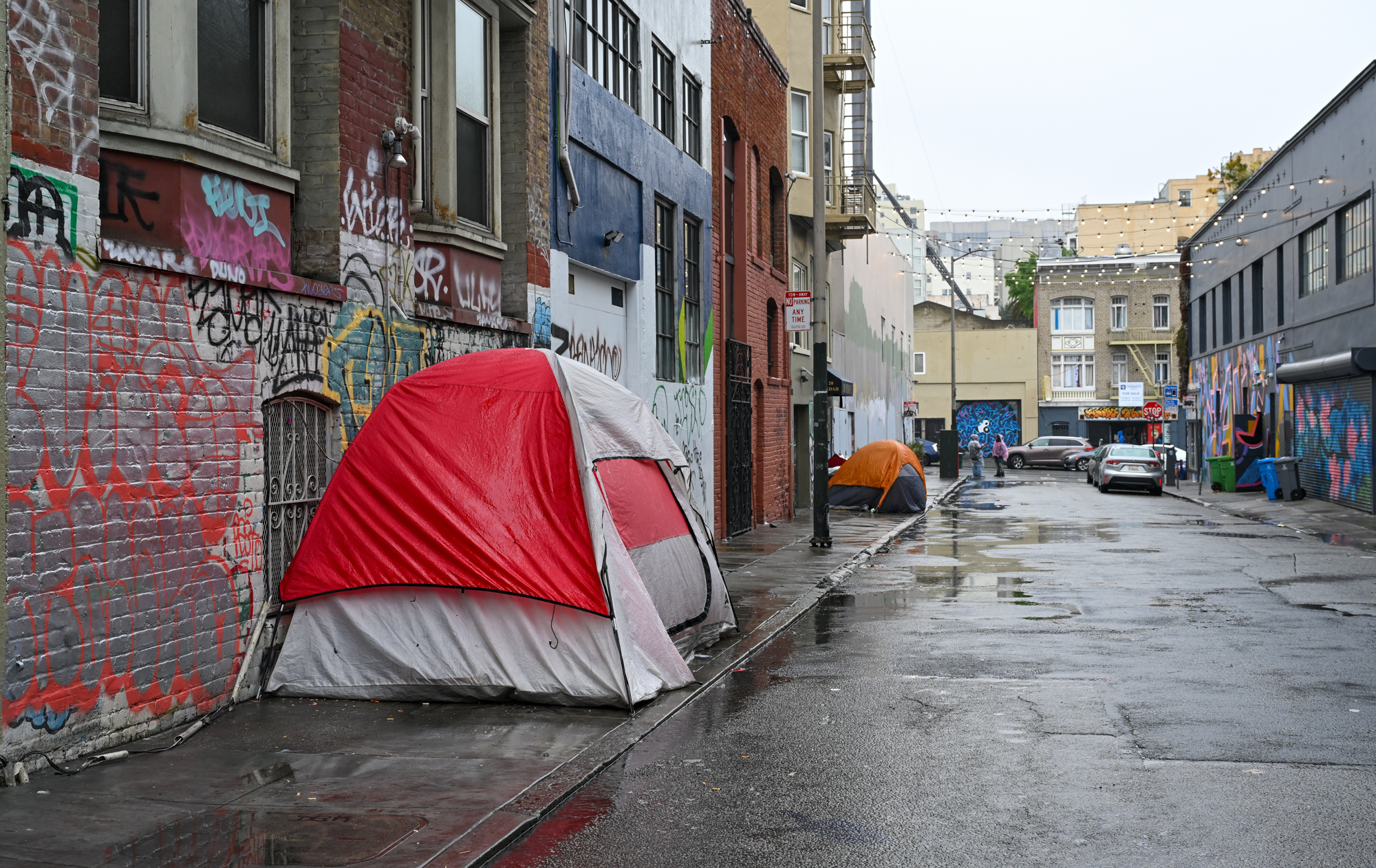
"caption": "A homeless encampment near Polk Street in San Francisco on Feb. 6, 2025. San Francisco’s city proposed budget advanced this morning, after supervisors and the mayor agreed to reallocate funding back toward homeless prevention and housing, instead of temporary shelter.",
"credit": "Tayfun Coskun/Anadolu via Getty Images",
"altTag": null,
"description": null,
"imgSizes": {
"thumbnail": {
"file": "https://cdn.kqed.org/wp-content/uploads/sites/10/2025/06/GETTYIMAGES-2197492442-KQED-160x101.jpg",
"width": 160,
"height": 101,
"mimeType": "image/jpeg"
},
"1536x1536": {
"file": "https://cdn.kqed.org/wp-content/uploads/sites/10/2025/06/GETTYIMAGES-2197492442-KQED-1536x969.jpg",
"width": 1536,
"height": 969,
"mimeType": "image/jpeg"
},
"post-thumbnail": {
"file": "https://cdn.kqed.org/wp-content/uploads/sites/10/2025/06/GETTYIMAGES-2197492442-KQED-672x372.jpg",
"width": 672,
"height": 372,
"mimeType": "image/jpeg"
},
"twentyfourteen-full-width": {
"file": "https://cdn.kqed.org/wp-content/uploads/sites/10/2025/06/GETTYIMAGES-2197492442-KQED-1038x576.jpg",
"width": 1038,
"height": 576,
"mimeType": "image/jpeg"
},
"kqedFullSize": {
"file": "https://cdn.kqed.org/wp-content/uploads/sites/10/2025/06/GETTYIMAGES-2197492442-KQED.jpg",
"width": 2000,
"height": 1262
}
},
"isLoading": false,
"fetchFailed": false
},
"news_12045711": {
"type": "attachments",
"id": "news_12045711",
"meta": {
"index": "attachments_1716263798",
"site": "news",
"id": "12045711",
"found": true
},
"title": "A 'For Rent' sign in Berkeley on June 23, 2025.",
"publishDate": 1750790413,
"status": "inherit",
"parent": 12045703,
"modified": 1750790430,
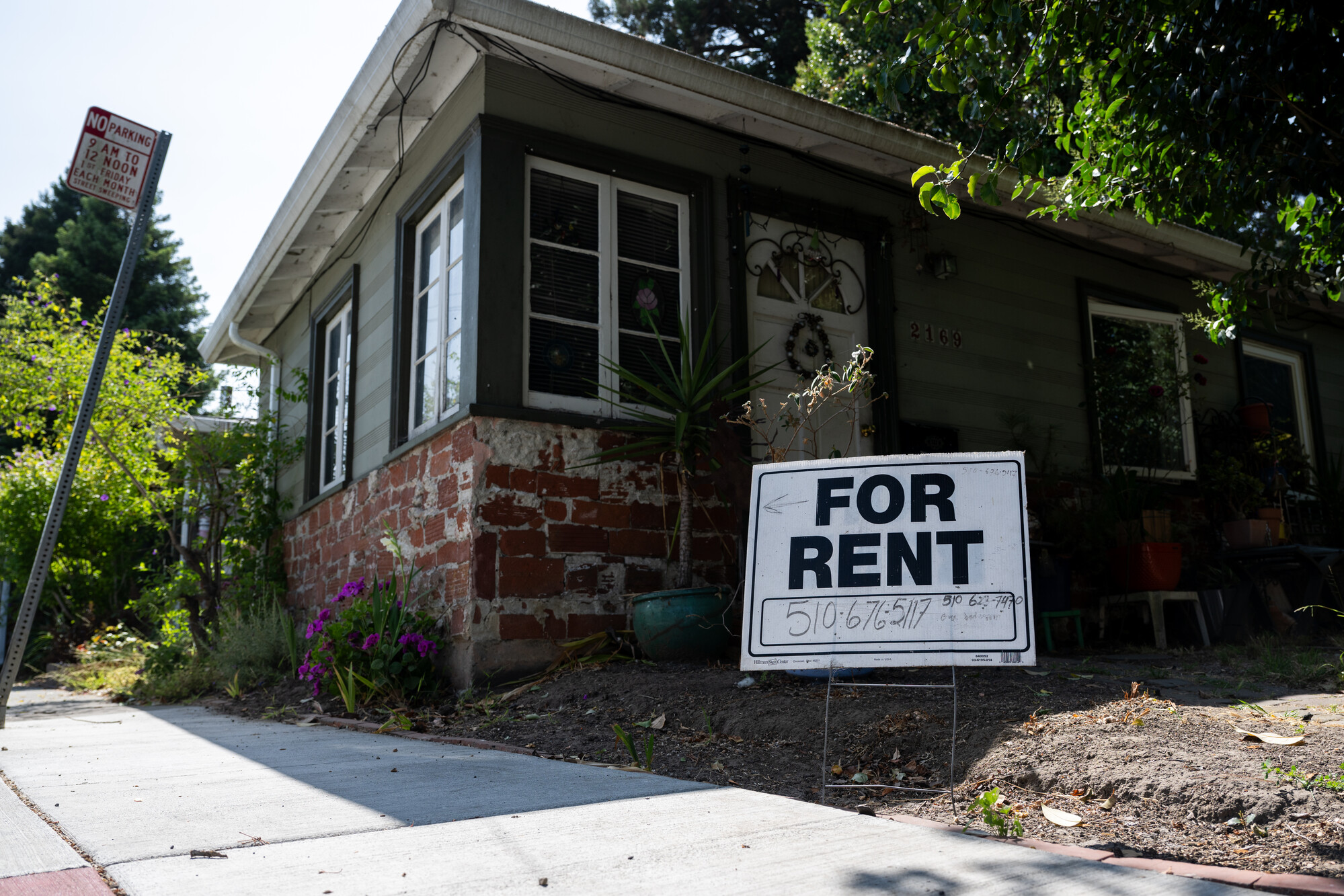
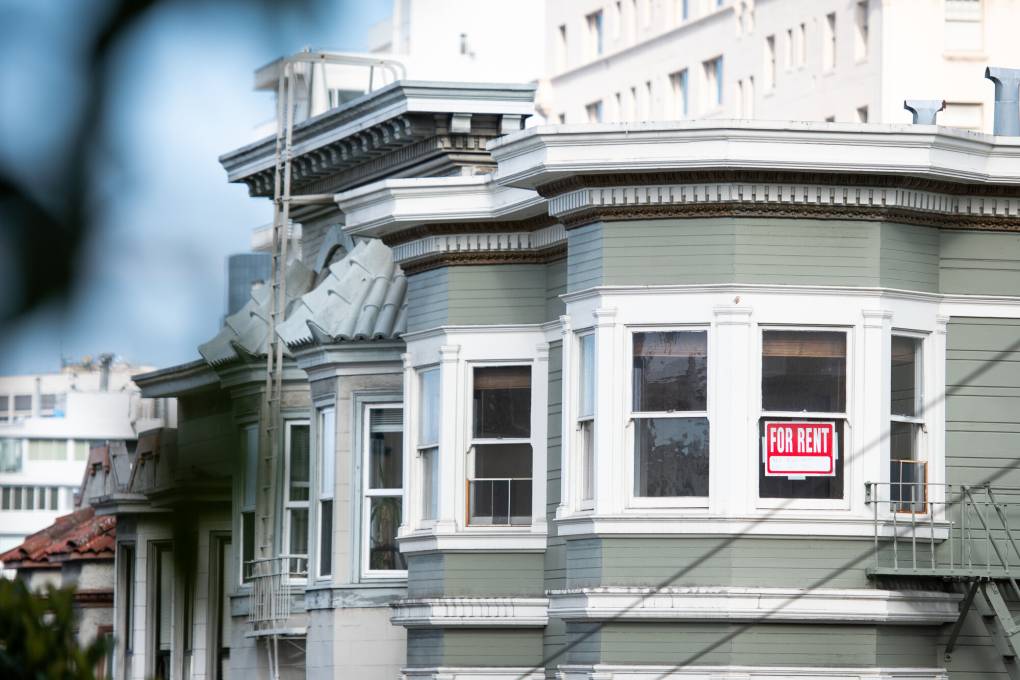
"caption": "A \"For Rent\" sign in Berkeley on June 23, 2025.",
"credit": "Beth LaBerge/KQED",
"altTag": null,
"description": null,
"imgSizes": {
"thumbnail": {
"file": "https://cdn.kqed.org/wp-content/uploads/sites/10/2025/06/250623-BerkeleyMiddleHousing-18-BL_qed-160x107.jpg",
"width": 160,
"height": 107,
"mimeType": "image/jpeg"
},
"1536x1536": {
"file": "https://cdn.kqed.org/wp-content/uploads/sites/10/2025/06/250623-BerkeleyMiddleHousing-18-BL_qed-1536x1024.jpg",
"width": 1536,
"height": 1024,
"mimeType": "image/jpeg"
},
"post-thumbnail": {
"file": "https://cdn.kqed.org/wp-content/uploads/sites/10/2025/06/250623-BerkeleyMiddleHousing-18-BL_qed-672x372.jpg",
"width": 672,
"height": 372,
"mimeType": "image/jpeg"
},
"twentyfourteen-full-width": {
"file": "https://cdn.kqed.org/wp-content/uploads/sites/10/2025/06/250623-BerkeleyMiddleHousing-18-BL_qed-1038x576.jpg",
"width": 1038,
"height": 576,
"mimeType": "image/jpeg"
},
"kqedFullSize": {
"file": "https://cdn.kqed.org/wp-content/uploads/sites/10/2025/06/250623-BerkeleyMiddleHousing-18-BL_qed.jpg",
"width": 1999,
"height": 1333
}
},
"isLoading": false,
"fetchFailed": false
},
"news_12045864": {
"type": "attachments",
"id": "news_12045864",
"meta": {
"index": "attachments_1716263798",
"site": "news",
"id": "12045864",
"found": true
},
"title": "RV's are seen on Eighth Street and Harrison Streets in Berkeley, California, on Tuesday, July 23, 2019.",
"publishDate": 1750860967,
"status": "inherit",
"parent": 12045862,
"modified": 1750861149,
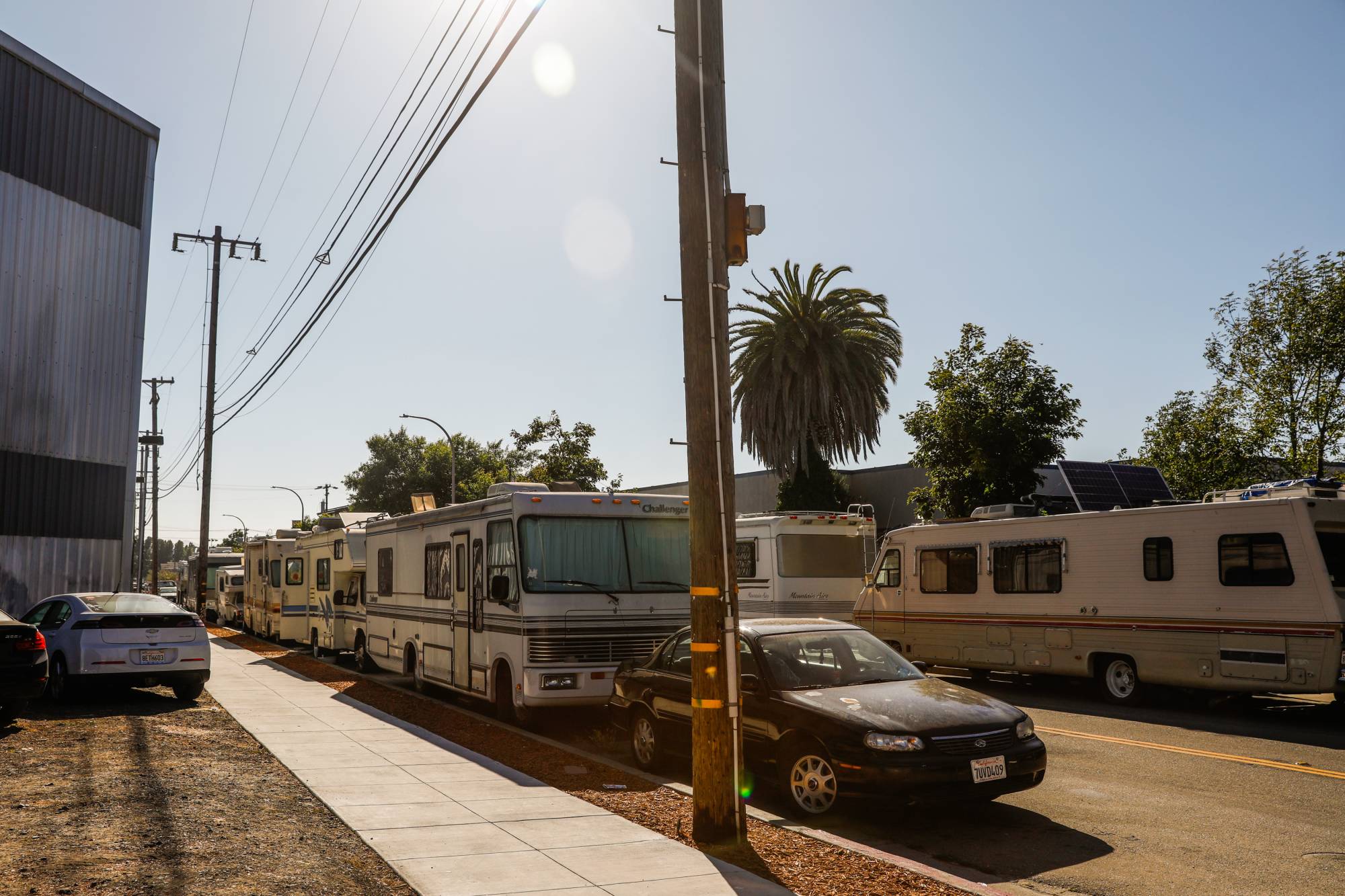
"caption": "RV's are seen on Eighth and Harrison Streets in Berkeley, California, on Tuesday, July 23, 2019. (Photo by Gabrielle Lurie/San Francisco Chronicle via Getty Images)",
"credit": null,
"altTag": null,
"description": null,
"imgSizes": {
"medium": {
"file": "https://cdn.kqed.org/wp-content/uploads/sites/10/2025/06/GettyImages-1298939547-2000x1333.jpg",
"width": 2000,
"height": 1333,
"mimeType": "image/jpeg"
},
"large": {
"file": "https://cdn.kqed.org/wp-content/uploads/sites/10/2025/06/GettyImages-1298939547-2000x1333.jpg",
"width": 2000,
"height": 1333,
"mimeType": "image/jpeg"
},
"thumbnail": {
"file": "https://cdn.kqed.org/wp-content/uploads/sites/10/2025/06/GettyImages-1298939547-160x107.jpg",
"width": 160,
"height": 107,
"mimeType": "image/jpeg"
},
"1536x1536": {
"file": "https://cdn.kqed.org/wp-content/uploads/sites/10/2025/06/GettyImages-1298939547-1536x1024.jpg",
"width": 1536,
"height": 1024,
"mimeType": "image/jpeg"
},
"2048x2048": {
"file": "https://cdn.kqed.org/wp-content/uploads/sites/10/2025/06/GettyImages-1298939547-2048x1365.jpg",
"width": 2048,
"height": 1365,
"mimeType": "image/jpeg"
},
"post-thumbnail": {
"file": "https://cdn.kqed.org/wp-content/uploads/sites/10/2025/06/GettyImages-1298939547-672x372.jpg",
"width": 672,
"height": 372,
"mimeType": "image/jpeg"
},
"twentyfourteen-full-width": {
"file": "https://cdn.kqed.org/wp-content/uploads/sites/10/2025/06/GettyImages-1298939547-1038x576.jpg",
"width": 1038,
"height": 576,
"mimeType": "image/jpeg"
},
"full-width": {
"file": "https://cdn.kqed.org/wp-content/uploads/sites/10/2025/06/GettyImages-1298939547-2000x1333.jpg",
"width": 2000,
"height": 1333,
"mimeType": "image/jpeg"
},
"kqedFullSize": {
"file": "https://cdn.kqed.org/wp-content/uploads/sites/10/2025/06/GettyImages-1298939547-scaled.jpg",
"width": 2560,
"height": 1706
}
},
"isLoading": false,
"fetchFailed": false
},
"news_12045778": {
"type": "attachments",
"id": "news_12045778",
"meta": {
"index": "attachments_1716263798",
"site": "news",
"id": "12045778",
"found": true
},
"title": "The homeless encampment at Ohlone Park in Berkeley on May 29, 2025.",
"publishDate": 1750804544,
"status": "inherit",
"parent": 12045673,
"modified": 1750804554,
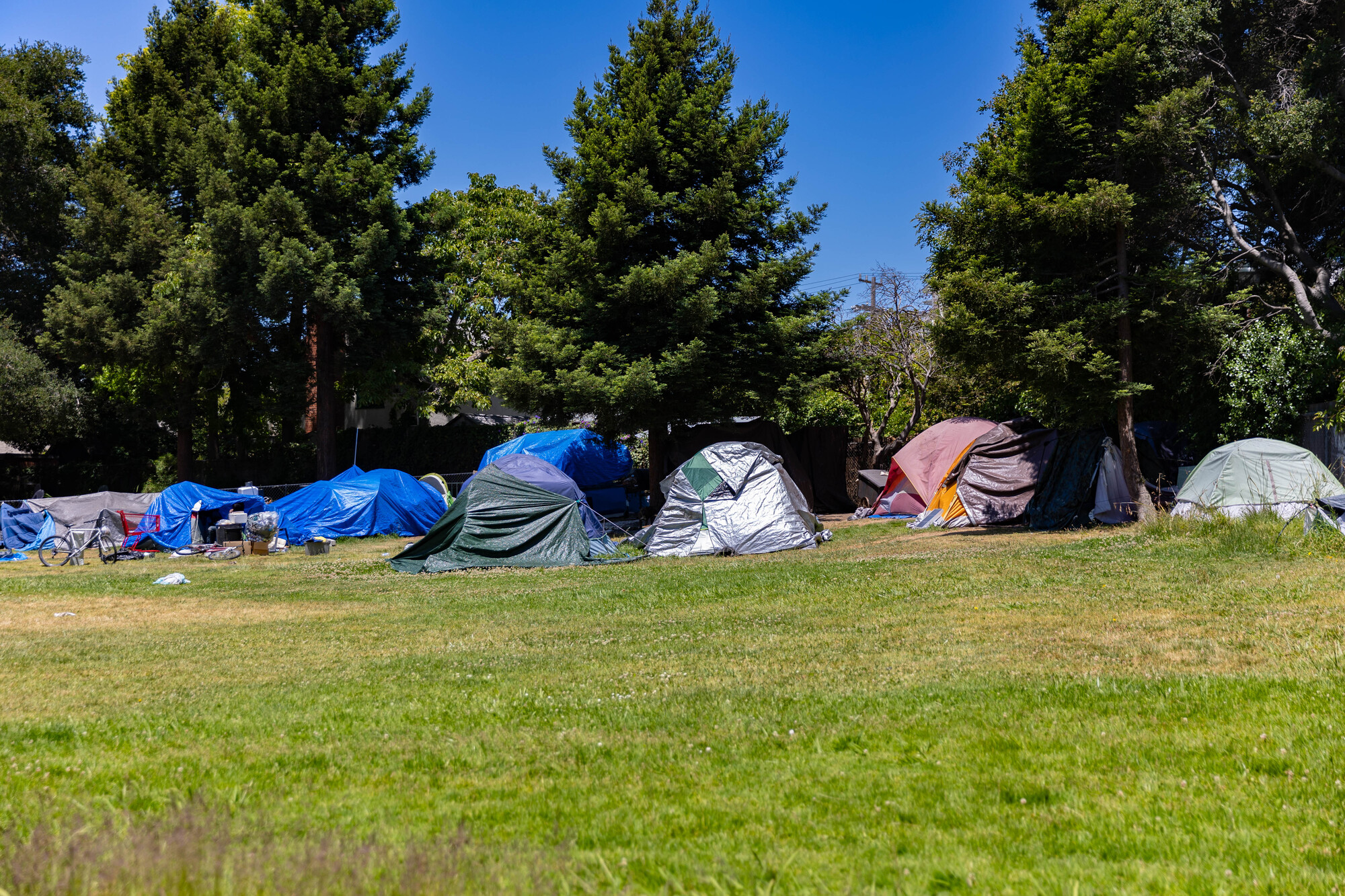
"caption": "The homeless encampment at Ohlone Park in Berkeley on May 29, 2025.",
"credit": "Gina Castro/KQED",
"altTag": null,
"description": null,
"imgSizes": {
"thumbnail": {
"file": "https://cdn.kqed.org/wp-content/uploads/sites/10/2025/06/20250529_OhloneParkEncampment_GC-17_qed-1-160x107.jpg",
"width": 160,
"height": 107,
"mimeType": "image/jpeg"
},
"1536x1536": {
"file": "https://cdn.kqed.org/wp-content/uploads/sites/10/2025/06/20250529_OhloneParkEncampment_GC-17_qed-1-1536x1024.jpg",
"width": 1536,
"height": 1024,
"mimeType": "image/jpeg"
},
"post-thumbnail": {
"file": "https://cdn.kqed.org/wp-content/uploads/sites/10/2025/06/20250529_OhloneParkEncampment_GC-17_qed-1-672x372.jpg",
"width": 672,
"height": 372,
"mimeType": "image/jpeg"
},
"twentyfourteen-full-width": {
"file": "https://cdn.kqed.org/wp-content/uploads/sites/10/2025/06/20250529_OhloneParkEncampment_GC-17_qed-1-1038x576.jpg",
"width": 1038,
"height": 576,
"mimeType": "image/jpeg"
},
"kqedFullSize": {
"file": "https://cdn.kqed.org/wp-content/uploads/sites/10/2025/06/20250529_OhloneParkEncampment_GC-17_qed-1.jpg",
"width": 2000,
"height": 1333
}
},
"isLoading": false,
"fetchFailed": false
},
"news_12045595": {
"type": "attachments",
"id": "news_12045595",
"meta": {
"index": "attachments_1716263798",
"site": "news",
"id": "12045595",
"found": true
},
"title": "250623-BERKELEYMIDDLEHOUSING-03-BL-KQED",
"publishDate": 1750715458,
"status": "inherit",
"parent": 0,
"modified": 1750715524,
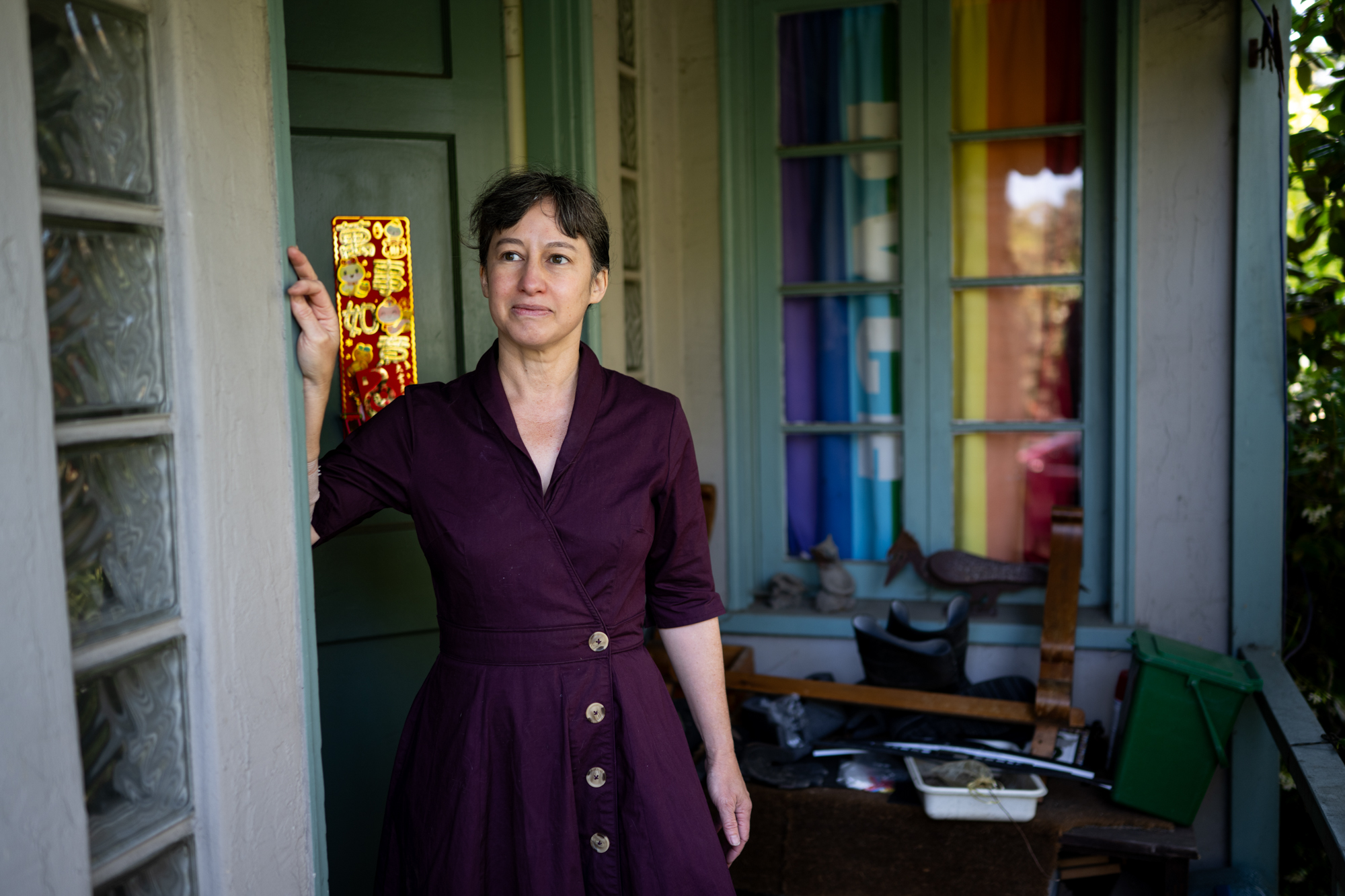
"caption": "Aimee Baldwin, whose Chinese American family has lived in Berkeley since the early 1900s, at her home in Berkeley on June 23, 2025. As the city considers a proposal to allow small apartment buildings in single-family neighborhoods, Baldwin says addressing past exclusion will require more than zoning changes.",
"credit": "Beth LaBerge/KQED",
"altTag": null,
"description": null,
"imgSizes": {
"thumbnail": {
"file": "https://cdn.kqed.org/wp-content/uploads/sites/10/2025/06/250623-BERKELEYMIDDLEHOUSING-03-BL-KQED-160x107.jpg",
"width": 160,
"height": 107,
"mimeType": "image/jpeg"
},
"1536x1536": {
"file": "https://cdn.kqed.org/wp-content/uploads/sites/10/2025/06/250623-BERKELEYMIDDLEHOUSING-03-BL-KQED-1536x1024.jpg",
"width": 1536,
"height": 1024,
"mimeType": "image/jpeg"
},
"post-thumbnail": {
"file": "https://cdn.kqed.org/wp-content/uploads/sites/10/2025/06/250623-BERKELEYMIDDLEHOUSING-03-BL-KQED-672x372.jpg",
"width": 672,
"height": 372,
"mimeType": "image/jpeg"
},
"twentyfourteen-full-width": {
"file": "https://cdn.kqed.org/wp-content/uploads/sites/10/2025/06/250623-BERKELEYMIDDLEHOUSING-03-BL-KQED-1038x576.jpg",
"width": 1038,
"height": 576,
"mimeType": "image/jpeg"
},
"kqedFullSize": {
"file": "https://cdn.kqed.org/wp-content/uploads/sites/10/2025/06/250623-BERKELEYMIDDLEHOUSING-03-BL-KQED.jpg",
"width": 2000,
"height": 1333
}
},
"isLoading": false,
"fetchFailed": false
},
"news_12044939": {
"type": "attachments",
"id": "news_12044939",
"meta": {
"index": "attachments_1716263798",
"site": "news",
"id": "12044939",
"found": true
},
"title": "Gabby Chavez-LopezAnthony Tordillos",
"publishDate": 1750273269,
"status": "inherit",
"parent": 12044929,
"modified": 1750273454,
"caption": "San José City Council District 3 candidates Gabby Chavez-Lopez and Anthony Tordillos speak at a candidates forum at the San José Women’s Club in San José on March 6, 2025.",
"credit": "Gina Castro/KQED",
"altTag": null,
"description": null,
"imgSizes": {
"thumbnail": {
"file": "https://cdn.kqed.org/wp-content/uploads/sites/10/2025/06/Gabby-Chavez-LopezAnthony-Tordillos-160x107.jpg",
"width": 160,
"height": 107,
"mimeType": "image/jpeg"
},
"1536x1536": {
"file": "https://cdn.kqed.org/wp-content/uploads/sites/10/2025/06/Gabby-Chavez-LopezAnthony-Tordillos-1536x1024.jpg",
"width": 1536,
"height": 1024,
"mimeType": "image/jpeg"
},
"post-thumbnail": {
"file": "https://cdn.kqed.org/wp-content/uploads/sites/10/2025/06/Gabby-Chavez-LopezAnthony-Tordillos-672x372.jpg",
"width": 672,
"height": 372,
"mimeType": "image/jpeg"
},
"twentyfourteen-full-width": {
"file": "https://cdn.kqed.org/wp-content/uploads/sites/10/2025/06/Gabby-Chavez-LopezAnthony-Tordillos-1038x576.jpg",
"width": 1038,
"height": 576,
"mimeType": "image/jpeg"
},
"kqedFullSize": {
"file": "https://cdn.kqed.org/wp-content/uploads/sites/10/2025/06/Gabby-Chavez-LopezAnthony-Tordillos.jpg",
"width": 2000,
"height": 1333
}
},
"isLoading": false,
"fetchFailed": false
},
"news_12044736": {
"type": "attachments",
"id": "news_12044736",
"meta": {
"index": "attachments_1716263798",
"site": "news",
"id": "12044736",
"found": true
},
"title": "P1000647_qed",
"publishDate": 1750190500,
"status": "inherit",
"parent": 12044710,
"modified": 1750190555,
"caption": "Alameda Point and the Ready Reserve on Sept. 11, 2023. Frontier Valley has proposed building a city for AI and robotics manufacturing on federally owned land on Alameda Point. But a federal department already has plans to build something else there.",
"credit": "Craig Miller/ Climate Watch",
"altTag": null,
"description": null,
"imgSizes": {
"thumbnail": {
"file": "https://cdn.kqed.org/wp-content/uploads/sites/10/2025/06/P1000647_qed-160x120.jpg",
"width": 160,
"height": 120,
"mimeType": "image/jpeg"
},
"1536x1536": {
"file": "https://cdn.kqed.org/wp-content/uploads/sites/10/2025/06/P1000647_qed-1536x1152.jpg",
"width": 1536,
"height": 1152,
"mimeType": "image/jpeg"
},
"post-thumbnail": {
"file": "https://cdn.kqed.org/wp-content/uploads/sites/10/2025/06/P1000647_qed-672x372.jpg",
"width": 672,
"height": 372,
"mimeType": "image/jpeg"
},
"twentyfourteen-full-width": {
"file": "https://cdn.kqed.org/wp-content/uploads/sites/10/2025/06/P1000647_qed-1038x576.jpg",
"width": 1038,
"height": 576,
"mimeType": "image/jpeg"
},
"kqedFullSize": {
"file": "https://cdn.kqed.org/wp-content/uploads/sites/10/2025/06/P1000647_qed.jpg",
"width": 1777,
"height": 1333
}
},
"isLoading": false,
"fetchFailed": false
},
"news_12044982": {
"type": "attachments",
"id": "news_12044982",
"meta": {
"index": "attachments_1716263798",
"site": "news",
"id": "12044982",
"found": true
},
"title": "250618-NEWTEACHERHOUSING-09-BL-KQED",
"publishDate": 1750284860,
"status": "inherit",
"parent": 12086457,
"modified": 1780701647,
"caption": "Construction workers build at 750 Golden Gate Avenue in San Francisco on June 18, 2025, during a groundbreaking ceremony marking the start of two affordable housing projects. One will deliver 75 units prioritized for SFUSD and City College educators, and the other at 850 Turk will add 92 family apartments.",
"credit": "Beth LaBerge/KQED",
"altTag": null,
"description": null,
"imgSizes": {
"thumbnail": {
"file": "https://cdn.kqed.org/wp-content/uploads/sites/10/2025/06/250618-NEWTEACHERHOUSING-09-BL-KQED-160x107.jpg",
"width": 160,
"height": 107,
"mimeType": "image/jpeg"
},
"1536x1536": {
"file": "https://cdn.kqed.org/wp-content/uploads/sites/10/2025/06/250618-NEWTEACHERHOUSING-09-BL-KQED-1536x1024.jpg",
"width": 1536,
"height": 1024,
"mimeType": "image/jpeg"
},
"post-thumbnail": {
"file": "https://cdn.kqed.org/wp-content/uploads/sites/10/2025/06/250618-NEWTEACHERHOUSING-09-BL-KQED-672x372.jpg",
"width": 672,
"height": 372,
"mimeType": "image/jpeg"
},
"twentyfourteen-full-width": {
"file": "https://cdn.kqed.org/wp-content/uploads/sites/10/2025/06/250618-NEWTEACHERHOUSING-09-BL-KQED-1038x576.jpg",
"width": 1038,
"height": 576,
"mimeType": "image/jpeg"
},
"kqedFullSize": {
"file": "https://cdn.kqed.org/wp-content/uploads/sites/10/2025/06/250618-NEWTEACHERHOUSING-09-BL-KQED.jpg",
"width": 2000,
"height": 1333
}
},
"isLoading": false,
"fetchFailed": false
},
"news_12044183": {
"type": "attachments",
"id": "news_12044183",
"meta": {
"index": "attachments_1716263798",
"site": "news",
"id": "12044183",
"found": true
},
"title": "20250428_WarrantlessSearches_GC-29_qed",
"publishDate": 1749836052,
"status": "inherit",
"parent": 12044180,
"modified": 1749836087,
"caption": "Mayor Daniel Lurie attends a press conference outside of San Francisco City Hall on April 28, 2025.",
"credit": "Gina Castro/KQED",
"altTag": null,
"description": null,
"imgSizes": {
"thumbnail": {
"file": "https://cdn.kqed.org/wp-content/uploads/sites/10/2025/06/20250428_WarrantlessSearches_GC-29_qed-160x110.jpg",
"width": 160,
"height": 110,
"mimeType": "image/jpeg"
},
"1536x1536": {
"file": "https://cdn.kqed.org/wp-content/uploads/sites/10/2025/06/20250428_WarrantlessSearches_GC-29_qed-1536x1057.jpg",
"width": 1536,
"height": 1057,
"mimeType": "image/jpeg"
},
"post-thumbnail": {
"file": "https://cdn.kqed.org/wp-content/uploads/sites/10/2025/06/20250428_WarrantlessSearches_GC-29_qed-672x372.jpg",
"width": 672,
"height": 372,
"mimeType": "image/jpeg"
},
"twentyfourteen-full-width": {
"file": "https://cdn.kqed.org/wp-content/uploads/sites/10/2025/06/20250428_WarrantlessSearches_GC-29_qed-1038x576.jpg",
"width": 1038,
"height": 576,
"mimeType": "image/jpeg"
},
"kqedFullSize": {
"file": "https://cdn.kqed.org/wp-content/uploads/sites/10/2025/06/20250428_WarrantlessSearches_GC-29_qed.jpg",
"width": 1937,
"height": 1333
}
},
"isLoading": false,
"fetchFailed": false
},
"news_12042809": {
"type": "attachments",
"id": "news_12042809",
"meta": {
"index": "attachments_1716263798",
"site": "news",
"id": "12042809",
"found": true
},
"title": "250530-DUBLINEMPLOYEES-52-BL-KQED",
"publishDate": 1749079934,
"status": "inherit",
"parent": 0,
"modified": 1749080006,
"caption": "A neighborhood of mobile homes next to the now-closed Federal Correctional Institution, Dublin, on May 30, 2025. Many prison employees bought homes on the property, forming a small community of staff and their families beside the facility.",
"credit": "Beth LaBerge/KQED",
"altTag": null,
"description": null,
"imgSizes": {
"medium": {
"file": "https://cdn.kqed.org/wp-content/uploads/sites/10/2025/06/250530-DUBLINEMPLOYEES-52-BL-KQED-800x533.jpg",
"width": 800,
"height": 533,
"mimeType": "image/jpeg"
},
"large": {
"file": "https://cdn.kqed.org/wp-content/uploads/sites/10/2025/06/250530-DUBLINEMPLOYEES-52-BL-KQED-1020x680.jpg",
"width": 1020,
"height": 680,
"mimeType": "image/jpeg"
},
"thumbnail": {
"file": "https://cdn.kqed.org/wp-content/uploads/sites/10/2025/06/250530-DUBLINEMPLOYEES-52-BL-KQED-160x107.jpg",
"width": 160,
"height": 107,
"mimeType": "image/jpeg"
},
"1536x1536": {
"file": "https://cdn.kqed.org/wp-content/uploads/sites/10/2025/06/250530-DUBLINEMPLOYEES-52-BL-KQED-1536x1024.jpg",
"width": 1536,
"height": 1024,
"mimeType": "image/jpeg"
},
"post-thumbnail": {
"file": "https://cdn.kqed.org/wp-content/uploads/sites/10/2025/06/250530-DUBLINEMPLOYEES-52-BL-KQED-672x372.jpg",
"width": 672,
"height": 372,
"mimeType": "image/jpeg"
},
"twentyfourteen-full-width": {
"file": "https://cdn.kqed.org/wp-content/uploads/sites/10/2025/06/250530-DUBLINEMPLOYEES-52-BL-KQED-1038x576.jpg",
"width": 1038,
"height": 576,
"mimeType": "image/jpeg"
},
"full-width": {
"file": "https://cdn.kqed.org/wp-content/uploads/sites/10/2025/06/250530-DUBLINEMPLOYEES-52-BL-KQED-1920x1280.jpg",
"width": 1920,
"height": 1280,
"mimeType": "image/jpeg"
},
"kqedFullSize": {
"file": "https://cdn.kqed.org/wp-content/uploads/sites/10/2025/06/250530-DUBLINEMPLOYEES-52-BL-KQED.jpg",
"width": 2000,
"height": 1333
}
},
"isLoading": false,
"fetchFailed": false
},
"news_12034319": {
"type": "attachments",
"id": "news_12034319",
"meta": {
"index": "attachments_1716263798",
"site": "news",
"id": "12034319",
"found": true
},
"title": "024_SanFrancisco_Housing_07292021_qed",
"publishDate": 1743629527,
"status": "inherit",
"parent": 12034212,
"modified": 1749763097,
"caption": "A 'For Rent' sign hangs in the window of an apartment building in Nob Hill in San Francisco on July 29, 2021.",
"credit": "Beth LaBerge/KQED",
"altTag": null,
"description": null,
"imgSizes": {
"medium": {
"file": "https://cdn.kqed.org/wp-content/uploads/sites/10/2025/04/024_SanFrancisco_Housing_07292021_qed-800x533.jpg",
"width": 800,
"height": 533,
"mimeType": "image/jpeg"
},
"large": {
"file": "https://cdn.kqed.org/wp-content/uploads/sites/10/2025/04/024_SanFrancisco_Housing_07292021_qed-1020x680.jpg",
"width": 1020,
"height": 680,
"mimeType": "image/jpeg"
},
"thumbnail": {
"file": "https://cdn.kqed.org/wp-content/uploads/sites/10/2025/04/024_SanFrancisco_Housing_07292021_qed-160x107.jpg",
"width": 160,
"height": 107,
"mimeType": "image/jpeg"
},
"1536x1536": {
"file": "https://cdn.kqed.org/wp-content/uploads/sites/10/2025/04/024_SanFrancisco_Housing_07292021_qed-1536x1024.jpg",
"width": 1536,
"height": 1024,
"mimeType": "image/jpeg"
},
"post-thumbnail": {
"file": "https://cdn.kqed.org/wp-content/uploads/sites/10/2025/04/024_SanFrancisco_Housing_07292021_qed-672x372.jpg",
"width": 672,
"height": 372,
"mimeType": "image/jpeg"
},
"twentyfourteen-full-width": {
"file": "https://cdn.kqed.org/wp-content/uploads/sites/10/2025/04/024_SanFrancisco_Housing_07292021_qed-1038x576.jpg",
"width": 1038,
"height": 576,
"mimeType": "image/jpeg"
},
"full-width": {
"file": "https://cdn.kqed.org/wp-content/uploads/sites/10/2025/04/024_SanFrancisco_Housing_07292021_qed-1920x1280.jpg",
"width": 1920,
"height": 1280,
"mimeType": "image/jpeg"
},
"kqedFullSize": {
"file": "https://cdn.kqed.org/wp-content/uploads/sites/10/2025/04/024_SanFrancisco_Housing_07292021_qed.jpg",
"width": 2000,
"height": 1333
}
},
"isLoading": false,
"fetchFailed": false
},
"news_12044253": {
"type": "attachments",
"id": "news_12044253",
"meta": {
"index": "attachments_1716263798",
"site": "news",
"id": "12044253",
"found": true
},
"title": "npr.brightspotcdn copy",
"publishDate": 1749845414,
"status": "inherit",
"parent": 12044225,
"modified": 1749845433,
"caption": "On the site of a former ranch slated for housing development on the outskirts of Aurora, Colo., Pedro Macedo of Perks Deconstruction pulls nails from a wood frame that once stood in a barn.",
"credit": "Hart Van Denburg/CPR News",
"altTag": null,
"description": null,
"imgSizes": {
"thumbnail": {
"file": "https://cdn.kqed.org/wp-content/uploads/sites/10/2025/06/npr.brightspotcdn-copy-6-160x106.jpg",
"width": 160,
"height": 106,
"mimeType": "image/jpeg"
},
"1536x1536": {
"file": "https://cdn.kqed.org/wp-content/uploads/sites/10/2025/06/npr.brightspotcdn-copy-6-1536x1021.jpg",
"width": 1536,
"height": 1021,
"mimeType": "image/jpeg"
},
"post-thumbnail": {
"file": "https://cdn.kqed.org/wp-content/uploads/sites/10/2025/06/npr.brightspotcdn-copy-6-672x372.jpg",
"width": 672,
"height": 372,
"mimeType": "image/jpeg"
},
"twentyfourteen-full-width": {
"file": "https://cdn.kqed.org/wp-content/uploads/sites/10/2025/06/npr.brightspotcdn-copy-6-1038x576.jpg",
"width": 1038,
"height": 576,
"mimeType": "image/jpeg"
},
"kqedFullSize": {
"file": "https://cdn.kqed.org/wp-content/uploads/sites/10/2025/06/npr.brightspotcdn-copy-6.jpg",
"width": 1800,
"height": 1197
}
},
"isLoading": false,
"fetchFailed": false
}
},
"audioPlayerReducer": {
"postId": "stream_live",
"isPaused": true,
"isPlaying": false,
"pfsActive": false,
"pledgeModalIsOpen": true,
"playerDrawerIsOpen": false,
"liveAudioPlayStartedAt": 0,
"liveAudioPlayContext": ""
},
"authorsReducer": {
"byline_news_12044225": {
"type": "authors",
"id": "byline_news_12044225",
"meta": {
"override": true
},
"slug": "byline_news_12044225",
"name": "Rae Solomon, NPR",
"isLoading": false
},
"gmarzorati": {
"type": "authors",
"id": "227",
"meta": {
"index": "authors_1716337520",
"id": "227",
"found": true
},
"name": "Guy Marzorati",
"firstName": "Guy",
"lastName": "Marzorati",
"slug": "gmarzorati",
"email": "gmarzorati@KQED.org",
"display_author_email": true,
"staff_mastheads": [
"news"
],
"title": "Correspondent",
"bio": "Guy Marzorati is a correspondent on KQED's California Politics and Government Desk, based in San Jose. A graduate of Santa Clara University, Guy joined KQED in 2013. He reports on state and local politics and produces KQED's digital voter guide.",
"avatar": "https://secure.gravatar.com/avatar/e7038b8dbfd55b104369b76b1cd0b9de?s=600&d=blank&r=g",
"twitter": "guymarzorati",
"facebook": null,
"instagram": null,
"linkedin": null,
"sites": [
{
"site": "",
"roles": [
"editor"
]
},
{
"site": "news",
"roles": [
"editor"
]
},
{
"site": "science",
"roles": [
"editor"
]
},
{
"site": "forum",
"roles": [
"editor"
]
},
{
"site": "elections",
"roles": [
"editor"
]
},
{
"site": "liveblog",
"roles": [
"editor"
]
}
],
"headData": {
"title": "Guy Marzorati | KQED",
"description": "Correspondent",
"ogImgSrc": "https://secure.gravatar.com/avatar/e7038b8dbfd55b104369b76b1cd0b9de?s=600&d=blank&r=g",
"twImgSrc": "https://secure.gravatar.com/avatar/e7038b8dbfd55b104369b76b1cd0b9de?s=600&d=blank&r=g"
},
"isLoading": false,
"link": "/author/gmarzorati"
},
"matthewgreen": {
"type": "authors",
"id": "1263",
"meta": {
"index": "authors_1716337520",
"id": "1263",
"found": true
},
"name": "Matthew Green",
"firstName": "Matthew",
"lastName": "Green",
"slug": "matthewgreen",
"email": "mgreen@kqed.org",
"display_author_email": false,
"staff_mastheads": [],
"title": "KQED Editor/Reporter",
"bio": "Matthew Green is a digital media producer for KQED News. He previously produced \u003ca href=\"http://www.kqed.org/lowdown\">The Lowdown\u003c/a>, KQED’s multimedia news education blog. Matthew's written for numerous Bay Area publications, including the Oakland Tribune and San Francisco Chronicle. He also taught journalism classes at Fremont High School in East Oakland.\r\n\r\nEmail: mgreen@kqed.org; Twitter: @MGreenKQED",
"avatar": "https://secure.gravatar.com/avatar/3bf498d1267ca02c8494f33d8cfc575e?s=600&d=blank&r=g",
"twitter": "MGreenKQED",
"facebook": null,
"instagram": null,
"linkedin": null,
"sites": [
{
"site": "news",
"roles": []
},
{
"site": "lowdown",
"roles": []
},
{
"site": "science",
"roles": []
},
{
"site": "education",
"roles": []
},
{
"site": "quest",
"roles": []
},
{
"site": "liveblog",
"roles": []
}
],
"headData": {
"title": "Matthew Green | KQED",
"description": "KQED Editor/Reporter",
"ogImgSrc": "https://secure.gravatar.com/avatar/3bf498d1267ca02c8494f33d8cfc575e?s=600&d=blank&r=g",
"twImgSrc": "https://secure.gravatar.com/avatar/3bf498d1267ca02c8494f33d8cfc575e?s=600&d=blank&r=g"
},
"isLoading": false,
"link": "/author/matthewgreen"
},
"ahall": {
"type": "authors",
"id": "11490",
"meta": {
"index": "authors_1716337520",
"id": "11490",
"found": true
},
"name": "Alex Hall",
"firstName": "Alex",
"lastName": "Hall",
"slug": "ahall",
"email": "ahall@kqed.org",
"display_author_email": false,
"staff_mastheads": [
"news"
],
"title": "KQED Enterprise & Accountability Reporter",
"bio": "Alex Hall is KQED's Enterprise and Accountability Reporter. She previously covered the Central Valley for five years from KQED's bureau in Fresno. Before joining KQED, Alex was an investigative reporting fellow at Wisconsin Public Radio and the Wisconsin Center for Investigative Journalism. She has also worked as a bilingual producer for NPR's investigative unit and freelance video producer for Reuters TV on the Latin America desk. She got her start in journalism in South America, where she worked as a radio producer and Spanish-English translator for CNN Chile. Her documentary and investigation into the series of deadly COVID-19 outbreaks at Foster Farms won a national Edward R. Murrow award and was named an Investigative Reporters & Editors award finalist. Alex's reporting for Reveal on the Wisconsin dairy industry's reliance on undocumented immigrant labor was made into a film, Los Lecheros, which won a regional Edward R. Murrow award for best news documentary.",
"avatar": "https://secure.gravatar.com/avatar/defcbeb88b0bf591ff9af41f22644051?s=600&d=blank&r=g",
"twitter": "@chalexhall",
"facebook": null,
"instagram": null,
"linkedin": null,
"sites": [
{
"site": "news",
"roles": [
"editor"
]
},
{
"site": "liveblog",
"roles": [
"author"
]
}
],
"headData": {
"title": "Alex Hall | KQED",
"description": "KQED Enterprise & Accountability Reporter",
"ogImgSrc": "https://secure.gravatar.com/avatar/defcbeb88b0bf591ff9af41f22644051?s=600&d=blank&r=g",
"twImgSrc": "https://secure.gravatar.com/avatar/defcbeb88b0bf591ff9af41f22644051?s=600&d=blank&r=g"
},
"isLoading": false,
"link": "/author/ahall"
},
"ebaldassari": {
"type": "authors",
"id": "11652",
"meta": {
"index": "authors_1716337520",
"id": "11652",
"found": true
},
"name": "Erin Baldassari",
"firstName": "Erin",
"lastName": "Baldassari",
"slug": "ebaldassari",
"email": "ebaldassari@KQED.org",
"display_author_email": true,
"staff_mastheads": [
"news"
],
"title": "Staff Writer",
"bio": "Erin Baldassari covers housing for KQED. She's a former print journalist and most recently worked as the transportation reporter for the \u003cem>Mercury News\u003c/em> and \u003cem>East Bay Times. \u003c/em>There, she focused on how the Bay Area’s housing shortage has changed the way people move around the region. She also served on the \u003cem>East Bay Times\u003c/em>’ 2017 Pulitzer Prize-winning team for coverage of the Ghost Ship Fire in Oakland. Prior to that, Erin worked as a breaking news and general assignment reporter for a variety of outlets in the Bay Area and the greater Boston area. A Tufts University alumna, Erin grew up in the foothills of the Sierra Nevada mountains and in Sonoma County. She is a life-long KQED listener.",
"avatar": "https://secure.gravatar.com/avatar/5e95cad64a8ca08288082212e199d2b0cbeb4fd8e8ef5339395f361032bbe005?s=600&d=blank&r=g",
"twitter": "e_baldi",
"bluesky": null,
"facebook": null,
"instagram": null,
"linkedin": null,
"sites": [
{
"site": "news",
"roles": [
"edit_others_posts",
"editor"
]
},
{
"site": "science",
"roles": [
"editor"
]
},
{
"site": "liveblog",
"roles": [
"editor"
]
}
],
"headData": {
"title": "Erin Baldassari | KQED",
"description": "Staff Writer",
"ogImgSrc": "https://secure.gravatar.com/avatar/5e95cad64a8ca08288082212e199d2b0cbeb4fd8e8ef5339395f361032bbe005?s=600&d=blank&r=g",
"twImgSrc": "https://secure.gravatar.com/avatar/5e95cad64a8ca08288082212e199d2b0cbeb4fd8e8ef5339395f361032bbe005?s=600&d=blank&r=g"
},
"isLoading": false,
"link": "/author/ebaldassari"
},
"abandlamudi": {
"type": "authors",
"id": "11672",
"meta": {
"index": "authors_1716337520",
"id": "11672",
"found": true
},
"name": "Adhiti Bandlamudi",
"firstName": "Adhiti",
"lastName": "Bandlamudi",
"slug": "abandlamudi",
"email": "abandlamudi@kqed.org",
"display_author_email": false,
"staff_mastheads": [
"news"
],
"title": "KQED Housing Reporter",
"bio": "Adhiti Bandlamudi reports for KQED's Housing desk. She focuses on how housing gets built across the Bay Area. Before joining KQED in 2020, she reported for WUNC in Durham, North Carolina, WABE in Atlanta, Georgia and Capital Public Radio in Sacramento. In 2017, she was awarded a Kroc Fellowship at NPR where she reported on everything from sprinkles to the Golden State Killer's arrest. When she's not reporting, she's baking new recipes in her kitchen or watching movies with friends and family. She's originally from Georgia and has strong opinions about Great British Bake Off.",
"avatar": "https://secure.gravatar.com/avatar/868129c8b257bb99a3500e2c86a65400?s=600&d=mm&r=g",
"twitter": "oddity_adhiti",
"facebook": null,
"instagram": null,
"linkedin": null,
"sites": [
{
"site": "arts",
"roles": [
"author"
]
},
{
"site": "news",
"roles": [
"editor"
]
},
{
"site": "liveblog",
"roles": [
"author"
]
}
],
"headData": {
"title": "Adhiti Bandlamudi | KQED",
"description": "KQED Housing Reporter",
"ogImgSrc": "https://secure.gravatar.com/avatar/868129c8b257bb99a3500e2c86a65400?s=600&d=mm&r=g",
"twImgSrc": "https://secure.gravatar.com/avatar/868129c8b257bb99a3500e2c86a65400?s=600&d=mm&r=g"
},
"isLoading": false,
"link": "/author/abandlamudi"
},
"ccabreralomeli": {
"type": "authors",
"id": "11708",
"meta": {
"index": "authors_1716337520",
"id": "11708",
"found": true
},
"name": "Carlos Cabrera-Lomelí",
"firstName": "Carlos",
"lastName": "Cabrera-Lomelí",
"slug": "ccabreralomeli",
"email": "ccabreralomeli@KQED.org",
"display_author_email": true,
"staff_mastheads": [
"news"
],
"title": "Community Reporter",
"bio": "Carlos Cabrera-Lomelí is a community reporter with KQED's digital engagement team. He also reports and co-produces for KQED's bilingual news hub KQED en Español. He grew up in San Francisco's Mission District and has previously worked with Univision, 48 Hills and REFORMA in Mexico City.",
"avatar": "https://secure.gravatar.com/avatar/c309be9665e484f887b818c89e273ecc673004f426f36b24d00a4d813a2e0518?s=600&d=blank&r=g",
"twitter": "@LomeliCabrera",
"bluesky": null,
"facebook": null,
"instagram": null,
"linkedin": null,
"sites": [
{
"site": "arts",
"roles": [
"editor"
]
},
{
"site": "news",
"roles": [
"editor"
]
},
{
"site": "about",
"roles": [
"editor"
]
},
{
"site": "science",
"roles": [
"editor"
]
},
{
"site": "perspectives",
"roles": [
"editor"
]
},
{
"site": "elections",
"roles": [
"editor"
]
},
{
"site": "liveblog",
"roles": [
"contributor"
]
}
],
"headData": {
"title": "Carlos Cabrera-Lomelí | KQED",
"description": "Community Reporter",
"ogImgSrc": "https://secure.gravatar.com/avatar/c309be9665e484f887b818c89e273ecc673004f426f36b24d00a4d813a2e0518?s=600&d=blank&r=g",
"twImgSrc": "https://secure.gravatar.com/avatar/c309be9665e484f887b818c89e273ecc673004f426f36b24d00a4d813a2e0518?s=600&d=blank&r=g"
},
"isLoading": false,
"link": "/author/ccabreralomeli"
},
"sjohnson": {
"type": "authors",
"id": "11840",
"meta": {
"index": "authors_1716337520",
"id": "11840",
"found": true
},
"name": "Sydney Johnson",
"firstName": "Sydney",
"lastName": "Johnson",
"slug": "sjohnson",
"email": "sjohnson@kqed.org",
"display_author_email": false,
"staff_mastheads": [
"news"
],
"title": "KQED Reporter",
"bio": "Sydney Johnson is a general assignment reporter at KQED. She previously reported on public health and city government at the San Francisco Examiner, and before that, she covered statewide education policy for EdSource. Her reporting has won multiple local, state and national awards. Sydney is a graduate of the University of California, Berkeley and lives in San Francisco.",
"avatar": "https://secure.gravatar.com/avatar/97855f2719b72ad6190b7c535fe642c8?s=600&d=blank&r=g",
"twitter": "sydneyfjohnson",
"facebook": null,
"instagram": null,
"linkedin": null,
"sites": [
{
"site": "news",
"roles": [
"editor"
]
}
],
"headData": {
"title": "Sydney Johnson | KQED",
"description": "KQED Reporter",
"ogImgSrc": "https://secure.gravatar.com/avatar/97855f2719b72ad6190b7c535fe642c8?s=600&d=blank&r=g",
"twImgSrc": "https://secure.gravatar.com/avatar/97855f2719b72ad6190b7c535fe642c8?s=600&d=blank&r=g"
},
"isLoading": false,
"link": "/author/sjohnson"
},
"bsiavoshy": {
"type": "authors",
"id": "11890",
"meta": {
"index": "authors_1716337520",
"id": "11890",
"found": true
},
"name": "Bejan Siavoshy",
"firstName": "Bejan",
"lastName": "Siavoshy",
"slug": "bsiavoshy",
"email": "bsiavoshy@kqed.org",
"display_author_email": false,
"staff_mastheads": [],
"title": "KQED Contributor",
"bio": null,
"avatar": "https://secure.gravatar.com/avatar/ead3e7c509634b37a73b1f57677e49f9?s=600&d=blank&r=g",
"twitter": null,
"facebook": null,
"instagram": null,
"linkedin": null,
"sites": [
{
"site": "news",
"roles": [
"editor"
]
}
],
"headData": {
"title": "Bejan Siavoshy | KQED",
"description": "KQED Contributor",
"ogImgSrc": "https://secure.gravatar.com/avatar/ead3e7c509634b37a73b1f57677e49f9?s=600&d=blank&r=g",
"twImgSrc": "https://secure.gravatar.com/avatar/ead3e7c509634b37a73b1f57677e49f9?s=600&d=blank&r=g"
},
"isLoading": false,
"link": "/author/bsiavoshy"
}
},
"pagesReducer": {
"news_tag_housing": {
"type": "terms",
"id": "news_1775",
"meta": {
"index": "terms_1716263798",
"site": "news",
"id": "1775",
"score": 7.0361176
},
"featImg": null,
"name": "housing",
"description": null,
"taxonomy": "tag",
"headData": {
"twImgId": null,
"twTitle": null,
"ogTitle": null,
"ogImgId": null,
"twDescription": null,
"description": null,
"title": "housing Archives | KQED News",
"ogDescription": null
},
"ttid": 1790,
"slug": "housing",
"isLoading": false,
"title": "housing",
"pageMeta": {
"site": "news",
"WpPageTemplate": "page-topic-editorial",
"currentPage": 16
},
"blocks": [
{
"blockName": "kqed/post-list",
"attrs": {
"layout": "cardArticle2",
"query": "posts/news?tag=housing",
"seeMore": false,
"paginated": true,
"page": 16
}
},
{
"blockName": "kqed/ad"
}
]
}
},
"pfsSessionReducer": {},
"postsReducer": {
"stream_live": {
"type": "live",
"id": "stream_live",
"audioUrl": "https://streams.kqed.org/kqedradio",
"title": "Live Stream",
"excerpt": "Live Stream information currently unavailable.",
"link": "/radio",
"featImg": "",
"label": {
"name": "KQED Live",
"link": "/"
}
},
"stream_kqedNewscast": {
"type": "posts",
"id": "stream_kqedNewscast",
"audioUrl": "https://www.kqed.org/.stream/anon/radio/RDnews/newscast.mp3?_=1",
"title": "KQED Newscast",
"featImg": "",
"label": {
"name": "88.5 FM",
"link": "/"
}
},
"news_12045893": {
"type": "posts",
"id": "news_12045893",
"meta": {
"index": "posts_1716263798",
"site": "news",
"id": "12045893",
"score": null,
"sort": [
1750963663000
]
},
"guestAuthors": [],
"slug": "sf-supervisors-preserve-millions-for-homeless-prevention-housing-in-budget",
"title": "SF Supervisors Preserve Millions for Homeless Prevention, Housing in Budget",
"publishDate": 1750963663,
"format": "standard",
"headTitle": "SF Supervisors Preserve Millions for Homeless Prevention, Housing in Budget | KQED",
"labelTerm": {
"site": "news"
},
"content": "\u003cp>Mayor \u003ca href=\"https://www.kqed.org/news/tag/daniel-lurie\">Daniel Lurie\u003c/a> is backing down — somewhat — from \u003ca href=\"https://www.kqed.org/news/12044180/spike-in-homelessness-stalled-after-sf-started-these-programs-lurie-is-slashing-them\">his effort\u003c/a> to sweep money set aside for homeless prevention programs and permanent housing to instead fund temporary shelter.\u003c/p>\n\u003cp>The compromise comes after \u003ca href=\"https://www.kqed.org/news/12044717/dozens-of-protesters-disrupt-sf-supervisors-meeting-to-resist-city-job-cuts\">community groups and experts\u003c/a> warned that the mayor’s plan, proposed last month, could inadvertently inflate the need for temporary shelter if more permanent housing is not available for people to move into.\u003c/p>\n\u003cp>“It’s not perfect, but it’s way better than where we started,” said Christin Evans, co-chair of the city’s Homeless Oversight Commission. “If you put all your investment into shelter, you aren’t ending homelessness. You’re perpetuating homelessness and warehousing people. So we need more housing that people can exit shelter into.”\u003c/p>\n\u003cp>[ad fullwidth]\u003c/p>\n\u003cp>After more than 14 hours of tense closed-door negotiations, the city’s Budget and Appropriations Committee at 2 a.m. Thursday voted to move the amended $16 billion budget proposal forward to the full Board of Supervisors.\u003c/p>\n\u003cp>Supervisors also preserved funding for 57 of 100 filled jobs that Lurie had proposed to cut to help balance the city’s nearly $800 million deficit. Lurie had proposed \u003ca href=\"https://www.kqed.org/news/12041773/san-francisco-mayor-daniel-lurie-plans-to-cut-1400-jobs-in-city-budget-proposal\">eliminating around 1,400 positions\u003c/a>, most of which are currently vacant.\u003c/p>\n\u003cp>“Passing this budget also required painful decisions that were, unfortunately, necessary to set up our entire city for success,” Lurie said in a statement on Thursday morning. “Leadership means making those tough decisions, and this group of city leaders did that.”\u003c/p>\n\u003cfigure id=\"attachment_12045897\" class=\"wp-caption aligncenter\" style=\"max-width: 2000px\">\u003cimg loading=\"lazy\" decoding=\"async\" class=\"size-full wp-image-12045897\" src=\"https://cdn.kqed.org/wp-content/uploads/sites/10/2025/06/20250417_Lurie100Days_GC-9_qed.jpg\" alt=\"\" width=\"2000\" height=\"1333\" srcset=\"https://cdn.kqed.org/wp-content/uploads/sites/10/2025/06/20250417_Lurie100Days_GC-9_qed.jpg 2000w, https://cdn.kqed.org/wp-content/uploads/sites/10/2025/06/20250417_Lurie100Days_GC-9_qed-160x107.jpg 160w, https://cdn.kqed.org/wp-content/uploads/sites/10/2025/06/20250417_Lurie100Days_GC-9_qed-1536x1024.jpg 1536w\" sizes=\"auto, (max-width: 2000px) 100vw, 2000px\">\u003cfigcaption class=\"wp-caption-text\">Mayor Daniel Lurie delivers remarks on a progress report of his first 100 days in office at the San Francisco Conservatory of Music in San Francisco on April 17, 2025. \u003ccite>(Gina Castro/KQED)\u003c/cite>\u003c/figcaption>\u003c/figure>\n\u003cp>Lurie’s initial plan would have reappropriated nearly $88 million from the Our City, Our Home fund, created after voters passed Proposition C in 2018 to generate revenue for homeless services by taxing the city’s wealthiest businesses.\u003c/p>\n\u003cp>Currently, about 50% of Proposition C dollars are slated for permanent supportive housing. About 25% is set aside for mental health services, 15% for prevention programs like civil legal aid, and around 10% for shelter and hygiene.\u003c/p>\n\u003cp>After weeks of negotiations and \u003ca href=\"https://www.kqed.org/news/12045555/activists-flood-sf-city-hall-to-protest-immigrant-support-and-legal-aid-cuts\">protests\u003c/a> from community advocates, the mayor and supervisors agreed to reallocate $34 million toward shelter.\u003c/p>\n\u003cp>“There are a lot of services, a lot of restorations that we are used to being able to make possible that won’t be reflective of this budget,” Supervisor Shamann Walton said at the marathon hearing. “But most certainly we did work hard to do everything we could to continue critical services.”[aside postID=news_12045555 hero='https://cdn.kqed.org/wp-content/uploads/sites/10/2025/06/250623-SF-BUDGET-ACTIVISTS-MD-01-KQED-1.jpg']Much of the friction came down to whether Lurie would need a supermajority to make changes to the funding allocations, which were established in the law approved by voters.\u003c/p>\n\u003cp>Critics of the proposal have asserted that the move could potentially violate the law. San Francisco’s city attorney released a memo warning of legal risks.\u003c/p>\n\u003cp>“Is this even legal?” Supervisor Jackie Fielder said at the meeting. “It’s absurd that I have to ask that.”\u003c/p>\n\u003cp>Lurie must still present legislation to the Board of Supervisors in order to shift the funding. The committee ultimately voted to release its power and require only a simple majority in order to reallocate up to $19 million in future revenue from the Our City, Our Home fund.\u003c/p>\n\u003cp>“It is not unreasonable, especially within a limited period of time, to give this new administration a modest amount of flexibility with unanticipated extra funds that may come in,” said Supervisor Rafael Mandelman, who voted in favor of the amendment.\u003c/p>\n\u003cp>Other supervisors fired back at the idea, saying the board was caving to the mayor.\u003c/p>\n\u003cp>“This mayor wants you to give up the last thing we have, which is the will of the voters,” Fielder said. “I’m hearing people say, ‘What’s the big deal?’ The big deal is precedent … The big deal is democracy.”\u003c/p>\n\u003cfigure id=\"attachment_12041396\" class=\"wp-caption aligncenter\" style=\"max-width: 2000px\">\u003cimg loading=\"lazy\" decoding=\"async\" class=\"size-full wp-image-12041396\" src=\"https://cdn.kqed.org/wp-content/uploads/sites/10/2025/05/250128-SFImmigration-25-BL_qed.jpg\" alt=\"\" width=\"2000\" height=\"1333\" srcset=\"https://cdn.kqed.org/wp-content/uploads/sites/10/2025/05/250128-SFImmigration-25-BL_qed.jpg 2000w, https://cdn.kqed.org/wp-content/uploads/sites/10/2025/05/250128-SFImmigration-25-BL_qed-800x533.jpg 800w, https://cdn.kqed.org/wp-content/uploads/sites/10/2025/05/250128-SFImmigration-25-BL_qed-1020x680.jpg 1020w, https://cdn.kqed.org/wp-content/uploads/sites/10/2025/05/250128-SFImmigration-25-BL_qed-160x107.jpg 160w, https://cdn.kqed.org/wp-content/uploads/sites/10/2025/05/250128-SFImmigration-25-BL_qed-1536x1024.jpg 1536w, https://cdn.kqed.org/wp-content/uploads/sites/10/2025/05/250128-SFImmigration-25-BL_qed-1920x1280.jpg 1920w\" sizes=\"auto, (max-width: 2000px) 100vw, 2000px\">\u003cfigcaption class=\"wp-caption-text\">San Francisco Supervisor Jackie Fielder speaks during a press conference with elected and public safety officials and labor leaders in front of City Hall in San Francisco on Tuesday, Jan. 28, 2025, to reaffirm San Francisco’s commitment to being a Sanctuary City. \u003ccite>(Beth LaBerge/KQED)\u003c/cite>\u003c/figcaption>\u003c/figure>\n\u003cp>City officials are unlikely to make substantive changes to the budget after this week’s vote. The entire board will consider the budget on July 15 and must send it to the mayor for his signature before Aug. 1.\u003c/p>\n\u003cp>“You can be assured that, as someone who has been in and out of that room and walking down this hall, this is not everything that Mayor Lurie wants,” said Supervisor Connie Chan, chair of the budget committee. “A great portion of it is really what the board wants, too, for the people who elected us.”\u003c/p>\n\u003cp>Lurie made solving street homelessness a central part of his platform while running for mayor last year. Since taking office in January, he’s launched a handful of initiatives aimed at targeting homelessness from different angles, as part of \u003ca href=\"https://www.kqed.org/news/12031581/first-look-sf-mayor-luries-yearlong-plan-homelessness-response\">his “Breaking the Cycle” plan\u003c/a>. So far, it’s included opening up a \u003ca href=\"https://www.kqed.org/news/12038376/tenderloin-welcomes-mental-health-clinic-demands-broader-city-action-on-homelessness\">drop-in behavioral health site in the Tenderloin\u003c/a>, consolidating street crisis response teams and \u003ca href=\"https://www.kqed.org/news/12034214/san-francisco-ends-health-programs-for-drug-users-not-active-in-treatment\">walking back some publicly-funded overdose prevention programs\u003c/a>.[aside postID=news_12045887 hero='https://cdn.kqed.org/wp-content/uploads/sites/10/2025/06/ggbridge_003_qed.jpg']This spring, Lurie also launched \u003ca href=\"https://www.kqed.org/news/12040581/to-revitalize-downtown-sf-mayor-daniel-lurie-taps-citys-wealthy-elite\">a public-private fund to raise money\u003c/a> for building more temporary shelter beds. Even with private sector support, however, Lurie will not meet a key campaign promise to build 1,500 shelter beds in his first six months in office.\u003c/p>\n\u003cp>The mayor has said the city needs more shelter beds in order to get more people off the street quicker and connected to other resources.\u003c/p>\n\u003cp>“I am confident that this budget answers San Francisco’s call for us to build a safer, cleaner and thriving San Francisco,” Lurie said in a press conference on Thursday morning.\u003c/p>\n\u003cp>About 8,300 people are experiencing homelessness in San Francisco, according to 2024 federal data. More than half are considered unsheltered, meaning they sleep outside in parks, sidewalks or cars, compared with the city’s inventory of 3,228 shelter beds, which are often full.\u003c/p>\n\u003cp>That’s partly because there is not enough housing for people to move into after they land in a shelter. Just 13% of people staying in San Francisco shelters exited into permanent housing, according to a March 2025 report from the City Controller using data from July 2022 to December 2023.\u003c/p>\n\u003cfigure id=\"attachment_12034110\" class=\"wp-caption aligncenter\" style=\"max-width: 1991px\">\u003cimg loading=\"lazy\" decoding=\"async\" class=\"size-full wp-image-12034110\" src=\"https://cdn.kqed.org/wp-content/uploads/sites/10/2025/04/20250211_SFPoliceTriage_GC-16_qed.jpg\" alt=\"\" width=\"1991\" height=\"1333\" srcset=\"https://cdn.kqed.org/wp-content/uploads/sites/10/2025/04/20250211_SFPoliceTriage_GC-16_qed.jpg 1991w, https://cdn.kqed.org/wp-content/uploads/sites/10/2025/04/20250211_SFPoliceTriage_GC-16_qed-800x536.jpg 800w, https://cdn.kqed.org/wp-content/uploads/sites/10/2025/04/20250211_SFPoliceTriage_GC-16_qed-1020x683.jpg 1020w, https://cdn.kqed.org/wp-content/uploads/sites/10/2025/04/20250211_SFPoliceTriage_GC-16_qed-160x107.jpg 160w, https://cdn.kqed.org/wp-content/uploads/sites/10/2025/04/20250211_SFPoliceTriage_GC-16_qed-1536x1028.jpg 1536w, https://cdn.kqed.org/wp-content/uploads/sites/10/2025/04/20250211_SFPoliceTriage_GC-16_qed-1920x1285.jpg 1920w\" sizes=\"auto, (max-width: 1991px) 100vw, 1991px\">\u003cfigcaption class=\"wp-caption-text\">An outdoor triage center at the 469 Stevenson St. parking lot in San Francisco on Feb. 11, 2025. At the site, individuals who were arrested get dropped off, where they can either get treatment, take a bus out of town or go to jail. The center, operating as a 30-day pilot program, also offers resources and food to individuals. \u003ccite>(Gina Castro/KQED)\u003c/cite>\u003c/figcaption>\u003c/figure>\n\u003cp>Advocates feared that stripping money set aside for homeless prevention could cause more people to become homeless, increasing the immediate need for temporary shelters. Without enough permanent supportive housing, advocates said, the city would exacerbate the bottleneck of people entering and exiting the homelessness response system.\u003c/p>\n\u003cp>“It’s about creating balance between shelter and housing,” Evans said. “That’s where we landed, instead of putting all our investments into one part of the system: building shelter.”\u003c/p>\n\u003cp>Many community advocates agree that the city could use more shelter beds. But concerns that funding temporary beds at the expense of prevention programs and housing that people can move into after a shelter stay have been a sticking point in budget negotiations this month, which have also addressed \u003ca href=\"https://www.kqed.org/news/12045555/activists-flood-sf-city-hall-to-protest-immigrant-support-and-legal-aid-cuts#:~:text=Lurie's%20proposal%20balances%20a%20%24782,positions%20across%2040%20different%20departments.\">Lurie’s proposed cuts to nonprofits\u003c/a> and legal services.\u003c/p>\n\u003cp>“There is a deep sense of anger and sadness as nonprofits will have to close their doors. Many services were not saved,” said Anya Worley-Ziegmann, an organizer with the People’s Budget Coalition, a group of around 150 organizations fighting against the proposed layoffs and cuts to community services. “But we are deeply proud of the services we were able to restore, like general legal aid.”\u003c/p>\n\u003cp>[ad floatright]\u003c/p>\n",
"blocks": [],
"excerpt": "San Francisco’s city proposed budget advanced this morning, after supervisors and the mayor agreed to reallocate funding back toward homeless prevention and housing, instead of temporary shelter.",
"status": "publish",
"parent": 0,
"modified": 1750972566,
"stats": {
"hasAudio": false,
"hasVideo": false,
"hasChartOrMap": false,
"iframeSrcs": [],
"hasGoogleForm": false,
"hasGallery": false,
"hasHearkenModule": false,
"hasPolis": false,
"paragraphCount": 29,
"wordCount": 1428
},
"headData": {
"title": "SF Supervisors Preserve Millions for Homeless Prevention, Housing in Budget | KQED",
"description": "San Francisco’s city proposed budget advanced this morning, after supervisors and the mayor agreed to reallocate funding back toward homeless prevention and housing, instead of temporary shelter.",
"ogTitle": "",
"ogDescription": "",
"ogImgId": "",
"twTitle": "",
"twDescription": "",
"twImgId": "",
"schema": {
"@context": "https://schema.org",
"@type": "NewsArticle",
"headline": "SF Supervisors Preserve Millions for Homeless Prevention, Housing in Budget",
"datePublished": "2025-06-26T11:47:43-07:00",
"dateModified": "2025-06-26T14:16:06-07:00",
"image": "https://cdn.kqed.org/wp-content/uploads/2020/02/KQED-OG-Image@1x.png",
"isAccessibleForFree": "True",
"publisher": {
"@type": "NewsMediaOrganization",
"@id": "https://www.kqed.org/#organization",
"name": "KQED",
"logo": "https://cdn.kqed.org/wp-content/uploads/2020/02/KQED-OG-Image@1x.png",
"url": "https://www.kqed.org",
"sameAs": [
"https://www.facebook.com/KQED",
"https://twitter.com/KQED",
"https://www.instagram.com/kqed/",
"https://www.tiktok.com/@kqedofficial",
"https://www.linkedin.com/company/kqed",
"https://www.youtube.com/channel/UCeC0IOo7i1P_61zVUWbJ4nw"
]
}
}
},
"primaryCategory": {
"termId": 8,
"slug": "news",
"name": "News"
},
"sticky": false,
"nprStoryId": "kqed-12045893",
"templateType": "standard",
"featuredImageType": "standard",
"excludeFromSiteSearch": "Include",
"articleAge": "0",
"path": "/news/12045893/sf-supervisors-preserve-millions-for-homeless-prevention-housing-in-budget",
"audioTrackLength": null,
"parsedContent": [
{
"type": "contentString",
"content": "\u003cdiv class=\"post-body\">\u003cp>\u003cp>Mayor \u003ca href=\"https://www.kqed.org/news/tag/daniel-lurie\">Daniel Lurie\u003c/a> is backing down — somewhat — from \u003ca href=\"https://www.kqed.org/news/12044180/spike-in-homelessness-stalled-after-sf-started-these-programs-lurie-is-slashing-them\">his effort\u003c/a> to sweep money set aside for homeless prevention programs and permanent housing to instead fund temporary shelter.\u003c/p>\n\u003cp>The compromise comes after \u003ca href=\"https://www.kqed.org/news/12044717/dozens-of-protesters-disrupt-sf-supervisors-meeting-to-resist-city-job-cuts\">community groups and experts\u003c/a> warned that the mayor’s plan, proposed last month, could inadvertently inflate the need for temporary shelter if more permanent housing is not available for people to move into.\u003c/p>\n\u003cp>“It’s not perfect, but it’s way better than where we started,” said Christin Evans, co-chair of the city’s Homeless Oversight Commission. “If you put all your investment into shelter, you aren’t ending homelessness. You’re perpetuating homelessness and warehousing people. So we need more housing that people can exit shelter into.”\u003c/p>\n\u003cp>\u003c/p>\u003c/div>",
"attributes": {
"named": {},
"numeric": []
}
},
{
"type": "component",
"content": "",
"name": "ad",
"attributes": {
"named": {
"label": "fullwidth"
},
"numeric": [
"fullwidth"
]
}
},
{
"type": "contentString",
"content": "\u003cdiv class=\"post-body\">\u003cp>\u003c/p>\n\u003cp>After more than 14 hours of tense closed-door negotiations, the city’s Budget and Appropriations Committee at 2 a.m. Thursday voted to move the amended $16 billion budget proposal forward to the full Board of Supervisors.\u003c/p>\n\u003cp>Supervisors also preserved funding for 57 of 100 filled jobs that Lurie had proposed to cut to help balance the city’s nearly $800 million deficit. Lurie had proposed \u003ca href=\"https://www.kqed.org/news/12041773/san-francisco-mayor-daniel-lurie-plans-to-cut-1400-jobs-in-city-budget-proposal\">eliminating around 1,400 positions\u003c/a>, most of which are currently vacant.\u003c/p>\n\u003cp>“Passing this budget also required painful decisions that were, unfortunately, necessary to set up our entire city for success,” Lurie said in a statement on Thursday morning. “Leadership means making those tough decisions, and this group of city leaders did that.”\u003c/p>\n\u003cfigure id=\"attachment_12045897\" class=\"wp-caption aligncenter\" style=\"max-width: 2000px\">\u003cimg loading=\"lazy\" decoding=\"async\" class=\"size-full wp-image-12045897\" src=\"https://cdn.kqed.org/wp-content/uploads/sites/10/2025/06/20250417_Lurie100Days_GC-9_qed.jpg\" alt=\"\" width=\"2000\" height=\"1333\" srcset=\"https://cdn.kqed.org/wp-content/uploads/sites/10/2025/06/20250417_Lurie100Days_GC-9_qed.jpg 2000w, https://cdn.kqed.org/wp-content/uploads/sites/10/2025/06/20250417_Lurie100Days_GC-9_qed-160x107.jpg 160w, https://cdn.kqed.org/wp-content/uploads/sites/10/2025/06/20250417_Lurie100Days_GC-9_qed-1536x1024.jpg 1536w\" sizes=\"auto, (max-width: 2000px) 100vw, 2000px\">\u003cfigcaption class=\"wp-caption-text\">Mayor Daniel Lurie delivers remarks on a progress report of his first 100 days in office at the San Francisco Conservatory of Music in San Francisco on April 17, 2025. \u003ccite>(Gina Castro/KQED)\u003c/cite>\u003c/figcaption>\u003c/figure>\n\u003cp>Lurie’s initial plan would have reappropriated nearly $88 million from the Our City, Our Home fund, created after voters passed Proposition C in 2018 to generate revenue for homeless services by taxing the city’s wealthiest businesses.\u003c/p>\n\u003cp>Currently, about 50% of Proposition C dollars are slated for permanent supportive housing. About 25% is set aside for mental health services, 15% for prevention programs like civil legal aid, and around 10% for shelter and hygiene.\u003c/p>\n\u003cp>After weeks of negotiations and \u003ca href=\"https://www.kqed.org/news/12045555/activists-flood-sf-city-hall-to-protest-immigrant-support-and-legal-aid-cuts\">protests\u003c/a> from community advocates, the mayor and supervisors agreed to reallocate $34 million toward shelter.\u003c/p>\n\u003cp>“There are a lot of services, a lot of restorations that we are used to being able to make possible that won’t be reflective of this budget,” Supervisor Shamann Walton said at the marathon hearing. “But most certainly we did work hard to do everything we could to continue critical services.”\u003c/p>\u003c/div>",
"attributes": {
"named": {},
"numeric": []
}
},
{
"type": "component",
"content": "",
"name": "aside",
"attributes": {
"named": {
"postid": "news_12045555",
"hero": "https://cdn.kqed.org/wp-content/uploads/sites/10/2025/06/250623-SF-BUDGET-ACTIVISTS-MD-01-KQED-1.jpg",
"label": ""
},
"numeric": []
}
},
{
"type": "contentString",
"content": "\u003cdiv class=\"post-body\">\u003cp>Much of the friction came down to whether Lurie would need a supermajority to make changes to the funding allocations, which were established in the law approved by voters.\u003c/p>\n\u003cp>Critics of the proposal have asserted that the move could potentially violate the law. San Francisco’s city attorney released a memo warning of legal risks.\u003c/p>\n\u003cp>“Is this even legal?” Supervisor Jackie Fielder said at the meeting. “It’s absurd that I have to ask that.”\u003c/p>\n\u003cp>Lurie must still present legislation to the Board of Supervisors in order to shift the funding. The committee ultimately voted to release its power and require only a simple majority in order to reallocate up to $19 million in future revenue from the Our City, Our Home fund.\u003c/p>\n\u003cp>“It is not unreasonable, especially within a limited period of time, to give this new administration a modest amount of flexibility with unanticipated extra funds that may come in,” said Supervisor Rafael Mandelman, who voted in favor of the amendment.\u003c/p>\n\u003cp>Other supervisors fired back at the idea, saying the board was caving to the mayor.\u003c/p>\n\u003cp>“This mayor wants you to give up the last thing we have, which is the will of the voters,” Fielder said. “I’m hearing people say, ‘What’s the big deal?’ The big deal is precedent … The big deal is democracy.”\u003c/p>\n\u003cfigure id=\"attachment_12041396\" class=\"wp-caption aligncenter\" style=\"max-width: 2000px\">\u003cimg loading=\"lazy\" decoding=\"async\" class=\"size-full wp-image-12041396\" src=\"https://cdn.kqed.org/wp-content/uploads/sites/10/2025/05/250128-SFImmigration-25-BL_qed.jpg\" alt=\"\" width=\"2000\" height=\"1333\" srcset=\"https://cdn.kqed.org/wp-content/uploads/sites/10/2025/05/250128-SFImmigration-25-BL_qed.jpg 2000w, https://cdn.kqed.org/wp-content/uploads/sites/10/2025/05/250128-SFImmigration-25-BL_qed-800x533.jpg 800w, https://cdn.kqed.org/wp-content/uploads/sites/10/2025/05/250128-SFImmigration-25-BL_qed-1020x680.jpg 1020w, https://cdn.kqed.org/wp-content/uploads/sites/10/2025/05/250128-SFImmigration-25-BL_qed-160x107.jpg 160w, https://cdn.kqed.org/wp-content/uploads/sites/10/2025/05/250128-SFImmigration-25-BL_qed-1536x1024.jpg 1536w, https://cdn.kqed.org/wp-content/uploads/sites/10/2025/05/250128-SFImmigration-25-BL_qed-1920x1280.jpg 1920w\" sizes=\"auto, (max-width: 2000px) 100vw, 2000px\">\u003cfigcaption class=\"wp-caption-text\">San Francisco Supervisor Jackie Fielder speaks during a press conference with elected and public safety officials and labor leaders in front of City Hall in San Francisco on Tuesday, Jan. 28, 2025, to reaffirm San Francisco’s commitment to being a Sanctuary City. \u003ccite>(Beth LaBerge/KQED)\u003c/cite>\u003c/figcaption>\u003c/figure>\n\u003cp>City officials are unlikely to make substantive changes to the budget after this week’s vote. The entire board will consider the budget on July 15 and must send it to the mayor for his signature before Aug. 1.\u003c/p>\n\u003cp>“You can be assured that, as someone who has been in and out of that room and walking down this hall, this is not everything that Mayor Lurie wants,” said Supervisor Connie Chan, chair of the budget committee. “A great portion of it is really what the board wants, too, for the people who elected us.”\u003c/p>\n\u003cp>Lurie made solving street homelessness a central part of his platform while running for mayor last year. Since taking office in January, he’s launched a handful of initiatives aimed at targeting homelessness from different angles, as part of \u003ca href=\"https://www.kqed.org/news/12031581/first-look-sf-mayor-luries-yearlong-plan-homelessness-response\">his “Breaking the Cycle” plan\u003c/a>. So far, it’s included opening up a \u003ca href=\"https://www.kqed.org/news/12038376/tenderloin-welcomes-mental-health-clinic-demands-broader-city-action-on-homelessness\">drop-in behavioral health site in the Tenderloin\u003c/a>, consolidating street crisis response teams and \u003ca href=\"https://www.kqed.org/news/12034214/san-francisco-ends-health-programs-for-drug-users-not-active-in-treatment\">walking back some publicly-funded overdose prevention programs\u003c/a>.\u003c/p>\u003c/div>",
"attributes": {
"named": {},
"numeric": []
}
},
{
"type": "component",
"content": "",
"name": "aside",
"attributes": {
"named": {
"postid": "news_12045887",
"hero": "https://cdn.kqed.org/wp-content/uploads/sites/10/2025/06/ggbridge_003_qed.jpg",
"label": ""
},
"numeric": []
}
},
{
"type": "contentString",
"content": "\u003cdiv class=\"post-body\">\u003cp>This spring, Lurie also launched \u003ca href=\"https://www.kqed.org/news/12040581/to-revitalize-downtown-sf-mayor-daniel-lurie-taps-citys-wealthy-elite\">a public-private fund to raise money\u003c/a> for building more temporary shelter beds. Even with private sector support, however, Lurie will not meet a key campaign promise to build 1,500 shelter beds in his first six months in office.\u003c/p>\n\u003cp>The mayor has said the city needs more shelter beds in order to get more people off the street quicker and connected to other resources.\u003c/p>\n\u003cp>“I am confident that this budget answers San Francisco’s call for us to build a safer, cleaner and thriving San Francisco,” Lurie said in a press conference on Thursday morning.\u003c/p>\n\u003cp>About 8,300 people are experiencing homelessness in San Francisco, according to 2024 federal data. More than half are considered unsheltered, meaning they sleep outside in parks, sidewalks or cars, compared with the city’s inventory of 3,228 shelter beds, which are often full.\u003c/p>\n\u003cp>That’s partly because there is not enough housing for people to move into after they land in a shelter. Just 13% of people staying in San Francisco shelters exited into permanent housing, according to a March 2025 report from the City Controller using data from July 2022 to December 2023.\u003c/p>\n\u003cfigure id=\"attachment_12034110\" class=\"wp-caption aligncenter\" style=\"max-width: 1991px\">\u003cimg loading=\"lazy\" decoding=\"async\" class=\"size-full wp-image-12034110\" src=\"https://cdn.kqed.org/wp-content/uploads/sites/10/2025/04/20250211_SFPoliceTriage_GC-16_qed.jpg\" alt=\"\" width=\"1991\" height=\"1333\" srcset=\"https://cdn.kqed.org/wp-content/uploads/sites/10/2025/04/20250211_SFPoliceTriage_GC-16_qed.jpg 1991w, https://cdn.kqed.org/wp-content/uploads/sites/10/2025/04/20250211_SFPoliceTriage_GC-16_qed-800x536.jpg 800w, https://cdn.kqed.org/wp-content/uploads/sites/10/2025/04/20250211_SFPoliceTriage_GC-16_qed-1020x683.jpg 1020w, https://cdn.kqed.org/wp-content/uploads/sites/10/2025/04/20250211_SFPoliceTriage_GC-16_qed-160x107.jpg 160w, https://cdn.kqed.org/wp-content/uploads/sites/10/2025/04/20250211_SFPoliceTriage_GC-16_qed-1536x1028.jpg 1536w, https://cdn.kqed.org/wp-content/uploads/sites/10/2025/04/20250211_SFPoliceTriage_GC-16_qed-1920x1285.jpg 1920w\" sizes=\"auto, (max-width: 1991px) 100vw, 1991px\">\u003cfigcaption class=\"wp-caption-text\">An outdoor triage center at the 469 Stevenson St. parking lot in San Francisco on Feb. 11, 2025. At the site, individuals who were arrested get dropped off, where they can either get treatment, take a bus out of town or go to jail. The center, operating as a 30-day pilot program, also offers resources and food to individuals. \u003ccite>(Gina Castro/KQED)\u003c/cite>\u003c/figcaption>\u003c/figure>\n\u003cp>Advocates feared that stripping money set aside for homeless prevention could cause more people to become homeless, increasing the immediate need for temporary shelters. Without enough permanent supportive housing, advocates said, the city would exacerbate the bottleneck of people entering and exiting the homelessness response system.\u003c/p>\n\u003cp>“It’s about creating balance between shelter and housing,” Evans said. “That’s where we landed, instead of putting all our investments into one part of the system: building shelter.”\u003c/p>\n\u003cp>Many community advocates agree that the city could use more shelter beds. But concerns that funding temporary beds at the expense of prevention programs and housing that people can move into after a shelter stay have been a sticking point in budget negotiations this month, which have also addressed \u003ca href=\"https://www.kqed.org/news/12045555/activists-flood-sf-city-hall-to-protest-immigrant-support-and-legal-aid-cuts#:~:text=Lurie's%20proposal%20balances%20a%20%24782,positions%20across%2040%20different%20departments.\">Lurie’s proposed cuts to nonprofits\u003c/a> and legal services.\u003c/p>\n\u003cp>“There is a deep sense of anger and sadness as nonprofits will have to close their doors. Many services were not saved,” said Anya Worley-Ziegmann, an organizer with the People’s Budget Coalition, a group of around 150 organizations fighting against the proposed layoffs and cuts to community services. “But we are deeply proud of the services we were able to restore, like general legal aid.”\u003c/p>\n\u003cp>\u003c/p>\u003c/div>",
"attributes": {
"named": {},
"numeric": []
}
},
{
"type": "component",
"content": "",
"name": "ad",
"attributes": {
"named": {
"label": "floatright"
},
"numeric": [
"floatright"
]
}
},
{
"type": "contentString",
"content": "\u003cdiv class=\"post-body\">\u003cp>\u003c/p>\n\u003c/div>\u003c/p>",
"attributes": {
"named": {},
"numeric": []
}
}
],
"link": "/news/12045893/sf-supervisors-preserve-millions-for-homeless-prevention-housing-in-budget",
"authors": [
"11840"
],
"categories": [
"news_28250",
"news_8",
"news_13"
],
"tags": [
"news_3921",
"news_24805",
"news_1386",
"news_3854",
"news_18538",
"news_32983",
"news_34055",
"news_34377",
"news_4020",
"news_1775",
"news_17968",
"news_38"
],
"featImg": "news_12046175",
"label": "news"
},
"news_12045703": {
"type": "posts",
"id": "news_12045703",
"meta": {
"index": "posts_1716263798",
"site": "news",
"id": "12045703",
"score": null,
"sort": [
1750879006000
]
},
"guestAuthors": [],
"slug": "facing-costly-lawsuit-berkeley-likely-to-pause-ban-on-rent-setting-algorithms",
"title": "Facing Costly Lawsuit, Berkeley Pauses Its Ban on Rent-Setting Algorithms",
"publishDate": 1750879006,
"format": "standard",
"headTitle": "Facing Costly Lawsuit, Berkeley Pauses Its Ban on Rent-Setting Algorithms | KQED",
"labelTerm": {
"site": "news"
},
"content": "\u003cp>\u003cem>Updated 12:15 p.m. Wednesday\u003c/em>\u003c/p>\n\u003cp>Berkeley postponed its recent ban on \u003ca href=\"https://www.kqed.org/news/11995878/ai-raising-the-rent-san-francisco-could-be-the-first-city-to-ban-the-practice\">rent-setting algorithms\u003c/a>, several months after a leading property management software company \u003ca href=\"https://www.berkeleyside.org/2025/04/03/realpage-sues-berkeley-over-impending-ban-on-rent-pricing-algorithms\">sued \u003c/a>the city in federal court.\u003c/p>\n\u003cp>The City Council voted unanimously Tuesday evening to push back the ban — originally intended to go into effect this spring — in an effort to avoid a costly legal battle with RealPage, the Texas-based company that filed suit in April, arguing the ban violates its First Amendment rights.\u003c/p>\n\u003cp>The deferral, to March 2026, follows \u003ca href=\"https://berkeleyca.gov/sites/default/files/documents/2025-03-11%20Item%2018%20Adopt%20an%20Ordinance%20to%20Prohibit.pdf\">a warning from\u003c/a> City Attorney Farimah Brown that the pending litigation poses “significant costs for the City,” which already faces \u003ca href=\"https://www.berkeleyside.org/2025/04/24/berkeley-budget-deficit-spending-cut-hiring-freeze\">a $27 million budget deficit\u003c/a>. RealPage has tentatively agreed to suspend its lawsuit if the city repeals the ban or delays enforcement of it, she said.\u003c/p>\n\u003cp>[ad fullwidth]\u003c/p>\n\u003cp>“The postponement action is intended to give the Council time to facilitate a resolution of the RealPage litigation and to determine a path forward for the ordinance without the time pressure imposed by litigation deadlines,” Brown told KQED in an email. “Council will likely be debating a range of possible next steps in the months to come.”\u003c/p>\n\u003cp>The ordinance, which the council overwhelmingly approved in March, would bar landlords from using the algorithmic software sold by companies like RealPage that offer pricing and occupancy recommendations based on proprietary rental data. Tenants’ advocates argue the tools allow landlords to collude on pricing decisions, driving up rents and vacancy rates.\u003c/p>\n\u003cp>“These recommendations allow landlords to manipulate the market and the practice amounts to illegal price-fixing,” the city’s Housing Advisory Commission, which sponsored the ordinance, wrote in its \u003ca href=\"https://berkeleyca.gov/sites/default/files/documents/2025-03-11%20Item%2018%20Adopt%20an%20Ordinance%20to%20Prohibit.pdf\">March report\u003c/a> to the council.\u003c/p>\n\u003cfigure id=\"attachment_12035868\" class=\"wp-caption aligncenter\" style=\"max-width: 1999px\">\u003cimg loading=\"lazy\" decoding=\"async\" class=\"size-full wp-image-12035868\" src=\"https://cdn.kqed.org/wp-content/uploads/sites/10/2025/04/240718-BerkeleyMissingMiddleHousing-45-BL_qed.jpg\" alt=\"\" width=\"1999\" height=\"1333\" srcset=\"https://cdn.kqed.org/wp-content/uploads/sites/10/2025/04/240718-BerkeleyMissingMiddleHousing-45-BL_qed.jpg 1999w, https://cdn.kqed.org/wp-content/uploads/sites/10/2025/04/240718-BerkeleyMissingMiddleHousing-45-BL_qed-800x533.jpg 800w, https://cdn.kqed.org/wp-content/uploads/sites/10/2025/04/240718-BerkeleyMissingMiddleHousing-45-BL_qed-1020x680.jpg 1020w, https://cdn.kqed.org/wp-content/uploads/sites/10/2025/04/240718-BerkeleyMissingMiddleHousing-45-BL_qed-160x107.jpg 160w, https://cdn.kqed.org/wp-content/uploads/sites/10/2025/04/240718-BerkeleyMissingMiddleHousing-45-BL_qed-1536x1024.jpg 1536w, https://cdn.kqed.org/wp-content/uploads/sites/10/2025/04/240718-BerkeleyMissingMiddleHousing-45-BL_qed-1920x1280.jpg 1920w\" sizes=\"auto, (max-width: 1999px) 100vw, 1999px\">\u003cfigcaption class=\"wp-caption-text\">Single-family homes line Claremont Boulevard in the Claremont neighborhood of Berkeley on July 18, 2024. \u003ccite>(Beth LaBerge/KQED)\u003c/cite>\u003c/figcaption>\u003c/figure>\n\u003cp>“The use of algorithmic devices in setting rents and occupancy levels contributes to double-digit rent increases, increased rates of eviction, and artificial housing scarcity.”\u003c/p>\n\u003cp>Nearly 60% of Berkeley’s residents are renters, over half of whom are considered lower income and pay a significant portion of their income on rent, according to the commission.\u003c/p>\n\u003cp>“The use of these algorithmic devices is widespread in markets throughout the country and has helped fuel the national housing affordability crisis,” the commission wrote.\u003c/p>\n\u003cp>Berkeley is the first city to be sued by RealPage over such a prohibition, even though similar bans have recently been adopted in a growing number of cities across the country, including \u003ca href=\"https://www.kqed.org/news/11995878/ai-raising-the-rent-san-francisco-could-be-the-first-city-to-ban-the-practice\">San Francisco\u003c/a>, which led the charge last year, followed by \u003ca href=\"https://stateline.org/2025/03/28/cities-lead-bans-on-algorithmic-rent-hikes-as-states-lag-behind/\">Philadelphia, Minneapolis\u003c/a> and \u003ca href=\"https://www.nbcsandiego.com/news/local/san-diego-bans-algorithmic-rent-price-fixing/3825140/\">San Diego\u003c/a>.\u003c/p>\n\u003cp>RealPage did not respond to KQED’s questions about the litigation, and specifically why it sued Berkeley and not other larger, more well-resourced cities.[aside postID=news_11995878 hero='https://cdn.kqed.org/wp-content/uploads/sites/10/2024/07/008_SanFrancisco_Housing_07292021_qed-1020x680.jpg']In its lawsuit, the company contends that Berkeley’s ban is based on “misinformation” and illegally prevents the company from communicating data-driven pricing recommendations to its clients.\u003c/p>\n\u003cp>On its website, it argues that the “misguided” ordinance could ultimately have a “detrimental” impact on housing in the city.\u003c/p>\n\u003cp>RealPage’s software is simply intended “to optimize revenue — not to maximize rents,” the company said. “It makes rental price recommendations in all directions: higher, lower, or at the current rent price.”\u003c/p>\n\u003cp>More than 30 class-action lawsuits have been filed in recent years against RealPage and landlords who use the software, including a \u003ca href=\"https://www.courthousenews.com/wp-content/uploads/2025/04/realpage-v-berkeley-northern-district-california-free-speech-landlords.pdf\">2022 suit\u003c/a> accusing nearly 50 trade associations — including the East Bay Rental Housing Association and the Berkeley Property Owners Association — of serving as “conduits of the cartel.”\u003c/p>\n\u003cp>Six major real estate firms named in lawsuits over the software own over 1,300 apartments in Berkeley, the city’s housing commission reported.\u003c/p>\n\u003cp>Last year, the Biden administration’s Justice Department — joined by California and seven other states — \u003ca href=\"https://www.justice.gov/archives/opa/pr/justice-department-sues-realpage-algorithmic-pricing-scheme-harms-millions-american-renters\">sued the company\u003c/a> “for its unlawful scheme to decrease competition among landlords in apartment pricing,” accusing it of scheming to “monopolize the market.” The suit is moving forward under the Trump administration.\u003c/p>\n\u003cp>“By feeding sensitive data into a sophisticated algorithm powered by artificial intelligence, RealPage has found a modern way to violate a century-old law through systematic coordination of rental housing prices — undermining competition and fairness for consumers in the process,” former Deputy Attorney General Lisa Monaco said in a statement last August announcing the suit. “Training a machine to break the law is still breaking the law.”\u003c/p>\n\u003cp>\u003c/p>\n",
"blocks": [],
"excerpt": "After it was sued by a major property management software company, the city postponed its recent prohibition on rent-setting algorithms to March 2026.",
"status": "publish",
"parent": 0,
"modified": 1750890828,
"stats": {
"hasAudio": false,
"hasVideo": false,
"hasChartOrMap": false,
"iframeSrcs": [],
"hasGoogleForm": false,
"hasGallery": false,
"hasHearkenModule": false,
"hasPolis": false,
"paragraphCount": 20,
"wordCount": 779
},
"headData": {
"title": "Facing Costly Lawsuit, Berkeley Pauses Its Ban on Rent-Setting Algorithms | KQED",
"description": "After it was sued by a major property management software company, the city postponed its recent prohibition on rent-setting algorithms to March 2026.",
"ogTitle": "",
"ogDescription": "",
"ogImgId": "",
"twTitle": "",
"twDescription": "",
"twImgId": "",
"schema": {
"@context": "https://schema.org",
"@type": "NewsArticle",
"headline": "Facing Costly Lawsuit, Berkeley Pauses Its Ban on Rent-Setting Algorithms",
"datePublished": "2025-06-25T12:16:46-07:00",
"dateModified": "2025-06-25T15:33:48-07:00",
"image": "https://cdn.kqed.org/wp-content/uploads/2020/02/KQED-OG-Image@1x.png",
"isAccessibleForFree": "True",
"publisher": {
"@type": "NewsMediaOrganization",
"@id": "https://www.kqed.org/#organization",
"name": "KQED",
"logo": "https://cdn.kqed.org/wp-content/uploads/2020/02/KQED-OG-Image@1x.png",
"url": "https://www.kqed.org",
"sameAs": [
"https://www.facebook.com/KQED",
"https://twitter.com/KQED",
"https://www.instagram.com/kqed/",
"https://www.tiktok.com/@kqedofficial",
"https://www.linkedin.com/company/kqed",
"https://www.youtube.com/channel/UCeC0IOo7i1P_61zVUWbJ4nw"
]
}
}
},
"primaryCategory": {
"termId": 8,
"slug": "news",
"name": "News"
},
"sticky": false,
"nprStoryId": "kqed-12045703",
"templateType": "standard",
"featuredImageType": "standard",
"excludeFromSiteSearch": "Include",
"articleAge": "0",
"path": "/news/12045703/facing-costly-lawsuit-berkeley-likely-to-pause-ban-on-rent-setting-algorithms",
"audioTrackLength": null,
"parsedContent": [
{
"type": "contentString",
"content": "\u003cdiv class=\"post-body\">\u003cp>\u003cp>\u003cem>Updated 12:15 p.m. Wednesday\u003c/em>\u003c/p>\n\u003cp>Berkeley postponed its recent ban on \u003ca href=\"https://www.kqed.org/news/11995878/ai-raising-the-rent-san-francisco-could-be-the-first-city-to-ban-the-practice\">rent-setting algorithms\u003c/a>, several months after a leading property management software company \u003ca href=\"https://www.berkeleyside.org/2025/04/03/realpage-sues-berkeley-over-impending-ban-on-rent-pricing-algorithms\">sued \u003c/a>the city in federal court.\u003c/p>\n\u003cp>The City Council voted unanimously Tuesday evening to push back the ban — originally intended to go into effect this spring — in an effort to avoid a costly legal battle with RealPage, the Texas-based company that filed suit in April, arguing the ban violates its First Amendment rights.\u003c/p>\n\u003cp>The deferral, to March 2026, follows \u003ca href=\"https://berkeleyca.gov/sites/default/files/documents/2025-03-11%20Item%2018%20Adopt%20an%20Ordinance%20to%20Prohibit.pdf\">a warning from\u003c/a> City Attorney Farimah Brown that the pending litigation poses “significant costs for the City,” which already faces \u003ca href=\"https://www.berkeleyside.org/2025/04/24/berkeley-budget-deficit-spending-cut-hiring-freeze\">a $27 million budget deficit\u003c/a>. RealPage has tentatively agreed to suspend its lawsuit if the city repeals the ban or delays enforcement of it, she said.\u003c/p>\n\u003cp>\u003c/p>\u003c/div>",
"attributes": {
"named": {},
"numeric": []
}
},
{
"type": "component",
"content": "",
"name": "ad",
"attributes": {
"named": {
"label": "fullwidth"
},
"numeric": [
"fullwidth"
]
}
},
{
"type": "contentString",
"content": "\u003cdiv class=\"post-body\">\u003cp>\u003c/p>\n\u003cp>“The postponement action is intended to give the Council time to facilitate a resolution of the RealPage litigation and to determine a path forward for the ordinance without the time pressure imposed by litigation deadlines,” Brown told KQED in an email. “Council will likely be debating a range of possible next steps in the months to come.”\u003c/p>\n\u003cp>The ordinance, which the council overwhelmingly approved in March, would bar landlords from using the algorithmic software sold by companies like RealPage that offer pricing and occupancy recommendations based on proprietary rental data. Tenants’ advocates argue the tools allow landlords to collude on pricing decisions, driving up rents and vacancy rates.\u003c/p>\n\u003cp>“These recommendations allow landlords to manipulate the market and the practice amounts to illegal price-fixing,” the city’s Housing Advisory Commission, which sponsored the ordinance, wrote in its \u003ca href=\"https://berkeleyca.gov/sites/default/files/documents/2025-03-11%20Item%2018%20Adopt%20an%20Ordinance%20to%20Prohibit.pdf\">March report\u003c/a> to the council.\u003c/p>\n\u003cfigure id=\"attachment_12035868\" class=\"wp-caption aligncenter\" style=\"max-width: 1999px\">\u003cimg loading=\"lazy\" decoding=\"async\" class=\"size-full wp-image-12035868\" src=\"https://cdn.kqed.org/wp-content/uploads/sites/10/2025/04/240718-BerkeleyMissingMiddleHousing-45-BL_qed.jpg\" alt=\"\" width=\"1999\" height=\"1333\" srcset=\"https://cdn.kqed.org/wp-content/uploads/sites/10/2025/04/240718-BerkeleyMissingMiddleHousing-45-BL_qed.jpg 1999w, https://cdn.kqed.org/wp-content/uploads/sites/10/2025/04/240718-BerkeleyMissingMiddleHousing-45-BL_qed-800x533.jpg 800w, https://cdn.kqed.org/wp-content/uploads/sites/10/2025/04/240718-BerkeleyMissingMiddleHousing-45-BL_qed-1020x680.jpg 1020w, https://cdn.kqed.org/wp-content/uploads/sites/10/2025/04/240718-BerkeleyMissingMiddleHousing-45-BL_qed-160x107.jpg 160w, https://cdn.kqed.org/wp-content/uploads/sites/10/2025/04/240718-BerkeleyMissingMiddleHousing-45-BL_qed-1536x1024.jpg 1536w, https://cdn.kqed.org/wp-content/uploads/sites/10/2025/04/240718-BerkeleyMissingMiddleHousing-45-BL_qed-1920x1280.jpg 1920w\" sizes=\"auto, (max-width: 1999px) 100vw, 1999px\">\u003cfigcaption class=\"wp-caption-text\">Single-family homes line Claremont Boulevard in the Claremont neighborhood of Berkeley on July 18, 2024. \u003ccite>(Beth LaBerge/KQED)\u003c/cite>\u003c/figcaption>\u003c/figure>\n\u003cp>“The use of algorithmic devices in setting rents and occupancy levels contributes to double-digit rent increases, increased rates of eviction, and artificial housing scarcity.”\u003c/p>\n\u003cp>Nearly 60% of Berkeley’s residents are renters, over half of whom are considered lower income and pay a significant portion of their income on rent, according to the commission.\u003c/p>\n\u003cp>“The use of these algorithmic devices is widespread in markets throughout the country and has helped fuel the national housing affordability crisis,” the commission wrote.\u003c/p>\n\u003cp>Berkeley is the first city to be sued by RealPage over such a prohibition, even though similar bans have recently been adopted in a growing number of cities across the country, including \u003ca href=\"https://www.kqed.org/news/11995878/ai-raising-the-rent-san-francisco-could-be-the-first-city-to-ban-the-practice\">San Francisco\u003c/a>, which led the charge last year, followed by \u003ca href=\"https://stateline.org/2025/03/28/cities-lead-bans-on-algorithmic-rent-hikes-as-states-lag-behind/\">Philadelphia, Minneapolis\u003c/a> and \u003ca href=\"https://www.nbcsandiego.com/news/local/san-diego-bans-algorithmic-rent-price-fixing/3825140/\">San Diego\u003c/a>.\u003c/p>\n\u003cp>RealPage did not respond to KQED’s questions about the litigation, and specifically why it sued Berkeley and not other larger, more well-resourced cities.\u003c/p>\u003c/div>",
"attributes": {
"named": {},
"numeric": []
}
},
{
"type": "component",
"content": "",
"name": "aside",
"attributes": {
"named": {
"postid": "news_11995878",
"hero": "https://cdn.kqed.org/wp-content/uploads/sites/10/2024/07/008_SanFrancisco_Housing_07292021_qed-1020x680.jpg",
"label": ""
},
"numeric": []
}
},
{
"type": "contentString",
"content": "\u003cdiv class=\"post-body\">\u003cp>In its lawsuit, the company contends that Berkeley’s ban is based on “misinformation” and illegally prevents the company from communicating data-driven pricing recommendations to its clients.\u003c/p>\n\u003cp>On its website, it argues that the “misguided” ordinance could ultimately have a “detrimental” impact on housing in the city.\u003c/p>\n\u003cp>RealPage’s software is simply intended “to optimize revenue — not to maximize rents,” the company said. “It makes rental price recommendations in all directions: higher, lower, or at the current rent price.”\u003c/p>\n\u003cp>More than 30 class-action lawsuits have been filed in recent years against RealPage and landlords who use the software, including a \u003ca href=\"https://www.courthousenews.com/wp-content/uploads/2025/04/realpage-v-berkeley-northern-district-california-free-speech-landlords.pdf\">2022 suit\u003c/a> accusing nearly 50 trade associations — including the East Bay Rental Housing Association and the Berkeley Property Owners Association — of serving as “conduits of the cartel.”\u003c/p>\n\u003cp>Six major real estate firms named in lawsuits over the software own over 1,300 apartments in Berkeley, the city’s housing commission reported.\u003c/p>\n\u003cp>Last year, the Biden administration’s Justice Department — joined by California and seven other states — \u003ca href=\"https://www.justice.gov/archives/opa/pr/justice-department-sues-realpage-algorithmic-pricing-scheme-harms-millions-american-renters\">sued the company\u003c/a> “for its unlawful scheme to decrease competition among landlords in apartment pricing,” accusing it of scheming to “monopolize the market.” The suit is moving forward under the Trump administration.\u003c/p>\n\u003cp>“By feeding sensitive data into a sophisticated algorithm powered by artificial intelligence, RealPage has found a modern way to violate a century-old law through systematic coordination of rental housing prices — undermining competition and fairness for consumers in the process,” former Deputy Attorney General Lisa Monaco said in a statement last August announcing the suit. “Training a machine to break the law is still breaking the law.”\u003c/p>\n\u003cp>\u003c/p>\n\u003c/div>\u003c/p>",
"attributes": {
"named": {},
"numeric": []
}
}
],
"link": "/news/12045703/facing-costly-lawsuit-berkeley-likely-to-pause-ban-on-rent-setting-algorithms",
"authors": [
"1263"
],
"categories": [
"news_6266",
"news_28250",
"news_8"
],
"tags": [
"news_3921",
"news_25184",
"news_34755",
"news_32945",
"news_129",
"news_673",
"news_18352",
"news_1775",
"news_20967",
"news_3924"
],
"featImg": "news_12045711",
"label": "news"
},
"news_12045862": {
"type": "posts",
"id": "news_12045862",
"meta": {
"index": "posts_1716263798",
"site": "news",
"id": "12045862",
"score": null,
"sort": [
1750866376000
]
},
"guestAuthors": [],
"slug": "one-bay-area-citys-answer-to-homeless-rv-residents-shows-promise-for-state",
"title": "One Bay Area City's Answer to Homeless RV Residents Shows Promise for State",
"publishDate": 1750866376,
"format": "audio",
"headTitle": "One Bay Area City’s Answer to Homeless RV Residents Shows Promise for State | KQED",
"labelTerm": {},
"content": "\u003cp>\u003cstrong>Here are the morning’s top stories for Wednesday, June 25, 2025:\u003c/strong>\u003c/p>\n\u003cul>\n\u003cli>Cities throughout California have taken different approaches on how to deal with homeless residents. That also includes those dwelling in RVs. While many plans have been slow on yielding results, Berkeley’s approach may be the solution that city leaders have been looking for.\u003c/li>\n\u003cli>California legislators have reached a \u003ca href=\"https://calmatters.org/politics/2025/06/california-budget-newsom-democrats/\">tentative agreement\u003c/a> on the state’s budget proposal for the coming fiscal year, but its fate hinges on whether Governor Newsom will approve a housing reform plan that lawmakers must submit by Monday.\u003c/li>\n\u003cli>A bill making its way through Sacramento would raise the fee car buyers in California would pay for processing paperwork, by nearly 500 percent.\u003c/li>\n\u003c/ul>\n\u003cp>\u003ca href=\"https://www.kqed.org/news/12043516/rv-encampments-are-notoriously-hard-to-close-this-city-found-something-that-works\">\u003cstrong>Berkeley’s Approach to Secure Housing for RV Dwellers May Be a Model for the State\u003c/strong>\u003c/a>\u003c/p>\n\u003cp>As cities work to clean up homeless encampments under increasing pressure from Gov. Gavin Newsom and housed residents, RV communities present a distinct — and notoriously difficult — challenge, especially with \u003ca href=\"https://www.tandfonline.com/doi/full/10.1080/10511482.2022.2117990?src=#abstract\">more\u003c/a> \u003ca href=\"https://usich.gov/sites/default/files/document/How_Communities_Are_Responding_to_Vehicular_Homelessness.pdf\">and more\u003c/a> Californians taking up residence in them.\u003c/p>\n\u003cp>Over half of Alameda County’s unsheltered homeless population \u003ca href=\"https://homelessness.acgov.org/data_point_in_time.page?\">now lives in some kind of car or RV\u003c/a>, but strategies for managing and resolving this unique form of homelessness are lagging.\u003c/p>\n\u003cp>UCSF Benioff Homelessness and Housing Initiative Director, Margot Kushel, found in \u003ca href=\"https://homelessness.ucsf.edu/resources/long-road-home-housing-and-service-needs-people-who-inhabit-oversized-vehicles\">her research\u003c/a> that people living in RVs are reluctant to give them up for anything short of permanent housing — a dilemma when there’s little to offer.\u003c/p>\n\u003cp>[ad fullwidth]\u003c/p>\n\u003cp>Berkeley officials designed their strategy with that in mind.\u003c/p>\n\u003cp>To get the program to work, city staff and nonprofit outreach workers spent roughly three months coaxing residents, explaining their offer, listening to concerns and making accommodations to the shelter policies where possible. A one-dog-per-person rule stretched to allow four dogs in one room; friends were allowed to bunk together.\u003c/p>\n\u003cp>\u003ca href=\"https://calmatters.org/politics/2025/06/california-car-dealer-fees/\">\u003cstrong>State Senate Passes Bill That Could Further Increase the Cost of a New Car in California\u003c/strong>\u003c/a>\u003c/p>\n\u003cp>The California Senate overwhelmingly – and with bipartisan support – approved legislation that would allow car dealers to charge buyers up to $500 extra on each vehicle purchase, a blatant departure from promises both parties made this year to lower costs for Californians.\u003c/p>\n\u003cp>The bill’s opponents said they were shocked senators would disregard their pledge by adding more “junk fees.”\u003c/p>\n\u003cp>“This is the opposite of saving money for people,” said Rosemary Shahan of \u003ca href=\"https://www.carconsumers.org/\">Consumers for Auto Reliability and Safety\u003c/a>. “There’s no two ways about it. It’s just benefiting car dealers at the expense of car buyers. That’s it.”\u003c/p>\n\u003cp>\u003c/p>\n\u003cp>Yet on Tuesday, just one senator voted against \u003ca href=\"https://calmatters.digitaldemocracy.org/bills/ca_202520260sb791\">Senate Bill 791\u003c/a> that would raise the fees car dealers can charge to process documents by $415 from their current cap of up to $85 for a new or used vehicle. California car dealers say they need to be able to raise fees to cover the rising costs that come with processing the paperwork required to buy a vehicle.\u003c/p>\n\u003caside class=\"scaip scaip-1 \">\u003c/aside>\n\n",
"blocks": [],
"excerpt": null,
"status": "publish",
"parent": 0,
"modified": 1750866376,
"stats": {
"hasAudio": false,
"hasVideo": false,
"hasChartOrMap": false,
"iframeSrcs": [],
"hasGoogleForm": false,
"hasGallery": false,
"hasHearkenModule": false,
"hasPolis": false,
"paragraphCount": 14,
"wordCount": 515
},
"headData": {
"title": "One Bay Area City's Answer to Homeless RV Residents Shows Promise for State | KQED",
"description": "Here are the morning's top stories for Wednesday, June 25, 2025: Cities throughout California have taken different approaches on how to deal with homeless residents. That also includes those dwelling in RVs. While many plans have been slow on yielding results, Berkeley's approach may be the solution that city leaders have been looking for. California legislators have reached a tentative agreement on the state's budget proposal for the coming fiscal year, but its fate hinges on whether Governor Newsom will approve a housing reform plan that lawmakers must submit by Monday. A bill making its way through Sacramento would raise",
"ogTitle": "",
"ogDescription": "",
"ogImgId": "",
"twTitle": "",
"twDescription": "",
"twImgId": "",
"schema": {
"@context": "https://schema.org",
"@type": "NewsArticle",
"headline": "One Bay Area City's Answer to Homeless RV Residents Shows Promise for State",
"datePublished": "2025-06-25T08:46:16-07:00",
"dateModified": "2025-06-25T08:46:16-07:00",
"image": "https://cdn.kqed.org/wp-content/uploads/2020/02/KQED-OG-Image@1x.png",
"isAccessibleForFree": "True",
"publisher": {
"@type": "NewsMediaOrganization",
"@id": "https://www.kqed.org/#organization",
"name": "KQED",
"logo": "https://cdn.kqed.org/wp-content/uploads/2020/02/KQED-OG-Image@1x.png",
"url": "https://www.kqed.org",
"sameAs": [
"https://www.facebook.com/KQED",
"https://twitter.com/KQED",
"https://www.instagram.com/kqed/",
"https://www.tiktok.com/@kqedofficial",
"https://www.linkedin.com/company/kqed",
"https://www.youtube.com/channel/UCeC0IOo7i1P_61zVUWbJ4nw"
]
}
}
},
"source": "The California Report",
"sourceUrl": "https://www.kqed.org/news/tag/tcrarchive/",
"audioUrl": "https://www.podtrac.com/pts/redirect.mp3/chrt.fm/track/G6C7C3/traffic.megaphone.fm/KQINC1930750734.mp3?updated=1750866405",
"sticky": false,
"nprStoryId": "kqed-12045862",
"templateType": "standard",
"featuredImageType": "standard",
"excludeFromSiteSearch": "Include",
"articleAge": "0",
"path": "/news/12045862/one-bay-area-citys-answer-to-homeless-rv-residents-shows-promise-for-state",
"audioTrackLength": null,
"parsedContent": [
{
"type": "contentString",
"content": "\u003cdiv class=\"post-body\">\u003cp>\u003cp>\u003cstrong>Here are the morning’s top stories for Wednesday, June 25, 2025:\u003c/strong>\u003c/p>\n\u003cul>\n\u003cli>Cities throughout California have taken different approaches on how to deal with homeless residents. That also includes those dwelling in RVs. While many plans have been slow on yielding results, Berkeley’s approach may be the solution that city leaders have been looking for.\u003c/li>\n\u003cli>California legislators have reached a \u003ca href=\"https://calmatters.org/politics/2025/06/california-budget-newsom-democrats/\">tentative agreement\u003c/a> on the state’s budget proposal for the coming fiscal year, but its fate hinges on whether Governor Newsom will approve a housing reform plan that lawmakers must submit by Monday.\u003c/li>\n\u003cli>A bill making its way through Sacramento would raise the fee car buyers in California would pay for processing paperwork, by nearly 500 percent.\u003c/li>\n\u003c/ul>\n\u003cp>\u003ca href=\"https://www.kqed.org/news/12043516/rv-encampments-are-notoriously-hard-to-close-this-city-found-something-that-works\">\u003cstrong>Berkeley’s Approach to Secure Housing for RV Dwellers May Be a Model for the State\u003c/strong>\u003c/a>\u003c/p>\n\u003cp>As cities work to clean up homeless encampments under increasing pressure from Gov. Gavin Newsom and housed residents, RV communities present a distinct — and notoriously difficult — challenge, especially with \u003ca href=\"https://www.tandfonline.com/doi/full/10.1080/10511482.2022.2117990?src=#abstract\">more\u003c/a> \u003ca href=\"https://usich.gov/sites/default/files/document/How_Communities_Are_Responding_to_Vehicular_Homelessness.pdf\">and more\u003c/a> Californians taking up residence in them.\u003c/p>\n\u003cp>Over half of Alameda County’s unsheltered homeless population \u003ca href=\"https://homelessness.acgov.org/data_point_in_time.page?\">now lives in some kind of car or RV\u003c/a>, but strategies for managing and resolving this unique form of homelessness are lagging.\u003c/p>\n\u003cp>UCSF Benioff Homelessness and Housing Initiative Director, Margot Kushel, found in \u003ca href=\"https://homelessness.ucsf.edu/resources/long-road-home-housing-and-service-needs-people-who-inhabit-oversized-vehicles\">her research\u003c/a> that people living in RVs are reluctant to give them up for anything short of permanent housing — a dilemma when there’s little to offer.\u003c/p>\n\u003cp>\u003c/p>\u003c/div>",
"attributes": {
"named": {},
"numeric": []
}
},
{
"type": "component",
"content": "",
"name": "ad",
"attributes": {
"named": {
"label": "fullwidth"
},
"numeric": [
"fullwidth"
]
}
},
{
"type": "contentString",
"content": "\u003cdiv class=\"post-body\">\u003cp>\u003c/p>\n\u003cp>Berkeley officials designed their strategy with that in mind.\u003c/p>\n\u003cp>To get the program to work, city staff and nonprofit outreach workers spent roughly three months coaxing residents, explaining their offer, listening to concerns and making accommodations to the shelter policies where possible. A one-dog-per-person rule stretched to allow four dogs in one room; friends were allowed to bunk together.\u003c/p>\n\u003cp>\u003ca href=\"https://calmatters.org/politics/2025/06/california-car-dealer-fees/\">\u003cstrong>State Senate Passes Bill That Could Further Increase the Cost of a New Car in California\u003c/strong>\u003c/a>\u003c/p>\n\u003cp>The California Senate overwhelmingly – and with bipartisan support – approved legislation that would allow car dealers to charge buyers up to $500 extra on each vehicle purchase, a blatant departure from promises both parties made this year to lower costs for Californians.\u003c/p>\n\u003cp>The bill’s opponents said they were shocked senators would disregard their pledge by adding more “junk fees.”\u003c/p>\n\u003cp>“This is the opposite of saving money for people,” said Rosemary Shahan of \u003ca href=\"https://www.carconsumers.org/\">Consumers for Auto Reliability and Safety\u003c/a>. “There’s no two ways about it. It’s just benefiting car dealers at the expense of car buyers. That’s it.”\u003c/p>\n\u003cp>\u003c/p>\n\u003cp>Yet on Tuesday, just one senator voted against \u003ca href=\"https://calmatters.digitaldemocracy.org/bills/ca_202520260sb791\">Senate Bill 791\u003c/a> that would raise the fees car dealers can charge to process documents by $415 from their current cap of up to $85 for a new or used vehicle. California car dealers say they need to be able to raise fees to cover the rising costs that come with processing the paperwork required to buy a vehicle.\u003c/p>\n\u003caside class=\"scaip scaip-1 \">\u003c/aside>\n\n\u003c/div>\u003c/p>",
"attributes": {
"named": {},
"numeric": []
}
}
],
"link": "/news/12045862/one-bay-area-citys-answer-to-homeless-rv-residents-shows-promise-for-state",
"authors": [
"11890"
],
"programs": [
"news_72"
],
"categories": [
"news_33520",
"news_34018"
],
"tags": [
"news_35582",
"news_35129",
"news_4020",
"news_35581",
"news_1775",
"news_17996",
"news_1159",
"news_35579",
"news_35578",
"news_35580",
"news_24635",
"news_17286",
"news_21998",
"news_21268",
"news_20851",
"news_29607"
],
"featImg": "news_12045864",
"label": "source_news_12045862"
},
"news_12045673": {
"type": "posts",
"id": "news_12045673",
"meta": {
"index": "posts_1716263798",
"site": "news",
"id": "12045673",
"score": null,
"sort": [
1750861800000
]
},
"guestAuthors": [],
"slug": "newsom-slashes-funding-for-homelessness-in-state-budget-leaving-cities-scrambling",
"title": "California Budget Has No New Funding for Key Statewide Homelessness Program",
"publishDate": 1750861800,
"format": "standard",
"headTitle": "California Budget Has No New Funding for Key Statewide Homelessness Program | KQED",
"labelTerm": {
"site": "news"
},
"content": "\u003cp>\u003cem>Updated at 5:15 p.m. June 26 \u003c/em>\u003c/p>\n\u003cp>Despite Californians widely demanding action on \u003ca href=\"https://www.kqed.org/news/tag/homelessness\">homelessness\u003c/a>, the budget state lawmakers are close to passing for the next fiscal year includes no new funding for one of the state’s largest \u003ca href=\"https://www.hcd.ca.gov/grants-and-funding/programs-active/homeless-housing-assistance-and-prevention-grant-program\">homelessness services programs\u003c/a>.\u003c/p>\n\u003cp>As the state faces a \u003ca href=\"https://www.kqed.org/news/12040025/newsom-blames-trump-california-budget-deficit-aims-cap-undocumented-health-care\">$12 billion shortfall\u003c/a>, the current budget guts the Homeless Housing, Assistance and Prevention grant program, though it does earmark an additional $500 million for the program in the following budget year.\u003c/p>\n\u003cp>Tara Gallegos, a spokesperson for the governor’s office, said the future funding is “contingent on stronger accountability measures.” And she noted that while the state has so far awarded more than $3 billion to the program, only $1.9 billion has been spent.\u003c/p>\n\u003cp>[ad fullwidth]\u003c/p>\n\u003cp>Last year, \u003ca href=\"https://www.kqed.org/news/12011525/newsom-announces-830-million-in-homelessness-spending-with-strings\">Gov. Gavin Newsom urged local governments\u003c/a> across the state to crack down on homeless encampments following a Supreme Court ruling expanding cities’ ability to fine and jail people living outside, even if no shelter is available. And last month, he reiterated that call, urging cities and counties to do more to \u003ca href=\"https://www.kqed.org/news/12039730/newsom-pushes-cities-ban-homeless-encampments-across-california\">clear encampments from streets and sidewalks\u003c/a>.\u003c/p>\n\u003cp>The cuts come as cities and municipalities try to build and preserve shelters and housing for those living on city streets.\u003c/p>\n\u003cp>“The fact is, addressing homelessness is primarily a local issue,” Tara Gallegos, deputy director of communications for Gov. Gavin Newsom, said in a statement to KQED, responding to questions from cities about the elimination of HHAP funding.\u003c/p>\n\u003cfigure id=\"attachment_12036066\" class=\"wp-caption aligncenter\" style=\"max-width: 2000px\">\u003cimg loading=\"lazy\" decoding=\"async\" class=\"size-full wp-image-12036066\" src=\"https://cdn.kqed.org/wp-content/uploads/sites/10/2025/04/GavinNewsom1AP.jpg\" alt=\"\" width=\"2000\" height=\"1333\" srcset=\"https://cdn.kqed.org/wp-content/uploads/sites/10/2025/04/GavinNewsom1AP.jpg 2000w, https://cdn.kqed.org/wp-content/uploads/sites/10/2025/04/GavinNewsom1AP-800x533.jpg 800w, https://cdn.kqed.org/wp-content/uploads/sites/10/2025/04/GavinNewsom1AP-1020x680.jpg 1020w, https://cdn.kqed.org/wp-content/uploads/sites/10/2025/04/GavinNewsom1AP-160x107.jpg 160w, https://cdn.kqed.org/wp-content/uploads/sites/10/2025/04/GavinNewsom1AP-1536x1024.jpg 1536w, https://cdn.kqed.org/wp-content/uploads/sites/10/2025/04/GavinNewsom1AP-1920x1280.jpg 1920w\" sizes=\"auto, (max-width: 2000px) 100vw, 2000px\">\u003cfigcaption class=\"wp-caption-text\">Gov. Gavin Newsom discusses his revised 2024–25 state budget during a news conference in Sacramento, California, on May 10, 2024. \u003ccite>(Rich Pedroncelli/AP Photo)\u003c/cite>\u003c/figcaption>\u003c/figure>\n\u003cp>In a joint statement Wednesday, Carolyn Coleman, CEO and executive director for the League of California Cities, and Graham Knaus, CEO of the California State Association of Counties decried the budget proposal.\u003c/p>\n\u003cp>“Investing no new money this year and only half as much for next year will stop progress in its tracks,” they wrote. “More tents will pop up alongside highways, train tracks and rivers and more families will struggle.”\u003c/p>\n\u003cp>Since its inception six years ago, the HHAP program has provided funding to support constructing permanent housing, improving shelters and \u003ca href=\"https://hacsj.org/2021/04/15/landlord-incentives-for-homeless-veterans-program/\">incentivizing landlords\u003c/a> to rent to people experiencing homelessness, among other services. Carolyn Coleman, CEO and executive director for the League of California Cities, said the program has become an important tool for cities because its funding can support a variety of services.\u003c/p>\n\u003cp>“One of the reasons why HHAP has been so effective is because it has some flexibility that can be tailored to fit the local circumstances,” she said.\u003c/p>\n\u003cp>Luis Alejo, a Monterey County supervisor, said his county has used the grant funding for a number of projects — most recently to partner with the city of Watsonville and open a \u003ca href=\"https://pajaronian.com/tiny-village-project-moves-forward-after-second-appeal-denied/\">navigation center\u003c/a> there, which would provide people experiencing homelessness room and board while they get help from case workers connecting them with public benefits and healthcare. The center is scheduled to open later this year, but Alejo said the project could be at risk if funding dries up.[aside postID=news_12044180 hero='https://cdn.kqed.org/wp-content/uploads/sites/10/2025/06/20250428_WarrantlessSearches_GC-29_qed.jpg']“We had to build working relationships, we had to build trust, but having the resources helped us to help that collaboration transition … into shelters and permanent supportive housing,” he said. “If the legislature continues not having a single dollar for the next round of homelessness funding through HHAP, all these projects and all this collaboration will definitely be at risk in the coming months ahead of us,” he said.\u003c/p>\n\u003cp>According to \u003ca href=\"https://www.hcd.ca.gov/planning-and-community-development/housing-open-data-tools/hhap-data-dashboard-and-downloads\">state data\u003c/a>, local governments received more than $600 million during the first round of HHAP funding in 2019. Most of those dollars went toward opening navigation centers and operating costs for new and existing housing and shelters.\u003c/p>\n\u003cp>During the fifth and latest cycle of funding, the state awarded almost $870 million, though only half of that money has been earmarked for specific uses and a little more than a tenth has been spent already. The sixth cycle, which was budgeted last year, includes \u003ca href=\"https://www.hcd.ca.gov/sites/default/files/docs/grants-and-funding/calich/hhap-6-nofa.pdf\">$760 million\u003c/a> and is expected to be awarded to cities later this year.\u003c/p>\n\u003cp>According to \u003ca href=\"https://www.huduser.gov/portal/sites/default/files/pdf/2024-AHAR-Part-1.pdf\">federal data\u003c/a>, California is home to the largest number of people experiencing homelessness, but earlier this year, Newsom \u003ca href=\"https://www.gov.ca.gov/2025/02/24/governor-newsom-announces-stronger-accountability-measures-launches-new-tool-measuring-local-progress-in-tackling-homelessness/#:~:text=Reversing%20decades%20of%20inaction,seen%20during%20the%20Newsom%20Administration.\">announced\u003c/a> the state had dramatically slowed the increase in people living on the streets to 3% last year — far lower than the national increase of 18%.\u003c/p>\n\u003cp>Edie Irons, a spokesperson for the homelessness policy organization, All Home, said those numbers aren’t cause for celebration but they do demonstrate the state’s investments are beginning to work. For the first year since 2018, the number of people sleeping outside, as opposed to in a shelter, held relatively \u003ca href=\"https://www.huduser.gov/portal/sites/default/files/pdf/2024-AHAR-Part-1.pdf\">steady\u003c/a> between 2023 and 2024, increasing less than half a percent.\u003c/p>\n\u003cp>Newsom wants local governments to use the money that has been doled out before the state sets aside additional funds. So far, the state has awarded more than $3 billion to the program, with only $1.9 billion spent so far.\u003c/p>\n\u003cfigure id=\"attachment_12045783\" class=\"wp-caption aligncenter\" style=\"max-width: 2000px\">\u003cimg loading=\"lazy\" decoding=\"async\" class=\"size-full wp-image-12045783\" src=\"https://cdn.kqed.org/wp-content/uploads/sites/10/2025/06/250304-OaklandHighStreetEncampment-14-BL_qed.jpg\" alt=\"\" width=\"2000\" height=\"1333\" srcset=\"https://cdn.kqed.org/wp-content/uploads/sites/10/2025/06/250304-OaklandHighStreetEncampment-14-BL_qed.jpg 2000w, https://cdn.kqed.org/wp-content/uploads/sites/10/2025/06/250304-OaklandHighStreetEncampment-14-BL_qed-160x107.jpg 160w, https://cdn.kqed.org/wp-content/uploads/sites/10/2025/06/250304-OaklandHighStreetEncampment-14-BL_qed-1536x1024.jpg 1536w\" sizes=\"auto, (max-width: 2000px) 100vw, 2000px\">\u003cfigcaption class=\"wp-caption-text\">A section of an encampment on Alameda Avenue in Oakland is cleared on March 4, 2025. A shipping container barrier now surrounds the property. \u003ccite>(Beth LaBerge/KQED)\u003c/cite>\u003c/figcaption>\u003c/figure>\n\u003cp>“The Governor expects local governments to use the unprecedented funding already provided to them — including the billions in funding that has been allocated to locals but not yet spent — to get people off the streets and connected to the help they need,” Gallegos said.\u003c/p>\n\u003cp>Earlier this year, Newsom \u003ca href=\"https://www.gov.ca.gov/2025/02/24/governor-newsom-announces-stronger-accountability-measures-launches-new-tool-measuring-local-progress-in-tackling-homelessness/#:~:text=Reversing%20decades%20of%20inaction,seen%20during%20the%20Newsom%20Administration.\">announced that California had dramatically slowed\u003c/a> the growth of homelessness to a statewide increase of 3%. While the state is still home to the largest number of people experiencing homelessness, according to\u003ca href=\"https://www.huduser.gov/portal/sites/default/files/pdf/2024-AHAR-Part-1.pdf\"> federal data\u003c/a>, its rate is far lower than the national rate of 18%.\u003c/p>\n\u003cp>“It’s not great news — we want to see an actual reduction,” Irons said. “But holding the line in the state with the largest homeless population in the country is an accomplishment, sadly. And we won’t be able to sustain that progress or improve upon it without more funding to continue the solutions that are working.”\u003c/p>\n\u003cp>In the remaining weeks before the budget is finalized, housing advocates are hoping to strike the right deal with lawmakers and the governor to secure HHAP funding for the future.\u003c/p>\n\u003cp>\u003cem>\u003cstrong>Correction:\u003c/strong> A previous version of this story misstated the name of the CEO of the California State Association of Counties. \u003c/em>\u003c/p>\n\u003cp>[ad floatright]\u003c/p>\n",
"blocks": [],
"excerpt": "California lawmakers are preparing to eliminate funding for a key homelessness program, cutting it from $870 million last year to zero this year, with $500 million proposed for next year.",
"status": "publish",
"parent": 0,
"modified": 1750983938,
"stats": {
"hasAudio": false,
"hasVideo": false,
"hasChartOrMap": false,
"iframeSrcs": [],
"hasGoogleForm": false,
"hasGallery": false,
"hasHearkenModule": false,
"hasPolis": false,
"paragraphCount": 24,
"wordCount": 1103
},
"headData": {
"title": "California Budget Has No New Funding for Key Statewide Homelessness Program | KQED",
"description": "California lawmakers are preparing to eliminate funding for a key homelessness program, cutting it from $870 million last year to zero this year, with $500 million proposed for next year.",
"ogTitle": "",
"ogDescription": "",
"ogImgId": "",
"twTitle": "",
"twDescription": "",
"twImgId": "",
"schema": {
"@context": "https://schema.org",
"@type": "NewsArticle",
"headline": "California Budget Has No New Funding for Key Statewide Homelessness Program",
"datePublished": "2025-06-25T07:30:00-07:00",
"dateModified": "2025-06-26T17:25:38-07:00",
"image": "https://cdn.kqed.org/wp-content/uploads/2020/02/KQED-OG-Image@1x.png",
"isAccessibleForFree": "True",
"publisher": {
"@type": "NewsMediaOrganization",
"@id": "https://www.kqed.org/#organization",
"name": "KQED",
"logo": "https://cdn.kqed.org/wp-content/uploads/2020/02/KQED-OG-Image@1x.png",
"url": "https://www.kqed.org",
"sameAs": [
"https://www.facebook.com/KQED",
"https://twitter.com/KQED",
"https://www.instagram.com/kqed/",
"https://www.tiktok.com/@kqedofficial",
"https://www.linkedin.com/company/kqed",
"https://www.youtube.com/channel/UCeC0IOo7i1P_61zVUWbJ4nw"
]
}
}
},
"primaryCategory": {
"termId": 8,
"slug": "news",
"name": "News"
},
"sticky": false,
"nprStoryId": "kqed-12045673",
"templateType": "standard",
"featuredImageType": "standard",
"excludeFromSiteSearch": "Include",
"articleAge": "0",
"path": "/news/12045673/newsom-slashes-funding-for-homelessness-in-state-budget-leaving-cities-scrambling",
"audioTrackLength": null,
"parsedContent": [
{
"type": "contentString",
"content": "\u003cdiv class=\"post-body\">\u003cp>\u003cp>\u003cem>Updated at 5:15 p.m. June 26 \u003c/em>\u003c/p>\n\u003cp>Despite Californians widely demanding action on \u003ca href=\"https://www.kqed.org/news/tag/homelessness\">homelessness\u003c/a>, the budget state lawmakers are close to passing for the next fiscal year includes no new funding for one of the state’s largest \u003ca href=\"https://www.hcd.ca.gov/grants-and-funding/programs-active/homeless-housing-assistance-and-prevention-grant-program\">homelessness services programs\u003c/a>.\u003c/p>\n\u003cp>As the state faces a \u003ca href=\"https://www.kqed.org/news/12040025/newsom-blames-trump-california-budget-deficit-aims-cap-undocumented-health-care\">$12 billion shortfall\u003c/a>, the current budget guts the Homeless Housing, Assistance and Prevention grant program, though it does earmark an additional $500 million for the program in the following budget year.\u003c/p>\n\u003cp>Tara Gallegos, a spokesperson for the governor’s office, said the future funding is “contingent on stronger accountability measures.” And she noted that while the state has so far awarded more than $3 billion to the program, only $1.9 billion has been spent.\u003c/p>\n\u003cp>\u003c/p>\u003c/div>",
"attributes": {
"named": {},
"numeric": []
}
},
{
"type": "component",
"content": "",
"name": "ad",
"attributes": {
"named": {
"label": "fullwidth"
},
"numeric": [
"fullwidth"
]
}
},
{
"type": "contentString",
"content": "\u003cdiv class=\"post-body\">\u003cp>\u003c/p>\n\u003cp>Last year, \u003ca href=\"https://www.kqed.org/news/12011525/newsom-announces-830-million-in-homelessness-spending-with-strings\">Gov. Gavin Newsom urged local governments\u003c/a> across the state to crack down on homeless encampments following a Supreme Court ruling expanding cities’ ability to fine and jail people living outside, even if no shelter is available. And last month, he reiterated that call, urging cities and counties to do more to \u003ca href=\"https://www.kqed.org/news/12039730/newsom-pushes-cities-ban-homeless-encampments-across-california\">clear encampments from streets and sidewalks\u003c/a>.\u003c/p>\n\u003cp>The cuts come as cities and municipalities try to build and preserve shelters and housing for those living on city streets.\u003c/p>\n\u003cp>“The fact is, addressing homelessness is primarily a local issue,” Tara Gallegos, deputy director of communications for Gov. Gavin Newsom, said in a statement to KQED, responding to questions from cities about the elimination of HHAP funding.\u003c/p>\n\u003cfigure id=\"attachment_12036066\" class=\"wp-caption aligncenter\" style=\"max-width: 2000px\">\u003cimg loading=\"lazy\" decoding=\"async\" class=\"size-full wp-image-12036066\" src=\"https://cdn.kqed.org/wp-content/uploads/sites/10/2025/04/GavinNewsom1AP.jpg\" alt=\"\" width=\"2000\" height=\"1333\" srcset=\"https://cdn.kqed.org/wp-content/uploads/sites/10/2025/04/GavinNewsom1AP.jpg 2000w, https://cdn.kqed.org/wp-content/uploads/sites/10/2025/04/GavinNewsom1AP-800x533.jpg 800w, https://cdn.kqed.org/wp-content/uploads/sites/10/2025/04/GavinNewsom1AP-1020x680.jpg 1020w, https://cdn.kqed.org/wp-content/uploads/sites/10/2025/04/GavinNewsom1AP-160x107.jpg 160w, https://cdn.kqed.org/wp-content/uploads/sites/10/2025/04/GavinNewsom1AP-1536x1024.jpg 1536w, https://cdn.kqed.org/wp-content/uploads/sites/10/2025/04/GavinNewsom1AP-1920x1280.jpg 1920w\" sizes=\"auto, (max-width: 2000px) 100vw, 2000px\">\u003cfigcaption class=\"wp-caption-text\">Gov. Gavin Newsom discusses his revised 2024–25 state budget during a news conference in Sacramento, California, on May 10, 2024. \u003ccite>(Rich Pedroncelli/AP Photo)\u003c/cite>\u003c/figcaption>\u003c/figure>\n\u003cp>In a joint statement Wednesday, Carolyn Coleman, CEO and executive director for the League of California Cities, and Graham Knaus, CEO of the California State Association of Counties decried the budget proposal.\u003c/p>\n\u003cp>“Investing no new money this year and only half as much for next year will stop progress in its tracks,” they wrote. “More tents will pop up alongside highways, train tracks and rivers and more families will struggle.”\u003c/p>\n\u003cp>Since its inception six years ago, the HHAP program has provided funding to support constructing permanent housing, improving shelters and \u003ca href=\"https://hacsj.org/2021/04/15/landlord-incentives-for-homeless-veterans-program/\">incentivizing landlords\u003c/a> to rent to people experiencing homelessness, among other services. Carolyn Coleman, CEO and executive director for the League of California Cities, said the program has become an important tool for cities because its funding can support a variety of services.\u003c/p>\n\u003cp>“One of the reasons why HHAP has been so effective is because it has some flexibility that can be tailored to fit the local circumstances,” she said.\u003c/p>\n\u003cp>Luis Alejo, a Monterey County supervisor, said his county has used the grant funding for a number of projects — most recently to partner with the city of Watsonville and open a \u003ca href=\"https://pajaronian.com/tiny-village-project-moves-forward-after-second-appeal-denied/\">navigation center\u003c/a> there, which would provide people experiencing homelessness room and board while they get help from case workers connecting them with public benefits and healthcare. The center is scheduled to open later this year, but Alejo said the project could be at risk if funding dries up.\u003c/p>\u003c/div>",
"attributes": {
"named": {},
"numeric": []
}
},
{
"type": "component",
"content": "",
"name": "aside",
"attributes": {
"named": {
"postid": "news_12044180",
"hero": "https://cdn.kqed.org/wp-content/uploads/sites/10/2025/06/20250428_WarrantlessSearches_GC-29_qed.jpg",
"label": ""
},
"numeric": []
}
},
{
"type": "contentString",
"content": "\u003cdiv class=\"post-body\">\u003cp>“We had to build working relationships, we had to build trust, but having the resources helped us to help that collaboration transition … into shelters and permanent supportive housing,” he said. “If the legislature continues not having a single dollar for the next round of homelessness funding through HHAP, all these projects and all this collaboration will definitely be at risk in the coming months ahead of us,” he said.\u003c/p>\n\u003cp>According to \u003ca href=\"https://www.hcd.ca.gov/planning-and-community-development/housing-open-data-tools/hhap-data-dashboard-and-downloads\">state data\u003c/a>, local governments received more than $600 million during the first round of HHAP funding in 2019. Most of those dollars went toward opening navigation centers and operating costs for new and existing housing and shelters.\u003c/p>\n\u003cp>During the fifth and latest cycle of funding, the state awarded almost $870 million, though only half of that money has been earmarked for specific uses and a little more than a tenth has been spent already. The sixth cycle, which was budgeted last year, includes \u003ca href=\"https://www.hcd.ca.gov/sites/default/files/docs/grants-and-funding/calich/hhap-6-nofa.pdf\">$760 million\u003c/a> and is expected to be awarded to cities later this year.\u003c/p>\n\u003cp>According to \u003ca href=\"https://www.huduser.gov/portal/sites/default/files/pdf/2024-AHAR-Part-1.pdf\">federal data\u003c/a>, California is home to the largest number of people experiencing homelessness, but earlier this year, Newsom \u003ca href=\"https://www.gov.ca.gov/2025/02/24/governor-newsom-announces-stronger-accountability-measures-launches-new-tool-measuring-local-progress-in-tackling-homelessness/#:~:text=Reversing%20decades%20of%20inaction,seen%20during%20the%20Newsom%20Administration.\">announced\u003c/a> the state had dramatically slowed the increase in people living on the streets to 3% last year — far lower than the national increase of 18%.\u003c/p>\n\u003cp>Edie Irons, a spokesperson for the homelessness policy organization, All Home, said those numbers aren’t cause for celebration but they do demonstrate the state’s investments are beginning to work. For the first year since 2018, the number of people sleeping outside, as opposed to in a shelter, held relatively \u003ca href=\"https://www.huduser.gov/portal/sites/default/files/pdf/2024-AHAR-Part-1.pdf\">steady\u003c/a> between 2023 and 2024, increasing less than half a percent.\u003c/p>\n\u003cp>Newsom wants local governments to use the money that has been doled out before the state sets aside additional funds. So far, the state has awarded more than $3 billion to the program, with only $1.9 billion spent so far.\u003c/p>\n\u003cfigure id=\"attachment_12045783\" class=\"wp-caption aligncenter\" style=\"max-width: 2000px\">\u003cimg loading=\"lazy\" decoding=\"async\" class=\"size-full wp-image-12045783\" src=\"https://cdn.kqed.org/wp-content/uploads/sites/10/2025/06/250304-OaklandHighStreetEncampment-14-BL_qed.jpg\" alt=\"\" width=\"2000\" height=\"1333\" srcset=\"https://cdn.kqed.org/wp-content/uploads/sites/10/2025/06/250304-OaklandHighStreetEncampment-14-BL_qed.jpg 2000w, https://cdn.kqed.org/wp-content/uploads/sites/10/2025/06/250304-OaklandHighStreetEncampment-14-BL_qed-160x107.jpg 160w, https://cdn.kqed.org/wp-content/uploads/sites/10/2025/06/250304-OaklandHighStreetEncampment-14-BL_qed-1536x1024.jpg 1536w\" sizes=\"auto, (max-width: 2000px) 100vw, 2000px\">\u003cfigcaption class=\"wp-caption-text\">A section of an encampment on Alameda Avenue in Oakland is cleared on March 4, 2025. A shipping container barrier now surrounds the property. \u003ccite>(Beth LaBerge/KQED)\u003c/cite>\u003c/figcaption>\u003c/figure>\n\u003cp>“The Governor expects local governments to use the unprecedented funding already provided to them — including the billions in funding that has been allocated to locals but not yet spent — to get people off the streets and connected to the help they need,” Gallegos said.\u003c/p>\n\u003cp>Earlier this year, Newsom \u003ca href=\"https://www.gov.ca.gov/2025/02/24/governor-newsom-announces-stronger-accountability-measures-launches-new-tool-measuring-local-progress-in-tackling-homelessness/#:~:text=Reversing%20decades%20of%20inaction,seen%20during%20the%20Newsom%20Administration.\">announced that California had dramatically slowed\u003c/a> the growth of homelessness to a statewide increase of 3%. While the state is still home to the largest number of people experiencing homelessness, according to\u003ca href=\"https://www.huduser.gov/portal/sites/default/files/pdf/2024-AHAR-Part-1.pdf\"> federal data\u003c/a>, its rate is far lower than the national rate of 18%.\u003c/p>\n\u003cp>“It’s not great news — we want to see an actual reduction,” Irons said. “But holding the line in the state with the largest homeless population in the country is an accomplishment, sadly. And we won’t be able to sustain that progress or improve upon it without more funding to continue the solutions that are working.”\u003c/p>\n\u003cp>In the remaining weeks before the budget is finalized, housing advocates are hoping to strike the right deal with lawmakers and the governor to secure HHAP funding for the future.\u003c/p>\n\u003cp>\u003cem>\u003cstrong>Correction:\u003c/strong> A previous version of this story misstated the name of the CEO of the California State Association of Counties. \u003c/em>\u003c/p>\n\u003cp>\u003c/p>\u003c/div>",
"attributes": {
"named": {},
"numeric": []
}
},
{
"type": "component",
"content": "",
"name": "ad",
"attributes": {
"named": {
"label": "floatright"
},
"numeric": [
"floatright"
]
}
},
{
"type": "contentString",
"content": "\u003cdiv class=\"post-body\">\u003cp>\u003c/p>\n\u003c/div>\u003c/p>",
"attributes": {
"named": {},
"numeric": []
}
}
],
"link": "/news/12045673/newsom-slashes-funding-for-homelessness-in-state-budget-leaving-cities-scrambling",
"authors": [
"11672"
],
"categories": [
"news_31795",
"news_6266",
"news_8"
],
"tags": [
"news_3921",
"news_18538",
"news_16",
"news_1775"
],
"featImg": "news_12045778",
"label": "news"
},
"news_12045685": {
"type": "posts",
"id": "news_12045685",
"meta": {
"index": "posts_1716263798",
"site": "news",
"id": "12045685",
"score": null,
"sort": [
1750852800000
]
},
"guestAuthors": [],
"slug": "berkeley-considers-middle-housing-plan-that-could-reshape-neighborhoods",
"title": "Berkeley Considers Middle Housing Plan That Could Reshape Neighborhoods",
"publishDate": 1750852800,
"format": "standard",
"headTitle": "Berkeley Considers Middle Housing Plan That Could Reshape Neighborhoods | KQED",
"labelTerm": {
"site": "news"
},
"content": "\u003cp>Aimee Baldwin is worried her home is in danger of being seen as the “scruffy house” on the block.\u003c/p>\n\u003cp>There’s often a jumble of loose lumber and supplies the artist uses for projects in front of the garage, plants that need to be potted and a sprawling garden she describes as “chaotic” — a mix of California native flowers and shrubs that spill from the front yard and run down the side.\u003c/p>\n\u003cp>In the backyard are the persimmon and Asian pear trees her grandparents, Frank and Jackie Kee, planted after they moved to Francisco Street in the mid-1950s, near what is now the North Berkeley BART station. Back then, it was a blue-collar neighborhood — her grandfather worked as a gardener at a Japanese-owned plant nursery — with a set of train tracks running through the block.\u003c/p>\n\u003cp>[ad fullwidth]\u003c/p>\n\u003cp>Today, those tracks have been converted into a greenway, complete with a pocket community garden Baldwin helps tend. Recently, the 960 square-foot house across from hers sold for $1.1 million, and the new owners are renovating.\u003c/p>\n\u003cp>“I kind of wonder how much are people going to start to look down on me for having things a little funky and weird,” she said, “when other people are clearly working on fixing up their house and fixing up their yard and trying to make it look nice.”\u003c/p>\n\u003cfigure id=\"attachment_12045597\" class=\"wp-caption aligncenter\" style=\"max-width: 2000px\">\u003cimg loading=\"lazy\" decoding=\"async\" class=\"wp-image-12045597 size-full\" src=\"https://cdn.kqed.org/wp-content/uploads/sites/10/2025/06/250623-BERKELEYMIDDLEHOUSING-08-BL-KQED.jpg\" alt=\"\" width=\"2000\" height=\"1333\" srcset=\"https://cdn.kqed.org/wp-content/uploads/sites/10/2025/06/250623-BERKELEYMIDDLEHOUSING-08-BL-KQED.jpg 2000w, https://cdn.kqed.org/wp-content/uploads/sites/10/2025/06/250623-BERKELEYMIDDLEHOUSING-08-BL-KQED-160x107.jpg 160w, https://cdn.kqed.org/wp-content/uploads/sites/10/2025/06/250623-BERKELEYMIDDLEHOUSING-08-BL-KQED-1536x1024.jpg 1536w\" sizes=\"auto, (max-width: 2000px) 100vw, 2000px\">\u003cfigcaption class=\"wp-caption-text\">Aimee Baldwin walks along the West Street Pathway near her home on June 23, 2025. Her neighborhood gardening group helped plant native species along the path. \u003ccite>(Beth LaBerge/KQED)\u003c/cite>\u003c/figcaption>\u003c/figure>\n\u003cp>Baldwin is concerned not only for the changes already underway but also about what might come if the Berkeley City Council votes Thursday to allow more duplexes, fourplexes and small apartments in most neighborhoods throughout the city.\u003c/p>\n\u003cp>If the measure is approved, it would be a historic reversal of more than a century of city planning. In 1916, Berkeley \u003ca href=\"https://babel.hathitrust.org/cgi/pt?id=uc1.c044977650&seq=9&q1=dance\">set aside\u003c/a> parts of the city as single-family neighborhoods, a provision \u003ca href=\"https://www.google.com/books/edition/Planning_Problems_of_Town_City_and_Regio/lnmiAAAAMAAJ?hl=en&gbpv=1&dq=chinese&pg=PA189&printsec=frontcover\">first applied\u003c/a> to Elmwood Park to combat a \u003ca href=\"https://www.google.com/books/edition/Berkeley_Civic_Bulletin/u0reKZelu2MC?hl=en&gbpv=1&dq=elmwood&pg=RA2-PA105&printsec=frontcover\">perceived invasion\u003c/a> “by flats, apartment houses and stores.”\u003c/p>\n\u003cp>While California has already essentially outlawed single-family zoning by allowing homeowners to build both accessory dwelling units, or ADUs, on their properties and \u003ca href=\"https://www.kqed.org/news/11980785/these-california-companies-want-to-buy-your-backyard-and-build-a-house\">subdivide lots to build up to two duplexes\u003c/a> in most urban neighborhoods, Berkeley’s proposed \u003ca href=\"https://berkeleyca.gov/sites/default/files/documents/2025-06-26%20Special%20Item%2001%20Zoning%20Ordinance%20and%20General%20Plan.pdf\">Middle Housing ordinance\u003c/a> would go further. It would allow greater flexibility in home design and increase the number of units permitted in each building.[aside postID=news_11996949 hero='https://cdn.kqed.org/wp-content/uploads/sites/10/2024/07/005_KQED_Housing_Berkeley_ShadowStandards_02272020__qed-1-1020x680.jpg']The ordinance would allow three-story buildings, with the number of units determined by lot size. A typical 5,000-square-foot property could potentially have five to seven units, not including ADUs. Neighborhoods in the Berkeley hills, with steep, narrow, winding roads, are excluded because of fire-safety concerns.\u003c/p>\n\u003cp>Councilmember Rashi Kesarwani, who has long championed the proposal, said the idea is to promote more housing on existing lots, with the expectation that the new homes will be more accessible to middle-income earners who don’t qualify for deed-restricted affordable housing.\u003c/p>\n\u003cp>“The goal is to think about the future of our city and what kind of community we want to be,” Kesarwani said. “I believe that we need to be a city that has housing opportunities for our middle-class workers. And really, the only way we can do that cost-effectively is through middle housing.”\u003c/p>\n\u003cp>Baldwin’s block already has a diverse mix of single-family homes, duplexes and the occasional low-rise apartment building, making it emblematic of the kind of development the city’s proposed Middle Housing ordinance seeks to promote. Despite this mix, the neighborhood maintains a suburban feel, she said. Baldwin is concerned that the plan could pressure the remaining working-class families to sell, driving them out of the city.\u003c/p>\n\u003cp>“What is middle housing getting us, besides what I fear is the opportunity for basically really large profiteering companies to come and strip our neighborhood of the community that we have,” she asked.\u003c/p>\n\u003cfigure id=\"attachment_12045599\" class=\"wp-caption aligncenter\" style=\"max-width: 2000px\">\u003cimg loading=\"lazy\" decoding=\"async\" class=\"size-full wp-image-12045599\" src=\"https://cdn.kqed.org/wp-content/uploads/sites/10/2025/06/250623-BERKELEYMIDDLEHOUSING-14-BL-KQED.jpg\" alt=\"\" width=\"2000\" height=\"1333\" srcset=\"https://cdn.kqed.org/wp-content/uploads/sites/10/2025/06/250623-BERKELEYMIDDLEHOUSING-14-BL-KQED.jpg 2000w, https://cdn.kqed.org/wp-content/uploads/sites/10/2025/06/250623-BERKELEYMIDDLEHOUSING-14-BL-KQED-160x107.jpg 160w, https://cdn.kqed.org/wp-content/uploads/sites/10/2025/06/250623-BERKELEYMIDDLEHOUSING-14-BL-KQED-1536x1024.jpg 1536w\" sizes=\"auto, (max-width: 2000px) 100vw, 2000px\">\u003cfigcaption class=\"wp-caption-text\">An apartment building in Berkeley on June 23, 2025. \u003ccite>(Beth LaBerge/KQED)\u003c/cite>\u003c/figcaption>\u003c/figure>\n\u003cp>Her fears were echoed in \u003ca href=\"https://records.cityofberkeley.info/PublicAccess/api/Document/AY6R0ICLRi%C3%89I234utuTkx9iIqj755tb9wZppF2iGC%C3%81oYukxBg2GzZxdeoyRdXi6G0eZY03AA90QQ6g5%C3%89I%C3%81hjxz0%3D/\">letters sent to the council\u003c/a> ahead of Thursday’s meeting. Some residents, like Clifford Fred, are concerned about the sheer volume of development that could be unleashed, writing: “Berkeley city officials are turning what used to be a beautiful, low-rise, human-scaled city into an ugly warren of high rises and massive buildings stretching relentlessly from the Oakland border to the Albany border.”\u003c/p>\n\u003cp>Others are more apprehensive about where the new homes and apartments would be built. The proposed Middle Housing ordinance would allow greater density in parts of the city that have historically allowed duplexes and apartments, and less density in the city’s existing single-family neighborhoods.\u003c/p>\n\u003cp>This would only further exacerbate disparities in development, wrote a group of residents, including Eugene Turitz of Friends of Adeline and Wilhelimenia Wilson, executive director of Healthy Black Families Inc., in a joint letter.\u003c/p>\n\u003cp>“[Middle Housing] is discriminatory because of its predictable consequences, as neighborhoods in the ‘flats’ become repositories of excessive densities — with no additional amenities like parks or neighborhood-supporting services,” they wrote.\u003c/p>\n\u003cp>It’s unclear, however, how developers will respond to Berkeley’s Middle Housing proposal, should it be adopted. In September, Sacramento \u003ca href=\"https://sacramentocityexpress.com/2024/09/19/sacramento-first-in-california-to-allow-multi-unit-housing-in-every-neighborhood/#:~:text=The%20Missing%20Middle%20Housing%20(MMH,and%20proximity%20to%20public%20transit.\">approved\u003c/a> a similar ordinance, becoming the first in the state to do so, though Santa Rosa is considering a \u003ca href=\"https://www.srcity.org/3495/Missing-Middle-Housing\">proposal\u003c/a> as well.\u003c/p>\n\u003cfigure id=\"attachment_12045600\" class=\"wp-caption aligncenter\" style=\"max-width: 2000px\">\u003cimg loading=\"lazy\" decoding=\"async\" class=\"size-full wp-image-12045600\" src=\"https://cdn.kqed.org/wp-content/uploads/sites/10/2025/06/250623-BERKELEYMIDDLEHOUSING-21-BL-KQED.jpg\" alt=\"\" width=\"2000\" height=\"1333\" srcset=\"https://cdn.kqed.org/wp-content/uploads/sites/10/2025/06/250623-BERKELEYMIDDLEHOUSING-21-BL-KQED.jpg 2000w, https://cdn.kqed.org/wp-content/uploads/sites/10/2025/06/250623-BERKELEYMIDDLEHOUSING-21-BL-KQED-160x107.jpg 160w, https://cdn.kqed.org/wp-content/uploads/sites/10/2025/06/250623-BERKELEYMIDDLEHOUSING-21-BL-KQED-1536x1024.jpg 1536w\" sizes=\"auto, (max-width: 2000px) 100vw, 2000px\">\u003cfigcaption class=\"wp-caption-text\">A house for sale in Berkeley on June 23, 2025. \u003ccite>(Beth LaBerge/KQED)\u003c/cite>\u003c/figcaption>\u003c/figure>\n\u003cp>Since going into effect in October, Sacramento has received 19 applications, most for duplexes with ADUs, Nguyen Nguyen, an associate planner for the city, wrote in an email to KQED. Of those, nine have been approved and six are in progress.\u003c/p>\n\u003cp>Nguyen said staff are seeing projects that otherwise would not have been allowed without the new ordinance, but added that developers tend to prefer projects on vacant lots over properties with existing homes that would first need to be demolished.\u003c/p>\n\u003cp>Builders proposing projects under the ordinance have also tended to be less experienced than typical developers, he said. “They are usually a local property owner or local entrepreneur or small real estate investor who needs extra hand-holding and technical assistance,” he added.\u003c/p>\n\u003cp>Financing is also a challenge, according to Nguyen. Projects proposing three or more units are reviewed under the Commercial Building Code, which creates higher construction and permitting costs. Projects with four or more units require a licensed professional, which adds more cost.\u003c/p>\n\u003cp>Sacramento’s experience, though nascent, aligns with predictions from a study David Garcia \u003ca href=\"https://ternercenter.berkeley.edu/wp-content/uploads/2024/06/Missing-Middle-Development-Math-Final-June-2024.pdf\">published last year\u003c/a> for UC Berkeley’s Terner Center on Housing Innovation. In it, he found that most forms of “middle housing” — buildings with two and 10 units — are not financially feasible, except for duplexes under the right conditions.\u003c/p>\n\u003cfigure id=\"attachment_12045598\" class=\"wp-caption aligncenter\" style=\"max-width: 2000px\">\u003cimg loading=\"lazy\" decoding=\"async\" class=\"size-full wp-image-12045598\" src=\"https://cdn.kqed.org/wp-content/uploads/sites/10/2025/06/250623-BERKELEYMIDDLEHOUSING-12-BL-KQED.jpg\" alt=\"\" width=\"2000\" height=\"1333\" srcset=\"https://cdn.kqed.org/wp-content/uploads/sites/10/2025/06/250623-BERKELEYMIDDLEHOUSING-12-BL-KQED.jpg 2000w, https://cdn.kqed.org/wp-content/uploads/sites/10/2025/06/250623-BERKELEYMIDDLEHOUSING-12-BL-KQED-160x107.jpg 160w, https://cdn.kqed.org/wp-content/uploads/sites/10/2025/06/250623-BERKELEYMIDDLEHOUSING-12-BL-KQED-1536x1024.jpg 1536w\" sizes=\"auto, (max-width: 2000px) 100vw, 2000px\">\u003cfigcaption class=\"wp-caption-text\">A sign promoting homes at North Berkeley BART in Berkeley on June 23, 2025. \u003ccite>(Beth LaBerge/KQED)\u003c/cite>\u003c/figcaption>\u003c/figure>\n\u003cp>“There are so many other factors that go into whether or not a missing middle housing project can work in real life. So, it’s not just the zoning,” Garcia told KQED. “It’s all these other little rules that dictate what can be built on the sites — whether that’s setbacks, height restrictions, roof pitch materials, easements, things like that.”\u003c/p>\n\u003cp>Developers who pursue middle housing projects often find themselves mired in site-by-site problem-solving, Garcia said, making the projects unappealing to large, corporate investors.\u003c/p>\n\u003cp>“There’s no economies of scale there,” Garcia said. “A traditional large developer is not really gonna get out of bed for anything lower than 100 units. And that’s not what we’re talking about here.”\u003c/p>\n\u003cp>Jordan Klein, director of planning and development in Berkeley, thinks it unlikely his department will be overwhelmed with applications. In the first three years after the state’s lot-split law, SB 9, went into effect, developers submitted 17 applications, 12 of which were deemed eligible. Of those dozen, five single-family homes and one ADU have been approved.\u003c/p>\n\u003cp>“If we get 10 middle housing projects a year, I think that’ll be a success,” Klein said. “I think we’ll be excited about that. Adding maybe an average of three units per project. That’s 40 units a year. That would be great.”\u003c/p>\n\u003cp>In fact, some proponents of the ordinance say it doesn’t go far enough and want to see it strengthened by removing density limits to allow for \u003ca href=\"https://records.cityofberkeley.info/PublicAccess/api/Document/AY6R0ICLRi%C3%89I234utuTkx9iIqj755tb9wZppF2iGC%C3%81oYukxBg2GzZxdeoyRdXi6G0eZY03AA90QQ6g5%C3%89I%C3%81hjxz0%3D/\">more units\u003c/a> within the same building envelope.\u003c/p>\n\u003cfigure id=\"attachment_12045601\" class=\"wp-caption aligncenter\" style=\"max-width: 2000px\">\u003cimg loading=\"lazy\" decoding=\"async\" class=\"size-full wp-image-12045601\" src=\"https://cdn.kqed.org/wp-content/uploads/sites/10/2025/06/250623-BERKELEYMIDDLEHOUSING-29-BL-KQED.jpg\" alt=\"\" width=\"2000\" height=\"1333\" srcset=\"https://cdn.kqed.org/wp-content/uploads/sites/10/2025/06/250623-BERKELEYMIDDLEHOUSING-29-BL-KQED.jpg 2000w, https://cdn.kqed.org/wp-content/uploads/sites/10/2025/06/250623-BERKELEYMIDDLEHOUSING-29-BL-KQED-160x107.jpg 160w, https://cdn.kqed.org/wp-content/uploads/sites/10/2025/06/250623-BERKELEYMIDDLEHOUSING-29-BL-KQED-1536x1024.jpg 1536w\" sizes=\"auto, (max-width: 2000px) 100vw, 2000px\">\u003cfigcaption class=\"wp-caption-text\">Deborah Matthews, a longtime Berkeley resident and former candidate for City Council District 3, near her home in Berkeley on June 23, 2025, where she’s been involved in community housing advocacy. \u003ccite>(Beth LaBerge/KQED)\u003c/cite>\u003c/figcaption>\u003c/figure>\n\u003cp>In South Berkeley, resident and real estate agent Deborah Matthews shares concerns about limiting development in the city’s historically exclusionary neighborhoods — but also acknowledges the demographic shift that has already taken place.\u003c/p>\n\u003cp>To her, the city’s \u003ca href=\"https://darrellowens.substack.com/p/the-history-of-gentrification-in\">downzoning efforts\u003c/a> in the 1960s, which limited new apartments in residential neighborhoods, have already driven up home prices and pushed out many lower- and middle-income families, including many Black residents. Berkeley’s Black population peaked in 1970 at \u003ca href=\"https://census.bayareametro.gov/historical-data/1970/berkeley\">about 24%\u003c/a> of the population. In 2024, it was \u003ca href=\"https://www.census.gov/quickfacts/fact/table/berkeleycitycalifornia/PST045223\">just over 7%\u003c/a>.\u003c/p>\n\u003cp>The exodus is felt on Sunday strolls through South Berkeley, as much as it is heard. Where gospel music once rang out from churches, now there is silence.\u003c/p>\n\u003cp>“It was such a wonderful celebration,” Matthews said, recalling her weekly walks some three decades ago. “You would interact with people that would walk by. They’d stop and start talking with you, and people would kind of do a little rhythm dance or hand clapping or just something that they enjoyed about listening to that music.”\u003c/p>\n\u003cp>Over the past 25 years, the price of a “\u003ca href=\"https://www.zillow.com/research/data/\">typical\u003c/a>” Berkeley home rose more than 270%, from around $385,000 in January 2000 to just over $1.4 million in May 2025, according to Zillow.\u003c/p>\n\u003cp>And while the Middle Housing ordinance doesn’t specifically address homeownership, the city is considering separate proposals to allow homeowners to \u003ca href=\"https://berkeleyca.gov/sites/default/files/documents/2024-05-14%20Item%2028%20Increasing%20Entry%20Level%20Homeownership%20Opportunities%20Implementation%20of%20AB%201033_0.pdf\">convert ADUs into condominiums\u003c/a> and to \u003ca href=\"https://berkeleyca.gov/sites/default/files/documents/2025-01-21%20Item%2026%20Expanding%20Homeownership.pdf\">subdivide lots\u003c/a> that don’t qualify under the state’s lot split law. Taken together with Middle Housing, Matthews said, it will allow more opportunity for homeownership.\u003c/p>\n\u003cp>“What I’m hoping is that it will provide an opportunity, first of all, for homeownership and access to people who haven’t had it before, or who feel that they’ve been left out for a number of years — and rightfully so,” she said. “That assumption, that feeling, that lack of being able to participate in the housing market, it has been very accurate.”\u003c/p>\n\u003cp>But she said the final proposal should provide that opportunity throughout the city, rather than concentrating development in areas that have already borne the brunt of it.\u003c/p>\n\u003cp>“Berkeley must implement inclusionary housing development in more than a ceremonial process,” Matthews said. “Middle Housing must be an equitable action throughout our city, providing housing in every district and neighborhood to meet residents’ needs.”\u003c/p>\n\u003cp>[ad floatright]\u003c/p>\n",
"blocks": [],
"excerpt": "Berkeley was the first U.S. city to make some neighborhoods off-limits to anything but single-family homes. Now, it’s considering allowing small apartment buildings in most areas.",
"status": "publish",
"parent": 0,
"modified": 1751475753,
"stats": {
"hasAudio": false,
"hasVideo": false,
"hasChartOrMap": false,
"iframeSrcs": [],
"hasGoogleForm": false,
"hasGallery": false,
"hasHearkenModule": false,
"hasPolis": false,
"paragraphCount": 39,
"wordCount": 1944
},
"headData": {
"title": "Berkeley Considers Middle Housing Plan That Could Reshape Neighborhoods | KQED",
"description": "Berkeley was the first U.S. city to make some neighborhoods off-limits to anything but single-family homes. Now, it’s considering allowing small apartment buildings in most areas.",
"ogTitle": "",
"ogDescription": "",
"ogImgId": "",
"twTitle": "",
"twDescription": "",
"twImgId": "",
"schema": {
"@context": "https://schema.org",
"@type": "NewsArticle",
"headline": "Berkeley Considers Middle Housing Plan That Could Reshape Neighborhoods",
"datePublished": "2025-06-25T05:00:00-07:00",
"dateModified": "2025-07-02T10:02:33-07:00",
"image": "https://cdn.kqed.org/wp-content/uploads/2020/02/KQED-OG-Image@1x.png",
"isAccessibleForFree": "True",
"publisher": {
"@type": "NewsMediaOrganization",
"@id": "https://www.kqed.org/#organization",
"name": "KQED",
"logo": "https://cdn.kqed.org/wp-content/uploads/2020/02/KQED-OG-Image@1x.png",
"url": "https://www.kqed.org",
"sameAs": [
"https://www.facebook.com/KQED",
"https://twitter.com/KQED",
"https://www.instagram.com/kqed/",
"https://www.tiktok.com/@kqedofficial",
"https://www.linkedin.com/company/kqed",
"https://www.youtube.com/channel/UCeC0IOo7i1P_61zVUWbJ4nw"
]
}
}
},
"primaryCategory": {
"termId": 8,
"slug": "news",
"name": "News"
},
"audioUrl": "https://traffic.omny.fm/d/clips/0af137ef-751e-4b19-a055-aaef00d2d578/ffca7e9f-6831-4[…]f-aaef00f5a073/f034c5c2-78c6-4534-8dd3-b308010457dd/audio.mp3",
"sticky": false,
"nprStoryId": "kqed-12045685",
"templateType": "standard",
"featuredImageType": "standard",
"excludeFromSiteSearch": "Include",
"articleAge": "0",
"path": "/news/12045685/berkeley-considers-middle-housing-plan-that-could-reshape-neighborhoods",
"audioTrackLength": null,
"parsedContent": [
{
"type": "contentString",
"content": "\u003cdiv class=\"post-body\">\u003cp>\u003cp>Aimee Baldwin is worried her home is in danger of being seen as the “scruffy house” on the block.\u003c/p>\n\u003cp>There’s often a jumble of loose lumber and supplies the artist uses for projects in front of the garage, plants that need to be potted and a sprawling garden she describes as “chaotic” — a mix of California native flowers and shrubs that spill from the front yard and run down the side.\u003c/p>\n\u003cp>In the backyard are the persimmon and Asian pear trees her grandparents, Frank and Jackie Kee, planted after they moved to Francisco Street in the mid-1950s, near what is now the North Berkeley BART station. Back then, it was a blue-collar neighborhood — her grandfather worked as a gardener at a Japanese-owned plant nursery — with a set of train tracks running through the block.\u003c/p>\n\u003cp>\u003c/p>\u003c/div>",
"attributes": {
"named": {},
"numeric": []
}
},
{
"type": "component",
"content": "",
"name": "ad",
"attributes": {
"named": {
"label": "fullwidth"
},
"numeric": [
"fullwidth"
]
}
},
{
"type": "contentString",
"content": "\u003cdiv class=\"post-body\">\u003cp>\u003c/p>\n\u003cp>Today, those tracks have been converted into a greenway, complete with a pocket community garden Baldwin helps tend. Recently, the 960 square-foot house across from hers sold for $1.1 million, and the new owners are renovating.\u003c/p>\n\u003cp>“I kind of wonder how much are people going to start to look down on me for having things a little funky and weird,” she said, “when other people are clearly working on fixing up their house and fixing up their yard and trying to make it look nice.”\u003c/p>\n\u003cfigure id=\"attachment_12045597\" class=\"wp-caption aligncenter\" style=\"max-width: 2000px\">\u003cimg loading=\"lazy\" decoding=\"async\" class=\"wp-image-12045597 size-full\" src=\"https://cdn.kqed.org/wp-content/uploads/sites/10/2025/06/250623-BERKELEYMIDDLEHOUSING-08-BL-KQED.jpg\" alt=\"\" width=\"2000\" height=\"1333\" srcset=\"https://cdn.kqed.org/wp-content/uploads/sites/10/2025/06/250623-BERKELEYMIDDLEHOUSING-08-BL-KQED.jpg 2000w, https://cdn.kqed.org/wp-content/uploads/sites/10/2025/06/250623-BERKELEYMIDDLEHOUSING-08-BL-KQED-160x107.jpg 160w, https://cdn.kqed.org/wp-content/uploads/sites/10/2025/06/250623-BERKELEYMIDDLEHOUSING-08-BL-KQED-1536x1024.jpg 1536w\" sizes=\"auto, (max-width: 2000px) 100vw, 2000px\">\u003cfigcaption class=\"wp-caption-text\">Aimee Baldwin walks along the West Street Pathway near her home on June 23, 2025. Her neighborhood gardening group helped plant native species along the path. \u003ccite>(Beth LaBerge/KQED)\u003c/cite>\u003c/figcaption>\u003c/figure>\n\u003cp>Baldwin is concerned not only for the changes already underway but also about what might come if the Berkeley City Council votes Thursday to allow more duplexes, fourplexes and small apartments in most neighborhoods throughout the city.\u003c/p>\n\u003cp>If the measure is approved, it would be a historic reversal of more than a century of city planning. In 1916, Berkeley \u003ca href=\"https://babel.hathitrust.org/cgi/pt?id=uc1.c044977650&seq=9&q1=dance\">set aside\u003c/a> parts of the city as single-family neighborhoods, a provision \u003ca href=\"https://www.google.com/books/edition/Planning_Problems_of_Town_City_and_Regio/lnmiAAAAMAAJ?hl=en&gbpv=1&dq=chinese&pg=PA189&printsec=frontcover\">first applied\u003c/a> to Elmwood Park to combat a \u003ca href=\"https://www.google.com/books/edition/Berkeley_Civic_Bulletin/u0reKZelu2MC?hl=en&gbpv=1&dq=elmwood&pg=RA2-PA105&printsec=frontcover\">perceived invasion\u003c/a> “by flats, apartment houses and stores.”\u003c/p>\n\u003cp>While California has already essentially outlawed single-family zoning by allowing homeowners to build both accessory dwelling units, or ADUs, on their properties and \u003ca href=\"https://www.kqed.org/news/11980785/these-california-companies-want-to-buy-your-backyard-and-build-a-house\">subdivide lots to build up to two duplexes\u003c/a> in most urban neighborhoods, Berkeley’s proposed \u003ca href=\"https://berkeleyca.gov/sites/default/files/documents/2025-06-26%20Special%20Item%2001%20Zoning%20Ordinance%20and%20General%20Plan.pdf\">Middle Housing ordinance\u003c/a> would go further. It would allow greater flexibility in home design and increase the number of units permitted in each building.\u003c/p>\u003c/div>",
"attributes": {
"named": {},
"numeric": []
}
},
{
"type": "component",
"content": "",
"name": "aside",
"attributes": {
"named": {
"postid": "news_11996949",
"hero": "https://cdn.kqed.org/wp-content/uploads/sites/10/2024/07/005_KQED_Housing_Berkeley_ShadowStandards_02272020__qed-1-1020x680.jpg",
"label": ""
},
"numeric": []
}
},
{
"type": "contentString",
"content": "\u003cdiv class=\"post-body\">\u003cp>The ordinance would allow three-story buildings, with the number of units determined by lot size. A typical 5,000-square-foot property could potentially have five to seven units, not including ADUs. Neighborhoods in the Berkeley hills, with steep, narrow, winding roads, are excluded because of fire-safety concerns.\u003c/p>\n\u003cp>Councilmember Rashi Kesarwani, who has long championed the proposal, said the idea is to promote more housing on existing lots, with the expectation that the new homes will be more accessible to middle-income earners who don’t qualify for deed-restricted affordable housing.\u003c/p>\n\u003cp>“The goal is to think about the future of our city and what kind of community we want to be,” Kesarwani said. “I believe that we need to be a city that has housing opportunities for our middle-class workers. And really, the only way we can do that cost-effectively is through middle housing.”\u003c/p>\n\u003cp>Baldwin’s block already has a diverse mix of single-family homes, duplexes and the occasional low-rise apartment building, making it emblematic of the kind of development the city’s proposed Middle Housing ordinance seeks to promote. Despite this mix, the neighborhood maintains a suburban feel, she said. Baldwin is concerned that the plan could pressure the remaining working-class families to sell, driving them out of the city.\u003c/p>\n\u003cp>“What is middle housing getting us, besides what I fear is the opportunity for basically really large profiteering companies to come and strip our neighborhood of the community that we have,” she asked.\u003c/p>\n\u003cfigure id=\"attachment_12045599\" class=\"wp-caption aligncenter\" style=\"max-width: 2000px\">\u003cimg loading=\"lazy\" decoding=\"async\" class=\"size-full wp-image-12045599\" src=\"https://cdn.kqed.org/wp-content/uploads/sites/10/2025/06/250623-BERKELEYMIDDLEHOUSING-14-BL-KQED.jpg\" alt=\"\" width=\"2000\" height=\"1333\" srcset=\"https://cdn.kqed.org/wp-content/uploads/sites/10/2025/06/250623-BERKELEYMIDDLEHOUSING-14-BL-KQED.jpg 2000w, https://cdn.kqed.org/wp-content/uploads/sites/10/2025/06/250623-BERKELEYMIDDLEHOUSING-14-BL-KQED-160x107.jpg 160w, https://cdn.kqed.org/wp-content/uploads/sites/10/2025/06/250623-BERKELEYMIDDLEHOUSING-14-BL-KQED-1536x1024.jpg 1536w\" sizes=\"auto, (max-width: 2000px) 100vw, 2000px\">\u003cfigcaption class=\"wp-caption-text\">An apartment building in Berkeley on June 23, 2025. \u003ccite>(Beth LaBerge/KQED)\u003c/cite>\u003c/figcaption>\u003c/figure>\n\u003cp>Her fears were echoed in \u003ca href=\"https://records.cityofberkeley.info/PublicAccess/api/Document/AY6R0ICLRi%C3%89I234utuTkx9iIqj755tb9wZppF2iGC%C3%81oYukxBg2GzZxdeoyRdXi6G0eZY03AA90QQ6g5%C3%89I%C3%81hjxz0%3D/\">letters sent to the council\u003c/a> ahead of Thursday’s meeting. Some residents, like Clifford Fred, are concerned about the sheer volume of development that could be unleashed, writing: “Berkeley city officials are turning what used to be a beautiful, low-rise, human-scaled city into an ugly warren of high rises and massive buildings stretching relentlessly from the Oakland border to the Albany border.”\u003c/p>\n\u003cp>Others are more apprehensive about where the new homes and apartments would be built. The proposed Middle Housing ordinance would allow greater density in parts of the city that have historically allowed duplexes and apartments, and less density in the city’s existing single-family neighborhoods.\u003c/p>\n\u003cp>This would only further exacerbate disparities in development, wrote a group of residents, including Eugene Turitz of Friends of Adeline and Wilhelimenia Wilson, executive director of Healthy Black Families Inc., in a joint letter.\u003c/p>\n\u003cp>“[Middle Housing] is discriminatory because of its predictable consequences, as neighborhoods in the ‘flats’ become repositories of excessive densities — with no additional amenities like parks or neighborhood-supporting services,” they wrote.\u003c/p>\n\u003cp>It’s unclear, however, how developers will respond to Berkeley’s Middle Housing proposal, should it be adopted. In September, Sacramento \u003ca href=\"https://sacramentocityexpress.com/2024/09/19/sacramento-first-in-california-to-allow-multi-unit-housing-in-every-neighborhood/#:~:text=The%20Missing%20Middle%20Housing%20(MMH,and%20proximity%20to%20public%20transit.\">approved\u003c/a> a similar ordinance, becoming the first in the state to do so, though Santa Rosa is considering a \u003ca href=\"https://www.srcity.org/3495/Missing-Middle-Housing\">proposal\u003c/a> as well.\u003c/p>\n\u003cfigure id=\"attachment_12045600\" class=\"wp-caption aligncenter\" style=\"max-width: 2000px\">\u003cimg loading=\"lazy\" decoding=\"async\" class=\"size-full wp-image-12045600\" src=\"https://cdn.kqed.org/wp-content/uploads/sites/10/2025/06/250623-BERKELEYMIDDLEHOUSING-21-BL-KQED.jpg\" alt=\"\" width=\"2000\" height=\"1333\" srcset=\"https://cdn.kqed.org/wp-content/uploads/sites/10/2025/06/250623-BERKELEYMIDDLEHOUSING-21-BL-KQED.jpg 2000w, https://cdn.kqed.org/wp-content/uploads/sites/10/2025/06/250623-BERKELEYMIDDLEHOUSING-21-BL-KQED-160x107.jpg 160w, https://cdn.kqed.org/wp-content/uploads/sites/10/2025/06/250623-BERKELEYMIDDLEHOUSING-21-BL-KQED-1536x1024.jpg 1536w\" sizes=\"auto, (max-width: 2000px) 100vw, 2000px\">\u003cfigcaption class=\"wp-caption-text\">A house for sale in Berkeley on June 23, 2025. \u003ccite>(Beth LaBerge/KQED)\u003c/cite>\u003c/figcaption>\u003c/figure>\n\u003cp>Since going into effect in October, Sacramento has received 19 applications, most for duplexes with ADUs, Nguyen Nguyen, an associate planner for the city, wrote in an email to KQED. Of those, nine have been approved and six are in progress.\u003c/p>\n\u003cp>Nguyen said staff are seeing projects that otherwise would not have been allowed without the new ordinance, but added that developers tend to prefer projects on vacant lots over properties with existing homes that would first need to be demolished.\u003c/p>\n\u003cp>Builders proposing projects under the ordinance have also tended to be less experienced than typical developers, he said. “They are usually a local property owner or local entrepreneur or small real estate investor who needs extra hand-holding and technical assistance,” he added.\u003c/p>\n\u003cp>Financing is also a challenge, according to Nguyen. Projects proposing three or more units are reviewed under the Commercial Building Code, which creates higher construction and permitting costs. Projects with four or more units require a licensed professional, which adds more cost.\u003c/p>\n\u003cp>Sacramento’s experience, though nascent, aligns with predictions from a study David Garcia \u003ca href=\"https://ternercenter.berkeley.edu/wp-content/uploads/2024/06/Missing-Middle-Development-Math-Final-June-2024.pdf\">published last year\u003c/a> for UC Berkeley’s Terner Center on Housing Innovation. In it, he found that most forms of “middle housing” — buildings with two and 10 units — are not financially feasible, except for duplexes under the right conditions.\u003c/p>\n\u003cfigure id=\"attachment_12045598\" class=\"wp-caption aligncenter\" style=\"max-width: 2000px\">\u003cimg loading=\"lazy\" decoding=\"async\" class=\"size-full wp-image-12045598\" src=\"https://cdn.kqed.org/wp-content/uploads/sites/10/2025/06/250623-BERKELEYMIDDLEHOUSING-12-BL-KQED.jpg\" alt=\"\" width=\"2000\" height=\"1333\" srcset=\"https://cdn.kqed.org/wp-content/uploads/sites/10/2025/06/250623-BERKELEYMIDDLEHOUSING-12-BL-KQED.jpg 2000w, https://cdn.kqed.org/wp-content/uploads/sites/10/2025/06/250623-BERKELEYMIDDLEHOUSING-12-BL-KQED-160x107.jpg 160w, https://cdn.kqed.org/wp-content/uploads/sites/10/2025/06/250623-BERKELEYMIDDLEHOUSING-12-BL-KQED-1536x1024.jpg 1536w\" sizes=\"auto, (max-width: 2000px) 100vw, 2000px\">\u003cfigcaption class=\"wp-caption-text\">A sign promoting homes at North Berkeley BART in Berkeley on June 23, 2025. \u003ccite>(Beth LaBerge/KQED)\u003c/cite>\u003c/figcaption>\u003c/figure>\n\u003cp>“There are so many other factors that go into whether or not a missing middle housing project can work in real life. So, it’s not just the zoning,” Garcia told KQED. “It’s all these other little rules that dictate what can be built on the sites — whether that’s setbacks, height restrictions, roof pitch materials, easements, things like that.”\u003c/p>\n\u003cp>Developers who pursue middle housing projects often find themselves mired in site-by-site problem-solving, Garcia said, making the projects unappealing to large, corporate investors.\u003c/p>\n\u003cp>“There’s no economies of scale there,” Garcia said. “A traditional large developer is not really gonna get out of bed for anything lower than 100 units. And that’s not what we’re talking about here.”\u003c/p>\n\u003cp>Jordan Klein, director of planning and development in Berkeley, thinks it unlikely his department will be overwhelmed with applications. In the first three years after the state’s lot-split law, SB 9, went into effect, developers submitted 17 applications, 12 of which were deemed eligible. Of those dozen, five single-family homes and one ADU have been approved.\u003c/p>\n\u003cp>“If we get 10 middle housing projects a year, I think that’ll be a success,” Klein said. “I think we’ll be excited about that. Adding maybe an average of three units per project. That’s 40 units a year. That would be great.”\u003c/p>\n\u003cp>In fact, some proponents of the ordinance say it doesn’t go far enough and want to see it strengthened by removing density limits to allow for \u003ca href=\"https://records.cityofberkeley.info/PublicAccess/api/Document/AY6R0ICLRi%C3%89I234utuTkx9iIqj755tb9wZppF2iGC%C3%81oYukxBg2GzZxdeoyRdXi6G0eZY03AA90QQ6g5%C3%89I%C3%81hjxz0%3D/\">more units\u003c/a> within the same building envelope.\u003c/p>\n\u003cfigure id=\"attachment_12045601\" class=\"wp-caption aligncenter\" style=\"max-width: 2000px\">\u003cimg loading=\"lazy\" decoding=\"async\" class=\"size-full wp-image-12045601\" src=\"https://cdn.kqed.org/wp-content/uploads/sites/10/2025/06/250623-BERKELEYMIDDLEHOUSING-29-BL-KQED.jpg\" alt=\"\" width=\"2000\" height=\"1333\" srcset=\"https://cdn.kqed.org/wp-content/uploads/sites/10/2025/06/250623-BERKELEYMIDDLEHOUSING-29-BL-KQED.jpg 2000w, https://cdn.kqed.org/wp-content/uploads/sites/10/2025/06/250623-BERKELEYMIDDLEHOUSING-29-BL-KQED-160x107.jpg 160w, https://cdn.kqed.org/wp-content/uploads/sites/10/2025/06/250623-BERKELEYMIDDLEHOUSING-29-BL-KQED-1536x1024.jpg 1536w\" sizes=\"auto, (max-width: 2000px) 100vw, 2000px\">\u003cfigcaption class=\"wp-caption-text\">Deborah Matthews, a longtime Berkeley resident and former candidate for City Council District 3, near her home in Berkeley on June 23, 2025, where she’s been involved in community housing advocacy. \u003ccite>(Beth LaBerge/KQED)\u003c/cite>\u003c/figcaption>\u003c/figure>\n\u003cp>In South Berkeley, resident and real estate agent Deborah Matthews shares concerns about limiting development in the city’s historically exclusionary neighborhoods — but also acknowledges the demographic shift that has already taken place.\u003c/p>\n\u003cp>To her, the city’s \u003ca href=\"https://darrellowens.substack.com/p/the-history-of-gentrification-in\">downzoning efforts\u003c/a> in the 1960s, which limited new apartments in residential neighborhoods, have already driven up home prices and pushed out many lower- and middle-income families, including many Black residents. Berkeley’s Black population peaked in 1970 at \u003ca href=\"https://census.bayareametro.gov/historical-data/1970/berkeley\">about 24%\u003c/a> of the population. In 2024, it was \u003ca href=\"https://www.census.gov/quickfacts/fact/table/berkeleycitycalifornia/PST045223\">just over 7%\u003c/a>.\u003c/p>\n\u003cp>The exodus is felt on Sunday strolls through South Berkeley, as much as it is heard. Where gospel music once rang out from churches, now there is silence.\u003c/p>\n\u003cp>“It was such a wonderful celebration,” Matthews said, recalling her weekly walks some three decades ago. “You would interact with people that would walk by. They’d stop and start talking with you, and people would kind of do a little rhythm dance or hand clapping or just something that they enjoyed about listening to that music.”\u003c/p>\n\u003cp>Over the past 25 years, the price of a “\u003ca href=\"https://www.zillow.com/research/data/\">typical\u003c/a>” Berkeley home rose more than 270%, from around $385,000 in January 2000 to just over $1.4 million in May 2025, according to Zillow.\u003c/p>\n\u003cp>And while the Middle Housing ordinance doesn’t specifically address homeownership, the city is considering separate proposals to allow homeowners to \u003ca href=\"https://berkeleyca.gov/sites/default/files/documents/2024-05-14%20Item%2028%20Increasing%20Entry%20Level%20Homeownership%20Opportunities%20Implementation%20of%20AB%201033_0.pdf\">convert ADUs into condominiums\u003c/a> and to \u003ca href=\"https://berkeleyca.gov/sites/default/files/documents/2025-01-21%20Item%2026%20Expanding%20Homeownership.pdf\">subdivide lots\u003c/a> that don’t qualify under the state’s lot split law. Taken together with Middle Housing, Matthews said, it will allow more opportunity for homeownership.\u003c/p>\n\u003cp>“What I’m hoping is that it will provide an opportunity, first of all, for homeownership and access to people who haven’t had it before, or who feel that they’ve been left out for a number of years — and rightfully so,” she said. “That assumption, that feeling, that lack of being able to participate in the housing market, it has been very accurate.”\u003c/p>\n\u003cp>But she said the final proposal should provide that opportunity throughout the city, rather than concentrating development in areas that have already borne the brunt of it.\u003c/p>\n\u003cp>“Berkeley must implement inclusionary housing development in more than a ceremonial process,” Matthews said. “Middle Housing must be an equitable action throughout our city, providing housing in every district and neighborhood to meet residents’ needs.”\u003c/p>\n\u003cp>\u003c/p>\u003c/div>",
"attributes": {
"named": {},
"numeric": []
}
},
{
"type": "component",
"content": "",
"name": "ad",
"attributes": {
"named": {
"label": "floatright"
},
"numeric": [
"floatright"
]
}
},
{
"type": "contentString",
"content": "\u003cdiv class=\"post-body\">\u003cp>\u003c/p>\n\u003c/div>\u003c/p>",
"attributes": {
"named": {},
"numeric": []
}
}
],
"link": "/news/12045685/berkeley-considers-middle-housing-plan-that-could-reshape-neighborhoods",
"authors": [
"11652"
],
"categories": [
"news_6266",
"news_28250",
"news_8"
],
"tags": [
"news_3921",
"news_32945",
"news_129",
"news_18538",
"news_18352",
"news_1775",
"news_30796",
"news_21308"
],
"featImg": "news_12045595",
"label": "news"
},
"news_12045526": {
"type": "posts",
"id": "news_12045526",
"meta": {
"index": "posts_1716263798",
"site": "news",
"id": "12045526",
"score": null,
"sort": [
1750824751000
]
},
"guestAuthors": [],
"slug": "todays-san-jose-runoff-could-shift-balance-of-power-at-city-hall",
"title": "Tordillos Poised to Win San José City Council Seat in Special Election",
"publishDate": 1750824751,
"format": "standard",
"headTitle": "Tordillos Poised to Win San José City Council Seat in Special Election | KQED",
"labelTerm": {
"site": "news"
},
"content": "\u003cp>San José Planning Commission Chair Anthony Tordillos appeared headed to victory Tuesday in a \u003ca href=\"https://www.kqed.org/news/12037469/after-recount-tordillos-advances-to-runoff-election-for-san-jose-council-seat\">special election for the District 3 City Council seat\u003c/a>.\u003c/p>\n\u003cp>After an 11-week runoff campaign marked by heavy political spending, Tordillos led nonprofit executive Gabby Chavez-Lopez 65% to 35% in initial returns released shortly after 8 p.m.\u003c/p>\n\u003cp>Cheers broke out at Tordillos’ election night party as results flashed across two screens above the bar of The Pressroom on Santa Clara Street.\u003c/p>\n\u003cp>Tordillos entered the race with little institutional support — particularly from the city’s powerful labor unions and business groups. But in the runoff campaign he garnered support from business heavyweights, along with a handful of unions.\u003c/p>\n\u003cp>“I think the results tonight show folks are ready for a new type of politics in San José — one that focuses on bridging old divides between business and labor, and one that is really focused on delivering results on housing affordability and homelessness and public safety,” Tordillos told supporters.\u003c/p>\n\u003cp>[ad fullwidth]\u003c/p>\n\u003cp>An intense and \u003ca href=\"https://www.kqed.org/news/12044929/in-san-jose-council-runoff-candidates-aim-to-heal-citys-political-divides\">expensive campaign\u003c/a> for the \u003ca href=\"https://www.kqed.org/news/12030375/san-jose-district-3-special-election-whos-running-and-how-to-vote\">District 3\u003c/a> seat on the San José City Council is nearing the finish line, as Gabby Chavez-Lopez and Anthony Tordillos make their final pitch to voters in the city’s downtown and surrounding neighborhoods.\u003c/p>\n\u003cp>The special election will fill the \u003ca href=\"https://www.kqed.org/news/12031953/san-joses-district-3-is-picking-a-new-city-councilmember-and-the-stakes-are-high\">seat\u003c/a> vacated by former Councilmember \u003ca href=\"https://www.kqed.org/news/12013122/san-jose-councilmember-omar-torres-resigns-arrested\">Omar Torres\u003c/a>, who \u003ca href=\"https://www.kqed.org/news/12014643/omar-torres-resigns-from-san-jose-city-council-is-arrested\">resigned\u003c/a> last year in the face of sexual abuse charges. With the balance of power of City Hall at stake, spending from outside interests has reached eye-popping levels for a single-seat special election.[aside postID=news_12042370 hero='https://cdn.kqed.org/wp-content/uploads/sites/10/2025/06/250529-SJARRESTSHELTERVOTE-06-BL-KQED-1020x680.jpg']\u003c/p>\n\u003cp>In a speech to supporters gathered around standing tables at the Corinthian Ballroom, Chavez-Lopez said, “We live to fight another day.”\u003c/p>\n\u003cp>“Obviously, not the results we wanted to see, but we’re keeping optimistic,” Chavez-Lopez told KQED. “We know we put in the work, we talked to thousands of voters over the last eight months — made relationships, made connections.” \u003c/p>\n\u003cp>Chavez-Lopez and Tordillos were the \u003ca href=\"https://www.kqed.org/news/12034920/san-jose-city-council-election-headed-to-runoff-chavez-lopez-leads\">top finishers\u003c/a> in an initial April 8 election, though neither received a majority of the vote — \u003ca href=\"https://www.kqed.org/news/12037469/after-recount-tordillos-advances-to-runoff-election-for-san-jose-council-seat\">setting up\u003c/a> the Tuesday runoff.\u003c/p>\n\u003cp>Chavez-Lopez, the executive director of the Latina Coalition of Silicon Valley, has touted her connections with local elected officials and said her experience organizing for affordable housing and COVID response will allow her to hit the ground running on the city council. She is supported by the South Bay Labor Council and all five Santa Clara County Supervisors.\u003c/p>\n\u003cp>“This district doesn’t have time to waste. We can’t afford on-the-job training, quite frankly,” Chavez-Lopez told KQED. “We haven’t had a representative in this office for quite some time, and time is moving very fast and things are happening very fast.”\u003c/p>\n\u003cfigure id=\"attachment_11978074\" class=\"wp-caption aligncenter\" style=\"max-width: 1920px\">\u003ca href=\"https://cdn.kqed.org/wp-content/uploads/sites/10/2024/03/IMG_7650.jpeg\">\u003cimg loading=\"lazy\" decoding=\"async\" class=\"size-full wp-image-11978074\" src=\"https://cdn.kqed.org/wp-content/uploads/sites/10/2024/03/IMG_7650.jpeg\" alt=\"\" width=\"1920\" height=\"1280\" srcset=\"https://cdn.kqed.org/wp-content/uploads/sites/10/2024/03/IMG_7650.jpeg 1920w, https://cdn.kqed.org/wp-content/uploads/sites/10/2024/03/IMG_7650-800x533.jpeg 800w, https://cdn.kqed.org/wp-content/uploads/sites/10/2024/03/IMG_7650-1020x680.jpeg 1020w, https://cdn.kqed.org/wp-content/uploads/sites/10/2024/03/IMG_7650-160x107.jpeg 160w, https://cdn.kqed.org/wp-content/uploads/sites/10/2024/03/IMG_7650-1536x1024.jpeg 1536w\" sizes=\"auto, (max-width: 1920px) 100vw, 1920px\">\u003c/a>\u003cfigcaption class=\"wp-caption-text\">Voters fill out their ballots at the Mexican Heritage Plaza polling place in San José on Election Day, Nov. 8, 2022. \u003ccite>(Beth LaBerge/KQED)\u003c/cite>\u003c/figcaption>\u003c/figure>\n\u003cp>Tordillos points to his work as chair of San José’s planning commission as evidence that he will be a champion for more dense development downtown. In addition to being the favored candidate of pro-housing organizations, Tordillos added the support of San José’s Mayor Matt Mahan, after the April 8 election.\u003c/p>\n\u003cp>“Folks are ready for a council member who takes issues of public policy seriously,” Tordillos told KQED. “Someone who’s willing to be collaborative, to engage with people on both sides of the [business-labor] aisle and who are focused on finding and delivering solutions for the people of District 3.”\u003c/p>\n\u003cp>The candidates share similar \u003ca href=\"https://www.kqed.org/news/12031808/homelessness-trust-center-san-jose-district-3-special-election\">priorities\u003c/a> for the district: reducing homelessness, improving public safety, encouraging housing development and invigorating business activity and foot traffic downtown.\u003c/p>\n\u003cp>In the runoff, Tordillos held a significant advantage in political spending, both from his campaign and outside groups. Between the April 8 election and Tuesday’s runoff, Tordillos spent $196,518, compared to $117,666 by Chavez-Lopez. \u003c/p>\n\u003cp>The gap in outside super PAC spending was even wider. The South Bay Labor Council spent $135,229 to support Chavez-Lopez, while groups representing realtors, businesses, police officers, and city maintenance workers spent $365,957 through Monday to support Tordillos.\u003c/p>\n\u003cp>The winner of Tuesday’s election is expected to take their seat when the council returns from summer recess on Aug. 12.\u003c/p>\n\u003cp>\u003c/p>\n",
"blocks": [],
"excerpt": "San José District 3 runoff sees Anthony Tordillos leading Gabby Chavez-Lopez in a costly, high-stakes race focused on housing and public safety.",
"status": "publish",
"parent": 0,
"modified": 1750825557,
"stats": {
"hasAudio": false,
"hasVideo": false,
"hasChartOrMap": false,
"iframeSrcs": [],
"hasGoogleForm": false,
"hasGallery": false,
"hasHearkenModule": false,
"hasPolis": false,
"paragraphCount": 20,
"wordCount": 762
},
"headData": {
"title": "Tordillos Poised to Win San José City Council Seat in Special Election | KQED",
"description": "San José District 3 runoff sees Anthony Tordillos leading Gabby Chavez-Lopez in a costly, high-stakes race focused on housing and public safety.",
"ogTitle": "",
"ogDescription": "",
"ogImgId": "",
"twTitle": "",
"twDescription": "",
"twImgId": "",
"schema": {
"@context": "https://schema.org",
"@type": "NewsArticle",
"headline": "Tordillos Poised to Win San José City Council Seat in Special Election",
"datePublished": "2025-06-24T21:12:31-07:00",
"dateModified": "2025-06-24T21:25:57-07:00",
"image": "https://cdn.kqed.org/wp-content/uploads/2020/02/KQED-OG-Image@1x.png",
"isAccessibleForFree": "True",
"publisher": {
"@type": "NewsMediaOrganization",
"@id": "https://www.kqed.org/#organization",
"name": "KQED",
"logo": "https://cdn.kqed.org/wp-content/uploads/2020/02/KQED-OG-Image@1x.png",
"url": "https://www.kqed.org",
"sameAs": [
"https://www.facebook.com/KQED",
"https://twitter.com/KQED",
"https://www.instagram.com/kqed/",
"https://www.tiktok.com/@kqedofficial",
"https://www.linkedin.com/company/kqed",
"https://www.youtube.com/channel/UCeC0IOo7i1P_61zVUWbJ4nw"
]
}
}
},
"audioUrl": "https://traffic.omny.fm/d/clips/0af137ef-751e-4b19-a055-aaef00d2d578/ffca7e9f-6831-4[…]f-aaef00f5a073/188a261f-b138-4b01-8e97-b305011493c9/audio.mp3",
"sticky": false,
"nprStoryId": "kqed-12045526",
"templateType": "standard",
"featuredImageType": "standard",
"excludeFromSiteSearch": "Include",
"articleAge": "0",
"path": "/news/12045526/todays-san-jose-runoff-could-shift-balance-of-power-at-city-hall",
"audioTrackLength": null,
"parsedContent": [
{
"type": "contentString",
"content": "\u003cdiv class=\"post-body\">\u003cp>\u003cp>San José Planning Commission Chair Anthony Tordillos appeared headed to victory Tuesday in a \u003ca href=\"https://www.kqed.org/news/12037469/after-recount-tordillos-advances-to-runoff-election-for-san-jose-council-seat\">special election for the District 3 City Council seat\u003c/a>.\u003c/p>\n\u003cp>After an 11-week runoff campaign marked by heavy political spending, Tordillos led nonprofit executive Gabby Chavez-Lopez 65% to 35% in initial returns released shortly after 8 p.m.\u003c/p>\n\u003cp>Cheers broke out at Tordillos’ election night party as results flashed across two screens above the bar of The Pressroom on Santa Clara Street.\u003c/p>\n\u003cp>Tordillos entered the race with little institutional support — particularly from the city’s powerful labor unions and business groups. But in the runoff campaign he garnered support from business heavyweights, along with a handful of unions.\u003c/p>\n\u003cp>“I think the results tonight show folks are ready for a new type of politics in San José — one that focuses on bridging old divides between business and labor, and one that is really focused on delivering results on housing affordability and homelessness and public safety,” Tordillos told supporters.\u003c/p>\n\u003cp>\u003c/p>\u003c/div>",
"attributes": {
"named": {},
"numeric": []
}
},
{
"type": "component",
"content": "",
"name": "ad",
"attributes": {
"named": {
"label": "fullwidth"
},
"numeric": [
"fullwidth"
]
}
},
{
"type": "contentString",
"content": "\u003cdiv class=\"post-body\">\u003cp>\u003c/p>\n\u003cp>An intense and \u003ca href=\"https://www.kqed.org/news/12044929/in-san-jose-council-runoff-candidates-aim-to-heal-citys-political-divides\">expensive campaign\u003c/a> for the \u003ca href=\"https://www.kqed.org/news/12030375/san-jose-district-3-special-election-whos-running-and-how-to-vote\">District 3\u003c/a> seat on the San José City Council is nearing the finish line, as Gabby Chavez-Lopez and Anthony Tordillos make their final pitch to voters in the city’s downtown and surrounding neighborhoods.\u003c/p>\n\u003cp>The special election will fill the \u003ca href=\"https://www.kqed.org/news/12031953/san-joses-district-3-is-picking-a-new-city-councilmember-and-the-stakes-are-high\">seat\u003c/a> vacated by former Councilmember \u003ca href=\"https://www.kqed.org/news/12013122/san-jose-councilmember-omar-torres-resigns-arrested\">Omar Torres\u003c/a>, who \u003ca href=\"https://www.kqed.org/news/12014643/omar-torres-resigns-from-san-jose-city-council-is-arrested\">resigned\u003c/a> last year in the face of sexual abuse charges. With the balance of power of City Hall at stake, spending from outside interests has reached eye-popping levels for a single-seat special election.\u003c/p>\u003c/div>",
"attributes": {
"named": {},
"numeric": []
}
},
{
"type": "component",
"content": "",
"name": "aside",
"attributes": {
"named": {
"postid": "news_12042370",
"hero": "https://cdn.kqed.org/wp-content/uploads/sites/10/2025/06/250529-SJARRESTSHELTERVOTE-06-BL-KQED-1020x680.jpg",
"label": ""
},
"numeric": []
}
},
{
"type": "contentString",
"content": "\u003cdiv class=\"post-body\">\u003cp>\u003c/p>\n\u003cp>In a speech to supporters gathered around standing tables at the Corinthian Ballroom, Chavez-Lopez said, “We live to fight another day.”\u003c/p>\n\u003cp>“Obviously, not the results we wanted to see, but we’re keeping optimistic,” Chavez-Lopez told KQED. “We know we put in the work, we talked to thousands of voters over the last eight months — made relationships, made connections.” \u003c/p>\n\u003cp>Chavez-Lopez and Tordillos were the \u003ca href=\"https://www.kqed.org/news/12034920/san-jose-city-council-election-headed-to-runoff-chavez-lopez-leads\">top finishers\u003c/a> in an initial April 8 election, though neither received a majority of the vote — \u003ca href=\"https://www.kqed.org/news/12037469/after-recount-tordillos-advances-to-runoff-election-for-san-jose-council-seat\">setting up\u003c/a> the Tuesday runoff.\u003c/p>\n\u003cp>Chavez-Lopez, the executive director of the Latina Coalition of Silicon Valley, has touted her connections with local elected officials and said her experience organizing for affordable housing and COVID response will allow her to hit the ground running on the city council. She is supported by the South Bay Labor Council and all five Santa Clara County Supervisors.\u003c/p>\n\u003cp>“This district doesn’t have time to waste. We can’t afford on-the-job training, quite frankly,” Chavez-Lopez told KQED. “We haven’t had a representative in this office for quite some time, and time is moving very fast and things are happening very fast.”\u003c/p>\n\u003cfigure id=\"attachment_11978074\" class=\"wp-caption aligncenter\" style=\"max-width: 1920px\">\u003ca href=\"https://cdn.kqed.org/wp-content/uploads/sites/10/2024/03/IMG_7650.jpeg\">\u003cimg loading=\"lazy\" decoding=\"async\" class=\"size-full wp-image-11978074\" src=\"https://cdn.kqed.org/wp-content/uploads/sites/10/2024/03/IMG_7650.jpeg\" alt=\"\" width=\"1920\" height=\"1280\" srcset=\"https://cdn.kqed.org/wp-content/uploads/sites/10/2024/03/IMG_7650.jpeg 1920w, https://cdn.kqed.org/wp-content/uploads/sites/10/2024/03/IMG_7650-800x533.jpeg 800w, https://cdn.kqed.org/wp-content/uploads/sites/10/2024/03/IMG_7650-1020x680.jpeg 1020w, https://cdn.kqed.org/wp-content/uploads/sites/10/2024/03/IMG_7650-160x107.jpeg 160w, https://cdn.kqed.org/wp-content/uploads/sites/10/2024/03/IMG_7650-1536x1024.jpeg 1536w\" sizes=\"auto, (max-width: 1920px) 100vw, 1920px\">\u003c/a>\u003cfigcaption class=\"wp-caption-text\">Voters fill out their ballots at the Mexican Heritage Plaza polling place in San José on Election Day, Nov. 8, 2022. \u003ccite>(Beth LaBerge/KQED)\u003c/cite>\u003c/figcaption>\u003c/figure>\n\u003cp>Tordillos points to his work as chair of San José’s planning commission as evidence that he will be a champion for more dense development downtown. In addition to being the favored candidate of pro-housing organizations, Tordillos added the support of San José’s Mayor Matt Mahan, after the April 8 election.\u003c/p>\n\u003cp>“Folks are ready for a council member who takes issues of public policy seriously,” Tordillos told KQED. “Someone who’s willing to be collaborative, to engage with people on both sides of the [business-labor] aisle and who are focused on finding and delivering solutions for the people of District 3.”\u003c/p>\n\u003cp>The candidates share similar \u003ca href=\"https://www.kqed.org/news/12031808/homelessness-trust-center-san-jose-district-3-special-election\">priorities\u003c/a> for the district: reducing homelessness, improving public safety, encouraging housing development and invigorating business activity and foot traffic downtown.\u003c/p>\n\u003cp>In the runoff, Tordillos held a significant advantage in political spending, both from his campaign and outside groups. Between the April 8 election and Tuesday’s runoff, Tordillos spent $196,518, compared to $117,666 by Chavez-Lopez. \u003c/p>\n\u003cp>The gap in outside super PAC spending was even wider. The South Bay Labor Council spent $135,229 to support Chavez-Lopez, while groups representing realtors, businesses, police officers, and city maintenance workers spent $365,957 through Monday to support Tordillos.\u003c/p>\n\u003cp>The winner of Tuesday’s election is expected to take their seat when the council returns from summer recess on Aug. 12.\u003c/p>\n\u003cp>\u003c/p>\n\u003c/div>\u003c/p>",
"attributes": {
"named": {},
"numeric": []
}
}
],
"link": "/news/12045526/todays-san-jose-runoff-could-shift-balance-of-power-at-city-hall",
"authors": [
"227"
],
"categories": [
"news_8",
"news_13"
],
"tags": [
"news_1386",
"news_18538",
"news_27626",
"news_34377",
"news_2582",
"news_1775",
"news_18541"
],
"featImg": "news_12044939",
"label": "news"
},
"news_12044710": {
"type": "posts",
"id": "news_12044710",
"meta": {
"index": "posts_1716263798",
"site": "news",
"id": "12044710",
"score": null,
"sort": [
1750485613000
]
},
"guestAuthors": [],
"slug": "a-company-wants-to-build-a-city-for-ai-on-alameda-point-but-the-land-is-already-spoken-for",
"title": "A Company Wants to Build a City for AI on Alameda Point. But the Land Is Already Spoken For",
"publishDate": 1750485613,
"format": "standard",
"headTitle": "A Company Wants to Build a City for AI on Alameda Point. But the Land Is Already Spoken For | KQED",
"labelTerm": {
"site": "news"
},
"content": "\u003cp>A company with ties to the tech industry is seeking to bypass regulatory and environmental red tape to build an independently governed, AI-focused city within \u003ca href=\"https://www.kqed.org/news/tag/alameda-county\">Alameda\u003c/a>.\u003c/p>\n\u003cp>In a \u003ca href=\"https://x.com/_FrontierValley/status/1934346142986469864\">thread posted on X\u003c/a> Sunday from Frontier Valley, the company’s founder, James Ingallinera, called on President Donald Trump to declare a national security emergency and immediately approve development on a 512-acre parcel of federally owned land at Alameda Point, the former site of \u003ca href=\"https://www.bracpmo.navy.mil/BRAC-Bases/California/Former-Naval-Air-Station-Alameda/\">Naval Air Station Alameda\u003c/a>. The goal, Ingallinera said, is to accelerate the development of AI and robotics and to foster technology supremacy for the United States.\u003c/p>\n\u003cp>“This is the Manhattan project of our time,” Ingallinera said in a \u003ca href=\"https://x.com/_FrontierValley/status/1934346177388106033\">promotional video\u003c/a> filmed at Alameda Point. “If we fail to rise to the occasion right now, then China will crush us, and that will be the end of America as the world’s greatest superpower.”\u003c/p>\n\u003cp>[ad fullwidth]\u003c/p>\n\u003cp>Ingallinera is proposing to build a city full of AI-focused startups and robotics manufacturers, housing for 10,000 residents, a commercial district, statues of American pioneers and a waterside park. The company drafted an executive order for Trump to sign that the company claims would allow development to proceed on the parcel, which is \u003ca href=\"https://alamedapointinfo.com/sites/default/files/resolution_14780_copy.pdf\" target=\"_blank\" rel=\"noopener\">currently designated as a nature reserve (PDF)\u003c/a>.\u003c/p>\n\u003cp>Alameda city officials, however, told KQED they were never contacted by the company and only learned of its plans through its weekend post on X. Mayor Marilyn Ezzy Ashcraft called the plans a “head scratcher.”\u003c/p>\n\u003cp>“They haven’t talked to the city at all,” she said, adding that a development of that size would be challenging to build on land that is subject to sea level rise.\u003c/p>\n\u003cfigure id=\"attachment_12044737\" class=\"wp-caption aligncenter\" style=\"max-width: 1777px\">\u003cimg loading=\"lazy\" decoding=\"async\" class=\"wp-image-12044737 size-full\" src=\"https://cdn.kqed.org/wp-content/uploads/sites/10/2025/06/P1000646_qed.jpg\" alt=\"\" width=\"1777\" height=\"1333\" srcset=\"https://cdn.kqed.org/wp-content/uploads/sites/10/2025/06/P1000646_qed.jpg 1777w, https://cdn.kqed.org/wp-content/uploads/sites/10/2025/06/P1000646_qed-160x120.jpg 160w, https://cdn.kqed.org/wp-content/uploads/sites/10/2025/06/P1000646_qed-1536x1152.jpg 1536w\" sizes=\"auto, (max-width: 1777px) 100vw, 1777px\">\u003cfigcaption class=\"wp-caption-text\">Alameda Point on Sept. 11, 2023. The Department of Veterans Affairs plans to build a medical clinic and a National Cemetery Columbarium for 300,000 veterans and spouses at Alameda Point, on 624 acres of the former Naval Air Station. The project is funded by Congress and will be constructed by the US Army Corps of Engineers. \u003ccite>(Craig Miller/ Climate Watch)\u003c/cite>\u003c/figcaption>\u003c/figure>\n\u003cp>The Department of Veterans Affairs currently owns about 624 acres of the former Naval Air Station and \u003ca href=\"https://www.va.gov/san-francisco-health-care/programs/va-alameda-point-development/#:~:text=Facilities%20on%20the%20site%20will,many%20Veterans%20residing%20in%20the\">plans to build\u003c/a> a medical clinic and a National Cemetery Columbarium, an above-ground burial site which could hold the remains of 300,000 veterans and spouses at Alameda Point. The project was authorized and funded by Congress and is planned to be constructed by the U.S. Army Corps of Engineers.\u003c/p>\n\u003cp>“This is a big deal that we need a new veterans administration clinic and the burial spaces,” Ashcraft said. “They’re very much needed.”\u003c/p>\n\u003cp>The columbarium and medical clinic, however, will account for only a fifth of the federal agency’s land. The remaining 512 acres, which Frontier Valley wants to build on, are a former aircraft landing strip and the nesting grounds for several bird populations, including the endangered California Least Tern.[aside postID=news_12024017 hero='https://cdn.kqed.org/wp-content/uploads/sites/10/2025/01/20250114_Mare-Island2_DMB_00817-1020x680.jpg']According to \u003ca href=\"https://www.linkedin.com/in/james-ingallinera-4172a021/\">LinkedIn\u003c/a>, Ingallinera has founded a series of startups and was most recently an advisor for the Carboncopies Foundation, a research organization studying whether the human brain can be scanned and simulated digitally.\u003c/p>\n\u003cp>Neither he nor other members of Frontier Valley responded to KQED’s requests for comment.\u003c/p>\n\u003cp>While his promotional video shares little detail about his background, it paints a picture of sluggish bureaucracy slowing down the country’s progress in developing competitive AI technology, including humanoid robots. In it, he claims that because this new city would be built on federal land, it would \u003cstrong>“\u003c/strong>have total independence from the surrounding Bay Area and the state of California, avoiding the failures of many previous governance structures.”\u003c/p>\n\u003cp>He urged the White House to transfer the 512-acre parcel from the Department of Veterans Affairs to the Department of Defense. Neither federal agency responded to KQED’s requests for comment.\u003c/p>\n\u003cp>Gary Marcus, an AI expert, disagreed with Ingallinera’s characterization that red tape is holding back the development of humanoid robots and said the real bottleneck is software.\u003c/p>\n\u003cfigure id=\"attachment_12044743\" class=\"wp-caption aligncenter\" style=\"max-width: 1777px\">\u003cimg loading=\"lazy\" decoding=\"async\" class=\"wp-image-12044743 size-full\" src=\"https://cdn.kqed.org/wp-content/uploads/sites/10/2025/06/P1000639_qed.jpg\" alt=\"\" width=\"1777\" height=\"1333\" srcset=\"https://cdn.kqed.org/wp-content/uploads/sites/10/2025/06/P1000639_qed.jpg 1777w, https://cdn.kqed.org/wp-content/uploads/sites/10/2025/06/P1000639_qed-160x120.jpg 160w, https://cdn.kqed.org/wp-content/uploads/sites/10/2025/06/P1000639_qed-1536x1152.jpg 1536w\" sizes=\"auto, (max-width: 1777px) 100vw, 1777px\">\u003cfigcaption class=\"wp-caption-text\">James Ingallinera, founder of Frontier Valley, urged former President Donald Trump on X to declare a national security emergency and fast-track AI and robotics development on 512 acres of federal land at Alameda Point. \u003ccite>(Craig Miller/ Climate Watch)\u003c/cite>\u003c/figcaption>\u003c/figure>\n\u003cp>“That’s mostly a (very hard) software problem, not a hardware problem,” he wrote in an email to KQED. “Companies can utterly work on that to a fair degree without a lot of red tape.”\u003c/p>\n\u003cp>The city of Alameda is moving forward with its own \u003ca href=\"https://www.alamedaca.gov/Departments/Alameda-Point\">mixed-use development\u003c/a> on Alameda Point, adjacent to where Frontier Valley is proposing to build its city. It had planned to develop a portion of the former airstrip into a \u003ca href=\"https://www.ebparks.org/projects/northwest-territories-regional-shoreline-alameda-point\">158-acre open-space park\u003c/a> that would be operated by the East Bay Regional Park District.\u003c/p>\n\u003cp>In an emailed statement, Sarah Henry, a spokesperson for the city of Alameda, told KQED that “no reasonable fact” supports a proposed declaration of a national security emergency at the site.\u003c/p>\n\u003cp>“The city is in full support of the VA facility and regional parks project, which will serve Bay Area veterans, residents and visitors for many decades to come,” she said.\u003c/p>\n\u003cp>\u003c/p>\n",
"blocks": [],
"excerpt": "Frontier Valley has proposed building a city for AI and robotics manufacturing on federally owned land on Alameda Point. But a federal department already has plans to build something else there.",
"status": "publish",
"parent": 0,
"modified": 1750485694,
"stats": {
"hasAudio": false,
"hasVideo": false,
"hasChartOrMap": false,
"iframeSrcs": [],
"hasGoogleForm": false,
"hasGallery": false,
"hasHearkenModule": false,
"hasPolis": false,
"paragraphCount": 19,
"wordCount": 901
},
"headData": {
"title": "A Company Wants to Build a City for AI on Alameda Point. But the Land Is Already Spoken For | KQED",
"description": "Frontier Valley has proposed building a city for AI and robotics manufacturing on federally owned land on Alameda Point. But a federal department already has plans to build something else there.",
"ogTitle": "",
"ogDescription": "",
"ogImgId": "",
"twTitle": "",
"twDescription": "",
"twImgId": "",
"schema": {
"@context": "https://schema.org",
"@type": "NewsArticle",
"headline": "A Company Wants to Build a City for AI on Alameda Point. But the Land Is Already Spoken For",
"datePublished": "2025-06-20T23:00:13-07:00",
"dateModified": "2025-06-20T23:01:34-07:00",
"image": "https://cdn.kqed.org/wp-content/uploads/2020/02/KQED-OG-Image@1x.png",
"isAccessibleForFree": "True",
"publisher": {
"@type": "NewsMediaOrganization",
"@id": "https://www.kqed.org/#organization",
"name": "KQED",
"logo": "https://cdn.kqed.org/wp-content/uploads/2020/02/KQED-OG-Image@1x.png",
"url": "https://www.kqed.org",
"sameAs": [
"https://www.facebook.com/KQED",
"https://twitter.com/KQED",
"https://www.instagram.com/kqed/",
"https://www.tiktok.com/@kqedofficial",
"https://www.linkedin.com/company/kqed",
"https://www.youtube.com/channel/UCeC0IOo7i1P_61zVUWbJ4nw"
]
}
}
},
"sticky": false,
"nprStoryId": "kqed-12044710",
"templateType": "standard",
"featuredImageType": "standard",
"excludeFromSiteSearch": "Include",
"articleAge": "0",
"path": "/news/12044710/a-company-wants-to-build-a-city-for-ai-on-alameda-point-but-the-land-is-already-spoken-for",
"audioTrackLength": null,
"parsedContent": [
{
"type": "contentString",
"content": "\u003cdiv class=\"post-body\">\u003cp>\u003cp>A company with ties to the tech industry is seeking to bypass regulatory and environmental red tape to build an independently governed, AI-focused city within \u003ca href=\"https://www.kqed.org/news/tag/alameda-county\">Alameda\u003c/a>.\u003c/p>\n\u003cp>In a \u003ca href=\"https://x.com/_FrontierValley/status/1934346142986469864\">thread posted on X\u003c/a> Sunday from Frontier Valley, the company’s founder, James Ingallinera, called on President Donald Trump to declare a national security emergency and immediately approve development on a 512-acre parcel of federally owned land at Alameda Point, the former site of \u003ca href=\"https://www.bracpmo.navy.mil/BRAC-Bases/California/Former-Naval-Air-Station-Alameda/\">Naval Air Station Alameda\u003c/a>. The goal, Ingallinera said, is to accelerate the development of AI and robotics and to foster technology supremacy for the United States.\u003c/p>\n\u003cp>“This is the Manhattan project of our time,” Ingallinera said in a \u003ca href=\"https://x.com/_FrontierValley/status/1934346177388106033\">promotional video\u003c/a> filmed at Alameda Point. “If we fail to rise to the occasion right now, then China will crush us, and that will be the end of America as the world’s greatest superpower.”\u003c/p>\n\u003cp>\u003c/p>\u003c/div>",
"attributes": {
"named": {},
"numeric": []
}
},
{
"type": "component",
"content": "",
"name": "ad",
"attributes": {
"named": {
"label": "fullwidth"
},
"numeric": [
"fullwidth"
]
}
},
{
"type": "contentString",
"content": "\u003cdiv class=\"post-body\">\u003cp>\u003c/p>\n\u003cp>Ingallinera is proposing to build a city full of AI-focused startups and robotics manufacturers, housing for 10,000 residents, a commercial district, statues of American pioneers and a waterside park. The company drafted an executive order for Trump to sign that the company claims would allow development to proceed on the parcel, which is \u003ca href=\"https://alamedapointinfo.com/sites/default/files/resolution_14780_copy.pdf\" target=\"_blank\" rel=\"noopener\">currently designated as a nature reserve (PDF)\u003c/a>.\u003c/p>\n\u003cp>Alameda city officials, however, told KQED they were never contacted by the company and only learned of its plans through its weekend post on X. Mayor Marilyn Ezzy Ashcraft called the plans a “head scratcher.”\u003c/p>\n\u003cp>“They haven’t talked to the city at all,” she said, adding that a development of that size would be challenging to build on land that is subject to sea level rise.\u003c/p>\n\u003cfigure id=\"attachment_12044737\" class=\"wp-caption aligncenter\" style=\"max-width: 1777px\">\u003cimg loading=\"lazy\" decoding=\"async\" class=\"wp-image-12044737 size-full\" src=\"https://cdn.kqed.org/wp-content/uploads/sites/10/2025/06/P1000646_qed.jpg\" alt=\"\" width=\"1777\" height=\"1333\" srcset=\"https://cdn.kqed.org/wp-content/uploads/sites/10/2025/06/P1000646_qed.jpg 1777w, https://cdn.kqed.org/wp-content/uploads/sites/10/2025/06/P1000646_qed-160x120.jpg 160w, https://cdn.kqed.org/wp-content/uploads/sites/10/2025/06/P1000646_qed-1536x1152.jpg 1536w\" sizes=\"auto, (max-width: 1777px) 100vw, 1777px\">\u003cfigcaption class=\"wp-caption-text\">Alameda Point on Sept. 11, 2023. The Department of Veterans Affairs plans to build a medical clinic and a National Cemetery Columbarium for 300,000 veterans and spouses at Alameda Point, on 624 acres of the former Naval Air Station. The project is funded by Congress and will be constructed by the US Army Corps of Engineers. \u003ccite>(Craig Miller/ Climate Watch)\u003c/cite>\u003c/figcaption>\u003c/figure>\n\u003cp>The Department of Veterans Affairs currently owns about 624 acres of the former Naval Air Station and \u003ca href=\"https://www.va.gov/san-francisco-health-care/programs/va-alameda-point-development/#:~:text=Facilities%20on%20the%20site%20will,many%20Veterans%20residing%20in%20the\">plans to build\u003c/a> a medical clinic and a National Cemetery Columbarium, an above-ground burial site which could hold the remains of 300,000 veterans and spouses at Alameda Point. The project was authorized and funded by Congress and is planned to be constructed by the U.S. Army Corps of Engineers.\u003c/p>\n\u003cp>“This is a big deal that we need a new veterans administration clinic and the burial spaces,” Ashcraft said. “They’re very much needed.”\u003c/p>\n\u003cp>The columbarium and medical clinic, however, will account for only a fifth of the federal agency’s land. The remaining 512 acres, which Frontier Valley wants to build on, are a former aircraft landing strip and the nesting grounds for several bird populations, including the endangered California Least Tern.\u003c/p>\u003c/div>",
"attributes": {
"named": {},
"numeric": []
}
},
{
"type": "component",
"content": "",
"name": "aside",
"attributes": {
"named": {
"postid": "news_12024017",
"hero": "https://cdn.kqed.org/wp-content/uploads/sites/10/2025/01/20250114_Mare-Island2_DMB_00817-1020x680.jpg",
"label": ""
},
"numeric": []
}
},
{
"type": "contentString",
"content": "\u003cdiv class=\"post-body\">\u003cp>According to \u003ca href=\"https://www.linkedin.com/in/james-ingallinera-4172a021/\">LinkedIn\u003c/a>, Ingallinera has founded a series of startups and was most recently an advisor for the Carboncopies Foundation, a research organization studying whether the human brain can be scanned and simulated digitally.\u003c/p>\n\u003cp>Neither he nor other members of Frontier Valley responded to KQED’s requests for comment.\u003c/p>\n\u003cp>While his promotional video shares little detail about his background, it paints a picture of sluggish bureaucracy slowing down the country’s progress in developing competitive AI technology, including humanoid robots. In it, he claims that because this new city would be built on federal land, it would \u003cstrong>“\u003c/strong>have total independence from the surrounding Bay Area and the state of California, avoiding the failures of many previous governance structures.”\u003c/p>\n\u003cp>He urged the White House to transfer the 512-acre parcel from the Department of Veterans Affairs to the Department of Defense. Neither federal agency responded to KQED’s requests for comment.\u003c/p>\n\u003cp>Gary Marcus, an AI expert, disagreed with Ingallinera’s characterization that red tape is holding back the development of humanoid robots and said the real bottleneck is software.\u003c/p>\n\u003cfigure id=\"attachment_12044743\" class=\"wp-caption aligncenter\" style=\"max-width: 1777px\">\u003cimg loading=\"lazy\" decoding=\"async\" class=\"wp-image-12044743 size-full\" src=\"https://cdn.kqed.org/wp-content/uploads/sites/10/2025/06/P1000639_qed.jpg\" alt=\"\" width=\"1777\" height=\"1333\" srcset=\"https://cdn.kqed.org/wp-content/uploads/sites/10/2025/06/P1000639_qed.jpg 1777w, https://cdn.kqed.org/wp-content/uploads/sites/10/2025/06/P1000639_qed-160x120.jpg 160w, https://cdn.kqed.org/wp-content/uploads/sites/10/2025/06/P1000639_qed-1536x1152.jpg 1536w\" sizes=\"auto, (max-width: 1777px) 100vw, 1777px\">\u003cfigcaption class=\"wp-caption-text\">James Ingallinera, founder of Frontier Valley, urged former President Donald Trump on X to declare a national security emergency and fast-track AI and robotics development on 512 acres of federal land at Alameda Point. \u003ccite>(Craig Miller/ Climate Watch)\u003c/cite>\u003c/figcaption>\u003c/figure>\n\u003cp>“That’s mostly a (very hard) software problem, not a hardware problem,” he wrote in an email to KQED. “Companies can utterly work on that to a fair degree without a lot of red tape.”\u003c/p>\n\u003cp>The city of Alameda is moving forward with its own \u003ca href=\"https://www.alamedaca.gov/Departments/Alameda-Point\">mixed-use development\u003c/a> on Alameda Point, adjacent to where Frontier Valley is proposing to build its city. It had planned to develop a portion of the former airstrip into a \u003ca href=\"https://www.ebparks.org/projects/northwest-territories-regional-shoreline-alameda-point\">158-acre open-space park\u003c/a> that would be operated by the East Bay Regional Park District.\u003c/p>\n\u003cp>In an emailed statement, Sarah Henry, a spokesperson for the city of Alameda, told KQED that “no reasonable fact” supports a proposed declaration of a national security emergency at the site.\u003c/p>\n\u003cp>“The city is in full support of the VA facility and regional parks project, which will serve Bay Area veterans, residents and visitors for many decades to come,” she said.\u003c/p>\n\u003cp>\u003c/p>\n\u003c/div>\u003c/p>",
"attributes": {
"named": {},
"numeric": []
}
}
],
"link": "/news/12044710/a-company-wants-to-build-a-city-for-ai-on-alameda-point-but-the-land-is-already-spoken-for",
"authors": [
"11672"
],
"categories": [
"news_6266",
"news_8",
"news_248"
],
"tags": [
"news_3921",
"news_25184",
"news_32664",
"news_18848",
"news_260",
"news_34755",
"news_1323",
"news_18352",
"news_27626",
"news_1775",
"news_35145",
"news_1631"
],
"featImg": "news_12044736",
"label": "news"
},
"news_12044911": {
"type": "posts",
"id": "news_12044911",
"meta": {
"index": "posts_1716263798",
"site": "news",
"id": "12044911",
"score": null,
"sort": [
1750338054000
]
},
"guestAuthors": [],
"slug": "san-francisco-starts-construction-on-its-second-teacher-housing-project",
"title": "San Francisco Starts Construction on Its 2nd Teacher Housing Project",
"publishDate": 1750338054,
"format": "standard",
"headTitle": "San Francisco Starts Construction on Its 2nd Teacher Housing Project | KQED",
"labelTerm": {
"site": "news"
},
"content": "\u003cp>Teachers in San Francisco looking for affordable housing could have more options by the end of next year.\u003c/p>\n\u003cp>Construction began earlier this year on the city’s second subsidized housing development for teachers and school staff. The site, located at 750 Golden Gate Avenue in the Western Addition, will offer 75 apartments, with preference for employees of San Francisco’s Unified School District and Community College District. It’s slated to finish construction by the end of 2026.\u003c/p>\n\u003cp>“Today, we’re breaking ground on our future,” Mayor Daniel Lurie said Wednesday. “A future for our families and teachers, and a future where building housing in San Francisco is not the exception, it is the expectation.”\u003c/p>\n\u003cp>[ad fullwidth]\u003c/p>\n\u003cp>The event marked the early stages of construction for the educator workforce housing, as well as a second affordable housing development for families at 850 Turk Street.\u003c/p>\n\u003cp>For years, \u003ca href=\"https://www.sf.gov/news--san-francisco-announces-two-new-affordable-educator-housing-projects-0\">city\u003c/a> and \u003ca href=\"https://a46.asmdc.org/press-releases/20200928-governor-newsom-signs-legislation-spur-production-affordable-housing\">state\u003c/a>\u003ca href=\"https://www.kqed.org/news/11997949/california-schools-keep-losing-teachers-the-state-wants-to-help-build-homes-for-them\"> leaders\u003c/a> have proposed solutions to the state’s housing shortage and the impact of high rents and home prices on educators, many of whom are forced to commute from outside of San Francisco. According to a \u003ca href=\"https://www.cta.org/press-release/new-study-shows-californias-educators-are-stretched-thin-due-to-financial-pressures-with-four-in-10-thinking-of-leaving-the-profession\">survey\u003c/a> released in January by the California Teachers Association, more than 80% of the nearly 2,000 public school educators statewide said their salaries could not keep up with the rising cost of living.\u003c/p>\n\u003cfigure id=\"attachment_12044983\" class=\"wp-caption aligncenter\" style=\"max-width: 2000px\">\u003cimg loading=\"lazy\" decoding=\"async\" class=\"wp-image-12044983 size-full\" src=\"https://cdn.kqed.org/wp-content/uploads/sites/10/2025/06/250618-NEWTEACHERHOUSING-14-BL-KQED.jpg\" alt=\"\" width=\"2000\" height=\"1333\" srcset=\"https://cdn.kqed.org/wp-content/uploads/sites/10/2025/06/250618-NEWTEACHERHOUSING-14-BL-KQED.jpg 2000w, https://cdn.kqed.org/wp-content/uploads/sites/10/2025/06/250618-NEWTEACHERHOUSING-14-BL-KQED-160x107.jpg 160w, https://cdn.kqed.org/wp-content/uploads/sites/10/2025/06/250618-NEWTEACHERHOUSING-14-BL-KQED-1536x1024.jpg 1536w\" sizes=\"auto, (max-width: 2000px) 100vw, 2000px\">\u003cfigcaption class=\"wp-caption-text\">Mayor Daniel Lurie breaks ground alongside members of the team behind a new housing project during a groundbreaking ceremony at 750 Golden Gate Avenue in San Francisco on June 18, 2025. The event marked the start of 2 affordable housing developments — one with 75 units prioritized for SFUSD and City College educators, and another at 850 Turk that will add 92 family apartments. \u003ccite>(Beth LaBerge/KQED)\u003c/cite>\u003c/figcaption>\u003c/figure>\n\u003cp>To meet the need in San Francisco, officials have passed \u003ca href=\"https://sfplanning.org/resource/sb423-application\">streamlining\u003c/a>\u003ca href=\"https://www.kqed.org/news/12017695/san-francisco-wants-to-make-it-cheaper-for-developers-to-build-housing-downtown\"> bills\u003c/a> and used state programs to bring new homes online faster. But the process has been slow going.\u003c/p>\n\u003cp>Last year, the developer MidPen Housing completed the city’s first affordable housing development for teachers at \u003ca href=\"https://www.kqed.org/news/11981429/applications-to-open-for-san-franciscos-first-affordable-housing-project-for-educators\">Shirley Chisholm Village\u003c/a> in the Outer Sunset. It took almost seven years to get the project’s permits approved and construction completed. When applications opened last April, \u003ca href=\"https://www.sfchronicle.com/sf/article/teacher-housing-demand-19578185.php\">more than 900 people\u003c/a> applied for a spot in the 135-unit building.\u003c/p>\n\u003cp>But in the years since construction started at Shirley Chisholm Village, a lot has changed for the city and the developer, said Lauren Fuhry, project manager for MidPen Housing, which is also developing the Golden Gate site. Fuhry said the nonprofit was able to secure financing in Aug. 2023 and started construction in January — a relatively short timeline compared to the previous project.\u003c/p>\n\u003cp>“One thing that really helped Golden Gate kind of streak forward is there were some changes at the state level in laws around permit timelines,” Fuhry said. “Golden Gate directly benefited from permit submissions having explicit deadlines for how long the city has to respond.”\u003c/p>\n\u003cfigure id=\"attachment_12045026\" class=\"wp-caption aligncenter\" style=\"max-width: 2000px\">\u003cimg loading=\"lazy\" decoding=\"async\" class=\"size-full wp-image-12045026\" src=\"https://cdn.kqed.org/wp-content/uploads/sites/10/2025/06/SFTeacherHousingRendering.jpg\" alt=\"\" width=\"2000\" height=\"1356\" srcset=\"https://cdn.kqed.org/wp-content/uploads/sites/10/2025/06/SFTeacherHousingRendering.jpg 2000w, https://cdn.kqed.org/wp-content/uploads/sites/10/2025/06/SFTeacherHousingRendering-160x108.jpg 160w, https://cdn.kqed.org/wp-content/uploads/sites/10/2025/06/SFTeacherHousingRendering-1536x1041.jpg 1536w\" sizes=\"auto, (max-width: 2000px) 100vw, 2000px\">\u003cfigcaption class=\"wp-caption-text\">The affordable housing development, located at 750 Golden Gate Ave., will have 75 affordable apartments, with preference for employees of the San Francisco Unified School District and Community College District. The development is slated to finish construction by the end of 2026. \u003ccite>(Courtesy of David Baker Architects)\u003c/cite>\u003c/figcaption>\u003c/figure>\n\u003cp>The project is also being built on state-owned excess land. It replaces a parking lot for the Employment Development Department.\u003c/p>\n\u003cp>The city took advantage of the governor’s \u003ca href=\"https://www.hcd.ca.gov/planning-and-community-development/public-lands-affordable-housing-development\">Surplus Land Act\u003c/a>, which aims to repurpose underused public land for affordable housing by offering it to developers at a low cost.\u003c/p>\n\u003cp>“When you think about projects like this, land cost is often a really significant cost,” Tomiquia Moss, secretary of the state’s Business, Consumer Services and Housing Agency, told KQED. “When we’re able to offer state land at a deeply discounted rate, it allows the developers to focus on the other parts of the financing stack that they have to put together.”[aside postID=news_12037474 hero='https://cdn.kqed.org/wp-content/uploads/sites/10/2025/04/250425-SFSUStudentHousing-10-BL_qed-1020x680.jpg']Though the Shirley Chisholm Village took years to complete, officials are seeing success in what was built. Today, the apartments are 100% occupied, according to Anne Stanley, a spokesperson for the Mayor’s Office of Housing and Community Development.\u003c/p>\n\u003cp>About 90% of the 135 units are occupied by SFUSD educators and employees, with the remaining set aside for members of the general public with mobility, hearing or visual impairments, Stanley said.\u003c/p>\n\u003cp>One more project is in the city’s teacher housing pipeline, but awaits funding: 2205 Mission Street. It’s the third teacher housing project \u003ca href=\"https://www.sf.gov/news--san-francisco-announces-two-new-affordable-educator-housing-projects-0\">San Francisco officials \u003c/a>have vowed to build.\u003c/p>\n\u003cp>According to Mission Local, that project, developed by the Mission Economic Development Agency (MEDA), received about $12 million in funding from Proposition I in 2023 but has failed to get other financing needed to start construction.\u003c/p>\n\u003cp>“MEDA remains committed to this project, which will bring much-needed housing for our educators,” Juan Mesa, the nonprofit’s spokesperson, said in a statement. “We continue to work with public and private partners to secure funding for 2205 Mission Street, exploring solutions to make this vision a reality.”\u003c/p>\n\u003cp>\u003c/p>\n",
"blocks": [],
"excerpt": "The development, at 750 Golden Gate Avenue in San Francisco’s Western Addition neighborhood, would add 75 apartments for teachers and school staff. ",
"status": "publish",
"parent": 0,
"modified": 1750292682,
"stats": {
"hasAudio": false,
"hasVideo": false,
"hasChartOrMap": false,
"iframeSrcs": [],
"hasGoogleForm": false,
"hasGallery": false,
"hasHearkenModule": false,
"hasPolis": false,
"paragraphCount": 18,
"wordCount": 880
},
"headData": {
"title": "San Francisco Starts Construction on Its 2nd Teacher Housing Project | KQED",
"description": "The development, at 750 Golden Gate Avenue in San Francisco’s Western Addition neighborhood, would add 75 apartments for teachers and school staff. ",
"ogTitle": "",
"ogDescription": "",
"ogImgId": "",
"twTitle": "",
"twDescription": "",
"twImgId": "",
"schema": {
"@context": "https://schema.org",
"@type": "NewsArticle",
"headline": "San Francisco Starts Construction on Its 2nd Teacher Housing Project",
"datePublished": "2025-06-19T06:00:54-07:00",
"dateModified": "2025-06-18T17:24:42-07:00",
"image": "https://cdn.kqed.org/wp-content/uploads/2020/02/KQED-OG-Image@1x.png",
"isAccessibleForFree": "True",
"publisher": {
"@type": "NewsMediaOrganization",
"@id": "https://www.kqed.org/#organization",
"name": "KQED",
"logo": "https://cdn.kqed.org/wp-content/uploads/2020/02/KQED-OG-Image@1x.png",
"url": "https://www.kqed.org",
"sameAs": [
"https://www.facebook.com/KQED",
"https://twitter.com/KQED",
"https://www.instagram.com/kqed/",
"https://www.tiktok.com/@kqedofficial",
"https://www.linkedin.com/company/kqed",
"https://www.youtube.com/channel/UCeC0IOo7i1P_61zVUWbJ4nw"
]
}
}
},
"sticky": false,
"templateType": "standard",
"featuredImageType": "standard",
"excludeFromSiteSearch": "Include",
"articleAge": "0",
"path": "/news/12044911/san-francisco-starts-construction-on-its-second-teacher-housing-project",
"audioTrackLength": null,
"parsedContent": [
{
"type": "contentString",
"content": "\u003cdiv class=\"post-body\">\u003cp>\u003cp>Teachers in San Francisco looking for affordable housing could have more options by the end of next year.\u003c/p>\n\u003cp>Construction began earlier this year on the city’s second subsidized housing development for teachers and school staff. The site, located at 750 Golden Gate Avenue in the Western Addition, will offer 75 apartments, with preference for employees of San Francisco’s Unified School District and Community College District. It’s slated to finish construction by the end of 2026.\u003c/p>\n\u003cp>“Today, we’re breaking ground on our future,” Mayor Daniel Lurie said Wednesday. “A future for our families and teachers, and a future where building housing in San Francisco is not the exception, it is the expectation.”\u003c/p>\n\u003cp>\u003c/p>\u003c/div>",
"attributes": {
"named": {},
"numeric": []
}
},
{
"type": "component",
"content": "",
"name": "ad",
"attributes": {
"named": {
"label": "fullwidth"
},
"numeric": [
"fullwidth"
]
}
},
{
"type": "contentString",
"content": "\u003cdiv class=\"post-body\">\u003cp>\u003c/p>\n\u003cp>The event marked the early stages of construction for the educator workforce housing, as well as a second affordable housing development for families at 850 Turk Street.\u003c/p>\n\u003cp>For years, \u003ca href=\"https://www.sf.gov/news--san-francisco-announces-two-new-affordable-educator-housing-projects-0\">city\u003c/a> and \u003ca href=\"https://a46.asmdc.org/press-releases/20200928-governor-newsom-signs-legislation-spur-production-affordable-housing\">state\u003c/a>\u003ca href=\"https://www.kqed.org/news/11997949/california-schools-keep-losing-teachers-the-state-wants-to-help-build-homes-for-them\"> leaders\u003c/a> have proposed solutions to the state’s housing shortage and the impact of high rents and home prices on educators, many of whom are forced to commute from outside of San Francisco. According to a \u003ca href=\"https://www.cta.org/press-release/new-study-shows-californias-educators-are-stretched-thin-due-to-financial-pressures-with-four-in-10-thinking-of-leaving-the-profession\">survey\u003c/a> released in January by the California Teachers Association, more than 80% of the nearly 2,000 public school educators statewide said their salaries could not keep up with the rising cost of living.\u003c/p>\n\u003cfigure id=\"attachment_12044983\" class=\"wp-caption aligncenter\" style=\"max-width: 2000px\">\u003cimg loading=\"lazy\" decoding=\"async\" class=\"wp-image-12044983 size-full\" src=\"https://cdn.kqed.org/wp-content/uploads/sites/10/2025/06/250618-NEWTEACHERHOUSING-14-BL-KQED.jpg\" alt=\"\" width=\"2000\" height=\"1333\" srcset=\"https://cdn.kqed.org/wp-content/uploads/sites/10/2025/06/250618-NEWTEACHERHOUSING-14-BL-KQED.jpg 2000w, https://cdn.kqed.org/wp-content/uploads/sites/10/2025/06/250618-NEWTEACHERHOUSING-14-BL-KQED-160x107.jpg 160w, https://cdn.kqed.org/wp-content/uploads/sites/10/2025/06/250618-NEWTEACHERHOUSING-14-BL-KQED-1536x1024.jpg 1536w\" sizes=\"auto, (max-width: 2000px) 100vw, 2000px\">\u003cfigcaption class=\"wp-caption-text\">Mayor Daniel Lurie breaks ground alongside members of the team behind a new housing project during a groundbreaking ceremony at 750 Golden Gate Avenue in San Francisco on June 18, 2025. The event marked the start of 2 affordable housing developments — one with 75 units prioritized for SFUSD and City College educators, and another at 850 Turk that will add 92 family apartments. \u003ccite>(Beth LaBerge/KQED)\u003c/cite>\u003c/figcaption>\u003c/figure>\n\u003cp>To meet the need in San Francisco, officials have passed \u003ca href=\"https://sfplanning.org/resource/sb423-application\">streamlining\u003c/a>\u003ca href=\"https://www.kqed.org/news/12017695/san-francisco-wants-to-make-it-cheaper-for-developers-to-build-housing-downtown\"> bills\u003c/a> and used state programs to bring new homes online faster. But the process has been slow going.\u003c/p>\n\u003cp>Last year, the developer MidPen Housing completed the city’s first affordable housing development for teachers at \u003ca href=\"https://www.kqed.org/news/11981429/applications-to-open-for-san-franciscos-first-affordable-housing-project-for-educators\">Shirley Chisholm Village\u003c/a> in the Outer Sunset. It took almost seven years to get the project’s permits approved and construction completed. When applications opened last April, \u003ca href=\"https://www.sfchronicle.com/sf/article/teacher-housing-demand-19578185.php\">more than 900 people\u003c/a> applied for a spot in the 135-unit building.\u003c/p>\n\u003cp>But in the years since construction started at Shirley Chisholm Village, a lot has changed for the city and the developer, said Lauren Fuhry, project manager for MidPen Housing, which is also developing the Golden Gate site. Fuhry said the nonprofit was able to secure financing in Aug. 2023 and started construction in January — a relatively short timeline compared to the previous project.\u003c/p>\n\u003cp>“One thing that really helped Golden Gate kind of streak forward is there were some changes at the state level in laws around permit timelines,” Fuhry said. “Golden Gate directly benefited from permit submissions having explicit deadlines for how long the city has to respond.”\u003c/p>\n\u003cfigure id=\"attachment_12045026\" class=\"wp-caption aligncenter\" style=\"max-width: 2000px\">\u003cimg loading=\"lazy\" decoding=\"async\" class=\"size-full wp-image-12045026\" src=\"https://cdn.kqed.org/wp-content/uploads/sites/10/2025/06/SFTeacherHousingRendering.jpg\" alt=\"\" width=\"2000\" height=\"1356\" srcset=\"https://cdn.kqed.org/wp-content/uploads/sites/10/2025/06/SFTeacherHousingRendering.jpg 2000w, https://cdn.kqed.org/wp-content/uploads/sites/10/2025/06/SFTeacherHousingRendering-160x108.jpg 160w, https://cdn.kqed.org/wp-content/uploads/sites/10/2025/06/SFTeacherHousingRendering-1536x1041.jpg 1536w\" sizes=\"auto, (max-width: 2000px) 100vw, 2000px\">\u003cfigcaption class=\"wp-caption-text\">The affordable housing development, located at 750 Golden Gate Ave., will have 75 affordable apartments, with preference for employees of the San Francisco Unified School District and Community College District. The development is slated to finish construction by the end of 2026. \u003ccite>(Courtesy of David Baker Architects)\u003c/cite>\u003c/figcaption>\u003c/figure>\n\u003cp>The project is also being built on state-owned excess land. It replaces a parking lot for the Employment Development Department.\u003c/p>\n\u003cp>The city took advantage of the governor’s \u003ca href=\"https://www.hcd.ca.gov/planning-and-community-development/public-lands-affordable-housing-development\">Surplus Land Act\u003c/a>, which aims to repurpose underused public land for affordable housing by offering it to developers at a low cost.\u003c/p>\n\u003cp>“When you think about projects like this, land cost is often a really significant cost,” Tomiquia Moss, secretary of the state’s Business, Consumer Services and Housing Agency, told KQED. “When we’re able to offer state land at a deeply discounted rate, it allows the developers to focus on the other parts of the financing stack that they have to put together.”\u003c/p>\u003c/div>",
"attributes": {
"named": {},
"numeric": []
}
},
{
"type": "component",
"content": "",
"name": "aside",
"attributes": {
"named": {
"postid": "news_12037474",
"hero": "https://cdn.kqed.org/wp-content/uploads/sites/10/2025/04/250425-SFSUStudentHousing-10-BL_qed-1020x680.jpg",
"label": ""
},
"numeric": []
}
},
{
"type": "contentString",
"content": "\u003cdiv class=\"post-body\">\u003cp>Though the Shirley Chisholm Village took years to complete, officials are seeing success in what was built. Today, the apartments are 100% occupied, according to Anne Stanley, a spokesperson for the Mayor’s Office of Housing and Community Development.\u003c/p>\n\u003cp>About 90% of the 135 units are occupied by SFUSD educators and employees, with the remaining set aside for members of the general public with mobility, hearing or visual impairments, Stanley said.\u003c/p>\n\u003cp>One more project is in the city’s teacher housing pipeline, but awaits funding: 2205 Mission Street. It’s the third teacher housing project \u003ca href=\"https://www.sf.gov/news--san-francisco-announces-two-new-affordable-educator-housing-projects-0\">San Francisco officials \u003c/a>have vowed to build.\u003c/p>\n\u003cp>According to Mission Local, that project, developed by the Mission Economic Development Agency (MEDA), received about $12 million in funding from Proposition I in 2023 but has failed to get other financing needed to start construction.\u003c/p>\n\u003cp>“MEDA remains committed to this project, which will bring much-needed housing for our educators,” Juan Mesa, the nonprofit’s spokesperson, said in a statement. “We continue to work with public and private partners to secure funding for 2205 Mission Street, exploring solutions to make this vision a reality.”\u003c/p>\n\u003cp>\u003c/p>\n\u003c/div>\u003c/p>",
"attributes": {
"named": {},
"numeric": []
}
}
],
"link": "/news/12044911/san-francisco-starts-construction-on-its-second-teacher-housing-project",
"authors": [
"11672"
],
"categories": [
"news_31795",
"news_6266",
"news_8"
],
"tags": [
"news_3921",
"news_1386",
"news_20013",
"news_1775",
"news_38",
"news_30812",
"news_1290"
],
"featImg": "news_12044982",
"label": "news"
},
"news_12044180": {
"type": "posts",
"id": "news_12044180",
"meta": {
"index": "posts_1716263798",
"site": "news",
"id": "12044180",
"score": null,
"sort": [
1750080625000
]
},
"guestAuthors": [],
"slug": "spike-in-homelessness-stalled-after-sf-started-these-programs-lurie-is-slashing-them",
"title": "Spike in Homelessness Stalled After SF Started These Programs. Lurie Is Slashing Them",
"publishDate": 1750080625,
"format": "standard",
"headTitle": "Spike in Homelessness Stalled After SF Started These Programs. Lurie Is Slashing Them | KQED",
"labelTerm": {
"site": "news"
},
"content": "\u003cp>Medical debt. Messy divorce. Wage theft.\u003c/p>\n\u003cp>When hard life moments meet \u003ca href=\"https://www.kqed.org/news/tag/san-francisco\">San Francisco\u003c/a>’s sky-high housing costs, homelessness can quickly become a reality.\u003c/p>\n\u003cp>That was the case for Nina, a mother who sought legal aid at the nonprofit Open Door Legal two years ago after facing domestic abuse by her husband.\u003c/p>\n\u003cp>“If it weren’t for them, realistically, my daughter and I would have probably been evicted, and we would have ended up living on the streets or in a shelter,” said Nina, who lives in the Sunset District.\u003c/p>\n\u003cp>[ad fullwidth]\u003c/p>\n\u003cp>Nina, who did not use her full name for safety reasons, told KQED she was trying to get child support when her husband refused to pay “even a single penny” after he left her and her daughter, who has a disability. Legal aid helped her navigate restraining orders, threats of eviction, and obtain child support, keeping her and her daughter housed.\u003c/p>\n\u003cp>But in an effort to direct more dollars toward temporary shelter, \u003ca href=\"https://www.kqed.org/news/tag/daniel-lurie\">Mayor Daniel Lurie\u003c/a> is proposing to shift funding away from programs that help lower-income residents fight costly legal cases and other homelessness prevention.\u003c/p>\n\u003cfigure id=\"attachment_12043660\" class=\"wp-caption aligncenter\" style=\"max-width: 2000px\">\u003cimg loading=\"lazy\" decoding=\"async\" class=\"size-full wp-image-12043660\" src=\"https://cdn.kqed.org/wp-content/uploads/sites/10/2025/06/250610-LEGAL-AID-HUNGER-STRIKE-MD-01-KQED.jpg\" alt=\"\" width=\"2000\" height=\"1334\" srcset=\"https://cdn.kqed.org/wp-content/uploads/sites/10/2025/06/250610-LEGAL-AID-HUNGER-STRIKE-MD-01-KQED.jpg 2000w, https://cdn.kqed.org/wp-content/uploads/sites/10/2025/06/250610-LEGAL-AID-HUNGER-STRIKE-MD-01-KQED-160x107.jpg 160w, https://cdn.kqed.org/wp-content/uploads/sites/10/2025/06/250610-LEGAL-AID-HUNGER-STRIKE-MD-01-KQED-1536x1025.jpg 1536w\" sizes=\"auto, (max-width: 2000px) 100vw, 2000px\">\u003cfigcaption class=\"wp-caption-text\">Adrian Tirtanadi stands outside City Hall in San Francisco on June 10, 2025. \u003ccite>(Martin do Nasicmento/KQED)\u003c/cite>\u003c/figcaption>\u003c/figure>\n\u003cp>“This will affect residents all over the city. Homeowners who suffer wrongful foreclosures, domestic violence survivors and much more,” said Adrian Tirtanadi, executive director of Open Door Legal, which is slated \u003ca href=\"https://www.kqed.org/news/12043582/he-says-legal-aid-fights-poverty-in-sf-now-hes-starting-a-hunger-strike\">to lose nearly half of its city-supported funding\u003c/a> under Lurie’s budget proposal. He’s since started a hunger strike to stress the urgency of the budget cuts. “It will especially, or maybe most profoundly, make the homeless crisis worse.”\u003c/p>\n\u003cp>The city is facing a nearly $800 million budget deficit, and \u003ca href=\"https://www.kqed.org/news/12041773/san-francisco-mayor-daniel-lurie-plans-to-cut-1400-jobs-in-city-budget-proposal\">Lurie has warned tough cuts lie ahead\u003c/a>.\u003c/p>\n\u003cp>He is now proposing significant cuts across the board to balance the budget, which include eliminating about 1,400 mostly vacant positions and roughly $100 million in grants and contracts. The Department of Homelessness and Supportive Housing is slated to be hit hardest with cuts of about $83.5 million.\u003c/p>\n\u003cp>“A crisis of this magnitude means we cannot avoid painful decisions, and I’m prepared to make them,” Lurie said in his budget announcement. “The budget I’m introducing today faces the $800 million deficit head-on.”[aside postID=news_12043568 hero='https://cdn.kqed.org/wp-content/uploads/sites/10/2025/06/240130-HomelessCount-46-BL_qed.jpg']While balancing the budget, Lurie is also trying to fulfill an ambitious campaign promise to build 1,500 shelter beds within his first six months in office \u003cspan style=\"font-weight: 400;\">—\u003c/span> a goal still far from completion even as his first half-year approaches. On any given day, the online waitlist for shelter is \u003ca href=\"https://www.sf.gov/data--check-your-position-adult-shelter-waitlist\">hundreds of names long\u003c/a>.\u003c/p>\n\u003cp>Lurie’s budget, which must be finalized by the end of June, underscores an explicit shift toward investing in temporary shelter and transitional beds, rather than permanent supportive housing and prevention.\u003c/p>\n\u003cp>“The Mayor’s proposed budget includes new investments to expand interim housing capacity to support immediate pathways from streets to stability for our most vulnerable residents,” the budget proposal reads.\u003c/p>\n\u003cp>The reallocation comes about a year after \u003ca href=\"https://www.kqed.org/news/11983492/how-a-pivotal-case-on-homelessness-could-redefine-policies-in-california-and-the-nation\">the U.S. Supreme Court ruled\u003c/a> that cities can cite and arrest unhoused people who refuse offers of shelter. But San Francisco doesn’t have enough shelter to offer many of the people living on sidewalks or in encampments.\u003c/p>\n\u003cp>About 8,300 people are experiencing homelessness in San Francisco, according to 2024 federal data. More than half are considered unsheltered, meaning they sleep outside in parks, sidewalks or cars, compared with the city’s inventory of 3,228 shelter beds, which are often full.\u003c/p>\n\u003cfigure id=\"attachment_11993518\" class=\"wp-caption aligncenter\" style=\"max-width: 1999px\">\u003cimg loading=\"lazy\" decoding=\"async\" class=\"size-full wp-image-11993518\" src=\"https://cdn.kqed.org/wp-content/uploads/sites/10/2024/07/011_KQED_SanFrancisco_TentEncampments_05052020_qed.jpg\" alt=\"\" width=\"1999\" height=\"1333\" srcset=\"https://cdn.kqed.org/wp-content/uploads/sites/10/2024/07/011_KQED_SanFrancisco_TentEncampments_05052020_qed.jpg 1999w, https://cdn.kqed.org/wp-content/uploads/sites/10/2024/07/011_KQED_SanFrancisco_TentEncampments_05052020_qed-800x533.jpg 800w, https://cdn.kqed.org/wp-content/uploads/sites/10/2024/07/011_KQED_SanFrancisco_TentEncampments_05052020_qed-1020x680.jpg 1020w, https://cdn.kqed.org/wp-content/uploads/sites/10/2024/07/011_KQED_SanFrancisco_TentEncampments_05052020_qed-160x107.jpg 160w, https://cdn.kqed.org/wp-content/uploads/sites/10/2024/07/011_KQED_SanFrancisco_TentEncampments_05052020_qed-1536x1024.jpg 1536w, https://cdn.kqed.org/wp-content/uploads/sites/10/2024/07/011_KQED_SanFrancisco_TentEncampments_05052020_qed-1920x1280.jpg 1920w\" sizes=\"auto, (max-width: 1999px) 100vw, 1999px\">\u003cfigcaption class=\"wp-caption-text\">Tents line Fulton Street near San Francisco City Hall on April 5, 2020. \u003ccite>(Beth LaBerge/KQED)\u003c/cite>\u003c/figcaption>\u003c/figure>\n\u003cp>To change that, Lurie also wants to tap into roughly $90 million over the next three years in existing dollars in the Our City, Our Home fund, created after voters passed Proposition C in 2018 to tax the city’s wealthiest companies and fund homelessness services.\u003c/p>\n\u003cp>The measure was quickly challenged in court by groups such as the Howard Jarvis Taxpayers Association, the California Business Properties Association and the California Business Roundtable. In 2020, the California Supreme Court allowed the measure to move forward and revenue was finally released.\u003c/p>\n\u003cp>Currently, the majority of Proposition C dollars are allocated toward permanent supportive housing. About 25% is set aside for mental health services, 15% for prevention programs like civil legal aid, and around 10% for shelter and hygiene.[aside postID=news_12043516 hero='https://cdn.kqed.org/wp-content/uploads/sites/10/2025/05/250520-BERKELEYRVBUYBACK-25-BL-KQED-1020x680.jpg']“I will seek approval to unlock critical funds we need to build the types of interim housing and treatment that we need right now to get families and young people off the street and on the path to stability,” Lurie said in the budget address.\u003c/p>\n\u003cp>He’ll need support from the Board of Supervisors to shift funding away from prevention services to shelter, and it’s unclear if he’ll have enough votes.\u003c/p>\n\u003cp>This week, several supervisors, including progressive and moderate-leaning Democrats — such as Joel Engardio, Chyanne Chen, Bilal Mahmood, Stephen Sherrill and Jackie Fielder — spoke at a rally in support of funding permanent housing and legal aid programs covered by Proposition C.\u003c/p>\n\u003cp>Homelessness experts at the rally cautioned that cutting prevention services, like legal aid and meal programs, will likely lead to a spike in homelessness, increasing the demand for shelter beds even more.\u003c/p>\n\u003cp>Just 13% of people staying in San Francisco shelters exited into permanent housing, according to a March 2025 report from the City Controller, which looked at shelter data from July 2022 to December 2023.\u003c/p>\n\u003cfigure id=\"attachment_11990403\" class=\"wp-caption aligncenter\" style=\"max-width: 1920px\">\u003cimg loading=\"lazy\" decoding=\"async\" class=\"size-full wp-image-11990403\" src=\"https://cdn.kqed.org/wp-content/uploads/sites/10/2024/06/240610-HomelessFamilies-23-BL_qut.jpg\" alt=\"A pink suitcase, shoes and a unicorn toy lie next to and on a blue bed.\" width=\"1920\" height=\"1280\" srcset=\"https://cdn.kqed.org/wp-content/uploads/sites/10/2024/06/240610-HomelessFamilies-23-BL_qut.jpg 1920w, https://cdn.kqed.org/wp-content/uploads/sites/10/2024/06/240610-HomelessFamilies-23-BL_qut-800x533.jpg 800w, https://cdn.kqed.org/wp-content/uploads/sites/10/2024/06/240610-HomelessFamilies-23-BL_qut-1020x680.jpg 1020w, https://cdn.kqed.org/wp-content/uploads/sites/10/2024/06/240610-HomelessFamilies-23-BL_qut-160x107.jpg 160w, https://cdn.kqed.org/wp-content/uploads/sites/10/2024/06/240610-HomelessFamilies-23-BL_qut-1536x1024.jpg 1536w\" sizes=\"auto, (max-width: 1920px) 100vw, 1920px\">\u003cfigcaption class=\"wp-caption-text\">A child’s belongings sit next to a shelter bed set up in an auditorium at Buena Vista Horace Mann Community School on June 10. The school operates as one of San Francisco’s largest shelters for families experiencing homelessness. The nonprofit Dolores Street Community Services runs the shelter after hours and during the summer when school is not in session for San Francisco Unified School District students and their families. \u003ccite>(Beth LaBerge/KQED)\u003c/cite>\u003c/figcaption>\u003c/figure>\n\u003cp>“Right now, a very small percentage of people can leave shelter to housing. We really need more housing exits,” said Christin Evans, a small-business owner in San Francisco and vice chair of the city’s Homeless Oversight Commission. “The population of people that are on the waitlist for family shelter has been growing substantially, and it’s outpacing the ability to provide adequate shelter.”\u003c/p>\n\u003cp>Lurie’s budget invests $91.2 million over three years to open and operate about 630 new shelter beds, plus an additional $31.6 million to maintain the city’s current shelter system.\u003c/p>\n\u003cp>As for prevention, the mayor’s budget preserves existing funding for right-to-counsel programs aimed at tenants facing eviction and other housing stabilization programs.\u003c/p>\n\u003cp>San Francisco was one of the first U.S. cities to pioneer a right-to-counsel program in 2019, after voters passed the No Eviction Without Representation Act that gave all residents facing eviction the right to legal defense.[aside postID=news_12042895 hero='https://cdn.kqed.org/wp-content/uploads/sites/10/2025/06/250605-TREASUREISLANDJOBCORPS-29-BL-KQED.jpg']Between 2005 and 2019, San Francisco’s homeless population grew nearly 49%, according to federal data, fueled in part by soaring home prices. But since Proposition C and the right-to-counsel programs have launched, the number of people experiencing homelessness in the city has remained relatively flat, increasing slightly from 8,035 in 2019 to 8,323 in 2024.\u003c/p>\n\u003cp>Still, Lurie plans to eliminate $4.2 million from other forms of legal aid. Groups like Legal Assistance to the Elderly, for example, are slated to lose hundreds of thousands of dollars from their operating budgets, at a time when \u003ca href=\"https://www.kqed.org/news/11940807/older-adults-are-now-the-fastest-growing-unhoused-population-in-california\">seniors are the fastest-growing unhoused population\u003c/a>.\u003c/p>\n\u003cp>“We need a holistic approach to providing legal services. You can’t compartmentalize them,” said Ora Prochovnick, director of litigation and policy at the Eviction Defense Collaborative, which is not losing funding under Lurie’s budget proposal. “Although we’re thrilled that tenant right-to-counsel was not cut, we see the harm in other types of legal services being cut.”\u003c/p>\n\u003cp>Along with preserving the right-to-counsel programs, advocates are pressing the mayor to allocate $66 million in Proposition C dollars into existing homelessness prevention programs.\u003c/p>\n\u003cp>“Homelessness is plaguing the mental and physical health of hundreds of children, surmounting the barriers they face into adulthood and often leading to adult homelessness,” said Jennifer Friedenbach, director of the Coalition on Homelessness, in a prepared statement. “It is imperative that we act to preserve funds allocated to homeless families through Prop. C.”\u003c/p>\n\u003cp>As budget negotiations continue this month, Tirtanadi of Open Door Legal is preparing to lose about 44% of the center’s operating budget. He has started the process of laying off nearly 15 staff members, which he estimates will translate to serving roughly 900 fewer families annually.\u003c/p>\n\u003cp>He said that could mean turning away clients like Nina.\u003c/p>\n\u003cp>“What does the city expect us to do? We have ongoing cases, some of them have trials coming up,” Tirtanadi said. “It’s like being in the middle of surgery and putting down the tools and saying, ‘Ah, we ran out of money.’ You know? It’s just not ethical.”\u003c/p>\n\u003cp>[ad floatright]\u003c/p>\n",
"blocks": [],
"excerpt": "Increasing rates of homelessness stalled after San Francisco implemented Proposition C. Mayor Daniel Lurie is now proposing major changes.",
"status": "publish",
"parent": 0,
"modified": 1750266958,
"stats": {
"hasAudio": false,
"hasVideo": false,
"hasChartOrMap": false,
"iframeSrcs": [],
"hasGoogleForm": false,
"hasGallery": false,
"hasHearkenModule": false,
"hasPolis": false,
"paragraphCount": 34,
"wordCount": 1631
},
"headData": {
"title": "Spike in Homelessness Stalled After SF Started These Programs. Lurie Is Slashing Them | KQED",
"description": "Increasing rates of homelessness stalled after San Francisco implemented Proposition C. Mayor Daniel Lurie is now proposing major changes.",
"ogTitle": "",
"ogDescription": "",
"ogImgId": "",
"twTitle": "",
"twDescription": "",
"twImgId": "",
"schema": {
"@context": "https://schema.org",
"@type": "NewsArticle",
"headline": "Spike in Homelessness Stalled After SF Started These Programs. Lurie Is Slashing Them",
"datePublished": "2025-06-16T06:30:25-07:00",
"dateModified": "2025-06-18T10:15:58-07:00",
"image": "https://cdn.kqed.org/wp-content/uploads/2020/02/KQED-OG-Image@1x.png",
"isAccessibleForFree": "True",
"publisher": {
"@type": "NewsMediaOrganization",
"@id": "https://www.kqed.org/#organization",
"name": "KQED",
"logo": "https://cdn.kqed.org/wp-content/uploads/2020/02/KQED-OG-Image@1x.png",
"url": "https://www.kqed.org",
"sameAs": [
"https://www.facebook.com/KQED",
"https://twitter.com/KQED",
"https://www.instagram.com/kqed/",
"https://www.tiktok.com/@kqedofficial",
"https://www.linkedin.com/company/kqed",
"https://www.youtube.com/channel/UCeC0IOo7i1P_61zVUWbJ4nw"
]
}
}
},
"audioUrl": "https://traffic.omny.fm/d/clips/0af137ef-751e-4b19-a055-aaef00d2d578/ffca7e9f-6831-41c5-bcaf-aaef00f5a073/244fc528-31b1-4a32-8aff-b30001029043/audio.mp3",
"sticky": false,
"nprStoryId": "kqed-12044180",
"templateType": "standard",
"featuredImageType": "standard",
"excludeFromSiteSearch": "Include",
"articleAge": "0",
"path": "/news/12044180/spike-in-homelessness-stalled-after-sf-started-these-programs-lurie-is-slashing-them",
"audioTrackLength": null,
"parsedContent": [
{
"type": "contentString",
"content": "\u003cdiv class=\"post-body\">\u003cp>\u003cp>Medical debt. Messy divorce. Wage theft.\u003c/p>\n\u003cp>When hard life moments meet \u003ca href=\"https://www.kqed.org/news/tag/san-francisco\">San Francisco\u003c/a>’s sky-high housing costs, homelessness can quickly become a reality.\u003c/p>\n\u003cp>That was the case for Nina, a mother who sought legal aid at the nonprofit Open Door Legal two years ago after facing domestic abuse by her husband.\u003c/p>\n\u003cp>“If it weren’t for them, realistically, my daughter and I would have probably been evicted, and we would have ended up living on the streets or in a shelter,” said Nina, who lives in the Sunset District.\u003c/p>\n\u003cp>\u003c/p>\u003c/div>",
"attributes": {
"named": {},
"numeric": []
}
},
{
"type": "component",
"content": "",
"name": "ad",
"attributes": {
"named": {
"label": "fullwidth"
},
"numeric": [
"fullwidth"
]
}
},
{
"type": "contentString",
"content": "\u003cdiv class=\"post-body\">\u003cp>\u003c/p>\n\u003cp>Nina, who did not use her full name for safety reasons, told KQED she was trying to get child support when her husband refused to pay “even a single penny” after he left her and her daughter, who has a disability. Legal aid helped her navigate restraining orders, threats of eviction, and obtain child support, keeping her and her daughter housed.\u003c/p>\n\u003cp>But in an effort to direct more dollars toward temporary shelter, \u003ca href=\"https://www.kqed.org/news/tag/daniel-lurie\">Mayor Daniel Lurie\u003c/a> is proposing to shift funding away from programs that help lower-income residents fight costly legal cases and other homelessness prevention.\u003c/p>\n\u003cfigure id=\"attachment_12043660\" class=\"wp-caption aligncenter\" style=\"max-width: 2000px\">\u003cimg loading=\"lazy\" decoding=\"async\" class=\"size-full wp-image-12043660\" src=\"https://cdn.kqed.org/wp-content/uploads/sites/10/2025/06/250610-LEGAL-AID-HUNGER-STRIKE-MD-01-KQED.jpg\" alt=\"\" width=\"2000\" height=\"1334\" srcset=\"https://cdn.kqed.org/wp-content/uploads/sites/10/2025/06/250610-LEGAL-AID-HUNGER-STRIKE-MD-01-KQED.jpg 2000w, https://cdn.kqed.org/wp-content/uploads/sites/10/2025/06/250610-LEGAL-AID-HUNGER-STRIKE-MD-01-KQED-160x107.jpg 160w, https://cdn.kqed.org/wp-content/uploads/sites/10/2025/06/250610-LEGAL-AID-HUNGER-STRIKE-MD-01-KQED-1536x1025.jpg 1536w\" sizes=\"auto, (max-width: 2000px) 100vw, 2000px\">\u003cfigcaption class=\"wp-caption-text\">Adrian Tirtanadi stands outside City Hall in San Francisco on June 10, 2025. \u003ccite>(Martin do Nasicmento/KQED)\u003c/cite>\u003c/figcaption>\u003c/figure>\n\u003cp>“This will affect residents all over the city. Homeowners who suffer wrongful foreclosures, domestic violence survivors and much more,” said Adrian Tirtanadi, executive director of Open Door Legal, which is slated \u003ca href=\"https://www.kqed.org/news/12043582/he-says-legal-aid-fights-poverty-in-sf-now-hes-starting-a-hunger-strike\">to lose nearly half of its city-supported funding\u003c/a> under Lurie’s budget proposal. He’s since started a hunger strike to stress the urgency of the budget cuts. “It will especially, or maybe most profoundly, make the homeless crisis worse.”\u003c/p>\n\u003cp>The city is facing a nearly $800 million budget deficit, and \u003ca href=\"https://www.kqed.org/news/12041773/san-francisco-mayor-daniel-lurie-plans-to-cut-1400-jobs-in-city-budget-proposal\">Lurie has warned tough cuts lie ahead\u003c/a>.\u003c/p>\n\u003cp>He is now proposing significant cuts across the board to balance the budget, which include eliminating about 1,400 mostly vacant positions and roughly $100 million in grants and contracts. The Department of Homelessness and Supportive Housing is slated to be hit hardest with cuts of about $83.5 million.\u003c/p>\n\u003cp>“A crisis of this magnitude means we cannot avoid painful decisions, and I’m prepared to make them,” Lurie said in his budget announcement. “The budget I’m introducing today faces the $800 million deficit head-on.”\u003c/p>\u003c/div>",
"attributes": {
"named": {},
"numeric": []
}
},
{
"type": "component",
"content": "",
"name": "aside",
"attributes": {
"named": {
"postid": "news_12043568",
"hero": "https://cdn.kqed.org/wp-content/uploads/sites/10/2025/06/240130-HomelessCount-46-BL_qed.jpg",
"label": ""
},
"numeric": []
}
},
{
"type": "contentString",
"content": "\u003cdiv class=\"post-body\">\u003cp>While balancing the budget, Lurie is also trying to fulfill an ambitious campaign promise to build 1,500 shelter beds within his first six months in office \u003cspan style=\"font-weight: 400;\">—\u003c/span> a goal still far from completion even as his first half-year approaches. On any given day, the online waitlist for shelter is \u003ca href=\"https://www.sf.gov/data--check-your-position-adult-shelter-waitlist\">hundreds of names long\u003c/a>.\u003c/p>\n\u003cp>Lurie’s budget, which must be finalized by the end of June, underscores an explicit shift toward investing in temporary shelter and transitional beds, rather than permanent supportive housing and prevention.\u003c/p>\n\u003cp>“The Mayor’s proposed budget includes new investments to expand interim housing capacity to support immediate pathways from streets to stability for our most vulnerable residents,” the budget proposal reads.\u003c/p>\n\u003cp>The reallocation comes about a year after \u003ca href=\"https://www.kqed.org/news/11983492/how-a-pivotal-case-on-homelessness-could-redefine-policies-in-california-and-the-nation\">the U.S. Supreme Court ruled\u003c/a> that cities can cite and arrest unhoused people who refuse offers of shelter. But San Francisco doesn’t have enough shelter to offer many of the people living on sidewalks or in encampments.\u003c/p>\n\u003cp>About 8,300 people are experiencing homelessness in San Francisco, according to 2024 federal data. More than half are considered unsheltered, meaning they sleep outside in parks, sidewalks or cars, compared with the city’s inventory of 3,228 shelter beds, which are often full.\u003c/p>\n\u003cfigure id=\"attachment_11993518\" class=\"wp-caption aligncenter\" style=\"max-width: 1999px\">\u003cimg loading=\"lazy\" decoding=\"async\" class=\"size-full wp-image-11993518\" src=\"https://cdn.kqed.org/wp-content/uploads/sites/10/2024/07/011_KQED_SanFrancisco_TentEncampments_05052020_qed.jpg\" alt=\"\" width=\"1999\" height=\"1333\" srcset=\"https://cdn.kqed.org/wp-content/uploads/sites/10/2024/07/011_KQED_SanFrancisco_TentEncampments_05052020_qed.jpg 1999w, https://cdn.kqed.org/wp-content/uploads/sites/10/2024/07/011_KQED_SanFrancisco_TentEncampments_05052020_qed-800x533.jpg 800w, https://cdn.kqed.org/wp-content/uploads/sites/10/2024/07/011_KQED_SanFrancisco_TentEncampments_05052020_qed-1020x680.jpg 1020w, https://cdn.kqed.org/wp-content/uploads/sites/10/2024/07/011_KQED_SanFrancisco_TentEncampments_05052020_qed-160x107.jpg 160w, https://cdn.kqed.org/wp-content/uploads/sites/10/2024/07/011_KQED_SanFrancisco_TentEncampments_05052020_qed-1536x1024.jpg 1536w, https://cdn.kqed.org/wp-content/uploads/sites/10/2024/07/011_KQED_SanFrancisco_TentEncampments_05052020_qed-1920x1280.jpg 1920w\" sizes=\"auto, (max-width: 1999px) 100vw, 1999px\">\u003cfigcaption class=\"wp-caption-text\">Tents line Fulton Street near San Francisco City Hall on April 5, 2020. \u003ccite>(Beth LaBerge/KQED)\u003c/cite>\u003c/figcaption>\u003c/figure>\n\u003cp>To change that, Lurie also wants to tap into roughly $90 million over the next three years in existing dollars in the Our City, Our Home fund, created after voters passed Proposition C in 2018 to tax the city’s wealthiest companies and fund homelessness services.\u003c/p>\n\u003cp>The measure was quickly challenged in court by groups such as the Howard Jarvis Taxpayers Association, the California Business Properties Association and the California Business Roundtable. In 2020, the California Supreme Court allowed the measure to move forward and revenue was finally released.\u003c/p>\n\u003cp>Currently, the majority of Proposition C dollars are allocated toward permanent supportive housing. About 25% is set aside for mental health services, 15% for prevention programs like civil legal aid, and around 10% for shelter and hygiene.\u003c/p>\u003c/div>",
"attributes": {
"named": {},
"numeric": []
}
},
{
"type": "component",
"content": "",
"name": "aside",
"attributes": {
"named": {
"postid": "news_12043516",
"hero": "https://cdn.kqed.org/wp-content/uploads/sites/10/2025/05/250520-BERKELEYRVBUYBACK-25-BL-KQED-1020x680.jpg",
"label": ""
},
"numeric": []
}
},
{
"type": "contentString",
"content": "\u003cdiv class=\"post-body\">\u003cp>“I will seek approval to unlock critical funds we need to build the types of interim housing and treatment that we need right now to get families and young people off the street and on the path to stability,” Lurie said in the budget address.\u003c/p>\n\u003cp>He’ll need support from the Board of Supervisors to shift funding away from prevention services to shelter, and it’s unclear if he’ll have enough votes.\u003c/p>\n\u003cp>This week, several supervisors, including progressive and moderate-leaning Democrats — such as Joel Engardio, Chyanne Chen, Bilal Mahmood, Stephen Sherrill and Jackie Fielder — spoke at a rally in support of funding permanent housing and legal aid programs covered by Proposition C.\u003c/p>\n\u003cp>Homelessness experts at the rally cautioned that cutting prevention services, like legal aid and meal programs, will likely lead to a spike in homelessness, increasing the demand for shelter beds even more.\u003c/p>\n\u003cp>Just 13% of people staying in San Francisco shelters exited into permanent housing, according to a March 2025 report from the City Controller, which looked at shelter data from July 2022 to December 2023.\u003c/p>\n\u003cfigure id=\"attachment_11990403\" class=\"wp-caption aligncenter\" style=\"max-width: 1920px\">\u003cimg loading=\"lazy\" decoding=\"async\" class=\"size-full wp-image-11990403\" src=\"https://cdn.kqed.org/wp-content/uploads/sites/10/2024/06/240610-HomelessFamilies-23-BL_qut.jpg\" alt=\"A pink suitcase, shoes and a unicorn toy lie next to and on a blue bed.\" width=\"1920\" height=\"1280\" srcset=\"https://cdn.kqed.org/wp-content/uploads/sites/10/2024/06/240610-HomelessFamilies-23-BL_qut.jpg 1920w, https://cdn.kqed.org/wp-content/uploads/sites/10/2024/06/240610-HomelessFamilies-23-BL_qut-800x533.jpg 800w, https://cdn.kqed.org/wp-content/uploads/sites/10/2024/06/240610-HomelessFamilies-23-BL_qut-1020x680.jpg 1020w, https://cdn.kqed.org/wp-content/uploads/sites/10/2024/06/240610-HomelessFamilies-23-BL_qut-160x107.jpg 160w, https://cdn.kqed.org/wp-content/uploads/sites/10/2024/06/240610-HomelessFamilies-23-BL_qut-1536x1024.jpg 1536w\" sizes=\"auto, (max-width: 1920px) 100vw, 1920px\">\u003cfigcaption class=\"wp-caption-text\">A child’s belongings sit next to a shelter bed set up in an auditorium at Buena Vista Horace Mann Community School on June 10. The school operates as one of San Francisco’s largest shelters for families experiencing homelessness. The nonprofit Dolores Street Community Services runs the shelter after hours and during the summer when school is not in session for San Francisco Unified School District students and their families. \u003ccite>(Beth LaBerge/KQED)\u003c/cite>\u003c/figcaption>\u003c/figure>\n\u003cp>“Right now, a very small percentage of people can leave shelter to housing. We really need more housing exits,” said Christin Evans, a small-business owner in San Francisco and vice chair of the city’s Homeless Oversight Commission. “The population of people that are on the waitlist for family shelter has been growing substantially, and it’s outpacing the ability to provide adequate shelter.”\u003c/p>\n\u003cp>Lurie’s budget invests $91.2 million over three years to open and operate about 630 new shelter beds, plus an additional $31.6 million to maintain the city’s current shelter system.\u003c/p>\n\u003cp>As for prevention, the mayor’s budget preserves existing funding for right-to-counsel programs aimed at tenants facing eviction and other housing stabilization programs.\u003c/p>\n\u003cp>San Francisco was one of the first U.S. cities to pioneer a right-to-counsel program in 2019, after voters passed the No Eviction Without Representation Act that gave all residents facing eviction the right to legal defense.\u003c/p>\u003c/div>",
"attributes": {
"named": {},
"numeric": []
}
},
{
"type": "component",
"content": "",
"name": "aside",
"attributes": {
"named": {
"postid": "news_12042895",
"hero": "https://cdn.kqed.org/wp-content/uploads/sites/10/2025/06/250605-TREASUREISLANDJOBCORPS-29-BL-KQED.jpg",
"label": ""
},
"numeric": []
}
},
{
"type": "contentString",
"content": "\u003cdiv class=\"post-body\">\u003cp>Between 2005 and 2019, San Francisco’s homeless population grew nearly 49%, according to federal data, fueled in part by soaring home prices. But since Proposition C and the right-to-counsel programs have launched, the number of people experiencing homelessness in the city has remained relatively flat, increasing slightly from 8,035 in 2019 to 8,323 in 2024.\u003c/p>\n\u003cp>Still, Lurie plans to eliminate $4.2 million from other forms of legal aid. Groups like Legal Assistance to the Elderly, for example, are slated to lose hundreds of thousands of dollars from their operating budgets, at a time when \u003ca href=\"https://www.kqed.org/news/11940807/older-adults-are-now-the-fastest-growing-unhoused-population-in-california\">seniors are the fastest-growing unhoused population\u003c/a>.\u003c/p>\n\u003cp>“We need a holistic approach to providing legal services. You can’t compartmentalize them,” said Ora Prochovnick, director of litigation and policy at the Eviction Defense Collaborative, which is not losing funding under Lurie’s budget proposal. “Although we’re thrilled that tenant right-to-counsel was not cut, we see the harm in other types of legal services being cut.”\u003c/p>\n\u003cp>Along with preserving the right-to-counsel programs, advocates are pressing the mayor to allocate $66 million in Proposition C dollars into existing homelessness prevention programs.\u003c/p>\n\u003cp>“Homelessness is plaguing the mental and physical health of hundreds of children, surmounting the barriers they face into adulthood and often leading to adult homelessness,” said Jennifer Friedenbach, director of the Coalition on Homelessness, in a prepared statement. “It is imperative that we act to preserve funds allocated to homeless families through Prop. C.”\u003c/p>\n\u003cp>As budget negotiations continue this month, Tirtanadi of Open Door Legal is preparing to lose about 44% of the center’s operating budget. He has started the process of laying off nearly 15 staff members, which he estimates will translate to serving roughly 900 fewer families annually.\u003c/p>\n\u003cp>He said that could mean turning away clients like Nina.\u003c/p>\n\u003cp>“What does the city expect us to do? We have ongoing cases, some of them have trials coming up,” Tirtanadi said. “It’s like being in the middle of surgery and putting down the tools and saying, ‘Ah, we ran out of money.’ You know? It’s just not ethical.”\u003c/p>\n\u003cp>\u003c/p>\u003c/div>",
"attributes": {
"named": {},
"numeric": []
}
},
{
"type": "component",
"content": "",
"name": "ad",
"attributes": {
"named": {
"label": "floatright"
},
"numeric": [
"floatright"
]
}
},
{
"type": "contentString",
"content": "\u003cdiv class=\"post-body\">\u003cp>\u003c/p>\n\u003c/div>\u003c/p>",
"attributes": {
"named": {},
"numeric": []
}
}
],
"link": "/news/12044180/spike-in-homelessness-stalled-after-sf-started-these-programs-lurie-is-slashing-them",
"authors": [
"11840"
],
"categories": [
"news_6266",
"news_28250",
"news_8",
"news_13"
],
"tags": [
"news_3921",
"news_32983",
"news_34055",
"news_34377",
"news_4020",
"news_1775",
"news_17968",
"news_38"
],
"featImg": "news_12044183",
"label": "news"
},
"news_12043352": {
"type": "posts",
"id": "news_12043352",
"meta": {
"index": "posts_1716263798",
"site": "news",
"id": "12043352",
"score": null,
"sort": [
1750078825000
]
},
"guestAuthors": [],
"slug": "fci-dublin-staff-bought-homes-on-site-then-the-prison-shut-down",
"title": "FCI Dublin Staff Bought Homes On-Site. Then the Prison Shut Down",
"publishDate": 1750078825,
"format": "image",
"headTitle": "FCI Dublin Staff Bought Homes On-Site. Then the Prison Shut Down | KQED",
"labelTerm": {
"site": "news"
},
"content": "\u003cp>When Mallory Myers’ wife was offered a job at \u003ca href=\"https://www.kqed.org/news/tag/fci-dublin\">Federal Correctional Institution Dublin\u003c/a> in the summer of 2023, the option to live in on-site housing was an attractive incentive.\u003c/p>\n\u003cp>The staff housing area, a community of around 20 to 25 manufactured homes tucked just behind the prison’s rear barbed wire fence, offered a rare and affordable exception to one of the most expensive housing markets in the country.\u003c/p>\n\u003cp>The couple purchased a three-bedroom, two-bathroom home from another employee for $136,700, packed up their belongings and moved from the East Coast in September of that year.\u003c/p>\n\u003cp>They quickly grew to love their neighborhood.\u003c/p>\n\u003cp>[ad fullwidth]\u003c/p>\n\u003cp>\u003cstrong>“\u003c/strong>We had patrol vehicles that were 24–7,” Myers said, looking back. “They have to do perimeter checks constantly,” Myers said. “So it was very safe, very quiet. The neighbors are wonderful people.”\u003c/p>\n\u003cp>But the following spring, FCI Dublin abruptly shut down after years of turmoil that saw the prison’s former warden and seven other officers charged with crimes related to the sexual abuse of inmates. All but one were convicted. In December, the Bureau of Prisons announced the facility would not reopen.\u003c/p>\n\u003cp>This month, Myers and her wife were one of 21 households to receive an official eviction notice ordering them to remove their homes from the government’s land by September, according to a union representative.\u003c/p>\n\u003cfigure id=\"attachment_12042803\" class=\"wp-caption aligncenter\" style=\"max-width: 2000px\">\u003cimg loading=\"lazy\" decoding=\"async\" class=\"wp-image-12042803 size-full\" src=\"https://cdn.kqed.org/wp-content/uploads/sites/10/2025/06/250530-DUBLINEMPLOYEES-08-BL-KQED.jpg\" alt=\"\" width=\"2000\" height=\"1333\" srcset=\"https://cdn.kqed.org/wp-content/uploads/sites/10/2025/06/250530-DUBLINEMPLOYEES-08-BL-KQED.jpg 2000w, https://cdn.kqed.org/wp-content/uploads/sites/10/2025/06/250530-DUBLINEMPLOYEES-08-BL-KQED-800x533.jpg 800w, https://cdn.kqed.org/wp-content/uploads/sites/10/2025/06/250530-DUBLINEMPLOYEES-08-BL-KQED-1020x680.jpg 1020w, https://cdn.kqed.org/wp-content/uploads/sites/10/2025/06/250530-DUBLINEMPLOYEES-08-BL-KQED-160x107.jpg 160w, https://cdn.kqed.org/wp-content/uploads/sites/10/2025/06/250530-DUBLINEMPLOYEES-08-BL-KQED-1536x1024.jpg 1536w, https://cdn.kqed.org/wp-content/uploads/sites/10/2025/06/250530-DUBLINEMPLOYEES-08-BL-KQED-1920x1280.jpg 1920w\" sizes=\"auto, (max-width: 2000px) 100vw, 2000px\">\u003cfigcaption class=\"wp-caption-text\">Mallory Myers, the spouse of a staff member, pets her dog at their home next to the now-closed Federal Correctional Institution, Dublin, on May 30, 2025. \u003ccite>(Beth LaBerge/KQED)\u003c/cite>\u003c/figcaption>\u003c/figure>\n\u003cp>But because manufactured homes are expensive to move, and many mobile home parks won’t accept them, the couple is faced with accepting a fraction of the home’s initial price from someone who will haul it away.\u003c/p>\n\u003cp>On a recent hot summer day, they and other neighbors gathered on the porch of a home within sight of the now deserted prison yard and shared their stories. They had jumped at what appeared to be a wise investment, and were now scrambling to find a way to minimize the financial damage.\u003c/p>\n\u003cp>“Even when we sell this house, we are still going to take a huge hit. We’re going to be paying on this house for many years,” said Tammy LaMirand, who worked in food service at the prison and said she got a loan from a family member to buy her home next door to Myers. “There’s a few of us in that situation. But the people that got [loans] from the banks, they’re going to have to go through foreclosure.”\u003c/p>\n\u003cp>The wife of a prison chaplain said their family purchased a home for $95,000 within two months of Dublin closing.[aside postID=news_12041857 hero='https://cdn.kqed.org/wp-content/uploads/sites/10/2024/09/240408-FCIDublin-009-BL_qed-1020x680.jpg']The chaplain has since transferred to another prison while his family continues living at FCI Dublin and while they figure out what to do next, said the woman, who asked to be identified as “Shef,” an abbreviation of her first name.\u003c/p>\n\u003cp>“The financial stress, it’s already expensive here,” she said. “Now you have to pay two mortgages. It’s a lot to bear.”\u003c/p>\n\u003cp>One employee, who asked not to be named for fear of retaliation, told KQED he purchased his home six months before Dublin shut down. He recently transferred to work at another prison in a county that won’t allow manufactured homes more than 20 years old.\u003c/p>\n\u003cp>He now owes more than $175,000 and is going through the foreclosure process.\u003c/p>\n\u003cp>“The agency basically put us in the position of inviting us to acquire a decades-old manufactured home that was dilapidated,” the employee said. “But then announcing to us six months later, oh by the way we’re closing, and we’ve been planning on closing for years.”\u003c/p>\n\u003cp>“It had a significant emotional, mental, physical toll on me and my family,” he said.\u003c/p>\n\u003cfigure id=\"attachment_12044245\" class=\"wp-caption aligncenter\" style=\"max-width: 2560px\">\u003cimg loading=\"lazy\" decoding=\"async\" class=\"size-full wp-image-12044245\" src=\"https://cdn.kqed.org/wp-content/uploads/sites/10/2025/06/250530-DublinEmployees-21-BL-scaled.jpg\" alt=\"\" width=\"2560\" height=\"1707\" srcset=\"https://cdn.kqed.org/wp-content/uploads/sites/10/2025/06/250530-DublinEmployees-21-BL-scaled.jpg 2560w, https://cdn.kqed.org/wp-content/uploads/sites/10/2025/06/250530-DublinEmployees-21-BL-2000x1333.jpg 2000w, https://cdn.kqed.org/wp-content/uploads/sites/10/2025/06/250530-DublinEmployees-21-BL-160x107.jpg 160w, https://cdn.kqed.org/wp-content/uploads/sites/10/2025/06/250530-DublinEmployees-21-BL-1536x1024.jpg 1536w, https://cdn.kqed.org/wp-content/uploads/sites/10/2025/06/250530-DublinEmployees-21-BL-2048x1365.jpg 2048w\" sizes=\"auto, (max-width: 2560px) 100vw, 2560px\">\u003cfigcaption class=\"wp-caption-text\">A neighborhood of mobile homes next to the now-closed Federal Correctional Institution, Dublin, on May 30, 2025. \u003ccite>(Beth LaBerge/KQED)\u003c/cite>\u003c/figcaption>\u003c/figure>\n\u003cp>Last week, local union representatives contacted attorneys with the American Federation of Government Employees seeking support in filing a federal lawsuit in an attempt to prevent the evictions and around 80 to 90 employee layoffs.\u003c/p>\n\u003cp>Edward Canales, president of the Council of Prison Locals C-33, local 3584, said some staff are waiting to hear what union attorneys say before moving their homes, in the hopes they will be able to stay.\u003c/p>\n\u003cp>“Most people, as of now, are not leaving,” Canales told KQED in a text message. “So far, no mobile home has been moved from [the] lot.”\u003c/p>\n\u003cp>A spokesperson for the American Federation of Government Employees, AFL-CIO, declined to comment on any potential legal action.\u003c/p>\n\u003cp>For years, the staff housing at FCI Dublin provided a mutually beneficial exchange between the Bureau of Prisons and the prison’s employees.\u003c/p>\n\u003cfigure id=\"attachment_12042810\" class=\"wp-caption aligncenter\" style=\"max-width: 2000px\">\u003cimg loading=\"lazy\" decoding=\"async\" class=\"size-full wp-image-12042810\" src=\"https://cdn.kqed.org/wp-content/uploads/sites/10/2025/06/250530-DUBLINEMPLOYEES-55-BL-KQED.jpg\" alt=\"\" width=\"2000\" height=\"1333\" srcset=\"https://cdn.kqed.org/wp-content/uploads/sites/10/2025/06/250530-DUBLINEMPLOYEES-55-BL-KQED.jpg 2000w, https://cdn.kqed.org/wp-content/uploads/sites/10/2025/06/250530-DUBLINEMPLOYEES-55-BL-KQED-800x533.jpg 800w, https://cdn.kqed.org/wp-content/uploads/sites/10/2025/06/250530-DUBLINEMPLOYEES-55-BL-KQED-1020x680.jpg 1020w, https://cdn.kqed.org/wp-content/uploads/sites/10/2025/06/250530-DUBLINEMPLOYEES-55-BL-KQED-160x107.jpg 160w, https://cdn.kqed.org/wp-content/uploads/sites/10/2025/06/250530-DUBLINEMPLOYEES-55-BL-KQED-1536x1024.jpg 1536w, https://cdn.kqed.org/wp-content/uploads/sites/10/2025/06/250530-DUBLINEMPLOYEES-55-BL-KQED-1920x1280.jpg 1920w\" sizes=\"auto, (max-width: 2000px) 100vw, 2000px\">\u003cfigcaption class=\"wp-caption-text\">The now-closed Federal Correctional Institution, Dublin, on May 30, 2025. The prison was a low-security women’s facility with a history of staff sexual abuse scandals. \u003ccite>(Beth LaBerge/KQED)\u003c/cite>\u003c/figcaption>\u003c/figure>\n\u003cp>Incoming hires purchased mobile homes from departing staff and rented the land beneath them from the government with the expectation that they could one day sell the homes to another employee once they left.\u003c/p>\n\u003cp>The system afforded FCI Dublin’s teachers, maintenance workers, correctional officers and other staff an affordable housing investment. And with many workers commuting to Dublin because of the high cost of living in the area, it gave the perpetually short-staffed prison a reliable resource: nearby employees who could respond quickly should the need arise during off hours.\u003c/p>\n\u003cp>But the homes, and the employees’ investment in them, only held their worth while the prison operated.\u003c/p>\n\u003cp>In an \u003ca href=\"https://www.documentcloud.org/documents/25969931-april-2024-brief/\">April 2024 brief filed in federal court\u003c/a> as part of a class action lawsuit, attorneys for the Bureau of Prisons disclosed the agency had “been considering the closure of FCI Dublin for many years.”\u003c/p>\n\u003cp>Employees say that information was never shared with prospective hires who were offered a chance to purchase on-site mobile homes. As FCI Dublin shuts down permanently, some say the agency took advantage of them by allowing them to purchase homes attached to a facility they knew could close.\u003c/p>\n\u003cfigure id=\"attachment_12042807\" class=\"wp-caption aligncenter\" style=\"max-width: 2000px\">\u003cimg loading=\"lazy\" decoding=\"async\" class=\"size-full wp-image-12042807\" src=\"https://cdn.kqed.org/wp-content/uploads/sites/10/2025/06/250530-DUBLINEMPLOYEES-24-BL-KQED.jpg\" alt=\"\" width=\"2000\" height=\"1333\" srcset=\"https://cdn.kqed.org/wp-content/uploads/sites/10/2025/06/250530-DUBLINEMPLOYEES-24-BL-KQED.jpg 2000w, https://cdn.kqed.org/wp-content/uploads/sites/10/2025/06/250530-DUBLINEMPLOYEES-24-BL-KQED-800x533.jpg 800w, https://cdn.kqed.org/wp-content/uploads/sites/10/2025/06/250530-DUBLINEMPLOYEES-24-BL-KQED-1020x680.jpg 1020w, https://cdn.kqed.org/wp-content/uploads/sites/10/2025/06/250530-DUBLINEMPLOYEES-24-BL-KQED-160x107.jpg 160w, https://cdn.kqed.org/wp-content/uploads/sites/10/2025/06/250530-DUBLINEMPLOYEES-24-BL-KQED-1536x1024.jpg 1536w, https://cdn.kqed.org/wp-content/uploads/sites/10/2025/06/250530-DUBLINEMPLOYEES-24-BL-KQED-1920x1280.jpg 1920w\" sizes=\"auto, (max-width: 2000px) 100vw, 2000px\">\u003cfigcaption class=\"wp-caption-text\">The spouse of a correctional officer washes dishes at their home in the mobile home community next to the now-closed Federal Correctional Institution, Dublin, on May 30, 2025. \u003ccite>(Beth LaBerge/KQED)\u003c/cite>\u003c/figcaption>\u003c/figure>\n\u003cp>Asked about the employees’ claims, a BOP spokesperson said the office does not comment on matters subject to legal proceedings or that are pending before the court.\u003c/p>\n\u003cp>\u003cstrong>“\u003c/strong>They could have told them two years ago, hey, we were going to be shutting down staff housing and gave all these people ample time to do what they needed to do for their families and make these adjustments,” said Susan Canales, the union local’s secretary treasurer and Edward Canales’ wife.\u003c/p>\n\u003cp>Had she known the prison would close, Myers said, she and her wife would have never moved to Dublin.\u003c/p>\n\u003cp>“We feel scammed and victimized for having been allowed to move here under the guise of this incentive,” Myers said. “You know, there were so many times that they could have just provided us even a slip of paper saying that, hey, there’s a chance this place is going to close.”\u003c/p>\n\u003ch2>‘We’re collateral damage’\u003c/h2>\n\u003cp>The staff housing area at FCI Dublin is made up of two neat rows of manufactured homes and a basketball court and a picnic table area surrounded by dried grass. At the end of one road, a section of the fence that fell down months ago serves as a reminder of the maintenance that’s been abandoned since the inmates left last year.\u003c/p>\n\u003cp>In April 2024, amidst a federal class action lawsuit filed on behalf of women at the prison, \u003ca href=\"https://www.kqed.org/news/11982014/judge-chooses-top-pick-for-special-master-to-oversee-womens-prison-following-rampant-abuse\">a federal judge appointed a special master\u003c/a> to oversee Dublin and gave her full access to the facility and its records.\u003c/p>\n\u003cp>Ten days later, the Bureau abruptly announced it was \u003ca href=\"https://www.kqed.org/news/11983151/infamous-womens-prison-plagued-by-sex-abuse-closes\">shutting the prison down\u003c/a>.\u003c/p>\n\u003cfigure id=\"attachment_12042808\" class=\"wp-caption aligncenter\" style=\"max-width: 2000px\">\u003cimg loading=\"lazy\" decoding=\"async\" class=\"size-full wp-image-12042808\" src=\"https://cdn.kqed.org/wp-content/uploads/sites/10/2025/06/250530-DUBLINEMPLOYEES-39-BL-KQED.jpg\" alt=\"\" width=\"2000\" height=\"1333\" srcset=\"https://cdn.kqed.org/wp-content/uploads/sites/10/2025/06/250530-DUBLINEMPLOYEES-39-BL-KQED.jpg 2000w, https://cdn.kqed.org/wp-content/uploads/sites/10/2025/06/250530-DUBLINEMPLOYEES-39-BL-KQED-800x533.jpg 800w, https://cdn.kqed.org/wp-content/uploads/sites/10/2025/06/250530-DUBLINEMPLOYEES-39-BL-KQED-1020x680.jpg 1020w, https://cdn.kqed.org/wp-content/uploads/sites/10/2025/06/250530-DUBLINEMPLOYEES-39-BL-KQED-160x107.jpg 160w, https://cdn.kqed.org/wp-content/uploads/sites/10/2025/06/250530-DUBLINEMPLOYEES-39-BL-KQED-1536x1024.jpg 1536w, https://cdn.kqed.org/wp-content/uploads/sites/10/2025/06/250530-DUBLINEMPLOYEES-39-BL-KQED-1920x1280.jpg 1920w\" sizes=\"auto, (max-width: 2000px) 100vw, 2000px\">\u003cfigcaption class=\"wp-caption-text\">A neighborhood of mobile homes next to the now-closed Federal Correctional Institution, Dublin, on May 30, 2025. \u003ccite>(Beth LaBerge/KQED)\u003c/cite>\u003c/figcaption>\u003c/figure>\n\u003cp>In a statement, the Bureau’s then-Director Collette S. Peters said the agency had provided a tremendous amount of resources to address FCI Dublin’s culture, recruitment and retention, aging infrastructure and employee misconduct.\u003c/p>\n\u003cp>“Despite these steps and resources, we have determined that FCI Dublin is not meeting expected standards and that the best course of action is to close the facility. This decision is being made after ongoing evaluation of the effectiveness of those unprecedented steps and additional resources.”\u003c/p>\n\u003cp>Peters said the agency was committed to mitigating the impact on inmates, employees and external stakeholders.\u003c/p>\n\u003cp>“No employees will lose their jobs as a result of this action,” Peters said.\u003c/p>\n\u003cp>At the time, there were around 185–200 employees at the facility, the union said. Some left for other institutions. Those who stayed continued doing different tasks with the expectation — and hope — that it would be used for another purpose.\u003c/p>\n\u003cfigure id=\"attachment_12044246\" class=\"wp-caption aligncenter\" style=\"max-width: 2560px\">\u003cimg loading=\"lazy\" decoding=\"async\" class=\"size-full wp-image-12044246\" src=\"https://cdn.kqed.org/wp-content/uploads/sites/10/2025/06/250530-DublinEmployees-35-BL-scaled.jpg\" alt=\"\" width=\"2560\" height=\"1707\" srcset=\"https://cdn.kqed.org/wp-content/uploads/sites/10/2025/06/250530-DublinEmployees-35-BL-scaled.jpg 2560w, https://cdn.kqed.org/wp-content/uploads/sites/10/2025/06/250530-DublinEmployees-35-BL-2000x1333.jpg 2000w, https://cdn.kqed.org/wp-content/uploads/sites/10/2025/06/250530-DublinEmployees-35-BL-160x107.jpg 160w, https://cdn.kqed.org/wp-content/uploads/sites/10/2025/06/250530-DublinEmployees-35-BL-1536x1024.jpg 1536w, https://cdn.kqed.org/wp-content/uploads/sites/10/2025/06/250530-DublinEmployees-35-BL-2048x1365.jpg 2048w\" sizes=\"auto, (max-width: 2560px) 100vw, 2560px\">\u003cfigcaption class=\"wp-caption-text\">A view of the now-closed Federal Correctional Institution, Dublin, visible from a mobile home community in Dublin on May 30, 2025. \u003ccite>(Beth LaBerge/KQED)\u003c/cite>\u003c/figcaption>\u003c/figure>\n\u003cp>But in December, the agency announced the closure was permanent, citing a very difficult budget situation and significant maintenance and repair backlogs.\u003c/p>\n\u003cp>Six other facilities across the country would also deactivate, according to a press release.\u003c/p>\n\u003cp>“As a result of this decision, the position you occupy has been identified to be abolished and you will be considered a potentially displaced employee,” Acting Warden Charles Hubbard wrote in a Dec. 5 letter to Dublin’s remaining 151 employees.\u003c/p>\n\u003cp>Some staff said they believe another factor was at play in the closure: the agency’s desire to eliminate the stigma of years of officer misconduct and bad press.\u003c/p>\n\u003cp>“You have a lot of cases in other institutions, the same type of cases, and they’re still open. But here, the warden was incarcerated, and they want everything to go away,” said one employee who worked as an educator at the prison and who asked not to be named. “They don’t want to hold themselves accountable for what happened here. And I don’t think that’s fair.”\u003c/p>\n\u003cfigure id=\"attachment_12042805\" class=\"wp-caption aligncenter\" style=\"max-width: 2000px\">\u003cimg loading=\"lazy\" decoding=\"async\" class=\"size-full wp-image-12042805\" src=\"https://cdn.kqed.org/wp-content/uploads/sites/10/2025/06/250530-DUBLINEMPLOYEES-17-BL-KQED.jpg\" alt=\"\" width=\"2000\" height=\"1333\" srcset=\"https://cdn.kqed.org/wp-content/uploads/sites/10/2025/06/250530-DUBLINEMPLOYEES-17-BL-KQED.jpg 2000w, https://cdn.kqed.org/wp-content/uploads/sites/10/2025/06/250530-DUBLINEMPLOYEES-17-BL-KQED-800x533.jpg 800w, https://cdn.kqed.org/wp-content/uploads/sites/10/2025/06/250530-DUBLINEMPLOYEES-17-BL-KQED-1020x680.jpg 1020w, https://cdn.kqed.org/wp-content/uploads/sites/10/2025/06/250530-DUBLINEMPLOYEES-17-BL-KQED-160x107.jpg 160w, https://cdn.kqed.org/wp-content/uploads/sites/10/2025/06/250530-DUBLINEMPLOYEES-17-BL-KQED-1536x1024.jpg 1536w, https://cdn.kqed.org/wp-content/uploads/sites/10/2025/06/250530-DUBLINEMPLOYEES-17-BL-KQED-1920x1280.jpg 1920w\" sizes=\"auto, (max-width: 2000px) 100vw, 2000px\">\u003cfigcaption class=\"wp-caption-text\">Valentina Stone, 14, gets ready for a school dance with the help of her mother, a correctional officer, at their home in the mobile home community next to the now-closed Federal Correctional Institution, Dublin, on May 30, 2025. \u003ccite>(Beth LaBerge/KQED)\u003c/cite>\u003c/figcaption>\u003c/figure>\n\u003cp>Standing on a neighbor’s porch, she said she didn’t know her plans for the future, but worried she might have to move right before her 14-year-old daughter starts high school in the fall.\u003c/p>\n\u003cp>“I’m her sole provider,” she said. “My goal was to sell my mobile home and get that money and put it down for a down payment for a house. Now I can’t sell it. I don’t have a down payment. It’s her and I up here in the Bay Area.”\u003c/p>\n\u003cp>That night, she helped her daughter get ready for a middle school dance, knowing that it could be one of her last as a student of Dublin schools, after having grown up here.\u003c/p>\n\u003cp>“We follow policy. We pay our taxes. Yet I’m losing my house, my career, my community. She’s losing her high school. How is that fair? It’s not fair. We are hardworking people,” she said. “From the warden down, we were all punished. But what about the warden — up?”\u003c/p>\n\u003cp>In January, Hubbard informed the union that employees with mobile homes on the prison’s property would have to remove them.\u003c/p>\n\u003cfigure id=\"attachment_12042804\" class=\"wp-caption aligncenter\" style=\"max-width: 2000px\">\u003cimg loading=\"lazy\" decoding=\"async\" class=\"size-full wp-image-12042804\" src=\"https://cdn.kqed.org/wp-content/uploads/sites/10/2025/06/250530-DUBLINEMPLOYEES-12-BL-KQED.jpg\" alt=\"\" width=\"2000\" height=\"1333\" srcset=\"https://cdn.kqed.org/wp-content/uploads/sites/10/2025/06/250530-DUBLINEMPLOYEES-12-BL-KQED.jpg 2000w, https://cdn.kqed.org/wp-content/uploads/sites/10/2025/06/250530-DUBLINEMPLOYEES-12-BL-KQED-800x533.jpg 800w, https://cdn.kqed.org/wp-content/uploads/sites/10/2025/06/250530-DUBLINEMPLOYEES-12-BL-KQED-1020x680.jpg 1020w, https://cdn.kqed.org/wp-content/uploads/sites/10/2025/06/250530-DUBLINEMPLOYEES-12-BL-KQED-160x107.jpg 160w, https://cdn.kqed.org/wp-content/uploads/sites/10/2025/06/250530-DUBLINEMPLOYEES-12-BL-KQED-1536x1024.jpg 1536w, https://cdn.kqed.org/wp-content/uploads/sites/10/2025/06/250530-DUBLINEMPLOYEES-12-BL-KQED-1920x1280.jpg 1920w\" sizes=\"auto, (max-width: 2000px) 100vw, 2000px\">\u003cfigcaption class=\"wp-caption-text\">Edward Canales (left), union president for FCI Dublin correctional officers, and Jose Lau, vice president, stand in the prison staff mobile home community next to the now-closed Federal Correctional Institution, Dublin, on May 30, 2025. \u003ccite>(Beth LaBerge/KQED)\u003c/cite>\u003c/figcaption>\u003c/figure>\n\u003cp>“There is no method at this time that would permit me to acquire the mobile homes on behalf of the government,” Hubbard wrote in a follow-up email to Edward Canales.\u003c/p>\n\u003cp>Soon after, union officials reported that Immigration and Customs Enforcement had \u003ca href=\"https://www.kqed.org/news/12027154/ice-weighs-turning-fci-dublin-into-detention-center-union-leaders-say\">conducted an assessment of the facility\u003c/a>. Rumors circulated that ICE or a private prison company could soon convert FCI Dublin into an immigrant detention facility, raising hope that new employees might be interested in taking over the homes.\u003c/p>\n\u003cp>But a BOP spokesperson refuted those rumors this month.\u003c/p>\n\u003cp>“FCI Dublin remains under the jurisdiction of the Department of Justice and there are no plans to reopen it,” Randilee Giamusso told KQED in an email.\u003c/p>\n\u003cp>In recent months, some employees have tried selling their homes.\u003c/p>\n\u003cfigure id=\"attachment_12042802\" class=\"wp-caption aligncenter\" style=\"max-width: 2000px\">\u003cimg loading=\"lazy\" decoding=\"async\" class=\"size-full wp-image-12042802\" src=\"https://cdn.kqed.org/wp-content/uploads/sites/10/2025/06/250530-DUBLINEMPLOYEES-04-BL-KQED.jpg\" alt=\"\" width=\"2000\" height=\"1333\" srcset=\"https://cdn.kqed.org/wp-content/uploads/sites/10/2025/06/250530-DUBLINEMPLOYEES-04-BL-KQED.jpg 2000w, https://cdn.kqed.org/wp-content/uploads/sites/10/2025/06/250530-DUBLINEMPLOYEES-04-BL-KQED-800x533.jpg 800w, https://cdn.kqed.org/wp-content/uploads/sites/10/2025/06/250530-DUBLINEMPLOYEES-04-BL-KQED-1020x680.jpg 1020w, https://cdn.kqed.org/wp-content/uploads/sites/10/2025/06/250530-DUBLINEMPLOYEES-04-BL-KQED-160x107.jpg 160w, https://cdn.kqed.org/wp-content/uploads/sites/10/2025/06/250530-DUBLINEMPLOYEES-04-BL-KQED-1536x1024.jpg 1536w, https://cdn.kqed.org/wp-content/uploads/sites/10/2025/06/250530-DUBLINEMPLOYEES-04-BL-KQED-1920x1280.jpg 1920w\" sizes=\"auto, (max-width: 2000px) 100vw, 2000px\">\u003cfigcaption class=\"wp-caption-text\">Mallory Myers, the spouse of a staff member, stands in the half-renovated bathroom at their home next to the now-closed Federal Correctional Institution, Dublin, on May 30, 2025. \u003ccite>(Beth LaBerge/KQED)\u003c/cite>\u003c/figcaption>\u003c/figure>\n\u003cp>Zillow ads posted in April show bright photos of two of the \u003ca href=\"https://www.zillow.com/homedetails/6700-Goodfellow-Ave-APT-11-Dublin-CA-94568/153076247_zpid/\">staff’s mobile homes\u003c/a> and \u003ca href=\"https://www.zillow.com/homedetails/6700-Goodfellow-Rd-23-Dublin-CA-94568/449414793_zpid/\">asking prices that are fractions\u003c/a> of those of other nearby homes.\u003c/p>\n\u003cp>Below are images of side-by-side bathroom sinks, wood laminate flooring and clean carpet. One of the ads boasts new windows, new siding, granite countertops and plenty of lighting — with the caveat: this home must be moved from its current location.\u003c/p>\n\u003cp>“Nobody wants to come and buy it and move; they want to buy it and stay,” said Shef, the wife of a former FCI Dublin chaplain. “So anybody that comes in and shows interest, if they find out we have to move it, then they lose interest. So we can’t sell it to anybody.”\u003c/p>\n\u003cp>Despite the name, most mobile homes — or manufactured homes as they’re referred to if built after 1975 — are difficult and expensive to relocate. And many mobile home parks won’t accept homes that have been moved from another lot.\u003c/p>\n\u003cp>\u003cstrong>“\u003c/strong>There’s no available spaces. Almost all parks are full. And if there are available spaces, many parks will only take newer homes,” said Bruce Stanton, an attorney specializing in mobile home law. “That’s a real problem. That’s why very few homes, once they’re sited in a park, are ever moved.”[aside postID=news_12027154 hero='https://cdn.kqed.org/wp-content/uploads/sites/10/2024/07/240408-FCIDublin-012-BL_qed-1020x680.jpg']“It’s also very expensive to move homes. It could cost $15,000 to $20,000 to disassemble a home, truck it someplace else and reset it,” Stanton said. “Mobile homes are not really mobile.”\u003c/p>\n\u003cp>Last month, the employees started boarding buses daily to work at USP Atwater, a high-security federal prison for men just outside the Central Valley town of Merced. They would ride the bus for nearly two hours, work for three and then come back.\u003c/p>\n\u003cp>The agency offered employees 15-minute meetings with human resources staff to help identify other jobs they might be interested in.\u003c/p>\n\u003cp>The remaining 80 to 90 employees at Dublin received Reduction in Force notices on or around June 4, a union representative said.\u003c/p>\n\u003cp>“While most of our staff have accepted positions at other BOP institutions, retired, or resigned, approximately 30 staff have yet to act and will be impacted,” a BOP spokesperson said in a statement.\u003c/p>\n\u003cp>Employees in the staff housing area received notices that same day, saying their housing was being terminated and that they must have their houses emptied of their personal property and vacated on or before Sept. 5.\u003c/p>\n\u003cp>As they consider their options, some have reached out to attorneys seeking legal advice.\u003c/p>\n\u003cp>“The majority of people, I’d say 70%, are saying that they’re going to wait to see as far as what our attorneys say,” Edward Canales said. “They’re also looking for other attorneys that might take the case.”\u003c/p>\n\u003cp>In the meantime, LaMirand, Myers and one other employee told KQED they are considering selling their homes to a Southern California company that has offered to purchase them for a fraction of their value.\u003c/p>\n\u003cp>“I just want to come out not owing anything. That’s taking away from my kids’ college,” LaMirand said. “This hits us financially. It hits everybody financially, but this really hits us — hard. So, yeah, we’re collateral damage.”\u003c/p>\n\u003cp>[ad floatright]\u003c/p>\n",
"blocks": [],
"excerpt": "In interviews with KQED, nine current and former FCI Dublin employees or their family members shared the toll that the prison’s closure is taking on their finances. ",
"status": "publish",
"parent": 0,
"modified": 1750192391,
"stats": {
"hasAudio": false,
"hasVideo": false,
"hasChartOrMap": false,
"iframeSrcs": [],
"hasGoogleForm": false,
"hasGallery": false,
"hasHearkenModule": false,
"hasPolis": false,
"paragraphCount": 69,
"wordCount": 2861
},
"headData": {
"title": "FCI Dublin Staff Bought Homes On-Site. Then the Prison Shut Down | KQED",
"description": "In interviews with KQED, nine current and former FCI Dublin employees or their family members shared the toll that the prison’s closure is taking on their finances. ",
"ogTitle": "",
"ogDescription": "",
"ogImgId": "",
"twTitle": "",
"twDescription": "",
"twImgId": "",
"schema": {
"@context": "https://schema.org",
"@type": "NewsArticle",
"headline": "FCI Dublin Staff Bought Homes On-Site. Then the Prison Shut Down",
"datePublished": "2025-06-16T06:00:25-07:00",
"dateModified": "2025-06-17T13:33:11-07:00",
"image": "https://cdn.kqed.org/wp-content/uploads/2020/02/KQED-OG-Image@1x.png",
"isAccessibleForFree": "True",
"publisher": {
"@type": "NewsMediaOrganization",
"@id": "https://www.kqed.org/#organization",
"name": "KQED",
"logo": "https://cdn.kqed.org/wp-content/uploads/2020/02/KQED-OG-Image@1x.png",
"url": "https://www.kqed.org",
"sameAs": [
"https://www.facebook.com/KQED",
"https://twitter.com/KQED",
"https://www.instagram.com/kqed/",
"https://www.tiktok.com/@kqedofficial",
"https://www.linkedin.com/company/kqed",
"https://www.youtube.com/channel/UCeC0IOo7i1P_61zVUWbJ4nw"
]
}
}
},
"audioUrl": "https://traffic.omny.fm/d/clips/0af137ef-751e-4b19-a055-aaef00d2d578/ffca7e9f-6831-41c5-bcaf-aaef00f5a073/c0081e5e-d362-433b-a9ff-b2ff011671de/audio.mp3",
"sticky": false,
"nprStoryId": "kqed-12043352",
"templateType": "standard",
"featuredImageType": "standard",
"excludeFromSiteSearch": "Include",
"articleAge": "0",
"path": "/news/12043352/fci-dublin-staff-bought-homes-on-site-then-the-prison-shut-down",
"audioTrackLength": null,
"parsedContent": [
{
"type": "contentString",
"content": "\u003cdiv class=\"post-body\">\u003cp>\u003cp>When Mallory Myers’ wife was offered a job at \u003ca href=\"https://www.kqed.org/news/tag/fci-dublin\">Federal Correctional Institution Dublin\u003c/a> in the summer of 2023, the option to live in on-site housing was an attractive incentive.\u003c/p>\n\u003cp>The staff housing area, a community of around 20 to 25 manufactured homes tucked just behind the prison’s rear barbed wire fence, offered a rare and affordable exception to one of the most expensive housing markets in the country.\u003c/p>\n\u003cp>The couple purchased a three-bedroom, two-bathroom home from another employee for $136,700, packed up their belongings and moved from the East Coast in September of that year.\u003c/p>\n\u003cp>They quickly grew to love their neighborhood.\u003c/p>\n\u003cp>\u003c/p>\u003c/div>",
"attributes": {
"named": {},
"numeric": []
}
},
{
"type": "component",
"content": "",
"name": "ad",
"attributes": {
"named": {
"label": "fullwidth"
},
"numeric": [
"fullwidth"
]
}
},
{
"type": "contentString",
"content": "\u003cdiv class=\"post-body\">\u003cp>\u003c/p>\n\u003cp>\u003cstrong>“\u003c/strong>We had patrol vehicles that were 24–7,” Myers said, looking back. “They have to do perimeter checks constantly,” Myers said. “So it was very safe, very quiet. The neighbors are wonderful people.”\u003c/p>\n\u003cp>But the following spring, FCI Dublin abruptly shut down after years of turmoil that saw the prison’s former warden and seven other officers charged with crimes related to the sexual abuse of inmates. All but one were convicted. In December, the Bureau of Prisons announced the facility would not reopen.\u003c/p>\n\u003cp>This month, Myers and her wife were one of 21 households to receive an official eviction notice ordering them to remove their homes from the government’s land by September, according to a union representative.\u003c/p>\n\u003cfigure id=\"attachment_12042803\" class=\"wp-caption aligncenter\" style=\"max-width: 2000px\">\u003cimg loading=\"lazy\" decoding=\"async\" class=\"wp-image-12042803 size-full\" src=\"https://cdn.kqed.org/wp-content/uploads/sites/10/2025/06/250530-DUBLINEMPLOYEES-08-BL-KQED.jpg\" alt=\"\" width=\"2000\" height=\"1333\" srcset=\"https://cdn.kqed.org/wp-content/uploads/sites/10/2025/06/250530-DUBLINEMPLOYEES-08-BL-KQED.jpg 2000w, https://cdn.kqed.org/wp-content/uploads/sites/10/2025/06/250530-DUBLINEMPLOYEES-08-BL-KQED-800x533.jpg 800w, https://cdn.kqed.org/wp-content/uploads/sites/10/2025/06/250530-DUBLINEMPLOYEES-08-BL-KQED-1020x680.jpg 1020w, https://cdn.kqed.org/wp-content/uploads/sites/10/2025/06/250530-DUBLINEMPLOYEES-08-BL-KQED-160x107.jpg 160w, https://cdn.kqed.org/wp-content/uploads/sites/10/2025/06/250530-DUBLINEMPLOYEES-08-BL-KQED-1536x1024.jpg 1536w, https://cdn.kqed.org/wp-content/uploads/sites/10/2025/06/250530-DUBLINEMPLOYEES-08-BL-KQED-1920x1280.jpg 1920w\" sizes=\"auto, (max-width: 2000px) 100vw, 2000px\">\u003cfigcaption class=\"wp-caption-text\">Mallory Myers, the spouse of a staff member, pets her dog at their home next to the now-closed Federal Correctional Institution, Dublin, on May 30, 2025. \u003ccite>(Beth LaBerge/KQED)\u003c/cite>\u003c/figcaption>\u003c/figure>\n\u003cp>But because manufactured homes are expensive to move, and many mobile home parks won’t accept them, the couple is faced with accepting a fraction of the home’s initial price from someone who will haul it away.\u003c/p>\n\u003cp>On a recent hot summer day, they and other neighbors gathered on the porch of a home within sight of the now deserted prison yard and shared their stories. They had jumped at what appeared to be a wise investment, and were now scrambling to find a way to minimize the financial damage.\u003c/p>\n\u003cp>“Even when we sell this house, we are still going to take a huge hit. We’re going to be paying on this house for many years,” said Tammy LaMirand, who worked in food service at the prison and said she got a loan from a family member to buy her home next door to Myers. “There’s a few of us in that situation. But the people that got [loans] from the banks, they’re going to have to go through foreclosure.”\u003c/p>\n\u003cp>The wife of a prison chaplain said their family purchased a home for $95,000 within two months of Dublin closing.\u003c/p>\u003c/div>",
"attributes": {
"named": {},
"numeric": []
}
},
{
"type": "component",
"content": "",
"name": "aside",
"attributes": {
"named": {
"postid": "news_12041857",
"hero": "https://cdn.kqed.org/wp-content/uploads/sites/10/2024/09/240408-FCIDublin-009-BL_qed-1020x680.jpg",
"label": ""
},
"numeric": []
}
},
{
"type": "contentString",
"content": "\u003cdiv class=\"post-body\">\u003cp>The chaplain has since transferred to another prison while his family continues living at FCI Dublin and while they figure out what to do next, said the woman, who asked to be identified as “Shef,” an abbreviation of her first name.\u003c/p>\n\u003cp>“The financial stress, it’s already expensive here,” she said. “Now you have to pay two mortgages. It’s a lot to bear.”\u003c/p>\n\u003cp>One employee, who asked not to be named for fear of retaliation, told KQED he purchased his home six months before Dublin shut down. He recently transferred to work at another prison in a county that won’t allow manufactured homes more than 20 years old.\u003c/p>\n\u003cp>He now owes more than $175,000 and is going through the foreclosure process.\u003c/p>\n\u003cp>“The agency basically put us in the position of inviting us to acquire a decades-old manufactured home that was dilapidated,” the employee said. “But then announcing to us six months later, oh by the way we’re closing, and we’ve been planning on closing for years.”\u003c/p>\n\u003cp>“It had a significant emotional, mental, physical toll on me and my family,” he said.\u003c/p>\n\u003cfigure id=\"attachment_12044245\" class=\"wp-caption aligncenter\" style=\"max-width: 2560px\">\u003cimg loading=\"lazy\" decoding=\"async\" class=\"size-full wp-image-12044245\" src=\"https://cdn.kqed.org/wp-content/uploads/sites/10/2025/06/250530-DublinEmployees-21-BL-scaled.jpg\" alt=\"\" width=\"2560\" height=\"1707\" srcset=\"https://cdn.kqed.org/wp-content/uploads/sites/10/2025/06/250530-DublinEmployees-21-BL-scaled.jpg 2560w, https://cdn.kqed.org/wp-content/uploads/sites/10/2025/06/250530-DublinEmployees-21-BL-2000x1333.jpg 2000w, https://cdn.kqed.org/wp-content/uploads/sites/10/2025/06/250530-DublinEmployees-21-BL-160x107.jpg 160w, https://cdn.kqed.org/wp-content/uploads/sites/10/2025/06/250530-DublinEmployees-21-BL-1536x1024.jpg 1536w, https://cdn.kqed.org/wp-content/uploads/sites/10/2025/06/250530-DublinEmployees-21-BL-2048x1365.jpg 2048w\" sizes=\"auto, (max-width: 2560px) 100vw, 2560px\">\u003cfigcaption class=\"wp-caption-text\">A neighborhood of mobile homes next to the now-closed Federal Correctional Institution, Dublin, on May 30, 2025. \u003ccite>(Beth LaBerge/KQED)\u003c/cite>\u003c/figcaption>\u003c/figure>\n\u003cp>Last week, local union representatives contacted attorneys with the American Federation of Government Employees seeking support in filing a federal lawsuit in an attempt to prevent the evictions and around 80 to 90 employee layoffs.\u003c/p>\n\u003cp>Edward Canales, president of the Council of Prison Locals C-33, local 3584, said some staff are waiting to hear what union attorneys say before moving their homes, in the hopes they will be able to stay.\u003c/p>\n\u003cp>“Most people, as of now, are not leaving,” Canales told KQED in a text message. “So far, no mobile home has been moved from [the] lot.”\u003c/p>\n\u003cp>A spokesperson for the American Federation of Government Employees, AFL-CIO, declined to comment on any potential legal action.\u003c/p>\n\u003cp>For years, the staff housing at FCI Dublin provided a mutually beneficial exchange between the Bureau of Prisons and the prison’s employees.\u003c/p>\n\u003cfigure id=\"attachment_12042810\" class=\"wp-caption aligncenter\" style=\"max-width: 2000px\">\u003cimg loading=\"lazy\" decoding=\"async\" class=\"size-full wp-image-12042810\" src=\"https://cdn.kqed.org/wp-content/uploads/sites/10/2025/06/250530-DUBLINEMPLOYEES-55-BL-KQED.jpg\" alt=\"\" width=\"2000\" height=\"1333\" srcset=\"https://cdn.kqed.org/wp-content/uploads/sites/10/2025/06/250530-DUBLINEMPLOYEES-55-BL-KQED.jpg 2000w, https://cdn.kqed.org/wp-content/uploads/sites/10/2025/06/250530-DUBLINEMPLOYEES-55-BL-KQED-800x533.jpg 800w, https://cdn.kqed.org/wp-content/uploads/sites/10/2025/06/250530-DUBLINEMPLOYEES-55-BL-KQED-1020x680.jpg 1020w, https://cdn.kqed.org/wp-content/uploads/sites/10/2025/06/250530-DUBLINEMPLOYEES-55-BL-KQED-160x107.jpg 160w, https://cdn.kqed.org/wp-content/uploads/sites/10/2025/06/250530-DUBLINEMPLOYEES-55-BL-KQED-1536x1024.jpg 1536w, https://cdn.kqed.org/wp-content/uploads/sites/10/2025/06/250530-DUBLINEMPLOYEES-55-BL-KQED-1920x1280.jpg 1920w\" sizes=\"auto, (max-width: 2000px) 100vw, 2000px\">\u003cfigcaption class=\"wp-caption-text\">The now-closed Federal Correctional Institution, Dublin, on May 30, 2025. The prison was a low-security women’s facility with a history of staff sexual abuse scandals. \u003ccite>(Beth LaBerge/KQED)\u003c/cite>\u003c/figcaption>\u003c/figure>\n\u003cp>Incoming hires purchased mobile homes from departing staff and rented the land beneath them from the government with the expectation that they could one day sell the homes to another employee once they left.\u003c/p>\n\u003cp>The system afforded FCI Dublin’s teachers, maintenance workers, correctional officers and other staff an affordable housing investment. And with many workers commuting to Dublin because of the high cost of living in the area, it gave the perpetually short-staffed prison a reliable resource: nearby employees who could respond quickly should the need arise during off hours.\u003c/p>\n\u003cp>But the homes, and the employees’ investment in them, only held their worth while the prison operated.\u003c/p>\n\u003cp>In an \u003ca href=\"https://www.documentcloud.org/documents/25969931-april-2024-brief/\">April 2024 brief filed in federal court\u003c/a> as part of a class action lawsuit, attorneys for the Bureau of Prisons disclosed the agency had “been considering the closure of FCI Dublin for many years.”\u003c/p>\n\u003cp>Employees say that information was never shared with prospective hires who were offered a chance to purchase on-site mobile homes. As FCI Dublin shuts down permanently, some say the agency took advantage of them by allowing them to purchase homes attached to a facility they knew could close.\u003c/p>\n\u003cfigure id=\"attachment_12042807\" class=\"wp-caption aligncenter\" style=\"max-width: 2000px\">\u003cimg loading=\"lazy\" decoding=\"async\" class=\"size-full wp-image-12042807\" src=\"https://cdn.kqed.org/wp-content/uploads/sites/10/2025/06/250530-DUBLINEMPLOYEES-24-BL-KQED.jpg\" alt=\"\" width=\"2000\" height=\"1333\" srcset=\"https://cdn.kqed.org/wp-content/uploads/sites/10/2025/06/250530-DUBLINEMPLOYEES-24-BL-KQED.jpg 2000w, https://cdn.kqed.org/wp-content/uploads/sites/10/2025/06/250530-DUBLINEMPLOYEES-24-BL-KQED-800x533.jpg 800w, https://cdn.kqed.org/wp-content/uploads/sites/10/2025/06/250530-DUBLINEMPLOYEES-24-BL-KQED-1020x680.jpg 1020w, https://cdn.kqed.org/wp-content/uploads/sites/10/2025/06/250530-DUBLINEMPLOYEES-24-BL-KQED-160x107.jpg 160w, https://cdn.kqed.org/wp-content/uploads/sites/10/2025/06/250530-DUBLINEMPLOYEES-24-BL-KQED-1536x1024.jpg 1536w, https://cdn.kqed.org/wp-content/uploads/sites/10/2025/06/250530-DUBLINEMPLOYEES-24-BL-KQED-1920x1280.jpg 1920w\" sizes=\"auto, (max-width: 2000px) 100vw, 2000px\">\u003cfigcaption class=\"wp-caption-text\">The spouse of a correctional officer washes dishes at their home in the mobile home community next to the now-closed Federal Correctional Institution, Dublin, on May 30, 2025. \u003ccite>(Beth LaBerge/KQED)\u003c/cite>\u003c/figcaption>\u003c/figure>\n\u003cp>Asked about the employees’ claims, a BOP spokesperson said the office does not comment on matters subject to legal proceedings or that are pending before the court.\u003c/p>\n\u003cp>\u003cstrong>“\u003c/strong>They could have told them two years ago, hey, we were going to be shutting down staff housing and gave all these people ample time to do what they needed to do for their families and make these adjustments,” said Susan Canales, the union local’s secretary treasurer and Edward Canales’ wife.\u003c/p>\n\u003cp>Had she known the prison would close, Myers said, she and her wife would have never moved to Dublin.\u003c/p>\n\u003cp>“We feel scammed and victimized for having been allowed to move here under the guise of this incentive,” Myers said. “You know, there were so many times that they could have just provided us even a slip of paper saying that, hey, there’s a chance this place is going to close.”\u003c/p>\n\u003ch2>‘We’re collateral damage’\u003c/h2>\n\u003cp>The staff housing area at FCI Dublin is made up of two neat rows of manufactured homes and a basketball court and a picnic table area surrounded by dried grass. At the end of one road, a section of the fence that fell down months ago serves as a reminder of the maintenance that’s been abandoned since the inmates left last year.\u003c/p>\n\u003cp>In April 2024, amidst a federal class action lawsuit filed on behalf of women at the prison, \u003ca href=\"https://www.kqed.org/news/11982014/judge-chooses-top-pick-for-special-master-to-oversee-womens-prison-following-rampant-abuse\">a federal judge appointed a special master\u003c/a> to oversee Dublin and gave her full access to the facility and its records.\u003c/p>\n\u003cp>Ten days later, the Bureau abruptly announced it was \u003ca href=\"https://www.kqed.org/news/11983151/infamous-womens-prison-plagued-by-sex-abuse-closes\">shutting the prison down\u003c/a>.\u003c/p>\n\u003cfigure id=\"attachment_12042808\" class=\"wp-caption aligncenter\" style=\"max-width: 2000px\">\u003cimg loading=\"lazy\" decoding=\"async\" class=\"size-full wp-image-12042808\" src=\"https://cdn.kqed.org/wp-content/uploads/sites/10/2025/06/250530-DUBLINEMPLOYEES-39-BL-KQED.jpg\" alt=\"\" width=\"2000\" height=\"1333\" srcset=\"https://cdn.kqed.org/wp-content/uploads/sites/10/2025/06/250530-DUBLINEMPLOYEES-39-BL-KQED.jpg 2000w, https://cdn.kqed.org/wp-content/uploads/sites/10/2025/06/250530-DUBLINEMPLOYEES-39-BL-KQED-800x533.jpg 800w, https://cdn.kqed.org/wp-content/uploads/sites/10/2025/06/250530-DUBLINEMPLOYEES-39-BL-KQED-1020x680.jpg 1020w, https://cdn.kqed.org/wp-content/uploads/sites/10/2025/06/250530-DUBLINEMPLOYEES-39-BL-KQED-160x107.jpg 160w, https://cdn.kqed.org/wp-content/uploads/sites/10/2025/06/250530-DUBLINEMPLOYEES-39-BL-KQED-1536x1024.jpg 1536w, https://cdn.kqed.org/wp-content/uploads/sites/10/2025/06/250530-DUBLINEMPLOYEES-39-BL-KQED-1920x1280.jpg 1920w\" sizes=\"auto, (max-width: 2000px) 100vw, 2000px\">\u003cfigcaption class=\"wp-caption-text\">A neighborhood of mobile homes next to the now-closed Federal Correctional Institution, Dublin, on May 30, 2025. \u003ccite>(Beth LaBerge/KQED)\u003c/cite>\u003c/figcaption>\u003c/figure>\n\u003cp>In a statement, the Bureau’s then-Director Collette S. Peters said the agency had provided a tremendous amount of resources to address FCI Dublin’s culture, recruitment and retention, aging infrastructure and employee misconduct.\u003c/p>\n\u003cp>“Despite these steps and resources, we have determined that FCI Dublin is not meeting expected standards and that the best course of action is to close the facility. This decision is being made after ongoing evaluation of the effectiveness of those unprecedented steps and additional resources.”\u003c/p>\n\u003cp>Peters said the agency was committed to mitigating the impact on inmates, employees and external stakeholders.\u003c/p>\n\u003cp>“No employees will lose their jobs as a result of this action,” Peters said.\u003c/p>\n\u003cp>At the time, there were around 185–200 employees at the facility, the union said. Some left for other institutions. Those who stayed continued doing different tasks with the expectation — and hope — that it would be used for another purpose.\u003c/p>\n\u003cfigure id=\"attachment_12044246\" class=\"wp-caption aligncenter\" style=\"max-width: 2560px\">\u003cimg loading=\"lazy\" decoding=\"async\" class=\"size-full wp-image-12044246\" src=\"https://cdn.kqed.org/wp-content/uploads/sites/10/2025/06/250530-DublinEmployees-35-BL-scaled.jpg\" alt=\"\" width=\"2560\" height=\"1707\" srcset=\"https://cdn.kqed.org/wp-content/uploads/sites/10/2025/06/250530-DublinEmployees-35-BL-scaled.jpg 2560w, https://cdn.kqed.org/wp-content/uploads/sites/10/2025/06/250530-DublinEmployees-35-BL-2000x1333.jpg 2000w, https://cdn.kqed.org/wp-content/uploads/sites/10/2025/06/250530-DublinEmployees-35-BL-160x107.jpg 160w, https://cdn.kqed.org/wp-content/uploads/sites/10/2025/06/250530-DublinEmployees-35-BL-1536x1024.jpg 1536w, https://cdn.kqed.org/wp-content/uploads/sites/10/2025/06/250530-DublinEmployees-35-BL-2048x1365.jpg 2048w\" sizes=\"auto, (max-width: 2560px) 100vw, 2560px\">\u003cfigcaption class=\"wp-caption-text\">A view of the now-closed Federal Correctional Institution, Dublin, visible from a mobile home community in Dublin on May 30, 2025. \u003ccite>(Beth LaBerge/KQED)\u003c/cite>\u003c/figcaption>\u003c/figure>\n\u003cp>But in December, the agency announced the closure was permanent, citing a very difficult budget situation and significant maintenance and repair backlogs.\u003c/p>\n\u003cp>Six other facilities across the country would also deactivate, according to a press release.\u003c/p>\n\u003cp>“As a result of this decision, the position you occupy has been identified to be abolished and you will be considered a potentially displaced employee,” Acting Warden Charles Hubbard wrote in a Dec. 5 letter to Dublin’s remaining 151 employees.\u003c/p>\n\u003cp>Some staff said they believe another factor was at play in the closure: the agency’s desire to eliminate the stigma of years of officer misconduct and bad press.\u003c/p>\n\u003cp>“You have a lot of cases in other institutions, the same type of cases, and they’re still open. But here, the warden was incarcerated, and they want everything to go away,” said one employee who worked as an educator at the prison and who asked not to be named. “They don’t want to hold themselves accountable for what happened here. And I don’t think that’s fair.”\u003c/p>\n\u003cfigure id=\"attachment_12042805\" class=\"wp-caption aligncenter\" style=\"max-width: 2000px\">\u003cimg loading=\"lazy\" decoding=\"async\" class=\"size-full wp-image-12042805\" src=\"https://cdn.kqed.org/wp-content/uploads/sites/10/2025/06/250530-DUBLINEMPLOYEES-17-BL-KQED.jpg\" alt=\"\" width=\"2000\" height=\"1333\" srcset=\"https://cdn.kqed.org/wp-content/uploads/sites/10/2025/06/250530-DUBLINEMPLOYEES-17-BL-KQED.jpg 2000w, https://cdn.kqed.org/wp-content/uploads/sites/10/2025/06/250530-DUBLINEMPLOYEES-17-BL-KQED-800x533.jpg 800w, https://cdn.kqed.org/wp-content/uploads/sites/10/2025/06/250530-DUBLINEMPLOYEES-17-BL-KQED-1020x680.jpg 1020w, https://cdn.kqed.org/wp-content/uploads/sites/10/2025/06/250530-DUBLINEMPLOYEES-17-BL-KQED-160x107.jpg 160w, https://cdn.kqed.org/wp-content/uploads/sites/10/2025/06/250530-DUBLINEMPLOYEES-17-BL-KQED-1536x1024.jpg 1536w, https://cdn.kqed.org/wp-content/uploads/sites/10/2025/06/250530-DUBLINEMPLOYEES-17-BL-KQED-1920x1280.jpg 1920w\" sizes=\"auto, (max-width: 2000px) 100vw, 2000px\">\u003cfigcaption class=\"wp-caption-text\">Valentina Stone, 14, gets ready for a school dance with the help of her mother, a correctional officer, at their home in the mobile home community next to the now-closed Federal Correctional Institution, Dublin, on May 30, 2025. \u003ccite>(Beth LaBerge/KQED)\u003c/cite>\u003c/figcaption>\u003c/figure>\n\u003cp>Standing on a neighbor’s porch, she said she didn’t know her plans for the future, but worried she might have to move right before her 14-year-old daughter starts high school in the fall.\u003c/p>\n\u003cp>“I’m her sole provider,” she said. “My goal was to sell my mobile home and get that money and put it down for a down payment for a house. Now I can’t sell it. I don’t have a down payment. It’s her and I up here in the Bay Area.”\u003c/p>\n\u003cp>That night, she helped her daughter get ready for a middle school dance, knowing that it could be one of her last as a student of Dublin schools, after having grown up here.\u003c/p>\n\u003cp>“We follow policy. We pay our taxes. Yet I’m losing my house, my career, my community. She’s losing her high school. How is that fair? It’s not fair. We are hardworking people,” she said. “From the warden down, we were all punished. But what about the warden — up?”\u003c/p>\n\u003cp>In January, Hubbard informed the union that employees with mobile homes on the prison’s property would have to remove them.\u003c/p>\n\u003cfigure id=\"attachment_12042804\" class=\"wp-caption aligncenter\" style=\"max-width: 2000px\">\u003cimg loading=\"lazy\" decoding=\"async\" class=\"size-full wp-image-12042804\" src=\"https://cdn.kqed.org/wp-content/uploads/sites/10/2025/06/250530-DUBLINEMPLOYEES-12-BL-KQED.jpg\" alt=\"\" width=\"2000\" height=\"1333\" srcset=\"https://cdn.kqed.org/wp-content/uploads/sites/10/2025/06/250530-DUBLINEMPLOYEES-12-BL-KQED.jpg 2000w, https://cdn.kqed.org/wp-content/uploads/sites/10/2025/06/250530-DUBLINEMPLOYEES-12-BL-KQED-800x533.jpg 800w, https://cdn.kqed.org/wp-content/uploads/sites/10/2025/06/250530-DUBLINEMPLOYEES-12-BL-KQED-1020x680.jpg 1020w, https://cdn.kqed.org/wp-content/uploads/sites/10/2025/06/250530-DUBLINEMPLOYEES-12-BL-KQED-160x107.jpg 160w, https://cdn.kqed.org/wp-content/uploads/sites/10/2025/06/250530-DUBLINEMPLOYEES-12-BL-KQED-1536x1024.jpg 1536w, https://cdn.kqed.org/wp-content/uploads/sites/10/2025/06/250530-DUBLINEMPLOYEES-12-BL-KQED-1920x1280.jpg 1920w\" sizes=\"auto, (max-width: 2000px) 100vw, 2000px\">\u003cfigcaption class=\"wp-caption-text\">Edward Canales (left), union president for FCI Dublin correctional officers, and Jose Lau, vice president, stand in the prison staff mobile home community next to the now-closed Federal Correctional Institution, Dublin, on May 30, 2025. \u003ccite>(Beth LaBerge/KQED)\u003c/cite>\u003c/figcaption>\u003c/figure>\n\u003cp>“There is no method at this time that would permit me to acquire the mobile homes on behalf of the government,” Hubbard wrote in a follow-up email to Edward Canales.\u003c/p>\n\u003cp>Soon after, union officials reported that Immigration and Customs Enforcement had \u003ca href=\"https://www.kqed.org/news/12027154/ice-weighs-turning-fci-dublin-into-detention-center-union-leaders-say\">conducted an assessment of the facility\u003c/a>. Rumors circulated that ICE or a private prison company could soon convert FCI Dublin into an immigrant detention facility, raising hope that new employees might be interested in taking over the homes.\u003c/p>\n\u003cp>But a BOP spokesperson refuted those rumors this month.\u003c/p>\n\u003cp>“FCI Dublin remains under the jurisdiction of the Department of Justice and there are no plans to reopen it,” Randilee Giamusso told KQED in an email.\u003c/p>\n\u003cp>In recent months, some employees have tried selling their homes.\u003c/p>\n\u003cfigure id=\"attachment_12042802\" class=\"wp-caption aligncenter\" style=\"max-width: 2000px\">\u003cimg loading=\"lazy\" decoding=\"async\" class=\"size-full wp-image-12042802\" src=\"https://cdn.kqed.org/wp-content/uploads/sites/10/2025/06/250530-DUBLINEMPLOYEES-04-BL-KQED.jpg\" alt=\"\" width=\"2000\" height=\"1333\" srcset=\"https://cdn.kqed.org/wp-content/uploads/sites/10/2025/06/250530-DUBLINEMPLOYEES-04-BL-KQED.jpg 2000w, https://cdn.kqed.org/wp-content/uploads/sites/10/2025/06/250530-DUBLINEMPLOYEES-04-BL-KQED-800x533.jpg 800w, https://cdn.kqed.org/wp-content/uploads/sites/10/2025/06/250530-DUBLINEMPLOYEES-04-BL-KQED-1020x680.jpg 1020w, https://cdn.kqed.org/wp-content/uploads/sites/10/2025/06/250530-DUBLINEMPLOYEES-04-BL-KQED-160x107.jpg 160w, https://cdn.kqed.org/wp-content/uploads/sites/10/2025/06/250530-DUBLINEMPLOYEES-04-BL-KQED-1536x1024.jpg 1536w, https://cdn.kqed.org/wp-content/uploads/sites/10/2025/06/250530-DUBLINEMPLOYEES-04-BL-KQED-1920x1280.jpg 1920w\" sizes=\"auto, (max-width: 2000px) 100vw, 2000px\">\u003cfigcaption class=\"wp-caption-text\">Mallory Myers, the spouse of a staff member, stands in the half-renovated bathroom at their home next to the now-closed Federal Correctional Institution, Dublin, on May 30, 2025. \u003ccite>(Beth LaBerge/KQED)\u003c/cite>\u003c/figcaption>\u003c/figure>\n\u003cp>Zillow ads posted in April show bright photos of two of the \u003ca href=\"https://www.zillow.com/homedetails/6700-Goodfellow-Ave-APT-11-Dublin-CA-94568/153076247_zpid/\">staff’s mobile homes\u003c/a> and \u003ca href=\"https://www.zillow.com/homedetails/6700-Goodfellow-Rd-23-Dublin-CA-94568/449414793_zpid/\">asking prices that are fractions\u003c/a> of those of other nearby homes.\u003c/p>\n\u003cp>Below are images of side-by-side bathroom sinks, wood laminate flooring and clean carpet. One of the ads boasts new windows, new siding, granite countertops and plenty of lighting — with the caveat: this home must be moved from its current location.\u003c/p>\n\u003cp>“Nobody wants to come and buy it and move; they want to buy it and stay,” said Shef, the wife of a former FCI Dublin chaplain. “So anybody that comes in and shows interest, if they find out we have to move it, then they lose interest. So we can’t sell it to anybody.”\u003c/p>\n\u003cp>Despite the name, most mobile homes — or manufactured homes as they’re referred to if built after 1975 — are difficult and expensive to relocate. And many mobile home parks won’t accept homes that have been moved from another lot.\u003c/p>\n\u003cp>\u003cstrong>“\u003c/strong>There’s no available spaces. Almost all parks are full. And if there are available spaces, many parks will only take newer homes,” said Bruce Stanton, an attorney specializing in mobile home law. “That’s a real problem. That’s why very few homes, once they’re sited in a park, are ever moved.”\u003c/p>\u003c/div>",
"attributes": {
"named": {},
"numeric": []
}
},
{
"type": "component",
"content": "",
"name": "aside",
"attributes": {
"named": {
"postid": "news_12027154",
"hero": "https://cdn.kqed.org/wp-content/uploads/sites/10/2024/07/240408-FCIDublin-012-BL_qed-1020x680.jpg",
"label": ""
},
"numeric": []
}
},
{
"type": "contentString",
"content": "\u003cdiv class=\"post-body\">\u003cp>“It’s also very expensive to move homes. It could cost $15,000 to $20,000 to disassemble a home, truck it someplace else and reset it,” Stanton said. “Mobile homes are not really mobile.”\u003c/p>\n\u003cp>Last month, the employees started boarding buses daily to work at USP Atwater, a high-security federal prison for men just outside the Central Valley town of Merced. They would ride the bus for nearly two hours, work for three and then come back.\u003c/p>\n\u003cp>The agency offered employees 15-minute meetings with human resources staff to help identify other jobs they might be interested in.\u003c/p>\n\u003cp>The remaining 80 to 90 employees at Dublin received Reduction in Force notices on or around June 4, a union representative said.\u003c/p>\n\u003cp>“While most of our staff have accepted positions at other BOP institutions, retired, or resigned, approximately 30 staff have yet to act and will be impacted,” a BOP spokesperson said in a statement.\u003c/p>\n\u003cp>Employees in the staff housing area received notices that same day, saying their housing was being terminated and that they must have their houses emptied of their personal property and vacated on or before Sept. 5.\u003c/p>\n\u003cp>As they consider their options, some have reached out to attorneys seeking legal advice.\u003c/p>\n\u003cp>“The majority of people, I’d say 70%, are saying that they’re going to wait to see as far as what our attorneys say,” Edward Canales said. “They’re also looking for other attorneys that might take the case.”\u003c/p>\n\u003cp>In the meantime, LaMirand, Myers and one other employee told KQED they are considering selling their homes to a Southern California company that has offered to purchase them for a fraction of their value.\u003c/p>\n\u003cp>“I just want to come out not owing anything. That’s taking away from my kids’ college,” LaMirand said. “This hits us financially. It hits everybody financially, but this really hits us — hard. So, yeah, we’re collateral damage.”\u003c/p>\n\u003cp>\u003c/p>\u003c/div>",
"attributes": {
"named": {},
"numeric": []
}
},
{
"type": "component",
"content": "",
"name": "ad",
"attributes": {
"named": {
"label": "floatright"
},
"numeric": [
"floatright"
]
}
},
{
"type": "contentString",
"content": "\u003cdiv class=\"post-body\">\u003cp>\u003c/p>\n\u003c/div>\u003c/p>",
"attributes": {
"named": {},
"numeric": []
}
}
],
"link": "/news/12043352/fci-dublin-staff-bought-homes-on-site-then-the-prison-shut-down",
"authors": [
"11490"
],
"categories": [
"news_31795",
"news_34551",
"news_8"
],
"tags": [
"news_3921",
"news_18538",
"news_616",
"news_3543",
"news_18352",
"news_33723",
"news_33888",
"news_1775",
"news_19904",
"news_2672",
"news_32043"
],
"featImg": "news_12042809",
"label": "news"
},
"news_12044014": {
"type": "posts",
"id": "news_12044014",
"meta": {
"index": "posts_1716263798",
"site": "news",
"id": "12044014",
"score": null,
"sort": [
1749992405000
]
},
"guestAuthors": [],
"slug": "renter-tenant-protections-without-lease-california-contract-renting-law",
"title": "Renting Your Home Without a Lease? In California, You Still Have Tenant Protections",
"publishDate": 1749992405,
"format": "standard",
"headTitle": "Renting Your Home Without a Lease? In California, You Still Have Tenant Protections | KQED",
"labelTerm": {
"site": "news"
},
"content": "\u003cp>\u003ca href=\"https://www.kqed.org/news/12046933/renta-sin-contrato-tiene-derechos-california\">\u003cem>Leer en español\u003c/em>\u003c/a>\u003c/p>\n\u003cp>In California, almost 17 million people \u003ca href=\"https://www.kqed.org/news/12040028/paying-rent-in-california-it-could-now-help-your-credit-score\">rent their homes\u003c/a>. And while many sign a contract at the start of their lease, others rent without a written agreement.\u003c/p>\n\u003cp>It’s hard to calculate exactly how many people rent without a contract, but \u003ca href=\"https://www.bls.gov/spotlight/2022/housing-leases-in-the-u-s-rental-market/home.htm\">according to federal data\u003c/a>, California is the state with the highest proportion of leases that are month-to-month, something usually seen when there’s no written lease.\u003c/p>\n\u003cp>For many tenants, renting without a contract provides a certain flexibility that works well when living with family or friends, and it’s also an option \u003ca href=\"https://www.law.georgetown.edu/poverty-journal/wp-content/uploads/sites/25/2021/07/159-Ayano-Tenants-Without-Rights.pdf\">used by folks who have migrated to the United States\u003c/a> and are adapting to a new life. But this arrangement can also lead to issues between the tenant and landlord, said Ora Prochovnick, director of litigation for the San Francisco tenants’ rights group, Eviction Defense Collaborative (EDC).\u003c/p>\n\u003cp>[ad fullwidth]\u003c/p>\n\u003cp>“If you have a written agreement that has been signed, you know exactly what the rules are in terms of how much the rent is, when it’s due, who’s going to pay the utilities. … All that’s very clear,” she said. “If it’s verbal, it’s not as clear what the agreement is.”\u003c/p>\n\u003ch2>\u003cstrong>The power of a verbal contract\u003c/strong>\u003c/h2>\n\u003cp>Tenants in these “informal” agreements can \u003ca href=\"https://www.law.georgetown.edu/poverty-journal/wp-content/uploads/sites/25/2021/07/159-Ayano-Tenants-Without-Rights.pdf\">experience abuse or neglect\u003c/a> from their landlords, who may think that, because there is no written contract, housing laws do not apply. But tenants without a written lease have the same rights as those with one, Prochovnick said.\u003c/p>\n\u003cp>[aside postID=news_12038224 hero='https://cdn.kqed.org/wp-content/uploads/sites/10/2025/04/2022-9-28-KQED-News_Tenant-Organizing_006_qed-1020x681.jpg']\u003c/p>\n\u003cp>“There \u003cem>is\u003c/em> a contract — it’s just not in writing,” she said. “The contract is a verbal contract, and you could prove it because the tenant’s been paying rent.”\u003c/p>\n\u003cp>According to state law, leases established verbally are legally binding agreements — as long as the lease \u003ca href=\"https://leginfo.legislature.ca.gov/faces/codes_displaySection.xhtml?lawCode=CIV§ionNum=1624.\">is one year or less\u003c/a>. If, for example, you are renting a room in your cousin’s home month-to-month and coordinated the lease through a phone call, that is an agreement recognized by law.\u003c/p>\n\u003cp>KQED spoke to legal experts to understand what protections tenants have when there’s no written lease agreement, along with the responsibilities of landlords. For some tenants, it may be difficult to speak openly with their landlord, especially if they’re renting from a family member or someone who is threatening to evict them. Keep reading for advice on how to handle these important conversations.\u003c/p>\n\u003cp>\u003cstrong>Skip ahead to:\u003c/strong>\u003c/p>\n\u003cul>\n\u003cli>\u003cstrong>\u003ca href=\"#A\">How much can my landlord increase my rent?\u003c/a>\u003c/strong>\u003c/li>\n\u003cli>\u003cstrong>\u003ca href=\"#B\">What are my privacy rights when I rent a room in someone’s house?\u003c/a>\u003c/strong>\u003c/li>\n\u003cli>\u003cstrong>\u003ca href=\"#C\">What can I do if my home needs repairs?\u003c/a>\u003c/strong>\u003c/li>\n\u003cli>\u003cstrong>\u003ca href=\"#D\">When can my landlord actually evict me?\u003c/a>\u003c/strong>\u003c/li>\n\u003cli>\u003cstrong>\u003ca href=\"#E\">I am undocumented and my landlord is threatening me based on my immigration status.\u003c/a>\u003c/strong>\u003c/li>\n\u003c/ul>\n\u003ch2>\u003cstrong>Protecting your lease\u003c/strong>\u003c/h2>\n\u003cp>The most dangerous thing a tenant without a written lease can do is pay their rent in cash, said Leah Simon-Weisberg, executive director of California Center for Movement Legal Services. “It’s really difficult to prove that you paid,” she said.\u003c/p>\n\u003cp>But if — for whatever reason — you do pay rent in cash, make sure to ask your landlord for a receipt, which could be an email or text message that includes confirmation you paid rent, how much you paid and for what (if the lease comes with a parking spot, for example). Having receipts will also protect you in the future, as you will have some form of documentation that proves your lease exists.\u003c/p>\n\u003cp>If you’re paying with a check or a money order, make sure to add your address, Simon-Weisberg said. “So when they’re cashed, it’s proof that the landlord acknowledges that you live there.”\u003c/p>\n\u003cp>There’s other things you can do to document your lease, including getting \u003ca href=\"https://www.kqed.org/news/12027050/apply-for-real-id-deadline-may-7-can-i-fly-without\">a driver’s license or state ID\u003c/a> with your address or saving bills from utilities. If you have kids, make sure they are enrolled in school with your current address, as you can then ask the school in the future for official documentation that includes that information.”Or you can even mail yourself a letter,” Simon-Weisberg said.\u003c/p>\n\u003ch2>\u003cstrong>\u003ca id=\"A\">\u003c/a>How much can my rent go up when I don’t have a written lease?\u003c/strong>\u003c/h2>\n\u003cp>“One of the protections tenants have, whether the lease is verbal or written, is rent control,” Prochovnick said.[aside postID=news_12021928 hero='https://ww2.kqed.org/app/uploads/sites/10/2020/12/RS46311_031_KQED_SanFrancisco_COVIDShutdown_12062020-qut-1020x680.jpg']If you are paying $1,000 per month for a room, your landlord cannot raise the rent to $2,000 from one month to the next — as that would exceed the limits allowed by the state’s rent cap.\u003c/p>\n\u003cp>That rent cap \u003ca href=\"https://leginfo.legislature.ca.gov/faces/codes_displaySection.xhtml?sectionNum=1947.12.&lawCode=CIV\">blocks landlords from raising the rent by more than 10%\u003c/a> over a 12-month period — unless you live in a newer property that was built within the past 15 years. \u003ca href=\"https://oag.ca.gov/consumers/general/landlord-tenant-issues#:~:text=Eviction%20Process%20guide.-,Who%20These%20Protections%20Apply%20To,Section%208%20Housing%20Choice%20Vouchers.\">Other exceptions\u003c/a> include certain single-family homes, most mobile homes and duplexes where the landlord lives in one of the units.\u003c/p>\n\u003cp>Some counties — including Alameda, Contra Costa, Marin, San Francisco and San Mateo in the Bay Area — have \u003ca href=\"https://oag.ca.gov/system/files/media/Know-Your-Rights-Tenants-English.pdf\">additional rent control rules\u003c/a>, which may further limit how much landlords can raise the rent each year.\u003c/p>\n\u003cp>Rent control also applies if you are leasing month-to-month. Any rent increase has to be done through a formal written notice \u003ca href=\"https://oag.ca.gov/system/files/media/Know-Your-Rights-Tenants-English.pdf\">at least 30 days in advance\u003c/a>.\u003c/p>\n\u003ch2>\u003cstrong>\u003ca id=\"B\">\u003c/a>Living in someone else’s home? You have the right to privacy\u003c/strong>\u003c/h2>\n\u003cp>One situation that EDC’s Prochovnick has seen before is when tenants rent a room at a family member’s home and arguments come up when the tenant’s privacy is not respected. “Even if your landlord is your cousin or your parent, they cannot enter your bedroom without a proper reason and proper notice,” she said.\u003c/p>\n\u003cp>One of those reasons could be that you have invited your landlord to enter your room, or there’s an emergency. Otherwise, your landlord \u003ca href=\"https://leginfo.legislature.ca.gov/faces/codes_displaySection.xhtml?sectionNum=1954.&lawCode=CIV\">can only come in\u003c/a> to:\u003c/p>\n\u003cul>\n\u003cli>Make necessary or agreed-upon repairs.\u003c/li>\n\u003cli>Inspect the room’s condition at the start or end of your lease.\u003c/li>\n\u003cli>Show the space to a potential tenant.\u003c/li>\n\u003c/ul>\n\u003cp>If any of these conditions apply, your landlord still needs to let you know — in writing — at least 24 hours in advance.\u003c/p>\n\u003cp>“Their reason can’t just be because they want to see what’s going on and look in your drawers,” Prochovnick said. And one way to avoid misunderstandings could be for the tenant and landlord to clearly establish which spaces the tenant is renting, she suggested.\u003c/p>\n\u003cp>“Are they renting the whole apartment? Are they just renting one bedroom?” she said. “What is their space that they’re getting in exchange for their rent?”\u003c/p>\n\u003ch2>\u003cstrong>\u003ca id=\"C\">\u003c/a>My home needs repairs. Who’s responsible?\u003c/strong>\u003c/h2>\n\u003cp>Your landlord must follow \u003ca href=\"https://nchh.org/resource-library/HH_Codes_CA_9-9-07.pdf\">the state’s health and safety code\u003c/a>, which requires that a home have a working bathroom, functional plumbing, heating equipment that \u003ca href=\"https://www.kqed.org/news/11970546/rental-home-getting-cold-this-winter-what-you-can-legally-ask-of-your-landlord\">can keep the indoor temperature at a minimum of 70 degrees\u003c/a> and be free of insects and rodents, among other rules.\u003c/p>\n\u003cp>“Whether the lease is written or not, the landlord has the responsibility of maintaining the property,” Simon-Weisberg said. “That’s just state law; it has nothing to do with the contract.”\u003c/p>\n\u003cp>[aside postID=\"news_11970546\" hero=\"https://ww2.kqed.org/app/uploads/sites/10/2023/12/GettyImages-1457400106-1020x680.jpg\"]\u003c/p>\n\u003cp>If you are a subtenant and the master tenant is leasing from someone else, it’s the owner of the property who is liable.\u003c/p>\n\u003ch2>\u003cstrong>\u003ca id=\"D\">\u003c/a>Eviction: What changes when there’s no written lease?\u003c/strong>\u003c/h2>\n\u003cp>Although California has some of the \u003ca href=\"https://calmatters.org/housing/2024/09/california-eviction-law/\">strongest protections against evictions\u003c/a> in the country, some landlords still push out their tenants through threats, disinformation or even changing the locks on the door. These “shadow evictions” were e\u003ca href=\"https://www.kqed.org/news/11890298/the-unofficial-evictions-affecting-latino-immigrants\">specially seen during the COVID-19 pandemic\u003c/a> as landlords sought to get around the state’s eviction moratorium.\u003c/p>\n\u003cp>“Landlords can’t just put your things out on the street and change the locks,” Prochovnick said. “They have to go through a proper court procedure to evict the tenant.”\u003c/p>\n\u003cp>The state’s \u003ca href=\"https://oag.ca.gov/system/files/media/Tenant-Protection-Act-Landlords-and-Property-Managers-English.pdf\">Tenant Protection Act\u003c/a> requires a landlord to have a “just cause” in order to evict a tenant, which can include:\u003c/p>\n\u003cul>\n\u003cli>The tenant has not paid their rent.\u003c/li>\n\u003cli>The tenant has violated the terms of the lease.\u003c/li>\n\u003cli>The landlord no longer wants to rent out the space.\u003c/li>\n\u003cli>The landlord wants to use the home for themselves or a family member.\u003c/li>\n\u003cli>The landlord plans to demolish the home or substantially remodel it, which could include removing lead paint, mold or asbestos.\u003c/li>\n\u003cli>The landlord has received a government order for the home to be vacated.\u003c/li>\n\u003c/ul>\n\u003cp>A landlord then has to \u003ca href=\"https://selfhelp.courts.ca.gov/eviction-landlord/notice-deliver\">give you a written notice\u003c/a>, either in person or through the mail, explaining why they are evicting you, along with a deadline for when you need to move out. How much time you get \u003ca href=\"https://selfhelp.courts.ca.gov/eviction-tenant/notice-types\">depends on the circumstances of the eviction\u003c/a>. “Even if the lease is verbal, the notice to terminate has to be in writing,” Prochovnick said.[aside postID=news_12008424 hero='https://cdn.kqed.org/wp-content/uploads/sites/10/2024/10/018_SanJose_AntiEvictionProtest_01272021_qed-1020x680.jpg']You have the ability to challenge the eviction order in court: After receiving the eviction notice from your landlord, you have 10 days to file a response with your county’s court. With this form, you can explain the circumstances of your lease and any issues that have come up with your landlord in the past, and a judge will then \u003ca href=\"https://selfhelp.courts.ca.gov/eviction-tenant/trial\">hold an eviction trial\u003c/a> to decide whether you have to leave your home. \u003ca href=\"https://selfhelp.courts.ca.gov/eviction-tenant/respond\">\u003cstrong>Learn more about how to respond to an eviction notice.\u003c/strong>\u003c/a>\u003c/p>\n\u003cp>If you do decide to go to court, legal experts recommend having receipts and documentation ready to prove that you have been paying rent to live in your home and for how long.\u003c/p>\n\u003ch2>\u003cstrong>\u003ca id=\"E\">\u003c/a>I am undocumented. Is my immigration status a problem when renting?\u003c/strong>\u003c/h2>\n\u003cp>In 2017, California lawmakers approved\u003ca href=\"https://leginfo.legislature.ca.gov/faces/billTextClient.xhtml?bill_id=201720180AB291\"> AB 291\u003c/a>, which makes it illegal for a landlord to threaten undocumented tenants with reporting them to immigration authorities. Immigration advocates \u003ca href=\"https://www.sanpabloca.gov/DocumentCenter/View/17573/AB-291-Immigration-Tenant-Protection-Fact-Sheet\">have pointed out for years\u003c/a> that undocumented immigrants are especially vulnerable to neglect and abuse from their landlords, who may threaten them with contacting law enforcement if they speak up about needed repairs or an unlawful eviction.\u003c/p>\n\u003cp>“Regardless of whether you’re documented or not, there’s no difference: We all have the same housing rights,” Simon-Weisberg said. “If a landlord is discriminating against you based on your immigration status, that’s illegal.”\u003c/p>\n\u003cp>A court could fine a landlord up to $2,000 for violating this law.\u003c/p>\n\u003ch2>\u003cstrong>How can I effectively talk to my landlord about this stuff — particularly if they’re family?\u003c/strong>\u003c/h2>\n\u003cp>Yes, it could feel strange or even uncomfortable bringing up all this legal talk, especially if your landlord is a friend or family member.\u003c/p>\n\u003cp>But it’s important to find a balance between seeing this person as someone you know and someone you have a business relationship with, Simon-Weisberg said. “Whether you’re related to the person or not, one person owns it, and one person’s renting,” she said.\u003c/p>\n\u003cp>One issue she’s seen over the years is tenants disagreeing with their landlord over what’s actually included in the lease. She recommends sending your landlord an email or a text message after an important conversation that summarizes what the two of you agreed on.\u003c/p>\n\u003cp>“Don’t take it for granted that you are renting from somebody you know,” she said. “If you are working for a friend, you still want to do all the things that you normally would do because it doesn’t protect you that they’re a friend, necessarily.”\u003c/p>\n\u003cp>While you have the right to ask your landlord to stay out of your bedroom or provide necessary repairs, “it’s understandable that tenants feel nervous,” Prochovnick said. “There’s a power dynamic between landlords and tenants.”\u003c/p>\n\u003cp>“We all need shelter, and we don’t want to put that at risk by pushing back,” she said, but “our legal rights are only as strong as we’re willing to argue for them.”\u003c/p>\n\u003cp>These conversations don’t have to be \u003cem>arguments \u003c/em>either, she said, pointing out that many community groups in California offer mediation services between landlords and tenants. “That might be something for people in these situations to try instead of ending up in court fighting each other, especially if they’re family members, and they want to preserve what was once a good relationship,” she said.\u003c/p>\n\u003cp>[ad floatright]\u003c/p>\n",
"blocks": [],
"excerpt": "The moment you pay rent to your landlord, that establishes a lease agreement that the state of California recognizes. Here are the rights that these tenants have.",
"status": "publish",
"parent": 0,
"modified": 1751574093,
"stats": {
"hasAudio": false,
"hasVideo": false,
"hasChartOrMap": false,
"iframeSrcs": [],
"hasGoogleForm": false,
"hasGallery": false,
"hasHearkenModule": false,
"hasPolis": false,
"paragraphCount": 45,
"wordCount": 2219
},
"headData": {
"title": "Renting Your Home Without a Lease? In California, You Still Have Tenant Protections | KQED",
"description": "The moment you pay rent to your landlord, that establishes a lease agreement that the state of California recognizes. Here are the rights that these tenants have.",
"ogTitle": "",
"ogDescription": "",
"ogImgId": "",
"twTitle": "",
"twDescription": "",
"twImgId": "",
"schema": {
"@context": "https://schema.org",
"@type": "NewsArticle",
"headline": "Renting Your Home Without a Lease? In California, You Still Have Tenant Protections",
"datePublished": "2025-06-15T06:00:05-07:00",
"dateModified": "2025-07-03T13:21:33-07:00",
"image": "https://cdn.kqed.org/wp-content/uploads/2020/02/KQED-OG-Image@1x.png",
"isAccessibleForFree": "True",
"publisher": {
"@type": "NewsMediaOrganization",
"@id": "https://www.kqed.org/#organization",
"name": "KQED",
"logo": "https://cdn.kqed.org/wp-content/uploads/2020/02/KQED-OG-Image@1x.png",
"url": "https://www.kqed.org",
"sameAs": [
"https://www.facebook.com/KQED",
"https://twitter.com/KQED",
"https://www.instagram.com/kqed/",
"https://www.tiktok.com/@kqedofficial",
"https://www.linkedin.com/company/kqed",
"https://www.youtube.com/channel/UCeC0IOo7i1P_61zVUWbJ4nw"
]
}
}
},
"primaryCategory": {
"termId": 34168,
"slug": "guides-and-explainers",
"name": "Guides and Explainers"
},
"sticky": false,
"nprStoryId": "kqed-12044014",
"templateType": "standard",
"featuredImageType": "standard",
"excludeFromSiteSearch": "Include",
"articleAge": "0",
"path": "/news/12044014/renter-tenant-protections-without-lease-california-contract-renting-law",
"audioTrackLength": null,
"parsedContent": [
{
"type": "contentString",
"content": "\u003cdiv class=\"post-body\">\u003cp>\u003cp>\u003ca href=\"https://www.kqed.org/news/12046933/renta-sin-contrato-tiene-derechos-california\">\u003cem>Leer en español\u003c/em>\u003c/a>\u003c/p>\n\u003cp>In California, almost 17 million people \u003ca href=\"https://www.kqed.org/news/12040028/paying-rent-in-california-it-could-now-help-your-credit-score\">rent their homes\u003c/a>. And while many sign a contract at the start of their lease, others rent without a written agreement.\u003c/p>\n\u003cp>It’s hard to calculate exactly how many people rent without a contract, but \u003ca href=\"https://www.bls.gov/spotlight/2022/housing-leases-in-the-u-s-rental-market/home.htm\">according to federal data\u003c/a>, California is the state with the highest proportion of leases that are month-to-month, something usually seen when there’s no written lease.\u003c/p>\n\u003cp>For many tenants, renting without a contract provides a certain flexibility that works well when living with family or friends, and it’s also an option \u003ca href=\"https://www.law.georgetown.edu/poverty-journal/wp-content/uploads/sites/25/2021/07/159-Ayano-Tenants-Without-Rights.pdf\">used by folks who have migrated to the United States\u003c/a> and are adapting to a new life. But this arrangement can also lead to issues between the tenant and landlord, said Ora Prochovnick, director of litigation for the San Francisco tenants’ rights group, Eviction Defense Collaborative (EDC).\u003c/p>\n\u003cp>\u003c/p>\u003c/div>",
"attributes": {
"named": {},
"numeric": []
}
},
{
"type": "component",
"content": "",
"name": "ad",
"attributes": {
"named": {
"label": "fullwidth"
},
"numeric": [
"fullwidth"
]
}
},
{
"type": "contentString",
"content": "\u003cdiv class=\"post-body\">\u003cp>\u003c/p>\n\u003cp>“If you have a written agreement that has been signed, you know exactly what the rules are in terms of how much the rent is, when it’s due, who’s going to pay the utilities. … All that’s very clear,” she said. “If it’s verbal, it’s not as clear what the agreement is.”\u003c/p>\n\u003ch2>\u003cstrong>The power of a verbal contract\u003c/strong>\u003c/h2>\n\u003cp>Tenants in these “informal” agreements can \u003ca href=\"https://www.law.georgetown.edu/poverty-journal/wp-content/uploads/sites/25/2021/07/159-Ayano-Tenants-Without-Rights.pdf\">experience abuse or neglect\u003c/a> from their landlords, who may think that, because there is no written contract, housing laws do not apply. But tenants without a written lease have the same rights as those with one, Prochovnick said.\u003c/p>\n\u003cp>\u003c/p>\u003c/div>",
"attributes": {
"named": {},
"numeric": []
}
},
{
"type": "component",
"content": "",
"name": "aside",
"attributes": {
"named": {
"postid": "news_12038224",
"hero": "https://cdn.kqed.org/wp-content/uploads/sites/10/2025/04/2022-9-28-KQED-News_Tenant-Organizing_006_qed-1020x681.jpg",
"label": ""
},
"numeric": []
}
},
{
"type": "contentString",
"content": "\u003cdiv class=\"post-body\">\u003cp>\u003c/p>\n\u003cp>“There \u003cem>is\u003c/em> a contract — it’s just not in writing,” she said. “The contract is a verbal contract, and you could prove it because the tenant’s been paying rent.”\u003c/p>\n\u003cp>According to state law, leases established verbally are legally binding agreements — as long as the lease \u003ca href=\"https://leginfo.legislature.ca.gov/faces/codes_displaySection.xhtml?lawCode=CIV§ionNum=1624.\">is one year or less\u003c/a>. If, for example, you are renting a room in your cousin’s home month-to-month and coordinated the lease through a phone call, that is an agreement recognized by law.\u003c/p>\n\u003cp>KQED spoke to legal experts to understand what protections tenants have when there’s no written lease agreement, along with the responsibilities of landlords. For some tenants, it may be difficult to speak openly with their landlord, especially if they’re renting from a family member or someone who is threatening to evict them. Keep reading for advice on how to handle these important conversations.\u003c/p>\n\u003cp>\u003cstrong>Skip ahead to:\u003c/strong>\u003c/p>\n\u003cul>\n\u003cli>\u003cstrong>\u003ca href=\"#A\">How much can my landlord increase my rent?\u003c/a>\u003c/strong>\u003c/li>\n\u003cli>\u003cstrong>\u003ca href=\"#B\">What are my privacy rights when I rent a room in someone’s house?\u003c/a>\u003c/strong>\u003c/li>\n\u003cli>\u003cstrong>\u003ca href=\"#C\">What can I do if my home needs repairs?\u003c/a>\u003c/strong>\u003c/li>\n\u003cli>\u003cstrong>\u003ca href=\"#D\">When can my landlord actually evict me?\u003c/a>\u003c/strong>\u003c/li>\n\u003cli>\u003cstrong>\u003ca href=\"#E\">I am undocumented and my landlord is threatening me based on my immigration status.\u003c/a>\u003c/strong>\u003c/li>\n\u003c/ul>\n\u003ch2>\u003cstrong>Protecting your lease\u003c/strong>\u003c/h2>\n\u003cp>The most dangerous thing a tenant without a written lease can do is pay their rent in cash, said Leah Simon-Weisberg, executive director of California Center for Movement Legal Services. “It’s really difficult to prove that you paid,” she said.\u003c/p>\n\u003cp>But if — for whatever reason — you do pay rent in cash, make sure to ask your landlord for a receipt, which could be an email or text message that includes confirmation you paid rent, how much you paid and for what (if the lease comes with a parking spot, for example). Having receipts will also protect you in the future, as you will have some form of documentation that proves your lease exists.\u003c/p>\n\u003cp>If you’re paying with a check or a money order, make sure to add your address, Simon-Weisberg said. “So when they’re cashed, it’s proof that the landlord acknowledges that you live there.”\u003c/p>\n\u003cp>There’s other things you can do to document your lease, including getting \u003ca href=\"https://www.kqed.org/news/12027050/apply-for-real-id-deadline-may-7-can-i-fly-without\">a driver’s license or state ID\u003c/a> with your address or saving bills from utilities. If you have kids, make sure they are enrolled in school with your current address, as you can then ask the school in the future for official documentation that includes that information.”Or you can even mail yourself a letter,” Simon-Weisberg said.\u003c/p>\n\u003ch2>\u003cstrong>\u003ca id=\"A\">\u003c/a>How much can my rent go up when I don’t have a written lease?\u003c/strong>\u003c/h2>\n\u003cp>“One of the protections tenants have, whether the lease is verbal or written, is rent control,” Prochovnick said.\u003c/p>\u003c/div>",
"attributes": {
"named": {},
"numeric": []
}
},
{
"type": "component",
"content": "",
"name": "aside",
"attributes": {
"named": {
"postid": "news_12021928",
"hero": "https://ww2.kqed.org/app/uploads/sites/10/2020/12/RS46311_031_KQED_SanFrancisco_COVIDShutdown_12062020-qut-1020x680.jpg",
"label": ""
},
"numeric": []
}
},
{
"type": "contentString",
"content": "\u003cdiv class=\"post-body\">\u003cp>If you are paying $1,000 per month for a room, your landlord cannot raise the rent to $2,000 from one month to the next — as that would exceed the limits allowed by the state’s rent cap.\u003c/p>\n\u003cp>That rent cap \u003ca href=\"https://leginfo.legislature.ca.gov/faces/codes_displaySection.xhtml?sectionNum=1947.12.&lawCode=CIV\">blocks landlords from raising the rent by more than 10%\u003c/a> over a 12-month period — unless you live in a newer property that was built within the past 15 years. \u003ca href=\"https://oag.ca.gov/consumers/general/landlord-tenant-issues#:~:text=Eviction%20Process%20guide.-,Who%20These%20Protections%20Apply%20To,Section%208%20Housing%20Choice%20Vouchers.\">Other exceptions\u003c/a> include certain single-family homes, most mobile homes and duplexes where the landlord lives in one of the units.\u003c/p>\n\u003cp>Some counties — including Alameda, Contra Costa, Marin, San Francisco and San Mateo in the Bay Area — have \u003ca href=\"https://oag.ca.gov/system/files/media/Know-Your-Rights-Tenants-English.pdf\">additional rent control rules\u003c/a>, which may further limit how much landlords can raise the rent each year.\u003c/p>\n\u003cp>Rent control also applies if you are leasing month-to-month. Any rent increase has to be done through a formal written notice \u003ca href=\"https://oag.ca.gov/system/files/media/Know-Your-Rights-Tenants-English.pdf\">at least 30 days in advance\u003c/a>.\u003c/p>\n\u003ch2>\u003cstrong>\u003ca id=\"B\">\u003c/a>Living in someone else’s home? You have the right to privacy\u003c/strong>\u003c/h2>\n\u003cp>One situation that EDC’s Prochovnick has seen before is when tenants rent a room at a family member’s home and arguments come up when the tenant’s privacy is not respected. “Even if your landlord is your cousin or your parent, they cannot enter your bedroom without a proper reason and proper notice,” she said.\u003c/p>\n\u003cp>One of those reasons could be that you have invited your landlord to enter your room, or there’s an emergency. Otherwise, your landlord \u003ca href=\"https://leginfo.legislature.ca.gov/faces/codes_displaySection.xhtml?sectionNum=1954.&lawCode=CIV\">can only come in\u003c/a> to:\u003c/p>\n\u003cul>\n\u003cli>Make necessary or agreed-upon repairs.\u003c/li>\n\u003cli>Inspect the room’s condition at the start or end of your lease.\u003c/li>\n\u003cli>Show the space to a potential tenant.\u003c/li>\n\u003c/ul>\n\u003cp>If any of these conditions apply, your landlord still needs to let you know — in writing — at least 24 hours in advance.\u003c/p>\n\u003cp>“Their reason can’t just be because they want to see what’s going on and look in your drawers,” Prochovnick said. And one way to avoid misunderstandings could be for the tenant and landlord to clearly establish which spaces the tenant is renting, she suggested.\u003c/p>\n\u003cp>“Are they renting the whole apartment? Are they just renting one bedroom?” she said. “What is their space that they’re getting in exchange for their rent?”\u003c/p>\n\u003ch2>\u003cstrong>\u003ca id=\"C\">\u003c/a>My home needs repairs. Who’s responsible?\u003c/strong>\u003c/h2>\n\u003cp>Your landlord must follow \u003ca href=\"https://nchh.org/resource-library/HH_Codes_CA_9-9-07.pdf\">the state’s health and safety code\u003c/a>, which requires that a home have a working bathroom, functional plumbing, heating equipment that \u003ca href=\"https://www.kqed.org/news/11970546/rental-home-getting-cold-this-winter-what-you-can-legally-ask-of-your-landlord\">can keep the indoor temperature at a minimum of 70 degrees\u003c/a> and be free of insects and rodents, among other rules.\u003c/p>\n\u003cp>“Whether the lease is written or not, the landlord has the responsibility of maintaining the property,” Simon-Weisberg said. “That’s just state law; it has nothing to do with the contract.”\u003c/p>\n\u003cp>\u003c/p>\u003c/div>",
"attributes": {
"named": {},
"numeric": []
}
},
{
"type": "component",
"content": "",
"name": "aside",
"attributes": {
"named": {
"postid": "news_11970546",
"hero": "https://ww2.kqed.org/app/uploads/sites/10/2023/12/GettyImages-1457400106-1020x680.jpg",
"label": ""
},
"numeric": []
}
},
{
"type": "contentString",
"content": "\u003cdiv class=\"post-body\">\u003cp>\u003c/p>\n\u003cp>If you are a subtenant and the master tenant is leasing from someone else, it’s the owner of the property who is liable.\u003c/p>\n\u003ch2>\u003cstrong>\u003ca id=\"D\">\u003c/a>Eviction: What changes when there’s no written lease?\u003c/strong>\u003c/h2>\n\u003cp>Although California has some of the \u003ca href=\"https://calmatters.org/housing/2024/09/california-eviction-law/\">strongest protections against evictions\u003c/a> in the country, some landlords still push out their tenants through threats, disinformation or even changing the locks on the door. These “shadow evictions” were e\u003ca href=\"https://www.kqed.org/news/11890298/the-unofficial-evictions-affecting-latino-immigrants\">specially seen during the COVID-19 pandemic\u003c/a> as landlords sought to get around the state’s eviction moratorium.\u003c/p>\n\u003cp>“Landlords can’t just put your things out on the street and change the locks,” Prochovnick said. “They have to go through a proper court procedure to evict the tenant.”\u003c/p>\n\u003cp>The state’s \u003ca href=\"https://oag.ca.gov/system/files/media/Tenant-Protection-Act-Landlords-and-Property-Managers-English.pdf\">Tenant Protection Act\u003c/a> requires a landlord to have a “just cause” in order to evict a tenant, which can include:\u003c/p>\n\u003cul>\n\u003cli>The tenant has not paid their rent.\u003c/li>\n\u003cli>The tenant has violated the terms of the lease.\u003c/li>\n\u003cli>The landlord no longer wants to rent out the space.\u003c/li>\n\u003cli>The landlord wants to use the home for themselves or a family member.\u003c/li>\n\u003cli>The landlord plans to demolish the home or substantially remodel it, which could include removing lead paint, mold or asbestos.\u003c/li>\n\u003cli>The landlord has received a government order for the home to be vacated.\u003c/li>\n\u003c/ul>\n\u003cp>A landlord then has to \u003ca href=\"https://selfhelp.courts.ca.gov/eviction-landlord/notice-deliver\">give you a written notice\u003c/a>, either in person or through the mail, explaining why they are evicting you, along with a deadline for when you need to move out. How much time you get \u003ca href=\"https://selfhelp.courts.ca.gov/eviction-tenant/notice-types\">depends on the circumstances of the eviction\u003c/a>. “Even if the lease is verbal, the notice to terminate has to be in writing,” Prochovnick said.\u003c/p>\u003c/div>",
"attributes": {
"named": {},
"numeric": []
}
},
{
"type": "component",
"content": "",
"name": "aside",
"attributes": {
"named": {
"postid": "news_12008424",
"hero": "https://cdn.kqed.org/wp-content/uploads/sites/10/2024/10/018_SanJose_AntiEvictionProtest_01272021_qed-1020x680.jpg",
"label": ""
},
"numeric": []
}
},
{
"type": "contentString",
"content": "\u003cdiv class=\"post-body\">\u003cp>You have the ability to challenge the eviction order in court: After receiving the eviction notice from your landlord, you have 10 days to file a response with your county’s court. With this form, you can explain the circumstances of your lease and any issues that have come up with your landlord in the past, and a judge will then \u003ca href=\"https://selfhelp.courts.ca.gov/eviction-tenant/trial\">hold an eviction trial\u003c/a> to decide whether you have to leave your home. \u003ca href=\"https://selfhelp.courts.ca.gov/eviction-tenant/respond\">\u003cstrong>Learn more about how to respond to an eviction notice.\u003c/strong>\u003c/a>\u003c/p>\n\u003cp>If you do decide to go to court, legal experts recommend having receipts and documentation ready to prove that you have been paying rent to live in your home and for how long.\u003c/p>\n\u003ch2>\u003cstrong>\u003ca id=\"E\">\u003c/a>I am undocumented. Is my immigration status a problem when renting?\u003c/strong>\u003c/h2>\n\u003cp>In 2017, California lawmakers approved\u003ca href=\"https://leginfo.legislature.ca.gov/faces/billTextClient.xhtml?bill_id=201720180AB291\"> AB 291\u003c/a>, which makes it illegal for a landlord to threaten undocumented tenants with reporting them to immigration authorities. Immigration advocates \u003ca href=\"https://www.sanpabloca.gov/DocumentCenter/View/17573/AB-291-Immigration-Tenant-Protection-Fact-Sheet\">have pointed out for years\u003c/a> that undocumented immigrants are especially vulnerable to neglect and abuse from their landlords, who may threaten them with contacting law enforcement if they speak up about needed repairs or an unlawful eviction.\u003c/p>\n\u003cp>“Regardless of whether you’re documented or not, there’s no difference: We all have the same housing rights,” Simon-Weisberg said. “If a landlord is discriminating against you based on your immigration status, that’s illegal.”\u003c/p>\n\u003cp>A court could fine a landlord up to $2,000 for violating this law.\u003c/p>\n\u003ch2>\u003cstrong>How can I effectively talk to my landlord about this stuff — particularly if they’re family?\u003c/strong>\u003c/h2>\n\u003cp>Yes, it could feel strange or even uncomfortable bringing up all this legal talk, especially if your landlord is a friend or family member.\u003c/p>\n\u003cp>But it’s important to find a balance between seeing this person as someone you know and someone you have a business relationship with, Simon-Weisberg said. “Whether you’re related to the person or not, one person owns it, and one person’s renting,” she said.\u003c/p>\n\u003cp>One issue she’s seen over the years is tenants disagreeing with their landlord over what’s actually included in the lease. She recommends sending your landlord an email or a text message after an important conversation that summarizes what the two of you agreed on.\u003c/p>\n\u003cp>“Don’t take it for granted that you are renting from somebody you know,” she said. “If you are working for a friend, you still want to do all the things that you normally would do because it doesn’t protect you that they’re a friend, necessarily.”\u003c/p>\n\u003cp>While you have the right to ask your landlord to stay out of your bedroom or provide necessary repairs, “it’s understandable that tenants feel nervous,” Prochovnick said. “There’s a power dynamic between landlords and tenants.”\u003c/p>\n\u003cp>“We all need shelter, and we don’t want to put that at risk by pushing back,” she said, but “our legal rights are only as strong as we’re willing to argue for them.”\u003c/p>\n\u003cp>These conversations don’t have to be \u003cem>arguments \u003c/em>either, she said, pointing out that many community groups in California offer mediation services between landlords and tenants. “That might be something for people in these situations to try instead of ending up in court fighting each other, especially if they’re family members, and they want to preserve what was once a good relationship,” she said.\u003c/p>\n\u003cp>\u003c/p>\u003c/div>",
"attributes": {
"named": {},
"numeric": []
}
},
{
"type": "component",
"content": "",
"name": "ad",
"attributes": {
"named": {
"label": "floatright"
},
"numeric": [
"floatright"
]
}
},
{
"type": "contentString",
"content": "\u003cdiv class=\"post-body\">\u003cp>\u003c/p>\n\u003c/div>\u003c/p>",
"attributes": {
"named": {},
"numeric": []
}
}
],
"link": "/news/12044014/renter-tenant-protections-without-lease-california-contract-renting-law",
"authors": [
"11708"
],
"categories": [
"news_31795",
"news_34168",
"news_6266",
"news_8"
],
"tags": [
"news_32707",
"news_1775",
"news_26702",
"news_28082",
"news_20967",
"news_27707",
"news_34973"
],
"featImg": "news_12034319",
"label": "news"
},
"news_12044225": {
"type": "posts",
"id": "news_12044225",
"meta": {
"index": "posts_1716263798",
"site": "news",
"id": "12044225",
"score": null,
"sort": [
1749920430000
]
},
"guestAuthors": [],
"slug": "why-taking-apart-buildings-piece-by-piece-is-a-climate-solution",
"title": "Why Taking Apart Buildings Piece by Piece Is a Climate Solution",
"publishDate": 1749920430,
"format": "standard",
"headTitle": "Why Taking Apart Buildings Piece by Piece Is a Climate Solution | KQED",
"labelTerm": {
"term": 253,
"site": "news"
},
"content": "\u003cp>Proponents of a growing movement in the construction industry are asking: Why tear down old buildings with wrecking balls when those materials can be mined for reusable materials?\u003c/p>\n\u003cp>The practice, called deconstruction, creates a circular economy of reuse for building materials. It keeps waste out of landfills and shrinks the carbon footprint of buildings and infrastructure. It’s the kind of idea that sounds like an obvious win-win. But as the built environment rapidly changes over from one generation to the next, communities may not yet have the infrastructure — the sorting facilities and reuse stores — to keep up with new demand.\u003c/p>\n\u003cp>[ad fullwidth]\u003c/p>\n\u003cp>Deconstruction and reuse industries have taken flight in the past five to 10 years in cities like Portland, Ore., and Boulder, Colo., where much of the original aging housing stock is now being replaced to suit the tastes of a much wealthier 21st-century population. As old homes come down to make way for new ones, specialist contractors like Anna Perks are moving in to handle the materials left behind.\u003c/p>\n\u003cp>“Our team is systematically unbuilding the structure,” said Perks, co-owner of Perks Deconstruction, a contracting company that disassembles buildings for parts. She was hired to make a snug three-bedroom, two-bath home near the top of a green, hilly street in Boulder disappear.\u003c/p>\n\u003cfigure id=\"attachment_12044254\" class=\"wp-caption aligncenter\" style=\"max-width: 1800px\">\u003cimg loading=\"lazy\" decoding=\"async\" class=\"size-full wp-image-12044254\" src=\"https://cdn.kqed.org/wp-content/uploads/sites/10/2025/06/npr.brightspotcdn-1-copy-1.jpg\" alt=\"\" width=\"1800\" height=\"1200\" srcset=\"https://cdn.kqed.org/wp-content/uploads/sites/10/2025/06/npr.brightspotcdn-1-copy-1.jpg 1800w, https://cdn.kqed.org/wp-content/uploads/sites/10/2025/06/npr.brightspotcdn-1-copy-1-160x107.jpg 160w, https://cdn.kqed.org/wp-content/uploads/sites/10/2025/06/npr.brightspotcdn-1-copy-1-1536x1024.jpg 1536w\" sizes=\"auto, (max-width: 1800px) 100vw, 1800px\">\u003cfigcaption class=\"wp-caption-text\">Perks Deconstruction co-owner Anna Perks walks past the remaining slab of an old farmhouse at a project in Aurora. \u003ccite>(Hart Van Denburg/CPR News)\u003c/cite>\u003c/figcaption>\u003c/figure>\n\u003cp>Her crew worked quickly. After the first day on-site, the roof of the house disappeared. The siding, too. A crew wielding hammers and crowbars pried pieces of wood sheathing off the studs and carefully sorted materials. Others clawed nails out of two-by-sixes in the backyard.\u003c/p>\n\u003cp>“We’ve got a pretty good pile of lumber,” she said. “That’s all ceiling joists and floor joists. There’s a lot of good reusable lumber in there.”\u003c/p>\n\u003cp>The workers were trained to work precisely and with patience to keep the lumber as intact as possible as they removed it from the house.\u003c/p>\n\u003cp>“Typically, what happens is a bulldozer will come in, smash it all — it’ll all get trashed,” Perks said. “But deconstruction, we try to salvage and recycle as much as possible.”\u003c/p>\n\u003cfigure id=\"attachment_12044255\" class=\"wp-caption aligncenter\" style=\"max-width: 1800px\">\u003cimg loading=\"lazy\" decoding=\"async\" class=\"size-full wp-image-12044255\" src=\"https://cdn.kqed.org/wp-content/uploads/sites/10/2025/06/npr.brightspotcdn-2-copy.jpg\" alt=\"\" width=\"1800\" height=\"1200\" srcset=\"https://cdn.kqed.org/wp-content/uploads/sites/10/2025/06/npr.brightspotcdn-2-copy.jpg 1800w, https://cdn.kqed.org/wp-content/uploads/sites/10/2025/06/npr.brightspotcdn-2-copy-160x107.jpg 160w, https://cdn.kqed.org/wp-content/uploads/sites/10/2025/06/npr.brightspotcdn-2-copy-1536x1024.jpg 1536w\" sizes=\"auto, (max-width: 1800px) 100vw, 1800px\">\u003cfigcaption class=\"wp-caption-text\">A truck is piled with planks salvaged by Perks Deconstruction from an old farmhouse in Aurora. The wood will be transported to the company’s warehouse, where it will be sorted and priced for sale. \u003ccite>(Hart Van Denburg/CPR News)\u003c/cite>\u003c/figcaption>\u003c/figure>\n\u003ch2>The carbon emissions embodied in buildings\u003c/h2>\n\u003cp>The idea is to limit the climate impact of our built environment, which accounts for \u003ca href=\"https://www.unep.org/resources/publication/2022-global-status-report-buildings-and-construction\">nearly 40%\u003c/a> of global greenhouse gas emissions. \u003ca href=\"https://carbonleadershipforum.org/the-embodied-carbon-benchmark-report/\">About half\u003c/a> of that comes from the \u003ca href=\"https://rmi.org/embodied-carbon-101/\">embodied carbon\u003c/a> of construction materials, according to Michelle Lambert, the policy and engagement manager at the nonprofit Carbon Leadership Forum.\u003c/p>\n\u003cp>“Embodied carbon is the greenhouse gas emissions that are generated by the manufacturing, the transportation, the installation, all the way through to the disposal of construction materials that are used in buildings or in roads and other infrastructure projects,” Lambert said.\u003c/p>\n\u003cp>For a long time, experts have focused on the \u003ca href=\"https://www.renewableenergyworld.com/energy-business/policy-and-regulation/embodied-carbon-vs-operational-carbon-whats-the-difference-and-why-does-it-matter/\">climate impact\u003c/a> of building operations — the energy used to heat, cool and electrify spaces.\u003c/p>\n\u003cp>“But in the last five, 10 years, we’ve really started to understand that the materials and the processes that have created those materials are a really significant piece of the whole carbon footprint of buildings as well,” she said.\u003c/p>\n\u003cfigure id=\"attachment_12044256\" class=\"wp-caption aligncenter\" style=\"max-width: 1800px\">\u003cimg loading=\"lazy\" decoding=\"async\" class=\"size-full wp-image-12044256\" src=\"https://cdn.kqed.org/wp-content/uploads/sites/10/2025/06/npr.brightspotcdn-3-copy.jpg\" alt=\"\" width=\"1800\" height=\"1200\" srcset=\"https://cdn.kqed.org/wp-content/uploads/sites/10/2025/06/npr.brightspotcdn-3-copy.jpg 1800w, https://cdn.kqed.org/wp-content/uploads/sites/10/2025/06/npr.brightspotcdn-3-copy-160x107.jpg 160w, https://cdn.kqed.org/wp-content/uploads/sites/10/2025/06/npr.brightspotcdn-3-copy-1536x1024.jpg 1536w\" sizes=\"auto, (max-width: 1800px) 100vw, 1800px\">\u003cfigcaption class=\"wp-caption-text\">Scout Wise, a Perks Deconstruction warehouse coordinator, walks through the company’s warehouse. \u003ccite>(Hart Van Denburg/CPR News)\u003c/cite>\u003c/figcaption>\u003c/figure>\n\u003cp>The big promise of deconstruction is in creating a \u003ca href=\"https://www.nrel.gov/buildings/circular-economy\">circular economy\u003c/a> for building materials: harvesting lumber, say, from an old house, rather than a forest.\u003c/p>\n\u003cp>“Making use of the materials that we have already manufactured is one of the most impactful ways that we can reduce embodied carbon,” Lambert said. “Eliminating all of those emissions that would’ve been required to create new materials.”\u003c/p>\n\u003ch2>The challenges of deconstruction\u003c/h2>\n\u003cp>Chris Fellows, president of Colorado-based development company Resolute Strategies, hired Perks Deconstruction to dismantle a few crumbling farm buildings on a former homestead he’s now building out as a mixed-use residential neighborhood in Aurora. In his brief for the project, he included reusing as many of the original materials as possible on-site.\u003c/p>\n\u003cp>Bricks from the farmhouse and siding from the barn have been set aside in containers. They’ll be incorporated into a new community center for the neighborhood.\u003c/p>\n\u003cp>“This was a place where there’s cool history and culture in the pioneers and the settlers that came out and did \u003ca href=\"https://www.drylandag.org/\">dryland farming\u003c/a>,” Fellows said. “We’re trying to honor that part of that culture and history of Colorado.”\u003c/p>\n\u003cp>Fellows said he and his partners also liked deconstruction as a way to cut the carbon footprint of the project.\u003c/p>\n\u003cp>“We wanted to be good stewards of the land in terms of the climate and the environment,” he said. “So, to the extent that we could reuse and recycle any materials, we wanted to do that, so we don’t have to consume as much new material, nor do we have to take as much stuff to a landfill.”\u003c/p>\n\u003cp>Just because the interest is there doesn’t mean the execution is easy. A successful deconstruction program requires local infrastructure for processing and distributing salvaged materials, not to mention local end markets — people who want to buy and use those materials. Boulder, for instance, has a robust \u003ca href=\"https://assets.bouldercounty.gov/wp-content/uploads/2017/02/cdrecyclingresourcesflyer.pdf\" target=\"_blank\" rel=\"noopener\">deconstruction ecosystem\u003c/a> that includes expert contractors and recycling facilities for concrete, masonry and lumber, not to mention several building-materials reuse stores and donation centers.\u003c/p>\n\u003cfigure id=\"attachment_12044257\" class=\"wp-caption aligncenter\" style=\"max-width: 1800px\">\u003cimg loading=\"lazy\" decoding=\"async\" class=\"size-full wp-image-12044257\" src=\"https://cdn.kqed.org/wp-content/uploads/sites/10/2025/06/npr.brightspotcdn-4-copy.jpg\" alt=\"\" width=\"1800\" height=\"1200\" srcset=\"https://cdn.kqed.org/wp-content/uploads/sites/10/2025/06/npr.brightspotcdn-4-copy.jpg 1800w, https://cdn.kqed.org/wp-content/uploads/sites/10/2025/06/npr.brightspotcdn-4-copy-160x107.jpg 160w, https://cdn.kqed.org/wp-content/uploads/sites/10/2025/06/npr.brightspotcdn-4-copy-1536x1024.jpg 1536w\" sizes=\"auto, (max-width: 1800px) 100vw, 1800px\">\u003cfigcaption class=\"wp-caption-text\">At a project site in Boulder, a Perks Deconstruction crew pulls a metal gutter from a piece of roofing taken off a house. \u003ccite>(Hart Van Denburg/CPR News)\u003c/cite>\u003c/figcaption>\u003c/figure>\n\u003cp>But a lot of places don’t have those resources.\u003c/p>\n\u003cp>“We have to have a place to take all this material,” Perks said. “It gets really hard for contractors when there’s nowhere to take the material.”\u003c/p>\n\u003cp>The extra cost of deconstruction can also make it a hard sell. Homeowners and developers may be motivated by environmental reasons, but the economic incentives aren’t there.\u003c/p>\n\u003cp>Fellows estimates that deconstruction increased project costs 35% to 40% and added at least a year to the schedule.\u003c/p>\n\u003cp>“Because we had to stage things carefully and do them in a certain sequence,” he said. “And we had to find the right people.”\u003c/p>\n\u003cp>Even so, Fellows said he’s glad they went for it and even thinks he’ll see an eventual return on the investment when eco-conscious homebuyers learn about the process.\u003c/p>\n\u003cp>“We’ll have to check back in three to five years. We’ll see if we think that’s happening,” he said. “But I think it was still the right thing to do.”\u003c/p>\n\u003ch2>On the books\u003c/h2>\n\u003cp>A \u003ca href=\"https://www.allforreuse.org/resources/policy-tracker\" target=\"_blank\" rel=\"noopener\">handful\u003c/a> of local governments, from \u003ca href=\"https://www.paloalto.gov/Departments/Public-Works/Zero-Waste/Zero-Waste-Requirements-Guidelines/Deconstruction-Ordinance\">Palo Alto, Calif.\u003c/a>, to \u003ca href=\"https://www.leegov.com/solidwaste/recycling/constructiondebris\">Fort Myers, Fla.\u003c/a>, and counting, now either require some percentage of demolition waste be salvaged, reused or recycled, or incentivize those practices. Portland, where \u003ca href=\"https://www.portland.gov/bps/garbage-recycling/decon/about-decon\">an ordinance\u003c/a> has been on the books since 2016, was among the earliest deconstruction pioneers.\u003c/p>\n\u003cp>In Boulder, more than 140 million pounds of materials have been kept out of landfills since a \u003ca href=\"https://bouldercolorado.gov/services/sustainable-deconstruction-requirements\">deconstruction ordinance\u003c/a> was adopted in 2020, according to the city of Boulder’s circular economy policy adviser, Emily Freeman.\u003c/p>\n\u003cfigure id=\"attachment_12044258\" class=\"wp-caption aligncenter\" style=\"max-width: 1800px\">\u003cimg loading=\"lazy\" decoding=\"async\" class=\"size-full wp-image-12044258\" src=\"https://cdn.kqed.org/wp-content/uploads/sites/10/2025/06/npr.brightspotcdn-5-copy.jpg\" alt=\"\" width=\"1800\" height=\"1200\" srcset=\"https://cdn.kqed.org/wp-content/uploads/sites/10/2025/06/npr.brightspotcdn-5-copy.jpg 1800w, https://cdn.kqed.org/wp-content/uploads/sites/10/2025/06/npr.brightspotcdn-5-copy-160x107.jpg 160w, https://cdn.kqed.org/wp-content/uploads/sites/10/2025/06/npr.brightspotcdn-5-copy-1536x1024.jpg 1536w\" sizes=\"auto, (max-width: 1800px) 100vw, 1800px\">\u003cfigcaption class=\"wp-caption-text\">Old wiring and pipe fittings are piled in the corner of a basement at a home in Boulder, where Perks Deconstruction is taking down the home and salvaging as much of its material as possible. \u003ccite>(Hart Van Denburg/CPR News)\u003c/cite>\u003c/figcaption>\u003c/figure>\n\u003cp>“All residential and commercial buildings are required to be deconstructed,” Freeman said. “The ordinance requirements are that 75% or more of those building materials are diverted from landfill.”\u003c/p>\n\u003cp>So far, the city has overshot that goal. Over the last five years, Freeman said, more than 83% of the construction waste generated in Boulder has been kept out of landfills.\u003c/p>\n\u003cp>As the movement matures, Perks said, the next frontier in deconstruction would be to \u003ca href=\"https://www.epa.gov/sites/default/files/2017-06/documents/design_for_disassembly_in_the_built_environment.pdf\" target=\"_blank\" rel=\"noopener\">plan for disassembly\u003c/a> before a building ever got built.\u003c/p>\n\u003cp>“Can you either incorporate reclaimed materials into the new design, or when you’re designing, can you think about what’s this going to be like to take it down?” she said. “And when it gets taken down, can it be reused?”\u003c/p>\n\u003cp>Perks says the future of climate-conscious construction will be knowing exactly how you’ll take a building apart before you even put it together.\u003c/p>\n\u003cp>[ad floatright]\u003c/p>\n",
"blocks": [],
"excerpt": "Deconstruction involves mining old buildings for reusable materials, creating a circular economy of reuse that keeps waste out of landfills and shrinks the carbon footprint of buildings and infrastructure.",
"status": "publish",
"parent": 0,
"modified": 1749845913,
"stats": {
"hasAudio": false,
"hasVideo": false,
"hasChartOrMap": false,
"iframeSrcs": [],
"hasGoogleForm": false,
"hasGallery": false,
"hasHearkenModule": false,
"hasPolis": false,
"paragraphCount": 36,
"wordCount": 1516
},
"headData": {
"title": "Why Taking Apart Buildings Piece by Piece Is a Climate Solution | KQED",
"description": "Deconstruction involves mining old buildings for reusable materials, creating a circular economy of reuse that keeps waste out of landfills and shrinks the carbon footprint of buildings and infrastructure.",
"ogTitle": "",
"ogDescription": "",
"ogImgId": "",
"twTitle": "",
"twDescription": "",
"twImgId": "",
"schema": {
"@context": "https://schema.org",
"@type": "NewsArticle",
"headline": "Why Taking Apart Buildings Piece by Piece Is a Climate Solution",
"datePublished": "2025-06-14T10:00:30-07:00",
"dateModified": "2025-06-13T13:18:33-07:00",
"image": "https://cdn.kqed.org/wp-content/uploads/2020/02/KQED-OG-Image@1x.png",
"isAccessibleForFree": "True",
"publisher": {
"@type": "NewsMediaOrganization",
"@id": "https://www.kqed.org/#organization",
"name": "KQED",
"logo": "https://cdn.kqed.org/wp-content/uploads/2020/02/KQED-OG-Image@1x.png",
"url": "https://www.kqed.org",
"sameAs": [
"https://www.facebook.com/KQED",
"https://twitter.com/KQED",
"https://www.instagram.com/kqed/",
"https://www.tiktok.com/@kqedofficial",
"https://www.linkedin.com/company/kqed",
"https://www.youtube.com/channel/UCeC0IOo7i1P_61zVUWbJ4nw"
]
}
}
},
"sticky": false,
"nprByline": "Rae Solomon, NPR",
"templateType": "standard",
"featuredImageType": "standard",
"excludeFromSiteSearch": "Include",
"showOnAuthorArchivePages": "No",
"articleAge": "0",
"path": "/news/12044225/why-taking-apart-buildings-piece-by-piece-is-a-climate-solution",
"audioTrackLength": null,
"parsedContent": [
{
"type": "contentString",
"content": "\u003cdiv class=\"post-body\">\u003cp>\u003cp>Proponents of a growing movement in the construction industry are asking: Why tear down old buildings with wrecking balls when those materials can be mined for reusable materials?\u003c/p>\n\u003cp>The practice, called deconstruction, creates a circular economy of reuse for building materials. It keeps waste out of landfills and shrinks the carbon footprint of buildings and infrastructure. It’s the kind of idea that sounds like an obvious win-win. But as the built environment rapidly changes over from one generation to the next, communities may not yet have the infrastructure — the sorting facilities and reuse stores — to keep up with new demand.\u003c/p>\n\u003cp>\u003c/p>\u003c/div>",
"attributes": {
"named": {},
"numeric": []
}
},
{
"type": "component",
"content": "",
"name": "ad",
"attributes": {
"named": {
"label": "fullwidth"
},
"numeric": [
"fullwidth"
]
}
},
{
"type": "contentString",
"content": "\u003cdiv class=\"post-body\">\u003cp>\u003c/p>\n\u003cp>Deconstruction and reuse industries have taken flight in the past five to 10 years in cities like Portland, Ore., and Boulder, Colo., where much of the original aging housing stock is now being replaced to suit the tastes of a much wealthier 21st-century population. As old homes come down to make way for new ones, specialist contractors like Anna Perks are moving in to handle the materials left behind.\u003c/p>\n\u003cp>“Our team is systematically unbuilding the structure,” said Perks, co-owner of Perks Deconstruction, a contracting company that disassembles buildings for parts. She was hired to make a snug three-bedroom, two-bath home near the top of a green, hilly street in Boulder disappear.\u003c/p>\n\u003cfigure id=\"attachment_12044254\" class=\"wp-caption aligncenter\" style=\"max-width: 1800px\">\u003cimg loading=\"lazy\" decoding=\"async\" class=\"size-full wp-image-12044254\" src=\"https://cdn.kqed.org/wp-content/uploads/sites/10/2025/06/npr.brightspotcdn-1-copy-1.jpg\" alt=\"\" width=\"1800\" height=\"1200\" srcset=\"https://cdn.kqed.org/wp-content/uploads/sites/10/2025/06/npr.brightspotcdn-1-copy-1.jpg 1800w, https://cdn.kqed.org/wp-content/uploads/sites/10/2025/06/npr.brightspotcdn-1-copy-1-160x107.jpg 160w, https://cdn.kqed.org/wp-content/uploads/sites/10/2025/06/npr.brightspotcdn-1-copy-1-1536x1024.jpg 1536w\" sizes=\"auto, (max-width: 1800px) 100vw, 1800px\">\u003cfigcaption class=\"wp-caption-text\">Perks Deconstruction co-owner Anna Perks walks past the remaining slab of an old farmhouse at a project in Aurora. \u003ccite>(Hart Van Denburg/CPR News)\u003c/cite>\u003c/figcaption>\u003c/figure>\n\u003cp>Her crew worked quickly. After the first day on-site, the roof of the house disappeared. The siding, too. A crew wielding hammers and crowbars pried pieces of wood sheathing off the studs and carefully sorted materials. Others clawed nails out of two-by-sixes in the backyard.\u003c/p>\n\u003cp>“We’ve got a pretty good pile of lumber,” she said. “That’s all ceiling joists and floor joists. There’s a lot of good reusable lumber in there.”\u003c/p>\n\u003cp>The workers were trained to work precisely and with patience to keep the lumber as intact as possible as they removed it from the house.\u003c/p>\n\u003cp>“Typically, what happens is a bulldozer will come in, smash it all — it’ll all get trashed,” Perks said. “But deconstruction, we try to salvage and recycle as much as possible.”\u003c/p>\n\u003cfigure id=\"attachment_12044255\" class=\"wp-caption aligncenter\" style=\"max-width: 1800px\">\u003cimg loading=\"lazy\" decoding=\"async\" class=\"size-full wp-image-12044255\" src=\"https://cdn.kqed.org/wp-content/uploads/sites/10/2025/06/npr.brightspotcdn-2-copy.jpg\" alt=\"\" width=\"1800\" height=\"1200\" srcset=\"https://cdn.kqed.org/wp-content/uploads/sites/10/2025/06/npr.brightspotcdn-2-copy.jpg 1800w, https://cdn.kqed.org/wp-content/uploads/sites/10/2025/06/npr.brightspotcdn-2-copy-160x107.jpg 160w, https://cdn.kqed.org/wp-content/uploads/sites/10/2025/06/npr.brightspotcdn-2-copy-1536x1024.jpg 1536w\" sizes=\"auto, (max-width: 1800px) 100vw, 1800px\">\u003cfigcaption class=\"wp-caption-text\">A truck is piled with planks salvaged by Perks Deconstruction from an old farmhouse in Aurora. The wood will be transported to the company’s warehouse, where it will be sorted and priced for sale. \u003ccite>(Hart Van Denburg/CPR News)\u003c/cite>\u003c/figcaption>\u003c/figure>\n\u003ch2>The carbon emissions embodied in buildings\u003c/h2>\n\u003cp>The idea is to limit the climate impact of our built environment, which accounts for \u003ca href=\"https://www.unep.org/resources/publication/2022-global-status-report-buildings-and-construction\">nearly 40%\u003c/a> of global greenhouse gas emissions. \u003ca href=\"https://carbonleadershipforum.org/the-embodied-carbon-benchmark-report/\">About half\u003c/a> of that comes from the \u003ca href=\"https://rmi.org/embodied-carbon-101/\">embodied carbon\u003c/a> of construction materials, according to Michelle Lambert, the policy and engagement manager at the nonprofit Carbon Leadership Forum.\u003c/p>\n\u003cp>“Embodied carbon is the greenhouse gas emissions that are generated by the manufacturing, the transportation, the installation, all the way through to the disposal of construction materials that are used in buildings or in roads and other infrastructure projects,” Lambert said.\u003c/p>\n\u003cp>For a long time, experts have focused on the \u003ca href=\"https://www.renewableenergyworld.com/energy-business/policy-and-regulation/embodied-carbon-vs-operational-carbon-whats-the-difference-and-why-does-it-matter/\">climate impact\u003c/a> of building operations — the energy used to heat, cool and electrify spaces.\u003c/p>\n\u003cp>“But in the last five, 10 years, we’ve really started to understand that the materials and the processes that have created those materials are a really significant piece of the whole carbon footprint of buildings as well,” she said.\u003c/p>\n\u003cfigure id=\"attachment_12044256\" class=\"wp-caption aligncenter\" style=\"max-width: 1800px\">\u003cimg loading=\"lazy\" decoding=\"async\" class=\"size-full wp-image-12044256\" src=\"https://cdn.kqed.org/wp-content/uploads/sites/10/2025/06/npr.brightspotcdn-3-copy.jpg\" alt=\"\" width=\"1800\" height=\"1200\" srcset=\"https://cdn.kqed.org/wp-content/uploads/sites/10/2025/06/npr.brightspotcdn-3-copy.jpg 1800w, https://cdn.kqed.org/wp-content/uploads/sites/10/2025/06/npr.brightspotcdn-3-copy-160x107.jpg 160w, https://cdn.kqed.org/wp-content/uploads/sites/10/2025/06/npr.brightspotcdn-3-copy-1536x1024.jpg 1536w\" sizes=\"auto, (max-width: 1800px) 100vw, 1800px\">\u003cfigcaption class=\"wp-caption-text\">Scout Wise, a Perks Deconstruction warehouse coordinator, walks through the company’s warehouse. \u003ccite>(Hart Van Denburg/CPR News)\u003c/cite>\u003c/figcaption>\u003c/figure>\n\u003cp>The big promise of deconstruction is in creating a \u003ca href=\"https://www.nrel.gov/buildings/circular-economy\">circular economy\u003c/a> for building materials: harvesting lumber, say, from an old house, rather than a forest.\u003c/p>\n\u003cp>“Making use of the materials that we have already manufactured is one of the most impactful ways that we can reduce embodied carbon,” Lambert said. “Eliminating all of those emissions that would’ve been required to create new materials.”\u003c/p>\n\u003ch2>The challenges of deconstruction\u003c/h2>\n\u003cp>Chris Fellows, president of Colorado-based development company Resolute Strategies, hired Perks Deconstruction to dismantle a few crumbling farm buildings on a former homestead he’s now building out as a mixed-use residential neighborhood in Aurora. In his brief for the project, he included reusing as many of the original materials as possible on-site.\u003c/p>\n\u003cp>Bricks from the farmhouse and siding from the barn have been set aside in containers. They’ll be incorporated into a new community center for the neighborhood.\u003c/p>\n\u003cp>“This was a place where there’s cool history and culture in the pioneers and the settlers that came out and did \u003ca href=\"https://www.drylandag.org/\">dryland farming\u003c/a>,” Fellows said. “We’re trying to honor that part of that culture and history of Colorado.”\u003c/p>\n\u003cp>Fellows said he and his partners also liked deconstruction as a way to cut the carbon footprint of the project.\u003c/p>\n\u003cp>“We wanted to be good stewards of the land in terms of the climate and the environment,” he said. “So, to the extent that we could reuse and recycle any materials, we wanted to do that, so we don’t have to consume as much new material, nor do we have to take as much stuff to a landfill.”\u003c/p>\n\u003cp>Just because the interest is there doesn’t mean the execution is easy. A successful deconstruction program requires local infrastructure for processing and distributing salvaged materials, not to mention local end markets — people who want to buy and use those materials. Boulder, for instance, has a robust \u003ca href=\"https://assets.bouldercounty.gov/wp-content/uploads/2017/02/cdrecyclingresourcesflyer.pdf\" target=\"_blank\" rel=\"noopener\">deconstruction ecosystem\u003c/a> that includes expert contractors and recycling facilities for concrete, masonry and lumber, not to mention several building-materials reuse stores and donation centers.\u003c/p>\n\u003cfigure id=\"attachment_12044257\" class=\"wp-caption aligncenter\" style=\"max-width: 1800px\">\u003cimg loading=\"lazy\" decoding=\"async\" class=\"size-full wp-image-12044257\" src=\"https://cdn.kqed.org/wp-content/uploads/sites/10/2025/06/npr.brightspotcdn-4-copy.jpg\" alt=\"\" width=\"1800\" height=\"1200\" srcset=\"https://cdn.kqed.org/wp-content/uploads/sites/10/2025/06/npr.brightspotcdn-4-copy.jpg 1800w, https://cdn.kqed.org/wp-content/uploads/sites/10/2025/06/npr.brightspotcdn-4-copy-160x107.jpg 160w, https://cdn.kqed.org/wp-content/uploads/sites/10/2025/06/npr.brightspotcdn-4-copy-1536x1024.jpg 1536w\" sizes=\"auto, (max-width: 1800px) 100vw, 1800px\">\u003cfigcaption class=\"wp-caption-text\">At a project site in Boulder, a Perks Deconstruction crew pulls a metal gutter from a piece of roofing taken off a house. \u003ccite>(Hart Van Denburg/CPR News)\u003c/cite>\u003c/figcaption>\u003c/figure>\n\u003cp>But a lot of places don’t have those resources.\u003c/p>\n\u003cp>“We have to have a place to take all this material,” Perks said. “It gets really hard for contractors when there’s nowhere to take the material.”\u003c/p>\n\u003cp>The extra cost of deconstruction can also make it a hard sell. Homeowners and developers may be motivated by environmental reasons, but the economic incentives aren’t there.\u003c/p>\n\u003cp>Fellows estimates that deconstruction increased project costs 35% to 40% and added at least a year to the schedule.\u003c/p>\n\u003cp>“Because we had to stage things carefully and do them in a certain sequence,” he said. “And we had to find the right people.”\u003c/p>\n\u003cp>Even so, Fellows said he’s glad they went for it and even thinks he’ll see an eventual return on the investment when eco-conscious homebuyers learn about the process.\u003c/p>\n\u003cp>“We’ll have to check back in three to five years. We’ll see if we think that’s happening,” he said. “But I think it was still the right thing to do.”\u003c/p>\n\u003ch2>On the books\u003c/h2>\n\u003cp>A \u003ca href=\"https://www.allforreuse.org/resources/policy-tracker\" target=\"_blank\" rel=\"noopener\">handful\u003c/a> of local governments, from \u003ca href=\"https://www.paloalto.gov/Departments/Public-Works/Zero-Waste/Zero-Waste-Requirements-Guidelines/Deconstruction-Ordinance\">Palo Alto, Calif.\u003c/a>, to \u003ca href=\"https://www.leegov.com/solidwaste/recycling/constructiondebris\">Fort Myers, Fla.\u003c/a>, and counting, now either require some percentage of demolition waste be salvaged, reused or recycled, or incentivize those practices. Portland, where \u003ca href=\"https://www.portland.gov/bps/garbage-recycling/decon/about-decon\">an ordinance\u003c/a> has been on the books since 2016, was among the earliest deconstruction pioneers.\u003c/p>\n\u003cp>In Boulder, more than 140 million pounds of materials have been kept out of landfills since a \u003ca href=\"https://bouldercolorado.gov/services/sustainable-deconstruction-requirements\">deconstruction ordinance\u003c/a> was adopted in 2020, according to the city of Boulder’s circular economy policy adviser, Emily Freeman.\u003c/p>\n\u003cfigure id=\"attachment_12044258\" class=\"wp-caption aligncenter\" style=\"max-width: 1800px\">\u003cimg loading=\"lazy\" decoding=\"async\" class=\"size-full wp-image-12044258\" src=\"https://cdn.kqed.org/wp-content/uploads/sites/10/2025/06/npr.brightspotcdn-5-copy.jpg\" alt=\"\" width=\"1800\" height=\"1200\" srcset=\"https://cdn.kqed.org/wp-content/uploads/sites/10/2025/06/npr.brightspotcdn-5-copy.jpg 1800w, https://cdn.kqed.org/wp-content/uploads/sites/10/2025/06/npr.brightspotcdn-5-copy-160x107.jpg 160w, https://cdn.kqed.org/wp-content/uploads/sites/10/2025/06/npr.brightspotcdn-5-copy-1536x1024.jpg 1536w\" sizes=\"auto, (max-width: 1800px) 100vw, 1800px\">\u003cfigcaption class=\"wp-caption-text\">Old wiring and pipe fittings are piled in the corner of a basement at a home in Boulder, where Perks Deconstruction is taking down the home and salvaging as much of its material as possible. \u003ccite>(Hart Van Denburg/CPR News)\u003c/cite>\u003c/figcaption>\u003c/figure>\n\u003cp>“All residential and commercial buildings are required to be deconstructed,” Freeman said. “The ordinance requirements are that 75% or more of those building materials are diverted from landfill.”\u003c/p>\n\u003cp>So far, the city has overshot that goal. Over the last five years, Freeman said, more than 83% of the construction waste generated in Boulder has been kept out of landfills.\u003c/p>\n\u003cp>As the movement matures, Perks said, the next frontier in deconstruction would be to \u003ca href=\"https://www.epa.gov/sites/default/files/2017-06/documents/design_for_disassembly_in_the_built_environment.pdf\" target=\"_blank\" rel=\"noopener\">plan for disassembly\u003c/a> before a building ever got built.\u003c/p>\n\u003cp>“Can you either incorporate reclaimed materials into the new design, or when you’re designing, can you think about what’s this going to be like to take it down?” she said. “And when it gets taken down, can it be reused?”\u003c/p>\n\u003cp>Perks says the future of climate-conscious construction will be knowing exactly how you’ll take a building apart before you even put it together.\u003c/p>\n\u003cp>\u003c/p>\u003c/div>",
"attributes": {
"named": {},
"numeric": []
}
},
{
"type": "component",
"content": "",
"name": "ad",
"attributes": {
"named": {
"label": "floatright"
},
"numeric": [
"floatright"
]
}
},
{
"type": "contentString",
"content": "\u003cdiv class=\"post-body\">\u003cp>\u003c/p>\n\u003c/div>\u003c/p>",
"attributes": {
"named": {},
"numeric": []
}
}
],
"link": "/news/12044225/why-taking-apart-buildings-piece-by-piece-is-a-climate-solution",
"authors": [
"byline_news_12044225"
],
"categories": [
"news_34165",
"news_19906",
"news_6266",
"news_8"
],
"tags": [
"news_19204",
"news_32695",
"news_1775",
"news_1730",
"news_903"
],
"affiliates": [
"news_253"
],
"featImg": "news_12044253",
"label": "news_253"
}
},
"podcastsReducer": {
"isFetching": false,
"fetchFailed": false,
"hasFetched": false,
"podcasts": {}
},
"radioProgramsReducer": {
"isFetching": false,
"fetchFailed": false,
"hasFetched": false,
"radioPrograms": {}
},
"radioSearchSegmentsReducer": {},
"programsReducer": {
"all-things-considered": {
"id": "all-things-considered",
"title": "All Things Considered",
"info": "Every weekday, \u003cem>All Things Considered\u003c/em> hosts Robert Siegel, Audie Cornish, Ari Shapiro, and Kelly McEvers present the program's trademark mix of news, interviews, commentaries, reviews, and offbeat features. Michel Martin hosts on the weekends.",
"airtime": "MON-FRI 1pm-2pm, 4:30pm-6:30pm\u003cbr />SAT-SUN 5pm-6pm",
"imageSrc": "https://cdn.kqed.org/wp-content/uploads/2024/04/All-Things-Considered-Podcast-Tile-360x360-1.jpg",
"officialWebsiteLink": "https://www.npr.org/programs/all-things-considered/",
"meta": {
"site": "news",
"source": "npr"
},
"link": "/radio/program/all-things-considered"
},
"american-suburb-podcast": {
"id": "american-suburb-podcast",
"title": "American Suburb: The Podcast",
"tagline": "The flip side of gentrification, told through one town",
"info": "Gentrification is changing cities across America, forcing people from neighborhoods they have long called home. Call them the displaced. Now those priced out of the Bay Area are looking for a better life in an unlikely place. American Suburb follows this migration to one California town along the Delta, 45 miles from San Francisco. But is this once sleepy suburb ready for them?",
"imageSrc": "https://cdn.kqed.org/wp-content/uploads/2024/04/American-Suburb-Podcast-Tile-703x703-1.jpg",
"officialWebsiteLink": "/news/series/american-suburb-podcast",
"meta": {
"site": "news",
"source": "kqed",
"order": 19
},
"link": "/news/series/american-suburb-podcast/",
"subscribe": {
"npr": "https://rpb3r.app.goo.gl/RBrW",
"apple": "https://itunes.apple.com/WebObjects/MZStore.woa/wa/viewPodcast?mt=2&id=1287748328",
"tuneIn": "https://tunein.com/radio/American-Suburb-p1086805/",
"rss": "https://ww2.kqed.org/news/series/american-suburb-podcast/feed/podcast",
"google": "https://podcasts.google.com/feed/aHR0cHM6Ly9mZWVkcy5tZWdhcGhvbmUuZm0vS1FJTkMzMDExODgxNjA5"
}
},
"baycurious": {
"id": "baycurious",
"title": "Bay Curious",
"tagline": "Exploring the Bay Area, one question at a time",
"info": "KQED’s new podcast, Bay Curious, gets to the bottom of the mysteries — both profound and peculiar — that give the Bay Area its unique identity. And we’ll do it with your help! You ask the questions. You decide what Bay Curious investigates. And you join us on the journey to find the answers.",
"imageSrc": "https://cdn.kqed.org/wp-content/uploads/2024/04/Bay-Curious-Podcast-Tile-703x703-1.jpg",
"imageAlt": "KQED Bay Curious",
"officialWebsiteLink": "/news/series/baycurious",
"meta": {
"site": "news",
"source": "kqed",
"order": 3
},
"link": "/podcasts/baycurious",
"subscribe": {
"apple": "https://podcasts.apple.com/us/podcast/bay-curious/id1172473406",
"npr": "https://www.npr.org/podcasts/500557090/bay-curious",
"rss": "https://ww2.kqed.org/news/category/bay-curious-podcast/feed/podcast",
"amazon": "https://music.amazon.com/podcasts/9a90d476-aa04-455d-9a4c-0871ed6216d4/bay-curious",
"stitcher": "https://www.stitcher.com/podcast/kqed/bay-curious",
"spotify": "https://open.spotify.com/show/6O76IdmhixfijmhTZLIJ8k"
}
},
"bbc-world-service": {
"id": "bbc-world-service",
"title": "BBC World Service",
"info": "The day's top stories from BBC News compiled twice daily in the week, once at weekends.",
"airtime": "MON-FRI 9pm-10pm, TUE-FRI 1am-2am",
"imageSrc": "https://cdn.kqed.org/wp-content/uploads/2024/04/BBC-World-Service-Podcast-Tile-360x360-1.jpg",
"officialWebsiteLink": "https://www.bbc.co.uk/sounds/play/live:bbc_world_service",
"meta": {
"site": "news",
"source": "BBC World Service"
},
"link": "/radio/program/bbc-world-service",
"subscribe": {
"apple": "https://itunes.apple.com/us/podcast/global-news-podcast/id135067274?mt=2",
"tuneIn": "https://tunein.com/radio/BBC-World-Service-p455581/",
"rss": "https://podcasts.files.bbci.co.uk/p02nq0gn.rss"
}
},
"californiareport": {
"id": "californiareport",
"title": "The California Report",
"tagline": "California, day by day",
"info": "KQED’s statewide radio news program providing daily coverage of issues, trends and public policy decisions.",
"imageSrc": "https://cdn.kqed.org/wp-content/uploads/2024/04/The-California-Report-Podcast-Tile-703x703-1.jpg",
"imageAlt": "KQED The California Report",
"officialWebsiteLink": "/californiareport",
"meta": {
"site": "news",
"source": "kqed",
"order": 8
},
"link": "/californiareport",
"subscribe": {
"apple": "https://podcasts.apple.com/us/podcast/kqeds-the-california-report/id79681292",
"amazon": "https://music.amazon.com/podcasts/26099305-72af-4542-9dde-ac1807fe36d5/kqed-s-the-california-report",
"npr": "https://www.npr.org/podcasts/432285393/the-california-report",
"stitcher": "https://www.stitcher.com/podcast/kqedfm-kqeds-the-california-report-podcast-8838",
"rss": "https://ww2.kqed.org/news/tag/tcram/feed/podcast"
}
},
"californiareportmagazine": {
"id": "californiareportmagazine",
"title": "The California Report Magazine",
"tagline": "Your state, your stories",
"info": "Every week, The California Report Magazine takes you on a road trip for the ears: to visit the places and meet the people who make California unique. The in-depth storytelling podcast from the California Report.",
"airtime": "FRI 4:30pm-5pm, 6:30pm-7pm, 11pm-11:30pm",
"imageSrc": "https://cdn.kqed.org/wp-content/uploads/2024/04/The-California-Report-Magazine-Podcast-Tile-703x703-1.jpg",
"imageAlt": "KQED The California Report Magazine",
"officialWebsiteLink": "/californiareportmagazine",
"meta": {
"site": "news",
"source": "kqed",
"order": 10
},
"link": "/californiareportmagazine",
"subscribe": {
"apple": "https://podcasts.apple.com/us/podcast/the-california-report-magazine/id1314750545",
"google": "https://podcasts.google.com/feed/aHR0cHM6Ly9mZWVkcy5tZWdhcGhvbmUuZm0vS1FJTkM3NjkwNjk1OTAz",
"npr": "https://www.npr.org/podcasts/564733126/the-california-report-magazine",
"stitcher": "https://www.stitcher.com/podcast/kqed/the-california-report-magazine",
"rss": "https://ww2.kqed.org/news/tag/tcrmag/feed/podcast"
}
},
"city-arts": {
"id": "city-arts",
"title": "City Arts & Lectures",
"info": "A one-hour radio program to hear celebrated writers, artists and thinkers address contemporary ideas and values, often discussing the creative process. Please note: tapes or transcripts are not available",
"imageSrc": "https://ww2.kqed.org/radio/wp-content/uploads/sites/50/2018/05/cityartsandlecture-300x300.jpg",
"officialWebsiteLink": "https://www.cityarts.net/",
"airtime": "SUN 1pm-2pm, TUE 10pm, WED 1am",
"meta": {
"site": "news",
"source": "City Arts & Lectures"
},
"link": "https://www.cityarts.net",
"subscribe": {
"tuneIn": "https://tunein.com/radio/City-Arts-and-Lectures-p692/",
"rss": "https://www.cityarts.net/feed/"
}
},
"closealltabs": {
"id": "closealltabs",
"title": "Close All Tabs",
"tagline": "Your irreverent guide to the trends redefining our world",
"info": "Close All Tabs breaks down how digital culture shapes our world through thoughtful insights and irreverent humor.",
"imageSrc": "https://cdn.kqed.org/wp-content/uploads/2025/02/CAT_2_Tile-scaled.jpg",
"imageAlt": "KQED Close All Tabs",
"officialWebsiteLink": "/podcasts/closealltabs",
"meta": {
"site": "news",
"source": "kqed",
"order": 1
},
"link": "/podcasts/closealltabs",
"subscribe": {
"apple": "https://podcasts.apple.com/us/podcast/close-all-tabs/id214663465",
"rss": "https://feeds.megaphone.fm/KQINC6993880386",
"amazon": "https://music.amazon.com/podcasts/92d9d4ac-67a3-4eed-b10a-fb45d45b1ef2/close-all-tabs",
"spotify": "https://open.spotify.com/show/6LAJFHnGK1pYXYzv6SIol6?si=deb0cae19813417c"
}
},
"code-switch-life-kit": {
"id": "code-switch-life-kit",
"title": "Code Switch / Life Kit",
"info": "\u003cem>Code Switch\u003c/em>, which listeners will hear in the first part of the hour, has fearless and much-needed conversations about race. Hosted by journalists of color, the show tackles the subject of race head-on, exploring how it impacts every part of society — from politics and pop culture to history, sports and more.\u003cbr />\u003cbr />\u003cem>Life Kit\u003c/em>, which will be in the second part of the hour, guides you through spaces and feelings no one prepares you for — from finances to mental health, from workplace microaggressions to imposter syndrome, from relationships to parenting. The show features experts with real world experience and shares their knowledge. Because everyone needs a little help being human.\u003cbr />\u003cbr />\u003ca href=\"https://www.npr.org/podcasts/510312/codeswitch\">\u003cem>Code Switch\u003c/em> offical site and podcast\u003c/a>\u003cbr />\u003ca href=\"https://www.npr.org/lifekit\">\u003cem>Life Kit\u003c/em> offical site and podcast\u003c/a>\u003cbr />",
"airtime": "SUN 9pm-10pm",
"imageSrc": "https://cdn.kqed.org/wp-content/uploads/2024/04/Code-Switch-Life-Kit-Podcast-Tile-360x360-1.jpg",
"meta": {
"site": "radio",
"source": "npr"
},
"link": "/radio/program/code-switch-life-kit",
"subscribe": {
"apple": "https://podcasts.apple.com/podcast/1112190608?mt=2&at=11l79Y&ct=nprdirectory",
"google": "https://podcasts.google.com/feed/aHR0cHM6Ly93d3cubnByLm9yZy9yc3MvcG9kY2FzdC5waHA_aWQ9NTEwMzEy",
"spotify": "https://open.spotify.com/show/3bExJ9JQpkwNhoHvaIIuyV",
"rss": "https://feeds.npr.org/510312/podcast.xml"
}
},
"commonwealth-club": {
"id": "commonwealth-club",
"title": "Commonwealth Club of California Podcast",
"info": "The Commonwealth Club of California is the nation's oldest and largest public affairs forum. As a non-partisan forum, The Club brings to the public airwaves diverse viewpoints on important topics. The Club's weekly radio broadcast - the oldest in the U.S., dating back to 1924 - is carried across the nation on public radio stations and is now podcasting. Our website archive features audio of our recent programs, as well as selected speeches from our long and distinguished history. This podcast feed is usually updated twice a week and is always un-edited.",
"airtime": "THU 10pm, FRI 1am",
"imageSrc": "https://cdn.kqed.org/wp-content/uploads/2024/04/Commonwealth-Club-Podcast-Tile-360x360-1.jpg",
"officialWebsiteLink": "https://www.commonwealthclub.org/podcasts",
"meta": {
"site": "news",
"source": "Commonwealth Club of California"
},
"link": "/radio/program/commonwealth-club",
"subscribe": {
"apple": "https://itunes.apple.com/us/podcast/commonwealth-club-of-california-podcast/id976334034?mt=2",
"google": "https://podcasts.google.com/feed/aHR0cDovL3d3dy5jb21tb253ZWFsdGhjbHViLm9yZy9hdWRpby9wb2RjYXN0L3dlZWtseS54bWw",
"tuneIn": "https://tunein.com/radio/Commonwealth-Club-of-California-p1060/"
}
},
"forum": {
"id": "forum",
"title": "Forum",
"tagline": "The conversation starts here",
"info": "KQED’s live call-in program discussing local, state, national and international issues, as well as in-depth interviews.",
"airtime": "MON-FRI 9am-11am, 10pm-11pm",
"imageSrc": "https://cdn.kqed.org/wp-content/uploads/2024/04/Forum-Podcast-Tile-703x703-1.jpg",
"imageAlt": "KQED Forum with Mina Kim and Alexis Madrigal",
"officialWebsiteLink": "/forum",
"meta": {
"site": "news",
"source": "kqed",
"order": 9
},
"link": "/forum",
"subscribe": {
"apple": "https://podcasts.apple.com/us/podcast/kqeds-forum/id73329719",
"google": "https://podcasts.google.com/feed/aHR0cHM6Ly9mZWVkcy5tZWdhcGhvbmUuZm0vS1FJTkM5NTU3MzgxNjMz",
"npr": "https://www.npr.org/podcasts/432307980/forum",
"stitcher": "https://www.stitcher.com/podcast/kqedfm-kqeds-forum-podcast",
"rss": "https://feeds.megaphone.fm/KQINC9557381633"
}
},
"freakonomics-radio": {
"id": "freakonomics-radio",
"title": "Freakonomics Radio",
"info": "Freakonomics Radio is a one-hour award-winning podcast and public-radio project hosted by Stephen Dubner, with co-author Steve Levitt as a regular guest. It is produced in partnership with WNYC.",
"imageSrc": "https://ww2.kqed.org/news/wp-content/uploads/sites/10/2018/05/freakonomicsRadio.png",
"officialWebsiteLink": "http://freakonomics.com/",
"airtime": "SUN 1am-2am, SAT 3pm-4pm",
"meta": {
"site": "radio",
"source": "WNYC"
},
"link": "/radio/program/freakonomics-radio",
"subscribe": {
"npr": "https://rpb3r.app.goo.gl/4s8b",
"apple": "https://itunes.apple.com/us/podcast/freakonomics-radio/id354668519",
"tuneIn": "https://tunein.com/podcasts/WNYC-Podcasts/Freakonomics-Radio-p272293/",
"rss": "https://feeds.feedburner.com/freakonomicsradio"
}
},
"fresh-air": {
"id": "fresh-air",
"title": "Fresh Air",
"info": "Hosted by Terry Gross, \u003cem>Fresh Air from WHYY\u003c/em> is the Peabody Award-winning weekday magazine of contemporary arts and issues. One of public radio's most popular programs, Fresh Air features intimate conversations with today's biggest luminaries.",
"airtime": "MON-FRI 7pm-8pm",
"imageSrc": "https://cdn.kqed.org/wp-content/uploads/2024/04/Fresh-Air-Podcast-Tile-360x360-1.jpg",
"officialWebsiteLink": "https://www.npr.org/programs/fresh-air/",
"meta": {
"site": "radio",
"source": "npr"
},
"link": "/radio/program/fresh-air",
"subscribe": {
"npr": "https://rpb3r.app.goo.gl/4s8b",
"apple": "https://itunes.apple.com/WebObjects/MZStore.woa/wa/viewPodcast?s=143441&mt=2&id=214089682&at=11l79Y&ct=nprdirectory",
"tuneIn": "https://tunein.com/radio/Fresh-Air-p17/",
"rss": "https://feeds.npr.org/381444908/podcast.xml"
}
},
"here-and-now": {
"id": "here-and-now",
"title": "Here & Now",
"info": "A live production of NPR and WBUR Boston, in collaboration with stations across the country, Here & Now reflects the fluid world of news as it's happening in the middle of the day, with timely, in-depth news, interviews and conversation. Hosted by Robin Young, Jeremy Hobson and Tonya Mosley.",
"airtime": "MON-THU 11am-12pm",
"imageSrc": "https://cdn.kqed.org/wp-content/uploads/2024/04/Here-And-Now-Podcast-Tile-360x360-1.jpg",
"officialWebsiteLink": "http://www.wbur.org/hereandnow",
"meta": {
"site": "news",
"source": "npr"
},
"link": "/radio/program/here-and-now",
"subsdcribe": {
"apple": "https://itunes.apple.com/WebObjects/MZStore.woa/wa/viewPodcast?mt=2&id=426698661",
"tuneIn": "https://tunein.com/radio/Here--Now-p211/",
"rss": "https://feeds.npr.org/510051/podcast.xml"
}
},
"hidden-brain": {
"id": "hidden-brain",
"title": "Hidden Brain",
"info": "Shankar Vedantam uses science and storytelling to reveal the unconscious patterns that drive human behavior, shape our choices and direct our relationships.",
"imageSrc": "https://ww2.kqed.org/radio/wp-content/uploads/sites/50/2018/05/hiddenbrain.jpg",
"officialWebsiteLink": "https://www.npr.org/series/423302056/hidden-brain",
"airtime": "SUN 7pm-8pm",
"meta": {
"site": "news",
"source": "NPR"
},
"link": "/radio/program/hidden-brain",
"subscribe": {
"apple": "https://itunes.apple.com/us/podcast/hidden-brain/id1028908750?mt=2",
"tuneIn": "https://tunein.com/podcasts/Science-Podcasts/Hidden-Brain-p787503/",
"rss": "https://feeds.npr.org/510308/podcast.xml"
}
},
"how-i-built-this": {
"id": "how-i-built-this",
"title": "How I Built This with Guy Raz",
"info": "Guy Raz dives into the stories behind some of the world's best known companies. How I Built This weaves a narrative journey about innovators, entrepreneurs and idealists—and the movements they built.",
"imageSrc": "https://ww2.kqed.org/news/wp-content/uploads/sites/10/2018/05/howIBuiltThis.png",
"officialWebsiteLink": "https://www.npr.org/podcasts/510313/how-i-built-this",
"airtime": "SUN 7:30pm-8pm",
"meta": {
"site": "news",
"source": "npr"
},
"link": "/radio/program/how-i-built-this",
"subscribe": {
"npr": "https://rpb3r.app.goo.gl/3zxy",
"apple": "https://itunes.apple.com/us/podcast/how-i-built-this-with-guy-raz/id1150510297?mt=2",
"tuneIn": "https://tunein.com/podcasts/Arts--Culture-Podcasts/How-I-Built-This-p910896/",
"rss": "https://feeds.npr.org/510313/podcast.xml"
}
},
"hyphenacion": {
"id": "hyphenacion",
"title": "Hyphenación",
"tagline": "Where conversation and cultura meet",
"info": "What kind of no sabo word is Hyphenación? For us, it’s about living within a hyphenation. Like being a third-gen Mexican-American from the Texas border now living that Bay Area Chicano life. Like Xorje! Each week we bring together a couple of hyphenated Latinos to talk all about personal life choices: family, careers, relationships, belonging … everything is on the table. ",
"imageSrc": "https://cdn.kqed.org/wp-content/uploads/2025/03/Hyphenacion_FinalAssets_PodcastTile.png",
"imageAlt": "KQED Hyphenación",
"officialWebsiteLink": "/podcasts/hyphenacion",
"meta": {
"site": "news",
"source": "kqed",
"order": 15
},
"link": "/podcasts/hyphenacion",
"subscribe": {
"apple": "https://podcasts.apple.com/us/podcast/hyphenaci%C3%B3n/id1191591838",
"spotify": "https://open.spotify.com/show/2p3Fifq96nw9BPcmFdIq0o?si=39209f7b25774f38",
"youtube": "https://www.youtube.com/c/kqedarts",
"amazon": "https://music.amazon.com/podcasts/6c3dd23c-93fb-4aab-97ba-1725fa6315f1/hyphenaci%C3%B3n",
"rss": "https://feeds.megaphone.fm/KQINC2275451163"
}
},
"jerrybrown": {
"id": "jerrybrown",
"title": "The Political Mind of Jerry Brown",
"tagline": "Lessons from a lifetime in politics",
"info": "The Political Mind of Jerry Brown brings listeners the wisdom of the former Governor, Mayor, and presidential candidate. Scott Shafer interviewed Brown for more than 40 hours, covering the former governor's life and half-century in the political game – and Brown has some lessons he'd like to share. ",
"imageSrc": "https://cdn.kqed.org/wp-content/uploads/2024/04/The-Political-Mind-of-Jerry-Brown-Podcast-Tile-703x703-1.jpg",
"imageAlt": "KQED The Political Mind of Jerry Brown",
"officialWebsiteLink": "/podcasts/jerrybrown",
"meta": {
"site": "news",
"source": "kqed",
"order": 18
},
"link": "/podcasts/jerrybrown",
"subscribe": {
"npr": "https://www.npr.org/podcasts/790253322/the-political-mind-of-jerry-brown",
"apple": "https://itunes.apple.com/us/podcast/id1492194549",
"rss": "https://ww2.kqed.org/news/series/jerrybrown/feed/podcast/",
"tuneIn": "http://tun.in/pjGcK",
"stitcher": "https://www.stitcher.com/podcast/kqed/the-political-mind-of-jerry-brown",
"spotify": "https://open.spotify.com/show/54C1dmuyFyKMFttY6X2j6r?si=K8SgRCoISNK6ZbjpXrX5-w",
"amazon": "https://music.amazon.com/podcasts/44420f75-3b0e-4301-ab3b-16da6b09e543/the-political-mind-of-jerry-brown"
}
},
"latino-usa": {
"id": "latino-usa",
"title": "Latino USA",
"airtime": "MON 1am-2am, SUN 6pm-7pm",
"info": "Latino USA, the radio journal of news and culture, is the only national, English-language radio program produced from a Latino perspective.",
"imageSrc": "https://ww2.kqed.org/radio/wp-content/uploads/sites/50/2018/04/latinoUsa.jpg",
"officialWebsiteLink": "http://latinousa.org/",
"meta": {
"site": "news",
"source": "npr"
},
"link": "/radio/program/latino-usa",
"subscribe": {
"npr": "https://rpb3r.app.goo.gl/xtTd",
"apple": "https://itunes.apple.com/WebObjects/MZStore.woa/wa/viewPodcast?s=143441&mt=2&id=79681317&at=11l79Y&ct=nprdirectory",
"tuneIn": "https://tunein.com/radio/Latino-USA-p621/",
"rss": "https://feeds.npr.org/510016/podcast.xml"
}
},
"marketplace": {
"id": "marketplace",
"title": "Marketplace",
"info": "Our flagship program, helmed by Kai Ryssdal, examines what the day in money delivered, through stories, conversations, newsworthy numbers and more. Updated Monday through Friday at about 3:30 p.m. PT.",
"airtime": "MON-FRI 4pm-4:30pm, MON-WED 6:30pm-7pm",
"imageSrc": "https://cdn.kqed.org/wp-content/uploads/2024/04/Marketplace-Podcast-Tile-360x360-1.jpg",
"officialWebsiteLink": "https://www.marketplace.org/",
"meta": {
"site": "news",
"source": "American Public Media"
},
"link": "/radio/program/marketplace",
"subscribe": {
"apple": "https://itunes.apple.com/WebObjects/MZStore.woa/wa/viewPodcast?s=143441&mt=2&id=201853034&at=11l79Y&ct=nprdirectory",
"tuneIn": "https://tunein.com/radio/APM-Marketplace-p88/",
"rss": "https://feeds.publicradio.org/public_feeds/marketplace-pm/rss/rss"
}
},
"masters-of-scale": {
"id": "masters-of-scale",
"title": "Masters of Scale",
"info": "Masters of Scale is an original podcast in which LinkedIn co-founder and Greylock Partner Reid Hoffman sets out to describe and prove theories that explain how great entrepreneurs take their companies from zero to a gazillion in ingenious fashion.",
"airtime": "Every other Wednesday June 12 through October 16 at 8pm (repeats Thursdays at 2am)",
"imageSrc": "https://cdn.kqed.org/wp-content/uploads/2024/04/Masters-of-Scale-Podcast-Tile-360x360-1.jpg",
"officialWebsiteLink": "https://mastersofscale.com/",
"meta": {
"site": "radio",
"source": "WaitWhat"
},
"link": "/radio/program/masters-of-scale",
"subscribe": {
"apple": "http://mastersofscale.app.link/",
"rss": "https://rss.art19.com/masters-of-scale"
}
},
"mindshift": {
"id": "mindshift",
"title": "MindShift",
"tagline": "A podcast about the future of learning and how we raise our kids",
"info": "The MindShift podcast explores the innovations in education that are shaping how kids learn. Hosts Ki Sung and Katrina Schwartz introduce listeners to educators, researchers, parents and students who are developing effective ways to improve how kids learn. We cover topics like how fed-up administrators are developing surprising tactics to deal with classroom disruptions; how listening to podcasts are helping kids develop reading skills; the consequences of overparenting; and why interdisciplinary learning can engage students on all ends of the traditional achievement spectrum. This podcast is part of the MindShift education site, a division of KQED News. KQED is an NPR/PBS member station based in San Francisco. You can also visit the MindShift website for episodes and supplemental blog posts or tweet us \u003ca href=\"https://twitter.com/MindShiftKQED\">@MindShiftKQED\u003c/a> or visit us at \u003ca href=\"/mindshift\">MindShift.KQED.org\u003c/a>",
"imageSrc": "https://cdn.kqed.org/wp-content/uploads/2024/04/Mindshift-Podcast-Tile-703x703-1.jpg",
"imageAlt": "KQED MindShift: How We Will Learn",
"officialWebsiteLink": "/mindshift/",
"meta": {
"site": "news",
"source": "kqed",
"order": 12
},
"link": "/podcasts/mindshift",
"subscribe": {
"apple": "https://podcasts.apple.com/us/podcast/mindshift-podcast/id1078765985",
"google": "https://podcasts.google.com/feed/aHR0cHM6Ly9mZWVkcy5tZWdhcGhvbmUuZm0vS1FJTkM1NzY0NjAwNDI5",
"npr": "https://www.npr.org/podcasts/464615685/mind-shift-podcast",
"stitcher": "https://www.stitcher.com/podcast/kqed/stories-teachers-share",
"spotify": "https://open.spotify.com/show/0MxSpNYZKNprFLCl7eEtyx"
}
},
"morning-edition": {
"id": "morning-edition",
"title": "Morning Edition",
"info": "\u003cem>Morning Edition\u003c/em> takes listeners around the country and the world with multi-faceted stories and commentaries every weekday. Hosts Steve Inskeep, David Greene and Rachel Martin bring you the latest breaking news and features to prepare you for the day.",
"airtime": "MON-FRI 3am-9am",
"imageSrc": "https://cdn.kqed.org/wp-content/uploads/2024/04/Morning-Edition-Podcast-Tile-360x360-1.jpg",
"officialWebsiteLink": "https://www.npr.org/programs/morning-edition/",
"meta": {
"site": "news",
"source": "npr"
},
"link": "/radio/program/morning-edition"
},
"onourwatch": {
"id": "onourwatch",
"title": "On Our Watch",
"tagline": "Deeply-reported investigative journalism",
"info": "For decades, the process for how police police themselves has been inconsistent – if not opaque. In some states, like California, these proceedings were completely hidden. After a new police transparency law unsealed scores of internal affairs files, our reporters set out to examine these cases and the shadow world of police discipline. On Our Watch brings listeners into the rooms where officers are questioned and witnesses are interrogated to find out who this system is really protecting. Is it the officers, or the public they've sworn to serve?",
"imageSrc": "https://cdn.kqed.org/wp-content/uploads/2024/04/On-Our-Watch-Podcast-Tile-703x703-1.jpg",
"imageAlt": "On Our Watch from NPR and KQED",
"officialWebsiteLink": "/podcasts/onourwatch",
"meta": {
"site": "news",
"source": "kqed",
"order": 11
},
"link": "/podcasts/onourwatch",
"subscribe": {
"apple": "https://podcasts.apple.com/podcast/id1567098962",
"google": "https://podcasts.google.com/feed/aHR0cHM6Ly9mZWVkcy5ucHIub3JnLzUxMDM2MC9wb2RjYXN0LnhtbD9zYz1nb29nbGVwb2RjYXN0cw",
"npr": "https://rpb3r.app.goo.gl/onourwatch",
"spotify": "https://open.spotify.com/show/0OLWoyizopu6tY1XiuX70x",
"tuneIn": "https://tunein.com/radio/On-Our-Watch-p1436229/",
"stitcher": "https://www.stitcher.com/show/on-our-watch",
"rss": "https://feeds.npr.org/510360/podcast.xml"
}
},
"on-the-media": {
"id": "on-the-media",
"title": "On The Media",
"info": "Our weekly podcast explores how the media 'sausage' is made, casts an incisive eye on fluctuations in the marketplace of ideas, and examines threats to the freedom of information and expression in America and abroad. For one hour a week, the show tries to lift the veil from the process of \"making media,\" especially news media, because it's through that lens that we see the world and the world sees us",
"airtime": "SUN 2pm-3pm, MON 12am-1am",
"imageSrc": "https://ww2.kqed.org/radio/wp-content/uploads/sites/50/2018/04/onTheMedia.png",
"officialWebsiteLink": "https://www.wnycstudios.org/shows/otm",
"meta": {
"site": "news",
"source": "wnyc"
},
"link": "/radio/program/on-the-media",
"subscribe": {
"apple": "https://itunes.apple.com/us/podcast/on-the-media/id73330715?mt=2",
"tuneIn": "https://tunein.com/radio/On-the-Media-p69/",
"rss": "http://feeds.wnyc.org/onthemedia"
}
},
"pbs-newshour": {
"id": "pbs-newshour",
"title": "PBS NewsHour",
"info": "Analysis, background reports and updates from the PBS NewsHour putting today's news in context.",
"airtime": "MON-FRI 3pm-4pm",
"imageSrc": "https://cdn.kqed.org/wp-content/uploads/2024/04/PBS-News-Hour-Podcast-Tile-360x360-1.jpg",
"officialWebsiteLink": "https://www.pbs.org/newshour/",
"meta": {
"site": "news",
"source": "pbs"
},
"link": "/radio/program/pbs-newshour",
"subscribe": {
"apple": "https://itunes.apple.com/us/podcast/pbs-newshour-full-show/id394432287?mt=2",
"tuneIn": "https://tunein.com/radio/PBS-NewsHour---Full-Show-p425698/",
"rss": "https://www.pbs.org/newshour/feeds/rss/podcasts/show"
}
},
"perspectives": {
"id": "perspectives",
"title": "Perspectives",
"tagline": "KQED's series of daily listener commentaries since 1991",
"info": "KQED's series of daily listener commentaries since 1991.",
"imageSrc": "https://cdn.kqed.org/wp-content/uploads/2025/01/Perspectives_Tile_Final.jpg",
"imageAlt": "KQED Perspectives",
"officialWebsiteLink": "/perspectives/",
"meta": {
"site": "radio",
"source": "kqed",
"order": 14
},
"link": "/perspectives",
"subscribe": {
"apple": "https://podcasts.apple.com/us/podcast/id73801135",
"npr": "https://www.npr.org/podcasts/432309616/perspectives",
"rss": "https://ww2.kqed.org/perspectives/category/perspectives/feed/",
"google": "https://podcasts.google.com/feed/aHR0cHM6Ly93dzIua3FlZC5vcmcvcGVyc3BlY3RpdmVzL2NhdGVnb3J5L3BlcnNwZWN0aXZlcy9mZWVkLw"
}
},
"planet-money": {
"id": "planet-money",
"title": "Planet Money",
"info": "The economy explained. Imagine you could call up a friend and say, Meet me at the bar and tell me what's going on with the economy. Now imagine that's actually a fun evening.",
"airtime": "SUN 3pm-4pm",
"imageSrc": "https://ww2.kqed.org/radio/wp-content/uploads/sites/50/2018/04/planetmoney.jpg",
"officialWebsiteLink": "https://www.npr.org/sections/money/",
"meta": {
"site": "news",
"source": "npr"
},
"link": "/radio/program/planet-money",
"subscribe": {
"npr": "https://rpb3r.app.goo.gl/M4f5",
"apple": "https://itunes.apple.com/us/podcast/planet-money/id290783428?mt=2",
"tuneIn": "https://tunein.com/podcasts/Business--Economics-Podcasts/Planet-Money-p164680/",
"rss": "https://feeds.npr.org/510289/podcast.xml"
}
},
"politicalbreakdown": {
"id": "politicalbreakdown",
"title": "Political Breakdown",
"tagline": "Politics from a personal perspective",
"info": "Political Breakdown is a new series that explores the political intersection of California and the nation. Each week hosts Scott Shafer and Marisa Lagos are joined with a new special guest to unpack politics -- with personality — and offer an insider’s glimpse at how politics happens.",
"airtime": "THU 6:30pm-7pm",
"imageSrc": "https://cdn.kqed.org/wp-content/uploads/2024/04/Political-Breakdown-2024-Podcast-Tile-703x703-1.jpg",
"imageAlt": "KQED Political Breakdown",
"officialWebsiteLink": "/podcasts/politicalbreakdown",
"meta": {
"site": "radio",
"source": "kqed",
"order": 5
},
"link": "/podcasts/politicalbreakdown",
"subscribe": {
"apple": "https://podcasts.apple.com/us/podcast/political-breakdown/id1327641087",
"amazon": "https://music.amazon.com/podcasts/e0c2d153-ad36-4c8d-901d-f1da6a724824/political-breakdown",
"npr": "https://www.npr.org/podcasts/572155894/political-breakdown",
"stitcher": "https://www.stitcher.com/podcast/kqed/political-breakdown",
"spotify": "https://open.spotify.com/show/07RVyIjIdk2WDuVehvBMoN",
"rss": "https://ww2.kqed.org/news/tag/political-breakdown/feed/podcast"
}
},
"possible": {
"id": "possible",
"title": "Possible",
"info": "Possible is hosted by entrepreneur Reid Hoffman and writer Aria Finger. Together in Possible, Hoffman and Finger lead enlightening discussions about building a brighter collective future. The show features interviews with visionary guests like Trevor Noah, Sam Altman and Janette Sadik-Khan. Possible paints an optimistic portrait of the world we can create through science, policy, business, art and our shared humanity. It asks: What if everything goes right for once? How can we get there? Each episode also includes a short fiction story generated by advanced AI GPT-4, serving as a thought-provoking springboard to speculate how humanity could leverage technology for good.",
"airtime": "SUN 2pm",
"imageSrc": "https://cdn.kqed.org/wp-content/uploads/2024/04/Possible-Podcast-Tile-360x360-1.jpg",
"officialWebsiteLink": "https://www.possible.fm/",
"meta": {
"site": "news",
"source": "Possible"
},
"link": "/radio/program/possible",
"subscribe": {
"apple": "https://podcasts.apple.com/us/podcast/possible/id1677184070",
"spotify": "https://open.spotify.com/show/730YpdUSNlMyPQwNnyjp4k"
}
},
"pri-the-world": {
"id": "pri-the-world",
"title": "PRI's The World: Latest Edition",
"info": "Each weekday, host Marco Werman and his team of producers bring you the world's most interesting stories in an hour of radio that reminds us just how small our planet really is.",
"airtime": "MON-FRI 2pm-3pm",
"imageSrc": "https://cdn.kqed.org/wp-content/uploads/2024/04/The-World-Podcast-Tile-360x360-1.jpg",
"officialWebsiteLink": "https://www.pri.org/programs/the-world",
"meta": {
"site": "news",
"source": "PRI"
},
"link": "/radio/program/pri-the-world",
"subscribe": {
"apple": "https://itunes.apple.com/us/podcast/pris-the-world-latest-edition/id278196007?mt=2",
"tuneIn": "https://tunein.com/podcasts/News--Politics-Podcasts/PRIs-The-World-p24/",
"rss": "http://feeds.feedburner.com/pri/theworld"
}
},
"radiolab": {
"id": "radiolab",
"title": "Radiolab",
"info": "A two-time Peabody Award-winner, Radiolab is an investigation told through sounds and stories, and centered around one big idea. In the Radiolab world, information sounds like music and science and culture collide. Hosted by Jad Abumrad and Robert Krulwich, the show is designed for listeners who demand skepticism, but appreciate wonder. WNYC Studios is the producer of other leading podcasts including Freakonomics Radio, Death, Sex & Money, On the Media and many more.",
"airtime": "SUN 12am-1am, SAT 2pm-3pm",
"imageSrc": "https://ww2.kqed.org/radio/wp-content/uploads/sites/50/2018/04/radiolab1400.png",
"officialWebsiteLink": "https://www.wnycstudios.org/shows/radiolab/",
"meta": {
"site": "science",
"source": "WNYC"
},
"link": "/radio/program/radiolab",
"subscribe": {
"apple": "https://itunes.apple.com/us/podcast/radiolab/id152249110?mt=2",
"tuneIn": "https://tunein.com/radio/RadioLab-p68032/",
"rss": "https://feeds.wnyc.org/radiolab"
}
},
"reveal": {
"id": "reveal",
"title": "Reveal",
"info": "Created by The Center for Investigative Reporting and PRX, Reveal is public radios first one-hour weekly radio show and podcast dedicated to investigative reporting. Credible, fact based and without a partisan agenda, Reveal combines the power and artistry of driveway moment storytelling with data-rich reporting on critically important issues. The result is stories that inform and inspire, arming our listeners with information to right injustices, hold the powerful accountable and improve lives.Reveal is hosted by Al Letson and showcases the award-winning work of CIR and newsrooms large and small across the nation. In a radio and podcast market crowded with choices, Reveal focuses on important and often surprising stories that illuminate the world for our listeners.",
"airtime": "SAT 4pm-5pm",
"imageSrc": "https://ww2.kqed.org/radio/wp-content/uploads/sites/50/2018/04/reveal300px.png",
"officialWebsiteLink": "https://www.revealnews.org/episodes/",
"meta": {
"site": "news",
"source": "npr"
},
"link": "/radio/program/reveal",
"subscribe": {
"apple": "https://itunes.apple.com/us/podcast/reveal/id886009669",
"tuneIn": "https://tunein.com/radio/Reveal-p679597/",
"rss": "http://feeds.revealradio.org/revealpodcast"
}
},
"rightnowish": {
"id": "rightnowish",
"title": "Rightnowish",
"tagline": "Art is where you find it",
"info": "Rightnowish digs into life in the Bay Area right now… ish. Journalist Pendarvis Harshaw takes us to galleries painted on the sides of liquor stores in West Oakland. We'll dance in warehouses in the Bayview, make smoothies with kids in South Berkeley, and listen to classical music in a 1984 Cutlass Supreme in Richmond. Every week, Pen talks to movers and shakers about how the Bay Area shapes what they create, and how they shape the place we call home.",
"imageSrc": "https://cdn.kqed.org/wp-content/uploads/2024/04/Rightnowish-Podcast-Tile-500x500-1.jpg",
"imageAlt": "KQED Rightnowish with Pendarvis Harshaw",
"officialWebsiteLink": "/podcasts/rightnowish",
"meta": {
"site": "arts",
"source": "kqed",
"order": 16
},
"link": "/podcasts/rightnowish",
"subscribe": {
"npr": "https://www.npr.org/podcasts/721590300/rightnowish",
"rss": "https://ww2.kqed.org/arts/programs/rightnowish/feed/podcast",
"apple": "https://podcasts.apple.com/us/podcast/rightnowish/id1482187648",
"stitcher": "https://www.stitcher.com/podcast/kqed/rightnowish",
"google": "https://podcasts.google.com/feed/aHR0cHM6Ly9mZWVkcy5tZWdhcGhvbmUuZm0vS1FJTkMxMjU5MTY3NDc4",
"spotify": "https://open.spotify.com/show/7kEJuafTzTVan7B78ttz1I"
}
},
"science-friday": {
"id": "science-friday",
"title": "Science Friday",
"info": "Science Friday is a weekly science talk show, broadcast live over public radio stations nationwide. Each week, the show focuses on science topics that are in the news and tries to bring an educated, balanced discussion to bear on the scientific issues at hand. Panels of expert guests join host Ira Flatow, a veteran science journalist, to discuss science and to take questions from listeners during the call-in portion of the program.",
"airtime": "FRI 11am-1pm",
"imageSrc": "https://cdn.kqed.org/wp-content/uploads/2024/04/Science-Friday-Podcast-Tile-360x360-1.jpg",
"officialWebsiteLink": "https://www.wnycstudios.org/shows/science-friday",
"meta": {
"site": "news",
"source": "npr"
},
"link": "/radio/program/science-friday",
"subscribe": {
"apple": "https://itunes.apple.com/WebObjects/MZStore.woa/wa/viewPodcast?s=143441&mt=2&id=73329284&at=11l79Y&ct=nprdirectory",
"tuneIn": "https://tunein.com/radio/Science-Friday-p394/",
"rss": "http://feeds.wnyc.org/science-friday"
}
},
"snap-judgment": {
"id": "snap-judgment",
"title": "Snap Judgment",
"tagline": "Real stories with killer beats",
"info": "The Snap Judgment radio show and podcast mixes real stories with killer beats to produce cinematic, dramatic radio. Snap's musical brand of storytelling dares listeners to see the world through the eyes of another. This is storytelling... with a BEAT!! Snap first aired on public radio stations nationwide in July 2010. Today, Snap Judgment airs on over 450 public radio stations and is brought to the airwaves by KQED & PRX.",
"airtime": "SAT 1pm-2pm, 9pm-10pm",
"imageSrc": "https://cdn.kqed.org/wp-content/uploads/2024/05/Snap-Judgment-Podcast-Tile-703x703-1.jpg",
"imageAlt": "KQED Snap Judgment",
"officialWebsiteLink": "https://snapjudgment.org",
"meta": {
"site": "arts",
"source": "kqed",
"order": 4
},
"link": "https://snapjudgment.org",
"subscribe": {
"apple": "https://podcasts.apple.com/us/podcast/snap-judgment/id283657561",
"npr": "https://www.npr.org/podcasts/449018144/snap-judgment",
"stitcher": "https://www.pandora.com/podcast/snap-judgment/PC:241?source=stitcher-sunset",
"spotify": "https://open.spotify.com/show/3Cct7ZWmxHNAtLgBTqjC5v",
"rss": "https://snap.feed.snapjudgment.org/"
}
},
"soldout": {
"id": "soldout",
"title": "SOLD OUT: Rethinking Housing in America",
"tagline": "A new future for housing",
"info": "Sold Out: Rethinking Housing in America",
"imageSrc": "https://cdn.kqed.org/wp-content/uploads/2024/04/Sold-Out-Podcast-Tile-703x703-1.jpg",
"imageAlt": "KQED Sold Out: Rethinking Housing in America",
"officialWebsiteLink": "/podcasts/soldout",
"meta": {
"site": "news",
"source": "kqed",
"order": 13
},
"link": "/podcasts/soldout",
"subscribe": {
"npr": "https://www.npr.org/podcasts/911586047/s-o-l-d-o-u-t-a-new-future-for-housing",
"apple": "https://podcasts.apple.com/us/podcast/introducing-sold-out-rethinking-housing-in-america/id1531354937",
"rss": "https://feeds.megaphone.fm/soldout",
"spotify": "https://open.spotify.com/show/38dTBSk2ISFoPiyYNoKn1X",
"stitcher": "https://www.stitcher.com/podcast/kqed/sold-out-rethinking-housing-in-america",
"tunein": "https://tunein.com/radio/SOLD-OUT-Rethinking-Housing-in-America-p1365871/"
}
},
"spooked": {
"id": "spooked",
"title": "Spooked",
"tagline": "True-life supernatural stories",
"info": "",
"imageSrc": "https://cdn.kqed.org/wp-content/uploads/2024/10/Spooked-Podcast-Tile-703x703-1.jpg",
"imageAlt": "KQED Spooked",
"officialWebsiteLink": "https://spookedpodcast.org/",
"meta": {
"site": "news",
"source": "kqed",
"order": 7
},
"link": "https://spookedpodcast.org/",
"subscribe": {
"apple": "https://podcasts.apple.com/us/podcast/spooked/id1279361017",
"npr": "https://www.npr.org/podcasts/549547848/snap-judgment-presents-spooked",
"spotify": "https://open.spotify.com/show/76571Rfl3m7PLJQZKQIGCT",
"rss": "https://feeds.simplecast.com/TBotaapn"
}
},
"tech-nation": {
"id": "tech-nation",
"title": "Tech Nation Radio Podcast",
"info": "Tech Nation is a weekly public radio program, hosted by Dr. Moira Gunn. Founded in 1993, it has grown from a simple interview show to a multi-faceted production, featuring conversations with noted technology and science leaders, and a weekly science and technology-related commentary.",
"airtime": "FRI 10pm",
"imageSrc": "https://cdn.kqed.org/wp-content/uploads/2024/04/Tech-Nation-Radio-Podcast-Tile-360x360-1.jpg",
"officialWebsiteLink": "http://technation.podomatic.com/",
"meta": {
"site": "science",
"source": "Tech Nation Media"
},
"link": "/radio/program/tech-nation",
"subscribe": {
"rss": "https://technation.podomatic.com/rss2.xml"
}
},
"ted-radio-hour": {
"id": "ted-radio-hour",
"title": "TED Radio Hour",
"info": "The TED Radio Hour is a journey through fascinating ideas, astonishing inventions, fresh approaches to old problems, and new ways to think and create.",
"airtime": "SUN 3pm-4pm, SAT 10pm-11pm",
"imageSrc": "https://ww2.kqed.org/radio/wp-content/uploads/sites/50/2018/04/tedRadioHour.jpg",
"officialWebsiteLink": "https://www.npr.org/programs/ted-radio-hour/?showDate=2018-06-22",
"meta": {
"site": "news",
"source": "npr"
},
"link": "/radio/program/ted-radio-hour",
"subscribe": {
"npr": "https://rpb3r.app.goo.gl/8vsS",
"apple": "https://itunes.apple.com/WebObjects/MZStore.woa/wa/viewPodcast?s=143441&mt=2&id=523121474&at=11l79Y&ct=nprdirectory",
"tuneIn": "https://tunein.com/radio/TED-Radio-Hour-p418021/",
"rss": "https://feeds.npr.org/510298/podcast.xml"
}
},
"thebay": {
"id": "thebay",
"title": "The Bay",
"tagline": "Local news to keep you rooted",
"info": "Host Devin Katayama walks you through the biggest story of the day with reporters and newsmakers.",
"imageSrc": "https://cdn.kqed.org/wp-content/uploads/2024/04/The-Bay-Podcast-Tile-703x703-1.jpg",
"imageAlt": "KQED The Bay",
"officialWebsiteLink": "/podcasts/thebay",
"meta": {
"site": "radio",
"source": "kqed",
"order": 2
},
"link": "/podcasts/thebay",
"subscribe": {
"apple": "https://podcasts.apple.com/us/podcast/the-bay/id1350043452",
"amazon": "https://music.amazon.com/podcasts/d800ea4c-7a2c-42f2-b861-edaf78a5db0b/the-bay",
"npr": "https://www.npr.org/podcasts/586725995/the-bay",
"stitcher": "https://www.stitcher.com/podcast/kqed/the-bay",
"spotify": "https://open.spotify.com/show/4BIKBKIujizLHlIlBNaAqQ",
"rss": "https://feeds.megaphone.fm/KQINC8259786327"
}
},
"thelatest": {
"id": "thelatest",
"title": "The Latest",
"tagline": "Trusted local news in real time",
"info": "",
"imageSrc": "https://cdn.kqed.org/wp-content/uploads/2025/05/The-Latest-2025-Podcast-Tile-703x703-1.jpg",
"imageAlt": "KQED The Latest",
"officialWebsiteLink": "/thelatest",
"meta": {
"site": "news",
"source": "kqed",
"order": 6
},
"link": "/thelatest",
"subscribe": {
"apple": "https://podcasts.apple.com/us/podcast/the-latest-from-kqed/id1197721799",
"npr": "https://www.npr.org/podcasts/1257949365/the-latest-from-k-q-e-d",
"spotify": "https://open.spotify.com/show/5KIIXMgM9GTi5AepwOYvIZ?si=bd3053fec7244dba",
"rss": "https://feeds.megaphone.fm/KQINC9137121918"
}
},
"theleap": {
"id": "theleap",
"title": "The Leap",
"tagline": "What if you closed your eyes, and jumped?",
"info": "Stories about people making dramatic, risky changes, told by award-winning public radio reporter Judy Campbell.",
"imageSrc": "https://cdn.kqed.org/wp-content/uploads/2024/04/The-Leap-Podcast-Tile-703x703-1.jpg",
"imageAlt": "KQED The Leap",
"officialWebsiteLink": "/podcasts/theleap",
"meta": {
"site": "news",
"source": "kqed",
"order": 17
},
"link": "/podcasts/theleap",
"subscribe": {
"apple": "https://podcasts.apple.com/us/podcast/the-leap/id1046668171",
"npr": "https://www.npr.org/podcasts/447248267/the-leap",
"stitcher": "https://www.stitcher.com/podcast/kqed/the-leap",
"spotify": "https://open.spotify.com/show/3sSlVHHzU0ytLwuGs1SD1U",
"rss": "https://ww2.kqed.org/news/programs/the-leap/feed/podcast"
}
},
"the-moth-radio-hour": {
"id": "the-moth-radio-hour",
"title": "The Moth Radio Hour",
"info": "Since its launch in 1997, The Moth has presented thousands of true stories, told live and without notes, to standing-room-only crowds worldwide. Moth storytellers stand alone, under a spotlight, with only a microphone and a roomful of strangers. The storyteller and the audience embark on a high-wire act of shared experience which is both terrifying and exhilarating. Since 2008, The Moth podcast has featured many of our favorite stories told live on Moth stages around the country. For information on all of our programs and live events, visit themoth.org.",
"airtime": "SAT 8pm-9pm and SUN 11am-12pm",
"imageSrc": "https://ww2.kqed.org/radio/wp-content/uploads/sites/50/2018/04/theMoth.jpg",
"officialWebsiteLink": "https://themoth.org/",
"meta": {
"site": "arts",
"source": "prx"
},
"link": "/radio/program/the-moth-radio-hour",
"subscribe": {
"apple": "https://itunes.apple.com/us/podcast/the-moth-podcast/id275699983?mt=2",
"tuneIn": "https://tunein.com/radio/The-Moth-p273888/",
"rss": "http://feeds.themoth.org/themothpodcast"
}
},
"the-new-yorker-radio-hour": {
"id": "the-new-yorker-radio-hour",
"title": "The New Yorker Radio Hour",
"info": "The New Yorker Radio Hour is a weekly program presented by the magazine's editor, David Remnick, and produced by WNYC Studios and The New Yorker. Each episode features a diverse mix of interviews, profiles, storytelling, and an occasional burst of humor inspired by the magazine, and shaped by its writers, artists, and editors. This isn't a radio version of a magazine, but something all its own, reflecting the rich possibilities of audio storytelling and conversation. Theme music for the show was composed and performed by Merrill Garbus of tUnE-YArDs.",
"airtime": "SAT 10am-11am",
"imageSrc": "https://cdn.kqed.org/wp-content/uploads/2024/04/The-New-Yorker-Podcast-Tile-360x360-1.jpg",
"officialWebsiteLink": "https://www.wnycstudios.org/shows/tnyradiohour",
"meta": {
"site": "arts",
"source": "WNYC"
},
"link": "/radio/program/the-new-yorker-radio-hour",
"subscribe": {
"apple": "https://itunes.apple.com/us/podcast/id1050430296",
"tuneIn": "https://tunein.com/podcasts/WNYC-Podcasts/New-Yorker-Radio-Hour-p803804/",
"rss": "https://feeds.feedburner.com/newyorkerradiohour"
}
},
"the-sam-sanders-show": {
"id": "the-sam-sanders-show",
"title": "The Sam Sanders Show",
"info": "One of public radio's most dynamic voices, Sam Sanders helped launch The NPR Politics Podcast and hosted NPR's hit show It's Been A Minute. Now, the award-winning host returns with something brand new, The Sam Sanders Show. Every week, Sam Sanders and friends dig into the culture that shapes our lives: what's driving the biggest trends, how artists really think, and even the memes you can't stop scrolling past. Sam is beloved for his way of unpacking the world and bringing you up close to fresh currents and engaging conversations. The Sam Sanders Show is smart, funny and always a good time.",
"airtime": "FRI 12-1pm AND SAT 11am-12pm",
"imageSrc": "https://cdn.kqed.org/wp-content/uploads/2025/11/The-Sam-Sanders-Show-Podcast-Tile-400x400-1.jpg",
"officialWebsiteLink": "https://www.kcrw.com/shows/the-sam-sanders-show/latest",
"meta": {
"site": "arts",
"source": "KCRW"
},
"link": "https://www.kcrw.com/shows/the-sam-sanders-show/latest",
"subscribe": {
"rss": "https://feed.cdnstream1.com/zjb/feed/download/ac/28/59/ac28594c-e1d0-4231-8728-61865cdc80e8.xml"
}
},
"the-splendid-table": {
"id": "the-splendid-table",
"title": "The Splendid Table",
"info": "\u003cem>The Splendid Table\u003c/em> hosts our nation's conversations about cooking, sustainability and food culture.",
"imageSrc": "https://cdn.kqed.org/wp-content/uploads/2024/04/The-Splendid-Table-Podcast-Tile-360x360-1.jpg",
"officialWebsiteLink": "https://www.splendidtable.org/",
"airtime": "SUN 10-11 pm",
"meta": {
"site": "radio",
"source": "npr"
},
"link": "/radio/program/the-splendid-table"
},
"this-american-life": {
"id": "this-american-life",
"title": "This American Life",
"info": "This American Life is a weekly public radio show, heard by 2.2 million people on more than 500 stations. Another 2.5 million people download the weekly podcast. It is hosted by Ira Glass, produced in collaboration with Chicago Public Media, delivered to stations by PRX The Public Radio Exchange, and has won all of the major broadcasting awards.",
"airtime": "SAT 12pm-1pm, 7pm-8pm",
"imageSrc": "https://ww2.kqed.org/radio/wp-content/uploads/sites/50/2018/04/thisAmericanLife.png",
"officialWebsiteLink": "https://www.thisamericanlife.org/",
"meta": {
"site": "news",
"source": "wbez"
},
"link": "/radio/program/this-american-life",
"subscribe": {
"apple": "https://itunes.apple.com/WebObjects/MZStore.woa/wa/viewPodcast?s=143441&mt=2&id=201671138&at=11l79Y&ct=nprdirectory",
"rss": "https://www.thisamericanlife.org/podcast/rss.xml"
}
},
"tinydeskradio": {
"id": "tinydeskradio",
"title": "Tiny Desk Radio",
"info": "We're bringing the best of Tiny Desk to the airwaves, only on public radio.",
"airtime": "SUN 8pm and SAT 9pm",
"imageSrc": "https://cdn.kqed.org/wp-content/uploads/2025/04/300x300-For-Member-Station-Logo-Tiny-Desk-Radio-@2x.png",
"officialWebsiteLink": "https://www.npr.org/series/g-s1-52030/tiny-desk-radio",
"meta": {
"site": "news",
"source": "npr"
},
"link": "/radio/program/tinydeskradio",
"subscribe": {
"rss": "https://feeds.npr.org/g-s1-52030/rss.xml"
}
},
"wait-wait-dont-tell-me": {
"id": "wait-wait-dont-tell-me",
"title": "Wait Wait... Don't Tell Me!",
"info": "Peter Sagal and Bill Kurtis host the weekly NPR News quiz show alongside some of the best and brightest news and entertainment personalities.",
"airtime": "SUN 10am-11am, SAT 11am-12pm, SAT 6pm-7pm",
"imageSrc": "https://cdn.kqed.org/wp-content/uploads/2024/04/Wait-Wait-Podcast-Tile-300x300-1.jpg",
"officialWebsiteLink": "https://www.npr.org/programs/wait-wait-dont-tell-me/",
"meta": {
"site": "news",
"source": "npr"
},
"link": "/radio/program/wait-wait-dont-tell-me",
"subscribe": {
"npr": "https://rpb3r.app.goo.gl/Xogv",
"apple": "https://itunes.apple.com/WebObjects/MZStore.woa/wa/viewPodcast?s=143441&mt=2&id=121493804&at=11l79Y&ct=nprdirectory",
"tuneIn": "https://tunein.com/radio/Wait-Wait-Dont-Tell-Me-p46/",
"rss": "https://feeds.npr.org/344098539/podcast.xml"
}
},
"weekend-edition-saturday": {
"id": "weekend-edition-saturday",
"title": "Weekend Edition Saturday",
"info": "Weekend Edition Saturday wraps up the week's news and offers a mix of analysis and features on a wide range of topics, including arts, sports, entertainment, and human interest stories. The two-hour program is hosted by NPR's Peabody Award-winning Scott Simon.",
"airtime": "SAT 5am-10am",
"imageSrc": "https://cdn.kqed.org/wp-content/uploads/2024/04/Weekend-Edition-Podcast-Tile-360x360-1.jpg",
"officialWebsiteLink": "https://www.npr.org/programs/weekend-edition-saturday/",
"meta": {
"site": "news",
"source": "npr"
},
"link": "/radio/program/weekend-edition-saturday"
},
"weekend-edition-sunday": {
"id": "weekend-edition-sunday",
"title": "Weekend Edition Sunday",
"info": "Weekend Edition Sunday features interviews with newsmakers, artists, scientists, politicians, musicians, writers, theologians and historians. The program has covered news events from Nelson Mandela's 1990 release from a South African prison to the capture of Saddam Hussein.",
"airtime": "SUN 5am-10am",
"imageSrc": "https://cdn.kqed.org/wp-content/uploads/2024/04/Weekend-Edition-Podcast-Tile-360x360-1.jpg",
"officialWebsiteLink": "https://www.npr.org/programs/weekend-edition-sunday/",
"meta": {
"site": "news",
"source": "npr"
},
"link": "/radio/program/weekend-edition-sunday"
}
},
"racesReducer": {},
"racesGenElectionReducer": {},
"racesGenElection2026Reducer": {},
"radioSchedulesReducer": {},
"listsReducer": {
"posts/news?tag=housing": {
"isFetching": false,
"latestQuery": {
"from": 180,
"size": 12
},
"vitalsOnly": false,
"totalRequested": 12,
"isLoading": false,
"isLoadingMore": true,
"total": {
"value": 907,
"relation": "eq"
},
"items": [
"news_12045893",
"news_12045703",
"news_12045862",
"news_12045673",
"news_12045685",
"news_12045526",
"news_12044710",
"news_12044911",
"news_12044180",
"news_12043352",
"news_12044014",
"news_12044225"
],
"complete": true
}
},
"recallGuideReducer": {
"intros": {},
"policy": {},
"candidates": {}
},
"savedArticleReducer": {
"articles": [],
"status": {}
},
"newslettersReducer": {
"isFetching": false,
"fetchFailed": false,
"hasFetched": false,
"newsletters": {},
"isSubscribing": false,
"isUnsubscribing": false,
"subscribedNewsletters": {}
},
"termsReducer": {
"about": {
"name": "About",
"type": "terms",
"id": "about",
"slug": "about",
"link": "/about",
"taxonomy": "site"
},
"arts": {
"name": "Arts & Culture",
"grouping": [
"arts",
"pop",
"trulyca"
],
"description": "KQED Arts provides daily in-depth coverage of the Bay Area's music, art, film, performing arts, literature and arts news, as well as cultural commentary and criticism.",
"type": "terms",
"id": "arts",
"slug": "arts",
"link": "/arts",
"taxonomy": "site"
},
"artschool": {
"name": "Art School",
"parent": "arts",
"type": "terms",
"id": "artschool",
"slug": "artschool",
"link": "/artschool",
"taxonomy": "site"
},
"bayareabites": {
"name": "KQED food",
"grouping": [
"food",
"bayareabites",
"checkplease"
],
"parent": "food",
"type": "terms",
"id": "bayareabites",
"slug": "bayareabites",
"link": "/food",
"taxonomy": "site"
},
"bayareahiphop": {
"name": "Bay Area Hiphop",
"type": "terms",
"id": "bayareahiphop",
"slug": "bayareahiphop",
"link": "/bayareahiphop",
"taxonomy": "site"
},
"campaign21": {
"name": "Campaign 21",
"type": "terms",
"id": "campaign21",
"slug": "campaign21",
"link": "/campaign21",
"taxonomy": "site"
},
"careers": {
"name": "Careers",
"type": "terms",
"id": "careers",
"slug": "careers",
"link": "/careers",
"taxonomy": "site"
},
"checkplease": {
"name": "KQED food",
"grouping": [
"food",
"bayareabites",
"checkplease"
],
"parent": "food",
"type": "terms",
"id": "checkplease",
"slug": "checkplease",
"link": "/food",
"taxonomy": "site"
},
"education": {
"name": "Education",
"grouping": [
"education"
],
"type": "terms",
"id": "education",
"slug": "education",
"link": "/education",
"taxonomy": "site"
},
"elections": {
"name": "Elections",
"type": "terms",
"id": "elections",
"slug": "elections",
"link": "/elections",
"taxonomy": "site"
},
"events": {
"name": "Events",
"type": "terms",
"id": "events",
"slug": "events",
"link": "/events",
"taxonomy": "site"
},
"event": {
"name": "Event",
"alias": "events",
"type": "terms",
"id": "event",
"slug": "event",
"link": "/event",
"taxonomy": "site"
},
"filmschoolshorts": {
"name": "Film School Shorts",
"type": "terms",
"id": "filmschoolshorts",
"slug": "filmschoolshorts",
"link": "/filmschoolshorts",
"taxonomy": "site"
},
"food": {
"name": "KQED food",
"grouping": [
"food",
"bayareabites",
"checkplease"
],
"type": "terms",
"id": "food",
"slug": "food",
"link": "/food",
"taxonomy": "site"
},
"forum": {
"name": "Forum",
"relatedContentQuery": "posts/forum?",
"parent": "news",
"type": "terms",
"id": "forum",
"slug": "forum",
"link": "/forum",
"taxonomy": "site"
},
"futureofyou": {
"name": "Future of You",
"grouping": [
"science",
"futureofyou"
],
"parent": "science",
"type": "terms",
"id": "futureofyou",
"slug": "futureofyou",
"link": "/futureofyou",
"taxonomy": "site"
},
"jpepinheart": {
"name": "KQED food",
"relatedContentQuery": "posts/food,bayareabites,checkplease",
"parent": "food",
"type": "terms",
"id": "jpepinheart",
"slug": "jpepinheart",
"link": "/food",
"taxonomy": "site"
},
"liveblog": {
"name": "Live Blog",
"type": "terms",
"id": "liveblog",
"slug": "liveblog",
"link": "/liveblog",
"taxonomy": "site"
},
"livetv": {
"name": "Live TV",
"parent": "tv",
"type": "terms",
"id": "livetv",
"slug": "livetv",
"link": "/livetv",
"taxonomy": "site"
},
"lowdown": {
"name": "The Lowdown",
"relatedContentQuery": "posts/lowdown?",
"parent": "news",
"type": "terms",
"id": "lowdown",
"slug": "lowdown",
"link": "/lowdown",
"taxonomy": "site"
},
"mindshift": {
"name": "Mindshift",
"parent": "news",
"description": "MindShift explores the future of education by highlighting the innovative – and sometimes counterintuitive – ways educators and parents are helping all children succeed.",
"type": "terms",
"id": "mindshift",
"slug": "mindshift",
"link": "/mindshift",
"taxonomy": "site"
},
"news": {
"name": "News",
"grouping": [
"news",
"forum"
],
"type": "terms",
"id": "news",
"slug": "news",
"link": "/news",
"taxonomy": "site"
},
"newsletters": {
"name": "newsletters",
"type": "terms",
"id": "newsletters",
"slug": "newsletters",
"link": "/newsletters",
"taxonomy": "site"
},
"perspectives": {
"name": "Perspectives",
"parent": "radio",
"type": "terms",
"id": "perspectives",
"slug": "perspectives",
"link": "/perspectives",
"taxonomy": "site"
},
"podcasts": {
"name": "Podcasts",
"type": "terms",
"id": "podcasts",
"slug": "podcasts",
"link": "/podcasts",
"taxonomy": "site"
},
"pop": {
"name": "Pop",
"parent": "arts",
"type": "terms",
"id": "pop",
"slug": "pop",
"link": "/pop",
"taxonomy": "site"
},
"pressroom": {
"name": "Pressroom",
"type": "terms",
"id": "pressroom",
"slug": "pressroom",
"link": "/pressroom",
"taxonomy": "site"
},
"quest": {
"name": "Quest",
"parent": "science",
"type": "terms",
"id": "quest",
"slug": "quest",
"link": "/quest",
"taxonomy": "site"
},
"radio": {
"name": "Radio",
"grouping": [
"forum",
"perspectives"
],
"description": "Listen to KQED Public Radio – home of Forum and The California Report – on 88.5 FM in San Francisco, 89.3 FM in Sacramento, 88.3 FM in Santa Rosa and 88.1 FM in Martinez.",
"type": "terms",
"id": "radio",
"slug": "radio",
"link": "/radio",
"taxonomy": "site"
},
"root": {
"name": "KQED",
"image": "https://ww2.kqed.org/app/uploads/2020/02/KQED-OG-Image@1x.png",
"imageWidth": 1200,
"imageHeight": 630,
"headData": {
"title": "KQED | News, Radio, Podcasts, TV | Public Media for Northern California",
"description": "KQED provides public radio, television, and independent reporting on issues that matter to the Bay Area. We’re the NPR and PBS member station for Northern California."
},
"type": "terms",
"id": "root",
"slug": "root",
"link": "/root",
"taxonomy": "site"
},
"science": {
"name": "Science",
"grouping": [
"science",
"futureofyou"
],
"description": "KQED Science brings you award-winning science and environment coverage from the Bay Area and beyond.",
"type": "terms",
"id": "science",
"slug": "science",
"link": "/science",
"taxonomy": "site"
},
"stateofhealth": {
"name": "State of Health",
"parent": "science",
"type": "terms",
"id": "stateofhealth",
"slug": "stateofhealth",
"link": "/stateofhealth",
"taxonomy": "site"
},
"support": {
"name": "Support",
"type": "terms",
"id": "support",
"slug": "support",
"link": "/support",
"taxonomy": "site"
},
"thedolist": {
"name": "The Do List",
"parent": "arts",
"type": "terms",
"id": "thedolist",
"slug": "thedolist",
"link": "/thedolist",
"taxonomy": "site"
},
"trulyca": {
"name": "Truly CA",
"grouping": [
"arts",
"pop",
"trulyca"
],
"parent": "arts",
"type": "terms",
"id": "trulyca",
"slug": "trulyca",
"link": "/trulyca",
"taxonomy": "site"
},
"tv": {
"name": "TV",
"type": "terms",
"id": "tv",
"slug": "tv",
"link": "/tv",
"taxonomy": "site"
},
"voterguide": {
"name": "Voter Guide",
"parent": "elections",
"alias": "elections",
"type": "terms",
"id": "voterguide",
"slug": "voterguide",
"link": "/voterguide",
"taxonomy": "site"
},
"guiaelectoral": {
"name": "Guia Electoral",
"parent": "elections",
"alias": "elections",
"type": "terms",
"id": "guiaelectoral",
"slug": "guiaelectoral",
"link": "/guiaelectoral",
"taxonomy": "site"
},
"news_tag_housing": {
"isLoading": true
},
"news_1775": {
"type": "terms",
"id": "news_1775",
"meta": {
"index": "terms_1716263798",
"site": "news",
"id": "1775",
"found": true
},
"relationships": {},
"featImg": null,
"name": "housing",
"description": null,
"taxonomy": "tag",
"headData": {
"twImgId": null,
"twTitle": null,
"ogTitle": null,
"ogImgId": null,
"twDescription": null,
"description": null,
"title": "housing Archives | KQED News",
"ogDescription": null
},
"ttid": 1790,
"slug": "housing",
"isLoading": false,
"link": "/news/tag/housing"
},
"source_news_12045862": {
"type": "terms",
"id": "source_news_12045862",
"meta": {
"override": true
},
"name": "The California Report",
"link": "https://www.kqed.org/news/tag/tcrarchive/",
"isLoading": false
},
"news_28250": {
"type": "terms",
"id": "news_28250",
"meta": {
"index": "terms_1716263798",
"site": "news",
"id": "28250",
"found": true
},
"relationships": {},
"featImg": null,
"name": "Local",
"description": null,
"taxonomy": "category",
"headData": {
"twImgId": null,
"twTitle": null,
"ogTitle": null,
"ogImgId": null,
"twDescription": null,
"description": null,
"title": "Local Archives | KQED News",
"ogDescription": null
},
"ttid": 28267,
"slug": "local",
"isLoading": false,
"link": "/news/category/local"
},
"news_8": {
"type": "terms",
"id": "news_8",
"meta": {
"index": "terms_1716263798",
"site": "news",
"id": "8",
"found": true
},
"relationships": {},
"featImg": null,
"name": "News",
"description": null,
"taxonomy": "category",
"headData": {
"twImgId": null,
"twTitle": null,
"ogTitle": null,
"ogImgId": null,
"twDescription": null,
"description": null,
"title": "News Archives | KQED News",
"ogDescription": null
},
"ttid": 8,
"slug": "news",
"isLoading": false,
"link": "/news/category/news"
},
"news_13": {
"type": "terms",
"id": "news_13",
"meta": {
"index": "terms_1716263798",
"site": "news",
"id": "13",
"found": true
},
"relationships": {},
"name": "Politics",
"slug": "politics",
"taxonomy": "category",
"description": null,
"featImg": null,
"headData": {
"title": "Politics | KQED News",
"description": null,
"ogTitle": null,
"ogDescription": null,
"ogImgId": null,
"twTitle": null,
"twDescription": null,
"twImgId": null
},
"ttid": 13,
"isLoading": false,
"link": "/news/category/politics"
},
"news_3921": {
"type": "terms",
"id": "news_3921",
"meta": {
"index": "terms_1716263798",
"site": "news",
"id": "3921",
"found": true
},
"relationships": {},
"featImg": null,
"name": "affordable housing",
"description": null,
"taxonomy": "tag",
"headData": {
"twImgId": null,
"twTitle": null,
"ogTitle": null,
"ogImgId": null,
"twDescription": null,
"description": null,
"title": "affordable housing Archives | KQED News",
"ogDescription": null
},
"ttid": 3940,
"slug": "affordable-housing",
"isLoading": false,
"link": "/news/tag/affordable-housing"
},
"news_24805": {
"type": "terms",
"id": "news_24805",
"meta": {
"index": "terms_1716263798",
"site": "news",
"id": "24805",
"found": true
},
"relationships": {},
"featImg": null,
"name": "affordable housing crisis",
"description": null,
"taxonomy": "tag",
"headData": {
"twImgId": null,
"twTitle": null,
"ogTitle": null,
"ogImgId": null,
"twDescription": null,
"description": null,
"title": "affordable housing crisis Archives | KQED News",
"ogDescription": null
},
"ttid": 24822,
"slug": "affordable-housing-crisis",
"isLoading": false,
"link": "/news/tag/affordable-housing-crisis"
},
"news_1386": {
"type": "terms",
"id": "news_1386",
"meta": {
"index": "terms_1716263798",
"site": "news",
"id": "1386",
"found": true
},
"relationships": {},
"featImg": null,
"name": "Bay Area",
"description": null,
"taxonomy": "tag",
"headData": {
"twImgId": null,
"twTitle": null,
"ogTitle": null,
"ogImgId": null,
"twDescription": null,
"description": null,
"title": "Bay Area Archives | KQED News",
"ogDescription": null
},
"ttid": 1398,
"slug": "bay-area",
"isLoading": false,
"link": "/news/tag/bay-area"
},
"news_3854": {
"type": "terms",
"id": "news_3854",
"meta": {
"index": "terms_1716263798",
"site": "news",
"id": "3854",
"found": true
},
"relationships": {},
"featImg": null,
"name": "budget cuts",
"description": null,
"taxonomy": "tag",
"headData": {
"twImgId": null,
"twTitle": null,
"ogTitle": null,
"ogImgId": null,
"twDescription": null,
"description": null,
"title": "budget cuts Archives | KQED News",
"ogDescription": null
},
"ttid": 3873,
"slug": "budget-cuts",
"isLoading": false,
"link": "/news/tag/budget-cuts"
},
"news_18538": {
"type": "terms",
"id": "news_18538",
"meta": {
"index": "terms_1716263798",
"site": "news",
"id": "18538",
"found": true
},
"relationships": {},
"featImg": null,
"name": "California",
"description": null,
"taxonomy": "tag",
"headData": {
"twImgId": null,
"twTitle": null,
"ogTitle": null,
"ogImgId": null,
"twDescription": null,
"description": null,
"title": "California Archives | KQED News",
"ogDescription": null
},
"ttid": 31,
"slug": "california",
"isLoading": false,
"link": "/news/tag/california"
},
"news_32983": {
"type": "terms",
"id": "news_32983",
"meta": {
"index": "terms_1716263798",
"site": "news",
"id": "32983",
"found": true
},
"relationships": {},
"featImg": null,
"name": "city budgets",
"description": null,
"taxonomy": "tag",
"headData": {
"twImgId": null,
"twTitle": null,
"ogTitle": null,
"ogImgId": null,
"twDescription": null,
"description": null,
"title": "city budgets Archives | KQED News",
"ogDescription": null
},
"ttid": 33000,
"slug": "city-budgets",
"isLoading": false,
"link": "/news/tag/city-budgets"
},
"news_34055": {
"type": "terms",
"id": "news_34055",
"meta": {
"index": "terms_1716263798",
"site": "news",
"id": "34055",
"found": true
},
"relationships": {},
"name": "Daniel Lurie",
"slug": "daniel-lurie",
"taxonomy": "tag",
"description": null,
"featImg": null,
"headData": {
"title": "Daniel Lurie | KQED News",
"description": null,
"ogTitle": null,
"ogDescription": null,
"ogImgId": null,
"twTitle": null,
"twDescription": null,
"twImgId": null
},
"ttid": 34072,
"isLoading": false,
"link": "/news/tag/daniel-lurie"
},
"news_34377": {
"type": "terms",
"id": "news_34377",
"meta": {
"index": "terms_1716263798",
"site": "news",
"id": "34377",
"found": true
},
"relationships": {},
"name": "featured-politics",
"slug": "featured-politics",
"taxonomy": "tag",
"description": null,
"featImg": null,
"headData": {
"title": "featured-politics Archives | KQED News",
"description": null,
"ogTitle": null,
"ogDescription": null,
"ogImgId": null,
"twTitle": null,
"twDescription": null,
"twImgId": null
},
"ttid": 34394,
"isLoading": false,
"link": "/news/tag/featured-politics"
},
"news_4020": {
"type": "terms",
"id": "news_4020",
"meta": {
"index": "terms_1716263798",
"site": "news",
"id": "4020",
"found": true
},
"relationships": {},
"name": "Homelessness",
"slug": "homelessness",
"taxonomy": "tag",
"description": null,
"featImg": null,
"headData": {
"title": "Homelessness | KQED News",
"description": null,
"ogTitle": null,
"ogDescription": null,
"ogImgId": null,
"twTitle": null,
"twDescription": null,
"twImgId": null,
"metaRobotsNoIndex": "index"
},
"ttid": 4039,
"isLoading": false,
"link": "/news/tag/homelessness"
},
"news_17968": {
"type": "terms",
"id": "news_17968",
"meta": {
"index": "terms_1716263798",
"site": "news",
"id": "17968",
"found": true
},
"relationships": {},
"name": "Politics",
"slug": "politics",
"taxonomy": "tag",
"description": null,
"featImg": null,
"headData": {
"title": "Politics | KQED News",
"description": null,
"ogTitle": null,
"ogDescription": null,
"ogImgId": null,
"twTitle": null,
"twDescription": null,
"twImgId": null
},
"ttid": 18002,
"isLoading": false,
"link": "/news/tag/politics"
},
"news_38": {
"type": "terms",
"id": "news_38",
"meta": {
"index": "terms_1716263798",
"site": "news",
"id": "38",
"found": true
},
"relationships": {},
"featImg": null,
"name": "San Francisco",
"description": null,
"taxonomy": "tag",
"headData": {
"twImgId": null,
"twTitle": null,
"ogTitle": null,
"ogImgId": null,
"twDescription": null,
"description": null,
"title": "San Francisco Archives | KQED News",
"ogDescription": null
},
"ttid": 58,
"slug": "san-francisco",
"isLoading": false,
"link": "/news/tag/san-francisco"
},
"news_33734": {
"type": "terms",
"id": "news_33734",
"meta": {
"index": "terms_1716263798",
"site": "news",
"id": "33734",
"found": true
},
"relationships": {},
"featImg": null,
"name": "Local Politics",
"description": null,
"taxonomy": "interest",
"headData": {
"twImgId": null,
"twTitle": null,
"ogTitle": null,
"ogImgId": null,
"twDescription": null,
"description": null,
"title": "Local Politics Archives | KQED News",
"ogDescription": null
},
"ttid": 33751,
"slug": "local-politics",
"isLoading": false,
"link": "/news/interest/local-politics"
},
"news_33733": {
"type": "terms",
"id": "news_33733",
"meta": {
"index": "terms_1716263798",
"site": "news",
"id": "33733",
"found": true
},
"relationships": {},
"featImg": null,
"name": "News",
"description": null,
"taxonomy": "interest",
"headData": {
"twImgId": null,
"twTitle": null,
"ogTitle": null,
"ogImgId": null,
"twDescription": null,
"description": null,
"title": "News Archives | KQED News",
"ogDescription": null
},
"ttid": 33750,
"slug": "news",
"isLoading": false,
"link": "/news/interest/news"
},
"news_33729": {
"type": "terms",
"id": "news_33729",
"meta": {
"index": "terms_1716263798",
"site": "news",
"id": "33729",
"found": true
},
"relationships": {},
"featImg": null,
"name": "San Francisco",
"description": null,
"taxonomy": "interest",
"headData": {
"twImgId": null,
"twTitle": null,
"ogTitle": null,
"ogImgId": null,
"twDescription": null,
"description": null,
"title": "San Francisco Archives | KQED News",
"ogDescription": null
},
"ttid": 33746,
"slug": "san-francisco",
"isLoading": false,
"link": "/news/interest/san-francisco"
},
"news_6266": {
"type": "terms",
"id": "news_6266",
"meta": {
"index": "terms_1716263798",
"site": "news",
"id": "6266",
"found": true
},
"relationships": {},
"featImg": null,
"name": "Housing",
"description": null,
"taxonomy": "category",
"headData": {
"twImgId": null,
"twTitle": null,
"ogTitle": null,
"ogImgId": null,
"twDescription": null,
"description": null,
"title": "Housing Archives | KQED News",
"ogDescription": null
},
"ttid": 6290,
"slug": "housing",
"isLoading": false,
"link": "/news/category/housing"
},
"news_25184": {
"type": "terms",
"id": "news_25184",
"meta": {
"index": "terms_1716263798",
"site": "news",
"id": "25184",
"found": true
},
"relationships": {},
"featImg": null,
"name": "AI",
"description": null,
"taxonomy": "tag",
"headData": {
"twImgId": null,
"twTitle": null,
"ogTitle": null,
"ogImgId": null,
"twDescription": null,
"description": null,
"title": "AI Archives | KQED News",
"ogDescription": null
},
"ttid": 25201,
"slug": "ai",
"isLoading": false,
"link": "/news/tag/ai"
},
"news_34755": {
"type": "terms",
"id": "news_34755",
"meta": {
"index": "terms_1716263798",
"site": "news",
"id": "34755",
"found": true
},
"relationships": {},
"name": "artificial intelligence",
"slug": "artificial-intelligence",
"taxonomy": "tag",
"description": null,
"featImg": null,
"headData": {
"title": "artificial intelligence | KQED News",
"description": null,
"ogTitle": null,
"ogDescription": null,
"ogImgId": null,
"twTitle": null,
"twDescription": null,
"twImgId": null
},
"ttid": 34772,
"isLoading": false,
"link": "/news/tag/artificial-intelligence"
},
"news_32945": {
"type": "terms",
"id": "news_32945",
"meta": {
"index": "terms_1716263798",
"site": "news",
"id": "32945",
"found": true
},
"relationships": {},
"featImg": null,
"name": "bay area housing",
"description": null,
"taxonomy": "tag",
"headData": {
"twImgId": null,
"twTitle": null,
"ogTitle": null,
"ogImgId": null,
"twDescription": null,
"description": null,
"title": "bay area housing Archives | KQED News",
"ogDescription": null
},
"ttid": 32962,
"slug": "bay-area-housing",
"isLoading": false,
"link": "/news/tag/bay-area-housing"
},
"news_129": {
"type": "terms",
"id": "news_129",
"meta": {
"index": "terms_1716263798",
"site": "news",
"id": "129",
"found": true
},
"relationships": {},
"featImg": null,
"name": "Berkeley",
"description": null,
"taxonomy": "tag",
"headData": {
"twImgId": null,
"twTitle": null,
"ogTitle": null,
"ogImgId": null,
"twDescription": null,
"description": null,
"title": "Berkeley Archives | KQED News",
"ogDescription": null
},
"ttid": 133,
"slug": "berkeley",
"isLoading": false,
"link": "/news/tag/berkeley"
},
"news_673": {
"type": "terms",
"id": "news_673",
"meta": {
"index": "terms_1716263798",
"site": "news",
"id": "673",
"found": true
},
"relationships": {},
"featImg": null,
"name": "Berkeley City Council",
"description": null,
"taxonomy": "tag",
"headData": {
"twImgId": null,
"twTitle": null,
"ogTitle": null,
"ogImgId": null,
"twDescription": null,
"description": null,
"title": "Berkeley City Council Archives | KQED News",
"ogDescription": null
},
"ttid": 682,
"slug": "berkeley-city-council",
"isLoading": false,
"link": "/news/tag/berkeley-city-council"
},
"news_18352": {
"type": "terms",
"id": "news_18352",
"meta": {
"index": "terms_1716263798",
"site": "news",
"id": "18352",
"found": true
},
"relationships": {},
"featImg": null,
"name": "East Bay",
"description": null,
"taxonomy": "tag",
"headData": {
"twImgId": null,
"twTitle": null,
"ogTitle": null,
"ogImgId": null,
"twDescription": null,
"description": null,
"title": "East Bay Archives | KQED News",
"ogDescription": null
},
"ttid": 18386,
"slug": "east-bay",
"isLoading": false,
"link": "/news/tag/east-bay"
},
"news_20967": {
"type": "terms",
"id": "news_20967",
"meta": {
"index": "terms_1716263798",
"site": "news",
"id": "20967",
"found": true
},
"relationships": {},
"featImg": null,
"name": "Rent",
"description": null,
"taxonomy": "tag",
"headData": {
"twImgId": null,
"twTitle": null,
"ogTitle": null,
"ogImgId": null,
"twDescription": null,
"description": null,
"title": "Rent Archives | KQED News",
"ogDescription": null
},
"ttid": 20984,
"slug": "rent",
"isLoading": false,
"link": "/news/tag/rent"
},
"news_3924": {
"type": "terms",
"id": "news_3924",
"meta": {
"index": "terms_1716263798",
"site": "news",
"id": "3924",
"found": true
},
"relationships": {},
"name": "Rent Control",
"slug": "rent-control",
"taxonomy": "tag",
"description": null,
"featImg": null,
"headData": {
"title": "Rent Control | KQED News",
"description": null,
"ogTitle": null,
"ogDescription": null,
"ogImgId": null,
"twTitle": null,
"twDescription": null,
"twImgId": null
},
"ttid": 3943,
"isLoading": false,
"link": "/news/tag/rent-control"
},
"news_33742": {
"type": "terms",
"id": "news_33742",
"meta": {
"index": "terms_1716263798",
"site": "news",
"id": "33742",
"found": true
},
"relationships": {},
"featImg": null,
"name": "Berkeley",
"description": null,
"taxonomy": "interest",
"headData": {
"twImgId": null,
"twTitle": null,
"ogTitle": null,
"ogImgId": null,
"twDescription": null,
"description": null,
"title": "Berkeley Archives | KQED News",
"ogDescription": null
},
"ttid": 33759,
"slug": "berkeley",
"isLoading": false,
"link": "/news/interest/berkeley"
},
"news_33739": {
"type": "terms",
"id": "news_33739",
"meta": {
"index": "terms_1716263798",
"site": "news",
"id": "33739",
"found": true
},
"relationships": {},
"featImg": null,
"name": "Housing",
"description": null,
"taxonomy": "interest",
"headData": {
"twImgId": null,
"twTitle": null,
"ogTitle": null,
"ogImgId": null,
"twDescription": null,
"description": null,
"title": "Housing Archives | KQED News",
"ogDescription": null
},
"ttid": 33756,
"slug": "housing",
"isLoading": false,
"link": "/news/interest/housing"
},
"news_72": {
"type": "terms",
"id": "news_72",
"meta": {
"index": "terms_1716263798",
"site": "news",
"id": "72",
"found": true
},
"relationships": {},
"featImg": "https://ww2.kqed.org/app/uploads/sites/10/2014/10/TCR-2-Logo-Web-Banners-03.png",
"name": "The California Report",
"description": null,
"taxonomy": "program",
"headData": {
"twImgId": null,
"twTitle": null,
"ogTitle": null,
"ogImgId": null,
"twDescription": null,
"description": null,
"title": "The California Report Archives | KQED News",
"ogDescription": null
},
"ttid": 6969,
"slug": "the-california-report",
"isLoading": false,
"link": "/news/program/the-california-report"
},
"news_33520": {
"type": "terms",
"id": "news_33520",
"meta": {
"index": "terms_1716263798",
"site": "news",
"id": "33520",
"found": true
},
"relationships": {},
"featImg": null,
"name": "Podcast",
"description": null,
"taxonomy": "category",
"headData": {
"twImgId": null,
"twTitle": null,
"ogTitle": null,
"ogImgId": null,
"twDescription": null,
"description": null,
"title": "Podcast Archives | KQED News",
"ogDescription": null
},
"ttid": 33537,
"slug": "podcast",
"isLoading": false,
"link": "/news/category/podcast"
},
"news_34018": {
"type": "terms",
"id": "news_34018",
"meta": {
"index": "terms_1716263798",
"site": "news",
"id": "34018",
"found": true
},
"relationships": {},
"featImg": null,
"name": "tcr",
"description": null,
"taxonomy": "category",
"headData": {
"twImgId": null,
"twTitle": null,
"ogTitle": null,
"ogImgId": null,
"twDescription": null,
"description": null,
"title": "tcr Archives | KQED News",
"ogDescription": null
},
"ttid": 34035,
"slug": "tcr",
"isLoading": false,
"link": "/news/category/tcr"
},
"news_35582": {
"type": "terms",
"id": "news_35582",
"meta": {
"index": "terms_1716263798",
"site": "news",
"id": "35582",
"found": true
},
"relationships": {},
"name": "home",
"slug": "home",
"taxonomy": "tag",
"description": null,
"featImg": null,
"headData": {
"title": "home | KQED News",
"description": null,
"ogTitle": null,
"ogDescription": null,
"ogImgId": null,
"twTitle": null,
"twDescription": null,
"twImgId": null
},
"ttid": 35599,
"isLoading": false,
"link": "/news/tag/home"
},
"news_35129": {
"type": "terms",
"id": "news_35129",
"meta": {
"index": "terms_1716263798",
"site": "news",
"id": "35129",
"found": true
},
"relationships": {},
"name": "homeless",
"slug": "homeless",
"taxonomy": "tag",
"description": null,
"featImg": null,
"headData": {
"title": "homeless | KQED News",
"description": null,
"ogTitle": null,
"ogDescription": null,
"ogImgId": null,
"twTitle": null,
"twDescription": null,
"twImgId": null
},
"ttid": 35146,
"isLoading": false,
"link": "/news/tag/homeless"
},
"news_35581": {
"type": "terms",
"id": "news_35581",
"meta": {
"index": "terms_1716263798",
"site": "news",
"id": "35581",
"found": true
},
"relationships": {},
"name": "homes",
"slug": "homes",
"taxonomy": "tag",
"description": null,
"featImg": null,
"headData": {
"title": "homes | KQED News",
"description": null,
"ogTitle": null,
"ogDescription": null,
"ogImgId": null,
"twTitle": null,
"twDescription": null,
"twImgId": null
},
"ttid": 35598,
"isLoading": false,
"link": "/news/tag/homes"
},
"news_17996": {
"type": "terms",
"id": "news_17996",
"meta": {
"index": "terms_1716263798",
"site": "news",
"id": "17996",
"found": true
},
"relationships": {},
"featImg": null,
"name": "News",
"description": null,
"taxonomy": "tag",
"headData": {
"twImgId": null,
"twTitle": null,
"ogTitle": null,
"ogImgId": null,
"twDescription": null,
"description": null,
"title": "News Archives | KQED News",
"ogDescription": null
},
"ttid": 18030,
"slug": "news",
"isLoading": false,
"link": "/news/tag/news"
},
"news_1159": {
"type": "terms",
"id": "news_1159",
"meta": {
"index": "terms_1716263798",
"site": "news",
"id": "1159",
"found": true
},
"relationships": {},
"featImg": null,
"name": "Parking",
"description": null,
"taxonomy": "tag",
"headData": {
"twImgId": null,
"twTitle": null,
"ogTitle": null,
"ogImgId": null,
"twDescription": null,
"description": null,
"title": "Parking Archives | KQED News",
"ogDescription": null
},
"ttid": 1170,
"slug": "parking",
"isLoading": false,
"link": "/news/tag/parking"
},
"news_35579": {
"type": "terms",
"id": "news_35579",
"meta": {
"index": "terms_1716263798",
"site": "news",
"id": "35579",
"found": true
},
"relationships": {},
"name": "Recreational Vehicles",
"slug": "recreational-vehicles",
"taxonomy": "tag",
"description": null,
"featImg": null,
"headData": {
"title": "Recreational Vehicles | KQED News",
"description": null,
"ogTitle": null,
"ogDescription": null,
"ogImgId": null,
"twTitle": null,
"twDescription": null,
"twImgId": null
},
"ttid": 35596,
"isLoading": false,
"link": "/news/tag/recreational-vehicles"
},
"news_35578": {
"type": "terms",
"id": "news_35578",
"meta": {
"index": "terms_1716263798",
"site": "news",
"id": "35578",
"found": true
},
"relationships": {},
"name": "RV",
"slug": "rv",
"taxonomy": "tag",
"description": null,
"featImg": null,
"headData": {
"title": "RV | KQED News",
"description": null,
"ogTitle": null,
"ogDescription": null,
"ogImgId": null,
"twTitle": null,
"twDescription": null,
"twImgId": null
},
"ttid": 35595,
"isLoading": false,
"link": "/news/tag/rv"
},
"news_35580": {
"type": "terms",
"id": "news_35580",
"meta": {
"index": "terms_1716263798",
"site": "news",
"id": "35580",
"found": true
},
"relationships": {},
"name": "RV parking",
"slug": "rv-parking",
"taxonomy": "tag",
"description": null,
"featImg": null,
"headData": {
"title": "RV parking | KQED News",
"description": null,
"ogTitle": null,
"ogDescription": null,
"ogImgId": null,
"twTitle": null,
"twDescription": null,
"twImgId": null
},
"ttid": 35597,
"isLoading": false,
"link": "/news/tag/rv-parking"
},
"news_24635": {
"type": "terms",
"id": "news_24635",
"meta": {
"index": "terms_1716263798",
"site": "news",
"id": "24635",
"found": true
},
"relationships": {},
"featImg": null,
"name": "RVs",
"description": null,
"taxonomy": "tag",
"headData": {
"twImgId": null,
"twTitle": null,
"ogTitle": null,
"ogImgId": null,
"twDescription": null,
"description": null,
"title": "RVs Archives | KQED News",
"ogDescription": null
},
"ttid": 24652,
"slug": "rvs",
"isLoading": false,
"link": "/news/tag/rvs"
},
"news_17286": {
"type": "terms",
"id": "news_17286",
"meta": {
"index": "terms_1716263798",
"site": "news",
"id": "17286",
"found": true
},
"relationships": {},
"featImg": null,
"name": "tcr",
"description": null,
"taxonomy": "tag",
"headData": {
"twImgId": null,
"twTitle": null,
"ogTitle": null,
"ogImgId": null,
"twDescription": null,
"description": null,
"title": "tcr Archives | KQED News",
"ogDescription": null
},
"ttid": 17318,
"slug": "tcr",
"isLoading": false,
"link": "/news/tag/tcr"
},
"news_21998": {
"type": "terms",
"id": "news_21998",
"meta": {
"index": "terms_1716263798",
"site": "news",
"id": "21998",
"found": true
},
"relationships": {},
"featImg": null,
"name": "TCRAM",
"description": null,
"taxonomy": "tag",
"headData": {
"twImgId": null,
"twTitle": null,
"ogTitle": null,
"ogImgId": null,
"twDescription": null,
"description": null,
"title": "TCRAM Archives | KQED News",
"ogDescription": null
},
"ttid": 22015,
"slug": "tcram",
"isLoading": false,
"link": "/news/tag/tcram"
},
"news_21268": {
"type": "terms",
"id": "news_21268",
"meta": {
"index": "terms_1716263798",
"site": "news",
"id": "21268",
"found": true
},
"relationships": {},
"featImg": null,
"name": "tcrarchive",
"description": null,
"taxonomy": "tag",
"headData": {
"twImgId": null,
"twTitle": null,
"ogTitle": null,
"ogImgId": null,
"twDescription": null,
"description": null,
"title": "tcrarchive Archives | KQED News",
"ogDescription": null
},
"ttid": 21285,
"slug": "tcrarchive",
"isLoading": false,
"link": "/news/tag/tcrarchive"
},
"news_20851": {
"type": "terms",
"id": "news_20851",
"meta": {
"index": "terms_1716263798",
"site": "news",
"id": "20851",
"found": true
},
"relationships": {},
"featImg": null,
"name": "The California Report",
"description": null,
"taxonomy": "tag",
"headData": {
"twImgId": null,
"twTitle": null,
"ogTitle": null,
"ogImgId": null,
"twDescription": null,
"description": null,
"title": "The California Report Archives | KQED News",
"ogDescription": null
},
"ttid": 20868,
"slug": "the-california-report",
"isLoading": false,
"link": "/news/tag/the-california-report"
},
"news_29607": {
"type": "terms",
"id": "news_29607",
"meta": {
"index": "terms_1716263798",
"site": "news",
"id": "29607",
"found": true
},
"relationships": {},
"featImg": null,
"name": "unhoused",
"description": null,
"taxonomy": "tag",
"headData": {
"twImgId": null,
"twTitle": null,
"ogTitle": null,
"ogImgId": null,
"twDescription": null,
"description": null,
"title": "unhoused Archives | KQED News",
"ogDescription": null
},
"ttid": 29624,
"slug": "unhoused",
"isLoading": false,
"link": "/news/tag/unhoused"
},
"news_31795": {
"type": "terms",
"id": "news_31795",
"meta": {
"index": "terms_1716263798",
"site": "news",
"id": "31795",
"found": true
},
"relationships": {},
"featImg": null,
"name": "California",
"description": null,
"taxonomy": "category",
"headData": {
"twImgId": null,
"twTitle": null,
"ogTitle": null,
"ogImgId": null,
"twDescription": null,
"description": null,
"title": "California Archives | KQED News",
"ogDescription": null
},
"ttid": 31812,
"slug": "california",
"isLoading": false,
"link": "/news/category/california"
},
"news_16": {
"type": "terms",
"id": "news_16",
"meta": {
"index": "terms_1716263798",
"site": "news",
"id": "16",
"found": true
},
"relationships": {},
"featImg": null,
"name": "Gavin Newsom",
"description": null,
"taxonomy": "tag",
"headData": {
"twImgId": null,
"twTitle": null,
"ogTitle": null,
"ogImgId": null,
"twDescription": null,
"description": null,
"title": "Gavin Newsom Archives | KQED News",
"ogDescription": null
},
"ttid": 16,
"slug": "gavin-newsom",
"isLoading": false,
"link": "/news/tag/gavin-newsom"
},
"news_33738": {
"type": "terms",
"id": "news_33738",
"meta": {
"index": "terms_1716263798",
"site": "news",
"id": "33738",
"found": true
},
"relationships": {},
"featImg": null,
"name": "California",
"description": null,
"taxonomy": "interest",
"headData": {
"twImgId": null,
"twTitle": null,
"ogTitle": null,
"ogImgId": null,
"twDescription": null,
"description": null,
"title": "California Archives | KQED News",
"ogDescription": null
},
"ttid": 33755,
"slug": "california",
"isLoading": false,
"link": "/news/interest/california"
},
"news_30796": {
"type": "terms",
"id": "news_30796",
"meta": {
"index": "terms_1716263798",
"site": "news",
"id": "30796",
"found": true
},
"relationships": {},
"featImg": null,
"name": "housing market",
"description": null,
"taxonomy": "tag",
"headData": {
"twImgId": null,
"twTitle": null,
"ogTitle": null,
"ogImgId": null,
"twDescription": null,
"description": null,
"title": "housing market Archives | KQED News",
"ogDescription": null
},
"ttid": 30813,
"slug": "housing-market",
"isLoading": false,
"link": "/news/tag/housing-market"
},
"news_21308": {
"type": "terms",
"id": "news_21308",
"meta": {
"index": "terms_1716263798",
"site": "news",
"id": "21308",
"found": true
},
"relationships": {},
"featImg": null,
"name": "low-income",
"description": null,
"taxonomy": "tag",
"headData": {
"twImgId": null,
"twTitle": null,
"ogTitle": null,
"ogImgId": null,
"twDescription": null,
"description": null,
"title": "low-income Archives | KQED News",
"ogDescription": null
},
"ttid": 21325,
"slug": "low-income",
"isLoading": false,
"link": "/news/tag/low-income"
},
"news_27626": {
"type": "terms",
"id": "news_27626",
"meta": {
"index": "terms_1716263798",
"site": "news",
"id": "27626",
"found": true
},
"relationships": {},
"featImg": null,
"name": "featured-news",
"description": null,
"taxonomy": "tag",
"headData": {
"twImgId": null,
"twTitle": null,
"ogTitle": null,
"ogImgId": null,
"twDescription": null,
"description": null,
"title": "featured-news Archives | KQED News",
"ogDescription": null
},
"ttid": 27643,
"slug": "featured-news",
"isLoading": false,
"link": "/news/tag/featured-news"
},
"news_2582": {
"type": "terms",
"id": "news_2582",
"meta": {
"index": "terms_1716263798",
"site": "news",
"id": "2582",
"found": true
},
"relationships": {},
"featImg": null,
"name": "government",
"description": null,
"taxonomy": "tag",
"headData": {
"twImgId": null,
"twTitle": null,
"ogTitle": null,
"ogImgId": null,
"twDescription": null,
"description": null,
"title": "government Archives | KQED News",
"ogDescription": null
},
"ttid": 2598,
"slug": "government-2",
"isLoading": false,
"link": "/news/tag/government-2"
},
"news_18541": {
"type": "terms",
"id": "news_18541",
"meta": {
"index": "terms_1716263798",
"site": "news",
"id": "18541",
"found": true
},
"relationships": {},
"featImg": null,
"name": "San Jose",
"description": null,
"taxonomy": "tag",
"headData": {
"twImgId": null,
"twTitle": null,
"ogTitle": null,
"ogImgId": null,
"twDescription": null,
"description": null,
"title": "San Jose Archives | KQED News",
"ogDescription": null
},
"ttid": 91,
"slug": "san-jose",
"isLoading": false,
"link": "/news/tag/san-jose"
},
"news_33731": {
"type": "terms",
"id": "news_33731",
"meta": {
"index": "terms_1716263798",
"site": "news",
"id": "33731",
"found": true
},
"relationships": {},
"featImg": null,
"name": "South Bay",
"description": null,
"taxonomy": "interest",
"headData": {
"twImgId": null,
"twTitle": null,
"ogTitle": null,
"ogImgId": null,
"twDescription": null,
"description": null,
"title": "South Bay Archives | KQED News",
"ogDescription": null
},
"ttid": 33748,
"slug": "south-bay",
"isLoading": false,
"link": "/news/interest/south-bay"
},
"news_248": {
"type": "terms",
"id": "news_248",
"meta": {
"index": "terms_1716263798",
"site": "news",
"id": "248",
"found": true
},
"relationships": {},
"featImg": null,
"name": "Technology",
"description": null,
"taxonomy": "category",
"headData": {
"twImgId": null,
"twTitle": null,
"ogTitle": null,
"ogImgId": null,
"twDescription": null,
"description": null,
"title": "Technology Archives | KQED News",
"ogDescription": null
},
"ttid": 256,
"slug": "technology",
"isLoading": false,
"link": "/news/category/technology"
},
"news_32664": {
"type": "terms",
"id": "news_32664",
"meta": {
"index": "terms_1716263798",
"site": "news",
"id": "32664",
"found": true
},
"relationships": {},
"name": "AI software",
"slug": "ai-software",
"taxonomy": "tag",
"description": null,
"featImg": null,
"headData": {
"title": "AI software | KQED News",
"description": null,
"ogTitle": null,
"ogDescription": null,
"ogImgId": null,
"twTitle": null,
"twDescription": null,
"twImgId": null
},
"ttid": 32681,
"isLoading": false,
"link": "/news/tag/ai-software"
},
"news_18848": {
"type": "terms",
"id": "news_18848",
"meta": {
"index": "terms_1716263798",
"site": "news",
"id": "18848",
"found": true
},
"relationships": {},
"featImg": null,
"name": "Alameda",
"description": null,
"taxonomy": "tag",
"headData": {
"twImgId": null,
"twTitle": null,
"ogTitle": null,
"ogImgId": null,
"twDescription": null,
"description": null,
"title": "Alameda Archives | KQED News",
"ogDescription": null
},
"ttid": 18865,
"slug": "alameda",
"isLoading": false,
"link": "/news/tag/alameda"
},
"news_260": {
"type": "terms",
"id": "news_260",
"meta": {
"index": "terms_1716263798",
"site": "news",
"id": "260",
"found": true
},
"relationships": {},
"featImg": null,
"name": "Alameda County",
"description": null,
"taxonomy": "tag",
"headData": {
"twImgId": null,
"twTitle": null,
"ogTitle": null,
"ogImgId": null,
"twDescription": null,
"description": null,
"title": "Alameda County Archives | KQED News",
"ogDescription": null
},
"ttid": 268,
"slug": "alameda-county",
"isLoading": false,
"link": "/news/tag/alameda-county"
},
"news_1323": {
"type": "terms",
"id": "news_1323",
"meta": {
"index": "terms_1716263798",
"site": "news",
"id": "1323",
"found": true
},
"relationships": {},
"featImg": null,
"name": "Donald Trump",
"description": null,
"taxonomy": "tag",
"headData": {
"twImgId": null,
"twTitle": null,
"ogTitle": null,
"ogImgId": null,
"twDescription": null,
"description": null,
"title": "Donald Trump Archives | KQED News",
"ogDescription": null
},
"ttid": 1335,
"slug": "donald-trump",
"isLoading": false,
"link": "/news/tag/donald-trump"
},
"news_35145": {
"type": "terms",
"id": "news_35145",
"meta": {
"index": "terms_1716263798",
"site": "news",
"id": "35145",
"found": true
},
"relationships": {},
"name": "public lands",
"slug": "public-lands",
"taxonomy": "tag",
"description": null,
"featImg": null,
"headData": {
"title": "public lands | KQED News",
"description": null,
"ogTitle": null,
"ogDescription": null,
"ogImgId": null,
"twTitle": null,
"twDescription": null,
"twImgId": null
},
"ttid": 35162,
"isLoading": false,
"link": "/news/tag/public-lands"
},
"news_1631": {
"type": "terms",
"id": "news_1631",
"meta": {
"index": "terms_1716263798",
"site": "news",
"id": "1631",
"found": true
},
"relationships": {},
"name": "Technology",
"slug": "technology",
"taxonomy": "tag",
"description": null,
"featImg": null,
"headData": {
"title": "Technology | KQED News",
"description": null,
"ogTitle": null,
"ogDescription": null,
"ogImgId": null,
"twTitle": null,
"twDescription": null,
"twImgId": null
},
"ttid": 1643,
"isLoading": false,
"link": "/news/tag/technology"
},
"news_33732": {
"type": "terms",
"id": "news_33732",
"meta": {
"index": "terms_1716263798",
"site": "news",
"id": "33732",
"found": true
},
"relationships": {},
"featImg": null,
"name": "Technology",
"description": null,
"taxonomy": "interest",
"headData": {
"twImgId": null,
"twTitle": null,
"ogTitle": null,
"ogImgId": null,
"twDescription": null,
"description": null,
"title": "Technology Archives | KQED News",
"ogDescription": null
},
"ttid": 33749,
"slug": "technology",
"isLoading": false,
"link": "/news/interest/technology"
},
"news_20013": {
"type": "terms",
"id": "news_20013",
"meta": {
"index": "terms_1716263798",
"site": "news",
"id": "20013",
"found": true
},
"relationships": {},
"featImg": null,
"name": "education",
"description": null,
"taxonomy": "tag",
"headData": {
"twImgId": null,
"twTitle": null,
"ogTitle": null,
"ogImgId": null,
"twDescription": null,
"description": null,
"title": "education Archives | KQED News",
"ogDescription": null
},
"ttid": 20030,
"slug": "education",
"isLoading": false,
"link": "/news/tag/education"
},
"news_30812": {
"type": "terms",
"id": "news_30812",
"meta": {
"index": "terms_1716263798",
"site": "news",
"id": "30812",
"found": true
},
"relationships": {},
"featImg": null,
"name": "san francisco teachers",
"description": null,
"taxonomy": "tag",
"headData": {
"twImgId": null,
"twTitle": null,
"ogTitle": null,
"ogImgId": null,
"twDescription": null,
"description": null,
"title": "san francisco teachers Archives | KQED News",
"ogDescription": null
},
"ttid": 30829,
"slug": "san-francisco-teachers",
"isLoading": false,
"link": "/news/tag/san-francisco-teachers"
},
"news_1290": {
"type": "terms",
"id": "news_1290",
"meta": {
"index": "terms_1716263798",
"site": "news",
"id": "1290",
"found": true
},
"relationships": {},
"featImg": null,
"name": "SFUSD",
"description": null,
"taxonomy": "tag",
"headData": {
"twImgId": null,
"twTitle": null,
"ogTitle": null,
"ogImgId": null,
"twDescription": null,
"description": null,
"title": "SFUSD Archives | KQED News",
"ogDescription": null
},
"ttid": 1302,
"slug": "sfusd",
"isLoading": false,
"link": "/news/tag/sfusd"
},
"news_33746": {
"type": "terms",
"id": "news_33746",
"meta": {
"index": "terms_1716263798",
"site": "news",
"id": "33746",
"found": true
},
"relationships": {},
"featImg": null,
"name": "Education",
"description": null,
"taxonomy": "interest",
"headData": {
"twImgId": null,
"twTitle": null,
"ogTitle": null,
"ogImgId": null,
"twDescription": null,
"description": null,
"title": "Education Archives | KQED News",
"ogDescription": null
},
"ttid": 33763,
"slug": "education",
"isLoading": false,
"link": "/news/interest/education"
},
"news_34551": {
"type": "terms",
"id": "news_34551",
"meta": {
"index": "terms_1716263798",
"site": "news",
"id": "34551",
"found": true
},
"relationships": {},
"name": "Labor",
"slug": "labor",
"taxonomy": "category",
"description": "We examine worker safety, workplace regulation, employment trends and union organizing.",
"featImg": null,
"headData": {
"title": "Labor | KQED News",
"description": "We examine worker safety, workplace regulation, employment trends and union organizing.",
"ogTitle": null,
"ogDescription": null,
"ogImgId": null,
"twTitle": null,
"twDescription": null,
"twImgId": null
},
"ttid": 34568,
"isLoading": false,
"link": "/news/category/labor"
},
"news_616": {
"type": "terms",
"id": "news_616",
"meta": {
"index": "terms_1716263798",
"site": "news",
"id": "616",
"found": true
},
"relationships": {},
"featImg": null,
"name": "California prisons",
"description": null,
"taxonomy": "tag",
"headData": {
"twImgId": null,
"twTitle": null,
"ogTitle": null,
"ogImgId": null,
"twDescription": null,
"description": null,
"title": "California prisons Archives | KQED News",
"ogDescription": null
},
"ttid": 625,
"slug": "california-prisons",
"isLoading": false,
"link": "/news/tag/california-prisons"
},
"news_3543": {
"type": "terms",
"id": "news_3543",
"meta": {
"index": "terms_1716263798",
"site": "news",
"id": "3543",
"found": true
},
"relationships": {},
"featImg": null,
"name": "Dublin",
"description": null,
"taxonomy": "tag",
"headData": {
"twImgId": null,
"twTitle": null,
"ogTitle": null,
"ogImgId": null,
"twDescription": null,
"description": null,
"title": "Dublin Archives | KQED News",
"ogDescription": null
},
"ttid": 3561,
"slug": "dublin",
"isLoading": false,
"link": "/news/tag/dublin"
},
"news_33723": {
"type": "terms",
"id": "news_33723",
"meta": {
"index": "terms_1716263798",
"site": "news",
"id": "33723",
"found": true
},
"relationships": {},
"featImg": null,
"name": "fci dublin",
"description": null,
"taxonomy": "tag",
"headData": {
"twImgId": null,
"twTitle": null,
"ogTitle": null,
"ogImgId": null,
"twDescription": null,
"description": null,
"title": "fci dublin Archives | KQED News",
"ogDescription": null
},
"ttid": 33740,
"slug": "fci-dublin",
"isLoading": false,
"link": "/news/tag/fci-dublin"
},
"news_33888": {
"type": "terms",
"id": "news_33888",
"meta": {
"index": "terms_1716263798",
"site": "news",
"id": "33888",
"found": true
},
"relationships": {},
"featImg": null,
"name": "Federal Correctional Institution in Dublin",
"description": null,
"taxonomy": "tag",
"headData": {
"twImgId": null,
"twTitle": null,
"ogTitle": null,
"ogImgId": null,
"twDescription": null,
"description": null,
"title": "Federal Correctional Institution in Dublin Archives | KQED News",
"ogDescription": null
},
"ttid": 33905,
"slug": "federal-correctional-institution-in-dublin",
"isLoading": false,
"link": "/news/tag/federal-correctional-institution-in-dublin"
},
"news_19904": {
"type": "terms",
"id": "news_19904",
"meta": {
"index": "terms_1716263798",
"site": "news",
"id": "19904",
"found": true
},
"relationships": {},
"name": "Labor",
"slug": "labor",
"taxonomy": "tag",
"description": null,
"featImg": null,
"headData": {
"title": "Labor | KQED News",
"description": null,
"ogTitle": null,
"ogDescription": null,
"ogImgId": null,
"twTitle": null,
"twDescription": null,
"twImgId": null
},
"ttid": 19921,
"isLoading": false,
"link": "/news/tag/labor"
},
"news_2672": {
"type": "terms",
"id": "news_2672",
"meta": {
"index": "terms_1716263798",
"site": "news",
"id": "2672",
"found": true
},
"relationships": {},
"featImg": null,
"name": "Photography",
"description": "Witness the Bay Area through captivating images and compelling narratives. Explore the latest visually-driven storytelling by KQED and immerse yourself in the heart of our community.",
"taxonomy": "tag",
"headData": {
"twImgId": null,
"twTitle": null,
"ogTitle": null,
"ogImgId": null,
"twDescription": null,
"description": "Witness the Bay Area through captivating images and compelling narratives. Explore the latest visually-driven storytelling by KQED and immerse yourself in the heart of our community.",
"title": "Photography Archives | KQED News",
"ogDescription": null
},
"ttid": 2689,
"slug": "photography",
"isLoading": false,
"link": "/news/tag/photography"
},
"news_32043": {
"type": "terms",
"id": "news_32043",
"meta": {
"index": "terms_1716263798",
"site": "news",
"id": "32043",
"found": true
},
"relationships": {},
"featImg": null,
"name": "women's prison",
"description": null,
"taxonomy": "tag",
"headData": {
"twImgId": null,
"twTitle": null,
"ogTitle": null,
"ogImgId": null,
"twDescription": null,
"description": null,
"title": "women's prison Archives | KQED News",
"ogDescription": null
},
"ttid": 32060,
"slug": "womens-prison",
"isLoading": false,
"link": "/news/tag/womens-prison"
},
"news_33741": {
"type": "terms",
"id": "news_33741",
"meta": {
"index": "terms_1716263798",
"site": "news",
"id": "33741",
"found": true
},
"relationships": {},
"featImg": null,
"name": "East Bay",
"description": null,
"taxonomy": "interest",
"headData": {
"twImgId": null,
"twTitle": null,
"ogTitle": null,
"ogImgId": null,
"twDescription": null,
"description": null,
"title": "East Bay Archives | KQED News",
"ogDescription": null
},
"ttid": 33758,
"slug": "east-bay",
"isLoading": false,
"link": "/news/interest/east-bay"
},
"news_34168": {
"type": "terms",
"id": "news_34168",
"meta": {
"index": "terms_1716263798",
"site": "news",
"id": "34168",
"found": true
},
"relationships": {},
"name": "Guides and Explainers",
"slug": "guides-and-explainers",
"taxonomy": "category",
"description": null,
"featImg": null,
"headData": {
"title": "Guides and Explainers Archives | KQED News",
"description": null,
"ogTitle": null,
"ogDescription": null,
"ogImgId": null,
"twTitle": null,
"twDescription": null,
"twImgId": null
},
"ttid": 34185,
"isLoading": false,
"link": "/news/category/guides-and-explainers"
},
"news_32707": {
"type": "terms",
"id": "news_32707",
"meta": {
"index": "terms_1716263798",
"site": "news",
"id": "32707",
"found": true
},
"relationships": {},
"featImg": null,
"name": "audience-news",
"description": null,
"taxonomy": "tag",
"headData": {
"twImgId": null,
"twTitle": null,
"ogTitle": null,
"ogImgId": null,
"twDescription": null,
"description": null,
"title": "audience-news Archives | KQED News",
"ogDescription": null
},
"ttid": 32724,
"slug": "audience-news",
"isLoading": false,
"link": "/news/tag/audience-news"
},
"news_26702": {
"type": "terms",
"id": "news_26702",
"meta": {
"index": "terms_1716263798",
"site": "news",
"id": "26702",
"found": true
},
"relationships": {},
"featImg": null,
"name": "KQED guides",
"description": null,
"taxonomy": "tag",
"headData": {
"twImgId": null,
"twTitle": null,
"ogTitle": null,
"ogImgId": null,
"twDescription": null,
"description": null,
"title": "KQED guides Archives | KQED News",
"ogDescription": null
},
"ttid": 26719,
"slug": "kqed-guides",
"isLoading": false,
"link": "/news/tag/kqed-guides"
},
"news_28082": {
"type": "terms",
"id": "news_28082",
"meta": {
"index": "terms_1716263798",
"site": "news",
"id": "28082",
"found": true
},
"relationships": {},
"featImg": null,
"name": "landlord",
"description": null,
"taxonomy": "tag",
"headData": {
"twImgId": null,
"twTitle": null,
"ogTitle": null,
"ogImgId": null,
"twDescription": null,
"description": null,
"title": "landlord Archives | KQED News",
"ogDescription": null
},
"ttid": 28099,
"slug": "landlord",
"isLoading": false,
"link": "/news/tag/landlord"
},
"news_27707": {
"type": "terms",
"id": "news_27707",
"meta": {
"index": "terms_1716263798",
"site": "news",
"id": "27707",
"found": true
},
"relationships": {},
"featImg": null,
"name": "tenants",
"description": null,
"taxonomy": "tag",
"headData": {
"twImgId": null,
"twTitle": null,
"ogTitle": null,
"ogImgId": null,
"twDescription": null,
"description": null,
"title": "tenants Archives | KQED News",
"ogDescription": null
},
"ttid": 27724,
"slug": "tenants",
"isLoading": false,
"link": "/news/tag/tenants"
},
"news_34973": {
"type": "terms",
"id": "news_34973",
"meta": {
"index": "terms_1716263798",
"site": "news",
"id": "34973",
"found": true
},
"relationships": {},
"name": "tenants rights",
"slug": "tenants-rights",
"taxonomy": "tag",
"description": null,
"featImg": null,
"headData": {
"title": "tenants rights | KQED News",
"description": null,
"ogTitle": null,
"ogDescription": null,
"ogImgId": null,
"twTitle": null,
"twDescription": null,
"twImgId": null
},
"ttid": 34990,
"isLoading": false,
"link": "/news/tag/tenants-rights"
},
"news_34165": {
"type": "terms",
"id": "news_34165",
"meta": {
"index": "terms_1716263798",
"site": "news",
"id": "34165",
"found": true
},
"relationships": {},
"name": "Climate",
"slug": "climate",
"taxonomy": "category",
"description": null,
"featImg": null,
"headData": {
"title": "Climate Archives | KQED News",
"description": null,
"ogTitle": null,
"ogDescription": null,
"ogImgId": null,
"twTitle": null,
"twDescription": null,
"twImgId": null
},
"ttid": 34182,
"isLoading": false,
"link": "/news/category/climate"
},
"news_19906": {
"type": "terms",
"id": "news_19906",
"meta": {
"index": "terms_1716263798",
"site": "news",
"id": "19906",
"found": true
},
"relationships": {},
"featImg": null,
"name": "Environment",
"description": null,
"taxonomy": "category",
"headData": {
"twImgId": null,
"twTitle": null,
"ogTitle": null,
"ogImgId": null,
"twDescription": null,
"description": null,
"title": "Environment Archives | KQED News",
"ogDescription": null
},
"ttid": 19923,
"slug": "environment",
"isLoading": false,
"link": "/news/category/environment"
},
"news_19204": {
"type": "terms",
"id": "news_19204",
"meta": {
"index": "terms_1716263798",
"site": "news",
"id": "19204",
"found": true
},
"relationships": {},
"featImg": null,
"name": "climate",
"description": null,
"taxonomy": "tag",
"headData": {
"twImgId": null,
"twTitle": null,
"ogTitle": null,
"ogImgId": null,
"twDescription": null,
"description": null,
"title": "climate Archives | KQED News",
"ogDescription": null
},
"ttid": 19221,
"slug": "climate",
"isLoading": false,
"link": "/news/tag/climate"
},
"news_32695": {
"type": "terms",
"id": "news_32695",
"meta": {
"index": "terms_1716263798",
"site": "news",
"id": "32695",
"found": true
},
"relationships": {},
"featImg": null,
"name": "construction",
"description": null,
"taxonomy": "tag",
"headData": {
"twImgId": null,
"twTitle": null,
"ogTitle": null,
"ogImgId": null,
"twDescription": null,
"description": null,
"title": "construction Archives | KQED News",
"ogDescription": null
},
"ttid": 32712,
"slug": "construction",
"isLoading": false,
"link": "/news/tag/construction"
},
"news_1730": {
"type": "terms",
"id": "news_1730",
"meta": {
"index": "terms_1716263798",
"site": "news",
"id": "1730",
"found": true
},
"relationships": {},
"featImg": null,
"name": "infrastructure",
"description": null,
"taxonomy": "tag",
"headData": {
"twImgId": null,
"twTitle": null,
"ogTitle": null,
"ogImgId": null,
"twDescription": null,
"description": null,
"title": "infrastructure Archives | KQED News",
"ogDescription": null
},
"ttid": 1742,
"slug": "infrastructure",
"isLoading": false,
"link": "/news/tag/infrastructure"
},
"news_903": {
"type": "terms",
"id": "news_903",
"meta": {
"index": "terms_1716263798",
"site": "news",
"id": "903",
"found": true
},
"relationships": {},
"featImg": null,
"name": "Recology",
"description": null,
"taxonomy": "tag",
"headData": {
"twImgId": null,
"twTitle": null,
"ogTitle": null,
"ogImgId": null,
"twDescription": null,
"description": null,
"title": "Recology Archives | KQED News",
"ogDescription": null
},
"ttid": 913,
"slug": "recology",
"isLoading": false,
"link": "/news/tag/recology"
},
"news_253": {
"type": "terms",
"id": "news_253",
"meta": {
"index": "terms_1716263798",
"site": "news",
"id": "253",
"found": true
},
"relationships": {},
"featImg": null,
"name": "NPR",
"description": null,
"taxonomy": "affiliate",
"headData": {
"twImgId": null,
"twTitle": null,
"ogTitle": null,
"ogImgId": null,
"twDescription": null,
"description": "KQED is the NPR station for the Bay Area, providing award-winning news, programming, and community engagement.",
"title": "NPR Archives - Get the Latest News and Reports from California | KQED",
"ogDescription": null
},
"ttid": 7083,
"slug": "npr",
"isLoading": false,
"link": "/news/affiliate/npr"
},
"news_33750": {
"type": "terms",
"id": "news_33750",
"meta": {
"index": "terms_1716263798",
"site": "news",
"id": "33750",
"found": true
},
"relationships": {},
"featImg": null,
"name": "Climate",
"description": null,
"taxonomy": "interest",
"headData": {
"twImgId": null,
"twTitle": null,
"ogTitle": null,
"ogImgId": null,
"twDescription": null,
"description": null,
"title": "Climate Archives | KQED News",
"ogDescription": null
},
"ttid": 33767,
"slug": "climate",
"isLoading": false,
"link": "/news/interest/climate"
},
"news_33737": {
"type": "terms",
"id": "news_33737",
"meta": {
"index": "terms_1716263798",
"site": "news",
"id": "33737",
"found": true
},
"relationships": {},
"featImg": null,
"name": "Science",
"description": null,
"taxonomy": "interest",
"headData": {
"twImgId": null,
"twTitle": null,
"ogTitle": null,
"ogImgId": null,
"twDescription": null,
"description": null,
"title": "Science Archives | KQED News",
"ogDescription": null
},
"ttid": 33754,
"slug": "science",
"isLoading": false,
"link": "/news/interest/science"
}
},
"userPermissionsReducer": {
"wpLoggedIn": false
},
"eventsReducer": {},
"fssReducer": {},
"tvDailyScheduleReducer": {},
"tvWeeklyScheduleReducer": {},
"tvPrimetimeScheduleReducer": {},
"tvMonthlyScheduleReducer": {},
"userAccountReducer": {
"user": {
"email": null,
"emailStatus": "EMAIL_UNVALIDATED",
"loggedStatus": "LOGGED_OUT",
"loggingChecked": false,
"articles": [],
"firstName": null,
"lastName": null,
"phoneNumber": null,
"fetchingMembership": false,
"membershipError": false,
"memberships": [
{
"id": null,
"startDate": null,
"firstName": null,
"lastName": null,
"familyNumber": null,
"memberNumber": null,
"memberSince": null,
"expirationDate": null,
"pfsEligible": false,
"isSustaining": false,
"membershipLevel": "Prospect",
"membershipStatus": "Non Member",
"lastGiftDate": null,
"renewalDate": null,
"lastDonationAmount": null
}
]
},
"authModal": {
"isOpen": false,
"view": "LANDING_VIEW"
},
"error": null
},
"youthMediaReducer": {},
"checkPleaseReducer": {
"filterData": {
"region": {
"key": "Restaurant Region",
"filters": [
"Any Region"
]
},
"cuisine": {
"key": "Restaurant Cuisine",
"filters": [
"Any Cuisine"
]
}
},
"restaurantDataById": {},
"restaurantIdsSorted": [],
"error": null
},
"userAgentReducer": {
"userAgent": "Mozilla/5.0 AppleWebKit/537.36 (KHTML, like Gecko; compatible; ClaudeBot/1.0; +claudebot@anthropic.com)",
"isBot": true
},
"requestOutcomesReducer": {
"notFound": []
}
}