window.__IS_SSR__=true
window.__INITIAL_STATE__={
"attachmentsReducer": {
"audio_0": {
"type": "attachments",
"id": "audio_0",
"imgSizes": {
"kqedFullSize": {
"file": "https://ww2.kqed.org/news/wp-content/themes/KQED-unified/img/audio_bgs/background0.jpg"
}
}
},
"audio_1": {
"type": "attachments",
"id": "audio_1",
"imgSizes": {
"kqedFullSize": {
"file": "https://ww2.kqed.org/news/wp-content/themes/KQED-unified/img/audio_bgs/background1.jpg"
}
}
},
"audio_2": {
"type": "attachments",
"id": "audio_2",
"imgSizes": {
"kqedFullSize": {
"file": "https://ww2.kqed.org/news/wp-content/themes/KQED-unified/img/audio_bgs/background2.jpg"
}
}
},
"audio_3": {
"type": "attachments",
"id": "audio_3",
"imgSizes": {
"kqedFullSize": {
"file": "https://ww2.kqed.org/news/wp-content/themes/KQED-unified/img/audio_bgs/background3.jpg"
}
}
},
"audio_4": {
"type": "attachments",
"id": "audio_4",
"imgSizes": {
"kqedFullSize": {
"file": "https://ww2.kqed.org/news/wp-content/themes/KQED-unified/img/audio_bgs/background4.jpg"
}
}
},
"placeholder": {
"type": "attachments",
"id": "placeholder",
"imgSizes": {
"thumbnail": {
"file": "https://cdn.kqed.org/wp-content/uploads/2024/12/KQED-Default-Image-816638274-2000x1333-1-160x107.jpg",
"width": 160,
"height": 107,
"mimeType": "image/jpeg"
},
"medium": {
"file": "https://cdn.kqed.org/wp-content/uploads/2024/12/KQED-Default-Image-816638274-2000x1333-1-800x533.jpg",
"width": 800,
"height": 533,
"mimeType": "image/jpeg"
},
"medium_large": {
"file": "https://cdn.kqed.org/wp-content/uploads/2024/12/KQED-Default-Image-816638274-2000x1333-1-768x512.jpg",
"width": 768,
"height": 512,
"mimeType": "image/jpeg"
},
"large": {
"file": "https://cdn.kqed.org/wp-content/uploads/2024/12/KQED-Default-Image-816638274-2000x1333-1-1020x680.jpg",
"width": 1020,
"height": 680,
"mimeType": "image/jpeg"
},
"1536x1536": {
"file": "https://cdn.kqed.org/wp-content/uploads/2024/12/KQED-Default-Image-816638274-2000x1333-1-1536x1024.jpg",
"width": 1536,
"height": 1024,
"mimeType": "image/jpeg"
},
"fd-lrg": {
"file": "https://cdn.kqed.org/wp-content/uploads/2024/12/KQED-Default-Image-816638274-2000x1333-1-1536x1024.jpg",
"width": 1536,
"height": 1024,
"mimeType": "image/jpeg"
},
"fd-med": {
"file": "https://cdn.kqed.org/wp-content/uploads/2024/12/KQED-Default-Image-816638274-2000x1333-1-1020x680.jpg",
"width": 1020,
"height": 680,
"mimeType": "image/jpeg"
},
"fd-sm": {
"file": "https://cdn.kqed.org/wp-content/uploads/2024/12/KQED-Default-Image-816638274-2000x1333-1-800x533.jpg",
"width": 800,
"height": 533,
"mimeType": "image/jpeg"
},
"post-thumbnail": {
"file": "https://cdn.kqed.org/wp-content/uploads/2024/12/KQED-Default-Image-816638274-2000x1333-1-672x372.jpg",
"width": 672,
"height": 372,
"mimeType": "image/jpeg"
},
"twentyfourteen-full-width": {
"file": "https://cdn.kqed.org/wp-content/uploads/2024/12/KQED-Default-Image-816638274-2000x1333-1-1038x576.jpg",
"width": 1038,
"height": 576,
"mimeType": "image/jpeg"
},
"xxsmall": {
"file": "https://cdn.kqed.org/wp-content/uploads/2024/12/KQED-Default-Image-816638274-2000x1333-1-160x107.jpg",
"width": 160,
"height": 107,
"mimeType": "image/jpeg"
},
"xsmall": {
"file": "https://cdn.kqed.org/wp-content/uploads/2024/12/KQED-Default-Image-816638274-2000x1333-1-672x372.jpg",
"width": 672,
"height": 372,
"mimeType": "image/jpeg"
},
"small": {
"file": "https://cdn.kqed.org/wp-content/uploads/2024/12/KQED-Default-Image-816638274-2000x1333-1-672x372.jpg",
"width": 672,
"height": 372,
"mimeType": "image/jpeg"
},
"xlarge": {
"file": "https://cdn.kqed.org/wp-content/uploads/2024/12/KQED-Default-Image-816638274-2000x1333-1-1020x680.jpg",
"width": 1020,
"height": 680,
"mimeType": "image/jpeg"
},
"full-width": {
"file": "https://cdn.kqed.org/wp-content/uploads/2024/12/KQED-Default-Image-816638274-2000x1333-1-1920x1280.jpg",
"width": 1920,
"height": 1280,
"mimeType": "image/jpeg"
},
"guest-author-32": {
"file": "https://cdn.kqed.org/wp-content/uploads/2025/01/KQED-Default-Image-816638274-1333x1333-1-160x160.jpg",
"width": 32,
"height": 32,
"mimeType": "image/jpeg"
},
"guest-author-50": {
"file": "https://cdn.kqed.org/wp-content/uploads/2025/01/KQED-Default-Image-816638274-1333x1333-1-160x160.jpg",
"width": 50,
"height": 50,
"mimeType": "image/jpeg"
},
"guest-author-64": {
"file": "https://cdn.kqed.org/wp-content/uploads/2025/01/KQED-Default-Image-816638274-1333x1333-1-160x160.jpg",
"width": 64,
"height": 64,
"mimeType": "image/jpeg"
},
"guest-author-96": {
"file": "https://cdn.kqed.org/wp-content/uploads/2025/01/KQED-Default-Image-816638274-1333x1333-1-160x160.jpg",
"width": 96,
"height": 96,
"mimeType": "image/jpeg"
},
"guest-author-128": {
"file": "https://cdn.kqed.org/wp-content/uploads/2025/01/KQED-Default-Image-816638274-1333x1333-1-160x160.jpg",
"width": 128,
"height": 128,
"mimeType": "image/jpeg"
},
"detail": {
"file": "https://cdn.kqed.org/wp-content/uploads/2025/01/KQED-Default-Image-816638274-1333x1333-1-160x160.jpg",
"width": 160,
"height": 160,
"mimeType": "image/jpeg"
},
"kqedFullSize": {
"file": "https://cdn.kqed.org/wp-content/uploads/2024/12/KQED-Default-Image-816638274-2000x1333-1.jpg",
"width": 2000,
"height": 1333
}
}
},
"news_11991748": {
"type": "attachments",
"id": "news_11991748",
"meta": {
"index": "attachments_1716263798",
"site": "news",
"id": "11991748",
"found": true
},
"title": "051024_Newsom-Budget_FG_CM_15-1",
"publishDate": 1719266104,
"status": "inherit",
"parent": 11991747,
"modified": 1719269062,
"caption": "Gov. Gavin Newsom addresses the media during a press conference unveiling his revised 2024–25 budget proposal at the Capitol Annex Swing Space in Sacramento on May 10, 2024. ",
"credit": "Photo by Fred Greaves/CalMatters",
"altTag": "A white man wearing a business suit stands behind a podium with flags on both sides and a state logo above him while gesturing with his left hand.",
"description": null,
"imgSizes": {
"medium": {
"file": "https://cdn.kqed.org/wp-content/uploads/sites/10/2024/06/051024_Newsom-Budget_FG_CM_15-1-800x533.jpg",
"width": 800,
"height": 533,
"mimeType": "image/jpeg"
},
"large": {
"file": "https://cdn.kqed.org/wp-content/uploads/sites/10/2024/06/051024_Newsom-Budget_FG_CM_15-1-1020x680.jpg",
"width": 1020,
"height": 680,
"mimeType": "image/jpeg"
},
"thumbnail": {
"file": "https://cdn.kqed.org/wp-content/uploads/sites/10/2024/06/051024_Newsom-Budget_FG_CM_15-1-160x107.jpg",
"width": 160,
"height": 107,
"mimeType": "image/jpeg"
},
"1536x1536": {
"file": "https://cdn.kqed.org/wp-content/uploads/sites/10/2024/06/051024_Newsom-Budget_FG_CM_15-1-1536x1024.jpg",
"width": 1536,
"height": 1024,
"mimeType": "image/jpeg"
},
"post-thumbnail": {
"file": "https://cdn.kqed.org/wp-content/uploads/sites/10/2024/06/051024_Newsom-Budget_FG_CM_15-1-672x372.jpg",
"width": 672,
"height": 372,
"mimeType": "image/jpeg"
},
"twentyfourteen-full-width": {
"file": "https://cdn.kqed.org/wp-content/uploads/sites/10/2024/06/051024_Newsom-Budget_FG_CM_15-1-1038x576.jpg",
"width": 1038,
"height": 576,
"mimeType": "image/jpeg"
},
"full-width": {
"file": "https://cdn.kqed.org/wp-content/uploads/sites/10/2024/06/051024_Newsom-Budget_FG_CM_15-1-1920x1280.jpg",
"width": 1920,
"height": 1280,
"mimeType": "image/jpeg"
},
"kqedFullSize": {
"file": "https://cdn.kqed.org/wp-content/uploads/sites/10/2024/06/051024_Newsom-Budget_FG_CM_15-1.jpg",
"width": 2000,
"height": 1333
}
},
"isLoading": false,
"fetchFailed": false
},
"news_11950734": {
"type": "attachments",
"id": "news_11950734",
"meta": {
"index": "attachments_1716263798",
"site": "news",
"id": "11950734",
"found": true
},
"parent": 0,
"imgSizes": {
"twentyfourteen-full-width": {
"file": "https://ww2.kqed.org/app/uploads/sites/10/2023/05/RS65874_05252023_bankobrownfuneral-288-qut-1038x576.jpg",
"width": 1038,
"mimeType": "image/jpeg",
"height": 576
},
"thumbnail": {
"file": "https://ww2.kqed.org/app/uploads/sites/10/2023/05/RS65874_05252023_bankobrownfuneral-288-qut-160x107.jpg",
"width": 160,
"mimeType": "image/jpeg",
"height": 107
},
"post-thumbnail": {
"file": "https://ww2.kqed.org/app/uploads/sites/10/2023/05/RS65874_05252023_bankobrownfuneral-288-qut-672x372.jpg",
"width": 672,
"mimeType": "image/jpeg",
"height": 372
},
"kqedFullSize": {
"file": "https://ww2.kqed.org/app/uploads/sites/10/2023/05/RS65874_05252023_bankobrownfuneral-288-qut.jpg",
"width": 1920,
"height": 1282
},
"large": {
"file": "https://ww2.kqed.org/app/uploads/sites/10/2023/05/RS65874_05252023_bankobrownfuneral-288-qut-1020x681.jpg",
"width": 1020,
"mimeType": "image/jpeg",
"height": 681
},
"1536x1536": {
"file": "https://ww2.kqed.org/app/uploads/sites/10/2023/05/RS65874_05252023_bankobrownfuneral-288-qut-1536x1026.jpg",
"width": 1536,
"mimeType": "image/jpeg",
"height": 1026
},
"medium": {
"file": "https://ww2.kqed.org/app/uploads/sites/10/2023/05/RS65874_05252023_bankobrownfuneral-288-qut-800x534.jpg",
"width": 800,
"mimeType": "image/jpeg",
"height": 534
}
},
"publishDate": 1685050047,
"modified": 1685051090,
"caption": "A person wearing a sweater with an image of Banko Brown sits among Brown's family and friends during a memorial service at the historic Third Baptist Church in San Francisco, on May 25, 2023. Last month, a Walgreens security guard shot and killed Brown after Brown allegedly attempted to shoplift from the store’s Market Street location.",
"description": null,
"title": "RS65874_05252023_bankobrownfuneral 288-qut",
"credit": "Kori Suzuki/KQED",
"status": "inherit",
"altTag": "An African American woman with a white jacket and the photo of Banko Brown stands at a pew in a church, beneath the photo is written \"Justice 4 Banko\"",
"isLoading": false,
"fetchFailed": false
},
"news_11988725": {
"type": "attachments",
"id": "news_11988725",
"meta": {
"index": "attachments_1716263798",
"site": "news",
"id": "11988725",
"found": true
},
"title": "20240601-PEOPLESPARK-JY-035-KQED",
"publishDate": 1717441213,
"status": "inherit",
"parent": 0,
"modified": 1718252957,
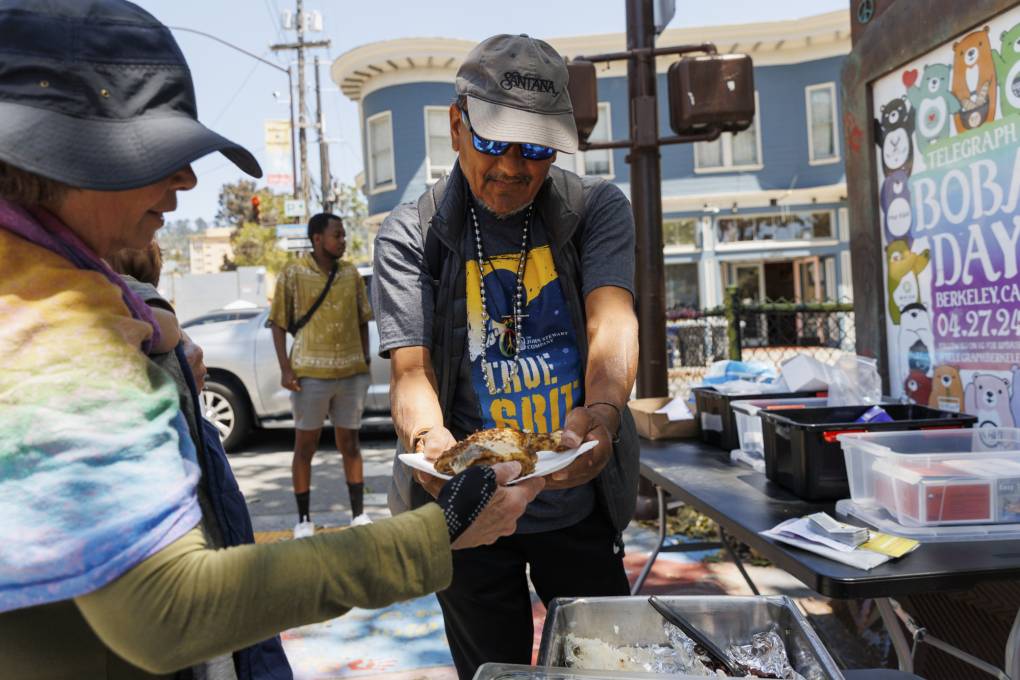
"caption": "Lisa Teague, left, serves Richard Rodriguez a plate of food on June 1, 2024, at a small open space near People's Park in Berkeley. Teague, a local community activist, volunteered at the park until UC Berkeley closed it in January to build new student and low-income housing on the site.",
"credit": "Juliana Yamada/KQED",
"altTag": "A woman serves a man food on a street.",
"description": null,
"imgSizes": {
"medium": {
"file": "https://cdn.kqed.org/wp-content/uploads/sites/10/2024/06/20240601-PEOPLESPARK-JY-035-KQED-800x533.jpg",
"width": 800,
"height": 533,
"mimeType": "image/jpeg"
},
"large": {
"file": "https://cdn.kqed.org/wp-content/uploads/sites/10/2024/06/20240601-PEOPLESPARK-JY-035-KQED-1020x680.jpg",
"width": 1020,
"height": 680,
"mimeType": "image/jpeg"
},
"thumbnail": {
"file": "https://cdn.kqed.org/wp-content/uploads/sites/10/2024/06/20240601-PEOPLESPARK-JY-035-KQED-160x107.jpg",
"width": 160,
"height": 107,
"mimeType": "image/jpeg"
},
"1536x1536": {
"file": "https://cdn.kqed.org/wp-content/uploads/sites/10/2024/06/20240601-PEOPLESPARK-JY-035-KQED-1536x1024.jpg",
"width": 1536,
"height": 1024,
"mimeType": "image/jpeg"
},
"post-thumbnail": {
"file": "https://cdn.kqed.org/wp-content/uploads/sites/10/2024/06/20240601-PEOPLESPARK-JY-035-KQED-672x372.jpg",
"width": 672,
"height": 372,
"mimeType": "image/jpeg"
},
"twentyfourteen-full-width": {
"file": "https://cdn.kqed.org/wp-content/uploads/sites/10/2024/06/20240601-PEOPLESPARK-JY-035-KQED-1038x576.jpg",
"width": 1038,
"height": 576,
"mimeType": "image/jpeg"
},
"full-width": {
"file": "https://cdn.kqed.org/wp-content/uploads/sites/10/2024/06/20240601-PEOPLESPARK-JY-035-KQED-1920x1280.jpg",
"width": 1920,
"height": 1280,
"mimeType": "image/jpeg"
},
"kqedFullSize": {
"file": "https://cdn.kqed.org/wp-content/uploads/sites/10/2024/06/20240601-PEOPLESPARK-JY-035-KQED.jpg",
"width": 2000,
"height": 1333
}
},
"isLoading": false,
"fetchFailed": false
},
"news_11989941": {
"type": "attachments",
"id": "news_11989941",
"meta": {
"index": "attachments_1716263798",
"site": "news",
"id": "11989941",
"found": true
},
"title": "240409-MAHAN HOMELESS-JG-01_qut",
"publishDate": 1718216228,
"status": "inherit",
"parent": 11989926,
"modified": 1718216259,
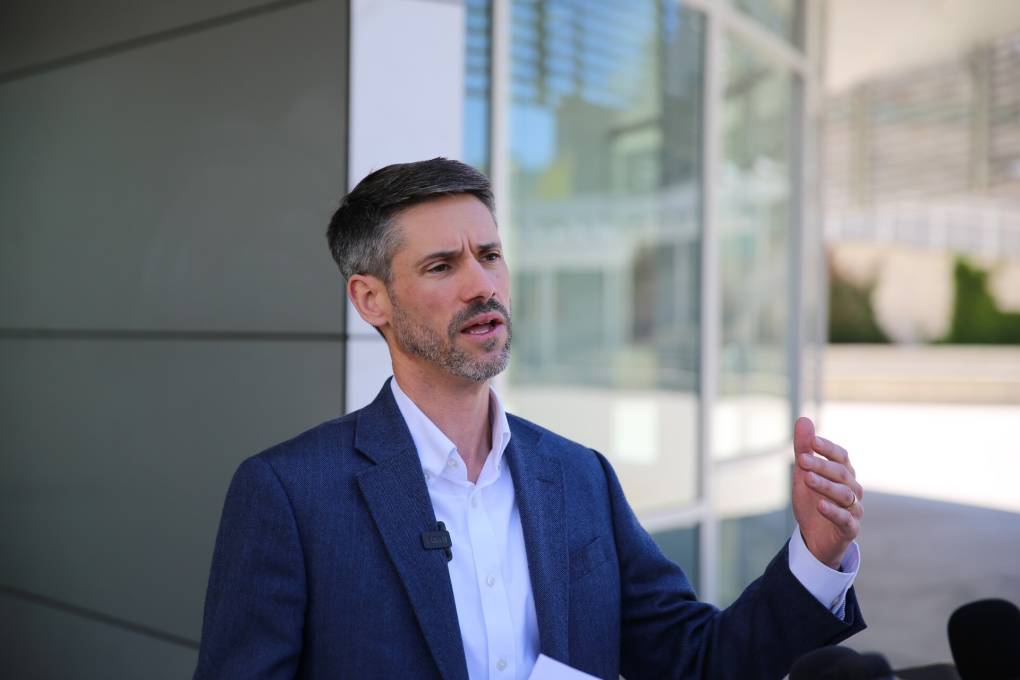
"caption": "San José Mayor Matt Mahan speaks about a state audit of spending on homelessness outside City Hall on April 9, 2024.",
"credit": "Joseph Geha/KQED",
"altTag": null,
"description": null,
"imgSizes": {
"medium": {
"file": "https://cdn.kqed.org/wp-content/uploads/sites/10/2024/06/240409-MAHAN-HOMELESS-JG-01_qut-800x533.jpg",
"width": 800,
"height": 533,
"mimeType": "image/jpeg"
},
"large": {
"file": "https://cdn.kqed.org/wp-content/uploads/sites/10/2024/06/240409-MAHAN-HOMELESS-JG-01_qut-1020x680.jpg",
"width": 1020,
"height": 680,
"mimeType": "image/jpeg"
},
"thumbnail": {
"file": "https://cdn.kqed.org/wp-content/uploads/sites/10/2024/06/240409-MAHAN-HOMELESS-JG-01_qut-160x107.jpg",
"width": 160,
"height": 107,
"mimeType": "image/jpeg"
},
"1536x1536": {
"file": "https://cdn.kqed.org/wp-content/uploads/sites/10/2024/06/240409-MAHAN-HOMELESS-JG-01_qut-1536x1024.jpg",
"width": 1536,
"height": 1024,
"mimeType": "image/jpeg"
},
"post-thumbnail": {
"file": "https://cdn.kqed.org/wp-content/uploads/sites/10/2024/06/240409-MAHAN-HOMELESS-JG-01_qut-672x372.jpg",
"width": 672,
"height": 372,
"mimeType": "image/jpeg"
},
"twentyfourteen-full-width": {
"file": "https://cdn.kqed.org/wp-content/uploads/sites/10/2024/06/240409-MAHAN-HOMELESS-JG-01_qut-1038x576.jpg",
"width": 1038,
"height": 576,
"mimeType": "image/jpeg"
},
"kqedFullSize": {
"file": "https://cdn.kqed.org/wp-content/uploads/sites/10/2024/06/240409-MAHAN-HOMELESS-JG-01_qut.jpg",
"width": 1920,
"height": 1280
}
},
"isLoading": false,
"fetchFailed": false
},
"news_11953070": {
"type": "attachments",
"id": "news_11953070",
"meta": {
"index": "attachments_1716263798",
"site": "news",
"id": "11953070",
"found": true
},
"title": "Tents line Fulton Street near City Hall on April 5, 2020.",
"publishDate": 1686863978,
"status": "inherit",
"parent": 11954718,
"modified": 1718058833,
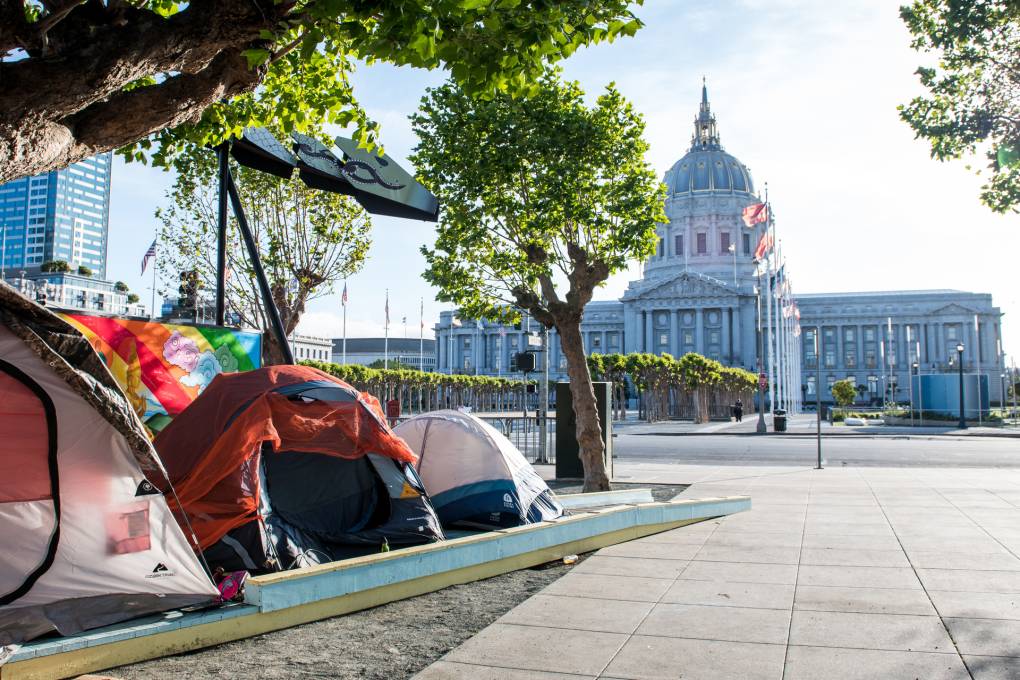
"caption": "Tents line Fulton Street near City Hall on April 5, 2020.",
"credit": "Beth LaBerge/KQED",
"altTag": "Three tents line a public street with San Francisco's City Hall building shining as the sun comes up in the early morning hours. Rows of trees line a path toward the city building.",
"description": "Tents line Fulton Street near City Hall on April 5, 2020. In June, budget battles are underway in the Bay Area's two largest cities, with Mayors London Breed in San Francisco and Matt Mahan in San José pushing for more voter-approved homelessness dollars to go toward temporary housing.",
"imgSizes": {
"medium": {
"file": "https://cdn.kqed.org/wp-content/uploads/sites/10/2023/06/RS43040_011_KQED_SanFrancisco_TentEncampments_05052020-qut-800x533.jpg",
"width": 800,
"height": 533,
"mimeType": "image/jpeg"
},
"large": {
"file": "https://cdn.kqed.org/wp-content/uploads/sites/10/2023/06/RS43040_011_KQED_SanFrancisco_TentEncampments_05052020-qut-1020x680.jpg",
"width": 1020,
"height": 680,
"mimeType": "image/jpeg"
},
"thumbnail": {
"file": "https://cdn.kqed.org/wp-content/uploads/sites/10/2023/06/RS43040_011_KQED_SanFrancisco_TentEncampments_05052020-qut-160x107.jpg",
"width": 160,
"height": 107,
"mimeType": "image/jpeg"
},
"1536x1536": {
"file": "https://cdn.kqed.org/wp-content/uploads/sites/10/2023/06/RS43040_011_KQED_SanFrancisco_TentEncampments_05052020-qut-1536x1024.jpg",
"width": 1536,
"height": 1024,
"mimeType": "image/jpeg"
},
"post-thumbnail": {
"file": "https://cdn.kqed.org/wp-content/uploads/sites/10/2023/06/RS43040_011_KQED_SanFrancisco_TentEncampments_05052020-qut-672x372.jpg",
"width": 672,
"height": 372,
"mimeType": "image/jpeg"
},
"twentyfourteen-full-width": {
"file": "https://cdn.kqed.org/wp-content/uploads/sites/10/2023/06/RS43040_011_KQED_SanFrancisco_TentEncampments_05052020-qut-1038x576.jpg",
"width": 1038,
"height": 576,
"mimeType": "image/jpeg"
},
"kqedFullSize": {
"file": "https://cdn.kqed.org/wp-content/uploads/sites/10/2023/06/RS43040_011_KQED_SanFrancisco_TentEncampments_05052020-qut.jpg",
"width": 1920,
"height": 1280
}
},
"isLoading": false,
"fetchFailed": false
},
"news_11989536": {
"type": "attachments",
"id": "news_11989536",
"meta": {
"index": "attachments_1716263798",
"site": "news",
"id": "11989536",
"found": true
},
"title": "053124-Bakersfield-Injectable-LV_03-ezgif.com-webp-to-jpg-converter",
"publishDate": 1717805449,
"status": "inherit",
"parent": 11989515,
"modified": 1717806096,
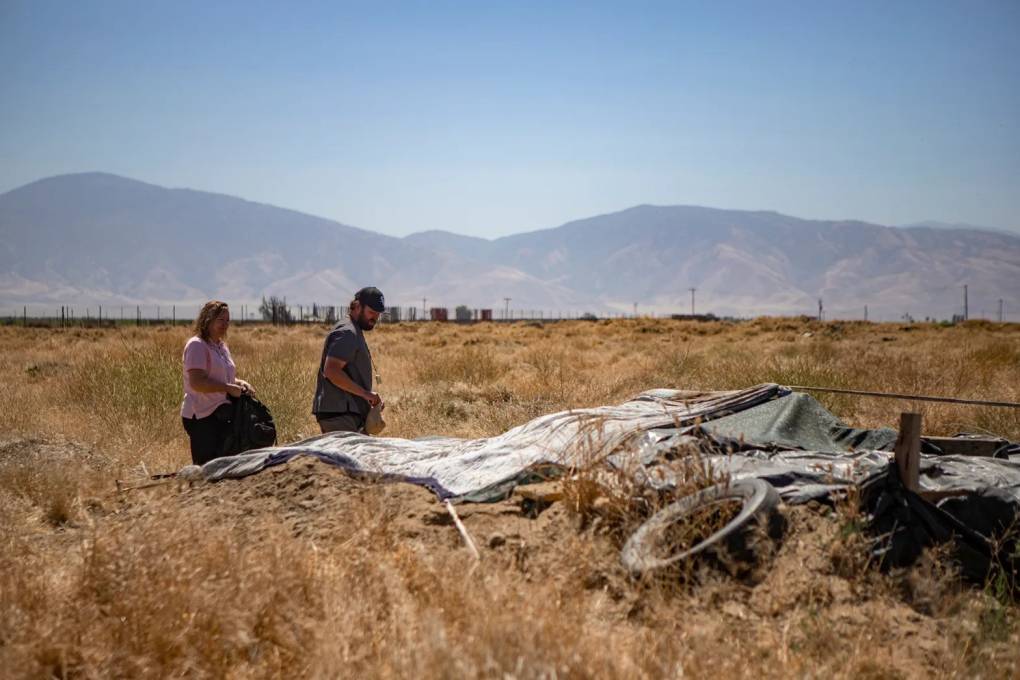
"caption": "First: The Akido street medicine team exits their van with their equipment. Last: The Akido Street Medicine team checks on a homeless encampment in a dirt field in Arvin on May 28, 2024. \n",
"credit": "Larry Valenzuela/CalMatters/CatchLight Local",
"altTag": null,
"description": null,
"imgSizes": {
"medium": {
"file": "https://cdn.kqed.org/wp-content/uploads/sites/10/2024/06/053124-Bakersfield-Injectable-LV_03-ezgif.com-webp-to-jpg-converter-800x533.jpg",
"width": 800,
"height": 533,
"mimeType": "image/jpeg"
},
"large": {
"file": "https://cdn.kqed.org/wp-content/uploads/sites/10/2024/06/053124-Bakersfield-Injectable-LV_03-ezgif.com-webp-to-jpg-converter-1020x680.jpg",
"width": 1020,
"height": 680,
"mimeType": "image/jpeg"
},
"thumbnail": {
"file": "https://cdn.kqed.org/wp-content/uploads/sites/10/2024/06/053124-Bakersfield-Injectable-LV_03-ezgif.com-webp-to-jpg-converter-160x107.jpg",
"width": 160,
"height": 107,
"mimeType": "image/jpeg"
},
"1536x1536": {
"file": "https://cdn.kqed.org/wp-content/uploads/sites/10/2024/06/053124-Bakersfield-Injectable-LV_03-ezgif.com-webp-to-jpg-converter-1536x1024.jpg",
"width": 1536,
"height": 1024,
"mimeType": "image/jpeg"
},
"post-thumbnail": {
"file": "https://cdn.kqed.org/wp-content/uploads/sites/10/2024/06/053124-Bakersfield-Injectable-LV_03-ezgif.com-webp-to-jpg-converter-672x372.jpg",
"width": 672,
"height": 372,
"mimeType": "image/jpeg"
},
"twentyfourteen-full-width": {
"file": "https://cdn.kqed.org/wp-content/uploads/sites/10/2024/06/053124-Bakersfield-Injectable-LV_03-ezgif.com-webp-to-jpg-converter-1038x576.jpg",
"width": 1038,
"height": 576,
"mimeType": "image/jpeg"
},
"kqedFullSize": {
"file": "https://cdn.kqed.org/wp-content/uploads/sites/10/2024/06/053124-Bakersfield-Injectable-LV_03-ezgif.com-webp-to-jpg-converter.jpg",
"width": 1568,
"height": 1045
}
},
"isLoading": false,
"fetchFailed": false
},
"news_11981374": {
"type": "attachments",
"id": "news_11981374",
"meta": {
"index": "attachments_1716263798",
"site": "news",
"id": "11981374",
"found": true
},
"parent": 11981358,
"imgSizes": {
"twentyfourteen-full-width": {
"file": "https://cdn.kqed.org/wp-content/uploads/sites/10/2024/03/036_Berkeley_PeoplesPark_02192021_qut-1038x576.jpg",
"width": 1038,
"mimeType": "image/jpeg",
"height": 576
},
"thumbnail": {
"file": "https://cdn.kqed.org/wp-content/uploads/sites/10/2024/03/036_Berkeley_PeoplesPark_02192021_qut-160x107.jpg",
"width": 160,
"mimeType": "image/jpeg",
"height": 107
},
"post-thumbnail": {
"file": "https://cdn.kqed.org/wp-content/uploads/sites/10/2024/03/036_Berkeley_PeoplesPark_02192021_qut-672x372.jpg",
"width": 672,
"mimeType": "image/jpeg",
"height": 372
},
"kqedFullSize": {
"file": "https://cdn.kqed.org/wp-content/uploads/sites/10/2024/03/036_Berkeley_PeoplesPark_02192021_qut.jpg",
"width": 1920,
"height": 1280
},
"large": {
"file": "https://cdn.kqed.org/wp-content/uploads/sites/10/2024/03/036_Berkeley_PeoplesPark_02192021_qut-1020x680.jpg",
"width": 1020,
"mimeType": "image/jpeg",
"height": 680
},
"1536x1536": {
"file": "https://cdn.kqed.org/wp-content/uploads/sites/10/2024/03/036_Berkeley_PeoplesPark_02192021_qut-1536x1024.jpg",
"width": 1536,
"mimeType": "image/jpeg",
"height": 1024
},
"medium": {
"file": "https://cdn.kqed.org/wp-content/uploads/sites/10/2024/03/036_Berkeley_PeoplesPark_02192021_qut-800x533.jpg",
"width": 800,
"mimeType": "image/jpeg",
"height": 533
}
},
"publishDate": 1711757778,
"modified": 1711759263,
"caption": "A sign says, 'Save Peoples Park, No More Buildings' at People's Park in Berkeley in 2021.",
"description": null,
"title": "036_Berkeley_PeoplesPark_02192021_qut",
"credit": "Beth LaBerge/KQED",
"status": "inherit",
"altTag": "A sign that says 'Save people's park' is hung between trees, next to a tent, in a park.",
"isLoading": false,
"fetchFailed": false
},
"news_11988820": {
"type": "attachments",
"id": "news_11988820",
"meta": {
"index": "attachments_1716263798",
"site": "news",
"id": "11988820",
"found": true
},
"title": "013_KQED_SanJoseInterimHousing_01302023_qut",
"publishDate": 1717454635,
"status": "inherit",
"parent": 11988728,
"modified": 1717454673,
"caption": "Amanda Mora stands outside of her temporary home at Evans Lane housing, an interim housing facility located on city-owned land, in San José on Jan. 30, 2023.",
"credit": "Beth LaBerge/KQED",
"altTag": "A woman wearing sunglasses stands outside the door of a grey tiny home.",
"description": null,
"imgSizes": {
"medium": {
"file": "https://cdn.kqed.org/wp-content/uploads/sites/10/2024/06/013_KQED_SanJoseInterimHousing_01302023_qut-800x533.jpg",
"width": 800,
"height": 533,
"mimeType": "image/jpeg"
},
"large": {
"file": "https://cdn.kqed.org/wp-content/uploads/sites/10/2024/06/013_KQED_SanJoseInterimHousing_01302023_qut-1020x680.jpg",
"width": 1020,
"height": 680,
"mimeType": "image/jpeg"
},
"thumbnail": {
"file": "https://cdn.kqed.org/wp-content/uploads/sites/10/2024/06/013_KQED_SanJoseInterimHousing_01302023_qut-160x107.jpg",
"width": 160,
"height": 107,
"mimeType": "image/jpeg"
},
"1536x1536": {
"file": "https://cdn.kqed.org/wp-content/uploads/sites/10/2024/06/013_KQED_SanJoseInterimHousing_01302023_qut-1536x1024.jpg",
"width": 1536,
"height": 1024,
"mimeType": "image/jpeg"
},
"post-thumbnail": {
"file": "https://cdn.kqed.org/wp-content/uploads/sites/10/2024/06/013_KQED_SanJoseInterimHousing_01302023_qut-672x372.jpg",
"width": 672,
"height": 372,
"mimeType": "image/jpeg"
},
"twentyfourteen-full-width": {
"file": "https://cdn.kqed.org/wp-content/uploads/sites/10/2024/06/013_KQED_SanJoseInterimHousing_01302023_qut-1038x576.jpg",
"width": 1038,
"height": 576,
"mimeType": "image/jpeg"
},
"kqedFullSize": {
"file": "https://cdn.kqed.org/wp-content/uploads/sites/10/2024/06/013_KQED_SanJoseInterimHousing_01302023_qut.jpg",
"width": 1920,
"height": 1280
}
},
"isLoading": false,
"fetchFailed": false
},
"news_11988229": {
"type": "attachments",
"id": "news_11988229",
"meta": {
"index": "attachments_1716263798",
"site": "news",
"id": "11988229",
"found": true
},
"title": "Russell Bradford, Providence Foundation driver, looks into different rooms as he tours the Dogpatch Navigation Center on Wednesday, May 24, 2017 in San Francisco, Calif. \"This is nice. It's a good incentive to keep going. An opportunity like this could re",
"publishDate": 1717095410,
"status": "inherit",
"parent": 11988228,
"modified": 1717096667,
"caption": "A driver for Providence Foundation of San Francisco tours the Dogpatch Navigation Center on Wednesday, May 24, 2017, in San Francisco. ",
"credit": "Lea Suzuki/The San Francisco Chronicle via Getty Images",
"altTag": null,
"description": null,
"imgSizes": {
"medium": {
"file": "https://cdn.kqed.org/wp-content/uploads/sites/10/2024/05/GettyImages-1322099354-800x533.jpg",
"width": 800,
"height": 533,
"mimeType": "image/jpeg"
},
"large": {
"file": "https://cdn.kqed.org/wp-content/uploads/sites/10/2024/05/GettyImages-1322099354-1020x680.jpg",
"width": 1020,
"height": 680,
"mimeType": "image/jpeg"
},
"thumbnail": {
"file": "https://cdn.kqed.org/wp-content/uploads/sites/10/2024/05/GettyImages-1322099354-160x107.jpg",
"width": 160,
"height": 107,
"mimeType": "image/jpeg"
},
"1536x1536": {
"file": "https://cdn.kqed.org/wp-content/uploads/sites/10/2024/05/GettyImages-1322099354-1536x1024.jpg",
"width": 1536,
"height": 1024,
"mimeType": "image/jpeg"
},
"post-thumbnail": {
"file": "https://cdn.kqed.org/wp-content/uploads/sites/10/2024/05/GettyImages-1322099354-672x372.jpg",
"width": 672,
"height": 372,
"mimeType": "image/jpeg"
},
"twentyfourteen-full-width": {
"file": "https://cdn.kqed.org/wp-content/uploads/sites/10/2024/05/GettyImages-1322099354-1038x576.jpg",
"width": 1038,
"height": 576,
"mimeType": "image/jpeg"
},
"kqedFullSize": {
"file": "https://cdn.kqed.org/wp-content/uploads/sites/10/2024/05/GettyImages-1322099354.jpg",
"width": 1920,
"height": 1280
}
},
"isLoading": false,
"fetchFailed": false
},
"news_11988051": {
"type": "attachments",
"id": "news_11988051",
"meta": {
"index": "attachments_1716263798",
"site": "news",
"id": "11988051",
"found": true
},
"title": "11022022-Bail-Bonds-RL-CM-17 copy",
"publishDate": 1717006473,
"status": "inherit",
"parent": 11988049,
"modified": 1717006536,
"caption": "The California Supreme Court has accepted a case that asks whether it is constitutional for judges to set bail at amounts far higher than a defendant can pay.",
"credit": "Rahul Lal/CalMatters",
"altTag": "A neon red sign that reads 'Bail Bonds' inside a window.",
"description": null,
"imgSizes": {
"medium": {
"file": "https://cdn.kqed.org/wp-content/uploads/sites/10/2024/05/11022022-Bail-Bonds-RL-CM-17-copy-800x533.jpg",
"width": 800,
"height": 533,
"mimeType": "image/jpeg"
},
"large": {
"file": "https://cdn.kqed.org/wp-content/uploads/sites/10/2024/05/11022022-Bail-Bonds-RL-CM-17-copy-1020x680.jpg",
"width": 1020,
"height": 680,
"mimeType": "image/jpeg"
},
"thumbnail": {
"file": "https://cdn.kqed.org/wp-content/uploads/sites/10/2024/05/11022022-Bail-Bonds-RL-CM-17-copy-160x107.jpg",
"width": 160,
"height": 107,
"mimeType": "image/jpeg"
},
"1536x1536": {
"file": "https://cdn.kqed.org/wp-content/uploads/sites/10/2024/05/11022022-Bail-Bonds-RL-CM-17-copy-1536x1024.jpg",
"width": 1536,
"height": 1024,
"mimeType": "image/jpeg"
},
"post-thumbnail": {
"file": "https://cdn.kqed.org/wp-content/uploads/sites/10/2024/05/11022022-Bail-Bonds-RL-CM-17-copy-672x372.jpg",
"width": 672,
"height": 372,
"mimeType": "image/jpeg"
},
"twentyfourteen-full-width": {
"file": "https://cdn.kqed.org/wp-content/uploads/sites/10/2024/05/11022022-Bail-Bonds-RL-CM-17-copy-1038x576.jpg",
"width": 1038,
"height": 576,
"mimeType": "image/jpeg"
},
"full-width": {
"file": "https://cdn.kqed.org/wp-content/uploads/sites/10/2024/05/11022022-Bail-Bonds-RL-CM-17-copy-1920x1280.jpg",
"width": 1920,
"height": 1280,
"mimeType": "image/jpeg"
},
"kqedFullSize": {
"file": "https://cdn.kqed.org/wp-content/uploads/sites/10/2024/05/11022022-Bail-Bonds-RL-CM-17-copy.jpg",
"width": 2000,
"height": 1333
}
},
"isLoading": false,
"fetchFailed": false
},
"news_11987537": {
"type": "attachments",
"id": "news_11987537",
"meta": {
"index": "attachments_1716263798",
"site": "news",
"id": "11987537",
"found": true
},
"title": "090623_Chico_Homeless_FG_CM_18",
"publishDate": 1716497278,
"status": "inherit",
"parent": 11987494,
"modified": 1716505245,
"caption": "An emergency non-congregate housing site in Chico, Butte County, on Sept. 6, 2023.",
"credit": "Fred Greaves for CalMatters",
"altTag": "Rows of modular tiny houses.",
"description": null,
"imgSizes": {
"medium": {
"file": "https://cdn.kqed.org/wp-content/uploads/sites/10/2024/05/090623_Chico_Homeless_FG_CM_18-800x533.jpg",
"width": 800,
"height": 533,
"mimeType": "image/jpeg"
},
"large": {
"file": "https://cdn.kqed.org/wp-content/uploads/sites/10/2024/05/090623_Chico_Homeless_FG_CM_18-1020x680.jpg",
"width": 1020,
"height": 680,
"mimeType": "image/jpeg"
},
"thumbnail": {
"file": "https://cdn.kqed.org/wp-content/uploads/sites/10/2024/05/090623_Chico_Homeless_FG_CM_18-160x107.jpg",
"width": 160,
"height": 107,
"mimeType": "image/jpeg"
},
"1536x1536": {
"file": "https://cdn.kqed.org/wp-content/uploads/sites/10/2024/05/090623_Chico_Homeless_FG_CM_18-1536x1024.jpg",
"width": 1536,
"height": 1024,
"mimeType": "image/jpeg"
},
"post-thumbnail": {
"file": "https://cdn.kqed.org/wp-content/uploads/sites/10/2024/05/090623_Chico_Homeless_FG_CM_18-672x372.jpg",
"width": 672,
"height": 372,
"mimeType": "image/jpeg"
},
"twentyfourteen-full-width": {
"file": "https://cdn.kqed.org/wp-content/uploads/sites/10/2024/05/090623_Chico_Homeless_FG_CM_18-1038x576.jpg",
"width": 1038,
"height": 576,
"mimeType": "image/jpeg"
},
"full-width": {
"file": "https://cdn.kqed.org/wp-content/uploads/sites/10/2024/05/090623_Chico_Homeless_FG_CM_18-1920x1280.jpg",
"width": 1920,
"height": 1280,
"mimeType": "image/jpeg"
},
"kqedFullSize": {
"file": "https://cdn.kqed.org/wp-content/uploads/sites/10/2024/05/090623_Chico_Homeless_FG_CM_18.jpg",
"width": 2000,
"height": 1333
}
},
"isLoading": false,
"fetchFailed": false
},
"news_11986713": {
"type": "attachments",
"id": "news_11986713",
"meta": {
"index": "attachments_1716263798",
"site": "news",
"id": "11986713",
"found": true
},
"parent": 11986702,
"imgSizes": {
"twentyfourteen-full-width": {
"file": "https://cdn.kqed.org/wp-content/uploads/sites/10/2024/05/pelicans-monterey-county-1038x576.jpg",
"width": 1038,
"mimeType": "image/jpeg",
"height": 576
},
"thumbnail": {
"file": "https://cdn.kqed.org/wp-content/uploads/sites/10/2024/05/pelicans-monterey-county-160x120.jpg",
"width": 160,
"mimeType": "image/jpeg",
"height": 120
},
"post-thumbnail": {
"file": "https://cdn.kqed.org/wp-content/uploads/sites/10/2024/05/pelicans-monterey-county-672x372.jpg",
"width": 672,
"mimeType": "image/jpeg",
"height": 372
},
"kqedFullSize": {
"file": "https://cdn.kqed.org/wp-content/uploads/sites/10/2024/05/pelicans-monterey-county.jpg",
"width": 1599,
"height": 1204
},
"large": {
"file": "https://cdn.kqed.org/wp-content/uploads/sites/10/2024/05/pelicans-monterey-county-1020x768.jpg",
"width": 1020,
"mimeType": "image/jpeg",
"height": 768
},
"1536x1536": {
"file": "https://cdn.kqed.org/wp-content/uploads/sites/10/2024/05/pelicans-monterey-county-1536x1157.jpg",
"width": 1536,
"mimeType": "image/jpeg",
"height": 1157
},
"medium": {
"file": "https://cdn.kqed.org/wp-content/uploads/sites/10/2024/05/pelicans-monterey-county-800x602.jpg",
"width": 800,
"mimeType": "image/jpeg",
"height": 602
}
},
"publishDate": 1715968073,
"modified": 1715968349,
"caption": "Workers at SPCA Monterey County provide exams for brown pelicans that they have rescued.",
"description": null,
"title": "pelicans monterey county",
"credit": "Photo courtesy of SPCA Monterey County",
"status": "inherit",
"altTag": "brown pelicans in monterey county",
"isLoading": false,
"fetchFailed": false
}
},
"audioPlayerReducer": {
"postId": "stream_live",
"isPaused": true,
"isPlaying": false,
"pfsActive": false,
"pledgeModalIsOpen": true,
"playerDrawerIsOpen": false,
"liveAudioPlayStartedAt": 0,
"liveAudioPlayContext": ""
},
"authorsReducer": {
"byline_news_11991747": {
"type": "authors",
"id": "byline_news_11991747",
"meta": {
"override": true
},
"slug": "byline_news_11991747",
"name": "Alexei Koseff, CalMatters",
"isLoading": false
},
"byline_news_11989515": {
"type": "authors",
"id": "byline_news_11989515",
"meta": {
"override": true
},
"slug": "byline_news_11989515",
"name": "\u003ca href=\"https://calmatters.org/author/marisa-kendall/\">Marisa Kendall\u003c/a>",
"isLoading": false
},
"byline_news_11988049": {
"type": "authors",
"id": "byline_news_11988049",
"meta": {
"override": true
},
"slug": "byline_news_11988049",
"name": "\u003ca href=\"https://calmatters.org/author/nigelduara/\">Nigel Duara\u003c/a>",
"isLoading": false
},
"byline_news_11987494": {
"type": "authors",
"id": "byline_news_11987494",
"meta": {
"override": true
},
"slug": "byline_news_11987494",
"name": "\u003ca href=\"https://calmatters.org/author/marisa-kendall/\">Marisa Kendall\u003c/a>\u003cbr>CalMatters",
"isLoading": false
},
"gmarzorati": {
"type": "authors",
"id": "227",
"meta": {
"index": "authors_1716337520",
"id": "227",
"found": true
},
"name": "Guy Marzorati",
"firstName": "Guy",
"lastName": "Marzorati",
"slug": "gmarzorati",
"email": "gmarzorati@KQED.org",
"display_author_email": true,
"staff_mastheads": [
"news"
],
"title": "Correspondent",
"bio": "Guy Marzorati is a correspondent on KQED's California Politics and Government Desk, based in San Jose. A graduate of Santa Clara University, Guy joined KQED in 2013. He reports on state and local politics and produces KQED's digital voter guide.",
"avatar": "https://secure.gravatar.com/avatar/e7038b8dbfd55b104369b76b1cd0b9de?s=600&d=blank&r=g",
"twitter": "guymarzorati",
"facebook": null,
"instagram": null,
"linkedin": null,
"sites": [
{
"site": "",
"roles": [
"editor"
]
},
{
"site": "news",
"roles": [
"editor"
]
},
{
"site": "science",
"roles": [
"editor"
]
},
{
"site": "forum",
"roles": [
"editor"
]
},
{
"site": "elections",
"roles": [
"editor"
]
},
{
"site": "liveblog",
"roles": [
"editor"
]
}
],
"headData": {
"title": "Guy Marzorati | KQED",
"description": "Correspondent",
"ogImgSrc": "https://secure.gravatar.com/avatar/e7038b8dbfd55b104369b76b1cd0b9de?s=600&d=blank&r=g",
"twImgSrc": "https://secure.gravatar.com/avatar/e7038b8dbfd55b104369b76b1cd0b9de?s=600&d=blank&r=g"
},
"isLoading": false,
"link": "/author/gmarzorati"
},
"ecruzguevarra": {
"type": "authors",
"id": "8654",
"meta": {
"index": "authors_1716337520",
"id": "8654",
"found": true
},
"name": "Ericka Cruz Guevarra",
"firstName": "Ericka",
"lastName": "Cruz Guevarra",
"slug": "ecruzguevarra",
"email": "ecruzguevarra@kqed.org",
"display_author_email": true,
"staff_mastheads": [
"news"
],
"title": "Producer, The Bay Podcast",
"bio": "Ericka Cruz Guevarra is host of \u003ca href=\"https://www.kqed.org/podcasts/thebay\">\u003cem>The Bay\u003c/em>\u003c/a> podcast at KQED. Before host, she was the show’s producer. Her work in that capacity includes a three-part reported series on policing in Vallejo, which won a 2020 excellence in journalism award from the Society of Professional Journalists. Ericka has worked as a breaking news reporter at Oregon Public Broadcasting, helped produce the Code Switch podcast, and was KQED’s inaugural Raul Ramirez Diversity Fund intern. She’s also an alumna of NPR’s Next Generation Radio program. Send her an email if you have strong feelings about whether Fairfield and Suisun City are the Bay. Ericka is represented by SAG-AFTRA.",
"avatar": "https://secure.gravatar.com/avatar/25e5ab8d3d53fad2dcc7bb2b5c506b1a?s=600&d=blank&r=g",
"twitter": "NotoriousECG",
"facebook": null,
"instagram": null,
"linkedin": null,
"sites": [
{
"site": "arts",
"roles": [
"subscriber"
]
},
{
"site": "news",
"roles": [
"editor",
"manage_categories"
]
},
{
"site": "futureofyou",
"roles": [
"subscriber"
]
},
{
"site": "stateofhealth",
"roles": [
"subscriber"
]
},
{
"site": "science",
"roles": [
"editor"
]
},
{
"site": "forum",
"roles": [
"subscriber"
]
}
],
"headData": {
"title": "Ericka Cruz Guevarra | KQED",
"description": "Producer, The Bay Podcast",
"ogImgSrc": "https://secure.gravatar.com/avatar/25e5ab8d3d53fad2dcc7bb2b5c506b1a?s=600&d=blank&r=g",
"twImgSrc": "https://secure.gravatar.com/avatar/25e5ab8d3d53fad2dcc7bb2b5c506b1a?s=600&d=blank&r=g"
},
"isLoading": false,
"link": "/author/ecruzguevarra"
},
"vrancano": {
"type": "authors",
"id": "11276",
"meta": {
"index": "authors_1716337520",
"id": "11276",
"found": true
},
"name": "Vanessa Rancaño",
"firstName": "Vanessa",
"lastName": "Rancaño",
"slug": "vrancano",
"email": "vrancano@kqed.org",
"display_author_email": false,
"staff_mastheads": [
"news"
],
"title": "Reporter",
"bio": "Vanessa Rancaño is a features reporter for KQED. She’s also covered homelessness and education for the station and reported from the Central Valley. Her work has aired across public radio, from flagship national news shows to longform narrative podcasts. Before taking up a mic, she worked as a freelance print journalist. She’s been recognized with a number of national and regional awards. Vanessa grew up in California's Central Valley. She's a former NPR Kroc Fellow, and a graduate of the UC Berkeley Graduate School of Journalism.",
"avatar": "https://secure.gravatar.com/avatar/b3a383dfb0e7ee1c17568f2cf067904ab654d6e3de9743fc661f3c788ade1bed?s=600&d=blank&r=g",
"twitter": "vanessarancano",
"bluesky": null,
"facebook": null,
"instagram": null,
"linkedin": null,
"sites": [
{
"site": "arts",
"roles": [
"editor"
]
},
{
"site": "news",
"roles": [
"editor"
]
},
{
"site": "liveblog",
"roles": [
"contributor"
]
}
],
"headData": {
"title": "Vanessa Rancaño | KQED",
"description": "Reporter",
"ogImgSrc": "https://secure.gravatar.com/avatar/b3a383dfb0e7ee1c17568f2cf067904ab654d6e3de9743fc661f3c788ade1bed?s=600&d=blank&r=g",
"twImgSrc": "https://secure.gravatar.com/avatar/b3a383dfb0e7ee1c17568f2cf067904ab654d6e3de9743fc661f3c788ade1bed?s=600&d=blank&r=g"
},
"isLoading": false,
"link": "/author/vrancano"
},
"amontecillo": {
"type": "authors",
"id": "11649",
"meta": {
"index": "authors_1716337520",
"id": "11649",
"found": true
},
"name": "Alan Montecillo",
"firstName": "Alan",
"lastName": "Montecillo",
"slug": "amontecillo",
"email": "amontecillo@kqed.org",
"display_author_email": false,
"staff_mastheads": [
"news"
],
"title": "KQED Contributor",
"bio": "Alan Montecillo is the senior editor of \u003cem>\u003ca href=\"http://kqed.org/thebay\">The Bay\u003c/a>, \u003c/em> KQED's local news podcast. Before moving to the Bay Area, he worked as a senior talk show producer for WILL in Champaign-Urbana, Illinois and at Oregon Public Broadcasting in Portland, Oregon. He has won journalism awards from the Society of Professional Journalists Northern California, the Public Media Journalists Association, The Signal Awards, and has also received a regional Edward R. Murrow award. Alan is a Filipino American from Hong Kong and a graduate of Reed College.",
"avatar": "https://secure.gravatar.com/avatar/d5e4e7a76481969ccba76f4e2b5ccabc?s=600&d=blank&r=g",
"twitter": "alanmontecillo",
"facebook": null,
"instagram": null,
"linkedin": null,
"sites": [
{
"site": "",
"roles": [
"editor"
]
},
{
"site": "news",
"roles": [
"editor",
"manage_categories"
]
}
],
"headData": {
"title": "Alan Montecillo | KQED",
"description": "KQED Contributor",
"ogImgSrc": "https://secure.gravatar.com/avatar/d5e4e7a76481969ccba76f4e2b5ccabc?s=600&d=blank&r=g",
"twImgSrc": "https://secure.gravatar.com/avatar/d5e4e7a76481969ccba76f4e2b5ccabc?s=600&d=blank&r=g"
},
"isLoading": false,
"link": "/author/amontecillo"
},
"jrodriguez": {
"type": "authors",
"id": "11690",
"meta": {
"index": "authors_1716337520",
"id": "11690",
"found": true
},
"name": "Joe Fitzgerald Rodriguez",
"firstName": "Joe",
"lastName": "Fitzgerald Rodriguez",
"slug": "jrodriguez",
"email": "jrodriguez@kqed.org",
"display_author_email": true,
"staff_mastheads": [
"news"
],
"title": "Reporter and Producer",
"bio": "Joe Fitzgerald Rodriguez is a reporter and digital producer for KQED covering politics. Joe most recently wrote for the \u003cem>San Francisco Examiner\u003c/em> as a political columnist covering The City. He was raised in San Francisco and has spent his reporting career in his beloved, foggy, city by the bay. Joe was 12-years-old when he conducted his first interview in journalism, grilling former San Francisco Mayor Willie Brown for the Marina Middle School newspaper, \u003cem>The Penguin Press, \u003c/em>and he continues to report on the San Francisco Bay Area to this day.",
"avatar": "https://secure.gravatar.com/avatar/2247beb0564c1e9c62228d5649d2edac?s=600&d=blank&r=g",
"twitter": "FitztheReporter",
"facebook": null,
"instagram": "https://www.instagram.com/fitzthereporter/",
"linkedin": null,
"sites": [
{
"site": "",
"roles": [
"editor"
]
},
{
"site": "arts",
"roles": [
"editor"
]
},
{
"site": "news",
"roles": [
"editor"
]
},
{
"site": "science",
"roles": [
"editor"
]
},
{
"site": "elections",
"roles": [
"editor"
]
},
{
"site": "liveblog",
"roles": [
"editor"
]
}
],
"headData": {
"title": "Joe Fitzgerald Rodriguez | KQED",
"description": "Reporter and Producer",
"ogImgSrc": "https://secure.gravatar.com/avatar/2247beb0564c1e9c62228d5649d2edac?s=600&d=blank&r=g",
"twImgSrc": "https://secure.gravatar.com/avatar/2247beb0564c1e9c62228d5649d2edac?s=600&d=blank&r=g"
},
"isLoading": false,
"link": "/author/jrodriguez"
},
"kmizuguchi": {
"type": "authors",
"id": "11739",
"meta": {
"index": "authors_1716337520",
"id": "11739",
"found": true
},
"name": "Keith Mizuguchi",
"firstName": "Keith",
"lastName": "Mizuguchi",
"slug": "kmizuguchi",
"email": "kmizuguchi@kqed.org",
"display_author_email": false,
"staff_mastheads": [],
"title": "KQED Contributor",
"bio": null,
"avatar": "https://secure.gravatar.com/avatar/64d8a7de0723d4099b9fe4e915136103febcc20809abce228ee4415bcb237023?s=600&d=blank&r=g",
"twitter": null,
"bluesky": null,
"facebook": null,
"instagram": null,
"linkedin": null,
"sites": [
{
"site": "news",
"roles": [
"editor"
]
},
{
"site": "science",
"roles": [
"editor"
]
}
],
"headData": {
"title": "Keith Mizuguchi | KQED",
"description": "KQED Contributor",
"ogImgSrc": "https://secure.gravatar.com/avatar/64d8a7de0723d4099b9fe4e915136103febcc20809abce228ee4415bcb237023?s=600&d=blank&r=g",
"twImgSrc": "https://secure.gravatar.com/avatar/64d8a7de0723d4099b9fe4e915136103febcc20809abce228ee4415bcb237023?s=600&d=blank&r=g"
},
"isLoading": false,
"link": "/author/kmizuguchi"
},
"mesquinca": {
"type": "authors",
"id": "11802",
"meta": {
"index": "authors_1716337520",
"id": "11802",
"found": true
},
"name": "Maria Esquinca",
"firstName": "Maria",
"lastName": "Esquinca",
"slug": "mesquinca",
"email": "mesquinca@kqed.org",
"display_author_email": false,
"staff_mastheads": [],
"title": "Producer, The Bay",
"bio": "María Esquinca is a producer of The Bay. Before that, she was a New York Women’s Foundation IGNITE Fellow at Latino USA. She worked at Radio Bilingue where she covered the San Joaquin Valley. Maria has interned at WLRN, News 21, The New York Times Student Journalism Institute and at Crain’s Detroit Business as a Dow Jones News Fund Business Reporting Intern. She is an MFA graduate from the University of Miami. In 2017, she graduated from the Walter Cronkite School of Journalism and Mass Communication with a Master of Mass Communication. A fronteriza, she was born in Ciudad Juárez, Chihuahua, Mexico and grew up in El Paso, Texas.",
"avatar": "https://secure.gravatar.com/avatar/77cedba18aae91da775038ba06dcd8d0?s=600&d=blank&r=g",
"twitter": "@m_esquinca",
"facebook": null,
"instagram": null,
"linkedin": null,
"sites": [
{
"site": "news",
"roles": []
}
],
"headData": {
"title": "Maria Esquinca | KQED",
"description": "Producer, The Bay",
"ogImgSrc": "https://secure.gravatar.com/avatar/77cedba18aae91da775038ba06dcd8d0?s=600&d=blank&r=g",
"twImgSrc": "https://secure.gravatar.com/avatar/77cedba18aae91da775038ba06dcd8d0?s=600&d=blank&r=g"
},
"isLoading": false,
"link": "/author/mesquinca"
},
"slim": {
"type": "authors",
"id": "11920",
"meta": {
"index": "authors_1716337520",
"id": "11920",
"found": true
},
"name": "Samantha Lim",
"firstName": "Samantha",
"lastName": "Lim",
"slug": "slim",
"email": "slim@KQED.org",
"display_author_email": false,
"staff_mastheads": [],
"title": "KQED Contributor",
"bio": null,
"avatar": "https://secure.gravatar.com/avatar/82e592e6c15fe1a04d385e8ad0fb0b4e?s=600&d=blank&r=g",
"twitter": null,
"facebook": null,
"instagram": null,
"linkedin": null,
"sites": [
{
"site": "news",
"roles": []
}
],
"headData": {
"title": "Samantha Lim | KQED",
"description": "KQED Contributor",
"ogImgSrc": "https://secure.gravatar.com/avatar/82e592e6c15fe1a04d385e8ad0fb0b4e?s=600&d=blank&r=g",
"twImgSrc": "https://secure.gravatar.com/avatar/82e592e6c15fe1a04d385e8ad0fb0b4e?s=600&d=blank&r=g"
},
"isLoading": false,
"link": "/author/slim"
}
},
"pagesReducer": {
"news_tag_homelessness": {
"type": "terms",
"id": "news_4020",
"meta": {
"index": "terms_1716263798",
"site": "news",
"id": "4020",
"score": 8.555192
},
"name": "Homelessness",
"slug": "homelessness",
"taxonomy": "tag",
"description": null,
"featImg": null,
"headData": {
"title": "Homelessness | KQED News",
"description": null,
"ogTitle": null,
"ogDescription": null,
"ogImgId": null,
"twTitle": null,
"twDescription": null,
"twImgId": null,
"metaRobotsNoIndex": "index"
},
"ttid": 4039,
"isLoading": false,
"title": "Homelessness",
"pageMeta": {
"site": "news",
"WpPageTemplate": "page-topic-editorial",
"currentPage": 15
},
"blocks": [
{
"blockName": "kqed/post-list",
"attrs": {
"layout": "cardArticle2",
"query": "posts/news?tag=homelessness",
"seeMore": false,
"paginated": true,
"page": 15
}
},
{
"blockName": "kqed/ad"
}
]
}
},
"pfsSessionReducer": {},
"postsReducer": {
"stream_live": {
"type": "live",
"id": "stream_live",
"audioUrl": "https://streams.kqed.org/kqedradio",
"title": "Live Stream",
"excerpt": "Live Stream information currently unavailable.",
"link": "/radio",
"featImg": "",
"label": {
"name": "KQED Live",
"link": "/"
}
},
"stream_kqedNewscast": {
"type": "posts",
"id": "stream_kqedNewscast",
"audioUrl": "https://www.kqed.org/.stream/anon/radio/RDnews/newscast.mp3?_=1",
"title": "KQED Newscast",
"featImg": "",
"label": {
"name": "88.5 FM",
"link": "/"
}
},
"news_11991747": {
"type": "posts",
"id": "news_11991747",
"meta": {
"index": "posts_1716263798",
"site": "news",
"id": "11991747",
"score": null,
"sort": [
1719325805000
]
},
"guestAuthors": [],
"slug": "heres-what-you-should-know-about-californias-budget-deal",
"title": "Here's What You Should Know About California's Budget Deal",
"publishDate": 1719325805,
"format": "standard",
"headTitle": "Here’s What You Should Know About California’s Budget Deal | KQED",
"labelTerm": {
"term": 18481,
"site": "news"
},
"content": "\u003cp>California will make widespread cuts to state government operations, prisons, housing programs and health care workforce development in order to maintain its social safety net as it moves to close a multibillion-dollar budget deficit.\u003c/p>\n\u003cp>The \u003ca href=\"https://www.gov.ca.gov/wp-content/uploads/2024/06/2024-Budget-Agreement-.pdf\">$297.9 billion spending plan\u003c/a>, announced on Saturday by Gov. Gavin Newsom, Senate President Pro Tem \u003ca href=\"https://digitaldemocracy.calmatters.org/legislators/mike-mcguire-93\">Mike McGuire\u003c/a> and Assembly Speaker \u003ca href=\"https://digitaldemocracy.calmatters.org/legislators/robert-rivas-165041\">Robert Rivas\u003c/a>, also relies on reserves and pauses some business tax credits to address a remaining revenue gap estimated at $56 billion over the next two years.\u003c/p>\n\u003cp>“This agreement sets the state on a path for long-term fiscal stability — addressing the current shortfall and strengthening budget resilience down the road,” Newsom \u003ca href=\"https://www.gov.ca.gov/2024/06/22/california-leaders-announce-2024-state-budget-agreement/\">said in a statement\u003c/a>. “We’re making sure to preserve programs that serve millions of Californians, including key funding for education, health care, expanded behavioral health services, and combatting homelessness.”\u003c/p>\n\u003cp>The Legislature \u003ca href=\"https://calmatters.org/politics/capitol/2024/06/california-budget-deficit-legislature-newsom/\">passed a budget more than a week ago\u003c/a> to meet a statutory deadline, but it did not represent a final deal with Newsom as they continued to negotiate over whether to repurpose billions of dollars \u003ca href=\"https://calmatters.org/health/2024/05/medi-cal-health-care-budget/\">earmarked to increase payments\u003c/a> for health care providers who treat low-income patients and whether to further delay \u003ca href=\"https://calmatters.org/health/2024/05/minimum-wage-health-care-deadline/\">minimum wage increases for health care workers\u003c/a>, among other issues.\u003c/p>\n\u003cp>\u003ca href=\"https://www.gov.ca.gov/wp-content/uploads/2024/06/2024-Budget-Agreement-.pdf\">Their agreement\u003c/a> — which the Democratic-controlled Legislature is expected to vote on \u003ca href=\"https://jasonsisney.substack.com/p/governor-and-legislative-leaders-588\">through a series of bills this week\u003c/a> ahead of the July 1 start of the new fiscal year — does claw back the funding intended for Medi-Cal provider rates. It pushes back the \u003ca href=\"https://calmatters.org/health/2024/06/health-care-minimum-wage/\">health care wage hikes\u003c/a> until at least October and potentially until next year, depending on the strength of revenue collections in the coming months. Despite heavy opposition from labor unions, the move could save California hundreds of millions of dollars.\u003c/p>\n\u003cp>[ad fullwidth]\u003c/p>\n\u003cp>The plan makes $16 billion in cuts, including a blanket 7.95% reduction in funding for nearly all state departments and the elimination of thousands of vacant positions, which are collectively expected to save nearly $3.7 billion. The Department of Corrections and Rehabilitation will take an additional $385 million cut at the urging of progressive lawmakers, far higher than what Newsom had originally sought \u003ca href=\"https://calmatters.org/justice/2024/05/californa-prison-closures-deficit/\">for the shrinking prison system\u003c/a>.\u003c/p>\n\u003cp>Other major reductions include $1.1 billion from various affordable housing programs, $746 million for health care workforce development and $500 million to build student housing. A scholarship program for middle-class college students will lose $110 million annually, about a fifth of \u003ca href=\"https://calmatters.org/education/higher-education/2024/06/financial-aid-california-budget/\">what the governor had originally sought to cut\u003c/a>.\u003c/p>\n\u003cp>More than $3 billion in previously promised funding to expand food benefits to undocumented immigrants, increase pay for providers who care for people with developmental disabilities, add new subsidized child care slots and \u003ca href=\"https://calmatters.org/economy/technology/2024/05/california-broadband-funding/\">build out broadband internet\u003c/a> will be delayed.\u003c/p>\n\u003cp>[aside postID=\"news_11986893,news_11990465,news_11985798\" label=\"Related Stories\"]This will allow the state to protect what Newsom and legislative leaders touted in their announcement as “core programs,” including an expansion of Medi-Cal, California’s health care program for the poor, to all adults regardless of their immigration status, as well as increased funding for behavioral health, welfare grants and supplemental income for seniors. Local governments will receive another \u003ca href=\"https://calmatters.org/housing/homelessness/2022/11/california-homeless-newsom-funding-reversal/\">$1 billion to address homelessness\u003c/a>.\u003c/p>\n\u003cp>The budget deal shrinks a proposed cut to school funding following a \u003ca href=\"https://calmatters.org/newsletter/california-budget-schools-funding/\">tense negotiation with education groups\u003c/a> during which teachers unions ran a television advertising campaign criticizing Newsom. About $5.5 billion will be delayed until future years.\u003c/p>\n\u003cp>“\u003ca href=\"https://abgt.assembly.ca.gov/system/files/2024-06/floor-report-of-the-2024-25-budget-june-22-2024.pdf\">The Assembly\u003c/a> fought hard to protect the public services that matter most to Californians, and we are delivering a budget that prioritizes affordability and long-term stability,” Rivas, a Salinas Democrat, said in a statement.\u003c/p>\n\u003cp>As part of their agreement, Newsom and the Legislature will pursue several additional measures to address the circumstances that led to California’s steep deficit. While the state experienced a \u003ca href=\"https://calmatters.org/explainers/california-budget-whiplash/\">historic surplus just two years ago\u003c/a>, a delay in tax collections last year caused by winter storms shielded the extent of California’s weakening fiscal condition until after the governor and lawmakers had already committed to too much new spending.\u003c/p>\n\u003cp>The budget deal proposes legislation, to be taken up in August, that will require the state to set aside a portion of future projected surpluses so that it cannot be spent until the money is collected. It also suggests putting a constitutional amendment before voters in 2026 to grow California’s main reserve account.\u003c/p>\n\u003cp>In the meantime, the state plans to dip into that rainy day fund, pulling out more than $12 billion over the next two years to address the fiscal shortfall. It will also suspend the net operating loss for companies with more than $1 million in taxable income and limit business tax credits to $5 million annually — strategies that it previously employed at the height of the coronavirus pandemic — to raise an estimated nearly $15 billion in new revenue over the next three years.\u003c/p>\n\u003cp>\u003c/p>\n\u003cp>“Make no mistake: This is a tough budget year, but it also isn’t the budget situation we were originally fearing,” McGuire, a Healdsburg Democrat, said in a statement. “\u003ca href=\"https://sbud.senate.ca.gov/system/files/2024-06/budget-act-of-2024-key-highlights.pdf\">This balanced budget\u003c/a> helps tackle some of our toughest challenges with resources to combat the homelessness crisis, investments in housing, and funding to fight wildfires and retail theft.”\u003c/p>\n\n",
"blocks": [],
"excerpt": "Gov. Newsom and legislative leaders announced an agreement to bridge the state budget deficit by dipping into reserves and reducing some spending. ",
"status": "publish",
"parent": 0,
"modified": 1740530292,
"stats": {
"hasAudio": false,
"hasVideo": false,
"hasChartOrMap": false,
"iframeSrcs": [],
"hasGoogleForm": false,
"hasGallery": false,
"hasHearkenModule": false,
"hasPolis": false,
"paragraphCount": 17,
"wordCount": 886
},
"headData": {
"title": "Here's What You Should Know About California's Budget Deal | KQED",
"description": "Gov. Newsom and legislative leaders announced an agreement to bridge the state budget deficit by dipping into reserves and reducing some spending. ",
"ogTitle": "",
"ogDescription": "",
"ogImgId": "",
"twTitle": "",
"twDescription": "",
"twImgId": "",
"schema": {
"@context": "https://schema.org",
"@type": "NewsArticle",
"headline": "Here's What You Should Know About California's Budget Deal",
"datePublished": "2024-06-25T07:30:05-07:00",
"dateModified": "2025-02-25T16:38:12-08:00",
"image": "https://cdn.kqed.org/wp-content/uploads/2020/02/KQED-OG-Image@1x.png",
"isAccessibleForFree": "True",
"publisher": {
"@type": "NewsMediaOrganization",
"@id": "https://www.kqed.org/#organization",
"name": "KQED",
"logo": "https://cdn.kqed.org/wp-content/uploads/2020/02/KQED-OG-Image@1x.png",
"url": "https://www.kqed.org",
"sameAs": [
"https://www.facebook.com/KQED",
"https://twitter.com/KQED",
"https://www.instagram.com/kqed/",
"https://www.tiktok.com/@kqedofficial",
"https://www.linkedin.com/company/kqed",
"https://www.youtube.com/channel/UCeC0IOo7i1P_61zVUWbJ4nw"
]
}
}
},
"sticky": false,
"nprByline": "Alexei Koseff, CalMatters",
"nprStoryId": "kqed-11991747",
"excludeFromSiteSearch": "Include",
"showOnAuthorArchivePages": "No",
"articleAge": "0",
"path": "/news/11991747/heres-what-you-should-know-about-californias-budget-deal",
"audioTrackLength": null,
"parsedContent": [
{
"type": "contentString",
"content": "\u003cdiv class=\"post-body\">\u003cp>\u003cp>California will make widespread cuts to state government operations, prisons, housing programs and health care workforce development in order to maintain its social safety net as it moves to close a multibillion-dollar budget deficit.\u003c/p>\n\u003cp>The \u003ca href=\"https://www.gov.ca.gov/wp-content/uploads/2024/06/2024-Budget-Agreement-.pdf\">$297.9 billion spending plan\u003c/a>, announced on Saturday by Gov. Gavin Newsom, Senate President Pro Tem \u003ca href=\"https://digitaldemocracy.calmatters.org/legislators/mike-mcguire-93\">Mike McGuire\u003c/a> and Assembly Speaker \u003ca href=\"https://digitaldemocracy.calmatters.org/legislators/robert-rivas-165041\">Robert Rivas\u003c/a>, also relies on reserves and pauses some business tax credits to address a remaining revenue gap estimated at $56 billion over the next two years.\u003c/p>\n\u003cp>“This agreement sets the state on a path for long-term fiscal stability — addressing the current shortfall and strengthening budget resilience down the road,” Newsom \u003ca href=\"https://www.gov.ca.gov/2024/06/22/california-leaders-announce-2024-state-budget-agreement/\">said in a statement\u003c/a>. “We’re making sure to preserve programs that serve millions of Californians, including key funding for education, health care, expanded behavioral health services, and combatting homelessness.”\u003c/p>\n\u003cp>The Legislature \u003ca href=\"https://calmatters.org/politics/capitol/2024/06/california-budget-deficit-legislature-newsom/\">passed a budget more than a week ago\u003c/a> to meet a statutory deadline, but it did not represent a final deal with Newsom as they continued to negotiate over whether to repurpose billions of dollars \u003ca href=\"https://calmatters.org/health/2024/05/medi-cal-health-care-budget/\">earmarked to increase payments\u003c/a> for health care providers who treat low-income patients and whether to further delay \u003ca href=\"https://calmatters.org/health/2024/05/minimum-wage-health-care-deadline/\">minimum wage increases for health care workers\u003c/a>, among other issues.\u003c/p>\n\u003cp>\u003ca href=\"https://www.gov.ca.gov/wp-content/uploads/2024/06/2024-Budget-Agreement-.pdf\">Their agreement\u003c/a> — which the Democratic-controlled Legislature is expected to vote on \u003ca href=\"https://jasonsisney.substack.com/p/governor-and-legislative-leaders-588\">through a series of bills this week\u003c/a> ahead of the July 1 start of the new fiscal year — does claw back the funding intended for Medi-Cal provider rates. It pushes back the \u003ca href=\"https://calmatters.org/health/2024/06/health-care-minimum-wage/\">health care wage hikes\u003c/a> until at least October and potentially until next year, depending on the strength of revenue collections in the coming months. Despite heavy opposition from labor unions, the move could save California hundreds of millions of dollars.\u003c/p>\n\u003cp>\u003c/p>\u003c/div>",
"attributes": {
"named": {},
"numeric": []
}
},
{
"type": "component",
"content": "",
"name": "ad",
"attributes": {
"named": {
"label": "fullwidth"
},
"numeric": [
"fullwidth"
]
}
},
{
"type": "contentString",
"content": "\u003cdiv class=\"post-body\">\u003cp>\u003c/p>\n\u003cp>The plan makes $16 billion in cuts, including a blanket 7.95% reduction in funding for nearly all state departments and the elimination of thousands of vacant positions, which are collectively expected to save nearly $3.7 billion. The Department of Corrections and Rehabilitation will take an additional $385 million cut at the urging of progressive lawmakers, far higher than what Newsom had originally sought \u003ca href=\"https://calmatters.org/justice/2024/05/californa-prison-closures-deficit/\">for the shrinking prison system\u003c/a>.\u003c/p>\n\u003cp>Other major reductions include $1.1 billion from various affordable housing programs, $746 million for health care workforce development and $500 million to build student housing. A scholarship program for middle-class college students will lose $110 million annually, about a fifth of \u003ca href=\"https://calmatters.org/education/higher-education/2024/06/financial-aid-california-budget/\">what the governor had originally sought to cut\u003c/a>.\u003c/p>\n\u003cp>More than $3 billion in previously promised funding to expand food benefits to undocumented immigrants, increase pay for providers who care for people with developmental disabilities, add new subsidized child care slots and \u003ca href=\"https://calmatters.org/economy/technology/2024/05/california-broadband-funding/\">build out broadband internet\u003c/a> will be delayed.\u003c/p>\n\u003cp>\u003c/p>\u003c/div>",
"attributes": {
"named": {},
"numeric": []
}
},
{
"type": "component",
"content": "",
"name": "aside",
"attributes": {
"named": {
"postid": "news_11986893,news_11990465,news_11985798",
"label": "Related Stories "
},
"numeric": []
}
},
{
"type": "contentString",
"content": "\u003cdiv class=\"post-body\">\u003cp>This will allow the state to protect what Newsom and legislative leaders touted in their announcement as “core programs,” including an expansion of Medi-Cal, California’s health care program for the poor, to all adults regardless of their immigration status, as well as increased funding for behavioral health, welfare grants and supplemental income for seniors. Local governments will receive another \u003ca href=\"https://calmatters.org/housing/homelessness/2022/11/california-homeless-newsom-funding-reversal/\">$1 billion to address homelessness\u003c/a>.\u003c/p>\n\u003cp>The budget deal shrinks a proposed cut to school funding following a \u003ca href=\"https://calmatters.org/newsletter/california-budget-schools-funding/\">tense negotiation with education groups\u003c/a> during which teachers unions ran a television advertising campaign criticizing Newsom. About $5.5 billion will be delayed until future years.\u003c/p>\n\u003cp>“\u003ca href=\"https://abgt.assembly.ca.gov/system/files/2024-06/floor-report-of-the-2024-25-budget-june-22-2024.pdf\">The Assembly\u003c/a> fought hard to protect the public services that matter most to Californians, and we are delivering a budget that prioritizes affordability and long-term stability,” Rivas, a Salinas Democrat, said in a statement.\u003c/p>\n\u003cp>As part of their agreement, Newsom and the Legislature will pursue several additional measures to address the circumstances that led to California’s steep deficit. While the state experienced a \u003ca href=\"https://calmatters.org/explainers/california-budget-whiplash/\">historic surplus just two years ago\u003c/a>, a delay in tax collections last year caused by winter storms shielded the extent of California’s weakening fiscal condition until after the governor and lawmakers had already committed to too much new spending.\u003c/p>\n\u003cp>The budget deal proposes legislation, to be taken up in August, that will require the state to set aside a portion of future projected surpluses so that it cannot be spent until the money is collected. It also suggests putting a constitutional amendment before voters in 2026 to grow California’s main reserve account.\u003c/p>\n\u003cp>In the meantime, the state plans to dip into that rainy day fund, pulling out more than $12 billion over the next two years to address the fiscal shortfall. It will also suspend the net operating loss for companies with more than $1 million in taxable income and limit business tax credits to $5 million annually — strategies that it previously employed at the height of the coronavirus pandemic — to raise an estimated nearly $15 billion in new revenue over the next three years.\u003c/p>\n\u003cp>\u003c/p>\n\u003cp>“Make no mistake: This is a tough budget year, but it also isn’t the budget situation we were originally fearing,” McGuire, a Healdsburg Democrat, said in a statement. “\u003ca href=\"https://sbud.senate.ca.gov/system/files/2024-06/budget-act-of-2024-key-highlights.pdf\">This balanced budget\u003c/a> helps tackle some of our toughest challenges with resources to combat the homelessness crisis, investments in housing, and funding to fight wildfires and retail theft.”\u003c/p>\n\n\u003c/div>\u003c/p>",
"attributes": {
"named": {},
"numeric": []
}
}
],
"link": "/news/11991747/heres-what-you-should-know-about-californias-budget-deal",
"authors": [
"byline_news_11991747"
],
"categories": [
"news_18540",
"news_6266",
"news_8",
"news_13"
],
"tags": [
"news_3921",
"news_616",
"news_22178",
"news_20013",
"news_27626",
"news_23122",
"news_16",
"news_18543",
"news_4020"
],
"affiliates": [
"news_18481"
],
"featImg": "news_11991748",
"label": "news_18481"
},
"news_11990260": {
"type": "posts",
"id": "news_11990260",
"meta": {
"index": "posts_1716263798",
"site": "news",
"id": "11990260",
"score": null,
"sort": [
1718359227000
]
},
"guestAuthors": [],
"slug": "a-conversation-with-banko-browns-chosen-family",
"title": "A Conversation With Banko Brown's Chosen Family",
"publishDate": 1718359227,
"format": "audio",
"headTitle": "A Conversation With Banko Brown’s Chosen Family | KQED",
"labelTerm": {},
"content": "\u003cp>\u003cspan style=\"font-weight: 400\">On April 27, 2023, an armed security guard shot and killed a Black trans man named Banko Brown outside of a San Francisco Walgreens.\u003c/span>\u003c/p>\n\u003cp>\u003cspan style=\"font-weight: 400\">Brown’s killing sparked outrage. But San Francisco District Attorney Brooke Jenkins decided not to charge the security guard who shot him, saying that he acted in self-defense. And just last Friday, Attorney General Rob Bonta’s office \u003c/span>\u003ca href=\"https://www.kqed.org/news/11989756/california-ag-backs-decision-not-to-charge-guard-in-banko-brown-killing\">\u003cspan style=\"font-weight: 400\">announced that it supported that decision\u003c/span>\u003c/a>\u003cspan style=\"font-weight: 400\">. \u003c/span>\u003c/p>\n\u003cp>\u003cspan style=\"font-weight: 400\">This announcement has crushed Banko Brown’s loved ones, including those who say that his killing was an example of the conditions that unhoused transgender people face in San Francisco.\u003c/span>\u003c/p>\n\u003cp>\u003cspan style=\"font-weight: 400\">KQED reporter Joe Fitzgerald Rodriguez sits down with Brown’s chosen family, to discuss life as a homeless queer person in San Francisco, and Banko’s life before his death.\u003c/span>\u003c/p>\n\u003cp>\u003c!-- iframe plugin v.4.3 wordpress.org/plugins/iframe/ -->\u003cbr>\n\u003ciframe loading=\"lazy\" frameborder=\"0\" height=\"200\" scrolling=\"no\" src=\"https://playlist.megaphone.fm/?e=KQINC9297731217\" width=\"100%\" class=\"iframe-class\">\u003c/iframe>\u003c/p>\n\u003cp>[ad fullwidth]\u003c/p>\n\u003cp>[ad floatright]\u003c/p>\n\u003cp>\u003ci>\u003cspan style=\"font-weight: 400\">This episode originally aired on Sept. 6, 2023.\u003c/span>\u003c/i>\u003c/p>\n\u003cdiv class=\"post-body\">\n\u003ch2 id=\"episode-transcript\">Episode Transcript\u003c/h2>\n\u003cp>\u003ci>This is a computer-generated transcript. While our team has reviewed it, there may be errors.\u003c/i>\u003c/p>\n\u003c/div>\n\u003cdiv class=\"post-body\">\n\u003cp>\u003cstrong>Ericka Cruz Guevarra: \u003c/strong>\u003cspan style=\"font-weight: 400\">On April 27, 2023, an armed security guard shot and killed a Black trans man named Banko Brown outside of a San Francisco Walgreens after he allegedly stole $14 worth of snacks. \u003c/span>\u003cspan style=\"font-weight: 400\">Brown was homeless. And his killing sparked outrage. Many saw his death as the worst-case scenario for trans folks living unhoused in San Francisco. \u003c/span>\u003cspan style=\"font-weight: 400\">Despite that outrage, San Francisco District Attorney Brooke Jenkins declined to prosecute the security guard, saying he acted in self defense. And even though Attorney General Rob Bonta promised to re-examine the case at the time, just last Friday his office backed Jenkins’ decision. \u003c/span>\u003cspan style=\"font-weight: 400\">This announcement was a huge blow to Banko’s family and loved ones,, who are still grieving his death more than a year later.\u003c/span>\u003c/p>\n\u003cp>\u003cspan style=\"font-weight: 400\">So today, we’re sharing this episode from September of last year… My colleague Joe Fitzgerald Rodriguez sat down with Banko Brown’s \u003c/span>chosen\u003cspan style=\"font-weight: 400\"> family, to discuss life as a homeless queer person in San Francisco, Banko’s life before his death, and what it’ll take to truly make the city a safe place for all queer and trans people. Stay with us. \u003c/span>\u003c/p>\n\u003cp>\u003cstrong>Xavier Davenport: \u003c/strong>Homelessness is when you do not have rights to a space of your own. Banko never had a space of his own.\u003c/p>\n\u003cp>\u003cstrong>Ericka Cruz Guevarra: \u003c/strong>My colleague and reporter Joe Fitzgerald Rodriguez sat down with Banko Brown’s shows and family to discuss life as a homeless queer person in San Francisco. Banko’s life before his death and what it’s going to take to truly make the city a safe place for queer and trans people. Stay with us.\u003c/p>\n\u003cp>\u003cstrong>Joe Fitzgerald Rodriguez: \u003c/strong>If you could just very briefly tell me a little bit about yourself. Introduce yourself to folks who are listening with your name, who you are, and your relation to Banko.\u003c/p>\n\u003cp>\u003cstrong>JuJu Pikes-Prince: \u003c/strong>Hello, my name is JuJu. I’m from the Young Woman’s Freedom Center. I’m a youth organizer. I officially met Banko maybe a year ago. But we have– we share relatives. His nieces and nephews are my little cousins. So, I’ve always known Banko, but we never spoke for about a year ago. And that’s when I introduced him to my sister. And he became my sister’s chosen child and I’m the auntie.\u003c/p>\n\u003cp>\u003cstrong>Xavier Davenport: \u003c/strong>I’m Xavier. I met Banko through Young Woman’s Freedom Center. He became my mentee. And that was during the pandemic. We were focused on a lot of projects that were going to empower trans masculinity. I wanted to make sure we had a group during the pandemic, like a peer to peer support group, because the pandemic was very hard for a lot of Transmasculine folks. A lot of them were essential workers. A lot of them were creators that lost jobs. Some of them were sex workers that lost jobs. So my focus was to empower those people and make sure that they were heard. And so Banko would come to those groups.\u003c/p>\n\u003cp>\u003cstrong>Kazani Kalani Finao: \u003c/strong>My name’s Kazani. I met Banko through Young Woman’s Freedom as well. We just had amazing, great conversations. Just always sparring with each other, bouncing back with, like, fun ideas. He uses a bright, outgoing apartment. Conversation was always immaculate, always amazing. Of he was a visionary. The struggle not only brought us together, but like I was able to, like, really build a relation with him based on, like, his gifts. He was very creative, his swag, his drip, like he was a trendsetter to me. He’s definitely inspirational to me to like, you know, him, me younger to me, like I always share with him. Like, bro, you give me so much confidence, you give me so much courage for me to be me. He didn’t even know it. But again, he was just natural at that. Whatever I remember of him is his drips, sauce, smile, hugs, goofiness.\u003c/p>\n\u003cp>\u003cstrong>Joe Fitzgerald Rodriguez: \u003c/strong>All the jokes.\u003c/p>\n\u003cp>\u003cstrong>Kazani Kalani Finao: \u003c/strong>Hell yeah, hell yeah. He funny, he hella funny. We always was direct. He pushed me to always have hard conversations. Be honest, being honest. And so to have that and to tell somebody yes, to hold me accountable, I’ll take that any day.\u003c/p>\n\u003cp>\u003cstrong>Joe Fitzgerald Rodriguez: \u003c/strong>Banko was in and out of homelessness. And I wonder if you could talk about what was – what the housing situation was like for Banko and what you saw him go through.\u003c/p>\n\u003cp>\u003cstrong>JuJu Pikes-Prince: \u003c/strong>When I first had met Banko, he was housed at some point. Then later on, when we lost another trans sister in the community, Ivory Nicole, that’s when, like, you know, stuff started to come out like, Oh, he’s looking for housing. He has nowhere to go. With only so much a person can do for an individual. It’s hard out here. I’ve been through. But for somebody to sleep on BART and got to blow time just to get it start today. If you go to the center, the $50 gift card or 25 gift card, no one’s gonna ever understand that.\u003c/p>\n\u003cp>\u003cstrong>Joe Fitzgerald Rodriguez: \u003c/strong>And we were talking about sleeping on Bart. We’re talking about Banko Banko. You said he drifted in and out of it yourself. Can you talk a little bit about homelessness?\u003c/p>\n\u003cp>\u003cstrong>JuJu Pikes-Prince: \u003c/strong>Navigating homelessness in San Francisco is hard. As hard and it’s expensive. No matter way. Being homeless is still expensive. I was homeless for about two years, maybe a year or two years. I didn’t know what to do and it just wasn’t working out. We were living in McGuire. I thought his his parents were going to take a friend, but that wasn’t the case. Then even shelters. Shelters don’t protect you. Shelters don’t protect my people either. Stuff gets stolen. There’s fights that break out. People look at us like we’re nasty. So it’s things like that that we still have to navigate.\u003c/p>\n\u003cp>\u003cstrong>Joe Fitzgerald Rodriguez: \u003c/strong>Have you heard them say that?\u003c/p>\n\u003cp>\u003cstrong>JuJu Pikes-Prince: \u003c/strong>Yeah. I mean, I’ve had problems at the outset and you can’t do nothing about it. You don’t lose this part. So it’s one of those things you got to say to sleep, wake up and do something productive. And so you get called for housing and permanent housing.\u003c/p>\n\u003cp>\u003cstrong>Joe Fitzgerald Rodriguez: \u003c/strong>Xavier.\u003c/p>\n\u003cp>\u003cstrong>Xavier Davenport: \u003c/strong>Where do we start?\u003c/p>\n\u003cp>\u003cstrong>Joe Fitzgerald Rodriguez: \u003c/strong>Well, it would then go first, and then we’ll go on to your own experiences.\u003c/p>\n\u003cp>\u003cstrong>Xavier Davenport: \u003c/strong>Banko never had a space of his own. Banko had been in and out of shelter, in and out of people’s homes, sometimes even some people’s own sorrows. So let’s really break down what that really looks like when you are living in a one room space with another individual. You do not have privacy. Nine times out of ten, being a transmasculine identify person, especially being black, you have to render some type of services to stay there, whether it be sexual, whether it be drugs. So when we talk about black men and being fetishized, Banko dealt with a lot of that. And so those people would be the people to take him in.\u003c/p>\n\u003cp>\u003cstrong>Joe Fitzgerald Rodriguez: \u003c/strong>Here, kind of like not in a long Kazani like like you’ve been there. Have you been there?\u003c/p>\n\u003cp>\u003cstrong>Kazani Kalani Finao: \u003c/strong>I mean, shit’s hella complex. So, for me personally, couch surfing always been my my survival tactic since I can remember of couch surfing, refusing to go to shelters because of horror stories I heard from former homies of going there and, you know, being violated. My mama, she went to prison when I was right after my fifth grade graduation in 2000. That’s when her body album dropped, too, so that that summer was live. So, you know, like, my mom was big shoes, shoes surviving, too. And so her like being sentenced to prison in state prison, being a young person, I mean, to pick up quick to hustle and survive.\u003c/p>\n\u003cp>\u003cstrong>Joe Fitzgerald Rodriguez: \u003c/strong>When your mom went to prison, you talk about who who else was there for you, if anyone.\u003c/p>\n\u003cp>\u003cstrong>Kazani Kalani Finao: \u003c/strong>Or family for her immediate family, blood relatives. My mom got nine siblings, eight total that are living. I’m also born and raised in San Francisco when my mom went to prison. They were figuring now they system impacted they in and out of jails allocated. So I just got a bed in somebody’s house or whatever that looks like in that moment. I just had to make sure I had to protect myself, take care of the things I have for the moment, and just keep trying to get through at 11 years old.\u003c/p>\n\u003cp>\u003cstrong>Joe Fitzgerald Rodriguez: \u003c/strong>And can we talk a little bit about Banko in terms of the safety? You know, obviously Banko went through the least safe thing you could imagine with the most terrible outcome you can imagine. What was Banko experiencing in terms of safety during this whole process?\u003c/p>\n\u003cp>\u003cstrong>Xavier Davenport: \u003c/strong>Banko was actually experiencing a lot of issues with violence happening in some of the places that he was trying to stay at. Nobody’s perfect, you know, especially when we’re talking about community, right? People have all kinds of issues and trauma that they are that they’re trying to live through as well. I definitely know that there were a few times where, you know, he was upset from violent experiences that had taken place. And what we all do, right, we get upset. We want to do something about it. So, you know, really trying to calm him down to, like, see a different side of it, for him to just move through the trauma that he was experiencing.\u003c/p>\n\u003cp>\u003cstrong>Joe Fitzgerald Rodriguez: \u003c/strong>Yeah. And I don’t know how much you all followed kind of the public discussion of what happened to Banko afterwards. A lot of what I heard was a kind of a questioning of like, what did Bianca’s trans identity or black trans identity have to do with the shooting, especially when the security guard themselves was was black. I wonder if you could talk a bit about for people who don’t understand what does Mango’s black trans identity have to do with what brought him there that day and what happened? And whoever wants to jump in idea or something.\u003c/p>\n\u003cp>\u003cstrong>Xavier Davenport: \u003c/strong>Yeah. So this is Xavier or what? What what that all has to do with is when you are a young, black, transmasculine identified person, people see that he walks in, he’s dark skinned, he has a hat on a t shirt, he has a little bit of a like a goatee or, you know, something growing in. And as another black man or being another man, there is a fight for power for who is the man for Banko. You know, the thought process is you look like a little boy or you’re trying to pretend to be a little boy. Because let’s be clear, Banko had not had, you know, top surgery. He had not been going through that part of of medical transitioning. So you have a masculine person with visible breast coming at you. You are going to now struggle for your manhood. I’m going to show you who’s boss is something that for people that are even lesbians who are more masculine looking. There is a struggle between men and any form of masculinity that they can see to them isn’t necessarily real.\u003c/p>\n\u003cp>\u003cstrong>Joe Fitzgerald Rodriguez: \u003c/strong>So it’s a it’s like a challenge.\u003c/p>\n\u003cp>\u003cstrong>Xavier Davenport: \u003c/strong>It is a challenge. It very much is a challenge. I know this first experience. I have dealt with this my entire life.\u003c/p>\n\u003cp>\u003cstrong>JuJu Pikes-Prince: \u003c/strong>And if I can just highlight that it’s true. And these are cases that’s not getting covered. And this is Juju speaking of Black Trans Men getting killed.\u003c/p>\n\u003cp>\u003cstrong>Joe Fitzgerald Rodriguez: \u003c/strong>I wonder if we can shift a little. I do want to know how that support can come through from family. Are you at a point of acceptance with your family right now and if you could touch on that?\u003c/p>\n\u003cp>\u003cstrong>Xavier Davenport: \u003c/strong>Me and my mother understand what’s happening, but my father and my my siblings that my father has. They’re not. They were only produced by my father. My father’s children. They have a bit of a hard time. And so we don’t necessarily talk the way that people would think family should or relatives should. But, you know, my mother respects who I am. My mother understands what has what has taken place. And she’s accepted that.\u003c/p>\n\u003cp>\u003cstrong>JuJu Pikes-Prince: \u003c/strong>I mean. Then if they’re very understanding our friends there with ties. But when I told my mom everything and broke it down that you don’t want to be a child, right. This kind of anything, you have to take a step back. My father, on the other hand, he’s more big on education. He didn’t. He taught him. He taught me, You don’t care what I do. He wants me to graduate and I’ll ever be like, so-and-so. I got it. You’ve been away. But I still had a heart and I still struggle. Identity came into play. I mean, it was still some some things going on at home. She understood. She knew, like, okay, as long as you’re safe, you know what? The protocols lie, you know, And I love you. I just I want to say this, too, because there was narratives being painted. Banko do have family that do care and love. But there was, you know, at some point everyone went their own ways. So I do want to just that on the record. He did have family that they can’t love, but he was looking for looking for a space. In people’s hearts to fill that void that he has been missing.\u003c/p>\n\u003cp>\u003cstrong>Kazani Kalani Finao: \u003c/strong>This goes on for me. My mother, she told me straight up, like, be you, son. Be you, son. And for me, that’s a fucking privilege. Like, you know, for someone who’s being who they are, like me, like for my mom to just show up right away. How she was able to just accept me. For me, it was just like a restart of our relationship as a as a mother and son. She’s just a gift to me, you know? And so what I’ve been doing with my folks is just like, sharing my mama with them. You know, share my mama with them.\u003c/p>\n\u003cp>\u003cstrong>Joe Fitzgerald Rodriguez: \u003c/strong>When you mean to share your mama, do you mean you share your mother with other transpeople who don’t have that?\u003c/p>\n\u003cp>\u003cstrong>Kazani Kalani Finao: \u003c/strong>Trans people, all people, even when they struggle like my mom just signs up like, I love you, I forgive you. And so I share my mama with my folks. And it’s my duty to make sure to create spaces for folks to be themselves.\u003c/p>\n\u003cp>\u003cstrong>Joe Fitzgerald Rodriguez: \u003c/strong>What I want to ask you all lastly was about joy, because we’ve been talking about hardship. We’ve been talking about really hard things. But the goal is joy, right? I mean, let’s talk about the mechanical and let’s talk about the heart to the mechanical part is if you had these city leaders who are all talking about what happened to Banko, what would you say needs to change? And then after that, I want you to tell me what your joy looks like.\u003c/p>\n\u003cp>\u003cstrong>Xavier Davenport: \u003c/strong>Yeah, I’ll start this, Xavier. I would say what needs to change is the systems in how they construct homelessness. There needs to be shelters specific for transmasculine folks. There needs to be shelters for trans people, period. But trans men need their own space. There needs to be more black, trans masculine leaders. There’s nobody else that can speak about black transness except for black trans people.\u003c/p>\n\u003cp>\u003cstrong>Joe Fitzgerald Rodriguez: \u003c/strong>And how about the joy? What is your joy look like right now?\u003c/p>\n\u003cp>\u003cstrong>Xavier Davenport: \u003c/strong>My joy looks like, you know the rest of the work that I do. The Bay Area Transmasculine calendar is doing a second premiere of a calendar that we started last year with a group of Transmasculine folks to continue to ensure that Transmasculine folks are seen and can receive joy in seeing and having representation of themselves in all bodies, in all forms of trans masculine bodies, and in all forms of trans masculine and different cultures and ethnicities.\u003c/p>\n\u003cp>\u003cstrong>Joe Fitzgerald Rodriguez: \u003c/strong>That’s beautiful.\u003c/p>\n\u003cp>\u003cstrong>JuJu Pikes-Prince: \u003c/strong>Did you figuring out the funding, figuring out where money can go to? I definitely believe that there should be more programs for black trans men, even from our community. My film Queens My Doors. We need to serve our queens, our triumph queens if I’m getting emotional. And it’s because I’m thinking about the joy part living and finding purpose. Picking up someone else’s purpose when they couldn’t find their purpose. And knowing that I’m here and I can also at least set some type of story for someone just to save surface and hopefully help another next person, next generation to continue to do this advocacy work.\u003c/p>\n\u003cp>\u003cstrong>Joe Fitzgerald Rodriguez: \u003c/strong>Because any changes you want to see and then tell us about your joy.\u003c/p>\n\u003cp>\u003cstrong>Kazani Kalani Finao: \u003c/strong>More action. People need to really start, especially like these politicians. Folks move in and power like really, really start, you know, on the ground and get dirty with us. All the years of just all the years I’ve been living in living in the city, I have not seen nothing that has been pivotal yet, specifically tailored to supporting trans people of color, people that are our natives, the first couple folks that are still here. There’s so many things that we need. So many corporations as are going out to rent something, hotels that’s going to manage or that how do we take those metro shelters, make an independent living for folks without all the stipulations and the requirements, because that’s overwhelming for our people to having to jump through these hoops and things and having to retraumatize ourselves just to get a fucking bed. Come on, now, we’ve got to really redefine what a sanctuary in San Francisco. As for my joy. I really love what you said. You, you know, picking up somebody else’s purpose. And this moment, that’s what it is for me personally. Is it bringing up some of the joys, the joy and the beauty that I learned about Banko and where he was dreaming of envisioning of, and how do you incorporate it not just in the individual people, but in community, in people, in organizations, in how we just do life and learn how to grieve and love myself at the same time. Because I have to say he is not the last person. And so while I’m still here, I’m building on my armor because I’m doing God’s work.\u003c/p>\n\u003cp>\u003cstrong>Joe Fitzgerald Rodriguez: \u003c/strong>So would you say that Banko has influenced where your life is going?\u003c/p>\n\u003cp>\u003cstrong>Kazani Kalani Finao: \u003c/strong>I think about his nieces and nephews. I really do every day. I wake up and you say their names and how they’re having a great day in the moment. That’s how I carry you. And that’s what I think of him every day. Because, again, trans people being here and we’re won’t keep coming here. Like it or not, you want to get on board whether you like it or not. We still here? We are forever going to be here. We take care of the village.\u003c/p>\n\u003cp>\u003cstrong>Ericka Cruz Guevarra: \u003c/strong>That was KQED reporter Joe Fitzgerald Rodriguez in conversation with Xavier Davenport. JuJu Pikes-Prince and Kazani Kalani Finao. Their conversation was cut down and edited by producer Maria Esquinca. It was edited by senior editor Alan Montecillo. The Bay is a production of KQED in San Francisco. I’m Ericka Cruz Guevarra. Talk to you next time.\u003c/p>\n\u003c/div>\n\n",
"blocks": [],
"excerpt": "Attorney General Rob Bonta’s office says it supports San Francisco DA Brooke Jenkins decision not to charge in the case.",
"status": "publish",
"parent": 0,
"modified": 1725923667,
"stats": {
"hasAudio": true,
"hasVideo": false,
"hasChartOrMap": false,
"iframeSrcs": [],
"hasGoogleForm": false,
"hasGallery": false,
"hasHearkenModule": false,
"hasPolis": false,
"paragraphCount": 57,
"wordCount": 3788
},
"headData": {
"title": "A Conversation With Banko Brown's Chosen Family | KQED",
"description": "Attorney General Rob Bonta’s office says it supports San Francisco DA Brooke Jenkins decision not to charge in the case.",
"ogTitle": "",
"ogDescription": "",
"ogImgId": "",
"twTitle": "",
"twDescription": "",
"twImgId": "",
"schema": {
"@context": "https://schema.org",
"@type": "NewsArticle",
"headline": "A Conversation With Banko Brown's Chosen Family",
"datePublished": "2024-06-14T03:00:27-07:00",
"dateModified": "2024-09-09T16:14:27-07:00",
"image": "https://cdn.kqed.org/wp-content/uploads/2020/02/KQED-OG-Image@1x.png",
"isAccessibleForFree": "True",
"publisher": {
"@type": "NewsMediaOrganization",
"@id": "https://www.kqed.org/#organization",
"name": "KQED",
"logo": "https://cdn.kqed.org/wp-content/uploads/2020/02/KQED-OG-Image@1x.png",
"url": "https://www.kqed.org",
"sameAs": [
"https://www.facebook.com/KQED",
"https://twitter.com/KQED",
"https://www.instagram.com/kqed/",
"https://www.tiktok.com/@kqedofficial",
"https://www.linkedin.com/company/kqed",
"https://www.youtube.com/channel/UCeC0IOo7i1P_61zVUWbJ4nw"
]
}
}
},
"source": "The Bay",
"sourceUrl": "https://www.kqed.org/podcasts/thebay",
"audioUrl": "https://www.podtrac.com/pts/redirect.mp3/chrt.fm/track/G6C7C3/traffic.megaphone.fm/KQINC9297731217.mp3?updated=1718314391",
"sticky": false,
"nprStoryId": "kqed-11990260",
"excludeFromSiteSearch": "Include",
"articleAge": "0",
"path": "/news/11990260/a-conversation-with-banko-browns-chosen-family",
"audioTrackLength": null,
"parsedContent": [
{
"type": "contentString",
"content": "\u003cdiv class=\"post-body\">\u003cp>\u003cp>\u003cspan style=\"font-weight: 400\">On April 27, 2023, an armed security guard shot and killed a Black trans man named Banko Brown outside of a San Francisco Walgreens.\u003c/span>\u003c/p>\n\u003cp>\u003cspan style=\"font-weight: 400\">Brown’s killing sparked outrage. But San Francisco District Attorney Brooke Jenkins decided not to charge the security guard who shot him, saying that he acted in self-defense. And just last Friday, Attorney General Rob Bonta’s office \u003c/span>\u003ca href=\"https://www.kqed.org/news/11989756/california-ag-backs-decision-not-to-charge-guard-in-banko-brown-killing\">\u003cspan style=\"font-weight: 400\">announced that it supported that decision\u003c/span>\u003c/a>\u003cspan style=\"font-weight: 400\">. \u003c/span>\u003c/p>\n\u003cp>\u003cspan style=\"font-weight: 400\">This announcement has crushed Banko Brown’s loved ones, including those who say that his killing was an example of the conditions that unhoused transgender people face in San Francisco.\u003c/span>\u003c/p>\n\u003cp>\u003cspan style=\"font-weight: 400\">KQED reporter Joe Fitzgerald Rodriguez sits down with Brown’s chosen family, to discuss life as a homeless queer person in San Francisco, and Banko’s life before his death.\u003c/span>\u003c/p>\n\u003cp>\u003c!-- iframe plugin v.4.3 wordpress.org/plugins/iframe/ -->\u003cbr>\n\u003ciframe loading=\"lazy\" frameborder=\"0\" height=\"200\" scrolling=\"no\" src=\"https://playlist.megaphone.fm/?e=KQINC9297731217\" width=\"100%\" class=\"iframe-class\">\u003c/iframe>\u003c/p>\n\u003cp>\u003c/p>\u003c/div>",
"attributes": {
"named": {},
"numeric": []
}
},
{
"type": "component",
"content": "",
"name": "ad",
"attributes": {
"named": {
"label": "fullwidth"
},
"numeric": [
"fullwidth"
]
}
},
{
"type": "contentString",
"content": "\u003cdiv class=\"post-body\">\u003cp>\u003c/p>\n\u003cp>\u003c/p>\u003c/div>",
"attributes": {
"named": {},
"numeric": []
}
},
{
"type": "component",
"content": "",
"name": "ad",
"attributes": {
"named": {
"label": "floatright"
},
"numeric": [
"floatright"
]
}
},
{
"type": "contentString",
"content": "\u003cdiv class=\"post-body\">\u003cp>\u003c/p>\n\u003cp>\u003ci>\u003cspan style=\"font-weight: 400\">This episode originally aired on Sept. 6, 2023.\u003c/span>\u003c/i>\u003c/p>\n\u003cdiv class=\"post-body\">\u003c/div>",
"attributes": {
"named": {},
"numeric": []
}
},
{
"type": "contentString",
"content": "\u003cdiv class=\"post-content post-body\">\u003ch2 id=\"episode-transcript\">Episode Transcript\u003c/h2>\n\u003cp>\u003ci>This is a computer-generated transcript. While our team has reviewed it, there may be errors.\u003c/i>\u003c/p>\n\u003c/div>\n\u003cdiv class=\"post-body\">\n\u003cp>\u003cstrong>Ericka Cruz Guevarra: \u003c/strong>\u003cspan style=\"font-weight: 400\">On April 27, 2023, an armed security guard shot and killed a Black trans man named Banko Brown outside of a San Francisco Walgreens after he allegedly stole $14 worth of snacks. \u003c/span>\u003cspan style=\"font-weight: 400\">Brown was homeless. And his killing sparked outrage. Many saw his death as the worst-case scenario for trans folks living unhoused in San Francisco. \u003c/span>\u003cspan style=\"font-weight: 400\">Despite that outrage, San Francisco District Attorney Brooke Jenkins declined to prosecute the security guard, saying he acted in self defense. And even though Attorney General Rob Bonta promised to re-examine the case at the time, just last Friday his office backed Jenkins’ decision. \u003c/span>\u003cspan style=\"font-weight: 400\">This announcement was a huge blow to Banko’s family and loved ones,, who are still grieving his death more than a year later.\u003c/span>\u003c/p>\n\u003cp>\u003cspan style=\"font-weight: 400\">So today, we’re sharing this episode from September of last year… My colleague Joe Fitzgerald Rodriguez sat down with Banko Brown’s \u003c/span>chosen\u003cspan style=\"font-weight: 400\"> family, to discuss life as a homeless queer person in San Francisco, Banko’s life before his death, and what it’ll take to truly make the city a safe place for all queer and trans people. Stay with us. \u003c/span>\u003c/p>\n\u003cp>\u003cstrong>Xavier Davenport: \u003c/strong>Homelessness is when you do not have rights to a space of your own. Banko never had a space of his own.\u003c/p>\n\u003cp>\u003cstrong>Ericka Cruz Guevarra: \u003c/strong>My colleague and reporter Joe Fitzgerald Rodriguez sat down with Banko Brown’s shows and family to discuss life as a homeless queer person in San Francisco. Banko’s life before his death and what it’s going to take to truly make the city a safe place for queer and trans people. Stay with us.\u003c/p>\n\u003cp>\u003cstrong>Joe Fitzgerald Rodriguez: \u003c/strong>If you could just very briefly tell me a little bit about yourself. Introduce yourself to folks who are listening with your name, who you are, and your relation to Banko.\u003c/p>\n\u003cp>\u003cstrong>JuJu Pikes-Prince: \u003c/strong>Hello, my name is JuJu. I’m from the Young Woman’s Freedom Center. I’m a youth organizer. I officially met Banko maybe a year ago. But we have– we share relatives. His nieces and nephews are my little cousins. So, I’ve always known Banko, but we never spoke for about a year ago. And that’s when I introduced him to my sister. And he became my sister’s chosen child and I’m the auntie.\u003c/p>\n\u003cp>\u003cstrong>Xavier Davenport: \u003c/strong>I’m Xavier. I met Banko through Young Woman’s Freedom Center. He became my mentee. And that was during the pandemic. We were focused on a lot of projects that were going to empower trans masculinity. I wanted to make sure we had a group during the pandemic, like a peer to peer support group, because the pandemic was very hard for a lot of Transmasculine folks. A lot of them were essential workers. A lot of them were creators that lost jobs. Some of them were sex workers that lost jobs. So my focus was to empower those people and make sure that they were heard. And so Banko would come to those groups.\u003c/p>\n\u003cp>\u003cstrong>Kazani Kalani Finao: \u003c/strong>My name’s Kazani. I met Banko through Young Woman’s Freedom as well. We just had amazing, great conversations. Just always sparring with each other, bouncing back with, like, fun ideas. He uses a bright, outgoing apartment. Conversation was always immaculate, always amazing. Of he was a visionary. The struggle not only brought us together, but like I was able to, like, really build a relation with him based on, like, his gifts. He was very creative, his swag, his drip, like he was a trendsetter to me. He’s definitely inspirational to me to like, you know, him, me younger to me, like I always share with him. Like, bro, you give me so much confidence, you give me so much courage for me to be me. He didn’t even know it. But again, he was just natural at that. Whatever I remember of him is his drips, sauce, smile, hugs, goofiness.\u003c/p>\n\u003cp>\u003cstrong>Joe Fitzgerald Rodriguez: \u003c/strong>All the jokes.\u003c/p>\n\u003cp>\u003cstrong>Kazani Kalani Finao: \u003c/strong>Hell yeah, hell yeah. He funny, he hella funny. We always was direct. He pushed me to always have hard conversations. Be honest, being honest. And so to have that and to tell somebody yes, to hold me accountable, I’ll take that any day.\u003c/p>\n\u003cp>\u003cstrong>Joe Fitzgerald Rodriguez: \u003c/strong>Banko was in and out of homelessness. And I wonder if you could talk about what was – what the housing situation was like for Banko and what you saw him go through.\u003c/p>\n\u003cp>\u003cstrong>JuJu Pikes-Prince: \u003c/strong>When I first had met Banko, he was housed at some point. Then later on, when we lost another trans sister in the community, Ivory Nicole, that’s when, like, you know, stuff started to come out like, Oh, he’s looking for housing. He has nowhere to go. With only so much a person can do for an individual. It’s hard out here. I’ve been through. But for somebody to sleep on BART and got to blow time just to get it start today. If you go to the center, the $50 gift card or 25 gift card, no one’s gonna ever understand that.\u003c/p>\n\u003cp>\u003cstrong>Joe Fitzgerald Rodriguez: \u003c/strong>And we were talking about sleeping on Bart. We’re talking about Banko Banko. You said he drifted in and out of it yourself. Can you talk a little bit about homelessness?\u003c/p>\n\u003cp>\u003cstrong>JuJu Pikes-Prince: \u003c/strong>Navigating homelessness in San Francisco is hard. As hard and it’s expensive. No matter way. Being homeless is still expensive. I was homeless for about two years, maybe a year or two years. I didn’t know what to do and it just wasn’t working out. We were living in McGuire. I thought his his parents were going to take a friend, but that wasn’t the case. Then even shelters. Shelters don’t protect you. Shelters don’t protect my people either. Stuff gets stolen. There’s fights that break out. People look at us like we’re nasty. So it’s things like that that we still have to navigate.\u003c/p>\n\u003cp>\u003cstrong>Joe Fitzgerald Rodriguez: \u003c/strong>Have you heard them say that?\u003c/p>\n\u003cp>\u003cstrong>JuJu Pikes-Prince: \u003c/strong>Yeah. I mean, I’ve had problems at the outset and you can’t do nothing about it. You don’t lose this part. So it’s one of those things you got to say to sleep, wake up and do something productive. And so you get called for housing and permanent housing.\u003c/p>\n\u003cp>\u003cstrong>Joe Fitzgerald Rodriguez: \u003c/strong>Xavier.\u003c/p>\n\u003cp>\u003cstrong>Xavier Davenport: \u003c/strong>Where do we start?\u003c/p>\n\u003cp>\u003cstrong>Joe Fitzgerald Rodriguez: \u003c/strong>Well, it would then go first, and then we’ll go on to your own experiences.\u003c/p>\n\u003cp>\u003cstrong>Xavier Davenport: \u003c/strong>Banko never had a space of his own. Banko had been in and out of shelter, in and out of people’s homes, sometimes even some people’s own sorrows. So let’s really break down what that really looks like when you are living in a one room space with another individual. You do not have privacy. Nine times out of ten, being a transmasculine identify person, especially being black, you have to render some type of services to stay there, whether it be sexual, whether it be drugs. So when we talk about black men and being fetishized, Banko dealt with a lot of that. And so those people would be the people to take him in.\u003c/p>\n\u003cp>\u003cstrong>Joe Fitzgerald Rodriguez: \u003c/strong>Here, kind of like not in a long Kazani like like you’ve been there. Have you been there?\u003c/p>\n\u003cp>\u003cstrong>Kazani Kalani Finao: \u003c/strong>I mean, shit’s hella complex. So, for me personally, couch surfing always been my my survival tactic since I can remember of couch surfing, refusing to go to shelters because of horror stories I heard from former homies of going there and, you know, being violated. My mama, she went to prison when I was right after my fifth grade graduation in 2000. That’s when her body album dropped, too, so that that summer was live. So, you know, like, my mom was big shoes, shoes surviving, too. And so her like being sentenced to prison in state prison, being a young person, I mean, to pick up quick to hustle and survive.\u003c/p>\n\u003cp>\u003cstrong>Joe Fitzgerald Rodriguez: \u003c/strong>When your mom went to prison, you talk about who who else was there for you, if anyone.\u003c/p>\n\u003cp>\u003cstrong>Kazani Kalani Finao: \u003c/strong>Or family for her immediate family, blood relatives. My mom got nine siblings, eight total that are living. I’m also born and raised in San Francisco when my mom went to prison. They were figuring now they system impacted they in and out of jails allocated. So I just got a bed in somebody’s house or whatever that looks like in that moment. I just had to make sure I had to protect myself, take care of the things I have for the moment, and just keep trying to get through at 11 years old.\u003c/p>\n\u003cp>\u003cstrong>Joe Fitzgerald Rodriguez: \u003c/strong>And can we talk a little bit about Banko in terms of the safety? You know, obviously Banko went through the least safe thing you could imagine with the most terrible outcome you can imagine. What was Banko experiencing in terms of safety during this whole process?\u003c/p>\n\u003cp>\u003cstrong>Xavier Davenport: \u003c/strong>Banko was actually experiencing a lot of issues with violence happening in some of the places that he was trying to stay at. Nobody’s perfect, you know, especially when we’re talking about community, right? People have all kinds of issues and trauma that they are that they’re trying to live through as well. I definitely know that there were a few times where, you know, he was upset from violent experiences that had taken place. And what we all do, right, we get upset. We want to do something about it. So, you know, really trying to calm him down to, like, see a different side of it, for him to just move through the trauma that he was experiencing.\u003c/p>\n\u003cp>\u003cstrong>Joe Fitzgerald Rodriguez: \u003c/strong>Yeah. And I don’t know how much you all followed kind of the public discussion of what happened to Banko afterwards. A lot of what I heard was a kind of a questioning of like, what did Bianca’s trans identity or black trans identity have to do with the shooting, especially when the security guard themselves was was black. I wonder if you could talk a bit about for people who don’t understand what does Mango’s black trans identity have to do with what brought him there that day and what happened? And whoever wants to jump in idea or something.\u003c/p>\n\u003cp>\u003cstrong>Xavier Davenport: \u003c/strong>Yeah. So this is Xavier or what? What what that all has to do with is when you are a young, black, transmasculine identified person, people see that he walks in, he’s dark skinned, he has a hat on a t shirt, he has a little bit of a like a goatee or, you know, something growing in. And as another black man or being another man, there is a fight for power for who is the man for Banko. You know, the thought process is you look like a little boy or you’re trying to pretend to be a little boy. Because let’s be clear, Banko had not had, you know, top surgery. He had not been going through that part of of medical transitioning. So you have a masculine person with visible breast coming at you. You are going to now struggle for your manhood. I’m going to show you who’s boss is something that for people that are even lesbians who are more masculine looking. There is a struggle between men and any form of masculinity that they can see to them isn’t necessarily real.\u003c/p>\n\u003cp>\u003cstrong>Joe Fitzgerald Rodriguez: \u003c/strong>So it’s a it’s like a challenge.\u003c/p>\n\u003cp>\u003cstrong>Xavier Davenport: \u003c/strong>It is a challenge. It very much is a challenge. I know this first experience. I have dealt with this my entire life.\u003c/p>\n\u003cp>\u003cstrong>JuJu Pikes-Prince: \u003c/strong>And if I can just highlight that it’s true. And these are cases that’s not getting covered. And this is Juju speaking of Black Trans Men getting killed.\u003c/p>\n\u003cp>\u003cstrong>Joe Fitzgerald Rodriguez: \u003c/strong>I wonder if we can shift a little. I do want to know how that support can come through from family. Are you at a point of acceptance with your family right now and if you could touch on that?\u003c/p>\n\u003cp>\u003cstrong>Xavier Davenport: \u003c/strong>Me and my mother understand what’s happening, but my father and my my siblings that my father has. They’re not. They were only produced by my father. My father’s children. They have a bit of a hard time. And so we don’t necessarily talk the way that people would think family should or relatives should. But, you know, my mother respects who I am. My mother understands what has what has taken place. And she’s accepted that.\u003c/p>\n\u003cp>\u003cstrong>JuJu Pikes-Prince: \u003c/strong>I mean. Then if they’re very understanding our friends there with ties. But when I told my mom everything and broke it down that you don’t want to be a child, right. This kind of anything, you have to take a step back. My father, on the other hand, he’s more big on education. He didn’t. He taught him. He taught me, You don’t care what I do. He wants me to graduate and I’ll ever be like, so-and-so. I got it. You’ve been away. But I still had a heart and I still struggle. Identity came into play. I mean, it was still some some things going on at home. She understood. She knew, like, okay, as long as you’re safe, you know what? The protocols lie, you know, And I love you. I just I want to say this, too, because there was narratives being painted. Banko do have family that do care and love. But there was, you know, at some point everyone went their own ways. So I do want to just that on the record. He did have family that they can’t love, but he was looking for looking for a space. In people’s hearts to fill that void that he has been missing.\u003c/p>\n\u003cp>\u003cstrong>Kazani Kalani Finao: \u003c/strong>This goes on for me. My mother, she told me straight up, like, be you, son. Be you, son. And for me, that’s a fucking privilege. Like, you know, for someone who’s being who they are, like me, like for my mom to just show up right away. How she was able to just accept me. For me, it was just like a restart of our relationship as a as a mother and son. She’s just a gift to me, you know? And so what I’ve been doing with my folks is just like, sharing my mama with them. You know, share my mama with them.\u003c/p>\n\u003cp>\u003cstrong>Joe Fitzgerald Rodriguez: \u003c/strong>When you mean to share your mama, do you mean you share your mother with other transpeople who don’t have that?\u003c/p>\n\u003cp>\u003cstrong>Kazani Kalani Finao: \u003c/strong>Trans people, all people, even when they struggle like my mom just signs up like, I love you, I forgive you. And so I share my mama with my folks. And it’s my duty to make sure to create spaces for folks to be themselves.\u003c/p>\n\u003cp>\u003cstrong>Joe Fitzgerald Rodriguez: \u003c/strong>What I want to ask you all lastly was about joy, because we’ve been talking about hardship. We’ve been talking about really hard things. But the goal is joy, right? I mean, let’s talk about the mechanical and let’s talk about the heart to the mechanical part is if you had these city leaders who are all talking about what happened to Banko, what would you say needs to change? And then after that, I want you to tell me what your joy looks like.\u003c/p>\n\u003cp>\u003cstrong>Xavier Davenport: \u003c/strong>Yeah, I’ll start this, Xavier. I would say what needs to change is the systems in how they construct homelessness. There needs to be shelters specific for transmasculine folks. There needs to be shelters for trans people, period. But trans men need their own space. There needs to be more black, trans masculine leaders. There’s nobody else that can speak about black transness except for black trans people.\u003c/p>\n\u003cp>\u003cstrong>Joe Fitzgerald Rodriguez: \u003c/strong>And how about the joy? What is your joy look like right now?\u003c/p>\n\u003cp>\u003cstrong>Xavier Davenport: \u003c/strong>My joy looks like, you know the rest of the work that I do. The Bay Area Transmasculine calendar is doing a second premiere of a calendar that we started last year with a group of Transmasculine folks to continue to ensure that Transmasculine folks are seen and can receive joy in seeing and having representation of themselves in all bodies, in all forms of trans masculine bodies, and in all forms of trans masculine and different cultures and ethnicities.\u003c/p>\n\u003cp>\u003cstrong>Joe Fitzgerald Rodriguez: \u003c/strong>That’s beautiful.\u003c/p>\n\u003cp>\u003cstrong>JuJu Pikes-Prince: \u003c/strong>Did you figuring out the funding, figuring out where money can go to? I definitely believe that there should be more programs for black trans men, even from our community. My film Queens My Doors. We need to serve our queens, our triumph queens if I’m getting emotional. And it’s because I’m thinking about the joy part living and finding purpose. Picking up someone else’s purpose when they couldn’t find their purpose. And knowing that I’m here and I can also at least set some type of story for someone just to save surface and hopefully help another next person, next generation to continue to do this advocacy work.\u003c/p>\n\u003cp>\u003cstrong>Joe Fitzgerald Rodriguez: \u003c/strong>Because any changes you want to see and then tell us about your joy.\u003c/p>\n\u003cp>\u003cstrong>Kazani Kalani Finao: \u003c/strong>More action. People need to really start, especially like these politicians. Folks move in and power like really, really start, you know, on the ground and get dirty with us. All the years of just all the years I’ve been living in living in the city, I have not seen nothing that has been pivotal yet, specifically tailored to supporting trans people of color, people that are our natives, the first couple folks that are still here. There’s so many things that we need. So many corporations as are going out to rent something, hotels that’s going to manage or that how do we take those metro shelters, make an independent living for folks without all the stipulations and the requirements, because that’s overwhelming for our people to having to jump through these hoops and things and having to retraumatize ourselves just to get a fucking bed. Come on, now, we’ve got to really redefine what a sanctuary in San Francisco. As for my joy. I really love what you said. You, you know, picking up somebody else’s purpose. And this moment, that’s what it is for me personally. Is it bringing up some of the joys, the joy and the beauty that I learned about Banko and where he was dreaming of envisioning of, and how do you incorporate it not just in the individual people, but in community, in people, in organizations, in how we just do life and learn how to grieve and love myself at the same time. Because I have to say he is not the last person. And so while I’m still here, I’m building on my armor because I’m doing God’s work.\u003c/p>\n\u003cp>\u003cstrong>Joe Fitzgerald Rodriguez: \u003c/strong>So would you say that Banko has influenced where your life is going?\u003c/p>\n\u003cp>\u003cstrong>Kazani Kalani Finao: \u003c/strong>I think about his nieces and nephews. I really do every day. I wake up and you say their names and how they’re having a great day in the moment. That’s how I carry you. And that’s what I think of him every day. Because, again, trans people being here and we’re won’t keep coming here. Like it or not, you want to get on board whether you like it or not. We still here? We are forever going to be here. We take care of the village.\u003c/p>\n\u003cp>\u003cstrong>Ericka Cruz Guevarra: \u003c/strong>That was KQED reporter Joe Fitzgerald Rodriguez in conversation with Xavier Davenport. JuJu Pikes-Prince and Kazani Kalani Finao. Their conversation was cut down and edited by producer Maria Esquinca. It was edited by senior editor Alan Montecillo. The Bay is a production of KQED in San Francisco. I’m Ericka Cruz Guevarra. Talk to you next time.\u003c/p>\n\u003c/div>\n\n\u003c/div>"
}
],
"link": "/news/11990260/a-conversation-with-banko-browns-chosen-family",
"authors": [
"8654",
"11649",
"11690",
"11802"
],
"programs": [
"news_28779"
],
"categories": [
"news_34167",
"news_6266",
"news_8"
],
"tags": [
"news_32718",
"news_17626",
"news_4020",
"news_33812",
"news_82",
"news_22598"
],
"featImg": "news_11950734",
"label": "source_news_11990260"
},
"news_11989984": {
"type": "posts",
"id": "news_11989984",
"meta": {
"index": "posts_1716263798",
"site": "news",
"id": "11989984",
"score": null,
"sort": [
1718283601000
]
},
"guestAuthors": [],
"slug": "six-months-after-peoples-park-closure-many-former-residents-and-supporters-struggle-to-adjust",
"title": "6 Months After People’s Park Closure, Many Former Residents and Supporters Struggle to Adjust",
"publishDate": 1718283601,
"format": "standard",
"headTitle": "6 Months After People’s Park Closure, Many Former Residents and Supporters Struggle to Adjust | KQED",
"labelTerm": {
"site": "news"
},
"content": "\u003cp>At Berkeley’s Quality Inn, resident Kenneth Brookins can often be found beneath a canopy in the parking lot, sitting on a plastic chair.\u003c/p>\n\u003cp>Beside him, two other plastic chairs are an invitation for others to join him in quiet conversation. Since residents aren’t allowed into each other’s rooms, catching people on their way in and out of the inn is one of the only ways to connect, he said.\u003c/p>\n\u003cp>“My connection with people is when they come by,” Brookins said.\u003c/p>\n\u003cp>Those conversations offer a semblance of the community he once had at People’s Park before UC Berkeley \u003ca href=\"https://www.kqed.org/news/11971577/berkeleys-peoples-park-cleared-by-police-7-arrested\">closed the park on Jan. 3\u003c/a> to make way for student housing after a prolonged battle over its fate. When it did, the university allowed some former residents of the park and regular visitors like Brookins, who were also experiencing homelessness, to move to the Quality Inn.\u003c/p>\n\u003cp>With the university’s lease of the hotel expiring at the end of June, Brookins and around two dozen other residents who moved from People’s Park may soon be forced to split up, further splintering a group of people who had become accustomed to the park serving as a place to find both camaraderie and resources.\u003c/p>\n\u003cp>“People’s Park did a lot for me,” Brookins said. “I hate that they closed the park. They messed up a good thing.”\u003c/p>\n\u003cfigure id=\"attachment_11988722\" class=\"wp-caption alignnone\" style=\"max-width: 2000px\">\u003ca href=\"https://cdn.kqed.org/wp-content/uploads/sites/10/2024/06/20240601-PEOPLESPARK-JY-012-KQED.jpg\">\u003cimg loading=\"lazy\" decoding=\"async\" class=\"size-full wp-image-11988722\" src=\"https://cdn.kqed.org/wp-content/uploads/sites/10/2024/06/20240601-PEOPLESPARK-JY-012-KQED.jpg\" alt=\"\" width=\"2000\" height=\"1333\" srcset=\"https://cdn.kqed.org/wp-content/uploads/sites/10/2024/06/20240601-PEOPLESPARK-JY-012-KQED.jpg 2000w, https://cdn.kqed.org/wp-content/uploads/sites/10/2024/06/20240601-PEOPLESPARK-JY-012-KQED-800x533.jpg 800w, https://cdn.kqed.org/wp-content/uploads/sites/10/2024/06/20240601-PEOPLESPARK-JY-012-KQED-1020x680.jpg 1020w, https://cdn.kqed.org/wp-content/uploads/sites/10/2024/06/20240601-PEOPLESPARK-JY-012-KQED-160x107.jpg 160w, https://cdn.kqed.org/wp-content/uploads/sites/10/2024/06/20240601-PEOPLESPARK-JY-012-KQED-1536x1024.jpg 1536w, https://cdn.kqed.org/wp-content/uploads/sites/10/2024/06/20240601-PEOPLESPARK-JY-012-KQED-1920x1280.jpg 1920w\" sizes=\"(max-width: 2000px) 100vw, 2000px\">\u003c/a>\u003cfigcaption class=\"wp-caption-text\">Security officers guard People’s Park in Berkeley on June 1, 2024. UC Berkeley, which owns the site, closed the park in January and placed shipping containers around the perimeter to prevent entry as it waited to begin construction. \u003ccite>(Juliana Yamada/KQED)\u003c/cite>\u003c/figcaption>\u003c/figure>\n\u003cp>Like many who frequented the park, his relationship with the space was an informal one; he wasn’t a resident there but a frequent visitor. Volunteers say that’s what made the space so critical: For decades, it served as a historic landmark, open green space and gathering place for unhoused and housed residents alike to get a free meal, a fresh set of donated clothing, medical care, or even just some respite. But concerns over crime and recreational drug use at the park, along with \u003ca href=\"https://www.kqed.org/news/11959483/legislation-that-could-push-peoples-park-student-housing-project-forward-heads-to-newsom\">the lack of accessible student housing\u003c/a> around UC Berkeley’s campus, led to disputes over the space.\u003c/p>\n\u003cp>Earlier this month, the \u003ca href=\"https://www.kqed.org/news/11989237/uc-berkeley-can-start-building-on-peoples-park-california-supreme-court-rules\">California Supreme Court ruled\u003c/a> that UC Berkeley could proceed with a \u003ca href=\"https://berkeleyca.gov/sites/default/files/documents/2021-04-13%20Special%20Item%2001%20University%20of%20California%20Berkeley.pdf\">plan to construct\u003c/a> a 1,100-bed dormitory at the park for students, along with 125 apartments for low-income residents — marking the end of the legal battle that capped a contentious, \u003ca href=\"https://www.kqed.org/news/11971915/peoples-park-fight-pits-housing-against-history\">more than half-century-long fight\u003c/a> over the park’s fate.\u003c/p>\n\u003cp>For many of the park’s visitors, including unhoused people like Brookins, volunteers, activists and neighbors, the ruling marks a turning point as each group comes to terms with the closure and seeks different ways to adapt.[aside label=\"more people's park coverage\" tag=\"peoples-park\"]At a press conference following the decision, Berkeley Mayor Jesse Arreguín said it was important for the university to honor the park’s history while still moving forward with its plan to build housing.\u003c/p>\n\u003cp>“History should not stop us from progress,” he said. “And the reality is that the current state of People’s Park — with rampant crime, widespread homelessness — is unacceptable.”\u003c/p>\n\u003cp>Brookins has been unhoused on and off for at least three years. He said he didn’t sleep at the park regularly, preferring instead to spend some nights in shelters and other nights moving between cities within the Bay Area. But he often visited the open space when looking for a place to rest or to get free food, clothing and other resources that local nonprofits provided there.\u003c/p>\n\u003cp>The park’s closure has made distributing those services a lot harder, said Enrique Marisol, a volunteer who helped provide harm reduction and mutual aid services to park residents and visitors. Marisol said they, along with other volunteers, tried to look for a new location to move their operations — at Sproul Plaza and the “chess corner,” at the intersection of Telegraph Avenue and Haste Street, where people gather to play informal games — but got stymied by UC and city of Berkeley police, who told them they had to move their operations elsewhere.\u003c/p>\n\u003cp>The volunteers have settled on a small triangular strip of open space at the intersection of Dwight and Telegraph avenues — unofficially known as the Peace and Freedom Memorial Park — but Marisol said they continue to face police interference there, too.\u003c/p>\n\u003cp>[ad fullwidth]\u003c/p>\n\u003cp>“There is literally nowhere for everyone in our neighborhood to go,” Marisol said. “There’s not a space where people can feel safe to gather and discuss community issues and work on community issues without being watched.”\u003c/p>\n\u003cp>Berkeley Police Department spokesperson Byron White said in an email that the city does not allow loitering at the triangle park, which \u003ca href=\"https://www.berkeleyside.org/2024/01/19/with-peoples-park-walled-off-its-community-keeps-mutual-aid-alive-on-telegraph\">the city downgraded to a median\u003c/a> about five years ago.\u003c/p>\n\u003cp>“While there is no increase in police presence for the area, the officers that regularly patrol the area have warned people that they are not permitted to loiter there,” wrote White, who also noted that the nearby “chess corner” involves private property.\u003c/p>\n\u003cp>UC Berkeley police did not immediately respond to requests for comment.\u003c/p>\n\u003cp>In April, volunteers, community members and former park residents met at the triangle park to celebrate the 55th anniversary of People’s Park. Activists and city residents first took over the barren lot that would become People’s Park in 1969, planting trees and painting murals to transform it into a \u003ca href=\"https://www.kqed.org/news/11971915/peoples-park-fight-pits-housing-against-history\">community space\u003c/a>.\u003c/p>\n\u003cp>Lisa Teague, a local volunteer and community activist, said the group planted seeds to mark the park’s anniversary and commemorate its legacy. But the triangle park — a small plot of concrete on city-owned land between the intersections of several busy streets — is a far cry from the open space previously provided by People’s Park, despite efforts by volunteers to beautify the area.\u003c/p>\n\u003cp>She said people are still trying to find other ways to come together.\u003c/p>\n\u003cp>“You need extra space — spaces that you inhabit when you’re not at home and spaces where you just hang out,” she said. “The loss of that is really difficult, especially for people who have been hanging out for years.”\u003c/p>\n\u003cfigure id=\"attachment_11988723\" class=\"wp-caption alignnone\" style=\"max-width: 2000px\">\u003ca href=\"https://cdn.kqed.org/wp-content/uploads/sites/10/2024/06/20240601-PEOPLESPARK-JY-026-KQED.jpg\">\u003cimg loading=\"lazy\" decoding=\"async\" class=\"size-full wp-image-11988723\" src=\"https://cdn.kqed.org/wp-content/uploads/sites/10/2024/06/20240601-PEOPLESPARK-JY-026-KQED.jpg\" alt=\"People on a street provide food and other aid to others. A man sits eating on the sidewalk. \" width=\"2000\" height=\"1333\" srcset=\"https://cdn.kqed.org/wp-content/uploads/sites/10/2024/06/20240601-PEOPLESPARK-JY-026-KQED.jpg 2000w, https://cdn.kqed.org/wp-content/uploads/sites/10/2024/06/20240601-PEOPLESPARK-JY-026-KQED-800x533.jpg 800w, https://cdn.kqed.org/wp-content/uploads/sites/10/2024/06/20240601-PEOPLESPARK-JY-026-KQED-1020x680.jpg 1020w, https://cdn.kqed.org/wp-content/uploads/sites/10/2024/06/20240601-PEOPLESPARK-JY-026-KQED-160x107.jpg 160w, https://cdn.kqed.org/wp-content/uploads/sites/10/2024/06/20240601-PEOPLESPARK-JY-026-KQED-1536x1024.jpg 1536w, https://cdn.kqed.org/wp-content/uploads/sites/10/2024/06/20240601-PEOPLESPARK-JY-026-KQED-1920x1280.jpg 1920w\" sizes=\"(max-width: 2000px) 100vw, 2000px\">\u003c/a>\u003cfigcaption class=\"wp-caption-text\">Community members provide food to unhoused residents in Berkeley on June 1, 2024, at a small open space near People’s Park, which UC Berkeley closed in January. \u003ccite>(Juliana Yamada/KQED)\u003c/cite>\u003c/figcaption>\u003c/figure>\n\u003cp>For other neighbors and residents, People’s Park has long played a pivotal role in Black history and activism — even inspiring Marvin Gaye’s iconic anti-war anthem, “What’s Going On,” which was written in response to \u003ca href=\"https://www.sfchronicle.com/chronicle_vault/article/People-s-Park-Bloody-Thursday-50-years-later-13845759.php\">a bloody clash in 1969\u003c/a> between protestors and police that led to the death of a 25-year-old bystander named James Rector. Some fear that the park’s closure puts the preservation of this history at risk.\u003c/p>\n\u003cp>“People’s Park is a historic location of Black organizing in the Bay Area, and that is an important reason why it needs to endure as an open space to gather, to remember and celebrate that history,” said Whitney Sparks, a longtime neighbor of the park. “It’s not about housing. It’s always been about silencing movements for civil rights.”\u003c/p>\n\u003cp>In an interview with KQED, UC Berkeley spokesperson Dan Mogulof acknowledged the historical significance of People’s Park. He said the university plans to highlight the park’s important history by installing commemorative plaques and murals in collaboration with the community.\u003c/p>\n\u003cp>As for the unhoused residents who relied on the park for services, Mogulof said the university collaborated with the First Presbyterian Church of Berkeley and the nonprofit Village of Love to provide community members with a \u003ca href=\"https://thevillageoflove.org/drop-in-center\">new daytime gathering center\u003c/a>. There, visitors are provided with amenities, including showers, restrooms and mental and physical health services, Mogulof said.\u003c/p>\n\u003cp>“Before we closed the park, the university committed — and made good on the commitment — that we would not close the park unless and until we could provide those who have been gathering in the park with an alternative gathering place during the day,” Mogulof said.\u003c/p>\n\u003cp>Mogulof noted that \u003ca href=\"https://peoplesparkhousing.berkeley.edu/\">60% of the site will remain open green space\u003c/a>, while 40% will be developed into housing. There’s no exact date yet for when construction will start, but Mogulof said it would likely begin sometime this summer.\u003c/p>\n\u003cp>To secure the site for construction, the university in January installed shipping containers stacked more than 17 feet high around the full perimeter of the park, blocking public access to the space after \u003ca href=\"https://www.kqed.org/news/11921415/protesters-block-construction-at-berkeleys-peoples-park-after-standoff-with-police\">previous demonstrations there\u003c/a> had resulted in damage to construction equipment.\u003c/p>\n\u003cfigure id=\"attachment_11988721\" class=\"wp-caption alignnone\" style=\"max-width: 2000px\">\u003ca href=\"https://cdn.kqed.org/wp-content/uploads/sites/10/2024/06/20240601-PEOPLESPARK-JY-001-KQED.jpg\">\u003cimg loading=\"lazy\" decoding=\"async\" class=\"size-full wp-image-11988721\" src=\"https://cdn.kqed.org/wp-content/uploads/sites/10/2024/06/20240601-PEOPLESPARK-JY-001-KQED.jpg\" alt=\"A sign says 'No Trespassing'\" width=\"2000\" height=\"1333\" srcset=\"https://cdn.kqed.org/wp-content/uploads/sites/10/2024/06/20240601-PEOPLESPARK-JY-001-KQED.jpg 2000w, https://cdn.kqed.org/wp-content/uploads/sites/10/2024/06/20240601-PEOPLESPARK-JY-001-KQED-800x533.jpg 800w, https://cdn.kqed.org/wp-content/uploads/sites/10/2024/06/20240601-PEOPLESPARK-JY-001-KQED-1020x680.jpg 1020w, https://cdn.kqed.org/wp-content/uploads/sites/10/2024/06/20240601-PEOPLESPARK-JY-001-KQED-160x107.jpg 160w, https://cdn.kqed.org/wp-content/uploads/sites/10/2024/06/20240601-PEOPLESPARK-JY-001-KQED-1536x1024.jpg 1536w, https://cdn.kqed.org/wp-content/uploads/sites/10/2024/06/20240601-PEOPLESPARK-JY-001-KQED-1920x1280.jpg 1920w\" sizes=\"(max-width: 2000px) 100vw, 2000px\">\u003c/a>\u003cfigcaption class=\"wp-caption-text\">A ‘No Trespassing’ sign is displayed on a shipping container at People’s Park in Berkeley. \u003ccite>(Juliana Yamada/KQED)\u003c/cite>\u003c/figcaption>\u003c/figure>\n\u003cp>Teague said her home used to look out onto trees, grass and people playing basketball. Since the park’s closure in January, it’s just been shipping containers.\u003c/p>\n\u003cp>“The shipping containers kind of bring down the neighborhood,” she said.\u003c/p>\n\u003cp>Shortly before the closure of People’s Park at the beginning of the year, UC Berkeley leased the Quality Inn and partnered with the local nonprofit Dorothy Day House to turn the motel into transitional housing.\u003c/p>\n\u003cp>Robbi Montoya, executive director of Dorothy Day, said plans are in place to help former park residents relocate to one of the organization’s other shelters and its transitional housing sites while staffers continue working with residents to find permanent housing.\u003c/p>\n\u003cp>“The permanent supportive housing way can be hard on people,” Montoya said, noting it can take anywhere from six months to a year to find someone a permanent home. In the meantime, her group has worked to help move former park residents into transitional housing, a task that she said has been no small feat. “We look at them as big successes.”\u003c/p>\n\u003cp>In the short term, Brookins plans on moving to another motel managed by Dorothy Day House. But in the long term, he hopes to find permanent housing in Berkeley.\u003c/p>\n\u003cp>“Berkeley did a lot for me, and it’s still doing a lot for me,” Brookins said. “It’s a place to stay.”\u003c/p>\n\u003cp>[ad floatright]\u003c/p>\n",
"blocks": [],
"excerpt": "Many of the park's former residents and supporters continue to mourn the loss of the park, where UC Berkeley has long sought to build student and low-income housing. Last week, the California Supreme Court said the school could proceed with its construction plans.",
"status": "publish",
"parent": 0,
"modified": 1722535206,
"stats": {
"hasAudio": false,
"hasVideo": false,
"hasChartOrMap": false,
"iframeSrcs": [],
"hasGoogleForm": false,
"hasGallery": false,
"hasHearkenModule": false,
"hasPolis": false,
"paragraphCount": 37,
"wordCount": 1780
},
"headData": {
"title": "6 Months After People’s Park Closure, Many Former Residents and Supporters Struggle to Adjust | KQED",
"description": "Many of the park's former residents and supporters continue to mourn the loss of the park, where UC Berkeley has long sought to build student and low-income housing. Last week, the California Supreme Court said the school could proceed with its construction plans.",
"ogTitle": "",
"ogDescription": "",
"ogImgId": "",
"twTitle": "",
"twDescription": "",
"twImgId": "",
"schema": {
"@context": "https://schema.org",
"@type": "NewsArticle",
"headline": "6 Months After People’s Park Closure, Many Former Residents and Supporters Struggle to Adjust",
"datePublished": "2024-06-13T06:00:01-07:00",
"dateModified": "2024-08-01T11:00:06-07:00",
"image": "https://cdn.kqed.org/wp-content/uploads/2020/02/KQED-OG-Image@1x.png",
"isAccessibleForFree": "True",
"publisher": {
"@type": "NewsMediaOrganization",
"@id": "https://www.kqed.org/#organization",
"name": "KQED",
"logo": "https://cdn.kqed.org/wp-content/uploads/2020/02/KQED-OG-Image@1x.png",
"url": "https://www.kqed.org",
"sameAs": [
"https://www.facebook.com/KQED",
"https://twitter.com/KQED",
"https://www.instagram.com/kqed/",
"https://www.tiktok.com/@kqedofficial",
"https://www.linkedin.com/company/kqed",
"https://www.youtube.com/channel/UCeC0IOo7i1P_61zVUWbJ4nw"
]
}
}
},
"audioUrl": "https://traffic.omny.fm/d/clips/0af137ef-751e-4b19-a055-aaef00d2d578/ffca7e9f-6831-41c5-bcaf-aaef00f5a073/68c7f4f5-2043-4c00-9c92-b193010877e3/audio.mp3",
"sticky": false,
"nprStoryId": "kqed-11989984",
"excludeFromSiteSearch": "Include",
"showOnAuthorArchivePages": "No",
"articleAge": "0",
"path": "/news/11989984/six-months-after-peoples-park-closure-many-former-residents-and-supporters-struggle-to-adjust",
"audioTrackLength": null,
"parsedContent": [
{
"type": "contentString",
"content": "\u003cdiv class=\"post-body\">\u003cp>\u003cp>At Berkeley’s Quality Inn, resident Kenneth Brookins can often be found beneath a canopy in the parking lot, sitting on a plastic chair.\u003c/p>\n\u003cp>Beside him, two other plastic chairs are an invitation for others to join him in quiet conversation. Since residents aren’t allowed into each other’s rooms, catching people on their way in and out of the inn is one of the only ways to connect, he said.\u003c/p>\n\u003cp>“My connection with people is when they come by,” Brookins said.\u003c/p>\n\u003cp>Those conversations offer a semblance of the community he once had at People’s Park before UC Berkeley \u003ca href=\"https://www.kqed.org/news/11971577/berkeleys-peoples-park-cleared-by-police-7-arrested\">closed the park on Jan. 3\u003c/a> to make way for student housing after a prolonged battle over its fate. When it did, the university allowed some former residents of the park and regular visitors like Brookins, who were also experiencing homelessness, to move to the Quality Inn.\u003c/p>\n\u003cp>With the university’s lease of the hotel expiring at the end of June, Brookins and around two dozen other residents who moved from People’s Park may soon be forced to split up, further splintering a group of people who had become accustomed to the park serving as a place to find both camaraderie and resources.\u003c/p>\n\u003cp>“People’s Park did a lot for me,” Brookins said. “I hate that they closed the park. They messed up a good thing.”\u003c/p>\n\u003cfigure id=\"attachment_11988722\" class=\"wp-caption alignnone\" style=\"max-width: 2000px\">\u003ca href=\"https://cdn.kqed.org/wp-content/uploads/sites/10/2024/06/20240601-PEOPLESPARK-JY-012-KQED.jpg\">\u003cimg loading=\"lazy\" decoding=\"async\" class=\"size-full wp-image-11988722\" src=\"https://cdn.kqed.org/wp-content/uploads/sites/10/2024/06/20240601-PEOPLESPARK-JY-012-KQED.jpg\" alt=\"\" width=\"2000\" height=\"1333\" srcset=\"https://cdn.kqed.org/wp-content/uploads/sites/10/2024/06/20240601-PEOPLESPARK-JY-012-KQED.jpg 2000w, https://cdn.kqed.org/wp-content/uploads/sites/10/2024/06/20240601-PEOPLESPARK-JY-012-KQED-800x533.jpg 800w, https://cdn.kqed.org/wp-content/uploads/sites/10/2024/06/20240601-PEOPLESPARK-JY-012-KQED-1020x680.jpg 1020w, https://cdn.kqed.org/wp-content/uploads/sites/10/2024/06/20240601-PEOPLESPARK-JY-012-KQED-160x107.jpg 160w, https://cdn.kqed.org/wp-content/uploads/sites/10/2024/06/20240601-PEOPLESPARK-JY-012-KQED-1536x1024.jpg 1536w, https://cdn.kqed.org/wp-content/uploads/sites/10/2024/06/20240601-PEOPLESPARK-JY-012-KQED-1920x1280.jpg 1920w\" sizes=\"(max-width: 2000px) 100vw, 2000px\">\u003c/a>\u003cfigcaption class=\"wp-caption-text\">Security officers guard People’s Park in Berkeley on June 1, 2024. UC Berkeley, which owns the site, closed the park in January and placed shipping containers around the perimeter to prevent entry as it waited to begin construction. \u003ccite>(Juliana Yamada/KQED)\u003c/cite>\u003c/figcaption>\u003c/figure>\n\u003cp>Like many who frequented the park, his relationship with the space was an informal one; he wasn’t a resident there but a frequent visitor. Volunteers say that’s what made the space so critical: For decades, it served as a historic landmark, open green space and gathering place for unhoused and housed residents alike to get a free meal, a fresh set of donated clothing, medical care, or even just some respite. But concerns over crime and recreational drug use at the park, along with \u003ca href=\"https://www.kqed.org/news/11959483/legislation-that-could-push-peoples-park-student-housing-project-forward-heads-to-newsom\">the lack of accessible student housing\u003c/a> around UC Berkeley’s campus, led to disputes over the space.\u003c/p>\n\u003cp>Earlier this month, the \u003ca href=\"https://www.kqed.org/news/11989237/uc-berkeley-can-start-building-on-peoples-park-california-supreme-court-rules\">California Supreme Court ruled\u003c/a> that UC Berkeley could proceed with a \u003ca href=\"https://berkeleyca.gov/sites/default/files/documents/2021-04-13%20Special%20Item%2001%20University%20of%20California%20Berkeley.pdf\">plan to construct\u003c/a> a 1,100-bed dormitory at the park for students, along with 125 apartments for low-income residents — marking the end of the legal battle that capped a contentious, \u003ca href=\"https://www.kqed.org/news/11971915/peoples-park-fight-pits-housing-against-history\">more than half-century-long fight\u003c/a> over the park’s fate.\u003c/p>\n\u003cp>For many of the park’s visitors, including unhoused people like Brookins, volunteers, activists and neighbors, the ruling marks a turning point as each group comes to terms with the closure and seeks different ways to adapt.\u003c/p>\u003c/div>",
"attributes": {
"named": {},
"numeric": []
}
},
{
"type": "component",
"content": "",
"name": "aside",
"attributes": {
"named": {
"label": "more people's park coverage ",
"tag": "peoples-park"
},
"numeric": []
}
},
{
"type": "contentString",
"content": "\u003cdiv class=\"post-body\">\u003cp>At a press conference following the decision, Berkeley Mayor Jesse Arreguín said it was important for the university to honor the park’s history while still moving forward with its plan to build housing.\u003c/p>\n\u003cp>“History should not stop us from progress,” he said. “And the reality is that the current state of People’s Park — with rampant crime, widespread homelessness — is unacceptable.”\u003c/p>\n\u003cp>Brookins has been unhoused on and off for at least three years. He said he didn’t sleep at the park regularly, preferring instead to spend some nights in shelters and other nights moving between cities within the Bay Area. But he often visited the open space when looking for a place to rest or to get free food, clothing and other resources that local nonprofits provided there.\u003c/p>\n\u003cp>The park’s closure has made distributing those services a lot harder, said Enrique Marisol, a volunteer who helped provide harm reduction and mutual aid services to park residents and visitors. Marisol said they, along with other volunteers, tried to look for a new location to move their operations — at Sproul Plaza and the “chess corner,” at the intersection of Telegraph Avenue and Haste Street, where people gather to play informal games — but got stymied by UC and city of Berkeley police, who told them they had to move their operations elsewhere.\u003c/p>\n\u003cp>The volunteers have settled on a small triangular strip of open space at the intersection of Dwight and Telegraph avenues — unofficially known as the Peace and Freedom Memorial Park — but Marisol said they continue to face police interference there, too.\u003c/p>\n\u003cp>\u003c/p>\u003c/div>",
"attributes": {
"named": {},
"numeric": []
}
},
{
"type": "component",
"content": "",
"name": "ad",
"attributes": {
"named": {
"label": "fullwidth"
},
"numeric": [
"fullwidth"
]
}
},
{
"type": "contentString",
"content": "\u003cdiv class=\"post-body\">\u003cp>\u003c/p>\n\u003cp>“There is literally nowhere for everyone in our neighborhood to go,” Marisol said. “There’s not a space where people can feel safe to gather and discuss community issues and work on community issues without being watched.”\u003c/p>\n\u003cp>Berkeley Police Department spokesperson Byron White said in an email that the city does not allow loitering at the triangle park, which \u003ca href=\"https://www.berkeleyside.org/2024/01/19/with-peoples-park-walled-off-its-community-keeps-mutual-aid-alive-on-telegraph\">the city downgraded to a median\u003c/a> about five years ago.\u003c/p>\n\u003cp>“While there is no increase in police presence for the area, the officers that regularly patrol the area have warned people that they are not permitted to loiter there,” wrote White, who also noted that the nearby “chess corner” involves private property.\u003c/p>\n\u003cp>UC Berkeley police did not immediately respond to requests for comment.\u003c/p>\n\u003cp>In April, volunteers, community members and former park residents met at the triangle park to celebrate the 55th anniversary of People’s Park. Activists and city residents first took over the barren lot that would become People’s Park in 1969, planting trees and painting murals to transform it into a \u003ca href=\"https://www.kqed.org/news/11971915/peoples-park-fight-pits-housing-against-history\">community space\u003c/a>.\u003c/p>\n\u003cp>Lisa Teague, a local volunteer and community activist, said the group planted seeds to mark the park’s anniversary and commemorate its legacy. But the triangle park — a small plot of concrete on city-owned land between the intersections of several busy streets — is a far cry from the open space previously provided by People’s Park, despite efforts by volunteers to beautify the area.\u003c/p>\n\u003cp>She said people are still trying to find other ways to come together.\u003c/p>\n\u003cp>“You need extra space — spaces that you inhabit when you’re not at home and spaces where you just hang out,” she said. “The loss of that is really difficult, especially for people who have been hanging out for years.”\u003c/p>\n\u003cfigure id=\"attachment_11988723\" class=\"wp-caption alignnone\" style=\"max-width: 2000px\">\u003ca href=\"https://cdn.kqed.org/wp-content/uploads/sites/10/2024/06/20240601-PEOPLESPARK-JY-026-KQED.jpg\">\u003cimg loading=\"lazy\" decoding=\"async\" class=\"size-full wp-image-11988723\" src=\"https://cdn.kqed.org/wp-content/uploads/sites/10/2024/06/20240601-PEOPLESPARK-JY-026-KQED.jpg\" alt=\"People on a street provide food and other aid to others. A man sits eating on the sidewalk. \" width=\"2000\" height=\"1333\" srcset=\"https://cdn.kqed.org/wp-content/uploads/sites/10/2024/06/20240601-PEOPLESPARK-JY-026-KQED.jpg 2000w, https://cdn.kqed.org/wp-content/uploads/sites/10/2024/06/20240601-PEOPLESPARK-JY-026-KQED-800x533.jpg 800w, https://cdn.kqed.org/wp-content/uploads/sites/10/2024/06/20240601-PEOPLESPARK-JY-026-KQED-1020x680.jpg 1020w, https://cdn.kqed.org/wp-content/uploads/sites/10/2024/06/20240601-PEOPLESPARK-JY-026-KQED-160x107.jpg 160w, https://cdn.kqed.org/wp-content/uploads/sites/10/2024/06/20240601-PEOPLESPARK-JY-026-KQED-1536x1024.jpg 1536w, https://cdn.kqed.org/wp-content/uploads/sites/10/2024/06/20240601-PEOPLESPARK-JY-026-KQED-1920x1280.jpg 1920w\" sizes=\"(max-width: 2000px) 100vw, 2000px\">\u003c/a>\u003cfigcaption class=\"wp-caption-text\">Community members provide food to unhoused residents in Berkeley on June 1, 2024, at a small open space near People’s Park, which UC Berkeley closed in January. \u003ccite>(Juliana Yamada/KQED)\u003c/cite>\u003c/figcaption>\u003c/figure>\n\u003cp>For other neighbors and residents, People’s Park has long played a pivotal role in Black history and activism — even inspiring Marvin Gaye’s iconic anti-war anthem, “What’s Going On,” which was written in response to \u003ca href=\"https://www.sfchronicle.com/chronicle_vault/article/People-s-Park-Bloody-Thursday-50-years-later-13845759.php\">a bloody clash in 1969\u003c/a> between protestors and police that led to the death of a 25-year-old bystander named James Rector. Some fear that the park’s closure puts the preservation of this history at risk.\u003c/p>\n\u003cp>“People’s Park is a historic location of Black organizing in the Bay Area, and that is an important reason why it needs to endure as an open space to gather, to remember and celebrate that history,” said Whitney Sparks, a longtime neighbor of the park. “It’s not about housing. It’s always been about silencing movements for civil rights.”\u003c/p>\n\u003cp>In an interview with KQED, UC Berkeley spokesperson Dan Mogulof acknowledged the historical significance of People’s Park. He said the university plans to highlight the park’s important history by installing commemorative plaques and murals in collaboration with the community.\u003c/p>\n\u003cp>As for the unhoused residents who relied on the park for services, Mogulof said the university collaborated with the First Presbyterian Church of Berkeley and the nonprofit Village of Love to provide community members with a \u003ca href=\"https://thevillageoflove.org/drop-in-center\">new daytime gathering center\u003c/a>. There, visitors are provided with amenities, including showers, restrooms and mental and physical health services, Mogulof said.\u003c/p>\n\u003cp>“Before we closed the park, the university committed — and made good on the commitment — that we would not close the park unless and until we could provide those who have been gathering in the park with an alternative gathering place during the day,” Mogulof said.\u003c/p>\n\u003cp>Mogulof noted that \u003ca href=\"https://peoplesparkhousing.berkeley.edu/\">60% of the site will remain open green space\u003c/a>, while 40% will be developed into housing. There’s no exact date yet for when construction will start, but Mogulof said it would likely begin sometime this summer.\u003c/p>\n\u003cp>To secure the site for construction, the university in January installed shipping containers stacked more than 17 feet high around the full perimeter of the park, blocking public access to the space after \u003ca href=\"https://www.kqed.org/news/11921415/protesters-block-construction-at-berkeleys-peoples-park-after-standoff-with-police\">previous demonstrations there\u003c/a> had resulted in damage to construction equipment.\u003c/p>\n\u003cfigure id=\"attachment_11988721\" class=\"wp-caption alignnone\" style=\"max-width: 2000px\">\u003ca href=\"https://cdn.kqed.org/wp-content/uploads/sites/10/2024/06/20240601-PEOPLESPARK-JY-001-KQED.jpg\">\u003cimg loading=\"lazy\" decoding=\"async\" class=\"size-full wp-image-11988721\" src=\"https://cdn.kqed.org/wp-content/uploads/sites/10/2024/06/20240601-PEOPLESPARK-JY-001-KQED.jpg\" alt=\"A sign says 'No Trespassing'\" width=\"2000\" height=\"1333\" srcset=\"https://cdn.kqed.org/wp-content/uploads/sites/10/2024/06/20240601-PEOPLESPARK-JY-001-KQED.jpg 2000w, https://cdn.kqed.org/wp-content/uploads/sites/10/2024/06/20240601-PEOPLESPARK-JY-001-KQED-800x533.jpg 800w, https://cdn.kqed.org/wp-content/uploads/sites/10/2024/06/20240601-PEOPLESPARK-JY-001-KQED-1020x680.jpg 1020w, https://cdn.kqed.org/wp-content/uploads/sites/10/2024/06/20240601-PEOPLESPARK-JY-001-KQED-160x107.jpg 160w, https://cdn.kqed.org/wp-content/uploads/sites/10/2024/06/20240601-PEOPLESPARK-JY-001-KQED-1536x1024.jpg 1536w, https://cdn.kqed.org/wp-content/uploads/sites/10/2024/06/20240601-PEOPLESPARK-JY-001-KQED-1920x1280.jpg 1920w\" sizes=\"(max-width: 2000px) 100vw, 2000px\">\u003c/a>\u003cfigcaption class=\"wp-caption-text\">A ‘No Trespassing’ sign is displayed on a shipping container at People’s Park in Berkeley. \u003ccite>(Juliana Yamada/KQED)\u003c/cite>\u003c/figcaption>\u003c/figure>\n\u003cp>Teague said her home used to look out onto trees, grass and people playing basketball. Since the park’s closure in January, it’s just been shipping containers.\u003c/p>\n\u003cp>“The shipping containers kind of bring down the neighborhood,” she said.\u003c/p>\n\u003cp>Shortly before the closure of People’s Park at the beginning of the year, UC Berkeley leased the Quality Inn and partnered with the local nonprofit Dorothy Day House to turn the motel into transitional housing.\u003c/p>\n\u003cp>Robbi Montoya, executive director of Dorothy Day, said plans are in place to help former park residents relocate to one of the organization’s other shelters and its transitional housing sites while staffers continue working with residents to find permanent housing.\u003c/p>\n\u003cp>“The permanent supportive housing way can be hard on people,” Montoya said, noting it can take anywhere from six months to a year to find someone a permanent home. In the meantime, her group has worked to help move former park residents into transitional housing, a task that she said has been no small feat. “We look at them as big successes.”\u003c/p>\n\u003cp>In the short term, Brookins plans on moving to another motel managed by Dorothy Day House. But in the long term, he hopes to find permanent housing in Berkeley.\u003c/p>\n\u003cp>“Berkeley did a lot for me, and it’s still doing a lot for me,” Brookins said. “It’s a place to stay.”\u003c/p>\n\u003cp>\u003c/p>\u003c/div>",
"attributes": {
"named": {},
"numeric": []
}
},
{
"type": "component",
"content": "",
"name": "ad",
"attributes": {
"named": {
"label": "floatright"
},
"numeric": [
"floatright"
]
}
},
{
"type": "contentString",
"content": "\u003cdiv class=\"post-body\">\u003cp>\u003c/p>\n\u003c/div>\u003c/p>",
"attributes": {
"named": {},
"numeric": []
}
}
],
"link": "/news/11989984/six-months-after-peoples-park-closure-many-former-residents-and-supporters-struggle-to-adjust",
"authors": [
"11920"
],
"categories": [
"news_6266",
"news_8",
"news_27832"
],
"tags": [
"news_129",
"news_27626",
"news_4020",
"news_1775",
"news_29198",
"news_17597"
],
"featImg": "news_11988725",
"label": "news"
},
"news_11989926": {
"type": "posts",
"id": "news_11989926",
"meta": {
"index": "posts_1716263798",
"site": "news",
"id": "11989926",
"score": null,
"sort": [
1718216587000
]
},
"guestAuthors": [],
"slug": "san-jose-council-approves-budget-with-historic-shift-in-unhoused-spending",
"title": "San José Council Approves Budget, with 'Historic' Shift in Unhoused Spending",
"publishDate": 1718216587,
"format": "standard",
"headTitle": "San José Council Approves Budget, with ‘Historic’ Shift in Unhoused Spending | KQED",
"labelTerm": {
"site": "news"
},
"content": "\u003cp>San José’s City Council approved a budget on Tuesday with a landmark shift in unhoused spending — delivering a signature victory to Mayor Matt Mahan in his \u003ca href=\"https://www.kqed.org/news/11979482/san-jose-mayor-matt-mahan-calls-for-urgent-action-on-homelessness-in-city-budget-plan\">effort to change the city’s strategy\u003c/a> for reducing its unsheltered population.\u003c/p>\n\u003cp>Most of the earmarked unhoused funding in the $5.3 billion spending plan will now be spent on constructing interim housing and establishing sanctioned lots for residents to live in RVs or tents — instead of building affordable apartments. Mahan \u003ca href=\"https://www.kqed.org/news/11952913/san-jose-council-approves-modest-shift-toward-temporary-homeless-housing\">failed to pass a similar spending pivot in last year’s budget\u003c/a>. But a year later, with the same council, he secured a unanimous vote.\u003c/p>\n\u003cp>“This is the most strategic investment we’ve ever made in ending unsheltered homelessness, this era of encampments we’ve been plagued with in San José,” Mahan told KQED after the vote.\u003c/p>\n\u003cp>Affordable housing advocates expressed feeling whiplash. In 2020, San José voters approved Measure E, a tax on the transfer of real estate valued at $2 million or more.\u003c/p>\n\u003cp>[ad fullwidth]\u003c/p>\n\u003cp>Although the funding was technically unrestricted, the council initially earmarked 90% of the tax revenue for building new affordable housing. Now, 65% of Measure E revenue, projected at $30.7 million in the coming year, will go toward interim housing and shelter. Just a quarter, or $12 million, will go toward affordable housing.\u003c/p>\n\u003cp>“It’s historic, and it’s devastating,” said Jennifer Loving, CEO of Destination: Home, a South Bay housing nonprofit. “Even worse, I think we did this in three years, maybe four [since the passage of Measure E]? We got here fast.”\u003c/p>\n\u003cp>Across California, big-city mayors have shifted\u003ca href=\"https://www.kqed.org/news/11953006/sf-san-jose-mayors-push-to-fund-shelters-as-pressure-builds-on-encampments\"> their focus toward housing unsheltered residents\u003c/a> who are visibly experiencing homelessness on sidewalks and along local waterways — often at the expense of building new affordable units. Few have been as deliberate in this approach as Mahan, who won \u003ca href=\"https://www.kqed.org/liveblog/election-2024#matt-mahan-sails-to-second-term-as-mayor-of-san-jose\">two elections in the span of 16 months\u003c/a> with a call to focus city dollars on short-term solutions to unsheltered living.\u003c/p>\n\u003cp>In his first year in office, \u003ca href=\"https://www.kqed.org/news/11949797/in-controversial-plan-san-jose-mayor-seeks-to-use-homelessness-dollars-to-build-more-temporary-shelters-instead-of-permanent-housing\">Mahan’s calls for a seismic shift in city unhoused spending\u003c/a> were met with organized resistance from housing advocates and local progressives. The council rejected his Measure E proposal last June and \u003ca href=\"https://www.kqed.org/news/11952913/san-jose-council-approves-modest-shift-toward-temporary-homeless-housing\">instead approved a modest increase in funding for temporary housing\u003c/a>.\u003c/p>\n\u003cp>As mayor, Mahan initiates the budget process but has only one vote on the final spending plan, and any change to Measure E spending requires an eight-vote supermajority.\u003c/p>\n\u003cp>A turning point in the debate came in January.\u003c/p>\n\u003cp>The San Francisco Bay Regional Water Quality Control Board rejected a piece of San José’s stormwater permit for the third time, decreeing that the city was not doing enough to prevent trash and human waste from encampments from entering local waterways. Mahan argued that a pivot toward funding shelter was necessary to avoid potential lawsuits or fines.[aside postID=news_11988728 hero='https://cdn.kqed.org/wp-content/uploads/sites/10/2024/06/IMG_7876_qut-1020x765.jpg']A new water permit was only recently accepted “when we laid out very clearly through the budget process what we were going to do to get people out of unmanaged encampments near our waterways,” Mahan said Tuesday. “They wanted to see that plan.”\u003c/p>\n\u003cp>The city manager estimated that compliance with the permit would cost nearly $27 million in the fiscal year beginning July 1: to abate existing encampments, establish managed encampments (known as safe sleeping sites) and maintain police patrols along the Coyote Creek and Guadalupe River trails.\u003c/p>\n\u003cp>“It was a surprise that we had to deal with immediately because it’s critical we obtain a stormwater permit and then we avoid any future penalties,” Councilmember Pam Foley said. “The pressure on us was really from the stormwater permit, and that was an unexpected expense.”\u003c/p>\n\u003cp>Further supporting Mahan’s case was the council’s commitment to fund the operation of its temporary housing units, known as emergency interim housing, through the general fund. As the program expands, so too does the cost to the city, which could reach $70 million by 2029.\u003c/p>\n\u003cp>Across the entire budget, the shortfall facing the council was a manageable $4.5 million. However, the council needed to solve for a $50 million shortfall when taking into account the needed stormwater investments and several programs with funding set to expire.\u003c/p>\n\u003cp>Although a recent uptick in local sales tax revenue led city analysts to brighten their projections and increase funding for affordable housing, critics of the plan said cuts still fell disproportionately on those programs. Funding for the construction of rental housing will be $23.6 million less than under the previous Measure E spending formula. Advocates argue the funding loss will leave approved projects stuck in limbo.\u003c/p>\n\u003cp>“This was the mayor’s campaign promise, he’s been able to change Measure E,” Loving said. “It’s not rooted in policy or research or data that this is an effective strategy in the absence of affordable housing.”\u003c/p>\n\u003cp>Councilmember Peter Ortiz offered the sharpest critiques, saying the stormwater issue “twisted our arms and forced us to cough up funding to implement this plan.”\u003c/p>\n\u003cp>“The current strategy of prioritizing EIHs [emergency interim housing] over affordable housing isn’t ending the crisis of homelessness, it’s hiding it,” Ortiz said. “Let’s call it what it is, it is a bridge to nowhere.”\u003c/p>\n\u003cp>Ortiz co-authored an amendment to reinstate Measure E’s previous emphasis on affordable housing when the council enters next year’s budget planning.\u003c/p>\n\u003cp>\u003c/p>\n",
"blocks": [],
"excerpt": "Mayor Matt Mahan celebrated a win for his plan to reduce the number of people living without shelter, while affordable housing advocates blasted the changes to Measure E.",
"status": "publish",
"parent": 0,
"modified": 1740516491,
"stats": {
"hasAudio": false,
"hasVideo": false,
"hasChartOrMap": false,
"iframeSrcs": [],
"hasGoogleForm": false,
"hasGallery": false,
"hasHearkenModule": false,
"hasPolis": false,
"paragraphCount": 22,
"wordCount": 956
},
"headData": {
"title": "San José Council Approves Budget, with 'Historic' Shift in Unhoused Spending | KQED",
"description": "Mayor Matt Mahan celebrated a win for his plan to reduce the number of people living without shelter, while affordable housing advocates blasted the changes to Measure E.",
"ogTitle": "",
"ogDescription": "",
"ogImgId": "",
"twTitle": "",
"twDescription": "",
"twImgId": "",
"schema": {
"@context": "https://schema.org",
"@type": "NewsArticle",
"headline": "San José Council Approves Budget, with 'Historic' Shift in Unhoused Spending",
"datePublished": "2024-06-12T11:23:07-07:00",
"dateModified": "2025-02-25T12:48:11-08:00",
"image": "https://cdn.kqed.org/wp-content/uploads/2020/02/KQED-OG-Image@1x.png",
"isAccessibleForFree": "True",
"publisher": {
"@type": "NewsMediaOrganization",
"@id": "https://www.kqed.org/#organization",
"name": "KQED",
"logo": "https://cdn.kqed.org/wp-content/uploads/2020/02/KQED-OG-Image@1x.png",
"url": "https://www.kqed.org",
"sameAs": [
"https://www.facebook.com/KQED",
"https://twitter.com/KQED",
"https://www.instagram.com/kqed/",
"https://www.tiktok.com/@kqedofficial",
"https://www.linkedin.com/company/kqed",
"https://www.youtube.com/channel/UCeC0IOo7i1P_61zVUWbJ4nw"
]
}
}
},
"sticky": false,
"nprStoryId": "kqed-11989926",
"excludeFromSiteSearch": "Include",
"articleAge": "0",
"path": "/news/11989926/san-jose-council-approves-budget-with-historic-shift-in-unhoused-spending",
"audioTrackLength": null,
"parsedContent": [
{
"type": "contentString",
"content": "\u003cdiv class=\"post-body\">\u003cp>\u003cp>San José’s City Council approved a budget on Tuesday with a landmark shift in unhoused spending — delivering a signature victory to Mayor Matt Mahan in his \u003ca href=\"https://www.kqed.org/news/11979482/san-jose-mayor-matt-mahan-calls-for-urgent-action-on-homelessness-in-city-budget-plan\">effort to change the city’s strategy\u003c/a> for reducing its unsheltered population.\u003c/p>\n\u003cp>Most of the earmarked unhoused funding in the $5.3 billion spending plan will now be spent on constructing interim housing and establishing sanctioned lots for residents to live in RVs or tents — instead of building affordable apartments. Mahan \u003ca href=\"https://www.kqed.org/news/11952913/san-jose-council-approves-modest-shift-toward-temporary-homeless-housing\">failed to pass a similar spending pivot in last year’s budget\u003c/a>. But a year later, with the same council, he secured a unanimous vote.\u003c/p>\n\u003cp>“This is the most strategic investment we’ve ever made in ending unsheltered homelessness, this era of encampments we’ve been plagued with in San José,” Mahan told KQED after the vote.\u003c/p>\n\u003cp>Affordable housing advocates expressed feeling whiplash. In 2020, San José voters approved Measure E, a tax on the transfer of real estate valued at $2 million or more.\u003c/p>\n\u003cp>\u003c/p>\u003c/div>",
"attributes": {
"named": {},
"numeric": []
}
},
{
"type": "component",
"content": "",
"name": "ad",
"attributes": {
"named": {
"label": "fullwidth"
},
"numeric": [
"fullwidth"
]
}
},
{
"type": "contentString",
"content": "\u003cdiv class=\"post-body\">\u003cp>\u003c/p>\n\u003cp>Although the funding was technically unrestricted, the council initially earmarked 90% of the tax revenue for building new affordable housing. Now, 65% of Measure E revenue, projected at $30.7 million in the coming year, will go toward interim housing and shelter. Just a quarter, or $12 million, will go toward affordable housing.\u003c/p>\n\u003cp>“It’s historic, and it’s devastating,” said Jennifer Loving, CEO of Destination: Home, a South Bay housing nonprofit. “Even worse, I think we did this in three years, maybe four [since the passage of Measure E]? We got here fast.”\u003c/p>\n\u003cp>Across California, big-city mayors have shifted\u003ca href=\"https://www.kqed.org/news/11953006/sf-san-jose-mayors-push-to-fund-shelters-as-pressure-builds-on-encampments\"> their focus toward housing unsheltered residents\u003c/a> who are visibly experiencing homelessness on sidewalks and along local waterways — often at the expense of building new affordable units. Few have been as deliberate in this approach as Mahan, who won \u003ca href=\"https://www.kqed.org/liveblog/election-2024#matt-mahan-sails-to-second-term-as-mayor-of-san-jose\">two elections in the span of 16 months\u003c/a> with a call to focus city dollars on short-term solutions to unsheltered living.\u003c/p>\n\u003cp>In his first year in office, \u003ca href=\"https://www.kqed.org/news/11949797/in-controversial-plan-san-jose-mayor-seeks-to-use-homelessness-dollars-to-build-more-temporary-shelters-instead-of-permanent-housing\">Mahan’s calls for a seismic shift in city unhoused spending\u003c/a> were met with organized resistance from housing advocates and local progressives. The council rejected his Measure E proposal last June and \u003ca href=\"https://www.kqed.org/news/11952913/san-jose-council-approves-modest-shift-toward-temporary-homeless-housing\">instead approved a modest increase in funding for temporary housing\u003c/a>.\u003c/p>\n\u003cp>As mayor, Mahan initiates the budget process but has only one vote on the final spending plan, and any change to Measure E spending requires an eight-vote supermajority.\u003c/p>\n\u003cp>A turning point in the debate came in January.\u003c/p>\n\u003cp>The San Francisco Bay Regional Water Quality Control Board rejected a piece of San José’s stormwater permit for the third time, decreeing that the city was not doing enough to prevent trash and human waste from encampments from entering local waterways. Mahan argued that a pivot toward funding shelter was necessary to avoid potential lawsuits or fines.\u003c/p>\u003c/div>",
"attributes": {
"named": {},
"numeric": []
}
},
{
"type": "component",
"content": "",
"name": "aside",
"attributes": {
"named": {
"postid": "news_11988728",
"hero": "https://cdn.kqed.org/wp-content/uploads/sites/10/2024/06/IMG_7876_qut-1020x765.jpg",
"label": ""
},
"numeric": []
}
},
{
"type": "contentString",
"content": "\u003cdiv class=\"post-body\">\u003cp>A new water permit was only recently accepted “when we laid out very clearly through the budget process what we were going to do to get people out of unmanaged encampments near our waterways,” Mahan said Tuesday. “They wanted to see that plan.”\u003c/p>\n\u003cp>The city manager estimated that compliance with the permit would cost nearly $27 million in the fiscal year beginning July 1: to abate existing encampments, establish managed encampments (known as safe sleeping sites) and maintain police patrols along the Coyote Creek and Guadalupe River trails.\u003c/p>\n\u003cp>“It was a surprise that we had to deal with immediately because it’s critical we obtain a stormwater permit and then we avoid any future penalties,” Councilmember Pam Foley said. “The pressure on us was really from the stormwater permit, and that was an unexpected expense.”\u003c/p>\n\u003cp>Further supporting Mahan’s case was the council’s commitment to fund the operation of its temporary housing units, known as emergency interim housing, through the general fund. As the program expands, so too does the cost to the city, which could reach $70 million by 2029.\u003c/p>\n\u003cp>Across the entire budget, the shortfall facing the council was a manageable $4.5 million. However, the council needed to solve for a $50 million shortfall when taking into account the needed stormwater investments and several programs with funding set to expire.\u003c/p>\n\u003cp>Although a recent uptick in local sales tax revenue led city analysts to brighten their projections and increase funding for affordable housing, critics of the plan said cuts still fell disproportionately on those programs. Funding for the construction of rental housing will be $23.6 million less than under the previous Measure E spending formula. Advocates argue the funding loss will leave approved projects stuck in limbo.\u003c/p>\n\u003cp>“This was the mayor’s campaign promise, he’s been able to change Measure E,” Loving said. “It’s not rooted in policy or research or data that this is an effective strategy in the absence of affordable housing.”\u003c/p>\n\u003cp>Councilmember Peter Ortiz offered the sharpest critiques, saying the stormwater issue “twisted our arms and forced us to cough up funding to implement this plan.”\u003c/p>\n\u003cp>“The current strategy of prioritizing EIHs [emergency interim housing] over affordable housing isn’t ending the crisis of homelessness, it’s hiding it,” Ortiz said. “Let’s call it what it is, it is a bridge to nowhere.”\u003c/p>\n\u003cp>Ortiz co-authored an amendment to reinstate Measure E’s previous emphasis on affordable housing when the council enters next year’s budget planning.\u003c/p>\n\u003cp>\u003c/p>\n\u003c/div>\u003c/p>",
"attributes": {
"named": {},
"numeric": []
}
}
],
"link": "/news/11989926/san-jose-council-approves-budget-with-historic-shift-in-unhoused-spending",
"authors": [
"227"
],
"categories": [
"news_6266",
"news_8"
],
"tags": [
"news_3921",
"news_4020",
"news_1775",
"news_31197",
"news_17968",
"news_18541",
"news_29607"
],
"featImg": "news_11989941",
"label": "news"
},
"news_11989670": {
"type": "posts",
"id": "news_11989670",
"meta": {
"index": "posts_1716263798",
"site": "news",
"id": "11989670",
"score": null,
"sort": [
1718065853000
]
},
"guestAuthors": [],
"slug": "will-budget-shortfall-mean-less-money-to-reduce-homelessness",
"title": "Will Budget Shortfall Mean Less Money to Reduce Homelessness?",
"publishDate": 1718065853,
"format": "audio",
"headTitle": "Will Budget Shortfall Mean Less Money to Reduce Homelessness? | KQED",
"labelTerm": {},
"content": "\u003cp>It’s crunch time in Sacramento as the state faces a $45 billion shortfall — the result of declining tax revenue and some big misses in recent budget projections.\u003c/p>\n\u003cp>After spending billions to reduce the state’s unhoused population during his time in office, Governor Gavin Newsom is not setting aside a new round of funding for Homeless Housing, Assistance and Prevention program. Guy is joined by Chione Lucina Munoz Flegal, the executive director of the advocacy group Housing California.\u003c/p>\n\u003cp>[ad fullwidth]\u003c/p>\u003cp>\u003c/p>\n",
"blocks": [],
"excerpt": null,
"status": "publish",
"parent": 0,
"modified": 1725921828,
"stats": {
"hasAudio": false,
"hasVideo": false,
"hasChartOrMap": false,
"iframeSrcs": [],
"hasGoogleForm": false,
"hasGallery": false,
"hasHearkenModule": false,
"hasPolis": false,
"paragraphCount": 4,
"wordCount": 84
},
"headData": {
"title": "Will Budget Shortfall Mean Less Money to Reduce Homelessness? | KQED",
"description": "It’s crunch time in Sacramento as the state faces a $45 billion shortfall — the result of declining tax revenue and some big misses in recent budget projections. After spending billions to reduce the state’s unhoused population during his time in office, Governor Gavin Newsom is not setting aside a new round of funding for Homeless Housing, Assistance and Prevention program. Guy is joined by Chione Lucina Munoz Flegal, the executive director of the advocacy group Housing California.",
"ogTitle": "",
"ogDescription": "",
"ogImgId": "",
"twTitle": "",
"twDescription": "",
"twImgId": "",
"schema": {
"@context": "https://schema.org",
"@type": "NewsArticle",
"headline": "Will Budget Shortfall Mean Less Money to Reduce Homelessness?",
"datePublished": "2024-06-10T17:30:53-07:00",
"dateModified": "2024-09-09T15:43:48-07:00",
"image": "https://cdn.kqed.org/wp-content/uploads/2020/02/KQED-OG-Image@1x.png",
"isAccessibleForFree": "True",
"publisher": {
"@type": "NewsMediaOrganization",
"@id": "https://www.kqed.org/#organization",
"name": "KQED",
"logo": "https://cdn.kqed.org/wp-content/uploads/2020/02/KQED-OG-Image@1x.png",
"url": "https://www.kqed.org",
"sameAs": [
"https://www.facebook.com/KQED",
"https://twitter.com/KQED",
"https://www.instagram.com/kqed/",
"https://www.tiktok.com/@kqedofficial",
"https://www.linkedin.com/company/kqed",
"https://www.youtube.com/channel/UCeC0IOo7i1P_61zVUWbJ4nw"
]
}
}
},
"source": "Political Breakdown",
"audioUrl": "https://www.podtrac.com/pts/redirect.mp3/chrt.fm/track/G6C7C3/traffic.megaphone.fm/KQINC9075601889.mp3?updated=1718059766",
"sticky": false,
"excludeFromSiteSearch": "Include",
"articleAge": "0",
"path": "/news/11989670/will-budget-shortfall-mean-less-money-to-reduce-homelessness",
"audioTrackLength": null,
"parsedContent": [
{
"type": "contentString",
"content": "\u003cdiv class=\"post-body\">\u003cp>\u003cp>It’s crunch time in Sacramento as the state faces a $45 billion shortfall — the result of declining tax revenue and some big misses in recent budget projections.\u003c/p>\n\u003cp>After spending billions to reduce the state’s unhoused population during his time in office, Governor Gavin Newsom is not setting aside a new round of funding for Homeless Housing, Assistance and Prevention program. Guy is joined by Chione Lucina Munoz Flegal, the executive director of the advocacy group Housing California.\u003c/p>\n\u003cp>\u003c/p>\u003c/div>",
"attributes": {
"named": {},
"numeric": []
}
},
{
"type": "component",
"content": "",
"name": "ad",
"attributes": {
"named": {
"label": "fullwidth"
},
"numeric": [
"fullwidth"
]
}
},
{
"type": "contentString",
"content": "\u003cdiv class=\"post-body\">\u003cp>\u003c/p>\u003cp>\u003c/p>\n\u003c/div>\u003c/p>",
"attributes": {
"named": {},
"numeric": []
}
}
],
"link": "/news/11989670/will-budget-shortfall-mean-less-money-to-reduce-homelessness",
"authors": [
"227"
],
"programs": [
"news_33544"
],
"categories": [
"news_6266",
"news_8"
],
"tags": [
"news_3854",
"news_4020",
"news_1775",
"news_22235",
"news_17968"
],
"featImg": "news_11953070",
"label": "source_news_11989670"
},
"news_11989515": {
"type": "posts",
"id": "news_11989515",
"meta": {
"index": "posts_1716263798",
"site": "news",
"id": "11989515",
"score": null,
"sort": [
1717855244000
]
},
"guestAuthors": [],
"slug": "how-shots-instead-of-pills-could-change-californias-homeless-crisis",
"title": "How Shots Instead of Pills Could Change California's Homeless Crisis",
"publishDate": 1717855244,
"format": "standard",
"headTitle": "How Shots Instead of Pills Could Change California’s Homeless Crisis | KQED",
"labelTerm": {},
"content": "\u003cp>As Dr. Rishi Patel’s street medicine van bounces over dirt roads and empty fields in rural Kern County, he’s looking for a particular patient he knows is overdue for her shot.\u003c/p>\n\u003cp>The woman, who has schizophrenia and has been living outside for five years, has several goals for herself: Start thinking more clearly, stop using meth and get an ID so she can visit her son in jail. Patel hopes the shot — a long-acting antipsychotic — will help her meet all of them.\u003c/p>\n\u003cp>Patel, medical director of Akido Street Medicine, is one of many street doctors throughout California using these injections as an increasingly common tool to help combat the state’s intertwined homelessness and mental health crises. Typically administered into a patient’s shoulder muscle, the medication slowly releases into the bloodstream over time, providing relief from symptoms of psychosis for a month or longer. The shots replace a patient’s oral medication — no more taking a pill every day. For people who are homeless and routinely have their pills stolen, can’t make it to a pharmacy for a refill or simply forget to take them, the shots can mean the difference between staying on their medication, or not.\u003c/p>\n\u003cp>“They’ve been an absolute game-changer,” Patel said.\u003c/p>\n\u003cp>Street medicine teams bring the shots directly to their patients wherever they are — whether it’s in a tent along Skid Row in Los Angeles, in a dugout in the middle of a field in the Central Valley, or along the bank of a stream in Shasta County. Doctors can diagnose someone, prescribe the medication, get their consent and give the shot within a matter of days — or sometimes even more quickly — and with minimal paperwork and red tape. They don’t need a psychiatrist’s sign-off.\u003c/p>\n\u003cp>[ad fullwidth]\u003c/p>\n\u003cp>It’s estimated that California is home to more than 180,000 homeless residents. \u003ca href=\"https://calmatters.org/housing/2023/08/care-court-california-start/\">How to help\u003c/a> the sickest of them — people with severe, untreated psychosis who might wander into traffic or otherwise put themselves in danger — has become a \u003ca href=\"https://calmatters.org/health/mental-health/2023/12/mental-health-conservatorship-newsom/\">hot-button issue\u003c/a>, with Gov. Gavin Newsom and state lawmakers creating new and sometimes controversial ways to get people into treatment. In a recent \u003ca href=\"https://homelessness.ucsf.edu/sites/default/files/2023-06/CASPEH_Report_62023.pdf\">UCSF survey (PDF)\u003c/a> of homeless Californians, 12% reported experiencing hallucinations in the past 30 days, and more than a quarter said they’d ever been hospitalized for a mental health condition.\u003c/p>\n\u003cp>Doctors say the goal of giving an antipsychotic shot to someone living in an encampment is to get them thinking clearly, so that they can start engaging with social workers, sign up for benefits and get on housing waitlists. While Newsom’s new CARE Court allows judges to order people into mental health treatment, and other recent legislation makes it easier to put people with a serious mental illness into conservatorships, doctors administering street injections take a different approach. The treatment is voluntary, and people can get help where they are, instead of in a locked facility.[aside label=\"Related Stories\" tag=\"homelessness\"]Some success stories are dramatic. Doctors talk about patients who one day are babbling incoherently, and a week after a shot, are having conversations.\u003c/p>\n\u003cp>“It’s been pretty common that that’s the initiation of, ‘We’re going indoors,’” said Dr. Coley King, director of homeless health care for the Venice Family Clinic in Los Angeles. He said he’s seen dozens of patients get off the street after taking these shots.\u003c/p>\n\u003cp>As with any medication, the shots can have side effects. And while a patient can stop taking a pill and generally put a stop to a negative reaction, once they’ve been given a shot, they have no choice but to wait a month for the drug to wear off.\u003c/p>\n\u003cp>Despite some street doctors’ rave reviews, injectable antipsychotics still aren’t reaching everyone who experts say they could help. Street medicine teams report having just a handful of patients on these medications at any one time (King’s team in Los Angeles has about two dozen). Some patients don’t want the shots, balking at the idea of having a drug in their system for an entire month, especially if they have feelings of paranoia related to health care.\u003c/p>\n\u003cp>And street doctors complain that hospitals still seem to prefer discharging patients from temporary psychiatric holds with a bottle of pills they may or may not take — instead of giving them a long-acting shot.\u003c/p>\n\u003ch2 id=\"h-losing-track-of-patients\" class=\"wp-block-heading\">Losing track of patients\u003c/h2>\n\u003cp>One of the biggest challenges street doctors face in administering these shots is following up with patients.\u003c/p>\n\u003cp>In Kern County, Patel hasn’t seen the woman he’s looking for since his team gave her first antipsychotic shot almost two months ago. Now she’s past due for another dose.\u003c/p>\n\u003cp>It’s worrying, Patel said, “because I don’t know how she did on it.”\u003c/p>\n\u003cp>The last place they saw her was at an encampment known as “The Sump” in the Central Valley farming community of Lamont, where she lived in a plywood shack along a muddy ditch behind a farm. But code enforcement recently cleared everyone out of that area, and Patel’s team doesn’t have a phone number or any other way to contact her.\u003c/p>\n\u003cfigure id=\"attachment_11989533\" class=\"wp-caption aligncenter\" style=\"max-width: 1568px\">\u003cimg loading=\"lazy\" decoding=\"async\" class=\"size-full wp-image-11989533\" src=\"https://cdn.kqed.org/wp-content/uploads/sites/10/2024/06/053124-Bakersfield-Injectable-LV_15-ezgif.com-webp-to-jpg-converter.jpg\" alt=\"\" width=\"1568\" height=\"1045\" srcset=\"https://cdn.kqed.org/wp-content/uploads/sites/10/2024/06/053124-Bakersfield-Injectable-LV_15-ezgif.com-webp-to-jpg-converter.jpg 1568w, https://cdn.kqed.org/wp-content/uploads/sites/10/2024/06/053124-Bakersfield-Injectable-LV_15-ezgif.com-webp-to-jpg-converter-800x533.jpg 800w, https://cdn.kqed.org/wp-content/uploads/sites/10/2024/06/053124-Bakersfield-Injectable-LV_15-ezgif.com-webp-to-jpg-converter-1020x680.jpg 1020w, https://cdn.kqed.org/wp-content/uploads/sites/10/2024/06/053124-Bakersfield-Injectable-LV_15-ezgif.com-webp-to-jpg-converter-160x107.jpg 160w, https://cdn.kqed.org/wp-content/uploads/sites/10/2024/06/053124-Bakersfield-Injectable-LV_15-ezgif.com-webp-to-jpg-converter-1536x1024.jpg 1536w\" sizes=\"auto, (max-width: 1568px) 100vw, 1568px\">\u003cfigcaption class=\"wp-caption-text\">Dr. Rishi Patel from the Akido street medicine team checks on several unhoused people on May 28, 2024. Street medicine teams throughout California are increasingly using long-acting injectable antipsychotic medication to stabilize the mental health of people living in homeless encampments. \u003ccite>(Larry Valenzuela/CalMatters/CatchLight Local)\u003c/cite>\u003c/figcaption>\u003c/figure>\n\u003cp>The first place they look is another encampment known as “the Shrine,” because it once held a shrine to Santa Muerte, a Mexican saint of death often prayed to by drug dealers. The team drives the van through an empty field of dead, yellow grass. Several people are living in room-sized pits they’ve dug into the dirt and covered with tarps and sheets of metal. Next to the vacant land is a vineyard, with rows of vines dotted with small, green grapes.\u003c/p>\n\u003cp>She’s not there, so the team hands out sack lunches and bottles of water, then gets back in the van and leaves.\u003c/p>\n\u003cp>“We’ve seen results,” said Kirk McGowan, a street medicine nurse with Akido. “But we’ve seen more failures than successes. That’s just kind of the nature of the situation.”\u003c/p>\n\u003ch2>Who should prescribe antipsychotic injections?\u003c/h2>\n\u003cp>In most cases, the people prescribing and administering antipsychotic shots in homeless encampments are general practice doctors — not specially trained psychiatrists. That’s because despite the growing prevalence of street medicine, street psychiatrists are still rare, according to a recent \u003ca href=\"https://www.chcf.org/wp-content/uploads/2023/03/CAStreetMedLandscapeSurveyReport.pdf\">USC report (PDF)\u003c/a>.\u003c/p>\n\u003cp>“You look over your shoulder and there’s not a psychiatrist there helping you out,” King said. “And we want to meet the need. We want to take care of these patients. They’re really, really ill, they’re really disorganized, and suffering and dying on the streets.”\u003c/p>\n\u003cp>There are no legal restrictions preventing a general practice doctor from administering these injections. But some practitioners think the responsibility should be reserved for psychiatric providers.\u003c/p>\n\u003cfigure id=\"attachment_11989539\" class=\"wp-caption aligncenter\" style=\"max-width: 2000px\">\u003cimg loading=\"lazy\" decoding=\"async\" class=\"size-full wp-image-11989539\" src=\"https://cdn.kqed.org/wp-content/uploads/sites/10/2024/06/053124-Bakersfield-Injectable-LV_11-ezgif.com-webp-to-jpg-converter.jpg\" alt=\"\" width=\"2000\" height=\"1333\" srcset=\"https://cdn.kqed.org/wp-content/uploads/sites/10/2024/06/053124-Bakersfield-Injectable-LV_11-ezgif.com-webp-to-jpg-converter.jpg 2000w, https://cdn.kqed.org/wp-content/uploads/sites/10/2024/06/053124-Bakersfield-Injectable-LV_11-ezgif.com-webp-to-jpg-converter-800x533.jpg 800w, https://cdn.kqed.org/wp-content/uploads/sites/10/2024/06/053124-Bakersfield-Injectable-LV_11-ezgif.com-webp-to-jpg-converter-1020x680.jpg 1020w, https://cdn.kqed.org/wp-content/uploads/sites/10/2024/06/053124-Bakersfield-Injectable-LV_11-ezgif.com-webp-to-jpg-converter-160x107.jpg 160w, https://cdn.kqed.org/wp-content/uploads/sites/10/2024/06/053124-Bakersfield-Injectable-LV_11-ezgif.com-webp-to-jpg-converter-1536x1024.jpg 1536w, https://cdn.kqed.org/wp-content/uploads/sites/10/2024/06/053124-Bakersfield-Injectable-LV_11-ezgif.com-webp-to-jpg-converter-1920x1280.jpg 1920w\" sizes=\"auto, (max-width: 2000px) 100vw, 2000px\">\u003cfigcaption class=\"wp-caption-text\">Dr. Rishi Patel from the Akido street medicine team checks on an unhoused man living in a vineyard in Arvin on May 28, 2024. Street medicine teams throughout California are increasingly using long-acting injectable antipsychotic medication to stabilize the mental health of people living in homeless encampments. \u003ccite>(Larry Valenzuela/CalMatters/CatchLight Local)\u003c/cite>\u003c/figcaption>\u003c/figure>\n\u003cp>“These medications are in there for an extended period of time,” said Keri Weinstock, a psychiatric nurse practitioner who practices street medicine in Shasta County. “They do come with risks. There are specialty things that come along with some of these specialty meds, and it’s a lot to learn when you have to know everything else, too.”\u003c/p>\n\u003cp>Some street doctors who give these shots seek out additional psychiatric training, while others learn on the job — often with a psychiatrist on speed dial, just in case.\u003c/p>\n\u003cp>“I don’t think it’s rocket science to diagnose schizophrenia, as long as we’ve done it with some thoughtfulness,” King said.\u003c/p>\n\u003cp>In-the-field diagnoses aren’t always clear-cut, Patel said. Sometimes, people do such a good job of hiding their symptoms that it’s hard to tell they’re dealing with psychosis. Or, instead of experiencing obvious hallucinations or other symptoms commonly associated with schizophrenia, patients experience “negative symptoms,” such as extreme social withdrawal.\u003c/p>\n\u003cp>When those types of cases arise, Patel calls a psychologist for a second opinion.\u003c/p>\n\u003cp>While these drugs are generally considered safe, they do come with a risk of side effects that can include dizziness, sedation, stiffness and decreased mobility. Those symptoms might be no big deal for someone living in a house, but for someone on the street, could be catastrophic, said Dr. Shayan Rab, a street psychiatrist with Los Angeles County’s Homeless Outreach and Mobile Engagement team. It could make someone more vulnerable to being attacked or robbed, or prevent them from accessing food or shelter.\u003c/p>\n\u003cp>“It’s a very serious kind of action that’s being taken and a lot of time needs to be spent before you say, ‘Hey, this individual is safe for a long-acting injection,’” he said.\u003c/p>\n\u003cp>To make sure a patient doesn’t have an adverse reaction, doctors typically give them an oral dose of the same medication for a few days before administering the shot.\u003c/p>\n\u003cfigure id=\"attachment_11989540\" class=\"wp-caption aligncenter\" style=\"max-width: 1568px\">\u003cimg loading=\"lazy\" decoding=\"async\" class=\"size-full wp-image-11989540\" src=\"https://cdn.kqed.org/wp-content/uploads/sites/10/2024/06/053124-Bakersfield-Injectable-LV_20-ezgif.com-webp-to-jpg-converter.jpg\" alt=\"\" width=\"1568\" height=\"1045\" srcset=\"https://cdn.kqed.org/wp-content/uploads/sites/10/2024/06/053124-Bakersfield-Injectable-LV_20-ezgif.com-webp-to-jpg-converter.jpg 1568w, https://cdn.kqed.org/wp-content/uploads/sites/10/2024/06/053124-Bakersfield-Injectable-LV_20-ezgif.com-webp-to-jpg-converter-800x533.jpg 800w, https://cdn.kqed.org/wp-content/uploads/sites/10/2024/06/053124-Bakersfield-Injectable-LV_20-ezgif.com-webp-to-jpg-converter-1020x680.jpg 1020w, https://cdn.kqed.org/wp-content/uploads/sites/10/2024/06/053124-Bakersfield-Injectable-LV_20-ezgif.com-webp-to-jpg-converter-160x107.jpg 160w, https://cdn.kqed.org/wp-content/uploads/sites/10/2024/06/053124-Bakersfield-Injectable-LV_20-ezgif.com-webp-to-jpg-converter-1536x1024.jpg 1536w\" sizes=\"auto, (max-width: 1568px) 100vw, 1568px\">\u003cfigcaption class=\"wp-caption-text\">An Abilify Maintena shot being prepared by the Akido street medicine team at their main office in Bakersfield on May 28, 2024. Street medicine teams throughout California are increasingly using long-acting injectable antipsychotic medication to stabilize the mental health of people living in homeless encampments. \u003ccite>(Larry Valenzuela/CalMatters/CatchLight Local)\u003c/cite>\u003c/figcaption>\u003c/figure>\n\u003cp>There’s also a risk that after a street doctor gives someone a shot, that patient could later get sent to the hospital on a temporary psychiatric hold. Doctors there might not know the patient already has a long-acting dose of antipsychotic medication in their body, and might give them another dose.\u003c/p>\n\u003cp>Before giving someone a shot, Dr. Aislinn Bird wants to be 100% sure their symptoms are actually caused by psychotic disorder, such as schizophrenia, and not complex PTSD, major depressive disorder, methamphetamine use, or something else. Overdiagnosis of psychotic disorders is rampant, especially in the African American community, Bird said.\u003c/p>\n\u003cp>“You have to be sure you really know the correct diagnosis,” said Bird, who serves as director of Integrated Care at Health Care for the Homeless in Alameda County.\u003c/p>\n\u003cp>But Dr. Susan Partovi, who practices street medicine on Skid Row in Los Angeles, said that’s an “antiquated way of thinking.” When someone is experiencing psychosis, it’s an emergency that needs to be treated as soon as possible, no matter the cause, she said. Her preference is to treat the symptoms first, and then see if the patient wants to work on other issues, such as substance use.\u003c/p>\n\u003cp>Antipsychotic injectables, such as Abilify and Invega, tend to be most prevalent in street medicine practices. But street doctors also administer long-acting injectable HIV medication, as well as medication for addiction such as Vivitrol — an injectable, long-acting medication that can help reduce cravings for opioids and alcohol, and protect against overdose.\u003c/p>\n\u003ch2 id=\"h-silencing-the-voices-in-his-head\" class=\"wp-block-heading\">Silencing the voices in his head\u003c/h2>\n\u003cp>Ricardo Fonseca Jr., who goes by “Ricky,” has been homeless for two years, living in a tent behind a Dollar Tree, then in a park in rural Kern County. The 31-year-old said he was working as a welder until he had a sudden mental breakdown and started hearing voices.\u003c/p>\n\u003cp>The voices said horrible things to him. Sometimes they yelled, and he yelled back, scaring those around him. He used methamphetamine to cope.\u003c/p>\n\u003cp>“It was getting to the point where I just felt like killing myself,” Fonseca said.\u003c/p>\n\u003cp>Two months ago, Fonseca started taking a monthly shot of the antipsychotic drug Abilify. Since then, “everything’s changed,” he said.\u003c/p>\n\u003cp>Now, Fonseca is staying at a friend’s house and considering going to school. He says he’s stopped using meth.\u003c/p>\n\u003cp>[ad floatright]\u003c/p>\n\u003cp>“I can finally hear the birds and the crickets,” he said. “I couldn’t hear them before.”\u003c/p>\n\n",
"blocks": [],
"excerpt": "Doctors on the front lines of California’s homelessness and mental health crises are using monthly injections to treat psychosis in their most vulnerable patients.",
"status": "publish",
"parent": 0,
"modified": 1740520190,
"stats": {
"hasAudio": false,
"hasVideo": false,
"hasChartOrMap": false,
"iframeSrcs": [],
"hasGoogleForm": false,
"hasGallery": false,
"hasHearkenModule": false,
"hasPolis": false,
"paragraphCount": 42,
"wordCount": 2138
},
"headData": {
"title": "How Shots Instead of Pills Could Change California's Homeless Crisis | KQED",
"description": "Doctors on the front lines of California’s homelessness and mental health crises are using monthly injections to treat psychosis in their most vulnerable patients.",
"ogTitle": "",
"ogDescription": "",
"ogImgId": "",
"twTitle": "",
"twDescription": "",
"twImgId": "",
"schema": {
"@context": "https://schema.org",
"@type": "NewsArticle",
"headline": "How Shots Instead of Pills Could Change California's Homeless Crisis",
"datePublished": "2024-06-08T07:00:44-07:00",
"dateModified": "2025-02-25T13:49:50-08:00",
"image": "https://cdn.kqed.org/wp-content/uploads/2020/02/KQED-OG-Image@1x.png",
"isAccessibleForFree": "True",
"publisher": {
"@type": "NewsMediaOrganization",
"@id": "https://www.kqed.org/#organization",
"name": "KQED",
"logo": "https://cdn.kqed.org/wp-content/uploads/2020/02/KQED-OG-Image@1x.png",
"url": "https://www.kqed.org",
"sameAs": [
"https://www.facebook.com/KQED",
"https://twitter.com/KQED",
"https://www.instagram.com/kqed/",
"https://www.tiktok.com/@kqedofficial",
"https://www.linkedin.com/company/kqed",
"https://www.youtube.com/channel/UCeC0IOo7i1P_61zVUWbJ4nw"
]
}
}
},
"source": "CalMatters",
"sourceUrl": "https://calmatters.org/housing/homelessness/2024/06/california-homeless-street-medicine-injections/",
"sticky": false,
"nprByline": "\u003ca href=\"https://calmatters.org/author/marisa-kendall/\">Marisa Kendall\u003c/a>",
"nprStoryId": "kqed-11989515",
"excludeFromSiteSearch": "Include",
"showOnAuthorArchivePages": "No",
"articleAge": "0",
"path": "/news/11989515/how-shots-instead-of-pills-could-change-californias-homeless-crisis",
"audioTrackLength": null,
"parsedContent": [
{
"type": "contentString",
"content": "\u003cdiv class=\"post-body\">\u003cp>\u003cp>As Dr. Rishi Patel’s street medicine van bounces over dirt roads and empty fields in rural Kern County, he’s looking for a particular patient he knows is overdue for her shot.\u003c/p>\n\u003cp>The woman, who has schizophrenia and has been living outside for five years, has several goals for herself: Start thinking more clearly, stop using meth and get an ID so she can visit her son in jail. Patel hopes the shot — a long-acting antipsychotic — will help her meet all of them.\u003c/p>\n\u003cp>Patel, medical director of Akido Street Medicine, is one of many street doctors throughout California using these injections as an increasingly common tool to help combat the state’s intertwined homelessness and mental health crises. Typically administered into a patient’s shoulder muscle, the medication slowly releases into the bloodstream over time, providing relief from symptoms of psychosis for a month or longer. The shots replace a patient’s oral medication — no more taking a pill every day. For people who are homeless and routinely have their pills stolen, can’t make it to a pharmacy for a refill or simply forget to take them, the shots can mean the difference between staying on their medication, or not.\u003c/p>\n\u003cp>“They’ve been an absolute game-changer,” Patel said.\u003c/p>\n\u003cp>Street medicine teams bring the shots directly to their patients wherever they are — whether it’s in a tent along Skid Row in Los Angeles, in a dugout in the middle of a field in the Central Valley, or along the bank of a stream in Shasta County. Doctors can diagnose someone, prescribe the medication, get their consent and give the shot within a matter of days — or sometimes even more quickly — and with minimal paperwork and red tape. They don’t need a psychiatrist’s sign-off.\u003c/p>\n\u003cp>\u003c/p>\u003c/div>",
"attributes": {
"named": {},
"numeric": []
}
},
{
"type": "component",
"content": "",
"name": "ad",
"attributes": {
"named": {
"label": "fullwidth"
},
"numeric": [
"fullwidth"
]
}
},
{
"type": "contentString",
"content": "\u003cdiv class=\"post-body\">\u003cp>\u003c/p>\n\u003cp>It’s estimated that California is home to more than 180,000 homeless residents. \u003ca href=\"https://calmatters.org/housing/2023/08/care-court-california-start/\">How to help\u003c/a> the sickest of them — people with severe, untreated psychosis who might wander into traffic or otherwise put themselves in danger — has become a \u003ca href=\"https://calmatters.org/health/mental-health/2023/12/mental-health-conservatorship-newsom/\">hot-button issue\u003c/a>, with Gov. Gavin Newsom and state lawmakers creating new and sometimes controversial ways to get people into treatment. In a recent \u003ca href=\"https://homelessness.ucsf.edu/sites/default/files/2023-06/CASPEH_Report_62023.pdf\">UCSF survey (PDF)\u003c/a> of homeless Californians, 12% reported experiencing hallucinations in the past 30 days, and more than a quarter said they’d ever been hospitalized for a mental health condition.\u003c/p>\n\u003cp>Doctors say the goal of giving an antipsychotic shot to someone living in an encampment is to get them thinking clearly, so that they can start engaging with social workers, sign up for benefits and get on housing waitlists. While Newsom’s new CARE Court allows judges to order people into mental health treatment, and other recent legislation makes it easier to put people with a serious mental illness into conservatorships, doctors administering street injections take a different approach. The treatment is voluntary, and people can get help where they are, instead of in a locked facility.\u003c/p>\u003c/div>",
"attributes": {
"named": {},
"numeric": []
}
},
{
"type": "component",
"content": "",
"name": "aside",
"attributes": {
"named": {
"label": "Related Stories ",
"tag": "homelessness"
},
"numeric": []
}
},
{
"type": "contentString",
"content": "\u003cdiv class=\"post-body\">\u003cp>Some success stories are dramatic. Doctors talk about patients who one day are babbling incoherently, and a week after a shot, are having conversations.\u003c/p>\n\u003cp>“It’s been pretty common that that’s the initiation of, ‘We’re going indoors,’” said Dr. Coley King, director of homeless health care for the Venice Family Clinic in Los Angeles. He said he’s seen dozens of patients get off the street after taking these shots.\u003c/p>\n\u003cp>As with any medication, the shots can have side effects. And while a patient can stop taking a pill and generally put a stop to a negative reaction, once they’ve been given a shot, they have no choice but to wait a month for the drug to wear off.\u003c/p>\n\u003cp>Despite some street doctors’ rave reviews, injectable antipsychotics still aren’t reaching everyone who experts say they could help. Street medicine teams report having just a handful of patients on these medications at any one time (King’s team in Los Angeles has about two dozen). Some patients don’t want the shots, balking at the idea of having a drug in their system for an entire month, especially if they have feelings of paranoia related to health care.\u003c/p>\n\u003cp>And street doctors complain that hospitals still seem to prefer discharging patients from temporary psychiatric holds with a bottle of pills they may or may not take — instead of giving them a long-acting shot.\u003c/p>\n\u003ch2 id=\"h-losing-track-of-patients\" class=\"wp-block-heading\">Losing track of patients\u003c/h2>\n\u003cp>One of the biggest challenges street doctors face in administering these shots is following up with patients.\u003c/p>\n\u003cp>In Kern County, Patel hasn’t seen the woman he’s looking for since his team gave her first antipsychotic shot almost two months ago. Now she’s past due for another dose.\u003c/p>\n\u003cp>It’s worrying, Patel said, “because I don’t know how she did on it.”\u003c/p>\n\u003cp>The last place they saw her was at an encampment known as “The Sump” in the Central Valley farming community of Lamont, where she lived in a plywood shack along a muddy ditch behind a farm. But code enforcement recently cleared everyone out of that area, and Patel’s team doesn’t have a phone number or any other way to contact her.\u003c/p>\n\u003cfigure id=\"attachment_11989533\" class=\"wp-caption aligncenter\" style=\"max-width: 1568px\">\u003cimg loading=\"lazy\" decoding=\"async\" class=\"size-full wp-image-11989533\" src=\"https://cdn.kqed.org/wp-content/uploads/sites/10/2024/06/053124-Bakersfield-Injectable-LV_15-ezgif.com-webp-to-jpg-converter.jpg\" alt=\"\" width=\"1568\" height=\"1045\" srcset=\"https://cdn.kqed.org/wp-content/uploads/sites/10/2024/06/053124-Bakersfield-Injectable-LV_15-ezgif.com-webp-to-jpg-converter.jpg 1568w, https://cdn.kqed.org/wp-content/uploads/sites/10/2024/06/053124-Bakersfield-Injectable-LV_15-ezgif.com-webp-to-jpg-converter-800x533.jpg 800w, https://cdn.kqed.org/wp-content/uploads/sites/10/2024/06/053124-Bakersfield-Injectable-LV_15-ezgif.com-webp-to-jpg-converter-1020x680.jpg 1020w, https://cdn.kqed.org/wp-content/uploads/sites/10/2024/06/053124-Bakersfield-Injectable-LV_15-ezgif.com-webp-to-jpg-converter-160x107.jpg 160w, https://cdn.kqed.org/wp-content/uploads/sites/10/2024/06/053124-Bakersfield-Injectable-LV_15-ezgif.com-webp-to-jpg-converter-1536x1024.jpg 1536w\" sizes=\"auto, (max-width: 1568px) 100vw, 1568px\">\u003cfigcaption class=\"wp-caption-text\">Dr. Rishi Patel from the Akido street medicine team checks on several unhoused people on May 28, 2024. Street medicine teams throughout California are increasingly using long-acting injectable antipsychotic medication to stabilize the mental health of people living in homeless encampments. \u003ccite>(Larry Valenzuela/CalMatters/CatchLight Local)\u003c/cite>\u003c/figcaption>\u003c/figure>\n\u003cp>The first place they look is another encampment known as “the Shrine,” because it once held a shrine to Santa Muerte, a Mexican saint of death often prayed to by drug dealers. The team drives the van through an empty field of dead, yellow grass. Several people are living in room-sized pits they’ve dug into the dirt and covered with tarps and sheets of metal. Next to the vacant land is a vineyard, with rows of vines dotted with small, green grapes.\u003c/p>\n\u003cp>She’s not there, so the team hands out sack lunches and bottles of water, then gets back in the van and leaves.\u003c/p>\n\u003cp>“We’ve seen results,” said Kirk McGowan, a street medicine nurse with Akido. “But we’ve seen more failures than successes. That’s just kind of the nature of the situation.”\u003c/p>\n\u003ch2>Who should prescribe antipsychotic injections?\u003c/h2>\n\u003cp>In most cases, the people prescribing and administering antipsychotic shots in homeless encampments are general practice doctors — not specially trained psychiatrists. That’s because despite the growing prevalence of street medicine, street psychiatrists are still rare, according to a recent \u003ca href=\"https://www.chcf.org/wp-content/uploads/2023/03/CAStreetMedLandscapeSurveyReport.pdf\">USC report (PDF)\u003c/a>.\u003c/p>\n\u003cp>“You look over your shoulder and there’s not a psychiatrist there helping you out,” King said. “And we want to meet the need. We want to take care of these patients. They’re really, really ill, they’re really disorganized, and suffering and dying on the streets.”\u003c/p>\n\u003cp>There are no legal restrictions preventing a general practice doctor from administering these injections. But some practitioners think the responsibility should be reserved for psychiatric providers.\u003c/p>\n\u003cfigure id=\"attachment_11989539\" class=\"wp-caption aligncenter\" style=\"max-width: 2000px\">\u003cimg loading=\"lazy\" decoding=\"async\" class=\"size-full wp-image-11989539\" src=\"https://cdn.kqed.org/wp-content/uploads/sites/10/2024/06/053124-Bakersfield-Injectable-LV_11-ezgif.com-webp-to-jpg-converter.jpg\" alt=\"\" width=\"2000\" height=\"1333\" srcset=\"https://cdn.kqed.org/wp-content/uploads/sites/10/2024/06/053124-Bakersfield-Injectable-LV_11-ezgif.com-webp-to-jpg-converter.jpg 2000w, https://cdn.kqed.org/wp-content/uploads/sites/10/2024/06/053124-Bakersfield-Injectable-LV_11-ezgif.com-webp-to-jpg-converter-800x533.jpg 800w, https://cdn.kqed.org/wp-content/uploads/sites/10/2024/06/053124-Bakersfield-Injectable-LV_11-ezgif.com-webp-to-jpg-converter-1020x680.jpg 1020w, https://cdn.kqed.org/wp-content/uploads/sites/10/2024/06/053124-Bakersfield-Injectable-LV_11-ezgif.com-webp-to-jpg-converter-160x107.jpg 160w, https://cdn.kqed.org/wp-content/uploads/sites/10/2024/06/053124-Bakersfield-Injectable-LV_11-ezgif.com-webp-to-jpg-converter-1536x1024.jpg 1536w, https://cdn.kqed.org/wp-content/uploads/sites/10/2024/06/053124-Bakersfield-Injectable-LV_11-ezgif.com-webp-to-jpg-converter-1920x1280.jpg 1920w\" sizes=\"auto, (max-width: 2000px) 100vw, 2000px\">\u003cfigcaption class=\"wp-caption-text\">Dr. Rishi Patel from the Akido street medicine team checks on an unhoused man living in a vineyard in Arvin on May 28, 2024. Street medicine teams throughout California are increasingly using long-acting injectable antipsychotic medication to stabilize the mental health of people living in homeless encampments. \u003ccite>(Larry Valenzuela/CalMatters/CatchLight Local)\u003c/cite>\u003c/figcaption>\u003c/figure>\n\u003cp>“These medications are in there for an extended period of time,” said Keri Weinstock, a psychiatric nurse practitioner who practices street medicine in Shasta County. “They do come with risks. There are specialty things that come along with some of these specialty meds, and it’s a lot to learn when you have to know everything else, too.”\u003c/p>\n\u003cp>Some street doctors who give these shots seek out additional psychiatric training, while others learn on the job — often with a psychiatrist on speed dial, just in case.\u003c/p>\n\u003cp>“I don’t think it’s rocket science to diagnose schizophrenia, as long as we’ve done it with some thoughtfulness,” King said.\u003c/p>\n\u003cp>In-the-field diagnoses aren’t always clear-cut, Patel said. Sometimes, people do such a good job of hiding their symptoms that it’s hard to tell they’re dealing with psychosis. Or, instead of experiencing obvious hallucinations or other symptoms commonly associated with schizophrenia, patients experience “negative symptoms,” such as extreme social withdrawal.\u003c/p>\n\u003cp>When those types of cases arise, Patel calls a psychologist for a second opinion.\u003c/p>\n\u003cp>While these drugs are generally considered safe, they do come with a risk of side effects that can include dizziness, sedation, stiffness and decreased mobility. Those symptoms might be no big deal for someone living in a house, but for someone on the street, could be catastrophic, said Dr. Shayan Rab, a street psychiatrist with Los Angeles County’s Homeless Outreach and Mobile Engagement team. It could make someone more vulnerable to being attacked or robbed, or prevent them from accessing food or shelter.\u003c/p>\n\u003cp>“It’s a very serious kind of action that’s being taken and a lot of time needs to be spent before you say, ‘Hey, this individual is safe for a long-acting injection,’” he said.\u003c/p>\n\u003cp>To make sure a patient doesn’t have an adverse reaction, doctors typically give them an oral dose of the same medication for a few days before administering the shot.\u003c/p>\n\u003cfigure id=\"attachment_11989540\" class=\"wp-caption aligncenter\" style=\"max-width: 1568px\">\u003cimg loading=\"lazy\" decoding=\"async\" class=\"size-full wp-image-11989540\" src=\"https://cdn.kqed.org/wp-content/uploads/sites/10/2024/06/053124-Bakersfield-Injectable-LV_20-ezgif.com-webp-to-jpg-converter.jpg\" alt=\"\" width=\"1568\" height=\"1045\" srcset=\"https://cdn.kqed.org/wp-content/uploads/sites/10/2024/06/053124-Bakersfield-Injectable-LV_20-ezgif.com-webp-to-jpg-converter.jpg 1568w, https://cdn.kqed.org/wp-content/uploads/sites/10/2024/06/053124-Bakersfield-Injectable-LV_20-ezgif.com-webp-to-jpg-converter-800x533.jpg 800w, https://cdn.kqed.org/wp-content/uploads/sites/10/2024/06/053124-Bakersfield-Injectable-LV_20-ezgif.com-webp-to-jpg-converter-1020x680.jpg 1020w, https://cdn.kqed.org/wp-content/uploads/sites/10/2024/06/053124-Bakersfield-Injectable-LV_20-ezgif.com-webp-to-jpg-converter-160x107.jpg 160w, https://cdn.kqed.org/wp-content/uploads/sites/10/2024/06/053124-Bakersfield-Injectable-LV_20-ezgif.com-webp-to-jpg-converter-1536x1024.jpg 1536w\" sizes=\"auto, (max-width: 1568px) 100vw, 1568px\">\u003cfigcaption class=\"wp-caption-text\">An Abilify Maintena shot being prepared by the Akido street medicine team at their main office in Bakersfield on May 28, 2024. Street medicine teams throughout California are increasingly using long-acting injectable antipsychotic medication to stabilize the mental health of people living in homeless encampments. \u003ccite>(Larry Valenzuela/CalMatters/CatchLight Local)\u003c/cite>\u003c/figcaption>\u003c/figure>\n\u003cp>There’s also a risk that after a street doctor gives someone a shot, that patient could later get sent to the hospital on a temporary psychiatric hold. Doctors there might not know the patient already has a long-acting dose of antipsychotic medication in their body, and might give them another dose.\u003c/p>\n\u003cp>Before giving someone a shot, Dr. Aislinn Bird wants to be 100% sure their symptoms are actually caused by psychotic disorder, such as schizophrenia, and not complex PTSD, major depressive disorder, methamphetamine use, or something else. Overdiagnosis of psychotic disorders is rampant, especially in the African American community, Bird said.\u003c/p>\n\u003cp>“You have to be sure you really know the correct diagnosis,” said Bird, who serves as director of Integrated Care at Health Care for the Homeless in Alameda County.\u003c/p>\n\u003cp>But Dr. Susan Partovi, who practices street medicine on Skid Row in Los Angeles, said that’s an “antiquated way of thinking.” When someone is experiencing psychosis, it’s an emergency that needs to be treated as soon as possible, no matter the cause, she said. Her preference is to treat the symptoms first, and then see if the patient wants to work on other issues, such as substance use.\u003c/p>\n\u003cp>Antipsychotic injectables, such as Abilify and Invega, tend to be most prevalent in street medicine practices. But street doctors also administer long-acting injectable HIV medication, as well as medication for addiction such as Vivitrol — an injectable, long-acting medication that can help reduce cravings for opioids and alcohol, and protect against overdose.\u003c/p>\n\u003ch2 id=\"h-silencing-the-voices-in-his-head\" class=\"wp-block-heading\">Silencing the voices in his head\u003c/h2>\n\u003cp>Ricardo Fonseca Jr., who goes by “Ricky,” has been homeless for two years, living in a tent behind a Dollar Tree, then in a park in rural Kern County. The 31-year-old said he was working as a welder until he had a sudden mental breakdown and started hearing voices.\u003c/p>\n\u003cp>The voices said horrible things to him. Sometimes they yelled, and he yelled back, scaring those around him. He used methamphetamine to cope.\u003c/p>\n\u003cp>“It was getting to the point where I just felt like killing myself,” Fonseca said.\u003c/p>\n\u003cp>Two months ago, Fonseca started taking a monthly shot of the antipsychotic drug Abilify. Since then, “everything’s changed,” he said.\u003c/p>\n\u003cp>Now, Fonseca is staying at a friend’s house and considering going to school. He says he’s stopped using meth.\u003c/p>\n\u003cp>\u003c/p>\u003c/div>",
"attributes": {
"named": {},
"numeric": []
}
},
{
"type": "component",
"content": "",
"name": "ad",
"attributes": {
"named": {
"label": "floatright"
},
"numeric": [
"floatright"
]
}
},
{
"type": "contentString",
"content": "\u003cdiv class=\"post-body\">\u003cp>\u003c/p>\n\u003cp>“I can finally hear the birds and the crickets,” he said. “I couldn’t hear them before.”\u003c/p>\n\n\u003c/div>\u003c/p>",
"attributes": {
"named": {},
"numeric": []
}
}
],
"link": "/news/11989515/how-shots-instead-of-pills-could-change-californias-homeless-crisis",
"authors": [
"byline_news_11989515"
],
"categories": [
"news_6266",
"news_8"
],
"tags": [
"news_31336",
"news_4020",
"news_2109"
],
"featImg": "news_11989536",
"label": "source_news_11989515"
},
"news_11989408": {
"type": "posts",
"id": "news_11989408",
"meta": {
"index": "posts_1716263798",
"site": "news",
"id": "11989408",
"score": null,
"sort": [
1717779944000
]
},
"guestAuthors": [],
"slug": "state-supreme-court-ruling-allows-housing-plan-to-move-forward-at-peoples-park",
"title": "State Supreme Court Ruling Allows Housing Plan To Move Forward At People's Park",
"publishDate": 1717779944,
"format": "audio",
"headTitle": "State Supreme Court Ruling Allows Housing Plan To Move Forward At People’s Park | KQED",
"labelTerm": {},
"content": "\u003cp>\u003cb>Here are the morning’s top stories on Friday, June 7, 2024… \u003c/b>\u003c/p>\n\u003cul>\n\u003cli style=\"font-weight: 400\">\u003cspan style=\"font-weight: 400\">The California Supreme Court \u003c/span>\u003ca href=\"https://www.kqed.org/news/11989237/uc-berkeley-can-start-building-on-peoples-park-california-supreme-court-rules\">\u003cspan style=\"font-weight: 400\">has ruled\u003c/span>\u003c/a>\u003cspan style=\"font-weight: 400\"> that UC Berkeley can start construction on student and supportive housing in People’s Park — and also gave the green light to a much larger campus expansion project. Opponents \u003c/span>\u003ca href=\"https://www.kqed.org/news/11971915/peoples-park-fight-pits-housing-against-history\">\u003cspan style=\"font-weight: 400\">have argued\u003c/span>\u003c/a>\u003cspan style=\"font-weight: 400\"> the university should have studied alternative sites for construction and considered the amount of noise that students living in that new housing would generate. \u003c/span>\u003c/li>\n\u003cli style=\"font-weight: 400\">\u003cspan style=\"font-weight: 400\">Sacramento County’s homeless population \u003c/span>\u003ca href=\"https://www.capradio.org/articles/2024/06/05/sacramento-countys-unhoused-population-drops-29-bucking-recent-trends/\">\u003cspan style=\"font-weight: 400\">dropped 29% \u003c/span>\u003c/a>\u003cspan style=\"font-weight: 400\">compared with two years ago. That’s \u003c/span>\u003cspan style=\"font-weight: 400\">according to the \u003c/span>\u003ca href=\"https://sacramentostepsforward.org/continuum-of-care-point-in-time-pit-count/2024-point-in-time-count/\">\u003cspan style=\"font-weight: 400\">2024 Point In Time Count\u003c/span>\u003c/a>\u003cspan style=\"font-weight: 400\">. It’s one of the largest reductions in homelessness statewide.\u003c/span>\u003c/li>\n\u003cli>California has funded over 4 million tax-free savings accounts for students to pay for college, but many families \u003ca href=\"https://calmatters.org/education/higher-education/2024/05/calkids-unclaimed-accounts-money-for-college/\">don’t seem to know the money’s there.\u003c/a> The California Kids Investment and Development Savings Program launched in 2022, but as of early May, families have claimed just over 313,000 of the accounts.\u003c/li>\n\u003c/ul>\n\u003ch2>\u003ca href=\"https://www.kqed.org/news/11989237/uc-berkeley-can-start-building-on-peoples-park-california-supreme-court-rules\">\u003cb>UC Berkeley Can Start Building On People’s Park, California Supreme Court Rules\u003c/b>\u003c/a>\u003c/h2>\n\u003cp>\u003cspan style=\"font-weight: 400\">Capping a decades-long \u003c/span>\u003ca href=\"https://www.kqed.org/news/11971915/peoples-park-fight-pits-housing-against-history\">\u003cspan style=\"font-weight: 400\">battle over the fate of People’s Park\u003c/span>\u003c/a>\u003cspan style=\"font-weight: 400\">, the California Supreme Court ruled Thursday that UC Berkeley can start constructing a student dormitory and supportive housing facility on the property.\u003c/span>\u003c/p>\n\u003cp>\u003cspan style=\"font-weight: 400\">The case stemmed from a 2021 lawsuit against UC Berkeley’s \u003c/span>\u003ca href=\"https://capitalstrategies.berkeley.edu/planning-documents\">\u003cspan style=\"font-weight: 400\">Long Range Development Plan\u003c/span>\u003c/a>\u003cspan style=\"font-weight: 400\">, which aims to add nearly 12,000 new student beds and 8 million square feet of new classrooms, research labs, libraries and other amenities.\u003c/span>\u003c/p>\n\u003cp>\u003cspan style=\"font-weight: 400\">Neighborhood groups, Make UC A Good Neighbor and the People’s Park Historic District Advocacy Group, brought the initial lawsuit, arguing that the park should be protected as a historic landmark.\u003c/span>\u003c/p>\n\u003cp>\u003cspan style=\"font-weight: 400\">The groups also sought to make a novel case under state environmental law, arguing that noise generated by the future student residents would be a form of pollution, requiring UC Berkeley to study the impacts on neighbors. Although noise is considered pollution under the California Environmental Quality Act (CEQA), it had previously been used exclusively in arguments against concert venues or industrial sites.\u003c/span>\u003c/p>\n\u003ch2>\u003ca href=\"https://www.capradio.org/articles/2024/06/05/sacramento-countys-unhoused-population-drops-29-bucking-recent-trends/\">\u003cb>Sacramento County’s Unhoused Population Drops 29%, Bucking Recent Trends\u003c/b>\u003c/a>\u003c/h2>\n\u003cp>Rows of RVs, tent encampments and other make-shift homes still line Sacramento County’s streets and sidewalks, as they have for years. But progress on the region’s homelessness crisis is underway, according to a closely-watched report released on Wednesday.\u003c/p>\n\u003cp>[ad fullwidth]\u003c/p>\n\u003cp>The county’s unhoused population dropped 29% over the past two years — to an estimated 6,615 people, breaking a trend of surging homelessness numbers, according to the \u003ca href=\"https://sacramentostepsforward.org/continuum-of-care-point-in-time-pit-count/2024-point-in-time-count/\">2024 Point In Time Count\u003c/a>.\u003c/p>\n\u003cp>It’s one of the largest reductions in homelessness statewide after Sacramento County made headlines two years ago for one of the biggest increases, \u003ca href=\"https://www.capradio.org/articles/2022/06/28/sacramentos-homeless-population-spikes-67-to-nearly-9300-since-2019/\">a 67% spike compared with its 2019 survey\u003c/a>.\u003c/p>\n\u003ch2>\u003ca href=\"https://calmatters.org/education/higher-education/2024/05/calkids-unclaimed-accounts-money-for-college/\">\u003cb>Raising Kids In California? They May Have College Savings Accounts You Don’t Know About\u003c/b>\u003c/a>\u003c/h2>\n\u003cp>\u003cspan style=\"font-weight: 400\">Nearly 3.7 million students and 667,000 newborns in California have money invested in a savings account to help pay for college. But most families don’t know the money is there. \u003c/span>\u003c/p>\n\u003cp>\u003cspan style=\"font-weight: 400\">Under CalKIDS, all babies born in California receive a sum. Babies born between July 1, 2022 and June 30, 2023 received $25 deposits, and all babies born after July 1, 2023 receive $100 deposits. \u003c/span>\u003c/p>\n\u003cp>\u003cspan style=\"font-weight: 400\">As part of the program, all low-income first grade students receive a one-time deposit of $500. First-graders who are in foster care receive an extra $500 and homeless first-graders receive $500 more, totalling $1500 for some students. All the accounts are tax-free, and the money is invested whether or not families claim their accounts. \u003c/span>\u003c/p>\n\u003cp>\u003c/p>\n\u003cp>\u003cspan style=\"font-weight: 400\">Yet, of the 4.3 million student accounts created, only 313,445 accounts have been claimed by families, meaning they have \u003c/span>\u003ca href=\"https://calkids.org/get-started/\">\u003cspan style=\"font-weight: 400\">registered online\u003c/span>\u003c/a>\u003cspan style=\"font-weight: 400\"> and seen the amount in their accounts. \u003c/span>\u003c/p>\n\n",
"blocks": [],
"excerpt": null,
"status": "publish",
"parent": 0,
"modified": 1740517021,
"stats": {
"hasAudio": false,
"hasVideo": false,
"hasChartOrMap": false,
"iframeSrcs": [],
"hasGoogleForm": false,
"hasGallery": false,
"hasHearkenModule": false,
"hasPolis": false,
"paragraphCount": 14,
"wordCount": 659
},
"headData": {
"title": "State Supreme Court Ruling Allows Housing Plan To Move Forward At People's Park | KQED",
"description": "Here are the morning’s top stories on Friday, June 7, 2024… The California Supreme Court has ruled that UC Berkeley can start construction on student and supportive housing in People’s Park -- and also gave the green light to a much larger campus expansion project. Opponents have argued the university should have studied alternative sites for construction and considered the amount of noise that students living in that new housing would generate. Sacramento County’s homeless population dropped 29% compared with two years ago. That’s according to the 2024 Point In Time Count. It’s one of the largest reductions in homelessness",
"ogTitle": "",
"ogDescription": "",
"ogImgId": "",
"twTitle": "",
"twDescription": "",
"twImgId": "",
"schema": {
"@context": "https://schema.org",
"@type": "NewsArticle",
"headline": "State Supreme Court Ruling Allows Housing Plan To Move Forward At People's Park",
"datePublished": "2024-06-07T10:05:44-07:00",
"dateModified": "2025-02-25T12:57:01-08:00",
"image": "https://cdn.kqed.org/wp-content/uploads/2020/02/KQED-OG-Image@1x.png",
"isAccessibleForFree": "True",
"publisher": {
"@type": "NewsMediaOrganization",
"@id": "https://www.kqed.org/#organization",
"name": "KQED",
"logo": "https://cdn.kqed.org/wp-content/uploads/2020/02/KQED-OG-Image@1x.png",
"url": "https://www.kqed.org",
"sameAs": [
"https://www.facebook.com/KQED",
"https://twitter.com/KQED",
"https://www.instagram.com/kqed/",
"https://www.tiktok.com/@kqedofficial",
"https://www.linkedin.com/company/kqed",
"https://www.youtube.com/channel/UCeC0IOo7i1P_61zVUWbJ4nw"
]
}
}
},
"source": "Morning Report",
"sourceUrl": "https://www.kqed.org/news/tag/tcrarchive/",
"audioUrl": "https://www.podtrac.com/pts/redirect.mp3/chrt.fm/track/G6C7C3/traffic.megaphone.fm/KQINC2035782556.mp3?updated=1717769305",
"sticky": false,
"nprStoryId": "kqed-11989408",
"excludeFromSiteSearch": "Include",
"articleAge": "0",
"path": "/news/11989408/state-supreme-court-ruling-allows-housing-plan-to-move-forward-at-peoples-park",
"audioTrackLength": null,
"parsedContent": [
{
"type": "contentString",
"content": "\u003cdiv class=\"post-body\">\u003cp>\u003cp>\u003cb>Here are the morning’s top stories on Friday, June 7, 2024… \u003c/b>\u003c/p>\n\u003cul>\n\u003cli style=\"font-weight: 400\">\u003cspan style=\"font-weight: 400\">The California Supreme Court \u003c/span>\u003ca href=\"https://www.kqed.org/news/11989237/uc-berkeley-can-start-building-on-peoples-park-california-supreme-court-rules\">\u003cspan style=\"font-weight: 400\">has ruled\u003c/span>\u003c/a>\u003cspan style=\"font-weight: 400\"> that UC Berkeley can start construction on student and supportive housing in People’s Park — and also gave the green light to a much larger campus expansion project. Opponents \u003c/span>\u003ca href=\"https://www.kqed.org/news/11971915/peoples-park-fight-pits-housing-against-history\">\u003cspan style=\"font-weight: 400\">have argued\u003c/span>\u003c/a>\u003cspan style=\"font-weight: 400\"> the university should have studied alternative sites for construction and considered the amount of noise that students living in that new housing would generate. \u003c/span>\u003c/li>\n\u003cli style=\"font-weight: 400\">\u003cspan style=\"font-weight: 400\">Sacramento County’s homeless population \u003c/span>\u003ca href=\"https://www.capradio.org/articles/2024/06/05/sacramento-countys-unhoused-population-drops-29-bucking-recent-trends/\">\u003cspan style=\"font-weight: 400\">dropped 29% \u003c/span>\u003c/a>\u003cspan style=\"font-weight: 400\">compared with two years ago. That’s \u003c/span>\u003cspan style=\"font-weight: 400\">according to the \u003c/span>\u003ca href=\"https://sacramentostepsforward.org/continuum-of-care-point-in-time-pit-count/2024-point-in-time-count/\">\u003cspan style=\"font-weight: 400\">2024 Point In Time Count\u003c/span>\u003c/a>\u003cspan style=\"font-weight: 400\">. It’s one of the largest reductions in homelessness statewide.\u003c/span>\u003c/li>\n\u003cli>California has funded over 4 million tax-free savings accounts for students to pay for college, but many families \u003ca href=\"https://calmatters.org/education/higher-education/2024/05/calkids-unclaimed-accounts-money-for-college/\">don’t seem to know the money’s there.\u003c/a> The California Kids Investment and Development Savings Program launched in 2022, but as of early May, families have claimed just over 313,000 of the accounts.\u003c/li>\n\u003c/ul>\n\u003ch2>\u003ca href=\"https://www.kqed.org/news/11989237/uc-berkeley-can-start-building-on-peoples-park-california-supreme-court-rules\">\u003cb>UC Berkeley Can Start Building On People’s Park, California Supreme Court Rules\u003c/b>\u003c/a>\u003c/h2>\n\u003cp>\u003cspan style=\"font-weight: 400\">Capping a decades-long \u003c/span>\u003ca href=\"https://www.kqed.org/news/11971915/peoples-park-fight-pits-housing-against-history\">\u003cspan style=\"font-weight: 400\">battle over the fate of People’s Park\u003c/span>\u003c/a>\u003cspan style=\"font-weight: 400\">, the California Supreme Court ruled Thursday that UC Berkeley can start constructing a student dormitory and supportive housing facility on the property.\u003c/span>\u003c/p>\n\u003cp>\u003cspan style=\"font-weight: 400\">The case stemmed from a 2021 lawsuit against UC Berkeley’s \u003c/span>\u003ca href=\"https://capitalstrategies.berkeley.edu/planning-documents\">\u003cspan style=\"font-weight: 400\">Long Range Development Plan\u003c/span>\u003c/a>\u003cspan style=\"font-weight: 400\">, which aims to add nearly 12,000 new student beds and 8 million square feet of new classrooms, research labs, libraries and other amenities.\u003c/span>\u003c/p>\n\u003cp>\u003cspan style=\"font-weight: 400\">Neighborhood groups, Make UC A Good Neighbor and the People’s Park Historic District Advocacy Group, brought the initial lawsuit, arguing that the park should be protected as a historic landmark.\u003c/span>\u003c/p>\n\u003cp>\u003cspan style=\"font-weight: 400\">The groups also sought to make a novel case under state environmental law, arguing that noise generated by the future student residents would be a form of pollution, requiring UC Berkeley to study the impacts on neighbors. Although noise is considered pollution under the California Environmental Quality Act (CEQA), it had previously been used exclusively in arguments against concert venues or industrial sites.\u003c/span>\u003c/p>\n\u003ch2>\u003ca href=\"https://www.capradio.org/articles/2024/06/05/sacramento-countys-unhoused-population-drops-29-bucking-recent-trends/\">\u003cb>Sacramento County’s Unhoused Population Drops 29%, Bucking Recent Trends\u003c/b>\u003c/a>\u003c/h2>\n\u003cp>Rows of RVs, tent encampments and other make-shift homes still line Sacramento County’s streets and sidewalks, as they have for years. But progress on the region’s homelessness crisis is underway, according to a closely-watched report released on Wednesday.\u003c/p>\n\u003cp>\u003c/p>\u003c/div>",
"attributes": {
"named": {},
"numeric": []
}
},
{
"type": "component",
"content": "",
"name": "ad",
"attributes": {
"named": {
"label": "fullwidth"
},
"numeric": [
"fullwidth"
]
}
},
{
"type": "contentString",
"content": "\u003cdiv class=\"post-body\">\u003cp>\u003c/p>\n\u003cp>The county’s unhoused population dropped 29% over the past two years — to an estimated 6,615 people, breaking a trend of surging homelessness numbers, according to the \u003ca href=\"https://sacramentostepsforward.org/continuum-of-care-point-in-time-pit-count/2024-point-in-time-count/\">2024 Point In Time Count\u003c/a>.\u003c/p>\n\u003cp>It’s one of the largest reductions in homelessness statewide after Sacramento County made headlines two years ago for one of the biggest increases, \u003ca href=\"https://www.capradio.org/articles/2022/06/28/sacramentos-homeless-population-spikes-67-to-nearly-9300-since-2019/\">a 67% spike compared with its 2019 survey\u003c/a>.\u003c/p>\n\u003ch2>\u003ca href=\"https://calmatters.org/education/higher-education/2024/05/calkids-unclaimed-accounts-money-for-college/\">\u003cb>Raising Kids In California? They May Have College Savings Accounts You Don’t Know About\u003c/b>\u003c/a>\u003c/h2>\n\u003cp>\u003cspan style=\"font-weight: 400\">Nearly 3.7 million students and 667,000 newborns in California have money invested in a savings account to help pay for college. But most families don’t know the money is there. \u003c/span>\u003c/p>\n\u003cp>\u003cspan style=\"font-weight: 400\">Under CalKIDS, all babies born in California receive a sum. Babies born between July 1, 2022 and June 30, 2023 received $25 deposits, and all babies born after July 1, 2023 receive $100 deposits. \u003c/span>\u003c/p>\n\u003cp>\u003cspan style=\"font-weight: 400\">As part of the program, all low-income first grade students receive a one-time deposit of $500. First-graders who are in foster care receive an extra $500 and homeless first-graders receive $500 more, totalling $1500 for some students. All the accounts are tax-free, and the money is invested whether or not families claim their accounts. \u003c/span>\u003c/p>\n\u003cp>\u003c/p>\n\u003cp>\u003cspan style=\"font-weight: 400\">Yet, of the 4.3 million student accounts created, only 313,445 accounts have been claimed by families, meaning they have \u003c/span>\u003ca href=\"https://calkids.org/get-started/\">\u003cspan style=\"font-weight: 400\">registered online\u003c/span>\u003c/a>\u003cspan style=\"font-weight: 400\"> and seen the amount in their accounts. \u003c/span>\u003c/p>\n\n\u003c/div>\u003c/p>",
"attributes": {
"named": {},
"numeric": []
}
}
],
"link": "/news/11989408/state-supreme-court-ruling-allows-housing-plan-to-move-forward-at-peoples-park",
"authors": [
"11739"
],
"programs": [
"news_72"
],
"categories": [
"news_6266",
"news_33520",
"news_34018"
],
"tags": [
"news_129",
"news_34159",
"news_18085",
"news_4020",
"news_1775",
"news_29198",
"news_95",
"news_21998",
"news_21268"
],
"featImg": "news_11981374",
"label": "source_news_11989408"
},
"news_11988775": {
"type": "posts",
"id": "news_11988775",
"meta": {
"index": "posts_1716263798",
"site": "news",
"id": "11988775",
"score": null,
"sort": [
1717527619000
]
},
"guestAuthors": [],
"slug": "are-tiny-homes-a-viable-solution-to-help-with-homelessness-crisis",
"title": "Are Tiny Homes A Viable Solution To Help With Homelessness Crisis?",
"publishDate": 1717527619,
"format": "audio",
"headTitle": "Are Tiny Homes A Viable Solution To Help With Homelessness Crisis? | KQED",
"labelTerm": {},
"content": "\u003cp>\u003cb>Here are the morning’s top stories on Tuesday, June 4, 2024:\u003c/b>\u003c/p>\n\u003cul>\n\u003cli style=\"font-weight: 400\">\u003cspan style=\"font-weight: 400\">The city of San Jose has embraced the idea of tiny homes as a way of getting more unhoused people off the street. There’s no statewide data tallying these homes — the term has become shorthand for everything from rudimentary sheds to multi-story modular housing — but cities across California, from \u003c/span>\u003ca href=\"https://app.powerbi.com/view?r=eyJrIjoiMzVmZDBjYTctNjQ0OS00ZDE3LTg2ODAtNGM2MjkwMDgzODY1IiwidCI6IjBiYWU1NDliLTUyZDgtNGEzYi1hYTE5LWQ1MDY2MmIzMDg5NyIsImMiOjZ9&pageName=ReportSection\">\u003cspan style=\"font-weight: 400\">Los Angeles\u003c/span>\u003c/a>\u003cspan style=\"font-weight: 400\"> to Sacramento to \u003c/span>\u003ca href=\"https://www.oaklandca.gov/news/city-of-oakland-opens-100-bed-cabin-shelter-program-at-wood-street\">\u003cspan style=\"font-weight: 400\">Oakland\u003c/span>\u003c/a>\u003cspan style=\"font-weight: 400\">, have each added scores of them in recent years. But should the state do the same?\u003c/span>\u003c/li>\n\u003cli style=\"font-weight: 400\">\u003cspan style=\"font-weight: 400\">For the second time in recent weeks, the state’s Public Employment Relations Board has \u003c/span>\u003ca href=\"https://www.kqed.org/news/11988823/state-board-upholds-uc-workers-right-to-strike-over-response-to-campus-protests\">\u003cspan style=\"font-weight: 400\">denied a request\u003c/span>\u003c/a>\u003cspan style=\"font-weight: 400\"> from the University of California, for an injunction against an ongoing strike by graduate students and other academic workers. UC maintains the strike is illegal. A statement from the union says, quote – “it’s time for UC to face reality” and negotiate with the union on issues relating to campus protests and free speech.\u003c/span>\u003c/li>\n\u003cli>California’s newest congressman has been \u003ca href=\"https://www.kvpr.org/live-updates/kvpr-news-headlines#vince-fong-officially-becomes-member-of-congress\">sworn in\u003c/a>. Vince Fong took the oath of office on the House floor Monday. He’s serving the remainder of the term of former House Speaker \u003ca href=\"https://www.kqed.org/news/11969228/kevin-mccarthy-surprise-resignation-sets-off-mad-scramble-to-replace-him\">Kevin McCarthy\u003c/a> in the 20th Congressional District.\u003c/li>\n\u003c/ul>\n\u003ch2>\u003ca href=\"https://www.kqed.org/news/11988728/should-california-double-down-on-building-tiny-homes-for-people-experiencing-homelessness\">\u003cb>Should California Double Down on Building Tiny Homes for People Experiencing Homelessness?\u003c/b>\u003c/a>\u003c/h2>\n\u003cp>\u003cspan style=\"font-weight: 400\">More than 1,600 people have lived in a tiny home in San Jose — a city that has embraced this type of temporary housing more aggressively than nearly any other in the state. There’s no statewide data tallying the homes — the term has become shorthand for everything from rudimentary sheds to multi-story modular housing — but cities across California, from \u003c/span>\u003ca href=\"https://app.powerbi.com/view?r=eyJrIjoiMzVmZDBjYTctNjQ0OS00ZDE3LTg2ODAtNGM2MjkwMDgzODY1IiwidCI6IjBiYWU1NDliLTUyZDgtNGEzYi1hYTE5LWQ1MDY2MmIzMDg5NyIsImMiOjZ9&pageName=ReportSection\">\u003cspan style=\"font-weight: 400\">Los Angeles\u003c/span>\u003c/a>\u003cspan style=\"font-weight: 400\"> to Sacramento to \u003c/span>\u003ca href=\"https://www.oaklandca.gov/news/city-of-oakland-opens-100-bed-cabin-shelter-program-at-wood-street\">\u003cspan style=\"font-weight: 400\">Oakland\u003c/span>\u003c/a>\u003cspan style=\"font-weight: 400\">, have each added scores of them in recent years.\u003c/span>\u003c/p>\n\u003cp>\u003cspan style=\"font-weight: 400\">Last year, Gov. Gavin Newsom signaled his support for the approach when \u003c/span>\u003ca href=\"https://www.kqed.org/news/11987494/newsom-promised-1200-tiny-homes-for-unhoused-californians-but-a-year-later-none-have-opened\">\u003cspan style=\"font-weight: 400\">he promised\u003c/span>\u003c/a>\u003cspan style=\"font-weight: 400\"> to distribute 1,200 more to select cities, including San Jose. But that promise \u003c/span>\u003ca href=\"https://calmatters.org/housing/homelessness/2024/05/tiny-homes-not-filled/\">\u003cspan style=\"font-weight: 400\">has not come to fruition.\u003c/span>\u003c/a>\u003c/p>\n\u003cp>\u003cspan style=\"font-weight: 400\">Now lawmakers are considering a plan to expedite their construction. A \u003c/span>\u003ca href=\"https://leginfo.legislature.ca.gov/faces/billTextClient.xhtml?bill_id=202320240SB1395\">\u003cspan style=\"font-weight: 400\">proposed state law\u003c/span>\u003c/a>\u003cspan style=\"font-weight: 400\">, SB 1395, would make it easier to build tiny home villages by clearing some of the red tape that slows new projects.\u003c/span>\u003c/p>\n\u003ch2>\u003ca href=\"https://www.kqed.org/news/11988823/state-board-upholds-uc-workers-right-to-strike-over-response-to-campus-protests\">\u003cb>State Board Upholds UC Workers’ Right to Strike Over Response to Campus Protest\u003c/b>\u003c/a>\u003cb>s\u003c/b>\u003c/h2>\n\u003cp>\u003cspan style=\"font-weight: 400\">State regulators denied the University of California’s claim that recent academic workers’ strikes are illegal, clearing the way for thousands of graduate teaching assistants, researchers and others to continue walking off the job as the union expands its strikes this week.\u003c/span>\u003c/p>\n\u003cp>[ad fullwidth]\u003c/p>\n\u003cp>\u003cspan style=\"font-weight: 400\">The decision by the California Public Employment Relations Board, or PERB, found the UC did not demonstrate “sufficient grounds” for bringing its complaint, the \u003c/span>\u003ca href=\"https://www.kqed.org/news/11987737/academic-workers-strike-will-roll-on-as-ucs-request-for-court-order-is-denied\">\u003cspan style=\"font-weight: 400\">second time in recent weeks\u003c/span>\u003c/a>\u003cspan style=\"font-weight: 400\"> that it declined to order an immediate end to the strike.\u003c/span>\u003c/p>\n\u003cp>Before this week, academic workers were already striking at UC Santa Cruz, \u003ca href=\"https://www.kqed.org/news/11987499/academic-workers-at-ucla-davis-are-next-to-strike-over-response-to-protests\">UCLA and UC Davis\u003c/a>. UC Santa Barbara and UC San Diego followed suit on Monday and UC Irvine is expected to join the strike on Wednesday.\u003c/p>\n\u003ch2>\u003cb>Republican Vince Fong Takes Oath Of Office To Complete McCarthy’s Term\u003c/b>\u003c/h2>\n\u003cp>\u003cspan style=\"font-weight: 400\">Republican Vince Fong of California was sworn into Congress on Monday after winning a special election to complete the remainder of the term of deposed \u003c/span>\u003ca href=\"https://www.kqed.org/news/11963286/kevin-mccarthy-becomes-first-speaker-removed-by-us-house-vote\">\u003cspan style=\"font-weight: 400\">former U.S. House Speaker Kevin McCarthy\u003c/span>\u003c/a>\u003cspan style=\"font-weight: 400\">.\u003c/span>\u003c/p>\n\u003cp>\u003cspan style=\"font-weight: 400\">Fong was a member of the California State Assembly before running for the House. He was backed by former President Donald Trump and McCarthy, who watched the ceremony in person from the House floor. Fong’s swearing-in gives Republicans a 218-213 majority.\u003c/span>\u003c/p>\n\u003cp>\u003c/p>\n\u003cp>\u003cspan style=\"font-weight: 400\">Fong said that as he has traveled his Central Valley-based congressional district, he heard that Congress must do more to address the U.S.-Mexico border, stop the rising cost of everyday essentials and work to keep communities safe, among other priorities.\u003c/span>\u003c/p>\n\n",
"blocks": [],
"excerpt": null,
"status": "publish",
"parent": 0,
"modified": 1740517028,
"stats": {
"hasAudio": false,
"hasVideo": false,
"hasChartOrMap": false,
"iframeSrcs": [],
"hasGoogleForm": false,
"hasGallery": false,
"hasHearkenModule": false,
"hasPolis": false,
"paragraphCount": 12,
"wordCount": 642
},
"headData": {
"title": "Are Tiny Homes A Viable Solution To Help With Homelessness Crisis? | KQED",
"description": "Here are the morning's top stories on Tuesday, June 4, 2024: The city of San Jose has embraced the idea of tiny homes as a way of getting more unhoused people off the street. There’s no statewide data tallying these homes — the term has become shorthand for everything from rudimentary sheds to multi-story modular housing — but cities across California, from Los Angeles to Sacramento to Oakland, have each added scores of them in recent years. But should the state do the same? For the second time in recent weeks, the state's Public Employment Relations Board has denied a",
"ogTitle": "",
"ogDescription": "",
"ogImgId": "",
"twTitle": "",
"twDescription": "",
"twImgId": "",
"schema": {
"@context": "https://schema.org",
"@type": "NewsArticle",
"headline": "Are Tiny Homes A Viable Solution To Help With Homelessness Crisis?",
"datePublished": "2024-06-04T12:00:19-07:00",
"dateModified": "2025-02-25T12:57:08-08:00",
"image": "https://cdn.kqed.org/wp-content/uploads/2020/02/KQED-OG-Image@1x.png",
"isAccessibleForFree": "True",
"publisher": {
"@type": "NewsMediaOrganization",
"@id": "https://www.kqed.org/#organization",
"name": "KQED",
"logo": "https://cdn.kqed.org/wp-content/uploads/2020/02/KQED-OG-Image@1x.png",
"url": "https://www.kqed.org",
"sameAs": [
"https://www.facebook.com/KQED",
"https://twitter.com/KQED",
"https://www.instagram.com/kqed/",
"https://www.tiktok.com/@kqedofficial",
"https://www.linkedin.com/company/kqed",
"https://www.youtube.com/channel/UCeC0IOo7i1P_61zVUWbJ4nw"
]
}
}
},
"source": "Morning Report",
"sourceUrl": "https://www.kqed.org/news/tag/tcrarchive/",
"audioUrl": "https://www.podtrac.com/pts/redirect.mp3/chrt.fm/track/G6C7C3/traffic.megaphone.fm/KQINC3995740433.mp3?updated=1717512011",
"sticky": false,
"nprStoryId": "kqed-11988775",
"excludeFromSiteSearch": "Include",
"articleAge": "0",
"path": "/news/11988775/are-tiny-homes-a-viable-solution-to-help-with-homelessness-crisis",
"audioTrackLength": null,
"parsedContent": [
{
"type": "contentString",
"content": "\u003cdiv class=\"post-body\">\u003cp>\u003cp>\u003cb>Here are the morning’s top stories on Tuesday, June 4, 2024:\u003c/b>\u003c/p>\n\u003cul>\n\u003cli style=\"font-weight: 400\">\u003cspan style=\"font-weight: 400\">The city of San Jose has embraced the idea of tiny homes as a way of getting more unhoused people off the street. There’s no statewide data tallying these homes — the term has become shorthand for everything from rudimentary sheds to multi-story modular housing — but cities across California, from \u003c/span>\u003ca href=\"https://app.powerbi.com/view?r=eyJrIjoiMzVmZDBjYTctNjQ0OS00ZDE3LTg2ODAtNGM2MjkwMDgzODY1IiwidCI6IjBiYWU1NDliLTUyZDgtNGEzYi1hYTE5LWQ1MDY2MmIzMDg5NyIsImMiOjZ9&pageName=ReportSection\">\u003cspan style=\"font-weight: 400\">Los Angeles\u003c/span>\u003c/a>\u003cspan style=\"font-weight: 400\"> to Sacramento to \u003c/span>\u003ca href=\"https://www.oaklandca.gov/news/city-of-oakland-opens-100-bed-cabin-shelter-program-at-wood-street\">\u003cspan style=\"font-weight: 400\">Oakland\u003c/span>\u003c/a>\u003cspan style=\"font-weight: 400\">, have each added scores of them in recent years. But should the state do the same?\u003c/span>\u003c/li>\n\u003cli style=\"font-weight: 400\">\u003cspan style=\"font-weight: 400\">For the second time in recent weeks, the state’s Public Employment Relations Board has \u003c/span>\u003ca href=\"https://www.kqed.org/news/11988823/state-board-upholds-uc-workers-right-to-strike-over-response-to-campus-protests\">\u003cspan style=\"font-weight: 400\">denied a request\u003c/span>\u003c/a>\u003cspan style=\"font-weight: 400\"> from the University of California, for an injunction against an ongoing strike by graduate students and other academic workers. UC maintains the strike is illegal. A statement from the union says, quote – “it’s time for UC to face reality” and negotiate with the union on issues relating to campus protests and free speech.\u003c/span>\u003c/li>\n\u003cli>California’s newest congressman has been \u003ca href=\"https://www.kvpr.org/live-updates/kvpr-news-headlines#vince-fong-officially-becomes-member-of-congress\">sworn in\u003c/a>. Vince Fong took the oath of office on the House floor Monday. He’s serving the remainder of the term of former House Speaker \u003ca href=\"https://www.kqed.org/news/11969228/kevin-mccarthy-surprise-resignation-sets-off-mad-scramble-to-replace-him\">Kevin McCarthy\u003c/a> in the 20th Congressional District.\u003c/li>\n\u003c/ul>\n\u003ch2>\u003ca href=\"https://www.kqed.org/news/11988728/should-california-double-down-on-building-tiny-homes-for-people-experiencing-homelessness\">\u003cb>Should California Double Down on Building Tiny Homes for People Experiencing Homelessness?\u003c/b>\u003c/a>\u003c/h2>\n\u003cp>\u003cspan style=\"font-weight: 400\">More than 1,600 people have lived in a tiny home in San Jose — a city that has embraced this type of temporary housing more aggressively than nearly any other in the state. There’s no statewide data tallying the homes — the term has become shorthand for everything from rudimentary sheds to multi-story modular housing — but cities across California, from \u003c/span>\u003ca href=\"https://app.powerbi.com/view?r=eyJrIjoiMzVmZDBjYTctNjQ0OS00ZDE3LTg2ODAtNGM2MjkwMDgzODY1IiwidCI6IjBiYWU1NDliLTUyZDgtNGEzYi1hYTE5LWQ1MDY2MmIzMDg5NyIsImMiOjZ9&pageName=ReportSection\">\u003cspan style=\"font-weight: 400\">Los Angeles\u003c/span>\u003c/a>\u003cspan style=\"font-weight: 400\"> to Sacramento to \u003c/span>\u003ca href=\"https://www.oaklandca.gov/news/city-of-oakland-opens-100-bed-cabin-shelter-program-at-wood-street\">\u003cspan style=\"font-weight: 400\">Oakland\u003c/span>\u003c/a>\u003cspan style=\"font-weight: 400\">, have each added scores of them in recent years.\u003c/span>\u003c/p>\n\u003cp>\u003cspan style=\"font-weight: 400\">Last year, Gov. Gavin Newsom signaled his support for the approach when \u003c/span>\u003ca href=\"https://www.kqed.org/news/11987494/newsom-promised-1200-tiny-homes-for-unhoused-californians-but-a-year-later-none-have-opened\">\u003cspan style=\"font-weight: 400\">he promised\u003c/span>\u003c/a>\u003cspan style=\"font-weight: 400\"> to distribute 1,200 more to select cities, including San Jose. But that promise \u003c/span>\u003ca href=\"https://calmatters.org/housing/homelessness/2024/05/tiny-homes-not-filled/\">\u003cspan style=\"font-weight: 400\">has not come to fruition.\u003c/span>\u003c/a>\u003c/p>\n\u003cp>\u003cspan style=\"font-weight: 400\">Now lawmakers are considering a plan to expedite their construction. A \u003c/span>\u003ca href=\"https://leginfo.legislature.ca.gov/faces/billTextClient.xhtml?bill_id=202320240SB1395\">\u003cspan style=\"font-weight: 400\">proposed state law\u003c/span>\u003c/a>\u003cspan style=\"font-weight: 400\">, SB 1395, would make it easier to build tiny home villages by clearing some of the red tape that slows new projects.\u003c/span>\u003c/p>\n\u003ch2>\u003ca href=\"https://www.kqed.org/news/11988823/state-board-upholds-uc-workers-right-to-strike-over-response-to-campus-protests\">\u003cb>State Board Upholds UC Workers’ Right to Strike Over Response to Campus Protest\u003c/b>\u003c/a>\u003cb>s\u003c/b>\u003c/h2>\n\u003cp>\u003cspan style=\"font-weight: 400\">State regulators denied the University of California’s claim that recent academic workers’ strikes are illegal, clearing the way for thousands of graduate teaching assistants, researchers and others to continue walking off the job as the union expands its strikes this week.\u003c/span>\u003c/p>\n\u003cp>\u003c/p>\u003c/div>",
"attributes": {
"named": {},
"numeric": []
}
},
{
"type": "component",
"content": "",
"name": "ad",
"attributes": {
"named": {
"label": "fullwidth"
},
"numeric": [
"fullwidth"
]
}
},
{
"type": "contentString",
"content": "\u003cdiv class=\"post-body\">\u003cp>\u003c/p>\n\u003cp>\u003cspan style=\"font-weight: 400\">The decision by the California Public Employment Relations Board, or PERB, found the UC did not demonstrate “sufficient grounds” for bringing its complaint, the \u003c/span>\u003ca href=\"https://www.kqed.org/news/11987737/academic-workers-strike-will-roll-on-as-ucs-request-for-court-order-is-denied\">\u003cspan style=\"font-weight: 400\">second time in recent weeks\u003c/span>\u003c/a>\u003cspan style=\"font-weight: 400\"> that it declined to order an immediate end to the strike.\u003c/span>\u003c/p>\n\u003cp>Before this week, academic workers were already striking at UC Santa Cruz, \u003ca href=\"https://www.kqed.org/news/11987499/academic-workers-at-ucla-davis-are-next-to-strike-over-response-to-protests\">UCLA and UC Davis\u003c/a>. UC Santa Barbara and UC San Diego followed suit on Monday and UC Irvine is expected to join the strike on Wednesday.\u003c/p>\n\u003ch2>\u003cb>Republican Vince Fong Takes Oath Of Office To Complete McCarthy’s Term\u003c/b>\u003c/h2>\n\u003cp>\u003cspan style=\"font-weight: 400\">Republican Vince Fong of California was sworn into Congress on Monday after winning a special election to complete the remainder of the term of deposed \u003c/span>\u003ca href=\"https://www.kqed.org/news/11963286/kevin-mccarthy-becomes-first-speaker-removed-by-us-house-vote\">\u003cspan style=\"font-weight: 400\">former U.S. House Speaker Kevin McCarthy\u003c/span>\u003c/a>\u003cspan style=\"font-weight: 400\">.\u003c/span>\u003c/p>\n\u003cp>\u003cspan style=\"font-weight: 400\">Fong was a member of the California State Assembly before running for the House. He was backed by former President Donald Trump and McCarthy, who watched the ceremony in person from the House floor. Fong’s swearing-in gives Republicans a 218-213 majority.\u003c/span>\u003c/p>\n\u003cp>\u003c/p>\n\u003cp>\u003cspan style=\"font-weight: 400\">Fong said that as he has traveled his Central Valley-based congressional district, he heard that Congress must do more to address the U.S.-Mexico border, stop the rising cost of everyday essentials and work to keep communities safe, among other priorities.\u003c/span>\u003c/p>\n\n\u003c/div>\u003c/p>",
"attributes": {
"named": {},
"numeric": []
}
}
],
"link": "/news/11988775/are-tiny-homes-a-viable-solution-to-help-with-homelessness-crisis",
"authors": [
"11739"
],
"programs": [
"news_72"
],
"categories": [
"news_33520",
"news_34018"
],
"tags": [
"news_4020",
"news_19904",
"news_18541",
"news_2759",
"news_21998",
"news_21268",
"news_22864",
"news_379",
"news_34086"
],
"featImg": "news_11988820",
"label": "source_news_11988775"
},
"news_11988228": {
"type": "posts",
"id": "news_11988228",
"meta": {
"index": "posts_1716263798",
"site": "news",
"id": "11988228",
"score": null,
"sort": [
1717095733000
]
},
"guestAuthors": [],
"slug": "sf-homeless-services-provider-accused-of-fraud-is-stripped-of-city-contract",
"title": "SF Homeless Services Provider Accused of Fraud Is Stripped of City Contract",
"publishDate": 1717095733,
"format": "standard",
"headTitle": "SF Homeless Services Provider Accused of Fraud Is Stripped of City Contract | KQED",
"labelTerm": {
"site": "news"
},
"content": "\u003cp>A San Francisco homeless services provider accused of falsifying tens of thousands of dollars in invoices was stripped of a city contract over the alleged fraud.\u003c/p>\n\u003cp>Providence Foundation of San Francisco will no longer manage a storage facility for unhoused people — a nearly $600,000 contract — Department of Homelessness and Supportive Housing (HSH) Deputy Communications Director Emily Cohen confirmed but will continue to run other programs.\u003c/p>\n\u003cp>The contract is set to end June 30, and will not be renewed, Cohen said.\u003c/p>\n\u003cp>“HSH spent months trying to bring this nonprofit into compliance, and I appreciate they have found a new operator for this contract to better serve the community,” City Attorney David Chiu said in a statement.\u003c/p>\n\u003cp>The move follows an announcement earlier this month of \u003ca href=\"https://www.kqed.org/news/11985194/sf-homeless-services-provider-accused-of-nepotism-100k-fraud\">debarment proceedings\u003c/a> against the nonprofit. An investigation by Chiu’s office found the nonprofit had falsified more than $100,000 in invoices for shelter maintenance work it never completed and violated its contracts with the city despite warnings over nepotism and other offenses.\u003c/p>\n\u003cp>[ad fullwidth]\u003c/p>\n\u003cp>The city had suspended Providence from bidding on or receiving new contracts or grants from the city.\u003c/p>\n\u003cp>HSH is working with the city attorney’s office to determine the future of the nonprofit’s remaining contracts. Providence has five other contracts with HSH, including one to run the Oasis Hotel family shelter, a navigation center and to provide supportive services and housing voucher programs.\u003c/p>\n\u003cp>The city attorney’s office investigation found that the nonprofit had falsified invoices for painting and lock removal work at the Oasis Hotel, which it claims was never completed.\u003c/p>\n\u003cp>[aside label=\"related coverage\" tag=\"homelessness\"]The attorney representing the foundation, Vernon Goins, did not respond to a request for comment. He previously told KQED Providence denied the allegations of fraud, calling them “unfounded and baseless.” He said the organization was cooperating with the investigation “and will take remedial action where appropriate.”\u003c/p>\n\u003cp>Providence’s board president, James Blanding, told the \u003cem>San Francisco Chronicle\u003c/em> he resigned earlier this month and said Providence’s two top executives, Pat Doyle and Kenisha Roach, were put on leave. The city attorney’s investigation accused them of signing off on the allegedly fraudulent invoices.\u003c/p>\n\u003cp>Cohen said interim executive director Dexter Hall has been working closely with HSH since taking charge of the organization.\u003c/p>\n\u003cp>The city has ramped up scrutiny of its nonprofits in recent years. A \u003ca href=\"https://www.kqed.org/news/11981767/audit-finds-sf-homeless-housing-provider-misspent-taxpayer-money\">city audit released earlier this year\u003c/a> found HomeRise, a leading developer of housing for people exiting homelessness, misspent taxpayer money.\u003c/p>\n\u003cp>\u003cem>Editor’s Note: This story was updated to include additional information provided by San Francisco’s Department of Homelessness and Supportive Housing.\u003c/em>\u003c/p>\n\u003cp>\u003c/p>\n",
"blocks": [],
"excerpt": "The city is still weighing whether to take away its other contracts with the nonprofit Providence Foundation amid allegations that it faked over $100,000 in invoices. ",
"status": "publish",
"parent": 0,
"modified": 1725921846,
"stats": {
"hasAudio": false,
"hasVideo": false,
"hasChartOrMap": false,
"iframeSrcs": [],
"hasGoogleForm": false,
"hasGallery": false,
"hasHearkenModule": false,
"hasPolis": false,
"paragraphCount": 15,
"wordCount": 453
},
"headData": {
"title": "SF Homeless Services Provider Accused of Fraud Is Stripped of City Contract | KQED",
"description": "The city is still weighing whether to take away its other contracts with the nonprofit Providence Foundation amid allegations that it faked over $100,000 in invoices. ",
"ogTitle": "",
"ogDescription": "",
"ogImgId": "",
"twTitle": "",
"twDescription": "",
"twImgId": "",
"schema": {
"@context": "https://schema.org",
"@type": "NewsArticle",
"headline": "SF Homeless Services Provider Accused of Fraud Is Stripped of City Contract",
"datePublished": "2024-05-30T12:02:13-07:00",
"dateModified": "2024-09-09T15:44:06-07:00",
"image": "https://cdn.kqed.org/wp-content/uploads/2020/02/KQED-OG-Image@1x.png",
"isAccessibleForFree": "True",
"publisher": {
"@type": "NewsMediaOrganization",
"@id": "https://www.kqed.org/#organization",
"name": "KQED",
"logo": "https://cdn.kqed.org/wp-content/uploads/2020/02/KQED-OG-Image@1x.png",
"url": "https://www.kqed.org",
"sameAs": [
"https://www.facebook.com/KQED",
"https://twitter.com/KQED",
"https://www.instagram.com/kqed/",
"https://www.tiktok.com/@kqedofficial",
"https://www.linkedin.com/company/kqed",
"https://www.youtube.com/channel/UCeC0IOo7i1P_61zVUWbJ4nw"
]
}
}
},
"sticky": false,
"nprStoryId": "kqed-11988228",
"excludeFromSiteSearch": "Include",
"articleAge": "0",
"path": "/news/11988228/sf-homeless-services-provider-accused-of-fraud-is-stripped-of-city-contract",
"audioTrackLength": null,
"parsedContent": [
{
"type": "contentString",
"content": "\u003cdiv class=\"post-body\">\u003cp>\u003cp>A San Francisco homeless services provider accused of falsifying tens of thousands of dollars in invoices was stripped of a city contract over the alleged fraud.\u003c/p>\n\u003cp>Providence Foundation of San Francisco will no longer manage a storage facility for unhoused people — a nearly $600,000 contract — Department of Homelessness and Supportive Housing (HSH) Deputy Communications Director Emily Cohen confirmed but will continue to run other programs.\u003c/p>\n\u003cp>The contract is set to end June 30, and will not be renewed, Cohen said.\u003c/p>\n\u003cp>“HSH spent months trying to bring this nonprofit into compliance, and I appreciate they have found a new operator for this contract to better serve the community,” City Attorney David Chiu said in a statement.\u003c/p>\n\u003cp>The move follows an announcement earlier this month of \u003ca href=\"https://www.kqed.org/news/11985194/sf-homeless-services-provider-accused-of-nepotism-100k-fraud\">debarment proceedings\u003c/a> against the nonprofit. An investigation by Chiu’s office found the nonprofit had falsified more than $100,000 in invoices for shelter maintenance work it never completed and violated its contracts with the city despite warnings over nepotism and other offenses.\u003c/p>\n\u003cp>\u003c/p>\u003c/div>",
"attributes": {
"named": {},
"numeric": []
}
},
{
"type": "component",
"content": "",
"name": "ad",
"attributes": {
"named": {
"label": "fullwidth"
},
"numeric": [
"fullwidth"
]
}
},
{
"type": "contentString",
"content": "\u003cdiv class=\"post-body\">\u003cp>\u003c/p>\n\u003cp>The city had suspended Providence from bidding on or receiving new contracts or grants from the city.\u003c/p>\n\u003cp>HSH is working with the city attorney’s office to determine the future of the nonprofit’s remaining contracts. Providence has five other contracts with HSH, including one to run the Oasis Hotel family shelter, a navigation center and to provide supportive services and housing voucher programs.\u003c/p>\n\u003cp>The city attorney’s office investigation found that the nonprofit had falsified invoices for painting and lock removal work at the Oasis Hotel, which it claims was never completed.\u003c/p>\n\u003cp>\u003c/p>\u003c/div>",
"attributes": {
"named": {},
"numeric": []
}
},
{
"type": "component",
"content": "",
"name": "aside",
"attributes": {
"named": {
"label": "related coverage ",
"tag": "homelessness"
},
"numeric": []
}
},
{
"type": "contentString",
"content": "\u003cdiv class=\"post-body\">\u003cp>The attorney representing the foundation, Vernon Goins, did not respond to a request for comment. He previously told KQED Providence denied the allegations of fraud, calling them “unfounded and baseless.” He said the organization was cooperating with the investigation “and will take remedial action where appropriate.”\u003c/p>\n\u003cp>Providence’s board president, James Blanding, told the \u003cem>San Francisco Chronicle\u003c/em> he resigned earlier this month and said Providence’s two top executives, Pat Doyle and Kenisha Roach, were put on leave. The city attorney’s investigation accused them of signing off on the allegedly fraudulent invoices.\u003c/p>\n\u003cp>Cohen said interim executive director Dexter Hall has been working closely with HSH since taking charge of the organization.\u003c/p>\n\u003cp>The city has ramped up scrutiny of its nonprofits in recent years. A \u003ca href=\"https://www.kqed.org/news/11981767/audit-finds-sf-homeless-housing-provider-misspent-taxpayer-money\">city audit released earlier this year\u003c/a> found HomeRise, a leading developer of housing for people exiting homelessness, misspent taxpayer money.\u003c/p>\n\u003cp>\u003cem>Editor’s Note: This story was updated to include additional information provided by San Francisco’s Department of Homelessness and Supportive Housing.\u003c/em>\u003c/p>\n\u003cp>\u003c/p>\n\u003c/div>\u003c/p>",
"attributes": {
"named": {},
"numeric": []
}
}
],
"link": "/news/11988228/sf-homeless-services-provider-accused-of-fraud-is-stripped-of-city-contract",
"authors": [
"11276"
],
"categories": [
"news_6266",
"news_8"
],
"tags": [
"news_3921",
"news_27626",
"news_4020",
"news_1775",
"news_38"
],
"featImg": "news_11988229",
"label": "news"
},
"news_11988049": {
"type": "posts",
"id": "news_11988049",
"meta": {
"index": "posts_1716263798",
"site": "news",
"id": "11988049",
"score": null,
"sort": [
1717016440000
]
},
"guestAuthors": [],
"slug": "how-a-lost-credit-card-and-a-cheeseburger-reignited-californias-debate-over-excessive-bail",
"title": "How a Lost Credit Card and $7 Cheeseburger Reignited California's Debate Over Excessive Bail",
"publishDate": 1717016440,
"format": "standard",
"headTitle": "How a Lost Credit Card and $7 Cheeseburger Reignited California’s Debate Over Excessive Bail | KQED",
"labelTerm": {
"term": 18481,
"site": "news"
},
"content": "\u003cp>By most metrics, Gerald Kowalczyk was a uniquely bad candidate to leave jail before his trial. He had a criminal record of more than 60 convictions, a history of failing to adhere to his release conditions and a pretrial algorithm’s assessment that he presented the highest risk score possible.\u003c/p>\n\u003cp>A San Mateo Superior Court judge set his bail at $75,000, an amount Kowalczyk, homeless and unemployed, could not pay. The charges were that he used someone else’s credit card to buy a $7 cheeseburger.\u003c/p>\n\u003cp>He served six months for the 2021 offense, but his case revived California’s long-running debate over bail amounts, which is still playing out. Now, the California Supreme Court is examining his case to decide if it is constitutional for judges to set bail at amounts far higher than a defendant can pay.\u003c/p>\n\u003cp>[ad fullwidth]\u003c/p>\n\u003cp>The case could help resolve the messy climate around \u003ca href=\"https://calmatters.org/justice/2021/03/waiting-for-justice/\">bail in California\u003c/a> four years after voters, by referendum, \u003ca href=\"https://calmatters.org/justice/2020/11/what-the-failure-of-prop-25-means-for-racial-justice-in-california/\">overturned a law\u003c/a> that would have eliminated the cash bail system. Court decisions and a 2008 voter-approved law have created conflicting directives for judges deciding whether they can hold someone before trial at a price tag the defendant cannot afford.\u003c/p>\n\u003cp>The question for the high court is whether two articles in the California Constitution can harmonize: \u003ca href=\"https://leginfo.legislature.ca.gov/faces/codes_displaySection.xhtml?lawCode=CONS§ionNum=SEC.%2012.&article=I\">a defendant’s right\u003c/a> to be released on bail except for certain violent or sexual crimes and a separate article created by the 2008 ballot measure that instructs judges that “\u003ca href=\"https://leginfo.legislature.ca.gov/faces/codes_displaySection.xhtml?lawCode=CONS§ionNum=SEC.%2028.&article=I\">public safety and the safety of the victim\u003c/a> shall be the primary considerations” in setting bail amounts.\u003c/p>\n\u003cp>“The fundamental question you have to ask yourself is, is money a good proxy for somebody’s culpability,” said Santa Clara University law professor David Ball, who co-authored an amicus brief supporting Kowalczyk. “Are rich people safer than poor people? Are poor people inherently guiltier than rich people? And I don’t believe that’s true.”\u003c/p>\n\u003cp>Kowalczyk was 55 when he was arrested and charged with three counts of theft. He told police he had found credit cards at gas stations around San Mateo and swiped three of them while trying to buy a cheeseburger. He then tried to have the charges refunded, which the restaurant manager refused and attempted to return the food.\u003c/p>\n\u003cp>Kowalczyk was unable to pay his way out of jail, spent six months incarcerated and then pled guilty to one count of theft before he was freed. While in jail, he missed a scheduled surgery on a cyst in his jaw that left him deaf in one ear, according to his appeals lawyers.\u003c/p>\n\u003cp>Before his plea, Kowalczyk appealed to the 1st District Court of Appeal in San Francisco, seeking his release. The case bounced between the appeals court and the Supreme Court until last year when the high court accepted it. Lawyers on both sides have submitted briefs, but the case has not yet been scheduled for oral argument.\u003c/p>\n\u003cp>Further complicating the issue is \u003ca href=\"https://www.courts.ca.gov/opinions/archive/S247278.PDF\">a 2021 California Supreme Court decision (PDF)\u003c/a> that forbids judges from \u003ca href=\"https://calmatters.org/justice/2021/03/supreme-court-bail/\">setting bail amounts\u003c/a> higher than what a defendant can pay unless the defendant is a danger to the public or unlikely to show up for court.\u003c/p>\n\u003cp>That decision did not immediately end cash bail for indigent defendants, \u003ca href=\"https://law.ucla.edu/sites/default/files/PDFs/Criminal_Justice_Program/Coming_Up_Short_Report_2022_WEB.pdf\">a UCLA School of Law review found (PDF)\u003c/a> in late 2022. In fact, the authors said that many judges interpreted the decision to mean they have even more authority to hold people without bail.\u003c/p>\n\u003ch2 id=\"h-disagreement-over-bail-s-purpose\" class=\"wp-block-heading\">Disagreement over bail’s purpose\u003c/h2>\n\u003cp>Ball, the law professor, argues that Kowalczyk’s bail didn’t do what bail is supposed to do: It didn’t make the public any safer because Kowalczyk didn’t present a threat to the public.\u003c/p>\n\u003cp>“This guy was trying to buy a hamburger,” Ball said. “There’s no horror movie that’s ever been made about the guy who bought a hamburger with somebody else’s credit card.”\u003c/p>\n\u003cp>However, San Mateo Deputy District Attorney Joshua Martin, who will argue the case before the Supreme Court, said Kowalczyk’s bail wasn’t about protecting the public but was instead necessary to ensure he would show up to court.\u003c/p>\n\u003cp>“The baseline should be release (from jail) if someone doesn’t have the means to post bond and is not a violent person, that’s our position,” Martin said, “but there is a sort of a rational limit to that when you imagine someone who simply refuses to come back to court.”\u003c/p>\n\u003cp>Nationally, the median bail for felonies was $10,000, but 32% of people who were being held in jail between April 2023 and April 2024 reported an annual income of \u003ca href=\"https://www.prisonpolicy.org/blog/2024/04/15/jails_update/\">less than $10,000\u003c/a>, according to a report from the Prison Policy Initiative, a nonprofit that advocates against mass incarceration.\u003c/p>\n\u003cp>The most recent decision in Kowalczyk’s case was in the 1st District Court of Appeal, which found in December 2022 that the California Constitution “does not prohibit courts from fixing bail at an amount a defendant cannot likely meet” but added a caveat: “It will be the rare case where such a monetary condition is truly necessary.”\u003c/p>\n\u003cp>Kowalczyk’s legal team is appealing that judgment and argues that the appeals court decision muddies the water on bail release decisions, potentially throwing the entire system into chaos.\u003c/p>\n\u003cp>“The lower court’s opinion will cause confusion in the trial courts,” wrote Kowalczyk attorney Marsanne Weese. “This opinion has created a situation in which trial courts can now opt to forego the rigorous evidentiary requirements of (the Constitution) by simply imposing a de facto detention through unaffordable bail.”\u003c/p>\n\u003ch2 id=\"h-high-interest-in-bail-case-at-california-supreme-court\" class=\"wp-block-heading\">High interest in bail case at California Supreme Court\u003c/h2>\n\u003cp>The case has attracted outside attention — 14 organizations filed amicus briefs, 11 supporting Kowalczyk, including those from Human Rights Watch and the bar associations in Alameda, Los Angeles and Santa Clara counties.\u003c/p>\n\u003cp>Three organizations filed in support of the San Mateo District Attorney’s Office, including the conservative Criminal Justice Legal Foundation and the San Francisco District Attorney’s Office.\u003c/p>\n\u003cp>[aside label=\"Related Stories\" postID=\"news_11967757,news_11393155,news_11771620\"]Ball argues that the impact of incarceration on a person’s life needs to be considered in cases of nonviolent, nonsexual crimes.\u003c/p>\n\u003cp>“Being in prison and being in jail harms people because it results in worse outcomes and because you know if you have a job, you’re going to lose it,” Ball said. “I mean, look at him, right? He could have healed himself and gotten housing, which might put him on the path where he doesn’t have to use a fake credit card in order to get some food to eat.\u003c/p>\n\u003cp>“We want that, right? Putting him in jail is not gonna address any of those problems.”\u003c/p>\n\u003cp>Greg Totten, CEO of the California District Attorneys Association, wrote in an amicus brief supporting the government’s case against Kowalczyk that the court system needs the coercive effect of cash bail to keep operating.\u003c/p>\n\u003cp>Eliminating the financial aspect of bail “makes the criminal justice system the proverbial revolving door and undermines the entire voter-approved purposes of the body of laws governing pretrial detention and bail in this state,” Totten wrote, “namely public safety and ensuring that defendants appear in court.”\u003c/p>\n\u003cp>[ad floatright]\u003c/p>\n",
"blocks": [],
"excerpt": "California has conflicting laws and court decisions on what judges should prioritize when setting bail. A case involving a homeless man with a long criminal record could resolve some uncertainty.",
"status": "publish",
"parent": 0,
"modified": 1740516494,
"stats": {
"hasAudio": false,
"hasVideo": false,
"hasChartOrMap": false,
"iframeSrcs": [],
"hasGoogleForm": false,
"hasGallery": false,
"hasHearkenModule": false,
"hasPolis": false,
"paragraphCount": 28,
"wordCount": 1267
},
"headData": {
"title": "How a Lost Credit Card and $7 Cheeseburger Reignited California's Debate Over Excessive Bail | KQED",
"description": "California has conflicting laws and court decisions on what judges should prioritize when setting bail. A case involving a homeless man with a long criminal record could resolve some uncertainty.",
"ogTitle": "",
"ogDescription": "",
"ogImgId": "",
"twTitle": "",
"twDescription": "",
"twImgId": "",
"schema": {
"@context": "https://schema.org",
"@type": "NewsArticle",
"headline": "How a Lost Credit Card and $7 Cheeseburger Reignited California's Debate Over Excessive Bail",
"datePublished": "2024-05-29T14:00:40-07:00",
"dateModified": "2025-02-25T12:48:14-08:00",
"image": "https://cdn.kqed.org/wp-content/uploads/2020/02/KQED-OG-Image@1x.png",
"isAccessibleForFree": "True",
"publisher": {
"@type": "NewsMediaOrganization",
"@id": "https://www.kqed.org/#organization",
"name": "KQED",
"logo": "https://cdn.kqed.org/wp-content/uploads/2020/02/KQED-OG-Image@1x.png",
"url": "https://www.kqed.org",
"sameAs": [
"https://www.facebook.com/KQED",
"https://twitter.com/KQED",
"https://www.instagram.com/kqed/",
"https://www.tiktok.com/@kqedofficial",
"https://www.linkedin.com/company/kqed",
"https://www.youtube.com/channel/UCeC0IOo7i1P_61zVUWbJ4nw"
]
}
}
},
"sticky": false,
"nprByline": "\u003ca href=\"https://calmatters.org/author/nigelduara/\">Nigel Duara\u003c/a>",
"nprStoryId": "kqed-11988049",
"excludeFromSiteSearch": "Include",
"showOnAuthorArchivePages": "No",
"articleAge": "0",
"path": "/news/11988049/how-a-lost-credit-card-and-a-cheeseburger-reignited-californias-debate-over-excessive-bail",
"audioTrackLength": null,
"parsedContent": [
{
"type": "contentString",
"content": "\u003cdiv class=\"post-body\">\u003cp>\u003cp>By most metrics, Gerald Kowalczyk was a uniquely bad candidate to leave jail before his trial. He had a criminal record of more than 60 convictions, a history of failing to adhere to his release conditions and a pretrial algorithm’s assessment that he presented the highest risk score possible.\u003c/p>\n\u003cp>A San Mateo Superior Court judge set his bail at $75,000, an amount Kowalczyk, homeless and unemployed, could not pay. The charges were that he used someone else’s credit card to buy a $7 cheeseburger.\u003c/p>\n\u003cp>He served six months for the 2021 offense, but his case revived California’s long-running debate over bail amounts, which is still playing out. Now, the California Supreme Court is examining his case to decide if it is constitutional for judges to set bail at amounts far higher than a defendant can pay.\u003c/p>\n\u003cp>\u003c/p>\u003c/div>",
"attributes": {
"named": {},
"numeric": []
}
},
{
"type": "component",
"content": "",
"name": "ad",
"attributes": {
"named": {
"label": "fullwidth"
},
"numeric": [
"fullwidth"
]
}
},
{
"type": "contentString",
"content": "\u003cdiv class=\"post-body\">\u003cp>\u003c/p>\n\u003cp>The case could help resolve the messy climate around \u003ca href=\"https://calmatters.org/justice/2021/03/waiting-for-justice/\">bail in California\u003c/a> four years after voters, by referendum, \u003ca href=\"https://calmatters.org/justice/2020/11/what-the-failure-of-prop-25-means-for-racial-justice-in-california/\">overturned a law\u003c/a> that would have eliminated the cash bail system. Court decisions and a 2008 voter-approved law have created conflicting directives for judges deciding whether they can hold someone before trial at a price tag the defendant cannot afford.\u003c/p>\n\u003cp>The question for the high court is whether two articles in the California Constitution can harmonize: \u003ca href=\"https://leginfo.legislature.ca.gov/faces/codes_displaySection.xhtml?lawCode=CONS§ionNum=SEC.%2012.&article=I\">a defendant’s right\u003c/a> to be released on bail except for certain violent or sexual crimes and a separate article created by the 2008 ballot measure that instructs judges that “\u003ca href=\"https://leginfo.legislature.ca.gov/faces/codes_displaySection.xhtml?lawCode=CONS§ionNum=SEC.%2028.&article=I\">public safety and the safety of the victim\u003c/a> shall be the primary considerations” in setting bail amounts.\u003c/p>\n\u003cp>“The fundamental question you have to ask yourself is, is money a good proxy for somebody’s culpability,” said Santa Clara University law professor David Ball, who co-authored an amicus brief supporting Kowalczyk. “Are rich people safer than poor people? Are poor people inherently guiltier than rich people? And I don’t believe that’s true.”\u003c/p>\n\u003cp>Kowalczyk was 55 when he was arrested and charged with three counts of theft. He told police he had found credit cards at gas stations around San Mateo and swiped three of them while trying to buy a cheeseburger. He then tried to have the charges refunded, which the restaurant manager refused and attempted to return the food.\u003c/p>\n\u003cp>Kowalczyk was unable to pay his way out of jail, spent six months incarcerated and then pled guilty to one count of theft before he was freed. While in jail, he missed a scheduled surgery on a cyst in his jaw that left him deaf in one ear, according to his appeals lawyers.\u003c/p>\n\u003cp>Before his plea, Kowalczyk appealed to the 1st District Court of Appeal in San Francisco, seeking his release. The case bounced between the appeals court and the Supreme Court until last year when the high court accepted it. Lawyers on both sides have submitted briefs, but the case has not yet been scheduled for oral argument.\u003c/p>\n\u003cp>Further complicating the issue is \u003ca href=\"https://www.courts.ca.gov/opinions/archive/S247278.PDF\">a 2021 California Supreme Court decision (PDF)\u003c/a> that forbids judges from \u003ca href=\"https://calmatters.org/justice/2021/03/supreme-court-bail/\">setting bail amounts\u003c/a> higher than what a defendant can pay unless the defendant is a danger to the public or unlikely to show up for court.\u003c/p>\n\u003cp>That decision did not immediately end cash bail for indigent defendants, \u003ca href=\"https://law.ucla.edu/sites/default/files/PDFs/Criminal_Justice_Program/Coming_Up_Short_Report_2022_WEB.pdf\">a UCLA School of Law review found (PDF)\u003c/a> in late 2022. In fact, the authors said that many judges interpreted the decision to mean they have even more authority to hold people without bail.\u003c/p>\n\u003ch2 id=\"h-disagreement-over-bail-s-purpose\" class=\"wp-block-heading\">Disagreement over bail’s purpose\u003c/h2>\n\u003cp>Ball, the law professor, argues that Kowalczyk’s bail didn’t do what bail is supposed to do: It didn’t make the public any safer because Kowalczyk didn’t present a threat to the public.\u003c/p>\n\u003cp>“This guy was trying to buy a hamburger,” Ball said. “There’s no horror movie that’s ever been made about the guy who bought a hamburger with somebody else’s credit card.”\u003c/p>\n\u003cp>However, San Mateo Deputy District Attorney Joshua Martin, who will argue the case before the Supreme Court, said Kowalczyk’s bail wasn’t about protecting the public but was instead necessary to ensure he would show up to court.\u003c/p>\n\u003cp>“The baseline should be release (from jail) if someone doesn’t have the means to post bond and is not a violent person, that’s our position,” Martin said, “but there is a sort of a rational limit to that when you imagine someone who simply refuses to come back to court.”\u003c/p>\n\u003cp>Nationally, the median bail for felonies was $10,000, but 32% of people who were being held in jail between April 2023 and April 2024 reported an annual income of \u003ca href=\"https://www.prisonpolicy.org/blog/2024/04/15/jails_update/\">less than $10,000\u003c/a>, according to a report from the Prison Policy Initiative, a nonprofit that advocates against mass incarceration.\u003c/p>\n\u003cp>The most recent decision in Kowalczyk’s case was in the 1st District Court of Appeal, which found in December 2022 that the California Constitution “does not prohibit courts from fixing bail at an amount a defendant cannot likely meet” but added a caveat: “It will be the rare case where such a monetary condition is truly necessary.”\u003c/p>\n\u003cp>Kowalczyk’s legal team is appealing that judgment and argues that the appeals court decision muddies the water on bail release decisions, potentially throwing the entire system into chaos.\u003c/p>\n\u003cp>“The lower court’s opinion will cause confusion in the trial courts,” wrote Kowalczyk attorney Marsanne Weese. “This opinion has created a situation in which trial courts can now opt to forego the rigorous evidentiary requirements of (the Constitution) by simply imposing a de facto detention through unaffordable bail.”\u003c/p>\n\u003ch2 id=\"h-high-interest-in-bail-case-at-california-supreme-court\" class=\"wp-block-heading\">High interest in bail case at California Supreme Court\u003c/h2>\n\u003cp>The case has attracted outside attention — 14 organizations filed amicus briefs, 11 supporting Kowalczyk, including those from Human Rights Watch and the bar associations in Alameda, Los Angeles and Santa Clara counties.\u003c/p>\n\u003cp>Three organizations filed in support of the San Mateo District Attorney’s Office, including the conservative Criminal Justice Legal Foundation and the San Francisco District Attorney’s Office.\u003c/p>\n\u003cp>\u003c/p>\u003c/div>",
"attributes": {
"named": {},
"numeric": []
}
},
{
"type": "component",
"content": "",
"name": "aside",
"attributes": {
"named": {
"label": "Related Stories ",
"postid": "news_11967757,news_11393155,news_11771620"
},
"numeric": []
}
},
{
"type": "contentString",
"content": "\u003cdiv class=\"post-body\">\u003cp>Ball argues that the impact of incarceration on a person’s life needs to be considered in cases of nonviolent, nonsexual crimes.\u003c/p>\n\u003cp>“Being in prison and being in jail harms people because it results in worse outcomes and because you know if you have a job, you’re going to lose it,” Ball said. “I mean, look at him, right? He could have healed himself and gotten housing, which might put him on the path where he doesn’t have to use a fake credit card in order to get some food to eat.\u003c/p>\n\u003cp>“We want that, right? Putting him in jail is not gonna address any of those problems.”\u003c/p>\n\u003cp>Greg Totten, CEO of the California District Attorneys Association, wrote in an amicus brief supporting the government’s case against Kowalczyk that the court system needs the coercive effect of cash bail to keep operating.\u003c/p>\n\u003cp>Eliminating the financial aspect of bail “makes the criminal justice system the proverbial revolving door and undermines the entire voter-approved purposes of the body of laws governing pretrial detention and bail in this state,” Totten wrote, “namely public safety and ensuring that defendants appear in court.”\u003c/p>\n\u003cp>\u003c/p>\u003c/div>",
"attributes": {
"named": {},
"numeric": []
}
},
{
"type": "component",
"content": "",
"name": "ad",
"attributes": {
"named": {
"label": "floatright"
},
"numeric": [
"floatright"
]
}
},
{
"type": "contentString",
"content": "\u003cdiv class=\"post-body\">\u003cp>\u003c/p>\n\u003c/div>\u003c/p>",
"attributes": {
"named": {},
"numeric": []
}
}
],
"link": "/news/11988049/how-a-lost-credit-card-and-a-cheeseburger-reignited-californias-debate-over-excessive-bail",
"authors": [
"byline_news_11988049"
],
"categories": [
"news_6266",
"news_8"
],
"tags": [
"news_4020",
"news_29607"
],
"affiliates": [
"news_18481"
],
"featImg": "news_11988051",
"label": "news_18481"
},
"news_11987494": {
"type": "posts",
"id": "news_11987494",
"meta": {
"index": "posts_1716263798",
"site": "news",
"id": "11987494",
"score": null,
"sort": [
1716498046000
]
},
"guestAuthors": [],
"slug": "newsom-promised-1200-tiny-homes-for-unhoused-californians-but-a-year-later-none-have-opened",
"title": "Newsom Promised 1,200 Tiny Homes for Unhoused Californians, but a Year Later None Have Opened",
"publishDate": 1716498046,
"format": "standard",
"headTitle": "Newsom Promised 1,200 Tiny Homes for Unhoused Californians, but a Year Later None Have Opened | KQED",
"labelTerm": {},
"content": "\u003cp>In March 2023, Gov. Gavin Newsom stood before a crowd in Sacramento’s Cal Expo event center and promised — \u003ca href=\"https://www.kqed.org/news/11943746/newsom-will-mobilize-national-guard-to-deliver-1200-tiny-homes-to-address-homelessness-crisis\">he’d send 1,200 tiny homes to shelter homeless residents\u003c/a> in the capital city and three other places throughout the state.\u003c/p>\n\u003cp>The move was part of Newsom’s push to improve the homelessness crisis by quickly moving people out of encampments and into more stable environments. But more than a year later, none of those tiny homes have welcomed a single resident. Only about 150 have even been purchased.\u003c/p>\n\u003cp>Irontown Modular, one of six vendors the state chose to supply the tiny homes in Sacramento, San José, Los Angeles and San Diego County, is “absolutely shocked” that they’ve received no orders, said Kam Valgardson, general manager of the Utah-based company.\u003c/p>\n\u003cp>“The big problem is that the homeless people aren’t getting served,” Valgardson said. “I can complain as a business, but these homeless people are getting no support, no relief. The money’s been promised, but something’s broken in the process, and nobody’s placing orders.”\u003c/p>\n\u003cp>There have been multiple delays and about-faces over everything from how the state funds the units to the ability of local cities and counties to find places to put them. The state has suggested the delays are the fault of local governments. However, tiny homes have failed to materialize even when local leaders moved quickly to approve a project site.\u003c/p>\n\u003cp>[ad fullwidth]\u003c/p>\n\u003cp>In some cases, it’s difficult to know exactly what’s holding up these projects. Communications involving the governor’s office are exempt from the California Public Records Act. Multiple requests by CalMatters for emails between the governor’s office and the cities and counties slated to receive the tiny homes were denied.\u003c/p>\n\u003cp>The state has started construction at the Sacramento tiny home site and has made funding available to the other three cities and counties to buy their own tiny homes — delivering on its promise, Monica Hassan, deputy director of the state’s Department of General Services, said in an email to CalMatters. That bolsters the state’s “already substantial efforts to help tackle the homelessness crisis,” she said.\u003c/p>\n\u003cp>“Focusing solely on timelines diminishes the hard work of numerous individuals dedicated to providing much-needed housing,” she said.\u003c/p>\n\u003ch2>Bringing tiny homes to California\u003c/h2>\n\u003cp>The governor set up a big to-do when he made his tiny home promise in March of last year. He had sample tiny homes set up in the Cal Expo event center to use as a backdrop as he spoke. Local officials, including Sacramento Mayor Darrell Steinberg and San José Mayor Matt Mahan, flanked him to show their support and gratitude.\u003c/p>\n\u003cp>The venue was also strategically chosen — Sacramento planned to set up its allotted 350 tiny homes right there at Cal Expo.\u003c/p>\n\u003cp>The plan was simple: The state would buy the tiny homes. The California National Guard would help prepare and deliver them “\u003ca href=\"https://www.gov.ca.gov/2023/03/16/governor-newsom-announces-1-billion-in-homelessness-funding-launches-states-largest-mobilization-of-small-homes/\">free of charge and ready for occupancy\u003c/a>.” Los Angeles was promised 500 tiny homes, Sacramento 350, San José 200 and San Diego County 150.[aside postID=news_11975319,news_11972474]In October 2023, Newsom’s office gave its first concrete update, revealing \u003ca href=\"https://www.kqed.org/news/11972474/newsom-administration-makes-progress-on-tiny-home-promise\">the six companies it contracted with to supply the tiny homes\u003c/a>. They ranged from \u003ca href=\"https://palletshelter.com/\">Pallet\u003c/a>, a Washington-based company that specializes in sheltering unhoused people and already has multiple sites up and running in California; to \u003ca href=\"https://amegllc.com/what-we-do/modular-home-building/\">AMEG\u003c/a>, a company based outside of Sacramento that does disaster recovery and modular home building but hasn’t built a community for homeless residents before.\u003c/p>\n\u003cp>But the project’s parameters changed. Instead of buying and delivering the units, the state decided to send several of the cities cash grants and let them order the tiny homes themselves. In San José, \u003ca href=\"https://www.kqed.org/news/11975319/newsom-reneges-on-sending-san-jose-tiny-homes-for-the-unhoused\">this left the city on the hook for more money than anticipated\u003c/a>. The state awarded the city $13.3 million. Building the planned tiny homes for 200 people will cost $22.7 million, according to Mayor Mahan.\u003c/p>\n\u003cp>The mayor said San José told the state it would rather get tiny homes with en suite bathrooms, which are more expensive. But, Mahan said, San José was willing to cover the cost difference.\u003c/p>\n\u003cp>Instead, Newsom’s administration decided to provide cash grants in place of fully built tiny homes. It’s more efficient, Hassan said.\u003c/p>\n\u003cp>San José plans to open its tiny home site by July 2025.\u003c/p>\n\u003cp>“This is a solution that, even under this timeframe, is significantly faster and lower cost than many alternatives,” Mahan said. “And we’re grateful for the support, and when unexpected things come up, we just roll with the punches.”\u003c/p>\n\u003cp>Finding space to put these tiny homes — which is the responsibility of local cities and counties — also proved challenging. Plans to place Sacramento’s tiny homes at Cal Expo, where Newsom made his splashy announcement last year, \u003ca href=\"https://www.sacbee.com/opinion/article280376109.html\">fell apart\u003c/a>. Instead, the state intends to set up 175 tiny homes on Stockton Boulevard. The county plans to install the remaining 175 on Watt Avenue.\u003c/p>\n\u003cp>In March, a year after Newsom named San Diego County as one of the tiny home recipients, the County Board of Supervisors finally approved a location for the project in Spring Valley. But there’s still a lot to do. The county has to test the soil and make sure the site is safe. After that, officials plan to start getting community feedback on the planned project. The county has not yet bought the tiny homes or set an opening date.\u003c/p>\n\u003cp>“Like every other homelessness policy solution, local governments are fundamentally the drivers and fundamentally the implementers,” said Jason Elliott, Newsom’s deputy chief of staff. “What the state has done is provide billions of dollars in new investment, dozens and dozens of bills to cut red tape and a policy framework that pushes for faster action to resolve unsheltered encampments. But as we have seen time and time again in California, local commitment and partnership is the other side of that coin.”\u003c/p>\n\u003cp>San José, in contrast to San Diego County, approved plans to set up tiny homes at the Cerone bus yard back in October. Even so, the state didn’t send San José a grant agreement until March, Mahan said.\u003c/p>\n\u003cp>Of the four communities promised tiny homes, the state has made the most progress in Sacramento. In late January and early February, the state bought 155 units from BOSS, a tiny home company based in Montebello in Southern California. Those units, most of which are 70 square feet, have been built and are ready to ship to Stockton Avenue, said Kris Van Giesen, senior vice president of community development.\u003c/p>\n\u003cp>After a brief delay due to rain, a contractor hired by the state has started building out the infrastructure at the Stockton Avenue site, Hassan said. It’s slated to open this fall.\u003c/p>\n\u003cp>In Los Angeles, city officials still haven’t finalized locations for their tiny homes.\u003c/p>\n\u003cp>“The city has been working diligently to evaluate potential sites, coordinate relevant departments and prepare plans that will be submitted to the state by the end of May,” Gabby Maarse, a spokesperson for the mayor’s office, said in an email.\u003c/p>\n\u003ch2>No one is ordering tiny homes\u003c/h2>\n\u003cp>Another big selling point of Newsom’s plan: His administration opened up the contracts so that other cities and counties (in addition to the chosen four) could use their own money to buy tiny homes from the six approved vendors without going through a time-consuming and bureaucratic request for proposal process.\u003c/p>\n\u003cp>That move was supposed to help deploy more tiny homes quickly and, therefore, move more people out of encampments. But CalMatters spoke with all six approved vendors, and none have received any orders through that process.\u003c/p>\n\u003cp>Several companies said a handful of cities have reached out and expressed interest. But without cash from the state, many are finding it hard to pull the trigger.\u003c/p>\n\u003cp>“A lot of these cities are struggling to find the funding they need,” said Amy King, founder and CEO of Pallet.\u003c/p>\n\u003cp>The cheapest Pallet tiny home approved by the state contract sells for $18,900. Add an en suite bathroom, and the price jumps to $55,350. That’s still considerably cheaper than other housing options.[aside postID=news_11964985 hero='https://cdn.kqed.org/wp-content/uploads/sites/10/2023/10/100323-DignityMoves-Tiny-Homes-LE-CM-08-1020x680.jpg']Other companies said the state hasn’t done as much as it could to promote the effort. There’s no website that lists the vendors covered by the state contracts, the available models and price comparisons, said Anmol Mehra, cofounder of Plugin House, an Austin-based modular home company and one of the six approved vendors.\u003c/p>\n\u003cp>And the state insists on approving any promotional materials the vendors put out on their own, Valgardson said. After his company, Irontown Modular accidentally posted marketing materials online prematurely, the state made them take the materials down and get approval. It took almost two months to get the green light, Valgardson said.\u003c/p>\n\u003cp>The tiny home companies said they had to jump through myriad hoops to secure the state contracts. Several said they had to design new products specifically to meet the state’s strict requirements for everything from vapor-resistant light fixtures to emergency exit lighting. It took months and cost tens of thousands of dollars, Valgardson said.\u003c/p>\n\u003cp>David Baldwin, owner of AMEG, expected orders to start rolling in by December of last year. It’s “a little bit frustrating,” he said.\u003c/p>\n\u003cp>[ad floatright]\u003c/p>\n\u003cp>“We’re ready to go,” he said. “We have people chomping at the bit that want to go help.”\u003c/p>\n\n",
"blocks": [],
"excerpt": "Gov. Gavin Newsom said he’d send tiny homes to San José, Los Angeles, Sacramento and San Diego County. Why haven’t any materialized yet?",
"status": "publish",
"parent": 0,
"modified": 1716522336,
"stats": {
"hasAudio": false,
"hasVideo": false,
"hasChartOrMap": false,
"iframeSrcs": [],
"hasGoogleForm": false,
"hasGallery": false,
"hasHearkenModule": false,
"hasPolis": false,
"paragraphCount": 35,
"wordCount": 1681
},
"headData": {
"title": "Newsom Promised 1,200 Tiny Homes for Unhoused Californians, but a Year Later None Have Opened | KQED",
"description": "Gov. Gavin Newsom said he’d send tiny homes to San José, Los Angeles, Sacramento and San Diego County. Why haven’t any materialized yet?",
"ogTitle": "",
"ogDescription": "",
"ogImgId": "",
"twTitle": "",
"twDescription": "",
"twImgId": "",
"schema": {
"@context": "https://schema.org",
"@type": "NewsArticle",
"headline": "Newsom Promised 1,200 Tiny Homes for Unhoused Californians, but a Year Later None Have Opened",
"datePublished": "2024-05-23T14:00:46-07:00",
"dateModified": "2024-05-23T20:45:36-07:00",
"image": "https://cdn.kqed.org/wp-content/uploads/2020/02/KQED-OG-Image@1x.png",
"isAccessibleForFree": "True",
"publisher": {
"@type": "NewsMediaOrganization",
"@id": "https://www.kqed.org/#organization",
"name": "KQED",
"logo": "https://cdn.kqed.org/wp-content/uploads/2020/02/KQED-OG-Image@1x.png",
"url": "https://www.kqed.org",
"sameAs": [
"https://www.facebook.com/KQED",
"https://twitter.com/KQED",
"https://www.instagram.com/kqed/",
"https://www.tiktok.com/@kqedofficial",
"https://www.linkedin.com/company/kqed",
"https://www.youtube.com/channel/UCeC0IOo7i1P_61zVUWbJ4nw"
]
}
}
},
"source": "CalMatters",
"sourceUrl": "https://calmatters.org/author/marisa-kendall/",
"sticky": false,
"nprByline": "\u003ca href=\"https://calmatters.org/author/marisa-kendall/\">Marisa Kendall\u003c/a>\u003cbr>CalMatters",
"nprStoryId": "kqed-11987494",
"excludeFromSiteSearch": "Include",
"showOnAuthorArchivePages": "No",
"articleAge": "0",
"path": "/news/11987494/newsom-promised-1200-tiny-homes-for-unhoused-californians-but-a-year-later-none-have-opened",
"audioTrackLength": null,
"parsedContent": [
{
"type": "contentString",
"content": "\u003cdiv class=\"post-body\">\u003cp>\u003cp>In March 2023, Gov. Gavin Newsom stood before a crowd in Sacramento’s Cal Expo event center and promised — \u003ca href=\"https://www.kqed.org/news/11943746/newsom-will-mobilize-national-guard-to-deliver-1200-tiny-homes-to-address-homelessness-crisis\">he’d send 1,200 tiny homes to shelter homeless residents\u003c/a> in the capital city and three other places throughout the state.\u003c/p>\n\u003cp>The move was part of Newsom’s push to improve the homelessness crisis by quickly moving people out of encampments and into more stable environments. But more than a year later, none of those tiny homes have welcomed a single resident. Only about 150 have even been purchased.\u003c/p>\n\u003cp>Irontown Modular, one of six vendors the state chose to supply the tiny homes in Sacramento, San José, Los Angeles and San Diego County, is “absolutely shocked” that they’ve received no orders, said Kam Valgardson, general manager of the Utah-based company.\u003c/p>\n\u003cp>“The big problem is that the homeless people aren’t getting served,” Valgardson said. “I can complain as a business, but these homeless people are getting no support, no relief. The money’s been promised, but something’s broken in the process, and nobody’s placing orders.”\u003c/p>\n\u003cp>There have been multiple delays and about-faces over everything from how the state funds the units to the ability of local cities and counties to find places to put them. The state has suggested the delays are the fault of local governments. However, tiny homes have failed to materialize even when local leaders moved quickly to approve a project site.\u003c/p>\n\u003cp>\u003c/p>\u003c/div>",
"attributes": {
"named": {},
"numeric": []
}
},
{
"type": "component",
"content": "",
"name": "ad",
"attributes": {
"named": {
"label": "fullwidth"
},
"numeric": [
"fullwidth"
]
}
},
{
"type": "contentString",
"content": "\u003cdiv class=\"post-body\">\u003cp>\u003c/p>\n\u003cp>In some cases, it’s difficult to know exactly what’s holding up these projects. Communications involving the governor’s office are exempt from the California Public Records Act. Multiple requests by CalMatters for emails between the governor’s office and the cities and counties slated to receive the tiny homes were denied.\u003c/p>\n\u003cp>The state has started construction at the Sacramento tiny home site and has made funding available to the other three cities and counties to buy their own tiny homes — delivering on its promise, Monica Hassan, deputy director of the state’s Department of General Services, said in an email to CalMatters. That bolsters the state’s “already substantial efforts to help tackle the homelessness crisis,” she said.\u003c/p>\n\u003cp>“Focusing solely on timelines diminishes the hard work of numerous individuals dedicated to providing much-needed housing,” she said.\u003c/p>\n\u003ch2>Bringing tiny homes to California\u003c/h2>\n\u003cp>The governor set up a big to-do when he made his tiny home promise in March of last year. He had sample tiny homes set up in the Cal Expo event center to use as a backdrop as he spoke. Local officials, including Sacramento Mayor Darrell Steinberg and San José Mayor Matt Mahan, flanked him to show their support and gratitude.\u003c/p>\n\u003cp>The venue was also strategically chosen — Sacramento planned to set up its allotted 350 tiny homes right there at Cal Expo.\u003c/p>\n\u003cp>The plan was simple: The state would buy the tiny homes. The California National Guard would help prepare and deliver them “\u003ca href=\"https://www.gov.ca.gov/2023/03/16/governor-newsom-announces-1-billion-in-homelessness-funding-launches-states-largest-mobilization-of-small-homes/\">free of charge and ready for occupancy\u003c/a>.” Los Angeles was promised 500 tiny homes, Sacramento 350, San José 200 and San Diego County 150.\u003c/p>\u003c/div>",
"attributes": {
"named": {},
"numeric": []
}
},
{
"type": "component",
"content": "",
"name": "aside",
"attributes": {
"named": {
"postid": "news_11975319,news_11972474",
"label": ""
},
"numeric": []
}
},
{
"type": "contentString",
"content": "\u003cdiv class=\"post-body\">\u003cp>In October 2023, Newsom’s office gave its first concrete update, revealing \u003ca href=\"https://www.kqed.org/news/11972474/newsom-administration-makes-progress-on-tiny-home-promise\">the six companies it contracted with to supply the tiny homes\u003c/a>. They ranged from \u003ca href=\"https://palletshelter.com/\">Pallet\u003c/a>, a Washington-based company that specializes in sheltering unhoused people and already has multiple sites up and running in California; to \u003ca href=\"https://amegllc.com/what-we-do/modular-home-building/\">AMEG\u003c/a>, a company based outside of Sacramento that does disaster recovery and modular home building but hasn’t built a community for homeless residents before.\u003c/p>\n\u003cp>But the project’s parameters changed. Instead of buying and delivering the units, the state decided to send several of the cities cash grants and let them order the tiny homes themselves. In San José, \u003ca href=\"https://www.kqed.org/news/11975319/newsom-reneges-on-sending-san-jose-tiny-homes-for-the-unhoused\">this left the city on the hook for more money than anticipated\u003c/a>. The state awarded the city $13.3 million. Building the planned tiny homes for 200 people will cost $22.7 million, according to Mayor Mahan.\u003c/p>\n\u003cp>The mayor said San José told the state it would rather get tiny homes with en suite bathrooms, which are more expensive. But, Mahan said, San José was willing to cover the cost difference.\u003c/p>\n\u003cp>Instead, Newsom’s administration decided to provide cash grants in place of fully built tiny homes. It’s more efficient, Hassan said.\u003c/p>\n\u003cp>San José plans to open its tiny home site by July 2025.\u003c/p>\n\u003cp>“This is a solution that, even under this timeframe, is significantly faster and lower cost than many alternatives,” Mahan said. “And we’re grateful for the support, and when unexpected things come up, we just roll with the punches.”\u003c/p>\n\u003cp>Finding space to put these tiny homes — which is the responsibility of local cities and counties — also proved challenging. Plans to place Sacramento’s tiny homes at Cal Expo, where Newsom made his splashy announcement last year, \u003ca href=\"https://www.sacbee.com/opinion/article280376109.html\">fell apart\u003c/a>. Instead, the state intends to set up 175 tiny homes on Stockton Boulevard. The county plans to install the remaining 175 on Watt Avenue.\u003c/p>\n\u003cp>In March, a year after Newsom named San Diego County as one of the tiny home recipients, the County Board of Supervisors finally approved a location for the project in Spring Valley. But there’s still a lot to do. The county has to test the soil and make sure the site is safe. After that, officials plan to start getting community feedback on the planned project. The county has not yet bought the tiny homes or set an opening date.\u003c/p>\n\u003cp>“Like every other homelessness policy solution, local governments are fundamentally the drivers and fundamentally the implementers,” said Jason Elliott, Newsom’s deputy chief of staff. “What the state has done is provide billions of dollars in new investment, dozens and dozens of bills to cut red tape and a policy framework that pushes for faster action to resolve unsheltered encampments. But as we have seen time and time again in California, local commitment and partnership is the other side of that coin.”\u003c/p>\n\u003cp>San José, in contrast to San Diego County, approved plans to set up tiny homes at the Cerone bus yard back in October. Even so, the state didn’t send San José a grant agreement until March, Mahan said.\u003c/p>\n\u003cp>Of the four communities promised tiny homes, the state has made the most progress in Sacramento. In late January and early February, the state bought 155 units from BOSS, a tiny home company based in Montebello in Southern California. Those units, most of which are 70 square feet, have been built and are ready to ship to Stockton Avenue, said Kris Van Giesen, senior vice president of community development.\u003c/p>\n\u003cp>After a brief delay due to rain, a contractor hired by the state has started building out the infrastructure at the Stockton Avenue site, Hassan said. It’s slated to open this fall.\u003c/p>\n\u003cp>In Los Angeles, city officials still haven’t finalized locations for their tiny homes.\u003c/p>\n\u003cp>“The city has been working diligently to evaluate potential sites, coordinate relevant departments and prepare plans that will be submitted to the state by the end of May,” Gabby Maarse, a spokesperson for the mayor’s office, said in an email.\u003c/p>\n\u003ch2>No one is ordering tiny homes\u003c/h2>\n\u003cp>Another big selling point of Newsom’s plan: His administration opened up the contracts so that other cities and counties (in addition to the chosen four) could use their own money to buy tiny homes from the six approved vendors without going through a time-consuming and bureaucratic request for proposal process.\u003c/p>\n\u003cp>That move was supposed to help deploy more tiny homes quickly and, therefore, move more people out of encampments. But CalMatters spoke with all six approved vendors, and none have received any orders through that process.\u003c/p>\n\u003cp>Several companies said a handful of cities have reached out and expressed interest. But without cash from the state, many are finding it hard to pull the trigger.\u003c/p>\n\u003cp>“A lot of these cities are struggling to find the funding they need,” said Amy King, founder and CEO of Pallet.\u003c/p>\n\u003cp>The cheapest Pallet tiny home approved by the state contract sells for $18,900. Add an en suite bathroom, and the price jumps to $55,350. That’s still considerably cheaper than other housing options.\u003c/p>\u003c/div>",
"attributes": {
"named": {},
"numeric": []
}
},
{
"type": "component",
"content": "",
"name": "aside",
"attributes": {
"named": {
"postid": "news_11964985",
"hero": "https://cdn.kqed.org/wp-content/uploads/sites/10/2023/10/100323-DignityMoves-Tiny-Homes-LE-CM-08-1020x680.jpg",
"label": ""
},
"numeric": []
}
},
{
"type": "contentString",
"content": "\u003cdiv class=\"post-body\">\u003cp>Other companies said the state hasn’t done as much as it could to promote the effort. There’s no website that lists the vendors covered by the state contracts, the available models and price comparisons, said Anmol Mehra, cofounder of Plugin House, an Austin-based modular home company and one of the six approved vendors.\u003c/p>\n\u003cp>And the state insists on approving any promotional materials the vendors put out on their own, Valgardson said. After his company, Irontown Modular accidentally posted marketing materials online prematurely, the state made them take the materials down and get approval. It took almost two months to get the green light, Valgardson said.\u003c/p>\n\u003cp>The tiny home companies said they had to jump through myriad hoops to secure the state contracts. Several said they had to design new products specifically to meet the state’s strict requirements for everything from vapor-resistant light fixtures to emergency exit lighting. It took months and cost tens of thousands of dollars, Valgardson said.\u003c/p>\n\u003cp>David Baldwin, owner of AMEG, expected orders to start rolling in by December of last year. It’s “a little bit frustrating,” he said.\u003c/p>\n\u003cp>\u003c/p>\u003c/div>",
"attributes": {
"named": {},
"numeric": []
}
},
{
"type": "component",
"content": "",
"name": "ad",
"attributes": {
"named": {
"label": "floatright"
},
"numeric": [
"floatright"
]
}
},
{
"type": "contentString",
"content": "\u003cdiv class=\"post-body\">\u003cp>\u003c/p>\n\u003cp>“We’re ready to go,” he said. “We have people chomping at the bit that want to go help.”\u003c/p>\n\n\u003c/div>\u003c/p>",
"attributes": {
"named": {},
"numeric": []
}
}
],
"link": "/news/11987494/newsom-promised-1200-tiny-homes-for-unhoused-californians-but-a-year-later-none-have-opened",
"authors": [
"byline_news_11987494"
],
"categories": [
"news_6266",
"news_8"
],
"tags": [
"news_16",
"news_4020",
"news_22864"
],
"affiliates": [
"news_18481"
],
"featImg": "news_11987537",
"label": "source_news_11987494"
},
"news_11986702": {
"type": "posts",
"id": "news_11986702",
"meta": {
"index": "posts_1716263798",
"site": "news",
"id": "11986702",
"score": null,
"sort": [
1715971451000
]
},
"guestAuthors": [],
"slug": "monterey-county-rescues-scores-of-emaciated-brown-pelicans",
"title": "Monterey County Rescues Scores Of Emaciated Brown Pelicans",
"publishDate": 1715971451,
"format": "standard",
"headTitle": "Monterey County Rescues Scores Of Emaciated Brown Pelicans | KQED",
"labelTerm": {
"term": 72,
"site": "news"
},
"content": "\u003cp>\u003cb>Here are the morning’s top stories on Friday, May 17, 2024:\u003c/b>\u003c/p>\n\u003cul>\n\u003cli>\u003ca href=\"https://www.kqed.org/science/1992713/sick-brown-pelicans-are-turning-up-along-the-coast-and-we-dont-know-why\">\u003cspan style=\"font-weight: 400\">Brown pelicans are starving\u003c/span>\u003c/a>\u003cspan style=\"font-weight: 400\"> up and down the coast of California. Monterey County has proven to be a hot spot. A wildlife rescue center there has taken in more than 100 emaciated birds over the past month. \u003c/span>\u003c/li>\n\u003cli>\u003cspan style=\"font-weight: 400\">Sonoma State’s President Mike Lee \u003c/span>\u003ca href=\"https://www.kqed.org/news/11986574/sonoma-state-universitys-deal-with-student-protesters-in-limbo-after-presidents-removal\">\u003cspan style=\"font-weight: 400\">is retiring\u003c/span>\u003c/a>\u003cspan style=\"font-weight: 400\">. The announcement comes a day after he was placed on leave by California State University Chancellor \u003c/span>\u003cspan style=\"font-weight: 400\">Mildred García for insubordination. Lee had reached a divestment agreement with pro-Palestinian protesters, but the CSU system said the memo he sent to the campus community announcing the agreement was sent without the appropriate approvals. \u003c/span>\u003c/li>\n\u003cli>\u003cspan style=\"font-weight: 400\">A bill requiring \u003c/span>\u003ca href=\"https://www.kqed.org/news/11986615/state-assembly-passes-bill-apologizing-for-californias-role-in-supporting-slavery\">\u003cspan style=\"font-weight: 400\">an official apology\u003c/span>\u003c/a>\u003cspan style=\"font-weight: 400\"> for California’s role in advancing slavery is moving closer to passage. The bill passed the state Assembly on Thursday. An apology was a key recommendation from a task force that spent years studying ideas for \u003c/span>\u003ca href=\"https://www.kqed.org/reparations\">\u003cspan style=\"font-weight: 400\">reparations for Black Californians\u003c/span>\u003c/a>\u003cspan style=\"font-weight: 400\">.\u003c/span>\u003c/li>\n\u003cli>\u003cspan style=\"font-weight: 400\">Advocates in Sacramento are pushing back against the city’s plans to \u003c/span>\u003ca href=\"https://www.capradio.org/articles/2024/05/15/advocates-push-back-against-sacramentos-plans-to-close-self-governed-homeless-camp/\">\u003cspan style=\"font-weight: 400\">close a self-governed homeless encampment\u003c/span>\u003c/a>\u003cspan style=\"font-weight: 400\">. The encampment, known as “Camp Resolution,” was formally recognized by the city last year. A first-of-its-kind lease provided 33 city-owned trailers for residents and allowed the camp to become a self-governing site. \u003c/span>\u003c/li>\n\u003c/ul>\n\u003ch2>\u003cb>More Than A Hundred Brown Pelicans Rescued In Monterey County \u003c/b>\u003c/h2>\n\u003cp>\u003ca href=\"https://www.kqed.org/science/1992713/sick-brown-pelicans-are-turning-up-along-the-coast-and-we-dont-know-why\">\u003cspan style=\"font-weight: 400\">Hundreds of brown pelicans have been found\u003c/span>\u003c/a>\u003cspan style=\"font-weight: 400\"> starving along the California coast in recent months. In Monterey County, the local SPCA has taken in more than 100 birds over the past month.\u003c/span>\u003c/p>\n\u003cp>\u003cspan style=\"font-weight: 400\">So far, the California Department of Fish and Wildlife isn’t totally sure why the sick birds are washing ashore. But the agency’s Tim Daly said the state’s working hypothesis is that this situation, and a similar one that happened in 2022, were likely caused by late spring storms. \u003c/span>\u003c/p>\n\u003cp>\u003cspan style=\"font-weight: 400\">That’s led to murky waters and pelicans not being able to see food, like anchovies and other fish.\u003c/span>\u003c/p>\n\u003ch2>\u003ca href=\"https://www.kqed.org/news/11986574/sonoma-state-universitys-deal-with-student-protesters-in-limbo-after-presidents-removal\">\u003cb>Sonoma State President Announces Retirement \u003c/b>\u003c/a>\u003c/h2>\n\u003cp>\u003cspan style=\"font-weight: 400\">A deal reached between Sonoma State University and pro-Palestinian student protesters is in limbo after the campus president was placed on administrative leave over his letter announcing the agreement, \u003c/span>\u003ca href=\"https://www.calstate.edu/csu-system/news/Pages/chancellor-statement-sonoma-update-may-2024.aspx\">\u003cspan style=\"font-weight: 400\">then retired\u003c/span>\u003c/a>\u003cspan style=\"font-weight: 400\">.\u003c/span>\u003c/p>\n\u003cp>[ad fullwidth]\u003c/p>\n\u003cp>\u003cspan style=\"font-weight: 400\">In his Tuesday letter, President Mike Lee agreed to disclose where the university foundation invests its money and to review all investments and vendor contracts for possible areas of divestment – concessions in line with deals also reached this week at San Francisco State University and UC Berkeley, reflecting two of the largest demands made by student protesters across the country.\u003c/span>\u003c/p>\n\u003cp>\u003cspan style=\"font-weight: 400\">However, Lee went further, agreeing not to pursue formal collaborations with Israeli state-affiliated academic and research institutions, including study abroad programs or faculty exchanges. That led to Lee being put on administrative leave by California State University Chancellor Mildred García, who said the letter was sent without the appropriate approvals. \u003c/span>\u003c/p>\n\u003ch2>\u003ca href=\"https://www.kqed.org/news/11986615/state-assembly-passes-bill-apologizing-for-californias-role-in-supporting-slavery\">\u003cb>State Assembly Passes Bill Apologizing for California’s Role in Supporting Slavery\u003c/b>\u003c/a>\u003c/h2>\n\u003cp>\u003cspan style=\"font-weight: 400\">California’s state Assembly voted Thursday to offer a formal apology for the state’s role in supporting chattel slavery, \u003c/span>\u003ca href=\"https://www.kqed.org/reparations\">\u003cspan style=\"font-weight: 400\">marking a key milestone in the first-in-the-nation effort to provide state-level reparations\u003c/span>\u003c/a>\u003cspan style=\"font-weight: 400\"> to Black Californians.\u003c/span>\u003c/p>\n\u003cp>\u003cspan style=\"font-weight: 400\">The idea for an apology was born from the state’s Reparations Task Force, which studied the harms committed by the state government against Black residents and \u003c/span>\u003ca href=\"https://www.kqed.org/news/11981271/track-the-success-of-californias-14-reparations-bills-for-black-residents\">\u003cspan style=\"font-weight: 400\">published dozens of policy recommendations for the Legislature\u003c/span>\u003c/a>\u003cspan style=\"font-weight: 400\">. The apology bill, Assembly Bill 3089, requires an acknowledgement of the actions of members of the state’s government in advancing slavery and decades of discriminatory policies — and requires a plaque memorializing the apology be installed at the state Capitol.\u003c/span>\u003c/p>\n\u003ch2>\u003ca href=\"https://www.capradio.org/articles/2024/05/15/advocates-push-back-against-sacramentos-plans-to-close-self-governed-homeless-camp/\">\u003cb>Advocates Push Back Against Sacramento’s Plans To Close Self-Governed Homeless Camp\u003c/b>\u003c/a>\u003c/h2>\n\u003cp>\u003cspan style=\"font-weight: 400\">Advocates for a large, self-governed homeless encampment in Sacramento called “Camp Resolution” are trying to stop the city from closing it.\u003c/span>\u003c/p>\n\u003cp>\u003cspan style=\"font-weight: 400\">Camp residents and supporters marched through the streets of downtown Sacramento on Wednesday, eventually making their way to City Hall. They demanded that the city drop its plans to evict people from the tight-knit community.\u003c/span>\u003c/p>\n\u003cp>\u003cspan style=\"font-weight: 400\">One year ago, the city \u003c/span>\u003ca href=\"https://www.capradio.org/articles/2023/04/10/unhoused-residents-at-sacramentos-camp-resolution-reach-first-of-its-kind-lease-to-remain-on-city-owned-property/\">\u003cspan style=\"font-weight: 400\">formally recognized the camp\u003c/span>\u003c/a>\u003cspan style=\"font-weight: 400\">. It signed a first-of-its-kind lease providing 33 city-owned trailers for residents and allowed the camp to become a self-governing site.\u003c/span>\u003c/p>\n\u003cp>\u003cspan style=\"font-weight: 400\">But in late March, the city sent a letter ordering the approximately 50 camp residents to leave the property by May 16 due to its contaminated soil. \u003c/span>\u003c/p>\n\u003cp>\u003c/p>\n\u003cp> \u003c/p>\n\n",
"blocks": [],
"excerpt": null,
"status": "publish",
"parent": 0,
"modified": 1740517031,
"stats": {
"hasAudio": false,
"hasVideo": false,
"hasChartOrMap": false,
"iframeSrcs": [],
"hasGoogleForm": false,
"hasGallery": false,
"hasHearkenModule": false,
"hasPolis": false,
"paragraphCount": 15,
"wordCount": 763
},
"headData": {
"title": "Monterey County Rescues Scores Of Emaciated Brown Pelicans | KQED",
"description": "Here are the morning’s top stories on Friday, May 17, 2024: Brown pelicans are starving up and down the coast of California. Monterey County has proven to be a hot spot. A wildlife rescue center there has taken in more than 100 emaciated birds over the past month. Sonoma State’s President Mike Lee is retiring. The announcement comes a day after he was placed on leave by California State University Chancellor Mildred García for insubordination. Lee had reached a divestment agreement with pro-Palestinian protesters, but the CSU system said the memo he sent to the campus community announcing the agreement",
"ogTitle": "",
"ogDescription": "",
"ogImgId": "",
"twTitle": "",
"twDescription": "",
"twImgId": "",
"schema": {
"@context": "https://schema.org",
"@type": "NewsArticle",
"headline": "Monterey County Rescues Scores Of Emaciated Brown Pelicans",
"datePublished": "2024-05-17T11:44:11-07:00",
"dateModified": "2025-02-25T12:57:11-08:00",
"image": "https://cdn.kqed.org/wp-content/uploads/2020/02/KQED-OG-Image@1x.png",
"isAccessibleForFree": "True",
"publisher": {
"@type": "NewsMediaOrganization",
"@id": "https://www.kqed.org/#organization",
"name": "KQED",
"logo": "https://cdn.kqed.org/wp-content/uploads/2020/02/KQED-OG-Image@1x.png",
"url": "https://www.kqed.org",
"sameAs": [
"https://www.facebook.com/KQED",
"https://twitter.com/KQED",
"https://www.instagram.com/kqed/",
"https://www.tiktok.com/@kqedofficial",
"https://www.linkedin.com/company/kqed",
"https://www.youtube.com/channel/UCeC0IOo7i1P_61zVUWbJ4nw"
]
}
}
},
"audioUrl": "https://www.podtrac.com/pts/redirect.mp3/chrt.fm/track/G6C7C3/traffic.megaphone.fm/KQINC2942161978.mp3?updated=1715955834",
"sticky": false,
"nprStoryId": "kqed-11986702",
"excludeFromSiteSearch": "Include",
"articleAge": "0",
"path": "/news/11986702/monterey-county-rescues-scores-of-emaciated-brown-pelicans",
"audioTrackLength": null,
"parsedContent": [
{
"type": "contentString",
"content": "\u003cdiv class=\"post-body\">\u003cp>\u003cp>\u003cb>Here are the morning’s top stories on Friday, May 17, 2024:\u003c/b>\u003c/p>\n\u003cul>\n\u003cli>\u003ca href=\"https://www.kqed.org/science/1992713/sick-brown-pelicans-are-turning-up-along-the-coast-and-we-dont-know-why\">\u003cspan style=\"font-weight: 400\">Brown pelicans are starving\u003c/span>\u003c/a>\u003cspan style=\"font-weight: 400\"> up and down the coast of California. Monterey County has proven to be a hot spot. A wildlife rescue center there has taken in more than 100 emaciated birds over the past month. \u003c/span>\u003c/li>\n\u003cli>\u003cspan style=\"font-weight: 400\">Sonoma State’s President Mike Lee \u003c/span>\u003ca href=\"https://www.kqed.org/news/11986574/sonoma-state-universitys-deal-with-student-protesters-in-limbo-after-presidents-removal\">\u003cspan style=\"font-weight: 400\">is retiring\u003c/span>\u003c/a>\u003cspan style=\"font-weight: 400\">. The announcement comes a day after he was placed on leave by California State University Chancellor \u003c/span>\u003cspan style=\"font-weight: 400\">Mildred García for insubordination. Lee had reached a divestment agreement with pro-Palestinian protesters, but the CSU system said the memo he sent to the campus community announcing the agreement was sent without the appropriate approvals. \u003c/span>\u003c/li>\n\u003cli>\u003cspan style=\"font-weight: 400\">A bill requiring \u003c/span>\u003ca href=\"https://www.kqed.org/news/11986615/state-assembly-passes-bill-apologizing-for-californias-role-in-supporting-slavery\">\u003cspan style=\"font-weight: 400\">an official apology\u003c/span>\u003c/a>\u003cspan style=\"font-weight: 400\"> for California’s role in advancing slavery is moving closer to passage. The bill passed the state Assembly on Thursday. An apology was a key recommendation from a task force that spent years studying ideas for \u003c/span>\u003ca href=\"https://www.kqed.org/reparations\">\u003cspan style=\"font-weight: 400\">reparations for Black Californians\u003c/span>\u003c/a>\u003cspan style=\"font-weight: 400\">.\u003c/span>\u003c/li>\n\u003cli>\u003cspan style=\"font-weight: 400\">Advocates in Sacramento are pushing back against the city’s plans to \u003c/span>\u003ca href=\"https://www.capradio.org/articles/2024/05/15/advocates-push-back-against-sacramentos-plans-to-close-self-governed-homeless-camp/\">\u003cspan style=\"font-weight: 400\">close a self-governed homeless encampment\u003c/span>\u003c/a>\u003cspan style=\"font-weight: 400\">. The encampment, known as “Camp Resolution,” was formally recognized by the city last year. A first-of-its-kind lease provided 33 city-owned trailers for residents and allowed the camp to become a self-governing site. \u003c/span>\u003c/li>\n\u003c/ul>\n\u003ch2>\u003cb>More Than A Hundred Brown Pelicans Rescued In Monterey County \u003c/b>\u003c/h2>\n\u003cp>\u003ca href=\"https://www.kqed.org/science/1992713/sick-brown-pelicans-are-turning-up-along-the-coast-and-we-dont-know-why\">\u003cspan style=\"font-weight: 400\">Hundreds of brown pelicans have been found\u003c/span>\u003c/a>\u003cspan style=\"font-weight: 400\"> starving along the California coast in recent months. In Monterey County, the local SPCA has taken in more than 100 birds over the past month.\u003c/span>\u003c/p>\n\u003cp>\u003cspan style=\"font-weight: 400\">So far, the California Department of Fish and Wildlife isn’t totally sure why the sick birds are washing ashore. But the agency’s Tim Daly said the state’s working hypothesis is that this situation, and a similar one that happened in 2022, were likely caused by late spring storms. \u003c/span>\u003c/p>\n\u003cp>\u003cspan style=\"font-weight: 400\">That’s led to murky waters and pelicans not being able to see food, like anchovies and other fish.\u003c/span>\u003c/p>\n\u003ch2>\u003ca href=\"https://www.kqed.org/news/11986574/sonoma-state-universitys-deal-with-student-protesters-in-limbo-after-presidents-removal\">\u003cb>Sonoma State President Announces Retirement \u003c/b>\u003c/a>\u003c/h2>\n\u003cp>\u003cspan style=\"font-weight: 400\">A deal reached between Sonoma State University and pro-Palestinian student protesters is in limbo after the campus president was placed on administrative leave over his letter announcing the agreement, \u003c/span>\u003ca href=\"https://www.calstate.edu/csu-system/news/Pages/chancellor-statement-sonoma-update-may-2024.aspx\">\u003cspan style=\"font-weight: 400\">then retired\u003c/span>\u003c/a>\u003cspan style=\"font-weight: 400\">.\u003c/span>\u003c/p>\n\u003cp>\u003c/p>\u003c/div>",
"attributes": {
"named": {},
"numeric": []
}
},
{
"type": "component",
"content": "",
"name": "ad",
"attributes": {
"named": {
"label": "fullwidth"
},
"numeric": [
"fullwidth"
]
}
},
{
"type": "contentString",
"content": "\u003cdiv class=\"post-body\">\u003cp>\u003c/p>\n\u003cp>\u003cspan style=\"font-weight: 400\">In his Tuesday letter, President Mike Lee agreed to disclose where the university foundation invests its money and to review all investments and vendor contracts for possible areas of divestment – concessions in line with deals also reached this week at San Francisco State University and UC Berkeley, reflecting two of the largest demands made by student protesters across the country.\u003c/span>\u003c/p>\n\u003cp>\u003cspan style=\"font-weight: 400\">However, Lee went further, agreeing not to pursue formal collaborations with Israeli state-affiliated academic and research institutions, including study abroad programs or faculty exchanges. That led to Lee being put on administrative leave by California State University Chancellor Mildred García, who said the letter was sent without the appropriate approvals. \u003c/span>\u003c/p>\n\u003ch2>\u003ca href=\"https://www.kqed.org/news/11986615/state-assembly-passes-bill-apologizing-for-californias-role-in-supporting-slavery\">\u003cb>State Assembly Passes Bill Apologizing for California’s Role in Supporting Slavery\u003c/b>\u003c/a>\u003c/h2>\n\u003cp>\u003cspan style=\"font-weight: 400\">California’s state Assembly voted Thursday to offer a formal apology for the state’s role in supporting chattel slavery, \u003c/span>\u003ca href=\"https://www.kqed.org/reparations\">\u003cspan style=\"font-weight: 400\">marking a key milestone in the first-in-the-nation effort to provide state-level reparations\u003c/span>\u003c/a>\u003cspan style=\"font-weight: 400\"> to Black Californians.\u003c/span>\u003c/p>\n\u003cp>\u003cspan style=\"font-weight: 400\">The idea for an apology was born from the state’s Reparations Task Force, which studied the harms committed by the state government against Black residents and \u003c/span>\u003ca href=\"https://www.kqed.org/news/11981271/track-the-success-of-californias-14-reparations-bills-for-black-residents\">\u003cspan style=\"font-weight: 400\">published dozens of policy recommendations for the Legislature\u003c/span>\u003c/a>\u003cspan style=\"font-weight: 400\">. The apology bill, Assembly Bill 3089, requires an acknowledgement of the actions of members of the state’s government in advancing slavery and decades of discriminatory policies — and requires a plaque memorializing the apology be installed at the state Capitol.\u003c/span>\u003c/p>\n\u003ch2>\u003ca href=\"https://www.capradio.org/articles/2024/05/15/advocates-push-back-against-sacramentos-plans-to-close-self-governed-homeless-camp/\">\u003cb>Advocates Push Back Against Sacramento’s Plans To Close Self-Governed Homeless Camp\u003c/b>\u003c/a>\u003c/h2>\n\u003cp>\u003cspan style=\"font-weight: 400\">Advocates for a large, self-governed homeless encampment in Sacramento called “Camp Resolution” are trying to stop the city from closing it.\u003c/span>\u003c/p>\n\u003cp>\u003cspan style=\"font-weight: 400\">Camp residents and supporters marched through the streets of downtown Sacramento on Wednesday, eventually making their way to City Hall. They demanded that the city drop its plans to evict people from the tight-knit community.\u003c/span>\u003c/p>\n\u003cp>\u003cspan style=\"font-weight: 400\">One year ago, the city \u003c/span>\u003ca href=\"https://www.capradio.org/articles/2023/04/10/unhoused-residents-at-sacramentos-camp-resolution-reach-first-of-its-kind-lease-to-remain-on-city-owned-property/\">\u003cspan style=\"font-weight: 400\">formally recognized the camp\u003c/span>\u003c/a>\u003cspan style=\"font-weight: 400\">. It signed a first-of-its-kind lease providing 33 city-owned trailers for residents and allowed the camp to become a self-governing site.\u003c/span>\u003c/p>\n\u003cp>\u003cspan style=\"font-weight: 400\">But in late March, the city sent a letter ordering the approximately 50 camp residents to leave the property by May 16 due to its contaminated soil. \u003c/span>\u003c/p>\n\u003cp>\u003c/p>\n\u003cp> \u003c/p>\n\n\u003c/div>\u003c/p>",
"attributes": {
"named": {},
"numeric": []
}
}
],
"link": "/news/11986702/monterey-county-rescues-scores-of-emaciated-brown-pelicans",
"authors": [
"11739"
],
"programs": [
"news_72"
],
"categories": [
"news_33520",
"news_34018"
],
"tags": [
"news_34065",
"news_4020",
"news_34066",
"news_2923",
"news_95",
"news_22493",
"news_34058"
],
"featImg": "news_11986713",
"label": "news_72"
}
},
"podcastsReducer": {
"isFetching": false,
"fetchFailed": false,
"hasFetched": false,
"podcasts": {}
},
"radioProgramsReducer": {
"isFetching": false,
"fetchFailed": false,
"hasFetched": false,
"radioPrograms": {}
},
"programsReducer": {
"all-things-considered": {
"id": "all-things-considered",
"title": "All Things Considered",
"info": "Every weekday, \u003cem>All Things Considered\u003c/em> hosts Robert Siegel, Audie Cornish, Ari Shapiro, and Kelly McEvers present the program's trademark mix of news, interviews, commentaries, reviews, and offbeat features. Michel Martin hosts on the weekends.",
"airtime": "MON-FRI 1pm-2pm, 4:30pm-6:30pm\u003cbr />SAT-SUN 5pm-6pm",
"imageSrc": "https://cdn.kqed.org/wp-content/uploads/2024/04/All-Things-Considered-Podcast-Tile-360x360-1.jpg",
"officialWebsiteLink": "https://www.npr.org/programs/all-things-considered/",
"meta": {
"site": "news",
"source": "npr"
},
"link": "/radio/program/all-things-considered"
},
"american-suburb-podcast": {
"id": "american-suburb-podcast",
"title": "American Suburb: The Podcast",
"tagline": "The flip side of gentrification, told through one town",
"info": "Gentrification is changing cities across America, forcing people from neighborhoods they have long called home. Call them the displaced. Now those priced out of the Bay Area are looking for a better life in an unlikely place. American Suburb follows this migration to one California town along the Delta, 45 miles from San Francisco. But is this once sleepy suburb ready for them?",
"imageSrc": "https://cdn.kqed.org/wp-content/uploads/2024/04/American-Suburb-Podcast-Tile-703x703-1.jpg",
"officialWebsiteLink": "/news/series/american-suburb-podcast",
"meta": {
"site": "news",
"source": "kqed",
"order": 19
},
"link": "/news/series/american-suburb-podcast/",
"subscribe": {
"npr": "https://rpb3r.app.goo.gl/RBrW",
"apple": "https://itunes.apple.com/WebObjects/MZStore.woa/wa/viewPodcast?mt=2&id=1287748328",
"tuneIn": "https://tunein.com/radio/American-Suburb-p1086805/",
"rss": "https://ww2.kqed.org/news/series/american-suburb-podcast/feed/podcast",
"google": "https://podcasts.google.com/feed/aHR0cHM6Ly9mZWVkcy5tZWdhcGhvbmUuZm0vS1FJTkMzMDExODgxNjA5"
}
},
"baycurious": {
"id": "baycurious",
"title": "Bay Curious",
"tagline": "Exploring the Bay Area, one question at a time",
"info": "KQED’s new podcast, Bay Curious, gets to the bottom of the mysteries — both profound and peculiar — that give the Bay Area its unique identity. And we’ll do it with your help! You ask the questions. You decide what Bay Curious investigates. And you join us on the journey to find the answers.",
"imageSrc": "https://cdn.kqed.org/wp-content/uploads/2024/04/Bay-Curious-Podcast-Tile-703x703-1.jpg",
"imageAlt": "KQED Bay Curious",
"officialWebsiteLink": "/news/series/baycurious",
"meta": {
"site": "news",
"source": "kqed",
"order": 3
},
"link": "/podcasts/baycurious",
"subscribe": {
"apple": "https://podcasts.apple.com/us/podcast/bay-curious/id1172473406",
"npr": "https://www.npr.org/podcasts/500557090/bay-curious",
"rss": "https://ww2.kqed.org/news/category/bay-curious-podcast/feed/podcast",
"amazon": "https://music.amazon.com/podcasts/9a90d476-aa04-455d-9a4c-0871ed6216d4/bay-curious",
"stitcher": "https://www.stitcher.com/podcast/kqed/bay-curious",
"spotify": "https://open.spotify.com/show/6O76IdmhixfijmhTZLIJ8k"
}
},
"bbc-world-service": {
"id": "bbc-world-service",
"title": "BBC World Service",
"info": "The day's top stories from BBC News compiled twice daily in the week, once at weekends.",
"airtime": "MON-FRI 9pm-10pm, TUE-FRI 1am-2am",
"imageSrc": "https://cdn.kqed.org/wp-content/uploads/2024/04/BBC-World-Service-Podcast-Tile-360x360-1.jpg",
"officialWebsiteLink": "https://www.bbc.co.uk/sounds/play/live:bbc_world_service",
"meta": {
"site": "news",
"source": "BBC World Service"
},
"link": "/radio/program/bbc-world-service",
"subscribe": {
"apple": "https://itunes.apple.com/us/podcast/global-news-podcast/id135067274?mt=2",
"tuneIn": "https://tunein.com/radio/BBC-World-Service-p455581/",
"rss": "https://podcasts.files.bbci.co.uk/p02nq0gn.rss"
}
},
"californiareport": {
"id": "californiareport",
"title": "The California Report",
"tagline": "California, day by day",
"info": "KQED’s statewide radio news program providing daily coverage of issues, trends and public policy decisions.",
"imageSrc": "https://cdn.kqed.org/wp-content/uploads/2024/04/The-California-Report-Podcast-Tile-703x703-1.jpg",
"imageAlt": "KQED The California Report",
"officialWebsiteLink": "/californiareport",
"meta": {
"site": "news",
"source": "kqed",
"order": 8
},
"link": "/californiareport",
"subscribe": {
"apple": "https://podcasts.apple.com/us/podcast/kqeds-the-california-report/id79681292",
"amazon": "https://music.amazon.com/podcasts/26099305-72af-4542-9dde-ac1807fe36d5/kqed-s-the-california-report",
"npr": "https://www.npr.org/podcasts/432285393/the-california-report",
"stitcher": "https://www.stitcher.com/podcast/kqedfm-kqeds-the-california-report-podcast-8838",
"rss": "https://ww2.kqed.org/news/tag/tcram/feed/podcast"
}
},
"californiareportmagazine": {
"id": "californiareportmagazine",
"title": "The California Report Magazine",
"tagline": "Your state, your stories",
"info": "Every week, The California Report Magazine takes you on a road trip for the ears: to visit the places and meet the people who make California unique. The in-depth storytelling podcast from the California Report.",
"airtime": "FRI 4:30pm-5pm, 6:30pm-7pm, 11pm-11:30pm",
"imageSrc": "https://cdn.kqed.org/wp-content/uploads/2024/04/The-California-Report-Magazine-Podcast-Tile-703x703-1.jpg",
"imageAlt": "KQED The California Report Magazine",
"officialWebsiteLink": "/californiareportmagazine",
"meta": {
"site": "news",
"source": "kqed",
"order": 10
},
"link": "/californiareportmagazine",
"subscribe": {
"apple": "https://podcasts.apple.com/us/podcast/the-california-report-magazine/id1314750545",
"google": "https://podcasts.google.com/feed/aHR0cHM6Ly9mZWVkcy5tZWdhcGhvbmUuZm0vS1FJTkM3NjkwNjk1OTAz",
"npr": "https://www.npr.org/podcasts/564733126/the-california-report-magazine",
"stitcher": "https://www.stitcher.com/podcast/kqed/the-california-report-magazine",
"rss": "https://ww2.kqed.org/news/tag/tcrmag/feed/podcast"
}
},
"city-arts": {
"id": "city-arts",
"title": "City Arts & Lectures",
"info": "A one-hour radio program to hear celebrated writers, artists and thinkers address contemporary ideas and values, often discussing the creative process. Please note: tapes or transcripts are not available",
"imageSrc": "https://ww2.kqed.org/radio/wp-content/uploads/sites/50/2018/05/cityartsandlecture-300x300.jpg",
"officialWebsiteLink": "https://www.cityarts.net/",
"airtime": "SUN 1pm-2pm, TUE 10pm, WED 1am",
"meta": {
"site": "news",
"source": "City Arts & Lectures"
},
"link": "https://www.cityarts.net",
"subscribe": {
"tuneIn": "https://tunein.com/radio/City-Arts-and-Lectures-p692/",
"rss": "https://www.cityarts.net/feed/"
}
},
"closealltabs": {
"id": "closealltabs",
"title": "Close All Tabs",
"tagline": "Your irreverent guide to the trends redefining our world",
"info": "Close All Tabs breaks down how digital culture shapes our world through thoughtful insights and irreverent humor.",
"imageSrc": "https://cdn.kqed.org/wp-content/uploads/2025/02/CAT_2_Tile-scaled.jpg",
"imageAlt": "KQED Close All Tabs",
"officialWebsiteLink": "/podcasts/closealltabs",
"meta": {
"site": "news",
"source": "kqed",
"order": 1
},
"link": "/podcasts/closealltabs",
"subscribe": {
"apple": "https://podcasts.apple.com/us/podcast/close-all-tabs/id214663465",
"rss": "https://feeds.megaphone.fm/KQINC6993880386",
"amazon": "https://music.amazon.com/podcasts/92d9d4ac-67a3-4eed-b10a-fb45d45b1ef2/close-all-tabs",
"spotify": "https://open.spotify.com/show/6LAJFHnGK1pYXYzv6SIol6?si=deb0cae19813417c"
}
},
"code-switch-life-kit": {
"id": "code-switch-life-kit",
"title": "Code Switch / Life Kit",
"info": "\u003cem>Code Switch\u003c/em>, which listeners will hear in the first part of the hour, has fearless and much-needed conversations about race. Hosted by journalists of color, the show tackles the subject of race head-on, exploring how it impacts every part of society — from politics and pop culture to history, sports and more.\u003cbr />\u003cbr />\u003cem>Life Kit\u003c/em>, which will be in the second part of the hour, guides you through spaces and feelings no one prepares you for — from finances to mental health, from workplace microaggressions to imposter syndrome, from relationships to parenting. The show features experts with real world experience and shares their knowledge. Because everyone needs a little help being human.\u003cbr />\u003cbr />\u003ca href=\"https://www.npr.org/podcasts/510312/codeswitch\">\u003cem>Code Switch\u003c/em> offical site and podcast\u003c/a>\u003cbr />\u003ca href=\"https://www.npr.org/lifekit\">\u003cem>Life Kit\u003c/em> offical site and podcast\u003c/a>\u003cbr />",
"airtime": "SUN 9pm-10pm",
"imageSrc": "https://cdn.kqed.org/wp-content/uploads/2024/04/Code-Switch-Life-Kit-Podcast-Tile-360x360-1.jpg",
"meta": {
"site": "radio",
"source": "npr"
},
"link": "/radio/program/code-switch-life-kit",
"subscribe": {
"apple": "https://podcasts.apple.com/podcast/1112190608?mt=2&at=11l79Y&ct=nprdirectory",
"google": "https://podcasts.google.com/feed/aHR0cHM6Ly93d3cubnByLm9yZy9yc3MvcG9kY2FzdC5waHA_aWQ9NTEwMzEy",
"spotify": "https://open.spotify.com/show/3bExJ9JQpkwNhoHvaIIuyV",
"rss": "https://feeds.npr.org/510312/podcast.xml"
}
},
"commonwealth-club": {
"id": "commonwealth-club",
"title": "Commonwealth Club of California Podcast",
"info": "The Commonwealth Club of California is the nation's oldest and largest public affairs forum. As a non-partisan forum, The Club brings to the public airwaves diverse viewpoints on important topics. The Club's weekly radio broadcast - the oldest in the U.S., dating back to 1924 - is carried across the nation on public radio stations and is now podcasting. Our website archive features audio of our recent programs, as well as selected speeches from our long and distinguished history. This podcast feed is usually updated twice a week and is always un-edited.",
"airtime": "THU 10pm, FRI 1am",
"imageSrc": "https://cdn.kqed.org/wp-content/uploads/2024/04/Commonwealth-Club-Podcast-Tile-360x360-1.jpg",
"officialWebsiteLink": "https://www.commonwealthclub.org/podcasts",
"meta": {
"site": "news",
"source": "Commonwealth Club of California"
},
"link": "/radio/program/commonwealth-club",
"subscribe": {
"apple": "https://itunes.apple.com/us/podcast/commonwealth-club-of-california-podcast/id976334034?mt=2",
"google": "https://podcasts.google.com/feed/aHR0cDovL3d3dy5jb21tb253ZWFsdGhjbHViLm9yZy9hdWRpby9wb2RjYXN0L3dlZWtseS54bWw",
"tuneIn": "https://tunein.com/radio/Commonwealth-Club-of-California-p1060/"
}
},
"forum": {
"id": "forum",
"title": "Forum",
"tagline": "The conversation starts here",
"info": "KQED’s live call-in program discussing local, state, national and international issues, as well as in-depth interviews.",
"airtime": "MON-FRI 9am-11am, 10pm-11pm",
"imageSrc": "https://cdn.kqed.org/wp-content/uploads/2024/04/Forum-Podcast-Tile-703x703-1.jpg",
"imageAlt": "KQED Forum with Mina Kim and Alexis Madrigal",
"officialWebsiteLink": "/forum",
"meta": {
"site": "news",
"source": "kqed",
"order": 9
},
"link": "/forum",
"subscribe": {
"apple": "https://podcasts.apple.com/us/podcast/kqeds-forum/id73329719",
"google": "https://podcasts.google.com/feed/aHR0cHM6Ly9mZWVkcy5tZWdhcGhvbmUuZm0vS1FJTkM5NTU3MzgxNjMz",
"npr": "https://www.npr.org/podcasts/432307980/forum",
"stitcher": "https://www.stitcher.com/podcast/kqedfm-kqeds-forum-podcast",
"rss": "https://feeds.megaphone.fm/KQINC9557381633"
}
},
"freakonomics-radio": {
"id": "freakonomics-radio",
"title": "Freakonomics Radio",
"info": "Freakonomics Radio is a one-hour award-winning podcast and public-radio project hosted by Stephen Dubner, with co-author Steve Levitt as a regular guest. It is produced in partnership with WNYC.",
"imageSrc": "https://ww2.kqed.org/news/wp-content/uploads/sites/10/2018/05/freakonomicsRadio.png",
"officialWebsiteLink": "http://freakonomics.com/",
"airtime": "SUN 1am-2am, SAT 3pm-4pm",
"meta": {
"site": "radio",
"source": "WNYC"
},
"link": "/radio/program/freakonomics-radio",
"subscribe": {
"npr": "https://rpb3r.app.goo.gl/4s8b",
"apple": "https://itunes.apple.com/us/podcast/freakonomics-radio/id354668519",
"tuneIn": "https://tunein.com/podcasts/WNYC-Podcasts/Freakonomics-Radio-p272293/",
"rss": "https://feeds.feedburner.com/freakonomicsradio"
}
},
"fresh-air": {
"id": "fresh-air",
"title": "Fresh Air",
"info": "Hosted by Terry Gross, \u003cem>Fresh Air from WHYY\u003c/em> is the Peabody Award-winning weekday magazine of contemporary arts and issues. One of public radio's most popular programs, Fresh Air features intimate conversations with today's biggest luminaries.",
"airtime": "MON-FRI 7pm-8pm",
"imageSrc": "https://cdn.kqed.org/wp-content/uploads/2024/04/Fresh-Air-Podcast-Tile-360x360-1.jpg",
"officialWebsiteLink": "https://www.npr.org/programs/fresh-air/",
"meta": {
"site": "radio",
"source": "npr"
},
"link": "/radio/program/fresh-air",
"subscribe": {
"npr": "https://rpb3r.app.goo.gl/4s8b",
"apple": "https://itunes.apple.com/WebObjects/MZStore.woa/wa/viewPodcast?s=143441&mt=2&id=214089682&at=11l79Y&ct=nprdirectory",
"tuneIn": "https://tunein.com/radio/Fresh-Air-p17/",
"rss": "https://feeds.npr.org/381444908/podcast.xml"
}
},
"here-and-now": {
"id": "here-and-now",
"title": "Here & Now",
"info": "A live production of NPR and WBUR Boston, in collaboration with stations across the country, Here & Now reflects the fluid world of news as it's happening in the middle of the day, with timely, in-depth news, interviews and conversation. Hosted by Robin Young, Jeremy Hobson and Tonya Mosley.",
"airtime": "MON-THU 11am-12pm",
"imageSrc": "https://cdn.kqed.org/wp-content/uploads/2024/04/Here-And-Now-Podcast-Tile-360x360-1.jpg",
"officialWebsiteLink": "http://www.wbur.org/hereandnow",
"meta": {
"site": "news",
"source": "npr"
},
"link": "/radio/program/here-and-now",
"subsdcribe": {
"apple": "https://itunes.apple.com/WebObjects/MZStore.woa/wa/viewPodcast?mt=2&id=426698661",
"tuneIn": "https://tunein.com/radio/Here--Now-p211/",
"rss": "https://feeds.npr.org/510051/podcast.xml"
}
},
"hidden-brain": {
"id": "hidden-brain",
"title": "Hidden Brain",
"info": "Shankar Vedantam uses science and storytelling to reveal the unconscious patterns that drive human behavior, shape our choices and direct our relationships.",
"imageSrc": "https://ww2.kqed.org/radio/wp-content/uploads/sites/50/2018/05/hiddenbrain.jpg",
"officialWebsiteLink": "https://www.npr.org/series/423302056/hidden-brain",
"airtime": "SUN 7pm-8pm",
"meta": {
"site": "news",
"source": "NPR"
},
"link": "/radio/program/hidden-brain",
"subscribe": {
"apple": "https://itunes.apple.com/us/podcast/hidden-brain/id1028908750?mt=2",
"tuneIn": "https://tunein.com/podcasts/Science-Podcasts/Hidden-Brain-p787503/",
"rss": "https://feeds.npr.org/510308/podcast.xml"
}
},
"how-i-built-this": {
"id": "how-i-built-this",
"title": "How I Built This with Guy Raz",
"info": "Guy Raz dives into the stories behind some of the world's best known companies. How I Built This weaves a narrative journey about innovators, entrepreneurs and idealists—and the movements they built.",
"imageSrc": "https://ww2.kqed.org/news/wp-content/uploads/sites/10/2018/05/howIBuiltThis.png",
"officialWebsiteLink": "https://www.npr.org/podcasts/510313/how-i-built-this",
"airtime": "SUN 7:30pm-8pm",
"meta": {
"site": "news",
"source": "npr"
},
"link": "/radio/program/how-i-built-this",
"subscribe": {
"npr": "https://rpb3r.app.goo.gl/3zxy",
"apple": "https://itunes.apple.com/us/podcast/how-i-built-this-with-guy-raz/id1150510297?mt=2",
"tuneIn": "https://tunein.com/podcasts/Arts--Culture-Podcasts/How-I-Built-This-p910896/",
"rss": "https://feeds.npr.org/510313/podcast.xml"
}
},
"hyphenacion": {
"id": "hyphenacion",
"title": "Hyphenación",
"tagline": "Where conversation and cultura meet",
"info": "What kind of no sabo word is Hyphenación? For us, it’s about living within a hyphenation. Like being a third-gen Mexican-American from the Texas border now living that Bay Area Chicano life. Like Xorje! Each week we bring together a couple of hyphenated Latinos to talk all about personal life choices: family, careers, relationships, belonging … everything is on the table. ",
"imageSrc": "https://cdn.kqed.org/wp-content/uploads/2025/03/Hyphenacion_FinalAssets_PodcastTile.png",
"imageAlt": "KQED Hyphenación",
"officialWebsiteLink": "/podcasts/hyphenacion",
"meta": {
"site": "news",
"source": "kqed",
"order": 15
},
"link": "/podcasts/hyphenacion",
"subscribe": {
"apple": "https://podcasts.apple.com/us/podcast/hyphenaci%C3%B3n/id1191591838",
"spotify": "https://open.spotify.com/show/2p3Fifq96nw9BPcmFdIq0o?si=39209f7b25774f38",
"youtube": "https://www.youtube.com/c/kqedarts",
"amazon": "https://music.amazon.com/podcasts/6c3dd23c-93fb-4aab-97ba-1725fa6315f1/hyphenaci%C3%B3n",
"rss": "https://feeds.megaphone.fm/KQINC2275451163"
}
},
"jerrybrown": {
"id": "jerrybrown",
"title": "The Political Mind of Jerry Brown",
"tagline": "Lessons from a lifetime in politics",
"info": "The Political Mind of Jerry Brown brings listeners the wisdom of the former Governor, Mayor, and presidential candidate. Scott Shafer interviewed Brown for more than 40 hours, covering the former governor's life and half-century in the political game – and Brown has some lessons he'd like to share. ",
"imageSrc": "https://cdn.kqed.org/wp-content/uploads/2024/04/The-Political-Mind-of-Jerry-Brown-Podcast-Tile-703x703-1.jpg",
"imageAlt": "KQED The Political Mind of Jerry Brown",
"officialWebsiteLink": "/podcasts/jerrybrown",
"meta": {
"site": "news",
"source": "kqed",
"order": 18
},
"link": "/podcasts/jerrybrown",
"subscribe": {
"npr": "https://www.npr.org/podcasts/790253322/the-political-mind-of-jerry-brown",
"apple": "https://itunes.apple.com/us/podcast/id1492194549",
"rss": "https://ww2.kqed.org/news/series/jerrybrown/feed/podcast/",
"tuneIn": "http://tun.in/pjGcK",
"stitcher": "https://www.stitcher.com/podcast/kqed/the-political-mind-of-jerry-brown",
"spotify": "https://open.spotify.com/show/54C1dmuyFyKMFttY6X2j6r?si=K8SgRCoISNK6ZbjpXrX5-w",
"amazon": "https://music.amazon.com/podcasts/44420f75-3b0e-4301-ab3b-16da6b09e543/the-political-mind-of-jerry-brown"
}
},
"latino-usa": {
"id": "latino-usa",
"title": "Latino USA",
"airtime": "MON 1am-2am, SUN 6pm-7pm",
"info": "Latino USA, the radio journal of news and culture, is the only national, English-language radio program produced from a Latino perspective.",
"imageSrc": "https://ww2.kqed.org/radio/wp-content/uploads/sites/50/2018/04/latinoUsa.jpg",
"officialWebsiteLink": "http://latinousa.org/",
"meta": {
"site": "news",
"source": "npr"
},
"link": "/radio/program/latino-usa",
"subscribe": {
"npr": "https://rpb3r.app.goo.gl/xtTd",
"apple": "https://itunes.apple.com/WebObjects/MZStore.woa/wa/viewPodcast?s=143441&mt=2&id=79681317&at=11l79Y&ct=nprdirectory",
"tuneIn": "https://tunein.com/radio/Latino-USA-p621/",
"rss": "https://feeds.npr.org/510016/podcast.xml"
}
},
"marketplace": {
"id": "marketplace",
"title": "Marketplace",
"info": "Our flagship program, helmed by Kai Ryssdal, examines what the day in money delivered, through stories, conversations, newsworthy numbers and more. Updated Monday through Friday at about 3:30 p.m. PT.",
"airtime": "MON-FRI 4pm-4:30pm, MON-WED 6:30pm-7pm",
"imageSrc": "https://cdn.kqed.org/wp-content/uploads/2024/04/Marketplace-Podcast-Tile-360x360-1.jpg",
"officialWebsiteLink": "https://www.marketplace.org/",
"meta": {
"site": "news",
"source": "American Public Media"
},
"link": "/radio/program/marketplace",
"subscribe": {
"apple": "https://itunes.apple.com/WebObjects/MZStore.woa/wa/viewPodcast?s=143441&mt=2&id=201853034&at=11l79Y&ct=nprdirectory",
"tuneIn": "https://tunein.com/radio/APM-Marketplace-p88/",
"rss": "https://feeds.publicradio.org/public_feeds/marketplace-pm/rss/rss"
}
},
"masters-of-scale": {
"id": "masters-of-scale",
"title": "Masters of Scale",
"info": "Masters of Scale is an original podcast in which LinkedIn co-founder and Greylock Partner Reid Hoffman sets out to describe and prove theories that explain how great entrepreneurs take their companies from zero to a gazillion in ingenious fashion.",
"airtime": "Every other Wednesday June 12 through October 16 at 8pm (repeats Thursdays at 2am)",
"imageSrc": "https://cdn.kqed.org/wp-content/uploads/2024/04/Masters-of-Scale-Podcast-Tile-360x360-1.jpg",
"officialWebsiteLink": "https://mastersofscale.com/",
"meta": {
"site": "radio",
"source": "WaitWhat"
},
"link": "/radio/program/masters-of-scale",
"subscribe": {
"apple": "http://mastersofscale.app.link/",
"rss": "https://rss.art19.com/masters-of-scale"
}
},
"mindshift": {
"id": "mindshift",
"title": "MindShift",
"tagline": "A podcast about the future of learning and how we raise our kids",
"info": "The MindShift podcast explores the innovations in education that are shaping how kids learn. Hosts Ki Sung and Katrina Schwartz introduce listeners to educators, researchers, parents and students who are developing effective ways to improve how kids learn. We cover topics like how fed-up administrators are developing surprising tactics to deal with classroom disruptions; how listening to podcasts are helping kids develop reading skills; the consequences of overparenting; and why interdisciplinary learning can engage students on all ends of the traditional achievement spectrum. This podcast is part of the MindShift education site, a division of KQED News. KQED is an NPR/PBS member station based in San Francisco. You can also visit the MindShift website for episodes and supplemental blog posts or tweet us \u003ca href=\"https://twitter.com/MindShiftKQED\">@MindShiftKQED\u003c/a> or visit us at \u003ca href=\"/mindshift\">MindShift.KQED.org\u003c/a>",
"imageSrc": "https://cdn.kqed.org/wp-content/uploads/2024/04/Mindshift-Podcast-Tile-703x703-1.jpg",
"imageAlt": "KQED MindShift: How We Will Learn",
"officialWebsiteLink": "/mindshift/",
"meta": {
"site": "news",
"source": "kqed",
"order": 12
},
"link": "/podcasts/mindshift",
"subscribe": {
"apple": "https://podcasts.apple.com/us/podcast/mindshift-podcast/id1078765985",
"google": "https://podcasts.google.com/feed/aHR0cHM6Ly9mZWVkcy5tZWdhcGhvbmUuZm0vS1FJTkM1NzY0NjAwNDI5",
"npr": "https://www.npr.org/podcasts/464615685/mind-shift-podcast",
"stitcher": "https://www.stitcher.com/podcast/kqed/stories-teachers-share",
"spotify": "https://open.spotify.com/show/0MxSpNYZKNprFLCl7eEtyx"
}
},
"morning-edition": {
"id": "morning-edition",
"title": "Morning Edition",
"info": "\u003cem>Morning Edition\u003c/em> takes listeners around the country and the world with multi-faceted stories and commentaries every weekday. Hosts Steve Inskeep, David Greene and Rachel Martin bring you the latest breaking news and features to prepare you for the day.",
"airtime": "MON-FRI 3am-9am",
"imageSrc": "https://cdn.kqed.org/wp-content/uploads/2024/04/Morning-Edition-Podcast-Tile-360x360-1.jpg",
"officialWebsiteLink": "https://www.npr.org/programs/morning-edition/",
"meta": {
"site": "news",
"source": "npr"
},
"link": "/radio/program/morning-edition"
},
"onourwatch": {
"id": "onourwatch",
"title": "On Our Watch",
"tagline": "Deeply-reported investigative journalism",
"info": "For decades, the process for how police police themselves has been inconsistent – if not opaque. In some states, like California, these proceedings were completely hidden. After a new police transparency law unsealed scores of internal affairs files, our reporters set out to examine these cases and the shadow world of police discipline. On Our Watch brings listeners into the rooms where officers are questioned and witnesses are interrogated to find out who this system is really protecting. Is it the officers, or the public they've sworn to serve?",
"imageSrc": "https://cdn.kqed.org/wp-content/uploads/2024/04/On-Our-Watch-Podcast-Tile-703x703-1.jpg",
"imageAlt": "On Our Watch from NPR and KQED",
"officialWebsiteLink": "/podcasts/onourwatch",
"meta": {
"site": "news",
"source": "kqed",
"order": 11
},
"link": "/podcasts/onourwatch",
"subscribe": {
"apple": "https://podcasts.apple.com/podcast/id1567098962",
"google": "https://podcasts.google.com/feed/aHR0cHM6Ly9mZWVkcy5ucHIub3JnLzUxMDM2MC9wb2RjYXN0LnhtbD9zYz1nb29nbGVwb2RjYXN0cw",
"npr": "https://rpb3r.app.goo.gl/onourwatch",
"spotify": "https://open.spotify.com/show/0OLWoyizopu6tY1XiuX70x",
"tuneIn": "https://tunein.com/radio/On-Our-Watch-p1436229/",
"stitcher": "https://www.stitcher.com/show/on-our-watch",
"rss": "https://feeds.npr.org/510360/podcast.xml"
}
},
"on-the-media": {
"id": "on-the-media",
"title": "On The Media",
"info": "Our weekly podcast explores how the media 'sausage' is made, casts an incisive eye on fluctuations in the marketplace of ideas, and examines threats to the freedom of information and expression in America and abroad. For one hour a week, the show tries to lift the veil from the process of \"making media,\" especially news media, because it's through that lens that we see the world and the world sees us",
"airtime": "SUN 2pm-3pm, MON 12am-1am",
"imageSrc": "https://ww2.kqed.org/radio/wp-content/uploads/sites/50/2018/04/onTheMedia.png",
"officialWebsiteLink": "https://www.wnycstudios.org/shows/otm",
"meta": {
"site": "news",
"source": "wnyc"
},
"link": "/radio/program/on-the-media",
"subscribe": {
"apple": "https://itunes.apple.com/us/podcast/on-the-media/id73330715?mt=2",
"tuneIn": "https://tunein.com/radio/On-the-Media-p69/",
"rss": "http://feeds.wnyc.org/onthemedia"
}
},
"pbs-newshour": {
"id": "pbs-newshour",
"title": "PBS NewsHour",
"info": "Analysis, background reports and updates from the PBS NewsHour putting today's news in context.",
"airtime": "MON-FRI 3pm-4pm",
"imageSrc": "https://cdn.kqed.org/wp-content/uploads/2024/04/PBS-News-Hour-Podcast-Tile-360x360-1.jpg",
"officialWebsiteLink": "https://www.pbs.org/newshour/",
"meta": {
"site": "news",
"source": "pbs"
},
"link": "/radio/program/pbs-newshour",
"subscribe": {
"apple": "https://itunes.apple.com/us/podcast/pbs-newshour-full-show/id394432287?mt=2",
"tuneIn": "https://tunein.com/radio/PBS-NewsHour---Full-Show-p425698/",
"rss": "https://www.pbs.org/newshour/feeds/rss/podcasts/show"
}
},
"perspectives": {
"id": "perspectives",
"title": "Perspectives",
"tagline": "KQED's series of daily listener commentaries since 1991",
"info": "KQED's series of daily listener commentaries since 1991.",
"imageSrc": "https://cdn.kqed.org/wp-content/uploads/2025/01/Perspectives_Tile_Final.jpg",
"imageAlt": "KQED Perspectives",
"officialWebsiteLink": "/perspectives/",
"meta": {
"site": "radio",
"source": "kqed",
"order": 14
},
"link": "/perspectives",
"subscribe": {
"apple": "https://podcasts.apple.com/us/podcast/id73801135",
"npr": "https://www.npr.org/podcasts/432309616/perspectives",
"rss": "https://ww2.kqed.org/perspectives/category/perspectives/feed/",
"google": "https://podcasts.google.com/feed/aHR0cHM6Ly93dzIua3FlZC5vcmcvcGVyc3BlY3RpdmVzL2NhdGVnb3J5L3BlcnNwZWN0aXZlcy9mZWVkLw"
}
},
"planet-money": {
"id": "planet-money",
"title": "Planet Money",
"info": "The economy explained. Imagine you could call up a friend and say, Meet me at the bar and tell me what's going on with the economy. Now imagine that's actually a fun evening.",
"airtime": "SUN 3pm-4pm",
"imageSrc": "https://ww2.kqed.org/radio/wp-content/uploads/sites/50/2018/04/planetmoney.jpg",
"officialWebsiteLink": "https://www.npr.org/sections/money/",
"meta": {
"site": "news",
"source": "npr"
},
"link": "/radio/program/planet-money",
"subscribe": {
"npr": "https://rpb3r.app.goo.gl/M4f5",
"apple": "https://itunes.apple.com/us/podcast/planet-money/id290783428?mt=2",
"tuneIn": "https://tunein.com/podcasts/Business--Economics-Podcasts/Planet-Money-p164680/",
"rss": "https://feeds.npr.org/510289/podcast.xml"
}
},
"politicalbreakdown": {
"id": "politicalbreakdown",
"title": "Political Breakdown",
"tagline": "Politics from a personal perspective",
"info": "Political Breakdown is a new series that explores the political intersection of California and the nation. Each week hosts Scott Shafer and Marisa Lagos are joined with a new special guest to unpack politics -- with personality — and offer an insider’s glimpse at how politics happens.",
"airtime": "THU 6:30pm-7pm",
"imageSrc": "https://cdn.kqed.org/wp-content/uploads/2024/04/Political-Breakdown-2024-Podcast-Tile-703x703-1.jpg",
"imageAlt": "KQED Political Breakdown",
"officialWebsiteLink": "/podcasts/politicalbreakdown",
"meta": {
"site": "radio",
"source": "kqed",
"order": 5
},
"link": "/podcasts/politicalbreakdown",
"subscribe": {
"apple": "https://podcasts.apple.com/us/podcast/political-breakdown/id1327641087",
"amazon": "https://music.amazon.com/podcasts/e0c2d153-ad36-4c8d-901d-f1da6a724824/political-breakdown",
"npr": "https://www.npr.org/podcasts/572155894/political-breakdown",
"stitcher": "https://www.stitcher.com/podcast/kqed/political-breakdown",
"spotify": "https://open.spotify.com/show/07RVyIjIdk2WDuVehvBMoN",
"rss": "https://ww2.kqed.org/news/tag/political-breakdown/feed/podcast"
}
},
"possible": {
"id": "possible",
"title": "Possible",
"info": "Possible is hosted by entrepreneur Reid Hoffman and writer Aria Finger. Together in Possible, Hoffman and Finger lead enlightening discussions about building a brighter collective future. The show features interviews with visionary guests like Trevor Noah, Sam Altman and Janette Sadik-Khan. Possible paints an optimistic portrait of the world we can create through science, policy, business, art and our shared humanity. It asks: What if everything goes right for once? How can we get there? Each episode also includes a short fiction story generated by advanced AI GPT-4, serving as a thought-provoking springboard to speculate how humanity could leverage technology for good.",
"airtime": "SUN 2pm",
"imageSrc": "https://cdn.kqed.org/wp-content/uploads/2024/04/Possible-Podcast-Tile-360x360-1.jpg",
"officialWebsiteLink": "https://www.possible.fm/",
"meta": {
"site": "news",
"source": "Possible"
},
"link": "/radio/program/possible",
"subscribe": {
"apple": "https://podcasts.apple.com/us/podcast/possible/id1677184070",
"spotify": "https://open.spotify.com/show/730YpdUSNlMyPQwNnyjp4k"
}
},
"pri-the-world": {
"id": "pri-the-world",
"title": "PRI's The World: Latest Edition",
"info": "Each weekday, host Marco Werman and his team of producers bring you the world's most interesting stories in an hour of radio that reminds us just how small our planet really is.",
"airtime": "MON-FRI 2pm-3pm",
"imageSrc": "https://cdn.kqed.org/wp-content/uploads/2024/04/The-World-Podcast-Tile-360x360-1.jpg",
"officialWebsiteLink": "https://www.pri.org/programs/the-world",
"meta": {
"site": "news",
"source": "PRI"
},
"link": "/radio/program/pri-the-world",
"subscribe": {
"apple": "https://itunes.apple.com/us/podcast/pris-the-world-latest-edition/id278196007?mt=2",
"tuneIn": "https://tunein.com/podcasts/News--Politics-Podcasts/PRIs-The-World-p24/",
"rss": "http://feeds.feedburner.com/pri/theworld"
}
},
"radiolab": {
"id": "radiolab",
"title": "Radiolab",
"info": "A two-time Peabody Award-winner, Radiolab is an investigation told through sounds and stories, and centered around one big idea. In the Radiolab world, information sounds like music and science and culture collide. Hosted by Jad Abumrad and Robert Krulwich, the show is designed for listeners who demand skepticism, but appreciate wonder. WNYC Studios is the producer of other leading podcasts including Freakonomics Radio, Death, Sex & Money, On the Media and many more.",
"airtime": "SUN 12am-1am, SAT 2pm-3pm",
"imageSrc": "https://ww2.kqed.org/radio/wp-content/uploads/sites/50/2018/04/radiolab1400.png",
"officialWebsiteLink": "https://www.wnycstudios.org/shows/radiolab/",
"meta": {
"site": "science",
"source": "WNYC"
},
"link": "/radio/program/radiolab",
"subscribe": {
"apple": "https://itunes.apple.com/us/podcast/radiolab/id152249110?mt=2",
"tuneIn": "https://tunein.com/radio/RadioLab-p68032/",
"rss": "https://feeds.wnyc.org/radiolab"
}
},
"reveal": {
"id": "reveal",
"title": "Reveal",
"info": "Created by The Center for Investigative Reporting and PRX, Reveal is public radios first one-hour weekly radio show and podcast dedicated to investigative reporting. Credible, fact based and without a partisan agenda, Reveal combines the power and artistry of driveway moment storytelling with data-rich reporting on critically important issues. The result is stories that inform and inspire, arming our listeners with information to right injustices, hold the powerful accountable and improve lives.Reveal is hosted by Al Letson and showcases the award-winning work of CIR and newsrooms large and small across the nation. In a radio and podcast market crowded with choices, Reveal focuses on important and often surprising stories that illuminate the world for our listeners.",
"airtime": "SAT 4pm-5pm",
"imageSrc": "https://ww2.kqed.org/radio/wp-content/uploads/sites/50/2018/04/reveal300px.png",
"officialWebsiteLink": "https://www.revealnews.org/episodes/",
"meta": {
"site": "news",
"source": "npr"
},
"link": "/radio/program/reveal",
"subscribe": {
"apple": "https://itunes.apple.com/us/podcast/reveal/id886009669",
"tuneIn": "https://tunein.com/radio/Reveal-p679597/",
"rss": "http://feeds.revealradio.org/revealpodcast"
}
},
"rightnowish": {
"id": "rightnowish",
"title": "Rightnowish",
"tagline": "Art is where you find it",
"info": "Rightnowish digs into life in the Bay Area right now… ish. Journalist Pendarvis Harshaw takes us to galleries painted on the sides of liquor stores in West Oakland. We'll dance in warehouses in the Bayview, make smoothies with kids in South Berkeley, and listen to classical music in a 1984 Cutlass Supreme in Richmond. Every week, Pen talks to movers and shakers about how the Bay Area shapes what they create, and how they shape the place we call home.",
"imageSrc": "https://cdn.kqed.org/wp-content/uploads/2024/04/Rightnowish-Podcast-Tile-500x500-1.jpg",
"imageAlt": "KQED Rightnowish with Pendarvis Harshaw",
"officialWebsiteLink": "/podcasts/rightnowish",
"meta": {
"site": "arts",
"source": "kqed",
"order": 16
},
"link": "/podcasts/rightnowish",
"subscribe": {
"npr": "https://www.npr.org/podcasts/721590300/rightnowish",
"rss": "https://ww2.kqed.org/arts/programs/rightnowish/feed/podcast",
"apple": "https://podcasts.apple.com/us/podcast/rightnowish/id1482187648",
"stitcher": "https://www.stitcher.com/podcast/kqed/rightnowish",
"google": "https://podcasts.google.com/feed/aHR0cHM6Ly9mZWVkcy5tZWdhcGhvbmUuZm0vS1FJTkMxMjU5MTY3NDc4",
"spotify": "https://open.spotify.com/show/7kEJuafTzTVan7B78ttz1I"
}
},
"science-friday": {
"id": "science-friday",
"title": "Science Friday",
"info": "Science Friday is a weekly science talk show, broadcast live over public radio stations nationwide. Each week, the show focuses on science topics that are in the news and tries to bring an educated, balanced discussion to bear on the scientific issues at hand. Panels of expert guests join host Ira Flatow, a veteran science journalist, to discuss science and to take questions from listeners during the call-in portion of the program.",
"airtime": "FRI 11am-1pm",
"imageSrc": "https://cdn.kqed.org/wp-content/uploads/2024/04/Science-Friday-Podcast-Tile-360x360-1.jpg",
"officialWebsiteLink": "https://www.wnycstudios.org/shows/science-friday",
"meta": {
"site": "news",
"source": "npr"
},
"link": "/radio/program/science-friday",
"subscribe": {
"apple": "https://itunes.apple.com/WebObjects/MZStore.woa/wa/viewPodcast?s=143441&mt=2&id=73329284&at=11l79Y&ct=nprdirectory",
"tuneIn": "https://tunein.com/radio/Science-Friday-p394/",
"rss": "http://feeds.wnyc.org/science-friday"
}
},
"snap-judgment": {
"id": "snap-judgment",
"title": "Snap Judgment",
"tagline": "Real stories with killer beats",
"info": "The Snap Judgment radio show and podcast mixes real stories with killer beats to produce cinematic, dramatic radio. Snap's musical brand of storytelling dares listeners to see the world through the eyes of another. This is storytelling... with a BEAT!! Snap first aired on public radio stations nationwide in July 2010. Today, Snap Judgment airs on over 450 public radio stations and is brought to the airwaves by KQED & PRX.",
"airtime": "SAT 1pm-2pm, 9pm-10pm",
"imageSrc": "https://cdn.kqed.org/wp-content/uploads/2024/05/Snap-Judgment-Podcast-Tile-703x703-1.jpg",
"imageAlt": "KQED Snap Judgment",
"officialWebsiteLink": "https://snapjudgment.org",
"meta": {
"site": "arts",
"source": "kqed",
"order": 4
},
"link": "https://snapjudgment.org",
"subscribe": {
"apple": "https://podcasts.apple.com/us/podcast/snap-judgment/id283657561",
"npr": "https://www.npr.org/podcasts/449018144/snap-judgment",
"stitcher": "https://www.pandora.com/podcast/snap-judgment/PC:241?source=stitcher-sunset",
"spotify": "https://open.spotify.com/show/3Cct7ZWmxHNAtLgBTqjC5v",
"rss": "https://snap.feed.snapjudgment.org/"
}
},
"soldout": {
"id": "soldout",
"title": "SOLD OUT: Rethinking Housing in America",
"tagline": "A new future for housing",
"info": "Sold Out: Rethinking Housing in America",
"imageSrc": "https://cdn.kqed.org/wp-content/uploads/2024/04/Sold-Out-Podcast-Tile-703x703-1.jpg",
"imageAlt": "KQED Sold Out: Rethinking Housing in America",
"officialWebsiteLink": "/podcasts/soldout",
"meta": {
"site": "news",
"source": "kqed",
"order": 13
},
"link": "/podcasts/soldout",
"subscribe": {
"npr": "https://www.npr.org/podcasts/911586047/s-o-l-d-o-u-t-a-new-future-for-housing",
"apple": "https://podcasts.apple.com/us/podcast/introducing-sold-out-rethinking-housing-in-america/id1531354937",
"rss": "https://feeds.megaphone.fm/soldout",
"spotify": "https://open.spotify.com/show/38dTBSk2ISFoPiyYNoKn1X",
"stitcher": "https://www.stitcher.com/podcast/kqed/sold-out-rethinking-housing-in-america",
"tunein": "https://tunein.com/radio/SOLD-OUT-Rethinking-Housing-in-America-p1365871/"
}
},
"spooked": {
"id": "spooked",
"title": "Spooked",
"tagline": "True-life supernatural stories",
"info": "",
"imageSrc": "https://cdn.kqed.org/wp-content/uploads/2024/10/Spooked-Podcast-Tile-703x703-1.jpg",
"imageAlt": "KQED Spooked",
"officialWebsiteLink": "https://spookedpodcast.org/",
"meta": {
"site": "news",
"source": "kqed",
"order": 7
},
"link": "https://spookedpodcast.org/",
"subscribe": {
"apple": "https://podcasts.apple.com/us/podcast/spooked/id1279361017",
"npr": "https://www.npr.org/podcasts/549547848/snap-judgment-presents-spooked",
"spotify": "https://open.spotify.com/show/76571Rfl3m7PLJQZKQIGCT",
"rss": "https://feeds.simplecast.com/TBotaapn"
}
},
"tech-nation": {
"id": "tech-nation",
"title": "Tech Nation Radio Podcast",
"info": "Tech Nation is a weekly public radio program, hosted by Dr. Moira Gunn. Founded in 1993, it has grown from a simple interview show to a multi-faceted production, featuring conversations with noted technology and science leaders, and a weekly science and technology-related commentary.",
"airtime": "FRI 10pm",
"imageSrc": "https://cdn.kqed.org/wp-content/uploads/2024/04/Tech-Nation-Radio-Podcast-Tile-360x360-1.jpg",
"officialWebsiteLink": "http://technation.podomatic.com/",
"meta": {
"site": "science",
"source": "Tech Nation Media"
},
"link": "/radio/program/tech-nation",
"subscribe": {
"rss": "https://technation.podomatic.com/rss2.xml"
}
},
"ted-radio-hour": {
"id": "ted-radio-hour",
"title": "TED Radio Hour",
"info": "The TED Radio Hour is a journey through fascinating ideas, astonishing inventions, fresh approaches to old problems, and new ways to think and create.",
"airtime": "SUN 3pm-4pm, SAT 10pm-11pm",
"imageSrc": "https://ww2.kqed.org/radio/wp-content/uploads/sites/50/2018/04/tedRadioHour.jpg",
"officialWebsiteLink": "https://www.npr.org/programs/ted-radio-hour/?showDate=2018-06-22",
"meta": {
"site": "news",
"source": "npr"
},
"link": "/radio/program/ted-radio-hour",
"subscribe": {
"npr": "https://rpb3r.app.goo.gl/8vsS",
"apple": "https://itunes.apple.com/WebObjects/MZStore.woa/wa/viewPodcast?s=143441&mt=2&id=523121474&at=11l79Y&ct=nprdirectory",
"tuneIn": "https://tunein.com/radio/TED-Radio-Hour-p418021/",
"rss": "https://feeds.npr.org/510298/podcast.xml"
}
},
"thebay": {
"id": "thebay",
"title": "The Bay",
"tagline": "Local news to keep you rooted",
"info": "Host Devin Katayama walks you through the biggest story of the day with reporters and newsmakers.",
"imageSrc": "https://cdn.kqed.org/wp-content/uploads/2024/04/The-Bay-Podcast-Tile-703x703-1.jpg",
"imageAlt": "KQED The Bay",
"officialWebsiteLink": "/podcasts/thebay",
"meta": {
"site": "radio",
"source": "kqed",
"order": 2
},
"link": "/podcasts/thebay",
"subscribe": {
"apple": "https://podcasts.apple.com/us/podcast/the-bay/id1350043452",
"amazon": "https://music.amazon.com/podcasts/d800ea4c-7a2c-42f2-b861-edaf78a5db0b/the-bay",
"npr": "https://www.npr.org/podcasts/586725995/the-bay",
"stitcher": "https://www.stitcher.com/podcast/kqed/the-bay",
"spotify": "https://open.spotify.com/show/4BIKBKIujizLHlIlBNaAqQ",
"rss": "https://feeds.megaphone.fm/KQINC8259786327"
}
},
"thelatest": {
"id": "thelatest",
"title": "The Latest",
"tagline": "Trusted local news in real time",
"info": "",
"imageSrc": "https://cdn.kqed.org/wp-content/uploads/2025/05/The-Latest-2025-Podcast-Tile-703x703-1.jpg",
"imageAlt": "KQED The Latest",
"officialWebsiteLink": "/thelatest",
"meta": {
"site": "news",
"source": "kqed",
"order": 6
},
"link": "/thelatest",
"subscribe": {
"apple": "https://podcasts.apple.com/us/podcast/the-latest-from-kqed/id1197721799",
"npr": "https://www.npr.org/podcasts/1257949365/the-latest-from-k-q-e-d",
"spotify": "https://open.spotify.com/show/5KIIXMgM9GTi5AepwOYvIZ?si=bd3053fec7244dba",
"rss": "https://feeds.megaphone.fm/KQINC9137121918"
}
},
"theleap": {
"id": "theleap",
"title": "The Leap",
"tagline": "What if you closed your eyes, and jumped?",
"info": "Stories about people making dramatic, risky changes, told by award-winning public radio reporter Judy Campbell.",
"imageSrc": "https://cdn.kqed.org/wp-content/uploads/2024/04/The-Leap-Podcast-Tile-703x703-1.jpg",
"imageAlt": "KQED The Leap",
"officialWebsiteLink": "/podcasts/theleap",
"meta": {
"site": "news",
"source": "kqed",
"order": 17
},
"link": "/podcasts/theleap",
"subscribe": {
"apple": "https://podcasts.apple.com/us/podcast/the-leap/id1046668171",
"npr": "https://www.npr.org/podcasts/447248267/the-leap",
"stitcher": "https://www.stitcher.com/podcast/kqed/the-leap",
"spotify": "https://open.spotify.com/show/3sSlVHHzU0ytLwuGs1SD1U",
"rss": "https://ww2.kqed.org/news/programs/the-leap/feed/podcast"
}
},
"the-moth-radio-hour": {
"id": "the-moth-radio-hour",
"title": "The Moth Radio Hour",
"info": "Since its launch in 1997, The Moth has presented thousands of true stories, told live and without notes, to standing-room-only crowds worldwide. Moth storytellers stand alone, under a spotlight, with only a microphone and a roomful of strangers. The storyteller and the audience embark on a high-wire act of shared experience which is both terrifying and exhilarating. Since 2008, The Moth podcast has featured many of our favorite stories told live on Moth stages around the country. For information on all of our programs and live events, visit themoth.org.",
"airtime": "SAT 8pm-9pm and SUN 11am-12pm",
"imageSrc": "https://ww2.kqed.org/radio/wp-content/uploads/sites/50/2018/04/theMoth.jpg",
"officialWebsiteLink": "https://themoth.org/",
"meta": {
"site": "arts",
"source": "prx"
},
"link": "/radio/program/the-moth-radio-hour",
"subscribe": {
"apple": "https://itunes.apple.com/us/podcast/the-moth-podcast/id275699983?mt=2",
"tuneIn": "https://tunein.com/radio/The-Moth-p273888/",
"rss": "http://feeds.themoth.org/themothpodcast"
}
},
"the-new-yorker-radio-hour": {
"id": "the-new-yorker-radio-hour",
"title": "The New Yorker Radio Hour",
"info": "The New Yorker Radio Hour is a weekly program presented by the magazine's editor, David Remnick, and produced by WNYC Studios and The New Yorker. Each episode features a diverse mix of interviews, profiles, storytelling, and an occasional burst of humor inspired by the magazine, and shaped by its writers, artists, and editors. This isn't a radio version of a magazine, but something all its own, reflecting the rich possibilities of audio storytelling and conversation. Theme music for the show was composed and performed by Merrill Garbus of tUnE-YArDs.",
"airtime": "SAT 10am-11am",
"imageSrc": "https://cdn.kqed.org/wp-content/uploads/2024/04/The-New-Yorker-Podcast-Tile-360x360-1.jpg",
"officialWebsiteLink": "https://www.wnycstudios.org/shows/tnyradiohour",
"meta": {
"site": "arts",
"source": "WNYC"
},
"link": "/radio/program/the-new-yorker-radio-hour",
"subscribe": {
"apple": "https://itunes.apple.com/us/podcast/id1050430296",
"tuneIn": "https://tunein.com/podcasts/WNYC-Podcasts/New-Yorker-Radio-Hour-p803804/",
"rss": "https://feeds.feedburner.com/newyorkerradiohour"
}
},
"the-sam-sanders-show": {
"id": "the-sam-sanders-show",
"title": "The Sam Sanders Show",
"info": "One of public radio's most dynamic voices, Sam Sanders helped launch The NPR Politics Podcast and hosted NPR's hit show It's Been A Minute. Now, the award-winning host returns with something brand new, The Sam Sanders Show. Every week, Sam Sanders and friends dig into the culture that shapes our lives: what's driving the biggest trends, how artists really think, and even the memes you can't stop scrolling past. Sam is beloved for his way of unpacking the world and bringing you up close to fresh currents and engaging conversations. The Sam Sanders Show is smart, funny and always a good time.",
"airtime": "FRI 12-1pm AND SAT 11am-12pm",
"imageSrc": "https://cdn.kqed.org/wp-content/uploads/2025/11/The-Sam-Sanders-Show-Podcast-Tile-400x400-1.jpg",
"officialWebsiteLink": "https://www.kcrw.com/shows/the-sam-sanders-show/latest",
"meta": {
"site": "arts",
"source": "KCRW"
},
"link": "https://www.kcrw.com/shows/the-sam-sanders-show/latest",
"subscribe": {
"rss": "https://feed.cdnstream1.com/zjb/feed/download/ac/28/59/ac28594c-e1d0-4231-8728-61865cdc80e8.xml"
}
},
"the-splendid-table": {
"id": "the-splendid-table",
"title": "The Splendid Table",
"info": "\u003cem>The Splendid Table\u003c/em> hosts our nation's conversations about cooking, sustainability and food culture.",
"imageSrc": "https://cdn.kqed.org/wp-content/uploads/2024/04/The-Splendid-Table-Podcast-Tile-360x360-1.jpg",
"officialWebsiteLink": "https://www.splendidtable.org/",
"airtime": "SUN 10-11 pm",
"meta": {
"site": "radio",
"source": "npr"
},
"link": "/radio/program/the-splendid-table"
},
"this-american-life": {
"id": "this-american-life",
"title": "This American Life",
"info": "This American Life is a weekly public radio show, heard by 2.2 million people on more than 500 stations. Another 2.5 million people download the weekly podcast. It is hosted by Ira Glass, produced in collaboration with Chicago Public Media, delivered to stations by PRX The Public Radio Exchange, and has won all of the major broadcasting awards.",
"airtime": "SAT 12pm-1pm, 7pm-8pm",
"imageSrc": "https://ww2.kqed.org/radio/wp-content/uploads/sites/50/2018/04/thisAmericanLife.png",
"officialWebsiteLink": "https://www.thisamericanlife.org/",
"meta": {
"site": "news",
"source": "wbez"
},
"link": "/radio/program/this-american-life",
"subscribe": {
"apple": "https://itunes.apple.com/WebObjects/MZStore.woa/wa/viewPodcast?s=143441&mt=2&id=201671138&at=11l79Y&ct=nprdirectory",
"rss": "https://www.thisamericanlife.org/podcast/rss.xml"
}
},
"tinydeskradio": {
"id": "tinydeskradio",
"title": "Tiny Desk Radio",
"info": "We're bringing the best of Tiny Desk to the airwaves, only on public radio.",
"airtime": "SUN 8pm and SAT 9pm",
"imageSrc": "https://cdn.kqed.org/wp-content/uploads/2025/04/300x300-For-Member-Station-Logo-Tiny-Desk-Radio-@2x.png",
"officialWebsiteLink": "https://www.npr.org/series/g-s1-52030/tiny-desk-radio",
"meta": {
"site": "news",
"source": "npr"
},
"link": "/radio/program/tinydeskradio",
"subscribe": {
"rss": "https://feeds.npr.org/g-s1-52030/rss.xml"
}
},
"wait-wait-dont-tell-me": {
"id": "wait-wait-dont-tell-me",
"title": "Wait Wait... Don't Tell Me!",
"info": "Peter Sagal and Bill Kurtis host the weekly NPR News quiz show alongside some of the best and brightest news and entertainment personalities.",
"airtime": "SUN 10am-11am, SAT 11am-12pm, SAT 6pm-7pm",
"imageSrc": "https://cdn.kqed.org/wp-content/uploads/2024/04/Wait-Wait-Podcast-Tile-300x300-1.jpg",
"officialWebsiteLink": "https://www.npr.org/programs/wait-wait-dont-tell-me/",
"meta": {
"site": "news",
"source": "npr"
},
"link": "/radio/program/wait-wait-dont-tell-me",
"subscribe": {
"npr": "https://rpb3r.app.goo.gl/Xogv",
"apple": "https://itunes.apple.com/WebObjects/MZStore.woa/wa/viewPodcast?s=143441&mt=2&id=121493804&at=11l79Y&ct=nprdirectory",
"tuneIn": "https://tunein.com/radio/Wait-Wait-Dont-Tell-Me-p46/",
"rss": "https://feeds.npr.org/344098539/podcast.xml"
}
},
"weekend-edition-saturday": {
"id": "weekend-edition-saturday",
"title": "Weekend Edition Saturday",
"info": "Weekend Edition Saturday wraps up the week's news and offers a mix of analysis and features on a wide range of topics, including arts, sports, entertainment, and human interest stories. The two-hour program is hosted by NPR's Peabody Award-winning Scott Simon.",
"airtime": "SAT 5am-10am",
"imageSrc": "https://cdn.kqed.org/wp-content/uploads/2024/04/Weekend-Edition-Podcast-Tile-360x360-1.jpg",
"officialWebsiteLink": "https://www.npr.org/programs/weekend-edition-saturday/",
"meta": {
"site": "news",
"source": "npr"
},
"link": "/radio/program/weekend-edition-saturday"
},
"weekend-edition-sunday": {
"id": "weekend-edition-sunday",
"title": "Weekend Edition Sunday",
"info": "Weekend Edition Sunday features interviews with newsmakers, artists, scientists, politicians, musicians, writers, theologians and historians. The program has covered news events from Nelson Mandela's 1990 release from a South African prison to the capture of Saddam Hussein.",
"airtime": "SUN 5am-10am",
"imageSrc": "https://cdn.kqed.org/wp-content/uploads/2024/04/Weekend-Edition-Podcast-Tile-360x360-1.jpg",
"officialWebsiteLink": "https://www.npr.org/programs/weekend-edition-sunday/",
"meta": {
"site": "news",
"source": "npr"
},
"link": "/radio/program/weekend-edition-sunday"
}
},
"racesReducer": {},
"racesGenElectionReducer": {},
"racesGenElection2026Reducer": {},
"radioSchedulesReducer": {},
"listsReducer": {
"posts/news?tag=homelessness": {
"isFetching": false,
"latestQuery": {
"from": 168,
"size": 12
},
"vitalsOnly": false,
"totalRequested": 12,
"isLoading": false,
"isLoadingMore": true,
"total": {
"value": 799,
"relation": "eq"
},
"items": [
"news_11991747",
"news_11990260",
"news_11989984",
"news_11989926",
"news_11989670",
"news_11989515",
"news_11989408",
"news_11988775",
"news_11988228",
"news_11988049",
"news_11987494",
"news_11986702"
],
"complete": true
}
},
"recallGuideReducer": {
"intros": {},
"policy": {},
"candidates": {}
},
"savedArticleReducer": {
"articles": [],
"status": {}
},
"newslettersReducer": {
"isFetching": false,
"fetchFailed": false,
"hasFetched": false,
"newsletters": {},
"isSubscribing": false,
"isUnsubscribing": false,
"subscribedNewsletters": {}
},
"termsReducer": {
"about": {
"name": "About",
"type": "terms",
"id": "about",
"slug": "about",
"link": "/about",
"taxonomy": "site"
},
"arts": {
"name": "Arts & Culture",
"grouping": [
"arts",
"pop",
"trulyca"
],
"description": "KQED Arts provides daily in-depth coverage of the Bay Area's music, art, film, performing arts, literature and arts news, as well as cultural commentary and criticism.",
"type": "terms",
"id": "arts",
"slug": "arts",
"link": "/arts",
"taxonomy": "site"
},
"artschool": {
"name": "Art School",
"parent": "arts",
"type": "terms",
"id": "artschool",
"slug": "artschool",
"link": "/artschool",
"taxonomy": "site"
},
"bayareabites": {
"name": "KQED food",
"grouping": [
"food",
"bayareabites",
"checkplease"
],
"parent": "food",
"type": "terms",
"id": "bayareabites",
"slug": "bayareabites",
"link": "/food",
"taxonomy": "site"
},
"bayareahiphop": {
"name": "Bay Area Hiphop",
"type": "terms",
"id": "bayareahiphop",
"slug": "bayareahiphop",
"link": "/bayareahiphop",
"taxonomy": "site"
},
"campaign21": {
"name": "Campaign 21",
"type": "terms",
"id": "campaign21",
"slug": "campaign21",
"link": "/campaign21",
"taxonomy": "site"
},
"careers": {
"name": "Careers",
"type": "terms",
"id": "careers",
"slug": "careers",
"link": "/careers",
"taxonomy": "site"
},
"checkplease": {
"name": "KQED food",
"grouping": [
"food",
"bayareabites",
"checkplease"
],
"parent": "food",
"type": "terms",
"id": "checkplease",
"slug": "checkplease",
"link": "/food",
"taxonomy": "site"
},
"education": {
"name": "Education",
"grouping": [
"education"
],
"type": "terms",
"id": "education",
"slug": "education",
"link": "/education",
"taxonomy": "site"
},
"elections": {
"name": "Elections",
"type": "terms",
"id": "elections",
"slug": "elections",
"link": "/elections",
"taxonomy": "site"
},
"events": {
"name": "Events",
"type": "terms",
"id": "events",
"slug": "events",
"link": "/events",
"taxonomy": "site"
},
"event": {
"name": "Event",
"alias": "events",
"type": "terms",
"id": "event",
"slug": "event",
"link": "/event",
"taxonomy": "site"
},
"filmschoolshorts": {
"name": "Film School Shorts",
"type": "terms",
"id": "filmschoolshorts",
"slug": "filmschoolshorts",
"link": "/filmschoolshorts",
"taxonomy": "site"
},
"food": {
"name": "KQED food",
"grouping": [
"food",
"bayareabites",
"checkplease"
],
"type": "terms",
"id": "food",
"slug": "food",
"link": "/food",
"taxonomy": "site"
},
"forum": {
"name": "Forum",
"relatedContentQuery": "posts/forum?",
"parent": "news",
"type": "terms",
"id": "forum",
"slug": "forum",
"link": "/forum",
"taxonomy": "site"
},
"futureofyou": {
"name": "Future of You",
"grouping": [
"science",
"futureofyou"
],
"parent": "science",
"type": "terms",
"id": "futureofyou",
"slug": "futureofyou",
"link": "/futureofyou",
"taxonomy": "site"
},
"jpepinheart": {
"name": "KQED food",
"relatedContentQuery": "posts/food,bayareabites,checkplease",
"parent": "food",
"type": "terms",
"id": "jpepinheart",
"slug": "jpepinheart",
"link": "/food",
"taxonomy": "site"
},
"liveblog": {
"name": "Live Blog",
"type": "terms",
"id": "liveblog",
"slug": "liveblog",
"link": "/liveblog",
"taxonomy": "site"
},
"livetv": {
"name": "Live TV",
"parent": "tv",
"type": "terms",
"id": "livetv",
"slug": "livetv",
"link": "/livetv",
"taxonomy": "site"
},
"lowdown": {
"name": "The Lowdown",
"relatedContentQuery": "posts/lowdown?",
"parent": "news",
"type": "terms",
"id": "lowdown",
"slug": "lowdown",
"link": "/lowdown",
"taxonomy": "site"
},
"mindshift": {
"name": "Mindshift",
"parent": "news",
"description": "MindShift explores the future of education by highlighting the innovative – and sometimes counterintuitive – ways educators and parents are helping all children succeed.",
"type": "terms",
"id": "mindshift",
"slug": "mindshift",
"link": "/mindshift",
"taxonomy": "site"
},
"news": {
"name": "News",
"grouping": [
"news",
"forum"
],
"type": "terms",
"id": "news",
"slug": "news",
"link": "/news",
"taxonomy": "site"
},
"newsletters": {
"name": "newsletters",
"type": "terms",
"id": "newsletters",
"slug": "newsletters",
"link": "/newsletters",
"taxonomy": "site"
},
"perspectives": {
"name": "Perspectives",
"parent": "radio",
"type": "terms",
"id": "perspectives",
"slug": "perspectives",
"link": "/perspectives",
"taxonomy": "site"
},
"podcasts": {
"name": "Podcasts",
"type": "terms",
"id": "podcasts",
"slug": "podcasts",
"link": "/podcasts",
"taxonomy": "site"
},
"pop": {
"name": "Pop",
"parent": "arts",
"type": "terms",
"id": "pop",
"slug": "pop",
"link": "/pop",
"taxonomy": "site"
},
"pressroom": {
"name": "Pressroom",
"type": "terms",
"id": "pressroom",
"slug": "pressroom",
"link": "/pressroom",
"taxonomy": "site"
},
"quest": {
"name": "Quest",
"parent": "science",
"type": "terms",
"id": "quest",
"slug": "quest",
"link": "/quest",
"taxonomy": "site"
},
"radio": {
"name": "Radio",
"grouping": [
"forum",
"perspectives"
],
"description": "Listen to KQED Public Radio – home of Forum and The California Report – on 88.5 FM in San Francisco, 89.3 FM in Sacramento, 88.3 FM in Santa Rosa and 88.1 FM in Martinez.",
"type": "terms",
"id": "radio",
"slug": "radio",
"link": "/radio",
"taxonomy": "site"
},
"root": {
"name": "KQED",
"image": "https://ww2.kqed.org/app/uploads/2020/02/KQED-OG-Image@1x.png",
"imageWidth": 1200,
"imageHeight": 630,
"headData": {
"title": "KQED | News, Radio, Podcasts, TV | Public Media for Northern California",
"description": "KQED provides public radio, television, and independent reporting on issues that matter to the Bay Area. We’re the NPR and PBS member station for Northern California."
},
"type": "terms",
"id": "root",
"slug": "root",
"link": "/root",
"taxonomy": "site"
},
"science": {
"name": "Science",
"grouping": [
"science",
"futureofyou"
],
"description": "KQED Science brings you award-winning science and environment coverage from the Bay Area and beyond.",
"type": "terms",
"id": "science",
"slug": "science",
"link": "/science",
"taxonomy": "site"
},
"stateofhealth": {
"name": "State of Health",
"parent": "science",
"type": "terms",
"id": "stateofhealth",
"slug": "stateofhealth",
"link": "/stateofhealth",
"taxonomy": "site"
},
"support": {
"name": "Support",
"type": "terms",
"id": "support",
"slug": "support",
"link": "/support",
"taxonomy": "site"
},
"thedolist": {
"name": "The Do List",
"parent": "arts",
"type": "terms",
"id": "thedolist",
"slug": "thedolist",
"link": "/thedolist",
"taxonomy": "site"
},
"trulyca": {
"name": "Truly CA",
"grouping": [
"arts",
"pop",
"trulyca"
],
"parent": "arts",
"type": "terms",
"id": "trulyca",
"slug": "trulyca",
"link": "/trulyca",
"taxonomy": "site"
},
"tv": {
"name": "TV",
"type": "terms",
"id": "tv",
"slug": "tv",
"link": "/tv",
"taxonomy": "site"
},
"voterguide": {
"name": "Voter Guide",
"parent": "elections",
"alias": "elections",
"type": "terms",
"id": "voterguide",
"slug": "voterguide",
"link": "/voterguide",
"taxonomy": "site"
},
"guiaelectoral": {
"name": "Guia Electoral",
"parent": "elections",
"alias": "elections",
"type": "terms",
"id": "guiaelectoral",
"slug": "guiaelectoral",
"link": "/guiaelectoral",
"taxonomy": "site"
},
"news_tag_homelessness": {
"isLoading": true
},
"news_4020": {
"type": "terms",
"id": "news_4020",
"meta": {
"index": "terms_1716263798",
"site": "news",
"id": "4020",
"found": true
},
"relationships": {},
"name": "Homelessness",
"slug": "homelessness",
"taxonomy": "tag",
"description": null,
"featImg": null,
"headData": {
"title": "Homelessness | KQED News",
"description": null,
"ogTitle": null,
"ogDescription": null,
"ogImgId": null,
"twTitle": null,
"twDescription": null,
"twImgId": null,
"metaRobotsNoIndex": "index"
},
"ttid": 4039,
"isLoading": false,
"link": "/news/tag/homelessness"
},
"source_news_11990260": {
"type": "terms",
"id": "source_news_11990260",
"meta": {
"override": true
},
"name": "The Bay",
"link": "https://www.kqed.org/podcasts/thebay",
"isLoading": false
},
"source_news_11989670": {
"type": "terms",
"id": "source_news_11989670",
"meta": {
"override": true
},
"name": "Political Breakdown",
"isLoading": false
},
"source_news_11989515": {
"type": "terms",
"id": "source_news_11989515",
"meta": {
"override": true
},
"name": "CalMatters",
"link": "https://calmatters.org/housing/homelessness/2024/06/california-homeless-street-medicine-injections/",
"isLoading": false
},
"source_news_11989408": {
"type": "terms",
"id": "source_news_11989408",
"meta": {
"override": true
},
"name": "Morning Report",
"link": "https://www.kqed.org/news/tag/tcrarchive/",
"isLoading": false
},
"source_news_11988775": {
"type": "terms",
"id": "source_news_11988775",
"meta": {
"override": true
},
"name": "Morning Report",
"link": "https://www.kqed.org/news/tag/tcrarchive/",
"isLoading": false
},
"source_news_11987494": {
"type": "terms",
"id": "source_news_11987494",
"meta": {
"override": true
},
"name": "CalMatters",
"link": "https://calmatters.org/author/marisa-kendall/",
"isLoading": false
},
"news_18540": {
"type": "terms",
"id": "news_18540",
"meta": {
"index": "terms_1716263798",
"site": "news",
"id": "18540",
"found": true
},
"relationships": {},
"featImg": null,
"name": "Education",
"description": null,
"taxonomy": "category",
"headData": {
"twImgId": null,
"twTitle": null,
"ogTitle": null,
"ogImgId": null,
"twDescription": null,
"description": null,
"title": "Education Archives | KQED News",
"ogDescription": null
},
"ttid": 2595,
"slug": "education",
"isLoading": false,
"link": "/news/category/education"
},
"news_6266": {
"type": "terms",
"id": "news_6266",
"meta": {
"index": "terms_1716263798",
"site": "news",
"id": "6266",
"found": true
},
"relationships": {},
"featImg": null,
"name": "Housing",
"description": null,
"taxonomy": "category",
"headData": {
"twImgId": null,
"twTitle": null,
"ogTitle": null,
"ogImgId": null,
"twDescription": null,
"description": null,
"title": "Housing Archives | KQED News",
"ogDescription": null
},
"ttid": 6290,
"slug": "housing",
"isLoading": false,
"link": "/news/category/housing"
},
"news_8": {
"type": "terms",
"id": "news_8",
"meta": {
"index": "terms_1716263798",
"site": "news",
"id": "8",
"found": true
},
"relationships": {},
"featImg": null,
"name": "News",
"description": null,
"taxonomy": "category",
"headData": {
"twImgId": null,
"twTitle": null,
"ogTitle": null,
"ogImgId": null,
"twDescription": null,
"description": null,
"title": "News Archives | KQED News",
"ogDescription": null
},
"ttid": 8,
"slug": "news",
"isLoading": false,
"link": "/news/category/news"
},
"news_13": {
"type": "terms",
"id": "news_13",
"meta": {
"index": "terms_1716263798",
"site": "news",
"id": "13",
"found": true
},
"relationships": {},
"name": "Politics",
"slug": "politics",
"taxonomy": "category",
"description": null,
"featImg": null,
"headData": {
"title": "Politics | KQED News",
"description": null,
"ogTitle": null,
"ogDescription": null,
"ogImgId": null,
"twTitle": null,
"twDescription": null,
"twImgId": null
},
"ttid": 13,
"isLoading": false,
"link": "/news/category/politics"
},
"news_3921": {
"type": "terms",
"id": "news_3921",
"meta": {
"index": "terms_1716263798",
"site": "news",
"id": "3921",
"found": true
},
"relationships": {},
"featImg": null,
"name": "affordable housing",
"description": null,
"taxonomy": "tag",
"headData": {
"twImgId": null,
"twTitle": null,
"ogTitle": null,
"ogImgId": null,
"twDescription": null,
"description": null,
"title": "affordable housing Archives | KQED News",
"ogDescription": null
},
"ttid": 3940,
"slug": "affordable-housing",
"isLoading": false,
"link": "/news/tag/affordable-housing"
},
"news_616": {
"type": "terms",
"id": "news_616",
"meta": {
"index": "terms_1716263798",
"site": "news",
"id": "616",
"found": true
},
"relationships": {},
"featImg": null,
"name": "California prisons",
"description": null,
"taxonomy": "tag",
"headData": {
"twImgId": null,
"twTitle": null,
"ogTitle": null,
"ogImgId": null,
"twDescription": null,
"description": null,
"title": "California prisons Archives | KQED News",
"ogDescription": null
},
"ttid": 625,
"slug": "california-prisons",
"isLoading": false,
"link": "/news/tag/california-prisons"
},
"news_22178": {
"type": "terms",
"id": "news_22178",
"meta": {
"index": "terms_1716263798",
"site": "news",
"id": "22178",
"found": true
},
"relationships": {},
"featImg": null,
"name": "California State Budget",
"description": null,
"taxonomy": "tag",
"headData": {
"twImgId": null,
"twTitle": null,
"ogTitle": null,
"ogImgId": null,
"twDescription": null,
"description": null,
"title": "California State Budget Archives | KQED News",
"ogDescription": null
},
"ttid": 22195,
"slug": "california-state-budget",
"isLoading": false,
"link": "/news/tag/california-state-budget"
},
"news_20013": {
"type": "terms",
"id": "news_20013",
"meta": {
"index": "terms_1716263798",
"site": "news",
"id": "20013",
"found": true
},
"relationships": {},
"featImg": null,
"name": "education",
"description": null,
"taxonomy": "tag",
"headData": {
"twImgId": null,
"twTitle": null,
"ogTitle": null,
"ogImgId": null,
"twDescription": null,
"description": null,
"title": "education Archives | KQED News",
"ogDescription": null
},
"ttid": 20030,
"slug": "education",
"isLoading": false,
"link": "/news/tag/education"
},
"news_27626": {
"type": "terms",
"id": "news_27626",
"meta": {
"index": "terms_1716263798",
"site": "news",
"id": "27626",
"found": true
},
"relationships": {},
"featImg": null,
"name": "featured-news",
"description": null,
"taxonomy": "tag",
"headData": {
"twImgId": null,
"twTitle": null,
"ogTitle": null,
"ogImgId": null,
"twDescription": null,
"description": null,
"title": "featured-news Archives | KQED News",
"ogDescription": null
},
"ttid": 27643,
"slug": "featured-news",
"isLoading": false,
"link": "/news/tag/featured-news"
},
"news_23122": {
"type": "terms",
"id": "news_23122",
"meta": {
"index": "terms_1716263798",
"site": "news",
"id": "23122",
"found": true
},
"relationships": {},
"featImg": null,
"name": "food assistance",
"description": null,
"taxonomy": "tag",
"headData": {
"twImgId": null,
"twTitle": null,
"ogTitle": null,
"ogImgId": null,
"twDescription": null,
"description": null,
"title": "food assistance Archives | KQED News",
"ogDescription": null
},
"ttid": 23139,
"slug": "food-assistance",
"isLoading": false,
"link": "/news/tag/food-assistance"
},
"news_16": {
"type": "terms",
"id": "news_16",
"meta": {
"index": "terms_1716263798",
"site": "news",
"id": "16",
"found": true
},
"relationships": {},
"featImg": null,
"name": "Gavin Newsom",
"description": null,
"taxonomy": "tag",
"headData": {
"twImgId": null,
"twTitle": null,
"ogTitle": null,
"ogImgId": null,
"twDescription": null,
"description": null,
"title": "Gavin Newsom Archives | KQED News",
"ogDescription": null
},
"ttid": 16,
"slug": "gavin-newsom",
"isLoading": false,
"link": "/news/tag/gavin-newsom"
},
"news_18543": {
"type": "terms",
"id": "news_18543",
"meta": {
"index": "terms_1716263798",
"site": "news",
"id": "18543",
"found": true
},
"relationships": {},
"featImg": null,
"name": "Health",
"description": null,
"taxonomy": "tag",
"headData": {
"twImgId": null,
"twTitle": null,
"ogTitle": null,
"ogImgId": null,
"twDescription": null,
"description": null,
"title": "Health Archives | KQED News",
"ogDescription": null
},
"ttid": 466,
"slug": "health",
"isLoading": false,
"link": "/news/tag/health"
},
"news_18481": {
"type": "terms",
"id": "news_18481",
"meta": {
"index": "terms_1716263798",
"site": "news",
"id": "18481",
"found": true
},
"relationships": {},
"featImg": null,
"name": "CALmatters",
"description": null,
"taxonomy": "affiliate",
"headData": {
"twImgId": null,
"twTitle": null,
"ogTitle": null,
"ogImgId": null,
"twDescription": null,
"description": null,
"title": "CALmatters Archives | KQED Arts",
"ogDescription": null
},
"ttid": 18515,
"slug": "calmatters",
"isLoading": false,
"link": "/news/affiliate/calmatters"
},
"news_33738": {
"type": "terms",
"id": "news_33738",
"meta": {
"index": "terms_1716263798",
"site": "news",
"id": "33738",
"found": true
},
"relationships": {},
"featImg": null,
"name": "California",
"description": null,
"taxonomy": "interest",
"headData": {
"twImgId": null,
"twTitle": null,
"ogTitle": null,
"ogImgId": null,
"twDescription": null,
"description": null,
"title": "California Archives | KQED News",
"ogDescription": null
},
"ttid": 33755,
"slug": "california",
"isLoading": false,
"link": "/news/interest/california"
},
"news_33734": {
"type": "terms",
"id": "news_33734",
"meta": {
"index": "terms_1716263798",
"site": "news",
"id": "33734",
"found": true
},
"relationships": {},
"featImg": null,
"name": "Local Politics",
"description": null,
"taxonomy": "interest",
"headData": {
"twImgId": null,
"twTitle": null,
"ogTitle": null,
"ogImgId": null,
"twDescription": null,
"description": null,
"title": "Local Politics Archives | KQED News",
"ogDescription": null
},
"ttid": 33751,
"slug": "local-politics",
"isLoading": false,
"link": "/news/interest/local-politics"
},
"news_28779": {
"type": "terms",
"id": "news_28779",
"meta": {
"index": "terms_1716263798",
"site": "news",
"id": "28779",
"found": true
},
"relationships": {},
"featImg": null,
"name": "The Bay",
"description": null,
"taxonomy": "program",
"headData": {
"twImgId": null,
"twTitle": null,
"ogTitle": null,
"ogImgId": null,
"twDescription": null,
"description": "The Bay is a daily news and culture program from KQED that covers the latest headlines, trends, and stories that matter to the Bay Area.",
"title": "The Bay Area Archives | KQED",
"ogDescription": null
},
"ttid": 28796,
"slug": "the-bay",
"isLoading": false,
"link": "/news/program/the-bay"
},
"news_34167": {
"type": "terms",
"id": "news_34167",
"meta": {
"index": "terms_1716263798",
"site": "news",
"id": "34167",
"found": true
},
"relationships": {},
"name": "Criminal Justice",
"slug": "criminal-justice",
"taxonomy": "category",
"description": null,
"featImg": null,
"headData": {
"title": "Criminal Justice Archives | KQED News",
"description": null,
"ogTitle": null,
"ogDescription": null,
"ogImgId": null,
"twTitle": null,
"twDescription": null,
"twImgId": null
},
"ttid": 34184,
"isLoading": false,
"link": "/news/category/criminal-justice"
},
"news_32718": {
"type": "terms",
"id": "news_32718",
"meta": {
"index": "terms_1716263798",
"site": "news",
"id": "32718",
"found": true
},
"relationships": {},
"featImg": null,
"name": "banko brown",
"description": null,
"taxonomy": "tag",
"headData": {
"twImgId": null,
"twTitle": null,
"ogTitle": null,
"ogImgId": null,
"twDescription": null,
"description": null,
"title": "banko brown Archives | KQED News",
"ogDescription": null
},
"ttid": 32735,
"slug": "banko-brown",
"isLoading": false,
"link": "/news/tag/banko-brown"
},
"news_17626": {
"type": "terms",
"id": "news_17626",
"meta": {
"index": "terms_1716263798",
"site": "news",
"id": "17626",
"found": true
},
"relationships": {},
"featImg": null,
"name": "crime",
"description": null,
"taxonomy": "tag",
"headData": {
"twImgId": null,
"twTitle": null,
"ogTitle": null,
"ogImgId": null,
"twDescription": null,
"description": null,
"title": "crime Archives | KQED News",
"ogDescription": null
},
"ttid": 17660,
"slug": "crime",
"isLoading": false,
"link": "/news/tag/crime"
},
"news_33812": {
"type": "terms",
"id": "news_33812",
"meta": {
"index": "terms_1716263798",
"site": "news",
"id": "33812",
"found": true
},
"relationships": {},
"featImg": null,
"name": "Interests",
"description": null,
"taxonomy": "tag",
"headData": {
"twImgId": null,
"twTitle": null,
"ogTitle": null,
"ogImgId": null,
"twDescription": null,
"description": null,
"title": "Interests Archives | KQED News",
"ogDescription": null
},
"ttid": 33829,
"slug": "interests",
"isLoading": false,
"link": "/news/tag/interests"
},
"news_82": {
"type": "terms",
"id": "news_82",
"meta": {
"index": "terms_1716263798",
"site": "news",
"id": "82",
"found": true
},
"relationships": {},
"featImg": null,
"name": "LGBT",
"description": null,
"taxonomy": "tag",
"headData": {
"twImgId": null,
"twTitle": null,
"ogTitle": null,
"ogImgId": null,
"twDescription": null,
"description": null,
"title": "LGBT Archives | KQED News",
"ogDescription": null
},
"ttid": 83,
"slug": "lgbt",
"isLoading": false,
"link": "/news/tag/lgbt"
},
"news_22598": {
"type": "terms",
"id": "news_22598",
"meta": {
"index": "terms_1716263798",
"site": "news",
"id": "22598",
"found": true
},
"relationships": {},
"featImg": null,
"name": "The Bay",
"description": "\u003cimg class=\"alignnone size-medium wp-image-11638190\" src=\"https://ww2.kqed.org/news/wp-content/uploads/sites/10/2018/02/TheBay_1200x6301.png\" alt=\"\" />\r\n\u003cbr/>\r\n\r\nEvery good story starts local. So that’s where we start. \u003ci>The Bay\u003c/i> is storytelling for daily news. KQED host Devin Katayama talks with reporters to help us make sense of what’s happening in the Bay Area. One story. One conversation. One idea.\r\n\r\n\u003cstrong>Subscribe to The Bay:\u003c/strong>\r\n\r\n\u003ca href=\"https://itunes.apple.com/us/podcast/the-bay/id1350043452?mt=2\">\u003cimg src=\"https://ww2.kqed.org/news/wp-content/uploads/sites/10/2018/01/Listen_on_Apple_Podcasts_sRGB_US-e1515635079510.png\" />\u003c/a>",
"taxonomy": "tag",
"headData": {
"twImgId": null,
"twTitle": null,
"ogTitle": null,
"ogImgId": null,
"twDescription": null,
"description": "Every good story starts local. So that’s where we start. The Bay is storytelling for daily news. KQED host Devin Katayama talks with reporters to help us make sense of what’s happening in the Bay Area. One story. One conversation. One idea. Subscribe to The Bay:",
"title": "The Bay Archives | KQED News",
"ogDescription": null
},
"ttid": 22615,
"slug": "the-bay",
"isLoading": false,
"link": "/news/tag/the-bay"
},
"news_33733": {
"type": "terms",
"id": "news_33733",
"meta": {
"index": "terms_1716263798",
"site": "news",
"id": "33733",
"found": true
},
"relationships": {},
"featImg": null,
"name": "News",
"description": null,
"taxonomy": "interest",
"headData": {
"twImgId": null,
"twTitle": null,
"ogTitle": null,
"ogImgId": null,
"twDescription": null,
"description": null,
"title": "News Archives | KQED News",
"ogDescription": null
},
"ttid": 33750,
"slug": "news",
"isLoading": false,
"link": "/news/interest/news"
},
"news_27832": {
"type": "terms",
"id": "news_27832",
"meta": {
"index": "terms_1716263798",
"site": "news",
"id": "27832",
"found": true
},
"relationships": {},
"featImg": null,
"name": "Youth Senior Year",
"description": null,
"taxonomy": "category",
"headData": {
"twImgId": null,
"twTitle": null,
"ogTitle": null,
"ogImgId": null,
"twDescription": null,
"description": null,
"title": "Youth Senior Year Archives | KQED News",
"ogDescription": null
},
"ttid": 27849,
"slug": "youth-senior-year",
"isLoading": false,
"link": "/news/category/youth-senior-year"
},
"news_129": {
"type": "terms",
"id": "news_129",
"meta": {
"index": "terms_1716263798",
"site": "news",
"id": "129",
"found": true
},
"relationships": {},
"featImg": null,
"name": "Berkeley",
"description": null,
"taxonomy": "tag",
"headData": {
"twImgId": null,
"twTitle": null,
"ogTitle": null,
"ogImgId": null,
"twDescription": null,
"description": null,
"title": "Berkeley Archives | KQED News",
"ogDescription": null
},
"ttid": 133,
"slug": "berkeley",
"isLoading": false,
"link": "/news/tag/berkeley"
},
"news_1775": {
"type": "terms",
"id": "news_1775",
"meta": {
"index": "terms_1716263798",
"site": "news",
"id": "1775",
"found": true
},
"relationships": {},
"featImg": null,
"name": "housing",
"description": null,
"taxonomy": "tag",
"headData": {
"twImgId": null,
"twTitle": null,
"ogTitle": null,
"ogImgId": null,
"twDescription": null,
"description": null,
"title": "housing Archives | KQED News",
"ogDescription": null
},
"ttid": 1790,
"slug": "housing",
"isLoading": false,
"link": "/news/tag/housing"
},
"news_29198": {
"type": "terms",
"id": "news_29198",
"meta": {
"index": "terms_1716263798",
"site": "news",
"id": "29198",
"found": true
},
"relationships": {},
"featImg": null,
"name": "people's park",
"description": null,
"taxonomy": "tag",
"headData": {
"twImgId": null,
"twTitle": null,
"ogTitle": null,
"ogImgId": null,
"twDescription": null,
"description": null,
"title": "people's park Archives | KQED News",
"ogDescription": null
},
"ttid": 29215,
"slug": "peoples-park",
"isLoading": false,
"link": "/news/tag/peoples-park"
},
"news_17597": {
"type": "terms",
"id": "news_17597",
"meta": {
"index": "terms_1716263798",
"site": "news",
"id": "17597",
"found": true
},
"relationships": {},
"featImg": null,
"name": "UC Berkeley",
"description": null,
"taxonomy": "tag",
"headData": {
"twImgId": null,
"twTitle": null,
"ogTitle": null,
"ogImgId": null,
"twDescription": null,
"description": null,
"title": "UC Berkeley Archives | KQED News",
"ogDescription": null
},
"ttid": 17631,
"slug": "uc-berkeley",
"isLoading": false,
"link": "/news/tag/uc-berkeley"
},
"news_31197": {
"type": "terms",
"id": "news_31197",
"meta": {
"index": "terms_1716263798",
"site": "news",
"id": "31197",
"found": true
},
"relationships": {},
"name": "Matt Mahan",
"slug": "matt-mahan",
"taxonomy": "tag",
"description": null,
"featImg": null,
"headData": {
"title": "Matt Mahan | KQED News",
"description": null,
"ogTitle": null,
"ogDescription": null,
"ogImgId": null,
"twTitle": null,
"twDescription": null,
"twImgId": null
},
"ttid": 31214,
"isLoading": false,
"link": "/news/tag/matt-mahan"
},
"news_17968": {
"type": "terms",
"id": "news_17968",
"meta": {
"index": "terms_1716263798",
"site": "news",
"id": "17968",
"found": true
},
"relationships": {},
"name": "Politics",
"slug": "politics",
"taxonomy": "tag",
"description": null,
"featImg": null,
"headData": {
"title": "Politics | KQED News",
"description": null,
"ogTitle": null,
"ogDescription": null,
"ogImgId": null,
"twTitle": null,
"twDescription": null,
"twImgId": null
},
"ttid": 18002,
"isLoading": false,
"link": "/news/tag/politics"
},
"news_18541": {
"type": "terms",
"id": "news_18541",
"meta": {
"index": "terms_1716263798",
"site": "news",
"id": "18541",
"found": true
},
"relationships": {},
"featImg": null,
"name": "San Jose",
"description": null,
"taxonomy": "tag",
"headData": {
"twImgId": null,
"twTitle": null,
"ogTitle": null,
"ogImgId": null,
"twDescription": null,
"description": null,
"title": "San Jose Archives | KQED News",
"ogDescription": null
},
"ttid": 91,
"slug": "san-jose",
"isLoading": false,
"link": "/news/tag/san-jose"
},
"news_29607": {
"type": "terms",
"id": "news_29607",
"meta": {
"index": "terms_1716263798",
"site": "news",
"id": "29607",
"found": true
},
"relationships": {},
"featImg": null,
"name": "unhoused",
"description": null,
"taxonomy": "tag",
"headData": {
"twImgId": null,
"twTitle": null,
"ogTitle": null,
"ogImgId": null,
"twDescription": null,
"description": null,
"title": "unhoused Archives | KQED News",
"ogDescription": null
},
"ttid": 29624,
"slug": "unhoused",
"isLoading": false,
"link": "/news/tag/unhoused"
},
"news_33731": {
"type": "terms",
"id": "news_33731",
"meta": {
"index": "terms_1716263798",
"site": "news",
"id": "33731",
"found": true
},
"relationships": {},
"featImg": null,
"name": "South Bay",
"description": null,
"taxonomy": "interest",
"headData": {
"twImgId": null,
"twTitle": null,
"ogTitle": null,
"ogImgId": null,
"twDescription": null,
"description": null,
"title": "South Bay Archives | KQED News",
"ogDescription": null
},
"ttid": 33748,
"slug": "south-bay",
"isLoading": false,
"link": "/news/interest/south-bay"
},
"news_33544": {
"type": "terms",
"id": "news_33544",
"meta": {
"index": "terms_1716263798",
"site": "news",
"id": "33544",
"found": true
},
"relationships": {},
"featImg": null,
"name": "Political Breakdown",
"description": null,
"taxonomy": "program",
"headData": {
"twImgId": null,
"twTitle": null,
"ogTitle": null,
"ogImgId": null,
"twDescription": null,
"description": null,
"title": "Political Breakdown Archives | KQED News",
"ogDescription": null
},
"ttid": 33561,
"slug": "political-breakdown",
"isLoading": false,
"link": "/news/program/political-breakdown"
},
"news_3854": {
"type": "terms",
"id": "news_3854",
"meta": {
"index": "terms_1716263798",
"site": "news",
"id": "3854",
"found": true
},
"relationships": {},
"featImg": null,
"name": "budget cuts",
"description": null,
"taxonomy": "tag",
"headData": {
"twImgId": null,
"twTitle": null,
"ogTitle": null,
"ogImgId": null,
"twDescription": null,
"description": null,
"title": "budget cuts Archives | KQED News",
"ogDescription": null
},
"ttid": 3873,
"slug": "budget-cuts",
"isLoading": false,
"link": "/news/tag/budget-cuts"
},
"news_22235": {
"type": "terms",
"id": "news_22235",
"meta": {
"index": "terms_1716263798",
"site": "news",
"id": "22235",
"found": true
},
"relationships": {},
"featImg": null,
"name": "Political Breakdown",
"description": "\u003cimg class=\"alignnone size-medium wp-image-11638190\" src=\"https://ww2.kqed.org/news/wp-content/uploads/sites/10/2018/01/PB-for-FB-links.png\" alt=\"\" />\r\n\r\nJoin hosts\u003cstrong> Scott Shafer\u003c/strong> and \u003cstrong>Marisa Lagos\u003c/strong> as they unpack the week in politics with a California perspective. Featuring interviews with reporters and other insiders involved in the craft of politics—including elected officials, candidates, pollsters, campaign managers, fundraisers, and other political players—\u003ci>Political Breakdown \u003c/i>pulls back the curtain to offer an insider’s glimpse at how politics works today.\r\n\r\n\u003ca href=\"https://itunes.apple.com/us/podcast/political-breakdown/id1327641087?mt=2\">\u003cimg src=\"https://ww2.kqed.org/news/wp-content/uploads/sites/10/2018/01/Listen_on_Apple_Podcasts_sRGB_US-e1515635079510.png\" />\u003c/a>",
"taxonomy": "tag",
"headData": {
"twImgId": null,
"twTitle": null,
"ogTitle": null,
"ogImgId": null,
"twDescription": null,
"description": "Join hosts Scott Shafer and Marisa Lagos as they unpack the week in politics with a California perspective. Featuring interviews with reporters and other insiders involved in the craft of politics—including elected officials, candidates, pollsters, campaign managers, fundraisers, and other political players—Political Breakdown pulls back the curtain to offer an insider’s glimpse at how politics works today.",
"title": "Political Breakdown Archives | KQED News",
"ogDescription": null
},
"ttid": 22252,
"slug": "political-breakdown",
"isLoading": false,
"link": "/news/tag/political-breakdown"
},
"news_31336": {
"type": "terms",
"id": "news_31336",
"meta": {
"index": "terms_1716263798",
"site": "news",
"id": "31336",
"found": true
},
"relationships": {},
"featImg": null,
"name": "CARE court",
"description": null,
"taxonomy": "tag",
"headData": {
"twImgId": null,
"twTitle": null,
"ogTitle": null,
"ogImgId": null,
"twDescription": null,
"description": null,
"title": "CARE court Archives | KQED News",
"ogDescription": null
},
"ttid": 31353,
"slug": "care-court",
"isLoading": false,
"link": "/news/tag/care-court"
},
"news_2109": {
"type": "terms",
"id": "news_2109",
"meta": {
"index": "terms_1716263798",
"site": "news",
"id": "2109",
"found": true
},
"relationships": {},
"featImg": null,
"name": "mental health",
"description": null,
"taxonomy": "tag",
"headData": {
"twImgId": null,
"twTitle": null,
"ogTitle": null,
"ogImgId": null,
"twDescription": null,
"description": null,
"title": "mental health Archives | KQED News",
"ogDescription": null
},
"ttid": 2124,
"slug": "mental-health",
"isLoading": false,
"link": "/news/tag/mental-health"
},
"news_72": {
"type": "terms",
"id": "news_72",
"meta": {
"index": "terms_1716263798",
"site": "news",
"id": "72",
"found": true
},
"relationships": {},
"featImg": "https://ww2.kqed.org/app/uploads/sites/10/2014/10/TCR-2-Logo-Web-Banners-03.png",
"name": "The California Report",
"description": null,
"taxonomy": "program",
"headData": {
"twImgId": null,
"twTitle": null,
"ogTitle": null,
"ogImgId": null,
"twDescription": null,
"description": null,
"title": "The California Report Archives | KQED News",
"ogDescription": null
},
"ttid": 6969,
"slug": "the-california-report",
"isLoading": false,
"link": "/news/program/the-california-report"
},
"news_33520": {
"type": "terms",
"id": "news_33520",
"meta": {
"index": "terms_1716263798",
"site": "news",
"id": "33520",
"found": true
},
"relationships": {},
"featImg": null,
"name": "Podcast",
"description": null,
"taxonomy": "category",
"headData": {
"twImgId": null,
"twTitle": null,
"ogTitle": null,
"ogImgId": null,
"twDescription": null,
"description": null,
"title": "Podcast Archives | KQED News",
"ogDescription": null
},
"ttid": 33537,
"slug": "podcast",
"isLoading": false,
"link": "/news/category/podcast"
},
"news_34018": {
"type": "terms",
"id": "news_34018",
"meta": {
"index": "terms_1716263798",
"site": "news",
"id": "34018",
"found": true
},
"relationships": {},
"featImg": null,
"name": "tcr",
"description": null,
"taxonomy": "category",
"headData": {
"twImgId": null,
"twTitle": null,
"ogTitle": null,
"ogImgId": null,
"twDescription": null,
"description": null,
"title": "tcr Archives | KQED News",
"ogDescription": null
},
"ttid": 34035,
"slug": "tcr",
"isLoading": false,
"link": "/news/category/tcr"
},
"news_34159": {
"type": "terms",
"id": "news_34159",
"meta": {
"index": "terms_1716263798",
"site": "news",
"id": "34159",
"found": true
},
"relationships": {},
"name": "CalKIDS",
"slug": "calkids",
"taxonomy": "tag",
"description": null,
"featImg": null,
"headData": {
"title": "CalKIDS | KQED News",
"description": null,
"ogTitle": null,
"ogDescription": null,
"ogImgId": null,
"twTitle": null,
"twDescription": null,
"twImgId": null,
"metaRobotsNoIndex": "noindex"
},
"ttid": 34176,
"isLoading": false,
"link": "/news/tag/calkids"
},
"news_18085": {
"type": "terms",
"id": "news_18085",
"meta": {
"index": "terms_1716263798",
"site": "news",
"id": "18085",
"found": true
},
"relationships": {},
"name": "College",
"slug": "college",
"taxonomy": "tag",
"description": null,
"featImg": null,
"headData": {
"title": "College | KQED News",
"description": null,
"ogTitle": null,
"ogDescription": null,
"ogImgId": null,
"twTitle": null,
"twDescription": null,
"twImgId": null
},
"ttid": 18119,
"isLoading": false,
"link": "/news/tag/college"
},
"news_95": {
"type": "terms",
"id": "news_95",
"meta": {
"index": "terms_1716263798",
"site": "news",
"id": "95",
"found": true
},
"relationships": {},
"featImg": null,
"name": "Sacramento",
"description": null,
"taxonomy": "tag",
"headData": {
"twImgId": null,
"twTitle": null,
"ogTitle": null,
"ogImgId": null,
"twDescription": null,
"description": null,
"title": "Sacramento Archives | KQED News",
"ogDescription": null
},
"ttid": 411,
"slug": "sacramento",
"isLoading": false,
"link": "/news/tag/sacramento"
},
"news_21998": {
"type": "terms",
"id": "news_21998",
"meta": {
"index": "terms_1716263798",
"site": "news",
"id": "21998",
"found": true
},
"relationships": {},
"featImg": null,
"name": "TCRAM",
"description": null,
"taxonomy": "tag",
"headData": {
"twImgId": null,
"twTitle": null,
"ogTitle": null,
"ogImgId": null,
"twDescription": null,
"description": null,
"title": "TCRAM Archives | KQED News",
"ogDescription": null
},
"ttid": 22015,
"slug": "tcram",
"isLoading": false,
"link": "/news/tag/tcram"
},
"news_21268": {
"type": "terms",
"id": "news_21268",
"meta": {
"index": "terms_1716263798",
"site": "news",
"id": "21268",
"found": true
},
"relationships": {},
"featImg": null,
"name": "tcrarchive",
"description": null,
"taxonomy": "tag",
"headData": {
"twImgId": null,
"twTitle": null,
"ogTitle": null,
"ogImgId": null,
"twDescription": null,
"description": null,
"title": "tcrarchive Archives | KQED News",
"ogDescription": null
},
"ttid": 21285,
"slug": "tcrarchive",
"isLoading": false,
"link": "/news/tag/tcrarchive"
},
"news_19904": {
"type": "terms",
"id": "news_19904",
"meta": {
"index": "terms_1716263798",
"site": "news",
"id": "19904",
"found": true
},
"relationships": {},
"name": "Labor",
"slug": "labor",
"taxonomy": "tag",
"description": null,
"featImg": null,
"headData": {
"title": "Labor | KQED News",
"description": null,
"ogTitle": null,
"ogDescription": null,
"ogImgId": null,
"twTitle": null,
"twDescription": null,
"twImgId": null
},
"ttid": 19921,
"isLoading": false,
"link": "/news/tag/labor"
},
"news_2759": {
"type": "terms",
"id": "news_2759",
"meta": {
"index": "terms_1716263798",
"site": "news",
"id": "2759",
"found": true
},
"relationships": {},
"featImg": null,
"name": "Strike",
"description": null,
"taxonomy": "tag",
"headData": {
"twImgId": null,
"twTitle": null,
"ogTitle": null,
"ogImgId": null,
"twDescription": null,
"description": null,
"title": "Strike Archives | KQED News",
"ogDescription": null
},
"ttid": 2777,
"slug": "strike",
"isLoading": false,
"link": "/news/tag/strike"
},
"news_22864": {
"type": "terms",
"id": "news_22864",
"meta": {
"index": "terms_1716263798",
"site": "news",
"id": "22864",
"found": true
},
"relationships": {},
"featImg": null,
"name": "Tiny Homes",
"description": null,
"taxonomy": "tag",
"headData": {
"twImgId": null,
"twTitle": null,
"ogTitle": null,
"ogImgId": null,
"twDescription": null,
"description": null,
"title": "Tiny Homes Archives | KQED News",
"ogDescription": null
},
"ttid": 22881,
"slug": "tiny-homes",
"isLoading": false,
"link": "/news/tag/tiny-homes"
},
"news_379": {
"type": "terms",
"id": "news_379",
"meta": {
"index": "terms_1716263798",
"site": "news",
"id": "379",
"found": true
},
"relationships": {},
"featImg": null,
"name": "UC",
"description": null,
"taxonomy": "tag",
"headData": {
"twImgId": null,
"twTitle": null,
"ogTitle": null,
"ogImgId": null,
"twDescription": null,
"description": null,
"title": "UC Archives | KQED News",
"ogDescription": null
},
"ttid": 387,
"slug": "uc",
"isLoading": false,
"link": "/news/tag/uc"
},
"news_34086": {
"type": "terms",
"id": "news_34086",
"meta": {
"index": "terms_1716263798",
"site": "news",
"id": "34086",
"found": true
},
"relationships": {},
"name": "Vince Fong",
"slug": "vince-fong",
"taxonomy": "tag",
"description": null,
"featImg": null,
"headData": {
"title": "Vince Fong | KQED News",
"description": null,
"ogTitle": null,
"ogDescription": null,
"ogImgId": null,
"twTitle": null,
"twDescription": null,
"twImgId": null,
"metaRobotsNoIndex": "noindex"
},
"ttid": 34103,
"isLoading": false,
"link": "/news/tag/vince-fong"
},
"news_38": {
"type": "terms",
"id": "news_38",
"meta": {
"index": "terms_1716263798",
"site": "news",
"id": "38",
"found": true
},
"relationships": {},
"featImg": null,
"name": "San Francisco",
"description": null,
"taxonomy": "tag",
"headData": {
"twImgId": null,
"twTitle": null,
"ogTitle": null,
"ogImgId": null,
"twDescription": null,
"description": null,
"title": "San Francisco Archives | KQED News",
"ogDescription": null
},
"ttid": 58,
"slug": "san-francisco",
"isLoading": false,
"link": "/news/tag/san-francisco"
},
"news_33739": {
"type": "terms",
"id": "news_33739",
"meta": {
"index": "terms_1716263798",
"site": "news",
"id": "33739",
"found": true
},
"relationships": {},
"featImg": null,
"name": "Housing",
"description": null,
"taxonomy": "interest",
"headData": {
"twImgId": null,
"twTitle": null,
"ogTitle": null,
"ogImgId": null,
"twDescription": null,
"description": null,
"title": "Housing Archives | KQED News",
"ogDescription": null
},
"ttid": 33756,
"slug": "housing",
"isLoading": false,
"link": "/news/interest/housing"
},
"news_33729": {
"type": "terms",
"id": "news_33729",
"meta": {
"index": "terms_1716263798",
"site": "news",
"id": "33729",
"found": true
},
"relationships": {},
"featImg": null,
"name": "San Francisco",
"description": null,
"taxonomy": "interest",
"headData": {
"twImgId": null,
"twTitle": null,
"ogTitle": null,
"ogImgId": null,
"twDescription": null,
"description": null,
"title": "San Francisco Archives | KQED News",
"ogDescription": null
},
"ttid": 33746,
"slug": "san-francisco",
"isLoading": false,
"link": "/news/interest/san-francisco"
},
"news_33745": {
"type": "terms",
"id": "news_33745",
"meta": {
"index": "terms_1716263798",
"site": "news",
"id": "33745",
"found": true
},
"relationships": {},
"featImg": null,
"name": "Criminal Justice",
"description": null,
"taxonomy": "interest",
"headData": {
"twImgId": null,
"twTitle": null,
"ogTitle": null,
"ogImgId": null,
"twDescription": null,
"description": null,
"title": "Criminal Justice Archives | KQED News",
"ogDescription": null
},
"ttid": 33762,
"slug": "criminal-justice",
"isLoading": false,
"link": "/news/interest/criminal-justice"
},
"news_34065": {
"type": "terms",
"id": "news_34065",
"meta": {
"index": "terms_1716263798",
"site": "news",
"id": "34065",
"found": true
},
"relationships": {},
"featImg": null,
"name": "Brown Pelicans",
"description": null,
"taxonomy": "tag",
"headData": {
"twImgId": null,
"twTitle": null,
"ogTitle": null,
"ogImgId": null,
"twDescription": null,
"description": null,
"title": "Brown Pelicans Archives | KQED News",
"ogDescription": null
},
"ttid": 34082,
"slug": "brown-pelicans",
"isLoading": false,
"link": "/news/tag/brown-pelicans"
},
"news_34066": {
"type": "terms",
"id": "news_34066",
"meta": {
"index": "terms_1716263798",
"site": "news",
"id": "34066",
"found": true
},
"relationships": {},
"name": "Mike Lee",
"slug": "mike-lee",
"taxonomy": "tag",
"description": null,
"featImg": null,
"headData": {
"title": "Mike Lee | KQED News",
"description": null,
"ogTitle": null,
"ogDescription": null,
"ogImgId": null,
"twTitle": null,
"twDescription": null,
"twImgId": null,
"metaRobotsNoIndex": "noindex"
},
"ttid": 34083,
"isLoading": false,
"link": "/news/tag/mike-lee"
},
"news_2923": {
"type": "terms",
"id": "news_2923",
"meta": {
"index": "terms_1716263798",
"site": "news",
"id": "2923",
"found": true
},
"relationships": {},
"featImg": null,
"name": "reparations",
"description": null,
"taxonomy": "tag",
"headData": {
"twImgId": null,
"twTitle": null,
"ogTitle": null,
"ogImgId": null,
"twDescription": null,
"description": null,
"title": "reparations Archives | KQED News",
"ogDescription": null
},
"ttid": 2941,
"slug": "reparations",
"isLoading": false,
"link": "/news/tag/reparations"
},
"news_22493": {
"type": "terms",
"id": "news_22493",
"meta": {
"index": "terms_1716263798",
"site": "news",
"id": "22493",
"found": true
},
"relationships": {},
"featImg": null,
"name": "Slavery",
"description": null,
"taxonomy": "tag",
"headData": {
"twImgId": null,
"twTitle": null,
"ogTitle": null,
"ogImgId": null,
"twDescription": null,
"description": null,
"title": "Slavery Archives | KQED News",
"ogDescription": null
},
"ttid": 22510,
"slug": "slavery",
"isLoading": false,
"link": "/news/tag/slavery"
},
"news_34058": {
"type": "terms",
"id": "news_34058",
"meta": {
"index": "terms_1716263798",
"site": "news",
"id": "34058",
"found": true
},
"relationships": {},
"featImg": null,
"name": "Sonoma State",
"description": null,
"taxonomy": "tag",
"headData": {
"twImgId": null,
"twTitle": null,
"ogTitle": null,
"ogImgId": null,
"twDescription": null,
"description": null,
"title": "Sonoma State Archives | KQED News",
"ogDescription": null
},
"ttid": 34075,
"slug": "sonoma-state",
"isLoading": false,
"link": "/news/tag/sonoma-state"
}
},
"userPermissionsReducer": {
"wpLoggedIn": false
},
"eventsReducer": {},
"fssReducer": {},
"tvDailyScheduleReducer": {},
"tvWeeklyScheduleReducer": {},
"tvPrimetimeScheduleReducer": {},
"tvMonthlyScheduleReducer": {},
"userAccountReducer": {
"user": {
"email": null,
"emailStatus": "EMAIL_UNVALIDATED",
"loggedStatus": "LOGGED_OUT",
"loggingChecked": false,
"articles": [],
"firstName": null,
"lastName": null,
"phoneNumber": null,
"fetchingMembership": false,
"membershipError": false,
"memberships": [
{
"id": null,
"startDate": null,
"firstName": null,
"lastName": null,
"familyNumber": null,
"memberNumber": null,
"memberSince": null,
"expirationDate": null,
"pfsEligible": false,
"isSustaining": false,
"membershipLevel": "Prospect",
"membershipStatus": "Non Member",
"lastGiftDate": null,
"renewalDate": null,
"lastDonationAmount": null
}
]
},
"authModal": {
"isOpen": false,
"view": "LANDING_VIEW"
},
"error": null
},
"youthMediaReducer": {},
"checkPleaseReducer": {
"filterData": {
"region": {
"key": "Restaurant Region",
"filters": [
"Any Region"
]
},
"cuisine": {
"key": "Restaurant Cuisine",
"filters": [
"Any Cuisine"
]
}
},
"restaurantDataById": {},
"restaurantIdsSorted": [],
"error": null
},
"userAgentReducer": {
"userAgent": "Mozilla/5.0 AppleWebKit/537.36 (KHTML, like Gecko; compatible; ClaudeBot/1.0; +claudebot@anthropic.com)",
"isBot": true
}
}