window.__IS_SSR__=true
window.__INITIAL_STATE__={
"attachmentsReducer": {
"audio_0": {
"type": "attachments",
"id": "audio_0",
"imgSizes": {
"kqedFullSize": {
"file": "https://ww2.kqed.org/news/wp-content/themes/KQED-unified/img/audio_bgs/background0.jpg"
}
}
},
"audio_1": {
"type": "attachments",
"id": "audio_1",
"imgSizes": {
"kqedFullSize": {
"file": "https://ww2.kqed.org/news/wp-content/themes/KQED-unified/img/audio_bgs/background1.jpg"
}
}
},
"audio_2": {
"type": "attachments",
"id": "audio_2",
"imgSizes": {
"kqedFullSize": {
"file": "https://ww2.kqed.org/news/wp-content/themes/KQED-unified/img/audio_bgs/background2.jpg"
}
}
},
"audio_3": {
"type": "attachments",
"id": "audio_3",
"imgSizes": {
"kqedFullSize": {
"file": "https://ww2.kqed.org/news/wp-content/themes/KQED-unified/img/audio_bgs/background3.jpg"
}
}
},
"audio_4": {
"type": "attachments",
"id": "audio_4",
"imgSizes": {
"kqedFullSize": {
"file": "https://ww2.kqed.org/news/wp-content/themes/KQED-unified/img/audio_bgs/background4.jpg"
}
}
},
"placeholder": {
"type": "attachments",
"id": "placeholder",
"imgSizes": {
"thumbnail": {
"file": "https://cdn.kqed.org/wp-content/uploads/2024/12/KQED-Default-Image-816638274-2000x1333-1-160x107.jpg",
"width": 160,
"height": 107,
"mimeType": "image/jpeg"
},
"medium": {
"file": "https://cdn.kqed.org/wp-content/uploads/2024/12/KQED-Default-Image-816638274-2000x1333-1-800x533.jpg",
"width": 800,
"height": 533,
"mimeType": "image/jpeg"
},
"medium_large": {
"file": "https://cdn.kqed.org/wp-content/uploads/2024/12/KQED-Default-Image-816638274-2000x1333-1-768x512.jpg",
"width": 768,
"height": 512,
"mimeType": "image/jpeg"
},
"large": {
"file": "https://cdn.kqed.org/wp-content/uploads/2024/12/KQED-Default-Image-816638274-2000x1333-1-1020x680.jpg",
"width": 1020,
"height": 680,
"mimeType": "image/jpeg"
},
"1536x1536": {
"file": "https://cdn.kqed.org/wp-content/uploads/2024/12/KQED-Default-Image-816638274-2000x1333-1-1536x1024.jpg",
"width": 1536,
"height": 1024,
"mimeType": "image/jpeg"
},
"fd-lrg": {
"file": "https://cdn.kqed.org/wp-content/uploads/2024/12/KQED-Default-Image-816638274-2000x1333-1-1536x1024.jpg",
"width": 1536,
"height": 1024,
"mimeType": "image/jpeg"
},
"fd-med": {
"file": "https://cdn.kqed.org/wp-content/uploads/2024/12/KQED-Default-Image-816638274-2000x1333-1-1020x680.jpg",
"width": 1020,
"height": 680,
"mimeType": "image/jpeg"
},
"fd-sm": {
"file": "https://cdn.kqed.org/wp-content/uploads/2024/12/KQED-Default-Image-816638274-2000x1333-1-800x533.jpg",
"width": 800,
"height": 533,
"mimeType": "image/jpeg"
},
"post-thumbnail": {
"file": "https://cdn.kqed.org/wp-content/uploads/2024/12/KQED-Default-Image-816638274-2000x1333-1-672x372.jpg",
"width": 672,
"height": 372,
"mimeType": "image/jpeg"
},
"twentyfourteen-full-width": {
"file": "https://cdn.kqed.org/wp-content/uploads/2024/12/KQED-Default-Image-816638274-2000x1333-1-1038x576.jpg",
"width": 1038,
"height": 576,
"mimeType": "image/jpeg"
},
"xxsmall": {
"file": "https://cdn.kqed.org/wp-content/uploads/2024/12/KQED-Default-Image-816638274-2000x1333-1-160x107.jpg",
"width": 160,
"height": 107,
"mimeType": "image/jpeg"
},
"xsmall": {
"file": "https://cdn.kqed.org/wp-content/uploads/2024/12/KQED-Default-Image-816638274-2000x1333-1-672x372.jpg",
"width": 672,
"height": 372,
"mimeType": "image/jpeg"
},
"small": {
"file": "https://cdn.kqed.org/wp-content/uploads/2024/12/KQED-Default-Image-816638274-2000x1333-1-672x372.jpg",
"width": 672,
"height": 372,
"mimeType": "image/jpeg"
},
"xlarge": {
"file": "https://cdn.kqed.org/wp-content/uploads/2024/12/KQED-Default-Image-816638274-2000x1333-1-1020x680.jpg",
"width": 1020,
"height": 680,
"mimeType": "image/jpeg"
},
"full-width": {
"file": "https://cdn.kqed.org/wp-content/uploads/2024/12/KQED-Default-Image-816638274-2000x1333-1-1920x1280.jpg",
"width": 1920,
"height": 1280,
"mimeType": "image/jpeg"
},
"guest-author-32": {
"file": "https://cdn.kqed.org/wp-content/uploads/2025/01/KQED-Default-Image-816638274-1333x1333-1-160x160.jpg",
"width": 32,
"height": 32,
"mimeType": "image/jpeg"
},
"guest-author-50": {
"file": "https://cdn.kqed.org/wp-content/uploads/2025/01/KQED-Default-Image-816638274-1333x1333-1-160x160.jpg",
"width": 50,
"height": 50,
"mimeType": "image/jpeg"
},
"guest-author-64": {
"file": "https://cdn.kqed.org/wp-content/uploads/2025/01/KQED-Default-Image-816638274-1333x1333-1-160x160.jpg",
"width": 64,
"height": 64,
"mimeType": "image/jpeg"
},
"guest-author-96": {
"file": "https://cdn.kqed.org/wp-content/uploads/2025/01/KQED-Default-Image-816638274-1333x1333-1-160x160.jpg",
"width": 96,
"height": 96,
"mimeType": "image/jpeg"
},
"guest-author-128": {
"file": "https://cdn.kqed.org/wp-content/uploads/2025/01/KQED-Default-Image-816638274-1333x1333-1-160x160.jpg",
"width": 128,
"height": 128,
"mimeType": "image/jpeg"
},
"detail": {
"file": "https://cdn.kqed.org/wp-content/uploads/2025/01/KQED-Default-Image-816638274-1333x1333-1-160x160.jpg",
"width": 160,
"height": 160,
"mimeType": "image/jpeg"
},
"kqedFullSize": {
"file": "https://cdn.kqed.org/wp-content/uploads/2024/12/KQED-Default-Image-816638274-2000x1333-1.jpg",
"width": 2000,
"height": 1333
}
}
},
"news_11992970": {
"type": "attachments",
"id": "news_11992970",
"meta": {
"index": "attachments_1716263798",
"site": "news",
"id": "11992970",
"found": true
},
"title": "California Wildfires",
"publishDate": 1720040462,
"status": "inherit",
"parent": 11992911,
"modified": 1720633889,
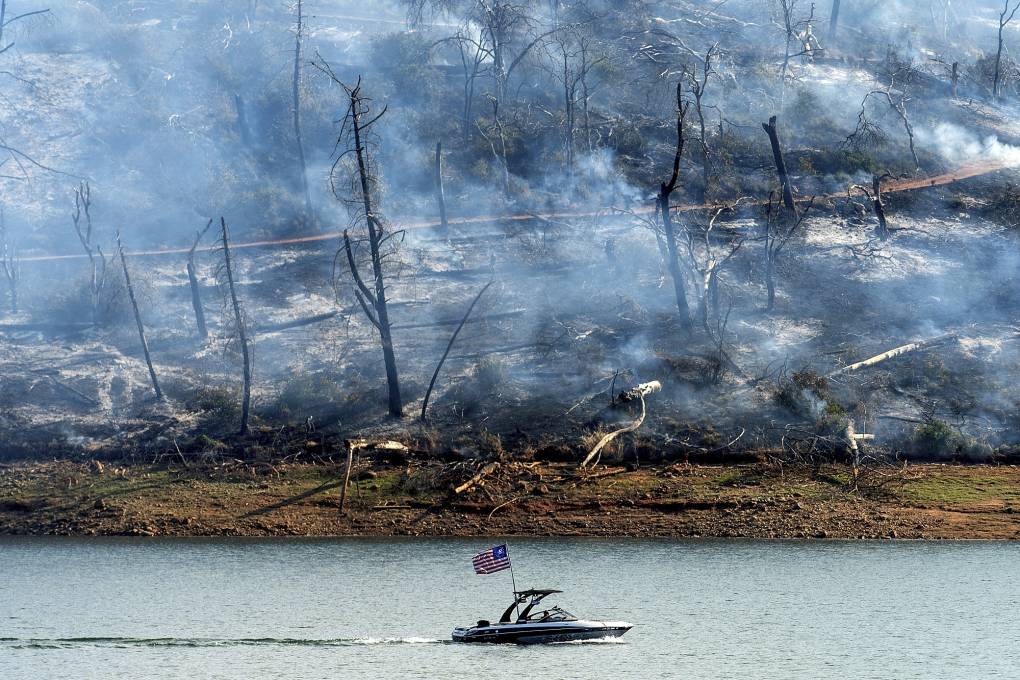
"caption": "A boat crosses Lake Oroville with a smoldering hillside behind as the Thompson Fire burns in Oroville, Butte County, on Wednesday, July 3, 2024. An extended heat wave blanketing Northern California has resulted in red flag fire warnings and power shutoffs. ",
"credit": "Noah Berger/AP Photo",
"altTag": null,
"description": null,
"imgSizes": {
"medium": {
"file": "https://cdn.kqed.org/wp-content/uploads/sites/10/2024/07/ThompsonFireOrovilleAP1-800x533.jpg",
"width": 800,
"height": 533,
"mimeType": "image/jpeg"
},
"large": {
"file": "https://cdn.kqed.org/wp-content/uploads/sites/10/2024/07/ThompsonFireOrovilleAP1-1020x680.jpg",
"width": 1020,
"height": 680,
"mimeType": "image/jpeg"
},
"thumbnail": {
"file": "https://cdn.kqed.org/wp-content/uploads/sites/10/2024/07/ThompsonFireOrovilleAP1-160x107.jpg",
"width": 160,
"height": 107,
"mimeType": "image/jpeg"
},
"1536x1536": {
"file": "https://cdn.kqed.org/wp-content/uploads/sites/10/2024/07/ThompsonFireOrovilleAP1-1536x1024.jpg",
"width": 1536,
"height": 1024,
"mimeType": "image/jpeg"
},
"post-thumbnail": {
"file": "https://cdn.kqed.org/wp-content/uploads/sites/10/2024/07/ThompsonFireOrovilleAP1-672x372.jpg",
"width": 672,
"height": 372,
"mimeType": "image/jpeg"
},
"twentyfourteen-full-width": {
"file": "https://cdn.kqed.org/wp-content/uploads/sites/10/2024/07/ThompsonFireOrovilleAP1-1038x576.jpg",
"width": 1038,
"height": 576,
"mimeType": "image/jpeg"
},
"full-width": {
"file": "https://cdn.kqed.org/wp-content/uploads/sites/10/2024/07/ThompsonFireOrovilleAP1-1920x1280.jpg",
"width": 1920,
"height": 1280,
"mimeType": "image/jpeg"
},
"kqedFullSize": {
"file": "https://cdn.kqed.org/wp-content/uploads/sites/10/2024/07/ThompsonFireOrovilleAP1.jpg",
"width": 2000,
"height": 1333
}
},
"isLoading": false,
"fetchFailed": false
},
"news_11993262": {
"type": "attachments",
"id": "news_11993262",
"meta": {
"index": "attachments_1716263798",
"site": "news",
"id": "11993262",
"found": true
},
"title": "GettyImages-2160328880(1)",
"publishDate": 1720469381,
"status": "inherit",
"parent": 11993192,
"modified": 1783536496,
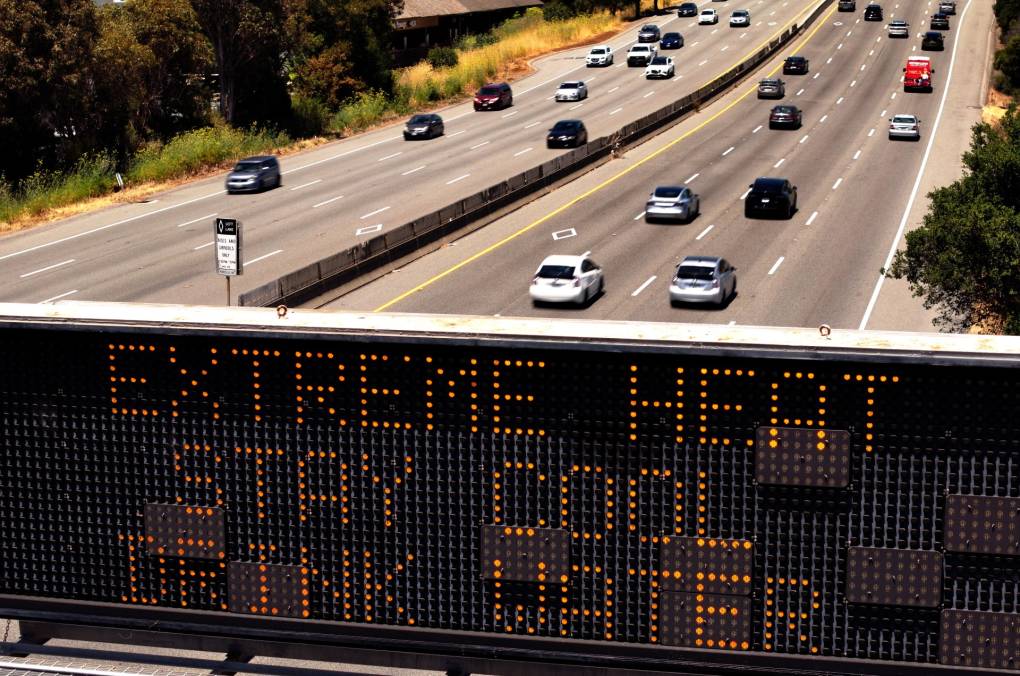
"caption": "A Caltrans sign on Highway 101 displays a warning about extreme heat on July 2, 2024, in Corte Madera, California. ",
"credit": "Justin Sullivan/Getty Images",
"altTag": "An electronic sign over a freeway stating, \"Extreme Heat, Stay Cool, Drink Water\"",
"description": null,
"imgSizes": {
"medium": {
"file": "https://cdn.kqed.org/wp-content/uploads/sites/10/2024/07/GettyImages-21603288801-800x530.jpg",
"width": 800,
"height": 530,
"mimeType": "image/jpeg"
},
"large": {
"file": "https://cdn.kqed.org/wp-content/uploads/sites/10/2024/07/GettyImages-21603288801-1020x676.jpg",
"width": 1020,
"height": 676,
"mimeType": "image/jpeg"
},
"thumbnail": {
"file": "https://cdn.kqed.org/wp-content/uploads/sites/10/2024/07/GettyImages-21603288801-160x106.jpg",
"width": 160,
"height": 106,
"mimeType": "image/jpeg"
},
"1536x1536": {
"file": "https://cdn.kqed.org/wp-content/uploads/sites/10/2024/07/GettyImages-21603288801-1536x1018.jpg",
"width": 1536,
"height": 1018,
"mimeType": "image/jpeg"
},
"post-thumbnail": {
"file": "https://cdn.kqed.org/wp-content/uploads/sites/10/2024/07/GettyImages-21603288801-672x372.jpg",
"width": 672,
"height": 372,
"mimeType": "image/jpeg"
},
"twentyfourteen-full-width": {
"file": "https://cdn.kqed.org/wp-content/uploads/sites/10/2024/07/GettyImages-21603288801-1038x576.jpg",
"width": 1038,
"height": 576,
"mimeType": "image/jpeg"
},
"kqedFullSize": {
"file": "https://cdn.kqed.org/wp-content/uploads/sites/10/2024/07/GettyImages-21603288801.jpg",
"width": 1920,
"height": 1272
}
},
"isLoading": false,
"fetchFailed": false
},
"news_11993051": {
"type": "attachments",
"id": "news_11993051",
"meta": {
"index": "attachments_1716263798",
"site": "news",
"id": "11993051",
"found": true
},
"title": "4th of July Fireworks in San Francisco",
"publishDate": 1720192139,
"status": "inherit",
"parent": 11993039,
"modified": 1720192171,
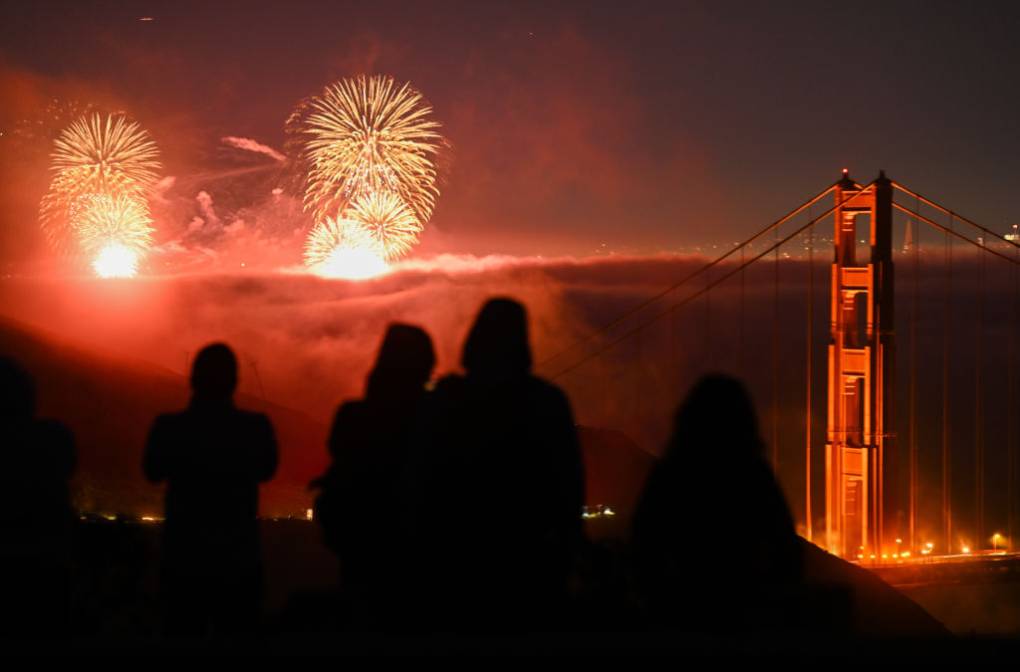
"caption": "Fireworks illuminate the sky over San Francisco's Golden Gate Bridge as seen from Marin Headlands in Sausalito, on July 4, 2024.",
"credit": "Tayfun Coskun/Anadolu via Getty Images",
"altTag": null,
"description": null,
"imgSizes": {
"medium": {
"file": "https://cdn.kqed.org/wp-content/uploads/sites/10/2024/07/GettyImages-2159978573-800x527.jpg",
"width": 800,
"height": 527,
"mimeType": "image/jpeg"
},
"large": {
"file": "https://cdn.kqed.org/wp-content/uploads/sites/10/2024/07/GettyImages-2159978573-1020x672.jpg",
"width": 1020,
"height": 672,
"mimeType": "image/jpeg"
},
"thumbnail": {
"file": "https://cdn.kqed.org/wp-content/uploads/sites/10/2024/07/GettyImages-2159978573-160x105.jpg",
"width": 160,
"height": 105,
"mimeType": "image/jpeg"
},
"post-thumbnail": {
"file": "https://cdn.kqed.org/wp-content/uploads/sites/10/2024/07/GettyImages-2159978573-672x372.jpg",
"width": 672,
"height": 372,
"mimeType": "image/jpeg"
},
"twentyfourteen-full-width": {
"file": "https://cdn.kqed.org/wp-content/uploads/sites/10/2024/07/GettyImages-2159978573-1024x576.jpg",
"width": 1024,
"height": 576,
"mimeType": "image/jpeg"
},
"kqedFullSize": {
"file": "https://cdn.kqed.org/wp-content/uploads/sites/10/2024/07/GettyImages-2159978573.jpg",
"width": 1024,
"height": 675
}
},
"isLoading": false,
"fetchFailed": false
},
"news_11992880": {
"type": "attachments",
"id": "news_11992880",
"meta": {
"index": "attachments_1716263798",
"site": "news",
"id": "11992880",
"found": true
},
"title": "240702-CALIBUNGA-KQED",
"publishDate": 1719960309,
"status": "inherit",
"parent": 0,
"modified": 1719964561,
"caption": "CaliBunga Waterpark San José is set to open on July 4, 2024. ",
"credit": "Courtesy of CaliBunga Waterpark San José",
"altTag": null,
"description": null,
"imgSizes": {
"medium": {
"file": "https://cdn.kqed.org/wp-content/uploads/sites/10/2024/07/240702-CALIBUNGA-KQED-800x534.jpg",
"width": 800,
"height": 534,
"mimeType": "image/jpeg"
},
"large": {
"file": "https://cdn.kqed.org/wp-content/uploads/sites/10/2024/07/240702-CALIBUNGA-KQED-1020x680.jpg",
"width": 1020,
"height": 680,
"mimeType": "image/jpeg"
},
"thumbnail": {
"file": "https://cdn.kqed.org/wp-content/uploads/sites/10/2024/07/240702-CALIBUNGA-KQED-160x107.jpg",
"width": 160,
"height": 107,
"mimeType": "image/jpeg"
},
"1536x1536": {
"file": "https://cdn.kqed.org/wp-content/uploads/sites/10/2024/07/240702-CALIBUNGA-KQED-1536x1025.jpg",
"width": 1536,
"height": 1025,
"mimeType": "image/jpeg"
},
"post-thumbnail": {
"file": "https://cdn.kqed.org/wp-content/uploads/sites/10/2024/07/240702-CALIBUNGA-KQED-672x372.jpg",
"width": 672,
"height": 372,
"mimeType": "image/jpeg"
},
"twentyfourteen-full-width": {
"file": "https://cdn.kqed.org/wp-content/uploads/sites/10/2024/07/240702-CALIBUNGA-KQED-1038x576.jpg",
"width": 1038,
"height": 576,
"mimeType": "image/jpeg"
},
"full-width": {
"file": "https://cdn.kqed.org/wp-content/uploads/sites/10/2024/07/240702-CALIBUNGA-KQED-1920x1281.jpg",
"width": 1920,
"height": 1281,
"mimeType": "image/jpeg"
},
"kqedFullSize": {
"file": "https://cdn.kqed.org/wp-content/uploads/sites/10/2024/07/240702-CALIBUNGA-KQED.jpg",
"width": 2000,
"height": 1334
}
},
"isLoading": false,
"fetchFailed": false
},
"news_11992802": {
"type": "attachments",
"id": "news_11992802",
"meta": {
"index": "attachments_1716263798",
"site": "news",
"id": "11992802",
"found": true
},
"title": "San Francisco Bay Area to get warmest temps of the year",
"publishDate": 1719943057,
"status": "inherit",
"parent": 11992779,
"modified": 1719946619,
"caption": "The sun sets over the San Francisco International Airport (SFO) on May 8, 2024, in San Francisco.",
"credit": "Tayfun Coskun/Anadolu via Getty Images",
"altTag": null,
"description": null,
"imgSizes": {
"medium": {
"file": "https://cdn.kqed.org/wp-content/uploads/sites/10/2024/07/GettyImages-2151617643-800x533.jpg",
"width": 800,
"height": 533,
"mimeType": "image/jpeg"
},
"large": {
"file": "https://cdn.kqed.org/wp-content/uploads/sites/10/2024/07/GettyImages-2151617643-1020x680.jpg",
"width": 1020,
"height": 680,
"mimeType": "image/jpeg"
},
"thumbnail": {
"file": "https://cdn.kqed.org/wp-content/uploads/sites/10/2024/07/GettyImages-2151617643-160x107.jpg",
"width": 160,
"height": 107,
"mimeType": "image/jpeg"
},
"1536x1536": {
"file": "https://cdn.kqed.org/wp-content/uploads/sites/10/2024/07/GettyImages-2151617643-1536x1023.jpg",
"width": 1536,
"height": 1023,
"mimeType": "image/jpeg"
},
"2048x2048": {
"file": "https://cdn.kqed.org/wp-content/uploads/sites/10/2024/07/GettyImages-2151617643-2048x1364.jpg",
"width": 2048,
"height": 1364,
"mimeType": "image/jpeg"
},
"post-thumbnail": {
"file": "https://cdn.kqed.org/wp-content/uploads/sites/10/2024/07/GettyImages-2151617643-672x372.jpg",
"width": 672,
"height": 372,
"mimeType": "image/jpeg"
},
"twentyfourteen-full-width": {
"file": "https://cdn.kqed.org/wp-content/uploads/sites/10/2024/07/GettyImages-2151617643-1038x576.jpg",
"width": 1038,
"height": 576,
"mimeType": "image/jpeg"
},
"full-width": {
"file": "https://cdn.kqed.org/wp-content/uploads/sites/10/2024/07/GettyImages-2151617643-1920x1279.jpg",
"width": 1920,
"height": 1279,
"mimeType": "image/jpeg"
},
"kqedFullSize": {
"file": "https://cdn.kqed.org/wp-content/uploads/sites/10/2024/07/GettyImages-2151617643-scaled.jpg",
"width": 2560,
"height": 1706
}
},
"isLoading": false,
"fetchFailed": false
},
"news_11992746": {
"type": "attachments",
"id": "news_11992746",
"meta": {
"index": "attachments_1716263798",
"site": "news",
"id": "11992746",
"found": true
},
"title": "IMG_8498 (1)",
"publishDate": 1719873187,
"status": "inherit",
"parent": 11992737,
"modified": 1719873258,
"caption": "San Francisco, usually cooled by coastal breezes, faces a heat advisory from 11 a.m. Tuesday to 7 p.m. Wednesday. Highs are expected in the mid-80s, with some southern and eastern areas possibly reaching 90 degrees, as per the latest National Weather Service forecast.",
"credit": "Arash Malekzadeh/KQED",
"altTag": null,
"description": null,
"imgSizes": {
"medium": {
"file": "https://cdn.kqed.org/wp-content/uploads/sites/10/2024/07/IMG_8498-1-800x533.jpg",
"width": 800,
"height": 533,
"mimeType": "image/jpeg"
},
"large": {
"file": "https://cdn.kqed.org/wp-content/uploads/sites/10/2024/07/IMG_8498-1-1020x680.jpg",
"width": 1020,
"height": 680,
"mimeType": "image/jpeg"
},
"thumbnail": {
"file": "https://cdn.kqed.org/wp-content/uploads/sites/10/2024/07/IMG_8498-1-160x107.jpg",
"width": 160,
"height": 107,
"mimeType": "image/jpeg"
},
"1536x1536": {
"file": "https://cdn.kqed.org/wp-content/uploads/sites/10/2024/07/IMG_8498-1-1536x1024.jpg",
"width": 1536,
"height": 1024,
"mimeType": "image/jpeg"
},
"post-thumbnail": {
"file": "https://cdn.kqed.org/wp-content/uploads/sites/10/2024/07/IMG_8498-1-672x372.jpg",
"width": 672,
"height": 372,
"mimeType": "image/jpeg"
},
"twentyfourteen-full-width": {
"file": "https://cdn.kqed.org/wp-content/uploads/sites/10/2024/07/IMG_8498-1-1038x576.jpg",
"width": 1038,
"height": 576,
"mimeType": "image/jpeg"
},
"full-width": {
"file": "https://cdn.kqed.org/wp-content/uploads/sites/10/2024/07/IMG_8498-1-1920x1280.jpg",
"width": 1920,
"height": 1280,
"mimeType": "image/jpeg"
},
"kqedFullSize": {
"file": "https://cdn.kqed.org/wp-content/uploads/sites/10/2024/07/IMG_8498-1.jpg",
"width": 2000,
"height": 1333
}
},
"isLoading": false,
"fetchFailed": false
},
"news_11992382": {
"type": "attachments",
"id": "news_11992382",
"meta": {
"index": "attachments_1716263798",
"site": "news",
"id": "11992382",
"found": true
},
"title": "026_KQED_HeatWaveConcord_09082022_qed",
"publishDate": 1719594626,
"status": "inherit",
"parent": 11992380,
"modified": 1719615748,
"caption": "Children play in sprinklers at Meadow Homes Park in Concord on Sept. 8, 2022, as the temperature soared to 108 degrees.",
"credit": "Beth LaBerge/KQED",
"altTag": null,
"description": null,
"imgSizes": {
"medium": {
"file": "https://cdn.kqed.org/wp-content/uploads/sites/10/2024/06/026_KQED_HeatWaveConcord_09082022_qed-800x533.jpg",
"width": 800,
"height": 533,
"mimeType": "image/jpeg"
},
"large": {
"file": "https://cdn.kqed.org/wp-content/uploads/sites/10/2024/06/026_KQED_HeatWaveConcord_09082022_qed-1020x680.jpg",
"width": 1020,
"height": 680,
"mimeType": "image/jpeg"
},
"thumbnail": {
"file": "https://cdn.kqed.org/wp-content/uploads/sites/10/2024/06/026_KQED_HeatWaveConcord_09082022_qed-160x107.jpg",
"width": 160,
"height": 107,
"mimeType": "image/jpeg"
},
"1536x1536": {
"file": "https://cdn.kqed.org/wp-content/uploads/sites/10/2024/06/026_KQED_HeatWaveConcord_09082022_qed-1536x1024.jpg",
"width": 1536,
"height": 1024,
"mimeType": "image/jpeg"
},
"post-thumbnail": {
"file": "https://cdn.kqed.org/wp-content/uploads/sites/10/2024/06/026_KQED_HeatWaveConcord_09082022_qed-672x372.jpg",
"width": 672,
"height": 372,
"mimeType": "image/jpeg"
},
"twentyfourteen-full-width": {
"file": "https://cdn.kqed.org/wp-content/uploads/sites/10/2024/06/026_KQED_HeatWaveConcord_09082022_qed-1038x576.jpg",
"width": 1038,
"height": 576,
"mimeType": "image/jpeg"
},
"full-width": {
"file": "https://cdn.kqed.org/wp-content/uploads/sites/10/2024/06/026_KQED_HeatWaveConcord_09082022_qed-1920x1280.jpg",
"width": 1920,
"height": 1280,
"mimeType": "image/jpeg"
},
"kqedFullSize": {
"file": "https://cdn.kqed.org/wp-content/uploads/sites/10/2024/06/026_KQED_HeatWaveConcord_09082022_qed.jpg",
"width": 2000,
"height": 1333
}
},
"isLoading": false,
"fetchFailed": false
},
"news_11991386": {
"type": "attachments",
"id": "news_11991386",
"meta": {
"index": "attachments_1716263798",
"site": "news",
"id": "11991386",
"found": true
},
"title": "IMG_6841",
"publishDate": 1718926888,
"status": "inherit",
"parent": 11991372,
"modified": 1718927055,
"caption": "Rebecca Gish, an employee at Hila Gelato Caffè on the western edge of the Mission District, scoops Sicilian-style gelato on June 20, 2024. ",
"credit": "Ezra David Romero/KQED",
"altTag": "An employee scoops gelato in an ice cream shop.",
"description": null,
"imgSizes": {
"medium": {
"file": "https://cdn.kqed.org/wp-content/uploads/sites/10/2024/06/IMG_6841-800x600.jpg",
"width": 800,
"height": 600,
"mimeType": "image/jpeg"
},
"large": {
"file": "https://cdn.kqed.org/wp-content/uploads/sites/10/2024/06/IMG_6841-1020x765.jpg",
"width": 1020,
"height": 765,
"mimeType": "image/jpeg"
},
"thumbnail": {
"file": "https://cdn.kqed.org/wp-content/uploads/sites/10/2024/06/IMG_6841-160x120.jpg",
"width": 160,
"height": 120,
"mimeType": "image/jpeg"
},
"1536x1536": {
"file": "https://cdn.kqed.org/wp-content/uploads/sites/10/2024/06/IMG_6841-1536x1152.jpg",
"width": 1536,
"height": 1152,
"mimeType": "image/jpeg"
},
"2048x2048": {
"file": "https://cdn.kqed.org/wp-content/uploads/sites/10/2024/06/IMG_6841-2048x1536.jpg",
"width": 2048,
"height": 1536,
"mimeType": "image/jpeg"
},
"post-thumbnail": {
"file": "https://cdn.kqed.org/wp-content/uploads/sites/10/2024/06/IMG_6841-672x372.jpg",
"width": 672,
"height": 372,
"mimeType": "image/jpeg"
},
"twentyfourteen-full-width": {
"file": "https://cdn.kqed.org/wp-content/uploads/sites/10/2024/06/IMG_6841-1038x576.jpg",
"width": 1038,
"height": 576,
"mimeType": "image/jpeg"
},
"full-width": {
"file": "https://cdn.kqed.org/wp-content/uploads/sites/10/2024/06/IMG_6841-1920x1440.jpg",
"width": 1920,
"height": 1440,
"mimeType": "image/jpeg"
},
"kqedFullSize": {
"file": "https://cdn.kqed.org/wp-content/uploads/sites/10/2024/06/IMG_6841-scaled.jpg",
"width": 2560,
"height": 1920
}
},
"isLoading": false,
"fetchFailed": false
},
"news_11985533": {
"type": "attachments",
"id": "news_11985533",
"meta": {
"index": "attachments_1716263798",
"site": "news",
"id": "11985533",
"found": true
},
"parent": 11985524,
"imgSizes": {
"twentyfourteen-full-width": {
"file": "https://cdn.kqed.org/wp-content/uploads/sites/10/2024/05/GettyImages-2151617617-1-1024x576.jpg",
"width": 1024,
"mimeType": "image/jpeg",
"height": 576
},
"thumbnail": {
"file": "https://cdn.kqed.org/wp-content/uploads/sites/10/2024/05/GettyImages-2151617617-1-160x107.jpg",
"width": 160,
"mimeType": "image/jpeg",
"height": 107
},
"post-thumbnail": {
"file": "https://cdn.kqed.org/wp-content/uploads/sites/10/2024/05/GettyImages-2151617617-1-672x372.jpg",
"width": 672,
"mimeType": "image/jpeg",
"height": 372
},
"kqedFullSize": {
"file": "https://cdn.kqed.org/wp-content/uploads/sites/10/2024/05/GettyImages-2151617617-1.jpg",
"width": 1024,
"height": 682
},
"large": {
"file": "https://cdn.kqed.org/wp-content/uploads/sites/10/2024/05/GettyImages-2151617617-1-1020x679.jpg",
"width": 1020,
"mimeType": "image/jpeg",
"height": 679
},
"medium": {
"file": "https://cdn.kqed.org/wp-content/uploads/sites/10/2024/05/GettyImages-2151617617-1-800x533.jpg",
"width": 800,
"mimeType": "image/jpeg",
"height": 533
}
},
"publishDate": 1715281709,
"modified": 1715282740,
"caption": "The sun sets over San Francisco International Airport on May 8, 2024, ahead of a two-day heat wave in the Bay Area.",
"description": null,
"title": "San Francisco Bay Area to get warmest temps of the year",
"credit": "Tayfun Coskun/Anadolu via Getty Images",
"status": "inherit",
"altTag": null,
"isLoading": false,
"fetchFailed": false
},
"news_11956739": {
"type": "attachments",
"id": "news_11956739",
"meta": {
"index": "attachments_1716263798",
"site": "news",
"id": "11956739",
"found": true
},
"parent": 0,
"imgSizes": {
"twentyfourteen-full-width": {
"file": "https://ww2.kqed.org/app/uploads/sites/10/2023/07/GettyImages-1252130093-KQED-1038x576.jpg",
"width": 1038,
"mimeType": "image/jpeg",
"height": 576
},
"thumbnail": {
"file": "https://ww2.kqed.org/app/uploads/sites/10/2023/07/GettyImages-1252130093-KQED-160x107.jpg",
"width": 160,
"mimeType": "image/jpeg",
"height": 107
},
"post-thumbnail": {
"file": "https://ww2.kqed.org/app/uploads/sites/10/2023/07/GettyImages-1252130093-KQED-672x372.jpg",
"width": 672,
"mimeType": "image/jpeg",
"height": 372
},
"kqedFullSize": {
"file": "https://ww2.kqed.org/app/uploads/sites/10/2023/07/GettyImages-1252130093-KQED.jpg",
"width": 2000,
"height": 1333
},
"large": {
"file": "https://ww2.kqed.org/app/uploads/sites/10/2023/07/GettyImages-1252130093-KQED-1020x680.jpg",
"width": 1020,
"mimeType": "image/jpeg",
"height": 680
},
"1536x1536": {
"file": "https://ww2.kqed.org/app/uploads/sites/10/2023/07/GettyImages-1252130093-KQED-1536x1024.jpg",
"width": 1536,
"mimeType": "image/jpeg",
"height": 1024
},
"full-width": {
"file": "https://ww2.kqed.org/app/uploads/sites/10/2023/07/GettyImages-1252130093-KQED-1920x1280.jpg",
"width": 1920,
"mimeType": "image/jpeg",
"height": 1280
},
"medium": {
"file": "https://ww2.kqed.org/app/uploads/sites/10/2023/07/GettyImages-1252130093-KQED-800x533.jpg",
"width": 800,
"mimeType": "image/jpeg",
"height": 533
}
},
"publishDate": 1690498613,
"modified": 1690911421,
"caption": "A farmworker thins peach trees in Cutler, Tulare County. A new state advisory committee is set to use data on heat-related workplace injuries as a roadmap to protect workers.",
"description": null,
"title": "CUTLER, CALIFORNIA - APRIL 14, 2023: On 6th generation Michael",
"credit": "Melina Mara/The Washington Post via Getty Images",
"status": "inherit",
"altTag": "A man wearing a cowboy hat holds a long pole between two rows of manicured trees.",
"isLoading": false,
"fetchFailed": false
},
"news_11956100": {
"type": "attachments",
"id": "news_11956100",
"meta": {
"index": "attachments_1716263798",
"site": "news",
"id": "11956100",
"found": true
},
"parent": 0,
"imgSizes": {
"twentyfourteen-full-width": {
"file": "https://ww2.kqed.org/app/uploads/sites/10/2023/07/CalMattersBus01-1038x576.jpg",
"width": 1038,
"mimeType": "image/jpeg",
"height": 576
},
"thumbnail": {
"file": "https://ww2.kqed.org/app/uploads/sites/10/2023/07/CalMattersBus01-160x107.jpg",
"width": 160,
"mimeType": "image/jpeg",
"height": 107
},
"post-thumbnail": {
"file": "https://ww2.kqed.org/app/uploads/sites/10/2023/07/CalMattersBus01-672x372.jpg",
"width": 672,
"mimeType": "image/jpeg",
"height": 372
},
"kqedFullSize": {
"file": "https://ww2.kqed.org/app/uploads/sites/10/2023/07/CalMattersBus01.jpg",
"width": 2000,
"height": 1333
},
"large": {
"file": "https://ww2.kqed.org/app/uploads/sites/10/2023/07/CalMattersBus01-1020x680.jpg",
"width": 1020,
"mimeType": "image/jpeg",
"height": 680
},
"1536x1536": {
"file": "https://ww2.kqed.org/app/uploads/sites/10/2023/07/CalMattersBus01-1536x1024.jpg",
"width": 1536,
"mimeType": "image/jpeg",
"height": 1024
},
"full-width": {
"file": "https://ww2.kqed.org/app/uploads/sites/10/2023/07/CalMattersBus01-1920x1280.jpg",
"width": 1920,
"mimeType": "image/jpeg",
"height": 1280
},
"medium": {
"file": "https://ww2.kqed.org/app/uploads/sites/10/2023/07/CalMattersBus01-800x533.jpg",
"width": 800,
"mimeType": "image/jpeg",
"height": 533
}
},
"publishDate": 1689877635,
"modified": 1689877737,
"caption": "An electric powered school bus at the Cajon Valley Union School District on March 27, 2023. ",
"description": null,
"title": "CalMattersBus01",
"credit": "Courtesy of the California Electric Commission",
"status": "inherit",
"altTag": "A close-up shot of an electric-powered school bus outside of Cajon Valley Union School District. The word \"Battery\" is seen above the bus's electric battery storage.",
"isLoading": false,
"fetchFailed": false
},
"news_11924859": {
"type": "attachments",
"id": "news_11924859",
"meta": {
"index": "attachments_1716263798",
"site": "news",
"id": "11924859",
"found": true
},
"parent": 11924828,
"imgSizes": {
"twentyfourteen-full-width": {
"file": "https://ww2.kqed.org/app/uploads/sites/10/2022/09/GettyImages-1421582572-1038x576.jpg",
"width": 1038,
"mimeType": "image/jpeg",
"height": 576
},
"thumbnail": {
"file": "https://ww2.kqed.org/app/uploads/sites/10/2022/09/GettyImages-1421582572-160x109.jpg",
"width": 160,
"mimeType": "image/jpeg",
"height": 109
},
"post-thumbnail": {
"file": "https://ww2.kqed.org/app/uploads/sites/10/2022/09/GettyImages-1421582572-672x372.jpg",
"width": 672,
"mimeType": "image/jpeg",
"height": 372
},
"kqedFullSize": {
"file": "https://ww2.kqed.org/app/uploads/sites/10/2022/09/GettyImages-1421582572-scaled.jpg",
"width": 2560,
"height": 1739
},
"2048x2048": {
"file": "https://ww2.kqed.org/app/uploads/sites/10/2022/09/GettyImages-1421582572-2048x1391.jpg",
"width": 2048,
"mimeType": "image/jpeg",
"height": 1391
},
"large": {
"file": "https://ww2.kqed.org/app/uploads/sites/10/2022/09/GettyImages-1421582572-1020x693.jpg",
"width": 1020,
"mimeType": "image/jpeg",
"height": 693
},
"1536x1536": {
"file": "https://ww2.kqed.org/app/uploads/sites/10/2022/09/GettyImages-1421582572-1536x1043.jpg",
"width": 1536,
"mimeType": "image/jpeg",
"height": 1043
},
"full-width": {
"file": "https://ww2.kqed.org/app/uploads/sites/10/2022/09/GettyImages-1421582572-1920x1304.jpg",
"width": 1920,
"mimeType": "image/jpeg",
"height": 1304
},
"medium": {
"file": "https://ww2.kqed.org/app/uploads/sites/10/2022/09/GettyImages-1421582572-800x543.jpg",
"width": 800,
"mimeType": "image/jpeg",
"height": 543
}
},
"publishDate": 1662575252,
"modified": 1662585733,
"caption": "A man walks past electricity pylons at a park during a heat wave on Sept. 5, 2022, in San Mateo County.",
"description": "A man walks past electricity pylons at a park during a heatwave on September 5, 2022 in San Mateo County. ",
"title": "Heat Wave Hits California",
"credit": "Liu Guanguan/China News Service via Getty Images",
"status": "inherit",
"altTag": "A bright white starburst of sun shines in a pale blue sky through dozens of electricity lines. Electrical towers line the bare ground. A man, backlit by the sun and appearing as a silhouette, walks in front of the towers, toward the right of the image.",
"isLoading": false,
"fetchFailed": false
}
},
"audioPlayerReducer": {
"postId": "stream_live",
"isPaused": true,
"isPlaying": false,
"pfsActive": false,
"pledgeModalIsOpen": true,
"playerDrawerIsOpen": false,
"liveAudioPlayStartedAt": 0,
"liveAudioPlayContext": ""
},
"authorsReducer": {
"byline_news_11993192": {
"type": "authors",
"id": "byline_news_11993192",
"meta": {
"override": true
},
"slug": "byline_news_11993192",
"name": "Levi Sumagaysay",
"isLoading": false
},
"byline_news_11993039": {
"type": "authors",
"id": "byline_news_11993039",
"meta": {
"override": true
},
"slug": "byline_news_11993039",
"name": "David Sharp, Associated Press",
"isLoading": false
},
"byline_news_11956922": {
"type": "authors",
"id": "byline_news_11956922",
"meta": {
"override": true
},
"slug": "byline_news_11956922",
"name": "Nicole Foy",
"isLoading": false
},
"byline_news_11956089": {
"type": "authors",
"id": "byline_news_11956089",
"meta": {
"override": true
},
"slug": "byline_news_11956089",
"name": "\u003ca href=\"https://calmatters.org/author/alejandro-lazo/\">Alejandro Lazo\u003c/a>",
"isLoading": false
},
"byline_news_11924828": {
"type": "authors",
"id": "byline_news_11924828",
"meta": {
"override": true
},
"slug": "byline_news_11924828",
"name": "Adam Beam and John Antczak\u003cbr>The Associated Press",
"isLoading": false
},
"kevinstark": {
"type": "authors",
"id": "11608",
"meta": {
"index": "authors_1716337520",
"id": "11608",
"found": true
},
"name": "Kevin Stark",
"firstName": "Kevin",
"lastName": "Stark",
"slug": "kevinstark",
"email": "kstark@kqed.org",
"display_author_email": true,
"staff_mastheads": [
"science"
],
"title": "Senior Editor",
"bio": "Kevin is a senior editor for KQED Science, managing the station's health and climate desks. His journalism career began in the Pacific Northwest, and he later became a lead reporter for the San Francisco Public Press. His work has appeared in Pacific Standard magazine, the Energy News Network, the Center for Investigative Reporting's Reveal and WBEZ in Chicago. Kevin joined KQED in 2019, and has covered issues related to energy, wildfire, climate change and the environment.",
"avatar": "https://secure.gravatar.com/avatar/365aaa4b597d3a8374f67504ff0facd323d7906e8eb4be0a7efd2427408e802c?s=600&d=blank&r=g",
"twitter": "starkkev",
"bluesky": null,
"facebook": null,
"instagram": null,
"linkedin": null,
"sites": [
{
"site": "",
"roles": [
"editor"
]
},
{
"site": "news",
"roles": [
"editor"
]
},
{
"site": "science",
"roles": [
"administrator"
]
}
],
"headData": {
"title": "Kevin Stark | KQED",
"description": "Senior Editor",
"ogImgSrc": "https://secure.gravatar.com/avatar/365aaa4b597d3a8374f67504ff0facd323d7906e8eb4be0a7efd2427408e802c?s=600&d=blank&r=g",
"twImgSrc": "https://secure.gravatar.com/avatar/365aaa4b597d3a8374f67504ff0facd323d7906e8eb4be0a7efd2427408e802c?s=600&d=blank&r=g"
},
"isLoading": false,
"link": "/author/kevinstark"
},
"eromero": {
"type": "authors",
"id": "11746",
"meta": {
"index": "authors_1716337520",
"id": "11746",
"found": true
},
"name": "Ezra David Romero",
"firstName": "Ezra David",
"lastName": "Romero",
"slug": "eromero",
"email": "eromero@kqed.org",
"display_author_email": true,
"staff_mastheads": [
"news",
"science"
],
"title": "Climate Reporter",
"bio": "Ezra David Romero is a climate reporter for KQED News. He covers the absence and excess of water in the Bay Area — think sea level rise, flooding and drought. For nearly a decade he’s covered how warming temperatures are altering the lives of Californians. He’s reported on farmers worried their pistachio trees aren’t getting enough sleep, families desperate for water, scientists studying dying giant sequoias, and alongside firefighters containing wildfires. His work has appeared on local stations across California and nationally on public radio shows like Morning Edition, Here and Now, All Things Considered and Science Friday. ",
"avatar": "https://secure.gravatar.com/avatar/c76404d287c10ed40224227551ac36e24352c7306f106632caf6fead76f8801f?s=600&d=blank&r=g",
"twitter": "ezraromero",
"bluesky": null,
"facebook": null,
"instagram": null,
"linkedin": null,
"sites": [
{
"site": "arts",
"roles": [
"editor"
]
},
{
"site": "news",
"roles": [
"editor"
]
},
{
"site": "science",
"roles": [
"editor"
]
},
{
"site": "liveblog",
"roles": [
"author"
]
}
],
"headData": {
"title": "Ezra David Romero | KQED",
"description": "Climate Reporter",
"ogImgSrc": "https://secure.gravatar.com/avatar/c76404d287c10ed40224227551ac36e24352c7306f106632caf6fead76f8801f?s=600&d=blank&r=g",
"twImgSrc": "https://secure.gravatar.com/avatar/c76404d287c10ed40224227551ac36e24352c7306f106632caf6fead76f8801f?s=600&d=blank&r=g"
},
"isLoading": false,
"link": "/author/eromero"
},
"jlara": {
"type": "authors",
"id": "11761",
"meta": {
"index": "authors_1716337520",
"id": "11761",
"found": true
},
"name": "Juan Carlos Lara",
"firstName": "Juan Carlos",
"lastName": "Lara",
"slug": "jlara",
"email": "jlara@kqed.org",
"display_author_email": false,
"staff_mastheads": [],
"title": "KQED Contributor",
"bio": null,
"avatar": "https://secure.gravatar.com/avatar/19e2052b9b05657c5ff2af2121846e9c?s=600&d=blank&r=g",
"twitter": null,
"facebook": null,
"instagram": null,
"linkedin": null,
"sites": [
{
"site": "arts",
"roles": [
"editor"
]
},
{
"site": "news",
"roles": [
"editor"
]
},
{
"site": "forum",
"roles": [
"editor"
]
},
{
"site": "liveblog",
"roles": [
"contributor"
]
}
],
"headData": {
"title": "Juan Carlos Lara | KQED",
"description": "KQED Contributor",
"ogImgSrc": "https://secure.gravatar.com/avatar/19e2052b9b05657c5ff2af2121846e9c?s=600&d=blank&r=g",
"twImgSrc": "https://secure.gravatar.com/avatar/19e2052b9b05657c5ff2af2121846e9c?s=600&d=blank&r=g"
},
"isLoading": false,
"link": "/author/jlara"
},
"jgeha": {
"type": "authors",
"id": "11906",
"meta": {
"index": "authors_1716337520",
"id": "11906",
"found": true
},
"name": "Joseph Geha",
"firstName": "Joseph",
"lastName": "Geha",
"slug": "jgeha",
"email": "jgeha@kqed.org",
"display_author_email": false,
"staff_mastheads": [
"news",
"science"
],
"title": "KQED Contributor",
"bio": null,
"avatar": "https://secure.gravatar.com/avatar/ea84d2b6dd93d6369d453edf19dd583f117cd1759d2d9c9c92f9de77017354fe?s=600&d=blank&r=g",
"twitter": null,
"bluesky": null,
"facebook": null,
"instagram": null,
"linkedin": null,
"sites": [
{
"site": "news",
"roles": [
"editor"
]
},
{
"site": "liveblog",
"roles": [
"author"
]
}
],
"headData": {
"title": "Joseph Geha | KQED",
"description": "KQED Contributor",
"ogImgSrc": "https://secure.gravatar.com/avatar/ea84d2b6dd93d6369d453edf19dd583f117cd1759d2d9c9c92f9de77017354fe?s=600&d=blank&r=g",
"twImgSrc": "https://secure.gravatar.com/avatar/ea84d2b6dd93d6369d453edf19dd583f117cd1759d2d9c9c92f9de77017354fe?s=600&d=blank&r=g"
},
"isLoading": false,
"link": "/author/jgeha"
},
"jservantez": {
"type": "authors",
"id": "11909",
"meta": {
"index": "authors_1716337520",
"id": "11909",
"found": true
},
"name": "Jared Servantez",
"firstName": "Jared",
"lastName": "Servantez",
"slug": "jservantez",
"email": "jservantez@kqed.org",
"display_author_email": true,
"staff_mastheads": [
"news"
],
"title": "KQED Contributor",
"bio": "Jared Servantez is the editor of KQED's Express Desk, leading the newsroom's online breaking news operation. He most recently worked for the Los Angeles Times, where he served as a breaking news editor, the Metro Desk's night editor, and a copy editor. Jared is a graduate of the USC Annenberg School for Communication and Journalism.",
"avatar": "https://secure.gravatar.com/avatar/f0e317c67bb498c3f077f033d1cc79e62f3bc1303fa20a14e8880d31fbe7e01e?s=600&d=blank&r=g",
"twitter": "jservantez",
"bluesky": null,
"facebook": null,
"instagram": null,
"linkedin": null,
"sites": [
{
"site": "news",
"roles": [
"editor"
]
},
{
"site": "science",
"roles": [
"editor",
"author"
]
},
{
"site": "liveblog",
"roles": [
"editor"
]
}
],
"headData": {
"title": "Jared Servantez | KQED",
"description": "KQED Contributor",
"ogImgSrc": "https://secure.gravatar.com/avatar/f0e317c67bb498c3f077f033d1cc79e62f3bc1303fa20a14e8880d31fbe7e01e?s=600&d=blank&r=g",
"twImgSrc": "https://secure.gravatar.com/avatar/f0e317c67bb498c3f077f033d1cc79e62f3bc1303fa20a14e8880d31fbe7e01e?s=600&d=blank&r=g"
},
"isLoading": false,
"link": "/author/jservantez"
},
"kdebenedetti": {
"type": "authors",
"id": "11913",
"meta": {
"index": "authors_1716337520",
"id": "11913",
"found": true
},
"name": "Katie DeBenedetti",
"firstName": "Katie",
"lastName": "DeBenedetti",
"slug": "kdebenedetti",
"email": "kdebenedetti@kqed.org",
"display_author_email": false,
"staff_mastheads": [
"news",
"science"
],
"title": "KQED Contributor",
"bio": "Katie DeBenedetti is a digital reporter covering daily news for the Express Desk. Prior to joining KQED as a culture reporting intern in January 2024, she covered education and city government for the Napa Valley Register.",
"avatar": "https://secure.gravatar.com/avatar/6e31073cb8f7e4214ab03f42771d0f45?s=600&d=blank&r=g",
"twitter": null,
"facebook": null,
"instagram": null,
"linkedin": null,
"sites": [
{
"site": "news",
"roles": [
"author"
]
},
{
"site": "science",
"roles": [
"author"
]
},
{
"site": "liveblog",
"roles": [
"author"
]
}
],
"headData": {
"title": "Katie DeBenedetti | KQED",
"description": "KQED Contributor",
"ogImgSrc": "https://secure.gravatar.com/avatar/6e31073cb8f7e4214ab03f42771d0f45?s=600&d=blank&r=g",
"twImgSrc": "https://secure.gravatar.com/avatar/6e31073cb8f7e4214ab03f42771d0f45?s=600&d=blank&r=g"
},
"isLoading": false,
"link": "/author/kdebenedetti"
},
"slim": {
"type": "authors",
"id": "11920",
"meta": {
"index": "authors_1716337520",
"id": "11920",
"found": true
},
"name": "Samantha Lim",
"firstName": "Samantha",
"lastName": "Lim",
"slug": "slim",
"email": "slim@KQED.org",
"display_author_email": false,
"staff_mastheads": [],
"title": "KQED Contributor",
"bio": null,
"avatar": "https://secure.gravatar.com/avatar/82e592e6c15fe1a04d385e8ad0fb0b4e?s=600&d=blank&r=g",
"twitter": null,
"facebook": null,
"instagram": null,
"linkedin": null,
"sites": [
{
"site": "news",
"roles": []
}
],
"headData": {
"title": "Samantha Lim | KQED",
"description": "KQED Contributor",
"ogImgSrc": "https://secure.gravatar.com/avatar/82e592e6c15fe1a04d385e8ad0fb0b4e?s=600&d=blank&r=g",
"twImgSrc": "https://secure.gravatar.com/avatar/82e592e6c15fe1a04d385e8ad0fb0b4e?s=600&d=blank&r=g"
},
"isLoading": false,
"link": "/author/slim"
},
"bkrans": {
"type": "authors",
"id": "11923",
"meta": {
"index": "authors_1716337520",
"id": "11923",
"found": true
},
"name": "Brian Krans",
"firstName": "Brian",
"lastName": "Krans",
"slug": "bkrans",
"email": "bkrans@kqed.org",
"display_author_email": false,
"staff_mastheads": [
"news"
],
"title": "KQED Contributing Reporter",
"bio": "Brian Krans is an award-winning local news and investigative reporter who has been proudly working as a general assignment reporter for KQED since August 2023. He lives in Richmond, where he also reports on air pollution for Richmondside. He is also a founding member of the Vallejo Sun.",
"avatar": "https://secure.gravatar.com/avatar/d1014d604089314a94807d2c4f2d3e06?s=600&d=blank&r=g",
"twitter": "citizenkrans",
"facebook": null,
"instagram": null,
"linkedin": null,
"sites": [
{
"site": "news",
"roles": [
"editor"
]
}
],
"headData": {
"title": "Brian Krans | KQED",
"description": "KQED Contributing Reporter",
"ogImgSrc": "https://secure.gravatar.com/avatar/d1014d604089314a94807d2c4f2d3e06?s=600&d=blank&r=g",
"twImgSrc": "https://secure.gravatar.com/avatar/d1014d604089314a94807d2c4f2d3e06?s=600&d=blank&r=g"
},
"isLoading": false,
"link": "/author/bkrans"
}
},
"pagesReducer": {
"news_tag_heat-wave": {
"type": "terms",
"id": "news_18578",
"meta": {
"index": "terms_1716263798",
"site": "news",
"id": "18578",
"score": 9.555889
},
"featImg": null,
"name": "heat wave",
"description": null,
"taxonomy": "tag",
"headData": {
"twImgId": null,
"twTitle": null,
"ogTitle": null,
"ogImgId": null,
"twDescription": null,
"description": null,
"title": "heat wave Archives | KQED News",
"ogDescription": null
},
"ttid": 18595,
"slug": "heat-wave",
"isLoading": false,
"title": "heat wave",
"pageMeta": {
"site": "news",
"WpPageTemplate": "page-topic-editorial",
"currentPage": 3
},
"blocks": [
{
"blockName": "kqed/post-list",
"attrs": {
"layout": "cardArticle2",
"query": "posts/news?tag=heat-wave",
"seeMore": false,
"paginated": true,
"page": 3
}
},
{
"blockName": "kqed/ad"
}
]
}
},
"pfsSessionReducer": {},
"postsReducer": {
"stream_live": {
"type": "live",
"id": "stream_live",
"audioUrl": "https://streams.kqed.org/kqedradio",
"title": "Live Stream",
"excerpt": "Live Stream information currently unavailable.",
"link": "/radio",
"featImg": "",
"label": {
"name": "KQED Live",
"link": "/"
}
},
"stream_kqedNewscast": {
"type": "posts",
"id": "stream_kqedNewscast",
"audioUrl": "https://www.kqed.org/.stream/anon/radio/RDnews/newscast.mp3?_=1",
"title": "KQED Newscast",
"featImg": "",
"label": {
"name": "88.5 FM",
"link": "/"
}
},
"news_11993386": {
"type": "posts",
"id": "news_11993386",
"meta": {
"index": "posts_1716263798",
"site": "news",
"id": "11993386",
"score": null,
"sort": [
1720632612000
]
},
"guestAuthors": [],
"slug": "california-heat-turned-brush-into-prime-fuel-for-fires-forests-will-be-next",
"title": "California Heat Turned Brush Into Prime Fuel for Fires. Forests Will Be Next",
"publishDate": 1720632612,
"format": "standard",
"headTitle": "California Heat Turned Brush Into Prime Fuel for Fires. Forests Will Be Next | KQED",
"labelTerm": {
"site": "news"
},
"content": "\u003cp>After two wet winters in a row, summer heat has turned California’s tremendously thick layer of grass and shrubs into fuel for \u003ca href=\"https://www.kqed.org/wildfires\">many of the wildfires\u003c/a> that are burning across the state.\u003c/p>\n\u003cp>All of that vegetation baked to a crisp under a record-shattering heat wave that stretched on for days and is \u003ca href=\"https://www.kqed.org/news/11993179/bay-areas-extreme-heat-wave-is-easing-but-only-briefly\">set to dial up again\u003c/a> across Northern California after a slight cooldown on Tuesday.\u003c/p>\n\u003cp>“There’s a lot of vegetation, and with the heat and the wind that we’ve been seeing, it’s dried out significantly,” Chelsea Burkett, a public information officer with Cal Fire’s Santa Clara Unit, told KQED. “There’s always potential for a fire to start and to spread easily in the type of vegetation we’re seeing\u003cem>.\u003c/em>”\u003c/p>\n\u003cp>The heat shot above 110 degrees in many cities, especially in the Central Valley, and Redding hit a record at 119 degrees.\u003c/p>\n\u003cp>[ad fullwidth]\u003c/p>\n\u003cp>Dead brush on the ground across Northern California is “becoming critically flammable,” according to the \u003ca href=\"https://fsapps.nwcg.gov/psp/npsg/forecast/#/outlooks?forecastDay=2015-07-07&forecastInView=2015-07-07&state=sideBySide&gaccId=4\">latest forecast from the National Interagency Fire Center\u003c/a>, and “the heat wave will flip the switch in terms of flammability in the live woody fuels across the lower and some mid-elevations.”\u003c/p>\n\u003cp>That means the heat dried out some of California’s forests enough that they are now primed to burn, edging the state beyond an active grass fire season as wildfires rip through the Klamath and Tahoe national forests.\u003c/p>\n\u003cp>Many dozens of other smaller fires have ignited and then were quickly suppressed during the past week by some of the 7,000-plus firefighters working across the state, supported by a near-constant deployment of helicopters and planes.\u003c/p>\n\u003cp>At least 1,197 fires have started across Northern California and 2,396 in Southern California this summer, according to the latest \u003ca href=\"https://www.nifc.gov/nicc-files/sitreprt.pdf\">tally from the National Interagency Fire Center (PDF)\u003c/a>.\u003c/p>\n\u003cp>After keeping the Royal Fire from running away across Placer County in the Tahoe National Forest near Sugar Bowl with a steady barrage of water and retardant released from planes, officials cleared an area of the dense forest to drop firefighters in using helicopters on Tuesday.\u003c/p>\n\u003cp>These crews are wielding chainsaws and other hand tools to hack lines around the fire, which is currently 15% contained but only a few hundred acres in size.\u003c/p>\n\u003cp>In California’s far north, the Shelly Fire continues to churn through the dense Marble Mountain Wilderness near the Pacific Crest Trail and Shelly Lake.\u003c/p>\n\u003cp>That blaze has consumed more than 8,285 acres and is burning in the vicinity of the communities of Etna and Greenview, threatening more than 4,200 homes and buildings in a situation that Chris Christofferson, forest supervisor for the Klamath National Forest, called “gravely serious” \u003ca href=\"https://www.facebook.com/watch/live/?ref=watch_permalink&v=773527387999135\">during a community town hall on Monday night.\u003c/a>\u003c/p>\n\u003cp>“I have seen a number of communities like this be threatened by wildfire, whether it was Quincy, or destroyed by wildfire, Greenville and Paradise,” Christofferson said. “And so when I look at this, I am very concerned.”\u003c/p>\n\u003cp>Fire officials have ordered bulldozers and hand crews to construct a series of pockets, fire breaks they hope will keep it from threatening the rural communities nearby.\u003c/p>\n\u003cp>“Some of you are probably in an evacuation zone; I am too. Please heed the warnings,” Siskiyou County Supervisor Ray Haupt said at the town hall. “I’ve lost six friends in recent years in Siskiyou County because they refused to go. These fires are nothing to mess around with. I can help you rebuild homes, but I can’t bring friends back to life.”\u003c/p>\n\u003cp>\u003c/p>\n",
"blocks": [],
"excerpt": "A long-running heat wave dried out some of California’s forests and primed them to burn, pushing the state past an active grass fire season.",
"status": "publish",
"parent": 0,
"modified": 1727905160,
"stats": {
"hasAudio": false,
"hasVideo": false,
"hasChartOrMap": false,
"iframeSrcs": [],
"hasGoogleForm": false,
"hasGallery": false,
"hasHearkenModule": false,
"hasPolis": false,
"paragraphCount": 17,
"wordCount": 616
},
"headData": {
"title": "California Heat Turned Brush Into Prime Fuel for Fires. Forests Will Be Next | KQED",
"description": "A long-running heat wave dried out some of California’s forests and primed them to burn, pushing the state past an active grass fire season.",
"ogTitle": "",
"ogDescription": "",
"ogImgId": "",
"twTitle": "",
"twDescription": "",
"twImgId": "",
"schema": {
"@context": "https://schema.org",
"@type": "NewsArticle",
"headline": "California Heat Turned Brush Into Prime Fuel for Fires. Forests Will Be Next",
"datePublished": "2024-07-10T10:30:12-07:00",
"dateModified": "2024-10-02T14:39:20-07:00",
"image": "https://cdn.kqed.org/wp-content/uploads/2020/02/KQED-OG-Image@1x.png",
"isAccessibleForFree": "True",
"publisher": {
"@type": "NewsMediaOrganization",
"@id": "https://www.kqed.org/#organization",
"name": "KQED",
"logo": "https://cdn.kqed.org/wp-content/uploads/2020/02/KQED-OG-Image@1x.png",
"url": "https://www.kqed.org",
"sameAs": [
"https://www.facebook.com/KQED",
"https://twitter.com/KQED",
"https://www.instagram.com/kqed/",
"https://www.tiktok.com/@kqedofficial",
"https://www.linkedin.com/company/kqed",
"https://www.youtube.com/channel/UCeC0IOo7i1P_61zVUWbJ4nw"
]
}
}
},
"sticky": false,
"nprStoryId": "kqed-11993386",
"excludeFromSiteSearch": "Include",
"showOnAuthorArchivePages": "No",
"articleAge": "0",
"path": "/news/11993386/california-heat-turned-brush-into-prime-fuel-for-fires-forests-will-be-next",
"audioTrackLength": null,
"parsedContent": [
{
"type": "contentString",
"content": "\u003cdiv class=\"post-body\">\u003cp>\u003cp>After two wet winters in a row, summer heat has turned California’s tremendously thick layer of grass and shrubs into fuel for \u003ca href=\"https://www.kqed.org/wildfires\">many of the wildfires\u003c/a> that are burning across the state.\u003c/p>\n\u003cp>All of that vegetation baked to a crisp under a record-shattering heat wave that stretched on for days and is \u003ca href=\"https://www.kqed.org/news/11993179/bay-areas-extreme-heat-wave-is-easing-but-only-briefly\">set to dial up again\u003c/a> across Northern California after a slight cooldown on Tuesday.\u003c/p>\n\u003cp>“There’s a lot of vegetation, and with the heat and the wind that we’ve been seeing, it’s dried out significantly,” Chelsea Burkett, a public information officer with Cal Fire’s Santa Clara Unit, told KQED. “There’s always potential for a fire to start and to spread easily in the type of vegetation we’re seeing\u003cem>.\u003c/em>”\u003c/p>\n\u003cp>The heat shot above 110 degrees in many cities, especially in the Central Valley, and Redding hit a record at 119 degrees.\u003c/p>\n\u003cp>\u003c/p>\u003c/div>",
"attributes": {
"named": {},
"numeric": []
}
},
{
"type": "component",
"content": "",
"name": "ad",
"attributes": {
"named": {
"label": "fullwidth"
},
"numeric": [
"fullwidth"
]
}
},
{
"type": "contentString",
"content": "\u003cdiv class=\"post-body\">\u003cp>\u003c/p>\n\u003cp>Dead brush on the ground across Northern California is “becoming critically flammable,” according to the \u003ca href=\"https://fsapps.nwcg.gov/psp/npsg/forecast/#/outlooks?forecastDay=2015-07-07&forecastInView=2015-07-07&state=sideBySide&gaccId=4\">latest forecast from the National Interagency Fire Center\u003c/a>, and “the heat wave will flip the switch in terms of flammability in the live woody fuels across the lower and some mid-elevations.”\u003c/p>\n\u003cp>That means the heat dried out some of California’s forests enough that they are now primed to burn, edging the state beyond an active grass fire season as wildfires rip through the Klamath and Tahoe national forests.\u003c/p>\n\u003cp>Many dozens of other smaller fires have ignited and then were quickly suppressed during the past week by some of the 7,000-plus firefighters working across the state, supported by a near-constant deployment of helicopters and planes.\u003c/p>\n\u003cp>At least 1,197 fires have started across Northern California and 2,396 in Southern California this summer, according to the latest \u003ca href=\"https://www.nifc.gov/nicc-files/sitreprt.pdf\">tally from the National Interagency Fire Center (PDF)\u003c/a>.\u003c/p>\n\u003cp>After keeping the Royal Fire from running away across Placer County in the Tahoe National Forest near Sugar Bowl with a steady barrage of water and retardant released from planes, officials cleared an area of the dense forest to drop firefighters in using helicopters on Tuesday.\u003c/p>\n\u003cp>These crews are wielding chainsaws and other hand tools to hack lines around the fire, which is currently 15% contained but only a few hundred acres in size.\u003c/p>\n\u003cp>In California’s far north, the Shelly Fire continues to churn through the dense Marble Mountain Wilderness near the Pacific Crest Trail and Shelly Lake.\u003c/p>\n\u003cp>That blaze has consumed more than 8,285 acres and is burning in the vicinity of the communities of Etna and Greenview, threatening more than 4,200 homes and buildings in a situation that Chris Christofferson, forest supervisor for the Klamath National Forest, called “gravely serious” \u003ca href=\"https://www.facebook.com/watch/live/?ref=watch_permalink&v=773527387999135\">during a community town hall on Monday night.\u003c/a>\u003c/p>\n\u003cp>“I have seen a number of communities like this be threatened by wildfire, whether it was Quincy, or destroyed by wildfire, Greenville and Paradise,” Christofferson said. “And so when I look at this, I am very concerned.”\u003c/p>\n\u003cp>Fire officials have ordered bulldozers and hand crews to construct a series of pockets, fire breaks they hope will keep it from threatening the rural communities nearby.\u003c/p>\n\u003cp>“Some of you are probably in an evacuation zone; I am too. Please heed the warnings,” Siskiyou County Supervisor Ray Haupt said at the town hall. “I’ve lost six friends in recent years in Siskiyou County because they refused to go. These fires are nothing to mess around with. I can help you rebuild homes, but I can’t bring friends back to life.”\u003c/p>\n\u003cp>\u003c/p>\n\u003c/div>\u003c/p>",
"attributes": {
"named": {},
"numeric": []
}
}
],
"link": "/news/11993386/california-heat-turned-brush-into-prime-fuel-for-fires-forests-will-be-next",
"authors": [
"11608",
"11923"
],
"categories": [
"news_34165",
"news_8",
"news_356"
],
"tags": [
"news_1386",
"news_18538",
"news_19204",
"news_28199",
"news_18578",
"news_5930",
"news_29871",
"news_3",
"news_4463"
],
"featImg": "news_11992970",
"label": "news"
},
"news_11993192": {
"type": "posts",
"id": "news_11993192",
"meta": {
"index": "posts_1716263798",
"site": "news",
"id": "11993192",
"score": null,
"sort": [
1720474204000
]
},
"guestAuthors": [],
"slug": "new-report-highlights-human-toll-and-economic-costs-of-extreme-heat-in-california",
"title": "New Report Highlights Human Toll and Economic Costs of Extreme Heat in California",
"publishDate": 1720474204,
"format": "standard",
"headTitle": "New Report Highlights Human Toll and Economic Costs of Extreme Heat in California | KQED",
"labelTerm": {},
"content": "\u003cp>A blistering California heat wave over the past week and through the Fourth of July holiday could be topped off by the \u003ca href=\"https://www.nbcnews.com/news/weather/death-valley-will-hit-130-degrees-break-world-record-blistering-heatwa-rcna160401\">hottest temperature ever recorded\u003c/a> on Earth. That kind of extreme heat has led to more deaths than wildfires and cost billions of dollars over a decade, according to the state insurance department.\u003c/p>\n\u003cp>Following through on a mandate from 2022, a new report from the department looked at seven extreme heat events in the state from 2013 to 2022 and found they took the lives of several hundred Californians.\u003c/p>\n\u003cp>The events also had a total economic impact of $7.7 billion in the form of lost wages and productivity, agricultural and manufacturing disruptions, power outages, infrastructure damage and more.\u003c/p>\n\u003cp>The state’s top 20 deadliest wildfires, dating back to 1933, killed a total of 312 people, \u003ca href=\"https://34c031f8-c9fd-4018-8c5a-4159cdff6b0d-cdn-endpoint.azureedge.net/-/media/calfire-website/our-impact/fire-statistics/top-20-deadliest-ca-wildfires.pdf?rev=dddeac543dd84d21a4b01ad6bed5f48c&hash=6A2BD57BB8EC29DB9EC0C94F92B00F52\">according to Cal Fire\u003c/a>. The death toll from the extreme heat events identified by the Insurance Department was higher — estimated at nearly 460 in a first-of-its-kind report the department released last week. And it is likely that the toll was actually greater, at nearly 4,000 in a decade, a 2019 \u003ca href=\"https://www.latimes.com/projects/california-extreme-heat-deaths-show-climate-change-risks/#nt=0000017c-3247-d42d-adfd-32ef494d0000-showMedia-title-promoSuperLeadSmall-1col-enhancement\">Los Angeles Times analysis\u003c/a> showed.\u003c/p>\n\u003cp>Michael Mendez, an assistant professor of environmental planning and policy at UC Irvine and author of “Climate Change from the Streets,” agreed that the toll is most likely higher because extreme heat’s effects can be hard to designate and quantify.\u003c/p>\n\u003cp>[ad fullwidth]\u003c/p>\n\u003cp>“It’s really important to understand that heat is a silent killer,” Mendez said. Yet extreme heat “requires the same amount of speed in action that large disasters get, such as wildfires,” he added.\u003c/p>\n\u003cp>One of the main goals of the report is to provide data that can help inform and lead to action by policymakers, governments, businesses and the insurance industry.\u003c/p>\n\u003cp>There is little to no insurance coverage available for some effects and costs of extreme heat, such as lost wages for workers, power outages for residents and businesses, and damage to railways, according to the report.[aside label=\"Related Stories\" tag=\"heat-wave\"]Insurance Commissioner Ricardo Lara and the department are under pressure to \u003ca href=\"https://calmatters.org/economy/2024/06/california-pushes-insurers-to-cover-more-homes-in-these-areas-is-your-zip-included/\">tackle the insurance availability and affordability issues\u003c/a> that have \u003ca href=\"https://calmatters.org/economy/2024/03/california-home-insurance-market/\">plagued the state\u003c/a> because some insurers have stopped renewing or writing new homeowner policies here, citing wildfire risk as a big factor.\u003c/p>\n\u003cp>The report also follows years of warnings about extreme heat and other \u003ca href=\"https://calmatters.org/environment/2022/04/california-climate-change-report-legislature/\">effects of climate change\u003c/a> by other state entities, such as the \u003ca href=\"https://lao.ca.gov/Publications/Report/4580\">Legislative Analyst’s Office\u003c/a>, and lawmakers’ efforts to address them.\u003c/p>\n\u003cp>\u003ca href=\"https://www.insurance.ca.gov/01-consumers/180-climate-change/upload/Impacts-of-extreme-heat-to-California-s-people-infrastructure-and-economy-by-California-Department-of-Insurance-June-2024.pdf\">The 92-page report\u003c/a>, which assesses the insured and uninsured costs of heat and recommends quick action and changes, was mandated by \u003ca href=\"https://leginfo.legislature.ca.gov/faces/billNavClient.xhtml?bill_id=202120220AB2238\">a bill Lara sponsored that was signed into law\u003c/a> in 2022, whose main goal was to establish an extreme heat ranking system. That system, \u003ca href=\"https://calheatscore.calepa.ca.gov/\">CalHeatScore\u003c/a>, is being developed now by the state Environmental Protection Agency with help from other state agencies and is set to roll out next year.\u003c/p>\n\u003cp>The effects of extreme heat are disproportionately borne by low-income communities, older adults and outdoor workers, the report also found. Black, Native American and Hispanic Californians had the highest rates of deaths, respectively, compared with Asian and white California residents, during the events examined by the report. That’s why the report’s authors — the Insurance Department, with input from the state’s \u003ca href=\"https://www.insurance.ca.gov/01-consumers/180-climate-change/Climate-Insurance-Working-Group-Members.cfm\">Climate Insurance Working Group\u003c/a> and a consultant it hired to produce the report — call for equity when thinking about extreme heat policies and programs by considering the needs of vulnerable populations, including elderly people living alone, and outdoor and indoor workers.\u003c/p>\n\u003cp>Besides the hundreds of deaths, the report showed that extreme heat resulted in more than 5,000 hospitalizations, almost 10,600 emergency department visits, more than 138,000 outpatient visits and nearly 344 adverse birth outcomes.\u003c/p>\n\u003cp>\u003c!-- iframe plugin v.4.3 wordpress.org/plugins/iframe/ -->\u003cbr>\n\u003ciframe loading=\"lazy\" src=\"https://datawrapper.dwcdn.net/cI95K/4\" width=\"800\" height=\"700\" scrolling=\"yes\" class=\"iframe-class\" frameborder=\"0\">\u003c/iframe>\u003c/p>\n\u003cp>Kathy Baughman McLeod is chief executive of Climate Resilience for All, a global non-governmental organization dedicated to addressing extreme heat for vulnerable communities. She is part of the working group and said the data from this new report could help with the “normalization of insurance products related to heat.”\u003c/p>\n\u003cp>“We could use this data to create forecast-based insurance products that pay out when the forecast for the heat wave comes,” she said.\u003c/p>\n\u003cp>Baughman McLeod would know — she has worked with insurers on \u003ca href=\"https://www.reuters.com/sustainability/reuters-events/trailblazers/trailblazing-women-climate-2024-kathy-baughman-mcleod-2024-03-07/\">creating new insurance products\u003c/a>, such as insurance that helps replace women’s income in India when they’re unable to work on extremely hot days because the products they sell might spoil or their work hours are reduced. She also helped create insurance for coral reefs in Mexico.\u003c/p>\n\u003cp>Meanwhile, the effects of extreme heat on health and life insurance are not known yet. Adrita Bhattacharya-Craven, director of health and demography at global insurance think tank The Geneva Association, said the Insurance Department’s findings align with some of her organization’s findings on health, climate and insurance, especially the disproportionate effects on the elderly and vulnerable populations. She said there is hardly any climate-sensitive data on mortality or morbidity when processing insurance claims, except for deaths from wildfires or possibly extreme heat.\u003c/p>\n\u003cp>“For example, a medical professional is likely to report a stroke as just a stroke without specifying that it was induced by prolonged heat exposure,” Bhattacharya-Craven said. “There are no tools to consistently capture such information right now… In the long run, we need to map vulnerability with more granularity.”\u003c/p>\n\u003cp>Other main recommendations in the report:\u003c/p>\n\u003cul>\n\u003cli>Expand investment in planning for disasters, as well as use existing state and federal funding to prioritize efforts such as strengthening infrastructure against extreme weather, and restoring access to trees and green spaces.\u003c/li>\n\u003cli>Encourage strategies to try to reduce heat-related illnesses and injuries for workers across sectors. That includes incentivizing businesses to “meet benchmarks above the minimum indoor and outdoor temperature standards” set by governments.\u003c/li>\n\u003cli>Improve tracking costs of planning for extreme heat events.\u003c/li>\n\u003c/ul>\n\u003cp>The report also recommends planting more trees, which could help provide shade, improve health outcomes, reduce energy needs and more. It also calls for cooling systems for dairy cows, which is important because California is the largest dairy producer in the nation.\u003c/p>\n\u003cp>A few of the recommendations are already happening in some fashion. The state’s Occupational Safety and Health Standards Board \u003ca href=\"https://calmatters.org/california-divide/2024/06/extreme-heat-california-workplace-rules/\">recently approved a rule\u003c/a> requiring employers to reduce the risk of extreme heat for warehouse, restaurant and other workers. After a long delay, it’s set to take effect in August. Also last week, the \u003ca href=\"https://www.npr.org/2024/07/02/nx-s1-5026745/extreme-heat-protections-for-workers-osha\">federal OSHA proposed a rule,\u003c/a> years in the making, that tells employers how they should protect indoor and outdoor workers from heat when temperatures reach two thresholds: 80 degrees and 90 degrees.[aside label=\"More Coverage\" tag=\"heat\"]Municipalities such as Los Angeles have programs that help certain residents afford air conditioners or that break up their utility bills so they’re more manageable, so residents don’t avoid using their air conditioners when needed. Cooling and resilience centers in different parts of the state help people who need relief from the heat.\u003c/p>\n\u003cp>But Gov. Gavin Newsom last week\u003cem> \u003c/em>signed a budget that slashed $107.8 million in funding for programs and projects that address extreme heat and shifted $55.7 million across different programs. The cuts affect funding and other help for tribal, local and regional entities to establish heat action plans, provide shade, expand green spaces, educate the public about heat and more.\u003c/p>\n\u003cp>Some of that funding could be restored through a \u003ca href=\"https://calmatters.org/environment/climate-change/2024/05/california-climate-programs-newsom-budget/?utm_medium=email&utm_source=ActiveCampaign&utm_medium=email&utm_content=California%20voters%20likely%20to%20decide%20%2420%20billion%20in%20bonds%20for%20climate%20and%20schools&utm_campaign=WhatMatters\">bond measure\u003c/a> proposed by lawmakers for the November ballot, including raising hundreds of millions of dollars for extreme heat programs.\u003c/p>\n\u003cp>As extreme heat events become more common, Baughman McLeod said the report’s findings are just a first step. She said the systems for addressing extreme heat aren’t adequate, but the report’s findings should lead policymakers and others to act urgently.\u003c/p>\n\u003cp>[ad floatright]\u003c/p>\n\u003cp>“We can’t do this quickly enough,” she said, adding that “the world is watching what California does.”\u003c/p>\n\n",
"blocks": [],
"excerpt": "Extreme heat events from 2013 to 2022 took the lives of several hundreds of Californians and disproportionately impacted vulnerable communities, according to a new report from the state insurance department.",
"status": "publish",
"parent": 0,
"modified": 1720473426,
"stats": {
"hasAudio": false,
"hasVideo": false,
"hasChartOrMap": true,
"iframeSrcs": [
"https://datawrapper.dwcdn.net/cI95K/4"
],
"hasGoogleForm": false,
"hasGallery": false,
"hasHearkenModule": false,
"hasPolis": false,
"paragraphCount": 27,
"wordCount": 1393
},
"headData": {
"title": "New Report Highlights Human Toll and Economic Costs of Extreme Heat in California | KQED",
"description": "Extreme heat events from 2013 to 2022 took the lives of several hundreds of Californians and disproportionately impacted vulnerable communities, according to a new report from the state insurance department.",
"ogTitle": "",
"ogDescription": "",
"ogImgId": "",
"twTitle": "",
"twDescription": "",
"twImgId": "",
"schema": {
"@context": "https://schema.org",
"@type": "NewsArticle",
"headline": "New Report Highlights Human Toll and Economic Costs of Extreme Heat in California",
"datePublished": "2024-07-08T14:30:04-07:00",
"dateModified": "2024-07-08T14:17:06-07:00",
"image": "https://cdn.kqed.org/wp-content/uploads/2020/02/KQED-OG-Image@1x.png",
"isAccessibleForFree": "True",
"publisher": {
"@type": "NewsMediaOrganization",
"@id": "https://www.kqed.org/#organization",
"name": "KQED",
"logo": "https://cdn.kqed.org/wp-content/uploads/2020/02/KQED-OG-Image@1x.png",
"url": "https://www.kqed.org",
"sameAs": [
"https://www.facebook.com/KQED",
"https://twitter.com/KQED",
"https://www.instagram.com/kqed/",
"https://www.tiktok.com/@kqedofficial",
"https://www.linkedin.com/company/kqed",
"https://www.youtube.com/channel/UCeC0IOo7i1P_61zVUWbJ4nw"
]
}
}
},
"source": "CalMatters",
"sourceUrl": "https://calmatters.org/economy/2024/07/extreme-heat-report-insurance/",
"sticky": false,
"nprByline": "Levi Sumagaysay",
"excludeFromSiteSearch": "Include",
"showOnAuthorArchivePages": "No",
"articleAge": "0",
"path": "/news/11993192/new-report-highlights-human-toll-and-economic-costs-of-extreme-heat-in-california",
"audioTrackLength": null,
"parsedContent": [
{
"type": "contentString",
"content": "\u003cdiv class=\"post-body\">\u003cp>\u003cp>A blistering California heat wave over the past week and through the Fourth of July holiday could be topped off by the \u003ca href=\"https://www.nbcnews.com/news/weather/death-valley-will-hit-130-degrees-break-world-record-blistering-heatwa-rcna160401\">hottest temperature ever recorded\u003c/a> on Earth. That kind of extreme heat has led to more deaths than wildfires and cost billions of dollars over a decade, according to the state insurance department.\u003c/p>\n\u003cp>Following through on a mandate from 2022, a new report from the department looked at seven extreme heat events in the state from 2013 to 2022 and found they took the lives of several hundred Californians.\u003c/p>\n\u003cp>The events also had a total economic impact of $7.7 billion in the form of lost wages and productivity, agricultural and manufacturing disruptions, power outages, infrastructure damage and more.\u003c/p>\n\u003cp>The state’s top 20 deadliest wildfires, dating back to 1933, killed a total of 312 people, \u003ca href=\"https://34c031f8-c9fd-4018-8c5a-4159cdff6b0d-cdn-endpoint.azureedge.net/-/media/calfire-website/our-impact/fire-statistics/top-20-deadliest-ca-wildfires.pdf?rev=dddeac543dd84d21a4b01ad6bed5f48c&hash=6A2BD57BB8EC29DB9EC0C94F92B00F52\">according to Cal Fire\u003c/a>. The death toll from the extreme heat events identified by the Insurance Department was higher — estimated at nearly 460 in a first-of-its-kind report the department released last week. And it is likely that the toll was actually greater, at nearly 4,000 in a decade, a 2019 \u003ca href=\"https://www.latimes.com/projects/california-extreme-heat-deaths-show-climate-change-risks/#nt=0000017c-3247-d42d-adfd-32ef494d0000-showMedia-title-promoSuperLeadSmall-1col-enhancement\">Los Angeles Times analysis\u003c/a> showed.\u003c/p>\n\u003cp>Michael Mendez, an assistant professor of environmental planning and policy at UC Irvine and author of “Climate Change from the Streets,” agreed that the toll is most likely higher because extreme heat’s effects can be hard to designate and quantify.\u003c/p>\n\u003cp>\u003c/p>\u003c/div>",
"attributes": {
"named": {},
"numeric": []
}
},
{
"type": "component",
"content": "",
"name": "ad",
"attributes": {
"named": {
"label": "fullwidth"
},
"numeric": [
"fullwidth"
]
}
},
{
"type": "contentString",
"content": "\u003cdiv class=\"post-body\">\u003cp>\u003c/p>\n\u003cp>“It’s really important to understand that heat is a silent killer,” Mendez said. Yet extreme heat “requires the same amount of speed in action that large disasters get, such as wildfires,” he added.\u003c/p>\n\u003cp>One of the main goals of the report is to provide data that can help inform and lead to action by policymakers, governments, businesses and the insurance industry.\u003c/p>\n\u003cp>There is little to no insurance coverage available for some effects and costs of extreme heat, such as lost wages for workers, power outages for residents and businesses, and damage to railways, according to the report.\u003c/p>\u003c/div>",
"attributes": {
"named": {},
"numeric": []
}
},
{
"type": "component",
"content": "",
"name": "aside",
"attributes": {
"named": {
"label": "Related Stories ",
"tag": "heat-wave"
},
"numeric": []
}
},
{
"type": "contentString",
"content": "\u003cdiv class=\"post-body\">\u003cp>Insurance Commissioner Ricardo Lara and the department are under pressure to \u003ca href=\"https://calmatters.org/economy/2024/06/california-pushes-insurers-to-cover-more-homes-in-these-areas-is-your-zip-included/\">tackle the insurance availability and affordability issues\u003c/a> that have \u003ca href=\"https://calmatters.org/economy/2024/03/california-home-insurance-market/\">plagued the state\u003c/a> because some insurers have stopped renewing or writing new homeowner policies here, citing wildfire risk as a big factor.\u003c/p>\n\u003cp>The report also follows years of warnings about extreme heat and other \u003ca href=\"https://calmatters.org/environment/2022/04/california-climate-change-report-legislature/\">effects of climate change\u003c/a> by other state entities, such as the \u003ca href=\"https://lao.ca.gov/Publications/Report/4580\">Legislative Analyst’s Office\u003c/a>, and lawmakers’ efforts to address them.\u003c/p>\n\u003cp>\u003ca href=\"https://www.insurance.ca.gov/01-consumers/180-climate-change/upload/Impacts-of-extreme-heat-to-California-s-people-infrastructure-and-economy-by-California-Department-of-Insurance-June-2024.pdf\">The 92-page report\u003c/a>, which assesses the insured and uninsured costs of heat and recommends quick action and changes, was mandated by \u003ca href=\"https://leginfo.legislature.ca.gov/faces/billNavClient.xhtml?bill_id=202120220AB2238\">a bill Lara sponsored that was signed into law\u003c/a> in 2022, whose main goal was to establish an extreme heat ranking system. That system, \u003ca href=\"https://calheatscore.calepa.ca.gov/\">CalHeatScore\u003c/a>, is being developed now by the state Environmental Protection Agency with help from other state agencies and is set to roll out next year.\u003c/p>\n\u003cp>The effects of extreme heat are disproportionately borne by low-income communities, older adults and outdoor workers, the report also found. Black, Native American and Hispanic Californians had the highest rates of deaths, respectively, compared with Asian and white California residents, during the events examined by the report. That’s why the report’s authors — the Insurance Department, with input from the state’s \u003ca href=\"https://www.insurance.ca.gov/01-consumers/180-climate-change/Climate-Insurance-Working-Group-Members.cfm\">Climate Insurance Working Group\u003c/a> and a consultant it hired to produce the report — call for equity when thinking about extreme heat policies and programs by considering the needs of vulnerable populations, including elderly people living alone, and outdoor and indoor workers.\u003c/p>\n\u003cp>Besides the hundreds of deaths, the report showed that extreme heat resulted in more than 5,000 hospitalizations, almost 10,600 emergency department visits, more than 138,000 outpatient visits and nearly 344 adverse birth outcomes.\u003c/p>\n\u003cp>\u003c!-- iframe plugin v.4.3 wordpress.org/plugins/iframe/ -->\u003cbr>\n\u003ciframe loading=\"lazy\" src=\"https://datawrapper.dwcdn.net/cI95K/4\" width=\"800\" height=\"700\" scrolling=\"yes\" class=\"iframe-class\" frameborder=\"0\">\u003c/iframe>\u003c/p>\n\u003cp>Kathy Baughman McLeod is chief executive of Climate Resilience for All, a global non-governmental organization dedicated to addressing extreme heat for vulnerable communities. She is part of the working group and said the data from this new report could help with the “normalization of insurance products related to heat.”\u003c/p>\n\u003cp>“We could use this data to create forecast-based insurance products that pay out when the forecast for the heat wave comes,” she said.\u003c/p>\n\u003cp>Baughman McLeod would know — she has worked with insurers on \u003ca href=\"https://www.reuters.com/sustainability/reuters-events/trailblazers/trailblazing-women-climate-2024-kathy-baughman-mcleod-2024-03-07/\">creating new insurance products\u003c/a>, such as insurance that helps replace women’s income in India when they’re unable to work on extremely hot days because the products they sell might spoil or their work hours are reduced. She also helped create insurance for coral reefs in Mexico.\u003c/p>\n\u003cp>Meanwhile, the effects of extreme heat on health and life insurance are not known yet. Adrita Bhattacharya-Craven, director of health and demography at global insurance think tank The Geneva Association, said the Insurance Department’s findings align with some of her organization’s findings on health, climate and insurance, especially the disproportionate effects on the elderly and vulnerable populations. She said there is hardly any climate-sensitive data on mortality or morbidity when processing insurance claims, except for deaths from wildfires or possibly extreme heat.\u003c/p>\n\u003cp>“For example, a medical professional is likely to report a stroke as just a stroke without specifying that it was induced by prolonged heat exposure,” Bhattacharya-Craven said. “There are no tools to consistently capture such information right now… In the long run, we need to map vulnerability with more granularity.”\u003c/p>\n\u003cp>Other main recommendations in the report:\u003c/p>\n\u003cul>\n\u003cli>Expand investment in planning for disasters, as well as use existing state and federal funding to prioritize efforts such as strengthening infrastructure against extreme weather, and restoring access to trees and green spaces.\u003c/li>\n\u003cli>Encourage strategies to try to reduce heat-related illnesses and injuries for workers across sectors. That includes incentivizing businesses to “meet benchmarks above the minimum indoor and outdoor temperature standards” set by governments.\u003c/li>\n\u003cli>Improve tracking costs of planning for extreme heat events.\u003c/li>\n\u003c/ul>\n\u003cp>The report also recommends planting more trees, which could help provide shade, improve health outcomes, reduce energy needs and more. It also calls for cooling systems for dairy cows, which is important because California is the largest dairy producer in the nation.\u003c/p>\n\u003cp>A few of the recommendations are already happening in some fashion. The state’s Occupational Safety and Health Standards Board \u003ca href=\"https://calmatters.org/california-divide/2024/06/extreme-heat-california-workplace-rules/\">recently approved a rule\u003c/a> requiring employers to reduce the risk of extreme heat for warehouse, restaurant and other workers. After a long delay, it’s set to take effect in August. Also last week, the \u003ca href=\"https://www.npr.org/2024/07/02/nx-s1-5026745/extreme-heat-protections-for-workers-osha\">federal OSHA proposed a rule,\u003c/a> years in the making, that tells employers how they should protect indoor and outdoor workers from heat when temperatures reach two thresholds: 80 degrees and 90 degrees.\u003c/p>\u003c/div>",
"attributes": {
"named": {},
"numeric": []
}
},
{
"type": "component",
"content": "",
"name": "aside",
"attributes": {
"named": {
"label": "More Coverage ",
"tag": "heat"
},
"numeric": []
}
},
{
"type": "contentString",
"content": "\u003cdiv class=\"post-body\">\u003cp>Municipalities such as Los Angeles have programs that help certain residents afford air conditioners or that break up their utility bills so they’re more manageable, so residents don’t avoid using their air conditioners when needed. Cooling and resilience centers in different parts of the state help people who need relief from the heat.\u003c/p>\n\u003cp>But Gov. Gavin Newsom last week\u003cem> \u003c/em>signed a budget that slashed $107.8 million in funding for programs and projects that address extreme heat and shifted $55.7 million across different programs. The cuts affect funding and other help for tribal, local and regional entities to establish heat action plans, provide shade, expand green spaces, educate the public about heat and more.\u003c/p>\n\u003cp>Some of that funding could be restored through a \u003ca href=\"https://calmatters.org/environment/climate-change/2024/05/california-climate-programs-newsom-budget/?utm_medium=email&utm_source=ActiveCampaign&utm_medium=email&utm_content=California%20voters%20likely%20to%20decide%20%2420%20billion%20in%20bonds%20for%20climate%20and%20schools&utm_campaign=WhatMatters\">bond measure\u003c/a> proposed by lawmakers for the November ballot, including raising hundreds of millions of dollars for extreme heat programs.\u003c/p>\n\u003cp>As extreme heat events become more common, Baughman McLeod said the report’s findings are just a first step. She said the systems for addressing extreme heat aren’t adequate, but the report’s findings should lead policymakers and others to act urgently.\u003c/p>\n\u003cp>\u003c/p>\u003c/div>",
"attributes": {
"named": {},
"numeric": []
}
},
{
"type": "component",
"content": "",
"name": "ad",
"attributes": {
"named": {
"label": "floatright"
},
"numeric": [
"floatright"
]
}
},
{
"type": "contentString",
"content": "\u003cdiv class=\"post-body\">\u003cp>\u003c/p>\n\u003cp>“We can’t do this quickly enough,” she said, adding that “the world is watching what California does.”\u003c/p>\n\n\u003c/div>\u003c/p>",
"attributes": {
"named": {},
"numeric": []
}
}
],
"link": "/news/11993192/new-report-highlights-human-toll-and-economic-costs-of-extreme-heat-in-california",
"authors": [
"byline_news_11993192"
],
"categories": [
"news_34165",
"news_1758",
"news_457",
"news_8"
],
"tags": [
"news_2929",
"news_31551",
"news_18578"
],
"featImg": "news_11993262",
"label": "source_news_11993192"
},
"news_11993039": {
"type": "posts",
"id": "news_11993039",
"meta": {
"index": "posts_1716263798",
"site": "news",
"id": "11993039",
"score": null,
"sort": [
1720128011000
]
},
"guestAuthors": [],
"slug": "despite-searing-heat-and-wildfires-americans-celebrate-fourth-of-july-with-parades-cookouts-and-fireworks",
"title": "Despite Searing Heat and Wildfires, Fireworks Light Up the Skies as Americans Celebrate Fourth of July",
"publishDate": 1720128011,
"format": "standard",
"headTitle": "Despite Searing Heat and Wildfires, Fireworks Light Up the Skies as Americans Celebrate Fourth of July | KQED",
"labelTerm": {
"site": "news"
},
"content": "\u003cp>\u003cem>Updated 8 a.m. Friday\u003c/em>\u003c/p>\n\u003cp>Millions of people in the U.S. celebrated and suffered under heat warnings Thursday as they flocked to beaches and traveled in droves to toast their nation’s birth with July Fourth parades, cookouts and the always anticipated fiery splashes of color in the evening sky.\u003c/p>\n\u003cp>In Washington, neon bursts of light illuminated the night above the National Mall. The Boston Pops performed a musical fireworks spectacular at that city’s Hatch Memorial Shell. And at parades all across the country, from Brattleboro, Vermont, to Waco, Texas, to Alameda, California, revelers dressed up in red, white and blue and waved the Stars and Stripes in commemoration of Independence Day.\u003c/p>\n\u003cp>\u003ca href=\"https://apnews.com/article/off-charts-summer-travel-holiday-a16bd3b45aa6733a758fff030f2ff4d2#:~:text=NEW%20YORK%20(AP)%20%E2%80%94%20Travel,for%20airfares%2C%20gasoline%20and%20hotels.\">Travel records were projected to fall\u003c/a> with people jamming airports and crowding highways to reach Fourth of July celebrations that will stretch into a long weekend for many.\u003c/p>\n\u003cp>On the East Coast, some would-be beachgoers in Connecticut were turned away as parking at state parks filled to capacity, including a 2-mile stretch at Hammonasset Beach State Park, the state’s largest shoreline beach.\u003c/p>\n\u003cp>[aside postID=news_11992781 hero='https://cdn.kqed.org/wp-content/uploads/sites/10/2024/07/GettyImages-1409046890-scaled.jpg']Across the West, meanwhile, residents \u003ca href=\"https://apnews.com/article/heat-wave-california-kansas-missouri-gulf-coast-78d043f305799deb83860b09e65096ef\">dealt with stifling heat\u003c/a> as the National Weather Service warned of a “significant and extremely dangerous” heat wave across much of the region. Some spots in the desert Southwest were expecting temperatures topping 120 degrees Fahrenheit, and hot, muggy conditions also permeated the Deep South and Middle Atlantic.\u003c/p>\n\u003cp>A heat advisory in Philadelphia that came with temperatures tipping into the 90s didn’t stop crowds from gathering at historic sites in the city where the Declaration of Independence was adopted on July 4, 1776.\u003c/p>\n\u003cp>Outside the National Constitution Center, volunteer actors dressed in Revolutionary War-era costume made of heavy wool, despite the heat. Participants said it was worth it.\u003c/p>\n\u003cp>“It keeps you connected to your neighborhood and where you live,” said Adrian Mercado, who donned a 6th Pennsylvania Regiment uniform.\u003c/p>\n\u003cp>Evening fireworks were scheduled over the Benjamin Franklin Parkway, after a concert by Ne-Yo and Kesha.\u003c/p>\n\u003cp>[ad fullwidth]\u003c/p>\n\u003cp>In New York City, Macy’s annual fireworks show fired off thousands of projectiles from the Hudson River, lighting up the skylines of Manhattan, Hoboken, and Jersey City.\u003c/p>\n\u003cp>From Queens, bright golden and orange exploding orbs could be seen silhouetting the Empire State Building, itself lit up in red, white and blue. Mild weather brought residents to their rooftops, where many lit their own fireworks.\u003c/p>\n\u003cp>“This is how we celebrate. It’s the bombs bursting in air. It’s the rockets’ red glare. That’s how people show their pride and patriotism,” said Julie Heckman of the American Pyrotechnics Association.\u003c/p>\n\u003cp>All signs pointed to big celebrations: The Transportation Security Administration reported that a record of nearly 3 million people traveled through airports in a single day last week, a figure expected to be broken this week. AAA projected that 60.6 million people will travel by car during the holiday period. Part of the boost was attributed to easing inflation, though many Americans remain \u003ca href=\"https://apnews.com/article/consumer-confidence-conference-board-economy-inflation-59ddb80cf0828329e0cf98fb6321f040\">concerned about the economy\u003c/a>.\u003c/p>\n\u003cp>In suburban Chicago, Highland Park resumed its annual parade on the second anniversary of a \u003ca href=\"https://apnews.com/article/shootings-chicago-4b266791802b8d5154efb1bacff3fb38\">mass shooting that took seven lives\u003c/a> and \u003ca href=\"https://apnews.com/article/july-4th-parade-shooting-chicago-fdaaeaa48097af0a709b34ca75a8c486\">injured dozens at the 2022 event\u003c/a>. Residents gathered at a middle school for a remembrance before the parade, which followed a different route than in the past.\u003c/p>\n\u003cp>[aside label=\"Related Stories\" postID=\",news_11992779,news_11992832,news_11992737\"]“July Fourth is always going to be a day of mixed emotion,” Mayor Nancy Rotering said. “We come forth today hoping we as a community can remember and honor the lives lost.”\u003c/p>\n\u003cp>The holiday celebrating the establishment of a new country free from British rule is traditionally marked by barbecue, cold drinks and the Stars and Stripes on flagpoles and on clothing, in addition to the parades. But some were also celebrating in other ways unique to their communities.\u003c/p>\n\u003cp>Of course there was the \u003ca href=\"https://apnews.com/article/joey-chestnut-nathans-hotdog-eating-contest-2024-c1d4ac988ca44ffc1bd5ea691dc161ac\">annual hot dog eating contest\u003c/a> on New York’s Coney Island, where a new champion chomper emerged: Patrick Bertoletti of Chicago gobbled down 58 hot dogs to win his first men’s title. In the women’s competition, Miki Sudo of Florida downed 51 links to notch her 10th title and set a new record.\u003c/p>\n\u003cp>In Alaska, the city of Seward got a head start with a fireworks display at midnight, as thousands of people gathered on a rocky beach during the brief window when the sky dims this time of year in the land of the midnight sun. The shells burst over Resurrection Bay as people watched in silence. “It was absolutely magical,” resident Iris Woolfolk said.\u003c/p>\n\u003cp>The Northern California city of Oroville’s annual \u003ca href=\"https://apnews.com/article/california-wildfires-8091a7f73b1765b440f9923d76f8e664\">fireworks were canceled\u003c/a> due to the Thompson Fire. Thousands of people who were evacuated were allowed to return home Thursday afternoon as crews continued battling flames amid scorching heat, officials said.\u003c/p>\n\u003cp>Containment of the Thompson Fire near the city of Oroville in Butte County also increased to 29% from 7%.\u003c/p>\n\u003cfigure id=\"attachment_11993043\" class=\"wp-caption alignnone\" style=\"max-width: 1024px\">\u003cimg loading=\"lazy\" decoding=\"async\" class=\"wp-image-11993043 size-full\" src=\"https://cdn.kqed.org/wp-content/uploads/sites/10/2024/07/GettyImages-2159884707.jpg\" alt=\"\" width=\"1024\" height=\"683\" srcset=\"https://cdn.kqed.org/wp-content/uploads/sites/10/2024/07/GettyImages-2159884707.jpg 1024w, https://cdn.kqed.org/wp-content/uploads/sites/10/2024/07/GettyImages-2159884707-800x534.jpg 800w, https://cdn.kqed.org/wp-content/uploads/sites/10/2024/07/GettyImages-2159884707-1020x680.jpg 1020w, https://cdn.kqed.org/wp-content/uploads/sites/10/2024/07/GettyImages-2159884707-160x107.jpg 160w\" sizes=\"(max-width: 1024px) 100vw, 1024px\">\u003cfigcaption class=\"wp-caption-text\">A firefighting C-130 Hercules tanker releases fire retardant on a ridge while battling the Thompson Fire in Oroville, Butte County, Wednesday, July 3, 2024. \u003ccite>(Stephen Lam/San Francisco Chronicle via Getty Images)\u003c/cite>\u003c/figcaption>\u003c/figure>\n\u003cp>The July Fourth holiday generally unites Americans in their shared love of country, but the 2024 version comes against a backdrop of deep \u003ca href=\"https://apnews.com/article/ap-poll-democracy-rights-freedoms-election-b1047da72551e13554a3959487e5181a\">political polarization\u003c/a> and a divisive \u003ca href=\"https://apnews.com/hub/election-2024\">presidential race\u003c/a>.\u003c/p>\n\u003cp>In Boston, where tens of thousands were expected to enjoy the Boston Pops Fireworks Spectacular, conductor Keith Lockhart said it’s inspiring to see people of different political stripes gather on Charles River Esplanade.\u003c/p>\n\u003cp>But, he noted, “one would have to have one’s head pretty deeply stuck in the sand to not notice the deep divisions in our country.”\u003c/p>\n\u003cp>\u003cem>Associated Press writers John O’Connor in Springfield, Illinois; Isabella O’Malley in Philadelphia; Susan Haigh in Hartford, Connecticut; and Morgan Lee in Santa Fe, New Mexico, contributed to this report.\u003c/em>\u003c/p>\n\u003cp>\u003c/p>\n",
"blocks": [],
"excerpt": "There were big celebrations across the US on the Fourth of July despite the heat wave, but annual fireworks were canceled in Oroville due to the ongoing Thompson Fire.",
"status": "publish",
"parent": 0,
"modified": 1727905175,
"stats": {
"hasAudio": false,
"hasVideo": false,
"hasChartOrMap": false,
"iframeSrcs": [],
"hasGoogleForm": false,
"hasGallery": false,
"hasHearkenModule": false,
"hasPolis": false,
"paragraphCount": 27,
"wordCount": 1035
},
"headData": {
"title": "Despite Searing Heat and Wildfires, Fireworks Light Up the Skies as Americans Celebrate Fourth of July | KQED",
"description": "There were big celebrations across the US on the Fourth of July despite the heat wave, but annual fireworks were canceled in Oroville due to the ongoing Thompson Fire.",
"ogTitle": "",
"ogDescription": "",
"ogImgId": "",
"twTitle": "",
"twDescription": "",
"twImgId": "",
"schema": {
"@context": "https://schema.org",
"@type": "NewsArticle",
"headline": "Despite Searing Heat and Wildfires, Fireworks Light Up the Skies as Americans Celebrate Fourth of July",
"datePublished": "2024-07-04T14:20:11-07:00",
"dateModified": "2024-10-02T14:39:35-07:00",
"image": "https://cdn.kqed.org/wp-content/uploads/2020/02/KQED-OG-Image@1x.png",
"isAccessibleForFree": "True",
"publisher": {
"@type": "NewsMediaOrganization",
"@id": "https://www.kqed.org/#organization",
"name": "KQED",
"logo": "https://cdn.kqed.org/wp-content/uploads/2020/02/KQED-OG-Image@1x.png",
"url": "https://www.kqed.org",
"sameAs": [
"https://www.facebook.com/KQED",
"https://twitter.com/KQED",
"https://www.instagram.com/kqed/",
"https://www.tiktok.com/@kqedofficial",
"https://www.linkedin.com/company/kqed",
"https://www.youtube.com/channel/UCeC0IOo7i1P_61zVUWbJ4nw"
]
}
}
},
"sticky": false,
"nprByline": "David Sharp, Associated Press",
"nprStoryId": "kqed-11993039",
"excludeFromSiteSearch": "Include",
"showOnAuthorArchivePages": "No",
"articleAge": "0",
"path": "/news/11993039/despite-searing-heat-and-wildfires-americans-celebrate-fourth-of-july-with-parades-cookouts-and-fireworks",
"audioTrackLength": null,
"parsedContent": [
{
"type": "contentString",
"content": "\u003cdiv class=\"post-body\">\u003cp>\u003cp>\u003cem>Updated 8 a.m. Friday\u003c/em>\u003c/p>\n\u003cp>Millions of people in the U.S. celebrated and suffered under heat warnings Thursday as they flocked to beaches and traveled in droves to toast their nation’s birth with July Fourth parades, cookouts and the always anticipated fiery splashes of color in the evening sky.\u003c/p>\n\u003cp>In Washington, neon bursts of light illuminated the night above the National Mall. The Boston Pops performed a musical fireworks spectacular at that city’s Hatch Memorial Shell. And at parades all across the country, from Brattleboro, Vermont, to Waco, Texas, to Alameda, California, revelers dressed up in red, white and blue and waved the Stars and Stripes in commemoration of Independence Day.\u003c/p>\n\u003cp>\u003ca href=\"https://apnews.com/article/off-charts-summer-travel-holiday-a16bd3b45aa6733a758fff030f2ff4d2#:~:text=NEW%20YORK%20(AP)%20%E2%80%94%20Travel,for%20airfares%2C%20gasoline%20and%20hotels.\">Travel records were projected to fall\u003c/a> with people jamming airports and crowding highways to reach Fourth of July celebrations that will stretch into a long weekend for many.\u003c/p>\n\u003cp>On the East Coast, some would-be beachgoers in Connecticut were turned away as parking at state parks filled to capacity, including a 2-mile stretch at Hammonasset Beach State Park, the state’s largest shoreline beach.\u003c/p>\n\u003cp>\u003c/p>\u003c/div>",
"attributes": {
"named": {},
"numeric": []
}
},
{
"type": "component",
"content": "",
"name": "aside",
"attributes": {
"named": {
"postid": "news_11992781",
"hero": "https://cdn.kqed.org/wp-content/uploads/sites/10/2024/07/GettyImages-1409046890-scaled.jpg",
"label": ""
},
"numeric": []
}
},
{
"type": "contentString",
"content": "\u003cdiv class=\"post-body\">\u003cp>Across the West, meanwhile, residents \u003ca href=\"https://apnews.com/article/heat-wave-california-kansas-missouri-gulf-coast-78d043f305799deb83860b09e65096ef\">dealt with stifling heat\u003c/a> as the National Weather Service warned of a “significant and extremely dangerous” heat wave across much of the region. Some spots in the desert Southwest were expecting temperatures topping 120 degrees Fahrenheit, and hot, muggy conditions also permeated the Deep South and Middle Atlantic.\u003c/p>\n\u003cp>A heat advisory in Philadelphia that came with temperatures tipping into the 90s didn’t stop crowds from gathering at historic sites in the city where the Declaration of Independence was adopted on July 4, 1776.\u003c/p>\n\u003cp>Outside the National Constitution Center, volunteer actors dressed in Revolutionary War-era costume made of heavy wool, despite the heat. Participants said it was worth it.\u003c/p>\n\u003cp>“It keeps you connected to your neighborhood and where you live,” said Adrian Mercado, who donned a 6th Pennsylvania Regiment uniform.\u003c/p>\n\u003cp>Evening fireworks were scheduled over the Benjamin Franklin Parkway, after a concert by Ne-Yo and Kesha.\u003c/p>\n\u003cp>\u003c/p>\u003c/div>",
"attributes": {
"named": {},
"numeric": []
}
},
{
"type": "component",
"content": "",
"name": "ad",
"attributes": {
"named": {
"label": "fullwidth"
},
"numeric": [
"fullwidth"
]
}
},
{
"type": "contentString",
"content": "\u003cdiv class=\"post-body\">\u003cp>\u003c/p>\n\u003cp>In New York City, Macy’s annual fireworks show fired off thousands of projectiles from the Hudson River, lighting up the skylines of Manhattan, Hoboken, and Jersey City.\u003c/p>\n\u003cp>From Queens, bright golden and orange exploding orbs could be seen silhouetting the Empire State Building, itself lit up in red, white and blue. Mild weather brought residents to their rooftops, where many lit their own fireworks.\u003c/p>\n\u003cp>“This is how we celebrate. It’s the bombs bursting in air. It’s the rockets’ red glare. That’s how people show their pride and patriotism,” said Julie Heckman of the American Pyrotechnics Association.\u003c/p>\n\u003cp>All signs pointed to big celebrations: The Transportation Security Administration reported that a record of nearly 3 million people traveled through airports in a single day last week, a figure expected to be broken this week. AAA projected that 60.6 million people will travel by car during the holiday period. Part of the boost was attributed to easing inflation, though many Americans remain \u003ca href=\"https://apnews.com/article/consumer-confidence-conference-board-economy-inflation-59ddb80cf0828329e0cf98fb6321f040\">concerned about the economy\u003c/a>.\u003c/p>\n\u003cp>In suburban Chicago, Highland Park resumed its annual parade on the second anniversary of a \u003ca href=\"https://apnews.com/article/shootings-chicago-4b266791802b8d5154efb1bacff3fb38\">mass shooting that took seven lives\u003c/a> and \u003ca href=\"https://apnews.com/article/july-4th-parade-shooting-chicago-fdaaeaa48097af0a709b34ca75a8c486\">injured dozens at the 2022 event\u003c/a>. Residents gathered at a middle school for a remembrance before the parade, which followed a different route than in the past.\u003c/p>\n\u003cp>\u003c/p>\u003c/div>",
"attributes": {
"named": {},
"numeric": []
}
},
{
"type": "component",
"content": "",
"name": "aside",
"attributes": {
"named": {
"label": "Related Stories ",
"postid": ",news_11992779,news_11992832,news_11992737"
},
"numeric": []
}
},
{
"type": "contentString",
"content": "\u003cdiv class=\"post-body\">\u003cp>“July Fourth is always going to be a day of mixed emotion,” Mayor Nancy Rotering said. “We come forth today hoping we as a community can remember and honor the lives lost.”\u003c/p>\n\u003cp>The holiday celebrating the establishment of a new country free from British rule is traditionally marked by barbecue, cold drinks and the Stars and Stripes on flagpoles and on clothing, in addition to the parades. But some were also celebrating in other ways unique to their communities.\u003c/p>\n\u003cp>Of course there was the \u003ca href=\"https://apnews.com/article/joey-chestnut-nathans-hotdog-eating-contest-2024-c1d4ac988ca44ffc1bd5ea691dc161ac\">annual hot dog eating contest\u003c/a> on New York’s Coney Island, where a new champion chomper emerged: Patrick Bertoletti of Chicago gobbled down 58 hot dogs to win his first men’s title. In the women’s competition, Miki Sudo of Florida downed 51 links to notch her 10th title and set a new record.\u003c/p>\n\u003cp>In Alaska, the city of Seward got a head start with a fireworks display at midnight, as thousands of people gathered on a rocky beach during the brief window when the sky dims this time of year in the land of the midnight sun. The shells burst over Resurrection Bay as people watched in silence. “It was absolutely magical,” resident Iris Woolfolk said.\u003c/p>\n\u003cp>The Northern California city of Oroville’s annual \u003ca href=\"https://apnews.com/article/california-wildfires-8091a7f73b1765b440f9923d76f8e664\">fireworks were canceled\u003c/a> due to the Thompson Fire. Thousands of people who were evacuated were allowed to return home Thursday afternoon as crews continued battling flames amid scorching heat, officials said.\u003c/p>\n\u003cp>Containment of the Thompson Fire near the city of Oroville in Butte County also increased to 29% from 7%.\u003c/p>\n\u003cfigure id=\"attachment_11993043\" class=\"wp-caption alignnone\" style=\"max-width: 1024px\">\u003cimg loading=\"lazy\" decoding=\"async\" class=\"wp-image-11993043 size-full\" src=\"https://cdn.kqed.org/wp-content/uploads/sites/10/2024/07/GettyImages-2159884707.jpg\" alt=\"\" width=\"1024\" height=\"683\" srcset=\"https://cdn.kqed.org/wp-content/uploads/sites/10/2024/07/GettyImages-2159884707.jpg 1024w, https://cdn.kqed.org/wp-content/uploads/sites/10/2024/07/GettyImages-2159884707-800x534.jpg 800w, https://cdn.kqed.org/wp-content/uploads/sites/10/2024/07/GettyImages-2159884707-1020x680.jpg 1020w, https://cdn.kqed.org/wp-content/uploads/sites/10/2024/07/GettyImages-2159884707-160x107.jpg 160w\" sizes=\"(max-width: 1024px) 100vw, 1024px\">\u003cfigcaption class=\"wp-caption-text\">A firefighting C-130 Hercules tanker releases fire retardant on a ridge while battling the Thompson Fire in Oroville, Butte County, Wednesday, July 3, 2024. \u003ccite>(Stephen Lam/San Francisco Chronicle via Getty Images)\u003c/cite>\u003c/figcaption>\u003c/figure>\n\u003cp>The July Fourth holiday generally unites Americans in their shared love of country, but the 2024 version comes against a backdrop of deep \u003ca href=\"https://apnews.com/article/ap-poll-democracy-rights-freedoms-election-b1047da72551e13554a3959487e5181a\">political polarization\u003c/a> and a divisive \u003ca href=\"https://apnews.com/hub/election-2024\">presidential race\u003c/a>.\u003c/p>\n\u003cp>In Boston, where tens of thousands were expected to enjoy the Boston Pops Fireworks Spectacular, conductor Keith Lockhart said it’s inspiring to see people of different political stripes gather on Charles River Esplanade.\u003c/p>\n\u003cp>But, he noted, “one would have to have one’s head pretty deeply stuck in the sand to not notice the deep divisions in our country.”\u003c/p>\n\u003cp>\u003cem>Associated Press writers John O’Connor in Springfield, Illinois; Isabella O’Malley in Philadelphia; Susan Haigh in Hartford, Connecticut; and Morgan Lee in Santa Fe, New Mexico, contributed to this report.\u003c/em>\u003c/p>\n\u003cp>\u003c/p>\n\u003c/div>\u003c/p>",
"attributes": {
"named": {},
"numeric": []
}
}
],
"link": "/news/11993039/despite-searing-heat-and-wildfires-americans-celebrate-fourth-of-july-with-parades-cookouts-and-fireworks",
"authors": [
"byline_news_11993039"
],
"categories": [
"news_31795",
"news_34165",
"news_19906",
"news_8",
"news_356"
],
"tags": [
"news_19204",
"news_20023",
"news_27626",
"news_1616",
"news_18578",
"news_5930",
"news_4463"
],
"featImg": "news_11993051",
"label": "news"
},
"news_11992887": {
"type": "posts",
"id": "news_11992887",
"meta": {
"index": "posts_1716263798",
"site": "news",
"id": "11992887",
"score": null,
"sort": [
1720017043000
]
},
"guestAuthors": [],
"slug": "san-joses-revamped-waterpark-reopens-july-4th-in-time-for-bay-area-heat-wave",
"title": "San José's Revamped Waterpark Reopens July Fourth in Time for Bay Area Heat Wave",
"publishDate": 1720017043,
"format": "standard",
"headTitle": "San José’s Revamped Waterpark Reopens July Fourth in Time for Bay Area Heat Wave | KQED",
"labelTerm": {
"site": "news"
},
"content": "\u003cp>\u003cem>Updated 3 p.m. Wednesday\u003c/em>\u003c/p>\n\u003cp>San José’s long-running and recently refreshed waterpark is set to open on the Fourth of July amid a punishing heat wave.\u003c/p>\n\u003cp>The waterpark formerly known as Raging Waters, a city-owned facility that has operated annually for nearly four decades, is reopening under new management as CaliBunga Waterpark.\u003c/p>\n\u003cp>The opening couldn’t come a moment too soon, with temperatures in the city set to reach 100 degrees on Thursday and remain in the mid-90s through the weekend.\u003c/p>\n\u003cp>“When we’re in the high 90s or 100 degrees, it’s usually our peak attendance because where else would you want to be than a water park?” Mel Sells, CaliBunga’s general manager, told KQED. “So we’re gearing up and looking forward to a busy weekend ahead.”\u003c/p>\n\u003cp>[ad fullwidth]\u003c/p>\n\u003cp>CaliBunga’s opening was initially slated for June 29, but park officials said some last-minute electrical equipment failures pushed the schedule back.\u003c/p>\n\u003cp>“While we rebuilt 14 of the 22 pumps and replaced every piece of kitchen equipment in here, and made major changes to the water supplies and the sewer, some of the equipment is just old, and once we turned everything on, it gave up, so we had to go back in,” CEO Steve Dooner said.\u003c/p>\n\u003cp>“It’s kind of like the movie \u003cem>The Money Pit\u003c/em>. Every time you turn something on, something else breaks,” he said.\u003c/p>\n\u003cp>Overall, Dooner said the park’s new operators, a private investment group based in Sacramento called California Dreamin’ Entertainment Inc., have put about $6.5 million into making repairs, upgrades and touch-ups to help refresh the park and make it run smoothly.\u003c/p>\n\u003cp>New paint has been applied, new furniture is being put in place, including cabanas, umbrellas, shade structures, and hundreds of new lounge chairs, and the attractions including slides, rivers and pools have been checked closely for function and safety, Dooner and Sells said.\u003c/p>\n\u003cp>“Regulars will notice we have gone through and reinforced all the structural aspects of all the towers and attractions. So where the staircases used to be wobbly in the past, they’re rigid, all the mounts that the slides are on have been reinforced, and basically, it’s been set up to last for another 25 years,” Dooner said.\u003c/p>\n\u003cp>Two rides won’t be available on opening day due to ongoing upgrades, including Barracuda, a raft ride planned to open later this month, Sells said, and the Bombs Away ride will open next year.\u003c/p>\n\u003cp>“We’ve just been working around the clock to get the park open, and we’re excited to welcome the San José area,” Sells said.\u003c/p>\n\u003cp>Raging Waters closed in September, as its parent company, Palace Entertainment, walked away early from their lease with the city after running the park since 1985. The company also gave up operations of the Raging Waters location in Sacramento at the state’s Cal Expo site in 2022, where Dooner said California Dreamin’ is eventually planning to completely demolish the prior park and rebuild a new park.\u003c/p>\n\u003cp>Palace still owns Raging Waters Los Angeles in San Dimas, Los Angeles County, Dooner said.\u003c/p>\n\u003cp>CaliBunga, at 2333 S White Rd., spans about 23 acres on a portion of the city’s Lake Cunningham property. In late February, the city council voted to award California Dreamin’ a temporary contract to run the park through September 2025, with an option to extend it by six months after that.\u003c/p>\n\u003cp>The city will collect rent from the park operators equal to 6% of total sales. In the first year, California Dreamin’ expects to have total sales of about $6.4 million, city reports said. If California Dreamin’ hits its revenue goals, the city could see $350,000 in rent payments and an estimated nearly $50,000 in additional income from parking fees, all of which the city said will go to operations, maintenance and improvements to Lake Cunningham Regional Park.\u003c/p>\n\u003cp>In late 2024 or early 2025, the city council plans to consider proposals from contractors to operate the park for a longer-term lease, including California Dreamin’, city reports said.\u003c/p>\n\u003cp>[aside label=\"Related Stories\" postID=\"science_1993132,news_11886628,news_11878134\"]Other upgrades to the park are envisioned for the future if CaliBunga can secure the long-term contract, Dooner said, including expansions of attractions and dining offerings, a surf pool and lighting for after-hours operation.\u003c/p>\n\u003cp>In addition to submitting regular financial reports to the city, California Dreamin’ must also hand over all “state safety inspection reports to ensure all attractions are maintained and safe for operations,” city reports said.\u003c/p>\n\u003cp>Sells, the general manager, said the park has undergone inspections by structural engineers to ensure safety and received permits from the state to operate the rides, and has also updated its permits with the county for all the pools and food and beverage services.\u003c/p>\n\u003cp>Daily admission tickets for CaliBunga can be purchased in advance online or at the entry gate, though prices are lower online, and there are also season passes available for purchase, for those planning to attend more often.\u003c/p>\n\u003cp>The park will be open daily through July, from 11 a.m. to 6 p.m., and open on weekends in August and September, Sells said. Next year, it’ll open for weekends in late May before switching to a daily schedule in June.\u003c/p>\n\u003cp>“There’s no better place to spend the hottest days of summer than at our beloved waterpark, which has served generations of San Joséans,” Mayor Matt Mahan said in a statement to KQED.\u003c/p>\n\u003cp>“I want to thank city staff and California Dreamin’ Entertainment for stepping up to ensure we didn’t go a summer without fun at Lake Cunningham.”\u003c/p>\n\u003cp>\u003c/p>\n",
"blocks": [],
"excerpt": "A San José landmark for nearly 40 years, Raging Waters has been refreshed and reopens as CaliBunga Waterpark just in time for a heat wave expected to hit the high 90s and last into the weekend.",
"status": "publish",
"parent": 0,
"modified": 1720043259,
"stats": {
"hasAudio": false,
"hasVideo": false,
"hasChartOrMap": false,
"iframeSrcs": [],
"hasGoogleForm": false,
"hasGallery": false,
"hasHearkenModule": false,
"hasPolis": false,
"paragraphCount": 27,
"wordCount": 995
},
"headData": {
"title": "San José's Revamped Waterpark Reopens July Fourth in Time for Bay Area Heat Wave | KQED",
"description": "A San José landmark for nearly 40 years, Raging Waters has been refreshed and reopens as CaliBunga Waterpark just in time for a heat wave expected to hit the high 90s and last into the weekend.",
"ogTitle": "",
"ogDescription": "",
"ogImgId": "",
"twTitle": "",
"twDescription": "",
"twImgId": "",
"schema": {
"@context": "https://schema.org",
"@type": "NewsArticle",
"headline": "San José's Revamped Waterpark Reopens July Fourth in Time for Bay Area Heat Wave",
"datePublished": "2024-07-03T07:30:43-07:00",
"dateModified": "2024-07-03T14:47:39-07:00",
"image": "https://cdn.kqed.org/wp-content/uploads/2020/02/KQED-OG-Image@1x.png",
"isAccessibleForFree": "True",
"publisher": {
"@type": "NewsMediaOrganization",
"@id": "https://www.kqed.org/#organization",
"name": "KQED",
"logo": "https://cdn.kqed.org/wp-content/uploads/2020/02/KQED-OG-Image@1x.png",
"url": "https://www.kqed.org",
"sameAs": [
"https://www.facebook.com/KQED",
"https://twitter.com/KQED",
"https://www.instagram.com/kqed/",
"https://www.tiktok.com/@kqedofficial",
"https://www.linkedin.com/company/kqed",
"https://www.youtube.com/channel/UCeC0IOo7i1P_61zVUWbJ4nw"
]
}
}
},
"sticky": false,
"nprStoryId": "kqed-11992887",
"excludeFromSiteSearch": "Include",
"articleAge": "0",
"path": "/news/11992887/san-joses-revamped-waterpark-reopens-july-4th-in-time-for-bay-area-heat-wave",
"audioTrackLength": null,
"parsedContent": [
{
"type": "contentString",
"content": "\u003cdiv class=\"post-body\">\u003cp>\u003cp>\u003cem>Updated 3 p.m. Wednesday\u003c/em>\u003c/p>\n\u003cp>San José’s long-running and recently refreshed waterpark is set to open on the Fourth of July amid a punishing heat wave.\u003c/p>\n\u003cp>The waterpark formerly known as Raging Waters, a city-owned facility that has operated annually for nearly four decades, is reopening under new management as CaliBunga Waterpark.\u003c/p>\n\u003cp>The opening couldn’t come a moment too soon, with temperatures in the city set to reach 100 degrees on Thursday and remain in the mid-90s through the weekend.\u003c/p>\n\u003cp>“When we’re in the high 90s or 100 degrees, it’s usually our peak attendance because where else would you want to be than a water park?” Mel Sells, CaliBunga’s general manager, told KQED. “So we’re gearing up and looking forward to a busy weekend ahead.”\u003c/p>\n\u003cp>\u003c/p>\u003c/div>",
"attributes": {
"named": {},
"numeric": []
}
},
{
"type": "component",
"content": "",
"name": "ad",
"attributes": {
"named": {
"label": "fullwidth"
},
"numeric": [
"fullwidth"
]
}
},
{
"type": "contentString",
"content": "\u003cdiv class=\"post-body\">\u003cp>\u003c/p>\n\u003cp>CaliBunga’s opening was initially slated for June 29, but park officials said some last-minute electrical equipment failures pushed the schedule back.\u003c/p>\n\u003cp>“While we rebuilt 14 of the 22 pumps and replaced every piece of kitchen equipment in here, and made major changes to the water supplies and the sewer, some of the equipment is just old, and once we turned everything on, it gave up, so we had to go back in,” CEO Steve Dooner said.\u003c/p>\n\u003cp>“It’s kind of like the movie \u003cem>The Money Pit\u003c/em>. Every time you turn something on, something else breaks,” he said.\u003c/p>\n\u003cp>Overall, Dooner said the park’s new operators, a private investment group based in Sacramento called California Dreamin’ Entertainment Inc., have put about $6.5 million into making repairs, upgrades and touch-ups to help refresh the park and make it run smoothly.\u003c/p>\n\u003cp>New paint has been applied, new furniture is being put in place, including cabanas, umbrellas, shade structures, and hundreds of new lounge chairs, and the attractions including slides, rivers and pools have been checked closely for function and safety, Dooner and Sells said.\u003c/p>\n\u003cp>“Regulars will notice we have gone through and reinforced all the structural aspects of all the towers and attractions. So where the staircases used to be wobbly in the past, they’re rigid, all the mounts that the slides are on have been reinforced, and basically, it’s been set up to last for another 25 years,” Dooner said.\u003c/p>\n\u003cp>Two rides won’t be available on opening day due to ongoing upgrades, including Barracuda, a raft ride planned to open later this month, Sells said, and the Bombs Away ride will open next year.\u003c/p>\n\u003cp>“We’ve just been working around the clock to get the park open, and we’re excited to welcome the San José area,” Sells said.\u003c/p>\n\u003cp>Raging Waters closed in September, as its parent company, Palace Entertainment, walked away early from their lease with the city after running the park since 1985. The company also gave up operations of the Raging Waters location in Sacramento at the state’s Cal Expo site in 2022, where Dooner said California Dreamin’ is eventually planning to completely demolish the prior park and rebuild a new park.\u003c/p>\n\u003cp>Palace still owns Raging Waters Los Angeles in San Dimas, Los Angeles County, Dooner said.\u003c/p>\n\u003cp>CaliBunga, at 2333 S White Rd., spans about 23 acres on a portion of the city’s Lake Cunningham property. In late February, the city council voted to award California Dreamin’ a temporary contract to run the park through September 2025, with an option to extend it by six months after that.\u003c/p>\n\u003cp>The city will collect rent from the park operators equal to 6% of total sales. In the first year, California Dreamin’ expects to have total sales of about $6.4 million, city reports said. If California Dreamin’ hits its revenue goals, the city could see $350,000 in rent payments and an estimated nearly $50,000 in additional income from parking fees, all of which the city said will go to operations, maintenance and improvements to Lake Cunningham Regional Park.\u003c/p>\n\u003cp>In late 2024 or early 2025, the city council plans to consider proposals from contractors to operate the park for a longer-term lease, including California Dreamin’, city reports said.\u003c/p>\n\u003cp>\u003c/p>\u003c/div>",
"attributes": {
"named": {},
"numeric": []
}
},
{
"type": "component",
"content": "",
"name": "aside",
"attributes": {
"named": {
"label": "Related Stories ",
"postid": "science_1993132,news_11886628,news_11878134"
},
"numeric": []
}
},
{
"type": "contentString",
"content": "\u003cdiv class=\"post-body\">\u003cp>Other upgrades to the park are envisioned for the future if CaliBunga can secure the long-term contract, Dooner said, including expansions of attractions and dining offerings, a surf pool and lighting for after-hours operation.\u003c/p>\n\u003cp>In addition to submitting regular financial reports to the city, California Dreamin’ must also hand over all “state safety inspection reports to ensure all attractions are maintained and safe for operations,” city reports said.\u003c/p>\n\u003cp>Sells, the general manager, said the park has undergone inspections by structural engineers to ensure safety and received permits from the state to operate the rides, and has also updated its permits with the county for all the pools and food and beverage services.\u003c/p>\n\u003cp>Daily admission tickets for CaliBunga can be purchased in advance online or at the entry gate, though prices are lower online, and there are also season passes available for purchase, for those planning to attend more often.\u003c/p>\n\u003cp>The park will be open daily through July, from 11 a.m. to 6 p.m., and open on weekends in August and September, Sells said. Next year, it’ll open for weekends in late May before switching to a daily schedule in June.\u003c/p>\n\u003cp>“There’s no better place to spend the hottest days of summer than at our beloved waterpark, which has served generations of San Joséans,” Mayor Matt Mahan said in a statement to KQED.\u003c/p>\n\u003cp>“I want to thank city staff and California Dreamin’ Entertainment for stepping up to ensure we didn’t go a summer without fun at Lake Cunningham.”\u003c/p>\n\u003cp>\u003c/p>\n\u003c/div>\u003c/p>",
"attributes": {
"named": {},
"numeric": []
}
}
],
"link": "/news/11992887/san-joses-revamped-waterpark-reopens-july-4th-in-time-for-bay-area-heat-wave",
"authors": [
"11906"
],
"categories": [
"news_8"
],
"tags": [
"news_27626",
"news_18578",
"news_18541",
"news_18383",
"news_483"
],
"featImg": "news_11992880",
"label": "news"
},
"news_11992779": {
"type": "posts",
"id": "news_11992779",
"meta": {
"index": "posts_1716263798",
"site": "news",
"id": "11992779",
"score": null,
"sort": [
1719945073000
]
},
"guestAuthors": [],
"slug": "extreme-california-heat-wave-poses-danger-even-in-normally-cool-san-francisco",
"title": "California Heat Wave Will Be ‘Exceptionally Dangerous’ for Days, Forecasters Warn",
"publishDate": 1719945073,
"format": "standard",
"headTitle": "California Heat Wave Will Be ‘Exceptionally Dangerous’ for Days, Forecasters Warn | KQED",
"labelTerm": {
"site": "news"
},
"content": "\u003cp>\u003cem>Updated 2:06 p.m. Tuesday\u003c/em>\u003c/p>\n\u003cp>An extreme early summer heat wave \u003ca href=\"https://www.kqed.org/news/11992737/heat-wave-in-northern-california-brings-dangerous-temps-high-fire-risk\">hitting the Bay Area this week\u003c/a> will bring little chance for relief given its length and high nighttime temperatures, posing danger even for generally cooler places like San Francisco and spurring dire warnings from forecasters.\u003c/p>\n\u003cp>Shortly before noon Tuesday, the National Weather Service extended its excessive heat warning to last an entire week, in effect until 11 p.m. next Tuesday, July 9, for wide swaths of inland Northern California. The risk of heat-related illness will be high, the weather service warned, noting that heat is the top weather-related killer in the U.S.\u003c/p>\n\u003cp>“An exceptionally dangerous situation is expected to unfold over the next week as we enter a potentially historic and deadly heat event. Several days of temperatures well above normal will lead to compounding effects among people and infrastructure, with the possibility of numerous heat related fatalities,” the weather service \u003ca href=\"https://www.weather.gov/wwamap/wwatxtget.php?cwa=mtr&wwa=all\">said in its warning\u003c/a>. “It cannot be stressed enough that while one day at these temperatures may be manageable for some, an event of this scale, magnitude, and longevity will likely rival anything we’ve seen in the last 18 years.”\u003c/p>\n\u003cp>Some inland parts of the Bay Area are forecast to reach triple-digit temperatures by early Tuesday afternoon, and highs in the Sacramento Valley and surrounding foothills are expected to reach 110 to 115 this week.\u003c/p>\n\u003cp>In San Francisco, where fog and cool ocean air generally curb the dangers of high temperatures, a heat advisory will be in effect for much of Tuesday and Wednesday.\u003c/p>\n\u003cp>The Mission, Tenderloin and South of Market neighborhoods are among those at the greatest risk of reaching temperatures ranging from the low 80s to the mid-90s this week, according to the city’s Department of Emergency Management. Those “urban heat island neighborhoods” are also home to many unhoused people, older adults and others who are at higher risk of heat illness.\u003c/p>\n\u003cp>[ad fullwidth]\u003c/p>\n\u003cp>According to the Department of Homelessness and Supportive Housing, the city will implement a hot weather protocol — including increased wellness checks, water bottle distributions and transportation vouchers — through Friday to help those feeling adverse effects of the heat.\u003c/p>\n\u003cp>Two additional temporary shelters will also have walk-up services available through Friday near the South of Market and Tenderloin neighborhoods, and the Department of Emergency Management said people should visit public places with air conditioning, including the city’s libraries and Southeast Community Center.\u003c/p>\n\u003cp>Being able to cool down will be important, but because the high-pressure ridge spurring the heat is coming from over the Pacific Ocean instead of inland, even coastal areas like San Francisco won’t feel the usual overnight reprieve from the marine layer, UCLA climate scientist Daniel Swain said during his \u003ca href=\"https://www.youtube.com/watch?v=Zq11vvYmzr8\">“Weather West” office hours\u003c/a> on YouTube.\u003c/p>\n\u003cp>The combination of high daytime and nighttime heat can pose health risks without an opportunity to cool down.\u003c/p>\n\u003cp>“This is a problem for human health and physiology because the human body requires at least a certain number of cool hours to maintain itself at a reasonably cool temperature in those overnight hours,” Swain said. “Ideally, the natural world drops to that temperature overnight, or at least you have access to some active cooling like air conditioning.”\u003c/p>\n\u003cp>The duration of such an extended heat event is a major risk especially for older people and people with underlying health conditions, such as heart disease or kidney disease, said Dr. Gina Solomon, the chief of UC San Francisco’s Occupational, Environmental and Climate Medicine Division.\u003c/p>\n\u003cp>“People’s bodies really are stressed by extreme heat, and the longer the heat goes on, the worse it is. That’s especially true with heat waves like this one, where the temperatures stay high day after day, they stay high even at night, and our bodies don’t get a respite,” she told KQED.\u003c/p>\n\u003cp>“We get gradually more dehydrated, our cardiovascular systems are stressed, people’s kidneys are stressed. For people with underlying conditions, that’s a real problem and a health risk.”\u003c/p>\n\u003cp>Solomon noted that sometimes, older people can lose their thirst reflex, so remembering to drink water is very important. She also recommended that all people find cool places to spend time and avoid liquids that can be dehydrating, such as caffeinated drinks and alcohol.\u003c/p>\n\u003cp>Heat conditions are also expected to last well into next week, according to Nicole Sarment, a meteorologist in the National Weather Service’s Bay Area office. Because the Climate Prediction Center is forecasting above-average temperatures at least through the next two weeks, people should take extra precautions to stay cool, she said.\u003c/p>\n\u003cp>“We’re still in a potentially deadly heat event that is going to last for the better part of two weeks,” she told KQED. “People need to be in air conditioning; they need to wear light, loose clothing, not be outside if they don’t have to and stay hydrated.”\u003c/p>\n\u003cp>\u003c/p>\n",
"blocks": [],
"excerpt": "The heat wave’s length, intensity and high nighttime temperatures will bring health risks, even to generally cooler places like San Francisco.",
"status": "publish",
"parent": 0,
"modified": 1740516823,
"stats": {
"hasAudio": false,
"hasVideo": false,
"hasChartOrMap": false,
"iframeSrcs": [],
"hasGoogleForm": false,
"hasGallery": false,
"hasHearkenModule": false,
"hasPolis": false,
"paragraphCount": 20,
"wordCount": 856
},
"headData": {
"title": "California Heat Wave Will Be ‘Exceptionally Dangerous’ for Days, Forecasters Warn | KQED",
"description": "The heat wave’s length, intensity and high nighttime temperatures will bring health risks, even to generally cooler places like San Francisco.",
"ogTitle": "",
"ogDescription": "",
"ogImgId": "",
"twTitle": "",
"twDescription": "",
"twImgId": "",
"schema": {
"@context": "https://schema.org",
"@type": "NewsArticle",
"headline": "California Heat Wave Will Be ‘Exceptionally Dangerous’ for Days, Forecasters Warn",
"datePublished": "2024-07-02T11:31:13-07:00",
"dateModified": "2025-02-25T12:53:43-08:00",
"image": "https://cdn.kqed.org/wp-content/uploads/2020/02/KQED-OG-Image@1x.png",
"isAccessibleForFree": "True",
"publisher": {
"@type": "NewsMediaOrganization",
"@id": "https://www.kqed.org/#organization",
"name": "KQED",
"logo": "https://cdn.kqed.org/wp-content/uploads/2020/02/KQED-OG-Image@1x.png",
"url": "https://www.kqed.org",
"sameAs": [
"https://www.facebook.com/KQED",
"https://twitter.com/KQED",
"https://www.instagram.com/kqed/",
"https://www.tiktok.com/@kqedofficial",
"https://www.linkedin.com/company/kqed",
"https://www.youtube.com/channel/UCeC0IOo7i1P_61zVUWbJ4nw"
]
}
}
},
"audioUrl": "https://traffic.omny.fm/d/clips/0af137ef-751e-4b19-a055-aaef00d2d578/ffca7e9f-6831-41c5-bcaf-aaef00f5a073/a68cdd52-f0d8-4d00-b92a-b1a7012e7fd7/audio.mp3",
"sticky": false,
"nprStoryId": "kqed-11992779",
"excludeFromSiteSearch": "Include",
"articleAge": "0",
"path": "/news/11992779/extreme-california-heat-wave-poses-danger-even-in-normally-cool-san-francisco",
"audioTrackLength": null,
"parsedContent": [
{
"type": "contentString",
"content": "\u003cdiv class=\"post-body\">\u003cp>\u003cp>\u003cem>Updated 2:06 p.m. Tuesday\u003c/em>\u003c/p>\n\u003cp>An extreme early summer heat wave \u003ca href=\"https://www.kqed.org/news/11992737/heat-wave-in-northern-california-brings-dangerous-temps-high-fire-risk\">hitting the Bay Area this week\u003c/a> will bring little chance for relief given its length and high nighttime temperatures, posing danger even for generally cooler places like San Francisco and spurring dire warnings from forecasters.\u003c/p>\n\u003cp>Shortly before noon Tuesday, the National Weather Service extended its excessive heat warning to last an entire week, in effect until 11 p.m. next Tuesday, July 9, for wide swaths of inland Northern California. The risk of heat-related illness will be high, the weather service warned, noting that heat is the top weather-related killer in the U.S.\u003c/p>\n\u003cp>“An exceptionally dangerous situation is expected to unfold over the next week as we enter a potentially historic and deadly heat event. Several days of temperatures well above normal will lead to compounding effects among people and infrastructure, with the possibility of numerous heat related fatalities,” the weather service \u003ca href=\"https://www.weather.gov/wwamap/wwatxtget.php?cwa=mtr&wwa=all\">said in its warning\u003c/a>. “It cannot be stressed enough that while one day at these temperatures may be manageable for some, an event of this scale, magnitude, and longevity will likely rival anything we’ve seen in the last 18 years.”\u003c/p>\n\u003cp>Some inland parts of the Bay Area are forecast to reach triple-digit temperatures by early Tuesday afternoon, and highs in the Sacramento Valley and surrounding foothills are expected to reach 110 to 115 this week.\u003c/p>\n\u003cp>In San Francisco, where fog and cool ocean air generally curb the dangers of high temperatures, a heat advisory will be in effect for much of Tuesday and Wednesday.\u003c/p>\n\u003cp>The Mission, Tenderloin and South of Market neighborhoods are among those at the greatest risk of reaching temperatures ranging from the low 80s to the mid-90s this week, according to the city’s Department of Emergency Management. Those “urban heat island neighborhoods” are also home to many unhoused people, older adults and others who are at higher risk of heat illness.\u003c/p>\n\u003cp>\u003c/p>\u003c/div>",
"attributes": {
"named": {},
"numeric": []
}
},
{
"type": "component",
"content": "",
"name": "ad",
"attributes": {
"named": {
"label": "fullwidth"
},
"numeric": [
"fullwidth"
]
}
},
{
"type": "contentString",
"content": "\u003cdiv class=\"post-body\">\u003cp>\u003c/p>\n\u003cp>According to the Department of Homelessness and Supportive Housing, the city will implement a hot weather protocol — including increased wellness checks, water bottle distributions and transportation vouchers — through Friday to help those feeling adverse effects of the heat.\u003c/p>\n\u003cp>Two additional temporary shelters will also have walk-up services available through Friday near the South of Market and Tenderloin neighborhoods, and the Department of Emergency Management said people should visit public places with air conditioning, including the city’s libraries and Southeast Community Center.\u003c/p>\n\u003cp>Being able to cool down will be important, but because the high-pressure ridge spurring the heat is coming from over the Pacific Ocean instead of inland, even coastal areas like San Francisco won’t feel the usual overnight reprieve from the marine layer, UCLA climate scientist Daniel Swain said during his \u003ca href=\"https://www.youtube.com/watch?v=Zq11vvYmzr8\">“Weather West” office hours\u003c/a> on YouTube.\u003c/p>\n\u003cp>The combination of high daytime and nighttime heat can pose health risks without an opportunity to cool down.\u003c/p>\n\u003cp>“This is a problem for human health and physiology because the human body requires at least a certain number of cool hours to maintain itself at a reasonably cool temperature in those overnight hours,” Swain said. “Ideally, the natural world drops to that temperature overnight, or at least you have access to some active cooling like air conditioning.”\u003c/p>\n\u003cp>The duration of such an extended heat event is a major risk especially for older people and people with underlying health conditions, such as heart disease or kidney disease, said Dr. Gina Solomon, the chief of UC San Francisco’s Occupational, Environmental and Climate Medicine Division.\u003c/p>\n\u003cp>“People’s bodies really are stressed by extreme heat, and the longer the heat goes on, the worse it is. That’s especially true with heat waves like this one, where the temperatures stay high day after day, they stay high even at night, and our bodies don’t get a respite,” she told KQED.\u003c/p>\n\u003cp>“We get gradually more dehydrated, our cardiovascular systems are stressed, people’s kidneys are stressed. For people with underlying conditions, that’s a real problem and a health risk.”\u003c/p>\n\u003cp>Solomon noted that sometimes, older people can lose their thirst reflex, so remembering to drink water is very important. She also recommended that all people find cool places to spend time and avoid liquids that can be dehydrating, such as caffeinated drinks and alcohol.\u003c/p>\n\u003cp>Heat conditions are also expected to last well into next week, according to Nicole Sarment, a meteorologist in the National Weather Service’s Bay Area office. Because the Climate Prediction Center is forecasting above-average temperatures at least through the next two weeks, people should take extra precautions to stay cool, she said.\u003c/p>\n\u003cp>“We’re still in a potentially deadly heat event that is going to last for the better part of two weeks,” she told KQED. “People need to be in air conditioning; they need to wear light, loose clothing, not be outside if they don’t have to and stay hydrated.”\u003c/p>\n\u003cp>\u003c/p>\n\u003c/div>\u003c/p>",
"attributes": {
"named": {},
"numeric": []
}
}
],
"link": "/news/11992779/extreme-california-heat-wave-poses-danger-even-in-normally-cool-san-francisco",
"authors": [
"11913"
],
"categories": [
"news_8"
],
"tags": [
"news_1386",
"news_27626",
"news_31551",
"news_18578",
"news_5930",
"news_38",
"news_29607",
"news_3"
],
"featImg": "news_11992802",
"label": "news"
},
"news_11992737": {
"type": "posts",
"id": "news_11992737",
"meta": {
"index": "posts_1716263798",
"site": "news",
"id": "11992737",
"score": null,
"sort": [
1719873327000
]
},
"guestAuthors": [],
"slug": "heat-wave-in-northern-california-brings-dangerous-temps-high-fire-risk",
"title": "Heat Wave in Northern California Brings Dangerous Temps, High Fire Risk",
"publishDate": 1719873327,
"format": "standard",
"headTitle": "Heat Wave in Northern California Brings Dangerous Temps, High Fire Risk | KQED",
"labelTerm": {
"site": "news"
},
"content": "\u003cp>With Fourth of July celebrations just around the corner, weather forecasters are warning Bay Area residents to remain vigilant in light of the extreme heat conditions and increased fire risk expected this week.\u003c/p>\n\u003cp>Even in the city of San Francisco, which is generally shielded from the high temperatures by cool coastal air, \u003ca href=\"https://x.com/NWSBayArea/status/1807815127468798379\">a heat advisory\u003c/a> will be in effect from 11 a.m. Tuesday through 7 p.m. Wednesday. Highs in the mid-80s are expected, though there’s a chance for 90-degree heat in the southern and eastern parts of the city, according to the \u003ca href=\"https://forecast.weather.gov/product.php?format=CI&glossary=1&issuedby=MTR&product=AFD&site=MTR&version=1\">latest forecast discussion\u003c/a> from the National Weather Service.\u003c/p>\n\u003cp>In the East Bay, warmer conditions and prolonged heat mean the advisory is set to last even longer, from Tuesday morning through Saturday evening. Across the North Bay and areas farther inland, an excessive heat warning will be in effect, with temperatures ranging from the upper 90s to 110.\u003c/p>\n\u003cp>[ad fullwidth]\u003c/p>\n\u003cp>Lamont Bain, a meteorologist with the National Weather Service, noted that the upcoming holiday falls directly within the heat wave, reminding residents to remain conscientious and to limit their prolonged exposure to the heat.\u003c/p>\n\u003cp>“We just want people to be smart, be hydrated and take frequent breaks,” Bain said. “Don’t be out in the sun too much, and know the signs of heat stroke: dizziness, fatigue and other signs of dehydration.”\u003c/p>\n\u003cp>In addition to the daytime heat, elevated overnight temperatures and low humidity levels in the North Bay and in the East Bay hills will pose a huge fire risk.\u003c/p>\n\u003cp>A red flag warning in the East Bay will be in effect from Monday evening through Tuesday evening. According to Bain, a similar alert in the North Bay will run for even longer until Wednesday evening.\u003c/p>\n\u003cp>“Typically, the humidity recovers really, really high during the overnight hours,” Bain said. “However, because it’s going to be warmer, those relative humidity levels during the overnight hours are going to remain dry or low. And that essentially results in the potential burn period.”\u003c/p>\n\u003cp>Firefighters have already had to contend with multiple grass fires in recent days amid the persisting dry conditions. In eastern Fresno County, the Basin Fire has burned over 12,600 acres with 0% containment since it started on Wednesday, forcing evacuations.\u003c/p>\n\u003cp>With the elevated fire risk this week, PG&E said Sunday that it \u003ca href=\"https://pgealerts.alerts.pge.com/psps-updates/\">could shut off power\u003c/a> in parts of Northern California due to high winds and heat to avoid sparking a wildfire. As of now, however, nothing has been announced.\u003c/p>\n\u003cp>The heat wave has also spurred concerns over air quality. Due to the high inland temperatures, weak sea breeze and concentrated motor vehicle exhaust, the Bay Area Air Quality Management District issued a \u003ca href=\"https://www.baaqmd.gov/en/alertstatus\">Spare the Air alert\u003c/a> for Tuesday, warning that the resulting smog may reach unhealthy levels.\u003c/p>\n\u003cp>\u003c/p>\n",
"blocks": [],
"excerpt": "Weather forecasters are issuing heat advisories and red flag alerts as the Bay Area deals with a heat wave expected to peak around the Fourth of July holiday.",
"status": "publish",
"parent": 0,
"modified": 1722535702,
"stats": {
"hasAudio": false,
"hasVideo": false,
"hasChartOrMap": false,
"iframeSrcs": [],
"hasGoogleForm": false,
"hasGallery": false,
"hasHearkenModule": false,
"hasPolis": false,
"paragraphCount": 13,
"wordCount": 479
},
"headData": {
"title": "Heat Wave in Northern California Brings Dangerous Temps, High Fire Risk | KQED",
"description": "Weather forecasters are issuing heat advisories and red flag alerts as the Bay Area deals with a heat wave expected to peak around the Fourth of July holiday.",
"ogTitle": "",
"ogDescription": "",
"ogImgId": "",
"twTitle": "",
"twDescription": "",
"twImgId": "",
"schema": {
"@context": "https://schema.org",
"@type": "NewsArticle",
"headline": "Heat Wave in Northern California Brings Dangerous Temps, High Fire Risk",
"datePublished": "2024-07-01T15:35:27-07:00",
"dateModified": "2024-08-01T11:08:22-07:00",
"image": "https://cdn.kqed.org/wp-content/uploads/2020/02/KQED-OG-Image@1x.png",
"isAccessibleForFree": "True",
"publisher": {
"@type": "NewsMediaOrganization",
"@id": "https://www.kqed.org/#organization",
"name": "KQED",
"logo": "https://cdn.kqed.org/wp-content/uploads/2020/02/KQED-OG-Image@1x.png",
"url": "https://www.kqed.org",
"sameAs": [
"https://www.facebook.com/KQED",
"https://twitter.com/KQED",
"https://www.instagram.com/kqed/",
"https://www.tiktok.com/@kqedofficial",
"https://www.linkedin.com/company/kqed",
"https://www.youtube.com/channel/UCeC0IOo7i1P_61zVUWbJ4nw"
]
}
}
},
"sticky": false,
"nprStoryId": "kqed-11992737",
"excludeFromSiteSearch": "Include",
"showOnAuthorArchivePages": "No",
"articleAge": "0",
"path": "/news/11992737/heat-wave-in-northern-california-brings-dangerous-temps-high-fire-risk",
"audioTrackLength": null,
"parsedContent": [
{
"type": "contentString",
"content": "\u003cdiv class=\"post-body\">\u003cp>\u003cp>With Fourth of July celebrations just around the corner, weather forecasters are warning Bay Area residents to remain vigilant in light of the extreme heat conditions and increased fire risk expected this week.\u003c/p>\n\u003cp>Even in the city of San Francisco, which is generally shielded from the high temperatures by cool coastal air, \u003ca href=\"https://x.com/NWSBayArea/status/1807815127468798379\">a heat advisory\u003c/a> will be in effect from 11 a.m. Tuesday through 7 p.m. Wednesday. Highs in the mid-80s are expected, though there’s a chance for 90-degree heat in the southern and eastern parts of the city, according to the \u003ca href=\"https://forecast.weather.gov/product.php?format=CI&glossary=1&issuedby=MTR&product=AFD&site=MTR&version=1\">latest forecast discussion\u003c/a> from the National Weather Service.\u003c/p>\n\u003cp>In the East Bay, warmer conditions and prolonged heat mean the advisory is set to last even longer, from Tuesday morning through Saturday evening. Across the North Bay and areas farther inland, an excessive heat warning will be in effect, with temperatures ranging from the upper 90s to 110.\u003c/p>\n\u003cp>\u003c/p>\u003c/div>",
"attributes": {
"named": {},
"numeric": []
}
},
{
"type": "component",
"content": "",
"name": "ad",
"attributes": {
"named": {
"label": "fullwidth"
},
"numeric": [
"fullwidth"
]
}
},
{
"type": "contentString",
"content": "\u003cdiv class=\"post-body\">\u003cp>\u003c/p>\n\u003cp>Lamont Bain, a meteorologist with the National Weather Service, noted that the upcoming holiday falls directly within the heat wave, reminding residents to remain conscientious and to limit their prolonged exposure to the heat.\u003c/p>\n\u003cp>“We just want people to be smart, be hydrated and take frequent breaks,” Bain said. “Don’t be out in the sun too much, and know the signs of heat stroke: dizziness, fatigue and other signs of dehydration.”\u003c/p>\n\u003cp>In addition to the daytime heat, elevated overnight temperatures and low humidity levels in the North Bay and in the East Bay hills will pose a huge fire risk.\u003c/p>\n\u003cp>A red flag warning in the East Bay will be in effect from Monday evening through Tuesday evening. According to Bain, a similar alert in the North Bay will run for even longer until Wednesday evening.\u003c/p>\n\u003cp>“Typically, the humidity recovers really, really high during the overnight hours,” Bain said. “However, because it’s going to be warmer, those relative humidity levels during the overnight hours are going to remain dry or low. And that essentially results in the potential burn period.”\u003c/p>\n\u003cp>Firefighters have already had to contend with multiple grass fires in recent days amid the persisting dry conditions. In eastern Fresno County, the Basin Fire has burned over 12,600 acres with 0% containment since it started on Wednesday, forcing evacuations.\u003c/p>\n\u003cp>With the elevated fire risk this week, PG&E said Sunday that it \u003ca href=\"https://pgealerts.alerts.pge.com/psps-updates/\">could shut off power\u003c/a> in parts of Northern California due to high winds and heat to avoid sparking a wildfire. As of now, however, nothing has been announced.\u003c/p>\n\u003cp>The heat wave has also spurred concerns over air quality. Due to the high inland temperatures, weak sea breeze and concentrated motor vehicle exhaust, the Bay Area Air Quality Management District issued a \u003ca href=\"https://www.baaqmd.gov/en/alertstatus\">Spare the Air alert\u003c/a> for Tuesday, warning that the resulting smog may reach unhealthy levels.\u003c/p>\n\u003cp>\u003c/p>\n\u003c/div>\u003c/p>",
"attributes": {
"named": {},
"numeric": []
}
}
],
"link": "/news/11992737/heat-wave-in-northern-california-brings-dangerous-temps-high-fire-risk",
"authors": [
"11920"
],
"categories": [
"news_8",
"news_356"
],
"tags": [
"news_1386",
"news_1616",
"news_18578",
"news_3"
],
"featImg": "news_11992746",
"label": "news"
},
"news_11992380": {
"type": "posts",
"id": "news_11992380",
"meta": {
"index": "posts_1716263798",
"site": "news",
"id": "11992380",
"score": null,
"sort": [
1719611392000
]
},
"guestAuthors": [],
"slug": "a-fourth-of-july-scorcher-on-tap-for-bay-area-and-california",
"title": "A Fourth of July Scorcher on Tap for Bay Area and California",
"publishDate": 1719611392,
"format": "standard",
"headTitle": "A Fourth of July Scorcher on Tap for Bay Area and California | KQED",
"labelTerm": {
"site": "news"
},
"content": "\u003cp>The heat goes on, the heat goes on.\u003c/p>\n\u003cp>A lengthy heat wave is set to hit California and the Bay Area just before July Fourth, and forecasters are warning that it could be the most significant of the summer thus far.\u003c/p>\n\u003cp>Bay Area temperatures will rise into the 90s and low 100s, with the hottest days being Tuesday through Thursday of next week, according to National Weather Service forecasts. Conditions will be hot the following weekend, too.\u003c/p>\n\u003cp>https://twitter.com/NWSBayArea/status/1806780444660388103\u003c/p>\n\u003cp>The heat will be especially dangerous in the Central Valley and portions of the Sierra foothills, with highs at or above 110 degrees possible in the northern Sacramento Valley on Wednesday, according to the latest \u003ca href=\"https://www.weather.gov/wrh/TextProduct?product=afdsto\">forecast discussion\u003c/a> from the weather service’s Sacramento office.\u003c/p>\n\u003cp>An \u003ca href=\"https://forecast.weather.gov/wwamap/wwatxtget.php?cwa=STO&wwa=excessive%20heat%20watch\">excessive heat watch\u003c/a> for the Central Valley begins Monday and extends until Friday, with a significantly elevated risk of heat-related illness.\u003c/p>\n\u003cp>[ad fullwidth]\u003c/p>\n\u003cp>By July Fourth, that danger could become even more widespread through much of the valley due to high overnight temperatures and winds.\u003c/p>\n\u003cp>“Little relief expected overnight with 70s to 80s in portions of the Central Valley and foothills,” the weather service said. “Areas of gusty northerly wind Tuesday into Wednesday in the Central Valley and adjacent foothills could result in periods of critical fire weather conditions.”\u003c/p>\n\u003cp>https://twitter.com/NWSSacramento/status/1806751963851419958\u003c/p>\n\u003cp>In their latest \u003ca href=\"https://fsapps.nwcg.gov/psp/npsg/forecast/#/outlooks?forecastDay=2015-07-07&forecastInView=2015-07-07&state=sideBySide&gaccId=4\">outlook\u003c/a>, fire officials warn that the wildfire risk for most of the valleys and foothill areas of Northern California will elevate into the moderate category by Tuesday, a result of a combination of heat and increasingly dried-out grasses and shrubs. And with the vast majority of fires being human-caused, July Fourth fireworks, grills, bonfires or some combination bring their own dangers.\u003c/p>\n\u003cp>“Holiday week … typically has lots of ignitions; therefore, risk potential will increase,” the National Interagency Fire Center warned.\u003c/p>\n\u003cp>A combination of low relative humidity and high temperatures will lead to “widespread elevated fire weather concerns” across the inland Bay Area starting Tuesday, the weather service said. Gusty winds could add to the risk for the interior North Bay Mountains and East Bay Hills.\u003c/p>\n\u003cp>Forecasters do not yet know exactly how hot it will be closer to the water in the interior Bay Area and whether the steamy temperatures will extend all the way to the ocean. That’s not very common for this time of year when it’s typically foggy and cool near the coast because of air off the water.\u003c/p>\n\u003cp>\u003c/p>\n",
"blocks": [],
"excerpt": "What could be the most significant heat wave of the summer so far will roast much of the Bay Area and California around the July Fourth.",
"status": "publish",
"parent": 0,
"modified": 1719616328,
"stats": {
"hasAudio": false,
"hasVideo": false,
"hasChartOrMap": false,
"iframeSrcs": [],
"hasGoogleForm": false,
"hasGallery": false,
"hasHearkenModule": false,
"hasPolis": false,
"paragraphCount": 13,
"wordCount": 424
},
"headData": {
"title": "A Fourth of July Scorcher on Tap for Bay Area and California | KQED",
"description": "What could be the most significant heat wave of the summer so far will roast much of the Bay Area and California around the July Fourth.",
"ogTitle": "",
"ogDescription": "",
"ogImgId": "",
"twTitle": "",
"twDescription": "",
"twImgId": "",
"schema": {
"@context": "https://schema.org",
"@type": "NewsArticle",
"headline": "A Fourth of July Scorcher on Tap for Bay Area and California",
"datePublished": "2024-06-28T14:49:52-07:00",
"dateModified": "2024-06-28T16:12:08-07:00",
"image": "https://cdn.kqed.org/wp-content/uploads/2020/02/KQED-OG-Image@1x.png",
"isAccessibleForFree": "True",
"publisher": {
"@type": "NewsMediaOrganization",
"@id": "https://www.kqed.org/#organization",
"name": "KQED",
"logo": "https://cdn.kqed.org/wp-content/uploads/2020/02/KQED-OG-Image@1x.png",
"url": "https://www.kqed.org",
"sameAs": [
"https://www.facebook.com/KQED",
"https://twitter.com/KQED",
"https://www.instagram.com/kqed/",
"https://www.tiktok.com/@kqedofficial",
"https://www.linkedin.com/company/kqed",
"https://www.youtube.com/channel/UCeC0IOo7i1P_61zVUWbJ4nw"
]
}
}
},
"sticky": false,
"nprStoryId": "kqed-11992380",
"excludeFromSiteSearch": "Include",
"articleAge": "0",
"path": "/news/11992380/a-fourth-of-july-scorcher-on-tap-for-bay-area-and-california",
"audioTrackLength": null,
"parsedContent": [
{
"type": "contentString",
"content": "\u003cdiv class=\"post-body\">\u003cp>\u003cp>The heat goes on, the heat goes on.\u003c/p>\n\u003cp>A lengthy heat wave is set to hit California and the Bay Area just before July Fourth, and forecasters are warning that it could be the most significant of the summer thus far.\u003c/p>\n\u003cp>Bay Area temperatures will rise into the 90s and low 100s, with the hottest days being Tuesday through Thursday of next week, according to National Weather Service forecasts. Conditions will be hot the following weekend, too.\u003c/p>\u003c/p>\u003c/div>",
"attributes": {
"named": {},
"numeric": []
}
},
{
"type": "component",
"content": "",
"name": "singleTwitterStatus",
"attributes": {
"named": {
"id": "1806780444660388103"
},
"numeric": []
}
},
{
"type": "contentString",
"content": "\u003cdiv class=\"post-body\">\u003cp>\n\u003cp>The heat will be especially dangerous in the Central Valley and portions of the Sierra foothills, with highs at or above 110 degrees possible in the northern Sacramento Valley on Wednesday, according to the latest \u003ca href=\"https://www.weather.gov/wrh/TextProduct?product=afdsto\">forecast discussion\u003c/a> from the weather service’s Sacramento office.\u003c/p>\n\u003cp>An \u003ca href=\"https://forecast.weather.gov/wwamap/wwatxtget.php?cwa=STO&wwa=excessive%20heat%20watch\">excessive heat watch\u003c/a> for the Central Valley begins Monday and extends until Friday, with a significantly elevated risk of heat-related illness.\u003c/p>\n\u003cp>\u003c/p>\u003c/div>",
"attributes": {
"named": {},
"numeric": []
}
},
{
"type": "component",
"content": "",
"name": "ad",
"attributes": {
"named": {
"label": "fullwidth"
},
"numeric": [
"fullwidth"
]
}
},
{
"type": "contentString",
"content": "\u003cdiv class=\"post-body\">\u003cp>\u003c/p>\n\u003cp>By July Fourth, that danger could become even more widespread through much of the valley due to high overnight temperatures and winds.\u003c/p>\n\u003cp>“Little relief expected overnight with 70s to 80s in portions of the Central Valley and foothills,” the weather service said. “Areas of gusty northerly wind Tuesday into Wednesday in the Central Valley and adjacent foothills could result in periods of critical fire weather conditions.”\u003c/p>\u003c/p>\u003c/div>",
"attributes": {
"named": {},
"numeric": []
}
},
{
"type": "component",
"content": "",
"name": "singleTwitterStatus",
"attributes": {
"named": {
"id": "1806751963851419958"
},
"numeric": []
}
},
{
"type": "contentString",
"content": "\u003cdiv class=\"post-body\">\u003cp>\n\u003cp>In their latest \u003ca href=\"https://fsapps.nwcg.gov/psp/npsg/forecast/#/outlooks?forecastDay=2015-07-07&forecastInView=2015-07-07&state=sideBySide&gaccId=4\">outlook\u003c/a>, fire officials warn that the wildfire risk for most of the valleys and foothill areas of Northern California will elevate into the moderate category by Tuesday, a result of a combination of heat and increasingly dried-out grasses and shrubs. And with the vast majority of fires being human-caused, July Fourth fireworks, grills, bonfires or some combination bring their own dangers.\u003c/p>\n\u003cp>“Holiday week … typically has lots of ignitions; therefore, risk potential will increase,” the National Interagency Fire Center warned.\u003c/p>\n\u003cp>A combination of low relative humidity and high temperatures will lead to “widespread elevated fire weather concerns” across the inland Bay Area starting Tuesday, the weather service said. Gusty winds could add to the risk for the interior North Bay Mountains and East Bay Hills.\u003c/p>\n\u003cp>Forecasters do not yet know exactly how hot it will be closer to the water in the interior Bay Area and whether the steamy temperatures will extend all the way to the ocean. That’s not very common for this time of year when it’s typically foggy and cool near the coast because of air off the water.\u003c/p>\n\u003cp>\u003c/p>\n\u003c/div>\u003c/p>",
"attributes": {
"named": {},
"numeric": []
}
}
],
"link": "/news/11992380/a-fourth-of-july-scorcher-on-tap-for-bay-area-and-california",
"authors": [
"11608"
],
"categories": [
"news_34165",
"news_8",
"news_356"
],
"tags": [
"news_1386",
"news_28199",
"news_1616",
"news_18578",
"news_3187",
"news_3"
],
"featImg": "news_11992382",
"label": "news"
},
"news_11991372": {
"type": "posts",
"id": "news_11991372",
"meta": {
"index": "posts_1716263798",
"site": "news",
"id": "11991372",
"score": null,
"sort": [
1718980244000
]
},
"guestAuthors": [],
"slug": "bay-area-ice-cream-shops-gear-up-for-summer-heat-wave",
"title": "Bay Area Ice Cream Shops Gear Up for Summer Heat Wave",
"publishDate": 1718980244,
"format": "standard",
"headTitle": "Bay Area Ice Cream Shops Gear Up for Summer Heat Wave | KQED",
"labelTerm": {
"site": "news"
},
"content": "\u003cp>Lilly Pheng loves serving fudge splits piled high with sliced bananas, vanilla ice cream and thick chocolate fudge, especially \u003ca href=\"https://www.kqed.org/news/11878134/bay-area-heat-wave-how-to-stay-safe-during-dangerously-hot-weather\">when a heat wave hits\u003c/a>.\u003c/p>\n\u003cp>Temperatures are expected to soar again this weekend. Pheng, the shop’s owner for more than two decades, is looking forward to it because just a couple of hot days boosts traffic to Loard’s Ice Cream in Livermore by around 30%, she said.\u003c/p>\n\u003cp>“Heat waves bring in customers from toddlers to 100-year-olds,” Pheng said. “A lick of ice cream soothes the soul. It just cools them down.”\u003c/p>\n\u003cp>[ad fullwidth]\u003c/p>\n\u003cp>The National Weather Service forecasts triple-digit temperatures for the Livermore area during the second heat wave of the year and the first of summer. Meteorologists expect the heat wave to peak on Saturday with temperatures above 100 degrees in northern Napa and Sonoma counties and inland areas in Alameda and Contra Costa counties. Oakland could reach the mid-80s, San José could reach the low 90s and San Francisco could reach the high 70s.\u003c/p>\n\u003cp>With the heat wave approaching, Pheng is preparing for the crowds. She’s already arranging additional staff, including her daughter, who recently graduated from university, to cater to the expected customer surge.\u003c/p>\n\u003cfigure id=\"attachment_11991387\" class=\"wp-caption aligncenter\" style=\"max-width: 2560px\">\u003cimg loading=\"lazy\" decoding=\"async\" class=\"size-full wp-image-11991387\" src=\"https://cdn.kqed.org/wp-content/uploads/sites/10/2024/06/IMG_6846-scaled.jpg\" alt=\"\" width=\"2560\" height=\"1920\" srcset=\"https://cdn.kqed.org/wp-content/uploads/sites/10/2024/06/IMG_6846-scaled.jpg 2560w, https://cdn.kqed.org/wp-content/uploads/sites/10/2024/06/IMG_6846-800x600.jpg 800w, https://cdn.kqed.org/wp-content/uploads/sites/10/2024/06/IMG_6846-1020x765.jpg 1020w, https://cdn.kqed.org/wp-content/uploads/sites/10/2024/06/IMG_6846-160x120.jpg 160w, https://cdn.kqed.org/wp-content/uploads/sites/10/2024/06/IMG_6846-1536x1152.jpg 1536w, https://cdn.kqed.org/wp-content/uploads/sites/10/2024/06/IMG_6846-2048x1536.jpg 2048w, https://cdn.kqed.org/wp-content/uploads/sites/10/2024/06/IMG_6846-1920x1440.jpg 1920w\" sizes=\"(max-width: 2560px) 100vw, 2560px\">\u003cfigcaption class=\"wp-caption-text\">Bay Area ice cream and gelato shops are preparing for long lines of customers during the summer’s first heat wave. \u003ccite>(Ezra David Romero/KQED)\u003c/cite>\u003c/figcaption>\u003c/figure>\n\u003cp>She expects a line of people trailing out of the pink and white old-timey shop for scoops of ice cream, old-fashioned sodas, boba and sundaes.\u003c/p>\n\u003cp>“We serve our sundaes in glasses, which brings customers memories of the past,” she said. “I love working here. Every day I go into the ice cream shop, it’s not called work.”\u003c/p>\n\u003cp>Even though forecasters don’t expect temperatures to be as high in San Francisco as in Livermore, ice cream shops there are preparing for a barrage of customers this weekend at temperatures near 80 degrees.\u003c/p>\n\u003cfigure id=\"attachment_11991388\" class=\"wp-caption aligncenter\" style=\"max-width: 2560px\">\u003cimg loading=\"lazy\" decoding=\"async\" class=\"size-full wp-image-11991388\" src=\"https://cdn.kqed.org/wp-content/uploads/sites/10/2024/06/IMG_6818-scaled.jpg\" alt=\"\" width=\"2560\" height=\"1920\" srcset=\"https://cdn.kqed.org/wp-content/uploads/sites/10/2024/06/IMG_6818-scaled.jpg 2560w, https://cdn.kqed.org/wp-content/uploads/sites/10/2024/06/IMG_6818-800x600.jpg 800w, https://cdn.kqed.org/wp-content/uploads/sites/10/2024/06/IMG_6818-1020x765.jpg 1020w, https://cdn.kqed.org/wp-content/uploads/sites/10/2024/06/IMG_6818-160x120.jpg 160w, https://cdn.kqed.org/wp-content/uploads/sites/10/2024/06/IMG_6818-1536x1152.jpg 1536w, https://cdn.kqed.org/wp-content/uploads/sites/10/2024/06/IMG_6818-2048x1536.jpg 2048w, https://cdn.kqed.org/wp-content/uploads/sites/10/2024/06/IMG_6818-1920x1440.jpg 1920w\" sizes=\"(max-width: 2560px) 100vw, 2560px\">\u003cfigcaption class=\"wp-caption-text\">Hila Gelato Caffè in San Francisco’s Mission District makes many flavors, including pistachio, almond and stracciatella, all nestled in individual domed gelato machines. \u003ccite>(Ezra David Romero/KQED)\u003c/cite>\u003c/figcaption>\u003c/figure>\n\u003cp>For Ilary Biondo, who owns \u003ca href=\"https://www.hilagelato.com/\">Hila Gelato Caffè\u003c/a> on the western edge of the Mission District, the heat wave is great economically for her Sicilian-style gelato shop, which she opened just over a year ago.\u003c/p>\n\u003cp>But as the afternoon sun shines through big glass windows, the business heats up. During a heat wave, she said her freezers and refrigerators suffer and could potentially break.\u003c/p>\n\u003cp>“It’s funny that in our field, we complain that they always break at the wrong time when it’s hot with a line of people,” she said in an email.\u003c/p>\n\u003cp>That’s why Biondo recently changed machines to a style that can withstand equipment failures. She makes every flavor — pistachio, almond, stracciatella, etc. — in a domed individual gelato machine, each with its own compressor, so if one breaks, all the other flavors will still be available.\u003c/p>\n\u003cp>\u003c/p>\n",
"blocks": [],
"excerpt": "Bay Area ice cream shops are bracing for the summer's first heat wave this weekend, with triple digits in some inland areas.",
"status": "publish",
"parent": 0,
"modified": 1727905195,
"stats": {
"hasAudio": false,
"hasVideo": false,
"hasChartOrMap": false,
"iframeSrcs": [],
"hasGoogleForm": false,
"hasGallery": false,
"hasHearkenModule": false,
"hasPolis": false,
"paragraphCount": 14,
"wordCount": 518
},
"headData": {
"title": "Bay Area Ice Cream Shops Gear Up for Summer Heat Wave | KQED",
"description": "Bay Area ice cream shops are bracing for the summer's first heat wave this weekend, with triple digits in some inland areas.",
"ogTitle": "",
"ogDescription": "",
"ogImgId": "",
"twTitle": "",
"twDescription": "",
"twImgId": "",
"schema": {
"@context": "https://schema.org",
"@type": "NewsArticle",
"headline": "Bay Area Ice Cream Shops Gear Up for Summer Heat Wave",
"datePublished": "2024-06-21T07:30:44-07:00",
"dateModified": "2024-10-02T14:39:55-07:00",
"image": "https://cdn.kqed.org/wp-content/uploads/2020/02/KQED-OG-Image@1x.png",
"isAccessibleForFree": "True",
"publisher": {
"@type": "NewsMediaOrganization",
"@id": "https://www.kqed.org/#organization",
"name": "KQED",
"logo": "https://cdn.kqed.org/wp-content/uploads/2020/02/KQED-OG-Image@1x.png",
"url": "https://www.kqed.org",
"sameAs": [
"https://www.facebook.com/KQED",
"https://twitter.com/KQED",
"https://www.instagram.com/kqed/",
"https://www.tiktok.com/@kqedofficial",
"https://www.linkedin.com/company/kqed",
"https://www.youtube.com/channel/UCeC0IOo7i1P_61zVUWbJ4nw"
]
}
}
},
"sticky": false,
"nprStoryId": "kqed-11991372",
"excludeFromSiteSearch": "Include",
"articleAge": "0",
"path": "/news/11991372/bay-area-ice-cream-shops-gear-up-for-summer-heat-wave",
"audioTrackLength": null,
"parsedContent": [
{
"type": "contentString",
"content": "\u003cdiv class=\"post-body\">\u003cp>\u003cp>Lilly Pheng loves serving fudge splits piled high with sliced bananas, vanilla ice cream and thick chocolate fudge, especially \u003ca href=\"https://www.kqed.org/news/11878134/bay-area-heat-wave-how-to-stay-safe-during-dangerously-hot-weather\">when a heat wave hits\u003c/a>.\u003c/p>\n\u003cp>Temperatures are expected to soar again this weekend. Pheng, the shop’s owner for more than two decades, is looking forward to it because just a couple of hot days boosts traffic to Loard’s Ice Cream in Livermore by around 30%, she said.\u003c/p>\n\u003cp>“Heat waves bring in customers from toddlers to 100-year-olds,” Pheng said. “A lick of ice cream soothes the soul. It just cools them down.”\u003c/p>\n\u003cp>\u003c/p>\u003c/div>",
"attributes": {
"named": {},
"numeric": []
}
},
{
"type": "component",
"content": "",
"name": "ad",
"attributes": {
"named": {
"label": "fullwidth"
},
"numeric": [
"fullwidth"
]
}
},
{
"type": "contentString",
"content": "\u003cdiv class=\"post-body\">\u003cp>\u003c/p>\n\u003cp>The National Weather Service forecasts triple-digit temperatures for the Livermore area during the second heat wave of the year and the first of summer. Meteorologists expect the heat wave to peak on Saturday with temperatures above 100 degrees in northern Napa and Sonoma counties and inland areas in Alameda and Contra Costa counties. Oakland could reach the mid-80s, San José could reach the low 90s and San Francisco could reach the high 70s.\u003c/p>\n\u003cp>With the heat wave approaching, Pheng is preparing for the crowds. She’s already arranging additional staff, including her daughter, who recently graduated from university, to cater to the expected customer surge.\u003c/p>\n\u003cfigure id=\"attachment_11991387\" class=\"wp-caption aligncenter\" style=\"max-width: 2560px\">\u003cimg loading=\"lazy\" decoding=\"async\" class=\"size-full wp-image-11991387\" src=\"https://cdn.kqed.org/wp-content/uploads/sites/10/2024/06/IMG_6846-scaled.jpg\" alt=\"\" width=\"2560\" height=\"1920\" srcset=\"https://cdn.kqed.org/wp-content/uploads/sites/10/2024/06/IMG_6846-scaled.jpg 2560w, https://cdn.kqed.org/wp-content/uploads/sites/10/2024/06/IMG_6846-800x600.jpg 800w, https://cdn.kqed.org/wp-content/uploads/sites/10/2024/06/IMG_6846-1020x765.jpg 1020w, https://cdn.kqed.org/wp-content/uploads/sites/10/2024/06/IMG_6846-160x120.jpg 160w, https://cdn.kqed.org/wp-content/uploads/sites/10/2024/06/IMG_6846-1536x1152.jpg 1536w, https://cdn.kqed.org/wp-content/uploads/sites/10/2024/06/IMG_6846-2048x1536.jpg 2048w, https://cdn.kqed.org/wp-content/uploads/sites/10/2024/06/IMG_6846-1920x1440.jpg 1920w\" sizes=\"(max-width: 2560px) 100vw, 2560px\">\u003cfigcaption class=\"wp-caption-text\">Bay Area ice cream and gelato shops are preparing for long lines of customers during the summer’s first heat wave. \u003ccite>(Ezra David Romero/KQED)\u003c/cite>\u003c/figcaption>\u003c/figure>\n\u003cp>She expects a line of people trailing out of the pink and white old-timey shop for scoops of ice cream, old-fashioned sodas, boba and sundaes.\u003c/p>\n\u003cp>“We serve our sundaes in glasses, which brings customers memories of the past,” she said. “I love working here. Every day I go into the ice cream shop, it’s not called work.”\u003c/p>\n\u003cp>Even though forecasters don’t expect temperatures to be as high in San Francisco as in Livermore, ice cream shops there are preparing for a barrage of customers this weekend at temperatures near 80 degrees.\u003c/p>\n\u003cfigure id=\"attachment_11991388\" class=\"wp-caption aligncenter\" style=\"max-width: 2560px\">\u003cimg loading=\"lazy\" decoding=\"async\" class=\"size-full wp-image-11991388\" src=\"https://cdn.kqed.org/wp-content/uploads/sites/10/2024/06/IMG_6818-scaled.jpg\" alt=\"\" width=\"2560\" height=\"1920\" srcset=\"https://cdn.kqed.org/wp-content/uploads/sites/10/2024/06/IMG_6818-scaled.jpg 2560w, https://cdn.kqed.org/wp-content/uploads/sites/10/2024/06/IMG_6818-800x600.jpg 800w, https://cdn.kqed.org/wp-content/uploads/sites/10/2024/06/IMG_6818-1020x765.jpg 1020w, https://cdn.kqed.org/wp-content/uploads/sites/10/2024/06/IMG_6818-160x120.jpg 160w, https://cdn.kqed.org/wp-content/uploads/sites/10/2024/06/IMG_6818-1536x1152.jpg 1536w, https://cdn.kqed.org/wp-content/uploads/sites/10/2024/06/IMG_6818-2048x1536.jpg 2048w, https://cdn.kqed.org/wp-content/uploads/sites/10/2024/06/IMG_6818-1920x1440.jpg 1920w\" sizes=\"(max-width: 2560px) 100vw, 2560px\">\u003cfigcaption class=\"wp-caption-text\">Hila Gelato Caffè in San Francisco’s Mission District makes many flavors, including pistachio, almond and stracciatella, all nestled in individual domed gelato machines. \u003ccite>(Ezra David Romero/KQED)\u003c/cite>\u003c/figcaption>\u003c/figure>\n\u003cp>For Ilary Biondo, who owns \u003ca href=\"https://www.hilagelato.com/\">Hila Gelato Caffè\u003c/a> on the western edge of the Mission District, the heat wave is great economically for her Sicilian-style gelato shop, which she opened just over a year ago.\u003c/p>\n\u003cp>But as the afternoon sun shines through big glass windows, the business heats up. During a heat wave, she said her freezers and refrigerators suffer and could potentially break.\u003c/p>\n\u003cp>“It’s funny that in our field, we complain that they always break at the wrong time when it’s hot with a line of people,” she said in an email.\u003c/p>\n\u003cp>That’s why Biondo recently changed machines to a style that can withstand equipment failures. She makes every flavor — pistachio, almond, stracciatella, etc. — in a domed individual gelato machine, each with its own compressor, so if one breaks, all the other flavors will still be available.\u003c/p>\n\u003cp>\u003c/p>\n\u003c/div>\u003c/p>",
"attributes": {
"named": {},
"numeric": []
}
}
],
"link": "/news/11991372/bay-area-ice-cream-shops-gear-up-for-summer-heat-wave",
"authors": [
"11746"
],
"categories": [
"news_34165",
"news_8"
],
"tags": [
"news_1386",
"news_19204",
"news_333",
"news_18578",
"news_3187",
"news_3"
],
"featImg": "news_11991386",
"label": "news"
},
"news_11985524": {
"type": "posts",
"id": "news_11985524",
"meta": {
"index": "posts_1716263798",
"site": "news",
"id": "11985524",
"score": null,
"sort": [
1715282081000
]
},
"parent": 0,
"labelTerm": {
"site": "news"
},
"blocks": [],
"publishDate": 1715282081,
"format": "standard",
"title": "Early Bay Area Heat Wave Brings Hottest Temperatures of the Year So Far",
"headTitle": "Early Bay Area Heat Wave Brings Hottest Temperatures of the Year So Far | KQED",
"content": "\u003cp>Crowds in San Francisco enjoyed a taste of summertime weather on Thursday as the Bay Area saw its hottest day since last fall amid a regionwide warming trend, \u003ca href=\"https://www.kqed.org/science/1992597/from-storms-to-sunscreen-bay-area-weather-turnaround-is-here\">days after an unusually strong spring storm\u003c/a>.\u003c/p>\n\u003cp>By 2 p.m., temperatures reached 78 degrees in downtown San Francisco, 82 in Oakland, 82 in San José and 84 in Santa Rosa, according to the National Weather Service. However, forecasters said areas throughout the Bay Area could continue to warm up 3 to 5 degrees throughout the afternoon.\u003c/p>\n\u003cp>On Thursday morning, some North Bay weather stations were showing temperatures at least 20 degrees higher than they were the previous morning, the NWS Bay Area office \u003ca href=\"https://twitter.com/NWSBayArea/status/1788603934648696913\">posted on X\u003c/a>.\u003c/p>\n\u003cp>https://twitter.com/NWSBayArea/status/1788603934648696913\u003c/p>\n\u003cp>“It’s definitely above seasonal averages,” said Matt Mehle, a meteorologist with the NWS Bay Area office in Monterey. “Normal temperature this time of year [for the North Bay] is low 70s, and we’re forecasting a high of 89 today.”\u003c/p>\n\u003cp>Even throughout San Francisco and other cities in the heart of the Bay Area, Mehle said, temperatures were expected to be in the ballpark of 10 to 15 degrees above normal.\u003c/p>\n\u003cp>That warm weather drove people out to San Francisco’s Dolores Park en masse. All of the park’s tennis courts were full, laughter radiated from the children’s play area and sunbathers in various states of undress lined the park’s northern hill.\u003c/p>\n\u003cfigure id=\"attachment_11985577\" class=\"wp-caption alignnone\" style=\"max-width: 1598px\">\u003ca href=\"https://cdn.kqed.org/wp-content/uploads/sites/10/2024/05/O3Knd-forecast-high-temperatures-for-thursday-may-9-1.png\">\u003cimg loading=\"lazy\" decoding=\"async\" class=\"wp-image-11985577 size-full\" src=\"https://cdn.kqed.org/wp-content/uploads/sites/10/2024/05/O3Knd-forecast-high-temperatures-for-thursday-may-9-1.png\" alt=\"A map showing high temperatures in different Bay Area cities\" width=\"1598\" height=\"1112\" srcset=\"https://cdn.kqed.org/wp-content/uploads/sites/10/2024/05/O3Knd-forecast-high-temperatures-for-thursday-may-9-1.png 1598w, https://cdn.kqed.org/wp-content/uploads/sites/10/2024/05/O3Knd-forecast-high-temperatures-for-thursday-may-9-1-800x557.png 800w, https://cdn.kqed.org/wp-content/uploads/sites/10/2024/05/O3Knd-forecast-high-temperatures-for-thursday-may-9-1-1020x710.png 1020w, https://cdn.kqed.org/wp-content/uploads/sites/10/2024/05/O3Knd-forecast-high-temperatures-for-thursday-may-9-1-160x111.png 160w, https://cdn.kqed.org/wp-content/uploads/sites/10/2024/05/O3Knd-forecast-high-temperatures-for-thursday-may-9-1-1536x1069.png 1536w\" sizes=\"(max-width: 1598px) 100vw, 1598px\">\u003c/a>\u003cfigcaption class=\"wp-caption-text\">Source: \u003ca href=\"https://twitter.com/NWSBayArea/status/1788302018379227588/photo/1\">National Weather Service\u003c/a> \u003ccite>(Matthew Green/KQED)\u003c/cite>\u003c/figcaption>\u003c/figure>\n\u003cp>Jettiene Legault was flying a kite while chatting with friends.\u003c/p>\n\u003cp>“I feel very good about the weather today,” Legault said. “It’s nice to get out and enjoy the sun. I’m here with my friends. We’re having a picnic, and then we’re going to go to the beach later.”\u003c/p>\n\u003cp>Others at the park had no greater ambition for the day than to bask in the sun’s warmth.\u003c/p>\n\u003cp>Terrence Lee, who was out with a few coworkers, explained his plans simply.\u003c/p>\n\u003cp>“We’re primarily lying flat, and we’re gossiping… I think that’s all on the agenda,” Lee said.\u003c/p>\n\u003cp>Naame Kelet said she had been lying in the sun for hours when she spoke to KQED near noon.\u003c/p>\n\u003cp>[ad fullwidth]\u003c/p>\n\u003cp>“I woke up super early. I had a bunch of things planned, but I really wanted to save part of my day just to come out here and enjoy the sun,” Kelet said.\u003c/p>\n\u003cp>Kelet, a lifelong Bay Area resident, was thrilled about the sunny day but also wary of San Francisco’s reputation for having a few warm spring days that give way to falling temperatures and fog.\u003c/p>\n\u003cp>“I’m just hoping it stays consistently warm, but I’m not putting all of my eggs in that basket,” she said.\u003c/p>\n\u003cp>[aside label=\"more weather coverage\" tag=\"weather\"]The significant warming trend is being driven by high pressure and offshore flow, which is a weather feature normally seen in the fall, with warm, dry wind coming from the north and northeast, said Mehle, the NWS meteorologist.\u003c/p>\n\u003cp>That offshore flow led to some wind advisories early Thursday, with morning gusts of 45 to 55 mph expected in the Mayacamas Mountains, north of Santa Rosa. Although no advisory was issued for the East Bay Hills, Mount Diablo was also expected to see gusts of 40 to 50 mph on Thursday morning.\u003c/p>\n\u003cp>The heat and wind are not expected to significantly increase fire danger, though, thanks in large part to recent precipitation, including last weekend’s rainstorm, Mehle said.\u003c/p>\n\u003cp>“We’re actually in pretty good shape from that standpoint. We are seeing wetter than normal fuels around the Bay Area due to our wet spring,” he said. “These late-season rain events that we’re getting are helping to mitigate fire concerns.”\u003c/p>\n\u003cp>The NWS did not issue a red-flag warning, and state and local fire officials said they were not on high alert.\u003c/p>\n\u003cp>Conditions in the Bay Area will continue to heat up on Friday, which is expected to be the warmest day of the week, particularly in inland areas. Some parts of the North Bay and East Bay could approach 90 degrees.\u003c/p>\n\u003cp>Temperatures will start to dip on Saturday with increased onshore flow, according to \u003ca href=\"https://www.weather.gov/wrh/TextProduct?product=afdmtr\">the NWS forecast\u003c/a>. However, another ridge of high pressure approaching the West Coast should keep the mercury above seasonal averages, with interior areas remaining 5 to 15 degrees above average into early next week.\u003c/p>\n\u003cp>That ridge will drive higher temperatures by next Tuesday or Wednesday, Mehle said, but “not as warm as what we’re seeing today or tomorrow.”\u003c/p>\n\u003cp>\u003c/p>\n",
"stats": {
"hasVideo": false,
"hasChartOrMap": false,
"hasAudio": false,
"hasPolis": false,
"wordCount": 803,
"hasGoogleForm": false,
"hasGallery": false,
"hasHearkenModule": false,
"iframeSrcs": [],
"paragraphCount": 25
},
"modified": 1715291949,
"excerpt": "The region is gearing up for its hottest day since last fall, with temperatures expected to top 80 degrees in parts of San Francisco and Oakland and inch close to 90 in Santa Rosa, San José and Livermore.",
"headData": {
"twImgId": "",
"twTitle": "",
"ogTitle": "",
"ogImgId": "",
"twDescription": "",
"description": "The region is gearing up for its hottest day since last fall, with temperatures expected to top 80 degrees in parts of San Francisco and Oakland and inch close to 90 in Santa Rosa, San José and Livermore.",
"title": "Early Bay Area Heat Wave Brings Hottest Temperatures of the Year So Far | KQED",
"ogDescription": "",
"schema": {
"@context": "https://schema.org",
"@type": "NewsArticle",
"headline": "Early Bay Area Heat Wave Brings Hottest Temperatures of the Year So Far",
"datePublished": "2024-05-09T12:14:41-07:00",
"dateModified": "2024-05-09T14:59:09-07:00",
"image": "https://cdn.kqed.org/wp-content/uploads/2020/02/KQED-OG-Image@1x.png",
"isAccessibleForFree": "True",
"publisher": {
"@type": "NewsMediaOrganization",
"@id": "https://www.kqed.org/#organization",
"name": "KQED",
"logo": "https://cdn.kqed.org/wp-content/uploads/2020/02/KQED-OG-Image@1x.png",
"url": "https://www.kqed.org",
"sameAs": [
"https://www.facebook.com/KQED",
"https://twitter.com/KQED",
"https://www.instagram.com/kqed/",
"https://www.tiktok.com/@kqedofficial",
"https://www.linkedin.com/company/kqed",
"https://www.youtube.com/channel/UCeC0IOo7i1P_61zVUWbJ4nw"
]
}
}
},
"guestAuthors": [],
"slug": "early-bay-area-heat-wave-brings-hottest-temperatures-of-the-year-so-far",
"status": "publish",
"lastUpdated": 1715291100,
"excludeFromSiteSearch": "Include",
"sticky": false,
"articleAge": "0",
"nprStoryId": "kqed-11985524",
"path": "/news/11985524/early-bay-area-heat-wave-brings-hottest-temperatures-of-the-year-so-far",
"audioTrackLength": null,
"parsedContent": [
{
"type": "contentString",
"content": "\u003cdiv class=\"post-body\">\u003cp>\u003cp>Crowds in San Francisco enjoyed a taste of summertime weather on Thursday as the Bay Area saw its hottest day since last fall amid a regionwide warming trend, \u003ca href=\"https://www.kqed.org/science/1992597/from-storms-to-sunscreen-bay-area-weather-turnaround-is-here\">days after an unusually strong spring storm\u003c/a>.\u003c/p>\n\u003cp>By 2 p.m., temperatures reached 78 degrees in downtown San Francisco, 82 in Oakland, 82 in San José and 84 in Santa Rosa, according to the National Weather Service. However, forecasters said areas throughout the Bay Area could continue to warm up 3 to 5 degrees throughout the afternoon.\u003c/p>\n\u003cp>On Thursday morning, some North Bay weather stations were showing temperatures at least 20 degrees higher than they were the previous morning, the NWS Bay Area office \u003ca href=\"https://twitter.com/NWSBayArea/status/1788603934648696913\">posted on X\u003c/a>.\u003c/p>\u003c/p>\u003c/div>",
"attributes": {
"named": {},
"numeric": []
}
},
{
"type": "component",
"content": "",
"name": "singleTwitterStatus",
"attributes": {
"named": {
"id": "1788603934648696913"
},
"numeric": []
}
},
{
"type": "contentString",
"content": "\u003cdiv class=\"post-body\">\u003cp>\n\u003cp>“It’s definitely above seasonal averages,” said Matt Mehle, a meteorologist with the NWS Bay Area office in Monterey. “Normal temperature this time of year [for the North Bay] is low 70s, and we’re forecasting a high of 89 today.”\u003c/p>\n\u003cp>Even throughout San Francisco and other cities in the heart of the Bay Area, Mehle said, temperatures were expected to be in the ballpark of 10 to 15 degrees above normal.\u003c/p>\n\u003cp>That warm weather drove people out to San Francisco’s Dolores Park en masse. All of the park’s tennis courts were full, laughter radiated from the children’s play area and sunbathers in various states of undress lined the park’s northern hill.\u003c/p>\n\u003cfigure id=\"attachment_11985577\" class=\"wp-caption alignnone\" style=\"max-width: 1598px\">\u003ca href=\"https://cdn.kqed.org/wp-content/uploads/sites/10/2024/05/O3Knd-forecast-high-temperatures-for-thursday-may-9-1.png\">\u003cimg loading=\"lazy\" decoding=\"async\" class=\"wp-image-11985577 size-full\" src=\"https://cdn.kqed.org/wp-content/uploads/sites/10/2024/05/O3Knd-forecast-high-temperatures-for-thursday-may-9-1.png\" alt=\"A map showing high temperatures in different Bay Area cities\" width=\"1598\" height=\"1112\" srcset=\"https://cdn.kqed.org/wp-content/uploads/sites/10/2024/05/O3Knd-forecast-high-temperatures-for-thursday-may-9-1.png 1598w, https://cdn.kqed.org/wp-content/uploads/sites/10/2024/05/O3Knd-forecast-high-temperatures-for-thursday-may-9-1-800x557.png 800w, https://cdn.kqed.org/wp-content/uploads/sites/10/2024/05/O3Knd-forecast-high-temperatures-for-thursday-may-9-1-1020x710.png 1020w, https://cdn.kqed.org/wp-content/uploads/sites/10/2024/05/O3Knd-forecast-high-temperatures-for-thursday-may-9-1-160x111.png 160w, https://cdn.kqed.org/wp-content/uploads/sites/10/2024/05/O3Knd-forecast-high-temperatures-for-thursday-may-9-1-1536x1069.png 1536w\" sizes=\"(max-width: 1598px) 100vw, 1598px\">\u003c/a>\u003cfigcaption class=\"wp-caption-text\">Source: \u003ca href=\"https://twitter.com/NWSBayArea/status/1788302018379227588/photo/1\">National Weather Service\u003c/a> \u003ccite>(Matthew Green/KQED)\u003c/cite>\u003c/figcaption>\u003c/figure>\n\u003cp>Jettiene Legault was flying a kite while chatting with friends.\u003c/p>\n\u003cp>“I feel very good about the weather today,” Legault said. “It’s nice to get out and enjoy the sun. I’m here with my friends. We’re having a picnic, and then we’re going to go to the beach later.”\u003c/p>\n\u003cp>Others at the park had no greater ambition for the day than to bask in the sun’s warmth.\u003c/p>\n\u003cp>Terrence Lee, who was out with a few coworkers, explained his plans simply.\u003c/p>\n\u003cp>“We’re primarily lying flat, and we’re gossiping… I think that’s all on the agenda,” Lee said.\u003c/p>\n\u003cp>Naame Kelet said she had been lying in the sun for hours when she spoke to KQED near noon.\u003c/p>\n\u003cp>\u003c/p>\u003c/div>",
"attributes": {
"named": {},
"numeric": []
}
},
{
"type": "component",
"content": "",
"name": "ad",
"attributes": {
"named": {
"label": "fullwidth"
},
"numeric": [
"fullwidth"
]
}
},
{
"type": "contentString",
"content": "\u003cdiv class=\"post-body\">\u003cp>\u003c/p>\n\u003cp>“I woke up super early. I had a bunch of things planned, but I really wanted to save part of my day just to come out here and enjoy the sun,” Kelet said.\u003c/p>\n\u003cp>Kelet, a lifelong Bay Area resident, was thrilled about the sunny day but also wary of San Francisco’s reputation for having a few warm spring days that give way to falling temperatures and fog.\u003c/p>\n\u003cp>“I’m just hoping it stays consistently warm, but I’m not putting all of my eggs in that basket,” she said.\u003c/p>\n\u003cp>\u003c/p>\u003c/div>",
"attributes": {
"named": {},
"numeric": []
}
},
{
"type": "component",
"content": "",
"name": "aside",
"attributes": {
"named": {
"label": "more weather coverage ",
"tag": "weather"
},
"numeric": []
}
},
{
"type": "contentString",
"content": "\u003cdiv class=\"post-body\">\u003cp>The significant warming trend is being driven by high pressure and offshore flow, which is a weather feature normally seen in the fall, with warm, dry wind coming from the north and northeast, said Mehle, the NWS meteorologist.\u003c/p>\n\u003cp>That offshore flow led to some wind advisories early Thursday, with morning gusts of 45 to 55 mph expected in the Mayacamas Mountains, north of Santa Rosa. Although no advisory was issued for the East Bay Hills, Mount Diablo was also expected to see gusts of 40 to 50 mph on Thursday morning.\u003c/p>\n\u003cp>The heat and wind are not expected to significantly increase fire danger, though, thanks in large part to recent precipitation, including last weekend’s rainstorm, Mehle said.\u003c/p>\n\u003cp>“We’re actually in pretty good shape from that standpoint. We are seeing wetter than normal fuels around the Bay Area due to our wet spring,” he said. “These late-season rain events that we’re getting are helping to mitigate fire concerns.”\u003c/p>\n\u003cp>The NWS did not issue a red-flag warning, and state and local fire officials said they were not on high alert.\u003c/p>\n\u003cp>Conditions in the Bay Area will continue to heat up on Friday, which is expected to be the warmest day of the week, particularly in inland areas. Some parts of the North Bay and East Bay could approach 90 degrees.\u003c/p>\n\u003cp>Temperatures will start to dip on Saturday with increased onshore flow, according to \u003ca href=\"https://www.weather.gov/wrh/TextProduct?product=afdmtr\">the NWS forecast\u003c/a>. However, another ridge of high pressure approaching the West Coast should keep the mercury above seasonal averages, with interior areas remaining 5 to 15 degrees above average into early next week.\u003c/p>\n\u003cp>That ridge will drive higher temperatures by next Tuesday or Wednesday, Mehle said, but “not as warm as what we’re seeing today or tomorrow.”\u003c/p>\n\u003cp>\u003c/p>\n\u003c/div>\u003c/p>",
"attributes": {
"named": {},
"numeric": []
}
}
],
"link": "/news/11985524/early-bay-area-heat-wave-brings-hottest-temperatures-of-the-year-so-far",
"authors": [
"11909",
"11761"
],
"categories": [
"news_8"
],
"tags": [
"news_1386",
"news_27626",
"news_18578",
"news_3"
],
"featImg": "news_11985533",
"label": "news"
},
"news_11956922": {
"type": "posts",
"id": "news_11956922",
"meta": {
"index": "posts_1716263798",
"site": "news",
"id": "11956922",
"score": null,
"sort": [
1690894865000
]
},
"guestAuthors": [],
"slug": "hot-workplaces-have-a-hidden-cost-20000-job-injuries-a-year-in-california",
"title": "Hot Workplaces Have a Hidden Cost: 20,000 Job Injuries a Year in California",
"publishDate": 1690894865,
"format": "standard",
"headTitle": "Hot Workplaces Have a Hidden Cost: 20,000 Job Injuries a Year in California | KQED",
"labelTerm": {
"term": 18481,
"site": "news"
},
"content": "\u003cp>With more heat waves expected this summer, California officials are trying to assess the long-term economic impact on workers and businesses — \u003ca href=\"https://www.kqed.org/news/11956715/democratic-lawmakers-push-for-national-heat-related-worker-protections-amid-scorching-temperatures\">and what more can be done to protect workers bearing the brunt of extreme temperatures\u003c/a>.\u003c/p>\n\u003cp>Although \u003ca href=\"https://www.kqed.org/news/11886628/feeling-the-heat-how-workers-can-advocate-for-safer-working-conditions-under-the-sun\">California is one of the few states with heat standards protecting outdoor workers\u003c/a>, advocates and workers say enforcement is still a struggle. Meanwhile the state has been trying for years to create indoor workplace heat rules.\u003c/p>\n\u003cp>A 2021 study of California worker compensation data by a left-leaning economic research nonprofit shows hot days lead to increased workplace accidents across California. The \u003ca href=\"https://equitablegrowth.org/working-papers/temperature-workplace-safety-and-labor-market-inequality/\">Washington Center for Equitable Growth study\u003c/a> estimates hot temperatures have caused at least 360,000 workplace injuries in California from 2001 to 2018, or about 20,000 injuries a year.\u003c/p>\n\u003cp>Researchers examined California workers compensation data and tracked daily temperatures down to the zip code. They compared the number of worker injuries and illnesses on 85-to-105-degree days to days when temperatures hovered around 60 degrees.\u003c/p>\n\u003cp>A new state \u003ca href=\"https://www.dir.ca.gov/dosh/doshreg/Heat-Advisory-Committee/\">advisory committee\u003c/a> is set to use this data as a roadmap to tackle hot workplace issues. The group of state agency staffers and scholars will examine persistent problems with underreported heat-related illness and injuries, as well as gaps in data collection and the financial toll on workers and businesses when temperatures rise and production falls.\u003c/p>\n\u003ch2>Young workers at risk\u003c/h2>\n\u003cp>A day above 100 degrees can lead to a 10–15% increase in same-day injuries on the job, the study says, with injuries hitting low-wage workers hardest. And recovering from a heat-related injury or illness costs the average worker $35,000, including health care and long-term wage impact.\u003c/p>\n\u003cp>“This implies that the welfare impacts associated with heat-related workplace injuries may be on the order of $525 million to $875 million per year in California alone,” the study authors wrote.\u003c/p>\n\u003cp>[ad fullwidth]\u003c/p>\n\u003cp>The study says workplace injuries include incidents not usually linked to heat, such as falling from heights, getting struck by a vehicle or mishandling dangerous machinery. Research links high temperatures to reduced cognitive performance and decision-making.\u003c/p>\n\u003cp>The lead author of the study, University of Pennsylvania professor \u003ca href=\"https://www.sp2.upenn.edu/person/r-jisung-park/\">R. Jisung Park\u003c/a>, is a member of the advisory committee. He and his coauthors found that low-wage workers, especially young men, face the greatest risks of heat injuries, even in mostly indoor workplaces like restaurants or warehouses.\u003c/p>\n\u003cp>The state’s advisory committee met for the first time at the end of June. Its mandate is part of a \u003ca href=\"https://resources.ca.gov/-/media/CNRA-Website/Files/Initiatives/Climate-Resilience/2022-Final-Extreme-Heat-Action-Plan.pdf\">package of heat-related\u003c/a> legislation passed last year.\u003c/p>\n\u003cp>Gov. Gavin Newsom in September \u003ca href=\"https://www.gov.ca.gov/2022/09/09/as-record-heat-wave-continues-governor-newsom-signs-legislation-to-protect-californians-from-extreme-heat/\">signed several bills\u003c/a> creating the first \u003ca href=\"https://www.latimes.com/california/story/2022-09-09/newsom-signs-bills-california-extreme-heat-warning-system\">extreme heat warning and ranking system\u003c/a> in the nation, directing the California Department of Public Health to study the impact of extreme heat on pregnant workers and encouraging local governments to invest in protections against extreme heat and other climate effects.\u003c/p>\n\u003cp>“There are certain sectors that are going to be heavily influenced of course, including food production,” said Daniel Sumner, an advisory committee member who is an agricultural and labor economist at UC Davis. “I think we’d be remiss not to try to think through impacts that directly affect workers’ lower productivity, raise danger for workers, and as a consequence raise food prices.”\u003c/p>\n\u003ch2>Are California workers protected from heat?\u003c/h2>\n\u003cp>California is one of a few states with laws that mandate employers provide water breaks, shade and rest for outdoor workers once temperatures reach certain levels.\u003c/p>\n\u003cp>The state implemented its outdoor heat standard in 2005, after \u003ca href=\"https://www.washingtonpost.com/sf/brand-connect/ucdavis/protecting-californias-farmworkers-as-temperatures-climb/#:~:text=California%20passed%20the%20nation's%20most,water%2C%20shade%20and%20rest%20breaks.\">several farmworkers\u003c/a>\u003cstrong> —\u003c/strong> three in \u003ca href=\"https://www.latimes.com/archives/la-xpm-2005-aug-03-me-farmworkers3-story.html\">Kern County\u003c/a> and one in Fresno County — died due to heat exposure. After the 2008 \u003ca href=\"https://www.kcra.com/article/farm-workers-rights-pregnant-17-year-old-death-2008-maria-isavel-vasquez-jimenez/40950637#:~:text=Mar%C3%ADa%20was%2017%20years%20old,when%20tragedy%20struck%20the%20family.\">death of a pregnant \u003c/a>teen working in a Central Valley vineyard\u003cstrong> \u003c/strong>drew national outrage, state officials frantically tried to strengthen and enforce the heat protections.\u003c/p>\n\u003cp>[aside postID=news_11886628 hero='https://ww2.kqed.org/app/uploads/sites/10/2021/08/RS50596_019_SanFrancisco_HeatWaveImpacts_08062021-qut-1020x680.jpg']The Washington Center study found occupational heat-related injuries in California declined by about 30% since the standards took effect in 2005.\u003c/p>\n\u003cp>There still are \u003ca href=\"https://www.npr.org/2023/07/10/1185766013/farm-workers-extreme-heat-protection-farmers-safety\">no heat-related federal workplace protections\u003c/a>, even for outdoor workers, although the Occupational Health and Safety Administration announced two years ago it was \u003ca href=\"https://www.npr.org/2023/07/01/1185623467/the-federal-government-wants-to-protect-people-who-work-outdoors-from-wildfire-s\">developing heat rules\u003c/a> for outdoor and indoor workers.\u003c/p>\n\u003cp>There’s currently little relief for California’s indoor workers. The state has been considering proposals for heat rules for employees in indoor settings like restaurants or warehouses for nearly seven years, missing a \u003ca href=\"https://leginfo.legislature.ca.gov/faces/billTextClient.xhtml?bill_id=201520160SB1167\">2019 deadline\u003c/a> the Legislature set.\u003c/p>\n\u003cp>Last summer, a 24-year-old United Parcel Service driver died after collapsing from the heat during deliveries in Pasadena.\u003c/p>\n\u003cp>The 340,000-strong union representing the UPS workers has been seeking heat rules that would cover its California members. The union reached a “\u003ca href=\"https://twitter.com/Teamsters/status/1683867683845021697?s=20\">historic\u003c/a>” contract agreement with the company July 25 after threatening a strike, \u003ca href=\"https://www.vice.com/en/article/v7b3z8/teamsters-ups-union-wins-historic-contract-avoids-gigantic-strike\">securing a deal\u003c/a> with higher wages and more heat protections.\u003c/p>\n\u003cp>Jassy Grewal, a lobbyist for the United Food and Commercial Workers Western States Council and a member of the state’s heat advisory committee, said workers in high-intensity environments, or those who don’t have a cool place at home, are especially vulnerable without indoor heat rules.\u003c/p>\n\u003cp>“What type of pressures from employers, like work quotas, contribute to heat-related illness,” Grewal asked during\u003cstrong> \u003c/strong>the first committee meeting. “And how does the intensity of work and how physically demanding it is relate to the impact of heat exposure while at work and while not at work?”\u003c/p>\n\u003ch2>Gaps in job protections\u003c/h2>\n\u003cp>Unions and worker advocates have sued the state in the past to enforce heat-related regulations, and they say the state needs to hold employers accountable.\u003c/p>\n\u003cp>Advocacy groups warn that despite progress, the greatest risk to workers lies with the state’s troubled enforcement record.\u003c/p>\n\u003cp>Some experts say it’s as simple as better outreach, informing workers about heat risks and their rights.\u003c/p>\n\u003cp>“It’s all implementation and ensuring that these workers actually get the benefits of these laws,” said Michael Méndez, environmental policy professor at UC Irvine, “and having a culturally and linguistically appropriate messaging on the risk and severity of these heat waves.”\u003c/p>\n\u003cp>[aside label='Related Stories' tag='heat']“I think for any population it’s confusing to understand how our climate is changing and how much risk they could have. So ensuring that we have trusted messengers and doing it in a culturally and linguistically appropriate way matters.”\u003c/p>\n\u003cp>The United Farm Workers sued the Cal/OSHA in 2012\u003cstrong> \u003c/strong>to compel the state to enforce heat rules for farmworkers. In 2015 the state \u003ca href=\"https://www.latimes.com/business/la-fi-cal-osha-farm-workers-20150612-story.html\">settled\u003c/a> a suit the union brought on behalf of five farmworkers who alleged Cal/OSHA was systematically neglecting its duty to enforce the 2005 law.\u003c/p>\n\u003cp>UFW spokesperson Antonio de Loera-Brust told CalMatters “people died to win” California’s enforcement standards.\u003c/p>\n\u003cp>“We expect state agencies to be out in full strength across California to make sure employers are being compliant with the state heat rules,” De Loera-Brust said. “Heat is still a deadly hazard.”\u003c/p>\n\u003ch2>Farmworker health\u003c/h2>\n\u003cp>A February \u003ca href=\"https://calmatters.org/california-divide/2023/02/farmworkers-conditions-california-report/\">study on California farmworker health\u003c/a> and safety by the \u003ca href=\"https://clc.ucmerced.edu/\">UC Merced Community and Labor Center\u003c/a> found that only a third of farm laborers could recognize the symptoms of a heat-related illness.\u003c/p>\n\u003cp>Only half of the roughly 1,500 farmworkers surveyed said their employers always provide shade mandated by California law when it hits 80 degrees, while a quarter said their employers never or rarely provide the required shade.\u003c/p>\n\u003cp>The \u003ca href=\"https://clc.ucmerced.edu/farmworker-health-study/farmworker-health-study-data-dashboard\">study\u003c/a>, which surveyed farmworkers in six languages, also found:\u003c/p>\n\u003cul>\n\u003cli>About 22% of farmworkers said their employer “never” monitors for heat illness. A slightly higher percentage in the Imperial Valley, where scorching temperatures are common, said the same.\u003c/li>\n\u003cli>82% of farmworkers in the San Joaquin Valley said they have received heat-related illness training.\u003c/li>\n\u003cli>About 43% of farmworkers statewide, including two-thirds of Central Coast farmworkers, said their employers never had a written heat illness protection plan.\u003c/li>\n\u003c/ul>\n\u003cp>Some farm employers still don’t comply with state rules about providing water, shade and rest, the survey shows.\u003c/p>\n\u003cul>\n\u003cli>55% of farmworkers across the state said their employers always monitored the temperature on hot days — 76% said it in the Imperial Valley, but 46% did in Napa Valley and Sonoma areas.\u003c/li>\n\u003cli>75% of farmworkers said their employers provide clean drinking water every time.\u003c/li>\n\u003cli>Barely half of farmworkers reported their employers always provide a 10-minute cool down rest, while 21% said their employers “never” did.\u003c/li>\n\u003c/ul>\n\u003cp>\u003ca href=\"https://clc.ucmerced.edu/content/alice-berliner\">Alice Berliner\u003c/a>, worker health and safety program director at the community and labor center, said it’s clear some workers aren’t getting safety information or training in Spanish when they need it.\u003c/p>\n\u003cp>“We know heat-related deaths are going up,” she said. “If we want to prevent future deaths from happening, we really need to ensure workers are protected at work.”\u003c/p>\n\u003cp>State officials taking preventive measures, such as conducting heat sweeps ahead of heat waves, has helped, she added.\u003c/p>\n\u003ch2>What will the state committee do?\u003c/h2>\n\u003cp>Assembly Speaker \u003ca href=\"https://calmatters.org/legislator-tracker/robert-rivas-1980/\">Robert Rivas\u003c/a>, who authored legislation creating the advisory committee last year, called the \u003ca href=\"https://www.dir.ca.gov/dosh/doshreg/Heat-Advisory-Committee/\">panel of 13\u003c/a> a “solid first step.” He said he will work with the Legislature to do more for workers.\u003c/p>\n\u003cp>“Climate change is accelerating, and extreme heat and heat-related illnesses are on the rise,” the Salinas Democrat said in a statement. “California is committed to protecting workers’ health and quality of life during extreme heat waves.”\u003c/p>\n\u003cp>Despite near-universal consensus among state officials and advocates that heat reform work is urgent, and despite recent record shattering temperatures, the committee has been given a 2026 deadline to report results to the Legislature.\u003c/p>\n\u003cp>The committee is set to meet quarterly. The next session is September 19. Members indicated they’ll likely commission a study to guide the committee’s work.\u003c/p>\n\u003cp>“I have no doubt the work this committee will do will save lives,” said Cal/OSHA chief Jeff Killip at the meeting.\u003c/p>\n\u003cp>[ad floatright]\u003c/p>\n",
"blocks": [],
"excerpt": "Just 1 day above 100 degrees can cause 15% more workplace accidents, according to a study. A new advisory panel may help California improve its heat-related work rules.",
"status": "publish",
"parent": 0,
"modified": 1721117928,
"stats": {
"hasAudio": false,
"hasVideo": false,
"hasChartOrMap": false,
"iframeSrcs": [],
"hasGoogleForm": false,
"hasGallery": false,
"hasHearkenModule": false,
"hasPolis": false,
"paragraphCount": 43,
"wordCount": 1740
},
"headData": {
"title": "Hot Workplaces Have a Hidden Cost: 20,000 Job Injuries a Year in California | KQED",
"description": "Just 1 day above 100 degrees can cause 15% more workplace accidents, according to a study. A new advisory panel may help California improve its heat-related work rules.",
"ogTitle": "",
"ogDescription": "",
"ogImgId": "",
"twTitle": "",
"twDescription": "",
"twImgId": "",
"schema": {
"@context": "https://schema.org",
"@type": "NewsArticle",
"headline": "Hot Workplaces Have a Hidden Cost: 20,000 Job Injuries a Year in California",
"datePublished": "2023-08-01T06:01:05-07:00",
"dateModified": "2024-07-16T01:18:48-07:00",
"image": "https://cdn.kqed.org/wp-content/uploads/2020/02/KQED-OG-Image@1x.png",
"isAccessibleForFree": "True",
"publisher": {
"@type": "NewsMediaOrganization",
"@id": "https://www.kqed.org/#organization",
"name": "KQED",
"logo": "https://cdn.kqed.org/wp-content/uploads/2020/02/KQED-OG-Image@1x.png",
"url": "https://www.kqed.org",
"sameAs": [
"https://www.facebook.com/KQED",
"https://twitter.com/KQED",
"https://www.instagram.com/kqed/",
"https://www.tiktok.com/@kqedofficial",
"https://www.linkedin.com/company/kqed",
"https://www.youtube.com/channel/UCeC0IOo7i1P_61zVUWbJ4nw"
]
}
}
},
"sticky": false,
"nprByline": "Nicole Foy",
"excludeFromSiteSearch": "Include",
"showOnAuthorArchivePages": "No",
"articleAge": "0",
"path": "/news/11956922/hot-workplaces-have-a-hidden-cost-20000-job-injuries-a-year-in-california",
"audioTrackLength": null,
"parsedContent": [
{
"type": "contentString",
"content": "\u003cdiv class=\"post-body\">\u003cp>\u003cp>With more heat waves expected this summer, California officials are trying to assess the long-term economic impact on workers and businesses — \u003ca href=\"https://www.kqed.org/news/11956715/democratic-lawmakers-push-for-national-heat-related-worker-protections-amid-scorching-temperatures\">and what more can be done to protect workers bearing the brunt of extreme temperatures\u003c/a>.\u003c/p>\n\u003cp>Although \u003ca href=\"https://www.kqed.org/news/11886628/feeling-the-heat-how-workers-can-advocate-for-safer-working-conditions-under-the-sun\">California is one of the few states with heat standards protecting outdoor workers\u003c/a>, advocates and workers say enforcement is still a struggle. Meanwhile the state has been trying for years to create indoor workplace heat rules.\u003c/p>\n\u003cp>A 2021 study of California worker compensation data by a left-leaning economic research nonprofit shows hot days lead to increased workplace accidents across California. The \u003ca href=\"https://equitablegrowth.org/working-papers/temperature-workplace-safety-and-labor-market-inequality/\">Washington Center for Equitable Growth study\u003c/a> estimates hot temperatures have caused at least 360,000 workplace injuries in California from 2001 to 2018, or about 20,000 injuries a year.\u003c/p>\n\u003cp>Researchers examined California workers compensation data and tracked daily temperatures down to the zip code. They compared the number of worker injuries and illnesses on 85-to-105-degree days to days when temperatures hovered around 60 degrees.\u003c/p>\n\u003cp>A new state \u003ca href=\"https://www.dir.ca.gov/dosh/doshreg/Heat-Advisory-Committee/\">advisory committee\u003c/a> is set to use this data as a roadmap to tackle hot workplace issues. The group of state agency staffers and scholars will examine persistent problems with underreported heat-related illness and injuries, as well as gaps in data collection and the financial toll on workers and businesses when temperatures rise and production falls.\u003c/p>\n\u003ch2>Young workers at risk\u003c/h2>\n\u003cp>A day above 100 degrees can lead to a 10–15% increase in same-day injuries on the job, the study says, with injuries hitting low-wage workers hardest. And recovering from a heat-related injury or illness costs the average worker $35,000, including health care and long-term wage impact.\u003c/p>\n\u003cp>“This implies that the welfare impacts associated with heat-related workplace injuries may be on the order of $525 million to $875 million per year in California alone,” the study authors wrote.\u003c/p>\n\u003cp>\u003c/p>\u003c/div>",
"attributes": {
"named": {},
"numeric": []
}
},
{
"type": "component",
"content": "",
"name": "ad",
"attributes": {
"named": {
"label": "fullwidth"
},
"numeric": [
"fullwidth"
]
}
},
{
"type": "contentString",
"content": "\u003cdiv class=\"post-body\">\u003cp>\u003c/p>\n\u003cp>The study says workplace injuries include incidents not usually linked to heat, such as falling from heights, getting struck by a vehicle or mishandling dangerous machinery. Research links high temperatures to reduced cognitive performance and decision-making.\u003c/p>\n\u003cp>The lead author of the study, University of Pennsylvania professor \u003ca href=\"https://www.sp2.upenn.edu/person/r-jisung-park/\">R. Jisung Park\u003c/a>, is a member of the advisory committee. He and his coauthors found that low-wage workers, especially young men, face the greatest risks of heat injuries, even in mostly indoor workplaces like restaurants or warehouses.\u003c/p>\n\u003cp>The state’s advisory committee met for the first time at the end of June. Its mandate is part of a \u003ca href=\"https://resources.ca.gov/-/media/CNRA-Website/Files/Initiatives/Climate-Resilience/2022-Final-Extreme-Heat-Action-Plan.pdf\">package of heat-related\u003c/a> legislation passed last year.\u003c/p>\n\u003cp>Gov. Gavin Newsom in September \u003ca href=\"https://www.gov.ca.gov/2022/09/09/as-record-heat-wave-continues-governor-newsom-signs-legislation-to-protect-californians-from-extreme-heat/\">signed several bills\u003c/a> creating the first \u003ca href=\"https://www.latimes.com/california/story/2022-09-09/newsom-signs-bills-california-extreme-heat-warning-system\">extreme heat warning and ranking system\u003c/a> in the nation, directing the California Department of Public Health to study the impact of extreme heat on pregnant workers and encouraging local governments to invest in protections against extreme heat and other climate effects.\u003c/p>\n\u003cp>“There are certain sectors that are going to be heavily influenced of course, including food production,” said Daniel Sumner, an advisory committee member who is an agricultural and labor economist at UC Davis. “I think we’d be remiss not to try to think through impacts that directly affect workers’ lower productivity, raise danger for workers, and as a consequence raise food prices.”\u003c/p>\n\u003ch2>Are California workers protected from heat?\u003c/h2>\n\u003cp>California is one of a few states with laws that mandate employers provide water breaks, shade and rest for outdoor workers once temperatures reach certain levels.\u003c/p>\n\u003cp>The state implemented its outdoor heat standard in 2005, after \u003ca href=\"https://www.washingtonpost.com/sf/brand-connect/ucdavis/protecting-californias-farmworkers-as-temperatures-climb/#:~:text=California%20passed%20the%20nation's%20most,water%2C%20shade%20and%20rest%20breaks.\">several farmworkers\u003c/a>\u003cstrong> —\u003c/strong> three in \u003ca href=\"https://www.latimes.com/archives/la-xpm-2005-aug-03-me-farmworkers3-story.html\">Kern County\u003c/a> and one in Fresno County — died due to heat exposure. After the 2008 \u003ca href=\"https://www.kcra.com/article/farm-workers-rights-pregnant-17-year-old-death-2008-maria-isavel-vasquez-jimenez/40950637#:~:text=Mar%C3%ADa%20was%2017%20years%20old,when%20tragedy%20struck%20the%20family.\">death of a pregnant \u003c/a>teen working in a Central Valley vineyard\u003cstrong> \u003c/strong>drew national outrage, state officials frantically tried to strengthen and enforce the heat protections.\u003c/p>\n\u003cp>\u003c/p>\u003c/div>",
"attributes": {
"named": {},
"numeric": []
}
},
{
"type": "component",
"content": "",
"name": "aside",
"attributes": {
"named": {
"postid": "news_11886628",
"hero": "https://ww2.kqed.org/app/uploads/sites/10/2021/08/RS50596_019_SanFrancisco_HeatWaveImpacts_08062021-qut-1020x680.jpg",
"label": ""
},
"numeric": []
}
},
{
"type": "contentString",
"content": "\u003cdiv class=\"post-body\">\u003cp>The Washington Center study found occupational heat-related injuries in California declined by about 30% since the standards took effect in 2005.\u003c/p>\n\u003cp>There still are \u003ca href=\"https://www.npr.org/2023/07/10/1185766013/farm-workers-extreme-heat-protection-farmers-safety\">no heat-related federal workplace protections\u003c/a>, even for outdoor workers, although the Occupational Health and Safety Administration announced two years ago it was \u003ca href=\"https://www.npr.org/2023/07/01/1185623467/the-federal-government-wants-to-protect-people-who-work-outdoors-from-wildfire-s\">developing heat rules\u003c/a> for outdoor and indoor workers.\u003c/p>\n\u003cp>There’s currently little relief for California’s indoor workers. The state has been considering proposals for heat rules for employees in indoor settings like restaurants or warehouses for nearly seven years, missing a \u003ca href=\"https://leginfo.legislature.ca.gov/faces/billTextClient.xhtml?bill_id=201520160SB1167\">2019 deadline\u003c/a> the Legislature set.\u003c/p>\n\u003cp>Last summer, a 24-year-old United Parcel Service driver died after collapsing from the heat during deliveries in Pasadena.\u003c/p>\n\u003cp>The 340,000-strong union representing the UPS workers has been seeking heat rules that would cover its California members. The union reached a “\u003ca href=\"https://twitter.com/Teamsters/status/1683867683845021697?s=20\">historic\u003c/a>” contract agreement with the company July 25 after threatening a strike, \u003ca href=\"https://www.vice.com/en/article/v7b3z8/teamsters-ups-union-wins-historic-contract-avoids-gigantic-strike\">securing a deal\u003c/a> with higher wages and more heat protections.\u003c/p>\n\u003cp>Jassy Grewal, a lobbyist for the United Food and Commercial Workers Western States Council and a member of the state’s heat advisory committee, said workers in high-intensity environments, or those who don’t have a cool place at home, are especially vulnerable without indoor heat rules.\u003c/p>\n\u003cp>“What type of pressures from employers, like work quotas, contribute to heat-related illness,” Grewal asked during\u003cstrong> \u003c/strong>the first committee meeting. “And how does the intensity of work and how physically demanding it is relate to the impact of heat exposure while at work and while not at work?”\u003c/p>\n\u003ch2>Gaps in job protections\u003c/h2>\n\u003cp>Unions and worker advocates have sued the state in the past to enforce heat-related regulations, and they say the state needs to hold employers accountable.\u003c/p>\n\u003cp>Advocacy groups warn that despite progress, the greatest risk to workers lies with the state’s troubled enforcement record.\u003c/p>\n\u003cp>Some experts say it’s as simple as better outreach, informing workers about heat risks and their rights.\u003c/p>\n\u003cp>“It’s all implementation and ensuring that these workers actually get the benefits of these laws,” said Michael Méndez, environmental policy professor at UC Irvine, “and having a culturally and linguistically appropriate messaging on the risk and severity of these heat waves.”\u003c/p>\n\u003cp>\u003c/p>\u003c/div>",
"attributes": {
"named": {},
"numeric": []
}
},
{
"type": "component",
"content": "",
"name": "aside",
"attributes": {
"named": {
"label": "Related Stories ",
"tag": "heat"
},
"numeric": []
}
},
{
"type": "contentString",
"content": "\u003cdiv class=\"post-body\">\u003cp>“I think for any population it’s confusing to understand how our climate is changing and how much risk they could have. So ensuring that we have trusted messengers and doing it in a culturally and linguistically appropriate way matters.”\u003c/p>\n\u003cp>The United Farm Workers sued the Cal/OSHA in 2012\u003cstrong> \u003c/strong>to compel the state to enforce heat rules for farmworkers. In 2015 the state \u003ca href=\"https://www.latimes.com/business/la-fi-cal-osha-farm-workers-20150612-story.html\">settled\u003c/a> a suit the union brought on behalf of five farmworkers who alleged Cal/OSHA was systematically neglecting its duty to enforce the 2005 law.\u003c/p>\n\u003cp>UFW spokesperson Antonio de Loera-Brust told CalMatters “people died to win” California’s enforcement standards.\u003c/p>\n\u003cp>“We expect state agencies to be out in full strength across California to make sure employers are being compliant with the state heat rules,” De Loera-Brust said. “Heat is still a deadly hazard.”\u003c/p>\n\u003ch2>Farmworker health\u003c/h2>\n\u003cp>A February \u003ca href=\"https://calmatters.org/california-divide/2023/02/farmworkers-conditions-california-report/\">study on California farmworker health\u003c/a> and safety by the \u003ca href=\"https://clc.ucmerced.edu/\">UC Merced Community and Labor Center\u003c/a> found that only a third of farm laborers could recognize the symptoms of a heat-related illness.\u003c/p>\n\u003cp>Only half of the roughly 1,500 farmworkers surveyed said their employers always provide shade mandated by California law when it hits 80 degrees, while a quarter said their employers never or rarely provide the required shade.\u003c/p>\n\u003cp>The \u003ca href=\"https://clc.ucmerced.edu/farmworker-health-study/farmworker-health-study-data-dashboard\">study\u003c/a>, which surveyed farmworkers in six languages, also found:\u003c/p>\n\u003cul>\n\u003cli>About 22% of farmworkers said their employer “never” monitors for heat illness. A slightly higher percentage in the Imperial Valley, where scorching temperatures are common, said the same.\u003c/li>\n\u003cli>82% of farmworkers in the San Joaquin Valley said they have received heat-related illness training.\u003c/li>\n\u003cli>About 43% of farmworkers statewide, including two-thirds of Central Coast farmworkers, said their employers never had a written heat illness protection plan.\u003c/li>\n\u003c/ul>\n\u003cp>Some farm employers still don’t comply with state rules about providing water, shade and rest, the survey shows.\u003c/p>\n\u003cul>\n\u003cli>55% of farmworkers across the state said their employers always monitored the temperature on hot days — 76% said it in the Imperial Valley, but 46% did in Napa Valley and Sonoma areas.\u003c/li>\n\u003cli>75% of farmworkers said their employers provide clean drinking water every time.\u003c/li>\n\u003cli>Barely half of farmworkers reported their employers always provide a 10-minute cool down rest, while 21% said their employers “never” did.\u003c/li>\n\u003c/ul>\n\u003cp>\u003ca href=\"https://clc.ucmerced.edu/content/alice-berliner\">Alice Berliner\u003c/a>, worker health and safety program director at the community and labor center, said it’s clear some workers aren’t getting safety information or training in Spanish when they need it.\u003c/p>\n\u003cp>“We know heat-related deaths are going up,” she said. “If we want to prevent future deaths from happening, we really need to ensure workers are protected at work.”\u003c/p>\n\u003cp>State officials taking preventive measures, such as conducting heat sweeps ahead of heat waves, has helped, she added.\u003c/p>\n\u003ch2>What will the state committee do?\u003c/h2>\n\u003cp>Assembly Speaker \u003ca href=\"https://calmatters.org/legislator-tracker/robert-rivas-1980/\">Robert Rivas\u003c/a>, who authored legislation creating the advisory committee last year, called the \u003ca href=\"https://www.dir.ca.gov/dosh/doshreg/Heat-Advisory-Committee/\">panel of 13\u003c/a> a “solid first step.” He said he will work with the Legislature to do more for workers.\u003c/p>\n\u003cp>“Climate change is accelerating, and extreme heat and heat-related illnesses are on the rise,” the Salinas Democrat said in a statement. “California is committed to protecting workers’ health and quality of life during extreme heat waves.”\u003c/p>\n\u003cp>Despite near-universal consensus among state officials and advocates that heat reform work is urgent, and despite recent record shattering temperatures, the committee has been given a 2026 deadline to report results to the Legislature.\u003c/p>\n\u003cp>The committee is set to meet quarterly. The next session is September 19. Members indicated they’ll likely commission a study to guide the committee’s work.\u003c/p>\n\u003cp>“I have no doubt the work this committee will do will save lives,” said Cal/OSHA chief Jeff Killip at the meeting.\u003c/p>\n\u003cp>\u003c/p>\u003c/div>",
"attributes": {
"named": {},
"numeric": []
}
},
{
"type": "component",
"content": "",
"name": "ad",
"attributes": {
"named": {
"label": "floatright"
},
"numeric": [
"floatright"
]
}
},
{
"type": "contentString",
"content": "\u003cdiv class=\"post-body\">\u003cp>\u003c/p>\n\u003c/div>\u003c/p>",
"attributes": {
"named": {},
"numeric": []
}
}
],
"link": "/news/11956922/hot-workplaces-have-a-hidden-cost-20000-job-injuries-a-year-in-california",
"authors": [
"byline_news_11956922"
],
"categories": [
"news_19906",
"news_457",
"news_8",
"news_13"
],
"tags": [
"news_18538",
"news_5043",
"news_18269",
"news_2929",
"news_32954",
"news_18578",
"news_19904",
"news_19377",
"news_24100"
],
"affiliates": [
"news_18481"
],
"featImg": "news_11956739",
"label": "news_18481"
},
"news_11956089": {
"type": "posts",
"id": "news_11956089",
"meta": {
"index": "posts_1716263798",
"site": "news",
"id": "11956089",
"score": null,
"sort": [
1689885180000
]
},
"guestAuthors": [],
"slug": "how-californias-electric-cars-could-feed-the-grid-and-power-peoples-homes",
"title": "How California’s Electric Cars Could Feed the Grid and Power People’s Homes",
"publishDate": 1689885180,
"format": "standard",
"headTitle": "How California’s Electric Cars Could Feed the Grid and Power People’s Homes | KQED",
"labelTerm": {},
"content": "\u003cp>As a historic 10-day heat wave threatened brownouts across California \u003ca href=\"https://www.gov.ca.gov/wp-content/uploads/2022/08/8.31.22-Heat-Proclamation.pdf?emrc=78e3fc\">last summer,\u003c/a> a small San Diego County school district did its part to help: It captured excess power from its electric school buses and \u003ca href=\"https://www.sdgenews.com/article/sdge-and-cajon-valley-union-school-district-flip-switch-regions-first-vehicle-grid-project\">sent it back to the state’s overwhelmed grid\u003c/a>.\u003c/p>\n\u003cp>The seven school buses provided enough power for 452 homes each day of the heat wave, and the buses were recharged only during off hours when the grid was not strained.\u003c/p>\n\u003cp>California energy officials have high hopes that this new power source, called bidirectional charging, will \u003ca href=\"https://calmatters.org/environment/2023/01/california-electric-cars-grid/\">boost California’s power supply\u003c/a> as it ramps up its \u003ca href=\"https://calmatters.org/environment/2022/08/electric-cars-california-to-phase-out-gas-cars/\">ambitious agenda of electrifying its cars\u003c/a>, \u003ca href=\"https://calmatters.org/environment/climate-change/2023/04/california-phases-out-diesel-trucks/\">trucks\u003c/a> and buses while switching to 100% clean energy.\u003c/p>\n\u003cp>Gov. Gavin Newsom called two-way charging technology a “game changer,” and said, “this is the future” during a speech last September, about a week after the heat wave ended.\u003c/p>\n\u003cp>[ad fullwidth]\u003c/p>\n\u003cp>This year, a \u003ca href=\"https://leginfo.legislature.ca.gov/faces/billNavClient.xhtml?bill_id=202320240SB233\">bill\u003c/a> already approved by the state Senate in a 29-9 vote would require all new electric cars sold in California to be equipped with bidirectional technology by 2030. In the Assembly, two committees approved the bill earlier this month and it is now under consideration by a third.\u003c/p>\n\u003cp>This two-way charging has big potential — but also faces big obstacles. By 2035, California expects to have 12.5 million electric cars on the road, but it’s an open question how much California can rely on them to feed the grid. Automakers say the technology would add thousands of dollars to the cost of an electric car, and California’s utilities are still sorting out how to pay ratepayers for selling them the kilowatt hours.\u003c/p>\n\u003cp>The ability to use electric cars, trucks and buses to feed energy back into the grid would be especially helpful during peak times for energy use, such as heatwaves. But relying on vehicles as a year-round power source may not be practical — at least not yet.\u003c/p>\n\u003cp>“It’s a great idea conceptually…but we haven’t had the time to flesh out the details of what needs to happen for California to be able to power itself on electric vehicles,” said Orville Thomas, state policy director for CALSTART, a sustainable energy nonprofit.\u003c/p>\n\u003cp>[pullquote size=\"medium\" align=\"right\" citation=\"Orville Thomas, state policy director, CALSTART\"]‘It’s a great idea conceptually … but we haven’t had the time to flesh out the details of what needs to happen for California to be able to power itself on electric vehicles.’[/pullquote]\u003c/p>\n\u003cp>“It should be on the menu of options that California has. Is it going to be the number one option? Definitely not.”\u003c/p>\n\u003cp>So far, its use has been limited in California. Pacific Gas and Electric has a pilot program — the first in the nation — that lets up to 1,000 residential customers with bidirectional chargers sell power back to the utility. Some school districts also are experimenting with it.\u003c/p>\n\u003cp>Only about half a dozen electric car models currently are equipped with bidirectional capabilities, including the Hyundai Ioniq 5, Nissan Leaf and Ford F-150 Lightning. Tesla announced recently that all its models will have it by 2025.\u003c/p>\n\u003cp>Electric vehicles convert one type of energy, alternating current electricity, into another, direct current, which is stored in a battery. Bidirectional charging means that an electric vehicle can convert the energy it has stored in its battery and send it to other sources, such as home appliances or back to the grid.\u003c/p>\n\u003cp>\u003cimg loading=\"lazy\" decoding=\"async\" class=\"aligncenter size-full wp-image-11956108\" src=\"https://ww2.kqed.org/app/uploads/sites/10/2023/07/Screenshot-2023-07-20-at-12.34.58-PM.png\" alt=\"A graphic image demonstrating how biodirectional charging can help bolster the power grid. A cartoon-like electric vehicle is pictured with various arrows pointing toward different areas it could help charge such as a transformer, home and a refrigerator.\" width=\"1602\" height=\"1340\" srcset=\"https://cdn.kqed.org/wp-content/uploads/sites/10/2023/07/Screenshot-2023-07-20-at-12.34.58-PM.png 1602w, https://cdn.kqed.org/wp-content/uploads/sites/10/2023/07/Screenshot-2023-07-20-at-12.34.58-PM-800x669.png 800w, https://cdn.kqed.org/wp-content/uploads/sites/10/2023/07/Screenshot-2023-07-20-at-12.34.58-PM-1020x853.png 1020w, https://cdn.kqed.org/wp-content/uploads/sites/10/2023/07/Screenshot-2023-07-20-at-12.34.58-PM-160x134.png 160w, https://cdn.kqed.org/wp-content/uploads/sites/10/2023/07/Screenshot-2023-07-20-at-12.34.58-PM-1536x1285.png 1536w\" sizes=\"(max-width: 1602px) 100vw, 1602px\">\u003c/p>\n\u003cp>Willett M. Kempton, a University of Delaware professor who has studied bidirectional charging for more than two decades, said the vast majority of the time a vehicle is parked and not using electricity.\u003c/p>\n\u003cp>“Five percent of the time you’re using the car and you want to have enough energy — electricity or gasoline — to get to where you’re going and back. But most of the time, it’s just sitting there and some other use could be made of it,” he said.\u003c/p>\n\u003cp>Kempton said these vehicles, properly managed, could be sources of reserve energy, supplanting backup sources that burn fossil fuels.\u003c/p>\n\u003cp>Gregory Poilasne, co-founder and CEO of Nuvve Holding Corp., which sells electric fleet charging services, said a big challenge is that cars are unreliable energy assets. “At any time, somebody might come in and unplug the car,” he said. But he added, as the technology becomes more reliable and affordable, bidirectional cars and fleets should increase.\u003c/p>\n\u003ch2>The cost: $3,700 per car\u003c/h2>\n\u003cp>In Denmark, bidirectional charging earns electric vehicle fleet owners who sell power to the grid $3,000 per vehicle a year, Poilasne said, adding that this reduces the average total cost of electric car ownership by about 40%.\u003c/p>\n\u003cp>But citing the high cost, automakers oppose the Senate bill that would mandate the chargers for all new cars sold in California by 2030. It would increase the average cost of an electric car by $3,700, according to an opposition letter written by Curt Augustine of the Alliance for Automotive Innovation, which represents General Motors, Ford and other major auto companies.[pullquote size=\"medium\" align=\"right\" citation=\"Curt Augustine, senior director of state affairs, Alliance for Automotive Innovation\"]‘Not all customers will see an advantage of bidirectional charging, and therefore, should not have to pay more for a technology that they will not use.’[/pullquote]About $3,000 of that cost would be adding battery capacity to meet warranty requirements, while other costs are for hardware and software.\u003c/p>\n\u003cp>“This technology is a competitive matter between vehicle manufacturers and should remain that way,” Augustine wrote. “Not all customers will see an advantage of bidirectional charging, and therefore, should not have to pay more for a technology that they will not use.”\u003c/p>\n\u003cp>Thomas of CALSTART agreed, saying it should be optional.\u003c/p>\n\u003cp>“There might be a situation where there are people that want to do it and will pay a little extra for a car that is bidirectional, but there will also be people that just want to use a vehicle for driving,” he said. “Do we raise the price of electric vehicles for everybody?”\u003c/p>\n\u003cp>But Sen. Nancy Skinner, a Democrat from Oakland who authored SB 233, said she wants to ensure that automakers don’t reserve the technology for only their higher-end models. She said since the relatively affordable Nissan Leaf has it, it can be widely available.\u003c/p>\n\u003cp>Skinner said all consumers would benefit from the technology by selling energy to the grid or using the energy in emergencies. But she said another important reason is that it could end reliance on diesel generators during power emergencies like wildfires.\u003c/p>\n\u003cfigure id=\"attachment_11956111\" class=\"wp-caption aligncenter\" style=\"max-width: 1920px\">\u003cimg loading=\"lazy\" decoding=\"async\" class=\"size-full wp-image-11956111\" src=\"https://ww2.kqed.org/app/uploads/sites/10/2023/07/RS32599_ElectricCars_AW_03-qut.jpg\" alt='A public parking space is marked with the words \"public charging.\" An icon of a car with a lightning bolt is pictured above the parking space.' width=\"1920\" height=\"1280\" srcset=\"https://cdn.kqed.org/wp-content/uploads/sites/10/2023/07/RS32599_ElectricCars_AW_03-qut.jpg 1920w, https://cdn.kqed.org/wp-content/uploads/sites/10/2023/07/RS32599_ElectricCars_AW_03-qut-800x533.jpg 800w, https://cdn.kqed.org/wp-content/uploads/sites/10/2023/07/RS32599_ElectricCars_AW_03-qut-1020x680.jpg 1020w, https://cdn.kqed.org/wp-content/uploads/sites/10/2023/07/RS32599_ElectricCars_AW_03-qut-160x107.jpg 160w, https://cdn.kqed.org/wp-content/uploads/sites/10/2023/07/RS32599_ElectricCars_AW_03-qut-1536x1024.jpg 1536w\" sizes=\"(max-width: 1920px) 100vw, 1920px\">\u003cfigcaption class=\"wp-caption-text\">State officials and utilities hope that more electric cars and fleets of trucks and buses will be equipped with biodirectional charging, which could feed electricity back into the grid. \u003ccite>(Anne Wernikoff/KQED)\u003c/cite>\u003c/figcaption>\u003c/figure>\n\u003cp>“If you have an EV you don’t need that diesel generator,” Skinner said. “Why would we want to encourage diesel generators? They’re extremely polluting.”\u003c/p>\n\u003cp>Jeffrey Lu, an air pollution specialist with the California Energy Commission’s vehicle-grid integration unit, said the state is working with owners to identify the best times to charge — called smart charging — to protect the grid. Bidirectional charging takes the concept a step further, he said.\u003c/p>\n\u003cp>The Energy Commission is not yet ready to say how reliant California will be on bidirectional charging to provide sufficient power and meet the state’s 2045 mandate for carbon-free electricity.\u003c/p>\n\u003cp>“We’re fairly early in this process. California is very committed to load flexibility broadly, but where that load flexibility specifically comes from, how many megawatts or gigawatts are coming from any particular kind of resource? We’re working on that,” he said.\u003c/p>\n\u003cp>California’s utilities are running pilot projects and studying how bidirectional charging might work and how electric car owners could be compensated for selling energy to the grid.[pullquote size=\"medium\" align=\"right\" citation=\"Chanel Parson, director of electrification, Southern California Edison\"]‘By selling it back to the grid when our rates are more expensive, then that actually helps reduce customers’ energy bills.’[/pullquote]The California Public Utilities Commission has studied the issue for more than a decade, said spokesperson Terrie D. Prosper, including funding pilot projects and establishing two working groups.\u003c/p>\n\u003cp>Last year many utilities signed a “Vehicle to Everything” \u003ca href=\"https://www.energy.gov/sites/default/files/2022-04/OTT%20V2X%20MOU%20Final%20%281%29.pdf\">memorandum of understanding\u003c/a> with car manufacturers, state agencies, the federal government and others seeking to accelerate all aspects of bidirectional charging.\u003c/p>\n\u003cp>Southern California Edison, which serves about 5 million businesses and residences, wants to go beyond using bidirectional charging as just an emergency backup.\u003c/p>\n\u003cp>Chanel Parson, Edison’s director of electrification, said the utility is working on a rate program that would allow customers to sell their power back to the grid every day of the year.\u003c/p>\n\u003cp>“By selling it back to the grid when our rates are more expensive, then that actually helps reduce customers’ energy bills. And it could be so economically attractive that they’re actually making money,” she said.\u003c/p>\n\u003cp>Pacific Gas and Electric, which serves 5.5 million electric customers in Northern California, said it is aggressively looking to build what it calls a robust vehicle-to-grid-integration. It has partnerships with \u003ca href=\"https://www.pgecurrents.com/articles/3741-power-pg-e-bmw-north-america-start-v2x-testing-california\">BMW of North America\u003c/a>, \u003ca href=\"https://www.pgecurrents.com/articles/3413-pg-e-ford-collaborate-bidirectional-electric-vehicle-charging-technology-customers-homes\">Ford Motor Company\u003c/a> and \u003ca href=\"https://www.pgecurrents.com/articles/3410-pg-e-general-motors-collaborate-pilot-reimagine-use-electric-vehicles-backup-power-sources-customers\">General Motors\u003c/a> exploring bidirectional charging.\u003c/p>\n\u003cp>The utility last year launched the nation’s first \u003ca href=\"https://www.pgecurrents.com/articles/3444-pg-e-launch-new-pilots-studying-electric-vehicle-bidirectional-charging-technology-homes-businesses-microgrids\">bidirectional charging pilot\u003c/a> available to residential customers, offering up to 1,000 customers $2,500 for enrolling and up to an additional $2,175, depending on their participation.\u003c/p>\n\u003cp>The Los Angeles Department of Water and Power also is conducting a pilot project using a small fleet of Nissan Leafs. The utility hopes the technology will eventually provide power during peak load times.\u003c/p>\n\u003cp>“Five years is definitely within reach,” said José María Paz, the utility’s project manager for vehicle-to-grid integration. “Technology is advancing quite fast.”\u003c/p>\n\u003ch2>School buses are a test case\u003c/h2>\n\u003cp>The electric school buses at the Cajon Valley Union School District in San Diego County are among a number of school district pilot projects in California. Experts see school buses as a good option for two-way charging because they have set routes and are often parked during peak load times between 4 p.m. and 9 p.m.[aside label='More on Electric Vehicles' tag='electric-cars']Nationally, Nuvve has about 350 school buses connected to its platform.\u003c/p>\n\u003cp>At the Cajon Valley district, seven electric buses sent 767-kilowatt hours of power back to the grid during the heat wave between Aug. 17 and Sept. 9, according to Nuvve.\u003c/p>\n\u003cp>Working with Nuvve, the buses power up when energy is less expensive, said Tysen Brodwolf, the district’s transportation director. Brodwolf said there are still several quirks, including the chargers not communicating properly with the grid or someone improperly plugging in a bus.\u003c/p>\n\u003cp>“But we’re getting there every day,” Brodwolf said. “We’re working through all those bumps and obviously, when you take on a pilot project, you have to take that into consideration that things aren’t necessarily going to go smoothly.”\u003c/p>\n\u003cp>[ad floatright]\u003c/p>\n",
"blocks": [],
"excerpt": "Through bidirectional charging, electric car owners can sell energy to the grid or use it to power their homes. But will the costly technology become widespread?",
"status": "publish",
"parent": 0,
"modified": 1721136009,
"stats": {
"hasAudio": false,
"hasVideo": false,
"hasChartOrMap": false,
"iframeSrcs": [],
"hasGoogleForm": false,
"hasGallery": false,
"hasHearkenModule": false,
"hasPolis": false,
"paragraphCount": 44,
"wordCount": 1941
},
"headData": {
"title": "How California’s Electric Cars Could Feed the Grid and Power People’s Homes | KQED",
"description": "Through bidirectional charging, electric car owners can sell energy to the grid or use it to power their homes. But will the costly technology become widespread?",
"ogTitle": "",
"ogDescription": "",
"ogImgId": "",
"twTitle": "",
"twDescription": "",
"twImgId": "",
"schema": {
"@context": "https://schema.org",
"@type": "NewsArticle",
"headline": "How California’s Electric Cars Could Feed the Grid and Power People’s Homes",
"datePublished": "2023-07-20T13:33:00-07:00",
"dateModified": "2024-07-16T06:20:09-07:00",
"image": "https://cdn.kqed.org/wp-content/uploads/2020/02/KQED-OG-Image@1x.png",
"isAccessibleForFree": "True",
"publisher": {
"@type": "NewsMediaOrganization",
"@id": "https://www.kqed.org/#organization",
"name": "KQED",
"logo": "https://cdn.kqed.org/wp-content/uploads/2020/02/KQED-OG-Image@1x.png",
"url": "https://www.kqed.org",
"sameAs": [
"https://www.facebook.com/KQED",
"https://twitter.com/KQED",
"https://www.instagram.com/kqed/",
"https://www.tiktok.com/@kqedofficial",
"https://www.linkedin.com/company/kqed",
"https://www.youtube.com/channel/UCeC0IOo7i1P_61zVUWbJ4nw"
]
}
}
},
"source": "CalMatters",
"sourceUrl": "https://calmatters.org/",
"sticky": false,
"nprByline": "\u003ca href=\"https://calmatters.org/author/alejandro-lazo/\">Alejandro Lazo\u003c/a>",
"excludeFromSiteSearch": "Include",
"showOnAuthorArchivePages": "No",
"articleAge": "0",
"path": "/news/11956089/how-californias-electric-cars-could-feed-the-grid-and-power-peoples-homes",
"audioTrackLength": null,
"parsedContent": [
{
"type": "contentString",
"content": "\u003cdiv class=\"post-body\">\u003cp>\u003cp>As a historic 10-day heat wave threatened brownouts across California \u003ca href=\"https://www.gov.ca.gov/wp-content/uploads/2022/08/8.31.22-Heat-Proclamation.pdf?emrc=78e3fc\">last summer,\u003c/a> a small San Diego County school district did its part to help: It captured excess power from its electric school buses and \u003ca href=\"https://www.sdgenews.com/article/sdge-and-cajon-valley-union-school-district-flip-switch-regions-first-vehicle-grid-project\">sent it back to the state’s overwhelmed grid\u003c/a>.\u003c/p>\n\u003cp>The seven school buses provided enough power for 452 homes each day of the heat wave, and the buses were recharged only during off hours when the grid was not strained.\u003c/p>\n\u003cp>California energy officials have high hopes that this new power source, called bidirectional charging, will \u003ca href=\"https://calmatters.org/environment/2023/01/california-electric-cars-grid/\">boost California’s power supply\u003c/a> as it ramps up its \u003ca href=\"https://calmatters.org/environment/2022/08/electric-cars-california-to-phase-out-gas-cars/\">ambitious agenda of electrifying its cars\u003c/a>, \u003ca href=\"https://calmatters.org/environment/climate-change/2023/04/california-phases-out-diesel-trucks/\">trucks\u003c/a> and buses while switching to 100% clean energy.\u003c/p>\n\u003cp>Gov. Gavin Newsom called two-way charging technology a “game changer,” and said, “this is the future” during a speech last September, about a week after the heat wave ended.\u003c/p>\n\u003cp>\u003c/p>\u003c/div>",
"attributes": {
"named": {},
"numeric": []
}
},
{
"type": "component",
"content": "",
"name": "ad",
"attributes": {
"named": {
"label": "fullwidth"
},
"numeric": [
"fullwidth"
]
}
},
{
"type": "contentString",
"content": "\u003cdiv class=\"post-body\">\u003cp>\u003c/p>\n\u003cp>This year, a \u003ca href=\"https://leginfo.legislature.ca.gov/faces/billNavClient.xhtml?bill_id=202320240SB233\">bill\u003c/a> already approved by the state Senate in a 29-9 vote would require all new electric cars sold in California to be equipped with bidirectional technology by 2030. In the Assembly, two committees approved the bill earlier this month and it is now under consideration by a third.\u003c/p>\n\u003cp>This two-way charging has big potential — but also faces big obstacles. By 2035, California expects to have 12.5 million electric cars on the road, but it’s an open question how much California can rely on them to feed the grid. Automakers say the technology would add thousands of dollars to the cost of an electric car, and California’s utilities are still sorting out how to pay ratepayers for selling them the kilowatt hours.\u003c/p>\n\u003cp>The ability to use electric cars, trucks and buses to feed energy back into the grid would be especially helpful during peak times for energy use, such as heatwaves. But relying on vehicles as a year-round power source may not be practical — at least not yet.\u003c/p>\n\u003cp>“It’s a great idea conceptually…but we haven’t had the time to flesh out the details of what needs to happen for California to be able to power itself on electric vehicles,” said Orville Thomas, state policy director for CALSTART, a sustainable energy nonprofit.\u003c/p>\n\u003cp>\u003c/p>\u003c/div>",
"attributes": {
"named": {},
"numeric": []
}
},
{
"type": "component",
"content": "‘It’s a great idea conceptually … but we haven’t had the time to flesh out the details of what needs to happen for California to be able to power itself on electric vehicles.’",
"name": "pullquote",
"attributes": {
"named": {
"size": "medium",
"align": "right",
"citation": "Orville Thomas, state policy director, CALSTART",
"label": ""
},
"numeric": []
}
},
{
"type": "contentString",
"content": "\u003cdiv class=\"post-body\">\u003cp>\u003c/p>\n\u003cp>“It should be on the menu of options that California has. Is it going to be the number one option? Definitely not.”\u003c/p>\n\u003cp>So far, its use has been limited in California. Pacific Gas and Electric has a pilot program — the first in the nation — that lets up to 1,000 residential customers with bidirectional chargers sell power back to the utility. Some school districts also are experimenting with it.\u003c/p>\n\u003cp>Only about half a dozen electric car models currently are equipped with bidirectional capabilities, including the Hyundai Ioniq 5, Nissan Leaf and Ford F-150 Lightning. Tesla announced recently that all its models will have it by 2025.\u003c/p>\n\u003cp>Electric vehicles convert one type of energy, alternating current electricity, into another, direct current, which is stored in a battery. Bidirectional charging means that an electric vehicle can convert the energy it has stored in its battery and send it to other sources, such as home appliances or back to the grid.\u003c/p>\n\u003cp>\u003cimg loading=\"lazy\" decoding=\"async\" class=\"aligncenter size-full wp-image-11956108\" src=\"https://ww2.kqed.org/app/uploads/sites/10/2023/07/Screenshot-2023-07-20-at-12.34.58-PM.png\" alt=\"A graphic image demonstrating how biodirectional charging can help bolster the power grid. A cartoon-like electric vehicle is pictured with various arrows pointing toward different areas it could help charge such as a transformer, home and a refrigerator.\" width=\"1602\" height=\"1340\" srcset=\"https://cdn.kqed.org/wp-content/uploads/sites/10/2023/07/Screenshot-2023-07-20-at-12.34.58-PM.png 1602w, https://cdn.kqed.org/wp-content/uploads/sites/10/2023/07/Screenshot-2023-07-20-at-12.34.58-PM-800x669.png 800w, https://cdn.kqed.org/wp-content/uploads/sites/10/2023/07/Screenshot-2023-07-20-at-12.34.58-PM-1020x853.png 1020w, https://cdn.kqed.org/wp-content/uploads/sites/10/2023/07/Screenshot-2023-07-20-at-12.34.58-PM-160x134.png 160w, https://cdn.kqed.org/wp-content/uploads/sites/10/2023/07/Screenshot-2023-07-20-at-12.34.58-PM-1536x1285.png 1536w\" sizes=\"(max-width: 1602px) 100vw, 1602px\">\u003c/p>\n\u003cp>Willett M. Kempton, a University of Delaware professor who has studied bidirectional charging for more than two decades, said the vast majority of the time a vehicle is parked and not using electricity.\u003c/p>\n\u003cp>“Five percent of the time you’re using the car and you want to have enough energy — electricity or gasoline — to get to where you’re going and back. But most of the time, it’s just sitting there and some other use could be made of it,” he said.\u003c/p>\n\u003cp>Kempton said these vehicles, properly managed, could be sources of reserve energy, supplanting backup sources that burn fossil fuels.\u003c/p>\n\u003cp>Gregory Poilasne, co-founder and CEO of Nuvve Holding Corp., which sells electric fleet charging services, said a big challenge is that cars are unreliable energy assets. “At any time, somebody might come in and unplug the car,” he said. But he added, as the technology becomes more reliable and affordable, bidirectional cars and fleets should increase.\u003c/p>\n\u003ch2>The cost: $3,700 per car\u003c/h2>\n\u003cp>In Denmark, bidirectional charging earns electric vehicle fleet owners who sell power to the grid $3,000 per vehicle a year, Poilasne said, adding that this reduces the average total cost of electric car ownership by about 40%.\u003c/p>\n\u003cp>But citing the high cost, automakers oppose the Senate bill that would mandate the chargers for all new cars sold in California by 2030. It would increase the average cost of an electric car by $3,700, according to an opposition letter written by Curt Augustine of the Alliance for Automotive Innovation, which represents General Motors, Ford and other major auto companies.\u003c/p>\u003c/div>",
"attributes": {
"named": {},
"numeric": []
}
},
{
"type": "component",
"content": "‘Not all customers will see an advantage of bidirectional charging, and therefore, should not have to pay more for a technology that they will not use.’",
"name": "pullquote",
"attributes": {
"named": {
"size": "medium",
"align": "right",
"citation": "Curt Augustine, senior director of state affairs, Alliance for Automotive Innovation",
"label": ""
},
"numeric": []
}
},
{
"type": "contentString",
"content": "\u003cdiv class=\"post-body\">\u003cp>About $3,000 of that cost would be adding battery capacity to meet warranty requirements, while other costs are for hardware and software.\u003c/p>\n\u003cp>“This technology is a competitive matter between vehicle manufacturers and should remain that way,” Augustine wrote. “Not all customers will see an advantage of bidirectional charging, and therefore, should not have to pay more for a technology that they will not use.”\u003c/p>\n\u003cp>Thomas of CALSTART agreed, saying it should be optional.\u003c/p>\n\u003cp>“There might be a situation where there are people that want to do it and will pay a little extra for a car that is bidirectional, but there will also be people that just want to use a vehicle for driving,” he said. “Do we raise the price of electric vehicles for everybody?”\u003c/p>\n\u003cp>But Sen. Nancy Skinner, a Democrat from Oakland who authored SB 233, said she wants to ensure that automakers don’t reserve the technology for only their higher-end models. She said since the relatively affordable Nissan Leaf has it, it can be widely available.\u003c/p>\n\u003cp>Skinner said all consumers would benefit from the technology by selling energy to the grid or using the energy in emergencies. But she said another important reason is that it could end reliance on diesel generators during power emergencies like wildfires.\u003c/p>\n\u003cfigure id=\"attachment_11956111\" class=\"wp-caption aligncenter\" style=\"max-width: 1920px\">\u003cimg loading=\"lazy\" decoding=\"async\" class=\"size-full wp-image-11956111\" src=\"https://ww2.kqed.org/app/uploads/sites/10/2023/07/RS32599_ElectricCars_AW_03-qut.jpg\" alt='A public parking space is marked with the words \"public charging.\" An icon of a car with a lightning bolt is pictured above the parking space.' width=\"1920\" height=\"1280\" srcset=\"https://cdn.kqed.org/wp-content/uploads/sites/10/2023/07/RS32599_ElectricCars_AW_03-qut.jpg 1920w, https://cdn.kqed.org/wp-content/uploads/sites/10/2023/07/RS32599_ElectricCars_AW_03-qut-800x533.jpg 800w, https://cdn.kqed.org/wp-content/uploads/sites/10/2023/07/RS32599_ElectricCars_AW_03-qut-1020x680.jpg 1020w, https://cdn.kqed.org/wp-content/uploads/sites/10/2023/07/RS32599_ElectricCars_AW_03-qut-160x107.jpg 160w, https://cdn.kqed.org/wp-content/uploads/sites/10/2023/07/RS32599_ElectricCars_AW_03-qut-1536x1024.jpg 1536w\" sizes=\"(max-width: 1920px) 100vw, 1920px\">\u003cfigcaption class=\"wp-caption-text\">State officials and utilities hope that more electric cars and fleets of trucks and buses will be equipped with biodirectional charging, which could feed electricity back into the grid. \u003ccite>(Anne Wernikoff/KQED)\u003c/cite>\u003c/figcaption>\u003c/figure>\n\u003cp>“If you have an EV you don’t need that diesel generator,” Skinner said. “Why would we want to encourage diesel generators? They’re extremely polluting.”\u003c/p>\n\u003cp>Jeffrey Lu, an air pollution specialist with the California Energy Commission’s vehicle-grid integration unit, said the state is working with owners to identify the best times to charge — called smart charging — to protect the grid. Bidirectional charging takes the concept a step further, he said.\u003c/p>\n\u003cp>The Energy Commission is not yet ready to say how reliant California will be on bidirectional charging to provide sufficient power and meet the state’s 2045 mandate for carbon-free electricity.\u003c/p>\n\u003cp>“We’re fairly early in this process. California is very committed to load flexibility broadly, but where that load flexibility specifically comes from, how many megawatts or gigawatts are coming from any particular kind of resource? We’re working on that,” he said.\u003c/p>\n\u003cp>California’s utilities are running pilot projects and studying how bidirectional charging might work and how electric car owners could be compensated for selling energy to the grid.\u003c/p>\u003c/div>",
"attributes": {
"named": {},
"numeric": []
}
},
{
"type": "component",
"content": "‘By selling it back to the grid when our rates are more expensive, then that actually helps reduce customers’ energy bills.’",
"name": "pullquote",
"attributes": {
"named": {
"size": "medium",
"align": "right",
"citation": "Chanel Parson, director of electrification, Southern California Edison",
"label": ""
},
"numeric": []
}
},
{
"type": "contentString",
"content": "\u003cdiv class=\"post-body\">\u003cp>The California Public Utilities Commission has studied the issue for more than a decade, said spokesperson Terrie D. Prosper, including funding pilot projects and establishing two working groups.\u003c/p>\n\u003cp>Last year many utilities signed a “Vehicle to Everything” \u003ca href=\"https://www.energy.gov/sites/default/files/2022-04/OTT%20V2X%20MOU%20Final%20%281%29.pdf\">memorandum of understanding\u003c/a> with car manufacturers, state agencies, the federal government and others seeking to accelerate all aspects of bidirectional charging.\u003c/p>\n\u003cp>Southern California Edison, which serves about 5 million businesses and residences, wants to go beyond using bidirectional charging as just an emergency backup.\u003c/p>\n\u003cp>Chanel Parson, Edison’s director of electrification, said the utility is working on a rate program that would allow customers to sell their power back to the grid every day of the year.\u003c/p>\n\u003cp>“By selling it back to the grid when our rates are more expensive, then that actually helps reduce customers’ energy bills. And it could be so economically attractive that they’re actually making money,” she said.\u003c/p>\n\u003cp>Pacific Gas and Electric, which serves 5.5 million electric customers in Northern California, said it is aggressively looking to build what it calls a robust vehicle-to-grid-integration. It has partnerships with \u003ca href=\"https://www.pgecurrents.com/articles/3741-power-pg-e-bmw-north-america-start-v2x-testing-california\">BMW of North America\u003c/a>, \u003ca href=\"https://www.pgecurrents.com/articles/3413-pg-e-ford-collaborate-bidirectional-electric-vehicle-charging-technology-customers-homes\">Ford Motor Company\u003c/a> and \u003ca href=\"https://www.pgecurrents.com/articles/3410-pg-e-general-motors-collaborate-pilot-reimagine-use-electric-vehicles-backup-power-sources-customers\">General Motors\u003c/a> exploring bidirectional charging.\u003c/p>\n\u003cp>The utility last year launched the nation’s first \u003ca href=\"https://www.pgecurrents.com/articles/3444-pg-e-launch-new-pilots-studying-electric-vehicle-bidirectional-charging-technology-homes-businesses-microgrids\">bidirectional charging pilot\u003c/a> available to residential customers, offering up to 1,000 customers $2,500 for enrolling and up to an additional $2,175, depending on their participation.\u003c/p>\n\u003cp>The Los Angeles Department of Water and Power also is conducting a pilot project using a small fleet of Nissan Leafs. The utility hopes the technology will eventually provide power during peak load times.\u003c/p>\n\u003cp>“Five years is definitely within reach,” said José María Paz, the utility’s project manager for vehicle-to-grid integration. “Technology is advancing quite fast.”\u003c/p>\n\u003ch2>School buses are a test case\u003c/h2>\n\u003cp>The electric school buses at the Cajon Valley Union School District in San Diego County are among a number of school district pilot projects in California. Experts see school buses as a good option for two-way charging because they have set routes and are often parked during peak load times between 4 p.m. and 9 p.m.\u003c/p>\u003c/div>",
"attributes": {
"named": {},
"numeric": []
}
},
{
"type": "component",
"content": "",
"name": "aside",
"attributes": {
"named": {
"label": "More on Electric Vehicles ",
"tag": "electric-cars"
},
"numeric": []
}
},
{
"type": "contentString",
"content": "\u003cdiv class=\"post-body\">\u003cp>Nationally, Nuvve has about 350 school buses connected to its platform.\u003c/p>\n\u003cp>At the Cajon Valley district, seven electric buses sent 767-kilowatt hours of power back to the grid during the heat wave between Aug. 17 and Sept. 9, according to Nuvve.\u003c/p>\n\u003cp>Working with Nuvve, the buses power up when energy is less expensive, said Tysen Brodwolf, the district’s transportation director. Brodwolf said there are still several quirks, including the chargers not communicating properly with the grid or someone improperly plugging in a bus.\u003c/p>\n\u003cp>“But we’re getting there every day,” Brodwolf said. “We’re working through all those bumps and obviously, when you take on a pilot project, you have to take that into consideration that things aren’t necessarily going to go smoothly.”\u003c/p>\n\u003cp>\u003c/p>\u003c/div>",
"attributes": {
"named": {},
"numeric": []
}
},
{
"type": "component",
"content": "",
"name": "ad",
"attributes": {
"named": {
"label": "floatright"
},
"numeric": [
"floatright"
]
}
},
{
"type": "contentString",
"content": "\u003cdiv class=\"post-body\">\u003cp>\u003c/p>\n\u003c/div>\u003c/p>",
"attributes": {
"named": {},
"numeric": []
}
}
],
"link": "/news/11956089/how-californias-electric-cars-could-feed-the-grid-and-power-peoples-homes",
"authors": [
"byline_news_11956089"
],
"categories": [
"news_19906",
"news_8",
"news_356"
],
"tags": [
"news_18538",
"news_21349",
"news_31926",
"news_21348",
"news_30472",
"news_21973",
"news_20023",
"news_18578",
"news_1092",
"news_26823",
"news_20517"
],
"affiliates": [
"news_18481"
],
"featImg": "news_11956100",
"label": "source_news_11956089"
},
"news_11924828": {
"type": "posts",
"id": "news_11924828",
"meta": {
"index": "posts_1716263798",
"site": "news",
"id": "11924828",
"score": null,
"sort": [
1662577571000
]
},
"guestAuthors": [],
"slug": "grid-operators-again-call-for-energy-conservation-to-avoid-rolling-blackouts",
"title": "Grid Operators Again Call for Energy Conservation to Avoid Rolling Blackouts",
"publishDate": 1662577571,
"format": "standard",
"headTitle": "Grid Operators Again Call for Energy Conservation to Avoid Rolling Blackouts | KQED",
"labelTerm": {},
"content": "\u003cp>California’s grid manager is calling for another round of aggressive conservation as a historic heatwave pushes the state toward a power emergency for the second straight day.\u003c/p>\n\u003cp>Elliot Mainzer, chief of the California Independent System Operator (CAISO), says the state was spared rotating blackouts Tuesday night only because of a strong response to an emergency alert that went out to 27-million people.\u003c/p>\n\u003cp>“We’re going to need the exact same type of response tonight,” he said.\u003c/p>\n\u003cfigure id=\"attachment_11924946\" class=\"wp-caption aligncenter\" style=\"max-width: 800px\">\u003ca href=\"https://ww2.kqed.org/app/uploads/sites/10/2022/09/Screen-Shot-2022-09-07-at-1.15.40-PM.png\">\u003cimg loading=\"lazy\" decoding=\"async\" class=\"size-medium wp-image-11924946\" src=\"https://ww2.kqed.org/app/uploads/sites/10/2022/09/Screen-Shot-2022-09-07-at-1.15.40-PM-800x498.png\" alt=\"A chart shows a dramatic drop in electricity demand after an emergency alert went out to millions of Californians.\" width=\"800\" height=\"498\" srcset=\"https://cdn.kqed.org/wp-content/uploads/sites/10/2022/09/Screen-Shot-2022-09-07-at-1.15.40-PM-800x498.png 800w, https://cdn.kqed.org/wp-content/uploads/sites/10/2022/09/Screen-Shot-2022-09-07-at-1.15.40-PM-1020x635.png 1020w, https://cdn.kqed.org/wp-content/uploads/sites/10/2022/09/Screen-Shot-2022-09-07-at-1.15.40-PM-160x100.png 160w, https://cdn.kqed.org/wp-content/uploads/sites/10/2022/09/Screen-Shot-2022-09-07-at-1.15.40-PM-1536x956.png 1536w, https://cdn.kqed.org/wp-content/uploads/sites/10/2022/09/Screen-Shot-2022-09-07-at-1.15.40-PM-1920x1196.png 1920w, https://cdn.kqed.org/wp-content/uploads/sites/10/2022/09/Screen-Shot-2022-09-07-at-1.15.40-PM.png 1924w\" sizes=\"(max-width: 800px) 100vw, 800px\">\u003c/a>\u003cfigcaption class=\"wp-caption-text\">This chart from CAISO shows how sharply electricity demand fell after an emergency alert went out to millions of Californians. The green dotted line shows the forecast for energy demand looking a day ahead. The blue dotted line shows the forecast looking an hour ahead. \u003ccite>(California Independent System Operator)\u003c/cite>\u003c/figcaption>\u003c/figure>\n\u003cp>A statewide Flex Alert for power conservation kicks in at 4 p.m. and continues through 9 this evening. Consumers are asked to set thermostats to 78 degrees or higher, if their medical conditions permit that. Grid managers also ask that people turn off unnecessary lights and avoid using major appliances or re-charging electric cars during the Flex Alert period.\u003c/p>\n\u003cp>Some 35,700 people lost electricity Tuesday in the South Bay and beyond, including Cupertino, Campbell, San José, Milpitas and Morgan Hill. Most of the outages were heat-related, said Jason King of Pacific Gas and Electric Tuesday evening. The utility said high power demand overloaded electrical equipment, and the prolonged extreme heat degraded its infrastructure.\u003c/p>\n\u003cp>[aside postID='news_11878134,news_11924833,news_11886628' label='Resources for Extreme Heat]Crews from PG&E worked overnight to restore power and got the number of customers affected down to about 3,585 as of 9 a.m. Wednesday, with more than 3,000 of those located in the South Bay.\u003c/p>\n\u003cp>CAISO acknowledged that a miscommunication led to the small number of power shutoffs. Two small local power companies\u003cspan style=\"font-weight: 400\"> — \u003c/span>Alameda Municipal Power and Palo Alto Utilities\u003cspan style=\"font-weight: 400\"> — \u003c/span>put in place rotating outages after 6 p.m. for about an hour, affecting several thousand customers.\u003c/p>\n\u003cp>The miscommunication occurred Tuesday afternoon as the grid was perilously close to running out of energy, Mainzer said at a briefing.\u003c/p>\n\u003cp>He said he did not know specifically how the miscommunication occurred, but he stressed the grid operator did not order rotating blackouts. CAISO had ordered utilities to prepare to institute load shedding but did not proceed to the final order to do so.\u003c/p>\n\u003cp>[ad fullwidth]\u003c/p>\n\u003cp>CAISO issued a Stage 3 emergency power alert Tuesday,\u003cspan style=\"font-weight: 400\"> \u003c/span>one step below ordering utilities to start rotating outages to ease the strain on the system. The move allowed it to draw on emergency power sources.\u003c/p>\n\u003cp>Demand swelled in the late afternoon and into the evening, with everyone from Gov. Gavin Newsom to the state’s legal marijuana business control agency urging people to turn off lights and reduce power or use backup generators.\u003c/p>\n\u003cp>CAISO said the peak electricity demand on Tuesday hit 52,061 megawatts, far above the previous high of 50,270 megawatts set on July 24, 2006.\u003c/p>\n\u003cp>Demand fell toward evening as businesses closed, and dropped sharply after CAISO sent out a message on its mobile phone app begging customers to cut back their use, warning that “power interruptions may occur unless you take action.”\u003c/p>\n\u003cp>“Within moments we saw a significant amount of load reduction,” Mainzer said, adding that it took the state back from “the edge.”\u003c/p>\n\u003cp>The Stage 3 alert ended at 8 p.m. without major rotating outages. CAISO tweeted that “consumer conservation played a big part in protecting electric grid reliability.”\u003c/p>\n\u003cfigure id=\"attachment_11924959\" class=\"wp-caption alignright\" style=\"max-width: 1235px\">\u003ca href=\"https://ww2.kqed.org/app/uploads/sites/10/2022/09/record-temps.png\">\u003cimg loading=\"lazy\" decoding=\"async\" class=\"wp-image-11924959 size-full\" src=\"https://ww2.kqed.org/app/uploads/sites/10/2022/09/record-temps.png\" alt=\"A map showing Bay Area cities with record-breaking temperatures on Sept. 6.\" width=\"1235\" height=\"1007\" srcset=\"https://cdn.kqed.org/wp-content/uploads/sites/10/2022/09/record-temps.png 1235w, https://cdn.kqed.org/wp-content/uploads/sites/10/2022/09/record-temps-800x652.png 800w, https://cdn.kqed.org/wp-content/uploads/sites/10/2022/09/record-temps-1020x832.png 1020w, https://cdn.kqed.org/wp-content/uploads/sites/10/2022/09/record-temps-160x130.png 160w\" sizes=\"(max-width: 1235px) 100vw, 1235px\">\u003c/a>\u003cfigcaption class=\"wp-caption-text\">Heat records were shattered in Santa Rosa, Napa and San Jose, and tied in Livermore and Redwood City. Source: \u003ca href=\"https://forecast.weather.gov/product.php?site=MTR&issuedby=MTR&product=RER&format=CI&version=1&glossary=0\">National Weather Service, SF Bay Area office\u003c/a>. \u003ccite>(Matthew Green/KQED)\u003c/cite>\u003c/figcaption>\u003c/figure>\n\u003cp>Western states, meanwhile, were still struggling through one of the hottest and longest September heat waves on record. Temperatures began soaring last week, and the National Weather Service warned that dangerous heat could continue through Friday.\u003c/p>\n\u003cp>Temperatures in many parts of the state soared to record highs. Six places in the San Francisco Bay Area and Central Coast set all-time record temperatures, including Santa Rosa with 115 degrees Fahrenheit, breaking a 109-year-old record. Sacramento broke a 97-year-old record, with a temperature of 116 degrees.\u003c/p>\n\u003cp>Sacramento native Debbie Chang was out walking in Capitol Park on Tuesday morning, pulling a wagon of Pop-Tarts and water to hand out to unhoused people. She lives in an old house that relies on wall-mounted cooling units that she says don’t work so well. The temperature reached 91 degrees in her house Monday night.\u003c/p>\n\u003cp>“The past few years in California, it’s really rough,” she said. “I really love this state. And growing up I never imagined I’d exactly want to live outside of California, unless maybe internationally. But this is very difficult.”\u003c/p>\n\u003cp>Sacramento County officials used the air-conditioned lobbies of some of their public buildings as cooling centers for people with nowhere else to go and offered free transportation for people who could not get there. Officials even handed out motel vouchers to some unhoused people through a program they normally reserve for the winter, according to county spokesperson Janna Haynes.\u003c/p>\n\u003cp>“While a lot of people can stay home, a lot of people do not have a home to stay in,” Haynes said.\u003c/p>\n\u003cp>In state office buildings, thermostats were being set at 85 degrees at 5 p.m. to conserve electricity.\u003c/p>\n\u003cp>In neighboring Nevada, Reno’s 106 degrees on Tuesday was its hottest day ever recorded in September, smashing the previous record for the date, which was 96 degrees in 1944. It came within 2 degrees of the all-time high for any day or month of 108 degrees, set in July 2002 and equaled in July 2007, according to the National Weather Service.\u003c/p>\n\u003cp>In Utah’s Salt Lake City — a city at more than 4,000 feet — temperatures were about 20 degrees higher than normal, hitting 105 on Tuesday, the hottest September day recorded going back to 1874.\u003c/p>\n\u003cp>Scientists say climate change has made the West warmer and drier over the last three decades and will continue to make weather more extreme and wildfires more frequent and destructive. In the last five years, California has experienced the largest and most destructive fires in state history.\u003c/p>\n\u003cp>A wildfire that started Friday in the Northern California community of Weed killed two people, and one that erupted Monday and spread rapidly in the Hemet area of Southern California also killed two people. Authorities said the people were found in the same area and apparently died while trying to flee the flames.\u003c/p>\n\u003cp>\u003cem>KQED’s Dan Brekke and Katrin Snow contributed to this report.\u003c/em>\u003c/p>\n\u003cp>[ad floatright]\u003c/p>\n",
"blocks": [],
"excerpt": "Temperatures on Tuesday broke records around the Bay Area. Thousands of PG&E customers lost power in heat-related equipment breakdowns.",
"status": "publish",
"parent": 0,
"modified": 1721134505,
"stats": {
"hasAudio": false,
"hasVideo": false,
"hasChartOrMap": false,
"iframeSrcs": [],
"hasGoogleForm": false,
"hasGallery": false,
"hasHearkenModule": false,
"hasPolis": false,
"paragraphCount": 29,
"wordCount": 1148
},
"headData": {
"title": "Grid Operators Again Call for Energy Conservation to Avoid Rolling Blackouts | KQED",
"description": "Temperatures on Tuesday broke records around the Bay Area. Thousands of PG&E customers lost power in heat-related equipment breakdowns.",
"ogTitle": "",
"ogDescription": "",
"ogImgId": "",
"twTitle": "",
"twDescription": "",
"twImgId": "",
"schema": {
"@context": "https://schema.org",
"@type": "NewsArticle",
"headline": "Grid Operators Again Call for Energy Conservation to Avoid Rolling Blackouts",
"datePublished": "2022-09-07T12:06:11-07:00",
"dateModified": "2024-07-16T05:55:05-07:00",
"image": "https://cdn.kqed.org/wp-content/uploads/2020/02/KQED-OG-Image@1x.png",
"isAccessibleForFree": "True",
"publisher": {
"@type": "NewsMediaOrganization",
"@id": "https://www.kqed.org/#organization",
"name": "KQED",
"logo": "https://cdn.kqed.org/wp-content/uploads/2020/02/KQED-OG-Image@1x.png",
"url": "https://www.kqed.org",
"sameAs": [
"https://www.facebook.com/KQED",
"https://twitter.com/KQED",
"https://www.instagram.com/kqed/",
"https://www.tiktok.com/@kqedofficial",
"https://www.linkedin.com/company/kqed",
"https://www.youtube.com/channel/UCeC0IOo7i1P_61zVUWbJ4nw"
]
}
}
},
"source": "News",
"sticky": false,
"nprByline": "Adam Beam and John Antczak\u003cbr>The Associated Press",
"excludeFromSiteSearch": "Include",
"showOnAuthorArchivePages": "No",
"path": "/news/11924828/grid-operators-again-call-for-energy-conservation-to-avoid-rolling-blackouts",
"audioTrackLength": null,
"parsedContent": [
{
"type": "contentString",
"content": "\u003cdiv class=\"post-body\">\u003cp>\u003cp>California’s grid manager is calling for another round of aggressive conservation as a historic heatwave pushes the state toward a power emergency for the second straight day.\u003c/p>\n\u003cp>Elliot Mainzer, chief of the California Independent System Operator (CAISO), says the state was spared rotating blackouts Tuesday night only because of a strong response to an emergency alert that went out to 27-million people.\u003c/p>\n\u003cp>“We’re going to need the exact same type of response tonight,” he said.\u003c/p>\n\u003cfigure id=\"attachment_11924946\" class=\"wp-caption aligncenter\" style=\"max-width: 800px\">\u003ca href=\"https://ww2.kqed.org/app/uploads/sites/10/2022/09/Screen-Shot-2022-09-07-at-1.15.40-PM.png\">\u003cimg loading=\"lazy\" decoding=\"async\" class=\"size-medium wp-image-11924946\" src=\"https://ww2.kqed.org/app/uploads/sites/10/2022/09/Screen-Shot-2022-09-07-at-1.15.40-PM-800x498.png\" alt=\"A chart shows a dramatic drop in electricity demand after an emergency alert went out to millions of Californians.\" width=\"800\" height=\"498\" srcset=\"https://cdn.kqed.org/wp-content/uploads/sites/10/2022/09/Screen-Shot-2022-09-07-at-1.15.40-PM-800x498.png 800w, https://cdn.kqed.org/wp-content/uploads/sites/10/2022/09/Screen-Shot-2022-09-07-at-1.15.40-PM-1020x635.png 1020w, https://cdn.kqed.org/wp-content/uploads/sites/10/2022/09/Screen-Shot-2022-09-07-at-1.15.40-PM-160x100.png 160w, https://cdn.kqed.org/wp-content/uploads/sites/10/2022/09/Screen-Shot-2022-09-07-at-1.15.40-PM-1536x956.png 1536w, https://cdn.kqed.org/wp-content/uploads/sites/10/2022/09/Screen-Shot-2022-09-07-at-1.15.40-PM-1920x1196.png 1920w, https://cdn.kqed.org/wp-content/uploads/sites/10/2022/09/Screen-Shot-2022-09-07-at-1.15.40-PM.png 1924w\" sizes=\"(max-width: 800px) 100vw, 800px\">\u003c/a>\u003cfigcaption class=\"wp-caption-text\">This chart from CAISO shows how sharply electricity demand fell after an emergency alert went out to millions of Californians. The green dotted line shows the forecast for energy demand looking a day ahead. The blue dotted line shows the forecast looking an hour ahead. \u003ccite>(California Independent System Operator)\u003c/cite>\u003c/figcaption>\u003c/figure>\n\u003cp>A statewide Flex Alert for power conservation kicks in at 4 p.m. and continues through 9 this evening. Consumers are asked to set thermostats to 78 degrees or higher, if their medical conditions permit that. Grid managers also ask that people turn off unnecessary lights and avoid using major appliances or re-charging electric cars during the Flex Alert period.\u003c/p>\n\u003cp>Some 35,700 people lost electricity Tuesday in the South Bay and beyond, including Cupertino, Campbell, San José, Milpitas and Morgan Hill. Most of the outages were heat-related, said Jason King of Pacific Gas and Electric Tuesday evening. The utility said high power demand overloaded electrical equipment, and the prolonged extreme heat degraded its infrastructure.\u003c/p>\n\u003cp>\u003c/p>\u003c/div>",
"attributes": {
"named": {},
"numeric": []
}
},
{
"type": "component",
"content": "",
"name": "aside",
"attributes": {
"named": {
"postid": "news_11878134,news_11924833,news_11886628",
"label": "label='Resources for Extreme Heat"
},
"numeric": [
"label='Resources",
"for",
"Extreme",
"Heat"
]
}
},
{
"type": "contentString",
"content": "\u003cdiv class=\"post-body\">\u003cp>Crews from PG&E worked overnight to restore power and got the number of customers affected down to about 3,585 as of 9 a.m. Wednesday, with more than 3,000 of those located in the South Bay.\u003c/p>\n\u003cp>CAISO acknowledged that a miscommunication led to the small number of power shutoffs. Two small local power companies\u003cspan style=\"font-weight: 400\"> — \u003c/span>Alameda Municipal Power and Palo Alto Utilities\u003cspan style=\"font-weight: 400\"> — \u003c/span>put in place rotating outages after 6 p.m. for about an hour, affecting several thousand customers.\u003c/p>\n\u003cp>The miscommunication occurred Tuesday afternoon as the grid was perilously close to running out of energy, Mainzer said at a briefing.\u003c/p>\n\u003cp>He said he did not know specifically how the miscommunication occurred, but he stressed the grid operator did not order rotating blackouts. CAISO had ordered utilities to prepare to institute load shedding but did not proceed to the final order to do so.\u003c/p>\n\u003cp>\u003c/p>\u003c/div>",
"attributes": {
"named": {},
"numeric": []
}
},
{
"type": "component",
"content": "",
"name": "ad",
"attributes": {
"named": {
"label": "fullwidth"
},
"numeric": [
"fullwidth"
]
}
},
{
"type": "contentString",
"content": "\u003cdiv class=\"post-body\">\u003cp>\u003c/p>\n\u003cp>CAISO issued a Stage 3 emergency power alert Tuesday,\u003cspan style=\"font-weight: 400\"> \u003c/span>one step below ordering utilities to start rotating outages to ease the strain on the system. The move allowed it to draw on emergency power sources.\u003c/p>\n\u003cp>Demand swelled in the late afternoon and into the evening, with everyone from Gov. Gavin Newsom to the state’s legal marijuana business control agency urging people to turn off lights and reduce power or use backup generators.\u003c/p>\n\u003cp>CAISO said the peak electricity demand on Tuesday hit 52,061 megawatts, far above the previous high of 50,270 megawatts set on July 24, 2006.\u003c/p>\n\u003cp>Demand fell toward evening as businesses closed, and dropped sharply after CAISO sent out a message on its mobile phone app begging customers to cut back their use, warning that “power interruptions may occur unless you take action.”\u003c/p>\n\u003cp>“Within moments we saw a significant amount of load reduction,” Mainzer said, adding that it took the state back from “the edge.”\u003c/p>\n\u003cp>The Stage 3 alert ended at 8 p.m. without major rotating outages. CAISO tweeted that “consumer conservation played a big part in protecting electric grid reliability.”\u003c/p>\n\u003cfigure id=\"attachment_11924959\" class=\"wp-caption alignright\" style=\"max-width: 1235px\">\u003ca href=\"https://ww2.kqed.org/app/uploads/sites/10/2022/09/record-temps.png\">\u003cimg loading=\"lazy\" decoding=\"async\" class=\"wp-image-11924959 size-full\" src=\"https://ww2.kqed.org/app/uploads/sites/10/2022/09/record-temps.png\" alt=\"A map showing Bay Area cities with record-breaking temperatures on Sept. 6.\" width=\"1235\" height=\"1007\" srcset=\"https://cdn.kqed.org/wp-content/uploads/sites/10/2022/09/record-temps.png 1235w, https://cdn.kqed.org/wp-content/uploads/sites/10/2022/09/record-temps-800x652.png 800w, https://cdn.kqed.org/wp-content/uploads/sites/10/2022/09/record-temps-1020x832.png 1020w, https://cdn.kqed.org/wp-content/uploads/sites/10/2022/09/record-temps-160x130.png 160w\" sizes=\"(max-width: 1235px) 100vw, 1235px\">\u003c/a>\u003cfigcaption class=\"wp-caption-text\">Heat records were shattered in Santa Rosa, Napa and San Jose, and tied in Livermore and Redwood City. Source: \u003ca href=\"https://forecast.weather.gov/product.php?site=MTR&issuedby=MTR&product=RER&format=CI&version=1&glossary=0\">National Weather Service, SF Bay Area office\u003c/a>. \u003ccite>(Matthew Green/KQED)\u003c/cite>\u003c/figcaption>\u003c/figure>\n\u003cp>Western states, meanwhile, were still struggling through one of the hottest and longest September heat waves on record. Temperatures began soaring last week, and the National Weather Service warned that dangerous heat could continue through Friday.\u003c/p>\n\u003cp>Temperatures in many parts of the state soared to record highs. Six places in the San Francisco Bay Area and Central Coast set all-time record temperatures, including Santa Rosa with 115 degrees Fahrenheit, breaking a 109-year-old record. Sacramento broke a 97-year-old record, with a temperature of 116 degrees.\u003c/p>\n\u003cp>Sacramento native Debbie Chang was out walking in Capitol Park on Tuesday morning, pulling a wagon of Pop-Tarts and water to hand out to unhoused people. She lives in an old house that relies on wall-mounted cooling units that she says don’t work so well. The temperature reached 91 degrees in her house Monday night.\u003c/p>\n\u003cp>“The past few years in California, it’s really rough,” she said. “I really love this state. And growing up I never imagined I’d exactly want to live outside of California, unless maybe internationally. But this is very difficult.”\u003c/p>\n\u003cp>Sacramento County officials used the air-conditioned lobbies of some of their public buildings as cooling centers for people with nowhere else to go and offered free transportation for people who could not get there. Officials even handed out motel vouchers to some unhoused people through a program they normally reserve for the winter, according to county spokesperson Janna Haynes.\u003c/p>\n\u003cp>“While a lot of people can stay home, a lot of people do not have a home to stay in,” Haynes said.\u003c/p>\n\u003cp>In state office buildings, thermostats were being set at 85 degrees at 5 p.m. to conserve electricity.\u003c/p>\n\u003cp>In neighboring Nevada, Reno’s 106 degrees on Tuesday was its hottest day ever recorded in September, smashing the previous record for the date, which was 96 degrees in 1944. It came within 2 degrees of the all-time high for any day or month of 108 degrees, set in July 2002 and equaled in July 2007, according to the National Weather Service.\u003c/p>\n\u003cp>In Utah’s Salt Lake City — a city at more than 4,000 feet — temperatures were about 20 degrees higher than normal, hitting 105 on Tuesday, the hottest September day recorded going back to 1874.\u003c/p>\n\u003cp>Scientists say climate change has made the West warmer and drier over the last three decades and will continue to make weather more extreme and wildfires more frequent and destructive. In the last five years, California has experienced the largest and most destructive fires in state history.\u003c/p>\n\u003cp>A wildfire that started Friday in the Northern California community of Weed killed two people, and one that erupted Monday and spread rapidly in the Hemet area of Southern California also killed two people. Authorities said the people were found in the same area and apparently died while trying to flee the flames.\u003c/p>\n\u003cp>\u003cem>KQED’s Dan Brekke and Katrin Snow contributed to this report.\u003c/em>\u003c/p>\n\u003cp>\u003c/p>\u003c/div>",
"attributes": {
"named": {},
"numeric": []
}
},
{
"type": "component",
"content": "",
"name": "ad",
"attributes": {
"named": {
"label": "floatright"
},
"numeric": [
"floatright"
]
}
},
{
"type": "contentString",
"content": "\u003cdiv class=\"post-body\">\u003cp>\u003c/p>\n\u003c/div>\u003c/p>",
"attributes": {
"named": {},
"numeric": []
}
}
],
"link": "/news/11924828/grid-operators-again-call-for-energy-conservation-to-avoid-rolling-blackouts",
"authors": [
"byline_news_11924828"
],
"categories": [
"news_19906",
"news_8",
"news_356"
],
"tags": [
"news_27626",
"news_28199",
"news_2929",
"news_18578",
"news_140",
"news_28700"
],
"featImg": "news_11924859",
"label": "source_news_11924828"
}
},
"podcastsReducer": {
"isFetching": false,
"fetchFailed": false,
"hasFetched": false,
"podcasts": {}
},
"radioProgramsReducer": {
"isFetching": false,
"fetchFailed": false,
"hasFetched": false,
"radioPrograms": {}
},
"radioSearchSegmentsReducer": {},
"programsReducer": {
"all-things-considered": {
"id": "all-things-considered",
"title": "All Things Considered",
"info": "Every weekday, \u003cem>All Things Considered\u003c/em> hosts Robert Siegel, Audie Cornish, Ari Shapiro, and Kelly McEvers present the program's trademark mix of news, interviews, commentaries, reviews, and offbeat features. Michel Martin hosts on the weekends.",
"airtime": "MON-FRI 1pm-2pm, 4:30pm-6:30pm\u003cbr />SAT-SUN 5pm-6pm",
"imageSrc": "https://cdn.kqed.org/wp-content/uploads/2024/04/All-Things-Considered-Podcast-Tile-360x360-1.jpg",
"officialWebsiteLink": "https://www.npr.org/programs/all-things-considered/",
"meta": {
"site": "news",
"source": "npr"
},
"link": "/radio/program/all-things-considered"
},
"american-suburb-podcast": {
"id": "american-suburb-podcast",
"title": "American Suburb: The Podcast",
"tagline": "The flip side of gentrification, told through one town",
"info": "Gentrification is changing cities across America, forcing people from neighborhoods they have long called home. Call them the displaced. Now those priced out of the Bay Area are looking for a better life in an unlikely place. American Suburb follows this migration to one California town along the Delta, 45 miles from San Francisco. But is this once sleepy suburb ready for them?",
"imageSrc": "https://cdn.kqed.org/wp-content/uploads/2024/04/American-Suburb-Podcast-Tile-703x703-1.jpg",
"officialWebsiteLink": "/news/series/american-suburb-podcast",
"meta": {
"site": "news",
"source": "kqed",
"order": 19
},
"link": "/news/series/american-suburb-podcast/",
"subscribe": {
"npr": "https://rpb3r.app.goo.gl/RBrW",
"apple": "https://itunes.apple.com/WebObjects/MZStore.woa/wa/viewPodcast?mt=2&id=1287748328",
"tuneIn": "https://tunein.com/radio/American-Suburb-p1086805/",
"rss": "https://ww2.kqed.org/news/series/american-suburb-podcast/feed/podcast",
"google": "https://podcasts.google.com/feed/aHR0cHM6Ly9mZWVkcy5tZWdhcGhvbmUuZm0vS1FJTkMzMDExODgxNjA5"
}
},
"baycurious": {
"id": "baycurious",
"title": "Bay Curious",
"tagline": "Exploring the Bay Area, one question at a time",
"info": "KQED’s new podcast, Bay Curious, gets to the bottom of the mysteries — both profound and peculiar — that give the Bay Area its unique identity. And we’ll do it with your help! You ask the questions. You decide what Bay Curious investigates. And you join us on the journey to find the answers.",
"imageSrc": "https://cdn.kqed.org/wp-content/uploads/2024/04/Bay-Curious-Podcast-Tile-703x703-1.jpg",
"imageAlt": "KQED Bay Curious",
"officialWebsiteLink": "/news/series/baycurious",
"meta": {
"site": "news",
"source": "kqed",
"order": 3
},
"link": "/podcasts/baycurious",
"subscribe": {
"apple": "https://podcasts.apple.com/us/podcast/bay-curious/id1172473406",
"npr": "https://www.npr.org/podcasts/500557090/bay-curious",
"rss": "https://ww2.kqed.org/news/category/bay-curious-podcast/feed/podcast",
"amazon": "https://music.amazon.com/podcasts/9a90d476-aa04-455d-9a4c-0871ed6216d4/bay-curious",
"stitcher": "https://www.stitcher.com/podcast/kqed/bay-curious",
"spotify": "https://open.spotify.com/show/6O76IdmhixfijmhTZLIJ8k"
}
},
"bbc-world-service": {
"id": "bbc-world-service",
"title": "BBC World Service",
"info": "The day's top stories from BBC News compiled twice daily in the week, once at weekends.",
"airtime": "MON-FRI 9pm-10pm, TUE-FRI 1am-2am",
"imageSrc": "https://cdn.kqed.org/wp-content/uploads/2024/04/BBC-World-Service-Podcast-Tile-360x360-1.jpg",
"officialWebsiteLink": "https://www.bbc.co.uk/sounds/play/live:bbc_world_service",
"meta": {
"site": "news",
"source": "BBC World Service"
},
"link": "/radio/program/bbc-world-service",
"subscribe": {
"apple": "https://itunes.apple.com/us/podcast/global-news-podcast/id135067274?mt=2",
"tuneIn": "https://tunein.com/radio/BBC-World-Service-p455581/",
"rss": "https://podcasts.files.bbci.co.uk/p02nq0gn.rss"
}
},
"californiareport": {
"id": "californiareport",
"title": "The California Report",
"tagline": "California, day by day",
"info": "KQED’s statewide radio news program providing daily coverage of issues, trends and public policy decisions.",
"imageSrc": "https://cdn.kqed.org/wp-content/uploads/2024/04/The-California-Report-Podcast-Tile-703x703-1.jpg",
"imageAlt": "KQED The California Report",
"officialWebsiteLink": "/californiareport",
"meta": {
"site": "news",
"source": "kqed",
"order": 8
},
"link": "/californiareport",
"subscribe": {
"apple": "https://podcasts.apple.com/us/podcast/kqeds-the-california-report/id79681292",
"amazon": "https://music.amazon.com/podcasts/26099305-72af-4542-9dde-ac1807fe36d5/kqed-s-the-california-report",
"npr": "https://www.npr.org/podcasts/432285393/the-california-report",
"stitcher": "https://www.stitcher.com/podcast/kqedfm-kqeds-the-california-report-podcast-8838",
"rss": "https://ww2.kqed.org/news/tag/tcram/feed/podcast"
}
},
"californiareportmagazine": {
"id": "californiareportmagazine",
"title": "The California Report Magazine",
"tagline": "Your state, your stories",
"info": "Every week, The California Report Magazine takes you on a road trip for the ears: to visit the places and meet the people who make California unique. The in-depth storytelling podcast from the California Report.",
"airtime": "FRI 4:30pm-5pm, 6:30pm-7pm, 11pm-11:30pm",
"imageSrc": "https://cdn.kqed.org/wp-content/uploads/2024/04/The-California-Report-Magazine-Podcast-Tile-703x703-1.jpg",
"imageAlt": "KQED The California Report Magazine",
"officialWebsiteLink": "/californiareportmagazine",
"meta": {
"site": "news",
"source": "kqed",
"order": 10
},
"link": "/californiareportmagazine",
"subscribe": {
"apple": "https://podcasts.apple.com/us/podcast/the-california-report-magazine/id1314750545",
"google": "https://podcasts.google.com/feed/aHR0cHM6Ly9mZWVkcy5tZWdhcGhvbmUuZm0vS1FJTkM3NjkwNjk1OTAz",
"npr": "https://www.npr.org/podcasts/564733126/the-california-report-magazine",
"stitcher": "https://www.stitcher.com/podcast/kqed/the-california-report-magazine",
"rss": "https://ww2.kqed.org/news/tag/tcrmag/feed/podcast"
}
},
"city-arts": {
"id": "city-arts",
"title": "City Arts & Lectures",
"info": "A one-hour radio program to hear celebrated writers, artists and thinkers address contemporary ideas and values, often discussing the creative process. Please note: tapes or transcripts are not available",
"imageSrc": "https://ww2.kqed.org/radio/wp-content/uploads/sites/50/2018/05/cityartsandlecture-300x300.jpg",
"officialWebsiteLink": "https://www.cityarts.net/",
"airtime": "SUN 1pm-2pm, TUE 10pm, WED 1am",
"meta": {
"site": "news",
"source": "City Arts & Lectures"
},
"link": "https://www.cityarts.net",
"subscribe": {
"tuneIn": "https://tunein.com/radio/City-Arts-and-Lectures-p692/",
"rss": "https://www.cityarts.net/feed/"
}
},
"closealltabs": {
"id": "closealltabs",
"title": "Close All Tabs",
"tagline": "Your irreverent guide to the trends redefining our world",
"info": "Close All Tabs breaks down how digital culture shapes our world through thoughtful insights and irreverent humor.",
"imageSrc": "https://cdn.kqed.org/wp-content/uploads/2025/02/CAT_2_Tile-scaled.jpg",
"imageAlt": "KQED Close All Tabs",
"officialWebsiteLink": "/podcasts/closealltabs",
"meta": {
"site": "news",
"source": "kqed",
"order": 1
},
"link": "/podcasts/closealltabs",
"subscribe": {
"apple": "https://podcasts.apple.com/us/podcast/close-all-tabs/id214663465",
"rss": "https://feeds.megaphone.fm/KQINC6993880386",
"amazon": "https://music.amazon.com/podcasts/92d9d4ac-67a3-4eed-b10a-fb45d45b1ef2/close-all-tabs",
"spotify": "https://open.spotify.com/show/6LAJFHnGK1pYXYzv6SIol6?si=deb0cae19813417c"
}
},
"code-switch-life-kit": {
"id": "code-switch-life-kit",
"title": "Code Switch / Life Kit",
"info": "\u003cem>Code Switch\u003c/em>, which listeners will hear in the first part of the hour, has fearless and much-needed conversations about race. Hosted by journalists of color, the show tackles the subject of race head-on, exploring how it impacts every part of society — from politics and pop culture to history, sports and more.\u003cbr />\u003cbr />\u003cem>Life Kit\u003c/em>, which will be in the second part of the hour, guides you through spaces and feelings no one prepares you for — from finances to mental health, from workplace microaggressions to imposter syndrome, from relationships to parenting. The show features experts with real world experience and shares their knowledge. Because everyone needs a little help being human.\u003cbr />\u003cbr />\u003ca href=\"https://www.npr.org/podcasts/510312/codeswitch\">\u003cem>Code Switch\u003c/em> offical site and podcast\u003c/a>\u003cbr />\u003ca href=\"https://www.npr.org/lifekit\">\u003cem>Life Kit\u003c/em> offical site and podcast\u003c/a>\u003cbr />",
"airtime": "SUN 9pm-10pm",
"imageSrc": "https://cdn.kqed.org/wp-content/uploads/2024/04/Code-Switch-Life-Kit-Podcast-Tile-360x360-1.jpg",
"meta": {
"site": "radio",
"source": "npr"
},
"link": "/radio/program/code-switch-life-kit",
"subscribe": {
"apple": "https://podcasts.apple.com/podcast/1112190608?mt=2&at=11l79Y&ct=nprdirectory",
"google": "https://podcasts.google.com/feed/aHR0cHM6Ly93d3cubnByLm9yZy9yc3MvcG9kY2FzdC5waHA_aWQ9NTEwMzEy",
"spotify": "https://open.spotify.com/show/3bExJ9JQpkwNhoHvaIIuyV",
"rss": "https://feeds.npr.org/510312/podcast.xml"
}
},
"commonwealth-club": {
"id": "commonwealth-club",
"title": "Commonwealth Club of California Podcast",
"info": "The Commonwealth Club of California is the nation's oldest and largest public affairs forum. As a non-partisan forum, The Club brings to the public airwaves diverse viewpoints on important topics. The Club's weekly radio broadcast - the oldest in the U.S., dating back to 1924 - is carried across the nation on public radio stations and is now podcasting. Our website archive features audio of our recent programs, as well as selected speeches from our long and distinguished history. This podcast feed is usually updated twice a week and is always un-edited.",
"airtime": "THU 10pm, FRI 1am",
"imageSrc": "https://cdn.kqed.org/wp-content/uploads/2024/04/Commonwealth-Club-Podcast-Tile-360x360-1.jpg",
"officialWebsiteLink": "https://www.commonwealthclub.org/podcasts",
"meta": {
"site": "news",
"source": "Commonwealth Club of California"
},
"link": "/radio/program/commonwealth-club",
"subscribe": {
"apple": "https://itunes.apple.com/us/podcast/commonwealth-club-of-california-podcast/id976334034?mt=2",
"google": "https://podcasts.google.com/feed/aHR0cDovL3d3dy5jb21tb253ZWFsdGhjbHViLm9yZy9hdWRpby9wb2RjYXN0L3dlZWtseS54bWw",
"tuneIn": "https://tunein.com/radio/Commonwealth-Club-of-California-p1060/"
}
},
"forum": {
"id": "forum",
"title": "Forum",
"tagline": "The conversation starts here",
"info": "KQED’s live call-in program discussing local, state, national and international issues, as well as in-depth interviews.",
"airtime": "MON-FRI 9am-11am, 10pm-11pm",
"imageSrc": "https://cdn.kqed.org/wp-content/uploads/2024/04/Forum-Podcast-Tile-703x703-1.jpg",
"imageAlt": "KQED Forum with Mina Kim and Alexis Madrigal",
"officialWebsiteLink": "/forum",
"meta": {
"site": "news",
"source": "kqed",
"order": 9
},
"link": "/forum",
"subscribe": {
"apple": "https://podcasts.apple.com/us/podcast/kqeds-forum/id73329719",
"google": "https://podcasts.google.com/feed/aHR0cHM6Ly9mZWVkcy5tZWdhcGhvbmUuZm0vS1FJTkM5NTU3MzgxNjMz",
"npr": "https://www.npr.org/podcasts/432307980/forum",
"stitcher": "https://www.stitcher.com/podcast/kqedfm-kqeds-forum-podcast",
"rss": "https://feeds.megaphone.fm/KQINC9557381633"
}
},
"freakonomics-radio": {
"id": "freakonomics-radio",
"title": "Freakonomics Radio",
"info": "Freakonomics Radio is a one-hour award-winning podcast and public-radio project hosted by Stephen Dubner, with co-author Steve Levitt as a regular guest. It is produced in partnership with WNYC.",
"imageSrc": "https://ww2.kqed.org/news/wp-content/uploads/sites/10/2018/05/freakonomicsRadio.png",
"officialWebsiteLink": "http://freakonomics.com/",
"airtime": "SUN 1am-2am, SAT 3pm-4pm",
"meta": {
"site": "radio",
"source": "WNYC"
},
"link": "/radio/program/freakonomics-radio",
"subscribe": {
"npr": "https://rpb3r.app.goo.gl/4s8b",
"apple": "https://itunes.apple.com/us/podcast/freakonomics-radio/id354668519",
"tuneIn": "https://tunein.com/podcasts/WNYC-Podcasts/Freakonomics-Radio-p272293/",
"rss": "https://feeds.feedburner.com/freakonomicsradio"
}
},
"fresh-air": {
"id": "fresh-air",
"title": "Fresh Air",
"info": "Hosted by Terry Gross, \u003cem>Fresh Air from WHYY\u003c/em> is the Peabody Award-winning weekday magazine of contemporary arts and issues. One of public radio's most popular programs, Fresh Air features intimate conversations with today's biggest luminaries.",
"airtime": "MON-FRI 7pm-8pm",
"imageSrc": "https://cdn.kqed.org/wp-content/uploads/2024/04/Fresh-Air-Podcast-Tile-360x360-1.jpg",
"officialWebsiteLink": "https://www.npr.org/programs/fresh-air/",
"meta": {
"site": "radio",
"source": "npr"
},
"link": "/radio/program/fresh-air",
"subscribe": {
"npr": "https://rpb3r.app.goo.gl/4s8b",
"apple": "https://itunes.apple.com/WebObjects/MZStore.woa/wa/viewPodcast?s=143441&mt=2&id=214089682&at=11l79Y&ct=nprdirectory",
"tuneIn": "https://tunein.com/radio/Fresh-Air-p17/",
"rss": "https://feeds.npr.org/381444908/podcast.xml"
}
},
"here-and-now": {
"id": "here-and-now",
"title": "Here & Now",
"info": "A live production of NPR and WBUR Boston, in collaboration with stations across the country, Here & Now reflects the fluid world of news as it's happening in the middle of the day, with timely, in-depth news, interviews and conversation. Hosted by Robin Young, Jeremy Hobson and Tonya Mosley.",
"airtime": "MON-THU 11am-12pm",
"imageSrc": "https://cdn.kqed.org/wp-content/uploads/2024/04/Here-And-Now-Podcast-Tile-360x360-1.jpg",
"officialWebsiteLink": "http://www.wbur.org/hereandnow",
"meta": {
"site": "news",
"source": "npr"
},
"link": "/radio/program/here-and-now",
"subsdcribe": {
"apple": "https://itunes.apple.com/WebObjects/MZStore.woa/wa/viewPodcast?mt=2&id=426698661",
"tuneIn": "https://tunein.com/radio/Here--Now-p211/",
"rss": "https://feeds.npr.org/510051/podcast.xml"
}
},
"hidden-brain": {
"id": "hidden-brain",
"title": "Hidden Brain",
"info": "Shankar Vedantam uses science and storytelling to reveal the unconscious patterns that drive human behavior, shape our choices and direct our relationships.",
"imageSrc": "https://ww2.kqed.org/radio/wp-content/uploads/sites/50/2018/05/hiddenbrain.jpg",
"officialWebsiteLink": "https://www.npr.org/series/423302056/hidden-brain",
"airtime": "SUN 7pm-8pm",
"meta": {
"site": "news",
"source": "NPR"
},
"link": "/radio/program/hidden-brain",
"subscribe": {
"apple": "https://itunes.apple.com/us/podcast/hidden-brain/id1028908750?mt=2",
"tuneIn": "https://tunein.com/podcasts/Science-Podcasts/Hidden-Brain-p787503/",
"rss": "https://feeds.npr.org/510308/podcast.xml"
}
},
"how-i-built-this": {
"id": "how-i-built-this",
"title": "How I Built This with Guy Raz",
"info": "Guy Raz dives into the stories behind some of the world's best known companies. How I Built This weaves a narrative journey about innovators, entrepreneurs and idealists—and the movements they built.",
"imageSrc": "https://ww2.kqed.org/news/wp-content/uploads/sites/10/2018/05/howIBuiltThis.png",
"officialWebsiteLink": "https://www.npr.org/podcasts/510313/how-i-built-this",
"airtime": "SUN 7:30pm-8pm",
"meta": {
"site": "news",
"source": "npr"
},
"link": "/radio/program/how-i-built-this",
"subscribe": {
"npr": "https://rpb3r.app.goo.gl/3zxy",
"apple": "https://itunes.apple.com/us/podcast/how-i-built-this-with-guy-raz/id1150510297?mt=2",
"tuneIn": "https://tunein.com/podcasts/Arts--Culture-Podcasts/How-I-Built-This-p910896/",
"rss": "https://feeds.npr.org/510313/podcast.xml"
}
},
"hyphenacion": {
"id": "hyphenacion",
"title": "Hyphenación",
"tagline": "Where conversation and cultura meet",
"info": "What kind of no sabo word is Hyphenación? For us, it’s about living within a hyphenation. Like being a third-gen Mexican-American from the Texas border now living that Bay Area Chicano life. Like Xorje! Each week we bring together a couple of hyphenated Latinos to talk all about personal life choices: family, careers, relationships, belonging … everything is on the table. ",
"imageSrc": "https://cdn.kqed.org/wp-content/uploads/2025/03/Hyphenacion_FinalAssets_PodcastTile.png",
"imageAlt": "KQED Hyphenación",
"officialWebsiteLink": "/podcasts/hyphenacion",
"meta": {
"site": "news",
"source": "kqed",
"order": 15
},
"link": "/podcasts/hyphenacion",
"subscribe": {
"apple": "https://podcasts.apple.com/us/podcast/hyphenaci%C3%B3n/id1191591838",
"spotify": "https://open.spotify.com/show/2p3Fifq96nw9BPcmFdIq0o?si=39209f7b25774f38",
"youtube": "https://www.youtube.com/c/kqedarts",
"amazon": "https://music.amazon.com/podcasts/6c3dd23c-93fb-4aab-97ba-1725fa6315f1/hyphenaci%C3%B3n",
"rss": "https://feeds.megaphone.fm/KQINC2275451163"
}
},
"jerrybrown": {
"id": "jerrybrown",
"title": "The Political Mind of Jerry Brown",
"tagline": "Lessons from a lifetime in politics",
"info": "The Political Mind of Jerry Brown brings listeners the wisdom of the former Governor, Mayor, and presidential candidate. Scott Shafer interviewed Brown for more than 40 hours, covering the former governor's life and half-century in the political game – and Brown has some lessons he'd like to share. ",
"imageSrc": "https://cdn.kqed.org/wp-content/uploads/2024/04/The-Political-Mind-of-Jerry-Brown-Podcast-Tile-703x703-1.jpg",
"imageAlt": "KQED The Political Mind of Jerry Brown",
"officialWebsiteLink": "/podcasts/jerrybrown",
"meta": {
"site": "news",
"source": "kqed",
"order": 18
},
"link": "/podcasts/jerrybrown",
"subscribe": {
"npr": "https://www.npr.org/podcasts/790253322/the-political-mind-of-jerry-brown",
"apple": "https://itunes.apple.com/us/podcast/id1492194549",
"rss": "https://ww2.kqed.org/news/series/jerrybrown/feed/podcast/",
"tuneIn": "http://tun.in/pjGcK",
"stitcher": "https://www.stitcher.com/podcast/kqed/the-political-mind-of-jerry-brown",
"spotify": "https://open.spotify.com/show/54C1dmuyFyKMFttY6X2j6r?si=K8SgRCoISNK6ZbjpXrX5-w",
"amazon": "https://music.amazon.com/podcasts/44420f75-3b0e-4301-ab3b-16da6b09e543/the-political-mind-of-jerry-brown"
}
},
"latino-usa": {
"id": "latino-usa",
"title": "Latino USA",
"airtime": "MON 1am-2am, SUN 6pm-7pm",
"info": "Latino USA, the radio journal of news and culture, is the only national, English-language radio program produced from a Latino perspective.",
"imageSrc": "https://ww2.kqed.org/radio/wp-content/uploads/sites/50/2018/04/latinoUsa.jpg",
"officialWebsiteLink": "http://latinousa.org/",
"meta": {
"site": "news",
"source": "npr"
},
"link": "/radio/program/latino-usa",
"subscribe": {
"npr": "https://rpb3r.app.goo.gl/xtTd",
"apple": "https://itunes.apple.com/WebObjects/MZStore.woa/wa/viewPodcast?s=143441&mt=2&id=79681317&at=11l79Y&ct=nprdirectory",
"tuneIn": "https://tunein.com/radio/Latino-USA-p621/",
"rss": "https://feeds.npr.org/510016/podcast.xml"
}
},
"marketplace": {
"id": "marketplace",
"title": "Marketplace",
"info": "Our flagship program, helmed by Kai Ryssdal, examines what the day in money delivered, through stories, conversations, newsworthy numbers and more. Updated Monday through Friday at about 3:30 p.m. PT.",
"airtime": "MON-FRI 4pm-4:30pm, MON-WED 6:30pm-7pm",
"imageSrc": "https://cdn.kqed.org/wp-content/uploads/2024/04/Marketplace-Podcast-Tile-360x360-1.jpg",
"officialWebsiteLink": "https://www.marketplace.org/",
"meta": {
"site": "news",
"source": "American Public Media"
},
"link": "/radio/program/marketplace",
"subscribe": {
"apple": "https://itunes.apple.com/WebObjects/MZStore.woa/wa/viewPodcast?s=143441&mt=2&id=201853034&at=11l79Y&ct=nprdirectory",
"tuneIn": "https://tunein.com/radio/APM-Marketplace-p88/",
"rss": "https://feeds.publicradio.org/public_feeds/marketplace-pm/rss/rss"
}
},
"masters-of-scale": {
"id": "masters-of-scale",
"title": "Masters of Scale",
"info": "Masters of Scale is an original podcast in which LinkedIn co-founder and Greylock Partner Reid Hoffman sets out to describe and prove theories that explain how great entrepreneurs take their companies from zero to a gazillion in ingenious fashion.",
"airtime": "Every other Wednesday June 12 through October 16 at 8pm (repeats Thursdays at 2am)",
"imageSrc": "https://cdn.kqed.org/wp-content/uploads/2024/04/Masters-of-Scale-Podcast-Tile-360x360-1.jpg",
"officialWebsiteLink": "https://mastersofscale.com/",
"meta": {
"site": "radio",
"source": "WaitWhat"
},
"link": "/radio/program/masters-of-scale",
"subscribe": {
"apple": "http://mastersofscale.app.link/",
"rss": "https://rss.art19.com/masters-of-scale"
}
},
"mindshift": {
"id": "mindshift",
"title": "MindShift",
"tagline": "A podcast about the future of learning and how we raise our kids",
"info": "The MindShift podcast explores the innovations in education that are shaping how kids learn. Hosts Ki Sung and Katrina Schwartz introduce listeners to educators, researchers, parents and students who are developing effective ways to improve how kids learn. We cover topics like how fed-up administrators are developing surprising tactics to deal with classroom disruptions; how listening to podcasts are helping kids develop reading skills; the consequences of overparenting; and why interdisciplinary learning can engage students on all ends of the traditional achievement spectrum. This podcast is part of the MindShift education site, a division of KQED News. KQED is an NPR/PBS member station based in San Francisco. You can also visit the MindShift website for episodes and supplemental blog posts or tweet us \u003ca href=\"https://twitter.com/MindShiftKQED\">@MindShiftKQED\u003c/a> or visit us at \u003ca href=\"/mindshift\">MindShift.KQED.org\u003c/a>",
"imageSrc": "https://cdn.kqed.org/wp-content/uploads/2024/04/Mindshift-Podcast-Tile-703x703-1.jpg",
"imageAlt": "KQED MindShift: How We Will Learn",
"officialWebsiteLink": "/mindshift/",
"meta": {
"site": "news",
"source": "kqed",
"order": 12
},
"link": "/podcasts/mindshift",
"subscribe": {
"apple": "https://podcasts.apple.com/us/podcast/mindshift-podcast/id1078765985",
"google": "https://podcasts.google.com/feed/aHR0cHM6Ly9mZWVkcy5tZWdhcGhvbmUuZm0vS1FJTkM1NzY0NjAwNDI5",
"npr": "https://www.npr.org/podcasts/464615685/mind-shift-podcast",
"stitcher": "https://www.stitcher.com/podcast/kqed/stories-teachers-share",
"spotify": "https://open.spotify.com/show/0MxSpNYZKNprFLCl7eEtyx"
}
},
"morning-edition": {
"id": "morning-edition",
"title": "Morning Edition",
"info": "\u003cem>Morning Edition\u003c/em> takes listeners around the country and the world with multi-faceted stories and commentaries every weekday. Hosts Steve Inskeep, David Greene and Rachel Martin bring you the latest breaking news and features to prepare you for the day.",
"airtime": "MON-FRI 3am-9am",
"imageSrc": "https://cdn.kqed.org/wp-content/uploads/2024/04/Morning-Edition-Podcast-Tile-360x360-1.jpg",
"officialWebsiteLink": "https://www.npr.org/programs/morning-edition/",
"meta": {
"site": "news",
"source": "npr"
},
"link": "/radio/program/morning-edition"
},
"onourwatch": {
"id": "onourwatch",
"title": "On Our Watch",
"tagline": "Deeply-reported investigative journalism",
"info": "For decades, the process for how police police themselves has been inconsistent – if not opaque. In some states, like California, these proceedings were completely hidden. After a new police transparency law unsealed scores of internal affairs files, our reporters set out to examine these cases and the shadow world of police discipline. On Our Watch brings listeners into the rooms where officers are questioned and witnesses are interrogated to find out who this system is really protecting. Is it the officers, or the public they've sworn to serve?",
"imageSrc": "https://cdn.kqed.org/wp-content/uploads/2024/04/On-Our-Watch-Podcast-Tile-703x703-1.jpg",
"imageAlt": "On Our Watch from NPR and KQED",
"officialWebsiteLink": "/podcasts/onourwatch",
"meta": {
"site": "news",
"source": "kqed",
"order": 11
},
"link": "/podcasts/onourwatch",
"subscribe": {
"apple": "https://podcasts.apple.com/podcast/id1567098962",
"google": "https://podcasts.google.com/feed/aHR0cHM6Ly9mZWVkcy5ucHIub3JnLzUxMDM2MC9wb2RjYXN0LnhtbD9zYz1nb29nbGVwb2RjYXN0cw",
"npr": "https://rpb3r.app.goo.gl/onourwatch",
"spotify": "https://open.spotify.com/show/0OLWoyizopu6tY1XiuX70x",
"tuneIn": "https://tunein.com/radio/On-Our-Watch-p1436229/",
"stitcher": "https://www.stitcher.com/show/on-our-watch",
"rss": "https://feeds.npr.org/510360/podcast.xml"
}
},
"on-the-media": {
"id": "on-the-media",
"title": "On The Media",
"info": "Our weekly podcast explores how the media 'sausage' is made, casts an incisive eye on fluctuations in the marketplace of ideas, and examines threats to the freedom of information and expression in America and abroad. For one hour a week, the show tries to lift the veil from the process of \"making media,\" especially news media, because it's through that lens that we see the world and the world sees us",
"airtime": "SUN 2pm-3pm, MON 12am-1am",
"imageSrc": "https://ww2.kqed.org/radio/wp-content/uploads/sites/50/2018/04/onTheMedia.png",
"officialWebsiteLink": "https://www.wnycstudios.org/shows/otm",
"meta": {
"site": "news",
"source": "wnyc"
},
"link": "/radio/program/on-the-media",
"subscribe": {
"apple": "https://itunes.apple.com/us/podcast/on-the-media/id73330715?mt=2",
"tuneIn": "https://tunein.com/radio/On-the-Media-p69/",
"rss": "http://feeds.wnyc.org/onthemedia"
}
},
"pbs-newshour": {
"id": "pbs-newshour",
"title": "PBS NewsHour",
"info": "Analysis, background reports and updates from the PBS NewsHour putting today's news in context.",
"airtime": "MON-FRI 3pm-4pm",
"imageSrc": "https://cdn.kqed.org/wp-content/uploads/2024/04/PBS-News-Hour-Podcast-Tile-360x360-1.jpg",
"officialWebsiteLink": "https://www.pbs.org/newshour/",
"meta": {
"site": "news",
"source": "pbs"
},
"link": "/radio/program/pbs-newshour",
"subscribe": {
"apple": "https://itunes.apple.com/us/podcast/pbs-newshour-full-show/id394432287?mt=2",
"tuneIn": "https://tunein.com/radio/PBS-NewsHour---Full-Show-p425698/",
"rss": "https://www.pbs.org/newshour/feeds/rss/podcasts/show"
}
},
"perspectives": {
"id": "perspectives",
"title": "Perspectives",
"tagline": "KQED's series of daily listener commentaries since 1991",
"info": "KQED's series of daily listener commentaries since 1991.",
"imageSrc": "https://cdn.kqed.org/wp-content/uploads/2025/01/Perspectives_Tile_Final.jpg",
"imageAlt": "KQED Perspectives",
"officialWebsiteLink": "/perspectives/",
"meta": {
"site": "radio",
"source": "kqed",
"order": 14
},
"link": "/perspectives",
"subscribe": {
"apple": "https://podcasts.apple.com/us/podcast/id73801135",
"npr": "https://www.npr.org/podcasts/432309616/perspectives",
"rss": "https://ww2.kqed.org/perspectives/category/perspectives/feed/",
"google": "https://podcasts.google.com/feed/aHR0cHM6Ly93dzIua3FlZC5vcmcvcGVyc3BlY3RpdmVzL2NhdGVnb3J5L3BlcnNwZWN0aXZlcy9mZWVkLw"
}
},
"planet-money": {
"id": "planet-money",
"title": "Planet Money",
"info": "The economy explained. Imagine you could call up a friend and say, Meet me at the bar and tell me what's going on with the economy. Now imagine that's actually a fun evening.",
"airtime": "SUN 3pm-4pm",
"imageSrc": "https://ww2.kqed.org/radio/wp-content/uploads/sites/50/2018/04/planetmoney.jpg",
"officialWebsiteLink": "https://www.npr.org/sections/money/",
"meta": {
"site": "news",
"source": "npr"
},
"link": "/radio/program/planet-money",
"subscribe": {
"npr": "https://rpb3r.app.goo.gl/M4f5",
"apple": "https://itunes.apple.com/us/podcast/planet-money/id290783428?mt=2",
"tuneIn": "https://tunein.com/podcasts/Business--Economics-Podcasts/Planet-Money-p164680/",
"rss": "https://feeds.npr.org/510289/podcast.xml"
}
},
"politicalbreakdown": {
"id": "politicalbreakdown",
"title": "Political Breakdown",
"tagline": "Politics from a personal perspective",
"info": "Political Breakdown is a new series that explores the political intersection of California and the nation. Each week hosts Scott Shafer and Marisa Lagos are joined with a new special guest to unpack politics -- with personality — and offer an insider’s glimpse at how politics happens.",
"airtime": "THU 6:30pm-7pm",
"imageSrc": "https://cdn.kqed.org/wp-content/uploads/2024/04/Political-Breakdown-2024-Podcast-Tile-703x703-1.jpg",
"imageAlt": "KQED Political Breakdown",
"officialWebsiteLink": "/podcasts/politicalbreakdown",
"meta": {
"site": "radio",
"source": "kqed",
"order": 5
},
"link": "/podcasts/politicalbreakdown",
"subscribe": {
"apple": "https://podcasts.apple.com/us/podcast/political-breakdown/id1327641087",
"amazon": "https://music.amazon.com/podcasts/e0c2d153-ad36-4c8d-901d-f1da6a724824/political-breakdown",
"npr": "https://www.npr.org/podcasts/572155894/political-breakdown",
"stitcher": "https://www.stitcher.com/podcast/kqed/political-breakdown",
"spotify": "https://open.spotify.com/show/07RVyIjIdk2WDuVehvBMoN",
"rss": "https://ww2.kqed.org/news/tag/political-breakdown/feed/podcast"
}
},
"possible": {
"id": "possible",
"title": "Possible",
"info": "Possible is hosted by entrepreneur Reid Hoffman and writer Aria Finger. Together in Possible, Hoffman and Finger lead enlightening discussions about building a brighter collective future. The show features interviews with visionary guests like Trevor Noah, Sam Altman and Janette Sadik-Khan. Possible paints an optimistic portrait of the world we can create through science, policy, business, art and our shared humanity. It asks: What if everything goes right for once? How can we get there? Each episode also includes a short fiction story generated by advanced AI GPT-4, serving as a thought-provoking springboard to speculate how humanity could leverage technology for good.",
"airtime": "SUN 2pm",
"imageSrc": "https://cdn.kqed.org/wp-content/uploads/2024/04/Possible-Podcast-Tile-360x360-1.jpg",
"officialWebsiteLink": "https://www.possible.fm/",
"meta": {
"site": "news",
"source": "Possible"
},
"link": "/radio/program/possible",
"subscribe": {
"apple": "https://podcasts.apple.com/us/podcast/possible/id1677184070",
"spotify": "https://open.spotify.com/show/730YpdUSNlMyPQwNnyjp4k"
}
},
"pri-the-world": {
"id": "pri-the-world",
"title": "PRI's The World: Latest Edition",
"info": "Each weekday, host Marco Werman and his team of producers bring you the world's most interesting stories in an hour of radio that reminds us just how small our planet really is.",
"airtime": "MON-FRI 2pm-3pm",
"imageSrc": "https://cdn.kqed.org/wp-content/uploads/2024/04/The-World-Podcast-Tile-360x360-1.jpg",
"officialWebsiteLink": "https://www.pri.org/programs/the-world",
"meta": {
"site": "news",
"source": "PRI"
},
"link": "/radio/program/pri-the-world",
"subscribe": {
"apple": "https://itunes.apple.com/us/podcast/pris-the-world-latest-edition/id278196007?mt=2",
"tuneIn": "https://tunein.com/podcasts/News--Politics-Podcasts/PRIs-The-World-p24/",
"rss": "http://feeds.feedburner.com/pri/theworld"
}
},
"radiolab": {
"id": "radiolab",
"title": "Radiolab",
"info": "A two-time Peabody Award-winner, Radiolab is an investigation told through sounds and stories, and centered around one big idea. In the Radiolab world, information sounds like music and science and culture collide. Hosted by Jad Abumrad and Robert Krulwich, the show is designed for listeners who demand skepticism, but appreciate wonder. WNYC Studios is the producer of other leading podcasts including Freakonomics Radio, Death, Sex & Money, On the Media and many more.",
"airtime": "SUN 12am-1am, SAT 2pm-3pm",
"imageSrc": "https://ww2.kqed.org/radio/wp-content/uploads/sites/50/2018/04/radiolab1400.png",
"officialWebsiteLink": "https://www.wnycstudios.org/shows/radiolab/",
"meta": {
"site": "science",
"source": "WNYC"
},
"link": "/radio/program/radiolab",
"subscribe": {
"apple": "https://itunes.apple.com/us/podcast/radiolab/id152249110?mt=2",
"tuneIn": "https://tunein.com/radio/RadioLab-p68032/",
"rss": "https://feeds.wnyc.org/radiolab"
}
},
"reveal": {
"id": "reveal",
"title": "Reveal",
"info": "Created by The Center for Investigative Reporting and PRX, Reveal is public radios first one-hour weekly radio show and podcast dedicated to investigative reporting. Credible, fact based and without a partisan agenda, Reveal combines the power and artistry of driveway moment storytelling with data-rich reporting on critically important issues. The result is stories that inform and inspire, arming our listeners with information to right injustices, hold the powerful accountable and improve lives.Reveal is hosted by Al Letson and showcases the award-winning work of CIR and newsrooms large and small across the nation. In a radio and podcast market crowded with choices, Reveal focuses on important and often surprising stories that illuminate the world for our listeners.",
"airtime": "SAT 4pm-5pm",
"imageSrc": "https://ww2.kqed.org/radio/wp-content/uploads/sites/50/2018/04/reveal300px.png",
"officialWebsiteLink": "https://www.revealnews.org/episodes/",
"meta": {
"site": "news",
"source": "npr"
},
"link": "/radio/program/reveal",
"subscribe": {
"apple": "https://itunes.apple.com/us/podcast/reveal/id886009669",
"tuneIn": "https://tunein.com/radio/Reveal-p679597/",
"rss": "http://feeds.revealradio.org/revealpodcast"
}
},
"rightnowish": {
"id": "rightnowish",
"title": "Rightnowish",
"tagline": "Art is where you find it",
"info": "Rightnowish digs into life in the Bay Area right now… ish. Journalist Pendarvis Harshaw takes us to galleries painted on the sides of liquor stores in West Oakland. We'll dance in warehouses in the Bayview, make smoothies with kids in South Berkeley, and listen to classical music in a 1984 Cutlass Supreme in Richmond. Every week, Pen talks to movers and shakers about how the Bay Area shapes what they create, and how they shape the place we call home.",
"imageSrc": "https://cdn.kqed.org/wp-content/uploads/2024/04/Rightnowish-Podcast-Tile-500x500-1.jpg",
"imageAlt": "KQED Rightnowish with Pendarvis Harshaw",
"officialWebsiteLink": "/podcasts/rightnowish",
"meta": {
"site": "arts",
"source": "kqed",
"order": 16
},
"link": "/podcasts/rightnowish",
"subscribe": {
"npr": "https://www.npr.org/podcasts/721590300/rightnowish",
"rss": "https://ww2.kqed.org/arts/programs/rightnowish/feed/podcast",
"apple": "https://podcasts.apple.com/us/podcast/rightnowish/id1482187648",
"stitcher": "https://www.stitcher.com/podcast/kqed/rightnowish",
"google": "https://podcasts.google.com/feed/aHR0cHM6Ly9mZWVkcy5tZWdhcGhvbmUuZm0vS1FJTkMxMjU5MTY3NDc4",
"spotify": "https://open.spotify.com/show/7kEJuafTzTVan7B78ttz1I"
}
},
"science-friday": {
"id": "science-friday",
"title": "Science Friday",
"info": "Science Friday is a weekly science talk show, broadcast live over public radio stations nationwide. Each week, the show focuses on science topics that are in the news and tries to bring an educated, balanced discussion to bear on the scientific issues at hand. Panels of expert guests join host Ira Flatow, a veteran science journalist, to discuss science and to take questions from listeners during the call-in portion of the program.",
"airtime": "FRI 11am-1pm",
"imageSrc": "https://cdn.kqed.org/wp-content/uploads/2024/04/Science-Friday-Podcast-Tile-360x360-1.jpg",
"officialWebsiteLink": "https://www.wnycstudios.org/shows/science-friday",
"meta": {
"site": "news",
"source": "npr"
},
"link": "/radio/program/science-friday",
"subscribe": {
"apple": "https://itunes.apple.com/WebObjects/MZStore.woa/wa/viewPodcast?s=143441&mt=2&id=73329284&at=11l79Y&ct=nprdirectory",
"tuneIn": "https://tunein.com/radio/Science-Friday-p394/",
"rss": "http://feeds.wnyc.org/science-friday"
}
},
"snap-judgment": {
"id": "snap-judgment",
"title": "Snap Judgment",
"tagline": "Real stories with killer beats",
"info": "The Snap Judgment radio show and podcast mixes real stories with killer beats to produce cinematic, dramatic radio. Snap's musical brand of storytelling dares listeners to see the world through the eyes of another. This is storytelling... with a BEAT!! Snap first aired on public radio stations nationwide in July 2010. Today, Snap Judgment airs on over 450 public radio stations and is brought to the airwaves by KQED & PRX.",
"airtime": "SAT 1pm-2pm, 9pm-10pm",
"imageSrc": "https://cdn.kqed.org/wp-content/uploads/2024/05/Snap-Judgment-Podcast-Tile-703x703-1.jpg",
"imageAlt": "KQED Snap Judgment",
"officialWebsiteLink": "https://snapjudgment.org",
"meta": {
"site": "arts",
"source": "kqed",
"order": 4
},
"link": "https://snapjudgment.org",
"subscribe": {
"apple": "https://podcasts.apple.com/us/podcast/snap-judgment/id283657561",
"npr": "https://www.npr.org/podcasts/449018144/snap-judgment",
"stitcher": "https://www.pandora.com/podcast/snap-judgment/PC:241?source=stitcher-sunset",
"spotify": "https://open.spotify.com/show/3Cct7ZWmxHNAtLgBTqjC5v",
"rss": "https://snap.feed.snapjudgment.org/"
}
},
"soldout": {
"id": "soldout",
"title": "SOLD OUT: Rethinking Housing in America",
"tagline": "A new future for housing",
"info": "Sold Out: Rethinking Housing in America",
"imageSrc": "https://cdn.kqed.org/wp-content/uploads/2024/04/Sold-Out-Podcast-Tile-703x703-1.jpg",
"imageAlt": "KQED Sold Out: Rethinking Housing in America",
"officialWebsiteLink": "/podcasts/soldout",
"meta": {
"site": "news",
"source": "kqed",
"order": 13
},
"link": "/podcasts/soldout",
"subscribe": {
"npr": "https://www.npr.org/podcasts/911586047/s-o-l-d-o-u-t-a-new-future-for-housing",
"apple": "https://podcasts.apple.com/us/podcast/introducing-sold-out-rethinking-housing-in-america/id1531354937",
"rss": "https://feeds.megaphone.fm/soldout",
"spotify": "https://open.spotify.com/show/38dTBSk2ISFoPiyYNoKn1X",
"stitcher": "https://www.stitcher.com/podcast/kqed/sold-out-rethinking-housing-in-america",
"tunein": "https://tunein.com/radio/SOLD-OUT-Rethinking-Housing-in-America-p1365871/"
}
},
"spooked": {
"id": "spooked",
"title": "Spooked",
"tagline": "True-life supernatural stories",
"info": "",
"imageSrc": "https://cdn.kqed.org/wp-content/uploads/2024/10/Spooked-Podcast-Tile-703x703-1.jpg",
"imageAlt": "KQED Spooked",
"officialWebsiteLink": "https://spookedpodcast.org/",
"meta": {
"site": "news",
"source": "kqed",
"order": 7
},
"link": "https://spookedpodcast.org/",
"subscribe": {
"apple": "https://podcasts.apple.com/us/podcast/spooked/id1279361017",
"npr": "https://www.npr.org/podcasts/549547848/snap-judgment-presents-spooked",
"spotify": "https://open.spotify.com/show/76571Rfl3m7PLJQZKQIGCT",
"rss": "https://feeds.simplecast.com/TBotaapn"
}
},
"tech-nation": {
"id": "tech-nation",
"title": "Tech Nation Radio Podcast",
"info": "Tech Nation is a weekly public radio program, hosted by Dr. Moira Gunn. Founded in 1993, it has grown from a simple interview show to a multi-faceted production, featuring conversations with noted technology and science leaders, and a weekly science and technology-related commentary.",
"airtime": "FRI 10pm",
"imageSrc": "https://cdn.kqed.org/wp-content/uploads/2024/04/Tech-Nation-Radio-Podcast-Tile-360x360-1.jpg",
"officialWebsiteLink": "http://technation.podomatic.com/",
"meta": {
"site": "science",
"source": "Tech Nation Media"
},
"link": "/radio/program/tech-nation",
"subscribe": {
"rss": "https://technation.podomatic.com/rss2.xml"
}
},
"ted-radio-hour": {
"id": "ted-radio-hour",
"title": "TED Radio Hour",
"info": "The TED Radio Hour is a journey through fascinating ideas, astonishing inventions, fresh approaches to old problems, and new ways to think and create.",
"airtime": "SUN 3pm-4pm, SAT 10pm-11pm",
"imageSrc": "https://ww2.kqed.org/radio/wp-content/uploads/sites/50/2018/04/tedRadioHour.jpg",
"officialWebsiteLink": "https://www.npr.org/programs/ted-radio-hour/?showDate=2018-06-22",
"meta": {
"site": "news",
"source": "npr"
},
"link": "/radio/program/ted-radio-hour",
"subscribe": {
"npr": "https://rpb3r.app.goo.gl/8vsS",
"apple": "https://itunes.apple.com/WebObjects/MZStore.woa/wa/viewPodcast?s=143441&mt=2&id=523121474&at=11l79Y&ct=nprdirectory",
"tuneIn": "https://tunein.com/radio/TED-Radio-Hour-p418021/",
"rss": "https://feeds.npr.org/510298/podcast.xml"
}
},
"thebay": {
"id": "thebay",
"title": "The Bay",
"tagline": "Local news to keep you rooted",
"info": "Host Devin Katayama walks you through the biggest story of the day with reporters and newsmakers.",
"imageSrc": "https://cdn.kqed.org/wp-content/uploads/2024/04/The-Bay-Podcast-Tile-703x703-1.jpg",
"imageAlt": "KQED The Bay",
"officialWebsiteLink": "/podcasts/thebay",
"meta": {
"site": "radio",
"source": "kqed",
"order": 2
},
"link": "/podcasts/thebay",
"subscribe": {
"apple": "https://podcasts.apple.com/us/podcast/the-bay/id1350043452",
"amazon": "https://music.amazon.com/podcasts/d800ea4c-7a2c-42f2-b861-edaf78a5db0b/the-bay",
"npr": "https://www.npr.org/podcasts/586725995/the-bay",
"stitcher": "https://www.stitcher.com/podcast/kqed/the-bay",
"spotify": "https://open.spotify.com/show/4BIKBKIujizLHlIlBNaAqQ",
"rss": "https://feeds.megaphone.fm/KQINC8259786327"
}
},
"thelatest": {
"id": "thelatest",
"title": "The Latest",
"tagline": "Trusted local news in real time",
"info": "",
"imageSrc": "https://cdn.kqed.org/wp-content/uploads/2025/05/The-Latest-2025-Podcast-Tile-703x703-1.jpg",
"imageAlt": "KQED The Latest",
"officialWebsiteLink": "/thelatest",
"meta": {
"site": "news",
"source": "kqed",
"order": 6
},
"link": "/thelatest",
"subscribe": {
"apple": "https://podcasts.apple.com/us/podcast/the-latest-from-kqed/id1197721799",
"npr": "https://www.npr.org/podcasts/1257949365/the-latest-from-k-q-e-d",
"spotify": "https://open.spotify.com/show/5KIIXMgM9GTi5AepwOYvIZ?si=bd3053fec7244dba",
"rss": "https://feeds.megaphone.fm/KQINC9137121918"
}
},
"theleap": {
"id": "theleap",
"title": "The Leap",
"tagline": "What if you closed your eyes, and jumped?",
"info": "Stories about people making dramatic, risky changes, told by award-winning public radio reporter Judy Campbell.",
"imageSrc": "https://cdn.kqed.org/wp-content/uploads/2024/04/The-Leap-Podcast-Tile-703x703-1.jpg",
"imageAlt": "KQED The Leap",
"officialWebsiteLink": "/podcasts/theleap",
"meta": {
"site": "news",
"source": "kqed",
"order": 17
},
"link": "/podcasts/theleap",
"subscribe": {
"apple": "https://podcasts.apple.com/us/podcast/the-leap/id1046668171",
"npr": "https://www.npr.org/podcasts/447248267/the-leap",
"stitcher": "https://www.stitcher.com/podcast/kqed/the-leap",
"spotify": "https://open.spotify.com/show/3sSlVHHzU0ytLwuGs1SD1U",
"rss": "https://ww2.kqed.org/news/programs/the-leap/feed/podcast"
}
},
"the-moth-radio-hour": {
"id": "the-moth-radio-hour",
"title": "The Moth Radio Hour",
"info": "Since its launch in 1997, The Moth has presented thousands of true stories, told live and without notes, to standing-room-only crowds worldwide. Moth storytellers stand alone, under a spotlight, with only a microphone and a roomful of strangers. The storyteller and the audience embark on a high-wire act of shared experience which is both terrifying and exhilarating. Since 2008, The Moth podcast has featured many of our favorite stories told live on Moth stages around the country. For information on all of our programs and live events, visit themoth.org.",
"airtime": "SAT 8pm-9pm and SUN 11am-12pm",
"imageSrc": "https://ww2.kqed.org/radio/wp-content/uploads/sites/50/2018/04/theMoth.jpg",
"officialWebsiteLink": "https://themoth.org/",
"meta": {
"site": "arts",
"source": "prx"
},
"link": "/radio/program/the-moth-radio-hour",
"subscribe": {
"apple": "https://itunes.apple.com/us/podcast/the-moth-podcast/id275699983?mt=2",
"tuneIn": "https://tunein.com/radio/The-Moth-p273888/",
"rss": "http://feeds.themoth.org/themothpodcast"
}
},
"the-new-yorker-radio-hour": {
"id": "the-new-yorker-radio-hour",
"title": "The New Yorker Radio Hour",
"info": "The New Yorker Radio Hour is a weekly program presented by the magazine's editor, David Remnick, and produced by WNYC Studios and The New Yorker. Each episode features a diverse mix of interviews, profiles, storytelling, and an occasional burst of humor inspired by the magazine, and shaped by its writers, artists, and editors. This isn't a radio version of a magazine, but something all its own, reflecting the rich possibilities of audio storytelling and conversation. Theme music for the show was composed and performed by Merrill Garbus of tUnE-YArDs.",
"airtime": "SAT 10am-11am",
"imageSrc": "https://cdn.kqed.org/wp-content/uploads/2024/04/The-New-Yorker-Podcast-Tile-360x360-1.jpg",
"officialWebsiteLink": "https://www.wnycstudios.org/shows/tnyradiohour",
"meta": {
"site": "arts",
"source": "WNYC"
},
"link": "/radio/program/the-new-yorker-radio-hour",
"subscribe": {
"apple": "https://itunes.apple.com/us/podcast/id1050430296",
"tuneIn": "https://tunein.com/podcasts/WNYC-Podcasts/New-Yorker-Radio-Hour-p803804/",
"rss": "https://feeds.feedburner.com/newyorkerradiohour"
}
},
"the-sam-sanders-show": {
"id": "the-sam-sanders-show",
"title": "The Sam Sanders Show",
"info": "One of public radio's most dynamic voices, Sam Sanders helped launch The NPR Politics Podcast and hosted NPR's hit show It's Been A Minute. Now, the award-winning host returns with something brand new, The Sam Sanders Show. Every week, Sam Sanders and friends dig into the culture that shapes our lives: what's driving the biggest trends, how artists really think, and even the memes you can't stop scrolling past. Sam is beloved for his way of unpacking the world and bringing you up close to fresh currents and engaging conversations. The Sam Sanders Show is smart, funny and always a good time.",
"airtime": "FRI 12-1pm AND SAT 11am-12pm",
"imageSrc": "https://cdn.kqed.org/wp-content/uploads/2025/11/The-Sam-Sanders-Show-Podcast-Tile-400x400-1.jpg",
"officialWebsiteLink": "https://www.kcrw.com/shows/the-sam-sanders-show/latest",
"meta": {
"site": "arts",
"source": "KCRW"
},
"link": "https://www.kcrw.com/shows/the-sam-sanders-show/latest",
"subscribe": {
"rss": "https://feed.cdnstream1.com/zjb/feed/download/ac/28/59/ac28594c-e1d0-4231-8728-61865cdc80e8.xml"
}
},
"the-splendid-table": {
"id": "the-splendid-table",
"title": "The Splendid Table",
"info": "\u003cem>The Splendid Table\u003c/em> hosts our nation's conversations about cooking, sustainability and food culture.",
"imageSrc": "https://cdn.kqed.org/wp-content/uploads/2024/04/The-Splendid-Table-Podcast-Tile-360x360-1.jpg",
"officialWebsiteLink": "https://www.splendidtable.org/",
"airtime": "SUN 10-11 pm",
"meta": {
"site": "radio",
"source": "npr"
},
"link": "/radio/program/the-splendid-table"
},
"this-american-life": {
"id": "this-american-life",
"title": "This American Life",
"info": "This American Life is a weekly public radio show, heard by 2.2 million people on more than 500 stations. Another 2.5 million people download the weekly podcast. It is hosted by Ira Glass, produced in collaboration with Chicago Public Media, delivered to stations by PRX The Public Radio Exchange, and has won all of the major broadcasting awards.",
"airtime": "SAT 12pm-1pm, 7pm-8pm",
"imageSrc": "https://ww2.kqed.org/radio/wp-content/uploads/sites/50/2018/04/thisAmericanLife.png",
"officialWebsiteLink": "https://www.thisamericanlife.org/",
"meta": {
"site": "news",
"source": "wbez"
},
"link": "/radio/program/this-american-life",
"subscribe": {
"apple": "https://itunes.apple.com/WebObjects/MZStore.woa/wa/viewPodcast?s=143441&mt=2&id=201671138&at=11l79Y&ct=nprdirectory",
"rss": "https://www.thisamericanlife.org/podcast/rss.xml"
}
},
"tinydeskradio": {
"id": "tinydeskradio",
"title": "Tiny Desk Radio",
"info": "We're bringing the best of Tiny Desk to the airwaves, only on public radio.",
"airtime": "SUN 8pm and SAT 9pm",
"imageSrc": "https://cdn.kqed.org/wp-content/uploads/2025/04/300x300-For-Member-Station-Logo-Tiny-Desk-Radio-@2x.png",
"officialWebsiteLink": "https://www.npr.org/series/g-s1-52030/tiny-desk-radio",
"meta": {
"site": "news",
"source": "npr"
},
"link": "/radio/program/tinydeskradio",
"subscribe": {
"rss": "https://feeds.npr.org/g-s1-52030/rss.xml"
}
},
"wait-wait-dont-tell-me": {
"id": "wait-wait-dont-tell-me",
"title": "Wait Wait... Don't Tell Me!",
"info": "Peter Sagal and Bill Kurtis host the weekly NPR News quiz show alongside some of the best and brightest news and entertainment personalities.",
"airtime": "SUN 10am-11am, SAT 11am-12pm, SAT 6pm-7pm",
"imageSrc": "https://cdn.kqed.org/wp-content/uploads/2024/04/Wait-Wait-Podcast-Tile-300x300-1.jpg",
"officialWebsiteLink": "https://www.npr.org/programs/wait-wait-dont-tell-me/",
"meta": {
"site": "news",
"source": "npr"
},
"link": "/radio/program/wait-wait-dont-tell-me",
"subscribe": {
"npr": "https://rpb3r.app.goo.gl/Xogv",
"apple": "https://itunes.apple.com/WebObjects/MZStore.woa/wa/viewPodcast?s=143441&mt=2&id=121493804&at=11l79Y&ct=nprdirectory",
"tuneIn": "https://tunein.com/radio/Wait-Wait-Dont-Tell-Me-p46/",
"rss": "https://feeds.npr.org/344098539/podcast.xml"
}
},
"weekend-edition-saturday": {
"id": "weekend-edition-saturday",
"title": "Weekend Edition Saturday",
"info": "Weekend Edition Saturday wraps up the week's news and offers a mix of analysis and features on a wide range of topics, including arts, sports, entertainment, and human interest stories. The two-hour program is hosted by NPR's Peabody Award-winning Scott Simon.",
"airtime": "SAT 5am-10am",
"imageSrc": "https://cdn.kqed.org/wp-content/uploads/2024/04/Weekend-Edition-Podcast-Tile-360x360-1.jpg",
"officialWebsiteLink": "https://www.npr.org/programs/weekend-edition-saturday/",
"meta": {
"site": "news",
"source": "npr"
},
"link": "/radio/program/weekend-edition-saturday"
},
"weekend-edition-sunday": {
"id": "weekend-edition-sunday",
"title": "Weekend Edition Sunday",
"info": "Weekend Edition Sunday features interviews with newsmakers, artists, scientists, politicians, musicians, writers, theologians and historians. The program has covered news events from Nelson Mandela's 1990 release from a South African prison to the capture of Saddam Hussein.",
"airtime": "SUN 5am-10am",
"imageSrc": "https://cdn.kqed.org/wp-content/uploads/2024/04/Weekend-Edition-Podcast-Tile-360x360-1.jpg",
"officialWebsiteLink": "https://www.npr.org/programs/weekend-edition-sunday/",
"meta": {
"site": "news",
"source": "npr"
},
"link": "/radio/program/weekend-edition-sunday"
}
},
"racesReducer": {},
"racesGenElectionReducer": {},
"racesGenElection2026Reducer": {},
"radioSchedulesReducer": {},
"listsReducer": {
"posts/news?tag=heat-wave": {
"isFetching": false,
"latestQuery": {
"from": 24,
"size": 12
},
"vitalsOnly": false,
"totalRequested": 12,
"isLoading": false,
"isLoadingMore": true,
"total": {
"value": 65,
"relation": "eq"
},
"items": [
"news_11993386",
"news_11993192",
"news_11993039",
"news_11992887",
"news_11992779",
"news_11992737",
"news_11992380",
"news_11991372",
"news_11985524",
"news_11956922",
"news_11956089",
"news_11924828"
],
"complete": true
}
},
"recallGuideReducer": {
"intros": {},
"policy": {},
"candidates": {}
},
"savedArticleReducer": {
"articles": [],
"status": {}
},
"newslettersReducer": {
"isFetching": false,
"fetchFailed": false,
"hasFetched": false,
"newsletters": {},
"isSubscribing": false,
"isUnsubscribing": false,
"subscribedNewsletters": {}
},
"termsReducer": {
"about": {
"name": "About",
"type": "terms",
"id": "about",
"slug": "about",
"link": "/about",
"taxonomy": "site"
},
"arts": {
"name": "Arts & Culture",
"grouping": [
"arts",
"pop",
"trulyca"
],
"description": "KQED Arts provides daily in-depth coverage of the Bay Area's music, art, film, performing arts, literature and arts news, as well as cultural commentary and criticism.",
"type": "terms",
"id": "arts",
"slug": "arts",
"link": "/arts",
"taxonomy": "site"
},
"artschool": {
"name": "Art School",
"parent": "arts",
"type": "terms",
"id": "artschool",
"slug": "artschool",
"link": "/artschool",
"taxonomy": "site"
},
"bayareabites": {
"name": "KQED food",
"grouping": [
"food",
"bayareabites",
"checkplease"
],
"parent": "food",
"type": "terms",
"id": "bayareabites",
"slug": "bayareabites",
"link": "/food",
"taxonomy": "site"
},
"bayareahiphop": {
"name": "Bay Area Hiphop",
"type": "terms",
"id": "bayareahiphop",
"slug": "bayareahiphop",
"link": "/bayareahiphop",
"taxonomy": "site"
},
"campaign21": {
"name": "Campaign 21",
"type": "terms",
"id": "campaign21",
"slug": "campaign21",
"link": "/campaign21",
"taxonomy": "site"
},
"careers": {
"name": "Careers",
"type": "terms",
"id": "careers",
"slug": "careers",
"link": "/careers",
"taxonomy": "site"
},
"checkplease": {
"name": "KQED food",
"grouping": [
"food",
"bayareabites",
"checkplease"
],
"parent": "food",
"type": "terms",
"id": "checkplease",
"slug": "checkplease",
"link": "/food",
"taxonomy": "site"
},
"education": {
"name": "Education",
"grouping": [
"education"
],
"type": "terms",
"id": "education",
"slug": "education",
"link": "/education",
"taxonomy": "site"
},
"elections": {
"name": "Elections",
"type": "terms",
"id": "elections",
"slug": "elections",
"link": "/elections",
"taxonomy": "site"
},
"events": {
"name": "Events",
"type": "terms",
"id": "events",
"slug": "events",
"link": "/events",
"taxonomy": "site"
},
"event": {
"name": "Event",
"alias": "events",
"type": "terms",
"id": "event",
"slug": "event",
"link": "/event",
"taxonomy": "site"
},
"filmschoolshorts": {
"name": "Film School Shorts",
"type": "terms",
"id": "filmschoolshorts",
"slug": "filmschoolshorts",
"link": "/filmschoolshorts",
"taxonomy": "site"
},
"food": {
"name": "KQED food",
"grouping": [
"food",
"bayareabites",
"checkplease"
],
"type": "terms",
"id": "food",
"slug": "food",
"link": "/food",
"taxonomy": "site"
},
"forum": {
"name": "Forum",
"relatedContentQuery": "posts/forum?",
"parent": "news",
"type": "terms",
"id": "forum",
"slug": "forum",
"link": "/forum",
"taxonomy": "site"
},
"futureofyou": {
"name": "Future of You",
"grouping": [
"science",
"futureofyou"
],
"parent": "science",
"type": "terms",
"id": "futureofyou",
"slug": "futureofyou",
"link": "/futureofyou",
"taxonomy": "site"
},
"jpepinheart": {
"name": "KQED food",
"relatedContentQuery": "posts/food,bayareabites,checkplease",
"parent": "food",
"type": "terms",
"id": "jpepinheart",
"slug": "jpepinheart",
"link": "/food",
"taxonomy": "site"
},
"liveblog": {
"name": "Live Blog",
"type": "terms",
"id": "liveblog",
"slug": "liveblog",
"link": "/liveblog",
"taxonomy": "site"
},
"livetv": {
"name": "Live TV",
"parent": "tv",
"type": "terms",
"id": "livetv",
"slug": "livetv",
"link": "/livetv",
"taxonomy": "site"
},
"lowdown": {
"name": "The Lowdown",
"relatedContentQuery": "posts/lowdown?",
"parent": "news",
"type": "terms",
"id": "lowdown",
"slug": "lowdown",
"link": "/lowdown",
"taxonomy": "site"
},
"mindshift": {
"name": "Mindshift",
"parent": "news",
"description": "MindShift explores the future of education by highlighting the innovative – and sometimes counterintuitive – ways educators and parents are helping all children succeed.",
"type": "terms",
"id": "mindshift",
"slug": "mindshift",
"link": "/mindshift",
"taxonomy": "site"
},
"news": {
"name": "News",
"grouping": [
"news",
"forum"
],
"type": "terms",
"id": "news",
"slug": "news",
"link": "/news",
"taxonomy": "site"
},
"newsletters": {
"name": "newsletters",
"type": "terms",
"id": "newsletters",
"slug": "newsletters",
"link": "/newsletters",
"taxonomy": "site"
},
"perspectives": {
"name": "Perspectives",
"parent": "radio",
"type": "terms",
"id": "perspectives",
"slug": "perspectives",
"link": "/perspectives",
"taxonomy": "site"
},
"podcasts": {
"name": "Podcasts",
"type": "terms",
"id": "podcasts",
"slug": "podcasts",
"link": "/podcasts",
"taxonomy": "site"
},
"pop": {
"name": "Pop",
"parent": "arts",
"type": "terms",
"id": "pop",
"slug": "pop",
"link": "/pop",
"taxonomy": "site"
},
"pressroom": {
"name": "Pressroom",
"type": "terms",
"id": "pressroom",
"slug": "pressroom",
"link": "/pressroom",
"taxonomy": "site"
},
"quest": {
"name": "Quest",
"parent": "science",
"type": "terms",
"id": "quest",
"slug": "quest",
"link": "/quest",
"taxonomy": "site"
},
"radio": {
"name": "Radio",
"grouping": [
"forum",
"perspectives"
],
"description": "Listen to KQED Public Radio – home of Forum and The California Report – on 88.5 FM in San Francisco, 89.3 FM in Sacramento, 88.3 FM in Santa Rosa and 88.1 FM in Martinez.",
"type": "terms",
"id": "radio",
"slug": "radio",
"link": "/radio",
"taxonomy": "site"
},
"root": {
"name": "KQED",
"image": "https://ww2.kqed.org/app/uploads/2020/02/KQED-OG-Image@1x.png",
"imageWidth": 1200,
"imageHeight": 630,
"headData": {
"title": "KQED | News, Radio, Podcasts, TV | Public Media for Northern California",
"description": "KQED provides public radio, television, and independent reporting on issues that matter to the Bay Area. We’re the NPR and PBS member station for Northern California."
},
"type": "terms",
"id": "root",
"slug": "root",
"link": "/root",
"taxonomy": "site"
},
"science": {
"name": "Science",
"grouping": [
"science",
"futureofyou"
],
"description": "KQED Science brings you award-winning science and environment coverage from the Bay Area and beyond.",
"type": "terms",
"id": "science",
"slug": "science",
"link": "/science",
"taxonomy": "site"
},
"stateofhealth": {
"name": "State of Health",
"parent": "science",
"type": "terms",
"id": "stateofhealth",
"slug": "stateofhealth",
"link": "/stateofhealth",
"taxonomy": "site"
},
"support": {
"name": "Support",
"type": "terms",
"id": "support",
"slug": "support",
"link": "/support",
"taxonomy": "site"
},
"thedolist": {
"name": "The Do List",
"parent": "arts",
"type": "terms",
"id": "thedolist",
"slug": "thedolist",
"link": "/thedolist",
"taxonomy": "site"
},
"trulyca": {
"name": "Truly CA",
"grouping": [
"arts",
"pop",
"trulyca"
],
"parent": "arts",
"type": "terms",
"id": "trulyca",
"slug": "trulyca",
"link": "/trulyca",
"taxonomy": "site"
},
"tv": {
"name": "TV",
"type": "terms",
"id": "tv",
"slug": "tv",
"link": "/tv",
"taxonomy": "site"
},
"voterguide": {
"name": "Voter Guide",
"parent": "elections",
"alias": "elections",
"type": "terms",
"id": "voterguide",
"slug": "voterguide",
"link": "/voterguide",
"taxonomy": "site"
},
"guiaelectoral": {
"name": "Guia Electoral",
"parent": "elections",
"alias": "elections",
"type": "terms",
"id": "guiaelectoral",
"slug": "guiaelectoral",
"link": "/guiaelectoral",
"taxonomy": "site"
},
"news_tag_heat-wave": {
"isLoading": true
},
"news_18578": {
"type": "terms",
"id": "news_18578",
"meta": {
"index": "terms_1716263798",
"site": "news",
"id": "18578",
"found": true
},
"relationships": {},
"featImg": null,
"name": "heat wave",
"description": null,
"taxonomy": "tag",
"headData": {
"twImgId": null,
"twTitle": null,
"ogTitle": null,
"ogImgId": null,
"twDescription": null,
"description": null,
"title": "heat wave Archives | KQED News",
"ogDescription": null
},
"ttid": 18595,
"slug": "heat-wave",
"isLoading": false,
"link": "/news/tag/heat-wave"
},
"source_news_11993192": {
"type": "terms",
"id": "source_news_11993192",
"meta": {
"override": true
},
"name": "CalMatters",
"link": "https://calmatters.org/economy/2024/07/extreme-heat-report-insurance/",
"isLoading": false
},
"source_news_11956089": {
"type": "terms",
"id": "source_news_11956089",
"meta": {
"override": true
},
"name": "CalMatters",
"link": "https://calmatters.org/",
"isLoading": false
},
"source_news_11924828": {
"type": "terms",
"id": "source_news_11924828",
"meta": {
"override": true
},
"name": "News",
"isLoading": false
},
"news_34165": {
"type": "terms",
"id": "news_34165",
"meta": {
"index": "terms_1716263798",
"site": "news",
"id": "34165",
"found": true
},
"relationships": {},
"name": "Climate",
"slug": "climate",
"taxonomy": "category",
"description": null,
"featImg": null,
"headData": {
"title": "Climate Archives | KQED News",
"description": null,
"ogTitle": null,
"ogDescription": null,
"ogImgId": null,
"twTitle": null,
"twDescription": null,
"twImgId": null
},
"ttid": 34182,
"isLoading": false,
"link": "/news/category/climate"
},
"news_8": {
"type": "terms",
"id": "news_8",
"meta": {
"index": "terms_1716263798",
"site": "news",
"id": "8",
"found": true
},
"relationships": {},
"featImg": null,
"name": "News",
"description": null,
"taxonomy": "category",
"headData": {
"twImgId": null,
"twTitle": null,
"ogTitle": null,
"ogImgId": null,
"twDescription": null,
"description": null,
"title": "News Archives | KQED News",
"ogDescription": null
},
"ttid": 8,
"slug": "news",
"isLoading": false,
"link": "/news/category/news"
},
"news_356": {
"type": "terms",
"id": "news_356",
"meta": {
"index": "terms_1716263798",
"site": "news",
"id": "356",
"found": true
},
"relationships": {},
"featImg": null,
"name": "Science",
"description": null,
"taxonomy": "category",
"headData": {
"twImgId": null,
"twTitle": null,
"ogTitle": null,
"ogImgId": null,
"twDescription": null,
"description": null,
"title": "Science Archives | KQED News",
"ogDescription": null
},
"ttid": 364,
"slug": "science",
"isLoading": false,
"link": "/news/category/science"
},
"news_1386": {
"type": "terms",
"id": "news_1386",
"meta": {
"index": "terms_1716263798",
"site": "news",
"id": "1386",
"found": true
},
"relationships": {},
"featImg": null,
"name": "Bay Area",
"description": null,
"taxonomy": "tag",
"headData": {
"twImgId": null,
"twTitle": null,
"ogTitle": null,
"ogImgId": null,
"twDescription": null,
"description": null,
"title": "Bay Area Archives | KQED News",
"ogDescription": null
},
"ttid": 1398,
"slug": "bay-area",
"isLoading": false,
"link": "/news/tag/bay-area"
},
"news_18538": {
"type": "terms",
"id": "news_18538",
"meta": {
"index": "terms_1716263798",
"site": "news",
"id": "18538",
"found": true
},
"relationships": {},
"featImg": null,
"name": "California",
"description": null,
"taxonomy": "tag",
"headData": {
"twImgId": null,
"twTitle": null,
"ogTitle": null,
"ogImgId": null,
"twDescription": null,
"description": null,
"title": "California Archives | KQED News",
"ogDescription": null
},
"ttid": 31,
"slug": "california",
"isLoading": false,
"link": "/news/tag/california"
},
"news_19204": {
"type": "terms",
"id": "news_19204",
"meta": {
"index": "terms_1716263798",
"site": "news",
"id": "19204",
"found": true
},
"relationships": {},
"featImg": null,
"name": "climate",
"description": null,
"taxonomy": "tag",
"headData": {
"twImgId": null,
"twTitle": null,
"ogTitle": null,
"ogImgId": null,
"twDescription": null,
"description": null,
"title": "climate Archives | KQED News",
"ogDescription": null
},
"ttid": 19221,
"slug": "climate",
"isLoading": false,
"link": "/news/tag/climate"
},
"news_28199": {
"type": "terms",
"id": "news_28199",
"meta": {
"index": "terms_1716263798",
"site": "news",
"id": "28199",
"found": true
},
"relationships": {},
"featImg": null,
"name": "featured-science",
"description": null,
"taxonomy": "tag",
"headData": {
"twImgId": null,
"twTitle": null,
"ogTitle": null,
"ogImgId": null,
"twDescription": null,
"description": null,
"title": "featured-science Archives | KQED News",
"ogDescription": null
},
"ttid": 28216,
"slug": "featured-science",
"isLoading": false,
"link": "/news/tag/featured-science"
},
"news_5930": {
"type": "terms",
"id": "news_5930",
"meta": {
"index": "terms_1716263798",
"site": "news",
"id": "5930",
"found": true
},
"relationships": {},
"featImg": null,
"name": "Northern California",
"description": null,
"taxonomy": "tag",
"headData": {
"twImgId": null,
"twTitle": null,
"ogTitle": null,
"ogImgId": null,
"twDescription": null,
"description": null,
"title": "Northern California Archives | KQED News",
"ogDescription": null
},
"ttid": 5954,
"slug": "northern-california",
"isLoading": false,
"link": "/news/tag/northern-california"
},
"news_29871": {
"type": "terms",
"id": "news_29871",
"meta": {
"index": "terms_1716263798",
"site": "news",
"id": "29871",
"found": true
},
"relationships": {},
"featImg": null,
"name": "tahoe",
"description": null,
"taxonomy": "tag",
"headData": {
"twImgId": null,
"twTitle": null,
"ogTitle": null,
"ogImgId": null,
"twDescription": null,
"description": null,
"title": "tahoe Archives | KQED News",
"ogDescription": null
},
"ttid": 29888,
"slug": "tahoe",
"isLoading": false,
"link": "/news/tag/tahoe"
},
"news_3": {
"type": "terms",
"id": "news_3",
"meta": {
"index": "terms_1716263798",
"site": "news",
"id": "3",
"found": true
},
"relationships": {},
"featImg": null,
"name": "weather",
"description": null,
"taxonomy": "tag",
"headData": {
"twImgId": null,
"twTitle": null,
"ogTitle": null,
"ogImgId": null,
"twDescription": null,
"description": null,
"title": "weather Archives | KQED News",
"ogDescription": null
},
"ttid": 3,
"slug": "weather",
"isLoading": false,
"link": "/news/tag/weather"
},
"news_4463": {
"type": "terms",
"id": "news_4463",
"meta": {
"index": "terms_1716263798",
"site": "news",
"id": "4463",
"found": true
},
"relationships": {},
"featImg": null,
"name": "wildfires",
"description": null,
"taxonomy": "tag",
"headData": {
"twImgId": null,
"twTitle": null,
"ogTitle": null,
"ogImgId": null,
"twDescription": null,
"description": null,
"title": "wildfires Archives | KQED News",
"ogDescription": null
},
"ttid": 4482,
"slug": "wildfires",
"isLoading": false,
"link": "/news/tag/wildfires"
},
"news_33750": {
"type": "terms",
"id": "news_33750",
"meta": {
"index": "terms_1716263798",
"site": "news",
"id": "33750",
"found": true
},
"relationships": {},
"featImg": null,
"name": "Climate",
"description": null,
"taxonomy": "interest",
"headData": {
"twImgId": null,
"twTitle": null,
"ogTitle": null,
"ogImgId": null,
"twDescription": null,
"description": null,
"title": "Climate Archives | KQED News",
"ogDescription": null
},
"ttid": 33767,
"slug": "climate",
"isLoading": false,
"link": "/news/interest/climate"
},
"news_33733": {
"type": "terms",
"id": "news_33733",
"meta": {
"index": "terms_1716263798",
"site": "news",
"id": "33733",
"found": true
},
"relationships": {},
"featImg": null,
"name": "News",
"description": null,
"taxonomy": "interest",
"headData": {
"twImgId": null,
"twTitle": null,
"ogTitle": null,
"ogImgId": null,
"twDescription": null,
"description": null,
"title": "News Archives | KQED News",
"ogDescription": null
},
"ttid": 33750,
"slug": "news",
"isLoading": false,
"link": "/news/interest/news"
},
"news_1758": {
"type": "terms",
"id": "news_1758",
"meta": {
"index": "terms_1716263798",
"site": "news",
"id": "1758",
"found": true
},
"relationships": {},
"featImg": null,
"name": "Economy",
"description": null,
"taxonomy": "category",
"headData": {
"twImgId": null,
"twTitle": null,
"ogTitle": null,
"ogImgId": null,
"twDescription": null,
"description": "Full coverage of the economy",
"title": "Economy Archives | KQED News",
"ogDescription": null
},
"ttid": 2648,
"slug": "economy",
"isLoading": false,
"link": "/news/category/economy"
},
"news_457": {
"type": "terms",
"id": "news_457",
"meta": {
"index": "terms_1716263798",
"site": "news",
"id": "457",
"found": true
},
"relationships": {},
"featImg": null,
"name": "Health",
"description": null,
"taxonomy": "category",
"headData": {
"twImgId": null,
"twTitle": null,
"ogTitle": null,
"ogImgId": null,
"twDescription": null,
"description": null,
"title": "Health Archives | KQED News",
"ogDescription": null
},
"ttid": 16998,
"slug": "health",
"isLoading": false,
"link": "/news/category/health"
},
"news_2929": {
"type": "terms",
"id": "news_2929",
"meta": {
"index": "terms_1716263798",
"site": "news",
"id": "2929",
"found": true
},
"relationships": {},
"featImg": null,
"name": "heat",
"description": null,
"taxonomy": "tag",
"headData": {
"twImgId": null,
"twTitle": null,
"ogTitle": null,
"ogImgId": null,
"twDescription": null,
"description": null,
"title": "heat Archives | KQED News",
"ogDescription": null
},
"ttid": 2947,
"slug": "heat",
"isLoading": false,
"link": "/news/tag/heat"
},
"news_31551": {
"type": "terms",
"id": "news_31551",
"meta": {
"index": "terms_1716263798",
"site": "news",
"id": "31551",
"found": true
},
"relationships": {},
"featImg": null,
"name": "heat illness",
"description": null,
"taxonomy": "tag",
"headData": {
"twImgId": null,
"twTitle": null,
"ogTitle": null,
"ogImgId": null,
"twDescription": null,
"description": null,
"title": "heat illness Archives | KQED News",
"ogDescription": null
},
"ttid": 31568,
"slug": "heat-illness",
"isLoading": false,
"link": "/news/tag/heat-illness"
},
"news_33747": {
"type": "terms",
"id": "news_33747",
"meta": {
"index": "terms_1716263798",
"site": "news",
"id": "33747",
"found": true
},
"relationships": {},
"featImg": null,
"name": "Health",
"description": null,
"taxonomy": "interest",
"headData": {
"twImgId": null,
"twTitle": null,
"ogTitle": null,
"ogImgId": null,
"twDescription": null,
"description": null,
"title": "Health Archives | KQED News",
"ogDescription": null
},
"ttid": 33764,
"slug": "health",
"isLoading": false,
"link": "/news/interest/health"
},
"news_31795": {
"type": "terms",
"id": "news_31795",
"meta": {
"index": "terms_1716263798",
"site": "news",
"id": "31795",
"found": true
},
"relationships": {},
"featImg": null,
"name": "California",
"description": null,
"taxonomy": "category",
"headData": {
"twImgId": null,
"twTitle": null,
"ogTitle": null,
"ogImgId": null,
"twDescription": null,
"description": null,
"title": "California Archives | KQED News",
"ogDescription": null
},
"ttid": 31812,
"slug": "california",
"isLoading": false,
"link": "/news/category/california"
},
"news_19906": {
"type": "terms",
"id": "news_19906",
"meta": {
"index": "terms_1716263798",
"site": "news",
"id": "19906",
"found": true
},
"relationships": {},
"featImg": null,
"name": "Environment",
"description": null,
"taxonomy": "category",
"headData": {
"twImgId": null,
"twTitle": null,
"ogTitle": null,
"ogImgId": null,
"twDescription": null,
"description": null,
"title": "Environment Archives | KQED News",
"ogDescription": null
},
"ttid": 19923,
"slug": "environment",
"isLoading": false,
"link": "/news/category/environment"
},
"news_20023": {
"type": "terms",
"id": "news_20023",
"meta": {
"index": "terms_1716263798",
"site": "news",
"id": "20023",
"found": true
},
"relationships": {},
"featImg": null,
"name": "environment",
"description": null,
"taxonomy": "tag",
"headData": {
"twImgId": null,
"twTitle": null,
"ogTitle": null,
"ogImgId": null,
"twDescription": null,
"description": null,
"title": "environment Archives | KQED News",
"ogDescription": null
},
"ttid": 20040,
"slug": "environment",
"isLoading": false,
"link": "/news/tag/environment"
},
"news_27626": {
"type": "terms",
"id": "news_27626",
"meta": {
"index": "terms_1716263798",
"site": "news",
"id": "27626",
"found": true
},
"relationships": {},
"featImg": null,
"name": "featured-news",
"description": null,
"taxonomy": "tag",
"headData": {
"twImgId": null,
"twTitle": null,
"ogTitle": null,
"ogImgId": null,
"twDescription": null,
"description": null,
"title": "featured-news Archives | KQED News",
"ogDescription": null
},
"ttid": 27643,
"slug": "featured-news",
"isLoading": false,
"link": "/news/tag/featured-news"
},
"news_1616": {
"type": "terms",
"id": "news_1616",
"meta": {
"index": "terms_1716263798",
"site": "news",
"id": "1616",
"found": true
},
"relationships": {},
"featImg": null,
"name": "Fourth of July",
"description": null,
"taxonomy": "tag",
"headData": {
"twImgId": null,
"twTitle": null,
"ogTitle": null,
"ogImgId": null,
"twDescription": null,
"description": null,
"title": "Fourth of July Archives | KQED News",
"ogDescription": null
},
"ttid": 1628,
"slug": "fourth-of-july",
"isLoading": false,
"link": "/news/tag/fourth-of-july"
},
"news_33738": {
"type": "terms",
"id": "news_33738",
"meta": {
"index": "terms_1716263798",
"site": "news",
"id": "33738",
"found": true
},
"relationships": {},
"featImg": null,
"name": "California",
"description": null,
"taxonomy": "interest",
"headData": {
"twImgId": null,
"twTitle": null,
"ogTitle": null,
"ogImgId": null,
"twDescription": null,
"description": null,
"title": "California Archives | KQED News",
"ogDescription": null
},
"ttid": 33755,
"slug": "california",
"isLoading": false,
"link": "/news/interest/california"
},
"news_33737": {
"type": "terms",
"id": "news_33737",
"meta": {
"index": "terms_1716263798",
"site": "news",
"id": "33737",
"found": true
},
"relationships": {},
"featImg": null,
"name": "Science",
"description": null,
"taxonomy": "interest",
"headData": {
"twImgId": null,
"twTitle": null,
"ogTitle": null,
"ogImgId": null,
"twDescription": null,
"description": null,
"title": "Science Archives | KQED News",
"ogDescription": null
},
"ttid": 33754,
"slug": "science",
"isLoading": false,
"link": "/news/interest/science"
},
"news_18541": {
"type": "terms",
"id": "news_18541",
"meta": {
"index": "terms_1716263798",
"site": "news",
"id": "18541",
"found": true
},
"relationships": {},
"featImg": null,
"name": "San Jose",
"description": null,
"taxonomy": "tag",
"headData": {
"twImgId": null,
"twTitle": null,
"ogTitle": null,
"ogImgId": null,
"twDescription": null,
"description": null,
"title": "San Jose Archives | KQED News",
"ogDescription": null
},
"ttid": 91,
"slug": "san-jose",
"isLoading": false,
"link": "/news/tag/san-jose"
},
"news_18383": {
"type": "terms",
"id": "news_18383",
"meta": {
"index": "terms_1716263798",
"site": "news",
"id": "18383",
"found": true
},
"relationships": {},
"featImg": null,
"name": "swimming",
"description": null,
"taxonomy": "tag",
"headData": {
"twImgId": null,
"twTitle": null,
"ogTitle": null,
"ogImgId": null,
"twDescription": null,
"description": null,
"title": "swimming Archives | KQED News",
"ogDescription": null
},
"ttid": 18417,
"slug": "swimming",
"isLoading": false,
"link": "/news/tag/swimming"
},
"news_483": {
"type": "terms",
"id": "news_483",
"meta": {
"index": "terms_1716263798",
"site": "news",
"id": "483",
"found": true
},
"relationships": {},
"featImg": null,
"name": "water",
"description": null,
"taxonomy": "tag",
"headData": {
"twImgId": null,
"twTitle": null,
"ogTitle": null,
"ogImgId": null,
"twDescription": null,
"description": null,
"title": "water Archives | KQED News",
"ogDescription": null
},
"ttid": 492,
"slug": "water-2",
"isLoading": false,
"link": "/news/tag/water-2"
},
"news_33731": {
"type": "terms",
"id": "news_33731",
"meta": {
"index": "terms_1716263798",
"site": "news",
"id": "33731",
"found": true
},
"relationships": {},
"featImg": null,
"name": "South Bay",
"description": null,
"taxonomy": "interest",
"headData": {
"twImgId": null,
"twTitle": null,
"ogTitle": null,
"ogImgId": null,
"twDescription": null,
"description": null,
"title": "South Bay Archives | KQED News",
"ogDescription": null
},
"ttid": 33748,
"slug": "south-bay",
"isLoading": false,
"link": "/news/interest/south-bay"
},
"news_38": {
"type": "terms",
"id": "news_38",
"meta": {
"index": "terms_1716263798",
"site": "news",
"id": "38",
"found": true
},
"relationships": {},
"featImg": null,
"name": "San Francisco",
"description": null,
"taxonomy": "tag",
"headData": {
"twImgId": null,
"twTitle": null,
"ogTitle": null,
"ogImgId": null,
"twDescription": null,
"description": null,
"title": "San Francisco Archives | KQED News",
"ogDescription": null
},
"ttid": 58,
"slug": "san-francisco",
"isLoading": false,
"link": "/news/tag/san-francisco"
},
"news_29607": {
"type": "terms",
"id": "news_29607",
"meta": {
"index": "terms_1716263798",
"site": "news",
"id": "29607",
"found": true
},
"relationships": {},
"featImg": null,
"name": "unhoused",
"description": null,
"taxonomy": "tag",
"headData": {
"twImgId": null,
"twTitle": null,
"ogTitle": null,
"ogImgId": null,
"twDescription": null,
"description": null,
"title": "unhoused Archives | KQED News",
"ogDescription": null
},
"ttid": 29624,
"slug": "unhoused",
"isLoading": false,
"link": "/news/tag/unhoused"
},
"news_33729": {
"type": "terms",
"id": "news_33729",
"meta": {
"index": "terms_1716263798",
"site": "news",
"id": "33729",
"found": true
},
"relationships": {},
"featImg": null,
"name": "San Francisco",
"description": null,
"taxonomy": "interest",
"headData": {
"twImgId": null,
"twTitle": null,
"ogTitle": null,
"ogImgId": null,
"twDescription": null,
"description": null,
"title": "San Francisco Archives | KQED News",
"ogDescription": null
},
"ttid": 33746,
"slug": "san-francisco",
"isLoading": false,
"link": "/news/interest/san-francisco"
},
"news_3187": {
"type": "terms",
"id": "news_3187",
"meta": {
"index": "terms_1716263798",
"site": "news",
"id": "3187",
"found": true
},
"relationships": {},
"featImg": null,
"name": "science",
"description": null,
"taxonomy": "tag",
"headData": {
"twImgId": null,
"twTitle": null,
"ogTitle": null,
"ogImgId": null,
"twDescription": null,
"description": null,
"title": "science Archives | KQED News",
"ogDescription": null
},
"ttid": 3205,
"slug": "science-2",
"isLoading": false,
"link": "/news/tag/science-2"
},
"news_333": {
"type": "terms",
"id": "news_333",
"meta": {
"index": "terms_1716263798",
"site": "news",
"id": "333",
"found": true
},
"relationships": {},
"featImg": null,
"name": "Food",
"description": null,
"taxonomy": "tag",
"headData": {
"twImgId": null,
"twTitle": null,
"ogTitle": null,
"ogImgId": null,
"twDescription": null,
"description": null,
"title": "Food Archives | KQED News",
"ogDescription": null
},
"ttid": 341,
"slug": "food",
"isLoading": false,
"link": "/news/tag/food"
},
"news_33735": {
"type": "terms",
"id": "news_33735",
"meta": {
"index": "terms_1716263798",
"site": "news",
"id": "33735",
"found": true
},
"relationships": {},
"featImg": null,
"name": "Food and Drink",
"description": null,
"taxonomy": "interest",
"headData": {
"twImgId": null,
"twTitle": null,
"ogTitle": null,
"ogImgId": null,
"twDescription": null,
"description": null,
"title": "Food and Drink Archives | KQED News",
"ogDescription": null
},
"ttid": 33752,
"slug": "food-and-drink",
"isLoading": false,
"link": "/news/interest/food-and-drink"
},
"news_33741": {
"type": "terms",
"id": "news_33741",
"meta": {
"index": "terms_1716263798",
"site": "news",
"id": "33741",
"found": true
},
"relationships": {},
"featImg": null,
"name": "East Bay",
"description": null,
"taxonomy": "interest",
"headData": {
"twImgId": null,
"twTitle": null,
"ogTitle": null,
"ogImgId": null,
"twDescription": null,
"description": null,
"title": "East Bay Archives | KQED News",
"ogDescription": null
},
"ttid": 33758,
"slug": "east-bay",
"isLoading": false,
"link": "/news/interest/east-bay"
},
"news_33743": {
"type": "terms",
"id": "news_33743",
"meta": {
"index": "terms_1716263798",
"site": "news",
"id": "33743",
"found": true
},
"relationships": {},
"featImg": null,
"name": "North Bay",
"description": null,
"taxonomy": "interest",
"headData": {
"twImgId": null,
"twTitle": null,
"ogTitle": null,
"ogImgId": null,
"twDescription": null,
"description": null,
"title": "North Bay Archives | KQED News",
"ogDescription": null
},
"ttid": 33760,
"slug": "north-bay",
"isLoading": false,
"link": "/news/interest/north-bay"
},
"news_13": {
"type": "terms",
"id": "news_13",
"meta": {
"index": "terms_1716263798",
"site": "news",
"id": "13",
"found": true
},
"relationships": {},
"name": "Politics",
"slug": "politics",
"taxonomy": "category",
"description": null,
"featImg": null,
"headData": {
"title": "Politics | KQED News",
"description": null,
"ogTitle": null,
"ogDescription": null,
"ogImgId": null,
"twTitle": null,
"twDescription": null,
"twImgId": null
},
"ttid": 13,
"isLoading": false,
"link": "/news/category/politics"
},
"news_5043": {
"type": "terms",
"id": "news_5043",
"meta": {
"index": "terms_1716263798",
"site": "news",
"id": "5043",
"found": true
},
"relationships": {},
"featImg": null,
"name": "CalOSHA",
"description": null,
"taxonomy": "tag",
"headData": {
"twImgId": null,
"twTitle": null,
"ogTitle": null,
"ogImgId": null,
"twDescription": null,
"description": null,
"title": "CalOSHA Archives | KQED News",
"ogDescription": null
},
"ttid": 5063,
"slug": "calosha",
"isLoading": false,
"link": "/news/tag/calosha"
},
"news_18269": {
"type": "terms",
"id": "news_18269",
"meta": {
"index": "terms_1716263798",
"site": "news",
"id": "18269",
"found": true
},
"relationships": {},
"featImg": null,
"name": "farmworkers",
"description": null,
"taxonomy": "tag",
"headData": {
"twImgId": null,
"twTitle": null,
"ogTitle": null,
"ogImgId": null,
"twDescription": null,
"description": null,
"title": "farmworkers Archives | KQED News",
"ogDescription": null
},
"ttid": 18303,
"slug": "farmworkers",
"isLoading": false,
"link": "/news/tag/farmworkers"
},
"news_32954": {
"type": "terms",
"id": "news_32954",
"meta": {
"index": "terms_1716263798",
"site": "news",
"id": "32954",
"found": true
},
"relationships": {},
"name": "heat stress",
"slug": "heat-stress",
"taxonomy": "tag",
"description": null,
"featImg": null,
"headData": {
"title": "heat stress | KQED News",
"description": null,
"ogTitle": null,
"ogDescription": null,
"ogImgId": null,
"twTitle": null,
"twDescription": null,
"twImgId": null,
"metaRobotsNoIndex": "noindex"
},
"ttid": 32971,
"isLoading": false,
"link": "/news/tag/heat-stress"
},
"news_19904": {
"type": "terms",
"id": "news_19904",
"meta": {
"index": "terms_1716263798",
"site": "news",
"id": "19904",
"found": true
},
"relationships": {},
"name": "Labor",
"slug": "labor",
"taxonomy": "tag",
"description": null,
"featImg": null,
"headData": {
"title": "Labor | KQED News",
"description": null,
"ogTitle": null,
"ogDescription": null,
"ogImgId": null,
"twTitle": null,
"twDescription": null,
"twImgId": null
},
"ttid": 19921,
"isLoading": false,
"link": "/news/tag/labor"
},
"news_19377": {
"type": "terms",
"id": "news_19377",
"meta": {
"index": "terms_1716263798",
"site": "news",
"id": "19377",
"found": true
},
"relationships": {},
"featImg": null,
"name": "workers comp",
"description": null,
"taxonomy": "tag",
"headData": {
"twImgId": null,
"twTitle": null,
"ogTitle": null,
"ogImgId": null,
"twDescription": null,
"description": null,
"title": "workers comp Archives | KQED News",
"ogDescription": null
},
"ttid": 19394,
"slug": "workers-comp",
"isLoading": false,
"link": "/news/tag/workers-comp"
},
"news_24100": {
"type": "terms",
"id": "news_24100",
"meta": {
"index": "terms_1716263798",
"site": "news",
"id": "24100",
"found": true
},
"relationships": {},
"featImg": null,
"name": "workers' compensation",
"description": null,
"taxonomy": "tag",
"headData": {
"twImgId": null,
"twTitle": null,
"ogTitle": null,
"ogImgId": null,
"twDescription": null,
"description": null,
"title": "workers' compensation Archives | KQED News",
"ogDescription": null
},
"ttid": 24117,
"slug": "workers-compensation",
"isLoading": false,
"link": "/news/tag/workers-compensation"
},
"news_18481": {
"type": "terms",
"id": "news_18481",
"meta": {
"index": "terms_1716263798",
"site": "news",
"id": "18481",
"found": true
},
"relationships": {},
"featImg": null,
"name": "CALmatters",
"description": null,
"taxonomy": "affiliate",
"headData": {
"twImgId": null,
"twTitle": null,
"ogTitle": null,
"ogImgId": null,
"twDescription": null,
"description": null,
"title": "CALmatters Archives | KQED Arts",
"ogDescription": null
},
"ttid": 18515,
"slug": "calmatters",
"isLoading": false,
"link": "/news/affiliate/calmatters"
},
"news_21349": {
"type": "terms",
"id": "news_21349",
"meta": {
"index": "terms_1716263798",
"site": "news",
"id": "21349",
"found": true
},
"relationships": {},
"featImg": null,
"name": "clean energy",
"description": null,
"taxonomy": "tag",
"headData": {
"twImgId": null,
"twTitle": null,
"ogTitle": null,
"ogImgId": null,
"twDescription": null,
"description": null,
"title": "clean energy Archives | KQED News",
"ogDescription": null
},
"ttid": 21366,
"slug": "clean-energy",
"isLoading": false,
"link": "/news/tag/clean-energy"
},
"news_31926": {
"type": "terms",
"id": "news_31926",
"meta": {
"index": "terms_1716263798",
"site": "news",
"id": "31926",
"found": true
},
"relationships": {},
"featImg": null,
"name": "electric trucks",
"description": null,
"taxonomy": "tag",
"headData": {
"twImgId": null,
"twTitle": null,
"ogTitle": null,
"ogImgId": null,
"twDescription": null,
"description": null,
"title": "electric trucks Archives | KQED News",
"ogDescription": null
},
"ttid": 31943,
"slug": "electric-trucks",
"isLoading": false,
"link": "/news/tag/electric-trucks"
},
"news_21348": {
"type": "terms",
"id": "news_21348",
"meta": {
"index": "terms_1716263798",
"site": "news",
"id": "21348",
"found": true
},
"relationships": {},
"featImg": null,
"name": "electric vehicles;",
"description": null,
"taxonomy": "tag",
"headData": {
"twImgId": null,
"twTitle": null,
"ogTitle": null,
"ogImgId": null,
"twDescription": null,
"description": null,
"title": "electric vehicles; Archives | KQED News",
"ogDescription": null
},
"ttid": 21365,
"slug": "electric-vehicles",
"isLoading": false,
"link": "/news/tag/electric-vehicles"
},
"news_30472": {
"type": "terms",
"id": "news_30472",
"meta": {
"index": "terms_1716263798",
"site": "news",
"id": "30472",
"found": true
},
"relationships": {},
"featImg": null,
"name": "electrical grid",
"description": null,
"taxonomy": "tag",
"headData": {
"twImgId": null,
"twTitle": null,
"ogTitle": null,
"ogImgId": null,
"twDescription": null,
"description": null,
"title": "electrical grid Archives | KQED News",
"ogDescription": null
},
"ttid": 30489,
"slug": "electrical-grid",
"isLoading": false,
"link": "/news/tag/electrical-grid"
},
"news_21973": {
"type": "terms",
"id": "news_21973",
"meta": {
"index": "terms_1716263798",
"site": "news",
"id": "21973",
"found": true
},
"relationships": {},
"featImg": null,
"name": "energy",
"description": null,
"taxonomy": "tag",
"headData": {
"twImgId": null,
"twTitle": null,
"ogTitle": null,
"ogImgId": null,
"twDescription": null,
"description": null,
"title": "energy Archives | KQED News",
"ogDescription": null
},
"ttid": 21990,
"slug": "energy",
"isLoading": false,
"link": "/news/tag/energy"
},
"news_1092": {
"type": "terms",
"id": "news_1092",
"meta": {
"index": "terms_1716263798",
"site": "news",
"id": "1092",
"found": true
},
"relationships": {},
"featImg": null,
"name": "pacific gas and electric",
"description": null,
"taxonomy": "tag",
"headData": {
"twImgId": null,
"twTitle": null,
"ogTitle": null,
"ogImgId": null,
"twDescription": null,
"description": null,
"title": "pacific gas and electric Archives | KQED News",
"ogDescription": null
},
"ttid": 1103,
"slug": "pacific-gas-and-electric",
"isLoading": false,
"link": "/news/tag/pacific-gas-and-electric"
},
"news_26823": {
"type": "terms",
"id": "news_26823",
"meta": {
"index": "terms_1716263798",
"site": "news",
"id": "26823",
"found": true
},
"relationships": {},
"featImg": null,
"name": "power outages",
"description": null,
"taxonomy": "tag",
"headData": {
"twImgId": null,
"twTitle": null,
"ogTitle": null,
"ogImgId": null,
"twDescription": null,
"description": null,
"title": "power outages Archives | KQED News",
"ogDescription": null
},
"ttid": 26840,
"slug": "power-outages",
"isLoading": false,
"link": "/news/tag/power-outages"
},
"news_20517": {
"type": "terms",
"id": "news_20517",
"meta": {
"index": "terms_1716263798",
"site": "news",
"id": "20517",
"found": true
},
"relationships": {},
"featImg": null,
"name": "transportation",
"description": null,
"taxonomy": "tag",
"headData": {
"twImgId": null,
"twTitle": null,
"ogTitle": null,
"ogImgId": null,
"twDescription": null,
"description": null,
"title": "transportation Archives | KQED News",
"ogDescription": null
},
"ttid": 20534,
"slug": "transportation",
"isLoading": false,
"link": "/news/tag/transportation"
},
"news_140": {
"type": "terms",
"id": "news_140",
"meta": {
"index": "terms_1716263798",
"site": "news",
"id": "140",
"found": true
},
"relationships": {},
"featImg": null,
"name": "PG&E",
"description": null,
"taxonomy": "tag",
"headData": {
"twImgId": null,
"twTitle": null,
"ogTitle": null,
"ogImgId": null,
"twDescription": null,
"description": null,
"title": "PG&E Archives | KQED News",
"ogDescription": null
},
"ttid": 144,
"slug": "pge",
"isLoading": false,
"link": "/news/tag/pge"
},
"news_28700": {
"type": "terms",
"id": "news_28700",
"meta": {
"index": "terms_1716263798",
"site": "news",
"id": "28700",
"found": true
},
"relationships": {},
"featImg": null,
"name": "rolling blackouts",
"description": null,
"taxonomy": "tag",
"headData": {
"twImgId": null,
"twTitle": null,
"ogTitle": null,
"ogImgId": null,
"twDescription": null,
"description": null,
"title": "rolling blackouts Archives | KQED News",
"ogDescription": null
},
"ttid": 28717,
"slug": "rolling-blackouts",
"isLoading": false,
"link": "/news/tag/rolling-blackouts"
}
},
"userPermissionsReducer": {
"wpLoggedIn": false
},
"eventsReducer": {},
"fssReducer": {},
"tvDailyScheduleReducer": {},
"tvWeeklyScheduleReducer": {},
"tvPrimetimeScheduleReducer": {},
"tvMonthlyScheduleReducer": {},
"userAccountReducer": {
"user": {
"email": null,
"emailStatus": "EMAIL_UNVALIDATED",
"loggedStatus": "LOGGED_OUT",
"loggingChecked": false,
"articles": [],
"firstName": null,
"lastName": null,
"phoneNumber": null,
"fetchingMembership": false,
"membershipError": false,
"memberships": [
{
"id": null,
"startDate": null,
"firstName": null,
"lastName": null,
"familyNumber": null,
"memberNumber": null,
"memberSince": null,
"expirationDate": null,
"pfsEligible": false,
"isSustaining": false,
"membershipLevel": "Prospect",
"membershipStatus": "Non Member",
"lastGiftDate": null,
"renewalDate": null,
"lastDonationAmount": null
}
]
},
"authModal": {
"isOpen": false,
"view": "LANDING_VIEW"
},
"error": null
},
"youthMediaReducer": {},
"checkPleaseReducer": {
"filterData": {
"region": {
"key": "Restaurant Region",
"filters": [
"Any Region"
]
},
"cuisine": {
"key": "Restaurant Cuisine",
"filters": [
"Any Cuisine"
]
}
},
"restaurantDataById": {},
"restaurantIdsSorted": [],
"error": null
},
"userAgentReducer": {
"userAgent": "Mozilla/5.0 AppleWebKit/537.36 (KHTML, like Gecko; compatible; ClaudeBot/1.0; +claudebot@anthropic.com)",
"isBot": true
},
"requestOutcomesReducer": {
"notFound": []
}
}