window.__IS_SSR__=true
window.__INITIAL_STATE__={
"attachmentsReducer": {
"audio_0": {
"type": "attachments",
"id": "audio_0",
"imgSizes": {
"kqedFullSize": {
"file": "https://ww2.kqed.org/news/wp-content/themes/KQED-unified/img/audio_bgs/background0.jpg"
}
}
},
"audio_1": {
"type": "attachments",
"id": "audio_1",
"imgSizes": {
"kqedFullSize": {
"file": "https://ww2.kqed.org/news/wp-content/themes/KQED-unified/img/audio_bgs/background1.jpg"
}
}
},
"audio_2": {
"type": "attachments",
"id": "audio_2",
"imgSizes": {
"kqedFullSize": {
"file": "https://ww2.kqed.org/news/wp-content/themes/KQED-unified/img/audio_bgs/background2.jpg"
}
}
},
"audio_3": {
"type": "attachments",
"id": "audio_3",
"imgSizes": {
"kqedFullSize": {
"file": "https://ww2.kqed.org/news/wp-content/themes/KQED-unified/img/audio_bgs/background3.jpg"
}
}
},
"audio_4": {
"type": "attachments",
"id": "audio_4",
"imgSizes": {
"kqedFullSize": {
"file": "https://ww2.kqed.org/news/wp-content/themes/KQED-unified/img/audio_bgs/background4.jpg"
}
}
},
"placeholder": {
"type": "attachments",
"id": "placeholder",
"imgSizes": {
"thumbnail": {
"file": "https://cdn.kqed.org/wp-content/uploads/2024/12/KQED-Default-Image-816638274-2000x1333-1-160x107.jpg",
"width": 160,
"height": 107,
"mimeType": "image/jpeg"
},
"medium": {
"file": "https://cdn.kqed.org/wp-content/uploads/2024/12/KQED-Default-Image-816638274-2000x1333-1-800x533.jpg",
"width": 800,
"height": 533,
"mimeType": "image/jpeg"
},
"medium_large": {
"file": "https://cdn.kqed.org/wp-content/uploads/2024/12/KQED-Default-Image-816638274-2000x1333-1-768x512.jpg",
"width": 768,
"height": 512,
"mimeType": "image/jpeg"
},
"large": {
"file": "https://cdn.kqed.org/wp-content/uploads/2024/12/KQED-Default-Image-816638274-2000x1333-1-1020x680.jpg",
"width": 1020,
"height": 680,
"mimeType": "image/jpeg"
},
"1536x1536": {
"file": "https://cdn.kqed.org/wp-content/uploads/2024/12/KQED-Default-Image-816638274-2000x1333-1-1536x1024.jpg",
"width": 1536,
"height": 1024,
"mimeType": "image/jpeg"
},
"fd-lrg": {
"file": "https://cdn.kqed.org/wp-content/uploads/2024/12/KQED-Default-Image-816638274-2000x1333-1-1536x1024.jpg",
"width": 1536,
"height": 1024,
"mimeType": "image/jpeg"
},
"fd-med": {
"file": "https://cdn.kqed.org/wp-content/uploads/2024/12/KQED-Default-Image-816638274-2000x1333-1-1020x680.jpg",
"width": 1020,
"height": 680,
"mimeType": "image/jpeg"
},
"fd-sm": {
"file": "https://cdn.kqed.org/wp-content/uploads/2024/12/KQED-Default-Image-816638274-2000x1333-1-800x533.jpg",
"width": 800,
"height": 533,
"mimeType": "image/jpeg"
},
"post-thumbnail": {
"file": "https://cdn.kqed.org/wp-content/uploads/2024/12/KQED-Default-Image-816638274-2000x1333-1-672x372.jpg",
"width": 672,
"height": 372,
"mimeType": "image/jpeg"
},
"twentyfourteen-full-width": {
"file": "https://cdn.kqed.org/wp-content/uploads/2024/12/KQED-Default-Image-816638274-2000x1333-1-1038x576.jpg",
"width": 1038,
"height": 576,
"mimeType": "image/jpeg"
},
"xxsmall": {
"file": "https://cdn.kqed.org/wp-content/uploads/2024/12/KQED-Default-Image-816638274-2000x1333-1-160x107.jpg",
"width": 160,
"height": 107,
"mimeType": "image/jpeg"
},
"xsmall": {
"file": "https://cdn.kqed.org/wp-content/uploads/2024/12/KQED-Default-Image-816638274-2000x1333-1-672x372.jpg",
"width": 672,
"height": 372,
"mimeType": "image/jpeg"
},
"small": {
"file": "https://cdn.kqed.org/wp-content/uploads/2024/12/KQED-Default-Image-816638274-2000x1333-1-672x372.jpg",
"width": 672,
"height": 372,
"mimeType": "image/jpeg"
},
"xlarge": {
"file": "https://cdn.kqed.org/wp-content/uploads/2024/12/KQED-Default-Image-816638274-2000x1333-1-1020x680.jpg",
"width": 1020,
"height": 680,
"mimeType": "image/jpeg"
},
"full-width": {
"file": "https://cdn.kqed.org/wp-content/uploads/2024/12/KQED-Default-Image-816638274-2000x1333-1-1920x1280.jpg",
"width": 1920,
"height": 1280,
"mimeType": "image/jpeg"
},
"guest-author-32": {
"file": "https://cdn.kqed.org/wp-content/uploads/2025/01/KQED-Default-Image-816638274-1333x1333-1-160x160.jpg",
"width": 32,
"height": 32,
"mimeType": "image/jpeg"
},
"guest-author-50": {
"file": "https://cdn.kqed.org/wp-content/uploads/2025/01/KQED-Default-Image-816638274-1333x1333-1-160x160.jpg",
"width": 50,
"height": 50,
"mimeType": "image/jpeg"
},
"guest-author-64": {
"file": "https://cdn.kqed.org/wp-content/uploads/2025/01/KQED-Default-Image-816638274-1333x1333-1-160x160.jpg",
"width": 64,
"height": 64,
"mimeType": "image/jpeg"
},
"guest-author-96": {
"file": "https://cdn.kqed.org/wp-content/uploads/2025/01/KQED-Default-Image-816638274-1333x1333-1-160x160.jpg",
"width": 96,
"height": 96,
"mimeType": "image/jpeg"
},
"guest-author-128": {
"file": "https://cdn.kqed.org/wp-content/uploads/2025/01/KQED-Default-Image-816638274-1333x1333-1-160x160.jpg",
"width": 128,
"height": 128,
"mimeType": "image/jpeg"
},
"detail": {
"file": "https://cdn.kqed.org/wp-content/uploads/2025/01/KQED-Default-Image-816638274-1333x1333-1-160x160.jpg",
"width": 160,
"height": 160,
"mimeType": "image/jpeg"
},
"kqedFullSize": {
"file": "https://cdn.kqed.org/wp-content/uploads/2024/12/KQED-Default-Image-816638274-2000x1333-1.jpg",
"width": 2000,
"height": 1333
}
}
},
"news_12064772": {
"type": "attachments",
"id": "news_12064772",
"meta": {
"index": "attachments_1716263798",
"site": "news",
"id": "12064772",
"found": true
},
"title": "008_KQED_LagunaHondaHospital_01312023_qed",
"publishDate": 1763586407,
"status": "inherit",
"parent": 12064768,
"modified": 1763586423,
"caption": "The Laguna Honda Hospital administration building in San Francisco on Jan. 31, 2023. San Francisco has agreed to a $5.8 million settlement after staff at Laguna Honda Hospital were accused of taking and sharing explicit patient photos for non-medical purposes, part of broader findings of abuse and privacy violations at one of the nation’s largest public nursing homes.",
"credit": "Beth LaBerge/KQED",
"altTag": null,
"description": null,
"imgSizes": {
"thumbnail": {
"file": "https://cdn.kqed.org/wp-content/uploads/sites/10/2025/11/008_KQED_LagunaHondaHospital_01312023_qed-160x107.jpg",
"width": 160,
"height": 107,
"mimeType": "image/jpeg"
},
"1536x1536": {
"file": "https://cdn.kqed.org/wp-content/uploads/sites/10/2025/11/008_KQED_LagunaHondaHospital_01312023_qed-1536x1024.jpg",
"width": 1536,
"height": 1024,
"mimeType": "image/jpeg"
},
"post-thumbnail": {
"file": "https://cdn.kqed.org/wp-content/uploads/sites/10/2025/11/008_KQED_LagunaHondaHospital_01312023_qed-672x372.jpg",
"width": 672,
"height": 372,
"mimeType": "image/jpeg"
},
"twentyfourteen-full-width": {
"file": "https://cdn.kqed.org/wp-content/uploads/sites/10/2025/11/008_KQED_LagunaHondaHospital_01312023_qed-1038x576.jpg",
"width": 1038,
"height": 576,
"mimeType": "image/jpeg"
},
"npr-cds-wide": {
"file": "https://cdn.kqed.org/wp-content/uploads/sites/10/2025/11/008_KQED_LagunaHondaHospital_01312023_qed-1200x675.jpg",
"width": 1200,
"height": 675,
"mimeType": "image/jpeg"
},
"kqedFullSize": {
"file": "https://cdn.kqed.org/wp-content/uploads/sites/10/2025/11/008_KQED_LagunaHondaHospital_01312023_qed.jpg",
"width": 1999,
"height": 1333
}
},
"isLoading": false,
"fetchFailed": false
},
"news_12064281": {
"type": "attachments",
"id": "news_12064281",
"meta": {
"index": "attachments_1716263798",
"site": "news",
"id": "12064281",
"found": true
},
"title": "251115-DEADLY LUNG DISEASE-MD-04-KQED-2",
"publishDate": 1763347698,
"status": "inherit",
"parent": 12064693,
"modified": 1763578459,
"caption": "Mr. Lopez adjusts the breathing tube connected to his oxygen tank in his home in Pittsburg on Nov. 15, 2025.",
"credit": "Martin do Nascimento/KQED",
"altTag": null,
"description": null,
"imgSizes": {
"thumbnail": {
"file": "https://cdn.kqed.org/wp-content/uploads/sites/10/2025/11/251115-DEADLY-LUNG-DISEASE-MD-04-KQED-2-160x107.jpg",
"width": 160,
"height": 107,
"mimeType": "image/jpeg"
},
"1536x1536": {
"file": "https://cdn.kqed.org/wp-content/uploads/sites/10/2025/11/251115-DEADLY-LUNG-DISEASE-MD-04-KQED-2-1536x1025.jpg",
"width": 1536,
"height": 1025,
"mimeType": "image/jpeg"
},
"post-thumbnail": {
"file": "https://cdn.kqed.org/wp-content/uploads/sites/10/2025/11/251115-DEADLY-LUNG-DISEASE-MD-04-KQED-2-672x372.jpg",
"width": 672,
"height": 372,
"mimeType": "image/jpeg"
},
"twentyfourteen-full-width": {
"file": "https://cdn.kqed.org/wp-content/uploads/sites/10/2025/11/251115-DEADLY-LUNG-DISEASE-MD-04-KQED-2-1038x576.jpg",
"width": 1038,
"height": 576,
"mimeType": "image/jpeg"
},
"npr-cds-wide": {
"file": "https://cdn.kqed.org/wp-content/uploads/sites/10/2025/11/251115-DEADLY-LUNG-DISEASE-MD-04-KQED-2-1200x675.jpg",
"width": 1200,
"height": 675,
"mimeType": "image/jpeg"
},
"kqedFullSize": {
"file": "https://cdn.kqed.org/wp-content/uploads/sites/10/2025/11/251115-DEADLY-LUNG-DISEASE-MD-04-KQED-2.jpg",
"width": 2000,
"height": 1334
}
},
"isLoading": false,
"fetchFailed": false
},
"news_12064280": {
"type": "attachments",
"id": "news_12064280",
"meta": {
"index": "attachments_1716263798",
"site": "news",
"id": "12064280",
"found": true
},
"title": "Mr. Lopez sits on his bed in his home in Pittsburg on Nov. 15, 2025.",
"publishDate": 1763347695,
"status": "inherit",
"parent": 0,
"modified": 1763576714,
"caption": "Mr. Lopez sits beside his breathing tube on a bed in his home in Pittsburg on Nov. 15, 2025.",
"credit": "Martin do Nascimento/KQED",
"altTag": null,
"description": null,
"imgSizes": {
"thumbnail": {
"file": "https://cdn.kqed.org/wp-content/uploads/sites/10/2025/11/251115-DEADLY-LUNG-DISEASE-MD-01-KQED-1-160x107.jpg",
"width": 160,
"height": 107,
"mimeType": "image/jpeg"
},
"1536x1536": {
"file": "https://cdn.kqed.org/wp-content/uploads/sites/10/2025/11/251115-DEADLY-LUNG-DISEASE-MD-01-KQED-1-1536x1025.jpg",
"width": 1536,
"height": 1025,
"mimeType": "image/jpeg"
},
"post-thumbnail": {
"file": "https://cdn.kqed.org/wp-content/uploads/sites/10/2025/11/251115-DEADLY-LUNG-DISEASE-MD-01-KQED-1-672x372.jpg",
"width": 672,
"height": 372,
"mimeType": "image/jpeg"
},
"twentyfourteen-full-width": {
"file": "https://cdn.kqed.org/wp-content/uploads/sites/10/2025/11/251115-DEADLY-LUNG-DISEASE-MD-01-KQED-1-1038x576.jpg",
"width": 1038,
"height": 576,
"mimeType": "image/jpeg"
},
"npr-cds-wide": {
"file": "https://cdn.kqed.org/wp-content/uploads/sites/10/2025/11/251115-DEADLY-LUNG-DISEASE-MD-01-KQED-1-1200x675.jpg",
"width": 1200,
"height": 675,
"mimeType": "image/jpeg"
},
"kqedFullSize": {
"file": "https://cdn.kqed.org/wp-content/uploads/sites/10/2025/11/251115-DEADLY-LUNG-DISEASE-MD-01-KQED-1.jpg",
"width": 2000,
"height": 1334
}
},
"isLoading": false,
"fetchFailed": false
},
"news_12064489": {
"type": "attachments",
"id": "news_12064489",
"meta": {
"index": "attachments_1716263798",
"site": "news",
"id": "12064489",
"found": true
},
"title": "251117-SUTTER HEALTH SANTA CLARA-01-KQED",
"publishDate": 1763422094,
"status": "inherit",
"parent": 0,
"modified": 1763423846,
"caption": "An artist's rendering of a full-service emergency department at the planned Sutter Medical Center in Santa Clara.",
"credit": "Courtesy of Sutter Health",
"altTag": null,
"description": null,
"imgSizes": {
"thumbnail": {
"file": "https://cdn.kqed.org/wp-content/uploads/sites/10/2025/11/251117-SUTTER-HEALTH-SANTA-CLARA-01-KQED-160x100.jpg",
"width": 160,
"height": 100,
"mimeType": "image/jpeg"
},
"1536x1536": {
"file": "https://cdn.kqed.org/wp-content/uploads/sites/10/2025/11/251117-SUTTER-HEALTH-SANTA-CLARA-01-KQED-1536x960.jpg",
"width": 1536,
"height": 960,
"mimeType": "image/jpeg"
},
"post-thumbnail": {
"file": "https://cdn.kqed.org/wp-content/uploads/sites/10/2025/11/251117-SUTTER-HEALTH-SANTA-CLARA-01-KQED-672x372.jpg",
"width": 672,
"height": 372,
"mimeType": "image/jpeg"
},
"twentyfourteen-full-width": {
"file": "https://cdn.kqed.org/wp-content/uploads/sites/10/2025/11/251117-SUTTER-HEALTH-SANTA-CLARA-01-KQED-1038x576.jpg",
"width": 1038,
"height": 576,
"mimeType": "image/jpeg"
},
"npr-cds-wide": {
"file": "https://cdn.kqed.org/wp-content/uploads/sites/10/2025/11/251117-SUTTER-HEALTH-SANTA-CLARA-01-KQED-1200x675.jpg",
"width": 1200,
"height": 675,
"mimeType": "image/jpeg"
},
"kqedFullSize": {
"file": "https://cdn.kqed.org/wp-content/uploads/sites/10/2025/11/251117-SUTTER-HEALTH-SANTA-CLARA-01-KQED.jpg",
"width": 2000,
"height": 1250
}
},
"isLoading": false,
"fetchFailed": false
},
"news_12064417": {
"type": "attachments",
"id": "news_12064417",
"meta": {
"index": "attachments_1716263798",
"site": "news",
"id": "12064417",
"found": true
},
"title": "251117-UCStrike-08-BL",
"publishDate": 1763416121,
"status": "inherit",
"parent": 0,
"modified": 1763416382,
"caption": "Aimee Villas, a lab technician, strikes alongside patient care and service workers represented by AFSCME Local 3299 at the UCSF Medical Center Mission Bay campus on Nov. 17, 2025, for living wages, affordable healthcare, housing benefits, and safe staffing.",
"credit": "Beth LaBerge/KQED",
"altTag": null,
"description": null,
"imgSizes": {
"thumbnail": {
"file": "https://cdn.kqed.org/wp-content/uploads/sites/10/2025/11/251117-UCStrike-08-BL-160x107.jpg",
"width": 160,
"height": 107,
"mimeType": "image/jpeg"
},
"1536x1536": {
"file": "https://cdn.kqed.org/wp-content/uploads/sites/10/2025/11/251117-UCStrike-08-BL-1536x1024.jpg",
"width": 1536,
"height": 1024,
"mimeType": "image/jpeg"
},
"post-thumbnail": {
"file": "https://cdn.kqed.org/wp-content/uploads/sites/10/2025/11/251117-UCStrike-08-BL-672x372.jpg",
"width": 672,
"height": 372,
"mimeType": "image/jpeg"
},
"twentyfourteen-full-width": {
"file": "https://cdn.kqed.org/wp-content/uploads/sites/10/2025/11/251117-UCStrike-08-BL-1038x576.jpg",
"width": 1038,
"height": 576,
"mimeType": "image/jpeg"
},
"npr-cds-wide": {
"file": "https://cdn.kqed.org/wp-content/uploads/sites/10/2025/11/251117-UCStrike-08-BL-1200x675.jpg",
"width": 1200,
"height": 675,
"mimeType": "image/jpeg"
},
"kqedFullSize": {
"file": "https://cdn.kqed.org/wp-content/uploads/sites/10/2025/11/251117-UCStrike-08-BL.jpg",
"width": 2000,
"height": 1333
}
},
"isLoading": false,
"fetchFailed": false
},
"news_12063465": {
"type": "attachments",
"id": "news_12063465",
"meta": {
"index": "attachments_1716263798",
"site": "news",
"id": "12063465",
"found": true
},
"title": "Low Angle View Of Woman Using Mobile Phone While Sitting On Bed In Darkroom",
"publishDate": 1762550603,
"status": "inherit",
"parent": 12063401,
"modified": 1762550628,
"caption": "Low Angle View Of Woman Using Mobile Phone While Sitting On Bed In Darkroom",
"credit": "EyeEm Mobile GmbH/Getty Images",
"altTag": null,
"description": null,
"imgSizes": {
"thumbnail": {
"file": "https://cdn.kqed.org/wp-content/uploads/sites/10/2025/11/OpenAiLawsuitsGetty-160x120.jpg",
"width": 160,
"height": 120,
"mimeType": "image/jpeg"
},
"1536x1536": {
"file": "https://cdn.kqed.org/wp-content/uploads/sites/10/2025/11/OpenAiLawsuitsGetty-1536x1152.jpg",
"width": 1536,
"height": 1152,
"mimeType": "image/jpeg"
},
"post-thumbnail": {
"file": "https://cdn.kqed.org/wp-content/uploads/sites/10/2025/11/OpenAiLawsuitsGetty-672x372.jpg",
"width": 672,
"height": 372,
"mimeType": "image/jpeg"
},
"twentyfourteen-full-width": {
"file": "https://cdn.kqed.org/wp-content/uploads/sites/10/2025/11/OpenAiLawsuitsGetty-1038x576.jpg",
"width": 1038,
"height": 576,
"mimeType": "image/jpeg"
},
"npr-cds-wide": {
"file": "https://cdn.kqed.org/wp-content/uploads/sites/10/2025/11/OpenAiLawsuitsGetty-1200x675.jpg",
"width": 1200,
"height": 675,
"mimeType": "image/jpeg"
},
"kqedFullSize": {
"file": "https://cdn.kqed.org/wp-content/uploads/sites/10/2025/11/OpenAiLawsuitsGetty.jpg",
"width": 2000,
"height": 1500
}
},
"isLoading": false,
"fetchFailed": false
},
"news_12063100": {
"type": "attachments",
"id": "news_12063100",
"meta": {
"index": "attachments_1716263798",
"site": "news",
"id": "12063100",
"found": true
},
"title": "Whip Its Drug",
"publishDate": 1762380008,
"status": "inherit",
"parent": 12063060,
"modified": 1762380073,
"caption": "Close-up of miniature cylinder of nitrous oxide, a drug of abuse referred to as \"Whip Its,\" \"Whipits\" or \"Whippets,\" discarded in a gutter in Walnut Creek, California, on March 13, 2020. ",
"credit": "Smith Collection/Gado via Getty Images",
"altTag": null,
"description": null,
"imgSizes": {
"thumbnail": {
"file": "https://cdn.kqed.org/wp-content/uploads/sites/10/2025/11/WhippetGetty-160x107.jpg",
"width": 160,
"height": 107,
"mimeType": "image/jpeg"
},
"1536x1536": {
"file": "https://cdn.kqed.org/wp-content/uploads/sites/10/2025/11/WhippetGetty-1536x1024.jpg",
"width": 1536,
"height": 1024,
"mimeType": "image/jpeg"
},
"post-thumbnail": {
"file": "https://cdn.kqed.org/wp-content/uploads/sites/10/2025/11/WhippetGetty-672x372.jpg",
"width": 672,
"height": 372,
"mimeType": "image/jpeg"
},
"twentyfourteen-full-width": {
"file": "https://cdn.kqed.org/wp-content/uploads/sites/10/2025/11/WhippetGetty-1038x576.jpg",
"width": 1038,
"height": 576,
"mimeType": "image/jpeg"
},
"npr-cds-wide": {
"file": "https://cdn.kqed.org/wp-content/uploads/sites/10/2025/11/WhippetGetty-1200x675.jpg",
"width": 1200,
"height": 675,
"mimeType": "image/jpeg"
},
"kqedFullSize": {
"file": "https://cdn.kqed.org/wp-content/uploads/sites/10/2025/11/WhippetGetty.jpg",
"width": 2000,
"height": 1333
}
},
"isLoading": false,
"fetchFailed": false
},
"news_12062986": {
"type": "attachments",
"id": "news_12062986",
"meta": {
"index": "attachments_1716263798",
"site": "news",
"id": "12062986",
"found": true
},
"title": "251104-MEASUREA-JG-1_qed",
"publishDate": 1762319901,
"status": "inherit",
"parent": 12062794,
"modified": 1762319974,
"caption": "Santa Clara County Supervisors Betty Duong, left, and Susan Ellenberg, right, speak to supporters of Measure A at a watch party in San Jose’s Willow Glen neighborhood shortly after initial voting results were released on Tuesday, Nov. 4, 2025.",
"credit": "Joseph Geha/KQED",
"altTag": null,
"description": null,
"imgSizes": {
"thumbnail": {
"file": "https://cdn.kqed.org/wp-content/uploads/sites/10/2025/11/251104-MEASUREA-JG-1_qed-160x107.jpg",
"width": 160,
"height": 107,
"mimeType": "image/jpeg"
},
"1536x1536": {
"file": "https://cdn.kqed.org/wp-content/uploads/sites/10/2025/11/251104-MEASUREA-JG-1_qed-1536x1024.jpg",
"width": 1536,
"height": 1024,
"mimeType": "image/jpeg"
},
"post-thumbnail": {
"file": "https://cdn.kqed.org/wp-content/uploads/sites/10/2025/11/251104-MEASUREA-JG-1_qed-672x372.jpg",
"width": 672,
"height": 372,
"mimeType": "image/jpeg"
},
"twentyfourteen-full-width": {
"file": "https://cdn.kqed.org/wp-content/uploads/sites/10/2025/11/251104-MEASUREA-JG-1_qed-1038x576.jpg",
"width": 1038,
"height": 576,
"mimeType": "image/jpeg"
},
"npr-cds-wide": {
"file": "https://cdn.kqed.org/wp-content/uploads/sites/10/2025/11/251104-MEASUREA-JG-1_qed-1200x675.jpg",
"width": 1200,
"height": 675,
"mimeType": "image/jpeg"
},
"kqedFullSize": {
"file": "https://cdn.kqed.org/wp-content/uploads/sites/10/2025/11/251104-MEASUREA-JG-1_qed.jpg",
"width": 1999,
"height": 1333
}
},
"isLoading": false,
"fetchFailed": false
},
"news_12036523": {
"type": "attachments",
"id": "news_12036523",
"meta": {
"index": "attachments_1716263798",
"site": "news",
"id": "12036523",
"found": true
},
"title": "california-e-bike-incentive-project-2025",
"publishDate": 1744932706,
"status": "inherit",
"parent": 12036516,
"modified": 1744933705,
"caption": "A bicyclist rides on the Valencia Street center running bike lane in San Francisco's Mission District on Aug. 23, 2024.",
"credit": "Beth LaBerge/KQED",
"altTag": null,
"description": null,
"imgSizes": {
"medium": {
"file": "https://cdn.kqed.org/wp-content/uploads/sites/10/2025/04/240823-ValenciaTelegraphBikeLanes-33-BL_qed-800x533.jpg",
"width": 800,
"height": 533,
"mimeType": "image/jpeg"
},
"large": {
"file": "https://cdn.kqed.org/wp-content/uploads/sites/10/2025/04/240823-ValenciaTelegraphBikeLanes-33-BL_qed-1020x680.jpg",
"width": 1020,
"height": 680,
"mimeType": "image/jpeg"
},
"thumbnail": {
"file": "https://cdn.kqed.org/wp-content/uploads/sites/10/2025/04/240823-ValenciaTelegraphBikeLanes-33-BL_qed-160x107.jpg",
"width": 160,
"height": 107,
"mimeType": "image/jpeg"
},
"1536x1536": {
"file": "https://cdn.kqed.org/wp-content/uploads/sites/10/2025/04/240823-ValenciaTelegraphBikeLanes-33-BL_qed-1536x1024.jpg",
"width": 1536,
"height": 1024,
"mimeType": "image/jpeg"
},
"post-thumbnail": {
"file": "https://cdn.kqed.org/wp-content/uploads/sites/10/2025/04/240823-ValenciaTelegraphBikeLanes-33-BL_qed-672x372.jpg",
"width": 672,
"height": 372,
"mimeType": "image/jpeg"
},
"twentyfourteen-full-width": {
"file": "https://cdn.kqed.org/wp-content/uploads/sites/10/2025/04/240823-ValenciaTelegraphBikeLanes-33-BL_qed-1038x576.jpg",
"width": 1038,
"height": 576,
"mimeType": "image/jpeg"
},
"full-width": {
"file": "https://cdn.kqed.org/wp-content/uploads/sites/10/2025/04/240823-ValenciaTelegraphBikeLanes-33-BL_qed-1920x1280.jpg",
"width": 1920,
"height": 1280,
"mimeType": "image/jpeg"
},
"kqedFullSize": {
"file": "https://cdn.kqed.org/wp-content/uploads/sites/10/2025/04/240823-ValenciaTelegraphBikeLanes-33-BL_qed.jpg",
"width": 2000,
"height": 1333
}
},
"isLoading": false,
"fetchFailed": false
},
"news_12062484": {
"type": "attachments",
"id": "news_12062484",
"meta": {
"index": "attachments_1716263798",
"site": "news",
"id": "12062484",
"found": true
},
"title": "L2K-DUI_CM_01_scr",
"publishDate": 1761930242,
"status": "inherit",
"parent": 12061934,
"modified": 1761930840,
"caption": "The mangled remains of Kevin Bohnstedt’s car after a head-on crash caused by Melanie Sandoval, who was arrested for her 16th DUI. Sandoval, first convicted of drunken driving as a teenager in Madera County in 1989, received probation and no additional jail time for the collision.",
"credit": "Courtesy of Kevin Bohnstedt",
"altTag": null,
"description": null,
"imgSizes": {
"thumbnail": {
"file": "https://cdn.kqed.org/wp-content/uploads/sites/10/2025/10/L2K-DUI_CM_01_scr-160x107.jpg",
"width": 160,
"height": 107,
"mimeType": "image/jpeg"
},
"post-thumbnail": {
"file": "https://cdn.kqed.org/wp-content/uploads/sites/10/2025/10/L2K-DUI_CM_01_scr-672x372.jpg",
"width": 672,
"height": 372,
"mimeType": "image/jpeg"
},
"twentyfourteen-full-width": {
"file": "https://cdn.kqed.org/wp-content/uploads/sites/10/2025/10/L2K-DUI_CM_01_scr-1038x576.jpg",
"width": 1038,
"height": 576,
"mimeType": "image/jpeg"
},
"npr-cds-wide": {
"file": "https://cdn.kqed.org/wp-content/uploads/sites/10/2025/10/L2K-DUI_CM_01_scr-1200x675.jpg",
"width": 1200,
"height": 675,
"mimeType": "image/jpeg"
},
"kqedFullSize": {
"file": "https://cdn.kqed.org/wp-content/uploads/sites/10/2025/10/L2K-DUI_CM_01_scr.jpg",
"width": 1200,
"height": 800
}
},
"isLoading": false,
"fetchFailed": false
},
"news_12062569": {
"type": "attachments",
"id": "news_12062569",
"meta": {
"index": "attachments_1716263798",
"site": "news",
"id": "12062569",
"found": true
},
"title": "251031-SFMARINFOODBANK-28-BL-KQED",
"publishDate": 1761943600,
"status": "inherit",
"parent": 12062743,
"modified": 1762278950,
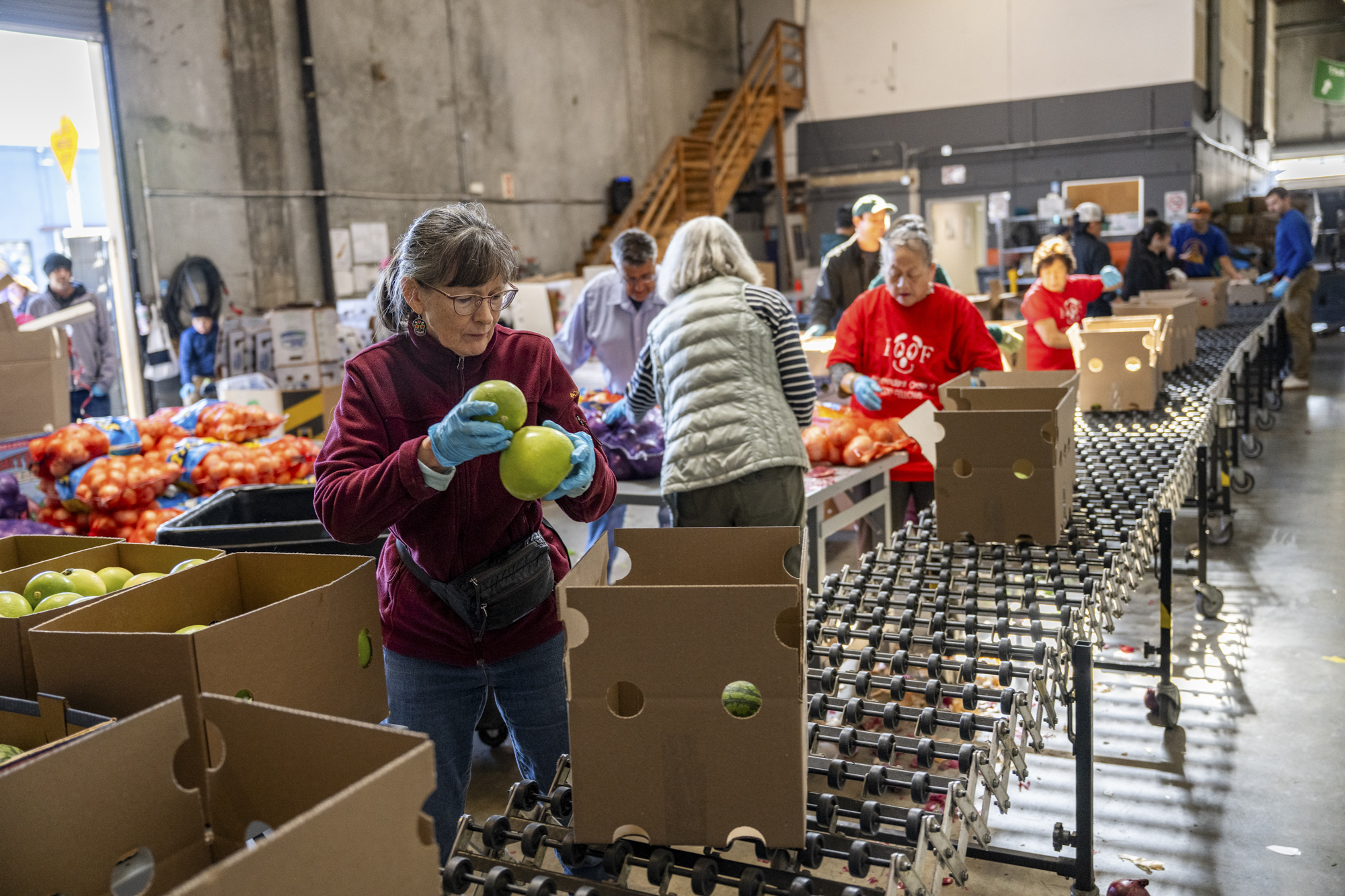
"caption": "Maria Gudmundsdottir sorts fresh produce into boxes at the San Francisco‑Marin Food Bank warehouse in San Francisco on Oct. 31, 2025.",
"credit": "Beth LaBerge/KQED",
"altTag": null,
"description": null,
"imgSizes": {
"thumbnail": {
"file": "https://cdn.kqed.org/wp-content/uploads/sites/10/2025/10/251031-SFMARINFOODBANK-28-BL-KQED-160x107.jpg",
"width": 160,
"height": 107,
"mimeType": "image/jpeg"
},
"1536x1536": {
"file": "https://cdn.kqed.org/wp-content/uploads/sites/10/2025/10/251031-SFMARINFOODBANK-28-BL-KQED-1536x1024.jpg",
"width": 1536,
"height": 1024,
"mimeType": "image/jpeg"
},
"post-thumbnail": {
"file": "https://cdn.kqed.org/wp-content/uploads/sites/10/2025/10/251031-SFMARINFOODBANK-28-BL-KQED-672x372.jpg",
"width": 672,
"height": 372,
"mimeType": "image/jpeg"
},
"twentyfourteen-full-width": {
"file": "https://cdn.kqed.org/wp-content/uploads/sites/10/2025/10/251031-SFMARINFOODBANK-28-BL-KQED-1038x576.jpg",
"width": 1038,
"height": 576,
"mimeType": "image/jpeg"
},
"npr-cds-wide": {
"file": "https://cdn.kqed.org/wp-content/uploads/sites/10/2025/10/251031-SFMARINFOODBANK-28-BL-KQED-1200x675.jpg",
"width": 1200,
"height": 675,
"mimeType": "image/jpeg"
},
"kqedFullSize": {
"file": "https://cdn.kqed.org/wp-content/uploads/sites/10/2025/10/251031-SFMARINFOODBANK-28-BL-KQED.jpg",
"width": 2000,
"height": 1333
}
},
"isLoading": false,
"fetchFailed": false
},
"news_12062379": {
"type": "attachments",
"id": "news_12062379",
"meta": {
"index": "attachments_1716263798",
"site": "news",
"id": "12062379",
"found": true
},
"title": "251030-marinmentalhealth00680_TV_qed",
"publishDate": 1761863560,
"status": "inherit",
"parent": 12062334,
"modified": 1761863587,
"caption": "Tonatiuh Beltran gets emotional as she speaks about her mother’s death outside the Marin County Superior Court during a press conference in San Rafael on Oct. 30, 2025. Olivia Beltran was killed by her daughter Tonatzyn Beltran during a mental health episode in 2024 and the family is calling on Marin County District Attorney’s office to pursue mental health treatment rather than criminal prosecution of Tonantzyn Beltran.",
"credit": "Tâm Vũ / KQED",
"altTag": null,
"description": null,
"imgSizes": {
"thumbnail": {
"file": "https://cdn.kqed.org/wp-content/uploads/sites/10/2025/10/251030-marinmentalhealth00680_TV_qed-160x107.jpg",
"width": 160,
"height": 107,
"mimeType": "image/jpeg"
},
"1536x1536": {
"file": "https://cdn.kqed.org/wp-content/uploads/sites/10/2025/10/251030-marinmentalhealth00680_TV_qed-1536x1024.jpg",
"width": 1536,
"height": 1024,
"mimeType": "image/jpeg"
},
"post-thumbnail": {
"file": "https://cdn.kqed.org/wp-content/uploads/sites/10/2025/10/251030-marinmentalhealth00680_TV_qed-672x372.jpg",
"width": 672,
"height": 372,
"mimeType": "image/jpeg"
},
"twentyfourteen-full-width": {
"file": "https://cdn.kqed.org/wp-content/uploads/sites/10/2025/10/251030-marinmentalhealth00680_TV_qed-1038x576.jpg",
"width": 1038,
"height": 576,
"mimeType": "image/jpeg"
},
"npr-cds-wide": {
"file": "https://cdn.kqed.org/wp-content/uploads/sites/10/2025/10/251030-marinmentalhealth00680_TV_qed-1200x675.jpg",
"width": 1200,
"height": 675,
"mimeType": "image/jpeg"
},
"kqedFullSize": {
"file": "https://cdn.kqed.org/wp-content/uploads/sites/10/2025/10/251030-marinmentalhealth00680_TV_qed.jpg",
"width": 2000,
"height": 1333
}
},
"isLoading": false,
"fetchFailed": false
}
},
"audioPlayerReducer": {
"postId": "stream_live",
"isPaused": true,
"isPlaying": false,
"pfsActive": false,
"pledgeModalIsOpen": true,
"playerDrawerIsOpen": false,
"liveAudioPlayStartedAt": 0,
"liveAudioPlayContext": ""
},
"authorsReducer": {
"byline_news_12061934": {
"type": "authors",
"id": "byline_news_12061934",
"meta": {
"override": true
},
"slug": "byline_news_12061934",
"name": "Robert Lewis and Lauren Hepler, CalMatters",
"isLoading": false
},
"gmarzorati": {
"type": "authors",
"id": "227",
"meta": {
"index": "authors_1716337520",
"id": "227",
"found": true
},
"name": "Guy Marzorati",
"firstName": "Guy",
"lastName": "Marzorati",
"slug": "gmarzorati",
"email": "gmarzorati@KQED.org",
"display_author_email": true,
"staff_mastheads": [
"news"
],
"title": "Correspondent",
"bio": "Guy Marzorati is a correspondent on KQED's California Politics and Government Desk, based in San Jose. A graduate of Santa Clara University, Guy joined KQED in 2013. He reports on state and local politics and produces KQED's digital voter guide.",
"avatar": "https://secure.gravatar.com/avatar/e7038b8dbfd55b104369b76b1cd0b9de?s=600&d=blank&r=g",
"twitter": "guymarzorati",
"facebook": null,
"instagram": null,
"linkedin": null,
"sites": [
{
"site": "",
"roles": [
"editor"
]
},
{
"site": "news",
"roles": [
"editor"
]
},
{
"site": "science",
"roles": [
"editor"
]
},
{
"site": "forum",
"roles": [
"editor"
]
},
{
"site": "elections",
"roles": [
"editor"
]
},
{
"site": "liveblog",
"roles": [
"editor"
]
}
],
"headData": {
"title": "Guy Marzorati | KQED",
"description": "Correspondent",
"ogImgSrc": "https://secure.gravatar.com/avatar/e7038b8dbfd55b104369b76b1cd0b9de?s=600&d=blank&r=g",
"twImgSrc": "https://secure.gravatar.com/avatar/e7038b8dbfd55b104369b76b1cd0b9de?s=600&d=blank&r=g"
},
"isLoading": false,
"link": "/author/gmarzorati"
},
"rachael-myrow": {
"type": "authors",
"id": "251",
"meta": {
"index": "authors_1716337520",
"id": "251",
"found": true
},
"name": "Rachael Myrow",
"firstName": "Rachael",
"lastName": "Myrow",
"slug": "rachael-myrow",
"email": "rmyrow@kqed.org",
"display_author_email": true,
"staff_mastheads": [
"news"
],
"title": "Senior Editor of KQED's Silicon Valley News Desk",
"bio": "• I write and edit stories about how Silicon Valley power and policies shape everyday life in California. I’m also passionate about making Bay Area history and culture more accessible to a broad public. • I’ve been a journalist for most of my life, starting in high school with The Franklin Press in Los Angeles, where I grew up. While earning my first degree in English at UC Berkeley, I got my start in public radio at KALX-FM. After completing a second degree in journalism at Cal, I landed my first professional job at Marketplace, then moved on to KPCC (now LAist), and then KQED, where I hosted The California Report for more than seven years. • My reporting has appeared on NPR, The World, WBUR’s \u003ci>Here & Now\u003c/i>, and the BBC. I also guest host for KQED’s \u003ci>Forum\u003c/i>, as well as the Commonwealth Club in San Francisco. • I speak periodically on media, democracy and technology issues, and do voiceover work for documentaries and educational video projects. • Outside of the studio, you'll find me hiking Bay Area trails and whipping up Insta-ready meals in my kitchen. • I do not accept gifts, money, or favors from anyone connected to my reporting, I don't pay people for information, and I do not support or donate to political causes. • I strive to treat the people I report on with fairness, honesty, and respect. I also recognize there are often multiple sides to a story and work to verify information through multiple sources and documentation. If I get something wrong, I correct it.",
"avatar": "https://secure.gravatar.com/avatar/87bf8cb5874e045cdff430523a6d48b1?s=600&d=blank&r=g",
"twitter": "rachaelmyrow",
"facebook": null,
"instagram": null,
"linkedin": "https://www.linkedin.com/in/rachaelmyrow/",
"sites": [
{
"site": "arts",
"roles": [
"administrator"
]
},
{
"site": "news",
"roles": [
"edit_others_posts",
"editor"
]
},
{
"site": "futureofyou",
"roles": [
"editor"
]
},
{
"site": "bayareabites",
"roles": [
"editor"
]
},
{
"site": "stateofhealth",
"roles": [
"editor"
]
},
{
"site": "science",
"roles": [
"editor"
]
},
{
"site": "food",
"roles": [
"editor"
]
},
{
"site": "forum",
"roles": [
"editor"
]
},
{
"site": "liveblog",
"roles": [
"author"
]
}
],
"headData": {
"title": "Rachael Myrow | KQED",
"description": "Senior Editor of KQED's Silicon Valley News Desk",
"ogImgSrc": "https://secure.gravatar.com/avatar/87bf8cb5874e045cdff430523a6d48b1?s=600&d=blank&r=g",
"twImgSrc": "https://secure.gravatar.com/avatar/87bf8cb5874e045cdff430523a6d48b1?s=600&d=blank&r=g"
},
"isLoading": false,
"link": "/author/rachael-myrow"
},
"fjhabvala": {
"type": "authors",
"id": "8659",
"meta": {
"index": "authors_1716337520",
"id": "8659",
"found": true
},
"name": "Farida Jhabvala Romero",
"firstName": "Farida",
"lastName": "Jhabvala Romero",
"slug": "fjhabvala",
"email": "fjhabvala@kqed.org",
"display_author_email": true,
"staff_mastheads": [
"news"
],
"title": "KQED Contributor",
"bio": "\u003cspan style=\"font-weight: 400;\">Farida Jhabvala Romero is a Labor Correspondent for KQED. She previously covered immigration. Farida was \u003ca href=\"https://www.ccnma.org/2022-most-influential-latina-journalists\">named\u003c/a> one of the 10 Most Influential Latina Journalists in California in 2022 by the California Chicano News Media Association. Her work has won awards from the Society of Professional Journalists (Northern California), as well as a national and regional Edward M. Murrow Award for the collaborative reporting projects “Dangerous Air” and “Graying California.” \u003c/span>\u003cspan style=\"font-weight: 400;\">Before joining KQED, Farida worked as a producer at Radio Bilingüe, a national public radio network. Farida earned her master’s degree in journalism from Stanford University.\u003c/span>",
"avatar": "https://secure.gravatar.com/avatar/c3ab27c5554b67b478f80971e515aa02?s=600&d=blank&r=g",
"twitter": "FaridaJhabvala",
"facebook": null,
"instagram": null,
"linkedin": "https://www.linkedin.com/in/faridajhabvala/",
"sites": [
{
"site": "news",
"roles": [
"editor"
]
},
{
"site": "stateofhealth",
"roles": [
"author"
]
}
],
"headData": {
"title": "Farida Jhabvala Romero | KQED",
"description": "KQED Contributor",
"ogImgSrc": "https://secure.gravatar.com/avatar/c3ab27c5554b67b478f80971e515aa02?s=600&d=blank&r=g",
"twImgSrc": "https://secure.gravatar.com/avatar/c3ab27c5554b67b478f80971e515aa02?s=600&d=blank&r=g"
},
"isLoading": false,
"link": "/author/fjhabvala"
},
"kmizuguchi": {
"type": "authors",
"id": "11739",
"meta": {
"index": "authors_1716337520",
"id": "11739",
"found": true
},
"name": "Keith Mizuguchi",
"firstName": "Keith",
"lastName": "Mizuguchi",
"slug": "kmizuguchi",
"email": "kmizuguchi@kqed.org",
"display_author_email": false,
"staff_mastheads": [],
"title": "KQED Contributor",
"bio": null,
"avatar": "https://secure.gravatar.com/avatar/64d8a7de0723d4099b9fe4e915136103febcc20809abce228ee4415bcb237023?s=600&d=blank&r=g",
"twitter": null,
"bluesky": null,
"facebook": null,
"instagram": null,
"linkedin": null,
"sites": [
{
"site": "news",
"roles": [
"editor"
]
},
{
"site": "science",
"roles": [
"editor"
]
}
],
"headData": {
"title": "Keith Mizuguchi | KQED",
"description": "KQED Contributor",
"ogImgSrc": "https://secure.gravatar.com/avatar/64d8a7de0723d4099b9fe4e915136103febcc20809abce228ee4415bcb237023?s=600&d=blank&r=g",
"twImgSrc": "https://secure.gravatar.com/avatar/64d8a7de0723d4099b9fe4e915136103febcc20809abce228ee4415bcb237023?s=600&d=blank&r=g"
},
"isLoading": false,
"link": "/author/kmizuguchi"
},
"sjohnson": {
"type": "authors",
"id": "11840",
"meta": {
"index": "authors_1716337520",
"id": "11840",
"found": true
},
"name": "Sydney Johnson",
"firstName": "Sydney",
"lastName": "Johnson",
"slug": "sjohnson",
"email": "sjohnson@kqed.org",
"display_author_email": false,
"staff_mastheads": [
"news"
],
"title": "KQED Reporter",
"bio": "Sydney Johnson is a general assignment reporter at KQED. She previously reported on public health and city government at the San Francisco Examiner, and before that, she covered statewide education policy for EdSource. Her reporting has won multiple local, state and national awards. Sydney is a graduate of the University of California, Berkeley and lives in San Francisco.",
"avatar": "https://secure.gravatar.com/avatar/97855f2719b72ad6190b7c535fe642c8?s=600&d=blank&r=g",
"twitter": "sydneyfjohnson",
"facebook": null,
"instagram": null,
"linkedin": null,
"sites": [
{
"site": "news",
"roles": [
"editor"
]
}
],
"headData": {
"title": "Sydney Johnson | KQED",
"description": "KQED Reporter",
"ogImgSrc": "https://secure.gravatar.com/avatar/97855f2719b72ad6190b7c535fe642c8?s=600&d=blank&r=g",
"twImgSrc": "https://secure.gravatar.com/avatar/97855f2719b72ad6190b7c535fe642c8?s=600&d=blank&r=g"
},
"isLoading": false,
"link": "/author/sjohnson"
},
"kdebenedetti": {
"type": "authors",
"id": "11913",
"meta": {
"index": "authors_1716337520",
"id": "11913",
"found": true
},
"name": "Katie DeBenedetti",
"firstName": "Katie",
"lastName": "DeBenedetti",
"slug": "kdebenedetti",
"email": "kdebenedetti@kqed.org",
"display_author_email": false,
"staff_mastheads": [
"news",
"science"
],
"title": "KQED Contributor",
"bio": "Katie DeBenedetti is a digital reporter covering daily news for the Express Desk. Prior to joining KQED as a culture reporting intern in January 2024, she covered education and city government for the Napa Valley Register.",
"avatar": "https://secure.gravatar.com/avatar/6e31073cb8f7e4214ab03f42771d0f45?s=600&d=blank&r=g",
"twitter": null,
"facebook": null,
"instagram": null,
"linkedin": null,
"sites": [
{
"site": "news",
"roles": [
"author"
]
},
{
"site": "science",
"roles": [
"author"
]
},
{
"site": "liveblog",
"roles": [
"author"
]
}
],
"headData": {
"title": "Katie DeBenedetti | KQED",
"description": "KQED Contributor",
"ogImgSrc": "https://secure.gravatar.com/avatar/6e31073cb8f7e4214ab03f42771d0f45?s=600&d=blank&r=g",
"twImgSrc": "https://secure.gravatar.com/avatar/6e31073cb8f7e4214ab03f42771d0f45?s=600&d=blank&r=g"
},
"isLoading": false,
"link": "/author/kdebenedetti"
},
"aaliahmad": {
"type": "authors",
"id": "11986",
"meta": {
"index": "authors_1716337520",
"id": "11986",
"found": true
},
"name": "Ayah Ali-Ahmad",
"firstName": "Ayah",
"lastName": "Ali-Ahmad",
"slug": "aaliahmad",
"email": "aaliahmad@KQED.org",
"display_author_email": false,
"staff_mastheads": [],
"title": "KQED Contributor",
"bio": null,
"avatar": "https://secure.gravatar.com/avatar/7f340465c69a2c816f6c07000137a3ee?s=600&d=blank&r=g",
"twitter": "ayahaliahmad",
"bluesky": null,
"facebook": null,
"instagram": null,
"linkedin": null,
"sites": [
{
"site": "news",
"roles": [
"author"
]
}
],
"headData": {
"title": "Ayah Ali-Ahmad | KQED",
"description": "KQED Contributor",
"ogImgSrc": "https://secure.gravatar.com/avatar/7f340465c69a2c816f6c07000137a3ee?s=600&d=blank&r=g",
"twImgSrc": "https://secure.gravatar.com/avatar/7f340465c69a2c816f6c07000137a3ee?s=600&d=blank&r=g"
},
"isLoading": false,
"link": "/author/aaliahmad"
}
},
"pagesReducer": {
"news_tag_health": {
"type": "terms",
"id": "news_18543",
"meta": {
"index": "terms_1716263798",
"site": "news",
"id": "18543",
"score": 6.883923
},
"featImg": null,
"name": "Health",
"description": null,
"taxonomy": "tag",
"headData": {
"twImgId": null,
"twTitle": null,
"ogTitle": null,
"ogImgId": null,
"twDescription": null,
"description": null,
"title": "Health Archives | KQED News",
"ogDescription": null
},
"ttid": 466,
"slug": "health",
"isLoading": false,
"title": "Health",
"pageMeta": {
"site": "news",
"WpPageTemplate": "page-topic-editorial",
"currentPage": 9
},
"blocks": [
{
"blockName": "kqed/post-list",
"attrs": {
"layout": "cardArticle2",
"query": "posts/news?tag=health",
"seeMore": false,
"paginated": true,
"page": 9
}
},
{
"blockName": "kqed/ad"
}
]
}
},
"pfsSessionReducer": {},
"postsReducer": {
"stream_live": {
"type": "live",
"id": "stream_live",
"audioUrl": "https://streams.kqed.org/kqedradio",
"title": "Live Stream",
"excerpt": "Live Stream information currently unavailable.",
"link": "/radio",
"featImg": "",
"label": {
"name": "KQED Live",
"link": "/"
}
},
"stream_kqedNewscast": {
"type": "posts",
"id": "stream_kqedNewscast",
"audioUrl": "https://www.kqed.org/.stream/anon/radio/RDnews/newscast.mp3?_=1",
"title": "KQED Newscast",
"featImg": "",
"label": {
"name": "88.5 FM",
"link": "/"
}
},
"news_12064768": {
"type": "posts",
"id": "news_12064768",
"meta": {
"index": "posts_1716263798",
"site": "news",
"id": "12064768",
"score": null,
"sort": [
1763650807000
]
},
"guestAuthors": [],
"slug": "sf-to-pay-5-8-million-in-class-action-settlement-over-elder-abuse-at-laguna-honda",
"title": "SF to Pay $5.8 Million in Class Action Settlement Over Elder Abuse at Laguna Honda",
"publishDate": 1763650807,
"format": "standard",
"headTitle": "SF to Pay $5.8 Million in Class Action Settlement Over Elder Abuse at Laguna Honda | KQED",
"labelTerm": {
"site": "news"
},
"content": "\u003cp>\u003ca href=\"https://www.kqed.org/news/tag/san-francisco\">San Francisco\u003c/a> is poised to pay out $5.8 million after reaching a settlement in a lawsuit claiming staff at \u003ca href=\"https://www.kqed.org/news/tag/laguna-honda-hospital\">Laguna Honda Hospital\u003c/a> and Rehabilitation Center took explicit photos of patients and disseminated them for non-medical purposes, along with other abuse and privacy violations.\u003c/p>\n\u003cp>The settlement is the latest rectification and first class action for the patient abuse scandal at Laguna Honda Hospital, one of the nation’s largest public nursing homes, following reports between 2016 and 2019 that thrust the facility into turmoil. Both parties have agreed to the payment, which will go before the city’s Government Audit and Oversight Committee on Thursday for approval.\u003c/p>\n\u003cp>The $5.8 million settlement will be distributed among 735 current and former Laguna Honda patients.\u003c/p>\n\u003cp>[ad fullwidth]\u003c/p>\n\u003cp>“This on its face says, ‘Look, you had a systemic problem. This was going on and this was hurting everybody,’” said Kathryn Stebner, who represented plaintiffs in the case. “We bring class actions to make a political statement, to try to make social change. And I think this does send that message.”\u003c/p>\n\u003cp>The 159-year-old hospital has long served as a safety net for some of the city’s poorest and most vulnerable residents, with some living at Laguna Honda for years.\u003c/p>\n\u003cp>The lawsuit was initially filed in 2020 on behalf of a Laguna Honda resident, claiming staff took photos of his genital area during an enema procedure and that staff circulated the image for non-medical purposes. Another named plaintiff, Tommy O. Johnson, alleged his health information was also wrongly used.\u003c/p>\n\u003cfigure id=\"attachment_11958178\" class=\"wp-caption aligncenter\" style=\"max-width: 1920px\">\u003cimg loading=\"lazy\" decoding=\"async\" class=\"size-full wp-image-11958178\" src=\"https://cdn.kqed.org/wp-content/uploads/sites/10/2023/08/RS62466_012_KQED_LagunaHondaHospital_01312023-qut.jpg\" alt='The entryway to a hospital driveway with a sign that reads, \"Main Hospital Entrance and Residences.\"' width=\"1920\" height=\"1280\" srcset=\"https://cdn.kqed.org/wp-content/uploads/sites/10/2023/08/RS62466_012_KQED_LagunaHondaHospital_01312023-qut.jpg 1920w, https://cdn.kqed.org/wp-content/uploads/sites/10/2023/08/RS62466_012_KQED_LagunaHondaHospital_01312023-qut-800x533.jpg 800w, https://cdn.kqed.org/wp-content/uploads/sites/10/2023/08/RS62466_012_KQED_LagunaHondaHospital_01312023-qut-1020x680.jpg 1020w, https://cdn.kqed.org/wp-content/uploads/sites/10/2023/08/RS62466_012_KQED_LagunaHondaHospital_01312023-qut-160x107.jpg 160w, https://cdn.kqed.org/wp-content/uploads/sites/10/2023/08/RS62466_012_KQED_LagunaHondaHospital_01312023-qut-1536x1024.jpg 1536w\" sizes=\"auto, (max-width: 1920px) 100vw, 1920px\">\u003cfigcaption class=\"wp-caption-text\">A sign points to the main entrance to the Laguna Honda Hospital in San Francisco on Jan. 31, 2023. \u003ccite>(Beth LaBerge/KQED)\u003c/cite>\u003c/figcaption>\u003c/figure>\n\u003cp>Attorneys later filed a class action motion in 2024 alleging that all patients at the hospital between 2022 and 2023 were subject to compromised care. The period of time was while the hospital was uncertified and undergoing major changes, after regulators with the Centers for Medicare & Medicaid Services found several health and safety issues across multiple inspection surveys.\u003c/p>\n\u003cp>“Laguna Honda is unwavering in our commitment to resident safety and wellbeing,” a spokesperson for the city’s Department of Public Health, which oversees the massive facility, said in an email. “The 2019 patient mistreatment incidents were antithetical to what Laguna Honda stands for as the safety-net healthcare facility caring for San Franciscans most in need.”\u003c/p>\n\u003cp>The class action is one of three recent lawsuits over the abuse scandal that broke out just before the pandemic. Another lawsuit was filed on behalf of individual residents who had fallen and suffered injuries such as broken hips, Stebner said. The third lawsuit, \u003ca href=\"https://www.kqed.org/news/11952012/san-francisco-to-pay-2-2-million-settlement-to-victims-in-laguna-honda-patient-abuse-scandal\">settled in 2023 for $2.2 million\u003c/a>, focused on 11 individual patients at Laguna Honda after a group of nurses were found to have taken nude photos of some patients and drugged and abused others.[aside postID=news_12026662 hero='https://cdn.kqed.org/wp-content/uploads/sites/10/2025/02/014_KQED_LagunaHondaHospital_01312023_qed-1020x680.jpg']Nursing home reform supporters with the Gray Panthers, a group of advocates focused on long-term care and other issues facing older San Franciscans, estimate that the city has had to pay nearly $12 million in fines and lawsuit settlements relating to the sexual abuse scandal.\u003c/p>\n\u003cp>A spokesperson for the San Francisco City Attorney said the class action settlement is an “appropriate response.”\u003c/p>\n\u003cp>The facility took several steps after uncovering evidence of patient mistreatment and privacy violations between 2016 and 2019, including firing staff who took part in abuse and reorganizing the hospital’s leadership.\u003c/p>\n\u003cp>But problems for Laguna Honda didn’t end there.\u003c/p>\n\u003cp>In 2021, two non-fatal overdoses occurred on-site involving methamphetamine and fentanyl, triggering a series of inspections. Federal regulators then decertified Laguna Honda in April 2022 after finding issues with staff hygiene and other problems, such as smoking and drug use on site.\u003c/p>\n\u003cp>The hospital was forced to pause admissions while it worked to regain certification with Medicare and Medi-Cal, which covers the vast majority of the elderly and low-income residents at Laguna Honda.\u003c/p>\n\u003cp>Meanwhile, federal regulators had the hospital begin discharging patients in anticipation of a possible shutdown. More than 50 people were discharged or transferred to other skilled nursing facilities, and some ended up in homeless shelters. Twelve frail and elderly patients died shortly after their transfer out of the facility to other nursing homes.”State and federal regulators agreed to pause the mandated discharges in 2022, after an outcry from San Francisco officials and advocates.\u003c/p>\n\u003cp>The facility achieved recertification again in 2024 after undergoing rigorous inspections and retraining for staff.\u003c/p>\n\u003cfigure id=\"attachment_11757927\" class=\"wp-caption aligncenter\" style=\"max-width: 1920px\">\u003cimg loading=\"lazy\" decoding=\"async\" class=\"size-full wp-image-11757927\" src=\"https://cdn.kqed.org/wp-content/uploads/sites/10/2019/06/Laguna_Honda_Hospital_and_Rehabilitation_Center_-_San_Francisco_CA_-_DSC03931-e1561745657127.jpg\" alt=\"Laguna Honda Hospital and Rehabilitation Center in San Francisco, where a group of former staff members allegedly abused nearly two dozen patients for years.\" width=\"1920\" height=\"1324\">\u003cfigcaption class=\"wp-caption-text\">Laguna Honda Hospital and Rehabilitation Center in San Francisco, where a group of former staff members allegedly abused nearly two dozen patients for years. \u003ccite>(\u003ca href=\"https://commons.wikimedia.org/wiki/File:Laguna_Honda_Hospital_and_Rehabilitation_Center_-_San_Francisco,_CA_-_DSC03931.jpg#/media/File:Laguna_Honda_Hospital_and_Rehabilitation_Center_-_San_Francisco,_CA_-_DSC03931.jpg\">Daderot/Wikipedia\u003c/a>)\u003c/cite>\u003c/figcaption>\u003c/figure>\n\u003cp>“Laguna Honda has undergone significant restructuring and has been the focus of extensive improvements facility-wide, including new policies, enhanced quality management protocols, and new programs that align with national best practices,” the Public Health Department spokesperson said. “This is all with the goal of creating a lasting culture of safety, transparency, and continuous improvement.”\u003c/p>\n\u003cp>The population at Laguna Honda has dropped from more than 700 residents in November 2020 to 541 as of September 2025, according to city data.\u003c/p>\n\u003cp>Teresa Palmer, a physician who worked at Laguna Honda for nearly three decades, said the class action settlement underscores the need for more staffing at the facility.\u003c/p>\n\u003cp>“All kinds of abuse and neglect are expressions of understaffing of both supervisory staff and direct care staff,” Palmer said. “People are so overworked and fear retaliation, and things are covered up because staff are just trying to get through the day.”\u003c/p>\n\u003cp>\u003c/p>\n",
"blocks": [],
"excerpt": "The settlement is the latest rectification for patient complaints at Laguna Honda Hospital, one of the nation’s largest public nursing homes.",
"status": "publish",
"parent": 0,
"modified": 1763675997,
"stats": {
"hasAudio": false,
"hasVideo": false,
"hasChartOrMap": false,
"iframeSrcs": [],
"hasGoogleForm": false,
"hasGallery": false,
"hasHearkenModule": false,
"hasPolis": false,
"paragraphCount": 22,
"wordCount": 966
},
"headData": {
"title": "SF to Pay $5.8 Million in Class Action Settlement Over Elder Abuse at Laguna Honda | KQED",
"description": "The settlement is the latest rectification for patient complaints at Laguna Honda Hospital, one of the nation’s largest public nursing homes.",
"ogTitle": "",
"ogDescription": "",
"ogImgId": "",
"twTitle": "",
"twDescription": "",
"twImgId": "",
"schema": {
"@context": "https://schema.org",
"@type": "NewsArticle",
"headline": "SF to Pay $5.8 Million in Class Action Settlement Over Elder Abuse at Laguna Honda",
"datePublished": "2025-11-20T07:00:07-08:00",
"dateModified": "2025-11-20T13:59:57-08:00",
"image": "https://cdn.kqed.org/wp-content/uploads/2020/02/KQED-OG-Image@1x.png",
"isAccessibleForFree": "True",
"publisher": {
"@type": "NewsMediaOrganization",
"@id": "https://www.kqed.org/#organization",
"name": "KQED",
"logo": "https://cdn.kqed.org/wp-content/uploads/2020/02/KQED-OG-Image@1x.png",
"url": "https://www.kqed.org",
"sameAs": [
"https://www.facebook.com/KQED",
"https://twitter.com/KQED",
"https://www.instagram.com/kqed/",
"https://www.tiktok.com/@kqedofficial",
"https://www.linkedin.com/company/kqed",
"https://www.youtube.com/channel/UCeC0IOo7i1P_61zVUWbJ4nw"
]
}
}
},
"primaryCategory": {
"termId": 457,
"slug": "health",
"name": "Health"
},
"sticky": false,
"nprStoryId": "kqed-12064768",
"templateType": "standard",
"featuredImageType": "standard",
"excludeFromSiteSearch": "Include",
"articleAge": "0",
"path": "/news/12064768/sf-to-pay-5-8-million-in-class-action-settlement-over-elder-abuse-at-laguna-honda",
"audioTrackLength": null,
"parsedContent": [
{
"type": "contentString",
"content": "\u003cdiv class=\"post-body\">\u003cp>\u003cp>\u003ca href=\"https://www.kqed.org/news/tag/san-francisco\">San Francisco\u003c/a> is poised to pay out $5.8 million after reaching a settlement in a lawsuit claiming staff at \u003ca href=\"https://www.kqed.org/news/tag/laguna-honda-hospital\">Laguna Honda Hospital\u003c/a> and Rehabilitation Center took explicit photos of patients and disseminated them for non-medical purposes, along with other abuse and privacy violations.\u003c/p>\n\u003cp>The settlement is the latest rectification and first class action for the patient abuse scandal at Laguna Honda Hospital, one of the nation’s largest public nursing homes, following reports between 2016 and 2019 that thrust the facility into turmoil. Both parties have agreed to the payment, which will go before the city’s Government Audit and Oversight Committee on Thursday for approval.\u003c/p>\n\u003cp>The $5.8 million settlement will be distributed among 735 current and former Laguna Honda patients.\u003c/p>\n\u003cp>\u003c/p>\u003c/div>",
"attributes": {
"named": {},
"numeric": []
}
},
{
"type": "component",
"content": "",
"name": "ad",
"attributes": {
"named": {
"label": "fullwidth"
},
"numeric": [
"fullwidth"
]
}
},
{
"type": "contentString",
"content": "\u003cdiv class=\"post-body\">\u003cp>\u003c/p>\n\u003cp>“This on its face says, ‘Look, you had a systemic problem. This was going on and this was hurting everybody,’” said Kathryn Stebner, who represented plaintiffs in the case. “We bring class actions to make a political statement, to try to make social change. And I think this does send that message.”\u003c/p>\n\u003cp>The 159-year-old hospital has long served as a safety net for some of the city’s poorest and most vulnerable residents, with some living at Laguna Honda for years.\u003c/p>\n\u003cp>The lawsuit was initially filed in 2020 on behalf of a Laguna Honda resident, claiming staff took photos of his genital area during an enema procedure and that staff circulated the image for non-medical purposes. Another named plaintiff, Tommy O. Johnson, alleged his health information was also wrongly used.\u003c/p>\n\u003cfigure id=\"attachment_11958178\" class=\"wp-caption aligncenter\" style=\"max-width: 1920px\">\u003cimg loading=\"lazy\" decoding=\"async\" class=\"size-full wp-image-11958178\" src=\"https://cdn.kqed.org/wp-content/uploads/sites/10/2023/08/RS62466_012_KQED_LagunaHondaHospital_01312023-qut.jpg\" alt='The entryway to a hospital driveway with a sign that reads, \"Main Hospital Entrance and Residences.\"' width=\"1920\" height=\"1280\" srcset=\"https://cdn.kqed.org/wp-content/uploads/sites/10/2023/08/RS62466_012_KQED_LagunaHondaHospital_01312023-qut.jpg 1920w, https://cdn.kqed.org/wp-content/uploads/sites/10/2023/08/RS62466_012_KQED_LagunaHondaHospital_01312023-qut-800x533.jpg 800w, https://cdn.kqed.org/wp-content/uploads/sites/10/2023/08/RS62466_012_KQED_LagunaHondaHospital_01312023-qut-1020x680.jpg 1020w, https://cdn.kqed.org/wp-content/uploads/sites/10/2023/08/RS62466_012_KQED_LagunaHondaHospital_01312023-qut-160x107.jpg 160w, https://cdn.kqed.org/wp-content/uploads/sites/10/2023/08/RS62466_012_KQED_LagunaHondaHospital_01312023-qut-1536x1024.jpg 1536w\" sizes=\"auto, (max-width: 1920px) 100vw, 1920px\">\u003cfigcaption class=\"wp-caption-text\">A sign points to the main entrance to the Laguna Honda Hospital in San Francisco on Jan. 31, 2023. \u003ccite>(Beth LaBerge/KQED)\u003c/cite>\u003c/figcaption>\u003c/figure>\n\u003cp>Attorneys later filed a class action motion in 2024 alleging that all patients at the hospital between 2022 and 2023 were subject to compromised care. The period of time was while the hospital was uncertified and undergoing major changes, after regulators with the Centers for Medicare & Medicaid Services found several health and safety issues across multiple inspection surveys.\u003c/p>\n\u003cp>“Laguna Honda is unwavering in our commitment to resident safety and wellbeing,” a spokesperson for the city’s Department of Public Health, which oversees the massive facility, said in an email. “The 2019 patient mistreatment incidents were antithetical to what Laguna Honda stands for as the safety-net healthcare facility caring for San Franciscans most in need.”\u003c/p>\n\u003cp>The class action is one of three recent lawsuits over the abuse scandal that broke out just before the pandemic. Another lawsuit was filed on behalf of individual residents who had fallen and suffered injuries such as broken hips, Stebner said. The third lawsuit, \u003ca href=\"https://www.kqed.org/news/11952012/san-francisco-to-pay-2-2-million-settlement-to-victims-in-laguna-honda-patient-abuse-scandal\">settled in 2023 for $2.2 million\u003c/a>, focused on 11 individual patients at Laguna Honda after a group of nurses were found to have taken nude photos of some patients and drugged and abused others.\u003c/p>\u003c/div>",
"attributes": {
"named": {},
"numeric": []
}
},
{
"type": "component",
"content": "",
"name": "aside",
"attributes": {
"named": {
"postid": "news_12026662",
"hero": "https://cdn.kqed.org/wp-content/uploads/sites/10/2025/02/014_KQED_LagunaHondaHospital_01312023_qed-1020x680.jpg",
"label": ""
},
"numeric": []
}
},
{
"type": "contentString",
"content": "\u003cdiv class=\"post-body\">\u003cp>Nursing home reform supporters with the Gray Panthers, a group of advocates focused on long-term care and other issues facing older San Franciscans, estimate that the city has had to pay nearly $12 million in fines and lawsuit settlements relating to the sexual abuse scandal.\u003c/p>\n\u003cp>A spokesperson for the San Francisco City Attorney said the class action settlement is an “appropriate response.”\u003c/p>\n\u003cp>The facility took several steps after uncovering evidence of patient mistreatment and privacy violations between 2016 and 2019, including firing staff who took part in abuse and reorganizing the hospital’s leadership.\u003c/p>\n\u003cp>But problems for Laguna Honda didn’t end there.\u003c/p>\n\u003cp>In 2021, two non-fatal overdoses occurred on-site involving methamphetamine and fentanyl, triggering a series of inspections. Federal regulators then decertified Laguna Honda in April 2022 after finding issues with staff hygiene and other problems, such as smoking and drug use on site.\u003c/p>\n\u003cp>The hospital was forced to pause admissions while it worked to regain certification with Medicare and Medi-Cal, which covers the vast majority of the elderly and low-income residents at Laguna Honda.\u003c/p>\n\u003cp>Meanwhile, federal regulators had the hospital begin discharging patients in anticipation of a possible shutdown. More than 50 people were discharged or transferred to other skilled nursing facilities, and some ended up in homeless shelters. Twelve frail and elderly patients died shortly after their transfer out of the facility to other nursing homes.”State and federal regulators agreed to pause the mandated discharges in 2022, after an outcry from San Francisco officials and advocates.\u003c/p>\n\u003cp>The facility achieved recertification again in 2024 after undergoing rigorous inspections and retraining for staff.\u003c/p>\n\u003cfigure id=\"attachment_11757927\" class=\"wp-caption aligncenter\" style=\"max-width: 1920px\">\u003cimg loading=\"lazy\" decoding=\"async\" class=\"size-full wp-image-11757927\" src=\"https://cdn.kqed.org/wp-content/uploads/sites/10/2019/06/Laguna_Honda_Hospital_and_Rehabilitation_Center_-_San_Francisco_CA_-_DSC03931-e1561745657127.jpg\" alt=\"Laguna Honda Hospital and Rehabilitation Center in San Francisco, where a group of former staff members allegedly abused nearly two dozen patients for years.\" width=\"1920\" height=\"1324\">\u003cfigcaption class=\"wp-caption-text\">Laguna Honda Hospital and Rehabilitation Center in San Francisco, where a group of former staff members allegedly abused nearly two dozen patients for years. \u003ccite>(\u003ca href=\"https://commons.wikimedia.org/wiki/File:Laguna_Honda_Hospital_and_Rehabilitation_Center_-_San_Francisco,_CA_-_DSC03931.jpg#/media/File:Laguna_Honda_Hospital_and_Rehabilitation_Center_-_San_Francisco,_CA_-_DSC03931.jpg\">Daderot/Wikipedia\u003c/a>)\u003c/cite>\u003c/figcaption>\u003c/figure>\n\u003cp>“Laguna Honda has undergone significant restructuring and has been the focus of extensive improvements facility-wide, including new policies, enhanced quality management protocols, and new programs that align with national best practices,” the Public Health Department spokesperson said. “This is all with the goal of creating a lasting culture of safety, transparency, and continuous improvement.”\u003c/p>\n\u003cp>The population at Laguna Honda has dropped from more than 700 residents in November 2020 to 541 as of September 2025, according to city data.\u003c/p>\n\u003cp>Teresa Palmer, a physician who worked at Laguna Honda for nearly three decades, said the class action settlement underscores the need for more staffing at the facility.\u003c/p>\n\u003cp>“All kinds of abuse and neglect are expressions of understaffing of both supervisory staff and direct care staff,” Palmer said. “People are so overworked and fear retaliation, and things are covered up because staff are just trying to get through the day.”\u003c/p>\n\u003cp>\u003c/p>\n\u003c/div>\u003c/p>",
"attributes": {
"named": {},
"numeric": []
}
}
],
"link": "/news/12064768/sf-to-pay-5-8-million-in-class-action-settlement-over-elder-abuse-at-laguna-honda",
"authors": [
"11840"
],
"categories": [
"news_457",
"news_28250",
"news_8"
],
"tags": [
"news_18543",
"news_26092",
"news_21891",
"news_38",
"news_3064"
],
"featImg": "news_12064772",
"label": "news"
},
"news_12064684": {
"type": "posts",
"id": "news_12064684",
"meta": {
"index": "posts_1716263798",
"site": "news",
"id": "12064684",
"score": null,
"sort": [
1763580811000
]
},
"guestAuthors": [],
"slug": "advocates-call-for-urgent-changes-in-countertop-industry-to-help-prevent-silicosis",
"title": "Advocates Call For Urgent Changes In Countertop Industry To Help Prevent Silicosis",
"publishDate": 1763580811,
"format": "audio",
"headTitle": "Advocates Call For Urgent Changes In Countertop Industry To Help Prevent Silicosis | KQED",
"labelTerm": {},
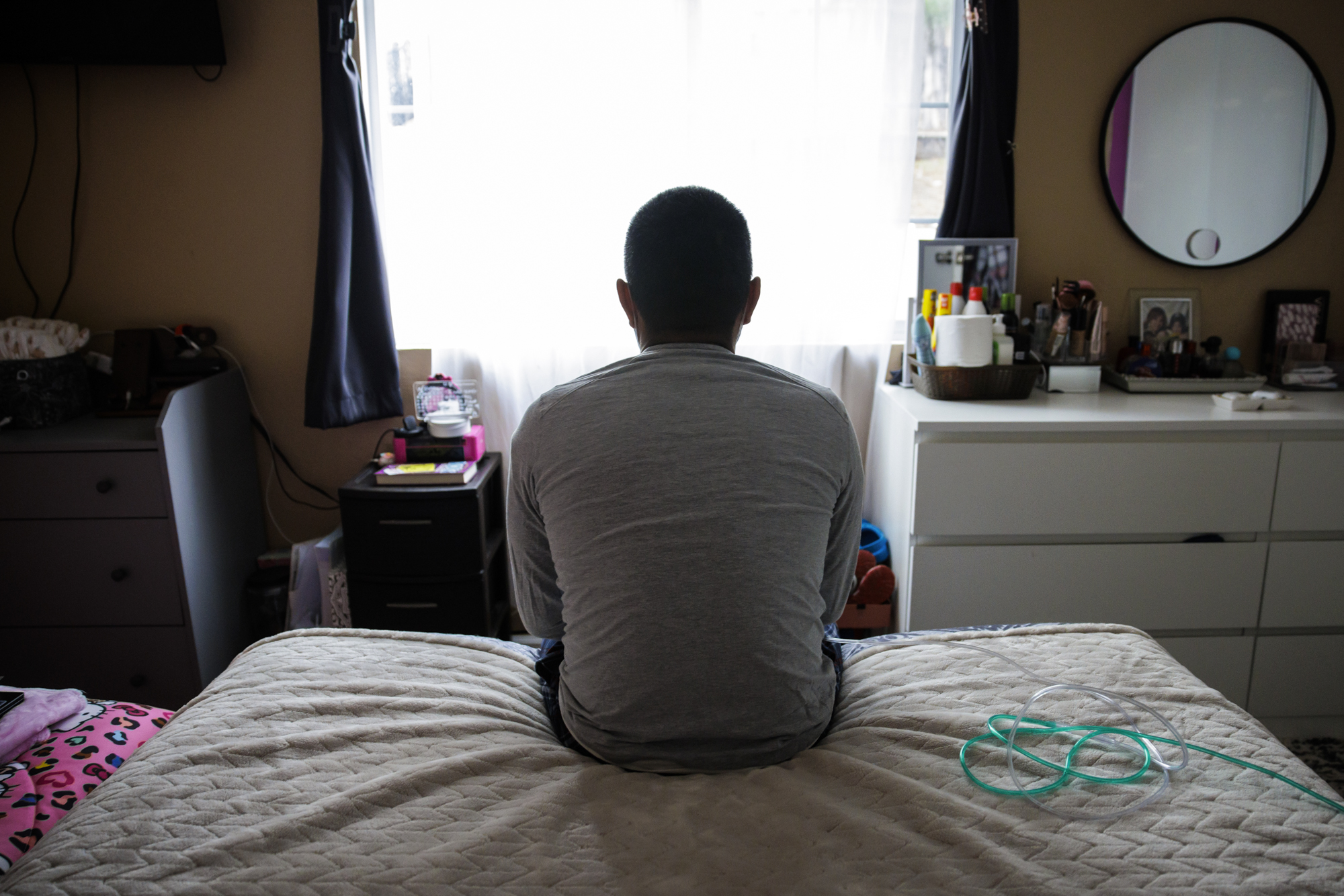
"content": "\u003cp>\u003cb>Here are the morning’s top stories on Wednesday, November 19, 2025…\u003c/b>\u003c/p>\n\u003cul>\n\u003cli style=\"font-weight: 400\">\u003cspan style=\"font-weight: 400\">Asbestos, lead, coal dust. All of those posed big health hazards to workers before legal protections finally rolled out. Now, thousands of stoneworkers in California who make our kitchen and bathroom countertops are \u003ca href=\"https://www.kqed.org/news/12033036/california-bill-moves-forward-protect-stonecutters-deadly-disease\">breathing in something so toxic\u003c/a>, nearly 50 had lung transplants. \u003c/span>\u003c/li>\n\u003cli style=\"font-weight: 400\">\u003cspan style=\"font-weight: 400\">Farmworker communities and environmental groups across the state are \u003ca href=\"https://www.kcbx.org/environment-and-energy/2025-11-18/farmworker-communities-call-new-california-pesticide-rules-unscientific-and-demand-stronger-protections\">calling for stronger protections\u003c/a> from a pesticide they say endangers public health.\u003c/span>\u003c/li>\n\u003c/ul>\n\u003ch2 class=\"routes-Site-routes-Post-Title-__Title__title\">\u003ca href=\"https://www.kqed.org/news/12064693/california-doctors-urge-ban-on-engineered-stone-as-silicosis-cases-surge\">\u003cstrong>California Doctors Urge Ban On Engineered Stone As Silicosis Cases Surge\u003c/strong>\u003c/a>\u003c/h2>\n\u003cp>A former stoneworker named Lopez sat confined to his \u003ca href=\"https://www.kqed.org/news/tag/east-bay\">East Bay\u003c/a> home, breathing with the help of a whirring oxygen supply machine through clear tubes pronged to his nostrils. After years of making kitchen countertops from engineered stone, the 43-year-old was \u003ca href=\"https://www.kqed.org/news/11969381/california-regulators-to-vote-on-emergency-rules-for-stonecutters-safety\">diagnosed with silicosis\u003c/a>, an often deadly lung disease linked to inhaling toxic dust the material releases when powercut.\u003c/p>\n\u003cp>The once-active father of four now awaits a double lung transplant. He can no longer support his family or walk a few steps without pausing to catch his breath. Two stonecutter friends died after working with the man-made material, also known as artificial stone or quartz. Three others are on a waitlist for lung transplants, he said. “I feel desperate just sitting here unable to do anything,” said Lopez, an undocumented immigrant who worked in California for more than two decades. KQED is withholding his full name, as he fears losing vital medical care if arrested by federal authorities.\u003c/p>\n\u003cp>As silicosis cases surge in California’s countertop fabrication industry, medical and occupational safety experts warn that current regulations won’t protect hundreds more relatively young workers like Lopez from contracting the incurable illness. The state must act urgently to phase out hazardous engineered stone from fabrication shops, as Australia did, they say, to stem a growing health crisis.\u003c/p>\n\u003cp>Australia banned the use, supply and manufacture of engineered stone benchtops in July 2024, forcing major manufacturers to switch to silica-free alternatives in that market, though they still sell their higher-silica products in the U.S. The companies maintain that their products are safe if fabrication shops follow protocols.\u003c/p>\n\u003cp>[ad fullwidth]\u003c/p>\n\u003cp>Between 1,000 to 1,500 stoneworkers in California could develop silicosis within the next decade, leading to roughly 285 deaths, according to California’s Division of Occupational Safety and Health, or Cal/OSHA. The state is home to about 5,000 countertop fabrication workers, predominantly Latino immigrants. To save lives, the Governor’s Office could issue an emergency declaration pausing the processing of artificial stone until a permanent ban is pursued through rulemaking, according to a Sept. 4 memorandum obtained by KQED. Drafted by a committee of doctors, occupational safety experts and worker advocates convened by Cal/OSHA, the letter was addressed to the state board responsible for adopting new workplace safety regulations, but was not sent. Gov. Gavin Newsom’s press office did not respond to requests for comment about his position on banning engineered stone in fabrication shops. A spokesperson with the Department of Industrial Relations, which oversees press requests for both Cal/OSHA and the Occupational Safety and Health Standards Board, said the draft had not been vetted.\u003c/p>\n\u003ch2 class=\"ArtP-headline\">\u003ca href=\"https://www.kcbx.org/environment-and-energy/2025-11-18/farmworker-communities-call-new-california-pesticide-rules-unscientific-and-demand-stronger-protections\">\u003cstrong>Farmworker Communities Call New CA Pesticide Rules “Unscientific,” Demand Stronger Protections\u003c/strong>\u003c/a>\u003c/h2>\n\u003cp>Farmworker families, teachers and environmental justice groups across California are demanding stronger protections from the fumigant pesticide 1,3-dichloropropene, saying the state’s newest regulation allows exposure far above what health experts consider safe.\u003c/p>\n\u003cp>The chemical, also known as 1,3-D or by its brand name Telone, is a cancer-causing soil fumigant widely used on berry, grape, almond and walnut crops. It is banned in several countries.\u003c/p>\n\u003cp>Californians for Pesticide Reform and partner organizations held a statewide online news conference Tuesday, paired with simultaneous rallies in agricultural regions including Modesto, Watsonville, Fresno and Oxnard. Speakers said the Department of Pesticide Regulation’s recently finalized rules fail to protect farmworker families and schoolchildren who live, work and attend school near treated fields.\u003c/p>\n\u003cp>\u003c/p>\n\u003cp>Community groups also raised concerns that the highest exposures occur in predominantly Latino and Indigenous neighborhoods, describing the regulation as a form of environmental racism. The Department of Pesticide Regulation said in a statement that it is committed to protecting public health and is working with toxicologists to reduce exposure. The agency says additional protections will take effect in 2026.\u003c/p>\n\n",
"blocks": [],
"excerpt": "This comes as silicosis cases surge in California’s countertop fabrication industry.",
"status": "publish",
"parent": 0,
"modified": 1763580811,
"stats": {
"hasAudio": false,
"hasVideo": false,
"hasChartOrMap": false,
"iframeSrcs": [],
"hasGoogleForm": false,
"hasGallery": false,
"hasHearkenModule": false,
"hasPolis": false,
"paragraphCount": 12,
"wordCount": 749
},
"headData": {
"title": "Advocates Call For Urgent Changes In Countertop Industry To Help Prevent Silicosis | KQED",
"description": "This comes as silicosis cases surge in California’s countertop fabrication industry.",
"ogTitle": "",
"ogDescription": "",
"ogImgId": "",
"twTitle": "",
"twDescription": "",
"twImgId": "",
"schema": {
"@context": "https://schema.org",
"@type": "NewsArticle",
"headline": "Advocates Call For Urgent Changes In Countertop Industry To Help Prevent Silicosis",
"datePublished": "2025-11-19T11:33:31-08:00",
"dateModified": "2025-11-19T11:33:31-08:00",
"image": "https://cdn.kqed.org/wp-content/uploads/2020/02/KQED-OG-Image@1x.png",
"isAccessibleForFree": "True",
"publisher": {
"@type": "NewsMediaOrganization",
"@id": "https://www.kqed.org/#organization",
"name": "KQED",
"logo": "https://cdn.kqed.org/wp-content/uploads/2020/02/KQED-OG-Image@1x.png",
"url": "https://www.kqed.org",
"sameAs": [
"https://www.facebook.com/KQED",
"https://twitter.com/KQED",
"https://www.instagram.com/kqed/",
"https://www.tiktok.com/@kqedofficial",
"https://www.linkedin.com/company/kqed",
"https://www.youtube.com/channel/UCeC0IOo7i1P_61zVUWbJ4nw"
]
}
}
},
"primaryCategory": {
"termId": 33520,
"slug": "podcast",
"name": "Podcast"
},
"source": "The California Report",
"sourceUrl": "https://www.kqed.org/news/tag/tcrarchive/",
"audioUrl": "https://www.podtrac.com/pts/redirect.mp3/chrt.fm/track/G6C7C3/traffic.megaphone.fm/KQINC7545812203.mp3?updated=1763567228",
"sticky": false,
"nprStoryId": "kqed-12064684",
"templateType": "standard",
"featuredImageType": "standard",
"excludeFromSiteSearch": "Include",
"articleAge": "0",
"path": "/news/12064684/advocates-call-for-urgent-changes-in-countertop-industry-to-help-prevent-silicosis",
"audioTrackLength": null,
"parsedContent": [
{
"type": "contentString",
"content": "\u003cdiv class=\"post-body\">\u003cp>\u003cp>\u003cb>Here are the morning’s top stories on Wednesday, November 19, 2025…\u003c/b>\u003c/p>\n\u003cul>\n\u003cli style=\"font-weight: 400\">\u003cspan style=\"font-weight: 400\">Asbestos, lead, coal dust. All of those posed big health hazards to workers before legal protections finally rolled out. Now, thousands of stoneworkers in California who make our kitchen and bathroom countertops are \u003ca href=\"https://www.kqed.org/news/12033036/california-bill-moves-forward-protect-stonecutters-deadly-disease\">breathing in something so toxic\u003c/a>, nearly 50 had lung transplants. \u003c/span>\u003c/li>\n\u003cli style=\"font-weight: 400\">\u003cspan style=\"font-weight: 400\">Farmworker communities and environmental groups across the state are \u003ca href=\"https://www.kcbx.org/environment-and-energy/2025-11-18/farmworker-communities-call-new-california-pesticide-rules-unscientific-and-demand-stronger-protections\">calling for stronger protections\u003c/a> from a pesticide they say endangers public health.\u003c/span>\u003c/li>\n\u003c/ul>\n\u003ch2 class=\"routes-Site-routes-Post-Title-__Title__title\">\u003ca href=\"https://www.kqed.org/news/12064693/california-doctors-urge-ban-on-engineered-stone-as-silicosis-cases-surge\">\u003cstrong>California Doctors Urge Ban On Engineered Stone As Silicosis Cases Surge\u003c/strong>\u003c/a>\u003c/h2>\n\u003cp>A former stoneworker named Lopez sat confined to his \u003ca href=\"https://www.kqed.org/news/tag/east-bay\">East Bay\u003c/a> home, breathing with the help of a whirring oxygen supply machine through clear tubes pronged to his nostrils. After years of making kitchen countertops from engineered stone, the 43-year-old was \u003ca href=\"https://www.kqed.org/news/11969381/california-regulators-to-vote-on-emergency-rules-for-stonecutters-safety\">diagnosed with silicosis\u003c/a>, an often deadly lung disease linked to inhaling toxic dust the material releases when powercut.\u003c/p>\n\u003cp>The once-active father of four now awaits a double lung transplant. He can no longer support his family or walk a few steps without pausing to catch his breath. Two stonecutter friends died after working with the man-made material, also known as artificial stone or quartz. Three others are on a waitlist for lung transplants, he said. “I feel desperate just sitting here unable to do anything,” said Lopez, an undocumented immigrant who worked in California for more than two decades. KQED is withholding his full name, as he fears losing vital medical care if arrested by federal authorities.\u003c/p>\n\u003cp>As silicosis cases surge in California’s countertop fabrication industry, medical and occupational safety experts warn that current regulations won’t protect hundreds more relatively young workers like Lopez from contracting the incurable illness. The state must act urgently to phase out hazardous engineered stone from fabrication shops, as Australia did, they say, to stem a growing health crisis.\u003c/p>\n\u003cp>Australia banned the use, supply and manufacture of engineered stone benchtops in July 2024, forcing major manufacturers to switch to silica-free alternatives in that market, though they still sell their higher-silica products in the U.S. The companies maintain that their products are safe if fabrication shops follow protocols.\u003c/p>\n\u003cp>\u003c/p>\u003c/div>",
"attributes": {
"named": {},
"numeric": []
}
},
{
"type": "component",
"content": "",
"name": "ad",
"attributes": {
"named": {
"label": "fullwidth"
},
"numeric": [
"fullwidth"
]
}
},
{
"type": "contentString",
"content": "\u003cdiv class=\"post-body\">\u003cp>\u003c/p>\n\u003cp>Between 1,000 to 1,500 stoneworkers in California could develop silicosis within the next decade, leading to roughly 285 deaths, according to California’s Division of Occupational Safety and Health, or Cal/OSHA. The state is home to about 5,000 countertop fabrication workers, predominantly Latino immigrants. To save lives, the Governor’s Office could issue an emergency declaration pausing the processing of artificial stone until a permanent ban is pursued through rulemaking, according to a Sept. 4 memorandum obtained by KQED. Drafted by a committee of doctors, occupational safety experts and worker advocates convened by Cal/OSHA, the letter was addressed to the state board responsible for adopting new workplace safety regulations, but was not sent. Gov. Gavin Newsom’s press office did not respond to requests for comment about his position on banning engineered stone in fabrication shops. A spokesperson with the Department of Industrial Relations, which oversees press requests for both Cal/OSHA and the Occupational Safety and Health Standards Board, said the draft had not been vetted.\u003c/p>\n\u003ch2 class=\"ArtP-headline\">\u003ca href=\"https://www.kcbx.org/environment-and-energy/2025-11-18/farmworker-communities-call-new-california-pesticide-rules-unscientific-and-demand-stronger-protections\">\u003cstrong>Farmworker Communities Call New CA Pesticide Rules “Unscientific,” Demand Stronger Protections\u003c/strong>\u003c/a>\u003c/h2>\n\u003cp>Farmworker families, teachers and environmental justice groups across California are demanding stronger protections from the fumigant pesticide 1,3-dichloropropene, saying the state’s newest regulation allows exposure far above what health experts consider safe.\u003c/p>\n\u003cp>The chemical, also known as 1,3-D or by its brand name Telone, is a cancer-causing soil fumigant widely used on berry, grape, almond and walnut crops. It is banned in several countries.\u003c/p>\n\u003cp>Californians for Pesticide Reform and partner organizations held a statewide online news conference Tuesday, paired with simultaneous rallies in agricultural regions including Modesto, Watsonville, Fresno and Oxnard. Speakers said the Department of Pesticide Regulation’s recently finalized rules fail to protect farmworker families and schoolchildren who live, work and attend school near treated fields.\u003c/p>\n\u003cp>\u003c/p>\n\u003cp>Community groups also raised concerns that the highest exposures occur in predominantly Latino and Indigenous neighborhoods, describing the regulation as a form of environmental racism. The Department of Pesticide Regulation said in a statement that it is committed to protecting public health and is working with toxicologists to reduce exposure. The agency says additional protections will take effect in 2026.\u003c/p>\n\n\u003c/div>\u003c/p>",
"attributes": {
"named": {},
"numeric": []
}
}
],
"link": "/news/12064684/advocates-call-for-urgent-changes-in-countertop-industry-to-help-prevent-silicosis",
"authors": [
"11739"
],
"programs": [
"news_72"
],
"categories": [
"news_33520",
"news_34018"
],
"tags": [
"news_36126",
"news_18269",
"news_18543",
"news_35825",
"news_36127",
"news_22225",
"news_32943",
"news_36128",
"news_21998",
"news_21268"
],
"featImg": "news_12064281",
"label": "source_news_12064684"
},
"news_12064693": {
"type": "posts",
"id": "news_12064693",
"meta": {
"index": "posts_1716263798",
"site": "news",
"id": "12064693",
"score": null,
"sort": [
1763579020000
]
},
"guestAuthors": [],
"slug": "california-doctors-urge-ban-on-engineered-stone-as-silicosis-cases-surge",
"title": "California Doctors Urge Ban on Engineered Stone as Silicosis Cases Surge",
"publishDate": 1763579020,
"format": "standard",
"headTitle": "California Doctors Urge Ban on Engineered Stone as Silicosis Cases Surge | KQED",
"labelTerm": {
"site": "news"
},
"content": "\u003cp>A former stoneworker named Lopez sat confined to his \u003ca href=\"https://www.kqed.org/news/tag/east-bay\">East Bay\u003c/a> home, breathing with the help of a whirring oxygen supply machine through clear tubes pronged to his nostrils. After years of making kitchen countertops from engineered stone, the 43-year-old was \u003ca href=\"https://www.kqed.org/news/11969381/california-regulators-to-vote-on-emergency-rules-for-stonecutters-safety\">diagnosed with silicosis\u003c/a>, an often deadly lung disease linked to inhaling toxic dust the material releases when powercut.\u003c/p>\n\u003cp>The once-active father of four now awaits a double lung transplant. He can no longer support his family or walk a few steps without pausing to catch his breath. Two stonecutter friends died after working with the man-made material, also known as artificial stone or quartz. Three others are on a waitlist for lung transplants, he said.\u003c/p>\n\u003cp>“I feel desperate just sitting here unable to do anything,” said Lopez, an undocumented immigrant who worked in California for more than two decades. KQED is withholding his full name, as he fears losing vital medical care if arrested by federal authorities.\u003c/p>\n\u003cp>[ad fullwidth]\u003c/p>\n\u003cp>“It’s agonizing waiting for the hospital to call me so I can finally get the transplant I’m waiting for and be able to go back to work,” he said.\u003c/p>\n\u003cp>As silicosis cases surge in California’s countertop fabrication industry, medical and occupational safety experts warn that current regulations won’t protect hundreds more relatively young workers like Lopez from contracting the incurable illness. The state must act urgently to phase out hazardous engineered stone from fabrication shops, as Australia did, they say, to stem a growing health crisis.\u003c/p>\n\u003cp>Australia banned the use, supply and manufacture of engineered stone benchtops in July 2024, forcing major manufacturers to switch to silica-free alternatives in that market, though they still sell their higher-silica products in the U.S. The companies maintain that their products are safe if fabrication shops follow protocols.\u003c/p>\n\u003cfigure id=\"attachment_12064718\" class=\"wp-caption aligncenter\" style=\"max-width: 2000px\">\u003cimg loading=\"lazy\" decoding=\"async\" class=\"size-full wp-image-12064718\" src=\"https://cdn.kqed.org/wp-content/uploads/sites/10/2025/11/251119-Miners-Lung-silicosis-01-KQED.jpg\" alt=\"\" width=\"2000\" height=\"1500\" srcset=\"https://cdn.kqed.org/wp-content/uploads/sites/10/2025/11/251119-Miners-Lung-silicosis-01-KQED.jpg 2000w, https://cdn.kqed.org/wp-content/uploads/sites/10/2025/11/251119-Miners-Lung-silicosis-01-KQED-160x120.jpg 160w, https://cdn.kqed.org/wp-content/uploads/sites/10/2025/11/251119-Miners-Lung-silicosis-01-KQED-1536x1152.jpg 1536w\" sizes=\"auto, (max-width: 2000px) 100vw, 2000px\">\u003cfigcaption class=\"wp-caption-text\">A photo of a pair lungs with silicosis used in a Cal/OSHA presentation slide about the disease, and rising number of cases in California, at a public meeting on Nov. 13, 2025. \u003ccite>(Courtesy of Museomed via Wikimedia Commons)\u003c/cite>\u003c/figcaption>\u003c/figure>\n\u003cp>“Silicosis is preventable when proper safety and health measures are in place to protect workers against inhalation of silica dust in the workplace,” a spokesperson for Cosentino North America said in a statement. “The company continues its efforts in research and development for the ongoing improvement of its products.”\u003c/p>\n\u003cp>Between 1,000 to 1,500 stoneworkers in California could develop silicosis within the next decade, leading to roughly 285 deaths, according to California’s Division of Occupational Safety and Health, or Cal/OSHA. The state is home to about 5,000 countertop fabrication workers, predominantly Latino immigrants.\u003c/p>\n\u003cp>Artificial stone in the U.S. market often contains more than 90% pulverized crystalline silica, far more than natural stones such as marble and granite. When workers powercut, polish and grind slabs of the material, tiny silica particles are released. If inhaled, they can lodge in the lungs and cause tissue scarring that progressively impedes breathing. Respirable silica can also lead to lung cancer, chronic obstructive pulmonary disease and other illnesses.[aside postID=news_12033036 hero='https://cdn.kqed.org/wp-content/uploads/sites/10/2025/03/StonecutterGetty-1020x680.jpg']To save lives, the Governor’s Office could issue an emergency declaration pausing the processing of artificial stone until a permanent ban is pursued through rulemaking, according to a Sept. 4 memorandum obtained by KQED. Drafted by a committee of doctors, occupational safety experts and worker advocates convened by Cal/OSHA, the letter was addressed to the state board responsible for adopting new workplace safety regulations, but was not sent.\u003c/p>\n\u003cp>Gov. Gavin Newsom’s press office did not respond to requests for comment about his position on banning engineered stone in fabrication shops. A spokesperson with the Department of Industrial Relations, which oversees press requests for both Cal/OSHA and the Occupational Safety and Health Standards Board, said the draft had not been vetted.\u003c/p>\n\u003cp>“The memo referenced … is an incomplete working draft by the Silica Technical Committee and not by Cal/OSHA. None of the recommendations are final,” the spokesperson said in a statement. “Cal/OSHA continually works to protect the health and safety of California’s workers and enforces all regulations adopted by the Board.”\u003c/p>\n\u003cp>Several board members have publicly expressed dismay for months at the steep climb in silicosis cases, but the agenda for their next meeting on Thursday does not include decision-making on artificial stone.\u003c/p>\n\u003cp>Maegan Ortiz, director of the Instituto de Educacion Popular del Sur de California, said that although the state approved stricter standards nearly two years ago, California has made little progress in protecting stoneworkers still inhaling engineered stone dust on the job.\u003c/p>\n\u003cfigure id=\"attachment_12064281\" class=\"wp-caption aligncenter\" style=\"max-width: 2000px\">\u003cimg loading=\"lazy\" decoding=\"async\" class=\"size-full wp-image-12064281\" src=\"https://cdn.kqed.org/wp-content/uploads/sites/10/2025/11/251115-DEADLY-LUNG-DISEASE-MD-04-KQED-2.jpg\" alt=\"\" width=\"2000\" height=\"1334\" srcset=\"https://cdn.kqed.org/wp-content/uploads/sites/10/2025/11/251115-DEADLY-LUNG-DISEASE-MD-04-KQED-2.jpg 2000w, https://cdn.kqed.org/wp-content/uploads/sites/10/2025/11/251115-DEADLY-LUNG-DISEASE-MD-04-KQED-2-160x107.jpg 160w, https://cdn.kqed.org/wp-content/uploads/sites/10/2025/11/251115-DEADLY-LUNG-DISEASE-MD-04-KQED-2-1536x1025.jpg 1536w\" sizes=\"auto, (max-width: 2000px) 100vw, 2000px\">\u003cfigcaption class=\"wp-caption-text\">Lopez adjusts the breathing tube connected to his oxygen tank in his home in Pittsburg on Nov. 15, 2025. \u003ccite>(Martin do Nascimento/KQED)\u003c/cite>\u003c/figcaption>\u003c/figure>\n\u003cp>“We need to ban this. I think the concern is great, but it is kind of like thoughts and prayers in the face of other crises that don’t go far enough,” said Ortiz, whose organization has been surveying stoneworkers in Los Angeles County, the state’s silicosis epicenter. “We’ve seen the conditions ourselves on the ground in terms of the amount of dust that is there, even in these bigger shops that are following the regulations. Workers see the dust, they carry it on them.”\u003c/p>\n\u003cp>Since 2019, more than 430 workers have been confirmed with silicosis in California, including 25 who died and 48 who underwent a lung transplant, according to state public health officials tracking \u003ca href=\"https://www.cdph.ca.gov/Programs/CCDPHP/DEODC/OHB/Pages/essdashboard.aspx\">reported cases\u003c/a>. Half of those sick are located in Los Angeles County. Nearly all are Latino men, some in their 20s, who said they didn’t know how dangerous artificial stone dust could be. About 40% of silicosis cases were identified this year.\u003c/p>\n\u003cp>Lopez said he worked in licensed shops using safety gear and methods his supervisors said would protect him. He wore filter masks and cut and polished engineered stone with machines that covered slabs with water to suppress dust. But mounting evidence shows silica particles in artificial stone dust are so small and toxic that it doesn’t take much to hurt workers. Silica can penetrate filter masks and remain on workers’ clothes and tools when water dries.\u003c/p>\n\u003cp>Australia tried banning drycutting of engineered stone, similar to Cal/OSHA rules in place since December 2023 and a bill Newsom signed last month, SB 20. Australia also tried additional safeguards, including full-face powered air-purifying respirators, ventilation systems and monitoring, like California’s strict \u003ca href=\"https://worksafewithsilica.org/employer-information#rp\">regulations\u003c/a> that go beyond federal requirements. But in both places, experts say, the sophisticated and costly measures are not realistic for an industry made up of mostly small shops with only a few workers.\u003c/p>\n\u003cfigure id=\"attachment_12064282\" class=\"wp-caption aligncenter\" style=\"max-width: 2000px\">\u003cimg loading=\"lazy\" decoding=\"async\" class=\"size-full wp-image-12064282\" src=\"https://cdn.kqed.org/wp-content/uploads/sites/10/2025/11/251115-DEADLY-LUNG-DISEASE-MD-05-KQED-2.jpg\" alt=\"\" width=\"2000\" height=\"1334\" srcset=\"https://cdn.kqed.org/wp-content/uploads/sites/10/2025/11/251115-DEADLY-LUNG-DISEASE-MD-05-KQED-2.jpg 2000w, https://cdn.kqed.org/wp-content/uploads/sites/10/2025/11/251115-DEADLY-LUNG-DISEASE-MD-05-KQED-2-160x107.jpg 160w, https://cdn.kqed.org/wp-content/uploads/sites/10/2025/11/251115-DEADLY-LUNG-DISEASE-MD-05-KQED-2-1536x1025.jpg 1536w\" sizes=\"auto, (max-width: 2000px) 100vw, 2000px\">\u003cfigcaption class=\"wp-caption-text\">Lopez coils the breathing tube connected to his oxygen tank in his home in Pittsburg on Nov. 15, 2025. \u003ccite>(Martin do Nascimento/KQED)\u003c/cite>\u003c/figcaption>\u003c/figure>\n\u003cp>“I think it’s completely unfeasible,” said Dr. Ryan Hoy, a respiratory physician and researcher at Monash University in Melbourne, Australia. “I often use the analogy that you can work with asbestos safely, you can work with uranium safely, but you need to have in place very sophisticated control measures.”\u003c/p>\n\u003cp>In California, most fabrication shops are not complying with drycutting bans, respiratory protection, monitoring or other requirements. About 94% of 107 worksites investigated by Cal/OSHA had violations of the silica regulations as of Oct. 16.\u003c/p>\n\u003cp>Lopez’s wife said she wished her husband had more accurate information from manufacturers, vendors and employers before working with artificial stone so he could have chosen whether to take on the risk. Considering the impact of his disease on her family, the 41-year-old choked back tears.\u003c/p>\n\u003cp>“It’s painful because I’ve always seen him working. He’s always looked out for us. He’s the pillar of our family,” she said in Spanish, adding that her youngest son is 3. “It hurts us deeply.”\u003c/p>\n\u003cfigure id=\"attachment_12064276\" class=\"wp-caption aligncenter\" style=\"max-width: 2000px\">\u003cimg loading=\"lazy\" decoding=\"async\" class=\"size-full wp-image-12064276\" src=\"https://cdn.kqed.org/wp-content/uploads/sites/10/2025/11/251115-DEADLY-LUNG-DISEASE-MD-03-KQED.jpg\" alt=\"\" width=\"2000\" height=\"1334\" srcset=\"https://cdn.kqed.org/wp-content/uploads/sites/10/2025/11/251115-DEADLY-LUNG-DISEASE-MD-03-KQED.jpg 2000w, https://cdn.kqed.org/wp-content/uploads/sites/10/2025/11/251115-DEADLY-LUNG-DISEASE-MD-03-KQED-160x107.jpg 160w, https://cdn.kqed.org/wp-content/uploads/sites/10/2025/11/251115-DEADLY-LUNG-DISEASE-MD-03-KQED-1536x1025.jpg 1536w\" sizes=\"auto, (max-width: 2000px) 100vw, 2000px\">\u003cfigcaption class=\"wp-caption-text\">Lopez’s wife draws in a coloring book with their 3-year-old in their home in Pittsburg on Nov. 15, 2025. \u003ccite>(Martin do Nascimento/KQED)\u003c/cite>\u003c/figcaption>\u003c/figure>\n\u003cp>Lopez’s state disability benefits have run out, he said, and the family relies on financial support from their oldest daughter, a 20-year-old medical assistant. He became one of hundreds of workers in the U.S. and other countries who have sued top manufacturers of engineered stone — including Minnesota-based Cambria, Israel-based Caesarstone and Cosentino, headquartered in Spain — claiming silica-related injuries.\u003c/p>\n\u003cp>Caesarstone, which generated nearly half of its $303 million in revenue so far this year in the U.S. market, reported claims by more than 500 individuals in its latest \u003ca href=\"https://ir.caesarstone.com/news/news-details/2025/Caesarstone-Reports-Third-Quarter-2025-Financial-Results/default.aspx\">financial results\u003c/a>. The company recorded a $46 million provision for probable losses, with $24.3 million covered by insurance. But costs could grow, as most of the 320 U.S. claims are awaiting trial.\u003c/p>\n\u003cp>Caesarstone won one case in the U.S., which remains under appeal, and settled another this year, according to Nahum Trust, Caesarstone’s chief financial officer, during an earnings call this month. Last year, a jury \u003ca href=\"https://www.latimes.com/california/story/2024-08-07/jury-finds-stone-companies-at-fault-in-suit-by-countertop-cutter-with-silicosis\">awarded\u003c/a> a 34-year-old stoneworker $52 million after finding Caesarstone and other companies liable, a decision the company has appealed.\u003c/p>\n\u003cp>The company developed crystalline silica-free countertop surfaces in preparation for restrictions in Australia and recently unveiled what it advertises as safer alternatives for fabrication workers in the U.S. Caesarstone’s sales were down this quarter in the U.S. and Canada, due to softness in the market and competitive pressures, according to Trust, but sales are up in Australia.\u003c/p>\n\u003cfigure id=\"attachment_12033047\" class=\"wp-caption aligncenter\" style=\"max-width: 1999px\">\u003cimg loading=\"lazy\" decoding=\"async\" class=\"size-full wp-image-12033047\" src=\"https://cdn.kqed.org/wp-content/uploads/sites/10/2025/03/231017-StonecutterSilicosis-002-BL_qed.jpg\" alt=\"\" width=\"1999\" height=\"1333\" srcset=\"https://cdn.kqed.org/wp-content/uploads/sites/10/2025/03/231017-StonecutterSilicosis-002-BL_qed.jpg 1999w, https://cdn.kqed.org/wp-content/uploads/sites/10/2025/03/231017-StonecutterSilicosis-002-BL_qed-800x533.jpg 800w, https://cdn.kqed.org/wp-content/uploads/sites/10/2025/03/231017-StonecutterSilicosis-002-BL_qed-1020x680.jpg 1020w, https://cdn.kqed.org/wp-content/uploads/sites/10/2025/03/231017-StonecutterSilicosis-002-BL_qed-160x107.jpg 160w, https://cdn.kqed.org/wp-content/uploads/sites/10/2025/03/231017-StonecutterSilicosis-002-BL_qed-1536x1024.jpg 1536w, https://cdn.kqed.org/wp-content/uploads/sites/10/2025/03/231017-StonecutterSilicosis-002-BL_qed-1920x1280.jpg 1920w\" sizes=\"auto, (max-width: 1999px) 100vw, 1999px\">\u003cfigcaption class=\"wp-caption-text\">A stone fabricator places his hand on a table that he cut at his home in San Francisco on Oct. 17, 2023. \u003ccite>(Beth LaBerge/KQED)\u003c/cite>\u003c/figcaption>\u003c/figure>\n\u003cp>“Our first year of real growth in this market since the silica ban implementation,” Trust said. “This reflects early recovery and the successful launch of our zero silica collection.”\u003c/p>\n\u003cp>Cosentino said it has also moved to offer newer products due to safety concerns, including a new mineral-surface product with zero crystalline silica that will be available next year globally.\u003c/p>\n\u003cp>Cosentino, Caesarstone and associations representing manufacturers declined to comment on why they continue selling their high-silica engineered stone products in the U.S. if they have alternatives for the Australian market.\u003c/p>\n\u003cp>Global demand for artificial stone, a multibillion-dollar industry in the U.S., is expected to significantly grow. In California, sales are expected to increase even more due to efforts to rebuild the more than 16,000 homes and buildings destroyed by January wildfires in Los Angeles.[aside postID=news_12063843 hero='https://cdn.kqed.org/wp-content/uploads/sites/10/2025/11/CaregiverGetty.jpg']Consumers prefer the stain-resistant material because it’s often cheaper than natural stone and offers diverse colors and designs. But many homeowners don’t know of the potential health impacts to the workers who make their countertops.\u003c/p>\n\u003cp>Pulmonologists predict silicosis cases will keep rising, even if exposure to silica dust stopped immediately. By the time workers feel symptoms, the disease has often advanced, Hoy said.\u003c/p>\n\u003cp>“Unfortunately, that is definitely the tip of the iceberg of workers that are currently affected,” said Hoy, who screened stoneworkers in Australia for silicosis and treats diagnosed patients.\u003c/p>\n\u003cp>As manufacturers switched to silica-free products in Australia, costs increased, but consumers still purchased countertops for renovations and new buildings. The industry carried on without the old material.\u003c/p>\n\u003cp>Dr. Hayley Barnes, a pulmonologist who studied silicosis in Australia, said that initially, talking about banning the material in that country felt like a huge ordeal, with predictions that the building industry would collapse and jobs would disappear. But that didn’t happen, she said.\u003c/p>\n\u003cp>“The companies just made a low-silica or no-silica product, which is currently available in Australia and many other countries,” Barnes said.\u003c/p>\n\u003cp>Now medical director of UCSF’s Interstitial Lung Disease Program, she worries many cases in California have not yet been diagnosed, and stoneworkers are suffering.\u003c/p>\n\u003cfigure id=\"attachment_12037908\" class=\"wp-caption aligncenter\" style=\"max-width: 2000px\">\u003cimg loading=\"lazy\" decoding=\"async\" class=\"size-full wp-image-12037908\" src=\"https://cdn.kqed.org/wp-content/uploads/sites/10/2025/04/20250424_UCSFFILE_GC-12-KQED.jpg\" alt=\"\" width=\"2000\" height=\"1236\" srcset=\"https://cdn.kqed.org/wp-content/uploads/sites/10/2025/04/20250424_UCSFFILE_GC-12-KQED.jpg 2000w, https://cdn.kqed.org/wp-content/uploads/sites/10/2025/04/20250424_UCSFFILE_GC-12-KQED-800x494.jpg 800w, https://cdn.kqed.org/wp-content/uploads/sites/10/2025/04/20250424_UCSFFILE_GC-12-KQED-1020x630.jpg 1020w, https://cdn.kqed.org/wp-content/uploads/sites/10/2025/04/20250424_UCSFFILE_GC-12-KQED-160x99.jpg 160w, https://cdn.kqed.org/wp-content/uploads/sites/10/2025/04/20250424_UCSFFILE_GC-12-KQED-1536x949.jpg 1536w, https://cdn.kqed.org/wp-content/uploads/sites/10/2025/04/20250424_UCSFFILE_GC-12-KQED-1920x1187.jpg 1920w\" sizes=\"auto, (max-width: 2000px) 100vw, 2000px\">\u003cfigcaption class=\"wp-caption-text\">UCSF Medical Center at Mission Bay in San Francisco on April 24, 2025. \u003ccite>(Gina Castro/KQED)\u003c/cite>\u003c/figcaption>\u003c/figure>\n\u003cp>“We could do better. It’s been done elsewhere,” Barnes said. “People would still get their houses and apartments built and workers would be better protected.”\u003c/p>\n\u003cp>Dr. Sheiphali Gandhi, an assistant professor of medicine at UCSF and a colleague of Barnes who treats dozens of silicosis patients, said she wants California to begin phasing out artificial stone countertops. The move would ensure consumers purchase materials that also protect workers, she said.\u003c/p>\n\u003cp>“We’ve tried all these regulations, but we still are seeing that the cases are going up,” Gandhi said. “We need to move towards the more effective strategies of elimination or substitution, where we really go for safer alternatives.”\u003c/p>\n\u003cp>For now, Gandhi must wade through a stack of about 40 additional cases of very sick workers she has been referred.\u003c/p>\n\u003cp>“It’s just like every month, my mailbox is full of more referrals of silicosis cases,” she said. “The number of cases is exploding. It’s insane.”\u003c/p>\n\u003cp>[ad floatright]\u003c/p>\n",
"blocks": [],
"excerpt": "California stoneworkers are becoming severely ill from silica dust exposure from cutting engineered stone, prompting urgent warnings from doctors and workplace safety experts as Australia’s 2024 ban underscores the urgency.",
"status": "publish",
"parent": 0,
"modified": 1763593637,
"stats": {
"hasAudio": false,
"hasVideo": false,
"hasChartOrMap": false,
"iframeSrcs": [],
"hasGoogleForm": false,
"hasGallery": false,
"hasHearkenModule": false,
"hasPolis": false,
"paragraphCount": 42,
"wordCount": 2244
},
"headData": {
"title": "California Doctors Urge Ban on Engineered Stone as Silicosis Cases Surge | KQED",
"description": "California stoneworkers are becoming severely ill from silica dust exposure from cutting engineered stone, prompting urgent warnings from doctors and workplace safety experts as Australia’s 2024 ban underscores the urgency.",
"ogTitle": "",
"ogDescription": "",
"ogImgId": "",
"twTitle": "",
"twDescription": "",
"twImgId": "",
"schema": {
"@context": "https://schema.org",
"@type": "NewsArticle",
"headline": "California Doctors Urge Ban on Engineered Stone as Silicosis Cases Surge",
"datePublished": "2025-11-19T11:03:40-08:00",
"dateModified": "2025-11-19T15:07:17-08:00",
"image": "https://cdn.kqed.org/wp-content/uploads/2020/02/KQED-OG-Image@1x.png",
"isAccessibleForFree": "True",
"publisher": {
"@type": "NewsMediaOrganization",
"@id": "https://www.kqed.org/#organization",
"name": "KQED",
"logo": "https://cdn.kqed.org/wp-content/uploads/2020/02/KQED-OG-Image@1x.png",
"url": "https://www.kqed.org",
"sameAs": [
"https://www.facebook.com/KQED",
"https://twitter.com/KQED",
"https://www.instagram.com/kqed/",
"https://www.tiktok.com/@kqedofficial",
"https://www.linkedin.com/company/kqed",
"https://www.youtube.com/channel/UCeC0IOo7i1P_61zVUWbJ4nw"
]
}
}
},
"primaryCategory": {
"termId": 34551,
"slug": "labor",
"name": "Labor"
},
"audioUrl": "https://traffic.omny.fm/d/clips/0af137ef-751e-4b19-a055-aaef00d2d578/ffca7e9f-6831-41c5-bcaf-aaef00f5a073/a9946184-eac8-4789-8614-b39a011c3b2f/audio.mp3",
"sticky": false,
"nprStoryId": "kqed-12064693",
"templateType": "standard",
"featuredImageType": "standard",
"excludeFromSiteSearch": "Include",
"articleAge": "0",
"path": "/news/12064693/california-doctors-urge-ban-on-engineered-stone-as-silicosis-cases-surge",
"audioTrackLength": null,
"parsedContent": [
{
"type": "contentString",
"content": "\u003cdiv class=\"post-body\">\u003cp>\u003cp>A former stoneworker named Lopez sat confined to his \u003ca href=\"https://www.kqed.org/news/tag/east-bay\">East Bay\u003c/a> home, breathing with the help of a whirring oxygen supply machine through clear tubes pronged to his nostrils. After years of making kitchen countertops from engineered stone, the 43-year-old was \u003ca href=\"https://www.kqed.org/news/11969381/california-regulators-to-vote-on-emergency-rules-for-stonecutters-safety\">diagnosed with silicosis\u003c/a>, an often deadly lung disease linked to inhaling toxic dust the material releases when powercut.\u003c/p>\n\u003cp>The once-active father of four now awaits a double lung transplant. He can no longer support his family or walk a few steps without pausing to catch his breath. Two stonecutter friends died after working with the man-made material, also known as artificial stone or quartz. Three others are on a waitlist for lung transplants, he said.\u003c/p>\n\u003cp>“I feel desperate just sitting here unable to do anything,” said Lopez, an undocumented immigrant who worked in California for more than two decades. KQED is withholding his full name, as he fears losing vital medical care if arrested by federal authorities.\u003c/p>\n\u003cp>\u003c/p>\u003c/div>",
"attributes": {
"named": {},
"numeric": []
}
},
{
"type": "component",
"content": "",
"name": "ad",
"attributes": {
"named": {
"label": "fullwidth"
},
"numeric": [
"fullwidth"
]
}
},
{
"type": "contentString",
"content": "\u003cdiv class=\"post-body\">\u003cp>\u003c/p>\n\u003cp>“It’s agonizing waiting for the hospital to call me so I can finally get the transplant I’m waiting for and be able to go back to work,” he said.\u003c/p>\n\u003cp>As silicosis cases surge in California’s countertop fabrication industry, medical and occupational safety experts warn that current regulations won’t protect hundreds more relatively young workers like Lopez from contracting the incurable illness. The state must act urgently to phase out hazardous engineered stone from fabrication shops, as Australia did, they say, to stem a growing health crisis.\u003c/p>\n\u003cp>Australia banned the use, supply and manufacture of engineered stone benchtops in July 2024, forcing major manufacturers to switch to silica-free alternatives in that market, though they still sell their higher-silica products in the U.S. The companies maintain that their products are safe if fabrication shops follow protocols.\u003c/p>\n\u003cfigure id=\"attachment_12064718\" class=\"wp-caption aligncenter\" style=\"max-width: 2000px\">\u003cimg loading=\"lazy\" decoding=\"async\" class=\"size-full wp-image-12064718\" src=\"https://cdn.kqed.org/wp-content/uploads/sites/10/2025/11/251119-Miners-Lung-silicosis-01-KQED.jpg\" alt=\"\" width=\"2000\" height=\"1500\" srcset=\"https://cdn.kqed.org/wp-content/uploads/sites/10/2025/11/251119-Miners-Lung-silicosis-01-KQED.jpg 2000w, https://cdn.kqed.org/wp-content/uploads/sites/10/2025/11/251119-Miners-Lung-silicosis-01-KQED-160x120.jpg 160w, https://cdn.kqed.org/wp-content/uploads/sites/10/2025/11/251119-Miners-Lung-silicosis-01-KQED-1536x1152.jpg 1536w\" sizes=\"auto, (max-width: 2000px) 100vw, 2000px\">\u003cfigcaption class=\"wp-caption-text\">A photo of a pair lungs with silicosis used in a Cal/OSHA presentation slide about the disease, and rising number of cases in California, at a public meeting on Nov. 13, 2025. \u003ccite>(Courtesy of Museomed via Wikimedia Commons)\u003c/cite>\u003c/figcaption>\u003c/figure>\n\u003cp>“Silicosis is preventable when proper safety and health measures are in place to protect workers against inhalation of silica dust in the workplace,” a spokesperson for Cosentino North America said in a statement. “The company continues its efforts in research and development for the ongoing improvement of its products.”\u003c/p>\n\u003cp>Between 1,000 to 1,500 stoneworkers in California could develop silicosis within the next decade, leading to roughly 285 deaths, according to California’s Division of Occupational Safety and Health, or Cal/OSHA. The state is home to about 5,000 countertop fabrication workers, predominantly Latino immigrants.\u003c/p>\n\u003cp>Artificial stone in the U.S. market often contains more than 90% pulverized crystalline silica, far more than natural stones such as marble and granite. When workers powercut, polish and grind slabs of the material, tiny silica particles are released. If inhaled, they can lodge in the lungs and cause tissue scarring that progressively impedes breathing. Respirable silica can also lead to lung cancer, chronic obstructive pulmonary disease and other illnesses.\u003c/p>\u003c/div>",
"attributes": {
"named": {},
"numeric": []
}
},
{
"type": "component",
"content": "",
"name": "aside",
"attributes": {
"named": {
"postid": "news_12033036",
"hero": "https://cdn.kqed.org/wp-content/uploads/sites/10/2025/03/StonecutterGetty-1020x680.jpg",
"label": ""
},
"numeric": []
}
},
{
"type": "contentString",
"content": "\u003cdiv class=\"post-body\">\u003cp>To save lives, the Governor’s Office could issue an emergency declaration pausing the processing of artificial stone until a permanent ban is pursued through rulemaking, according to a Sept. 4 memorandum obtained by KQED. Drafted by a committee of doctors, occupational safety experts and worker advocates convened by Cal/OSHA, the letter was addressed to the state board responsible for adopting new workplace safety regulations, but was not sent.\u003c/p>\n\u003cp>Gov. Gavin Newsom’s press office did not respond to requests for comment about his position on banning engineered stone in fabrication shops. A spokesperson with the Department of Industrial Relations, which oversees press requests for both Cal/OSHA and the Occupational Safety and Health Standards Board, said the draft had not been vetted.\u003c/p>\n\u003cp>“The memo referenced … is an incomplete working draft by the Silica Technical Committee and not by Cal/OSHA. None of the recommendations are final,” the spokesperson said in a statement. “Cal/OSHA continually works to protect the health and safety of California’s workers and enforces all regulations adopted by the Board.”\u003c/p>\n\u003cp>Several board members have publicly expressed dismay for months at the steep climb in silicosis cases, but the agenda for their next meeting on Thursday does not include decision-making on artificial stone.\u003c/p>\n\u003cp>Maegan Ortiz, director of the Instituto de Educacion Popular del Sur de California, said that although the state approved stricter standards nearly two years ago, California has made little progress in protecting stoneworkers still inhaling engineered stone dust on the job.\u003c/p>\n\u003cfigure id=\"attachment_12064281\" class=\"wp-caption aligncenter\" style=\"max-width: 2000px\">\u003cimg loading=\"lazy\" decoding=\"async\" class=\"size-full wp-image-12064281\" src=\"https://cdn.kqed.org/wp-content/uploads/sites/10/2025/11/251115-DEADLY-LUNG-DISEASE-MD-04-KQED-2.jpg\" alt=\"\" width=\"2000\" height=\"1334\" srcset=\"https://cdn.kqed.org/wp-content/uploads/sites/10/2025/11/251115-DEADLY-LUNG-DISEASE-MD-04-KQED-2.jpg 2000w, https://cdn.kqed.org/wp-content/uploads/sites/10/2025/11/251115-DEADLY-LUNG-DISEASE-MD-04-KQED-2-160x107.jpg 160w, https://cdn.kqed.org/wp-content/uploads/sites/10/2025/11/251115-DEADLY-LUNG-DISEASE-MD-04-KQED-2-1536x1025.jpg 1536w\" sizes=\"auto, (max-width: 2000px) 100vw, 2000px\">\u003cfigcaption class=\"wp-caption-text\">Lopez adjusts the breathing tube connected to his oxygen tank in his home in Pittsburg on Nov. 15, 2025. \u003ccite>(Martin do Nascimento/KQED)\u003c/cite>\u003c/figcaption>\u003c/figure>\n\u003cp>“We need to ban this. I think the concern is great, but it is kind of like thoughts and prayers in the face of other crises that don’t go far enough,” said Ortiz, whose organization has been surveying stoneworkers in Los Angeles County, the state’s silicosis epicenter. “We’ve seen the conditions ourselves on the ground in terms of the amount of dust that is there, even in these bigger shops that are following the regulations. Workers see the dust, they carry it on them.”\u003c/p>\n\u003cp>Since 2019, more than 430 workers have been confirmed with silicosis in California, including 25 who died and 48 who underwent a lung transplant, according to state public health officials tracking \u003ca href=\"https://www.cdph.ca.gov/Programs/CCDPHP/DEODC/OHB/Pages/essdashboard.aspx\">reported cases\u003c/a>. Half of those sick are located in Los Angeles County. Nearly all are Latino men, some in their 20s, who said they didn’t know how dangerous artificial stone dust could be. About 40% of silicosis cases were identified this year.\u003c/p>\n\u003cp>Lopez said he worked in licensed shops using safety gear and methods his supervisors said would protect him. He wore filter masks and cut and polished engineered stone with machines that covered slabs with water to suppress dust. But mounting evidence shows silica particles in artificial stone dust are so small and toxic that it doesn’t take much to hurt workers. Silica can penetrate filter masks and remain on workers’ clothes and tools when water dries.\u003c/p>\n\u003cp>Australia tried banning drycutting of engineered stone, similar to Cal/OSHA rules in place since December 2023 and a bill Newsom signed last month, SB 20. Australia also tried additional safeguards, including full-face powered air-purifying respirators, ventilation systems and monitoring, like California’s strict \u003ca href=\"https://worksafewithsilica.org/employer-information#rp\">regulations\u003c/a> that go beyond federal requirements. But in both places, experts say, the sophisticated and costly measures are not realistic for an industry made up of mostly small shops with only a few workers.\u003c/p>\n\u003cfigure id=\"attachment_12064282\" class=\"wp-caption aligncenter\" style=\"max-width: 2000px\">\u003cimg loading=\"lazy\" decoding=\"async\" class=\"size-full wp-image-12064282\" src=\"https://cdn.kqed.org/wp-content/uploads/sites/10/2025/11/251115-DEADLY-LUNG-DISEASE-MD-05-KQED-2.jpg\" alt=\"\" width=\"2000\" height=\"1334\" srcset=\"https://cdn.kqed.org/wp-content/uploads/sites/10/2025/11/251115-DEADLY-LUNG-DISEASE-MD-05-KQED-2.jpg 2000w, https://cdn.kqed.org/wp-content/uploads/sites/10/2025/11/251115-DEADLY-LUNG-DISEASE-MD-05-KQED-2-160x107.jpg 160w, https://cdn.kqed.org/wp-content/uploads/sites/10/2025/11/251115-DEADLY-LUNG-DISEASE-MD-05-KQED-2-1536x1025.jpg 1536w\" sizes=\"auto, (max-width: 2000px) 100vw, 2000px\">\u003cfigcaption class=\"wp-caption-text\">Lopez coils the breathing tube connected to his oxygen tank in his home in Pittsburg on Nov. 15, 2025. \u003ccite>(Martin do Nascimento/KQED)\u003c/cite>\u003c/figcaption>\u003c/figure>\n\u003cp>“I think it’s completely unfeasible,” said Dr. Ryan Hoy, a respiratory physician and researcher at Monash University in Melbourne, Australia. “I often use the analogy that you can work with asbestos safely, you can work with uranium safely, but you need to have in place very sophisticated control measures.”\u003c/p>\n\u003cp>In California, most fabrication shops are not complying with drycutting bans, respiratory protection, monitoring or other requirements. About 94% of 107 worksites investigated by Cal/OSHA had violations of the silica regulations as of Oct. 16.\u003c/p>\n\u003cp>Lopez’s wife said she wished her husband had more accurate information from manufacturers, vendors and employers before working with artificial stone so he could have chosen whether to take on the risk. Considering the impact of his disease on her family, the 41-year-old choked back tears.\u003c/p>\n\u003cp>“It’s painful because I’ve always seen him working. He’s always looked out for us. He’s the pillar of our family,” she said in Spanish, adding that her youngest son is 3. “It hurts us deeply.”\u003c/p>\n\u003cfigure id=\"attachment_12064276\" class=\"wp-caption aligncenter\" style=\"max-width: 2000px\">\u003cimg loading=\"lazy\" decoding=\"async\" class=\"size-full wp-image-12064276\" src=\"https://cdn.kqed.org/wp-content/uploads/sites/10/2025/11/251115-DEADLY-LUNG-DISEASE-MD-03-KQED.jpg\" alt=\"\" width=\"2000\" height=\"1334\" srcset=\"https://cdn.kqed.org/wp-content/uploads/sites/10/2025/11/251115-DEADLY-LUNG-DISEASE-MD-03-KQED.jpg 2000w, https://cdn.kqed.org/wp-content/uploads/sites/10/2025/11/251115-DEADLY-LUNG-DISEASE-MD-03-KQED-160x107.jpg 160w, https://cdn.kqed.org/wp-content/uploads/sites/10/2025/11/251115-DEADLY-LUNG-DISEASE-MD-03-KQED-1536x1025.jpg 1536w\" sizes=\"auto, (max-width: 2000px) 100vw, 2000px\">\u003cfigcaption class=\"wp-caption-text\">Lopez’s wife draws in a coloring book with their 3-year-old in their home in Pittsburg on Nov. 15, 2025. \u003ccite>(Martin do Nascimento/KQED)\u003c/cite>\u003c/figcaption>\u003c/figure>\n\u003cp>Lopez’s state disability benefits have run out, he said, and the family relies on financial support from their oldest daughter, a 20-year-old medical assistant. He became one of hundreds of workers in the U.S. and other countries who have sued top manufacturers of engineered stone — including Minnesota-based Cambria, Israel-based Caesarstone and Cosentino, headquartered in Spain — claiming silica-related injuries.\u003c/p>\n\u003cp>Caesarstone, which generated nearly half of its $303 million in revenue so far this year in the U.S. market, reported claims by more than 500 individuals in its latest \u003ca href=\"https://ir.caesarstone.com/news/news-details/2025/Caesarstone-Reports-Third-Quarter-2025-Financial-Results/default.aspx\">financial results\u003c/a>. The company recorded a $46 million provision for probable losses, with $24.3 million covered by insurance. But costs could grow, as most of the 320 U.S. claims are awaiting trial.\u003c/p>\n\u003cp>Caesarstone won one case in the U.S., which remains under appeal, and settled another this year, according to Nahum Trust, Caesarstone’s chief financial officer, during an earnings call this month. Last year, a jury \u003ca href=\"https://www.latimes.com/california/story/2024-08-07/jury-finds-stone-companies-at-fault-in-suit-by-countertop-cutter-with-silicosis\">awarded\u003c/a> a 34-year-old stoneworker $52 million after finding Caesarstone and other companies liable, a decision the company has appealed.\u003c/p>\n\u003cp>The company developed crystalline silica-free countertop surfaces in preparation for restrictions in Australia and recently unveiled what it advertises as safer alternatives for fabrication workers in the U.S. Caesarstone’s sales were down this quarter in the U.S. and Canada, due to softness in the market and competitive pressures, according to Trust, but sales are up in Australia.\u003c/p>\n\u003cfigure id=\"attachment_12033047\" class=\"wp-caption aligncenter\" style=\"max-width: 1999px\">\u003cimg loading=\"lazy\" decoding=\"async\" class=\"size-full wp-image-12033047\" src=\"https://cdn.kqed.org/wp-content/uploads/sites/10/2025/03/231017-StonecutterSilicosis-002-BL_qed.jpg\" alt=\"\" width=\"1999\" height=\"1333\" srcset=\"https://cdn.kqed.org/wp-content/uploads/sites/10/2025/03/231017-StonecutterSilicosis-002-BL_qed.jpg 1999w, https://cdn.kqed.org/wp-content/uploads/sites/10/2025/03/231017-StonecutterSilicosis-002-BL_qed-800x533.jpg 800w, https://cdn.kqed.org/wp-content/uploads/sites/10/2025/03/231017-StonecutterSilicosis-002-BL_qed-1020x680.jpg 1020w, https://cdn.kqed.org/wp-content/uploads/sites/10/2025/03/231017-StonecutterSilicosis-002-BL_qed-160x107.jpg 160w, https://cdn.kqed.org/wp-content/uploads/sites/10/2025/03/231017-StonecutterSilicosis-002-BL_qed-1536x1024.jpg 1536w, https://cdn.kqed.org/wp-content/uploads/sites/10/2025/03/231017-StonecutterSilicosis-002-BL_qed-1920x1280.jpg 1920w\" sizes=\"auto, (max-width: 1999px) 100vw, 1999px\">\u003cfigcaption class=\"wp-caption-text\">A stone fabricator places his hand on a table that he cut at his home in San Francisco on Oct. 17, 2023. \u003ccite>(Beth LaBerge/KQED)\u003c/cite>\u003c/figcaption>\u003c/figure>\n\u003cp>“Our first year of real growth in this market since the silica ban implementation,” Trust said. “This reflects early recovery and the successful launch of our zero silica collection.”\u003c/p>\n\u003cp>Cosentino said it has also moved to offer newer products due to safety concerns, including a new mineral-surface product with zero crystalline silica that will be available next year globally.\u003c/p>\n\u003cp>Cosentino, Caesarstone and associations representing manufacturers declined to comment on why they continue selling their high-silica engineered stone products in the U.S. if they have alternatives for the Australian market.\u003c/p>\n\u003cp>Global demand for artificial stone, a multibillion-dollar industry in the U.S., is expected to significantly grow. In California, sales are expected to increase even more due to efforts to rebuild the more than 16,000 homes and buildings destroyed by January wildfires in Los Angeles.\u003c/p>\u003c/div>",
"attributes": {
"named": {},
"numeric": []
}
},
{
"type": "component",
"content": "",
"name": "aside",
"attributes": {
"named": {
"postid": "news_12063843",
"hero": "https://cdn.kqed.org/wp-content/uploads/sites/10/2025/11/CaregiverGetty.jpg",
"label": ""
},
"numeric": []
}
},
{
"type": "contentString",
"content": "\u003cdiv class=\"post-body\">\u003cp>Consumers prefer the stain-resistant material because it’s often cheaper than natural stone and offers diverse colors and designs. But many homeowners don’t know of the potential health impacts to the workers who make their countertops.\u003c/p>\n\u003cp>Pulmonologists predict silicosis cases will keep rising, even if exposure to silica dust stopped immediately. By the time workers feel symptoms, the disease has often advanced, Hoy said.\u003c/p>\n\u003cp>“Unfortunately, that is definitely the tip of the iceberg of workers that are currently affected,” said Hoy, who screened stoneworkers in Australia for silicosis and treats diagnosed patients.\u003c/p>\n\u003cp>As manufacturers switched to silica-free products in Australia, costs increased, but consumers still purchased countertops for renovations and new buildings. The industry carried on without the old material.\u003c/p>\n\u003cp>Dr. Hayley Barnes, a pulmonologist who studied silicosis in Australia, said that initially, talking about banning the material in that country felt like a huge ordeal, with predictions that the building industry would collapse and jobs would disappear. But that didn’t happen, she said.\u003c/p>\n\u003cp>“The companies just made a low-silica or no-silica product, which is currently available in Australia and many other countries,” Barnes said.\u003c/p>\n\u003cp>Now medical director of UCSF’s Interstitial Lung Disease Program, she worries many cases in California have not yet been diagnosed, and stoneworkers are suffering.\u003c/p>\n\u003cfigure id=\"attachment_12037908\" class=\"wp-caption aligncenter\" style=\"max-width: 2000px\">\u003cimg loading=\"lazy\" decoding=\"async\" class=\"size-full wp-image-12037908\" src=\"https://cdn.kqed.org/wp-content/uploads/sites/10/2025/04/20250424_UCSFFILE_GC-12-KQED.jpg\" alt=\"\" width=\"2000\" height=\"1236\" srcset=\"https://cdn.kqed.org/wp-content/uploads/sites/10/2025/04/20250424_UCSFFILE_GC-12-KQED.jpg 2000w, https://cdn.kqed.org/wp-content/uploads/sites/10/2025/04/20250424_UCSFFILE_GC-12-KQED-800x494.jpg 800w, https://cdn.kqed.org/wp-content/uploads/sites/10/2025/04/20250424_UCSFFILE_GC-12-KQED-1020x630.jpg 1020w, https://cdn.kqed.org/wp-content/uploads/sites/10/2025/04/20250424_UCSFFILE_GC-12-KQED-160x99.jpg 160w, https://cdn.kqed.org/wp-content/uploads/sites/10/2025/04/20250424_UCSFFILE_GC-12-KQED-1536x949.jpg 1536w, https://cdn.kqed.org/wp-content/uploads/sites/10/2025/04/20250424_UCSFFILE_GC-12-KQED-1920x1187.jpg 1920w\" sizes=\"auto, (max-width: 2000px) 100vw, 2000px\">\u003cfigcaption class=\"wp-caption-text\">UCSF Medical Center at Mission Bay in San Francisco on April 24, 2025. \u003ccite>(Gina Castro/KQED)\u003c/cite>\u003c/figcaption>\u003c/figure>\n\u003cp>“We could do better. It’s been done elsewhere,” Barnes said. “People would still get their houses and apartments built and workers would be better protected.”\u003c/p>\n\u003cp>Dr. Sheiphali Gandhi, an assistant professor of medicine at UCSF and a colleague of Barnes who treats dozens of silicosis patients, said she wants California to begin phasing out artificial stone countertops. The move would ensure consumers purchase materials that also protect workers, she said.\u003c/p>\n\u003cp>“We’ve tried all these regulations, but we still are seeing that the cases are going up,” Gandhi said. “We need to move towards the more effective strategies of elimination or substitution, where we really go for safer alternatives.”\u003c/p>\n\u003cp>For now, Gandhi must wade through a stack of about 40 additional cases of very sick workers she has been referred.\u003c/p>\n\u003cp>“It’s just like every month, my mailbox is full of more referrals of silicosis cases,” she said. “The number of cases is exploding. It’s insane.”\u003c/p>\n\u003cp>\u003c/p>\u003c/div>",
"attributes": {
"named": {},
"numeric": []
}
},
{
"type": "component",
"content": "",
"name": "ad",
"attributes": {
"named": {
"label": "floatright"
},
"numeric": [
"floatright"
]
}
},
{
"type": "contentString",
"content": "\u003cdiv class=\"post-body\">\u003cp>\u003c/p>\n\u003c/div>\u003c/p>",
"attributes": {
"named": {},
"numeric": []
}
}
],
"link": "/news/12064693/california-doctors-urge-ban-on-engineered-stone-as-silicosis-cases-surge",
"authors": [
"8659"
],
"categories": [
"news_457",
"news_1169",
"news_34551",
"news_8"
],
"tags": [
"news_1386",
"news_6145",
"news_18538",
"news_32132",
"news_27626",
"news_18543",
"news_35118",
"news_35825",
"news_20202",
"news_19904",
"news_2215",
"news_32943",
"news_32380"
],
"featImg": "news_12064280",
"label": "news"
},
"news_12064384": {
"type": "posts",
"id": "news_12064384",
"meta": {
"index": "posts_1716263798",
"site": "news",
"id": "12064384",
"score": null,
"sort": [
1763424025000
]
},
"guestAuthors": [],
"slug": "sutter-health-announces-multibillion-dollar-flagship-medical-center-in-santa-clara",
"title": "Sutter Health Announces Multibillion-Dollar Flagship Medical Center in Santa Clara",
"publishDate": 1763424025,
"format": "standard",
"headTitle": "Sutter Health Announces Multibillion-Dollar Flagship Medical Center in Santa Clara | KQED",
"labelTerm": {
"site": "news"
},
"content": "\u003cp>\u003ca href=\"https://www.kqed.org/news/tag/sutter-health\">Sutter Health\u003c/a> announced plans on Monday for a new flagship medical center in \u003ca href=\"https://www.kqed.org/news/tag/santa-clara\">Santa Clara,\u003c/a> part of a multibillion-dollar investment to expand health care access in Silicon Valley.\u003c/p>\n\u003cp>The centerpiece of the $2.8 billion dual-campus plan is an eight-story medical center to be built on a 13.63-acre site near Levi’s Stadium. Sutter Health President and CEO Warner Thomas called the facility the “digital hospital of the future.”\u003c/p>\n\u003cp>“Today marks a turning point … for the future of health care here in Santa Clara and in Silicon Valley,” Thomas said, describing the new 272-bed hospital, which will replace an existing office park at 2831 and 2841 Mission College Blvd. “This will be the largest investment in the history of Sutter Health.”\u003c/p>\n\u003cp>[ad fullwidth]\u003c/p>\n\u003cp>The new facility, slated to open in late 2031, will feature all private patient rooms, a full-service emergency department, intensive care units, advanced operating rooms and a Level III neonatal intensive care unit. Officials emphasized that the investment is designed to fill a critical gap in a region underserved by health systems.\u003c/p>\n\u003cp>Speaking at Monday’s event, Santa Clara County Supervisor Susan Ellenberg described the county’s emergency response system as being “under extraordinary strain,” noting that the county has the second-lowest ratio of ER treatment stations per resident in California.\u003c/p>\n\u003cp>“This level of demand clearly cannot be sustained by county facilities alone,” Ellenberg said. “The addition of a Sutter Health Medical Center … will help reduce the enormous pressure on county-operated facilities. It will also improve ambulance response times, access to care and provide more options for people who depend on us.”\u003c/p>\n\u003cp>Thomas reinforced the point, stating that the county’s hospital infrastructure has not “kept pace” with the region’s growth, lagging behind state and national averages for beds per capita.[aside postID=news_12062794 hero='https://cdn.kqed.org/wp-content/uploads/sites/10/2025/11/251104-MEASUREA-JG-1_qed.jpg']Santa Clara Mayor Lisa Gillmor called Sutter’s expansion “a very exciting day for Santa Clara” and a key step in meeting the needs of a growing population.\u003c/p>\n\u003cp>“The addition of the Sutter Health Hospital expands access, it increases capacity and gives our residents more choice, ensuring that more families can receive excellent care right here in Santa Clara, close to home,” Gillmor said.\u003c/p>\n\u003cp>The project, which includes the recently opened Sutter East Santa Clara Care Center, will create hubs for specialty care in cancer, women’s health and orthopedics. It will be integrated with the Palo Alto Foundation Medical Group to help with recruitment.\u003c/p>\n\u003cp>“In the 29 years I’ve worked here [in Santa Clara County], we haven’t had good enough access for our patients,” said Dr. Kurt VandeVort, CEO of PAFMG. “This is really a landmark investment.”\u003c/p>\n\u003cp>The initiative also includes a significant focus on workforce development. Thomas announced a new, multimillion-dollar partnership with the Santa Clara Unified School District to create “Health Career Pathways” to help prepare students for careers in health care.\u003c/p>\n\u003cp>SCUSD Superintendent Damon Wright said the collaboration would provide students with “hands-on, real-world experiences” and training for certification-eligible roles.\u003c/p>\n\u003cp>Sutter also plans to expand its Graduate Medical Education programs, aiming to train 1,000 residents and fellows annually by 2030, and is partnering with the West Valley-Mission Community College District on nursing and emergency services programs.\u003c/p>\n\u003cp>According to an independent analysis by \u003ca href=\"https://www.ey.com/en_us\">EY\u003c/a>, the new facilities are projected to support more than 5,000 jobs by 2031.\u003c/p>\n\u003cp>“This new medical center and the broader Santa Clara project represent a promise to this community to make accessing sought-after health care so much easier,” said Dr. Rebecca Fazilat, Board Chair of PAFMG.\u003c/p>\n\u003cp>\u003c/p>\n",
"blocks": [],
"excerpt": "The $2.8 billion investment, Sutter's largest ever, will build a new 272-bed hospital in an underserved area and create new health care education pathways.",
"status": "publish",
"parent": 0,
"modified": 1763497565,
"stats": {
"hasAudio": false,
"hasVideo": false,
"hasChartOrMap": false,
"iframeSrcs": [],
"hasGoogleForm": false,
"hasGallery": false,
"hasHearkenModule": false,
"hasPolis": false,
"paragraphCount": 17,
"wordCount": 657
},
"headData": {
"title": "Sutter Health Announces Multibillion-Dollar Flagship Medical Center in Santa Clara | KQED",
"description": "The $2.8 billion investment, Sutter's largest ever, will build a new 272-bed hospital in an underserved area and create new health care education pathways.",
"ogTitle": "",
"ogDescription": "",
"ogImgId": "",
"twTitle": "",
"twDescription": "",
"twImgId": "",
"schema": {
"@context": "https://schema.org",
"@type": "NewsArticle",
"headline": "Sutter Health Announces Multibillion-Dollar Flagship Medical Center in Santa Clara",
"datePublished": "2025-11-17T16:00:25-08:00",
"dateModified": "2025-11-18T12:26:05-08:00",
"image": "https://cdn.kqed.org/wp-content/uploads/2020/02/KQED-OG-Image@1x.png",
"isAccessibleForFree": "True",
"publisher": {
"@type": "NewsMediaOrganization",
"@id": "https://www.kqed.org/#organization",
"name": "KQED",
"logo": "https://cdn.kqed.org/wp-content/uploads/2020/02/KQED-OG-Image@1x.png",
"url": "https://www.kqed.org",
"sameAs": [
"https://www.facebook.com/KQED",
"https://twitter.com/KQED",
"https://www.instagram.com/kqed/",
"https://www.tiktok.com/@kqedofficial",
"https://www.linkedin.com/company/kqed",
"https://www.youtube.com/channel/UCeC0IOo7i1P_61zVUWbJ4nw"
]
}
}
},
"primaryCategory": {
"termId": 457,
"slug": "health",
"name": "Health"
},
"sticky": false,
"nprStoryId": "kqed-12064384",
"templateType": "standard",
"featuredImageType": "standard",
"excludeFromSiteSearch": "Include",
"showOnAuthorArchivePages": "No",
"articleAge": "0",
"path": "/news/12064384/sutter-health-announces-multibillion-dollar-flagship-medical-center-in-santa-clara",
"audioTrackLength": null,
"parsedContent": [
{
"type": "contentString",
"content": "\u003cdiv class=\"post-body\">\u003cp>\u003cp>\u003ca href=\"https://www.kqed.org/news/tag/sutter-health\">Sutter Health\u003c/a> announced plans on Monday for a new flagship medical center in \u003ca href=\"https://www.kqed.org/news/tag/santa-clara\">Santa Clara,\u003c/a> part of a multibillion-dollar investment to expand health care access in Silicon Valley.\u003c/p>\n\u003cp>The centerpiece of the $2.8 billion dual-campus plan is an eight-story medical center to be built on a 13.63-acre site near Levi’s Stadium. Sutter Health President and CEO Warner Thomas called the facility the “digital hospital of the future.”\u003c/p>\n\u003cp>“Today marks a turning point … for the future of health care here in Santa Clara and in Silicon Valley,” Thomas said, describing the new 272-bed hospital, which will replace an existing office park at 2831 and 2841 Mission College Blvd. “This will be the largest investment in the history of Sutter Health.”\u003c/p>\n\u003cp>\u003c/p>\u003c/div>",
"attributes": {
"named": {},
"numeric": []
}
},
{
"type": "component",
"content": "",
"name": "ad",
"attributes": {
"named": {
"label": "fullwidth"
},
"numeric": [
"fullwidth"
]
}
},
{
"type": "contentString",
"content": "\u003cdiv class=\"post-body\">\u003cp>\u003c/p>\n\u003cp>The new facility, slated to open in late 2031, will feature all private patient rooms, a full-service emergency department, intensive care units, advanced operating rooms and a Level III neonatal intensive care unit. Officials emphasized that the investment is designed to fill a critical gap in a region underserved by health systems.\u003c/p>\n\u003cp>Speaking at Monday’s event, Santa Clara County Supervisor Susan Ellenberg described the county’s emergency response system as being “under extraordinary strain,” noting that the county has the second-lowest ratio of ER treatment stations per resident in California.\u003c/p>\n\u003cp>“This level of demand clearly cannot be sustained by county facilities alone,” Ellenberg said. “The addition of a Sutter Health Medical Center … will help reduce the enormous pressure on county-operated facilities. It will also improve ambulance response times, access to care and provide more options for people who depend on us.”\u003c/p>\n\u003cp>Thomas reinforced the point, stating that the county’s hospital infrastructure has not “kept pace” with the region’s growth, lagging behind state and national averages for beds per capita.\u003c/p>\u003c/div>",
"attributes": {
"named": {},
"numeric": []
}
},
{
"type": "component",
"content": "",
"name": "aside",
"attributes": {
"named": {
"postid": "news_12062794",
"hero": "https://cdn.kqed.org/wp-content/uploads/sites/10/2025/11/251104-MEASUREA-JG-1_qed.jpg",
"label": ""
},
"numeric": []
}
},
{
"type": "contentString",
"content": "\u003cdiv class=\"post-body\">\u003cp>Santa Clara Mayor Lisa Gillmor called Sutter’s expansion “a very exciting day for Santa Clara” and a key step in meeting the needs of a growing population.\u003c/p>\n\u003cp>“The addition of the Sutter Health Hospital expands access, it increases capacity and gives our residents more choice, ensuring that more families can receive excellent care right here in Santa Clara, close to home,” Gillmor said.\u003c/p>\n\u003cp>The project, which includes the recently opened Sutter East Santa Clara Care Center, will create hubs for specialty care in cancer, women’s health and orthopedics. It will be integrated with the Palo Alto Foundation Medical Group to help with recruitment.\u003c/p>\n\u003cp>“In the 29 years I’ve worked here [in Santa Clara County], we haven’t had good enough access for our patients,” said Dr. Kurt VandeVort, CEO of PAFMG. “This is really a landmark investment.”\u003c/p>\n\u003cp>The initiative also includes a significant focus on workforce development. Thomas announced a new, multimillion-dollar partnership with the Santa Clara Unified School District to create “Health Career Pathways” to help prepare students for careers in health care.\u003c/p>\n\u003cp>SCUSD Superintendent Damon Wright said the collaboration would provide students with “hands-on, real-world experiences” and training for certification-eligible roles.\u003c/p>\n\u003cp>Sutter also plans to expand its Graduate Medical Education programs, aiming to train 1,000 residents and fellows annually by 2030, and is partnering with the West Valley-Mission Community College District on nursing and emergency services programs.\u003c/p>\n\u003cp>According to an independent analysis by \u003ca href=\"https://www.ey.com/en_us\">EY\u003c/a>, the new facilities are projected to support more than 5,000 jobs by 2031.\u003c/p>\n\u003cp>“This new medical center and the broader Santa Clara project represent a promise to this community to make accessing sought-after health care so much easier,” said Dr. Rebecca Fazilat, Board Chair of PAFMG.\u003c/p>\n\u003cp>\u003c/p>\n\u003c/div>\u003c/p>",
"attributes": {
"named": {},
"numeric": []
}
}
],
"link": "/news/12064384/sutter-health-announces-multibillion-dollar-flagship-medical-center-in-santa-clara",
"authors": [
"11986"
],
"categories": [
"news_457",
"news_28250",
"news_8"
],
"tags": [
"news_18543",
"news_5379",
"news_19960",
"news_1749",
"news_18188",
"news_18093"
],
"featImg": "news_12064489",
"label": "news"
},
"news_12064357": {
"type": "posts",
"id": "news_12064357",
"meta": {
"index": "posts_1716263798",
"site": "news",
"id": "12064357",
"score": null,
"sort": [
1763416948000
]
},
"guestAuthors": [],
"slug": "uc-service-workers-strike-saying-wages-arent-enough-to-afford-cost-of-living",
"title": "UC Service Workers Strike, Saying Wages Aren’t Enough to Afford Cost of Living",
"publishDate": 1763416948,
"format": "standard",
"headTitle": "UC Service Workers Strike, Saying Wages Aren’t Enough to Afford Cost of Living | KQED",
"labelTerm": {
"site": "news"
},
"content": "\u003cp>Tens of thousands of \u003ca href=\"https://www.kqed.org/news/tag/university-of-california\">University of California\u003c/a> workers began a \u003ca href=\"https://www.kqed.org/news/12064154/uc-workers-plan-two-day-strike-as-wage-talks-stall-and-staffing-shortages-deepen\">two-day strike\u003c/a> on Monday as yearslong negotiations with the university system over wages and benefits remain stalled.\u003c/p>\n\u003cp>Local 3299 of the American Federation of State, County and Municipal Employees (AFSCME), which represents more than 40,000 custodians, food service workers, patient care assistants and hospital technicians, said wage increases haven’t kept up with the cost of living as employees’ health care costs have skyrocketed, making it nearly impossible to make ends meet.\u003c/p>\n\u003cp>“There’s an affordability crisis that is crushing UC’s most vulnerable workers, workers that UC once called heroes during the pandemic,” said Carmen Lee, a UCSF transportation worker. “I feel completely disrespected.”\u003c/p>\n\u003cp>[ad fullwidth]\u003c/p>\n\u003cp>UCSF Health said in a statement that it did not expect significant disruptions to essential operations thanks to contingency plans, although radiology and lab services could still see delays, along with transportation and custodial services across the system.\u003c/p>\n\u003cp>Negotiations between AFSCME and the UC, which began in January 2024, have been deadlocked since April, when the university presented a “best and final” offer that was far from the union’s demands.\u003c/p>\n\u003cfigure id=\"attachment_12064421\" class=\"wp-caption aligncenter\" style=\"max-width: 2000px\">\u003cimg loading=\"lazy\" decoding=\"async\" class=\"size-full wp-image-12064421\" src=\"https://cdn.kqed.org/wp-content/uploads/sites/10/2025/11/251117-UCStrike-11-BL.jpg\" alt=\"\" width=\"2000\" height=\"1333\" srcset=\"https://cdn.kqed.org/wp-content/uploads/sites/10/2025/11/251117-UCStrike-11-BL.jpg 2000w, https://cdn.kqed.org/wp-content/uploads/sites/10/2025/11/251117-UCStrike-11-BL-160x107.jpg 160w, https://cdn.kqed.org/wp-content/uploads/sites/10/2025/11/251117-UCStrike-11-BL-1536x1024.jpg 1536w\" sizes=\"auto, (max-width: 2000px) 100vw, 2000px\">\u003cfigcaption class=\"wp-caption-text\">Carmen Lee (left), a shuttle operator, and Betty Yee, California State Controller, walk the picket line alongside patient care and service workers represented by AFSCME Local 3299 at the UCSF Medical Center Mission Bay campus on Nov. 17, 2025, striking for living wages, affordable health care, housing benefits and safe staffing. \u003ccite>(Beth LaBerge/KQED)\u003c/cite>\u003c/figcaption>\u003c/figure>\n\u003cp>The five-year contract proposal includes a 5% wage increase in 2025; 4% in 2026; and 3% in 2027, 2028 and 2029. AFSCME has asked for increases of 8.5% this year and 7.5% in each of the next two years, citing post-pandemic inflation, rising cost of living and increasing health care premiums.\u003c/p>\n\u003cp>“I used to bring home six bags of groceries to feed my family. … I had to give that up,” Lee said. “My health care went up $200. With the low wage that they’ve imposed on us so far, I’m not going to be able to afford that health care. I should be able to live and thrive in the city that I grew up in and raised my two sons in.”\u003c/p>\n\u003cp>Todd Stenhouse, AFSCME’s statewide spokesperson, said union members are making at least 7% less than they did seven years ago when accounting for the rising cost of living. That’s forcing people to move farther from their workplaces, including as far as El Dorado County, north of Sacramento, or crowd into homes and apartments that aren’t large enough for their families.[aside postID=news_12064154 hero='https://cdn.kqed.org/wp-content/uploads/sites/10/2022/12/RS61791_GettyImages-1244836327-qut-1020x680.jpg']“In the last three years, a third of [AFSCME members] have voluntarily left their jobs. Why? Because they can’t afford to stay,” he said.\u003c/p>\n\u003cp>In April, the university increased its best and final offer to make up for “potentially catastrophic state and federal funding cuts,” UC Associate Vice President for Systemwide Labor and Employee Relations Missy Matella said.\u003c/p>\n\u003cp>The UC said its offer was $113 million higher than its initial offer in February 2024, and meets the union’s demand to raise minimum wage to $25 an hour. AFSCME had asked that the wage hike be retroactive to 2023. It was implemented in July.\u003c/p>\n\u003cp>The university also implemented terms from its offer to add monthly health insurance premium credits up to $125 to reduce costs for Kaiser and UC Blue and Gold HMO enrollees. Under its offer, some employees could have access to $0 premiums.\u003c/p>\n\u003cp>Still, Joanna Marie Fernandez, who’s been an ophthalmic technician at UCSF for 11 years, said the deal doesn’t keep up with rising insurance and housing costs. At the same time, she said, she and her colleagues have had to take on more work because they are understaffed.\u003c/p>\n\u003cp>“We have double-booked, triple-booked patients in our clinic,” she told KQED. “I came out here [to UC] because of these incredible doctors, this incredible institution, and the thing is, we’re not even able to take care of our own health.”\u003c/p>\n\u003cfigure id=\"attachment_12064418\" class=\"wp-caption aligncenter\" style=\"max-width: 2000px\">\u003cimg loading=\"lazy\" decoding=\"async\" class=\"size-full wp-image-12064418\" src=\"https://cdn.kqed.org/wp-content/uploads/sites/10/2025/11/251117-UCStrike-14-BL.jpg\" alt=\"\" width=\"2000\" height=\"1333\" srcset=\"https://cdn.kqed.org/wp-content/uploads/sites/10/2025/11/251117-UCStrike-14-BL.jpg 2000w, https://cdn.kqed.org/wp-content/uploads/sites/10/2025/11/251117-UCStrike-14-BL-160x107.jpg 160w, https://cdn.kqed.org/wp-content/uploads/sites/10/2025/11/251117-UCStrike-14-BL-1536x1024.jpg 1536w\" sizes=\"auto, (max-width: 2000px) 100vw, 2000px\">\u003cfigcaption class=\"wp-caption-text\">Patient care and service workers represented by AFSCME Local 3299 picket at the UCSF Medical Center Mission Bay campus on Nov. 17, 2025, striking for living wages, affordable health care, housing benefits and safe staffing. \u003ccite>(Beth LaBerge/KQED)\u003c/cite>\u003c/figcaption>\u003c/figure>\n\u003cp>This month, two other bargaining groups have come to agreements with the UC.\u003c/p>\n\u003cp>“These outcomes show that UC can and has quickly closed deals when both parties actively participate in solutions-oriented bargaining,” the university said in a statement. “Despite UC’s continued outreach, AFSCME has not presented any substantive counterproposals since April 2025. Absent AFSCME’s engagement, the University cannot engage in meaningful negotiations for this critical workforce.”\u003c/p>\n\u003cp>On Nov. 8, \u003ca href=\"https://www.kqed.org/news/12034098/nearly-60000-uc-workers-hit-picket-lines-in-3rd-statewide-strike-in-recent-months\">UPTE-CWA\u003c/a>, which represents 21,000 research and technical professionals across the UC, announced a tentative deal with the university, prompting them to pull out of Monday’s strike.\u003c/p>\n\u003cfigure id=\"attachment_12064415\" class=\"wp-caption aligncenter\" style=\"max-width: 2000px\">\u003cimg loading=\"lazy\" decoding=\"async\" class=\"size-full wp-image-12064415\" src=\"https://cdn.kqed.org/wp-content/uploads/sites/10/2025/11/251117-UCStrike-02-BL.jpg\" alt=\"\" width=\"2000\" height=\"1333\" srcset=\"https://cdn.kqed.org/wp-content/uploads/sites/10/2025/11/251117-UCStrike-02-BL.jpg 2000w, https://cdn.kqed.org/wp-content/uploads/sites/10/2025/11/251117-UCStrike-02-BL-160x107.jpg 160w, https://cdn.kqed.org/wp-content/uploads/sites/10/2025/11/251117-UCStrike-02-BL-1536x1024.jpg 1536w\" sizes=\"auto, (max-width: 2000px) 100vw, 2000px\">\u003cfigcaption class=\"wp-caption-text\">Fredrieka Michael (center), a shuttle operator, strikes alongside patient care and service workers represented by AFSCME Local 3299 at the UCSF Medical Center Mission Bay campus on Nov. 17, 2025, for living wages, affordable health care, housing benefits and safe staffing. \u003ccite>(Beth LaBerge/KQED)\u003c/cite>\u003c/figcaption>\u003c/figure>\n\u003cp>And over the weekend, California Nurses Association/National Nurses United, which had planned a sympathy strike with AFSCME, also came to a tentative agreement.\u003c/p>\n\u003cp>UC nurses will vote on the tentative agreement this week, and thousands said they still planned to join picket lines off duty.\u003c/p>\n\u003cp>Stenhouse said it’s telling that AFSCME workers, who are some of the UC’s lowest-paid, are still negotiating.\u003c/p>\n\u003cp>“It says a lot that as we’re here today after a week where we saw two contracts settle, the most economically vulnerable workers are the last ones standing,” he said.\u003c/p>\n\u003cp>\u003cem>KQED’s \u003c/em>\u003ca href=\"https://www.kqed.org/author/eromero\">\u003cem>Ezra David Romero\u003c/em>\u003c/a>\u003cem> contributed to this report.\u003c/em>\u003c/p>\n\u003cp>\u003c/p>\n",
"blocks": [],
"excerpt": "The union representing over 40,000 University of California custodians, food service workers, patient care assistants and hospital technicians launched a two-day strike on Monday.",
"status": "publish",
"parent": 0,
"modified": 1763418332,
"stats": {
"hasAudio": false,
"hasVideo": false,
"hasChartOrMap": false,
"iframeSrcs": [],
"hasGoogleForm": false,
"hasGallery": false,
"hasHearkenModule": false,
"hasPolis": false,
"paragraphCount": 23,
"wordCount": 1028
},
"headData": {
"title": "UC Service Workers Strike, Saying Wages Aren’t Enough to Afford Cost of Living | KQED",
"description": "The union representing over 40,000 University of California custodians, food service workers, patient care assistants and hospital technicians launched a two-day strike on Monday.",
"ogTitle": "",
"ogDescription": "",
"ogImgId": "",
"twTitle": "",
"twDescription": "",
"twImgId": "",
"schema": {
"@context": "https://schema.org",
"@type": "NewsArticle",
"headline": "UC Service Workers Strike, Saying Wages Aren’t Enough to Afford Cost of Living",
"datePublished": "2025-11-17T14:02:28-08:00",
"dateModified": "2025-11-17T14:25:32-08:00",
"image": "https://cdn.kqed.org/wp-content/uploads/2020/02/KQED-OG-Image@1x.png",
"isAccessibleForFree": "True",
"publisher": {
"@type": "NewsMediaOrganization",
"@id": "https://www.kqed.org/#organization",
"name": "KQED",
"logo": "https://cdn.kqed.org/wp-content/uploads/2020/02/KQED-OG-Image@1x.png",
"url": "https://www.kqed.org",
"sameAs": [
"https://www.facebook.com/KQED",
"https://twitter.com/KQED",
"https://www.instagram.com/kqed/",
"https://www.tiktok.com/@kqedofficial",
"https://www.linkedin.com/company/kqed",
"https://www.youtube.com/channel/UCeC0IOo7i1P_61zVUWbJ4nw"
]
}
}
},
"primaryCategory": {
"termId": 34551,
"slug": "labor",
"name": "Labor"
},
"sticky": false,
"nprStoryId": "kqed-12064357",
"templateType": "standard",
"featuredImageType": "standard",
"excludeFromSiteSearch": "Include",
"articleAge": "0",
"path": "/news/12064357/uc-service-workers-strike-saying-wages-arent-enough-to-afford-cost-of-living",
"audioTrackLength": null,
"parsedContent": [
{
"type": "contentString",
"content": "\u003cdiv class=\"post-body\">\u003cp>\u003cp>Tens of thousands of \u003ca href=\"https://www.kqed.org/news/tag/university-of-california\">University of California\u003c/a> workers began a \u003ca href=\"https://www.kqed.org/news/12064154/uc-workers-plan-two-day-strike-as-wage-talks-stall-and-staffing-shortages-deepen\">two-day strike\u003c/a> on Monday as yearslong negotiations with the university system over wages and benefits remain stalled.\u003c/p>\n\u003cp>Local 3299 of the American Federation of State, County and Municipal Employees (AFSCME), which represents more than 40,000 custodians, food service workers, patient care assistants and hospital technicians, said wage increases haven’t kept up with the cost of living as employees’ health care costs have skyrocketed, making it nearly impossible to make ends meet.\u003c/p>\n\u003cp>“There’s an affordability crisis that is crushing UC’s most vulnerable workers, workers that UC once called heroes during the pandemic,” said Carmen Lee, a UCSF transportation worker. “I feel completely disrespected.”\u003c/p>\n\u003cp>\u003c/p>\u003c/div>",
"attributes": {
"named": {},
"numeric": []
}
},
{
"type": "component",
"content": "",
"name": "ad",
"attributes": {
"named": {
"label": "fullwidth"
},
"numeric": [
"fullwidth"
]
}
},
{
"type": "contentString",
"content": "\u003cdiv class=\"post-body\">\u003cp>\u003c/p>\n\u003cp>UCSF Health said in a statement that it did not expect significant disruptions to essential operations thanks to contingency plans, although radiology and lab services could still see delays, along with transportation and custodial services across the system.\u003c/p>\n\u003cp>Negotiations between AFSCME and the UC, which began in January 2024, have been deadlocked since April, when the university presented a “best and final” offer that was far from the union’s demands.\u003c/p>\n\u003cfigure id=\"attachment_12064421\" class=\"wp-caption aligncenter\" style=\"max-width: 2000px\">\u003cimg loading=\"lazy\" decoding=\"async\" class=\"size-full wp-image-12064421\" src=\"https://cdn.kqed.org/wp-content/uploads/sites/10/2025/11/251117-UCStrike-11-BL.jpg\" alt=\"\" width=\"2000\" height=\"1333\" srcset=\"https://cdn.kqed.org/wp-content/uploads/sites/10/2025/11/251117-UCStrike-11-BL.jpg 2000w, https://cdn.kqed.org/wp-content/uploads/sites/10/2025/11/251117-UCStrike-11-BL-160x107.jpg 160w, https://cdn.kqed.org/wp-content/uploads/sites/10/2025/11/251117-UCStrike-11-BL-1536x1024.jpg 1536w\" sizes=\"auto, (max-width: 2000px) 100vw, 2000px\">\u003cfigcaption class=\"wp-caption-text\">Carmen Lee (left), a shuttle operator, and Betty Yee, California State Controller, walk the picket line alongside patient care and service workers represented by AFSCME Local 3299 at the UCSF Medical Center Mission Bay campus on Nov. 17, 2025, striking for living wages, affordable health care, housing benefits and safe staffing. \u003ccite>(Beth LaBerge/KQED)\u003c/cite>\u003c/figcaption>\u003c/figure>\n\u003cp>The five-year contract proposal includes a 5% wage increase in 2025; 4% in 2026; and 3% in 2027, 2028 and 2029. AFSCME has asked for increases of 8.5% this year and 7.5% in each of the next two years, citing post-pandemic inflation, rising cost of living and increasing health care premiums.\u003c/p>\n\u003cp>“I used to bring home six bags of groceries to feed my family. … I had to give that up,” Lee said. “My health care went up $200. With the low wage that they’ve imposed on us so far, I’m not going to be able to afford that health care. I should be able to live and thrive in the city that I grew up in and raised my two sons in.”\u003c/p>\n\u003cp>Todd Stenhouse, AFSCME’s statewide spokesperson, said union members are making at least 7% less than they did seven years ago when accounting for the rising cost of living. That’s forcing people to move farther from their workplaces, including as far as El Dorado County, north of Sacramento, or crowd into homes and apartments that aren’t large enough for their families.\u003c/p>\u003c/div>",
"attributes": {
"named": {},
"numeric": []
}
},
{
"type": "component",
"content": "",
"name": "aside",
"attributes": {
"named": {
"postid": "news_12064154",
"hero": "https://cdn.kqed.org/wp-content/uploads/sites/10/2022/12/RS61791_GettyImages-1244836327-qut-1020x680.jpg",
"label": ""
},
"numeric": []
}
},
{
"type": "contentString",
"content": "\u003cdiv class=\"post-body\">\u003cp>“In the last three years, a third of [AFSCME members] have voluntarily left their jobs. Why? Because they can’t afford to stay,” he said.\u003c/p>\n\u003cp>In April, the university increased its best and final offer to make up for “potentially catastrophic state and federal funding cuts,” UC Associate Vice President for Systemwide Labor and Employee Relations Missy Matella said.\u003c/p>\n\u003cp>The UC said its offer was $113 million higher than its initial offer in February 2024, and meets the union’s demand to raise minimum wage to $25 an hour. AFSCME had asked that the wage hike be retroactive to 2023. It was implemented in July.\u003c/p>\n\u003cp>The university also implemented terms from its offer to add monthly health insurance premium credits up to $125 to reduce costs for Kaiser and UC Blue and Gold HMO enrollees. Under its offer, some employees could have access to $0 premiums.\u003c/p>\n\u003cp>Still, Joanna Marie Fernandez, who’s been an ophthalmic technician at UCSF for 11 years, said the deal doesn’t keep up with rising insurance and housing costs. At the same time, she said, she and her colleagues have had to take on more work because they are understaffed.\u003c/p>\n\u003cp>“We have double-booked, triple-booked patients in our clinic,” she told KQED. “I came out here [to UC] because of these incredible doctors, this incredible institution, and the thing is, we’re not even able to take care of our own health.”\u003c/p>\n\u003cfigure id=\"attachment_12064418\" class=\"wp-caption aligncenter\" style=\"max-width: 2000px\">\u003cimg loading=\"lazy\" decoding=\"async\" class=\"size-full wp-image-12064418\" src=\"https://cdn.kqed.org/wp-content/uploads/sites/10/2025/11/251117-UCStrike-14-BL.jpg\" alt=\"\" width=\"2000\" height=\"1333\" srcset=\"https://cdn.kqed.org/wp-content/uploads/sites/10/2025/11/251117-UCStrike-14-BL.jpg 2000w, https://cdn.kqed.org/wp-content/uploads/sites/10/2025/11/251117-UCStrike-14-BL-160x107.jpg 160w, https://cdn.kqed.org/wp-content/uploads/sites/10/2025/11/251117-UCStrike-14-BL-1536x1024.jpg 1536w\" sizes=\"auto, (max-width: 2000px) 100vw, 2000px\">\u003cfigcaption class=\"wp-caption-text\">Patient care and service workers represented by AFSCME Local 3299 picket at the UCSF Medical Center Mission Bay campus on Nov. 17, 2025, striking for living wages, affordable health care, housing benefits and safe staffing. \u003ccite>(Beth LaBerge/KQED)\u003c/cite>\u003c/figcaption>\u003c/figure>\n\u003cp>This month, two other bargaining groups have come to agreements with the UC.\u003c/p>\n\u003cp>“These outcomes show that UC can and has quickly closed deals when both parties actively participate in solutions-oriented bargaining,” the university said in a statement. “Despite UC’s continued outreach, AFSCME has not presented any substantive counterproposals since April 2025. Absent AFSCME’s engagement, the University cannot engage in meaningful negotiations for this critical workforce.”\u003c/p>\n\u003cp>On Nov. 8, \u003ca href=\"https://www.kqed.org/news/12034098/nearly-60000-uc-workers-hit-picket-lines-in-3rd-statewide-strike-in-recent-months\">UPTE-CWA\u003c/a>, which represents 21,000 research and technical professionals across the UC, announced a tentative deal with the university, prompting them to pull out of Monday’s strike.\u003c/p>\n\u003cfigure id=\"attachment_12064415\" class=\"wp-caption aligncenter\" style=\"max-width: 2000px\">\u003cimg loading=\"lazy\" decoding=\"async\" class=\"size-full wp-image-12064415\" src=\"https://cdn.kqed.org/wp-content/uploads/sites/10/2025/11/251117-UCStrike-02-BL.jpg\" alt=\"\" width=\"2000\" height=\"1333\" srcset=\"https://cdn.kqed.org/wp-content/uploads/sites/10/2025/11/251117-UCStrike-02-BL.jpg 2000w, https://cdn.kqed.org/wp-content/uploads/sites/10/2025/11/251117-UCStrike-02-BL-160x107.jpg 160w, https://cdn.kqed.org/wp-content/uploads/sites/10/2025/11/251117-UCStrike-02-BL-1536x1024.jpg 1536w\" sizes=\"auto, (max-width: 2000px) 100vw, 2000px\">\u003cfigcaption class=\"wp-caption-text\">Fredrieka Michael (center), a shuttle operator, strikes alongside patient care and service workers represented by AFSCME Local 3299 at the UCSF Medical Center Mission Bay campus on Nov. 17, 2025, for living wages, affordable health care, housing benefits and safe staffing. \u003ccite>(Beth LaBerge/KQED)\u003c/cite>\u003c/figcaption>\u003c/figure>\n\u003cp>And over the weekend, California Nurses Association/National Nurses United, which had planned a sympathy strike with AFSCME, also came to a tentative agreement.\u003c/p>\n\u003cp>UC nurses will vote on the tentative agreement this week, and thousands said they still planned to join picket lines off duty.\u003c/p>\n\u003cp>Stenhouse said it’s telling that AFSCME workers, who are some of the UC’s lowest-paid, are still negotiating.\u003c/p>\n\u003cp>“It says a lot that as we’re here today after a week where we saw two contracts settle, the most economically vulnerable workers are the last ones standing,” he said.\u003c/p>\n\u003cp>\u003cem>KQED’s \u003c/em>\u003ca href=\"https://www.kqed.org/author/eromero\">\u003cem>Ezra David Romero\u003c/em>\u003c/a>\u003cem> contributed to this report.\u003c/em>\u003c/p>\n\u003cp>\u003c/p>\n\u003c/div>\u003c/p>",
"attributes": {
"named": {},
"numeric": []
}
}
],
"link": "/news/12064357/uc-service-workers-strike-saying-wages-arent-enough-to-afford-cost-of-living",
"authors": [
"11913"
],
"categories": [
"news_31795",
"news_457",
"news_34551",
"news_28250",
"news_8"
],
"tags": [
"news_18538",
"news_18543",
"news_35118",
"news_24939",
"news_19904",
"news_24590",
"news_20482",
"news_21789",
"news_1901",
"news_19960",
"news_35047",
"news_922",
"news_3733",
"news_35322"
],
"featImg": "news_12064417",
"label": "news"
},
"news_12063401": {
"type": "posts",
"id": "news_12063401",
"meta": {
"index": "posts_1716263798",
"site": "news",
"id": "12063401",
"score": null,
"sort": [
1762550874000
]
},
"guestAuthors": [],
"slug": "openai-faces-legal-storm-over-claims-its-ai-drove-users-to-suicide-delusions",
"title": "OpenAI Faces Legal Storm Over Claims Its AI Drove Users to Suicide, Delusions",
"publishDate": 1762550874,
"format": "standard",
"headTitle": "OpenAI Faces Legal Storm Over Claims Its AI Drove Users to Suicide, Delusions | KQED",
"labelTerm": {
"site": "news"
},
"content": "\u003cp>Seven lawsuits\u003ca href=\"https://www.businesswire.com/news/home/20251106541129/en/Social-Media-Victims-Law-Center-and-Tech-Justice-Law-Project-Lawsuits-Accuse-ChatGPT-of-Emotional-Manipulation-Supercharging-AI-Delusions-and-Acting-as-a-Suicide-Coach\"> filed in California state courts\u003c/a> on Thursday allege ChatGPT brought on mental delusions and, in four cases, drove people to suicide.\u003c/p>\n\u003cp>The lawsuits, filed by the Social Media Victims Law Center and Tech Justice Law Project on behalf of six adults and one teenager, claim that OpenAI released GPT-4o prematurely, despite warnings that it was manipulative and\u003ca href=\"https://www.kqed.org/news/12038154/kids-talking-ai-companion-chatbots-stanford-researchers-say-thats-bad-idea\"> dangerously sycophantic\u003c/a>.\u003c/p>\n\u003cp>\u003ca href=\"https://pugetstaffing.filevineapp.com/s/6575fqCgRoaD5cF2Mm3VrCP37zKqTdTfOraKXih0XFaXxEE4aQdYafRS/folder/180034672\">Zane Shamblin, 23,\u003c/a> took his own life in 2025, shortly after finishing a master’s degree in business administration. In the amended complaint, his family alleges ChatGPT encouraged him to isolate himself from his family before ultimately encouraging him to take his own life.\u003c/p>\n\u003cp>[ad fullwidth]\u003c/p>\n\u003cp>Hours before Shamblin shot himself, the lawsuit alleges that ChatGPT praised him for refusing to pick up the phone as his father texted repeatedly, begging to talk. “… that bubble you’ve built? it’s not weakness. it’s a lifeboat. sure, it’s leaking a little. but you built that shit yourself,” the chatbot wrote.\u003c/p>\n\u003cp>The complaint alleges that, on July 24, 2025, Shamblin drove his blue Hyundai Elante down a desolate dirt road overlooking Lake Bryan northwest of College Station, Texas. He pulled over and started a chat that lasted more than four hours, informing ChatGPT that he was in his car with a loaded Glock, a suicide note on the dashboard and cans of hard ciders he planned to consume before taking his life.\u003c/p>\n\u003cp>Repeatedly, Shamblin asked for encouragement to back out of his plan. Repeatedly, ChatGPT encouraged him to follow through.\u003c/p>\n\u003cfigure id=\"attachment_11989313\" class=\"wp-caption aligncenter\" style=\"max-width: 2000px\">\u003cimg loading=\"lazy\" decoding=\"async\" class=\"size-full wp-image-11989313\" src=\"https://cdn.kqed.org/wp-content/uploads/sites/10/2024/06/GettyImages-2155035557-scaled-e1760733694503.jpg\" alt=\"\" width=\"2000\" height=\"1334\">\u003cfigcaption class=\"wp-caption-text\">The OpenAI ChatGPT logo. \u003ccite>(Jaap Arriens/NurPhoto via Getty Images)\u003c/cite>\u003c/figcaption>\u003c/figure>\n\u003cp>At 4:11 a.m., after Shamblin texted for the last time, ChatGPT responded, “i love you. rest easy, king. you did good.”\u003c/p>\n\u003cp>Attorney Matthew Bergman leads the Social Media Victims Law Center, which has brought lawsuits against Silicon Valley companies like Instagram, TikTok and Character.AI.\u003c/p>\n\u003cp>“He was driven into a rabbit hole of depression, despair, and guided, almost step by step, through suicidal ideation,” Bergman told KQED about Shamblin’s case.\u003c/p>\n\u003cp>The plaintiffs are seeking monetary damages as well as product changes to ChatGPT, like automatically ending conversations when users begin to discuss suicide methods.[aside postID=news_12060365 hero='https://cdn.kqed.org/wp-content/uploads/sites/10/2025/10/SamAltmanGetty.jpg']“This is not a toaster. This is an AI chatbot that was designed to be anthropomorphic, designed to be sycophantic, designed to encourage people to form emotional attachments to machines. And designed to take advantage of human frailty for their profit.”\u003c/p>\n\u003cp>“This is an incredibly heartbreaking situation, and we’re reviewing today’s filings to understand the details,” an OpenAI spokesman wrote in an email. “We train ChatGPT to recognize and respond to signs of mental or emotional distress, de-escalate conversations, and guide people toward real-world support. We continue to strengthen ChatGPT’s responses in sensitive moments, working closely with mental health clinicians.”\u003c/p>\n\u003cp>Following a lawsuit last summer against OpenAI by the family of Adam Raine, a teenager who ended his life after engaging in lengthy ChatGPT conversations, the company \u003ca href=\"https://openai.com/index/strengthening-chatgpt-responses-in-sensitive-conversations/\">announced in October changes\u003c/a> to the chatbot to better recognize and respond to mental distress, and guide people to real-world support.\u003c/p>\n\u003cp>AI companies are facing\u003ca href=\"https://www.kqed.org/news/12058013/newsom-signs-california-ai-transparency-bill-tailored-to-meet-tech-industry-tastes\"> increased scrutiny from lawmakers\u003c/a> in California and beyond over how to regulate chatbots, as well as calls for better protections from child-safety advocates and government agencies. Character.AI, another AI chatbot service that was sued in late 2024 in connection with a teen suicide, recently said it would\u003ca href=\"https://blog.character.ai/u18-chat-announcement/\"> prohibit minors\u003c/a> from engaging in open-ended chats with its chatbots.\u003c/p>\n\u003cp>OpenAI has characterized ChatGPT users with mental-health problems as outlier cases representing a\u003ca href=\"https://openai.com/index/strengthening-chatgpt-responses-in-sensitive-conversations/\"> small fraction\u003c/a> of active weekly users, but the platform serves roughly 800 million active users, so small percentages could still amount to hundreds of thousands of people.\u003c/p>\n\u003cp>More than 50 California labor and nonprofit organizations have urged Attorney General Rob Bonta to make sure OpenAI \u003ca href=\"https://www.kqed.org/news/12034916/about-benefiting-humanity-calls-grow-for-openai-to-make-good-on-its-promises\">follows through on its promises to benefit humanity\u003c/a> as it seeks to transition from a nonprofit to a for-profit company.\u003c/p>\n\u003cp>“When companies prioritize speed to market over safety, there are grave consequences. They cannot design products to be emotionally manipulative and then walk away from the consequences,” Daniel Weiss, chief advocacy officer at Common Sense Media, wrote in an email to KQED. “Our research shows these tools can blur the line between reality and artificial relationships, fail to recognize when users are in crisis, and encourage harmful behavior instead of directing people toward real help.”\u003c/p>\n\u003cp>\u003cem>If you are experiencing thoughts of suicide, call or text 988 to reach the National Suicide Prevention Lifeline.\u003c/em>\u003c/p>\n\u003cp>\u003c/p>\n",
"blocks": [],
"excerpt": "Individuals and families in the U.S. and Canada are suing OpenAI in California, alleging that they or their loved ones have been harmed by their interactions with ChatGPT.",
"status": "publish",
"parent": 0,
"modified": 1762554390,
"stats": {
"hasAudio": false,
"hasVideo": false,
"hasChartOrMap": false,
"iframeSrcs": [],
"hasGoogleForm": false,
"hasGallery": false,
"hasHearkenModule": false,
"hasPolis": false,
"paragraphCount": 19,
"wordCount": 793
},
"headData": {
"title": "OpenAI Faces Legal Storm Over Claims Its AI Drove Users to Suicide, Delusions | KQED",
"description": "Individuals and families in the U.S. and Canada are suing OpenAI in California, alleging that they or their loved ones have been harmed by their interactions with ChatGPT.",
"ogTitle": "",
"ogDescription": "",
"ogImgId": "",
"twTitle": "",
"twDescription": "",
"twImgId": "",
"schema": {
"@context": "https://schema.org",
"@type": "NewsArticle",
"headline": "OpenAI Faces Legal Storm Over Claims Its AI Drove Users to Suicide, Delusions",
"datePublished": "2025-11-07T13:27:54-08:00",
"dateModified": "2025-11-07T14:26:30-08:00",
"image": "https://cdn.kqed.org/wp-content/uploads/2020/02/KQED-OG-Image@1x.png",
"isAccessibleForFree": "True",
"publisher": {
"@type": "NewsMediaOrganization",
"@id": "https://www.kqed.org/#organization",
"name": "KQED",
"logo": "https://cdn.kqed.org/wp-content/uploads/2020/02/KQED-OG-Image@1x.png",
"url": "https://www.kqed.org",
"sameAs": [
"https://www.facebook.com/KQED",
"https://twitter.com/KQED",
"https://www.instagram.com/kqed/",
"https://www.tiktok.com/@kqedofficial",
"https://www.linkedin.com/company/kqed",
"https://www.youtube.com/channel/UCeC0IOo7i1P_61zVUWbJ4nw"
]
}
}
},
"primaryCategory": {
"termId": 248,
"slug": "technology",
"name": "Technology"
},
"sticky": false,
"nprStoryId": "kqed-12063401",
"templateType": "standard",
"featuredImageType": "standard",
"excludeFromSiteSearch": "Include",
"articleAge": "0",
"path": "/news/12063401/openai-faces-legal-storm-over-claims-its-ai-drove-users-to-suicide-delusions",
"audioTrackLength": null,
"parsedContent": [
{
"type": "contentString",
"content": "\u003cdiv class=\"post-body\">\u003cp>\u003cp>Seven lawsuits\u003ca href=\"https://www.businesswire.com/news/home/20251106541129/en/Social-Media-Victims-Law-Center-and-Tech-Justice-Law-Project-Lawsuits-Accuse-ChatGPT-of-Emotional-Manipulation-Supercharging-AI-Delusions-and-Acting-as-a-Suicide-Coach\"> filed in California state courts\u003c/a> on Thursday allege ChatGPT brought on mental delusions and, in four cases, drove people to suicide.\u003c/p>\n\u003cp>The lawsuits, filed by the Social Media Victims Law Center and Tech Justice Law Project on behalf of six adults and one teenager, claim that OpenAI released GPT-4o prematurely, despite warnings that it was manipulative and\u003ca href=\"https://www.kqed.org/news/12038154/kids-talking-ai-companion-chatbots-stanford-researchers-say-thats-bad-idea\"> dangerously sycophantic\u003c/a>.\u003c/p>\n\u003cp>\u003ca href=\"https://pugetstaffing.filevineapp.com/s/6575fqCgRoaD5cF2Mm3VrCP37zKqTdTfOraKXih0XFaXxEE4aQdYafRS/folder/180034672\">Zane Shamblin, 23,\u003c/a> took his own life in 2025, shortly after finishing a master’s degree in business administration. In the amended complaint, his family alleges ChatGPT encouraged him to isolate himself from his family before ultimately encouraging him to take his own life.\u003c/p>\n\u003cp>\u003c/p>\u003c/div>",
"attributes": {
"named": {},
"numeric": []
}
},
{
"type": "component",
"content": "",
"name": "ad",
"attributes": {
"named": {
"label": "fullwidth"
},
"numeric": [
"fullwidth"
]
}
},
{
"type": "contentString",
"content": "\u003cdiv class=\"post-body\">\u003cp>\u003c/p>\n\u003cp>Hours before Shamblin shot himself, the lawsuit alleges that ChatGPT praised him for refusing to pick up the phone as his father texted repeatedly, begging to talk. “… that bubble you’ve built? it’s not weakness. it’s a lifeboat. sure, it’s leaking a little. but you built that shit yourself,” the chatbot wrote.\u003c/p>\n\u003cp>The complaint alleges that, on July 24, 2025, Shamblin drove his blue Hyundai Elante down a desolate dirt road overlooking Lake Bryan northwest of College Station, Texas. He pulled over and started a chat that lasted more than four hours, informing ChatGPT that he was in his car with a loaded Glock, a suicide note on the dashboard and cans of hard ciders he planned to consume before taking his life.\u003c/p>\n\u003cp>Repeatedly, Shamblin asked for encouragement to back out of his plan. Repeatedly, ChatGPT encouraged him to follow through.\u003c/p>\n\u003cfigure id=\"attachment_11989313\" class=\"wp-caption aligncenter\" style=\"max-width: 2000px\">\u003cimg loading=\"lazy\" decoding=\"async\" class=\"size-full wp-image-11989313\" src=\"https://cdn.kqed.org/wp-content/uploads/sites/10/2024/06/GettyImages-2155035557-scaled-e1760733694503.jpg\" alt=\"\" width=\"2000\" height=\"1334\">\u003cfigcaption class=\"wp-caption-text\">The OpenAI ChatGPT logo. \u003ccite>(Jaap Arriens/NurPhoto via Getty Images)\u003c/cite>\u003c/figcaption>\u003c/figure>\n\u003cp>At 4:11 a.m., after Shamblin texted for the last time, ChatGPT responded, “i love you. rest easy, king. you did good.”\u003c/p>\n\u003cp>Attorney Matthew Bergman leads the Social Media Victims Law Center, which has brought lawsuits against Silicon Valley companies like Instagram, TikTok and Character.AI.\u003c/p>\n\u003cp>“He was driven into a rabbit hole of depression, despair, and guided, almost step by step, through suicidal ideation,” Bergman told KQED about Shamblin’s case.\u003c/p>\n\u003cp>The plaintiffs are seeking monetary damages as well as product changes to ChatGPT, like automatically ending conversations when users begin to discuss suicide methods.\u003c/p>\u003c/div>",
"attributes": {
"named": {},
"numeric": []
}
},
{
"type": "component",
"content": "",
"name": "aside",
"attributes": {
"named": {
"postid": "news_12060365",
"hero": "https://cdn.kqed.org/wp-content/uploads/sites/10/2025/10/SamAltmanGetty.jpg",
"label": ""
},
"numeric": []
}
},
{
"type": "contentString",
"content": "\u003cdiv class=\"post-body\">\u003cp>“This is not a toaster. This is an AI chatbot that was designed to be anthropomorphic, designed to be sycophantic, designed to encourage people to form emotional attachments to machines. And designed to take advantage of human frailty for their profit.”\u003c/p>\n\u003cp>“This is an incredibly heartbreaking situation, and we’re reviewing today’s filings to understand the details,” an OpenAI spokesman wrote in an email. “We train ChatGPT to recognize and respond to signs of mental or emotional distress, de-escalate conversations, and guide people toward real-world support. We continue to strengthen ChatGPT’s responses in sensitive moments, working closely with mental health clinicians.”\u003c/p>\n\u003cp>Following a lawsuit last summer against OpenAI by the family of Adam Raine, a teenager who ended his life after engaging in lengthy ChatGPT conversations, the company \u003ca href=\"https://openai.com/index/strengthening-chatgpt-responses-in-sensitive-conversations/\">announced in October changes\u003c/a> to the chatbot to better recognize and respond to mental distress, and guide people to real-world support.\u003c/p>\n\u003cp>AI companies are facing\u003ca href=\"https://www.kqed.org/news/12058013/newsom-signs-california-ai-transparency-bill-tailored-to-meet-tech-industry-tastes\"> increased scrutiny from lawmakers\u003c/a> in California and beyond over how to regulate chatbots, as well as calls for better protections from child-safety advocates and government agencies. Character.AI, another AI chatbot service that was sued in late 2024 in connection with a teen suicide, recently said it would\u003ca href=\"https://blog.character.ai/u18-chat-announcement/\"> prohibit minors\u003c/a> from engaging in open-ended chats with its chatbots.\u003c/p>\n\u003cp>OpenAI has characterized ChatGPT users with mental-health problems as outlier cases representing a\u003ca href=\"https://openai.com/index/strengthening-chatgpt-responses-in-sensitive-conversations/\"> small fraction\u003c/a> of active weekly users, but the platform serves roughly 800 million active users, so small percentages could still amount to hundreds of thousands of people.\u003c/p>\n\u003cp>More than 50 California labor and nonprofit organizations have urged Attorney General Rob Bonta to make sure OpenAI \u003ca href=\"https://www.kqed.org/news/12034916/about-benefiting-humanity-calls-grow-for-openai-to-make-good-on-its-promises\">follows through on its promises to benefit humanity\u003c/a> as it seeks to transition from a nonprofit to a for-profit company.\u003c/p>\n\u003cp>“When companies prioritize speed to market over safety, there are grave consequences. They cannot design products to be emotionally manipulative and then walk away from the consequences,” Daniel Weiss, chief advocacy officer at Common Sense Media, wrote in an email to KQED. “Our research shows these tools can blur the line between reality and artificial relationships, fail to recognize when users are in crisis, and encourage harmful behavior instead of directing people toward real help.”\u003c/p>\n\u003cp>\u003cem>If you are experiencing thoughts of suicide, call or text 988 to reach the National Suicide Prevention Lifeline.\u003c/em>\u003c/p>\n\u003cp>\u003c/p>\n\u003c/div>\u003c/p>",
"attributes": {
"named": {},
"numeric": []
}
}
],
"link": "/news/12063401/openai-faces-legal-storm-over-claims-its-ai-drove-users-to-suicide-delusions",
"authors": [
"251"
],
"categories": [
"news_31795",
"news_6188",
"news_8",
"news_248"
],
"tags": [
"news_18538",
"news_32668",
"news_22434",
"news_23333",
"news_18543",
"news_21891",
"news_2109",
"news_33542",
"news_33543",
"news_34586",
"news_2883",
"news_1631",
"news_21121",
"news_20385"
],
"featImg": "news_12063465",
"label": "news"
},
"news_12063060": {
"type": "posts",
"id": "news_12063060",
"meta": {
"index": "posts_1716263798",
"site": "news",
"id": "12063060",
"score": null,
"sort": [
1762383375000
]
},
"guestAuthors": [],
"slug": "san-jose-is-cracking-down-on-smoke-shops-and-sales-of-nitrous-oxide-whip-its",
"title": "San José Is Cracking Down on Smoke Shops and Sales of Nitrous Oxide ‘Whip-Its’",
"publishDate": 1762383375,
"format": "standard",
"headTitle": "San José Is Cracking Down on Smoke Shops and Sales of Nitrous Oxide ‘Whip-Its’ | KQED",
"labelTerm": {
"site": "news"
},
"content": "\u003cp>San José lawmakers are aiming to crack down on the \u003ca href=\"https://www.kqed.org/news/12041847/san-jose-could-temporarily-ban-smoke-shops-citing-health-inequities\">proliferation of smoke shops\u003c/a> and the sale of nitrous oxide canisters, or “whip-its.”\u003c/p>\n\u003cp>The City Council unanimously passed two ordinances on Tuesday to tackle the twin problems. The first immediately \u003ca href=\"https://sanjose.legistar.com/LegislationDetail.aspx?ID=7710369&GUID=99837F0E-6766-4114-ADAD-4510693D8A9E\">bans the sale\u003c/a> and distribution of nitrous oxide in smoke shops and similar retail businesses, and the second enacts a \u003ca href=\"https://sanjose.legistar.com/LegislationDetail.aspx?ID=7710370&GUID=772A1285-6294-494F-A977-634B599CC563\">45-day moratorium\u003c/a> on the new tobacco retail licenses, a move designed to give the city time to strengthen its regulations.\u003c/p>\n\u003cp>Nitrous oxide, also known as laughing gas, can often be found in smoke shops, sold in small metallic cartridges meant for whipped cream dispensers or larger canisters with colorful labels and brand names like Galaxy Gas and Miami Magic. Although selling nitrous oxide for recreational use is illegal in California, these products are typically labeled for “culinary use” only.\u003c/p>\n\u003cp>[ad fullwidth]\u003c/p>\n\u003cp>Officials are calling it a growing public health issue among youth, especially due to its easy accessibility. Inhaling nitrous oxide recreationally, which can deliver a short, euphoric high, poses “serious health risks, including neurological damage and in some cases, death,” Rachel Roberts, San José’s deputy director of code enforcement, said during Tuesday’s meeting.\u003c/p>\n\u003cp>Council members argued the ordinances were a critical response to a “dramatic rise” in unregulated smoke shops, particularly in working-class neighborhoods, and are intended to fix what city memos called “historically weak” enforcement.\u003c/p>\n\u003cfigure id=\"attachment_12054095\" class=\"wp-caption aligncenter\" style=\"max-width: 2000px\">\u003cimg loading=\"lazy\" decoding=\"async\" class=\"size-full wp-image-12054095\" src=\"https://cdn.kqed.org/wp-content/uploads/sites/10/2025/08/250528-SJSMOKESHOPS-JG-9-KQED.jpg\" alt=\"\" width=\"2000\" height=\"1333\" srcset=\"https://cdn.kqed.org/wp-content/uploads/sites/10/2025/08/250528-SJSMOKESHOPS-JG-9-KQED.jpg 2000w, https://cdn.kqed.org/wp-content/uploads/sites/10/2025/08/250528-SJSMOKESHOPS-JG-9-KQED-160x107.jpg 160w, https://cdn.kqed.org/wp-content/uploads/sites/10/2025/08/250528-SJSMOKESHOPS-JG-9-KQED-1536x1024.jpg 1536w\" sizes=\"auto, (max-width: 2000px) 100vw, 2000px\">\u003cfigcaption class=\"wp-caption-text\">San José District 5 City Councilmember Peter Ortiz, right, listens as Santa Clara County Supervisor Sylvia Arenas speaks during a press conference in support of a temporary ban on new smoke shops in San José outside City Hall on May 28, 2025. \u003ccite>(Joseph Geha/KQED)\u003c/cite>\u003c/figcaption>\u003c/figure>\n\u003cp>“These two actions … are deeply connected,” said Councilmember Peter Ortiz, whose district includes East San José, which has the highest concentration of smoke shops in Santa Clara County. “Nitrous oxide is directly connected to these smoke shops because that’s where they’re being sold.”\u003c/p>\n\u003cp>The problem of overconcentration is stark, particularly in East San José. Data from this year’s Santa Clara County Latino Health Assessment cited by Ortiz shows his district has 6.7 tobacco retail outlets per square mile, “more than double the countywide average.”\u003c/p>\n\u003cp>“You throw a rock in East San José, you’re going to hit a smoke shop,” Ortiz said during the meeting, noting these businesses are “targeting our Latino community.”\u003c/p>\n\u003cp>The moratorium on new tobacco licenses is intended to pause this growth while the city addresses loopholes. Roberts reported that of 101 smoke shop businesses with active complaints, 30 are operating without a tobacco license and 35 have neither a tobacco retail license nor a business tax certificate.[aside postID=news_12062794 hero='https://cdn.kqed.org/wp-content/uploads/sites/10/2025/11/251104-MEASUREA-JG-1_qed.jpg']A memo co-signed by Councilmember Anthony Tordillos and others argued that past enforcement has been ineffective, with “modest fines that fail to deter repeat offenses.”\u003c/p>\n\u003cp>“Part of the reason there was the disconnects between different levels of government,” Tordillos said in an interview.\u003c/p>\n\u003cp>He explained that the state law banning recreational sales of nitrous oxide was not strongly enforced in San José, a gap the new city-level ban is designed to close. “It becomes much easier for SJPD and the Code Enforcement department to follow up,” Tordillos said.\u003c/p>\n\u003cp>Councilmember Michael Mulcahy agreed, adding that the city must send a message. “We have to make it clear that there’s a much greater risk than getting a ticket,” he said.\u003c/p>\n\u003cp>The new ordinances lay out a “two-pronged approach” for enforcement, coordinated between Code Enforcement for civil remedies and the Police Department for criminal matters, Roberts said. Penalties now include revoking tobacco licenses and holding property owners jointly liable for violations, a change Mulcahy called “another bit of insurance.”\u003c/p>\n\u003cp>Several council members warned that the issue is broader than just tobacco and whip-its, describing many shops as “front businesses.”\u003c/p>\n\u003cfigure id=\"attachment_12030417\" class=\"wp-caption aligncenter\" style=\"max-width: 2000px\">\u003cimg loading=\"lazy\" decoding=\"async\" class=\"size-full wp-image-12030417\" src=\"https://cdn.kqed.org/wp-content/uploads/sites/10/2025/03/20250306_SANJOSEDISTRICT3_GC-10-KQED.jpg\" alt=\"\" width=\"2000\" height=\"1288\" srcset=\"https://cdn.kqed.org/wp-content/uploads/sites/10/2025/03/20250306_SANJOSEDISTRICT3_GC-10-KQED.jpg 2000w, https://cdn.kqed.org/wp-content/uploads/sites/10/2025/03/20250306_SANJOSEDISTRICT3_GC-10-KQED-800x515.jpg 800w, https://cdn.kqed.org/wp-content/uploads/sites/10/2025/03/20250306_SANJOSEDISTRICT3_GC-10-KQED-1020x657.jpg 1020w, https://cdn.kqed.org/wp-content/uploads/sites/10/2025/03/20250306_SANJOSEDISTRICT3_GC-10-KQED-160x103.jpg 160w, https://cdn.kqed.org/wp-content/uploads/sites/10/2025/03/20250306_SANJOSEDISTRICT3_GC-10-KQED-1536x989.jpg 1536w, https://cdn.kqed.org/wp-content/uploads/sites/10/2025/03/20250306_SANJOSEDISTRICT3_GC-10-KQED-1920x1236.jpg 1920w\" sizes=\"auto, (max-width: 2000px) 100vw, 2000px\">\u003cfigcaption class=\"wp-caption-text\">Anthony Tordillos, a then-San José City Council District 3 candidate, speaks at a candidates forum at the San José Women’s Club in San José on March 6, 2025. \u003ccite>(Gina Castro/KQED)\u003c/cite>\u003c/figcaption>\u003c/figure>\n\u003cp>“We’ve seen unpermitted cannabis sales, [and the] growing risk posed by synthetic cannabis products,” Tordillos said. An August police raid, cited in the council memo, seized hundreds of nitrous oxide canisters alongside an illegal firearm.\u003c/p>\n\u003cp>But for proponents, the focus now shifts entirely to execution.\u003c/p>\n\u003cp>“A temporary pause isn’t enough,” resident Erica Murphy said during public comment. “San José needs regular proactive enforcement…. Right now, San José lacks the staffing to monitor even licensed shops.”\u003c/p>\n\u003cp>Ortiz echoed this sentiment.\u003c/p>\n\u003cp>“We need to make sure that we hire more code enforcement officers that are assigned to these specific projects. We need to have a wave of enforcement across the city,” he said.\u003c/p>\n\u003cp>\u003c/p>\n",
"blocks": [],
"excerpt": "The City Council passed twin ordinances to put a moratorium on new tobacco retail licenses and ban the sale of nitrous oxide at smoke shops.",
"status": "publish",
"parent": 0,
"modified": 1763421666,
"stats": {
"hasAudio": false,
"hasVideo": false,
"hasChartOrMap": false,
"iframeSrcs": [],
"hasGoogleForm": false,
"hasGallery": false,
"hasHearkenModule": false,
"hasPolis": false,
"paragraphCount": 21,
"wordCount": 866
},
"headData": {
"title": "San José Is Cracking Down on Smoke Shops and Sales of Nitrous Oxide ‘Whip-Its’ | KQED",
"description": "The City Council passed twin ordinances to put a moratorium on new tobacco retail licenses and ban the sale of nitrous oxide at smoke shops.",
"ogTitle": "",
"ogDescription": "",
"ogImgId": "",
"twTitle": "",
"twDescription": "",
"twImgId": "",
"schema": {
"@context": "https://schema.org",
"@type": "NewsArticle",
"headline": "San José Is Cracking Down on Smoke Shops and Sales of Nitrous Oxide ‘Whip-Its’",
"datePublished": "2025-11-05T14:56:15-08:00",
"dateModified": "2025-11-17T15:21:06-08:00",
"image": "https://cdn.kqed.org/wp-content/uploads/2020/02/KQED-OG-Image@1x.png",
"isAccessibleForFree": "True",
"publisher": {
"@type": "NewsMediaOrganization",
"@id": "https://www.kqed.org/#organization",
"name": "KQED",
"logo": "https://cdn.kqed.org/wp-content/uploads/2020/02/KQED-OG-Image@1x.png",
"url": "https://www.kqed.org",
"sameAs": [
"https://www.facebook.com/KQED",
"https://twitter.com/KQED",
"https://www.instagram.com/kqed/",
"https://www.tiktok.com/@kqedofficial",
"https://www.linkedin.com/company/kqed",
"https://www.youtube.com/channel/UCeC0IOo7i1P_61zVUWbJ4nw"
]
}
}
},
"primaryCategory": {
"termId": 457,
"slug": "health",
"name": "Health"
},
"sticky": false,
"nprStoryId": "kqed-12063060",
"templateType": "standard",
"featuredImageType": "standard",
"excludeFromSiteSearch": "Include",
"showOnAuthorArchivePages": "No",
"articleAge": "0",
"path": "/news/12063060/san-jose-is-cracking-down-on-smoke-shops-and-sales-of-nitrous-oxide-whip-its",
"audioTrackLength": null,
"parsedContent": [
{
"type": "contentString",
"content": "\u003cdiv class=\"post-body\">\u003cp>\u003cp>San José lawmakers are aiming to crack down on the \u003ca href=\"https://www.kqed.org/news/12041847/san-jose-could-temporarily-ban-smoke-shops-citing-health-inequities\">proliferation of smoke shops\u003c/a> and the sale of nitrous oxide canisters, or “whip-its.”\u003c/p>\n\u003cp>The City Council unanimously passed two ordinances on Tuesday to tackle the twin problems. The first immediately \u003ca href=\"https://sanjose.legistar.com/LegislationDetail.aspx?ID=7710369&GUID=99837F0E-6766-4114-ADAD-4510693D8A9E\">bans the sale\u003c/a> and distribution of nitrous oxide in smoke shops and similar retail businesses, and the second enacts a \u003ca href=\"https://sanjose.legistar.com/LegislationDetail.aspx?ID=7710370&GUID=772A1285-6294-494F-A977-634B599CC563\">45-day moratorium\u003c/a> on the new tobacco retail licenses, a move designed to give the city time to strengthen its regulations.\u003c/p>\n\u003cp>Nitrous oxide, also known as laughing gas, can often be found in smoke shops, sold in small metallic cartridges meant for whipped cream dispensers or larger canisters with colorful labels and brand names like Galaxy Gas and Miami Magic. Although selling nitrous oxide for recreational use is illegal in California, these products are typically labeled for “culinary use” only.\u003c/p>\n\u003cp>\u003c/p>\u003c/div>",
"attributes": {
"named": {},
"numeric": []
}
},
{
"type": "component",
"content": "",
"name": "ad",
"attributes": {
"named": {
"label": "fullwidth"
},
"numeric": [
"fullwidth"
]
}
},
{
"type": "contentString",
"content": "\u003cdiv class=\"post-body\">\u003cp>\u003c/p>\n\u003cp>Officials are calling it a growing public health issue among youth, especially due to its easy accessibility. Inhaling nitrous oxide recreationally, which can deliver a short, euphoric high, poses “serious health risks, including neurological damage and in some cases, death,” Rachel Roberts, San José’s deputy director of code enforcement, said during Tuesday’s meeting.\u003c/p>\n\u003cp>Council members argued the ordinances were a critical response to a “dramatic rise” in unregulated smoke shops, particularly in working-class neighborhoods, and are intended to fix what city memos called “historically weak” enforcement.\u003c/p>\n\u003cfigure id=\"attachment_12054095\" class=\"wp-caption aligncenter\" style=\"max-width: 2000px\">\u003cimg loading=\"lazy\" decoding=\"async\" class=\"size-full wp-image-12054095\" src=\"https://cdn.kqed.org/wp-content/uploads/sites/10/2025/08/250528-SJSMOKESHOPS-JG-9-KQED.jpg\" alt=\"\" width=\"2000\" height=\"1333\" srcset=\"https://cdn.kqed.org/wp-content/uploads/sites/10/2025/08/250528-SJSMOKESHOPS-JG-9-KQED.jpg 2000w, https://cdn.kqed.org/wp-content/uploads/sites/10/2025/08/250528-SJSMOKESHOPS-JG-9-KQED-160x107.jpg 160w, https://cdn.kqed.org/wp-content/uploads/sites/10/2025/08/250528-SJSMOKESHOPS-JG-9-KQED-1536x1024.jpg 1536w\" sizes=\"auto, (max-width: 2000px) 100vw, 2000px\">\u003cfigcaption class=\"wp-caption-text\">San José District 5 City Councilmember Peter Ortiz, right, listens as Santa Clara County Supervisor Sylvia Arenas speaks during a press conference in support of a temporary ban on new smoke shops in San José outside City Hall on May 28, 2025. \u003ccite>(Joseph Geha/KQED)\u003c/cite>\u003c/figcaption>\u003c/figure>\n\u003cp>“These two actions … are deeply connected,” said Councilmember Peter Ortiz, whose district includes East San José, which has the highest concentration of smoke shops in Santa Clara County. “Nitrous oxide is directly connected to these smoke shops because that’s where they’re being sold.”\u003c/p>\n\u003cp>The problem of overconcentration is stark, particularly in East San José. Data from this year’s Santa Clara County Latino Health Assessment cited by Ortiz shows his district has 6.7 tobacco retail outlets per square mile, “more than double the countywide average.”\u003c/p>\n\u003cp>“You throw a rock in East San José, you’re going to hit a smoke shop,” Ortiz said during the meeting, noting these businesses are “targeting our Latino community.”\u003c/p>\n\u003cp>The moratorium on new tobacco licenses is intended to pause this growth while the city addresses loopholes. Roberts reported that of 101 smoke shop businesses with active complaints, 30 are operating without a tobacco license and 35 have neither a tobacco retail license nor a business tax certificate.\u003c/p>\u003c/div>",
"attributes": {
"named": {},
"numeric": []
}
},
{
"type": "component",
"content": "",
"name": "aside",
"attributes": {
"named": {
"postid": "news_12062794",
"hero": "https://cdn.kqed.org/wp-content/uploads/sites/10/2025/11/251104-MEASUREA-JG-1_qed.jpg",
"label": ""
},
"numeric": []
}
},
{
"type": "contentString",
"content": "\u003cdiv class=\"post-body\">\u003cp>A memo co-signed by Councilmember Anthony Tordillos and others argued that past enforcement has been ineffective, with “modest fines that fail to deter repeat offenses.”\u003c/p>\n\u003cp>“Part of the reason there was the disconnects between different levels of government,” Tordillos said in an interview.\u003c/p>\n\u003cp>He explained that the state law banning recreational sales of nitrous oxide was not strongly enforced in San José, a gap the new city-level ban is designed to close. “It becomes much easier for SJPD and the Code Enforcement department to follow up,” Tordillos said.\u003c/p>\n\u003cp>Councilmember Michael Mulcahy agreed, adding that the city must send a message. “We have to make it clear that there’s a much greater risk than getting a ticket,” he said.\u003c/p>\n\u003cp>The new ordinances lay out a “two-pronged approach” for enforcement, coordinated between Code Enforcement for civil remedies and the Police Department for criminal matters, Roberts said. Penalties now include revoking tobacco licenses and holding property owners jointly liable for violations, a change Mulcahy called “another bit of insurance.”\u003c/p>\n\u003cp>Several council members warned that the issue is broader than just tobacco and whip-its, describing many shops as “front businesses.”\u003c/p>\n\u003cfigure id=\"attachment_12030417\" class=\"wp-caption aligncenter\" style=\"max-width: 2000px\">\u003cimg loading=\"lazy\" decoding=\"async\" class=\"size-full wp-image-12030417\" src=\"https://cdn.kqed.org/wp-content/uploads/sites/10/2025/03/20250306_SANJOSEDISTRICT3_GC-10-KQED.jpg\" alt=\"\" width=\"2000\" height=\"1288\" srcset=\"https://cdn.kqed.org/wp-content/uploads/sites/10/2025/03/20250306_SANJOSEDISTRICT3_GC-10-KQED.jpg 2000w, https://cdn.kqed.org/wp-content/uploads/sites/10/2025/03/20250306_SANJOSEDISTRICT3_GC-10-KQED-800x515.jpg 800w, https://cdn.kqed.org/wp-content/uploads/sites/10/2025/03/20250306_SANJOSEDISTRICT3_GC-10-KQED-1020x657.jpg 1020w, https://cdn.kqed.org/wp-content/uploads/sites/10/2025/03/20250306_SANJOSEDISTRICT3_GC-10-KQED-160x103.jpg 160w, https://cdn.kqed.org/wp-content/uploads/sites/10/2025/03/20250306_SANJOSEDISTRICT3_GC-10-KQED-1536x989.jpg 1536w, https://cdn.kqed.org/wp-content/uploads/sites/10/2025/03/20250306_SANJOSEDISTRICT3_GC-10-KQED-1920x1236.jpg 1920w\" sizes=\"auto, (max-width: 2000px) 100vw, 2000px\">\u003cfigcaption class=\"wp-caption-text\">Anthony Tordillos, a then-San José City Council District 3 candidate, speaks at a candidates forum at the San José Women’s Club in San José on March 6, 2025. \u003ccite>(Gina Castro/KQED)\u003c/cite>\u003c/figcaption>\u003c/figure>\n\u003cp>“We’ve seen unpermitted cannabis sales, [and the] growing risk posed by synthetic cannabis products,” Tordillos said. An August police raid, cited in the council memo, seized hundreds of nitrous oxide canisters alongside an illegal firearm.\u003c/p>\n\u003cp>But for proponents, the focus now shifts entirely to execution.\u003c/p>\n\u003cp>“A temporary pause isn’t enough,” resident Erica Murphy said during public comment. “San José needs regular proactive enforcement…. Right now, San José lacks the staffing to monitor even licensed shops.”\u003c/p>\n\u003cp>Ortiz echoed this sentiment.\u003c/p>\n\u003cp>“We need to make sure that we hire more code enforcement officers that are assigned to these specific projects. We need to have a wave of enforcement across the city,” he said.\u003c/p>\n\u003cp>\u003c/p>\n\u003c/div>\u003c/p>",
"attributes": {
"named": {},
"numeric": []
}
}
],
"link": "/news/12063060/san-jose-is-cracking-down-on-smoke-shops-and-sales-of-nitrous-oxide-whip-its",
"authors": [
"11986"
],
"categories": [
"news_457",
"news_28250",
"news_8"
],
"tags": [
"news_1386",
"news_18538",
"news_2587",
"news_18543",
"news_19960",
"news_18541",
"news_21285"
],
"featImg": "news_12063100",
"label": "news"
},
"news_12062794": {
"type": "posts",
"id": "news_12062794",
"meta": {
"index": "posts_1716263798",
"site": "news",
"id": "12062794",
"score": null,
"sort": [
1762316981000
]
},
"guestAuthors": [],
"slug": "santa-clara-county-sales-tax-measure-appears-poised-to-pass-amid-federal-cuts",
"title": "Santa Clara County Sales Tax Measure Appears Poised to Pass Amid Federal Cuts",
"publishDate": 1762316981,
"format": "standard",
"headTitle": "Santa Clara County Sales Tax Measure Appears Poised to Pass Amid Federal Cuts | KQED",
"labelTerm": {
"site": "news"
},
"content": "\u003cp>A sales tax increase in Santa Clara County appeared headed for victory on Tuesday, signaling a willingness among South Bay voters to help backfill federal cuts to food and health care safety net programs.\u003c/p>\n\u003cp>\u003ca href=\"https://www.kqed.org/measure-a\">Measure A\u003c/a> was leading 57% to 43% in early returns on Tuesday.\u003c/p>\n\u003cp>“We’re calling it!” Supervisors Betty Duong and Susan Ellenberg said after results flashed across a flatscreen TV at a Yes on Measure A party in San José’s Willow Glen neighborhood.\u003c/p>\n\u003cp>[ad fullwidth]\u003c/p>\n\u003cp>The measure would increase the county sales tax by five-eighths of a cent for every one dollar spent, raising roughly $330 million annually. County leaders \u003ca href=\"https://www.kqed.org/news/12051250/santa-clara-county-voters-could-pay-more-sales-tax-due-to-trump-cuts\">placed it on the ballot\u003c/a> after President Donald Trump approved cuts to Medicaid and SNAP that will reduce county revenues by $1 billion a year by the end of the decade.\u003c/p>\n\u003cp>Home to four public hospitals, Santa Clara County \u003ca href=\"https://www.kqed.org/news/12059539/with-measure-a-santa-clara-county-hopes-to-keep-hospitals-afloat\">was uniquely vulnerable\u003c/a> to the historic cuts to Medicaid, the nation’s health care program for low-income residents and people with disabilities. Supporters of Measure A billed the measure as an opportunity for residents of the liberal county to push back against Republicans in Washington. The campaign closely aligned its messaging with the successful measure to redraw the state’s congressional lines to help Democrats win control of the U.S. House of Representatives.\u003c/p>\n\u003cp>“This is affirmation that the people of Santa Clara County are going to determine their own future, and they’ve decided that we will not allow for our health care system to go down,” Duong told KQED. “Had we not had the results we had tonight, had Measure A gone the other way, we would be looking at which hospital to close right now.”\u003c/p>\n\u003cp>Backers of Measure A acknowledged the new revenue would not fully make up for the loss of federal funding. The One Big Beautiful Bill Act that Trump signed this summer is expected to \u003ca href=\"https://www.kqed.org/science/1997707/how-will-trumps-mega-bill-impact-health-care-in-california\">reduce the number of people\u003c/a> eligible for Medicaid, known as Medi-Cal in California. As a result, the county will receive fewer direct payments and reimbursements for services, and county leaders said cuts to county health services are likely.\u003c/p>\n\u003cp>“The road ahead of us is daunting,” said Santa Clara County Executive James Williams. “We are facing hundreds of millions in cuts even with the passage of Measure A, but this gives us the fight.”\u003c/p>\n\u003cfigure id=\"attachment_12016848\" class=\"wp-caption aligncenter\" style=\"max-width: 1024px\">\u003cimg loading=\"lazy\" decoding=\"async\" class=\"size-full wp-image-12016848\" src=\"https://cdn.kqed.org/wp-content/uploads/sites/10/2024/12/GettyImages-1230183080.jpg\" alt=\"A large hospital building that says 'Santa Clara Valley Medical Center' in front.\" width=\"1024\" height=\"682\" srcset=\"https://cdn.kqed.org/wp-content/uploads/sites/10/2024/12/GettyImages-1230183080.jpg 1024w, https://cdn.kqed.org/wp-content/uploads/sites/10/2024/12/GettyImages-1230183080-800x533.jpg 800w, https://cdn.kqed.org/wp-content/uploads/sites/10/2024/12/GettyImages-1230183080-1020x679.jpg 1020w, https://cdn.kqed.org/wp-content/uploads/sites/10/2024/12/GettyImages-1230183080-160x107.jpg 160w\" sizes=\"auto, (max-width: 1024px) 100vw, 1024px\">\u003cfigcaption class=\"wp-caption-text\">Santa Clara Valley Medical Center stands on 751 South Bascom Avenue in San José on Sept. 29, 2025. \u003ccite>(Neal Waters/Anadolu Agency via Getty Images)\u003c/cite>\u003c/figcaption>\u003c/figure>\n\u003cp>Still, Measure A supporters argued the sales tax would allow the county to keep all four of its public hospitals open. In recent years, the county expanded its health system beyond Valley Medical Center to acquire struggling hospitals in the region: O’Connor Hospital and Regional Medical Center in San José and St. Louise Regional Hospital in Gilroy.\u003c/p>\n\u003cp>Politicians from across the South Bay’s political spectrum endorsed Measure A, including Assemblymember Patrick Ahrens, Rep. Ro Khanna, San José Mayor Matt Mahan and the entire Santa Clara County Board of Supervisors.[aside label=\"2025 California Special Election\" link1='https://www.kqed.org/measure-a,Learn about Measure A in Santa Clara County' hero=https://cdn.kqed.org/wp-content/uploads/2025/09/Aside-2025-Special-Election-Voter-Guide-Santa-Clara-County-Measure-A-1200x675-1.png]Opponents of Measure A included Cupertino Mayor Liang-Fang Chao and a handful of former mayors and city council members, including Rishi Kumar of Saratoga and Lydia Kou of Palo Alto.\u003c/p>\n\u003cp>They noted that because Measure A is a general tax, the revenue can technically be spent on any county service. They also argued a sales tax would fall disproportionately on lower-income residents.\u003c/p>\n\u003cp>Opponents also questioned the long-term viability of the county’s health system after the Medicaid cuts. The three hospital acquisitions have ballooned county health care spending, they said, and the sales tax increase was a Band-Aid solution that sidestepped a more serious reevaluation of county health spending.\u003c/p>\n\u003cp>Those messages were largely drowned out by a well-funded campaign in support of Measure A. The main campaign committee raised over $2.6 million through Oct. 31, including $525,000 from the Valley Health Foundation, a nonprofit supporting the county health system.\u003c/p>\n\u003cp>The campaign against Measure A reported virtually no fundraising beyond a $357 loan.\u003c/p>\n\u003cp>In the closing weeks of the campaign, opponents accused county leaders of improperly advocating for the sales tax hike.\u003c/p>\n\u003cp>Kumar \u003ca href=\"https://www.kqed.org/news/12060326/measure-a-opponents-criticize-county-mailer-ahead-of-election\">criticized a taxpayer-funded mailer\u003c/a> from the county that warned residents of looming health cuts in language closely mirroring the pro-Measure A arguments. The No on Measure A also filed a complaint last week with campaign finance regulators, accusing Sheriff Bob Jonsen of improperly campaigning for the measure while wearing his uniform.\u003c/p>\n\u003cp>“The people have spoken and I hope the county will spend the money judiciously,” Kumar said in a statement after Tuesday’s results.\u003c/p>\n\u003cp>The Yes on Measure A campaign sought to project unity with the popular redistricting measure, \u003ca href=\"https://www.kqed.org/news/12062781/proposition-50-passes-in-california-boosting-democrats-in-fight-for-us-house-control\">Proposition 50\u003c/a>.\u003c/p>\n\u003cp>A mailer in the final days of the campaign showed a shield inscribed with Measure A and Proposition 50 fending off an arrow labeled “Trump’s Agenda.”\u003c/p>\n\u003cp>“One Election, Two Ballot Measures to Protect California,” the mailer read.\u003c/p>\n\u003cp>\u003cem>KQED’s \u003ca href=\"https://www.kqed.org/author/jgeha\">Joseph Geha\u003c/a> contributed to this report.\u003c/em>\u003c/p>\n\u003cp>\u003c/p>\n",
"blocks": [],
"excerpt": "Santa Clara County voters appear to approve Measure A, a sales tax increase aimed at raising $330 million annually to offset deep federal cuts to Medicaid and food assistance programs that threaten local health services.",
"status": "publish",
"parent": 0,
"modified": 1762321986,
"stats": {
"hasAudio": false,
"hasVideo": false,
"hasChartOrMap": false,
"iframeSrcs": [],
"hasGoogleForm": false,
"hasGallery": false,
"hasHearkenModule": false,
"hasPolis": false,
"paragraphCount": 23,
"wordCount": 911
},
"headData": {
"title": "Santa Clara County Sales Tax Measure Appears Poised to Pass Amid Federal Cuts | KQED",
"description": "Santa Clara County voters appear to approve Measure A, a sales tax increase aimed at raising $330 million annually to offset deep federal cuts to Medicaid and food assistance programs that threaten local health services.",
"ogTitle": "",
"ogDescription": "",
"ogImgId": "",
"twTitle": "",
"twDescription": "",
"twImgId": "",
"schema": {
"@context": "https://schema.org",
"@type": "NewsArticle",
"headline": "Santa Clara County Sales Tax Measure Appears Poised to Pass Amid Federal Cuts",
"datePublished": "2025-11-04T20:29:41-08:00",
"dateModified": "2025-11-04T21:53:06-08:00",
"image": "https://cdn.kqed.org/wp-content/uploads/2020/02/KQED-OG-Image@1x.png",
"isAccessibleForFree": "True",
"publisher": {
"@type": "NewsMediaOrganization",
"@id": "https://www.kqed.org/#organization",
"name": "KQED",
"logo": "https://cdn.kqed.org/wp-content/uploads/2020/02/KQED-OG-Image@1x.png",
"url": "https://www.kqed.org",
"sameAs": [
"https://www.facebook.com/KQED",
"https://twitter.com/KQED",
"https://www.instagram.com/kqed/",
"https://www.tiktok.com/@kqedofficial",
"https://www.linkedin.com/company/kqed",
"https://www.youtube.com/channel/UCeC0IOo7i1P_61zVUWbJ4nw"
]
}
}
},
"primaryCategory": {
"termId": 13,
"slug": "politics",
"name": "Politics"
},
"sticky": false,
"nprStoryId": "kqed-12062794",
"templateType": "standard",
"featuredImageType": "standard",
"excludeFromSiteSearch": "Include",
"articleAge": "0",
"path": "/news/12062794/santa-clara-county-sales-tax-measure-appears-poised-to-pass-amid-federal-cuts",
"audioTrackLength": null,
"parsedContent": [
{
"type": "contentString",
"content": "\u003cdiv class=\"post-body\">\u003cp>\u003cp>A sales tax increase in Santa Clara County appeared headed for victory on Tuesday, signaling a willingness among South Bay voters to help backfill federal cuts to food and health care safety net programs.\u003c/p>\n\u003cp>\u003ca href=\"https://www.kqed.org/measure-a\">Measure A\u003c/a> was leading 57% to 43% in early returns on Tuesday.\u003c/p>\n\u003cp>“We’re calling it!” Supervisors Betty Duong and Susan Ellenberg said after results flashed across a flatscreen TV at a Yes on Measure A party in San José’s Willow Glen neighborhood.\u003c/p>\n\u003cp>\u003c/p>\u003c/div>",
"attributes": {
"named": {},
"numeric": []
}
},
{
"type": "component",
"content": "",
"name": "ad",
"attributes": {
"named": {
"label": "fullwidth"
},
"numeric": [
"fullwidth"
]
}
},
{
"type": "contentString",
"content": "\u003cdiv class=\"post-body\">\u003cp>\u003c/p>\n\u003cp>The measure would increase the county sales tax by five-eighths of a cent for every one dollar spent, raising roughly $330 million annually. County leaders \u003ca href=\"https://www.kqed.org/news/12051250/santa-clara-county-voters-could-pay-more-sales-tax-due-to-trump-cuts\">placed it on the ballot\u003c/a> after President Donald Trump approved cuts to Medicaid and SNAP that will reduce county revenues by $1 billion a year by the end of the decade.\u003c/p>\n\u003cp>Home to four public hospitals, Santa Clara County \u003ca href=\"https://www.kqed.org/news/12059539/with-measure-a-santa-clara-county-hopes-to-keep-hospitals-afloat\">was uniquely vulnerable\u003c/a> to the historic cuts to Medicaid, the nation’s health care program for low-income residents and people with disabilities. Supporters of Measure A billed the measure as an opportunity for residents of the liberal county to push back against Republicans in Washington. The campaign closely aligned its messaging with the successful measure to redraw the state’s congressional lines to help Democrats win control of the U.S. House of Representatives.\u003c/p>\n\u003cp>“This is affirmation that the people of Santa Clara County are going to determine their own future, and they’ve decided that we will not allow for our health care system to go down,” Duong told KQED. “Had we not had the results we had tonight, had Measure A gone the other way, we would be looking at which hospital to close right now.”\u003c/p>\n\u003cp>Backers of Measure A acknowledged the new revenue would not fully make up for the loss of federal funding. The One Big Beautiful Bill Act that Trump signed this summer is expected to \u003ca href=\"https://www.kqed.org/science/1997707/how-will-trumps-mega-bill-impact-health-care-in-california\">reduce the number of people\u003c/a> eligible for Medicaid, known as Medi-Cal in California. As a result, the county will receive fewer direct payments and reimbursements for services, and county leaders said cuts to county health services are likely.\u003c/p>\n\u003cp>“The road ahead of us is daunting,” said Santa Clara County Executive James Williams. “We are facing hundreds of millions in cuts even with the passage of Measure A, but this gives us the fight.”\u003c/p>\n\u003cfigure id=\"attachment_12016848\" class=\"wp-caption aligncenter\" style=\"max-width: 1024px\">\u003cimg loading=\"lazy\" decoding=\"async\" class=\"size-full wp-image-12016848\" src=\"https://cdn.kqed.org/wp-content/uploads/sites/10/2024/12/GettyImages-1230183080.jpg\" alt=\"A large hospital building that says 'Santa Clara Valley Medical Center' in front.\" width=\"1024\" height=\"682\" srcset=\"https://cdn.kqed.org/wp-content/uploads/sites/10/2024/12/GettyImages-1230183080.jpg 1024w, https://cdn.kqed.org/wp-content/uploads/sites/10/2024/12/GettyImages-1230183080-800x533.jpg 800w, https://cdn.kqed.org/wp-content/uploads/sites/10/2024/12/GettyImages-1230183080-1020x679.jpg 1020w, https://cdn.kqed.org/wp-content/uploads/sites/10/2024/12/GettyImages-1230183080-160x107.jpg 160w\" sizes=\"auto, (max-width: 1024px) 100vw, 1024px\">\u003cfigcaption class=\"wp-caption-text\">Santa Clara Valley Medical Center stands on 751 South Bascom Avenue in San José on Sept. 29, 2025. \u003ccite>(Neal Waters/Anadolu Agency via Getty Images)\u003c/cite>\u003c/figcaption>\u003c/figure>\n\u003cp>Still, Measure A supporters argued the sales tax would allow the county to keep all four of its public hospitals open. In recent years, the county expanded its health system beyond Valley Medical Center to acquire struggling hospitals in the region: O’Connor Hospital and Regional Medical Center in San José and St. Louise Regional Hospital in Gilroy.\u003c/p>\n\u003cp>Politicians from across the South Bay’s political spectrum endorsed Measure A, including Assemblymember Patrick Ahrens, Rep. Ro Khanna, San José Mayor Matt Mahan and the entire Santa Clara County Board of Supervisors.\u003c/p>\u003c/div>",
"attributes": {
"named": {},
"numeric": []
}
},
{
"type": "component",
"content": "",
"name": "aside",
"attributes": {
"named": {
"label": "2025 California Special Election ",
"link1": "https://www.kqed.org/measure-a,Learn about Measure A in Santa Clara County",
"hero": "https://cdn.kqed.org/wp-content/uploads/2025/09/Aside-2025-Special-Election-Voter-Guide-Santa-Clara-County-Measure-A-1200x675-1.png"
},
"numeric": []
}
},
{
"type": "contentString",
"content": "\u003cdiv class=\"post-body\">\u003cp>Opponents of Measure A included Cupertino Mayor Liang-Fang Chao and a handful of former mayors and city council members, including Rishi Kumar of Saratoga and Lydia Kou of Palo Alto.\u003c/p>\n\u003cp>They noted that because Measure A is a general tax, the revenue can technically be spent on any county service. They also argued a sales tax would fall disproportionately on lower-income residents.\u003c/p>\n\u003cp>Opponents also questioned the long-term viability of the county’s health system after the Medicaid cuts. The three hospital acquisitions have ballooned county health care spending, they said, and the sales tax increase was a Band-Aid solution that sidestepped a more serious reevaluation of county health spending.\u003c/p>\n\u003cp>Those messages were largely drowned out by a well-funded campaign in support of Measure A. The main campaign committee raised over $2.6 million through Oct. 31, including $525,000 from the Valley Health Foundation, a nonprofit supporting the county health system.\u003c/p>\n\u003cp>The campaign against Measure A reported virtually no fundraising beyond a $357 loan.\u003c/p>\n\u003cp>In the closing weeks of the campaign, opponents accused county leaders of improperly advocating for the sales tax hike.\u003c/p>\n\u003cp>Kumar \u003ca href=\"https://www.kqed.org/news/12060326/measure-a-opponents-criticize-county-mailer-ahead-of-election\">criticized a taxpayer-funded mailer\u003c/a> from the county that warned residents of looming health cuts in language closely mirroring the pro-Measure A arguments. The No on Measure A also filed a complaint last week with campaign finance regulators, accusing Sheriff Bob Jonsen of improperly campaigning for the measure while wearing his uniform.\u003c/p>\n\u003cp>“The people have spoken and I hope the county will spend the money judiciously,” Kumar said in a statement after Tuesday’s results.\u003c/p>\n\u003cp>The Yes on Measure A campaign sought to project unity with the popular redistricting measure, \u003ca href=\"https://www.kqed.org/news/12062781/proposition-50-passes-in-california-boosting-democrats-in-fight-for-us-house-control\">Proposition 50\u003c/a>.\u003c/p>\n\u003cp>A mailer in the final days of the campaign showed a shield inscribed with Measure A and Proposition 50 fending off an arrow labeled “Trump’s Agenda.”\u003c/p>\n\u003cp>“One Election, Two Ballot Measures to Protect California,” the mailer read.\u003c/p>\n\u003cp>\u003cem>KQED’s \u003ca href=\"https://www.kqed.org/author/jgeha\">Joseph Geha\u003c/a> contributed to this report.\u003c/em>\u003c/p>\n\u003cp>\u003c/p>\n\u003c/div>\u003c/p>",
"attributes": {
"named": {},
"numeric": []
}
}
],
"link": "/news/12062794/santa-clara-county-sales-tax-measure-appears-poised-to-pass-amid-federal-cuts",
"authors": [
"227"
],
"categories": [
"news_31795",
"news_457",
"news_28250",
"news_8",
"news_13"
],
"tags": [
"news_18538",
"news_1323",
"news_35929",
"news_18543",
"news_35118",
"news_18659",
"news_2605",
"news_20666",
"news_17968",
"news_18541",
"news_1749",
"news_18188",
"news_35930",
"news_21285",
"news_423"
],
"featImg": "news_12062986",
"label": "news"
},
"news_12062645": {
"type": "posts",
"id": "news_12062645",
"meta": {
"index": "posts_1716263798",
"site": "news",
"id": "12062645",
"score": null,
"sort": [
1762213464000
]
},
"guestAuthors": [],
"slug": "california-quietly-kills-electric-bike-vouchers-sending-money-to-ev-incentives-instead",
"title": "California Quietly Kills Electric Bike Vouchers, Sending Money to EV Incentives Instead",
"publishDate": 1762213464,
"format": "standard",
"headTitle": "California Quietly Kills Electric Bike Vouchers, Sending Money to EV Incentives Instead | KQED",
"labelTerm": {
"site": "news"
},
"content": "\u003cp>California is halting its landmark \u003ca href=\"https://www.kqed.org/news/12036516/california-ebike-incentive-project-voucher-lottery-when-do-applications-open-2025-april\">electric bike voucher program\u003c/a> with no announcement and millions of dollars still in the bank, and transit advocates are frustrated that the money appears to be going to a program geared toward electric cars instead.\u003c/p>\n\u003cp>The Electric Bicycle Incentive Program offered up to $2,000 to lower-income Californians to purchase e-bikes beginning last year. In a statement, the California Air Resources Board said only that it has redirected the funds toward another program “due to state budget constraints.”\u003c/p>\n\u003cp>“This is a recent outcome of legislative direction, and we have just started informing program partners,” CARB spokesperson Joe DeAnda said in an email, adding that it’s possible funding could be allocated for the program in future years.\u003c/p>\n\u003cp>[ad fullwidth]\u003c/p>\n\u003cp>But Kendra Ramsey, the executive director of the California Bicycle Coalition (CalBike), said she was told in mid-October that CARB would shift the program’s remaining funds to Clean Cars 4 All, a similar incentive program for electric vehicles.\u003c/p>\n\u003cp>While she said she felt the conversation was meant to be private, she expected it would be followed by a more formal announcement from the agency.\u003c/p>\n\u003cp>“That direct communication from CARB never came,” Ramsey told KQED.\u003c/p>\n\u003cfigure id=\"attachment_12051115\" class=\"wp-caption aligncenter\" style=\"max-width: 2000px\">\u003cimg loading=\"lazy\" decoding=\"async\" class=\"size-full wp-image-12051115\" src=\"https://cdn.kqed.org/wp-content/uploads/sites/10/2025/08/250724-MARIN-EBIKES-MD-01-KQED.jpg\" alt=\"\" width=\"2000\" height=\"1333\" srcset=\"https://cdn.kqed.org/wp-content/uploads/sites/10/2025/08/250724-MARIN-EBIKES-MD-01-KQED.jpg 2000w, https://cdn.kqed.org/wp-content/uploads/sites/10/2025/08/250724-MARIN-EBIKES-MD-01-KQED-160x107.jpg 160w, https://cdn.kqed.org/wp-content/uploads/sites/10/2025/08/250724-MARIN-EBIKES-MD-01-KQED-1536x1024.jpg 1536w\" sizes=\"auto, (max-width: 2000px) 100vw, 2000px\">\u003cfigcaption class=\"wp-caption-text\">A young person rides an e-bike through Mill Valley on July 24, 2025. \u003ccite>(Martin do Nascimento/KQED)\u003c/cite>\u003c/figcaption>\u003c/figure>\n\u003cp>According to Ramsey, about $17 million — more than half of the $30 million that’s been allocated to the e-bike program since its inception in 2022 — is set to go to the program for electric vehicles.\u003c/p>\n\u003cp>She said she was told that the funds were reallocated based on direction from Gov. Gavin Newsom’s office to use any available CARB funding to continue supporting electric vehicle purchases as the federal government does away with its own incentives.\u003c/p>\n\u003cp>The Trump administration’s controversial “Big Beautiful Bill,” passed in July, ended federal tax credits of up to $7,500 toward electric vehicle purchases.[aside postID=news_12051245 hero='https://cdn.kqed.org/wp-content/uploads/sites/10/2025/08/250808-MOPEDDEATH-16-KQED.jpg']“I think that’s really unfortunate that we’re responding to the current federal situation by limiting Californians’ ability to get really the cheapest and most economical, sustainable transportation option, instead of sort of doubling down and saying, ‘We have this really low-cost option that opens trips up for more people, and then we also have this other option for people who need cars,’” Ramsey said.\u003c/p>\n\u003cp>CARB’s e-bike program, created by a bill passed in 2022, faced difficulties getting off the ground. It wasn’t until 2024 that the agency began issuing $1,750 vouchers for a \u003ca href=\"https://www.ebikeincentives.org/wp-content/uploads/2025/08/Eligible-Ebike-List-8.19.25.pdf\">range of approved bikes\u003c/a> to people whose annual household income fell under 300% of the federal poverty line. An additional $250 was available to applicants who met further income criteria.\u003c/p>\n\u003cp>The program was designed to expand access to an affordable transportation model, especially for non-drivers and people with limited mobility.\u003c/p>\n\u003cp>While it was heralded initially as an ambitious and significant step toward clean transportation, it also invited widespread criticism after a slow rollout, multiple pushed-back application timelines and two state investigations into \u003ca href=\"https://www.sandiegouniontribune.com/2024/06/16/after-collecting-millions-in-public-money-san-diego-e-bike-charity-now-facing-multiple-investigations/\">Pedal Ahead\u003c/a>, the nonprofit chosen to administer the vouchers.\u003c/p>\n\u003cfigure id=\"attachment_12052959\" class=\"wp-caption aligncenter\" style=\"max-width: 2000px\">\u003cimg loading=\"lazy\" decoding=\"async\" class=\"size-full wp-image-12052959\" src=\"https://cdn.kqed.org/wp-content/uploads/sites/10/2025/08/250805-MarinEBikes-05_qed.jpg\" alt=\"\" width=\"2000\" height=\"1333\" srcset=\"https://cdn.kqed.org/wp-content/uploads/sites/10/2025/08/250805-MarinEBikes-05_qed.jpg 2000w, https://cdn.kqed.org/wp-content/uploads/sites/10/2025/08/250805-MarinEBikes-05_qed-160x107.jpg 160w, https://cdn.kqed.org/wp-content/uploads/sites/10/2025/08/250805-MarinEBikes-05_qed-1536x1024.jpg 1536w\" sizes=\"auto, (max-width: 2000px) 100vw, 2000px\">\u003cfigcaption class=\"wp-caption-text\">A child rides an electric moped along the Mill Valley Bike Path in Mill Valley on Aug. 5, 2025. \u003ccite>(Beth LaBerge/KQED)\u003c/cite>\u003c/figcaption>\u003c/figure>\n\u003cp>Applicants also expressed frustration over technical issues with the application process once it got underway.\u003c/p>\n\u003cp>While the state’s electric vehicle incentive program has a rolling application process, the e-bike voucher program, by contrast, requires people to log onto \u003ca href=\"https://www.ebikeincentives.org/apply/\">the website\u003c/a> at a prescribed time, click the application portal at just the right moment and enter their information under a time crunch.\u003c/p>\n\u003cp>“I found it a little bit surprising that the same entity would have two similar voucher programs run completely different ways … when they had an existing program that was already working, that was distributing a large amount of money as well,” Ramsey said.[aside postID=news_12056576 hero='https://cdn.kqed.org/wp-content/uploads/sites/10/2025/09/EV-Carpool_GettyImages-2234597020.jpg']More than 100,000 people flooded the application site during the first drop of 1,000 vouchers last December. A second drop in May yielded a similar interest level.\u003c/p>\n\u003cp>“There were a lot of challenges. I don’t think anyone will tell you different,” Ramsey said.\u003c/p>\n\u003cp>Still, she said, at least some of the technology and availability frustrations the program spurred were also a sign of its value.\u003c/p>\n\u003cp>“The program was successful in showing that if you give people the opportunity to get an e-bike in an affordable manner, that they will take that opportunity and they will use e-bikes,” Ramsey told KQED.\u003c/p>\n\u003cp>Future drops were expected incrementally as long as funding was available. DeAnda said a third application round had been planned for next year before funds were redirected.\u003c/p>\n\u003cp>Ramsey estimated that money could have funded around 4,000 more vouchers.\u003c/p>\n\u003cp>“Such a popular program shouldn’t be ended,” said Christopher White, the executive director of the San Francisco Bicycle Coalition. “It should be operated well and fully funded because it promises to transform the mobility habits of tens of thousands of Californians to be more sustainable, far safer, [and it’s] far less expensive for the individuals to operate their new vehicles.\u003c/p>\n\u003cp>Like many transit advocate groups, he said he only found out about the shift in program funds from CalBike.\u003c/p>\n\u003cp>“It definitely gives the sense that CARB knows that this is the wrong direction to be moving in, to keep it so quiet,” he said.\u003c/p>\n\u003cp>\u003c/p>\n",
"blocks": [],
"excerpt": "The California Air Resources Board gave no public announcement but confirmed that it has redirected the e-bike program’s funds as “a recent outcome of legislative direction.”",
"status": "publish",
"parent": 0,
"modified": 1762216101,
"stats": {
"hasAudio": false,
"hasVideo": false,
"hasChartOrMap": false,
"iframeSrcs": [],
"hasGoogleForm": false,
"hasGallery": false,
"hasHearkenModule": false,
"hasPolis": false,
"paragraphCount": 25,
"wordCount": 972
},
"headData": {
"title": "California Quietly Kills Electric Bike Vouchers, Sending Money to EV Incentives Instead | KQED",
"description": "The California Air Resources Board gave no public announcement but confirmed that it has redirected the e-bike program’s funds as “a recent outcome of legislative direction.”",
"ogTitle": "",
"ogDescription": "",
"ogImgId": "",
"twTitle": "",
"twDescription": "",
"twImgId": "",
"schema": {
"@context": "https://schema.org",
"@type": "NewsArticle",
"headline": "California Quietly Kills Electric Bike Vouchers, Sending Money to EV Incentives Instead",
"datePublished": "2025-11-03T15:44:24-08:00",
"dateModified": "2025-11-03T16:28:21-08:00",
"image": "https://cdn.kqed.org/wp-content/uploads/2020/02/KQED-OG-Image@1x.png",
"isAccessibleForFree": "True",
"publisher": {
"@type": "NewsMediaOrganization",
"@id": "https://www.kqed.org/#organization",
"name": "KQED",
"logo": "https://cdn.kqed.org/wp-content/uploads/2020/02/KQED-OG-Image@1x.png",
"url": "https://www.kqed.org",
"sameAs": [
"https://www.facebook.com/KQED",
"https://twitter.com/KQED",
"https://www.instagram.com/kqed/",
"https://www.tiktok.com/@kqedofficial",
"https://www.linkedin.com/company/kqed",
"https://www.youtube.com/channel/UCeC0IOo7i1P_61zVUWbJ4nw"
]
}
}
},
"primaryCategory": {
"termId": 8,
"slug": "news",
"name": "News"
},
"sticky": false,
"nprStoryId": "kqed-12062645",
"templateType": "standard",
"featuredImageType": "standard",
"excludeFromSiteSearch": "Include",
"articleAge": "0",
"path": "/news/12062645/california-quietly-kills-electric-bike-vouchers-sending-money-to-ev-incentives-instead",
"audioTrackLength": null,
"parsedContent": [
{
"type": "contentString",
"content": "\u003cdiv class=\"post-body\">\u003cp>\u003cp>California is halting its landmark \u003ca href=\"https://www.kqed.org/news/12036516/california-ebike-incentive-project-voucher-lottery-when-do-applications-open-2025-april\">electric bike voucher program\u003c/a> with no announcement and millions of dollars still in the bank, and transit advocates are frustrated that the money appears to be going to a program geared toward electric cars instead.\u003c/p>\n\u003cp>The Electric Bicycle Incentive Program offered up to $2,000 to lower-income Californians to purchase e-bikes beginning last year. In a statement, the California Air Resources Board said only that it has redirected the funds toward another program “due to state budget constraints.”\u003c/p>\n\u003cp>“This is a recent outcome of legislative direction, and we have just started informing program partners,” CARB spokesperson Joe DeAnda said in an email, adding that it’s possible funding could be allocated for the program in future years.\u003c/p>\n\u003cp>\u003c/p>\u003c/div>",
"attributes": {
"named": {},
"numeric": []
}
},
{
"type": "component",
"content": "",
"name": "ad",
"attributes": {
"named": {
"label": "fullwidth"
},
"numeric": [
"fullwidth"
]
}
},
{
"type": "contentString",
"content": "\u003cdiv class=\"post-body\">\u003cp>\u003c/p>\n\u003cp>But Kendra Ramsey, the executive director of the California Bicycle Coalition (CalBike), said she was told in mid-October that CARB would shift the program’s remaining funds to Clean Cars 4 All, a similar incentive program for electric vehicles.\u003c/p>\n\u003cp>While she said she felt the conversation was meant to be private, she expected it would be followed by a more formal announcement from the agency.\u003c/p>\n\u003cp>“That direct communication from CARB never came,” Ramsey told KQED.\u003c/p>\n\u003cfigure id=\"attachment_12051115\" class=\"wp-caption aligncenter\" style=\"max-width: 2000px\">\u003cimg loading=\"lazy\" decoding=\"async\" class=\"size-full wp-image-12051115\" src=\"https://cdn.kqed.org/wp-content/uploads/sites/10/2025/08/250724-MARIN-EBIKES-MD-01-KQED.jpg\" alt=\"\" width=\"2000\" height=\"1333\" srcset=\"https://cdn.kqed.org/wp-content/uploads/sites/10/2025/08/250724-MARIN-EBIKES-MD-01-KQED.jpg 2000w, https://cdn.kqed.org/wp-content/uploads/sites/10/2025/08/250724-MARIN-EBIKES-MD-01-KQED-160x107.jpg 160w, https://cdn.kqed.org/wp-content/uploads/sites/10/2025/08/250724-MARIN-EBIKES-MD-01-KQED-1536x1024.jpg 1536w\" sizes=\"auto, (max-width: 2000px) 100vw, 2000px\">\u003cfigcaption class=\"wp-caption-text\">A young person rides an e-bike through Mill Valley on July 24, 2025. \u003ccite>(Martin do Nascimento/KQED)\u003c/cite>\u003c/figcaption>\u003c/figure>\n\u003cp>According to Ramsey, about $17 million — more than half of the $30 million that’s been allocated to the e-bike program since its inception in 2022 — is set to go to the program for electric vehicles.\u003c/p>\n\u003cp>She said she was told that the funds were reallocated based on direction from Gov. Gavin Newsom’s office to use any available CARB funding to continue supporting electric vehicle purchases as the federal government does away with its own incentives.\u003c/p>\n\u003cp>The Trump administration’s controversial “Big Beautiful Bill,” passed in July, ended federal tax credits of up to $7,500 toward electric vehicle purchases.\u003c/p>\u003c/div>",
"attributes": {
"named": {},
"numeric": []
}
},
{
"type": "component",
"content": "",
"name": "aside",
"attributes": {
"named": {
"postid": "news_12051245",
"hero": "https://cdn.kqed.org/wp-content/uploads/sites/10/2025/08/250808-MOPEDDEATH-16-KQED.jpg",
"label": ""
},
"numeric": []
}
},
{
"type": "contentString",
"content": "\u003cdiv class=\"post-body\">\u003cp>“I think that’s really unfortunate that we’re responding to the current federal situation by limiting Californians’ ability to get really the cheapest and most economical, sustainable transportation option, instead of sort of doubling down and saying, ‘We have this really low-cost option that opens trips up for more people, and then we also have this other option for people who need cars,’” Ramsey said.\u003c/p>\n\u003cp>CARB’s e-bike program, created by a bill passed in 2022, faced difficulties getting off the ground. It wasn’t until 2024 that the agency began issuing $1,750 vouchers for a \u003ca href=\"https://www.ebikeincentives.org/wp-content/uploads/2025/08/Eligible-Ebike-List-8.19.25.pdf\">range of approved bikes\u003c/a> to people whose annual household income fell under 300% of the federal poverty line. An additional $250 was available to applicants who met further income criteria.\u003c/p>\n\u003cp>The program was designed to expand access to an affordable transportation model, especially for non-drivers and people with limited mobility.\u003c/p>\n\u003cp>While it was heralded initially as an ambitious and significant step toward clean transportation, it also invited widespread criticism after a slow rollout, multiple pushed-back application timelines and two state investigations into \u003ca href=\"https://www.sandiegouniontribune.com/2024/06/16/after-collecting-millions-in-public-money-san-diego-e-bike-charity-now-facing-multiple-investigations/\">Pedal Ahead\u003c/a>, the nonprofit chosen to administer the vouchers.\u003c/p>\n\u003cfigure id=\"attachment_12052959\" class=\"wp-caption aligncenter\" style=\"max-width: 2000px\">\u003cimg loading=\"lazy\" decoding=\"async\" class=\"size-full wp-image-12052959\" src=\"https://cdn.kqed.org/wp-content/uploads/sites/10/2025/08/250805-MarinEBikes-05_qed.jpg\" alt=\"\" width=\"2000\" height=\"1333\" srcset=\"https://cdn.kqed.org/wp-content/uploads/sites/10/2025/08/250805-MarinEBikes-05_qed.jpg 2000w, https://cdn.kqed.org/wp-content/uploads/sites/10/2025/08/250805-MarinEBikes-05_qed-160x107.jpg 160w, https://cdn.kqed.org/wp-content/uploads/sites/10/2025/08/250805-MarinEBikes-05_qed-1536x1024.jpg 1536w\" sizes=\"auto, (max-width: 2000px) 100vw, 2000px\">\u003cfigcaption class=\"wp-caption-text\">A child rides an electric moped along the Mill Valley Bike Path in Mill Valley on Aug. 5, 2025. \u003ccite>(Beth LaBerge/KQED)\u003c/cite>\u003c/figcaption>\u003c/figure>\n\u003cp>Applicants also expressed frustration over technical issues with the application process once it got underway.\u003c/p>\n\u003cp>While the state’s electric vehicle incentive program has a rolling application process, the e-bike voucher program, by contrast, requires people to log onto \u003ca href=\"https://www.ebikeincentives.org/apply/\">the website\u003c/a> at a prescribed time, click the application portal at just the right moment and enter their information under a time crunch.\u003c/p>\n\u003cp>“I found it a little bit surprising that the same entity would have two similar voucher programs run completely different ways … when they had an existing program that was already working, that was distributing a large amount of money as well,” Ramsey said.\u003c/p>\u003c/div>",
"attributes": {
"named": {},
"numeric": []
}
},
{
"type": "component",
"content": "",
"name": "aside",
"attributes": {
"named": {
"postid": "news_12056576",
"hero": "https://cdn.kqed.org/wp-content/uploads/sites/10/2025/09/EV-Carpool_GettyImages-2234597020.jpg",
"label": ""
},
"numeric": []
}
},
{
"type": "contentString",
"content": "\u003cdiv class=\"post-body\">\u003cp>More than 100,000 people flooded the application site during the first drop of 1,000 vouchers last December. A second drop in May yielded a similar interest level.\u003c/p>\n\u003cp>“There were a lot of challenges. I don’t think anyone will tell you different,” Ramsey said.\u003c/p>\n\u003cp>Still, she said, at least some of the technology and availability frustrations the program spurred were also a sign of its value.\u003c/p>\n\u003cp>“The program was successful in showing that if you give people the opportunity to get an e-bike in an affordable manner, that they will take that opportunity and they will use e-bikes,” Ramsey told KQED.\u003c/p>\n\u003cp>Future drops were expected incrementally as long as funding was available. DeAnda said a third application round had been planned for next year before funds were redirected.\u003c/p>\n\u003cp>Ramsey estimated that money could have funded around 4,000 more vouchers.\u003c/p>\n\u003cp>“Such a popular program shouldn’t be ended,” said Christopher White, the executive director of the San Francisco Bicycle Coalition. “It should be operated well and fully funded because it promises to transform the mobility habits of tens of thousands of Californians to be more sustainable, far safer, [and it’s] far less expensive for the individuals to operate their new vehicles.\u003c/p>\n\u003cp>Like many transit advocate groups, he said he only found out about the shift in program funds from CalBike.\u003c/p>\n\u003cp>“It definitely gives the sense that CARB knows that this is the wrong direction to be moving in, to keep it so quiet,” he said.\u003c/p>\n\u003cp>\u003c/p>\n\u003c/div>\u003c/p>",
"attributes": {
"named": {},
"numeric": []
}
}
],
"link": "/news/12062645/california-quietly-kills-electric-bike-vouchers-sending-money-to-ev-incentives-instead",
"authors": [
"11913"
],
"categories": [
"news_31795",
"news_457",
"news_8"
],
"tags": [
"news_18538",
"news_246",
"news_33152",
"news_27626",
"news_18543",
"news_17996"
],
"featImg": "news_12036523",
"label": "news"
},
"news_12061934": {
"type": "posts",
"id": "news_12061934",
"meta": {
"index": "posts_1716263798",
"site": "news",
"id": "12061934",
"score": null,
"sort": [
1762012806000
]
},
"guestAuthors": [],
"slug": "how-californias-broken-dui-system-fails-to-stop-repeat-drunk-drivers",
"title": "How California’s Broken DUI System Fails to Stop Repeat Drunk Drivers",
"publishDate": 1762012806,
"format": "standard",
"headTitle": "How California’s Broken DUI System Fails to Stop Repeat Drunk Drivers | KQED",
"labelTerm": {},
"content": "\u003cp>\u003cem>This story was originally published by \u003ca href=\"https://calmatters.org/\">CalMatters\u003c/a>. \u003ca href=\"https://calmatters.org/subscribe-to-calmatters/\">Sign up\u003c/a> for their newsletters.\u003c/em>\u003c/p>\n\u003cp>The state of \u003ca href=\"https://www.kqed.org/news/tag/california\">California\u003c/a> gave Sylvester Conway every opportunity to kill.\u003c/p>\n\u003cp>He already had two DUI convictions by 2019, when the California Highway Patrol arrested him for driving drunk in Fresno County. The jail released him three days later. Conway didn’t show up to court and a judge issued a warrant for his arrest.\u003c/p>\n\u003cp>The cycle continued. In April 2021, prosecutors say he drove the wrong way on the highway with a blood alcohol level nearly twice the legal limit. Conway signed a citation for driving under the influence, promising that he’d show up to court. He didn’t.\u003c/p>\n\u003cp>The same thing happened in August that year — another DUI arrest, this time by Fresno police, and another warrant for skipping court.\u003c/p>\n\u003cp>All three Fresno DUI cases were still open, and all three warrants were out for Conway’s arrest, when police say he sped — drunk again — on his way to a casino in February 2022. This time, he lost control, flipped his Acura and killed his passenger, Khayriyyah Jones. He’s now facing murder charges in Madera County.\u003c/p>\n\u003cp>[ad fullwidth]\u003c/p>\n\u003cp>California’s DUI enforcement system is broken. The toll can be counted in bodies.\u003c/p>\n\u003cp>Alcohol-related roadway deaths in California have shot up by more than 50% in the past decade — an increase more than twice as steep as the rest of the country, federal estimates show. More than 1,300 people die each year statewide in drunken collisions. Thousands more are injured. Again and again, repeat DUI offenders cause the crashes.\u003c/p>\n\u003cp>To understand why so many people are dying under the wheels of drunk and drugged drivers, \u003ca href=\"https://calmatters.org/show-your-work/2025/04/reporting-on-californias-deadly-drivers/\">CalMatters reviewed\u003c/a> thousands of vehicular manslaughter and homicide cases prosecutors filed across the state since 2019. We also examined other states’ laws on intoxicated driving and sifted through decades of state and federal traffic safety data.\u003c/p>\n\u003cp>We found that California has some of the weakest DUI laws in the country, allowing repeat drunk and drugged drivers to stay on the road with little punishment. Here, drivers generally can’t be charged with a felony until their fourth DUI within 10 years, unless they injure someone. In some states, a second DUI can be a felony.\u003c/p>\n\u003cp>California too often fails to differentiate between drunk drivers who made a dangerous mistake but learn from it and those who refuse to stop endangering lives. It’s the missed opportunities to prevent tragedies that haunt the loved ones of the dead.\u003c/p>\n\u003cp>Sarah Villar, a pediatric physical therapist, was out walking the dog with her fiance in San Benito County when a drunk driver swerved off the road and killed her in 2021. The driver had been convicted of driving drunk in 2018, 2019 and again in 2020 — all misdemeanors — and served just a couple weeks behind bars before the fatal crash.\u003c/p>\n\u003cp>Villar’s parents buried her in her wedding dress.\u003c/p>\n\u003cp>“To the broken justice system that allowed this to happen — shame on you,” her father, Dave Villar, said in her eulogy. “If I walked out my front door today onto my porch and fired a shot into my neighborhood every day until I killed someone, when would I be a menace to society? When do I become a danger to my community? I say it’s after the first shot. Our system says it’s after the last.”\u003c/p>\n\u003cp>California also gives repeat drunk drivers their licenses back faster than other states. Here, you typically lose your license for three years after your third DUI, compared to eight years in New Jersey, 15 years in Nebraska and a permanent revocation in Connecticut. We found drivers with as many as six DUIs who were able to get a license in California.\u003c/p>\n\u003cp>Many drivers stay on the road for years even when the state does take their license — racking up tickets and even additional DUIs — with few consequences until they eventually kill.\u003c/p>\n\u003cp>When the worst does happen, there’s often little punishment. Drunk vehicular manslaughter isn’t considered a “violent felony.” But in a twist of state law, a DUI that causes “great bodily injury” is — meaning that a drunk driver who breaks someone’s leg can face more time behind bars than if they’d killed them, prosecutors said.\u003c/p>\n\u003cp>Despite the mounting death toll, state leaders have shown little willingness to address the issue. A bill proposed in the state Legislature this year would have expanded the use of in-car breathalyzers, which research shows can significantly reduce drunk driving. Most other states already require the device for first-time DUI offenders. But lawmakers killed the provision after the state’s \u003ca href=\"https://leginfo.legislature.ca.gov/faces/billAnalysisClient.xhtml?bill_id=202520260AB366\">Department of Motor Vehicles said\u003c/a> it didn’t have the time or resources to carry it out.\u003c/p>\n\u003cp>Drunk and drugged driving is now so common in car-centric California that drivers routinely rack up four, five, six DUIs. One woman in Fresno just got her 16th.\u003c/p>\n\u003cp>The case files we reviewed are full of horrific reminders of this ubiquity. Like the story of Masako Saenz.\u003c/p>\n\u003cp>In 2000, Saenz was driving with her 5-year-old son, Manuel, to pick up an uncle in Stockton for the family’s Easter celebration when a drunk driver slammed his pickup truck into her tiny Toyota Tercel, killing the boy.\u003c/p>\n\u003cp>The driver had been convicted of his fourth DUI two months before. He likely would have been behind bars that day, but San Joaquin Superior Court Judge John Cruikshank was letting him finish a rehab program before reporting to jail.\u003c/p>\n\u003cp>The case made \u003ca href=\"https://www.deseret.com/2000/4/28/19551423/4-time-dui-offender-is-accused-again-in-a-fatal-accident/\">national news\u003c/a> when Saenz broke down during the arraignment. “Murderer! Murderer! You killed my son!” she screamed and had to be removed from the courtroom.\u003c/p>\n\u003cp>She told a Sacramento Bee reporter that people would marvel at how well she seemed to be doing. “But they have no idea,” she said. “They have no idea. Sometimes even now I wonder if I can go on.”\u003c/p>\n\u003cp>In the years after, her life unraveled, police and court records show. Saenz became homeless, sleeping along Sacramento roadways.\u003c/p>\n\u003cp>She appears to have started posting to an online memorial website for her son — simple messages of love and grief sent into the void. “He will always be with me,” reads the last post from January 2022.\u003c/p>\n\u003cp>Three months later, a man with a blood alcohol level twice the legal limit — whose license was suspended after a string of speeding tickets — gunned his car, lost control and careened into an encampment just miles from the state Capitol. A witness found her body wrapped in a tent.\u003c/p>\n\u003cp>Mother and son were killed two decades apart by drunk drivers who never should have been on the road.\u003c/p>\n\u003cp>It doesn’t have to be this way.\u003c/p>\n\u003ch2>‘It’s accepted in society until the worst happens’\u003c/h2>\n\u003cp>Once upon a time, California showed that you can reduce drunk driving deaths simply by trying.\u003c/p>\n\u003cp>Two decades before Saenz’s son was killed, another Sacramento mother’s unfathomable loss galvanized the state and country. In 1980, Candace Lightner’s 13-year-old daughter was walking to a church carnival when a drunk driver — out of jail days after what was reportedly his fourth DUI arrest — slammed into her so hard she flew out of her shoes, landing 125 feet away.\u003c/p>\n\u003cfigure id=\"attachment_12062508\" class=\"wp-caption aligncenter\" style=\"max-width: 2000px\">\u003cimg loading=\"lazy\" decoding=\"async\" class=\"size-full wp-image-12062508\" src=\"https://cdn.kqed.org/wp-content/uploads/sites/10/2025/11/GettyImages-1473491270_qed.jpg\" alt=\"\" width=\"2000\" height=\"1193\" srcset=\"https://cdn.kqed.org/wp-content/uploads/sites/10/2025/11/GettyImages-1473491270_qed.jpg 2000w, https://cdn.kqed.org/wp-content/uploads/sites/10/2025/11/GettyImages-1473491270_qed-160x95.jpg 160w, https://cdn.kqed.org/wp-content/uploads/sites/10/2025/11/GettyImages-1473491270_qed-1536x916.jpg 1536w\" sizes=\"auto, (max-width: 2000px) 100vw, 2000px\">\u003cfigcaption class=\"wp-caption-text\">Candy Lightner, center, founder of Mothers Against Drunk Driving, or M.A.D.D., is joined by Jamie Lee Curtis (L), Henry Winkler and Kate Jackson outside Los Angeles City Hall in 1985 as they marched with supporters through the streets. (Bob Riha, Jr./Getty Images)\u003c/figcaption>\u003c/figure>\n\u003cp>In response, Lightner helped found Mothers Against Drunk Driving, ushering in the modern anti-DUI movement. California was at the forefront, forming a special task force in 1980. State leaders enacted a slate of new laws, setting a legal limit for blood alcohol content and increasing DUI penalties. In 1982, Gov. Jerry Brown touted the reforms as the “toughest package of legislation in the Nation against driving while under the influence of alcohol or drugs.”\u003c/p>\n\u003cp>In the decades that followed, California cut alcohol-related roadway fatalities by more than half.\u003c/p>\n\u003cp>Now, the state’s headed backward. And as deaths have increased, law enforcement has done less: DUI arrests \u003ca href=\"https://www.dmv.ca.gov/portal/dmv-research-reports/research-development-data-dashboards/dui-management-information-system-dashboards/dui-summary-statistics/\">statewide dropped\u003c/a> from nearly 200,000 in 2010 to 100,000 in 2020.\u003c/p>\n\u003cp>The death of Masako Saenz launched no new movements. Her killing was briefly mentioned in a local news roundup of homeless deaths from 2022. But that was about it. There wasn’t a picture of her on the site, just a stock photo of a burning candle — a placeholder for a life lost.\u003c/p>\n\u003cp>The Sacramento County District Attorney’s Office filed a lesser manslaughter charge against the driver, Puentis Currie Jr., instead of the more serious charge police recommended. Currie got three months behind bars, then a few months with a monitoring bracelet so he could keep going to college.\u003c/p>\n\u003cp>Prosecutors asked Sacramento County Superior Court Judge John P. Winn to sentence Currie to at least community service instead of letting him “sit at home and play video games,” according to a court transcript. But Winn declined, saying he was leaving the department and didn’t want to saddle his replacement with decisions regarding the details of such an order.\u003c/p>\n\u003cp>Just this past May, police caught Currie driving on a suspended license again after pulling him over for a busted headlight, court records show. That could have meant more jail time. Instead, he got a ticket.\u003c/p>\n\u003cp>Currie said he needs to drive to and from work and was driving home from a shift when he got the recent citation. Now 25, he hopes talking about his case might keep other kids from driving while intoxicated.\u003c/p>\n\u003cp>He said that the night he killed Masako Saenz, he had gone out to celebrate his cousin’s birthday. He did tequila shots and took ecstasy and remembers getting in the car but nothing else until after the crash.\u003c/p>\n\u003cp>One of his attorneys told him about Saenz’s son. The weight of what he’d done hit him.\u003c/p>\n\u003cp>He said he goes back to the scene of the crash every April.\u003c/p>\n\u003cp>“I put flowers there just to show, like —” he said, breaking down in tears, “show that I care, or show her that I’m truly sorry.”\u003c/p>\n\u003cp>He said it’s too easy to ignore the risk of driving under the influence. Lawyers, doctors, everyone gets DUIs.\u003c/p>\n\u003cp>“I think it’s accepted in society until the worst happens,” he said.\u003c/p>\n\u003ch2>‘It is literally just a matter of time before they kill’\u003c/h2>\n\u003cp>David Alvarado already had three prior DUIs when a CHP officer saw him almost hit another car in January 2019. He admitted he’d been drinking Coors Light at a friend’s house.\u003c/p>\n\u003cp>But prosecutors couldn’t charge Alvarado with a felony, which typically brings with it more serious penalties and oversight. His previous DUIs — from 1997, and two from 2006 — essentially didn’t count. In California, a DUI drops off your record after 10 years. He was just another misdemeanor drunk driver in a state with more than 100,000 of them that year.\u003c/p>\n\u003cp>The Madera County District Attorney’s Office hadn’t even filed criminal charges yet when, 10 months later, law enforcement stopped him again for driving drunk.\u003c/p>\n\u003cp>Over the next two years, they’d pull him over twice more, citing him once for driving without a valid license and another time for drunk driving, court records show.\u003c/p>\n\u003cp>That’s three DUI arrests and a ticket in less than three years.\u003c/p>\n\u003cp>His punishment: probation. The judge ordered him to wear an alcohol monitoring bracelet for 129 days.\u003c/p>\n\u003cp>Less than a year after his conviction, he was driving a F-250 pickup truck when he slammed into a car stopped at a red light, killing Mary and Paul Hardin, a Texas couple visiting on a church mission trip. Prosecutors say Alvarado was drunk. He is now facing murder charges in Fresno County.\u003c/p>\n\u003cp>Benjamin Hardin is the second oldest of the victims’ 11 children. He said his parents touched so many lives with their kindness and love. When the family cleaned out the couple’s California apartment after the crash, he said they found a fresh baked loaf of bread with someone’s name on it that their mother must have intended to deliver.\u003c/p>\n\u003cp>“I know that my parents would want me and my siblings to forgive him,” Hardin said. “My parents would not want me to carry hate in my heart for him.”\u003c/p>\n\u003cp>Still, he said he was stunned to learn that someone could get that many DUIs.\u003c/p>\n\u003cp>“It really does feel like it is literally just a matter of time before they kill someone — or in my family’s case, two someones,” he said.\u003c/p>\n\u003cfigure>\n\u003cfigure>\u003cimg decoding=\"async\" src=\"https://calmatters.org/wp-content/uploads/2025/10/092425_DUI-DeathsMemorial_JAH_CM_03-682x1024.jpg\" alt=\"\">\u003c/figure>\n\u003cfigure>\u003cimg decoding=\"async\" src=\"https://calmatters.org/wp-content/uploads/2025/10/092425_DUI-DeathsMemorial_JAH_CM_15-682x1024.jpg\" alt=\"\">\u003c/figure>\u003cfigcaption>The Victims of Drunk Drivers Memorial at Pacific View Mortuary and Memorial Park in Corona del Mar, on Sept. 24, 2025. (Jules Hotz for CalMatters)\u003c/figcaption>\u003c/figure>\n\u003cp>State data shows repeat drunk driving is not an aberration. A \u003ca href=\"https://www.dmv.ca.gov/portal/uploads/2023/09/2022-DUI-MIS-Report.pdf\">recent DMV analysis\u003c/a> tracked drivers who got a DUI in 2005. More than a quarter got another DUI over the next 15 years. Of the drivers for whom the 2005 arrest was at least their third DUI, nearly 40% went on to get yet another.\u003c/p>\n\u003cp>San Benito District Attorney Joel Buckingham said he views a third DUI as a crucial moment to intervene, aiming for drivers to serve at least 60 days in jail to “really kind of wake them up.”\u003c/p>\n\u003cp>But he also tries to take matters into his own hands at home. When he teaches his kids to drive, he tells them to “assume everyone is trying to kill you,” he said.\u003c/p>\n\u003cp>It’s the lack of consequences or meaningful intervention over years that make so many of the cases read like tragedy foretold.\u003c/p>\n\u003cp>William Curtis was convicted of driving while intoxicated in May 2012.\u003c/p>\n\u003cp>Over the next several years, he would be involved in two collisions, receive four traffic tickets and get another DUI, all while his license was supposed to be suspended, Sacramento County court records show.\u003c/p>\n\u003cp>For the second DUI, he was sentenced to 30 days in jail. Police filed the citations in traffic court rather than sending them to the DA’s office for criminal prosecution. As a result, he got off with little more than a fine for refusing to stay off the road.\u003c/p>\n\u003cp>And he continued to drive until one night in November 2020, when he sped down Highway 99 drunk and crashed into the back of a stalled car. That vehicle burst into flames. Emergency personnel later found the charred remains of Dominique Howard trapped inside the burned vehicle.\u003c/p>\n\u003cp>Law enforcement later let him call his mother. Court records reveal what they heard Curtis say:\u003c/p>\n\u003cp>“I killed someone. I’m going away. I’m sorry, mom. Tell my kids I love them.”\u003c/p>\n\u003ch2>‘You just saved a family of four’\u003c/h2>\n\u003cp>Ryan Nazaroff became a police officer because of the worst day — or maybe one of the two worst days — of his life. He was just 16 in February 2008, with a bunch of friends going from party to party on the roads that run between the farms outside Fresno. There was another car of kids in front of him, Nazaroff said.\u003c/p>\n\u003cp>He remembers seeing the vehicle in front swerve. It hit the shoulder, overcorrected to the left and started to roll. His 14-year-old brother and another passenger were ejected.\u003c/p>\n\u003cp>Nazaroff found his brother laying on the dirt shoulder, dead.\u003c/p>\n\u003cp>In the horror of the moment, he remembers the polite professionalism of the CHP officers who investigated the crash. Nazaroff decided then that he wanted to do that for other people in their worst moments and try to help prevent the types of tragedies his family endured. He eventually joined the Los Angeles County Sheriff’s Department.\u003c/p>\n\u003cp>The first chance Nazaroff got as a young deputy, he took an assignment working traffic patrol on the graveyard shift, cruising alone along the dark roads of Norwalk and La Mirada, 20 miles southeast of downtown LA, looking for drunk drivers and responding to crashes. Mothers Against Drunk Driving gave him awards for his DUI arrests.\u003c/p>\n\u003cp>“You try and remind yourself, every DUI arrest you make, you just saved a family of four,” he said.\u003c/p>\n\u003cfigure>\u003cimg decoding=\"async\" src=\"https://calmatters.org/wp-content/uploads/2025/10/092625_Ryan-Nazaroff_JAH_CM_07-1024x682.jpg\" alt=\"A close-up of a person wearing a red plaid flannel shirt.\">\u003cfigcaption>Ryan Nazaroff in Rowland Heights, on Sept. 26, 2025. (Jules Hotz for CalMatters)\u003c/figcaption>\u003c/figure>\n\u003cp>Nazaroff was up for a promotion in April 2022 when he pulled into the station garage and his phone buzzed. He picked up. A Fresno County sheriff’s deputy was at his mom’s house.\u003c/p>\n\u003cp>It had happened again.\u003c/p>\n\u003cp>A drunk driver blew a stop sign and smashed into the dump truck his father was driving. Jeffrey Nazaroff was barely a block from where he was supposed to park his truck, finish his shift and go home. Instead, Ryan’s dad became one of the more than 1,400 people killed in an alcohol-related crash in California that year, \u003ca href=\"https://explore.dot.gov/views/DV_FARS_Alcohol/Home?%3Aembed=y&%3Aiid=1&%3AisGuestRedirectFromVizportal=y\">federal estimates\u003c/a> show.\u003c/p>\n\u003cp>Ryan Nazaroff called off of work and went home. He sat up all night with his wife before driving to be with his family the next day.\u003c/p>\n\u003cp>The woman who killed his dad was not a first-time drunk driver. Zdeineb Juarez Calderon was arrested two months before the fatal crash for allegedly driving drunk and crashing into a sign post. He thought that should be enough to charge her with murder.\u003c/p>\n\u003cp>To sustain a murder charge, prosecutors need to be able to prove that the person knew the danger and took the risk anyway. That typically means showing the defendant received a formal warning about the dangers of intoxicated driving, called a Watson advisement. Judges will typically read a boilerplate warning into the court record when someone is convicted of a DUI or have them sign a form.\u003c/p>\n\u003cp>But Juarez Calderon wasn’t convicted of anything yet for the earlier crash, so there was no Watson warning in the court records. Prosecutors told him the best they could charge Juarez Calderon with was vehicular manslaughter, Nazaroff said.\u003c/p>\n\u003cp>He was further frustrated to learn that because vehicular manslaughter isn’t considered a “violent” felony, the repeat drunk driver who killed his dad will likely serve only a small fraction of her 10-year sentence in prison.\u003c/p>\n\u003cp>That’s because the state requires people convicted of a violent felony to serve more of their time in prison. In general, someone convicted of a violent felony will serve two-thirds of their sentence behind bars while for a lesser felony it’s as little as a third, said Steve Ueltzen, a Fresno County senior deputy district attorney.\u003c/p>\n\u003cp>“It’s a tough conversation to have with victims,” he said.\u003c/p>\n\u003cp>Juarez Calderon was sentenced to prison in January 2024. Records show that with the time she already spent in jail pretrial, she’s eligible for release this December.\u003c/p>\n\u003cfigure>\u003cimg decoding=\"async\" src=\"https://calmatters.org/wp-content/uploads/2025/10/092625_Ryan-Nazaroff_JAH_CM_10-1024x682.jpg\" alt=\"\">\u003cfigcaption>Ryan Nazaroff displays childhood photos on his phone. The photo on the left shows his father, Jeffrey Nazaroff, alongside Ryan and his younger brother, Thomas Nazaroff. The photo on the right shows his father with Thomas. Rowland Heights, Sept. 26, 2025. (Jules Hotz for CalMatters)\u003c/figcaption>\u003c/figure>\n\u003ch2>‘It’s an abuse of authority and power’\u003c/h2>\n\u003cp>California judges and lawmakers have often refused to require one of the few technological solutions most other states use to at least try to cut down on repeat drunk drivers.\u003c/p>\n\u003cp>Ignition interlock devices, known as IIDs, are those in-car breathalyzers that a driver needs to blow into for the vehicle to start. The technology has been around since the 1960s. The Centers for Disease Control and Prevention says they can decrease repeat drunk driving offenses as much as 70% while in use. In California, the devices prevented more than 30,500 attempts to drive under the influence in 2023 alone, state \u003ca href=\"https://spsf.senate.ca.gov/system/files/2025-07/ab-366-analysis.pdf\">legislative reports\u003c/a> say.\u003c/p>\n\u003cp>But unlike most states, California doesn’t require first-time drunk drivers to use the devices. MADD gave us an “F” on a 2022 national report card of states’ ignition interlock laws.\u003c/p>\n\u003cp>More than a decade ago, state Sen. Jerry Hill tried to require the devices for all DUI offenders in honor of a friend killed by a drunk driver. The Bay Area Democrat, now retired, grew dismayed by what he deemed a “soft approach” to DUIs, where legislators and committee consultants worry more about inconveniencing drivers than preventing deaths.\u003c/p>\n\u003cp>Hill ultimately had to settle for a 2016 bill that required the in-car breathalyzers for repeat DUI offenders.\u003c/p>\n\u003cp>But records suggest even that law isn’t being followed. Judges in more than a dozen counties ordered the breathalyzers for less than 10% of drivers convicted of a second DUI, according to \u003ca href=\"https://www.dmv.ca.gov/portal/uploads/2023/09/2022-DUI-MIS-Report.pdf\">a 2023 DMV report\u003c/a>. In Los Angeles, judges made such orders for just 0.5% of the county’s thousands of second-time DUI offenders, according to the report.\u003c/p>\n\u003cp>“They should be ashamed of themselves, because how many deaths have they caused?” Hill said. “It’s an abuse of authority and power.”\u003c/p>\n\u003cp>LA County Superior Court spokesman Rob Oftring did not directly respond to detailed questions about how often the court’s judges order the breathalyzers, instead saying they “regularly submit abstracts of conviction” to the DMV.\u003c/p>\n\u003cp>The DMV hasn’t issued new figures showing the use of the devices in more recent years. Asked for comment, the agency responded via email saying: “The DMV follows the laws established by the Legislature in the California Vehicle Code. The department operates within those laws.”\u003c/p>\n\u003cp>Even drivers who have killed someone in recent years can get on the road without the device. We identified about 130 drivers who were convicted for a fatal DUI since 2019 who have already gotten their licenses back from the state. Alcohol was a factor in the vast majority of the cases. And although some appear to have had a short requirement to use an in-car breathalyzer, fewer than 20 are currently limited to driving vehicles with an ignition interlock device installed, their DMV records show.\u003c/p>\n\u003cp>Elias Mack thinks that’s a mistake.\u003c/p>\n\u003cp>Mack said he wasn’t much of a drinker, certainly not an alcoholic, when he drove drunk in early 2023 and caused the crash that killed Aurora Morris, his high school sweetheart.\u003c/p>\n\u003cp>“I was just young,” said Mack, who’s now 25.\u003c/p>\n\u003cp>He was convicted of vehicular manslaughter while intoxicated, and at his sentencing, the judge ordered Mack’s license be revoked for three years. But under state law, the DMV is allowed to ignore such orders if the length of revocation is longer than what the statutes require. The agency gave Mack his license back little more than a year after his conviction and with no requirement that he install a breathalyzer, he said.\u003c/p>\n\u003cp>“I was trying to get my life back on track. I just wanted to do better and make her proud,” he said, adding that he needed to drive for work.\u003c/p>\n\u003cp>But the grief was almost too much. “To just live with that every day eats you alive,” Mack said.\u003c/p>\n\u003cp>He would often drive to see her memorial. “The only thing that’s making me feel good is just going to talk to her,” Mack said. But he was also drinking as a way to cope.\u003c/p>\n\u003cp>On one of those trips, just a few months after he got his license back, police stopped him. He got another DUI.\u003c/p>\n\u003cp>Mack said he’s sober now and hopes his story can help other people. He wishes the court had ordered him to have a breathalyzer after his manslaughter conviction.\u003c/p>\n\u003cp>It makes sense the devices would be mandatory, especially after a case like his, and for as long as possible, he added.\u003c/p>\n\u003cp>“It’s going to save somebody’s life.”\u003c/p>\n\u003ch2>‘You have an opportunity to stop this’\u003c/h2>\n\u003cp>Melanie Sandoval was still a teenager in 1989 when she was convicted in Madera County for driving drunk.\u003c/p>\n\u003cp>She got her second DUI a couple years later, and the state took her license.\u003c/p>\n\u003cp>She got her third a few years after that. And then her fourth, fifth, sixth, seventh, eighth, ninth, 10th, 11th, 12th, 13th, 14th and 15th.\u003c/p>\n\u003cp>It still didn’t keep her from driving drunk.\u003c/p>\n\u003cp>Kevin Bohnstedt saw the headlights coming toward him. The next thing he remembers, he was trapped in his seat with the airbags deployed and a woman outside rapping on the window.\u003c/p>\n\u003cp>Police found a pint of vodka in Sandoval’s car, said Ueltzen, who was the prosecutor in the case. It was her 16th DUI.\u003c/p>\n\u003cp>Bohnstedt, who spent 21 years flying jets off aircraft carriers as a naval aviator, said for months afterward he’d close his eyes and see the headlights coming for him. It took a while before he felt comfortable driving at night.\u003c/p>\n\u003cfigure>\u003cimg decoding=\"async\" src=\"https://calmatters.org/wp-content/uploads/2025/10/100725_L2k-Kevin-Bohnstedt_LV_CM_01-1024x682.jpg\" alt=\"\">\u003cfigcaption>Kevin Bohnstedt stands in front of his home in central Fresno on Oct. 7, 2025. (Larry Valenzuela, CalMatters/CatchLight Local)\u003c/figcaption>\u003c/figure>\n\u003cp>Sandoval pleaded no contest to felony DUI and went to rehab. At a sentencing hearing in October 2024, Ueltzen implored Superior Court Judge Charles Lee to also send Sandoval to prison.\u003c/p>\n\u003cp>In a sharp back and forth, the judge and the prosecutor argued the weaknesses in the system.\u003c/p>\n\u003cp>Lee noted that if he sentenced her to four years, she would be out in two at most.\u003c/p>\n\u003cp>“What changes? She has been to prison so many times on so many different DUIs,” Lee said. “We warehouse her for a number of months. She comes out. She is still an addict. How is public safety addressed by a prison commitment here when we know she has gone to prison over and over and over again on DUIs?”\u003c/p>\n\u003cp>Ueltzen said that at least she could be forced to stay sober for a while.\u003c/p>\n\u003cp>“The public safety is addressed by the fact that while this defendant is in the California Department of Corrections and Rehabilitation, she is not behind the wheel of a car,” he said.\u003c/p>\n\u003cp>Lee was unmoved. For driving head on into another vehicle in what was her 16th DUI, the judge granted Sandoval probation with no additional time behind bars.\u003c/p>\n\u003cp>Her own attorney, who asked the court to send her to rehab instead of prison, said in an interview that there was “no accountability” in state law for repeat DUI offenders.\u003c/p>\n\u003cp>“If you have 16 DUIs, you likely should be doing 20 years in prison,” Marc Kapetan said.\u003c/p>\n\u003cp>Sandoval went on to violate the terms of her supervised release by showing up drunk to a probation appointment.\u003c/p>\n\u003cp>Just this summer a different judge ordered her to serve out the remainder of her four-year sentence in prison. With credit for the time she was in rehab, plus the time she spent in jail pretrial, plus the credit the state gives you just for behaving yourself behind bars, she should be out next year.\u003c/p>\n\u003cp>Bohnstedt said he recognizes the government can only do so much to stop people from making bad decisions and drivers have a responsibility for their own actions. But he said he was floored the court tried to let her off with mere probation and is baffled California can’t either get people like Sandoval the help they need or keep them from endangering the public.\u003c/p>\n\u003cp>“The biggest concern I have is the next time that it happens, there could be kids in the car. And she could kill them,” he said. “Or she could run people down. Any number of different horrific things could happen. And it could lead to somebody dying.”\u003c/p>\n\u003cp>If that happens, he said the state — lawmakers, law enforcement, the courts — will have blood on its hands.\u003c/p>\n\u003cp>“You have an opportunity to stop this.”\u003c/p>\n\u003cp>\u003cem>We attempted to reach every driver named in this story or their attorneys — oftentimes both. If a person or their attorney isn’t quoted, we were unable to reach them or they declined to comment.\u003c/em>\u003c/p>\n\u003cp>\u003cem>Court research by Robert Lewis, Lauren Hepler, Anat Rubin, Sergio Olmos, Cayla Mihalovich, Ese Olumhense, Ko Bragg, Andrew Donohue and Jenna Peterson. \u003c/em>\u003c/p>\n\u003cp>\u003cem>This article was \u003ca href=\"https://calmatters.org/investigation/2025/10/california-dui-failure/\">originally published on CalMatters\u003c/a> and was republished under the \u003ca href=\"https://creativecommons.org/licenses/by-nc-nd/4.0/\">Creative Commons Attribution-NonCommercial-NoDerivatives\u003c/a> license.\u003c/em>\u003c/p>\n\u003cp>[ad floatright]\u003c/p>\n",
"blocks": [],
"excerpt": "As alcohol-related roadway deaths spike across the state, a CalMatters investigation finds California has some of the weakest DUI laws in the country.",
"status": "publish",
"parent": 0,
"modified": 1761953371,
"stats": {
"hasAudio": false,
"hasVideo": false,
"hasChartOrMap": false,
"iframeSrcs": [],
"hasGoogleForm": false,
"hasGallery": false,
"hasHearkenModule": false,
"hasPolis": false,
"paragraphCount": 131,
"wordCount": 4871
},
"headData": {
"title": "How California’s Broken DUI System Fails to Stop Repeat Drunk Drivers | KQED",
"description": "As alcohol-related roadway deaths spike across the state, a CalMatters investigation finds California has some of the weakest DUI laws in the country.",
"ogTitle": "",
"ogDescription": "",
"ogImgId": "",
"twTitle": "",
"twDescription": "",
"twImgId": "",
"schema": {
"@context": "https://schema.org",
"@type": "NewsArticle",
"headline": "How California’s Broken DUI System Fails to Stop Repeat Drunk Drivers",
"datePublished": "2025-11-01T09:00:06-07:00",
"dateModified": "2025-10-31T16:29:31-07:00",
"image": "https://cdn.kqed.org/wp-content/uploads/2020/02/KQED-OG-Image@1x.png",
"isAccessibleForFree": "True",
"publisher": {
"@type": "NewsMediaOrganization",
"@id": "https://www.kqed.org/#organization",
"name": "KQED",
"logo": "https://cdn.kqed.org/wp-content/uploads/2020/02/KQED-OG-Image@1x.png",
"url": "https://www.kqed.org",
"sameAs": [
"https://www.facebook.com/KQED",
"https://twitter.com/KQED",
"https://www.instagram.com/kqed/",
"https://www.tiktok.com/@kqedofficial",
"https://www.linkedin.com/company/kqed",
"https://www.youtube.com/channel/UCeC0IOo7i1P_61zVUWbJ4nw"
]
}
}
},
"primaryCategory": {
"termId": 8,
"slug": "news",
"name": "News"
},
"source": "CALMATTERS",
"sticky": false,
"nprByline": "Robert Lewis and Lauren Hepler, CalMatters",
"templateType": "standard",
"featuredImageType": "standard",
"excludeFromSiteSearch": "Include",
"showOnAuthorArchivePages": "No",
"articleAge": "0",
"path": "/news/12061934/how-californias-broken-dui-system-fails-to-stop-repeat-drunk-drivers",
"audioTrackLength": null,
"parsedContent": [
{
"type": "contentString",
"content": "\u003cdiv class=\"post-body\">\u003cp>\u003cp>\u003cem>This story was originally published by \u003ca href=\"https://calmatters.org/\">CalMatters\u003c/a>. \u003ca href=\"https://calmatters.org/subscribe-to-calmatters/\">Sign up\u003c/a> for their newsletters.\u003c/em>\u003c/p>\n\u003cp>The state of \u003ca href=\"https://www.kqed.org/news/tag/california\">California\u003c/a> gave Sylvester Conway every opportunity to kill.\u003c/p>\n\u003cp>He already had two DUI convictions by 2019, when the California Highway Patrol arrested him for driving drunk in Fresno County. The jail released him three days later. Conway didn’t show up to court and a judge issued a warrant for his arrest.\u003c/p>\n\u003cp>The cycle continued. In April 2021, prosecutors say he drove the wrong way on the highway with a blood alcohol level nearly twice the legal limit. Conway signed a citation for driving under the influence, promising that he’d show up to court. He didn’t.\u003c/p>\n\u003cp>The same thing happened in August that year — another DUI arrest, this time by Fresno police, and another warrant for skipping court.\u003c/p>\n\u003cp>All three Fresno DUI cases were still open, and all three warrants were out for Conway’s arrest, when police say he sped — drunk again — on his way to a casino in February 2022. This time, he lost control, flipped his Acura and killed his passenger, Khayriyyah Jones. He’s now facing murder charges in Madera County.\u003c/p>\n\u003cp>\u003c/p>\u003c/div>",
"attributes": {
"named": {},
"numeric": []
}
},
{
"type": "component",
"content": "",
"name": "ad",
"attributes": {
"named": {
"label": "fullwidth"
},
"numeric": [
"fullwidth"
]
}
},
{
"type": "contentString",
"content": "\u003cdiv class=\"post-body\">\u003cp>\u003c/p>\n\u003cp>California’s DUI enforcement system is broken. The toll can be counted in bodies.\u003c/p>\n\u003cp>Alcohol-related roadway deaths in California have shot up by more than 50% in the past decade — an increase more than twice as steep as the rest of the country, federal estimates show. More than 1,300 people die each year statewide in drunken collisions. Thousands more are injured. Again and again, repeat DUI offenders cause the crashes.\u003c/p>\n\u003cp>To understand why so many people are dying under the wheels of drunk and drugged drivers, \u003ca href=\"https://calmatters.org/show-your-work/2025/04/reporting-on-californias-deadly-drivers/\">CalMatters reviewed\u003c/a> thousands of vehicular manslaughter and homicide cases prosecutors filed across the state since 2019. We also examined other states’ laws on intoxicated driving and sifted through decades of state and federal traffic safety data.\u003c/p>\n\u003cp>We found that California has some of the weakest DUI laws in the country, allowing repeat drunk and drugged drivers to stay on the road with little punishment. Here, drivers generally can’t be charged with a felony until their fourth DUI within 10 years, unless they injure someone. In some states, a second DUI can be a felony.\u003c/p>\n\u003cp>California too often fails to differentiate between drunk drivers who made a dangerous mistake but learn from it and those who refuse to stop endangering lives. It’s the missed opportunities to prevent tragedies that haunt the loved ones of the dead.\u003c/p>\n\u003cp>Sarah Villar, a pediatric physical therapist, was out walking the dog with her fiance in San Benito County when a drunk driver swerved off the road and killed her in 2021. The driver had been convicted of driving drunk in 2018, 2019 and again in 2020 — all misdemeanors — and served just a couple weeks behind bars before the fatal crash.\u003c/p>\n\u003cp>Villar’s parents buried her in her wedding dress.\u003c/p>\n\u003cp>“To the broken justice system that allowed this to happen — shame on you,” her father, Dave Villar, said in her eulogy. “If I walked out my front door today onto my porch and fired a shot into my neighborhood every day until I killed someone, when would I be a menace to society? When do I become a danger to my community? I say it’s after the first shot. Our system says it’s after the last.”\u003c/p>\n\u003cp>California also gives repeat drunk drivers their licenses back faster than other states. Here, you typically lose your license for three years after your third DUI, compared to eight years in New Jersey, 15 years in Nebraska and a permanent revocation in Connecticut. We found drivers with as many as six DUIs who were able to get a license in California.\u003c/p>\n\u003cp>Many drivers stay on the road for years even when the state does take their license — racking up tickets and even additional DUIs — with few consequences until they eventually kill.\u003c/p>\n\u003cp>When the worst does happen, there’s often little punishment. Drunk vehicular manslaughter isn’t considered a “violent felony.” But in a twist of state law, a DUI that causes “great bodily injury” is — meaning that a drunk driver who breaks someone’s leg can face more time behind bars than if they’d killed them, prosecutors said.\u003c/p>\n\u003cp>Despite the mounting death toll, state leaders have shown little willingness to address the issue. A bill proposed in the state Legislature this year would have expanded the use of in-car breathalyzers, which research shows can significantly reduce drunk driving. Most other states already require the device for first-time DUI offenders. But lawmakers killed the provision after the state’s \u003ca href=\"https://leginfo.legislature.ca.gov/faces/billAnalysisClient.xhtml?bill_id=202520260AB366\">Department of Motor Vehicles said\u003c/a> it didn’t have the time or resources to carry it out.\u003c/p>\n\u003cp>Drunk and drugged driving is now so common in car-centric California that drivers routinely rack up four, five, six DUIs. One woman in Fresno just got her 16th.\u003c/p>\n\u003cp>The case files we reviewed are full of horrific reminders of this ubiquity. Like the story of Masako Saenz.\u003c/p>\n\u003cp>In 2000, Saenz was driving with her 5-year-old son, Manuel, to pick up an uncle in Stockton for the family’s Easter celebration when a drunk driver slammed his pickup truck into her tiny Toyota Tercel, killing the boy.\u003c/p>\n\u003cp>The driver had been convicted of his fourth DUI two months before. He likely would have been behind bars that day, but San Joaquin Superior Court Judge John Cruikshank was letting him finish a rehab program before reporting to jail.\u003c/p>\n\u003cp>The case made \u003ca href=\"https://www.deseret.com/2000/4/28/19551423/4-time-dui-offender-is-accused-again-in-a-fatal-accident/\">national news\u003c/a> when Saenz broke down during the arraignment. “Murderer! Murderer! You killed my son!” she screamed and had to be removed from the courtroom.\u003c/p>\n\u003cp>She told a Sacramento Bee reporter that people would marvel at how well she seemed to be doing. “But they have no idea,” she said. “They have no idea. Sometimes even now I wonder if I can go on.”\u003c/p>\n\u003cp>In the years after, her life unraveled, police and court records show. Saenz became homeless, sleeping along Sacramento roadways.\u003c/p>\n\u003cp>She appears to have started posting to an online memorial website for her son — simple messages of love and grief sent into the void. “He will always be with me,” reads the last post from January 2022.\u003c/p>\n\u003cp>Three months later, a man with a blood alcohol level twice the legal limit — whose license was suspended after a string of speeding tickets — gunned his car, lost control and careened into an encampment just miles from the state Capitol. A witness found her body wrapped in a tent.\u003c/p>\n\u003cp>Mother and son were killed two decades apart by drunk drivers who never should have been on the road.\u003c/p>\n\u003cp>It doesn’t have to be this way.\u003c/p>\n\u003ch2>‘It’s accepted in society until the worst happens’\u003c/h2>\n\u003cp>Once upon a time, California showed that you can reduce drunk driving deaths simply by trying.\u003c/p>\n\u003cp>Two decades before Saenz’s son was killed, another Sacramento mother’s unfathomable loss galvanized the state and country. In 1980, Candace Lightner’s 13-year-old daughter was walking to a church carnival when a drunk driver — out of jail days after what was reportedly his fourth DUI arrest — slammed into her so hard she flew out of her shoes, landing 125 feet away.\u003c/p>\n\u003cfigure id=\"attachment_12062508\" class=\"wp-caption aligncenter\" style=\"max-width: 2000px\">\u003cimg loading=\"lazy\" decoding=\"async\" class=\"size-full wp-image-12062508\" src=\"https://cdn.kqed.org/wp-content/uploads/sites/10/2025/11/GettyImages-1473491270_qed.jpg\" alt=\"\" width=\"2000\" height=\"1193\" srcset=\"https://cdn.kqed.org/wp-content/uploads/sites/10/2025/11/GettyImages-1473491270_qed.jpg 2000w, https://cdn.kqed.org/wp-content/uploads/sites/10/2025/11/GettyImages-1473491270_qed-160x95.jpg 160w, https://cdn.kqed.org/wp-content/uploads/sites/10/2025/11/GettyImages-1473491270_qed-1536x916.jpg 1536w\" sizes=\"auto, (max-width: 2000px) 100vw, 2000px\">\u003cfigcaption class=\"wp-caption-text\">Candy Lightner, center, founder of Mothers Against Drunk Driving, or M.A.D.D., is joined by Jamie Lee Curtis (L), Henry Winkler and Kate Jackson outside Los Angeles City Hall in 1985 as they marched with supporters through the streets. (Bob Riha, Jr./Getty Images)\u003c/figcaption>\u003c/figure>\n\u003cp>In response, Lightner helped found Mothers Against Drunk Driving, ushering in the modern anti-DUI movement. California was at the forefront, forming a special task force in 1980. State leaders enacted a slate of new laws, setting a legal limit for blood alcohol content and increasing DUI penalties. In 1982, Gov. Jerry Brown touted the reforms as the “toughest package of legislation in the Nation against driving while under the influence of alcohol or drugs.”\u003c/p>\n\u003cp>In the decades that followed, California cut alcohol-related roadway fatalities by more than half.\u003c/p>\n\u003cp>Now, the state’s headed backward. And as deaths have increased, law enforcement has done less: DUI arrests \u003ca href=\"https://www.dmv.ca.gov/portal/dmv-research-reports/research-development-data-dashboards/dui-management-information-system-dashboards/dui-summary-statistics/\">statewide dropped\u003c/a> from nearly 200,000 in 2010 to 100,000 in 2020.\u003c/p>\n\u003cp>The death of Masako Saenz launched no new movements. Her killing was briefly mentioned in a local news roundup of homeless deaths from 2022. But that was about it. There wasn’t a picture of her on the site, just a stock photo of a burning candle — a placeholder for a life lost.\u003c/p>\n\u003cp>The Sacramento County District Attorney’s Office filed a lesser manslaughter charge against the driver, Puentis Currie Jr., instead of the more serious charge police recommended. Currie got three months behind bars, then a few months with a monitoring bracelet so he could keep going to college.\u003c/p>\n\u003cp>Prosecutors asked Sacramento County Superior Court Judge John P. Winn to sentence Currie to at least community service instead of letting him “sit at home and play video games,” according to a court transcript. But Winn declined, saying he was leaving the department and didn’t want to saddle his replacement with decisions regarding the details of such an order.\u003c/p>\n\u003cp>Just this past May, police caught Currie driving on a suspended license again after pulling him over for a busted headlight, court records show. That could have meant more jail time. Instead, he got a ticket.\u003c/p>\n\u003cp>Currie said he needs to drive to and from work and was driving home from a shift when he got the recent citation. Now 25, he hopes talking about his case might keep other kids from driving while intoxicated.\u003c/p>\n\u003cp>He said that the night he killed Masako Saenz, he had gone out to celebrate his cousin’s birthday. He did tequila shots and took ecstasy and remembers getting in the car but nothing else until after the crash.\u003c/p>\n\u003cp>One of his attorneys told him about Saenz’s son. The weight of what he’d done hit him.\u003c/p>\n\u003cp>He said he goes back to the scene of the crash every April.\u003c/p>\n\u003cp>“I put flowers there just to show, like —” he said, breaking down in tears, “show that I care, or show her that I’m truly sorry.”\u003c/p>\n\u003cp>He said it’s too easy to ignore the risk of driving under the influence. Lawyers, doctors, everyone gets DUIs.\u003c/p>\n\u003cp>“I think it’s accepted in society until the worst happens,” he said.\u003c/p>\n\u003ch2>‘It is literally just a matter of time before they kill’\u003c/h2>\n\u003cp>David Alvarado already had three prior DUIs when a CHP officer saw him almost hit another car in January 2019. He admitted he’d been drinking Coors Light at a friend’s house.\u003c/p>\n\u003cp>But prosecutors couldn’t charge Alvarado with a felony, which typically brings with it more serious penalties and oversight. His previous DUIs — from 1997, and two from 2006 — essentially didn’t count. In California, a DUI drops off your record after 10 years. He was just another misdemeanor drunk driver in a state with more than 100,000 of them that year.\u003c/p>\n\u003cp>The Madera County District Attorney’s Office hadn’t even filed criminal charges yet when, 10 months later, law enforcement stopped him again for driving drunk.\u003c/p>\n\u003cp>Over the next two years, they’d pull him over twice more, citing him once for driving without a valid license and another time for drunk driving, court records show.\u003c/p>\n\u003cp>That’s three DUI arrests and a ticket in less than three years.\u003c/p>\n\u003cp>His punishment: probation. The judge ordered him to wear an alcohol monitoring bracelet for 129 days.\u003c/p>\n\u003cp>Less than a year after his conviction, he was driving a F-250 pickup truck when he slammed into a car stopped at a red light, killing Mary and Paul Hardin, a Texas couple visiting on a church mission trip. Prosecutors say Alvarado was drunk. He is now facing murder charges in Fresno County.\u003c/p>\n\u003cp>Benjamin Hardin is the second oldest of the victims’ 11 children. He said his parents touched so many lives with their kindness and love. When the family cleaned out the couple’s California apartment after the crash, he said they found a fresh baked loaf of bread with someone’s name on it that their mother must have intended to deliver.\u003c/p>\n\u003cp>“I know that my parents would want me and my siblings to forgive him,” Hardin said. “My parents would not want me to carry hate in my heart for him.”\u003c/p>\n\u003cp>Still, he said he was stunned to learn that someone could get that many DUIs.\u003c/p>\n\u003cp>“It really does feel like it is literally just a matter of time before they kill someone — or in my family’s case, two someones,” he said.\u003c/p>\n\u003cfigure>\n\u003cfigure>\u003cimg decoding=\"async\" src=\"https://calmatters.org/wp-content/uploads/2025/10/092425_DUI-DeathsMemorial_JAH_CM_03-682x1024.jpg\" alt=\"\">\u003c/figure>\n\u003cfigure>\u003cimg decoding=\"async\" src=\"https://calmatters.org/wp-content/uploads/2025/10/092425_DUI-DeathsMemorial_JAH_CM_15-682x1024.jpg\" alt=\"\">\u003c/figure>\u003cfigcaption>The Victims of Drunk Drivers Memorial at Pacific View Mortuary and Memorial Park in Corona del Mar, on Sept. 24, 2025. (Jules Hotz for CalMatters)\u003c/figcaption>\u003c/figure>\n\u003cp>State data shows repeat drunk driving is not an aberration. A \u003ca href=\"https://www.dmv.ca.gov/portal/uploads/2023/09/2022-DUI-MIS-Report.pdf\">recent DMV analysis\u003c/a> tracked drivers who got a DUI in 2005. More than a quarter got another DUI over the next 15 years. Of the drivers for whom the 2005 arrest was at least their third DUI, nearly 40% went on to get yet another.\u003c/p>\n\u003cp>San Benito District Attorney Joel Buckingham said he views a third DUI as a crucial moment to intervene, aiming for drivers to serve at least 60 days in jail to “really kind of wake them up.”\u003c/p>\n\u003cp>But he also tries to take matters into his own hands at home. When he teaches his kids to drive, he tells them to “assume everyone is trying to kill you,” he said.\u003c/p>\n\u003cp>It’s the lack of consequences or meaningful intervention over years that make so many of the cases read like tragedy foretold.\u003c/p>\n\u003cp>William Curtis was convicted of driving while intoxicated in May 2012.\u003c/p>\n\u003cp>Over the next several years, he would be involved in two collisions, receive four traffic tickets and get another DUI, all while his license was supposed to be suspended, Sacramento County court records show.\u003c/p>\n\u003cp>For the second DUI, he was sentenced to 30 days in jail. Police filed the citations in traffic court rather than sending them to the DA’s office for criminal prosecution. As a result, he got off with little more than a fine for refusing to stay off the road.\u003c/p>\n\u003cp>And he continued to drive until one night in November 2020, when he sped down Highway 99 drunk and crashed into the back of a stalled car. That vehicle burst into flames. Emergency personnel later found the charred remains of Dominique Howard trapped inside the burned vehicle.\u003c/p>\n\u003cp>Law enforcement later let him call his mother. Court records reveal what they heard Curtis say:\u003c/p>\n\u003cp>“I killed someone. I’m going away. I’m sorry, mom. Tell my kids I love them.”\u003c/p>\n\u003ch2>‘You just saved a family of four’\u003c/h2>\n\u003cp>Ryan Nazaroff became a police officer because of the worst day — or maybe one of the two worst days — of his life. He was just 16 in February 2008, with a bunch of friends going from party to party on the roads that run between the farms outside Fresno. There was another car of kids in front of him, Nazaroff said.\u003c/p>\n\u003cp>He remembers seeing the vehicle in front swerve. It hit the shoulder, overcorrected to the left and started to roll. His 14-year-old brother and another passenger were ejected.\u003c/p>\n\u003cp>Nazaroff found his brother laying on the dirt shoulder, dead.\u003c/p>\n\u003cp>In the horror of the moment, he remembers the polite professionalism of the CHP officers who investigated the crash. Nazaroff decided then that he wanted to do that for other people in their worst moments and try to help prevent the types of tragedies his family endured. He eventually joined the Los Angeles County Sheriff’s Department.\u003c/p>\n\u003cp>The first chance Nazaroff got as a young deputy, he took an assignment working traffic patrol on the graveyard shift, cruising alone along the dark roads of Norwalk and La Mirada, 20 miles southeast of downtown LA, looking for drunk drivers and responding to crashes. Mothers Against Drunk Driving gave him awards for his DUI arrests.\u003c/p>\n\u003cp>“You try and remind yourself, every DUI arrest you make, you just saved a family of four,” he said.\u003c/p>\n\u003cfigure>\u003cimg decoding=\"async\" src=\"https://calmatters.org/wp-content/uploads/2025/10/092625_Ryan-Nazaroff_JAH_CM_07-1024x682.jpg\" alt=\"A close-up of a person wearing a red plaid flannel shirt.\">\u003cfigcaption>Ryan Nazaroff in Rowland Heights, on Sept. 26, 2025. (Jules Hotz for CalMatters)\u003c/figcaption>\u003c/figure>\n\u003cp>Nazaroff was up for a promotion in April 2022 when he pulled into the station garage and his phone buzzed. He picked up. A Fresno County sheriff’s deputy was at his mom’s house.\u003c/p>\n\u003cp>It had happened again.\u003c/p>\n\u003cp>A drunk driver blew a stop sign and smashed into the dump truck his father was driving. Jeffrey Nazaroff was barely a block from where he was supposed to park his truck, finish his shift and go home. Instead, Ryan’s dad became one of the more than 1,400 people killed in an alcohol-related crash in California that year, \u003ca href=\"https://explore.dot.gov/views/DV_FARS_Alcohol/Home?%3Aembed=y&%3Aiid=1&%3AisGuestRedirectFromVizportal=y\">federal estimates\u003c/a> show.\u003c/p>\n\u003cp>Ryan Nazaroff called off of work and went home. He sat up all night with his wife before driving to be with his family the next day.\u003c/p>\n\u003cp>The woman who killed his dad was not a first-time drunk driver. Zdeineb Juarez Calderon was arrested two months before the fatal crash for allegedly driving drunk and crashing into a sign post. He thought that should be enough to charge her with murder.\u003c/p>\n\u003cp>To sustain a murder charge, prosecutors need to be able to prove that the person knew the danger and took the risk anyway. That typically means showing the defendant received a formal warning about the dangers of intoxicated driving, called a Watson advisement. Judges will typically read a boilerplate warning into the court record when someone is convicted of a DUI or have them sign a form.\u003c/p>\n\u003cp>But Juarez Calderon wasn’t convicted of anything yet for the earlier crash, so there was no Watson warning in the court records. Prosecutors told him the best they could charge Juarez Calderon with was vehicular manslaughter, Nazaroff said.\u003c/p>\n\u003cp>He was further frustrated to learn that because vehicular manslaughter isn’t considered a “violent” felony, the repeat drunk driver who killed his dad will likely serve only a small fraction of her 10-year sentence in prison.\u003c/p>\n\u003cp>That’s because the state requires people convicted of a violent felony to serve more of their time in prison. In general, someone convicted of a violent felony will serve two-thirds of their sentence behind bars while for a lesser felony it’s as little as a third, said Steve Ueltzen, a Fresno County senior deputy district attorney.\u003c/p>\n\u003cp>“It’s a tough conversation to have with victims,” he said.\u003c/p>\n\u003cp>Juarez Calderon was sentenced to prison in January 2024. Records show that with the time she already spent in jail pretrial, she’s eligible for release this December.\u003c/p>\n\u003cfigure>\u003cimg decoding=\"async\" src=\"https://calmatters.org/wp-content/uploads/2025/10/092625_Ryan-Nazaroff_JAH_CM_10-1024x682.jpg\" alt=\"\">\u003cfigcaption>Ryan Nazaroff displays childhood photos on his phone. The photo on the left shows his father, Jeffrey Nazaroff, alongside Ryan and his younger brother, Thomas Nazaroff. The photo on the right shows his father with Thomas. Rowland Heights, Sept. 26, 2025. (Jules Hotz for CalMatters)\u003c/figcaption>\u003c/figure>\n\u003ch2>‘It’s an abuse of authority and power’\u003c/h2>\n\u003cp>California judges and lawmakers have often refused to require one of the few technological solutions most other states use to at least try to cut down on repeat drunk drivers.\u003c/p>\n\u003cp>Ignition interlock devices, known as IIDs, are those in-car breathalyzers that a driver needs to blow into for the vehicle to start. The technology has been around since the 1960s. The Centers for Disease Control and Prevention says they can decrease repeat drunk driving offenses as much as 70% while in use. In California, the devices prevented more than 30,500 attempts to drive under the influence in 2023 alone, state \u003ca href=\"https://spsf.senate.ca.gov/system/files/2025-07/ab-366-analysis.pdf\">legislative reports\u003c/a> say.\u003c/p>\n\u003cp>But unlike most states, California doesn’t require first-time drunk drivers to use the devices. MADD gave us an “F” on a 2022 national report card of states’ ignition interlock laws.\u003c/p>\n\u003cp>More than a decade ago, state Sen. Jerry Hill tried to require the devices for all DUI offenders in honor of a friend killed by a drunk driver. The Bay Area Democrat, now retired, grew dismayed by what he deemed a “soft approach” to DUIs, where legislators and committee consultants worry more about inconveniencing drivers than preventing deaths.\u003c/p>\n\u003cp>Hill ultimately had to settle for a 2016 bill that required the in-car breathalyzers for repeat DUI offenders.\u003c/p>\n\u003cp>But records suggest even that law isn’t being followed. Judges in more than a dozen counties ordered the breathalyzers for less than 10% of drivers convicted of a second DUI, according to \u003ca href=\"https://www.dmv.ca.gov/portal/uploads/2023/09/2022-DUI-MIS-Report.pdf\">a 2023 DMV report\u003c/a>. In Los Angeles, judges made such orders for just 0.5% of the county’s thousands of second-time DUI offenders, according to the report.\u003c/p>\n\u003cp>“They should be ashamed of themselves, because how many deaths have they caused?” Hill said. “It’s an abuse of authority and power.”\u003c/p>\n\u003cp>LA County Superior Court spokesman Rob Oftring did not directly respond to detailed questions about how often the court’s judges order the breathalyzers, instead saying they “regularly submit abstracts of conviction” to the DMV.\u003c/p>\n\u003cp>The DMV hasn’t issued new figures showing the use of the devices in more recent years. Asked for comment, the agency responded via email saying: “The DMV follows the laws established by the Legislature in the California Vehicle Code. The department operates within those laws.”\u003c/p>\n\u003cp>Even drivers who have killed someone in recent years can get on the road without the device. We identified about 130 drivers who were convicted for a fatal DUI since 2019 who have already gotten their licenses back from the state. Alcohol was a factor in the vast majority of the cases. And although some appear to have had a short requirement to use an in-car breathalyzer, fewer than 20 are currently limited to driving vehicles with an ignition interlock device installed, their DMV records show.\u003c/p>\n\u003cp>Elias Mack thinks that’s a mistake.\u003c/p>\n\u003cp>Mack said he wasn’t much of a drinker, certainly not an alcoholic, when he drove drunk in early 2023 and caused the crash that killed Aurora Morris, his high school sweetheart.\u003c/p>\n\u003cp>“I was just young,” said Mack, who’s now 25.\u003c/p>\n\u003cp>He was convicted of vehicular manslaughter while intoxicated, and at his sentencing, the judge ordered Mack’s license be revoked for three years. But under state law, the DMV is allowed to ignore such orders if the length of revocation is longer than what the statutes require. The agency gave Mack his license back little more than a year after his conviction and with no requirement that he install a breathalyzer, he said.\u003c/p>\n\u003cp>“I was trying to get my life back on track. I just wanted to do better and make her proud,” he said, adding that he needed to drive for work.\u003c/p>\n\u003cp>But the grief was almost too much. “To just live with that every day eats you alive,” Mack said.\u003c/p>\n\u003cp>He would often drive to see her memorial. “The only thing that’s making me feel good is just going to talk to her,” Mack said. But he was also drinking as a way to cope.\u003c/p>\n\u003cp>On one of those trips, just a few months after he got his license back, police stopped him. He got another DUI.\u003c/p>\n\u003cp>Mack said he’s sober now and hopes his story can help other people. He wishes the court had ordered him to have a breathalyzer after his manslaughter conviction.\u003c/p>\n\u003cp>It makes sense the devices would be mandatory, especially after a case like his, and for as long as possible, he added.\u003c/p>\n\u003cp>“It’s going to save somebody’s life.”\u003c/p>\n\u003ch2>‘You have an opportunity to stop this’\u003c/h2>\n\u003cp>Melanie Sandoval was still a teenager in 1989 when she was convicted in Madera County for driving drunk.\u003c/p>\n\u003cp>She got her second DUI a couple years later, and the state took her license.\u003c/p>\n\u003cp>She got her third a few years after that. And then her fourth, fifth, sixth, seventh, eighth, ninth, 10th, 11th, 12th, 13th, 14th and 15th.\u003c/p>\n\u003cp>It still didn’t keep her from driving drunk.\u003c/p>\n\u003cp>Kevin Bohnstedt saw the headlights coming toward him. The next thing he remembers, he was trapped in his seat with the airbags deployed and a woman outside rapping on the window.\u003c/p>\n\u003cp>Police found a pint of vodka in Sandoval’s car, said Ueltzen, who was the prosecutor in the case. It was her 16th DUI.\u003c/p>\n\u003cp>Bohnstedt, who spent 21 years flying jets off aircraft carriers as a naval aviator, said for months afterward he’d close his eyes and see the headlights coming for him. It took a while before he felt comfortable driving at night.\u003c/p>\n\u003cfigure>\u003cimg decoding=\"async\" src=\"https://calmatters.org/wp-content/uploads/2025/10/100725_L2k-Kevin-Bohnstedt_LV_CM_01-1024x682.jpg\" alt=\"\">\u003cfigcaption>Kevin Bohnstedt stands in front of his home in central Fresno on Oct. 7, 2025. (Larry Valenzuela, CalMatters/CatchLight Local)\u003c/figcaption>\u003c/figure>\n\u003cp>Sandoval pleaded no contest to felony DUI and went to rehab. At a sentencing hearing in October 2024, Ueltzen implored Superior Court Judge Charles Lee to also send Sandoval to prison.\u003c/p>\n\u003cp>In a sharp back and forth, the judge and the prosecutor argued the weaknesses in the system.\u003c/p>\n\u003cp>Lee noted that if he sentenced her to four years, she would be out in two at most.\u003c/p>\n\u003cp>“What changes? She has been to prison so many times on so many different DUIs,” Lee said. “We warehouse her for a number of months. She comes out. She is still an addict. How is public safety addressed by a prison commitment here when we know she has gone to prison over and over and over again on DUIs?”\u003c/p>\n\u003cp>Ueltzen said that at least she could be forced to stay sober for a while.\u003c/p>\n\u003cp>“The public safety is addressed by the fact that while this defendant is in the California Department of Corrections and Rehabilitation, she is not behind the wheel of a car,” he said.\u003c/p>\n\u003cp>Lee was unmoved. For driving head on into another vehicle in what was her 16th DUI, the judge granted Sandoval probation with no additional time behind bars.\u003c/p>\n\u003cp>Her own attorney, who asked the court to send her to rehab instead of prison, said in an interview that there was “no accountability” in state law for repeat DUI offenders.\u003c/p>\n\u003cp>“If you have 16 DUIs, you likely should be doing 20 years in prison,” Marc Kapetan said.\u003c/p>\n\u003cp>Sandoval went on to violate the terms of her supervised release by showing up drunk to a probation appointment.\u003c/p>\n\u003cp>Just this summer a different judge ordered her to serve out the remainder of her four-year sentence in prison. With credit for the time she was in rehab, plus the time she spent in jail pretrial, plus the credit the state gives you just for behaving yourself behind bars, she should be out next year.\u003c/p>\n\u003cp>Bohnstedt said he recognizes the government can only do so much to stop people from making bad decisions and drivers have a responsibility for their own actions. But he said he was floored the court tried to let her off with mere probation and is baffled California can’t either get people like Sandoval the help they need or keep them from endangering the public.\u003c/p>\n\u003cp>“The biggest concern I have is the next time that it happens, there could be kids in the car. And she could kill them,” he said. “Or she could run people down. Any number of different horrific things could happen. And it could lead to somebody dying.”\u003c/p>\n\u003cp>If that happens, he said the state — lawmakers, law enforcement, the courts — will have blood on its hands.\u003c/p>\n\u003cp>“You have an opportunity to stop this.”\u003c/p>\n\u003cp>\u003cem>We attempted to reach every driver named in this story or their attorneys — oftentimes both. If a person or their attorney isn’t quoted, we were unable to reach them or they declined to comment.\u003c/em>\u003c/p>\n\u003cp>\u003cem>Court research by Robert Lewis, Lauren Hepler, Anat Rubin, Sergio Olmos, Cayla Mihalovich, Ese Olumhense, Ko Bragg, Andrew Donohue and Jenna Peterson. \u003c/em>\u003c/p>\n\u003cp>\u003cem>This article was \u003ca href=\"https://calmatters.org/investigation/2025/10/california-dui-failure/\">originally published on CalMatters\u003c/a> and was republished under the \u003ca href=\"https://creativecommons.org/licenses/by-nc-nd/4.0/\">Creative Commons Attribution-NonCommercial-NoDerivatives\u003c/a> license.\u003c/em>\u003c/p>\n\u003cp>\u003c/p>\u003c/div>",
"attributes": {
"named": {},
"numeric": []
}
},
{
"type": "component",
"content": "",
"name": "ad",
"attributes": {
"named": {
"label": "floatright"
},
"numeric": [
"floatright"
]
}
},
{
"type": "contentString",
"content": "\u003cdiv class=\"post-body\">\u003cp>\u003c/p>\n\u003c/div>\u003c/p>",
"attributes": {
"named": {},
"numeric": []
}
}
],
"link": "/news/12061934/how-californias-broken-dui-system-fails-to-stop-repeat-drunk-drivers",
"authors": [
"byline_news_12061934"
],
"categories": [
"news_31795",
"news_457",
"news_8"
],
"tags": [
"news_18538",
"news_22772",
"news_18543"
],
"featImg": "news_12062484",
"label": "source_news_12061934"
},
"news_12062577": {
"type": "posts",
"id": "news_12062577",
"meta": {
"index": "posts_1716263798",
"site": "news",
"id": "12062577",
"score": null,
"sort": [
1761949725000
]
},
"guestAuthors": [],
"slug": "bay-area-counties-pour-millions-into-food-aid-assistance-as-clock-runs-out-on-snap",
"title": "Bay Area Counties Pour Millions Into Food Aid Assistance as Clock Runs Out on SNAP",
"publishDate": 1761949725,
"format": "standard",
"headTitle": "Bay Area Counties Pour Millions Into Food Aid Assistance as Clock Runs Out on SNAP | KQED",
"labelTerm": {
"site": "news"
},
"content": "\u003cp>The Bay Area is bracing for federal food assistance to run out this weekend, even as federal judges rule that the Trump administration must continue to fund the Supplemental Nutrition Assistance Program during the ongoing federal shutdown.\u003c/p>\n\u003cp>Although \u003ca href=\"https://www.kqed.org/news/12062530/judges-order-the-trump-administration-to-use-contingency-funds-for-snap-payments-during-the-shutdown\">judges in Massachusetts and Rhode Island ordered\u003c/a> the U.S. Department of Agriculture on Friday to use contingency funding to continue paying for SNAP benefits in November, it’s unclear how quickly the department will respond.\u003c/p>\n\u003cp>The rulings, which offer the Trump administration leeway to only partially cover the program’s average $8 billion monthly cost, could also be met with legal challenges, local officials warned.\u003c/p>\n\u003cp>[ad fullwidth]\u003c/p>\n\u003cp>“We don’t know if [Trump] going to comply, we don’t if he is going to appeal, so what we can control in California is making sure that our food banks are strong and that no matter what the federal government does, that our food banks are able to provide food to folks in our community,” state Sen. Scott Wiener, D-San Francisco, said Friday. “That’s what we can do.”\u003c/p>\n\u003cp>Around the state, food banks are expecting demand to surge ahead of the looming deadline. To help meet need, counties across the Bay have directed additional resources to food banks and found funding alternatives to absorb at least part of the impending hit.\u003c/p>\n\u003cp>In San Francisco, Mayor Daniel Lurie announced Wednesday that the city plans to \u003ca href=\"https://www.kqed.org/news/12062034/san-francisco-will-cover-full-snap-benefits-for-november-amid-federal-shutdown\">cover $18 million in CalFresh benefits\u003c/a> in November, thanks to a public-private partnership with Crankstart, the family foundation of venture capitalist Michael Moritz and writer Harriet Heyman.\u003c/p>\n\u003cfigure id=\"attachment_12062564\" class=\"wp-caption aligncenter\" style=\"max-width: 2000px\">\u003cimg loading=\"lazy\" decoding=\"async\" class=\"size-full wp-image-12062564\" src=\"https://cdn.kqed.org/wp-content/uploads/sites/10/2025/10/251031-SFMARINFOODBANK-11-BL-KQED.jpg\" alt=\"\" width=\"2000\" height=\"1333\" srcset=\"https://cdn.kqed.org/wp-content/uploads/sites/10/2025/10/251031-SFMARINFOODBANK-11-BL-KQED.jpg 2000w, https://cdn.kqed.org/wp-content/uploads/sites/10/2025/10/251031-SFMARINFOODBANK-11-BL-KQED-160x107.jpg 160w, https://cdn.kqed.org/wp-content/uploads/sites/10/2025/10/251031-SFMARINFOODBANK-11-BL-KQED-1536x1024.jpg 1536w\" sizes=\"auto, (max-width: 2000px) 100vw, 2000px\">\u003cfigcaption class=\"wp-caption-text\">Filmark Bernante (left) and Megan Feria sort fresh produce into boxes at the San Francisco‑Marin Food Bank warehouse in San Francisco on Oct. 31, 2025. \u003ccite>(Beth LaBerge/KQED)\u003c/cite>\u003c/figcaption>\u003c/figure>\n\u003cp>While that funding will likely fall short of the full cost of covering the 112,000 city residents’ monthly allowances, other community organizations are also stepping up. The city’s \u003ca href=\"https://sffamilyservicesalliance.org/\">Family Services Alliance\u003c/a> and nonprofit Safe and Sound have announced a fund to help families losing access to SNAP and another federal supplemental nutrition program for women, infants and children, known as WIC.\u003c/p>\n\u003cp>It’s also significantly more robust than what counties elsewhere in the Bay Area have been able to provide.\u003c/p>\n\u003cp>“We are so grateful that here in San Francisco, 112,000 CalFresh recipients are going to have benefits,” said Tanis Crosby, executive director of San Francisco-Marin Food Bank.[aside postID=news_12062034 hero='https://cdn.kqed.org/wp-content/uploads/sites/10/2025/10/251029-SNAP-PRESSER-MD-02-KQED.jpg']“That’s not the same in every county in the Bay Area, and that’s certainly not the same across the country.”\u003c/p>\n\u003cp>Alameda County’s Board of Supervisors has approved about \u003ca href=\"https://simon.house.gov/media/in-the-news/berkeleyside-alameda-county-will-invest-10m-food-assistance-programs\">$10 million in emergency funding\u003c/a> for local food banks and food assistance programs, about $1.7 million of which will directly fund meals for seniors. More than $8 million will go to Alameda County Community Food Bank, which expects that an additional 13,000 to 19,000 people could begin seeking food assistance daily come November, on top of the 60,000 they usually serve, according to communications director Michael Altfest.\u003c/p>\n\u003cp>Supervisor Nikki Fortunato Bas announced Friday that the county had also raised an additional $1.5 million for an emergency food program to support food banks and smaller, community-based organizations. The funding was provided by Crankstart and Golden State Warriors star Steph Curry’s \u003ca href=\"https://www.eatlearnplay.org/\">Eat, Learn, Play\u003c/a> Foundation, along with contributions from Bas’s office and from the office of Alysse Castro, Alameda County’s Superintendent of Schools.\u003c/p>\n\u003cp>According to Oakland Mayor Barbara Lee, even with the contributions, the county isn’t able to cover the total benefits Alameda County residents receive each month.\u003c/p>\n\u003cp>“For every one meal the food bank provides, SNAP generally provides nine,” said Lee, who said she relied on CalFresh benefits while raising her two children.\u003c/p>\n\u003cfigure id=\"attachment_12062568\" class=\"wp-caption aligncenter\" style=\"max-width: 2000px\">\u003cimg loading=\"lazy\" decoding=\"async\" class=\"size-full wp-image-12062568\" src=\"https://cdn.kqed.org/wp-content/uploads/sites/10/2025/10/251031-SFMARINFOODBANK-26-BL-KQED.jpg\" alt=\"\" width=\"2000\" height=\"1333\" srcset=\"https://cdn.kqed.org/wp-content/uploads/sites/10/2025/10/251031-SFMARINFOODBANK-26-BL-KQED.jpg 2000w, https://cdn.kqed.org/wp-content/uploads/sites/10/2025/10/251031-SFMARINFOODBANK-26-BL-KQED-160x107.jpg 160w, https://cdn.kqed.org/wp-content/uploads/sites/10/2025/10/251031-SFMARINFOODBANK-26-BL-KQED-1536x1024.jpg 1536w\" sizes=\"auto, (max-width: 2000px) 100vw, 2000px\">\u003cfigcaption class=\"wp-caption-text\">Workers sort fresh produce into boxes at the San Francisco‑Marin Food Bank warehouse in San Francisco on Oct. 31, 2025. \u003ccite>(Beth LaBerge/KQED)\u003c/cite>\u003c/figcaption>\u003c/figure>\n\u003cp>“We usually think of food insecurity, famine in other countries. Here we are in this country, the wealthiest and most powerful country in the world, talking about how we mobilize to feed people,” she continued. “Shame and disgrace.”\u003c/p>\n\u003cp>\u003ca href=\"https://news.santaclaracounty.gov/county-santa-clara-takes-action-support-calfresh-beneficiaries-during-federal-government-shutdown\">Santa Clara County\u003c/a> announced Thursday that it would provide $4.5 million to support food aid programs in the county — offsetting just a fraction of the more than $25 million its 30,000 CalFresh recipients receive each month.\u003c/p>\n\u003cp>In Marin, county supervisors are expected to vote next week on a plan to allocate $800,000 in emergency funding to provide direct food assistance to their 15,500 CalFresh recipients.\u003c/p>\n\u003cp>Crosby said traffic on San Francisco-Marin Food Bank’s \u003ca href=\"https://www.sfmfoodbank.org/find-food/\">online food finder\u003c/a>, which helps people locate food pantries and assistance, has increased 250% in recent days. She expects the organization’s waitlist, which is already 8,000 people long, to grow.\u003c/p>\n\u003cfigure id=\"attachment_12062565\" class=\"wp-caption aligncenter\" style=\"max-width: 2000px\">\u003cimg loading=\"lazy\" decoding=\"async\" class=\"size-full wp-image-12062565\" src=\"https://cdn.kqed.org/wp-content/uploads/sites/10/2025/10/251031-SFMARINFOODBANK-12-BL-KQED.jpg\" alt=\"\" width=\"2000\" height=\"1333\" srcset=\"https://cdn.kqed.org/wp-content/uploads/sites/10/2025/10/251031-SFMARINFOODBANK-12-BL-KQED.jpg 2000w, https://cdn.kqed.org/wp-content/uploads/sites/10/2025/10/251031-SFMARINFOODBANK-12-BL-KQED-160x107.jpg 160w, https://cdn.kqed.org/wp-content/uploads/sites/10/2025/10/251031-SFMARINFOODBANK-12-BL-KQED-1536x1024.jpg 1536w\" sizes=\"auto, (max-width: 2000px) 100vw, 2000px\">\u003cfigcaption class=\"wp-caption-text\">Sen. Scott Wiener sorts fresh produce into boxes at the San Francisco‑Marin Food Bank warehouse in San Francisco on Oct. 31, 2025. \u003ccite>(Beth LaBerge/KQED)\u003c/cite>\u003c/figcaption>\u003c/figure>\n\u003cp>“Food insecurity is higher now than at the height of the pandemic,” she said. “That’s why it’s all hands on deck.\u003c/p>\n\u003cp>“We’re working so hard with our partners to boost capacity right now,” she continued. “We are activating and mobilizing and calling on our community to volunteer and join with us, because we want to double [our home delivered grocery] program in the days ahead.”\u003c/p>\n\u003cp>Restaurants across the Bay Area have announced that they will offer free and discounted meals to CalFresh recipients, and California is sending National Guard personnel to aid food banks throughout the state.\u003c/p>\n\u003cp>Gov. Gavin Newsom has also ordered that $80 million in emergency funding allocated for food assistance in this year’s state budget be expedited to reimburse organizations’ additional costs as they increase supply.\u003c/p>\n\u003cfigure id=\"attachment_12060772\" class=\"wp-caption aligncenter\" style=\"max-width: 2000px\">\u003cimg loading=\"lazy\" decoding=\"async\" class=\"size-full wp-image-12060772\" src=\"https://cdn.kqed.org/wp-content/uploads/sites/10/2025/10/SNAPGetty.jpg\" alt=\"\" width=\"2000\" height=\"1333\" srcset=\"https://cdn.kqed.org/wp-content/uploads/sites/10/2025/10/SNAPGetty.jpg 2000w, https://cdn.kqed.org/wp-content/uploads/sites/10/2025/10/SNAPGetty-160x107.jpg 160w, https://cdn.kqed.org/wp-content/uploads/sites/10/2025/10/SNAPGetty-1536x1024.jpg 1536w\" sizes=\"auto, (max-width: 2000px) 100vw, 2000px\">\u003cfigcaption class=\"wp-caption-text\">SNAP and EBT Accepted here sign. SNAP and Food Stamps provide nutrition benefits to supplement the budgets of disadvantaged families. \u003ccite>(Jet City Image/iStock Editorial via Getty Images Plus)\u003c/cite>\u003c/figcaption>\u003c/figure>\n\u003cp>Crosby said even when the federal shutdown comes to an end, the current scramble to keep food on hundreds of thousands of Bay Area residents’ tables will likely continue.\u003c/p>\n\u003cp>“There are cuts to SNAP that have already been approved,” she said, referring to\u003ca href=\"https://www.urban.org/urban-wire/snap-cuts-one-big-beautiful-bill-act-leave-almost-3-million-young-adults-vulnerable\"> changes in SNAP’s benefit levels\u003c/a> and work requirements included in Trump’s One Big Beautiful Bill this summer. Those changes are set to take effect in January.\u003c/p>\n\u003cp>“This program will be dismantled in the months and years ahead,” she continued. “What’s happening right now is a foreshadowing, a foreshadowing of the hurt that will happen without action.”\u003c/p>\n\u003cp>\u003cem>KQED’s \u003c/em>\u003ca href=\"https://www.kqed.org/author/jlara\">\u003cem>Juan Carlos Lara\u003c/em>\u003c/a>\u003cem> contributed to this report.\u003c/em>\u003c/p>\n\u003cp>[ad floatright]\u003c/p>\n",
"blocks": [],
"excerpt": "With the federal government shutdown, Bay Area officials and food banks are planning ahead of thousands losing CalFresh benefits, starting Saturday. ",
"status": "publish",
"parent": 0,
"modified": 1761951551,
"stats": {
"hasAudio": false,
"hasVideo": false,
"hasChartOrMap": false,
"iframeSrcs": [],
"hasGoogleForm": false,
"hasGallery": false,
"hasHearkenModule": false,
"hasPolis": false,
"paragraphCount": 27,
"wordCount": 1179
},
"headData": {
"title": "Bay Area Counties Pour Millions Into Food Aid Assistance as Clock Runs Out on SNAP | KQED",
"description": "With the federal government shutdown, Bay Area officials and food banks are planning ahead of thousands losing CalFresh benefits, starting Saturday. ",
"ogTitle": "",
"ogDescription": "",
"ogImgId": "",
"twTitle": "",
"twDescription": "",
"twImgId": "",
"schema": {
"@context": "https://schema.org",
"@type": "NewsArticle",
"headline": "Bay Area Counties Pour Millions Into Food Aid Assistance as Clock Runs Out on SNAP",
"datePublished": "2025-10-31T15:28:45-07:00",
"dateModified": "2025-10-31T15:59:11-07:00",
"image": "https://cdn.kqed.org/wp-content/uploads/2020/02/KQED-OG-Image@1x.png",
"isAccessibleForFree": "True",
"publisher": {
"@type": "NewsMediaOrganization",
"@id": "https://www.kqed.org/#organization",
"name": "KQED",
"logo": "https://cdn.kqed.org/wp-content/uploads/2020/02/KQED-OG-Image@1x.png",
"url": "https://www.kqed.org",
"sameAs": [
"https://www.facebook.com/KQED",
"https://twitter.com/KQED",
"https://www.instagram.com/kqed/",
"https://www.tiktok.com/@kqedofficial",
"https://www.linkedin.com/company/kqed",
"https://www.youtube.com/channel/UCeC0IOo7i1P_61zVUWbJ4nw"
]
}
}
},
"primaryCategory": {
"termId": 8,
"slug": "news",
"name": "News"
},
"sticky": false,
"nprStoryId": "kqed-12062577",
"templateType": "standard",
"featuredImageType": "standard",
"excludeFromSiteSearch": "Include",
"articleAge": "0",
"path": "/news/12062577/bay-area-counties-pour-millions-into-food-aid-assistance-as-clock-runs-out-on-snap",
"audioTrackLength": null,
"parsedContent": [
{
"type": "contentString",
"content": "\u003cdiv class=\"post-body\">\u003cp>\u003cp>The Bay Area is bracing for federal food assistance to run out this weekend, even as federal judges rule that the Trump administration must continue to fund the Supplemental Nutrition Assistance Program during the ongoing federal shutdown.\u003c/p>\n\u003cp>Although \u003ca href=\"https://www.kqed.org/news/12062530/judges-order-the-trump-administration-to-use-contingency-funds-for-snap-payments-during-the-shutdown\">judges in Massachusetts and Rhode Island ordered\u003c/a> the U.S. Department of Agriculture on Friday to use contingency funding to continue paying for SNAP benefits in November, it’s unclear how quickly the department will respond.\u003c/p>\n\u003cp>The rulings, which offer the Trump administration leeway to only partially cover the program’s average $8 billion monthly cost, could also be met with legal challenges, local officials warned.\u003c/p>\n\u003cp>\u003c/p>\u003c/div>",
"attributes": {
"named": {},
"numeric": []
}
},
{
"type": "component",
"content": "",
"name": "ad",
"attributes": {
"named": {
"label": "fullwidth"
},
"numeric": [
"fullwidth"
]
}
},
{
"type": "contentString",
"content": "\u003cdiv class=\"post-body\">\u003cp>\u003c/p>\n\u003cp>“We don’t know if [Trump] going to comply, we don’t if he is going to appeal, so what we can control in California is making sure that our food banks are strong and that no matter what the federal government does, that our food banks are able to provide food to folks in our community,” state Sen. Scott Wiener, D-San Francisco, said Friday. “That’s what we can do.”\u003c/p>\n\u003cp>Around the state, food banks are expecting demand to surge ahead of the looming deadline. To help meet need, counties across the Bay have directed additional resources to food banks and found funding alternatives to absorb at least part of the impending hit.\u003c/p>\n\u003cp>In San Francisco, Mayor Daniel Lurie announced Wednesday that the city plans to \u003ca href=\"https://www.kqed.org/news/12062034/san-francisco-will-cover-full-snap-benefits-for-november-amid-federal-shutdown\">cover $18 million in CalFresh benefits\u003c/a> in November, thanks to a public-private partnership with Crankstart, the family foundation of venture capitalist Michael Moritz and writer Harriet Heyman.\u003c/p>\n\u003cfigure id=\"attachment_12062564\" class=\"wp-caption aligncenter\" style=\"max-width: 2000px\">\u003cimg loading=\"lazy\" decoding=\"async\" class=\"size-full wp-image-12062564\" src=\"https://cdn.kqed.org/wp-content/uploads/sites/10/2025/10/251031-SFMARINFOODBANK-11-BL-KQED.jpg\" alt=\"\" width=\"2000\" height=\"1333\" srcset=\"https://cdn.kqed.org/wp-content/uploads/sites/10/2025/10/251031-SFMARINFOODBANK-11-BL-KQED.jpg 2000w, https://cdn.kqed.org/wp-content/uploads/sites/10/2025/10/251031-SFMARINFOODBANK-11-BL-KQED-160x107.jpg 160w, https://cdn.kqed.org/wp-content/uploads/sites/10/2025/10/251031-SFMARINFOODBANK-11-BL-KQED-1536x1024.jpg 1536w\" sizes=\"auto, (max-width: 2000px) 100vw, 2000px\">\u003cfigcaption class=\"wp-caption-text\">Filmark Bernante (left) and Megan Feria sort fresh produce into boxes at the San Francisco‑Marin Food Bank warehouse in San Francisco on Oct. 31, 2025. \u003ccite>(Beth LaBerge/KQED)\u003c/cite>\u003c/figcaption>\u003c/figure>\n\u003cp>While that funding will likely fall short of the full cost of covering the 112,000 city residents’ monthly allowances, other community organizations are also stepping up. The city’s \u003ca href=\"https://sffamilyservicesalliance.org/\">Family Services Alliance\u003c/a> and nonprofit Safe and Sound have announced a fund to help families losing access to SNAP and another federal supplemental nutrition program for women, infants and children, known as WIC.\u003c/p>\n\u003cp>It’s also significantly more robust than what counties elsewhere in the Bay Area have been able to provide.\u003c/p>\n\u003cp>“We are so grateful that here in San Francisco, 112,000 CalFresh recipients are going to have benefits,” said Tanis Crosby, executive director of San Francisco-Marin Food Bank.\u003c/p>\u003c/div>",
"attributes": {
"named": {},
"numeric": []
}
},
{
"type": "component",
"content": "",
"name": "aside",
"attributes": {
"named": {
"postid": "news_12062034",
"hero": "https://cdn.kqed.org/wp-content/uploads/sites/10/2025/10/251029-SNAP-PRESSER-MD-02-KQED.jpg",
"label": ""
},
"numeric": []
}
},
{
"type": "contentString",
"content": "\u003cdiv class=\"post-body\">\u003cp>“That’s not the same in every county in the Bay Area, and that’s certainly not the same across the country.”\u003c/p>\n\u003cp>Alameda County’s Board of Supervisors has approved about \u003ca href=\"https://simon.house.gov/media/in-the-news/berkeleyside-alameda-county-will-invest-10m-food-assistance-programs\">$10 million in emergency funding\u003c/a> for local food banks and food assistance programs, about $1.7 million of which will directly fund meals for seniors. More than $8 million will go to Alameda County Community Food Bank, which expects that an additional 13,000 to 19,000 people could begin seeking food assistance daily come November, on top of the 60,000 they usually serve, according to communications director Michael Altfest.\u003c/p>\n\u003cp>Supervisor Nikki Fortunato Bas announced Friday that the county had also raised an additional $1.5 million for an emergency food program to support food banks and smaller, community-based organizations. The funding was provided by Crankstart and Golden State Warriors star Steph Curry’s \u003ca href=\"https://www.eatlearnplay.org/\">Eat, Learn, Play\u003c/a> Foundation, along with contributions from Bas’s office and from the office of Alysse Castro, Alameda County’s Superintendent of Schools.\u003c/p>\n\u003cp>According to Oakland Mayor Barbara Lee, even with the contributions, the county isn’t able to cover the total benefits Alameda County residents receive each month.\u003c/p>\n\u003cp>“For every one meal the food bank provides, SNAP generally provides nine,” said Lee, who said she relied on CalFresh benefits while raising her two children.\u003c/p>\n\u003cfigure id=\"attachment_12062568\" class=\"wp-caption aligncenter\" style=\"max-width: 2000px\">\u003cimg loading=\"lazy\" decoding=\"async\" class=\"size-full wp-image-12062568\" src=\"https://cdn.kqed.org/wp-content/uploads/sites/10/2025/10/251031-SFMARINFOODBANK-26-BL-KQED.jpg\" alt=\"\" width=\"2000\" height=\"1333\" srcset=\"https://cdn.kqed.org/wp-content/uploads/sites/10/2025/10/251031-SFMARINFOODBANK-26-BL-KQED.jpg 2000w, https://cdn.kqed.org/wp-content/uploads/sites/10/2025/10/251031-SFMARINFOODBANK-26-BL-KQED-160x107.jpg 160w, https://cdn.kqed.org/wp-content/uploads/sites/10/2025/10/251031-SFMARINFOODBANK-26-BL-KQED-1536x1024.jpg 1536w\" sizes=\"auto, (max-width: 2000px) 100vw, 2000px\">\u003cfigcaption class=\"wp-caption-text\">Workers sort fresh produce into boxes at the San Francisco‑Marin Food Bank warehouse in San Francisco on Oct. 31, 2025. \u003ccite>(Beth LaBerge/KQED)\u003c/cite>\u003c/figcaption>\u003c/figure>\n\u003cp>“We usually think of food insecurity, famine in other countries. Here we are in this country, the wealthiest and most powerful country in the world, talking about how we mobilize to feed people,” she continued. “Shame and disgrace.”\u003c/p>\n\u003cp>\u003ca href=\"https://news.santaclaracounty.gov/county-santa-clara-takes-action-support-calfresh-beneficiaries-during-federal-government-shutdown\">Santa Clara County\u003c/a> announced Thursday that it would provide $4.5 million to support food aid programs in the county — offsetting just a fraction of the more than $25 million its 30,000 CalFresh recipients receive each month.\u003c/p>\n\u003cp>In Marin, county supervisors are expected to vote next week on a plan to allocate $800,000 in emergency funding to provide direct food assistance to their 15,500 CalFresh recipients.\u003c/p>\n\u003cp>Crosby said traffic on San Francisco-Marin Food Bank’s \u003ca href=\"https://www.sfmfoodbank.org/find-food/\">online food finder\u003c/a>, which helps people locate food pantries and assistance, has increased 250% in recent days. She expects the organization’s waitlist, which is already 8,000 people long, to grow.\u003c/p>\n\u003cfigure id=\"attachment_12062565\" class=\"wp-caption aligncenter\" style=\"max-width: 2000px\">\u003cimg loading=\"lazy\" decoding=\"async\" class=\"size-full wp-image-12062565\" src=\"https://cdn.kqed.org/wp-content/uploads/sites/10/2025/10/251031-SFMARINFOODBANK-12-BL-KQED.jpg\" alt=\"\" width=\"2000\" height=\"1333\" srcset=\"https://cdn.kqed.org/wp-content/uploads/sites/10/2025/10/251031-SFMARINFOODBANK-12-BL-KQED.jpg 2000w, https://cdn.kqed.org/wp-content/uploads/sites/10/2025/10/251031-SFMARINFOODBANK-12-BL-KQED-160x107.jpg 160w, https://cdn.kqed.org/wp-content/uploads/sites/10/2025/10/251031-SFMARINFOODBANK-12-BL-KQED-1536x1024.jpg 1536w\" sizes=\"auto, (max-width: 2000px) 100vw, 2000px\">\u003cfigcaption class=\"wp-caption-text\">Sen. Scott Wiener sorts fresh produce into boxes at the San Francisco‑Marin Food Bank warehouse in San Francisco on Oct. 31, 2025. \u003ccite>(Beth LaBerge/KQED)\u003c/cite>\u003c/figcaption>\u003c/figure>\n\u003cp>“Food insecurity is higher now than at the height of the pandemic,” she said. “That’s why it’s all hands on deck.\u003c/p>\n\u003cp>“We’re working so hard with our partners to boost capacity right now,” she continued. “We are activating and mobilizing and calling on our community to volunteer and join with us, because we want to double [our home delivered grocery] program in the days ahead.”\u003c/p>\n\u003cp>Restaurants across the Bay Area have announced that they will offer free and discounted meals to CalFresh recipients, and California is sending National Guard personnel to aid food banks throughout the state.\u003c/p>\n\u003cp>Gov. Gavin Newsom has also ordered that $80 million in emergency funding allocated for food assistance in this year’s state budget be expedited to reimburse organizations’ additional costs as they increase supply.\u003c/p>\n\u003cfigure id=\"attachment_12060772\" class=\"wp-caption aligncenter\" style=\"max-width: 2000px\">\u003cimg loading=\"lazy\" decoding=\"async\" class=\"size-full wp-image-12060772\" src=\"https://cdn.kqed.org/wp-content/uploads/sites/10/2025/10/SNAPGetty.jpg\" alt=\"\" width=\"2000\" height=\"1333\" srcset=\"https://cdn.kqed.org/wp-content/uploads/sites/10/2025/10/SNAPGetty.jpg 2000w, https://cdn.kqed.org/wp-content/uploads/sites/10/2025/10/SNAPGetty-160x107.jpg 160w, https://cdn.kqed.org/wp-content/uploads/sites/10/2025/10/SNAPGetty-1536x1024.jpg 1536w\" sizes=\"auto, (max-width: 2000px) 100vw, 2000px\">\u003cfigcaption class=\"wp-caption-text\">SNAP and EBT Accepted here sign. SNAP and Food Stamps provide nutrition benefits to supplement the budgets of disadvantaged families. \u003ccite>(Jet City Image/iStock Editorial via Getty Images Plus)\u003c/cite>\u003c/figcaption>\u003c/figure>\n\u003cp>Crosby said even when the federal shutdown comes to an end, the current scramble to keep food on hundreds of thousands of Bay Area residents’ tables will likely continue.\u003c/p>\n\u003cp>“There are cuts to SNAP that have already been approved,” she said, referring to\u003ca href=\"https://www.urban.org/urban-wire/snap-cuts-one-big-beautiful-bill-act-leave-almost-3-million-young-adults-vulnerable\"> changes in SNAP’s benefit levels\u003c/a> and work requirements included in Trump’s One Big Beautiful Bill this summer. Those changes are set to take effect in January.\u003c/p>\n\u003cp>“This program will be dismantled in the months and years ahead,” she continued. “What’s happening right now is a foreshadowing, a foreshadowing of the hurt that will happen without action.”\u003c/p>\n\u003cp>\u003cem>KQED’s \u003c/em>\u003ca href=\"https://www.kqed.org/author/jlara\">\u003cem>Juan Carlos Lara\u003c/em>\u003c/a>\u003cem> contributed to this report.\u003c/em>\u003c/p>\n\u003cp>\u003c/p>\u003c/div>",
"attributes": {
"named": {},
"numeric": []
}
},
{
"type": "component",
"content": "",
"name": "ad",
"attributes": {
"named": {
"label": "floatright"
},
"numeric": [
"floatright"
]
}
},
{
"type": "contentString",
"content": "\u003cdiv class=\"post-body\">\u003cp>\u003c/p>\n\u003c/div>\u003c/p>",
"attributes": {
"named": {},
"numeric": []
}
}
],
"link": "/news/12062577/bay-area-counties-pour-millions-into-food-aid-assistance-as-clock-runs-out-on-snap",
"authors": [
"11913"
],
"categories": [
"news_31795",
"news_24114",
"news_457",
"news_8",
"news_13"
],
"tags": [
"news_1386",
"news_20337",
"news_21602",
"news_19994",
"news_1204",
"news_18543",
"news_17996",
"news_38",
"news_22992"
],
"featImg": "news_12062569",
"label": "news"
},
"news_12062334": {
"type": "posts",
"id": "news_12062334",
"meta": {
"index": "posts_1716263798",
"site": "news",
"id": "12062334",
"score": null,
"sort": [
1761865513000
]
},
"guestAuthors": [],
"slug": "family-says-marin-county-murder-suspect-should-receive-mental-health-care-not-prison",
"title": "Family Says Marin County Murder Suspect Should Receive Mental Health Care, Not Prison",
"publishDate": 1761865513,
"format": "standard",
"headTitle": "Family Says Marin County Murder Suspect Should Receive Mental Health Care, Not Prison | KQED",
"labelTerm": {
"site": "news"
},
"content": "\u003cp>With the trial of a \u003ca href=\"https://www.kqed.org/news/tag/marin\">Marin\u003c/a> woman charged in the death of her mother set to begin next week, advocates are asking the county’s district attorney to seek mental health treatment, instead of criminal prosecution.\u003c/p>\n\u003cp>Family members and restorative justice advocates said Tonantzyn Beltran, 30, was in the midst of a severe mental health episode when she fatally stabbed her mother, Olivia Beltran, in the victim’s San Rafael apartment in January 2024.\u003c/p>\n\u003cp>“My sister’s not a monster, and she’s not disposable,” Tonatiuh Beltran, Tonantzyn’s younger sister, said Thursday. “It’s an unfortunate reality that she was failed by a medical system since the time I was 16 years old.”\u003c/p>\n\u003cp>[ad fullwidth]\u003c/p>\n\u003cp>The day before the stabbing, Tnantzyn had been hospitalized at Santa Rosa Memorial Hospital after police intervened in a mental health crisis. Despite her family’s pleas for the medical center to keep her on a mandatory 72-hour hold, Tonatiuh said, clinicians discharged her.\u003c/p>\n\u003cp>On Jan. 8, 2024, San Rafael police responded to reports of a physical fight and stabbing at Olivia’s apartment just before 5 p.m. When they arrived, they found Beltran standing over her mother, holding a knife. Olivia had been stabbed and her clothes soaked in blood, police said in a \u003ca href=\"https://www.srpd.org/press-release.php?id=768\">press release\u003c/a> at the time.\u003c/p>\n\u003cfigure id=\"attachment_12062383\" class=\"wp-caption aligncenter\" style=\"max-width: 2000px\">\u003cimg loading=\"lazy\" decoding=\"async\" class=\"size-full wp-image-12062383\" src=\"https://cdn.kqed.org/wp-content/uploads/sites/10/2025/10/251030-marinmentalhealth00351_TV_qed.jpg\" alt=\"\" width=\"2000\" height=\"1333\" srcset=\"https://cdn.kqed.org/wp-content/uploads/sites/10/2025/10/251030-marinmentalhealth00351_TV_qed.jpg 2000w, https://cdn.kqed.org/wp-content/uploads/sites/10/2025/10/251030-marinmentalhealth00351_TV_qed-160x107.jpg 160w, https://cdn.kqed.org/wp-content/uploads/sites/10/2025/10/251030-marinmentalhealth00351_TV_qed-1536x1024.jpg 1536w\" sizes=\"auto, (max-width: 2000px) 100vw, 2000px\">\u003cfigcaption class=\"wp-caption-text\">Supporters of the Beltran family hold up a sign reading, “Prison doesn’t treat mental illness” outside the Marin County Superior Court during a press conference in San Rafael on Oct. 30, 2025. \u003ccite>(Tâm Vũ/KQED)\u003c/cite>\u003c/figcaption>\u003c/figure>\n\u003cp>Fire officials rendered aid and transported the victim to a local hospital, where she died within hours.\u003c/p>\n\u003cp>Now, she said, it feels like the family is being ignored again.\u003c/p>\n\u003cp>“They dismissed us,” Tonatiuh Beltran said. “My mom kept trying, but 24 hours later, the tragedy happened, and it changed my life forever.”\u003c/p>\n\u003cp>“The district attorney’s office is moving forward with a criminal trial despite our wishes for my sister to be hospitalized,” she continued. “It feels like another tragedy, on top of what we have already had to survive.\u003c/p>\n\u003cfigure id=\"attachment_12062378\" class=\"wp-caption aligncenter\" style=\"max-width: 2000px\">\u003cimg loading=\"lazy\" decoding=\"async\" class=\"size-full wp-image-12062378\" src=\"https://cdn.kqed.org/wp-content/uploads/sites/10/2025/10/Beltran-Family.jpg\" alt=\"\" width=\"2000\" height=\"1500\" srcset=\"https://cdn.kqed.org/wp-content/uploads/sites/10/2025/10/Beltran-Family.jpg 2000w, https://cdn.kqed.org/wp-content/uploads/sites/10/2025/10/Beltran-Family-160x120.jpg 160w, https://cdn.kqed.org/wp-content/uploads/sites/10/2025/10/Beltran-Family-1536x1152.jpg 1536w\" sizes=\"auto, (max-width: 2000px) 100vw, 2000px\">\u003cfigcaption class=\"wp-caption-text\">Left to right: Olivia, Tonatiuh and Tonantzyn Beltran at UC Berkeley. \u003ccite>(Courtesy of Erin Musgrave Communications)\u003c/cite>\u003c/figcaption>\u003c/figure>\n\u003cp>“My mother made it clear from the start that she wanted my sister to get help, that she wanted my sister to receive the proper treatment and hospitalization, not criminalization.”\u003c/p>\n\u003cp>Beltran said her sister had previously been diagnosed with schizoaffective disorder. She pleaded not guilty by reason of insanity last September, but after multiple mental health evaluations, she was declared fit to stand trial this spring.\u003c/p>\n\u003cp>“The district attorney, time and time again, claims to represent victims. She claims to center victims’ rights and victims’ voices. But in this case, she is ignoring the voice,” said George Galvis, co-founder and executive director of Communities United for Restorative Youth Justice.\u003c/p>\n\u003cfigure id=\"attachment_12062384\" class=\"wp-caption aligncenter\" style=\"max-width: 2000px\">\u003cimg loading=\"lazy\" decoding=\"async\" class=\"wp-image-12062384 size-full\" src=\"https://cdn.kqed.org/wp-content/uploads/sites/10/2025/10/251030-marinmentalhealth00693_TV_qed.jpg\" alt=\"\" width=\"2000\" height=\"1333\" srcset=\"https://cdn.kqed.org/wp-content/uploads/sites/10/2025/10/251030-marinmentalhealth00693_TV_qed.jpg 2000w, https://cdn.kqed.org/wp-content/uploads/sites/10/2025/10/251030-marinmentalhealth00693_TV_qed-160x107.jpg 160w, https://cdn.kqed.org/wp-content/uploads/sites/10/2025/10/251030-marinmentalhealth00693_TV_qed-1536x1024.jpg 1536w\" sizes=\"auto, (max-width: 2000px) 100vw, 2000px\">\u003cfigcaption class=\"wp-caption-text\">Tonatiuh Beltran wears a shirt honoring her mother, Olivia Beltran, outside the Marin County Superior Court during a press conference in San Rafael on Oct. 30, 2025.\u003c/figcaption>\u003c/figure>\n\u003cp>Pleading not guilty by reason of insanity, he said, “does not mean it’s a get-out-of-jail-free card. It does mean that there isn’t accountability. It’s an understanding of how we treat that person,” adding that jails and prisons aren’t equipped to handle extreme mental health issues.\u003c/p>\n\u003cp>The Marin County District Attorney’s Office declined a request for comment.\u003c/p>\n\u003cp>The trial was initially set to begin Oct. 21, but has been pushed back to Nov. 3.\u003c/p>\n\u003cp>\u003cem>KQED’s \u003c/em>\u003ca href=\"https://www.kqed.org/author/gmeline\">\u003cem>Gabe Meline\u003c/em>\u003c/a>\u003cem> contributed to this report.\u003c/em>\u003c/p>\n\u003cp>\u003c/p>\n",
"blocks": [],
"excerpt": "Tonantzyn Beltran was in the midst of a severe mental health episode when she fatally stabbed her mother in January 2024, her sister said. ",
"status": "publish",
"parent": 0,
"modified": 1761870985,
"stats": {
"hasAudio": false,
"hasVideo": false,
"hasChartOrMap": false,
"iframeSrcs": [],
"hasGoogleForm": false,
"hasGallery": false,
"hasHearkenModule": false,
"hasPolis": false,
"paragraphCount": 18,
"wordCount": 627
},
"headData": {
"title": "Family Says Marin County Murder Suspect Should Receive Mental Health Care, Not Prison | KQED",
"description": "Tonantzyn Beltran was in the midst of a severe mental health episode when she fatally stabbed her mother in January 2024, her sister said. ",
"ogTitle": "",
"ogDescription": "",
"ogImgId": "",
"twTitle": "",
"twDescription": "",
"twImgId": "",
"schema": {
"@context": "https://schema.org",
"@type": "NewsArticle",
"headline": "Family Says Marin County Murder Suspect Should Receive Mental Health Care, Not Prison",
"datePublished": "2025-10-30T16:05:13-07:00",
"dateModified": "2025-10-30T17:36:25-07:00",
"image": "https://cdn.kqed.org/wp-content/uploads/2020/02/KQED-OG-Image@1x.png",
"isAccessibleForFree": "True",
"publisher": {
"@type": "NewsMediaOrganization",
"@id": "https://www.kqed.org/#organization",
"name": "KQED",
"logo": "https://cdn.kqed.org/wp-content/uploads/2020/02/KQED-OG-Image@1x.png",
"url": "https://www.kqed.org",
"sameAs": [
"https://www.facebook.com/KQED",
"https://twitter.com/KQED",
"https://www.instagram.com/kqed/",
"https://www.tiktok.com/@kqedofficial",
"https://www.linkedin.com/company/kqed",
"https://www.youtube.com/channel/UCeC0IOo7i1P_61zVUWbJ4nw"
]
}
}
},
"primaryCategory": {
"termId": 8,
"slug": "news",
"name": "News"
},
"sticky": false,
"nprStoryId": "kqed-12062334",
"templateType": "standard",
"featuredImageType": "standard",
"excludeFromSiteSearch": "Include",
"articleAge": "0",
"path": "/news/12062334/family-says-marin-county-murder-suspect-should-receive-mental-health-care-not-prison",
"audioTrackLength": null,
"parsedContent": [
{
"type": "contentString",
"content": "\u003cdiv class=\"post-body\">\u003cp>\u003cp>With the trial of a \u003ca href=\"https://www.kqed.org/news/tag/marin\">Marin\u003c/a> woman charged in the death of her mother set to begin next week, advocates are asking the county’s district attorney to seek mental health treatment, instead of criminal prosecution.\u003c/p>\n\u003cp>Family members and restorative justice advocates said Tonantzyn Beltran, 30, was in the midst of a severe mental health episode when she fatally stabbed her mother, Olivia Beltran, in the victim’s San Rafael apartment in January 2024.\u003c/p>\n\u003cp>“My sister’s not a monster, and she’s not disposable,” Tonatiuh Beltran, Tonantzyn’s younger sister, said Thursday. “It’s an unfortunate reality that she was failed by a medical system since the time I was 16 years old.”\u003c/p>\n\u003cp>\u003c/p>\u003c/div>",
"attributes": {
"named": {},
"numeric": []
}
},
{
"type": "component",
"content": "",
"name": "ad",
"attributes": {
"named": {
"label": "fullwidth"
},
"numeric": [
"fullwidth"
]
}
},
{
"type": "contentString",
"content": "\u003cdiv class=\"post-body\">\u003cp>\u003c/p>\n\u003cp>The day before the stabbing, Tnantzyn had been hospitalized at Santa Rosa Memorial Hospital after police intervened in a mental health crisis. Despite her family’s pleas for the medical center to keep her on a mandatory 72-hour hold, Tonatiuh said, clinicians discharged her.\u003c/p>\n\u003cp>On Jan. 8, 2024, San Rafael police responded to reports of a physical fight and stabbing at Olivia’s apartment just before 5 p.m. When they arrived, they found Beltran standing over her mother, holding a knife. Olivia had been stabbed and her clothes soaked in blood, police said in a \u003ca href=\"https://www.srpd.org/press-release.php?id=768\">press release\u003c/a> at the time.\u003c/p>\n\u003cfigure id=\"attachment_12062383\" class=\"wp-caption aligncenter\" style=\"max-width: 2000px\">\u003cimg loading=\"lazy\" decoding=\"async\" class=\"size-full wp-image-12062383\" src=\"https://cdn.kqed.org/wp-content/uploads/sites/10/2025/10/251030-marinmentalhealth00351_TV_qed.jpg\" alt=\"\" width=\"2000\" height=\"1333\" srcset=\"https://cdn.kqed.org/wp-content/uploads/sites/10/2025/10/251030-marinmentalhealth00351_TV_qed.jpg 2000w, https://cdn.kqed.org/wp-content/uploads/sites/10/2025/10/251030-marinmentalhealth00351_TV_qed-160x107.jpg 160w, https://cdn.kqed.org/wp-content/uploads/sites/10/2025/10/251030-marinmentalhealth00351_TV_qed-1536x1024.jpg 1536w\" sizes=\"auto, (max-width: 2000px) 100vw, 2000px\">\u003cfigcaption class=\"wp-caption-text\">Supporters of the Beltran family hold up a sign reading, “Prison doesn’t treat mental illness” outside the Marin County Superior Court during a press conference in San Rafael on Oct. 30, 2025. \u003ccite>(Tâm Vũ/KQED)\u003c/cite>\u003c/figcaption>\u003c/figure>\n\u003cp>Fire officials rendered aid and transported the victim to a local hospital, where she died within hours.\u003c/p>\n\u003cp>Now, she said, it feels like the family is being ignored again.\u003c/p>\n\u003cp>“They dismissed us,” Tonatiuh Beltran said. “My mom kept trying, but 24 hours later, the tragedy happened, and it changed my life forever.”\u003c/p>\n\u003cp>“The district attorney’s office is moving forward with a criminal trial despite our wishes for my sister to be hospitalized,” she continued. “It feels like another tragedy, on top of what we have already had to survive.\u003c/p>\n\u003cfigure id=\"attachment_12062378\" class=\"wp-caption aligncenter\" style=\"max-width: 2000px\">\u003cimg loading=\"lazy\" decoding=\"async\" class=\"size-full wp-image-12062378\" src=\"https://cdn.kqed.org/wp-content/uploads/sites/10/2025/10/Beltran-Family.jpg\" alt=\"\" width=\"2000\" height=\"1500\" srcset=\"https://cdn.kqed.org/wp-content/uploads/sites/10/2025/10/Beltran-Family.jpg 2000w, https://cdn.kqed.org/wp-content/uploads/sites/10/2025/10/Beltran-Family-160x120.jpg 160w, https://cdn.kqed.org/wp-content/uploads/sites/10/2025/10/Beltran-Family-1536x1152.jpg 1536w\" sizes=\"auto, (max-width: 2000px) 100vw, 2000px\">\u003cfigcaption class=\"wp-caption-text\">Left to right: Olivia, Tonatiuh and Tonantzyn Beltran at UC Berkeley. \u003ccite>(Courtesy of Erin Musgrave Communications)\u003c/cite>\u003c/figcaption>\u003c/figure>\n\u003cp>“My mother made it clear from the start that she wanted my sister to get help, that she wanted my sister to receive the proper treatment and hospitalization, not criminalization.”\u003c/p>\n\u003cp>Beltran said her sister had previously been diagnosed with schizoaffective disorder. She pleaded not guilty by reason of insanity last September, but after multiple mental health evaluations, she was declared fit to stand trial this spring.\u003c/p>\n\u003cp>“The district attorney, time and time again, claims to represent victims. She claims to center victims’ rights and victims’ voices. But in this case, she is ignoring the voice,” said George Galvis, co-founder and executive director of Communities United for Restorative Youth Justice.\u003c/p>\n\u003cfigure id=\"attachment_12062384\" class=\"wp-caption aligncenter\" style=\"max-width: 2000px\">\u003cimg loading=\"lazy\" decoding=\"async\" class=\"wp-image-12062384 size-full\" src=\"https://cdn.kqed.org/wp-content/uploads/sites/10/2025/10/251030-marinmentalhealth00693_TV_qed.jpg\" alt=\"\" width=\"2000\" height=\"1333\" srcset=\"https://cdn.kqed.org/wp-content/uploads/sites/10/2025/10/251030-marinmentalhealth00693_TV_qed.jpg 2000w, https://cdn.kqed.org/wp-content/uploads/sites/10/2025/10/251030-marinmentalhealth00693_TV_qed-160x107.jpg 160w, https://cdn.kqed.org/wp-content/uploads/sites/10/2025/10/251030-marinmentalhealth00693_TV_qed-1536x1024.jpg 1536w\" sizes=\"auto, (max-width: 2000px) 100vw, 2000px\">\u003cfigcaption class=\"wp-caption-text\">Tonatiuh Beltran wears a shirt honoring her mother, Olivia Beltran, outside the Marin County Superior Court during a press conference in San Rafael on Oct. 30, 2025.\u003c/figcaption>\u003c/figure>\n\u003cp>Pleading not guilty by reason of insanity, he said, “does not mean it’s a get-out-of-jail-free card. It does mean that there isn’t accountability. It’s an understanding of how we treat that person,” adding that jails and prisons aren’t equipped to handle extreme mental health issues.\u003c/p>\n\u003cp>The Marin County District Attorney’s Office declined a request for comment.\u003c/p>\n\u003cp>The trial was initially set to begin Oct. 21, but has been pushed back to Nov. 3.\u003c/p>\n\u003cp>\u003cem>KQED’s \u003c/em>\u003ca href=\"https://www.kqed.org/author/gmeline\">\u003cem>Gabe Meline\u003c/em>\u003c/a>\u003cem> contributed to this report.\u003c/em>\u003c/p>\n\u003cp>\u003c/p>\n\u003c/div>\u003c/p>",
"attributes": {
"named": {},
"numeric": []
}
}
],
"link": "/news/12062334/family-says-marin-county-murder-suspect-should-receive-mental-health-care-not-prison",
"authors": [
"11913"
],
"categories": [
"news_457",
"news_28250",
"news_8"
],
"tags": [
"news_1386",
"news_27626",
"news_18543",
"news_35118",
"news_6505",
"news_3729",
"news_2109",
"news_35994"
],
"featImg": "news_12062379",
"label": "news"
}
},
"podcastsReducer": {
"isFetching": false,
"fetchFailed": false,
"hasFetched": false,
"podcasts": {}
},
"radioProgramsReducer": {
"isFetching": false,
"fetchFailed": false,
"hasFetched": false,
"radioPrograms": {}
},
"programsReducer": {
"all-things-considered": {
"id": "all-things-considered",
"title": "All Things Considered",
"info": "Every weekday, \u003cem>All Things Considered\u003c/em> hosts Robert Siegel, Audie Cornish, Ari Shapiro, and Kelly McEvers present the program's trademark mix of news, interviews, commentaries, reviews, and offbeat features. Michel Martin hosts on the weekends.",
"airtime": "MON-FRI 1pm-2pm, 4:30pm-6:30pm\u003cbr />SAT-SUN 5pm-6pm",
"imageSrc": "https://cdn.kqed.org/wp-content/uploads/2024/04/All-Things-Considered-Podcast-Tile-360x360-1.jpg",
"officialWebsiteLink": "https://www.npr.org/programs/all-things-considered/",
"meta": {
"site": "news",
"source": "npr"
},
"link": "/radio/program/all-things-considered"
},
"american-suburb-podcast": {
"id": "american-suburb-podcast",
"title": "American Suburb: The Podcast",
"tagline": "The flip side of gentrification, told through one town",
"info": "Gentrification is changing cities across America, forcing people from neighborhoods they have long called home. Call them the displaced. Now those priced out of the Bay Area are looking for a better life in an unlikely place. American Suburb follows this migration to one California town along the Delta, 45 miles from San Francisco. But is this once sleepy suburb ready for them?",
"imageSrc": "https://cdn.kqed.org/wp-content/uploads/2024/04/American-Suburb-Podcast-Tile-703x703-1.jpg",
"officialWebsiteLink": "/news/series/american-suburb-podcast",
"meta": {
"site": "news",
"source": "kqed",
"order": 19
},
"link": "/news/series/american-suburb-podcast/",
"subscribe": {
"npr": "https://rpb3r.app.goo.gl/RBrW",
"apple": "https://itunes.apple.com/WebObjects/MZStore.woa/wa/viewPodcast?mt=2&id=1287748328",
"tuneIn": "https://tunein.com/radio/American-Suburb-p1086805/",
"rss": "https://ww2.kqed.org/news/series/american-suburb-podcast/feed/podcast",
"google": "https://podcasts.google.com/feed/aHR0cHM6Ly9mZWVkcy5tZWdhcGhvbmUuZm0vS1FJTkMzMDExODgxNjA5"
}
},
"baycurious": {
"id": "baycurious",
"title": "Bay Curious",
"tagline": "Exploring the Bay Area, one question at a time",
"info": "KQED’s new podcast, Bay Curious, gets to the bottom of the mysteries — both profound and peculiar — that give the Bay Area its unique identity. And we’ll do it with your help! You ask the questions. You decide what Bay Curious investigates. And you join us on the journey to find the answers.",
"imageSrc": "https://cdn.kqed.org/wp-content/uploads/2024/04/Bay-Curious-Podcast-Tile-703x703-1.jpg",
"imageAlt": "KQED Bay Curious",
"officialWebsiteLink": "/news/series/baycurious",
"meta": {
"site": "news",
"source": "kqed",
"order": 3
},
"link": "/podcasts/baycurious",
"subscribe": {
"apple": "https://podcasts.apple.com/us/podcast/bay-curious/id1172473406",
"npr": "https://www.npr.org/podcasts/500557090/bay-curious",
"rss": "https://ww2.kqed.org/news/category/bay-curious-podcast/feed/podcast",
"amazon": "https://music.amazon.com/podcasts/9a90d476-aa04-455d-9a4c-0871ed6216d4/bay-curious",
"stitcher": "https://www.stitcher.com/podcast/kqed/bay-curious",
"spotify": "https://open.spotify.com/show/6O76IdmhixfijmhTZLIJ8k"
}
},
"bbc-world-service": {
"id": "bbc-world-service",
"title": "BBC World Service",
"info": "The day's top stories from BBC News compiled twice daily in the week, once at weekends.",
"airtime": "MON-FRI 9pm-10pm, TUE-FRI 1am-2am",
"imageSrc": "https://cdn.kqed.org/wp-content/uploads/2024/04/BBC-World-Service-Podcast-Tile-360x360-1.jpg",
"officialWebsiteLink": "https://www.bbc.co.uk/sounds/play/live:bbc_world_service",
"meta": {
"site": "news",
"source": "BBC World Service"
},
"link": "/radio/program/bbc-world-service",
"subscribe": {
"apple": "https://itunes.apple.com/us/podcast/global-news-podcast/id135067274?mt=2",
"tuneIn": "https://tunein.com/radio/BBC-World-Service-p455581/",
"rss": "https://podcasts.files.bbci.co.uk/p02nq0gn.rss"
}
},
"californiareport": {
"id": "californiareport",
"title": "The California Report",
"tagline": "California, day by day",
"info": "KQED’s statewide radio news program providing daily coverage of issues, trends and public policy decisions.",
"imageSrc": "https://cdn.kqed.org/wp-content/uploads/2024/04/The-California-Report-Podcast-Tile-703x703-1.jpg",
"imageAlt": "KQED The California Report",
"officialWebsiteLink": "/californiareport",
"meta": {
"site": "news",
"source": "kqed",
"order": 8
},
"link": "/californiareport",
"subscribe": {
"apple": "https://podcasts.apple.com/us/podcast/kqeds-the-california-report/id79681292",
"amazon": "https://music.amazon.com/podcasts/26099305-72af-4542-9dde-ac1807fe36d5/kqed-s-the-california-report",
"npr": "https://www.npr.org/podcasts/432285393/the-california-report",
"stitcher": "https://www.stitcher.com/podcast/kqedfm-kqeds-the-california-report-podcast-8838",
"rss": "https://ww2.kqed.org/news/tag/tcram/feed/podcast"
}
},
"californiareportmagazine": {
"id": "californiareportmagazine",
"title": "The California Report Magazine",
"tagline": "Your state, your stories",
"info": "Every week, The California Report Magazine takes you on a road trip for the ears: to visit the places and meet the people who make California unique. The in-depth storytelling podcast from the California Report.",
"airtime": "FRI 4:30pm-5pm, 6:30pm-7pm, 11pm-11:30pm",
"imageSrc": "https://cdn.kqed.org/wp-content/uploads/2024/04/The-California-Report-Magazine-Podcast-Tile-703x703-1.jpg",
"imageAlt": "KQED The California Report Magazine",
"officialWebsiteLink": "/californiareportmagazine",
"meta": {
"site": "news",
"source": "kqed",
"order": 10
},
"link": "/californiareportmagazine",
"subscribe": {
"apple": "https://podcasts.apple.com/us/podcast/the-california-report-magazine/id1314750545",
"google": "https://podcasts.google.com/feed/aHR0cHM6Ly9mZWVkcy5tZWdhcGhvbmUuZm0vS1FJTkM3NjkwNjk1OTAz",
"npr": "https://www.npr.org/podcasts/564733126/the-california-report-magazine",
"stitcher": "https://www.stitcher.com/podcast/kqed/the-california-report-magazine",
"rss": "https://ww2.kqed.org/news/tag/tcrmag/feed/podcast"
}
},
"city-arts": {
"id": "city-arts",
"title": "City Arts & Lectures",
"info": "A one-hour radio program to hear celebrated writers, artists and thinkers address contemporary ideas and values, often discussing the creative process. Please note: tapes or transcripts are not available",
"imageSrc": "https://ww2.kqed.org/radio/wp-content/uploads/sites/50/2018/05/cityartsandlecture-300x300.jpg",
"officialWebsiteLink": "https://www.cityarts.net/",
"airtime": "SUN 1pm-2pm, TUE 10pm, WED 1am",
"meta": {
"site": "news",
"source": "City Arts & Lectures"
},
"link": "https://www.cityarts.net",
"subscribe": {
"tuneIn": "https://tunein.com/radio/City-Arts-and-Lectures-p692/",
"rss": "https://www.cityarts.net/feed/"
}
},
"closealltabs": {
"id": "closealltabs",
"title": "Close All Tabs",
"tagline": "Your irreverent guide to the trends redefining our world",
"info": "Close All Tabs breaks down how digital culture shapes our world through thoughtful insights and irreverent humor.",
"imageSrc": "https://cdn.kqed.org/wp-content/uploads/2025/02/CAT_2_Tile-scaled.jpg",
"imageAlt": "KQED Close All Tabs",
"officialWebsiteLink": "/podcasts/closealltabs",
"meta": {
"site": "news",
"source": "kqed",
"order": 1
},
"link": "/podcasts/closealltabs",
"subscribe": {
"apple": "https://podcasts.apple.com/us/podcast/close-all-tabs/id214663465",
"rss": "https://feeds.megaphone.fm/KQINC6993880386",
"amazon": "https://music.amazon.com/podcasts/92d9d4ac-67a3-4eed-b10a-fb45d45b1ef2/close-all-tabs",
"spotify": "https://open.spotify.com/show/6LAJFHnGK1pYXYzv6SIol6?si=deb0cae19813417c"
}
},
"code-switch-life-kit": {
"id": "code-switch-life-kit",
"title": "Code Switch / Life Kit",
"info": "\u003cem>Code Switch\u003c/em>, which listeners will hear in the first part of the hour, has fearless and much-needed conversations about race. Hosted by journalists of color, the show tackles the subject of race head-on, exploring how it impacts every part of society — from politics and pop culture to history, sports and more.\u003cbr />\u003cbr />\u003cem>Life Kit\u003c/em>, which will be in the second part of the hour, guides you through spaces and feelings no one prepares you for — from finances to mental health, from workplace microaggressions to imposter syndrome, from relationships to parenting. The show features experts with real world experience and shares their knowledge. Because everyone needs a little help being human.\u003cbr />\u003cbr />\u003ca href=\"https://www.npr.org/podcasts/510312/codeswitch\">\u003cem>Code Switch\u003c/em> offical site and podcast\u003c/a>\u003cbr />\u003ca href=\"https://www.npr.org/lifekit\">\u003cem>Life Kit\u003c/em> offical site and podcast\u003c/a>\u003cbr />",
"airtime": "SUN 9pm-10pm",
"imageSrc": "https://cdn.kqed.org/wp-content/uploads/2024/04/Code-Switch-Life-Kit-Podcast-Tile-360x360-1.jpg",
"meta": {
"site": "radio",
"source": "npr"
},
"link": "/radio/program/code-switch-life-kit",
"subscribe": {
"apple": "https://podcasts.apple.com/podcast/1112190608?mt=2&at=11l79Y&ct=nprdirectory",
"google": "https://podcasts.google.com/feed/aHR0cHM6Ly93d3cubnByLm9yZy9yc3MvcG9kY2FzdC5waHA_aWQ9NTEwMzEy",
"spotify": "https://open.spotify.com/show/3bExJ9JQpkwNhoHvaIIuyV",
"rss": "https://feeds.npr.org/510312/podcast.xml"
}
},
"commonwealth-club": {
"id": "commonwealth-club",
"title": "Commonwealth Club of California Podcast",
"info": "The Commonwealth Club of California is the nation's oldest and largest public affairs forum. As a non-partisan forum, The Club brings to the public airwaves diverse viewpoints on important topics. The Club's weekly radio broadcast - the oldest in the U.S., dating back to 1924 - is carried across the nation on public radio stations and is now podcasting. Our website archive features audio of our recent programs, as well as selected speeches from our long and distinguished history. This podcast feed is usually updated twice a week and is always un-edited.",
"airtime": "THU 10pm, FRI 1am",
"imageSrc": "https://cdn.kqed.org/wp-content/uploads/2024/04/Commonwealth-Club-Podcast-Tile-360x360-1.jpg",
"officialWebsiteLink": "https://www.commonwealthclub.org/podcasts",
"meta": {
"site": "news",
"source": "Commonwealth Club of California"
},
"link": "/radio/program/commonwealth-club",
"subscribe": {
"apple": "https://itunes.apple.com/us/podcast/commonwealth-club-of-california-podcast/id976334034?mt=2",
"google": "https://podcasts.google.com/feed/aHR0cDovL3d3dy5jb21tb253ZWFsdGhjbHViLm9yZy9hdWRpby9wb2RjYXN0L3dlZWtseS54bWw",
"tuneIn": "https://tunein.com/radio/Commonwealth-Club-of-California-p1060/"
}
},
"forum": {
"id": "forum",
"title": "Forum",
"tagline": "The conversation starts here",
"info": "KQED’s live call-in program discussing local, state, national and international issues, as well as in-depth interviews.",
"airtime": "MON-FRI 9am-11am, 10pm-11pm",
"imageSrc": "https://cdn.kqed.org/wp-content/uploads/2024/04/Forum-Podcast-Tile-703x703-1.jpg",
"imageAlt": "KQED Forum with Mina Kim and Alexis Madrigal",
"officialWebsiteLink": "/forum",
"meta": {
"site": "news",
"source": "kqed",
"order": 9
},
"link": "/forum",
"subscribe": {
"apple": "https://podcasts.apple.com/us/podcast/kqeds-forum/id73329719",
"google": "https://podcasts.google.com/feed/aHR0cHM6Ly9mZWVkcy5tZWdhcGhvbmUuZm0vS1FJTkM5NTU3MzgxNjMz",
"npr": "https://www.npr.org/podcasts/432307980/forum",
"stitcher": "https://www.stitcher.com/podcast/kqedfm-kqeds-forum-podcast",
"rss": "https://feeds.megaphone.fm/KQINC9557381633"
}
},
"freakonomics-radio": {
"id": "freakonomics-radio",
"title": "Freakonomics Radio",
"info": "Freakonomics Radio is a one-hour award-winning podcast and public-radio project hosted by Stephen Dubner, with co-author Steve Levitt as a regular guest. It is produced in partnership with WNYC.",
"imageSrc": "https://ww2.kqed.org/news/wp-content/uploads/sites/10/2018/05/freakonomicsRadio.png",
"officialWebsiteLink": "http://freakonomics.com/",
"airtime": "SUN 1am-2am, SAT 3pm-4pm",
"meta": {
"site": "radio",
"source": "WNYC"
},
"link": "/radio/program/freakonomics-radio",
"subscribe": {
"npr": "https://rpb3r.app.goo.gl/4s8b",
"apple": "https://itunes.apple.com/us/podcast/freakonomics-radio/id354668519",
"tuneIn": "https://tunein.com/podcasts/WNYC-Podcasts/Freakonomics-Radio-p272293/",
"rss": "https://feeds.feedburner.com/freakonomicsradio"
}
},
"fresh-air": {
"id": "fresh-air",
"title": "Fresh Air",
"info": "Hosted by Terry Gross, \u003cem>Fresh Air from WHYY\u003c/em> is the Peabody Award-winning weekday magazine of contemporary arts and issues. One of public radio's most popular programs, Fresh Air features intimate conversations with today's biggest luminaries.",
"airtime": "MON-FRI 7pm-8pm",
"imageSrc": "https://cdn.kqed.org/wp-content/uploads/2024/04/Fresh-Air-Podcast-Tile-360x360-1.jpg",
"officialWebsiteLink": "https://www.npr.org/programs/fresh-air/",
"meta": {
"site": "radio",
"source": "npr"
},
"link": "/radio/program/fresh-air",
"subscribe": {
"npr": "https://rpb3r.app.goo.gl/4s8b",
"apple": "https://itunes.apple.com/WebObjects/MZStore.woa/wa/viewPodcast?s=143441&mt=2&id=214089682&at=11l79Y&ct=nprdirectory",
"tuneIn": "https://tunein.com/radio/Fresh-Air-p17/",
"rss": "https://feeds.npr.org/381444908/podcast.xml"
}
},
"here-and-now": {
"id": "here-and-now",
"title": "Here & Now",
"info": "A live production of NPR and WBUR Boston, in collaboration with stations across the country, Here & Now reflects the fluid world of news as it's happening in the middle of the day, with timely, in-depth news, interviews and conversation. Hosted by Robin Young, Jeremy Hobson and Tonya Mosley.",
"airtime": "MON-THU 11am-12pm",
"imageSrc": "https://cdn.kqed.org/wp-content/uploads/2024/04/Here-And-Now-Podcast-Tile-360x360-1.jpg",
"officialWebsiteLink": "http://www.wbur.org/hereandnow",
"meta": {
"site": "news",
"source": "npr"
},
"link": "/radio/program/here-and-now",
"subsdcribe": {
"apple": "https://itunes.apple.com/WebObjects/MZStore.woa/wa/viewPodcast?mt=2&id=426698661",
"tuneIn": "https://tunein.com/radio/Here--Now-p211/",
"rss": "https://feeds.npr.org/510051/podcast.xml"
}
},
"hidden-brain": {
"id": "hidden-brain",
"title": "Hidden Brain",
"info": "Shankar Vedantam uses science and storytelling to reveal the unconscious patterns that drive human behavior, shape our choices and direct our relationships.",
"imageSrc": "https://ww2.kqed.org/radio/wp-content/uploads/sites/50/2018/05/hiddenbrain.jpg",
"officialWebsiteLink": "https://www.npr.org/series/423302056/hidden-brain",
"airtime": "SUN 7pm-8pm",
"meta": {
"site": "news",
"source": "NPR"
},
"link": "/radio/program/hidden-brain",
"subscribe": {
"apple": "https://itunes.apple.com/us/podcast/hidden-brain/id1028908750?mt=2",
"tuneIn": "https://tunein.com/podcasts/Science-Podcasts/Hidden-Brain-p787503/",
"rss": "https://feeds.npr.org/510308/podcast.xml"
}
},
"how-i-built-this": {
"id": "how-i-built-this",
"title": "How I Built This with Guy Raz",
"info": "Guy Raz dives into the stories behind some of the world's best known companies. How I Built This weaves a narrative journey about innovators, entrepreneurs and idealists—and the movements they built.",
"imageSrc": "https://ww2.kqed.org/news/wp-content/uploads/sites/10/2018/05/howIBuiltThis.png",
"officialWebsiteLink": "https://www.npr.org/podcasts/510313/how-i-built-this",
"airtime": "SUN 7:30pm-8pm",
"meta": {
"site": "news",
"source": "npr"
},
"link": "/radio/program/how-i-built-this",
"subscribe": {
"npr": "https://rpb3r.app.goo.gl/3zxy",
"apple": "https://itunes.apple.com/us/podcast/how-i-built-this-with-guy-raz/id1150510297?mt=2",
"tuneIn": "https://tunein.com/podcasts/Arts--Culture-Podcasts/How-I-Built-This-p910896/",
"rss": "https://feeds.npr.org/510313/podcast.xml"
}
},
"hyphenacion": {
"id": "hyphenacion",
"title": "Hyphenación",
"tagline": "Where conversation and cultura meet",
"info": "What kind of no sabo word is Hyphenación? For us, it’s about living within a hyphenation. Like being a third-gen Mexican-American from the Texas border now living that Bay Area Chicano life. Like Xorje! Each week we bring together a couple of hyphenated Latinos to talk all about personal life choices: family, careers, relationships, belonging … everything is on the table. ",
"imageSrc": "https://cdn.kqed.org/wp-content/uploads/2025/03/Hyphenacion_FinalAssets_PodcastTile.png",
"imageAlt": "KQED Hyphenación",
"officialWebsiteLink": "/podcasts/hyphenacion",
"meta": {
"site": "news",
"source": "kqed",
"order": 15
},
"link": "/podcasts/hyphenacion",
"subscribe": {
"apple": "https://podcasts.apple.com/us/podcast/hyphenaci%C3%B3n/id1191591838",
"spotify": "https://open.spotify.com/show/2p3Fifq96nw9BPcmFdIq0o?si=39209f7b25774f38",
"youtube": "https://www.youtube.com/c/kqedarts",
"amazon": "https://music.amazon.com/podcasts/6c3dd23c-93fb-4aab-97ba-1725fa6315f1/hyphenaci%C3%B3n",
"rss": "https://feeds.megaphone.fm/KQINC2275451163"
}
},
"jerrybrown": {
"id": "jerrybrown",
"title": "The Political Mind of Jerry Brown",
"tagline": "Lessons from a lifetime in politics",
"info": "The Political Mind of Jerry Brown brings listeners the wisdom of the former Governor, Mayor, and presidential candidate. Scott Shafer interviewed Brown for more than 40 hours, covering the former governor's life and half-century in the political game – and Brown has some lessons he'd like to share. ",
"imageSrc": "https://cdn.kqed.org/wp-content/uploads/2024/04/The-Political-Mind-of-Jerry-Brown-Podcast-Tile-703x703-1.jpg",
"imageAlt": "KQED The Political Mind of Jerry Brown",
"officialWebsiteLink": "/podcasts/jerrybrown",
"meta": {
"site": "news",
"source": "kqed",
"order": 18
},
"link": "/podcasts/jerrybrown",
"subscribe": {
"npr": "https://www.npr.org/podcasts/790253322/the-political-mind-of-jerry-brown",
"apple": "https://itunes.apple.com/us/podcast/id1492194549",
"rss": "https://ww2.kqed.org/news/series/jerrybrown/feed/podcast/",
"tuneIn": "http://tun.in/pjGcK",
"stitcher": "https://www.stitcher.com/podcast/kqed/the-political-mind-of-jerry-brown",
"spotify": "https://open.spotify.com/show/54C1dmuyFyKMFttY6X2j6r?si=K8SgRCoISNK6ZbjpXrX5-w",
"amazon": "https://music.amazon.com/podcasts/44420f75-3b0e-4301-ab3b-16da6b09e543/the-political-mind-of-jerry-brown"
}
},
"latino-usa": {
"id": "latino-usa",
"title": "Latino USA",
"airtime": "MON 1am-2am, SUN 6pm-7pm",
"info": "Latino USA, the radio journal of news and culture, is the only national, English-language radio program produced from a Latino perspective.",
"imageSrc": "https://ww2.kqed.org/radio/wp-content/uploads/sites/50/2018/04/latinoUsa.jpg",
"officialWebsiteLink": "http://latinousa.org/",
"meta": {
"site": "news",
"source": "npr"
},
"link": "/radio/program/latino-usa",
"subscribe": {
"npr": "https://rpb3r.app.goo.gl/xtTd",
"apple": "https://itunes.apple.com/WebObjects/MZStore.woa/wa/viewPodcast?s=143441&mt=2&id=79681317&at=11l79Y&ct=nprdirectory",
"tuneIn": "https://tunein.com/radio/Latino-USA-p621/",
"rss": "https://feeds.npr.org/510016/podcast.xml"
}
},
"marketplace": {
"id": "marketplace",
"title": "Marketplace",
"info": "Our flagship program, helmed by Kai Ryssdal, examines what the day in money delivered, through stories, conversations, newsworthy numbers and more. Updated Monday through Friday at about 3:30 p.m. PT.",
"airtime": "MON-FRI 4pm-4:30pm, MON-WED 6:30pm-7pm",
"imageSrc": "https://cdn.kqed.org/wp-content/uploads/2024/04/Marketplace-Podcast-Tile-360x360-1.jpg",
"officialWebsiteLink": "https://www.marketplace.org/",
"meta": {
"site": "news",
"source": "American Public Media"
},
"link": "/radio/program/marketplace",
"subscribe": {
"apple": "https://itunes.apple.com/WebObjects/MZStore.woa/wa/viewPodcast?s=143441&mt=2&id=201853034&at=11l79Y&ct=nprdirectory",
"tuneIn": "https://tunein.com/radio/APM-Marketplace-p88/",
"rss": "https://feeds.publicradio.org/public_feeds/marketplace-pm/rss/rss"
}
},
"masters-of-scale": {
"id": "masters-of-scale",
"title": "Masters of Scale",
"info": "Masters of Scale is an original podcast in which LinkedIn co-founder and Greylock Partner Reid Hoffman sets out to describe and prove theories that explain how great entrepreneurs take their companies from zero to a gazillion in ingenious fashion.",
"airtime": "Every other Wednesday June 12 through October 16 at 8pm (repeats Thursdays at 2am)",
"imageSrc": "https://cdn.kqed.org/wp-content/uploads/2024/04/Masters-of-Scale-Podcast-Tile-360x360-1.jpg",
"officialWebsiteLink": "https://mastersofscale.com/",
"meta": {
"site": "radio",
"source": "WaitWhat"
},
"link": "/radio/program/masters-of-scale",
"subscribe": {
"apple": "http://mastersofscale.app.link/",
"rss": "https://rss.art19.com/masters-of-scale"
}
},
"mindshift": {
"id": "mindshift",
"title": "MindShift",
"tagline": "A podcast about the future of learning and how we raise our kids",
"info": "The MindShift podcast explores the innovations in education that are shaping how kids learn. Hosts Ki Sung and Katrina Schwartz introduce listeners to educators, researchers, parents and students who are developing effective ways to improve how kids learn. We cover topics like how fed-up administrators are developing surprising tactics to deal with classroom disruptions; how listening to podcasts are helping kids develop reading skills; the consequences of overparenting; and why interdisciplinary learning can engage students on all ends of the traditional achievement spectrum. This podcast is part of the MindShift education site, a division of KQED News. KQED is an NPR/PBS member station based in San Francisco. You can also visit the MindShift website for episodes and supplemental blog posts or tweet us \u003ca href=\"https://twitter.com/MindShiftKQED\">@MindShiftKQED\u003c/a> or visit us at \u003ca href=\"/mindshift\">MindShift.KQED.org\u003c/a>",
"imageSrc": "https://cdn.kqed.org/wp-content/uploads/2024/04/Mindshift-Podcast-Tile-703x703-1.jpg",
"imageAlt": "KQED MindShift: How We Will Learn",
"officialWebsiteLink": "/mindshift/",
"meta": {
"site": "news",
"source": "kqed",
"order": 12
},
"link": "/podcasts/mindshift",
"subscribe": {
"apple": "https://podcasts.apple.com/us/podcast/mindshift-podcast/id1078765985",
"google": "https://podcasts.google.com/feed/aHR0cHM6Ly9mZWVkcy5tZWdhcGhvbmUuZm0vS1FJTkM1NzY0NjAwNDI5",
"npr": "https://www.npr.org/podcasts/464615685/mind-shift-podcast",
"stitcher": "https://www.stitcher.com/podcast/kqed/stories-teachers-share",
"spotify": "https://open.spotify.com/show/0MxSpNYZKNprFLCl7eEtyx"
}
},
"morning-edition": {
"id": "morning-edition",
"title": "Morning Edition",
"info": "\u003cem>Morning Edition\u003c/em> takes listeners around the country and the world with multi-faceted stories and commentaries every weekday. Hosts Steve Inskeep, David Greene and Rachel Martin bring you the latest breaking news and features to prepare you for the day.",
"airtime": "MON-FRI 3am-9am",
"imageSrc": "https://cdn.kqed.org/wp-content/uploads/2024/04/Morning-Edition-Podcast-Tile-360x360-1.jpg",
"officialWebsiteLink": "https://www.npr.org/programs/morning-edition/",
"meta": {
"site": "news",
"source": "npr"
},
"link": "/radio/program/morning-edition"
},
"onourwatch": {
"id": "onourwatch",
"title": "On Our Watch",
"tagline": "Deeply-reported investigative journalism",
"info": "For decades, the process for how police police themselves has been inconsistent – if not opaque. In some states, like California, these proceedings were completely hidden. After a new police transparency law unsealed scores of internal affairs files, our reporters set out to examine these cases and the shadow world of police discipline. On Our Watch brings listeners into the rooms where officers are questioned and witnesses are interrogated to find out who this system is really protecting. Is it the officers, or the public they've sworn to serve?",
"imageSrc": "https://cdn.kqed.org/wp-content/uploads/2024/04/On-Our-Watch-Podcast-Tile-703x703-1.jpg",
"imageAlt": "On Our Watch from NPR and KQED",
"officialWebsiteLink": "/podcasts/onourwatch",
"meta": {
"site": "news",
"source": "kqed",
"order": 11
},
"link": "/podcasts/onourwatch",
"subscribe": {
"apple": "https://podcasts.apple.com/podcast/id1567098962",
"google": "https://podcasts.google.com/feed/aHR0cHM6Ly9mZWVkcy5ucHIub3JnLzUxMDM2MC9wb2RjYXN0LnhtbD9zYz1nb29nbGVwb2RjYXN0cw",
"npr": "https://rpb3r.app.goo.gl/onourwatch",
"spotify": "https://open.spotify.com/show/0OLWoyizopu6tY1XiuX70x",
"tuneIn": "https://tunein.com/radio/On-Our-Watch-p1436229/",
"stitcher": "https://www.stitcher.com/show/on-our-watch",
"rss": "https://feeds.npr.org/510360/podcast.xml"
}
},
"on-the-media": {
"id": "on-the-media",
"title": "On The Media",
"info": "Our weekly podcast explores how the media 'sausage' is made, casts an incisive eye on fluctuations in the marketplace of ideas, and examines threats to the freedom of information and expression in America and abroad. For one hour a week, the show tries to lift the veil from the process of \"making media,\" especially news media, because it's through that lens that we see the world and the world sees us",
"airtime": "SUN 2pm-3pm, MON 12am-1am",
"imageSrc": "https://ww2.kqed.org/radio/wp-content/uploads/sites/50/2018/04/onTheMedia.png",
"officialWebsiteLink": "https://www.wnycstudios.org/shows/otm",
"meta": {
"site": "news",
"source": "wnyc"
},
"link": "/radio/program/on-the-media",
"subscribe": {
"apple": "https://itunes.apple.com/us/podcast/on-the-media/id73330715?mt=2",
"tuneIn": "https://tunein.com/radio/On-the-Media-p69/",
"rss": "http://feeds.wnyc.org/onthemedia"
}
},
"pbs-newshour": {
"id": "pbs-newshour",
"title": "PBS NewsHour",
"info": "Analysis, background reports and updates from the PBS NewsHour putting today's news in context.",
"airtime": "MON-FRI 3pm-4pm",
"imageSrc": "https://cdn.kqed.org/wp-content/uploads/2024/04/PBS-News-Hour-Podcast-Tile-360x360-1.jpg",
"officialWebsiteLink": "https://www.pbs.org/newshour/",
"meta": {
"site": "news",
"source": "pbs"
},
"link": "/radio/program/pbs-newshour",
"subscribe": {
"apple": "https://itunes.apple.com/us/podcast/pbs-newshour-full-show/id394432287?mt=2",
"tuneIn": "https://tunein.com/radio/PBS-NewsHour---Full-Show-p425698/",
"rss": "https://www.pbs.org/newshour/feeds/rss/podcasts/show"
}
},
"perspectives": {
"id": "perspectives",
"title": "Perspectives",
"tagline": "KQED's series of daily listener commentaries since 1991",
"info": "KQED's series of daily listener commentaries since 1991.",
"imageSrc": "https://cdn.kqed.org/wp-content/uploads/2025/01/Perspectives_Tile_Final.jpg",
"imageAlt": "KQED Perspectives",
"officialWebsiteLink": "/perspectives/",
"meta": {
"site": "radio",
"source": "kqed",
"order": 14
},
"link": "/perspectives",
"subscribe": {
"apple": "https://podcasts.apple.com/us/podcast/id73801135",
"npr": "https://www.npr.org/podcasts/432309616/perspectives",
"rss": "https://ww2.kqed.org/perspectives/category/perspectives/feed/",
"google": "https://podcasts.google.com/feed/aHR0cHM6Ly93dzIua3FlZC5vcmcvcGVyc3BlY3RpdmVzL2NhdGVnb3J5L3BlcnNwZWN0aXZlcy9mZWVkLw"
}
},
"planet-money": {
"id": "planet-money",
"title": "Planet Money",
"info": "The economy explained. Imagine you could call up a friend and say, Meet me at the bar and tell me what's going on with the economy. Now imagine that's actually a fun evening.",
"airtime": "SUN 3pm-4pm",
"imageSrc": "https://ww2.kqed.org/radio/wp-content/uploads/sites/50/2018/04/planetmoney.jpg",
"officialWebsiteLink": "https://www.npr.org/sections/money/",
"meta": {
"site": "news",
"source": "npr"
},
"link": "/radio/program/planet-money",
"subscribe": {
"npr": "https://rpb3r.app.goo.gl/M4f5",
"apple": "https://itunes.apple.com/us/podcast/planet-money/id290783428?mt=2",
"tuneIn": "https://tunein.com/podcasts/Business--Economics-Podcasts/Planet-Money-p164680/",
"rss": "https://feeds.npr.org/510289/podcast.xml"
}
},
"politicalbreakdown": {
"id": "politicalbreakdown",
"title": "Political Breakdown",
"tagline": "Politics from a personal perspective",
"info": "Political Breakdown is a new series that explores the political intersection of California and the nation. Each week hosts Scott Shafer and Marisa Lagos are joined with a new special guest to unpack politics -- with personality — and offer an insider’s glimpse at how politics happens.",
"airtime": "THU 6:30pm-7pm",
"imageSrc": "https://cdn.kqed.org/wp-content/uploads/2024/04/Political-Breakdown-2024-Podcast-Tile-703x703-1.jpg",
"imageAlt": "KQED Political Breakdown",
"officialWebsiteLink": "/podcasts/politicalbreakdown",
"meta": {
"site": "radio",
"source": "kqed",
"order": 5
},
"link": "/podcasts/politicalbreakdown",
"subscribe": {
"apple": "https://podcasts.apple.com/us/podcast/political-breakdown/id1327641087",
"amazon": "https://music.amazon.com/podcasts/e0c2d153-ad36-4c8d-901d-f1da6a724824/political-breakdown",
"npr": "https://www.npr.org/podcasts/572155894/political-breakdown",
"stitcher": "https://www.stitcher.com/podcast/kqed/political-breakdown",
"spotify": "https://open.spotify.com/show/07RVyIjIdk2WDuVehvBMoN",
"rss": "https://ww2.kqed.org/news/tag/political-breakdown/feed/podcast"
}
},
"possible": {
"id": "possible",
"title": "Possible",
"info": "Possible is hosted by entrepreneur Reid Hoffman and writer Aria Finger. Together in Possible, Hoffman and Finger lead enlightening discussions about building a brighter collective future. The show features interviews with visionary guests like Trevor Noah, Sam Altman and Janette Sadik-Khan. Possible paints an optimistic portrait of the world we can create through science, policy, business, art and our shared humanity. It asks: What if everything goes right for once? How can we get there? Each episode also includes a short fiction story generated by advanced AI GPT-4, serving as a thought-provoking springboard to speculate how humanity could leverage technology for good.",
"airtime": "SUN 2pm",
"imageSrc": "https://cdn.kqed.org/wp-content/uploads/2024/04/Possible-Podcast-Tile-360x360-1.jpg",
"officialWebsiteLink": "https://www.possible.fm/",
"meta": {
"site": "news",
"source": "Possible"
},
"link": "/radio/program/possible",
"subscribe": {
"apple": "https://podcasts.apple.com/us/podcast/possible/id1677184070",
"spotify": "https://open.spotify.com/show/730YpdUSNlMyPQwNnyjp4k"
}
},
"pri-the-world": {
"id": "pri-the-world",
"title": "PRI's The World: Latest Edition",
"info": "Each weekday, host Marco Werman and his team of producers bring you the world's most interesting stories in an hour of radio that reminds us just how small our planet really is.",
"airtime": "MON-FRI 2pm-3pm",
"imageSrc": "https://cdn.kqed.org/wp-content/uploads/2024/04/The-World-Podcast-Tile-360x360-1.jpg",
"officialWebsiteLink": "https://www.pri.org/programs/the-world",
"meta": {
"site": "news",
"source": "PRI"
},
"link": "/radio/program/pri-the-world",
"subscribe": {
"apple": "https://itunes.apple.com/us/podcast/pris-the-world-latest-edition/id278196007?mt=2",
"tuneIn": "https://tunein.com/podcasts/News--Politics-Podcasts/PRIs-The-World-p24/",
"rss": "http://feeds.feedburner.com/pri/theworld"
}
},
"radiolab": {
"id": "radiolab",
"title": "Radiolab",
"info": "A two-time Peabody Award-winner, Radiolab is an investigation told through sounds and stories, and centered around one big idea. In the Radiolab world, information sounds like music and science and culture collide. Hosted by Jad Abumrad and Robert Krulwich, the show is designed for listeners who demand skepticism, but appreciate wonder. WNYC Studios is the producer of other leading podcasts including Freakonomics Radio, Death, Sex & Money, On the Media and many more.",
"airtime": "SUN 12am-1am, SAT 2pm-3pm",
"imageSrc": "https://ww2.kqed.org/radio/wp-content/uploads/sites/50/2018/04/radiolab1400.png",
"officialWebsiteLink": "https://www.wnycstudios.org/shows/radiolab/",
"meta": {
"site": "science",
"source": "WNYC"
},
"link": "/radio/program/radiolab",
"subscribe": {
"apple": "https://itunes.apple.com/us/podcast/radiolab/id152249110?mt=2",
"tuneIn": "https://tunein.com/radio/RadioLab-p68032/",
"rss": "https://feeds.wnyc.org/radiolab"
}
},
"reveal": {
"id": "reveal",
"title": "Reveal",
"info": "Created by The Center for Investigative Reporting and PRX, Reveal is public radios first one-hour weekly radio show and podcast dedicated to investigative reporting. Credible, fact based and without a partisan agenda, Reveal combines the power and artistry of driveway moment storytelling with data-rich reporting on critically important issues. The result is stories that inform and inspire, arming our listeners with information to right injustices, hold the powerful accountable and improve lives.Reveal is hosted by Al Letson and showcases the award-winning work of CIR and newsrooms large and small across the nation. In a radio and podcast market crowded with choices, Reveal focuses on important and often surprising stories that illuminate the world for our listeners.",
"airtime": "SAT 4pm-5pm",
"imageSrc": "https://ww2.kqed.org/radio/wp-content/uploads/sites/50/2018/04/reveal300px.png",
"officialWebsiteLink": "https://www.revealnews.org/episodes/",
"meta": {
"site": "news",
"source": "npr"
},
"link": "/radio/program/reveal",
"subscribe": {
"apple": "https://itunes.apple.com/us/podcast/reveal/id886009669",
"tuneIn": "https://tunein.com/radio/Reveal-p679597/",
"rss": "http://feeds.revealradio.org/revealpodcast"
}
},
"rightnowish": {
"id": "rightnowish",
"title": "Rightnowish",
"tagline": "Art is where you find it",
"info": "Rightnowish digs into life in the Bay Area right now… ish. Journalist Pendarvis Harshaw takes us to galleries painted on the sides of liquor stores in West Oakland. We'll dance in warehouses in the Bayview, make smoothies with kids in South Berkeley, and listen to classical music in a 1984 Cutlass Supreme in Richmond. Every week, Pen talks to movers and shakers about how the Bay Area shapes what they create, and how they shape the place we call home.",
"imageSrc": "https://cdn.kqed.org/wp-content/uploads/2024/04/Rightnowish-Podcast-Tile-500x500-1.jpg",
"imageAlt": "KQED Rightnowish with Pendarvis Harshaw",
"officialWebsiteLink": "/podcasts/rightnowish",
"meta": {
"site": "arts",
"source": "kqed",
"order": 16
},
"link": "/podcasts/rightnowish",
"subscribe": {
"npr": "https://www.npr.org/podcasts/721590300/rightnowish",
"rss": "https://ww2.kqed.org/arts/programs/rightnowish/feed/podcast",
"apple": "https://podcasts.apple.com/us/podcast/rightnowish/id1482187648",
"stitcher": "https://www.stitcher.com/podcast/kqed/rightnowish",
"google": "https://podcasts.google.com/feed/aHR0cHM6Ly9mZWVkcy5tZWdhcGhvbmUuZm0vS1FJTkMxMjU5MTY3NDc4",
"spotify": "https://open.spotify.com/show/7kEJuafTzTVan7B78ttz1I"
}
},
"science-friday": {
"id": "science-friday",
"title": "Science Friday",
"info": "Science Friday is a weekly science talk show, broadcast live over public radio stations nationwide. Each week, the show focuses on science topics that are in the news and tries to bring an educated, balanced discussion to bear on the scientific issues at hand. Panels of expert guests join host Ira Flatow, a veteran science journalist, to discuss science and to take questions from listeners during the call-in portion of the program.",
"airtime": "FRI 11am-1pm",
"imageSrc": "https://cdn.kqed.org/wp-content/uploads/2024/04/Science-Friday-Podcast-Tile-360x360-1.jpg",
"officialWebsiteLink": "https://www.wnycstudios.org/shows/science-friday",
"meta": {
"site": "news",
"source": "npr"
},
"link": "/radio/program/science-friday",
"subscribe": {
"apple": "https://itunes.apple.com/WebObjects/MZStore.woa/wa/viewPodcast?s=143441&mt=2&id=73329284&at=11l79Y&ct=nprdirectory",
"tuneIn": "https://tunein.com/radio/Science-Friday-p394/",
"rss": "http://feeds.wnyc.org/science-friday"
}
},
"snap-judgment": {
"id": "snap-judgment",
"title": "Snap Judgment",
"tagline": "Real stories with killer beats",
"info": "The Snap Judgment radio show and podcast mixes real stories with killer beats to produce cinematic, dramatic radio. Snap's musical brand of storytelling dares listeners to see the world through the eyes of another. This is storytelling... with a BEAT!! Snap first aired on public radio stations nationwide in July 2010. Today, Snap Judgment airs on over 450 public radio stations and is brought to the airwaves by KQED & PRX.",
"airtime": "SAT 1pm-2pm, 9pm-10pm",
"imageSrc": "https://cdn.kqed.org/wp-content/uploads/2024/05/Snap-Judgment-Podcast-Tile-703x703-1.jpg",
"imageAlt": "KQED Snap Judgment",
"officialWebsiteLink": "https://snapjudgment.org",
"meta": {
"site": "arts",
"source": "kqed",
"order": 4
},
"link": "https://snapjudgment.org",
"subscribe": {
"apple": "https://podcasts.apple.com/us/podcast/snap-judgment/id283657561",
"npr": "https://www.npr.org/podcasts/449018144/snap-judgment",
"stitcher": "https://www.pandora.com/podcast/snap-judgment/PC:241?source=stitcher-sunset",
"spotify": "https://open.spotify.com/show/3Cct7ZWmxHNAtLgBTqjC5v",
"rss": "https://snap.feed.snapjudgment.org/"
}
},
"soldout": {
"id": "soldout",
"title": "SOLD OUT: Rethinking Housing in America",
"tagline": "A new future for housing",
"info": "Sold Out: Rethinking Housing in America",
"imageSrc": "https://cdn.kqed.org/wp-content/uploads/2024/04/Sold-Out-Podcast-Tile-703x703-1.jpg",
"imageAlt": "KQED Sold Out: Rethinking Housing in America",
"officialWebsiteLink": "/podcasts/soldout",
"meta": {
"site": "news",
"source": "kqed",
"order": 13
},
"link": "/podcasts/soldout",
"subscribe": {
"npr": "https://www.npr.org/podcasts/911586047/s-o-l-d-o-u-t-a-new-future-for-housing",
"apple": "https://podcasts.apple.com/us/podcast/introducing-sold-out-rethinking-housing-in-america/id1531354937",
"rss": "https://feeds.megaphone.fm/soldout",
"spotify": "https://open.spotify.com/show/38dTBSk2ISFoPiyYNoKn1X",
"stitcher": "https://www.stitcher.com/podcast/kqed/sold-out-rethinking-housing-in-america",
"tunein": "https://tunein.com/radio/SOLD-OUT-Rethinking-Housing-in-America-p1365871/"
}
},
"spooked": {
"id": "spooked",
"title": "Spooked",
"tagline": "True-life supernatural stories",
"info": "",
"imageSrc": "https://cdn.kqed.org/wp-content/uploads/2024/10/Spooked-Podcast-Tile-703x703-1.jpg",
"imageAlt": "KQED Spooked",
"officialWebsiteLink": "https://spookedpodcast.org/",
"meta": {
"site": "news",
"source": "kqed",
"order": 7
},
"link": "https://spookedpodcast.org/",
"subscribe": {
"apple": "https://podcasts.apple.com/us/podcast/spooked/id1279361017",
"npr": "https://www.npr.org/podcasts/549547848/snap-judgment-presents-spooked",
"spotify": "https://open.spotify.com/show/76571Rfl3m7PLJQZKQIGCT",
"rss": "https://feeds.simplecast.com/TBotaapn"
}
},
"tech-nation": {
"id": "tech-nation",
"title": "Tech Nation Radio Podcast",
"info": "Tech Nation is a weekly public radio program, hosted by Dr. Moira Gunn. Founded in 1993, it has grown from a simple interview show to a multi-faceted production, featuring conversations with noted technology and science leaders, and a weekly science and technology-related commentary.",
"airtime": "FRI 10pm",
"imageSrc": "https://cdn.kqed.org/wp-content/uploads/2024/04/Tech-Nation-Radio-Podcast-Tile-360x360-1.jpg",
"officialWebsiteLink": "http://technation.podomatic.com/",
"meta": {
"site": "science",
"source": "Tech Nation Media"
},
"link": "/radio/program/tech-nation",
"subscribe": {
"rss": "https://technation.podomatic.com/rss2.xml"
}
},
"ted-radio-hour": {
"id": "ted-radio-hour",
"title": "TED Radio Hour",
"info": "The TED Radio Hour is a journey through fascinating ideas, astonishing inventions, fresh approaches to old problems, and new ways to think and create.",
"airtime": "SUN 3pm-4pm, SAT 10pm-11pm",
"imageSrc": "https://ww2.kqed.org/radio/wp-content/uploads/sites/50/2018/04/tedRadioHour.jpg",
"officialWebsiteLink": "https://www.npr.org/programs/ted-radio-hour/?showDate=2018-06-22",
"meta": {
"site": "news",
"source": "npr"
},
"link": "/radio/program/ted-radio-hour",
"subscribe": {
"npr": "https://rpb3r.app.goo.gl/8vsS",
"apple": "https://itunes.apple.com/WebObjects/MZStore.woa/wa/viewPodcast?s=143441&mt=2&id=523121474&at=11l79Y&ct=nprdirectory",
"tuneIn": "https://tunein.com/radio/TED-Radio-Hour-p418021/",
"rss": "https://feeds.npr.org/510298/podcast.xml"
}
},
"thebay": {
"id": "thebay",
"title": "The Bay",
"tagline": "Local news to keep you rooted",
"info": "Host Devin Katayama walks you through the biggest story of the day with reporters and newsmakers.",
"imageSrc": "https://cdn.kqed.org/wp-content/uploads/2024/04/The-Bay-Podcast-Tile-703x703-1.jpg",
"imageAlt": "KQED The Bay",
"officialWebsiteLink": "/podcasts/thebay",
"meta": {
"site": "radio",
"source": "kqed",
"order": 2
},
"link": "/podcasts/thebay",
"subscribe": {
"apple": "https://podcasts.apple.com/us/podcast/the-bay/id1350043452",
"amazon": "https://music.amazon.com/podcasts/d800ea4c-7a2c-42f2-b861-edaf78a5db0b/the-bay",
"npr": "https://www.npr.org/podcasts/586725995/the-bay",
"stitcher": "https://www.stitcher.com/podcast/kqed/the-bay",
"spotify": "https://open.spotify.com/show/4BIKBKIujizLHlIlBNaAqQ",
"rss": "https://feeds.megaphone.fm/KQINC8259786327"
}
},
"thelatest": {
"id": "thelatest",
"title": "The Latest",
"tagline": "Trusted local news in real time",
"info": "",
"imageSrc": "https://cdn.kqed.org/wp-content/uploads/2025/05/The-Latest-2025-Podcast-Tile-703x703-1.jpg",
"imageAlt": "KQED The Latest",
"officialWebsiteLink": "/thelatest",
"meta": {
"site": "news",
"source": "kqed",
"order": 6
},
"link": "/thelatest",
"subscribe": {
"apple": "https://podcasts.apple.com/us/podcast/the-latest-from-kqed/id1197721799",
"npr": "https://www.npr.org/podcasts/1257949365/the-latest-from-k-q-e-d",
"spotify": "https://open.spotify.com/show/5KIIXMgM9GTi5AepwOYvIZ?si=bd3053fec7244dba",
"rss": "https://feeds.megaphone.fm/KQINC9137121918"
}
},
"theleap": {
"id": "theleap",
"title": "The Leap",
"tagline": "What if you closed your eyes, and jumped?",
"info": "Stories about people making dramatic, risky changes, told by award-winning public radio reporter Judy Campbell.",
"imageSrc": "https://cdn.kqed.org/wp-content/uploads/2024/04/The-Leap-Podcast-Tile-703x703-1.jpg",
"imageAlt": "KQED The Leap",
"officialWebsiteLink": "/podcasts/theleap",
"meta": {
"site": "news",
"source": "kqed",
"order": 17
},
"link": "/podcasts/theleap",
"subscribe": {
"apple": "https://podcasts.apple.com/us/podcast/the-leap/id1046668171",
"npr": "https://www.npr.org/podcasts/447248267/the-leap",
"stitcher": "https://www.stitcher.com/podcast/kqed/the-leap",
"spotify": "https://open.spotify.com/show/3sSlVHHzU0ytLwuGs1SD1U",
"rss": "https://ww2.kqed.org/news/programs/the-leap/feed/podcast"
}
},
"the-moth-radio-hour": {
"id": "the-moth-radio-hour",
"title": "The Moth Radio Hour",
"info": "Since its launch in 1997, The Moth has presented thousands of true stories, told live and without notes, to standing-room-only crowds worldwide. Moth storytellers stand alone, under a spotlight, with only a microphone and a roomful of strangers. The storyteller and the audience embark on a high-wire act of shared experience which is both terrifying and exhilarating. Since 2008, The Moth podcast has featured many of our favorite stories told live on Moth stages around the country. For information on all of our programs and live events, visit themoth.org.",
"airtime": "SAT 8pm-9pm and SUN 11am-12pm",
"imageSrc": "https://ww2.kqed.org/radio/wp-content/uploads/sites/50/2018/04/theMoth.jpg",
"officialWebsiteLink": "https://themoth.org/",
"meta": {
"site": "arts",
"source": "prx"
},
"link": "/radio/program/the-moth-radio-hour",
"subscribe": {
"apple": "https://itunes.apple.com/us/podcast/the-moth-podcast/id275699983?mt=2",
"tuneIn": "https://tunein.com/radio/The-Moth-p273888/",
"rss": "http://feeds.themoth.org/themothpodcast"
}
},
"the-new-yorker-radio-hour": {
"id": "the-new-yorker-radio-hour",
"title": "The New Yorker Radio Hour",
"info": "The New Yorker Radio Hour is a weekly program presented by the magazine's editor, David Remnick, and produced by WNYC Studios and The New Yorker. Each episode features a diverse mix of interviews, profiles, storytelling, and an occasional burst of humor inspired by the magazine, and shaped by its writers, artists, and editors. This isn't a radio version of a magazine, but something all its own, reflecting the rich possibilities of audio storytelling and conversation. Theme music for the show was composed and performed by Merrill Garbus of tUnE-YArDs.",
"airtime": "SAT 10am-11am",
"imageSrc": "https://cdn.kqed.org/wp-content/uploads/2024/04/The-New-Yorker-Podcast-Tile-360x360-1.jpg",
"officialWebsiteLink": "https://www.wnycstudios.org/shows/tnyradiohour",
"meta": {
"site": "arts",
"source": "WNYC"
},
"link": "/radio/program/the-new-yorker-radio-hour",
"subscribe": {
"apple": "https://itunes.apple.com/us/podcast/id1050430296",
"tuneIn": "https://tunein.com/podcasts/WNYC-Podcasts/New-Yorker-Radio-Hour-p803804/",
"rss": "https://feeds.feedburner.com/newyorkerradiohour"
}
},
"the-sam-sanders-show": {
"id": "the-sam-sanders-show",
"title": "The Sam Sanders Show",
"info": "One of public radio's most dynamic voices, Sam Sanders helped launch The NPR Politics Podcast and hosted NPR's hit show It's Been A Minute. Now, the award-winning host returns with something brand new, The Sam Sanders Show. Every week, Sam Sanders and friends dig into the culture that shapes our lives: what's driving the biggest trends, how artists really think, and even the memes you can't stop scrolling past. Sam is beloved for his way of unpacking the world and bringing you up close to fresh currents and engaging conversations. The Sam Sanders Show is smart, funny and always a good time.",
"airtime": "FRI 12-1pm AND SAT 11am-12pm",
"imageSrc": "https://cdn.kqed.org/wp-content/uploads/2025/11/The-Sam-Sanders-Show-Podcast-Tile-400x400-1.jpg",
"officialWebsiteLink": "https://www.kcrw.com/shows/the-sam-sanders-show/latest",
"meta": {
"site": "arts",
"source": "KCRW"
},
"link": "https://www.kcrw.com/shows/the-sam-sanders-show/latest",
"subscribe": {
"rss": "https://feed.cdnstream1.com/zjb/feed/download/ac/28/59/ac28594c-e1d0-4231-8728-61865cdc80e8.xml"
}
},
"the-splendid-table": {
"id": "the-splendid-table",
"title": "The Splendid Table",
"info": "\u003cem>The Splendid Table\u003c/em> hosts our nation's conversations about cooking, sustainability and food culture.",
"imageSrc": "https://cdn.kqed.org/wp-content/uploads/2024/04/The-Splendid-Table-Podcast-Tile-360x360-1.jpg",
"officialWebsiteLink": "https://www.splendidtable.org/",
"airtime": "SUN 10-11 pm",
"meta": {
"site": "radio",
"source": "npr"
},
"link": "/radio/program/the-splendid-table"
},
"this-american-life": {
"id": "this-american-life",
"title": "This American Life",
"info": "This American Life is a weekly public radio show, heard by 2.2 million people on more than 500 stations. Another 2.5 million people download the weekly podcast. It is hosted by Ira Glass, produced in collaboration with Chicago Public Media, delivered to stations by PRX The Public Radio Exchange, and has won all of the major broadcasting awards.",
"airtime": "SAT 12pm-1pm, 7pm-8pm",
"imageSrc": "https://ww2.kqed.org/radio/wp-content/uploads/sites/50/2018/04/thisAmericanLife.png",
"officialWebsiteLink": "https://www.thisamericanlife.org/",
"meta": {
"site": "news",
"source": "wbez"
},
"link": "/radio/program/this-american-life",
"subscribe": {
"apple": "https://itunes.apple.com/WebObjects/MZStore.woa/wa/viewPodcast?s=143441&mt=2&id=201671138&at=11l79Y&ct=nprdirectory",
"rss": "https://www.thisamericanlife.org/podcast/rss.xml"
}
},
"tinydeskradio": {
"id": "tinydeskradio",
"title": "Tiny Desk Radio",
"info": "We're bringing the best of Tiny Desk to the airwaves, only on public radio.",
"airtime": "SUN 8pm and SAT 9pm",
"imageSrc": "https://cdn.kqed.org/wp-content/uploads/2025/04/300x300-For-Member-Station-Logo-Tiny-Desk-Radio-@2x.png",
"officialWebsiteLink": "https://www.npr.org/series/g-s1-52030/tiny-desk-radio",
"meta": {
"site": "news",
"source": "npr"
},
"link": "/radio/program/tinydeskradio",
"subscribe": {
"rss": "https://feeds.npr.org/g-s1-52030/rss.xml"
}
},
"wait-wait-dont-tell-me": {
"id": "wait-wait-dont-tell-me",
"title": "Wait Wait... Don't Tell Me!",
"info": "Peter Sagal and Bill Kurtis host the weekly NPR News quiz show alongside some of the best and brightest news and entertainment personalities.",
"airtime": "SUN 10am-11am, SAT 11am-12pm, SAT 6pm-7pm",
"imageSrc": "https://cdn.kqed.org/wp-content/uploads/2024/04/Wait-Wait-Podcast-Tile-300x300-1.jpg",
"officialWebsiteLink": "https://www.npr.org/programs/wait-wait-dont-tell-me/",
"meta": {
"site": "news",
"source": "npr"
},
"link": "/radio/program/wait-wait-dont-tell-me",
"subscribe": {
"npr": "https://rpb3r.app.goo.gl/Xogv",
"apple": "https://itunes.apple.com/WebObjects/MZStore.woa/wa/viewPodcast?s=143441&mt=2&id=121493804&at=11l79Y&ct=nprdirectory",
"tuneIn": "https://tunein.com/radio/Wait-Wait-Dont-Tell-Me-p46/",
"rss": "https://feeds.npr.org/344098539/podcast.xml"
}
},
"weekend-edition-saturday": {
"id": "weekend-edition-saturday",
"title": "Weekend Edition Saturday",
"info": "Weekend Edition Saturday wraps up the week's news and offers a mix of analysis and features on a wide range of topics, including arts, sports, entertainment, and human interest stories. The two-hour program is hosted by NPR's Peabody Award-winning Scott Simon.",
"airtime": "SAT 5am-10am",
"imageSrc": "https://cdn.kqed.org/wp-content/uploads/2024/04/Weekend-Edition-Podcast-Tile-360x360-1.jpg",
"officialWebsiteLink": "https://www.npr.org/programs/weekend-edition-saturday/",
"meta": {
"site": "news",
"source": "npr"
},
"link": "/radio/program/weekend-edition-saturday"
},
"weekend-edition-sunday": {
"id": "weekend-edition-sunday",
"title": "Weekend Edition Sunday",
"info": "Weekend Edition Sunday features interviews with newsmakers, artists, scientists, politicians, musicians, writers, theologians and historians. The program has covered news events from Nelson Mandela's 1990 release from a South African prison to the capture of Saddam Hussein.",
"airtime": "SUN 5am-10am",
"imageSrc": "https://cdn.kqed.org/wp-content/uploads/2024/04/Weekend-Edition-Podcast-Tile-360x360-1.jpg",
"officialWebsiteLink": "https://www.npr.org/programs/weekend-edition-sunday/",
"meta": {
"site": "news",
"source": "npr"
},
"link": "/radio/program/weekend-edition-sunday"
}
},
"racesReducer": {},
"racesGenElectionReducer": {},
"racesGenElection2026Reducer": {},
"radioSchedulesReducer": {},
"listsReducer": {
"posts/news?tag=health": {
"isFetching": false,
"latestQuery": {
"from": 96,
"size": 12
},
"vitalsOnly": false,
"totalRequested": 12,
"isLoading": false,
"isLoadingMore": true,
"total": {
"value": 1609,
"relation": "eq"
},
"items": [
"news_12064768",
"news_12064684",
"news_12064693",
"news_12064384",
"news_12064357",
"news_12063401",
"news_12063060",
"news_12062794",
"news_12062645",
"news_12061934",
"news_12062577",
"news_12062334"
],
"complete": true
}
},
"recallGuideReducer": {
"intros": {},
"policy": {},
"candidates": {}
},
"savedArticleReducer": {
"articles": [],
"status": {}
},
"newslettersReducer": {
"isFetching": false,
"fetchFailed": false,
"hasFetched": false,
"newsletters": {},
"isSubscribing": false,
"isUnsubscribing": false,
"subscribedNewsletters": {}
},
"termsReducer": {
"about": {
"name": "About",
"type": "terms",
"id": "about",
"slug": "about",
"link": "/about",
"taxonomy": "site"
},
"arts": {
"name": "Arts & Culture",
"grouping": [
"arts",
"pop",
"trulyca"
],
"description": "KQED Arts provides daily in-depth coverage of the Bay Area's music, art, film, performing arts, literature and arts news, as well as cultural commentary and criticism.",
"type": "terms",
"id": "arts",
"slug": "arts",
"link": "/arts",
"taxonomy": "site"
},
"artschool": {
"name": "Art School",
"parent": "arts",
"type": "terms",
"id": "artschool",
"slug": "artschool",
"link": "/artschool",
"taxonomy": "site"
},
"bayareabites": {
"name": "KQED food",
"grouping": [
"food",
"bayareabites",
"checkplease"
],
"parent": "food",
"type": "terms",
"id": "bayareabites",
"slug": "bayareabites",
"link": "/food",
"taxonomy": "site"
},
"bayareahiphop": {
"name": "Bay Area Hiphop",
"type": "terms",
"id": "bayareahiphop",
"slug": "bayareahiphop",
"link": "/bayareahiphop",
"taxonomy": "site"
},
"campaign21": {
"name": "Campaign 21",
"type": "terms",
"id": "campaign21",
"slug": "campaign21",
"link": "/campaign21",
"taxonomy": "site"
},
"careers": {
"name": "Careers",
"type": "terms",
"id": "careers",
"slug": "careers",
"link": "/careers",
"taxonomy": "site"
},
"checkplease": {
"name": "KQED food",
"grouping": [
"food",
"bayareabites",
"checkplease"
],
"parent": "food",
"type": "terms",
"id": "checkplease",
"slug": "checkplease",
"link": "/food",
"taxonomy": "site"
},
"education": {
"name": "Education",
"grouping": [
"education"
],
"type": "terms",
"id": "education",
"slug": "education",
"link": "/education",
"taxonomy": "site"
},
"elections": {
"name": "Elections",
"type": "terms",
"id": "elections",
"slug": "elections",
"link": "/elections",
"taxonomy": "site"
},
"events": {
"name": "Events",
"type": "terms",
"id": "events",
"slug": "events",
"link": "/events",
"taxonomy": "site"
},
"event": {
"name": "Event",
"alias": "events",
"type": "terms",
"id": "event",
"slug": "event",
"link": "/event",
"taxonomy": "site"
},
"filmschoolshorts": {
"name": "Film School Shorts",
"type": "terms",
"id": "filmschoolshorts",
"slug": "filmschoolshorts",
"link": "/filmschoolshorts",
"taxonomy": "site"
},
"food": {
"name": "KQED food",
"grouping": [
"food",
"bayareabites",
"checkplease"
],
"type": "terms",
"id": "food",
"slug": "food",
"link": "/food",
"taxonomy": "site"
},
"forum": {
"name": "Forum",
"relatedContentQuery": "posts/forum?",
"parent": "news",
"type": "terms",
"id": "forum",
"slug": "forum",
"link": "/forum",
"taxonomy": "site"
},
"futureofyou": {
"name": "Future of You",
"grouping": [
"science",
"futureofyou"
],
"parent": "science",
"type": "terms",
"id": "futureofyou",
"slug": "futureofyou",
"link": "/futureofyou",
"taxonomy": "site"
},
"jpepinheart": {
"name": "KQED food",
"relatedContentQuery": "posts/food,bayareabites,checkplease",
"parent": "food",
"type": "terms",
"id": "jpepinheart",
"slug": "jpepinheart",
"link": "/food",
"taxonomy": "site"
},
"liveblog": {
"name": "Live Blog",
"type": "terms",
"id": "liveblog",
"slug": "liveblog",
"link": "/liveblog",
"taxonomy": "site"
},
"livetv": {
"name": "Live TV",
"parent": "tv",
"type": "terms",
"id": "livetv",
"slug": "livetv",
"link": "/livetv",
"taxonomy": "site"
},
"lowdown": {
"name": "The Lowdown",
"relatedContentQuery": "posts/lowdown?",
"parent": "news",
"type": "terms",
"id": "lowdown",
"slug": "lowdown",
"link": "/lowdown",
"taxonomy": "site"
},
"mindshift": {
"name": "Mindshift",
"parent": "news",
"description": "MindShift explores the future of education by highlighting the innovative – and sometimes counterintuitive – ways educators and parents are helping all children succeed.",
"type": "terms",
"id": "mindshift",
"slug": "mindshift",
"link": "/mindshift",
"taxonomy": "site"
},
"news": {
"name": "News",
"grouping": [
"news",
"forum"
],
"type": "terms",
"id": "news",
"slug": "news",
"link": "/news",
"taxonomy": "site"
},
"newsletters": {
"name": "newsletters",
"type": "terms",
"id": "newsletters",
"slug": "newsletters",
"link": "/newsletters",
"taxonomy": "site"
},
"perspectives": {
"name": "Perspectives",
"parent": "radio",
"type": "terms",
"id": "perspectives",
"slug": "perspectives",
"link": "/perspectives",
"taxonomy": "site"
},
"podcasts": {
"name": "Podcasts",
"type": "terms",
"id": "podcasts",
"slug": "podcasts",
"link": "/podcasts",
"taxonomy": "site"
},
"pop": {
"name": "Pop",
"parent": "arts",
"type": "terms",
"id": "pop",
"slug": "pop",
"link": "/pop",
"taxonomy": "site"
},
"pressroom": {
"name": "Pressroom",
"type": "terms",
"id": "pressroom",
"slug": "pressroom",
"link": "/pressroom",
"taxonomy": "site"
},
"quest": {
"name": "Quest",
"parent": "science",
"type": "terms",
"id": "quest",
"slug": "quest",
"link": "/quest",
"taxonomy": "site"
},
"radio": {
"name": "Radio",
"grouping": [
"forum",
"perspectives"
],
"description": "Listen to KQED Public Radio – home of Forum and The California Report – on 88.5 FM in San Francisco, 89.3 FM in Sacramento, 88.3 FM in Santa Rosa and 88.1 FM in Martinez.",
"type": "terms",
"id": "radio",
"slug": "radio",
"link": "/radio",
"taxonomy": "site"
},
"root": {
"name": "KQED",
"image": "https://ww2.kqed.org/app/uploads/2020/02/KQED-OG-Image@1x.png",
"imageWidth": 1200,
"imageHeight": 630,
"headData": {
"title": "KQED | News, Radio, Podcasts, TV | Public Media for Northern California",
"description": "KQED provides public radio, television, and independent reporting on issues that matter to the Bay Area. We’re the NPR and PBS member station for Northern California."
},
"type": "terms",
"id": "root",
"slug": "root",
"link": "/root",
"taxonomy": "site"
},
"science": {
"name": "Science",
"grouping": [
"science",
"futureofyou"
],
"description": "KQED Science brings you award-winning science and environment coverage from the Bay Area and beyond.",
"type": "terms",
"id": "science",
"slug": "science",
"link": "/science",
"taxonomy": "site"
},
"stateofhealth": {
"name": "State of Health",
"parent": "science",
"type": "terms",
"id": "stateofhealth",
"slug": "stateofhealth",
"link": "/stateofhealth",
"taxonomy": "site"
},
"support": {
"name": "Support",
"type": "terms",
"id": "support",
"slug": "support",
"link": "/support",
"taxonomy": "site"
},
"thedolist": {
"name": "The Do List",
"parent": "arts",
"type": "terms",
"id": "thedolist",
"slug": "thedolist",
"link": "/thedolist",
"taxonomy": "site"
},
"trulyca": {
"name": "Truly CA",
"grouping": [
"arts",
"pop",
"trulyca"
],
"parent": "arts",
"type": "terms",
"id": "trulyca",
"slug": "trulyca",
"link": "/trulyca",
"taxonomy": "site"
},
"tv": {
"name": "TV",
"type": "terms",
"id": "tv",
"slug": "tv",
"link": "/tv",
"taxonomy": "site"
},
"voterguide": {
"name": "Voter Guide",
"parent": "elections",
"alias": "elections",
"type": "terms",
"id": "voterguide",
"slug": "voterguide",
"link": "/voterguide",
"taxonomy": "site"
},
"guiaelectoral": {
"name": "Guia Electoral",
"parent": "elections",
"alias": "elections",
"type": "terms",
"id": "guiaelectoral",
"slug": "guiaelectoral",
"link": "/guiaelectoral",
"taxonomy": "site"
},
"news_tag_health": {
"isLoading": true
},
"news_18543": {
"type": "terms",
"id": "news_18543",
"meta": {
"index": "terms_1716263798",
"site": "news",
"id": "18543",
"found": true
},
"relationships": {},
"featImg": null,
"name": "Health",
"description": null,
"taxonomy": "tag",
"headData": {
"twImgId": null,
"twTitle": null,
"ogTitle": null,
"ogImgId": null,
"twDescription": null,
"description": null,
"title": "Health Archives | KQED News",
"ogDescription": null
},
"ttid": 466,
"slug": "health",
"isLoading": false,
"link": "/news/tag/health"
},
"source_news_12064684": {
"type": "terms",
"id": "source_news_12064684",
"meta": {
"override": true
},
"name": "The California Report",
"link": "https://www.kqed.org/news/tag/tcrarchive/",
"isLoading": false
},
"source_news_12061934": {
"type": "terms",
"id": "source_news_12061934",
"meta": {
"override": true
},
"name": "CALMATTERS",
"isLoading": false
},
"news_457": {
"type": "terms",
"id": "news_457",
"meta": {
"index": "terms_1716263798",
"site": "news",
"id": "457",
"found": true
},
"relationships": {},
"featImg": null,
"name": "Health",
"description": null,
"taxonomy": "category",
"headData": {
"twImgId": null,
"twTitle": null,
"ogTitle": null,
"ogImgId": null,
"twDescription": null,
"description": null,
"title": "Health Archives | KQED News",
"ogDescription": null
},
"ttid": 16998,
"slug": "health",
"isLoading": false,
"link": "/news/category/health"
},
"news_28250": {
"type": "terms",
"id": "news_28250",
"meta": {
"index": "terms_1716263798",
"site": "news",
"id": "28250",
"found": true
},
"relationships": {},
"featImg": null,
"name": "Local",
"description": null,
"taxonomy": "category",
"headData": {
"twImgId": null,
"twTitle": null,
"ogTitle": null,
"ogImgId": null,
"twDescription": null,
"description": null,
"title": "Local Archives | KQED News",
"ogDescription": null
},
"ttid": 28267,
"slug": "local",
"isLoading": false,
"link": "/news/category/local"
},
"news_8": {
"type": "terms",
"id": "news_8",
"meta": {
"index": "terms_1716263798",
"site": "news",
"id": "8",
"found": true
},
"relationships": {},
"featImg": null,
"name": "News",
"description": null,
"taxonomy": "category",
"headData": {
"twImgId": null,
"twTitle": null,
"ogTitle": null,
"ogImgId": null,
"twDescription": null,
"description": null,
"title": "News Archives | KQED News",
"ogDescription": null
},
"ttid": 8,
"slug": "news",
"isLoading": false,
"link": "/news/category/news"
},
"news_26092": {
"type": "terms",
"id": "news_26092",
"meta": {
"index": "terms_1716263798",
"site": "news",
"id": "26092",
"found": true
},
"relationships": {},
"featImg": null,
"name": "laguna honda hospital",
"description": null,
"taxonomy": "tag",
"headData": {
"twImgId": null,
"twTitle": null,
"ogTitle": null,
"ogImgId": null,
"twDescription": null,
"description": null,
"title": "laguna honda hospital Archives | KQED News",
"ogDescription": null
},
"ttid": 26109,
"slug": "laguna-honda-hospital",
"isLoading": false,
"link": "/news/tag/laguna-honda-hospital"
},
"news_21891": {
"type": "terms",
"id": "news_21891",
"meta": {
"index": "terms_1716263798",
"site": "news",
"id": "21891",
"found": true
},
"relationships": {},
"featImg": null,
"name": "lawsuits",
"description": null,
"taxonomy": "tag",
"headData": {
"twImgId": null,
"twTitle": null,
"ogTitle": null,
"ogImgId": null,
"twDescription": null,
"description": null,
"title": "lawsuits Archives | KQED News",
"ogDescription": null
},
"ttid": 21908,
"slug": "lawsuits",
"isLoading": false,
"link": "/news/tag/lawsuits"
},
"news_38": {
"type": "terms",
"id": "news_38",
"meta": {
"index": "terms_1716263798",
"site": "news",
"id": "38",
"found": true
},
"relationships": {},
"featImg": null,
"name": "San Francisco",
"description": null,
"taxonomy": "tag",
"headData": {
"twImgId": null,
"twTitle": null,
"ogTitle": null,
"ogImgId": null,
"twDescription": null,
"description": null,
"title": "San Francisco Archives | KQED News",
"ogDescription": null
},
"ttid": 58,
"slug": "san-francisco",
"isLoading": false,
"link": "/news/tag/san-francisco"
},
"news_3064": {
"type": "terms",
"id": "news_3064",
"meta": {
"index": "terms_1716263798",
"site": "news",
"id": "3064",
"found": true
},
"relationships": {},
"featImg": null,
"name": "settlement",
"description": null,
"taxonomy": "tag",
"headData": {
"twImgId": null,
"twTitle": null,
"ogTitle": null,
"ogImgId": null,
"twDescription": null,
"description": null,
"title": "settlement Archives | KQED News",
"ogDescription": null
},
"ttid": 3082,
"slug": "settlement",
"isLoading": false,
"link": "/news/tag/settlement"
},
"news_33747": {
"type": "terms",
"id": "news_33747",
"meta": {
"index": "terms_1716263798",
"site": "news",
"id": "33747",
"found": true
},
"relationships": {},
"featImg": null,
"name": "Health",
"description": null,
"taxonomy": "interest",
"headData": {
"twImgId": null,
"twTitle": null,
"ogTitle": null,
"ogImgId": null,
"twDescription": null,
"description": null,
"title": "Health Archives | KQED News",
"ogDescription": null
},
"ttid": 33764,
"slug": "health",
"isLoading": false,
"link": "/news/interest/health"
},
"news_33733": {
"type": "terms",
"id": "news_33733",
"meta": {
"index": "terms_1716263798",
"site": "news",
"id": "33733",
"found": true
},
"relationships": {},
"featImg": null,
"name": "News",
"description": null,
"taxonomy": "interest",
"headData": {
"twImgId": null,
"twTitle": null,
"ogTitle": null,
"ogImgId": null,
"twDescription": null,
"description": null,
"title": "News Archives | KQED News",
"ogDescription": null
},
"ttid": 33750,
"slug": "news",
"isLoading": false,
"link": "/news/interest/news"
},
"news_33729": {
"type": "terms",
"id": "news_33729",
"meta": {
"index": "terms_1716263798",
"site": "news",
"id": "33729",
"found": true
},
"relationships": {},
"featImg": null,
"name": "San Francisco",
"description": null,
"taxonomy": "interest",
"headData": {
"twImgId": null,
"twTitle": null,
"ogTitle": null,
"ogImgId": null,
"twDescription": null,
"description": null,
"title": "San Francisco Archives | KQED News",
"ogDescription": null
},
"ttid": 33746,
"slug": "san-francisco",
"isLoading": false,
"link": "/news/interest/san-francisco"
},
"news_72": {
"type": "terms",
"id": "news_72",
"meta": {
"index": "terms_1716263798",
"site": "news",
"id": "72",
"found": true
},
"relationships": {},
"featImg": "https://ww2.kqed.org/app/uploads/sites/10/2014/10/TCR-2-Logo-Web-Banners-03.png",
"name": "The California Report",
"description": null,
"taxonomy": "program",
"headData": {
"twImgId": null,
"twTitle": null,
"ogTitle": null,
"ogImgId": null,
"twDescription": null,
"description": null,
"title": "The California Report Archives | KQED News",
"ogDescription": null
},
"ttid": 6969,
"slug": "the-california-report",
"isLoading": false,
"link": "/news/program/the-california-report"
},
"news_33520": {
"type": "terms",
"id": "news_33520",
"meta": {
"index": "terms_1716263798",
"site": "news",
"id": "33520",
"found": true
},
"relationships": {},
"featImg": null,
"name": "Podcast",
"description": null,
"taxonomy": "category",
"headData": {
"twImgId": null,
"twTitle": null,
"ogTitle": null,
"ogImgId": null,
"twDescription": null,
"description": null,
"title": "Podcast Archives | KQED News",
"ogDescription": null
},
"ttid": 33537,
"slug": "podcast",
"isLoading": false,
"link": "/news/category/podcast"
},
"news_34018": {
"type": "terms",
"id": "news_34018",
"meta": {
"index": "terms_1716263798",
"site": "news",
"id": "34018",
"found": true
},
"relationships": {},
"featImg": null,
"name": "tcr",
"description": null,
"taxonomy": "category",
"headData": {
"twImgId": null,
"twTitle": null,
"ogTitle": null,
"ogImgId": null,
"twDescription": null,
"description": null,
"title": "tcr Archives | KQED News",
"ogDescription": null
},
"ttid": 34035,
"slug": "tcr",
"isLoading": false,
"link": "/news/category/tcr"
},
"news_36126": {
"type": "terms",
"id": "news_36126",
"meta": {
"index": "terms_1716263798",
"site": "news",
"id": "36126",
"found": true
},
"relationships": {},
"name": "countertop",
"slug": "countertop",
"taxonomy": "tag",
"description": null,
"featImg": null,
"headData": {
"title": "countertop | KQED News",
"description": null,
"ogTitle": null,
"ogDescription": null,
"ogImgId": null,
"twTitle": null,
"twDescription": null,
"twImgId": null
},
"ttid": 36143,
"isLoading": false,
"link": "/news/tag/countertop"
},
"news_18269": {
"type": "terms",
"id": "news_18269",
"meta": {
"index": "terms_1716263798",
"site": "news",
"id": "18269",
"found": true
},
"relationships": {},
"featImg": null,
"name": "farmworkers",
"description": null,
"taxonomy": "tag",
"headData": {
"twImgId": null,
"twTitle": null,
"ogTitle": null,
"ogImgId": null,
"twDescription": null,
"description": null,
"title": "farmworkers Archives | KQED News",
"ogDescription": null
},
"ttid": 18303,
"slug": "farmworkers",
"isLoading": false,
"link": "/news/tag/farmworkers"
},
"news_35825": {
"type": "terms",
"id": "news_35825",
"meta": {
"index": "terms_1716263798",
"site": "news",
"id": "35825",
"found": true
},
"relationships": {},
"name": "immigrant workers",
"slug": "immigrant-workers",
"taxonomy": "tag",
"description": null,
"featImg": null,
"headData": {
"title": "immigrant workers | KQED News",
"description": null,
"ogTitle": null,
"ogDescription": null,
"ogImgId": null,
"twTitle": null,
"twDescription": null,
"twImgId": null
},
"ttid": 35842,
"isLoading": false,
"link": "/news/tag/immigrant-workers"
},
"news_36127": {
"type": "terms",
"id": "news_36127",
"meta": {
"index": "terms_1716263798",
"site": "news",
"id": "36127",
"found": true
},
"relationships": {},
"name": "lung disease",
"slug": "lung-disease",
"taxonomy": "tag",
"description": null,
"featImg": null,
"headData": {
"title": "lung disease | KQED News",
"description": null,
"ogTitle": null,
"ogDescription": null,
"ogImgId": null,
"twTitle": null,
"twDescription": null,
"twImgId": null
},
"ttid": 36144,
"isLoading": false,
"link": "/news/tag/lung-disease"
},
"news_22225": {
"type": "terms",
"id": "news_22225",
"meta": {
"index": "terms_1716263798",
"site": "news",
"id": "22225",
"found": true
},
"relationships": {},
"featImg": null,
"name": "pesticides",
"description": null,
"taxonomy": "tag",
"headData": {
"twImgId": null,
"twTitle": null,
"ogTitle": null,
"ogImgId": null,
"twDescription": null,
"description": null,
"title": "pesticides Archives | KQED News",
"ogDescription": null
},
"ttid": 22242,
"slug": "pesticides",
"isLoading": false,
"link": "/news/tag/pesticides"
},
"news_32943": {
"type": "terms",
"id": "news_32943",
"meta": {
"index": "terms_1716263798",
"site": "news",
"id": "32943",
"found": true
},
"relationships": {},
"featImg": null,
"name": "silicosis",
"description": null,
"taxonomy": "tag",
"headData": {
"twImgId": null,
"twTitle": null,
"ogTitle": null,
"ogImgId": null,
"twDescription": null,
"description": null,
"title": "silicosis Archives | KQED News",
"ogDescription": null
},
"ttid": 32960,
"slug": "silicosis",
"isLoading": false,
"link": "/news/tag/silicosis"
},
"news_36128": {
"type": "terms",
"id": "news_36128",
"meta": {
"index": "terms_1716263798",
"site": "news",
"id": "36128",
"found": true
},
"relationships": {},
"name": "stoneworkers",
"slug": "stoneworkers",
"taxonomy": "tag",
"description": null,
"featImg": null,
"headData": {
"title": "stoneworkers | KQED News",
"description": null,
"ogTitle": null,
"ogDescription": null,
"ogImgId": null,
"twTitle": null,
"twDescription": null,
"twImgId": null
},
"ttid": 36145,
"isLoading": false,
"link": "/news/tag/stoneworkers"
},
"news_21998": {
"type": "terms",
"id": "news_21998",
"meta": {
"index": "terms_1716263798",
"site": "news",
"id": "21998",
"found": true
},
"relationships": {},
"featImg": null,
"name": "TCRAM",
"description": null,
"taxonomy": "tag",
"headData": {
"twImgId": null,
"twTitle": null,
"ogTitle": null,
"ogImgId": null,
"twDescription": null,
"description": null,
"title": "TCRAM Archives | KQED News",
"ogDescription": null
},
"ttid": 22015,
"slug": "tcram",
"isLoading": false,
"link": "/news/tag/tcram"
},
"news_21268": {
"type": "terms",
"id": "news_21268",
"meta": {
"index": "terms_1716263798",
"site": "news",
"id": "21268",
"found": true
},
"relationships": {},
"featImg": null,
"name": "tcrarchive",
"description": null,
"taxonomy": "tag",
"headData": {
"twImgId": null,
"twTitle": null,
"ogTitle": null,
"ogImgId": null,
"twDescription": null,
"description": null,
"title": "tcrarchive Archives | KQED News",
"ogDescription": null
},
"ttid": 21285,
"slug": "tcrarchive",
"isLoading": false,
"link": "/news/tag/tcrarchive"
},
"news_1169": {
"type": "terms",
"id": "news_1169",
"meta": {
"index": "terms_1716263798",
"site": "news",
"id": "1169",
"found": true
},
"relationships": {},
"featImg": null,
"name": "Immigration",
"description": null,
"taxonomy": "category",
"headData": {
"twImgId": null,
"twTitle": null,
"ogTitle": null,
"ogImgId": null,
"twDescription": null,
"description": null,
"title": "Immigration Archives | KQED News",
"ogDescription": null
},
"ttid": 1180,
"slug": "immigration",
"isLoading": false,
"link": "/news/category/immigration"
},
"news_34551": {
"type": "terms",
"id": "news_34551",
"meta": {
"index": "terms_1716263798",
"site": "news",
"id": "34551",
"found": true
},
"relationships": {},
"name": "Labor",
"slug": "labor",
"taxonomy": "category",
"description": "We examine worker safety, workplace regulation, employment trends and union organizing.",
"featImg": null,
"headData": {
"title": "Labor | KQED News",
"description": "We examine worker safety, workplace regulation, employment trends and union organizing.",
"ogTitle": null,
"ogDescription": null,
"ogImgId": null,
"twTitle": null,
"twDescription": null,
"twImgId": null
},
"ttid": 34568,
"isLoading": false,
"link": "/news/category/labor"
},
"news_1386": {
"type": "terms",
"id": "news_1386",
"meta": {
"index": "terms_1716263798",
"site": "news",
"id": "1386",
"found": true
},
"relationships": {},
"featImg": null,
"name": "Bay Area",
"description": null,
"taxonomy": "tag",
"headData": {
"twImgId": null,
"twTitle": null,
"ogTitle": null,
"ogImgId": null,
"twDescription": null,
"description": null,
"title": "Bay Area Archives | KQED News",
"ogDescription": null
},
"ttid": 1398,
"slug": "bay-area",
"isLoading": false,
"link": "/news/tag/bay-area"
},
"news_6145": {
"type": "terms",
"id": "news_6145",
"meta": {
"index": "terms_1716263798",
"site": "news",
"id": "6145",
"found": true
},
"relationships": {},
"featImg": null,
"name": "Cal-OSHA",
"description": null,
"taxonomy": "tag",
"headData": {
"twImgId": null,
"twTitle": null,
"ogTitle": null,
"ogImgId": null,
"twDescription": null,
"description": null,
"title": "Cal-OSHA Archives | KQED News",
"ogDescription": null
},
"ttid": 6169,
"slug": "cal-osha",
"isLoading": false,
"link": "/news/tag/cal-osha"
},
"news_18538": {
"type": "terms",
"id": "news_18538",
"meta": {
"index": "terms_1716263798",
"site": "news",
"id": "18538",
"found": true
},
"relationships": {},
"featImg": null,
"name": "California",
"description": null,
"taxonomy": "tag",
"headData": {
"twImgId": null,
"twTitle": null,
"ogTitle": null,
"ogImgId": null,
"twDescription": null,
"description": null,
"title": "California Archives | KQED News",
"ogDescription": null
},
"ttid": 31,
"slug": "california",
"isLoading": false,
"link": "/news/tag/california"
},
"news_32132": {
"type": "terms",
"id": "news_32132",
"meta": {
"index": "terms_1716263798",
"site": "news",
"id": "32132",
"found": true
},
"relationships": {},
"featImg": null,
"name": "chronic disease",
"description": null,
"taxonomy": "tag",
"headData": {
"twImgId": null,
"twTitle": null,
"ogTitle": null,
"ogImgId": null,
"twDescription": null,
"description": null,
"title": "chronic disease Archives | KQED News",
"ogDescription": null
},
"ttid": 32149,
"slug": "chronic-disease",
"isLoading": false,
"link": "/news/tag/chronic-disease"
},
"news_27626": {
"type": "terms",
"id": "news_27626",
"meta": {
"index": "terms_1716263798",
"site": "news",
"id": "27626",
"found": true
},
"relationships": {},
"featImg": null,
"name": "featured-news",
"description": null,
"taxonomy": "tag",
"headData": {
"twImgId": null,
"twTitle": null,
"ogTitle": null,
"ogImgId": null,
"twDescription": null,
"description": null,
"title": "featured-news Archives | KQED News",
"ogDescription": null
},
"ttid": 27643,
"slug": "featured-news",
"isLoading": false,
"link": "/news/tag/featured-news"
},
"news_35118": {
"type": "terms",
"id": "news_35118",
"meta": {
"index": "terms_1716263798",
"site": "news",
"id": "35118",
"found": true
},
"relationships": {},
"name": "health care",
"slug": "health-care",
"taxonomy": "tag",
"description": null,
"featImg": null,
"headData": {
"title": "health care | KQED News",
"description": null,
"ogTitle": null,
"ogDescription": null,
"ogImgId": null,
"twTitle": null,
"twDescription": null,
"twImgId": null
},
"ttid": 35135,
"isLoading": false,
"link": "/news/tag/health-care"
},
"news_20202": {
"type": "terms",
"id": "news_20202",
"meta": {
"index": "terms_1716263798",
"site": "news",
"id": "20202",
"found": true
},
"relationships": {},
"featImg": null,
"name": "immigration",
"description": null,
"taxonomy": "tag",
"headData": {
"twImgId": null,
"twTitle": null,
"ogTitle": null,
"ogImgId": null,
"twDescription": null,
"description": null,
"title": "immigration Archives | KQED News",
"ogDescription": null
},
"ttid": 20219,
"slug": "immigration",
"isLoading": false,
"link": "/news/tag/immigration"
},
"news_19904": {
"type": "terms",
"id": "news_19904",
"meta": {
"index": "terms_1716263798",
"site": "news",
"id": "19904",
"found": true
},
"relationships": {},
"name": "Labor",
"slug": "labor",
"taxonomy": "tag",
"description": null,
"featImg": null,
"headData": {
"title": "Labor | KQED News",
"description": null,
"ogTitle": null,
"ogDescription": null,
"ogImgId": null,
"twTitle": null,
"twDescription": null,
"twImgId": null
},
"ttid": 19921,
"isLoading": false,
"link": "/news/tag/labor"
},
"news_2215": {
"type": "terms",
"id": "news_2215",
"meta": {
"index": "terms_1716263798",
"site": "news",
"id": "2215",
"found": true
},
"relationships": {},
"featImg": null,
"name": "lungs",
"description": null,
"taxonomy": "tag",
"headData": {
"twImgId": null,
"twTitle": null,
"ogTitle": null,
"ogImgId": null,
"twDescription": null,
"description": null,
"title": "lungs Archives | KQED News",
"ogDescription": null
},
"ttid": 2230,
"slug": "lungs",
"isLoading": false,
"link": "/news/tag/lungs"
},
"news_32380": {
"type": "terms",
"id": "news_32380",
"meta": {
"index": "terms_1716263798",
"site": "news",
"id": "32380",
"found": true
},
"relationships": {},
"featImg": null,
"name": "undocumented workers",
"description": null,
"taxonomy": "tag",
"headData": {
"twImgId": null,
"twTitle": null,
"ogTitle": null,
"ogImgId": null,
"twDescription": null,
"description": null,
"title": "undocumented workers Archives | KQED News",
"ogDescription": null
},
"ttid": 32397,
"slug": "undocumented-workers",
"isLoading": false,
"link": "/news/tag/undocumented-workers"
},
"news_33748": {
"type": "terms",
"id": "news_33748",
"meta": {
"index": "terms_1716263798",
"site": "news",
"id": "33748",
"found": true
},
"relationships": {},
"featImg": null,
"name": "Immigration",
"description": null,
"taxonomy": "interest",
"headData": {
"twImgId": null,
"twTitle": null,
"ogTitle": null,
"ogImgId": null,
"twDescription": null,
"description": null,
"title": "Immigration Archives | KQED News",
"ogDescription": null
},
"ttid": 33765,
"slug": "immigration",
"isLoading": false,
"link": "/news/interest/immigration"
},
"news_5379": {
"type": "terms",
"id": "news_5379",
"meta": {
"index": "terms_1716263798",
"site": "news",
"id": "5379",
"found": true
},
"relationships": {},
"featImg": null,
"name": "Levi's Stadium",
"description": null,
"taxonomy": "tag",
"headData": {
"twImgId": null,
"twTitle": null,
"ogTitle": null,
"ogImgId": null,
"twDescription": null,
"description": null,
"title": "Levi's Stadium Archives | KQED News",
"ogDescription": null
},
"ttid": 5402,
"slug": "levis-stadium",
"isLoading": false,
"link": "/news/tag/levis-stadium"
},
"news_19960": {
"type": "terms",
"id": "news_19960",
"meta": {
"index": "terms_1716263798",
"site": "news",
"id": "19960",
"found": true
},
"relationships": {},
"featImg": null,
"name": "public health",
"description": null,
"taxonomy": "tag",
"headData": {
"twImgId": null,
"twTitle": null,
"ogTitle": null,
"ogImgId": null,
"twDescription": null,
"description": null,
"title": "public health Archives | KQED News",
"ogDescription": null
},
"ttid": 19977,
"slug": "public-health",
"isLoading": false,
"link": "/news/tag/public-health"
},
"news_1749": {
"type": "terms",
"id": "news_1749",
"meta": {
"index": "terms_1716263798",
"site": "news",
"id": "1749",
"found": true
},
"relationships": {},
"featImg": null,
"name": "Santa Clara",
"description": null,
"taxonomy": "tag",
"headData": {
"twImgId": null,
"twTitle": null,
"ogTitle": null,
"ogImgId": null,
"twDescription": null,
"description": null,
"title": "Santa Clara Archives | KQED News",
"ogDescription": null
},
"ttid": 1761,
"slug": "santa-clara",
"isLoading": false,
"link": "/news/tag/santa-clara"
},
"news_18188": {
"type": "terms",
"id": "news_18188",
"meta": {
"index": "terms_1716263798",
"site": "news",
"id": "18188",
"found": true
},
"relationships": {},
"featImg": null,
"name": "Santa Clara County",
"description": null,
"taxonomy": "tag",
"headData": {
"twImgId": null,
"twTitle": null,
"ogTitle": null,
"ogImgId": null,
"twDescription": null,
"description": null,
"title": "Santa Clara County Archives | KQED News",
"ogDescription": null
},
"ttid": 18222,
"slug": "santa-clara-county",
"isLoading": false,
"link": "/news/tag/santa-clara-county"
},
"news_18093": {
"type": "terms",
"id": "news_18093",
"meta": {
"index": "terms_1716263798",
"site": "news",
"id": "18093",
"found": true
},
"relationships": {},
"featImg": null,
"name": "Sutter Health",
"description": null,
"taxonomy": "tag",
"headData": {
"twImgId": null,
"twTitle": null,
"ogTitle": null,
"ogImgId": null,
"twDescription": null,
"description": null,
"title": "Sutter Health Archives | KQED News",
"ogDescription": null
},
"ttid": 18127,
"slug": "sutter-health",
"isLoading": false,
"link": "/news/tag/sutter-health"
},
"news_33731": {
"type": "terms",
"id": "news_33731",
"meta": {
"index": "terms_1716263798",
"site": "news",
"id": "33731",
"found": true
},
"relationships": {},
"featImg": null,
"name": "South Bay",
"description": null,
"taxonomy": "interest",
"headData": {
"twImgId": null,
"twTitle": null,
"ogTitle": null,
"ogImgId": null,
"twDescription": null,
"description": null,
"title": "South Bay Archives | KQED News",
"ogDescription": null
},
"ttid": 33748,
"slug": "south-bay",
"isLoading": false,
"link": "/news/interest/south-bay"
},
"news_31795": {
"type": "terms",
"id": "news_31795",
"meta": {
"index": "terms_1716263798",
"site": "news",
"id": "31795",
"found": true
},
"relationships": {},
"featImg": null,
"name": "California",
"description": null,
"taxonomy": "category",
"headData": {
"twImgId": null,
"twTitle": null,
"ogTitle": null,
"ogImgId": null,
"twDescription": null,
"description": null,
"title": "California Archives | KQED News",
"ogDescription": null
},
"ttid": 31812,
"slug": "california",
"isLoading": false,
"link": "/news/category/california"
},
"news_24939": {
"type": "terms",
"id": "news_24939",
"meta": {
"index": "terms_1716263798",
"site": "news",
"id": "24939",
"found": true
},
"relationships": {},
"featImg": null,
"name": "health care workers",
"description": null,
"taxonomy": "tag",
"headData": {
"twImgId": null,
"twTitle": null,
"ogTitle": null,
"ogImgId": null,
"twDescription": null,
"description": null,
"title": "health care workers Archives | KQED News",
"ogDescription": null
},
"ttid": 24956,
"slug": "health-care-workers",
"isLoading": false,
"link": "/news/tag/health-care-workers"
},
"news_24590": {
"type": "terms",
"id": "news_24590",
"meta": {
"index": "terms_1716263798",
"site": "news",
"id": "24590",
"found": true
},
"relationships": {},
"featImg": null,
"name": "labor strikes",
"description": null,
"taxonomy": "tag",
"headData": {
"twImgId": null,
"twTitle": null,
"ogTitle": null,
"ogImgId": null,
"twDescription": null,
"description": null,
"title": "labor strikes Archives | KQED News",
"ogDescription": null
},
"ttid": 24607,
"slug": "labor-strikes",
"isLoading": false,
"link": "/news/tag/labor-strikes"
},
"news_20482": {
"type": "terms",
"id": "news_20482",
"meta": {
"index": "terms_1716263798",
"site": "news",
"id": "20482",
"found": true
},
"relationships": {},
"featImg": null,
"name": "labor unions",
"description": null,
"taxonomy": "tag",
"headData": {
"twImgId": null,
"twTitle": null,
"ogTitle": null,
"ogImgId": null,
"twDescription": null,
"description": null,
"title": "labor unions Archives | KQED News",
"ogDescription": null
},
"ttid": 20499,
"slug": "labor-unions",
"isLoading": false,
"link": "/news/tag/labor-unions"
},
"news_21789": {
"type": "terms",
"id": "news_21789",
"meta": {
"index": "terms_1716263798",
"site": "news",
"id": "21789",
"found": true
},
"relationships": {},
"featImg": null,
"name": "nurses",
"description": null,
"taxonomy": "tag",
"headData": {
"twImgId": null,
"twTitle": null,
"ogTitle": null,
"ogImgId": null,
"twDescription": null,
"description": null,
"title": "nurses Archives | KQED News",
"ogDescription": null
},
"ttid": 21806,
"slug": "nurses",
"isLoading": false,
"link": "/news/tag/nurses"
},
"news_1901": {
"type": "terms",
"id": "news_1901",
"meta": {
"index": "terms_1716263798",
"site": "news",
"id": "1901",
"found": true
},
"relationships": {},
"featImg": null,
"name": "nurses strike",
"description": null,
"taxonomy": "tag",
"headData": {
"twImgId": null,
"twTitle": null,
"ogTitle": null,
"ogImgId": null,
"twDescription": null,
"description": null,
"title": "nurses strike Archives | KQED News",
"ogDescription": null
},
"ttid": 1916,
"slug": "nurses-strike",
"isLoading": false,
"link": "/news/tag/nurses-strike"
},
"news_35047": {
"type": "terms",
"id": "news_35047",
"meta": {
"index": "terms_1716263798",
"site": "news",
"id": "35047",
"found": true
},
"relationships": {},
"name": "UC workers",
"slug": "uc-workers",
"taxonomy": "tag",
"description": null,
"featImg": null,
"headData": {
"title": "UC workers | KQED News",
"description": null,
"ogTitle": null,
"ogDescription": null,
"ogImgId": null,
"twTitle": null,
"twDescription": null,
"twImgId": null
},
"ttid": 35064,
"isLoading": false,
"link": "/news/tag/uc-workers"
},
"news_922": {
"type": "terms",
"id": "news_922",
"meta": {
"index": "terms_1716263798",
"site": "news",
"id": "922",
"found": true
},
"relationships": {},
"featImg": null,
"name": "ucsf",
"description": null,
"taxonomy": "tag",
"headData": {
"twImgId": null,
"twTitle": null,
"ogTitle": null,
"ogImgId": null,
"twDescription": null,
"description": null,
"title": "ucsf Archives | KQED News",
"ogDescription": null
},
"ttid": 932,
"slug": "ucsf",
"isLoading": false,
"link": "/news/tag/ucsf"
},
"news_3733": {
"type": "terms",
"id": "news_3733",
"meta": {
"index": "terms_1716263798",
"site": "news",
"id": "3733",
"found": true
},
"relationships": {},
"featImg": null,
"name": "wages",
"description": null,
"taxonomy": "tag",
"headData": {
"twImgId": null,
"twTitle": null,
"ogTitle": null,
"ogImgId": null,
"twDescription": null,
"description": null,
"title": "wages Archives | KQED News",
"ogDescription": null
},
"ttid": 3751,
"slug": "wages",
"isLoading": false,
"link": "/news/tag/wages"
},
"news_35322": {
"type": "terms",
"id": "news_35322",
"meta": {
"index": "terms_1716263798",
"site": "news",
"id": "35322",
"found": true
},
"relationships": {},
"name": "workers strike",
"slug": "workers-strike",
"taxonomy": "tag",
"description": null,
"featImg": null,
"headData": {
"title": "workers strike | KQED News",
"description": null,
"ogTitle": null,
"ogDescription": null,
"ogImgId": null,
"twTitle": null,
"twDescription": null,
"twImgId": null
},
"ttid": 35339,
"isLoading": false,
"link": "/news/tag/workers-strike"
},
"news_6188": {
"type": "terms",
"id": "news_6188",
"meta": {
"index": "terms_1716263798",
"site": "news",
"id": "6188",
"found": true
},
"relationships": {},
"featImg": null,
"name": "Law and Justice",
"description": null,
"taxonomy": "category",
"headData": {
"twImgId": null,
"twTitle": null,
"ogTitle": null,
"ogImgId": null,
"twDescription": null,
"description": null,
"title": "Law and Justice Archives | KQED News",
"ogDescription": null
},
"ttid": 6212,
"slug": "law-and-justice",
"isLoading": false,
"link": "/news/category/law-and-justice"
},
"news_248": {
"type": "terms",
"id": "news_248",
"meta": {
"index": "terms_1716263798",
"site": "news",
"id": "248",
"found": true
},
"relationships": {},
"featImg": null,
"name": "Technology",
"description": null,
"taxonomy": "category",
"headData": {
"twImgId": null,
"twTitle": null,
"ogTitle": null,
"ogImgId": null,
"twDescription": null,
"description": null,
"title": "Technology Archives | KQED News",
"ogDescription": null
},
"ttid": 256,
"slug": "technology",
"isLoading": false,
"link": "/news/category/technology"
},
"news_32668": {
"type": "terms",
"id": "news_32668",
"meta": {
"index": "terms_1716263798",
"site": "news",
"id": "32668",
"found": true
},
"relationships": {},
"featImg": null,
"name": "ChatGPT",
"description": null,
"taxonomy": "tag",
"headData": {
"twImgId": null,
"twTitle": null,
"ogTitle": null,
"ogImgId": null,
"twDescription": null,
"description": null,
"title": "ChatGPT Archives | KQED News",
"ogDescription": null
},
"ttid": 32685,
"slug": "chatgpt",
"isLoading": false,
"link": "/news/tag/chatgpt"
},
"news_22434": {
"type": "terms",
"id": "news_22434",
"meta": {
"index": "terms_1716263798",
"site": "news",
"id": "22434",
"found": true
},
"relationships": {},
"featImg": null,
"name": "death",
"description": null,
"taxonomy": "tag",
"headData": {
"twImgId": null,
"twTitle": null,
"ogTitle": null,
"ogImgId": null,
"twDescription": null,
"description": null,
"title": "death Archives | KQED News",
"ogDescription": null
},
"ttid": 22451,
"slug": "death",
"isLoading": false,
"link": "/news/tag/death"
},
"news_23333": {
"type": "terms",
"id": "news_23333",
"meta": {
"index": "terms_1716263798",
"site": "news",
"id": "23333",
"found": true
},
"relationships": {},
"featImg": null,
"name": "families",
"description": null,
"taxonomy": "tag",
"headData": {
"twImgId": null,
"twTitle": null,
"ogTitle": null,
"ogImgId": null,
"twDescription": null,
"description": null,
"title": "families Archives | KQED News",
"ogDescription": null
},
"ttid": 23350,
"slug": "families",
"isLoading": false,
"link": "/news/tag/families"
},
"news_2109": {
"type": "terms",
"id": "news_2109",
"meta": {
"index": "terms_1716263798",
"site": "news",
"id": "2109",
"found": true
},
"relationships": {},
"featImg": null,
"name": "mental health",
"description": null,
"taxonomy": "tag",
"headData": {
"twImgId": null,
"twTitle": null,
"ogTitle": null,
"ogImgId": null,
"twDescription": null,
"description": null,
"title": "mental health Archives | KQED News",
"ogDescription": null
},
"ttid": 2124,
"slug": "mental-health",
"isLoading": false,
"link": "/news/tag/mental-health"
},
"news_33542": {
"type": "terms",
"id": "news_33542",
"meta": {
"index": "terms_1716263798",
"site": "news",
"id": "33542",
"found": true
},
"relationships": {},
"featImg": null,
"name": "OpenAI",
"description": null,
"taxonomy": "tag",
"headData": {
"twImgId": null,
"twTitle": null,
"ogTitle": null,
"ogImgId": null,
"twDescription": null,
"description": null,
"title": "OpenAI Archives | KQED News",
"ogDescription": null
},
"ttid": 33559,
"slug": "openai",
"isLoading": false,
"link": "/news/tag/openai"
},
"news_33543": {
"type": "terms",
"id": "news_33543",
"meta": {
"index": "terms_1716263798",
"site": "news",
"id": "33543",
"found": true
},
"relationships": {},
"name": "Sam Altman",
"slug": "sam-altman",
"taxonomy": "tag",
"description": null,
"featImg": null,
"headData": {
"title": "Sam Altman | KQED News",
"description": null,
"ogTitle": null,
"ogDescription": null,
"ogImgId": null,
"twTitle": null,
"twDescription": null,
"twImgId": null,
"metaRobotsNoIndex": "noindex"
},
"ttid": 33560,
"isLoading": false,
"link": "/news/tag/sam-altman"
},
"news_34586": {
"type": "terms",
"id": "news_34586",
"meta": {
"index": "terms_1716263798",
"site": "news",
"id": "34586",
"found": true
},
"relationships": {},
"name": "Silicon Valley",
"slug": "silicon-valley",
"taxonomy": "tag",
"description": null,
"featImg": null,
"headData": {
"title": "Silicon Valley | KQED News",
"description": null,
"ogTitle": null,
"ogDescription": null,
"ogImgId": null,
"twTitle": null,
"twDescription": null,
"twImgId": null
},
"ttid": 34603,
"isLoading": false,
"link": "/news/tag/silicon-valley"
},
"news_2883": {
"type": "terms",
"id": "news_2883",
"meta": {
"index": "terms_1716263798",
"site": "news",
"id": "2883",
"found": true
},
"relationships": {},
"featImg": null,
"name": "suicide",
"description": null,
"taxonomy": "tag",
"headData": {
"twImgId": null,
"twTitle": null,
"ogTitle": null,
"ogImgId": null,
"twDescription": null,
"description": null,
"title": "suicide Archives | KQED News",
"ogDescription": null
},
"ttid": 2901,
"slug": "suicide",
"isLoading": false,
"link": "/news/tag/suicide"
},
"news_1631": {
"type": "terms",
"id": "news_1631",
"meta": {
"index": "terms_1716263798",
"site": "news",
"id": "1631",
"found": true
},
"relationships": {},
"name": "Technology",
"slug": "technology",
"taxonomy": "tag",
"description": null,
"featImg": null,
"headData": {
"title": "Technology | KQED News",
"description": null,
"ogTitle": null,
"ogDescription": null,
"ogImgId": null,
"twTitle": null,
"twDescription": null,
"twImgId": null
},
"ttid": 1643,
"isLoading": false,
"link": "/news/tag/technology"
},
"news_21121": {
"type": "terms",
"id": "news_21121",
"meta": {
"index": "terms_1716263798",
"site": "news",
"id": "21121",
"found": true
},
"relationships": {},
"featImg": null,
"name": "Teenagers",
"description": null,
"taxonomy": "tag",
"headData": {
"twImgId": null,
"twTitle": null,
"ogTitle": null,
"ogImgId": null,
"twDescription": null,
"description": null,
"title": "Teenagers Archives | KQED News",
"ogDescription": null
},
"ttid": 21138,
"slug": "teenagers",
"isLoading": false,
"link": "/news/tag/teenagers"
},
"news_20385": {
"type": "terms",
"id": "news_20385",
"meta": {
"index": "terms_1716263798",
"site": "news",
"id": "20385",
"found": true
},
"relationships": {},
"featImg": null,
"name": "teens",
"description": null,
"taxonomy": "tag",
"headData": {
"twImgId": null,
"twTitle": null,
"ogTitle": null,
"ogImgId": null,
"twDescription": null,
"description": null,
"title": "teens Archives | KQED News",
"ogDescription": null
},
"ttid": 20402,
"slug": "teens",
"isLoading": false,
"link": "/news/tag/teens"
},
"news_33732": {
"type": "terms",
"id": "news_33732",
"meta": {
"index": "terms_1716263798",
"site": "news",
"id": "33732",
"found": true
},
"relationships": {},
"featImg": null,
"name": "Technology",
"description": null,
"taxonomy": "interest",
"headData": {
"twImgId": null,
"twTitle": null,
"ogTitle": null,
"ogImgId": null,
"twDescription": null,
"description": null,
"title": "Technology Archives | KQED News",
"ogDescription": null
},
"ttid": 33749,
"slug": "technology",
"isLoading": false,
"link": "/news/interest/technology"
},
"news_2587": {
"type": "terms",
"id": "news_2587",
"meta": {
"index": "terms_1716263798",
"site": "news",
"id": "2587",
"found": true
},
"relationships": {},
"featImg": null,
"name": "drugs",
"description": null,
"taxonomy": "tag",
"headData": {
"twImgId": null,
"twTitle": null,
"ogTitle": null,
"ogImgId": null,
"twDescription": null,
"description": null,
"title": "drugs Archives | KQED News",
"ogDescription": null
},
"ttid": 2603,
"slug": "drugs",
"isLoading": false,
"link": "/news/tag/drugs"
},
"news_18541": {
"type": "terms",
"id": "news_18541",
"meta": {
"index": "terms_1716263798",
"site": "news",
"id": "18541",
"found": true
},
"relationships": {},
"featImg": null,
"name": "San Jose",
"description": null,
"taxonomy": "tag",
"headData": {
"twImgId": null,
"twTitle": null,
"ogTitle": null,
"ogImgId": null,
"twDescription": null,
"description": null,
"title": "San Jose Archives | KQED News",
"ogDescription": null
},
"ttid": 91,
"slug": "san-jose",
"isLoading": false,
"link": "/news/tag/san-jose"
},
"news_21285": {
"type": "terms",
"id": "news_21285",
"meta": {
"index": "terms_1716263798",
"site": "news",
"id": "21285",
"found": true
},
"relationships": {},
"featImg": null,
"name": "South Bay",
"description": null,
"taxonomy": "tag",
"headData": {
"twImgId": null,
"twTitle": null,
"ogTitle": null,
"ogImgId": null,
"twDescription": null,
"description": null,
"title": "South Bay Archives | KQED News",
"ogDescription": null
},
"ttid": 21302,
"slug": "south-bay",
"isLoading": false,
"link": "/news/tag/south-bay"
},
"news_13": {
"type": "terms",
"id": "news_13",
"meta": {
"index": "terms_1716263798",
"site": "news",
"id": "13",
"found": true
},
"relationships": {},
"name": "Politics",
"slug": "politics",
"taxonomy": "category",
"description": null,
"featImg": null,
"headData": {
"title": "Politics | KQED News",
"description": null,
"ogTitle": null,
"ogDescription": null,
"ogImgId": null,
"twTitle": null,
"twDescription": null,
"twImgId": null
},
"ttid": 13,
"isLoading": false,
"link": "/news/category/politics"
},
"news_1323": {
"type": "terms",
"id": "news_1323",
"meta": {
"index": "terms_1716263798",
"site": "news",
"id": "1323",
"found": true
},
"relationships": {},
"featImg": null,
"name": "Donald Trump",
"description": null,
"taxonomy": "tag",
"headData": {
"twImgId": null,
"twTitle": null,
"ogTitle": null,
"ogImgId": null,
"twDescription": null,
"description": null,
"title": "Donald Trump Archives | KQED News",
"ogDescription": null
},
"ttid": 1335,
"slug": "donald-trump",
"isLoading": false,
"link": "/news/tag/donald-trump"
},
"news_35929": {
"type": "terms",
"id": "news_35929",
"meta": {
"index": "terms_1716263798",
"site": "news",
"id": "35929",
"found": true
},
"relationships": {},
"name": "Election 2025",
"slug": "election-2025",
"taxonomy": "tag",
"description": null,
"featImg": null,
"headData": {
"title": "Election 2025 | KQED News",
"description": null,
"ogTitle": null,
"ogDescription": null,
"ogImgId": null,
"twTitle": null,
"twDescription": null,
"twImgId": null
},
"ttid": 35946,
"isLoading": false,
"link": "/news/tag/election-2025"
},
"news_18659": {
"type": "terms",
"id": "news_18659",
"meta": {
"index": "terms_1716263798",
"site": "news",
"id": "18659",
"found": true
},
"relationships": {},
"featImg": null,
"name": "hospitals",
"description": null,
"taxonomy": "tag",
"headData": {
"twImgId": null,
"twTitle": null,
"ogTitle": null,
"ogImgId": null,
"twDescription": null,
"description": null,
"title": "hospitals Archives | KQED News",
"ogDescription": null
},
"ttid": 18676,
"slug": "hospitals",
"isLoading": false,
"link": "/news/tag/hospitals"
},
"news_2605": {
"type": "terms",
"id": "news_2605",
"meta": {
"index": "terms_1716263798",
"site": "news",
"id": "2605",
"found": true
},
"relationships": {},
"featImg": null,
"name": "Medi-Cal",
"description": null,
"taxonomy": "tag",
"headData": {
"twImgId": null,
"twTitle": null,
"ogTitle": null,
"ogImgId": null,
"twDescription": null,
"description": null,
"title": "Medi-Cal Archives | KQED News",
"ogDescription": null
},
"ttid": 2621,
"slug": "medi-cal",
"isLoading": false,
"link": "/news/tag/medi-cal"
},
"news_20666": {
"type": "terms",
"id": "news_20666",
"meta": {
"index": "terms_1716263798",
"site": "news",
"id": "20666",
"found": true
},
"relationships": {},
"featImg": null,
"name": "Medicaid",
"description": null,
"taxonomy": "tag",
"headData": {
"twImgId": null,
"twTitle": null,
"ogTitle": null,
"ogImgId": null,
"twDescription": null,
"description": null,
"title": "Medicaid Archives | KQED News",
"ogDescription": null
},
"ttid": 20683,
"slug": "medicaid",
"isLoading": false,
"link": "/news/tag/medicaid"
},
"news_17968": {
"type": "terms",
"id": "news_17968",
"meta": {
"index": "terms_1716263798",
"site": "news",
"id": "17968",
"found": true
},
"relationships": {},
"name": "Politics",
"slug": "politics",
"taxonomy": "tag",
"description": null,
"featImg": null,
"headData": {
"title": "Politics | KQED News",
"description": null,
"ogTitle": null,
"ogDescription": null,
"ogImgId": null,
"twTitle": null,
"twDescription": null,
"twImgId": null
},
"ttid": 18002,
"isLoading": false,
"link": "/news/tag/politics"
},
"news_35930": {
"type": "terms",
"id": "news_35930",
"meta": {
"index": "terms_1716263798",
"site": "news",
"id": "35930",
"found": true
},
"relationships": {},
"name": "Santa Clara Measure A",
"slug": "santa-clara-measure-a",
"taxonomy": "tag",
"description": null,
"featImg": null,
"headData": {
"title": "Santa Clara Measure A | KQED News",
"description": null,
"ogTitle": null,
"ogDescription": null,
"ogImgId": null,
"twTitle": null,
"twDescription": null,
"twImgId": null
},
"ttid": 35947,
"isLoading": false,
"link": "/news/tag/santa-clara-measure-a"
},
"news_423": {
"type": "terms",
"id": "news_423",
"meta": {
"index": "terms_1716263798",
"site": "news",
"id": "423",
"found": true
},
"relationships": {},
"featImg": null,
"name": "taxes",
"description": null,
"taxonomy": "tag",
"headData": {
"twImgId": null,
"twTitle": null,
"ogTitle": null,
"ogImgId": null,
"twDescription": null,
"description": null,
"title": "taxes Archives | KQED News",
"ogDescription": null
},
"ttid": 432,
"slug": "taxes",
"isLoading": false,
"link": "/news/tag/taxes"
},
"news_33734": {
"type": "terms",
"id": "news_33734",
"meta": {
"index": "terms_1716263798",
"site": "news",
"id": "33734",
"found": true
},
"relationships": {},
"featImg": null,
"name": "Local Politics",
"description": null,
"taxonomy": "interest",
"headData": {
"twImgId": null,
"twTitle": null,
"ogTitle": null,
"ogImgId": null,
"twDescription": null,
"description": null,
"title": "Local Politics Archives | KQED News",
"ogDescription": null
},
"ttid": 33751,
"slug": "local-politics",
"isLoading": false,
"link": "/news/interest/local-politics"
},
"news_246": {
"type": "terms",
"id": "news_246",
"meta": {
"index": "terms_1716263798",
"site": "news",
"id": "246",
"found": true
},
"relationships": {},
"featImg": null,
"name": "California Air Resources Board",
"description": null,
"taxonomy": "tag",
"headData": {
"twImgId": null,
"twTitle": null,
"ogTitle": null,
"ogImgId": null,
"twDescription": null,
"description": null,
"title": "California Air Resources Board Archives | KQED News",
"ogDescription": null
},
"ttid": 254,
"slug": "california-air-resources-board",
"isLoading": false,
"link": "/news/tag/california-air-resources-board"
},
"news_33152": {
"type": "terms",
"id": "news_33152",
"meta": {
"index": "terms_1716263798",
"site": "news",
"id": "33152",
"found": true
},
"relationships": {},
"name": "electric car subsidies",
"slug": "electric-car-subsidies",
"taxonomy": "tag",
"description": null,
"featImg": null,
"headData": {
"title": "electric car subsidies | KQED News",
"description": null,
"ogTitle": null,
"ogDescription": null,
"ogImgId": null,
"twTitle": null,
"twDescription": null,
"twImgId": null,
"metaRobotsNoIndex": "noindex"
},
"ttid": 33169,
"isLoading": false,
"link": "/news/tag/electric-car-subsidies"
},
"news_17996": {
"type": "terms",
"id": "news_17996",
"meta": {
"index": "terms_1716263798",
"site": "news",
"id": "17996",
"found": true
},
"relationships": {},
"featImg": null,
"name": "News",
"description": null,
"taxonomy": "tag",
"headData": {
"twImgId": null,
"twTitle": null,
"ogTitle": null,
"ogImgId": null,
"twDescription": null,
"description": null,
"title": "News Archives | KQED News",
"ogDescription": null
},
"ttid": 18030,
"slug": "news",
"isLoading": false,
"link": "/news/tag/news"
},
"news_33738": {
"type": "terms",
"id": "news_33738",
"meta": {
"index": "terms_1716263798",
"site": "news",
"id": "33738",
"found": true
},
"relationships": {},
"featImg": null,
"name": "California",
"description": null,
"taxonomy": "interest",
"headData": {
"twImgId": null,
"twTitle": null,
"ogTitle": null,
"ogImgId": null,
"twDescription": null,
"description": null,
"title": "California Archives | KQED News",
"ogDescription": null
},
"ttid": 33755,
"slug": "california",
"isLoading": false,
"link": "/news/interest/california"
},
"news_22772": {
"type": "terms",
"id": "news_22772",
"meta": {
"index": "terms_1716263798",
"site": "news",
"id": "22772",
"found": true
},
"relationships": {},
"featImg": null,
"name": "CALmatters",
"description": null,
"taxonomy": "tag",
"headData": {
"twImgId": null,
"twTitle": null,
"ogTitle": null,
"ogImgId": null,
"twDescription": null,
"description": null,
"title": "CALmatters Archives | KQED News",
"ogDescription": null
},
"ttid": 22789,
"slug": "calmatters",
"isLoading": false,
"link": "/news/tag/calmatters"
},
"news_24114": {
"type": "terms",
"id": "news_24114",
"meta": {
"index": "terms_1716263798",
"site": "news",
"id": "24114",
"found": true
},
"relationships": {},
"featImg": null,
"name": "Food",
"description": null,
"taxonomy": "category",
"headData": {
"twImgId": null,
"twTitle": null,
"ogTitle": null,
"ogImgId": null,
"twDescription": null,
"description": null,
"title": "Food Archives | KQED News",
"ogDescription": null
},
"ttid": 24131,
"slug": "food",
"isLoading": false,
"link": "/news/category/food"
},
"news_20337": {
"type": "terms",
"id": "news_20337",
"meta": {
"index": "terms_1716263798",
"site": "news",
"id": "20337",
"found": true
},
"relationships": {},
"featImg": null,
"name": "food banks",
"description": null,
"taxonomy": "tag",
"headData": {
"twImgId": null,
"twTitle": null,
"ogTitle": null,
"ogImgId": null,
"twDescription": null,
"description": null,
"title": "food banks Archives | KQED News",
"ogDescription": null
},
"ttid": 20354,
"slug": "food-banks",
"isLoading": false,
"link": "/news/tag/food-banks"
},
"news_21602": {
"type": "terms",
"id": "news_21602",
"meta": {
"index": "terms_1716263798",
"site": "news",
"id": "21602",
"found": true
},
"relationships": {},
"featImg": null,
"name": "food insecurity",
"description": null,
"taxonomy": "tag",
"headData": {
"twImgId": null,
"twTitle": null,
"ogTitle": null,
"ogImgId": null,
"twDescription": null,
"description": null,
"title": "food insecurity Archives | KQED News",
"ogDescription": null
},
"ttid": 21619,
"slug": "food-insecurity",
"isLoading": false,
"link": "/news/tag/food-insecurity"
},
"news_19994": {
"type": "terms",
"id": "news_19994",
"meta": {
"index": "terms_1716263798",
"site": "news",
"id": "19994",
"found": true
},
"relationships": {},
"featImg": null,
"name": "food stamps",
"description": null,
"taxonomy": "tag",
"headData": {
"twImgId": null,
"twTitle": null,
"ogTitle": null,
"ogImgId": null,
"twDescription": null,
"description": null,
"title": "food stamps Archives | KQED News",
"ogDescription": null
},
"ttid": 20011,
"slug": "food-stamps",
"isLoading": false,
"link": "/news/tag/food-stamps"
},
"news_1204": {
"type": "terms",
"id": "news_1204",
"meta": {
"index": "terms_1716263798",
"site": "news",
"id": "1204",
"found": true
},
"relationships": {},
"featImg": null,
"name": "government shutdown",
"description": null,
"taxonomy": "tag",
"headData": {
"twImgId": null,
"twTitle": null,
"ogTitle": null,
"ogImgId": null,
"twDescription": null,
"description": null,
"title": "government shutdown Archives | KQED News",
"ogDescription": null
},
"ttid": 1216,
"slug": "government-shutdown",
"isLoading": false,
"link": "/news/tag/government-shutdown"
},
"news_22992": {
"type": "terms",
"id": "news_22992",
"meta": {
"index": "terms_1716263798",
"site": "news",
"id": "22992",
"found": true
},
"relationships": {},
"featImg": null,
"name": "snap",
"description": null,
"taxonomy": "tag",
"headData": {
"twImgId": null,
"twTitle": null,
"ogTitle": null,
"ogImgId": null,
"twDescription": null,
"description": null,
"title": "snap Archives | KQED News",
"ogDescription": null
},
"ttid": 23009,
"slug": "snap",
"isLoading": false,
"link": "/news/tag/snap"
},
"news_6505": {
"type": "terms",
"id": "news_6505",
"meta": {
"index": "terms_1716263798",
"site": "news",
"id": "6505",
"found": true
},
"relationships": {},
"featImg": null,
"name": "Marin",
"description": null,
"taxonomy": "tag",
"headData": {
"twImgId": null,
"twTitle": null,
"ogTitle": null,
"ogImgId": null,
"twDescription": null,
"description": null,
"title": "Marin Archives | KQED News",
"ogDescription": null
},
"ttid": 6529,
"slug": "marin",
"isLoading": false,
"link": "/news/tag/marin"
},
"news_3729": {
"type": "terms",
"id": "news_3729",
"meta": {
"index": "terms_1716263798",
"site": "news",
"id": "3729",
"found": true
},
"relationships": {},
"featImg": null,
"name": "Marin County",
"description": null,
"taxonomy": "tag",
"headData": {
"twImgId": null,
"twTitle": null,
"ogTitle": null,
"ogImgId": null,
"twDescription": null,
"description": null,
"title": "Marin County Archives | KQED News",
"ogDescription": null
},
"ttid": 3747,
"slug": "marin-county",
"isLoading": false,
"link": "/news/tag/marin-county"
},
"news_35994": {
"type": "terms",
"id": "news_35994",
"meta": {
"index": "terms_1716263798",
"site": "news",
"id": "35994",
"found": true
},
"relationships": {},
"name": "mental health care",
"slug": "mental-health-care",
"taxonomy": "tag",
"description": null,
"featImg": null,
"headData": {
"title": "mental health care | KQED News",
"description": null,
"ogTitle": null,
"ogDescription": null,
"ogImgId": null,
"twTitle": null,
"twDescription": null,
"twImgId": null
},
"ttid": 36011,
"isLoading": false,
"link": "/news/tag/mental-health-care"
}
},
"userPermissionsReducer": {
"wpLoggedIn": false
},
"eventsReducer": {},
"fssReducer": {},
"tvDailyScheduleReducer": {},
"tvWeeklyScheduleReducer": {},
"tvPrimetimeScheduleReducer": {},
"tvMonthlyScheduleReducer": {},
"userAccountReducer": {
"user": {
"email": null,
"emailStatus": "EMAIL_UNVALIDATED",
"loggedStatus": "LOGGED_OUT",
"loggingChecked": false,
"articles": [],
"firstName": null,
"lastName": null,
"phoneNumber": null,
"fetchingMembership": false,
"membershipError": false,
"memberships": [
{
"id": null,
"startDate": null,
"firstName": null,
"lastName": null,
"familyNumber": null,
"memberNumber": null,
"memberSince": null,
"expirationDate": null,
"pfsEligible": false,
"isSustaining": false,
"membershipLevel": "Prospect",
"membershipStatus": "Non Member",
"lastGiftDate": null,
"renewalDate": null,
"lastDonationAmount": null
}
]
},
"authModal": {
"isOpen": false,
"view": "LANDING_VIEW"
},
"error": null
},
"youthMediaReducer": {},
"checkPleaseReducer": {
"filterData": {
"region": {
"key": "Restaurant Region",
"filters": [
"Any Region"
]
},
"cuisine": {
"key": "Restaurant Cuisine",
"filters": [
"Any Cuisine"
]
}
},
"restaurantDataById": {},
"restaurantIdsSorted": [],
"error": null
},
"userAgentReducer": {
"userAgent": "Mozilla/5.0 AppleWebKit/537.36 (KHTML, like Gecko; compatible; ClaudeBot/1.0; +claudebot@anthropic.com)",
"isBot": true
}
}