window.__IS_SSR__=true
window.__INITIAL_STATE__={
"attachmentsReducer": {
"audio_0": {
"type": "attachments",
"id": "audio_0",
"imgSizes": {
"kqedFullSize": {
"file": "https://ww2.kqed.org/news/wp-content/themes/KQED-unified/img/audio_bgs/background0.jpg"
}
}
},
"audio_1": {
"type": "attachments",
"id": "audio_1",
"imgSizes": {
"kqedFullSize": {
"file": "https://ww2.kqed.org/news/wp-content/themes/KQED-unified/img/audio_bgs/background1.jpg"
}
}
},
"audio_2": {
"type": "attachments",
"id": "audio_2",
"imgSizes": {
"kqedFullSize": {
"file": "https://ww2.kqed.org/news/wp-content/themes/KQED-unified/img/audio_bgs/background2.jpg"
}
}
},
"audio_3": {
"type": "attachments",
"id": "audio_3",
"imgSizes": {
"kqedFullSize": {
"file": "https://ww2.kqed.org/news/wp-content/themes/KQED-unified/img/audio_bgs/background3.jpg"
}
}
},
"audio_4": {
"type": "attachments",
"id": "audio_4",
"imgSizes": {
"kqedFullSize": {
"file": "https://ww2.kqed.org/news/wp-content/themes/KQED-unified/img/audio_bgs/background4.jpg"
}
}
},
"placeholder": {
"type": "attachments",
"id": "placeholder",
"imgSizes": {
"thumbnail": {
"file": "https://cdn.kqed.org/wp-content/uploads/2024/12/KQED-Default-Image-816638274-2000x1333-1-160x107.jpg",
"width": 160,
"height": 107,
"mimeType": "image/jpeg"
},
"medium": {
"file": "https://cdn.kqed.org/wp-content/uploads/2024/12/KQED-Default-Image-816638274-2000x1333-1-800x533.jpg",
"width": 800,
"height": 533,
"mimeType": "image/jpeg"
},
"medium_large": {
"file": "https://cdn.kqed.org/wp-content/uploads/2024/12/KQED-Default-Image-816638274-2000x1333-1-768x512.jpg",
"width": 768,
"height": 512,
"mimeType": "image/jpeg"
},
"large": {
"file": "https://cdn.kqed.org/wp-content/uploads/2024/12/KQED-Default-Image-816638274-2000x1333-1-1020x680.jpg",
"width": 1020,
"height": 680,
"mimeType": "image/jpeg"
},
"1536x1536": {
"file": "https://cdn.kqed.org/wp-content/uploads/2024/12/KQED-Default-Image-816638274-2000x1333-1-1536x1024.jpg",
"width": 1536,
"height": 1024,
"mimeType": "image/jpeg"
},
"fd-lrg": {
"file": "https://cdn.kqed.org/wp-content/uploads/2024/12/KQED-Default-Image-816638274-2000x1333-1-1536x1024.jpg",
"width": 1536,
"height": 1024,
"mimeType": "image/jpeg"
},
"fd-med": {
"file": "https://cdn.kqed.org/wp-content/uploads/2024/12/KQED-Default-Image-816638274-2000x1333-1-1020x680.jpg",
"width": 1020,
"height": 680,
"mimeType": "image/jpeg"
},
"fd-sm": {
"file": "https://cdn.kqed.org/wp-content/uploads/2024/12/KQED-Default-Image-816638274-2000x1333-1-800x533.jpg",
"width": 800,
"height": 533,
"mimeType": "image/jpeg"
},
"post-thumbnail": {
"file": "https://cdn.kqed.org/wp-content/uploads/2024/12/KQED-Default-Image-816638274-2000x1333-1-672x372.jpg",
"width": 672,
"height": 372,
"mimeType": "image/jpeg"
},
"twentyfourteen-full-width": {
"file": "https://cdn.kqed.org/wp-content/uploads/2024/12/KQED-Default-Image-816638274-2000x1333-1-1038x576.jpg",
"width": 1038,
"height": 576,
"mimeType": "image/jpeg"
},
"xxsmall": {
"file": "https://cdn.kqed.org/wp-content/uploads/2024/12/KQED-Default-Image-816638274-2000x1333-1-160x107.jpg",
"width": 160,
"height": 107,
"mimeType": "image/jpeg"
},
"xsmall": {
"file": "https://cdn.kqed.org/wp-content/uploads/2024/12/KQED-Default-Image-816638274-2000x1333-1-672x372.jpg",
"width": 672,
"height": 372,
"mimeType": "image/jpeg"
},
"small": {
"file": "https://cdn.kqed.org/wp-content/uploads/2024/12/KQED-Default-Image-816638274-2000x1333-1-672x372.jpg",
"width": 672,
"height": 372,
"mimeType": "image/jpeg"
},
"xlarge": {
"file": "https://cdn.kqed.org/wp-content/uploads/2024/12/KQED-Default-Image-816638274-2000x1333-1-1020x680.jpg",
"width": 1020,
"height": 680,
"mimeType": "image/jpeg"
},
"full-width": {
"file": "https://cdn.kqed.org/wp-content/uploads/2024/12/KQED-Default-Image-816638274-2000x1333-1-1920x1280.jpg",
"width": 1920,
"height": 1280,
"mimeType": "image/jpeg"
},
"guest-author-32": {
"file": "https://cdn.kqed.org/wp-content/uploads/2025/01/KQED-Default-Image-816638274-1333x1333-1-160x160.jpg",
"width": 32,
"height": 32,
"mimeType": "image/jpeg"
},
"guest-author-50": {
"file": "https://cdn.kqed.org/wp-content/uploads/2025/01/KQED-Default-Image-816638274-1333x1333-1-160x160.jpg",
"width": 50,
"height": 50,
"mimeType": "image/jpeg"
},
"guest-author-64": {
"file": "https://cdn.kqed.org/wp-content/uploads/2025/01/KQED-Default-Image-816638274-1333x1333-1-160x160.jpg",
"width": 64,
"height": 64,
"mimeType": "image/jpeg"
},
"guest-author-96": {
"file": "https://cdn.kqed.org/wp-content/uploads/2025/01/KQED-Default-Image-816638274-1333x1333-1-160x160.jpg",
"width": 96,
"height": 96,
"mimeType": "image/jpeg"
},
"guest-author-128": {
"file": "https://cdn.kqed.org/wp-content/uploads/2025/01/KQED-Default-Image-816638274-1333x1333-1-160x160.jpg",
"width": 128,
"height": 128,
"mimeType": "image/jpeg"
},
"detail": {
"file": "https://cdn.kqed.org/wp-content/uploads/2025/01/KQED-Default-Image-816638274-1333x1333-1-160x160.jpg",
"width": 160,
"height": 160,
"mimeType": "image/jpeg"
},
"kqedFullSize": {
"file": "https://cdn.kqed.org/wp-content/uploads/2024/12/KQED-Default-Image-816638274-2000x1333-1.jpg",
"width": 2000,
"height": 1333
}
}
},
"news_11812563": {
"type": "attachments",
"id": "news_11812563",
"meta": {
"index": "attachments_1716263798",
"site": "news",
"id": "11812563",
"found": true
},
"parent": 11812553,
"imgSizes": {
"apple_news_ca_landscape_5_5": {
"file": "https://ww2.kqed.org/app/uploads/sites/10/2020/04/001_KQED_Oakland_HighlandHospital_041152020-1044x783.jpg",
"width": 1044,
"mimeType": "image/jpeg",
"height": 783
},
"apple_news_ca_square_4_0": {
"file": "https://ww2.kqed.org/app/uploads/sites/10/2020/04/001_KQED_Oakland_HighlandHospital_041152020-470x470.jpg",
"width": 470,
"mimeType": "image/jpeg",
"height": 470
},
"twentyfourteen-full-width": {
"file": "https://ww2.kqed.org/app/uploads/sites/10/2020/04/001_KQED_Oakland_HighlandHospital_041152020-1038x576.jpg",
"width": 1038,
"mimeType": "image/jpeg",
"height": 576
},
"thumbnail": {
"file": "https://ww2.kqed.org/app/uploads/sites/10/2020/04/001_KQED_Oakland_HighlandHospital_041152020-160x107.jpg",
"width": 160,
"mimeType": "image/jpeg",
"height": 107
},
"post-thumbnail": {
"file": "https://ww2.kqed.org/app/uploads/sites/10/2020/04/001_KQED_Oakland_HighlandHospital_041152020-672x372.jpg",
"width": 672,
"mimeType": "image/jpeg",
"height": 372
},
"kqedFullSize": {
"file": "https://ww2.kqed.org/app/uploads/sites/10/2020/04/001_KQED_Oakland_HighlandHospital_041152020.jpg",
"width": 1920,
"height": 1280
},
"apple_news_ca_landscape_4_7": {
"file": "https://ww2.kqed.org/app/uploads/sites/10/2020/04/001_KQED_Oakland_HighlandHospital_041152020-632x474.jpg",
"width": 632,
"mimeType": "image/jpeg",
"height": 474
},
"large": {
"file": "https://ww2.kqed.org/app/uploads/sites/10/2020/04/001_KQED_Oakland_HighlandHospital_041152020-1020x680.jpg",
"width": 1020,
"mimeType": "image/jpeg",
"height": 680
},
"apple_news_ca_landscape_4_0": {
"file": "https://ww2.kqed.org/app/uploads/sites/10/2020/04/001_KQED_Oakland_HighlandHospital_041152020-536x402.jpg",
"width": 536,
"mimeType": "image/jpeg",
"height": 402
},
"apple_news_ca_portrait_12_9": {
"file": "https://ww2.kqed.org/app/uploads/sites/10/2020/04/001_KQED_Oakland_HighlandHospital_041152020-1122x1280.jpg",
"width": 1122,
"mimeType": "image/jpeg",
"height": 1280
},
"medium": {
"file": "https://ww2.kqed.org/app/uploads/sites/10/2020/04/001_KQED_Oakland_HighlandHospital_041152020-800x533.jpg",
"width": 800,
"mimeType": "image/jpeg",
"height": 533
},
"apple_news_ca_portrait_4_0": {
"file": "https://ww2.kqed.org/app/uploads/sites/10/2020/04/001_KQED_Oakland_HighlandHospital_041152020-354x472.jpg",
"width": 354,
"mimeType": "image/jpeg",
"height": 472
},
"apple_news_ca_portrait_9_7": {
"file": "https://ww2.kqed.org/app/uploads/sites/10/2020/04/001_KQED_Oakland_HighlandHospital_041152020-840x1120.jpg",
"width": 840,
"mimeType": "image/jpeg",
"height": 1120
},
"apple_news_ca_landscape_12_9": {
"file": "https://ww2.kqed.org/app/uploads/sites/10/2020/04/001_KQED_Oakland_HighlandHospital_041152020-1832x1280.jpg",
"width": 1832,
"mimeType": "image/jpeg",
"height": 1280
},
"apple_news_ca_square_9_7": {
"file": "https://ww2.kqed.org/app/uploads/sites/10/2020/04/001_KQED_Oakland_HighlandHospital_041152020-1104x1104.jpg",
"width": 1104,
"mimeType": "image/jpeg",
"height": 1104
},
"apple_news_ca_portrait_4_7": {
"file": "https://ww2.kqed.org/app/uploads/sites/10/2020/04/001_KQED_Oakland_HighlandHospital_041152020-414x552.jpg",
"width": 414,
"mimeType": "image/jpeg",
"height": 552
},
"apple_news_ca_square_12_9": {
"file": "https://ww2.kqed.org/app/uploads/sites/10/2020/04/001_KQED_Oakland_HighlandHospital_041152020-1472x1280.jpg",
"width": 1472,
"mimeType": "image/jpeg",
"height": 1280
},
"apple_news_ca_portrait_5_5": {
"file": "https://ww2.kqed.org/app/uploads/sites/10/2020/04/001_KQED_Oakland_HighlandHospital_041152020-687x916.jpg",
"width": 687,
"mimeType": "image/jpeg",
"height": 916
},
"full-width": {
"file": "https://ww2.kqed.org/app/uploads/sites/10/2020/04/001_KQED_Oakland_HighlandHospital_041152020-1920x1280.jpg",
"width": 1920,
"mimeType": "image/jpeg",
"height": 1280
},
"apple_news_ca_square_4_7": {
"file": "https://ww2.kqed.org/app/uploads/sites/10/2020/04/001_KQED_Oakland_HighlandHospital_041152020-550x550.jpg",
"width": 550,
"mimeType": "image/jpeg",
"height": 550
},
"apple_news_ca_landscape_9_7": {
"file": "https://ww2.kqed.org/app/uploads/sites/10/2020/04/001_KQED_Oakland_HighlandHospital_041152020-1376x1032.jpg",
"width": 1376,
"mimeType": "image/jpeg",
"height": 1032
},
"apple_news_ca_square_5_5": {
"file": "https://ww2.kqed.org/app/uploads/sites/10/2020/04/001_KQED_Oakland_HighlandHospital_041152020-912x912.jpg",
"width": 912,
"mimeType": "image/jpeg",
"height": 912
}
},
"publishDate": 1587000070,
"modified": 1587001019,
"caption": "The significant cuts to Medicaid caused by the Trump administration’s tax and spending bill are pushing Alameda Health System to lay off nearly 300 workers. ",
"description": null,
"title": "001_KQED_Oakland_HighlandHospital_041152020",
"credit": "Beth LaBerge/KQED",
"status": "inherit",
"isLoading": false,
"fetchFailed": false
},
"news_11934069": {
"type": "attachments",
"id": "news_11934069",
"meta": {
"index": "attachments_1716263798",
"site": "news",
"id": "11934069",
"found": true
},
"title": "Close up of unrecognizable mother pouring cough syrup into the spoon.",
"publishDate": 1670188795,
"status": "inherit",
"parent": 11934066,
"modified": 1766100851,
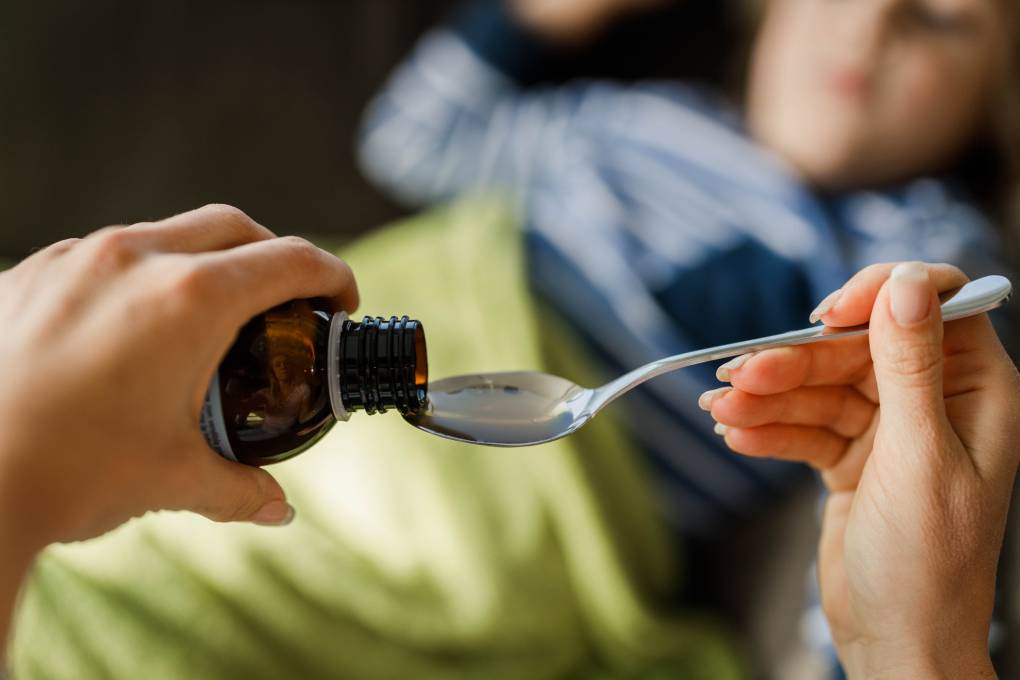
"caption": "Drug manufacturers point to a big spike in demand due to the surge in three respiratory viruses: COVID, RSV and influenza, in what has been termed a 'tripledemic.'",
"credit": "Sky Nesher/Getty Images",
"altTag": "Close-up of an unrecognizable single mother pouring syrup into a spoon for her sick child.",
"description": null,
"imgSizes": {
"medium": {
"file": "https://cdn.kqed.org/wp-content/uploads/sites/10/2022/12/GettyImages-1262848052-800x533.jpg",
"width": 800,
"height": 533,
"mimeType": "image/jpeg"
},
"large": {
"file": "https://cdn.kqed.org/wp-content/uploads/sites/10/2022/12/GettyImages-1262848052-1020x680.jpg",
"width": 1020,
"height": 680,
"mimeType": "image/jpeg"
},
"thumbnail": {
"file": "https://cdn.kqed.org/wp-content/uploads/sites/10/2022/12/GettyImages-1262848052-160x107.jpg",
"width": 160,
"height": 107,
"mimeType": "image/jpeg"
},
"1536x1536": {
"file": "https://cdn.kqed.org/wp-content/uploads/sites/10/2022/12/GettyImages-1262848052-1536x1024.jpg",
"width": 1536,
"height": 1024,
"mimeType": "image/jpeg"
},
"2048x2048": {
"file": "https://cdn.kqed.org/wp-content/uploads/sites/10/2022/12/GettyImages-1262848052-2048x1365.jpg",
"width": 2048,
"height": 1365,
"mimeType": "image/jpeg"
},
"post-thumbnail": {
"file": "https://cdn.kqed.org/wp-content/uploads/sites/10/2022/12/GettyImages-1262848052-672x372.jpg",
"width": 672,
"height": 372,
"mimeType": "image/jpeg"
},
"twentyfourteen-full-width": {
"file": "https://cdn.kqed.org/wp-content/uploads/sites/10/2022/12/GettyImages-1262848052-1038x576.jpg",
"width": 1038,
"height": 576,
"mimeType": "image/jpeg"
},
"full-width": {
"file": "https://cdn.kqed.org/wp-content/uploads/sites/10/2022/12/GettyImages-1262848052-1920x1280.jpg",
"width": 1920,
"height": 1280,
"mimeType": "image/jpeg"
},
"kqedFullSize": {
"file": "https://cdn.kqed.org/wp-content/uploads/sites/10/2022/12/GettyImages-1262848052-e1766080027931.jpg",
"width": 2000,
"height": 1333
}
},
"isLoading": false,
"fetchFailed": false
},
"news_12067555": {
"type": "attachments",
"id": "news_12067555",
"meta": {
"index": "attachments_1716263798",
"site": "news",
"id": "12067555",
"found": true
},
"title": "Parents Of Trans Children Protest Sutter's End To Gender-Affirming Care",
"publishDate": 1765996929,
"status": "inherit",
"parent": 12067552,
"modified": 1765997015,
"caption": "Members of Rainbow Families Action march from Bay Street in Emeryville, California, on Monday, Dec. 8, 2025, to the Sutter corporate offices on Powell Street to protest the end of gender-affirming care to patients under age 19. ",
"credit": "Jessica Christian/San Francisco Chronicle via Getty Images",
"altTag": null,
"description": null,
"imgSizes": {
"thumbnail": {
"file": "https://cdn.kqed.org/wp-content/uploads/sites/10/2025/12/SutterHealthGenderAffirmingCareGetty-160x107.jpg",
"width": 160,
"height": 107,
"mimeType": "image/jpeg"
},
"1536x1536": {
"file": "https://cdn.kqed.org/wp-content/uploads/sites/10/2025/12/SutterHealthGenderAffirmingCareGetty-1536x1024.jpg",
"width": 1536,
"height": 1024,
"mimeType": "image/jpeg"
},
"post-thumbnail": {
"file": "https://cdn.kqed.org/wp-content/uploads/sites/10/2025/12/SutterHealthGenderAffirmingCareGetty-672x372.jpg",
"width": 672,
"height": 372,
"mimeType": "image/jpeg"
},
"twentyfourteen-full-width": {
"file": "https://cdn.kqed.org/wp-content/uploads/sites/10/2025/12/SutterHealthGenderAffirmingCareGetty-1038x576.jpg",
"width": 1038,
"height": 576,
"mimeType": "image/jpeg"
},
"npr-cds-wide": {
"file": "https://cdn.kqed.org/wp-content/uploads/sites/10/2025/12/SutterHealthGenderAffirmingCareGetty-1200x675.jpg",
"width": 1200,
"height": 675,
"mimeType": "image/jpeg"
},
"kqedFullSize": {
"file": "https://cdn.kqed.org/wp-content/uploads/sites/10/2025/12/SutterHealthGenderAffirmingCareGetty.jpg",
"width": 2000,
"height": 1333
}
},
"isLoading": false,
"fetchFailed": false
},
"news_12067172": {
"type": "attachments",
"id": "news_12067172",
"meta": {
"index": "attachments_1716263798",
"site": "news",
"id": "12067172",
"found": true
},
"title": "Workers grind and polish stone for countertops 3",
"publishDate": 1765828944,
"status": "inherit",
"parent": 12067166,
"modified": 1765829003,
"caption": "A stone countertop fabricator wears a mask to help protect against airborne particles, which can contribute to silicosis, at a shop on Oct. 31, 2023, in Sun Valley, California.",
"credit": "Brian van der Brug/Los Angeles Times via Getty Images",
"altTag": null,
"description": null,
"imgSizes": {
"thumbnail": {
"file": "https://cdn.kqed.org/wp-content/uploads/sites/10/2025/12/StoneworkerGetty1-160x107.jpg",
"width": 160,
"height": 107,
"mimeType": "image/jpeg"
},
"1536x1536": {
"file": "https://cdn.kqed.org/wp-content/uploads/sites/10/2025/12/StoneworkerGetty1-1536x1025.jpg",
"width": 1536,
"height": 1025,
"mimeType": "image/jpeg"
},
"post-thumbnail": {
"file": "https://cdn.kqed.org/wp-content/uploads/sites/10/2025/12/StoneworkerGetty1-672x372.jpg",
"width": 672,
"height": 372,
"mimeType": "image/jpeg"
},
"twentyfourteen-full-width": {
"file": "https://cdn.kqed.org/wp-content/uploads/sites/10/2025/12/StoneworkerGetty1-1038x576.jpg",
"width": 1038,
"height": 576,
"mimeType": "image/jpeg"
},
"npr-cds-wide": {
"file": "https://cdn.kqed.org/wp-content/uploads/sites/10/2025/12/StoneworkerGetty1-1200x675.jpg",
"width": 1200,
"height": 675,
"mimeType": "image/jpeg"
},
"kqedFullSize": {
"file": "https://cdn.kqed.org/wp-content/uploads/sites/10/2025/12/StoneworkerGetty1.jpg",
"width": 2000,
"height": 1334
}
},
"isLoading": false,
"fetchFailed": false
},
"news_12066843": {
"type": "attachments",
"id": "news_12066843",
"meta": {
"index": "attachments_1716263798",
"site": "news",
"id": "12066843",
"found": true
},
"title": "Psilocybin mushroom.",
"publishDate": 1765491760,
"status": "inherit",
"parent": 12066782,
"modified": 1765499340,
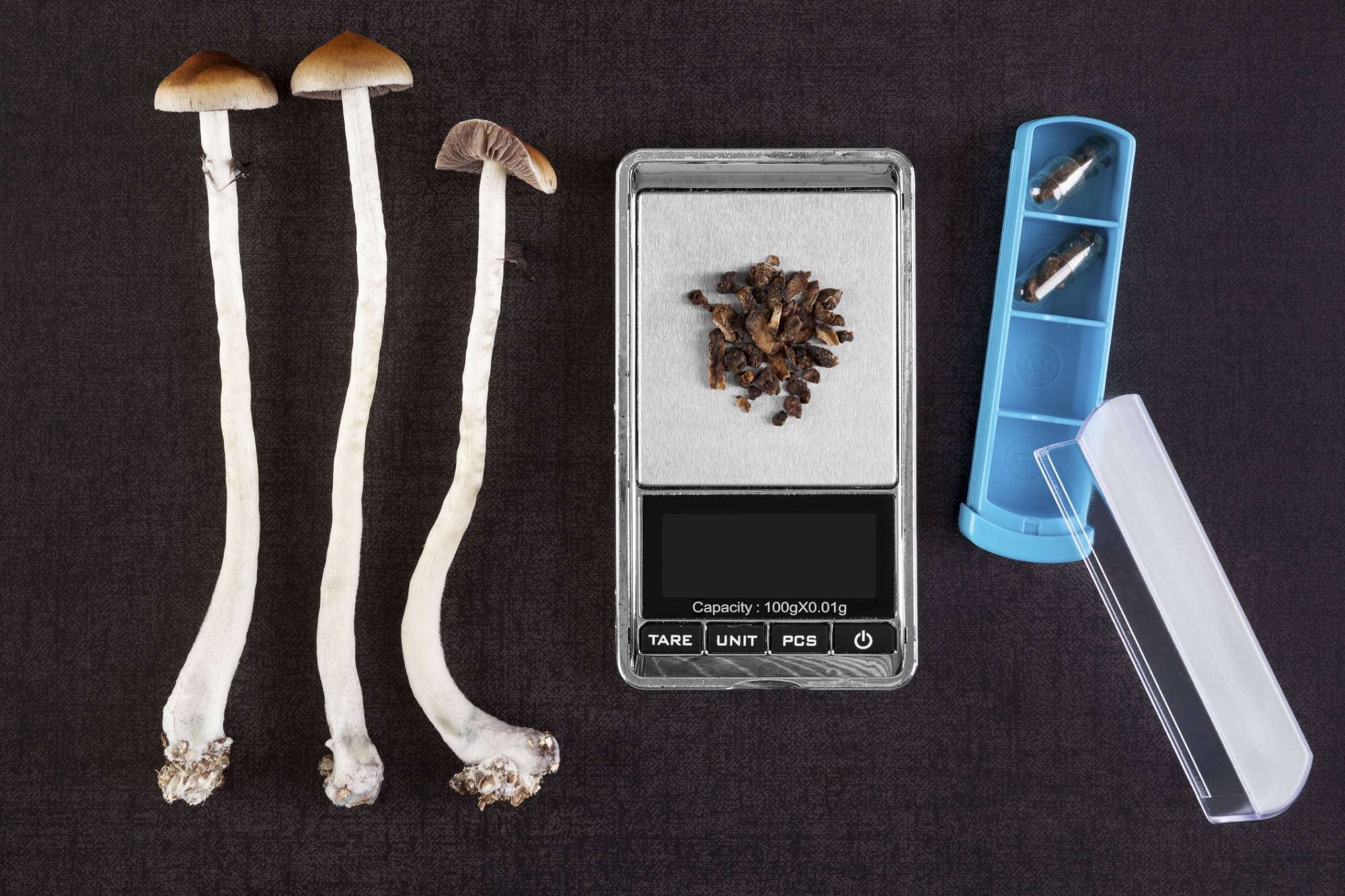
"caption": "Fresh and dried psilocybin mushrooms, gelcaps and digital pocket scale on a black background, top view. Psychedelic therapeutic use.",
"credit": "Getty Images",
"altTag": null,
"description": null,
"imgSizes": {
"medium": {
"file": "https://cdn.kqed.org/wp-content/uploads/sites/10/2025/12/Mushrooms-2000x1333.jpg",
"width": 2000,
"height": 1333,
"mimeType": "image/jpeg"
},
"large": {
"file": "https://cdn.kqed.org/wp-content/uploads/sites/10/2025/12/Mushrooms-2000x1333.jpg",
"width": 2000,
"height": 1333,
"mimeType": "image/jpeg"
},
"thumbnail": {
"file": "https://cdn.kqed.org/wp-content/uploads/sites/10/2025/12/Mushrooms-160x107.jpg",
"width": 160,
"height": 107,
"mimeType": "image/jpeg"
},
"1536x1536": {
"file": "https://cdn.kqed.org/wp-content/uploads/sites/10/2025/12/Mushrooms-1536x1024.jpg",
"width": 1536,
"height": 1024,
"mimeType": "image/jpeg"
},
"2048x2048": {
"file": "https://cdn.kqed.org/wp-content/uploads/sites/10/2025/12/Mushrooms-2048x1365.jpg",
"width": 2048,
"height": 1365,
"mimeType": "image/jpeg"
},
"post-thumbnail": {
"file": "https://cdn.kqed.org/wp-content/uploads/sites/10/2025/12/Mushrooms-672x372.jpg",
"width": 672,
"height": 372,
"mimeType": "image/jpeg"
},
"twentyfourteen-full-width": {
"file": "https://cdn.kqed.org/wp-content/uploads/sites/10/2025/12/Mushrooms-1038x576.jpg",
"width": 1038,
"height": 576,
"mimeType": "image/jpeg"
},
"full-width": {
"file": "https://cdn.kqed.org/wp-content/uploads/sites/10/2025/12/Mushrooms-2000x1333.jpg",
"width": 2000,
"height": 1333,
"mimeType": "image/jpeg"
},
"npr-cds-wide": {
"file": "https://cdn.kqed.org/wp-content/uploads/sites/10/2025/12/Mushrooms-1200x675.jpg",
"width": 1200,
"height": 675,
"mimeType": "image/jpeg"
},
"kqedFullSize": {
"file": "https://cdn.kqed.org/wp-content/uploads/sites/10/2025/12/Mushrooms.jpg",
"width": 2121,
"height": 1414
}
},
"isLoading": false,
"fetchFailed": false
},
"news_11100824": {
"type": "attachments",
"id": "news_11100824",
"meta": {
"index": "attachments_1716263798",
"site": "news",
"id": "11100824",
"found": true
},
"title": "25114840899_e4ac084aab_o",
"publishDate": 1474673386,
"status": "inherit",
"parent": 11100640,
"modified": 1474678078,
"caption": "San Francisco Fire Department Engine 13, stationed in the Financial District. ",
"credit": "Alexander Russy/Flickr",
"altTag": null,
"description": null,
"imgSizes": {
"thumbnail": {
"file": "https://cdn.kqed.org/wp-content/uploads/sites/10/2016/09/25114840899_e4ac084aab_o-400x280.jpg",
"width": 400,
"height": 280,
"mimeType": "image/jpeg"
},
"medium": {
"file": "https://cdn.kqed.org/wp-content/uploads/sites/10/2016/09/25114840899_e4ac084aab_o-800x559.jpg",
"width": 800,
"height": 559,
"mimeType": "image/jpeg"
},
"large": {
"file": "https://cdn.kqed.org/wp-content/uploads/sites/10/2016/09/25114840899_e4ac084aab_o-1920x1342.jpg",
"width": 1920,
"height": 1342,
"mimeType": "image/jpeg"
},
"fd-lrg": {
"file": "https://cdn.kqed.org/wp-content/uploads/sites/10/2016/09/25114840899_e4ac084aab_o-1920x1342.jpg",
"width": 1920,
"height": 1342,
"mimeType": "image/jpeg"
},
"fd-med": {
"file": "https://cdn.kqed.org/wp-content/uploads/sites/10/2016/09/25114840899_e4ac084aab_o-1180x825.jpg",
"width": 1180,
"height": 825,
"mimeType": "image/jpeg"
},
"fd-sm": {
"file": "https://cdn.kqed.org/wp-content/uploads/sites/10/2016/09/25114840899_e4ac084aab_o-960x671.jpg",
"width": 960,
"height": 671,
"mimeType": "image/jpeg"
},
"post-thumbnail": {
"file": "https://cdn.kqed.org/wp-content/uploads/sites/10/2016/09/25114840899_e4ac084aab_o-672x372.jpg",
"width": 672,
"height": 372,
"mimeType": "image/jpeg"
},
"twentyfourteen-full-width": {
"file": "https://cdn.kqed.org/wp-content/uploads/sites/10/2016/09/25114840899_e4ac084aab_o-1038x576.jpg",
"width": 1038,
"height": 576,
"mimeType": "image/jpeg"
},
"guest-author-32": {
"file": "https://cdn.kqed.org/wp-content/uploads/sites/10/2016/09/25114840899_e4ac084aab_o-32x32.jpg",
"width": 32,
"height": 32,
"mimeType": "image/jpeg"
},
"guest-author-50": {
"file": "https://cdn.kqed.org/wp-content/uploads/sites/10/2016/09/25114840899_e4ac084aab_o-50x50.jpg",
"width": 50,
"height": 50,
"mimeType": "image/jpeg"
},
"guest-author-64": {
"file": "https://cdn.kqed.org/wp-content/uploads/sites/10/2016/09/25114840899_e4ac084aab_o-64x64.jpg",
"width": 64,
"height": 64,
"mimeType": "image/jpeg"
},
"guest-author-96": {
"file": "https://cdn.kqed.org/wp-content/uploads/sites/10/2016/09/25114840899_e4ac084aab_o-96x96.jpg",
"width": 96,
"height": 96,
"mimeType": "image/jpeg"
},
"guest-author-128": {
"file": "https://cdn.kqed.org/wp-content/uploads/sites/10/2016/09/25114840899_e4ac084aab_o-128x128.jpg",
"width": 128,
"height": 128,
"mimeType": "image/jpeg"
},
"detail": {
"file": "https://cdn.kqed.org/wp-content/uploads/sites/10/2016/09/25114840899_e4ac084aab_o-150x150.jpg",
"width": 150,
"height": 150,
"mimeType": "image/jpeg"
},
"jmtc-small-thumb": {
"file": "https://cdn.kqed.org/wp-content/uploads/sites/10/2016/09/25114840899_e4ac084aab_o-280x150.jpg",
"width": 280,
"height": 150,
"mimeType": "image/jpeg"
},
"kqedFullSize": {
"file": "https://cdn.kqed.org/wp-content/uploads/sites/10/2016/09/25114840899_e4ac084aab_o-e1765481604471.jpg",
"width": 2000,
"height": 1398
}
},
"isLoading": false,
"fetchFailed": false
},
"news_12065499": {
"type": "attachments",
"id": "news_12065499",
"meta": {
"index": "attachments_1716263798",
"site": "news",
"id": "12065499",
"found": true
},
"title": "251124-DISABILITYJUSTICELEADERS00314_TV-KQED",
"publishDate": 1764191449,
"status": "inherit",
"parent": 0,
"modified": 1764883872,
"caption": "Brittanie Hernandez-Wilson, a disability justice activist, poses for a portrait at Lake Merritt in Oakland on Nov. 24, 2025. Hernandez-Wilson worked closely with Alice Wong, a disability justice leader who died in November.",
"credit": "Tâm Vũ/KQED",
"altTag": null,
"description": null,
"imgSizes": {
"thumbnail": {
"file": "https://cdn.kqed.org/wp-content/uploads/sites/10/2025/11/251124-DISABILITYJUSTICELEADERS00314_TV-KQED-160x107.jpg",
"width": 160,
"height": 107,
"mimeType": "image/jpeg"
},
"1536x1536": {
"file": "https://cdn.kqed.org/wp-content/uploads/sites/10/2025/11/251124-DISABILITYJUSTICELEADERS00314_TV-KQED-1536x1024.jpg",
"width": 1536,
"height": 1024,
"mimeType": "image/jpeg"
},
"post-thumbnail": {
"file": "https://cdn.kqed.org/wp-content/uploads/sites/10/2025/11/251124-DISABILITYJUSTICELEADERS00314_TV-KQED-672x372.jpg",
"width": 672,
"height": 372,
"mimeType": "image/jpeg"
},
"twentyfourteen-full-width": {
"file": "https://cdn.kqed.org/wp-content/uploads/sites/10/2025/11/251124-DISABILITYJUSTICELEADERS00314_TV-KQED-1038x576.jpg",
"width": 1038,
"height": 576,
"mimeType": "image/jpeg"
},
"npr-cds-wide": {
"file": "https://cdn.kqed.org/wp-content/uploads/sites/10/2025/11/251124-DISABILITYJUSTICELEADERS00314_TV-KQED-1200x675.jpg",
"width": 1200,
"height": 675,
"mimeType": "image/jpeg"
},
"kqedFullSize": {
"file": "https://cdn.kqed.org/wp-content/uploads/sites/10/2025/11/251124-DISABILITYJUSTICELEADERS00314_TV-KQED.jpg",
"width": 2000,
"height": 1333
}
},
"isLoading": false,
"fetchFailed": false
},
"news_12056533": {
"type": "attachments",
"id": "news_12056533",
"meta": {
"index": "attachments_1716263798",
"site": "news",
"id": "12056533",
"found": true
},
"title": "250917-VALKYRIESPLAYOFFS-38-BL_QED-KQED",
"publishDate": 1758209890,
"status": "inherit",
"parent": 12056563,
"modified": 1758222771,
"caption": "Veronica Burton (left) and The Golden State Valkyries play the Minnesota Lynx during Game 2 of the WNBA playoffs at the SAP Center in San Jose on Sept. 17, 2025.",
"credit": "Beth LaBerge/KQED",
"altTag": null,
"description": null,
"imgSizes": {
"thumbnail": {
"file": "https://cdn.kqed.org/wp-content/uploads/sites/10/2025/09/250917-VALKYRIESPLAYOFFS-38-BL_QED-KQED-160x107.jpg",
"width": 160,
"height": 107,
"mimeType": "image/jpeg"
},
"1536x1536": {
"file": "https://cdn.kqed.org/wp-content/uploads/sites/10/2025/09/250917-VALKYRIESPLAYOFFS-38-BL_QED-KQED-1536x1024.jpg",
"width": 1536,
"height": 1024,
"mimeType": "image/jpeg"
},
"post-thumbnail": {
"file": "https://cdn.kqed.org/wp-content/uploads/sites/10/2025/09/250917-VALKYRIESPLAYOFFS-38-BL_QED-KQED-672x372.jpg",
"width": 672,
"height": 372,
"mimeType": "image/jpeg"
},
"twentyfourteen-full-width": {
"file": "https://cdn.kqed.org/wp-content/uploads/sites/10/2025/09/250917-VALKYRIESPLAYOFFS-38-BL_QED-KQED-1038x576.jpg",
"width": 1038,
"height": 576,
"mimeType": "image/jpeg"
},
"kqedFullSize": {
"file": "https://cdn.kqed.org/wp-content/uploads/sites/10/2025/09/250917-VALKYRIESPLAYOFFS-38-BL_QED-KQED.jpg",
"width": 2000,
"height": 1333
}
},
"isLoading": false,
"fetchFailed": false
},
"news_12065897": {
"type": "attachments",
"id": "news_12065897",
"meta": {
"index": "attachments_1716263798",
"site": "news",
"id": "12065897",
"found": true
},
"title": "080924_SF-Sweep_MO_CM_15",
"publishDate": 1764786767,
"status": "inherit",
"parent": 12065893,
"modified": 1764786785,
"caption": "Michael Johnson takes down his tent in downtown San Francisco with the help of activists on Aug. 9, 2024. ",
"credit": "Photo by Manuel Orbegozo for CalMatters",
"altTag": null,
"description": null,
"imgSizes": {
"thumbnail": {
"file": "https://cdn.kqed.org/wp-content/uploads/sites/10/2025/12/080924_SF-Sweep_MO_CM_15-160x107.jpeg",
"width": 160,
"height": 107,
"mimeType": "image/jpeg"
},
"1536x1536": {
"file": "https://cdn.kqed.org/wp-content/uploads/sites/10/2025/12/080924_SF-Sweep_MO_CM_15-1536x1024.jpeg",
"width": 1536,
"height": 1024,
"mimeType": "image/jpeg"
},
"post-thumbnail": {
"file": "https://cdn.kqed.org/wp-content/uploads/sites/10/2025/12/080924_SF-Sweep_MO_CM_15-672x372.jpeg",
"width": 672,
"height": 372,
"mimeType": "image/jpeg"
},
"twentyfourteen-full-width": {
"file": "https://cdn.kqed.org/wp-content/uploads/sites/10/2025/12/080924_SF-Sweep_MO_CM_15-1038x576.jpeg",
"width": 1038,
"height": 576,
"mimeType": "image/jpeg"
},
"npr-cds-wide": {
"file": "https://cdn.kqed.org/wp-content/uploads/sites/10/2025/12/080924_SF-Sweep_MO_CM_15-1200x675.jpeg",
"width": 1200,
"height": 675,
"mimeType": "image/jpeg"
},
"kqedFullSize": {
"file": "https://cdn.kqed.org/wp-content/uploads/sites/10/2025/12/080924_SF-Sweep_MO_CM_15.jpeg",
"width": 2000,
"height": 1333
}
},
"isLoading": false,
"fetchFailed": false
},
"news_12065229": {
"type": "attachments",
"id": "news_12065229",
"meta": {
"index": "attachments_1716263798",
"site": "news",
"id": "12065229",
"found": true
},
"title": "102525_NursingHomeEmpire_FM_CM_13",
"publishDate": 1764016681,
"status": "inherit",
"parent": 12065227,
"modified": 1764016701,
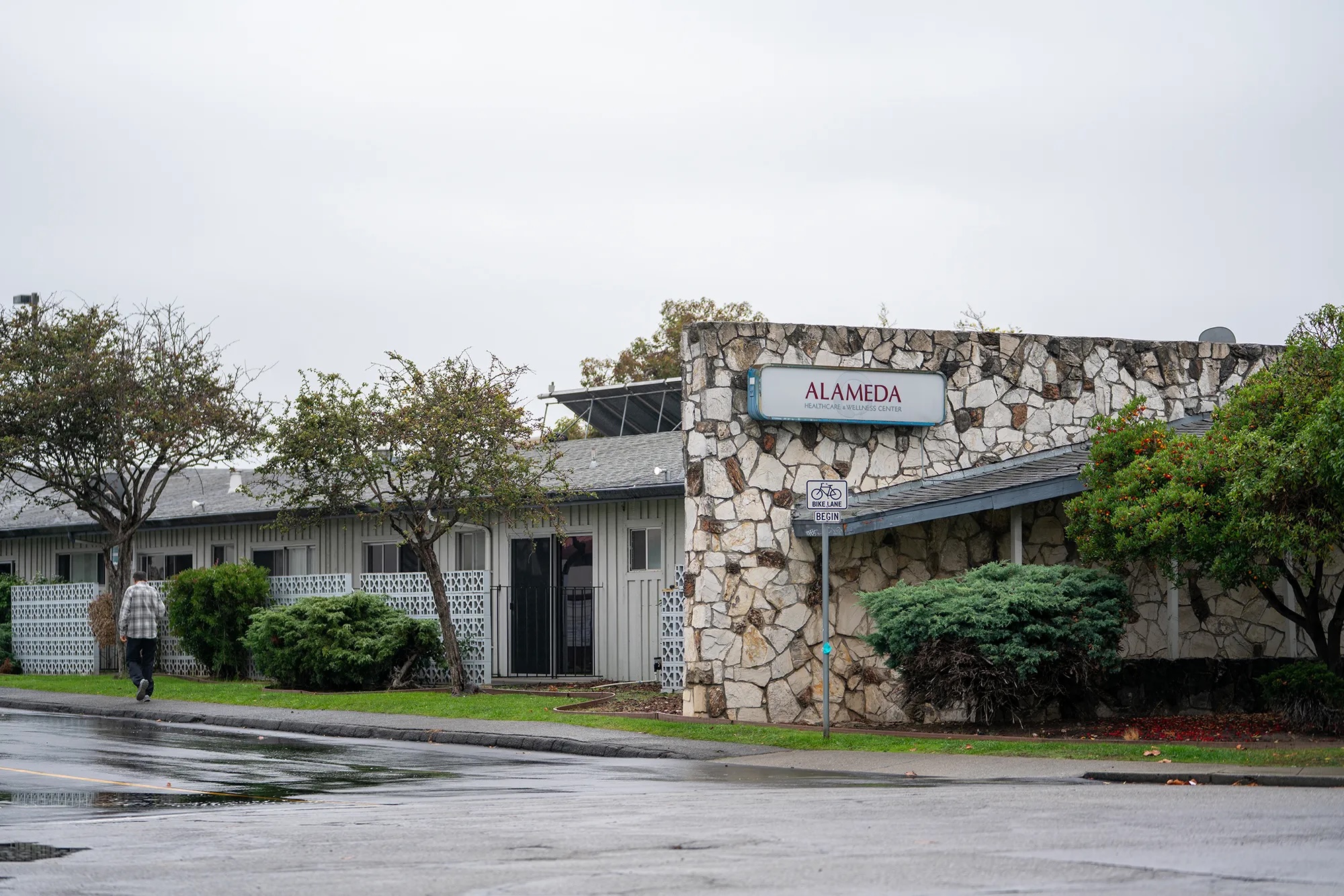
"caption": "Alameda Healthcare and Wellness Center, a Shlomo Rechnitz-owned nursing home, in Alameda on Oct. 25, 2025. ",
"credit": "Photo by Florence Middleton for CalMatters",
"altTag": null,
"description": null,
"imgSizes": {
"thumbnail": {
"file": "https://cdn.kqed.org/wp-content/uploads/sites/10/2025/11/102525_NursingHomeEmpire_FM_CM_13-160x107.jpeg",
"width": 160,
"height": 107,
"mimeType": "image/jpeg"
},
"1536x1536": {
"file": "https://cdn.kqed.org/wp-content/uploads/sites/10/2025/11/102525_NursingHomeEmpire_FM_CM_13-1536x1025.jpeg",
"width": 1536,
"height": 1025,
"mimeType": "image/jpeg"
},
"post-thumbnail": {
"file": "https://cdn.kqed.org/wp-content/uploads/sites/10/2025/11/102525_NursingHomeEmpire_FM_CM_13-672x372.jpeg",
"width": 672,
"height": 372,
"mimeType": "image/jpeg"
},
"twentyfourteen-full-width": {
"file": "https://cdn.kqed.org/wp-content/uploads/sites/10/2025/11/102525_NursingHomeEmpire_FM_CM_13-1038x576.jpeg",
"width": 1038,
"height": 576,
"mimeType": "image/jpeg"
},
"npr-cds-wide": {
"file": "https://cdn.kqed.org/wp-content/uploads/sites/10/2025/11/102525_NursingHomeEmpire_FM_CM_13-1200x675.jpeg",
"width": 1200,
"height": 675,
"mimeType": "image/jpeg"
},
"kqedFullSize": {
"file": "https://cdn.kqed.org/wp-content/uploads/sites/10/2025/11/102525_NursingHomeEmpire_FM_CM_13.jpeg",
"width": 2000,
"height": 1334
}
},
"isLoading": false,
"fetchFailed": false
},
"news_12050964": {
"type": "attachments",
"id": "news_12050964",
"meta": {
"index": "attachments_1716263798",
"site": "news",
"id": "12050964",
"found": true
},
"title": "20250725_KaiserTransProtest_GC-1_qed",
"publishDate": 1754419388,
"status": "inherit",
"parent": 12050945,
"modified": 1754419407,
"caption": "Union nurses and community supporters rally outside of Kaiser Permanente, honoring transgender patients affected by Kaiser’s decision to halt gender-affirming care to minors, on July 25, 2025.",
"credit": "Gina Castro/KQED",
"altTag": null,
"description": null,
"imgSizes": {
"thumbnail": {
"file": "https://cdn.kqed.org/wp-content/uploads/sites/10/2025/08/20250725_KaiserTransProtest_GC-1_qed-160x107.jpg",
"width": 160,
"height": 107,
"mimeType": "image/jpeg"
},
"1536x1536": {
"file": "https://cdn.kqed.org/wp-content/uploads/sites/10/2025/08/20250725_KaiserTransProtest_GC-1_qed-1536x1024.jpg",
"width": 1536,
"height": 1024,
"mimeType": "image/jpeg"
},
"post-thumbnail": {
"file": "https://cdn.kqed.org/wp-content/uploads/sites/10/2025/08/20250725_KaiserTransProtest_GC-1_qed-672x372.jpg",
"width": 672,
"height": 372,
"mimeType": "image/jpeg"
},
"twentyfourteen-full-width": {
"file": "https://cdn.kqed.org/wp-content/uploads/sites/10/2025/08/20250725_KaiserTransProtest_GC-1_qed-1038x576.jpg",
"width": 1038,
"height": 576,
"mimeType": "image/jpeg"
},
"kqedFullSize": {
"file": "https://cdn.kqed.org/wp-content/uploads/sites/10/2025/08/20250725_KaiserTransProtest_GC-1_qed.jpg",
"width": 2000,
"height": 1333
}
},
"isLoading": false,
"fetchFailed": false
},
"news_11968052": {
"type": "attachments",
"id": "news_11968052",
"meta": {
"index": "attachments_1716263798",
"site": "news",
"id": "11968052",
"found": true
},
"parent": 11967946,
"imgSizes": {
"twentyfourteen-full-width": {
"file": "https://cdn.kqed.org/wp-content/uploads/sites/10/2023/11/IMG_0507-1038x576.jpg",
"width": 1038,
"mimeType": "image/jpeg",
"height": 576
},
"thumbnail": {
"file": "https://cdn.kqed.org/wp-content/uploads/sites/10/2023/11/IMG_0507-160x103.jpg",
"width": 160,
"mimeType": "image/jpeg",
"height": 103
},
"post-thumbnail": {
"file": "https://cdn.kqed.org/wp-content/uploads/sites/10/2023/11/IMG_0507-672x372.jpg",
"width": 672,
"mimeType": "image/jpeg",
"height": 372
},
"kqedFullSize": {
"file": "https://cdn.kqed.org/wp-content/uploads/sites/10/2023/11/IMG_0507.jpg",
"width": 1920,
"height": 1240
},
"large": {
"file": "https://cdn.kqed.org/wp-content/uploads/sites/10/2023/11/IMG_0507-1020x659.jpg",
"width": 1020,
"mimeType": "image/jpeg",
"height": 659
},
"1536x1536": {
"file": "https://cdn.kqed.org/wp-content/uploads/sites/10/2023/11/IMG_0507-1536x992.jpg",
"width": 1536,
"mimeType": "image/jpeg",
"height": 992
},
"medium": {
"file": "https://cdn.kqed.org/wp-content/uploads/sites/10/2023/11/IMG_0507-800x517.jpg",
"width": 800,
"mimeType": "image/jpeg",
"height": 517
}
},
"publishDate": 1700586318,
"modified": 1703013952,
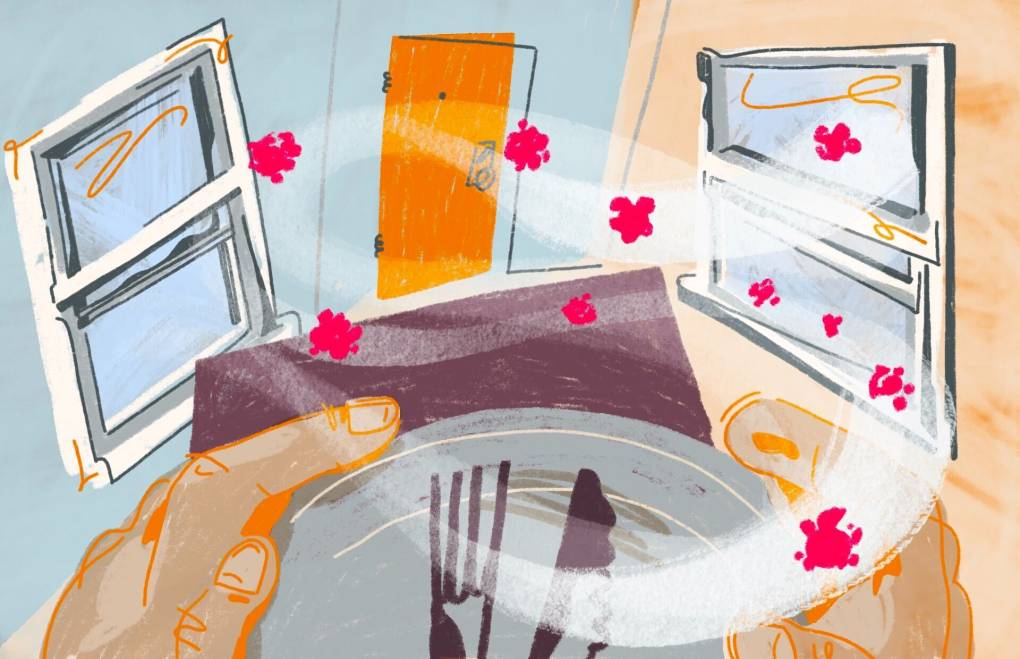
"caption": "Any time you're traveling, gathering and crowding into indoor spaces can bring heightened COVID-19 risks.",
"description": null,
"title": "holidays-covid-risks-ventilation",
"credit": "Anna Vignet/KQED",
"status": "inherit",
"altTag": "An illustration shows a pair of hands holding a plate with silverware over a table. Wind rushes in and out of two open windows, and bright pink COVID symbols waft in the wind.",
"isLoading": false,
"fetchFailed": false
}
},
"audioPlayerReducer": {
"postId": "stream_live",
"isPaused": true,
"isPlaying": false,
"pfsActive": false,
"pledgeModalIsOpen": true,
"playerDrawerIsOpen": false,
"liveAudioPlayStartedAt": 0,
"liveAudioPlayContext": ""
},
"authorsReducer": {
"byline_news_12065893": {
"type": "authors",
"id": "byline_news_12065893",
"meta": {
"override": true
},
"slug": "byline_news_12065893",
"name": "Marissa Kendall, CalMatters",
"isLoading": false
},
"byline_news_12065227": {
"type": "authors",
"id": "byline_news_12065227",
"meta": {
"override": true
},
"slug": "byline_news_12065227",
"name": "Jocelyn Wiener, CalMatters",
"isLoading": false
},
"carlysevern": {
"type": "authors",
"id": "3243",
"meta": {
"index": "authors_1716337520",
"id": "3243",
"found": true
},
"name": "Carly Severn",
"firstName": "Carly",
"lastName": "Severn",
"slug": "carlysevern",
"email": "csevern@kqed.org",
"display_author_email": false,
"staff_mastheads": [
"news"
],
"title": "Senior Editor, Audience News ",
"bio": "Carly is KQED's Senior Editor of Audience News on the Digital News team, and has reported for the California Report Magazine, Bay Curious and KQED Arts. She's formerly the host of \u003ca href=\"http://ww2.kqed.org/pop/category/the-cooler/\" rel=\"noopener noreferrer\">The Cooler\u003c/a> podcast.",
"avatar": "https://secure.gravatar.com/avatar/2d8d6765f186e64c798cf7f0c8088a41?s=600&d=blank&r=g",
"twitter": "teacupinthebay",
"facebook": null,
"instagram": null,
"linkedin": null,
"sites": [
{
"site": "",
"roles": [
"editor"
]
},
{
"site": "arts",
"roles": [
"editor"
]
},
{
"site": "news",
"roles": [
"administrator"
]
},
{
"site": "pop",
"roles": [
"editor"
]
},
{
"site": "futureofyou",
"roles": [
"editor"
]
},
{
"site": "about",
"roles": [
"administrator"
]
},
{
"site": "mindshift",
"roles": [
"editor"
]
},
{
"site": "bayareabites",
"roles": [
"editor"
]
},
{
"site": "stateofhealth",
"roles": [
"editor"
]
},
{
"site": "science",
"roles": [
"editor"
]
},
{
"site": "food",
"roles": [
"contributor"
]
},
{
"site": "forum",
"roles": [
"editor"
]
},
{
"site": "perspectives",
"roles": [
"administrator"
]
},
{
"site": "liveblog",
"roles": [
"editor"
]
}
],
"headData": {
"title": "Carly Severn | KQED",
"description": "Senior Editor, Audience News ",
"ogImgSrc": "https://secure.gravatar.com/avatar/2d8d6765f186e64c798cf7f0c8088a41?s=600&d=blank&r=g",
"twImgSrc": "https://secure.gravatar.com/avatar/2d8d6765f186e64c798cf7f0c8088a41?s=600&d=blank&r=g"
},
"isLoading": false,
"link": "/author/carlysevern"
},
"fjhabvala": {
"type": "authors",
"id": "8659",
"meta": {
"index": "authors_1716337520",
"id": "8659",
"found": true
},
"name": "Farida Jhabvala Romero",
"firstName": "Farida",
"lastName": "Jhabvala Romero",
"slug": "fjhabvala",
"email": "fjhabvala@kqed.org",
"display_author_email": true,
"staff_mastheads": [
"news"
],
"title": "KQED Contributor",
"bio": "\u003cspan style=\"font-weight: 400;\">Farida Jhabvala Romero is a Labor Correspondent for KQED. She previously covered immigration. Farida was \u003ca href=\"https://www.ccnma.org/2022-most-influential-latina-journalists\">named\u003c/a> one of the 10 Most Influential Latina Journalists in California in 2022 by the California Chicano News Media Association. Her work has won awards from the Society of Professional Journalists (Northern California), as well as a national and regional Edward M. Murrow Award for the collaborative reporting projects “Dangerous Air” and “Graying California.” \u003c/span>\u003cspan style=\"font-weight: 400;\">Before joining KQED, Farida worked as a producer at Radio Bilingüe, a national public radio network. Farida earned her master’s degree in journalism from Stanford University.\u003c/span>",
"avatar": "https://secure.gravatar.com/avatar/c3ab27c5554b67b478f80971e515aa02?s=600&d=blank&r=g",
"twitter": "FaridaJhabvala",
"facebook": null,
"instagram": null,
"linkedin": "https://www.linkedin.com/in/faridajhabvala/",
"sites": [
{
"site": "news",
"roles": [
"editor"
]
},
{
"site": "stateofhealth",
"roles": [
"author"
]
}
],
"headData": {
"title": "Farida Jhabvala Romero | KQED",
"description": "KQED Contributor",
"ogImgSrc": "https://secure.gravatar.com/avatar/c3ab27c5554b67b478f80971e515aa02?s=600&d=blank&r=g",
"twImgSrc": "https://secure.gravatar.com/avatar/c3ab27c5554b67b478f80971e515aa02?s=600&d=blank&r=g"
},
"isLoading": false,
"link": "/author/fjhabvala"
},
"ccabreralomeli": {
"type": "authors",
"id": "11708",
"meta": {
"index": "authors_1716337520",
"id": "11708",
"found": true
},
"name": "Carlos Cabrera-Lomelí",
"firstName": "Carlos",
"lastName": "Cabrera-Lomelí",
"slug": "ccabreralomeli",
"email": "ccabreralomeli@KQED.org",
"display_author_email": true,
"staff_mastheads": [
"news"
],
"title": "Community Reporter",
"bio": "Carlos Cabrera-Lomelí is a community reporter with KQED's digital engagement team. He also reports and co-produces for KQED's bilingual news hub KQED en Español. He grew up in San Francisco's Mission District and has previously worked with Univision, 48 Hills and REFORMA in Mexico City.",
"avatar": "https://secure.gravatar.com/avatar/e95ff80bb2eaf18a8f2af4dcf7ffb54b?s=600&d=mm&r=g",
"twitter": "@LomeliCabrera",
"facebook": null,
"instagram": null,
"linkedin": null,
"sites": [
{
"site": "arts",
"roles": [
"editor"
]
},
{
"site": "news",
"roles": [
"editor"
]
},
{
"site": "about",
"roles": [
"editor"
]
},
{
"site": "science",
"roles": [
"editor"
]
},
{
"site": "perspectives",
"roles": [
"editor"
]
},
{
"site": "elections",
"roles": [
"editor"
]
},
{
"site": "liveblog",
"roles": [
"contributor"
]
}
],
"headData": {
"title": "Carlos Cabrera-Lomelí | KQED",
"description": "Community Reporter",
"ogImgSrc": "https://secure.gravatar.com/avatar/e95ff80bb2eaf18a8f2af4dcf7ffb54b?s=600&d=mm&r=g",
"twImgSrc": "https://secure.gravatar.com/avatar/e95ff80bb2eaf18a8f2af4dcf7ffb54b?s=600&d=mm&r=g"
},
"isLoading": false,
"link": "/author/ccabreralomeli"
},
"eromero": {
"type": "authors",
"id": "11746",
"meta": {
"index": "authors_1716337520",
"id": "11746",
"found": true
},
"name": "Ezra David Romero",
"firstName": "Ezra David",
"lastName": "Romero",
"slug": "eromero",
"email": "eromero@kqed.org",
"display_author_email": true,
"staff_mastheads": [
"news",
"science"
],
"title": "Climate Reporter",
"bio": "Ezra David Romero is a climate reporter for KQED News. He covers the absence and excess of water in the Bay Area — think sea level rise, flooding and drought. For nearly a decade he’s covered how warming temperatures are altering the lives of Californians. He’s reported on farmers worried their pistachio trees aren’t getting enough sleep, families desperate for water, scientists studying dying giant sequoias, and alongside firefighters containing wildfires. His work has appeared on local stations across California and nationally on public radio shows like Morning Edition, Here and Now, All Things Considered and Science Friday. ",
"avatar": "https://secure.gravatar.com/avatar/9c15bb8bab267e058708a9eeaeef16bf?s=600&d=blank&r=g",
"twitter": "ezraromero",
"bluesky": null,
"facebook": null,
"instagram": null,
"linkedin": null,
"sites": [
{
"site": "arts",
"roles": [
"editor"
]
},
{
"site": "news",
"roles": [
"editor"
]
},
{
"site": "science",
"roles": [
"editor"
]
},
{
"site": "liveblog",
"roles": [
"author"
]
}
],
"headData": {
"title": "Ezra David Romero | KQED",
"description": "Climate Reporter",
"ogImgSrc": "https://secure.gravatar.com/avatar/9c15bb8bab267e058708a9eeaeef16bf?s=600&d=blank&r=g",
"twImgSrc": "https://secure.gravatar.com/avatar/9c15bb8bab267e058708a9eeaeef16bf?s=600&d=blank&r=g"
},
"isLoading": false,
"link": "/author/eromero"
},
"jgeha": {
"type": "authors",
"id": "11906",
"meta": {
"index": "authors_1716337520",
"id": "11906",
"found": true
},
"name": "Joseph Geha",
"firstName": "Joseph",
"lastName": "Geha",
"slug": "jgeha",
"email": "jgeha@kqed.org",
"display_author_email": false,
"staff_mastheads": [
"news",
"science"
],
"title": "KQED Contributor",
"bio": null,
"avatar": "https://secure.gravatar.com/avatar/ea84d2b6dd93d6369d453edf19dd583f117cd1759d2d9c9c92f9de77017354fe?s=600&d=blank&r=g",
"twitter": null,
"bluesky": null,
"facebook": null,
"instagram": null,
"linkedin": null,
"sites": [
{
"site": "news",
"roles": [
"editor"
]
},
{
"site": "liveblog",
"roles": [
"author"
]
}
],
"headData": {
"title": "Joseph Geha | KQED",
"description": "KQED Contributor",
"ogImgSrc": "https://secure.gravatar.com/avatar/ea84d2b6dd93d6369d453edf19dd583f117cd1759d2d9c9c92f9de77017354fe?s=600&d=blank&r=g",
"twImgSrc": "https://secure.gravatar.com/avatar/ea84d2b6dd93d6369d453edf19dd583f117cd1759d2d9c9c92f9de77017354fe?s=600&d=blank&r=g"
},
"isLoading": false,
"link": "/author/jgeha"
},
"kdebenedetti": {
"type": "authors",
"id": "11913",
"meta": {
"index": "authors_1716337520",
"id": "11913",
"found": true
},
"name": "Katie DeBenedetti",
"firstName": "Katie",
"lastName": "DeBenedetti",
"slug": "kdebenedetti",
"email": "kdebenedetti@kqed.org",
"display_author_email": false,
"staff_mastheads": [
"news",
"science"
],
"title": "KQED Contributor",
"bio": "Katie DeBenedetti is a digital reporter covering daily news for the Express Desk. Prior to joining KQED as a culture reporting intern in January 2024, she covered education and city government for the Napa Valley Register.",
"avatar": "https://secure.gravatar.com/avatar/6e31073cb8f7e4214ab03f42771d0f45?s=600&d=blank&r=g",
"twitter": null,
"facebook": null,
"instagram": null,
"linkedin": null,
"sites": [
{
"site": "news",
"roles": [
"author"
]
},
{
"site": "science",
"roles": [
"author"
]
},
{
"site": "liveblog",
"roles": [
"author"
]
}
],
"headData": {
"title": "Katie DeBenedetti | KQED",
"description": "KQED Contributor",
"ogImgSrc": "https://secure.gravatar.com/avatar/6e31073cb8f7e4214ab03f42771d0f45?s=600&d=blank&r=g",
"twImgSrc": "https://secure.gravatar.com/avatar/6e31073cb8f7e4214ab03f42771d0f45?s=600&d=blank&r=g"
},
"isLoading": false,
"link": "/author/kdebenedetti"
},
"aaliahmad": {
"type": "authors",
"id": "11986",
"meta": {
"index": "authors_1716337520",
"id": "11986",
"found": true
},
"name": "Ayah Ali-Ahmad",
"firstName": "Ayah",
"lastName": "Ali-Ahmad",
"slug": "aaliahmad",
"email": "aaliahmad@KQED.org",
"display_author_email": false,
"staff_mastheads": [],
"title": "KQED Contributor",
"bio": null,
"avatar": "https://secure.gravatar.com/avatar/7f340465c69a2c816f6c07000137a3ee?s=600&d=blank&r=g",
"twitter": "ayahaliahmad",
"bluesky": null,
"facebook": null,
"instagram": null,
"linkedin": null,
"sites": [
{
"site": "news",
"roles": [
"author"
]
}
],
"headData": {
"title": "Ayah Ali-Ahmad | KQED",
"description": "KQED Contributor",
"ogImgSrc": "https://secure.gravatar.com/avatar/7f340465c69a2c816f6c07000137a3ee?s=600&d=blank&r=g",
"twImgSrc": "https://secure.gravatar.com/avatar/7f340465c69a2c816f6c07000137a3ee?s=600&d=blank&r=g"
},
"isLoading": false,
"link": "/author/aaliahmad"
},
"epeppel": {
"type": "authors",
"id": "11989",
"meta": {
"index": "authors_1716337520",
"id": "11989",
"found": true
},
"name": "Eliza Peppel",
"firstName": "Eliza",
"lastName": "Peppel",
"slug": "epeppel",
"email": "epeppel@kqed.org",
"display_author_email": false,
"staff_mastheads": [
"news",
"science",
"arts"
],
"title": null,
"bio": "Eliza is an award-winning journalist living in Oakland. She was previously a reporting fellow at KALW, where she reported daily news and long-form radio features. Eliza studied journalism at Fordham University in The Bronx during the COVID-19 pandemic. She grew up mainly in California and spent a few childhood years in Aix en Provence, France.",
"avatar": "https://secure.gravatar.com/avatar/7fcfcd6fdbaa62c5112d3ec9bc0b9b34?s=600&d=blank&r=g",
"twitter": null,
"bluesky": null,
"facebook": null,
"instagram": null,
"linkedin": null,
"sites": [
{
"site": "news",
"roles": [
"contributor"
]
},
{
"site": "science",
"roles": [
"contributor"
]
}
],
"headData": {
"title": "Eliza Peppel | KQED",
"description": null,
"ogImgSrc": "https://secure.gravatar.com/avatar/7fcfcd6fdbaa62c5112d3ec9bc0b9b34?s=600&d=blank&r=g",
"twImgSrc": "https://secure.gravatar.com/avatar/7fcfcd6fdbaa62c5112d3ec9bc0b9b34?s=600&d=blank&r=g"
},
"isLoading": false,
"link": "/author/epeppel"
}
},
"pagesReducer": {
"news_tag_health": {
"type": "terms",
"id": "news_18543",
"meta": {
"index": "terms_1716263798",
"site": "news",
"id": "18543",
"score": 6.8845096
},
"featImg": null,
"name": "Health",
"description": null,
"taxonomy": "tag",
"headData": {
"twImgId": null,
"twTitle": null,
"ogTitle": null,
"ogImgId": null,
"twDescription": null,
"description": null,
"title": "Health Archives | KQED News",
"ogDescription": null
},
"ttid": 466,
"slug": "health",
"isLoading": false,
"title": "Health",
"pageMeta": {
"site": "news",
"WpPageTemplate": "page-topic-editorial",
"currentPage": 8
},
"blocks": [
{
"blockName": "kqed/post-list",
"attrs": {
"layout": "cardArticle2",
"query": "posts/news?tag=health",
"seeMore": false,
"paginated": true,
"page": 8
}
},
{
"blockName": "kqed/ad"
}
]
}
},
"pfsSessionReducer": {},
"postsReducer": {
"stream_live": {
"type": "live",
"id": "stream_live",
"audioUrl": "https://streams.kqed.org/kqedradio",
"title": "Live Stream",
"excerpt": "Live Stream information currently unavailable.",
"link": "/radio",
"featImg": "",
"label": {
"name": "KQED Live",
"link": "/"
}
},
"stream_kqedNewscast": {
"type": "posts",
"id": "stream_kqedNewscast",
"audioUrl": "https://www.kqed.org/.stream/anon/radio/RDnews/newscast.mp3?_=1",
"title": "KQED Newscast",
"featImg": "",
"label": {
"name": "88.5 FM",
"link": "/"
}
},
"news_12068383": {
"type": "posts",
"id": "news_12068383",
"meta": {
"index": "posts_1716263798",
"site": "news",
"id": "12068383",
"score": null,
"sort": [
1766613608000
]
},
"guestAuthors": [],
"slug": "alameda-health-system-to-lay-off-hundreds-in-january-after-massive-federal-cuts",
"title": "Alameda Health System to Lay Off Hundreds in January After Massive Federal Cuts",
"publishDate": 1766613608,
"format": "standard",
"headTitle": "Alameda Health System to Lay Off Hundreds in January After Massive Federal Cuts | KQED",
"labelTerm": {
"site": "news"
},
"content": "\u003cp>In anticipation of the Trump administration’s \u003ca href=\"https://www.kqed.org/news/12047647/trumps-health-law-spurs-big-medi-cal-changes-what-californians-need-to-know\">major cuts to Medicaid\u003c/a>, \u003ca href=\"https://www.kqed.org/healthnews\">the Alameda Health System\u003c/a>, which runs public hospitals and clinics throughout the East Bay, is planning to lay off nearly 300 people in January.\u003c/p>\n\u003cp>It’s one of many healthcare systems around the state and nation threatened as a result of significant expected losses in revenue from Medicaid, the nation’s insurance system for lower-income people, known as Medi-Cal in California. \u003c/p>\n\u003cp>However, some union employees of the health system have said layoff notices, which are expected on Jan. 6, are premature, as the financial impacts of the cuts have yet to be felt. \u003c/p>\n\u003cp>[ad fullwidth]\u003c/p>\n\u003cp>“I think they’re bowing to pressures before those pressures have actually come into play,” Reilly Gardine, a clinical dietitian at Wilma Chan Highland Hospital Campus in Oakland, told KQED on Monday. “And I think they’re not being creative enough in figuring out alternative ways for funding.”\u003c/p>\n\u003cp>The health system, in an emailed statement to KQED, said it expects to lose “more than $100 million annually by 2030,” due to H.R. 1, the tax and spending bill President Donald Trump refers to as “Big” and “Beautiful.”\u003c/p>\n\u003cfigure id=\"attachment_11891411\" class=\"wp-caption aligncenter\" style=\"max-width: 1920px\">\u003ca href=\"https://cdn.kqed.org/wp-content/uploads/sites/10/2021/10/RS51824_066_Oakland_HighlandHospitalBridgeProgram_10062021-qut-1.jpg\">\u003cimg loading=\"lazy\" decoding=\"async\" src=\"https://cdn.kqed.org/wp-content/uploads/sites/10/2021/10/RS51824_066_Oakland_HighlandHospitalBridgeProgram_10062021-qut-1.jpg\" alt=\"\" width=\"1920\" height=\"1280\" class=\"size-full wp-image-11891411\" srcset=\"https://cdn.kqed.org/wp-content/uploads/sites/10/2021/10/RS51824_066_Oakland_HighlandHospitalBridgeProgram_10062021-qut-1.jpg 1920w, https://cdn.kqed.org/wp-content/uploads/sites/10/2021/10/RS51824_066_Oakland_HighlandHospitalBridgeProgram_10062021-qut-1-800x533.jpg 800w, https://cdn.kqed.org/wp-content/uploads/sites/10/2021/10/RS51824_066_Oakland_HighlandHospitalBridgeProgram_10062021-qut-1-1020x680.jpg 1020w, https://cdn.kqed.org/wp-content/uploads/sites/10/2021/10/RS51824_066_Oakland_HighlandHospitalBridgeProgram_10062021-qut-1-160x107.jpg 160w, https://cdn.kqed.org/wp-content/uploads/sites/10/2021/10/RS51824_066_Oakland_HighlandHospitalBridgeProgram_10062021-qut-1-1536x1024.jpg 1536w\" sizes=\"auto, (max-width: 1920px) 100vw, 1920px\">\u003c/a>\u003cfigcaption class=\"wp-caption-text\">Dr. Monish Ullal speaks with patient Jay Flohr at Highland Hospital in Oakland on Oct. 6, 2021. \u003ccite>(Beth LaBerge/KQED)\u003c/cite>\u003c/figcaption>\u003c/figure>\n\u003cp>The total annual budget for AHS is roughly $1.4 billion, according to its budget documents. The system could face an additional potential $60 million in cuts annually in the coming years due to cuts to federal funding that allows states to pay hospitals who treat a large share of Medi-Cal patients, officials said. \u003c/p>\n\u003cp>“AHS projects that cash will run out by approximately August of 2026 without immediate action,” the statement said. “In order to be proactive and ensure that AHS can continue to provide a range of emergency and comprehensive care, AHS has made the painful decision to reduce some services, reduce its workforce, and eliminate certain programs.”\u003c/p>\n\u003cp>Veronica Palacios, an eligibility specialist, and a chapter leader with labor union SEIU 1021, said workers have not been given a clear reason why the cuts need to be made now. \u003c/p>\n\u003cp>“Because if it’s being done right now and it’s not necessarily needed at this point, it sounds like you’re purposely cutting services to the community. Why do that?” Palacios said.[aside postID=news_12067733 hero='https://cdn.kqed.org/wp-content/uploads/sites/10/2022/12/GettyImages-1262848052-1020x680.jpg']The cuts were initially planned to go out on Dec. 24, which Gardine called “insulting,” and which Palacios said sows chaos among workers when they should be spending time with family during the holidays. \u003c/p>\n\u003cp>In what appeared to be a response to pressure from union members, the health system said late Monday it would delay the notices until Jan. 6. \u003c/p>\n\u003cp>Palacios said the layoff notices will send workers into “damage-control” mode. \u003c/p>\n\u003cp>“How am I going to support my family, how am I going to survive? Can I get another job if this is happening with our health care system? Is this happening throughout the state of California?” she said, reflecting her colleagues’ concerns. “They’re stressed out, they’re worried, they’re afraid of what the what ifs.” \u003c/p>\n\u003cp>The health system said the 296 people it needs to lay off will be from “departments and disciplines across the system including management, support and administrative services, and clinical care,” and that those that are affected will have access to job search assistance and resume writing guidance. Some will receive severance packages. \u003c/p>\n\u003cp>“AHS leadership continues to pursue multiple strategies to restore funding and strengthen sustainability,” the agency’s statement said. “We are working in partnership with federal, state and county leaders to hopefully mitigate these adverse conditions.”\u003c/p>\n\u003cp>Gardine said before resorting to layoffs, executives at AHS should take pay cuts, and explore other options, such as ending leases at pricey office buildings in downtown and the Jack London areas of Oakland. The system should also consider hiring more permanent staff instead of relying on traveling contractors. \u003c/p>\n\u003cp>“The resources are there, the state of California is an incredibly wealthy state. So, the fact that we are cutting essential services for our most vulnerable communities is completely outrageous,” Gardine said. “I think we have a huge fight ahead and that I think there’s a lot of us who are ready to start fighting.” \u003c/p>\n\u003cp>\u003c/p>\n",
"blocks": [],
"excerpt": "The significant cuts to Medicaid caused by the Trump administration’s tax and spending bill are pushing Alameda Health System to lay off nearly 300 workers. \r\n",
"status": "publish",
"parent": 0,
"modified": 1766613608,
"stats": {
"hasAudio": false,
"hasVideo": false,
"hasChartOrMap": false,
"iframeSrcs": [],
"hasGoogleForm": false,
"hasGallery": false,
"hasHearkenModule": false,
"hasPolis": false,
"paragraphCount": 18,
"wordCount": 778
},
"headData": {
"title": "Alameda Health System to Lay Off Hundreds in January After Massive Federal Cuts | KQED",
"description": "The significant cuts to Medicaid caused by the Trump administration’s tax and spending bill are pushing Alameda Health System to lay off nearly 300 workers. \r\n",
"ogTitle": "",
"ogDescription": "",
"ogImgId": "",
"twTitle": "",
"twDescription": "",
"twImgId": "",
"schema": {
"@context": "https://schema.org",
"@type": "NewsArticle",
"headline": "Alameda Health System to Lay Off Hundreds in January After Massive Federal Cuts",
"datePublished": "2025-12-24T14:00:08-08:00",
"dateModified": "2025-12-24T14:00:08-08:00",
"image": "https://cdn.kqed.org/wp-content/uploads/2020/02/KQED-OG-Image@1x.png",
"isAccessibleForFree": "True",
"publisher": {
"@type": "NewsMediaOrganization",
"@id": "https://www.kqed.org/#organization",
"name": "KQED",
"logo": "https://cdn.kqed.org/wp-content/uploads/2020/02/KQED-OG-Image@1x.png",
"url": "https://www.kqed.org",
"sameAs": [
"https://www.facebook.com/KQED",
"https://twitter.com/KQED",
"https://www.instagram.com/kqed/",
"https://www.tiktok.com/@kqedofficial",
"https://www.linkedin.com/company/kqed",
"https://www.youtube.com/channel/UCeC0IOo7i1P_61zVUWbJ4nw"
]
}
}
},
"primaryCategory": {
"termId": 457,
"slug": "health",
"name": "Health"
},
"sticky": false,
"nprStoryId": "kqed-12068383",
"templateType": "standard",
"featuredImageType": "standard",
"excludeFromSiteSearch": "Include",
"articleAge": "0",
"path": "/news/12068383/alameda-health-system-to-lay-off-hundreds-in-january-after-massive-federal-cuts",
"audioTrackLength": null,
"parsedContent": [
{
"type": "contentString",
"content": "\u003cdiv class=\"post-body\">\u003cp>\u003cp>In anticipation of the Trump administration’s \u003ca href=\"https://www.kqed.org/news/12047647/trumps-health-law-spurs-big-medi-cal-changes-what-californians-need-to-know\">major cuts to Medicaid\u003c/a>, \u003ca href=\"https://www.kqed.org/healthnews\">the Alameda Health System\u003c/a>, which runs public hospitals and clinics throughout the East Bay, is planning to lay off nearly 300 people in January.\u003c/p>\n\u003cp>It’s one of many healthcare systems around the state and nation threatened as a result of significant expected losses in revenue from Medicaid, the nation’s insurance system for lower-income people, known as Medi-Cal in California. \u003c/p>\n\u003cp>However, some union employees of the health system have said layoff notices, which are expected on Jan. 6, are premature, as the financial impacts of the cuts have yet to be felt. \u003c/p>\n\u003cp>\u003c/p>\u003c/div>",
"attributes": {
"named": {},
"numeric": []
}
},
{
"type": "component",
"content": "",
"name": "ad",
"attributes": {
"named": {
"label": "fullwidth"
},
"numeric": [
"fullwidth"
]
}
},
{
"type": "contentString",
"content": "\u003cdiv class=\"post-body\">\u003cp>\u003c/p>\n\u003cp>“I think they’re bowing to pressures before those pressures have actually come into play,” Reilly Gardine, a clinical dietitian at Wilma Chan Highland Hospital Campus in Oakland, told KQED on Monday. “And I think they’re not being creative enough in figuring out alternative ways for funding.”\u003c/p>\n\u003cp>The health system, in an emailed statement to KQED, said it expects to lose “more than $100 million annually by 2030,” due to H.R. 1, the tax and spending bill President Donald Trump refers to as “Big” and “Beautiful.”\u003c/p>\n\u003cfigure id=\"attachment_11891411\" class=\"wp-caption aligncenter\" style=\"max-width: 1920px\">\u003ca href=\"https://cdn.kqed.org/wp-content/uploads/sites/10/2021/10/RS51824_066_Oakland_HighlandHospitalBridgeProgram_10062021-qut-1.jpg\">\u003cimg loading=\"lazy\" decoding=\"async\" src=\"https://cdn.kqed.org/wp-content/uploads/sites/10/2021/10/RS51824_066_Oakland_HighlandHospitalBridgeProgram_10062021-qut-1.jpg\" alt=\"\" width=\"1920\" height=\"1280\" class=\"size-full wp-image-11891411\" srcset=\"https://cdn.kqed.org/wp-content/uploads/sites/10/2021/10/RS51824_066_Oakland_HighlandHospitalBridgeProgram_10062021-qut-1.jpg 1920w, https://cdn.kqed.org/wp-content/uploads/sites/10/2021/10/RS51824_066_Oakland_HighlandHospitalBridgeProgram_10062021-qut-1-800x533.jpg 800w, https://cdn.kqed.org/wp-content/uploads/sites/10/2021/10/RS51824_066_Oakland_HighlandHospitalBridgeProgram_10062021-qut-1-1020x680.jpg 1020w, https://cdn.kqed.org/wp-content/uploads/sites/10/2021/10/RS51824_066_Oakland_HighlandHospitalBridgeProgram_10062021-qut-1-160x107.jpg 160w, https://cdn.kqed.org/wp-content/uploads/sites/10/2021/10/RS51824_066_Oakland_HighlandHospitalBridgeProgram_10062021-qut-1-1536x1024.jpg 1536w\" sizes=\"auto, (max-width: 1920px) 100vw, 1920px\">\u003c/a>\u003cfigcaption class=\"wp-caption-text\">Dr. Monish Ullal speaks with patient Jay Flohr at Highland Hospital in Oakland on Oct. 6, 2021. \u003ccite>(Beth LaBerge/KQED)\u003c/cite>\u003c/figcaption>\u003c/figure>\n\u003cp>The total annual budget for AHS is roughly $1.4 billion, according to its budget documents. The system could face an additional potential $60 million in cuts annually in the coming years due to cuts to federal funding that allows states to pay hospitals who treat a large share of Medi-Cal patients, officials said. \u003c/p>\n\u003cp>“AHS projects that cash will run out by approximately August of 2026 without immediate action,” the statement said. “In order to be proactive and ensure that AHS can continue to provide a range of emergency and comprehensive care, AHS has made the painful decision to reduce some services, reduce its workforce, and eliminate certain programs.”\u003c/p>\n\u003cp>Veronica Palacios, an eligibility specialist, and a chapter leader with labor union SEIU 1021, said workers have not been given a clear reason why the cuts need to be made now. \u003c/p>\n\u003cp>“Because if it’s being done right now and it’s not necessarily needed at this point, it sounds like you’re purposely cutting services to the community. Why do that?” Palacios said.\u003c/p>\u003c/div>",
"attributes": {
"named": {},
"numeric": []
}
},
{
"type": "component",
"content": "",
"name": "aside",
"attributes": {
"named": {
"postid": "news_12067733",
"hero": "https://cdn.kqed.org/wp-content/uploads/sites/10/2022/12/GettyImages-1262848052-1020x680.jpg",
"label": ""
},
"numeric": []
}
},
{
"type": "contentString",
"content": "\u003cdiv class=\"post-body\">\u003cp>The cuts were initially planned to go out on Dec. 24, which Gardine called “insulting,” and which Palacios said sows chaos among workers when they should be spending time with family during the holidays. \u003c/p>\n\u003cp>In what appeared to be a response to pressure from union members, the health system said late Monday it would delay the notices until Jan. 6. \u003c/p>\n\u003cp>Palacios said the layoff notices will send workers into “damage-control” mode. \u003c/p>\n\u003cp>“How am I going to support my family, how am I going to survive? Can I get another job if this is happening with our health care system? Is this happening throughout the state of California?” she said, reflecting her colleagues’ concerns. “They’re stressed out, they’re worried, they’re afraid of what the what ifs.” \u003c/p>\n\u003cp>The health system said the 296 people it needs to lay off will be from “departments and disciplines across the system including management, support and administrative services, and clinical care,” and that those that are affected will have access to job search assistance and resume writing guidance. Some will receive severance packages. \u003c/p>\n\u003cp>“AHS leadership continues to pursue multiple strategies to restore funding and strengthen sustainability,” the agency’s statement said. “We are working in partnership with federal, state and county leaders to hopefully mitigate these adverse conditions.”\u003c/p>\n\u003cp>Gardine said before resorting to layoffs, executives at AHS should take pay cuts, and explore other options, such as ending leases at pricey office buildings in downtown and the Jack London areas of Oakland. The system should also consider hiring more permanent staff instead of relying on traveling contractors. \u003c/p>\n\u003cp>“The resources are there, the state of California is an incredibly wealthy state. So, the fact that we are cutting essential services for our most vulnerable communities is completely outrageous,” Gardine said. “I think we have a huge fight ahead and that I think there’s a lot of us who are ready to start fighting.” \u003c/p>\n\u003cp>\u003c/p>\n\u003c/div>\u003c/p>",
"attributes": {
"named": {},
"numeric": []
}
}
],
"link": "/news/12068383/alameda-health-system-to-lay-off-hundreds-in-january-after-massive-federal-cuts",
"authors": [
"11906"
],
"categories": [
"news_31795",
"news_457",
"news_34551",
"news_8"
],
"tags": [
"news_260",
"news_18543",
"news_35118",
"news_19904"
],
"featImg": "news_11812563",
"label": "news"
},
"news_12067733": {
"type": "posts",
"id": "news_12067733",
"meta": {
"index": "posts_1716263798",
"site": "news",
"id": "12067733",
"score": null,
"sort": [
1766100546000
]
},
"guestAuthors": [],
"slug": "flu-season-returns-to-san-francisco-heres-where-to-find-vaccines",
"title": "Flu Season Returns to San Francisco: Here’s Where to Find Vaccines",
"publishDate": 1766100546,
"format": "standard",
"headTitle": "Flu Season Returns to San Francisco: Here’s Where to Find Vaccines | KQED",
"labelTerm": {
"site": "news"
},
"content": "\u003cp>\u003ca href=\"https://www.kqed.org/news/tag/flu\">Flu\u003c/a> season is back in \u003ca href=\"https://www.kqed.org/news/tag/san-francisco\">San Francisco\u003c/a>.\u003c/p>\n\u003cp>According to data released Wednesday by the city’s Department of Public Health, the rate of tests positive for influenza reached 5% as of Dec. 6.\u003c/p>\n\u003cp>Though cases are still low overall, they are on the rise — and the state’s respiratory virus dashboard indicates hospitalizations are “expected to increase.” Dr. Farrell Tobolowsky, an infectious disease physician for the city’s Public Health Department, said the holidays are prime time for gathering with loved ones and sharing germs.\u003c/p>\n\u003cp>[ad fullwidth]\u003c/p>\n\u003cp>“We suspect that this is definitely a time where there will be risk of transmission. We also know that people gather with people from other parts of the country where flu activity may actually be higher than it is in California at this time,” Tobolowsky said.\u003c/p>\n\u003cp>Earlier this year, the state \u003ca href=\"https://www.kqed.org/news/12028312/californias-worst-flu-season-years-may-finally-easing\">recorded one of its worst flu seasons\u003c/a> on record. Early mild symptoms can include a fever, runny nose, cough, body aches, sore throat or fatigue. More severe symptoms include vomiting and diarrhea.\u003c/p>\n\u003cp>Historically, these seasonal upticks of the flu can last for weeks to months. According to Dr. Tobolowsky, cases are lower than they’ve been at this time of year in the past, meaning the winter flu season could simply be beginning later than expected.[aside postID=news_12027283 hero='https://cdn.kqed.org/wp-content/uploads/sites/10/2025/02/GettyImages-1720991107-1020x680.jpg']Older adults, infants and toddlers, and people with chronic medical conditions are most at-risk for complications associated with the illness.\u003c/p>\n\u003cp>SFDPH recommended the 2025-2026 shot for anyone over six months old who has not already received it. Experts usually suggest that \u003ca href=\"https://www.kqed.org/news/12027283/forgot-your-flu-vaccine-with-historic-infections-its-not-too-late-for-a-shot\">people get their shot in the fall,\u003c/a> ahead of the coming season’s peak. You can find \u003ca href=\"https://www.sf.gov/get-vaccinated-against-covid-19-flu-and-rsv\">access \u003c/a>to a vaccine here, and many local pharmacies accommodate walk-ins.\u003c/p>\n\u003cp>SFDPH also suggests the use of high-quality masks — especially if you’re sick — but also beneficial even when you’re not. KN95 masks have been proven to lower the risk of spreading respiratory illnesses, and all mask types are especially recommended in crowded indoor spaces.\u003c/p>\n\u003cp>And as usual, the SFDPH urges good hygiene practices such as washing your hands frequently with soap and water, and using alcohol-based hand sanitizers.\u003c/p>\n\u003cp>While sick, it’s important to stay home from school or work until symptoms resolve. Being fever-free for 24 hours without fever-reducing medication is a good indicator of when to return to ease back into your typical routine.\u003c/p>\n\u003cp>\u003c/p>\n",
"blocks": [],
"excerpt": "The December holidays are prime time for spreading influenza, so get your shot ahead of the wave to avoid getting sick.",
"status": "publish",
"parent": 0,
"modified": 1768601514,
"stats": {
"hasAudio": false,
"hasVideo": false,
"hasChartOrMap": false,
"iframeSrcs": [],
"hasGoogleForm": false,
"hasGallery": false,
"hasHearkenModule": false,
"hasPolis": false,
"paragraphCount": 12,
"wordCount": 431
},
"headData": {
"title": "Flu Season Returns to San Francisco: Here’s Where to Find Vaccines | KQED",
"description": "The December holidays are prime time for spreading influenza, so get your shot ahead of the wave to avoid getting sick.",
"ogTitle": "",
"ogDescription": "",
"ogImgId": "",
"twTitle": "",
"twDescription": "",
"twImgId": "",
"schema": {
"@context": "https://schema.org",
"@type": "NewsArticle",
"headline": "Flu Season Returns to San Francisco: Here’s Where to Find Vaccines",
"datePublished": "2025-12-18T15:29:06-08:00",
"dateModified": "2026-01-16T14:11:54-08:00",
"image": "https://cdn.kqed.org/wp-content/uploads/2020/02/KQED-OG-Image@1x.png",
"isAccessibleForFree": "True",
"publisher": {
"@type": "NewsMediaOrganization",
"@id": "https://www.kqed.org/#organization",
"name": "KQED",
"logo": "https://cdn.kqed.org/wp-content/uploads/2020/02/KQED-OG-Image@1x.png",
"url": "https://www.kqed.org",
"sameAs": [
"https://www.facebook.com/KQED",
"https://twitter.com/KQED",
"https://www.instagram.com/kqed/",
"https://www.tiktok.com/@kqedofficial",
"https://www.linkedin.com/company/kqed",
"https://www.youtube.com/channel/UCeC0IOo7i1P_61zVUWbJ4nw"
]
}
}
},
"primaryCategory": {
"termId": 457,
"slug": "health",
"name": "Health"
},
"sticky": false,
"nprStoryId": "kqed-12067733",
"templateType": "standard",
"featuredImageType": "standard",
"excludeFromSiteSearch": "Include",
"showOnAuthorArchivePages": "No",
"articleAge": "0",
"path": "/news/12067733/flu-season-returns-to-san-francisco-heres-where-to-find-vaccines",
"audioTrackLength": null,
"parsedContent": [
{
"type": "contentString",
"content": "\u003cdiv class=\"post-body\">\u003cp>\u003cp>\u003ca href=\"https://www.kqed.org/news/tag/flu\">Flu\u003c/a> season is back in \u003ca href=\"https://www.kqed.org/news/tag/san-francisco\">San Francisco\u003c/a>.\u003c/p>\n\u003cp>According to data released Wednesday by the city’s Department of Public Health, the rate of tests positive for influenza reached 5% as of Dec. 6.\u003c/p>\n\u003cp>Though cases are still low overall, they are on the rise — and the state’s respiratory virus dashboard indicates hospitalizations are “expected to increase.” Dr. Farrell Tobolowsky, an infectious disease physician for the city’s Public Health Department, said the holidays are prime time for gathering with loved ones and sharing germs.\u003c/p>\n\u003cp>\u003c/p>\u003c/div>",
"attributes": {
"named": {},
"numeric": []
}
},
{
"type": "component",
"content": "",
"name": "ad",
"attributes": {
"named": {
"label": "fullwidth"
},
"numeric": [
"fullwidth"
]
}
},
{
"type": "contentString",
"content": "\u003cdiv class=\"post-body\">\u003cp>\u003c/p>\n\u003cp>“We suspect that this is definitely a time where there will be risk of transmission. We also know that people gather with people from other parts of the country where flu activity may actually be higher than it is in California at this time,” Tobolowsky said.\u003c/p>\n\u003cp>Earlier this year, the state \u003ca href=\"https://www.kqed.org/news/12028312/californias-worst-flu-season-years-may-finally-easing\">recorded one of its worst flu seasons\u003c/a> on record. Early mild symptoms can include a fever, runny nose, cough, body aches, sore throat or fatigue. More severe symptoms include vomiting and diarrhea.\u003c/p>\n\u003cp>Historically, these seasonal upticks of the flu can last for weeks to months. According to Dr. Tobolowsky, cases are lower than they’ve been at this time of year in the past, meaning the winter flu season could simply be beginning later than expected.\u003c/p>\u003c/div>",
"attributes": {
"named": {},
"numeric": []
}
},
{
"type": "component",
"content": "",
"name": "aside",
"attributes": {
"named": {
"postid": "news_12027283",
"hero": "https://cdn.kqed.org/wp-content/uploads/sites/10/2025/02/GettyImages-1720991107-1020x680.jpg",
"label": ""
},
"numeric": []
}
},
{
"type": "contentString",
"content": "\u003cdiv class=\"post-body\">\u003cp>Older adults, infants and toddlers, and people with chronic medical conditions are most at-risk for complications associated with the illness.\u003c/p>\n\u003cp>SFDPH recommended the 2025-2026 shot for anyone over six months old who has not already received it. Experts usually suggest that \u003ca href=\"https://www.kqed.org/news/12027283/forgot-your-flu-vaccine-with-historic-infections-its-not-too-late-for-a-shot\">people get their shot in the fall,\u003c/a> ahead of the coming season’s peak. You can find \u003ca href=\"https://www.sf.gov/get-vaccinated-against-covid-19-flu-and-rsv\">access \u003c/a>to a vaccine here, and many local pharmacies accommodate walk-ins.\u003c/p>\n\u003cp>SFDPH also suggests the use of high-quality masks — especially if you’re sick — but also beneficial even when you’re not. KN95 masks have been proven to lower the risk of spreading respiratory illnesses, and all mask types are especially recommended in crowded indoor spaces.\u003c/p>\n\u003cp>And as usual, the SFDPH urges good hygiene practices such as washing your hands frequently with soap and water, and using alcohol-based hand sanitizers.\u003c/p>\n\u003cp>While sick, it’s important to stay home from school or work until symptoms resolve. Being fever-free for 24 hours without fever-reducing medication is a good indicator of when to return to ease back into your typical routine.\u003c/p>\n\u003cp>\u003c/p>\n\u003c/div>\u003c/p>",
"attributes": {
"named": {},
"numeric": []
}
}
],
"link": "/news/12067733/flu-season-returns-to-san-francisco-heres-where-to-find-vaccines",
"authors": [
"11989"
],
"categories": [
"news_457",
"news_28250",
"news_8"
],
"tags": [
"news_1386",
"news_22326",
"news_18543",
"news_35118",
"news_22327",
"news_19960",
"news_38"
],
"featImg": "news_11934069",
"label": "news"
},
"news_12067552": {
"type": "posts",
"id": "news_12067552",
"meta": {
"index": "posts_1716263798",
"site": "news",
"id": "12067552",
"score": null,
"sort": [
1766093104000
]
},
"guestAuthors": [],
"slug": "sutter-healths-trans-youth-care-hasnt-stopped-parents-say-but-trump-wants-a-ban",
"title": "Sutter Health’s Trans Youth Care Hasn’t Stopped, Parents Say, but Trump Wants a Ban",
"publishDate": 1766093104,
"format": "standard",
"headTitle": "Sutter Health’s Trans Youth Care Hasn’t Stopped, Parents Say, but Trump Wants a Ban | KQED",
"labelTerm": {
"site": "news"
},
"content": "\u003cp>After families were informed last month that Sutter Health planned to join a growing list of health care providers \u003ca href=\"https://www.kqed.org/news/12065480/its-just-cruel-bay-area-parents-say-sutter-health-is-set-to-halt-trans-youth-care\">limiting gender-affirming care for minors\u003c/a>, some say the Northern California-based network is reversing course, despite mounting pressure from the federal government.\u003c/p>\n\u003cp>But the temporary reprieve is shaky, according to East Bay mother Nikki, whose 14-year-old son relies on a Sutter doctor for frequent, steady care. The Trump administration on Thursday announced funding restrictions that could effectively \u003ca href=\"https://www.npr.org/sections/shots-health-news/2025/12/18/nx-s1-5647789/transgender-gender-affirming-care-rfk-jr-dr-oz-trump\">halt all pediatric gender-affirming care\u003c/a>, and Nikki worries the move could push Sutter to backtrack — and make it nearly impossible to find a provider.\u003c/p>\n\u003cp>“I’m trying really hard to hold on to the victory of this last week and a half or so that this care has not stopped,” she told KQED. “But that unforeseeable future weighs heavily on my husband and I. We do our best to shelter our children, but this is the world intruding upon our lives and the government trying to make decisions for us.”\u003c/p>\n\u003cp>[ad fullwidth]\u003c/p>\n\u003cp>In November, Nikki, who asked to be identified by only her first name for fear of retribution against her and her son’s caregiver, was informed that his care would be discontinued just weeks later, on Dec. 10. Several other families with transgender children said their doctors had relayed similar messages.\u003c/p>\n\u003cp>But last week, according to Nikki, her son’s doctor said the hospital network appeared to reverse course and would no longer stop offering treatments on that date.\u003c/p>\n\u003cp>In a statement, Sutter said it was working to ensure compliance with recent federal actions affecting gender-affirming care for patients under 19.\u003c/p>\n\u003cfigure id=\"attachment_11980957\" class=\"wp-caption aligncenter\" style=\"max-width: 1920px\">\u003cimg loading=\"lazy\" decoding=\"async\" class=\"size-full wp-image-11980957\" src=\"https://cdn.kqed.org/wp-content/uploads/sites/10/2024/03/240208-HospitalViolence-11-BL_qut.jpg\" alt=\"\" width=\"1920\" height=\"1280\" srcset=\"https://cdn.kqed.org/wp-content/uploads/sites/10/2024/03/240208-HospitalViolence-11-BL_qut.jpg 1920w, https://cdn.kqed.org/wp-content/uploads/sites/10/2024/03/240208-HospitalViolence-11-BL_qut-800x533.jpg 800w, https://cdn.kqed.org/wp-content/uploads/sites/10/2024/03/240208-HospitalViolence-11-BL_qut-1020x680.jpg 1020w, https://cdn.kqed.org/wp-content/uploads/sites/10/2024/03/240208-HospitalViolence-11-BL_qut-160x107.jpg 160w, https://cdn.kqed.org/wp-content/uploads/sites/10/2024/03/240208-HospitalViolence-11-BL_qut-1536x1024.jpg 1536w\" sizes=\"auto, (max-width: 1920px) 100vw, 1920px\">\u003cfigcaption class=\"wp-caption-text\">The Sutter Health CPMC Davies Campus in San Francisco on Feb. 8, 2024. \u003ccite>(Beth LaBerge/KQED)\u003c/cite>\u003c/figcaption>\u003c/figure>\n\u003cp>“Sutter-aligned physicians are engaging directly with their patients to have open and thoughtful conversations and to determine individual care plans that will meet anticipated requirements,” the nonprofit hospital network said, adding that gender-affirming surgeries for young patients had previously ceased. “We continue to support careful, patient-centered discussions with appropriate resources and guidance.”\u003c/p>\n\u003cp>Nikki said she’s still waiting for her son’s future appointments to be rescheduled after they were canceled last month, but she’s heard from other families that they’ve been able to get back on their caregivers’ calendars.\u003c/p>\n\u003cp>Still, she said, the last few weeks have been extremely nerve-wracking as she and other families awaited pending federal policy moves that would essentially ban gender-affirming care for youth, even in states where it’s legal.\u003c/p>\n\u003cp>That came Thursday morning, when Health Secretary Robert F. Kennedy Jr. and Medicaid Administrator Dr. Mehmet Oz announced two new rules.[aside postID=news_12065480 hero='https://cdn.kqed.org/wp-content/uploads/sites/10/2025/08/20250725_KaiserTransProtest_GC-1_qed.jpg']The first would prevent hospitals and doctors from receiving Medicaid reimbursements for gender-affirming care for children. Medicaid offers health coverage to millions of low-income Americans. The second would go further, blocking all funding from Medicaid and Medicare, which covers older people and those with disabilities, for medical centers that provide gender-affirming care to youth.\u003c/p>\n\u003cp>Hospitals rely heavily on Medicaid and Medicare funding to operate — combined, the two federal programs covered about 45% of spending on hospital care in 2023, \u003ca href=\"https://www.kff.org/health-costs/key-facts-about-hospitals/?entry=national-hospital-spending-spending-by-payer\">according to the health policy research organization KFF\u003c/a>.\u003c/p>\n\u003cp>The proposed rules have to go through a 60-day period during which the public can weigh in, and they are likely to face legal challenges; the American Civil Liberties Union has already said it plans to sue.\u003c/p>\n\u003cp>If they’re finalized, though, Nikki worries that it will become nearly impossible to find a doctor who offers the care her son needs.\u003c/p>\n\u003cp>“Then what am I going to do to find a physician? Who are those physicians?” Nikki asked.\u003c/p>\n\u003cp>That’s because other major networks have already moved to limit gender-affirming care in light of the Trump administration’s crackdown. In June, Stanford Medicine paused gender-affirming surgeries and stopped providing prescriptions for puberty blockers to young people, and Kaiser Permanente halted surgical care in July.\u003c/p>\n\u003cfigure id=\"attachment_12049926\" class=\"wp-caption aligncenter\" style=\"max-width: 2000px\">\u003cimg loading=\"lazy\" decoding=\"async\" class=\"size-full wp-image-12049926\" src=\"https://cdn.kqed.org/wp-content/uploads/sites/10/2025/07/20250725_KaiserTransProtest_GC-31_qed.jpg\" alt=\"\" width=\"2000\" height=\"1333\" srcset=\"https://cdn.kqed.org/wp-content/uploads/sites/10/2025/07/20250725_KaiserTransProtest_GC-31_qed.jpg 2000w, https://cdn.kqed.org/wp-content/uploads/sites/10/2025/07/20250725_KaiserTransProtest_GC-31_qed-160x107.jpg 160w, https://cdn.kqed.org/wp-content/uploads/sites/10/2025/07/20250725_KaiserTransProtest_GC-31_qed-1536x1024.jpg 1536w\" sizes=\"auto, (max-width: 2000px) 100vw, 2000px\">\u003cfigcaption class=\"wp-caption-text\">Calder Storm waves a transgender flag at a rally and vigil, honoring transgender patients affected by Kaiser’s decision to halt gender-affirming care to minors, outside of Kaiser Permanente on July 25, 2025. \u003ccite>(Gina Castro/KQED)\u003c/cite>\u003c/figcaption>\u003c/figure>\n\u003cp>Nikki called the president’s efforts to withhold funding from caregivers who provide gender affirming care “financial sabotage.”\u003c/p>\n\u003cp>“It’s terrifying,” she said. “It feels completely helpless and hopeless.”\u003c/p>\n\u003cp>She’s been searching for a new provider who doesn’t rely on federal funding since the initial word last month from her Sutter doctor, but she hasn’t found one yet. The threat that her son’s care could be stopped with just days or weeks of notice is especially worrisome, she said, because of how time sensitive it is.\u003c/p>\n\u003cp>He takes a weekly testosterone shot, which has to be picked up one dose at a time, and re-prescribed every six months, due to their insurance coverage.\u003c/p>\n\u003cp>Right now, he’s out of refills. He’s still within his normal dose cycle, Nikki said, but if he’s unable to get a new prescription within days and falls behind, the effects will be pretty immediately noticeable.\u003c/p>\n\u003cp>While she thinks he’ll be able to see his Sutter caregiver for a prescription this time, if that option goes away in the future, “I’m, for lack of a word, shit out of luck,” Nikki said.\u003c/p>\n\u003cp>\u003cem>KQED’s \u003c/em>\u003ca href=\"https://www.kqed.org/author/nnavarro\">\u003cem>Natalia Navarro\u003c/em>\u003c/a>\u003cem> contributed to this report.\u003c/em>\u003c/p>\n\u003cp>\u003c/p>\n",
"blocks": [],
"excerpt": "While Bay Area families said Sutter Health reversed course on halting gender-affirming care for minors, the Trump administration on Thursday announced rules that could effectively ban it. ",
"status": "publish",
"parent": 0,
"modified": 1766097453,
"stats": {
"hasAudio": false,
"hasVideo": false,
"hasChartOrMap": false,
"iframeSrcs": [],
"hasGoogleForm": false,
"hasGallery": false,
"hasHearkenModule": false,
"hasPolis": false,
"paragraphCount": 24,
"wordCount": 964
},
"headData": {
"title": "Sutter Health’s Trans Youth Care Hasn’t Stopped, Parents Say, but Trump Wants a Ban | KQED",
"description": "While Bay Area families said Sutter Health reversed course on halting gender-affirming care for minors, the Trump administration on Thursday announced rules that could effectively ban it. ",
"ogTitle": "",
"ogDescription": "",
"ogImgId": "",
"twTitle": "",
"twDescription": "",
"twImgId": "",
"schema": {
"@context": "https://schema.org",
"@type": "NewsArticle",
"headline": "Sutter Health’s Trans Youth Care Hasn’t Stopped, Parents Say, but Trump Wants a Ban",
"datePublished": "2025-12-18T13:25:04-08:00",
"dateModified": "2025-12-18T14:37:33-08:00",
"image": "https://cdn.kqed.org/wp-content/uploads/2020/02/KQED-OG-Image@1x.png",
"isAccessibleForFree": "True",
"publisher": {
"@type": "NewsMediaOrganization",
"@id": "https://www.kqed.org/#organization",
"name": "KQED",
"logo": "https://cdn.kqed.org/wp-content/uploads/2020/02/KQED-OG-Image@1x.png",
"url": "https://www.kqed.org",
"sameAs": [
"https://www.facebook.com/KQED",
"https://twitter.com/KQED",
"https://www.instagram.com/kqed/",
"https://www.tiktok.com/@kqedofficial",
"https://www.linkedin.com/company/kqed",
"https://www.youtube.com/channel/UCeC0IOo7i1P_61zVUWbJ4nw"
]
}
}
},
"primaryCategory": {
"termId": 457,
"slug": "health",
"name": "Health"
},
"sticky": false,
"nprStoryId": "kqed-12067552",
"templateType": "standard",
"featuredImageType": "standard",
"excludeFromSiteSearch": "Include",
"articleAge": "0",
"path": "/news/12067552/sutter-healths-trans-youth-care-hasnt-stopped-parents-say-but-trump-wants-a-ban",
"audioTrackLength": null,
"parsedContent": [
{
"type": "contentString",
"content": "\u003cdiv class=\"post-body\">\u003cp>\u003cp>After families were informed last month that Sutter Health planned to join a growing list of health care providers \u003ca href=\"https://www.kqed.org/news/12065480/its-just-cruel-bay-area-parents-say-sutter-health-is-set-to-halt-trans-youth-care\">limiting gender-affirming care for minors\u003c/a>, some say the Northern California-based network is reversing course, despite mounting pressure from the federal government.\u003c/p>\n\u003cp>But the temporary reprieve is shaky, according to East Bay mother Nikki, whose 14-year-old son relies on a Sutter doctor for frequent, steady care. The Trump administration on Thursday announced funding restrictions that could effectively \u003ca href=\"https://www.npr.org/sections/shots-health-news/2025/12/18/nx-s1-5647789/transgender-gender-affirming-care-rfk-jr-dr-oz-trump\">halt all pediatric gender-affirming care\u003c/a>, and Nikki worries the move could push Sutter to backtrack — and make it nearly impossible to find a provider.\u003c/p>\n\u003cp>“I’m trying really hard to hold on to the victory of this last week and a half or so that this care has not stopped,” she told KQED. “But that unforeseeable future weighs heavily on my husband and I. We do our best to shelter our children, but this is the world intruding upon our lives and the government trying to make decisions for us.”\u003c/p>\n\u003cp>\u003c/p>\u003c/div>",
"attributes": {
"named": {},
"numeric": []
}
},
{
"type": "component",
"content": "",
"name": "ad",
"attributes": {
"named": {
"label": "fullwidth"
},
"numeric": [
"fullwidth"
]
}
},
{
"type": "contentString",
"content": "\u003cdiv class=\"post-body\">\u003cp>\u003c/p>\n\u003cp>In November, Nikki, who asked to be identified by only her first name for fear of retribution against her and her son’s caregiver, was informed that his care would be discontinued just weeks later, on Dec. 10. Several other families with transgender children said their doctors had relayed similar messages.\u003c/p>\n\u003cp>But last week, according to Nikki, her son’s doctor said the hospital network appeared to reverse course and would no longer stop offering treatments on that date.\u003c/p>\n\u003cp>In a statement, Sutter said it was working to ensure compliance with recent federal actions affecting gender-affirming care for patients under 19.\u003c/p>\n\u003cfigure id=\"attachment_11980957\" class=\"wp-caption aligncenter\" style=\"max-width: 1920px\">\u003cimg loading=\"lazy\" decoding=\"async\" class=\"size-full wp-image-11980957\" src=\"https://cdn.kqed.org/wp-content/uploads/sites/10/2024/03/240208-HospitalViolence-11-BL_qut.jpg\" alt=\"\" width=\"1920\" height=\"1280\" srcset=\"https://cdn.kqed.org/wp-content/uploads/sites/10/2024/03/240208-HospitalViolence-11-BL_qut.jpg 1920w, https://cdn.kqed.org/wp-content/uploads/sites/10/2024/03/240208-HospitalViolence-11-BL_qut-800x533.jpg 800w, https://cdn.kqed.org/wp-content/uploads/sites/10/2024/03/240208-HospitalViolence-11-BL_qut-1020x680.jpg 1020w, https://cdn.kqed.org/wp-content/uploads/sites/10/2024/03/240208-HospitalViolence-11-BL_qut-160x107.jpg 160w, https://cdn.kqed.org/wp-content/uploads/sites/10/2024/03/240208-HospitalViolence-11-BL_qut-1536x1024.jpg 1536w\" sizes=\"auto, (max-width: 1920px) 100vw, 1920px\">\u003cfigcaption class=\"wp-caption-text\">The Sutter Health CPMC Davies Campus in San Francisco on Feb. 8, 2024. \u003ccite>(Beth LaBerge/KQED)\u003c/cite>\u003c/figcaption>\u003c/figure>\n\u003cp>“Sutter-aligned physicians are engaging directly with their patients to have open and thoughtful conversations and to determine individual care plans that will meet anticipated requirements,” the nonprofit hospital network said, adding that gender-affirming surgeries for young patients had previously ceased. “We continue to support careful, patient-centered discussions with appropriate resources and guidance.”\u003c/p>\n\u003cp>Nikki said she’s still waiting for her son’s future appointments to be rescheduled after they were canceled last month, but she’s heard from other families that they’ve been able to get back on their caregivers’ calendars.\u003c/p>\n\u003cp>Still, she said, the last few weeks have been extremely nerve-wracking as she and other families awaited pending federal policy moves that would essentially ban gender-affirming care for youth, even in states where it’s legal.\u003c/p>\n\u003cp>That came Thursday morning, when Health Secretary Robert F. Kennedy Jr. and Medicaid Administrator Dr. Mehmet Oz announced two new rules.\u003c/p>\u003c/div>",
"attributes": {
"named": {},
"numeric": []
}
},
{
"type": "component",
"content": "",
"name": "aside",
"attributes": {
"named": {
"postid": "news_12065480",
"hero": "https://cdn.kqed.org/wp-content/uploads/sites/10/2025/08/20250725_KaiserTransProtest_GC-1_qed.jpg",
"label": ""
},
"numeric": []
}
},
{
"type": "contentString",
"content": "\u003cdiv class=\"post-body\">\u003cp>The first would prevent hospitals and doctors from receiving Medicaid reimbursements for gender-affirming care for children. Medicaid offers health coverage to millions of low-income Americans. The second would go further, blocking all funding from Medicaid and Medicare, which covers older people and those with disabilities, for medical centers that provide gender-affirming care to youth.\u003c/p>\n\u003cp>Hospitals rely heavily on Medicaid and Medicare funding to operate — combined, the two federal programs covered about 45% of spending on hospital care in 2023, \u003ca href=\"https://www.kff.org/health-costs/key-facts-about-hospitals/?entry=national-hospital-spending-spending-by-payer\">according to the health policy research organization KFF\u003c/a>.\u003c/p>\n\u003cp>The proposed rules have to go through a 60-day period during which the public can weigh in, and they are likely to face legal challenges; the American Civil Liberties Union has already said it plans to sue.\u003c/p>\n\u003cp>If they’re finalized, though, Nikki worries that it will become nearly impossible to find a doctor who offers the care her son needs.\u003c/p>\n\u003cp>“Then what am I going to do to find a physician? Who are those physicians?” Nikki asked.\u003c/p>\n\u003cp>That’s because other major networks have already moved to limit gender-affirming care in light of the Trump administration’s crackdown. In June, Stanford Medicine paused gender-affirming surgeries and stopped providing prescriptions for puberty blockers to young people, and Kaiser Permanente halted surgical care in July.\u003c/p>\n\u003cfigure id=\"attachment_12049926\" class=\"wp-caption aligncenter\" style=\"max-width: 2000px\">\u003cimg loading=\"lazy\" decoding=\"async\" class=\"size-full wp-image-12049926\" src=\"https://cdn.kqed.org/wp-content/uploads/sites/10/2025/07/20250725_KaiserTransProtest_GC-31_qed.jpg\" alt=\"\" width=\"2000\" height=\"1333\" srcset=\"https://cdn.kqed.org/wp-content/uploads/sites/10/2025/07/20250725_KaiserTransProtest_GC-31_qed.jpg 2000w, https://cdn.kqed.org/wp-content/uploads/sites/10/2025/07/20250725_KaiserTransProtest_GC-31_qed-160x107.jpg 160w, https://cdn.kqed.org/wp-content/uploads/sites/10/2025/07/20250725_KaiserTransProtest_GC-31_qed-1536x1024.jpg 1536w\" sizes=\"auto, (max-width: 2000px) 100vw, 2000px\">\u003cfigcaption class=\"wp-caption-text\">Calder Storm waves a transgender flag at a rally and vigil, honoring transgender patients affected by Kaiser’s decision to halt gender-affirming care to minors, outside of Kaiser Permanente on July 25, 2025. \u003ccite>(Gina Castro/KQED)\u003c/cite>\u003c/figcaption>\u003c/figure>\n\u003cp>Nikki called the president’s efforts to withhold funding from caregivers who provide gender affirming care “financial sabotage.”\u003c/p>\n\u003cp>“It’s terrifying,” she said. “It feels completely helpless and hopeless.”\u003c/p>\n\u003cp>She’s been searching for a new provider who doesn’t rely on federal funding since the initial word last month from her Sutter doctor, but she hasn’t found one yet. The threat that her son’s care could be stopped with just days or weeks of notice is especially worrisome, she said, because of how time sensitive it is.\u003c/p>\n\u003cp>He takes a weekly testosterone shot, which has to be picked up one dose at a time, and re-prescribed every six months, due to their insurance coverage.\u003c/p>\n\u003cp>Right now, he’s out of refills. He’s still within his normal dose cycle, Nikki said, but if he’s unable to get a new prescription within days and falls behind, the effects will be pretty immediately noticeable.\u003c/p>\n\u003cp>While she thinks he’ll be able to see his Sutter caregiver for a prescription this time, if that option goes away in the future, “I’m, for lack of a word, shit out of luck,” Nikki said.\u003c/p>\n\u003cp>\u003cem>KQED’s \u003c/em>\u003ca href=\"https://www.kqed.org/author/nnavarro\">\u003cem>Natalia Navarro\u003c/em>\u003c/a>\u003cem> contributed to this report.\u003c/em>\u003c/p>\n\u003cp>\u003c/p>\n\u003c/div>\u003c/p>",
"attributes": {
"named": {},
"numeric": []
}
}
],
"link": "/news/12067552/sutter-healths-trans-youth-care-hasnt-stopped-parents-say-but-trump-wants-a-ban",
"authors": [
"11913"
],
"categories": [
"news_31795",
"news_457",
"news_28250",
"news_8",
"news_13"
],
"tags": [
"news_1386",
"news_1323",
"news_27626",
"news_31843",
"news_18543",
"news_35118",
"news_20004",
"news_19345",
"news_17968",
"news_18093",
"news_2486",
"news_35628"
],
"featImg": "news_12067555",
"label": "news"
},
"news_12067166": {
"type": "posts",
"id": "news_12067166",
"meta": {
"index": "posts_1716263798",
"site": "news",
"id": "12067166",
"score": null,
"sort": [
1765833371000
]
},
"guestAuthors": [],
"slug": "health-emergency-california-doctors-urge-ban-of-countertop-material-linked-to-deadly-disease",
"title": "Doctors Petition California to Ban Countertop Material Linked to Deadly Disease",
"publishDate": 1765833371,
"format": "standard",
"headTitle": "Doctors Petition California to Ban Countertop Material Linked to Deadly Disease | KQED",
"labelTerm": {
"site": "news"
},
"content": "\u003cp>A medical association has petitioned California to prohibit the use of a \u003ca href=\"https://www.kqed.org/news/12064693/california-doctors-urge-ban-on-engineered-stone-as-silicosis-cases-surge\">popular countertop construction material\u003c/a> linked to an aggressive lung disease disabling and killing stoneworkers. The campaign escalated pressure on the state to follow Australia, which became the first country to ban engineered stone last year after facing a similar health crisis.\u003c/p>\n\u003cp>California has the U.S.’s strictest regulations to prevent workers from inhaling toxic silica dust — generated by the cutting, polishing and grinding of engineered stone slabs to make kitchen countertops, bathroom vanities, fireplace surfaces and other products. Most countertop fabrication shops, however, don’t have the money or capacity to comply with the rules, leaving thousands of stonecutters at risk of contracting silicosis, according to the Western Occupational & Environmental Medical Association.\u003c/p>\n\u003cp>“The evidence is now clear that engineered stone containing crystalline silica is too toxic to fabricate and install safely, and education and enforcement alone will not be sufficient to curtail the escalating occupational health emergency caused by this product,” WOEMA’s Dec. 12 letter to regulators said. The association represents more than 600 occupational safety physicians and other experts in seven western states.\u003c/p>\n\u003cp>[ad fullwidth]\u003c/p>\n\u003cp>The doctors requested that the state body that adopts new job safety rules to start the process to ban all fabrication and installation tasks on engineered stone containing more than 1% crystalline silica, similar to Australia’s policy.\u003c/p>\n\u003cp>The Occupational Safety and Health Standards Board, which declined to comment on WOEMA’s letter, has up to six months to review and decide. The proposal is likely to face stiff opposition from manufacturers, distributors and fabricators of engineered stone, also known as quartz or artificial stone.\u003c/p>\n\u003cp>Artificial stone represents a growing multibillion-dollar market in the U.S., with increasing demand expected in California due to the rebuilding effort in Los Angeles after the massive fires in January 2025. More than half of the silicosis cases in the state are located in Los Angeles County.\u003c/p>\n\u003cfigure id=\"attachment_12033047\" class=\"wp-caption aligncenter\" style=\"max-width: 1999px\">\u003cimg loading=\"lazy\" decoding=\"async\" class=\"size-full wp-image-12033047\" src=\"https://cdn.kqed.org/wp-content/uploads/sites/10/2025/03/231017-StonecutterSilicosis-002-BL_qed.jpg\" alt=\"\" width=\"1999\" height=\"1333\" srcset=\"https://cdn.kqed.org/wp-content/uploads/sites/10/2025/03/231017-StonecutterSilicosis-002-BL_qed.jpg 1999w, https://cdn.kqed.org/wp-content/uploads/sites/10/2025/03/231017-StonecutterSilicosis-002-BL_qed-800x533.jpg 800w, https://cdn.kqed.org/wp-content/uploads/sites/10/2025/03/231017-StonecutterSilicosis-002-BL_qed-1020x680.jpg 1020w, https://cdn.kqed.org/wp-content/uploads/sites/10/2025/03/231017-StonecutterSilicosis-002-BL_qed-160x107.jpg 160w, https://cdn.kqed.org/wp-content/uploads/sites/10/2025/03/231017-StonecutterSilicosis-002-BL_qed-1536x1024.jpg 1536w, https://cdn.kqed.org/wp-content/uploads/sites/10/2025/03/231017-StonecutterSilicosis-002-BL_qed-1920x1280.jpg 1920w\" sizes=\"auto, (max-width: 1999px) 100vw, 1999px\">\u003cfigcaption class=\"wp-caption-text\">A stone fabricator places his hand on a table that he cut at his home in San Francisco on Oct. 17, 2023. \u003ccite>(Beth LaBerge/KQED)\u003c/cite>\u003c/figcaption>\u003c/figure>\n\u003cp>Laurie Weber, who directs the International Surface Fabricators Association, said Australia’s model is not directly transferable to the U.S. economy, and that more research is needed to understand what would happen if hundreds of small and mid-size fabrication businesses suddenly had to stop working with their primary material.\u003c/p>\n\u003cp>“ISFA does not believe a ban is the answer. The problem is not the material. The problem is employers ignoring the law and a lack of enforcement resources to ensure compliance,” Weber said in a statement. “Before California considers a prohibition that would reshape an entire segment of the construction economy, we respectfully request clarity on how WOEMA determined that engineered stone cannot be fabricated safely — even in shops fully compliant with Cal/OSHA’s existing silica standard.”\u003c/p>\n\u003cp>ISFA and others in the industry instead support a licensing program, in which only shops certified to handle artificial stone following regulations have access to it. A \u003ca href=\"https://leginfo.legislature.ca.gov/faces/billNavClient.xhtml?bill_id=202520260SB20\">recent law\u003c/a> signed by Gov. Gavin Newsom that addresses the rise of silicosis through education and enforcement initially included a certification system — but that component was removed from the final draft.\u003c/p>\n\u003cp>About 450 silicosis cases have been \u003ca href=\"https://www.cdph.ca.gov/Programs/CCDPHP/DEODC/OHB/Pages/essdashboard.aspx\">confirmed\u003c/a> among stoneworkers in California since 2019, and regulators expect the numbers could rise to between 1,000 and 1,500 within the next decade. Nearly all of those sick are Latino men, many immigrants lacking permanent legal status, who didn’t know about the hazards of working on crystalline silica products. Twenty-five stoneworkers died, and dozens received lung transplants, according to the California Department of Public Health.[aside postID=news_12064693 hero='https://cdn.kqed.org/wp-content/uploads/sites/10/2025/11/251115-DEADLY-LUNG-DISEASE-MD-01-KQED-1.jpg']\u003c/p>\n\u003cp>“As long as this dangerous material remains available and is purchased and used in California, it’s inevitable that people will continue to be exposed and die,” Robert Blink, an occupational medicine doctor in San Francisco and former WOEMA president, told KQED. “There’s always resistance to change. But when you’ve got something this dangerous out there that’s literally killing people … we’ve got to stop this from going up. This is not a time for small measures, frankly.”\u003c/p>\n\u003cp>Engineered stone can contain more than 90% crystalline silica, much more than natural stones such as marble. The factory-made material’s popularity has skyrocketed because it is stain-resistant, produced in attractive colors and designs and is often cheaper than natural stones. But many consumers are unaware of the hazards that artificial stone dust poses to the workers who shape and install their countertops.\u003c/p>\n\u003cp>Growing scientific evidence has shown that the silica dust released by the material is so toxic that small amounts of exposure are enough to make workers sick. The tiny airborne particles can penetrate filter masks and lodge in the lungs, causing progressive scarring and injury in workers, some as young as their 20s.\u003c/p>\n\u003cp>Dozens of silicosis cases have also been reported by doctors in Illinois, Utah, Colorado, Massachusetts, as well as other states that are not tracking the disease as systematically as California’s public health authorities. Those figures are widely believed to be underreported. Israel, Spain and other countries have also seen a surge in silicosis tied to engineered stone. Medical experts in the UK are urging authorities to prohibit the use of the material.\u003c/p>\n\u003cp>James Nevin, an attorney at Brayton Purcell, a firm that represents hundreds of sick workers suing major manufacturers and distributors of artificial stone, said clients are located in 16 other states, including New York, Nevada, Florida, Kentucky and Hawaii.\u003c/p>\n\u003cfigure id=\"attachment_12033303\" class=\"wp-caption aligncenter\" style=\"max-width: 2000px\">\u003cimg loading=\"lazy\" decoding=\"async\" class=\"size-full wp-image-12033303\" src=\"https://cdn.kqed.org/wp-content/uploads/sites/10/2025/03/StonecutterGetty.jpg\" alt=\"\" width=\"2000\" height=\"1333\" srcset=\"https://cdn.kqed.org/wp-content/uploads/sites/10/2025/03/StonecutterGetty.jpg 2000w, https://cdn.kqed.org/wp-content/uploads/sites/10/2025/03/StonecutterGetty-800x533.jpg 800w, https://cdn.kqed.org/wp-content/uploads/sites/10/2025/03/StonecutterGetty-1020x680.jpg 1020w, https://cdn.kqed.org/wp-content/uploads/sites/10/2025/03/StonecutterGetty-160x107.jpg 160w, https://cdn.kqed.org/wp-content/uploads/sites/10/2025/03/StonecutterGetty-1536x1024.jpg 1536w, https://cdn.kqed.org/wp-content/uploads/sites/10/2025/03/StonecutterGetty-1920x1280.jpg 1920w\" sizes=\"auto, (max-width: 2000px) 100vw, 2000px\">\u003cfigcaption class=\"wp-caption-text\">A stone countertop fabricator’s hands are covered in dust at a shop on Oct. 31, 2023, in Sun Valley, California. Inhaling fine particles can contribute to silicosis. \u003ccite>(Brian van der Brug/Los Angeles Times via Getty Images)\u003c/cite>\u003c/figcaption>\u003c/figure>\n\u003cp>California currently bans the dry cutting of engineered stone and mandates the use of wet methods — machines that submerge or cover the material’s surface with water to suppress dust. Employers are also required to implement local exhaust ventilation, ensure employees wear powered air-purifying respirators and take other measures.\u003c/p>\n\u003cp>But Cal/OSHA inspectors have found most of the 120 shops they’ve visited in the last two years were violating the rules, which fabricators and doctors consider too expensive and challenging for many employers to follow. California has about 4,600 countertop fabrication workers.\u003c/p>\n\u003cp>Major manufacturers, such as Israel-based Caesarstone, did not immediately return requests for comment on the California ban proposal, but publicly opposed a prohibition in Australia. A spokesperson for Cosentino, a company headquartered in Spain, also declined to comment, but told KQED last month that silicosis is preventable when proper safety and health measures are in place to protect workers.\u003c/p>\n\u003cp>Both companies, which face hundreds of lawsuits by workers claiming silica-related injuries in the U.S. and other countries, have developed crystalline silica-free products for the Australian market but continue to sell high-silica engineered stone in the U.S.[aside postID=news_12066901 hero='https://cdn.kqed.org/wp-content/uploads/sites/10/2025/11/251115-DEADLY-LUNG-DISEASE-MD-04-KQED-2.jpg']\u003c/p>\n\u003cp>Doctors who’ve followed the issue argue that the safer alternatives have similar qualities, appearance and cost to traditional engineered stone and could be made immediately available in California, without significant economic consequences for fabrication businesses.\u003c/p>\n\u003cp>Policymakers have publicly expressed dismay at the rising number of silicosis cases in the state, but have not favored a prohibition so far. Occupational Safety and Health Standards Board Chair Joseph Alioto Jr. said that the state should focus its resources on expanding Cal/OSHA enforcement of current silica regulations. Alioto recommended the agency partner with local public health departments and district attorneys to assist with investigations.\u003c/p>\n\u003cp>“We currently have a regulation to do stuff. We just need to get out into the field and do it,” said Alioto, an attorney in San Francisco, during a Nov. 20 meeting. “We just need boots on the ground to police this.”\u003c/p>\n\u003cp>Newsom’s office declined to comment on his stance on a ban on artificial stone, referring questions to the Public Health Department. An agency spokesperson said that they are tracking the silicosis situation closely.\u003c/p>\n\u003cp>Lopez, a 43-year-old former stonecutter who was diagnosed with silicosis last year, said he believes removing hazardous artificial stone from fabrication shops could save lives. The once-active father of four is now confined to his East Bay home, waiting for a double lung transplant, unable to work and reliant on an oxygen supply machine to breathe.\u003c/p>\n\u003cp>“If I’d known about the seriousness of this disease from the beginning, I wouldn’t have worked in this field, in the stone industry, because I wouldn’t have wanted to get sick like I am now,” said Lopez, an immigrant who lacks permanent legal status, who cut countertops in California for decades. KQED is withholding his full name because he fears losing medical care if federal authorities arrest him.\u003c/p>\n\u003cp>“If they have the possibility of selling other products that contain zero silica, that would be better, so that people don’t get sick,” he said.\u003c/p>\n\u003cp>[ad floatright]\u003c/p>\n",
"blocks": [],
"excerpt": "Health advocates urged the state to follow Australia's lead, after the country banned artificial stone, popular in the production of kitchen surfaces, to prevent silicosis among stoneworkers.",
"status": "publish",
"parent": 0,
"modified": 1765846174,
"stats": {
"hasAudio": false,
"hasVideo": false,
"hasChartOrMap": false,
"iframeSrcs": [],
"hasGoogleForm": false,
"hasGallery": false,
"hasHearkenModule": false,
"hasPolis": false,
"paragraphCount": 28,
"wordCount": 1590
},
"headData": {
"title": "Doctors Petition California to Ban Countertop Material Linked to Deadly Disease | KQED",
"description": "Health advocates urged the state to follow Australia's lead, after the country banned artificial stone, popular in the production of kitchen surfaces, to prevent silicosis among stoneworkers.",
"ogTitle": "",
"ogDescription": "",
"ogImgId": "",
"twTitle": "",
"twDescription": "",
"twImgId": "",
"schema": {
"@context": "https://schema.org",
"@type": "NewsArticle",
"headline": "Doctors Petition California to Ban Countertop Material Linked to Deadly Disease",
"datePublished": "2025-12-15T13:16:11-08:00",
"dateModified": "2025-12-15T16:49:34-08:00",
"image": "https://cdn.kqed.org/wp-content/uploads/2020/02/KQED-OG-Image@1x.png",
"isAccessibleForFree": "True",
"publisher": {
"@type": "NewsMediaOrganization",
"@id": "https://www.kqed.org/#organization",
"name": "KQED",
"logo": "https://cdn.kqed.org/wp-content/uploads/2020/02/KQED-OG-Image@1x.png",
"url": "https://www.kqed.org",
"sameAs": [
"https://www.facebook.com/KQED",
"https://twitter.com/KQED",
"https://www.instagram.com/kqed/",
"https://www.tiktok.com/@kqedofficial",
"https://www.linkedin.com/company/kqed",
"https://www.youtube.com/channel/UCeC0IOo7i1P_61zVUWbJ4nw"
]
}
}
},
"primaryCategory": {
"termId": 34551,
"slug": "labor",
"name": "Labor"
},
"audioUrl": "https://traffic.omny.fm/d/clips/0af137ef-751e-4b19-a055-aaef00d2d578/ffca7e9f-6831-41c5-bcaf-aaef00f5a073/3e909817-d053-4ac3-aa83-b3b4011c9eee/audio.mp3",
"sticky": false,
"nprStoryId": "kqed-12067166",
"templateType": "standard",
"featuredImageType": "standard",
"excludeFromSiteSearch": "Include",
"articleAge": "0",
"path": "/news/12067166/health-emergency-california-doctors-urge-ban-of-countertop-material-linked-to-deadly-disease",
"audioTrackLength": null,
"parsedContent": [
{
"type": "contentString",
"content": "\u003cdiv class=\"post-body\">\u003cp>\u003cp>A medical association has petitioned California to prohibit the use of a \u003ca href=\"https://www.kqed.org/news/12064693/california-doctors-urge-ban-on-engineered-stone-as-silicosis-cases-surge\">popular countertop construction material\u003c/a> linked to an aggressive lung disease disabling and killing stoneworkers. The campaign escalated pressure on the state to follow Australia, which became the first country to ban engineered stone last year after facing a similar health crisis.\u003c/p>\n\u003cp>California has the U.S.’s strictest regulations to prevent workers from inhaling toxic silica dust — generated by the cutting, polishing and grinding of engineered stone slabs to make kitchen countertops, bathroom vanities, fireplace surfaces and other products. Most countertop fabrication shops, however, don’t have the money or capacity to comply with the rules, leaving thousands of stonecutters at risk of contracting silicosis, according to the Western Occupational & Environmental Medical Association.\u003c/p>\n\u003cp>“The evidence is now clear that engineered stone containing crystalline silica is too toxic to fabricate and install safely, and education and enforcement alone will not be sufficient to curtail the escalating occupational health emergency caused by this product,” WOEMA’s Dec. 12 letter to regulators said. The association represents more than 600 occupational safety physicians and other experts in seven western states.\u003c/p>\n\u003cp>\u003c/p>\u003c/div>",
"attributes": {
"named": {},
"numeric": []
}
},
{
"type": "component",
"content": "",
"name": "ad",
"attributes": {
"named": {
"label": "fullwidth"
},
"numeric": [
"fullwidth"
]
}
},
{
"type": "contentString",
"content": "\u003cdiv class=\"post-body\">\u003cp>\u003c/p>\n\u003cp>The doctors requested that the state body that adopts new job safety rules to start the process to ban all fabrication and installation tasks on engineered stone containing more than 1% crystalline silica, similar to Australia’s policy.\u003c/p>\n\u003cp>The Occupational Safety and Health Standards Board, which declined to comment on WOEMA’s letter, has up to six months to review and decide. The proposal is likely to face stiff opposition from manufacturers, distributors and fabricators of engineered stone, also known as quartz or artificial stone.\u003c/p>\n\u003cp>Artificial stone represents a growing multibillion-dollar market in the U.S., with increasing demand expected in California due to the rebuilding effort in Los Angeles after the massive fires in January 2025. More than half of the silicosis cases in the state are located in Los Angeles County.\u003c/p>\n\u003cfigure id=\"attachment_12033047\" class=\"wp-caption aligncenter\" style=\"max-width: 1999px\">\u003cimg loading=\"lazy\" decoding=\"async\" class=\"size-full wp-image-12033047\" src=\"https://cdn.kqed.org/wp-content/uploads/sites/10/2025/03/231017-StonecutterSilicosis-002-BL_qed.jpg\" alt=\"\" width=\"1999\" height=\"1333\" srcset=\"https://cdn.kqed.org/wp-content/uploads/sites/10/2025/03/231017-StonecutterSilicosis-002-BL_qed.jpg 1999w, https://cdn.kqed.org/wp-content/uploads/sites/10/2025/03/231017-StonecutterSilicosis-002-BL_qed-800x533.jpg 800w, https://cdn.kqed.org/wp-content/uploads/sites/10/2025/03/231017-StonecutterSilicosis-002-BL_qed-1020x680.jpg 1020w, https://cdn.kqed.org/wp-content/uploads/sites/10/2025/03/231017-StonecutterSilicosis-002-BL_qed-160x107.jpg 160w, https://cdn.kqed.org/wp-content/uploads/sites/10/2025/03/231017-StonecutterSilicosis-002-BL_qed-1536x1024.jpg 1536w, https://cdn.kqed.org/wp-content/uploads/sites/10/2025/03/231017-StonecutterSilicosis-002-BL_qed-1920x1280.jpg 1920w\" sizes=\"auto, (max-width: 1999px) 100vw, 1999px\">\u003cfigcaption class=\"wp-caption-text\">A stone fabricator places his hand on a table that he cut at his home in San Francisco on Oct. 17, 2023. \u003ccite>(Beth LaBerge/KQED)\u003c/cite>\u003c/figcaption>\u003c/figure>\n\u003cp>Laurie Weber, who directs the International Surface Fabricators Association, said Australia’s model is not directly transferable to the U.S. economy, and that more research is needed to understand what would happen if hundreds of small and mid-size fabrication businesses suddenly had to stop working with their primary material.\u003c/p>\n\u003cp>“ISFA does not believe a ban is the answer. The problem is not the material. The problem is employers ignoring the law and a lack of enforcement resources to ensure compliance,” Weber said in a statement. “Before California considers a prohibition that would reshape an entire segment of the construction economy, we respectfully request clarity on how WOEMA determined that engineered stone cannot be fabricated safely — even in shops fully compliant with Cal/OSHA’s existing silica standard.”\u003c/p>\n\u003cp>ISFA and others in the industry instead support a licensing program, in which only shops certified to handle artificial stone following regulations have access to it. A \u003ca href=\"https://leginfo.legislature.ca.gov/faces/billNavClient.xhtml?bill_id=202520260SB20\">recent law\u003c/a> signed by Gov. Gavin Newsom that addresses the rise of silicosis through education and enforcement initially included a certification system — but that component was removed from the final draft.\u003c/p>\n\u003cp>About 450 silicosis cases have been \u003ca href=\"https://www.cdph.ca.gov/Programs/CCDPHP/DEODC/OHB/Pages/essdashboard.aspx\">confirmed\u003c/a> among stoneworkers in California since 2019, and regulators expect the numbers could rise to between 1,000 and 1,500 within the next decade. Nearly all of those sick are Latino men, many immigrants lacking permanent legal status, who didn’t know about the hazards of working on crystalline silica products. Twenty-five stoneworkers died, and dozens received lung transplants, according to the California Department of Public Health.\u003c/p>\u003c/div>",
"attributes": {
"named": {},
"numeric": []
}
},
{
"type": "component",
"content": "",
"name": "aside",
"attributes": {
"named": {
"postid": "news_12064693",
"hero": "https://cdn.kqed.org/wp-content/uploads/sites/10/2025/11/251115-DEADLY-LUNG-DISEASE-MD-01-KQED-1.jpg",
"label": ""
},
"numeric": []
}
},
{
"type": "contentString",
"content": "\u003cdiv class=\"post-body\">\u003cp>\u003c/p>\n\u003cp>“As long as this dangerous material remains available and is purchased and used in California, it’s inevitable that people will continue to be exposed and die,” Robert Blink, an occupational medicine doctor in San Francisco and former WOEMA president, told KQED. “There’s always resistance to change. But when you’ve got something this dangerous out there that’s literally killing people … we’ve got to stop this from going up. This is not a time for small measures, frankly.”\u003c/p>\n\u003cp>Engineered stone can contain more than 90% crystalline silica, much more than natural stones such as marble. The factory-made material’s popularity has skyrocketed because it is stain-resistant, produced in attractive colors and designs and is often cheaper than natural stones. But many consumers are unaware of the hazards that artificial stone dust poses to the workers who shape and install their countertops.\u003c/p>\n\u003cp>Growing scientific evidence has shown that the silica dust released by the material is so toxic that small amounts of exposure are enough to make workers sick. The tiny airborne particles can penetrate filter masks and lodge in the lungs, causing progressive scarring and injury in workers, some as young as their 20s.\u003c/p>\n\u003cp>Dozens of silicosis cases have also been reported by doctors in Illinois, Utah, Colorado, Massachusetts, as well as other states that are not tracking the disease as systematically as California’s public health authorities. Those figures are widely believed to be underreported. Israel, Spain and other countries have also seen a surge in silicosis tied to engineered stone. Medical experts in the UK are urging authorities to prohibit the use of the material.\u003c/p>\n\u003cp>James Nevin, an attorney at Brayton Purcell, a firm that represents hundreds of sick workers suing major manufacturers and distributors of artificial stone, said clients are located in 16 other states, including New York, Nevada, Florida, Kentucky and Hawaii.\u003c/p>\n\u003cfigure id=\"attachment_12033303\" class=\"wp-caption aligncenter\" style=\"max-width: 2000px\">\u003cimg loading=\"lazy\" decoding=\"async\" class=\"size-full wp-image-12033303\" src=\"https://cdn.kqed.org/wp-content/uploads/sites/10/2025/03/StonecutterGetty.jpg\" alt=\"\" width=\"2000\" height=\"1333\" srcset=\"https://cdn.kqed.org/wp-content/uploads/sites/10/2025/03/StonecutterGetty.jpg 2000w, https://cdn.kqed.org/wp-content/uploads/sites/10/2025/03/StonecutterGetty-800x533.jpg 800w, https://cdn.kqed.org/wp-content/uploads/sites/10/2025/03/StonecutterGetty-1020x680.jpg 1020w, https://cdn.kqed.org/wp-content/uploads/sites/10/2025/03/StonecutterGetty-160x107.jpg 160w, https://cdn.kqed.org/wp-content/uploads/sites/10/2025/03/StonecutterGetty-1536x1024.jpg 1536w, https://cdn.kqed.org/wp-content/uploads/sites/10/2025/03/StonecutterGetty-1920x1280.jpg 1920w\" sizes=\"auto, (max-width: 2000px) 100vw, 2000px\">\u003cfigcaption class=\"wp-caption-text\">A stone countertop fabricator’s hands are covered in dust at a shop on Oct. 31, 2023, in Sun Valley, California. Inhaling fine particles can contribute to silicosis. \u003ccite>(Brian van der Brug/Los Angeles Times via Getty Images)\u003c/cite>\u003c/figcaption>\u003c/figure>\n\u003cp>California currently bans the dry cutting of engineered stone and mandates the use of wet methods — machines that submerge or cover the material’s surface with water to suppress dust. Employers are also required to implement local exhaust ventilation, ensure employees wear powered air-purifying respirators and take other measures.\u003c/p>\n\u003cp>But Cal/OSHA inspectors have found most of the 120 shops they’ve visited in the last two years were violating the rules, which fabricators and doctors consider too expensive and challenging for many employers to follow. California has about 4,600 countertop fabrication workers.\u003c/p>\n\u003cp>Major manufacturers, such as Israel-based Caesarstone, did not immediately return requests for comment on the California ban proposal, but publicly opposed a prohibition in Australia. A spokesperson for Cosentino, a company headquartered in Spain, also declined to comment, but told KQED last month that silicosis is preventable when proper safety and health measures are in place to protect workers.\u003c/p>\n\u003cp>Both companies, which face hundreds of lawsuits by workers claiming silica-related injuries in the U.S. and other countries, have developed crystalline silica-free products for the Australian market but continue to sell high-silica engineered stone in the U.S.\u003c/p>\u003c/div>",
"attributes": {
"named": {},
"numeric": []
}
},
{
"type": "component",
"content": "",
"name": "aside",
"attributes": {
"named": {
"postid": "news_12066901",
"hero": "https://cdn.kqed.org/wp-content/uploads/sites/10/2025/11/251115-DEADLY-LUNG-DISEASE-MD-04-KQED-2.jpg",
"label": ""
},
"numeric": []
}
},
{
"type": "contentString",
"content": "\u003cdiv class=\"post-body\">\u003cp>\u003c/p>\n\u003cp>Doctors who’ve followed the issue argue that the safer alternatives have similar qualities, appearance and cost to traditional engineered stone and could be made immediately available in California, without significant economic consequences for fabrication businesses.\u003c/p>\n\u003cp>Policymakers have publicly expressed dismay at the rising number of silicosis cases in the state, but have not favored a prohibition so far. Occupational Safety and Health Standards Board Chair Joseph Alioto Jr. said that the state should focus its resources on expanding Cal/OSHA enforcement of current silica regulations. Alioto recommended the agency partner with local public health departments and district attorneys to assist with investigations.\u003c/p>\n\u003cp>“We currently have a regulation to do stuff. We just need to get out into the field and do it,” said Alioto, an attorney in San Francisco, during a Nov. 20 meeting. “We just need boots on the ground to police this.”\u003c/p>\n\u003cp>Newsom’s office declined to comment on his stance on a ban on artificial stone, referring questions to the Public Health Department. An agency spokesperson said that they are tracking the silicosis situation closely.\u003c/p>\n\u003cp>Lopez, a 43-year-old former stonecutter who was diagnosed with silicosis last year, said he believes removing hazardous artificial stone from fabrication shops could save lives. The once-active father of four is now confined to his East Bay home, waiting for a double lung transplant, unable to work and reliant on an oxygen supply machine to breathe.\u003c/p>\n\u003cp>“If I’d known about the seriousness of this disease from the beginning, I wouldn’t have worked in this field, in the stone industry, because I wouldn’t have wanted to get sick like I am now,” said Lopez, an immigrant who lacks permanent legal status, who cut countertops in California for decades. KQED is withholding his full name because he fears losing medical care if federal authorities arrest him.\u003c/p>\n\u003cp>“If they have the possibility of selling other products that contain zero silica, that would be better, so that people don’t get sick,” he said.\u003c/p>\n\u003cp>\u003c/p>\u003c/div>",
"attributes": {
"named": {},
"numeric": []
}
},
{
"type": "component",
"content": "",
"name": "ad",
"attributes": {
"named": {
"label": "floatright"
},
"numeric": [
"floatright"
]
}
},
{
"type": "contentString",
"content": "\u003cdiv class=\"post-body\">\u003cp>\u003c/p>\n\u003c/div>\u003c/p>",
"attributes": {
"named": {},
"numeric": []
}
}
],
"link": "/news/12067166/health-emergency-california-doctors-urge-ban-of-countertop-material-linked-to-deadly-disease",
"authors": [
"8659"
],
"categories": [
"news_31795",
"news_457",
"news_34551",
"news_8"
],
"tags": [
"news_1386",
"news_18538",
"news_18543",
"news_19904",
"news_36127",
"news_19960",
"news_38",
"news_32943",
"news_36128",
"news_23007",
"news_35754",
"news_23063"
],
"featImg": "news_12067172",
"label": "news"
},
"news_12066782": {
"type": "posts",
"id": "news_12066782",
"meta": {
"index": "posts_1716263798",
"site": "news",
"id": "12066782",
"score": null,
"sort": [
1765498677000
]
},
"guestAuthors": [],
"slug": "cdph-dont-eat-this-brand-of-magic-mushroom-gummies-chocolates-and-syrups",
"title": "CDPH: Don’t Eat This Brand of ‘Magic Mushroom’ Gummies, Chocolates and Syrups",
"publishDate": 1765498677,
"format": "standard",
"headTitle": "CDPH: Don’t Eat This Brand of ‘Magic Mushroom’ Gummies, Chocolates and Syrups | KQED",
"labelTerm": {
"site": "news"
},
"content": "\u003cp>The \u003ca href=\"https://www.kqed.org/news/tag/california-department-of-public-health\">California Department of Public Health\u003c/a> on Thursday warned residents not to use a line of “magic mushroom” products sold online and at smoke shops throughout the state, which they’ve determined contain illegal and dangerous psychedelic compounds.\u003c/p>\n\u003cp>The state agency said they’ve discovered that some of the mushroom chocolate bars, syrups and gummies made by TRE House, a Los Angeles-based company that also makes THC and hemp “recreational products,” contain an equivalent of the illegal psychedelic psilocin.\u003c/p>\n\u003cp>“These food products have the potential to cause severe adverse health effects, including hospitalization and even death,” CDPH said in a statement. “The risk of misuse, overuse, or negative interactions with other medications is high, especially without oversight or consultation with medical professionals.”\u003c/p>\n\u003cp>[ad fullwidth]\u003c/p>\n\u003cp>While psychedelics have been decriminalized in two states and \u003ca href=\"https://www.kqed.org/news/11752455/oakland-becomes-second-u-s-city-to-legalize-magic-mushrooms\">some California cities\u003c/a>, and there’s growing momentum to widen \u003ca href=\"https://www.kqed.org/science/1982857/magic-mushrooms-may-treat-depression-but-hurdles-to-psilocybin-access-abound\">medical\u003c/a> and \u003ca href=\"https://www.gq-magazine.co.uk/lifestyle/article/magic-mushroom-the-great-shroom-boom\">recreational use\u003c/a>, so-called “magic mushrooms,” and their synthetic variants, remain illegal.\u003c/p>\n\u003cp>TRE House’s line of mushroom products, which they say “may cause psychotropic effects,” contains a “Magic Mushroom Microdose Blend” and “Proprietary Nootropic Mushroom Blend.” The ingredients listed online for its magic mushroom gummies don’t include psychedelics, but include a form of gabapentin, along with a variety of mushrooms that could be found in most health food stores, like lion’s mane, chaga and cordyceps.\u003c/p>\n\u003cfigure id=\"attachment_12066862\" class=\"wp-caption aligncenter\" style=\"max-width: 2000px\">\u003cimg loading=\"lazy\" decoding=\"async\" class=\"size-full wp-image-12066862\" src=\"https://cdn.kqed.org/wp-content/uploads/sites/10/2025/12/TRE-House-1-scaled-e1765498264942.jpeg\" alt=\"\" width=\"2000\" height=\"1061\">\u003cfigcaption class=\"wp-caption-text\">The California Department of Public Health found that TRE House’s Milk Chocolate bar, along with other products, contains illegal and potentially dangerous psychedelic compounds. \u003ccite>(Courtesy of the California Department of Public Health.)\u003c/cite>\u003c/figcaption>\u003c/figure>\n\u003cp>TRE House’s \u003ca href=\"https://trehouse.com/lab-reports/\">publicly-posted lab reports\u003c/a> from as recently as Dec. 8 say no psilocin and psilocybin, another illegal psychedelic, were detected in mushroom gummies, syrups, chocolates and vapes.\u003c/p>\n\u003cp>But the CDPH said its laboratory testing found that products contained two illegal analogues of psilocin: 4-Acetoxy-DET and 4-Acetoxy-DMT, as well as synthetic mushroom-based psychoactive drugs. The compounds are considered Schedule 1 drugs by the Drug Enforcement Administration.\u003c/p>\n\u003cp>TRE House did not immediately respond to a request for comment.[aside postID=news_12066441 hero='https://cdn.kqed.org/wp-content/uploads/sites/10/2025/12/LEDE-Amanita-phalloides-Bay-Area-2016-1.jpg']Dr. John Gray, associate director of UC Davis’s Institute for Psychedelics and Neurotherapeutics, said it’s possible that CDPH could be cracking down on TRE House specifically because of their use of artificial compounds, since synthetics are often easier to regulate.\u003c/p>\n\u003cp>Officials said that no illnesses associated with the products have been reported, but that “individuals looking for psychedelic mushroom products for therapeutic effects run the risk of serious or life-threatening illness.”\u003c/p>\n\u003cp>The packaging of the products as syrups and sweets could also be dangerous for children, who might view them as regular candies and chocolates, according to CDPH.\u003c/p>\n\u003cp>The form can make it easy for children and adults to overdo it: edibles are often dosed by one square of chocolate or a single gummy, compared to a whole bar or bag you might eat as a snack.\u003c/p>\n\u003cp>While many of these products are considered medically safe in small amounts, they can increase heart rate and blood pressure, body temperature and the risk of serotonin syndrome for people on serotonin-based prescription drugs if overused.\u003c/p>\n\u003cp>CDPH said it is investigating TRE House and its manufacturers, and that more than 1,000 lbs of the brand’s products have been destroyed. The company could face civil or criminal penalties pending further investigation.\u003c/p>\n\u003cp>\u003c/p>\n",
"blocks": [],
"excerpt": "Food products made by a Los Angeles-based company contained a synthetic form of psilocin, an illegal psychedelic compound, health officials said.",
"status": "publish",
"parent": 0,
"modified": 1765500001,
"stats": {
"hasAudio": false,
"hasVideo": false,
"hasChartOrMap": false,
"iframeSrcs": [],
"hasGoogleForm": false,
"hasGallery": false,
"hasHearkenModule": false,
"hasPolis": false,
"paragraphCount": 15,
"wordCount": 606
},
"headData": {
"title": "CDPH: Don’t Eat This Brand of ‘Magic Mushroom’ Gummies, Chocolates and Syrups | KQED",
"description": "Food products made by a Los Angeles-based company contained a synthetic form of psilocin, an illegal psychedelic compound, health officials said.",
"ogTitle": "",
"ogDescription": "",
"ogImgId": "",
"twTitle": "",
"twDescription": "",
"twImgId": "",
"schema": {
"@context": "https://schema.org",
"@type": "NewsArticle",
"headline": "CDPH: Don’t Eat This Brand of ‘Magic Mushroom’ Gummies, Chocolates and Syrups",
"datePublished": "2025-12-11T16:17:57-08:00",
"dateModified": "2025-12-11T16:40:01-08:00",
"image": "https://cdn.kqed.org/wp-content/uploads/2020/02/KQED-OG-Image@1x.png",
"isAccessibleForFree": "True",
"publisher": {
"@type": "NewsMediaOrganization",
"@id": "https://www.kqed.org/#organization",
"name": "KQED",
"logo": "https://cdn.kqed.org/wp-content/uploads/2020/02/KQED-OG-Image@1x.png",
"url": "https://www.kqed.org",
"sameAs": [
"https://www.facebook.com/KQED",
"https://twitter.com/KQED",
"https://www.instagram.com/kqed/",
"https://www.tiktok.com/@kqedofficial",
"https://www.linkedin.com/company/kqed",
"https://www.youtube.com/channel/UCeC0IOo7i1P_61zVUWbJ4nw"
]
}
}
},
"primaryCategory": {
"termId": 457,
"slug": "health",
"name": "Health"
},
"sticky": false,
"nprStoryId": "kqed-12066782",
"templateType": "standard",
"featuredImageType": "standard",
"excludeFromSiteSearch": "Include",
"articleAge": "0",
"path": "/news/12066782/cdph-dont-eat-this-brand-of-magic-mushroom-gummies-chocolates-and-syrups",
"audioTrackLength": null,
"parsedContent": [
{
"type": "contentString",
"content": "\u003cdiv class=\"post-body\">\u003cp>\u003cp>The \u003ca href=\"https://www.kqed.org/news/tag/california-department-of-public-health\">California Department of Public Health\u003c/a> on Thursday warned residents not to use a line of “magic mushroom” products sold online and at smoke shops throughout the state, which they’ve determined contain illegal and dangerous psychedelic compounds.\u003c/p>\n\u003cp>The state agency said they’ve discovered that some of the mushroom chocolate bars, syrups and gummies made by TRE House, a Los Angeles-based company that also makes THC and hemp “recreational products,” contain an equivalent of the illegal psychedelic psilocin.\u003c/p>\n\u003cp>“These food products have the potential to cause severe adverse health effects, including hospitalization and even death,” CDPH said in a statement. “The risk of misuse, overuse, or negative interactions with other medications is high, especially without oversight or consultation with medical professionals.”\u003c/p>\n\u003cp>\u003c/p>\u003c/div>",
"attributes": {
"named": {},
"numeric": []
}
},
{
"type": "component",
"content": "",
"name": "ad",
"attributes": {
"named": {
"label": "fullwidth"
},
"numeric": [
"fullwidth"
]
}
},
{
"type": "contentString",
"content": "\u003cdiv class=\"post-body\">\u003cp>\u003c/p>\n\u003cp>While psychedelics have been decriminalized in two states and \u003ca href=\"https://www.kqed.org/news/11752455/oakland-becomes-second-u-s-city-to-legalize-magic-mushrooms\">some California cities\u003c/a>, and there’s growing momentum to widen \u003ca href=\"https://www.kqed.org/science/1982857/magic-mushrooms-may-treat-depression-but-hurdles-to-psilocybin-access-abound\">medical\u003c/a> and \u003ca href=\"https://www.gq-magazine.co.uk/lifestyle/article/magic-mushroom-the-great-shroom-boom\">recreational use\u003c/a>, so-called “magic mushrooms,” and their synthetic variants, remain illegal.\u003c/p>\n\u003cp>TRE House’s line of mushroom products, which they say “may cause psychotropic effects,” contains a “Magic Mushroom Microdose Blend” and “Proprietary Nootropic Mushroom Blend.” The ingredients listed online for its magic mushroom gummies don’t include psychedelics, but include a form of gabapentin, along with a variety of mushrooms that could be found in most health food stores, like lion’s mane, chaga and cordyceps.\u003c/p>\n\u003cfigure id=\"attachment_12066862\" class=\"wp-caption aligncenter\" style=\"max-width: 2000px\">\u003cimg loading=\"lazy\" decoding=\"async\" class=\"size-full wp-image-12066862\" src=\"https://cdn.kqed.org/wp-content/uploads/sites/10/2025/12/TRE-House-1-scaled-e1765498264942.jpeg\" alt=\"\" width=\"2000\" height=\"1061\">\u003cfigcaption class=\"wp-caption-text\">The California Department of Public Health found that TRE House’s Milk Chocolate bar, along with other products, contains illegal and potentially dangerous psychedelic compounds. \u003ccite>(Courtesy of the California Department of Public Health.)\u003c/cite>\u003c/figcaption>\u003c/figure>\n\u003cp>TRE House’s \u003ca href=\"https://trehouse.com/lab-reports/\">publicly-posted lab reports\u003c/a> from as recently as Dec. 8 say no psilocin and psilocybin, another illegal psychedelic, were detected in mushroom gummies, syrups, chocolates and vapes.\u003c/p>\n\u003cp>But the CDPH said its laboratory testing found that products contained two illegal analogues of psilocin: 4-Acetoxy-DET and 4-Acetoxy-DMT, as well as synthetic mushroom-based psychoactive drugs. The compounds are considered Schedule 1 drugs by the Drug Enforcement Administration.\u003c/p>\n\u003cp>TRE House did not immediately respond to a request for comment.\u003c/p>\u003c/div>",
"attributes": {
"named": {},
"numeric": []
}
},
{
"type": "component",
"content": "",
"name": "aside",
"attributes": {
"named": {
"postid": "news_12066441",
"hero": "https://cdn.kqed.org/wp-content/uploads/sites/10/2025/12/LEDE-Amanita-phalloides-Bay-Area-2016-1.jpg",
"label": ""
},
"numeric": []
}
},
{
"type": "contentString",
"content": "\u003cdiv class=\"post-body\">\u003cp>Dr. John Gray, associate director of UC Davis’s Institute for Psychedelics and Neurotherapeutics, said it’s possible that CDPH could be cracking down on TRE House specifically because of their use of artificial compounds, since synthetics are often easier to regulate.\u003c/p>\n\u003cp>Officials said that no illnesses associated with the products have been reported, but that “individuals looking for psychedelic mushroom products for therapeutic effects run the risk of serious or life-threatening illness.”\u003c/p>\n\u003cp>The packaging of the products as syrups and sweets could also be dangerous for children, who might view them as regular candies and chocolates, according to CDPH.\u003c/p>\n\u003cp>The form can make it easy for children and adults to overdo it: edibles are often dosed by one square of chocolate or a single gummy, compared to a whole bar or bag you might eat as a snack.\u003c/p>\n\u003cp>While many of these products are considered medically safe in small amounts, they can increase heart rate and blood pressure, body temperature and the risk of serotonin syndrome for people on serotonin-based prescription drugs if overused.\u003c/p>\n\u003cp>CDPH said it is investigating TRE House and its manufacturers, and that more than 1,000 lbs of the brand’s products have been destroyed. The company could face civil or criminal penalties pending further investigation.\u003c/p>\n\u003cp>\u003c/p>\n\u003c/div>\u003c/p>",
"attributes": {
"named": {},
"numeric": []
}
}
],
"link": "/news/12066782/cdph-dont-eat-this-brand-of-magic-mushroom-gummies-chocolates-and-syrups",
"authors": [
"11913"
],
"categories": [
"news_31795",
"news_457",
"news_28250",
"news_8"
],
"tags": [
"news_1386",
"news_18538",
"news_1153",
"news_2587",
"news_18543",
"news_33111",
"news_19960",
"news_21509"
],
"featImg": "news_12066843",
"label": "news"
},
"news_12066755": {
"type": "posts",
"id": "news_12066755",
"meta": {
"index": "posts_1716263798",
"site": "news",
"id": "12066755",
"score": null,
"sort": [
1765483925000
]
},
"guestAuthors": [],
"slug": "all-sf-firefighters-will-soon-have-equipment-free-of-toxic-forever-chemicals",
"title": "All SF Firefighters Will Soon Have Equipment Free of Toxic ‘Forever Chemicals’",
"publishDate": 1765483925,
"format": "standard",
"headTitle": "All SF Firefighters Will Soon Have Equipment Free of Toxic ‘Forever Chemicals’ | KQED",
"labelTerm": {
"site": "news"
},
"content": "\u003cp>\u003ca href=\"https://www.kqed.org/news/tag/san-francisco-fire-department\">San Francisco’s fire department\u003c/a> is set to become the largest in the country to phase out “forever chemicals” in firefighting gear, officials said Thursday.\u003c/p>\n\u003cp>With cancer \u003ca href=\"https://worksitemed.com/firefighter-cancer/\">surpassing heart disease\u003c/a> as the leading cause of line-of-duty deaths for firefighters in recent years, researchers and advocates have increasingly raised alarms about the use of perfluoroalkyl and polyfluoroalkyl substances, or PFAS, in their protective equipment.\u003c/p>\n\u003cp>These chemicals have known links to \u003ca href=\"https://dceg.cancer.gov/research/what-we-study/pfas\">certain types of cancer,\u003c/a> \u003ca href=\"https://pubmed.ncbi.nlm.nih.gov/38662859/\">cardiovascular disease\u003c/a>, \u003ca href=\"https://pmc.ncbi.nlm.nih.gov/articles/PMC7473499/\">birth defects\u003c/a> and other health problems.\u003c/p>\n\u003cp>[ad fullwidth]\u003c/p>\n\u003cp>“Firefighting is inherently dangerous, and our personnel deserve access to the most modern, protective, and safest turnout gear available,” San Francisco Fire Chief Dean Crispen said in a statement. “Transitioning to PFAS-free equipment is a critical step in advancing our mission: safeguarding the public by ensuring our firefighters remain healthy and able to serve at their highest capacity.”\u003c/p>\n\u003cp>In May 2024, San Francisco became the first city in the country to ban the use of PFAS in firefighting PPE. The department said it has already received the first shipments of the new gear and expects to receive 1,100 sets, enough for every frontline firefighter, by the end of the month.\u003c/p>\n\u003cfigure id=\"attachment_10600578\" class=\"wp-caption aligncenter\" style=\"max-width: 1920px\">\u003cimg loading=\"lazy\" decoding=\"async\" class=\"size-full wp-image-10600578\" src=\"https://cdn.kqed.org/wp-content/uploads/sites/10/2015/07/62545444_43740a918e_o-e1450826725132.jpg\" alt=\"\" width=\"1920\" height=\"1172\">\u003cfigcaption class=\"wp-caption-text\">The facade of the San Francisco Fire Department’s old Station 1 on Howard Street on July 14, 2015. \u003ccite>(\u003ca href=\"https://flic.kr/p/6wyzJ\">Thomas Hawk/Flickr\u003c/a>)\u003c/cite>\u003c/figcaption>\u003c/figure>\n\u003cp>The switch comes after years of growing concerns over the use of PFAS to make gear resistant to water and oils. \u003ca href=\"https://www.kqed.org/news/11760106/high-levels-of-harmful-chemicals-found-in-blood-of-firefighters-who-battled-2017-tubbs-fire-new-analysis-finds\">After the deadly Tubbs Fire in 2017\u003c/a>, former San Francisco Fire Chief Jeanine R. Nicholson said the chemicals were contributing to firefighters “dying with what we call ‘their boots off.’”\u003c/p>\n\u003cp>A study by the San Francisco Firefighters Cancer Prevention Foundation and researchers at UC Berkeley found that first responders’ blood contained higher levels of PFAS after that blaze than those not on the front lines.\u003c/p>\n\u003cp>“Instead of dying in an incident in a fire or a vehicle accident, they’re dying of cancer and other diseases,” Nicholson told KQED at the time.[aside postID=news_11982531 hero='https://cdn.kqed.org/wp-content/uploads/sites/10/2024/04/111020_Tap_Water_AW_CM_02-1020x680.jpg']Efforts to ban PFAS statewide have advanced this year: in October, Gov. Gavin Newsom \u003ca href=\"https://www.cbs8.com/article/news/local/california-bans-pfas-firefighting-gear-protect-health/509-e8913821-b052-4786-a02e-427ca3eba5db\">signed\u003c/a> \u003ca href=\"https://a17.asmdc.org/press-releases/20250916-california-bill-removing-cancerous-chemicals-firefighter-uniforms-passes\">AB 1881\u003c/a>, introduced by San Francisco Assemblymember Matt Haney, which banned the use of PFAS in firefighting equipment for all California firefighters.\u003c/p>\n\u003cp>And across the U.S., other departments have begun to make the transition: earlier this year, \u003ca href=\"https://www.independent.co.uk/news/pfas-cancer-massachusetts-san-francisco-american-cancer-society-b2816452.html\">Providence, Rhode Island\u003c/a>, rolled out new gear, and in 2024, Massachusetts passed a\u003ca href=\"https://malegislature.gov/Bills/193/S2902\"> ban\u003c/a> on the use of PFAS in firefighting PPE, set to take effect in 2027.\u003c/p>\n\u003cp>There’ve been some setbacks — finding alternatives to a moisture barrier without using PFAS has been a challenge, according to SFFD, and in other cities, some gear purchased to replace the toxic suits has tested \u003ca href=\"https://www.firerescue1.com/personal-protective-equipment-ppe/mass-fds-pfas-free-gear-fails-lab-test-shows-high-toxic-levels\">positive\u003c/a> for the chemicals.\u003c/p>\n\u003cp>But SFFD said a new flame-resistant, non-PFAS moisture barrier introduced by textile innovator Milliken & Company last October made it possible for the department’s manufacturer, Fire-Dex, to meet all of its requirements to deliver on the new gear.\u003c/p>\n\u003cp>The equipment was purchased with a $2.35 million FEMA grant and matching funds from SFFD.\u003c/p>\n\u003cp>“This distribution represents more than new gear,” Crispen said. “A protected workforce is the foundation of a protected community. By investing in the well-being of our firefighters, we strengthen the health, resilience, and safety of San Francisco as a whole.”\u003c/p>\n\u003cp>\u003c/p>\n",
"blocks": [],
"excerpt": "The San Francisco Fire Department will be the largest crew in the country to phase out PFAS chemicals from its protective gear. ",
"status": "publish",
"parent": 0,
"modified": 1765913994,
"stats": {
"hasAudio": false,
"hasVideo": false,
"hasChartOrMap": false,
"iframeSrcs": [],
"hasGoogleForm": false,
"hasGallery": false,
"hasHearkenModule": false,
"hasPolis": false,
"paragraphCount": 15,
"wordCount": 592
},
"headData": {
"title": "All SF Firefighters Will Soon Have Equipment Free of Toxic ‘Forever Chemicals’ | KQED",
"description": "The San Francisco Fire Department will be the largest crew in the country to phase out PFAS chemicals from its protective gear. ",
"ogTitle": "",
"ogDescription": "",
"ogImgId": "",
"twTitle": "",
"twDescription": "",
"twImgId": "",
"schema": {
"@context": "https://schema.org",
"@type": "NewsArticle",
"headline": "All SF Firefighters Will Soon Have Equipment Free of Toxic ‘Forever Chemicals’",
"datePublished": "2025-12-11T12:12:05-08:00",
"dateModified": "2025-12-16T11:39:54-08:00",
"image": "https://cdn.kqed.org/wp-content/uploads/2020/02/KQED-OG-Image@1x.png",
"isAccessibleForFree": "True",
"publisher": {
"@type": "NewsMediaOrganization",
"@id": "https://www.kqed.org/#organization",
"name": "KQED",
"logo": "https://cdn.kqed.org/wp-content/uploads/2020/02/KQED-OG-Image@1x.png",
"url": "https://www.kqed.org",
"sameAs": [
"https://www.facebook.com/KQED",
"https://twitter.com/KQED",
"https://www.instagram.com/kqed/",
"https://www.tiktok.com/@kqedofficial",
"https://www.linkedin.com/company/kqed",
"https://www.youtube.com/channel/UCeC0IOo7i1P_61zVUWbJ4nw"
]
}
}
},
"primaryCategory": {
"termId": 457,
"slug": "health",
"name": "Health"
},
"audioUrl": "https://traffic.omny.fm/d/clips/0af137ef-751e-4b19-a055-aaef00d2d578/ffca7e9f-6831-41c5-bcaf-aaef00f5a073/202660e5-7118-4366-b2c7-b3b501238aca/audio.mp3",
"sticky": false,
"nprStoryId": "kqed-12066755",
"templateType": "standard",
"featuredImageType": "standard",
"excludeFromSiteSearch": "Include",
"articleAge": "0",
"path": "/news/12066755/all-sf-firefighters-will-soon-have-equipment-free-of-toxic-forever-chemicals",
"audioTrackLength": null,
"parsedContent": [
{
"type": "contentString",
"content": "\u003cdiv class=\"post-body\">\u003cp>\u003cp>\u003ca href=\"https://www.kqed.org/news/tag/san-francisco-fire-department\">San Francisco’s fire department\u003c/a> is set to become the largest in the country to phase out “forever chemicals” in firefighting gear, officials said Thursday.\u003c/p>\n\u003cp>With cancer \u003ca href=\"https://worksitemed.com/firefighter-cancer/\">surpassing heart disease\u003c/a> as the leading cause of line-of-duty deaths for firefighters in recent years, researchers and advocates have increasingly raised alarms about the use of perfluoroalkyl and polyfluoroalkyl substances, or PFAS, in their protective equipment.\u003c/p>\n\u003cp>These chemicals have known links to \u003ca href=\"https://dceg.cancer.gov/research/what-we-study/pfas\">certain types of cancer,\u003c/a> \u003ca href=\"https://pubmed.ncbi.nlm.nih.gov/38662859/\">cardiovascular disease\u003c/a>, \u003ca href=\"https://pmc.ncbi.nlm.nih.gov/articles/PMC7473499/\">birth defects\u003c/a> and other health problems.\u003c/p>\n\u003cp>\u003c/p>\u003c/div>",
"attributes": {
"named": {},
"numeric": []
}
},
{
"type": "component",
"content": "",
"name": "ad",
"attributes": {
"named": {
"label": "fullwidth"
},
"numeric": [
"fullwidth"
]
}
},
{
"type": "contentString",
"content": "\u003cdiv class=\"post-body\">\u003cp>\u003c/p>\n\u003cp>“Firefighting is inherently dangerous, and our personnel deserve access to the most modern, protective, and safest turnout gear available,” San Francisco Fire Chief Dean Crispen said in a statement. “Transitioning to PFAS-free equipment is a critical step in advancing our mission: safeguarding the public by ensuring our firefighters remain healthy and able to serve at their highest capacity.”\u003c/p>\n\u003cp>In May 2024, San Francisco became the first city in the country to ban the use of PFAS in firefighting PPE. The department said it has already received the first shipments of the new gear and expects to receive 1,100 sets, enough for every frontline firefighter, by the end of the month.\u003c/p>\n\u003cfigure id=\"attachment_10600578\" class=\"wp-caption aligncenter\" style=\"max-width: 1920px\">\u003cimg loading=\"lazy\" decoding=\"async\" class=\"size-full wp-image-10600578\" src=\"https://cdn.kqed.org/wp-content/uploads/sites/10/2015/07/62545444_43740a918e_o-e1450826725132.jpg\" alt=\"\" width=\"1920\" height=\"1172\">\u003cfigcaption class=\"wp-caption-text\">The facade of the San Francisco Fire Department’s old Station 1 on Howard Street on July 14, 2015. \u003ccite>(\u003ca href=\"https://flic.kr/p/6wyzJ\">Thomas Hawk/Flickr\u003c/a>)\u003c/cite>\u003c/figcaption>\u003c/figure>\n\u003cp>The switch comes after years of growing concerns over the use of PFAS to make gear resistant to water and oils. \u003ca href=\"https://www.kqed.org/news/11760106/high-levels-of-harmful-chemicals-found-in-blood-of-firefighters-who-battled-2017-tubbs-fire-new-analysis-finds\">After the deadly Tubbs Fire in 2017\u003c/a>, former San Francisco Fire Chief Jeanine R. Nicholson said the chemicals were contributing to firefighters “dying with what we call ‘their boots off.’”\u003c/p>\n\u003cp>A study by the San Francisco Firefighters Cancer Prevention Foundation and researchers at UC Berkeley found that first responders’ blood contained higher levels of PFAS after that blaze than those not on the front lines.\u003c/p>\n\u003cp>“Instead of dying in an incident in a fire or a vehicle accident, they’re dying of cancer and other diseases,” Nicholson told KQED at the time.\u003c/p>\u003c/div>",
"attributes": {
"named": {},
"numeric": []
}
},
{
"type": "component",
"content": "",
"name": "aside",
"attributes": {
"named": {
"postid": "news_11982531",
"hero": "https://cdn.kqed.org/wp-content/uploads/sites/10/2024/04/111020_Tap_Water_AW_CM_02-1020x680.jpg",
"label": ""
},
"numeric": []
}
},
{
"type": "contentString",
"content": "\u003cdiv class=\"post-body\">\u003cp>Efforts to ban PFAS statewide have advanced this year: in October, Gov. Gavin Newsom \u003ca href=\"https://www.cbs8.com/article/news/local/california-bans-pfas-firefighting-gear-protect-health/509-e8913821-b052-4786-a02e-427ca3eba5db\">signed\u003c/a> \u003ca href=\"https://a17.asmdc.org/press-releases/20250916-california-bill-removing-cancerous-chemicals-firefighter-uniforms-passes\">AB 1881\u003c/a>, introduced by San Francisco Assemblymember Matt Haney, which banned the use of PFAS in firefighting equipment for all California firefighters.\u003c/p>\n\u003cp>And across the U.S., other departments have begun to make the transition: earlier this year, \u003ca href=\"https://www.independent.co.uk/news/pfas-cancer-massachusetts-san-francisco-american-cancer-society-b2816452.html\">Providence, Rhode Island\u003c/a>, rolled out new gear, and in 2024, Massachusetts passed a\u003ca href=\"https://malegislature.gov/Bills/193/S2902\"> ban\u003c/a> on the use of PFAS in firefighting PPE, set to take effect in 2027.\u003c/p>\n\u003cp>There’ve been some setbacks — finding alternatives to a moisture barrier without using PFAS has been a challenge, according to SFFD, and in other cities, some gear purchased to replace the toxic suits has tested \u003ca href=\"https://www.firerescue1.com/personal-protective-equipment-ppe/mass-fds-pfas-free-gear-fails-lab-test-shows-high-toxic-levels\">positive\u003c/a> for the chemicals.\u003c/p>\n\u003cp>But SFFD said a new flame-resistant, non-PFAS moisture barrier introduced by textile innovator Milliken & Company last October made it possible for the department’s manufacturer, Fire-Dex, to meet all of its requirements to deliver on the new gear.\u003c/p>\n\u003cp>The equipment was purchased with a $2.35 million FEMA grant and matching funds from SFFD.\u003c/p>\n\u003cp>“This distribution represents more than new gear,” Crispen said. “A protected workforce is the foundation of a protected community. By investing in the well-being of our firefighters, we strengthen the health, resilience, and safety of San Francisco as a whole.”\u003c/p>\n\u003cp>\u003c/p>\n\u003c/div>\u003c/p>",
"attributes": {
"named": {},
"numeric": []
}
}
],
"link": "/news/12066755/all-sf-firefighters-will-soon-have-equipment-free-of-toxic-forever-chemicals",
"authors": [
"11913"
],
"categories": [
"news_31795",
"news_457",
"news_28250",
"news_8"
],
"tags": [
"news_18538",
"news_18512",
"news_31973",
"news_18543",
"news_19960",
"news_22456",
"news_38",
"news_1513"
],
"featImg": "news_11100824",
"label": "news"
},
"news_12065192": {
"type": "posts",
"id": "news_12065192",
"meta": {
"index": "posts_1716263798",
"site": "news",
"id": "12065192",
"score": null,
"sort": [
1765206048000
]
},
"guestAuthors": [],
"slug": "friends-honor-alice-wong-as-disabled-advocates-brace-for-deep-medicaid-cuts",
"title": "After Alice Wong’s Death, Her Friends Vow to Keep Fighting for Disability Justice",
"publishDate": 1765206048,
"format": "standard",
"headTitle": "After Alice Wong’s Death, Her Friends Vow to Keep Fighting for Disability Justice | KQED",
"labelTerm": {
"site": "news"
},
"content": "\u003cp>With a smile, Brittanie Hernandez-Wilson, 38, closes her eyes when she says her friend’s name. She pauses. A tear rolls down her cheek.\u003c/p>\n\u003cp>“There’s a real level of rage that I feel around Alice’s death,” she said.\u003c/p>\n\u003cp>It’s been \u003ca href=\"https://www.kqed.org/arts/13983848/alice-wong-disability-rights-activist-obituary\"> a month\u003c/a> since disability activist and author \u003ca href=\"https://www.kqed.org/forum/2010101912041/remembering-disability-activist-alice-wong\">Alice Wong\u003c/a> died in San Francisco. Since her passing, KQED has spoken with many of Wong’s friends and collaborators in the Bay Area to better understand what motivated her decades of organizing.\u003c/p>\n\u003cp>In her writings and public appearances, Wong spoke of the need for disabled people to advocate loudly for their health needs. This mission brought together a bold and effective network of advocates living with different disabilities. But now, folks are preparing for the biggest challenge yet: more than a trillion dollars in cuts to Medicaid and other social services in the coming decade, \u003ca href=\"https://www.kqed.org/news/12058930/medicaid-cuts-could-put-services-for-disabled-californians-at-risk\">slashing a lifeline\u003c/a> for disabled people nationwide.\u003c/p>\n\u003cp>[ad fullwidth]\u003c/p>\n\u003cp>“Alice fought like hell to exist in her body and mind every day,” said Hernandez-Wilson, who works for a nonprofit that advocates for domestic workers and caretakers. “There is a larger system at play that dictates if we are worthy enough of getting care.”\u003c/p>\n\u003cp>Raised in rural Minnesota, Hernandez-Wilson was the only student with a disability in her class and one of the few students of color in her entire school. “I was afraid that if I was labeled as a certain type of disabled person, I would be locked away in a classroom … that deep internalized ableism can really mess with your mind,” she said.\u003c/p>\n\u003cp>As an adult, she picked up \u003ca href=\"https://www.penguinrandomhouse.com/books/617802/disability-visibility-by-alice-wong/\">\u003cem>Disability Visibility: First-Person Stories from the Twenty-First Century\u003c/em>\u003c/a>, an anthology edited by Wong.\u003c/p>\n\u003cfigure id=\"attachment_12065500\" class=\"wp-caption aligncenter\" style=\"max-width: 2000px\">\u003cimg loading=\"lazy\" decoding=\"async\" class=\"size-full wp-image-12065500\" src=\"https://cdn.kqed.org/wp-content/uploads/sites/10/2025/11/251124-DISABILITYJUSTICELEADERS00424_TV-KQED.jpg\" alt=\"\" width=\"2000\" height=\"1333\" srcset=\"https://cdn.kqed.org/wp-content/uploads/sites/10/2025/11/251124-DISABILITYJUSTICELEADERS00424_TV-KQED.jpg 2000w, https://cdn.kqed.org/wp-content/uploads/sites/10/2025/11/251124-DISABILITYJUSTICELEADERS00424_TV-KQED-160x107.jpg 160w, https://cdn.kqed.org/wp-content/uploads/sites/10/2025/11/251124-DISABILITYJUSTICELEADERS00424_TV-KQED-1536x1024.jpg 1536w\" sizes=\"auto, (max-width: 2000px) 100vw, 2000px\">\u003cfigcaption class=\"wp-caption-text\">Sandy Ho, left, and Brittanie Hernandez-Wilson, right, hold hands at Lake Merritt in Oakland on Nov. 24, 2025. Hernandez-Wilson and Ho, who both worked closely with disability justice leader Alice Wong, are mourning their loss, yet continuing their fight for disability justice. \u003ccite>(Tâm Vũ/KQED)\u003c/cite>\u003c/figcaption>\u003c/figure>\n\u003cp>“It was the first time in my entire life that I really saw disabled people who looked like me embody self-love, embracing their body and mind,” she said. “It was like a hug from the universe.”\u003c/p>\n\u003cp>After Hernandez-Wilson moved to the Bay Area last year, Wong became her mentor and friend. They shared jokes, stories of old crushes and how each managed their health. Born with spinal muscular atrophy, Wong dealt with chronic health issues throughout her life. After a series of medical emergencies in 2022, she began communicating \u003ca href=\"https://www.kqed.org/perspectives/201601143471/alice-wong-i-still-have-a-voice-2\">through text-to-speech technology\u003c/a> and her family confirmed that her death was due to an infection.\u003c/p>\n\u003cp>“If the systems weren’t the way they are, many of our people would still be here,” said Hernandez-Wilson. But even after Wong’s passing, she said, a generation of activists mentored by her is ready to push forward a bolder vision of liberation for all disabled people.\u003c/p>\n\u003ch2>Centering the most marginalized\u003c/h2>\n\u003cp>Gifted with radiant charm and a disarming sense of humor, Wong, who was 51, built coalitions between different disabled communities. Cross-disability solidarity is \u003ca href=\"https://sinsinvalid.org/10-principles-of-disability-justice/\">a core principle of disability justice\u003c/a>, a framework developed over the last decade by queer and trans disabled activists of color in California.\u003c/p>\n\u003cp>In the 20th century, the primary objective for many disabled activists was securing equal employment, political participation and economic self-sufficiency — as outlined in the Americans with Disabilities Act of 1980.\u003c/p>\n\u003cfigure id=\"attachment_12065194\" class=\"wp-caption aligncenter\" style=\"max-width: 2000px\">\u003cimg loading=\"lazy\" decoding=\"async\" class=\"size-full wp-image-12065194\" src=\"https://cdn.kqed.org/wp-content/uploads/sites/10/2025/11/250813-DisabilityCulturalCenter-10_qed.jpg\" alt=\"\" width=\"2000\" height=\"1333\" srcset=\"https://cdn.kqed.org/wp-content/uploads/sites/10/2025/11/250813-DisabilityCulturalCenter-10_qed.jpg 2000w, https://cdn.kqed.org/wp-content/uploads/sites/10/2025/11/250813-DisabilityCulturalCenter-10_qed-160x107.jpg 160w, https://cdn.kqed.org/wp-content/uploads/sites/10/2025/11/250813-DisabilityCulturalCenter-10_qed-1536x1024.jpg 1536w\" sizes=\"auto, (max-width: 2000px) 100vw, 2000px\">\u003cfigcaption class=\"wp-caption-text\">Alice Wong, a disability rights activist and founder of the Disability Visibility Project, sits in the courtyard at the Disability Cultural Center on Aug. 13, 2025. \u003ccite>(Beth LaBerge/KQED)\u003c/cite>\u003c/figcaption>\u003c/figure>\n\u003cp>This organizing was rooted in the Bay Area: the independent living movement \u003ca href=\"https://www.kalw.org/news/2017-04-05/berkeley-disability-activists-took-cues-from-the-civil-rights-era-and-sparked-a-national-movement\">took off here in the 1970s\u003c/a>; activists in Berkeley created the state’s \u003ca href=\"https://www.pbs.org/wgbh/americanexperience/features/they-took-sledgehammers-sidewalks-heres-why-curb-cut-effect/\">first sidewalk curb cuts\u003c/a>; and in 1977, \u003ca href=\"https://www.kqed.org/arts/13966861/judith-heumann-disability-rights-uc-berkeley-center-independent-living\">more than 100 disabled protesters\u003c/a> occupied the San Francisco Federal Building to demand implementation of the rule that prohibited discrimination based on disability in federally funded programs.\u003c/p>\n\u003cp>Proponents of disability justice maintain that ableism affects everyone — particularly those living with disabilities — and call for a future free of all systems that oppress disabled people. This fight, Wong said in \u003ca href=\"https://www.buzzsprout.com/2003809/episodes/10799918-making-the-world-brighter-sassier-and-more-colorful-alice-wong-on-disability-justice\">a 2022 podcast\u003c/a>, “must center on the most marginalized.” Nowhere is this more necessary, she added, than in a post-COVID world.\u003c/p>\n\u003cp>While cities and states rushed to loosen pandemic restrictions, Wong pushed back and demanded hospitals — including her own care provider, UCSF — continue \u003ca href=\"https://disabilityvisibilityproject.com/2024/01/25/n95s4ucsf-call-to-action/\">requiring face masks\u003c/a> and expand \u003ca href=\"https://nursing.ucsf.edu/news/disability-and-health-care-conversation-activist-alice-wong\">research into treatments\u003c/a> for those living with long COVID.[aside postID=news_11984990 hero='https://cdn.kqed.org/wp-content/uploads/sites/10/2023/12/Featured-photo-horizontal-Alice-Wong-1020x574.png']That’s how she met Charlie McCone.\u003c/p>\n\u003cp>Before contracting COVID in 2020, McCone, 35, said he had never experienced a serious health problem before.\u003c/p>\n\u003cp>“When you go from biking 10 miles a day to work to being housebound indefinitely, losing your job and not having any answers from the medical system, it is absolutely devastating,” he said.\u003c/p>\n\u003cp>\u003ca href=\"https://www.kqed.org/news/tag/long-covid\">Long COVID\u003c/a> — a chronic condition that follows many coronavirus infections and still confounds researchers — permanently altered McCone’s life.\u003c/p>\n\u003cp>Searching for answers to his condition, he joined Twitter (now known as X). From his San Francisco home, he shared his experiences online, hoping more people would take long COVID seriously. But after two years, “I came to the realization that otherwise good and reasonable people are still completely unfazed by the fact that their next COVID infection could cause extreme harm to them or their family,” he said.\u003c/p>\n\u003cp>He started to feel rage at the injustices he saw.\u003c/p>\n\u003cp>“People disabled by this virus and those already disabled prior to the pandemic are being completely disregarded and considered disposable by the general public,” he said.\u003c/p>\n\u003ch2>Preparing for cuts\u003c/h2>\n\u003cp>While others recommended he temper his emotions online, Wong encouraged McCone to lean into them. They met in person for the first time in 2023 over tea and soon got to work: over the next year, their online network launched \u003ca href=\"https://disabilityvisibilityproject.com/2024/01/02/disabled-outrage-and-podsavejon/\">a massive social media campaign\u003c/a> to pressure federal lawmakers to address the needs of those with long COVID.\u003c/p>\n\u003cp>Their efforts would bear fruit in January 2024 when Sen. Bernie Sanders (I-Vermont) held the \u003ca href=\"https://www.npr.org/2024/01/20/1225862790/advocates-push-for-greater-investment-in-long-covid-research-at-senate-hearing\">first Congressional hearing\u003c/a> on long COVID. Patients and doctors testified and called for long-term investments in research. Democrats \u003ca href=\"https://www.kqed.org/news/12006894/bay-areas-long-covid-community-celebrates-moonshot-bill-for-10-billion-in-funding\">later proposed $10 billion\u003c/a> in funding for research, treatment and education.\u003c/p>\n\u003cfigure id=\"attachment_12052187\" class=\"wp-caption aligncenter\" style=\"max-width: 2000px\">\u003cimg loading=\"lazy\" decoding=\"async\" class=\"size-full wp-image-12052187\" src=\"https://cdn.kqed.org/wp-content/uploads/sites/10/2025/08/250813-DISABILITYCULTURALCENTER-05-KQED.jpg\" alt=\"\" width=\"2000\" height=\"1333\" srcset=\"https://cdn.kqed.org/wp-content/uploads/sites/10/2025/08/250813-DISABILITYCULTURALCENTER-05-KQED.jpg 2000w, https://cdn.kqed.org/wp-content/uploads/sites/10/2025/08/250813-DISABILITYCULTURALCENTER-05-KQED-160x107.jpg 160w, https://cdn.kqed.org/wp-content/uploads/sites/10/2025/08/250813-DISABILITYCULTURALCENTER-05-KQED-1536x1024.jpg 1536w\" sizes=\"auto, (max-width: 2000px) 100vw, 2000px\">\u003cfigcaption class=\"wp-caption-text\">(From left) Eli Gelardin, Director of the Mayor’s Office on Disability, speaks with Alice Wong, a disability rights activist, and Debbie Kaplan, Deputy Director of Programmatic Access, at the Disability Cultural Center on Aug. 13, 2025. \u003ccite>(Beth LaBerge/KQED)\u003c/cite>\u003c/figcaption>\u003c/figure>\n\u003cp>“Alice could make incredibly meaningful change through media,” McCone said, adding that folks living with long COVID need to keep sharing their stories — now more than ever.\u003c/p>\n\u003cp>Legislation to fund long COVID research has stalled since Republicans took control of Congress, but the Trump administration is moving quickly to implement \u003ca href=\"https://www.kqed.org/science/1997707/how-will-trumps-mega-bill-impact-health-care-in-california\">major health care reforms\u003c/a> outlined in the sweeping legislation known as the One Big Beautiful Bill.\u003c/p>\n\u003cp>The bill establishes \u003ca href=\"https://www.kqed.org/news/12047647/trumps-health-law-spurs-big-medi-cal-changes-what-californians-need-to-know\">new eligibility rules for Medi-Cal\u003c/a>, the state’s Medicaid program that covers over 15 million low-income Californians. State health officials predict that up to 3.4 million Medi-Cal recipients could lose their coverage in the coming years under new rules that include more frequent eligibility screenings and work requirements for certain groups. While the White House \u003ca href=\"https://www.whitehouse.gov/articles/2025/06/myth-vs-fact-the-one-big-beautiful-bill/\">insists\u003c/a> that the bill will not take coverage away from Americans with disabilities, \u003ca href=\"https://www.kqed.org/news/12058930/medicaid-cuts-could-put-services-for-disabled-californians-at-risk\">independent policy experts note\u003c/a> that California will lose matching federal funds as residents lose their Medi-Cal coverage.\u003c/p>\n\u003cp>State lawmakers could respond by \u003ca href=\"https://www.healthaffairs.org/content/forefront/history-repeats-faced-medicaid-cuts-states-reduced-support-older-adults-and-disabled\">cutting home and community-based services\u003c/a>, which allow people with disabilities to receive treatment, care and job training in their own communities rather than in institutions like nursing homes.\u003c/p>\n\u003cp>“If you really want people with disabilities to get jobs, then you don’t cut the health care that allows people to stay well enough to work,” said Silvia Yee, public policy director at the Berkeley-based Disability Rights Education and Defense Fund. “You don’t cut the services that help people with disabilities navigate hiring and settling into a job.”\u003c/p>\n\u003cp>Besides Medicaid changes, Yee noted that the One Big Beautiful Bill also failed to extend subsidies for people who bought health insurance through Affordable Care Act marketplaces like Covered California. Many people with a disability or chronic illness have an ACA insurance plan and will have to pay more to receive necessary care.\u003c/p>\n\u003cp>“These all seem like different cuts, but they affect the same pool of people,” Yee said. “All of this together makes it incredibly hard for people with disabilities to participate and live as part of the community.”\u003c/p>\n\u003ch2>‘The weight of carrying out disability justice’\u003c/h2>\n\u003cp>The future can quite often feel precarious when you’re disabled, said Sandy Ho, one of Wong’s closest friends and executive director of the Disability and Philanthropy Forum. Ho, originally from Boston, met Wong 15 years ago online. They didn’t meet in person until Ho moved to Oakland, but the bond of their friendship endured.\u003c/p>\n\u003cp>“There are always forces trying to take away our health care, and Alice understood that on a level that emboldened her to just say, ‘F— it all, either you’re with me, or you’re not,’” said Ho, who Wong tasked with carrying forward some of her unfinished projects, including her next book.\u003c/p>\n\u003cfigure id=\"attachment_12065498\" class=\"wp-caption aligncenter\" style=\"max-width: 2000px\">\u003cimg loading=\"lazy\" decoding=\"async\" class=\"size-full wp-image-12065498\" src=\"https://cdn.kqed.org/wp-content/uploads/sites/10/2025/11/251124-DISABILITYJUSTICELEADERS00080_TV-KQED.jpg\" alt=\"\" width=\"2000\" height=\"1333\" srcset=\"https://cdn.kqed.org/wp-content/uploads/sites/10/2025/11/251124-DISABILITYJUSTICELEADERS00080_TV-KQED.jpg 2000w, https://cdn.kqed.org/wp-content/uploads/sites/10/2025/11/251124-DISABILITYJUSTICELEADERS00080_TV-KQED-160x107.jpg 160w, https://cdn.kqed.org/wp-content/uploads/sites/10/2025/11/251124-DISABILITYJUSTICELEADERS00080_TV-KQED-1536x1024.jpg 1536w\" sizes=\"auto, (max-width: 2000px) 100vw, 2000px\">\u003cfigcaption class=\"wp-caption-text\">Sandy Ho, a disability justice activist, poses for a portrait at Lake Merritt in Oakland on Nov. 24, 2025. Ho worked closely with Alice Wong, a disability justice leader who died in November. \u003ccite>(Tâm Vũ/KQED)\u003c/cite>\u003c/figcaption>\u003c/figure>\n\u003cp>“So many of us got to witness her life and be a part of it on so many different levels,” she said, adding that Wong loved organizing dinner parties for her friends, bringing together artists, organizers, researchers and health care workers. “She is our future — the future looks like getting fed really well because disabled people deserve delicious things. Disabled people deserve joy, to have fun and create.”\u003c/p>\n\u003cp>This year also saw the death of another leader in the disabled community: Patty Berne — co-founder of the Bay Area-based performance group \u003ca href=\"https://sinsinvalid.org/about-sins/\">Sins Invalid\u003c/a> and one of the minds behind the disability justice framework — \u003ca href=\"https://19thnews.org/2025/08/patty-berne-obituary-disability-justice-movement/\">died last May in Berkeley\u003c/a>.\u003c/p>\n\u003cp>“One of the things that I have unfortunately experienced a lot in the disability community is grief,” said Rosemary McDonnell-Horita, a Berkeley-based writer who was a friend to Wong and Berne. “The depths of love also come with the depths of grief.”\u003c/p>\n\u003cp>Campaigns both online and in Sacramento \u003ca href=\"https://dredf.org/oppose-cuts-to-medi-cal/\">are already underway\u003c/a> to protect Medi-Cal funding that serves disabled Californians. Other friends of Wong are \u003ca href=\"https://llps.substack.com/p/alice-wong-was-crips-for-esims-for\">continuing her call\u003c/a> to help provide disabled Palestinians in Gaza with cellular data. And McDonnell-Horita plans to keep working on a project that Wong loudly cheered: a cookbook for disabled people by disabled people.\u003c/p>\n\u003cp>“We all now bear the weight of carrying out disability justice to the best of our ability,” she said.\u003c/p>\n\u003cp>[ad floatright]\u003c/p>\n",
"blocks": [],
"excerpt": "Friends, activists and policy experts reflect on Alice Wong’s legacy as looming Medicaid cuts threaten critical services for disabled people in California and nationwide.",
"status": "publish",
"parent": 0,
"modified": 1765247568,
"stats": {
"hasAudio": false,
"hasVideo": false,
"hasChartOrMap": false,
"iframeSrcs": [],
"hasGoogleForm": false,
"hasGallery": false,
"hasHearkenModule": false,
"hasPolis": false,
"paragraphCount": 39,
"wordCount": 1914
},
"headData": {
"title": "After Alice Wong’s Death, Her Friends Vow to Keep Fighting for Disability Justice | KQED",
"description": "Friends, activists and policy experts reflect on Alice Wong’s legacy as looming Medicaid cuts threaten critical services for disabled people in California and nationwide.",
"ogTitle": "",
"ogDescription": "",
"ogImgId": "",
"twTitle": "",
"twDescription": "",
"twImgId": "",
"schema": {
"@context": "https://schema.org",
"@type": "NewsArticle",
"headline": "After Alice Wong’s Death, Her Friends Vow to Keep Fighting for Disability Justice",
"datePublished": "2025-12-08T07:00:48-08:00",
"dateModified": "2025-12-08T18:32:48-08:00",
"image": "https://cdn.kqed.org/wp-content/uploads/2020/02/KQED-OG-Image@1x.png",
"isAccessibleForFree": "True",
"publisher": {
"@type": "NewsMediaOrganization",
"@id": "https://www.kqed.org/#organization",
"name": "KQED",
"logo": "https://cdn.kqed.org/wp-content/uploads/2020/02/KQED-OG-Image@1x.png",
"url": "https://www.kqed.org",
"sameAs": [
"https://www.facebook.com/KQED",
"https://twitter.com/KQED",
"https://www.instagram.com/kqed/",
"https://www.tiktok.com/@kqedofficial",
"https://www.linkedin.com/company/kqed",
"https://www.youtube.com/channel/UCeC0IOo7i1P_61zVUWbJ4nw"
]
}
}
},
"primaryCategory": {
"termId": 457,
"slug": "health",
"name": "Health"
},
"sticky": false,
"nprStoryId": "kqed-12065192",
"templateType": "standard",
"featuredImageType": "standard",
"excludeFromSiteSearch": "Include",
"articleAge": "0",
"path": "/news/12065192/friends-honor-alice-wong-as-disabled-advocates-brace-for-deep-medicaid-cuts",
"audioTrackLength": null,
"parsedContent": [
{
"type": "contentString",
"content": "\u003cdiv class=\"post-body\">\u003cp>\u003cp>With a smile, Brittanie Hernandez-Wilson, 38, closes her eyes when she says her friend’s name. She pauses. A tear rolls down her cheek.\u003c/p>\n\u003cp>“There’s a real level of rage that I feel around Alice’s death,” she said.\u003c/p>\n\u003cp>It’s been \u003ca href=\"https://www.kqed.org/arts/13983848/alice-wong-disability-rights-activist-obituary\"> a month\u003c/a> since disability activist and author \u003ca href=\"https://www.kqed.org/forum/2010101912041/remembering-disability-activist-alice-wong\">Alice Wong\u003c/a> died in San Francisco. Since her passing, KQED has spoken with many of Wong’s friends and collaborators in the Bay Area to better understand what motivated her decades of organizing.\u003c/p>\n\u003cp>In her writings and public appearances, Wong spoke of the need for disabled people to advocate loudly for their health needs. This mission brought together a bold and effective network of advocates living with different disabilities. But now, folks are preparing for the biggest challenge yet: more than a trillion dollars in cuts to Medicaid and other social services in the coming decade, \u003ca href=\"https://www.kqed.org/news/12058930/medicaid-cuts-could-put-services-for-disabled-californians-at-risk\">slashing a lifeline\u003c/a> for disabled people nationwide.\u003c/p>\n\u003cp>\u003c/p>\u003c/div>",
"attributes": {
"named": {},
"numeric": []
}
},
{
"type": "component",
"content": "",
"name": "ad",
"attributes": {
"named": {
"label": "fullwidth"
},
"numeric": [
"fullwidth"
]
}
},
{
"type": "contentString",
"content": "\u003cdiv class=\"post-body\">\u003cp>\u003c/p>\n\u003cp>“Alice fought like hell to exist in her body and mind every day,” said Hernandez-Wilson, who works for a nonprofit that advocates for domestic workers and caretakers. “There is a larger system at play that dictates if we are worthy enough of getting care.”\u003c/p>\n\u003cp>Raised in rural Minnesota, Hernandez-Wilson was the only student with a disability in her class and one of the few students of color in her entire school. “I was afraid that if I was labeled as a certain type of disabled person, I would be locked away in a classroom … that deep internalized ableism can really mess with your mind,” she said.\u003c/p>\n\u003cp>As an adult, she picked up \u003ca href=\"https://www.penguinrandomhouse.com/books/617802/disability-visibility-by-alice-wong/\">\u003cem>Disability Visibility: First-Person Stories from the Twenty-First Century\u003c/em>\u003c/a>, an anthology edited by Wong.\u003c/p>\n\u003cfigure id=\"attachment_12065500\" class=\"wp-caption aligncenter\" style=\"max-width: 2000px\">\u003cimg loading=\"lazy\" decoding=\"async\" class=\"size-full wp-image-12065500\" src=\"https://cdn.kqed.org/wp-content/uploads/sites/10/2025/11/251124-DISABILITYJUSTICELEADERS00424_TV-KQED.jpg\" alt=\"\" width=\"2000\" height=\"1333\" srcset=\"https://cdn.kqed.org/wp-content/uploads/sites/10/2025/11/251124-DISABILITYJUSTICELEADERS00424_TV-KQED.jpg 2000w, https://cdn.kqed.org/wp-content/uploads/sites/10/2025/11/251124-DISABILITYJUSTICELEADERS00424_TV-KQED-160x107.jpg 160w, https://cdn.kqed.org/wp-content/uploads/sites/10/2025/11/251124-DISABILITYJUSTICELEADERS00424_TV-KQED-1536x1024.jpg 1536w\" sizes=\"auto, (max-width: 2000px) 100vw, 2000px\">\u003cfigcaption class=\"wp-caption-text\">Sandy Ho, left, and Brittanie Hernandez-Wilson, right, hold hands at Lake Merritt in Oakland on Nov. 24, 2025. Hernandez-Wilson and Ho, who both worked closely with disability justice leader Alice Wong, are mourning their loss, yet continuing their fight for disability justice. \u003ccite>(Tâm Vũ/KQED)\u003c/cite>\u003c/figcaption>\u003c/figure>\n\u003cp>“It was the first time in my entire life that I really saw disabled people who looked like me embody self-love, embracing their body and mind,” she said. “It was like a hug from the universe.”\u003c/p>\n\u003cp>After Hernandez-Wilson moved to the Bay Area last year, Wong became her mentor and friend. They shared jokes, stories of old crushes and how each managed their health. Born with spinal muscular atrophy, Wong dealt with chronic health issues throughout her life. After a series of medical emergencies in 2022, she began communicating \u003ca href=\"https://www.kqed.org/perspectives/201601143471/alice-wong-i-still-have-a-voice-2\">through text-to-speech technology\u003c/a> and her family confirmed that her death was due to an infection.\u003c/p>\n\u003cp>“If the systems weren’t the way they are, many of our people would still be here,” said Hernandez-Wilson. But even after Wong’s passing, she said, a generation of activists mentored by her is ready to push forward a bolder vision of liberation for all disabled people.\u003c/p>\n\u003ch2>Centering the most marginalized\u003c/h2>\n\u003cp>Gifted with radiant charm and a disarming sense of humor, Wong, who was 51, built coalitions between different disabled communities. Cross-disability solidarity is \u003ca href=\"https://sinsinvalid.org/10-principles-of-disability-justice/\">a core principle of disability justice\u003c/a>, a framework developed over the last decade by queer and trans disabled activists of color in California.\u003c/p>\n\u003cp>In the 20th century, the primary objective for many disabled activists was securing equal employment, political participation and economic self-sufficiency — as outlined in the Americans with Disabilities Act of 1980.\u003c/p>\n\u003cfigure id=\"attachment_12065194\" class=\"wp-caption aligncenter\" style=\"max-width: 2000px\">\u003cimg loading=\"lazy\" decoding=\"async\" class=\"size-full wp-image-12065194\" src=\"https://cdn.kqed.org/wp-content/uploads/sites/10/2025/11/250813-DisabilityCulturalCenter-10_qed.jpg\" alt=\"\" width=\"2000\" height=\"1333\" srcset=\"https://cdn.kqed.org/wp-content/uploads/sites/10/2025/11/250813-DisabilityCulturalCenter-10_qed.jpg 2000w, https://cdn.kqed.org/wp-content/uploads/sites/10/2025/11/250813-DisabilityCulturalCenter-10_qed-160x107.jpg 160w, https://cdn.kqed.org/wp-content/uploads/sites/10/2025/11/250813-DisabilityCulturalCenter-10_qed-1536x1024.jpg 1536w\" sizes=\"auto, (max-width: 2000px) 100vw, 2000px\">\u003cfigcaption class=\"wp-caption-text\">Alice Wong, a disability rights activist and founder of the Disability Visibility Project, sits in the courtyard at the Disability Cultural Center on Aug. 13, 2025. \u003ccite>(Beth LaBerge/KQED)\u003c/cite>\u003c/figcaption>\u003c/figure>\n\u003cp>This organizing was rooted in the Bay Area: the independent living movement \u003ca href=\"https://www.kalw.org/news/2017-04-05/berkeley-disability-activists-took-cues-from-the-civil-rights-era-and-sparked-a-national-movement\">took off here in the 1970s\u003c/a>; activists in Berkeley created the state’s \u003ca href=\"https://www.pbs.org/wgbh/americanexperience/features/they-took-sledgehammers-sidewalks-heres-why-curb-cut-effect/\">first sidewalk curb cuts\u003c/a>; and in 1977, \u003ca href=\"https://www.kqed.org/arts/13966861/judith-heumann-disability-rights-uc-berkeley-center-independent-living\">more than 100 disabled protesters\u003c/a> occupied the San Francisco Federal Building to demand implementation of the rule that prohibited discrimination based on disability in federally funded programs.\u003c/p>\n\u003cp>Proponents of disability justice maintain that ableism affects everyone — particularly those living with disabilities — and call for a future free of all systems that oppress disabled people. This fight, Wong said in \u003ca href=\"https://www.buzzsprout.com/2003809/episodes/10799918-making-the-world-brighter-sassier-and-more-colorful-alice-wong-on-disability-justice\">a 2022 podcast\u003c/a>, “must center on the most marginalized.” Nowhere is this more necessary, she added, than in a post-COVID world.\u003c/p>\n\u003cp>While cities and states rushed to loosen pandemic restrictions, Wong pushed back and demanded hospitals — including her own care provider, UCSF — continue \u003ca href=\"https://disabilityvisibilityproject.com/2024/01/25/n95s4ucsf-call-to-action/\">requiring face masks\u003c/a> and expand \u003ca href=\"https://nursing.ucsf.edu/news/disability-and-health-care-conversation-activist-alice-wong\">research into treatments\u003c/a> for those living with long COVID.\u003c/p>\u003c/div>",
"attributes": {
"named": {},
"numeric": []
}
},
{
"type": "component",
"content": "",
"name": "aside",
"attributes": {
"named": {
"postid": "news_11984990",
"hero": "https://cdn.kqed.org/wp-content/uploads/sites/10/2023/12/Featured-photo-horizontal-Alice-Wong-1020x574.png",
"label": ""
},
"numeric": []
}
},
{
"type": "contentString",
"content": "\u003cdiv class=\"post-body\">\u003cp>That’s how she met Charlie McCone.\u003c/p>\n\u003cp>Before contracting COVID in 2020, McCone, 35, said he had never experienced a serious health problem before.\u003c/p>\n\u003cp>“When you go from biking 10 miles a day to work to being housebound indefinitely, losing your job and not having any answers from the medical system, it is absolutely devastating,” he said.\u003c/p>\n\u003cp>\u003ca href=\"https://www.kqed.org/news/tag/long-covid\">Long COVID\u003c/a> — a chronic condition that follows many coronavirus infections and still confounds researchers — permanently altered McCone’s life.\u003c/p>\n\u003cp>Searching for answers to his condition, he joined Twitter (now known as X). From his San Francisco home, he shared his experiences online, hoping more people would take long COVID seriously. But after two years, “I came to the realization that otherwise good and reasonable people are still completely unfazed by the fact that their next COVID infection could cause extreme harm to them or their family,” he said.\u003c/p>\n\u003cp>He started to feel rage at the injustices he saw.\u003c/p>\n\u003cp>“People disabled by this virus and those already disabled prior to the pandemic are being completely disregarded and considered disposable by the general public,” he said.\u003c/p>\n\u003ch2>Preparing for cuts\u003c/h2>\n\u003cp>While others recommended he temper his emotions online, Wong encouraged McCone to lean into them. They met in person for the first time in 2023 over tea and soon got to work: over the next year, their online network launched \u003ca href=\"https://disabilityvisibilityproject.com/2024/01/02/disabled-outrage-and-podsavejon/\">a massive social media campaign\u003c/a> to pressure federal lawmakers to address the needs of those with long COVID.\u003c/p>\n\u003cp>Their efforts would bear fruit in January 2024 when Sen. Bernie Sanders (I-Vermont) held the \u003ca href=\"https://www.npr.org/2024/01/20/1225862790/advocates-push-for-greater-investment-in-long-covid-research-at-senate-hearing\">first Congressional hearing\u003c/a> on long COVID. Patients and doctors testified and called for long-term investments in research. Democrats \u003ca href=\"https://www.kqed.org/news/12006894/bay-areas-long-covid-community-celebrates-moonshot-bill-for-10-billion-in-funding\">later proposed $10 billion\u003c/a> in funding for research, treatment and education.\u003c/p>\n\u003cfigure id=\"attachment_12052187\" class=\"wp-caption aligncenter\" style=\"max-width: 2000px\">\u003cimg loading=\"lazy\" decoding=\"async\" class=\"size-full wp-image-12052187\" src=\"https://cdn.kqed.org/wp-content/uploads/sites/10/2025/08/250813-DISABILITYCULTURALCENTER-05-KQED.jpg\" alt=\"\" width=\"2000\" height=\"1333\" srcset=\"https://cdn.kqed.org/wp-content/uploads/sites/10/2025/08/250813-DISABILITYCULTURALCENTER-05-KQED.jpg 2000w, https://cdn.kqed.org/wp-content/uploads/sites/10/2025/08/250813-DISABILITYCULTURALCENTER-05-KQED-160x107.jpg 160w, https://cdn.kqed.org/wp-content/uploads/sites/10/2025/08/250813-DISABILITYCULTURALCENTER-05-KQED-1536x1024.jpg 1536w\" sizes=\"auto, (max-width: 2000px) 100vw, 2000px\">\u003cfigcaption class=\"wp-caption-text\">(From left) Eli Gelardin, Director of the Mayor’s Office on Disability, speaks with Alice Wong, a disability rights activist, and Debbie Kaplan, Deputy Director of Programmatic Access, at the Disability Cultural Center on Aug. 13, 2025. \u003ccite>(Beth LaBerge/KQED)\u003c/cite>\u003c/figcaption>\u003c/figure>\n\u003cp>“Alice could make incredibly meaningful change through media,” McCone said, adding that folks living with long COVID need to keep sharing their stories — now more than ever.\u003c/p>\n\u003cp>Legislation to fund long COVID research has stalled since Republicans took control of Congress, but the Trump administration is moving quickly to implement \u003ca href=\"https://www.kqed.org/science/1997707/how-will-trumps-mega-bill-impact-health-care-in-california\">major health care reforms\u003c/a> outlined in the sweeping legislation known as the One Big Beautiful Bill.\u003c/p>\n\u003cp>The bill establishes \u003ca href=\"https://www.kqed.org/news/12047647/trumps-health-law-spurs-big-medi-cal-changes-what-californians-need-to-know\">new eligibility rules for Medi-Cal\u003c/a>, the state’s Medicaid program that covers over 15 million low-income Californians. State health officials predict that up to 3.4 million Medi-Cal recipients could lose their coverage in the coming years under new rules that include more frequent eligibility screenings and work requirements for certain groups. While the White House \u003ca href=\"https://www.whitehouse.gov/articles/2025/06/myth-vs-fact-the-one-big-beautiful-bill/\">insists\u003c/a> that the bill will not take coverage away from Americans with disabilities, \u003ca href=\"https://www.kqed.org/news/12058930/medicaid-cuts-could-put-services-for-disabled-californians-at-risk\">independent policy experts note\u003c/a> that California will lose matching federal funds as residents lose their Medi-Cal coverage.\u003c/p>\n\u003cp>State lawmakers could respond by \u003ca href=\"https://www.healthaffairs.org/content/forefront/history-repeats-faced-medicaid-cuts-states-reduced-support-older-adults-and-disabled\">cutting home and community-based services\u003c/a>, which allow people with disabilities to receive treatment, care and job training in their own communities rather than in institutions like nursing homes.\u003c/p>\n\u003cp>“If you really want people with disabilities to get jobs, then you don’t cut the health care that allows people to stay well enough to work,” said Silvia Yee, public policy director at the Berkeley-based Disability Rights Education and Defense Fund. “You don’t cut the services that help people with disabilities navigate hiring and settling into a job.”\u003c/p>\n\u003cp>Besides Medicaid changes, Yee noted that the One Big Beautiful Bill also failed to extend subsidies for people who bought health insurance through Affordable Care Act marketplaces like Covered California. Many people with a disability or chronic illness have an ACA insurance plan and will have to pay more to receive necessary care.\u003c/p>\n\u003cp>“These all seem like different cuts, but they affect the same pool of people,” Yee said. “All of this together makes it incredibly hard for people with disabilities to participate and live as part of the community.”\u003c/p>\n\u003ch2>‘The weight of carrying out disability justice’\u003c/h2>\n\u003cp>The future can quite often feel precarious when you’re disabled, said Sandy Ho, one of Wong’s closest friends and executive director of the Disability and Philanthropy Forum. Ho, originally from Boston, met Wong 15 years ago online. They didn’t meet in person until Ho moved to Oakland, but the bond of their friendship endured.\u003c/p>\n\u003cp>“There are always forces trying to take away our health care, and Alice understood that on a level that emboldened her to just say, ‘F— it all, either you’re with me, or you’re not,’” said Ho, who Wong tasked with carrying forward some of her unfinished projects, including her next book.\u003c/p>\n\u003cfigure id=\"attachment_12065498\" class=\"wp-caption aligncenter\" style=\"max-width: 2000px\">\u003cimg loading=\"lazy\" decoding=\"async\" class=\"size-full wp-image-12065498\" src=\"https://cdn.kqed.org/wp-content/uploads/sites/10/2025/11/251124-DISABILITYJUSTICELEADERS00080_TV-KQED.jpg\" alt=\"\" width=\"2000\" height=\"1333\" srcset=\"https://cdn.kqed.org/wp-content/uploads/sites/10/2025/11/251124-DISABILITYJUSTICELEADERS00080_TV-KQED.jpg 2000w, https://cdn.kqed.org/wp-content/uploads/sites/10/2025/11/251124-DISABILITYJUSTICELEADERS00080_TV-KQED-160x107.jpg 160w, https://cdn.kqed.org/wp-content/uploads/sites/10/2025/11/251124-DISABILITYJUSTICELEADERS00080_TV-KQED-1536x1024.jpg 1536w\" sizes=\"auto, (max-width: 2000px) 100vw, 2000px\">\u003cfigcaption class=\"wp-caption-text\">Sandy Ho, a disability justice activist, poses for a portrait at Lake Merritt in Oakland on Nov. 24, 2025. Ho worked closely with Alice Wong, a disability justice leader who died in November. \u003ccite>(Tâm Vũ/KQED)\u003c/cite>\u003c/figcaption>\u003c/figure>\n\u003cp>“So many of us got to witness her life and be a part of it on so many different levels,” she said, adding that Wong loved organizing dinner parties for her friends, bringing together artists, organizers, researchers and health care workers. “She is our future — the future looks like getting fed really well because disabled people deserve delicious things. Disabled people deserve joy, to have fun and create.”\u003c/p>\n\u003cp>This year also saw the death of another leader in the disabled community: Patty Berne — co-founder of the Bay Area-based performance group \u003ca href=\"https://sinsinvalid.org/about-sins/\">Sins Invalid\u003c/a> and one of the minds behind the disability justice framework — \u003ca href=\"https://19thnews.org/2025/08/patty-berne-obituary-disability-justice-movement/\">died last May in Berkeley\u003c/a>.\u003c/p>\n\u003cp>“One of the things that I have unfortunately experienced a lot in the disability community is grief,” said Rosemary McDonnell-Horita, a Berkeley-based writer who was a friend to Wong and Berne. “The depths of love also come with the depths of grief.”\u003c/p>\n\u003cp>Campaigns both online and in Sacramento \u003ca href=\"https://dredf.org/oppose-cuts-to-medi-cal/\">are already underway\u003c/a> to protect Medi-Cal funding that serves disabled Californians. Other friends of Wong are \u003ca href=\"https://llps.substack.com/p/alice-wong-was-crips-for-esims-for\">continuing her call\u003c/a> to help provide disabled Palestinians in Gaza with cellular data. And McDonnell-Horita plans to keep working on a project that Wong loudly cheered: a cookbook for disabled people by disabled people.\u003c/p>\n\u003cp>“We all now bear the weight of carrying out disability justice to the best of our ability,” she said.\u003c/p>\n\u003cp>\u003c/p>\u003c/div>",
"attributes": {
"named": {},
"numeric": []
}
},
{
"type": "component",
"content": "",
"name": "ad",
"attributes": {
"named": {
"label": "floatright"
},
"numeric": [
"floatright"
]
}
},
{
"type": "contentString",
"content": "\u003cdiv class=\"post-body\">\u003cp>\u003c/p>\n\u003c/div>\u003c/p>",
"attributes": {
"named": {},
"numeric": []
}
}
],
"link": "/news/12065192/friends-honor-alice-wong-as-disabled-advocates-brace-for-deep-medicaid-cuts",
"authors": [
"11708"
],
"categories": [
"news_457",
"news_28250",
"news_8",
"news_13"
],
"tags": [
"news_28001",
"news_32707",
"news_29228",
"news_25262",
"news_1323",
"news_35888",
"news_27626",
"news_18543",
"news_35118",
"news_2605",
"news_20666",
"news_17968",
"news_38"
],
"featImg": "news_12065499",
"label": "news"
},
"news_12066277": {
"type": "posts",
"id": "news_12066277",
"meta": {
"index": "posts_1716263798",
"site": "news",
"id": "12066277",
"score": null,
"sort": [
1765033203000
]
},
"guestAuthors": [],
"slug": "new-uc-berkeley-initiative-will-try-to-close-dangerous-data-gap-in-womens-sports",
"title": "New UC Berkeley Initiative Will Try to Close ‘Dangerous’ Data Gap in Women's Sports",
"publishDate": 1765033203,
"format": "standard",
"headTitle": "New UC Berkeley Initiative Will Try to Close ‘Dangerous’ Data Gap in Women’s Sports | KQED",
"labelTerm": {
"site": "news"
},
"content": "\u003cp>For decades, \u003ca href=\"https://www.kqed.org/news/tag/sports-medicine\">sports medicine\u003c/a> has relied on data collected almost exclusively from men — an inequity that experts say underserves female athletes, and creates a barrier to preventing career-ending injuries.\u003c/p>\n\u003cp>A first-of-its-kind initiative launched by \u003ca href=\"https://www.kqed.org/news/tag/uc-berkeley\">UC Berkeley\u003c/a> on Friday seeks to close that gap in medical research.\u003c/p>\n\u003cp>“The net result of this disparity can be observed on playing fields, in pools, on courts, in pitches and in arenas,” said Janet Napolitano, former UC Berkeley President and founder of the Center for Security in Politics, the institute leading the project, at a press conference.\u003c/p>\n\u003cp>[ad fullwidth]\u003c/p>\n\u003cp>The university’s “Women’s Health and Performance Initiative” will collect biometric data from women student-athletes and professional players and use machine learning to create new predictive health models specifically for female physiology.\u003c/p>\n\u003cp>Despite the massive growth in women’s sports over the last three decades, the science has not kept pace. Published research in sports and exercise focused on women is nearly obsolete; less than 10% of sports medicine and sports science research has involved women athletes exclusively.\u003c/p>\n\u003cfigure id=\"attachment_12024033\" class=\"wp-caption aligncenter\" style=\"max-width: 2000px\">\u003cimg loading=\"lazy\" decoding=\"async\" class=\"wp-image-12024033 size-full\" src=\"https://cdn.kqed.org/wp-content/uploads/sites/10/2025/01/20250123_SonomaStateFile_GC-44.jpg\" alt=\"\" width=\"2000\" height=\"1333\" srcset=\"https://cdn.kqed.org/wp-content/uploads/sites/10/2025/01/20250123_SonomaStateFile_GC-44.jpg 2000w, https://cdn.kqed.org/wp-content/uploads/sites/10/2025/01/20250123_SonomaStateFile_GC-44-800x533.jpg 800w, https://cdn.kqed.org/wp-content/uploads/sites/10/2025/01/20250123_SonomaStateFile_GC-44-1020x680.jpg 1020w, https://cdn.kqed.org/wp-content/uploads/sites/10/2025/01/20250123_SonomaStateFile_GC-44-160x107.jpg 160w, https://cdn.kqed.org/wp-content/uploads/sites/10/2025/01/20250123_SonomaStateFile_GC-44-1536x1024.jpg 1536w, https://cdn.kqed.org/wp-content/uploads/sites/10/2025/01/20250123_SonomaStateFile_GC-44-1920x1280.jpg 1920w\" sizes=\"auto, (max-width: 2000px) 100vw, 2000px\">\u003cfigcaption class=\"wp-caption-text\">Two teammates practice at the soccer fields at Sonoma State University in Rohnert Park on Jan. 23, 2025. \u003ccite>(Gina Castro/KQED)\u003c/cite>\u003c/figcaption>\u003c/figure>\n\u003cp>This persistent research gap has resulted in real-world disadvantages, leaving women athletes prone to preventable, career-ending injuries at rates significantly higher than their male counterparts.\u003c/p>\n\u003cp>Dr. Cindy Chang, the chief medical officer for the National Women’s Soccer League and a former head team physician at Cal, highlighted the severity of the research void.\u003c/p>\n\u003cp>“Without that baseline epidemiological data, we have no idea how our interventions are going to impact injury rates and performance,” Chang said.\u003c/p>\n\u003cp>In collegiate and professional sports, women suffer from anterior cruciate ligament tears at significantly higher rates than men. Chang noted that she struggled to find resources to study these injury rates as far back as 1995. Thirty years later, that lack persists, she said.[aside postID=news_12049841 hero='https://cdn.kqed.org/wp-content/uploads/sites/10/2025/07/20250516_ValkyriesHomeOpener_GC-79_qed.jpg']“An ACL injury today can be career-ending for a female athlete, but for their male counterparts, no longer,” Napolitano said.\u003c/p>\n\u003cp>In an email to KQED, Chang noted that the first phase of research will focus on identifying the most common injuries to establish baseline data that doesn’t currently exist. This includes analyzing return-to-play protocols and the mental and physical variables that affect recovery.\u003c/p>\n\u003cp>The project, which will likely span multiple years, will begin with collegiate athletes before expanding data collection to professional sports leagues and other academic institutions.\u003c/p>\n\u003cp>Napolitano, the former Secretary of Homeland Security from 2009 to 2013, said these risks carry over from the field to national defense. She noted that a significant number of women who are first responders, in the military and law enforcement, are former athletes, yet they are often held to training standards or equipped with gear designed based on male biometrics.\u003c/p>\n\u003cp>“Here at Berkeley, you can address a gender equity issue while at the same time improving national security,” Napolitano said during the launch event.\u003c/p>\n\u003cp>Dr. Chang explained the physiological crossover between a midfielder on the soccer pitch and a soldier on the field, as both groups face high physical training demands and require similar mental fortitude.\u003c/p>\n\u003cfigure id=\"attachment_11759022\" class=\"wp-caption aligncenter\" style=\"max-width: 1920px\">\u003cimg loading=\"lazy\" decoding=\"async\" class=\"size-full wp-image-11759022\" src=\"https://cdn.kqed.org/wp-content/uploads/sites/10/2019/06/RS38004_rowing_-_sam_harnett-qut.jpg\" alt=\"\" width=\"1920\" height=\"1440\" srcset=\"https://cdn.kqed.org/wp-content/uploads/sites/10/2019/06/RS38004_rowing_-_sam_harnett-qut.jpg 1920w, https://cdn.kqed.org/wp-content/uploads/sites/10/2019/06/RS38004_rowing_-_sam_harnett-qut-160x120.jpg 160w, https://cdn.kqed.org/wp-content/uploads/sites/10/2019/06/RS38004_rowing_-_sam_harnett-qut-800x600.jpg 800w, https://cdn.kqed.org/wp-content/uploads/sites/10/2019/06/RS38004_rowing_-_sam_harnett-qut-1020x765.jpg 1020w, https://cdn.kqed.org/wp-content/uploads/sites/10/2019/06/RS38004_rowing_-_sam_harnett-qut-1200x900.jpg 1200w, https://cdn.kqed.org/wp-content/uploads/sites/10/2019/06/RS38004_rowing_-_sam_harnett-qut-1832x1374.jpg 1832w, https://cdn.kqed.org/wp-content/uploads/sites/10/2019/06/RS38004_rowing_-_sam_harnett-qut-1376x1032.jpg 1376w, https://cdn.kqed.org/wp-content/uploads/sites/10/2019/06/RS38004_rowing_-_sam_harnett-qut-1044x783.jpg 1044w, https://cdn.kqed.org/wp-content/uploads/sites/10/2019/06/RS38004_rowing_-_sam_harnett-qut-632x474.jpg 632w, https://cdn.kqed.org/wp-content/uploads/sites/10/2019/06/RS38004_rowing_-_sam_harnett-qut-536x402.jpg 536w\" sizes=\"auto, (max-width: 1920px) 100vw, 1920px\">\u003cfigcaption class=\"wp-caption-text\">The UC Berkeley women’s crew team has won two NCAA championships in the last five years. \u003ccite>(Sam Harnett/KQED)\u003c/cite>\u003c/figcaption>\u003c/figure>\n\u003cp>“If either woman is experiencing menstrual cycle-related cramping and low back pain, for example, their performance metrics, perceived wellness ratings, and objective sleep quality measurements may be impacted,” Chang wrote in an email. “And thus their ability to perform their sports and job duties may be affected as well.”\u003c/p>\n\u003cp>According to university officials, the program will utilize UC Berkeley’s College of Computing, Data Science, and Society to feed this data into machine learning models. The goal is to identify patterns that human analysis might miss — predicting injury risks, optimizing recovery times and tailoring nutrition plans specifically for female physiology.\u003c/p>\n\u003cp>“This is an ambitious endeavor,” said UC Berkeley Chancellor Rich Lyons. “What we learn from this initiative will lead to the creation of new tools — tools that can be commercialized and brought to market.”\u003c/p>\n\u003cp>The partnership also offers the university a chance to turn student-athletes into pioneers, said Jenny Simon-O’Neill, Cal’s co-athletic director. She highlighted the university’s history of producing elite talent like Alex Morgan and Missy Franklin.\u003c/p>\n\u003cp>“We strongly believe that we have a unique opportunity in the collegiate sports environment to develop leaders of tomorrow,” Simon-O’Neill said. “Our student athletes understand the importance of innovation.”\u003c/p>\n\u003cp>\u003c/p>\n",
"blocks": [],
"excerpt": "For decades, female athletes have been treated based on data collected almost exclusively from men. A UC Berkeley data initiative is trying to change that.",
"status": "publish",
"parent": 0,
"modified": 1764981048,
"stats": {
"hasAudio": false,
"hasVideo": false,
"hasChartOrMap": false,
"iframeSrcs": [],
"hasGoogleForm": false,
"hasGallery": false,
"hasHearkenModule": false,
"hasPolis": false,
"paragraphCount": 21,
"wordCount": 809
},
"headData": {
"title": "New UC Berkeley Initiative Will Try to Close ‘Dangerous’ Data Gap in Women's Sports | KQED",
"description": "For decades, female athletes have been treated based on data collected almost exclusively from men. A UC Berkeley data initiative is trying to change that.",
"ogTitle": "",
"ogDescription": "",
"ogImgId": "",
"twTitle": "",
"twDescription": "",
"twImgId": "",
"schema": {
"@context": "https://schema.org",
"@type": "NewsArticle",
"headline": "New UC Berkeley Initiative Will Try to Close ‘Dangerous’ Data Gap in Women's Sports",
"datePublished": "2025-12-06T07:00:03-08:00",
"dateModified": "2025-12-05T16:30:48-08:00",
"image": "https://cdn.kqed.org/wp-content/uploads/2020/02/KQED-OG-Image@1x.png",
"isAccessibleForFree": "True",
"publisher": {
"@type": "NewsMediaOrganization",
"@id": "https://www.kqed.org/#organization",
"name": "KQED",
"logo": "https://cdn.kqed.org/wp-content/uploads/2020/02/KQED-OG-Image@1x.png",
"url": "https://www.kqed.org",
"sameAs": [
"https://www.facebook.com/KQED",
"https://twitter.com/KQED",
"https://www.instagram.com/kqed/",
"https://www.tiktok.com/@kqedofficial",
"https://www.linkedin.com/company/kqed",
"https://www.youtube.com/channel/UCeC0IOo7i1P_61zVUWbJ4nw"
]
}
}
},
"primaryCategory": {
"termId": 457,
"slug": "health",
"name": "Health"
},
"sticky": false,
"templateType": "standard",
"featuredImageType": "standard",
"excludeFromSiteSearch": "Include",
"articleAge": "0",
"path": "/news/12066277/new-uc-berkeley-initiative-will-try-to-close-dangerous-data-gap-in-womens-sports",
"audioTrackLength": null,
"parsedContent": [
{
"type": "contentString",
"content": "\u003cdiv class=\"post-body\">\u003cp>\u003cp>For decades, \u003ca href=\"https://www.kqed.org/news/tag/sports-medicine\">sports medicine\u003c/a> has relied on data collected almost exclusively from men — an inequity that experts say underserves female athletes, and creates a barrier to preventing career-ending injuries.\u003c/p>\n\u003cp>A first-of-its-kind initiative launched by \u003ca href=\"https://www.kqed.org/news/tag/uc-berkeley\">UC Berkeley\u003c/a> on Friday seeks to close that gap in medical research.\u003c/p>\n\u003cp>“The net result of this disparity can be observed on playing fields, in pools, on courts, in pitches and in arenas,” said Janet Napolitano, former UC Berkeley President and founder of the Center for Security in Politics, the institute leading the project, at a press conference.\u003c/p>\n\u003cp>\u003c/p>\u003c/div>",
"attributes": {
"named": {},
"numeric": []
}
},
{
"type": "component",
"content": "",
"name": "ad",
"attributes": {
"named": {
"label": "fullwidth"
},
"numeric": [
"fullwidth"
]
}
},
{
"type": "contentString",
"content": "\u003cdiv class=\"post-body\">\u003cp>\u003c/p>\n\u003cp>The university’s “Women’s Health and Performance Initiative” will collect biometric data from women student-athletes and professional players and use machine learning to create new predictive health models specifically for female physiology.\u003c/p>\n\u003cp>Despite the massive growth in women’s sports over the last three decades, the science has not kept pace. Published research in sports and exercise focused on women is nearly obsolete; less than 10% of sports medicine and sports science research has involved women athletes exclusively.\u003c/p>\n\u003cfigure id=\"attachment_12024033\" class=\"wp-caption aligncenter\" style=\"max-width: 2000px\">\u003cimg loading=\"lazy\" decoding=\"async\" class=\"wp-image-12024033 size-full\" src=\"https://cdn.kqed.org/wp-content/uploads/sites/10/2025/01/20250123_SonomaStateFile_GC-44.jpg\" alt=\"\" width=\"2000\" height=\"1333\" srcset=\"https://cdn.kqed.org/wp-content/uploads/sites/10/2025/01/20250123_SonomaStateFile_GC-44.jpg 2000w, https://cdn.kqed.org/wp-content/uploads/sites/10/2025/01/20250123_SonomaStateFile_GC-44-800x533.jpg 800w, https://cdn.kqed.org/wp-content/uploads/sites/10/2025/01/20250123_SonomaStateFile_GC-44-1020x680.jpg 1020w, https://cdn.kqed.org/wp-content/uploads/sites/10/2025/01/20250123_SonomaStateFile_GC-44-160x107.jpg 160w, https://cdn.kqed.org/wp-content/uploads/sites/10/2025/01/20250123_SonomaStateFile_GC-44-1536x1024.jpg 1536w, https://cdn.kqed.org/wp-content/uploads/sites/10/2025/01/20250123_SonomaStateFile_GC-44-1920x1280.jpg 1920w\" sizes=\"auto, (max-width: 2000px) 100vw, 2000px\">\u003cfigcaption class=\"wp-caption-text\">Two teammates practice at the soccer fields at Sonoma State University in Rohnert Park on Jan. 23, 2025. \u003ccite>(Gina Castro/KQED)\u003c/cite>\u003c/figcaption>\u003c/figure>\n\u003cp>This persistent research gap has resulted in real-world disadvantages, leaving women athletes prone to preventable, career-ending injuries at rates significantly higher than their male counterparts.\u003c/p>\n\u003cp>Dr. Cindy Chang, the chief medical officer for the National Women’s Soccer League and a former head team physician at Cal, highlighted the severity of the research void.\u003c/p>\n\u003cp>“Without that baseline epidemiological data, we have no idea how our interventions are going to impact injury rates and performance,” Chang said.\u003c/p>\n\u003cp>In collegiate and professional sports, women suffer from anterior cruciate ligament tears at significantly higher rates than men. Chang noted that she struggled to find resources to study these injury rates as far back as 1995. Thirty years later, that lack persists, she said.\u003c/p>\u003c/div>",
"attributes": {
"named": {},
"numeric": []
}
},
{
"type": "component",
"content": "",
"name": "aside",
"attributes": {
"named": {
"postid": "news_12049841",
"hero": "https://cdn.kqed.org/wp-content/uploads/sites/10/2025/07/20250516_ValkyriesHomeOpener_GC-79_qed.jpg",
"label": ""
},
"numeric": []
}
},
{
"type": "contentString",
"content": "\u003cdiv class=\"post-body\">\u003cp>“An ACL injury today can be career-ending for a female athlete, but for their male counterparts, no longer,” Napolitano said.\u003c/p>\n\u003cp>In an email to KQED, Chang noted that the first phase of research will focus on identifying the most common injuries to establish baseline data that doesn’t currently exist. This includes analyzing return-to-play protocols and the mental and physical variables that affect recovery.\u003c/p>\n\u003cp>The project, which will likely span multiple years, will begin with collegiate athletes before expanding data collection to professional sports leagues and other academic institutions.\u003c/p>\n\u003cp>Napolitano, the former Secretary of Homeland Security from 2009 to 2013, said these risks carry over from the field to national defense. She noted that a significant number of women who are first responders, in the military and law enforcement, are former athletes, yet they are often held to training standards or equipped with gear designed based on male biometrics.\u003c/p>\n\u003cp>“Here at Berkeley, you can address a gender equity issue while at the same time improving national security,” Napolitano said during the launch event.\u003c/p>\n\u003cp>Dr. Chang explained the physiological crossover between a midfielder on the soccer pitch and a soldier on the field, as both groups face high physical training demands and require similar mental fortitude.\u003c/p>\n\u003cfigure id=\"attachment_11759022\" class=\"wp-caption aligncenter\" style=\"max-width: 1920px\">\u003cimg loading=\"lazy\" decoding=\"async\" class=\"size-full wp-image-11759022\" src=\"https://cdn.kqed.org/wp-content/uploads/sites/10/2019/06/RS38004_rowing_-_sam_harnett-qut.jpg\" alt=\"\" width=\"1920\" height=\"1440\" srcset=\"https://cdn.kqed.org/wp-content/uploads/sites/10/2019/06/RS38004_rowing_-_sam_harnett-qut.jpg 1920w, https://cdn.kqed.org/wp-content/uploads/sites/10/2019/06/RS38004_rowing_-_sam_harnett-qut-160x120.jpg 160w, https://cdn.kqed.org/wp-content/uploads/sites/10/2019/06/RS38004_rowing_-_sam_harnett-qut-800x600.jpg 800w, https://cdn.kqed.org/wp-content/uploads/sites/10/2019/06/RS38004_rowing_-_sam_harnett-qut-1020x765.jpg 1020w, https://cdn.kqed.org/wp-content/uploads/sites/10/2019/06/RS38004_rowing_-_sam_harnett-qut-1200x900.jpg 1200w, https://cdn.kqed.org/wp-content/uploads/sites/10/2019/06/RS38004_rowing_-_sam_harnett-qut-1832x1374.jpg 1832w, https://cdn.kqed.org/wp-content/uploads/sites/10/2019/06/RS38004_rowing_-_sam_harnett-qut-1376x1032.jpg 1376w, https://cdn.kqed.org/wp-content/uploads/sites/10/2019/06/RS38004_rowing_-_sam_harnett-qut-1044x783.jpg 1044w, https://cdn.kqed.org/wp-content/uploads/sites/10/2019/06/RS38004_rowing_-_sam_harnett-qut-632x474.jpg 632w, https://cdn.kqed.org/wp-content/uploads/sites/10/2019/06/RS38004_rowing_-_sam_harnett-qut-536x402.jpg 536w\" sizes=\"auto, (max-width: 1920px) 100vw, 1920px\">\u003cfigcaption class=\"wp-caption-text\">The UC Berkeley women’s crew team has won two NCAA championships in the last five years. \u003ccite>(Sam Harnett/KQED)\u003c/cite>\u003c/figcaption>\u003c/figure>\n\u003cp>“If either woman is experiencing menstrual cycle-related cramping and low back pain, for example, their performance metrics, perceived wellness ratings, and objective sleep quality measurements may be impacted,” Chang wrote in an email. “And thus their ability to perform their sports and job duties may be affected as well.”\u003c/p>\n\u003cp>According to university officials, the program will utilize UC Berkeley’s College of Computing, Data Science, and Society to feed this data into machine learning models. The goal is to identify patterns that human analysis might miss — predicting injury risks, optimizing recovery times and tailoring nutrition plans specifically for female physiology.\u003c/p>\n\u003cp>“This is an ambitious endeavor,” said UC Berkeley Chancellor Rich Lyons. “What we learn from this initiative will lead to the creation of new tools — tools that can be commercialized and brought to market.”\u003c/p>\n\u003cp>The partnership also offers the university a chance to turn student-athletes into pioneers, said Jenny Simon-O’Neill, Cal’s co-athletic director. She highlighted the university’s history of producing elite talent like Alex Morgan and Missy Franklin.\u003c/p>\n\u003cp>“We strongly believe that we have a unique opportunity in the collegiate sports environment to develop leaders of tomorrow,” Simon-O’Neill said. “Our student athletes understand the importance of innovation.”\u003c/p>\n\u003cp>\u003c/p>\n\u003c/div>\u003c/p>",
"attributes": {
"named": {},
"numeric": []
}
}
],
"link": "/news/12066277/new-uc-berkeley-initiative-will-try-to-close-dangerous-data-gap-in-womens-sports",
"authors": [
"11986"
],
"categories": [
"news_457",
"news_8",
"news_356",
"news_10"
],
"tags": [
"news_1386",
"news_27626",
"news_18543",
"news_3187",
"news_34078",
"news_6343",
"news_17597",
"news_18077",
"news_25293"
],
"featImg": "news_12056533",
"label": "news"
},
"news_12065893": {
"type": "posts",
"id": "news_12065893",
"meta": {
"index": "posts_1716263798",
"site": "news",
"id": "12065893",
"score": null,
"sort": [
1764787175000
]
},
"guestAuthors": [],
"slug": "lawsuits-challenge-trump-administrations-radical-homeless-policy-changes",
"title": "Lawsuits Challenge Trump Administration’s Radical Homeless Policy Changes",
"publishDate": 1764787175,
"format": "standard",
"headTitle": "Lawsuits Challenge Trump Administration’s Radical Homeless Policy Changes | KQED",
"labelTerm": {},
"content": "\u003cp>\u003cem>This story was originally published by \u003ca href=\"https://calmatters.org/\">CalMatters\u003c/a>. \u003ca href=\"https://calmatters.org/subscribe-to-calmatters/\">Sign up\u003c/a> for their newsletters.\u003c/em>\u003c/p>\n\u003cp>Two recently filed lawsuits accuse the U.S. Department of Housing and Urban Development of illegally going over Congress’ head to make massive changes to the way \u003ca href=\"https://www.kqed.org/housing\">federal homelessness funds\u003c/a> are distributed.\u003c/p>\n\u003cp>“HUD’s new grant rules would effectively defund permanent supportive housing and rapid rehousing programs across the nation, eliminating proven tools that help residents exit homelessness sustainably,” Santa Clara County Counsel Tony LoPresti said in a statement. “This is another instance of the Trump administration prioritizing its political agenda above the needs of our most vulnerable community members.”\u003c/p>\n\u003cp>[ad fullwidth]\u003c/p>\n\u003cp>Santa Clara County and San Francisco \u003ca href=\"https://democracyforward.org/wp-content/uploads/2025/12/NAEH-v-HUD-25-cv-636-Complaint-with-civil-cover-sheet-and-summons.pdf\">sued the Trump administration\u003c/a> this week, in conjunction with the National Alliance to End Homelessness and the National Low Income Housing Coalition. A \u003ca href=\"https://oag.ca.gov/system/files/attachments/press-docs/001_Cmplt.pdf\">separate lawsuit\u003c/a> was filed last week by Gov. Gavin Newsom’s administration and a handful of other states. It marked the 47th time California sued the Trump administration in 44 weeks.\u003c/p>\n\u003cp>Now, homeless service providers are waiting anxiously to see how the litigation plays out and wondering if the impending legal battle will further delay the money they desperately need.\u003c/p>\n\u003cfigure id=\"attachment_11954915\" class=\"wp-caption aligncenter\" style=\"max-width: 1200px\">\u003ca href=\"https://cdn.kqed.org/wp-content/uploads/sites/10/2023/07/CalMattersUnhousedLA02.jpg\">\u003cimg loading=\"lazy\" decoding=\"async\" class=\"size-full wp-image-11954915\" src=\"https://cdn.kqed.org/wp-content/uploads/sites/10/2023/07/CalMattersUnhousedLA02.jpg\" alt=\"A unhoused encampment is seen in Los Angeles. There are tents, belongings scattered and stacked, RVs in the background, a random shopping cart, and more. Many blue tarps cover the tops of the encampment area.\" width=\"1200\" height=\"800\" srcset=\"https://cdn.kqed.org/wp-content/uploads/sites/10/2023/07/CalMattersUnhousedLA02.jpg 1200w, https://cdn.kqed.org/wp-content/uploads/sites/10/2023/07/CalMattersUnhousedLA02-800x533.jpg 800w, https://cdn.kqed.org/wp-content/uploads/sites/10/2023/07/CalMattersUnhousedLA02-1020x680.jpg 1020w, https://cdn.kqed.org/wp-content/uploads/sites/10/2023/07/CalMattersUnhousedLA02-160x107.jpg 160w\" sizes=\"auto, (max-width: 1200px) 100vw, 1200px\">\u003c/a>\u003cfigcaption class=\"wp-caption-text\">An encampment, in Los Angeles on June 20, 2023. \u003ccite>(Julie A Hotz/CalMatters)\u003c/cite>\u003c/figcaption>\u003c/figure>\n\u003cp>“It’s just the matter of how long it’s going to take that concerns me,” said Robert Ratner, director of Santa Cruz County’s Housing for Health, which coordinates the county’s homelessness response. “Because while we’re waiting for these issues to get resolved, we have programs that are going to run out of money to support people.”\u003c/p>\n\u003cp>The Department of Housing and Urban Development did not respond to a request for comment.\u003c/p>\n\u003cp>In a statement last month, HUD Secretary Scott Turner said the changes are aimed at “stopping the Biden-era slush fund that fueled the homelessness crisis, shut out faith-based providers simply because of their values, and incentivized never-ending government dependency.”\u003c/p>\n\u003cp>At issue are \u003ca href=\"https://calmatters.org/newsletter/trump-homeless-funds-cuts/\">changes\u003c/a> the Trump administration made to its funding policy last month. Jurisdictions applying for a piece of about $4 billion in federal homelessness funds now can’t spend more than 30% of that money on permanent housing — a significant decrease. Los Angeles County, for example, currently spends more than 80% on permanent housing. Instead, the federal government wants localities to prioritize emergency shelter and temporary housing programs that require participants to be sober or participate in treatment.\u003c/p>\n\u003cp>While shelters offer a temporary respite from the streets, permanent housing can end someone’s homelessness. For years, the federal government has prioritized funding permanent housing using the “housing first” method — a strategy that moves people into housing as quickly as possible, without requiring them to first get sober or agree to addiction treatment. Veering away from both of those principles marks a major policy shift.[aside postID=news_12065708 hero='https://cdn.kqed.org/wp-content/uploads/sites/10/2025/04/250325-ApartmentsonWestside-06-BL_qed-1020x680.jpg']Last year, California communities won more than $683 million in federal homelessness funds through what is called the Continuum of Care program. About 90% of that went to permanent housing projects, which currently house tens of thousands of Californians, according to Newsom. The new rule threatens to put those people back out onto the street, he said in a \u003ca href=\"https://www.gov.ca.gov/2025/11/25/governor-newsom-sues-trump-administration-for-cruel-cuts-to-homeless-housing-funding-that-will-hurt-families/\">news release\u003c/a>.\u003c/p>\n\u003cp>The new policy also prohibits the use of federal funds for diversity and inclusion efforts, support of transgender clients, and use of “harm reduction” strategies that seek to reduce overdose deaths by helping people in active addiction use drugs more safely. And it gives preference for projects in cities, counties and states that ban homeless encampments.\u003c/p>\n\u003cp>Both lawsuits allege that the Trump administration’s funding changes violate the Administrative Procedure Act and the Constitution by defying the rules Congress set out for distributing the funds. Congress authorized a two-year grant cycle in 2024, meaning local jurisdictions wouldn’t have to reapply for funds in 2025. The Trump administration flouted that decision when it suddenly forced jurisdictions to reapply, the lawsuits allege.\u003c/p>\n\u003cp>The lawsuits also claim the administration didn’t go through proper protocol before enacting the changes to its funding strategy, which would have included giving cities and counties more time to comply with the new rules, and allowing stakeholders to comment on the changes.\u003c/p>\n\u003cp>In Santa Cruz County, Ratner is of two minds about the lawsuits. On one hand, he believes the abrupt way the Trump administration rolled out the funding changes was “very inappropriate.” But he worries a lengthy court battle could tie up funds his county needs to pay people’s rents.\u003c/p>\n\u003cp>The National Alliance to End Homelessness \u003ca href=\"https://calmatters.org/housing/homelessness/2025/09/ca-homelessness-funding-population/\">sued the Trump administration\u003c/a> over similar allegations tied to a smaller, $75 million pot of homelessness funding in September. A judge \u003ca href=\"https://endhomelessness.org/media/court-blocks-trump-vance-administrations-unlawful-housing-grant-restrictions/\">sided with the Alliance\u003c/a>, and temporarily barred the federal government from distributing those funds. But now that money is frozen, unable to help unhoused residents as the case moves forward.\u003c/p>\n\u003cfigure>\n\u003cblockquote>\u003cp>“While we’re waiting for these issues to get resolved, we have programs that are going to run out of money to support people.”\u003c/p>\n\u003cp>\u003ccite>Robert Ratner, director, Housing for Health\u003c/cite>\u003c/p>\u003c/blockquote>\n\u003c/figure>\n\u003cp>Ratner worries that could happen again in this case. Santa Cruz County is set to start hitting serious financial problems as soon as February, Ratner said. That’s when a $1.2 million supportive housing grant, which currently houses about 50 people in different apartments around the county, is set to expire.\u003c/p>\n\u003cp>The Trump administration doesn’t expect to start awarding Continuum of Care money until May. It’s unclear how the lawsuits will affect that timeline.\u003c/p>\n\u003cp>In the meantime, Ratner and other homeless service providers are trying to remain optimistic.\u003c/p>\n\u003cp>“At this point, we don’t know how long the litigation process will take, but we’re hopeful it leads to a more workable path forward,” Sacramento Steps Forward CEO Lisa Bates said in a statement. “Of course, any delay in federal funding would have real impacts on communities across the country, including ours, to operate shelters, rapid rehousing, permanent supportive housing, and essential system coordination.”\u003c/p>\n\u003cp>\u003cem>This article was \u003ca href=\"https://calmatters.org/housing/homelessness/2025/12/homelessness-funding-lawsuits/\">originally published on CalMatters\u003c/a> and was republished under the \u003ca href=\"https://creativecommons.org/licenses/by-nc-nd/4.0/\">Creative Commons Attribution-NonCommercial-NoDerivatives\u003c/a> license.\u003c/em>\u003c/p>\n\u003cp>[ad floatright]\u003c/p>\n",
"blocks": [],
"excerpt": "Gov. Gavin Newsom, Santa Clara County and San Francisco are suing the Trump administration over a huge shift in homelessness policy.\r\n\r\n",
"status": "publish",
"parent": 0,
"modified": 1764787175,
"stats": {
"hasAudio": false,
"hasVideo": false,
"hasChartOrMap": false,
"iframeSrcs": [],
"hasGoogleForm": false,
"hasGallery": false,
"hasHearkenModule": false,
"hasPolis": false,
"paragraphCount": 24,
"wordCount": 1075
},
"headData": {
"title": "Lawsuits Challenge Trump Administration’s Radical Homeless Policy Changes | KQED",
"description": "Gov. Gavin Newsom, Santa Clara County and San Francisco are suing the Trump administration over a huge shift in homelessness policy.\r\n\r\n",
"ogTitle": "",
"ogDescription": "",
"ogImgId": "",
"twTitle": "",
"twDescription": "",
"twImgId": "",
"schema": {
"@context": "https://schema.org",
"@type": "NewsArticle",
"headline": "Lawsuits Challenge Trump Administration’s Radical Homeless Policy Changes",
"datePublished": "2025-12-03T10:39:35-08:00",
"dateModified": "2025-12-03T10:39:35-08:00",
"image": "https://cdn.kqed.org/wp-content/uploads/2020/02/KQED-OG-Image@1x.png",
"isAccessibleForFree": "True",
"publisher": {
"@type": "NewsMediaOrganization",
"@id": "https://www.kqed.org/#organization",
"name": "KQED",
"logo": "https://cdn.kqed.org/wp-content/uploads/2020/02/KQED-OG-Image@1x.png",
"url": "https://www.kqed.org",
"sameAs": [
"https://www.facebook.com/KQED",
"https://twitter.com/KQED",
"https://www.instagram.com/kqed/",
"https://www.tiktok.com/@kqedofficial",
"https://www.linkedin.com/company/kqed",
"https://www.youtube.com/channel/UCeC0IOo7i1P_61zVUWbJ4nw"
]
}
}
},
"primaryCategory": {
"termId": 6266,
"slug": "housing",
"name": "Housing"
},
"source": "CalMatters",
"sourceUrl": "https://calmatters.org/",
"sticky": false,
"nprByline": "Marissa Kendall, CalMatters",
"nprStoryId": "kqed-12065893",
"templateType": "standard",
"featuredImageType": "standard",
"excludeFromSiteSearch": "Include",
"showOnAuthorArchivePages": "No",
"articleAge": "0",
"path": "/news/12065893/lawsuits-challenge-trump-administrations-radical-homeless-policy-changes",
"audioTrackLength": null,
"parsedContent": [
{
"type": "contentString",
"content": "\u003cdiv class=\"post-body\">\u003cp>\u003cp>\u003cem>This story was originally published by \u003ca href=\"https://calmatters.org/\">CalMatters\u003c/a>. \u003ca href=\"https://calmatters.org/subscribe-to-calmatters/\">Sign up\u003c/a> for their newsletters.\u003c/em>\u003c/p>\n\u003cp>Two recently filed lawsuits accuse the U.S. Department of Housing and Urban Development of illegally going over Congress’ head to make massive changes to the way \u003ca href=\"https://www.kqed.org/housing\">federal homelessness funds\u003c/a> are distributed.\u003c/p>\n\u003cp>“HUD’s new grant rules would effectively defund permanent supportive housing and rapid rehousing programs across the nation, eliminating proven tools that help residents exit homelessness sustainably,” Santa Clara County Counsel Tony LoPresti said in a statement. “This is another instance of the Trump administration prioritizing its political agenda above the needs of our most vulnerable community members.”\u003c/p>\n\u003cp>\u003c/p>\u003c/div>",
"attributes": {
"named": {},
"numeric": []
}
},
{
"type": "component",
"content": "",
"name": "ad",
"attributes": {
"named": {
"label": "fullwidth"
},
"numeric": [
"fullwidth"
]
}
},
{
"type": "contentString",
"content": "\u003cdiv class=\"post-body\">\u003cp>\u003c/p>\n\u003cp>Santa Clara County and San Francisco \u003ca href=\"https://democracyforward.org/wp-content/uploads/2025/12/NAEH-v-HUD-25-cv-636-Complaint-with-civil-cover-sheet-and-summons.pdf\">sued the Trump administration\u003c/a> this week, in conjunction with the National Alliance to End Homelessness and the National Low Income Housing Coalition. A \u003ca href=\"https://oag.ca.gov/system/files/attachments/press-docs/001_Cmplt.pdf\">separate lawsuit\u003c/a> was filed last week by Gov. Gavin Newsom’s administration and a handful of other states. It marked the 47th time California sued the Trump administration in 44 weeks.\u003c/p>\n\u003cp>Now, homeless service providers are waiting anxiously to see how the litigation plays out and wondering if the impending legal battle will further delay the money they desperately need.\u003c/p>\n\u003cfigure id=\"attachment_11954915\" class=\"wp-caption aligncenter\" style=\"max-width: 1200px\">\u003ca href=\"https://cdn.kqed.org/wp-content/uploads/sites/10/2023/07/CalMattersUnhousedLA02.jpg\">\u003cimg loading=\"lazy\" decoding=\"async\" class=\"size-full wp-image-11954915\" src=\"https://cdn.kqed.org/wp-content/uploads/sites/10/2023/07/CalMattersUnhousedLA02.jpg\" alt=\"A unhoused encampment is seen in Los Angeles. There are tents, belongings scattered and stacked, RVs in the background, a random shopping cart, and more. Many blue tarps cover the tops of the encampment area.\" width=\"1200\" height=\"800\" srcset=\"https://cdn.kqed.org/wp-content/uploads/sites/10/2023/07/CalMattersUnhousedLA02.jpg 1200w, https://cdn.kqed.org/wp-content/uploads/sites/10/2023/07/CalMattersUnhousedLA02-800x533.jpg 800w, https://cdn.kqed.org/wp-content/uploads/sites/10/2023/07/CalMattersUnhousedLA02-1020x680.jpg 1020w, https://cdn.kqed.org/wp-content/uploads/sites/10/2023/07/CalMattersUnhousedLA02-160x107.jpg 160w\" sizes=\"auto, (max-width: 1200px) 100vw, 1200px\">\u003c/a>\u003cfigcaption class=\"wp-caption-text\">An encampment, in Los Angeles on June 20, 2023. \u003ccite>(Julie A Hotz/CalMatters)\u003c/cite>\u003c/figcaption>\u003c/figure>\n\u003cp>“It’s just the matter of how long it’s going to take that concerns me,” said Robert Ratner, director of Santa Cruz County’s Housing for Health, which coordinates the county’s homelessness response. “Because while we’re waiting for these issues to get resolved, we have programs that are going to run out of money to support people.”\u003c/p>\n\u003cp>The Department of Housing and Urban Development did not respond to a request for comment.\u003c/p>\n\u003cp>In a statement last month, HUD Secretary Scott Turner said the changes are aimed at “stopping the Biden-era slush fund that fueled the homelessness crisis, shut out faith-based providers simply because of their values, and incentivized never-ending government dependency.”\u003c/p>\n\u003cp>At issue are \u003ca href=\"https://calmatters.org/newsletter/trump-homeless-funds-cuts/\">changes\u003c/a> the Trump administration made to its funding policy last month. Jurisdictions applying for a piece of about $4 billion in federal homelessness funds now can’t spend more than 30% of that money on permanent housing — a significant decrease. Los Angeles County, for example, currently spends more than 80% on permanent housing. Instead, the federal government wants localities to prioritize emergency shelter and temporary housing programs that require participants to be sober or participate in treatment.\u003c/p>\n\u003cp>While shelters offer a temporary respite from the streets, permanent housing can end someone’s homelessness. For years, the federal government has prioritized funding permanent housing using the “housing first” method — a strategy that moves people into housing as quickly as possible, without requiring them to first get sober or agree to addiction treatment. Veering away from both of those principles marks a major policy shift.\u003c/p>\u003c/div>",
"attributes": {
"named": {},
"numeric": []
}
},
{
"type": "component",
"content": "",
"name": "aside",
"attributes": {
"named": {
"postid": "news_12065708",
"hero": "https://cdn.kqed.org/wp-content/uploads/sites/10/2025/04/250325-ApartmentsonWestside-06-BL_qed-1020x680.jpg",
"label": ""
},
"numeric": []
}
},
{
"type": "contentString",
"content": "\u003cdiv class=\"post-body\">\u003cp>Last year, California communities won more than $683 million in federal homelessness funds through what is called the Continuum of Care program. About 90% of that went to permanent housing projects, which currently house tens of thousands of Californians, according to Newsom. The new rule threatens to put those people back out onto the street, he said in a \u003ca href=\"https://www.gov.ca.gov/2025/11/25/governor-newsom-sues-trump-administration-for-cruel-cuts-to-homeless-housing-funding-that-will-hurt-families/\">news release\u003c/a>.\u003c/p>\n\u003cp>The new policy also prohibits the use of federal funds for diversity and inclusion efforts, support of transgender clients, and use of “harm reduction” strategies that seek to reduce overdose deaths by helping people in active addiction use drugs more safely. And it gives preference for projects in cities, counties and states that ban homeless encampments.\u003c/p>\n\u003cp>Both lawsuits allege that the Trump administration’s funding changes violate the Administrative Procedure Act and the Constitution by defying the rules Congress set out for distributing the funds. Congress authorized a two-year grant cycle in 2024, meaning local jurisdictions wouldn’t have to reapply for funds in 2025. The Trump administration flouted that decision when it suddenly forced jurisdictions to reapply, the lawsuits allege.\u003c/p>\n\u003cp>The lawsuits also claim the administration didn’t go through proper protocol before enacting the changes to its funding strategy, which would have included giving cities and counties more time to comply with the new rules, and allowing stakeholders to comment on the changes.\u003c/p>\n\u003cp>In Santa Cruz County, Ratner is of two minds about the lawsuits. On one hand, he believes the abrupt way the Trump administration rolled out the funding changes was “very inappropriate.” But he worries a lengthy court battle could tie up funds his county needs to pay people’s rents.\u003c/p>\n\u003cp>The National Alliance to End Homelessness \u003ca href=\"https://calmatters.org/housing/homelessness/2025/09/ca-homelessness-funding-population/\">sued the Trump administration\u003c/a> over similar allegations tied to a smaller, $75 million pot of homelessness funding in September. A judge \u003ca href=\"https://endhomelessness.org/media/court-blocks-trump-vance-administrations-unlawful-housing-grant-restrictions/\">sided with the Alliance\u003c/a>, and temporarily barred the federal government from distributing those funds. But now that money is frozen, unable to help unhoused residents as the case moves forward.\u003c/p>\n\u003cfigure>\n\u003cblockquote>\u003cp>“While we’re waiting for these issues to get resolved, we have programs that are going to run out of money to support people.”\u003c/p>\n\u003cp>\u003ccite>Robert Ratner, director, Housing for Health\u003c/cite>\u003c/p>\u003c/blockquote>\n\u003c/figure>\n\u003cp>Ratner worries that could happen again in this case. Santa Cruz County is set to start hitting serious financial problems as soon as February, Ratner said. That’s when a $1.2 million supportive housing grant, which currently houses about 50 people in different apartments around the county, is set to expire.\u003c/p>\n\u003cp>The Trump administration doesn’t expect to start awarding Continuum of Care money until May. It’s unclear how the lawsuits will affect that timeline.\u003c/p>\n\u003cp>In the meantime, Ratner and other homeless service providers are trying to remain optimistic.\u003c/p>\n\u003cp>“At this point, we don’t know how long the litigation process will take, but we’re hopeful it leads to a more workable path forward,” Sacramento Steps Forward CEO Lisa Bates said in a statement. “Of course, any delay in federal funding would have real impacts on communities across the country, including ours, to operate shelters, rapid rehousing, permanent supportive housing, and essential system coordination.”\u003c/p>\n\u003cp>\u003cem>This article was \u003ca href=\"https://calmatters.org/housing/homelessness/2025/12/homelessness-funding-lawsuits/\">originally published on CalMatters\u003c/a> and was republished under the \u003ca href=\"https://creativecommons.org/licenses/by-nc-nd/4.0/\">Creative Commons Attribution-NonCommercial-NoDerivatives\u003c/a> license.\u003c/em>\u003c/p>\n\u003cp>\u003c/p>\u003c/div>",
"attributes": {
"named": {},
"numeric": []
}
},
{
"type": "component",
"content": "",
"name": "ad",
"attributes": {
"named": {
"label": "floatright"
},
"numeric": [
"floatright"
]
}
},
{
"type": "contentString",
"content": "\u003cdiv class=\"post-body\">\u003cp>\u003c/p>\n\u003c/div>\u003c/p>",
"attributes": {
"named": {},
"numeric": []
}
}
],
"link": "/news/12065893/lawsuits-challenge-trump-administrations-radical-homeless-policy-changes",
"authors": [
"byline_news_12065893"
],
"categories": [
"news_31795",
"news_6266",
"news_8"
],
"tags": [
"news_18538",
"news_22772",
"news_1323",
"news_16",
"news_18543",
"news_1775",
"news_38",
"news_18188"
],
"featImg": "news_12065897",
"label": "source_news_12065893"
},
"news_12065227": {
"type": "posts",
"id": "news_12065227",
"meta": {
"index": "posts_1716263798",
"site": "news",
"id": "12065227",
"score": null,
"sort": [
1764439213000
]
},
"guestAuthors": [],
"slug": "the-state-found-red-flags-in-nursing-homes-but-licensed-them-anyway-4-things-to-know",
"title": "The State Found Red Flags in Nursing Homes But Licensed Them Anyway. 4 Things to Know",
"publishDate": 1764439213,
"format": "standard",
"headTitle": "The State Found Red Flags in Nursing Homes But Licensed Them Anyway. 4 Things to Know | KQED",
"labelTerm": {},
"content": "\u003cp>\u003cem>This story was originally published by \u003ca href=\"https://calmatters.org/\">CalMatters\u003c/a>. \u003ca href=\"https://calmatters.org/subscribe-to-calmatters/\">Sign up\u003c/a> for their newsletters.\u003c/em>\u003c/p>\n\u003cp>The chain of \u003ca href=\"https://www.kqed.org/news/12065126/he-built-a-nursing-home-empire-despite-state-investigations-now-lawsuits-are-piling-up\">California nursing homes owned by Shlomo Rechnitz\u003c/a> and his companies has faced state scrutiny for years. Now, a series of recent lawsuits is bringing renewed attention to his companies.\u003c/p>\n\u003cp>Elder care advocates say Rechnitz’ companies are Exhibit A in how regulators at the Department of Public Health are failing some of California’s most vulnerable citizens.\u003c/p>\n\u003cp>[ad fullwidth]\u003c/p>\n\u003cp>In 2021, a \u003ca href=\"https://calmatters.org/projects/california-oversight-nursing-homes/\">CalMatters investigation\u003c/a> documented that the state Department of Public Health allowed Rechnitz and his companies to operate 18 nursing homes while delaying a decision on granting licenses to them.\u003c/p>\n\u003cp>The state had kept the license applications in a “pending” status for seven years after he acquired them. Rechnitz and his companies were allowed to continue operating five additional homes even after the state denied licenses to them.\u003c/p>\n\u003cfigure id=\"attachment_12065130\" class=\"wp-caption aligncenter\" style=\"max-width: 2000px\">\u003ca href=\"https://cdn.kqed.org/wp-content/uploads/sites/10/2025/11/Shlomo-Rechnitz_AH_CM_01.jpeg\">\u003cimg loading=\"lazy\" decoding=\"async\" class=\"size-full wp-image-12065130\" src=\"https://cdn.kqed.org/wp-content/uploads/sites/10/2025/11/Shlomo-Rechnitz_AH_CM_01.jpeg\" alt=\"\" width=\"2000\" height=\"1333\" srcset=\"https://cdn.kqed.org/wp-content/uploads/sites/10/2025/11/Shlomo-Rechnitz_AH_CM_01.jpeg 2000w, https://cdn.kqed.org/wp-content/uploads/sites/10/2025/11/Shlomo-Rechnitz_AH_CM_01-160x107.jpeg 160w, https://cdn.kqed.org/wp-content/uploads/sites/10/2025/11/Shlomo-Rechnitz_AH_CM_01-1536x1024.jpeg 1536w\" sizes=\"auto, (max-width: 2000px) 100vw, 2000px\">\u003c/a>\u003cfigcaption class=\"wp-caption-text\">Los Angeles entrepreneur Shlomo Rechnitz owns one of California’s largest nursing home chains. Several of the nursing homes are in court over patient allegations of neglect and negligence. \u003ccite>(Illustration by Adriana Heldiz, CalMatters. Source image: Sacramento Bee photo by Paul Kitagaki)\u003c/cite>\u003c/figcaption>\u003c/figure>\n\u003cp>Gov. Gavin Newsom \u003ca href=\"https://calmatters.org/health/2022/09/nursing-home-licensing-bill/\">signed a law\u003c/a> meant to address the issue, but state regulators in 2023 granted Rechnitz’ companies the licenses to operate the homes just before the measure took effect.\u003c/p>\n\u003cp>Here are key takeaways from CalMatters’ most recent coverage:\u003c/p>\n\u003ch2>Newly licensed homes now subjects of patient lawsuits\u003c/h2>\n\u003cp>Several homes that received licenses in 2023 are now being sued by patients and their family members.\u003c/p>\n\u003cp>In February 2024, a Los Angeles County jury \u003ca href=\"https://www.documentcloud.org/documents/26277158-jury-verdict/\">awarded $2.34 million\u003c/a> to an 84-year-old nursing home resident named Betsy Jentz, finding that Country Villa Wilshire had violated her rights on 132 occasions, at times leading to serious injuries.[aside postID=news_12064768 hero='https://cdn.kqed.org/wp-content/uploads/sites/10/2025/11/008_KQED_LagunaHondaHospital_01312023_qed.jpg']This coming February, a jury in Shasta County is scheduled to hear a case against Windsor Redding, which is \u003ca href=\"https://www.documentcloud.org/documents/21069802-complaint-2/\">accused of negligence\u003c/a> in the 2020 COVID-19 deaths of 24 patients.\u003c/p>\n\u003cp>Another upcoming case involves 78-year-old Barbara Pendley, who allegedly died after \u003ca href=\"https://www.documentcloud.org/documents/26276972-pendley-complaint-fac-8-4-23/\">suffering severe dehydration\u003c/a> at \u003ca href=\"https://www.documentcloud.org/documents/26284983-northpoint-answer/\">North Point Healthcare & Wellness Centre\u003c/a> in Fresno.\u003c/p>\n\u003cp>And trial is scheduled to begin next spring in the case of a 79-year-old dementia patient, referred to as \u003ca href=\"https://www.documentcloud.org/documents/26284981-answer-to-cheryl-doe/\">Cheryl Doe\u003c/a>, who was \u003ca href=\"https://www.documentcloud.org/documents/26276978-doe-complaint-2-2-24/\">allegedly raped twice \u003c/a>at Windsor Healthcare Center of Oakland; a second case against the same facility alleges that \u003ca href=\"https://www.documentcloud.org/documents/26276976-williams-complaint-6-26-24/\">excessive sedation\u003c/a> of 64-year-old \u003ca href=\"https://www.documentcloud.org/documents/26284980-williams-defendants-answer-to-plaintiffs-complaint1455624141/\">Alando Williams\u003c/a> led to his death.\u003c/p>\n\u003cp>Rechnitz and his companies have denied allegations in all of these cases.\u003c/p>\n\u003cp>“It is accurate that nursing homes are the target of abusive lawsuits that accomplish nothing but depleting resources for patient care,” said Mark Johnson, an attorney for the facilities and their holding company, Brius.\u003c/p>\n\u003ch2>On average, more citations at Rechnitz homes\u003c/h2>\n\u003cp>A CalMatters analysis of data from both the \u003ca href=\"https://www.cdph.ca.gov/Programs/CHCQ/LCP/CalHealthFind/Pages/Home.aspx\">state health department\u003c/a> and the \u003ca href=\"https://data.cms.gov/provider-data/dataset/4pq5-n9py\">federal Centers for Medicare & Medicaid Services\u003c/a> found 78 California facilities in which Shlomo Rechnitz or his wife, Tamar, were listed among the owners. On average the facilities fared poorly on several key quality metrics compared to the state overall.\u003c/p>\n\u003cul>\n\u003cli>In the past three years, these 78 nursing homes received an average of 12.4 citations for facility-reported incidents, compared with 6.1 for all nursing homes statewide.\u003c/li>\n\u003cli>A higher proportion of the facilities has received a federal fine in the last three years than the state’s overall rate. Two-thirds of these facilities received at least one federal fine in the last three years, compared to half of all facilities across the state.\u003c/li>\n\u003cli>The facilities have been fined an average of $47,897 during the last three years, compared to an average of $29,573 for all California facilities.\u003c/li>\n\u003c/ul>\n\u003cp>Johnson, the attorney for Rechnitz’ facilities, said in his email that a large percentage of these facilities are located in Los Angeles County, which issues deficiencies at a higher rate than any county in California, many of which are overturned on appeal.\u003c/p>\n\u003cp>He also said that “Mr. Rechnitz’s facilities self-report at a significantly higher rate than other comparable facilities,” which, in turn, could lead them to have a higher number of deficiencies.\u003c/p>\n\u003ch2>Rechnitz is wealthy\u003c/h2>\n\u003cp>In August 2024, an Alameda County jury found that Alameda Healthcare & Wellness had violated the rights of 71-year-old James Doherty, Sr. \u003ca href=\"https://www.documentcloud.org/documents/26092434-60650058-08-18-2025-special-verdict-form-1-from-jurors-v3/\">more than 1,400 times\u003c/a>.[aside postID=news_12064693 hero='https://cdn.kqed.org/wp-content/uploads/sites/10/2025/11/251115-DEADLY-LUNG-DISEASE-MD-01-KQED-1.jpg']That included seven instances in which staff failed to transport him, causing him to miss chemotherapy treatments, court documents said. Doherty died following the development of a large pressure sore. His family was awarded $7.6 million.\u003c/p>\n\u003cp>Another key revelation from that case: Rechnitz and his wife disclosed their net worth. According to financial documents filed in court, it comes to $786 million.\u003c/p>\n\u003cp>Tony Chicotel, a senior staff attorney for California Advocates for Nursing Home Reform, said that dollar figure hasn’t been divulged publicly before.\u003c/p>\n\u003cp>“At least in some of these chains, the money that was meant to go for patient care is being stripped away and sent up top to the ownership,” he said.\u003c/p>\n\u003ch2>Advocates say the state is not doing its job\u003c/h2>\n\u003cp>Elder care advocates say the state Department of Public Health could push for greater accountability, including withholding licenses from owners they deem to be bad actors.\u003c/p>\n\u003cp>Wendy York, a Sacramento attorney specializing in nursing home abuse, said that watching elderly and disabled residents repeatedly suffer the same types of injuries in these facilities “feels like a broken record. It feels like Groundhog Day.”\u003c/p>\n\u003cp>There are “government agencies who are responsible for their oversight,” York said, but “at the end of the day, it feels like we’re the ones who are doing the enforcement.”\u003c/p>\n\u003cp>Department of Public Health spokesman Mark Smith said in an emailed statement that the department “remains committed to transparency and accountability for all providers, and to the health and safety of all nursing home residents in California.”\u003c/p>\n\u003cp>\u003cem>This article was \u003ca href=\"https://calmatters.org/health/2025/11/nursing-home-takeaways/\">originally published on CalMatters\u003c/a> and was republished under the \u003ca href=\"https://creativecommons.org/licenses/by-nc-nd/4.0/\">Creative Commons Attribution-NonCommercial-NoDerivatives\u003c/a> license.\u003c/em>\u003c/p>\n\u003cp>\u003c/p>\n",
"blocks": [],
"excerpt": "CalMatters recently reported on a cluster of lawsuits against nursing homes owned by Los Angeles entrepreneur Shlomo Rechnitz. Here are takeaways from our special report.\r\n\r\n",
"status": "publish",
"parent": 0,
"modified": 1764198789,
"stats": {
"hasAudio": false,
"hasVideo": false,
"hasChartOrMap": false,
"iframeSrcs": [],
"hasGoogleForm": false,
"hasGallery": false,
"hasHearkenModule": false,
"hasPolis": false,
"paragraphCount": 27,
"wordCount": 1058
},
"headData": {
"title": "The State Found Red Flags in Nursing Homes But Licensed Them Anyway. 4 Things to Know | KQED",
"description": "CalMatters recently reported on a cluster of lawsuits against nursing homes owned by Los Angeles entrepreneur Shlomo Rechnitz. Here are takeaways from our special report.\r\n\r\n",
"ogTitle": "",
"ogDescription": "",
"ogImgId": "",
"twTitle": "",
"twDescription": "",
"twImgId": "",
"schema": {
"@context": "https://schema.org",
"@type": "NewsArticle",
"headline": "The State Found Red Flags in Nursing Homes But Licensed Them Anyway. 4 Things to Know",
"datePublished": "2025-11-29T10:00:13-08:00",
"dateModified": "2025-11-26T15:13:09-08:00",
"image": "https://cdn.kqed.org/wp-content/uploads/2020/02/KQED-OG-Image@1x.png",
"isAccessibleForFree": "True",
"publisher": {
"@type": "NewsMediaOrganization",
"@id": "https://www.kqed.org/#organization",
"name": "KQED",
"logo": "https://cdn.kqed.org/wp-content/uploads/2020/02/KQED-OG-Image@1x.png",
"url": "https://www.kqed.org",
"sameAs": [
"https://www.facebook.com/KQED",
"https://twitter.com/KQED",
"https://www.instagram.com/kqed/",
"https://www.tiktok.com/@kqedofficial",
"https://www.linkedin.com/company/kqed",
"https://www.youtube.com/channel/UCeC0IOo7i1P_61zVUWbJ4nw"
]
}
}
},
"primaryCategory": {
"termId": 457,
"slug": "health",
"name": "Health"
},
"source": "CalMatters",
"sticky": false,
"nprByline": "Jocelyn Wiener, CalMatters",
"nprStoryId": "kqed-12063926",
"templateType": "standard",
"featuredImageType": "standard",
"excludeFromSiteSearch": "Include",
"showOnAuthorArchivePages": "No",
"articleAge": "0",
"path": "/news/12065227/the-state-found-red-flags-in-nursing-homes-but-licensed-them-anyway-4-things-to-know",
"audioTrackLength": null,
"parsedContent": [
{
"type": "contentString",
"content": "\u003cdiv class=\"post-body\">\u003cp>\u003cp>\u003cem>This story was originally published by \u003ca href=\"https://calmatters.org/\">CalMatters\u003c/a>. \u003ca href=\"https://calmatters.org/subscribe-to-calmatters/\">Sign up\u003c/a> for their newsletters.\u003c/em>\u003c/p>\n\u003cp>The chain of \u003ca href=\"https://www.kqed.org/news/12065126/he-built-a-nursing-home-empire-despite-state-investigations-now-lawsuits-are-piling-up\">California nursing homes owned by Shlomo Rechnitz\u003c/a> and his companies has faced state scrutiny for years. Now, a series of recent lawsuits is bringing renewed attention to his companies.\u003c/p>\n\u003cp>Elder care advocates say Rechnitz’ companies are Exhibit A in how regulators at the Department of Public Health are failing some of California’s most vulnerable citizens.\u003c/p>\n\u003cp>\u003c/p>\u003c/div>",
"attributes": {
"named": {},
"numeric": []
}
},
{
"type": "component",
"content": "",
"name": "ad",
"attributes": {
"named": {
"label": "fullwidth"
},
"numeric": [
"fullwidth"
]
}
},
{
"type": "contentString",
"content": "\u003cdiv class=\"post-body\">\u003cp>\u003c/p>\n\u003cp>In 2021, a \u003ca href=\"https://calmatters.org/projects/california-oversight-nursing-homes/\">CalMatters investigation\u003c/a> documented that the state Department of Public Health allowed Rechnitz and his companies to operate 18 nursing homes while delaying a decision on granting licenses to them.\u003c/p>\n\u003cp>The state had kept the license applications in a “pending” status for seven years after he acquired them. Rechnitz and his companies were allowed to continue operating five additional homes even after the state denied licenses to them.\u003c/p>\n\u003cfigure id=\"attachment_12065130\" class=\"wp-caption aligncenter\" style=\"max-width: 2000px\">\u003ca href=\"https://cdn.kqed.org/wp-content/uploads/sites/10/2025/11/Shlomo-Rechnitz_AH_CM_01.jpeg\">\u003cimg loading=\"lazy\" decoding=\"async\" class=\"size-full wp-image-12065130\" src=\"https://cdn.kqed.org/wp-content/uploads/sites/10/2025/11/Shlomo-Rechnitz_AH_CM_01.jpeg\" alt=\"\" width=\"2000\" height=\"1333\" srcset=\"https://cdn.kqed.org/wp-content/uploads/sites/10/2025/11/Shlomo-Rechnitz_AH_CM_01.jpeg 2000w, https://cdn.kqed.org/wp-content/uploads/sites/10/2025/11/Shlomo-Rechnitz_AH_CM_01-160x107.jpeg 160w, https://cdn.kqed.org/wp-content/uploads/sites/10/2025/11/Shlomo-Rechnitz_AH_CM_01-1536x1024.jpeg 1536w\" sizes=\"auto, (max-width: 2000px) 100vw, 2000px\">\u003c/a>\u003cfigcaption class=\"wp-caption-text\">Los Angeles entrepreneur Shlomo Rechnitz owns one of California’s largest nursing home chains. Several of the nursing homes are in court over patient allegations of neglect and negligence. \u003ccite>(Illustration by Adriana Heldiz, CalMatters. Source image: Sacramento Bee photo by Paul Kitagaki)\u003c/cite>\u003c/figcaption>\u003c/figure>\n\u003cp>Gov. Gavin Newsom \u003ca href=\"https://calmatters.org/health/2022/09/nursing-home-licensing-bill/\">signed a law\u003c/a> meant to address the issue, but state regulators in 2023 granted Rechnitz’ companies the licenses to operate the homes just before the measure took effect.\u003c/p>\n\u003cp>Here are key takeaways from CalMatters’ most recent coverage:\u003c/p>\n\u003ch2>Newly licensed homes now subjects of patient lawsuits\u003c/h2>\n\u003cp>Several homes that received licenses in 2023 are now being sued by patients and their family members.\u003c/p>\n\u003cp>In February 2024, a Los Angeles County jury \u003ca href=\"https://www.documentcloud.org/documents/26277158-jury-verdict/\">awarded $2.34 million\u003c/a> to an 84-year-old nursing home resident named Betsy Jentz, finding that Country Villa Wilshire had violated her rights on 132 occasions, at times leading to serious injuries.\u003c/p>\u003c/div>",
"attributes": {
"named": {},
"numeric": []
}
},
{
"type": "component",
"content": "",
"name": "aside",
"attributes": {
"named": {
"postid": "news_12064768",
"hero": "https://cdn.kqed.org/wp-content/uploads/sites/10/2025/11/008_KQED_LagunaHondaHospital_01312023_qed.jpg",
"label": ""
},
"numeric": []
}
},
{
"type": "contentString",
"content": "\u003cdiv class=\"post-body\">\u003cp>This coming February, a jury in Shasta County is scheduled to hear a case against Windsor Redding, which is \u003ca href=\"https://www.documentcloud.org/documents/21069802-complaint-2/\">accused of negligence\u003c/a> in the 2020 COVID-19 deaths of 24 patients.\u003c/p>\n\u003cp>Another upcoming case involves 78-year-old Barbara Pendley, who allegedly died after \u003ca href=\"https://www.documentcloud.org/documents/26276972-pendley-complaint-fac-8-4-23/\">suffering severe dehydration\u003c/a> at \u003ca href=\"https://www.documentcloud.org/documents/26284983-northpoint-answer/\">North Point Healthcare & Wellness Centre\u003c/a> in Fresno.\u003c/p>\n\u003cp>And trial is scheduled to begin next spring in the case of a 79-year-old dementia patient, referred to as \u003ca href=\"https://www.documentcloud.org/documents/26284981-answer-to-cheryl-doe/\">Cheryl Doe\u003c/a>, who was \u003ca href=\"https://www.documentcloud.org/documents/26276978-doe-complaint-2-2-24/\">allegedly raped twice \u003c/a>at Windsor Healthcare Center of Oakland; a second case against the same facility alleges that \u003ca href=\"https://www.documentcloud.org/documents/26276976-williams-complaint-6-26-24/\">excessive sedation\u003c/a> of 64-year-old \u003ca href=\"https://www.documentcloud.org/documents/26284980-williams-defendants-answer-to-plaintiffs-complaint1455624141/\">Alando Williams\u003c/a> led to his death.\u003c/p>\n\u003cp>Rechnitz and his companies have denied allegations in all of these cases.\u003c/p>\n\u003cp>“It is accurate that nursing homes are the target of abusive lawsuits that accomplish nothing but depleting resources for patient care,” said Mark Johnson, an attorney for the facilities and their holding company, Brius.\u003c/p>\n\u003ch2>On average, more citations at Rechnitz homes\u003c/h2>\n\u003cp>A CalMatters analysis of data from both the \u003ca href=\"https://www.cdph.ca.gov/Programs/CHCQ/LCP/CalHealthFind/Pages/Home.aspx\">state health department\u003c/a> and the \u003ca href=\"https://data.cms.gov/provider-data/dataset/4pq5-n9py\">federal Centers for Medicare & Medicaid Services\u003c/a> found 78 California facilities in which Shlomo Rechnitz or his wife, Tamar, were listed among the owners. On average the facilities fared poorly on several key quality metrics compared to the state overall.\u003c/p>\n\u003cul>\n\u003cli>In the past three years, these 78 nursing homes received an average of 12.4 citations for facility-reported incidents, compared with 6.1 for all nursing homes statewide.\u003c/li>\n\u003cli>A higher proportion of the facilities has received a federal fine in the last three years than the state’s overall rate. Two-thirds of these facilities received at least one federal fine in the last three years, compared to half of all facilities across the state.\u003c/li>\n\u003cli>The facilities have been fined an average of $47,897 during the last three years, compared to an average of $29,573 for all California facilities.\u003c/li>\n\u003c/ul>\n\u003cp>Johnson, the attorney for Rechnitz’ facilities, said in his email that a large percentage of these facilities are located in Los Angeles County, which issues deficiencies at a higher rate than any county in California, many of which are overturned on appeal.\u003c/p>\n\u003cp>He also said that “Mr. Rechnitz’s facilities self-report at a significantly higher rate than other comparable facilities,” which, in turn, could lead them to have a higher number of deficiencies.\u003c/p>\n\u003ch2>Rechnitz is wealthy\u003c/h2>\n\u003cp>In August 2024, an Alameda County jury found that Alameda Healthcare & Wellness had violated the rights of 71-year-old James Doherty, Sr. \u003ca href=\"https://www.documentcloud.org/documents/26092434-60650058-08-18-2025-special-verdict-form-1-from-jurors-v3/\">more than 1,400 times\u003c/a>.\u003c/p>\u003c/div>",
"attributes": {
"named": {},
"numeric": []
}
},
{
"type": "component",
"content": "",
"name": "aside",
"attributes": {
"named": {
"postid": "news_12064693",
"hero": "https://cdn.kqed.org/wp-content/uploads/sites/10/2025/11/251115-DEADLY-LUNG-DISEASE-MD-01-KQED-1.jpg",
"label": ""
},
"numeric": []
}
},
{
"type": "contentString",
"content": "\u003cdiv class=\"post-body\">\u003cp>That included seven instances in which staff failed to transport him, causing him to miss chemotherapy treatments, court documents said. Doherty died following the development of a large pressure sore. His family was awarded $7.6 million.\u003c/p>\n\u003cp>Another key revelation from that case: Rechnitz and his wife disclosed their net worth. According to financial documents filed in court, it comes to $786 million.\u003c/p>\n\u003cp>Tony Chicotel, a senior staff attorney for California Advocates for Nursing Home Reform, said that dollar figure hasn’t been divulged publicly before.\u003c/p>\n\u003cp>“At least in some of these chains, the money that was meant to go for patient care is being stripped away and sent up top to the ownership,” he said.\u003c/p>\n\u003ch2>Advocates say the state is not doing its job\u003c/h2>\n\u003cp>Elder care advocates say the state Department of Public Health could push for greater accountability, including withholding licenses from owners they deem to be bad actors.\u003c/p>\n\u003cp>Wendy York, a Sacramento attorney specializing in nursing home abuse, said that watching elderly and disabled residents repeatedly suffer the same types of injuries in these facilities “feels like a broken record. It feels like Groundhog Day.”\u003c/p>\n\u003cp>There are “government agencies who are responsible for their oversight,” York said, but “at the end of the day, it feels like we’re the ones who are doing the enforcement.”\u003c/p>\n\u003cp>Department of Public Health spokesman Mark Smith said in an emailed statement that the department “remains committed to transparency and accountability for all providers, and to the health and safety of all nursing home residents in California.”\u003c/p>\n\u003cp>\u003cem>This article was \u003ca href=\"https://calmatters.org/health/2025/11/nursing-home-takeaways/\">originally published on CalMatters\u003c/a> and was republished under the \u003ca href=\"https://creativecommons.org/licenses/by-nc-nd/4.0/\">Creative Commons Attribution-NonCommercial-NoDerivatives\u003c/a> license.\u003c/em>\u003c/p>\n\u003cp>\u003c/p>\n\u003c/div>\u003c/p>",
"attributes": {
"named": {},
"numeric": []
}
}
],
"link": "/news/12065227/the-state-found-red-flags-in-nursing-homes-but-licensed-them-anyway-4-things-to-know",
"authors": [
"byline_news_12065227"
],
"categories": [
"news_31795",
"news_457",
"news_8"
],
"tags": [
"news_260",
"news_18538",
"news_1153",
"news_22772",
"news_16",
"news_18543",
"news_2813"
],
"featImg": "news_12065229",
"label": "source_news_12065227"
},
"news_12065480": {
"type": "posts",
"id": "news_12065480",
"meta": {
"index": "posts_1716263798",
"site": "news",
"id": "12065480",
"score": null,
"sort": [
1764186662000
]
},
"guestAuthors": [],
"slug": "its-just-cruel-bay-area-parents-say-sutter-health-is-set-to-halt-trans-youth-care",
"title": "‘It’s Just Cruel’: Bay Area Parents Say Sutter Health Is Set to Halt Trans Youth Care",
"publishDate": 1764186662,
"format": "standard",
"headTitle": "‘It’s Just Cruel’: Bay Area Parents Say Sutter Health Is Set to Halt Trans Youth Care | KQED",
"labelTerm": {
"site": "news"
},
"content": "\u003cp>After six months of \u003ca href=\"https://www.kqed.org/news/12050618/california-sues-trump-administration-over-efforts-to-deny-gender-affirming-health-care\">gender-affirming care\u003c/a> and a first puberty blocker shot for her 10-year-old son in September, Julie noticed him carrying himself differently. His back was straight, he was no longer hiding his body, and he was confident with eye contact.\u003c/p>\n\u003cp>But last Friday, the East Bay parent received a call and an email from a \u003ca href=\"https://www.kqed.org/news/tag/sutter-health\">Sutter Health\u003c/a> caregiver that she’s afraid to tell her son about. She asked KQED to use only her first name because she is afraid of retribution against her and her son’s caregiver.\u003c/p>\n\u003cp>The day prior, on Transgender Day of Remembrance, hospital higher-ups informed Julie’s son’s caregiver that they would no longer offer gender-affirming care to patients younger than 19. That care could stop as soon as Dec. 10, they said, according to the caregiver’s messages.\u003c/p>\n\u003cp>[ad fullwidth]\u003c/p>\n\u003cp>That left Julie with just over two weeks, including a major holiday, to find a new physician for her son.\u003c/p>\n\u003cp>“It’s just cruel, and I continue to be heartbroken, overwhelmed and livid,” Julie said. “It’s the week of Thanksgiving. Everyone’s gone, and they knew that that was going to be the case.”\u003c/p>\n\u003cfigure id=\"attachment_12030056\" class=\"wp-caption aligncenter\" style=\"max-width: 2000px\">\u003ca href=\"https://cdn.kqed.org/wp-content/uploads/sites/10/2025/03/240208-HospitalViolence-11-BL_qed.jpg\">\u003cimg loading=\"lazy\" decoding=\"async\" class=\"size-full wp-image-12030056\" src=\"https://cdn.kqed.org/wp-content/uploads/sites/10/2025/03/240208-HospitalViolence-11-BL_qed.jpg\" alt=\"\" width=\"2000\" height=\"1333\" srcset=\"https://cdn.kqed.org/wp-content/uploads/sites/10/2025/03/240208-HospitalViolence-11-BL_qed.jpg 2000w, https://cdn.kqed.org/wp-content/uploads/sites/10/2025/03/240208-HospitalViolence-11-BL_qed-800x533.jpg 800w, https://cdn.kqed.org/wp-content/uploads/sites/10/2025/03/240208-HospitalViolence-11-BL_qed-1020x680.jpg 1020w, https://cdn.kqed.org/wp-content/uploads/sites/10/2025/03/240208-HospitalViolence-11-BL_qed-160x107.jpg 160w, https://cdn.kqed.org/wp-content/uploads/sites/10/2025/03/240208-HospitalViolence-11-BL_qed-1536x1024.jpg 1536w, https://cdn.kqed.org/wp-content/uploads/sites/10/2025/03/240208-HospitalViolence-11-BL_qed-1920x1280.jpg 1920w\" sizes=\"auto, (max-width: 2000px) 100vw, 2000px\">\u003c/a>\u003cfigcaption class=\"wp-caption-text\">The Sutter Health CPMC Davies Campus in San Francisco on Feb. 8, 2024. \u003ccite>(Beth LaBerge/KQED)\u003c/cite>\u003c/figcaption>\u003c/figure>\n\u003cp>Julie isn’t the only parent gutted by the potential decision. At least 10 families are working through the emotions and the looming reality of finding new care for their kids, according to \u003ca href=\"https://www.rainbowfamiliesaction.org/about\">Rainbow Families Action\u003c/a>, a group made up of parents and allies of trans youth. More than a dozen advocacy groups are pressuring Sutter Health, a nonprofit health care system serving more than 3.5 million Californians, to provide more details about the information their children’s physicians relayed to them.\u003c/p>\n\u003cp>Sutter Health would not confirm or deny what parents told KQED. In a statement on Tuesday, a spokesperson wrote that the hospital network is “working to ensure compliance with recent federal actions” and remains “committed to approaching this with compassion, physician guidance, and compliance with applicable requirements.”\u003c/p>\n\u003cp>Like other hospital groups, the network had already halted gender-affirming surgeries for patients under 19, and officials are now prioritizing “open and thoughtful conversations between physicians and their patients to determine the best path forward for individual care plans,” the statement said.\u003c/p>\n\u003cp>If the decision is true, Sutter Health would join a growing list of health care providers moving to limit care for trans youth under building pressure from the Trump administration. In June, Stanford Medicine \u003ca href=\"https://www.kqed.org/science/1997491/stanford-scales-back-trans-care-for-minors-amid-federal-crackdown\">paused gender-affirming surgeries\u003c/a> and stopped prescribing puberty blockers to youth. In July, Oakland-based Kaiser Permanente, which serves more than 12 million people across eight states, announced it \u003ca href=\"https://www.kqed.org/news/12049666/nowhere-else-to-go-sf-families-protest-kaisers-new-limits-on-gender-affirming-care\">stopped offering surgical gender-affirming treatments\u003c/a> for trans minors.\u003c/p>\n\u003cp>Advocacy groups sent a \u003ca href=\"https://cdn.kqed.org/wp-content/uploads/sites/10/2025/11/Rainbow-Families-Action-Letter-to-Sutter-Health.pdf\">letter on \u003c/a>\u003ca href=\"https://cdn.kqed.org/wp-content/uploads/sites/10/2025/11/Rainbow-Families-Action-Letter-to-Sutter-Health.pdf\">Tuesday to Sutter Health\u003c/a>, demanding that the network “reverse course on this decision immediately” and provide a meeting between leaders and families, a commitment to “not pre-capitulate before it’s legally necessary,” as well as a formal plan if the network ends gender-affirming care for youth.[aside postID=news_12053773 hero='https://cdn.kqed.org/wp-content/uploads/sites/10/2025/08/20250725_KaiserTransProtest_GC-14_qed.jpg']\u003c/p>\n\u003cp>“We refuse to stand by while Sutter pre-emptively bows to political pressure instead of standing up for our kids,” Rainbow Families Action wrote.\u003c/p>\n\u003cp>Arne Johnson, a lead advocate with the group, said parents and allies are planning a series of actions to protest the potential cessation and have asked Sutter Health leadership “to clarify before this becomes a much bigger thing.”\u003c/p>\n\u003cp>“We are offering to have those conversations because they are saying we’re going to do this in thoughtful consideration, but they have not actually done that,” Johnson said. “We are going to consider that an invitation, and assume that they are in fact going to meet with patients and families and make a real plan for their care.”\u003c/p>\n\u003cp>Johnson said the group has also reached out to California Attorney General Rob Bonta over the legality of the potential decision. State law prohibits health care discrimination on the basis of sexual orientation or gender identity, and earlier this month, the attorney general’s office \u003ca href=\"https://oag.ca.gov/news/press-releases/know-your-rights-attorney-general-bonta-issues-guidance-gender-affirming-care\">issued a guidance\u003c/a> reminding Californians that they “have the right to receive medically necessary gender-affirming care or any other medically necessary healthcare without discrimination.”\u003c/p>\n\u003cp>Another mother, Nikki, also from the East Bay, found out on her 14-year-old son’s birthday that his care could end. A caregiver said they would return from vacation early to ensure Julie’s son had at least one more visit before the cutoff. She also asked KQED to only use her first name.\u003c/p>\n\u003cp>“It’s terrifying, and I haven’t told my son because the news came on his birthday,” Nikki said. “Psychologically, it makes you not trust your doctors. It makes you not trust the government.”\u003c/p>\n\u003cp>Nikki is angry that the move would come after open enrollment, when the family could have joined another health care network to ensure her son could continue to receive his weekly medication.\u003c/p>\n\u003cp>As a queer person who sought the Bay Area more than two decades ago as a place of refuge, Nikki said she is flabbergasted by the potential decision.\u003c/p>\n\u003cp>“I’m kind of frozen,” she said. “I don’t know that I’m moving forward other than making some phone calls right before the holidays, just [to] desperately see what doctors can help us.”\u003c/p>\n\u003cp>Julie said she hasn’t been able to reach any new doctors yet in her search for a new care team for her son.\u003c/p>\n\u003cp>“They have taken away our ability to have care that goes in alignment with my doctor’s recommendation,” Julie said. “I have to move forward. We have to find another doctor, and who is that going to be with? I don’t know of anyone who is going to take this kid. And that sucks.”\u003c/p>\n\u003cp>She sees this as a sign that other care for the general public could be next on the chopping block.\u003c/p>\n\u003cp>“If they can take evidence-based care that is legal in the state of California and is medically necessary, lifesaving care for my child, what the f— is next?” Julie said. “It’s just a slippery slope.”\u003c/p>\n\u003cp>[ad floatright]\u003c/p>\n",
"blocks": [],
"excerpt": "Multiple parents say Sutter Health caregivers told them the network will end gender-affirming care to youth in December, leaving them scrambling to find new physicians for their transgender children.",
"status": "publish",
"parent": 0,
"modified": 1764193677,
"stats": {
"hasAudio": false,
"hasVideo": false,
"hasChartOrMap": false,
"iframeSrcs": [],
"hasGoogleForm": false,
"hasGallery": false,
"hasHearkenModule": false,
"hasPolis": false,
"paragraphCount": 25,
"wordCount": 1112
},
"headData": {
"title": "‘It’s Just Cruel’: Bay Area Parents Say Sutter Health Is Set to Halt Trans Youth Care | KQED",
"description": "Multiple parents say Sutter Health caregivers told them the network will end gender-affirming care to youth in December, leaving them scrambling to find new physicians for their transgender children.",
"ogTitle": "",
"ogDescription": "",
"ogImgId": "",
"twTitle": "",
"twDescription": "",
"twImgId": "",
"schema": {
"@context": "https://schema.org",
"@type": "NewsArticle",
"headline": "‘It’s Just Cruel’: Bay Area Parents Say Sutter Health Is Set to Halt Trans Youth Care",
"datePublished": "2025-11-26T11:51:02-08:00",
"dateModified": "2025-11-26T13:47:57-08:00",
"image": "https://cdn.kqed.org/wp-content/uploads/2020/02/KQED-OG-Image@1x.png",
"isAccessibleForFree": "True",
"publisher": {
"@type": "NewsMediaOrganization",
"@id": "https://www.kqed.org/#organization",
"name": "KQED",
"logo": "https://cdn.kqed.org/wp-content/uploads/2020/02/KQED-OG-Image@1x.png",
"url": "https://www.kqed.org",
"sameAs": [
"https://www.facebook.com/KQED",
"https://twitter.com/KQED",
"https://www.instagram.com/kqed/",
"https://www.tiktok.com/@kqedofficial",
"https://www.linkedin.com/company/kqed",
"https://www.youtube.com/channel/UCeC0IOo7i1P_61zVUWbJ4nw"
]
}
}
},
"primaryCategory": {
"termId": 8,
"slug": "news",
"name": "News"
},
"sticky": false,
"nprStoryId": "kqed-12065480",
"templateType": "standard",
"featuredImageType": "standard",
"excludeFromSiteSearch": "Include",
"articleAge": "0",
"path": "/news/12065480/its-just-cruel-bay-area-parents-say-sutter-health-is-set-to-halt-trans-youth-care",
"audioTrackLength": null,
"parsedContent": [
{
"type": "contentString",
"content": "\u003cdiv class=\"post-body\">\u003cp>\u003cp>After six months of \u003ca href=\"https://www.kqed.org/news/12050618/california-sues-trump-administration-over-efforts-to-deny-gender-affirming-health-care\">gender-affirming care\u003c/a> and a first puberty blocker shot for her 10-year-old son in September, Julie noticed him carrying himself differently. His back was straight, he was no longer hiding his body, and he was confident with eye contact.\u003c/p>\n\u003cp>But last Friday, the East Bay parent received a call and an email from a \u003ca href=\"https://www.kqed.org/news/tag/sutter-health\">Sutter Health\u003c/a> caregiver that she’s afraid to tell her son about. She asked KQED to use only her first name because she is afraid of retribution against her and her son’s caregiver.\u003c/p>\n\u003cp>The day prior, on Transgender Day of Remembrance, hospital higher-ups informed Julie’s son’s caregiver that they would no longer offer gender-affirming care to patients younger than 19. That care could stop as soon as Dec. 10, they said, according to the caregiver’s messages.\u003c/p>\n\u003cp>\u003c/p>\u003c/div>",
"attributes": {
"named": {},
"numeric": []
}
},
{
"type": "component",
"content": "",
"name": "ad",
"attributes": {
"named": {
"label": "fullwidth"
},
"numeric": [
"fullwidth"
]
}
},
{
"type": "contentString",
"content": "\u003cdiv class=\"post-body\">\u003cp>\u003c/p>\n\u003cp>That left Julie with just over two weeks, including a major holiday, to find a new physician for her son.\u003c/p>\n\u003cp>“It’s just cruel, and I continue to be heartbroken, overwhelmed and livid,” Julie said. “It’s the week of Thanksgiving. Everyone’s gone, and they knew that that was going to be the case.”\u003c/p>\n\u003cfigure id=\"attachment_12030056\" class=\"wp-caption aligncenter\" style=\"max-width: 2000px\">\u003ca href=\"https://cdn.kqed.org/wp-content/uploads/sites/10/2025/03/240208-HospitalViolence-11-BL_qed.jpg\">\u003cimg loading=\"lazy\" decoding=\"async\" class=\"size-full wp-image-12030056\" src=\"https://cdn.kqed.org/wp-content/uploads/sites/10/2025/03/240208-HospitalViolence-11-BL_qed.jpg\" alt=\"\" width=\"2000\" height=\"1333\" srcset=\"https://cdn.kqed.org/wp-content/uploads/sites/10/2025/03/240208-HospitalViolence-11-BL_qed.jpg 2000w, https://cdn.kqed.org/wp-content/uploads/sites/10/2025/03/240208-HospitalViolence-11-BL_qed-800x533.jpg 800w, https://cdn.kqed.org/wp-content/uploads/sites/10/2025/03/240208-HospitalViolence-11-BL_qed-1020x680.jpg 1020w, https://cdn.kqed.org/wp-content/uploads/sites/10/2025/03/240208-HospitalViolence-11-BL_qed-160x107.jpg 160w, https://cdn.kqed.org/wp-content/uploads/sites/10/2025/03/240208-HospitalViolence-11-BL_qed-1536x1024.jpg 1536w, https://cdn.kqed.org/wp-content/uploads/sites/10/2025/03/240208-HospitalViolence-11-BL_qed-1920x1280.jpg 1920w\" sizes=\"auto, (max-width: 2000px) 100vw, 2000px\">\u003c/a>\u003cfigcaption class=\"wp-caption-text\">The Sutter Health CPMC Davies Campus in San Francisco on Feb. 8, 2024. \u003ccite>(Beth LaBerge/KQED)\u003c/cite>\u003c/figcaption>\u003c/figure>\n\u003cp>Julie isn’t the only parent gutted by the potential decision. At least 10 families are working through the emotions and the looming reality of finding new care for their kids, according to \u003ca href=\"https://www.rainbowfamiliesaction.org/about\">Rainbow Families Action\u003c/a>, a group made up of parents and allies of trans youth. More than a dozen advocacy groups are pressuring Sutter Health, a nonprofit health care system serving more than 3.5 million Californians, to provide more details about the information their children’s physicians relayed to them.\u003c/p>\n\u003cp>Sutter Health would not confirm or deny what parents told KQED. In a statement on Tuesday, a spokesperson wrote that the hospital network is “working to ensure compliance with recent federal actions” and remains “committed to approaching this with compassion, physician guidance, and compliance with applicable requirements.”\u003c/p>\n\u003cp>Like other hospital groups, the network had already halted gender-affirming surgeries for patients under 19, and officials are now prioritizing “open and thoughtful conversations between physicians and their patients to determine the best path forward for individual care plans,” the statement said.\u003c/p>\n\u003cp>If the decision is true, Sutter Health would join a growing list of health care providers moving to limit care for trans youth under building pressure from the Trump administration. In June, Stanford Medicine \u003ca href=\"https://www.kqed.org/science/1997491/stanford-scales-back-trans-care-for-minors-amid-federal-crackdown\">paused gender-affirming surgeries\u003c/a> and stopped prescribing puberty blockers to youth. In July, Oakland-based Kaiser Permanente, which serves more than 12 million people across eight states, announced it \u003ca href=\"https://www.kqed.org/news/12049666/nowhere-else-to-go-sf-families-protest-kaisers-new-limits-on-gender-affirming-care\">stopped offering surgical gender-affirming treatments\u003c/a> for trans minors.\u003c/p>\n\u003cp>Advocacy groups sent a \u003ca href=\"https://cdn.kqed.org/wp-content/uploads/sites/10/2025/11/Rainbow-Families-Action-Letter-to-Sutter-Health.pdf\">letter on \u003c/a>\u003ca href=\"https://cdn.kqed.org/wp-content/uploads/sites/10/2025/11/Rainbow-Families-Action-Letter-to-Sutter-Health.pdf\">Tuesday to Sutter Health\u003c/a>, demanding that the network “reverse course on this decision immediately” and provide a meeting between leaders and families, a commitment to “not pre-capitulate before it’s legally necessary,” as well as a formal plan if the network ends gender-affirming care for youth.\u003c/p>\u003c/div>",
"attributes": {
"named": {},
"numeric": []
}
},
{
"type": "component",
"content": "",
"name": "aside",
"attributes": {
"named": {
"postid": "news_12053773",
"hero": "https://cdn.kqed.org/wp-content/uploads/sites/10/2025/08/20250725_KaiserTransProtest_GC-14_qed.jpg",
"label": ""
},
"numeric": []
}
},
{
"type": "contentString",
"content": "\u003cdiv class=\"post-body\">\u003cp>\u003c/p>\n\u003cp>“We refuse to stand by while Sutter pre-emptively bows to political pressure instead of standing up for our kids,” Rainbow Families Action wrote.\u003c/p>\n\u003cp>Arne Johnson, a lead advocate with the group, said parents and allies are planning a series of actions to protest the potential cessation and have asked Sutter Health leadership “to clarify before this becomes a much bigger thing.”\u003c/p>\n\u003cp>“We are offering to have those conversations because they are saying we’re going to do this in thoughtful consideration, but they have not actually done that,” Johnson said. “We are going to consider that an invitation, and assume that they are in fact going to meet with patients and families and make a real plan for their care.”\u003c/p>\n\u003cp>Johnson said the group has also reached out to California Attorney General Rob Bonta over the legality of the potential decision. State law prohibits health care discrimination on the basis of sexual orientation or gender identity, and earlier this month, the attorney general’s office \u003ca href=\"https://oag.ca.gov/news/press-releases/know-your-rights-attorney-general-bonta-issues-guidance-gender-affirming-care\">issued a guidance\u003c/a> reminding Californians that they “have the right to receive medically necessary gender-affirming care or any other medically necessary healthcare without discrimination.”\u003c/p>\n\u003cp>Another mother, Nikki, also from the East Bay, found out on her 14-year-old son’s birthday that his care could end. A caregiver said they would return from vacation early to ensure Julie’s son had at least one more visit before the cutoff. She also asked KQED to only use her first name.\u003c/p>\n\u003cp>“It’s terrifying, and I haven’t told my son because the news came on his birthday,” Nikki said. “Psychologically, it makes you not trust your doctors. It makes you not trust the government.”\u003c/p>\n\u003cp>Nikki is angry that the move would come after open enrollment, when the family could have joined another health care network to ensure her son could continue to receive his weekly medication.\u003c/p>\n\u003cp>As a queer person who sought the Bay Area more than two decades ago as a place of refuge, Nikki said she is flabbergasted by the potential decision.\u003c/p>\n\u003cp>“I’m kind of frozen,” she said. “I don’t know that I’m moving forward other than making some phone calls right before the holidays, just [to] desperately see what doctors can help us.”\u003c/p>\n\u003cp>Julie said she hasn’t been able to reach any new doctors yet in her search for a new care team for her son.\u003c/p>\n\u003cp>“They have taken away our ability to have care that goes in alignment with my doctor’s recommendation,” Julie said. “I have to move forward. We have to find another doctor, and who is that going to be with? I don’t know of anyone who is going to take this kid. And that sucks.”\u003c/p>\n\u003cp>She sees this as a sign that other care for the general public could be next on the chopping block.\u003c/p>\n\u003cp>“If they can take evidence-based care that is legal in the state of California and is medically necessary, lifesaving care for my child, what the f— is next?” Julie said. “It’s just a slippery slope.”\u003c/p>\n\u003cp>\u003c/p>\u003c/div>",
"attributes": {
"named": {},
"numeric": []
}
},
{
"type": "component",
"content": "",
"name": "ad",
"attributes": {
"named": {
"label": "floatright"
},
"numeric": [
"floatright"
]
}
},
{
"type": "contentString",
"content": "\u003cdiv class=\"post-body\">\u003cp>\u003c/p>\n\u003c/div>\u003c/p>",
"attributes": {
"named": {},
"numeric": []
}
}
],
"link": "/news/12065480/its-just-cruel-bay-area-parents-say-sutter-health-is-set-to-halt-trans-youth-care",
"authors": [
"11746"
],
"categories": [
"news_457",
"news_8",
"news_13"
],
"tags": [
"news_27626",
"news_18543",
"news_35118",
"news_21790",
"news_421",
"news_20004",
"news_20003",
"news_19345",
"news_17968",
"news_2486",
"news_35628"
],
"featImg": "news_12050964",
"label": "news"
},
"news_11967946": {
"type": "posts",
"id": "news_11967946",
"meta": {
"index": "posts_1716263798",
"site": "news",
"id": "11967946",
"score": null,
"sort": [
1764183349000
]
},
"guestAuthors": [],
"slug": "covid-ventilation-guide-indoors-windows",
"title": "How to Improve Indoor Airflow at Your Holiday Gathering",
"publishDate": 1764183349,
"format": "standard",
"headTitle": "How to Improve Indoor Airflow at Your Holiday Gathering | KQED",
"labelTerm": {
"site": "news"
},
"content": "\u003cp>Back in 2020, \u003ca href=\"https://www.kqed.org/news/11846759/saying-no-to-a-covid-thanksgiving-holidays-how-to-break-it-to-family-or-friends\">a huge number of people chose to say no to gathering for the holidays \u003c/a>because of the dangers posed by COVID-19 pre-vaccines, especially to older or immunocompromised family members.\u003c/p>\n\u003cp>Five years on, many folks now feel much safer when it comes to fears of getting sick from a holiday gathering — especially if they’ve recently \u003ca href=\"https://www.kqed.org/news/12055165/where-can-i-find-new-updated-2025-covid-vaccine-near-me-moderna-pfizer-cvs-walgreens-safeway-vaccinations-health-insurance-cost\">received an updated COVID-19 vaccine\u003c/a> and flu shot.\u003c/p>\n\u003cp>[ad fullwidth]\u003c/p>\n\u003cp>But the fact remains that at times like Thanksgiving, you’re gathering a large amount of people in the same room. And in crowded indoor spaces, the risk of transmitting respiratory viruses like COVID-19, flu and RSV increases if someone in that room has the virus, whether they know it or not.\u003c/p>\n\u003cul>\n\u003cli>\u003cb>Jump straight to: \u003ca href=\"#openwindows\">The best way to open your windows to help reduce respiratory virus risks\u003c/a>\u003c/b>\u003c/li>\n\u003c/ul>\n\u003cp>While \u003ca href=\"https://data.wastewaterscan.org/tracker/?charts=Ci0QACABSABSBmU5ZTg3ZVIGMzc0MzBhWgZOIEdlbmV41AGKAQZjNjg1ZjfAAQE%3D&selectedChartId=c685f7\">rates of COVID-19 in Bay Area wastewater\u003c/a> are low heading into Thanksgiving 2025, levels of flu and RSV are beginning to tick up, according to Stanford University’s WastewaterSCAN team, who monitor virus presence in human sewage.[aside postID='news_12064296,news_11967137,news_11970450' label='More Holiday Guides']\u003c/p>\n\u003cp>And one way to help reduce the risks of respiratory virus transmission in an indoor space is to ensure that an indoor space has clean air — because particles of COVID-19, flu and RSV can hang in the air of places that aren’t ventilated properly.\u003c/p>\n\u003cp>But other than cracking a window, what \u003ci>does \u003c/i>“ventilating your space” really mean in practice for your own holiday dinner, especially if you’re hosting friends and family who may be more vulnerable to sickness? Keep reading for practical tips about filtering and ventilating your home for your holiday dinner to reduce the risks of your loved ones catching a respiratory virus like flu, RSV or COVID-19.\u003c/p>\n\u003ch2>Filtering the air for the holidays\u003c/h2>\n\u003cp>Clean air makes it harder for the particles that cause respiratory viruses to hang around and infect you — and it can be achieved by filtering those particles from the air with a filtration device or by ventilating the space with fresh air. (This principle of fresh, ventilated air is also why being outdoors makes your risk of viral transmission drop significantly.)\u003c/p>\n\u003cp>\u003ca href=\"https://www.npr.org/sections/goatsandsoda/2022/06/29/1106822268/coronavirus-faq-got-any-tips-on-improving-indoor-air-flow-to-reduce-infection-ri\">“If people could see COVID in the air\u003c/a>, it would make a lot more sense that what you need to do is clean the air in your house,” Abraar Karan, an infectious disease physician at Stanford University, told NPR in 2022. The basic idea: “Exchange the air out, get fresh air in, improve ventilation so that you don’t have a lot of air hanging around where other people can breathe it in and get infected,” Karan said.\u003c/p>\n\u003cp>Some ways to filter in the air inside your home:\u003c/p>\n\u003cp>\u003cb>Use an air purifier\u003c/b>\u003c/p>\n\u003cp>In 2023 Catherine Gorle, associate professor of civil and environmental engineering at Stanford, told KQED that if you have a filtration device in your home — perhaps an air purifier you purchased in the past to combat wildfire smoke — then that is probably the best way to improve air quality.\u003c/p>\n\u003cp>Gorle said this comes with two caveats, though. First, “you need to make sure that you replace the filter frequently enough that the system can work optimally,” she said. \u003ca href=\"https://www.vox.com/even-better/23299793/clean-your-filters-hepa-water\">The recommended time limit for filter use may depend on the specific appliance\u003c/a>, but it’s probably time if you can’t remember when you last replaced it.\u003c/p>\n\u003cp>Second, make sure that “the capacity is rated for the room [size] that you have,” Gorle said. That is, don’t rely on a tiny filtering device intended for a small space to clean the air inside a really big room — because it just won’t do the job. \u003ca href=\"https://www.epa.gov/indoor-air-quality-iaq/air-cleaners-and-air-filters-home\">Read more from the Environmental Protection Agency (EPA) about effectively using an indoor air purifying unit.\u003c/a>\u003c/p>\n\u003cp>\u003cb>Use your air conditioning (if you have it)\u003c/b>\u003c/p>\n\u003cp>You may hear the filtration systems built \u003ci>into \u003c/i>homes called HVAC systems, an acronym for heating, ventilation and air conditioning.\u003c/p>\n\u003cp>In our usually temperate climate, Bay Area homes typically don’t have air conditioning, so this tip may not apply to many locals. But if your home does have AC, those systems can have “really high-grade filters as well,” Gorle said — “HEPA filters that will filter out particles, just the way that you do it with any indoor air filtering system.”\u003c/p>\n\u003cp>If you’re conscious of your energy use (and your bills), Gorle notes that your AC “will consume a bit more energy because at the same time they’re conditioning the air [to be] cooling it.”\u003c/p>\n\u003cfigure id=\"attachment_11932984\" class=\"wp-caption alignnone\" style=\"max-width: 1920px\">\u003cimg loading=\"lazy\" decoding=\"async\" class=\"wp-image-11932984 size-full\" src=\"https://ww2.kqed.org/app/uploads/sites/10/2022/11/pexels-fauxels-3184183.jpg\" alt=\"A shot taken from above of a group of people around a table, eating dinner and raising their glasses in a toast.\" width=\"1920\" height=\"1281\" srcset=\"https://cdn.kqed.org/wp-content/uploads/sites/10/2022/11/pexels-fauxels-3184183.jpg 1920w, https://cdn.kqed.org/wp-content/uploads/sites/10/2022/11/pexels-fauxels-3184183-800x534.jpg 800w, https://cdn.kqed.org/wp-content/uploads/sites/10/2022/11/pexels-fauxels-3184183-1020x681.jpg 1020w, https://cdn.kqed.org/wp-content/uploads/sites/10/2022/11/pexels-fauxels-3184183-160x107.jpg 160w, https://cdn.kqed.org/wp-content/uploads/sites/10/2022/11/pexels-fauxels-3184183-1536x1025.jpg 1536w\" sizes=\"auto, (max-width: 1920px) 100vw, 1920px\">\u003cfigcaption class=\"wp-caption-text\">As the holiday season arrives, there are things you can do to help reduce your risk of exposure to indoor COVID-19. \u003ccite>(fauxels via Pexels)\u003c/cite>\u003c/figcaption>\u003c/figure>\n\u003cp>\u003cstrong>No air purifier? Try making your own\u003c/strong>\u003c/p>\n\u003cp>If you have access to a box fan, \u003ca href=\"https://www.epa.gov/indoor-air-quality-iaq/what-merv-rating\">a MERV filter\u003c/a> and some duct tape, you can make your own DIY air filter device. Find our instructions — first published for wildfire smoke — in \u003ca href=\"https://www.kqed.org/science/1976551/how-to-get-or-make-a-free-low-cost-air-purifier-for-your-home#air\">this KQED guide, “How to make your own air purifier.”\u003c/a>\u003c/p>\n\u003cp>NPR also has another \u003ca href=\"https://www.npr.org/sections/goatsandsoda/2022/06/29/1106822268/coronavirus-faq-got-any-tips-on-improving-indoor-air-flow-to-reduce-infection-ri\">guide to making your own DIY air filter using a box fan\u003c/a>, or you can consult this \u003ca href=\"https://www.nytimes.com/wirecutter/blog/how-to-diy-an-air-purifier/\">“How to DIY an Air Purifier” explainer \u003c/a>from the \u003cem>New York Times\u003c/em> Wirecutter blog.\u003c/p>\n\u003ch2>\u003ca id=\"openwindows\">\u003c/a>How to open your windows to create maximum airflow\u003c/h2>\n\u003cp>If you don’t have a filtration device or AC, it’s time to open your windows, Gorle said.\u003c/p>\n\u003cp>Basically, you’re going to focus on “how you can maximize that airflow” through your space, she said. But it’s not just a case of cracking a solitary window open. Gorle’s expert advice is as follows:\u003c/p>\n\u003cp>\u003cb>Try to open more than one window around a room\u003c/b>\u003c/p>\n\u003cp>“The more windows you can open, the more ventilation you are going to get,” Gorle said — because it’s not enough to bring fresh air into your space. Ideally, you want to then help get that air out through \u003ci>another \u003c/i>window — and “the more windows, the better.”\u003c/p>\n\u003cp>Opening windows on the opposite sides of a room is particularly effective for creating cross-ventilation, Gorle said. In other words, opening two windows that are side-by-side will be less useful at this.\u003c/p>\n\u003cp>What if you can’t — or don’t want to — open your windows all the way? In this instance, even just cracking windows a bit is still a good idea, Virginia Tech professor of civil and environmental engineering Linsey Marr told NPR. \u003ca href=\"https://www.npr.org/sections/goatsandsoda/2022/06/29/1106822268/coronavirus-faq-got-any-tips-on-improving-indoor-air-flow-to-reduce-infection-ri\">Your windows “don’t have to be wide open,” Marr said.\u003c/a>\u003c/p>\n\u003cp>\u003cb>…but think carefully about where you seat your guests\u003c/b>\u003c/p>\n\u003cp>Consider the airflow direction in and out of your space when you have two or more windows open. “Because if you’re sitting at the window where the air is coming in, you’re getting all that clean air,” Gorle said. “But you’re sitting at the window where the air is going \u003ci>out\u003c/i>, you’re actually getting all the air that people have been breathing.”\u003c/p>\n\u003cp>Try to seat your guests as close as possible to the fresh air coming in — and don’t park them all by the window where airflow is going out. Because if respiratory virus particles are in that airflow, that “air out” area will be heavy.\u003c/p>\n\u003cfigure id=\"attachment_11967991\" class=\"wp-caption alignnone\" style=\"max-width: 1920px\">\u003cimg loading=\"lazy\" decoding=\"async\" class=\"size-full wp-image-11967991\" src=\"https://ww2.kqed.org/app/uploads/sites/10/2023/11/pexels-carlos-caamal-can-910458.jpg\" alt=\"An image of a window with short grey curtains set into brown walls. There is soft yellow light coming through.\" width=\"1920\" height=\"1280\" srcset=\"https://cdn.kqed.org/wp-content/uploads/sites/10/2023/11/pexels-carlos-caamal-can-910458.jpg 1920w, https://cdn.kqed.org/wp-content/uploads/sites/10/2023/11/pexels-carlos-caamal-can-910458-800x533.jpg 800w, https://cdn.kqed.org/wp-content/uploads/sites/10/2023/11/pexels-carlos-caamal-can-910458-1020x680.jpg 1020w, https://cdn.kqed.org/wp-content/uploads/sites/10/2023/11/pexels-carlos-caamal-can-910458-160x107.jpg 160w, https://cdn.kqed.org/wp-content/uploads/sites/10/2023/11/pexels-carlos-caamal-can-910458-1536x1024.jpg 1536w\" sizes=\"auto, (max-width: 1920px) 100vw, 1920px\">\u003cfigcaption class=\"wp-caption-text\">If you’re hosting guests this holiday season, opening your windows can help reduce the risk of indoor transmission of COVID-19. \u003ccite>(Carlos Caamal Can/Pexels)\u003c/cite>\u003c/figcaption>\u003c/figure>\n\u003cp>\u003cb>Run a test to see how air is coming in — or out\u003c/b>\u003c/p>\n\u003cp>How do you know which is the “air in” window and which is the “air out” one? Gorle has a few tricks up her sleeve for this. The simplest is to stand in front of the open window and hold up a small piece of string, ribbon, or anything similar in front of it, letting it hang down. This way, “you can kind of see which way the stream moves and then understand if the air is coming in or going out,” Gorle said.\u003c/p>\n\u003cp>You could also use a candle for this — although, of course, be careful with the lit flame (especially if you and your guests have already begun the holiday celebrations with a drink or two.)\u003c/p>\n\u003cp>Once you’ve established how air is coming in and out of your space through the windows, you know where best to seat your guests closest to that fresh incoming air and furthest from the outflow — especially those at higher risk for severe disease or hospitalization from viruses like COVID-19, flu and RSV. “That’s what I’ve done with my mom, who was at risk as well,” Gorle said.\u003c/p>\n\u003cp>\u003cb>Only got one window? Still open that\u003c/b>\u003c/p>\n\u003cp>Don’t panic if you only have one window to open, Gorle said — you’ll still “get some air exchanged depending on where the wind is coming from.” And some fresh air in your space is better than none.\u003c/p>\n\u003cp>If you get lucky, “you might have enough pressure differences between indoor and outdoor that you do actually get some ventilation with just one window open, she said — “so it is always better to open your window than to keep it closed.”\u003c/p>\n\u003cp>\u003cb>Use portable fans to help that existing airflow move\u003c/b>\u003c/p>\n\u003cp>Once you’ve worked out how air is coming in and out of your open windows, you could try using portable fans — like a box fan — to help push the existing airflow along, Gorle said.\u003c/p>\n\u003cp>You’ll be “using the fan to help the airflow in that same direction because you don’t want to start counteracting the natural driving force,” Gorle said.\u003c/p>\n\u003cfigure id=\"attachment_11967994\" class=\"wp-caption alignnone\" style=\"max-width: 1920px\">\u003cimg loading=\"lazy\" decoding=\"async\" class=\"size-full wp-image-11967994\" src=\"https://ww2.kqed.org/app/uploads/sites/10/2023/11/pexels-rdne-stock-project-5847615.jpg\" alt=\"A hand holds a bottle of olive oil, drizzling the oil over a raw turkey against the backdrop of a kitchen\" width=\"1920\" height=\"1280\" srcset=\"https://cdn.kqed.org/wp-content/uploads/sites/10/2023/11/pexels-rdne-stock-project-5847615.jpg 1920w, https://cdn.kqed.org/wp-content/uploads/sites/10/2023/11/pexels-rdne-stock-project-5847615-800x533.jpg 800w, https://cdn.kqed.org/wp-content/uploads/sites/10/2023/11/pexels-rdne-stock-project-5847615-1020x680.jpg 1020w, https://cdn.kqed.org/wp-content/uploads/sites/10/2023/11/pexels-rdne-stock-project-5847615-160x107.jpg 160w, https://cdn.kqed.org/wp-content/uploads/sites/10/2023/11/pexels-rdne-stock-project-5847615-1536x1024.jpg 1536w\" sizes=\"auto, (max-width: 1920px) 100vw, 1920px\">\u003cfigcaption class=\"wp-caption-text\">Improving ventilation in your indoor space over the holidays can help reduce COVID-19 risks. \u003ccite>(RDNE Stock project/Pexels)\u003c/cite>\u003c/figcaption>\u003c/figure>\n\u003cp>\u003cb>Got a skylight? Check if it opens\u003c/b>\u003c/p>\n\u003cp>If you have a skylight with a manual or remote-controlled way of opening it, do it. Opening an overhead window like a skylight will create airflow really easily, Gorle said — “because of temperature differences between indoors and outdoors, the air will move vertically as well.”\u003c/p>\n\u003cp>So, in addition to windows on your walls, “you can actually use buoyancy effects to try and create that airflow through openings that are at different heights,” she said.\u003c/p>\n\u003cp>\u003cb>Use your bathroom fan\u003c/b>\u003c/p>\n\u003cp>This tip is particularly good for smaller homes, or if you don’t have many windows, you can open them: Keep all the doors in your home open, and run any bathroom fan that’s extracting air.\u003c/p>\n\u003cp>“That is going to help bring air in through any windows that you can open as well,” and then push the air out, Gorle said.\u003c/p>\n\u003cp>\u003cb>Getting chilly inside? Don’t be afraid of using a heater\u003c/b>\u003c/p>\n\u003cp>If your family or friends complain about the cold indoors from all your open windows, rest assured that it’s okay to turn on your space heater — you won’t be undoing all your good ventilation work.\u003c/p>\n\u003cp>“It might be that you’re actually increasing the airflow if you heat up the indoors a little bit better,” Gorle said. “Bigger temperature differences usually cause more airflow” — unless you’ve got unlucky, and the air buoyancy (that is, the upward force) and the wind are fighting each other. But ultimately, it’s worth turning on a heater just to be able to \u003ci>keep \u003c/i>those windows open.\u003c/p>\n\u003cp>\u003ca href=\"https://www.epa.gov/coronavirus/indoor-air-homes-and-coronavirus-covid-19\">Read even more about ways to ventilate and filter the air inside your home from the EPA\u003c/a>.\u003c/p>\n\u003cp>\u003cem>This story was originally published on November 21, 2023.\u003c/em>\u003c/p>\n\u003cp>[ad floatright]\u003c/p>\n",
"blocks": [],
"excerpt": "If you’re getting together with family and friends this holiday season, the risk of COVID-19 transmission in crowded indoor spaces increases if someone in that room has the virus, whether they know it or not.",
"status": "publish",
"parent": 0,
"modified": 1764965694,
"stats": {
"hasAudio": false,
"hasVideo": false,
"hasChartOrMap": false,
"iframeSrcs": [],
"hasGoogleForm": false,
"hasGallery": false,
"hasHearkenModule": false,
"hasPolis": false,
"paragraphCount": 52,
"wordCount": 2029
},
"headData": {
"title": "Ventilate Your Home to Reduce COVID Risk Indoors | KQED",
"description": "Improve indoor air quality to lower COVID-19 transmission risk. Learn effective ventilation and filtration strategies for safer gatherings.",
"ogTitle": "",
"ogDescription": "",
"ogImgId": "",
"twTitle": "",
"twDescription": "",
"twImgId": "",
"socialTitle": "Ventilate Your Home to Reduce COVID Risk Indoors | KQED",
"socialDescription": "Improve indoor air quality to lower COVID-19 transmission risk. Learn effective ventilation and filtration strategies for safer gatherings.",
"schema": {
"@context": "https://schema.org",
"@type": "NewsArticle",
"headline": "How to Improve Indoor Airflow at Your Holiday Gathering",
"datePublished": "2025-11-26T10:55:49-08:00",
"dateModified": "2025-12-05T12:14:54-08:00",
"image": "https://cdn.kqed.org/wp-content/uploads/2020/02/KQED-OG-Image@1x.png",
"isAccessibleForFree": "True",
"publisher": {
"@type": "NewsMediaOrganization",
"@id": "https://www.kqed.org/#organization",
"name": "KQED",
"logo": "https://cdn.kqed.org/wp-content/uploads/2020/02/KQED-OG-Image@1x.png",
"url": "https://www.kqed.org",
"sameAs": [
"https://www.facebook.com/KQED",
"https://twitter.com/KQED",
"https://www.instagram.com/kqed/",
"https://www.tiktok.com/@kqedofficial",
"https://www.linkedin.com/company/kqed",
"https://www.youtube.com/channel/UCeC0IOo7i1P_61zVUWbJ4nw"
]
}
}
},
"primaryCategory": {
"termId": 8,
"slug": "news",
"name": "News"
},
"sticky": false,
"templateType": "standard",
"featuredImageType": "standard",
"excludeFromSiteSearch": "Include",
"articleAge": "0",
"path": "/news/11967946/covid-ventilation-guide-indoors-windows",
"audioTrackLength": null,
"parsedContent": [
{
"type": "contentString",
"content": "\u003cdiv class=\"post-body\">\u003cp>\u003cp>Back in 2020, \u003ca href=\"https://www.kqed.org/news/11846759/saying-no-to-a-covid-thanksgiving-holidays-how-to-break-it-to-family-or-friends\">a huge number of people chose to say no to gathering for the holidays \u003c/a>because of the dangers posed by COVID-19 pre-vaccines, especially to older or immunocompromised family members.\u003c/p>\n\u003cp>Five years on, many folks now feel much safer when it comes to fears of getting sick from a holiday gathering — especially if they’ve recently \u003ca href=\"https://www.kqed.org/news/12055165/where-can-i-find-new-updated-2025-covid-vaccine-near-me-moderna-pfizer-cvs-walgreens-safeway-vaccinations-health-insurance-cost\">received an updated COVID-19 vaccine\u003c/a> and flu shot.\u003c/p>\n\u003cp>\u003c/p>\u003c/div>",
"attributes": {
"named": {},
"numeric": []
}
},
{
"type": "component",
"content": "",
"name": "ad",
"attributes": {
"named": {
"label": "fullwidth"
},
"numeric": [
"fullwidth"
]
}
},
{
"type": "contentString",
"content": "\u003cdiv class=\"post-body\">\u003cp>\u003c/p>\n\u003cp>But the fact remains that at times like Thanksgiving, you’re gathering a large amount of people in the same room. And in crowded indoor spaces, the risk of transmitting respiratory viruses like COVID-19, flu and RSV increases if someone in that room has the virus, whether they know it or not.\u003c/p>\n\u003cul>\n\u003cli>\u003cb>Jump straight to: \u003ca href=\"#openwindows\">The best way to open your windows to help reduce respiratory virus risks\u003c/a>\u003c/b>\u003c/li>\n\u003c/ul>\n\u003cp>While \u003ca href=\"https://data.wastewaterscan.org/tracker/?charts=Ci0QACABSABSBmU5ZTg3ZVIGMzc0MzBhWgZOIEdlbmV41AGKAQZjNjg1ZjfAAQE%3D&selectedChartId=c685f7\">rates of COVID-19 in Bay Area wastewater\u003c/a> are low heading into Thanksgiving 2025, levels of flu and RSV are beginning to tick up, according to Stanford University’s WastewaterSCAN team, who monitor virus presence in human sewage.\u003c/p>\u003c/div>",
"attributes": {
"named": {},
"numeric": []
}
},
{
"type": "component",
"content": "",
"name": "aside",
"attributes": {
"named": {
"postid": "news_12064296,news_11967137,news_11970450",
"label": "More Holiday Guides "
},
"numeric": []
}
},
{
"type": "contentString",
"content": "\u003cdiv class=\"post-body\">\u003cp>\u003c/p>\n\u003cp>And one way to help reduce the risks of respiratory virus transmission in an indoor space is to ensure that an indoor space has clean air — because particles of COVID-19, flu and RSV can hang in the air of places that aren’t ventilated properly.\u003c/p>\n\u003cp>But other than cracking a window, what \u003ci>does \u003c/i>“ventilating your space” really mean in practice for your own holiday dinner, especially if you’re hosting friends and family who may be more vulnerable to sickness? Keep reading for practical tips about filtering and ventilating your home for your holiday dinner to reduce the risks of your loved ones catching a respiratory virus like flu, RSV or COVID-19.\u003c/p>\n\u003ch2>Filtering the air for the holidays\u003c/h2>\n\u003cp>Clean air makes it harder for the particles that cause respiratory viruses to hang around and infect you — and it can be achieved by filtering those particles from the air with a filtration device or by ventilating the space with fresh air. (This principle of fresh, ventilated air is also why being outdoors makes your risk of viral transmission drop significantly.)\u003c/p>\n\u003cp>\u003ca href=\"https://www.npr.org/sections/goatsandsoda/2022/06/29/1106822268/coronavirus-faq-got-any-tips-on-improving-indoor-air-flow-to-reduce-infection-ri\">“If people could see COVID in the air\u003c/a>, it would make a lot more sense that what you need to do is clean the air in your house,” Abraar Karan, an infectious disease physician at Stanford University, told NPR in 2022. The basic idea: “Exchange the air out, get fresh air in, improve ventilation so that you don’t have a lot of air hanging around where other people can breathe it in and get infected,” Karan said.\u003c/p>\n\u003cp>Some ways to filter in the air inside your home:\u003c/p>\n\u003cp>\u003cb>Use an air purifier\u003c/b>\u003c/p>\n\u003cp>In 2023 Catherine Gorle, associate professor of civil and environmental engineering at Stanford, told KQED that if you have a filtration device in your home — perhaps an air purifier you purchased in the past to combat wildfire smoke — then that is probably the best way to improve air quality.\u003c/p>\n\u003cp>Gorle said this comes with two caveats, though. First, “you need to make sure that you replace the filter frequently enough that the system can work optimally,” she said. \u003ca href=\"https://www.vox.com/even-better/23299793/clean-your-filters-hepa-water\">The recommended time limit for filter use may depend on the specific appliance\u003c/a>, but it’s probably time if you can’t remember when you last replaced it.\u003c/p>\n\u003cp>Second, make sure that “the capacity is rated for the room [size] that you have,” Gorle said. That is, don’t rely on a tiny filtering device intended for a small space to clean the air inside a really big room — because it just won’t do the job. \u003ca href=\"https://www.epa.gov/indoor-air-quality-iaq/air-cleaners-and-air-filters-home\">Read more from the Environmental Protection Agency (EPA) about effectively using an indoor air purifying unit.\u003c/a>\u003c/p>\n\u003cp>\u003cb>Use your air conditioning (if you have it)\u003c/b>\u003c/p>\n\u003cp>You may hear the filtration systems built \u003ci>into \u003c/i>homes called HVAC systems, an acronym for heating, ventilation and air conditioning.\u003c/p>\n\u003cp>In our usually temperate climate, Bay Area homes typically don’t have air conditioning, so this tip may not apply to many locals. But if your home does have AC, those systems can have “really high-grade filters as well,” Gorle said — “HEPA filters that will filter out particles, just the way that you do it with any indoor air filtering system.”\u003c/p>\n\u003cp>If you’re conscious of your energy use (and your bills), Gorle notes that your AC “will consume a bit more energy because at the same time they’re conditioning the air [to be] cooling it.”\u003c/p>\n\u003cfigure id=\"attachment_11932984\" class=\"wp-caption alignnone\" style=\"max-width: 1920px\">\u003cimg loading=\"lazy\" decoding=\"async\" class=\"wp-image-11932984 size-full\" src=\"https://ww2.kqed.org/app/uploads/sites/10/2022/11/pexels-fauxels-3184183.jpg\" alt=\"A shot taken from above of a group of people around a table, eating dinner and raising their glasses in a toast.\" width=\"1920\" height=\"1281\" srcset=\"https://cdn.kqed.org/wp-content/uploads/sites/10/2022/11/pexels-fauxels-3184183.jpg 1920w, https://cdn.kqed.org/wp-content/uploads/sites/10/2022/11/pexels-fauxels-3184183-800x534.jpg 800w, https://cdn.kqed.org/wp-content/uploads/sites/10/2022/11/pexels-fauxels-3184183-1020x681.jpg 1020w, https://cdn.kqed.org/wp-content/uploads/sites/10/2022/11/pexels-fauxels-3184183-160x107.jpg 160w, https://cdn.kqed.org/wp-content/uploads/sites/10/2022/11/pexels-fauxels-3184183-1536x1025.jpg 1536w\" sizes=\"auto, (max-width: 1920px) 100vw, 1920px\">\u003cfigcaption class=\"wp-caption-text\">As the holiday season arrives, there are things you can do to help reduce your risk of exposure to indoor COVID-19. \u003ccite>(fauxels via Pexels)\u003c/cite>\u003c/figcaption>\u003c/figure>\n\u003cp>\u003cstrong>No air purifier? Try making your own\u003c/strong>\u003c/p>\n\u003cp>If you have access to a box fan, \u003ca href=\"https://www.epa.gov/indoor-air-quality-iaq/what-merv-rating\">a MERV filter\u003c/a> and some duct tape, you can make your own DIY air filter device. Find our instructions — first published for wildfire smoke — in \u003ca href=\"https://www.kqed.org/science/1976551/how-to-get-or-make-a-free-low-cost-air-purifier-for-your-home#air\">this KQED guide, “How to make your own air purifier.”\u003c/a>\u003c/p>\n\u003cp>NPR also has another \u003ca href=\"https://www.npr.org/sections/goatsandsoda/2022/06/29/1106822268/coronavirus-faq-got-any-tips-on-improving-indoor-air-flow-to-reduce-infection-ri\">guide to making your own DIY air filter using a box fan\u003c/a>, or you can consult this \u003ca href=\"https://www.nytimes.com/wirecutter/blog/how-to-diy-an-air-purifier/\">“How to DIY an Air Purifier” explainer \u003c/a>from the \u003cem>New York Times\u003c/em> Wirecutter blog.\u003c/p>\n\u003ch2>\u003ca id=\"openwindows\">\u003c/a>How to open your windows to create maximum airflow\u003c/h2>\n\u003cp>If you don’t have a filtration device or AC, it’s time to open your windows, Gorle said.\u003c/p>\n\u003cp>Basically, you’re going to focus on “how you can maximize that airflow” through your space, she said. But it’s not just a case of cracking a solitary window open. Gorle’s expert advice is as follows:\u003c/p>\n\u003cp>\u003cb>Try to open more than one window around a room\u003c/b>\u003c/p>\n\u003cp>“The more windows you can open, the more ventilation you are going to get,” Gorle said — because it’s not enough to bring fresh air into your space. Ideally, you want to then help get that air out through \u003ci>another \u003c/i>window — and “the more windows, the better.”\u003c/p>\n\u003cp>Opening windows on the opposite sides of a room is particularly effective for creating cross-ventilation, Gorle said. In other words, opening two windows that are side-by-side will be less useful at this.\u003c/p>\n\u003cp>What if you can’t — or don’t want to — open your windows all the way? In this instance, even just cracking windows a bit is still a good idea, Virginia Tech professor of civil and environmental engineering Linsey Marr told NPR. \u003ca href=\"https://www.npr.org/sections/goatsandsoda/2022/06/29/1106822268/coronavirus-faq-got-any-tips-on-improving-indoor-air-flow-to-reduce-infection-ri\">Your windows “don’t have to be wide open,” Marr said.\u003c/a>\u003c/p>\n\u003cp>\u003cb>…but think carefully about where you seat your guests\u003c/b>\u003c/p>\n\u003cp>Consider the airflow direction in and out of your space when you have two or more windows open. “Because if you’re sitting at the window where the air is coming in, you’re getting all that clean air,” Gorle said. “But you’re sitting at the window where the air is going \u003ci>out\u003c/i>, you’re actually getting all the air that people have been breathing.”\u003c/p>\n\u003cp>Try to seat your guests as close as possible to the fresh air coming in — and don’t park them all by the window where airflow is going out. Because if respiratory virus particles are in that airflow, that “air out” area will be heavy.\u003c/p>\n\u003cfigure id=\"attachment_11967991\" class=\"wp-caption alignnone\" style=\"max-width: 1920px\">\u003cimg loading=\"lazy\" decoding=\"async\" class=\"size-full wp-image-11967991\" src=\"https://ww2.kqed.org/app/uploads/sites/10/2023/11/pexels-carlos-caamal-can-910458.jpg\" alt=\"An image of a window with short grey curtains set into brown walls. There is soft yellow light coming through.\" width=\"1920\" height=\"1280\" srcset=\"https://cdn.kqed.org/wp-content/uploads/sites/10/2023/11/pexels-carlos-caamal-can-910458.jpg 1920w, https://cdn.kqed.org/wp-content/uploads/sites/10/2023/11/pexels-carlos-caamal-can-910458-800x533.jpg 800w, https://cdn.kqed.org/wp-content/uploads/sites/10/2023/11/pexels-carlos-caamal-can-910458-1020x680.jpg 1020w, https://cdn.kqed.org/wp-content/uploads/sites/10/2023/11/pexels-carlos-caamal-can-910458-160x107.jpg 160w, https://cdn.kqed.org/wp-content/uploads/sites/10/2023/11/pexels-carlos-caamal-can-910458-1536x1024.jpg 1536w\" sizes=\"auto, (max-width: 1920px) 100vw, 1920px\">\u003cfigcaption class=\"wp-caption-text\">If you’re hosting guests this holiday season, opening your windows can help reduce the risk of indoor transmission of COVID-19. \u003ccite>(Carlos Caamal Can/Pexels)\u003c/cite>\u003c/figcaption>\u003c/figure>\n\u003cp>\u003cb>Run a test to see how air is coming in — or out\u003c/b>\u003c/p>\n\u003cp>How do you know which is the “air in” window and which is the “air out” one? Gorle has a few tricks up her sleeve for this. The simplest is to stand in front of the open window and hold up a small piece of string, ribbon, or anything similar in front of it, letting it hang down. This way, “you can kind of see which way the stream moves and then understand if the air is coming in or going out,” Gorle said.\u003c/p>\n\u003cp>You could also use a candle for this — although, of course, be careful with the lit flame (especially if you and your guests have already begun the holiday celebrations with a drink or two.)\u003c/p>\n\u003cp>Once you’ve established how air is coming in and out of your space through the windows, you know where best to seat your guests closest to that fresh incoming air and furthest from the outflow — especially those at higher risk for severe disease or hospitalization from viruses like COVID-19, flu and RSV. “That’s what I’ve done with my mom, who was at risk as well,” Gorle said.\u003c/p>\n\u003cp>\u003cb>Only got one window? Still open that\u003c/b>\u003c/p>\n\u003cp>Don’t panic if you only have one window to open, Gorle said — you’ll still “get some air exchanged depending on where the wind is coming from.” And some fresh air in your space is better than none.\u003c/p>\n\u003cp>If you get lucky, “you might have enough pressure differences between indoor and outdoor that you do actually get some ventilation with just one window open, she said — “so it is always better to open your window than to keep it closed.”\u003c/p>\n\u003cp>\u003cb>Use portable fans to help that existing airflow move\u003c/b>\u003c/p>\n\u003cp>Once you’ve worked out how air is coming in and out of your open windows, you could try using portable fans — like a box fan — to help push the existing airflow along, Gorle said.\u003c/p>\n\u003cp>You’ll be “using the fan to help the airflow in that same direction because you don’t want to start counteracting the natural driving force,” Gorle said.\u003c/p>\n\u003cfigure id=\"attachment_11967994\" class=\"wp-caption alignnone\" style=\"max-width: 1920px\">\u003cimg loading=\"lazy\" decoding=\"async\" class=\"size-full wp-image-11967994\" src=\"https://ww2.kqed.org/app/uploads/sites/10/2023/11/pexels-rdne-stock-project-5847615.jpg\" alt=\"A hand holds a bottle of olive oil, drizzling the oil over a raw turkey against the backdrop of a kitchen\" width=\"1920\" height=\"1280\" srcset=\"https://cdn.kqed.org/wp-content/uploads/sites/10/2023/11/pexels-rdne-stock-project-5847615.jpg 1920w, https://cdn.kqed.org/wp-content/uploads/sites/10/2023/11/pexels-rdne-stock-project-5847615-800x533.jpg 800w, https://cdn.kqed.org/wp-content/uploads/sites/10/2023/11/pexels-rdne-stock-project-5847615-1020x680.jpg 1020w, https://cdn.kqed.org/wp-content/uploads/sites/10/2023/11/pexels-rdne-stock-project-5847615-160x107.jpg 160w, https://cdn.kqed.org/wp-content/uploads/sites/10/2023/11/pexels-rdne-stock-project-5847615-1536x1024.jpg 1536w\" sizes=\"auto, (max-width: 1920px) 100vw, 1920px\">\u003cfigcaption class=\"wp-caption-text\">Improving ventilation in your indoor space over the holidays can help reduce COVID-19 risks. \u003ccite>(RDNE Stock project/Pexels)\u003c/cite>\u003c/figcaption>\u003c/figure>\n\u003cp>\u003cb>Got a skylight? Check if it opens\u003c/b>\u003c/p>\n\u003cp>If you have a skylight with a manual or remote-controlled way of opening it, do it. Opening an overhead window like a skylight will create airflow really easily, Gorle said — “because of temperature differences between indoors and outdoors, the air will move vertically as well.”\u003c/p>\n\u003cp>So, in addition to windows on your walls, “you can actually use buoyancy effects to try and create that airflow through openings that are at different heights,” she said.\u003c/p>\n\u003cp>\u003cb>Use your bathroom fan\u003c/b>\u003c/p>\n\u003cp>This tip is particularly good for smaller homes, or if you don’t have many windows, you can open them: Keep all the doors in your home open, and run any bathroom fan that’s extracting air.\u003c/p>\n\u003cp>“That is going to help bring air in through any windows that you can open as well,” and then push the air out, Gorle said.\u003c/p>\n\u003cp>\u003cb>Getting chilly inside? Don’t be afraid of using a heater\u003c/b>\u003c/p>\n\u003cp>If your family or friends complain about the cold indoors from all your open windows, rest assured that it’s okay to turn on your space heater — you won’t be undoing all your good ventilation work.\u003c/p>\n\u003cp>“It might be that you’re actually increasing the airflow if you heat up the indoors a little bit better,” Gorle said. “Bigger temperature differences usually cause more airflow” — unless you’ve got unlucky, and the air buoyancy (that is, the upward force) and the wind are fighting each other. But ultimately, it’s worth turning on a heater just to be able to \u003ci>keep \u003c/i>those windows open.\u003c/p>\n\u003cp>\u003ca href=\"https://www.epa.gov/coronavirus/indoor-air-homes-and-coronavirus-covid-19\">Read even more about ways to ventilate and filter the air inside your home from the EPA\u003c/a>.\u003c/p>\n\u003cp>\u003cem>This story was originally published on November 21, 2023.\u003c/em>\u003c/p>\n\u003cp>\u003c/p>\u003c/div>",
"attributes": {
"named": {},
"numeric": []
}
},
{
"type": "component",
"content": "",
"name": "ad",
"attributes": {
"named": {
"label": "floatright"
},
"numeric": [
"floatright"
]
}
},
{
"type": "contentString",
"content": "\u003cdiv class=\"post-body\">\u003cp>\u003c/p>\n\u003c/div>\u003c/p>",
"attributes": {
"named": {},
"numeric": []
}
}
],
"link": "/news/11967946/covid-ventilation-guide-indoors-windows",
"authors": [
"3243"
],
"categories": [
"news_8"
],
"tags": [
"news_29789",
"news_32707",
"news_29029",
"news_27989",
"news_18543",
"news_20138",
"news_22456",
"news_293"
],
"featImg": "news_11968052",
"label": "news"
}
},
"podcastsReducer": {
"isFetching": false,
"fetchFailed": false,
"hasFetched": false,
"podcasts": {}
},
"radioProgramsReducer": {
"isFetching": false,
"fetchFailed": false,
"hasFetched": false,
"radioPrograms": {}
},
"programsReducer": {
"all-things-considered": {
"id": "all-things-considered",
"title": "All Things Considered",
"info": "Every weekday, \u003cem>All Things Considered\u003c/em> hosts Robert Siegel, Audie Cornish, Ari Shapiro, and Kelly McEvers present the program's trademark mix of news, interviews, commentaries, reviews, and offbeat features. Michel Martin hosts on the weekends.",
"airtime": "MON-FRI 1pm-2pm, 4:30pm-6:30pm\u003cbr />SAT-SUN 5pm-6pm",
"imageSrc": "https://cdn.kqed.org/wp-content/uploads/2024/04/All-Things-Considered-Podcast-Tile-360x360-1.jpg",
"officialWebsiteLink": "https://www.npr.org/programs/all-things-considered/",
"meta": {
"site": "news",
"source": "npr"
},
"link": "/radio/program/all-things-considered"
},
"american-suburb-podcast": {
"id": "american-suburb-podcast",
"title": "American Suburb: The Podcast",
"tagline": "The flip side of gentrification, told through one town",
"info": "Gentrification is changing cities across America, forcing people from neighborhoods they have long called home. Call them the displaced. Now those priced out of the Bay Area are looking for a better life in an unlikely place. American Suburb follows this migration to one California town along the Delta, 45 miles from San Francisco. But is this once sleepy suburb ready for them?",
"imageSrc": "https://cdn.kqed.org/wp-content/uploads/2024/04/American-Suburb-Podcast-Tile-703x703-1.jpg",
"officialWebsiteLink": "/news/series/american-suburb-podcast",
"meta": {
"site": "news",
"source": "kqed",
"order": 19
},
"link": "/news/series/american-suburb-podcast/",
"subscribe": {
"npr": "https://rpb3r.app.goo.gl/RBrW",
"apple": "https://itunes.apple.com/WebObjects/MZStore.woa/wa/viewPodcast?mt=2&id=1287748328",
"tuneIn": "https://tunein.com/radio/American-Suburb-p1086805/",
"rss": "https://ww2.kqed.org/news/series/american-suburb-podcast/feed/podcast",
"google": "https://podcasts.google.com/feed/aHR0cHM6Ly9mZWVkcy5tZWdhcGhvbmUuZm0vS1FJTkMzMDExODgxNjA5"
}
},
"baycurious": {
"id": "baycurious",
"title": "Bay Curious",
"tagline": "Exploring the Bay Area, one question at a time",
"info": "KQED’s new podcast, Bay Curious, gets to the bottom of the mysteries — both profound and peculiar — that give the Bay Area its unique identity. And we’ll do it with your help! You ask the questions. You decide what Bay Curious investigates. And you join us on the journey to find the answers.",
"imageSrc": "https://cdn.kqed.org/wp-content/uploads/2024/04/Bay-Curious-Podcast-Tile-703x703-1.jpg",
"imageAlt": "KQED Bay Curious",
"officialWebsiteLink": "/news/series/baycurious",
"meta": {
"site": "news",
"source": "kqed",
"order": 3
},
"link": "/podcasts/baycurious",
"subscribe": {
"apple": "https://podcasts.apple.com/us/podcast/bay-curious/id1172473406",
"npr": "https://www.npr.org/podcasts/500557090/bay-curious",
"rss": "https://ww2.kqed.org/news/category/bay-curious-podcast/feed/podcast",
"amazon": "https://music.amazon.com/podcasts/9a90d476-aa04-455d-9a4c-0871ed6216d4/bay-curious",
"stitcher": "https://www.stitcher.com/podcast/kqed/bay-curious",
"spotify": "https://open.spotify.com/show/6O76IdmhixfijmhTZLIJ8k"
}
},
"bbc-world-service": {
"id": "bbc-world-service",
"title": "BBC World Service",
"info": "The day's top stories from BBC News compiled twice daily in the week, once at weekends.",
"airtime": "MON-FRI 9pm-10pm, TUE-FRI 1am-2am",
"imageSrc": "https://cdn.kqed.org/wp-content/uploads/2024/04/BBC-World-Service-Podcast-Tile-360x360-1.jpg",
"officialWebsiteLink": "https://www.bbc.co.uk/sounds/play/live:bbc_world_service",
"meta": {
"site": "news",
"source": "BBC World Service"
},
"link": "/radio/program/bbc-world-service",
"subscribe": {
"apple": "https://itunes.apple.com/us/podcast/global-news-podcast/id135067274?mt=2",
"tuneIn": "https://tunein.com/radio/BBC-World-Service-p455581/",
"rss": "https://podcasts.files.bbci.co.uk/p02nq0gn.rss"
}
},
"californiareport": {
"id": "californiareport",
"title": "The California Report",
"tagline": "California, day by day",
"info": "KQED’s statewide radio news program providing daily coverage of issues, trends and public policy decisions.",
"imageSrc": "https://cdn.kqed.org/wp-content/uploads/2024/04/The-California-Report-Podcast-Tile-703x703-1.jpg",
"imageAlt": "KQED The California Report",
"officialWebsiteLink": "/californiareport",
"meta": {
"site": "news",
"source": "kqed",
"order": 8
},
"link": "/californiareport",
"subscribe": {
"apple": "https://podcasts.apple.com/us/podcast/kqeds-the-california-report/id79681292",
"amazon": "https://music.amazon.com/podcasts/26099305-72af-4542-9dde-ac1807fe36d5/kqed-s-the-california-report",
"npr": "https://www.npr.org/podcasts/432285393/the-california-report",
"stitcher": "https://www.stitcher.com/podcast/kqedfm-kqeds-the-california-report-podcast-8838",
"rss": "https://ww2.kqed.org/news/tag/tcram/feed/podcast"
}
},
"californiareportmagazine": {
"id": "californiareportmagazine",
"title": "The California Report Magazine",
"tagline": "Your state, your stories",
"info": "Every week, The California Report Magazine takes you on a road trip for the ears: to visit the places and meet the people who make California unique. The in-depth storytelling podcast from the California Report.",
"airtime": "FRI 4:30pm-5pm, 6:30pm-7pm, 11pm-11:30pm",
"imageSrc": "https://cdn.kqed.org/wp-content/uploads/2024/04/The-California-Report-Magazine-Podcast-Tile-703x703-1.jpg",
"imageAlt": "KQED The California Report Magazine",
"officialWebsiteLink": "/californiareportmagazine",
"meta": {
"site": "news",
"source": "kqed",
"order": 10
},
"link": "/californiareportmagazine",
"subscribe": {
"apple": "https://podcasts.apple.com/us/podcast/the-california-report-magazine/id1314750545",
"google": "https://podcasts.google.com/feed/aHR0cHM6Ly9mZWVkcy5tZWdhcGhvbmUuZm0vS1FJTkM3NjkwNjk1OTAz",
"npr": "https://www.npr.org/podcasts/564733126/the-california-report-magazine",
"stitcher": "https://www.stitcher.com/podcast/kqed/the-california-report-magazine",
"rss": "https://ww2.kqed.org/news/tag/tcrmag/feed/podcast"
}
},
"city-arts": {
"id": "city-arts",
"title": "City Arts & Lectures",
"info": "A one-hour radio program to hear celebrated writers, artists and thinkers address contemporary ideas and values, often discussing the creative process. Please note: tapes or transcripts are not available",
"imageSrc": "https://ww2.kqed.org/radio/wp-content/uploads/sites/50/2018/05/cityartsandlecture-300x300.jpg",
"officialWebsiteLink": "https://www.cityarts.net/",
"airtime": "SUN 1pm-2pm, TUE 10pm, WED 1am",
"meta": {
"site": "news",
"source": "City Arts & Lectures"
},
"link": "https://www.cityarts.net",
"subscribe": {
"tuneIn": "https://tunein.com/radio/City-Arts-and-Lectures-p692/",
"rss": "https://www.cityarts.net/feed/"
}
},
"closealltabs": {
"id": "closealltabs",
"title": "Close All Tabs",
"tagline": "Your irreverent guide to the trends redefining our world",
"info": "Close All Tabs breaks down how digital culture shapes our world through thoughtful insights and irreverent humor.",
"imageSrc": "https://cdn.kqed.org/wp-content/uploads/2025/02/CAT_2_Tile-scaled.jpg",
"imageAlt": "KQED Close All Tabs",
"officialWebsiteLink": "/podcasts/closealltabs",
"meta": {
"site": "news",
"source": "kqed",
"order": 1
},
"link": "/podcasts/closealltabs",
"subscribe": {
"apple": "https://podcasts.apple.com/us/podcast/close-all-tabs/id214663465",
"rss": "https://feeds.megaphone.fm/KQINC6993880386",
"amazon": "https://music.amazon.com/podcasts/92d9d4ac-67a3-4eed-b10a-fb45d45b1ef2/close-all-tabs",
"spotify": "https://open.spotify.com/show/6LAJFHnGK1pYXYzv6SIol6?si=deb0cae19813417c"
}
},
"code-switch-life-kit": {
"id": "code-switch-life-kit",
"title": "Code Switch / Life Kit",
"info": "\u003cem>Code Switch\u003c/em>, which listeners will hear in the first part of the hour, has fearless and much-needed conversations about race. Hosted by journalists of color, the show tackles the subject of race head-on, exploring how it impacts every part of society — from politics and pop culture to history, sports and more.\u003cbr />\u003cbr />\u003cem>Life Kit\u003c/em>, which will be in the second part of the hour, guides you through spaces and feelings no one prepares you for — from finances to mental health, from workplace microaggressions to imposter syndrome, from relationships to parenting. The show features experts with real world experience and shares their knowledge. Because everyone needs a little help being human.\u003cbr />\u003cbr />\u003ca href=\"https://www.npr.org/podcasts/510312/codeswitch\">\u003cem>Code Switch\u003c/em> offical site and podcast\u003c/a>\u003cbr />\u003ca href=\"https://www.npr.org/lifekit\">\u003cem>Life Kit\u003c/em> offical site and podcast\u003c/a>\u003cbr />",
"airtime": "SUN 9pm-10pm",
"imageSrc": "https://cdn.kqed.org/wp-content/uploads/2024/04/Code-Switch-Life-Kit-Podcast-Tile-360x360-1.jpg",
"meta": {
"site": "radio",
"source": "npr"
},
"link": "/radio/program/code-switch-life-kit",
"subscribe": {
"apple": "https://podcasts.apple.com/podcast/1112190608?mt=2&at=11l79Y&ct=nprdirectory",
"google": "https://podcasts.google.com/feed/aHR0cHM6Ly93d3cubnByLm9yZy9yc3MvcG9kY2FzdC5waHA_aWQ9NTEwMzEy",
"spotify": "https://open.spotify.com/show/3bExJ9JQpkwNhoHvaIIuyV",
"rss": "https://feeds.npr.org/510312/podcast.xml"
}
},
"commonwealth-club": {
"id": "commonwealth-club",
"title": "Commonwealth Club of California Podcast",
"info": "The Commonwealth Club of California is the nation's oldest and largest public affairs forum. As a non-partisan forum, The Club brings to the public airwaves diverse viewpoints on important topics. The Club's weekly radio broadcast - the oldest in the U.S., dating back to 1924 - is carried across the nation on public radio stations and is now podcasting. Our website archive features audio of our recent programs, as well as selected speeches from our long and distinguished history. This podcast feed is usually updated twice a week and is always un-edited.",
"airtime": "THU 10pm, FRI 1am",
"imageSrc": "https://cdn.kqed.org/wp-content/uploads/2024/04/Commonwealth-Club-Podcast-Tile-360x360-1.jpg",
"officialWebsiteLink": "https://www.commonwealthclub.org/podcasts",
"meta": {
"site": "news",
"source": "Commonwealth Club of California"
},
"link": "/radio/program/commonwealth-club",
"subscribe": {
"apple": "https://itunes.apple.com/us/podcast/commonwealth-club-of-california-podcast/id976334034?mt=2",
"google": "https://podcasts.google.com/feed/aHR0cDovL3d3dy5jb21tb253ZWFsdGhjbHViLm9yZy9hdWRpby9wb2RjYXN0L3dlZWtseS54bWw",
"tuneIn": "https://tunein.com/radio/Commonwealth-Club-of-California-p1060/"
}
},
"forum": {
"id": "forum",
"title": "Forum",
"tagline": "The conversation starts here",
"info": "KQED’s live call-in program discussing local, state, national and international issues, as well as in-depth interviews.",
"airtime": "MON-FRI 9am-11am, 10pm-11pm",
"imageSrc": "https://cdn.kqed.org/wp-content/uploads/2024/04/Forum-Podcast-Tile-703x703-1.jpg",
"imageAlt": "KQED Forum with Mina Kim and Alexis Madrigal",
"officialWebsiteLink": "/forum",
"meta": {
"site": "news",
"source": "kqed",
"order": 9
},
"link": "/forum",
"subscribe": {
"apple": "https://podcasts.apple.com/us/podcast/kqeds-forum/id73329719",
"google": "https://podcasts.google.com/feed/aHR0cHM6Ly9mZWVkcy5tZWdhcGhvbmUuZm0vS1FJTkM5NTU3MzgxNjMz",
"npr": "https://www.npr.org/podcasts/432307980/forum",
"stitcher": "https://www.stitcher.com/podcast/kqedfm-kqeds-forum-podcast",
"rss": "https://feeds.megaphone.fm/KQINC9557381633"
}
},
"freakonomics-radio": {
"id": "freakonomics-radio",
"title": "Freakonomics Radio",
"info": "Freakonomics Radio is a one-hour award-winning podcast and public-radio project hosted by Stephen Dubner, with co-author Steve Levitt as a regular guest. It is produced in partnership with WNYC.",
"imageSrc": "https://ww2.kqed.org/news/wp-content/uploads/sites/10/2018/05/freakonomicsRadio.png",
"officialWebsiteLink": "http://freakonomics.com/",
"airtime": "SUN 1am-2am, SAT 3pm-4pm",
"meta": {
"site": "radio",
"source": "WNYC"
},
"link": "/radio/program/freakonomics-radio",
"subscribe": {
"npr": "https://rpb3r.app.goo.gl/4s8b",
"apple": "https://itunes.apple.com/us/podcast/freakonomics-radio/id354668519",
"tuneIn": "https://tunein.com/podcasts/WNYC-Podcasts/Freakonomics-Radio-p272293/",
"rss": "https://feeds.feedburner.com/freakonomicsradio"
}
},
"fresh-air": {
"id": "fresh-air",
"title": "Fresh Air",
"info": "Hosted by Terry Gross, \u003cem>Fresh Air from WHYY\u003c/em> is the Peabody Award-winning weekday magazine of contemporary arts and issues. One of public radio's most popular programs, Fresh Air features intimate conversations with today's biggest luminaries.",
"airtime": "MON-FRI 7pm-8pm",
"imageSrc": "https://cdn.kqed.org/wp-content/uploads/2024/04/Fresh-Air-Podcast-Tile-360x360-1.jpg",
"officialWebsiteLink": "https://www.npr.org/programs/fresh-air/",
"meta": {
"site": "radio",
"source": "npr"
},
"link": "/radio/program/fresh-air",
"subscribe": {
"npr": "https://rpb3r.app.goo.gl/4s8b",
"apple": "https://itunes.apple.com/WebObjects/MZStore.woa/wa/viewPodcast?s=143441&mt=2&id=214089682&at=11l79Y&ct=nprdirectory",
"tuneIn": "https://tunein.com/radio/Fresh-Air-p17/",
"rss": "https://feeds.npr.org/381444908/podcast.xml"
}
},
"here-and-now": {
"id": "here-and-now",
"title": "Here & Now",
"info": "A live production of NPR and WBUR Boston, in collaboration with stations across the country, Here & Now reflects the fluid world of news as it's happening in the middle of the day, with timely, in-depth news, interviews and conversation. Hosted by Robin Young, Jeremy Hobson and Tonya Mosley.",
"airtime": "MON-THU 11am-12pm",
"imageSrc": "https://cdn.kqed.org/wp-content/uploads/2024/04/Here-And-Now-Podcast-Tile-360x360-1.jpg",
"officialWebsiteLink": "http://www.wbur.org/hereandnow",
"meta": {
"site": "news",
"source": "npr"
},
"link": "/radio/program/here-and-now",
"subsdcribe": {
"apple": "https://itunes.apple.com/WebObjects/MZStore.woa/wa/viewPodcast?mt=2&id=426698661",
"tuneIn": "https://tunein.com/radio/Here--Now-p211/",
"rss": "https://feeds.npr.org/510051/podcast.xml"
}
},
"hidden-brain": {
"id": "hidden-brain",
"title": "Hidden Brain",
"info": "Shankar Vedantam uses science and storytelling to reveal the unconscious patterns that drive human behavior, shape our choices and direct our relationships.",
"imageSrc": "https://ww2.kqed.org/radio/wp-content/uploads/sites/50/2018/05/hiddenbrain.jpg",
"officialWebsiteLink": "https://www.npr.org/series/423302056/hidden-brain",
"airtime": "SUN 7pm-8pm",
"meta": {
"site": "news",
"source": "NPR"
},
"link": "/radio/program/hidden-brain",
"subscribe": {
"apple": "https://itunes.apple.com/us/podcast/hidden-brain/id1028908750?mt=2",
"tuneIn": "https://tunein.com/podcasts/Science-Podcasts/Hidden-Brain-p787503/",
"rss": "https://feeds.npr.org/510308/podcast.xml"
}
},
"how-i-built-this": {
"id": "how-i-built-this",
"title": "How I Built This with Guy Raz",
"info": "Guy Raz dives into the stories behind some of the world's best known companies. How I Built This weaves a narrative journey about innovators, entrepreneurs and idealists—and the movements they built.",
"imageSrc": "https://ww2.kqed.org/news/wp-content/uploads/sites/10/2018/05/howIBuiltThis.png",
"officialWebsiteLink": "https://www.npr.org/podcasts/510313/how-i-built-this",
"airtime": "SUN 7:30pm-8pm",
"meta": {
"site": "news",
"source": "npr"
},
"link": "/radio/program/how-i-built-this",
"subscribe": {
"npr": "https://rpb3r.app.goo.gl/3zxy",
"apple": "https://itunes.apple.com/us/podcast/how-i-built-this-with-guy-raz/id1150510297?mt=2",
"tuneIn": "https://tunein.com/podcasts/Arts--Culture-Podcasts/How-I-Built-This-p910896/",
"rss": "https://feeds.npr.org/510313/podcast.xml"
}
},
"hyphenacion": {
"id": "hyphenacion",
"title": "Hyphenación",
"tagline": "Where conversation and cultura meet",
"info": "What kind of no sabo word is Hyphenación? For us, it’s about living within a hyphenation. Like being a third-gen Mexican-American from the Texas border now living that Bay Area Chicano life. Like Xorje! Each week we bring together a couple of hyphenated Latinos to talk all about personal life choices: family, careers, relationships, belonging … everything is on the table. ",
"imageSrc": "https://cdn.kqed.org/wp-content/uploads/2025/03/Hyphenacion_FinalAssets_PodcastTile.png",
"imageAlt": "KQED Hyphenación",
"officialWebsiteLink": "/podcasts/hyphenacion",
"meta": {
"site": "news",
"source": "kqed",
"order": 15
},
"link": "/podcasts/hyphenacion",
"subscribe": {
"apple": "https://podcasts.apple.com/us/podcast/hyphenaci%C3%B3n/id1191591838",
"spotify": "https://open.spotify.com/show/2p3Fifq96nw9BPcmFdIq0o?si=39209f7b25774f38",
"youtube": "https://www.youtube.com/c/kqedarts",
"amazon": "https://music.amazon.com/podcasts/6c3dd23c-93fb-4aab-97ba-1725fa6315f1/hyphenaci%C3%B3n",
"rss": "https://feeds.megaphone.fm/KQINC2275451163"
}
},
"jerrybrown": {
"id": "jerrybrown",
"title": "The Political Mind of Jerry Brown",
"tagline": "Lessons from a lifetime in politics",
"info": "The Political Mind of Jerry Brown brings listeners the wisdom of the former Governor, Mayor, and presidential candidate. Scott Shafer interviewed Brown for more than 40 hours, covering the former governor's life and half-century in the political game – and Brown has some lessons he'd like to share. ",
"imageSrc": "https://cdn.kqed.org/wp-content/uploads/2024/04/The-Political-Mind-of-Jerry-Brown-Podcast-Tile-703x703-1.jpg",
"imageAlt": "KQED The Political Mind of Jerry Brown",
"officialWebsiteLink": "/podcasts/jerrybrown",
"meta": {
"site": "news",
"source": "kqed",
"order": 18
},
"link": "/podcasts/jerrybrown",
"subscribe": {
"npr": "https://www.npr.org/podcasts/790253322/the-political-mind-of-jerry-brown",
"apple": "https://itunes.apple.com/us/podcast/id1492194549",
"rss": "https://ww2.kqed.org/news/series/jerrybrown/feed/podcast/",
"tuneIn": "http://tun.in/pjGcK",
"stitcher": "https://www.stitcher.com/podcast/kqed/the-political-mind-of-jerry-brown",
"spotify": "https://open.spotify.com/show/54C1dmuyFyKMFttY6X2j6r?si=K8SgRCoISNK6ZbjpXrX5-w",
"amazon": "https://music.amazon.com/podcasts/44420f75-3b0e-4301-ab3b-16da6b09e543/the-political-mind-of-jerry-brown"
}
},
"latino-usa": {
"id": "latino-usa",
"title": "Latino USA",
"airtime": "MON 1am-2am, SUN 6pm-7pm",
"info": "Latino USA, the radio journal of news and culture, is the only national, English-language radio program produced from a Latino perspective.",
"imageSrc": "https://ww2.kqed.org/radio/wp-content/uploads/sites/50/2018/04/latinoUsa.jpg",
"officialWebsiteLink": "http://latinousa.org/",
"meta": {
"site": "news",
"source": "npr"
},
"link": "/radio/program/latino-usa",
"subscribe": {
"npr": "https://rpb3r.app.goo.gl/xtTd",
"apple": "https://itunes.apple.com/WebObjects/MZStore.woa/wa/viewPodcast?s=143441&mt=2&id=79681317&at=11l79Y&ct=nprdirectory",
"tuneIn": "https://tunein.com/radio/Latino-USA-p621/",
"rss": "https://feeds.npr.org/510016/podcast.xml"
}
},
"marketplace": {
"id": "marketplace",
"title": "Marketplace",
"info": "Our flagship program, helmed by Kai Ryssdal, examines what the day in money delivered, through stories, conversations, newsworthy numbers and more. Updated Monday through Friday at about 3:30 p.m. PT.",
"airtime": "MON-FRI 4pm-4:30pm, MON-WED 6:30pm-7pm",
"imageSrc": "https://cdn.kqed.org/wp-content/uploads/2024/04/Marketplace-Podcast-Tile-360x360-1.jpg",
"officialWebsiteLink": "https://www.marketplace.org/",
"meta": {
"site": "news",
"source": "American Public Media"
},
"link": "/radio/program/marketplace",
"subscribe": {
"apple": "https://itunes.apple.com/WebObjects/MZStore.woa/wa/viewPodcast?s=143441&mt=2&id=201853034&at=11l79Y&ct=nprdirectory",
"tuneIn": "https://tunein.com/radio/APM-Marketplace-p88/",
"rss": "https://feeds.publicradio.org/public_feeds/marketplace-pm/rss/rss"
}
},
"masters-of-scale": {
"id": "masters-of-scale",
"title": "Masters of Scale",
"info": "Masters of Scale is an original podcast in which LinkedIn co-founder and Greylock Partner Reid Hoffman sets out to describe and prove theories that explain how great entrepreneurs take their companies from zero to a gazillion in ingenious fashion.",
"airtime": "Every other Wednesday June 12 through October 16 at 8pm (repeats Thursdays at 2am)",
"imageSrc": "https://cdn.kqed.org/wp-content/uploads/2024/04/Masters-of-Scale-Podcast-Tile-360x360-1.jpg",
"officialWebsiteLink": "https://mastersofscale.com/",
"meta": {
"site": "radio",
"source": "WaitWhat"
},
"link": "/radio/program/masters-of-scale",
"subscribe": {
"apple": "http://mastersofscale.app.link/",
"rss": "https://rss.art19.com/masters-of-scale"
}
},
"mindshift": {
"id": "mindshift",
"title": "MindShift",
"tagline": "A podcast about the future of learning and how we raise our kids",
"info": "The MindShift podcast explores the innovations in education that are shaping how kids learn. Hosts Ki Sung and Katrina Schwartz introduce listeners to educators, researchers, parents and students who are developing effective ways to improve how kids learn. We cover topics like how fed-up administrators are developing surprising tactics to deal with classroom disruptions; how listening to podcasts are helping kids develop reading skills; the consequences of overparenting; and why interdisciplinary learning can engage students on all ends of the traditional achievement spectrum. This podcast is part of the MindShift education site, a division of KQED News. KQED is an NPR/PBS member station based in San Francisco. You can also visit the MindShift website for episodes and supplemental blog posts or tweet us \u003ca href=\"https://twitter.com/MindShiftKQED\">@MindShiftKQED\u003c/a> or visit us at \u003ca href=\"/mindshift\">MindShift.KQED.org\u003c/a>",
"imageSrc": "https://cdn.kqed.org/wp-content/uploads/2024/04/Mindshift-Podcast-Tile-703x703-1.jpg",
"imageAlt": "KQED MindShift: How We Will Learn",
"officialWebsiteLink": "/mindshift/",
"meta": {
"site": "news",
"source": "kqed",
"order": 12
},
"link": "/podcasts/mindshift",
"subscribe": {
"apple": "https://podcasts.apple.com/us/podcast/mindshift-podcast/id1078765985",
"google": "https://podcasts.google.com/feed/aHR0cHM6Ly9mZWVkcy5tZWdhcGhvbmUuZm0vS1FJTkM1NzY0NjAwNDI5",
"npr": "https://www.npr.org/podcasts/464615685/mind-shift-podcast",
"stitcher": "https://www.stitcher.com/podcast/kqed/stories-teachers-share",
"spotify": "https://open.spotify.com/show/0MxSpNYZKNprFLCl7eEtyx"
}
},
"morning-edition": {
"id": "morning-edition",
"title": "Morning Edition",
"info": "\u003cem>Morning Edition\u003c/em> takes listeners around the country and the world with multi-faceted stories and commentaries every weekday. Hosts Steve Inskeep, David Greene and Rachel Martin bring you the latest breaking news and features to prepare you for the day.",
"airtime": "MON-FRI 3am-9am",
"imageSrc": "https://cdn.kqed.org/wp-content/uploads/2024/04/Morning-Edition-Podcast-Tile-360x360-1.jpg",
"officialWebsiteLink": "https://www.npr.org/programs/morning-edition/",
"meta": {
"site": "news",
"source": "npr"
},
"link": "/radio/program/morning-edition"
},
"onourwatch": {
"id": "onourwatch",
"title": "On Our Watch",
"tagline": "Deeply-reported investigative journalism",
"info": "For decades, the process for how police police themselves has been inconsistent – if not opaque. In some states, like California, these proceedings were completely hidden. After a new police transparency law unsealed scores of internal affairs files, our reporters set out to examine these cases and the shadow world of police discipline. On Our Watch brings listeners into the rooms where officers are questioned and witnesses are interrogated to find out who this system is really protecting. Is it the officers, or the public they've sworn to serve?",
"imageSrc": "https://cdn.kqed.org/wp-content/uploads/2024/04/On-Our-Watch-Podcast-Tile-703x703-1.jpg",
"imageAlt": "On Our Watch from NPR and KQED",
"officialWebsiteLink": "/podcasts/onourwatch",
"meta": {
"site": "news",
"source": "kqed",
"order": 11
},
"link": "/podcasts/onourwatch",
"subscribe": {
"apple": "https://podcasts.apple.com/podcast/id1567098962",
"google": "https://podcasts.google.com/feed/aHR0cHM6Ly9mZWVkcy5ucHIub3JnLzUxMDM2MC9wb2RjYXN0LnhtbD9zYz1nb29nbGVwb2RjYXN0cw",
"npr": "https://rpb3r.app.goo.gl/onourwatch",
"spotify": "https://open.spotify.com/show/0OLWoyizopu6tY1XiuX70x",
"tuneIn": "https://tunein.com/radio/On-Our-Watch-p1436229/",
"stitcher": "https://www.stitcher.com/show/on-our-watch",
"rss": "https://feeds.npr.org/510360/podcast.xml"
}
},
"on-the-media": {
"id": "on-the-media",
"title": "On The Media",
"info": "Our weekly podcast explores how the media 'sausage' is made, casts an incisive eye on fluctuations in the marketplace of ideas, and examines threats to the freedom of information and expression in America and abroad. For one hour a week, the show tries to lift the veil from the process of \"making media,\" especially news media, because it's through that lens that we see the world and the world sees us",
"airtime": "SUN 2pm-3pm, MON 12am-1am",
"imageSrc": "https://ww2.kqed.org/radio/wp-content/uploads/sites/50/2018/04/onTheMedia.png",
"officialWebsiteLink": "https://www.wnycstudios.org/shows/otm",
"meta": {
"site": "news",
"source": "wnyc"
},
"link": "/radio/program/on-the-media",
"subscribe": {
"apple": "https://itunes.apple.com/us/podcast/on-the-media/id73330715?mt=2",
"tuneIn": "https://tunein.com/radio/On-the-Media-p69/",
"rss": "http://feeds.wnyc.org/onthemedia"
}
},
"pbs-newshour": {
"id": "pbs-newshour",
"title": "PBS NewsHour",
"info": "Analysis, background reports and updates from the PBS NewsHour putting today's news in context.",
"airtime": "MON-FRI 3pm-4pm",
"imageSrc": "https://cdn.kqed.org/wp-content/uploads/2024/04/PBS-News-Hour-Podcast-Tile-360x360-1.jpg",
"officialWebsiteLink": "https://www.pbs.org/newshour/",
"meta": {
"site": "news",
"source": "pbs"
},
"link": "/radio/program/pbs-newshour",
"subscribe": {
"apple": "https://itunes.apple.com/us/podcast/pbs-newshour-full-show/id394432287?mt=2",
"tuneIn": "https://tunein.com/radio/PBS-NewsHour---Full-Show-p425698/",
"rss": "https://www.pbs.org/newshour/feeds/rss/podcasts/show"
}
},
"perspectives": {
"id": "perspectives",
"title": "Perspectives",
"tagline": "KQED's series of daily listener commentaries since 1991",
"info": "KQED's series of daily listener commentaries since 1991.",
"imageSrc": "https://cdn.kqed.org/wp-content/uploads/2025/01/Perspectives_Tile_Final.jpg",
"imageAlt": "KQED Perspectives",
"officialWebsiteLink": "/perspectives/",
"meta": {
"site": "radio",
"source": "kqed",
"order": 14
},
"link": "/perspectives",
"subscribe": {
"apple": "https://podcasts.apple.com/us/podcast/id73801135",
"npr": "https://www.npr.org/podcasts/432309616/perspectives",
"rss": "https://ww2.kqed.org/perspectives/category/perspectives/feed/",
"google": "https://podcasts.google.com/feed/aHR0cHM6Ly93dzIua3FlZC5vcmcvcGVyc3BlY3RpdmVzL2NhdGVnb3J5L3BlcnNwZWN0aXZlcy9mZWVkLw"
}
},
"planet-money": {
"id": "planet-money",
"title": "Planet Money",
"info": "The economy explained. Imagine you could call up a friend and say, Meet me at the bar and tell me what's going on with the economy. Now imagine that's actually a fun evening.",
"airtime": "SUN 3pm-4pm",
"imageSrc": "https://ww2.kqed.org/radio/wp-content/uploads/sites/50/2018/04/planetmoney.jpg",
"officialWebsiteLink": "https://www.npr.org/sections/money/",
"meta": {
"site": "news",
"source": "npr"
},
"link": "/radio/program/planet-money",
"subscribe": {
"npr": "https://rpb3r.app.goo.gl/M4f5",
"apple": "https://itunes.apple.com/us/podcast/planet-money/id290783428?mt=2",
"tuneIn": "https://tunein.com/podcasts/Business--Economics-Podcasts/Planet-Money-p164680/",
"rss": "https://feeds.npr.org/510289/podcast.xml"
}
},
"politicalbreakdown": {
"id": "politicalbreakdown",
"title": "Political Breakdown",
"tagline": "Politics from a personal perspective",
"info": "Political Breakdown is a new series that explores the political intersection of California and the nation. Each week hosts Scott Shafer and Marisa Lagos are joined with a new special guest to unpack politics -- with personality — and offer an insider’s glimpse at how politics happens.",
"airtime": "THU 6:30pm-7pm",
"imageSrc": "https://cdn.kqed.org/wp-content/uploads/2024/04/Political-Breakdown-2024-Podcast-Tile-703x703-1.jpg",
"imageAlt": "KQED Political Breakdown",
"officialWebsiteLink": "/podcasts/politicalbreakdown",
"meta": {
"site": "radio",
"source": "kqed",
"order": 5
},
"link": "/podcasts/politicalbreakdown",
"subscribe": {
"apple": "https://podcasts.apple.com/us/podcast/political-breakdown/id1327641087",
"amazon": "https://music.amazon.com/podcasts/e0c2d153-ad36-4c8d-901d-f1da6a724824/political-breakdown",
"npr": "https://www.npr.org/podcasts/572155894/political-breakdown",
"stitcher": "https://www.stitcher.com/podcast/kqed/political-breakdown",
"spotify": "https://open.spotify.com/show/07RVyIjIdk2WDuVehvBMoN",
"rss": "https://ww2.kqed.org/news/tag/political-breakdown/feed/podcast"
}
},
"possible": {
"id": "possible",
"title": "Possible",
"info": "Possible is hosted by entrepreneur Reid Hoffman and writer Aria Finger. Together in Possible, Hoffman and Finger lead enlightening discussions about building a brighter collective future. The show features interviews with visionary guests like Trevor Noah, Sam Altman and Janette Sadik-Khan. Possible paints an optimistic portrait of the world we can create through science, policy, business, art and our shared humanity. It asks: What if everything goes right for once? How can we get there? Each episode also includes a short fiction story generated by advanced AI GPT-4, serving as a thought-provoking springboard to speculate how humanity could leverage technology for good.",
"airtime": "SUN 2pm",
"imageSrc": "https://cdn.kqed.org/wp-content/uploads/2024/04/Possible-Podcast-Tile-360x360-1.jpg",
"officialWebsiteLink": "https://www.possible.fm/",
"meta": {
"site": "news",
"source": "Possible"
},
"link": "/radio/program/possible",
"subscribe": {
"apple": "https://podcasts.apple.com/us/podcast/possible/id1677184070",
"spotify": "https://open.spotify.com/show/730YpdUSNlMyPQwNnyjp4k"
}
},
"pri-the-world": {
"id": "pri-the-world",
"title": "PRI's The World: Latest Edition",
"info": "Each weekday, host Marco Werman and his team of producers bring you the world's most interesting stories in an hour of radio that reminds us just how small our planet really is.",
"airtime": "MON-FRI 2pm-3pm",
"imageSrc": "https://cdn.kqed.org/wp-content/uploads/2024/04/The-World-Podcast-Tile-360x360-1.jpg",
"officialWebsiteLink": "https://www.pri.org/programs/the-world",
"meta": {
"site": "news",
"source": "PRI"
},
"link": "/radio/program/pri-the-world",
"subscribe": {
"apple": "https://itunes.apple.com/us/podcast/pris-the-world-latest-edition/id278196007?mt=2",
"tuneIn": "https://tunein.com/podcasts/News--Politics-Podcasts/PRIs-The-World-p24/",
"rss": "http://feeds.feedburner.com/pri/theworld"
}
},
"radiolab": {
"id": "radiolab",
"title": "Radiolab",
"info": "A two-time Peabody Award-winner, Radiolab is an investigation told through sounds and stories, and centered around one big idea. In the Radiolab world, information sounds like music and science and culture collide. Hosted by Jad Abumrad and Robert Krulwich, the show is designed for listeners who demand skepticism, but appreciate wonder. WNYC Studios is the producer of other leading podcasts including Freakonomics Radio, Death, Sex & Money, On the Media and many more.",
"airtime": "SUN 12am-1am, SAT 2pm-3pm",
"imageSrc": "https://ww2.kqed.org/radio/wp-content/uploads/sites/50/2018/04/radiolab1400.png",
"officialWebsiteLink": "https://www.wnycstudios.org/shows/radiolab/",
"meta": {
"site": "science",
"source": "WNYC"
},
"link": "/radio/program/radiolab",
"subscribe": {
"apple": "https://itunes.apple.com/us/podcast/radiolab/id152249110?mt=2",
"tuneIn": "https://tunein.com/radio/RadioLab-p68032/",
"rss": "https://feeds.wnyc.org/radiolab"
}
},
"reveal": {
"id": "reveal",
"title": "Reveal",
"info": "Created by The Center for Investigative Reporting and PRX, Reveal is public radios first one-hour weekly radio show and podcast dedicated to investigative reporting. Credible, fact based and without a partisan agenda, Reveal combines the power and artistry of driveway moment storytelling with data-rich reporting on critically important issues. The result is stories that inform and inspire, arming our listeners with information to right injustices, hold the powerful accountable and improve lives.Reveal is hosted by Al Letson and showcases the award-winning work of CIR and newsrooms large and small across the nation. In a radio and podcast market crowded with choices, Reveal focuses on important and often surprising stories that illuminate the world for our listeners.",
"airtime": "SAT 4pm-5pm",
"imageSrc": "https://ww2.kqed.org/radio/wp-content/uploads/sites/50/2018/04/reveal300px.png",
"officialWebsiteLink": "https://www.revealnews.org/episodes/",
"meta": {
"site": "news",
"source": "npr"
},
"link": "/radio/program/reveal",
"subscribe": {
"apple": "https://itunes.apple.com/us/podcast/reveal/id886009669",
"tuneIn": "https://tunein.com/radio/Reveal-p679597/",
"rss": "http://feeds.revealradio.org/revealpodcast"
}
},
"rightnowish": {
"id": "rightnowish",
"title": "Rightnowish",
"tagline": "Art is where you find it",
"info": "Rightnowish digs into life in the Bay Area right now… ish. Journalist Pendarvis Harshaw takes us to galleries painted on the sides of liquor stores in West Oakland. We'll dance in warehouses in the Bayview, make smoothies with kids in South Berkeley, and listen to classical music in a 1984 Cutlass Supreme in Richmond. Every week, Pen talks to movers and shakers about how the Bay Area shapes what they create, and how they shape the place we call home.",
"imageSrc": "https://cdn.kqed.org/wp-content/uploads/2024/04/Rightnowish-Podcast-Tile-500x500-1.jpg",
"imageAlt": "KQED Rightnowish with Pendarvis Harshaw",
"officialWebsiteLink": "/podcasts/rightnowish",
"meta": {
"site": "arts",
"source": "kqed",
"order": 16
},
"link": "/podcasts/rightnowish",
"subscribe": {
"npr": "https://www.npr.org/podcasts/721590300/rightnowish",
"rss": "https://ww2.kqed.org/arts/programs/rightnowish/feed/podcast",
"apple": "https://podcasts.apple.com/us/podcast/rightnowish/id1482187648",
"stitcher": "https://www.stitcher.com/podcast/kqed/rightnowish",
"google": "https://podcasts.google.com/feed/aHR0cHM6Ly9mZWVkcy5tZWdhcGhvbmUuZm0vS1FJTkMxMjU5MTY3NDc4",
"spotify": "https://open.spotify.com/show/7kEJuafTzTVan7B78ttz1I"
}
},
"science-friday": {
"id": "science-friday",
"title": "Science Friday",
"info": "Science Friday is a weekly science talk show, broadcast live over public radio stations nationwide. Each week, the show focuses on science topics that are in the news and tries to bring an educated, balanced discussion to bear on the scientific issues at hand. Panels of expert guests join host Ira Flatow, a veteran science journalist, to discuss science and to take questions from listeners during the call-in portion of the program.",
"airtime": "FRI 11am-1pm",
"imageSrc": "https://cdn.kqed.org/wp-content/uploads/2024/04/Science-Friday-Podcast-Tile-360x360-1.jpg",
"officialWebsiteLink": "https://www.wnycstudios.org/shows/science-friday",
"meta": {
"site": "news",
"source": "npr"
},
"link": "/radio/program/science-friday",
"subscribe": {
"apple": "https://itunes.apple.com/WebObjects/MZStore.woa/wa/viewPodcast?s=143441&mt=2&id=73329284&at=11l79Y&ct=nprdirectory",
"tuneIn": "https://tunein.com/radio/Science-Friday-p394/",
"rss": "http://feeds.wnyc.org/science-friday"
}
},
"snap-judgment": {
"id": "snap-judgment",
"title": "Snap Judgment",
"tagline": "Real stories with killer beats",
"info": "The Snap Judgment radio show and podcast mixes real stories with killer beats to produce cinematic, dramatic radio. Snap's musical brand of storytelling dares listeners to see the world through the eyes of another. This is storytelling... with a BEAT!! Snap first aired on public radio stations nationwide in July 2010. Today, Snap Judgment airs on over 450 public radio stations and is brought to the airwaves by KQED & PRX.",
"airtime": "SAT 1pm-2pm, 9pm-10pm",
"imageSrc": "https://cdn.kqed.org/wp-content/uploads/2024/05/Snap-Judgment-Podcast-Tile-703x703-1.jpg",
"imageAlt": "KQED Snap Judgment",
"officialWebsiteLink": "https://snapjudgment.org",
"meta": {
"site": "arts",
"source": "kqed",
"order": 4
},
"link": "https://snapjudgment.org",
"subscribe": {
"apple": "https://podcasts.apple.com/us/podcast/snap-judgment/id283657561",
"npr": "https://www.npr.org/podcasts/449018144/snap-judgment",
"stitcher": "https://www.pandora.com/podcast/snap-judgment/PC:241?source=stitcher-sunset",
"spotify": "https://open.spotify.com/show/3Cct7ZWmxHNAtLgBTqjC5v",
"rss": "https://snap.feed.snapjudgment.org/"
}
},
"soldout": {
"id": "soldout",
"title": "SOLD OUT: Rethinking Housing in America",
"tagline": "A new future for housing",
"info": "Sold Out: Rethinking Housing in America",
"imageSrc": "https://cdn.kqed.org/wp-content/uploads/2024/04/Sold-Out-Podcast-Tile-703x703-1.jpg",
"imageAlt": "KQED Sold Out: Rethinking Housing in America",
"officialWebsiteLink": "/podcasts/soldout",
"meta": {
"site": "news",
"source": "kqed",
"order": 13
},
"link": "/podcasts/soldout",
"subscribe": {
"npr": "https://www.npr.org/podcasts/911586047/s-o-l-d-o-u-t-a-new-future-for-housing",
"apple": "https://podcasts.apple.com/us/podcast/introducing-sold-out-rethinking-housing-in-america/id1531354937",
"rss": "https://feeds.megaphone.fm/soldout",
"spotify": "https://open.spotify.com/show/38dTBSk2ISFoPiyYNoKn1X",
"stitcher": "https://www.stitcher.com/podcast/kqed/sold-out-rethinking-housing-in-america",
"tunein": "https://tunein.com/radio/SOLD-OUT-Rethinking-Housing-in-America-p1365871/"
}
},
"spooked": {
"id": "spooked",
"title": "Spooked",
"tagline": "True-life supernatural stories",
"info": "",
"imageSrc": "https://cdn.kqed.org/wp-content/uploads/2024/10/Spooked-Podcast-Tile-703x703-1.jpg",
"imageAlt": "KQED Spooked",
"officialWebsiteLink": "https://spookedpodcast.org/",
"meta": {
"site": "news",
"source": "kqed",
"order": 7
},
"link": "https://spookedpodcast.org/",
"subscribe": {
"apple": "https://podcasts.apple.com/us/podcast/spooked/id1279361017",
"npr": "https://www.npr.org/podcasts/549547848/snap-judgment-presents-spooked",
"spotify": "https://open.spotify.com/show/76571Rfl3m7PLJQZKQIGCT",
"rss": "https://feeds.simplecast.com/TBotaapn"
}
},
"tech-nation": {
"id": "tech-nation",
"title": "Tech Nation Radio Podcast",
"info": "Tech Nation is a weekly public radio program, hosted by Dr. Moira Gunn. Founded in 1993, it has grown from a simple interview show to a multi-faceted production, featuring conversations with noted technology and science leaders, and a weekly science and technology-related commentary.",
"airtime": "FRI 10pm",
"imageSrc": "https://cdn.kqed.org/wp-content/uploads/2024/04/Tech-Nation-Radio-Podcast-Tile-360x360-1.jpg",
"officialWebsiteLink": "http://technation.podomatic.com/",
"meta": {
"site": "science",
"source": "Tech Nation Media"
},
"link": "/radio/program/tech-nation",
"subscribe": {
"rss": "https://technation.podomatic.com/rss2.xml"
}
},
"ted-radio-hour": {
"id": "ted-radio-hour",
"title": "TED Radio Hour",
"info": "The TED Radio Hour is a journey through fascinating ideas, astonishing inventions, fresh approaches to old problems, and new ways to think and create.",
"airtime": "SUN 3pm-4pm, SAT 10pm-11pm",
"imageSrc": "https://ww2.kqed.org/radio/wp-content/uploads/sites/50/2018/04/tedRadioHour.jpg",
"officialWebsiteLink": "https://www.npr.org/programs/ted-radio-hour/?showDate=2018-06-22",
"meta": {
"site": "news",
"source": "npr"
},
"link": "/radio/program/ted-radio-hour",
"subscribe": {
"npr": "https://rpb3r.app.goo.gl/8vsS",
"apple": "https://itunes.apple.com/WebObjects/MZStore.woa/wa/viewPodcast?s=143441&mt=2&id=523121474&at=11l79Y&ct=nprdirectory",
"tuneIn": "https://tunein.com/radio/TED-Radio-Hour-p418021/",
"rss": "https://feeds.npr.org/510298/podcast.xml"
}
},
"thebay": {
"id": "thebay",
"title": "The Bay",
"tagline": "Local news to keep you rooted",
"info": "Host Devin Katayama walks you through the biggest story of the day with reporters and newsmakers.",
"imageSrc": "https://cdn.kqed.org/wp-content/uploads/2024/04/The-Bay-Podcast-Tile-703x703-1.jpg",
"imageAlt": "KQED The Bay",
"officialWebsiteLink": "/podcasts/thebay",
"meta": {
"site": "radio",
"source": "kqed",
"order": 2
},
"link": "/podcasts/thebay",
"subscribe": {
"apple": "https://podcasts.apple.com/us/podcast/the-bay/id1350043452",
"amazon": "https://music.amazon.com/podcasts/d800ea4c-7a2c-42f2-b861-edaf78a5db0b/the-bay",
"npr": "https://www.npr.org/podcasts/586725995/the-bay",
"stitcher": "https://www.stitcher.com/podcast/kqed/the-bay",
"spotify": "https://open.spotify.com/show/4BIKBKIujizLHlIlBNaAqQ",
"rss": "https://feeds.megaphone.fm/KQINC8259786327"
}
},
"thelatest": {
"id": "thelatest",
"title": "The Latest",
"tagline": "Trusted local news in real time",
"info": "",
"imageSrc": "https://cdn.kqed.org/wp-content/uploads/2025/05/The-Latest-2025-Podcast-Tile-703x703-1.jpg",
"imageAlt": "KQED The Latest",
"officialWebsiteLink": "/thelatest",
"meta": {
"site": "news",
"source": "kqed",
"order": 6
},
"link": "/thelatest",
"subscribe": {
"apple": "https://podcasts.apple.com/us/podcast/the-latest-from-kqed/id1197721799",
"npr": "https://www.npr.org/podcasts/1257949365/the-latest-from-k-q-e-d",
"spotify": "https://open.spotify.com/show/5KIIXMgM9GTi5AepwOYvIZ?si=bd3053fec7244dba",
"rss": "https://feeds.megaphone.fm/KQINC9137121918"
}
},
"theleap": {
"id": "theleap",
"title": "The Leap",
"tagline": "What if you closed your eyes, and jumped?",
"info": "Stories about people making dramatic, risky changes, told by award-winning public radio reporter Judy Campbell.",
"imageSrc": "https://cdn.kqed.org/wp-content/uploads/2024/04/The-Leap-Podcast-Tile-703x703-1.jpg",
"imageAlt": "KQED The Leap",
"officialWebsiteLink": "/podcasts/theleap",
"meta": {
"site": "news",
"source": "kqed",
"order": 17
},
"link": "/podcasts/theleap",
"subscribe": {
"apple": "https://podcasts.apple.com/us/podcast/the-leap/id1046668171",
"npr": "https://www.npr.org/podcasts/447248267/the-leap",
"stitcher": "https://www.stitcher.com/podcast/kqed/the-leap",
"spotify": "https://open.spotify.com/show/3sSlVHHzU0ytLwuGs1SD1U",
"rss": "https://ww2.kqed.org/news/programs/the-leap/feed/podcast"
}
},
"the-moth-radio-hour": {
"id": "the-moth-radio-hour",
"title": "The Moth Radio Hour",
"info": "Since its launch in 1997, The Moth has presented thousands of true stories, told live and without notes, to standing-room-only crowds worldwide. Moth storytellers stand alone, under a spotlight, with only a microphone and a roomful of strangers. The storyteller and the audience embark on a high-wire act of shared experience which is both terrifying and exhilarating. Since 2008, The Moth podcast has featured many of our favorite stories told live on Moth stages around the country. For information on all of our programs and live events, visit themoth.org.",
"airtime": "SAT 8pm-9pm and SUN 11am-12pm",
"imageSrc": "https://ww2.kqed.org/radio/wp-content/uploads/sites/50/2018/04/theMoth.jpg",
"officialWebsiteLink": "https://themoth.org/",
"meta": {
"site": "arts",
"source": "prx"
},
"link": "/radio/program/the-moth-radio-hour",
"subscribe": {
"apple": "https://itunes.apple.com/us/podcast/the-moth-podcast/id275699983?mt=2",
"tuneIn": "https://tunein.com/radio/The-Moth-p273888/",
"rss": "http://feeds.themoth.org/themothpodcast"
}
},
"the-new-yorker-radio-hour": {
"id": "the-new-yorker-radio-hour",
"title": "The New Yorker Radio Hour",
"info": "The New Yorker Radio Hour is a weekly program presented by the magazine's editor, David Remnick, and produced by WNYC Studios and The New Yorker. Each episode features a diverse mix of interviews, profiles, storytelling, and an occasional burst of humor inspired by the magazine, and shaped by its writers, artists, and editors. This isn't a radio version of a magazine, but something all its own, reflecting the rich possibilities of audio storytelling and conversation. Theme music for the show was composed and performed by Merrill Garbus of tUnE-YArDs.",
"airtime": "SAT 10am-11am",
"imageSrc": "https://cdn.kqed.org/wp-content/uploads/2024/04/The-New-Yorker-Podcast-Tile-360x360-1.jpg",
"officialWebsiteLink": "https://www.wnycstudios.org/shows/tnyradiohour",
"meta": {
"site": "arts",
"source": "WNYC"
},
"link": "/radio/program/the-new-yorker-radio-hour",
"subscribe": {
"apple": "https://itunes.apple.com/us/podcast/id1050430296",
"tuneIn": "https://tunein.com/podcasts/WNYC-Podcasts/New-Yorker-Radio-Hour-p803804/",
"rss": "https://feeds.feedburner.com/newyorkerradiohour"
}
},
"the-sam-sanders-show": {
"id": "the-sam-sanders-show",
"title": "The Sam Sanders Show",
"info": "One of public radio's most dynamic voices, Sam Sanders helped launch The NPR Politics Podcast and hosted NPR's hit show It's Been A Minute. Now, the award-winning host returns with something brand new, The Sam Sanders Show. Every week, Sam Sanders and friends dig into the culture that shapes our lives: what's driving the biggest trends, how artists really think, and even the memes you can't stop scrolling past. Sam is beloved for his way of unpacking the world and bringing you up close to fresh currents and engaging conversations. The Sam Sanders Show is smart, funny and always a good time.",
"airtime": "FRI 12-1pm AND SAT 11am-12pm",
"imageSrc": "https://cdn.kqed.org/wp-content/uploads/2025/11/The-Sam-Sanders-Show-Podcast-Tile-400x400-1.jpg",
"officialWebsiteLink": "https://www.kcrw.com/shows/the-sam-sanders-show/latest",
"meta": {
"site": "arts",
"source": "KCRW"
},
"link": "https://www.kcrw.com/shows/the-sam-sanders-show/latest",
"subscribe": {
"rss": "https://feed.cdnstream1.com/zjb/feed/download/ac/28/59/ac28594c-e1d0-4231-8728-61865cdc80e8.xml"
}
},
"the-splendid-table": {
"id": "the-splendid-table",
"title": "The Splendid Table",
"info": "\u003cem>The Splendid Table\u003c/em> hosts our nation's conversations about cooking, sustainability and food culture.",
"imageSrc": "https://cdn.kqed.org/wp-content/uploads/2024/04/The-Splendid-Table-Podcast-Tile-360x360-1.jpg",
"officialWebsiteLink": "https://www.splendidtable.org/",
"airtime": "SUN 10-11 pm",
"meta": {
"site": "radio",
"source": "npr"
},
"link": "/radio/program/the-splendid-table"
},
"this-american-life": {
"id": "this-american-life",
"title": "This American Life",
"info": "This American Life is a weekly public radio show, heard by 2.2 million people on more than 500 stations. Another 2.5 million people download the weekly podcast. It is hosted by Ira Glass, produced in collaboration with Chicago Public Media, delivered to stations by PRX The Public Radio Exchange, and has won all of the major broadcasting awards.",
"airtime": "SAT 12pm-1pm, 7pm-8pm",
"imageSrc": "https://ww2.kqed.org/radio/wp-content/uploads/sites/50/2018/04/thisAmericanLife.png",
"officialWebsiteLink": "https://www.thisamericanlife.org/",
"meta": {
"site": "news",
"source": "wbez"
},
"link": "/radio/program/this-american-life",
"subscribe": {
"apple": "https://itunes.apple.com/WebObjects/MZStore.woa/wa/viewPodcast?s=143441&mt=2&id=201671138&at=11l79Y&ct=nprdirectory",
"rss": "https://www.thisamericanlife.org/podcast/rss.xml"
}
},
"tinydeskradio": {
"id": "tinydeskradio",
"title": "Tiny Desk Radio",
"info": "We're bringing the best of Tiny Desk to the airwaves, only on public radio.",
"airtime": "SUN 8pm and SAT 9pm",
"imageSrc": "https://cdn.kqed.org/wp-content/uploads/2025/04/300x300-For-Member-Station-Logo-Tiny-Desk-Radio-@2x.png",
"officialWebsiteLink": "https://www.npr.org/series/g-s1-52030/tiny-desk-radio",
"meta": {
"site": "news",
"source": "npr"
},
"link": "/radio/program/tinydeskradio",
"subscribe": {
"rss": "https://feeds.npr.org/g-s1-52030/rss.xml"
}
},
"wait-wait-dont-tell-me": {
"id": "wait-wait-dont-tell-me",
"title": "Wait Wait... Don't Tell Me!",
"info": "Peter Sagal and Bill Kurtis host the weekly NPR News quiz show alongside some of the best and brightest news and entertainment personalities.",
"airtime": "SUN 10am-11am, SAT 11am-12pm, SAT 6pm-7pm",
"imageSrc": "https://cdn.kqed.org/wp-content/uploads/2024/04/Wait-Wait-Podcast-Tile-300x300-1.jpg",
"officialWebsiteLink": "https://www.npr.org/programs/wait-wait-dont-tell-me/",
"meta": {
"site": "news",
"source": "npr"
},
"link": "/radio/program/wait-wait-dont-tell-me",
"subscribe": {
"npr": "https://rpb3r.app.goo.gl/Xogv",
"apple": "https://itunes.apple.com/WebObjects/MZStore.woa/wa/viewPodcast?s=143441&mt=2&id=121493804&at=11l79Y&ct=nprdirectory",
"tuneIn": "https://tunein.com/radio/Wait-Wait-Dont-Tell-Me-p46/",
"rss": "https://feeds.npr.org/344098539/podcast.xml"
}
},
"weekend-edition-saturday": {
"id": "weekend-edition-saturday",
"title": "Weekend Edition Saturday",
"info": "Weekend Edition Saturday wraps up the week's news and offers a mix of analysis and features on a wide range of topics, including arts, sports, entertainment, and human interest stories. The two-hour program is hosted by NPR's Peabody Award-winning Scott Simon.",
"airtime": "SAT 5am-10am",
"imageSrc": "https://cdn.kqed.org/wp-content/uploads/2024/04/Weekend-Edition-Podcast-Tile-360x360-1.jpg",
"officialWebsiteLink": "https://www.npr.org/programs/weekend-edition-saturday/",
"meta": {
"site": "news",
"source": "npr"
},
"link": "/radio/program/weekend-edition-saturday"
},
"weekend-edition-sunday": {
"id": "weekend-edition-sunday",
"title": "Weekend Edition Sunday",
"info": "Weekend Edition Sunday features interviews with newsmakers, artists, scientists, politicians, musicians, writers, theologians and historians. The program has covered news events from Nelson Mandela's 1990 release from a South African prison to the capture of Saddam Hussein.",
"airtime": "SUN 5am-10am",
"imageSrc": "https://cdn.kqed.org/wp-content/uploads/2024/04/Weekend-Edition-Podcast-Tile-360x360-1.jpg",
"officialWebsiteLink": "https://www.npr.org/programs/weekend-edition-sunday/",
"meta": {
"site": "news",
"source": "npr"
},
"link": "/radio/program/weekend-edition-sunday"
}
},
"racesReducer": {},
"racesGenElectionReducer": {},
"racesGenElection2026Reducer": {},
"radioSchedulesReducer": {},
"listsReducer": {
"posts/news?tag=health": {
"isFetching": false,
"latestQuery": {
"from": 84,
"size": 12
},
"vitalsOnly": false,
"totalRequested": 12,
"isLoading": false,
"isLoadingMore": true,
"total": {
"value": 1609,
"relation": "eq"
},
"items": [
"news_12068383",
"news_12067733",
"news_12067552",
"news_12067166",
"news_12066782",
"news_12066755",
"news_12065192",
"news_12066277",
"news_12065893",
"news_12065227",
"news_12065480",
"news_11967946"
],
"complete": true
}
},
"recallGuideReducer": {
"intros": {},
"policy": {},
"candidates": {}
},
"savedArticleReducer": {
"articles": [],
"status": {}
},
"newslettersReducer": {
"isFetching": false,
"fetchFailed": false,
"hasFetched": false,
"newsletters": {},
"isSubscribing": false,
"isUnsubscribing": false,
"subscribedNewsletters": {}
},
"termsReducer": {
"about": {
"name": "About",
"type": "terms",
"id": "about",
"slug": "about",
"link": "/about",
"taxonomy": "site"
},
"arts": {
"name": "Arts & Culture",
"grouping": [
"arts",
"pop",
"trulyca"
],
"description": "KQED Arts provides daily in-depth coverage of the Bay Area's music, art, film, performing arts, literature and arts news, as well as cultural commentary and criticism.",
"type": "terms",
"id": "arts",
"slug": "arts",
"link": "/arts",
"taxonomy": "site"
},
"artschool": {
"name": "Art School",
"parent": "arts",
"type": "terms",
"id": "artschool",
"slug": "artschool",
"link": "/artschool",
"taxonomy": "site"
},
"bayareabites": {
"name": "KQED food",
"grouping": [
"food",
"bayareabites",
"checkplease"
],
"parent": "food",
"type": "terms",
"id": "bayareabites",
"slug": "bayareabites",
"link": "/food",
"taxonomy": "site"
},
"bayareahiphop": {
"name": "Bay Area Hiphop",
"type": "terms",
"id": "bayareahiphop",
"slug": "bayareahiphop",
"link": "/bayareahiphop",
"taxonomy": "site"
},
"campaign21": {
"name": "Campaign 21",
"type": "terms",
"id": "campaign21",
"slug": "campaign21",
"link": "/campaign21",
"taxonomy": "site"
},
"careers": {
"name": "Careers",
"type": "terms",
"id": "careers",
"slug": "careers",
"link": "/careers",
"taxonomy": "site"
},
"checkplease": {
"name": "KQED food",
"grouping": [
"food",
"bayareabites",
"checkplease"
],
"parent": "food",
"type": "terms",
"id": "checkplease",
"slug": "checkplease",
"link": "/food",
"taxonomy": "site"
},
"education": {
"name": "Education",
"grouping": [
"education"
],
"type": "terms",
"id": "education",
"slug": "education",
"link": "/education",
"taxonomy": "site"
},
"elections": {
"name": "Elections",
"type": "terms",
"id": "elections",
"slug": "elections",
"link": "/elections",
"taxonomy": "site"
},
"events": {
"name": "Events",
"type": "terms",
"id": "events",
"slug": "events",
"link": "/events",
"taxonomy": "site"
},
"event": {
"name": "Event",
"alias": "events",
"type": "terms",
"id": "event",
"slug": "event",
"link": "/event",
"taxonomy": "site"
},
"filmschoolshorts": {
"name": "Film School Shorts",
"type": "terms",
"id": "filmschoolshorts",
"slug": "filmschoolshorts",
"link": "/filmschoolshorts",
"taxonomy": "site"
},
"food": {
"name": "KQED food",
"grouping": [
"food",
"bayareabites",
"checkplease"
],
"type": "terms",
"id": "food",
"slug": "food",
"link": "/food",
"taxonomy": "site"
},
"forum": {
"name": "Forum",
"relatedContentQuery": "posts/forum?",
"parent": "news",
"type": "terms",
"id": "forum",
"slug": "forum",
"link": "/forum",
"taxonomy": "site"
},
"futureofyou": {
"name": "Future of You",
"grouping": [
"science",
"futureofyou"
],
"parent": "science",
"type": "terms",
"id": "futureofyou",
"slug": "futureofyou",
"link": "/futureofyou",
"taxonomy": "site"
},
"jpepinheart": {
"name": "KQED food",
"relatedContentQuery": "posts/food,bayareabites,checkplease",
"parent": "food",
"type": "terms",
"id": "jpepinheart",
"slug": "jpepinheart",
"link": "/food",
"taxonomy": "site"
},
"liveblog": {
"name": "Live Blog",
"type": "terms",
"id": "liveblog",
"slug": "liveblog",
"link": "/liveblog",
"taxonomy": "site"
},
"livetv": {
"name": "Live TV",
"parent": "tv",
"type": "terms",
"id": "livetv",
"slug": "livetv",
"link": "/livetv",
"taxonomy": "site"
},
"lowdown": {
"name": "The Lowdown",
"relatedContentQuery": "posts/lowdown?",
"parent": "news",
"type": "terms",
"id": "lowdown",
"slug": "lowdown",
"link": "/lowdown",
"taxonomy": "site"
},
"mindshift": {
"name": "Mindshift",
"parent": "news",
"description": "MindShift explores the future of education by highlighting the innovative – and sometimes counterintuitive – ways educators and parents are helping all children succeed.",
"type": "terms",
"id": "mindshift",
"slug": "mindshift",
"link": "/mindshift",
"taxonomy": "site"
},
"news": {
"name": "News",
"grouping": [
"news",
"forum"
],
"type": "terms",
"id": "news",
"slug": "news",
"link": "/news",
"taxonomy": "site"
},
"newsletters": {
"name": "newsletters",
"type": "terms",
"id": "newsletters",
"slug": "newsletters",
"link": "/newsletters",
"taxonomy": "site"
},
"perspectives": {
"name": "Perspectives",
"parent": "radio",
"type": "terms",
"id": "perspectives",
"slug": "perspectives",
"link": "/perspectives",
"taxonomy": "site"
},
"podcasts": {
"name": "Podcasts",
"type": "terms",
"id": "podcasts",
"slug": "podcasts",
"link": "/podcasts",
"taxonomy": "site"
},
"pop": {
"name": "Pop",
"parent": "arts",
"type": "terms",
"id": "pop",
"slug": "pop",
"link": "/pop",
"taxonomy": "site"
},
"pressroom": {
"name": "Pressroom",
"type": "terms",
"id": "pressroom",
"slug": "pressroom",
"link": "/pressroom",
"taxonomy": "site"
},
"quest": {
"name": "Quest",
"parent": "science",
"type": "terms",
"id": "quest",
"slug": "quest",
"link": "/quest",
"taxonomy": "site"
},
"radio": {
"name": "Radio",
"grouping": [
"forum",
"perspectives"
],
"description": "Listen to KQED Public Radio – home of Forum and The California Report – on 88.5 FM in San Francisco, 89.3 FM in Sacramento, 88.3 FM in Santa Rosa and 88.1 FM in Martinez.",
"type": "terms",
"id": "radio",
"slug": "radio",
"link": "/radio",
"taxonomy": "site"
},
"root": {
"name": "KQED",
"image": "https://ww2.kqed.org/app/uploads/2020/02/KQED-OG-Image@1x.png",
"imageWidth": 1200,
"imageHeight": 630,
"headData": {
"title": "KQED | News, Radio, Podcasts, TV | Public Media for Northern California",
"description": "KQED provides public radio, television, and independent reporting on issues that matter to the Bay Area. We’re the NPR and PBS member station for Northern California."
},
"type": "terms",
"id": "root",
"slug": "root",
"link": "/root",
"taxonomy": "site"
},
"science": {
"name": "Science",
"grouping": [
"science",
"futureofyou"
],
"description": "KQED Science brings you award-winning science and environment coverage from the Bay Area and beyond.",
"type": "terms",
"id": "science",
"slug": "science",
"link": "/science",
"taxonomy": "site"
},
"stateofhealth": {
"name": "State of Health",
"parent": "science",
"type": "terms",
"id": "stateofhealth",
"slug": "stateofhealth",
"link": "/stateofhealth",
"taxonomy": "site"
},
"support": {
"name": "Support",
"type": "terms",
"id": "support",
"slug": "support",
"link": "/support",
"taxonomy": "site"
},
"thedolist": {
"name": "The Do List",
"parent": "arts",
"type": "terms",
"id": "thedolist",
"slug": "thedolist",
"link": "/thedolist",
"taxonomy": "site"
},
"trulyca": {
"name": "Truly CA",
"grouping": [
"arts",
"pop",
"trulyca"
],
"parent": "arts",
"type": "terms",
"id": "trulyca",
"slug": "trulyca",
"link": "/trulyca",
"taxonomy": "site"
},
"tv": {
"name": "TV",
"type": "terms",
"id": "tv",
"slug": "tv",
"link": "/tv",
"taxonomy": "site"
},
"voterguide": {
"name": "Voter Guide",
"parent": "elections",
"alias": "elections",
"type": "terms",
"id": "voterguide",
"slug": "voterguide",
"link": "/voterguide",
"taxonomy": "site"
},
"guiaelectoral": {
"name": "Guia Electoral",
"parent": "elections",
"alias": "elections",
"type": "terms",
"id": "guiaelectoral",
"slug": "guiaelectoral",
"link": "/guiaelectoral",
"taxonomy": "site"
},
"news_tag_health": {
"isLoading": true
},
"news_18543": {
"type": "terms",
"id": "news_18543",
"meta": {
"index": "terms_1716263798",
"site": "news",
"id": "18543",
"found": true
},
"relationships": {},
"featImg": null,
"name": "Health",
"description": null,
"taxonomy": "tag",
"headData": {
"twImgId": null,
"twTitle": null,
"ogTitle": null,
"ogImgId": null,
"twDescription": null,
"description": null,
"title": "Health Archives | KQED News",
"ogDescription": null
},
"ttid": 466,
"slug": "health",
"isLoading": false,
"link": "/news/tag/health"
},
"source_news_12065893": {
"type": "terms",
"id": "source_news_12065893",
"meta": {
"override": true
},
"name": "CalMatters",
"link": "https://calmatters.org/",
"isLoading": false
},
"source_news_12065227": {
"type": "terms",
"id": "source_news_12065227",
"meta": {
"override": true
},
"name": "CalMatters",
"isLoading": false
},
"news_31795": {
"type": "terms",
"id": "news_31795",
"meta": {
"index": "terms_1716263798",
"site": "news",
"id": "31795",
"found": true
},
"relationships": {},
"featImg": null,
"name": "California",
"description": null,
"taxonomy": "category",
"headData": {
"twImgId": null,
"twTitle": null,
"ogTitle": null,
"ogImgId": null,
"twDescription": null,
"description": null,
"title": "California Archives | KQED News",
"ogDescription": null
},
"ttid": 31812,
"slug": "california",
"isLoading": false,
"link": "/news/category/california"
},
"news_457": {
"type": "terms",
"id": "news_457",
"meta": {
"index": "terms_1716263798",
"site": "news",
"id": "457",
"found": true
},
"relationships": {},
"featImg": null,
"name": "Health",
"description": null,
"taxonomy": "category",
"headData": {
"twImgId": null,
"twTitle": null,
"ogTitle": null,
"ogImgId": null,
"twDescription": null,
"description": null,
"title": "Health Archives | KQED News",
"ogDescription": null
},
"ttid": 16998,
"slug": "health",
"isLoading": false,
"link": "/news/category/health"
},
"news_34551": {
"type": "terms",
"id": "news_34551",
"meta": {
"index": "terms_1716263798",
"site": "news",
"id": "34551",
"found": true
},
"relationships": {},
"name": "Labor",
"slug": "labor",
"taxonomy": "category",
"description": "We examine worker safety, workplace regulation, employment trends and union organizing.",
"featImg": null,
"headData": {
"title": "Labor | KQED News",
"description": "We examine worker safety, workplace regulation, employment trends and union organizing.",
"ogTitle": null,
"ogDescription": null,
"ogImgId": null,
"twTitle": null,
"twDescription": null,
"twImgId": null
},
"ttid": 34568,
"isLoading": false,
"link": "/news/category/labor"
},
"news_8": {
"type": "terms",
"id": "news_8",
"meta": {
"index": "terms_1716263798",
"site": "news",
"id": "8",
"found": true
},
"relationships": {},
"featImg": null,
"name": "News",
"description": null,
"taxonomy": "category",
"headData": {
"twImgId": null,
"twTitle": null,
"ogTitle": null,
"ogImgId": null,
"twDescription": null,
"description": null,
"title": "News Archives | KQED News",
"ogDescription": null
},
"ttid": 8,
"slug": "news",
"isLoading": false,
"link": "/news/category/news"
},
"news_260": {
"type": "terms",
"id": "news_260",
"meta": {
"index": "terms_1716263798",
"site": "news",
"id": "260",
"found": true
},
"relationships": {},
"featImg": null,
"name": "Alameda County",
"description": null,
"taxonomy": "tag",
"headData": {
"twImgId": null,
"twTitle": null,
"ogTitle": null,
"ogImgId": null,
"twDescription": null,
"description": null,
"title": "Alameda County Archives | KQED News",
"ogDescription": null
},
"ttid": 268,
"slug": "alameda-county",
"isLoading": false,
"link": "/news/tag/alameda-county"
},
"news_35118": {
"type": "terms",
"id": "news_35118",
"meta": {
"index": "terms_1716263798",
"site": "news",
"id": "35118",
"found": true
},
"relationships": {},
"name": "health care",
"slug": "health-care",
"taxonomy": "tag",
"description": null,
"featImg": null,
"headData": {
"title": "health care | KQED News",
"description": null,
"ogTitle": null,
"ogDescription": null,
"ogImgId": null,
"twTitle": null,
"twDescription": null,
"twImgId": null
},
"ttid": 35135,
"isLoading": false,
"link": "/news/tag/health-care"
},
"news_19904": {
"type": "terms",
"id": "news_19904",
"meta": {
"index": "terms_1716263798",
"site": "news",
"id": "19904",
"found": true
},
"relationships": {},
"name": "Labor",
"slug": "labor",
"taxonomy": "tag",
"description": null,
"featImg": null,
"headData": {
"title": "Labor | KQED News",
"description": null,
"ogTitle": null,
"ogDescription": null,
"ogImgId": null,
"twTitle": null,
"twDescription": null,
"twImgId": null
},
"ttid": 19921,
"isLoading": false,
"link": "/news/tag/labor"
},
"news_33738": {
"type": "terms",
"id": "news_33738",
"meta": {
"index": "terms_1716263798",
"site": "news",
"id": "33738",
"found": true
},
"relationships": {},
"featImg": null,
"name": "California",
"description": null,
"taxonomy": "interest",
"headData": {
"twImgId": null,
"twTitle": null,
"ogTitle": null,
"ogImgId": null,
"twDescription": null,
"description": null,
"title": "California Archives | KQED News",
"ogDescription": null
},
"ttid": 33755,
"slug": "california",
"isLoading": false,
"link": "/news/interest/california"
},
"news_33747": {
"type": "terms",
"id": "news_33747",
"meta": {
"index": "terms_1716263798",
"site": "news",
"id": "33747",
"found": true
},
"relationships": {},
"featImg": null,
"name": "Health",
"description": null,
"taxonomy": "interest",
"headData": {
"twImgId": null,
"twTitle": null,
"ogTitle": null,
"ogImgId": null,
"twDescription": null,
"description": null,
"title": "Health Archives | KQED News",
"ogDescription": null
},
"ttid": 33764,
"slug": "health",
"isLoading": false,
"link": "/news/interest/health"
},
"news_33733": {
"type": "terms",
"id": "news_33733",
"meta": {
"index": "terms_1716263798",
"site": "news",
"id": "33733",
"found": true
},
"relationships": {},
"featImg": null,
"name": "News",
"description": null,
"taxonomy": "interest",
"headData": {
"twImgId": null,
"twTitle": null,
"ogTitle": null,
"ogImgId": null,
"twDescription": null,
"description": null,
"title": "News Archives | KQED News",
"ogDescription": null
},
"ttid": 33750,
"slug": "news",
"isLoading": false,
"link": "/news/interest/news"
},
"news_28250": {
"type": "terms",
"id": "news_28250",
"meta": {
"index": "terms_1716263798",
"site": "news",
"id": "28250",
"found": true
},
"relationships": {},
"featImg": null,
"name": "Local",
"description": null,
"taxonomy": "category",
"headData": {
"twImgId": null,
"twTitle": null,
"ogTitle": null,
"ogImgId": null,
"twDescription": null,
"description": null,
"title": "Local Archives | KQED News",
"ogDescription": null
},
"ttid": 28267,
"slug": "local",
"isLoading": false,
"link": "/news/category/local"
},
"news_1386": {
"type": "terms",
"id": "news_1386",
"meta": {
"index": "terms_1716263798",
"site": "news",
"id": "1386",
"found": true
},
"relationships": {},
"featImg": null,
"name": "Bay Area",
"description": null,
"taxonomy": "tag",
"headData": {
"twImgId": null,
"twTitle": null,
"ogTitle": null,
"ogImgId": null,
"twDescription": null,
"description": null,
"title": "Bay Area Archives | KQED News",
"ogDescription": null
},
"ttid": 1398,
"slug": "bay-area",
"isLoading": false,
"link": "/news/tag/bay-area"
},
"news_22326": {
"type": "terms",
"id": "news_22326",
"meta": {
"index": "terms_1716263798",
"site": "news",
"id": "22326",
"found": true
},
"relationships": {},
"featImg": null,
"name": "flu",
"description": null,
"taxonomy": "tag",
"headData": {
"twImgId": null,
"twTitle": null,
"ogTitle": null,
"ogImgId": null,
"twDescription": null,
"description": null,
"title": "flu Archives | KQED News",
"ogDescription": null
},
"ttid": 22343,
"slug": "flu",
"isLoading": false,
"link": "/news/tag/flu"
},
"news_22327": {
"type": "terms",
"id": "news_22327",
"meta": {
"index": "terms_1716263798",
"site": "news",
"id": "22327",
"found": true
},
"relationships": {},
"featImg": null,
"name": "influenza",
"description": null,
"taxonomy": "tag",
"headData": {
"twImgId": null,
"twTitle": null,
"ogTitle": null,
"ogImgId": null,
"twDescription": null,
"description": null,
"title": "influenza Archives | KQED News",
"ogDescription": null
},
"ttid": 22344,
"slug": "influenza",
"isLoading": false,
"link": "/news/tag/influenza"
},
"news_19960": {
"type": "terms",
"id": "news_19960",
"meta": {
"index": "terms_1716263798",
"site": "news",
"id": "19960",
"found": true
},
"relationships": {},
"featImg": null,
"name": "public health",
"description": null,
"taxonomy": "tag",
"headData": {
"twImgId": null,
"twTitle": null,
"ogTitle": null,
"ogImgId": null,
"twDescription": null,
"description": null,
"title": "public health Archives | KQED News",
"ogDescription": null
},
"ttid": 19977,
"slug": "public-health",
"isLoading": false,
"link": "/news/tag/public-health"
},
"news_38": {
"type": "terms",
"id": "news_38",
"meta": {
"index": "terms_1716263798",
"site": "news",
"id": "38",
"found": true
},
"relationships": {},
"featImg": null,
"name": "San Francisco",
"description": null,
"taxonomy": "tag",
"headData": {
"twImgId": null,
"twTitle": null,
"ogTitle": null,
"ogImgId": null,
"twDescription": null,
"description": null,
"title": "San Francisco Archives | KQED News",
"ogDescription": null
},
"ttid": 58,
"slug": "san-francisco",
"isLoading": false,
"link": "/news/tag/san-francisco"
},
"news_33729": {
"type": "terms",
"id": "news_33729",
"meta": {
"index": "terms_1716263798",
"site": "news",
"id": "33729",
"found": true
},
"relationships": {},
"featImg": null,
"name": "San Francisco",
"description": null,
"taxonomy": "interest",
"headData": {
"twImgId": null,
"twTitle": null,
"ogTitle": null,
"ogImgId": null,
"twDescription": null,
"description": null,
"title": "San Francisco Archives | KQED News",
"ogDescription": null
},
"ttid": 33746,
"slug": "san-francisco",
"isLoading": false,
"link": "/news/interest/san-francisco"
},
"news_13": {
"type": "terms",
"id": "news_13",
"meta": {
"index": "terms_1716263798",
"site": "news",
"id": "13",
"found": true
},
"relationships": {},
"name": "Politics",
"slug": "politics",
"taxonomy": "category",
"description": null,
"featImg": null,
"headData": {
"title": "Politics | KQED News",
"description": null,
"ogTitle": null,
"ogDescription": null,
"ogImgId": null,
"twTitle": null,
"twDescription": null,
"twImgId": null
},
"ttid": 13,
"isLoading": false,
"link": "/news/category/politics"
},
"news_1323": {
"type": "terms",
"id": "news_1323",
"meta": {
"index": "terms_1716263798",
"site": "news",
"id": "1323",
"found": true
},
"relationships": {},
"featImg": null,
"name": "Donald Trump",
"description": null,
"taxonomy": "tag",
"headData": {
"twImgId": null,
"twTitle": null,
"ogTitle": null,
"ogImgId": null,
"twDescription": null,
"description": null,
"title": "Donald Trump Archives | KQED News",
"ogDescription": null
},
"ttid": 1335,
"slug": "donald-trump",
"isLoading": false,
"link": "/news/tag/donald-trump"
},
"news_27626": {
"type": "terms",
"id": "news_27626",
"meta": {
"index": "terms_1716263798",
"site": "news",
"id": "27626",
"found": true
},
"relationships": {},
"featImg": null,
"name": "featured-news",
"description": null,
"taxonomy": "tag",
"headData": {
"twImgId": null,
"twTitle": null,
"ogTitle": null,
"ogImgId": null,
"twDescription": null,
"description": null,
"title": "featured-news Archives | KQED News",
"ogDescription": null
},
"ttid": 27643,
"slug": "featured-news",
"isLoading": false,
"link": "/news/tag/featured-news"
},
"news_31843": {
"type": "terms",
"id": "news_31843",
"meta": {
"index": "terms_1716263798",
"site": "news",
"id": "31843",
"found": true
},
"relationships": {},
"featImg": null,
"name": "gender affirming care",
"description": null,
"taxonomy": "tag",
"headData": {
"twImgId": null,
"twTitle": null,
"ogTitle": null,
"ogImgId": null,
"twDescription": null,
"description": null,
"title": "gender affirming care Archives | KQED News",
"ogDescription": null
},
"ttid": 31860,
"slug": "gender-affirming-care",
"isLoading": false,
"link": "/news/tag/gender-affirming-care"
},
"news_20004": {
"type": "terms",
"id": "news_20004",
"meta": {
"index": "terms_1716263798",
"site": "news",
"id": "20004",
"found": true
},
"relationships": {},
"featImg": null,
"name": "LGBTQ",
"description": null,
"taxonomy": "tag",
"headData": {
"twImgId": null,
"twTitle": null,
"ogTitle": null,
"ogImgId": null,
"twDescription": null,
"description": null,
"title": "LGBTQ Archives | KQED News",
"ogDescription": null
},
"ttid": 20021,
"slug": "lgbtq",
"isLoading": false,
"link": "/news/tag/lgbtq"
},
"news_19345": {
"type": "terms",
"id": "news_19345",
"meta": {
"index": "terms_1716263798",
"site": "news",
"id": "19345",
"found": true
},
"relationships": {},
"featImg": null,
"name": "LGBTQ rights",
"description": null,
"taxonomy": "tag",
"headData": {
"twImgId": null,
"twTitle": null,
"ogTitle": null,
"ogImgId": null,
"twDescription": null,
"description": null,
"title": "LGBTQ rights Archives | KQED News",
"ogDescription": null
},
"ttid": 19362,
"slug": "lgbtq-rights",
"isLoading": false,
"link": "/news/tag/lgbtq-rights"
},
"news_17968": {
"type": "terms",
"id": "news_17968",
"meta": {
"index": "terms_1716263798",
"site": "news",
"id": "17968",
"found": true
},
"relationships": {},
"name": "Politics",
"slug": "politics",
"taxonomy": "tag",
"description": null,
"featImg": null,
"headData": {
"title": "Politics | KQED News",
"description": null,
"ogTitle": null,
"ogDescription": null,
"ogImgId": null,
"twTitle": null,
"twDescription": null,
"twImgId": null
},
"ttid": 18002,
"isLoading": false,
"link": "/news/tag/politics"
},
"news_18093": {
"type": "terms",
"id": "news_18093",
"meta": {
"index": "terms_1716263798",
"site": "news",
"id": "18093",
"found": true
},
"relationships": {},
"featImg": null,
"name": "Sutter Health",
"description": null,
"taxonomy": "tag",
"headData": {
"twImgId": null,
"twTitle": null,
"ogTitle": null,
"ogImgId": null,
"twDescription": null,
"description": null,
"title": "Sutter Health Archives | KQED News",
"ogDescription": null
},
"ttid": 18127,
"slug": "sutter-health",
"isLoading": false,
"link": "/news/tag/sutter-health"
},
"news_2486": {
"type": "terms",
"id": "news_2486",
"meta": {
"index": "terms_1716263798",
"site": "news",
"id": "2486",
"found": true
},
"relationships": {},
"featImg": null,
"name": "transgender",
"description": null,
"taxonomy": "tag",
"headData": {
"twImgId": null,
"twTitle": null,
"ogTitle": null,
"ogImgId": null,
"twDescription": null,
"description": null,
"title": "transgender Archives | KQED News",
"ogDescription": null
},
"ttid": 2501,
"slug": "transgender",
"isLoading": false,
"link": "/news/tag/transgender"
},
"news_35628": {
"type": "terms",
"id": "news_35628",
"meta": {
"index": "terms_1716263798",
"site": "news",
"id": "35628",
"found": true
},
"relationships": {},
"name": "transgender rights",
"slug": "transgender-rights",
"taxonomy": "tag",
"description": null,
"featImg": null,
"headData": {
"title": "transgender rights | KQED News",
"description": null,
"ogTitle": null,
"ogDescription": null,
"ogImgId": null,
"twTitle": null,
"twDescription": null,
"twImgId": null
},
"ttid": 35645,
"isLoading": false,
"link": "/news/tag/transgender-rights"
},
"news_18538": {
"type": "terms",
"id": "news_18538",
"meta": {
"index": "terms_1716263798",
"site": "news",
"id": "18538",
"found": true
},
"relationships": {},
"featImg": null,
"name": "California",
"description": null,
"taxonomy": "tag",
"headData": {
"twImgId": null,
"twTitle": null,
"ogTitle": null,
"ogImgId": null,
"twDescription": null,
"description": null,
"title": "California Archives | KQED News",
"ogDescription": null
},
"ttid": 31,
"slug": "california",
"isLoading": false,
"link": "/news/tag/california"
},
"news_36127": {
"type": "terms",
"id": "news_36127",
"meta": {
"index": "terms_1716263798",
"site": "news",
"id": "36127",
"found": true
},
"relationships": {},
"name": "lung disease",
"slug": "lung-disease",
"taxonomy": "tag",
"description": null,
"featImg": null,
"headData": {
"title": "lung disease | KQED News",
"description": null,
"ogTitle": null,
"ogDescription": null,
"ogImgId": null,
"twTitle": null,
"twDescription": null,
"twImgId": null
},
"ttid": 36144,
"isLoading": false,
"link": "/news/tag/lung-disease"
},
"news_32943": {
"type": "terms",
"id": "news_32943",
"meta": {
"index": "terms_1716263798",
"site": "news",
"id": "32943",
"found": true
},
"relationships": {},
"featImg": null,
"name": "silicosis",
"description": null,
"taxonomy": "tag",
"headData": {
"twImgId": null,
"twTitle": null,
"ogTitle": null,
"ogImgId": null,
"twDescription": null,
"description": null,
"title": "silicosis Archives | KQED News",
"ogDescription": null
},
"ttid": 32960,
"slug": "silicosis",
"isLoading": false,
"link": "/news/tag/silicosis"
},
"news_36128": {
"type": "terms",
"id": "news_36128",
"meta": {
"index": "terms_1716263798",
"site": "news",
"id": "36128",
"found": true
},
"relationships": {},
"name": "stoneworkers",
"slug": "stoneworkers",
"taxonomy": "tag",
"description": null,
"featImg": null,
"headData": {
"title": "stoneworkers | KQED News",
"description": null,
"ogTitle": null,
"ogDescription": null,
"ogImgId": null,
"twTitle": null,
"twDescription": null,
"twImgId": null
},
"ttid": 36145,
"isLoading": false,
"link": "/news/tag/stoneworkers"
},
"news_23007": {
"type": "terms",
"id": "news_23007",
"meta": {
"index": "terms_1716263798",
"site": "news",
"id": "23007",
"found": true
},
"relationships": {},
"featImg": null,
"name": "worker safety",
"description": null,
"taxonomy": "tag",
"headData": {
"twImgId": null,
"twTitle": null,
"ogTitle": null,
"ogImgId": null,
"twDescription": null,
"description": null,
"title": "worker safety Archives | KQED News",
"ogDescription": null
},
"ttid": 23024,
"slug": "worker-safety",
"isLoading": false,
"link": "/news/tag/worker-safety"
},
"news_35754": {
"type": "terms",
"id": "news_35754",
"meta": {
"index": "terms_1716263798",
"site": "news",
"id": "35754",
"found": true
},
"relationships": {},
"name": "workplace protections",
"slug": "workplace-protections",
"taxonomy": "tag",
"description": null,
"featImg": null,
"headData": {
"title": "workplace protections | KQED News",
"description": null,
"ogTitle": null,
"ogDescription": null,
"ogImgId": null,
"twTitle": null,
"twDescription": null,
"twImgId": null
},
"ttid": 35771,
"isLoading": false,
"link": "/news/tag/workplace-protections"
},
"news_23063": {
"type": "terms",
"id": "news_23063",
"meta": {
"index": "terms_1716263798",
"site": "news",
"id": "23063",
"found": true
},
"relationships": {},
"featImg": null,
"name": "workplace safety",
"description": null,
"taxonomy": "tag",
"headData": {
"twImgId": null,
"twTitle": null,
"ogTitle": null,
"ogImgId": null,
"twDescription": null,
"description": null,
"title": "workplace safety Archives | KQED News",
"ogDescription": null
},
"ttid": 23080,
"slug": "workplace-safety",
"isLoading": false,
"link": "/news/tag/workplace-safety"
},
"news_1153": {
"type": "terms",
"id": "news_1153",
"meta": {
"index": "terms_1716263798",
"site": "news",
"id": "1153",
"found": true
},
"relationships": {},
"featImg": null,
"name": "California Department of Public Health",
"description": null,
"taxonomy": "tag",
"headData": {
"twImgId": null,
"twTitle": null,
"ogTitle": null,
"ogImgId": null,
"twDescription": null,
"description": null,
"title": "California Department of Public Health Archives | KQED News",
"ogDescription": null
},
"ttid": 1164,
"slug": "california-department-of-public-health",
"isLoading": false,
"link": "/news/tag/california-department-of-public-health"
},
"news_2587": {
"type": "terms",
"id": "news_2587",
"meta": {
"index": "terms_1716263798",
"site": "news",
"id": "2587",
"found": true
},
"relationships": {},
"featImg": null,
"name": "drugs",
"description": null,
"taxonomy": "tag",
"headData": {
"twImgId": null,
"twTitle": null,
"ogTitle": null,
"ogImgId": null,
"twDescription": null,
"description": null,
"title": "drugs Archives | KQED News",
"ogDescription": null
},
"ttid": 2603,
"slug": "drugs",
"isLoading": false,
"link": "/news/tag/drugs"
},
"news_33111": {
"type": "terms",
"id": "news_33111",
"meta": {
"index": "terms_1716263798",
"site": "news",
"id": "33111",
"found": true
},
"relationships": {},
"featImg": null,
"name": "psilocybin mushrooms",
"description": null,
"taxonomy": "tag",
"headData": {
"twImgId": null,
"twTitle": null,
"ogTitle": null,
"ogImgId": null,
"twDescription": null,
"description": null,
"title": "psilocybin mushrooms Archives | KQED News",
"ogDescription": null
},
"ttid": 33128,
"slug": "psilocybin-mushrooms",
"isLoading": false,
"link": "/news/tag/psilocybin-mushrooms"
},
"news_21509": {
"type": "terms",
"id": "news_21509",
"meta": {
"index": "terms_1716263798",
"site": "news",
"id": "21509",
"found": true
},
"relationships": {},
"featImg": null,
"name": "recall",
"description": null,
"taxonomy": "tag",
"headData": {
"twImgId": null,
"twTitle": null,
"ogTitle": null,
"ogImgId": null,
"twDescription": null,
"description": null,
"title": "recall Archives | KQED News",
"ogDescription": null
},
"ttid": 21526,
"slug": "recall",
"isLoading": false,
"link": "/news/tag/recall"
},
"news_18512": {
"type": "terms",
"id": "news_18512",
"meta": {
"index": "terms_1716263798",
"site": "news",
"id": "18512",
"found": true
},
"relationships": {},
"featImg": null,
"name": "firefighters",
"description": null,
"taxonomy": "tag",
"headData": {
"twImgId": null,
"twTitle": null,
"ogTitle": null,
"ogImgId": null,
"twDescription": null,
"description": null,
"title": "firefighters Archives | KQED News",
"ogDescription": null
},
"ttid": 18546,
"slug": "firefighters",
"isLoading": false,
"link": "/news/tag/firefighters"
},
"news_31973": {
"type": "terms",
"id": "news_31973",
"meta": {
"index": "terms_1716263798",
"site": "news",
"id": "31973",
"found": true
},
"relationships": {},
"name": "forever chemicals",
"slug": "forever-chemicals",
"taxonomy": "tag",
"description": null,
"featImg": null,
"headData": {
"title": "forever chemicals | KQED News",
"description": null,
"ogTitle": null,
"ogDescription": null,
"ogImgId": null,
"twTitle": null,
"twDescription": null,
"twImgId": null,
"metaRobotsNoIndex": "noindex"
},
"ttid": 31990,
"isLoading": false,
"link": "/news/tag/forever-chemicals"
},
"news_22456": {
"type": "terms",
"id": "news_22456",
"meta": {
"index": "terms_1716263798",
"site": "news",
"id": "22456",
"found": true
},
"relationships": {},
"featImg": null,
"name": "public safety",
"description": null,
"taxonomy": "tag",
"headData": {
"twImgId": null,
"twTitle": null,
"ogTitle": null,
"ogImgId": null,
"twDescription": null,
"description": null,
"title": "public safety Archives | KQED News",
"ogDescription": null
},
"ttid": 22473,
"slug": "public-safety",
"isLoading": false,
"link": "/news/tag/public-safety"
},
"news_1513": {
"type": "terms",
"id": "news_1513",
"meta": {
"index": "terms_1716263798",
"site": "news",
"id": "1513",
"found": true
},
"relationships": {},
"featImg": null,
"name": "San Francisco Fire Department",
"description": null,
"taxonomy": "tag",
"headData": {
"twImgId": null,
"twTitle": null,
"ogTitle": null,
"ogImgId": null,
"twDescription": null,
"description": null,
"title": "San Francisco Fire Department Archives | KQED News",
"ogDescription": null
},
"ttid": 1525,
"slug": "san-francisco-fire-department",
"isLoading": false,
"link": "/news/tag/san-francisco-fire-department"
},
"news_28001": {
"type": "terms",
"id": "news_28001",
"meta": {
"index": "terms_1716263798",
"site": "news",
"id": "28001",
"found": true
},
"relationships": {},
"name": "Alice Wong",
"slug": "alice-wong",
"taxonomy": "tag",
"description": null,
"featImg": null,
"headData": {
"title": "Alice Wong | KQED News",
"description": null,
"ogTitle": null,
"ogDescription": null,
"ogImgId": null,
"twTitle": null,
"twDescription": null,
"twImgId": null,
"metaRobotsNoIndex": "noindex"
},
"ttid": 28018,
"isLoading": false,
"link": "/news/tag/alice-wong"
},
"news_32707": {
"type": "terms",
"id": "news_32707",
"meta": {
"index": "terms_1716263798",
"site": "news",
"id": "32707",
"found": true
},
"relationships": {},
"featImg": null,
"name": "audience-news",
"description": null,
"taxonomy": "tag",
"headData": {
"twImgId": null,
"twTitle": null,
"ogTitle": null,
"ogImgId": null,
"twDescription": null,
"description": null,
"title": "audience-news Archives | KQED News",
"ogDescription": null
},
"ttid": 32724,
"slug": "audience-news",
"isLoading": false,
"link": "/news/tag/audience-news"
},
"news_29228": {
"type": "terms",
"id": "news_29228",
"meta": {
"index": "terms_1716263798",
"site": "news",
"id": "29228",
"found": true
},
"relationships": {},
"featImg": null,
"name": "disability community",
"description": null,
"taxonomy": "tag",
"headData": {
"twImgId": null,
"twTitle": null,
"ogTitle": null,
"ogImgId": null,
"twDescription": null,
"description": null,
"title": "disability community Archives | KQED News",
"ogDescription": null
},
"ttid": 29245,
"slug": "disability-community",
"isLoading": false,
"link": "/news/tag/disability-community"
},
"news_25262": {
"type": "terms",
"id": "news_25262",
"meta": {
"index": "terms_1716263798",
"site": "news",
"id": "25262",
"found": true
},
"relationships": {},
"featImg": null,
"name": "disability rights",
"description": null,
"taxonomy": "tag",
"headData": {
"twImgId": null,
"twTitle": null,
"ogTitle": null,
"ogImgId": null,
"twDescription": null,
"description": null,
"title": "disability rights Archives | KQED News",
"ogDescription": null
},
"ttid": 25279,
"slug": "disability-rights",
"isLoading": false,
"link": "/news/tag/disability-rights"
},
"news_35888": {
"type": "terms",
"id": "news_35888",
"meta": {
"index": "terms_1716263798",
"site": "news",
"id": "35888",
"found": true
},
"relationships": {},
"name": "featured-audience-news",
"slug": "featured-audience-news",
"taxonomy": "tag",
"description": null,
"featImg": null,
"headData": {
"title": "featured-audience-news | KQED News",
"description": null,
"ogTitle": null,
"ogDescription": null,
"ogImgId": null,
"twTitle": null,
"twDescription": null,
"twImgId": null
},
"ttid": 35905,
"isLoading": false,
"link": "/news/tag/featured-audience-news"
},
"news_2605": {
"type": "terms",
"id": "news_2605",
"meta": {
"index": "terms_1716263798",
"site": "news",
"id": "2605",
"found": true
},
"relationships": {},
"featImg": null,
"name": "Medi-Cal",
"description": null,
"taxonomy": "tag",
"headData": {
"twImgId": null,
"twTitle": null,
"ogTitle": null,
"ogImgId": null,
"twDescription": null,
"description": null,
"title": "Medi-Cal Archives | KQED News",
"ogDescription": null
},
"ttid": 2621,
"slug": "medi-cal",
"isLoading": false,
"link": "/news/tag/medi-cal"
},
"news_20666": {
"type": "terms",
"id": "news_20666",
"meta": {
"index": "terms_1716263798",
"site": "news",
"id": "20666",
"found": true
},
"relationships": {},
"featImg": null,
"name": "Medicaid",
"description": null,
"taxonomy": "tag",
"headData": {
"twImgId": null,
"twTitle": null,
"ogTitle": null,
"ogImgId": null,
"twDescription": null,
"description": null,
"title": "Medicaid Archives | KQED News",
"ogDescription": null
},
"ttid": 20683,
"slug": "medicaid",
"isLoading": false,
"link": "/news/tag/medicaid"
},
"news_356": {
"type": "terms",
"id": "news_356",
"meta": {
"index": "terms_1716263798",
"site": "news",
"id": "356",
"found": true
},
"relationships": {},
"featImg": null,
"name": "Science",
"description": null,
"taxonomy": "category",
"headData": {
"twImgId": null,
"twTitle": null,
"ogTitle": null,
"ogImgId": null,
"twDescription": null,
"description": null,
"title": "Science Archives | KQED News",
"ogDescription": null
},
"ttid": 364,
"slug": "science",
"isLoading": false,
"link": "/news/category/science"
},
"news_10": {
"type": "terms",
"id": "news_10",
"meta": {
"index": "terms_1716263798",
"site": "news",
"id": "10",
"found": true
},
"relationships": {},
"featImg": null,
"name": "Sports",
"description": null,
"taxonomy": "category",
"headData": {
"twImgId": null,
"twTitle": null,
"ogTitle": null,
"ogImgId": null,
"twDescription": null,
"description": null,
"title": "Sports Archives | KQED News",
"ogDescription": null
},
"ttid": 10,
"slug": "sports",
"isLoading": false,
"link": "/news/category/sports"
},
"news_3187": {
"type": "terms",
"id": "news_3187",
"meta": {
"index": "terms_1716263798",
"site": "news",
"id": "3187",
"found": true
},
"relationships": {},
"featImg": null,
"name": "science",
"description": null,
"taxonomy": "tag",
"headData": {
"twImgId": null,
"twTitle": null,
"ogTitle": null,
"ogImgId": null,
"twDescription": null,
"description": null,
"title": "science Archives | KQED News",
"ogDescription": null
},
"ttid": 3205,
"slug": "science-2",
"isLoading": false,
"link": "/news/tag/science-2"
},
"news_34078": {
"type": "terms",
"id": "news_34078",
"meta": {
"index": "terms_1716263798",
"site": "news",
"id": "34078",
"found": true
},
"relationships": {},
"featImg": null,
"name": "sports",
"description": null,
"taxonomy": "tag",
"headData": {
"twImgId": null,
"twTitle": null,
"ogTitle": null,
"ogImgId": null,
"twDescription": null,
"description": null,
"title": "sports Archives | KQED News",
"ogDescription": null
},
"ttid": 34095,
"slug": "sports",
"isLoading": false,
"link": "/news/tag/sports"
},
"news_6343": {
"type": "terms",
"id": "news_6343",
"meta": {
"index": "terms_1716263798",
"site": "news",
"id": "6343",
"found": true
},
"relationships": {},
"name": "sports medicine",
"slug": "sports-medicine",
"taxonomy": "tag",
"description": null,
"featImg": null,
"headData": {
"title": "sports medicine | KQED News",
"description": null,
"ogTitle": null,
"ogDescription": null,
"ogImgId": null,
"twTitle": null,
"twDescription": null,
"twImgId": null,
"metaRobotsNoIndex": "noindex"
},
"ttid": 6367,
"isLoading": false,
"link": "/news/tag/sports-medicine"
},
"news_17597": {
"type": "terms",
"id": "news_17597",
"meta": {
"index": "terms_1716263798",
"site": "news",
"id": "17597",
"found": true
},
"relationships": {},
"featImg": null,
"name": "UC Berkeley",
"description": null,
"taxonomy": "tag",
"headData": {
"twImgId": null,
"twTitle": null,
"ogTitle": null,
"ogImgId": null,
"twDescription": null,
"description": null,
"title": "UC Berkeley Archives | KQED News",
"ogDescription": null
},
"ttid": 17631,
"slug": "uc-berkeley",
"isLoading": false,
"link": "/news/tag/uc-berkeley"
},
"news_18077": {
"type": "terms",
"id": "news_18077",
"meta": {
"index": "terms_1716263798",
"site": "news",
"id": "18077",
"found": true
},
"relationships": {},
"featImg": null,
"name": "Women's Health",
"description": null,
"taxonomy": "tag",
"headData": {
"twImgId": null,
"twTitle": null,
"ogTitle": null,
"ogImgId": null,
"twDescription": null,
"description": null,
"title": "Women's Health Archives | KQED News",
"ogDescription": null
},
"ttid": 18111,
"slug": "womens-health",
"isLoading": false,
"link": "/news/tag/womens-health"
},
"news_25293": {
"type": "terms",
"id": "news_25293",
"meta": {
"index": "terms_1716263798",
"site": "news",
"id": "25293",
"found": true
},
"relationships": {},
"featImg": null,
"name": "women's sports",
"description": null,
"taxonomy": "tag",
"headData": {
"twImgId": null,
"twTitle": null,
"ogTitle": null,
"ogImgId": null,
"twDescription": null,
"description": null,
"title": "women's sports Archives | KQED News",
"ogDescription": null
},
"ttid": 25310,
"slug": "womens-sports",
"isLoading": false,
"link": "/news/tag/womens-sports"
},
"news_33742": {
"type": "terms",
"id": "news_33742",
"meta": {
"index": "terms_1716263798",
"site": "news",
"id": "33742",
"found": true
},
"relationships": {},
"featImg": null,
"name": "Berkeley",
"description": null,
"taxonomy": "interest",
"headData": {
"twImgId": null,
"twTitle": null,
"ogTitle": null,
"ogImgId": null,
"twDescription": null,
"description": null,
"title": "Berkeley Archives | KQED News",
"ogDescription": null
},
"ttid": 33759,
"slug": "berkeley",
"isLoading": false,
"link": "/news/interest/berkeley"
},
"news_6266": {
"type": "terms",
"id": "news_6266",
"meta": {
"index": "terms_1716263798",
"site": "news",
"id": "6266",
"found": true
},
"relationships": {},
"featImg": null,
"name": "Housing",
"description": null,
"taxonomy": "category",
"headData": {
"twImgId": null,
"twTitle": null,
"ogTitle": null,
"ogImgId": null,
"twDescription": null,
"description": null,
"title": "Housing Archives | KQED News",
"ogDescription": null
},
"ttid": 6290,
"slug": "housing",
"isLoading": false,
"link": "/news/category/housing"
},
"news_22772": {
"type": "terms",
"id": "news_22772",
"meta": {
"index": "terms_1716263798",
"site": "news",
"id": "22772",
"found": true
},
"relationships": {},
"featImg": null,
"name": "CALmatters",
"description": null,
"taxonomy": "tag",
"headData": {
"twImgId": null,
"twTitle": null,
"ogTitle": null,
"ogImgId": null,
"twDescription": null,
"description": null,
"title": "CALmatters Archives | KQED News",
"ogDescription": null
},
"ttid": 22789,
"slug": "calmatters",
"isLoading": false,
"link": "/news/tag/calmatters"
},
"news_16": {
"type": "terms",
"id": "news_16",
"meta": {
"index": "terms_1716263798",
"site": "news",
"id": "16",
"found": true
},
"relationships": {},
"featImg": null,
"name": "Gavin Newsom",
"description": null,
"taxonomy": "tag",
"headData": {
"twImgId": null,
"twTitle": null,
"ogTitle": null,
"ogImgId": null,
"twDescription": null,
"description": null,
"title": "Gavin Newsom Archives | KQED News",
"ogDescription": null
},
"ttid": 16,
"slug": "gavin-newsom",
"isLoading": false,
"link": "/news/tag/gavin-newsom"
},
"news_1775": {
"type": "terms",
"id": "news_1775",
"meta": {
"index": "terms_1716263798",
"site": "news",
"id": "1775",
"found": true
},
"relationships": {},
"featImg": null,
"name": "housing",
"description": null,
"taxonomy": "tag",
"headData": {
"twImgId": null,
"twTitle": null,
"ogTitle": null,
"ogImgId": null,
"twDescription": null,
"description": null,
"title": "housing Archives | KQED News",
"ogDescription": null
},
"ttid": 1790,
"slug": "housing",
"isLoading": false,
"link": "/news/tag/housing"
},
"news_18188": {
"type": "terms",
"id": "news_18188",
"meta": {
"index": "terms_1716263798",
"site": "news",
"id": "18188",
"found": true
},
"relationships": {},
"featImg": null,
"name": "Santa Clara County",
"description": null,
"taxonomy": "tag",
"headData": {
"twImgId": null,
"twTitle": null,
"ogTitle": null,
"ogImgId": null,
"twDescription": null,
"description": null,
"title": "Santa Clara County Archives | KQED News",
"ogDescription": null
},
"ttid": 18222,
"slug": "santa-clara-county",
"isLoading": false,
"link": "/news/tag/santa-clara-county"
},
"news_33739": {
"type": "terms",
"id": "news_33739",
"meta": {
"index": "terms_1716263798",
"site": "news",
"id": "33739",
"found": true
},
"relationships": {},
"featImg": null,
"name": "Housing",
"description": null,
"taxonomy": "interest",
"headData": {
"twImgId": null,
"twTitle": null,
"ogTitle": null,
"ogImgId": null,
"twDescription": null,
"description": null,
"title": "Housing Archives | KQED News",
"ogDescription": null
},
"ttid": 33756,
"slug": "housing",
"isLoading": false,
"link": "/news/interest/housing"
},
"news_2813": {
"type": "terms",
"id": "news_2813",
"meta": {
"index": "terms_1716263798",
"site": "news",
"id": "2813",
"found": true
},
"relationships": {},
"featImg": null,
"name": "nursing homes",
"description": null,
"taxonomy": "tag",
"headData": {
"twImgId": null,
"twTitle": null,
"ogTitle": null,
"ogImgId": null,
"twDescription": null,
"description": null,
"title": "nursing homes Archives | KQED News",
"ogDescription": null
},
"ttid": 2831,
"slug": "nursing-homes",
"isLoading": false,
"link": "/news/tag/nursing-homes"
},
"news_21790": {
"type": "terms",
"id": "news_21790",
"meta": {
"index": "terms_1716263798",
"site": "news",
"id": "21790",
"found": true
},
"relationships": {},
"featImg": null,
"name": "Kaiser",
"description": null,
"taxonomy": "tag",
"headData": {
"twImgId": null,
"twTitle": null,
"ogTitle": null,
"ogImgId": null,
"twDescription": null,
"description": null,
"title": "Kaiser Archives | KQED News",
"ogDescription": null
},
"ttid": 21807,
"slug": "kaiser",
"isLoading": false,
"link": "/news/tag/kaiser"
},
"news_421": {
"type": "terms",
"id": "news_421",
"meta": {
"index": "terms_1716263798",
"site": "news",
"id": "421",
"found": true
},
"relationships": {},
"featImg": null,
"name": "Kaiser Permanente",
"description": null,
"taxonomy": "tag",
"headData": {
"twImgId": null,
"twTitle": null,
"ogTitle": null,
"ogImgId": null,
"twDescription": null,
"description": null,
"title": "Kaiser Permanente Archives | KQED News",
"ogDescription": null
},
"ttid": 430,
"slug": "kaiser-permanente",
"isLoading": false,
"link": "/news/tag/kaiser-permanente"
},
"news_20003": {
"type": "terms",
"id": "news_20003",
"meta": {
"index": "terms_1716263798",
"site": "news",
"id": "20003",
"found": true
},
"relationships": {},
"featImg": null,
"name": "LGBTQ community",
"description": null,
"taxonomy": "tag",
"headData": {
"twImgId": null,
"twTitle": null,
"ogTitle": null,
"ogImgId": null,
"twDescription": null,
"description": null,
"title": "LGBTQ community Archives | KQED News",
"ogDescription": null
},
"ttid": 20020,
"slug": "lgbtq-community",
"isLoading": false,
"link": "/news/tag/lgbtq-community"
},
"news_33734": {
"type": "terms",
"id": "news_33734",
"meta": {
"index": "terms_1716263798",
"site": "news",
"id": "33734",
"found": true
},
"relationships": {},
"featImg": null,
"name": "Local Politics",
"description": null,
"taxonomy": "interest",
"headData": {
"twImgId": null,
"twTitle": null,
"ogTitle": null,
"ogImgId": null,
"twDescription": null,
"description": null,
"title": "Local Politics Archives | KQED News",
"ogDescription": null
},
"ttid": 33751,
"slug": "local-politics",
"isLoading": false,
"link": "/news/interest/local-politics"
},
"news_29789": {
"type": "terms",
"id": "news_29789",
"meta": {
"index": "terms_1716263798",
"site": "news",
"id": "29789",
"found": true
},
"relationships": {},
"name": "Air filter",
"slug": "air-filter",
"taxonomy": "tag",
"description": null,
"featImg": null,
"headData": {
"title": "Air filter | KQED News",
"description": null,
"ogTitle": null,
"ogDescription": null,
"ogImgId": null,
"twTitle": null,
"twDescription": null,
"twImgId": null,
"metaRobotsNoIndex": "noindex"
},
"ttid": 29806,
"isLoading": false,
"link": "/news/tag/air-filter"
},
"news_29029": {
"type": "terms",
"id": "news_29029",
"meta": {
"index": "terms_1716263798",
"site": "news",
"id": "29029",
"found": true
},
"relationships": {},
"featImg": null,
"name": "Coronavirus Resources and Explainers",
"description": null,
"taxonomy": "tag",
"headData": {
"twImgId": null,
"twTitle": null,
"ogTitle": null,
"ogImgId": null,
"twDescription": null,
"description": null,
"title": "Coronavirus Resources and Explainers Archives | KQED News",
"ogDescription": null
},
"ttid": 29046,
"slug": "coronavirus-resources-and-explainers",
"isLoading": false,
"link": "/news/tag/coronavirus-resources-and-explainers"
},
"news_27989": {
"type": "terms",
"id": "news_27989",
"meta": {
"index": "terms_1716263798",
"site": "news",
"id": "27989",
"found": true
},
"relationships": {},
"featImg": null,
"name": "covid",
"description": null,
"taxonomy": "tag",
"headData": {
"twImgId": null,
"twTitle": null,
"ogTitle": null,
"ogImgId": null,
"twDescription": null,
"description": null,
"title": "covid Archives | KQED News",
"ogDescription": null
},
"ttid": 28006,
"slug": "covid",
"isLoading": false,
"link": "/news/tag/covid"
},
"news_20138": {
"type": "terms",
"id": "news_20138",
"meta": {
"index": "terms_1716263798",
"site": "news",
"id": "20138",
"found": true
},
"relationships": {},
"featImg": null,
"name": "holidays",
"description": null,
"taxonomy": "tag",
"headData": {
"twImgId": null,
"twTitle": null,
"ogTitle": null,
"ogImgId": null,
"twDescription": null,
"description": null,
"title": "holidays Archives | KQED News",
"ogDescription": null
},
"ttid": 20155,
"slug": "holidays",
"isLoading": false,
"link": "/news/tag/holidays"
},
"news_293": {
"type": "terms",
"id": "news_293",
"meta": {
"index": "terms_1716263798",
"site": "news",
"id": "293",
"found": true
},
"relationships": {},
"featImg": null,
"name": "Thanksgiving",
"description": null,
"taxonomy": "tag",
"headData": {
"twImgId": null,
"twTitle": null,
"ogTitle": null,
"ogImgId": null,
"twDescription": null,
"description": null,
"title": "Thanksgiving Archives | KQED News",
"ogDescription": null
},
"ttid": 301,
"slug": "thanksgiving",
"isLoading": false,
"link": "/news/tag/thanksgiving"
}
},
"userPermissionsReducer": {
"wpLoggedIn": false
},
"eventsReducer": {},
"fssReducer": {},
"tvDailyScheduleReducer": {},
"tvWeeklyScheduleReducer": {},
"tvPrimetimeScheduleReducer": {},
"tvMonthlyScheduleReducer": {},
"userAccountReducer": {
"user": {
"email": null,
"emailStatus": "EMAIL_UNVALIDATED",
"loggedStatus": "LOGGED_OUT",
"loggingChecked": false,
"articles": [],
"firstName": null,
"lastName": null,
"phoneNumber": null,
"fetchingMembership": false,
"membershipError": false,
"memberships": [
{
"id": null,
"startDate": null,
"firstName": null,
"lastName": null,
"familyNumber": null,
"memberNumber": null,
"memberSince": null,
"expirationDate": null,
"pfsEligible": false,
"isSustaining": false,
"membershipLevel": "Prospect",
"membershipStatus": "Non Member",
"lastGiftDate": null,
"renewalDate": null,
"lastDonationAmount": null
}
]
},
"authModal": {
"isOpen": false,
"view": "LANDING_VIEW"
},
"error": null
},
"youthMediaReducer": {},
"checkPleaseReducer": {
"filterData": {
"region": {
"key": "Restaurant Region",
"filters": [
"Any Region"
]
},
"cuisine": {
"key": "Restaurant Cuisine",
"filters": [
"Any Cuisine"
]
}
},
"restaurantDataById": {},
"restaurantIdsSorted": [],
"error": null
},
"userAgentReducer": {
"userAgent": "Mozilla/5.0 AppleWebKit/537.36 (KHTML, like Gecko; compatible; ClaudeBot/1.0; +claudebot@anthropic.com)",
"isBot": true
}
}