window.__IS_SSR__=true
window.__INITIAL_STATE__={
"attachmentsReducer": {
"audio_0": {
"type": "attachments",
"id": "audio_0",
"imgSizes": {
"kqedFullSize": {
"file": "https://ww2.kqed.org/news/wp-content/themes/KQED-unified/img/audio_bgs/background0.jpg"
}
}
},
"audio_1": {
"type": "attachments",
"id": "audio_1",
"imgSizes": {
"kqedFullSize": {
"file": "https://ww2.kqed.org/news/wp-content/themes/KQED-unified/img/audio_bgs/background1.jpg"
}
}
},
"audio_2": {
"type": "attachments",
"id": "audio_2",
"imgSizes": {
"kqedFullSize": {
"file": "https://ww2.kqed.org/news/wp-content/themes/KQED-unified/img/audio_bgs/background2.jpg"
}
}
},
"audio_3": {
"type": "attachments",
"id": "audio_3",
"imgSizes": {
"kqedFullSize": {
"file": "https://ww2.kqed.org/news/wp-content/themes/KQED-unified/img/audio_bgs/background3.jpg"
}
}
},
"audio_4": {
"type": "attachments",
"id": "audio_4",
"imgSizes": {
"kqedFullSize": {
"file": "https://ww2.kqed.org/news/wp-content/themes/KQED-unified/img/audio_bgs/background4.jpg"
}
}
},
"placeholder": {
"type": "attachments",
"id": "placeholder",
"imgSizes": {
"thumbnail": {
"file": "https://cdn.kqed.org/wp-content/uploads/2024/12/KQED-Default-Image-816638274-2000x1333-1-160x107.jpg",
"width": 160,
"height": 107,
"mimeType": "image/jpeg"
},
"medium": {
"file": "https://cdn.kqed.org/wp-content/uploads/2024/12/KQED-Default-Image-816638274-2000x1333-1-800x533.jpg",
"width": 800,
"height": 533,
"mimeType": "image/jpeg"
},
"medium_large": {
"file": "https://cdn.kqed.org/wp-content/uploads/2024/12/KQED-Default-Image-816638274-2000x1333-1-768x512.jpg",
"width": 768,
"height": 512,
"mimeType": "image/jpeg"
},
"large": {
"file": "https://cdn.kqed.org/wp-content/uploads/2024/12/KQED-Default-Image-816638274-2000x1333-1-1020x680.jpg",
"width": 1020,
"height": 680,
"mimeType": "image/jpeg"
},
"1536x1536": {
"file": "https://cdn.kqed.org/wp-content/uploads/2024/12/KQED-Default-Image-816638274-2000x1333-1-1536x1024.jpg",
"width": 1536,
"height": 1024,
"mimeType": "image/jpeg"
},
"fd-lrg": {
"file": "https://cdn.kqed.org/wp-content/uploads/2024/12/KQED-Default-Image-816638274-2000x1333-1-1536x1024.jpg",
"width": 1536,
"height": 1024,
"mimeType": "image/jpeg"
},
"fd-med": {
"file": "https://cdn.kqed.org/wp-content/uploads/2024/12/KQED-Default-Image-816638274-2000x1333-1-1020x680.jpg",
"width": 1020,
"height": 680,
"mimeType": "image/jpeg"
},
"fd-sm": {
"file": "https://cdn.kqed.org/wp-content/uploads/2024/12/KQED-Default-Image-816638274-2000x1333-1-800x533.jpg",
"width": 800,
"height": 533,
"mimeType": "image/jpeg"
},
"post-thumbnail": {
"file": "https://cdn.kqed.org/wp-content/uploads/2024/12/KQED-Default-Image-816638274-2000x1333-1-672x372.jpg",
"width": 672,
"height": 372,
"mimeType": "image/jpeg"
},
"twentyfourteen-full-width": {
"file": "https://cdn.kqed.org/wp-content/uploads/2024/12/KQED-Default-Image-816638274-2000x1333-1-1038x576.jpg",
"width": 1038,
"height": 576,
"mimeType": "image/jpeg"
},
"xxsmall": {
"file": "https://cdn.kqed.org/wp-content/uploads/2024/12/KQED-Default-Image-816638274-2000x1333-1-160x107.jpg",
"width": 160,
"height": 107,
"mimeType": "image/jpeg"
},
"xsmall": {
"file": "https://cdn.kqed.org/wp-content/uploads/2024/12/KQED-Default-Image-816638274-2000x1333-1-672x372.jpg",
"width": 672,
"height": 372,
"mimeType": "image/jpeg"
},
"small": {
"file": "https://cdn.kqed.org/wp-content/uploads/2024/12/KQED-Default-Image-816638274-2000x1333-1-672x372.jpg",
"width": 672,
"height": 372,
"mimeType": "image/jpeg"
},
"xlarge": {
"file": "https://cdn.kqed.org/wp-content/uploads/2024/12/KQED-Default-Image-816638274-2000x1333-1-1020x680.jpg",
"width": 1020,
"height": 680,
"mimeType": "image/jpeg"
},
"full-width": {
"file": "https://cdn.kqed.org/wp-content/uploads/2024/12/KQED-Default-Image-816638274-2000x1333-1-1920x1280.jpg",
"width": 1920,
"height": 1280,
"mimeType": "image/jpeg"
},
"guest-author-32": {
"file": "https://cdn.kqed.org/wp-content/uploads/2025/01/KQED-Default-Image-816638274-1333x1333-1-160x160.jpg",
"width": 32,
"height": 32,
"mimeType": "image/jpeg"
},
"guest-author-50": {
"file": "https://cdn.kqed.org/wp-content/uploads/2025/01/KQED-Default-Image-816638274-1333x1333-1-160x160.jpg",
"width": 50,
"height": 50,
"mimeType": "image/jpeg"
},
"guest-author-64": {
"file": "https://cdn.kqed.org/wp-content/uploads/2025/01/KQED-Default-Image-816638274-1333x1333-1-160x160.jpg",
"width": 64,
"height": 64,
"mimeType": "image/jpeg"
},
"guest-author-96": {
"file": "https://cdn.kqed.org/wp-content/uploads/2025/01/KQED-Default-Image-816638274-1333x1333-1-160x160.jpg",
"width": 96,
"height": 96,
"mimeType": "image/jpeg"
},
"guest-author-128": {
"file": "https://cdn.kqed.org/wp-content/uploads/2025/01/KQED-Default-Image-816638274-1333x1333-1-160x160.jpg",
"width": 128,
"height": 128,
"mimeType": "image/jpeg"
},
"detail": {
"file": "https://cdn.kqed.org/wp-content/uploads/2025/01/KQED-Default-Image-816638274-1333x1333-1-160x160.jpg",
"width": 160,
"height": 160,
"mimeType": "image/jpeg"
},
"kqedFullSize": {
"file": "https://cdn.kqed.org/wp-content/uploads/2024/12/KQED-Default-Image-816638274-2000x1333-1.jpg",
"width": 2000,
"height": 1333
}
}
},
"news_11958826": {
"type": "attachments",
"id": "news_11958826",
"meta": {
"index": "attachments_1716263798",
"site": "news",
"id": "11958826",
"found": true
},
"parent": 0,
"imgSizes": {
"twentyfourteen-full-width": {
"file": "https://ww2.kqed.org/app/uploads/sites/10/2023/08/230822-HOME-HEALTHCARE-WORKER-LM-KQED-1038x576.jpg",
"width": 1038,
"mimeType": "image/jpeg",
"height": 576
},
"thumbnail": {
"file": "https://ww2.kqed.org/app/uploads/sites/10/2023/08/230822-HOME-HEALTHCARE-WORKER-LM-KQED-160x107.jpg",
"width": 160,
"mimeType": "image/jpeg",
"height": 107
},
"post-thumbnail": {
"file": "https://ww2.kqed.org/app/uploads/sites/10/2023/08/230822-HOME-HEALTHCARE-WORKER-LM-KQED-672x372.jpg",
"width": 672,
"mimeType": "image/jpeg",
"height": 372
},
"kqedFullSize": {
"file": "https://ww2.kqed.org/app/uploads/sites/10/2023/08/230822-HOME-HEALTHCARE-WORKER-LM-KQED.jpg",
"width": 2000,
"height": 1333
},
"large": {
"file": "https://ww2.kqed.org/app/uploads/sites/10/2023/08/230822-HOME-HEALTHCARE-WORKER-LM-KQED-1020x680.jpg",
"width": 1020,
"mimeType": "image/jpeg",
"height": 680
},
"1536x1536": {
"file": "https://ww2.kqed.org/app/uploads/sites/10/2023/08/230822-HOME-HEALTHCARE-WORKER-LM-KQED-1536x1024.jpg",
"width": 1536,
"mimeType": "image/jpeg",
"height": 1024
},
"full-width": {
"file": "https://ww2.kqed.org/app/uploads/sites/10/2023/08/230822-HOME-HEALTHCARE-WORKER-LM-KQED-1920x1280.jpg",
"width": 1920,
"mimeType": "image/jpeg",
"height": 1280
},
"medium": {
"file": "https://ww2.kqed.org/app/uploads/sites/10/2023/08/230822-HOME-HEALTHCARE-WORKER-LM-KQED-800x533.jpg",
"width": 800,
"mimeType": "image/jpeg",
"height": 533
}
},
"publishDate": 1692740342,
"modified": 1692818481,
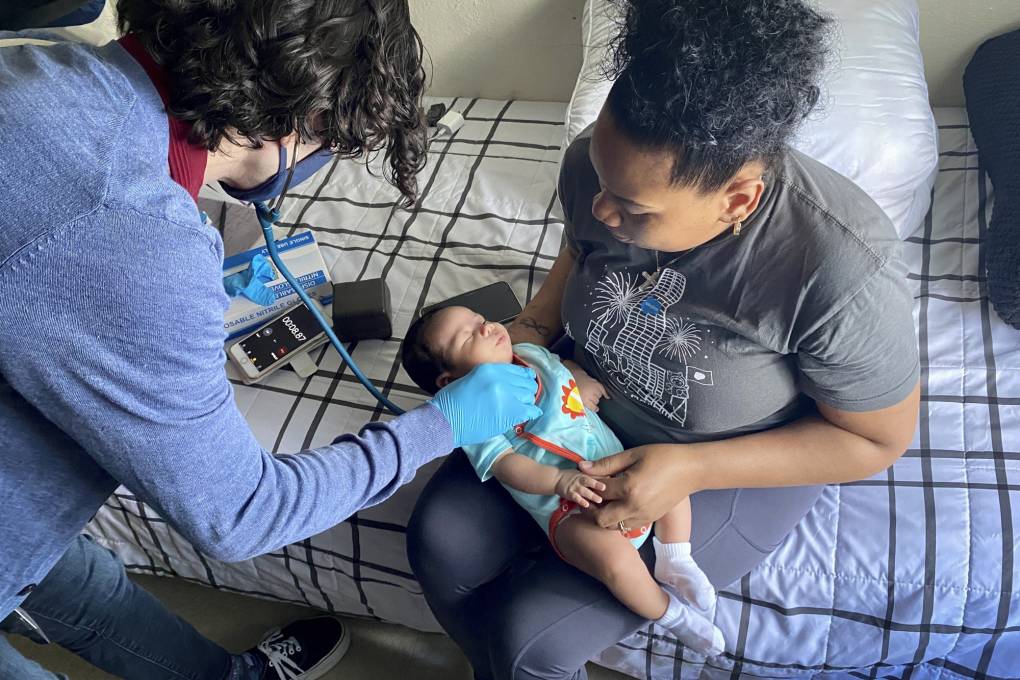
"caption": "Alvin Vallejo, a public health nurse in San Francisco, checks the heartbeat of Ibrahim Jose as his mother Dayanis holds him at his 6 week check-up.",
"description": null,
"title": "230822-HOME HEALTHCARE WORKER-LM-KQED",
"credit": "Lesley McClurg/KQED",
"status": "inherit",
"altTag": "A person cradles a baby in their lap while sitting on a bed as a person wearing medical gloves uses a stethoscope on the baby.",
"isLoading": false,
"fetchFailed": false
},
"news_11958553": {
"type": "attachments",
"id": "news_11958553",
"meta": {
"index": "attachments_1716263798",
"site": "news",
"id": "11958553",
"found": true
},
"parent": 0,
"imgSizes": {
"twentyfourteen-full-width": {
"file": "https://ww2.kqed.org/app/uploads/sites/10/2023/08/230818-LATINA-DOCTOR-CLINICA-GETTY-GM-KQED-1038x576.jpg",
"width": 1038,
"mimeType": "image/jpeg",
"height": 576
},
"thumbnail": {
"file": "https://ww2.kqed.org/app/uploads/sites/10/2023/08/230818-LATINA-DOCTOR-CLINICA-GETTY-GM-KQED-160x107.jpg",
"width": 160,
"mimeType": "image/jpeg",
"height": 107
},
"post-thumbnail": {
"file": "https://ww2.kqed.org/app/uploads/sites/10/2023/08/230818-LATINA-DOCTOR-CLINICA-GETTY-GM-KQED-672x372.jpg",
"width": 672,
"mimeType": "image/jpeg",
"height": 372
},
"kqedFullSize": {
"file": "https://ww2.kqed.org/app/uploads/sites/10/2023/08/230818-LATINA-DOCTOR-CLINICA-GETTY-GM-KQED.jpg",
"width": 2000,
"height": 1333
},
"large": {
"file": "https://ww2.kqed.org/app/uploads/sites/10/2023/08/230818-LATINA-DOCTOR-CLINICA-GETTY-GM-KQED-1020x680.jpg",
"width": 1020,
"mimeType": "image/jpeg",
"height": 680
},
"1536x1536": {
"file": "https://ww2.kqed.org/app/uploads/sites/10/2023/08/230818-LATINA-DOCTOR-CLINICA-GETTY-GM-KQED-1536x1024.jpg",
"width": 1536,
"mimeType": "image/jpeg",
"height": 1024
},
"full-width": {
"file": "https://ww2.kqed.org/app/uploads/sites/10/2023/08/230818-LATINA-DOCTOR-CLINICA-GETTY-GM-KQED-1920x1280.jpg",
"width": 1920,
"mimeType": "image/jpeg",
"height": 1280
},
"medium": {
"file": "https://ww2.kqed.org/app/uploads/sites/10/2023/08/230818-LATINA-DOCTOR-CLINICA-GETTY-GM-KQED-800x533.jpg",
"width": 800,
"mimeType": "image/jpeg",
"height": 533
}
},
"publishDate": 1692380234,
"modified": 1692382285,
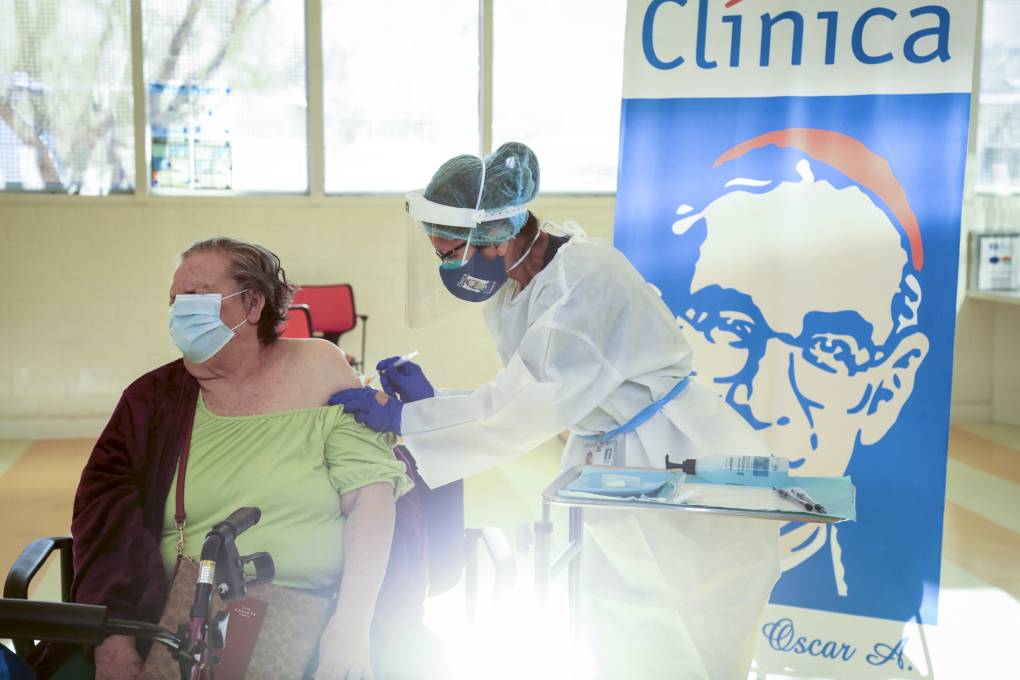
"caption": "A patient receives the Moderna COVID-19 vaccine at Clinica Romero in Los Angeles on Feb. 6, 2021. ",
"description": null,
"title": "Clinica Monsenor Romerto vaccine clinic - during the Coronavirus pandemic",
"credit": "Genaro Molina/Los Angeles Times via Getty Images",
"status": "inherit",
"altTag": "A person in personal protective equipment gives a vaccine to another person in a brightly lit room.",
"isLoading": false,
"fetchFailed": false
},
"news_11958263": {
"type": "attachments",
"id": "news_11958263",
"meta": {
"index": "attachments_1716263798",
"site": "news",
"id": "11958263",
"found": true
},
"parent": 11958245,
"imgSizes": {
"twentyfourteen-full-width": {
"file": "https://ww2.kqed.org/app/uploads/sites/10/2023/08/033023_Hollister_Hospital_LV_CM_01-1038x576.jpg",
"width": 1038,
"mimeType": "image/jpeg",
"height": 576
},
"thumbnail": {
"file": "https://ww2.kqed.org/app/uploads/sites/10/2023/08/033023_Hollister_Hospital_LV_CM_01-160x107.jpg",
"width": 160,
"mimeType": "image/jpeg",
"height": 107
},
"post-thumbnail": {
"file": "https://ww2.kqed.org/app/uploads/sites/10/2023/08/033023_Hollister_Hospital_LV_CM_01-672x372.jpg",
"width": 672,
"mimeType": "image/jpeg",
"height": 372
},
"kqedFullSize": {
"file": "https://ww2.kqed.org/app/uploads/sites/10/2023/08/033023_Hollister_Hospital_LV_CM_01.jpg",
"width": 2000,
"height": 1333
},
"large": {
"file": "https://ww2.kqed.org/app/uploads/sites/10/2023/08/033023_Hollister_Hospital_LV_CM_01-1020x680.jpg",
"width": 1020,
"mimeType": "image/jpeg",
"height": 680
},
"1536x1536": {
"file": "https://ww2.kqed.org/app/uploads/sites/10/2023/08/033023_Hollister_Hospital_LV_CM_01-1536x1024.jpg",
"width": 1536,
"mimeType": "image/jpeg",
"height": 1024
},
"full-width": {
"file": "https://ww2.kqed.org/app/uploads/sites/10/2023/08/033023_Hollister_Hospital_LV_CM_01-1920x1280.jpg",
"width": 1920,
"mimeType": "image/jpeg",
"height": 1280
},
"medium": {
"file": "https://ww2.kqed.org/app/uploads/sites/10/2023/08/033023_Hollister_Hospital_LV_CM_01-800x533.jpg",
"width": 800,
"mimeType": "image/jpeg",
"height": 533
}
},
"publishDate": 1692132126,
"modified": 1692142360,
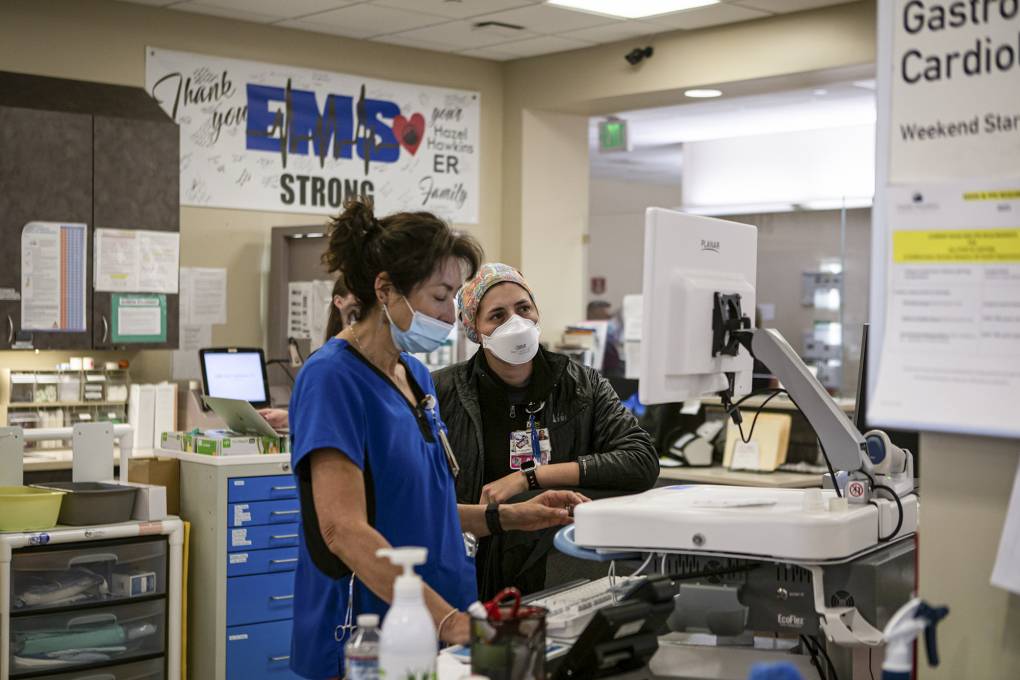
"caption": "Medical personnel working in the nurse’s station in the Emergency Room unit of Hazel Hawkins Memorial Hospital in Hollister on March 30, 2023.",
"description": null,
"title": "033023_Hollister_Hospital_LV_CM_01",
"credit": "Larry Valenzuela, CalMatters/CatchLight Local",
"status": "inherit",
"altTag": "Two women in blue scrubs stand in a hospital.",
"isLoading": false,
"fetchFailed": false
},
"news_11949516": {
"type": "attachments",
"id": "news_11949516",
"meta": {
"index": "attachments_1716263798",
"site": "news",
"id": "11949516",
"found": true
},
"parent": 11949515,
"imgSizes": {
"twentyfourteen-full-width": {
"file": "https://ww2.kqed.org/app/uploads/sites/10/2023/05/RS62467_016_KQED_LagunaHondaHospital_01312023-1038x576.jpg",
"width": 1038,
"mimeType": "image/jpeg",
"height": 576
},
"thumbnail": {
"file": "https://ww2.kqed.org/app/uploads/sites/10/2023/05/RS62467_016_KQED_LagunaHondaHospital_01312023-160x107.jpg",
"width": 160,
"mimeType": "image/jpeg",
"height": 107
},
"post-thumbnail": {
"file": "https://ww2.kqed.org/app/uploads/sites/10/2023/05/RS62467_016_KQED_LagunaHondaHospital_01312023-672x372.jpg",
"width": 672,
"mimeType": "image/jpeg",
"height": 372
},
"kqedFullSize": {
"file": "https://ww2.kqed.org/app/uploads/sites/10/2023/05/RS62467_016_KQED_LagunaHondaHospital_01312023-scaled.jpg",
"width": 2560,
"height": 1707
},
"2048x2048": {
"file": "https://ww2.kqed.org/app/uploads/sites/10/2023/05/RS62467_016_KQED_LagunaHondaHospital_01312023-2048x1365.jpg",
"width": 2048,
"mimeType": "image/jpeg",
"height": 1365
},
"large": {
"file": "https://ww2.kqed.org/app/uploads/sites/10/2023/05/RS62467_016_KQED_LagunaHondaHospital_01312023-1020x680.jpg",
"width": 1020,
"mimeType": "image/jpeg",
"height": 680
},
"1536x1536": {
"file": "https://ww2.kqed.org/app/uploads/sites/10/2023/05/RS62467_016_KQED_LagunaHondaHospital_01312023-1536x1024.jpg",
"width": 1536,
"mimeType": "image/jpeg",
"height": 1024
},
"full-width": {
"file": "https://ww2.kqed.org/app/uploads/sites/10/2023/05/RS62467_016_KQED_LagunaHondaHospital_01312023-1920x1280.jpg",
"width": 1920,
"mimeType": "image/jpeg",
"height": 1280
},
"medium": {
"file": "https://ww2.kqed.org/app/uploads/sites/10/2023/05/RS62467_016_KQED_LagunaHondaHospital_01312023-800x533.jpg",
"width": 800,
"mimeType": "image/jpeg",
"height": 533
}
},
"publishDate": 1684175822,
"modified": 1684175881,
"caption": "The Laguna Honda Hospital administration building in San Francisco.",
"description": null,
"title": "RS62467_016_KQED_LagunaHondaHospital_01312023",
"credit": "Beth LaBerge/KQED",
"status": "inherit",
"altTag": "through tree branches, a large tan hospital building tower",
"isLoading": false,
"fetchFailed": false
},
"news_11958062": {
"type": "attachments",
"id": "news_11958062",
"meta": {
"index": "attachments_1716263798",
"site": "news",
"id": "11958062",
"found": true
},
"parent": 11958058,
"imgSizes": {
"twentyfourteen-full-width": {
"file": "https://ww2.kqed.org/app/uploads/sites/10/2023/08/SS-13-Ilaysia-and-Arin-bandage-1038x576.jpg",
"width": 1038,
"mimeType": "image/jpeg",
"height": 576
},
"thumbnail": {
"file": "https://ww2.kqed.org/app/uploads/sites/10/2023/08/SS-13-Ilaysia-and-Arin-bandage-160x120.jpg",
"width": 160,
"mimeType": "image/jpeg",
"height": 120
},
"post-thumbnail": {
"file": "https://ww2.kqed.org/app/uploads/sites/10/2023/08/SS-13-Ilaysia-and-Arin-bandage-672x372.jpg",
"width": 672,
"mimeType": "image/jpeg",
"height": 372
},
"kqedFullSize": {
"file": "https://ww2.kqed.org/app/uploads/sites/10/2023/08/SS-13-Ilaysia-and-Arin-bandage-scaled.jpg",
"width": 2560,
"height": 1920
},
"2048x2048": {
"file": "https://ww2.kqed.org/app/uploads/sites/10/2023/08/SS-13-Ilaysia-and-Arin-bandage-2048x1536.jpg",
"width": 2048,
"mimeType": "image/jpeg",
"height": 1536
},
"large": {
"file": "https://ww2.kqed.org/app/uploads/sites/10/2023/08/SS-13-Ilaysia-and-Arin-bandage-1020x765.jpg",
"width": 1020,
"mimeType": "image/jpeg",
"height": 765
},
"1536x1536": {
"file": "https://ww2.kqed.org/app/uploads/sites/10/2023/08/SS-13-Ilaysia-and-Arin-bandage-1536x1152.jpg",
"width": 1536,
"mimeType": "image/jpeg",
"height": 1152
},
"full-width": {
"file": "https://ww2.kqed.org/app/uploads/sites/10/2023/08/SS-13-Ilaysia-and-Arin-bandage-1920x1440.jpg",
"width": 1920,
"mimeType": "image/jpeg",
"height": 1440
},
"medium": {
"file": "https://ww2.kqed.org/app/uploads/sites/10/2023/08/SS-13-Ilaysia-and-Arin-bandage-800x600.jpg",
"width": 800,
"mimeType": "image/jpeg",
"height": 600
}
},
"publishDate": 1691789881,
"modified": 1692032004,
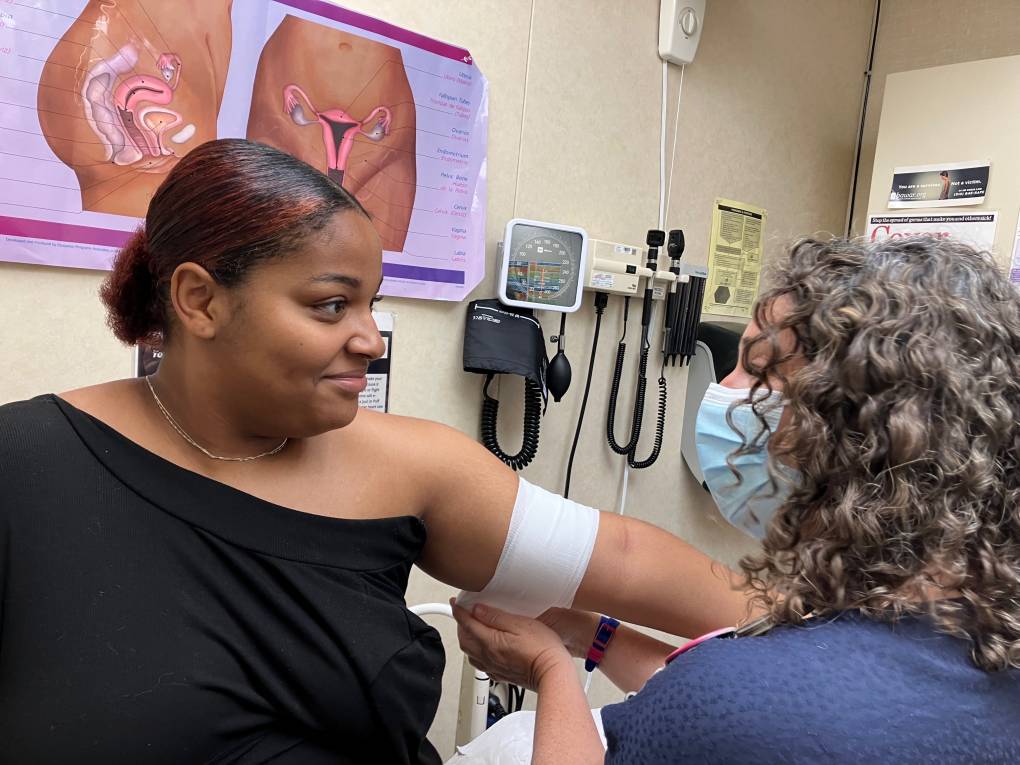
"caption": "Nurse practitioner Arin Kramer (right) prepares to place a contraceptive implant in I'laysia Vital’s upper arm (left).",
"description": null,
"title": "SS 13 - Ilaysia and Arin bandage",
"credit": "April Dembosky/KQED",
"status": "inherit",
"altTag": null,
"isLoading": false,
"fetchFailed": false
},
"news_11957857": {
"type": "attachments",
"id": "news_11957857",
"meta": {
"index": "attachments_1716263798",
"site": "news",
"id": "11957857",
"found": true
},
"title": "230809-altenberg-port-fire-3-KQED",
"publishDate": 1691686158,
"status": "inherit",
"parent": 11996994,
"modified": 1721776822,
"caption": "Smoke rises from a fire burning at Schnitzer Steel in Oakland on Aug. 10, 2023.",
"credit": "Nik Altenberg/KQED",
"altTag": "Large clouds of smoke rise from an industrial-looking space where many truck cabs are parked.",
"description": null,
"imgSizes": {
"medium": {
"file": "https://cdn.kqed.org/wp-content/uploads/sites/10/2023/08/230809-altenberg-port-fire-3-KQED-800x534.jpg",
"width": 800,
"height": 534,
"mimeType": "image/jpeg"
},
"large": {
"file": "https://cdn.kqed.org/wp-content/uploads/sites/10/2023/08/230809-altenberg-port-fire-3-KQED-1020x681.jpg",
"width": 1020,
"height": 681,
"mimeType": "image/jpeg"
},
"thumbnail": {
"file": "https://cdn.kqed.org/wp-content/uploads/sites/10/2023/08/230809-altenberg-port-fire-3-KQED-160x107.jpg",
"width": 160,
"height": 107,
"mimeType": "image/jpeg"
},
"1536x1536": {
"file": "https://cdn.kqed.org/wp-content/uploads/sites/10/2023/08/230809-altenberg-port-fire-3-KQED-1536x1026.jpg",
"width": 1536,
"height": 1026,
"mimeType": "image/jpeg"
},
"post-thumbnail": {
"file": "https://cdn.kqed.org/wp-content/uploads/sites/10/2023/08/230809-altenberg-port-fire-3-KQED-672x372.jpg",
"width": 672,
"height": 372,
"mimeType": "image/jpeg"
},
"twentyfourteen-full-width": {
"file": "https://cdn.kqed.org/wp-content/uploads/sites/10/2023/08/230809-altenberg-port-fire-3-KQED-1038x576.jpg",
"width": 1038,
"height": 576,
"mimeType": "image/jpeg"
},
"full-width": {
"file": "https://cdn.kqed.org/wp-content/uploads/sites/10/2023/08/230809-altenberg-port-fire-3-KQED-1920x1283.jpg",
"width": 1920,
"height": 1283,
"mimeType": "image/jpeg"
},
"kqedFullSize": {
"file": "https://cdn.kqed.org/wp-content/uploads/sites/10/2023/08/230809-altenberg-port-fire-3-KQED.jpg",
"width": 2000,
"height": 1336
}
},
"isLoading": false,
"fetchFailed": false
},
"news_11957011": {
"type": "attachments",
"id": "news_11957011",
"meta": {
"index": "attachments_1716263798",
"site": "news",
"id": "11957011",
"found": true
},
"parent": 0,
"imgSizes": {
"twentyfourteen-full-width": {
"file": "https://ww2.kqed.org/app/uploads/sites/10/2023/08/CMNurses01-1038x576.jpg",
"width": 1038,
"mimeType": "image/jpeg",
"height": 576
},
"thumbnail": {
"file": "https://ww2.kqed.org/app/uploads/sites/10/2023/08/CMNurses01-160x107.jpg",
"width": 160,
"mimeType": "image/jpeg",
"height": 107
},
"post-thumbnail": {
"file": "https://ww2.kqed.org/app/uploads/sites/10/2023/08/CMNurses01-672x372.jpg",
"width": 672,
"mimeType": "image/jpeg",
"height": 372
},
"kqedFullSize": {
"file": "https://ww2.kqed.org/app/uploads/sites/10/2023/08/CMNurses01.jpg",
"width": 2000,
"height": 1334
},
"large": {
"file": "https://ww2.kqed.org/app/uploads/sites/10/2023/08/CMNurses01-1020x680.jpg",
"width": 1020,
"mimeType": "image/jpeg",
"height": 680
},
"1536x1536": {
"file": "https://ww2.kqed.org/app/uploads/sites/10/2023/08/CMNurses01-1536x1025.jpg",
"width": 1536,
"mimeType": "image/jpeg",
"height": 1025
},
"full-width": {
"file": "https://ww2.kqed.org/app/uploads/sites/10/2023/08/CMNurses01-1920x1281.jpg",
"width": 1920,
"mimeType": "image/jpeg",
"height": 1281
},
"medium": {
"file": "https://ww2.kqed.org/app/uploads/sites/10/2023/08/CMNurses01-800x534.jpg",
"width": 800,
"mimeType": "image/jpeg",
"height": 534
}
},
"publishDate": 1690910282,
"modified": 1690910404,
"caption": "Kaiser Permanente health care workers strike outside a Kaiser facility in Sacramento on July 25, 2023. Workers are on the picket lines to protest patient care crisis and unsafe staffing at Kaiser hospitals. ",
"description": null,
"title": "CMNurses01",
"credit": "Rahul Lal/CalMatters",
"status": "inherit",
"altTag": "A close-up shot of a protestor's sign that reads, \"Patient Need Not Corporate Greed\" in front of a Kaiser Permanente building in Sacramento, California.",
"isLoading": false,
"fetchFailed": false
},
"news_11956728": {
"type": "attachments",
"id": "news_11956728",
"meta": {
"index": "attachments_1716263798",
"site": "news",
"id": "11956728",
"found": true
},
"parent": 11956720,
"imgSizes": {
"twentyfourteen-full-width": {
"file": "https://ww2.kqed.org/app/uploads/sites/10/2023/07/GettyImages-1310463433-1024x576.jpg",
"width": 1024,
"mimeType": "image/jpeg",
"height": 576
},
"thumbnail": {
"file": "https://ww2.kqed.org/app/uploads/sites/10/2023/07/GettyImages-1310463433-160x125.jpg",
"width": 160,
"mimeType": "image/jpeg",
"height": 125
},
"post-thumbnail": {
"file": "https://ww2.kqed.org/app/uploads/sites/10/2023/07/GettyImages-1310463433-672x372.jpg",
"width": 672,
"mimeType": "image/jpeg",
"height": 372
},
"kqedFullSize": {
"file": "https://ww2.kqed.org/app/uploads/sites/10/2023/07/GettyImages-1310463433.jpg",
"width": 1024,
"height": 802
},
"large": {
"file": "https://ww2.kqed.org/app/uploads/sites/10/2023/07/GettyImages-1310463433-1020x799.jpg",
"width": 1020,
"mimeType": "image/jpeg",
"height": 799
},
"medium": {
"file": "https://ww2.kqed.org/app/uploads/sites/10/2023/07/GettyImages-1310463433-800x627.jpg",
"width": 800,
"mimeType": "image/jpeg",
"height": 627
}
},
"publishDate": 1690498037,
"modified": 1690498175,
"caption": "A customer gets assistance from an employee outside the walk-up window of an In-N-Out Burger in Santa Ana on April 1, 2021.",
"description": null,
"title": "Re-built In-N-Out Opens",
"credit": "Leonard Ortiz/MediaNews Group/Orange County Register via Getty Images",
"status": "inherit",
"altTag": "An In-N-Out restaurant worker, wearing a mask and uniform, stands outside the drive-through window taking an order from a customer.",
"isLoading": false,
"fetchFailed": false
},
"news_11956568": {
"type": "attachments",
"id": "news_11956568",
"meta": {
"index": "attachments_1716263798",
"site": "news",
"id": "11956568",
"found": true
},
"parent": 0,
"imgSizes": {
"twentyfourteen-full-width": {
"file": "https://ww2.kqed.org/app/uploads/sites/10/2023/07/RS3205_pediatrics201212-1038x576.jpg",
"width": 1038,
"mimeType": "image/jpeg",
"height": 576
},
"thumbnail": {
"file": "https://ww2.kqed.org/app/uploads/sites/10/2023/07/RS3205_pediatrics201212-160x107.jpg",
"width": 160,
"mimeType": "image/jpeg",
"height": 107
},
"post-thumbnail": {
"file": "https://ww2.kqed.org/app/uploads/sites/10/2023/07/RS3205_pediatrics201212-672x372.jpg",
"width": 672,
"mimeType": "image/jpeg",
"height": 372
},
"kqedFullSize": {
"file": "https://ww2.kqed.org/app/uploads/sites/10/2023/07/RS3205_pediatrics201212-scaled.jpg",
"width": 2560,
"height": 1707
},
"2048x2048": {
"file": "https://ww2.kqed.org/app/uploads/sites/10/2023/07/RS3205_pediatrics201212-2048x1365.jpg",
"width": 2048,
"mimeType": "image/jpeg",
"height": 1365
},
"large": {
"file": "https://ww2.kqed.org/app/uploads/sites/10/2023/07/RS3205_pediatrics201212-1020x680.jpg",
"width": 1020,
"mimeType": "image/jpeg",
"height": 680
},
"1536x1536": {
"file": "https://ww2.kqed.org/app/uploads/sites/10/2023/07/RS3205_pediatrics201212-1536x1024.jpg",
"width": 1536,
"mimeType": "image/jpeg",
"height": 1024
},
"full-width": {
"file": "https://ww2.kqed.org/app/uploads/sites/10/2023/07/RS3205_pediatrics201212-1920x1280.jpg",
"width": 1920,
"mimeType": "image/jpeg",
"height": 1280
},
"medium": {
"file": "https://ww2.kqed.org/app/uploads/sites/10/2023/07/RS3205_pediatrics201212-800x533.jpg",
"width": 800,
"mimeType": "image/jpeg",
"height": 533
}
},
"publishDate": 1690397175,
"modified": 1690397438,
"caption": "About 1.6 million Californians turn to the marketplace for health insurance, which offers plans that cost as little as $10 a month.",
"description": null,
"title": "Non-Profit Health Clinics Care For Uninsured",
"credit": "John Moore/Getty Images",
"status": "inherit",
"altTag": "A little boy sits in a health care clinic room where a nurse is looking inside his mouth using a wooden depressor and a light.",
"isLoading": false,
"fetchFailed": false
},
"news_11955160": {
"type": "attachments",
"id": "news_11955160",
"meta": {
"index": "attachments_1716263798",
"site": "news",
"id": "11955160",
"found": true
},
"title": "230707-ORANGE COUNTY CARE COURT-AD-02-KQED",
"publishDate": 1688751064,
"status": "inherit",
"parent": 0,
"modified": 1727735028,
"caption": "Orange County Superior Court will technically house the local CARE Court, though judges say they will more likely hold meetings with patients at a more neutral site, like a conference room at the county health office.",
"credit": "April Dembosky/KQED",
"altTag": "A large multi-story building and a driveway alongside it.",
"description": null,
"imgSizes": {
"medium": {
"file": "https://cdn.kqed.org/wp-content/uploads/sites/10/2023/07/230707-ORANGE-COUNTY-CARE-COURT-AD-02-KQED-800x533.jpg",
"width": 800,
"height": 533,
"mimeType": "image/jpeg"
},
"large": {
"file": "https://cdn.kqed.org/wp-content/uploads/sites/10/2023/07/230707-ORANGE-COUNTY-CARE-COURT-AD-02-KQED-1020x680.jpg",
"width": 1020,
"height": 680,
"mimeType": "image/jpeg"
},
"thumbnail": {
"file": "https://cdn.kqed.org/wp-content/uploads/sites/10/2023/07/230707-ORANGE-COUNTY-CARE-COURT-AD-02-KQED-160x107.jpg",
"width": 160,
"height": 107,
"mimeType": "image/jpeg"
},
"1536x1536": {
"file": "https://cdn.kqed.org/wp-content/uploads/sites/10/2023/07/230707-ORANGE-COUNTY-CARE-COURT-AD-02-KQED-1536x1024.jpg",
"width": 1536,
"height": 1024,
"mimeType": "image/jpeg"
},
"post-thumbnail": {
"file": "https://cdn.kqed.org/wp-content/uploads/sites/10/2023/07/230707-ORANGE-COUNTY-CARE-COURT-AD-02-KQED-672x372.jpg",
"width": 672,
"height": 372,
"mimeType": "image/jpeg"
},
"twentyfourteen-full-width": {
"file": "https://cdn.kqed.org/wp-content/uploads/sites/10/2023/07/230707-ORANGE-COUNTY-CARE-COURT-AD-02-KQED-1038x576.jpg",
"width": 1038,
"height": 576,
"mimeType": "image/jpeg"
},
"full-width": {
"file": "https://cdn.kqed.org/wp-content/uploads/sites/10/2023/07/230707-ORANGE-COUNTY-CARE-COURT-AD-02-KQED-1920x1280.jpg",
"width": 1920,
"height": 1280,
"mimeType": "image/jpeg"
},
"kqedFullSize": {
"file": "https://cdn.kqed.org/wp-content/uploads/sites/10/2023/07/230707-ORANGE-COUNTY-CARE-COURT-AD-02-KQED.jpg",
"width": 2000,
"height": 1333
}
},
"isLoading": false,
"fetchFailed": false
},
"news_11955872": {
"type": "attachments",
"id": "news_11955872",
"meta": {
"index": "attachments_1716263798",
"site": "news",
"id": "11955872",
"found": true
},
"parent": 0,
"imgSizes": {
"twentyfourteen-full-width": {
"file": "https://ww2.kqed.org/app/uploads/sites/10/2023/07/CalMattersNewsom-1038x576.jpg",
"width": 1038,
"mimeType": "image/jpeg",
"height": 576
},
"thumbnail": {
"file": "https://ww2.kqed.org/app/uploads/sites/10/2023/07/CalMattersNewsom-160x107.jpg",
"width": 160,
"mimeType": "image/jpeg",
"height": 107
},
"post-thumbnail": {
"file": "https://ww2.kqed.org/app/uploads/sites/10/2023/07/CalMattersNewsom-672x372.jpg",
"width": 672,
"mimeType": "image/jpeg",
"height": 372
},
"kqedFullSize": {
"file": "https://ww2.kqed.org/app/uploads/sites/10/2023/07/CalMattersNewsom.jpg",
"width": 2000,
"height": 1334
},
"large": {
"file": "https://ww2.kqed.org/app/uploads/sites/10/2023/07/CalMattersNewsom-1020x680.jpg",
"width": 1020,
"mimeType": "image/jpeg",
"height": 680
},
"1536x1536": {
"file": "https://ww2.kqed.org/app/uploads/sites/10/2023/07/CalMattersNewsom-1536x1025.jpg",
"width": 1536,
"mimeType": "image/jpeg",
"height": 1025
},
"full-width": {
"file": "https://ww2.kqed.org/app/uploads/sites/10/2023/07/CalMattersNewsom-1920x1281.jpg",
"width": 1920,
"mimeType": "image/jpeg",
"height": 1281
},
"medium": {
"file": "https://ww2.kqed.org/app/uploads/sites/10/2023/07/CalMattersNewsom-800x534.jpg",
"width": 800,
"mimeType": "image/jpeg",
"height": 534
}
},
"publishDate": 1689620343,
"modified": 1689620468,
"caption": "Gov. Gavin Newsom speaks at a news conference announcing a proposed a 2024 ballot initiative to improve mental health services across the state, at Alvarado Hospital in San Diego, on March 19, 2023.",
"description": null,
"title": "Califorina Governor",
"credit": "Adriana Heldiz/The San Diego Union-Tribune via AP, Pool",
"status": "inherit",
"altTag": "California Gov. Gavin Newsom in a navy blazer and white shirt speaks from behind a black podium with a sign on the front that reads, \"Better Mental Health Treatment.\" Eight men and women in business attire stand solemn-faced behind him.",
"isLoading": false,
"fetchFailed": false
},
"news_11955166": {
"type": "attachments",
"id": "news_11955166",
"meta": {
"index": "attachments_1716263798",
"site": "news",
"id": "11955166",
"found": true
},
"parent": 11955326,
"imgSizes": {
"twentyfourteen-full-width": {
"file": "https://ww2.kqed.org/app/uploads/sites/10/2023/07/AffirmativeActionRally01-1038x576.jpg",
"width": 1038,
"mimeType": "image/jpeg",
"height": 576
},
"thumbnail": {
"file": "https://ww2.kqed.org/app/uploads/sites/10/2023/07/AffirmativeActionRally01-160x107.jpg",
"width": 160,
"mimeType": "image/jpeg",
"height": 107
},
"post-thumbnail": {
"file": "https://ww2.kqed.org/app/uploads/sites/10/2023/07/AffirmativeActionRally01-672x372.jpg",
"width": 672,
"mimeType": "image/jpeg",
"height": 372
},
"kqedFullSize": {
"file": "https://ww2.kqed.org/app/uploads/sites/10/2023/07/AffirmativeActionRally01.jpg",
"width": 1920,
"height": 1279
},
"large": {
"file": "https://ww2.kqed.org/app/uploads/sites/10/2023/07/AffirmativeActionRally01-1020x679.jpg",
"width": 1020,
"mimeType": "image/jpeg",
"height": 679
},
"1536x1536": {
"file": "https://ww2.kqed.org/app/uploads/sites/10/2023/07/AffirmativeActionRally01-1536x1023.jpg",
"width": 1536,
"mimeType": "image/jpeg",
"height": 1023
},
"medium": {
"file": "https://ww2.kqed.org/app/uploads/sites/10/2023/07/AffirmativeActionRally01-800x533.jpg",
"width": 800,
"mimeType": "image/jpeg",
"height": 533
}
},
"publishDate": 1688752099,
"modified": 1689033021,
"caption": "Protesters for and against affirmative action rally on Capitol Hill in Washington, DC, on June 29. In a decision that split its conservative and liberal justices, the Supreme Court ruled that race-conscious admissions programs at Harvard University and the University of North Carolina were unconstitutional, setting a precedent for admissions at other universities and colleges.",
"description": null,
"title": "AffirmativeActionRally01",
"credit": "Anna Moneymaker/Getty Images",
"status": "inherit",
"altTag": "Opposing protestors clash at a rally about the Supreme Court's ruling on affirmative action. One side of demonstrators hold signs that read, \"Stop Discriminating on the Basis of Race,\" while others hold signs that read, \"Diversity Opportunity Justice.\"",
"isLoading": false,
"fetchFailed": false
}
},
"audioPlayerReducer": {
"postId": "stream_live",
"isPaused": true,
"isPlaying": false,
"pfsActive": false,
"pledgeModalIsOpen": true,
"playerDrawerIsOpen": false,
"liveAudioPlayStartedAt": 0,
"liveAudioPlayContext": ""
},
"authorsReducer": {
"byline_news_11958245": {
"type": "authors",
"id": "byline_news_11958245",
"meta": {
"override": true
},
"slug": "byline_news_11958245",
"name": "\u003ca href=\"https://calmatters.org/author/anaibarra/\">Ana B. Ibarra\u003c/a>",
"isLoading": false
},
"byline_news_11957005": {
"type": "authors",
"id": "byline_news_11957005",
"meta": {
"override": true
},
"slug": "byline_news_11957005",
"name": "\u003ca href=\"https://calmatters.org/author/kristen-hwang/\">Kristen Hwang\u003c/a>",
"isLoading": false
},
"byline_news_11956720": {
"type": "authors",
"id": "byline_news_11956720",
"meta": {
"override": true
},
"slug": "byline_news_11956720",
"name": "\u003ca href=\"https://calmatters.org/author/anaibarra/\">Ana B. Ibarra\u003c/a>",
"isLoading": false
},
"byline_news_11956545": {
"type": "authors",
"id": "byline_news_11956545",
"meta": {
"override": true
},
"slug": "byline_news_11956545",
"name": "\u003ca href=\"https://calmatters.org/author/kristen-hwang/\">Kristen Hwang\u003c/a>",
"isLoading": false
},
"byline_news_11955844": {
"type": "authors",
"id": "byline_news_11955844",
"meta": {
"override": true
},
"slug": "byline_news_11955844",
"name": "\u003ca href=\"https://calmatters.org/author/kristen-hwang/\">Kristen Hwang\u003c/a>",
"isLoading": false
},
"byline_news_11955151": {
"type": "authors",
"id": "byline_news_11955151",
"meta": {
"override": true
},
"slug": "byline_news_11955151",
"name": "\u003ca href=\"https://kffhealthnews.org/news/author/michelle-andrews//\">Michelle Andrews\u003c/a>",
"isLoading": false
},
"kdomara": {
"type": "authors",
"id": "1459",
"meta": {
"index": "authors_1716337520",
"id": "1459",
"found": true
},
"name": "Kelly O'Mara",
"firstName": "Kelly",
"lastName": "O'Mara",
"slug": "kdomara",
"email": "komara@kqed.org",
"display_author_email": false,
"staff_mastheads": [
"news"
],
"title": "KQED Contributor",
"bio": "Kelly O'Mara is a writer and reporter in the San Francisco Bay Area. She writes about food, health, sports, travel, business and California news. Her work has appeared on KQED, online for Outside Magazine, epsnW, VICE and in Competitor Magazine, among others. Follow Kelly on Twitter \u003ca href=\"https://twitter.com/kellydomara\">@kellydomara\u003c/a>.",
"avatar": "https://secure.gravatar.com/avatar/768fec7412028b72f13bdd0f5f9d8186?s=600&d=blank&r=g",
"twitter": null,
"facebook": null,
"instagram": null,
"linkedin": null,
"sites": [
{
"site": "arts",
"roles": []
},
{
"site": "news",
"roles": []
},
{
"site": "bayareabites",
"roles": []
},
{
"site": "stateofhealth",
"roles": []
},
{
"site": "science",
"roles": []
},
{
"site": "checkplease",
"roles": [
"editor"
]
},
{
"site": "food",
"roles": []
},
{
"site": "forum",
"roles": [
"editor"
]
},
{
"site": "liveblog",
"roles": [
"editor"
]
}
],
"headData": {
"title": "Kelly O'Mara | KQED",
"description": "KQED Contributor",
"ogImgSrc": "https://secure.gravatar.com/avatar/768fec7412028b72f13bdd0f5f9d8186?s=600&d=blank&r=g",
"twImgSrc": "https://secure.gravatar.com/avatar/768fec7412028b72f13bdd0f5f9d8186?s=600&d=blank&r=g"
},
"isLoading": false,
"link": "/author/kdomara"
},
"adembosky": {
"type": "authors",
"id": "3205",
"meta": {
"index": "authors_1716337520",
"id": "3205",
"found": true
},
"name": "April Dembosky",
"firstName": "April",
"lastName": "Dembosky",
"slug": "adembosky",
"email": "adembosky@kqed.org",
"display_author_email": false,
"staff_mastheads": [
"news",
"science"
],
"title": "KQED Health Correspondent",
"bio": "April Dembosky is the health correspondent for KQED News and a regular contributor to NPR. She specializes in covering altered states of mind, from postpartum depression to methamphetamine-induced psychosis to the insanity defense. Her investigative series on insurance companies sidestepping mental health laws won multiple awards, including first place in beat reporting from the national Association of Health Care Journalists. She is the recipient of numerous other prizes and fellowships, including a national Edward R. Murrow award for investigative reporting, a Society of Professional Journalists award for long-form storytelling, and a Carter Center Fellowship for Mental Health Journalism.\r\n\r\nDembosky reported and produced \u003cem>Soundtrack of Silence\u003c/em>, an audio documentary about music and memory that is currently being made into a feature film by Paramount Pictures.\r\n\r\nBefore joining KQED in 2013, Dembosky covered technology and Silicon Valley for \u003cem>The Financial Times of London,\u003c/em> and contributed business and arts stories to \u003cem>Marketplace \u003c/em>and \u003cem>The New York Times.\u003c/em> She got her undergraduate degree in philosophy from Smith College and her master's in journalism from the University of California, Berkeley. She is a classically trained violinist and proud alum of the first symphony orchestra at Burning Man.",
"avatar": "https://secure.gravatar.com/avatar/ef92999be4ceb9ea60701e7dc276f813?s=600&d=blank&r=g",
"twitter": "adembosky",
"facebook": null,
"instagram": null,
"linkedin": null,
"sites": [
{
"site": "arts",
"roles": [
"author"
]
},
{
"site": "news",
"roles": [
"editor"
]
},
{
"site": "futureofyou",
"roles": [
"author"
]
},
{
"site": "stateofhealth",
"roles": [
"editor"
]
},
{
"site": "science",
"roles": [
"editor"
]
},
{
"site": "forum",
"roles": [
"editor"
]
}
],
"headData": {
"title": "April Dembosky | KQED",
"description": "KQED Health Correspondent",
"ogImgSrc": "https://secure.gravatar.com/avatar/ef92999be4ceb9ea60701e7dc276f813?s=600&d=blank&r=g",
"twImgSrc": "https://secure.gravatar.com/avatar/ef92999be4ceb9ea60701e7dc276f813?s=600&d=blank&r=g"
},
"isLoading": false,
"link": "/author/adembosky"
},
"ecruzguevarra": {
"type": "authors",
"id": "8654",
"meta": {
"index": "authors_1716337520",
"id": "8654",
"found": true
},
"name": "Ericka Cruz Guevarra",
"firstName": "Ericka",
"lastName": "Cruz Guevarra",
"slug": "ecruzguevarra",
"email": "ecruzguevarra@kqed.org",
"display_author_email": true,
"staff_mastheads": [
"news"
],
"title": "Producer, The Bay Podcast",
"bio": "Ericka Cruz Guevarra is host of \u003ca href=\"https://www.kqed.org/podcasts/thebay\">\u003cem>The Bay\u003c/em>\u003c/a> podcast at KQED. Before host, she was the show’s producer. Her work in that capacity includes a three-part reported series on policing in Vallejo, which won a 2020 excellence in journalism award from the Society of Professional Journalists. Ericka has worked as a breaking news reporter at Oregon Public Broadcasting, helped produce the Code Switch podcast, and was KQED’s inaugural Raul Ramirez Diversity Fund intern. She’s also an alumna of NPR’s Next Generation Radio program. Send her an email if you have strong feelings about whether Fairfield and Suisun City are the Bay. Ericka is represented by SAG-AFTRA.",
"avatar": "https://secure.gravatar.com/avatar/accefc1de4bafc7e234b69bcb9b6f6536c130fd84709bc3069ef11a78787e1bb?s=600&d=blank&r=g",
"twitter": "NotoriousECG",
"bluesky": null,
"facebook": null,
"instagram": null,
"linkedin": null,
"sites": [
{
"site": "arts",
"roles": [
"subscriber"
]
},
{
"site": "news",
"roles": [
"editor",
"manage_categories"
]
},
{
"site": "futureofyou",
"roles": [
"subscriber"
]
},
{
"site": "stateofhealth",
"roles": [
"subscriber"
]
},
{
"site": "science",
"roles": [
"editor"
]
},
{
"site": "forum",
"roles": [
"subscriber"
]
}
],
"headData": {
"title": "Ericka Cruz Guevarra | KQED",
"description": "Producer, The Bay Podcast",
"ogImgSrc": "https://secure.gravatar.com/avatar/accefc1de4bafc7e234b69bcb9b6f6536c130fd84709bc3069ef11a78787e1bb?s=600&d=blank&r=g",
"twImgSrc": "https://secure.gravatar.com/avatar/accefc1de4bafc7e234b69bcb9b6f6536c130fd84709bc3069ef11a78787e1bb?s=600&d=blank&r=g"
},
"isLoading": false,
"link": "/author/ecruzguevarra"
},
"lesleymcclurg": {
"type": "authors",
"id": "11229",
"meta": {
"index": "authors_1716337520",
"id": "11229",
"found": true
},
"name": "Lesley McClurg",
"firstName": "Lesley",
"lastName": "McClurg",
"slug": "lesleymcclurg",
"email": "lmcclurg@KQED.org",
"display_author_email": false,
"staff_mastheads": [
"news",
"science"
],
"title": "KQED Health Correspondent",
"bio": "Lesley McClurg is a health correspondent and fill-in host whose work is regularly rebroadcast on NPR and PBS programs. She’s earned multiple regional Emmy awards, a national and a regional Edward R. Murrow award, and was named Best Beat Reporter by the Association of Health Care Journalists. The Society of Professional Journalists has recognized her work several times, and the Society of Environmental Journalists spotlighted her coverage of California’s historic drought.\r\n\r\nBefore joining KQED in 2016, Lesley covered food and sustainability for Capital Public Radio, environmental issues for Colorado Public Radio, and reported for KUOW and KCTS 9 in Seattle. Away from the newsroom, she loves skiing with her daughter, mountain biking with her partner, and playing with Ollie, the family’s goldendoodle. On deadline, she runs almost entirely on chocolate chips.\r\n\r\n ",
"avatar": "https://secure.gravatar.com/avatar/bab49e972ea10c774fe0f5e29dba1722b158f7c0d58a360923d1389d380b2978?s=600&d=blank&r=g",
"twitter": "lesleywmcclurg",
"bluesky": null,
"facebook": null,
"instagram": null,
"linkedin": null,
"sites": [
{
"site": "arts",
"roles": [
"author"
]
},
{
"site": "news",
"roles": [
"editor"
]
},
{
"site": "futureofyou",
"roles": [
"editor"
]
},
{
"site": "stateofhealth",
"roles": [
"author"
]
},
{
"site": "science",
"roles": [
"editor"
]
},
{
"site": "quest",
"roles": [
"subscriber"
]
},
{
"site": "forum",
"roles": [
"administrator"
]
},
{
"site": "liveblog",
"roles": [
"author"
]
}
],
"headData": {
"title": "Lesley McClurg | KQED",
"description": "KQED Health Correspondent",
"ogImgSrc": "https://secure.gravatar.com/avatar/bab49e972ea10c774fe0f5e29dba1722b158f7c0d58a360923d1389d380b2978?s=600&d=blank&r=g",
"twImgSrc": "https://secure.gravatar.com/avatar/bab49e972ea10c774fe0f5e29dba1722b158f7c0d58a360923d1389d380b2978?s=600&d=blank&r=g"
},
"isLoading": false,
"link": "/author/lesleymcclurg"
},
"amontecillo": {
"type": "authors",
"id": "11649",
"meta": {
"index": "authors_1716337520",
"id": "11649",
"found": true
},
"name": "Alan Montecillo",
"firstName": "Alan",
"lastName": "Montecillo",
"slug": "amontecillo",
"email": "amontecillo@kqed.org",
"display_author_email": false,
"staff_mastheads": [
"news"
],
"title": "KQED Contributor",
"bio": "Alan Montecillo is the senior editor of \u003cem>\u003ca href=\"http://kqed.org/thebay\">The Bay\u003c/a>, \u003c/em> KQED's local news podcast. Before moving to the Bay Area, he worked as a senior talk show producer for WILL in Champaign-Urbana, Illinois and at Oregon Public Broadcasting in Portland, Oregon. He has won journalism awards from the Society of Professional Journalists Northern California, the Public Media Journalists Association, The Signal Awards, and has also received a regional Edward R. Murrow award. Alan is a Filipino American from Hong Kong and a graduate of Reed College.",
"avatar": "https://secure.gravatar.com/avatar/268f53a2066899ea9efdd8a5900218b17c822d9862cbc9326cccec53ef41d349?s=600&d=blank&r=g",
"twitter": "alanmontecillo",
"bluesky": null,
"facebook": null,
"instagram": null,
"linkedin": null,
"sites": [
{
"site": "",
"roles": [
"editor"
]
},
{
"site": "news",
"roles": [
"editor",
"manage_categories"
]
}
],
"headData": {
"title": "Alan Montecillo | KQED",
"description": "KQED Contributor",
"ogImgSrc": "https://secure.gravatar.com/avatar/268f53a2066899ea9efdd8a5900218b17c822d9862cbc9326cccec53ef41d349?s=600&d=blank&r=g",
"twImgSrc": "https://secure.gravatar.com/avatar/268f53a2066899ea9efdd8a5900218b17c822d9862cbc9326cccec53ef41d349?s=600&d=blank&r=g"
},
"isLoading": false,
"link": "/author/amontecillo"
},
"agonzalez": {
"type": "authors",
"id": "11724",
"meta": {
"index": "authors_1716337520",
"id": "11724",
"found": true
},
"name": "Alexander Gonzalez",
"firstName": "Alexander",
"lastName": "Gonzalez",
"slug": "agonzalez",
"email": "AlexanderGonzalez@KQED.org",
"display_author_email": false,
"staff_mastheads": [
"news"
],
"title": "KQED Contributor",
"bio": null,
"avatar": "https://secure.gravatar.com/avatar/9e291ed34e154df4c662edf858b641d70b4859939bfe40be478408f9dfd057d2?s=600&d=blank&r=g",
"twitter": null,
"bluesky": null,
"facebook": null,
"instagram": null,
"linkedin": null,
"sites": [
{
"site": "arts",
"roles": [
"editor"
]
},
{
"site": "news",
"roles": [
"editor"
]
},
{
"site": "science",
"roles": [
"editor"
]
}
],
"headData": {
"title": "Alexander Gonzalez | KQED",
"description": "KQED Contributor",
"ogImgSrc": "https://secure.gravatar.com/avatar/9e291ed34e154df4c662edf858b641d70b4859939bfe40be478408f9dfd057d2?s=600&d=blank&r=g",
"twImgSrc": "https://secure.gravatar.com/avatar/9e291ed34e154df4c662edf858b641d70b4859939bfe40be478408f9dfd057d2?s=600&d=blank&r=g"
},
"isLoading": false,
"link": "/author/agonzalez"
},
"mesquinca": {
"type": "authors",
"id": "11802",
"meta": {
"index": "authors_1716337520",
"id": "11802",
"found": true
},
"name": "Maria Esquinca",
"firstName": "Maria",
"lastName": "Esquinca",
"slug": "mesquinca",
"email": "mesquinca@kqed.org",
"display_author_email": false,
"staff_mastheads": [],
"title": "Producer, The Bay",
"bio": "María Esquinca is a producer of The Bay. Before that, she was a New York Women’s Foundation IGNITE Fellow at Latino USA. She worked at Radio Bilingue where she covered the San Joaquin Valley. Maria has interned at WLRN, News 21, The New York Times Student Journalism Institute and at Crain’s Detroit Business as a Dow Jones News Fund Business Reporting Intern. She is an MFA graduate from the University of Miami. In 2017, she graduated from the Walter Cronkite School of Journalism and Mass Communication with a Master of Mass Communication. A fronteriza, she was born in Ciudad Juárez, Chihuahua, Mexico and grew up in El Paso, Texas.",
"avatar": "https://secure.gravatar.com/avatar/77cedba18aae91da775038ba06dcd8d0?s=600&d=blank&r=g",
"twitter": "@m_esquinca",
"facebook": null,
"instagram": null,
"linkedin": null,
"sites": [
{
"site": "news",
"roles": []
}
],
"headData": {
"title": "Maria Esquinca | KQED",
"description": "Producer, The Bay",
"ogImgSrc": "https://secure.gravatar.com/avatar/77cedba18aae91da775038ba06dcd8d0?s=600&d=blank&r=g",
"twImgSrc": "https://secure.gravatar.com/avatar/77cedba18aae91da775038ba06dcd8d0?s=600&d=blank&r=g"
},
"isLoading": false,
"link": "/author/mesquinca"
},
"sjohnson": {
"type": "authors",
"id": "11840",
"meta": {
"index": "authors_1716337520",
"id": "11840",
"found": true
},
"name": "Sydney Johnson",
"firstName": "Sydney",
"lastName": "Johnson",
"slug": "sjohnson",
"email": "sjohnson@kqed.org",
"display_author_email": false,
"staff_mastheads": [
"news"
],
"title": "KQED Reporter",
"bio": "Sydney Johnson is a general assignment reporter at KQED. She previously reported on public health and city government at the San Francisco Examiner, and before that, she covered statewide education policy for EdSource. Her reporting has won multiple local, state and national awards. Sydney is a graduate of the University of California, Berkeley and lives in San Francisco.",
"avatar": "https://secure.gravatar.com/avatar/97855f2719b72ad6190b7c535fe642c8?s=600&d=blank&r=g",
"twitter": "sydneyfjohnson",
"facebook": null,
"instagram": null,
"linkedin": null,
"sites": [
{
"site": "news",
"roles": [
"editor"
]
}
],
"headData": {
"title": "Sydney Johnson | KQED",
"description": "KQED Reporter",
"ogImgSrc": "https://secure.gravatar.com/avatar/97855f2719b72ad6190b7c535fe642c8?s=600&d=blank&r=g",
"twImgSrc": "https://secure.gravatar.com/avatar/97855f2719b72ad6190b7c535fe642c8?s=600&d=blank&r=g"
},
"isLoading": false,
"link": "/author/sjohnson"
}
},
"pagesReducer": {
"news_tag_health": {
"type": "terms",
"id": "news_18543",
"meta": {
"index": "terms_1716263798",
"site": "news",
"id": "18543",
"score": 6.886679
},
"featImg": null,
"name": "Health",
"description": null,
"taxonomy": "tag",
"headData": {
"twImgId": null,
"twTitle": null,
"ogTitle": null,
"ogImgId": null,
"twDescription": null,
"description": null,
"title": "Health Archives | KQED News",
"ogDescription": null
},
"ttid": 466,
"slug": "health",
"isLoading": false,
"title": "Health",
"pageMeta": {
"site": "news",
"WpPageTemplate": "page-topic-editorial",
"currentPage": 43
},
"blocks": [
{
"blockName": "kqed/post-list",
"attrs": {
"layout": "cardArticle2",
"query": "posts/news?tag=health",
"seeMore": false,
"paginated": true,
"page": 43
}
},
{
"blockName": "kqed/ad"
}
]
}
},
"pfsSessionReducer": {},
"postsReducer": {
"stream_live": {
"type": "live",
"id": "stream_live",
"audioUrl": "https://streams.kqed.org/kqedradio",
"title": "Live Stream",
"excerpt": "Live Stream information currently unavailable.",
"link": "/radio",
"featImg": "",
"label": {
"name": "KQED Live",
"link": "/"
}
},
"stream_kqedNewscast": {
"type": "posts",
"id": "stream_kqedNewscast",
"audioUrl": "https://www.kqed.org/.stream/anon/radio/RDnews/newscast.mp3?_=1",
"title": "KQED Newscast",
"featImg": "",
"label": {
"name": "88.5 FM",
"link": "/"
}
},
"news_11958841": {
"type": "posts",
"id": "news_11958841",
"meta": {
"index": "posts_1716263798",
"site": "news",
"id": "11958841",
"score": null,
"sort": [
1692824454000
]
},
"guestAuthors": [],
"slug": "californias-high-maternal-mortality-rates-drive-push-more-home-care",
"title": "California’s High Maternal Mortality Rates Drive Push for More At-Home Care",
"publishDate": 1692824454,
"format": "audio",
"headTitle": "California’s High Maternal Mortality Rates Drive Push for More At-Home Care | KQED",
"labelTerm": {
"site": "news"
},
"content": "\u003cp>Alvin Vallejo, a public health nurse in San Francisco, steps inside a dilapidated apartment building in the Tenderloin neighborhood.\u003c/p>\n\u003cp>He climbs a narrow staircase to visit a client on the third floor recovering from a high-risk pregnancy and a difficult birth. Vallejo turns down the hall, passes a communal bathroom, and knocks on a door.\u003c/p>\n\u003cp>Dayanis, a 35-year-old mother cradling a newborn dressed in a turquoise onesie, answers the door. (Only her first name is used to protect her medical privacy.)\u003c/p>\n\u003cp>[ad fullwidth]\u003c/p>\n\u003cp>Last year, she and her husband immigrated from Cuba, determined for a better life. They left two adolescent daughters behind with relatives. Their newest child, Abraham José, was unplanned.\u003c/p>\n\u003cp>Maternal mortality is at its \u003ca href=\"https://www.cdc.gov/nchs/data/hestat/maternal-mortality/2021/maternal-mortality-rates-2021.htm\">highest level\u003c/a> since 1965. But a new state bill, \u003ca href=\"https://legiscan.com/CA/text/AB1057/id/2701737\">AB 1057\u003c/a>, aims to improve conditions by helping more at-risk families like Dayanis’ receive \u003ca href=\"https://www.cdph.ca.gov/Programs/CFH/DMCAH/CHVP/Pages/default.aspx\">medical care at home in the early postpartum period\u003c/a> to ensure she and the baby thrive.[pullquote size=\"medium\" align=\"right\" citation=\"Michelle Gibbons, executive director, County Health Executives Association of California\"]‘How awesome is it to have a nurse come into your home and just be there to support you? … This offers quality care in an intimate setting and engagement with a nurse.’[/pullquote]Dayanis ushers Vallejo inside the orderly but tiny, tightly packed room. A makeshift kitchen lines one wall with a single burner and a tiny fridge. Dayanis sits on a twin bed before covering her baby’s ears as the wails from a nearby police siren fill the space.\u003c/p>\n\u003cp>Vallejo pulls up a metal chair and opens his clipboard before asking questions about medications, vitamins, unusual symptoms and eating habits. Dayanis says she’s recuperating well.\u003c/p>\n\u003cp>Vallejo routinely measures her blood pressure. Dayanis’s pulse is a touch high, but he assures her it’s nothing to worry about. He then asks about the baby.\u003c/p>\n\u003cp>During Vallejo’s visit, Dayanis rocks her son gently as he closes his eyes. She assures Vallejo that her baby, Abraham, is well, but he doesn’t like drinking from a bottle.[aside label='More Stories on Health Care' tag='health-care']So Vallejo offers to order a new one to help. After about an hour and a half, the appointment concludes and Vallejo schedules a time to return the following week.\u003c/p>\n\u003cp>“Wow. How awesome is it to have a nurse come into your home and just be there to support you?” asks Michelle Gibbons, executive director of the County Health Executives Association of California. “Everybody wants to do what’s best for your kid, and yet, not knowing if you’re actually doing what’s best for your kid. This offers quality care in an intimate setting and engagement with a nurse.”\u003c/p>\n\u003cp>She says public health nurses provide education on child development, nutrition, housing, and safety and also offer mental health screenings. \u003ca href=\"https://www.cdph.ca.gov/Programs/CFH/DMCAH/CHVP/CDPH%20Document%20Library/CHVP-AnnualFederalReportSummary-2020.pdf\">Research (PDF)\u003c/a> suggests that home-visiting programs increase breastfeeding rates and lead to lower cases of child abuse and substance abuse.\u003c/p>\n\u003cp>“It’s just one strategy to be able to address some of the disparities that we see in getting these kids off to a really good start in life,” Gibbons said.[pullquote size=\"medium\" align=\"right\" citation=\"Dayanis, mother\"]‘I have been well taken care of. I am very grateful.’[/pullquote]She added that she would love to see the program address more people, including options for the unhoused and families with more than one child. It’s why, she says, her group is backing AB 1057. The bill would expand the number of evidenced-based, home-visiting models that can be implemented. The legislation was unanimously passed in the state Assembly. Now, the proposal is before the Senate.\u003c/p>\n\u003cp>Back inside Dayanis’ studio, she says home health visits have improved her mental health and connected her to useful services like housing. Soon, her family plans to move into a city-supported unit nearby with two bedrooms and a private bathroom.\u003c/p>\n\u003cp>“I have been well taken care of,” Dayanis said in Spanish. “I am very grateful.”\u003c/p>\n\u003cp>\u003c/p>\n",
"blocks": [],
"excerpt": "AB 1057 expands in-home postpartum care to more at-risk families. Proponents say public health nurses provide vital support that helps mother and baby thrive.",
"status": "publish",
"parent": 0,
"modified": 1738186318,
"stats": {
"hasAudio": false,
"hasVideo": false,
"hasChartOrMap": false,
"iframeSrcs": [],
"hasGoogleForm": false,
"hasGallery": false,
"hasHearkenModule": false,
"hasPolis": false,
"paragraphCount": 15,
"wordCount": 702
},
"headData": {
"title": "California’s High Maternal Mortality Rates Drive Push for More At-Home Care | KQED",
"description": "AB 1057 expands in-home postpartum care to more at-risk families. Proponents say public health nurses provide vital support that helps mother and baby thrive.",
"ogTitle": "",
"ogDescription": "",
"ogImgId": "",
"twTitle": "",
"twDescription": "",
"twImgId": "",
"schema": {
"@context": "https://schema.org",
"@type": "NewsArticle",
"headline": "California’s High Maternal Mortality Rates Drive Push for More At-Home Care",
"datePublished": "2023-08-23T14:00:54-07:00",
"dateModified": "2025-01-29T13:31:58-08:00",
"image": "https://cdn.kqed.org/wp-content/uploads/2020/02/KQED-OG-Image@1x.png",
"isAccessibleForFree": "True",
"publisher": {
"@type": "NewsMediaOrganization",
"@id": "https://www.kqed.org/#organization",
"name": "KQED",
"logo": "https://cdn.kqed.org/wp-content/uploads/2020/02/KQED-OG-Image@1x.png",
"url": "https://www.kqed.org",
"sameAs": [
"https://www.facebook.com/KQED",
"https://twitter.com/KQED",
"https://www.instagram.com/kqed/",
"https://www.tiktok.com/@kqedofficial",
"https://www.linkedin.com/company/kqed",
"https://www.youtube.com/channel/UCeC0IOo7i1P_61zVUWbJ4nw"
]
}
}
},
"audioUrl": "https://traffic.omny.fm/d/clips/0af137ef-751e-4b19-a055-aaef00d2d578/ffca7e9f-6831-4[…]f-aaef00f5a073/a31c3e15-3a66-4443-9cfc-b0670100134c/audio.mp3",
"sticky": false,
"excludeFromSiteSearch": "Include",
"articleAge": "0",
"path": "/news/11958841/californias-high-maternal-mortality-rates-drive-push-more-home-care",
"audioTrackLength": null,
"parsedContent": [
{
"type": "contentString",
"content": "\u003cdiv class=\"post-body\">\u003cp>\u003cp>Alvin Vallejo, a public health nurse in San Francisco, steps inside a dilapidated apartment building in the Tenderloin neighborhood.\u003c/p>\n\u003cp>He climbs a narrow staircase to visit a client on the third floor recovering from a high-risk pregnancy and a difficult birth. Vallejo turns down the hall, passes a communal bathroom, and knocks on a door.\u003c/p>\n\u003cp>Dayanis, a 35-year-old mother cradling a newborn dressed in a turquoise onesie, answers the door. (Only her first name is used to protect her medical privacy.)\u003c/p>\n\u003cp>\u003c/p>\u003c/div>",
"attributes": {
"named": {},
"numeric": []
}
},
{
"type": "component",
"content": "",
"name": "ad",
"attributes": {
"named": {
"label": "fullwidth"
},
"numeric": [
"fullwidth"
]
}
},
{
"type": "contentString",
"content": "\u003cdiv class=\"post-body\">\u003cp>\u003c/p>\n\u003cp>Last year, she and her husband immigrated from Cuba, determined for a better life. They left two adolescent daughters behind with relatives. Their newest child, Abraham José, was unplanned.\u003c/p>\n\u003cp>Maternal mortality is at its \u003ca href=\"https://www.cdc.gov/nchs/data/hestat/maternal-mortality/2021/maternal-mortality-rates-2021.htm\">highest level\u003c/a> since 1965. But a new state bill, \u003ca href=\"https://legiscan.com/CA/text/AB1057/id/2701737\">AB 1057\u003c/a>, aims to improve conditions by helping more at-risk families like Dayanis’ receive \u003ca href=\"https://www.cdph.ca.gov/Programs/CFH/DMCAH/CHVP/Pages/default.aspx\">medical care at home in the early postpartum period\u003c/a> to ensure she and the baby thrive.\u003c/p>\u003c/div>",
"attributes": {
"named": {},
"numeric": []
}
},
{
"type": "component",
"content": "‘How awesome is it to have a nurse come into your home and just be there to support you? … This offers quality care in an intimate setting and engagement with a nurse.’",
"name": "pullquote",
"attributes": {
"named": {
"size": "medium",
"align": "right",
"citation": "Michelle Gibbons, executive director, County Health Executives Association of California",
"label": ""
},
"numeric": []
}
},
{
"type": "contentString",
"content": "\u003cdiv class=\"post-body\">\u003cp>Dayanis ushers Vallejo inside the orderly but tiny, tightly packed room. A makeshift kitchen lines one wall with a single burner and a tiny fridge. Dayanis sits on a twin bed before covering her baby’s ears as the wails from a nearby police siren fill the space.\u003c/p>\n\u003cp>Vallejo pulls up a metal chair and opens his clipboard before asking questions about medications, vitamins, unusual symptoms and eating habits. Dayanis says she’s recuperating well.\u003c/p>\n\u003cp>Vallejo routinely measures her blood pressure. Dayanis’s pulse is a touch high, but he assures her it’s nothing to worry about. He then asks about the baby.\u003c/p>\n\u003cp>During Vallejo’s visit, Dayanis rocks her son gently as he closes his eyes. She assures Vallejo that her baby, Abraham, is well, but he doesn’t like drinking from a bottle.\u003c/p>\u003c/div>",
"attributes": {
"named": {},
"numeric": []
}
},
{
"type": "component",
"content": "",
"name": "aside",
"attributes": {
"named": {
"label": "More Stories on Health Care ",
"tag": "health-care"
},
"numeric": []
}
},
{
"type": "contentString",
"content": "\u003cdiv class=\"post-body\">\u003cp>So Vallejo offers to order a new one to help. After about an hour and a half, the appointment concludes and Vallejo schedules a time to return the following week.\u003c/p>\n\u003cp>“Wow. How awesome is it to have a nurse come into your home and just be there to support you?” asks Michelle Gibbons, executive director of the County Health Executives Association of California. “Everybody wants to do what’s best for your kid, and yet, not knowing if you’re actually doing what’s best for your kid. This offers quality care in an intimate setting and engagement with a nurse.”\u003c/p>\n\u003cp>She says public health nurses provide education on child development, nutrition, housing, and safety and also offer mental health screenings. \u003ca href=\"https://www.cdph.ca.gov/Programs/CFH/DMCAH/CHVP/CDPH%20Document%20Library/CHVP-AnnualFederalReportSummary-2020.pdf\">Research (PDF)\u003c/a> suggests that home-visiting programs increase breastfeeding rates and lead to lower cases of child abuse and substance abuse.\u003c/p>\n\u003cp>“It’s just one strategy to be able to address some of the disparities that we see in getting these kids off to a really good start in life,” Gibbons said.\u003c/p>\u003c/div>",
"attributes": {
"named": {},
"numeric": []
}
},
{
"type": "component",
"content": "‘I have been well taken care of. I am very grateful.’",
"name": "pullquote",
"attributes": {
"named": {
"size": "medium",
"align": "right",
"citation": "Dayanis, mother",
"label": ""
},
"numeric": []
}
},
{
"type": "contentString",
"content": "\u003cdiv class=\"post-body\">\u003cp>She added that she would love to see the program address more people, including options for the unhoused and families with more than one child. It’s why, she says, her group is backing AB 1057. The bill would expand the number of evidenced-based, home-visiting models that can be implemented. The legislation was unanimously passed in the state Assembly. Now, the proposal is before the Senate.\u003c/p>\n\u003cp>Back inside Dayanis’ studio, she says home health visits have improved her mental health and connected her to useful services like housing. Soon, her family plans to move into a city-supported unit nearby with two bedrooms and a private bathroom.\u003c/p>\n\u003cp>“I have been well taken care of,” Dayanis said in Spanish. “I am very grateful.”\u003c/p>\n\u003cp>\u003c/p>\n\u003c/div>\u003c/p>",
"attributes": {
"named": {},
"numeric": []
}
}
],
"link": "/news/11958841/californias-high-maternal-mortality-rates-drive-push-more-home-care",
"authors": [
"11229"
],
"categories": [
"news_18540",
"news_457",
"news_8"
],
"tags": [
"news_18538",
"news_29886",
"news_20013",
"news_23333",
"news_18543",
"news_23792",
"news_23490",
"news_38",
"news_3181"
],
"featImg": "news_11958826",
"label": "news"
},
"news_11958548": {
"type": "posts",
"id": "news_11958548",
"meta": {
"index": "posts_1716263798",
"site": "news",
"id": "11958548",
"score": null,
"sort": [
1692382610000
]
},
"guestAuthors": [],
"slug": "california-faces-severe-shortage-of-latinas-in-medicine-ucla-study-finds",
"title": "California Faces Severe Shortage of Latinas in Medicine, UCLA Study Finds",
"publishDate": 1692382610,
"format": "standard",
"headTitle": "California Faces Severe Shortage of Latinas in Medicine, UCLA Study Finds | KQED",
"labelTerm": {
"site": "news"
},
"content": "\u003cp>When Dr. Yohualli Anaya first noticed a lack of representation of Latina physicians in the U.S., she hoped to discover a different outcome when she embarked on a similar study — this time looking at California demographics. Latinos make up nearly 40% of the state’s population.[pullquote size=\"medium\" align=\"right\" citation=\"Dr. Yohualli Anaya, associate professor, University of Wisconsin-Madison\"]‘It’s something that I encounter on a day-to-day basis. It’s constantly being reminded of the lack of representation of Latina physicians.’[/pullquote]Anaya, the lead author of a new report published this month by UCLA’s Latino Policy and Politics Institute, found “disappointing” results when further examining nationwide trends.\u003c/p>\n\u003cp>“A reminder of the work that still needs to be done,” said Anaya, an associate professor of family medicine and community health at the University of Wisconsin-Madison. “There are so few of us that are in the clinic exam rooms with our patients, in the medical schools teaching our medical students. It’s something that I encounter on a day-to-day basis. It’s constantly being reminded of the lack of representation of Latina physicians.”\u003c/p>\n\u003cp>The study, which draws on census data from 2014–18, finds Latinas accounted for nearly 3% of California doctors. That’s slightly higher than the nationwide number at 2%.\u003c/p>\n\u003cp>[ad fullwidth]\u003c/p>\n\u003cp>Another detail that stood out to Anaya is that Latina physicians were almost 36 times more likely to speak Spanish at home compared to non-Hispanic white physicians.\u003c/p>\n\u003cp>“This is about ensuring equitable health care delivery for all populations. And Latino populations certainly deserve to have equitable health care delivery,” she said.\u003c/p>\n\u003cp>Anaya spoke more about the study’s results and what can be done to improve the shortage with KQED’s Alexander Gonzalez. Their conversation was edited for brevity and clarity.\u003c/p>\n\u003cp>\u003cstrong>Alexander Gonzalez: Why are we seeing these numbers? What’s driving this?\u003c/strong>\u003c/p>\n\u003cp>\u003cstrong>Dr. Yohualli Anaya:\u003c/strong> It’s a multitude of things that are leading to this lack of representation. In the report, I highlight the different stages of the educational pathway where we can do some interventions to improve these numbers. We really need an approach that is addressing each of these levels because doing one or the other is going to be insufficient. We have been making some efforts and yet our efforts have been insufficient thus far.\u003c/p>\n\u003cp>\u003cstrong>It sounds like this is a really systemic issue and it’s going to take looking at people’s education as young as high school. Is that fair to say?\u003c/strong>\u003c/p>\n\u003cp>I would say even earlier, from an early age. So, if we invest in the quality of the education that our students are receiving, then we’re going to have students that are even more qualified and better prepared to enter college, succeed in college [and] enter medical school.\u003c/p>\n\u003cp>\u003cstrong>The tuition for medical education is typically steep. How much of the issue is related to costs based on the numbers reported in this study?\u003c/strong>\u003c/p>\n\u003cp>It is definitely a contributor. And if we are thinking about being inclusive in our recruitment rates, we want students and physicians who represent the full scope of the patients we’re taking care of. And that not only includes diversity in race and ethnicity, that also includes diversity in socioeconomic status.[aside label='More on Health Care' tag='health-care']Let’s say we want more students who are of immigrant background, who are first generation; these students are likely to be affected by socioeconomic disadvantage. They’re likely to be underrepresented in medicine. They’ve also been shown in research to practice in underserved communities. So supporting students in community college, supporting students who are underrepresented minorities with scholarships, with programs for extended research opportunities, and ensuring their success through their undergraduate career is going to then funnel additional students into medical school.\u003c/p>\n\u003cp>\u003cstrong>What’s another recommendation for helping improve the shortage?\u003c/strong>\u003c/p>\n\u003cp>We are at risk of losing a number of both students and existing health care workers in the workforce if we lose the ability for students to have \u003ca href=\"https://www.uscis.gov/DACA\">DACA\u003c/a> (Deferred Action for Childhood Arrivals) and maintain work authorization and stay in the educational pathway. Protecting the ability of undocumented students to pursue and study and practice medicine in the United States is going to ensure that we continue to build our numbers and that we don’t lose numbers when we already don’t have numbers to lose\u003cem>.\u003c/em>\u003c/p>\n\u003cp>\u003c/p>\n",
"blocks": [],
"excerpt": "A new study by UCLA finds Latinas are severely underrepresented among physicians in the US, especially in California.",
"status": "publish",
"parent": 0,
"modified": 1738186325,
"stats": {
"hasAudio": false,
"hasVideo": false,
"hasChartOrMap": false,
"iframeSrcs": [],
"hasGoogleForm": false,
"hasGallery": false,
"hasHearkenModule": false,
"hasPolis": false,
"paragraphCount": 16,
"wordCount": 773
},
"headData": {
"title": "California Faces Severe Shortage of Latinas in Medicine, UCLA Study Finds | KQED",
"description": "A new study by UCLA finds Latinas are severely underrepresented among physicians in the US, especially in California.",
"ogTitle": "",
"ogDescription": "",
"ogImgId": "",
"twTitle": "",
"twDescription": "",
"twImgId": "",
"schema": {
"@context": "https://schema.org",
"@type": "NewsArticle",
"headline": "California Faces Severe Shortage of Latinas in Medicine, UCLA Study Finds",
"datePublished": "2023-08-18T11:16:50-07:00",
"dateModified": "2025-01-29T13:32:05-08:00",
"image": "https://cdn.kqed.org/wp-content/uploads/2020/02/KQED-OG-Image@1x.png",
"isAccessibleForFree": "True",
"publisher": {
"@type": "NewsMediaOrganization",
"@id": "https://www.kqed.org/#organization",
"name": "KQED",
"logo": "https://cdn.kqed.org/wp-content/uploads/2020/02/KQED-OG-Image@1x.png",
"url": "https://www.kqed.org",
"sameAs": [
"https://www.facebook.com/KQED",
"https://twitter.com/KQED",
"https://www.instagram.com/kqed/",
"https://www.tiktok.com/@kqedofficial",
"https://www.linkedin.com/company/kqed",
"https://www.youtube.com/channel/UCeC0IOo7i1P_61zVUWbJ4nw"
]
}
}
},
"audioUrl": "https://traffic.omny.fm/d/clips/0af137ef-751e-4b19-a055-aaef00d2d578/ffca7e9f-6831-41c5-bcaf-aaef00f5a073/a4e77ae9-78fb-4a18-baf4-b06201030d10/audio.mp3",
"sticky": false,
"excludeFromSiteSearch": "Include",
"articleAge": "0",
"path": "/news/11958548/california-faces-severe-shortage-of-latinas-in-medicine-ucla-study-finds",
"audioTrackLength": null,
"parsedContent": [
{
"type": "contentString",
"content": "\u003cdiv class=\"post-body\">\u003cp>\u003cp>When Dr. Yohualli Anaya first noticed a lack of representation of Latina physicians in the U.S., she hoped to discover a different outcome when she embarked on a similar study — this time looking at California demographics. Latinos make up nearly 40% of the state’s population.\u003c/p>\u003c/div>",
"attributes": {
"named": {},
"numeric": []
}
},
{
"type": "component",
"content": "‘It’s something that I encounter on a day-to-day basis. It’s constantly being reminded of the lack of representation of Latina physicians.’",
"name": "pullquote",
"attributes": {
"named": {
"size": "medium",
"align": "right",
"citation": "Dr. Yohualli Anaya, associate professor, University of Wisconsin-Madison",
"label": ""
},
"numeric": []
}
},
{
"type": "contentString",
"content": "\u003cdiv class=\"post-body\">\u003cp>Anaya, the lead author of a new report published this month by UCLA’s Latino Policy and Politics Institute, found “disappointing” results when further examining nationwide trends.\u003c/p>\n\u003cp>“A reminder of the work that still needs to be done,” said Anaya, an associate professor of family medicine and community health at the University of Wisconsin-Madison. “There are so few of us that are in the clinic exam rooms with our patients, in the medical schools teaching our medical students. It’s something that I encounter on a day-to-day basis. It’s constantly being reminded of the lack of representation of Latina physicians.”\u003c/p>\n\u003cp>The study, which draws on census data from 2014–18, finds Latinas accounted for nearly 3% of California doctors. That’s slightly higher than the nationwide number at 2%.\u003c/p>\n\u003cp>\u003c/p>\u003c/div>",
"attributes": {
"named": {},
"numeric": []
}
},
{
"type": "component",
"content": "",
"name": "ad",
"attributes": {
"named": {
"label": "fullwidth"
},
"numeric": [
"fullwidth"
]
}
},
{
"type": "contentString",
"content": "\u003cdiv class=\"post-body\">\u003cp>\u003c/p>\n\u003cp>Another detail that stood out to Anaya is that Latina physicians were almost 36 times more likely to speak Spanish at home compared to non-Hispanic white physicians.\u003c/p>\n\u003cp>“This is about ensuring equitable health care delivery for all populations. And Latino populations certainly deserve to have equitable health care delivery,” she said.\u003c/p>\n\u003cp>Anaya spoke more about the study’s results and what can be done to improve the shortage with KQED’s Alexander Gonzalez. Their conversation was edited for brevity and clarity.\u003c/p>\n\u003cp>\u003cstrong>Alexander Gonzalez: Why are we seeing these numbers? What’s driving this?\u003c/strong>\u003c/p>\n\u003cp>\u003cstrong>Dr. Yohualli Anaya:\u003c/strong> It’s a multitude of things that are leading to this lack of representation. In the report, I highlight the different stages of the educational pathway where we can do some interventions to improve these numbers. We really need an approach that is addressing each of these levels because doing one or the other is going to be insufficient. We have been making some efforts and yet our efforts have been insufficient thus far.\u003c/p>\n\u003cp>\u003cstrong>It sounds like this is a really systemic issue and it’s going to take looking at people’s education as young as high school. Is that fair to say?\u003c/strong>\u003c/p>\n\u003cp>I would say even earlier, from an early age. So, if we invest in the quality of the education that our students are receiving, then we’re going to have students that are even more qualified and better prepared to enter college, succeed in college [and] enter medical school.\u003c/p>\n\u003cp>\u003cstrong>The tuition for medical education is typically steep. How much of the issue is related to costs based on the numbers reported in this study?\u003c/strong>\u003c/p>\n\u003cp>It is definitely a contributor. And if we are thinking about being inclusive in our recruitment rates, we want students and physicians who represent the full scope of the patients we’re taking care of. And that not only includes diversity in race and ethnicity, that also includes diversity in socioeconomic status.\u003c/p>\u003c/div>",
"attributes": {
"named": {},
"numeric": []
}
},
{
"type": "component",
"content": "",
"name": "aside",
"attributes": {
"named": {
"label": "More on Health Care ",
"tag": "health-care"
},
"numeric": []
}
},
{
"type": "contentString",
"content": "\u003cdiv class=\"post-body\">\u003cp>Let’s say we want more students who are of immigrant background, who are first generation; these students are likely to be affected by socioeconomic disadvantage. They’re likely to be underrepresented in medicine. They’ve also been shown in research to practice in underserved communities. So supporting students in community college, supporting students who are underrepresented minorities with scholarships, with programs for extended research opportunities, and ensuring their success through their undergraduate career is going to then funnel additional students into medical school.\u003c/p>\n\u003cp>\u003cstrong>What’s another recommendation for helping improve the shortage?\u003c/strong>\u003c/p>\n\u003cp>We are at risk of losing a number of both students and existing health care workers in the workforce if we lose the ability for students to have \u003ca href=\"https://www.uscis.gov/DACA\">DACA\u003c/a> (Deferred Action for Childhood Arrivals) and maintain work authorization and stay in the educational pathway. Protecting the ability of undocumented students to pursue and study and practice medicine in the United States is going to ensure that we continue to build our numbers and that we don’t lose numbers when we already don’t have numbers to lose\u003cem>.\u003c/em>\u003c/p>\n\u003cp>\u003c/p>\n\u003c/div>\u003c/p>",
"attributes": {
"named": {},
"numeric": []
}
}
],
"link": "/news/11958548/california-faces-severe-shortage-of-latinas-in-medicine-ucla-study-finds",
"authors": [
"11724"
],
"categories": [
"news_457",
"news_8"
],
"tags": [
"news_18538",
"news_18543",
"news_18142",
"news_2792"
],
"featImg": "news_11958553",
"label": "news"
},
"news_11958245": {
"type": "posts",
"id": "news_11958245",
"meta": {
"index": "posts_1716263798",
"site": "news",
"id": "11958245",
"score": null,
"sort": [
1692133232000
]
},
"guestAuthors": [],
"slug": "3-california-hospitals-declared-bankruptcy-this-year-health-chains-could-keep-them-alive",
"title": "3 California Hospitals Declared Bankruptcy This Year. Health Chains Could Keep Them Alive",
"publishDate": 1692133232,
"format": "standard",
"headTitle": "3 California Hospitals Declared Bankruptcy This Year. Health Chains Could Keep Them Alive | KQED",
"labelTerm": {},
"content": "\u003cp>\u003cem>Lea esta historia en \u003ca href=\"https://calmatters.org/calmatters-en-espanol/2023/08/tres-hospitales-de-california-se-declararon-en-bancarrota-este-ano-y-las-cadenas-de-servicios-de-salud-podrian-mantenerlos-con-vida/\">español\u003c/a>.\u003c/em>\u003c/p>\n\u003cp>Three California hospitals that declared bankruptcy earlier this year are hashing out deals that could bring back or save much-needed health-care services for their communities.\u003c/p>\n\u003cp>Defunct Madera Community Hospital in the San Joaquin Valley, cash-strapped Beverly Community Hospital east of Los Angeles and Hazel Hawkins Memorial Hospital in rural San Benito County are trying to clinch lifelines in deals with health chains that have a reputation for revitalizing distressed hospitals.\u003c/p>\n\u003cp>The proposals are far from the finish line, but they present a glimpse of hope for residents who face longer journeys to emergency rooms and increased risk when local medical centers close. Two of the three — Madera Community and Hazel Hawkins — are the only hospitals in their counties.\u003c/p>\n\u003cp>“This is really great news. There will be a number of stages, and the first stage is for [partnering chains] to indicate their interest,” said state Sen. Anna Caballero, a Democrat whose district includes Madera and San Benito counties. “Now there’s a lot of work that has to happen in a very quick period of time.”\u003c/p>\n\u003cp>[ad fullwidth]\u003c/p>\n\u003cp>Madera Community, which shut down at the start of the year, is trying to secure a management agreement with Adventist Health, \u003ca href=\"https://www.definitivehc.com/resources/healthcare-insights/top-largest-california-health-systems-number-beds#:~:text=Which%20health%20systems%20have%20the,the%20top%20of%20our%20list.\">the seventh largest health system\u003c/a> in the state. As proposed, Adventist would take over operations of \u003ca href=\"https://calmatters.org/health/2023/01/hospital-closure/\">the closed hospital\u003c/a> and its affiliated rural clinics. If all goes according to plan, Madera Community could reopen in six-to-nine months.\u003c/p>\n\u003cp>Adventist Health is also a candidate to buy Beverly Community Hospital in the city of Montebello outside of Los Angeles. That hospital has to secure a deal ahead of a key bankruptcy court deadline this week.\u003c/p>\n\u003cp>Meanwhile, Hazel Hawkins Memorial Hospital in Hollister recently announced a proposed “lease to own” partnership with American Advanced Management, a company that operates six other California hospitals.\u003c/p>\n\u003cp>The three are among a handful of hospitals that in the past year or so publicly announced their financial troubles. The state responded this spring with a \u003ca href=\"https://calmatters.org/health/2023/05/hospital-closures-california-2/\">$300 million interest-free loan program\u003c/a> that can provide emergency funds to hospitals. The state is expected to distribute the money later this month. The three bankrupt hospitals have already asked for $125 million.\u003c/p>\n\u003ch2>Saving Madera Community Hospital\u003c/h2>\n\u003cp>The proposed partnership in Madera is largely dependent on Madera Community securing an $80 million loan from the state’s \u003ca href=\"https://hcai.ca.gov/construction-finance/distressed-hospital-loan-program/\">Distressed Hospital Loan Program\u003c/a>.\u003c/p>\n\u003cp>Karen Paolinelli, chief executive of Madera Community Hospital, told CalMatters that while she recognizes the requested amount is substantial, her hospital is the only one that is currently closed. “It is very expensive to reopen a hospital,” she said. “We don’t want to just reopen, we want to be sustainable; we don’t want to be back here in a couple of years.”[pullquote size=\"medium\" align=\"right\" citation=\"Karen Paolinelli, chief executive of Madera Community Hospital\"]‘We don’t want to just reopen, we want to be sustainable; we don’t want to be back here in a couple of years.’[/pullquote]Madera is also awaiting \u003ca href=\"https://sd14.senate.ca.gov/news/press-release/caballero-bigelow-land-budget-deal-madera-hospital-allowing-it-continue-provide\">another $5 million in state funding\u003c/a> that was granted in last year’s budget but placed on hold when the hospital closed.\u003c/p>\n\u003cp>In a \u003ca href=\"https://calmatters.org/wp-content/uploads/2023/08/Madera-LOI-20230727-final.pdf\">letter outlining its terms (PDF)\u003c/a>, Adventist Health said it will require at least $55 million to fund staffing, supplies, maintenance, training and services in the first year, and another $30 million in the second year. Madera Community Hospital would have to pay Adventist a management fee.\u003c/p>\n\u003cp>In exchange, the health system would provide its management expertise and personnel to support Madera’s reopening. According to the proposal, Adventist would have the option to purchase the hospital after three years.\u003c/p>\n\u003cfigure id=\"attachment_11958264\" class=\"wp-caption alignnone\" style=\"max-width: 800px\">\u003cimg loading=\"lazy\" decoding=\"async\" class=\"size-medium wp-image-11958264\" src=\"https://ww2.kqed.org/app/uploads/sites/10/2023/08/010423-MaderCommnityHospital-LV_08-CM-800x533.jpeg\" alt=\"Empty building covered with a tarp.\" width=\"800\" height=\"533\" srcset=\"https://cdn.kqed.org/wp-content/uploads/sites/10/2023/08/010423-MaderCommnityHospital-LV_08-CM-800x533.jpeg 800w, https://cdn.kqed.org/wp-content/uploads/sites/10/2023/08/010423-MaderCommnityHospital-LV_08-CM-1020x680.jpeg 1020w, https://cdn.kqed.org/wp-content/uploads/sites/10/2023/08/010423-MaderCommnityHospital-LV_08-CM-160x107.jpeg 160w, https://cdn.kqed.org/wp-content/uploads/sites/10/2023/08/010423-MaderCommnityHospital-LV_08-CM-1536x1024.jpeg 1536w, https://cdn.kqed.org/wp-content/uploads/sites/10/2023/08/010423-MaderCommnityHospital-LV_08-CM-1920x1280.jpeg 1920w, https://cdn.kqed.org/wp-content/uploads/sites/10/2023/08/010423-MaderCommnityHospital-LV_08-CM.jpeg 2000w\" sizes=\"(max-width: 800px) 100vw, 800px\">\u003cfigcaption class=\"wp-caption-text\">Outlines of the Madera Community Hospital sign being covered by a tarp at the Emergency Room entrance of the hospital on Jan. 2, 2023. Madera County Sheriff Tyson Pogue announced a state of emergency for the county when the hospital shut its doors due to bankruptcy. \u003ccite>(Larry Valenzuela, CalMatters/CatchLight Local)\u003c/cite>\u003c/figcaption>\u003c/figure>\n\u003cp>Paolinelli said a management agreement is the hospital’s best bet at reopening. It has not found a buyer for a straightforward sale. Paolinelli said she has not discussed with Adventist whether she will stay on as head of the hospital.\u003c/p>\n\u003cp>Adventist Health has experience reopening closed hospitals. For example, five years ago Adventist reopened and rebranded what was once known as \u003ca href=\"https://www.visaliatimesdelta.com/story/news/2019/04/30/tulare-regional-medical-center-no-more-adventist-makes-official/3621956002/\">Tulare Regional Medical Center\u003c/a>. That hospital is now Adventist Health Tulare.\u003c/p>\n\u003ch2>Obstacles to Beverly hospital’s sale\u003c/h2>\n\u003cp>Beverly Community, a 202-bed hospital in Montebello east of Los Angeles, filed for bankruptcy in April. It \u003ca href=\"https://beverly.org/public-notice-march-16-2023/\">suspended a number of services\u003c/a> by June, including maternity, pediatric and outpatient radiology.\u003c/p>\n\u003cp>The Attorney General’s office last month announced the conditional approval of the hospital’s sale to a Glendale-based chain called American Healthcare Systems. That proposed deal is quickly dissolving.\u003c/p>\n\u003cp>According to bankruptcy court documents, bondholders raised concerns about American Healthcare Systems’ ability to support the hospital financially. Recent filings show that Beverly Hospital is now exploring an alternative transaction with Adventist Health.\u003c/p>\n\u003cp>“Given Beverly Hospital’s critically low cash position and as of now uncertainty about state funding (from loan program), the bid from Adventist Health represents Beverly’s greatest chance of continuing to serve the community it has served for the past 75 years,” said Justin Bernbrock, a lawyer for Beverly Hospital.\u003c/p>\n\u003cp>This month will be key for the hospital. Beverly is losing about $5 million a month and projects to run out of cash by September, court documents show. The hospital applied for $35 million from the Distressed Hospital Loan Program.\u003c/p>\n\u003cp>On Thursday, the hospital is due to present a deal proposal to a bankruptcy court judge.\u003c/p>\n\u003ch2>Hazel Hawkins takes first step with potential partner\u003c/h2>\n\u003cp>The 25-bed Hazel Hawkins Memorial Hospital is San Benito County’s sole hospital. After months of looking for potential partners, management at Hazel Hawkins recently announced that it received a “letter of intent” from Modesto-based American Advanced Management.\u003c/p>\n\u003cp>The small chain is a private, for-profit company that operates six other hospitals in the state. It’s proposing to lease Hazel Hawkins \u003ca href=\"https://www.hazelhawkins.com/documents/content/8.7.23-SBHCD-Board-of-Directors-Special-Meeting.pdf\">for five-to-10 years (PDF)\u003c/a> before having the option to purchase the hospital.\u003c/p>\n\u003cp>American Advanced Management has taken over a handful of distressed or closed hospitals in rural parts of the state, \u003ca href=\"https://americanam.org/locations/\">according to its website\u003c/a>. These include Coalinga Regional Medical Center, Glenn Medical Center and Colusa Medical Center.\u003c/p>\n\u003cp>Hazel Hawkins is part of a publicly governed health care district, and the deal would need to be approved by the district’s board and by county voters.[aside tag=\"hospital\" label=\"More Related Stories\"]Hospital leaders sought a partner that, among other things, “possessed the resources to guarantee a continuum of care delivery for the future needs of our county,” Mary Casillas, interim CEO at Hazel Hawkins, said in a statement.\u003c/p>\n\u003cp>Hazel Hawkins declared a fiscal crisis late last year, and in May filed for Chapter 9 bankruptcy, but has continued to provide services. Last month, the hospital \u003ca href=\"https://www.hazelhawkins.com/documents/content/7.27.23-SBHCD-Board-of-Directors-Meeting.pdf\">applied for $10 million (PDF)\u003c/a> from the state’s Distressed Hospital Loan Program. If the hospital is approved for this loan, it would be in addition to a separate $3 million loan it received from the state in January.\u003c/p>\n\u003cp>In its May bankruptcy filings, the hospital said it expected to run out of cash in November 2024. At least one group, the California Nurses Association, has questioned whether the hospital filed for bankruptcy prematurely. The nurses union said it has asked the hospital to explain how it calculates its projections but has not received answers.\u003c/p>\n\u003cp>According to its financial statements, the hospital reported earnings of just over \u003ca href=\"https://siera.hcai.ca.gov/ProfileCharacteristics.aspx\">$2 million in calendar year 2022\u003c/a>.\u003c/p>\n\u003cp>The union represents about 120 nurses at Hazel Hawkins. Filing for bankruptcy, according to the union, has prompted nurses to leave for jobs in other hospitals, leaving staff there shorthanded.\u003c/p>\n\u003cp>[ad floatright]\u003c/p>\n\u003cp>\u003cem>Supported by the California Health Care Foundation (CHCF), which works to ensure that people have access to the care they need, when they need it, at a price they can afford. Visit \u003ca href=\"http://www.chcf.org/\">www.chcf.org\u003c/a> to learn more.\u003c/em>\u003c/p>\n\n",
"blocks": [],
"excerpt": "Of the 3 troubled California hospitals, 2 are especially vital to their communities because they’re the only emergency providers in their rural counties. Health-care chains could keep them afloat.",
"status": "publish",
"parent": 0,
"modified": 1726004886,
"stats": {
"hasAudio": false,
"hasVideo": false,
"hasChartOrMap": false,
"iframeSrcs": [],
"hasGoogleForm": false,
"hasGallery": false,
"hasHearkenModule": false,
"hasPolis": false,
"paragraphCount": 32,
"wordCount": 1385
},
"headData": {
"title": "3 California Hospitals Declared Bankruptcy This Year. Health Chains Could Keep Them Alive | KQED",
"description": "Of the 3 troubled California hospitals, 2 are especially vital to their communities because they’re the only emergency providers in their rural counties. Health-care chains could keep them afloat.",
"ogTitle": "",
"ogDescription": "",
"ogImgId": "",
"twTitle": "",
"twDescription": "",
"twImgId": "",
"schema": {
"@context": "https://schema.org",
"@type": "NewsArticle",
"headline": "3 California Hospitals Declared Bankruptcy This Year. Health Chains Could Keep Them Alive",
"datePublished": "2023-08-15T14:00:32-07:00",
"dateModified": "2024-09-10T14:48:06-07:00",
"image": "https://cdn.kqed.org/wp-content/uploads/2020/02/KQED-OG-Image@1x.png",
"isAccessibleForFree": "True",
"publisher": {
"@type": "NewsMediaOrganization",
"@id": "https://www.kqed.org/#organization",
"name": "KQED",
"logo": "https://cdn.kqed.org/wp-content/uploads/2020/02/KQED-OG-Image@1x.png",
"url": "https://www.kqed.org",
"sameAs": [
"https://www.facebook.com/KQED",
"https://twitter.com/KQED",
"https://www.instagram.com/kqed/",
"https://www.tiktok.com/@kqedofficial",
"https://www.linkedin.com/company/kqed",
"https://www.youtube.com/channel/UCeC0IOo7i1P_61zVUWbJ4nw"
]
}
}
},
"source": "Calmatters",
"sourceUrl": "https://calmatters.org/health/2023/08/bankrupt-california-hospitals-health-chains/",
"sticky": false,
"nprByline": "\u003ca href=\"https://calmatters.org/author/anaibarra/\">Ana B. Ibarra\u003c/a>",
"excludeFromSiteSearch": "Include",
"showOnAuthorArchivePages": "No",
"articleAge": "0",
"path": "/news/11958245/3-california-hospitals-declared-bankruptcy-this-year-health-chains-could-keep-them-alive",
"audioTrackLength": null,
"parsedContent": [
{
"type": "contentString",
"content": "\u003cdiv class=\"post-body\">\u003cp>\u003cp>\u003cem>Lea esta historia en \u003ca href=\"https://calmatters.org/calmatters-en-espanol/2023/08/tres-hospitales-de-california-se-declararon-en-bancarrota-este-ano-y-las-cadenas-de-servicios-de-salud-podrian-mantenerlos-con-vida/\">español\u003c/a>.\u003c/em>\u003c/p>\n\u003cp>Three California hospitals that declared bankruptcy earlier this year are hashing out deals that could bring back or save much-needed health-care services for their communities.\u003c/p>\n\u003cp>Defunct Madera Community Hospital in the San Joaquin Valley, cash-strapped Beverly Community Hospital east of Los Angeles and Hazel Hawkins Memorial Hospital in rural San Benito County are trying to clinch lifelines in deals with health chains that have a reputation for revitalizing distressed hospitals.\u003c/p>\n\u003cp>The proposals are far from the finish line, but they present a glimpse of hope for residents who face longer journeys to emergency rooms and increased risk when local medical centers close. Two of the three — Madera Community and Hazel Hawkins — are the only hospitals in their counties.\u003c/p>\n\u003cp>“This is really great news. There will be a number of stages, and the first stage is for [partnering chains] to indicate their interest,” said state Sen. Anna Caballero, a Democrat whose district includes Madera and San Benito counties. “Now there’s a lot of work that has to happen in a very quick period of time.”\u003c/p>\n\u003cp>\u003c/p>\u003c/div>",
"attributes": {
"named": {},
"numeric": []
}
},
{
"type": "component",
"content": "",
"name": "ad",
"attributes": {
"named": {
"label": "fullwidth"
},
"numeric": [
"fullwidth"
]
}
},
{
"type": "contentString",
"content": "\u003cdiv class=\"post-body\">\u003cp>\u003c/p>\n\u003cp>Madera Community, which shut down at the start of the year, is trying to secure a management agreement with Adventist Health, \u003ca href=\"https://www.definitivehc.com/resources/healthcare-insights/top-largest-california-health-systems-number-beds#:~:text=Which%20health%20systems%20have%20the,the%20top%20of%20our%20list.\">the seventh largest health system\u003c/a> in the state. As proposed, Adventist would take over operations of \u003ca href=\"https://calmatters.org/health/2023/01/hospital-closure/\">the closed hospital\u003c/a> and its affiliated rural clinics. If all goes according to plan, Madera Community could reopen in six-to-nine months.\u003c/p>\n\u003cp>Adventist Health is also a candidate to buy Beverly Community Hospital in the city of Montebello outside of Los Angeles. That hospital has to secure a deal ahead of a key bankruptcy court deadline this week.\u003c/p>\n\u003cp>Meanwhile, Hazel Hawkins Memorial Hospital in Hollister recently announced a proposed “lease to own” partnership with American Advanced Management, a company that operates six other California hospitals.\u003c/p>\n\u003cp>The three are among a handful of hospitals that in the past year or so publicly announced their financial troubles. The state responded this spring with a \u003ca href=\"https://calmatters.org/health/2023/05/hospital-closures-california-2/\">$300 million interest-free loan program\u003c/a> that can provide emergency funds to hospitals. The state is expected to distribute the money later this month. The three bankrupt hospitals have already asked for $125 million.\u003c/p>\n\u003ch2>Saving Madera Community Hospital\u003c/h2>\n\u003cp>The proposed partnership in Madera is largely dependent on Madera Community securing an $80 million loan from the state’s \u003ca href=\"https://hcai.ca.gov/construction-finance/distressed-hospital-loan-program/\">Distressed Hospital Loan Program\u003c/a>.\u003c/p>\n\u003cp>Karen Paolinelli, chief executive of Madera Community Hospital, told CalMatters that while she recognizes the requested amount is substantial, her hospital is the only one that is currently closed. “It is very expensive to reopen a hospital,” she said. “We don’t want to just reopen, we want to be sustainable; we don’t want to be back here in a couple of years.”\u003c/p>\u003c/div>",
"attributes": {
"named": {},
"numeric": []
}
},
{
"type": "component",
"content": "‘We don’t want to just reopen, we want to be sustainable; we don’t want to be back here in a couple of years.’",
"name": "pullquote",
"attributes": {
"named": {
"size": "medium",
"align": "right",
"citation": "Karen Paolinelli, chief executive of Madera Community Hospital",
"label": ""
},
"numeric": []
}
},
{
"type": "contentString",
"content": "\u003cdiv class=\"post-body\">\u003cp>Madera is also awaiting \u003ca href=\"https://sd14.senate.ca.gov/news/press-release/caballero-bigelow-land-budget-deal-madera-hospital-allowing-it-continue-provide\">another $5 million in state funding\u003c/a> that was granted in last year’s budget but placed on hold when the hospital closed.\u003c/p>\n\u003cp>In a \u003ca href=\"https://calmatters.org/wp-content/uploads/2023/08/Madera-LOI-20230727-final.pdf\">letter outlining its terms (PDF)\u003c/a>, Adventist Health said it will require at least $55 million to fund staffing, supplies, maintenance, training and services in the first year, and another $30 million in the second year. Madera Community Hospital would have to pay Adventist a management fee.\u003c/p>\n\u003cp>In exchange, the health system would provide its management expertise and personnel to support Madera’s reopening. According to the proposal, Adventist would have the option to purchase the hospital after three years.\u003c/p>\n\u003cfigure id=\"attachment_11958264\" class=\"wp-caption alignnone\" style=\"max-width: 800px\">\u003cimg loading=\"lazy\" decoding=\"async\" class=\"size-medium wp-image-11958264\" src=\"https://ww2.kqed.org/app/uploads/sites/10/2023/08/010423-MaderCommnityHospital-LV_08-CM-800x533.jpeg\" alt=\"Empty building covered with a tarp.\" width=\"800\" height=\"533\" srcset=\"https://cdn.kqed.org/wp-content/uploads/sites/10/2023/08/010423-MaderCommnityHospital-LV_08-CM-800x533.jpeg 800w, https://cdn.kqed.org/wp-content/uploads/sites/10/2023/08/010423-MaderCommnityHospital-LV_08-CM-1020x680.jpeg 1020w, https://cdn.kqed.org/wp-content/uploads/sites/10/2023/08/010423-MaderCommnityHospital-LV_08-CM-160x107.jpeg 160w, https://cdn.kqed.org/wp-content/uploads/sites/10/2023/08/010423-MaderCommnityHospital-LV_08-CM-1536x1024.jpeg 1536w, https://cdn.kqed.org/wp-content/uploads/sites/10/2023/08/010423-MaderCommnityHospital-LV_08-CM-1920x1280.jpeg 1920w, https://cdn.kqed.org/wp-content/uploads/sites/10/2023/08/010423-MaderCommnityHospital-LV_08-CM.jpeg 2000w\" sizes=\"(max-width: 800px) 100vw, 800px\">\u003cfigcaption class=\"wp-caption-text\">Outlines of the Madera Community Hospital sign being covered by a tarp at the Emergency Room entrance of the hospital on Jan. 2, 2023. Madera County Sheriff Tyson Pogue announced a state of emergency for the county when the hospital shut its doors due to bankruptcy. \u003ccite>(Larry Valenzuela, CalMatters/CatchLight Local)\u003c/cite>\u003c/figcaption>\u003c/figure>\n\u003cp>Paolinelli said a management agreement is the hospital’s best bet at reopening. It has not found a buyer for a straightforward sale. Paolinelli said she has not discussed with Adventist whether she will stay on as head of the hospital.\u003c/p>\n\u003cp>Adventist Health has experience reopening closed hospitals. For example, five years ago Adventist reopened and rebranded what was once known as \u003ca href=\"https://www.visaliatimesdelta.com/story/news/2019/04/30/tulare-regional-medical-center-no-more-adventist-makes-official/3621956002/\">Tulare Regional Medical Center\u003c/a>. That hospital is now Adventist Health Tulare.\u003c/p>\n\u003ch2>Obstacles to Beverly hospital’s sale\u003c/h2>\n\u003cp>Beverly Community, a 202-bed hospital in Montebello east of Los Angeles, filed for bankruptcy in April. It \u003ca href=\"https://beverly.org/public-notice-march-16-2023/\">suspended a number of services\u003c/a> by June, including maternity, pediatric and outpatient radiology.\u003c/p>\n\u003cp>The Attorney General’s office last month announced the conditional approval of the hospital’s sale to a Glendale-based chain called American Healthcare Systems. That proposed deal is quickly dissolving.\u003c/p>\n\u003cp>According to bankruptcy court documents, bondholders raised concerns about American Healthcare Systems’ ability to support the hospital financially. Recent filings show that Beverly Hospital is now exploring an alternative transaction with Adventist Health.\u003c/p>\n\u003cp>“Given Beverly Hospital’s critically low cash position and as of now uncertainty about state funding (from loan program), the bid from Adventist Health represents Beverly’s greatest chance of continuing to serve the community it has served for the past 75 years,” said Justin Bernbrock, a lawyer for Beverly Hospital.\u003c/p>\n\u003cp>This month will be key for the hospital. Beverly is losing about $5 million a month and projects to run out of cash by September, court documents show. The hospital applied for $35 million from the Distressed Hospital Loan Program.\u003c/p>\n\u003cp>On Thursday, the hospital is due to present a deal proposal to a bankruptcy court judge.\u003c/p>\n\u003ch2>Hazel Hawkins takes first step with potential partner\u003c/h2>\n\u003cp>The 25-bed Hazel Hawkins Memorial Hospital is San Benito County’s sole hospital. After months of looking for potential partners, management at Hazel Hawkins recently announced that it received a “letter of intent” from Modesto-based American Advanced Management.\u003c/p>\n\u003cp>The small chain is a private, for-profit company that operates six other hospitals in the state. It’s proposing to lease Hazel Hawkins \u003ca href=\"https://www.hazelhawkins.com/documents/content/8.7.23-SBHCD-Board-of-Directors-Special-Meeting.pdf\">for five-to-10 years (PDF)\u003c/a> before having the option to purchase the hospital.\u003c/p>\n\u003cp>American Advanced Management has taken over a handful of distressed or closed hospitals in rural parts of the state, \u003ca href=\"https://americanam.org/locations/\">according to its website\u003c/a>. These include Coalinga Regional Medical Center, Glenn Medical Center and Colusa Medical Center.\u003c/p>\n\u003cp>Hazel Hawkins is part of a publicly governed health care district, and the deal would need to be approved by the district’s board and by county voters.\u003c/p>\u003c/div>",
"attributes": {
"named": {},
"numeric": []
}
},
{
"type": "component",
"content": "",
"name": "aside",
"attributes": {
"named": {
"tag": "hospital",
"label": "More Related Stories "
},
"numeric": []
}
},
{
"type": "contentString",
"content": "\u003cdiv class=\"post-body\">\u003cp>Hospital leaders sought a partner that, among other things, “possessed the resources to guarantee a continuum of care delivery for the future needs of our county,” Mary Casillas, interim CEO at Hazel Hawkins, said in a statement.\u003c/p>\n\u003cp>Hazel Hawkins declared a fiscal crisis late last year, and in May filed for Chapter 9 bankruptcy, but has continued to provide services. Last month, the hospital \u003ca href=\"https://www.hazelhawkins.com/documents/content/7.27.23-SBHCD-Board-of-Directors-Meeting.pdf\">applied for $10 million (PDF)\u003c/a> from the state’s Distressed Hospital Loan Program. If the hospital is approved for this loan, it would be in addition to a separate $3 million loan it received from the state in January.\u003c/p>\n\u003cp>In its May bankruptcy filings, the hospital said it expected to run out of cash in November 2024. At least one group, the California Nurses Association, has questioned whether the hospital filed for bankruptcy prematurely. The nurses union said it has asked the hospital to explain how it calculates its projections but has not received answers.\u003c/p>\n\u003cp>According to its financial statements, the hospital reported earnings of just over \u003ca href=\"https://siera.hcai.ca.gov/ProfileCharacteristics.aspx\">$2 million in calendar year 2022\u003c/a>.\u003c/p>\n\u003cp>The union represents about 120 nurses at Hazel Hawkins. Filing for bankruptcy, according to the union, has prompted nurses to leave for jobs in other hospitals, leaving staff there shorthanded.\u003c/p>\n\u003cp>\u003c/p>\u003c/div>",
"attributes": {
"named": {},
"numeric": []
}
},
{
"type": "component",
"content": "",
"name": "ad",
"attributes": {
"named": {
"label": "floatright"
},
"numeric": [
"floatright"
]
}
},
{
"type": "contentString",
"content": "\u003cdiv class=\"post-body\">\u003cp>\u003c/p>\n\u003cp>\u003cem>Supported by the California Health Care Foundation (CHCF), which works to ensure that people have access to the care they need, when they need it, at a price they can afford. Visit \u003ca href=\"http://www.chcf.org/\">www.chcf.org\u003c/a> to learn more.\u003c/em>\u003c/p>\n\n\u003c/div>\u003c/p>",
"attributes": {
"named": {},
"numeric": []
}
}
],
"link": "/news/11958245/3-california-hospitals-declared-bankruptcy-this-year-health-chains-could-keep-them-alive",
"authors": [
"byline_news_11958245"
],
"categories": [
"news_31795",
"news_457",
"news_8"
],
"tags": [
"news_33026",
"news_22772",
"news_33025",
"news_18543",
"news_21770",
"news_18659",
"news_33024"
],
"featImg": "news_11958263",
"label": "source_news_11958245"
},
"news_11958159": {
"type": "posts",
"id": "news_11958159",
"meta": {
"index": "posts_1716263798",
"site": "news",
"id": "11958159",
"score": null,
"sort": [
1692045579000
]
},
"guestAuthors": [],
"slug": "sfs-laguna-honda-hospital-reapplies-for-medicaid-amid-closure-crisis",
"title": "SF’s Laguna Honda Hospital Reapplies for Medicaid Amid Closure Crisis",
"publishDate": 1692045579,
"format": "standard",
"headTitle": "SF’s Laguna Honda Hospital Reapplies for Medicaid Amid Closure Crisis | KQED",
"labelTerm": {
"site": "news"
},
"content": "\u003cp>Laguna Honda Hospital and Rehabilitation Center has submitted its application to \u003ca href=\"https://www.kqed.org/news/11941887/health-secretary-xavier-becerra-visits-san-francisco-hospital-fighting-off-closure\">regain participation in Medicaid\u003c/a>. The government-subsidized health care plan supports 95% of patients at the hospital, but that funding was only temporarily granted while the hospital worked toward recertification with federal regulators.[pullquote size=\"medium\" align=\"right\" citation=\"Roland Pickens, interim CEO, Laguna Honda Hospital and Rehabilitation Center\"]‘This is really the culmination of all of the improvement work we have been doing over the last 18 months since the decertification happened.’[/pullquote] The move marks a turning point in the almost two-year regulatory crisis that threatened to shutter Laguna Honda, the state’s largest public nursing facility and home to nearly 500 medically fragile residents with needs ranging from stroke rehabilitation to dementia and mental health care.\u003c/p>\n\u003cp>“This is really the culmination of all of the improvement work we have been doing over the last 18 months since the decertification happened,” the hospital’s interim CEO Roland Pickens told KQED. “The most recent monitoring surveys went fairly well and gave us the confidence that we have made significant enough improvements and that we would be successful in attaining a recertification.”\u003c/p>\n\u003cp>In 2022, Laguna Honda was found out of compliance on several safety issues across multiple regulatory surveys that federal regulators administered after the hospital self-reported two nonfatal overdoses that occurred on-site.\u003c/p>\n\u003cp>[ad fullwidth]\u003c/p>\n\u003cp>As a result of the findings, federal regulators stripped Laguna Honda from Medicare and Medi-Cal, subsidized health care plans that cover the vast majority of residents at the facility, most of whom have extremely low or fixed incomes.\u003c/p>\n\u003cp>Centers for Medicare and Medicaid Services required the hospital to craft and implement a plan to prepare for closure, and in return, the agency would temporarily sustain funding to the hospital. That plan involved assessing and relocating as many patients as possible in 2022.\u003c/p>\n\u003cp>Of the 57 residents who were transferred or discharged during that process, 12 died shortly after their relocations. Community members and government officials, including Mayor London Breed, Rep. Nancy Pelosi, and others, publicly decried the regulators’ decision and advocated for a different response. \u003ca href=\"https://www.kqed.org/news/11921717/san-francisco-sues-feds-over-forced-closure-of-laguna-honda-hospital\">The city sued the federal government\u003c/a> following the relocation deaths, and \u003ca href=\"https://www.kqed.org/news/11920121/sf-officials-outraged-over-laguna-honda-patient-deaths-following-federally-mandated-transfers\">the transfer process was paused\u003c/a> as part of a settlement agreement.\u003c/p>\n\u003cp>Since then, Laguna Honda has taken steps to address deficiencies in areas such as medication storage and hygiene control. Regulators marked just 33 areas for improvement in a June 2023 monitoring survey to check progress, compared to the first survey that had 124 findings, according to the San Francisco Department of Public Health.\u003c/p>\n\u003cp>The California Departments of Public Health and Health Care Services will review the application next to determine what is to follow.\u003c/p>\n\u003cfigure id=\"attachment_11958178\" class=\"wp-caption aligncenter\" style=\"max-width: 1920px\">\u003cimg loading=\"lazy\" decoding=\"async\" class=\"size-full wp-image-11958178\" src=\"https://ww2.kqed.org/app/uploads/sites/10/2023/08/RS62466_012_KQED_LagunaHondaHospital_01312023-qut.jpg\" alt='The entryway to a hospital driveway with a sign that reads, \"Main Hospital Entrance and Residences.\"' width=\"1920\" height=\"1280\" srcset=\"https://cdn.kqed.org/wp-content/uploads/sites/10/2023/08/RS62466_012_KQED_LagunaHondaHospital_01312023-qut.jpg 1920w, https://cdn.kqed.org/wp-content/uploads/sites/10/2023/08/RS62466_012_KQED_LagunaHondaHospital_01312023-qut-800x533.jpg 800w, https://cdn.kqed.org/wp-content/uploads/sites/10/2023/08/RS62466_012_KQED_LagunaHondaHospital_01312023-qut-1020x680.jpg 1020w, https://cdn.kqed.org/wp-content/uploads/sites/10/2023/08/RS62466_012_KQED_LagunaHondaHospital_01312023-qut-160x107.jpg 160w, https://cdn.kqed.org/wp-content/uploads/sites/10/2023/08/RS62466_012_KQED_LagunaHondaHospital_01312023-qut-1536x1024.jpg 1536w\" sizes=\"auto, (max-width: 1920px) 100vw, 1920px\">\u003cfigcaption class=\"wp-caption-text\">A sign points to the main entrance to the Laguna Honda Hospital in San Francisco on Jan. 31, 2023. \u003ccite>(Beth LaBerge/KQED)\u003c/cite>\u003c/figcaption>\u003c/figure>\n\u003cp>Time is of the essence. The hospital is currently facing a deadline of Sept. 19 before the current temporary pause on involuntary transfers could resume. If relocations do resume, residents will have the right to appeal their transfer and must first be assessed for appropriate options.\u003c/p>\n\u003cp>It’s not clear exactly how long the process could take or whether the federal and state regulators could again delay the deadline. Pickens, however, said he hopes the regulatory process will be completed in time to prevent any additional involuntary transfers.\u003c/p>\n\u003cp>“I want to emphasize that applying for recertification is not the end of our work to improve our facility, but rather the beginning of a new era of excellence for Laguna Honda Hospital,” Pickens said in a letter to residents sent on Aug. 14.\u003c/p>\n\u003cp>Nursing home reform advocates and members of the Laguna Honda community welcomed the news of the reapplication. [pullquote size=\"medium\" align=\"right\" citation=\"Teresa Palmer, former physician, Laguna Honda Hospital and Rehabilitation Center\"]‘I’m thrilled they have applied. There is a lot of discipline involved and a lot of culture change involved, so this is a real relief to hear.’[/pullquote] “I’m thrilled they have applied. There is a lot of discipline involved and a lot of culture change involved, so this is a real relief to hear,” said Teresa Palmer, a former physician at Laguna Honda and organizer for the advocacy group the Gray Panthers.\u003c/p>\n\u003cp>Palmer is timid about the next steps for the hospital, which has had a troubled past, including a major abuse scandal in 2019 that was separate from the ongoing regulatory crisis.\u003c/p>\n\u003cp>“There really has been a good faith effort there [to address problems], but there has been so many years of mismanagement and a culture of retaliation of whistleblowing there for years, which was a problem and they really need to turn that around,” Palmer said.[aside label='More on California Health Care' tag='health-care'] San Francisco and many other parts of California lack enough skilled nursing beds to meet the current demand and need, and residents are often required to move out of the county to receive necessary care. The issue is even more pronounced for low-income elderly residents who rely on Medicare and Medi-Cal, typically those who can’t afford private nursing homes.\u003c/p>\n\u003cp>Pickens said that residents who were transferred to other facilities during the 2022 relocation process will receive priority to come back once the hospital can resume admitting new patients again.\u003c/p>\n\u003cp>New admissions have been on hold since the hospital was decertified. The hospital is currently licensed for over 780 beds but its current census is around 500, according to Pickens. \u003ca href=\"https://www.sfexaminer.com/lifestyles/health/laguna-honda-plans-to-cut-120-beds-amid-regulatory-turmoil/article_fa8cacd4-0229-11ed-bf2b-77b38812d44f.html#:~:text=As%20a%20regulatory%20crisis%20engulfs,and%20obtained%20by%20The%20Examiner.\">The hospital also stands to lose 120\u003c/a> of its 780 beds due to a new federal regulation that requires nursing homes like Laguna Honda to have no more than two beds per room.\u003c/p>\n\u003cp>“We want to officially be recertified into the federal programs, and once we have that recertification, we will then be pursuing getting those 120 beds back into our system,” Pickens told KQED. “We know that’s a big priority. First priority: get certified. Second priority is to get 120 beds back.”\u003c/p>\n\u003cp>\u003c/p>\n",
"blocks": [],
"excerpt": "The San Francisco hospital and rehabilitation center applied to regain access to government-subsidized health care, which covers more than 95% of its residents.",
"status": "publish",
"parent": 0,
"modified": 1738186330,
"stats": {
"hasAudio": false,
"hasVideo": false,
"hasChartOrMap": false,
"iframeSrcs": [],
"hasGoogleForm": false,
"hasGallery": false,
"hasHearkenModule": false,
"hasPolis": false,
"paragraphCount": 19,
"wordCount": 1031
},
"headData": {
"title": "SF’s Laguna Honda Hospital Reapplies for Medicaid Amid Closure Crisis | KQED",
"description": "The San Francisco hospital and rehabilitation center applied to regain access to government-subsidized health care, which covers more than 95% of its residents.",
"ogTitle": "",
"ogDescription": "",
"ogImgId": "",
"twTitle": "",
"twDescription": "",
"twImgId": "",
"schema": {
"@context": "https://schema.org",
"@type": "NewsArticle",
"headline": "SF’s Laguna Honda Hospital Reapplies for Medicaid Amid Closure Crisis",
"datePublished": "2023-08-14T13:39:39-07:00",
"dateModified": "2025-01-29T13:32:10-08:00",
"image": "https://cdn.kqed.org/wp-content/uploads/2020/02/KQED-OG-Image@1x.png",
"isAccessibleForFree": "True",
"publisher": {
"@type": "NewsMediaOrganization",
"@id": "https://www.kqed.org/#organization",
"name": "KQED",
"logo": "https://cdn.kqed.org/wp-content/uploads/2020/02/KQED-OG-Image@1x.png",
"url": "https://www.kqed.org",
"sameAs": [
"https://www.facebook.com/KQED",
"https://twitter.com/KQED",
"https://www.instagram.com/kqed/",
"https://www.tiktok.com/@kqedofficial",
"https://www.linkedin.com/company/kqed",
"https://www.youtube.com/channel/UCeC0IOo7i1P_61zVUWbJ4nw"
]
}
}
},
"sticky": false,
"excludeFromSiteSearch": "Include",
"articleAge": "0",
"path": "/news/11958159/sfs-laguna-honda-hospital-reapplies-for-medicaid-amid-closure-crisis",
"audioTrackLength": null,
"parsedContent": [
{
"type": "contentString",
"content": "\u003cdiv class=\"post-body\">\u003cp>\u003cp>Laguna Honda Hospital and Rehabilitation Center has submitted its application to \u003ca href=\"https://www.kqed.org/news/11941887/health-secretary-xavier-becerra-visits-san-francisco-hospital-fighting-off-closure\">regain participation in Medicaid\u003c/a>. The government-subsidized health care plan supports 95% of patients at the hospital, but that funding was only temporarily granted while the hospital worked toward recertification with federal regulators.\u003c/p>\u003c/div>",
"attributes": {
"named": {},
"numeric": []
}
},
{
"type": "component",
"content": "‘This is really the culmination of all of the improvement work we have been doing over the last 18 months since the decertification happened.’",
"name": "pullquote",
"attributes": {
"named": {
"size": "medium",
"align": "right",
"citation": "Roland Pickens, interim CEO, Laguna Honda Hospital and Rehabilitation Center",
"label": ""
},
"numeric": []
}
},
{
"type": "contentString",
"content": "\u003cdiv class=\"post-body\">\u003cp> The move marks a turning point in the almost two-year regulatory crisis that threatened to shutter Laguna Honda, the state’s largest public nursing facility and home to nearly 500 medically fragile residents with needs ranging from stroke rehabilitation to dementia and mental health care.\u003c/p>\n\u003cp>“This is really the culmination of all of the improvement work we have been doing over the last 18 months since the decertification happened,” the hospital’s interim CEO Roland Pickens told KQED. “The most recent monitoring surveys went fairly well and gave us the confidence that we have made significant enough improvements and that we would be successful in attaining a recertification.”\u003c/p>\n\u003cp>In 2022, Laguna Honda was found out of compliance on several safety issues across multiple regulatory surveys that federal regulators administered after the hospital self-reported two nonfatal overdoses that occurred on-site.\u003c/p>\n\u003cp>\u003c/p>\u003c/div>",
"attributes": {
"named": {},
"numeric": []
}
},
{
"type": "component",
"content": "",
"name": "ad",
"attributes": {
"named": {
"label": "fullwidth"
},
"numeric": [
"fullwidth"
]
}
},
{
"type": "contentString",
"content": "\u003cdiv class=\"post-body\">\u003cp>\u003c/p>\n\u003cp>As a result of the findings, federal regulators stripped Laguna Honda from Medicare and Medi-Cal, subsidized health care plans that cover the vast majority of residents at the facility, most of whom have extremely low or fixed incomes.\u003c/p>\n\u003cp>Centers for Medicare and Medicaid Services required the hospital to craft and implement a plan to prepare for closure, and in return, the agency would temporarily sustain funding to the hospital. That plan involved assessing and relocating as many patients as possible in 2022.\u003c/p>\n\u003cp>Of the 57 residents who were transferred or discharged during that process, 12 died shortly after their relocations. Community members and government officials, including Mayor London Breed, Rep. Nancy Pelosi, and others, publicly decried the regulators’ decision and advocated for a different response. \u003ca href=\"https://www.kqed.org/news/11921717/san-francisco-sues-feds-over-forced-closure-of-laguna-honda-hospital\">The city sued the federal government\u003c/a> following the relocation deaths, and \u003ca href=\"https://www.kqed.org/news/11920121/sf-officials-outraged-over-laguna-honda-patient-deaths-following-federally-mandated-transfers\">the transfer process was paused\u003c/a> as part of a settlement agreement.\u003c/p>\n\u003cp>Since then, Laguna Honda has taken steps to address deficiencies in areas such as medication storage and hygiene control. Regulators marked just 33 areas for improvement in a June 2023 monitoring survey to check progress, compared to the first survey that had 124 findings, according to the San Francisco Department of Public Health.\u003c/p>\n\u003cp>The California Departments of Public Health and Health Care Services will review the application next to determine what is to follow.\u003c/p>\n\u003cfigure id=\"attachment_11958178\" class=\"wp-caption aligncenter\" style=\"max-width: 1920px\">\u003cimg loading=\"lazy\" decoding=\"async\" class=\"size-full wp-image-11958178\" src=\"https://ww2.kqed.org/app/uploads/sites/10/2023/08/RS62466_012_KQED_LagunaHondaHospital_01312023-qut.jpg\" alt='The entryway to a hospital driveway with a sign that reads, \"Main Hospital Entrance and Residences.\"' width=\"1920\" height=\"1280\" srcset=\"https://cdn.kqed.org/wp-content/uploads/sites/10/2023/08/RS62466_012_KQED_LagunaHondaHospital_01312023-qut.jpg 1920w, https://cdn.kqed.org/wp-content/uploads/sites/10/2023/08/RS62466_012_KQED_LagunaHondaHospital_01312023-qut-800x533.jpg 800w, https://cdn.kqed.org/wp-content/uploads/sites/10/2023/08/RS62466_012_KQED_LagunaHondaHospital_01312023-qut-1020x680.jpg 1020w, https://cdn.kqed.org/wp-content/uploads/sites/10/2023/08/RS62466_012_KQED_LagunaHondaHospital_01312023-qut-160x107.jpg 160w, https://cdn.kqed.org/wp-content/uploads/sites/10/2023/08/RS62466_012_KQED_LagunaHondaHospital_01312023-qut-1536x1024.jpg 1536w\" sizes=\"auto, (max-width: 1920px) 100vw, 1920px\">\u003cfigcaption class=\"wp-caption-text\">A sign points to the main entrance to the Laguna Honda Hospital in San Francisco on Jan. 31, 2023. \u003ccite>(Beth LaBerge/KQED)\u003c/cite>\u003c/figcaption>\u003c/figure>\n\u003cp>Time is of the essence. The hospital is currently facing a deadline of Sept. 19 before the current temporary pause on involuntary transfers could resume. If relocations do resume, residents will have the right to appeal their transfer and must first be assessed for appropriate options.\u003c/p>\n\u003cp>It’s not clear exactly how long the process could take or whether the federal and state regulators could again delay the deadline. Pickens, however, said he hopes the regulatory process will be completed in time to prevent any additional involuntary transfers.\u003c/p>\n\u003cp>“I want to emphasize that applying for recertification is not the end of our work to improve our facility, but rather the beginning of a new era of excellence for Laguna Honda Hospital,” Pickens said in a letter to residents sent on Aug. 14.\u003c/p>\n\u003cp>Nursing home reform advocates and members of the Laguna Honda community welcomed the news of the reapplication. \u003c/p>\u003c/div>",
"attributes": {
"named": {},
"numeric": []
}
},
{
"type": "component",
"content": "‘I’m thrilled they have applied. There is a lot of discipline involved and a lot of culture change involved, so this is a real relief to hear.’",
"name": "pullquote",
"attributes": {
"named": {
"size": "medium",
"align": "right",
"citation": "Teresa Palmer, former physician, Laguna Honda Hospital and Rehabilitation Center",
"label": ""
},
"numeric": []
}
},
{
"type": "contentString",
"content": "\u003cdiv class=\"post-body\">\u003cp> “I’m thrilled they have applied. There is a lot of discipline involved and a lot of culture change involved, so this is a real relief to hear,” said Teresa Palmer, a former physician at Laguna Honda and organizer for the advocacy group the Gray Panthers.\u003c/p>\n\u003cp>Palmer is timid about the next steps for the hospital, which has had a troubled past, including a major abuse scandal in 2019 that was separate from the ongoing regulatory crisis.\u003c/p>\n\u003cp>“There really has been a good faith effort there [to address problems], but there has been so many years of mismanagement and a culture of retaliation of whistleblowing there for years, which was a problem and they really need to turn that around,” Palmer said.\u003c/p>\u003c/div>",
"attributes": {
"named": {},
"numeric": []
}
},
{
"type": "component",
"content": "",
"name": "aside",
"attributes": {
"named": {
"label": "More on California Health Care ",
"tag": "health-care"
},
"numeric": []
}
},
{
"type": "contentString",
"content": "\u003cdiv class=\"post-body\">\u003cp> San Francisco and many other parts of California lack enough skilled nursing beds to meet the current demand and need, and residents are often required to move out of the county to receive necessary care. The issue is even more pronounced for low-income elderly residents who rely on Medicare and Medi-Cal, typically those who can’t afford private nursing homes.\u003c/p>\n\u003cp>Pickens said that residents who were transferred to other facilities during the 2022 relocation process will receive priority to come back once the hospital can resume admitting new patients again.\u003c/p>\n\u003cp>New admissions have been on hold since the hospital was decertified. The hospital is currently licensed for over 780 beds but its current census is around 500, according to Pickens. \u003ca href=\"https://www.sfexaminer.com/lifestyles/health/laguna-honda-plans-to-cut-120-beds-amid-regulatory-turmoil/article_fa8cacd4-0229-11ed-bf2b-77b38812d44f.html#:~:text=As%20a%20regulatory%20crisis%20engulfs,and%20obtained%20by%20The%20Examiner.\">The hospital also stands to lose 120\u003c/a> of its 780 beds due to a new federal regulation that requires nursing homes like Laguna Honda to have no more than two beds per room.\u003c/p>\n\u003cp>“We want to officially be recertified into the federal programs, and once we have that recertification, we will then be pursuing getting those 120 beds back into our system,” Pickens told KQED. “We know that’s a big priority. First priority: get certified. Second priority is to get 120 beds back.”\u003c/p>\n\u003cp>\u003c/p>\n\u003c/div>\u003c/p>",
"attributes": {
"named": {},
"numeric": []
}
}
],
"link": "/news/11958159/sfs-laguna-honda-hospital-reapplies-for-medicaid-amid-closure-crisis",
"authors": [
"11840"
],
"categories": [
"news_457",
"news_8"
],
"tags": [
"news_27626",
"news_18543",
"news_26092",
"news_20666",
"news_38"
],
"featImg": "news_11949516",
"label": "news"
},
"news_11958058": {
"type": "posts",
"id": "news_11958058",
"meta": {
"index": "posts_1716263798",
"site": "news",
"id": "11958058",
"score": null,
"sort": [
1692007211000
]
},
"guestAuthors": [],
"slug": "college-bound-californians-prepare-to-encounter-abortion-bans",
"title": "College-Bound Californians Prepare For Abortion Bans Out of State",
"publishDate": 1692007211,
"format": "audio",
"headTitle": "College-Bound Californians Prepare For Abortion Bans Out of State | KQED",
"labelTerm": {},
"content": "\u003cp>\u003ca href=\"#episode-transcript\">\u003ci>\u003cspan style=\"font-weight: 400\">View the full episode transcript.\u003c/span>\u003c/i>\u003c/a>\u003c/p>\n\u003cp>I’laysia Vital is about to leave Oakland to start college in Texas, where she’s excited to attend a historically Black university. But Texas is also one of more than a dozen states that has banned abortion.\u003c/p>\n\u003cp>KQED’s April Dembosky takes us inside a health clinic at Oakland Technical High School, where staff are helping college-bound students prepare for the barriers to reproductive health that await them in other states.\u003c/p>\n\u003cp id=\"embed-code\" class=\"inconsolata\">\n\u003c!-- iframe plugin v.4.3 wordpress.org/plugins/iframe/ -->\u003cbr>\n\u003ciframe loading=\"lazy\" frameborder=\"0\" height=\"200\" scrolling=\"no\" src=\"https://playlist.megaphone.fm/?e=KQINC3124767673&light=true\" width=\"100%\" class=\"iframe-class\">\u003c/iframe>\n\u003c/p>\n\u003cp>\u003cstrong>Links:\u003c/strong>\u003c/p>\n\u003cul>\n\u003cli>\u003ca href=\"https://www.kqed.org/science/1983772/college-bound-californians-prepare-for-rocky-reproductive-health-landscape-away-from-home\" target=\"_blank\" rel=\"noopener\">\u003cspan style=\"font-weight: 400\">College-Bound Californians Navigate Abortion Bans Away From Home\u003c/span>\u003c/a>\u003c/li>\n\u003c/ul>\n\u003ch2 id=\"episode-transcript\">Episode Transcript\u003c/h2>\n\u003cp>\u003ci>\u003cspan style=\"font-weight: 400\">This is a computer-generated transcript. While our team has reviewed it, there may be errors.\u003c/span>\u003c/i>\u003c/p>\n\u003cp>[ad fullwidth]\u003c/p>\n\u003cp style=\"font-weight: 400\">\u003cstrong>Ericka Cruz Guevarra: \u003c/strong>I’m Ericka Cruz Guevara, and welcome to The Bay. Local News to Keep You Rooted. Okay, So if you’ve lived in California your whole life, you’re probably used to having a lot of rights when it comes to reproductive health. So moving to another state can be a shock, especially if you’re an incoming college student, especially if it’s to one of the dozen or so states that have banned abortion.\u003c/p>\n\u003cp style=\"font-weight: 400\">\u003cstrong>April Dembosky: \u003c/strong>They’re very focused on what they want to study and the environment they want to study in. And reproductive health care is not always the first thing they’re thinking of.\u003c/p>\n\u003cp style=\"font-weight: 400\">\u003cstrong>Ericka Cruz Guevarra: \u003c/strong>Today, we’re going inside a health clinic at Oakland Technical High School, and we’re going to meet a student preparing to navigate abortion bans away from home. Stay with us.\u003c/p>\n\u003cp style=\"font-weight: 400\">\u003cstrong>April Dembosky: \u003c/strong>I met I’laysia Vital in June, right after she graduated from Oakland Technical High School.\u003c/p>\n\u003cp style=\"font-weight: 400\">\u003cstrong>Ericka Cruz Guevarra: \u003c/strong>April Dembosky is a health correspondent for KQED.\u003c/p>\n\u003cp style=\"font-weight: 400\">\u003cstrong>April Dembosky: \u003c/strong>She had taken classes in computer science there. Then she switched over to health, became very interested in that.\u003c/p>\n\u003cp style=\"font-weight: 400\">\u003cstrong>I’laysia Vital: \u003c/strong>I really like school. I like learning. I feel like my favorite hobby to do is learning something new and especially learning about the body. So I feel like.\u003c/p>\n\u003cp style=\"font-weight: 400\">\u003cstrong>April Dembosky: \u003c/strong>She wants to study kinesiology in college. She’s really into sports and wants to become an athletic trainer.\u003c/p>\n\u003cp style=\"font-weight: 400\">\u003cstrong>I’laysia Vital: \u003c/strong>I plan on starting to like go from high school level sports and then doing like the high school and like the private schools, then working my way up to like minor league. And then hopefully in the future I would be working for the big like NFL. That’s where I really want to go. Is the NFL all the way to the tippy top within like, like ten years?\u003c/p>\n\u003cp style=\"font-weight: 400\">\u003cstrong>Ericka Cruz Guevarra: \u003c/strong>When she was looking at colleges, what what was she looking for?\u003c/p>\n\u003cp style=\"font-weight: 400\">\u003cstrong>April Dembosky: \u003c/strong>Well, last fall, her school organized a tour of historically black colleges and universities in the South. And she loved.\u003c/p>\n\u003cp style=\"font-weight: 400\">\u003cstrong>I’laysia Vital: \u003c/strong>It. I’ve always wanted to go to a colleges HBCU. I feel like it’s really just motivation and stuff to go see, like all black people thriving there.\u003c/p>\n\u003cp style=\"font-weight: 400\">\u003cstrong>April Dembosky: \u003c/strong>So when she visited TSU, in particular at Texas Southern University, she really fell in love with it.\u003c/p>\n\u003cp style=\"font-weight: 400\">\u003cstrong>I’laysia Vital: \u003c/strong>Toward Grambling I toward Southern Eye, toward Dillard. And I feel like TCU really spoke out because I liked how modern it was was a really big school. I like Houston just period I just like the city. So I feel like that was connected to me more.\u003c/p>\n\u003cp style=\"font-weight: 400\">\u003cstrong>April Dembosky: \u003c/strong>Plus, her grandparents live in Texas and she loved the idea of living near them.\u003c/p>\n\u003cp style=\"font-weight: 400\">\u003cstrong>I’laysia Vital: \u003c/strong>I wanted to go back there and like meet all my cousins and even see my grandma, my grandpa all the time because I’m like really close with them, but they live really far.\u003c/p>\n\u003cp style=\"font-weight: 400\">\u003cstrong>April Dembosky: \u003c/strong>So she applied to TSU and she got accepted and she’s about to move there this month.\u003c/p>\n\u003cp style=\"font-weight: 400\">\u003cstrong>I’laysia Vital: \u003c/strong>It’s like I’m excited for like my first day, really, and me moving all the way and then I get to decorate my dorm and decorate my stuff. So yeah, I’m excited about that.\u003c/p>\n\u003cp style=\"font-weight: 400\">\u003cstrong>Ericka Cruz Guevarra: \u003c/strong>Yeah. I mean, I feel like when you’re thinking about going to college, you are thinking about those practical things, like, do I have family nearby if I’m going to move far away or can I afford this? What major do I want to I see myself here. But when did I Leisa first start to realize that moving from California to Texas would mean going somewhere with actually fewer reproductive rights?\u003c/p>\n\u003cp style=\"font-weight: 400\">\n\u003c/p>\u003cp style=\"font-weight: 400\">\u003cstrong>April Dembosky: \u003c/strong>Last summer, the Supreme Court overturned Roe v Wade, and that got rid of the constitutional right to abortion that had been in place for 50 years. It left the decision to states. And after that happened, Ilesha started hearing about protests either here in the Bay Area locally or on social media.\u003c/p>\n\u003cp style=\"font-weight: 400\">\u003cstrong>I’laysia Vital: \u003c/strong>And I’ve seen people going to like the Planned Parenthood or to the clinics and being shut out or being like there’s protesters in front.\u003c/p>\n\u003cp style=\"font-weight: 400\">\u003cstrong>Protester \u003c/strong>Of and anybody that tells you your idea to have an abortion. It’s a stand against God.\u003c/p>\n\u003cp style=\"font-weight: 400\">\u003cstrong>I’laysia Vital: \u003c/strong>And they’re honking or like, pushing stuff like pushing people. And there was like, fights and stuff in the streets. I feel like it really brought to my attention that that was happening in a lot of states, like in the South. And that’s where I want to go anyway. So I think I kind of like did more research.\u003c/p>\n\u003cp style=\"font-weight: 400\">\u003cstrong>April Dembosky: \u003c/strong>A lot of us when we are looking for college, sometimes we’re looking for something really different from what we’ve known. I think I leisure was really attracted to those things and then didn’t realize that she was going to have to make some trade offs. Texas is one of the first states to ban abortion after the Supreme Court decision. There are more than a dozen states that ban the procedure now and more that restrict access. And so that’s what got Ilesha thinking. Maybe I need to prepare for this.\u003c/p>\n\u003cp style=\"font-weight: 400\">\u003cstrong>I’laysia Vital: \u003c/strong>Even like I said, I’ll take type before. When I’ve seen that grown ticked up. I feel like it really like show like it was a reality check that I really need to like get on top of it before I go because I know I’m going there first and I already have a lot of resources here in my high school.\u003c/p>\n\u003cp style=\"font-weight: 400\">\u003cstrong>April Dembosky: \u003c/strong>So she went to the clinic at her school for something they’re doing there this year called the senior sendoff appointment.\u003c/p>\n\u003cp style=\"font-weight: 400\">\u003cstrong>Ericka Cruz Guevarra: \u003c/strong>When I’laysia and other Oakland Tech students need medical help, they often go to a place called the Technique Clinic. It’s this small purple building right on campus run by a nonprofit called La Clinica de La Raza. Students can go to the clinic between classes for everything from AI appointments to STD tests, and they don’t have to tell their parents or use their insurance plan either. There are about 300 school based clinics like this one all over the state. And April was able to shadow the staff there for a day to see how they helped the students. Can you introduce me to Aaron Cramer and tell me a little bit about what she does?\u003c/p>\n\u003cp style=\"font-weight: 400\">\u003cstrong>April Dembosky: \u003c/strong>Arin Kramer is a nurse practitioner at the tech clinic.\u003c/p>\n\u003cp style=\"font-weight: 400\">\u003cstrong>Arin Kramer: \u003c/strong>And I’ve been working in adolescent medicine and school based health for about 15 years. And at the clinic.\u003c/p>\n\u003cp style=\"font-weight: 400\">\u003cstrong>April Dembosky: \u003c/strong>You know, when she is doing her job, she’s not just thinking about the medical care she gives or solving the health mysteries that are in front of her. But she’s thinking really holistically about her patients.\u003c/p>\n\u003cp style=\"font-weight: 400\">\u003cstrong>Arin Kramer: \u003c/strong>These are kids that are like on the precipice of the rest of like of a whole new world. They’re about to become adults. They’re learning how they’re learning about their own bodies. They want to be autonomous. They want to be empowered.\u003c/p>\n\u003cp style=\"font-weight: 400\">\u003cstrong>April Dembosky: \u003c/strong>I followed her around for a day and, you know, a couple of patients that she was supposed to see that day canceled in the morning. And so she called them up.\u003c/p>\n\u003cp style=\"font-weight: 400\">\u003cstrong>Arin Kramer: \u003c/strong>This is Arin, the nurse practitioner from the tech clinic. Just came in your call this morning. Sorry to call you so early.\u003c/p>\n\u003cp style=\"font-weight: 400\">\u003cstrong>April Dembosky: \u003c/strong>And it turns out the student really did want to come in for her appointment, that she just couldn’t get a ride. And then she sends an Uber to pick the student up and bring her to the clinic if you want.\u003c/p>\n\u003cp style=\"font-weight: 400\">\u003cstrong>Arin Kramer: \u003c/strong>The other option is we do have a service that like an Uber service that can help you get to clinic if they have insurance. \u003cstrong>April Dembosky: \u003c/strong>So you can see all of these ways in which Nurse Kramer is trying to meet students where they’re at.\u003c/p>\n\u003cp style=\"font-weight: 400\">\u003cstrong>Arin Kramer: \u003c/strong>All right, All right. Talk soon. Bye bye.\u003c/p>\n\u003cp style=\"font-weight: 400\">\u003cstrong>April Dembosky: \u003c/strong>But it seems pretty common for late people to canceled. But then does the follow up actually kind of…is that a helpful nudge?\u003c/p>\n\u003cp style=\"font-weight: 400\">\u003cstrong>Arin Kramer: \u003c/strong> Yes.\u003c/p>\n\u003cp style=\"font-weight: 400\">\u003cstrong>Ericka Cruz Guevarra: \u003c/strong>Well, I mean it sounds like Arin has a pretty close eye and ear towards like what students need. So I’m curious how she has started to sort of see the needs of her students shifting since the end of Roe v Wade.\u003c/p>\n\u003cp style=\"font-weight: 400\">\u003cstrong>April Dembosky: \u003c/strong>They have become a lot more proactive. So if you remember Roe v Wade, the decision to overturn it was at the end of June last year. And so, you know, students that year had already graduated. Most had already been moving on. And then, of course, in the wake is when we saw states starting to pass their own state laws banning or restricting access to the procedure.\u003c/p>\n\u003cp style=\"font-weight: 400\">\u003cstrong>Arin Kramer: \u003c/strong>We’ve seen new changes in Georgia and other other states. So a lot of a lot of these things are just changing really dynamically.\u003c/p>\n\u003cp style=\"font-weight: 400\">\u003cstrong>April Dembosky: \u003c/strong>So this is really the first year that the nurses have really been incorporating this new legal landscape into the medical care that they provide.\u003c/p>\n\u003cp style=\"font-weight: 400\">\u003cstrong>Arin Kramer: \u003c/strong>I had a patient recently who moved to Texas and did still it felt really worried about her access to getting prescriptions for the patch. So she we were able to dispense a year’s supply of the patch and she brought that with her to Texas.\u003c/p>\n\u003cp style=\"font-weight: 400\">\u003cstrong>Ericka Cruz Guevarra: \u003c/strong>And I know I’laysia is one of these patients, someone who is feeling nervous about going to Texas and, you know, realizing sort of the roadblocks ahead in terms of reproductive health for her. I’m curious, April, if we have a sense of how common that is. This experience is like are there a lot of students going to conservative states for college and then sort of realizing that there will be these serious roadblocks when they get there?\u003c/p>\n\u003cp style=\"font-weight: 400\">\u003cstrong>April Dembosky: \u003c/strong>The nurses and the staff at the clinic have seen enough students who are headed to southern states that they have set up this senior sendoff appointment.\u003c/p>\n\u003cp style=\"font-weight: 400\">\u003cstrong>Arin Kramer: \u003c/strong>A lot of the students, some of the students we talked to today really want to go to historically black colleges and universities and and have that incredible community experience. And to be in a state where they’re not supported with their reproductive health feels scary.\u003c/p>\n\u003cp style=\"font-weight: 400\">\u003cstrong>April Dembosky: \u003c/strong>They formalized this appointment where they want to talk to patients and make sure that they’re aware of the legal landscapes that they’re moving into. So they are proactively reaching out to seniors who are graduating, finding out where they’re going to college, where you’re thinking of going to college, and then taking the appropriate steps from there.\u003c/p>\n\u003cp style=\"font-weight: 400\">\u003cstrong>Ericka Cruz Guevarra: \u003c/strong>Let’s talk more about these senior sendoff appointments at the Technic Clinic. I know Erin and I’laysia were actually kind enough to let you sit in on Iglesias appointment. What did they talk about?\u003c/p>\n\u003cp style=\"font-weight: 400\">\u003cstrong>April Dembosky: \u003c/strong>They talked about life.\u003c/p>\n\u003cp style=\"font-weight: 400\">\u003cstrong>I’laysia Vital: \u003c/strong>So yeah. And I recently got accepted into TSU in Texas. So, yeah, I’m glad we have this one because I’m going straight to Texas. You are? Yeah. I think we start August 27.\u003c/p>\n\u003cp style=\"font-weight: 400\">\u003cstrong>April Dembosky: \u003c/strong>I’laysia Vital had just had a birthday.\u003c/p>\n\u003cp style=\"font-weight: 400\">\u003cstrong>I’laysia Vital: \u003c/strong>Me and my friends, we went to, like, party, like at Airbnb, and then we had, like, food there and they had a hot tub and, like, ping pong tables and stuff. So that’s all we did was. Yeah.\u003c/p>\n\u003cp style=\"font-weight: 400\">\u003cstrong>Arin Kramer: \u003c/strong>Who planned to that thing?\u003c/p>\n\u003cp style=\"font-weight: 400\">\u003cstrong>I’laysia Vital: \u003c/strong>My mom.\u003c/p>\n\u003cp style=\"font-weight: 400\">\u003cstrong>Arin Kramer: \u003c/strong>Oh, my God. You do have the best mom.\u003c/p>\n\u003cp style=\"font-weight: 400\">\u003cstrong>I’laysia Vital: \u003c/strong>Yeah.\u003c/p>\n\u003cp style=\"font-weight: 400\">\u003cstrong>April Dembosky: \u003c/strong>She asked her about her general health.\u003c/p>\n\u003cp style=\"font-weight: 400\">\u003cstrong>Arin Kramer: \u003c/strong>Um, sleeping okay at night?\u003c/p>\n\u003cp style=\"font-weight: 400\">\u003cstrong>I’laysia Vital: \u003c/strong>Yeah.\u003c/p>\n\u003cp style=\"font-weight: 400\">\u003cstrong>Arin Kramer: \u003c/strong>Okay.\u003c/p>\n\u003cp style=\"font-weight: 400\">\u003cstrong>April Dembosky: \u003c/strong>But then when it came time to talk about their birth control options, Nurse Kramer asked Alicia, So who are you talking to these days? And that is adolescent speak for who are you having sex with?\u003c/p>\n\u003cp style=\"font-weight: 400\">\u003cstrong>Arin Kramer: \u003c/strong>All right. And tell me, who are you talking to these days?\u003c/p>\n\u003cp style=\"font-weight: 400\">\u003cstrong>I’laysia Vital: \u003c/strong>Uh, same person. Yeah.\u003c/p>\n\u003cp style=\"font-weight: 400\">\u003cstrong>Arin Kramer: \u003c/strong>Off and on forever and ever. Can you remind me his name?\u003c/p>\n\u003cp style=\"font-weight: 400\">\u003cstrong>April Dembosky: \u003c/strong>And Nurse Kramer knows that this is how teenagers talk to each other about this kind of thing. And so for her, it’s a way of building trust and meeting students where they’re at and hopefully having an open, honest conversation. And then they talked a lot about different birth control options.\u003c/p>\n\u003cp style=\"font-weight: 400\">\u003cstrong>Arin Kramer: \u003c/strong>And tell me a little bit about what you’re thinking in terms of birth control.\u003c/p>\n\u003cp style=\"font-weight: 400\">\u003cstrong>I’laysia Vital: \u003c/strong>I was looking at the the multiple choices and I’ve seen the the parent guard, the IUD one. Yeah. And I was like talking about that. I think the other.\u003c/p>\n\u003cp style=\"font-weight: 400\">\u003cstrong>April Dembosky: \u003c/strong>Kramer has a poster on the wall of the exam room that has, you know, little pictures or images of all the different birth control methods. And she would point to them and explain how each one worked. So Alecia was pretty clear that she didn’t want to rely on birth control pills or patches.\u003c/p>\n\u003cp style=\"font-weight: 400\">\u003cstrong>I’laysia Vital: \u003c/strong>Because I’m very forgetful. Even if I set my alarm or write it down, it’s still slipped my mind. So I think that.\u003c/p>\n\u003cp style=\"font-weight: 400\">\u003cstrong>April Dembosky: \u003c/strong>They talked about other long acting options. So they talked a lot about IUDs. These are tiny devices that get inserted into the uterus and they are very effective at preventing pregnancy. I. Liza wasn’t quite down with that. She didn’t quite like the sound of that. But she had had a hormonal implant before. And this is a tiny rod that gets inserted into the upper arm. And she was thinking about getting that again.\u003c/p>\n\u003cp style=\"font-weight: 400\">\u003cstrong>I’laysia Vital: \u003c/strong>I think I want to go back to the implant, the next implant, because it’s more it fits in my age range, I think, and I feel like it’s not like like a drastic change, but I just feel like I’d rather have something like it’s permanent but might not all the way permanent.\u003c/p>\n\u003cp style=\"font-weight: 400\">\u003cstrong>April Dembosky: \u003c/strong>She ultimately decided to go with the implant again, which is good for up to five years, that she would never have to think about it.\u003c/p>\n\u003cp style=\"font-weight: 400\">\u003cstrong>Arin Kramer: \u003c/strong>And after you sign this than I might have, you just step out of the room for a second. We’ll set up the room, and then we’ll do it. Okay. 5 minutes. Okay. Other questions?\u003c/p>\n\u003cp style=\"font-weight: 400\">\u003cstrong>I’laysia Vital: \u003c/strong>No, I think you covered everything.\u003c/p>\n\u003cp style=\"font-weight: 400\">\u003cstrong>Arin Kramer: \u003c/strong>Awesome.\u003c/p>\n\u003cp style=\"font-weight: 400\">\u003cstrong>Ericka Cruz Guevarra: \u003c/strong>Well, April, how much can this clinic help students once they’ve actually left the state? Like, would Alysha, for example, be able to, like, call Erin up while she’s in Texas?\u003c/p>\n\u003cp style=\"font-weight: 400\">\u003cstrong>April Dembosky: \u003c/strong>I’laysia can certainly call Arin up and Arin is very proactive about explaining to students we’re still here. They’re allowed to see their patients up until they’re 21. So any time that I Leisa came back home to visit her parents, for example, if she was there for break or over the summer, she’s more than welcome to come in to the technical clinic and get all the range of services for free. Nurse Cramer can write prescriptions, and if I Leisa comes back and says, you know, I don’t really like the implant, I want something else. Aaron will work with her to come up with something else. What’s less clear is we’re in this very strange time right now with each state codifying different laws. People, as we now know, are not just going to stay in one place. And so how these laws interact with each other when people cross state borders. There’s just so many questions around that. So Nurse Cramer herself wasn’t totally clear on whether she would be allowed to say write a prescription for a birth control method for Aleisha to pick up in Texas. There are just different kinds of rules around health care providers and what they’re allowed to do for people in other states when it comes to abortion services, that’s also unclear. There’s lots of talk right now about someone who’s a resident of Texas coming to a place like California for abortion care. The state of Texas says they have the right to sue the doctor in California who provided care to the Texas resident. California says, no, we have laws that protect doctors. So I think some of these things are it’s going to take time to see how they’re all going to play out.\u003c/p>\n\u003cp style=\"font-weight: 400\">\u003cstrong>Ericka Cruz Guevarra: \u003c/strong>In the end, April, I mean, going to college is supposed to be a really exciting time. What is I Leisa looking forward to the most about leaving the nest and also going to her dream school Texas southern.\u003c/p>\n\u003cp style=\"font-weight: 400\">\u003cstrong>April Dembosky: \u003c/strong>Yeah. Like a lot of college bound teenagers, she’s thinking a lot about how she’s going to decorate her dorm room. Her twin sister is coming with her. They plan to bunk together, so they’re working out what kind of color scheme they’re going to go with. But Alisha is also really excited about college things, being independent, you know, moving on her own steam, going to classes, being on her own.\u003c/p>\n\u003cp style=\"font-weight: 400\">\u003cstrong>I’laysia Vital: \u003c/strong>It’s more adult than high school, like high schools like adult. But college is really, though, you’re not with your peers, especially if you like, leave and go to a different school, not in your hometown. So I’m really excited for the growing up part of it.\u003c/p>\n\u003cp style=\"font-weight: 400\">\u003cstrong>Ericka Cruz Guevarra: \u003c/strong>April, thank you so much for sharing your reporting with us and joining us on the show. I appreciate it.\u003c/p>\n\u003cp style=\"font-weight: 400\">\u003cstrong>April Dembosky: \u003c/strong>Happy to do it.\u003c/p>\n\u003cp style=\"font-weight: 400\">\u003cstrong>Ericka Cruz Guevarra: \u003c/strong>That was April Dembosy, a health correspondent for KQED. This 30 minute conversation with April was cut down and edited by producer Maria Esquinca. Allen Montecillo is our senior editor. He scored this episode and added all the tape. If you liked this episode, consider sharing it with a friend. Word of mouth is one of the best ways to help our show. I’m Ericka Cruz Guevara. Thank you for listening to the bay. Talk to you next time.\u003c/p>\n\u003cp>[ad floatright]\u003c/p>\n\u003cp style=\"font-weight: 400\">\n\u003c/p>\n",
"blocks": [],
"excerpt": "KQED’s April Dembosky takes us inside a health clinic at Oakland Technical High School, where staff are helping college-bound students prepare for the barriers to reproductive health. ",
"status": "publish",
"parent": 0,
"modified": 1726004889,
"stats": {
"hasAudio": true,
"hasVideo": false,
"hasChartOrMap": false,
"iframeSrcs": [],
"hasGoogleForm": false,
"hasGallery": false,
"hasHearkenModule": false,
"hasPolis": false,
"paragraphCount": 7,
"wordCount": 3454
},
"headData": {
"title": "College-Bound Californians Prepare For Abortion Bans Out of State | KQED",
"description": "KQED’s April Dembosky takes us inside a health clinic at Oakland Technical High School, where staff are helping college-bound students prepare for the barriers to reproductive health. ",
"ogTitle": "",
"ogDescription": "",
"ogImgId": "",
"twTitle": "",
"twDescription": "",
"twImgId": "",
"schema": {
"@context": "https://schema.org",
"@type": "NewsArticle",
"headline": "College-Bound Californians Prepare For Abortion Bans Out of State",
"datePublished": "2023-08-14T03:00:11-07:00",
"dateModified": "2024-09-10T14:48:09-07:00",
"image": "https://cdn.kqed.org/wp-content/uploads/2020/02/KQED-OG-Image@1x.png",
"isAccessibleForFree": "True",
"publisher": {
"@type": "NewsMediaOrganization",
"@id": "https://www.kqed.org/#organization",
"name": "KQED",
"logo": "https://cdn.kqed.org/wp-content/uploads/2020/02/KQED-OG-Image@1x.png",
"url": "https://www.kqed.org",
"sameAs": [
"https://www.facebook.com/KQED",
"https://twitter.com/KQED",
"https://www.instagram.com/kqed/",
"https://www.tiktok.com/@kqedofficial",
"https://www.linkedin.com/company/kqed",
"https://www.youtube.com/channel/UCeC0IOo7i1P_61zVUWbJ4nw"
]
}
}
},
"source": "The Bay",
"sourceUrl": "https://www.kqed.org/podcasts/thebay",
"audioUrl": "https://www.podtrac.com/pts/redirect.mp3/chrt.fm/track/G6C7C3/traffic.megaphone.fm/KQINC3124767673.mp3?updated=1691789466",
"sticky": false,
"excludeFromSiteSearch": "Include",
"articleAge": "0",
"path": "/news/11958058/college-bound-californians-prepare-to-encounter-abortion-bans",
"audioTrackLength": null,
"parsedContent": [
{
"type": "contentString",
"content": "\u003cdiv class=\"post-body\">\u003cp>\u003cp>\u003ca href=\"#episode-transcript\">\u003ci>\u003cspan style=\"font-weight: 400\">View the full episode transcript.\u003c/span>\u003c/i>\u003c/a>\u003c/p>\n\u003cp>I’laysia Vital is about to leave Oakland to start college in Texas, where she’s excited to attend a historically Black university. But Texas is also one of more than a dozen states that has banned abortion.\u003c/p>\n\u003cp>KQED’s April Dembosky takes us inside a health clinic at Oakland Technical High School, where staff are helping college-bound students prepare for the barriers to reproductive health that await them in other states.\u003c/p>\n\u003cp id=\"embed-code\" class=\"inconsolata\">\n\u003c!-- iframe plugin v.4.3 wordpress.org/plugins/iframe/ -->\u003cbr>\n\u003ciframe loading=\"lazy\" frameborder=\"0\" height=\"200\" scrolling=\"no\" src=\"https://playlist.megaphone.fm/?e=KQINC3124767673&light=true\" width=\"100%\" class=\"iframe-class\">\u003c/iframe>\n\u003c/p>\n\u003cp>\u003cstrong>Links:\u003c/strong>\u003c/p>\n\u003cul>\n\u003cli>\u003ca href=\"https://www.kqed.org/science/1983772/college-bound-californians-prepare-for-rocky-reproductive-health-landscape-away-from-home\" target=\"_blank\" rel=\"noopener\">\u003cspan style=\"font-weight: 400\">College-Bound Californians Navigate Abortion Bans Away From Home\u003c/span>\u003c/a>\u003c/li>\n\u003c/ul>\u003c/div>",
"attributes": {
"named": {},
"numeric": []
}
},
{
"type": "contentString",
"content": "\u003cdiv class=\"post-content post-body\">\u003ch2 id=\"episode-transcript\">Episode Transcript\u003c/h2>\n\u003cp>\u003ci>\u003cspan style=\"font-weight: 400\">This is a computer-generated transcript. While our team has reviewed it, there may be errors.\u003c/span>\u003c/i>\u003c/p>\n\u003cp>\u003c/p>\n\u003cp style=\"font-weight: 400\">\u003cstrong>Ericka Cruz Guevarra: \u003c/strong>I’m Ericka Cruz Guevara, and welcome to The Bay. Local News to Keep You Rooted. Okay, So if you’ve lived in California your whole life, you’re probably used to having a lot of rights when it comes to reproductive health. So moving to another state can be a shock, especially if you’re an incoming college student, especially if it’s to one of the dozen or so states that have banned abortion.\u003c/p>\n\u003cp style=\"font-weight: 400\">\u003cstrong>April Dembosky: \u003c/strong>They’re very focused on what they want to study and the environment they want to study in. And reproductive health care is not always the first thing they’re thinking of.\u003c/p>\n\u003cp style=\"font-weight: 400\">\u003cstrong>Ericka Cruz Guevarra: \u003c/strong>Today, we’re going inside a health clinic at Oakland Technical High School, and we’re going to meet a student preparing to navigate abortion bans away from home. Stay with us.\u003c/p>\n\u003cp style=\"font-weight: 400\">\u003cstrong>April Dembosky: \u003c/strong>I met I’laysia Vital in June, right after she graduated from Oakland Technical High School.\u003c/p>\n\u003cp style=\"font-weight: 400\">\u003cstrong>Ericka Cruz Guevarra: \u003c/strong>April Dembosky is a health correspondent for KQED.\u003c/p>\n\u003cp style=\"font-weight: 400\">\u003cstrong>April Dembosky: \u003c/strong>She had taken classes in computer science there. Then she switched over to health, became very interested in that.\u003c/p>\n\u003cp style=\"font-weight: 400\">\u003cstrong>I’laysia Vital: \u003c/strong>I really like school. I like learning. I feel like my favorite hobby to do is learning something new and especially learning about the body. So I feel like.\u003c/p>\n\u003cp style=\"font-weight: 400\">\u003cstrong>April Dembosky: \u003c/strong>She wants to study kinesiology in college. She’s really into sports and wants to become an athletic trainer.\u003c/p>\n\u003cp style=\"font-weight: 400\">\u003cstrong>I’laysia Vital: \u003c/strong>I plan on starting to like go from high school level sports and then doing like the high school and like the private schools, then working my way up to like minor league. And then hopefully in the future I would be working for the big like NFL. That’s where I really want to go. Is the NFL all the way to the tippy top within like, like ten years?\u003c/p>\n\u003cp style=\"font-weight: 400\">\u003cstrong>Ericka Cruz Guevarra: \u003c/strong>When she was looking at colleges, what what was she looking for?\u003c/p>\n\u003cp style=\"font-weight: 400\">\u003cstrong>April Dembosky: \u003c/strong>Well, last fall, her school organized a tour of historically black colleges and universities in the South. And she loved.\u003c/p>\n\u003cp style=\"font-weight: 400\">\u003cstrong>I’laysia Vital: \u003c/strong>It. I’ve always wanted to go to a colleges HBCU. I feel like it’s really just motivation and stuff to go see, like all black people thriving there.\u003c/p>\n\u003cp style=\"font-weight: 400\">\u003cstrong>April Dembosky: \u003c/strong>So when she visited TSU, in particular at Texas Southern University, she really fell in love with it.\u003c/p>\n\u003cp style=\"font-weight: 400\">\u003cstrong>I’laysia Vital: \u003c/strong>Toward Grambling I toward Southern Eye, toward Dillard. And I feel like TCU really spoke out because I liked how modern it was was a really big school. I like Houston just period I just like the city. So I feel like that was connected to me more.\u003c/p>\n\u003cp style=\"font-weight: 400\">\u003cstrong>April Dembosky: \u003c/strong>Plus, her grandparents live in Texas and she loved the idea of living near them.\u003c/p>\n\u003cp style=\"font-weight: 400\">\u003cstrong>I’laysia Vital: \u003c/strong>I wanted to go back there and like meet all my cousins and even see my grandma, my grandpa all the time because I’m like really close with them, but they live really far.\u003c/p>\n\u003cp style=\"font-weight: 400\">\u003cstrong>April Dembosky: \u003c/strong>So she applied to TSU and she got accepted and she’s about to move there this month.\u003c/p>\n\u003cp style=\"font-weight: 400\">\u003cstrong>I’laysia Vital: \u003c/strong>It’s like I’m excited for like my first day, really, and me moving all the way and then I get to decorate my dorm and decorate my stuff. So yeah, I’m excited about that.\u003c/p>\n\u003cp style=\"font-weight: 400\">\u003cstrong>Ericka Cruz Guevarra: \u003c/strong>Yeah. I mean, I feel like when you’re thinking about going to college, you are thinking about those practical things, like, do I have family nearby if I’m going to move far away or can I afford this? What major do I want to I see myself here. But when did I Leisa first start to realize that moving from California to Texas would mean going somewhere with actually fewer reproductive rights?\u003c/p>\n\u003cp style=\"font-weight: 400\">\n\u003c/p>\u003cp style=\"font-weight: 400\">\u003cstrong>April Dembosky: \u003c/strong>Last summer, the Supreme Court overturned Roe v Wade, and that got rid of the constitutional right to abortion that had been in place for 50 years. It left the decision to states. And after that happened, Ilesha started hearing about protests either here in the Bay Area locally or on social media.\u003c/p>\n\u003cp style=\"font-weight: 400\">\u003cstrong>I’laysia Vital: \u003c/strong>And I’ve seen people going to like the Planned Parenthood or to the clinics and being shut out or being like there’s protesters in front.\u003c/p>\n\u003cp style=\"font-weight: 400\">\u003cstrong>Protester \u003c/strong>Of and anybody that tells you your idea to have an abortion. It’s a stand against God.\u003c/p>\n\u003cp style=\"font-weight: 400\">\u003cstrong>I’laysia Vital: \u003c/strong>And they’re honking or like, pushing stuff like pushing people. And there was like, fights and stuff in the streets. I feel like it really brought to my attention that that was happening in a lot of states, like in the South. And that’s where I want to go anyway. So I think I kind of like did more research.\u003c/p>\n\u003cp style=\"font-weight: 400\">\u003cstrong>April Dembosky: \u003c/strong>A lot of us when we are looking for college, sometimes we’re looking for something really different from what we’ve known. I think I leisure was really attracted to those things and then didn’t realize that she was going to have to make some trade offs. Texas is one of the first states to ban abortion after the Supreme Court decision. There are more than a dozen states that ban the procedure now and more that restrict access. And so that’s what got Ilesha thinking. Maybe I need to prepare for this.\u003c/p>\n\u003cp style=\"font-weight: 400\">\u003cstrong>I’laysia Vital: \u003c/strong>Even like I said, I’ll take type before. When I’ve seen that grown ticked up. I feel like it really like show like it was a reality check that I really need to like get on top of it before I go because I know I’m going there first and I already have a lot of resources here in my high school.\u003c/p>\n\u003cp style=\"font-weight: 400\">\u003cstrong>April Dembosky: \u003c/strong>So she went to the clinic at her school for something they’re doing there this year called the senior sendoff appointment.\u003c/p>\n\u003cp style=\"font-weight: 400\">\u003cstrong>Ericka Cruz Guevarra: \u003c/strong>When I’laysia and other Oakland Tech students need medical help, they often go to a place called the Technique Clinic. It’s this small purple building right on campus run by a nonprofit called La Clinica de La Raza. Students can go to the clinic between classes for everything from AI appointments to STD tests, and they don’t have to tell their parents or use their insurance plan either. There are about 300 school based clinics like this one all over the state. And April was able to shadow the staff there for a day to see how they helped the students. Can you introduce me to Aaron Cramer and tell me a little bit about what she does?\u003c/p>\n\u003cp style=\"font-weight: 400\">\u003cstrong>April Dembosky: \u003c/strong>Arin Kramer is a nurse practitioner at the tech clinic.\u003c/p>\n\u003cp style=\"font-weight: 400\">\u003cstrong>Arin Kramer: \u003c/strong>And I’ve been working in adolescent medicine and school based health for about 15 years. And at the clinic.\u003c/p>\n\u003cp style=\"font-weight: 400\">\u003cstrong>April Dembosky: \u003c/strong>You know, when she is doing her job, she’s not just thinking about the medical care she gives or solving the health mysteries that are in front of her. But she’s thinking really holistically about her patients.\u003c/p>\n\u003cp style=\"font-weight: 400\">\u003cstrong>Arin Kramer: \u003c/strong>These are kids that are like on the precipice of the rest of like of a whole new world. They’re about to become adults. They’re learning how they’re learning about their own bodies. They want to be autonomous. They want to be empowered.\u003c/p>\n\u003cp style=\"font-weight: 400\">\u003cstrong>April Dembosky: \u003c/strong>I followed her around for a day and, you know, a couple of patients that she was supposed to see that day canceled in the morning. And so she called them up.\u003c/p>\n\u003cp style=\"font-weight: 400\">\u003cstrong>Arin Kramer: \u003c/strong>This is Arin, the nurse practitioner from the tech clinic. Just came in your call this morning. Sorry to call you so early.\u003c/p>\n\u003cp style=\"font-weight: 400\">\u003cstrong>April Dembosky: \u003c/strong>And it turns out the student really did want to come in for her appointment, that she just couldn’t get a ride. And then she sends an Uber to pick the student up and bring her to the clinic if you want.\u003c/p>\n\u003cp style=\"font-weight: 400\">\u003cstrong>Arin Kramer: \u003c/strong>The other option is we do have a service that like an Uber service that can help you get to clinic if they have insurance. \u003cstrong>April Dembosky: \u003c/strong>So you can see all of these ways in which Nurse Kramer is trying to meet students where they’re at.\u003c/p>\n\u003cp style=\"font-weight: 400\">\u003cstrong>Arin Kramer: \u003c/strong>All right, All right. Talk soon. Bye bye.\u003c/p>\n\u003cp style=\"font-weight: 400\">\u003cstrong>April Dembosky: \u003c/strong>But it seems pretty common for late people to canceled. But then does the follow up actually kind of…is that a helpful nudge?\u003c/p>\n\u003cp style=\"font-weight: 400\">\u003cstrong>Arin Kramer: \u003c/strong> Yes.\u003c/p>\n\u003cp style=\"font-weight: 400\">\u003cstrong>Ericka Cruz Guevarra: \u003c/strong>Well, I mean it sounds like Arin has a pretty close eye and ear towards like what students need. So I’m curious how she has started to sort of see the needs of her students shifting since the end of Roe v Wade.\u003c/p>\n\u003cp style=\"font-weight: 400\">\u003cstrong>April Dembosky: \u003c/strong>They have become a lot more proactive. So if you remember Roe v Wade, the decision to overturn it was at the end of June last year. And so, you know, students that year had already graduated. Most had already been moving on. And then, of course, in the wake is when we saw states starting to pass their own state laws banning or restricting access to the procedure.\u003c/p>\n\u003cp style=\"font-weight: 400\">\u003cstrong>Arin Kramer: \u003c/strong>We’ve seen new changes in Georgia and other other states. So a lot of a lot of these things are just changing really dynamically.\u003c/p>\n\u003cp style=\"font-weight: 400\">\u003cstrong>April Dembosky: \u003c/strong>So this is really the first year that the nurses have really been incorporating this new legal landscape into the medical care that they provide.\u003c/p>\n\u003cp style=\"font-weight: 400\">\u003cstrong>Arin Kramer: \u003c/strong>I had a patient recently who moved to Texas and did still it felt really worried about her access to getting prescriptions for the patch. So she we were able to dispense a year’s supply of the patch and she brought that with her to Texas.\u003c/p>\n\u003cp style=\"font-weight: 400\">\u003cstrong>Ericka Cruz Guevarra: \u003c/strong>And I know I’laysia is one of these patients, someone who is feeling nervous about going to Texas and, you know, realizing sort of the roadblocks ahead in terms of reproductive health for her. I’m curious, April, if we have a sense of how common that is. This experience is like are there a lot of students going to conservative states for college and then sort of realizing that there will be these serious roadblocks when they get there?\u003c/p>\n\u003cp style=\"font-weight: 400\">\u003cstrong>April Dembosky: \u003c/strong>The nurses and the staff at the clinic have seen enough students who are headed to southern states that they have set up this senior sendoff appointment.\u003c/p>\n\u003cp style=\"font-weight: 400\">\u003cstrong>Arin Kramer: \u003c/strong>A lot of the students, some of the students we talked to today really want to go to historically black colleges and universities and and have that incredible community experience. And to be in a state where they’re not supported with their reproductive health feels scary.\u003c/p>\n\u003cp style=\"font-weight: 400\">\u003cstrong>April Dembosky: \u003c/strong>They formalized this appointment where they want to talk to patients and make sure that they’re aware of the legal landscapes that they’re moving into. So they are proactively reaching out to seniors who are graduating, finding out where they’re going to college, where you’re thinking of going to college, and then taking the appropriate steps from there.\u003c/p>\n\u003cp style=\"font-weight: 400\">\u003cstrong>Ericka Cruz Guevarra: \u003c/strong>Let’s talk more about these senior sendoff appointments at the Technic Clinic. I know Erin and I’laysia were actually kind enough to let you sit in on Iglesias appointment. What did they talk about?\u003c/p>\n\u003cp style=\"font-weight: 400\">\u003cstrong>April Dembosky: \u003c/strong>They talked about life.\u003c/p>\n\u003cp style=\"font-weight: 400\">\u003cstrong>I’laysia Vital: \u003c/strong>So yeah. And I recently got accepted into TSU in Texas. So, yeah, I’m glad we have this one because I’m going straight to Texas. You are? Yeah. I think we start August 27.\u003c/p>\n\u003cp style=\"font-weight: 400\">\u003cstrong>April Dembosky: \u003c/strong>I’laysia Vital had just had a birthday.\u003c/p>\n\u003cp style=\"font-weight: 400\">\u003cstrong>I’laysia Vital: \u003c/strong>Me and my friends, we went to, like, party, like at Airbnb, and then we had, like, food there and they had a hot tub and, like, ping pong tables and stuff. So that’s all we did was. Yeah.\u003c/p>\n\u003cp style=\"font-weight: 400\">\u003cstrong>Arin Kramer: \u003c/strong>Who planned to that thing?\u003c/p>\n\u003cp style=\"font-weight: 400\">\u003cstrong>I’laysia Vital: \u003c/strong>My mom.\u003c/p>\n\u003cp style=\"font-weight: 400\">\u003cstrong>Arin Kramer: \u003c/strong>Oh, my God. You do have the best mom.\u003c/p>\n\u003cp style=\"font-weight: 400\">\u003cstrong>I’laysia Vital: \u003c/strong>Yeah.\u003c/p>\n\u003cp style=\"font-weight: 400\">\u003cstrong>April Dembosky: \u003c/strong>She asked her about her general health.\u003c/p>\n\u003cp style=\"font-weight: 400\">\u003cstrong>Arin Kramer: \u003c/strong>Um, sleeping okay at night?\u003c/p>\n\u003cp style=\"font-weight: 400\">\u003cstrong>I’laysia Vital: \u003c/strong>Yeah.\u003c/p>\n\u003cp style=\"font-weight: 400\">\u003cstrong>Arin Kramer: \u003c/strong>Okay.\u003c/p>\n\u003cp style=\"font-weight: 400\">\u003cstrong>April Dembosky: \u003c/strong>But then when it came time to talk about their birth control options, Nurse Kramer asked Alicia, So who are you talking to these days? And that is adolescent speak for who are you having sex with?\u003c/p>\n\u003cp style=\"font-weight: 400\">\u003cstrong>Arin Kramer: \u003c/strong>All right. And tell me, who are you talking to these days?\u003c/p>\n\u003cp style=\"font-weight: 400\">\u003cstrong>I’laysia Vital: \u003c/strong>Uh, same person. Yeah.\u003c/p>\n\u003cp style=\"font-weight: 400\">\u003cstrong>Arin Kramer: \u003c/strong>Off and on forever and ever. Can you remind me his name?\u003c/p>\n\u003cp style=\"font-weight: 400\">\u003cstrong>April Dembosky: \u003c/strong>And Nurse Kramer knows that this is how teenagers talk to each other about this kind of thing. And so for her, it’s a way of building trust and meeting students where they’re at and hopefully having an open, honest conversation. And then they talked a lot about different birth control options.\u003c/p>\n\u003cp style=\"font-weight: 400\">\u003cstrong>Arin Kramer: \u003c/strong>And tell me a little bit about what you’re thinking in terms of birth control.\u003c/p>\n\u003cp style=\"font-weight: 400\">\u003cstrong>I’laysia Vital: \u003c/strong>I was looking at the the multiple choices and I’ve seen the the parent guard, the IUD one. Yeah. And I was like talking about that. I think the other.\u003c/p>\n\u003cp style=\"font-weight: 400\">\u003cstrong>April Dembosky: \u003c/strong>Kramer has a poster on the wall of the exam room that has, you know, little pictures or images of all the different birth control methods. And she would point to them and explain how each one worked. So Alecia was pretty clear that she didn’t want to rely on birth control pills or patches.\u003c/p>\n\u003cp style=\"font-weight: 400\">\u003cstrong>I’laysia Vital: \u003c/strong>Because I’m very forgetful. Even if I set my alarm or write it down, it’s still slipped my mind. So I think that.\u003c/p>\n\u003cp style=\"font-weight: 400\">\u003cstrong>April Dembosky: \u003c/strong>They talked about other long acting options. So they talked a lot about IUDs. These are tiny devices that get inserted into the uterus and they are very effective at preventing pregnancy. I. Liza wasn’t quite down with that. She didn’t quite like the sound of that. But she had had a hormonal implant before. And this is a tiny rod that gets inserted into the upper arm. And she was thinking about getting that again.\u003c/p>\n\u003cp style=\"font-weight: 400\">\u003cstrong>I’laysia Vital: \u003c/strong>I think I want to go back to the implant, the next implant, because it’s more it fits in my age range, I think, and I feel like it’s not like like a drastic change, but I just feel like I’d rather have something like it’s permanent but might not all the way permanent.\u003c/p>\n\u003cp style=\"font-weight: 400\">\u003cstrong>April Dembosky: \u003c/strong>She ultimately decided to go with the implant again, which is good for up to five years, that she would never have to think about it.\u003c/p>\n\u003cp style=\"font-weight: 400\">\u003cstrong>Arin Kramer: \u003c/strong>And after you sign this than I might have, you just step out of the room for a second. We’ll set up the room, and then we’ll do it. Okay. 5 minutes. Okay. Other questions?\u003c/p>\n\u003cp style=\"font-weight: 400\">\u003cstrong>I’laysia Vital: \u003c/strong>No, I think you covered everything.\u003c/p>\n\u003cp style=\"font-weight: 400\">\u003cstrong>Arin Kramer: \u003c/strong>Awesome.\u003c/p>\n\u003cp style=\"font-weight: 400\">\u003cstrong>Ericka Cruz Guevarra: \u003c/strong>Well, April, how much can this clinic help students once they’ve actually left the state? Like, would Alysha, for example, be able to, like, call Erin up while she’s in Texas?\u003c/p>\n\u003cp style=\"font-weight: 400\">\u003cstrong>April Dembosky: \u003c/strong>I’laysia can certainly call Arin up and Arin is very proactive about explaining to students we’re still here. They’re allowed to see their patients up until they’re 21. So any time that I Leisa came back home to visit her parents, for example, if she was there for break or over the summer, she’s more than welcome to come in to the technical clinic and get all the range of services for free. Nurse Cramer can write prescriptions, and if I Leisa comes back and says, you know, I don’t really like the implant, I want something else. Aaron will work with her to come up with something else. What’s less clear is we’re in this very strange time right now with each state codifying different laws. People, as we now know, are not just going to stay in one place. And so how these laws interact with each other when people cross state borders. There’s just so many questions around that. So Nurse Cramer herself wasn’t totally clear on whether she would be allowed to say write a prescription for a birth control method for Aleisha to pick up in Texas. There are just different kinds of rules around health care providers and what they’re allowed to do for people in other states when it comes to abortion services, that’s also unclear. There’s lots of talk right now about someone who’s a resident of Texas coming to a place like California for abortion care. The state of Texas says they have the right to sue the doctor in California who provided care to the Texas resident. California says, no, we have laws that protect doctors. So I think some of these things are it’s going to take time to see how they’re all going to play out.\u003c/p>\n\u003cp style=\"font-weight: 400\">\u003cstrong>Ericka Cruz Guevarra: \u003c/strong>In the end, April, I mean, going to college is supposed to be a really exciting time. What is I Leisa looking forward to the most about leaving the nest and also going to her dream school Texas southern.\u003c/p>\n\u003cp style=\"font-weight: 400\">\u003cstrong>April Dembosky: \u003c/strong>Yeah. Like a lot of college bound teenagers, she’s thinking a lot about how she’s going to decorate her dorm room. Her twin sister is coming with her. They plan to bunk together, so they’re working out what kind of color scheme they’re going to go with. But Alisha is also really excited about college things, being independent, you know, moving on her own steam, going to classes, being on her own.\u003c/p>\n\u003cp style=\"font-weight: 400\">\u003cstrong>I’laysia Vital: \u003c/strong>It’s more adult than high school, like high schools like adult. But college is really, though, you’re not with your peers, especially if you like, leave and go to a different school, not in your hometown. So I’m really excited for the growing up part of it.\u003c/p>\n\u003cp style=\"font-weight: 400\">\u003cstrong>Ericka Cruz Guevarra: \u003c/strong>April, thank you so much for sharing your reporting with us and joining us on the show. I appreciate it.\u003c/p>\n\u003cp style=\"font-weight: 400\">\u003cstrong>April Dembosky: \u003c/strong>Happy to do it.\u003c/p>\n\u003cp style=\"font-weight: 400\">\u003cstrong>Ericka Cruz Guevarra: \u003c/strong>That was April Dembosy, a health correspondent for KQED. This 30 minute conversation with April was cut down and edited by producer Maria Esquinca. Allen Montecillo is our senior editor. He scored this episode and added all the tape. If you liked this episode, consider sharing it with a friend. Word of mouth is one of the best ways to help our show. I’m Ericka Cruz Guevara. Thank you for listening to the bay. Talk to you next time.\u003c/p>\n\u003cp>\u003c/p>\n\u003cp style=\"font-weight: 400\">\n\u003c/p>\n\u003c/div>"
}
],
"link": "/news/11958058/college-bound-californians-prepare-to-encounter-abortion-bans",
"authors": [
"8654",
"3205",
"11649",
"11802"
],
"programs": [
"news_28779"
],
"categories": [
"news_457",
"news_8",
"news_33520"
],
"tags": [
"news_866",
"news_30251",
"news_19985",
"news_20013",
"news_18543",
"news_22598"
],
"featImg": "news_11958062",
"label": "source_news_11958058"
},
"news_11957894": {
"type": "posts",
"id": "news_11957894",
"meta": {
"index": "posts_1716263798",
"site": "news",
"id": "11957894",
"score": null,
"sort": [
1691703941000
]
},
"guestAuthors": [],
"slug": "smelly-smoke-from-oakland-metal-recycler-fire-prompts-health-concerns",
"title": "Smelly Smoke From Oakland Metal Recycler Fire Prompts Health Concerns",
"publishDate": 1691703941,
"format": "standard",
"headTitle": "Smelly Smoke From Oakland Metal Recycler Fire Prompts Health Concerns | KQED",
"labelTerm": {
"site": "news"
},
"content": "\u003cp>A large fire that broke out at the Schnitzer Steel recycling yard in West Oakland around 5:30 p.m. on Wednesday sent huge plumes of stinky smoke across the East Bay and has prompted ongoing concerns about potential air quality risks from the burning aluminum, tin, steel and iron that were present in the large scrap metal pile where officials said the fire began.\u003c/p>\n\u003cp>“With fires like this, the material that’s burning, the smoke contains more things in the particulate matter. It also likely has other toxic air contaminants, including metals and volatile organic compounds,” said Michael Flagg, principal air quality specialist, Bay Area Air Quality Management District. “So it is really important to pay attention to what’s going on, if you see smoke or smell smoke, take efforts to reduce your exposure.”[aside postID=science_1930023,science_1976747,science_1969271 label='Understanding Air Quality']Thursday morning the BAAQMD released \u003ca href=\"https://www.baaqmd.gov/~/media/files/compliance-and-enforcement/incident-reports/2023/incidentreport_schnitzersteel_081023-pdf.pdf?la=en&rev=a8df9411b6b44703a050860dd7ac5678\">an incident report (PDF)\u003c/a> stating that the “large dense gray smoke plume” traveled south and east during the night, reaching as far as Milpitas, but had then shifted and pushed north.\u003c/p>\n\u003cp>Oakland Fire Department officials reported that it took nearly four hours to get the fire fully under control Wednesday night. But as of Thursday morning, it still had not been completely extinguished.\u003c/p>\n\u003cp>“The most impacted areas were immediately downwind of the fire. So that was East Oakland, West Oakland and other areas along the I-80 corridor, which are historically overburdened communities that kind of experience a disproportionate impact and exposure to poor air pollution already,” said Flagg. He said smoke reached Moraga, Dublin and San Ramon, but then with a shift in wind it moved north all the way up to Martinez.\u003c/p>\n\u003cp>Residents near the Port of Oakland were originally advised on Wednesday to avoid the area around Jack London Square and to keep windows closed. By Thursday, impacts were expected to lessen but continue in parts of Alameda and Contra Costa counties.\u003c/p>\n\u003cp>“If you smell smoke, or you know that there’s high concentrations, our recommendation is to reduce your exposure, to stay inside, close your windows, air filtration, things like that, but mostly just to monitor the situation closely and pay attention to \u003ca href=\"https://twitter.com/AirDistrict\">district advisories\u003c/a>,” said Flagg.\u003c/p>\n\u003cp>[ad fullwidth]\u003c/p>\n\u003cp>But, while the air district issued an advisory, it is not forecasting an exceedance of the national air quality health standards and is not issuing a more severe Spare the Air Alert. You can see the most recent air quality data at \u003ca href=\"https://fire.airnow.gov/\">fire.airnow.gov\u003c/a>.\u003c/p>\n\u003cp>“Air District staff will continue to investigate this incident to determine if there were any violations of air quality regulations,” the advisory statement said. The Oakland Fire Department also \u003ca href=\"https://www.oaklandca.gov/news/2023/update-on-fire-incident-at-schnitzer-steel-radius-recycling\">said\u003c/a> their hazardous materials team and EPA representatives were on the site Wednesday night to administer tests and evaluate the situation.\u003c/p>\n\u003cp>Schnitzer Steel — \u003ca href=\"https://www.radiusrecycling.com/company/investors/news-release-details/22391\">which recently rebranded itself as Radius Recycling\u003c/a> — is a large scrap metal processing plant near the Port of Oakland that shreds cars and other large appliances. The fire started in a scrap metal pile. The cause is currently under investigation.\u003c/p>\n\u003cp>An initial response from fire crews contained the fire to a single debris pile, but it continued to grow rapidly, \u003ca href=\"https://twitter.com/OaklandFireCA/status/1689500888061382656\">according to Oakland Fire Chief Damon Covington\u003c/a>. Ultimately it required three engines, two fireboats from San Francisco and Alameda, and over 20 firefighters to get the fire under control. There were no injuries reported. However, because of the size of the debris pile, firefighters were unable to reach the origin of the fire and relied on Schnitzer cranes to pull apart the large debris pile.\u003c/p>\n\u003cp>“Until we can get all the way into the pile and put the fire out, we’re going to be out here for awhile,” Covington said late Wednesday night.\u003c/p>\n\u003cp>https://twitter.com/OaklandFireCA/status/1689500888061382656\u003c/p>\n\u003cp>An \u003ca href=\"https://www.oaklandca.gov/news/2023/update-on-fire-incident-at-schnitzer-steel-radius-recycling\">update\u003c/a> from Oakland Fire Department on Thursday said there was still a large amount of debris to untangle and crews continue to spray water on the pile to prevent any small fires that ignite from spreading. It is not uncommon for these kinds of large debris fires to smolder for some time, said officials.\u003c/p>\n\u003cp>“The company is grateful for the first responders who brought this situation to a safe conclusion,” said Tasion Kwamilele, public affairs manager for Schnitzer Steel/Radius Recycling.[aside postID=news_11832073 hero='https://cdn.kqed.org/wp-content/uploads/sites/10/2020/08/Schnitzer_Steel-1020x744.jpg']This \u003ca href=\"https://www.cbsnews.com/sanfrancisco/news/schnitzer-steel-environmental-violations-oakland-scrap-yard-fire/\">isn’t the first time\u003c/a> the Schnitzer Steel recycling yard has caught fire. There were previous large fires in 2018, 2010 and 2009. In 2020, \u003ca href=\"https://www.kqed.org/news/11832073/as-file-suit-against-state-agency-to-regulate-steel-recycler\">the Oakland A’s also sued\u003c/a> to have the waste materials created by the plant reclassified as hazardous. At the time, the A’s suit said there had been five smaller fires since 2018. (The A’s \u003ca href=\"https://www.sfchronicle.com/bayarea/article/State-Supreme-Court-rejects-Oakland-A-s-legal-17726660.php\">lost the suit\u003c/a> earlier this year on appeal to the California Supreme Court.)\u003c/p>\n\u003cp>In 2021, Schnitzer also \u003ca href=\"https://oag.ca.gov/news/press-releases/attorney-general-becerra-announces-41-million-settlement-schnitzer-steel\">paid $4.1 million\u003c/a> as part of a settlement over “the release of toxic air contaminants and hazardous particulates” in West Oakland and across the Oakland estuary. The settlement with the state Department of Justice, at the time, reported that investigations by the Alameda County District Attorney’s Office and the California Department of Toxic Substances Control found that Schnitzer was releasing particulate matter contaminated with hazardous metals — such as lead, cadmium and zinc.\u003c/p>\n\u003cp>\u003cem>Bay City News and KQED’s Giuliana Salomone contributed to this report. \u003c/em>\u003c/p>\n\u003cp>\u003c/p>\n",
"blocks": [],
"excerpt": "'With fires like this ... the smoke contains more things in the particulate matter. It also likely has other toxic air contaminants,' said an air district official.",
"status": "publish",
"parent": 0,
"modified": 1726004894,
"stats": {
"hasAudio": false,
"hasVideo": false,
"hasChartOrMap": false,
"iframeSrcs": [],
"hasGoogleForm": false,
"hasGallery": false,
"hasHearkenModule": false,
"hasPolis": false,
"paragraphCount": 17,
"wordCount": 927
},
"headData": {
"title": "Smelly Smoke From Oakland Metal Recycler Fire Prompts Health Concerns | KQED",
"description": "'With fires like this ... the smoke contains more things in the particulate matter. It also likely has other toxic air contaminants,' said an air district official.",
"ogTitle": "",
"ogDescription": "",
"ogImgId": "",
"twTitle": "",
"twDescription": "",
"twImgId": "",
"schema": {
"@context": "https://schema.org",
"@type": "NewsArticle",
"headline": "Smelly Smoke From Oakland Metal Recycler Fire Prompts Health Concerns",
"datePublished": "2023-08-10T14:45:41-07:00",
"dateModified": "2024-09-10T14:48:14-07:00",
"image": "https://cdn.kqed.org/wp-content/uploads/2020/02/KQED-OG-Image@1x.png",
"isAccessibleForFree": "True",
"publisher": {
"@type": "NewsMediaOrganization",
"@id": "https://www.kqed.org/#organization",
"name": "KQED",
"logo": "https://cdn.kqed.org/wp-content/uploads/2020/02/KQED-OG-Image@1x.png",
"url": "https://www.kqed.org",
"sameAs": [
"https://www.facebook.com/KQED",
"https://twitter.com/KQED",
"https://www.instagram.com/kqed/",
"https://www.tiktok.com/@kqedofficial",
"https://www.linkedin.com/company/kqed",
"https://www.youtube.com/channel/UCeC0IOo7i1P_61zVUWbJ4nw"
]
}
}
},
"sticky": false,
"excludeFromSiteSearch": "Include",
"articleAge": "0",
"path": "/news/11957894/smelly-smoke-from-oakland-metal-recycler-fire-prompts-health-concerns",
"audioTrackLength": null,
"parsedContent": [
{
"type": "contentString",
"content": "\u003cdiv class=\"post-body\">\u003cp>\u003cp>A large fire that broke out at the Schnitzer Steel recycling yard in West Oakland around 5:30 p.m. on Wednesday sent huge plumes of stinky smoke across the East Bay and has prompted ongoing concerns about potential air quality risks from the burning aluminum, tin, steel and iron that were present in the large scrap metal pile where officials said the fire began.\u003c/p>\n\u003cp>“With fires like this, the material that’s burning, the smoke contains more things in the particulate matter. It also likely has other toxic air contaminants, including metals and volatile organic compounds,” said Michael Flagg, principal air quality specialist, Bay Area Air Quality Management District. “So it is really important to pay attention to what’s going on, if you see smoke or smell smoke, take efforts to reduce your exposure.”\u003c/p>\u003c/div>",
"attributes": {
"named": {},
"numeric": []
}
},
{
"type": "component",
"content": "",
"name": "aside",
"attributes": {
"named": {
"postid": "science_1930023,science_1976747,science_1969271",
"label": "Understanding Air Quality "
},
"numeric": []
}
},
{
"type": "contentString",
"content": "\u003cdiv class=\"post-body\">\u003cp>Thursday morning the BAAQMD released \u003ca href=\"https://www.baaqmd.gov/~/media/files/compliance-and-enforcement/incident-reports/2023/incidentreport_schnitzersteel_081023-pdf.pdf?la=en&rev=a8df9411b6b44703a050860dd7ac5678\">an incident report (PDF)\u003c/a> stating that the “large dense gray smoke plume” traveled south and east during the night, reaching as far as Milpitas, but had then shifted and pushed north.\u003c/p>\n\u003cp>Oakland Fire Department officials reported that it took nearly four hours to get the fire fully under control Wednesday night. But as of Thursday morning, it still had not been completely extinguished.\u003c/p>\n\u003cp>“The most impacted areas were immediately downwind of the fire. So that was East Oakland, West Oakland and other areas along the I-80 corridor, which are historically overburdened communities that kind of experience a disproportionate impact and exposure to poor air pollution already,” said Flagg. He said smoke reached Moraga, Dublin and San Ramon, but then with a shift in wind it moved north all the way up to Martinez.\u003c/p>\n\u003cp>Residents near the Port of Oakland were originally advised on Wednesday to avoid the area around Jack London Square and to keep windows closed. By Thursday, impacts were expected to lessen but continue in parts of Alameda and Contra Costa counties.\u003c/p>\n\u003cp>“If you smell smoke, or you know that there’s high concentrations, our recommendation is to reduce your exposure, to stay inside, close your windows, air filtration, things like that, but mostly just to monitor the situation closely and pay attention to \u003ca href=\"https://twitter.com/AirDistrict\">district advisories\u003c/a>,” said Flagg.\u003c/p>\n\u003cp>\u003c/p>\u003c/div>",
"attributes": {
"named": {},
"numeric": []
}
},
{
"type": "component",
"content": "",
"name": "ad",
"attributes": {
"named": {
"label": "fullwidth"
},
"numeric": [
"fullwidth"
]
}
},
{
"type": "contentString",
"content": "\u003cdiv class=\"post-body\">\u003cp>\u003c/p>\n\u003cp>But, while the air district issued an advisory, it is not forecasting an exceedance of the national air quality health standards and is not issuing a more severe Spare the Air Alert. You can see the most recent air quality data at \u003ca href=\"https://fire.airnow.gov/\">fire.airnow.gov\u003c/a>.\u003c/p>\n\u003cp>“Air District staff will continue to investigate this incident to determine if there were any violations of air quality regulations,” the advisory statement said. The Oakland Fire Department also \u003ca href=\"https://www.oaklandca.gov/news/2023/update-on-fire-incident-at-schnitzer-steel-radius-recycling\">said\u003c/a> their hazardous materials team and EPA representatives were on the site Wednesday night to administer tests and evaluate the situation.\u003c/p>\n\u003cp>Schnitzer Steel — \u003ca href=\"https://www.radiusrecycling.com/company/investors/news-release-details/22391\">which recently rebranded itself as Radius Recycling\u003c/a> — is a large scrap metal processing plant near the Port of Oakland that shreds cars and other large appliances. The fire started in a scrap metal pile. The cause is currently under investigation.\u003c/p>\n\u003cp>An initial response from fire crews contained the fire to a single debris pile, but it continued to grow rapidly, \u003ca href=\"https://twitter.com/OaklandFireCA/status/1689500888061382656\">according to Oakland Fire Chief Damon Covington\u003c/a>. Ultimately it required three engines, two fireboats from San Francisco and Alameda, and over 20 firefighters to get the fire under control. There were no injuries reported. However, because of the size of the debris pile, firefighters were unable to reach the origin of the fire and relied on Schnitzer cranes to pull apart the large debris pile.\u003c/p>\n\u003cp>“Until we can get all the way into the pile and put the fire out, we’re going to be out here for awhile,” Covington said late Wednesday night.\u003c/p>\u003c/p>\u003c/div>",
"attributes": {
"named": {},
"numeric": []
}
},
{
"type": "component",
"content": "",
"name": "singleTwitterStatus",
"attributes": {
"named": {
"id": "1689500888061382656"
},
"numeric": []
}
},
{
"type": "contentString",
"content": "\u003cdiv class=\"post-body\">\u003cp>\n\u003cp>An \u003ca href=\"https://www.oaklandca.gov/news/2023/update-on-fire-incident-at-schnitzer-steel-radius-recycling\">update\u003c/a> from Oakland Fire Department on Thursday said there was still a large amount of debris to untangle and crews continue to spray water on the pile to prevent any small fires that ignite from spreading. It is not uncommon for these kinds of large debris fires to smolder for some time, said officials.\u003c/p>\n\u003cp>“The company is grateful for the first responders who brought this situation to a safe conclusion,” said Tasion Kwamilele, public affairs manager for Schnitzer Steel/Radius Recycling.\u003c/p>\u003c/div>",
"attributes": {
"named": {},
"numeric": []
}
},
{
"type": "component",
"content": "",
"name": "aside",
"attributes": {
"named": {
"postid": "news_11832073",
"hero": "https://cdn.kqed.org/wp-content/uploads/sites/10/2020/08/Schnitzer_Steel-1020x744.jpg",
"label": ""
},
"numeric": []
}
},
{
"type": "contentString",
"content": "\u003cdiv class=\"post-body\">\u003cp>This \u003ca href=\"https://www.cbsnews.com/sanfrancisco/news/schnitzer-steel-environmental-violations-oakland-scrap-yard-fire/\">isn’t the first time\u003c/a> the Schnitzer Steel recycling yard has caught fire. There were previous large fires in 2018, 2010 and 2009. In 2020, \u003ca href=\"https://www.kqed.org/news/11832073/as-file-suit-against-state-agency-to-regulate-steel-recycler\">the Oakland A’s also sued\u003c/a> to have the waste materials created by the plant reclassified as hazardous. At the time, the A’s suit said there had been five smaller fires since 2018. (The A’s \u003ca href=\"https://www.sfchronicle.com/bayarea/article/State-Supreme-Court-rejects-Oakland-A-s-legal-17726660.php\">lost the suit\u003c/a> earlier this year on appeal to the California Supreme Court.)\u003c/p>\n\u003cp>In 2021, Schnitzer also \u003ca href=\"https://oag.ca.gov/news/press-releases/attorney-general-becerra-announces-41-million-settlement-schnitzer-steel\">paid $4.1 million\u003c/a> as part of a settlement over “the release of toxic air contaminants and hazardous particulates” in West Oakland and across the Oakland estuary. The settlement with the state Department of Justice, at the time, reported that investigations by the Alameda County District Attorney’s Office and the California Department of Toxic Substances Control found that Schnitzer was releasing particulate matter contaminated with hazardous metals — such as lead, cadmium and zinc.\u003c/p>\n\u003cp>\u003cem>Bay City News and KQED’s Giuliana Salomone contributed to this report. \u003c/em>\u003c/p>\n\u003cp>\u003c/p>\n\u003c/div>\u003c/p>",
"attributes": {
"named": {},
"numeric": []
}
}
],
"link": "/news/11957894/smelly-smoke-from-oakland-metal-recycler-fire-prompts-health-concerns",
"authors": [
"1459"
],
"categories": [
"news_19906",
"news_457",
"news_8"
],
"tags": [
"news_2928",
"news_20628",
"news_20013",
"news_18543",
"news_20260",
"news_28361",
"news_2318"
],
"featImg": "news_11957857",
"label": "news"
},
"news_11957005": {
"type": "posts",
"id": "news_11957005",
"meta": {
"index": "posts_1716263798",
"site": "news",
"id": "11957005",
"score": null,
"sort": [
1690914467000
]
},
"guestAuthors": [],
"slug": "its-really-gotten-worse-california-needs-thousands-of-nurses",
"title": "'It's Really Gotten Worse': California Needs Thousands of Nurses",
"publishDate": 1690914467,
"format": "standard",
"headTitle": "‘It’s Really Gotten Worse’: California Needs Thousands of Nurses | KQED",
"labelTerm": {},
"content": "\u003cp>Ashley Hooks always planned to retire at Lakewood Regional Medical Center, where she has been a nurse for 12 years. But now, Hooks said, staffing issues are so bad and burnout so severe that she’s rethinking how she wants to spend the rest of her career.\u003c/p>\n\u003cp>Since the COVID-19 pandemic began, the \u003ca href=\"https://calmatters.org/health/coronavirus/2021/08/california-nurses-shortage/\">number of nurses at the hospital\u003c/a> dropped from just below 500 to 330 according to her union’s roster, said Hooks, who is 53.\u003c/p>\n\u003cp>“It wasn’t even this difficult during the height of the COVID pandemic,” she said.\u003c/p>\n\u003cp>Hooks’ stress reflects the pressure many California nurses are under because of steep understaffing that she and others say is driving many professionals out of the industry.\u003c/p>\n\u003cp>[ad fullwidth]\u003c/p>\n\u003cp>According to the Hospital Association of Southern California, nursing vacancy rates among local hospitals exceed 30%. Prior to the pandemic, the average \u003ca href=\"https://hasc.org/wp-content/uploads/sites/3/2019/10/hasc.pdf\">vacancy rate was 6% (PDF)\u003c/a>.\u003c/p>\n\u003cp>“Within the last year-and-a-half or so, it’s really gotten worse,” Hooks said.\u003c/p>\n\u003cp>Now the Legislature is looking at several ideas to address the nursing shortage by bringing more early-career nurses into the field. But so far, the groups with most to gain — or lose — are at odds over how to solve the staffing problems afflicting California’s health care workforce.[pullquote size=\"medium\" align=\"right\" citation=\"Joanne Spetz, director, Institute for Health Policy Studies at UC San Francisco\"]‘There is a lot of trauma in the nursing workforce. The numbers are not good.’[/pullquote]Labor organizations and hospitals want nursing schools to prioritize certain applicants for admission, such as people who already have experience in the industry.\u003c/p>\n\u003cp>“We don’t have enough nurses entering the system as opportunities are opening up for them to leave the system,” said Peter Sidhu, a nurse and executive vice president of United Nurses Associations of California/Union of Health Care Professionals (UNAC/UHCP).\u003c/p>\n\u003cp>But the schools say that won’t help them graduate more nurses. They need more faculty and more hands-on training opportunities to increase class sizes.\u003c/p>\n\u003cp>Hospitals and unions say they don’t have much time to waste. Estimates show California faces a shortage of about 36,000 licensed nurses, according to the \u003ca href=\"https://healthforce.ucsf.edu/LongtermCare\">UC San Francisco Health Workforce Research Center on Long-Term Care\u003c/a>.\u003c/p>\n\u003cp>Preliminary data from a statewide survey conducted in 2022 shows nurses cut back on the number of hours worked per week since 2020, and nearly half the workforce reports symptoms of burnout, said Joanne Spetz, director of the Institute for Health Policy Studies at UC San Francisco, who has studied nursing workforce issues for more than a decade.\u003c/p>\n\u003cp>More nurses, even those as young as 35, are thinking about leaving the profession entirely or retiring within the next two years, and half of the workforce had at least one patient die of COVID-19, Spetz said.\u003c/p>\n\u003cp>“There is a lot of trauma in the nursing workforce,” Spetz said. “The numbers are not good.”\u003c/p>\n\u003ch2>Union-backed bills for nursing shortage\u003c/h2>\n\u003cp>Labor advocates say the nursing shortage creates a vicious cycle. The nurses on shift wind up doing more work. They get burned out and flee the industry, worsening the problem.\u003c/p>\n\u003cp>Service Employees International Union (SEIU) and the UNAC/UHCP turned their attention to the state’s community college system, where graduates can earn degrees to become nursing assistants, licensed vocational nurses or registered nurses. Both groups say community colleges offer the most affordable and efficient way to earn a nursing degree.\u003c/p>\n\u003cp>One of their ideas aims to help high school students get into nursing schools faster. Another would give entry-level workers the chance to move into more skilled and higher-paid positions like nursing.\u003c/p>\n\u003cfigure id=\"attachment_11957012\" class=\"wp-caption aligncenter\" style=\"max-width: 2000px\">\u003cimg loading=\"lazy\" decoding=\"async\" class=\"size-full wp-image-11957012\" src=\"https://ww2.kqed.org/app/uploads/sites/10/2023/08/CMNurses02.jpg\" alt='Health Care workers hold signs that read, \"Engineers & Scientists of California United for Our Patients.\"' width=\"2000\" height=\"1333\" srcset=\"https://cdn.kqed.org/wp-content/uploads/sites/10/2023/08/CMNurses02.jpg 2000w, https://cdn.kqed.org/wp-content/uploads/sites/10/2023/08/CMNurses02-800x533.jpg 800w, https://cdn.kqed.org/wp-content/uploads/sites/10/2023/08/CMNurses02-1020x680.jpg 1020w, https://cdn.kqed.org/wp-content/uploads/sites/10/2023/08/CMNurses02-160x107.jpg 160w, https://cdn.kqed.org/wp-content/uploads/sites/10/2023/08/CMNurses02-1536x1024.jpg 1536w, https://cdn.kqed.org/wp-content/uploads/sites/10/2023/08/CMNurses02-1920x1280.jpg 1920w\" sizes=\"auto, (max-width: 2000px) 100vw, 2000px\">\u003cfigcaption class=\"wp-caption-text\">Some longtime California nurses said staffing issues are so bad and burnout is so severe that many are rethinking how they want to spend the rest of their careers. \u003ccite>(Rahul Lal/CalMatters)\u003c/cite>\u003c/figcaption>\u003c/figure>\n\u003cp>Sidhu’s union is sponsoring a \u003ca href=\"https://leginfo.legislature.ca.gov/faces/billNavClient.xhtml?bill_id=202320240AB1695\">bill\u003c/a> that would create a pilot program for high school students who take extra classes to have preferential admission into a community college nursing program.\u003c/p>\n\u003cp>A \u003ca href=\"https://leginfo.legislature.ca.gov/faces/billTextClient.xhtml?bill_id=202320240AB689\">second measure\u003c/a>, which is co-sponsored by SEIU and the California Hospital Association (CHA), would require community colleges to set aside 15% of enrollment slots for health care workers looking to further their education with a more advanced degree. They say helping current workers get higher-paying jobs within health care will help with retention.\u003c/p>\n\u003cp>“When we talk to our hospital members, workforce issues are the number one thing that keep them up at night,” said Jan Emerson-Shea, spokesperson for the CHA. “We also hear from employees that they’ve tried getting into community college programs, but because they’re so impacted, it can take them three, four or five years to get into the program.”\u003c/p>\n\u003ch2>California colleges skeptical of union bills\u003c/h2>\n\u003cp>But community college and some university nursing school leaders contend neither bill will boost the number of graduates. \u003ca href=\"https://calmatters.org/education/higher-education/2023/03/california-nursing-school/\">Nursing programs are full\u003c/a>, they say, and the proposals do nothing to expand the number of admission slots.\u003c/p>\n\u003cp>“These bills come up and I wonder who on earth would propose something like this to impact the community colleges without getting our input,” said Tammy Vant Hul, south region president of the California Organization of Associate Degree Nursing Program Directors.[aside label='More on California Health Care' tag='health-care']Vant Hul is also dean of nursing at Riverside City College, the second largest community college nursing program in the state. High school students would not have completed enough prerequisites to apply directly to a nursing program, much less be guaranteed admission, Vant Hul said, and existing health care workers already get additional points during the admissions process.\u003c/p>\n\u003cp>The problem isn’t generating career interest in nursing; it’s creating more spots, program leaders say.\u003c/p>\n\u003cp>Karen Bradley, president of the California Association of Colleges of Nursing, said nursing programs have an overabundance of competitive applicants.\u003c/p>\n\u003cp>“We have not had a dip at all in enrollment in my program. I have a waiting list,” said Bradley, who is also dean of California Baptist University’s nursing program. “Every dean is going to tell you that they have a waiting list or enough qualified applicants that they turn away students.”\u003c/p>\n\u003cp>About 14,000 new students enrolled in nursing programs during the 2020–21 school year, according to the \u003ca href=\"https://www.rn.ca.gov/pdfs/education/schoolrpt20-21.pdf\">Board of Registered Nursing’s annual school report (PDF)\u003c/a>. That’s about 1,000 fewer students than the previous two years due to smaller class sizes, but schools across the state received more than 55,000 applications, a 10-year record.\u003c/p>\n\u003cp>The bills’ sponsors say they have spoken with the California Community Colleges Chancellor’s Office, which has not taken a position on any of the workforce bills.\u003c/p>\n\u003cfigure id=\"attachment_11957013\" class=\"wp-caption aligncenter\" style=\"max-width: 2000px\">\u003cimg loading=\"lazy\" decoding=\"async\" class=\"size-full wp-image-11957013\" src=\"https://ww2.kqed.org/app/uploads/sites/10/2023/08/CMNurses03.jpg\" alt='Dozens of health care workers march in protest outside of a Kaiser Permanente building in Sacramento, California. One yellow and black sign reads, \"Patient Care Is In Crisis.\"' width=\"2000\" height=\"1333\" srcset=\"https://cdn.kqed.org/wp-content/uploads/sites/10/2023/08/CMNurses03.jpg 2000w, https://cdn.kqed.org/wp-content/uploads/sites/10/2023/08/CMNurses03-800x533.jpg 800w, https://cdn.kqed.org/wp-content/uploads/sites/10/2023/08/CMNurses03-1020x680.jpg 1020w, https://cdn.kqed.org/wp-content/uploads/sites/10/2023/08/CMNurses03-160x107.jpg 160w, https://cdn.kqed.org/wp-content/uploads/sites/10/2023/08/CMNurses03-1536x1024.jpg 1536w, https://cdn.kqed.org/wp-content/uploads/sites/10/2023/08/CMNurses03-1920x1280.jpg 1920w\" sizes=\"auto, (max-width: 2000px) 100vw, 2000px\">\u003cfigcaption class=\"wp-caption-text\">According to the Hospital Association of Southern California, nursing vacancy rates among local hospitals exceed 30%. Prior to the pandemic, the average vacancy rate was 6%. \u003ccite>(Rahul Lal/CalMatters)\u003c/cite>\u003c/figcaption>\u003c/figure>\n\u003cp>Separate from the bills, the UNAC/UHCP lobbied for a \u003ca href=\"https://ebudget.ca.gov/2023-24/pdf/Enacted/BudgetSummary/HigherEducation.pdf\">$300 million investment (PDF)\u003c/a> over five years to double the state’s nursing school capacity. It was included in the \u003ca href=\"https://calmatters.org/politics/2023/06/california-budget-deal-what-you-need-to-know/\">state budget Gov. Gavin Newsom signed\u003c/a> earlier this summer.\u003c/p>\n\u003cp>The details of how the money will be spent have not been decided, Sidhu said, but it could be used to increase faculty salaries and overcome other factors that limit class sizes.\u003c/p>\n\u003ch2>More room needed for California nurse trainees\u003c/h2>\n\u003cp>Representatives for nursing programs say the money will be helpful, but they’re worried about other bottlenecks that they say prevent them from enrolling more students.\u003c/p>\n\u003cp>Lack of nursing faculty caps class sizes, for instance, with potential educators instead choosing to make more money working in health care. They also say hospitals are not offering enough opportunities for their students to get hands-on training.\u003c/p>\n\u003cp>“As we move forward with the nursing shortage, clinical placements are an issue. So many hospitals kind of downsized their willingness to bring on students during the pandemic, and those spots never came back,” said Linda Zorn, legislative chair for the California Organization of Associate Degree Nursing and executive director of economic and workforce development for Butte-Glenn Community College District.\u003c/p>\n\u003cp>A \u003ca href=\"https://leginfo.legislature.ca.gov/faces/billNavClient.xhtml?bill_id=202320240AB1577\">third proposal\u003c/a> in the Legislature attempts to clear that hurdle by guaranteeing clinical placement spots for community college students. A mix of opponents are fighting the bill, including hospitals, four-year universities and some community college advocates who say it will take spots away from other students and overwhelm nursing staff.\u003c/p>\n\u003cp>“Some hospitals aren’t big enough. They can’t take on hundreds of students. They have 25 beds,” said Sarah Bridge, senior legislative advocate for the Association of Health Care Districts, which represents primarily small, rural hospitals in the state.\u003c/p>\n\u003cp>During the 2020–21 school year, the most commonly cited reason by nursing schools for decreasing class sizes was “unable to secure clinical placements,” according to the \u003ca href=\"https://www.rn.ca.gov/pdfs/education/schoolrpt20-21.pdf\">Board of Registered Nursing’s annual school report (PDF)\u003c/a>, in part due to workforce challenges resulting from the pandemic. The report states that more than 15,000 students were impacted by restricted training spots compared to roughly 2,200 students during the 2018–19 school year.[pullquote size=\"medium\" align=\"right\" citation=\"Linda Zorn, legislative chair, California Organization of Associate Degree Nursing\"]‘So many hospitals kind of downsized their willingness to bring on students during the pandemic, and those spots never came back.’[/pullquote]Bridge said many small and \u003ca href=\"https://calmatters.org/health/2023/05/hospital-closures-california-2/\">rural hospitals also are teetering on the edge of a financial crisis\u003c/a>. It costs about $7,000 to train one student, not including the salary cost of nurses who supervise students. Multiply that by the number of student trainees accepted and some hospitals can’t foot the bill, Bridge said.\u003c/p>\n\u003cp>Zorn said nursing schools know they have to be sensitive to how many students get sent to any one hospital, which is part of the reason many are skeptical of the bill. The number of student training spots recently has been limited by the profession’s thinly stretched workforce.\u003c/p>\n\u003cp>“It can close down the rural hospitals if you don’t have the correct staffing,” Zorn said.\u003c/p>\n\u003cp>Leaders from four-year degree programs also say the proposal would displace their nursing students in favor of community college students.\u003c/p>\n\u003cp>The bill sponsors say the intent of the legislation is to create more training capacity, not to displace existing students, as some critics have claimed, said Eric Robles, legislative director for the UNAC/UHCP.\u003c/p>\n\u003cp>“If hospitals are getting bailouts, I would sure hope everybody believes our nurse workforce needs a bailout too,” Robles said. “And that bailout can come through strengthening the pipeline, growing the workforce and maintaining the workforce.”\u003c/p>\n\u003cp>[ad floatright]\u003c/p>\n",
"blocks": [],
"excerpt": "Some hospitals in Southern California have a nurse vacancy rate of 30%, stressing overworked staff and causing some to leave the industry altogether.",
"status": "publish",
"parent": 0,
"modified": 1738186336,
"stats": {
"hasAudio": false,
"hasVideo": false,
"hasChartOrMap": false,
"iframeSrcs": [],
"hasGoogleForm": false,
"hasGallery": false,
"hasHearkenModule": false,
"hasPolis": false,
"paragraphCount": 41,
"wordCount": 1852
},
"headData": {
"title": "'It's Really Gotten Worse': California Needs Thousands of Nurses | KQED",
"description": "Some hospitals in Southern California have a nurse vacancy rate of 30%, stressing overworked staff and causing some to leave the industry altogether.",
"ogTitle": "",
"ogDescription": "",
"ogImgId": "",
"twTitle": "",
"twDescription": "",
"twImgId": "",
"schema": {
"@context": "https://schema.org",
"@type": "NewsArticle",
"headline": "'It's Really Gotten Worse': California Needs Thousands of Nurses",
"datePublished": "2023-08-01T11:27:47-07:00",
"dateModified": "2025-01-29T13:32:16-08:00",
"image": "https://cdn.kqed.org/wp-content/uploads/2020/02/KQED-OG-Image@1x.png",
"isAccessibleForFree": "True",
"publisher": {
"@type": "NewsMediaOrganization",
"@id": "https://www.kqed.org/#organization",
"name": "KQED",
"logo": "https://cdn.kqed.org/wp-content/uploads/2020/02/KQED-OG-Image@1x.png",
"url": "https://www.kqed.org",
"sameAs": [
"https://www.facebook.com/KQED",
"https://twitter.com/KQED",
"https://www.instagram.com/kqed/",
"https://www.tiktok.com/@kqedofficial",
"https://www.linkedin.com/company/kqed",
"https://www.youtube.com/channel/UCeC0IOo7i1P_61zVUWbJ4nw"
]
}
}
},
"source": "CalMatters",
"sourceUrl": "https://calmatters.org/",
"sticky": false,
"nprByline": "\u003ca href=\"https://calmatters.org/author/kristen-hwang/\">Kristen Hwang\u003c/a>",
"excludeFromSiteSearch": "Include",
"showOnAuthorArchivePages": "No",
"articleAge": "0",
"path": "/news/11957005/its-really-gotten-worse-california-needs-thousands-of-nurses",
"audioTrackLength": null,
"parsedContent": [
{
"type": "contentString",
"content": "\u003cdiv class=\"post-body\">\u003cp>\u003cp>Ashley Hooks always planned to retire at Lakewood Regional Medical Center, where she has been a nurse for 12 years. But now, Hooks said, staffing issues are so bad and burnout so severe that she’s rethinking how she wants to spend the rest of her career.\u003c/p>\n\u003cp>Since the COVID-19 pandemic began, the \u003ca href=\"https://calmatters.org/health/coronavirus/2021/08/california-nurses-shortage/\">number of nurses at the hospital\u003c/a> dropped from just below 500 to 330 according to her union’s roster, said Hooks, who is 53.\u003c/p>\n\u003cp>“It wasn’t even this difficult during the height of the COVID pandemic,” she said.\u003c/p>\n\u003cp>Hooks’ stress reflects the pressure many California nurses are under because of steep understaffing that she and others say is driving many professionals out of the industry.\u003c/p>\n\u003cp>\u003c/p>\u003c/div>",
"attributes": {
"named": {},
"numeric": []
}
},
{
"type": "component",
"content": "",
"name": "ad",
"attributes": {
"named": {
"label": "fullwidth"
},
"numeric": [
"fullwidth"
]
}
},
{
"type": "contentString",
"content": "\u003cdiv class=\"post-body\">\u003cp>\u003c/p>\n\u003cp>According to the Hospital Association of Southern California, nursing vacancy rates among local hospitals exceed 30%. Prior to the pandemic, the average \u003ca href=\"https://hasc.org/wp-content/uploads/sites/3/2019/10/hasc.pdf\">vacancy rate was 6% (PDF)\u003c/a>.\u003c/p>\n\u003cp>“Within the last year-and-a-half or so, it’s really gotten worse,” Hooks said.\u003c/p>\n\u003cp>Now the Legislature is looking at several ideas to address the nursing shortage by bringing more early-career nurses into the field. But so far, the groups with most to gain — or lose — are at odds over how to solve the staffing problems afflicting California’s health care workforce.\u003c/p>\u003c/div>",
"attributes": {
"named": {},
"numeric": []
}
},
{
"type": "component",
"content": "‘There is a lot of trauma in the nursing workforce. The numbers are not good.’",
"name": "pullquote",
"attributes": {
"named": {
"size": "medium",
"align": "right",
"citation": "Joanne Spetz, director, Institute for Health Policy Studies at UC San Francisco",
"label": ""
},
"numeric": []
}
},
{
"type": "contentString",
"content": "\u003cdiv class=\"post-body\">\u003cp>Labor organizations and hospitals want nursing schools to prioritize certain applicants for admission, such as people who already have experience in the industry.\u003c/p>\n\u003cp>“We don’t have enough nurses entering the system as opportunities are opening up for them to leave the system,” said Peter Sidhu, a nurse and executive vice president of United Nurses Associations of California/Union of Health Care Professionals (UNAC/UHCP).\u003c/p>\n\u003cp>But the schools say that won’t help them graduate more nurses. They need more faculty and more hands-on training opportunities to increase class sizes.\u003c/p>\n\u003cp>Hospitals and unions say they don’t have much time to waste. Estimates show California faces a shortage of about 36,000 licensed nurses, according to the \u003ca href=\"https://healthforce.ucsf.edu/LongtermCare\">UC San Francisco Health Workforce Research Center on Long-Term Care\u003c/a>.\u003c/p>\n\u003cp>Preliminary data from a statewide survey conducted in 2022 shows nurses cut back on the number of hours worked per week since 2020, and nearly half the workforce reports symptoms of burnout, said Joanne Spetz, director of the Institute for Health Policy Studies at UC San Francisco, who has studied nursing workforce issues for more than a decade.\u003c/p>\n\u003cp>More nurses, even those as young as 35, are thinking about leaving the profession entirely or retiring within the next two years, and half of the workforce had at least one patient die of COVID-19, Spetz said.\u003c/p>\n\u003cp>“There is a lot of trauma in the nursing workforce,” Spetz said. “The numbers are not good.”\u003c/p>\n\u003ch2>Union-backed bills for nursing shortage\u003c/h2>\n\u003cp>Labor advocates say the nursing shortage creates a vicious cycle. The nurses on shift wind up doing more work. They get burned out and flee the industry, worsening the problem.\u003c/p>\n\u003cp>Service Employees International Union (SEIU) and the UNAC/UHCP turned their attention to the state’s community college system, where graduates can earn degrees to become nursing assistants, licensed vocational nurses or registered nurses. Both groups say community colleges offer the most affordable and efficient way to earn a nursing degree.\u003c/p>\n\u003cp>One of their ideas aims to help high school students get into nursing schools faster. Another would give entry-level workers the chance to move into more skilled and higher-paid positions like nursing.\u003c/p>\n\u003cfigure id=\"attachment_11957012\" class=\"wp-caption aligncenter\" style=\"max-width: 2000px\">\u003cimg loading=\"lazy\" decoding=\"async\" class=\"size-full wp-image-11957012\" src=\"https://ww2.kqed.org/app/uploads/sites/10/2023/08/CMNurses02.jpg\" alt='Health Care workers hold signs that read, \"Engineers & Scientists of California United for Our Patients.\"' width=\"2000\" height=\"1333\" srcset=\"https://cdn.kqed.org/wp-content/uploads/sites/10/2023/08/CMNurses02.jpg 2000w, https://cdn.kqed.org/wp-content/uploads/sites/10/2023/08/CMNurses02-800x533.jpg 800w, https://cdn.kqed.org/wp-content/uploads/sites/10/2023/08/CMNurses02-1020x680.jpg 1020w, https://cdn.kqed.org/wp-content/uploads/sites/10/2023/08/CMNurses02-160x107.jpg 160w, https://cdn.kqed.org/wp-content/uploads/sites/10/2023/08/CMNurses02-1536x1024.jpg 1536w, https://cdn.kqed.org/wp-content/uploads/sites/10/2023/08/CMNurses02-1920x1280.jpg 1920w\" sizes=\"auto, (max-width: 2000px) 100vw, 2000px\">\u003cfigcaption class=\"wp-caption-text\">Some longtime California nurses said staffing issues are so bad and burnout is so severe that many are rethinking how they want to spend the rest of their careers. \u003ccite>(Rahul Lal/CalMatters)\u003c/cite>\u003c/figcaption>\u003c/figure>\n\u003cp>Sidhu’s union is sponsoring a \u003ca href=\"https://leginfo.legislature.ca.gov/faces/billNavClient.xhtml?bill_id=202320240AB1695\">bill\u003c/a> that would create a pilot program for high school students who take extra classes to have preferential admission into a community college nursing program.\u003c/p>\n\u003cp>A \u003ca href=\"https://leginfo.legislature.ca.gov/faces/billTextClient.xhtml?bill_id=202320240AB689\">second measure\u003c/a>, which is co-sponsored by SEIU and the California Hospital Association (CHA), would require community colleges to set aside 15% of enrollment slots for health care workers looking to further their education with a more advanced degree. They say helping current workers get higher-paying jobs within health care will help with retention.\u003c/p>\n\u003cp>“When we talk to our hospital members, workforce issues are the number one thing that keep them up at night,” said Jan Emerson-Shea, spokesperson for the CHA. “We also hear from employees that they’ve tried getting into community college programs, but because they’re so impacted, it can take them three, four or five years to get into the program.”\u003c/p>\n\u003ch2>California colleges skeptical of union bills\u003c/h2>\n\u003cp>But community college and some university nursing school leaders contend neither bill will boost the number of graduates. \u003ca href=\"https://calmatters.org/education/higher-education/2023/03/california-nursing-school/\">Nursing programs are full\u003c/a>, they say, and the proposals do nothing to expand the number of admission slots.\u003c/p>\n\u003cp>“These bills come up and I wonder who on earth would propose something like this to impact the community colleges without getting our input,” said Tammy Vant Hul, south region president of the California Organization of Associate Degree Nursing Program Directors.\u003c/p>\u003c/div>",
"attributes": {
"named": {},
"numeric": []
}
},
{
"type": "component",
"content": "",
"name": "aside",
"attributes": {
"named": {
"label": "More on California Health Care ",
"tag": "health-care"
},
"numeric": []
}
},
{
"type": "contentString",
"content": "\u003cdiv class=\"post-body\">\u003cp>Vant Hul is also dean of nursing at Riverside City College, the second largest community college nursing program in the state. High school students would not have completed enough prerequisites to apply directly to a nursing program, much less be guaranteed admission, Vant Hul said, and existing health care workers already get additional points during the admissions process.\u003c/p>\n\u003cp>The problem isn’t generating career interest in nursing; it’s creating more spots, program leaders say.\u003c/p>\n\u003cp>Karen Bradley, president of the California Association of Colleges of Nursing, said nursing programs have an overabundance of competitive applicants.\u003c/p>\n\u003cp>“We have not had a dip at all in enrollment in my program. I have a waiting list,” said Bradley, who is also dean of California Baptist University’s nursing program. “Every dean is going to tell you that they have a waiting list or enough qualified applicants that they turn away students.”\u003c/p>\n\u003cp>About 14,000 new students enrolled in nursing programs during the 2020–21 school year, according to the \u003ca href=\"https://www.rn.ca.gov/pdfs/education/schoolrpt20-21.pdf\">Board of Registered Nursing’s annual school report (PDF)\u003c/a>. That’s about 1,000 fewer students than the previous two years due to smaller class sizes, but schools across the state received more than 55,000 applications, a 10-year record.\u003c/p>\n\u003cp>The bills’ sponsors say they have spoken with the California Community Colleges Chancellor’s Office, which has not taken a position on any of the workforce bills.\u003c/p>\n\u003cfigure id=\"attachment_11957013\" class=\"wp-caption aligncenter\" style=\"max-width: 2000px\">\u003cimg loading=\"lazy\" decoding=\"async\" class=\"size-full wp-image-11957013\" src=\"https://ww2.kqed.org/app/uploads/sites/10/2023/08/CMNurses03.jpg\" alt='Dozens of health care workers march in protest outside of a Kaiser Permanente building in Sacramento, California. One yellow and black sign reads, \"Patient Care Is In Crisis.\"' width=\"2000\" height=\"1333\" srcset=\"https://cdn.kqed.org/wp-content/uploads/sites/10/2023/08/CMNurses03.jpg 2000w, https://cdn.kqed.org/wp-content/uploads/sites/10/2023/08/CMNurses03-800x533.jpg 800w, https://cdn.kqed.org/wp-content/uploads/sites/10/2023/08/CMNurses03-1020x680.jpg 1020w, https://cdn.kqed.org/wp-content/uploads/sites/10/2023/08/CMNurses03-160x107.jpg 160w, https://cdn.kqed.org/wp-content/uploads/sites/10/2023/08/CMNurses03-1536x1024.jpg 1536w, https://cdn.kqed.org/wp-content/uploads/sites/10/2023/08/CMNurses03-1920x1280.jpg 1920w\" sizes=\"auto, (max-width: 2000px) 100vw, 2000px\">\u003cfigcaption class=\"wp-caption-text\">According to the Hospital Association of Southern California, nursing vacancy rates among local hospitals exceed 30%. Prior to the pandemic, the average vacancy rate was 6%. \u003ccite>(Rahul Lal/CalMatters)\u003c/cite>\u003c/figcaption>\u003c/figure>\n\u003cp>Separate from the bills, the UNAC/UHCP lobbied for a \u003ca href=\"https://ebudget.ca.gov/2023-24/pdf/Enacted/BudgetSummary/HigherEducation.pdf\">$300 million investment (PDF)\u003c/a> over five years to double the state’s nursing school capacity. It was included in the \u003ca href=\"https://calmatters.org/politics/2023/06/california-budget-deal-what-you-need-to-know/\">state budget Gov. Gavin Newsom signed\u003c/a> earlier this summer.\u003c/p>\n\u003cp>The details of how the money will be spent have not been decided, Sidhu said, but it could be used to increase faculty salaries and overcome other factors that limit class sizes.\u003c/p>\n\u003ch2>More room needed for California nurse trainees\u003c/h2>\n\u003cp>Representatives for nursing programs say the money will be helpful, but they’re worried about other bottlenecks that they say prevent them from enrolling more students.\u003c/p>\n\u003cp>Lack of nursing faculty caps class sizes, for instance, with potential educators instead choosing to make more money working in health care. They also say hospitals are not offering enough opportunities for their students to get hands-on training.\u003c/p>\n\u003cp>“As we move forward with the nursing shortage, clinical placements are an issue. So many hospitals kind of downsized their willingness to bring on students during the pandemic, and those spots never came back,” said Linda Zorn, legislative chair for the California Organization of Associate Degree Nursing and executive director of economic and workforce development for Butte-Glenn Community College District.\u003c/p>\n\u003cp>A \u003ca href=\"https://leginfo.legislature.ca.gov/faces/billNavClient.xhtml?bill_id=202320240AB1577\">third proposal\u003c/a> in the Legislature attempts to clear that hurdle by guaranteeing clinical placement spots for community college students. A mix of opponents are fighting the bill, including hospitals, four-year universities and some community college advocates who say it will take spots away from other students and overwhelm nursing staff.\u003c/p>\n\u003cp>“Some hospitals aren’t big enough. They can’t take on hundreds of students. They have 25 beds,” said Sarah Bridge, senior legislative advocate for the Association of Health Care Districts, which represents primarily small, rural hospitals in the state.\u003c/p>\n\u003cp>During the 2020–21 school year, the most commonly cited reason by nursing schools for decreasing class sizes was “unable to secure clinical placements,” according to the \u003ca href=\"https://www.rn.ca.gov/pdfs/education/schoolrpt20-21.pdf\">Board of Registered Nursing’s annual school report (PDF)\u003c/a>, in part due to workforce challenges resulting from the pandemic. The report states that more than 15,000 students were impacted by restricted training spots compared to roughly 2,200 students during the 2018–19 school year.\u003c/p>\u003c/div>",
"attributes": {
"named": {},
"numeric": []
}
},
{
"type": "component",
"content": "‘So many hospitals kind of downsized their willingness to bring on students during the pandemic, and those spots never came back.’",
"name": "pullquote",
"attributes": {
"named": {
"size": "medium",
"align": "right",
"citation": "Linda Zorn, legislative chair, California Organization of Associate Degree Nursing",
"label": ""
},
"numeric": []
}
},
{
"type": "contentString",
"content": "\u003cdiv class=\"post-body\">\u003cp>Bridge said many small and \u003ca href=\"https://calmatters.org/health/2023/05/hospital-closures-california-2/\">rural hospitals also are teetering on the edge of a financial crisis\u003c/a>. It costs about $7,000 to train one student, not including the salary cost of nurses who supervise students. Multiply that by the number of student trainees accepted and some hospitals can’t foot the bill, Bridge said.\u003c/p>\n\u003cp>Zorn said nursing schools know they have to be sensitive to how many students get sent to any one hospital, which is part of the reason many are skeptical of the bill. The number of student training spots recently has been limited by the profession’s thinly stretched workforce.\u003c/p>\n\u003cp>“It can close down the rural hospitals if you don’t have the correct staffing,” Zorn said.\u003c/p>\n\u003cp>Leaders from four-year degree programs also say the proposal would displace their nursing students in favor of community college students.\u003c/p>\n\u003cp>The bill sponsors say the intent of the legislation is to create more training capacity, not to displace existing students, as some critics have claimed, said Eric Robles, legislative director for the UNAC/UHCP.\u003c/p>\n\u003cp>“If hospitals are getting bailouts, I would sure hope everybody believes our nurse workforce needs a bailout too,” Robles said. “And that bailout can come through strengthening the pipeline, growing the workforce and maintaining the workforce.”\u003c/p>\n\u003cp>\u003c/p>\u003c/div>",
"attributes": {
"named": {},
"numeric": []
}
},
{
"type": "component",
"content": "",
"name": "ad",
"attributes": {
"named": {
"label": "floatright"
},
"numeric": [
"floatright"
]
}
},
{
"type": "contentString",
"content": "\u003cdiv class=\"post-body\">\u003cp>\u003c/p>\n\u003c/div>\u003c/p>",
"attributes": {
"named": {},
"numeric": []
}
}
],
"link": "/news/11957005/its-really-gotten-worse-california-needs-thousands-of-nurses",
"authors": [
"byline_news_11957005"
],
"categories": [
"news_457",
"news_8"
],
"tags": [
"news_18538",
"news_28920",
"news_29546",
"news_18543",
"news_24939",
"news_21789",
"news_214"
],
"affiliates": [
"news_18481"
],
"featImg": "news_11957011",
"label": "source_news_11957005"
},
"news_11956720": {
"type": "posts",
"id": "news_11956720",
"meta": {
"index": "posts_1716263798",
"site": "news",
"id": "11956720",
"score": null,
"sort": [
1690499770000
]
},
"guestAuthors": [],
"slug": "in-n-out-and-other-california-workplaces-cant-prevent-employees-from-wearing-masks-regulators-say",
"title": "In-N-Out and Other California Workplaces Can't Prevent Employees From Wearing Masks, Regulators Say",
"publishDate": 1690499770,
"format": "standard",
"headTitle": "In-N-Out and Other California Workplaces Can’t Prevent Employees From Wearing Masks, Regulators Say | KQED",
"labelTerm": {
"term": 18481,
"site": "news"
},
"content": "\u003cp>For at least another year and a half, California employers won’t be able to follow In-N-Out’s lead in banning workers from wearing masks on the job.\u003c/p>\n\u003cp>The state’s COVID-19 workplace rules protecting workers’ rights to decide for themselves whether to wear face coverings are locked in at least until February 2025 and could be extended.\u003c/p>\n\u003cp>Those regulations prevented the iconic Irvine-based burger chain from applying its\u003ca href=\"https://calmatters.org/wp-content/uploads/2023/07/Mask-Policy-Update-for-AZ-CO-NV-TX-UT-Associates.pdf\"> new policy (PDF)\u003c/a> prohibiting workers from wearing face masks in its home state, where it operates about 70% of its restaurants.\u003c/p>\n\u003cp>Instead, In-N-Out’s mask ban will apply to workers at its restaurants in Arizona, Colorado, Nevada, Texas and Utah. It \u003ca href=\"https://www.in-n-out.com/docs/default-source/downloads/locations_printable.pdf\">has a total of 116 locations (PDF)\u003c/a> in those states.\u003c/p>\n\u003cp>In a memo, the company said it wants to “emphasize the importance of customer service. And the ability to show our Associates’ smiles and other facial features.”\u003c/p>\n\u003cp>[ad fullwidth]\u003c/p>\n\u003cp>It is allowing employees to wear masks if they present a medical note that “clearly states the reason for the exemption.”\u003c/p>\n\u003cp>In-N-Out released \u003ca href=\"https://calmatters.org/wp-content/uploads/2023/07/Mask-Policy-Update-for-CA_OR-Associates.pdf\">a different masking policy (PDF)\u003c/a> for employees in California and in Oregon that leaves the choice to mask up to each individual worker. That approach complies with California and Oregon standards that provide continuous protections to employees.[aside label=\"related coverage\" tag=\"mask-requirements\"]In a way, the split is a reminder of California’s more cautious response to the COVID-19 pandemic. The Democratic state was the first to order its residents \u003ca href=\"https://calmatters.org/health/coronavirus/2020/03/california-coronavirus-half-of-californians-gavin-newsom-donald-trump/\">to shelter in place\u003c/a> and shut down non-essential activity. Throughout the pandemic, state health officials have updated guidelines and rules to adapt to evolving transmission patterns.\u003c/p>\n\u003cp>In-N-Out went along with those rules during the pandemic, although the company \u003ca href=\"https://www.latimes.com/california/story/2021-10-27/inside-in-n-out-burgers-escalating-war-with-california-over-covid-19-vaccine-rules\">contested local indoor vaccine mandates\u003c/a> in the fall of 2021. Its refusal to check customers’ vaccination records led to \u003ca href=\"https://www.sfchronicle.com/food/article/In-N-Out-blasts-S-F-over-vaccine-mandate-16546650.php\">temporary shutdowns of restaurants in San Francisco\u003c/a> and in Pleasant Hill of Contra Costa County, according to press reports.\u003c/p>\n\u003cp>Cal/OSHA, the agency charged with ensuring occupational safety in California, earlier this year updated its COVID-19 requirements. Among them: “Employers must allow employees to wear face coverings if they voluntarily choose to do so, unless it would create a safety hazard.”\u003c/p>\n\u003ch2>California employers can require masks\u003c/h2>\n\u003cp>California employers can go a step further and require workers to wear a mask, as long as they also provide flexibility for someone who can’t wear one due to medical reasons or a disability.\u003c/p>\n\u003cp>The state’s pandemic-related regulations for employers have gradually eased, but employers are still required to take several steps in the interest of protecting workers, according to \u003ca href=\"https://www.dir.ca.gov/DOSH/Coronavirus/Covid-19-NE-Reg-FAQs.html#controls\">Cal/OSHA’s COVID-19 prevention regulations\u003c/a>.\u003c/p>\n\u003cp>These include:\u003c/p>\n\u003cul>\n\u003cli>Notifying employees of COVID-19 cases in the workplace.\u003c/li>\n\u003cli>Providing face coverings and free tests to employees during workplace outbreaks, which is defined as at least three cases during a seven-day period.\u003c/li>\n\u003cli>Improving indoor ventilation and air filtration to prevent transmission.\u003c/li>\n\u003c/ul>\n\u003cp>California labor organizations plan to continue advocating for public health rules that protect fast-food workers.\u003c/p>\n\u003cp>Ingrid Vilorio, a Castro Valley Jack In the Box worker and SEIU member, said fast-food employees often lacked basic protections during the pandemic.\u003c/p>\n\u003cp>“That’s why workers like me went on strike and even testified during Cal/OSHA meetings on the need for emergency safety standards that would keep our colleagues, customers and families safe,” she said.\u003c/p>\n\u003cp>“Keeping the right to mask is more about our freedom and power to make decisions that will keep us safe at work,” Vilorio added.\u003c/p>\n\u003ch2>Why fast-food workers might want masks\u003c/h2>\n\u003cp>Cal/OSHA enforces its rules with inspections following complaints or accidents, the agency said in an email. It also conducts scheduled inspections.\u003c/p>\n\u003cp>Alicia Riley, an assistant professor of sociology at UC Santa Cruz who conducted health equity research during the pandemic, said the In-N-Out memo to employees struck her as narrow.\u003c/p>\n\u003cp>“It assumes a lot about why someone would want to wear a mask. It doesn’t consider the situation we know many workers, especially fast-food workers, are in, which is that they’re not living alone,” Riley said. “They may not be at high risk of serious illness, but they may live with someone who is.”\u003c/p>\n\u003cp>Earlier this month, the \u003ca href=\"https://calmatters.org/justice/2023/07/california-covid-workers-comp/\">California Supreme Court sided with an employer\u003c/a> in a case in which a Bay Area woman sued her husband’s employer after she became severely ill when he caught COVID on the job and brought it home. The court ruled she could not claim workers’ compensation.\u003c/p>\n\u003cp>Riley said In-N-Out’s mask ban highlights workplace inequities the pandemic exposed. For example, cooks were among the 25 occupations with the most excess deaths in 2020, \u003ca href=\"https://journals.plos.org/plosone/article?id=10.1371/journal.pone.0252454\">Riley’s research has shown\u003c/a>.\u003c/p>\n\u003ch2>New COVID outbreaks\u003c/h2>\n\u003cp>COVID-19 cases and hospitalizations are down from three years ago, but recent outbreaks show some risk remains.\u003c/p>\n\u003cp>Just last week, the Los Angeles County public health department \u003ca href=\"https://twitter.com/lapublichealth/status/1682131830018052096?s=20\">reported an uptick in COVID-19 cases\u003c/a> and in virus concentration in wastewater following the July 4th weekend. The department said it also is seeing new outbreaks in nursing homes, where residents are highly susceptible to illness. In the span of two weeks, the department said it had opened 23 outbreak investigations.\u003c/p>\n\u003cp>Because the virus will continue to be around, public health experts say workplace rules, such as allowing workers to mask if they choose, make sense.\u003c/p>\n\u003cp>“When we think of a broader public health perspective, measures that help us reduce transmission of any disease that are minimally impactful on other individuals are certainly things we should be interested in maintaining,” said Shira Shafir, an epidemiology professor at UCLA.\u003c/p>\n\u003cp>“Being able to maintain a workforce, being able to minimize the risk of an outbreak occurring at a facility, these are things that are within the best interest of the business as well as in the best interest of the public,” Shafir said.\u003c/p>\n\u003cp>\u003cem>KQED’s Natalia Navarro contributed to this story.\u003c/em>\u003c/p>\n\u003cp>\u003c/p>\n\u003cp>\u003cem>Supported by the California Health Care Foundation (CHCF), which works to ensure that\u003c/em> \u003cem>people have access to the care they need, when they need it, at a price they can afford. Visit \u003c/em>\u003ca href=\"http://www.chcf.org/\">\u003cem>www.chcf.org\u003c/em>\u003c/a>\u003cem> to learn more.\u003c/em>\u003c/p>\n\n",
"blocks": [],
"excerpt": "The iconic California burger joint can't implement an employee mask ban in its home state, where COVID-19 workplace rules allow workers to decide for themselves whether to wear face coverings — at least until February 2025.",
"status": "publish",
"parent": 0,
"modified": 1726004900,
"stats": {
"hasAudio": false,
"hasVideo": false,
"hasChartOrMap": false,
"iframeSrcs": [],
"hasGoogleForm": false,
"hasGallery": false,
"hasHearkenModule": false,
"hasPolis": false,
"paragraphCount": 30,
"wordCount": 1088
},
"headData": {
"title": "In-N-Out and Other California Workplaces Can't Prevent Employees From Wearing Masks, Regulators Say | KQED",
"description": "The iconic California burger joint can't implement an employee mask ban in its home state, where COVID-19 workplace rules allow workers to decide for themselves whether to wear face coverings — at least until February 2025.",
"ogTitle": "",
"ogDescription": "",
"ogImgId": "",
"twTitle": "",
"twDescription": "",
"twImgId": "",
"schema": {
"@context": "https://schema.org",
"@type": "NewsArticle",
"headline": "In-N-Out and Other California Workplaces Can't Prevent Employees From Wearing Masks, Regulators Say",
"datePublished": "2023-07-27T16:16:10-07:00",
"dateModified": "2024-09-10T14:48:20-07:00",
"image": "https://cdn.kqed.org/wp-content/uploads/2020/02/KQED-OG-Image@1x.png",
"isAccessibleForFree": "True",
"publisher": {
"@type": "NewsMediaOrganization",
"@id": "https://www.kqed.org/#organization",
"name": "KQED",
"logo": "https://cdn.kqed.org/wp-content/uploads/2020/02/KQED-OG-Image@1x.png",
"url": "https://www.kqed.org",
"sameAs": [
"https://www.facebook.com/KQED",
"https://twitter.com/KQED",
"https://www.instagram.com/kqed/",
"https://www.tiktok.com/@kqedofficial",
"https://www.linkedin.com/company/kqed",
"https://www.youtube.com/channel/UCeC0IOo7i1P_61zVUWbJ4nw"
]
}
}
},
"sticky": false,
"nprByline": "\u003ca href=\"https://calmatters.org/author/anaibarra/\">Ana B. Ibarra\u003c/a>",
"excludeFromSiteSearch": "Include",
"showOnAuthorArchivePages": "No",
"articleAge": "0",
"path": "/news/11956720/in-n-out-and-other-california-workplaces-cant-prevent-employees-from-wearing-masks-regulators-say",
"audioTrackLength": null,
"parsedContent": [
{
"type": "contentString",
"content": "\u003cdiv class=\"post-body\">\u003cp>\u003cp>For at least another year and a half, California employers won’t be able to follow In-N-Out’s lead in banning workers from wearing masks on the job.\u003c/p>\n\u003cp>The state’s COVID-19 workplace rules protecting workers’ rights to decide for themselves whether to wear face coverings are locked in at least until February 2025 and could be extended.\u003c/p>\n\u003cp>Those regulations prevented the iconic Irvine-based burger chain from applying its\u003ca href=\"https://calmatters.org/wp-content/uploads/2023/07/Mask-Policy-Update-for-AZ-CO-NV-TX-UT-Associates.pdf\"> new policy (PDF)\u003c/a> prohibiting workers from wearing face masks in its home state, where it operates about 70% of its restaurants.\u003c/p>\n\u003cp>Instead, In-N-Out’s mask ban will apply to workers at its restaurants in Arizona, Colorado, Nevada, Texas and Utah. It \u003ca href=\"https://www.in-n-out.com/docs/default-source/downloads/locations_printable.pdf\">has a total of 116 locations (PDF)\u003c/a> in those states.\u003c/p>\n\u003cp>In a memo, the company said it wants to “emphasize the importance of customer service. And the ability to show our Associates’ smiles and other facial features.”\u003c/p>\n\u003cp>\u003c/p>\u003c/div>",
"attributes": {
"named": {},
"numeric": []
}
},
{
"type": "component",
"content": "",
"name": "ad",
"attributes": {
"named": {
"label": "fullwidth"
},
"numeric": [
"fullwidth"
]
}
},
{
"type": "contentString",
"content": "\u003cdiv class=\"post-body\">\u003cp>\u003c/p>\n\u003cp>It is allowing employees to wear masks if they present a medical note that “clearly states the reason for the exemption.”\u003c/p>\n\u003cp>In-N-Out released \u003ca href=\"https://calmatters.org/wp-content/uploads/2023/07/Mask-Policy-Update-for-CA_OR-Associates.pdf\">a different masking policy (PDF)\u003c/a> for employees in California and in Oregon that leaves the choice to mask up to each individual worker. That approach complies with California and Oregon standards that provide continuous protections to employees.\u003c/p>\u003c/div>",
"attributes": {
"named": {},
"numeric": []
}
},
{
"type": "component",
"content": "",
"name": "aside",
"attributes": {
"named": {
"label": "related coverage ",
"tag": "mask-requirements"
},
"numeric": []
}
},
{
"type": "contentString",
"content": "\u003cdiv class=\"post-body\">\u003cp>In a way, the split is a reminder of California’s more cautious response to the COVID-19 pandemic. The Democratic state was the first to order its residents \u003ca href=\"https://calmatters.org/health/coronavirus/2020/03/california-coronavirus-half-of-californians-gavin-newsom-donald-trump/\">to shelter in place\u003c/a> and shut down non-essential activity. Throughout the pandemic, state health officials have updated guidelines and rules to adapt to evolving transmission patterns.\u003c/p>\n\u003cp>In-N-Out went along with those rules during the pandemic, although the company \u003ca href=\"https://www.latimes.com/california/story/2021-10-27/inside-in-n-out-burgers-escalating-war-with-california-over-covid-19-vaccine-rules\">contested local indoor vaccine mandates\u003c/a> in the fall of 2021. Its refusal to check customers’ vaccination records led to \u003ca href=\"https://www.sfchronicle.com/food/article/In-N-Out-blasts-S-F-over-vaccine-mandate-16546650.php\">temporary shutdowns of restaurants in San Francisco\u003c/a> and in Pleasant Hill of Contra Costa County, according to press reports.\u003c/p>\n\u003cp>Cal/OSHA, the agency charged with ensuring occupational safety in California, earlier this year updated its COVID-19 requirements. Among them: “Employers must allow employees to wear face coverings if they voluntarily choose to do so, unless it would create a safety hazard.”\u003c/p>\n\u003ch2>California employers can require masks\u003c/h2>\n\u003cp>California employers can go a step further and require workers to wear a mask, as long as they also provide flexibility for someone who can’t wear one due to medical reasons or a disability.\u003c/p>\n\u003cp>The state’s pandemic-related regulations for employers have gradually eased, but employers are still required to take several steps in the interest of protecting workers, according to \u003ca href=\"https://www.dir.ca.gov/DOSH/Coronavirus/Covid-19-NE-Reg-FAQs.html#controls\">Cal/OSHA’s COVID-19 prevention regulations\u003c/a>.\u003c/p>\n\u003cp>These include:\u003c/p>\n\u003cul>\n\u003cli>Notifying employees of COVID-19 cases in the workplace.\u003c/li>\n\u003cli>Providing face coverings and free tests to employees during workplace outbreaks, which is defined as at least three cases during a seven-day period.\u003c/li>\n\u003cli>Improving indoor ventilation and air filtration to prevent transmission.\u003c/li>\n\u003c/ul>\n\u003cp>California labor organizations plan to continue advocating for public health rules that protect fast-food workers.\u003c/p>\n\u003cp>Ingrid Vilorio, a Castro Valley Jack In the Box worker and SEIU member, said fast-food employees often lacked basic protections during the pandemic.\u003c/p>\n\u003cp>“That’s why workers like me went on strike and even testified during Cal/OSHA meetings on the need for emergency safety standards that would keep our colleagues, customers and families safe,” she said.\u003c/p>\n\u003cp>“Keeping the right to mask is more about our freedom and power to make decisions that will keep us safe at work,” Vilorio added.\u003c/p>\n\u003ch2>Why fast-food workers might want masks\u003c/h2>\n\u003cp>Cal/OSHA enforces its rules with inspections following complaints or accidents, the agency said in an email. It also conducts scheduled inspections.\u003c/p>\n\u003cp>Alicia Riley, an assistant professor of sociology at UC Santa Cruz who conducted health equity research during the pandemic, said the In-N-Out memo to employees struck her as narrow.\u003c/p>\n\u003cp>“It assumes a lot about why someone would want to wear a mask. It doesn’t consider the situation we know many workers, especially fast-food workers, are in, which is that they’re not living alone,” Riley said. “They may not be at high risk of serious illness, but they may live with someone who is.”\u003c/p>\n\u003cp>Earlier this month, the \u003ca href=\"https://calmatters.org/justice/2023/07/california-covid-workers-comp/\">California Supreme Court sided with an employer\u003c/a> in a case in which a Bay Area woman sued her husband’s employer after she became severely ill when he caught COVID on the job and brought it home. The court ruled she could not claim workers’ compensation.\u003c/p>\n\u003cp>Riley said In-N-Out’s mask ban highlights workplace inequities the pandemic exposed. For example, cooks were among the 25 occupations with the most excess deaths in 2020, \u003ca href=\"https://journals.plos.org/plosone/article?id=10.1371/journal.pone.0252454\">Riley’s research has shown\u003c/a>.\u003c/p>\n\u003ch2>New COVID outbreaks\u003c/h2>\n\u003cp>COVID-19 cases and hospitalizations are down from three years ago, but recent outbreaks show some risk remains.\u003c/p>\n\u003cp>Just last week, the Los Angeles County public health department \u003ca href=\"https://twitter.com/lapublichealth/status/1682131830018052096?s=20\">reported an uptick in COVID-19 cases\u003c/a> and in virus concentration in wastewater following the July 4th weekend. The department said it also is seeing new outbreaks in nursing homes, where residents are highly susceptible to illness. In the span of two weeks, the department said it had opened 23 outbreak investigations.\u003c/p>\n\u003cp>Because the virus will continue to be around, public health experts say workplace rules, such as allowing workers to mask if they choose, make sense.\u003c/p>\n\u003cp>“When we think of a broader public health perspective, measures that help us reduce transmission of any disease that are minimally impactful on other individuals are certainly things we should be interested in maintaining,” said Shira Shafir, an epidemiology professor at UCLA.\u003c/p>\n\u003cp>“Being able to maintain a workforce, being able to minimize the risk of an outbreak occurring at a facility, these are things that are within the best interest of the business as well as in the best interest of the public,” Shafir said.\u003c/p>\n\u003cp>\u003cem>KQED’s Natalia Navarro contributed to this story.\u003c/em>\u003c/p>\n\u003cp>\u003c/p>\n\u003cp>\u003cem>Supported by the California Health Care Foundation (CHCF), which works to ensure that\u003c/em> \u003cem>people have access to the care they need, when they need it, at a price they can afford. Visit \u003c/em>\u003ca href=\"http://www.chcf.org/\">\u003cem>www.chcf.org\u003c/em>\u003c/a>\u003cem> to learn more.\u003c/em>\u003c/p>\n\n\u003c/div>\u003c/p>",
"attributes": {
"named": {},
"numeric": []
}
}
],
"link": "/news/11956720/in-n-out-and-other-california-workplaces-cant-prevent-employees-from-wearing-masks-regulators-say",
"authors": [
"byline_news_11956720"
],
"categories": [
"news_457",
"news_8"
],
"tags": [
"news_18543",
"news_30114",
"news_23063"
],
"affiliates": [
"news_18481"
],
"featImg": "news_11956728",
"label": "news_18481"
},
"news_11956545": {
"type": "posts",
"id": "news_11956545",
"meta": {
"index": "posts_1716263798",
"site": "news",
"id": "11956545",
"score": null,
"sort": [
1690400113000
]
},
"guestAuthors": [],
"slug": "its-worrisome-covered-california-announces-biggest-increase-in-premiums",
"title": "'It's Worrisome': Covered California Announces Biggest Increase in Premiums",
"publishDate": 1690400113,
"format": "standard",
"headTitle": "‘It’s Worrisome’: Covered California Announces Biggest Increase in Premiums | KQED",
"labelTerm": {},
"content": "\u003cp>Premiums for health insurance sold through the state marketplace will increase by nearly 10% next year, the highest rate hike since 2018, \u003ca href=\"https://www.coveredca.com/newsroom/news-releases/2023/07/25/\">Covered California officials announced\u003c/a> Tuesday.\u003c/p>\n\u003cp>The projected 9.6% hike is the result of a “complicated time for health care,” Covered California Executive Director Jessica Altman said during a media briefing, but many Californians will be shielded from the increases as a result of federal and state financial assistance.\u003c/p>\n\u003cp>About 90% of enrollees qualify for some type of federal or state financial aid and 20% will see no change in their monthly premium, officials said. About 1.6 million Californians turn to the marketplace for health insurance, which offers plans that cost as little as $10 a month.\u003c/p>\n\u003cp>[ad fullwidth]\u003c/p>\n\u003cp>The rate increase, however, represents the return of a troubling trend: \u003ca href=\"https://calmatters.org/health/2022/07/rising-health-care-costs/\">runaway health care costs\u003c/a>, experts said.\u003c/p>\n\u003cp>“We’re seeing even larger increases in the private market. It’s worrisome,” said Anthony Wright, executive director of Health Access California, a consumer advocate group. “Individual consumers need health coverage and they need help now.”[pullquote size=\"medium\" align=\"right\" citation=\"Anthony Wright, executive director, Health Access California\"]‘We’re seeing even larger increases in the private market. It’s worrisome. Individual consumers need health coverage and they need help now.’[/pullquote]During the COVID-19 pandemic, an influx of $3 billion from the federal government helped dampen the effect of rising health care costs in California. Covered California premium increases held below 2% between 2020 and 2022.\u003c/p>\n\u003cp>The federal government extended assistance for two more years, but the 2024 increase reflects post-pandemic inflationary pressures, such as \u003ca href=\"https://calmatters.org/health/2023/05/cost-of-insulin/\">higher drug costs\u003c/a>, more people going to see the doctor, labor shortages and wage costs, Altman said.\u003c/p>\n\u003cp>The rate hikes vary by region, with more than one-third of enrollees potentially experiencing a double-digit increase, according to state data. Those who live in Mono, Inyo and Imperial counties may see the largest price increase at 15.8% compared to last year. Those same counties also experienced the \u003ca href=\"https://calmatters.org/health/2022/07/covered-california-rates/\">largest increase last year\u003c/a>.\u003c/p>\n\u003cp>“We’re glad that Covered California has federal and state subsidies to provide immediate help now, but we do need policymakers to double down on containing the costs of health care long-term,” Wright said. “This is a clarion call for the overall cost of health care going forward.”\u003c/p>\n\u003ch2>Covered California waives deductibles for many\u003c/h2>\n\u003cp>Last week, the \u003ca href=\"https://calmatters.org/newsletters/whatmatters/2023/07/california-cost-of-living-3/#wm-story-1\">Covered California board voted\u003c/a> to implement a plan that will make coverage more affordable for about 650,000 enrollees by eliminating their deductibles for the coming year.[aside postID=news_11949192 hero='https://ww2.kqed.org/app/uploads/sites/10/2023/05/IMG_0196-1-1020x765.jpg']The vote capped a \u003ca href=\"https://calmatters.org/health/2023/05/covered-california-cost/\">drawn-out budget battle\u003c/a> between Gov. Gavin Newsom, legislators and health care consumer advocates who have \u003ca href=\"https://calmatters.org/health/2023/02/health-care-costs/\">criticized Newsom\u003c/a> for repeatedly moving money intended for health care subsidies into the state’s general fund.\u003c/p>\n\u003cp>Under the plan, deductibles will be eliminated for individuals earning as much as $33,975 annually and families earning up to $69,375 annually. Previously, people with those plans paid deductibles of up to $5,400. The new plan also significantly reduces out-of-pocket copays for doctor visits and prescription drugs.\u003c/p>\n\u003cp>“Despite the rate increase, Californians who enroll in health care coverage through Covered California will benefit from the greatest level of financial support ever offered … as we head into 2024,” Altman said.\u003c/p>\n\u003ch2>‘Hefty’ health insurance increase\u003c/h2>\n\u003cp>Christine Eibner, a senior economist with the RAND Corporation, a research and policy think tank, called the state’s projected premium increase “hefty.”[aside label='More on Health Care' tag='health-care']“There will be some sliver of people who will have to pay the full cost,” Eibner said. “A lot of people are protected so maybe they don’t care, but who is paying? Ultimately it’s the taxpayer.”\u003c/p>\n\u003cp>A significant number of people who are no longer eligible for Medi-Cal, the state’s public insurance program for individuals with very low-income, also are expected to enroll in Covered California, which could drive future cost increases.\u003c/p>\n\u003cp>“That population is relatively expensive,” Eibner said. “People who are lower income have more health care issues, and bringing them into the market may lead to higher premiums.”\u003c/p>\n\u003cp>The state paused \u003ca href=\"https://calmatters.org/health/2023/07/medi-cal-eligibility-california-review/\">checking people for Medi-Cal eligibility\u003c/a> during the federal COVID-19 public health emergency, but about 225,000 Californians have been kicked off since the state resumed monthly reviews this year. Covered California’s enrollment period runs from November through the end of January.\u003c/p>\n\u003cp>\u003c/p>\n",
"blocks": [],
"excerpt": "California still offers generous subsidies, but the rate hike signals that runaway health care costs are back after 5 years of low premium increases.",
"status": "publish",
"parent": 0,
"modified": 1738186342,
"stats": {
"hasAudio": false,
"hasVideo": false,
"hasChartOrMap": false,
"iframeSrcs": [],
"hasGoogleForm": false,
"hasGallery": false,
"hasHearkenModule": false,
"hasPolis": false,
"paragraphCount": 17,
"wordCount": 803
},
"headData": {
"title": "'It's Worrisome': Covered California Announces Biggest Increase in Premiums | KQED",
"description": "California still offers generous subsidies, but the rate hike signals that runaway health care costs are back after 5 years of low premium increases.",
"ogTitle": "",
"ogDescription": "",
"ogImgId": "",
"twTitle": "",
"twDescription": "",
"twImgId": "",
"schema": {
"@context": "https://schema.org",
"@type": "NewsArticle",
"headline": "'It's Worrisome': Covered California Announces Biggest Increase in Premiums",
"datePublished": "2023-07-26T12:35:13-07:00",
"dateModified": "2025-01-29T13:32:22-08:00",
"image": "https://cdn.kqed.org/wp-content/uploads/2020/02/KQED-OG-Image@1x.png",
"isAccessibleForFree": "True",
"publisher": {
"@type": "NewsMediaOrganization",
"@id": "https://www.kqed.org/#organization",
"name": "KQED",
"logo": "https://cdn.kqed.org/wp-content/uploads/2020/02/KQED-OG-Image@1x.png",
"url": "https://www.kqed.org",
"sameAs": [
"https://www.facebook.com/KQED",
"https://twitter.com/KQED",
"https://www.instagram.com/kqed/",
"https://www.tiktok.com/@kqedofficial",
"https://www.linkedin.com/company/kqed",
"https://www.youtube.com/channel/UCeC0IOo7i1P_61zVUWbJ4nw"
]
}
}
},
"source": "CalMatters",
"sourceUrl": "https://calmatters.org/",
"sticky": false,
"nprByline": "\u003ca href=\"https://calmatters.org/author/kristen-hwang/\">Kristen Hwang\u003c/a>",
"excludeFromSiteSearch": "Include",
"showOnAuthorArchivePages": "No",
"articleAge": "0",
"path": "/news/11956545/its-worrisome-covered-california-announces-biggest-increase-in-premiums",
"audioTrackLength": null,
"parsedContent": [
{
"type": "contentString",
"content": "\u003cdiv class=\"post-body\">\u003cp>\u003cp>Premiums for health insurance sold through the state marketplace will increase by nearly 10% next year, the highest rate hike since 2018, \u003ca href=\"https://www.coveredca.com/newsroom/news-releases/2023/07/25/\">Covered California officials announced\u003c/a> Tuesday.\u003c/p>\n\u003cp>The projected 9.6% hike is the result of a “complicated time for health care,” Covered California Executive Director Jessica Altman said during a media briefing, but many Californians will be shielded from the increases as a result of federal and state financial assistance.\u003c/p>\n\u003cp>About 90% of enrollees qualify for some type of federal or state financial aid and 20% will see no change in their monthly premium, officials said. About 1.6 million Californians turn to the marketplace for health insurance, which offers plans that cost as little as $10 a month.\u003c/p>\n\u003cp>\u003c/p>\u003c/div>",
"attributes": {
"named": {},
"numeric": []
}
},
{
"type": "component",
"content": "",
"name": "ad",
"attributes": {
"named": {
"label": "fullwidth"
},
"numeric": [
"fullwidth"
]
}
},
{
"type": "contentString",
"content": "\u003cdiv class=\"post-body\">\u003cp>\u003c/p>\n\u003cp>The rate increase, however, represents the return of a troubling trend: \u003ca href=\"https://calmatters.org/health/2022/07/rising-health-care-costs/\">runaway health care costs\u003c/a>, experts said.\u003c/p>\n\u003cp>“We’re seeing even larger increases in the private market. It’s worrisome,” said Anthony Wright, executive director of Health Access California, a consumer advocate group. “Individual consumers need health coverage and they need help now.”\u003c/p>\u003c/div>",
"attributes": {
"named": {},
"numeric": []
}
},
{
"type": "component",
"content": "‘We’re seeing even larger increases in the private market. It’s worrisome. Individual consumers need health coverage and they need help now.’",
"name": "pullquote",
"attributes": {
"named": {
"size": "medium",
"align": "right",
"citation": "Anthony Wright, executive director, Health Access California",
"label": ""
},
"numeric": []
}
},
{
"type": "contentString",
"content": "\u003cdiv class=\"post-body\">\u003cp>During the COVID-19 pandemic, an influx of $3 billion from the federal government helped dampen the effect of rising health care costs in California. Covered California premium increases held below 2% between 2020 and 2022.\u003c/p>\n\u003cp>The federal government extended assistance for two more years, but the 2024 increase reflects post-pandemic inflationary pressures, such as \u003ca href=\"https://calmatters.org/health/2023/05/cost-of-insulin/\">higher drug costs\u003c/a>, more people going to see the doctor, labor shortages and wage costs, Altman said.\u003c/p>\n\u003cp>The rate hikes vary by region, with more than one-third of enrollees potentially experiencing a double-digit increase, according to state data. Those who live in Mono, Inyo and Imperial counties may see the largest price increase at 15.8% compared to last year. Those same counties also experienced the \u003ca href=\"https://calmatters.org/health/2022/07/covered-california-rates/\">largest increase last year\u003c/a>.\u003c/p>\n\u003cp>“We’re glad that Covered California has federal and state subsidies to provide immediate help now, but we do need policymakers to double down on containing the costs of health care long-term,” Wright said. “This is a clarion call for the overall cost of health care going forward.”\u003c/p>\n\u003ch2>Covered California waives deductibles for many\u003c/h2>\n\u003cp>Last week, the \u003ca href=\"https://calmatters.org/newsletters/whatmatters/2023/07/california-cost-of-living-3/#wm-story-1\">Covered California board voted\u003c/a> to implement a plan that will make coverage more affordable for about 650,000 enrollees by eliminating their deductibles for the coming year.\u003c/p>\u003c/div>",
"attributes": {
"named": {},
"numeric": []
}
},
{
"type": "component",
"content": "",
"name": "aside",
"attributes": {
"named": {
"postid": "news_11949192",
"hero": "https://ww2.kqed.org/app/uploads/sites/10/2023/05/IMG_0196-1-1020x765.jpg",
"label": ""
},
"numeric": []
}
},
{
"type": "contentString",
"content": "\u003cdiv class=\"post-body\">\u003cp>The vote capped a \u003ca href=\"https://calmatters.org/health/2023/05/covered-california-cost/\">drawn-out budget battle\u003c/a> between Gov. Gavin Newsom, legislators and health care consumer advocates who have \u003ca href=\"https://calmatters.org/health/2023/02/health-care-costs/\">criticized Newsom\u003c/a> for repeatedly moving money intended for health care subsidies into the state’s general fund.\u003c/p>\n\u003cp>Under the plan, deductibles will be eliminated for individuals earning as much as $33,975 annually and families earning up to $69,375 annually. Previously, people with those plans paid deductibles of up to $5,400. The new plan also significantly reduces out-of-pocket copays for doctor visits and prescription drugs.\u003c/p>\n\u003cp>“Despite the rate increase, Californians who enroll in health care coverage through Covered California will benefit from the greatest level of financial support ever offered … as we head into 2024,” Altman said.\u003c/p>\n\u003ch2>‘Hefty’ health insurance increase\u003c/h2>\n\u003cp>Christine Eibner, a senior economist with the RAND Corporation, a research and policy think tank, called the state’s projected premium increase “hefty.”\u003c/p>\u003c/div>",
"attributes": {
"named": {},
"numeric": []
}
},
{
"type": "component",
"content": "",
"name": "aside",
"attributes": {
"named": {
"label": "More on Health Care ",
"tag": "health-care"
},
"numeric": []
}
},
{
"type": "contentString",
"content": "\u003cdiv class=\"post-body\">\u003cp>“There will be some sliver of people who will have to pay the full cost,” Eibner said. “A lot of people are protected so maybe they don’t care, but who is paying? Ultimately it’s the taxpayer.”\u003c/p>\n\u003cp>A significant number of people who are no longer eligible for Medi-Cal, the state’s public insurance program for individuals with very low-income, also are expected to enroll in Covered California, which could drive future cost increases.\u003c/p>\n\u003cp>“That population is relatively expensive,” Eibner said. “People who are lower income have more health care issues, and bringing them into the market may lead to higher premiums.”\u003c/p>\n\u003cp>The state paused \u003ca href=\"https://calmatters.org/health/2023/07/medi-cal-eligibility-california-review/\">checking people for Medi-Cal eligibility\u003c/a> during the federal COVID-19 public health emergency, but about 225,000 Californians have been kicked off since the state resumed monthly reviews this year. Covered California’s enrollment period runs from November through the end of January.\u003c/p>\n\u003cp>\u003c/p>\n\u003c/div>\u003c/p>",
"attributes": {
"named": {},
"numeric": []
}
}
],
"link": "/news/11956545/its-worrisome-covered-california-announces-biggest-increase-in-premiums",
"authors": [
"byline_news_11956545"
],
"categories": [
"news_457",
"news_8"
],
"tags": [
"news_18538",
"news_5164",
"news_18543",
"news_1054",
"news_32709"
],
"affiliates": [
"news_18481"
],
"featImg": "news_11956568",
"label": "source_news_11956545"
},
"news_11955211": {
"type": "posts",
"id": "news_11955211",
"meta": {
"index": "posts_1716263798",
"site": "news",
"id": "11955211",
"score": null,
"sort": [
1689681640000
]
},
"guestAuthors": [],
"slug": "californias-new-care-courts-prompt-orange-county-to-weigh-best-practices",
"title": "California's New CARE Courts Prompt Orange County to Weigh Best Practices",
"publishDate": 1689681640,
"format": "standard",
"headTitle": "California’s New CARE Courts Prompt Orange County to Weigh Best Practices | KQED",
"labelTerm": {
"term": 72,
"site": "news"
},
"content": "\u003cp>\u003cstrong>\u003cem>Editor’s note:\u003c/em>\u003c/strong>\u003cem> This story is part of an occasional series examining the rollout of CARE Courts across the state. \u003c/em>\u003ca href=\"https://www.kqed.org/news/11952228/san-francisco-to-implement-newsoms-care-court-plan-to-treat-severe-mental-illness\">\u003cem>Read or listen to KQED’s reporting on San Francisco County here.\u003c/em>\u003c/a>\u003c/p>\n\u003cp>When Heidi Sweeney first began hallucinating, the voices in her head told her Orange County’s Huntington Beach was where she would be safe. There, behind the bikini-clad crowds playing volleyball and riding beach cruisers, she slept in homeless encampments, then beside a bush outside a liquor store, drinking vodka to drown out the din only she could hear.\u003c/p>\n\u003cp>For years, she refused help, insisting to all who offered, “I’m not sick,” until police arrested her for petty theft and public drunkenness. A judge gave her an ultimatum: jail, or treatment. She chose treatment.\u003c/p>\n\u003cp>“I’m so thankful that they did that,” said Sweeney, now 52. “I needed that. I think there’s others out there that need it, too.”\u003c/p>\n\u003cp>If she hadn’t been compelled to get care, Sweeney said she wouldn’t be alive today, back at work and reunited with her husband. It’s why she supports California’s new civil CARE Courts, which will launch this fall in eight counties, including \u003ca href=\"https://www.kqed.org/news/11952228/san-francisco-to-implement-newsoms-care-court-plan-to-treat-severe-mental-illness\">San Francisco\u003c/a>, \u003ca href=\"https://www.kcrw.com/news/shows/greater-la/psych-treatment/care-court\">Los Angeles\u003c/a> and Orange, followed by the rest of the state in 2024.\u003c/p>\n\u003cp>[ad fullwidth]\u003c/p>\n\u003cp>Under the new system, family members and first responders can ask county judges to order people with psychotic illness into treatment, even if they are not unhoused or haven’t committed a crime.\u003c/p>\n\u003cp>The bill creating the program sailed through the state Legislature with near unanimous support last year amid growing frustration from voters over the state’s increasing population of unhoused residents, even as it drew vehement opposition from disability rights groups, who argued CARE Courts’ hallmark — compelling people who have done nothing wrong into mental health care — is a violation of civil rights.\u003c/p>\n\u003cp>[pullquote size=\"medium\" align=\"right\" citation=\"Maria Hernandez, presiding judge, Orange County Superior Court\"]‘We don’t want to punish people. We want them to maintain their dignity.’[/pullquote]\u003c/p>\n\u003cp>In Orange County, that tension — between those who advocate for voluntary treatment and those who say the status quo allows people to die in the streets “\u003ca href=\"https://www.kqed.org/news/11944448/a-war-of-compassion-debate-over-forced-treatment-of-mental-illness-splits-california-liberals\">with their rights on\u003c/a>” — is playing out in the implementation of the program.\u003c/p>\n\u003cp>Its officials are threading a delicate needle: particularly, how to convince people to accept care without coercion, when their illness causes them to believe they are not ill.\u003c/p>\n\u003cp>“We don’t want to punish people,” said Maria Hernandez, the presiding judge for Orange County Superior Court. “We want them to maintain their dignity.”\u003c/p>\n\u003cfigure id=\"attachment_11955163\" class=\"wp-caption aligncenter\" style=\"max-width: 2000px\">\u003cimg loading=\"lazy\" decoding=\"async\" class=\"wp-image-11955163 size-full\" src=\"https://ww2.kqed.org/app/uploads/sites/10/2023/07/230707-ORANGE-COUNTY-CARE-COURT-AD-05-KQED.jpg\" alt=\"A light-skinned middle-aged woman with long brown hair and wearing black judge's robes smiles at the camera from behind a desk.\" width=\"2000\" height=\"1333\" srcset=\"https://cdn.kqed.org/wp-content/uploads/sites/10/2023/07/230707-ORANGE-COUNTY-CARE-COURT-AD-05-KQED.jpg 2000w, https://cdn.kqed.org/wp-content/uploads/sites/10/2023/07/230707-ORANGE-COUNTY-CARE-COURT-AD-05-KQED-800x533.jpg 800w, https://cdn.kqed.org/wp-content/uploads/sites/10/2023/07/230707-ORANGE-COUNTY-CARE-COURT-AD-05-KQED-1020x680.jpg 1020w, https://cdn.kqed.org/wp-content/uploads/sites/10/2023/07/230707-ORANGE-COUNTY-CARE-COURT-AD-05-KQED-160x107.jpg 160w, https://cdn.kqed.org/wp-content/uploads/sites/10/2023/07/230707-ORANGE-COUNTY-CARE-COURT-AD-05-KQED-1536x1024.jpg 1536w, https://cdn.kqed.org/wp-content/uploads/sites/10/2023/07/230707-ORANGE-COUNTY-CARE-COURT-AD-05-KQED-1920x1280.jpg 1920w\" sizes=\"auto, (max-width: 2000px) 100vw, 2000px\">\u003cfigcaption class=\"wp-caption-text\">Orange County Superior Court Presiding Judge Maria Hernandez says CARE Court will resemble the county’s other collaborative courts, like her young adult diversion court, where compassion and science drive her decisions. \u003ccite>(April Dembosky/KQED)\u003c/cite>\u003c/figcaption>\u003c/figure>\n\u003cp>Orange County is expecting that between 900 and 1,500 residents will be eligible for CARE Court in any given year, according to the county public defender’s office. Local lawyers, judges and health officials all have aligned in designing their program with a distinct patient focus, endeavoring to make the process as benign and nonthreatening as possible.\u003c/p>\n\u003cp>[aside label='More Stories on CARE Court' tag='care-court']\u003c/p>\n\u003cp>Hernandez said that means modeling the new civil court after the county’s other collaborative courts, where judges often lose the black robe and come down off the bench to work \u003cem>with \u003c/em>people, eye to eye.\u003c/p>\n\u003cp>One prototype, she said, is her \u003ca href=\"https://www.occourts.org/directory/collaborative-courts/YAC_Pamphlet.pdf\">Young Adult Court (PDF)\u003c/a>, where, on a day in June, the mood was downright jovial. Defendants and their family members were chatting and laughing, munching on snacks laid out on a table in the back as three young men “graduated” from the diversion program.\u003c/p>\n\u003cp>“Judge Hernandez is so awesome,” said Abraham, 25, a former graduate, who asked to be identified only by his first name because he was charged with a felony that has since been expunged from his record. “I don’t even look at her as the judge. She’s just like a mom figure. She’s only trying to push you to be the better you.”\u003c/p>\n\u003cp>A minute later, Hernandez walked through the aisle of the courtroom and gave Abraham a hug.\u003c/p>\n\u003ch2>‘Disaster preparedness’\u003c/h2>\n\u003cp>Even if CARE Court is ruled by the likes of Mary Poppins, Orlando Vera, who lives with bipolar disorder, said helping a vulnerable person heal from mental illness shouldn’t involve dragging them into a courtroom.\u003c/p>\n\u003cfigure id=\"attachment_11955161\" class=\"wp-caption aligncenter\" style=\"max-width: 2000px\">\u003cimg loading=\"lazy\" decoding=\"async\" class=\"wp-image-11955161 size-full\" src=\"https://ww2.kqed.org/app/uploads/sites/10/2023/07/230707-ORANGE-COUNTY-CARE-COURT-AD-03-KQED.jpg\" alt=\"A very fair-skinned bald man wearing glasses sits in an office setting, smiling and wearing a short-sleeved blue collared polo shirt.\" width=\"2000\" height=\"1333\" srcset=\"https://cdn.kqed.org/wp-content/uploads/sites/10/2023/07/230707-ORANGE-COUNTY-CARE-COURT-AD-03-KQED.jpg 2000w, https://cdn.kqed.org/wp-content/uploads/sites/10/2023/07/230707-ORANGE-COUNTY-CARE-COURT-AD-03-KQED-800x533.jpg 800w, https://cdn.kqed.org/wp-content/uploads/sites/10/2023/07/230707-ORANGE-COUNTY-CARE-COURT-AD-03-KQED-1020x680.jpg 1020w, https://cdn.kqed.org/wp-content/uploads/sites/10/2023/07/230707-ORANGE-COUNTY-CARE-COURT-AD-03-KQED-160x107.jpg 160w, https://cdn.kqed.org/wp-content/uploads/sites/10/2023/07/230707-ORANGE-COUNTY-CARE-COURT-AD-03-KQED-1536x1024.jpg 1536w, https://cdn.kqed.org/wp-content/uploads/sites/10/2023/07/230707-ORANGE-COUNTY-CARE-COURT-AD-03-KQED-1920x1280.jpg 1920w\" sizes=\"auto, (max-width: 2000px) 100vw, 2000px\">\u003cfigcaption class=\"wp-caption-text\">Orlando Vera, co-founder of Peer Voices of Orange County, says he and other people with lived experience of mental illness will attend CARE Court proceedings on behalf of patients. \u003ccite>(April Dembosky/KQED)\u003c/cite>\u003c/figcaption>\u003c/figure>\n\u003cp>“It’s not a place [where] you resolve your emotions. It is a very business-oriented environment. So I do feel that this is not the place for it,” Vera said, adding, “Can we stop it? I would say we can’t.”\u003c/p>\n\u003cp>[pullquote size=\"medium\" align=\"right\" citation=\"Orlando Vera, founder, Peer Voices of Orange County\"]‘Our focus is how do we support those that are going through the system. We need to be their voice.’[/pullquote]\u003c/p>\n\u003cp>After advocates \u003ca href=\"https://www.sacbee.com/news/politics-government/capitol-alert/article274547296.html\">failed to convince the state Supreme Court\u003c/a> to block the program on constitutional grounds, some started referring to the rollout of CARE Court as “disaster preparedness.”\u003c/p>\n\u003cp>\u003ca href=\"https://peervoices.org/\">Peer Voices of Orange County\u003c/a>, a group Vera co-founded and runs, plans to install patient advocates at the courthouse to attend any and all CARE Court hearings.\u003c/p>\n\u003cp>“Our focus is how do we support those that are going through the system,” he said. “We need to be their voice.”\u003c/p>\n\u003ch2>‘CARE’ without coercion\u003c/h2>\n\u003cp>Orange County behavioral health director Veronica Kelley is sympathetic to advocates’ concerns. She said CARE Court is not the program she would have created to improve the state’s mental health system. But she serves at the will of the governor and other elected officials who control her budget.\u003c/p>\n\u003cp>“So we end up building the Winchester Mystery House,” she said. “It is a structure that was OK, but then it just started adding hallways to nowhere and basements that are on top of the building. That’s what our system looks like.”\u003c/p>\n\u003cfigure id=\"attachment_11955162\" class=\"wp-caption aligncenter\" style=\"max-width: 2000px\">\u003cimg loading=\"lazy\" decoding=\"async\" class=\"wp-image-11955162 size-full\" src=\"https://ww2.kqed.org/app/uploads/sites/10/2023/07/230707-ORANGE-COUNTY-CARE-COURT-AD-04-KQED.jpg\" alt=\"A white woman with long blond hair and long earrings sits in front of a bookshelf filled with books. She is unsmiling.\" width=\"2000\" height=\"1333\" srcset=\"https://cdn.kqed.org/wp-content/uploads/sites/10/2023/07/230707-ORANGE-COUNTY-CARE-COURT-AD-04-KQED.jpg 2000w, https://cdn.kqed.org/wp-content/uploads/sites/10/2023/07/230707-ORANGE-COUNTY-CARE-COURT-AD-04-KQED-800x533.jpg 800w, https://cdn.kqed.org/wp-content/uploads/sites/10/2023/07/230707-ORANGE-COUNTY-CARE-COURT-AD-04-KQED-1020x680.jpg 1020w, https://cdn.kqed.org/wp-content/uploads/sites/10/2023/07/230707-ORANGE-COUNTY-CARE-COURT-AD-04-KQED-160x107.jpg 160w, https://cdn.kqed.org/wp-content/uploads/sites/10/2023/07/230707-ORANGE-COUNTY-CARE-COURT-AD-04-KQED-1536x1024.jpg 1536w, https://cdn.kqed.org/wp-content/uploads/sites/10/2023/07/230707-ORANGE-COUNTY-CARE-COURT-AD-04-KQED-1920x1280.jpg 1920w\" sizes=\"auto, (max-width: 2000px) 100vw, 2000px\">\u003cfigcaption class=\"wp-caption-text\">Veronica Kelley, behavioral health director for Orange County, will oversee mental health outreach and care provided through the local CARE Court, launching Oct. 1. \u003ccite>(April Dembosky/KQED)\u003c/cite>\u003c/figcaption>\u003c/figure>\n\u003cp>But Kelley is committed to making sure CARE Court is not a hallway to nowhere.\u003c/p>\n\u003cp>“It is a hallway that I’m going to, at the end, construct a door that opens out to a bunch of different options,” she said.\u003c/p>\n\u003cp>Kelley is shaping the new court process into something its critics can accept. This is why she wanted Orange County to go first.\u003c/p>\n\u003cp>“So we can help craft it into something that’s not another colossal waste of time and funds, and that we don’t destroy the people we’re trying to serve at the same time,” she told a roomful of patient advocates during a meeting of the state \u003ca href=\"https://www.dhcs.ca.gov/services/MH/Pages/PatientsRights.aspx#:~:text=California%20Office%20of%20Patients'%20Rights,training%20and%20technical%20assistance%20to\">Patient Rights’ Committee\u003c/a>, held in Santa Ana.\u003c/p>\n\u003cp>This means social workers from her \u003ca href=\"https://www.ochealthinfo.com/services-programs/mental-health-crisis-recovery/mental-health\">behavioral health department\u003c/a> or the \u003ca href=\"https://www.pubdef.ocgov.com/\">public defender’s office\u003c/a> might visit people 20, 30 or 40 times to build trust, listen and set goals.\u003c/p>\n\u003cp>[pullquote size=\"medium\" align=\"right\" citation=\"Veronica Kelley, behavioral health director, Orange County\"]‘If someone agrees to do something of their own accord, it is far more probable that there will be long-term success and long-term commitment to the services being provided.’[/pullquote]\u003c/p>\n\u003cp>“If they can’t be convinced, CARE Court isn’t for them. But we’re not going to give up on folks because they say no the first time,” said Martin Schwarz, Orange County’s public defender, who plans to devote eight full-time staff to represent the interests of patients referred into the program.\u003c/p>\n\u003cp>Under the CARE legislation, the court is allowed to fine behavioral health agencies $1,000 per day if they can’t find a patient and enroll them in treatment by certain deadlines.\u003c/p>\n\u003cp>Kelley said her county’s judges have agreed to give her staff the time and extensions they need to do their jobs right. She also vowed that no one who declines services in her county would be institutionalized, as the legislation allows.\u003c/p>\n\u003cp>“If someone agrees to do something of their own accord, it is far more probable that there will be long-term success and long-term commitment to the services being provided,” she said.\u003c/p>\n\u003cp>Kelley and Schwarz pointed to their success with another civil court process established by Laura’s Law in 2002, where for each individual involved in court-ordered outpatient care, there were another 20 who accepted treatment willingly.\u003c/p>\n\u003cp>They say they have the same goal for CARE Court, where the focus will be on finding a treatment plan people accept voluntarily — before a judge has to order it.\u003c/p>\n\u003cp>“Success is measured by who we keep out of the court system,” Schwarz said.\u003c/p>\n\u003cp>[ad floatright]\u003c/p>\n",
"blocks": [],
"excerpt": "In Orange County, officials weigh how to convince people with psychosis to accept care without coercion as the state's new CARE Courts roll out in October.",
"status": "publish",
"parent": 0,
"modified": 1738186348,
"stats": {
"hasAudio": false,
"hasVideo": false,
"hasChartOrMap": false,
"iframeSrcs": [],
"hasGoogleForm": false,
"hasGallery": false,
"hasHearkenModule": false,
"hasPolis": false,
"paragraphCount": 40,
"wordCount": 1589
},
"headData": {
"title": "California's New CARE Courts Prompt Orange County to Weigh Best Practices | KQED",
"description": "In Orange County, officials weigh how to convince people with psychosis to accept care without coercion as the state's new CARE Courts roll out in October.",
"ogTitle": "",
"ogDescription": "",
"ogImgId": "",
"twTitle": "",
"twDescription": "",
"twImgId": "",
"schema": {
"@context": "https://schema.org",
"@type": "NewsArticle",
"headline": "California's New CARE Courts Prompt Orange County to Weigh Best Practices",
"datePublished": "2023-07-18T05:00:40-07:00",
"dateModified": "2025-01-29T13:32:28-08:00",
"image": "https://cdn.kqed.org/wp-content/uploads/2020/02/KQED-OG-Image@1x.png",
"isAccessibleForFree": "True",
"publisher": {
"@type": "NewsMediaOrganization",
"@id": "https://www.kqed.org/#organization",
"name": "KQED",
"logo": "https://cdn.kqed.org/wp-content/uploads/2020/02/KQED-OG-Image@1x.png",
"url": "https://www.kqed.org",
"sameAs": [
"https://www.facebook.com/KQED",
"https://twitter.com/KQED",
"https://www.instagram.com/kqed/",
"https://www.tiktok.com/@kqedofficial",
"https://www.linkedin.com/company/kqed",
"https://www.youtube.com/channel/UCeC0IOo7i1P_61zVUWbJ4nw"
]
}
}
},
"audioUrl": "https://traffic.omny.fm/d/clips/0af137ef-751e-4b19-a055-aaef00d2d578/ffca7e9f-6831-41c5-bcaf-aaef00f5a073/b7860621-8fe9-4172-bbcb-b0430100ba58/audio.mp3",
"sticky": false,
"excludeFromSiteSearch": "Include",
"articleAge": "0",
"path": "/news/11955211/californias-new-care-courts-prompt-orange-county-to-weigh-best-practices",
"audioTrackLength": null,
"parsedContent": [
{
"type": "contentString",
"content": "\u003cdiv class=\"post-body\">\u003cp>\u003cp>\u003cstrong>\u003cem>Editor’s note:\u003c/em>\u003c/strong>\u003cem> This story is part of an occasional series examining the rollout of CARE Courts across the state. \u003c/em>\u003ca href=\"https://www.kqed.org/news/11952228/san-francisco-to-implement-newsoms-care-court-plan-to-treat-severe-mental-illness\">\u003cem>Read or listen to KQED’s reporting on San Francisco County here.\u003c/em>\u003c/a>\u003c/p>\n\u003cp>When Heidi Sweeney first began hallucinating, the voices in her head told her Orange County’s Huntington Beach was where she would be safe. There, behind the bikini-clad crowds playing volleyball and riding beach cruisers, she slept in homeless encampments, then beside a bush outside a liquor store, drinking vodka to drown out the din only she could hear.\u003c/p>\n\u003cp>For years, she refused help, insisting to all who offered, “I’m not sick,” until police arrested her for petty theft and public drunkenness. A judge gave her an ultimatum: jail, or treatment. She chose treatment.\u003c/p>\n\u003cp>“I’m so thankful that they did that,” said Sweeney, now 52. “I needed that. I think there’s others out there that need it, too.”\u003c/p>\n\u003cp>If she hadn’t been compelled to get care, Sweeney said she wouldn’t be alive today, back at work and reunited with her husband. It’s why she supports California’s new civil CARE Courts, which will launch this fall in eight counties, including \u003ca href=\"https://www.kqed.org/news/11952228/san-francisco-to-implement-newsoms-care-court-plan-to-treat-severe-mental-illness\">San Francisco\u003c/a>, \u003ca href=\"https://www.kcrw.com/news/shows/greater-la/psych-treatment/care-court\">Los Angeles\u003c/a> and Orange, followed by the rest of the state in 2024.\u003c/p>\n\u003cp>\u003c/p>\u003c/div>",
"attributes": {
"named": {},
"numeric": []
}
},
{
"type": "component",
"content": "",
"name": "ad",
"attributes": {
"named": {
"label": "fullwidth"
},
"numeric": [
"fullwidth"
]
}
},
{
"type": "contentString",
"content": "\u003cdiv class=\"post-body\">\u003cp>\u003c/p>\n\u003cp>Under the new system, family members and first responders can ask county judges to order people with psychotic illness into treatment, even if they are not unhoused or haven’t committed a crime.\u003c/p>\n\u003cp>The bill creating the program sailed through the state Legislature with near unanimous support last year amid growing frustration from voters over the state’s increasing population of unhoused residents, even as it drew vehement opposition from disability rights groups, who argued CARE Courts’ hallmark — compelling people who have done nothing wrong into mental health care — is a violation of civil rights.\u003c/p>\n\u003cp>\u003c/p>\u003c/div>",
"attributes": {
"named": {},
"numeric": []
}
},
{
"type": "component",
"content": "‘We don’t want to punish people. We want them to maintain their dignity.’",
"name": "pullquote",
"attributes": {
"named": {
"size": "medium",
"align": "right",
"citation": "Maria Hernandez, presiding judge, Orange County Superior Court",
"label": ""
},
"numeric": []
}
},
{
"type": "contentString",
"content": "\u003cdiv class=\"post-body\">\u003cp>\u003c/p>\n\u003cp>In Orange County, that tension — between those who advocate for voluntary treatment and those who say the status quo allows people to die in the streets “\u003ca href=\"https://www.kqed.org/news/11944448/a-war-of-compassion-debate-over-forced-treatment-of-mental-illness-splits-california-liberals\">with their rights on\u003c/a>” — is playing out in the implementation of the program.\u003c/p>\n\u003cp>Its officials are threading a delicate needle: particularly, how to convince people to accept care without coercion, when their illness causes them to believe they are not ill.\u003c/p>\n\u003cp>“We don’t want to punish people,” said Maria Hernandez, the presiding judge for Orange County Superior Court. “We want them to maintain their dignity.”\u003c/p>\n\u003cfigure id=\"attachment_11955163\" class=\"wp-caption aligncenter\" style=\"max-width: 2000px\">\u003cimg loading=\"lazy\" decoding=\"async\" class=\"wp-image-11955163 size-full\" src=\"https://ww2.kqed.org/app/uploads/sites/10/2023/07/230707-ORANGE-COUNTY-CARE-COURT-AD-05-KQED.jpg\" alt=\"A light-skinned middle-aged woman with long brown hair and wearing black judge's robes smiles at the camera from behind a desk.\" width=\"2000\" height=\"1333\" srcset=\"https://cdn.kqed.org/wp-content/uploads/sites/10/2023/07/230707-ORANGE-COUNTY-CARE-COURT-AD-05-KQED.jpg 2000w, https://cdn.kqed.org/wp-content/uploads/sites/10/2023/07/230707-ORANGE-COUNTY-CARE-COURT-AD-05-KQED-800x533.jpg 800w, https://cdn.kqed.org/wp-content/uploads/sites/10/2023/07/230707-ORANGE-COUNTY-CARE-COURT-AD-05-KQED-1020x680.jpg 1020w, https://cdn.kqed.org/wp-content/uploads/sites/10/2023/07/230707-ORANGE-COUNTY-CARE-COURT-AD-05-KQED-160x107.jpg 160w, https://cdn.kqed.org/wp-content/uploads/sites/10/2023/07/230707-ORANGE-COUNTY-CARE-COURT-AD-05-KQED-1536x1024.jpg 1536w, https://cdn.kqed.org/wp-content/uploads/sites/10/2023/07/230707-ORANGE-COUNTY-CARE-COURT-AD-05-KQED-1920x1280.jpg 1920w\" sizes=\"auto, (max-width: 2000px) 100vw, 2000px\">\u003cfigcaption class=\"wp-caption-text\">Orange County Superior Court Presiding Judge Maria Hernandez says CARE Court will resemble the county’s other collaborative courts, like her young adult diversion court, where compassion and science drive her decisions. \u003ccite>(April Dembosky/KQED)\u003c/cite>\u003c/figcaption>\u003c/figure>\n\u003cp>Orange County is expecting that between 900 and 1,500 residents will be eligible for CARE Court in any given year, according to the county public defender’s office. Local lawyers, judges and health officials all have aligned in designing their program with a distinct patient focus, endeavoring to make the process as benign and nonthreatening as possible.\u003c/p>\n\u003cp>\u003c/p>\u003c/div>",
"attributes": {
"named": {},
"numeric": []
}
},
{
"type": "component",
"content": "",
"name": "aside",
"attributes": {
"named": {
"label": "More Stories on CARE Court ",
"tag": "care-court"
},
"numeric": []
}
},
{
"type": "contentString",
"content": "\u003cdiv class=\"post-body\">\u003cp>\u003c/p>\n\u003cp>Hernandez said that means modeling the new civil court after the county’s other collaborative courts, where judges often lose the black robe and come down off the bench to work \u003cem>with \u003c/em>people, eye to eye.\u003c/p>\n\u003cp>One prototype, she said, is her \u003ca href=\"https://www.occourts.org/directory/collaborative-courts/YAC_Pamphlet.pdf\">Young Adult Court (PDF)\u003c/a>, where, on a day in June, the mood was downright jovial. Defendants and their family members were chatting and laughing, munching on snacks laid out on a table in the back as three young men “graduated” from the diversion program.\u003c/p>\n\u003cp>“Judge Hernandez is so awesome,” said Abraham, 25, a former graduate, who asked to be identified only by his first name because he was charged with a felony that has since been expunged from his record. “I don’t even look at her as the judge. She’s just like a mom figure. She’s only trying to push you to be the better you.”\u003c/p>\n\u003cp>A minute later, Hernandez walked through the aisle of the courtroom and gave Abraham a hug.\u003c/p>\n\u003ch2>‘Disaster preparedness’\u003c/h2>\n\u003cp>Even if CARE Court is ruled by the likes of Mary Poppins, Orlando Vera, who lives with bipolar disorder, said helping a vulnerable person heal from mental illness shouldn’t involve dragging them into a courtroom.\u003c/p>\n\u003cfigure id=\"attachment_11955161\" class=\"wp-caption aligncenter\" style=\"max-width: 2000px\">\u003cimg loading=\"lazy\" decoding=\"async\" class=\"wp-image-11955161 size-full\" src=\"https://ww2.kqed.org/app/uploads/sites/10/2023/07/230707-ORANGE-COUNTY-CARE-COURT-AD-03-KQED.jpg\" alt=\"A very fair-skinned bald man wearing glasses sits in an office setting, smiling and wearing a short-sleeved blue collared polo shirt.\" width=\"2000\" height=\"1333\" srcset=\"https://cdn.kqed.org/wp-content/uploads/sites/10/2023/07/230707-ORANGE-COUNTY-CARE-COURT-AD-03-KQED.jpg 2000w, https://cdn.kqed.org/wp-content/uploads/sites/10/2023/07/230707-ORANGE-COUNTY-CARE-COURT-AD-03-KQED-800x533.jpg 800w, https://cdn.kqed.org/wp-content/uploads/sites/10/2023/07/230707-ORANGE-COUNTY-CARE-COURT-AD-03-KQED-1020x680.jpg 1020w, https://cdn.kqed.org/wp-content/uploads/sites/10/2023/07/230707-ORANGE-COUNTY-CARE-COURT-AD-03-KQED-160x107.jpg 160w, https://cdn.kqed.org/wp-content/uploads/sites/10/2023/07/230707-ORANGE-COUNTY-CARE-COURT-AD-03-KQED-1536x1024.jpg 1536w, https://cdn.kqed.org/wp-content/uploads/sites/10/2023/07/230707-ORANGE-COUNTY-CARE-COURT-AD-03-KQED-1920x1280.jpg 1920w\" sizes=\"auto, (max-width: 2000px) 100vw, 2000px\">\u003cfigcaption class=\"wp-caption-text\">Orlando Vera, co-founder of Peer Voices of Orange County, says he and other people with lived experience of mental illness will attend CARE Court proceedings on behalf of patients. \u003ccite>(April Dembosky/KQED)\u003c/cite>\u003c/figcaption>\u003c/figure>\n\u003cp>“It’s not a place [where] you resolve your emotions. It is a very business-oriented environment. So I do feel that this is not the place for it,” Vera said, adding, “Can we stop it? I would say we can’t.”\u003c/p>\n\u003cp>\u003c/p>\u003c/div>",
"attributes": {
"named": {},
"numeric": []
}
},
{
"type": "component",
"content": "‘Our focus is how do we support those that are going through the system. We need to be their voice.’",
"name": "pullquote",
"attributes": {
"named": {
"size": "medium",
"align": "right",
"citation": "Orlando Vera, founder, Peer Voices of Orange County",
"label": ""
},
"numeric": []
}
},
{
"type": "contentString",
"content": "\u003cdiv class=\"post-body\">\u003cp>\u003c/p>\n\u003cp>After advocates \u003ca href=\"https://www.sacbee.com/news/politics-government/capitol-alert/article274547296.html\">failed to convince the state Supreme Court\u003c/a> to block the program on constitutional grounds, some started referring to the rollout of CARE Court as “disaster preparedness.”\u003c/p>\n\u003cp>\u003ca href=\"https://peervoices.org/\">Peer Voices of Orange County\u003c/a>, a group Vera co-founded and runs, plans to install patient advocates at the courthouse to attend any and all CARE Court hearings.\u003c/p>\n\u003cp>“Our focus is how do we support those that are going through the system,” he said. “We need to be their voice.”\u003c/p>\n\u003ch2>‘CARE’ without coercion\u003c/h2>\n\u003cp>Orange County behavioral health director Veronica Kelley is sympathetic to advocates’ concerns. She said CARE Court is not the program she would have created to improve the state’s mental health system. But she serves at the will of the governor and other elected officials who control her budget.\u003c/p>\n\u003cp>“So we end up building the Winchester Mystery House,” she said. “It is a structure that was OK, but then it just started adding hallways to nowhere and basements that are on top of the building. That’s what our system looks like.”\u003c/p>\n\u003cfigure id=\"attachment_11955162\" class=\"wp-caption aligncenter\" style=\"max-width: 2000px\">\u003cimg loading=\"lazy\" decoding=\"async\" class=\"wp-image-11955162 size-full\" src=\"https://ww2.kqed.org/app/uploads/sites/10/2023/07/230707-ORANGE-COUNTY-CARE-COURT-AD-04-KQED.jpg\" alt=\"A white woman with long blond hair and long earrings sits in front of a bookshelf filled with books. She is unsmiling.\" width=\"2000\" height=\"1333\" srcset=\"https://cdn.kqed.org/wp-content/uploads/sites/10/2023/07/230707-ORANGE-COUNTY-CARE-COURT-AD-04-KQED.jpg 2000w, https://cdn.kqed.org/wp-content/uploads/sites/10/2023/07/230707-ORANGE-COUNTY-CARE-COURT-AD-04-KQED-800x533.jpg 800w, https://cdn.kqed.org/wp-content/uploads/sites/10/2023/07/230707-ORANGE-COUNTY-CARE-COURT-AD-04-KQED-1020x680.jpg 1020w, https://cdn.kqed.org/wp-content/uploads/sites/10/2023/07/230707-ORANGE-COUNTY-CARE-COURT-AD-04-KQED-160x107.jpg 160w, https://cdn.kqed.org/wp-content/uploads/sites/10/2023/07/230707-ORANGE-COUNTY-CARE-COURT-AD-04-KQED-1536x1024.jpg 1536w, https://cdn.kqed.org/wp-content/uploads/sites/10/2023/07/230707-ORANGE-COUNTY-CARE-COURT-AD-04-KQED-1920x1280.jpg 1920w\" sizes=\"auto, (max-width: 2000px) 100vw, 2000px\">\u003cfigcaption class=\"wp-caption-text\">Veronica Kelley, behavioral health director for Orange County, will oversee mental health outreach and care provided through the local CARE Court, launching Oct. 1. \u003ccite>(April Dembosky/KQED)\u003c/cite>\u003c/figcaption>\u003c/figure>\n\u003cp>But Kelley is committed to making sure CARE Court is not a hallway to nowhere.\u003c/p>\n\u003cp>“It is a hallway that I’m going to, at the end, construct a door that opens out to a bunch of different options,” she said.\u003c/p>\n\u003cp>Kelley is shaping the new court process into something its critics can accept. This is why she wanted Orange County to go first.\u003c/p>\n\u003cp>“So we can help craft it into something that’s not another colossal waste of time and funds, and that we don’t destroy the people we’re trying to serve at the same time,” she told a roomful of patient advocates during a meeting of the state \u003ca href=\"https://www.dhcs.ca.gov/services/MH/Pages/PatientsRights.aspx#:~:text=California%20Office%20of%20Patients'%20Rights,training%20and%20technical%20assistance%20to\">Patient Rights’ Committee\u003c/a>, held in Santa Ana.\u003c/p>\n\u003cp>This means social workers from her \u003ca href=\"https://www.ochealthinfo.com/services-programs/mental-health-crisis-recovery/mental-health\">behavioral health department\u003c/a> or the \u003ca href=\"https://www.pubdef.ocgov.com/\">public defender’s office\u003c/a> might visit people 20, 30 or 40 times to build trust, listen and set goals.\u003c/p>\n\u003cp>\u003c/p>\u003c/div>",
"attributes": {
"named": {},
"numeric": []
}
},
{
"type": "component",
"content": "‘If someone agrees to do something of their own accord, it is far more probable that there will be long-term success and long-term commitment to the services being provided.’",
"name": "pullquote",
"attributes": {
"named": {
"size": "medium",
"align": "right",
"citation": "Veronica Kelley, behavioral health director, Orange County",
"label": ""
},
"numeric": []
}
},
{
"type": "contentString",
"content": "\u003cdiv class=\"post-body\">\u003cp>\u003c/p>\n\u003cp>“If they can’t be convinced, CARE Court isn’t for them. But we’re not going to give up on folks because they say no the first time,” said Martin Schwarz, Orange County’s public defender, who plans to devote eight full-time staff to represent the interests of patients referred into the program.\u003c/p>\n\u003cp>Under the CARE legislation, the court is allowed to fine behavioral health agencies $1,000 per day if they can’t find a patient and enroll them in treatment by certain deadlines.\u003c/p>\n\u003cp>Kelley said her county’s judges have agreed to give her staff the time and extensions they need to do their jobs right. She also vowed that no one who declines services in her county would be institutionalized, as the legislation allows.\u003c/p>\n\u003cp>“If someone agrees to do something of their own accord, it is far more probable that there will be long-term success and long-term commitment to the services being provided,” she said.\u003c/p>\n\u003cp>Kelley and Schwarz pointed to their success with another civil court process established by Laura’s Law in 2002, where for each individual involved in court-ordered outpatient care, there were another 20 who accepted treatment willingly.\u003c/p>\n\u003cp>They say they have the same goal for CARE Court, where the focus will be on finding a treatment plan people accept voluntarily — before a judge has to order it.\u003c/p>\n\u003cp>“Success is measured by who we keep out of the court system,” Schwarz said.\u003c/p>\n\u003cp>\u003c/p>\u003c/div>",
"attributes": {
"named": {},
"numeric": []
}
},
{
"type": "component",
"content": "",
"name": "ad",
"attributes": {
"named": {
"label": "floatright"
},
"numeric": [
"floatright"
]
}
},
{
"type": "contentString",
"content": "\u003cdiv class=\"post-body\">\u003cp>\u003c/p>\n\u003c/div>\u003c/p>",
"attributes": {
"named": {},
"numeric": []
}
}
],
"link": "/news/11955211/californias-new-care-courts-prompt-orange-county-to-weigh-best-practices",
"authors": [
"3205"
],
"programs": [
"news_72"
],
"categories": [
"news_457",
"news_8",
"news_33520"
],
"tags": [
"news_18538",
"news_31336",
"news_4750",
"news_18543",
"news_24221",
"news_4",
"news_18371",
"news_38"
],
"featImg": "news_11955160",
"label": "news_72"
},
"news_11955844": {
"type": "posts",
"id": "news_11955844",
"meta": {
"index": "posts_1716263798",
"site": "news",
"id": "11955844",
"score": null,
"sort": [
1689628193000
]
},
"guestAuthors": [],
"slug": "newsom-mental-health-plan-strips-700-million-in-services",
"title": "Newsom’s Mental Health Plan Could Strip Over $700 Million in Services",
"publishDate": 1689628193,
"format": "standard",
"headTitle": "Newsom’s Mental Health Plan Could Strip Over $700 Million in Services | KQED",
"labelTerm": {},
"content": "\u003cp>A \u003ca href=\"https://www.kqed.org/news/11954314/3-big-takeaways-from-californias-311-billion-budget-deal\">major proposal from Gov. Gavin Newsom\u003c/a> to overhaul the state’s behavioral and mental health system is likely to take nearly $720 million away from services provided by county governments annually, according to a \u003ca href=\"https://lao.ca.gov/Publications/Report/4782\">new analysis\u003c/a> from the Legislative Analyst’s Office.\u003c/p>\n\u003cp>Although that money would be reallocated within the system, in part to \u003ca href=\"https://calmatters.org/health/mental-health/2023/06/mental-health-funding-2/\">house homeless individuals with severe mental illness\u003c/a> and addiction disorders, the report authors note that Newsom and key legislators supporting the proposal have neither provided a complete justification for the changes nor have they published an analysis on how the changes may “negatively impact current services.”\u003c/p>\n\u003cp>“Consequently, as the Legislature considers the proposal, we recommend asking the administration certain questions to assess whether the proposal is warranted,” the report states.\u003c/p>\n\u003cp>Newsom wants the Legislature to put his proposal before voters next year in tandem with a $4.68 billion bond measure to add psychiatric treatment beds. It would change how the state allocates money under the Mental Health Services Act, which levies a 1% tax on income above $1 million to fund behavioral health services.\u003c/p>\n\u003cp>[ad fullwidth]\u003c/p>\n\u003cp>Homelessness has become one of the most \u003ca href=\"https://calmatters.org/housing/homelessness/2023/04/california-homeless-spending-audit/\">high-profile challenges plaguing California\u003c/a>, increasing 32% in the past four years. Newsom, who promised to reduce homelessness, announced his intent during his \u003ca href=\"https://calmatters.org/politics/2023/03/gavin-newsom-legacy-tour/\">State of the State tour\u003c/a> to divert nearly one-third of the state’s Mental Health Services Act money to help address homelessness.\u003c/p>\n\u003cp>Since that time, \u003ca href=\"https://calmatters.org/health/2023/04/mental-health-funding/\">local behavioral health providers and county officials\u003c/a> have criticized the proposal because of its potential to cut services and pit mental health programs against homeless services. The state has spent more than $20 billion on \u003ca href=\"https://calmatters.org/housing/homelessness/2023/04/california-homeless-spending-audit/\">housing and homelessness since 2018\u003c/a>.\u003c/p>\n\u003cp>Supporters, meanwhile, say reprioritizing how the money is spent is long overdue in light of the growing needs of the state’s homeless population as well as the addition of new funding sources for mental health programs.\u003c/p>\n\u003cp>In a statement, Newsom’s Deputy Communications Director Brandon Richards said “upsetting the status quo” was necessary in light of California’s changing health care needs.\u003c/p>\n\u003ch2>Mental health needs among California homeless\u003c/h2>\n\u003cp>A recent study from UC San Francisco found that two-thirds of \u003ca href=\"https://calmatters.org/housing/2023/06/california-homeless-growth-report/\">homeless individuals experience mental health conditions\u003c/a>, although income loss is the driving force behind the state’s homelessness crisis.\u003c/p>\n\u003cp>“What’s more upsetting is watching people continue to suffer on the streets with ineffective interventions and inability to access much-needed treatment,” Richards said. “A California behavioral health system of care that is more focused, more transparent, and more accountable for results is what all Californians deserve and what this historic reform aims to achieve.”\u003c/p>\n\u003cp>Roughly one-third of the county mental health infrastructure in the state is supported by the Mental Health Services Act, which was approved by voters in 2004 as a ballot initiative. Substantial changes to the act, like the ones Newsom proposed, require voter approval. Last year the tax generated about $3.8 billion.\u003c/p>\n\u003cp>[pullquote size=\"medium\" align=\"right\" citation=\"Brandon Richards, deputy communications director, Gov. Gavin Newsom\"]‘What’s more upsetting, is watching people continue to suffer on the streets with ineffective interventions and inability to access much-needed treatment.’[/pullquote]\u003c/p>\n\u003cp>Critics of Newsom’s proposal say the new analysis bolsters their argument that the changes will result in significant cuts to current programs, particularly those that \u003ca href=\"https://calmatters.org/health/mental-health/2023/06/mental-health-funding-2/\">support children\u003c/a>.\u003c/p>\n\u003cp>Newsom’s office has so far “danced around” how much money would be cut, said Adrienne Shilton, a lobbyist for the California Alliance of Children and Family Services, which represents behavioral health providers in every county. The report is the first to quantify how the proposal would impact programs statewide.\u003c/p>\n\u003cp>“We’re seeing in real dollars what the impact would be,” Shilton said.\u003c/p>\n\u003cp>The analysis estimates spending on current programs would be reduced from $1.34 billion to $621 million under the plan.\u003c/p>\n\u003ch2>Housing money in Gavin Newsom’s plan\u003c/h2>\n\u003cp>The report identified several key changes and unanswered questions for the Legislature to consider in \u003ca href=\"https://lao.ca.gov/Publications/Series/3\">Newsom’s plan\u003c/a>:\u003c/p>\n\u003cul>\n\u003cli>\u003cstrong>Reduced flexibility: \u003c/strong>Counties would have less flexibility to determine how money is spent. Based on current expenditures, counties would be required to increase spending on housing by $493 million and on “full-service partnerships” by $121 million. “Full-service partnerships” include intensive wraparound services like case management, housing and employment support as well as clinical care.\u003c/li>\n\u003cli>\u003cstrong>Program cuts likely: \u003c/strong>To meet spending targets and caps, counties would likely need to reduce spending on current programs including “outpatient services, crisis response, prevention services, and outreach.”\u003c/li>\n\u003cli>\u003cstrong>Less independent oversight: \u003c/strong>The proposed restructuring moves much of the program implementation and oversight authority to the Department of Health Care Services. The change “significantly limits” the independent oversight of the current Mental Health Services Oversight and Accountability Commission.[aside label='More on Mental Health Care' tag='mental-health']Sacramento Mayor Darrell Steinberg, who helped author the original law and has been a key supporter of the changes, said the law was always meant to prioritize “the plight of people living with serious mental illness on our streets.”\u003c/li>\n\u003c/ul>\n\u003cp>“It’s appropriate, in fact, it’s necessary to set priority status,” Steinberg said.\u003c/p>\n\u003cp>Steinberg and Newsom’s office also contend that the state has invested heavily in the mental health safety net in other ways, including changes to the Medi-Cal system and a $4.4 billion one-time infusion into the \u003ca href=\"https://calmatters.org/health/2022/03/california-children-mental-health-crisis/\">Children and Youth Behavioral Health Initiative\u003c/a>.\u003c/p>\n\u003cp>“It’s no longer a funding source that stands alone,” Steinberg said. “[Now], the opportunity is to weave all these pieces together so that everyone has access to care, and nobody is left out or left behind.”\u003c/p>\n\u003cp>Still, advocates say it is premature to assume those investments have had a positive impact and that many have not yet been implemented. In an opposition letter, Lishaun Francis, senior director for behavioral health at Children Now said the state “has yet to demonstrate that it has delivered” on its promises and that the proposal deprioritizes children and youth.[pullquote size=\"medium\" align=\"right\" citation=\"Sacramento Mayor Darrell Steinberg\"]‘The opportunity is to weave all these pieces together so that everyone has access to care — and nobody is left out or left behind.’[/pullquote]Advocates also say those funding sources, particularly Medi-Cal, won’t reimburse for the non-clinical programs like classroom interventions and family resource centers that have historically been supported by the Mental Health Services Act. Medi-Cal is the state’s health insurance program for extremely low-income Californians.\u003c/p>\n\u003cp>“Families need flexibility,” said Christine Stoner-Mertz, chief executive officer of the California Alliance of Child and Family Services. “We need community-designed practices, and we haven’t been successful in doing that with just Medi-Cal.”\u003c/p>\n\u003cp>[ad floatright]\u003c/p>\n",
"blocks": [],
"excerpt": "Gov. Gavin Newsom wants to direct more funds from California's millionaire’s tax toward housing. Some county-run mental health programs could lose out.",
"status": "publish",
"parent": 0,
"modified": 1726004910,
"stats": {
"hasAudio": false,
"hasVideo": false,
"hasChartOrMap": false,
"iframeSrcs": [],
"hasGoogleForm": false,
"hasGallery": false,
"hasHearkenModule": false,
"hasPolis": false,
"paragraphCount": 24,
"wordCount": 1188
},
"headData": {
"title": "Newsom’s Mental Health Plan Could Strip Over $700 Million in Services | KQED",
"description": "Gov. Gavin Newsom wants to direct more funds from California's millionaire’s tax toward housing. Some county-run mental health programs could lose out.",
"ogTitle": "",
"ogDescription": "",
"ogImgId": "",
"twTitle": "",
"twDescription": "",
"twImgId": "",
"schema": {
"@context": "https://schema.org",
"@type": "NewsArticle",
"headline": "Newsom’s Mental Health Plan Could Strip Over $700 Million in Services",
"datePublished": "2023-07-17T14:09:53-07:00",
"dateModified": "2024-09-10T14:48:30-07:00",
"image": "https://cdn.kqed.org/wp-content/uploads/2020/02/KQED-OG-Image@1x.png",
"isAccessibleForFree": "True",
"publisher": {
"@type": "NewsMediaOrganization",
"@id": "https://www.kqed.org/#organization",
"name": "KQED",
"logo": "https://cdn.kqed.org/wp-content/uploads/2020/02/KQED-OG-Image@1x.png",
"url": "https://www.kqed.org",
"sameAs": [
"https://www.facebook.com/KQED",
"https://twitter.com/KQED",
"https://www.instagram.com/kqed/",
"https://www.tiktok.com/@kqedofficial",
"https://www.linkedin.com/company/kqed",
"https://www.youtube.com/channel/UCeC0IOo7i1P_61zVUWbJ4nw"
]
}
}
},
"source": "CalMatters",
"sourceUrl": "https://calmatters.org/",
"sticky": false,
"nprByline": "\u003ca href=\"https://calmatters.org/author/kristen-hwang/\">Kristen Hwang\u003c/a>",
"excludeFromSiteSearch": "Include",
"showOnAuthorArchivePages": "No",
"articleAge": "0",
"path": "/news/11955844/newsom-mental-health-plan-strips-700-million-in-services",
"audioTrackLength": null,
"parsedContent": [
{
"type": "contentString",
"content": "\u003cdiv class=\"post-body\">\u003cp>\u003cp>A \u003ca href=\"https://www.kqed.org/news/11954314/3-big-takeaways-from-californias-311-billion-budget-deal\">major proposal from Gov. Gavin Newsom\u003c/a> to overhaul the state’s behavioral and mental health system is likely to take nearly $720 million away from services provided by county governments annually, according to a \u003ca href=\"https://lao.ca.gov/Publications/Report/4782\">new analysis\u003c/a> from the Legislative Analyst’s Office.\u003c/p>\n\u003cp>Although that money would be reallocated within the system, in part to \u003ca href=\"https://calmatters.org/health/mental-health/2023/06/mental-health-funding-2/\">house homeless individuals with severe mental illness\u003c/a> and addiction disorders, the report authors note that Newsom and key legislators supporting the proposal have neither provided a complete justification for the changes nor have they published an analysis on how the changes may “negatively impact current services.”\u003c/p>\n\u003cp>“Consequently, as the Legislature considers the proposal, we recommend asking the administration certain questions to assess whether the proposal is warranted,” the report states.\u003c/p>\n\u003cp>Newsom wants the Legislature to put his proposal before voters next year in tandem with a $4.68 billion bond measure to add psychiatric treatment beds. It would change how the state allocates money under the Mental Health Services Act, which levies a 1% tax on income above $1 million to fund behavioral health services.\u003c/p>\n\u003cp>\u003c/p>\u003c/div>",
"attributes": {
"named": {},
"numeric": []
}
},
{
"type": "component",
"content": "",
"name": "ad",
"attributes": {
"named": {
"label": "fullwidth"
},
"numeric": [
"fullwidth"
]
}
},
{
"type": "contentString",
"content": "\u003cdiv class=\"post-body\">\u003cp>\u003c/p>\n\u003cp>Homelessness has become one of the most \u003ca href=\"https://calmatters.org/housing/homelessness/2023/04/california-homeless-spending-audit/\">high-profile challenges plaguing California\u003c/a>, increasing 32% in the past four years. Newsom, who promised to reduce homelessness, announced his intent during his \u003ca href=\"https://calmatters.org/politics/2023/03/gavin-newsom-legacy-tour/\">State of the State tour\u003c/a> to divert nearly one-third of the state’s Mental Health Services Act money to help address homelessness.\u003c/p>\n\u003cp>Since that time, \u003ca href=\"https://calmatters.org/health/2023/04/mental-health-funding/\">local behavioral health providers and county officials\u003c/a> have criticized the proposal because of its potential to cut services and pit mental health programs against homeless services. The state has spent more than $20 billion on \u003ca href=\"https://calmatters.org/housing/homelessness/2023/04/california-homeless-spending-audit/\">housing and homelessness since 2018\u003c/a>.\u003c/p>\n\u003cp>Supporters, meanwhile, say reprioritizing how the money is spent is long overdue in light of the growing needs of the state’s homeless population as well as the addition of new funding sources for mental health programs.\u003c/p>\n\u003cp>In a statement, Newsom’s Deputy Communications Director Brandon Richards said “upsetting the status quo” was necessary in light of California’s changing health care needs.\u003c/p>\n\u003ch2>Mental health needs among California homeless\u003c/h2>\n\u003cp>A recent study from UC San Francisco found that two-thirds of \u003ca href=\"https://calmatters.org/housing/2023/06/california-homeless-growth-report/\">homeless individuals experience mental health conditions\u003c/a>, although income loss is the driving force behind the state’s homelessness crisis.\u003c/p>\n\u003cp>“What’s more upsetting is watching people continue to suffer on the streets with ineffective interventions and inability to access much-needed treatment,” Richards said. “A California behavioral health system of care that is more focused, more transparent, and more accountable for results is what all Californians deserve and what this historic reform aims to achieve.”\u003c/p>\n\u003cp>Roughly one-third of the county mental health infrastructure in the state is supported by the Mental Health Services Act, which was approved by voters in 2004 as a ballot initiative. Substantial changes to the act, like the ones Newsom proposed, require voter approval. Last year the tax generated about $3.8 billion.\u003c/p>\n\u003cp>\u003c/p>\u003c/div>",
"attributes": {
"named": {},
"numeric": []
}
},
{
"type": "component",
"content": "‘What’s more upsetting, is watching people continue to suffer on the streets with ineffective interventions and inability to access much-needed treatment.’",
"name": "pullquote",
"attributes": {
"named": {
"size": "medium",
"align": "right",
"citation": "Brandon Richards, deputy communications director, Gov. Gavin Newsom",
"label": ""
},
"numeric": []
}
},
{
"type": "contentString",
"content": "\u003cdiv class=\"post-body\">\u003cp>\u003c/p>\n\u003cp>Critics of Newsom’s proposal say the new analysis bolsters their argument that the changes will result in significant cuts to current programs, particularly those that \u003ca href=\"https://calmatters.org/health/mental-health/2023/06/mental-health-funding-2/\">support children\u003c/a>.\u003c/p>\n\u003cp>Newsom’s office has so far “danced around” how much money would be cut, said Adrienne Shilton, a lobbyist for the California Alliance of Children and Family Services, which represents behavioral health providers in every county. The report is the first to quantify how the proposal would impact programs statewide.\u003c/p>\n\u003cp>“We’re seeing in real dollars what the impact would be,” Shilton said.\u003c/p>\n\u003cp>The analysis estimates spending on current programs would be reduced from $1.34 billion to $621 million under the plan.\u003c/p>\n\u003ch2>Housing money in Gavin Newsom’s plan\u003c/h2>\n\u003cp>The report identified several key changes and unanswered questions for the Legislature to consider in \u003ca href=\"https://lao.ca.gov/Publications/Series/3\">Newsom’s plan\u003c/a>:\u003c/p>\n\u003cul>\n\u003cli>\u003cstrong>Reduced flexibility: \u003c/strong>Counties would have less flexibility to determine how money is spent. Based on current expenditures, counties would be required to increase spending on housing by $493 million and on “full-service partnerships” by $121 million. “Full-service partnerships” include intensive wraparound services like case management, housing and employment support as well as clinical care.\u003c/li>\n\u003cli>\u003cstrong>Program cuts likely: \u003c/strong>To meet spending targets and caps, counties would likely need to reduce spending on current programs including “outpatient services, crisis response, prevention services, and outreach.”\u003c/li>\n\u003cli>\u003cstrong>Less independent oversight: \u003c/strong>The proposed restructuring moves much of the program implementation and oversight authority to the Department of Health Care Services. The change “significantly limits” the independent oversight of the current Mental Health Services Oversight and Accountability Commission.\u003c/p>\u003c/div>",
"attributes": {
"named": {},
"numeric": []
}
},
{
"type": "component",
"content": "",
"name": "aside",
"attributes": {
"named": {
"label": "More on Mental Health Care ",
"tag": "mental-health"
},
"numeric": []
}
},
{
"type": "contentString",
"content": "\u003cdiv class=\"post-body\">\u003cp>Sacramento Mayor Darrell Steinberg, who helped author the original law and has been a key supporter of the changes, said the law was always meant to prioritize “the plight of people living with serious mental illness on our streets.”\u003c/li>\n\u003c/ul>\n\u003cp>“It’s appropriate, in fact, it’s necessary to set priority status,” Steinberg said.\u003c/p>\n\u003cp>Steinberg and Newsom’s office also contend that the state has invested heavily in the mental health safety net in other ways, including changes to the Medi-Cal system and a $4.4 billion one-time infusion into the \u003ca href=\"https://calmatters.org/health/2022/03/california-children-mental-health-crisis/\">Children and Youth Behavioral Health Initiative\u003c/a>.\u003c/p>\n\u003cp>“It’s no longer a funding source that stands alone,” Steinberg said. “[Now], the opportunity is to weave all these pieces together so that everyone has access to care, and nobody is left out or left behind.”\u003c/p>\n\u003cp>Still, advocates say it is premature to assume those investments have had a positive impact and that many have not yet been implemented. In an opposition letter, Lishaun Francis, senior director for behavioral health at Children Now said the state “has yet to demonstrate that it has delivered” on its promises and that the proposal deprioritizes children and youth.\u003c/p>\u003c/div>",
"attributes": {
"named": {},
"numeric": []
}
},
{
"type": "component",
"content": "‘The opportunity is to weave all these pieces together so that everyone has access to care — and nobody is left out or left behind.’",
"name": "pullquote",
"attributes": {
"named": {
"size": "medium",
"align": "right",
"citation": "Sacramento Mayor Darrell Steinberg",
"label": ""
},
"numeric": []
}
},
{
"type": "contentString",
"content": "\u003cdiv class=\"post-body\">\u003cp>Advocates also say those funding sources, particularly Medi-Cal, won’t reimburse for the non-clinical programs like classroom interventions and family resource centers that have historically been supported by the Mental Health Services Act. Medi-Cal is the state’s health insurance program for extremely low-income Californians.\u003c/p>\n\u003cp>“Families need flexibility,” said Christine Stoner-Mertz, chief executive officer of the California Alliance of Child and Family Services. “We need community-designed practices, and we haven’t been successful in doing that with just Medi-Cal.”\u003c/p>\n\u003cp>\u003c/p>\u003c/div>",
"attributes": {
"named": {},
"numeric": []
}
},
{
"type": "component",
"content": "",
"name": "ad",
"attributes": {
"named": {
"label": "floatright"
},
"numeric": [
"floatright"
]
}
},
{
"type": "contentString",
"content": "\u003cdiv class=\"post-body\">\u003cp>\u003c/p>\n\u003c/div>\u003c/p>",
"attributes": {
"named": {},
"numeric": []
}
}
],
"link": "/news/11955844/newsom-mental-health-plan-strips-700-million-in-services",
"authors": [
"byline_news_11955844"
],
"categories": [
"news_457",
"news_6266",
"news_8"
],
"tags": [
"news_18538",
"news_596",
"news_16",
"news_18543",
"news_4020",
"news_1775",
"news_2109",
"news_17983"
],
"affiliates": [
"news_18481"
],
"featImg": "news_11955872",
"label": "source_news_11955844"
},
"news_11955151": {
"type": "posts",
"id": "news_11955151",
"meta": {
"index": "posts_1716263798",
"site": "news",
"id": "11955151",
"score": null,
"sort": [
1688768887000
]
},
"guestAuthors": [],
"slug": "how-scotus-affirmative-action-ruling-may-impact-your-health-care",
"title": "How SCOTUS' Affirmative Action Ruling May Impact Your Health Care",
"publishDate": 1688768887,
"format": "standard",
"headTitle": "How SCOTUS’ Affirmative Action Ruling May Impact Your Health Care | KQED",
"labelTerm": {},
"content": "\u003cp>Doctors are concerned that a Supreme Court ruling issued June 29 will have far-reaching effects not only on the diversity of doctors and other care providers in training, but ultimately, on patient care.\u003c/p>\n\u003cp>The decision found it unconstitutional for colleges and universities to use race as a factor in student admissions, which will affect enrollment decisions at public and private educational institutions, including medical schools.\u003c/p>\n\u003cp>Like other academic institutions, medical schools have long factored race into admission decisions. The schools operated under the principle — and there is considerable evidence they are correct — that a more diverse workforce of doctors does a better job of treating diverse patients.\u003c/p>\n\u003cp>The “decision demonstrates a lack of understanding of the critical benefits of racial and ethnic diversity in educational settings and a failure to recognize the urgent need to address health inequities,” read a statement from David Skorton, president and CEO of the Association of American Medical Colleges, and Frank Trinity, its chief legal officer.\u003c/p>\n\u003cp>[ad fullwidth]\u003c/p>\n\u003cp>Chief Justice John Roberts wrote \u003ca href=\"https://www.supremecourt.gov/opinions/22pdf/20-1199_hgdj.pdf\">the majority opinion (PDF)\u003c/a>. It held that the admissions programs of defendants Harvard College and the University of North Carolina violate the equal protection clause of the 14th Amendment, which prohibits racial discrimination. The decision overturned decades of legal precedent that had allowed colleges and universities to evaluate prospective students by their race, in addition to factors such as academic records and test scores.\u003c/p>\n\u003cp>In a dissent, Associate Justice Sonia Sotomayor wrote on behalf of the court’s three liberal justices that the ruling “cements a superficial rule of colorblindness as a constitutional principle in an endemically segregated society where race has always mattered and continues to matter.”\u003c/p>\n\u003ch2>What does the ruling mean for med schools?\u003c/h2>\n\u003cp>The decision may have serious repercussions, medical educators say.\u003c/p>\n\u003cp>[pullquote size=\"medium\" align=\"right\" citation=\"Norma Poll-Hunter, senior director of workforce diversity, Association of American Medical Colleges\"]‘Diversity in health care providers contributes to increased student, trainee and physician confidence in working with patient populations who are different from their own identities.’[/pullquote]\u003c/p>\n\u003cp>The AAMC, which represents more than 500 medical schools and teaching hospitals, filed an amicus brief with the court \u003ca href=\"https://www.aamc.org/media/61976/download?attachment\">arguing that diversity\u003c/a> in medical education “literally saves lives” by ensuring that doctors, nurses, and other medical professionals can competently care for an increasingly diverse population.\u003c/p>\n\u003cp>“Diversity in health care providers contributes to increased student, trainee and physician confidence in working with patient populations who are different from their own identities,” said Norma Poll-Hunter, senior director of workforce diversity at the AAMC.\u003c/p>\n\u003cp>Although it’s impossible to predict the full impact of the court’s ruling, looking at some of the nine states that already have bans on race-conscious college admissions \u003ca href=\"https://www.chronicle.com/article/race-conscious-admission-bans?cid=gen_sign_in\">may provide clues\u003c/a>. An \u003ca href=\"https://www.ncbi.nlm.nih.gov/pmc/articles/PMC4454423/\">analysis of bans\u003c/a> in six states found that medical school enrollment of students of color who were members of underrepresented groups fell roughly 17% after the bans were instituted.\u003c/p>\n\u003ch2>What about patients?\u003c/h2>\n\u003cp>At this point, it’s hard to say.\u003c/p>\n\u003cp>Despite the United States having one of the world’s most advanced systems of medical research and clinical care, Black people and some other minorities often fare worse than white people \u003ca href=\"https://www.kff.org/racial-equity-and-health-policy/report/key-data-on-health-and-health-care-by-race-and-ethnicity/#:~:text=Provisional%20data%20from%202021%20show,77.7%20years%20for%20Hispanic%20people\">across a range of health measures\u003c/a>.\u003c/p>\n\u003cp>Their life expectancies are shorter: 65.2 years for American Indian and Alaska Native people and 70.8 for Blacks in 2021, versus 76.4 for whites, according to KFF. Black and AIAN infants were roughly twice as likely to die as white infants, and women in those minority groups had the highest rates of mortality related to pregnancy in 2021.\u003c/p>\n\u003cp>Research shows people of all races tend to prefer to see physicians who are similar to them in race or ethnicity, according to Poll-Hunter. When patients are of the same race as their providers, they report higher levels of satisfaction and trust and better communication.[aside label='More Stories on Health' tag='health']When patients are of the same race or gender as their provider, they may also have better health outcomes, research shows.\u003c/p>\n\u003cp>For example, in a study of 1.8 million infants born in Florida hospitals between 1992 and 2015, Black newborns were \u003ca href=\"https://www.pnas.org/doi/10.1073/pnas.1913405117\">half as likely to die\u003c/a> when cared for by Black physicians as when their doctors were white. Research has historically focused on white newborns with white doctors, said the study’s lead author, Brad Greenwood, a professor of information systems and operations management at George Mason University.\u003c/p>\n\u003cp>“To the extent that physicians of a social outgroup are more likely to be aware of the challenges and issues that arise when treating their group, it stands to reason that these physicians may be more equipped to treat patients with complex needs,” according to the study.\u003c/p>\n\u003cp>The solution, however, is not to try to ensure all Black patients are seen by Black physicians, Greenwood said.\u003c/p>\n\u003cp>“Jim Crow-ing medicine is not going to solve this,” he said, referring to laws enacted in the 19th and 20th centuries that enforced racial segregation.\u003c/p>\n\u003cp>Ensuring a diverse physician base can improve care for all patients, including those from marginalized groups.\u003c/p>\n\u003cp>“As you increase diversity, the diversity of opinion increases the scope of how people think about things and express best practices,” he said.\u003c/p>\n\u003cfigure id=\"attachment_11955176\" class=\"wp-caption aligncenter\" style=\"max-width: 1920px\">\u003cimg loading=\"lazy\" decoding=\"async\" class=\"size-full wp-image-11955176\" src=\"https://ww2.kqed.org/app/uploads/sites/10/2023/07/UCDavis.jpg\" alt=\"The UC Davis logo with a soccer game and bike riders in the background.\" width=\"1920\" height=\"909\" srcset=\"https://cdn.kqed.org/wp-content/uploads/sites/10/2023/07/UCDavis.jpg 1920w, https://cdn.kqed.org/wp-content/uploads/sites/10/2023/07/UCDavis-800x379.jpg 800w, https://cdn.kqed.org/wp-content/uploads/sites/10/2023/07/UCDavis-1020x483.jpg 1020w, https://cdn.kqed.org/wp-content/uploads/sites/10/2023/07/UCDavis-160x76.jpg 160w, https://cdn.kqed.org/wp-content/uploads/sites/10/2023/07/UCDavis-1536x727.jpg 1536w\" sizes=\"auto, (max-width: 1920px) 100vw, 1920px\">\u003cfigcaption class=\"wp-caption-text\">After California banned race-conscious admissions in 1996, the medical school at UC Davis upended its process to put less emphasis on MCAT scores and grades — and more on socioeconomic measures. \u003ccite>(Joseph DeSantis/Getty Images)\u003c/cite>\u003c/figcaption>\u003c/figure>\n\u003cp>Do No Harm, a group of medical and policy professionals who oppose race-conscious medical school admissions and other policies that incorporate identity-based considerations into health care decision-making says race-conscious admission is about discrimination, not diversity.\u003c/p>\n\u003cp>“Our view is that whoever gets into health care should be the most qualified,” said \u003ca href=\"https://donoharmmedicine.org/content-author/dr-stanley-goldfarb/\">Stanley Goldfarb\u003c/a>, who chairs the board of Do No Harm. “It doesn’t matter the gender or the race. The only thing that matters is that they’re good, ethical people and good at what they do.”[pullquote size=\"medium\" align=\"right\" citation=\"Norma Poll-Hunter, senior director of workforce diversity, Association of American Medical Colleges\"]‘The reality is that in the United States, we have a history of exclusion, displacement and colonization such that we can’t ignore the reality of race.’[/pullquote]Goldfarb cited studies that showed “\u003ca href=\"https://www.tandfonline.com/doi/abs/10.1080/10410236.2023.2223402?journalCode=hhth20\">no relationship\u003c/a>” between race or ethnicity concordance and the quality of communication, and “\u003ca href=\"https://journals.sagepub.com/doi/10.1177/23743735221103033\">inconclusive\u003c/a>” evidence for patient outcomes.\u003c/p>\n\u003cp>The first med school class that will be affected will be the class of 2028. Some experts have suggested that colleges and medical schools may adopt policies that take \u003ca href=\"https://www.theatlantic.com/ideas/archive/2023/06/affirmative-action-race-socioeconomic-supreme-court/674251/\">income or family wealth\u003c/a> into account when determining whom to admit.\u003c/p>\n\u003cp>After California banned race-conscious admissions in 1996, the medical school at the University of California-Davis upended its process to put less emphasis on MCAT scores and grades and more on socioeconomic measures, \u003ca href=\"https://www.statnews.com/2023/03/07/how-one-medical-school-became-remarkably-diverse-without-considering-race/\">according to Stat\u003c/a>.\u003c/p>\n\u003cp>Poll-Hunter, with the AAMC, isn’t convinced.\u003c/p>\n\u003cp>“There’s no substitute or proxy for race,” she said. “The reality is that in the United States, we have a history of exclusion, displacement and colonization such that we can’t ignore the reality of race.”\u003c/p>\n\u003cp>[ad floatright]\u003c/p>\n",
"blocks": [],
"excerpt": "Medical educators say Supreme Court ruling on affirmative action could have 'serious repercussions' on diversity in medical education that 'literally saves lives.'",
"status": "publish",
"parent": 0,
"modified": 1738186354,
"stats": {
"hasAudio": false,
"hasVideo": false,
"hasChartOrMap": false,
"iframeSrcs": [],
"hasGoogleForm": false,
"hasGallery": false,
"hasHearkenModule": false,
"hasPolis": false,
"paragraphCount": 29,
"wordCount": 1244
},
"headData": {
"title": "How SCOTUS' Affirmative Action Ruling May Impact Your Health Care | KQED",
"description": "Medical educators say Supreme Court ruling on affirmative action could have 'serious repercussions' on diversity in medical education that 'literally saves lives.'",
"ogTitle": "",
"ogDescription": "",
"ogImgId": "",
"twTitle": "",
"twDescription": "",
"twImgId": "",
"schema": {
"@context": "https://schema.org",
"@type": "NewsArticle",
"headline": "How SCOTUS' Affirmative Action Ruling May Impact Your Health Care",
"datePublished": "2023-07-07T15:28:07-07:00",
"dateModified": "2025-01-29T13:32:34-08:00",
"image": "https://cdn.kqed.org/wp-content/uploads/2020/02/KQED-OG-Image@1x.png",
"isAccessibleForFree": "True",
"publisher": {
"@type": "NewsMediaOrganization",
"@id": "https://www.kqed.org/#organization",
"name": "KQED",
"logo": "https://cdn.kqed.org/wp-content/uploads/2020/02/KQED-OG-Image@1x.png",
"url": "https://www.kqed.org",
"sameAs": [
"https://www.facebook.com/KQED",
"https://twitter.com/KQED",
"https://www.instagram.com/kqed/",
"https://www.tiktok.com/@kqedofficial",
"https://www.linkedin.com/company/kqed",
"https://www.youtube.com/channel/UCeC0IOo7i1P_61zVUWbJ4nw"
]
}
}
},
"source": "KFF Health News",
"sourceUrl": "https://kffhealthnews.org/",
"sticky": false,
"nprByline": "\u003ca href=\"https://kffhealthnews.org/news/author/michelle-andrews//\">Michelle Andrews\u003c/a>",
"excludeFromSiteSearch": "Include",
"showOnAuthorArchivePages": "No",
"articleAge": "0",
"path": "/news/11955151/how-scotus-affirmative-action-ruling-may-impact-your-health-care",
"audioTrackLength": null,
"parsedContent": [
{
"type": "contentString",
"content": "\u003cdiv class=\"post-body\">\u003cp>\u003cp>Doctors are concerned that a Supreme Court ruling issued June 29 will have far-reaching effects not only on the diversity of doctors and other care providers in training, but ultimately, on patient care.\u003c/p>\n\u003cp>The decision found it unconstitutional for colleges and universities to use race as a factor in student admissions, which will affect enrollment decisions at public and private educational institutions, including medical schools.\u003c/p>\n\u003cp>Like other academic institutions, medical schools have long factored race into admission decisions. The schools operated under the principle — and there is considerable evidence they are correct — that a more diverse workforce of doctors does a better job of treating diverse patients.\u003c/p>\n\u003cp>The “decision demonstrates a lack of understanding of the critical benefits of racial and ethnic diversity in educational settings and a failure to recognize the urgent need to address health inequities,” read a statement from David Skorton, president and CEO of the Association of American Medical Colleges, and Frank Trinity, its chief legal officer.\u003c/p>\n\u003cp>\u003c/p>\u003c/div>",
"attributes": {
"named": {},
"numeric": []
}
},
{
"type": "component",
"content": "",
"name": "ad",
"attributes": {
"named": {
"label": "fullwidth"
},
"numeric": [
"fullwidth"
]
}
},
{
"type": "contentString",
"content": "\u003cdiv class=\"post-body\">\u003cp>\u003c/p>\n\u003cp>Chief Justice John Roberts wrote \u003ca href=\"https://www.supremecourt.gov/opinions/22pdf/20-1199_hgdj.pdf\">the majority opinion (PDF)\u003c/a>. It held that the admissions programs of defendants Harvard College and the University of North Carolina violate the equal protection clause of the 14th Amendment, which prohibits racial discrimination. The decision overturned decades of legal precedent that had allowed colleges and universities to evaluate prospective students by their race, in addition to factors such as academic records and test scores.\u003c/p>\n\u003cp>In a dissent, Associate Justice Sonia Sotomayor wrote on behalf of the court’s three liberal justices that the ruling “cements a superficial rule of colorblindness as a constitutional principle in an endemically segregated society where race has always mattered and continues to matter.”\u003c/p>\n\u003ch2>What does the ruling mean for med schools?\u003c/h2>\n\u003cp>The decision may have serious repercussions, medical educators say.\u003c/p>\n\u003cp>\u003c/p>\u003c/div>",
"attributes": {
"named": {},
"numeric": []
}
},
{
"type": "component",
"content": "‘Diversity in health care providers contributes to increased student, trainee and physician confidence in working with patient populations who are different from their own identities.’",
"name": "pullquote",
"attributes": {
"named": {
"size": "medium",
"align": "right",
"citation": "Norma Poll-Hunter, senior director of workforce diversity, Association of American Medical Colleges",
"label": ""
},
"numeric": []
}
},
{
"type": "contentString",
"content": "\u003cdiv class=\"post-body\">\u003cp>\u003c/p>\n\u003cp>The AAMC, which represents more than 500 medical schools and teaching hospitals, filed an amicus brief with the court \u003ca href=\"https://www.aamc.org/media/61976/download?attachment\">arguing that diversity\u003c/a> in medical education “literally saves lives” by ensuring that doctors, nurses, and other medical professionals can competently care for an increasingly diverse population.\u003c/p>\n\u003cp>“Diversity in health care providers contributes to increased student, trainee and physician confidence in working with patient populations who are different from their own identities,” said Norma Poll-Hunter, senior director of workforce diversity at the AAMC.\u003c/p>\n\u003cp>Although it’s impossible to predict the full impact of the court’s ruling, looking at some of the nine states that already have bans on race-conscious college admissions \u003ca href=\"https://www.chronicle.com/article/race-conscious-admission-bans?cid=gen_sign_in\">may provide clues\u003c/a>. An \u003ca href=\"https://www.ncbi.nlm.nih.gov/pmc/articles/PMC4454423/\">analysis of bans\u003c/a> in six states found that medical school enrollment of students of color who were members of underrepresented groups fell roughly 17% after the bans were instituted.\u003c/p>\n\u003ch2>What about patients?\u003c/h2>\n\u003cp>At this point, it’s hard to say.\u003c/p>\n\u003cp>Despite the United States having one of the world’s most advanced systems of medical research and clinical care, Black people and some other minorities often fare worse than white people \u003ca href=\"https://www.kff.org/racial-equity-and-health-policy/report/key-data-on-health-and-health-care-by-race-and-ethnicity/#:~:text=Provisional%20data%20from%202021%20show,77.7%20years%20for%20Hispanic%20people\">across a range of health measures\u003c/a>.\u003c/p>\n\u003cp>Their life expectancies are shorter: 65.2 years for American Indian and Alaska Native people and 70.8 for Blacks in 2021, versus 76.4 for whites, according to KFF. Black and AIAN infants were roughly twice as likely to die as white infants, and women in those minority groups had the highest rates of mortality related to pregnancy in 2021.\u003c/p>\n\u003cp>Research shows people of all races tend to prefer to see physicians who are similar to them in race or ethnicity, according to Poll-Hunter. When patients are of the same race as their providers, they report higher levels of satisfaction and trust and better communication.\u003c/p>\u003c/div>",
"attributes": {
"named": {},
"numeric": []
}
},
{
"type": "component",
"content": "",
"name": "aside",
"attributes": {
"named": {
"label": "More Stories on Health ",
"tag": "health"
},
"numeric": []
}
},
{
"type": "contentString",
"content": "\u003cdiv class=\"post-body\">\u003cp>When patients are of the same race or gender as their provider, they may also have better health outcomes, research shows.\u003c/p>\n\u003cp>For example, in a study of 1.8 million infants born in Florida hospitals between 1992 and 2015, Black newborns were \u003ca href=\"https://www.pnas.org/doi/10.1073/pnas.1913405117\">half as likely to die\u003c/a> when cared for by Black physicians as when their doctors were white. Research has historically focused on white newborns with white doctors, said the study’s lead author, Brad Greenwood, a professor of information systems and operations management at George Mason University.\u003c/p>\n\u003cp>“To the extent that physicians of a social outgroup are more likely to be aware of the challenges and issues that arise when treating their group, it stands to reason that these physicians may be more equipped to treat patients with complex needs,” according to the study.\u003c/p>\n\u003cp>The solution, however, is not to try to ensure all Black patients are seen by Black physicians, Greenwood said.\u003c/p>\n\u003cp>“Jim Crow-ing medicine is not going to solve this,” he said, referring to laws enacted in the 19th and 20th centuries that enforced racial segregation.\u003c/p>\n\u003cp>Ensuring a diverse physician base can improve care for all patients, including those from marginalized groups.\u003c/p>\n\u003cp>“As you increase diversity, the diversity of opinion increases the scope of how people think about things and express best practices,” he said.\u003c/p>\n\u003cfigure id=\"attachment_11955176\" class=\"wp-caption aligncenter\" style=\"max-width: 1920px\">\u003cimg loading=\"lazy\" decoding=\"async\" class=\"size-full wp-image-11955176\" src=\"https://ww2.kqed.org/app/uploads/sites/10/2023/07/UCDavis.jpg\" alt=\"The UC Davis logo with a soccer game and bike riders in the background.\" width=\"1920\" height=\"909\" srcset=\"https://cdn.kqed.org/wp-content/uploads/sites/10/2023/07/UCDavis.jpg 1920w, https://cdn.kqed.org/wp-content/uploads/sites/10/2023/07/UCDavis-800x379.jpg 800w, https://cdn.kqed.org/wp-content/uploads/sites/10/2023/07/UCDavis-1020x483.jpg 1020w, https://cdn.kqed.org/wp-content/uploads/sites/10/2023/07/UCDavis-160x76.jpg 160w, https://cdn.kqed.org/wp-content/uploads/sites/10/2023/07/UCDavis-1536x727.jpg 1536w\" sizes=\"auto, (max-width: 1920px) 100vw, 1920px\">\u003cfigcaption class=\"wp-caption-text\">After California banned race-conscious admissions in 1996, the medical school at UC Davis upended its process to put less emphasis on MCAT scores and grades — and more on socioeconomic measures. \u003ccite>(Joseph DeSantis/Getty Images)\u003c/cite>\u003c/figcaption>\u003c/figure>\n\u003cp>Do No Harm, a group of medical and policy professionals who oppose race-conscious medical school admissions and other policies that incorporate identity-based considerations into health care decision-making says race-conscious admission is about discrimination, not diversity.\u003c/p>\n\u003cp>“Our view is that whoever gets into health care should be the most qualified,” said \u003ca href=\"https://donoharmmedicine.org/content-author/dr-stanley-goldfarb/\">Stanley Goldfarb\u003c/a>, who chairs the board of Do No Harm. “It doesn’t matter the gender or the race. The only thing that matters is that they’re good, ethical people and good at what they do.”\u003c/p>\u003c/div>",
"attributes": {
"named": {},
"numeric": []
}
},
{
"type": "component",
"content": "‘The reality is that in the United States, we have a history of exclusion, displacement and colonization such that we can’t ignore the reality of race.’",
"name": "pullquote",
"attributes": {
"named": {
"size": "medium",
"align": "right",
"citation": "Norma Poll-Hunter, senior director of workforce diversity, Association of American Medical Colleges",
"label": ""
},
"numeric": []
}
},
{
"type": "contentString",
"content": "\u003cdiv class=\"post-body\">\u003cp>Goldfarb cited studies that showed “\u003ca href=\"https://www.tandfonline.com/doi/abs/10.1080/10410236.2023.2223402?journalCode=hhth20\">no relationship\u003c/a>” between race or ethnicity concordance and the quality of communication, and “\u003ca href=\"https://journals.sagepub.com/doi/10.1177/23743735221103033\">inconclusive\u003c/a>” evidence for patient outcomes.\u003c/p>\n\u003cp>The first med school class that will be affected will be the class of 2028. Some experts have suggested that colleges and medical schools may adopt policies that take \u003ca href=\"https://www.theatlantic.com/ideas/archive/2023/06/affirmative-action-race-socioeconomic-supreme-court/674251/\">income or family wealth\u003c/a> into account when determining whom to admit.\u003c/p>\n\u003cp>After California banned race-conscious admissions in 1996, the medical school at the University of California-Davis upended its process to put less emphasis on MCAT scores and grades and more on socioeconomic measures, \u003ca href=\"https://www.statnews.com/2023/03/07/how-one-medical-school-became-remarkably-diverse-without-considering-race/\">according to Stat\u003c/a>.\u003c/p>\n\u003cp>Poll-Hunter, with the AAMC, isn’t convinced.\u003c/p>\n\u003cp>“There’s no substitute or proxy for race,” she said. “The reality is that in the United States, we have a history of exclusion, displacement and colonization such that we can’t ignore the reality of race.”\u003c/p>\n\u003cp>\u003c/p>\u003c/div>",
"attributes": {
"named": {},
"numeric": []
}
},
{
"type": "component",
"content": "",
"name": "ad",
"attributes": {
"named": {
"label": "floatright"
},
"numeric": [
"floatright"
]
}
},
{
"type": "contentString",
"content": "\u003cdiv class=\"post-body\">\u003cp>\u003c/p>\n\u003c/div>\u003c/p>",
"attributes": {
"named": {},
"numeric": []
}
}
],
"link": "/news/11955151/how-scotus-affirmative-action-ruling-may-impact-your-health-care",
"authors": [
"byline_news_11955151"
],
"categories": [
"news_457",
"news_8"
],
"tags": [
"news_1895",
"news_17687",
"news_18543",
"news_20219",
"news_28180",
"news_18037"
],
"featImg": "news_11955166",
"label": "source_news_11955151"
}
},
"podcastsReducer": {
"isFetching": false,
"fetchFailed": false,
"hasFetched": false,
"podcasts": {}
},
"radioProgramsReducer": {
"isFetching": false,
"fetchFailed": false,
"hasFetched": false,
"radioPrograms": {}
},
"radioSearchSegmentsReducer": {},
"programsReducer": {
"all-things-considered": {
"id": "all-things-considered",
"title": "All Things Considered",
"info": "Every weekday, \u003cem>All Things Considered\u003c/em> hosts Robert Siegel, Audie Cornish, Ari Shapiro, and Kelly McEvers present the program's trademark mix of news, interviews, commentaries, reviews, and offbeat features. Michel Martin hosts on the weekends.",
"airtime": "MON-FRI 1pm-2pm, 4:30pm-6:30pm\u003cbr />SAT-SUN 5pm-6pm",
"imageSrc": "https://cdn.kqed.org/wp-content/uploads/2024/04/All-Things-Considered-Podcast-Tile-360x360-1.jpg",
"officialWebsiteLink": "https://www.npr.org/programs/all-things-considered/",
"meta": {
"site": "news",
"source": "npr"
},
"link": "/radio/program/all-things-considered"
},
"american-suburb-podcast": {
"id": "american-suburb-podcast",
"title": "American Suburb: The Podcast",
"tagline": "The flip side of gentrification, told through one town",
"info": "Gentrification is changing cities across America, forcing people from neighborhoods they have long called home. Call them the displaced. Now those priced out of the Bay Area are looking for a better life in an unlikely place. American Suburb follows this migration to one California town along the Delta, 45 miles from San Francisco. But is this once sleepy suburb ready for them?",
"imageSrc": "https://cdn.kqed.org/wp-content/uploads/2024/04/American-Suburb-Podcast-Tile-703x703-1.jpg",
"officialWebsiteLink": "/news/series/american-suburb-podcast",
"meta": {
"site": "news",
"source": "kqed",
"order": 19
},
"link": "/news/series/american-suburb-podcast/",
"subscribe": {
"npr": "https://rpb3r.app.goo.gl/RBrW",
"apple": "https://itunes.apple.com/WebObjects/MZStore.woa/wa/viewPodcast?mt=2&id=1287748328",
"tuneIn": "https://tunein.com/radio/American-Suburb-p1086805/",
"rss": "https://ww2.kqed.org/news/series/american-suburb-podcast/feed/podcast",
"google": "https://podcasts.google.com/feed/aHR0cHM6Ly9mZWVkcy5tZWdhcGhvbmUuZm0vS1FJTkMzMDExODgxNjA5"
}
},
"baycurious": {
"id": "baycurious",
"title": "Bay Curious",
"tagline": "Exploring the Bay Area, one question at a time",
"info": "KQED’s new podcast, Bay Curious, gets to the bottom of the mysteries — both profound and peculiar — that give the Bay Area its unique identity. And we’ll do it with your help! You ask the questions. You decide what Bay Curious investigates. And you join us on the journey to find the answers.",
"imageSrc": "https://cdn.kqed.org/wp-content/uploads/2024/04/Bay-Curious-Podcast-Tile-703x703-1.jpg",
"imageAlt": "KQED Bay Curious",
"officialWebsiteLink": "/news/series/baycurious",
"meta": {
"site": "news",
"source": "kqed",
"order": 3
},
"link": "/podcasts/baycurious",
"subscribe": {
"apple": "https://podcasts.apple.com/us/podcast/bay-curious/id1172473406",
"npr": "https://www.npr.org/podcasts/500557090/bay-curious",
"rss": "https://ww2.kqed.org/news/category/bay-curious-podcast/feed/podcast",
"amazon": "https://music.amazon.com/podcasts/9a90d476-aa04-455d-9a4c-0871ed6216d4/bay-curious",
"stitcher": "https://www.stitcher.com/podcast/kqed/bay-curious",
"spotify": "https://open.spotify.com/show/6O76IdmhixfijmhTZLIJ8k"
}
},
"bbc-world-service": {
"id": "bbc-world-service",
"title": "BBC World Service",
"info": "The day's top stories from BBC News compiled twice daily in the week, once at weekends.",
"airtime": "MON-FRI 9pm-10pm, TUE-FRI 1am-2am",
"imageSrc": "https://cdn.kqed.org/wp-content/uploads/2024/04/BBC-World-Service-Podcast-Tile-360x360-1.jpg",
"officialWebsiteLink": "https://www.bbc.co.uk/sounds/play/live:bbc_world_service",
"meta": {
"site": "news",
"source": "BBC World Service"
},
"link": "/radio/program/bbc-world-service",
"subscribe": {
"apple": "https://itunes.apple.com/us/podcast/global-news-podcast/id135067274?mt=2",
"tuneIn": "https://tunein.com/radio/BBC-World-Service-p455581/",
"rss": "https://podcasts.files.bbci.co.uk/p02nq0gn.rss"
}
},
"californiareport": {
"id": "californiareport",
"title": "The California Report",
"tagline": "California, day by day",
"info": "KQED’s statewide radio news program providing daily coverage of issues, trends and public policy decisions.",
"imageSrc": "https://cdn.kqed.org/wp-content/uploads/2024/04/The-California-Report-Podcast-Tile-703x703-1.jpg",
"imageAlt": "KQED The California Report",
"officialWebsiteLink": "/californiareport",
"meta": {
"site": "news",
"source": "kqed",
"order": 8
},
"link": "/californiareport",
"subscribe": {
"apple": "https://podcasts.apple.com/us/podcast/kqeds-the-california-report/id79681292",
"amazon": "https://music.amazon.com/podcasts/26099305-72af-4542-9dde-ac1807fe36d5/kqed-s-the-california-report",
"npr": "https://www.npr.org/podcasts/432285393/the-california-report",
"stitcher": "https://www.stitcher.com/podcast/kqedfm-kqeds-the-california-report-podcast-8838",
"rss": "https://ww2.kqed.org/news/tag/tcram/feed/podcast"
}
},
"californiareportmagazine": {
"id": "californiareportmagazine",
"title": "The California Report Magazine",
"tagline": "Your state, your stories",
"info": "Every week, The California Report Magazine takes you on a road trip for the ears: to visit the places and meet the people who make California unique. The in-depth storytelling podcast from the California Report.",
"airtime": "FRI 4:30pm-5pm, 6:30pm-7pm, 11pm-11:30pm",
"imageSrc": "https://cdn.kqed.org/wp-content/uploads/2024/04/The-California-Report-Magazine-Podcast-Tile-703x703-1.jpg",
"imageAlt": "KQED The California Report Magazine",
"officialWebsiteLink": "/californiareportmagazine",
"meta": {
"site": "news",
"source": "kqed",
"order": 10
},
"link": "/californiareportmagazine",
"subscribe": {
"apple": "https://podcasts.apple.com/us/podcast/the-california-report-magazine/id1314750545",
"google": "https://podcasts.google.com/feed/aHR0cHM6Ly9mZWVkcy5tZWdhcGhvbmUuZm0vS1FJTkM3NjkwNjk1OTAz",
"npr": "https://www.npr.org/podcasts/564733126/the-california-report-magazine",
"stitcher": "https://www.stitcher.com/podcast/kqed/the-california-report-magazine",
"rss": "https://ww2.kqed.org/news/tag/tcrmag/feed/podcast"
}
},
"city-arts": {
"id": "city-arts",
"title": "City Arts & Lectures",
"info": "A one-hour radio program to hear celebrated writers, artists and thinkers address contemporary ideas and values, often discussing the creative process. Please note: tapes or transcripts are not available",
"imageSrc": "https://ww2.kqed.org/radio/wp-content/uploads/sites/50/2018/05/cityartsandlecture-300x300.jpg",
"officialWebsiteLink": "https://www.cityarts.net/",
"airtime": "SUN 1pm-2pm, TUE 10pm, WED 1am",
"meta": {
"site": "news",
"source": "City Arts & Lectures"
},
"link": "https://www.cityarts.net",
"subscribe": {
"tuneIn": "https://tunein.com/radio/City-Arts-and-Lectures-p692/",
"rss": "https://www.cityarts.net/feed/"
}
},
"closealltabs": {
"id": "closealltabs",
"title": "Close All Tabs",
"tagline": "Your irreverent guide to the trends redefining our world",
"info": "Close All Tabs breaks down how digital culture shapes our world through thoughtful insights and irreverent humor.",
"imageSrc": "https://cdn.kqed.org/wp-content/uploads/2025/02/CAT_2_Tile-scaled.jpg",
"imageAlt": "KQED Close All Tabs",
"officialWebsiteLink": "/podcasts/closealltabs",
"meta": {
"site": "news",
"source": "kqed",
"order": 1
},
"link": "/podcasts/closealltabs",
"subscribe": {
"apple": "https://podcasts.apple.com/us/podcast/close-all-tabs/id214663465",
"rss": "https://feeds.megaphone.fm/KQINC6993880386",
"amazon": "https://music.amazon.com/podcasts/92d9d4ac-67a3-4eed-b10a-fb45d45b1ef2/close-all-tabs",
"spotify": "https://open.spotify.com/show/6LAJFHnGK1pYXYzv6SIol6?si=deb0cae19813417c"
}
},
"code-switch-life-kit": {
"id": "code-switch-life-kit",
"title": "Code Switch / Life Kit",
"info": "\u003cem>Code Switch\u003c/em>, which listeners will hear in the first part of the hour, has fearless and much-needed conversations about race. Hosted by journalists of color, the show tackles the subject of race head-on, exploring how it impacts every part of society — from politics and pop culture to history, sports and more.\u003cbr />\u003cbr />\u003cem>Life Kit\u003c/em>, which will be in the second part of the hour, guides you through spaces and feelings no one prepares you for — from finances to mental health, from workplace microaggressions to imposter syndrome, from relationships to parenting. The show features experts with real world experience and shares their knowledge. Because everyone needs a little help being human.\u003cbr />\u003cbr />\u003ca href=\"https://www.npr.org/podcasts/510312/codeswitch\">\u003cem>Code Switch\u003c/em> offical site and podcast\u003c/a>\u003cbr />\u003ca href=\"https://www.npr.org/lifekit\">\u003cem>Life Kit\u003c/em> offical site and podcast\u003c/a>\u003cbr />",
"airtime": "SUN 9pm-10pm",
"imageSrc": "https://cdn.kqed.org/wp-content/uploads/2024/04/Code-Switch-Life-Kit-Podcast-Tile-360x360-1.jpg",
"meta": {
"site": "radio",
"source": "npr"
},
"link": "/radio/program/code-switch-life-kit",
"subscribe": {
"apple": "https://podcasts.apple.com/podcast/1112190608?mt=2&at=11l79Y&ct=nprdirectory",
"google": "https://podcasts.google.com/feed/aHR0cHM6Ly93d3cubnByLm9yZy9yc3MvcG9kY2FzdC5waHA_aWQ9NTEwMzEy",
"spotify": "https://open.spotify.com/show/3bExJ9JQpkwNhoHvaIIuyV",
"rss": "https://feeds.npr.org/510312/podcast.xml"
}
},
"commonwealth-club": {
"id": "commonwealth-club",
"title": "Commonwealth Club of California Podcast",
"info": "The Commonwealth Club of California is the nation's oldest and largest public affairs forum. As a non-partisan forum, The Club brings to the public airwaves diverse viewpoints on important topics. The Club's weekly radio broadcast - the oldest in the U.S., dating back to 1924 - is carried across the nation on public radio stations and is now podcasting. Our website archive features audio of our recent programs, as well as selected speeches from our long and distinguished history. This podcast feed is usually updated twice a week and is always un-edited.",
"airtime": "THU 10pm, FRI 1am",
"imageSrc": "https://cdn.kqed.org/wp-content/uploads/2024/04/Commonwealth-Club-Podcast-Tile-360x360-1.jpg",
"officialWebsiteLink": "https://www.commonwealthclub.org/podcasts",
"meta": {
"site": "news",
"source": "Commonwealth Club of California"
},
"link": "/radio/program/commonwealth-club",
"subscribe": {
"apple": "https://itunes.apple.com/us/podcast/commonwealth-club-of-california-podcast/id976334034?mt=2",
"google": "https://podcasts.google.com/feed/aHR0cDovL3d3dy5jb21tb253ZWFsdGhjbHViLm9yZy9hdWRpby9wb2RjYXN0L3dlZWtseS54bWw",
"tuneIn": "https://tunein.com/radio/Commonwealth-Club-of-California-p1060/"
}
},
"forum": {
"id": "forum",
"title": "Forum",
"tagline": "The conversation starts here",
"info": "KQED’s live call-in program discussing local, state, national and international issues, as well as in-depth interviews.",
"airtime": "MON-FRI 9am-11am, 10pm-11pm",
"imageSrc": "https://cdn.kqed.org/wp-content/uploads/2024/04/Forum-Podcast-Tile-703x703-1.jpg",
"imageAlt": "KQED Forum with Mina Kim and Alexis Madrigal",
"officialWebsiteLink": "/forum",
"meta": {
"site": "news",
"source": "kqed",
"order": 9
},
"link": "/forum",
"subscribe": {
"apple": "https://podcasts.apple.com/us/podcast/kqeds-forum/id73329719",
"google": "https://podcasts.google.com/feed/aHR0cHM6Ly9mZWVkcy5tZWdhcGhvbmUuZm0vS1FJTkM5NTU3MzgxNjMz",
"npr": "https://www.npr.org/podcasts/432307980/forum",
"stitcher": "https://www.stitcher.com/podcast/kqedfm-kqeds-forum-podcast",
"rss": "https://feeds.megaphone.fm/KQINC9557381633"
}
},
"freakonomics-radio": {
"id": "freakonomics-radio",
"title": "Freakonomics Radio",
"info": "Freakonomics Radio is a one-hour award-winning podcast and public-radio project hosted by Stephen Dubner, with co-author Steve Levitt as a regular guest. It is produced in partnership with WNYC.",
"imageSrc": "https://ww2.kqed.org/news/wp-content/uploads/sites/10/2018/05/freakonomicsRadio.png",
"officialWebsiteLink": "http://freakonomics.com/",
"airtime": "SUN 1am-2am, SAT 3pm-4pm",
"meta": {
"site": "radio",
"source": "WNYC"
},
"link": "/radio/program/freakonomics-radio",
"subscribe": {
"npr": "https://rpb3r.app.goo.gl/4s8b",
"apple": "https://itunes.apple.com/us/podcast/freakonomics-radio/id354668519",
"tuneIn": "https://tunein.com/podcasts/WNYC-Podcasts/Freakonomics-Radio-p272293/",
"rss": "https://feeds.feedburner.com/freakonomicsradio"
}
},
"fresh-air": {
"id": "fresh-air",
"title": "Fresh Air",
"info": "Hosted by Terry Gross, \u003cem>Fresh Air from WHYY\u003c/em> is the Peabody Award-winning weekday magazine of contemporary arts and issues. One of public radio's most popular programs, Fresh Air features intimate conversations with today's biggest luminaries.",
"airtime": "MON-FRI 7pm-8pm",
"imageSrc": "https://cdn.kqed.org/wp-content/uploads/2024/04/Fresh-Air-Podcast-Tile-360x360-1.jpg",
"officialWebsiteLink": "https://www.npr.org/programs/fresh-air/",
"meta": {
"site": "radio",
"source": "npr"
},
"link": "/radio/program/fresh-air",
"subscribe": {
"npr": "https://rpb3r.app.goo.gl/4s8b",
"apple": "https://itunes.apple.com/WebObjects/MZStore.woa/wa/viewPodcast?s=143441&mt=2&id=214089682&at=11l79Y&ct=nprdirectory",
"tuneIn": "https://tunein.com/radio/Fresh-Air-p17/",
"rss": "https://feeds.npr.org/381444908/podcast.xml"
}
},
"here-and-now": {
"id": "here-and-now",
"title": "Here & Now",
"info": "A live production of NPR and WBUR Boston, in collaboration with stations across the country, Here & Now reflects the fluid world of news as it's happening in the middle of the day, with timely, in-depth news, interviews and conversation. Hosted by Robin Young, Jeremy Hobson and Tonya Mosley.",
"airtime": "MON-THU 11am-12pm",
"imageSrc": "https://cdn.kqed.org/wp-content/uploads/2024/04/Here-And-Now-Podcast-Tile-360x360-1.jpg",
"officialWebsiteLink": "http://www.wbur.org/hereandnow",
"meta": {
"site": "news",
"source": "npr"
},
"link": "/radio/program/here-and-now",
"subsdcribe": {
"apple": "https://itunes.apple.com/WebObjects/MZStore.woa/wa/viewPodcast?mt=2&id=426698661",
"tuneIn": "https://tunein.com/radio/Here--Now-p211/",
"rss": "https://feeds.npr.org/510051/podcast.xml"
}
},
"hidden-brain": {
"id": "hidden-brain",
"title": "Hidden Brain",
"info": "Shankar Vedantam uses science and storytelling to reveal the unconscious patterns that drive human behavior, shape our choices and direct our relationships.",
"imageSrc": "https://ww2.kqed.org/radio/wp-content/uploads/sites/50/2018/05/hiddenbrain.jpg",
"officialWebsiteLink": "https://www.npr.org/series/423302056/hidden-brain",
"airtime": "SUN 7pm-8pm",
"meta": {
"site": "news",
"source": "NPR"
},
"link": "/radio/program/hidden-brain",
"subscribe": {
"apple": "https://itunes.apple.com/us/podcast/hidden-brain/id1028908750?mt=2",
"tuneIn": "https://tunein.com/podcasts/Science-Podcasts/Hidden-Brain-p787503/",
"rss": "https://feeds.npr.org/510308/podcast.xml"
}
},
"how-i-built-this": {
"id": "how-i-built-this",
"title": "How I Built This with Guy Raz",
"info": "Guy Raz dives into the stories behind some of the world's best known companies. How I Built This weaves a narrative journey about innovators, entrepreneurs and idealists—and the movements they built.",
"imageSrc": "https://ww2.kqed.org/news/wp-content/uploads/sites/10/2018/05/howIBuiltThis.png",
"officialWebsiteLink": "https://www.npr.org/podcasts/510313/how-i-built-this",
"airtime": "SUN 7:30pm-8pm",
"meta": {
"site": "news",
"source": "npr"
},
"link": "/radio/program/how-i-built-this",
"subscribe": {
"npr": "https://rpb3r.app.goo.gl/3zxy",
"apple": "https://itunes.apple.com/us/podcast/how-i-built-this-with-guy-raz/id1150510297?mt=2",
"tuneIn": "https://tunein.com/podcasts/Arts--Culture-Podcasts/How-I-Built-This-p910896/",
"rss": "https://feeds.npr.org/510313/podcast.xml"
}
},
"hyphenacion": {
"id": "hyphenacion",
"title": "Hyphenación",
"tagline": "Where conversation and cultura meet",
"info": "What kind of no sabo word is Hyphenación? For us, it’s about living within a hyphenation. Like being a third-gen Mexican-American from the Texas border now living that Bay Area Chicano life. Like Xorje! Each week we bring together a couple of hyphenated Latinos to talk all about personal life choices: family, careers, relationships, belonging … everything is on the table. ",
"imageSrc": "https://cdn.kqed.org/wp-content/uploads/2025/03/Hyphenacion_FinalAssets_PodcastTile.png",
"imageAlt": "KQED Hyphenación",
"officialWebsiteLink": "/podcasts/hyphenacion",
"meta": {
"site": "news",
"source": "kqed",
"order": 15
},
"link": "/podcasts/hyphenacion",
"subscribe": {
"apple": "https://podcasts.apple.com/us/podcast/hyphenaci%C3%B3n/id1191591838",
"spotify": "https://open.spotify.com/show/2p3Fifq96nw9BPcmFdIq0o?si=39209f7b25774f38",
"youtube": "https://www.youtube.com/c/kqedarts",
"amazon": "https://music.amazon.com/podcasts/6c3dd23c-93fb-4aab-97ba-1725fa6315f1/hyphenaci%C3%B3n",
"rss": "https://feeds.megaphone.fm/KQINC2275451163"
}
},
"jerrybrown": {
"id": "jerrybrown",
"title": "The Political Mind of Jerry Brown",
"tagline": "Lessons from a lifetime in politics",
"info": "The Political Mind of Jerry Brown brings listeners the wisdom of the former Governor, Mayor, and presidential candidate. Scott Shafer interviewed Brown for more than 40 hours, covering the former governor's life and half-century in the political game – and Brown has some lessons he'd like to share. ",
"imageSrc": "https://cdn.kqed.org/wp-content/uploads/2024/04/The-Political-Mind-of-Jerry-Brown-Podcast-Tile-703x703-1.jpg",
"imageAlt": "KQED The Political Mind of Jerry Brown",
"officialWebsiteLink": "/podcasts/jerrybrown",
"meta": {
"site": "news",
"source": "kqed",
"order": 18
},
"link": "/podcasts/jerrybrown",
"subscribe": {
"npr": "https://www.npr.org/podcasts/790253322/the-political-mind-of-jerry-brown",
"apple": "https://itunes.apple.com/us/podcast/id1492194549",
"rss": "https://ww2.kqed.org/news/series/jerrybrown/feed/podcast/",
"tuneIn": "http://tun.in/pjGcK",
"stitcher": "https://www.stitcher.com/podcast/kqed/the-political-mind-of-jerry-brown",
"spotify": "https://open.spotify.com/show/54C1dmuyFyKMFttY6X2j6r?si=K8SgRCoISNK6ZbjpXrX5-w",
"amazon": "https://music.amazon.com/podcasts/44420f75-3b0e-4301-ab3b-16da6b09e543/the-political-mind-of-jerry-brown"
}
},
"latino-usa": {
"id": "latino-usa",
"title": "Latino USA",
"airtime": "MON 1am-2am, SUN 6pm-7pm",
"info": "Latino USA, the radio journal of news and culture, is the only national, English-language radio program produced from a Latino perspective.",
"imageSrc": "https://ww2.kqed.org/radio/wp-content/uploads/sites/50/2018/04/latinoUsa.jpg",
"officialWebsiteLink": "http://latinousa.org/",
"meta": {
"site": "news",
"source": "npr"
},
"link": "/radio/program/latino-usa",
"subscribe": {
"npr": "https://rpb3r.app.goo.gl/xtTd",
"apple": "https://itunes.apple.com/WebObjects/MZStore.woa/wa/viewPodcast?s=143441&mt=2&id=79681317&at=11l79Y&ct=nprdirectory",
"tuneIn": "https://tunein.com/radio/Latino-USA-p621/",
"rss": "https://feeds.npr.org/510016/podcast.xml"
}
},
"marketplace": {
"id": "marketplace",
"title": "Marketplace",
"info": "Our flagship program, helmed by Kai Ryssdal, examines what the day in money delivered, through stories, conversations, newsworthy numbers and more. Updated Monday through Friday at about 3:30 p.m. PT.",
"airtime": "MON-FRI 4pm-4:30pm, MON-WED 6:30pm-7pm",
"imageSrc": "https://cdn.kqed.org/wp-content/uploads/2024/04/Marketplace-Podcast-Tile-360x360-1.jpg",
"officialWebsiteLink": "https://www.marketplace.org/",
"meta": {
"site": "news",
"source": "American Public Media"
},
"link": "/radio/program/marketplace",
"subscribe": {
"apple": "https://itunes.apple.com/WebObjects/MZStore.woa/wa/viewPodcast?s=143441&mt=2&id=201853034&at=11l79Y&ct=nprdirectory",
"tuneIn": "https://tunein.com/radio/APM-Marketplace-p88/",
"rss": "https://feeds.publicradio.org/public_feeds/marketplace-pm/rss/rss"
}
},
"masters-of-scale": {
"id": "masters-of-scale",
"title": "Masters of Scale",
"info": "Masters of Scale is an original podcast in which LinkedIn co-founder and Greylock Partner Reid Hoffman sets out to describe and prove theories that explain how great entrepreneurs take their companies from zero to a gazillion in ingenious fashion.",
"airtime": "Every other Wednesday June 12 through October 16 at 8pm (repeats Thursdays at 2am)",
"imageSrc": "https://cdn.kqed.org/wp-content/uploads/2024/04/Masters-of-Scale-Podcast-Tile-360x360-1.jpg",
"officialWebsiteLink": "https://mastersofscale.com/",
"meta": {
"site": "radio",
"source": "WaitWhat"
},
"link": "/radio/program/masters-of-scale",
"subscribe": {
"apple": "http://mastersofscale.app.link/",
"rss": "https://rss.art19.com/masters-of-scale"
}
},
"mindshift": {
"id": "mindshift",
"title": "MindShift",
"tagline": "A podcast about the future of learning and how we raise our kids",
"info": "The MindShift podcast explores the innovations in education that are shaping how kids learn. Hosts Ki Sung and Katrina Schwartz introduce listeners to educators, researchers, parents and students who are developing effective ways to improve how kids learn. We cover topics like how fed-up administrators are developing surprising tactics to deal with classroom disruptions; how listening to podcasts are helping kids develop reading skills; the consequences of overparenting; and why interdisciplinary learning can engage students on all ends of the traditional achievement spectrum. This podcast is part of the MindShift education site, a division of KQED News. KQED is an NPR/PBS member station based in San Francisco. You can also visit the MindShift website for episodes and supplemental blog posts or tweet us \u003ca href=\"https://twitter.com/MindShiftKQED\">@MindShiftKQED\u003c/a> or visit us at \u003ca href=\"/mindshift\">MindShift.KQED.org\u003c/a>",
"imageSrc": "https://cdn.kqed.org/wp-content/uploads/2024/04/Mindshift-Podcast-Tile-703x703-1.jpg",
"imageAlt": "KQED MindShift: How We Will Learn",
"officialWebsiteLink": "/mindshift/",
"meta": {
"site": "news",
"source": "kqed",
"order": 12
},
"link": "/podcasts/mindshift",
"subscribe": {
"apple": "https://podcasts.apple.com/us/podcast/mindshift-podcast/id1078765985",
"google": "https://podcasts.google.com/feed/aHR0cHM6Ly9mZWVkcy5tZWdhcGhvbmUuZm0vS1FJTkM1NzY0NjAwNDI5",
"npr": "https://www.npr.org/podcasts/464615685/mind-shift-podcast",
"stitcher": "https://www.stitcher.com/podcast/kqed/stories-teachers-share",
"spotify": "https://open.spotify.com/show/0MxSpNYZKNprFLCl7eEtyx"
}
},
"morning-edition": {
"id": "morning-edition",
"title": "Morning Edition",
"info": "\u003cem>Morning Edition\u003c/em> takes listeners around the country and the world with multi-faceted stories and commentaries every weekday. Hosts Steve Inskeep, David Greene and Rachel Martin bring you the latest breaking news and features to prepare you for the day.",
"airtime": "MON-FRI 3am-9am",
"imageSrc": "https://cdn.kqed.org/wp-content/uploads/2024/04/Morning-Edition-Podcast-Tile-360x360-1.jpg",
"officialWebsiteLink": "https://www.npr.org/programs/morning-edition/",
"meta": {
"site": "news",
"source": "npr"
},
"link": "/radio/program/morning-edition"
},
"onourwatch": {
"id": "onourwatch",
"title": "On Our Watch",
"tagline": "Deeply-reported investigative journalism",
"info": "For decades, the process for how police police themselves has been inconsistent – if not opaque. In some states, like California, these proceedings were completely hidden. After a new police transparency law unsealed scores of internal affairs files, our reporters set out to examine these cases and the shadow world of police discipline. On Our Watch brings listeners into the rooms where officers are questioned and witnesses are interrogated to find out who this system is really protecting. Is it the officers, or the public they've sworn to serve?",
"imageSrc": "https://cdn.kqed.org/wp-content/uploads/2024/04/On-Our-Watch-Podcast-Tile-703x703-1.jpg",
"imageAlt": "On Our Watch from NPR and KQED",
"officialWebsiteLink": "/podcasts/onourwatch",
"meta": {
"site": "news",
"source": "kqed",
"order": 11
},
"link": "/podcasts/onourwatch",
"subscribe": {
"apple": "https://podcasts.apple.com/podcast/id1567098962",
"google": "https://podcasts.google.com/feed/aHR0cHM6Ly9mZWVkcy5ucHIub3JnLzUxMDM2MC9wb2RjYXN0LnhtbD9zYz1nb29nbGVwb2RjYXN0cw",
"npr": "https://rpb3r.app.goo.gl/onourwatch",
"spotify": "https://open.spotify.com/show/0OLWoyizopu6tY1XiuX70x",
"tuneIn": "https://tunein.com/radio/On-Our-Watch-p1436229/",
"stitcher": "https://www.stitcher.com/show/on-our-watch",
"rss": "https://feeds.npr.org/510360/podcast.xml"
}
},
"on-the-media": {
"id": "on-the-media",
"title": "On The Media",
"info": "Our weekly podcast explores how the media 'sausage' is made, casts an incisive eye on fluctuations in the marketplace of ideas, and examines threats to the freedom of information and expression in America and abroad. For one hour a week, the show tries to lift the veil from the process of \"making media,\" especially news media, because it's through that lens that we see the world and the world sees us",
"airtime": "SUN 2pm-3pm, MON 12am-1am",
"imageSrc": "https://ww2.kqed.org/radio/wp-content/uploads/sites/50/2018/04/onTheMedia.png",
"officialWebsiteLink": "https://www.wnycstudios.org/shows/otm",
"meta": {
"site": "news",
"source": "wnyc"
},
"link": "/radio/program/on-the-media",
"subscribe": {
"apple": "https://itunes.apple.com/us/podcast/on-the-media/id73330715?mt=2",
"tuneIn": "https://tunein.com/radio/On-the-Media-p69/",
"rss": "http://feeds.wnyc.org/onthemedia"
}
},
"pbs-newshour": {
"id": "pbs-newshour",
"title": "PBS NewsHour",
"info": "Analysis, background reports and updates from the PBS NewsHour putting today's news in context.",
"airtime": "MON-FRI 3pm-4pm",
"imageSrc": "https://cdn.kqed.org/wp-content/uploads/2024/04/PBS-News-Hour-Podcast-Tile-360x360-1.jpg",
"officialWebsiteLink": "https://www.pbs.org/newshour/",
"meta": {
"site": "news",
"source": "pbs"
},
"link": "/radio/program/pbs-newshour",
"subscribe": {
"apple": "https://itunes.apple.com/us/podcast/pbs-newshour-full-show/id394432287?mt=2",
"tuneIn": "https://tunein.com/radio/PBS-NewsHour---Full-Show-p425698/",
"rss": "https://www.pbs.org/newshour/feeds/rss/podcasts/show"
}
},
"perspectives": {
"id": "perspectives",
"title": "Perspectives",
"tagline": "KQED's series of daily listener commentaries since 1991",
"info": "KQED's series of daily listener commentaries since 1991.",
"imageSrc": "https://cdn.kqed.org/wp-content/uploads/2025/01/Perspectives_Tile_Final.jpg",
"imageAlt": "KQED Perspectives",
"officialWebsiteLink": "/perspectives/",
"meta": {
"site": "radio",
"source": "kqed",
"order": 14
},
"link": "/perspectives",
"subscribe": {
"apple": "https://podcasts.apple.com/us/podcast/id73801135",
"npr": "https://www.npr.org/podcasts/432309616/perspectives",
"rss": "https://ww2.kqed.org/perspectives/category/perspectives/feed/",
"google": "https://podcasts.google.com/feed/aHR0cHM6Ly93dzIua3FlZC5vcmcvcGVyc3BlY3RpdmVzL2NhdGVnb3J5L3BlcnNwZWN0aXZlcy9mZWVkLw"
}
},
"planet-money": {
"id": "planet-money",
"title": "Planet Money",
"info": "The economy explained. Imagine you could call up a friend and say, Meet me at the bar and tell me what's going on with the economy. Now imagine that's actually a fun evening.",
"airtime": "SUN 3pm-4pm",
"imageSrc": "https://ww2.kqed.org/radio/wp-content/uploads/sites/50/2018/04/planetmoney.jpg",
"officialWebsiteLink": "https://www.npr.org/sections/money/",
"meta": {
"site": "news",
"source": "npr"
},
"link": "/radio/program/planet-money",
"subscribe": {
"npr": "https://rpb3r.app.goo.gl/M4f5",
"apple": "https://itunes.apple.com/us/podcast/planet-money/id290783428?mt=2",
"tuneIn": "https://tunein.com/podcasts/Business--Economics-Podcasts/Planet-Money-p164680/",
"rss": "https://feeds.npr.org/510289/podcast.xml"
}
},
"politicalbreakdown": {
"id": "politicalbreakdown",
"title": "Political Breakdown",
"tagline": "Politics from a personal perspective",
"info": "Political Breakdown is a new series that explores the political intersection of California and the nation. Each week hosts Scott Shafer and Marisa Lagos are joined with a new special guest to unpack politics -- with personality — and offer an insider’s glimpse at how politics happens.",
"airtime": "THU 6:30pm-7pm",
"imageSrc": "https://cdn.kqed.org/wp-content/uploads/2024/04/Political-Breakdown-2024-Podcast-Tile-703x703-1.jpg",
"imageAlt": "KQED Political Breakdown",
"officialWebsiteLink": "/podcasts/politicalbreakdown",
"meta": {
"site": "radio",
"source": "kqed",
"order": 5
},
"link": "/podcasts/politicalbreakdown",
"subscribe": {
"apple": "https://podcasts.apple.com/us/podcast/political-breakdown/id1327641087",
"amazon": "https://music.amazon.com/podcasts/e0c2d153-ad36-4c8d-901d-f1da6a724824/political-breakdown",
"npr": "https://www.npr.org/podcasts/572155894/political-breakdown",
"stitcher": "https://www.stitcher.com/podcast/kqed/political-breakdown",
"spotify": "https://open.spotify.com/show/07RVyIjIdk2WDuVehvBMoN",
"rss": "https://ww2.kqed.org/news/tag/political-breakdown/feed/podcast"
}
},
"possible": {
"id": "possible",
"title": "Possible",
"info": "Possible is hosted by entrepreneur Reid Hoffman and writer Aria Finger. Together in Possible, Hoffman and Finger lead enlightening discussions about building a brighter collective future. The show features interviews with visionary guests like Trevor Noah, Sam Altman and Janette Sadik-Khan. Possible paints an optimistic portrait of the world we can create through science, policy, business, art and our shared humanity. It asks: What if everything goes right for once? How can we get there? Each episode also includes a short fiction story generated by advanced AI GPT-4, serving as a thought-provoking springboard to speculate how humanity could leverage technology for good.",
"airtime": "SUN 2pm",
"imageSrc": "https://cdn.kqed.org/wp-content/uploads/2024/04/Possible-Podcast-Tile-360x360-1.jpg",
"officialWebsiteLink": "https://www.possible.fm/",
"meta": {
"site": "news",
"source": "Possible"
},
"link": "/radio/program/possible",
"subscribe": {
"apple": "https://podcasts.apple.com/us/podcast/possible/id1677184070",
"spotify": "https://open.spotify.com/show/730YpdUSNlMyPQwNnyjp4k"
}
},
"pri-the-world": {
"id": "pri-the-world",
"title": "PRI's The World: Latest Edition",
"info": "Each weekday, host Marco Werman and his team of producers bring you the world's most interesting stories in an hour of radio that reminds us just how small our planet really is.",
"airtime": "MON-FRI 2pm-3pm",
"imageSrc": "https://cdn.kqed.org/wp-content/uploads/2024/04/The-World-Podcast-Tile-360x360-1.jpg",
"officialWebsiteLink": "https://www.pri.org/programs/the-world",
"meta": {
"site": "news",
"source": "PRI"
},
"link": "/radio/program/pri-the-world",
"subscribe": {
"apple": "https://itunes.apple.com/us/podcast/pris-the-world-latest-edition/id278196007?mt=2",
"tuneIn": "https://tunein.com/podcasts/News--Politics-Podcasts/PRIs-The-World-p24/",
"rss": "http://feeds.feedburner.com/pri/theworld"
}
},
"radiolab": {
"id": "radiolab",
"title": "Radiolab",
"info": "A two-time Peabody Award-winner, Radiolab is an investigation told through sounds and stories, and centered around one big idea. In the Radiolab world, information sounds like music and science and culture collide. Hosted by Jad Abumrad and Robert Krulwich, the show is designed for listeners who demand skepticism, but appreciate wonder. WNYC Studios is the producer of other leading podcasts including Freakonomics Radio, Death, Sex & Money, On the Media and many more.",
"airtime": "SUN 12am-1am, SAT 2pm-3pm",
"imageSrc": "https://ww2.kqed.org/radio/wp-content/uploads/sites/50/2018/04/radiolab1400.png",
"officialWebsiteLink": "https://www.wnycstudios.org/shows/radiolab/",
"meta": {
"site": "science",
"source": "WNYC"
},
"link": "/radio/program/radiolab",
"subscribe": {
"apple": "https://itunes.apple.com/us/podcast/radiolab/id152249110?mt=2",
"tuneIn": "https://tunein.com/radio/RadioLab-p68032/",
"rss": "https://feeds.wnyc.org/radiolab"
}
},
"reveal": {
"id": "reveal",
"title": "Reveal",
"info": "Created by The Center for Investigative Reporting and PRX, Reveal is public radios first one-hour weekly radio show and podcast dedicated to investigative reporting. Credible, fact based and without a partisan agenda, Reveal combines the power and artistry of driveway moment storytelling with data-rich reporting on critically important issues. The result is stories that inform and inspire, arming our listeners with information to right injustices, hold the powerful accountable and improve lives.Reveal is hosted by Al Letson and showcases the award-winning work of CIR and newsrooms large and small across the nation. In a radio and podcast market crowded with choices, Reveal focuses on important and often surprising stories that illuminate the world for our listeners.",
"airtime": "SAT 4pm-5pm",
"imageSrc": "https://ww2.kqed.org/radio/wp-content/uploads/sites/50/2018/04/reveal300px.png",
"officialWebsiteLink": "https://www.revealnews.org/episodes/",
"meta": {
"site": "news",
"source": "npr"
},
"link": "/radio/program/reveal",
"subscribe": {
"apple": "https://itunes.apple.com/us/podcast/reveal/id886009669",
"tuneIn": "https://tunein.com/radio/Reveal-p679597/",
"rss": "http://feeds.revealradio.org/revealpodcast"
}
},
"rightnowish": {
"id": "rightnowish",
"title": "Rightnowish",
"tagline": "Art is where you find it",
"info": "Rightnowish digs into life in the Bay Area right now… ish. Journalist Pendarvis Harshaw takes us to galleries painted on the sides of liquor stores in West Oakland. We'll dance in warehouses in the Bayview, make smoothies with kids in South Berkeley, and listen to classical music in a 1984 Cutlass Supreme in Richmond. Every week, Pen talks to movers and shakers about how the Bay Area shapes what they create, and how they shape the place we call home.",
"imageSrc": "https://cdn.kqed.org/wp-content/uploads/2024/04/Rightnowish-Podcast-Tile-500x500-1.jpg",
"imageAlt": "KQED Rightnowish with Pendarvis Harshaw",
"officialWebsiteLink": "/podcasts/rightnowish",
"meta": {
"site": "arts",
"source": "kqed",
"order": 16
},
"link": "/podcasts/rightnowish",
"subscribe": {
"npr": "https://www.npr.org/podcasts/721590300/rightnowish",
"rss": "https://ww2.kqed.org/arts/programs/rightnowish/feed/podcast",
"apple": "https://podcasts.apple.com/us/podcast/rightnowish/id1482187648",
"stitcher": "https://www.stitcher.com/podcast/kqed/rightnowish",
"google": "https://podcasts.google.com/feed/aHR0cHM6Ly9mZWVkcy5tZWdhcGhvbmUuZm0vS1FJTkMxMjU5MTY3NDc4",
"spotify": "https://open.spotify.com/show/7kEJuafTzTVan7B78ttz1I"
}
},
"science-friday": {
"id": "science-friday",
"title": "Science Friday",
"info": "Science Friday is a weekly science talk show, broadcast live over public radio stations nationwide. Each week, the show focuses on science topics that are in the news and tries to bring an educated, balanced discussion to bear on the scientific issues at hand. Panels of expert guests join host Ira Flatow, a veteran science journalist, to discuss science and to take questions from listeners during the call-in portion of the program.",
"airtime": "FRI 11am-1pm",
"imageSrc": "https://cdn.kqed.org/wp-content/uploads/2024/04/Science-Friday-Podcast-Tile-360x360-1.jpg",
"officialWebsiteLink": "https://www.wnycstudios.org/shows/science-friday",
"meta": {
"site": "news",
"source": "npr"
},
"link": "/radio/program/science-friday",
"subscribe": {
"apple": "https://itunes.apple.com/WebObjects/MZStore.woa/wa/viewPodcast?s=143441&mt=2&id=73329284&at=11l79Y&ct=nprdirectory",
"tuneIn": "https://tunein.com/radio/Science-Friday-p394/",
"rss": "http://feeds.wnyc.org/science-friday"
}
},
"snap-judgment": {
"id": "snap-judgment",
"title": "Snap Judgment",
"tagline": "Real stories with killer beats",
"info": "The Snap Judgment radio show and podcast mixes real stories with killer beats to produce cinematic, dramatic radio. Snap's musical brand of storytelling dares listeners to see the world through the eyes of another. This is storytelling... with a BEAT!! Snap first aired on public radio stations nationwide in July 2010. Today, Snap Judgment airs on over 450 public radio stations and is brought to the airwaves by KQED & PRX.",
"airtime": "SAT 1pm-2pm, 9pm-10pm",
"imageSrc": "https://cdn.kqed.org/wp-content/uploads/2024/05/Snap-Judgment-Podcast-Tile-703x703-1.jpg",
"imageAlt": "KQED Snap Judgment",
"officialWebsiteLink": "https://snapjudgment.org",
"meta": {
"site": "arts",
"source": "kqed",
"order": 4
},
"link": "https://snapjudgment.org",
"subscribe": {
"apple": "https://podcasts.apple.com/us/podcast/snap-judgment/id283657561",
"npr": "https://www.npr.org/podcasts/449018144/snap-judgment",
"stitcher": "https://www.pandora.com/podcast/snap-judgment/PC:241?source=stitcher-sunset",
"spotify": "https://open.spotify.com/show/3Cct7ZWmxHNAtLgBTqjC5v",
"rss": "https://snap.feed.snapjudgment.org/"
}
},
"soldout": {
"id": "soldout",
"title": "SOLD OUT: Rethinking Housing in America",
"tagline": "A new future for housing",
"info": "Sold Out: Rethinking Housing in America",
"imageSrc": "https://cdn.kqed.org/wp-content/uploads/2024/04/Sold-Out-Podcast-Tile-703x703-1.jpg",
"imageAlt": "KQED Sold Out: Rethinking Housing in America",
"officialWebsiteLink": "/podcasts/soldout",
"meta": {
"site": "news",
"source": "kqed",
"order": 13
},
"link": "/podcasts/soldout",
"subscribe": {
"npr": "https://www.npr.org/podcasts/911586047/s-o-l-d-o-u-t-a-new-future-for-housing",
"apple": "https://podcasts.apple.com/us/podcast/introducing-sold-out-rethinking-housing-in-america/id1531354937",
"rss": "https://feeds.megaphone.fm/soldout",
"spotify": "https://open.spotify.com/show/38dTBSk2ISFoPiyYNoKn1X",
"stitcher": "https://www.stitcher.com/podcast/kqed/sold-out-rethinking-housing-in-america",
"tunein": "https://tunein.com/radio/SOLD-OUT-Rethinking-Housing-in-America-p1365871/"
}
},
"spooked": {
"id": "spooked",
"title": "Spooked",
"tagline": "True-life supernatural stories",
"info": "",
"imageSrc": "https://cdn.kqed.org/wp-content/uploads/2024/10/Spooked-Podcast-Tile-703x703-1.jpg",
"imageAlt": "KQED Spooked",
"officialWebsiteLink": "https://spookedpodcast.org/",
"meta": {
"site": "news",
"source": "kqed",
"order": 7
},
"link": "https://spookedpodcast.org/",
"subscribe": {
"apple": "https://podcasts.apple.com/us/podcast/spooked/id1279361017",
"npr": "https://www.npr.org/podcasts/549547848/snap-judgment-presents-spooked",
"spotify": "https://open.spotify.com/show/76571Rfl3m7PLJQZKQIGCT",
"rss": "https://feeds.simplecast.com/TBotaapn"
}
},
"tech-nation": {
"id": "tech-nation",
"title": "Tech Nation Radio Podcast",
"info": "Tech Nation is a weekly public radio program, hosted by Dr. Moira Gunn. Founded in 1993, it has grown from a simple interview show to a multi-faceted production, featuring conversations with noted technology and science leaders, and a weekly science and technology-related commentary.",
"airtime": "FRI 10pm",
"imageSrc": "https://cdn.kqed.org/wp-content/uploads/2024/04/Tech-Nation-Radio-Podcast-Tile-360x360-1.jpg",
"officialWebsiteLink": "http://technation.podomatic.com/",
"meta": {
"site": "science",
"source": "Tech Nation Media"
},
"link": "/radio/program/tech-nation",
"subscribe": {
"rss": "https://technation.podomatic.com/rss2.xml"
}
},
"ted-radio-hour": {
"id": "ted-radio-hour",
"title": "TED Radio Hour",
"info": "The TED Radio Hour is a journey through fascinating ideas, astonishing inventions, fresh approaches to old problems, and new ways to think and create.",
"airtime": "SUN 3pm-4pm, SAT 10pm-11pm",
"imageSrc": "https://ww2.kqed.org/radio/wp-content/uploads/sites/50/2018/04/tedRadioHour.jpg",
"officialWebsiteLink": "https://www.npr.org/programs/ted-radio-hour/?showDate=2018-06-22",
"meta": {
"site": "news",
"source": "npr"
},
"link": "/radio/program/ted-radio-hour",
"subscribe": {
"npr": "https://rpb3r.app.goo.gl/8vsS",
"apple": "https://itunes.apple.com/WebObjects/MZStore.woa/wa/viewPodcast?s=143441&mt=2&id=523121474&at=11l79Y&ct=nprdirectory",
"tuneIn": "https://tunein.com/radio/TED-Radio-Hour-p418021/",
"rss": "https://feeds.npr.org/510298/podcast.xml"
}
},
"thebay": {
"id": "thebay",
"title": "The Bay",
"tagline": "Local news to keep you rooted",
"info": "Host Devin Katayama walks you through the biggest story of the day with reporters and newsmakers.",
"imageSrc": "https://cdn.kqed.org/wp-content/uploads/2024/04/The-Bay-Podcast-Tile-703x703-1.jpg",
"imageAlt": "KQED The Bay",
"officialWebsiteLink": "/podcasts/thebay",
"meta": {
"site": "radio",
"source": "kqed",
"order": 2
},
"link": "/podcasts/thebay",
"subscribe": {
"apple": "https://podcasts.apple.com/us/podcast/the-bay/id1350043452",
"amazon": "https://music.amazon.com/podcasts/d800ea4c-7a2c-42f2-b861-edaf78a5db0b/the-bay",
"npr": "https://www.npr.org/podcasts/586725995/the-bay",
"stitcher": "https://www.stitcher.com/podcast/kqed/the-bay",
"spotify": "https://open.spotify.com/show/4BIKBKIujizLHlIlBNaAqQ",
"rss": "https://feeds.megaphone.fm/KQINC8259786327"
}
},
"thelatest": {
"id": "thelatest",
"title": "The Latest",
"tagline": "Trusted local news in real time",
"info": "",
"imageSrc": "https://cdn.kqed.org/wp-content/uploads/2025/05/The-Latest-2025-Podcast-Tile-703x703-1.jpg",
"imageAlt": "KQED The Latest",
"officialWebsiteLink": "/thelatest",
"meta": {
"site": "news",
"source": "kqed",
"order": 6
},
"link": "/thelatest",
"subscribe": {
"apple": "https://podcasts.apple.com/us/podcast/the-latest-from-kqed/id1197721799",
"npr": "https://www.npr.org/podcasts/1257949365/the-latest-from-k-q-e-d",
"spotify": "https://open.spotify.com/show/5KIIXMgM9GTi5AepwOYvIZ?si=bd3053fec7244dba",
"rss": "https://feeds.megaphone.fm/KQINC9137121918"
}
},
"theleap": {
"id": "theleap",
"title": "The Leap",
"tagline": "What if you closed your eyes, and jumped?",
"info": "Stories about people making dramatic, risky changes, told by award-winning public radio reporter Judy Campbell.",
"imageSrc": "https://cdn.kqed.org/wp-content/uploads/2024/04/The-Leap-Podcast-Tile-703x703-1.jpg",
"imageAlt": "KQED The Leap",
"officialWebsiteLink": "/podcasts/theleap",
"meta": {
"site": "news",
"source": "kqed",
"order": 17
},
"link": "/podcasts/theleap",
"subscribe": {
"apple": "https://podcasts.apple.com/us/podcast/the-leap/id1046668171",
"npr": "https://www.npr.org/podcasts/447248267/the-leap",
"stitcher": "https://www.stitcher.com/podcast/kqed/the-leap",
"spotify": "https://open.spotify.com/show/3sSlVHHzU0ytLwuGs1SD1U",
"rss": "https://ww2.kqed.org/news/programs/the-leap/feed/podcast"
}
},
"the-moth-radio-hour": {
"id": "the-moth-radio-hour",
"title": "The Moth Radio Hour",
"info": "Since its launch in 1997, The Moth has presented thousands of true stories, told live and without notes, to standing-room-only crowds worldwide. Moth storytellers stand alone, under a spotlight, with only a microphone and a roomful of strangers. The storyteller and the audience embark on a high-wire act of shared experience which is both terrifying and exhilarating. Since 2008, The Moth podcast has featured many of our favorite stories told live on Moth stages around the country. For information on all of our programs and live events, visit themoth.org.",
"airtime": "SAT 8pm-9pm and SUN 11am-12pm",
"imageSrc": "https://ww2.kqed.org/radio/wp-content/uploads/sites/50/2018/04/theMoth.jpg",
"officialWebsiteLink": "https://themoth.org/",
"meta": {
"site": "arts",
"source": "prx"
},
"link": "/radio/program/the-moth-radio-hour",
"subscribe": {
"apple": "https://itunes.apple.com/us/podcast/the-moth-podcast/id275699983?mt=2",
"tuneIn": "https://tunein.com/radio/The-Moth-p273888/",
"rss": "http://feeds.themoth.org/themothpodcast"
}
},
"the-new-yorker-radio-hour": {
"id": "the-new-yorker-radio-hour",
"title": "The New Yorker Radio Hour",
"info": "The New Yorker Radio Hour is a weekly program presented by the magazine's editor, David Remnick, and produced by WNYC Studios and The New Yorker. Each episode features a diverse mix of interviews, profiles, storytelling, and an occasional burst of humor inspired by the magazine, and shaped by its writers, artists, and editors. This isn't a radio version of a magazine, but something all its own, reflecting the rich possibilities of audio storytelling and conversation. Theme music for the show was composed and performed by Merrill Garbus of tUnE-YArDs.",
"airtime": "SAT 10am-11am",
"imageSrc": "https://cdn.kqed.org/wp-content/uploads/2024/04/The-New-Yorker-Podcast-Tile-360x360-1.jpg",
"officialWebsiteLink": "https://www.wnycstudios.org/shows/tnyradiohour",
"meta": {
"site": "arts",
"source": "WNYC"
},
"link": "/radio/program/the-new-yorker-radio-hour",
"subscribe": {
"apple": "https://itunes.apple.com/us/podcast/id1050430296",
"tuneIn": "https://tunein.com/podcasts/WNYC-Podcasts/New-Yorker-Radio-Hour-p803804/",
"rss": "https://feeds.feedburner.com/newyorkerradiohour"
}
},
"the-sam-sanders-show": {
"id": "the-sam-sanders-show",
"title": "The Sam Sanders Show",
"info": "One of public radio's most dynamic voices, Sam Sanders helped launch The NPR Politics Podcast and hosted NPR's hit show It's Been A Minute. Now, the award-winning host returns with something brand new, The Sam Sanders Show. Every week, Sam Sanders and friends dig into the culture that shapes our lives: what's driving the biggest trends, how artists really think, and even the memes you can't stop scrolling past. Sam is beloved for his way of unpacking the world and bringing you up close to fresh currents and engaging conversations. The Sam Sanders Show is smart, funny and always a good time.",
"airtime": "FRI 12-1pm AND SAT 11am-12pm",
"imageSrc": "https://cdn.kqed.org/wp-content/uploads/2025/11/The-Sam-Sanders-Show-Podcast-Tile-400x400-1.jpg",
"officialWebsiteLink": "https://www.kcrw.com/shows/the-sam-sanders-show/latest",
"meta": {
"site": "arts",
"source": "KCRW"
},
"link": "https://www.kcrw.com/shows/the-sam-sanders-show/latest",
"subscribe": {
"rss": "https://feed.cdnstream1.com/zjb/feed/download/ac/28/59/ac28594c-e1d0-4231-8728-61865cdc80e8.xml"
}
},
"the-splendid-table": {
"id": "the-splendid-table",
"title": "The Splendid Table",
"info": "\u003cem>The Splendid Table\u003c/em> hosts our nation's conversations about cooking, sustainability and food culture.",
"imageSrc": "https://cdn.kqed.org/wp-content/uploads/2024/04/The-Splendid-Table-Podcast-Tile-360x360-1.jpg",
"officialWebsiteLink": "https://www.splendidtable.org/",
"airtime": "SUN 10-11 pm",
"meta": {
"site": "radio",
"source": "npr"
},
"link": "/radio/program/the-splendid-table"
},
"this-american-life": {
"id": "this-american-life",
"title": "This American Life",
"info": "This American Life is a weekly public radio show, heard by 2.2 million people on more than 500 stations. Another 2.5 million people download the weekly podcast. It is hosted by Ira Glass, produced in collaboration with Chicago Public Media, delivered to stations by PRX The Public Radio Exchange, and has won all of the major broadcasting awards.",
"airtime": "SAT 12pm-1pm, 7pm-8pm",
"imageSrc": "https://ww2.kqed.org/radio/wp-content/uploads/sites/50/2018/04/thisAmericanLife.png",
"officialWebsiteLink": "https://www.thisamericanlife.org/",
"meta": {
"site": "news",
"source": "wbez"
},
"link": "/radio/program/this-american-life",
"subscribe": {
"apple": "https://itunes.apple.com/WebObjects/MZStore.woa/wa/viewPodcast?s=143441&mt=2&id=201671138&at=11l79Y&ct=nprdirectory",
"rss": "https://www.thisamericanlife.org/podcast/rss.xml"
}
},
"tinydeskradio": {
"id": "tinydeskradio",
"title": "Tiny Desk Radio",
"info": "We're bringing the best of Tiny Desk to the airwaves, only on public radio.",
"airtime": "SUN 8pm and SAT 9pm",
"imageSrc": "https://cdn.kqed.org/wp-content/uploads/2025/04/300x300-For-Member-Station-Logo-Tiny-Desk-Radio-@2x.png",
"officialWebsiteLink": "https://www.npr.org/series/g-s1-52030/tiny-desk-radio",
"meta": {
"site": "news",
"source": "npr"
},
"link": "/radio/program/tinydeskradio",
"subscribe": {
"rss": "https://feeds.npr.org/g-s1-52030/rss.xml"
}
},
"wait-wait-dont-tell-me": {
"id": "wait-wait-dont-tell-me",
"title": "Wait Wait... Don't Tell Me!",
"info": "Peter Sagal and Bill Kurtis host the weekly NPR News quiz show alongside some of the best and brightest news and entertainment personalities.",
"airtime": "SUN 10am-11am, SAT 11am-12pm, SAT 6pm-7pm",
"imageSrc": "https://cdn.kqed.org/wp-content/uploads/2024/04/Wait-Wait-Podcast-Tile-300x300-1.jpg",
"officialWebsiteLink": "https://www.npr.org/programs/wait-wait-dont-tell-me/",
"meta": {
"site": "news",
"source": "npr"
},
"link": "/radio/program/wait-wait-dont-tell-me",
"subscribe": {
"npr": "https://rpb3r.app.goo.gl/Xogv",
"apple": "https://itunes.apple.com/WebObjects/MZStore.woa/wa/viewPodcast?s=143441&mt=2&id=121493804&at=11l79Y&ct=nprdirectory",
"tuneIn": "https://tunein.com/radio/Wait-Wait-Dont-Tell-Me-p46/",
"rss": "https://feeds.npr.org/344098539/podcast.xml"
}
},
"weekend-edition-saturday": {
"id": "weekend-edition-saturday",
"title": "Weekend Edition Saturday",
"info": "Weekend Edition Saturday wraps up the week's news and offers a mix of analysis and features on a wide range of topics, including arts, sports, entertainment, and human interest stories. The two-hour program is hosted by NPR's Peabody Award-winning Scott Simon.",
"airtime": "SAT 5am-10am",
"imageSrc": "https://cdn.kqed.org/wp-content/uploads/2024/04/Weekend-Edition-Podcast-Tile-360x360-1.jpg",
"officialWebsiteLink": "https://www.npr.org/programs/weekend-edition-saturday/",
"meta": {
"site": "news",
"source": "npr"
},
"link": "/radio/program/weekend-edition-saturday"
},
"weekend-edition-sunday": {
"id": "weekend-edition-sunday",
"title": "Weekend Edition Sunday",
"info": "Weekend Edition Sunday features interviews with newsmakers, artists, scientists, politicians, musicians, writers, theologians and historians. The program has covered news events from Nelson Mandela's 1990 release from a South African prison to the capture of Saddam Hussein.",
"airtime": "SUN 5am-10am",
"imageSrc": "https://cdn.kqed.org/wp-content/uploads/2024/04/Weekend-Edition-Podcast-Tile-360x360-1.jpg",
"officialWebsiteLink": "https://www.npr.org/programs/weekend-edition-sunday/",
"meta": {
"site": "news",
"source": "npr"
},
"link": "/radio/program/weekend-edition-sunday"
}
},
"racesReducer": {},
"racesGenElectionReducer": {},
"racesGenElection2026Reducer": {},
"radioSchedulesReducer": {},
"listsReducer": {
"posts/news?tag=health": {
"isFetching": false,
"latestQuery": {
"from": 504,
"size": 12
},
"vitalsOnly": false,
"totalRequested": 12,
"isLoading": false,
"isLoadingMore": true,
"total": {
"value": 1634,
"relation": "eq"
},
"items": [
"news_11958841",
"news_11958548",
"news_11958245",
"news_11958159",
"news_11958058",
"news_11957894",
"news_11957005",
"news_11956720",
"news_11956545",
"news_11955211",
"news_11955844",
"news_11955151"
],
"complete": true
}
},
"recallGuideReducer": {
"intros": {},
"policy": {},
"candidates": {}
},
"savedArticleReducer": {
"articles": [],
"status": {}
},
"newslettersReducer": {
"isFetching": false,
"fetchFailed": false,
"hasFetched": false,
"newsletters": {},
"isSubscribing": false,
"isUnsubscribing": false,
"subscribedNewsletters": {}
},
"termsReducer": {
"about": {
"name": "About",
"type": "terms",
"id": "about",
"slug": "about",
"link": "/about",
"taxonomy": "site"
},
"arts": {
"name": "Arts & Culture",
"grouping": [
"arts",
"pop",
"trulyca"
],
"description": "KQED Arts provides daily in-depth coverage of the Bay Area's music, art, film, performing arts, literature and arts news, as well as cultural commentary and criticism.",
"type": "terms",
"id": "arts",
"slug": "arts",
"link": "/arts",
"taxonomy": "site"
},
"artschool": {
"name": "Art School",
"parent": "arts",
"type": "terms",
"id": "artschool",
"slug": "artschool",
"link": "/artschool",
"taxonomy": "site"
},
"bayareabites": {
"name": "KQED food",
"grouping": [
"food",
"bayareabites",
"checkplease"
],
"parent": "food",
"type": "terms",
"id": "bayareabites",
"slug": "bayareabites",
"link": "/food",
"taxonomy": "site"
},
"bayareahiphop": {
"name": "Bay Area Hiphop",
"type": "terms",
"id": "bayareahiphop",
"slug": "bayareahiphop",
"link": "/bayareahiphop",
"taxonomy": "site"
},
"campaign21": {
"name": "Campaign 21",
"type": "terms",
"id": "campaign21",
"slug": "campaign21",
"link": "/campaign21",
"taxonomy": "site"
},
"careers": {
"name": "Careers",
"type": "terms",
"id": "careers",
"slug": "careers",
"link": "/careers",
"taxonomy": "site"
},
"checkplease": {
"name": "KQED food",
"grouping": [
"food",
"bayareabites",
"checkplease"
],
"parent": "food",
"type": "terms",
"id": "checkplease",
"slug": "checkplease",
"link": "/food",
"taxonomy": "site"
},
"education": {
"name": "Education",
"grouping": [
"education"
],
"type": "terms",
"id": "education",
"slug": "education",
"link": "/education",
"taxonomy": "site"
},
"elections": {
"name": "Elections",
"type": "terms",
"id": "elections",
"slug": "elections",
"link": "/elections",
"taxonomy": "site"
},
"events": {
"name": "Events",
"type": "terms",
"id": "events",
"slug": "events",
"link": "/events",
"taxonomy": "site"
},
"event": {
"name": "Event",
"alias": "events",
"type": "terms",
"id": "event",
"slug": "event",
"link": "/event",
"taxonomy": "site"
},
"filmschoolshorts": {
"name": "Film School Shorts",
"type": "terms",
"id": "filmschoolshorts",
"slug": "filmschoolshorts",
"link": "/filmschoolshorts",
"taxonomy": "site"
},
"food": {
"name": "KQED food",
"grouping": [
"food",
"bayareabites",
"checkplease"
],
"type": "terms",
"id": "food",
"slug": "food",
"link": "/food",
"taxonomy": "site"
},
"forum": {
"name": "Forum",
"relatedContentQuery": "posts/forum?",
"parent": "news",
"type": "terms",
"id": "forum",
"slug": "forum",
"link": "/forum",
"taxonomy": "site"
},
"futureofyou": {
"name": "Future of You",
"grouping": [
"science",
"futureofyou"
],
"parent": "science",
"type": "terms",
"id": "futureofyou",
"slug": "futureofyou",
"link": "/futureofyou",
"taxonomy": "site"
},
"jpepinheart": {
"name": "KQED food",
"relatedContentQuery": "posts/food,bayareabites,checkplease",
"parent": "food",
"type": "terms",
"id": "jpepinheart",
"slug": "jpepinheart",
"link": "/food",
"taxonomy": "site"
},
"liveblog": {
"name": "Live Blog",
"type": "terms",
"id": "liveblog",
"slug": "liveblog",
"link": "/liveblog",
"taxonomy": "site"
},
"livetv": {
"name": "Live TV",
"parent": "tv",
"type": "terms",
"id": "livetv",
"slug": "livetv",
"link": "/livetv",
"taxonomy": "site"
},
"lowdown": {
"name": "The Lowdown",
"relatedContentQuery": "posts/lowdown?",
"parent": "news",
"type": "terms",
"id": "lowdown",
"slug": "lowdown",
"link": "/lowdown",
"taxonomy": "site"
},
"mindshift": {
"name": "Mindshift",
"parent": "news",
"description": "MindShift explores the future of education by highlighting the innovative – and sometimes counterintuitive – ways educators and parents are helping all children succeed.",
"type": "terms",
"id": "mindshift",
"slug": "mindshift",
"link": "/mindshift",
"taxonomy": "site"
},
"news": {
"name": "News",
"grouping": [
"news",
"forum"
],
"type": "terms",
"id": "news",
"slug": "news",
"link": "/news",
"taxonomy": "site"
},
"newsletters": {
"name": "newsletters",
"type": "terms",
"id": "newsletters",
"slug": "newsletters",
"link": "/newsletters",
"taxonomy": "site"
},
"perspectives": {
"name": "Perspectives",
"parent": "radio",
"type": "terms",
"id": "perspectives",
"slug": "perspectives",
"link": "/perspectives",
"taxonomy": "site"
},
"podcasts": {
"name": "Podcasts",
"type": "terms",
"id": "podcasts",
"slug": "podcasts",
"link": "/podcasts",
"taxonomy": "site"
},
"pop": {
"name": "Pop",
"parent": "arts",
"type": "terms",
"id": "pop",
"slug": "pop",
"link": "/pop",
"taxonomy": "site"
},
"pressroom": {
"name": "Pressroom",
"type": "terms",
"id": "pressroom",
"slug": "pressroom",
"link": "/pressroom",
"taxonomy": "site"
},
"quest": {
"name": "Quest",
"parent": "science",
"type": "terms",
"id": "quest",
"slug": "quest",
"link": "/quest",
"taxonomy": "site"
},
"radio": {
"name": "Radio",
"grouping": [
"forum",
"perspectives"
],
"description": "Listen to KQED Public Radio – home of Forum and The California Report – on 88.5 FM in San Francisco, 89.3 FM in Sacramento, 88.3 FM in Santa Rosa and 88.1 FM in Martinez.",
"type": "terms",
"id": "radio",
"slug": "radio",
"link": "/radio",
"taxonomy": "site"
},
"root": {
"name": "KQED",
"image": "https://ww2.kqed.org/app/uploads/2020/02/KQED-OG-Image@1x.png",
"imageWidth": 1200,
"imageHeight": 630,
"headData": {
"title": "KQED | News, Radio, Podcasts, TV | Public Media for Northern California",
"description": "KQED provides public radio, television, and independent reporting on issues that matter to the Bay Area. We’re the NPR and PBS member station for Northern California."
},
"type": "terms",
"id": "root",
"slug": "root",
"link": "/root",
"taxonomy": "site"
},
"science": {
"name": "Science",
"grouping": [
"science",
"futureofyou"
],
"description": "KQED Science brings you award-winning science and environment coverage from the Bay Area and beyond.",
"type": "terms",
"id": "science",
"slug": "science",
"link": "/science",
"taxonomy": "site"
},
"stateofhealth": {
"name": "State of Health",
"parent": "science",
"type": "terms",
"id": "stateofhealth",
"slug": "stateofhealth",
"link": "/stateofhealth",
"taxonomy": "site"
},
"support": {
"name": "Support",
"type": "terms",
"id": "support",
"slug": "support",
"link": "/support",
"taxonomy": "site"
},
"thedolist": {
"name": "The Do List",
"parent": "arts",
"type": "terms",
"id": "thedolist",
"slug": "thedolist",
"link": "/thedolist",
"taxonomy": "site"
},
"trulyca": {
"name": "Truly CA",
"grouping": [
"arts",
"pop",
"trulyca"
],
"parent": "arts",
"type": "terms",
"id": "trulyca",
"slug": "trulyca",
"link": "/trulyca",
"taxonomy": "site"
},
"tv": {
"name": "TV",
"type": "terms",
"id": "tv",
"slug": "tv",
"link": "/tv",
"taxonomy": "site"
},
"voterguide": {
"name": "Voter Guide",
"parent": "elections",
"alias": "elections",
"type": "terms",
"id": "voterguide",
"slug": "voterguide",
"link": "/voterguide",
"taxonomy": "site"
},
"guiaelectoral": {
"name": "Guia Electoral",
"parent": "elections",
"alias": "elections",
"type": "terms",
"id": "guiaelectoral",
"slug": "guiaelectoral",
"link": "/guiaelectoral",
"taxonomy": "site"
},
"news_tag_health": {
"isLoading": true
},
"news_18543": {
"type": "terms",
"id": "news_18543",
"meta": {
"index": "terms_1716263798",
"site": "news",
"id": "18543",
"found": true
},
"relationships": {},
"featImg": null,
"name": "Health",
"description": null,
"taxonomy": "tag",
"headData": {
"twImgId": null,
"twTitle": null,
"ogTitle": null,
"ogImgId": null,
"twDescription": null,
"description": null,
"title": "Health Archives | KQED News",
"ogDescription": null
},
"ttid": 466,
"slug": "health",
"isLoading": false,
"link": "/news/tag/health"
},
"source_news_11958245": {
"type": "terms",
"id": "source_news_11958245",
"meta": {
"override": true
},
"name": "Calmatters",
"link": "https://calmatters.org/health/2023/08/bankrupt-california-hospitals-health-chains/",
"isLoading": false
},
"source_news_11958058": {
"type": "terms",
"id": "source_news_11958058",
"meta": {
"override": true
},
"name": "The Bay",
"link": "https://www.kqed.org/podcasts/thebay",
"isLoading": false
},
"source_news_11957005": {
"type": "terms",
"id": "source_news_11957005",
"meta": {
"override": true
},
"name": "CalMatters",
"link": "https://calmatters.org/",
"isLoading": false
},
"source_news_11956545": {
"type": "terms",
"id": "source_news_11956545",
"meta": {
"override": true
},
"name": "CalMatters",
"link": "https://calmatters.org/",
"isLoading": false
},
"source_news_11955844": {
"type": "terms",
"id": "source_news_11955844",
"meta": {
"override": true
},
"name": "CalMatters",
"link": "https://calmatters.org/",
"isLoading": false
},
"source_news_11955151": {
"type": "terms",
"id": "source_news_11955151",
"meta": {
"override": true
},
"name": "KFF Health News",
"link": "https://kffhealthnews.org/",
"isLoading": false
},
"news_18540": {
"type": "terms",
"id": "news_18540",
"meta": {
"index": "terms_1716263798",
"site": "news",
"id": "18540",
"found": true
},
"relationships": {},
"featImg": null,
"name": "Education",
"description": null,
"taxonomy": "category",
"headData": {
"twImgId": null,
"twTitle": null,
"ogTitle": null,
"ogImgId": null,
"twDescription": null,
"description": null,
"title": "Education Archives | KQED News",
"ogDescription": null
},
"ttid": 2595,
"slug": "education",
"isLoading": false,
"link": "/news/category/education"
},
"news_457": {
"type": "terms",
"id": "news_457",
"meta": {
"index": "terms_1716263798",
"site": "news",
"id": "457",
"found": true
},
"relationships": {},
"featImg": null,
"name": "Health",
"description": null,
"taxonomy": "category",
"headData": {
"twImgId": null,
"twTitle": null,
"ogTitle": null,
"ogImgId": null,
"twDescription": null,
"description": null,
"title": "Health Archives | KQED News",
"ogDescription": null
},
"ttid": 16998,
"slug": "health",
"isLoading": false,
"link": "/news/category/health"
},
"news_8": {
"type": "terms",
"id": "news_8",
"meta": {
"index": "terms_1716263798",
"site": "news",
"id": "8",
"found": true
},
"relationships": {},
"featImg": null,
"name": "News",
"description": null,
"taxonomy": "category",
"headData": {
"twImgId": null,
"twTitle": null,
"ogTitle": null,
"ogImgId": null,
"twDescription": null,
"description": null,
"title": "News Archives | KQED News",
"ogDescription": null
},
"ttid": 8,
"slug": "news",
"isLoading": false,
"link": "/news/category/news"
},
"news_18538": {
"type": "terms",
"id": "news_18538",
"meta": {
"index": "terms_1716263798",
"site": "news",
"id": "18538",
"found": true
},
"relationships": {},
"featImg": null,
"name": "California",
"description": null,
"taxonomy": "tag",
"headData": {
"twImgId": null,
"twTitle": null,
"ogTitle": null,
"ogImgId": null,
"twDescription": null,
"description": null,
"title": "California Archives | KQED News",
"ogDescription": null
},
"ttid": 31,
"slug": "california",
"isLoading": false,
"link": "/news/tag/california"
},
"news_29886": {
"type": "terms",
"id": "news_29886",
"meta": {
"index": "terms_1716263798",
"site": "news",
"id": "29886",
"found": true
},
"relationships": {},
"featImg": null,
"name": "children's health",
"description": null,
"taxonomy": "tag",
"headData": {
"twImgId": null,
"twTitle": null,
"ogTitle": null,
"ogImgId": null,
"twDescription": null,
"description": null,
"title": "children's health Archives | KQED News",
"ogDescription": null
},
"ttid": 29903,
"slug": "childrens-health",
"isLoading": false,
"link": "/news/tag/childrens-health"
},
"news_20013": {
"type": "terms",
"id": "news_20013",
"meta": {
"index": "terms_1716263798",
"site": "news",
"id": "20013",
"found": true
},
"relationships": {},
"featImg": null,
"name": "education",
"description": null,
"taxonomy": "tag",
"headData": {
"twImgId": null,
"twTitle": null,
"ogTitle": null,
"ogImgId": null,
"twDescription": null,
"description": null,
"title": "education Archives | KQED News",
"ogDescription": null
},
"ttid": 20030,
"slug": "education",
"isLoading": false,
"link": "/news/tag/education"
},
"news_23333": {
"type": "terms",
"id": "news_23333",
"meta": {
"index": "terms_1716263798",
"site": "news",
"id": "23333",
"found": true
},
"relationships": {},
"featImg": null,
"name": "families",
"description": null,
"taxonomy": "tag",
"headData": {
"twImgId": null,
"twTitle": null,
"ogTitle": null,
"ogImgId": null,
"twDescription": null,
"description": null,
"title": "families Archives | KQED News",
"ogDescription": null
},
"ttid": 23350,
"slug": "families",
"isLoading": false,
"link": "/news/tag/families"
},
"news_23792": {
"type": "terms",
"id": "news_23792",
"meta": {
"index": "terms_1716263798",
"site": "news",
"id": "23792",
"found": true
},
"relationships": {},
"featImg": null,
"name": "migrant families",
"description": null,
"taxonomy": "tag",
"headData": {
"twImgId": null,
"twTitle": null,
"ogTitle": null,
"ogImgId": null,
"twDescription": null,
"description": null,
"title": "migrant families Archives | KQED News",
"ogDescription": null
},
"ttid": 23809,
"slug": "migrant-families",
"isLoading": false,
"link": "/news/tag/migrant-families"
},
"news_23490": {
"type": "terms",
"id": "news_23490",
"meta": {
"index": "terms_1716263798",
"site": "news",
"id": "23490",
"found": true
},
"relationships": {},
"featImg": null,
"name": "reproductive health",
"description": null,
"taxonomy": "tag",
"headData": {
"twImgId": null,
"twTitle": null,
"ogTitle": null,
"ogImgId": null,
"twDescription": null,
"description": null,
"title": "reproductive health Archives | KQED News",
"ogDescription": null
},
"ttid": 23507,
"slug": "reproductive-health",
"isLoading": false,
"link": "/news/tag/reproductive-health"
},
"news_38": {
"type": "terms",
"id": "news_38",
"meta": {
"index": "terms_1716263798",
"site": "news",
"id": "38",
"found": true
},
"relationships": {},
"featImg": null,
"name": "San Francisco",
"description": null,
"taxonomy": "tag",
"headData": {
"twImgId": null,
"twTitle": null,
"ogTitle": null,
"ogImgId": null,
"twDescription": null,
"description": null,
"title": "San Francisco Archives | KQED News",
"ogDescription": null
},
"ttid": 58,
"slug": "san-francisco",
"isLoading": false,
"link": "/news/tag/san-francisco"
},
"news_3181": {
"type": "terms",
"id": "news_3181",
"meta": {
"index": "terms_1716263798",
"site": "news",
"id": "3181",
"found": true
},
"relationships": {},
"featImg": null,
"name": "Tenderloin",
"description": null,
"taxonomy": "tag",
"headData": {
"twImgId": null,
"twTitle": null,
"ogTitle": null,
"ogImgId": null,
"twDescription": null,
"description": null,
"title": "Tenderloin Archives | KQED News",
"ogDescription": null
},
"ttid": 3199,
"slug": "tenderloin",
"isLoading": false,
"link": "/news/tag/tenderloin"
},
"news_18142": {
"type": "terms",
"id": "news_18142",
"meta": {
"index": "terms_1716263798",
"site": "news",
"id": "18142",
"found": true
},
"relationships": {},
"featImg": null,
"name": "Latinos",
"description": null,
"taxonomy": "tag",
"headData": {
"twImgId": null,
"twTitle": null,
"ogTitle": null,
"ogImgId": null,
"twDescription": null,
"description": null,
"title": "Latinos Archives | KQED News",
"ogDescription": null
},
"ttid": 18176,
"slug": "latinos",
"isLoading": false,
"link": "/news/tag/latinos"
},
"news_2792": {
"type": "terms",
"id": "news_2792",
"meta": {
"index": "terms_1716263798",
"site": "news",
"id": "2792",
"found": true
},
"relationships": {},
"featImg": null,
"name": "UCLA",
"description": null,
"taxonomy": "tag",
"headData": {
"twImgId": null,
"twTitle": null,
"ogTitle": null,
"ogImgId": null,
"twDescription": null,
"description": null,
"title": "UCLA Archives | KQED News",
"ogDescription": null
},
"ttid": 2810,
"slug": "ucla",
"isLoading": false,
"link": "/news/tag/ucla"
},
"news_31795": {
"type": "terms",
"id": "news_31795",
"meta": {
"index": "terms_1716263798",
"site": "news",
"id": "31795",
"found": true
},
"relationships": {},
"featImg": null,
"name": "California",
"description": null,
"taxonomy": "category",
"headData": {
"twImgId": null,
"twTitle": null,
"ogTitle": null,
"ogImgId": null,
"twDescription": null,
"description": null,
"title": "California Archives | KQED News",
"ogDescription": null
},
"ttid": 31812,
"slug": "california",
"isLoading": false,
"link": "/news/category/california"
},
"news_33026": {
"type": "terms",
"id": "news_33026",
"meta": {
"index": "terms_1716263798",
"site": "news",
"id": "33026",
"found": true
},
"relationships": {},
"name": "Beverly Community Hospital",
"slug": "beverly-community-hospital",
"taxonomy": "tag",
"description": null,
"featImg": null,
"headData": {
"title": "Beverly Community Hospital | KQED News",
"description": null,
"ogTitle": null,
"ogDescription": null,
"ogImgId": null,
"twTitle": null,
"twDescription": null,
"twImgId": null,
"metaRobotsNoIndex": "noindex"
},
"ttid": 33043,
"isLoading": false,
"link": "/news/tag/beverly-community-hospital"
},
"news_22772": {
"type": "terms",
"id": "news_22772",
"meta": {
"index": "terms_1716263798",
"site": "news",
"id": "22772",
"found": true
},
"relationships": {},
"featImg": null,
"name": "CALmatters",
"description": null,
"taxonomy": "tag",
"headData": {
"twImgId": null,
"twTitle": null,
"ogTitle": null,
"ogImgId": null,
"twDescription": null,
"description": null,
"title": "CALmatters Archives | KQED News",
"ogDescription": null
},
"ttid": 22789,
"slug": "calmatters",
"isLoading": false,
"link": "/news/tag/calmatters"
},
"news_33025": {
"type": "terms",
"id": "news_33025",
"meta": {
"index": "terms_1716263798",
"site": "news",
"id": "33025",
"found": true
},
"relationships": {},
"name": "Hazel Hawkins Memorial Hospital",
"slug": "hazel-hawkins-memorial-hospital",
"taxonomy": "tag",
"description": null,
"featImg": null,
"headData": {
"title": "Hazel Hawkins Memorial Hospital | KQED News",
"description": null,
"ogTitle": null,
"ogDescription": null,
"ogImgId": null,
"twTitle": null,
"twDescription": null,
"twImgId": null,
"metaRobotsNoIndex": "noindex"
},
"ttid": 33042,
"isLoading": false,
"link": "/news/tag/hazel-hawkins-memorial-hospital"
},
"news_21770": {
"type": "terms",
"id": "news_21770",
"meta": {
"index": "terms_1716263798",
"site": "news",
"id": "21770",
"found": true
},
"relationships": {},
"featImg": null,
"name": "hospital",
"description": null,
"taxonomy": "tag",
"headData": {
"twImgId": null,
"twTitle": null,
"ogTitle": null,
"ogImgId": null,
"twDescription": null,
"description": null,
"title": "hospital Archives | KQED News",
"ogDescription": null
},
"ttid": 21787,
"slug": "hospital",
"isLoading": false,
"link": "/news/tag/hospital"
},
"news_18659": {
"type": "terms",
"id": "news_18659",
"meta": {
"index": "terms_1716263798",
"site": "news",
"id": "18659",
"found": true
},
"relationships": {},
"featImg": null,
"name": "hospitals",
"description": null,
"taxonomy": "tag",
"headData": {
"twImgId": null,
"twTitle": null,
"ogTitle": null,
"ogImgId": null,
"twDescription": null,
"description": null,
"title": "hospitals Archives | KQED News",
"ogDescription": null
},
"ttid": 18676,
"slug": "hospitals",
"isLoading": false,
"link": "/news/tag/hospitals"
},
"news_33024": {
"type": "terms",
"id": "news_33024",
"meta": {
"index": "terms_1716263798",
"site": "news",
"id": "33024",
"found": true
},
"relationships": {},
"featImg": null,
"name": "Madera Community Hospital",
"description": null,
"taxonomy": "tag",
"headData": {
"twImgId": null,
"twTitle": null,
"ogTitle": null,
"ogImgId": null,
"twDescription": null,
"description": null,
"title": "Madera Community Hospital Archives | KQED News",
"ogDescription": null
},
"ttid": 33041,
"slug": "madera-community-hospital",
"isLoading": false,
"link": "/news/tag/madera-community-hospital"
},
"news_27626": {
"type": "terms",
"id": "news_27626",
"meta": {
"index": "terms_1716263798",
"site": "news",
"id": "27626",
"found": true
},
"relationships": {},
"featImg": null,
"name": "featured-news",
"description": null,
"taxonomy": "tag",
"headData": {
"twImgId": null,
"twTitle": null,
"ogTitle": null,
"ogImgId": null,
"twDescription": null,
"description": null,
"title": "featured-news Archives | KQED News",
"ogDescription": null
},
"ttid": 27643,
"slug": "featured-news",
"isLoading": false,
"link": "/news/tag/featured-news"
},
"news_26092": {
"type": "terms",
"id": "news_26092",
"meta": {
"index": "terms_1716263798",
"site": "news",
"id": "26092",
"found": true
},
"relationships": {},
"featImg": null,
"name": "laguna honda hospital",
"description": null,
"taxonomy": "tag",
"headData": {
"twImgId": null,
"twTitle": null,
"ogTitle": null,
"ogImgId": null,
"twDescription": null,
"description": null,
"title": "laguna honda hospital Archives | KQED News",
"ogDescription": null
},
"ttid": 26109,
"slug": "laguna-honda-hospital",
"isLoading": false,
"link": "/news/tag/laguna-honda-hospital"
},
"news_20666": {
"type": "terms",
"id": "news_20666",
"meta": {
"index": "terms_1716263798",
"site": "news",
"id": "20666",
"found": true
},
"relationships": {},
"featImg": null,
"name": "Medicaid",
"description": null,
"taxonomy": "tag",
"headData": {
"twImgId": null,
"twTitle": null,
"ogTitle": null,
"ogImgId": null,
"twDescription": null,
"description": null,
"title": "Medicaid Archives | KQED News",
"ogDescription": null
},
"ttid": 20683,
"slug": "medicaid",
"isLoading": false,
"link": "/news/tag/medicaid"
},
"news_28779": {
"type": "terms",
"id": "news_28779",
"meta": {
"index": "terms_1716263798",
"site": "news",
"id": "28779",
"found": true
},
"relationships": {},
"featImg": null,
"name": "The Bay",
"description": null,
"taxonomy": "program",
"headData": {
"twImgId": null,
"twTitle": null,
"ogTitle": null,
"ogImgId": null,
"twDescription": null,
"description": "The Bay is a daily news and culture program from KQED that covers the latest headlines, trends, and stories that matter to the Bay Area.",
"title": "The Bay Area Archives | KQED",
"ogDescription": null
},
"ttid": 28796,
"slug": "the-bay",
"isLoading": false,
"link": "/news/program/the-bay"
},
"news_33520": {
"type": "terms",
"id": "news_33520",
"meta": {
"index": "terms_1716263798",
"site": "news",
"id": "33520",
"found": true
},
"relationships": {},
"featImg": null,
"name": "Podcast",
"description": null,
"taxonomy": "category",
"headData": {
"twImgId": null,
"twTitle": null,
"ogTitle": null,
"ogImgId": null,
"twDescription": null,
"description": null,
"title": "Podcast Archives | KQED News",
"ogDescription": null
},
"ttid": 33537,
"slug": "podcast",
"isLoading": false,
"link": "/news/category/podcast"
},
"news_866": {
"type": "terms",
"id": "news_866",
"meta": {
"index": "terms_1716263798",
"site": "news",
"id": "866",
"found": true
},
"relationships": {},
"featImg": null,
"name": "abortion",
"description": null,
"taxonomy": "tag",
"headData": {
"twImgId": null,
"twTitle": null,
"ogTitle": null,
"ogImgId": null,
"twDescription": null,
"description": null,
"title": "abortion Archives | KQED News",
"ogDescription": null
},
"ttid": 876,
"slug": "abortion",
"isLoading": false,
"link": "/news/tag/abortion"
},
"news_30251": {
"type": "terms",
"id": "news_30251",
"meta": {
"index": "terms_1716263798",
"site": "news",
"id": "30251",
"found": true
},
"relationships": {},
"featImg": null,
"name": "abortion access",
"description": null,
"taxonomy": "tag",
"headData": {
"twImgId": null,
"twTitle": null,
"ogTitle": null,
"ogImgId": null,
"twDescription": null,
"description": null,
"title": "abortion access Archives | KQED News",
"ogDescription": null
},
"ttid": 30268,
"slug": "abortion-access",
"isLoading": false,
"link": "/news/tag/abortion-access"
},
"news_19985": {
"type": "terms",
"id": "news_19985",
"meta": {
"index": "terms_1716263798",
"site": "news",
"id": "19985",
"found": true
},
"relationships": {},
"featImg": null,
"name": "birth control",
"description": null,
"taxonomy": "tag",
"headData": {
"twImgId": null,
"twTitle": null,
"ogTitle": null,
"ogImgId": null,
"twDescription": null,
"description": null,
"title": "birth control Archives | KQED News",
"ogDescription": null
},
"ttid": 20002,
"slug": "birth-control",
"isLoading": false,
"link": "/news/tag/birth-control"
},
"news_22598": {
"type": "terms",
"id": "news_22598",
"meta": {
"index": "terms_1716263798",
"site": "news",
"id": "22598",
"found": true
},
"relationships": {},
"featImg": null,
"name": "The Bay",
"description": "\u003cimg class=\"alignnone size-medium wp-image-11638190\" src=\"https://ww2.kqed.org/news/wp-content/uploads/sites/10/2018/02/TheBay_1200x6301.png\" alt=\"\" />\r\n\u003cbr/>\r\n\r\nEvery good story starts local. So that’s where we start. \u003ci>The Bay\u003c/i> is storytelling for daily news. KQED host Devin Katayama talks with reporters to help us make sense of what’s happening in the Bay Area. One story. One conversation. One idea.\r\n\r\n\u003cstrong>Subscribe to The Bay:\u003c/strong>\r\n\r\n\u003ca href=\"https://itunes.apple.com/us/podcast/the-bay/id1350043452?mt=2\">\u003cimg src=\"https://ww2.kqed.org/news/wp-content/uploads/sites/10/2018/01/Listen_on_Apple_Podcasts_sRGB_US-e1515635079510.png\" />\u003c/a>",
"taxonomy": "tag",
"headData": {
"twImgId": null,
"twTitle": null,
"ogTitle": null,
"ogImgId": null,
"twDescription": null,
"description": "Every good story starts local. So that’s where we start. The Bay is storytelling for daily news. KQED host Devin Katayama talks with reporters to help us make sense of what’s happening in the Bay Area. One story. One conversation. One idea. Subscribe to The Bay:",
"title": "The Bay Archives | KQED News",
"ogDescription": null
},
"ttid": 22615,
"slug": "the-bay",
"isLoading": false,
"link": "/news/tag/the-bay"
},
"news_19906": {
"type": "terms",
"id": "news_19906",
"meta": {
"index": "terms_1716263798",
"site": "news",
"id": "19906",
"found": true
},
"relationships": {},
"featImg": null,
"name": "Environment",
"description": null,
"taxonomy": "category",
"headData": {
"twImgId": null,
"twTitle": null,
"ogTitle": null,
"ogImgId": null,
"twDescription": null,
"description": null,
"title": "Environment Archives | KQED News",
"ogDescription": null
},
"ttid": 19923,
"slug": "environment",
"isLoading": false,
"link": "/news/category/environment"
},
"news_2928": {
"type": "terms",
"id": "news_2928",
"meta": {
"index": "terms_1716263798",
"site": "news",
"id": "2928",
"found": true
},
"relationships": {},
"featImg": null,
"name": "air quality",
"description": null,
"taxonomy": "tag",
"headData": {
"twImgId": null,
"twTitle": null,
"ogTitle": null,
"ogImgId": null,
"twDescription": null,
"description": null,
"title": "air quality Archives | KQED News",
"ogDescription": null
},
"ttid": 2946,
"slug": "air-quality",
"isLoading": false,
"link": "/news/tag/air-quality"
},
"news_20628": {
"type": "terms",
"id": "news_20628",
"meta": {
"index": "terms_1716263798",
"site": "news",
"id": "20628",
"found": true
},
"relationships": {},
"featImg": null,
"name": "Bay Area Air Quality Management District",
"description": null,
"taxonomy": "tag",
"headData": {
"twImgId": null,
"twTitle": null,
"ogTitle": null,
"ogImgId": null,
"twDescription": null,
"description": null,
"title": "Bay Area Air Quality Management District Archives | KQED News",
"ogDescription": null
},
"ttid": 20645,
"slug": "bay-area-air-quality-management-district",
"isLoading": false,
"link": "/news/tag/bay-area-air-quality-management-district"
},
"news_20260": {
"type": "terms",
"id": "news_20260",
"meta": {
"index": "terms_1716263798",
"site": "news",
"id": "20260",
"found": true
},
"relationships": {},
"featImg": null,
"name": "oakland fire",
"description": null,
"taxonomy": "tag",
"headData": {
"twImgId": null,
"twTitle": null,
"ogTitle": null,
"ogImgId": null,
"twDescription": null,
"description": null,
"title": "oakland fire Archives | KQED News",
"ogDescription": null
},
"ttid": 20277,
"slug": "oakland-fire",
"isLoading": false,
"link": "/news/tag/oakland-fire"
},
"news_28361": {
"type": "terms",
"id": "news_28361",
"meta": {
"index": "terms_1716263798",
"site": "news",
"id": "28361",
"found": true
},
"relationships": {},
"featImg": null,
"name": "schnitzer steel",
"description": null,
"taxonomy": "tag",
"headData": {
"twImgId": null,
"twTitle": null,
"ogTitle": null,
"ogImgId": null,
"twDescription": null,
"description": null,
"title": "schnitzer steel Archives | KQED News",
"ogDescription": null
},
"ttid": 28378,
"slug": "schnitzer-steel",
"isLoading": false,
"link": "/news/tag/schnitzer-steel"
},
"news_2318": {
"type": "terms",
"id": "news_2318",
"meta": {
"index": "terms_1716263798",
"site": "news",
"id": "2318",
"found": true
},
"relationships": {},
"featImg": null,
"name": "West Oakland",
"description": null,
"taxonomy": "tag",
"headData": {
"twImgId": null,
"twTitle": null,
"ogTitle": null,
"ogImgId": null,
"twDescription": null,
"description": null,
"title": "West Oakland Archives | KQED News",
"ogDescription": null
},
"ttid": 2333,
"slug": "west-oakland",
"isLoading": false,
"link": "/news/tag/west-oakland"
},
"news_28920": {
"type": "terms",
"id": "news_28920",
"meta": {
"index": "terms_1716263798",
"site": "news",
"id": "28920",
"found": true
},
"relationships": {},
"name": "california hospital association",
"slug": "california-hospital-association",
"taxonomy": "tag",
"description": null,
"featImg": null,
"headData": {
"title": "california hospital association | KQED News",
"description": null,
"ogTitle": null,
"ogDescription": null,
"ogImgId": null,
"twTitle": null,
"twDescription": null,
"twImgId": null,
"metaRobotsNoIndex": "noindex"
},
"ttid": 28937,
"isLoading": false,
"link": "/news/tag/california-hospital-association"
},
"news_29546": {
"type": "terms",
"id": "news_29546",
"meta": {
"index": "terms_1716263798",
"site": "news",
"id": "29546",
"found": true
},
"relationships": {},
"featImg": null,
"name": "Covid 19 Pandemic",
"description": null,
"taxonomy": "tag",
"headData": {
"twImgId": null,
"twTitle": null,
"ogTitle": null,
"ogImgId": null,
"twDescription": null,
"description": null,
"title": "Covid 19 Pandemic Archives | KQED News",
"ogDescription": null
},
"ttid": 29563,
"slug": "covid-19-pandemic",
"isLoading": false,
"link": "/news/tag/covid-19-pandemic"
},
"news_24939": {
"type": "terms",
"id": "news_24939",
"meta": {
"index": "terms_1716263798",
"site": "news",
"id": "24939",
"found": true
},
"relationships": {},
"featImg": null,
"name": "health care workers",
"description": null,
"taxonomy": "tag",
"headData": {
"twImgId": null,
"twTitle": null,
"ogTitle": null,
"ogImgId": null,
"twDescription": null,
"description": null,
"title": "health care workers Archives | KQED News",
"ogDescription": null
},
"ttid": 24956,
"slug": "health-care-workers",
"isLoading": false,
"link": "/news/tag/health-care-workers"
},
"news_21789": {
"type": "terms",
"id": "news_21789",
"meta": {
"index": "terms_1716263798",
"site": "news",
"id": "21789",
"found": true
},
"relationships": {},
"featImg": null,
"name": "nurses",
"description": null,
"taxonomy": "tag",
"headData": {
"twImgId": null,
"twTitle": null,
"ogTitle": null,
"ogImgId": null,
"twDescription": null,
"description": null,
"title": "nurses Archives | KQED News",
"ogDescription": null
},
"ttid": 21806,
"slug": "nurses",
"isLoading": false,
"link": "/news/tag/nurses"
},
"news_214": {
"type": "terms",
"id": "news_214",
"meta": {
"index": "terms_1716263798",
"site": "news",
"id": "214",
"found": true
},
"relationships": {},
"featImg": null,
"name": "SEIU",
"description": null,
"taxonomy": "tag",
"headData": {
"twImgId": null,
"twTitle": null,
"ogTitle": null,
"ogImgId": null,
"twDescription": null,
"description": null,
"title": "SEIU Archives | KQED News",
"ogDescription": null
},
"ttid": 222,
"slug": "seiu",
"isLoading": false,
"link": "/news/tag/seiu"
},
"news_18481": {
"type": "terms",
"id": "news_18481",
"meta": {
"index": "terms_1716263798",
"site": "news",
"id": "18481",
"found": true
},
"relationships": {},
"featImg": null,
"name": "CALmatters",
"description": null,
"taxonomy": "affiliate",
"headData": {
"twImgId": null,
"twTitle": null,
"ogTitle": null,
"ogImgId": null,
"twDescription": null,
"description": null,
"title": "CALmatters Archives | KQED Arts",
"ogDescription": null
},
"ttid": 18515,
"slug": "calmatters",
"isLoading": false,
"link": "/news/affiliate/calmatters"
},
"news_30114": {
"type": "terms",
"id": "news_30114",
"meta": {
"index": "terms_1716263798",
"site": "news",
"id": "30114",
"found": true
},
"relationships": {},
"featImg": null,
"name": "In-N-Out",
"description": null,
"taxonomy": "tag",
"headData": {
"twImgId": null,
"twTitle": null,
"ogTitle": null,
"ogImgId": null,
"twDescription": null,
"description": null,
"title": "In-N-Out Archives | KQED News",
"ogDescription": null
},
"ttid": 30131,
"slug": "in-n-out",
"isLoading": false,
"link": "/news/tag/in-n-out"
},
"news_23063": {
"type": "terms",
"id": "news_23063",
"meta": {
"index": "terms_1716263798",
"site": "news",
"id": "23063",
"found": true
},
"relationships": {},
"featImg": null,
"name": "workplace safety",
"description": null,
"taxonomy": "tag",
"headData": {
"twImgId": null,
"twTitle": null,
"ogTitle": null,
"ogImgId": null,
"twDescription": null,
"description": null,
"title": "workplace safety Archives | KQED News",
"ogDescription": null
},
"ttid": 23080,
"slug": "workplace-safety",
"isLoading": false,
"link": "/news/tag/workplace-safety"
},
"news_5164": {
"type": "terms",
"id": "news_5164",
"meta": {
"index": "terms_1716263798",
"site": "news",
"id": "5164",
"found": true
},
"relationships": {},
"featImg": null,
"name": "Covered California",
"description": null,
"taxonomy": "tag",
"headData": {
"twImgId": null,
"twTitle": null,
"ogTitle": null,
"ogImgId": null,
"twDescription": null,
"description": null,
"title": "Covered California Archives | KQED News",
"ogDescription": null
},
"ttid": 5185,
"slug": "covered-california",
"isLoading": false,
"link": "/news/tag/covered-california"
},
"news_1054": {
"type": "terms",
"id": "news_1054",
"meta": {
"index": "terms_1716263798",
"site": "news",
"id": "1054",
"found": true
},
"relationships": {},
"featImg": null,
"name": "health insurance",
"description": null,
"taxonomy": "tag",
"headData": {
"twImgId": null,
"twTitle": null,
"ogTitle": null,
"ogImgId": null,
"twDescription": null,
"description": null,
"title": "health insurance Archives | KQED News",
"ogDescription": null
},
"ttid": 1065,
"slug": "health-insurance",
"isLoading": false,
"link": "/news/tag/health-insurance"
},
"news_32709": {
"type": "terms",
"id": "news_32709",
"meta": {
"index": "terms_1716263798",
"site": "news",
"id": "32709",
"found": true
},
"relationships": {},
"name": "subsidies",
"slug": "subsidies",
"taxonomy": "tag",
"description": null,
"featImg": null,
"headData": {
"title": "subsidies | KQED News",
"description": null,
"ogTitle": null,
"ogDescription": null,
"ogImgId": null,
"twTitle": null,
"twDescription": null,
"twImgId": null,
"metaRobotsNoIndex": "noindex"
},
"ttid": 32726,
"isLoading": false,
"link": "/news/tag/subsidies"
},
"news_72": {
"type": "terms",
"id": "news_72",
"meta": {
"index": "terms_1716263798",
"site": "news",
"id": "72",
"found": true
},
"relationships": {},
"featImg": "https://ww2.kqed.org/app/uploads/sites/10/2014/10/TCR-2-Logo-Web-Banners-03.png",
"name": "The California Report",
"description": null,
"taxonomy": "program",
"headData": {
"twImgId": null,
"twTitle": null,
"ogTitle": null,
"ogImgId": null,
"twDescription": null,
"description": null,
"title": "The California Report Archives | KQED News",
"ogDescription": null
},
"ttid": 6969,
"slug": "the-california-report",
"isLoading": false,
"link": "/news/program/the-california-report"
},
"news_31336": {
"type": "terms",
"id": "news_31336",
"meta": {
"index": "terms_1716263798",
"site": "news",
"id": "31336",
"found": true
},
"relationships": {},
"featImg": null,
"name": "CARE court",
"description": null,
"taxonomy": "tag",
"headData": {
"twImgId": null,
"twTitle": null,
"ogTitle": null,
"ogImgId": null,
"twDescription": null,
"description": null,
"title": "CARE court Archives | KQED News",
"ogDescription": null
},
"ttid": 31353,
"slug": "care-court",
"isLoading": false,
"link": "/news/tag/care-court"
},
"news_4750": {
"type": "terms",
"id": "news_4750",
"meta": {
"index": "terms_1716263798",
"site": "news",
"id": "4750",
"found": true
},
"relationships": {},
"featImg": null,
"name": "civil rights",
"description": null,
"taxonomy": "tag",
"headData": {
"twImgId": null,
"twTitle": null,
"ogTitle": null,
"ogImgId": null,
"twDescription": null,
"description": null,
"title": "civil rights Archives | KQED News",
"ogDescription": null
},
"ttid": 4769,
"slug": "civil-rights",
"isLoading": false,
"link": "/news/tag/civil-rights"
},
"news_24221": {
"type": "terms",
"id": "news_24221",
"meta": {
"index": "terms_1716263798",
"site": "news",
"id": "24221",
"found": true
},
"relationships": {},
"featImg": null,
"name": "huntington beach",
"description": null,
"taxonomy": "tag",
"headData": {
"twImgId": null,
"twTitle": null,
"ogTitle": null,
"ogImgId": null,
"twDescription": null,
"description": null,
"title": "huntington beach Archives | KQED News",
"ogDescription": null
},
"ttid": 24238,
"slug": "huntington-beach",
"isLoading": false,
"link": "/news/tag/huntington-beach"
},
"news_4": {
"type": "terms",
"id": "news_4",
"meta": {
"index": "terms_1716263798",
"site": "news",
"id": "4",
"found": true
},
"relationships": {},
"featImg": null,
"name": "los angeles",
"description": null,
"taxonomy": "tag",
"headData": {
"twImgId": null,
"twTitle": null,
"ogTitle": null,
"ogImgId": null,
"twDescription": null,
"description": null,
"title": "los angeles Archives | KQED News",
"ogDescription": null
},
"ttid": 4,
"slug": "los-angeles",
"isLoading": false,
"link": "/news/tag/los-angeles"
},
"news_18371": {
"type": "terms",
"id": "news_18371",
"meta": {
"index": "terms_1716263798",
"site": "news",
"id": "18371",
"found": true
},
"relationships": {},
"featImg": null,
"name": "orange county",
"description": null,
"taxonomy": "tag",
"headData": {
"twImgId": null,
"twTitle": null,
"ogTitle": null,
"ogImgId": null,
"twDescription": null,
"description": null,
"title": "orange county Archives | KQED News",
"ogDescription": null
},
"ttid": 18405,
"slug": "orange-county",
"isLoading": false,
"link": "/news/tag/orange-county"
},
"news_6266": {
"type": "terms",
"id": "news_6266",
"meta": {
"index": "terms_1716263798",
"site": "news",
"id": "6266",
"found": true
},
"relationships": {},
"featImg": null,
"name": "Housing",
"description": null,
"taxonomy": "category",
"headData": {
"twImgId": null,
"twTitle": null,
"ogTitle": null,
"ogImgId": null,
"twDescription": null,
"description": null,
"title": "Housing Archives | KQED News",
"ogDescription": null
},
"ttid": 6290,
"slug": "housing",
"isLoading": false,
"link": "/news/category/housing"
},
"news_596": {
"type": "terms",
"id": "news_596",
"meta": {
"index": "terms_1716263798",
"site": "news",
"id": "596",
"found": true
},
"relationships": {},
"featImg": null,
"name": "Darrell Steinberg",
"description": null,
"taxonomy": "tag",
"headData": {
"twImgId": null,
"twTitle": null,
"ogTitle": null,
"ogImgId": null,
"twDescription": null,
"description": null,
"title": "Darrell Steinberg Archives | KQED News",
"ogDescription": null
},
"ttid": 605,
"slug": "darrell-steinberg",
"isLoading": false,
"link": "/news/tag/darrell-steinberg"
},
"news_16": {
"type": "terms",
"id": "news_16",
"meta": {
"index": "terms_1716263798",
"site": "news",
"id": "16",
"found": true
},
"relationships": {},
"featImg": null,
"name": "Gavin Newsom",
"description": null,
"taxonomy": "tag",
"headData": {
"twImgId": null,
"twTitle": null,
"ogTitle": null,
"ogImgId": null,
"twDescription": null,
"description": null,
"title": "Gavin Newsom Archives | KQED News",
"ogDescription": null
},
"ttid": 16,
"slug": "gavin-newsom",
"isLoading": false,
"link": "/news/tag/gavin-newsom"
},
"news_4020": {
"type": "terms",
"id": "news_4020",
"meta": {
"index": "terms_1716263798",
"site": "news",
"id": "4020",
"found": true
},
"relationships": {},
"name": "Homelessness",
"slug": "homelessness",
"taxonomy": "tag",
"description": null,
"featImg": null,
"headData": {
"title": "Homelessness | KQED News",
"description": null,
"ogTitle": null,
"ogDescription": null,
"ogImgId": null,
"twTitle": null,
"twDescription": null,
"twImgId": null,
"metaRobotsNoIndex": "index"
},
"ttid": 4039,
"isLoading": false,
"link": "/news/tag/homelessness"
},
"news_1775": {
"type": "terms",
"id": "news_1775",
"meta": {
"index": "terms_1716263798",
"site": "news",
"id": "1775",
"found": true
},
"relationships": {},
"featImg": null,
"name": "housing",
"description": null,
"taxonomy": "tag",
"headData": {
"twImgId": null,
"twTitle": null,
"ogTitle": null,
"ogImgId": null,
"twDescription": null,
"description": null,
"title": "housing Archives | KQED News",
"ogDescription": null
},
"ttid": 1790,
"slug": "housing",
"isLoading": false,
"link": "/news/tag/housing"
},
"news_2109": {
"type": "terms",
"id": "news_2109",
"meta": {
"index": "terms_1716263798",
"site": "news",
"id": "2109",
"found": true
},
"relationships": {},
"featImg": null,
"name": "mental health",
"description": null,
"taxonomy": "tag",
"headData": {
"twImgId": null,
"twTitle": null,
"ogTitle": null,
"ogImgId": null,
"twDescription": null,
"description": null,
"title": "mental health Archives | KQED News",
"ogDescription": null
},
"ttid": 2124,
"slug": "mental-health",
"isLoading": false,
"link": "/news/tag/mental-health"
},
"news_17983": {
"type": "terms",
"id": "news_17983",
"meta": {
"index": "terms_1716263798",
"site": "news",
"id": "17983",
"found": true
},
"relationships": {},
"featImg": null,
"name": "mental illness",
"description": null,
"taxonomy": "tag",
"headData": {
"twImgId": null,
"twTitle": null,
"ogTitle": null,
"ogImgId": null,
"twDescription": null,
"description": null,
"title": "mental illness Archives | KQED News",
"ogDescription": null
},
"ttid": 18017,
"slug": "mental-illness",
"isLoading": false,
"link": "/news/tag/mental-illness"
},
"news_1895": {
"type": "terms",
"id": "news_1895",
"meta": {
"index": "terms_1716263798",
"site": "news",
"id": "1895",
"found": true
},
"relationships": {},
"featImg": null,
"name": "affirmative action",
"description": null,
"taxonomy": "tag",
"headData": {
"twImgId": null,
"twTitle": null,
"ogTitle": null,
"ogImgId": null,
"twDescription": null,
"description": null,
"title": "affirmative action Archives | KQED News",
"ogDescription": null
},
"ttid": 1910,
"slug": "affirmative-action",
"isLoading": false,
"link": "/news/tag/affirmative-action"
},
"news_17687": {
"type": "terms",
"id": "news_17687",
"meta": {
"index": "terms_1716263798",
"site": "news",
"id": "17687",
"found": true
},
"relationships": {},
"featImg": null,
"name": "diversity",
"description": null,
"taxonomy": "tag",
"headData": {
"twImgId": null,
"twTitle": null,
"ogTitle": null,
"ogImgId": null,
"twDescription": null,
"description": null,
"title": "diversity Archives | KQED News",
"ogDescription": null
},
"ttid": 17721,
"slug": "diversity",
"isLoading": false,
"link": "/news/tag/diversity"
},
"news_20219": {
"type": "terms",
"id": "news_20219",
"meta": {
"index": "terms_1716263798",
"site": "news",
"id": "20219",
"found": true
},
"relationships": {},
"featImg": null,
"name": "race",
"description": null,
"taxonomy": "tag",
"headData": {
"twImgId": null,
"twTitle": null,
"ogTitle": null,
"ogImgId": null,
"twDescription": null,
"description": null,
"title": "race Archives | KQED News",
"ogDescription": null
},
"ttid": 20236,
"slug": "race",
"isLoading": false,
"link": "/news/tag/race"
},
"news_28180": {
"type": "terms",
"id": "news_28180",
"meta": {
"index": "terms_1716263798",
"site": "news",
"id": "28180",
"found": true
},
"relationships": {},
"featImg": null,
"name": "racial discrimination",
"description": null,
"taxonomy": "tag",
"headData": {
"twImgId": null,
"twTitle": null,
"ogTitle": null,
"ogImgId": null,
"twDescription": null,
"description": null,
"title": "racial discrimination Archives | KQED News",
"ogDescription": null
},
"ttid": 28197,
"slug": "racial-discrimination",
"isLoading": false,
"link": "/news/tag/racial-discrimination"
},
"news_18037": {
"type": "terms",
"id": "news_18037",
"meta": {
"index": "terms_1716263798",
"site": "news",
"id": "18037",
"found": true
},
"relationships": {},
"featImg": null,
"name": "Supreme Court of the United States",
"description": null,
"taxonomy": "tag",
"headData": {
"twImgId": null,
"twTitle": null,
"ogTitle": null,
"ogImgId": null,
"twDescription": null,
"description": null,
"title": "Supreme Court of the United States Archives | KQED News",
"ogDescription": null
},
"ttid": 18071,
"slug": "supreme-court-of-the-united-states",
"isLoading": false,
"link": "/news/tag/supreme-court-of-the-united-states"
}
},
"userPermissionsReducer": {
"wpLoggedIn": false
},
"eventsReducer": {},
"fssReducer": {},
"tvDailyScheduleReducer": {},
"tvWeeklyScheduleReducer": {},
"tvPrimetimeScheduleReducer": {},
"tvMonthlyScheduleReducer": {},
"userAccountReducer": {
"user": {
"email": null,
"emailStatus": "EMAIL_UNVALIDATED",
"loggedStatus": "LOGGED_OUT",
"loggingChecked": false,
"articles": [],
"firstName": null,
"lastName": null,
"phoneNumber": null,
"fetchingMembership": false,
"membershipError": false,
"memberships": [
{
"id": null,
"startDate": null,
"firstName": null,
"lastName": null,
"familyNumber": null,
"memberNumber": null,
"memberSince": null,
"expirationDate": null,
"pfsEligible": false,
"isSustaining": false,
"membershipLevel": "Prospect",
"membershipStatus": "Non Member",
"lastGiftDate": null,
"renewalDate": null,
"lastDonationAmount": null
}
]
},
"authModal": {
"isOpen": false,
"view": "LANDING_VIEW"
},
"error": null
},
"youthMediaReducer": {},
"checkPleaseReducer": {
"filterData": {
"region": {
"key": "Restaurant Region",
"filters": [
"Any Region"
]
},
"cuisine": {
"key": "Restaurant Cuisine",
"filters": [
"Any Cuisine"
]
}
},
"restaurantDataById": {},
"restaurantIdsSorted": [],
"error": null
},
"userAgentReducer": {
"userAgent": "Mozilla/5.0 AppleWebKit/537.36 (KHTML, like Gecko; compatible; ClaudeBot/1.0; +claudebot@anthropic.com)",
"isBot": true
},
"requestOutcomesReducer": {
"notFound": []
}
}