window.__IS_SSR__=true
window.__INITIAL_STATE__={
"attachmentsReducer": {
"audio_0": {
"type": "attachments",
"id": "audio_0",
"imgSizes": {
"kqedFullSize": {
"file": "https://ww2.kqed.org/news/wp-content/themes/KQED-unified/img/audio_bgs/background0.jpg"
}
}
},
"audio_1": {
"type": "attachments",
"id": "audio_1",
"imgSizes": {
"kqedFullSize": {
"file": "https://ww2.kqed.org/news/wp-content/themes/KQED-unified/img/audio_bgs/background1.jpg"
}
}
},
"audio_2": {
"type": "attachments",
"id": "audio_2",
"imgSizes": {
"kqedFullSize": {
"file": "https://ww2.kqed.org/news/wp-content/themes/KQED-unified/img/audio_bgs/background2.jpg"
}
}
},
"audio_3": {
"type": "attachments",
"id": "audio_3",
"imgSizes": {
"kqedFullSize": {
"file": "https://ww2.kqed.org/news/wp-content/themes/KQED-unified/img/audio_bgs/background3.jpg"
}
}
},
"audio_4": {
"type": "attachments",
"id": "audio_4",
"imgSizes": {
"kqedFullSize": {
"file": "https://ww2.kqed.org/news/wp-content/themes/KQED-unified/img/audio_bgs/background4.jpg"
}
}
},
"placeholder": {
"type": "attachments",
"id": "placeholder",
"imgSizes": {
"thumbnail": {
"file": "https://cdn.kqed.org/wp-content/uploads/2024/12/KQED-Default-Image-816638274-2000x1333-1-160x107.jpg",
"width": 160,
"height": 107,
"mimeType": "image/jpeg"
},
"medium": {
"file": "https://cdn.kqed.org/wp-content/uploads/2024/12/KQED-Default-Image-816638274-2000x1333-1-800x533.jpg",
"width": 800,
"height": 533,
"mimeType": "image/jpeg"
},
"medium_large": {
"file": "https://cdn.kqed.org/wp-content/uploads/2024/12/KQED-Default-Image-816638274-2000x1333-1-768x512.jpg",
"width": 768,
"height": 512,
"mimeType": "image/jpeg"
},
"large": {
"file": "https://cdn.kqed.org/wp-content/uploads/2024/12/KQED-Default-Image-816638274-2000x1333-1-1020x680.jpg",
"width": 1020,
"height": 680,
"mimeType": "image/jpeg"
},
"1536x1536": {
"file": "https://cdn.kqed.org/wp-content/uploads/2024/12/KQED-Default-Image-816638274-2000x1333-1-1536x1024.jpg",
"width": 1536,
"height": 1024,
"mimeType": "image/jpeg"
},
"fd-lrg": {
"file": "https://cdn.kqed.org/wp-content/uploads/2024/12/KQED-Default-Image-816638274-2000x1333-1-1536x1024.jpg",
"width": 1536,
"height": 1024,
"mimeType": "image/jpeg"
},
"fd-med": {
"file": "https://cdn.kqed.org/wp-content/uploads/2024/12/KQED-Default-Image-816638274-2000x1333-1-1020x680.jpg",
"width": 1020,
"height": 680,
"mimeType": "image/jpeg"
},
"fd-sm": {
"file": "https://cdn.kqed.org/wp-content/uploads/2024/12/KQED-Default-Image-816638274-2000x1333-1-800x533.jpg",
"width": 800,
"height": 533,
"mimeType": "image/jpeg"
},
"post-thumbnail": {
"file": "https://cdn.kqed.org/wp-content/uploads/2024/12/KQED-Default-Image-816638274-2000x1333-1-672x372.jpg",
"width": 672,
"height": 372,
"mimeType": "image/jpeg"
},
"twentyfourteen-full-width": {
"file": "https://cdn.kqed.org/wp-content/uploads/2024/12/KQED-Default-Image-816638274-2000x1333-1-1038x576.jpg",
"width": 1038,
"height": 576,
"mimeType": "image/jpeg"
},
"xxsmall": {
"file": "https://cdn.kqed.org/wp-content/uploads/2024/12/KQED-Default-Image-816638274-2000x1333-1-160x107.jpg",
"width": 160,
"height": 107,
"mimeType": "image/jpeg"
},
"xsmall": {
"file": "https://cdn.kqed.org/wp-content/uploads/2024/12/KQED-Default-Image-816638274-2000x1333-1-672x372.jpg",
"width": 672,
"height": 372,
"mimeType": "image/jpeg"
},
"small": {
"file": "https://cdn.kqed.org/wp-content/uploads/2024/12/KQED-Default-Image-816638274-2000x1333-1-672x372.jpg",
"width": 672,
"height": 372,
"mimeType": "image/jpeg"
},
"xlarge": {
"file": "https://cdn.kqed.org/wp-content/uploads/2024/12/KQED-Default-Image-816638274-2000x1333-1-1020x680.jpg",
"width": 1020,
"height": 680,
"mimeType": "image/jpeg"
},
"full-width": {
"file": "https://cdn.kqed.org/wp-content/uploads/2024/12/KQED-Default-Image-816638274-2000x1333-1-1920x1280.jpg",
"width": 1920,
"height": 1280,
"mimeType": "image/jpeg"
},
"guest-author-32": {
"file": "https://cdn.kqed.org/wp-content/uploads/2025/01/KQED-Default-Image-816638274-1333x1333-1-160x160.jpg",
"width": 32,
"height": 32,
"mimeType": "image/jpeg"
},
"guest-author-50": {
"file": "https://cdn.kqed.org/wp-content/uploads/2025/01/KQED-Default-Image-816638274-1333x1333-1-160x160.jpg",
"width": 50,
"height": 50,
"mimeType": "image/jpeg"
},
"guest-author-64": {
"file": "https://cdn.kqed.org/wp-content/uploads/2025/01/KQED-Default-Image-816638274-1333x1333-1-160x160.jpg",
"width": 64,
"height": 64,
"mimeType": "image/jpeg"
},
"guest-author-96": {
"file": "https://cdn.kqed.org/wp-content/uploads/2025/01/KQED-Default-Image-816638274-1333x1333-1-160x160.jpg",
"width": 96,
"height": 96,
"mimeType": "image/jpeg"
},
"guest-author-128": {
"file": "https://cdn.kqed.org/wp-content/uploads/2025/01/KQED-Default-Image-816638274-1333x1333-1-160x160.jpg",
"width": 128,
"height": 128,
"mimeType": "image/jpeg"
},
"detail": {
"file": "https://cdn.kqed.org/wp-content/uploads/2025/01/KQED-Default-Image-816638274-1333x1333-1-160x160.jpg",
"width": 160,
"height": 160,
"mimeType": "image/jpeg"
},
"kqedFullSize": {
"file": "https://cdn.kqed.org/wp-content/uploads/2024/12/KQED-Default-Image-816638274-2000x1333-1.jpg",
"width": 2000,
"height": 1333
}
}
},
"news_11961868": {
"type": "attachments",
"id": "news_11961868",
"meta": {
"index": "attachments_1716263798",
"site": "news",
"id": "11961868",
"found": true
},
"parent": 0,
"imgSizes": {
"twentyfourteen-full-width": {
"file": "https://ww2.kqed.org/app/uploads/sites/10/2023/09/GettyImages-1308989307-1038x576.jpg",
"width": 1038,
"mimeType": "image/jpeg",
"height": 576
},
"thumbnail": {
"file": "https://ww2.kqed.org/app/uploads/sites/10/2023/09/GettyImages-1308989307-160x110.jpg",
"width": 160,
"mimeType": "image/jpeg",
"height": 110
},
"post-thumbnail": {
"file": "https://ww2.kqed.org/app/uploads/sites/10/2023/09/GettyImages-1308989307-672x372.jpg",
"width": 672,
"mimeType": "image/jpeg",
"height": 372
},
"kqedFullSize": {
"file": "https://ww2.kqed.org/app/uploads/sites/10/2023/09/GettyImages-1308989307-scaled.jpg",
"width": 2560,
"height": 1756
},
"2048x2048": {
"file": "https://ww2.kqed.org/app/uploads/sites/10/2023/09/GettyImages-1308989307-2048x1404.jpg",
"width": 2048,
"mimeType": "image/jpeg",
"height": 1404
},
"large": {
"file": "https://ww2.kqed.org/app/uploads/sites/10/2023/09/GettyImages-1308989307-1020x699.jpg",
"width": 1020,
"mimeType": "image/jpeg",
"height": 699
},
"1536x1536": {
"file": "https://ww2.kqed.org/app/uploads/sites/10/2023/09/GettyImages-1308989307-1536x1053.jpg",
"width": 1536,
"mimeType": "image/jpeg",
"height": 1053
},
"full-width": {
"file": "https://ww2.kqed.org/app/uploads/sites/10/2023/09/GettyImages-1308989307-1920x1317.jpg",
"width": 1920,
"mimeType": "image/jpeg",
"height": 1317
},
"medium": {
"file": "https://ww2.kqed.org/app/uploads/sites/10/2023/09/GettyImages-1308989307-800x549.jpg",
"width": 800,
"mimeType": "image/jpeg",
"height": 549
}
},
"publishDate": 1695228987,
"modified": 1695231246,
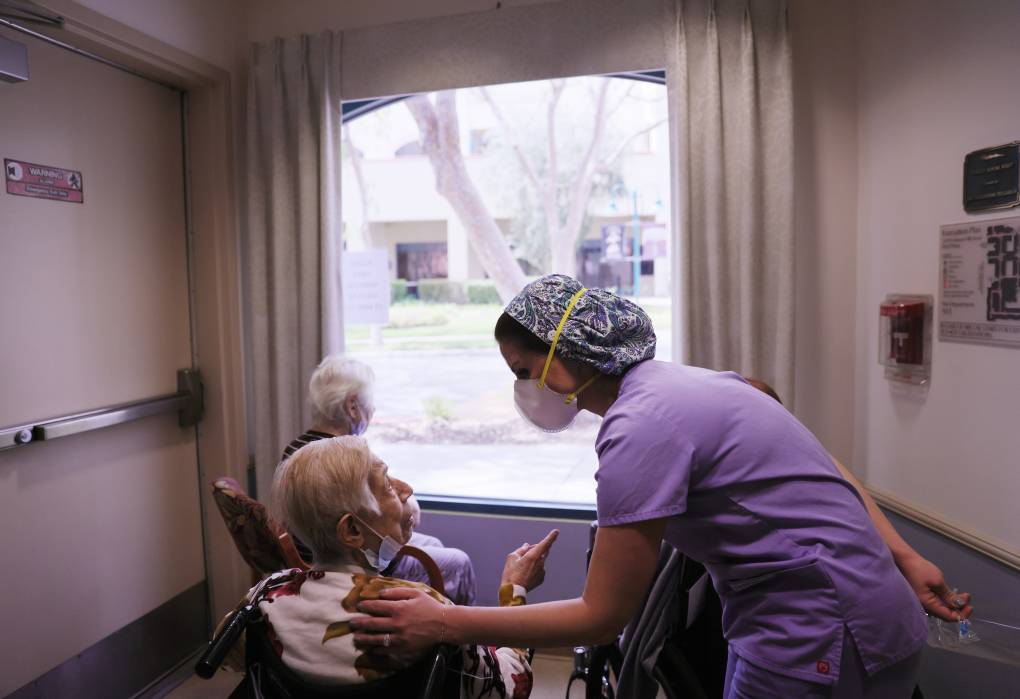
"caption": "In response to increased COVID-19 cases in the Bay Area — which health officials attribute to the latest mutated strain — Contra Costa Health Services CEO Anna Roth said Contra Costa Health and other Bay Area health agencies are implementing new mask requirements for health care workers. Sonoma County advisers issued the same precautions as well.",
"description": null,
"title": "First Day Of In-Room Family Member Visits At Skilled Nursing Facility",
"credit": "Mario Tama/Getty Images",
"status": "inherit",
"altTag": "A nurse wearing a mask and hair net addresses a patient in a wheelchair near a window.",
"isLoading": false,
"fetchFailed": false
},
"news_11961358": {
"type": "attachments",
"id": "news_11961358",
"meta": {
"index": "attachments_1716263798",
"site": "news",
"id": "11961358",
"found": true
},
"parent": 0,
"imgSizes": {
"twentyfourteen-full-width": {
"file": "https://ww2.kqed.org/app/uploads/sites/10/2023/09/CMNewsom01-1038x576.jpg",
"width": 1038,
"mimeType": "image/jpeg",
"height": 576
},
"thumbnail": {
"file": "https://ww2.kqed.org/app/uploads/sites/10/2023/09/CMNewsom01-160x99.jpg",
"width": 160,
"mimeType": "image/jpeg",
"height": 99
},
"post-thumbnail": {
"file": "https://ww2.kqed.org/app/uploads/sites/10/2023/09/CMNewsom01-672x372.jpg",
"width": 672,
"mimeType": "image/jpeg",
"height": 372
},
"kqedFullSize": {
"file": "https://ww2.kqed.org/app/uploads/sites/10/2023/09/CMNewsom01.jpg",
"width": 2000,
"height": 1238
},
"large": {
"file": "https://ww2.kqed.org/app/uploads/sites/10/2023/09/CMNewsom01-1020x631.jpg",
"width": 1020,
"mimeType": "image/jpeg",
"height": 631
},
"1536x1536": {
"file": "https://ww2.kqed.org/app/uploads/sites/10/2023/09/CMNewsom01-1536x951.jpg",
"width": 1536,
"mimeType": "image/jpeg",
"height": 951
},
"full-width": {
"file": "https://ww2.kqed.org/app/uploads/sites/10/2023/09/CMNewsom01-1920x1188.jpg",
"width": 1920,
"mimeType": "image/jpeg",
"height": 1188
},
"medium": {
"file": "https://ww2.kqed.org/app/uploads/sites/10/2023/09/CMNewsom01-800x495.jpg",
"width": 800,
"mimeType": "image/jpeg",
"height": 495
}
},
"publishDate": 1694802193,
"modified": 1694809839,
"caption": "People sit on the sidewalk of G Street in a small homeless encampment in the Chinatown neighborhood of Fresno on Feb. 10, 2022. ",
"description": null,
"title": "CMNewsom01",
"credit": "Larry Valenzuela/CalMatters",
"status": "inherit",
"altTag": "An encampment is seen with a tent, pillows and other belongings arranged on a sidewalk next to a building lined with a chain-link fence.",
"isLoading": false,
"fetchFailed": false
},
"news_11961486": {
"type": "attachments",
"id": "news_11961486",
"meta": {
"index": "attachments_1716263798",
"site": "news",
"id": "11961486",
"found": true
},
"parent": 11961481,
"imgSizes": {
"twentyfourteen-full-width": {
"file": "https://ww2.kqed.org/app/uploads/sites/10/2023/09/GettyImages-1405843212-1038x576.jpg",
"width": 1038,
"mimeType": "image/jpeg",
"height": 576
},
"thumbnail": {
"file": "https://ww2.kqed.org/app/uploads/sites/10/2023/09/GettyImages-1405843212-160x107.jpg",
"width": 160,
"mimeType": "image/jpeg",
"height": 107
},
"post-thumbnail": {
"file": "https://ww2.kqed.org/app/uploads/sites/10/2023/09/GettyImages-1405843212-672x372.jpg",
"width": 672,
"mimeType": "image/jpeg",
"height": 372
},
"kqedFullSize": {
"file": "https://ww2.kqed.org/app/uploads/sites/10/2023/09/GettyImages-1405843212-scaled.jpg",
"width": 2560,
"height": 1706
},
"2048x2048": {
"file": "https://ww2.kqed.org/app/uploads/sites/10/2023/09/GettyImages-1405843212-2048x1365.jpg",
"width": 2048,
"mimeType": "image/jpeg",
"height": 1365
},
"large": {
"file": "https://ww2.kqed.org/app/uploads/sites/10/2023/09/GettyImages-1405843212-1020x680.jpg",
"width": 1020,
"mimeType": "image/jpeg",
"height": 680
},
"1536x1536": {
"file": "https://ww2.kqed.org/app/uploads/sites/10/2023/09/GettyImages-1405843212-1536x1024.jpg",
"width": 1536,
"mimeType": "image/jpeg",
"height": 1024
},
"full-width": {
"file": "https://ww2.kqed.org/app/uploads/sites/10/2023/09/GettyImages-1405843212-1920x1280.jpg",
"width": 1920,
"mimeType": "image/jpeg",
"height": 1280
},
"medium": {
"file": "https://ww2.kqed.org/app/uploads/sites/10/2023/09/GettyImages-1405843212-800x533.jpg",
"width": 800,
"mimeType": "image/jpeg",
"height": 533
}
},
"publishDate": 1694823415,
"modified": 1694823613,
"caption": "Cough, cold and flu over-the-counter medication may not be effective.",
"description": null,
"title": "Miami Beach, Florida, Navarro Pharmacy, cough medicine, cold and flu, over the counter medication aisle",
"credit": "Jeffrey Greenberg/Universal Images Group via Getty Images",
"status": "inherit",
"altTag": "an aisle of over-the-counter cold medications",
"isLoading": false,
"fetchFailed": false
},
"news_11961244": {
"type": "attachments",
"id": "news_11961244",
"meta": {
"index": "attachments_1716263798",
"site": "news",
"id": "11961244",
"found": true
},
"parent": 11961243,
"imgSizes": {
"twentyfourteen-full-width": {
"file": "https://ww2.kqed.org/app/uploads/sites/10/2023/09/GettyImages-1645167120-1038x576.jpg",
"width": 1038,
"mimeType": "image/jpeg",
"height": 576
},
"thumbnail": {
"file": "https://ww2.kqed.org/app/uploads/sites/10/2023/09/GettyImages-1645167120-160x107.jpg",
"width": 160,
"mimeType": "image/jpeg",
"height": 107
},
"post-thumbnail": {
"file": "https://ww2.kqed.org/app/uploads/sites/10/2023/09/GettyImages-1645167120-672x372.jpg",
"width": 672,
"mimeType": "image/jpeg",
"height": 372
},
"kqedFullSize": {
"file": "https://ww2.kqed.org/app/uploads/sites/10/2023/09/GettyImages-1645167120.jpg",
"width": 1920,
"height": 1281
},
"large": {
"file": "https://ww2.kqed.org/app/uploads/sites/10/2023/09/GettyImages-1645167120-1020x681.jpg",
"width": 1020,
"mimeType": "image/jpeg",
"height": 681
},
"1536x1536": {
"file": "https://ww2.kqed.org/app/uploads/sites/10/2023/09/GettyImages-1645167120-1536x1025.jpg",
"width": 1536,
"mimeType": "image/jpeg",
"height": 1025
},
"medium": {
"file": "https://ww2.kqed.org/app/uploads/sites/10/2023/09/GettyImages-1645167120-800x534.jpg",
"width": 800,
"mimeType": "image/jpeg",
"height": 534
}
},
"publishDate": 1694732300,
"modified": 1694733070,
"caption": "Thousands of health care workers march in Los Angeles on Sept. 4 to call for the need for improved working conditions, better support systems and increased investment in the workforce at Kaiser Permanente. The event was organized by SEIU-UHW West. ",
"description": null,
"title": "Kaiser permanente rally",
"credit": "Dania Maxwell/Los Angeles Times",
"status": "inherit",
"altTag": "a group of people in matching shirts hold signs and protest outside",
"isLoading": false,
"fetchFailed": false
},
"news_11960719": {
"type": "attachments",
"id": "news_11960719",
"meta": {
"index": "attachments_1716263798",
"site": "news",
"id": "11960719",
"found": true
},
"parent": 0,
"imgSizes": {
"twentyfourteen-full-width": {
"file": "https://ww2.kqed.org/app/uploads/sites/10/2023/09/230911-MARTINEZ-REFINERY-Getty-MM-KQED-1038x576.jpg",
"width": 1038,
"mimeType": "image/jpeg",
"height": 576
},
"thumbnail": {
"file": "https://ww2.kqed.org/app/uploads/sites/10/2023/09/230911-MARTINEZ-REFINERY-Getty-MM-KQED-160x107.jpg",
"width": 160,
"mimeType": "image/jpeg",
"height": 107
},
"post-thumbnail": {
"file": "https://ww2.kqed.org/app/uploads/sites/10/2023/09/230911-MARTINEZ-REFINERY-Getty-MM-KQED-672x372.jpg",
"width": 672,
"mimeType": "image/jpeg",
"height": 372
},
"kqedFullSize": {
"file": "https://ww2.kqed.org/app/uploads/sites/10/2023/09/230911-MARTINEZ-REFINERY-Getty-MM-KQED.jpg",
"width": 2000,
"height": 1333
},
"large": {
"file": "https://ww2.kqed.org/app/uploads/sites/10/2023/09/230911-MARTINEZ-REFINERY-Getty-MM-KQED-1020x680.jpg",
"width": 1020,
"mimeType": "image/jpeg",
"height": 680
},
"1536x1536": {
"file": "https://ww2.kqed.org/app/uploads/sites/10/2023/09/230911-MARTINEZ-REFINERY-Getty-MM-KQED-1536x1024.jpg",
"width": 1536,
"mimeType": "image/jpeg",
"height": 1024
},
"full-width": {
"file": "https://ww2.kqed.org/app/uploads/sites/10/2023/09/230911-MARTINEZ-REFINERY-Getty-MM-KQED-1920x1280.jpg",
"width": 1920,
"mimeType": "image/jpeg",
"height": 1280
},
"medium": {
"file": "https://ww2.kqed.org/app/uploads/sites/10/2023/09/230911-MARTINEZ-REFINERY-Getty-MM-KQED-800x533.jpg",
"width": 800,
"mimeType": "image/jpeg",
"height": 533
}
},
"publishDate": 1694475541,
"modified": 1694475819,
"caption": "The PBF Energy refinery in Martinez on Jan. 24, 2017.",
"description": null,
"title": "The Shell refinery in seen on Tuesday Jan. 24, 2017, in Martinez, Ca.",
"credit": "Michael Macor/The San Francisco Chronicle via Getty Images",
"status": "inherit",
"altTag": "A large industrial facility set alongside a body of water with emissions emanating from it.",
"isLoading": false,
"fetchFailed": false
},
"news_11960521": {
"type": "attachments",
"id": "news_11960521",
"meta": {
"index": "attachments_1716263798",
"site": "news",
"id": "11960521",
"found": true
},
"parent": 11960517,
"imgSizes": {
"twentyfourteen-full-width": {
"file": "https://ww2.kqed.org/app/uploads/sites/10/2023/09/GettyImages-1668439446-1024x576.jpg",
"width": 1024,
"mimeType": "image/jpeg",
"height": 576
},
"thumbnail": {
"file": "https://ww2.kqed.org/app/uploads/sites/10/2023/09/GettyImages-1668439446-160x107.jpg",
"width": 160,
"mimeType": "image/jpeg",
"height": 107
},
"post-thumbnail": {
"file": "https://ww2.kqed.org/app/uploads/sites/10/2023/09/GettyImages-1668439446-672x372.jpg",
"width": 672,
"mimeType": "image/jpeg",
"height": 372
},
"kqedFullSize": {
"file": "https://ww2.kqed.org/app/uploads/sites/10/2023/09/GettyImages-1668439446.jpg",
"width": 1024,
"height": 686
},
"large": {
"file": "https://ww2.kqed.org/app/uploads/sites/10/2023/09/GettyImages-1668439446-1020x683.jpg",
"width": 1020,
"mimeType": "image/jpeg",
"height": 683
},
"medium": {
"file": "https://ww2.kqed.org/app/uploads/sites/10/2023/09/GettyImages-1668439446-800x536.jpg",
"width": 800,
"mimeType": "image/jpeg",
"height": 536
}
},
"publishDate": 1694296641,
"modified": 1694296757,
"caption": "A sign is posted on the exterior of the Kaiser Permanente Vallejo Medical Center on Sept. 8, 2023 in Vallejo, Solano County. California Attorney General Rob Bonta announced a $49 million settlement with Kaiser Foundation for unlawfully disposing of medical and hazardous waste along with paper records of over 7,700 patients. Bonta was assisted by 6 California district attorneys in the investigation that discovered illegal dumping of medical and hazardous materials in dumpsters at 16 different Kaiser facilities in California. ",
"description": null,
"title": "CA Attorney General Announces 49 Million Settlement With Kaiser Foundation Over Illegal Disposal Of Hazardous Waste",
"credit": "Justin Sullivan/Getty Images",
"status": "inherit",
"altTag": "A view of a Kaiser Permanante Hospital from the outside.",
"isLoading": false,
"fetchFailed": false
},
"news_11960161": {
"type": "attachments",
"id": "news_11960161",
"meta": {
"index": "attachments_1716263798",
"site": "news",
"id": "11960161",
"found": true
},
"parent": 0,
"imgSizes": {
"twentyfourteen-full-width": {
"file": "https://ww2.kqed.org/app/uploads/sites/10/2023/09/RS47207_013_SantaClara_LevisStadiumVaccineSite_02092021-qut-1038x576.jpg",
"width": 1038,
"mimeType": "image/jpeg",
"height": 576
},
"thumbnail": {
"file": "https://ww2.kqed.org/app/uploads/sites/10/2023/09/RS47207_013_SantaClara_LevisStadiumVaccineSite_02092021-qut-160x107.jpg",
"width": 160,
"mimeType": "image/jpeg",
"height": 107
},
"post-thumbnail": {
"file": "https://ww2.kqed.org/app/uploads/sites/10/2023/09/RS47207_013_SantaClara_LevisStadiumVaccineSite_02092021-qut-672x372.jpg",
"width": 672,
"mimeType": "image/jpeg",
"height": 372
},
"kqedFullSize": {
"file": "https://ww2.kqed.org/app/uploads/sites/10/2023/09/RS47207_013_SantaClara_LevisStadiumVaccineSite_02092021-qut.jpg",
"width": 1920,
"height": 1280
},
"large": {
"file": "https://ww2.kqed.org/app/uploads/sites/10/2023/09/RS47207_013_SantaClara_LevisStadiumVaccineSite_02092021-qut-1020x680.jpg",
"width": 1020,
"mimeType": "image/jpeg",
"height": 680
},
"1536x1536": {
"file": "https://ww2.kqed.org/app/uploads/sites/10/2023/09/RS47207_013_SantaClara_LevisStadiumVaccineSite_02092021-qut-1536x1024.jpg",
"width": 1536,
"mimeType": "image/jpeg",
"height": 1024
},
"medium": {
"file": "https://ww2.kqed.org/app/uploads/sites/10/2023/09/RS47207_013_SantaClara_LevisStadiumVaccineSite_02092021-qut-800x533.jpg",
"width": 800,
"mimeType": "image/jpeg",
"height": 533
}
},
"publishDate": 1693957487,
"modified": 1693957785,
"caption": "The Food and Drug Administration is expected to approve new vaccines soon that target a more recent omicron subvariant than the original shots. Scientists say that although subvariant XBB.1.5 has already been replaced by others, it’s a close enough match for the new shots to protect people.",
"description": null,
"title": "Photojournalist",
"credit": "Beth LaBerge/KQED",
"status": "inherit",
"altTag": "A woman in a medical mask is getting a vaccine shot by a nurse at a COVID clinic.",
"isLoading": false,
"fetchFailed": false
},
"news_11959785": {
"type": "attachments",
"id": "news_11959785",
"meta": {
"index": "attachments_1716263798",
"site": "news",
"id": "11959785",
"found": true
},
"parent": 0,
"imgSizes": {
"thumbnail": {
"file": "https://ww2.kqed.org/app/uploads/sites/10/2023/08/230831-SAFE-USE-POP-UP-MD-08-KQED-160x107.jpg",
"width": 160,
"mimeType": "image/jpeg",
"height": 107
},
"post-thumbnail": {
"file": "https://ww2.kqed.org/app/uploads/sites/10/2023/08/230831-SAFE-USE-POP-UP-MD-08-KQED-672x372.jpg",
"width": 672,
"mimeType": "image/jpeg",
"height": 372
},
"kqedFullSize": {
"file": "https://ww2.kqed.org/app/uploads/sites/10/2023/08/230831-SAFE-USE-POP-UP-MD-08-KQED.jpg?ver=1693590401",
"width": 2000,
"height": 1333
},
"full-width": {
"file": "https://ww2.kqed.org/app/uploads/sites/10/2023/08/230831-SAFE-USE-POP-UP-MD-08-KQED-1920x1280.jpg",
"width": 1920,
"mimeType": "image/jpeg",
"height": 1280
},
"medium": {
"file": "https://ww2.kqed.org/app/uploads/sites/10/2023/08/230831-SAFE-USE-POP-UP-MD-08-KQED-800x533.jpg",
"width": 800,
"mimeType": "image/jpeg",
"height": 533
}
},
"publishDate": 1693512685,
"modified": 1693590464,
"caption": "David Helgren smokes meth at a safe drug consumption site created by volunteers with Concerned Public Response in San Francisco on Aug. 31, 2023.",
"description": null,
"title": "230831-SAFE USE POP UP-MD-08-KQED",
"credit": "Martin do Nascimento/KQED",
"status": "inherit",
"altTag": "A person with long hair smokes meth through a red pipe.",
"isLoading": false,
"fetchFailed": false
},
"news_11959604": {
"type": "attachments",
"id": "news_11959604",
"meta": {
"index": "attachments_1716263798",
"site": "news",
"id": "11959604",
"found": true
},
"parent": 0,
"imgSizes": {
"twentyfourteen-full-width": {
"file": "https://ww2.kqed.org/app/uploads/sites/10/2023/08/RS68436_230829-ODAwareness-26-BL-KQED-1038x576.jpg",
"width": 1038,
"mimeType": "image/jpeg",
"height": 576
},
"thumbnail": {
"file": "https://ww2.kqed.org/app/uploads/sites/10/2023/08/RS68436_230829-ODAwareness-26-BL-KQED-160x107.jpg",
"width": 160,
"mimeType": "image/jpeg",
"height": 107
},
"post-thumbnail": {
"file": "https://ww2.kqed.org/app/uploads/sites/10/2023/08/RS68436_230829-ODAwareness-26-BL-KQED-672x372.jpg",
"width": 672,
"mimeType": "image/jpeg",
"height": 372
},
"kqedFullSize": {
"file": "https://ww2.kqed.org/app/uploads/sites/10/2023/08/RS68436_230829-ODAwareness-26-BL-KQED.jpg",
"width": 2000,
"height": 1333
},
"large": {
"file": "https://ww2.kqed.org/app/uploads/sites/10/2023/08/RS68436_230829-ODAwareness-26-BL-KQED-1020x680.jpg",
"width": 1020,
"mimeType": "image/jpeg",
"height": 680
},
"1536x1536": {
"file": "https://ww2.kqed.org/app/uploads/sites/10/2023/08/RS68436_230829-ODAwareness-26-BL-KQED-1536x1024.jpg",
"width": 1536,
"mimeType": "image/jpeg",
"height": 1024
},
"full-width": {
"file": "https://ww2.kqed.org/app/uploads/sites/10/2023/08/RS68436_230829-ODAwareness-26-BL-KQED-1920x1280.jpg",
"width": 1920,
"mimeType": "image/jpeg",
"height": 1280
},
"medium": {
"file": "https://ww2.kqed.org/app/uploads/sites/10/2023/08/RS68436_230829-ODAwareness-26-BL-KQED-800x533.jpg",
"width": 800,
"mimeType": "image/jpeg",
"height": 533
}
},
"publishDate": 1693420588,
"modified": 1693422074,
"caption": "Jean, 60, sits outside of the Opiate Treatment Outpatient Program (OTOP) at Zuckerberg San Francisco General Hospital in San Francisco on Aug. 29, 2023.",
"description": null,
"title": "RS68436_230829-ODAwareness-26-BL-KQED",
"credit": "Beth LaBerge/KQED",
"status": "inherit",
"altTag": "A person sits on a bench outdoors and looks at the camera.",
"isLoading": false,
"fetchFailed": false
},
"news_11959643": {
"type": "attachments",
"id": "news_11959643",
"meta": {
"index": "attachments_1716263798",
"site": "news",
"id": "11959643",
"found": true
},
"parent": 11959628,
"imgSizes": {
"twentyfourteen-full-width": {
"file": "https://ww2.kqed.org/app/uploads/sites/10/2023/08/GettyImages-1576472057-1024x576.jpg",
"width": 1024,
"mimeType": "image/jpeg",
"height": 576
},
"thumbnail": {
"file": "https://ww2.kqed.org/app/uploads/sites/10/2023/08/GettyImages-1576472057-160x120.jpg",
"width": 160,
"mimeType": "image/jpeg",
"height": 120
},
"post-thumbnail": {
"file": "https://ww2.kqed.org/app/uploads/sites/10/2023/08/GettyImages-1576472057-672x372.jpg",
"width": 672,
"mimeType": "image/jpeg",
"height": 372
},
"kqedFullSize": {
"file": "https://ww2.kqed.org/app/uploads/sites/10/2023/08/GettyImages-1576472057.jpg",
"width": 1024,
"height": 768
},
"large": {
"file": "https://ww2.kqed.org/app/uploads/sites/10/2023/08/GettyImages-1576472057-1020x765.jpg",
"width": 1020,
"mimeType": "image/jpeg",
"height": 765
},
"medium": {
"file": "https://ww2.kqed.org/app/uploads/sites/10/2023/08/GettyImages-1576472057-800x600.jpg",
"width": 800,
"mimeType": "image/jpeg",
"height": 600
}
},
"publishDate": 1693431050,
"modified": 1693437126,
"caption": "Psilocybin mushrooms stand ready for harvest in a humidified 'fruiting chamber' in the basement of a private home on July 28, 2023 in Fairfield County, Connecticut. ",
"description": null,
"title": "Psilocybin Mushrooms Increasingly Sought For Therapeutic Purposes",
"credit": "John Moore/Getty Images",
"status": "inherit",
"altTag": "A large amount of mushrooms in soil inside a basement.",
"isLoading": false,
"fetchFailed": false
},
"news_11959337": {
"type": "attachments",
"id": "news_11959337",
"meta": {
"index": "attachments_1716263798",
"site": "news",
"id": "11959337",
"found": true
},
"parent": 0,
"imgSizes": {
"twentyfourteen-full-width": {
"file": "https://ww2.kqed.org/app/uploads/sites/10/2023/08/CMCareCourts01-1038x576.jpg",
"width": 1038,
"mimeType": "image/jpeg",
"height": 576
},
"thumbnail": {
"file": "https://ww2.kqed.org/app/uploads/sites/10/2023/08/CMCareCourts01-160x107.jpg",
"width": 160,
"mimeType": "image/jpeg",
"height": 107
},
"post-thumbnail": {
"file": "https://ww2.kqed.org/app/uploads/sites/10/2023/08/CMCareCourts01-672x372.jpg",
"width": 672,
"mimeType": "image/jpeg",
"height": 372
},
"kqedFullSize": {
"file": "https://ww2.kqed.org/app/uploads/sites/10/2023/08/CMCareCourts01.jpg",
"width": 2000,
"height": 1333
},
"large": {
"file": "https://ww2.kqed.org/app/uploads/sites/10/2023/08/CMCareCourts01-1020x680.jpg",
"width": 1020,
"mimeType": "image/jpeg",
"height": 680
},
"1536x1536": {
"file": "https://ww2.kqed.org/app/uploads/sites/10/2023/08/CMCareCourts01-1536x1024.jpg",
"width": 1536,
"mimeType": "image/jpeg",
"height": 1024
},
"full-width": {
"file": "https://ww2.kqed.org/app/uploads/sites/10/2023/08/CMCareCourts01-1920x1280.jpg",
"width": 1920,
"mimeType": "image/jpeg",
"height": 1280
},
"medium": {
"file": "https://ww2.kqed.org/app/uploads/sites/10/2023/08/CMCareCourts01-800x533.jpg",
"width": 800,
"mimeType": "image/jpeg",
"height": 533
}
},
"publishDate": 1693249635,
"modified": 1693255903,
"caption": "Stacey Berardino, assistant deputy director over the forensics and justice involved division of mental health, speaks to community members about CARE Court, a new program that will be implemented in October 2023, at the St. Irenaeus Catholic Church in Cypress.",
"description": null,
"title": "CMCareCourts01",
"credit": "Lauren Justice/CalMatters",
"status": "inherit",
"altTag": "A woman speaks in front of a crowd with a microphone in her hand. A projected screen behind her reads, \"What is in a CARE/Agreement Plan?\"",
"isLoading": false,
"fetchFailed": false
},
"news_11959187": {
"type": "attachments",
"id": "news_11959187",
"meta": {
"index": "attachments_1716263798",
"site": "news",
"id": "11959187",
"found": true
},
"parent": 0,
"imgSizes": {
"twentyfourteen-full-width": {
"file": "https://ww2.kqed.org/app/uploads/sites/10/2023/08/CalMattersHospitals-1038x576.jpg",
"width": 1038,
"mimeType": "image/jpeg",
"height": 576
},
"thumbnail": {
"file": "https://ww2.kqed.org/app/uploads/sites/10/2023/08/CalMattersHospitals-160x107.jpg",
"width": 160,
"mimeType": "image/jpeg",
"height": 107
},
"post-thumbnail": {
"file": "https://ww2.kqed.org/app/uploads/sites/10/2023/08/CalMattersHospitals-672x372.jpg",
"width": 672,
"mimeType": "image/jpeg",
"height": 372
},
"kqedFullSize": {
"file": "https://ww2.kqed.org/app/uploads/sites/10/2023/08/CalMattersHospitals.jpg",
"width": 2000,
"height": 1333
},
"large": {
"file": "https://ww2.kqed.org/app/uploads/sites/10/2023/08/CalMattersHospitals-1020x680.jpg",
"width": 1020,
"mimeType": "image/jpeg",
"height": 680
},
"1536x1536": {
"file": "https://ww2.kqed.org/app/uploads/sites/10/2023/08/CalMattersHospitals-1536x1024.jpg",
"width": 1536,
"mimeType": "image/jpeg",
"height": 1024
},
"full-width": {
"file": "https://ww2.kqed.org/app/uploads/sites/10/2023/08/CalMattersHospitals-1920x1280.jpg",
"width": 1920,
"mimeType": "image/jpeg",
"height": 1280
},
"medium": {
"file": "https://ww2.kqed.org/app/uploads/sites/10/2023/08/CalMattersHospitals-800x533.jpg",
"width": 800,
"mimeType": "image/jpeg",
"height": 533
}
},
"publishDate": 1692985617,
"modified": 1692986189,
"caption": "A road sign announcing the closure of the Emergency Room and Madera Community Hospital outside the main entrance on Jan. 2, 2023.",
"description": null,
"title": "CalMattersHospitals",
"credit": "Larry Valenzuela/CalMatters via CatchLight Local",
"status": "inherit",
"altTag": "An electric road sign on a gloomy, wet day reads, \"ER and Hospital Closed.\" A hospital is seen in the background with several white vehicles in the parking lot.",
"isLoading": false,
"fetchFailed": false
}
},
"audioPlayerReducer": {
"postId": "stream_live",
"isPaused": true,
"isPlaying": false,
"pfsActive": false,
"pledgeModalIsOpen": true,
"playerDrawerIsOpen": false,
"liveAudioPlayStartedAt": 0,
"liveAudioPlayContext": ""
},
"authorsReducer": {
"byline_news_11961817": {
"type": "authors",
"id": "byline_news_11961817",
"meta": {
"override": true
},
"slug": "byline_news_11961817",
"name": "\u003ca href=\"https://twitter.com/TonyBaloney1967\">Tony Hicks\u003c/a>\u003cbr>Bay City News",
"isLoading": false
},
"byline_news_11961346": {
"type": "authors",
"id": "byline_news_11961346",
"meta": {
"override": true
},
"slug": "byline_news_11961346",
"name": "\u003ca href=\"https://calmatters.org/author/kristen-hwang/\">Kristen Hwang\u003c/a>",
"isLoading": false
},
"byline_news_11960517": {
"type": "authors",
"id": "byline_news_11960517",
"meta": {
"override": true
},
"slug": "byline_news_11960517",
"name": "Olga R. Rodriguez\u003cbr>The Associated Press",
"isLoading": false
},
"byline_news_11960155": {
"type": "authors",
"id": "byline_news_11960155",
"meta": {
"override": true
},
"slug": "byline_news_11960155",
"name": "\u003ca href=\"https://www.npr.org/people/146944972/rob-stein\">Rob Stein\u003c/a>",
"isLoading": false
},
"byline_news_11959628": {
"type": "authors",
"id": "byline_news_11959628",
"meta": {
"override": true
},
"slug": "byline_news_11959628",
"name": "\u003ca href=\"https://calmatters.org/author/anaibarra/\">Ana B. Ibarra\u003c/a>",
"isLoading": false
},
"byline_news_11959302": {
"type": "authors",
"id": "byline_news_11959302",
"meta": {
"override": true
},
"slug": "byline_news_11959302",
"name": "\u003ca href=\"https://calmatters.org/author/jeanne-kuang/\">Jeanne Kuang\u003c/a>",
"isLoading": false
},
"byline_news_11959175": {
"type": "authors",
"id": "byline_news_11959175",
"meta": {
"override": true
},
"slug": "byline_news_11959175",
"name": "\u003ca href=\"https://calmatters.org/author/anaibarra/\">Ana B. Ibarra\u003c/a>",
"isLoading": false
},
"tgoldberg": {
"type": "authors",
"id": "258",
"meta": {
"index": "authors_1716337520",
"id": "258",
"found": true
},
"name": "Ted Goldberg",
"firstName": "Ted",
"lastName": "Goldberg",
"slug": "tgoldberg",
"email": "tgoldberg@kqed.org",
"display_author_email": true,
"staff_mastheads": [
"news"
],
"title": "KQED Managing Editor, News and Newscasts",
"bio": "Ted Goldberg is Managing Editor of News and Newscasts at KQED. His main reporting beat is the Bay Area's oil refining industry.\r\n\r\nPrior to joining KQED in 2014, Ted worked at CBS News and WCBS AM in New York and Bay City News and KCBS Radio in San Francisco. He graduated from Oberlin College in Ohio in 1998.",
"avatar": "https://secure.gravatar.com/avatar/30ce2e4fe89135e104f89be2394d16225b9d36c121b5b3cb7651ce642978b96f?s=600&d=blank&r=g",
"twitter": "TedrickG",
"bluesky": null,
"facebook": null,
"instagram": null,
"linkedin": null,
"sites": [
{
"site": "news",
"roles": [
"editor"
]
},
{
"site": "science",
"roles": [
"editor"
]
}
],
"headData": {
"title": "Ted Goldberg | KQED",
"description": "KQED Managing Editor, News and Newscasts",
"ogImgSrc": "https://secure.gravatar.com/avatar/30ce2e4fe89135e104f89be2394d16225b9d36c121b5b3cb7651ce642978b96f?s=600&d=blank&r=g",
"twImgSrc": "https://secure.gravatar.com/avatar/30ce2e4fe89135e104f89be2394d16225b9d36c121b5b3cb7651ce642978b96f?s=600&d=blank&r=g"
},
"isLoading": false,
"link": "/author/tgoldberg"
},
"lesleymcclurg": {
"type": "authors",
"id": "11229",
"meta": {
"index": "authors_1716337520",
"id": "11229",
"found": true
},
"name": "Lesley McClurg",
"firstName": "Lesley",
"lastName": "McClurg",
"slug": "lesleymcclurg",
"email": "lmcclurg@KQED.org",
"display_author_email": false,
"staff_mastheads": [
"news",
"science"
],
"title": "KQED Health Correspondent",
"bio": "Lesley McClurg is a health correspondent and fill-in host whose work is regularly rebroadcast on NPR and PBS programs. She’s earned multiple regional Emmy awards, a national and a regional Edward R. Murrow award, and was named Best Beat Reporter by the Association of Health Care Journalists. The Society of Professional Journalists has recognized her work several times, and the Society of Environmental Journalists spotlighted her coverage of California’s historic drought.\r\n\r\nBefore joining KQED in 2016, Lesley covered food and sustainability for Capital Public Radio, environmental issues for Colorado Public Radio, and reported for KUOW and KCTS 9 in Seattle. Away from the newsroom, she loves skiing with her daughter, mountain biking with her partner, and playing with Ollie, the family’s goldendoodle. On deadline, she runs almost entirely on chocolate chips.\r\n\r\n ",
"avatar": "https://secure.gravatar.com/avatar/bab49e972ea10c774fe0f5e29dba1722b158f7c0d58a360923d1389d380b2978?s=600&d=blank&r=g",
"twitter": "lesleywmcclurg",
"bluesky": null,
"facebook": null,
"instagram": null,
"linkedin": null,
"sites": [
{
"site": "arts",
"roles": [
"author"
]
},
{
"site": "news",
"roles": [
"editor"
]
},
{
"site": "futureofyou",
"roles": [
"editor"
]
},
{
"site": "stateofhealth",
"roles": [
"author"
]
},
{
"site": "science",
"roles": [
"editor"
]
},
{
"site": "quest",
"roles": [
"subscriber"
]
},
{
"site": "forum",
"roles": [
"administrator"
]
},
{
"site": "liveblog",
"roles": [
"author"
]
}
],
"headData": {
"title": "Lesley McClurg | KQED",
"description": "KQED Health Correspondent",
"ogImgSrc": "https://secure.gravatar.com/avatar/bab49e972ea10c774fe0f5e29dba1722b158f7c0d58a360923d1389d380b2978?s=600&d=blank&r=g",
"twImgSrc": "https://secure.gravatar.com/avatar/bab49e972ea10c774fe0f5e29dba1722b158f7c0d58a360923d1389d380b2978?s=600&d=blank&r=g"
},
"isLoading": false,
"link": "/author/lesleymcclurg"
},
"sjohnson": {
"type": "authors",
"id": "11840",
"meta": {
"index": "authors_1716337520",
"id": "11840",
"found": true
},
"name": "Sydney Johnson",
"firstName": "Sydney",
"lastName": "Johnson",
"slug": "sjohnson",
"email": "sjohnson@kqed.org",
"display_author_email": false,
"staff_mastheads": [
"news"
],
"title": "KQED Reporter",
"bio": "Sydney Johnson is a general assignment reporter at KQED. She previously reported on public health and city government at the San Francisco Examiner, and before that, she covered statewide education policy for EdSource. Her reporting has won multiple local, state and national awards. Sydney is a graduate of the University of California, Berkeley and lives in San Francisco.",
"avatar": "https://secure.gravatar.com/avatar/97855f2719b72ad6190b7c535fe642c8?s=600&d=blank&r=g",
"twitter": "sydneyfjohnson",
"facebook": null,
"instagram": null,
"linkedin": null,
"sites": [
{
"site": "news",
"roles": [
"editor"
]
}
],
"headData": {
"title": "Sydney Johnson | KQED",
"description": "KQED Reporter",
"ogImgSrc": "https://secure.gravatar.com/avatar/97855f2719b72ad6190b7c535fe642c8?s=600&d=blank&r=g",
"twImgSrc": "https://secure.gravatar.com/avatar/97855f2719b72ad6190b7c535fe642c8?s=600&d=blank&r=g"
},
"isLoading": false,
"link": "/author/sjohnson"
}
},
"pagesReducer": {
"news_tag_health": {
"type": "terms",
"id": "news_18543",
"meta": {
"index": "terms_1716263798",
"site": "news",
"id": "18543",
"score": 6.886659
},
"featImg": null,
"name": "Health",
"description": null,
"taxonomy": "tag",
"headData": {
"twImgId": null,
"twTitle": null,
"ogTitle": null,
"ogImgId": null,
"twDescription": null,
"description": null,
"title": "Health Archives | KQED News",
"ogDescription": null
},
"ttid": 466,
"slug": "health",
"isLoading": false,
"title": "Health",
"pageMeta": {
"site": "news",
"WpPageTemplate": "page-topic-editorial",
"currentPage": 42
},
"blocks": [
{
"blockName": "kqed/post-list",
"attrs": {
"layout": "cardArticle2",
"query": "posts/news?tag=health",
"seeMore": false,
"paginated": true,
"page": 42
}
},
{
"blockName": "kqed/ad"
}
]
}
},
"pfsSessionReducer": {},
"postsReducer": {
"stream_live": {
"type": "live",
"id": "stream_live",
"audioUrl": "https://streams.kqed.org/kqedradio",
"title": "Live Stream",
"excerpt": "Live Stream information currently unavailable.",
"link": "/radio",
"featImg": "",
"label": {
"name": "KQED Live",
"link": "/"
}
},
"stream_kqedNewscast": {
"type": "posts",
"id": "stream_kqedNewscast",
"audioUrl": "https://www.kqed.org/.stream/anon/radio/RDnews/newscast.mp3?_=1",
"title": "KQED Newscast",
"featImg": "",
"label": {
"name": "88.5 FM",
"link": "/"
}
},
"news_11961817": {
"type": "posts",
"id": "news_11961817",
"meta": {
"index": "posts_1716263798",
"site": "news",
"id": "11961817",
"score": null,
"sort": [
1695231290000
]
},
"guestAuthors": [],
"slug": "bay-area-counties-requiring-masks-high-risk-health-care-facilities",
"title": "Growing Number of Bay Area Counties Requiring Masks in 'High-Risk' Health Care Facilities",
"publishDate": 1695231290,
"format": "standard",
"headTitle": "Growing Number of Bay Area Counties Requiring Masks in ‘High-Risk’ Health Care Facilities | KQED",
"labelTerm": {
"site": "news"
},
"content": "\u003cp>\u003ca href=\"https://www.kqed.org/news/11957790/the-new-covid-eris-variant-and-rising-cases-what-you-need-to-know\">COVID-19 cases\u003c/a> are again rising in Contra Costa County as it and other Bay Area counties are issuing a new masking order that applies to workers at “high-risk” health care facilities.\u003c/p>\n\u003cp>Contra Costa Health Services CEO Anna Roth told the county Board of Supervisors Tuesday that countywide hospital admissions for COVID-19 have increased since July, from 8.1 per day to 12.1.\u003c/p>\n\u003cp>“So it’s going up,” Roth said. “It’s not huge. We are able to handle the increased demand for some hospital beds, but it is going up.”\u003c/p>\n\u003cp>In response to the increased cases in the Bay Area — which health officials attribute to the latest mutated strain of COVID-19 — Roth said Contra Costa Health and other Bay Area health agencies are implementing new mask requirements for health care workers.\u003c/p>\n\u003cp>[ad fullwidth]\u003c/p>\n\u003cp>“We are issuing the health order today around masking for high-risk facilities, health care facilities specifically,” Roth said. “So again, masking in hospitals, masking in skilled nursing facilities, masking in high-risk facilities.”\u003c/p>\n\u003cp>The new masking order will not affect patients or visitors to affected health care facilities.\u003c/p>\n\u003cp>Roth said the new order will not include other residential congregate settings, such as detention facilities and homeless shelters. [pullquote size=\"medium\" align=\"right\" citation=\"Anna Roth, CEO, Contra Costa Health Services\"]‘So it’s going up. It’s not huge. We are able to handle the increased demand for some hospital beds, but it is going up.’[/pullquote] Roth also said the latest vaccine — which isn’t considered a booster, but an entirely new vaccine that replaces the former vaccine and handles the newest variants — will be available in Contra Costa County either at the end of this week or the beginning of next week.\u003c/p>\n\u003cp>“For those of you who have not been vaccinated in the last 60 days, you will be eligible,” Roth said. “This is a vaccine for everybody 6 months and over.”\u003c/p>\n\u003cp>Roth said the county is no longer running any mass vaccination sites and people should go to their regular providers.\u003c/p>\n\u003cp>“We do expect that there will be high demand the first couple of weeks,” Roth said. “What we have historically seen is that demand settles down and your regular providers will have the vaccine available.”\u003c/p>\n\u003cp>Roth said Contra Costa Health providers will turn no one away, but it’s important to go to a regular provider, who can record the vaccination for people to keep track.\u003c/p>\n\u003cp>Dr. Sefanit Mekuria, the county’s deputy health officer, told the board that the county — and county libraries — are still offering free test kits through the mail.\u003c/p>\n\u003cp>Sonoma County’s health officer issued a similar order Tuesday for health care workers who work directly with patients to wear face masks during an anticipated surge in the transmission of respiratory viruses this fall and winter.\u003c/p>\n\u003cp>The order lasts from Nov. 1 to April 30 and covers workers in facilities such as hospitals, clinics and other facilities where patient care is provided indoors.\u003c/p>\n\u003cp>“Each year we see that higher rates of influenza, COVID-19 and other respiratory viruses that can cause severe respiratory infections occur annually between late fall and spring,” said Dr. Karen Smith, Sonoma County’s health officer. [aside postID=news_11960630 hero='https://ww2.kqed.org/app/uploads/sites/10/2023/09/005_SanFrancisco_UnitedinHealthKidsCOVIDVaccination_11092021-qut.jpg'] “Patients and residents in our health care and congregate facilities, especially young children, pregnant women, the elderly, and those with chronic health conditions, are at greater risk for respiratory virus-related hospitalizations and death.\u003c/p>\n\u003cp>“Workers in direct care, health care, and congregate facilities are at risk for respiratory illness and can transmit the viruses to their clients, patients and coworkers,” Smith said.\u003c/p>\n\u003cp>Smith also strongly recommended that everyone who is at least 6 months old get an updated COVID-19 vaccine and a flu shot.\u003c/p>\n\u003cp>To find out more about COVID-19 in Contra Costa County, go to \u003ca href=\"https://cchealth.org/covid19\">https://cchealth.org/covid19\u003c/a>.\u003c/p>\n\u003cp>\u003c/p>\n",
"blocks": [],
"excerpt": "Sonoma and Contra Costa counties issued health orders Tuesday that urged masking for high-risk facilities, specifically hospitals and skilled nursing centers.",
"status": "publish",
"parent": 0,
"modified": 1738185733,
"stats": {
"hasAudio": false,
"hasVideo": false,
"hasChartOrMap": false,
"iframeSrcs": [],
"hasGoogleForm": false,
"hasGallery": false,
"hasHearkenModule": false,
"hasPolis": false,
"paragraphCount": 20,
"wordCount": 697
},
"headData": {
"title": "Growing Number of Bay Area Counties Requiring Masks in 'High-Risk' Health Care Facilities | KQED",
"description": "Sonoma and Contra Costa counties issued health orders Tuesday that urged masking for high-risk facilities, specifically hospitals and skilled nursing centers.",
"ogTitle": "",
"ogDescription": "",
"ogImgId": "",
"twTitle": "",
"twDescription": "",
"twImgId": "",
"schema": {
"@context": "https://schema.org",
"@type": "NewsArticle",
"headline": "Growing Number of Bay Area Counties Requiring Masks in 'High-Risk' Health Care Facilities",
"datePublished": "2023-09-20T10:34:50-07:00",
"dateModified": "2025-01-29T13:22:13-08:00",
"image": "https://cdn.kqed.org/wp-content/uploads/2020/02/KQED-OG-Image@1x.png",
"isAccessibleForFree": "True",
"publisher": {
"@type": "NewsMediaOrganization",
"@id": "https://www.kqed.org/#organization",
"name": "KQED",
"logo": "https://cdn.kqed.org/wp-content/uploads/2020/02/KQED-OG-Image@1x.png",
"url": "https://www.kqed.org",
"sameAs": [
"https://www.facebook.com/KQED",
"https://twitter.com/KQED",
"https://www.instagram.com/kqed/",
"https://www.tiktok.com/@kqedofficial",
"https://www.linkedin.com/company/kqed",
"https://www.youtube.com/channel/UCeC0IOo7i1P_61zVUWbJ4nw"
]
}
}
},
"sticky": false,
"nprByline": "\u003ca href=\"https://twitter.com/TonyBaloney1967\">Tony Hicks\u003c/a>\u003cbr>Bay City News",
"excludeFromSiteSearch": "Include",
"showOnAuthorArchivePages": "No",
"articleAge": "0",
"path": "/news/11961817/bay-area-counties-requiring-masks-high-risk-health-care-facilities",
"audioTrackLength": null,
"parsedContent": [
{
"type": "contentString",
"content": "\u003cdiv class=\"post-body\">\u003cp>\u003cp>\u003ca href=\"https://www.kqed.org/news/11957790/the-new-covid-eris-variant-and-rising-cases-what-you-need-to-know\">COVID-19 cases\u003c/a> are again rising in Contra Costa County as it and other Bay Area counties are issuing a new masking order that applies to workers at “high-risk” health care facilities.\u003c/p>\n\u003cp>Contra Costa Health Services CEO Anna Roth told the county Board of Supervisors Tuesday that countywide hospital admissions for COVID-19 have increased since July, from 8.1 per day to 12.1.\u003c/p>\n\u003cp>“So it’s going up,” Roth said. “It’s not huge. We are able to handle the increased demand for some hospital beds, but it is going up.”\u003c/p>\n\u003cp>In response to the increased cases in the Bay Area — which health officials attribute to the latest mutated strain of COVID-19 — Roth said Contra Costa Health and other Bay Area health agencies are implementing new mask requirements for health care workers.\u003c/p>\n\u003cp>\u003c/p>\u003c/div>",
"attributes": {
"named": {},
"numeric": []
}
},
{
"type": "component",
"content": "",
"name": "ad",
"attributes": {
"named": {
"label": "fullwidth"
},
"numeric": [
"fullwidth"
]
}
},
{
"type": "contentString",
"content": "\u003cdiv class=\"post-body\">\u003cp>\u003c/p>\n\u003cp>“We are issuing the health order today around masking for high-risk facilities, health care facilities specifically,” Roth said. “So again, masking in hospitals, masking in skilled nursing facilities, masking in high-risk facilities.”\u003c/p>\n\u003cp>The new masking order will not affect patients or visitors to affected health care facilities.\u003c/p>\n\u003cp>Roth said the new order will not include other residential congregate settings, such as detention facilities and homeless shelters. \u003c/p>\u003c/div>",
"attributes": {
"named": {},
"numeric": []
}
},
{
"type": "component",
"content": "‘So it’s going up. It’s not huge. We are able to handle the increased demand for some hospital beds, but it is going up.’",
"name": "pullquote",
"attributes": {
"named": {
"size": "medium",
"align": "right",
"citation": "Anna Roth, CEO, Contra Costa Health Services",
"label": ""
},
"numeric": []
}
},
{
"type": "contentString",
"content": "\u003cdiv class=\"post-body\">\u003cp> Roth also said the latest vaccine — which isn’t considered a booster, but an entirely new vaccine that replaces the former vaccine and handles the newest variants — will be available in Contra Costa County either at the end of this week or the beginning of next week.\u003c/p>\n\u003cp>“For those of you who have not been vaccinated in the last 60 days, you will be eligible,” Roth said. “This is a vaccine for everybody 6 months and over.”\u003c/p>\n\u003cp>Roth said the county is no longer running any mass vaccination sites and people should go to their regular providers.\u003c/p>\n\u003cp>“We do expect that there will be high demand the first couple of weeks,” Roth said. “What we have historically seen is that demand settles down and your regular providers will have the vaccine available.”\u003c/p>\n\u003cp>Roth said Contra Costa Health providers will turn no one away, but it’s important to go to a regular provider, who can record the vaccination for people to keep track.\u003c/p>\n\u003cp>Dr. Sefanit Mekuria, the county’s deputy health officer, told the board that the county — and county libraries — are still offering free test kits through the mail.\u003c/p>\n\u003cp>Sonoma County’s health officer issued a similar order Tuesday for health care workers who work directly with patients to wear face masks during an anticipated surge in the transmission of respiratory viruses this fall and winter.\u003c/p>\n\u003cp>The order lasts from Nov. 1 to April 30 and covers workers in facilities such as hospitals, clinics and other facilities where patient care is provided indoors.\u003c/p>\n\u003cp>“Each year we see that higher rates of influenza, COVID-19 and other respiratory viruses that can cause severe respiratory infections occur annually between late fall and spring,” said Dr. Karen Smith, Sonoma County’s health officer. \u003c/p>\u003c/div>",
"attributes": {
"named": {},
"numeric": []
}
},
{
"type": "component",
"content": "",
"name": "aside",
"attributes": {
"named": {
"postid": "news_11960630",
"hero": "https://ww2.kqed.org/app/uploads/sites/10/2023/09/005_SanFrancisco_UnitedinHealthKidsCOVIDVaccination_11092021-qut.jpg",
"label": ""
},
"numeric": []
}
},
{
"type": "contentString",
"content": "\u003cdiv class=\"post-body\">\u003cp> “Patients and residents in our health care and congregate facilities, especially young children, pregnant women, the elderly, and those with chronic health conditions, are at greater risk for respiratory virus-related hospitalizations and death.\u003c/p>\n\u003cp>“Workers in direct care, health care, and congregate facilities are at risk for respiratory illness and can transmit the viruses to their clients, patients and coworkers,” Smith said.\u003c/p>\n\u003cp>Smith also strongly recommended that everyone who is at least 6 months old get an updated COVID-19 vaccine and a flu shot.\u003c/p>\n\u003cp>To find out more about COVID-19 in Contra Costa County, go to \u003ca href=\"https://cchealth.org/covid19\">https://cchealth.org/covid19\u003c/a>.\u003c/p>\n\u003cp>\u003c/p>\n\u003c/div>\u003c/p>",
"attributes": {
"named": {},
"numeric": []
}
}
],
"link": "/news/11961817/bay-area-counties-requiring-masks-high-risk-health-care-facilities",
"authors": [
"byline_news_11961817"
],
"categories": [
"news_457",
"news_8"
],
"tags": [
"news_1386",
"news_1467",
"news_27504",
"news_27804",
"news_18543",
"news_4981"
],
"featImg": "news_11961868",
"label": "news"
},
"news_11961346": {
"type": "posts",
"id": "news_11961346",
"meta": {
"index": "posts_1716263798",
"site": "news",
"id": "11961346",
"score": null,
"sort": [
1694874610000
]
},
"guestAuthors": [],
"slug": "gavin-newsoms-mental-health-plan-heads-to-voters-heres-what-to-know",
"title": "Gavin Newsom's Mental Health Plan Heads to Voters. Here's What to Know",
"publishDate": 1694874610,
"format": "standard",
"headTitle": "Gavin Newsom’s Mental Health Plan Heads to Voters. Here’s What to Know | KQED",
"labelTerm": {
"term": 18481,
"site": "news"
},
"content": "\u003cp>California voters next spring will get to decide on a ballot measure to create housing and treatment options for unhoused individuals with serious mental illness. If it passes, the measure championed by Gov. Gavin Newsom would mark the first major overhaul of the state’s community mental health system in 20 years.\u003c/p>\n\u003cp>The two-pronged proposition on the March primary election ballot includes a nearly $6.4 billion bond to build 10,000 psychiatric treatment units. It also asks voters to redefine how counties spend money collected from a special “millionaire’s tax” to allocate a share of it for housing.\u003c/p>\n\u003cp>Newsom and supporters have promoted Proposition 1 as a way to help address the state’s deteriorating homelessness and addiction crises. They contend that increased investment and an update to the state’s Mental Health Services Act are “long overdue.”\u003c/p>\n\u003cp>The Legislature on Thursday overwhelmingly backed his proposal, with lopsided votes to place it on the 2024 ballot. Newsom still must sign the bills, and he said he would in a written statement after a late-night vote in the Assembly.\u003c/p>\n\u003cp>[ad fullwidth]\u003c/p>\n\u003cp>“These measures represent a key part of the solution to our homelessness crisis, and improving mental health for kids and families,” Newsom said. “Now, it will be up to voters to ratify the most significant changes to California’s mental health system in more than 50 years.”\u003c/p>\n\u003cp>Opponents of the ballot measure say diverting money in the Mental Health Services Act for housing will result in up to $1 billion in cuts to\u003ca href=\"https://lao.ca.gov/Publications/Report/4782\"> current mental health programs\u003c/a> like outpatient care and crisis response. Other advocates criticize the governor for making last-minute changes to the bond, allowing the money to be spent on involuntary treatment institutions.\u003c/p>\n\u003cp>So what exactly are voters being asked to consider? Here’s how the proposal breaks down.\u003c/p>\n\u003ch2>What is the Mental Health Services Act?\u003c/h2>\n\u003cp>The Mental Health Services Act, which voters passed as a ballot measure in 2004, levies a 1% tax on personal income over $1 million. It passed at a time when the state’s mental health system was severely underfunded. Since then, the tax has generated an estimated $26 billion for county mental health programs. Last year the tax garnered more than $3 billion. It supports roughly one-third of the state’s mental health system. [pullquote size=\"medium\" align=\"right\" citation=\"Gov. Gavin Newsom\"]‘These measures represent a key part of the solution to our homelessness crisis, and improving mental health for kids and families.’[/pullquote] The tax is not California’s only source of revenue for mental health programs. The state also receives money from Medi-Cal, and it spends a portion of its general fund on those services. Those sources come with strict spending limitations. For example, Medi-Cal primarily pays for treatment of mental health disorders but will not cover prevention programs. It also will not pay for inpatient treatment at a facility with more than 16 beds.\u003c/p>\n\u003cp>Counties have come to rely on the relative flexibility of Mental Health Services Act dollars to pay for core services like outpatient care, outreach and engagement, school-based counseling, youth wellness programs, family resource centers, and crisis response teams.\u003c/p>\n\u003ch2>What does Newsom want to do?\u003c/h2>\n\u003cp>The most significant change put forth by the governor is a requirement that counties invest 30% of their Mental Health Services Act tax dollars — roughly $1 billion based on last year’s revenue — in housing programs, including rental subsidies and navigation services. Counties would have to spend half this money on people who are chronically homeless or living in encampments. They could also use up to one-quarter of the money to build or purchase housing units.\u003c/p>\n\u003cp>Sacramento Mayor Darrell Steinberg has been a staunch supporter of Newsom’s proposal. Steinberg was one of the co-authors of the Mental Health Services Act when he was an Assembly member in 2004.\u003c/p>\n\u003cp>“To put it plainly, not enough of the Mental Health Services Act dollars are getting out to the people with the most persistent mental illnesses, specifically people who are chronically homeless and living with those underlying conditions,” Steinberg said during a press call in August. “So that’s where you start.”\u003c/p>\n\u003cp>The ballot measure puts counties on the hook for paying for substance use disorder treatment with Mental Health Services Act money. Counties have historically paid for addiction treatment with other funding.\u003c/p>\n\u003cp>And, it\u003cstrong> \u003c/strong>renames the program as the Behavioral Health Services Act.\u003c/p>\n\u003cfigure id=\"attachment_11961360\" class=\"wp-caption aligncenter\" style=\"max-width: 2400px\">\u003cimg loading=\"lazy\" decoding=\"async\" class=\"size-full wp-image-11961360\" src=\"https://ww2.kqed.org/app/uploads/sites/10/2023/09/CMNewsom02.jpeg\" alt=\"Gov. Gavin Newsom is pictured with his hands out as he speak to many folks in a warehouse in front of a microphone.\" width=\"2400\" height=\"1600\" srcset=\"https://cdn.kqed.org/wp-content/uploads/sites/10/2023/09/CMNewsom02.jpeg 2400w, https://cdn.kqed.org/wp-content/uploads/sites/10/2023/09/CMNewsom02-800x533.jpeg 800w, https://cdn.kqed.org/wp-content/uploads/sites/10/2023/09/CMNewsom02-1020x680.jpeg 1020w, https://cdn.kqed.org/wp-content/uploads/sites/10/2023/09/CMNewsom02-160x107.jpeg 160w, https://cdn.kqed.org/wp-content/uploads/sites/10/2023/09/CMNewsom02-1536x1024.jpeg 1536w, https://cdn.kqed.org/wp-content/uploads/sites/10/2023/09/CMNewsom02-2048x1365.jpeg 2048w, https://cdn.kqed.org/wp-content/uploads/sites/10/2023/09/CMNewsom02-1920x1280.jpeg 1920w\" sizes=\"auto, (max-width: 2400px) 100vw, 2400px\">\u003cfigcaption class=\"wp-caption-text\">Flanked by state and local politicians, Newsom announced the state’s plan to address homelessness across the state at Cal Expo in Sacramento, on March 16, 2023. \u003ccite>(Miguel Gutierrez Jr./CalMatters)\u003c/cite>\u003c/figcaption>\u003c/figure>\n\u003ch2>What will the bond measure do?\u003c/h2>\n\u003cp>The second half of Newsom’s proposal places a $6.4 billion general obligation bond before voters to dramatically expand the state’s psychiatric and addiction treatment infrastructure. [pullquote size=\"medium\" align=\"right\" citation=\"Sacramento Mayor Darrell Steinberg\"]‘To put it plainly, not enough of the Mental Health Services Act dollars are getting out to the people with the most persistent mental illnesses, specifically people who are chronically homeless and living with those underlying conditions.’[/pullquote] Nearly $4.4 billion would go toward building inpatient and residential treatment beds and could serve 100,000 people annually, officials said. California faces a shortage of \u003ca href=\"https://www.rand.org/content/dam/rand/pubs/testimonies/CTA2700/CTA2742-1/RAND_CTA2742-1.pdf\">nearly 8,000 adult psychiatric beds (PDF)\u003c/a>, said Nicole Eberhart, senior behavioral health scientist for the RAND Corporation, during testimony to an Assembly budget subcommittee in May. Long waitlists plague the state’s inpatient mental health system, and doctors say there’s nowhere to send stable patients who need long-term treatment focused on recovery.\u003c/p>\n\u003cp>Another $2 billion will go toward building permanent supportive housing, with half set aside for veterans with mental health diagnoses or addiction disorders.\u003c/p>\n\u003ch2>How many people are unhoused in California?\u003c/h2>\n\u003cp>More than 170,000 Californians are unhoused, the vast majority of whom live in street encampments. California has the highest homeless rate per 10,000 people, second only to the District of Columbia, and the highest proportion of unsheltered homeless individuals in the country, according to federal data.\u003c/p>\n\u003cp>A \u003ca href=\"https://calmatters.org/housing/2023/06/california-homeless-growth-report/\">landmark study by the UCSF Benioff Homelessness and Housing Initiative\u003c/a> found about two-thirds of unhoused Californians surveyed suffered from a mental health disorder but only 19% had received recent treatment. The driving force behind homelessness, however, was most often income loss, not mental illness or addiction, \u003ca href=\"https://homelessness.ucsf.edu/our-impact/our-studies/california-statewide-study-people-experiencing-homelessness\">according to the study\u003c/a>. [aside label='More Around California' tag='california-law']\u003c/p>\n\u003ch2>Who are the supporters?\u003c/h2>\n\u003cp>Sen. Susan Talamantes-Eggman, a Democrat from Stockton, carried the proposed reform of the Mental Health Services Act in the Legislature. During Thursday’s Senate concurrence vote, Talamantes-Eggman said the way counties spend state mental health funding needs to address changes that have happened in the two decades since the act was first designed.\u003c/p>\n\u003cp>Assemblymember Jacqui Irwin, a Democrat from Thousand Oaks, carried the bond proposal in the Legislature.\u003c/p>\n\u003cp>Mayors and county supervisors from eight major regions, including San Francisco and Los Angeles, successfully lobbied to increase funding for the bond measure by $1.5 billion. City leaders were early supporters of the measure with more than two dozen submitting letters of support along with housing and homeless advocates and the National Alliance on Mental Illness California.\u003c/p>\n\u003ch2>Who are the opponents?\u003c/h2>\n\u003cp>Peer-run and disability organizations have been the staunchest opponents of the changes proposed in the ballot measure. They argue current clients will lose treatment options and accuse Newsom’s administration of using the proposal to fund his \u003ca href=\"https://calmatters.org/housing/2023/08/care-court-california-start/\">CARE Court initiative\u003c/a> that passed last year. That law allows a court to place someone with a serious mental illness into an involuntary treatment program. [pullquote size=\"medium\" align=\"right\" citation=\"Paul Simmons, executive director, Depression and Bipolar Support Alliance\"]‘This is a really tough time for our communities. Our concern with [the proposition] is massive increases in involuntary and forced treatment.’[/pullquote] Groups representing people of color and LGBTQ+ communities also oppose the measure. They say it will eliminate prevention resources and worsen already stark disparities in access to treatment. Resource centers that target these populations are among the services most likely to get cut, county behavioral health leaders have said in public hearing.\u003c/p>\n\u003cp>The bond measure, which previously faced no opposition, drew fierce criticism from peer and disability advocates after last-minute amendments \u003ca href=\"https://calmatters.org/health/mental-health/2023/09/mental-health-bond-gavin-newsom-amendments/\">allowed the money to be used on involuntary treatment facilities\u003c/a>.\u003c/p>\n\u003cp>“This is a really tough time for our communities,” said Paul Simmons, executive director of the Depression and Bipolar Support Alliance. “Our concern with [the proposition] is massive increases in involuntary and forced treatment.”\u003c/p>\n\u003cp>Children and family advocates withdrew previous opposition after securing significant concessions from the governor requiring 51% of spending on early intervention be targeted toward children and youth.\u003c/p>\n\u003cp>[ad floatright]\u003c/p>\n",
"blocks": [],
"excerpt": "Some of the money from a state tax on high incomes supporting mental health services will aid housing for those experiencing homelessness and mental illness. ",
"status": "publish",
"parent": 0,
"modified": 1740517057,
"stats": {
"hasAudio": false,
"hasVideo": false,
"hasChartOrMap": false,
"iframeSrcs": [],
"hasGoogleForm": false,
"hasGallery": false,
"hasHearkenModule": false,
"hasPolis": false,
"paragraphCount": 27,
"wordCount": 1509
},
"headData": {
"title": "Gavin Newsom's Mental Health Plan Heads to Voters. Here's What to Know | KQED",
"description": "Some of the money from a state tax on high incomes supporting mental health services will aid housing for those experiencing homelessness and mental illness. ",
"ogTitle": "",
"ogDescription": "",
"ogImgId": "",
"twTitle": "",
"twDescription": "",
"twImgId": "",
"schema": {
"@context": "https://schema.org",
"@type": "NewsArticle",
"headline": "Gavin Newsom's Mental Health Plan Heads to Voters. Here's What to Know",
"datePublished": "2023-09-16T07:30:10-07:00",
"dateModified": "2025-02-25T12:57:37-08:00",
"image": "https://cdn.kqed.org/wp-content/uploads/2020/02/KQED-OG-Image@1x.png",
"isAccessibleForFree": "True",
"publisher": {
"@type": "NewsMediaOrganization",
"@id": "https://www.kqed.org/#organization",
"name": "KQED",
"logo": "https://cdn.kqed.org/wp-content/uploads/2020/02/KQED-OG-Image@1x.png",
"url": "https://www.kqed.org",
"sameAs": [
"https://www.facebook.com/KQED",
"https://twitter.com/KQED",
"https://www.instagram.com/kqed/",
"https://www.tiktok.com/@kqedofficial",
"https://www.linkedin.com/company/kqed",
"https://www.youtube.com/channel/UCeC0IOo7i1P_61zVUWbJ4nw"
]
}
}
},
"sticky": false,
"nprByline": "\u003ca href=\"https://calmatters.org/author/kristen-hwang/\">Kristen Hwang\u003c/a>",
"excludeFromSiteSearch": "Include",
"showOnAuthorArchivePages": "No",
"articleAge": "0",
"path": "/news/11961346/gavin-newsoms-mental-health-plan-heads-to-voters-heres-what-to-know",
"audioTrackLength": null,
"parsedContent": [
{
"type": "contentString",
"content": "\u003cdiv class=\"post-body\">\u003cp>\u003cp>California voters next spring will get to decide on a ballot measure to create housing and treatment options for unhoused individuals with serious mental illness. If it passes, the measure championed by Gov. Gavin Newsom would mark the first major overhaul of the state’s community mental health system in 20 years.\u003c/p>\n\u003cp>The two-pronged proposition on the March primary election ballot includes a nearly $6.4 billion bond to build 10,000 psychiatric treatment units. It also asks voters to redefine how counties spend money collected from a special “millionaire’s tax” to allocate a share of it for housing.\u003c/p>\n\u003cp>Newsom and supporters have promoted Proposition 1 as a way to help address the state’s deteriorating homelessness and addiction crises. They contend that increased investment and an update to the state’s Mental Health Services Act are “long overdue.”\u003c/p>\n\u003cp>The Legislature on Thursday overwhelmingly backed his proposal, with lopsided votes to place it on the 2024 ballot. Newsom still must sign the bills, and he said he would in a written statement after a late-night vote in the Assembly.\u003c/p>\n\u003cp>\u003c/p>\u003c/div>",
"attributes": {
"named": {},
"numeric": []
}
},
{
"type": "component",
"content": "",
"name": "ad",
"attributes": {
"named": {
"label": "fullwidth"
},
"numeric": [
"fullwidth"
]
}
},
{
"type": "contentString",
"content": "\u003cdiv class=\"post-body\">\u003cp>\u003c/p>\n\u003cp>“These measures represent a key part of the solution to our homelessness crisis, and improving mental health for kids and families,” Newsom said. “Now, it will be up to voters to ratify the most significant changes to California’s mental health system in more than 50 years.”\u003c/p>\n\u003cp>Opponents of the ballot measure say diverting money in the Mental Health Services Act for housing will result in up to $1 billion in cuts to\u003ca href=\"https://lao.ca.gov/Publications/Report/4782\"> current mental health programs\u003c/a> like outpatient care and crisis response. Other advocates criticize the governor for making last-minute changes to the bond, allowing the money to be spent on involuntary treatment institutions.\u003c/p>\n\u003cp>So what exactly are voters being asked to consider? Here’s how the proposal breaks down.\u003c/p>\n\u003ch2>What is the Mental Health Services Act?\u003c/h2>\n\u003cp>The Mental Health Services Act, which voters passed as a ballot measure in 2004, levies a 1% tax on personal income over $1 million. It passed at a time when the state’s mental health system was severely underfunded. Since then, the tax has generated an estimated $26 billion for county mental health programs. Last year the tax garnered more than $3 billion. It supports roughly one-third of the state’s mental health system. \u003c/p>\u003c/div>",
"attributes": {
"named": {},
"numeric": []
}
},
{
"type": "component",
"content": "‘These measures represent a key part of the solution to our homelessness crisis, and improving mental health for kids and families.’",
"name": "pullquote",
"attributes": {
"named": {
"size": "medium",
"align": "right",
"citation": "Gov. Gavin Newsom",
"label": ""
},
"numeric": []
}
},
{
"type": "contentString",
"content": "\u003cdiv class=\"post-body\">\u003cp> The tax is not California’s only source of revenue for mental health programs. The state also receives money from Medi-Cal, and it spends a portion of its general fund on those services. Those sources come with strict spending limitations. For example, Medi-Cal primarily pays for treatment of mental health disorders but will not cover prevention programs. It also will not pay for inpatient treatment at a facility with more than 16 beds.\u003c/p>\n\u003cp>Counties have come to rely on the relative flexibility of Mental Health Services Act dollars to pay for core services like outpatient care, outreach and engagement, school-based counseling, youth wellness programs, family resource centers, and crisis response teams.\u003c/p>\n\u003ch2>What does Newsom want to do?\u003c/h2>\n\u003cp>The most significant change put forth by the governor is a requirement that counties invest 30% of their Mental Health Services Act tax dollars — roughly $1 billion based on last year’s revenue — in housing programs, including rental subsidies and navigation services. Counties would have to spend half this money on people who are chronically homeless or living in encampments. They could also use up to one-quarter of the money to build or purchase housing units.\u003c/p>\n\u003cp>Sacramento Mayor Darrell Steinberg has been a staunch supporter of Newsom’s proposal. Steinberg was one of the co-authors of the Mental Health Services Act when he was an Assembly member in 2004.\u003c/p>\n\u003cp>“To put it plainly, not enough of the Mental Health Services Act dollars are getting out to the people with the most persistent mental illnesses, specifically people who are chronically homeless and living with those underlying conditions,” Steinberg said during a press call in August. “So that’s where you start.”\u003c/p>\n\u003cp>The ballot measure puts counties on the hook for paying for substance use disorder treatment with Mental Health Services Act money. Counties have historically paid for addiction treatment with other funding.\u003c/p>\n\u003cp>And, it\u003cstrong> \u003c/strong>renames the program as the Behavioral Health Services Act.\u003c/p>\n\u003cfigure id=\"attachment_11961360\" class=\"wp-caption aligncenter\" style=\"max-width: 2400px\">\u003cimg loading=\"lazy\" decoding=\"async\" class=\"size-full wp-image-11961360\" src=\"https://ww2.kqed.org/app/uploads/sites/10/2023/09/CMNewsom02.jpeg\" alt=\"Gov. Gavin Newsom is pictured with his hands out as he speak to many folks in a warehouse in front of a microphone.\" width=\"2400\" height=\"1600\" srcset=\"https://cdn.kqed.org/wp-content/uploads/sites/10/2023/09/CMNewsom02.jpeg 2400w, https://cdn.kqed.org/wp-content/uploads/sites/10/2023/09/CMNewsom02-800x533.jpeg 800w, https://cdn.kqed.org/wp-content/uploads/sites/10/2023/09/CMNewsom02-1020x680.jpeg 1020w, https://cdn.kqed.org/wp-content/uploads/sites/10/2023/09/CMNewsom02-160x107.jpeg 160w, https://cdn.kqed.org/wp-content/uploads/sites/10/2023/09/CMNewsom02-1536x1024.jpeg 1536w, https://cdn.kqed.org/wp-content/uploads/sites/10/2023/09/CMNewsom02-2048x1365.jpeg 2048w, https://cdn.kqed.org/wp-content/uploads/sites/10/2023/09/CMNewsom02-1920x1280.jpeg 1920w\" sizes=\"auto, (max-width: 2400px) 100vw, 2400px\">\u003cfigcaption class=\"wp-caption-text\">Flanked by state and local politicians, Newsom announced the state’s plan to address homelessness across the state at Cal Expo in Sacramento, on March 16, 2023. \u003ccite>(Miguel Gutierrez Jr./CalMatters)\u003c/cite>\u003c/figcaption>\u003c/figure>\n\u003ch2>What will the bond measure do?\u003c/h2>\n\u003cp>The second half of Newsom’s proposal places a $6.4 billion general obligation bond before voters to dramatically expand the state’s psychiatric and addiction treatment infrastructure. \u003c/p>\u003c/div>",
"attributes": {
"named": {},
"numeric": []
}
},
{
"type": "component",
"content": "‘To put it plainly, not enough of the Mental Health Services Act dollars are getting out to the people with the most persistent mental illnesses, specifically people who are chronically homeless and living with those underlying conditions.’",
"name": "pullquote",
"attributes": {
"named": {
"size": "medium",
"align": "right",
"citation": "Sacramento Mayor Darrell Steinberg",
"label": ""
},
"numeric": []
}
},
{
"type": "contentString",
"content": "\u003cdiv class=\"post-body\">\u003cp> Nearly $4.4 billion would go toward building inpatient and residential treatment beds and could serve 100,000 people annually, officials said. California faces a shortage of \u003ca href=\"https://www.rand.org/content/dam/rand/pubs/testimonies/CTA2700/CTA2742-1/RAND_CTA2742-1.pdf\">nearly 8,000 adult psychiatric beds (PDF)\u003c/a>, said Nicole Eberhart, senior behavioral health scientist for the RAND Corporation, during testimony to an Assembly budget subcommittee in May. Long waitlists plague the state’s inpatient mental health system, and doctors say there’s nowhere to send stable patients who need long-term treatment focused on recovery.\u003c/p>\n\u003cp>Another $2 billion will go toward building permanent supportive housing, with half set aside for veterans with mental health diagnoses or addiction disorders.\u003c/p>\n\u003ch2>How many people are unhoused in California?\u003c/h2>\n\u003cp>More than 170,000 Californians are unhoused, the vast majority of whom live in street encampments. California has the highest homeless rate per 10,000 people, second only to the District of Columbia, and the highest proportion of unsheltered homeless individuals in the country, according to federal data.\u003c/p>\n\u003cp>A \u003ca href=\"https://calmatters.org/housing/2023/06/california-homeless-growth-report/\">landmark study by the UCSF Benioff Homelessness and Housing Initiative\u003c/a> found about two-thirds of unhoused Californians surveyed suffered from a mental health disorder but only 19% had received recent treatment. The driving force behind homelessness, however, was most often income loss, not mental illness or addiction, \u003ca href=\"https://homelessness.ucsf.edu/our-impact/our-studies/california-statewide-study-people-experiencing-homelessness\">according to the study\u003c/a>. \u003c/p>\u003c/div>",
"attributes": {
"named": {},
"numeric": []
}
},
{
"type": "component",
"content": "",
"name": "aside",
"attributes": {
"named": {
"label": "More Around California ",
"tag": "california-law"
},
"numeric": []
}
},
{
"type": "contentString",
"content": "\u003cdiv class=\"post-body\">\u003cp>\u003c/p>\n\u003ch2>Who are the supporters?\u003c/h2>\n\u003cp>Sen. Susan Talamantes-Eggman, a Democrat from Stockton, carried the proposed reform of the Mental Health Services Act in the Legislature. During Thursday’s Senate concurrence vote, Talamantes-Eggman said the way counties spend state mental health funding needs to address changes that have happened in the two decades since the act was first designed.\u003c/p>\n\u003cp>Assemblymember Jacqui Irwin, a Democrat from Thousand Oaks, carried the bond proposal in the Legislature.\u003c/p>\n\u003cp>Mayors and county supervisors from eight major regions, including San Francisco and Los Angeles, successfully lobbied to increase funding for the bond measure by $1.5 billion. City leaders were early supporters of the measure with more than two dozen submitting letters of support along with housing and homeless advocates and the National Alliance on Mental Illness California.\u003c/p>\n\u003ch2>Who are the opponents?\u003c/h2>\n\u003cp>Peer-run and disability organizations have been the staunchest opponents of the changes proposed in the ballot measure. They argue current clients will lose treatment options and accuse Newsom’s administration of using the proposal to fund his \u003ca href=\"https://calmatters.org/housing/2023/08/care-court-california-start/\">CARE Court initiative\u003c/a> that passed last year. That law allows a court to place someone with a serious mental illness into an involuntary treatment program. \u003c/p>\u003c/div>",
"attributes": {
"named": {},
"numeric": []
}
},
{
"type": "component",
"content": "‘This is a really tough time for our communities. Our concern with [the proposition] is massive increases in involuntary and forced treatment.’",
"name": "pullquote",
"attributes": {
"named": {
"size": "medium",
"align": "right",
"citation": "Paul Simmons, executive director, Depression and Bipolar Support Alliance",
"label": ""
},
"numeric": []
}
},
{
"type": "contentString",
"content": "\u003cdiv class=\"post-body\">\u003cp> Groups representing people of color and LGBTQ+ communities also oppose the measure. They say it will eliminate prevention resources and worsen already stark disparities in access to treatment. Resource centers that target these populations are among the services most likely to get cut, county behavioral health leaders have said in public hearing.\u003c/p>\n\u003cp>The bond measure, which previously faced no opposition, drew fierce criticism from peer and disability advocates after last-minute amendments \u003ca href=\"https://calmatters.org/health/mental-health/2023/09/mental-health-bond-gavin-newsom-amendments/\">allowed the money to be used on involuntary treatment facilities\u003c/a>.\u003c/p>\n\u003cp>“This is a really tough time for our communities,” said Paul Simmons, executive director of the Depression and Bipolar Support Alliance. “Our concern with [the proposition] is massive increases in involuntary and forced treatment.”\u003c/p>\n\u003cp>Children and family advocates withdrew previous opposition after securing significant concessions from the governor requiring 51% of spending on early intervention be targeted toward children and youth.\u003c/p>\n\u003cp>\u003c/p>\u003c/div>",
"attributes": {
"named": {},
"numeric": []
}
},
{
"type": "component",
"content": "",
"name": "ad",
"attributes": {
"named": {
"label": "floatright"
},
"numeric": [
"floatright"
]
}
},
{
"type": "contentString",
"content": "\u003cdiv class=\"post-body\">\u003cp>\u003c/p>\n\u003c/div>\u003c/p>",
"attributes": {
"named": {},
"numeric": []
}
}
],
"link": "/news/11961346/gavin-newsoms-mental-health-plan-heads-to-voters-heres-what-to-know",
"authors": [
"byline_news_11961346"
],
"categories": [
"news_31795",
"news_457",
"news_6266",
"news_8"
],
"tags": [
"news_16",
"news_18543",
"news_4020",
"news_1775",
"news_2605",
"news_33195",
"news_29607"
],
"affiliates": [
"news_18481"
],
"featImg": "news_11961358",
"label": "news_18481"
},
"news_11961481": {
"type": "posts",
"id": "news_11961481",
"meta": {
"index": "posts_1716263798",
"site": "news",
"id": "11961481",
"score": null,
"sort": [
1694863850000
]
},
"guestAuthors": [],
"slug": "after-panel-finds-no-evidence-for-leading-drug-in-cold-meds-doctors-warn-other-remedies-also-lack-proven-effectiveness",
"title": "After Leading Decongestant Found Ineffective, Many Doctors Say 'Not Much' Works for Treating Common Cold",
"publishDate": 1694863850,
"format": "audio",
"headTitle": "After Leading Decongestant Found Ineffective, Many Doctors Say ‘Not Much’ Works for Treating Common Cold | KQED",
"labelTerm": {
"site": "news"
},
"content": "\u003cp>When you stroll down the cold and flu aisle in a drugstore it’s easy to get lost in the dizzying array of products promising to clear sinus pressure, dry up sniffles and stop plaguing coughs. Some concoctions even offer it all in one magical pill. However, a government panel has found the evidence behind some of these claims is lackluster — and doctors say that could extend all the way down the aisle.\u003c/p>\n\u003cp>“There’s just not much that’s very effective for treating the common cold,” said Dr. Lauren Eggert, clinical assistant professor in the Pulmonary Allergy and Critical Care Division at Stanford University. “Most of the things out there — antihistamines, decongestants, cough medicines — none of them have a lot of evidence that they’re super effective at improving cough or common cold symptoms.”\u003c/p>\n\u003cp>[aside postID=science_1936021 hero='https://cdn.kqed.org/wp-content/uploads/sites/35/2018/12/iStock-912854994-1180x787.jpg']This week the Food and Drug administration determined the country’s leading decongestant is really no better than a sugar pill. \u003ca href=\"https://www.fda.gov/drugs/drug-safety-and-availability/fda-clarifies-results-recent-advisory-committee-meeting-oral-phenylephrine\">In a unanimous vote Tuesday\u003c/a>, advisers to the agency said the key drug, phenylephrine, found in Sudafed P.E., Mucinex Sinus Max, Dayquil and other oral medications is simply not effective. The review was prompted by \u003ca href=\"https://www.usatoday.com/story/money/business/2014/02/21/fda-overhauling-over-the-counter-regulations/5704165/\">inquiries dating back nearly a decade\u003c/a>. And experts warn the ineffectiveness is not limited to just that one drug. More reviews of over-the-counter drugs are expected.\u003c/p>\n\u003cp>Eggert pointed to the database \u003ca href=\"https://www.wolterskluwer.com/en/solutions/uptodate\">UpToDate\u003c/a>. Physicians use the resource when they want to see the summary of evidence for a group of medications. The conclusions for cold and flu remedies are disconcerting:\u003c/p>\n\u003cul>\n\u003cli>Antihistamines, vitamins and herbal remedies are deemed \u003cem>ineffective\u003c/em>.\u003c/li>\n\u003cli>Cough syrups, decongestants, expectorants, and zinc may have \u003cem>minimal or uncertain benefits\u003c/em>.\u003c/li>\n\u003cli>Nasal sprays and analgesics like Tylenol and ibuprofen \u003cem>may be effective\u003c/em>.\u003c/li>\n\u003c/ul>\n\u003cp>So, why are there so many cold and flu products on store shelves making big promises with little evidence to back them up?\u003c/p>\n\u003cp>The FDA’s \u003ca href=\"https://www.fda.gov/drugs/otc-drug-review-process-otc-drug-monographs#:~:text=An%20OTC%20drug%20monograph%20establishes,GRASE)%20for%20its%20intended%20use.\">over-the-counter drug list\u003c/a> has not been updated since 1995. And many of the drugs sold today were grandfathered during the ’60s and ’70s when scientific studies were much less rigorous.[pullquote align=\"right\" size=\"medium\" citation=\"Dr. Shalini Lynch, health sciences clinical professor, UCSF School of Pharmacy\"]‘You want to feel better instantly. But the reality is most cough and cold, viral types of upper respiratory infections, they just take time to go away.’[/pullquote]“Back in those days, statistics were not very developed,” said \u003ca href=\"https://pharmacy.ufl.edu/profile/hendeles-leslie/\">Dr. Leslie Hendeles\u003c/a>, PharmD, professor emeritus at the University of Florida in Gainesville, who was one of the petitioners who prompted this week’s FDA review. “The whole concept of clinical trials and study design was in its infancy.”\u003c/p>\n\u003cp>And since then the system for updating the drug list has traditionally taken many years or even decades, requiring multiple rounds of review and public comments.\u003c/p>\n\u003cp>The passage of \u003ca href=\"https://www.fda.gov/news-events/fda-voices/exciting-new-chapter-otc-drug-history-otc-monograph-reform-cares-act#:~:text=The%20beginning%20of%20an%20exciting,regulated%20in%20the%20United%20States.\">the 2020 CARES Act\u003c/a> should improve what’s available by streamlining the laborious process that may have allowed unchecked medications on the market. This week’s vote on phenylephrine, which was based on the latest scientific evidence, is the first test case for the law. But the FDA has not yet issued a final decision on whether the product will be removed from store shelves.\u003c/p>\n\u003cp>“The message here is that there are a lot of products on the market that fall into the same category as phenylephrine,” said Hendeles. “They’re not for diseases where people die or have to go to an emergency room. So they have not gotten the attention — even from the FDA — until now.”\u003c/p>\n\u003cp>[ad fullwidth]\u003c/p>\n\u003cp>Hendeles believes regulators are likely to ultimately find that many other over-the-counter drugs are futile, too. “I know for sure that the cough suppressants and the expectorants are next in line.”\u003c/p>\n\u003cp>He points to a compilation of data he presented in \u003ca href=\"https://pubmed.ncbi.nlm.nih.gov/29669663/\">a 2018 paper\u003c/a> published in the journal Allergy and Asthma Proceedings, where he concluded the marketing claims on products designed for respiratory symptoms are overblown. And the evidence for decongestants, expectorants and cough suppressants does not “justify their use.”\u003c/p>\n\u003cp>Industry groups like the Consumer Healthcare Products Association maintain that phenylephrine has provided the public with clear health benefits for years. They asked the FDA not to remove it from a list of safe and effective over-the-counter drugs, arguing it provides the public with accessible treatment.\u003c/p>\n\u003cp>“Simply put, the burdens created from decreased choice and availability of these products would be placed directly onto consumers and an already-strained U.S. healthcare system, which is why CHPA encourages the panel to consider the real-world experience and needs of consumers when making decisions that will have such broad implications,” said Marcia Howard, the association’s vice president of regulatory and scientific affairs, \u003ca href=\"https://www.chpa.org/news/2023/09/statement-sept-11-12-2023-meeting-fda-ndac-evaluate-efficacy-oral-pe\">in a statement\u003c/a>.\u003c/p>\n\u003ch2>So, what can help your runny nose?\u003c/h2>\n\u003cp>Hendeles recommends steroidal nasal sprays for people suffering from allergies. Look for fluticasone (Flonase) or triamcinolone (Nascort). One squirt in each nostril. Evidence suggests Oxymetazoline Hydrochloride (Afrin or Sinex) is the best nasal spray for people who are sick with a respiratory illness.\u003c/p>\n\u003ch2>What about the rest of the meds lining your medicine cabinet?\u003c/h2>\n\u003cp>“If you’ve used something and you felt like it was helpful, I don’t think there’s a problem with that,” said Eggbert. “There’s little harm for people who are looking for relief. And I do believe in the placebo effect.”\u003c/p>\n\u003cp>But don’t look for a magical concoction. Single-ingredient products will help lower the possibility for side effects, according to Dr. Shalini Lynch, PharmD, health sciences clinical professor at UCSF’s School of Pharmacy. She says it should be obvious in a day or two if the product is relieving a desired symptom.\u003c/p>\n\u003cp>Science also supports some natural remedies. Saline nasal rinses may help clear your sinuses and \u003ca href=\"https://pubmed.ncbi.nlm.nih.gov/22869830/\">honey can quell your cough\u003c/a>. Additionally, it may be worth standing in a steamy shower or filling your humidifier to open your nasal passages. However, Lynch’s best advice is simply to lay low and hydrate.\u003c/p>\n\u003cp>“The common cold is something that pretty much needs to run its course,” she said. “You want to feel better instantly. But the reality is most cough and cold, viral types of upper respiratory infections, they just take time to go away.”\u003c/p>\n\u003cp>[ad floatright]\u003c/p>\n",
"blocks": [],
"excerpt": "A government panel this week announced that a leading decongestant, phenylephrine, was no more effective than a sugar pill. Doctors say it is not the only cold remedy that lacks evidence of effectiveness.",
"status": "publish",
"parent": 0,
"modified": 1738186308,
"stats": {
"hasAudio": false,
"hasVideo": false,
"hasChartOrMap": false,
"iframeSrcs": [],
"hasGoogleForm": false,
"hasGallery": false,
"hasHearkenModule": false,
"hasPolis": false,
"paragraphCount": 20,
"wordCount": 1109
},
"headData": {
"title": "After Leading Decongestant Found Ineffective, Many Doctors Say 'Not Much' Works for Treating Common Cold | KQED",
"description": "A government panel this week announced that a leading decongestant, phenylephrine, was no more effective than a sugar pill. Doctors say it is not the only cold remedy that lacks evidence of effectiveness.",
"ogTitle": "",
"ogDescription": "",
"ogImgId": "",
"twTitle": "",
"twDescription": "",
"twImgId": "",
"schema": {
"@context": "https://schema.org",
"@type": "NewsArticle",
"headline": "After Leading Decongestant Found Ineffective, Many Doctors Say 'Not Much' Works for Treating Common Cold",
"datePublished": "2023-09-16T04:30:50-07:00",
"dateModified": "2025-01-29T13:31:48-08:00",
"image": "https://cdn.kqed.org/wp-content/uploads/2020/02/KQED-OG-Image@1x.png",
"isAccessibleForFree": "True",
"publisher": {
"@type": "NewsMediaOrganization",
"@id": "https://www.kqed.org/#organization",
"name": "KQED",
"logo": "https://cdn.kqed.org/wp-content/uploads/2020/02/KQED-OG-Image@1x.png",
"url": "https://www.kqed.org",
"sameAs": [
"https://www.facebook.com/KQED",
"https://twitter.com/KQED",
"https://www.instagram.com/kqed/",
"https://www.tiktok.com/@kqedofficial",
"https://www.linkedin.com/company/kqed",
"https://www.youtube.com/channel/UCeC0IOo7i1P_61zVUWbJ4nw"
]
}
}
},
"audioUrl": "https://traffic.omny.fm/d/clips/0af137ef-751e-4b19-a055-aaef00d2d578/ffca7e9f-6831-4[…]f-aaef00f5a073/b5bb1deb-7528-4969-936c-b08301176d65/audio.mp3",
"sticky": false,
"excludeFromSiteSearch": "Include",
"articleAge": "0",
"path": "/news/11961481/after-panel-finds-no-evidence-for-leading-drug-in-cold-meds-doctors-warn-other-remedies-also-lack-proven-effectiveness",
"audioTrackLength": null,
"parsedContent": [
{
"type": "contentString",
"content": "\u003cdiv class=\"post-body\">\u003cp>\u003cp>When you stroll down the cold and flu aisle in a drugstore it’s easy to get lost in the dizzying array of products promising to clear sinus pressure, dry up sniffles and stop plaguing coughs. Some concoctions even offer it all in one magical pill. However, a government panel has found the evidence behind some of these claims is lackluster — and doctors say that could extend all the way down the aisle.\u003c/p>\n\u003cp>“There’s just not much that’s very effective for treating the common cold,” said Dr. Lauren Eggert, clinical assistant professor in the Pulmonary Allergy and Critical Care Division at Stanford University. “Most of the things out there — antihistamines, decongestants, cough medicines — none of them have a lot of evidence that they’re super effective at improving cough or common cold symptoms.”\u003c/p>\n\u003cp>\u003c/p>\u003c/div>",
"attributes": {
"named": {},
"numeric": []
}
},
{
"type": "component",
"content": "",
"name": "aside",
"attributes": {
"named": {
"postid": "science_1936021",
"hero": "https://cdn.kqed.org/wp-content/uploads/sites/35/2018/12/iStock-912854994-1180x787.jpg",
"label": ""
},
"numeric": []
}
},
{
"type": "contentString",
"content": "\u003cdiv class=\"post-body\">\u003cp>This week the Food and Drug administration determined the country’s leading decongestant is really no better than a sugar pill. \u003ca href=\"https://www.fda.gov/drugs/drug-safety-and-availability/fda-clarifies-results-recent-advisory-committee-meeting-oral-phenylephrine\">In a unanimous vote Tuesday\u003c/a>, advisers to the agency said the key drug, phenylephrine, found in Sudafed P.E., Mucinex Sinus Max, Dayquil and other oral medications is simply not effective. The review was prompted by \u003ca href=\"https://www.usatoday.com/story/money/business/2014/02/21/fda-overhauling-over-the-counter-regulations/5704165/\">inquiries dating back nearly a decade\u003c/a>. And experts warn the ineffectiveness is not limited to just that one drug. More reviews of over-the-counter drugs are expected.\u003c/p>\n\u003cp>Eggert pointed to the database \u003ca href=\"https://www.wolterskluwer.com/en/solutions/uptodate\">UpToDate\u003c/a>. Physicians use the resource when they want to see the summary of evidence for a group of medications. The conclusions for cold and flu remedies are disconcerting:\u003c/p>\n\u003cul>\n\u003cli>Antihistamines, vitamins and herbal remedies are deemed \u003cem>ineffective\u003c/em>.\u003c/li>\n\u003cli>Cough syrups, decongestants, expectorants, and zinc may have \u003cem>minimal or uncertain benefits\u003c/em>.\u003c/li>\n\u003cli>Nasal sprays and analgesics like Tylenol and ibuprofen \u003cem>may be effective\u003c/em>.\u003c/li>\n\u003c/ul>\n\u003cp>So, why are there so many cold and flu products on store shelves making big promises with little evidence to back them up?\u003c/p>\n\u003cp>The FDA’s \u003ca href=\"https://www.fda.gov/drugs/otc-drug-review-process-otc-drug-monographs#:~:text=An%20OTC%20drug%20monograph%20establishes,GRASE)%20for%20its%20intended%20use.\">over-the-counter drug list\u003c/a> has not been updated since 1995. And many of the drugs sold today were grandfathered during the ’60s and ’70s when scientific studies were much less rigorous.\u003c/p>\u003c/div>",
"attributes": {
"named": {},
"numeric": []
}
},
{
"type": "component",
"content": "‘You want to feel better instantly. But the reality is most cough and cold, viral types of upper respiratory infections, they just take time to go away.’",
"name": "pullquote",
"attributes": {
"named": {
"align": "right",
"size": "medium",
"citation": "Dr. Shalini Lynch, health sciences clinical professor, UCSF School of Pharmacy",
"label": ""
},
"numeric": []
}
},
{
"type": "contentString",
"content": "\u003cdiv class=\"post-body\">\u003cp>“Back in those days, statistics were not very developed,” said \u003ca href=\"https://pharmacy.ufl.edu/profile/hendeles-leslie/\">Dr. Leslie Hendeles\u003c/a>, PharmD, professor emeritus at the University of Florida in Gainesville, who was one of the petitioners who prompted this week’s FDA review. “The whole concept of clinical trials and study design was in its infancy.”\u003c/p>\n\u003cp>And since then the system for updating the drug list has traditionally taken many years or even decades, requiring multiple rounds of review and public comments.\u003c/p>\n\u003cp>The passage of \u003ca href=\"https://www.fda.gov/news-events/fda-voices/exciting-new-chapter-otc-drug-history-otc-monograph-reform-cares-act#:~:text=The%20beginning%20of%20an%20exciting,regulated%20in%20the%20United%20States.\">the 2020 CARES Act\u003c/a> should improve what’s available by streamlining the laborious process that may have allowed unchecked medications on the market. This week’s vote on phenylephrine, which was based on the latest scientific evidence, is the first test case for the law. But the FDA has not yet issued a final decision on whether the product will be removed from store shelves.\u003c/p>\n\u003cp>“The message here is that there are a lot of products on the market that fall into the same category as phenylephrine,” said Hendeles. “They’re not for diseases where people die or have to go to an emergency room. So they have not gotten the attention — even from the FDA — until now.”\u003c/p>\n\u003cp>\u003c/p>\u003c/div>",
"attributes": {
"named": {},
"numeric": []
}
},
{
"type": "component",
"content": "",
"name": "ad",
"attributes": {
"named": {
"label": "fullwidth"
},
"numeric": [
"fullwidth"
]
}
},
{
"type": "contentString",
"content": "\u003cdiv class=\"post-body\">\u003cp>\u003c/p>\n\u003cp>Hendeles believes regulators are likely to ultimately find that many other over-the-counter drugs are futile, too. “I know for sure that the cough suppressants and the expectorants are next in line.”\u003c/p>\n\u003cp>He points to a compilation of data he presented in \u003ca href=\"https://pubmed.ncbi.nlm.nih.gov/29669663/\">a 2018 paper\u003c/a> published in the journal Allergy and Asthma Proceedings, where he concluded the marketing claims on products designed for respiratory symptoms are overblown. And the evidence for decongestants, expectorants and cough suppressants does not “justify their use.”\u003c/p>\n\u003cp>Industry groups like the Consumer Healthcare Products Association maintain that phenylephrine has provided the public with clear health benefits for years. They asked the FDA not to remove it from a list of safe and effective over-the-counter drugs, arguing it provides the public with accessible treatment.\u003c/p>\n\u003cp>“Simply put, the burdens created from decreased choice and availability of these products would be placed directly onto consumers and an already-strained U.S. healthcare system, which is why CHPA encourages the panel to consider the real-world experience and needs of consumers when making decisions that will have such broad implications,” said Marcia Howard, the association’s vice president of regulatory and scientific affairs, \u003ca href=\"https://www.chpa.org/news/2023/09/statement-sept-11-12-2023-meeting-fda-ndac-evaluate-efficacy-oral-pe\">in a statement\u003c/a>.\u003c/p>\n\u003ch2>So, what can help your runny nose?\u003c/h2>\n\u003cp>Hendeles recommends steroidal nasal sprays for people suffering from allergies. Look for fluticasone (Flonase) or triamcinolone (Nascort). One squirt in each nostril. Evidence suggests Oxymetazoline Hydrochloride (Afrin or Sinex) is the best nasal spray for people who are sick with a respiratory illness.\u003c/p>\n\u003ch2>What about the rest of the meds lining your medicine cabinet?\u003c/h2>\n\u003cp>“If you’ve used something and you felt like it was helpful, I don’t think there’s a problem with that,” said Eggbert. “There’s little harm for people who are looking for relief. And I do believe in the placebo effect.”\u003c/p>\n\u003cp>But don’t look for a magical concoction. Single-ingredient products will help lower the possibility for side effects, according to Dr. Shalini Lynch, PharmD, health sciences clinical professor at UCSF’s School of Pharmacy. She says it should be obvious in a day or two if the product is relieving a desired symptom.\u003c/p>\n\u003cp>Science also supports some natural remedies. Saline nasal rinses may help clear your sinuses and \u003ca href=\"https://pubmed.ncbi.nlm.nih.gov/22869830/\">honey can quell your cough\u003c/a>. Additionally, it may be worth standing in a steamy shower or filling your humidifier to open your nasal passages. However, Lynch’s best advice is simply to lay low and hydrate.\u003c/p>\n\u003cp>“The common cold is something that pretty much needs to run its course,” she said. “You want to feel better instantly. But the reality is most cough and cold, viral types of upper respiratory infections, they just take time to go away.”\u003c/p>\n\u003cp>\u003c/p>\u003c/div>",
"attributes": {
"named": {},
"numeric": []
}
},
{
"type": "component",
"content": "",
"name": "ad",
"attributes": {
"named": {
"label": "floatright"
},
"numeric": [
"floatright"
]
}
},
{
"type": "contentString",
"content": "\u003cdiv class=\"post-body\">\u003cp>\u003c/p>\n\u003c/div>\u003c/p>",
"attributes": {
"named": {},
"numeric": []
}
}
],
"link": "/news/11961481/after-panel-finds-no-evidence-for-leading-drug-in-cold-meds-doctors-warn-other-remedies-also-lack-proven-effectiveness",
"authors": [
"11229"
],
"categories": [
"news_8",
"news_356"
],
"tags": [
"news_33205",
"news_20402",
"news_22326",
"news_18543",
"news_32295"
],
"featImg": "news_11961486",
"label": "news"
},
"news_11961243": {
"type": "posts",
"id": "news_11961243",
"meta": {
"index": "posts_1716263798",
"site": "news",
"id": "11961243",
"score": null,
"sort": [
1694733592000
]
},
"guestAuthors": [],
"slug": "california-kaiser-workers-authorize-strike-as-contract-negotiations-continue",
"title": "California Kaiser Workers Authorize Strike as Contract Negotiations Continue",
"publishDate": 1694733592,
"format": "standard",
"headTitle": "California Kaiser Workers Authorize Strike as Contract Negotiations Continue | KQED",
"labelTerm": {
"site": "news"
},
"content": "\u003cp>Nearly 60,000 Kaiser Permanente workers, mostly based in California, voted overwhelming in favor of going on strike if a fair contract agreement is not reached by the end of September, setting the stage for what could be the largest health care industry walkout in U.S. history.\u003c/p>\n\u003cp>The strike authorization was supported by 98% of Kaiser workers — ranging from lab technicians to respiratory therapists to cooking staff — who are represented by SEIU-United Healthcare Workers West, the union announced Thursday. It comes amid ongoing worker demands for significant pay raises and more robust staffing, as Kaiser and other large health care providers continue to struggle with severe understaffing and strained caseloads.\u003c/p>\n\u003cp>“Being understaffed and being not appropriately compensated for the amount of work that they put on our plate, we had no choice but to collectively agree to authorize a strike,” said Rashaad Pritchett, who works as housekeeping aide at a Kaiser facility in Richmond, where he cleans and sanitizes operating rooms and other sensitive health space.\u003c/p>\n\u003cp>[aside postID=news_11957005,news_11947640 label='The Healthcare Staffing Crisis']Born and raised in Richmond, Pritchett says his wages have failed to keep pace with inflation and the rising cost of living.\u003c/p>\n\u003cp>“Over the next four years, we want to make sure that we will have livable wages. At the end of our career we want to make sure that we will be taken care of,” said Pritchett. “We are all fighting for what we believe is right. It’s not a vindictive approach, but it’s like, ‘OK, you have forced our collective bargaining hand.’”\u003c/p>\n\u003cp>Workers argue that staffing levels have sunk dangerously low as many practitioners have left the field because of burnout. Kaiser workers are calling on their employer to increase staffing levels in order to reduce workloads.\u003c/p>\n\u003cp>The workers — some of whom are based in Oregon and Washington — are pushing for a 7% wage increase in the first two years of this next contract, and a 6.25% increase the following two years.\u003c/p>\n\u003cp>[ad fullwidth]\u003c/p>\n\u003cp>In its proposal, Kaiser offered across-the-board wage increases of between 10–14% over four years, as well as a minimum performance bonus aimed to prevent any employees from receiving no payout. Kaiser also offered a blanket $21 per hour minimum wage.\u003c/p>\n\u003cp>But union leaders last week rejected the company’s most recent offer. They said the new minimum would limit performance bonuses for frontline workers, arguing that will only result in increased turnover, further straining the workforce and diminishing the quality of care.\u003c/p>\n\u003cp>The union is also seeking a $25 per hour minimum wage for employees.\u003c/p>\n\u003cp>That pay bump would align with \u003ca href=\"https://leginfo.legislature.ca.gov/faces/billStatusClient.xhtml?bill_id=202320240SB525\">a California bill\u003c/a> currently making its way through the Legislature that would increase all California health care workers’ minimum wage to $25 per hour.\u003c/p>\n\u003cp>The Legislature also recently approved a bill that would provide unemployment insurance benefits to workers on strike.\u003c/p>\n\u003cp>[pullquote size=\"medium\" align=\"right\" citation=\"Nahid Bokaee, a Kaiser pharmacist\"]‘Our patients expect more from a health care system that reported $3 billion in profits in the first half of this year alone, and so do we.’[/pullquote]“Every one of these proposals from Kaiser will make staffing problems worse and continue to delay care to patients,” Dave Regan, president of SEIU-UHW, said in a press release announcing the vote. “Kaiser has failed to bargain in good faith with the caregivers, who are doing everything they can to protect patient safety.”\u003c/p>\n\u003cp>Kaiser insists that it has continued to bargain in good faith. In an email, Kaiser refuted many of the claims the union made about their proposal. The company also pointed to rising costs for drugs, supplies and labor due to inflation, which has been “driving up the cost of health care as well.”\u003c/p>\n\u003cp>Despite the impasse, representatives for the Oakland-based health care giant said they are “confident” a deal can be reached by Sept. 30.\u003c/p>\n\u003cp>“We have two more bargaining sessions scheduled for next week. Our priority is to reach an agreement that ensures we can continue to provide market-competitive pay and outstanding benefits,” a spokesperson for Kaiser said in an email to KQED. “We are confident we’ll reach an agreement before the national agreement expires on Sept. 30 that strengthens our position as a best place to work and ensures that the high-quality care our members expect from us remains affordable and easy to access.”\u003c/p>\n\u003cp>In a recent \u003ca href=\"https://www.unioncoalition.org/wp-content/uploads/2023/04/2022-04_Report_Staffing-Survey-10.1_DIGITAL.pdf?emci=11db37e0-b5df-ed11-8e8b-00224832eb73&emdi=ea000000-0000-0000-0000-000000000001&ceid=%7B%7BContactsEmailID%7D%7D\">union-led survey (PDF)\u003c/a> of about 33,000 Kaiser workers, more than 80% of respondents said they were in understaffed departments, and 65% said they had seen care delayed or denied to patients due to those staffing challenges. Nearly half said they regularly have to skip meals or breaks to keep up with their workloads.\u003c/p>\n\u003cp>“Our patients expect more from a health care system that reported $3 billion in profits in the first half of this year alone, and so do we,” Nahid Bokaee, a Kaiser pharmacist in Sterling, Virginia, said in a recent press release about the looming strike vote. “Kaiser can afford to end this dangerous understaffing, but they choose not to.”\u003c/p>\n\u003cp>The company claims it has filled 8,700 of the 10,000 positions it has committed to fill by the end of 2023.[aside postID=news_11960517 hero='https://ww2.kqed.org/app/uploads/sites/10/2023/09/GettyImages-1668439446-1020x683.jpg']The union representing Kaiser employees in California is part of the broader Coalition of Kaiser Permanente Unions, which represents about 88,000 employees in seven states, including Colorado, Oregon and Washington, \u003ca href=\"https://www.koin.com/news/union-announces-overwhelming-support-for-kaiser-permanente-strike-authorization/\">where local unions have also recently approved going on strike\u003c/a>.\u003c/p>\n\u003cp>The latest strike authorization vote comes amid an uptick in labor actions across the country, particularly within the health care industry.\u003c/p>\n\u003cp>Nearly \u003ca href=\"https://www.kqed.org/news/11929713/kaiser-mental-health-workers-appove-new-contract-ending-10-week-strike\">2,000 Kaiser mental health care workers in Northern California went on strike last year for 10 weeks\u003c/a> over many of the same staffing and pay issues that workers today are protesting. Earlier this month, \u003ca href=\"https://ktla.com/news/california/23-health-care-workers-arrested-after-protesting-outside-kaiser-permanente-in-hollywood/\">23 health care workers were arrested\u003c/a> while protesting outside a Kaiser hospital in Hollywood. Nurses in Minnesota \u003ca href=\"https://www.cbsnews.com/news/minnesota-nurses-strike-vote-2nd-time-2022-minnesota-nurses-association/\">voted twice\u003c/a> but ultimately avoided a strike in 2022, citing low pay and rapid turnover.\u003c/p>\n\u003cp>\u003cem>KQED reporter Farida Jhabvala Romero contributed to this report.\u003c/em>\u003c/p>\n\u003cp>\u003c/p>\n",
"blocks": [],
"excerpt": "Nearly 60,000 Kaiser health care workers voted in favor of a strike if an agreement isn’t reached by Sept. 30. ",
"status": "publish",
"parent": 0,
"modified": 1738185191,
"stats": {
"hasAudio": false,
"hasVideo": false,
"hasChartOrMap": false,
"iframeSrcs": [],
"hasGoogleForm": false,
"hasGallery": false,
"hasHearkenModule": false,
"hasPolis": false,
"paragraphCount": 24,
"wordCount": 1067
},
"headData": {
"title": "California Kaiser Workers Authorize Strike as Contract Negotiations Continue | KQED",
"description": "Nearly 60,000 Kaiser health care workers voted in favor of a strike if an agreement isn’t reached by Sept. 30. ",
"ogTitle": "",
"ogDescription": "",
"ogImgId": "",
"twTitle": "",
"twDescription": "",
"twImgId": "",
"schema": {
"@context": "https://schema.org",
"@type": "NewsArticle",
"headline": "California Kaiser Workers Authorize Strike as Contract Negotiations Continue",
"datePublished": "2023-09-14T16:19:52-07:00",
"dateModified": "2025-01-29T13:13:11-08:00",
"image": "https://cdn.kqed.org/wp-content/uploads/2020/02/KQED-OG-Image@1x.png",
"isAccessibleForFree": "True",
"publisher": {
"@type": "NewsMediaOrganization",
"@id": "https://www.kqed.org/#organization",
"name": "KQED",
"logo": "https://cdn.kqed.org/wp-content/uploads/2020/02/KQED-OG-Image@1x.png",
"url": "https://www.kqed.org",
"sameAs": [
"https://www.facebook.com/KQED",
"https://twitter.com/KQED",
"https://www.instagram.com/kqed/",
"https://www.tiktok.com/@kqedofficial",
"https://www.linkedin.com/company/kqed",
"https://www.youtube.com/channel/UCeC0IOo7i1P_61zVUWbJ4nw"
]
}
}
},
"sticky": false,
"excludeFromSiteSearch": "Include",
"articleAge": "0",
"path": "/news/11961243/california-kaiser-workers-authorize-strike-as-contract-negotiations-continue",
"audioTrackLength": null,
"parsedContent": [
{
"type": "contentString",
"content": "\u003cdiv class=\"post-body\">\u003cp>\u003cp>Nearly 60,000 Kaiser Permanente workers, mostly based in California, voted overwhelming in favor of going on strike if a fair contract agreement is not reached by the end of September, setting the stage for what could be the largest health care industry walkout in U.S. history.\u003c/p>\n\u003cp>The strike authorization was supported by 98% of Kaiser workers — ranging from lab technicians to respiratory therapists to cooking staff — who are represented by SEIU-United Healthcare Workers West, the union announced Thursday. It comes amid ongoing worker demands for significant pay raises and more robust staffing, as Kaiser and other large health care providers continue to struggle with severe understaffing and strained caseloads.\u003c/p>\n\u003cp>“Being understaffed and being not appropriately compensated for the amount of work that they put on our plate, we had no choice but to collectively agree to authorize a strike,” said Rashaad Pritchett, who works as housekeeping aide at a Kaiser facility in Richmond, where he cleans and sanitizes operating rooms and other sensitive health space.\u003c/p>\n\u003cp>\u003c/p>\u003c/div>",
"attributes": {
"named": {},
"numeric": []
}
},
{
"type": "component",
"content": "",
"name": "aside",
"attributes": {
"named": {
"postid": "news_11957005,news_11947640",
"label": "The Healthcare Staffing Crisis "
},
"numeric": []
}
},
{
"type": "contentString",
"content": "\u003cdiv class=\"post-body\">\u003cp>Born and raised in Richmond, Pritchett says his wages have failed to keep pace with inflation and the rising cost of living.\u003c/p>\n\u003cp>“Over the next four years, we want to make sure that we will have livable wages. At the end of our career we want to make sure that we will be taken care of,” said Pritchett. “We are all fighting for what we believe is right. It’s not a vindictive approach, but it’s like, ‘OK, you have forced our collective bargaining hand.’”\u003c/p>\n\u003cp>Workers argue that staffing levels have sunk dangerously low as many practitioners have left the field because of burnout. Kaiser workers are calling on their employer to increase staffing levels in order to reduce workloads.\u003c/p>\n\u003cp>The workers — some of whom are based in Oregon and Washington — are pushing for a 7% wage increase in the first two years of this next contract, and a 6.25% increase the following two years.\u003c/p>\n\u003cp>\u003c/p>\u003c/div>",
"attributes": {
"named": {},
"numeric": []
}
},
{
"type": "component",
"content": "",
"name": "ad",
"attributes": {
"named": {
"label": "fullwidth"
},
"numeric": [
"fullwidth"
]
}
},
{
"type": "contentString",
"content": "\u003cdiv class=\"post-body\">\u003cp>\u003c/p>\n\u003cp>In its proposal, Kaiser offered across-the-board wage increases of between 10–14% over four years, as well as a minimum performance bonus aimed to prevent any employees from receiving no payout. Kaiser also offered a blanket $21 per hour minimum wage.\u003c/p>\n\u003cp>But union leaders last week rejected the company’s most recent offer. They said the new minimum would limit performance bonuses for frontline workers, arguing that will only result in increased turnover, further straining the workforce and diminishing the quality of care.\u003c/p>\n\u003cp>The union is also seeking a $25 per hour minimum wage for employees.\u003c/p>\n\u003cp>That pay bump would align with \u003ca href=\"https://leginfo.legislature.ca.gov/faces/billStatusClient.xhtml?bill_id=202320240SB525\">a California bill\u003c/a> currently making its way through the Legislature that would increase all California health care workers’ minimum wage to $25 per hour.\u003c/p>\n\u003cp>The Legislature also recently approved a bill that would provide unemployment insurance benefits to workers on strike.\u003c/p>\n\u003cp>\u003c/p>\u003c/div>",
"attributes": {
"named": {},
"numeric": []
}
},
{
"type": "component",
"content": "‘Our patients expect more from a health care system that reported $3 billion in profits in the first half of this year alone, and so do we.’",
"name": "pullquote",
"attributes": {
"named": {
"size": "medium",
"align": "right",
"citation": "Nahid Bokaee, a Kaiser pharmacist",
"label": ""
},
"numeric": []
}
},
{
"type": "contentString",
"content": "\u003cdiv class=\"post-body\">\u003cp>“Every one of these proposals from Kaiser will make staffing problems worse and continue to delay care to patients,” Dave Regan, president of SEIU-UHW, said in a press release announcing the vote. “Kaiser has failed to bargain in good faith with the caregivers, who are doing everything they can to protect patient safety.”\u003c/p>\n\u003cp>Kaiser insists that it has continued to bargain in good faith. In an email, Kaiser refuted many of the claims the union made about their proposal. The company also pointed to rising costs for drugs, supplies and labor due to inflation, which has been “driving up the cost of health care as well.”\u003c/p>\n\u003cp>Despite the impasse, representatives for the Oakland-based health care giant said they are “confident” a deal can be reached by Sept. 30.\u003c/p>\n\u003cp>“We have two more bargaining sessions scheduled for next week. Our priority is to reach an agreement that ensures we can continue to provide market-competitive pay and outstanding benefits,” a spokesperson for Kaiser said in an email to KQED. “We are confident we’ll reach an agreement before the national agreement expires on Sept. 30 that strengthens our position as a best place to work and ensures that the high-quality care our members expect from us remains affordable and easy to access.”\u003c/p>\n\u003cp>In a recent \u003ca href=\"https://www.unioncoalition.org/wp-content/uploads/2023/04/2022-04_Report_Staffing-Survey-10.1_DIGITAL.pdf?emci=11db37e0-b5df-ed11-8e8b-00224832eb73&emdi=ea000000-0000-0000-0000-000000000001&ceid=%7B%7BContactsEmailID%7D%7D\">union-led survey (PDF)\u003c/a> of about 33,000 Kaiser workers, more than 80% of respondents said they were in understaffed departments, and 65% said they had seen care delayed or denied to patients due to those staffing challenges. Nearly half said they regularly have to skip meals or breaks to keep up with their workloads.\u003c/p>\n\u003cp>“Our patients expect more from a health care system that reported $3 billion in profits in the first half of this year alone, and so do we,” Nahid Bokaee, a Kaiser pharmacist in Sterling, Virginia, said in a recent press release about the looming strike vote. “Kaiser can afford to end this dangerous understaffing, but they choose not to.”\u003c/p>\n\u003cp>The company claims it has filled 8,700 of the 10,000 positions it has committed to fill by the end of 2023.\u003c/p>\u003c/div>",
"attributes": {
"named": {},
"numeric": []
}
},
{
"type": "component",
"content": "",
"name": "aside",
"attributes": {
"named": {
"postid": "news_11960517",
"hero": "https://ww2.kqed.org/app/uploads/sites/10/2023/09/GettyImages-1668439446-1020x683.jpg",
"label": ""
},
"numeric": []
}
},
{
"type": "contentString",
"content": "\u003cdiv class=\"post-body\">\u003cp>The union representing Kaiser employees in California is part of the broader Coalition of Kaiser Permanente Unions, which represents about 88,000 employees in seven states, including Colorado, Oregon and Washington, \u003ca href=\"https://www.koin.com/news/union-announces-overwhelming-support-for-kaiser-permanente-strike-authorization/\">where local unions have also recently approved going on strike\u003c/a>.\u003c/p>\n\u003cp>The latest strike authorization vote comes amid an uptick in labor actions across the country, particularly within the health care industry.\u003c/p>\n\u003cp>Nearly \u003ca href=\"https://www.kqed.org/news/11929713/kaiser-mental-health-workers-appove-new-contract-ending-10-week-strike\">2,000 Kaiser mental health care workers in Northern California went on strike last year for 10 weeks\u003c/a> over many of the same staffing and pay issues that workers today are protesting. Earlier this month, \u003ca href=\"https://ktla.com/news/california/23-health-care-workers-arrested-after-protesting-outside-kaiser-permanente-in-hollywood/\">23 health care workers were arrested\u003c/a> while protesting outside a Kaiser hospital in Hollywood. Nurses in Minnesota \u003ca href=\"https://www.cbsnews.com/news/minnesota-nurses-strike-vote-2nd-time-2022-minnesota-nurses-association/\">voted twice\u003c/a> but ultimately avoided a strike in 2022, citing low pay and rapid turnover.\u003c/p>\n\u003cp>\u003cem>KQED reporter Farida Jhabvala Romero contributed to this report.\u003c/em>\u003c/p>\n\u003cp>\u003c/p>\n\u003c/div>\u003c/p>",
"attributes": {
"named": {},
"numeric": []
}
}
],
"link": "/news/11961243/california-kaiser-workers-authorize-strike-as-contract-negotiations-continue",
"authors": [
"11840"
],
"categories": [
"news_457",
"news_34551",
"news_8"
],
"tags": [
"news_27626",
"news_18543",
"news_24939",
"news_21790",
"news_421",
"news_19904",
"news_20482",
"news_214",
"news_794"
],
"featImg": "news_11961244",
"label": "news"
},
"news_11960699": {
"type": "posts",
"id": "news_11960699",
"meta": {
"index": "posts_1716263798",
"site": "news",
"id": "11960699",
"score": null,
"sort": [
1694516429000
]
},
"guestAuthors": [],
"slug": "oil-industry-sets-back-efforts-to-increase-fines-against-polluting-california-refineries-yet-again",
"title": "Oil Industry Blocks Effort to Increase Fines Against Polluting California Refineries … Again",
"publishDate": 1694516429,
"format": "standard",
"headTitle": "Oil Industry Blocks Effort to Increase Fines Against Polluting California Refineries … Again | KQED",
"labelTerm": {
"site": "news"
},
"content": "\u003cp>California’s oil industry has once again quashed an attempt in the state Capitol to increase penalties on refineries that violate air quality laws.\u003c/p>\n\u003cp>It’s the fourth time in a decade that the industry has successfully killed or delayed such an endeavor.\u003c/p>\n\u003cp>The latest proposal was put on hold last week, just days before the Legislature finishes its work for the year on Sept. 14. Assemblymember Buffy Wicks (D-Oakland), who authored the \u003ca href=\"https://legiscan.com/CA/bill/AB1465/2023\">bill\u003c/a>, said the move was prompted by concerns some lawmakers would vote against it because it wasn’t weakened enough to satisfy California’s main oil industry group, the Western States Petroleum Association (WSPA).\u003c/p>\n\u003cp>“It became apparent that we were going to need more time to work on AB 1465 with our sponsor, the Bay Area Air Quality Management District, and with opposition groups who engaged us on the possibility of additional amendments,” Wicks said in an email on Friday.\u003c/p>\n\u003cp>WSPA represents the oil companies that own all of the Bay Area’s petroleum refineries. The region’s Chevron, Valero, PBF, Marathon and Phillips 66 plants have for decades produced gasoline and jet fuels that have powered major components of the region’s transportation sector. But they have also received \u003ca href=\"https://www.baaqmd.gov/rules-and-compliance/compliance-assistance/notices-of-violations/novs-issued\">hundreds of notices of violations\u003c/a> from local air regulators in recent years, stemming from minor flaring incidents to severe accidents that forced nearby residents to stay indoors.\u003c/p>\n\u003cp>Those incidents prompted Wicks to propose tripling the maximum penalty amounts oil companies would pay when their refineries violate air quality regulations.\u003c/p>\n\u003cp>[pullquote size=\"medium\" align=\"right\" citation=\"Asm. Buffy Wicks at a July 11 hearing\"]‘This morning in Martinez, which I drive through on my way here, there was a toxic dust release. This is happening in our communities all the time.’[/pullquote]There are a variety of fine amounts refineries can face, but the general limit on those fines is currently $10,000. Environmentalists and some Bay Area elected leaders have described those penalties as part of the mere cost of doing business for companies like \u003ca href=\"https://chevroncorp.gcs-web.com/static-files/359d5f9b-5519-476e-976c-8ace50143c49\">Chevron, which earned $6 billion in the second quarter of this year\u003c/a>.\u003c/p>\n\u003cp>Wicks’ bill would increase the ceiling on fines to $30,000 per violation.\u003c/p>\n\u003cp>But WSPA has opposed any attempts to crack down on air quality violations.\u003c/p>\n\u003cp>And even before Wicks sidelined the bill last week, the industry group had already convinced legislators to significantly change the proposal several months ago by expanding its scope. Under the changes, the fines would also apply to dozens of industrial facilities that release chemicals into the air, including refineries, that are covered by Title V of the federal Clean Air Act. In the Bay Area there are \u003ca href=\"https://www.baaqmd.gov/permits/major-facility-review-title-v/title-v-permits\">dozens of such sites\u003c/a>.\u003c/p>\n\u003cp>“There is no public policy rationale for singling out refineries,” wrote Shant Apekian, vice president of California policy and strategic affairs at WSPA, in a letter to Wicks in April.\u003c/p>\n\u003cp>[ad fullwidth]\u003c/p>\n\u003cp>While that complaint arose this spring, lawmakers did not amend the bill until June — and not everyone was happy with the change. Several industry and public agency associations, including the California Association of Sanitation Agencies, urged legislators to vote “no” on the bill.\u003c/p>\n\u003cp>“Unlike refineries, which are privately held for-profit corporations, public wastewater agencies provide an essential public service and all costs to the agency, including penalties, are borne by the rate-paying public,” the group wrote to legislators.\u003c/p>\n\u003cp>But even though lawmakers in the Senate approved the change, WSPA continued to fight against the bill. It’s a debate that has taken place behind closed doors — not in public committees.\u003c/p>\n\u003cp>In fact, the bill has \u003ca href=\"https://leginfo.legislature.ca.gov/faces/billVotesClient.xhtml?bill_id=202320240AB1465\">sailed through all of its legislative votes\u003c/a> and was headed for a full vote in the state Senate when, last week, Wicks abruptly asked that the proposal be moved to the “inactive file,” essentially scuttling any debate or votes until next year.\u003c/p>\n\u003cp>Those involved in conversations with Wicks and WSPA say that decision was driven by a push by the petroleum association to make the proposal effective only in rare cases — in WSPA’s words, only when “discharge results in a significant increase in hospitalizations, residential displacement, shelter in place, evacuation or destruction of property.”\u003c/p>\n\u003cp>But air district officials say that definition is too narrow, because refineries often violate air regulations in less extreme incidents that are still dangerous to human health. They argue the standard the industry is arguing for won’t actually provide a deterrent or change how refineries do business.\u003c/p>\n\u003cp>[aside label='Related Stories' tag='refineries']For example, last November the PBF refinery in Martinez \u003ca href=\"https://www.kqed.org/news/11952517/martinez-refinery-chemical-release-poses-no-long-term-hazard-tests-find\">released nearly 50,000 pounds of powdered, industrial chemicals, much of it landing on residential neighborhoods\u003c/a>. The accident led to investigations by the EPA, FBI, Contra Costa County regulators and the air district.\u003c/p>\n\u003cp>Under the changes the oil industry wants to make, that release would not be covered by the proposed fine increases, local air regulators said.\u003c/p>\n\u003cp>“In our view, the purpose of the bill is to strengthen penalties for those types of events, not to protect them,” said air district spokeswoman Kristine Roselius, adding that the changes proposed by WSPA “would have provided an economic incentive to large facilities such as refineries, to downplay events as they were happening if they felt they could avoid higher penalties.”\u003c/p>\n\u003cp>If this kind of successful pushback sounds similar, that’s because it has happened every time a refinery fine increase proposal has emerged in Sacramento over the last decade.\u003c/p>\n\u003cp>Last year, just as another Wicks bill to do something similar was about to get a vote in the state Senate, \u003ca href=\"https://www.kqed.org/news/11923242/watered-down-state-bill-to-punish-refinery-pollution-gets-scrapped-after-oil-industry-pushback\">she killed it because it was watered down so much\u003c/a> that even the industry dropped its opposition.\u003c/p>\n\u003cp>In 2018, Sen. Bill Dodd (D-Napa) proposed tripling some of the most serious penalties for refineries. Amid opposition from the oil industry — and, on the other side, pushback from environmentalists and the mayors of Richmond and Benicia, who said the proposal wasn’t strong enough — \u003ca href=\"https://www.kqed.org/news/11660005/facing-widespread-opposition-lawmaker-ends-effort-to-increase-refinery-penalties\">that bill never even got a hearing\u003c/a>.\u003c/p>\n\u003cp>In 2013, then state Sen. Loni Hancock (D-Berkeley) introduced legislation to raise such penalties on the heels of a major fire at Richmond’s Chevron refinery, the worst refinery accident in the Bay Area in the last few decades. That bill died on the Assembly floor, also after opposition from oil companies.\u003c/p>\n\u003cp>But even as the debate rages on in Sacramento, the problem for communities around these refineries persists. The day Wicks presented this year’s bill — at its final hearing before a Senate committee — the Contra Costa County refinery owned by PBF Energy released petroleum coke dust. Some residents described the dust as a “flaky ash.” The pollution came eight months after a \u003ca href=\"https://www.kqed.org/news/11952517/martinez-refinery-chemical-release-poses-no-long-term-hazard-tests-find\">much more severe chemical release from the same facility\u003c/a>.\u003c/p>\n\u003cp>“This morning in Martinez, which I drive through on my way here, there was a toxic dust release,” Wicks said at the July 11 hearing. “This is happening in our communities all the time.”\u003c/p>\n\u003cp>[ad floatright]\u003c/p>\n",
"blocks": [],
"excerpt": "It’s the 4th time in a decade that the industry has successfully killed or delayed an attempt in the state Capitol to increase penalties on refineries that violate air quality laws.",
"status": "publish",
"parent": 0,
"modified": 1726004866,
"stats": {
"hasAudio": false,
"hasVideo": false,
"hasChartOrMap": false,
"iframeSrcs": [],
"hasGoogleForm": false,
"hasGallery": false,
"hasHearkenModule": false,
"hasPolis": false,
"paragraphCount": 28,
"wordCount": 1199
},
"headData": {
"title": "Oil Industry Blocks Effort to Increase Fines Against Polluting California Refineries … Again | KQED",
"description": "It’s the 4th time in a decade that the industry has successfully killed or delayed an attempt in the state Capitol to increase penalties on refineries that violate air quality laws.",
"ogTitle": "",
"ogDescription": "",
"ogImgId": "",
"twTitle": "",
"twDescription": "",
"twImgId": "",
"schema": {
"@context": "https://schema.org",
"@type": "NewsArticle",
"headline": "Oil Industry Blocks Effort to Increase Fines Against Polluting California Refineries … Again",
"datePublished": "2023-09-12T04:00:29-07:00",
"dateModified": "2024-09-10T14:47:46-07:00",
"image": "https://cdn.kqed.org/wp-content/uploads/2020/02/KQED-OG-Image@1x.png",
"isAccessibleForFree": "True",
"publisher": {
"@type": "NewsMediaOrganization",
"@id": "https://www.kqed.org/#organization",
"name": "KQED",
"logo": "https://cdn.kqed.org/wp-content/uploads/2020/02/KQED-OG-Image@1x.png",
"url": "https://www.kqed.org",
"sameAs": [
"https://www.facebook.com/KQED",
"https://twitter.com/KQED",
"https://www.instagram.com/kqed/",
"https://www.tiktok.com/@kqedofficial",
"https://www.linkedin.com/company/kqed",
"https://www.youtube.com/channel/UCeC0IOo7i1P_61zVUWbJ4nw"
]
}
}
},
"sticky": false,
"excludeFromSiteSearch": "Include",
"articleAge": "0",
"path": "/news/11960699/oil-industry-sets-back-efforts-to-increase-fines-against-polluting-california-refineries-yet-again",
"audioTrackLength": null,
"parsedContent": [
{
"type": "contentString",
"content": "\u003cdiv class=\"post-body\">\u003cp>\u003cp>California’s oil industry has once again quashed an attempt in the state Capitol to increase penalties on refineries that violate air quality laws.\u003c/p>\n\u003cp>It’s the fourth time in a decade that the industry has successfully killed or delayed such an endeavor.\u003c/p>\n\u003cp>The latest proposal was put on hold last week, just days before the Legislature finishes its work for the year on Sept. 14. Assemblymember Buffy Wicks (D-Oakland), who authored the \u003ca href=\"https://legiscan.com/CA/bill/AB1465/2023\">bill\u003c/a>, said the move was prompted by concerns some lawmakers would vote against it because it wasn’t weakened enough to satisfy California’s main oil industry group, the Western States Petroleum Association (WSPA).\u003c/p>\n\u003cp>“It became apparent that we were going to need more time to work on AB 1465 with our sponsor, the Bay Area Air Quality Management District, and with opposition groups who engaged us on the possibility of additional amendments,” Wicks said in an email on Friday.\u003c/p>\n\u003cp>WSPA represents the oil companies that own all of the Bay Area’s petroleum refineries. The region’s Chevron, Valero, PBF, Marathon and Phillips 66 plants have for decades produced gasoline and jet fuels that have powered major components of the region’s transportation sector. But they have also received \u003ca href=\"https://www.baaqmd.gov/rules-and-compliance/compliance-assistance/notices-of-violations/novs-issued\">hundreds of notices of violations\u003c/a> from local air regulators in recent years, stemming from minor flaring incidents to severe accidents that forced nearby residents to stay indoors.\u003c/p>\n\u003cp>Those incidents prompted Wicks to propose tripling the maximum penalty amounts oil companies would pay when their refineries violate air quality regulations.\u003c/p>\n\u003cp>\u003c/p>\u003c/div>",
"attributes": {
"named": {},
"numeric": []
}
},
{
"type": "component",
"content": "‘This morning in Martinez, which I drive through on my way here, there was a toxic dust release. This is happening in our communities all the time.’",
"name": "pullquote",
"attributes": {
"named": {
"size": "medium",
"align": "right",
"citation": "Asm. Buffy Wicks at a July 11 hearing",
"label": ""
},
"numeric": []
}
},
{
"type": "contentString",
"content": "\u003cdiv class=\"post-body\">\u003cp>There are a variety of fine amounts refineries can face, but the general limit on those fines is currently $10,000. Environmentalists and some Bay Area elected leaders have described those penalties as part of the mere cost of doing business for companies like \u003ca href=\"https://chevroncorp.gcs-web.com/static-files/359d5f9b-5519-476e-976c-8ace50143c49\">Chevron, which earned $6 billion in the second quarter of this year\u003c/a>.\u003c/p>\n\u003cp>Wicks’ bill would increase the ceiling on fines to $30,000 per violation.\u003c/p>\n\u003cp>But WSPA has opposed any attempts to crack down on air quality violations.\u003c/p>\n\u003cp>And even before Wicks sidelined the bill last week, the industry group had already convinced legislators to significantly change the proposal several months ago by expanding its scope. Under the changes, the fines would also apply to dozens of industrial facilities that release chemicals into the air, including refineries, that are covered by Title V of the federal Clean Air Act. In the Bay Area there are \u003ca href=\"https://www.baaqmd.gov/permits/major-facility-review-title-v/title-v-permits\">dozens of such sites\u003c/a>.\u003c/p>\n\u003cp>“There is no public policy rationale for singling out refineries,” wrote Shant Apekian, vice president of California policy and strategic affairs at WSPA, in a letter to Wicks in April.\u003c/p>\n\u003cp>\u003c/p>\u003c/div>",
"attributes": {
"named": {},
"numeric": []
}
},
{
"type": "component",
"content": "",
"name": "ad",
"attributes": {
"named": {
"label": "fullwidth"
},
"numeric": [
"fullwidth"
]
}
},
{
"type": "contentString",
"content": "\u003cdiv class=\"post-body\">\u003cp>\u003c/p>\n\u003cp>While that complaint arose this spring, lawmakers did not amend the bill until June — and not everyone was happy with the change. Several industry and public agency associations, including the California Association of Sanitation Agencies, urged legislators to vote “no” on the bill.\u003c/p>\n\u003cp>“Unlike refineries, which are privately held for-profit corporations, public wastewater agencies provide an essential public service and all costs to the agency, including penalties, are borne by the rate-paying public,” the group wrote to legislators.\u003c/p>\n\u003cp>But even though lawmakers in the Senate approved the change, WSPA continued to fight against the bill. It’s a debate that has taken place behind closed doors — not in public committees.\u003c/p>\n\u003cp>In fact, the bill has \u003ca href=\"https://leginfo.legislature.ca.gov/faces/billVotesClient.xhtml?bill_id=202320240AB1465\">sailed through all of its legislative votes\u003c/a> and was headed for a full vote in the state Senate when, last week, Wicks abruptly asked that the proposal be moved to the “inactive file,” essentially scuttling any debate or votes until next year.\u003c/p>\n\u003cp>Those involved in conversations with Wicks and WSPA say that decision was driven by a push by the petroleum association to make the proposal effective only in rare cases — in WSPA’s words, only when “discharge results in a significant increase in hospitalizations, residential displacement, shelter in place, evacuation or destruction of property.”\u003c/p>\n\u003cp>But air district officials say that definition is too narrow, because refineries often violate air regulations in less extreme incidents that are still dangerous to human health. They argue the standard the industry is arguing for won’t actually provide a deterrent or change how refineries do business.\u003c/p>\n\u003cp>\u003c/p>\u003c/div>",
"attributes": {
"named": {},
"numeric": []
}
},
{
"type": "component",
"content": "",
"name": "aside",
"attributes": {
"named": {
"label": "Related Stories ",
"tag": "refineries"
},
"numeric": []
}
},
{
"type": "contentString",
"content": "\u003cdiv class=\"post-body\">\u003cp>For example, last November the PBF refinery in Martinez \u003ca href=\"https://www.kqed.org/news/11952517/martinez-refinery-chemical-release-poses-no-long-term-hazard-tests-find\">released nearly 50,000 pounds of powdered, industrial chemicals, much of it landing on residential neighborhoods\u003c/a>. The accident led to investigations by the EPA, FBI, Contra Costa County regulators and the air district.\u003c/p>\n\u003cp>Under the changes the oil industry wants to make, that release would not be covered by the proposed fine increases, local air regulators said.\u003c/p>\n\u003cp>“In our view, the purpose of the bill is to strengthen penalties for those types of events, not to protect them,” said air district spokeswoman Kristine Roselius, adding that the changes proposed by WSPA “would have provided an economic incentive to large facilities such as refineries, to downplay events as they were happening if they felt they could avoid higher penalties.”\u003c/p>\n\u003cp>If this kind of successful pushback sounds similar, that’s because it has happened every time a refinery fine increase proposal has emerged in Sacramento over the last decade.\u003c/p>\n\u003cp>Last year, just as another Wicks bill to do something similar was about to get a vote in the state Senate, \u003ca href=\"https://www.kqed.org/news/11923242/watered-down-state-bill-to-punish-refinery-pollution-gets-scrapped-after-oil-industry-pushback\">she killed it because it was watered down so much\u003c/a> that even the industry dropped its opposition.\u003c/p>\n\u003cp>In 2018, Sen. Bill Dodd (D-Napa) proposed tripling some of the most serious penalties for refineries. Amid opposition from the oil industry — and, on the other side, pushback from environmentalists and the mayors of Richmond and Benicia, who said the proposal wasn’t strong enough — \u003ca href=\"https://www.kqed.org/news/11660005/facing-widespread-opposition-lawmaker-ends-effort-to-increase-refinery-penalties\">that bill never even got a hearing\u003c/a>.\u003c/p>\n\u003cp>In 2013, then state Sen. Loni Hancock (D-Berkeley) introduced legislation to raise such penalties on the heels of a major fire at Richmond’s Chevron refinery, the worst refinery accident in the Bay Area in the last few decades. That bill died on the Assembly floor, also after opposition from oil companies.\u003c/p>\n\u003cp>But even as the debate rages on in Sacramento, the problem for communities around these refineries persists. The day Wicks presented this year’s bill — at its final hearing before a Senate committee — the Contra Costa County refinery owned by PBF Energy released petroleum coke dust. Some residents described the dust as a “flaky ash.” The pollution came eight months after a \u003ca href=\"https://www.kqed.org/news/11952517/martinez-refinery-chemical-release-poses-no-long-term-hazard-tests-find\">much more severe chemical release from the same facility\u003c/a>.\u003c/p>\n\u003cp>“This morning in Martinez, which I drive through on my way here, there was a toxic dust release,” Wicks said at the July 11 hearing. “This is happening in our communities all the time.”\u003c/p>\n\u003cp>\u003c/p>\u003c/div>",
"attributes": {
"named": {},
"numeric": []
}
},
{
"type": "component",
"content": "",
"name": "ad",
"attributes": {
"named": {
"label": "floatright"
},
"numeric": [
"floatright"
]
}
},
{
"type": "contentString",
"content": "\u003cdiv class=\"post-body\">\u003cp>\u003c/p>\n\u003c/div>\u003c/p>",
"attributes": {
"named": {},
"numeric": []
}
}
],
"link": "/news/11960699/oil-industry-sets-back-efforts-to-increase-fines-against-polluting-california-refineries-yet-again",
"authors": [
"258"
],
"categories": [
"news_19906",
"news_457",
"news_28250",
"news_8",
"news_13"
],
"tags": [
"news_2928",
"news_20628",
"news_20389",
"news_20179",
"news_20962",
"news_27626",
"news_18543",
"news_3111",
"news_21107",
"news_26179",
"news_579"
],
"featImg": "news_11960719",
"label": "news"
},
"news_11960517": {
"type": "posts",
"id": "news_11960517",
"meta": {
"index": "posts_1716263798",
"site": "news",
"id": "11960517",
"score": null,
"sort": [
1694350813000
]
},
"guestAuthors": [],
"slug": "kaiser-to-pay-49-million-to-california-for-illegally-dumping-private-medical-records-hazardous-waste",
"title": "Kaiser to Pay $49 Million to California for Illegally Dumping Private Medical Records, Hazardous Waste",
"publishDate": 1694350813,
"format": "standard",
"headTitle": "Kaiser to Pay $49 Million to California for Illegally Dumping Private Medical Records, Hazardous Waste | KQED",
"labelTerm": {
"site": "news"
},
"content": "\u003cp>Kaiser Permanente has agreed to pay $49 million as part of a settlement with California prosecutors who say the health care giant illegally disposed of thousands of private medical records, hazardous materials and medical waste, including blood and body parts, in dumpsters headed to local landfills, authorities said Friday\u003c/p>\n\u003cp>Prosecutors started an investigation in 2015 after undercover trash inspectors found pharmaceutical drugs, and syringes, vials, canisters and other medical devices filled with human blood and other bodily fluids, and body parts removed during surgery inside bins handled by municipal waste haulers. They also found batteries, electronic devices and other hazardous waste in trash cans and bins at 16 Kaiser medical facilities throughout the state, Attorney General Rob Bonta said.\u003c/p>\n\u003cp>“The items found pose a serious risk to anyone who might come into contact with them from health care providers and patients in the same room as the trash cans to custodians and sanitation workers who directly handle the waste to workers at the landfill,” Bonta said.\u003c/p>\n\u003cp>Kaiser is California’s largest health care provider and has more than 700 health care facilities that treat about 8.8 million patients in the state, Bonta said.[pullquote align=\"right\" size=\"medium\" citation=\"California Attorney General Rob Bonta\"]‘As a major health care provider Kaiser has a clear responsibility to know and follow specific laws when it comes to properly disposing of waste and safeguarding patient’s medical information. Their failure to do so is unacceptable, it cannot happen again.’[/pullquote]He said the undercover inspectors also found over 10,000 paper records containing the information of over 7,700 patients, which led to an investigation by prosecutors in San Francisco, Alameda, San Bernardino, San Joaquin, San Mateo, and Yolo counties. County officials later sought the intervention of this office, Bonta said.\u003c/p>\n\u003cp>“As a major health care provider Kaiser has a clear responsibility to know and follow specific laws when it comes to properly disposing of waste and safeguarding patient’s medical information. Their failure to do so is unacceptable, it cannot happen again,” Bonta said.\u003c/p>\n\u003cp>Kaiser Permanente, based in Oakland, California, said in a statement it takes the matter extremely seriously. It said it has taken full responsibility and is cooperating with the California Attorney General and county district attorneys to correct the way some of its facilities were disposing of hazardous and medical waste.\u003c/p>\n\u003cp>“About six years ago we became aware of occasions when, contrary to our rigorous policies and procedures, some facilities’ landfill-bound dumpsters included items that should have been disposed of differently,” the company said. “Upon learning of this issue, we immediately completed an extensive auditing effort of the waste stream at our facilities and established mandatory and ongoing training to address the findings.”\u003c/p>\n\u003cp>Kaiser said it was not aware of any body part being found at any time during this investigation.\u003c/p>\n\u003cp>As part of the settlement, the health care provider must also retain for five years an independent third-party auditor approved by the Attorney General’s Office and the district attorneys involved in the complaint. The auditor will check Kaiser’s compliance with California’s laws related to the handling of hazardous and medical waste, and the protection of patients’ health information.\u003c/p>\n\u003cp>[ad fullwidth]\u003c/p>\n\u003cp>“As a major corporation in Alameda County, Kaiser Permanente has a special obligation to treat its communities with the same bedside manner as its patients,” said Alameda County District Attorney Pamela Price. “Dumping medical waste and private information are wrong, which they have acknowledged. This action will hold them accountable in such a way that we hope means it doesn’t happen again.”\u003c/p>\n\u003cp>In 2021, \u003ca href=\"https://apnews.com/article/business-health-medicare-566111a018e5e8f3d0224180050cbf0a\">the federal government sued Kaiser Permanente\u003c/a>, alleging the health care giant committed Medicare fraud and pressured doctors to list incorrect diagnoses on medical records in order to receive higher reimbursements.\u003c/p>\n\u003cp>The California Department of Justice sued the company in 2014 after it delayed notifying its employees about an unencrypted USB drive that contained the records of over 20,000 Kaiser workers. The USB drive was discovered at a Santa Cruz thrift store.\u003c/p>\n\u003cp>\u003c/p>\n",
"blocks": [],
"excerpt": "Kaiser Permanente has agreed to pay $49 million as part of a settlement with California prosecutors who say the health care giant illegally disposed of thousands of private medical records, hazardous materials and medical waste.",
"status": "publish",
"parent": 0,
"modified": 1738186314,
"stats": {
"hasAudio": false,
"hasVideo": false,
"hasChartOrMap": false,
"iframeSrcs": [],
"hasGoogleForm": false,
"hasGallery": false,
"hasHearkenModule": false,
"hasPolis": false,
"paragraphCount": 14,
"wordCount": 699
},
"headData": {
"title": "Kaiser to Pay $49 Million to California for Illegally Dumping Private Medical Records, Hazardous Waste | KQED",
"description": "Kaiser Permanente has agreed to pay $49 million as part of a settlement with California prosecutors who say the health care giant illegally disposed of thousands of private medical records, hazardous materials and medical waste.",
"ogTitle": "",
"ogDescription": "",
"ogImgId": "",
"twTitle": "",
"twDescription": "",
"twImgId": "",
"schema": {
"@context": "https://schema.org",
"@type": "NewsArticle",
"headline": "Kaiser to Pay $49 Million to California for Illegally Dumping Private Medical Records, Hazardous Waste",
"datePublished": "2023-09-10T06:00:13-07:00",
"dateModified": "2025-01-29T13:31:54-08:00",
"image": "https://cdn.kqed.org/wp-content/uploads/2020/02/KQED-OG-Image@1x.png",
"isAccessibleForFree": "True",
"publisher": {
"@type": "NewsMediaOrganization",
"@id": "https://www.kqed.org/#organization",
"name": "KQED",
"logo": "https://cdn.kqed.org/wp-content/uploads/2020/02/KQED-OG-Image@1x.png",
"url": "https://www.kqed.org",
"sameAs": [
"https://www.facebook.com/KQED",
"https://twitter.com/KQED",
"https://www.instagram.com/kqed/",
"https://www.tiktok.com/@kqedofficial",
"https://www.linkedin.com/company/kqed",
"https://www.youtube.com/channel/UCeC0IOo7i1P_61zVUWbJ4nw"
]
}
}
},
"sticky": false,
"nprByline": "Olga R. Rodriguez\u003cbr>The Associated Press",
"excludeFromSiteSearch": "Include",
"showOnAuthorArchivePages": "No",
"articleAge": "0",
"path": "/news/11960517/kaiser-to-pay-49-million-to-california-for-illegally-dumping-private-medical-records-hazardous-waste",
"audioTrackLength": null,
"parsedContent": [
{
"type": "contentString",
"content": "\u003cdiv class=\"post-body\">\u003cp>\u003cp>Kaiser Permanente has agreed to pay $49 million as part of a settlement with California prosecutors who say the health care giant illegally disposed of thousands of private medical records, hazardous materials and medical waste, including blood and body parts, in dumpsters headed to local landfills, authorities said Friday\u003c/p>\n\u003cp>Prosecutors started an investigation in 2015 after undercover trash inspectors found pharmaceutical drugs, and syringes, vials, canisters and other medical devices filled with human blood and other bodily fluids, and body parts removed during surgery inside bins handled by municipal waste haulers. They also found batteries, electronic devices and other hazardous waste in trash cans and bins at 16 Kaiser medical facilities throughout the state, Attorney General Rob Bonta said.\u003c/p>\n\u003cp>“The items found pose a serious risk to anyone who might come into contact with them from health care providers and patients in the same room as the trash cans to custodians and sanitation workers who directly handle the waste to workers at the landfill,” Bonta said.\u003c/p>\n\u003cp>Kaiser is California’s largest health care provider and has more than 700 health care facilities that treat about 8.8 million patients in the state, Bonta said.\u003c/p>\u003c/div>",
"attributes": {
"named": {},
"numeric": []
}
},
{
"type": "component",
"content": "‘As a major health care provider Kaiser has a clear responsibility to know and follow specific laws when it comes to properly disposing of waste and safeguarding patient’s medical information. Their failure to do so is unacceptable, it cannot happen again.’",
"name": "pullquote",
"attributes": {
"named": {
"align": "right",
"size": "medium",
"citation": "California Attorney General Rob Bonta",
"label": ""
},
"numeric": []
}
},
{
"type": "contentString",
"content": "\u003cdiv class=\"post-body\">\u003cp>He said the undercover inspectors also found over 10,000 paper records containing the information of over 7,700 patients, which led to an investigation by prosecutors in San Francisco, Alameda, San Bernardino, San Joaquin, San Mateo, and Yolo counties. County officials later sought the intervention of this office, Bonta said.\u003c/p>\n\u003cp>“As a major health care provider Kaiser has a clear responsibility to know and follow specific laws when it comes to properly disposing of waste and safeguarding patient’s medical information. Their failure to do so is unacceptable, it cannot happen again,” Bonta said.\u003c/p>\n\u003cp>Kaiser Permanente, based in Oakland, California, said in a statement it takes the matter extremely seriously. It said it has taken full responsibility and is cooperating with the California Attorney General and county district attorneys to correct the way some of its facilities were disposing of hazardous and medical waste.\u003c/p>\n\u003cp>“About six years ago we became aware of occasions when, contrary to our rigorous policies and procedures, some facilities’ landfill-bound dumpsters included items that should have been disposed of differently,” the company said. “Upon learning of this issue, we immediately completed an extensive auditing effort of the waste stream at our facilities and established mandatory and ongoing training to address the findings.”\u003c/p>\n\u003cp>Kaiser said it was not aware of any body part being found at any time during this investigation.\u003c/p>\n\u003cp>As part of the settlement, the health care provider must also retain for five years an independent third-party auditor approved by the Attorney General’s Office and the district attorneys involved in the complaint. The auditor will check Kaiser’s compliance with California’s laws related to the handling of hazardous and medical waste, and the protection of patients’ health information.\u003c/p>\n\u003cp>\u003c/p>\u003c/div>",
"attributes": {
"named": {},
"numeric": []
}
},
{
"type": "component",
"content": "",
"name": "ad",
"attributes": {
"named": {
"label": "fullwidth"
},
"numeric": [
"fullwidth"
]
}
},
{
"type": "contentString",
"content": "\u003cdiv class=\"post-body\">\u003cp>\u003c/p>\n\u003cp>“As a major corporation in Alameda County, Kaiser Permanente has a special obligation to treat its communities with the same bedside manner as its patients,” said Alameda County District Attorney Pamela Price. “Dumping medical waste and private information are wrong, which they have acknowledged. This action will hold them accountable in such a way that we hope means it doesn’t happen again.”\u003c/p>\n\u003cp>In 2021, \u003ca href=\"https://apnews.com/article/business-health-medicare-566111a018e5e8f3d0224180050cbf0a\">the federal government sued Kaiser Permanente\u003c/a>, alleging the health care giant committed Medicare fraud and pressured doctors to list incorrect diagnoses on medical records in order to receive higher reimbursements.\u003c/p>\n\u003cp>The California Department of Justice sued the company in 2014 after it delayed notifying its employees about an unencrypted USB drive that contained the records of over 20,000 Kaiser workers. The USB drive was discovered at a Santa Cruz thrift store.\u003c/p>\n\u003cp>\u003c/p>\n\u003c/div>\u003c/p>",
"attributes": {
"named": {},
"numeric": []
}
}
],
"link": "/news/11960517/kaiser-to-pay-49-million-to-california-for-illegally-dumping-private-medical-records-hazardous-waste",
"authors": [
"byline_news_11960517"
],
"categories": [
"news_457",
"news_6188",
"news_8"
],
"tags": [
"news_18543",
"news_421",
"news_3674"
],
"featImg": "news_11960521",
"label": "news"
},
"news_11960155": {
"type": "posts",
"id": "news_11960155",
"meta": {
"index": "posts_1716263798",
"site": "news",
"id": "11960155",
"score": null,
"sort": [
1693959352000
]
},
"guestAuthors": [],
"slug": "new-covid-booster-to-protect-against-worrisome-variant-lab-data-suggests",
"title": "New COVID Booster to Protect Against Worrisome Variant, Lab Data Suggests",
"publishDate": 1693959352,
"format": "standard",
"headTitle": "New COVID Booster to Protect Against Worrisome Variant, Lab Data Suggests | KQED",
"labelTerm": {
"term": 253,
"site": "news"
},
"content": "\u003cp>Scientists have produced the first data indicating that a variant that has raised alarm is unlikely to pose a big new COVID-19 threat.\u003c/p>\n\u003cp>Four preliminary laboratory studies released over the weekend found that antibodies from previous infections and vaccinations appear capable of neutralizing the variant, known as BA.2.86.\u003c/p>\n\u003cp>“It is reassuring,” says Dr. Dan Barouch, who conducted \u003ca href=\"https://twitter.com/BarouchLab/status/1698850719959544271?s=20\">one of the studies \u003c/a>at the Beth Israel Deaconess Medical Center in Boston.\u003c/p>\n\u003cp>[ad fullwidth]\u003c/p>\n\u003cp>When it was first spotted, BA.2.86 set off alarm bells. It contains more than 30 mutations on the spike protein the virus uses to infect cells. That’s a level of mutation on par with the original Omicron variant, which caused a massive surge.\u003c/p>\n\u003cp>The concern was that BA.2.86, while still rare, could sneak around the immunity people had built up and cause another huge, deadly wave.\u003c/p>\n\u003cp>“When something heavily mutated comes out of nowhere … there’s this risk that it’s dramatically different and that it changes the nature of the pandemic,” says Benjamin Murrell, who conducted \u003ca href=\"https://www.biorxiv.org/content/10.1101/2023.09.02.556033v1\">one of the other studies \u003c/a>at the Karolinska Institute in Sweden.[pullquote size=\"medium\" align=\"right\" citation=\"Benjamin Murrell, researcher, Karolinska Institute\"]‘When something heavily mutated comes out of nowhere … there’s this risk that it’s dramatically different and that it changes the nature of the pandemic.’[/pullquote]But Murrell and Barouch’s experiments, along with \u003ca href=\"https://twitter.com/yunlong_cao\">similar studies\u003c/a> conducted by Yunlong Richard Cao at Peking University in China and by Dr. \u003ca href=\"https://microbiology.columbia.edu/faculty-david-ho\">David Ho \u003c/a>at Columbia University in New York, indicate that BA.2.86, is unlikely to be another game-changer.\u003c/p>\n\u003cp>“For BA.2.86 the initial antibody neutralization results suggest that history is not repeating itself here,” Murrell says. “Its degree of antibody evasion is quite similar to recently circulating variants. It seems unlikely that this will be a seismic shift for the pandemic.”\u003c/p>\n\u003cp>The studies indicate that BA.2.86 doesn’t look like it’s any better than any of the other variants at evading the immune system. It appears to be even less adept at escaping from antibodies than other variants. And may also be less efficient at infecting cells.[aside label='More on COVID Variants' tag='covid']“BA.2.86 actually poses either similar or less of an immune escape risk compared with currently circulating variants, not more,” Barouch says. “So that is good news. It does bode well for the vaccine.”\u003c/p>\n\u003cp>The Food and Drug Administration is expected to approve new vaccines soon that target a more recent omicron subvariant than the original shots. The Centers for Disease Control and Prevention would then recommend who should get them.\u003c/p>\n\u003cp>While that subvariant, XBB.1.5, has already been replaced by others, it’s a close enough match for the new shots to protect people, scientists say.\u003c/p>\n\u003cp>“I wish the booster was already out,” says Dr. \u003ca href=\"https://www.bcm.edu/people-search/peter-hotez-23229\">Peter Hotez \u003c/a>of the Baylor College of Medicine, noting that \u003ca href=\"https://covid.cdc.gov/covid-data-tracker/#datatracker-home\">yet another wave \u003c/a>of infections has already begun increasing the number of people catching the virus and getting so sick that they’re ending up in the hospital and dying. “We need it now.”\u003c/p>\n\u003cp>\u003c/p>\n",
"blocks": [],
"excerpt": "While the COVID-19 subvariant XBB.1.5 has already been replaced by others, it's a close enough match for the new vaccines to protect people, scientists say.",
"status": "publish",
"parent": 0,
"modified": 1726004869,
"stats": {
"hasAudio": false,
"hasVideo": false,
"hasChartOrMap": false,
"iframeSrcs": [],
"hasGoogleForm": false,
"hasGallery": false,
"hasHearkenModule": false,
"hasPolis": false,
"paragraphCount": 13,
"wordCount": 564
},
"headData": {
"title": "New COVID Booster to Protect Against Worrisome Variant, Lab Data Suggests | KQED",
"description": "While the COVID-19 subvariant XBB.1.5 has already been replaced by others, it's a close enough match for the new vaccines to protect people, scientists say.",
"ogTitle": "",
"ogDescription": "",
"ogImgId": "",
"twTitle": "",
"twDescription": "",
"twImgId": "",
"schema": {
"@context": "https://schema.org",
"@type": "NewsArticle",
"headline": "New COVID Booster to Protect Against Worrisome Variant, Lab Data Suggests",
"datePublished": "2023-09-05T17:15:52-07:00",
"dateModified": "2024-09-10T14:47:49-07:00",
"image": "https://cdn.kqed.org/wp-content/uploads/2020/02/KQED-OG-Image@1x.png",
"isAccessibleForFree": "True",
"publisher": {
"@type": "NewsMediaOrganization",
"@id": "https://www.kqed.org/#organization",
"name": "KQED",
"logo": "https://cdn.kqed.org/wp-content/uploads/2020/02/KQED-OG-Image@1x.png",
"url": "https://www.kqed.org",
"sameAs": [
"https://www.facebook.com/KQED",
"https://twitter.com/KQED",
"https://www.instagram.com/kqed/",
"https://www.tiktok.com/@kqedofficial",
"https://www.linkedin.com/company/kqed",
"https://www.youtube.com/channel/UCeC0IOo7i1P_61zVUWbJ4nw"
]
}
}
},
"sticky": false,
"nprByline": "\u003ca href=\"https://www.npr.org/people/146944972/rob-stein\">Rob Stein\u003c/a>",
"excludeFromSiteSearch": "Include",
"showOnAuthorArchivePages": "No",
"articleAge": "0",
"path": "/news/11960155/new-covid-booster-to-protect-against-worrisome-variant-lab-data-suggests",
"audioTrackLength": null,
"parsedContent": [
{
"type": "contentString",
"content": "\u003cdiv class=\"post-body\">\u003cp>\u003cp>Scientists have produced the first data indicating that a variant that has raised alarm is unlikely to pose a big new COVID-19 threat.\u003c/p>\n\u003cp>Four preliminary laboratory studies released over the weekend found that antibodies from previous infections and vaccinations appear capable of neutralizing the variant, known as BA.2.86.\u003c/p>\n\u003cp>“It is reassuring,” says Dr. Dan Barouch, who conducted \u003ca href=\"https://twitter.com/BarouchLab/status/1698850719959544271?s=20\">one of the studies \u003c/a>at the Beth Israel Deaconess Medical Center in Boston.\u003c/p>\n\u003cp>\u003c/p>\u003c/div>",
"attributes": {
"named": {},
"numeric": []
}
},
{
"type": "component",
"content": "",
"name": "ad",
"attributes": {
"named": {
"label": "fullwidth"
},
"numeric": [
"fullwidth"
]
}
},
{
"type": "contentString",
"content": "\u003cdiv class=\"post-body\">\u003cp>\u003c/p>\n\u003cp>When it was first spotted, BA.2.86 set off alarm bells. It contains more than 30 mutations on the spike protein the virus uses to infect cells. That’s a level of mutation on par with the original Omicron variant, which caused a massive surge.\u003c/p>\n\u003cp>The concern was that BA.2.86, while still rare, could sneak around the immunity people had built up and cause another huge, deadly wave.\u003c/p>\n\u003cp>“When something heavily mutated comes out of nowhere … there’s this risk that it’s dramatically different and that it changes the nature of the pandemic,” says Benjamin Murrell, who conducted \u003ca href=\"https://www.biorxiv.org/content/10.1101/2023.09.02.556033v1\">one of the other studies \u003c/a>at the Karolinska Institute in Sweden.\u003c/p>\u003c/div>",
"attributes": {
"named": {},
"numeric": []
}
},
{
"type": "component",
"content": "‘When something heavily mutated comes out of nowhere … there’s this risk that it’s dramatically different and that it changes the nature of the pandemic.’",
"name": "pullquote",
"attributes": {
"named": {
"size": "medium",
"align": "right",
"citation": "Benjamin Murrell, researcher, Karolinska Institute",
"label": ""
},
"numeric": []
}
},
{
"type": "contentString",
"content": "\u003cdiv class=\"post-body\">\u003cp>But Murrell and Barouch’s experiments, along with \u003ca href=\"https://twitter.com/yunlong_cao\">similar studies\u003c/a> conducted by Yunlong Richard Cao at Peking University in China and by Dr. \u003ca href=\"https://microbiology.columbia.edu/faculty-david-ho\">David Ho \u003c/a>at Columbia University in New York, indicate that BA.2.86, is unlikely to be another game-changer.\u003c/p>\n\u003cp>“For BA.2.86 the initial antibody neutralization results suggest that history is not repeating itself here,” Murrell says. “Its degree of antibody evasion is quite similar to recently circulating variants. It seems unlikely that this will be a seismic shift for the pandemic.”\u003c/p>\n\u003cp>The studies indicate that BA.2.86 doesn’t look like it’s any better than any of the other variants at evading the immune system. It appears to be even less adept at escaping from antibodies than other variants. And may also be less efficient at infecting cells.\u003c/p>\u003c/div>",
"attributes": {
"named": {},
"numeric": []
}
},
{
"type": "component",
"content": "",
"name": "aside",
"attributes": {
"named": {
"label": "More on COVID Variants ",
"tag": "covid"
},
"numeric": []
}
},
{
"type": "contentString",
"content": "\u003cdiv class=\"post-body\">\u003cp>“BA.2.86 actually poses either similar or less of an immune escape risk compared with currently circulating variants, not more,” Barouch says. “So that is good news. It does bode well for the vaccine.”\u003c/p>\n\u003cp>The Food and Drug Administration is expected to approve new vaccines soon that target a more recent omicron subvariant than the original shots. The Centers for Disease Control and Prevention would then recommend who should get them.\u003c/p>\n\u003cp>While that subvariant, XBB.1.5, has already been replaced by others, it’s a close enough match for the new shots to protect people, scientists say.\u003c/p>\n\u003cp>“I wish the booster was already out,” says Dr. \u003ca href=\"https://www.bcm.edu/people-search/peter-hotez-23229\">Peter Hotez \u003c/a>of the Baylor College of Medicine, noting that \u003ca href=\"https://covid.cdc.gov/covid-data-tracker/#datatracker-home\">yet another wave \u003c/a>of infections has already begun increasing the number of people catching the virus and getting so sick that they’re ending up in the hospital and dying. “We need it now.”\u003c/p>\n\u003cp>\u003c/p>\n\u003c/div>\u003c/p>",
"attributes": {
"named": {},
"numeric": []
}
}
],
"link": "/news/11960155/new-covid-booster-to-protect-against-worrisome-variant-lab-data-suggests",
"authors": [
"byline_news_11960155"
],
"categories": [
"news_457",
"news_8"
],
"tags": [
"news_29759",
"news_27989",
"news_30304",
"news_27626",
"news_18543"
],
"affiliates": [
"news_253"
],
"featImg": "news_11960161",
"label": "news_253"
},
"news_11959803": {
"type": "posts",
"id": "news_11959803",
"meta": {
"index": "posts_1716263798",
"site": "news",
"id": "11959803",
"score": null,
"sort": [
1693523132000
]
},
"guestAuthors": [],
"slug": "in-act-of-civil-disobedience-activists-set-up-safe-drug-consumption-site-in-san-francisco",
"title": "In Act of Civil Disobedience, Activists Set Up Safe Drug Consumption Site in San Francisco",
"publishDate": 1693523132,
"format": "standard",
"headTitle": "In Act of Civil Disobedience, Activists Set Up Safe Drug Consumption Site in San Francisco | KQED",
"labelTerm": {
"site": "news"
},
"content": "\u003cp>At least two lives were saved on Thursday at \u003ca href=\"https://www.kqed.org/news/11923303/sf-health-groups-determined-to-forge-ahead-with-safe-consumption-site-despite-newsoms-veto\">a supervised consumption site in San Francisco\u003c/a>, also known as an overdose prevention site, where residents can consume drugs in a safe environment and trained staff are able to prevent overdoses. With the city on track this year to record the highest number of overdose deaths yet, the site was organized by public health advocates as a way to put pressure on leaders to open such a facility permanently.\u003c/p>\n\u003cp>“This is a public response to the fact that there are nearly three people a day dying of overdose in San Francisco. While we continue to talk about how to best prevent loss of life, people continue to die,” said Lydia Bransten, who was volunteering at the event. “So today is a day of action, where we are saying ‘Look how easy this is.’ It’s a very simple response to a complicated issue.”\u003c/p>\n\u003cfigure id=\"attachment_11959779\" class=\"wp-caption aligncenter\" style=\"max-width: 2000px\">\u003ca href=\"https://ww2.kqed.org/news/230831-safe-use-pop-up-md-03-kqed/\">\u003cimg loading=\"lazy\" decoding=\"async\" class=\"size-full wp-image-11959779\" src=\"https://ww2.kqed.org/app/uploads/sites/10/2023/08/230831-SAFE-USE-POP-UP-MD-03-KQED.jpg\" alt=\"A person with blue-rimmed glasses stands beside some tents outdoors.\" width=\"2000\" height=\"1333\" srcset=\"https://cdn.kqed.org/wp-content/uploads/sites/10/2023/08/230831-SAFE-USE-POP-UP-MD-03-KQED.jpg 2000w, https://cdn.kqed.org/wp-content/uploads/sites/10/2023/08/230831-SAFE-USE-POP-UP-MD-03-KQED-800x533.jpg 800w, https://cdn.kqed.org/wp-content/uploads/sites/10/2023/08/230831-SAFE-USE-POP-UP-MD-03-KQED-1020x680.jpg 1020w, https://cdn.kqed.org/wp-content/uploads/sites/10/2023/08/230831-SAFE-USE-POP-UP-MD-03-KQED-160x107.jpg 160w, https://cdn.kqed.org/wp-content/uploads/sites/10/2023/08/230831-SAFE-USE-POP-UP-MD-03-KQED-1536x1024.jpg 1536w, https://cdn.kqed.org/wp-content/uploads/sites/10/2023/08/230831-SAFE-USE-POP-UP-MD-03-KQED-1920x1280.jpg 1920w\" sizes=\"(max-width: 2000px) 100vw, 2000px\">\u003c/a>\u003cfigcaption class=\"wp-caption-text\">Lydia Bransten, a member of Concerned Public Response, volunteered at the safe consumption site. \u003ccite>(Martin do Nascimento/KQED)\u003c/cite>\u003c/figcaption>\u003c/figure>\n\u003cp>The set-up was simple: Two E-Z UP tents were stationed in an alleyway between Polk and Van Ness on Willow Street, and underneath, people could smoke or inject their pre-obtained drugs in a safer and more private setting than on the sidewalk or elsewhere out in the public. Trained staff were present to supervise and provide water and snacks, or to administer Narcan and respirators in the event of an overdose.\u003c/p>\n\u003cp>Organizers set up the site after long delays by city leaders in opening planned “wellness hubs” with these safe consumption services. The city has already allocated $18.9 million to open the wellness hubs, which would include a variety of health and hygiene services for people experiencing homelessness or substance use disorder. Private funding would then be used to support safe consumption services, which research shows help reduce overdose deaths and operate in nearly 200 places around the globe.\u003c/p>\n\u003cp>Supporters like Bransten said that the sites are meant to be one part of a broader coordinated response to overdoses and substance use disorder, alongside expanded treatment options, mental health care and housing opportunities.\u003c/p>\n\u003cp>[ad fullwidth]\u003c/p>\n\u003cp>The pop-up event, held on International Overdose Awareness Day (Aug. 31), comes as \u003ca href=\"https://sf.gov/resource/2020/ocme-accidental-overdose-reports\">San Francisco is currently on pace to have its highest year for overdose deaths\u003c/a>, exceeding the record set in 2020 when 725 people lost their lives to drug overdose. In the first half of this year, 473 people died from accidental drug overdose in San Francisco, according to the medical examiner’s office.\u003c/p>\n\u003cp>The majority (80%) of those deaths involved fentanyl, an opioid 50 times stronger than heroin.\u003c/p>\n\u003cp>In addition to the safe consumption site, volunteers spoke with people in the area about safer ways to consume drugs, treatment options, and handed out donuts and water to anyone who was simply hungry.\u003c/p>\n\u003cfigure id=\"attachment_11959780\" class=\"wp-caption aligncenter\" style=\"max-width: 2000px\">\u003ca href=\"https://ww2.kqed.org/news/230831-safe-use-pop-up-md-04-kqed/\">\u003cimg loading=\"lazy\" decoding=\"async\" class=\"size-full wp-image-11959780\" src=\"https://ww2.kqed.org/app/uploads/sites/10/2023/08/230831-SAFE-USE-POP-UP-MD-04-KQED.jpg\" alt=\"A group of people congregate around a table in an outdoor setting.\" width=\"2000\" height=\"1333\" srcset=\"https://cdn.kqed.org/wp-content/uploads/sites/10/2023/08/230831-SAFE-USE-POP-UP-MD-04-KQED.jpg 2000w, https://cdn.kqed.org/wp-content/uploads/sites/10/2023/08/230831-SAFE-USE-POP-UP-MD-04-KQED-800x533.jpg 800w, https://cdn.kqed.org/wp-content/uploads/sites/10/2023/08/230831-SAFE-USE-POP-UP-MD-04-KQED-1020x680.jpg 1020w, https://cdn.kqed.org/wp-content/uploads/sites/10/2023/08/230831-SAFE-USE-POP-UP-MD-04-KQED-160x107.jpg 160w, https://cdn.kqed.org/wp-content/uploads/sites/10/2023/08/230831-SAFE-USE-POP-UP-MD-04-KQED-1536x1024.jpg 1536w, https://cdn.kqed.org/wp-content/uploads/sites/10/2023/08/230831-SAFE-USE-POP-UP-MD-04-KQED-1920x1280.jpg 1920w\" sizes=\"(max-width: 2000px) 100vw, 2000px\">\u003c/a>\u003cfigcaption class=\"wp-caption-text\">Michael Scarce (second from left) greets a community member visiting the safe drug consumption site created by volunteers with Concerned Public Response. \u003ccite>(Martin do Nascimento/KQED)\u003c/cite>\u003c/figcaption>\u003c/figure>\n\u003cp>The site was not only a demonstration of civil disobedience — \u003ca href=\"https://www.kqed.org/science/1980034/california-allows-supervised-illicit-drug-use-to-prevent-overdoses\">Gov. Gavin Newsom vetoed a bill in 2022 that would have allowed San Francisco to pilot the sites\u003c/a> — but also a functional facility. At least two overdoses were reversed at the site on Thursday.\u003c/p>\n\u003cp>“This is exactly what we are here to do. If we can prevent even a fraction of the overdose deaths, that’s important,” said Eli Smith, an EMT who helped reverse an overdose at the site on Thursday. “It was really great to be able to help out.”\u003c/p>\n\u003cp>J.M., who did not use a full name to protect his privacy, was staying in the alley where the demonstration took place, and noticed his friend stopped breathing after consuming fentanyl. So he hurried down to the other side of the alley, where the site was set up, and grabbed Narcan. Smith, the EMT, grabbed his medical kit and ran to follow J.M. to the friend, who was lying unresponsive on the sidewalk behind a concrete divider.\u003c/p>\n\u003cp>J.M. administered two rounds of Narcan, a nasal spray that can reverse an opioid overdose, and Smith followed with a respirator pump to provide oxygen. Soon, J.M.’s friend was breathing and slowly back on his feet, and paramedics arrived on scene to follow up. The friend chose not to leave with the paramedics, and walked away on foot.[aside label=\"Related Stories\" postID=\"news_11959733,news_11923303,news_11943309\"]“You saved his life,” Supervisor Hillary Ronen, who was at the safe consumption site on Thursday supporting the volunteers, told J.M.\u003c/p>\n\u003cp>Volunteers at the demonstration also handed out clean needles, which can prevent transmission of HIV and Hepatitis C between drug users, as well as other supplies to cut down on the physical harms associated with drug use, like alcohol wipes, fentanyl test strips and clean smoking supplies.\u003c/p>\n\u003cdiv class=\"mceTemp\">\u003c/div>\n\u003cp>Tom, Rich and Henry, who didn’t share their last names due to privacy concerns, heard about the site after organizers reached out to people living on the streets nearby. They walked over to pick up Narcan, wipes and clean needles, and they used the supervised consumption area.\u003c/p>\n\u003cp>“It’s pretty incredible how accessible this is,” said Tom. “We come across people that really do need this. We need way more [sites like this].”\u003c/p>\n\u003cp>The three men have all lost friends to overdose. Narcan, they said, has been an incredible tool to keep each other alive, but said it can be scary to use without a medical professional present. The trained staff on site gave them more reassurance that they would be okay, Tom said.\u003c/p>\n\u003cp>“People are going to use drugs no matter what, you know? Why not have a safe place where you can make sure people don’t die and there aren’t predators hanging around when you’re using,” Tom said.\u003c/p>\n\u003cfigure id=\"attachment_11959782\" class=\"wp-caption alignnone\" style=\"max-width: 2000px\">\u003cimg loading=\"lazy\" decoding=\"async\" class=\"size-full wp-image-11959782\" src=\"https://ww2.kqed.org/app/uploads/sites/10/2023/08/230831-SAFE-USE-POP-UP-MD-06-KQED.jpg\" alt=\"A sidewalk covered with people's names and drawing of hearts.\" width=\"2000\" height=\"1333\" srcset=\"https://cdn.kqed.org/wp-content/uploads/sites/10/2023/08/230831-SAFE-USE-POP-UP-MD-06-KQED.jpg 2000w, https://cdn.kqed.org/wp-content/uploads/sites/10/2023/08/230831-SAFE-USE-POP-UP-MD-06-KQED-800x533.jpg 800w, https://cdn.kqed.org/wp-content/uploads/sites/10/2023/08/230831-SAFE-USE-POP-UP-MD-06-KQED-1020x680.jpg 1020w, https://cdn.kqed.org/wp-content/uploads/sites/10/2023/08/230831-SAFE-USE-POP-UP-MD-06-KQED-160x107.jpg 160w, https://cdn.kqed.org/wp-content/uploads/sites/10/2023/08/230831-SAFE-USE-POP-UP-MD-06-KQED-1536x1024.jpg 1536w, https://cdn.kqed.org/wp-content/uploads/sites/10/2023/08/230831-SAFE-USE-POP-UP-MD-06-KQED-1920x1280.jpg 1920w\" sizes=\"(max-width: 2000px) 100vw, 2000px\">\u003cfigcaption class=\"wp-caption-text\">A memorial to deceased loved ones at the safe consumption site. \u003ccite>(Martin do Nascimento/KQED)\u003c/cite>\u003c/figcaption>\u003c/figure>\n\u003cp>Safe consumption sites can also provide other essential services like showers and laundry, free meals, and sign-ups to housing or drug treatment.\u003c/p>\n\u003cp>Sky and Q, who declined to share their last names, are currently living on the street near where the site was set up. They picked up some donuts, water and a glass pipe from the booth, and even ran into some friends.\u003c/p>\n\u003cp>“I try to use all the drop-in resources like this, this stuff is really helpful. I always keep Narcan on me in case someone needs one,” said Sky, 20. “I think people would see a lot less of what they don’t like seeing, like shoplifting and stuff, if we had more of this. It helps provide things people can’t get for themselves.”\u003c/p>\n\u003cp>More than 200 safe consumption sites operate globally, including in countries with multiple sites like France, Germany and Norway. Zero overdose deaths have been recorded in these facilities.\u003c/p>\n\u003cp>But San Francisco and California government leaders have long delayed opening safe consumption sites, which are also known as overdose prevention centers.\u003c/p>\n\u003cp>The Tenderloin Center, in United Nations Plaza, offered safe consumption services while it was open for 11 months in 2022, before city officials closed it down.\u003c/p>\n\u003cp>But local businesses complained that the facility drew crowds of people waiting for services just outside the Civic Center BART station, and \u003ca href=\"https://www.kqed.org/news/11923129/sf-political-leaders-speak-at-rally-opposing-safe-injection-sites-even-as-many-privately-say-they-support-them\">other residents and political leaders criticized\u003c/a> the model for failing to connect many people to longer-term drug treatment.\u003c/p>\n\u003cp>\u003ca href=\"https://www.kqed.org/news/11915870/inside-san-franciscos-tenderloin-center-that-serves-hundreds-every-day\">Inside the Tenderloin Center\u003c/a>, however, hundreds of people arrived daily to get their basic needs met. In total, 333 overdoses were reversed by trained staff there and no one died on the premises, research on the facility shows.\u003c/p>\n\u003cp>Smith, the EMT who helped reverse overdoses at the demonstration on Thursday, witnessed hundreds of overdoses reversed at the Tenderloin Center while he was working there.\u003c/p>\n\u003cp>One woman at the pop-up site on Thursday said she would visit the Tenderloin Center “everyday” back when it was still open for a hot meal, showers and a safe place away from the sidewalk to smoke.\u003c/p>\n\u003cfigure id=\"attachment_11959777\" class=\"wp-caption alignnone\" style=\"max-width: 2000px\">\u003cimg loading=\"lazy\" decoding=\"async\" class=\"size-full wp-image-11959777\" src=\"https://ww2.kqed.org/app/uploads/sites/10/2023/08/230831-SAFE-USE-POP-UP-MD-01-KQED.jpg\" alt=\"Two tents set up on a sidewalk on a city block.\" width=\"2000\" height=\"1333\" srcset=\"https://cdn.kqed.org/wp-content/uploads/sites/10/2023/08/230831-SAFE-USE-POP-UP-MD-01-KQED.jpg 2000w, https://cdn.kqed.org/wp-content/uploads/sites/10/2023/08/230831-SAFE-USE-POP-UP-MD-01-KQED-800x533.jpg 800w, https://cdn.kqed.org/wp-content/uploads/sites/10/2023/08/230831-SAFE-USE-POP-UP-MD-01-KQED-1020x680.jpg 1020w, https://cdn.kqed.org/wp-content/uploads/sites/10/2023/08/230831-SAFE-USE-POP-UP-MD-01-KQED-160x107.jpg 160w, https://cdn.kqed.org/wp-content/uploads/sites/10/2023/08/230831-SAFE-USE-POP-UP-MD-01-KQED-1536x1024.jpg 1536w, https://cdn.kqed.org/wp-content/uploads/sites/10/2023/08/230831-SAFE-USE-POP-UP-MD-01-KQED-1920x1280.jpg 1920w\" sizes=\"(max-width: 2000px) 100vw, 2000px\">\u003cfigcaption class=\"wp-caption-text\">The Concerned Public Response safe drug consumption site on Aug. 31, 2023. \u003ccite>(Martin do Nascimento/KQED)\u003c/cite>\u003c/figcaption>\u003c/figure>\n\u003cp>Mayor London Breed, whose sister died of a drug overdose, supports supervised consumption services. But opening one in San Francisco has been a slow battle. Gavin Newsom vetoed legislation that would have allowed the city to pilot the services. Meanwhile, Rhode Island and New York City have moved ahead with plans and programs despite legal uncertainties.\u003c/p>\n\u003cp>“The mayor continues to support safe consumption sites. These are complicated legal issues that we continue to navigate with our nonprofit partners,” a spokesperson from the mayor’s office said in an email to KQED.\u003c/p>\n\u003cp>After Newsom’s veto, San Francisco leaders funded so-called “wellness hubs” instead, to serve as low-barrier drop-in health facilities that could offer similar services as the Tenderloin Center, with \u003ca href=\"https://www.kqed.org/news/11943309/sf-supervisors-carve-path-for-privately-run-safe-consumption-sites-but-can-nonprofits-fund-them-alone&sa=D&source=docs&ust=1693523375935961&usg=AOvVaw3NGVB6_gFojpUoI4tJe-un\">a private nonprofit funding and running the safe consumption sites at these hubs\u003c/a>, similar to the model used in New York City.\u003c/p>\n\u003cp>Supervisor Ronen stressed that opening up wellness hubs with safe consumption sites is a priority in her remaining time in office.\u003c/p>\n\u003cp>[ad floatright]\u003c/p>\n\u003cp>“Overdose prevention sites, they are not a nefarious, scary thing. Take a look at one in public. We are offering a space where we can watch people to make sure they don’t die. That’s it, it’s that simple,” said Ronen. “We want to provide love, tell people we care about them, and want to support them to eventually get into treatment and get well. But in the meantime, we need to keep them alive to get there.”\u003c/p>\n\n",
"blocks": [],
"excerpt": "A group of health practitioners and activists protested delays by city leaders to address the overdose crisis — and saved lives in the process.",
"status": "publish",
"parent": 0,
"modified": 1726004872,
"stats": {
"hasAudio": false,
"hasVideo": false,
"hasChartOrMap": false,
"iframeSrcs": [],
"hasGoogleForm": false,
"hasGallery": false,
"hasHearkenModule": false,
"hasPolis": false,
"paragraphCount": 34,
"wordCount": 1654
},
"headData": {
"title": "In Act of Civil Disobedience, Activists Set Up Safe Drug Consumption Site in San Francisco | KQED",
"description": "A group of health practitioners and activists protested delays by city leaders to address the overdose crisis — and saved lives in the process.",
"ogTitle": "",
"ogDescription": "",
"ogImgId": "",
"twTitle": "",
"twDescription": "",
"twImgId": "",
"schema": {
"@context": "https://schema.org",
"@type": "NewsArticle",
"headline": "In Act of Civil Disobedience, Activists Set Up Safe Drug Consumption Site in San Francisco",
"datePublished": "2023-08-31T16:05:32-07:00",
"dateModified": "2024-09-10T14:47:52-07:00",
"image": "https://cdn.kqed.org/wp-content/uploads/2020/02/KQED-OG-Image@1x.png",
"isAccessibleForFree": "True",
"publisher": {
"@type": "NewsMediaOrganization",
"@id": "https://www.kqed.org/#organization",
"name": "KQED",
"logo": "https://cdn.kqed.org/wp-content/uploads/2020/02/KQED-OG-Image@1x.png",
"url": "https://www.kqed.org",
"sameAs": [
"https://www.facebook.com/KQED",
"https://twitter.com/KQED",
"https://www.instagram.com/kqed/",
"https://www.tiktok.com/@kqedofficial",
"https://www.linkedin.com/company/kqed",
"https://www.youtube.com/channel/UCeC0IOo7i1P_61zVUWbJ4nw"
]
}
}
},
"sticky": false,
"excludeFromSiteSearch": "Include",
"articleAge": "0",
"path": "/news/11959803/in-act-of-civil-disobedience-activists-set-up-safe-drug-consumption-site-in-san-francisco",
"audioTrackLength": null,
"parsedContent": [
{
"type": "contentString",
"content": "\u003cdiv class=\"post-body\">\u003cp>\u003cp>At least two lives were saved on Thursday at \u003ca href=\"https://www.kqed.org/news/11923303/sf-health-groups-determined-to-forge-ahead-with-safe-consumption-site-despite-newsoms-veto\">a supervised consumption site in San Francisco\u003c/a>, also known as an overdose prevention site, where residents can consume drugs in a safe environment and trained staff are able to prevent overdoses. With the city on track this year to record the highest number of overdose deaths yet, the site was organized by public health advocates as a way to put pressure on leaders to open such a facility permanently.\u003c/p>\n\u003cp>“This is a public response to the fact that there are nearly three people a day dying of overdose in San Francisco. While we continue to talk about how to best prevent loss of life, people continue to die,” said Lydia Bransten, who was volunteering at the event. “So today is a day of action, where we are saying ‘Look how easy this is.’ It’s a very simple response to a complicated issue.”\u003c/p>\n\u003cfigure id=\"attachment_11959779\" class=\"wp-caption aligncenter\" style=\"max-width: 2000px\">\u003ca href=\"https://ww2.kqed.org/news/230831-safe-use-pop-up-md-03-kqed/\">\u003cimg loading=\"lazy\" decoding=\"async\" class=\"size-full wp-image-11959779\" src=\"https://ww2.kqed.org/app/uploads/sites/10/2023/08/230831-SAFE-USE-POP-UP-MD-03-KQED.jpg\" alt=\"A person with blue-rimmed glasses stands beside some tents outdoors.\" width=\"2000\" height=\"1333\" srcset=\"https://cdn.kqed.org/wp-content/uploads/sites/10/2023/08/230831-SAFE-USE-POP-UP-MD-03-KQED.jpg 2000w, https://cdn.kqed.org/wp-content/uploads/sites/10/2023/08/230831-SAFE-USE-POP-UP-MD-03-KQED-800x533.jpg 800w, https://cdn.kqed.org/wp-content/uploads/sites/10/2023/08/230831-SAFE-USE-POP-UP-MD-03-KQED-1020x680.jpg 1020w, https://cdn.kqed.org/wp-content/uploads/sites/10/2023/08/230831-SAFE-USE-POP-UP-MD-03-KQED-160x107.jpg 160w, https://cdn.kqed.org/wp-content/uploads/sites/10/2023/08/230831-SAFE-USE-POP-UP-MD-03-KQED-1536x1024.jpg 1536w, https://cdn.kqed.org/wp-content/uploads/sites/10/2023/08/230831-SAFE-USE-POP-UP-MD-03-KQED-1920x1280.jpg 1920w\" sizes=\"(max-width: 2000px) 100vw, 2000px\">\u003c/a>\u003cfigcaption class=\"wp-caption-text\">Lydia Bransten, a member of Concerned Public Response, volunteered at the safe consumption site. \u003ccite>(Martin do Nascimento/KQED)\u003c/cite>\u003c/figcaption>\u003c/figure>\n\u003cp>The set-up was simple: Two E-Z UP tents were stationed in an alleyway between Polk and Van Ness on Willow Street, and underneath, people could smoke or inject their pre-obtained drugs in a safer and more private setting than on the sidewalk or elsewhere out in the public. Trained staff were present to supervise and provide water and snacks, or to administer Narcan and respirators in the event of an overdose.\u003c/p>\n\u003cp>Organizers set up the site after long delays by city leaders in opening planned “wellness hubs” with these safe consumption services. The city has already allocated $18.9 million to open the wellness hubs, which would include a variety of health and hygiene services for people experiencing homelessness or substance use disorder. Private funding would then be used to support safe consumption services, which research shows help reduce overdose deaths and operate in nearly 200 places around the globe.\u003c/p>\n\u003cp>Supporters like Bransten said that the sites are meant to be one part of a broader coordinated response to overdoses and substance use disorder, alongside expanded treatment options, mental health care and housing opportunities.\u003c/p>\n\u003cp>\u003c/p>\u003c/div>",
"attributes": {
"named": {},
"numeric": []
}
},
{
"type": "component",
"content": "",
"name": "ad",
"attributes": {
"named": {
"label": "fullwidth"
},
"numeric": [
"fullwidth"
]
}
},
{
"type": "contentString",
"content": "\u003cdiv class=\"post-body\">\u003cp>\u003c/p>\n\u003cp>The pop-up event, held on International Overdose Awareness Day (Aug. 31), comes as \u003ca href=\"https://sf.gov/resource/2020/ocme-accidental-overdose-reports\">San Francisco is currently on pace to have its highest year for overdose deaths\u003c/a>, exceeding the record set in 2020 when 725 people lost their lives to drug overdose. In the first half of this year, 473 people died from accidental drug overdose in San Francisco, according to the medical examiner’s office.\u003c/p>\n\u003cp>The majority (80%) of those deaths involved fentanyl, an opioid 50 times stronger than heroin.\u003c/p>\n\u003cp>In addition to the safe consumption site, volunteers spoke with people in the area about safer ways to consume drugs, treatment options, and handed out donuts and water to anyone who was simply hungry.\u003c/p>\n\u003cfigure id=\"attachment_11959780\" class=\"wp-caption aligncenter\" style=\"max-width: 2000px\">\u003ca href=\"https://ww2.kqed.org/news/230831-safe-use-pop-up-md-04-kqed/\">\u003cimg loading=\"lazy\" decoding=\"async\" class=\"size-full wp-image-11959780\" src=\"https://ww2.kqed.org/app/uploads/sites/10/2023/08/230831-SAFE-USE-POP-UP-MD-04-KQED.jpg\" alt=\"A group of people congregate around a table in an outdoor setting.\" width=\"2000\" height=\"1333\" srcset=\"https://cdn.kqed.org/wp-content/uploads/sites/10/2023/08/230831-SAFE-USE-POP-UP-MD-04-KQED.jpg 2000w, https://cdn.kqed.org/wp-content/uploads/sites/10/2023/08/230831-SAFE-USE-POP-UP-MD-04-KQED-800x533.jpg 800w, https://cdn.kqed.org/wp-content/uploads/sites/10/2023/08/230831-SAFE-USE-POP-UP-MD-04-KQED-1020x680.jpg 1020w, https://cdn.kqed.org/wp-content/uploads/sites/10/2023/08/230831-SAFE-USE-POP-UP-MD-04-KQED-160x107.jpg 160w, https://cdn.kqed.org/wp-content/uploads/sites/10/2023/08/230831-SAFE-USE-POP-UP-MD-04-KQED-1536x1024.jpg 1536w, https://cdn.kqed.org/wp-content/uploads/sites/10/2023/08/230831-SAFE-USE-POP-UP-MD-04-KQED-1920x1280.jpg 1920w\" sizes=\"(max-width: 2000px) 100vw, 2000px\">\u003c/a>\u003cfigcaption class=\"wp-caption-text\">Michael Scarce (second from left) greets a community member visiting the safe drug consumption site created by volunteers with Concerned Public Response. \u003ccite>(Martin do Nascimento/KQED)\u003c/cite>\u003c/figcaption>\u003c/figure>\n\u003cp>The site was not only a demonstration of civil disobedience — \u003ca href=\"https://www.kqed.org/science/1980034/california-allows-supervised-illicit-drug-use-to-prevent-overdoses\">Gov. Gavin Newsom vetoed a bill in 2022 that would have allowed San Francisco to pilot the sites\u003c/a> — but also a functional facility. At least two overdoses were reversed at the site on Thursday.\u003c/p>\n\u003cp>“This is exactly what we are here to do. If we can prevent even a fraction of the overdose deaths, that’s important,” said Eli Smith, an EMT who helped reverse an overdose at the site on Thursday. “It was really great to be able to help out.”\u003c/p>\n\u003cp>J.M., who did not use a full name to protect his privacy, was staying in the alley where the demonstration took place, and noticed his friend stopped breathing after consuming fentanyl. So he hurried down to the other side of the alley, where the site was set up, and grabbed Narcan. Smith, the EMT, grabbed his medical kit and ran to follow J.M. to the friend, who was lying unresponsive on the sidewalk behind a concrete divider.\u003c/p>\n\u003cp>J.M. administered two rounds of Narcan, a nasal spray that can reverse an opioid overdose, and Smith followed with a respirator pump to provide oxygen. Soon, J.M.’s friend was breathing and slowly back on his feet, and paramedics arrived on scene to follow up. The friend chose not to leave with the paramedics, and walked away on foot.\u003c/p>\u003c/div>",
"attributes": {
"named": {},
"numeric": []
}
},
{
"type": "component",
"content": "",
"name": "aside",
"attributes": {
"named": {
"label": "Related Stories ",
"postid": "news_11959733,news_11923303,news_11943309"
},
"numeric": []
}
},
{
"type": "contentString",
"content": "\u003cdiv class=\"post-body\">\u003cp>“You saved his life,” Supervisor Hillary Ronen, who was at the safe consumption site on Thursday supporting the volunteers, told J.M.\u003c/p>\n\u003cp>Volunteers at the demonstration also handed out clean needles, which can prevent transmission of HIV and Hepatitis C between drug users, as well as other supplies to cut down on the physical harms associated with drug use, like alcohol wipes, fentanyl test strips and clean smoking supplies.\u003c/p>\n\u003cdiv class=\"mceTemp\">\u003c/div>\n\u003cp>Tom, Rich and Henry, who didn’t share their last names due to privacy concerns, heard about the site after organizers reached out to people living on the streets nearby. They walked over to pick up Narcan, wipes and clean needles, and they used the supervised consumption area.\u003c/p>\n\u003cp>“It’s pretty incredible how accessible this is,” said Tom. “We come across people that really do need this. We need way more [sites like this].”\u003c/p>\n\u003cp>The three men have all lost friends to overdose. Narcan, they said, has been an incredible tool to keep each other alive, but said it can be scary to use without a medical professional present. The trained staff on site gave them more reassurance that they would be okay, Tom said.\u003c/p>\n\u003cp>“People are going to use drugs no matter what, you know? Why not have a safe place where you can make sure people don’t die and there aren’t predators hanging around when you’re using,” Tom said.\u003c/p>\n\u003cfigure id=\"attachment_11959782\" class=\"wp-caption alignnone\" style=\"max-width: 2000px\">\u003cimg loading=\"lazy\" decoding=\"async\" class=\"size-full wp-image-11959782\" src=\"https://ww2.kqed.org/app/uploads/sites/10/2023/08/230831-SAFE-USE-POP-UP-MD-06-KQED.jpg\" alt=\"A sidewalk covered with people's names and drawing of hearts.\" width=\"2000\" height=\"1333\" srcset=\"https://cdn.kqed.org/wp-content/uploads/sites/10/2023/08/230831-SAFE-USE-POP-UP-MD-06-KQED.jpg 2000w, https://cdn.kqed.org/wp-content/uploads/sites/10/2023/08/230831-SAFE-USE-POP-UP-MD-06-KQED-800x533.jpg 800w, https://cdn.kqed.org/wp-content/uploads/sites/10/2023/08/230831-SAFE-USE-POP-UP-MD-06-KQED-1020x680.jpg 1020w, https://cdn.kqed.org/wp-content/uploads/sites/10/2023/08/230831-SAFE-USE-POP-UP-MD-06-KQED-160x107.jpg 160w, https://cdn.kqed.org/wp-content/uploads/sites/10/2023/08/230831-SAFE-USE-POP-UP-MD-06-KQED-1536x1024.jpg 1536w, https://cdn.kqed.org/wp-content/uploads/sites/10/2023/08/230831-SAFE-USE-POP-UP-MD-06-KQED-1920x1280.jpg 1920w\" sizes=\"(max-width: 2000px) 100vw, 2000px\">\u003cfigcaption class=\"wp-caption-text\">A memorial to deceased loved ones at the safe consumption site. \u003ccite>(Martin do Nascimento/KQED)\u003c/cite>\u003c/figcaption>\u003c/figure>\n\u003cp>Safe consumption sites can also provide other essential services like showers and laundry, free meals, and sign-ups to housing or drug treatment.\u003c/p>\n\u003cp>Sky and Q, who declined to share their last names, are currently living on the street near where the site was set up. They picked up some donuts, water and a glass pipe from the booth, and even ran into some friends.\u003c/p>\n\u003cp>“I try to use all the drop-in resources like this, this stuff is really helpful. I always keep Narcan on me in case someone needs one,” said Sky, 20. “I think people would see a lot less of what they don’t like seeing, like shoplifting and stuff, if we had more of this. It helps provide things people can’t get for themselves.”\u003c/p>\n\u003cp>More than 200 safe consumption sites operate globally, including in countries with multiple sites like France, Germany and Norway. Zero overdose deaths have been recorded in these facilities.\u003c/p>\n\u003cp>But San Francisco and California government leaders have long delayed opening safe consumption sites, which are also known as overdose prevention centers.\u003c/p>\n\u003cp>The Tenderloin Center, in United Nations Plaza, offered safe consumption services while it was open for 11 months in 2022, before city officials closed it down.\u003c/p>\n\u003cp>But local businesses complained that the facility drew crowds of people waiting for services just outside the Civic Center BART station, and \u003ca href=\"https://www.kqed.org/news/11923129/sf-political-leaders-speak-at-rally-opposing-safe-injection-sites-even-as-many-privately-say-they-support-them\">other residents and political leaders criticized\u003c/a> the model for failing to connect many people to longer-term drug treatment.\u003c/p>\n\u003cp>\u003ca href=\"https://www.kqed.org/news/11915870/inside-san-franciscos-tenderloin-center-that-serves-hundreds-every-day\">Inside the Tenderloin Center\u003c/a>, however, hundreds of people arrived daily to get their basic needs met. In total, 333 overdoses were reversed by trained staff there and no one died on the premises, research on the facility shows.\u003c/p>\n\u003cp>Smith, the EMT who helped reverse overdoses at the demonstration on Thursday, witnessed hundreds of overdoses reversed at the Tenderloin Center while he was working there.\u003c/p>\n\u003cp>One woman at the pop-up site on Thursday said she would visit the Tenderloin Center “everyday” back when it was still open for a hot meal, showers and a safe place away from the sidewalk to smoke.\u003c/p>\n\u003cfigure id=\"attachment_11959777\" class=\"wp-caption alignnone\" style=\"max-width: 2000px\">\u003cimg loading=\"lazy\" decoding=\"async\" class=\"size-full wp-image-11959777\" src=\"https://ww2.kqed.org/app/uploads/sites/10/2023/08/230831-SAFE-USE-POP-UP-MD-01-KQED.jpg\" alt=\"Two tents set up on a sidewalk on a city block.\" width=\"2000\" height=\"1333\" srcset=\"https://cdn.kqed.org/wp-content/uploads/sites/10/2023/08/230831-SAFE-USE-POP-UP-MD-01-KQED.jpg 2000w, https://cdn.kqed.org/wp-content/uploads/sites/10/2023/08/230831-SAFE-USE-POP-UP-MD-01-KQED-800x533.jpg 800w, https://cdn.kqed.org/wp-content/uploads/sites/10/2023/08/230831-SAFE-USE-POP-UP-MD-01-KQED-1020x680.jpg 1020w, https://cdn.kqed.org/wp-content/uploads/sites/10/2023/08/230831-SAFE-USE-POP-UP-MD-01-KQED-160x107.jpg 160w, https://cdn.kqed.org/wp-content/uploads/sites/10/2023/08/230831-SAFE-USE-POP-UP-MD-01-KQED-1536x1024.jpg 1536w, https://cdn.kqed.org/wp-content/uploads/sites/10/2023/08/230831-SAFE-USE-POP-UP-MD-01-KQED-1920x1280.jpg 1920w\" sizes=\"(max-width: 2000px) 100vw, 2000px\">\u003cfigcaption class=\"wp-caption-text\">The Concerned Public Response safe drug consumption site on Aug. 31, 2023. \u003ccite>(Martin do Nascimento/KQED)\u003c/cite>\u003c/figcaption>\u003c/figure>\n\u003cp>Mayor London Breed, whose sister died of a drug overdose, supports supervised consumption services. But opening one in San Francisco has been a slow battle. Gavin Newsom vetoed legislation that would have allowed the city to pilot the services. Meanwhile, Rhode Island and New York City have moved ahead with plans and programs despite legal uncertainties.\u003c/p>\n\u003cp>“The mayor continues to support safe consumption sites. These are complicated legal issues that we continue to navigate with our nonprofit partners,” a spokesperson from the mayor’s office said in an email to KQED.\u003c/p>\n\u003cp>After Newsom’s veto, San Francisco leaders funded so-called “wellness hubs” instead, to serve as low-barrier drop-in health facilities that could offer similar services as the Tenderloin Center, with \u003ca href=\"https://www.kqed.org/news/11943309/sf-supervisors-carve-path-for-privately-run-safe-consumption-sites-but-can-nonprofits-fund-them-alone&sa=D&source=docs&ust=1693523375935961&usg=AOvVaw3NGVB6_gFojpUoI4tJe-un\">a private nonprofit funding and running the safe consumption sites at these hubs\u003c/a>, similar to the model used in New York City.\u003c/p>\n\u003cp>Supervisor Ronen stressed that opening up wellness hubs with safe consumption sites is a priority in her remaining time in office.\u003c/p>\n\u003cp>\u003c/p>\u003c/div>",
"attributes": {
"named": {},
"numeric": []
}
},
{
"type": "component",
"content": "",
"name": "ad",
"attributes": {
"named": {
"label": "floatright"
},
"numeric": [
"floatright"
]
}
},
{
"type": "contentString",
"content": "\u003cdiv class=\"post-body\">\u003cp>\u003c/p>\n\u003cp>“Overdose prevention sites, they are not a nefarious, scary thing. Take a look at one in public. We are offering a space where we can watch people to make sure they don’t die. That’s it, it’s that simple,” said Ronen. “We want to provide love, tell people we care about them, and want to support them to eventually get into treatment and get well. But in the meantime, we need to keep them alive to get there.”\u003c/p>\n\n\u003c/div>\u003c/p>",
"attributes": {
"named": {},
"numeric": []
}
}
],
"link": "/news/11959803/in-act-of-civil-disobedience-activists-set-up-safe-drug-consumption-site-in-san-francisco",
"authors": [
"11840"
],
"categories": [
"news_457",
"news_8"
],
"tags": [
"news_26003",
"news_27626",
"news_23051",
"news_18543"
],
"featImg": "news_11959785",
"label": "news"
},
"news_11959733": {
"type": "posts",
"id": "news_11959733",
"meta": {
"index": "posts_1716263798",
"site": "news",
"id": "11959733",
"score": null,
"sort": [
1693518864000
]
},
"guestAuthors": [],
"slug": "san-franciscans-want-you-to-know-recovery-is-possible",
"title": "These San Franciscans Say Recovery From Drug Addiction Is Possible",
"publishDate": 1693518864,
"format": "standard",
"headTitle": "These San Franciscans Say Recovery From Drug Addiction Is Possible | KQED",
"labelTerm": {
"site": "news"
},
"content": "\u003cp>In the first half of 2023, 473 people — at least — died from accidental drug overdose in San Francisco, according to the medical examiner’s office.\u003c/p>\n\u003cp>The majority (80%) of those deaths involved\u003ca href=\"https://www.kqed.org/news/tag/fentanyl\"> fentanyl\u003c/a>, an opioid 50 times stronger than heroin. This year, the overdose rate is currently on pace to be the highest for overdose deaths in the city’s history, exceeding the record set in 2020 when 725 people died due to drug overdose.\u003c/p>\n\u003cp>The overdose epidemic in San Francisco has continued to escalate despite attempts from city leaders to expand access to treatment and \u003ca href=\"https://www.kqed.org/news/11948062/newsom-taps-chp-national-guard-to-fight-san-franciscos-fentanyl-crisis\">tap the National Guard\u003c/a> to throttle drug supply trafficking.\u003c/p>\n\u003cp>The situation is bleak, but it’s not without hope. Recovery is possible.\u003c/p>\n\u003cp>What follows is the story of three San Francisco residents, who share their journey through recovery and life beyond drug addiction.\u003c/p>\n\u003cp>KQED is publishing these stories on Aug. 31, International Overdose Awareness Day, and the week the Biden administration has designated to “honor and remember those who have lost their lives to the drug overdose epidemic.”\u003c/p>\n\u003cp>[ad fullwidth]\u003c/p>\n\u003ch2>Jean\u003c/h2>\n\u003cp>San Francisco has long been a city where people come to reinvent themselves. Sometimes, it just takes a little while.\u003c/p>\n\u003cp>Take Jean, now 60, a mother and longtime San Francisco resident.\u003c/p>\n\u003cp>Jean, who is not using her last name to protect her privacy, grew up in Berkeley and faced numerous traumatizing experiences, including abuse at a young age. She started consuming drugs at just 9 years old to cope with feelings and cover up shame. Over the years, Jean developed addictions to cocaine, alcohol and heroin.[pullquote size=\"medium\" align=\"right\" citation=\"Jean, San Francisco resident in recovery\"]‘I sought help because I knew that I couldn’t get out of my drug addiction by myself. … It can be a new beginning, and the energy you put into that, you’re going to get back.’[/pullquote]“I basically did a lot of things in order to support a heroin habit and a cocaine habit and alcohol. And it just got progressively worse,” Jean told KQED of her experience with addiction.\u003c/p>\n\u003cp>When she was diagnosed with cancer later on in her life, she thought she might not make it.\u003c/p>\n\u003cp>But Jean defied the odds she gave herself and beat cancer. Armed with a new perspective, she decided it was time to fight her addiction, too.\u003c/p>\n\u003cp>She started by going to Zuckerberg San Francisco General Hospital and asking for help. There, she got connected to an \u003ca href=\"https://dsaam.org/otop/\">outpatient treatment program\u003c/a>.\u003c/p>\n\u003cp>“I sought help because I knew that I couldn’t get out of my drug addiction by myself,” she said. “I got help and throughout that process. I learned about addiction. I learned that it’s a disease, it’s something that you can work through and that doesn’t have to take all your life away. It can be a new beginning, and the energy you put into that, you’re going to get back.”\u003c/p>\n\u003cp>Through her treatment, Jean was connected to substance-use counselors like Louie Ramos and had access to medications that helped ease cravings and withdrawal. She also participated in a detox program at \u003ca href=\"https://www.healthright360.org/\">HealthRight360\u003c/a>, a nonprofit that provides mental health therapy and substance-use treatment for extremely low-income residents in San Francisco and other parts of California.\u003c/p>\n\u003cp>Today, Jean is living a life she once couldn’t imagine: sober and living on her own in an apartment near the Giants’ baseball stadium. She’s established a new community of friends who support her changes and understand the challenges she faces.\u003c/p>\n\u003cp>She wants other people in similar positions to know they can do the same.\u003c/p>\n\u003cfigure id=\"attachment_11959603\" class=\"wp-caption aligncenter\" style=\"max-width: 2000px\">\u003cimg loading=\"lazy\" decoding=\"async\" class=\"size-full wp-image-11959603\" src=\"https://ww2.kqed.org/app/uploads/sites/10/2023/08/RS68433_230829-ODAwareness-22-BL-KQED.jpg\" alt='Two people walk down a hallway beneath a banner that reads \"Welcome to OTOP.\"' width=\"2000\" height=\"1333\" srcset=\"https://cdn.kqed.org/wp-content/uploads/sites/10/2023/08/RS68433_230829-ODAwareness-22-BL-KQED.jpg 2000w, https://cdn.kqed.org/wp-content/uploads/sites/10/2023/08/RS68433_230829-ODAwareness-22-BL-KQED-800x533.jpg 800w, https://cdn.kqed.org/wp-content/uploads/sites/10/2023/08/RS68433_230829-ODAwareness-22-BL-KQED-1020x680.jpg 1020w, https://cdn.kqed.org/wp-content/uploads/sites/10/2023/08/RS68433_230829-ODAwareness-22-BL-KQED-160x107.jpg 160w, https://cdn.kqed.org/wp-content/uploads/sites/10/2023/08/RS68433_230829-ODAwareness-22-BL-KQED-1536x1024.jpg 1536w, https://cdn.kqed.org/wp-content/uploads/sites/10/2023/08/RS68433_230829-ODAwareness-22-BL-KQED-1920x1280.jpg 1920w\" sizes=\"auto, (max-width: 2000px) 100vw, 2000px\">\u003cfigcaption class=\"wp-caption-text\">Jean, 60, walks with counselor Louie Ramos, UCSF/OTOP clinical supervisor, through the Opiate Treatment Outpatient Program (OTOP) at Zuckerberg San Francisco General Hospital in San Francisco on Aug. 29, 2023. \u003ccite>(Beth LaBerge/KQED)\u003c/cite>\u003c/figcaption>\u003c/figure>\n\u003cp>“There is a way out. There is freedom from addiction. It’s possible to come out from under fentanyl. You really just have to keep putting your best foot forward,” Jean said.\u003c/p>\n\u003cp>While Jean walked into San Francisco General on her own, San Francisco has a handful of teams that respond to overdoses and drug-related medical problems on the street. They include the \u003ca href=\"https://sf.gov/street-overdose-response-team\">Street Overdose Response Team\u003c/a>, Post Overdose Engagement Team, and the Bridge and Engagement Services Team Neighborhoods program, which aims to identify individuals who may be in crisis and connect them to long-term behavioral health services.\u003c/p>\n\u003cp>Getting connected to methadone, a medication that can help relieve addiction cravings and withdrawal symptoms, was a crucial stepping stone in recovering from addiction, Jean said.[pullquote size=\"medium\" align=\"right\" citation=\"Louie Ramos, substance-use counselor, Zuckerberg San Francisco General Hospital\"]‘I’ve been doing this job for many years, and I just want people to know that recovery is very possible. Treatment is accessible.’[/pullquote]San Francisco has been simultaneously working to expand ways people can get connected to methadone and other medication-assisted treatments for drug addiction, through \u003ca href=\"https://www.kqed.org/news/11941618/sfs-mobile-clinics-made-opioid-treatment-more-accessible-during-the-pandemic-but-will-they-stay\">mobile clinics\u003c/a>, longer open hours at brick-and-mortar clinics in the city and even \u003ca href=\"https://www.kqed.org/news/11945418/san-francisco-has-doubled-participants-of-this-opioid-treatment-heres-why\">delivery services in supportive housing buildings\u003c/a>.\u003c/p>\n\u003cp>“I’ve been doing this job for many years, and I just want people to know that recovery is very possible. Treatment is accessible,” said Ramos, who is a clinical site supervisor for one of San Francisco General’s mobile methadone clinics in the Bayview. “A lot of people are reluctant to seek services, and you don’t want to force or impose. It takes a while to build trust and not everybody is able to do everything at once. You have to walk with them continuously, through the ups and downs, [and] let them know they are not being judged.”\u003c/p>\n\u003cp>It wasn’t a linear path to where she is today. At several points since deciding she wanted to quit using, Jean relapsed. One time, it happened after someone she knew sexually assaulted her.\u003c/p>\n\u003cp>“I went towards street drugs to ease my pain instead of reaching out to the recovery community, so it led me down a path that took a long time to come out of,” Jean said, after an appointment with her counselor on a recent Wednesday afternoon. “But I did.”\u003c/p>\n\u003ch2>Juliana and Michael\u003c/h2>\n\u003cp>Juliana, 29, and her partner Michael, 31, fell in love dancing at raves and music festivals in their early 20s. Michael worked up the courage to talk to her at a show in Las Vegas, and the two kept in touch at various music events. The two made their relationship official after attending the Coachella Valley Music and Arts Festival in Indio, California.\u003c/p>\n\u003cp>“She was super beautiful, and I just knew that she was really cool. She liked the same things as me,” Michael said. “After Coachella, I was like, I got to make her my girlfriend.”[pullquote size=\"medium\" align=\"right\" citation=\"Juliana, San Francisco resident in recovery\"]‘The three things we always made sure we had were a car, a hotel and drugs, always.’[/pullquote]The duo had fun getting lost in the music together. But drugs were common in the festival scene, and Michael already struggled with an addiction to smoking oxycontin when they met.\u003c/p>\n\u003cp>Juliana eventually consumed harder drugs with Michael, including heroin and fentanyl, and the two spent several years drifting between family members’ houses in San José and Santa Rosa, and many nights in and out of jail for drug use and shoplifting. They talked about getting help and quitting drugs, but it still felt too far off, and too expensive, so they delayed.\u003c/p>\n\u003cp>“The three things we always made sure we had were a car, a hotel and drugs, always,” Juliana said.\u003c/p>\n\u003cp>During the pandemic, they stayed in hotels in San Francisco. But their lives suddenly changed one day in 2021.\u003c/p>\n\u003cp>Juliana felt an extremely sharp pain in her abdomen and checked into the hospital. There, she discovered that she not only was pregnant, but was in labor and about to give birth.\u003c/p>\n\u003cp>“She wasn’t active in my stomach, and I didn’t have morning sickness. I didn’t really have the regular pregnancy signs,” said Juliana, referring to her baby girl.\u003c/p>\n\u003cp>Michael was equally shocked.\u003c/p>\n\u003cfigure id=\"attachment_11959601\" class=\"wp-caption aligncenter\" style=\"max-width: 2000px\">\u003cimg loading=\"lazy\" decoding=\"async\" class=\"size-full wp-image-11959601\" src=\"https://ww2.kqed.org/app/uploads/sites/10/2023/08/RS68426_230829-ODAwareness-14-BL-KQED.jpg\" alt=\"Two adults and one infant sit on the floor and play together with blocks.\" width=\"2000\" height=\"1333\" srcset=\"https://cdn.kqed.org/wp-content/uploads/sites/10/2023/08/RS68426_230829-ODAwareness-14-BL-KQED.jpg 2000w, https://cdn.kqed.org/wp-content/uploads/sites/10/2023/08/RS68426_230829-ODAwareness-14-BL-KQED-800x533.jpg 800w, https://cdn.kqed.org/wp-content/uploads/sites/10/2023/08/RS68426_230829-ODAwareness-14-BL-KQED-1020x680.jpg 1020w, https://cdn.kqed.org/wp-content/uploads/sites/10/2023/08/RS68426_230829-ODAwareness-14-BL-KQED-160x107.jpg 160w, https://cdn.kqed.org/wp-content/uploads/sites/10/2023/08/RS68426_230829-ODAwareness-14-BL-KQED-1536x1024.jpg 1536w, https://cdn.kqed.org/wp-content/uploads/sites/10/2023/08/RS68426_230829-ODAwareness-14-BL-KQED-1920x1280.jpg 1920w\" sizes=\"auto, (max-width: 2000px) 100vw, 2000px\">\u003cfigcaption class=\"wp-caption-text\">Juliana and Michael play blocks with their daughter Paloma at their home in San Francisco on Aug. 29, 2023. \u003ccite>(Beth LaBerge/KQED)\u003c/cite>\u003c/figcaption>\u003c/figure>\n\u003cp>“If we had known that we were having a baby, I would have been too scared to be a father. I wasn’t ready. But it just happened all of the sudden. They let me in and said, congratulations, you have a daughter. I felt a connection immediately, her smile, I was like, ‘Oh my God, I have a daughter.’”\u003c/p>\n\u003cp>Child protective services and Family Treatment Court quickly approached them, helping create a plan for how they would re-establish their lives together and welcome home their baby.\u003c/p>\n\u003cp>Juliana and Michael entered treatment and joined groups to help them in their recovery. That included living at \u003ca href=\"https://www.hamiltonfamilies.org/\">Hamilton Families\u003c/a>, a transitional housing program where they stayed while starting their recovery journey.[pullquote size=\"medium\" align=\"right\" citation=\"Michael, San Francisco resident in recovery\"]‘We basically had to learn how to be a couple again, without the drugs, because that was part of our relationship for so long. We had to relearn how to be a normal couple, and not only that, but parents.’[/pullquote]Meanwhile, Juliana worked with \u003ca href=\"https://obgyn.ucsf.edu/san-francisco-general-hospital/team-lily\">Team Lily, a group at San Francisco General Hospital\u003c/a> that supports pregnant people and new parents who are experiencing homelessness, substance-use disorders, incarceration and other challenges.\u003c/p>\n\u003cp>Just like Jean, Michael and Juliana relapsed during their effort to stay sober. They separated for a short period of time during their treatment programs and used again after reuniting.\u003c/p>\n\u003cp>“It was a problem of not being able to set boundaries with each other,” Juliana said.\u003c/p>\n\u003cp>Michael agrees.\u003c/p>\n\u003cp>“We basically had to learn how to be a couple again, without the drugs, because that was part of our relationship for so long,” he said. “We had to relearn how to be a normal couple, and not only that, but parents.”\u003c/p>\n\u003cfigure id=\"attachment_11959600\" class=\"wp-caption aligncenter\" style=\"max-width: 2000px\">\u003cimg loading=\"lazy\" decoding=\"async\" class=\"size-full wp-image-11959600\" src=\"https://ww2.kqed.org/app/uploads/sites/10/2023/08/RS68420_230829-ODAwareness-09-BL-KQED.jpg\" alt=\"A framed photo of a group of people in an official looking setting.\" width=\"2000\" height=\"1333\" srcset=\"https://cdn.kqed.org/wp-content/uploads/sites/10/2023/08/RS68420_230829-ODAwareness-09-BL-KQED.jpg 2000w, https://cdn.kqed.org/wp-content/uploads/sites/10/2023/08/RS68420_230829-ODAwareness-09-BL-KQED-800x533.jpg 800w, https://cdn.kqed.org/wp-content/uploads/sites/10/2023/08/RS68420_230829-ODAwareness-09-BL-KQED-1020x680.jpg 1020w, https://cdn.kqed.org/wp-content/uploads/sites/10/2023/08/RS68420_230829-ODAwareness-09-BL-KQED-160x107.jpg 160w, https://cdn.kqed.org/wp-content/uploads/sites/10/2023/08/RS68420_230829-ODAwareness-09-BL-KQED-1536x1024.jpg 1536w, https://cdn.kqed.org/wp-content/uploads/sites/10/2023/08/RS68420_230829-ODAwareness-09-BL-KQED-1920x1280.jpg 1920w\" sizes=\"auto, (max-width: 2000px) 100vw, 2000px\">\u003cfigcaption class=\"wp-caption-text\">A photo sits on a shelf from a graduation ceremony for the San Francisco Family Treatment Court at the home of Juliana and Michael in San Francisco on Aug. 29, 2023. \u003ccite>(Beth LaBerge/KQED)\u003c/cite>\u003c/figcaption>\u003c/figure>\n\u003cp>With help from their case manager, the two were able to get back on track and hold on to the progress they made, including their housing and future as a family together.\u003c/p>\n\u003cp>Juliana added that the city’s prenatal program for those experiencing homelessness “connected us with a bunch of things that helped us get back on our feet, like health insurance, and just showed us a lot of options that were available to us that we didn’t know about.”\u003c/p>\n\u003cp>Methadone has been a big part of their recovery. Each month, Juliana will visit an outpatient treatment program to refill her prescription of opioid addiction medication and take a drug test before meeting with a counselor.[aside postID=news_11954871 hero='https://ww2.kqed.org/app/uploads/sites/10/2023/07/RS66620_20230623-SFAIDSFoundation-004-BL-KQED-1020x680.jpg']“Some people look at methadone in a bad light. But honestly, it’s the only thing that helps me stop smoking. My life is so much better and I’m happy and able to have a family and be a father. All this just wouldn’t be possible without it,” Michael said.\u003c/p>\n\u003cp>Today, the couple is raising their baby, Paloma, in a bright apartment in the Richmond District, while continuing to meet with recovery groups and other programs that have supported their journey.\u003c/p>\n\u003cp>Michael is leading a group for fathers within the prenatal program that helped his family. He’s also taking a course on mental health and substance abuse to further his training in counseling facilitation. Juliana has plans to someday return to hairstyling and has maintained a cosmetology license.\u003c/p>\n\u003cp>It’s not always an easy journey, but it’s given the two more faith in what they can overcome.\u003c/p>\n\u003cp>“If you can find an addiction together,” Michael said, “you can find recovery together.”\u003c/p>\n\u003cp>[ad floatright]\u003c/p>\n",
"blocks": [],
"excerpt": "Three San Francisco residents share their journey through recovery and life beyond drug addiction.",
"status": "publish",
"parent": 0,
"modified": 1738095680,
"stats": {
"hasAudio": false,
"hasVideo": false,
"hasChartOrMap": false,
"iframeSrcs": [],
"hasGoogleForm": false,
"hasGallery": false,
"hasHearkenModule": false,
"hasPolis": false,
"paragraphCount": 46,
"wordCount": 2104
},
"headData": {
"title": "These San Franciscans Say Recovery From Drug Addiction Is Possible | KQED",
"description": "Three San Francisco residents share their journey through recovery and life beyond drug addiction.",
"ogTitle": "",
"ogDescription": "",
"ogImgId": "",
"twTitle": "",
"twDescription": "",
"twImgId": "",
"schema": {
"@context": "https://schema.org",
"@type": "NewsArticle",
"headline": "These San Franciscans Say Recovery From Drug Addiction Is Possible",
"datePublished": "2023-08-31T14:54:24-07:00",
"dateModified": "2025-01-28T12:21:20-08:00",
"image": "https://cdn.kqed.org/wp-content/uploads/2020/02/KQED-OG-Image@1x.png",
"isAccessibleForFree": "True",
"publisher": {
"@type": "NewsMediaOrganization",
"@id": "https://www.kqed.org/#organization",
"name": "KQED",
"logo": "https://cdn.kqed.org/wp-content/uploads/2020/02/KQED-OG-Image@1x.png",
"url": "https://www.kqed.org",
"sameAs": [
"https://www.facebook.com/KQED",
"https://twitter.com/KQED",
"https://www.instagram.com/kqed/",
"https://www.tiktok.com/@kqedofficial",
"https://www.linkedin.com/company/kqed",
"https://www.youtube.com/channel/UCeC0IOo7i1P_61zVUWbJ4nw"
]
}
}
},
"sticky": false,
"excludeFromSiteSearch": "Include",
"articleAge": "0",
"path": "/news/11959733/san-franciscans-want-you-to-know-recovery-is-possible",
"audioTrackLength": null,
"parsedContent": [
{
"type": "contentString",
"content": "\u003cdiv class=\"post-body\">\u003cp>\u003cp>In the first half of 2023, 473 people — at least — died from accidental drug overdose in San Francisco, according to the medical examiner’s office.\u003c/p>\n\u003cp>The majority (80%) of those deaths involved\u003ca href=\"https://www.kqed.org/news/tag/fentanyl\"> fentanyl\u003c/a>, an opioid 50 times stronger than heroin. This year, the overdose rate is currently on pace to be the highest for overdose deaths in the city’s history, exceeding the record set in 2020 when 725 people died due to drug overdose.\u003c/p>\n\u003cp>The overdose epidemic in San Francisco has continued to escalate despite attempts from city leaders to expand access to treatment and \u003ca href=\"https://www.kqed.org/news/11948062/newsom-taps-chp-national-guard-to-fight-san-franciscos-fentanyl-crisis\">tap the National Guard\u003c/a> to throttle drug supply trafficking.\u003c/p>\n\u003cp>The situation is bleak, but it’s not without hope. Recovery is possible.\u003c/p>\n\u003cp>What follows is the story of three San Francisco residents, who share their journey through recovery and life beyond drug addiction.\u003c/p>\n\u003cp>KQED is publishing these stories on Aug. 31, International Overdose Awareness Day, and the week the Biden administration has designated to “honor and remember those who have lost their lives to the drug overdose epidemic.”\u003c/p>\n\u003cp>\u003c/p>\u003c/div>",
"attributes": {
"named": {},
"numeric": []
}
},
{
"type": "component",
"content": "",
"name": "ad",
"attributes": {
"named": {
"label": "fullwidth"
},
"numeric": [
"fullwidth"
]
}
},
{
"type": "contentString",
"content": "\u003cdiv class=\"post-body\">\u003cp>\u003c/p>\n\u003ch2>Jean\u003c/h2>\n\u003cp>San Francisco has long been a city where people come to reinvent themselves. Sometimes, it just takes a little while.\u003c/p>\n\u003cp>Take Jean, now 60, a mother and longtime San Francisco resident.\u003c/p>\n\u003cp>Jean, who is not using her last name to protect her privacy, grew up in Berkeley and faced numerous traumatizing experiences, including abuse at a young age. She started consuming drugs at just 9 years old to cope with feelings and cover up shame. Over the years, Jean developed addictions to cocaine, alcohol and heroin.\u003c/p>\u003c/div>",
"attributes": {
"named": {},
"numeric": []
}
},
{
"type": "component",
"content": "‘I sought help because I knew that I couldn’t get out of my drug addiction by myself. … It can be a new beginning, and the energy you put into that, you’re going to get back.’",
"name": "pullquote",
"attributes": {
"named": {
"size": "medium",
"align": "right",
"citation": "Jean, San Francisco resident in recovery",
"label": ""
},
"numeric": []
}
},
{
"type": "contentString",
"content": "\u003cdiv class=\"post-body\">\u003cp>“I basically did a lot of things in order to support a heroin habit and a cocaine habit and alcohol. And it just got progressively worse,” Jean told KQED of her experience with addiction.\u003c/p>\n\u003cp>When she was diagnosed with cancer later on in her life, she thought she might not make it.\u003c/p>\n\u003cp>But Jean defied the odds she gave herself and beat cancer. Armed with a new perspective, she decided it was time to fight her addiction, too.\u003c/p>\n\u003cp>She started by going to Zuckerberg San Francisco General Hospital and asking for help. There, she got connected to an \u003ca href=\"https://dsaam.org/otop/\">outpatient treatment program\u003c/a>.\u003c/p>\n\u003cp>“I sought help because I knew that I couldn’t get out of my drug addiction by myself,” she said. “I got help and throughout that process. I learned about addiction. I learned that it’s a disease, it’s something that you can work through and that doesn’t have to take all your life away. It can be a new beginning, and the energy you put into that, you’re going to get back.”\u003c/p>\n\u003cp>Through her treatment, Jean was connected to substance-use counselors like Louie Ramos and had access to medications that helped ease cravings and withdrawal. She also participated in a detox program at \u003ca href=\"https://www.healthright360.org/\">HealthRight360\u003c/a>, a nonprofit that provides mental health therapy and substance-use treatment for extremely low-income residents in San Francisco and other parts of California.\u003c/p>\n\u003cp>Today, Jean is living a life she once couldn’t imagine: sober and living on her own in an apartment near the Giants’ baseball stadium. She’s established a new community of friends who support her changes and understand the challenges she faces.\u003c/p>\n\u003cp>She wants other people in similar positions to know they can do the same.\u003c/p>\n\u003cfigure id=\"attachment_11959603\" class=\"wp-caption aligncenter\" style=\"max-width: 2000px\">\u003cimg loading=\"lazy\" decoding=\"async\" class=\"size-full wp-image-11959603\" src=\"https://ww2.kqed.org/app/uploads/sites/10/2023/08/RS68433_230829-ODAwareness-22-BL-KQED.jpg\" alt='Two people walk down a hallway beneath a banner that reads \"Welcome to OTOP.\"' width=\"2000\" height=\"1333\" srcset=\"https://cdn.kqed.org/wp-content/uploads/sites/10/2023/08/RS68433_230829-ODAwareness-22-BL-KQED.jpg 2000w, https://cdn.kqed.org/wp-content/uploads/sites/10/2023/08/RS68433_230829-ODAwareness-22-BL-KQED-800x533.jpg 800w, https://cdn.kqed.org/wp-content/uploads/sites/10/2023/08/RS68433_230829-ODAwareness-22-BL-KQED-1020x680.jpg 1020w, https://cdn.kqed.org/wp-content/uploads/sites/10/2023/08/RS68433_230829-ODAwareness-22-BL-KQED-160x107.jpg 160w, https://cdn.kqed.org/wp-content/uploads/sites/10/2023/08/RS68433_230829-ODAwareness-22-BL-KQED-1536x1024.jpg 1536w, https://cdn.kqed.org/wp-content/uploads/sites/10/2023/08/RS68433_230829-ODAwareness-22-BL-KQED-1920x1280.jpg 1920w\" sizes=\"auto, (max-width: 2000px) 100vw, 2000px\">\u003cfigcaption class=\"wp-caption-text\">Jean, 60, walks with counselor Louie Ramos, UCSF/OTOP clinical supervisor, through the Opiate Treatment Outpatient Program (OTOP) at Zuckerberg San Francisco General Hospital in San Francisco on Aug. 29, 2023. \u003ccite>(Beth LaBerge/KQED)\u003c/cite>\u003c/figcaption>\u003c/figure>\n\u003cp>“There is a way out. There is freedom from addiction. It’s possible to come out from under fentanyl. You really just have to keep putting your best foot forward,” Jean said.\u003c/p>\n\u003cp>While Jean walked into San Francisco General on her own, San Francisco has a handful of teams that respond to overdoses and drug-related medical problems on the street. They include the \u003ca href=\"https://sf.gov/street-overdose-response-team\">Street Overdose Response Team\u003c/a>, Post Overdose Engagement Team, and the Bridge and Engagement Services Team Neighborhoods program, which aims to identify individuals who may be in crisis and connect them to long-term behavioral health services.\u003c/p>\n\u003cp>Getting connected to methadone, a medication that can help relieve addiction cravings and withdrawal symptoms, was a crucial stepping stone in recovering from addiction, Jean said.\u003c/p>\u003c/div>",
"attributes": {
"named": {},
"numeric": []
}
},
{
"type": "component",
"content": "‘I’ve been doing this job for many years, and I just want people to know that recovery is very possible. Treatment is accessible.’",
"name": "pullquote",
"attributes": {
"named": {
"size": "medium",
"align": "right",
"citation": "Louie Ramos, substance-use counselor, Zuckerberg San Francisco General Hospital",
"label": ""
},
"numeric": []
}
},
{
"type": "contentString",
"content": "\u003cdiv class=\"post-body\">\u003cp>San Francisco has been simultaneously working to expand ways people can get connected to methadone and other medication-assisted treatments for drug addiction, through \u003ca href=\"https://www.kqed.org/news/11941618/sfs-mobile-clinics-made-opioid-treatment-more-accessible-during-the-pandemic-but-will-they-stay\">mobile clinics\u003c/a>, longer open hours at brick-and-mortar clinics in the city and even \u003ca href=\"https://www.kqed.org/news/11945418/san-francisco-has-doubled-participants-of-this-opioid-treatment-heres-why\">delivery services in supportive housing buildings\u003c/a>.\u003c/p>\n\u003cp>“I’ve been doing this job for many years, and I just want people to know that recovery is very possible. Treatment is accessible,” said Ramos, who is a clinical site supervisor for one of San Francisco General’s mobile methadone clinics in the Bayview. “A lot of people are reluctant to seek services, and you don’t want to force or impose. It takes a while to build trust and not everybody is able to do everything at once. You have to walk with them continuously, through the ups and downs, [and] let them know they are not being judged.”\u003c/p>\n\u003cp>It wasn’t a linear path to where she is today. At several points since deciding she wanted to quit using, Jean relapsed. One time, it happened after someone she knew sexually assaulted her.\u003c/p>\n\u003cp>“I went towards street drugs to ease my pain instead of reaching out to the recovery community, so it led me down a path that took a long time to come out of,” Jean said, after an appointment with her counselor on a recent Wednesday afternoon. “But I did.”\u003c/p>\n\u003ch2>Juliana and Michael\u003c/h2>\n\u003cp>Juliana, 29, and her partner Michael, 31, fell in love dancing at raves and music festivals in their early 20s. Michael worked up the courage to talk to her at a show in Las Vegas, and the two kept in touch at various music events. The two made their relationship official after attending the Coachella Valley Music and Arts Festival in Indio, California.\u003c/p>\n\u003cp>“She was super beautiful, and I just knew that she was really cool. She liked the same things as me,” Michael said. “After Coachella, I was like, I got to make her my girlfriend.”\u003c/p>\u003c/div>",
"attributes": {
"named": {},
"numeric": []
}
},
{
"type": "component",
"content": "‘The three things we always made sure we had were a car, a hotel and drugs, always.’",
"name": "pullquote",
"attributes": {
"named": {
"size": "medium",
"align": "right",
"citation": "Juliana, San Francisco resident in recovery",
"label": ""
},
"numeric": []
}
},
{
"type": "contentString",
"content": "\u003cdiv class=\"post-body\">\u003cp>The duo had fun getting lost in the music together. But drugs were common in the festival scene, and Michael already struggled with an addiction to smoking oxycontin when they met.\u003c/p>\n\u003cp>Juliana eventually consumed harder drugs with Michael, including heroin and fentanyl, and the two spent several years drifting between family members’ houses in San José and Santa Rosa, and many nights in and out of jail for drug use and shoplifting. They talked about getting help and quitting drugs, but it still felt too far off, and too expensive, so they delayed.\u003c/p>\n\u003cp>“The three things we always made sure we had were a car, a hotel and drugs, always,” Juliana said.\u003c/p>\n\u003cp>During the pandemic, they stayed in hotels in San Francisco. But their lives suddenly changed one day in 2021.\u003c/p>\n\u003cp>Juliana felt an extremely sharp pain in her abdomen and checked into the hospital. There, she discovered that she not only was pregnant, but was in labor and about to give birth.\u003c/p>\n\u003cp>“She wasn’t active in my stomach, and I didn’t have morning sickness. I didn’t really have the regular pregnancy signs,” said Juliana, referring to her baby girl.\u003c/p>\n\u003cp>Michael was equally shocked.\u003c/p>\n\u003cfigure id=\"attachment_11959601\" class=\"wp-caption aligncenter\" style=\"max-width: 2000px\">\u003cimg loading=\"lazy\" decoding=\"async\" class=\"size-full wp-image-11959601\" src=\"https://ww2.kqed.org/app/uploads/sites/10/2023/08/RS68426_230829-ODAwareness-14-BL-KQED.jpg\" alt=\"Two adults and one infant sit on the floor and play together with blocks.\" width=\"2000\" height=\"1333\" srcset=\"https://cdn.kqed.org/wp-content/uploads/sites/10/2023/08/RS68426_230829-ODAwareness-14-BL-KQED.jpg 2000w, https://cdn.kqed.org/wp-content/uploads/sites/10/2023/08/RS68426_230829-ODAwareness-14-BL-KQED-800x533.jpg 800w, https://cdn.kqed.org/wp-content/uploads/sites/10/2023/08/RS68426_230829-ODAwareness-14-BL-KQED-1020x680.jpg 1020w, https://cdn.kqed.org/wp-content/uploads/sites/10/2023/08/RS68426_230829-ODAwareness-14-BL-KQED-160x107.jpg 160w, https://cdn.kqed.org/wp-content/uploads/sites/10/2023/08/RS68426_230829-ODAwareness-14-BL-KQED-1536x1024.jpg 1536w, https://cdn.kqed.org/wp-content/uploads/sites/10/2023/08/RS68426_230829-ODAwareness-14-BL-KQED-1920x1280.jpg 1920w\" sizes=\"auto, (max-width: 2000px) 100vw, 2000px\">\u003cfigcaption class=\"wp-caption-text\">Juliana and Michael play blocks with their daughter Paloma at their home in San Francisco on Aug. 29, 2023. \u003ccite>(Beth LaBerge/KQED)\u003c/cite>\u003c/figcaption>\u003c/figure>\n\u003cp>“If we had known that we were having a baby, I would have been too scared to be a father. I wasn’t ready. But it just happened all of the sudden. They let me in and said, congratulations, you have a daughter. I felt a connection immediately, her smile, I was like, ‘Oh my God, I have a daughter.’”\u003c/p>\n\u003cp>Child protective services and Family Treatment Court quickly approached them, helping create a plan for how they would re-establish their lives together and welcome home their baby.\u003c/p>\n\u003cp>Juliana and Michael entered treatment and joined groups to help them in their recovery. That included living at \u003ca href=\"https://www.hamiltonfamilies.org/\">Hamilton Families\u003c/a>, a transitional housing program where they stayed while starting their recovery journey.\u003c/p>\u003c/div>",
"attributes": {
"named": {},
"numeric": []
}
},
{
"type": "component",
"content": "‘We basically had to learn how to be a couple again, without the drugs, because that was part of our relationship for so long. We had to relearn how to be a normal couple, and not only that, but parents.’",
"name": "pullquote",
"attributes": {
"named": {
"size": "medium",
"align": "right",
"citation": "Michael, San Francisco resident in recovery",
"label": ""
},
"numeric": []
}
},
{
"type": "contentString",
"content": "\u003cdiv class=\"post-body\">\u003cp>Meanwhile, Juliana worked with \u003ca href=\"https://obgyn.ucsf.edu/san-francisco-general-hospital/team-lily\">Team Lily, a group at San Francisco General Hospital\u003c/a> that supports pregnant people and new parents who are experiencing homelessness, substance-use disorders, incarceration and other challenges.\u003c/p>\n\u003cp>Just like Jean, Michael and Juliana relapsed during their effort to stay sober. They separated for a short period of time during their treatment programs and used again after reuniting.\u003c/p>\n\u003cp>“It was a problem of not being able to set boundaries with each other,” Juliana said.\u003c/p>\n\u003cp>Michael agrees.\u003c/p>\n\u003cp>“We basically had to learn how to be a couple again, without the drugs, because that was part of our relationship for so long,” he said. “We had to relearn how to be a normal couple, and not only that, but parents.”\u003c/p>\n\u003cfigure id=\"attachment_11959600\" class=\"wp-caption aligncenter\" style=\"max-width: 2000px\">\u003cimg loading=\"lazy\" decoding=\"async\" class=\"size-full wp-image-11959600\" src=\"https://ww2.kqed.org/app/uploads/sites/10/2023/08/RS68420_230829-ODAwareness-09-BL-KQED.jpg\" alt=\"A framed photo of a group of people in an official looking setting.\" width=\"2000\" height=\"1333\" srcset=\"https://cdn.kqed.org/wp-content/uploads/sites/10/2023/08/RS68420_230829-ODAwareness-09-BL-KQED.jpg 2000w, https://cdn.kqed.org/wp-content/uploads/sites/10/2023/08/RS68420_230829-ODAwareness-09-BL-KQED-800x533.jpg 800w, https://cdn.kqed.org/wp-content/uploads/sites/10/2023/08/RS68420_230829-ODAwareness-09-BL-KQED-1020x680.jpg 1020w, https://cdn.kqed.org/wp-content/uploads/sites/10/2023/08/RS68420_230829-ODAwareness-09-BL-KQED-160x107.jpg 160w, https://cdn.kqed.org/wp-content/uploads/sites/10/2023/08/RS68420_230829-ODAwareness-09-BL-KQED-1536x1024.jpg 1536w, https://cdn.kqed.org/wp-content/uploads/sites/10/2023/08/RS68420_230829-ODAwareness-09-BL-KQED-1920x1280.jpg 1920w\" sizes=\"auto, (max-width: 2000px) 100vw, 2000px\">\u003cfigcaption class=\"wp-caption-text\">A photo sits on a shelf from a graduation ceremony for the San Francisco Family Treatment Court at the home of Juliana and Michael in San Francisco on Aug. 29, 2023. \u003ccite>(Beth LaBerge/KQED)\u003c/cite>\u003c/figcaption>\u003c/figure>\n\u003cp>With help from their case manager, the two were able to get back on track and hold on to the progress they made, including their housing and future as a family together.\u003c/p>\n\u003cp>Juliana added that the city’s prenatal program for those experiencing homelessness “connected us with a bunch of things that helped us get back on our feet, like health insurance, and just showed us a lot of options that were available to us that we didn’t know about.”\u003c/p>\n\u003cp>Methadone has been a big part of their recovery. Each month, Juliana will visit an outpatient treatment program to refill her prescription of opioid addiction medication and take a drug test before meeting with a counselor.\u003c/p>\u003c/div>",
"attributes": {
"named": {},
"numeric": []
}
},
{
"type": "component",
"content": "",
"name": "aside",
"attributes": {
"named": {
"postid": "news_11954871",
"hero": "https://ww2.kqed.org/app/uploads/sites/10/2023/07/RS66620_20230623-SFAIDSFoundation-004-BL-KQED-1020x680.jpg",
"label": ""
},
"numeric": []
}
},
{
"type": "contentString",
"content": "\u003cdiv class=\"post-body\">\u003cp>“Some people look at methadone in a bad light. But honestly, it’s the only thing that helps me stop smoking. My life is so much better and I’m happy and able to have a family and be a father. All this just wouldn’t be possible without it,” Michael said.\u003c/p>\n\u003cp>Today, the couple is raising their baby, Paloma, in a bright apartment in the Richmond District, while continuing to meet with recovery groups and other programs that have supported their journey.\u003c/p>\n\u003cp>Michael is leading a group for fathers within the prenatal program that helped his family. He’s also taking a course on mental health and substance abuse to further his training in counseling facilitation. Juliana has plans to someday return to hairstyling and has maintained a cosmetology license.\u003c/p>\n\u003cp>It’s not always an easy journey, but it’s given the two more faith in what they can overcome.\u003c/p>\n\u003cp>“If you can find an addiction together,” Michael said, “you can find recovery together.”\u003c/p>\n\u003cp>\u003c/p>\u003c/div>",
"attributes": {
"named": {},
"numeric": []
}
},
{
"type": "component",
"content": "",
"name": "ad",
"attributes": {
"named": {
"label": "floatright"
},
"numeric": [
"floatright"
]
}
},
{
"type": "contentString",
"content": "\u003cdiv class=\"post-body\">\u003cp>\u003c/p>\n\u003c/div>\u003c/p>",
"attributes": {
"named": {},
"numeric": []
}
}
],
"link": "/news/11959733/san-franciscans-want-you-to-know-recovery-is-possible",
"authors": [
"11840"
],
"categories": [
"news_457",
"news_8"
],
"tags": [
"news_28991",
"news_25968",
"news_27626",
"news_18543",
"news_22774",
"news_29051",
"news_38"
],
"featImg": "news_11959604",
"label": "news"
},
"news_11959628": {
"type": "posts",
"id": "news_11959628",
"meta": {
"index": "posts_1716263798",
"site": "news",
"id": "11959628",
"score": null,
"sort": [
1693439225000
]
},
"guestAuthors": [],
"slug": "california-advocates-push-to-decriminalize-psychedelics-with-therapeutic-benefits",
"title": "California Advocates Push to Decriminalize Psychedelics With Therapeutic Benefits",
"publishDate": 1693439225,
"format": "standard",
"headTitle": "California Advocates Push to Decriminalize Psychedelics With Therapeutic Benefits | KQED",
"labelTerm": {
"term": 18481,
"site": "news"
},
"content": "\u003cp>Psychedelics are having a moment. A nationwide push to bring magic mushrooms and other psychedelics into the mainstream is gaining traction, and some Californians want in.\u003c/p>\n\u003cp>While hallucinogens are often associated with the drug culture of the 1960s, today’s movement on psychedelics is largely about using them to help treat the nation’s ballooning mental health crisis. Growing research portrays the drugs as a promising tool in helping people heal from various mental illnesses, including depression and post-traumatic stress disorder.[pullquote size=\"medium\" align=\"right\" citation=\"Jennifer Mitchell, neurology professor, UC San Francisco\"]‘[Psychedelics] are actually exceedingly safe physiologically; psychologically is where we get into trouble.’[/pullquote]Now several proposals floating around in California seek to make psychedelics more accessible for therapeutic and personal use. These include one legislative proposal that would decriminalize use of certain natural hallucinogens and two pending initiatives for next year’s ballot — one that would legalize the use and sale of psilocybin mushrooms, and a second that would fund a $5 billion agency to research and develop psychedelic therapies.\u003c/p>\n\u003cp>One recent \u003ca href=\"https://psychedelics.berkeley.edu/bcsp-first-study-results/\">UC Berkeley survey\u003c/a> offers a glimpse of where the public currently stands on these types of reforms. For example, more than 60% of those surveyed supported psychedelics for therapeutic use. Also, 78% supported making it easier for researchers to further study psychedelics. Meanwhile, 49% said they supported removing criminal penalties for personal use.\u003c/p>\n\u003cp>Some researchers, doctors and parents urge caution around personal use because psychedelics aren’t for everyone and potential risks are still not all that well understood. Use of these substances should be done with safeguards in place, they say.\u003c/p>\n\u003cp>The bill to decriminalize plant-based psychedelics faces a key test this week at a hearing that could determine whether it moves forward this year. \u003ca href=\"https://leginfo.legislature.ca.gov/faces/billNavClient.xhtml?bill_id=202320240SB58\">Senate Bill 58\u003c/a>, by state Sen. Scott Wiener, a San Francisco Democrat, would ensure that people do not get arrested for possessing and ingesting specified quantities of psilocybin and psilocin, the psychoactive ingredient in hallucinogenic mushrooms; mescaline; ibogaine; and dimethyltryptamine, or DMT.\u003c/p>\n\u003cp>The bill does not, however, legalize the sale of any of these substances.\u003c/p>\n\u003cp>“A huge number of people right now in California are using psychedelics, despite the fact that it is banned,” Wiener said during an Assembly Health Committee hearing last month.[aside postID=\"science_1982857,forum_2010101883458,news_11873841\" label=\"Related Stories\"]Decriminalizing these substances, he argued, promotes responsible use. “If you think you’re doing something wrong, you’re less likely to seek information or talk to someone about how to be safe,” he said.\u003c/p>\n\u003cp>His bill would also order the state’s health agency to form a workgroup that would make recommendations regarding supervised medical use of these psychedelics — although any psychedelic-assisted therapies first need approval from the U.S. Food and Drug Administration.\u003c/p>\n\u003cp>This is the second time Wiener has tried to decriminalize psychedelics; the first failed last year. This time around, his bill is more narrow in that it excludes synthetic psychedelics, such as LSD.\u003c/p>\n\u003cp>If Wiener’s bill makes it through the Legislature and across the governor’s desk, California would follow Oregon and Colorado, where voters have already decriminalized psychedelics. Some cities in the Golden State are a step ahead — \u003ca href=\"https://www.sfchronicle.com/bayarea/article/Oakland-expected-to-vote-tonight-on-whether-to-13937792.php\">Oakland\u003c/a>, \u003ca href=\"https://sfstandard.com/2022/11/01/san-francisco-has-effectively-decriminalized-mushrooms-now-what/\">San Francisco\u003c/a>, \u003ca href=\"https://www.santacruzsentinel.com/2020/01/29/santa-cruz-decriminalizes-natural-psychedelics/\">Santa Cruz\u003c/a> and most recently \u003ca href=\"https://www.berkeleyside.org/2023/07/12/berkeley-psychedelics-decriminalization\">Berkeley\u003c/a>, have already passed measures that order law enforcement to back off arresting people for using plant-based psychedelics.\u003c/p>\n\u003ch2>Benefits and risks of psychedelics\u003c/h2>\n\u003cp>Supporters of decriminalization point to \u003ca href=\"https://maps.org/mdma/ptsd/\">promising data about some psychedelic-assisted therapies\u003c/a> now in \u003ca href=\"https://clinicaltrials.gov/study/NCT03537014\">end stages of clinical trials\u003c/a>, such as the use of MDMA (commonly known as “ecstasy”) to treat symptoms in patients with post-traumatic stress disorder.\u003c/p>\n\u003cp>Additionally, psilocybin, found in hallucinogenic mushrooms, is being studied for treating depression. For example, early data from The Johns Hopkins Center for Psychedelic and Consciousness Research, has shown that \u003ca href=\"https://journals.sagepub.com/doi/10.1177/02698811211073759\">psilocybin therapy can reduce major depressive disorder symptoms\u003c/a> for up to a year.\u003c/p>\n\u003cp>Wiener has taken combat veterans and retired first responders to testify before the Legislature about their “transformational” experiences using psychedelics to help relieve suicidal thoughts and PTSD symptoms.\u003c/p>\n\u003cp>According to the U.S. Veterans Affairs Department, \u003ca href=\"https://www.ptsd.va.gov/understand/common/common_adults.asp\">about 6% of the U.S. population\u003c/a> will have PTSD at some point in their lives. About \u003ca href=\"https://www.nimh.nih.gov/health/statistics/mental-illness#:~:text=Mental%20illnesses%20are%20common%20in,(57.8%20million%20in%202021).\">one in five adults live with a mental illness\u003c/a>, according to some national estimates.\u003c/p>\n\u003cp>Researchers believe public attention on the worsening mental health crisis during the COVID-19 pandemic may also play a role in this renewed interest in psychedelics.\u003c/p>\n\u003cp>“Suddenly you’ve got this discussion about mental health issues in a way that, at least in American culture, we really hadn’t been discussing,” said Jennifer Mitchell, a neurology professor at the University of California, San Francisco who has been working on the development of psychedelic therapies and collecting safety data.\u003c/p>\n\u003cp>Mitchell opposes Wiener’s decriminalization bill because she believes access to psychedelics for therapeutic use should come before personal use.\u003c/p>\n\u003cp>Currently, psychedelics are only allowed for clinical research. If and once therapies are approved by the FDA, those lessons, she argues, could then help inform safety guidelines for personal access.\u003c/p>\n\u003cp>“[Psychedelics] are actually exceedingly safe physiologically; psychologically is where we get into trouble,” Mitchell said. “Because if you take a drug and think you can fly, you’re capable of self-harm. If you take a drug and think you can breathe underwater, you are capable of self-harm. And those are the types of reasons why when you take a psychedelic, we want you to be in a facilitated environment where you’re being watched and well maintained.”\u003c/p>\n\u003ch2>A California mother’s campaign\u003c/h2>\n\u003cp>One powerful voice opposing Wiener’s bill is \u003ca href=\"https://www.sfgate.com/politics/article/moms-not-cops-biggest-roadblock-calif-drug-reform-18200005.php\">a coalition led by mothers\u003c/a> who have lost a child to an adverse reaction after ingesting psychedelics. Kristin Nash, for one, has widely shared the story of her son who died 21 months before his college graduation. In \u003ca href=\"https://themicrodose.substack.com/p/5-questions-for-kristin-nash\">blogs and Op-Eds\u003c/a>, Nash has shared that in 2020, Will took two grams of psilocybin mushrooms and in his altered state mistook a jar of protein powder for a water jug and suffocated.\u003c/p>\n\u003cp>[ad fullwidth]\u003c/p>\n\u003cp>Nash now \u003ca href=\"https://www.williamgnash.org/\">runs a foundation named after her son\u003c/a>, William, through which she works to raise awareness and advocates for harm-reduction efforts, such as better tracking of adverse reactions and training for college campus responders. Nash said she is not against allowing veterans and others to use these substances for treatment, but she’d like to see Wiener’s bill amended so it includes safety measures for personal use.\u003c/p>\n\u003cp>Nash, who also has a background in public health and most recently worked at an AIDS nonprofit, is a participating author in a Stanford-led study (yet to be peer reviewed), that showed \u003ca href=\"https://www.medrxiv.org/content/10.1101/2023.08.18.23294275v1\">emergency room visits in California linked to hallucinogens\u003c/a> jumped 84% from 2,260 in 2016 to 4,161 in 2021. But that data includes a spectrum of substances, from plant-based psychedelics to MDMA and ketamine. Authors note that currently data is collected in a way that makes it difficult to comb for specific substances.\u003c/p>\n\u003cp>“I don’t believe people should be arrested for possessing and using mushrooms,” Nash told CalMatters. “These are being used whether we legalize them or not. And so I would argue that we need these safeguards. When we make this policy shift, we know that use will increase further, that adverse events will increase further, and so I feel like we don’t have to choose between social justice, equitable access and safety, we can do all of those things.”\u003c/p>\n\u003ch2>Mushrooms on the ballot\u003c/h2>\n\u003cp>California voters may hear more about psychedelics next year even if Wiener’s bill fails as advocacy groups attempt to qualify ballot initiatives for the November 2024 election.\u003c/p>\n\u003cp>One group, \u003ca href=\"https://decrimca.org/\">Decriminalize California\u003c/a>, is looking to legalize hallucinogenic mushrooms. Its proposal goes further than Wiener’s bill by legalizing not only possession, but also the sale and commercialization of these substances. If approved by voters, the measure would go into effect in January 2025.\u003c/p>\n\u003cp>“Originally we wanted to go for all psychedelics, but the problem was there wasn’t enough public comprehension about what else was out there,” said Ryan Munevar, campaign director at Decriminalize California. Noting that voters are a lot more familiar and likely more comfortable with magic mushrooms than any other psychedelic drug.\u003c/p>\n\u003cp>A separate measure would ask voters to approve $5 billion in bonds to create a government agency that would focus on psychedelic research with the goal of developing therapeutics. The idea, according to proponents, is to dedicate more resources to research that shows promise but has for long been underfunded.\u003c/p>\n\u003cp>Dr. Jeannie Fontana, the chief executive officer of \u003ca href=\"https://www.treatcalifornia.org/\">TREAT California\u003c/a>, who is spearheading this initiative, said California’s lead on innovation makes it the ideal location for this type of research. TREAT stands for Treatments, Research, Education, Access and Therapies.\u003c/p>\n\u003cp>“The federal government is not there yet. They recognize the problem, but they just don’t know how to deal with this psychedelic hangover from the ’60s and ’70s,” Fontana said. “California is a progressive citizenry. We are innovators and leaders in many things.”\u003c/p>\n\u003cp>[ad floatright]\u003c/p>\n",
"blocks": [],
"excerpt": "Psychedelics like mushrooms and mescaline could be decriminalized in California as advocates tout their therapeutic potential.",
"status": "publish",
"parent": 0,
"modified": 1726004877,
"stats": {
"hasAudio": false,
"hasVideo": false,
"hasChartOrMap": false,
"iframeSrcs": [],
"hasGoogleForm": false,
"hasGallery": false,
"hasHearkenModule": false,
"hasPolis": false,
"paragraphCount": 31,
"wordCount": 1565
},
"headData": {
"title": "California Advocates Push to Decriminalize Psychedelics With Therapeutic Benefits | KQED",
"description": "Psychedelics like mushrooms and mescaline could be decriminalized in California as advocates tout their therapeutic potential.",
"ogTitle": "",
"ogDescription": "",
"ogImgId": "",
"twTitle": "",
"twDescription": "",
"twImgId": "",
"schema": {
"@context": "https://schema.org",
"@type": "NewsArticle",
"headline": "California Advocates Push to Decriminalize Psychedelics With Therapeutic Benefits",
"datePublished": "2023-08-30T16:47:05-07:00",
"dateModified": "2024-09-10T14:47:57-07:00",
"image": "https://cdn.kqed.org/wp-content/uploads/2020/02/KQED-OG-Image@1x.png",
"isAccessibleForFree": "True",
"publisher": {
"@type": "NewsMediaOrganization",
"@id": "https://www.kqed.org/#organization",
"name": "KQED",
"logo": "https://cdn.kqed.org/wp-content/uploads/2020/02/KQED-OG-Image@1x.png",
"url": "https://www.kqed.org",
"sameAs": [
"https://www.facebook.com/KQED",
"https://twitter.com/KQED",
"https://www.instagram.com/kqed/",
"https://www.tiktok.com/@kqedofficial",
"https://www.linkedin.com/company/kqed",
"https://www.youtube.com/channel/UCeC0IOo7i1P_61zVUWbJ4nw"
]
}
}
},
"sticky": false,
"nprByline": "\u003ca href=\"https://calmatters.org/author/anaibarra/\">Ana B. Ibarra\u003c/a>",
"excludeFromSiteSearch": "Include",
"showOnAuthorArchivePages": "No",
"articleAge": "0",
"path": "/news/11959628/california-advocates-push-to-decriminalize-psychedelics-with-therapeutic-benefits",
"audioTrackLength": null,
"parsedContent": [
{
"type": "contentString",
"content": "\u003cdiv class=\"post-body\">\u003cp>\u003cp>Psychedelics are having a moment. A nationwide push to bring magic mushrooms and other psychedelics into the mainstream is gaining traction, and some Californians want in.\u003c/p>\n\u003cp>While hallucinogens are often associated with the drug culture of the 1960s, today’s movement on psychedelics is largely about using them to help treat the nation’s ballooning mental health crisis. Growing research portrays the drugs as a promising tool in helping people heal from various mental illnesses, including depression and post-traumatic stress disorder.\u003c/p>\u003c/div>",
"attributes": {
"named": {},
"numeric": []
}
},
{
"type": "component",
"content": "‘[Psychedelics] are actually exceedingly safe physiologically; psychologically is where we get into trouble.’",
"name": "pullquote",
"attributes": {
"named": {
"size": "medium",
"align": "right",
"citation": "Jennifer Mitchell, neurology professor, UC San Francisco",
"label": ""
},
"numeric": []
}
},
{
"type": "contentString",
"content": "\u003cdiv class=\"post-body\">\u003cp>Now several proposals floating around in California seek to make psychedelics more accessible for therapeutic and personal use. These include one legislative proposal that would decriminalize use of certain natural hallucinogens and two pending initiatives for next year’s ballot — one that would legalize the use and sale of psilocybin mushrooms, and a second that would fund a $5 billion agency to research and develop psychedelic therapies.\u003c/p>\n\u003cp>One recent \u003ca href=\"https://psychedelics.berkeley.edu/bcsp-first-study-results/\">UC Berkeley survey\u003c/a> offers a glimpse of where the public currently stands on these types of reforms. For example, more than 60% of those surveyed supported psychedelics for therapeutic use. Also, 78% supported making it easier for researchers to further study psychedelics. Meanwhile, 49% said they supported removing criminal penalties for personal use.\u003c/p>\n\u003cp>Some researchers, doctors and parents urge caution around personal use because psychedelics aren’t for everyone and potential risks are still not all that well understood. Use of these substances should be done with safeguards in place, they say.\u003c/p>\n\u003cp>The bill to decriminalize plant-based psychedelics faces a key test this week at a hearing that could determine whether it moves forward this year. \u003ca href=\"https://leginfo.legislature.ca.gov/faces/billNavClient.xhtml?bill_id=202320240SB58\">Senate Bill 58\u003c/a>, by state Sen. Scott Wiener, a San Francisco Democrat, would ensure that people do not get arrested for possessing and ingesting specified quantities of psilocybin and psilocin, the psychoactive ingredient in hallucinogenic mushrooms; mescaline; ibogaine; and dimethyltryptamine, or DMT.\u003c/p>\n\u003cp>The bill does not, however, legalize the sale of any of these substances.\u003c/p>\n\u003cp>“A huge number of people right now in California are using psychedelics, despite the fact that it is banned,” Wiener said during an Assembly Health Committee hearing last month.\u003c/p>\u003c/div>",
"attributes": {
"named": {},
"numeric": []
}
},
{
"type": "component",
"content": "",
"name": "aside",
"attributes": {
"named": {
"postid": "science_1982857,forum_2010101883458,news_11873841",
"label": "Related Stories "
},
"numeric": []
}
},
{
"type": "contentString",
"content": "\u003cdiv class=\"post-body\">\u003cp>Decriminalizing these substances, he argued, promotes responsible use. “If you think you’re doing something wrong, you’re less likely to seek information or talk to someone about how to be safe,” he said.\u003c/p>\n\u003cp>His bill would also order the state’s health agency to form a workgroup that would make recommendations regarding supervised medical use of these psychedelics — although any psychedelic-assisted therapies first need approval from the U.S. Food and Drug Administration.\u003c/p>\n\u003cp>This is the second time Wiener has tried to decriminalize psychedelics; the first failed last year. This time around, his bill is more narrow in that it excludes synthetic psychedelics, such as LSD.\u003c/p>\n\u003cp>If Wiener’s bill makes it through the Legislature and across the governor’s desk, California would follow Oregon and Colorado, where voters have already decriminalized psychedelics. Some cities in the Golden State are a step ahead — \u003ca href=\"https://www.sfchronicle.com/bayarea/article/Oakland-expected-to-vote-tonight-on-whether-to-13937792.php\">Oakland\u003c/a>, \u003ca href=\"https://sfstandard.com/2022/11/01/san-francisco-has-effectively-decriminalized-mushrooms-now-what/\">San Francisco\u003c/a>, \u003ca href=\"https://www.santacruzsentinel.com/2020/01/29/santa-cruz-decriminalizes-natural-psychedelics/\">Santa Cruz\u003c/a> and most recently \u003ca href=\"https://www.berkeleyside.org/2023/07/12/berkeley-psychedelics-decriminalization\">Berkeley\u003c/a>, have already passed measures that order law enforcement to back off arresting people for using plant-based psychedelics.\u003c/p>\n\u003ch2>Benefits and risks of psychedelics\u003c/h2>\n\u003cp>Supporters of decriminalization point to \u003ca href=\"https://maps.org/mdma/ptsd/\">promising data about some psychedelic-assisted therapies\u003c/a> now in \u003ca href=\"https://clinicaltrials.gov/study/NCT03537014\">end stages of clinical trials\u003c/a>, such as the use of MDMA (commonly known as “ecstasy”) to treat symptoms in patients with post-traumatic stress disorder.\u003c/p>\n\u003cp>Additionally, psilocybin, found in hallucinogenic mushrooms, is being studied for treating depression. For example, early data from The Johns Hopkins Center for Psychedelic and Consciousness Research, has shown that \u003ca href=\"https://journals.sagepub.com/doi/10.1177/02698811211073759\">psilocybin therapy can reduce major depressive disorder symptoms\u003c/a> for up to a year.\u003c/p>\n\u003cp>Wiener has taken combat veterans and retired first responders to testify before the Legislature about their “transformational” experiences using psychedelics to help relieve suicidal thoughts and PTSD symptoms.\u003c/p>\n\u003cp>According to the U.S. Veterans Affairs Department, \u003ca href=\"https://www.ptsd.va.gov/understand/common/common_adults.asp\">about 6% of the U.S. population\u003c/a> will have PTSD at some point in their lives. About \u003ca href=\"https://www.nimh.nih.gov/health/statistics/mental-illness#:~:text=Mental%20illnesses%20are%20common%20in,(57.8%20million%20in%202021).\">one in five adults live with a mental illness\u003c/a>, according to some national estimates.\u003c/p>\n\u003cp>Researchers believe public attention on the worsening mental health crisis during the COVID-19 pandemic may also play a role in this renewed interest in psychedelics.\u003c/p>\n\u003cp>“Suddenly you’ve got this discussion about mental health issues in a way that, at least in American culture, we really hadn’t been discussing,” said Jennifer Mitchell, a neurology professor at the University of California, San Francisco who has been working on the development of psychedelic therapies and collecting safety data.\u003c/p>\n\u003cp>Mitchell opposes Wiener’s decriminalization bill because she believes access to psychedelics for therapeutic use should come before personal use.\u003c/p>\n\u003cp>Currently, psychedelics are only allowed for clinical research. If and once therapies are approved by the FDA, those lessons, she argues, could then help inform safety guidelines for personal access.\u003c/p>\n\u003cp>“[Psychedelics] are actually exceedingly safe physiologically; psychologically is where we get into trouble,” Mitchell said. “Because if you take a drug and think you can fly, you’re capable of self-harm. If you take a drug and think you can breathe underwater, you are capable of self-harm. And those are the types of reasons why when you take a psychedelic, we want you to be in a facilitated environment where you’re being watched and well maintained.”\u003c/p>\n\u003ch2>A California mother’s campaign\u003c/h2>\n\u003cp>One powerful voice opposing Wiener’s bill is \u003ca href=\"https://www.sfgate.com/politics/article/moms-not-cops-biggest-roadblock-calif-drug-reform-18200005.php\">a coalition led by mothers\u003c/a> who have lost a child to an adverse reaction after ingesting psychedelics. Kristin Nash, for one, has widely shared the story of her son who died 21 months before his college graduation. In \u003ca href=\"https://themicrodose.substack.com/p/5-questions-for-kristin-nash\">blogs and Op-Eds\u003c/a>, Nash has shared that in 2020, Will took two grams of psilocybin mushrooms and in his altered state mistook a jar of protein powder for a water jug and suffocated.\u003c/p>\n\u003cp>\u003c/p>\u003c/div>",
"attributes": {
"named": {},
"numeric": []
}
},
{
"type": "component",
"content": "",
"name": "ad",
"attributes": {
"named": {
"label": "fullwidth"
},
"numeric": [
"fullwidth"
]
}
},
{
"type": "contentString",
"content": "\u003cdiv class=\"post-body\">\u003cp>\u003c/p>\n\u003cp>Nash now \u003ca href=\"https://www.williamgnash.org/\">runs a foundation named after her son\u003c/a>, William, through which she works to raise awareness and advocates for harm-reduction efforts, such as better tracking of adverse reactions and training for college campus responders. Nash said she is not against allowing veterans and others to use these substances for treatment, but she’d like to see Wiener’s bill amended so it includes safety measures for personal use.\u003c/p>\n\u003cp>Nash, who also has a background in public health and most recently worked at an AIDS nonprofit, is a participating author in a Stanford-led study (yet to be peer reviewed), that showed \u003ca href=\"https://www.medrxiv.org/content/10.1101/2023.08.18.23294275v1\">emergency room visits in California linked to hallucinogens\u003c/a> jumped 84% from 2,260 in 2016 to 4,161 in 2021. But that data includes a spectrum of substances, from plant-based psychedelics to MDMA and ketamine. Authors note that currently data is collected in a way that makes it difficult to comb for specific substances.\u003c/p>\n\u003cp>“I don’t believe people should be arrested for possessing and using mushrooms,” Nash told CalMatters. “These are being used whether we legalize them or not. And so I would argue that we need these safeguards. When we make this policy shift, we know that use will increase further, that adverse events will increase further, and so I feel like we don’t have to choose between social justice, equitable access and safety, we can do all of those things.”\u003c/p>\n\u003ch2>Mushrooms on the ballot\u003c/h2>\n\u003cp>California voters may hear more about psychedelics next year even if Wiener’s bill fails as advocacy groups attempt to qualify ballot initiatives for the November 2024 election.\u003c/p>\n\u003cp>One group, \u003ca href=\"https://decrimca.org/\">Decriminalize California\u003c/a>, is looking to legalize hallucinogenic mushrooms. Its proposal goes further than Wiener’s bill by legalizing not only possession, but also the sale and commercialization of these substances. If approved by voters, the measure would go into effect in January 2025.\u003c/p>\n\u003cp>“Originally we wanted to go for all psychedelics, but the problem was there wasn’t enough public comprehension about what else was out there,” said Ryan Munevar, campaign director at Decriminalize California. Noting that voters are a lot more familiar and likely more comfortable with magic mushrooms than any other psychedelic drug.\u003c/p>\n\u003cp>A separate measure would ask voters to approve $5 billion in bonds to create a government agency that would focus on psychedelic research with the goal of developing therapeutics. The idea, according to proponents, is to dedicate more resources to research that shows promise but has for long been underfunded.\u003c/p>\n\u003cp>Dr. Jeannie Fontana, the chief executive officer of \u003ca href=\"https://www.treatcalifornia.org/\">TREAT California\u003c/a>, who is spearheading this initiative, said California’s lead on innovation makes it the ideal location for this type of research. TREAT stands for Treatments, Research, Education, Access and Therapies.\u003c/p>\n\u003cp>“The federal government is not there yet. They recognize the problem, but they just don’t know how to deal with this psychedelic hangover from the ’60s and ’70s,” Fontana said. “California is a progressive citizenry. We are innovators and leaders in many things.”\u003c/p>\n\u003cp>\u003c/p>\u003c/div>",
"attributes": {
"named": {},
"numeric": []
}
},
{
"type": "component",
"content": "",
"name": "ad",
"attributes": {
"named": {
"label": "floatright"
},
"numeric": [
"floatright"
]
}
},
{
"type": "contentString",
"content": "\u003cdiv class=\"post-body\">\u003cp>\u003c/p>\n\u003c/div>\u003c/p>",
"attributes": {
"named": {},
"numeric": []
}
}
],
"link": "/news/11959628/california-advocates-push-to-decriminalize-psychedelics-with-therapeutic-benefits",
"authors": [
"byline_news_11959628"
],
"categories": [
"news_457",
"news_8"
],
"tags": [
"news_18543",
"news_33111",
"news_29536"
],
"affiliates": [
"news_18481"
],
"featImg": "news_11959643",
"label": "news_18481"
},
"news_11959302": {
"type": "posts",
"id": "news_11959302",
"meta": {
"index": "posts_1716263798",
"site": "news",
"id": "11959302",
"score": null,
"sort": [
1693256756000
]
},
"guestAuthors": [],
"slug": "newsoms-care-courts-plan-limited",
"title": "California Families Can Expect Eligibility Limits in CARE Courts Rollout",
"publishDate": 1693256756,
"format": "standard",
"headTitle": "California Families Can Expect Eligibility Limits in CARE Courts Rollout | KQED",
"labelTerm": {},
"content": "\u003cp>Under the low hum of cold fluorescent lights in a nondescript office park in Orange County, dozens of Californians gathered to find out if they could get help for their loved ones under the state’s new \u003ca href=\"https://www.kqed.org/news/tag/care-court\">CARE Court\u003c/a> system.\u003c/p>\n\u003cp>Unless that loved one has a medical diagnosis specific to schizophrenia or some other psychotic disorders, the answer is probably not.\u003c/p>\n\u003cp>The mid-August meeting was a series held by a mental health advocacy group in Orange County with the officials in charge of implementing CARE Court, which starts in October, about what the new system can and cannot do.\u003c/p>\n\u003cp>“What we’re here to do is share the facts to help manage expectations,” said Veronica Kelley, Orange County’s chief of mental health and recovery services.\u003c/p>\n\u003cp>[ad fullwidth]\u003c/p>\n\u003cp>Community Assistance, Recovery, and Empowerment (CARE) Court was Gov. Gavin Newsom’s \u003ca href=\"https://calmatters.org/housing/2022/09/california-lawmakers-approved-care-court-what-comes-next/\">biggest legislative priority\u003c/a> last year — what state lawmakers and local politicians hoped would be one answer to California’s dual, overlapping homelessness and mental health crises.\u003c/p>\n\u003cp>The new program allows family members and others to petition someone with untreated mental illness into civil courts, where a judge would order a treatment plan and require county mental health departments to provide it.\u003c/p>\n\u003cp>Backed by millions in new state funds, it’s a mandate for those departments at a time when Californians have become increasingly frustrated with one of the most visible consequences of the state’s trenchant homelessness crisis — people with the most severe mental illnesses languishing on the streets. [pullquote size=\"medium\" align=\"right\" citation=\"Luke Bergmann, director, San Diego County Behavioral Health Services\"]‘[CARE Court’s] not going to be this thing that dramatically changes homelessness.’[/pullquote] Counties will be judged on how well they’re able to get people, who may be resistant to help, inside and into treatment, even though CARE Court is not exclusively a program targeting homelessness. Local mental health officials are warning it won’t be a panacea.\u003c/p>\n\u003cp>“There’s been a presumption — and this is, to be clear, driven by how the administration talked about CARE Court at the outset — a broad presumption that CARE Court is going to fix homelessness or have a broad impact on the nexus of homelessness and behavioral health,” said Luke Bergmann, director of the San Diego County Behavioral Health Services department.\u003c/p>\n\u003cp>In reality, he said, it’s “actually going to be a pretty small program. It’s not going to be this thing that dramatically changes homelessness.”\u003c/p>\n\u003cp>The program aims to walk the line between forced treatment and completely voluntary treatment for those with the gravest needs. Disability rights groups decry it as a violation of a person’s civil liberties, and a potential path \u003ca href=\"https://calmatters.org/justice/2021/07/britney-spears-conservatorship/\">toward conservatorship\u003c/a> and the loss of legal rights for those who repeatedly decline care.\u003c/p>\n\u003cfigure id=\"attachment_11959338\" class=\"wp-caption aligncenter\" style=\"max-width: 2000px\">\u003cimg loading=\"lazy\" decoding=\"async\" class=\"size-full wp-image-11959338\" src=\"https://ww2.kqed.org/app/uploads/sites/10/2023/08/CMCareCourts02.jpg\" alt='An office full of people sit at tables looking toward a woman with a purple blouse who speaks from a microphone and holding index cards in her other hand. A flat-screen television hangs above her head displaying \"What is in a CARE Agreement Plan?\"' width=\"2000\" height=\"1333\" srcset=\"https://cdn.kqed.org/wp-content/uploads/sites/10/2023/08/CMCareCourts02.jpg 2000w, https://cdn.kqed.org/wp-content/uploads/sites/10/2023/08/CMCareCourts02-800x533.jpg 800w, https://cdn.kqed.org/wp-content/uploads/sites/10/2023/08/CMCareCourts02-1020x680.jpg 1020w, https://cdn.kqed.org/wp-content/uploads/sites/10/2023/08/CMCareCourts02-160x107.jpg 160w, https://cdn.kqed.org/wp-content/uploads/sites/10/2023/08/CMCareCourts02-1536x1024.jpg 1536w, https://cdn.kqed.org/wp-content/uploads/sites/10/2023/08/CMCareCourts02-1920x1280.jpg 1920w\" sizes=\"auto, (max-width: 2000px) 100vw, 2000px\">\u003cfigcaption class=\"wp-caption-text\">Annette Mugrditchian, deputy director, speaks to community members about CARE Court at the Behavioral Health Training Center in Orange County. \u003ccite>(Lauren Justice/CalMatters)\u003c/cite>\u003c/figcaption>\u003c/figure>\n\u003cp>CARE Court \u003ca href=\"https://www.latimes.com/california/story/2023-01-26/disability-advocates-lawsuit-care-court-newsom-mental-illness-addiction-homeless\">survived a legal challenge\u003c/a> from Disability Rights California and other civil rights groups earlier this year. The group sat on a state working group for the program’s implementation and will monitor its rollout.\u003c/p>\n\u003cp>The program was welcomed by some family members of those with severe mental illness, who have complained that the state’s privacy and patients’ rights laws only allow their loved ones to \u003ca href=\"https://calmatters.org/projects/mentally-ill-forced-treatment-conservatorship-california-debate/\">be compelled into treatment \u003c/a>when in crisis, trapping them in a revolving door of short-term hospital stays and homelessness.\u003c/p>\n\u003cp>The first courts will open across the state in about a month. Seven counties, urban and rural, have been deep in preparation to be the first to roll out the program in October.\u003c/p>\n\u003cp>Los Angeles County, whose roughly 75,000-person unhoused population is the state’s largest, will start the program in December; the rest of the state will follow next year.\u003c/p>\n\u003cp>Those in the first group — San Francisco, Orange, San Diego, Riverside, Stanislaus, Glenn and Tuolumne counties — have had numerous questions to address, such as:\u003c/p>\n\u003cul>\n\u003cli>Who will find and serve respondents with their CARE Court petition if the respondent is unhoused?\u003c/li>\n\u003cli>How can county courts make the paperwork-heavy petition process easy for family members?\u003c/li>\n\u003cli>How many mental health treatment beds will counties need to add?\u003c/li>\n\u003cli>Where will people live after completing the court-ordered plans?\u003c/li>\n\u003c/ul>\n\u003cp>The state estimates between 7,000 and 12,000 people will qualify. They needn’t be homeless to receive the services, though many who qualify are likely to be unhoused. The state’s homeless population on any given night last year topped 171,000. [aside postID=news_11955211 hero='https://ww2.kqed.org/app/uploads/sites/10/2023/07/230707-ORANGE-COUNTY-CARE-COURT-AD-02-KQED-1020x680.jpg'] A UC San Francisco \u003ca href=\"https://homelessness.ucsf.edu/sites/default/files/2023-06/CASPEH_Report_62023.pdf\">study of homelessness statewide (PDF)\u003c/a> this year found that more than a quarter of unhoused people had been hospitalized at some point in their lives for a mental health problem; the homeless services authority in Los Angeles \u003ca href=\"https://www.lahsa.org/documents?id=3422-2019-greater-los-angeles-homeless-count-los-angeles-continuum-of-care.pdf\">has estimated (PDF)\u003c/a> a quarter of the city’s homeless adults has a severe mental illness. But CARE Court is targeted at an even narrower set of diagnoses and circumstances.\u003c/p>\n\u003cp>So counties are also playing a careful game of “level-setting,” Bergman said, “about what this thing will actually be.”\u003c/p>\n\u003cp>Still, local officials see the program as an opportunity to get more people into mental health care who haven’t been treated, before their condition deteriorates to the point of being put in conservatorships.\u003c/p>\n\u003cp>And the state’s Department of Health Care Services says it will be looking out for whether the program reduces emergency room visits, police encounters, short-term hospital stays and involuntary psychiatric holds — and whether it helps people find stable housing.\u003c/p>\n\u003ch2>Managing expectations\u003c/h2>\n\u003cp>One major uncertainty counties face, officials say, is even knowing how many cases they’ll get.\u003c/p>\n\u003cp>That’s in part because the law allows a wide range of people to petition for someone to be in CARE Court, including family members, roommates, health care providers, paramedics, hospital officials or homeless outreach workers.\u003c/p>\n\u003cp>But the list of actual conditions the program targets is narrow. It’s limited to schizophrenia and related illnesses. [pullquote size=\"medium\" align=\"right\" citation=\"Michelle Doty Cabrera, director, County Behavioral Health Directors Association\"]‘What the public thinks CARE Court is and what it is are definitely two very different things.’[/pullquote] That could disappoint those whose loved ones have other diagnoses — and create an unknown amount of work for counties if a flood of those family members file petitions. Behavioral health departments must evaluate each person if it’s not clear whether they qualify for the program.\u003c/p>\n\u003cp>San Diego County estimates it will get 1,000 petitions in the first year and establish court-ordered treatment plans for 250 people; the remainder likely will either not qualify or will agree to services voluntarily, Bergmann said. Orange County expects about 1,400 petitions and anywhere from 400 to 600 treatment plans.\u003c/p>\n\u003cp>Officials in Riverside County don’t even have an estimate, citing varying data there on the prevalence of schizophrenia in the unhoused population.\u003c/p>\n\u003cp>“We really think it’s unknowable,” said Marcus Cannon, the county’s deputy behavioral health director.\u003c/p>\n\u003cp>Counties want the state to help them manage public expectations. Both Kelley and Cannon said they’ve heard from local leaders who have floated having city workers file petitions for a wide swath of unhoused residents, to get them indoors.\u003c/p>\n\u003cp>“What the public thinks CARE Court is and what it is are definitely two very different things,” said Michelle Doty Cabrera, director of \u003ca href=\"https://www.cbhda.org/\">the County Behavioral Health Directors Association\u003c/a>.\u003c/p>\n\u003cp>In an emailed statement, state Department of Health Care Services spokesperson Sami Gallegos said that counties “are managing public relations among local elected officials and others” to spread the message about who the program is and isn’t for.\u003c/p>\n\u003cp>After learning of the narrow eligibility criteria at a community meeting in August, Nancy Beltran considered her options.\u003c/p>\n\u003cp>Beltran, of Anaheim, said she lives with a family member whose psychotic condition caused him to hit another relative in 2020, landing him in the hospital against his will. She said he’s refused treatment and doesn’t believe he’s sick. Another psychotic episode earlier this year didn’t qualify him for hospitalization, she said, because the symptoms weren’t as severe.\u003c/p>\n\u003cp>“I didn’t want it to get to that point,” she said. “I don’t want him to be incarcerated. I want it to be the least restrictive, least traumatic experience.”\u003c/p>\n\u003cp>She’s still not sure whether the program is for her family member, because they haven’t gotten a clear diagnosis, she said.\u003c/p>\n\u003cp>Beltran said she also wishes the program could help a friend, who is already enrolled in therapy sessions for diagnosed schizophrenia, find a place to live. Her friend’s condition, she said, deteriorates because he is unhoused, but he remains on waiting lists for housing. But CARE Court, she was disappointed to learn at the meetings, is only for those with untreated schizophrenia.\u003c/p>\n\u003ch2>Threading a needle\u003c/h2>\n\u003cp>Everyone involved in CARE Court in Orange County — from the judge who would ultimately order treatment to the public defender who will represent respondents to the behavioral health officials responsible for finding, diagnosing and treating them — had the same message for the public: The program will be voluntary.\u003c/p>\n\u003cp>Critics, however,\u003cstrong> \u003c/strong>contend that there’s no way a court process can be voluntary, since at some point there is a judge’s order. By law, counties must try at least twice to persuade a respondent to accept treatment before a judge orders it. Even then, the treatment plan, which can include therapy, medication and housing, doesn’t come with much enforcement. Medication can be ordered, but not forcibly administered.\u003c/p>\n\u003cfigure id=\"attachment_11959344\" class=\"wp-caption aligncenter\" style=\"max-width: 2000px\">\u003cimg loading=\"lazy\" decoding=\"async\" class=\"size-full wp-image-11959344\" src=\"https://ww2.kqed.org/app/uploads/sites/10/2023/08/CMCareCourts03.jpg\" alt=\"A bald man in a business suit speaks to a crowd as he sits at a table holding a microphone in his hand.\" width=\"2000\" height=\"1333\" srcset=\"https://cdn.kqed.org/wp-content/uploads/sites/10/2023/08/CMCareCourts03.jpg 2000w, https://cdn.kqed.org/wp-content/uploads/sites/10/2023/08/CMCareCourts03-800x533.jpg 800w, https://cdn.kqed.org/wp-content/uploads/sites/10/2023/08/CMCareCourts03-1020x680.jpg 1020w, https://cdn.kqed.org/wp-content/uploads/sites/10/2023/08/CMCareCourts03-160x107.jpg 160w, https://cdn.kqed.org/wp-content/uploads/sites/10/2023/08/CMCareCourts03-1536x1024.jpg 1536w, https://cdn.kqed.org/wp-content/uploads/sites/10/2023/08/CMCareCourts03-1920x1280.jpg 1920w\" sizes=\"auto, (max-width: 2000px) 100vw, 2000px\">\u003cfigcaption class=\"wp-caption-text\">Judge Ebrahim Baytieh speaks to community members about CARE Court, a new program that will be implemented in the fall. \u003ccite>(Lauren Justice/CalMatters)\u003c/cite>\u003c/figcaption>\u003c/figure>\n\u003cp>Over the course of a year, respondents will attend court hearings to see whether they’re adhering to the treatment and whether the county is providing it. Counties can be fined as much as $1,000 a day for not providing the care; if the person fails to complete treatment they could be considered for conservatorship.\u003c/p>\n\u003cp>But county officials stressed that’s not the goal.\u003c/p>\n\u003cp>“We have tried for 40 years in this wonderful country of ours to force people with mental illness” to be treated, Orange County Superior Court Judge Ebrahim Baytieh told family members at another community meeting, in a church in Cypress. “Study after study has found it doesn’t work. We all know there’s no magical answer. But we will be patient, and we will be persistent.”\u003c/p>\n\u003cp>Kelley’s department is training its workers and peer supporters — people who also have mental illness or have recovered who can help guide a respondent through CARE Court — in a well-regarded communication method \u003ca href=\"https://leapinstitute.org/about/#:~:text=LEAP%20(Listen%2DEmpathize%2DAgree,and%20the%20treatment%20they%20need.\">called LEAP\u003c/a> to persuade respondents to accept care. It will offer services to those in CARE Court under a “whatever it takes” approach, whether it’s a ride to the doctor’s office, help to enroll in food stamps, addiction treatment, or temporary housing.\u003c/p>\n\u003cp>The task will take time.\u003c/p>\n\u003cp>At the community meetings, Kelley and her colleagues repeatedly described a pilot program she ran as behavioral health director in San Bernardino County. The program took referrals from family, police or other community members who wanted to prod those who were resistant to mental health treatment. [pullquote size=\"medium\" align=\"right\" citation=\"Orange County Superior Court Judge Ebrahim Baytieh\"]‘We have tried for 40 years in this wonderful country of ours to force people with mental illness” [to be treated]. … We all know there’s no magical answer. But we will be patient, and we will be persistent.’[/pullquote] The time it took for county workers using the LEAP method to persuade respondents to enter treatment varied, Kelley said. But on average, she said it took 20 visits if a respondent was housed — and 40 visits if they were unhoused. Visit times varied, from a few minutes to a whole day so that the whole process could take weeks or months, Kelley said.\u003c/p>\n\u003cp>The timetables set by law for CARE Court are much tighter.\u003c/p>\n\u003cp>If counties initially determine a client won’t agree to treatment, they get 14 days to try again before the next court hearing. Kelley said the judges in her county are sympathetic toward those concerns, but not all counties will get such flexibility.\u003c/p>\n\u003cp>“I can’t do 40 face-to-face visits in 14 days,” she said.\u003c/p>\n\u003cp>Civil rights advocates balked at the counties’ suggestion that any program involving the pressure of the judicial system, even a non-criminal court, could be voluntary.\u003c/p>\n\u003cp>“If you’re trying to engage somebody, and there’s a petition that involves a court,” there’s less hope of building genuine trust, said Keris Myrick, a mental health advocate who lives with schizophrenia and a board member of Disability Rights California.\u003c/p>\n\u003cp>The group is particularly concerned the court process could be ineffective or harmful among Black residents, who are overrepresented both in California’s homeless population and among people diagnosed with schizophrenia.\u003c/p>\n\u003cp>Myrick, who is Black, said she has been subject to involuntary treatment and described harrowing experiences during which she was handcuffed in the back of a police car or strapped down to a gurney for hours before a doctor visited. She said one thing that actually helped her recover was having a peer supporter who was also African American and related to her experiences, eventually persuading her to get treatment on her own terms.\u003c/p>\n\u003cp>She later ran a peer support program in Los Angeles County and trained workers in the county mental health department. Myrick says the state needs to expand those services, as well as housing and social supports to help people live stable lives, without the threat of a judicial order.\u003c/p>\n\u003cp>Alex Barnard, a sociologist at New York University who has studied involuntary mental health treatment in California, is skeptical about whether the state can appease both civil libertarians and those who want more aggressive treatment. But he said the program’s mandate of a year of persistent engagement is promising.\u003c/p>\n\u003cp>“If CARE Courts work, it will probably be because of that,” he said. “It creates some accountability on the provider to keep trying to work with somebody who might be very challenging, and elsewhere in the system would just have their file closed out.”\u003c/p>\n\u003ch2>Long-term resources\u003c/h2>\n\u003cp>Those implementation questions are among a list of other practical hurdles counties face for the program to be successful.\u003c/p>\n\u003cp>There’s long-term funding. The first seven counties were given $26 million in one-time state grants to start the programs; some have estimated annual costs of the services themselves will \u003ca href=\"https://sfstandard.com/2023/04/20/newsoms-care-court-faces-50-million-hurdle-in-san-francisco-as-key-deadline-approaches/\">far exceed\u003c/a> those allotments.\u003c/p>\n\u003cp>The state says most services will be covered by Medi-Cal or private insurance, and expects counties to submit reimbursement requests, including the costs of going to court or finding respondents.\u003c/p>\n\u003cp>But the \u003ca href=\"https://www.kqed.org/news/11923034/were-drowning-why-kaiser-mental-health-workers-are-striking#:~:text=Kaiser%20administrators%20point%20to%20what,15%20statement.\">nationwide shortage of behavioral health workers\u003c/a> has made it a challenge for some departments to hire. In San Diego County, Bergmann’s department plans to add 55 new staff, including 10 clinicians, for CARE Court. Only 35% have been hired so far, a spokesperson said. [aside label='More on Public Health' tag='public-health'] And there’s housing and beds, which all agree are crucial to making treatment a success.\u003c/p>\n\u003cp>Health officials believe most people who qualify for CARE Court will need a more intensive treatment placement in the beginning, while some may be able to be placed in residential facilities or their own apartments after being stabilized.\u003c/p>\n\u003cp>But there are shortages across that spectrum. A \u003ca href=\"https://www.rand.org/pubs/research_reports/RRA1824-1-v2.html\">2021 Rand analysis\u003c/a> found the state is short more than 4,700 psychiatric inpatient treatment beds and nearly 3,000 residential facility beds such as \u003ca href=\"https://calmatters.org/projects/board-and-care-homes-closing-in-california-mental-health-crisis/\">board-and-cares\u003c/a>—long-term housing for people with severe mental illness and one option for respondents to live after they complete CARE Court.\u003c/p>\n\u003cp>Included in last year’s state budget was \u003ca href=\"https://bridgehousing.buildingcalhhs.com/county-behavioral-health-agencies/\">nearly $1 billion\u003c/a> in new funding for counties to expand temporary housing placements for those with mental illness, with priority given to people in CARE Court.\u003c/p>\n\u003cp>Orange County and some others are using the grants to open new treatment beds. In San Diego, Bergmann’s department will use the money to pay for board-and-care placements. Significant new infrastructure, however, will take years to complete. Over the past five years, Bergmann said, the county has lost a fifth of those residential facilities.\u003c/p>\n\u003cp>“In the near term, those funds will help us help people with the fewest resources to compete more” for placements, he said. “It’s not going to all of a sudden create a net increase in infrastructure.”\u003c/p>\n\u003cp>\u003cem>\u003ca href=\"https://calmatters.org/author/marisa-kendall/\">Marisa Kendall\u003c/a> contributed to this reporting.\u003c/em>\u003c/p>\n\u003cp>[ad floatright]\u003c/p>\n",
"blocks": [],
"excerpt": "Gov. Gavin Newsom’s plan to encourage people with mental illnesses to accept treatment starts this fall. Counties responsible say it may be more modest than advertised.",
"status": "publish",
"parent": 0,
"modified": 1738185739,
"stats": {
"hasAudio": false,
"hasVideo": false,
"hasChartOrMap": false,
"iframeSrcs": [],
"hasGoogleForm": false,
"hasGallery": false,
"hasHearkenModule": false,
"hasPolis": false,
"paragraphCount": 63,
"wordCount": 2944
},
"headData": {
"title": "California Families Can Expect Eligibility Limits in CARE Courts Rollout | KQED",
"description": "Gov. Gavin Newsom’s plan to encourage people with mental illnesses to accept treatment starts this fall. Counties responsible say it may be more modest than advertised.",
"ogTitle": "",
"ogDescription": "",
"ogImgId": "",
"twTitle": "",
"twDescription": "",
"twImgId": "",
"schema": {
"@context": "https://schema.org",
"@type": "NewsArticle",
"headline": "California Families Can Expect Eligibility Limits in CARE Courts Rollout",
"datePublished": "2023-08-28T14:05:56-07:00",
"dateModified": "2025-01-29T13:22:19-08:00",
"image": "https://cdn.kqed.org/wp-content/uploads/2020/02/KQED-OG-Image@1x.png",
"isAccessibleForFree": "True",
"publisher": {
"@type": "NewsMediaOrganization",
"@id": "https://www.kqed.org/#organization",
"name": "KQED",
"logo": "https://cdn.kqed.org/wp-content/uploads/2020/02/KQED-OG-Image@1x.png",
"url": "https://www.kqed.org",
"sameAs": [
"https://www.facebook.com/KQED",
"https://twitter.com/KQED",
"https://www.instagram.com/kqed/",
"https://www.tiktok.com/@kqedofficial",
"https://www.linkedin.com/company/kqed",
"https://www.youtube.com/channel/UCeC0IOo7i1P_61zVUWbJ4nw"
]
}
}
},
"source": "CalMatters",
"sourceUrl": "https://calmatters.org/",
"sticky": false,
"nprByline": "\u003ca href=\"https://calmatters.org/author/jeanne-kuang/\">Jeanne Kuang\u003c/a>",
"excludeFromSiteSearch": "Include",
"showOnAuthorArchivePages": "No",
"articleAge": "0",
"path": "/news/11959302/newsoms-care-courts-plan-limited",
"audioTrackLength": null,
"parsedContent": [
{
"type": "contentString",
"content": "\u003cdiv class=\"post-body\">\u003cp>\u003cp>Under the low hum of cold fluorescent lights in a nondescript office park in Orange County, dozens of Californians gathered to find out if they could get help for their loved ones under the state’s new \u003ca href=\"https://www.kqed.org/news/tag/care-court\">CARE Court\u003c/a> system.\u003c/p>\n\u003cp>Unless that loved one has a medical diagnosis specific to schizophrenia or some other psychotic disorders, the answer is probably not.\u003c/p>\n\u003cp>The mid-August meeting was a series held by a mental health advocacy group in Orange County with the officials in charge of implementing CARE Court, which starts in October, about what the new system can and cannot do.\u003c/p>\n\u003cp>“What we’re here to do is share the facts to help manage expectations,” said Veronica Kelley, Orange County’s chief of mental health and recovery services.\u003c/p>\n\u003cp>\u003c/p>\u003c/div>",
"attributes": {
"named": {},
"numeric": []
}
},
{
"type": "component",
"content": "",
"name": "ad",
"attributes": {
"named": {
"label": "fullwidth"
},
"numeric": [
"fullwidth"
]
}
},
{
"type": "contentString",
"content": "\u003cdiv class=\"post-body\">\u003cp>\u003c/p>\n\u003cp>Community Assistance, Recovery, and Empowerment (CARE) Court was Gov. Gavin Newsom’s \u003ca href=\"https://calmatters.org/housing/2022/09/california-lawmakers-approved-care-court-what-comes-next/\">biggest legislative priority\u003c/a> last year — what state lawmakers and local politicians hoped would be one answer to California’s dual, overlapping homelessness and mental health crises.\u003c/p>\n\u003cp>The new program allows family members and others to petition someone with untreated mental illness into civil courts, where a judge would order a treatment plan and require county mental health departments to provide it.\u003c/p>\n\u003cp>Backed by millions in new state funds, it’s a mandate for those departments at a time when Californians have become increasingly frustrated with one of the most visible consequences of the state’s trenchant homelessness crisis — people with the most severe mental illnesses languishing on the streets. \u003c/p>\u003c/div>",
"attributes": {
"named": {},
"numeric": []
}
},
{
"type": "component",
"content": "‘[CARE Court’s] not going to be this thing that dramatically changes homelessness.’",
"name": "pullquote",
"attributes": {
"named": {
"size": "medium",
"align": "right",
"citation": "Luke Bergmann, director, San Diego County Behavioral Health Services",
"label": ""
},
"numeric": []
}
},
{
"type": "contentString",
"content": "\u003cdiv class=\"post-body\">\u003cp> Counties will be judged on how well they’re able to get people, who may be resistant to help, inside and into treatment, even though CARE Court is not exclusively a program targeting homelessness. Local mental health officials are warning it won’t be a panacea.\u003c/p>\n\u003cp>“There’s been a presumption — and this is, to be clear, driven by how the administration talked about CARE Court at the outset — a broad presumption that CARE Court is going to fix homelessness or have a broad impact on the nexus of homelessness and behavioral health,” said Luke Bergmann, director of the San Diego County Behavioral Health Services department.\u003c/p>\n\u003cp>In reality, he said, it’s “actually going to be a pretty small program. It’s not going to be this thing that dramatically changes homelessness.”\u003c/p>\n\u003cp>The program aims to walk the line between forced treatment and completely voluntary treatment for those with the gravest needs. Disability rights groups decry it as a violation of a person’s civil liberties, and a potential path \u003ca href=\"https://calmatters.org/justice/2021/07/britney-spears-conservatorship/\">toward conservatorship\u003c/a> and the loss of legal rights for those who repeatedly decline care.\u003c/p>\n\u003cfigure id=\"attachment_11959338\" class=\"wp-caption aligncenter\" style=\"max-width: 2000px\">\u003cimg loading=\"lazy\" decoding=\"async\" class=\"size-full wp-image-11959338\" src=\"https://ww2.kqed.org/app/uploads/sites/10/2023/08/CMCareCourts02.jpg\" alt='An office full of people sit at tables looking toward a woman with a purple blouse who speaks from a microphone and holding index cards in her other hand. A flat-screen television hangs above her head displaying \"What is in a CARE Agreement Plan?\"' width=\"2000\" height=\"1333\" srcset=\"https://cdn.kqed.org/wp-content/uploads/sites/10/2023/08/CMCareCourts02.jpg 2000w, https://cdn.kqed.org/wp-content/uploads/sites/10/2023/08/CMCareCourts02-800x533.jpg 800w, https://cdn.kqed.org/wp-content/uploads/sites/10/2023/08/CMCareCourts02-1020x680.jpg 1020w, https://cdn.kqed.org/wp-content/uploads/sites/10/2023/08/CMCareCourts02-160x107.jpg 160w, https://cdn.kqed.org/wp-content/uploads/sites/10/2023/08/CMCareCourts02-1536x1024.jpg 1536w, https://cdn.kqed.org/wp-content/uploads/sites/10/2023/08/CMCareCourts02-1920x1280.jpg 1920w\" sizes=\"auto, (max-width: 2000px) 100vw, 2000px\">\u003cfigcaption class=\"wp-caption-text\">Annette Mugrditchian, deputy director, speaks to community members about CARE Court at the Behavioral Health Training Center in Orange County. \u003ccite>(Lauren Justice/CalMatters)\u003c/cite>\u003c/figcaption>\u003c/figure>\n\u003cp>CARE Court \u003ca href=\"https://www.latimes.com/california/story/2023-01-26/disability-advocates-lawsuit-care-court-newsom-mental-illness-addiction-homeless\">survived a legal challenge\u003c/a> from Disability Rights California and other civil rights groups earlier this year. The group sat on a state working group for the program’s implementation and will monitor its rollout.\u003c/p>\n\u003cp>The program was welcomed by some family members of those with severe mental illness, who have complained that the state’s privacy and patients’ rights laws only allow their loved ones to \u003ca href=\"https://calmatters.org/projects/mentally-ill-forced-treatment-conservatorship-california-debate/\">be compelled into treatment \u003c/a>when in crisis, trapping them in a revolving door of short-term hospital stays and homelessness.\u003c/p>\n\u003cp>The first courts will open across the state in about a month. Seven counties, urban and rural, have been deep in preparation to be the first to roll out the program in October.\u003c/p>\n\u003cp>Los Angeles County, whose roughly 75,000-person unhoused population is the state’s largest, will start the program in December; the rest of the state will follow next year.\u003c/p>\n\u003cp>Those in the first group — San Francisco, Orange, San Diego, Riverside, Stanislaus, Glenn and Tuolumne counties — have had numerous questions to address, such as:\u003c/p>\n\u003cul>\n\u003cli>Who will find and serve respondents with their CARE Court petition if the respondent is unhoused?\u003c/li>\n\u003cli>How can county courts make the paperwork-heavy petition process easy for family members?\u003c/li>\n\u003cli>How many mental health treatment beds will counties need to add?\u003c/li>\n\u003cli>Where will people live after completing the court-ordered plans?\u003c/li>\n\u003c/ul>\n\u003cp>The state estimates between 7,000 and 12,000 people will qualify. They needn’t be homeless to receive the services, though many who qualify are likely to be unhoused. The state’s homeless population on any given night last year topped 171,000. \u003c/p>\u003c/div>",
"attributes": {
"named": {},
"numeric": []
}
},
{
"type": "component",
"content": "",
"name": "aside",
"attributes": {
"named": {
"postid": "news_11955211",
"hero": "https://ww2.kqed.org/app/uploads/sites/10/2023/07/230707-ORANGE-COUNTY-CARE-COURT-AD-02-KQED-1020x680.jpg",
"label": ""
},
"numeric": []
}
},
{
"type": "contentString",
"content": "\u003cdiv class=\"post-body\">\u003cp> A UC San Francisco \u003ca href=\"https://homelessness.ucsf.edu/sites/default/files/2023-06/CASPEH_Report_62023.pdf\">study of homelessness statewide (PDF)\u003c/a> this year found that more than a quarter of unhoused people had been hospitalized at some point in their lives for a mental health problem; the homeless services authority in Los Angeles \u003ca href=\"https://www.lahsa.org/documents?id=3422-2019-greater-los-angeles-homeless-count-los-angeles-continuum-of-care.pdf\">has estimated (PDF)\u003c/a> a quarter of the city’s homeless adults has a severe mental illness. But CARE Court is targeted at an even narrower set of diagnoses and circumstances.\u003c/p>\n\u003cp>So counties are also playing a careful game of “level-setting,” Bergman said, “about what this thing will actually be.”\u003c/p>\n\u003cp>Still, local officials see the program as an opportunity to get more people into mental health care who haven’t been treated, before their condition deteriorates to the point of being put in conservatorships.\u003c/p>\n\u003cp>And the state’s Department of Health Care Services says it will be looking out for whether the program reduces emergency room visits, police encounters, short-term hospital stays and involuntary psychiatric holds — and whether it helps people find stable housing.\u003c/p>\n\u003ch2>Managing expectations\u003c/h2>\n\u003cp>One major uncertainty counties face, officials say, is even knowing how many cases they’ll get.\u003c/p>\n\u003cp>That’s in part because the law allows a wide range of people to petition for someone to be in CARE Court, including family members, roommates, health care providers, paramedics, hospital officials or homeless outreach workers.\u003c/p>\n\u003cp>But the list of actual conditions the program targets is narrow. It’s limited to schizophrenia and related illnesses. \u003c/p>\u003c/div>",
"attributes": {
"named": {},
"numeric": []
}
},
{
"type": "component",
"content": "‘What the public thinks CARE Court is and what it is are definitely two very different things.’",
"name": "pullquote",
"attributes": {
"named": {
"size": "medium",
"align": "right",
"citation": "Michelle Doty Cabrera, director, County Behavioral Health Directors Association",
"label": ""
},
"numeric": []
}
},
{
"type": "contentString",
"content": "\u003cdiv class=\"post-body\">\u003cp> That could disappoint those whose loved ones have other diagnoses — and create an unknown amount of work for counties if a flood of those family members file petitions. Behavioral health departments must evaluate each person if it’s not clear whether they qualify for the program.\u003c/p>\n\u003cp>San Diego County estimates it will get 1,000 petitions in the first year and establish court-ordered treatment plans for 250 people; the remainder likely will either not qualify or will agree to services voluntarily, Bergmann said. Orange County expects about 1,400 petitions and anywhere from 400 to 600 treatment plans.\u003c/p>\n\u003cp>Officials in Riverside County don’t even have an estimate, citing varying data there on the prevalence of schizophrenia in the unhoused population.\u003c/p>\n\u003cp>“We really think it’s unknowable,” said Marcus Cannon, the county’s deputy behavioral health director.\u003c/p>\n\u003cp>Counties want the state to help them manage public expectations. Both Kelley and Cannon said they’ve heard from local leaders who have floated having city workers file petitions for a wide swath of unhoused residents, to get them indoors.\u003c/p>\n\u003cp>“What the public thinks CARE Court is and what it is are definitely two very different things,” said Michelle Doty Cabrera, director of \u003ca href=\"https://www.cbhda.org/\">the County Behavioral Health Directors Association\u003c/a>.\u003c/p>\n\u003cp>In an emailed statement, state Department of Health Care Services spokesperson Sami Gallegos said that counties “are managing public relations among local elected officials and others” to spread the message about who the program is and isn’t for.\u003c/p>\n\u003cp>After learning of the narrow eligibility criteria at a community meeting in August, Nancy Beltran considered her options.\u003c/p>\n\u003cp>Beltran, of Anaheim, said she lives with a family member whose psychotic condition caused him to hit another relative in 2020, landing him in the hospital against his will. She said he’s refused treatment and doesn’t believe he’s sick. Another psychotic episode earlier this year didn’t qualify him for hospitalization, she said, because the symptoms weren’t as severe.\u003c/p>\n\u003cp>“I didn’t want it to get to that point,” she said. “I don’t want him to be incarcerated. I want it to be the least restrictive, least traumatic experience.”\u003c/p>\n\u003cp>She’s still not sure whether the program is for her family member, because they haven’t gotten a clear diagnosis, she said.\u003c/p>\n\u003cp>Beltran said she also wishes the program could help a friend, who is already enrolled in therapy sessions for diagnosed schizophrenia, find a place to live. Her friend’s condition, she said, deteriorates because he is unhoused, but he remains on waiting lists for housing. But CARE Court, she was disappointed to learn at the meetings, is only for those with untreated schizophrenia.\u003c/p>\n\u003ch2>Threading a needle\u003c/h2>\n\u003cp>Everyone involved in CARE Court in Orange County — from the judge who would ultimately order treatment to the public defender who will represent respondents to the behavioral health officials responsible for finding, diagnosing and treating them — had the same message for the public: The program will be voluntary.\u003c/p>\n\u003cp>Critics, however,\u003cstrong> \u003c/strong>contend that there’s no way a court process can be voluntary, since at some point there is a judge’s order. By law, counties must try at least twice to persuade a respondent to accept treatment before a judge orders it. Even then, the treatment plan, which can include therapy, medication and housing, doesn’t come with much enforcement. Medication can be ordered, but not forcibly administered.\u003c/p>\n\u003cfigure id=\"attachment_11959344\" class=\"wp-caption aligncenter\" style=\"max-width: 2000px\">\u003cimg loading=\"lazy\" decoding=\"async\" class=\"size-full wp-image-11959344\" src=\"https://ww2.kqed.org/app/uploads/sites/10/2023/08/CMCareCourts03.jpg\" alt=\"A bald man in a business suit speaks to a crowd as he sits at a table holding a microphone in his hand.\" width=\"2000\" height=\"1333\" srcset=\"https://cdn.kqed.org/wp-content/uploads/sites/10/2023/08/CMCareCourts03.jpg 2000w, https://cdn.kqed.org/wp-content/uploads/sites/10/2023/08/CMCareCourts03-800x533.jpg 800w, https://cdn.kqed.org/wp-content/uploads/sites/10/2023/08/CMCareCourts03-1020x680.jpg 1020w, https://cdn.kqed.org/wp-content/uploads/sites/10/2023/08/CMCareCourts03-160x107.jpg 160w, https://cdn.kqed.org/wp-content/uploads/sites/10/2023/08/CMCareCourts03-1536x1024.jpg 1536w, https://cdn.kqed.org/wp-content/uploads/sites/10/2023/08/CMCareCourts03-1920x1280.jpg 1920w\" sizes=\"auto, (max-width: 2000px) 100vw, 2000px\">\u003cfigcaption class=\"wp-caption-text\">Judge Ebrahim Baytieh speaks to community members about CARE Court, a new program that will be implemented in the fall. \u003ccite>(Lauren Justice/CalMatters)\u003c/cite>\u003c/figcaption>\u003c/figure>\n\u003cp>Over the course of a year, respondents will attend court hearings to see whether they’re adhering to the treatment and whether the county is providing it. Counties can be fined as much as $1,000 a day for not providing the care; if the person fails to complete treatment they could be considered for conservatorship.\u003c/p>\n\u003cp>But county officials stressed that’s not the goal.\u003c/p>\n\u003cp>“We have tried for 40 years in this wonderful country of ours to force people with mental illness” to be treated, Orange County Superior Court Judge Ebrahim Baytieh told family members at another community meeting, in a church in Cypress. “Study after study has found it doesn’t work. We all know there’s no magical answer. But we will be patient, and we will be persistent.”\u003c/p>\n\u003cp>Kelley’s department is training its workers and peer supporters — people who also have mental illness or have recovered who can help guide a respondent through CARE Court — in a well-regarded communication method \u003ca href=\"https://leapinstitute.org/about/#:~:text=LEAP%20(Listen%2DEmpathize%2DAgree,and%20the%20treatment%20they%20need.\">called LEAP\u003c/a> to persuade respondents to accept care. It will offer services to those in CARE Court under a “whatever it takes” approach, whether it’s a ride to the doctor’s office, help to enroll in food stamps, addiction treatment, or temporary housing.\u003c/p>\n\u003cp>The task will take time.\u003c/p>\n\u003cp>At the community meetings, Kelley and her colleagues repeatedly described a pilot program she ran as behavioral health director in San Bernardino County. The program took referrals from family, police or other community members who wanted to prod those who were resistant to mental health treatment. \u003c/p>\u003c/div>",
"attributes": {
"named": {},
"numeric": []
}
},
{
"type": "component",
"content": "‘We have tried for 40 years in this wonderful country of ours to force people with mental illness” [to be treated]. … We all know there’s no magical answer. But we will be patient, and we will be persistent.’",
"name": "pullquote",
"attributes": {
"named": {
"size": "medium",
"align": "right",
"citation": "Orange County Superior Court Judge Ebrahim Baytieh",
"label": ""
},
"numeric": []
}
},
{
"type": "contentString",
"content": "\u003cdiv class=\"post-body\">\u003cp> The time it took for county workers using the LEAP method to persuade respondents to enter treatment varied, Kelley said. But on average, she said it took 20 visits if a respondent was housed — and 40 visits if they were unhoused. Visit times varied, from a few minutes to a whole day so that the whole process could take weeks or months, Kelley said.\u003c/p>\n\u003cp>The timetables set by law for CARE Court are much tighter.\u003c/p>\n\u003cp>If counties initially determine a client won’t agree to treatment, they get 14 days to try again before the next court hearing. Kelley said the judges in her county are sympathetic toward those concerns, but not all counties will get such flexibility.\u003c/p>\n\u003cp>“I can’t do 40 face-to-face visits in 14 days,” she said.\u003c/p>\n\u003cp>Civil rights advocates balked at the counties’ suggestion that any program involving the pressure of the judicial system, even a non-criminal court, could be voluntary.\u003c/p>\n\u003cp>“If you’re trying to engage somebody, and there’s a petition that involves a court,” there’s less hope of building genuine trust, said Keris Myrick, a mental health advocate who lives with schizophrenia and a board member of Disability Rights California.\u003c/p>\n\u003cp>The group is particularly concerned the court process could be ineffective or harmful among Black residents, who are overrepresented both in California’s homeless population and among people diagnosed with schizophrenia.\u003c/p>\n\u003cp>Myrick, who is Black, said she has been subject to involuntary treatment and described harrowing experiences during which she was handcuffed in the back of a police car or strapped down to a gurney for hours before a doctor visited. She said one thing that actually helped her recover was having a peer supporter who was also African American and related to her experiences, eventually persuading her to get treatment on her own terms.\u003c/p>\n\u003cp>She later ran a peer support program in Los Angeles County and trained workers in the county mental health department. Myrick says the state needs to expand those services, as well as housing and social supports to help people live stable lives, without the threat of a judicial order.\u003c/p>\n\u003cp>Alex Barnard, a sociologist at New York University who has studied involuntary mental health treatment in California, is skeptical about whether the state can appease both civil libertarians and those who want more aggressive treatment. But he said the program’s mandate of a year of persistent engagement is promising.\u003c/p>\n\u003cp>“If CARE Courts work, it will probably be because of that,” he said. “It creates some accountability on the provider to keep trying to work with somebody who might be very challenging, and elsewhere in the system would just have their file closed out.”\u003c/p>\n\u003ch2>Long-term resources\u003c/h2>\n\u003cp>Those implementation questions are among a list of other practical hurdles counties face for the program to be successful.\u003c/p>\n\u003cp>There’s long-term funding. The first seven counties were given $26 million in one-time state grants to start the programs; some have estimated annual costs of the services themselves will \u003ca href=\"https://sfstandard.com/2023/04/20/newsoms-care-court-faces-50-million-hurdle-in-san-francisco-as-key-deadline-approaches/\">far exceed\u003c/a> those allotments.\u003c/p>\n\u003cp>The state says most services will be covered by Medi-Cal or private insurance, and expects counties to submit reimbursement requests, including the costs of going to court or finding respondents.\u003c/p>\n\u003cp>But the \u003ca href=\"https://www.kqed.org/news/11923034/were-drowning-why-kaiser-mental-health-workers-are-striking#:~:text=Kaiser%20administrators%20point%20to%20what,15%20statement.\">nationwide shortage of behavioral health workers\u003c/a> has made it a challenge for some departments to hire. In San Diego County, Bergmann’s department plans to add 55 new staff, including 10 clinicians, for CARE Court. Only 35% have been hired so far, a spokesperson said. \u003c/p>\u003c/div>",
"attributes": {
"named": {},
"numeric": []
}
},
{
"type": "component",
"content": "",
"name": "aside",
"attributes": {
"named": {
"label": "More on Public Health ",
"tag": "public-health"
},
"numeric": []
}
},
{
"type": "contentString",
"content": "\u003cdiv class=\"post-body\">\u003cp> And there’s housing and beds, which all agree are crucial to making treatment a success.\u003c/p>\n\u003cp>Health officials believe most people who qualify for CARE Court will need a more intensive treatment placement in the beginning, while some may be able to be placed in residential facilities or their own apartments after being stabilized.\u003c/p>\n\u003cp>But there are shortages across that spectrum. A \u003ca href=\"https://www.rand.org/pubs/research_reports/RRA1824-1-v2.html\">2021 Rand analysis\u003c/a> found the state is short more than 4,700 psychiatric inpatient treatment beds and nearly 3,000 residential facility beds such as \u003ca href=\"https://calmatters.org/projects/board-and-care-homes-closing-in-california-mental-health-crisis/\">board-and-cares\u003c/a>—long-term housing for people with severe mental illness and one option for respondents to live after they complete CARE Court.\u003c/p>\n\u003cp>Included in last year’s state budget was \u003ca href=\"https://bridgehousing.buildingcalhhs.com/county-behavioral-health-agencies/\">nearly $1 billion\u003c/a> in new funding for counties to expand temporary housing placements for those with mental illness, with priority given to people in CARE Court.\u003c/p>\n\u003cp>Orange County and some others are using the grants to open new treatment beds. In San Diego, Bergmann’s department will use the money to pay for board-and-care placements. Significant new infrastructure, however, will take years to complete. Over the past five years, Bergmann said, the county has lost a fifth of those residential facilities.\u003c/p>\n\u003cp>“In the near term, those funds will help us help people with the fewest resources to compete more” for placements, he said. “It’s not going to all of a sudden create a net increase in infrastructure.”\u003c/p>\n\u003cp>\u003cem>\u003ca href=\"https://calmatters.org/author/marisa-kendall/\">Marisa Kendall\u003c/a> contributed to this reporting.\u003c/em>\u003c/p>\n\u003cp>\u003c/p>\u003c/div>",
"attributes": {
"named": {},
"numeric": []
}
},
{
"type": "component",
"content": "",
"name": "ad",
"attributes": {
"named": {
"label": "floatright"
},
"numeric": [
"floatright"
]
}
},
{
"type": "contentString",
"content": "\u003cdiv class=\"post-body\">\u003cp>\u003c/p>\n\u003c/div>\u003c/p>",
"attributes": {
"named": {},
"numeric": []
}
}
],
"link": "/news/11959302/newsoms-care-courts-plan-limited",
"authors": [
"byline_news_11959302"
],
"categories": [
"news_457",
"news_8"
],
"tags": [
"news_18538",
"news_31336",
"news_16",
"news_18543"
],
"affiliates": [
"news_18481"
],
"featImg": "news_11959337",
"label": "source_news_11959302"
},
"news_11959175": {
"type": "posts",
"id": "news_11959175",
"meta": {
"index": "posts_1716263798",
"site": "news",
"id": "11959175",
"score": null,
"sort": [
1692989337000
]
},
"guestAuthors": [],
"slug": "17-california-hospitals-accept-millions-interest-free-loans",
"title": "17 Struggling California Hospitals Accept Millions in Interest-Free Loans",
"publishDate": 1692989337,
"format": "standard",
"headTitle": "17 Struggling California Hospitals Accept Millions in Interest-Free Loans | KQED",
"labelTerm": {
"term": 18481,
"site": "news"
},
"content": "\u003cp>Seventeen \u003ca href=\"https://hcai.ca.gov/california-announces-300-million-in-financial-support-for-community-hospitals-across-the-state/\">financially distressed California hospitals\u003c/a> — including three that filed for bankruptcy earlier this year — will receive close to $300 million in interest-free loans, state officials announced Thursday.\u003c/p>\n\u003cp>\u003ca href=\"https://calmatters.org/health/2023/01/hospital-closure/\">Madera Community Hospital\u003c/a>, which closed its doors in January, stands to receive the biggest chunk, $52 million. The money comes from the Distressed Hospital Loan Program, which the Legislature created to support rural and independent hospitals that faced financial challenges coming out of the COVID-19 pandemic.\u003c/p>\n\u003cp>The Madera hospital had requested $80 million, but the money it received is expected to be enough to fund a reopening for the rural hospital about 25 miles north of Fresno.\u003c/p>\n\u003cp>[ad fullwidth]\u003c/p>\n\u003cp>Adventist Health, which operates hospitals in four West Coast states, last month announced a proposal to take over Madera’s operations through a management agreement, contingent on it receiving the state funds. In a letter outlining its terms, Adventist \u003ca href=\"https://calmatters.org/wp-content/uploads/2023/08/Madera-LOI-20230727-final.pdf\">projected needing $55 million to reopen (PDF)\u003c/a> and another $30 million to sustain operations in the second year.[aside postID=news_11958245 hero='https://ww2.kqed.org/app/uploads/sites/10/2023/08/033023_Hollister_Hospital_LV_CM_01-1020x680.jpg']Madera will initially receive $2 million to cover immediate operating costs. Officials at Adventist Health and Madera Community will have to submit a “comprehensive hospital turnaround plan” and, if approved, will then become eligible to receive the remaining $50 million.\u003c/p>\n\u003cp>“This financial assistance is an important step in the right direction to help Madera Community Hospital reopen its doors to the community. We have more work to do, but I’m proud to have led this effort,” said Assemblymember Esmeralda Soria, a Fresno Democrat whose district includes Madera and who authored legislation that led to the loan program.\u003c/p>\n\u003cp>Adventist Health in a written statement said it is working with “community partners and stakeholders in developing a thoughtful, comprehensive hospital turnaround plan.”\u003c/p>\n\u003cp>Beverly Hospital, located east of Los Angeles, will receive $5 million to cover operations while it is in bankruptcy. The hospital applied for $35 million, but it is now set to be bought by Adventist Health White Memorial. A bankruptcy judge last week approved \u003ca href=\"https://oag.ca.gov/system/files/media/bh-638.pdf\">Adventist’s $39 million purchase of Beverly (PDF)\u003c/a>.[pullquote size=\"medium\" align=\"right\" citation=\"State Treasurer Fiona Ma\"]‘The hospitals approved for this program have shown a detailed plan for financial recovery and these funds will help them keep the doors open so they can keep serving their communities.’[/pullquote]Another bankrupt hospital, Hazel Hawkins Memorial, will receive the $10 million it requested. It’s the only source of emergency care in San Benito County, a rural community east of Monterey.\u003c/p>\n\u003cp>“The hospitals approved for this program have shown a detailed plan for financial recovery and these funds will help them keep the doors open so they can keep serving their communities,” said State Treasurer Fiona Ma, whose office is helping administer the funds. Ma said her team has already begun providing instructions and assistance to the awarded hospitals.\u003c/p>\n\u003ch2>Biggest loans to distressed hospitals\u003c/h2>\n\u003cp>The Department of Health Care Access and Information reviewed applications and selected hospitals for the program. Thirty hospitals applied for loans.\u003c/p>\n\u003cp>Other hospitals that will receive significant funding include the following:\u003c/p>\n\u003cul>\n\u003cli>\u003ca href=\"https://www.tricitymed.org/wp-content/uploads/2023/07/agenda-packet.Special-Meeting-7.27.23.pdf\">Tri-City Medical Center (PDF)\u003c/a> in San Diego will receive $33.2 million. The hospital recently announced plans to suspend its labor and delivery services amid “financial losses.”\u003c/li>\n\u003cli>\u003ca href=\"https://calmatters.org/health/2023/01/hospital-closure/\">Kaweah Delta Health Care District\u003c/a> in Visalia will get a $20.8 million loan. This hospital laid off 130 employees late last year.\u003c/li>\n\u003cli>\u003ca href=\"https://inewsource.org/2023/02/07/el-centro-hospital-financial-problems/\">El Centro Regional Medical Center\u003c/a> in Imperial County, which in January closed its maternity ward, will receive $28 million.\u003c/li>\n\u003cli>\u003ca href=\"https://pmhd.org/\">Pioneers Memorial Healthcare District\u003c/a>, Imperial County’s only other hospital, also is set to receive $28 million.\u003c/li>\n\u003cli>\u003ca href=\"https://www.dameronhospital.org/\">Dameron Hospital\u003c/a> in Stockton, now also being managed by Adventist Health, will be loaned $29 million.\u003c/li>\n\u003c/ul>\n\u003ch2>Vulnerable California hospitals\u003c/h2>\n\u003cp>Most California hospitals are part of large networks that can navigate turbulent financial periods. A number of community and independent hospitals have struggled for years, especially after the peak of the pandemic. Some recently reduced services or laid off staff.[aside label='More on Health Care' tag='health-care']Hospitals have pointed to a number of factors for their distressed state — increased labor costs, and inadequate reimbursement from public insurance programs, Medicare and Medi-Cal, and in \u003ca href=\"https://fresnoland.org/2023/03/01/reimbursements-rates-madera-hospital-closure/\">some cases private insurance.\u003c/a>\u003c/p>\n\u003cp>Some hospitals began to ask the state for help late last year, but the closure of Madera Community Hospital prompted more urgency from lawmakers. It shut its doors after Trinity Health, a large Catholic health system, pulled out of negotiations to purchase the hospital.\u003c/p>\n\u003cp>Madera Community Hospital in the San Joaquin Valley was the only general acute care hospital in the county of about 160,000 people. The closest emergency rooms are about \u003ca href=\"https://www.fresnobee.com/news/local/article272712840.html\">30 and 40 minutes drive away in Fresno and Merced\u003c/a>.\u003c/p>\n\u003cp>The Distressed Hospital Loan Program closes at the end of 2031. Hospitals will get an 18-month grace period and then will have to repay loans over a six-year period.\u003c/p>\n\u003cp>\u003c/p>\n",
"blocks": [],
"excerpt": "The Distressed Hospital Loan Program provides interest-free loans to struggling medical centers in an effort to combat rising costs exacerbated by the pandemic.",
"status": "publish",
"parent": 0,
"modified": 1726004880,
"stats": {
"hasAudio": false,
"hasVideo": false,
"hasChartOrMap": false,
"iframeSrcs": [],
"hasGoogleForm": false,
"hasGallery": false,
"hasHearkenModule": false,
"hasPolis": false,
"paragraphCount": 16,
"wordCount": 850
},
"headData": {
"title": "17 Struggling California Hospitals Accept Millions in Interest-Free Loans | KQED",
"description": "The Distressed Hospital Loan Program provides interest-free loans to struggling medical centers in an effort to combat rising costs exacerbated by the pandemic.",
"ogTitle": "",
"ogDescription": "",
"ogImgId": "",
"twTitle": "",
"twDescription": "",
"twImgId": "",
"schema": {
"@context": "https://schema.org",
"@type": "NewsArticle",
"headline": "17 Struggling California Hospitals Accept Millions in Interest-Free Loans",
"datePublished": "2023-08-25T11:48:57-07:00",
"dateModified": "2024-09-10T14:48:00-07:00",
"image": "https://cdn.kqed.org/wp-content/uploads/2020/02/KQED-OG-Image@1x.png",
"isAccessibleForFree": "True",
"publisher": {
"@type": "NewsMediaOrganization",
"@id": "https://www.kqed.org/#organization",
"name": "KQED",
"logo": "https://cdn.kqed.org/wp-content/uploads/2020/02/KQED-OG-Image@1x.png",
"url": "https://www.kqed.org",
"sameAs": [
"https://www.facebook.com/KQED",
"https://twitter.com/KQED",
"https://www.instagram.com/kqed/",
"https://www.tiktok.com/@kqedofficial",
"https://www.linkedin.com/company/kqed",
"https://www.youtube.com/channel/UCeC0IOo7i1P_61zVUWbJ4nw"
]
}
}
},
"sticky": false,
"nprByline": "\u003ca href=\"https://calmatters.org/author/anaibarra/\">Ana B. Ibarra\u003c/a>",
"excludeFromSiteSearch": "Include",
"showOnAuthorArchivePages": "No",
"articleAge": "0",
"path": "/news/11959175/17-california-hospitals-accept-millions-interest-free-loans",
"audioTrackLength": null,
"parsedContent": [
{
"type": "contentString",
"content": "\u003cdiv class=\"post-body\">\u003cp>\u003cp>Seventeen \u003ca href=\"https://hcai.ca.gov/california-announces-300-million-in-financial-support-for-community-hospitals-across-the-state/\">financially distressed California hospitals\u003c/a> — including three that filed for bankruptcy earlier this year — will receive close to $300 million in interest-free loans, state officials announced Thursday.\u003c/p>\n\u003cp>\u003ca href=\"https://calmatters.org/health/2023/01/hospital-closure/\">Madera Community Hospital\u003c/a>, which closed its doors in January, stands to receive the biggest chunk, $52 million. The money comes from the Distressed Hospital Loan Program, which the Legislature created to support rural and independent hospitals that faced financial challenges coming out of the COVID-19 pandemic.\u003c/p>\n\u003cp>The Madera hospital had requested $80 million, but the money it received is expected to be enough to fund a reopening for the rural hospital about 25 miles north of Fresno.\u003c/p>\n\u003cp>\u003c/p>\u003c/div>",
"attributes": {
"named": {},
"numeric": []
}
},
{
"type": "component",
"content": "",
"name": "ad",
"attributes": {
"named": {
"label": "fullwidth"
},
"numeric": [
"fullwidth"
]
}
},
{
"type": "contentString",
"content": "\u003cdiv class=\"post-body\">\u003cp>\u003c/p>\n\u003cp>Adventist Health, which operates hospitals in four West Coast states, last month announced a proposal to take over Madera’s operations through a management agreement, contingent on it receiving the state funds. In a letter outlining its terms, Adventist \u003ca href=\"https://calmatters.org/wp-content/uploads/2023/08/Madera-LOI-20230727-final.pdf\">projected needing $55 million to reopen (PDF)\u003c/a> and another $30 million to sustain operations in the second year.\u003c/p>\u003c/div>",
"attributes": {
"named": {},
"numeric": []
}
},
{
"type": "component",
"content": "",
"name": "aside",
"attributes": {
"named": {
"postid": "news_11958245",
"hero": "https://ww2.kqed.org/app/uploads/sites/10/2023/08/033023_Hollister_Hospital_LV_CM_01-1020x680.jpg",
"label": ""
},
"numeric": []
}
},
{
"type": "contentString",
"content": "\u003cdiv class=\"post-body\">\u003cp>Madera will initially receive $2 million to cover immediate operating costs. Officials at Adventist Health and Madera Community will have to submit a “comprehensive hospital turnaround plan” and, if approved, will then become eligible to receive the remaining $50 million.\u003c/p>\n\u003cp>“This financial assistance is an important step in the right direction to help Madera Community Hospital reopen its doors to the community. We have more work to do, but I’m proud to have led this effort,” said Assemblymember Esmeralda Soria, a Fresno Democrat whose district includes Madera and who authored legislation that led to the loan program.\u003c/p>\n\u003cp>Adventist Health in a written statement said it is working with “community partners and stakeholders in developing a thoughtful, comprehensive hospital turnaround plan.”\u003c/p>\n\u003cp>Beverly Hospital, located east of Los Angeles, will receive $5 million to cover operations while it is in bankruptcy. The hospital applied for $35 million, but it is now set to be bought by Adventist Health White Memorial. A bankruptcy judge last week approved \u003ca href=\"https://oag.ca.gov/system/files/media/bh-638.pdf\">Adventist’s $39 million purchase of Beverly (PDF)\u003c/a>.\u003c/p>\u003c/div>",
"attributes": {
"named": {},
"numeric": []
}
},
{
"type": "component",
"content": "‘The hospitals approved for this program have shown a detailed plan for financial recovery and these funds will help them keep the doors open so they can keep serving their communities.’",
"name": "pullquote",
"attributes": {
"named": {
"size": "medium",
"align": "right",
"citation": "State Treasurer Fiona Ma",
"label": ""
},
"numeric": []
}
},
{
"type": "contentString",
"content": "\u003cdiv class=\"post-body\">\u003cp>Another bankrupt hospital, Hazel Hawkins Memorial, will receive the $10 million it requested. It’s the only source of emergency care in San Benito County, a rural community east of Monterey.\u003c/p>\n\u003cp>“The hospitals approved for this program have shown a detailed plan for financial recovery and these funds will help them keep the doors open so they can keep serving their communities,” said State Treasurer Fiona Ma, whose office is helping administer the funds. Ma said her team has already begun providing instructions and assistance to the awarded hospitals.\u003c/p>\n\u003ch2>Biggest loans to distressed hospitals\u003c/h2>\n\u003cp>The Department of Health Care Access and Information reviewed applications and selected hospitals for the program. Thirty hospitals applied for loans.\u003c/p>\n\u003cp>Other hospitals that will receive significant funding include the following:\u003c/p>\n\u003cul>\n\u003cli>\u003ca href=\"https://www.tricitymed.org/wp-content/uploads/2023/07/agenda-packet.Special-Meeting-7.27.23.pdf\">Tri-City Medical Center (PDF)\u003c/a> in San Diego will receive $33.2 million. The hospital recently announced plans to suspend its labor and delivery services amid “financial losses.”\u003c/li>\n\u003cli>\u003ca href=\"https://calmatters.org/health/2023/01/hospital-closure/\">Kaweah Delta Health Care District\u003c/a> in Visalia will get a $20.8 million loan. This hospital laid off 130 employees late last year.\u003c/li>\n\u003cli>\u003ca href=\"https://inewsource.org/2023/02/07/el-centro-hospital-financial-problems/\">El Centro Regional Medical Center\u003c/a> in Imperial County, which in January closed its maternity ward, will receive $28 million.\u003c/li>\n\u003cli>\u003ca href=\"https://pmhd.org/\">Pioneers Memorial Healthcare District\u003c/a>, Imperial County’s only other hospital, also is set to receive $28 million.\u003c/li>\n\u003cli>\u003ca href=\"https://www.dameronhospital.org/\">Dameron Hospital\u003c/a> in Stockton, now also being managed by Adventist Health, will be loaned $29 million.\u003c/li>\n\u003c/ul>\n\u003ch2>Vulnerable California hospitals\u003c/h2>\n\u003cp>Most California hospitals are part of large networks that can navigate turbulent financial periods. A number of community and independent hospitals have struggled for years, especially after the peak of the pandemic. Some recently reduced services or laid off staff.\u003c/p>\u003c/div>",
"attributes": {
"named": {},
"numeric": []
}
},
{
"type": "component",
"content": "",
"name": "aside",
"attributes": {
"named": {
"label": "More on Health Care ",
"tag": "health-care"
},
"numeric": []
}
},
{
"type": "contentString",
"content": "\u003cdiv class=\"post-body\">\u003cp>Hospitals have pointed to a number of factors for their distressed state — increased labor costs, and inadequate reimbursement from public insurance programs, Medicare and Medi-Cal, and in \u003ca href=\"https://fresnoland.org/2023/03/01/reimbursements-rates-madera-hospital-closure/\">some cases private insurance.\u003c/a>\u003c/p>\n\u003cp>Some hospitals began to ask the state for help late last year, but the closure of Madera Community Hospital prompted more urgency from lawmakers. It shut its doors after Trinity Health, a large Catholic health system, pulled out of negotiations to purchase the hospital.\u003c/p>\n\u003cp>Madera Community Hospital in the San Joaquin Valley was the only general acute care hospital in the county of about 160,000 people. The closest emergency rooms are about \u003ca href=\"https://www.fresnobee.com/news/local/article272712840.html\">30 and 40 minutes drive away in Fresno and Merced\u003c/a>.\u003c/p>\n\u003cp>The Distressed Hospital Loan Program closes at the end of 2031. Hospitals will get an 18-month grace period and then will have to repay loans over a six-year period.\u003c/p>\n\u003cp>\u003c/p>\n\u003c/div>\u003c/p>",
"attributes": {
"named": {},
"numeric": []
}
}
],
"link": "/news/11959175/17-california-hospitals-accept-millions-interest-free-loans",
"authors": [
"byline_news_11959175"
],
"categories": [
"news_457",
"news_8"
],
"tags": [
"news_2632",
"news_33026",
"news_18538",
"news_29546",
"news_37",
"news_33025",
"news_18543",
"news_18659",
"news_4032",
"news_33024"
],
"affiliates": [
"news_18481"
],
"featImg": "news_11959187",
"label": "news_18481"
}
},
"podcastsReducer": {
"isFetching": false,
"fetchFailed": false,
"hasFetched": false,
"podcasts": {}
},
"radioProgramsReducer": {
"isFetching": false,
"fetchFailed": false,
"hasFetched": false,
"radioPrograms": {}
},
"radioSearchSegmentsReducer": {},
"programsReducer": {
"all-things-considered": {
"id": "all-things-considered",
"title": "All Things Considered",
"info": "Every weekday, \u003cem>All Things Considered\u003c/em> hosts Robert Siegel, Audie Cornish, Ari Shapiro, and Kelly McEvers present the program's trademark mix of news, interviews, commentaries, reviews, and offbeat features. Michel Martin hosts on the weekends.",
"airtime": "MON-FRI 1pm-2pm, 4:30pm-6:30pm\u003cbr />SAT-SUN 5pm-6pm",
"imageSrc": "https://cdn.kqed.org/wp-content/uploads/2024/04/All-Things-Considered-Podcast-Tile-360x360-1.jpg",
"officialWebsiteLink": "https://www.npr.org/programs/all-things-considered/",
"meta": {
"site": "news",
"source": "npr"
},
"link": "/radio/program/all-things-considered"
},
"american-suburb-podcast": {
"id": "american-suburb-podcast",
"title": "American Suburb: The Podcast",
"tagline": "The flip side of gentrification, told through one town",
"info": "Gentrification is changing cities across America, forcing people from neighborhoods they have long called home. Call them the displaced. Now those priced out of the Bay Area are looking for a better life in an unlikely place. American Suburb follows this migration to one California town along the Delta, 45 miles from San Francisco. But is this once sleepy suburb ready for them?",
"imageSrc": "https://cdn.kqed.org/wp-content/uploads/2024/04/American-Suburb-Podcast-Tile-703x703-1.jpg",
"officialWebsiteLink": "/news/series/american-suburb-podcast",
"meta": {
"site": "news",
"source": "kqed",
"order": 19
},
"link": "/news/series/american-suburb-podcast/",
"subscribe": {
"npr": "https://rpb3r.app.goo.gl/RBrW",
"apple": "https://itunes.apple.com/WebObjects/MZStore.woa/wa/viewPodcast?mt=2&id=1287748328",
"tuneIn": "https://tunein.com/radio/American-Suburb-p1086805/",
"rss": "https://ww2.kqed.org/news/series/american-suburb-podcast/feed/podcast",
"google": "https://podcasts.google.com/feed/aHR0cHM6Ly9mZWVkcy5tZWdhcGhvbmUuZm0vS1FJTkMzMDExODgxNjA5"
}
},
"baycurious": {
"id": "baycurious",
"title": "Bay Curious",
"tagline": "Exploring the Bay Area, one question at a time",
"info": "KQED’s new podcast, Bay Curious, gets to the bottom of the mysteries — both profound and peculiar — that give the Bay Area its unique identity. And we’ll do it with your help! You ask the questions. You decide what Bay Curious investigates. And you join us on the journey to find the answers.",
"imageSrc": "https://cdn.kqed.org/wp-content/uploads/2024/04/Bay-Curious-Podcast-Tile-703x703-1.jpg",
"imageAlt": "KQED Bay Curious",
"officialWebsiteLink": "/news/series/baycurious",
"meta": {
"site": "news",
"source": "kqed",
"order": 3
},
"link": "/podcasts/baycurious",
"subscribe": {
"apple": "https://podcasts.apple.com/us/podcast/bay-curious/id1172473406",
"npr": "https://www.npr.org/podcasts/500557090/bay-curious",
"rss": "https://ww2.kqed.org/news/category/bay-curious-podcast/feed/podcast",
"amazon": "https://music.amazon.com/podcasts/9a90d476-aa04-455d-9a4c-0871ed6216d4/bay-curious",
"stitcher": "https://www.stitcher.com/podcast/kqed/bay-curious",
"spotify": "https://open.spotify.com/show/6O76IdmhixfijmhTZLIJ8k"
}
},
"bbc-world-service": {
"id": "bbc-world-service",
"title": "BBC World Service",
"info": "The day's top stories from BBC News compiled twice daily in the week, once at weekends.",
"airtime": "MON-FRI 9pm-10pm, TUE-FRI 1am-2am",
"imageSrc": "https://cdn.kqed.org/wp-content/uploads/2024/04/BBC-World-Service-Podcast-Tile-360x360-1.jpg",
"officialWebsiteLink": "https://www.bbc.co.uk/sounds/play/live:bbc_world_service",
"meta": {
"site": "news",
"source": "BBC World Service"
},
"link": "/radio/program/bbc-world-service",
"subscribe": {
"apple": "https://itunes.apple.com/us/podcast/global-news-podcast/id135067274?mt=2",
"tuneIn": "https://tunein.com/radio/BBC-World-Service-p455581/",
"rss": "https://podcasts.files.bbci.co.uk/p02nq0gn.rss"
}
},
"californiareport": {
"id": "californiareport",
"title": "The California Report",
"tagline": "California, day by day",
"info": "KQED’s statewide radio news program providing daily coverage of issues, trends and public policy decisions.",
"imageSrc": "https://cdn.kqed.org/wp-content/uploads/2024/04/The-California-Report-Podcast-Tile-703x703-1.jpg",
"imageAlt": "KQED The California Report",
"officialWebsiteLink": "/californiareport",
"meta": {
"site": "news",
"source": "kqed",
"order": 8
},
"link": "/californiareport",
"subscribe": {
"apple": "https://podcasts.apple.com/us/podcast/kqeds-the-california-report/id79681292",
"amazon": "https://music.amazon.com/podcasts/26099305-72af-4542-9dde-ac1807fe36d5/kqed-s-the-california-report",
"npr": "https://www.npr.org/podcasts/432285393/the-california-report",
"stitcher": "https://www.stitcher.com/podcast/kqedfm-kqeds-the-california-report-podcast-8838",
"rss": "https://ww2.kqed.org/news/tag/tcram/feed/podcast"
}
},
"californiareportmagazine": {
"id": "californiareportmagazine",
"title": "The California Report Magazine",
"tagline": "Your state, your stories",
"info": "Every week, The California Report Magazine takes you on a road trip for the ears: to visit the places and meet the people who make California unique. The in-depth storytelling podcast from the California Report.",
"airtime": "FRI 4:30pm-5pm, 6:30pm-7pm, 11pm-11:30pm",
"imageSrc": "https://cdn.kqed.org/wp-content/uploads/2024/04/The-California-Report-Magazine-Podcast-Tile-703x703-1.jpg",
"imageAlt": "KQED The California Report Magazine",
"officialWebsiteLink": "/californiareportmagazine",
"meta": {
"site": "news",
"source": "kqed",
"order": 10
},
"link": "/californiareportmagazine",
"subscribe": {
"apple": "https://podcasts.apple.com/us/podcast/the-california-report-magazine/id1314750545",
"google": "https://podcasts.google.com/feed/aHR0cHM6Ly9mZWVkcy5tZWdhcGhvbmUuZm0vS1FJTkM3NjkwNjk1OTAz",
"npr": "https://www.npr.org/podcasts/564733126/the-california-report-magazine",
"stitcher": "https://www.stitcher.com/podcast/kqed/the-california-report-magazine",
"rss": "https://ww2.kqed.org/news/tag/tcrmag/feed/podcast"
}
},
"city-arts": {
"id": "city-arts",
"title": "City Arts & Lectures",
"info": "A one-hour radio program to hear celebrated writers, artists and thinkers address contemporary ideas and values, often discussing the creative process. Please note: tapes or transcripts are not available",
"imageSrc": "https://ww2.kqed.org/radio/wp-content/uploads/sites/50/2018/05/cityartsandlecture-300x300.jpg",
"officialWebsiteLink": "https://www.cityarts.net/",
"airtime": "SUN 1pm-2pm, TUE 10pm, WED 1am",
"meta": {
"site": "news",
"source": "City Arts & Lectures"
},
"link": "https://www.cityarts.net",
"subscribe": {
"tuneIn": "https://tunein.com/radio/City-Arts-and-Lectures-p692/",
"rss": "https://www.cityarts.net/feed/"
}
},
"closealltabs": {
"id": "closealltabs",
"title": "Close All Tabs",
"tagline": "Your irreverent guide to the trends redefining our world",
"info": "Close All Tabs breaks down how digital culture shapes our world through thoughtful insights and irreverent humor.",
"imageSrc": "https://cdn.kqed.org/wp-content/uploads/2025/02/CAT_2_Tile-scaled.jpg",
"imageAlt": "KQED Close All Tabs",
"officialWebsiteLink": "/podcasts/closealltabs",
"meta": {
"site": "news",
"source": "kqed",
"order": 1
},
"link": "/podcasts/closealltabs",
"subscribe": {
"apple": "https://podcasts.apple.com/us/podcast/close-all-tabs/id214663465",
"rss": "https://feeds.megaphone.fm/KQINC6993880386",
"amazon": "https://music.amazon.com/podcasts/92d9d4ac-67a3-4eed-b10a-fb45d45b1ef2/close-all-tabs",
"spotify": "https://open.spotify.com/show/6LAJFHnGK1pYXYzv6SIol6?si=deb0cae19813417c"
}
},
"code-switch-life-kit": {
"id": "code-switch-life-kit",
"title": "Code Switch / Life Kit",
"info": "\u003cem>Code Switch\u003c/em>, which listeners will hear in the first part of the hour, has fearless and much-needed conversations about race. Hosted by journalists of color, the show tackles the subject of race head-on, exploring how it impacts every part of society — from politics and pop culture to history, sports and more.\u003cbr />\u003cbr />\u003cem>Life Kit\u003c/em>, which will be in the second part of the hour, guides you through spaces and feelings no one prepares you for — from finances to mental health, from workplace microaggressions to imposter syndrome, from relationships to parenting. The show features experts with real world experience and shares their knowledge. Because everyone needs a little help being human.\u003cbr />\u003cbr />\u003ca href=\"https://www.npr.org/podcasts/510312/codeswitch\">\u003cem>Code Switch\u003c/em> offical site and podcast\u003c/a>\u003cbr />\u003ca href=\"https://www.npr.org/lifekit\">\u003cem>Life Kit\u003c/em> offical site and podcast\u003c/a>\u003cbr />",
"airtime": "SUN 9pm-10pm",
"imageSrc": "https://cdn.kqed.org/wp-content/uploads/2024/04/Code-Switch-Life-Kit-Podcast-Tile-360x360-1.jpg",
"meta": {
"site": "radio",
"source": "npr"
},
"link": "/radio/program/code-switch-life-kit",
"subscribe": {
"apple": "https://podcasts.apple.com/podcast/1112190608?mt=2&at=11l79Y&ct=nprdirectory",
"google": "https://podcasts.google.com/feed/aHR0cHM6Ly93d3cubnByLm9yZy9yc3MvcG9kY2FzdC5waHA_aWQ9NTEwMzEy",
"spotify": "https://open.spotify.com/show/3bExJ9JQpkwNhoHvaIIuyV",
"rss": "https://feeds.npr.org/510312/podcast.xml"
}
},
"commonwealth-club": {
"id": "commonwealth-club",
"title": "Commonwealth Club of California Podcast",
"info": "The Commonwealth Club of California is the nation's oldest and largest public affairs forum. As a non-partisan forum, The Club brings to the public airwaves diverse viewpoints on important topics. The Club's weekly radio broadcast - the oldest in the U.S., dating back to 1924 - is carried across the nation on public radio stations and is now podcasting. Our website archive features audio of our recent programs, as well as selected speeches from our long and distinguished history. This podcast feed is usually updated twice a week and is always un-edited.",
"airtime": "THU 10pm, FRI 1am",
"imageSrc": "https://cdn.kqed.org/wp-content/uploads/2024/04/Commonwealth-Club-Podcast-Tile-360x360-1.jpg",
"officialWebsiteLink": "https://www.commonwealthclub.org/podcasts",
"meta": {
"site": "news",
"source": "Commonwealth Club of California"
},
"link": "/radio/program/commonwealth-club",
"subscribe": {
"apple": "https://itunes.apple.com/us/podcast/commonwealth-club-of-california-podcast/id976334034?mt=2",
"google": "https://podcasts.google.com/feed/aHR0cDovL3d3dy5jb21tb253ZWFsdGhjbHViLm9yZy9hdWRpby9wb2RjYXN0L3dlZWtseS54bWw",
"tuneIn": "https://tunein.com/radio/Commonwealth-Club-of-California-p1060/"
}
},
"forum": {
"id": "forum",
"title": "Forum",
"tagline": "The conversation starts here",
"info": "KQED’s live call-in program discussing local, state, national and international issues, as well as in-depth interviews.",
"airtime": "MON-FRI 9am-11am, 10pm-11pm",
"imageSrc": "https://cdn.kqed.org/wp-content/uploads/2024/04/Forum-Podcast-Tile-703x703-1.jpg",
"imageAlt": "KQED Forum with Mina Kim and Alexis Madrigal",
"officialWebsiteLink": "/forum",
"meta": {
"site": "news",
"source": "kqed",
"order": 9
},
"link": "/forum",
"subscribe": {
"apple": "https://podcasts.apple.com/us/podcast/kqeds-forum/id73329719",
"google": "https://podcasts.google.com/feed/aHR0cHM6Ly9mZWVkcy5tZWdhcGhvbmUuZm0vS1FJTkM5NTU3MzgxNjMz",
"npr": "https://www.npr.org/podcasts/432307980/forum",
"stitcher": "https://www.stitcher.com/podcast/kqedfm-kqeds-forum-podcast",
"rss": "https://feeds.megaphone.fm/KQINC9557381633"
}
},
"freakonomics-radio": {
"id": "freakonomics-radio",
"title": "Freakonomics Radio",
"info": "Freakonomics Radio is a one-hour award-winning podcast and public-radio project hosted by Stephen Dubner, with co-author Steve Levitt as a regular guest. It is produced in partnership with WNYC.",
"imageSrc": "https://ww2.kqed.org/news/wp-content/uploads/sites/10/2018/05/freakonomicsRadio.png",
"officialWebsiteLink": "http://freakonomics.com/",
"airtime": "SUN 1am-2am, SAT 3pm-4pm",
"meta": {
"site": "radio",
"source": "WNYC"
},
"link": "/radio/program/freakonomics-radio",
"subscribe": {
"npr": "https://rpb3r.app.goo.gl/4s8b",
"apple": "https://itunes.apple.com/us/podcast/freakonomics-radio/id354668519",
"tuneIn": "https://tunein.com/podcasts/WNYC-Podcasts/Freakonomics-Radio-p272293/",
"rss": "https://feeds.feedburner.com/freakonomicsradio"
}
},
"fresh-air": {
"id": "fresh-air",
"title": "Fresh Air",
"info": "Hosted by Terry Gross, \u003cem>Fresh Air from WHYY\u003c/em> is the Peabody Award-winning weekday magazine of contemporary arts and issues. One of public radio's most popular programs, Fresh Air features intimate conversations with today's biggest luminaries.",
"airtime": "MON-FRI 7pm-8pm",
"imageSrc": "https://cdn.kqed.org/wp-content/uploads/2024/04/Fresh-Air-Podcast-Tile-360x360-1.jpg",
"officialWebsiteLink": "https://www.npr.org/programs/fresh-air/",
"meta": {
"site": "radio",
"source": "npr"
},
"link": "/radio/program/fresh-air",
"subscribe": {
"npr": "https://rpb3r.app.goo.gl/4s8b",
"apple": "https://itunes.apple.com/WebObjects/MZStore.woa/wa/viewPodcast?s=143441&mt=2&id=214089682&at=11l79Y&ct=nprdirectory",
"tuneIn": "https://tunein.com/radio/Fresh-Air-p17/",
"rss": "https://feeds.npr.org/381444908/podcast.xml"
}
},
"here-and-now": {
"id": "here-and-now",
"title": "Here & Now",
"info": "A live production of NPR and WBUR Boston, in collaboration with stations across the country, Here & Now reflects the fluid world of news as it's happening in the middle of the day, with timely, in-depth news, interviews and conversation. Hosted by Robin Young, Jeremy Hobson and Tonya Mosley.",
"airtime": "MON-THU 11am-12pm",
"imageSrc": "https://cdn.kqed.org/wp-content/uploads/2024/04/Here-And-Now-Podcast-Tile-360x360-1.jpg",
"officialWebsiteLink": "http://www.wbur.org/hereandnow",
"meta": {
"site": "news",
"source": "npr"
},
"link": "/radio/program/here-and-now",
"subsdcribe": {
"apple": "https://itunes.apple.com/WebObjects/MZStore.woa/wa/viewPodcast?mt=2&id=426698661",
"tuneIn": "https://tunein.com/radio/Here--Now-p211/",
"rss": "https://feeds.npr.org/510051/podcast.xml"
}
},
"hidden-brain": {
"id": "hidden-brain",
"title": "Hidden Brain",
"info": "Shankar Vedantam uses science and storytelling to reveal the unconscious patterns that drive human behavior, shape our choices and direct our relationships.",
"imageSrc": "https://ww2.kqed.org/radio/wp-content/uploads/sites/50/2018/05/hiddenbrain.jpg",
"officialWebsiteLink": "https://www.npr.org/series/423302056/hidden-brain",
"airtime": "SUN 7pm-8pm",
"meta": {
"site": "news",
"source": "NPR"
},
"link": "/radio/program/hidden-brain",
"subscribe": {
"apple": "https://itunes.apple.com/us/podcast/hidden-brain/id1028908750?mt=2",
"tuneIn": "https://tunein.com/podcasts/Science-Podcasts/Hidden-Brain-p787503/",
"rss": "https://feeds.npr.org/510308/podcast.xml"
}
},
"how-i-built-this": {
"id": "how-i-built-this",
"title": "How I Built This with Guy Raz",
"info": "Guy Raz dives into the stories behind some of the world's best known companies. How I Built This weaves a narrative journey about innovators, entrepreneurs and idealists—and the movements they built.",
"imageSrc": "https://ww2.kqed.org/news/wp-content/uploads/sites/10/2018/05/howIBuiltThis.png",
"officialWebsiteLink": "https://www.npr.org/podcasts/510313/how-i-built-this",
"airtime": "SUN 7:30pm-8pm",
"meta": {
"site": "news",
"source": "npr"
},
"link": "/radio/program/how-i-built-this",
"subscribe": {
"npr": "https://rpb3r.app.goo.gl/3zxy",
"apple": "https://itunes.apple.com/us/podcast/how-i-built-this-with-guy-raz/id1150510297?mt=2",
"tuneIn": "https://tunein.com/podcasts/Arts--Culture-Podcasts/How-I-Built-This-p910896/",
"rss": "https://feeds.npr.org/510313/podcast.xml"
}
},
"hyphenacion": {
"id": "hyphenacion",
"title": "Hyphenación",
"tagline": "Where conversation and cultura meet",
"info": "What kind of no sabo word is Hyphenación? For us, it’s about living within a hyphenation. Like being a third-gen Mexican-American from the Texas border now living that Bay Area Chicano life. Like Xorje! Each week we bring together a couple of hyphenated Latinos to talk all about personal life choices: family, careers, relationships, belonging … everything is on the table. ",
"imageSrc": "https://cdn.kqed.org/wp-content/uploads/2025/03/Hyphenacion_FinalAssets_PodcastTile.png",
"imageAlt": "KQED Hyphenación",
"officialWebsiteLink": "/podcasts/hyphenacion",
"meta": {
"site": "news",
"source": "kqed",
"order": 15
},
"link": "/podcasts/hyphenacion",
"subscribe": {
"apple": "https://podcasts.apple.com/us/podcast/hyphenaci%C3%B3n/id1191591838",
"spotify": "https://open.spotify.com/show/2p3Fifq96nw9BPcmFdIq0o?si=39209f7b25774f38",
"youtube": "https://www.youtube.com/c/kqedarts",
"amazon": "https://music.amazon.com/podcasts/6c3dd23c-93fb-4aab-97ba-1725fa6315f1/hyphenaci%C3%B3n",
"rss": "https://feeds.megaphone.fm/KQINC2275451163"
}
},
"jerrybrown": {
"id": "jerrybrown",
"title": "The Political Mind of Jerry Brown",
"tagline": "Lessons from a lifetime in politics",
"info": "The Political Mind of Jerry Brown brings listeners the wisdom of the former Governor, Mayor, and presidential candidate. Scott Shafer interviewed Brown for more than 40 hours, covering the former governor's life and half-century in the political game – and Brown has some lessons he'd like to share. ",
"imageSrc": "https://cdn.kqed.org/wp-content/uploads/2024/04/The-Political-Mind-of-Jerry-Brown-Podcast-Tile-703x703-1.jpg",
"imageAlt": "KQED The Political Mind of Jerry Brown",
"officialWebsiteLink": "/podcasts/jerrybrown",
"meta": {
"site": "news",
"source": "kqed",
"order": 18
},
"link": "/podcasts/jerrybrown",
"subscribe": {
"npr": "https://www.npr.org/podcasts/790253322/the-political-mind-of-jerry-brown",
"apple": "https://itunes.apple.com/us/podcast/id1492194549",
"rss": "https://ww2.kqed.org/news/series/jerrybrown/feed/podcast/",
"tuneIn": "http://tun.in/pjGcK",
"stitcher": "https://www.stitcher.com/podcast/kqed/the-political-mind-of-jerry-brown",
"spotify": "https://open.spotify.com/show/54C1dmuyFyKMFttY6X2j6r?si=K8SgRCoISNK6ZbjpXrX5-w",
"amazon": "https://music.amazon.com/podcasts/44420f75-3b0e-4301-ab3b-16da6b09e543/the-political-mind-of-jerry-brown"
}
},
"latino-usa": {
"id": "latino-usa",
"title": "Latino USA",
"airtime": "MON 1am-2am, SUN 6pm-7pm",
"info": "Latino USA, the radio journal of news and culture, is the only national, English-language radio program produced from a Latino perspective.",
"imageSrc": "https://ww2.kqed.org/radio/wp-content/uploads/sites/50/2018/04/latinoUsa.jpg",
"officialWebsiteLink": "http://latinousa.org/",
"meta": {
"site": "news",
"source": "npr"
},
"link": "/radio/program/latino-usa",
"subscribe": {
"npr": "https://rpb3r.app.goo.gl/xtTd",
"apple": "https://itunes.apple.com/WebObjects/MZStore.woa/wa/viewPodcast?s=143441&mt=2&id=79681317&at=11l79Y&ct=nprdirectory",
"tuneIn": "https://tunein.com/radio/Latino-USA-p621/",
"rss": "https://feeds.npr.org/510016/podcast.xml"
}
},
"marketplace": {
"id": "marketplace",
"title": "Marketplace",
"info": "Our flagship program, helmed by Kai Ryssdal, examines what the day in money delivered, through stories, conversations, newsworthy numbers and more. Updated Monday through Friday at about 3:30 p.m. PT.",
"airtime": "MON-FRI 4pm-4:30pm, MON-WED 6:30pm-7pm",
"imageSrc": "https://cdn.kqed.org/wp-content/uploads/2024/04/Marketplace-Podcast-Tile-360x360-1.jpg",
"officialWebsiteLink": "https://www.marketplace.org/",
"meta": {
"site": "news",
"source": "American Public Media"
},
"link": "/radio/program/marketplace",
"subscribe": {
"apple": "https://itunes.apple.com/WebObjects/MZStore.woa/wa/viewPodcast?s=143441&mt=2&id=201853034&at=11l79Y&ct=nprdirectory",
"tuneIn": "https://tunein.com/radio/APM-Marketplace-p88/",
"rss": "https://feeds.publicradio.org/public_feeds/marketplace-pm/rss/rss"
}
},
"masters-of-scale": {
"id": "masters-of-scale",
"title": "Masters of Scale",
"info": "Masters of Scale is an original podcast in which LinkedIn co-founder and Greylock Partner Reid Hoffman sets out to describe and prove theories that explain how great entrepreneurs take their companies from zero to a gazillion in ingenious fashion.",
"airtime": "Every other Wednesday June 12 through October 16 at 8pm (repeats Thursdays at 2am)",
"imageSrc": "https://cdn.kqed.org/wp-content/uploads/2024/04/Masters-of-Scale-Podcast-Tile-360x360-1.jpg",
"officialWebsiteLink": "https://mastersofscale.com/",
"meta": {
"site": "radio",
"source": "WaitWhat"
},
"link": "/radio/program/masters-of-scale",
"subscribe": {
"apple": "http://mastersofscale.app.link/",
"rss": "https://rss.art19.com/masters-of-scale"
}
},
"mindshift": {
"id": "mindshift",
"title": "MindShift",
"tagline": "A podcast about the future of learning and how we raise our kids",
"info": "The MindShift podcast explores the innovations in education that are shaping how kids learn. Hosts Ki Sung and Katrina Schwartz introduce listeners to educators, researchers, parents and students who are developing effective ways to improve how kids learn. We cover topics like how fed-up administrators are developing surprising tactics to deal with classroom disruptions; how listening to podcasts are helping kids develop reading skills; the consequences of overparenting; and why interdisciplinary learning can engage students on all ends of the traditional achievement spectrum. This podcast is part of the MindShift education site, a division of KQED News. KQED is an NPR/PBS member station based in San Francisco. You can also visit the MindShift website for episodes and supplemental blog posts or tweet us \u003ca href=\"https://twitter.com/MindShiftKQED\">@MindShiftKQED\u003c/a> or visit us at \u003ca href=\"/mindshift\">MindShift.KQED.org\u003c/a>",
"imageSrc": "https://cdn.kqed.org/wp-content/uploads/2024/04/Mindshift-Podcast-Tile-703x703-1.jpg",
"imageAlt": "KQED MindShift: How We Will Learn",
"officialWebsiteLink": "/mindshift/",
"meta": {
"site": "news",
"source": "kqed",
"order": 12
},
"link": "/podcasts/mindshift",
"subscribe": {
"apple": "https://podcasts.apple.com/us/podcast/mindshift-podcast/id1078765985",
"google": "https://podcasts.google.com/feed/aHR0cHM6Ly9mZWVkcy5tZWdhcGhvbmUuZm0vS1FJTkM1NzY0NjAwNDI5",
"npr": "https://www.npr.org/podcasts/464615685/mind-shift-podcast",
"stitcher": "https://www.stitcher.com/podcast/kqed/stories-teachers-share",
"spotify": "https://open.spotify.com/show/0MxSpNYZKNprFLCl7eEtyx"
}
},
"morning-edition": {
"id": "morning-edition",
"title": "Morning Edition",
"info": "\u003cem>Morning Edition\u003c/em> takes listeners around the country and the world with multi-faceted stories and commentaries every weekday. Hosts Steve Inskeep, David Greene and Rachel Martin bring you the latest breaking news and features to prepare you for the day.",
"airtime": "MON-FRI 3am-9am",
"imageSrc": "https://cdn.kqed.org/wp-content/uploads/2024/04/Morning-Edition-Podcast-Tile-360x360-1.jpg",
"officialWebsiteLink": "https://www.npr.org/programs/morning-edition/",
"meta": {
"site": "news",
"source": "npr"
},
"link": "/radio/program/morning-edition"
},
"onourwatch": {
"id": "onourwatch",
"title": "On Our Watch",
"tagline": "Deeply-reported investigative journalism",
"info": "For decades, the process for how police police themselves has been inconsistent – if not opaque. In some states, like California, these proceedings were completely hidden. After a new police transparency law unsealed scores of internal affairs files, our reporters set out to examine these cases and the shadow world of police discipline. On Our Watch brings listeners into the rooms where officers are questioned and witnesses are interrogated to find out who this system is really protecting. Is it the officers, or the public they've sworn to serve?",
"imageSrc": "https://cdn.kqed.org/wp-content/uploads/2024/04/On-Our-Watch-Podcast-Tile-703x703-1.jpg",
"imageAlt": "On Our Watch from NPR and KQED",
"officialWebsiteLink": "/podcasts/onourwatch",
"meta": {
"site": "news",
"source": "kqed",
"order": 11
},
"link": "/podcasts/onourwatch",
"subscribe": {
"apple": "https://podcasts.apple.com/podcast/id1567098962",
"google": "https://podcasts.google.com/feed/aHR0cHM6Ly9mZWVkcy5ucHIub3JnLzUxMDM2MC9wb2RjYXN0LnhtbD9zYz1nb29nbGVwb2RjYXN0cw",
"npr": "https://rpb3r.app.goo.gl/onourwatch",
"spotify": "https://open.spotify.com/show/0OLWoyizopu6tY1XiuX70x",
"tuneIn": "https://tunein.com/radio/On-Our-Watch-p1436229/",
"stitcher": "https://www.stitcher.com/show/on-our-watch",
"rss": "https://feeds.npr.org/510360/podcast.xml"
}
},
"on-the-media": {
"id": "on-the-media",
"title": "On The Media",
"info": "Our weekly podcast explores how the media 'sausage' is made, casts an incisive eye on fluctuations in the marketplace of ideas, and examines threats to the freedom of information and expression in America and abroad. For one hour a week, the show tries to lift the veil from the process of \"making media,\" especially news media, because it's through that lens that we see the world and the world sees us",
"airtime": "SUN 2pm-3pm, MON 12am-1am",
"imageSrc": "https://ww2.kqed.org/radio/wp-content/uploads/sites/50/2018/04/onTheMedia.png",
"officialWebsiteLink": "https://www.wnycstudios.org/shows/otm",
"meta": {
"site": "news",
"source": "wnyc"
},
"link": "/radio/program/on-the-media",
"subscribe": {
"apple": "https://itunes.apple.com/us/podcast/on-the-media/id73330715?mt=2",
"tuneIn": "https://tunein.com/radio/On-the-Media-p69/",
"rss": "http://feeds.wnyc.org/onthemedia"
}
},
"pbs-newshour": {
"id": "pbs-newshour",
"title": "PBS NewsHour",
"info": "Analysis, background reports and updates from the PBS NewsHour putting today's news in context.",
"airtime": "MON-FRI 3pm-4pm",
"imageSrc": "https://cdn.kqed.org/wp-content/uploads/2024/04/PBS-News-Hour-Podcast-Tile-360x360-1.jpg",
"officialWebsiteLink": "https://www.pbs.org/newshour/",
"meta": {
"site": "news",
"source": "pbs"
},
"link": "/radio/program/pbs-newshour",
"subscribe": {
"apple": "https://itunes.apple.com/us/podcast/pbs-newshour-full-show/id394432287?mt=2",
"tuneIn": "https://tunein.com/radio/PBS-NewsHour---Full-Show-p425698/",
"rss": "https://www.pbs.org/newshour/feeds/rss/podcasts/show"
}
},
"perspectives": {
"id": "perspectives",
"title": "Perspectives",
"tagline": "KQED's series of daily listener commentaries since 1991",
"info": "KQED's series of daily listener commentaries since 1991.",
"imageSrc": "https://cdn.kqed.org/wp-content/uploads/2025/01/Perspectives_Tile_Final.jpg",
"imageAlt": "KQED Perspectives",
"officialWebsiteLink": "/perspectives/",
"meta": {
"site": "radio",
"source": "kqed",
"order": 14
},
"link": "/perspectives",
"subscribe": {
"apple": "https://podcasts.apple.com/us/podcast/id73801135",
"npr": "https://www.npr.org/podcasts/432309616/perspectives",
"rss": "https://ww2.kqed.org/perspectives/category/perspectives/feed/",
"google": "https://podcasts.google.com/feed/aHR0cHM6Ly93dzIua3FlZC5vcmcvcGVyc3BlY3RpdmVzL2NhdGVnb3J5L3BlcnNwZWN0aXZlcy9mZWVkLw"
}
},
"planet-money": {
"id": "planet-money",
"title": "Planet Money",
"info": "The economy explained. Imagine you could call up a friend and say, Meet me at the bar and tell me what's going on with the economy. Now imagine that's actually a fun evening.",
"airtime": "SUN 3pm-4pm",
"imageSrc": "https://ww2.kqed.org/radio/wp-content/uploads/sites/50/2018/04/planetmoney.jpg",
"officialWebsiteLink": "https://www.npr.org/sections/money/",
"meta": {
"site": "news",
"source": "npr"
},
"link": "/radio/program/planet-money",
"subscribe": {
"npr": "https://rpb3r.app.goo.gl/M4f5",
"apple": "https://itunes.apple.com/us/podcast/planet-money/id290783428?mt=2",
"tuneIn": "https://tunein.com/podcasts/Business--Economics-Podcasts/Planet-Money-p164680/",
"rss": "https://feeds.npr.org/510289/podcast.xml"
}
},
"politicalbreakdown": {
"id": "politicalbreakdown",
"title": "Political Breakdown",
"tagline": "Politics from a personal perspective",
"info": "Political Breakdown is a new series that explores the political intersection of California and the nation. Each week hosts Scott Shafer and Marisa Lagos are joined with a new special guest to unpack politics -- with personality — and offer an insider’s glimpse at how politics happens.",
"airtime": "THU 6:30pm-7pm",
"imageSrc": "https://cdn.kqed.org/wp-content/uploads/2024/04/Political-Breakdown-2024-Podcast-Tile-703x703-1.jpg",
"imageAlt": "KQED Political Breakdown",
"officialWebsiteLink": "/podcasts/politicalbreakdown",
"meta": {
"site": "radio",
"source": "kqed",
"order": 5
},
"link": "/podcasts/politicalbreakdown",
"subscribe": {
"apple": "https://podcasts.apple.com/us/podcast/political-breakdown/id1327641087",
"amazon": "https://music.amazon.com/podcasts/e0c2d153-ad36-4c8d-901d-f1da6a724824/political-breakdown",
"npr": "https://www.npr.org/podcasts/572155894/political-breakdown",
"stitcher": "https://www.stitcher.com/podcast/kqed/political-breakdown",
"spotify": "https://open.spotify.com/show/07RVyIjIdk2WDuVehvBMoN",
"rss": "https://ww2.kqed.org/news/tag/political-breakdown/feed/podcast"
}
},
"possible": {
"id": "possible",
"title": "Possible",
"info": "Possible is hosted by entrepreneur Reid Hoffman and writer Aria Finger. Together in Possible, Hoffman and Finger lead enlightening discussions about building a brighter collective future. The show features interviews with visionary guests like Trevor Noah, Sam Altman and Janette Sadik-Khan. Possible paints an optimistic portrait of the world we can create through science, policy, business, art and our shared humanity. It asks: What if everything goes right for once? How can we get there? Each episode also includes a short fiction story generated by advanced AI GPT-4, serving as a thought-provoking springboard to speculate how humanity could leverage technology for good.",
"airtime": "SUN 2pm",
"imageSrc": "https://cdn.kqed.org/wp-content/uploads/2024/04/Possible-Podcast-Tile-360x360-1.jpg",
"officialWebsiteLink": "https://www.possible.fm/",
"meta": {
"site": "news",
"source": "Possible"
},
"link": "/radio/program/possible",
"subscribe": {
"apple": "https://podcasts.apple.com/us/podcast/possible/id1677184070",
"spotify": "https://open.spotify.com/show/730YpdUSNlMyPQwNnyjp4k"
}
},
"pri-the-world": {
"id": "pri-the-world",
"title": "PRI's The World: Latest Edition",
"info": "Each weekday, host Marco Werman and his team of producers bring you the world's most interesting stories in an hour of radio that reminds us just how small our planet really is.",
"airtime": "MON-FRI 2pm-3pm",
"imageSrc": "https://cdn.kqed.org/wp-content/uploads/2024/04/The-World-Podcast-Tile-360x360-1.jpg",
"officialWebsiteLink": "https://www.pri.org/programs/the-world",
"meta": {
"site": "news",
"source": "PRI"
},
"link": "/radio/program/pri-the-world",
"subscribe": {
"apple": "https://itunes.apple.com/us/podcast/pris-the-world-latest-edition/id278196007?mt=2",
"tuneIn": "https://tunein.com/podcasts/News--Politics-Podcasts/PRIs-The-World-p24/",
"rss": "http://feeds.feedburner.com/pri/theworld"
}
},
"radiolab": {
"id": "radiolab",
"title": "Radiolab",
"info": "A two-time Peabody Award-winner, Radiolab is an investigation told through sounds and stories, and centered around one big idea. In the Radiolab world, information sounds like music and science and culture collide. Hosted by Jad Abumrad and Robert Krulwich, the show is designed for listeners who demand skepticism, but appreciate wonder. WNYC Studios is the producer of other leading podcasts including Freakonomics Radio, Death, Sex & Money, On the Media and many more.",
"airtime": "SUN 12am-1am, SAT 2pm-3pm",
"imageSrc": "https://ww2.kqed.org/radio/wp-content/uploads/sites/50/2018/04/radiolab1400.png",
"officialWebsiteLink": "https://www.wnycstudios.org/shows/radiolab/",
"meta": {
"site": "science",
"source": "WNYC"
},
"link": "/radio/program/radiolab",
"subscribe": {
"apple": "https://itunes.apple.com/us/podcast/radiolab/id152249110?mt=2",
"tuneIn": "https://tunein.com/radio/RadioLab-p68032/",
"rss": "https://feeds.wnyc.org/radiolab"
}
},
"reveal": {
"id": "reveal",
"title": "Reveal",
"info": "Created by The Center for Investigative Reporting and PRX, Reveal is public radios first one-hour weekly radio show and podcast dedicated to investigative reporting. Credible, fact based and without a partisan agenda, Reveal combines the power and artistry of driveway moment storytelling with data-rich reporting on critically important issues. The result is stories that inform and inspire, arming our listeners with information to right injustices, hold the powerful accountable and improve lives.Reveal is hosted by Al Letson and showcases the award-winning work of CIR and newsrooms large and small across the nation. In a radio and podcast market crowded with choices, Reveal focuses on important and often surprising stories that illuminate the world for our listeners.",
"airtime": "SAT 4pm-5pm",
"imageSrc": "https://ww2.kqed.org/radio/wp-content/uploads/sites/50/2018/04/reveal300px.png",
"officialWebsiteLink": "https://www.revealnews.org/episodes/",
"meta": {
"site": "news",
"source": "npr"
},
"link": "/radio/program/reveal",
"subscribe": {
"apple": "https://itunes.apple.com/us/podcast/reveal/id886009669",
"tuneIn": "https://tunein.com/radio/Reveal-p679597/",
"rss": "http://feeds.revealradio.org/revealpodcast"
}
},
"rightnowish": {
"id": "rightnowish",
"title": "Rightnowish",
"tagline": "Art is where you find it",
"info": "Rightnowish digs into life in the Bay Area right now… ish. Journalist Pendarvis Harshaw takes us to galleries painted on the sides of liquor stores in West Oakland. We'll dance in warehouses in the Bayview, make smoothies with kids in South Berkeley, and listen to classical music in a 1984 Cutlass Supreme in Richmond. Every week, Pen talks to movers and shakers about how the Bay Area shapes what they create, and how they shape the place we call home.",
"imageSrc": "https://cdn.kqed.org/wp-content/uploads/2024/04/Rightnowish-Podcast-Tile-500x500-1.jpg",
"imageAlt": "KQED Rightnowish with Pendarvis Harshaw",
"officialWebsiteLink": "/podcasts/rightnowish",
"meta": {
"site": "arts",
"source": "kqed",
"order": 16
},
"link": "/podcasts/rightnowish",
"subscribe": {
"npr": "https://www.npr.org/podcasts/721590300/rightnowish",
"rss": "https://ww2.kqed.org/arts/programs/rightnowish/feed/podcast",
"apple": "https://podcasts.apple.com/us/podcast/rightnowish/id1482187648",
"stitcher": "https://www.stitcher.com/podcast/kqed/rightnowish",
"google": "https://podcasts.google.com/feed/aHR0cHM6Ly9mZWVkcy5tZWdhcGhvbmUuZm0vS1FJTkMxMjU5MTY3NDc4",
"spotify": "https://open.spotify.com/show/7kEJuafTzTVan7B78ttz1I"
}
},
"science-friday": {
"id": "science-friday",
"title": "Science Friday",
"info": "Science Friday is a weekly science talk show, broadcast live over public radio stations nationwide. Each week, the show focuses on science topics that are in the news and tries to bring an educated, balanced discussion to bear on the scientific issues at hand. Panels of expert guests join host Ira Flatow, a veteran science journalist, to discuss science and to take questions from listeners during the call-in portion of the program.",
"airtime": "FRI 11am-1pm",
"imageSrc": "https://cdn.kqed.org/wp-content/uploads/2024/04/Science-Friday-Podcast-Tile-360x360-1.jpg",
"officialWebsiteLink": "https://www.wnycstudios.org/shows/science-friday",
"meta": {
"site": "news",
"source": "npr"
},
"link": "/radio/program/science-friday",
"subscribe": {
"apple": "https://itunes.apple.com/WebObjects/MZStore.woa/wa/viewPodcast?s=143441&mt=2&id=73329284&at=11l79Y&ct=nprdirectory",
"tuneIn": "https://tunein.com/radio/Science-Friday-p394/",
"rss": "http://feeds.wnyc.org/science-friday"
}
},
"snap-judgment": {
"id": "snap-judgment",
"title": "Snap Judgment",
"tagline": "Real stories with killer beats",
"info": "The Snap Judgment radio show and podcast mixes real stories with killer beats to produce cinematic, dramatic radio. Snap's musical brand of storytelling dares listeners to see the world through the eyes of another. This is storytelling... with a BEAT!! Snap first aired on public radio stations nationwide in July 2010. Today, Snap Judgment airs on over 450 public radio stations and is brought to the airwaves by KQED & PRX.",
"airtime": "SAT 1pm-2pm, 9pm-10pm",
"imageSrc": "https://cdn.kqed.org/wp-content/uploads/2024/05/Snap-Judgment-Podcast-Tile-703x703-1.jpg",
"imageAlt": "KQED Snap Judgment",
"officialWebsiteLink": "https://snapjudgment.org",
"meta": {
"site": "arts",
"source": "kqed",
"order": 4
},
"link": "https://snapjudgment.org",
"subscribe": {
"apple": "https://podcasts.apple.com/us/podcast/snap-judgment/id283657561",
"npr": "https://www.npr.org/podcasts/449018144/snap-judgment",
"stitcher": "https://www.pandora.com/podcast/snap-judgment/PC:241?source=stitcher-sunset",
"spotify": "https://open.spotify.com/show/3Cct7ZWmxHNAtLgBTqjC5v",
"rss": "https://snap.feed.snapjudgment.org/"
}
},
"soldout": {
"id": "soldout",
"title": "SOLD OUT: Rethinking Housing in America",
"tagline": "A new future for housing",
"info": "Sold Out: Rethinking Housing in America",
"imageSrc": "https://cdn.kqed.org/wp-content/uploads/2024/04/Sold-Out-Podcast-Tile-703x703-1.jpg",
"imageAlt": "KQED Sold Out: Rethinking Housing in America",
"officialWebsiteLink": "/podcasts/soldout",
"meta": {
"site": "news",
"source": "kqed",
"order": 13
},
"link": "/podcasts/soldout",
"subscribe": {
"npr": "https://www.npr.org/podcasts/911586047/s-o-l-d-o-u-t-a-new-future-for-housing",
"apple": "https://podcasts.apple.com/us/podcast/introducing-sold-out-rethinking-housing-in-america/id1531354937",
"rss": "https://feeds.megaphone.fm/soldout",
"spotify": "https://open.spotify.com/show/38dTBSk2ISFoPiyYNoKn1X",
"stitcher": "https://www.stitcher.com/podcast/kqed/sold-out-rethinking-housing-in-america",
"tunein": "https://tunein.com/radio/SOLD-OUT-Rethinking-Housing-in-America-p1365871/"
}
},
"spooked": {
"id": "spooked",
"title": "Spooked",
"tagline": "True-life supernatural stories",
"info": "",
"imageSrc": "https://cdn.kqed.org/wp-content/uploads/2024/10/Spooked-Podcast-Tile-703x703-1.jpg",
"imageAlt": "KQED Spooked",
"officialWebsiteLink": "https://spookedpodcast.org/",
"meta": {
"site": "news",
"source": "kqed",
"order": 7
},
"link": "https://spookedpodcast.org/",
"subscribe": {
"apple": "https://podcasts.apple.com/us/podcast/spooked/id1279361017",
"npr": "https://www.npr.org/podcasts/549547848/snap-judgment-presents-spooked",
"spotify": "https://open.spotify.com/show/76571Rfl3m7PLJQZKQIGCT",
"rss": "https://feeds.simplecast.com/TBotaapn"
}
},
"tech-nation": {
"id": "tech-nation",
"title": "Tech Nation Radio Podcast",
"info": "Tech Nation is a weekly public radio program, hosted by Dr. Moira Gunn. Founded in 1993, it has grown from a simple interview show to a multi-faceted production, featuring conversations with noted technology and science leaders, and a weekly science and technology-related commentary.",
"airtime": "FRI 10pm",
"imageSrc": "https://cdn.kqed.org/wp-content/uploads/2024/04/Tech-Nation-Radio-Podcast-Tile-360x360-1.jpg",
"officialWebsiteLink": "http://technation.podomatic.com/",
"meta": {
"site": "science",
"source": "Tech Nation Media"
},
"link": "/radio/program/tech-nation",
"subscribe": {
"rss": "https://technation.podomatic.com/rss2.xml"
}
},
"ted-radio-hour": {
"id": "ted-radio-hour",
"title": "TED Radio Hour",
"info": "The TED Radio Hour is a journey through fascinating ideas, astonishing inventions, fresh approaches to old problems, and new ways to think and create.",
"airtime": "SUN 3pm-4pm, SAT 10pm-11pm",
"imageSrc": "https://ww2.kqed.org/radio/wp-content/uploads/sites/50/2018/04/tedRadioHour.jpg",
"officialWebsiteLink": "https://www.npr.org/programs/ted-radio-hour/?showDate=2018-06-22",
"meta": {
"site": "news",
"source": "npr"
},
"link": "/radio/program/ted-radio-hour",
"subscribe": {
"npr": "https://rpb3r.app.goo.gl/8vsS",
"apple": "https://itunes.apple.com/WebObjects/MZStore.woa/wa/viewPodcast?s=143441&mt=2&id=523121474&at=11l79Y&ct=nprdirectory",
"tuneIn": "https://tunein.com/radio/TED-Radio-Hour-p418021/",
"rss": "https://feeds.npr.org/510298/podcast.xml"
}
},
"thebay": {
"id": "thebay",
"title": "The Bay",
"tagline": "Local news to keep you rooted",
"info": "Host Devin Katayama walks you through the biggest story of the day with reporters and newsmakers.",
"imageSrc": "https://cdn.kqed.org/wp-content/uploads/2024/04/The-Bay-Podcast-Tile-703x703-1.jpg",
"imageAlt": "KQED The Bay",
"officialWebsiteLink": "/podcasts/thebay",
"meta": {
"site": "radio",
"source": "kqed",
"order": 2
},
"link": "/podcasts/thebay",
"subscribe": {
"apple": "https://podcasts.apple.com/us/podcast/the-bay/id1350043452",
"amazon": "https://music.amazon.com/podcasts/d800ea4c-7a2c-42f2-b861-edaf78a5db0b/the-bay",
"npr": "https://www.npr.org/podcasts/586725995/the-bay",
"stitcher": "https://www.stitcher.com/podcast/kqed/the-bay",
"spotify": "https://open.spotify.com/show/4BIKBKIujizLHlIlBNaAqQ",
"rss": "https://feeds.megaphone.fm/KQINC8259786327"
}
},
"thelatest": {
"id": "thelatest",
"title": "The Latest",
"tagline": "Trusted local news in real time",
"info": "",
"imageSrc": "https://cdn.kqed.org/wp-content/uploads/2025/05/The-Latest-2025-Podcast-Tile-703x703-1.jpg",
"imageAlt": "KQED The Latest",
"officialWebsiteLink": "/thelatest",
"meta": {
"site": "news",
"source": "kqed",
"order": 6
},
"link": "/thelatest",
"subscribe": {
"apple": "https://podcasts.apple.com/us/podcast/the-latest-from-kqed/id1197721799",
"npr": "https://www.npr.org/podcasts/1257949365/the-latest-from-k-q-e-d",
"spotify": "https://open.spotify.com/show/5KIIXMgM9GTi5AepwOYvIZ?si=bd3053fec7244dba",
"rss": "https://feeds.megaphone.fm/KQINC9137121918"
}
},
"theleap": {
"id": "theleap",
"title": "The Leap",
"tagline": "What if you closed your eyes, and jumped?",
"info": "Stories about people making dramatic, risky changes, told by award-winning public radio reporter Judy Campbell.",
"imageSrc": "https://cdn.kqed.org/wp-content/uploads/2024/04/The-Leap-Podcast-Tile-703x703-1.jpg",
"imageAlt": "KQED The Leap",
"officialWebsiteLink": "/podcasts/theleap",
"meta": {
"site": "news",
"source": "kqed",
"order": 17
},
"link": "/podcasts/theleap",
"subscribe": {
"apple": "https://podcasts.apple.com/us/podcast/the-leap/id1046668171",
"npr": "https://www.npr.org/podcasts/447248267/the-leap",
"stitcher": "https://www.stitcher.com/podcast/kqed/the-leap",
"spotify": "https://open.spotify.com/show/3sSlVHHzU0ytLwuGs1SD1U",
"rss": "https://ww2.kqed.org/news/programs/the-leap/feed/podcast"
}
},
"the-moth-radio-hour": {
"id": "the-moth-radio-hour",
"title": "The Moth Radio Hour",
"info": "Since its launch in 1997, The Moth has presented thousands of true stories, told live and without notes, to standing-room-only crowds worldwide. Moth storytellers stand alone, under a spotlight, with only a microphone and a roomful of strangers. The storyteller and the audience embark on a high-wire act of shared experience which is both terrifying and exhilarating. Since 2008, The Moth podcast has featured many of our favorite stories told live on Moth stages around the country. For information on all of our programs and live events, visit themoth.org.",
"airtime": "SAT 8pm-9pm and SUN 11am-12pm",
"imageSrc": "https://ww2.kqed.org/radio/wp-content/uploads/sites/50/2018/04/theMoth.jpg",
"officialWebsiteLink": "https://themoth.org/",
"meta": {
"site": "arts",
"source": "prx"
},
"link": "/radio/program/the-moth-radio-hour",
"subscribe": {
"apple": "https://itunes.apple.com/us/podcast/the-moth-podcast/id275699983?mt=2",
"tuneIn": "https://tunein.com/radio/The-Moth-p273888/",
"rss": "http://feeds.themoth.org/themothpodcast"
}
},
"the-new-yorker-radio-hour": {
"id": "the-new-yorker-radio-hour",
"title": "The New Yorker Radio Hour",
"info": "The New Yorker Radio Hour is a weekly program presented by the magazine's editor, David Remnick, and produced by WNYC Studios and The New Yorker. Each episode features a diverse mix of interviews, profiles, storytelling, and an occasional burst of humor inspired by the magazine, and shaped by its writers, artists, and editors. This isn't a radio version of a magazine, but something all its own, reflecting the rich possibilities of audio storytelling and conversation. Theme music for the show was composed and performed by Merrill Garbus of tUnE-YArDs.",
"airtime": "SAT 10am-11am",
"imageSrc": "https://cdn.kqed.org/wp-content/uploads/2024/04/The-New-Yorker-Podcast-Tile-360x360-1.jpg",
"officialWebsiteLink": "https://www.wnycstudios.org/shows/tnyradiohour",
"meta": {
"site": "arts",
"source": "WNYC"
},
"link": "/radio/program/the-new-yorker-radio-hour",
"subscribe": {
"apple": "https://itunes.apple.com/us/podcast/id1050430296",
"tuneIn": "https://tunein.com/podcasts/WNYC-Podcasts/New-Yorker-Radio-Hour-p803804/",
"rss": "https://feeds.feedburner.com/newyorkerradiohour"
}
},
"the-sam-sanders-show": {
"id": "the-sam-sanders-show",
"title": "The Sam Sanders Show",
"info": "One of public radio's most dynamic voices, Sam Sanders helped launch The NPR Politics Podcast and hosted NPR's hit show It's Been A Minute. Now, the award-winning host returns with something brand new, The Sam Sanders Show. Every week, Sam Sanders and friends dig into the culture that shapes our lives: what's driving the biggest trends, how artists really think, and even the memes you can't stop scrolling past. Sam is beloved for his way of unpacking the world and bringing you up close to fresh currents and engaging conversations. The Sam Sanders Show is smart, funny and always a good time.",
"airtime": "FRI 12-1pm AND SAT 11am-12pm",
"imageSrc": "https://cdn.kqed.org/wp-content/uploads/2025/11/The-Sam-Sanders-Show-Podcast-Tile-400x400-1.jpg",
"officialWebsiteLink": "https://www.kcrw.com/shows/the-sam-sanders-show/latest",
"meta": {
"site": "arts",
"source": "KCRW"
},
"link": "https://www.kcrw.com/shows/the-sam-sanders-show/latest",
"subscribe": {
"rss": "https://feed.cdnstream1.com/zjb/feed/download/ac/28/59/ac28594c-e1d0-4231-8728-61865cdc80e8.xml"
}
},
"the-splendid-table": {
"id": "the-splendid-table",
"title": "The Splendid Table",
"info": "\u003cem>The Splendid Table\u003c/em> hosts our nation's conversations about cooking, sustainability and food culture.",
"imageSrc": "https://cdn.kqed.org/wp-content/uploads/2024/04/The-Splendid-Table-Podcast-Tile-360x360-1.jpg",
"officialWebsiteLink": "https://www.splendidtable.org/",
"airtime": "SUN 10-11 pm",
"meta": {
"site": "radio",
"source": "npr"
},
"link": "/radio/program/the-splendid-table"
},
"this-american-life": {
"id": "this-american-life",
"title": "This American Life",
"info": "This American Life is a weekly public radio show, heard by 2.2 million people on more than 500 stations. Another 2.5 million people download the weekly podcast. It is hosted by Ira Glass, produced in collaboration with Chicago Public Media, delivered to stations by PRX The Public Radio Exchange, and has won all of the major broadcasting awards.",
"airtime": "SAT 12pm-1pm, 7pm-8pm",
"imageSrc": "https://ww2.kqed.org/radio/wp-content/uploads/sites/50/2018/04/thisAmericanLife.png",
"officialWebsiteLink": "https://www.thisamericanlife.org/",
"meta": {
"site": "news",
"source": "wbez"
},
"link": "/radio/program/this-american-life",
"subscribe": {
"apple": "https://itunes.apple.com/WebObjects/MZStore.woa/wa/viewPodcast?s=143441&mt=2&id=201671138&at=11l79Y&ct=nprdirectory",
"rss": "https://www.thisamericanlife.org/podcast/rss.xml"
}
},
"tinydeskradio": {
"id": "tinydeskradio",
"title": "Tiny Desk Radio",
"info": "We're bringing the best of Tiny Desk to the airwaves, only on public radio.",
"airtime": "SUN 8pm and SAT 9pm",
"imageSrc": "https://cdn.kqed.org/wp-content/uploads/2025/04/300x300-For-Member-Station-Logo-Tiny-Desk-Radio-@2x.png",
"officialWebsiteLink": "https://www.npr.org/series/g-s1-52030/tiny-desk-radio",
"meta": {
"site": "news",
"source": "npr"
},
"link": "/radio/program/tinydeskradio",
"subscribe": {
"rss": "https://feeds.npr.org/g-s1-52030/rss.xml"
}
},
"wait-wait-dont-tell-me": {
"id": "wait-wait-dont-tell-me",
"title": "Wait Wait... Don't Tell Me!",
"info": "Peter Sagal and Bill Kurtis host the weekly NPR News quiz show alongside some of the best and brightest news and entertainment personalities.",
"airtime": "SUN 10am-11am, SAT 11am-12pm, SAT 6pm-7pm",
"imageSrc": "https://cdn.kqed.org/wp-content/uploads/2024/04/Wait-Wait-Podcast-Tile-300x300-1.jpg",
"officialWebsiteLink": "https://www.npr.org/programs/wait-wait-dont-tell-me/",
"meta": {
"site": "news",
"source": "npr"
},
"link": "/radio/program/wait-wait-dont-tell-me",
"subscribe": {
"npr": "https://rpb3r.app.goo.gl/Xogv",
"apple": "https://itunes.apple.com/WebObjects/MZStore.woa/wa/viewPodcast?s=143441&mt=2&id=121493804&at=11l79Y&ct=nprdirectory",
"tuneIn": "https://tunein.com/radio/Wait-Wait-Dont-Tell-Me-p46/",
"rss": "https://feeds.npr.org/344098539/podcast.xml"
}
},
"weekend-edition-saturday": {
"id": "weekend-edition-saturday",
"title": "Weekend Edition Saturday",
"info": "Weekend Edition Saturday wraps up the week's news and offers a mix of analysis and features on a wide range of topics, including arts, sports, entertainment, and human interest stories. The two-hour program is hosted by NPR's Peabody Award-winning Scott Simon.",
"airtime": "SAT 5am-10am",
"imageSrc": "https://cdn.kqed.org/wp-content/uploads/2024/04/Weekend-Edition-Podcast-Tile-360x360-1.jpg",
"officialWebsiteLink": "https://www.npr.org/programs/weekend-edition-saturday/",
"meta": {
"site": "news",
"source": "npr"
},
"link": "/radio/program/weekend-edition-saturday"
},
"weekend-edition-sunday": {
"id": "weekend-edition-sunday",
"title": "Weekend Edition Sunday",
"info": "Weekend Edition Sunday features interviews with newsmakers, artists, scientists, politicians, musicians, writers, theologians and historians. The program has covered news events from Nelson Mandela's 1990 release from a South African prison to the capture of Saddam Hussein.",
"airtime": "SUN 5am-10am",
"imageSrc": "https://cdn.kqed.org/wp-content/uploads/2024/04/Weekend-Edition-Podcast-Tile-360x360-1.jpg",
"officialWebsiteLink": "https://www.npr.org/programs/weekend-edition-sunday/",
"meta": {
"site": "news",
"source": "npr"
},
"link": "/radio/program/weekend-edition-sunday"
}
},
"racesReducer": {},
"racesGenElectionReducer": {},
"racesGenElection2026Reducer": {},
"radioSchedulesReducer": {},
"listsReducer": {
"posts/news?tag=health": {
"isFetching": false,
"latestQuery": {
"from": 492,
"size": 12
},
"vitalsOnly": false,
"totalRequested": 12,
"isLoading": false,
"isLoadingMore": true,
"total": {
"value": 1634,
"relation": "eq"
},
"items": [
"news_11961817",
"news_11961346",
"news_11961481",
"news_11961243",
"news_11960699",
"news_11960517",
"news_11960155",
"news_11959803",
"news_11959733",
"news_11959628",
"news_11959302",
"news_11959175"
],
"complete": true
}
},
"recallGuideReducer": {
"intros": {},
"policy": {},
"candidates": {}
},
"savedArticleReducer": {
"articles": [],
"status": {}
},
"newslettersReducer": {
"isFetching": false,
"fetchFailed": false,
"hasFetched": false,
"newsletters": {},
"isSubscribing": false,
"isUnsubscribing": false,
"subscribedNewsletters": {}
},
"termsReducer": {
"about": {
"name": "About",
"type": "terms",
"id": "about",
"slug": "about",
"link": "/about",
"taxonomy": "site"
},
"arts": {
"name": "Arts & Culture",
"grouping": [
"arts",
"pop",
"trulyca"
],
"description": "KQED Arts provides daily in-depth coverage of the Bay Area's music, art, film, performing arts, literature and arts news, as well as cultural commentary and criticism.",
"type": "terms",
"id": "arts",
"slug": "arts",
"link": "/arts",
"taxonomy": "site"
},
"artschool": {
"name": "Art School",
"parent": "arts",
"type": "terms",
"id": "artschool",
"slug": "artschool",
"link": "/artschool",
"taxonomy": "site"
},
"bayareabites": {
"name": "KQED food",
"grouping": [
"food",
"bayareabites",
"checkplease"
],
"parent": "food",
"type": "terms",
"id": "bayareabites",
"slug": "bayareabites",
"link": "/food",
"taxonomy": "site"
},
"bayareahiphop": {
"name": "Bay Area Hiphop",
"type": "terms",
"id": "bayareahiphop",
"slug": "bayareahiphop",
"link": "/bayareahiphop",
"taxonomy": "site"
},
"campaign21": {
"name": "Campaign 21",
"type": "terms",
"id": "campaign21",
"slug": "campaign21",
"link": "/campaign21",
"taxonomy": "site"
},
"careers": {
"name": "Careers",
"type": "terms",
"id": "careers",
"slug": "careers",
"link": "/careers",
"taxonomy": "site"
},
"checkplease": {
"name": "KQED food",
"grouping": [
"food",
"bayareabites",
"checkplease"
],
"parent": "food",
"type": "terms",
"id": "checkplease",
"slug": "checkplease",
"link": "/food",
"taxonomy": "site"
},
"education": {
"name": "Education",
"grouping": [
"education"
],
"type": "terms",
"id": "education",
"slug": "education",
"link": "/education",
"taxonomy": "site"
},
"elections": {
"name": "Elections",
"type": "terms",
"id": "elections",
"slug": "elections",
"link": "/elections",
"taxonomy": "site"
},
"events": {
"name": "Events",
"type": "terms",
"id": "events",
"slug": "events",
"link": "/events",
"taxonomy": "site"
},
"event": {
"name": "Event",
"alias": "events",
"type": "terms",
"id": "event",
"slug": "event",
"link": "/event",
"taxonomy": "site"
},
"filmschoolshorts": {
"name": "Film School Shorts",
"type": "terms",
"id": "filmschoolshorts",
"slug": "filmschoolshorts",
"link": "/filmschoolshorts",
"taxonomy": "site"
},
"food": {
"name": "KQED food",
"grouping": [
"food",
"bayareabites",
"checkplease"
],
"type": "terms",
"id": "food",
"slug": "food",
"link": "/food",
"taxonomy": "site"
},
"forum": {
"name": "Forum",
"relatedContentQuery": "posts/forum?",
"parent": "news",
"type": "terms",
"id": "forum",
"slug": "forum",
"link": "/forum",
"taxonomy": "site"
},
"futureofyou": {
"name": "Future of You",
"grouping": [
"science",
"futureofyou"
],
"parent": "science",
"type": "terms",
"id": "futureofyou",
"slug": "futureofyou",
"link": "/futureofyou",
"taxonomy": "site"
},
"jpepinheart": {
"name": "KQED food",
"relatedContentQuery": "posts/food,bayareabites,checkplease",
"parent": "food",
"type": "terms",
"id": "jpepinheart",
"slug": "jpepinheart",
"link": "/food",
"taxonomy": "site"
},
"liveblog": {
"name": "Live Blog",
"type": "terms",
"id": "liveblog",
"slug": "liveblog",
"link": "/liveblog",
"taxonomy": "site"
},
"livetv": {
"name": "Live TV",
"parent": "tv",
"type": "terms",
"id": "livetv",
"slug": "livetv",
"link": "/livetv",
"taxonomy": "site"
},
"lowdown": {
"name": "The Lowdown",
"relatedContentQuery": "posts/lowdown?",
"parent": "news",
"type": "terms",
"id": "lowdown",
"slug": "lowdown",
"link": "/lowdown",
"taxonomy": "site"
},
"mindshift": {
"name": "Mindshift",
"parent": "news",
"description": "MindShift explores the future of education by highlighting the innovative – and sometimes counterintuitive – ways educators and parents are helping all children succeed.",
"type": "terms",
"id": "mindshift",
"slug": "mindshift",
"link": "/mindshift",
"taxonomy": "site"
},
"news": {
"name": "News",
"grouping": [
"news",
"forum"
],
"type": "terms",
"id": "news",
"slug": "news",
"link": "/news",
"taxonomy": "site"
},
"newsletters": {
"name": "newsletters",
"type": "terms",
"id": "newsletters",
"slug": "newsletters",
"link": "/newsletters",
"taxonomy": "site"
},
"perspectives": {
"name": "Perspectives",
"parent": "radio",
"type": "terms",
"id": "perspectives",
"slug": "perspectives",
"link": "/perspectives",
"taxonomy": "site"
},
"podcasts": {
"name": "Podcasts",
"type": "terms",
"id": "podcasts",
"slug": "podcasts",
"link": "/podcasts",
"taxonomy": "site"
},
"pop": {
"name": "Pop",
"parent": "arts",
"type": "terms",
"id": "pop",
"slug": "pop",
"link": "/pop",
"taxonomy": "site"
},
"pressroom": {
"name": "Pressroom",
"type": "terms",
"id": "pressroom",
"slug": "pressroom",
"link": "/pressroom",
"taxonomy": "site"
},
"quest": {
"name": "Quest",
"parent": "science",
"type": "terms",
"id": "quest",
"slug": "quest",
"link": "/quest",
"taxonomy": "site"
},
"radio": {
"name": "Radio",
"grouping": [
"forum",
"perspectives"
],
"description": "Listen to KQED Public Radio – home of Forum and The California Report – on 88.5 FM in San Francisco, 89.3 FM in Sacramento, 88.3 FM in Santa Rosa and 88.1 FM in Martinez.",
"type": "terms",
"id": "radio",
"slug": "radio",
"link": "/radio",
"taxonomy": "site"
},
"root": {
"name": "KQED",
"image": "https://ww2.kqed.org/app/uploads/2020/02/KQED-OG-Image@1x.png",
"imageWidth": 1200,
"imageHeight": 630,
"headData": {
"title": "KQED | News, Radio, Podcasts, TV | Public Media for Northern California",
"description": "KQED provides public radio, television, and independent reporting on issues that matter to the Bay Area. We’re the NPR and PBS member station for Northern California."
},
"type": "terms",
"id": "root",
"slug": "root",
"link": "/root",
"taxonomy": "site"
},
"science": {
"name": "Science",
"grouping": [
"science",
"futureofyou"
],
"description": "KQED Science brings you award-winning science and environment coverage from the Bay Area and beyond.",
"type": "terms",
"id": "science",
"slug": "science",
"link": "/science",
"taxonomy": "site"
},
"stateofhealth": {
"name": "State of Health",
"parent": "science",
"type": "terms",
"id": "stateofhealth",
"slug": "stateofhealth",
"link": "/stateofhealth",
"taxonomy": "site"
},
"support": {
"name": "Support",
"type": "terms",
"id": "support",
"slug": "support",
"link": "/support",
"taxonomy": "site"
},
"thedolist": {
"name": "The Do List",
"parent": "arts",
"type": "terms",
"id": "thedolist",
"slug": "thedolist",
"link": "/thedolist",
"taxonomy": "site"
},
"trulyca": {
"name": "Truly CA",
"grouping": [
"arts",
"pop",
"trulyca"
],
"parent": "arts",
"type": "terms",
"id": "trulyca",
"slug": "trulyca",
"link": "/trulyca",
"taxonomy": "site"
},
"tv": {
"name": "TV",
"type": "terms",
"id": "tv",
"slug": "tv",
"link": "/tv",
"taxonomy": "site"
},
"voterguide": {
"name": "Voter Guide",
"parent": "elections",
"alias": "elections",
"type": "terms",
"id": "voterguide",
"slug": "voterguide",
"link": "/voterguide",
"taxonomy": "site"
},
"guiaelectoral": {
"name": "Guia Electoral",
"parent": "elections",
"alias": "elections",
"type": "terms",
"id": "guiaelectoral",
"slug": "guiaelectoral",
"link": "/guiaelectoral",
"taxonomy": "site"
},
"news_tag_health": {
"isLoading": true
},
"news_18543": {
"type": "terms",
"id": "news_18543",
"meta": {
"index": "terms_1716263798",
"site": "news",
"id": "18543",
"found": true
},
"relationships": {},
"featImg": null,
"name": "Health",
"description": null,
"taxonomy": "tag",
"headData": {
"twImgId": null,
"twTitle": null,
"ogTitle": null,
"ogImgId": null,
"twDescription": null,
"description": null,
"title": "Health Archives | KQED News",
"ogDescription": null
},
"ttid": 466,
"slug": "health",
"isLoading": false,
"link": "/news/tag/health"
},
"source_news_11959302": {
"type": "terms",
"id": "source_news_11959302",
"meta": {
"override": true
},
"name": "CalMatters",
"link": "https://calmatters.org/",
"isLoading": false
},
"news_457": {
"type": "terms",
"id": "news_457",
"meta": {
"index": "terms_1716263798",
"site": "news",
"id": "457",
"found": true
},
"relationships": {},
"featImg": null,
"name": "Health",
"description": null,
"taxonomy": "category",
"headData": {
"twImgId": null,
"twTitle": null,
"ogTitle": null,
"ogImgId": null,
"twDescription": null,
"description": null,
"title": "Health Archives | KQED News",
"ogDescription": null
},
"ttid": 16998,
"slug": "health",
"isLoading": false,
"link": "/news/category/health"
},
"news_8": {
"type": "terms",
"id": "news_8",
"meta": {
"index": "terms_1716263798",
"site": "news",
"id": "8",
"found": true
},
"relationships": {},
"featImg": null,
"name": "News",
"description": null,
"taxonomy": "category",
"headData": {
"twImgId": null,
"twTitle": null,
"ogTitle": null,
"ogImgId": null,
"twDescription": null,
"description": null,
"title": "News Archives | KQED News",
"ogDescription": null
},
"ttid": 8,
"slug": "news",
"isLoading": false,
"link": "/news/category/news"
},
"news_1386": {
"type": "terms",
"id": "news_1386",
"meta": {
"index": "terms_1716263798",
"site": "news",
"id": "1386",
"found": true
},
"relationships": {},
"featImg": null,
"name": "Bay Area",
"description": null,
"taxonomy": "tag",
"headData": {
"twImgId": null,
"twTitle": null,
"ogTitle": null,
"ogImgId": null,
"twDescription": null,
"description": null,
"title": "Bay Area Archives | KQED News",
"ogDescription": null
},
"ttid": 1398,
"slug": "bay-area",
"isLoading": false,
"link": "/news/tag/bay-area"
},
"news_1467": {
"type": "terms",
"id": "news_1467",
"meta": {
"index": "terms_1716263798",
"site": "news",
"id": "1467",
"found": true
},
"relationships": {},
"featImg": null,
"name": "Contra Costa County",
"description": null,
"taxonomy": "tag",
"headData": {
"twImgId": null,
"twTitle": null,
"ogTitle": null,
"ogImgId": null,
"twDescription": null,
"description": null,
"title": "Contra Costa County Archives | KQED News",
"ogDescription": null
},
"ttid": 1479,
"slug": "contra-costa-county",
"isLoading": false,
"link": "/news/tag/contra-costa-county"
},
"news_27504": {
"type": "terms",
"id": "news_27504",
"meta": {
"index": "terms_1716263798",
"site": "news",
"id": "27504",
"found": true
},
"relationships": {},
"featImg": null,
"name": "covid-19",
"description": null,
"taxonomy": "tag",
"headData": {
"twImgId": null,
"twTitle": null,
"ogTitle": null,
"ogImgId": null,
"twDescription": null,
"description": null,
"title": "covid-19 Archives | KQED News",
"ogDescription": null
},
"ttid": 27521,
"slug": "covid-19",
"isLoading": false,
"link": "/news/tag/covid-19"
},
"news_27804": {
"type": "terms",
"id": "news_27804",
"meta": {
"index": "terms_1716263798",
"site": "news",
"id": "27804",
"found": true
},
"relationships": {},
"featImg": null,
"name": "face masks",
"description": null,
"taxonomy": "tag",
"headData": {
"twImgId": null,
"twTitle": null,
"ogTitle": null,
"ogImgId": null,
"twDescription": null,
"description": null,
"title": "face masks Archives | KQED News",
"ogDescription": null
},
"ttid": 27821,
"slug": "face-masks",
"isLoading": false,
"link": "/news/tag/face-masks"
},
"news_4981": {
"type": "terms",
"id": "news_4981",
"meta": {
"index": "terms_1716263798",
"site": "news",
"id": "4981",
"found": true
},
"relationships": {},
"featImg": null,
"name": "Sonoma County",
"description": null,
"taxonomy": "tag",
"headData": {
"twImgId": null,
"twTitle": null,
"ogTitle": null,
"ogImgId": null,
"twDescription": null,
"description": null,
"title": "Sonoma County Archives | KQED News",
"ogDescription": null
},
"ttid": 5000,
"slug": "sonoma-county",
"isLoading": false,
"link": "/news/tag/sonoma-county"
},
"news_31795": {
"type": "terms",
"id": "news_31795",
"meta": {
"index": "terms_1716263798",
"site": "news",
"id": "31795",
"found": true
},
"relationships": {},
"featImg": null,
"name": "California",
"description": null,
"taxonomy": "category",
"headData": {
"twImgId": null,
"twTitle": null,
"ogTitle": null,
"ogImgId": null,
"twDescription": null,
"description": null,
"title": "California Archives | KQED News",
"ogDescription": null
},
"ttid": 31812,
"slug": "california",
"isLoading": false,
"link": "/news/category/california"
},
"news_6266": {
"type": "terms",
"id": "news_6266",
"meta": {
"index": "terms_1716263798",
"site": "news",
"id": "6266",
"found": true
},
"relationships": {},
"featImg": null,
"name": "Housing",
"description": null,
"taxonomy": "category",
"headData": {
"twImgId": null,
"twTitle": null,
"ogTitle": null,
"ogImgId": null,
"twDescription": null,
"description": null,
"title": "Housing Archives | KQED News",
"ogDescription": null
},
"ttid": 6290,
"slug": "housing",
"isLoading": false,
"link": "/news/category/housing"
},
"news_16": {
"type": "terms",
"id": "news_16",
"meta": {
"index": "terms_1716263798",
"site": "news",
"id": "16",
"found": true
},
"relationships": {},
"featImg": null,
"name": "Gavin Newsom",
"description": null,
"taxonomy": "tag",
"headData": {
"twImgId": null,
"twTitle": null,
"ogTitle": null,
"ogImgId": null,
"twDescription": null,
"description": null,
"title": "Gavin Newsom Archives | KQED News",
"ogDescription": null
},
"ttid": 16,
"slug": "gavin-newsom",
"isLoading": false,
"link": "/news/tag/gavin-newsom"
},
"news_4020": {
"type": "terms",
"id": "news_4020",
"meta": {
"index": "terms_1716263798",
"site": "news",
"id": "4020",
"found": true
},
"relationships": {},
"name": "Homelessness",
"slug": "homelessness",
"taxonomy": "tag",
"description": null,
"featImg": null,
"headData": {
"title": "Homelessness | KQED News",
"description": null,
"ogTitle": null,
"ogDescription": null,
"ogImgId": null,
"twTitle": null,
"twDescription": null,
"twImgId": null,
"metaRobotsNoIndex": "index"
},
"ttid": 4039,
"isLoading": false,
"link": "/news/tag/homelessness"
},
"news_1775": {
"type": "terms",
"id": "news_1775",
"meta": {
"index": "terms_1716263798",
"site": "news",
"id": "1775",
"found": true
},
"relationships": {},
"featImg": null,
"name": "housing",
"description": null,
"taxonomy": "tag",
"headData": {
"twImgId": null,
"twTitle": null,
"ogTitle": null,
"ogImgId": null,
"twDescription": null,
"description": null,
"title": "housing Archives | KQED News",
"ogDescription": null
},
"ttid": 1790,
"slug": "housing",
"isLoading": false,
"link": "/news/tag/housing"
},
"news_2605": {
"type": "terms",
"id": "news_2605",
"meta": {
"index": "terms_1716263798",
"site": "news",
"id": "2605",
"found": true
},
"relationships": {},
"featImg": null,
"name": "Medi-Cal",
"description": null,
"taxonomy": "tag",
"headData": {
"twImgId": null,
"twTitle": null,
"ogTitle": null,
"ogImgId": null,
"twDescription": null,
"description": null,
"title": "Medi-Cal Archives | KQED News",
"ogDescription": null
},
"ttid": 2621,
"slug": "medi-cal",
"isLoading": false,
"link": "/news/tag/medi-cal"
},
"news_33195": {
"type": "terms",
"id": "news_33195",
"meta": {
"index": "terms_1716263798",
"site": "news",
"id": "33195",
"found": true
},
"relationships": {},
"name": "mental health services act",
"slug": "mental-health-services-act",
"taxonomy": "tag",
"description": null,
"featImg": null,
"headData": {
"title": "mental health services act | KQED News",
"description": null,
"ogTitle": null,
"ogDescription": null,
"ogImgId": null,
"twTitle": null,
"twDescription": null,
"twImgId": null,
"metaRobotsNoIndex": "noindex"
},
"ttid": 33212,
"isLoading": false,
"link": "/news/tag/mental-health-services-act"
},
"news_29607": {
"type": "terms",
"id": "news_29607",
"meta": {
"index": "terms_1716263798",
"site": "news",
"id": "29607",
"found": true
},
"relationships": {},
"featImg": null,
"name": "unhoused",
"description": null,
"taxonomy": "tag",
"headData": {
"twImgId": null,
"twTitle": null,
"ogTitle": null,
"ogImgId": null,
"twDescription": null,
"description": null,
"title": "unhoused Archives | KQED News",
"ogDescription": null
},
"ttid": 29624,
"slug": "unhoused",
"isLoading": false,
"link": "/news/tag/unhoused"
},
"news_18481": {
"type": "terms",
"id": "news_18481",
"meta": {
"index": "terms_1716263798",
"site": "news",
"id": "18481",
"found": true
},
"relationships": {},
"featImg": null,
"name": "CALmatters",
"description": null,
"taxonomy": "affiliate",
"headData": {
"twImgId": null,
"twTitle": null,
"ogTitle": null,
"ogImgId": null,
"twDescription": null,
"description": null,
"title": "CALmatters Archives | KQED Arts",
"ogDescription": null
},
"ttid": 18515,
"slug": "calmatters",
"isLoading": false,
"link": "/news/affiliate/calmatters"
},
"news_356": {
"type": "terms",
"id": "news_356",
"meta": {
"index": "terms_1716263798",
"site": "news",
"id": "356",
"found": true
},
"relationships": {},
"featImg": null,
"name": "Science",
"description": null,
"taxonomy": "category",
"headData": {
"twImgId": null,
"twTitle": null,
"ogTitle": null,
"ogImgId": null,
"twDescription": null,
"description": null,
"title": "Science Archives | KQED News",
"ogDescription": null
},
"ttid": 364,
"slug": "science",
"isLoading": false,
"link": "/news/category/science"
},
"news_33205": {
"type": "terms",
"id": "news_33205",
"meta": {
"index": "terms_1716263798",
"site": "news",
"id": "33205",
"found": true
},
"relationships": {},
"name": "Common cold",
"slug": "common-cold",
"taxonomy": "tag",
"description": null,
"featImg": null,
"headData": {
"title": "Common cold | KQED News",
"description": null,
"ogTitle": null,
"ogDescription": null,
"ogImgId": null,
"twTitle": null,
"twDescription": null,
"twImgId": null,
"metaRobotsNoIndex": "noindex"
},
"ttid": 33222,
"isLoading": false,
"link": "/news/tag/common-cold"
},
"news_20402": {
"type": "terms",
"id": "news_20402",
"meta": {
"index": "terms_1716263798",
"site": "news",
"id": "20402",
"found": true
},
"relationships": {},
"featImg": null,
"name": "FDA",
"description": null,
"taxonomy": "tag",
"headData": {
"twImgId": null,
"twTitle": null,
"ogTitle": null,
"ogImgId": null,
"twDescription": null,
"description": null,
"title": "FDA Archives | KQED News",
"ogDescription": null
},
"ttid": 20419,
"slug": "fda",
"isLoading": false,
"link": "/news/tag/fda"
},
"news_22326": {
"type": "terms",
"id": "news_22326",
"meta": {
"index": "terms_1716263798",
"site": "news",
"id": "22326",
"found": true
},
"relationships": {},
"featImg": null,
"name": "flu",
"description": null,
"taxonomy": "tag",
"headData": {
"twImgId": null,
"twTitle": null,
"ogTitle": null,
"ogImgId": null,
"twDescription": null,
"description": null,
"title": "flu Archives | KQED News",
"ogDescription": null
},
"ttid": 22343,
"slug": "flu",
"isLoading": false,
"link": "/news/tag/flu"
},
"news_32295": {
"type": "terms",
"id": "news_32295",
"meta": {
"index": "terms_1716263798",
"site": "news",
"id": "32295",
"found": true
},
"relationships": {},
"featImg": null,
"name": "pharmaceuticals",
"description": null,
"taxonomy": "tag",
"headData": {
"twImgId": null,
"twTitle": null,
"ogTitle": null,
"ogImgId": null,
"twDescription": null,
"description": null,
"title": "pharmaceuticals Archives | KQED News",
"ogDescription": null
},
"ttid": 32312,
"slug": "pharmaceuticals",
"isLoading": false,
"link": "/news/tag/pharmaceuticals"
},
"news_34551": {
"type": "terms",
"id": "news_34551",
"meta": {
"index": "terms_1716263798",
"site": "news",
"id": "34551",
"found": true
},
"relationships": {},
"name": "Labor",
"slug": "labor",
"taxonomy": "category",
"description": "We examine worker safety, workplace regulation, employment trends and union organizing.",
"featImg": null,
"headData": {
"title": "Labor | KQED News",
"description": "We examine worker safety, workplace regulation, employment trends and union organizing.",
"ogTitle": null,
"ogDescription": null,
"ogImgId": null,
"twTitle": null,
"twDescription": null,
"twImgId": null
},
"ttid": 34568,
"isLoading": false,
"link": "/news/category/labor"
},
"news_27626": {
"type": "terms",
"id": "news_27626",
"meta": {
"index": "terms_1716263798",
"site": "news",
"id": "27626",
"found": true
},
"relationships": {},
"featImg": null,
"name": "featured-news",
"description": null,
"taxonomy": "tag",
"headData": {
"twImgId": null,
"twTitle": null,
"ogTitle": null,
"ogImgId": null,
"twDescription": null,
"description": null,
"title": "featured-news Archives | KQED News",
"ogDescription": null
},
"ttid": 27643,
"slug": "featured-news",
"isLoading": false,
"link": "/news/tag/featured-news"
},
"news_24939": {
"type": "terms",
"id": "news_24939",
"meta": {
"index": "terms_1716263798",
"site": "news",
"id": "24939",
"found": true
},
"relationships": {},
"featImg": null,
"name": "health care workers",
"description": null,
"taxonomy": "tag",
"headData": {
"twImgId": null,
"twTitle": null,
"ogTitle": null,
"ogImgId": null,
"twDescription": null,
"description": null,
"title": "health care workers Archives | KQED News",
"ogDescription": null
},
"ttid": 24956,
"slug": "health-care-workers",
"isLoading": false,
"link": "/news/tag/health-care-workers"
},
"news_21790": {
"type": "terms",
"id": "news_21790",
"meta": {
"index": "terms_1716263798",
"site": "news",
"id": "21790",
"found": true
},
"relationships": {},
"featImg": null,
"name": "Kaiser",
"description": null,
"taxonomy": "tag",
"headData": {
"twImgId": null,
"twTitle": null,
"ogTitle": null,
"ogImgId": null,
"twDescription": null,
"description": null,
"title": "Kaiser Archives | KQED News",
"ogDescription": null
},
"ttid": 21807,
"slug": "kaiser",
"isLoading": false,
"link": "/news/tag/kaiser"
},
"news_421": {
"type": "terms",
"id": "news_421",
"meta": {
"index": "terms_1716263798",
"site": "news",
"id": "421",
"found": true
},
"relationships": {},
"featImg": null,
"name": "Kaiser Permanente",
"description": null,
"taxonomy": "tag",
"headData": {
"twImgId": null,
"twTitle": null,
"ogTitle": null,
"ogImgId": null,
"twDescription": null,
"description": null,
"title": "Kaiser Permanente Archives | KQED News",
"ogDescription": null
},
"ttid": 430,
"slug": "kaiser-permanente",
"isLoading": false,
"link": "/news/tag/kaiser-permanente"
},
"news_19904": {
"type": "terms",
"id": "news_19904",
"meta": {
"index": "terms_1716263798",
"site": "news",
"id": "19904",
"found": true
},
"relationships": {},
"name": "Labor",
"slug": "labor",
"taxonomy": "tag",
"description": null,
"featImg": null,
"headData": {
"title": "Labor | KQED News",
"description": null,
"ogTitle": null,
"ogDescription": null,
"ogImgId": null,
"twTitle": null,
"twDescription": null,
"twImgId": null
},
"ttid": 19921,
"isLoading": false,
"link": "/news/tag/labor"
},
"news_20482": {
"type": "terms",
"id": "news_20482",
"meta": {
"index": "terms_1716263798",
"site": "news",
"id": "20482",
"found": true
},
"relationships": {},
"featImg": null,
"name": "labor unions",
"description": null,
"taxonomy": "tag",
"headData": {
"twImgId": null,
"twTitle": null,
"ogTitle": null,
"ogImgId": null,
"twDescription": null,
"description": null,
"title": "labor unions Archives | KQED News",
"ogDescription": null
},
"ttid": 20499,
"slug": "labor-unions",
"isLoading": false,
"link": "/news/tag/labor-unions"
},
"news_214": {
"type": "terms",
"id": "news_214",
"meta": {
"index": "terms_1716263798",
"site": "news",
"id": "214",
"found": true
},
"relationships": {},
"featImg": null,
"name": "SEIU",
"description": null,
"taxonomy": "tag",
"headData": {
"twImgId": null,
"twTitle": null,
"ogTitle": null,
"ogImgId": null,
"twDescription": null,
"description": null,
"title": "SEIU Archives | KQED News",
"ogDescription": null
},
"ttid": 222,
"slug": "seiu",
"isLoading": false,
"link": "/news/tag/seiu"
},
"news_794": {
"type": "terms",
"id": "news_794",
"meta": {
"index": "terms_1716263798",
"site": "news",
"id": "794",
"found": true
},
"relationships": {},
"name": "Unions",
"slug": "unions",
"taxonomy": "tag",
"description": null,
"featImg": null,
"headData": {
"title": "Unions | KQED News",
"description": null,
"ogTitle": null,
"ogDescription": null,
"ogImgId": null,
"twTitle": null,
"twDescription": null,
"twImgId": null
},
"ttid": 804,
"isLoading": false,
"link": "/news/tag/unions"
},
"news_19906": {
"type": "terms",
"id": "news_19906",
"meta": {
"index": "terms_1716263798",
"site": "news",
"id": "19906",
"found": true
},
"relationships": {},
"featImg": null,
"name": "Environment",
"description": null,
"taxonomy": "category",
"headData": {
"twImgId": null,
"twTitle": null,
"ogTitle": null,
"ogImgId": null,
"twDescription": null,
"description": null,
"title": "Environment Archives | KQED News",
"ogDescription": null
},
"ttid": 19923,
"slug": "environment",
"isLoading": false,
"link": "/news/category/environment"
},
"news_28250": {
"type": "terms",
"id": "news_28250",
"meta": {
"index": "terms_1716263798",
"site": "news",
"id": "28250",
"found": true
},
"relationships": {},
"featImg": null,
"name": "Local",
"description": null,
"taxonomy": "category",
"headData": {
"twImgId": null,
"twTitle": null,
"ogTitle": null,
"ogImgId": null,
"twDescription": null,
"description": null,
"title": "Local Archives | KQED News",
"ogDescription": null
},
"ttid": 28267,
"slug": "local",
"isLoading": false,
"link": "/news/category/local"
},
"news_13": {
"type": "terms",
"id": "news_13",
"meta": {
"index": "terms_1716263798",
"site": "news",
"id": "13",
"found": true
},
"relationships": {},
"name": "Politics",
"slug": "politics",
"taxonomy": "category",
"description": null,
"featImg": null,
"headData": {
"title": "Politics | KQED News",
"description": null,
"ogTitle": null,
"ogDescription": null,
"ogImgId": null,
"twTitle": null,
"twDescription": null,
"twImgId": null
},
"ttid": 13,
"isLoading": false,
"link": "/news/category/politics"
},
"news_2928": {
"type": "terms",
"id": "news_2928",
"meta": {
"index": "terms_1716263798",
"site": "news",
"id": "2928",
"found": true
},
"relationships": {},
"featImg": null,
"name": "air quality",
"description": null,
"taxonomy": "tag",
"headData": {
"twImgId": null,
"twTitle": null,
"ogTitle": null,
"ogImgId": null,
"twDescription": null,
"description": null,
"title": "air quality Archives | KQED News",
"ogDescription": null
},
"ttid": 2946,
"slug": "air-quality",
"isLoading": false,
"link": "/news/tag/air-quality"
},
"news_20628": {
"type": "terms",
"id": "news_20628",
"meta": {
"index": "terms_1716263798",
"site": "news",
"id": "20628",
"found": true
},
"relationships": {},
"featImg": null,
"name": "Bay Area Air Quality Management District",
"description": null,
"taxonomy": "tag",
"headData": {
"twImgId": null,
"twTitle": null,
"ogTitle": null,
"ogImgId": null,
"twDescription": null,
"description": null,
"title": "Bay Area Air Quality Management District Archives | KQED News",
"ogDescription": null
},
"ttid": 20645,
"slug": "bay-area-air-quality-management-district",
"isLoading": false,
"link": "/news/tag/bay-area-air-quality-management-district"
},
"news_20389": {
"type": "terms",
"id": "news_20389",
"meta": {
"index": "terms_1716263798",
"site": "news",
"id": "20389",
"found": true
},
"relationships": {},
"featImg": null,
"name": "Bay Area refineries",
"description": null,
"taxonomy": "tag",
"headData": {
"twImgId": null,
"twTitle": null,
"ogTitle": null,
"ogImgId": null,
"twDescription": null,
"description": null,
"title": "Bay Area refineries Archives | KQED News",
"ogDescription": null
},
"ttid": 20406,
"slug": "bay-area-refineries",
"isLoading": false,
"link": "/news/tag/bay-area-refineries"
},
"news_20179": {
"type": "terms",
"id": "news_20179",
"meta": {
"index": "terms_1716263798",
"site": "news",
"id": "20179",
"found": true
},
"relationships": {},
"featImg": null,
"name": "Buffy Wicks",
"description": null,
"taxonomy": "tag",
"headData": {
"twImgId": null,
"twTitle": null,
"ogTitle": null,
"ogImgId": null,
"twDescription": null,
"description": null,
"title": "Buffy Wicks Archives | KQED News",
"ogDescription": null
},
"ttid": 20196,
"slug": "buffy-wicks",
"isLoading": false,
"link": "/news/tag/buffy-wicks"
},
"news_20962": {
"type": "terms",
"id": "news_20962",
"meta": {
"index": "terms_1716263798",
"site": "news",
"id": "20962",
"found": true
},
"relationships": {},
"featImg": null,
"name": "Clean Air Act",
"description": null,
"taxonomy": "tag",
"headData": {
"twImgId": null,
"twTitle": null,
"ogTitle": null,
"ogImgId": null,
"twDescription": null,
"description": null,
"title": "Clean Air Act Archives | KQED News",
"ogDescription": null
},
"ttid": 20979,
"slug": "clean-air-act",
"isLoading": false,
"link": "/news/tag/clean-air-act"
},
"news_3111": {
"type": "terms",
"id": "news_3111",
"meta": {
"index": "terms_1716263798",
"site": "news",
"id": "3111",
"found": true
},
"relationships": {},
"featImg": null,
"name": "oil",
"description": null,
"taxonomy": "tag",
"headData": {
"twImgId": null,
"twTitle": null,
"ogTitle": null,
"ogImgId": null,
"twDescription": null,
"description": null,
"title": "oil Archives | KQED News",
"ogDescription": null
},
"ttid": 3129,
"slug": "oil",
"isLoading": false,
"link": "/news/tag/oil"
},
"news_21107": {
"type": "terms",
"id": "news_21107",
"meta": {
"index": "terms_1716263798",
"site": "news",
"id": "21107",
"found": true
},
"relationships": {},
"featImg": null,
"name": "oil refineries",
"description": null,
"taxonomy": "tag",
"headData": {
"twImgId": null,
"twTitle": null,
"ogTitle": null,
"ogImgId": null,
"twDescription": null,
"description": null,
"title": "oil refineries Archives | KQED News",
"ogDescription": null
},
"ttid": 21124,
"slug": "oil-refineries",
"isLoading": false,
"link": "/news/tag/oil-refineries"
},
"news_26179": {
"type": "terms",
"id": "news_26179",
"meta": {
"index": "terms_1716263798",
"site": "news",
"id": "26179",
"found": true
},
"relationships": {},
"featImg": null,
"name": "refineries",
"description": null,
"taxonomy": "tag",
"headData": {
"twImgId": null,
"twTitle": null,
"ogTitle": null,
"ogImgId": null,
"twDescription": null,
"description": null,
"title": "refineries Archives | KQED News",
"ogDescription": null
},
"ttid": 26196,
"slug": "refineries",
"isLoading": false,
"link": "/news/tag/refineries"
},
"news_579": {
"type": "terms",
"id": "news_579",
"meta": {
"index": "terms_1716263798",
"site": "news",
"id": "579",
"found": true
},
"relationships": {},
"featImg": null,
"name": "Richmond",
"description": null,
"taxonomy": "tag",
"headData": {
"twImgId": null,
"twTitle": null,
"ogTitle": null,
"ogImgId": null,
"twDescription": null,
"description": null,
"title": "Richmond Archives | KQED News",
"ogDescription": null
},
"ttid": 2717,
"slug": "richmond",
"isLoading": false,
"link": "/news/tag/richmond"
},
"news_6188": {
"type": "terms",
"id": "news_6188",
"meta": {
"index": "terms_1716263798",
"site": "news",
"id": "6188",
"found": true
},
"relationships": {},
"featImg": null,
"name": "Law and Justice",
"description": null,
"taxonomy": "category",
"headData": {
"twImgId": null,
"twTitle": null,
"ogTitle": null,
"ogImgId": null,
"twDescription": null,
"description": null,
"title": "Law and Justice Archives | KQED News",
"ogDescription": null
},
"ttid": 6212,
"slug": "law-and-justice",
"isLoading": false,
"link": "/news/category/law-and-justice"
},
"news_3674": {
"type": "terms",
"id": "news_3674",
"meta": {
"index": "terms_1716263798",
"site": "news",
"id": "3674",
"found": true
},
"relationships": {},
"featImg": null,
"name": "Rob Bonta",
"description": null,
"taxonomy": "tag",
"headData": {
"twImgId": null,
"twTitle": null,
"ogTitle": null,
"ogImgId": null,
"twDescription": null,
"description": null,
"title": "Rob Bonta Archives | KQED News",
"ogDescription": null
},
"ttid": 3692,
"slug": "rob-bonta",
"isLoading": false,
"link": "/news/tag/rob-bonta"
},
"news_29759": {
"type": "terms",
"id": "news_29759",
"meta": {
"index": "terms_1716263798",
"site": "news",
"id": "29759",
"found": true
},
"relationships": {},
"featImg": null,
"name": "booster shot",
"description": null,
"taxonomy": "tag",
"headData": {
"twImgId": null,
"twTitle": null,
"ogTitle": null,
"ogImgId": null,
"twDescription": null,
"description": null,
"title": "booster shot Archives | KQED News",
"ogDescription": null
},
"ttid": 29776,
"slug": "booster-shot",
"isLoading": false,
"link": "/news/tag/booster-shot"
},
"news_27989": {
"type": "terms",
"id": "news_27989",
"meta": {
"index": "terms_1716263798",
"site": "news",
"id": "27989",
"found": true
},
"relationships": {},
"featImg": null,
"name": "covid",
"description": null,
"taxonomy": "tag",
"headData": {
"twImgId": null,
"twTitle": null,
"ogTitle": null,
"ogImgId": null,
"twDescription": null,
"description": null,
"title": "covid Archives | KQED News",
"ogDescription": null
},
"ttid": 28006,
"slug": "covid",
"isLoading": false,
"link": "/news/tag/covid"
},
"news_30304": {
"type": "terms",
"id": "news_30304",
"meta": {
"index": "terms_1716263798",
"site": "news",
"id": "30304",
"found": true
},
"relationships": {},
"featImg": null,
"name": "covid variants",
"description": null,
"taxonomy": "tag",
"headData": {
"twImgId": null,
"twTitle": null,
"ogTitle": null,
"ogImgId": null,
"twDescription": null,
"description": null,
"title": "covid variants Archives | KQED News",
"ogDescription": null
},
"ttid": 30321,
"slug": "covid-variants",
"isLoading": false,
"link": "/news/tag/covid-variants"
},
"news_253": {
"type": "terms",
"id": "news_253",
"meta": {
"index": "terms_1716263798",
"site": "news",
"id": "253",
"found": true
},
"relationships": {},
"featImg": null,
"name": "NPR",
"description": null,
"taxonomy": "affiliate",
"headData": {
"twImgId": null,
"twTitle": null,
"ogTitle": null,
"ogImgId": null,
"twDescription": null,
"description": "KQED is the NPR station for the Bay Area, providing award-winning news, programming, and community engagement.",
"title": "NPR Archives - Get the Latest News and Reports from California | KQED",
"ogDescription": null
},
"ttid": 7083,
"slug": "npr",
"isLoading": false,
"link": "/news/affiliate/npr"
},
"news_26003": {
"type": "terms",
"id": "news_26003",
"meta": {
"index": "terms_1716263798",
"site": "news",
"id": "26003",
"found": true
},
"relationships": {},
"featImg": null,
"name": "drug overdose",
"description": null,
"taxonomy": "tag",
"headData": {
"twImgId": null,
"twTitle": null,
"ogTitle": null,
"ogImgId": null,
"twDescription": null,
"description": null,
"title": "drug overdose Archives | KQED News",
"ogDescription": null
},
"ttid": 26020,
"slug": "drug-overdose",
"isLoading": false,
"link": "/news/tag/drug-overdose"
},
"news_23051": {
"type": "terms",
"id": "news_23051",
"meta": {
"index": "terms_1716263798",
"site": "news",
"id": "23051",
"found": true
},
"relationships": {},
"featImg": null,
"name": "fentanyl",
"description": null,
"taxonomy": "tag",
"headData": {
"twImgId": null,
"twTitle": null,
"ogTitle": null,
"ogImgId": null,
"twDescription": null,
"description": null,
"title": "fentanyl Archives | KQED News",
"ogDescription": null
},
"ttid": 23068,
"slug": "fentanyl",
"isLoading": false,
"link": "/news/tag/fentanyl"
},
"news_28991": {
"type": "terms",
"id": "news_28991",
"meta": {
"index": "terms_1716263798",
"site": "news",
"id": "28991",
"found": true
},
"relationships": {},
"featImg": null,
"name": "addiction treatment",
"description": null,
"taxonomy": "tag",
"headData": {
"twImgId": null,
"twTitle": null,
"ogTitle": null,
"ogImgId": null,
"twDescription": null,
"description": null,
"title": "addiction treatment Archives | KQED News",
"ogDescription": null
},
"ttid": 29008,
"slug": "addiction-treatment",
"isLoading": false,
"link": "/news/tag/addiction-treatment"
},
"news_25968": {
"type": "terms",
"id": "news_25968",
"meta": {
"index": "terms_1716263798",
"site": "news",
"id": "25968",
"found": true
},
"relationships": {},
"featImg": null,
"name": "drug addiction",
"description": null,
"taxonomy": "tag",
"headData": {
"twImgId": null,
"twTitle": null,
"ogTitle": null,
"ogImgId": null,
"twDescription": null,
"description": null,
"title": "drug addiction Archives | KQED News",
"ogDescription": null
},
"ttid": 25985,
"slug": "drug-addiction",
"isLoading": false,
"link": "/news/tag/drug-addiction"
},
"news_22774": {
"type": "terms",
"id": "news_22774",
"meta": {
"index": "terms_1716263798",
"site": "news",
"id": "22774",
"found": true
},
"relationships": {},
"featImg": null,
"name": "opioids",
"description": null,
"taxonomy": "tag",
"headData": {
"twImgId": null,
"twTitle": null,
"ogTitle": null,
"ogImgId": null,
"twDescription": null,
"description": null,
"title": "opioids Archives | KQED News",
"ogDescription": null
},
"ttid": 22791,
"slug": "opioids",
"isLoading": false,
"link": "/news/tag/opioids"
},
"news_29051": {
"type": "terms",
"id": "news_29051",
"meta": {
"index": "terms_1716263798",
"site": "news",
"id": "29051",
"found": true
},
"relationships": {},
"featImg": null,
"name": "recovery",
"description": null,
"taxonomy": "tag",
"headData": {
"twImgId": null,
"twTitle": null,
"ogTitle": null,
"ogImgId": null,
"twDescription": null,
"description": null,
"title": "recovery Archives | KQED News",
"ogDescription": null
},
"ttid": 29068,
"slug": "recovery",
"isLoading": false,
"link": "/news/tag/recovery"
},
"news_38": {
"type": "terms",
"id": "news_38",
"meta": {
"index": "terms_1716263798",
"site": "news",
"id": "38",
"found": true
},
"relationships": {},
"featImg": null,
"name": "San Francisco",
"description": null,
"taxonomy": "tag",
"headData": {
"twImgId": null,
"twTitle": null,
"ogTitle": null,
"ogImgId": null,
"twDescription": null,
"description": null,
"title": "San Francisco Archives | KQED News",
"ogDescription": null
},
"ttid": 58,
"slug": "san-francisco",
"isLoading": false,
"link": "/news/tag/san-francisco"
},
"news_33111": {
"type": "terms",
"id": "news_33111",
"meta": {
"index": "terms_1716263798",
"site": "news",
"id": "33111",
"found": true
},
"relationships": {},
"featImg": null,
"name": "psilocybin mushrooms",
"description": null,
"taxonomy": "tag",
"headData": {
"twImgId": null,
"twTitle": null,
"ogTitle": null,
"ogImgId": null,
"twDescription": null,
"description": null,
"title": "psilocybin mushrooms Archives | KQED News",
"ogDescription": null
},
"ttid": 33128,
"slug": "psilocybin-mushrooms",
"isLoading": false,
"link": "/news/tag/psilocybin-mushrooms"
},
"news_29536": {
"type": "terms",
"id": "news_29536",
"meta": {
"index": "terms_1716263798",
"site": "news",
"id": "29536",
"found": true
},
"relationships": {},
"featImg": null,
"name": "psychedelics",
"description": null,
"taxonomy": "tag",
"headData": {
"twImgId": null,
"twTitle": null,
"ogTitle": null,
"ogImgId": null,
"twDescription": null,
"description": null,
"title": "psychedelics Archives | KQED News",
"ogDescription": null
},
"ttid": 29553,
"slug": "psychedelics",
"isLoading": false,
"link": "/news/tag/psychedelics"
},
"news_18538": {
"type": "terms",
"id": "news_18538",
"meta": {
"index": "terms_1716263798",
"site": "news",
"id": "18538",
"found": true
},
"relationships": {},
"featImg": null,
"name": "California",
"description": null,
"taxonomy": "tag",
"headData": {
"twImgId": null,
"twTitle": null,
"ogTitle": null,
"ogImgId": null,
"twDescription": null,
"description": null,
"title": "California Archives | KQED News",
"ogDescription": null
},
"ttid": 31,
"slug": "california",
"isLoading": false,
"link": "/news/tag/california"
},
"news_31336": {
"type": "terms",
"id": "news_31336",
"meta": {
"index": "terms_1716263798",
"site": "news",
"id": "31336",
"found": true
},
"relationships": {},
"featImg": null,
"name": "CARE court",
"description": null,
"taxonomy": "tag",
"headData": {
"twImgId": null,
"twTitle": null,
"ogTitle": null,
"ogImgId": null,
"twDescription": null,
"description": null,
"title": "CARE court Archives | KQED News",
"ogDescription": null
},
"ttid": 31353,
"slug": "care-court",
"isLoading": false,
"link": "/news/tag/care-court"
},
"news_2632": {
"type": "terms",
"id": "news_2632",
"meta": {
"index": "terms_1716263798",
"site": "news",
"id": "2632",
"found": true
},
"relationships": {},
"featImg": null,
"name": "bankruptcy",
"description": null,
"taxonomy": "tag",
"headData": {
"twImgId": null,
"twTitle": null,
"ogTitle": null,
"ogImgId": null,
"twDescription": null,
"description": null,
"title": "bankruptcy Archives | KQED News",
"ogDescription": null
},
"ttid": 2649,
"slug": "bankruptcy",
"isLoading": false,
"link": "/news/tag/bankruptcy"
},
"news_33026": {
"type": "terms",
"id": "news_33026",
"meta": {
"index": "terms_1716263798",
"site": "news",
"id": "33026",
"found": true
},
"relationships": {},
"name": "Beverly Community Hospital",
"slug": "beverly-community-hospital",
"taxonomy": "tag",
"description": null,
"featImg": null,
"headData": {
"title": "Beverly Community Hospital | KQED News",
"description": null,
"ogTitle": null,
"ogDescription": null,
"ogImgId": null,
"twTitle": null,
"twDescription": null,
"twImgId": null,
"metaRobotsNoIndex": "noindex"
},
"ttid": 33043,
"isLoading": false,
"link": "/news/tag/beverly-community-hospital"
},
"news_29546": {
"type": "terms",
"id": "news_29546",
"meta": {
"index": "terms_1716263798",
"site": "news",
"id": "29546",
"found": true
},
"relationships": {},
"featImg": null,
"name": "Covid 19 Pandemic",
"description": null,
"taxonomy": "tag",
"headData": {
"twImgId": null,
"twTitle": null,
"ogTitle": null,
"ogImgId": null,
"twDescription": null,
"description": null,
"title": "Covid 19 Pandemic Archives | KQED News",
"ogDescription": null
},
"ttid": 29563,
"slug": "covid-19-pandemic",
"isLoading": false,
"link": "/news/tag/covid-19-pandemic"
},
"news_37": {
"type": "terms",
"id": "news_37",
"meta": {
"index": "terms_1716263798",
"site": "news",
"id": "37",
"found": true
},
"relationships": {},
"featImg": null,
"name": "Fresno",
"description": null,
"taxonomy": "tag",
"headData": {
"twImgId": null,
"twTitle": null,
"ogTitle": null,
"ogImgId": null,
"twDescription": null,
"description": null,
"title": "Fresno Archives | KQED News",
"ogDescription": null
},
"ttid": 37,
"slug": "fresno",
"isLoading": false,
"link": "/news/tag/fresno"
},
"news_33025": {
"type": "terms",
"id": "news_33025",
"meta": {
"index": "terms_1716263798",
"site": "news",
"id": "33025",
"found": true
},
"relationships": {},
"name": "Hazel Hawkins Memorial Hospital",
"slug": "hazel-hawkins-memorial-hospital",
"taxonomy": "tag",
"description": null,
"featImg": null,
"headData": {
"title": "Hazel Hawkins Memorial Hospital | KQED News",
"description": null,
"ogTitle": null,
"ogDescription": null,
"ogImgId": null,
"twTitle": null,
"twDescription": null,
"twImgId": null,
"metaRobotsNoIndex": "noindex"
},
"ttid": 33042,
"isLoading": false,
"link": "/news/tag/hazel-hawkins-memorial-hospital"
},
"news_18659": {
"type": "terms",
"id": "news_18659",
"meta": {
"index": "terms_1716263798",
"site": "news",
"id": "18659",
"found": true
},
"relationships": {},
"featImg": null,
"name": "hospitals",
"description": null,
"taxonomy": "tag",
"headData": {
"twImgId": null,
"twTitle": null,
"ogTitle": null,
"ogImgId": null,
"twDescription": null,
"description": null,
"title": "hospitals Archives | KQED News",
"ogDescription": null
},
"ttid": 18676,
"slug": "hospitals",
"isLoading": false,
"link": "/news/tag/hospitals"
},
"news_4032": {
"type": "terms",
"id": "news_4032",
"meta": {
"index": "terms_1716263798",
"site": "news",
"id": "4032",
"found": true
},
"relationships": {},
"featImg": null,
"name": "loans",
"description": null,
"taxonomy": "tag",
"headData": {
"twImgId": null,
"twTitle": null,
"ogTitle": null,
"ogImgId": null,
"twDescription": null,
"description": null,
"title": "loans Archives | KQED News",
"ogDescription": null
},
"ttid": 4051,
"slug": "loans",
"isLoading": false,
"link": "/news/tag/loans"
},
"news_33024": {
"type": "terms",
"id": "news_33024",
"meta": {
"index": "terms_1716263798",
"site": "news",
"id": "33024",
"found": true
},
"relationships": {},
"featImg": null,
"name": "Madera Community Hospital",
"description": null,
"taxonomy": "tag",
"headData": {
"twImgId": null,
"twTitle": null,
"ogTitle": null,
"ogImgId": null,
"twDescription": null,
"description": null,
"title": "Madera Community Hospital Archives | KQED News",
"ogDescription": null
},
"ttid": 33041,
"slug": "madera-community-hospital",
"isLoading": false,
"link": "/news/tag/madera-community-hospital"
}
},
"userPermissionsReducer": {
"wpLoggedIn": false
},
"eventsReducer": {},
"fssReducer": {},
"tvDailyScheduleReducer": {},
"tvWeeklyScheduleReducer": {},
"tvPrimetimeScheduleReducer": {},
"tvMonthlyScheduleReducer": {},
"userAccountReducer": {
"user": {
"email": null,
"emailStatus": "EMAIL_UNVALIDATED",
"loggedStatus": "LOGGED_OUT",
"loggingChecked": false,
"articles": [],
"firstName": null,
"lastName": null,
"phoneNumber": null,
"fetchingMembership": false,
"membershipError": false,
"memberships": [
{
"id": null,
"startDate": null,
"firstName": null,
"lastName": null,
"familyNumber": null,
"memberNumber": null,
"memberSince": null,
"expirationDate": null,
"pfsEligible": false,
"isSustaining": false,
"membershipLevel": "Prospect",
"membershipStatus": "Non Member",
"lastGiftDate": null,
"renewalDate": null,
"lastDonationAmount": null
}
]
},
"authModal": {
"isOpen": false,
"view": "LANDING_VIEW"
},
"error": null
},
"youthMediaReducer": {},
"checkPleaseReducer": {
"filterData": {
"region": {
"key": "Restaurant Region",
"filters": [
"Any Region"
]
},
"cuisine": {
"key": "Restaurant Cuisine",
"filters": [
"Any Cuisine"
]
}
},
"restaurantDataById": {},
"restaurantIdsSorted": [],
"error": null
},
"userAgentReducer": {
"userAgent": "Mozilla/5.0 AppleWebKit/537.36 (KHTML, like Gecko; compatible; ClaudeBot/1.0; +claudebot@anthropic.com)",
"isBot": true
},
"requestOutcomesReducer": {
"notFound": []
}
}