window.__IS_SSR__=true
window.__INITIAL_STATE__={
"attachmentsReducer": {
"audio_0": {
"type": "attachments",
"id": "audio_0",
"imgSizes": {
"kqedFullSize": {
"file": "https://ww2.kqed.org/news/wp-content/themes/KQED-unified/img/audio_bgs/background0.jpg"
}
}
},
"audio_1": {
"type": "attachments",
"id": "audio_1",
"imgSizes": {
"kqedFullSize": {
"file": "https://ww2.kqed.org/news/wp-content/themes/KQED-unified/img/audio_bgs/background1.jpg"
}
}
},
"audio_2": {
"type": "attachments",
"id": "audio_2",
"imgSizes": {
"kqedFullSize": {
"file": "https://ww2.kqed.org/news/wp-content/themes/KQED-unified/img/audio_bgs/background2.jpg"
}
}
},
"audio_3": {
"type": "attachments",
"id": "audio_3",
"imgSizes": {
"kqedFullSize": {
"file": "https://ww2.kqed.org/news/wp-content/themes/KQED-unified/img/audio_bgs/background3.jpg"
}
}
},
"audio_4": {
"type": "attachments",
"id": "audio_4",
"imgSizes": {
"kqedFullSize": {
"file": "https://ww2.kqed.org/news/wp-content/themes/KQED-unified/img/audio_bgs/background4.jpg"
}
}
},
"placeholder": {
"type": "attachments",
"id": "placeholder",
"imgSizes": {
"thumbnail": {
"file": "https://cdn.kqed.org/wp-content/uploads/2024/12/KQED-Default-Image-816638274-2000x1333-1-160x107.jpg",
"width": 160,
"height": 107,
"mimeType": "image/jpeg"
},
"medium": {
"file": "https://cdn.kqed.org/wp-content/uploads/2024/12/KQED-Default-Image-816638274-2000x1333-1-800x533.jpg",
"width": 800,
"height": 533,
"mimeType": "image/jpeg"
},
"medium_large": {
"file": "https://cdn.kqed.org/wp-content/uploads/2024/12/KQED-Default-Image-816638274-2000x1333-1-768x512.jpg",
"width": 768,
"height": 512,
"mimeType": "image/jpeg"
},
"large": {
"file": "https://cdn.kqed.org/wp-content/uploads/2024/12/KQED-Default-Image-816638274-2000x1333-1-1020x680.jpg",
"width": 1020,
"height": 680,
"mimeType": "image/jpeg"
},
"1536x1536": {
"file": "https://cdn.kqed.org/wp-content/uploads/2024/12/KQED-Default-Image-816638274-2000x1333-1-1536x1024.jpg",
"width": 1536,
"height": 1024,
"mimeType": "image/jpeg"
},
"fd-lrg": {
"file": "https://cdn.kqed.org/wp-content/uploads/2024/12/KQED-Default-Image-816638274-2000x1333-1-1536x1024.jpg",
"width": 1536,
"height": 1024,
"mimeType": "image/jpeg"
},
"fd-med": {
"file": "https://cdn.kqed.org/wp-content/uploads/2024/12/KQED-Default-Image-816638274-2000x1333-1-1020x680.jpg",
"width": 1020,
"height": 680,
"mimeType": "image/jpeg"
},
"fd-sm": {
"file": "https://cdn.kqed.org/wp-content/uploads/2024/12/KQED-Default-Image-816638274-2000x1333-1-800x533.jpg",
"width": 800,
"height": 533,
"mimeType": "image/jpeg"
},
"post-thumbnail": {
"file": "https://cdn.kqed.org/wp-content/uploads/2024/12/KQED-Default-Image-816638274-2000x1333-1-672x372.jpg",
"width": 672,
"height": 372,
"mimeType": "image/jpeg"
},
"twentyfourteen-full-width": {
"file": "https://cdn.kqed.org/wp-content/uploads/2024/12/KQED-Default-Image-816638274-2000x1333-1-1038x576.jpg",
"width": 1038,
"height": 576,
"mimeType": "image/jpeg"
},
"xxsmall": {
"file": "https://cdn.kqed.org/wp-content/uploads/2024/12/KQED-Default-Image-816638274-2000x1333-1-160x107.jpg",
"width": 160,
"height": 107,
"mimeType": "image/jpeg"
},
"xsmall": {
"file": "https://cdn.kqed.org/wp-content/uploads/2024/12/KQED-Default-Image-816638274-2000x1333-1-672x372.jpg",
"width": 672,
"height": 372,
"mimeType": "image/jpeg"
},
"small": {
"file": "https://cdn.kqed.org/wp-content/uploads/2024/12/KQED-Default-Image-816638274-2000x1333-1-672x372.jpg",
"width": 672,
"height": 372,
"mimeType": "image/jpeg"
},
"xlarge": {
"file": "https://cdn.kqed.org/wp-content/uploads/2024/12/KQED-Default-Image-816638274-2000x1333-1-1020x680.jpg",
"width": 1020,
"height": 680,
"mimeType": "image/jpeg"
},
"full-width": {
"file": "https://cdn.kqed.org/wp-content/uploads/2024/12/KQED-Default-Image-816638274-2000x1333-1-1920x1280.jpg",
"width": 1920,
"height": 1280,
"mimeType": "image/jpeg"
},
"guest-author-32": {
"file": "https://cdn.kqed.org/wp-content/uploads/2025/01/KQED-Default-Image-816638274-1333x1333-1-160x160.jpg",
"width": 32,
"height": 32,
"mimeType": "image/jpeg"
},
"guest-author-50": {
"file": "https://cdn.kqed.org/wp-content/uploads/2025/01/KQED-Default-Image-816638274-1333x1333-1-160x160.jpg",
"width": 50,
"height": 50,
"mimeType": "image/jpeg"
},
"guest-author-64": {
"file": "https://cdn.kqed.org/wp-content/uploads/2025/01/KQED-Default-Image-816638274-1333x1333-1-160x160.jpg",
"width": 64,
"height": 64,
"mimeType": "image/jpeg"
},
"guest-author-96": {
"file": "https://cdn.kqed.org/wp-content/uploads/2025/01/KQED-Default-Image-816638274-1333x1333-1-160x160.jpg",
"width": 96,
"height": 96,
"mimeType": "image/jpeg"
},
"guest-author-128": {
"file": "https://cdn.kqed.org/wp-content/uploads/2025/01/KQED-Default-Image-816638274-1333x1333-1-160x160.jpg",
"width": 128,
"height": 128,
"mimeType": "image/jpeg"
},
"detail": {
"file": "https://cdn.kqed.org/wp-content/uploads/2025/01/KQED-Default-Image-816638274-1333x1333-1-160x160.jpg",
"width": 160,
"height": 160,
"mimeType": "image/jpeg"
},
"kqedFullSize": {
"file": "https://cdn.kqed.org/wp-content/uploads/2024/12/KQED-Default-Image-816638274-2000x1333-1.jpg",
"width": 2000,
"height": 1333
}
}
},
"news_12000164": {
"type": "attachments",
"id": "news_12000164",
"meta": {
"index": "attachments_1716263798",
"site": "news",
"id": "12000164",
"found": true
},
"title": "021_SanFrancisco_StFrancisER_08262021_qed",
"publishDate": 1723661533,
"status": "inherit",
"parent": 12000161,
"modified": 1723661548,
"caption": "An EMT wheels out a stretcher after bringing in a patient to Saint Francis Emergency Department in San Francisco on Aug. 26, 2021.",
"credit": "Beth LaBerge/KQED",
"altTag": null,
"description": null,
"imgSizes": {
"medium": {
"file": "https://cdn.kqed.org/wp-content/uploads/sites/10/2024/08/021_SanFrancisco_StFrancisER_08262021_qed-800x533.jpg",
"width": 800,
"height": 533,
"mimeType": "image/jpeg"
},
"large": {
"file": "https://cdn.kqed.org/wp-content/uploads/sites/10/2024/08/021_SanFrancisco_StFrancisER_08262021_qed-1020x680.jpg",
"width": 1020,
"height": 680,
"mimeType": "image/jpeg"
},
"thumbnail": {
"file": "https://cdn.kqed.org/wp-content/uploads/sites/10/2024/08/021_SanFrancisco_StFrancisER_08262021_qed-160x107.jpg",
"width": 160,
"height": 107,
"mimeType": "image/jpeg"
},
"1536x1536": {
"file": "https://cdn.kqed.org/wp-content/uploads/sites/10/2024/08/021_SanFrancisco_StFrancisER_08262021_qed-1536x1024.jpg",
"width": 1536,
"height": 1024,
"mimeType": "image/jpeg"
},
"post-thumbnail": {
"file": "https://cdn.kqed.org/wp-content/uploads/sites/10/2024/08/021_SanFrancisco_StFrancisER_08262021_qed-672x372.jpg",
"width": 672,
"height": 372,
"mimeType": "image/jpeg"
},
"twentyfourteen-full-width": {
"file": "https://cdn.kqed.org/wp-content/uploads/sites/10/2024/08/021_SanFrancisco_StFrancisER_08262021_qed-1038x576.jpg",
"width": 1038,
"height": 576,
"mimeType": "image/jpeg"
},
"full-width": {
"file": "https://cdn.kqed.org/wp-content/uploads/sites/10/2024/08/021_SanFrancisco_StFrancisER_08262021_qed-1920x1280.jpg",
"width": 1920,
"height": 1280,
"mimeType": "image/jpeg"
},
"kqedFullSize": {
"file": "https://cdn.kqed.org/wp-content/uploads/sites/10/2024/08/021_SanFrancisco_StFrancisER_08262021_qed.jpg",
"width": 2000,
"height": 1333
}
},
"isLoading": false,
"fetchFailed": false
},
"news_11999997": {
"type": "attachments",
"id": "news_11999997",
"meta": {
"index": "attachments_1716263798",
"site": "news",
"id": "11999997",
"found": true
},
"title": "GettyImages-2095082833-resized copy",
"publishDate": 1723574569,
"status": "inherit",
"parent": 11999996,
"modified": 1723580023,
"caption": "California Attorney General Rob Bonta speaks at a press conference in Los Angeles on March 21. Bonta sponsored a bill requiring private equity groups and hedge funds to notify his office of planned purchases of many types of health care businesses and obtain its consent. ",
"credit": "Brian Van Der Brug/Los Angeles Times via Getty Images",
"altTag": null,
"description": null,
"imgSizes": {
"medium": {
"file": "https://cdn.kqed.org/wp-content/uploads/sites/10/2024/08/GettyImages-2095082833-resized-copy-800x533.jpg",
"width": 800,
"height": 533,
"mimeType": "image/jpeg"
},
"large": {
"file": "https://cdn.kqed.org/wp-content/uploads/sites/10/2024/08/GettyImages-2095082833-resized-copy-1020x680.jpg",
"width": 1020,
"height": 680,
"mimeType": "image/jpeg"
},
"thumbnail": {
"file": "https://cdn.kqed.org/wp-content/uploads/sites/10/2024/08/GettyImages-2095082833-resized-copy-160x107.jpg",
"width": 160,
"height": 107,
"mimeType": "image/jpeg"
},
"1536x1536": {
"file": "https://cdn.kqed.org/wp-content/uploads/sites/10/2024/08/GettyImages-2095082833-resized-copy-1536x1024.jpg",
"width": 1536,
"height": 1024,
"mimeType": "image/jpeg"
},
"2048x2048": {
"file": "https://cdn.kqed.org/wp-content/uploads/sites/10/2024/08/GettyImages-2095082833-resized-copy-2048x1365.jpg",
"width": 2048,
"height": 1365,
"mimeType": "image/jpeg"
},
"post-thumbnail": {
"file": "https://cdn.kqed.org/wp-content/uploads/sites/10/2024/08/GettyImages-2095082833-resized-copy-672x372.jpg",
"width": 672,
"height": 372,
"mimeType": "image/jpeg"
},
"twentyfourteen-full-width": {
"file": "https://cdn.kqed.org/wp-content/uploads/sites/10/2024/08/GettyImages-2095082833-resized-copy-1038x576.jpg",
"width": 1038,
"height": 576,
"mimeType": "image/jpeg"
},
"full-width": {
"file": "https://cdn.kqed.org/wp-content/uploads/sites/10/2024/08/GettyImages-2095082833-resized-copy-1920x1280.jpg",
"width": 1920,
"height": 1280,
"mimeType": "image/jpeg"
},
"kqedFullSize": {
"file": "https://cdn.kqed.org/wp-content/uploads/sites/10/2024/08/GettyImages-2095082833-resized-copy-scaled.jpg",
"width": 2560,
"height": 1707
}
},
"isLoading": false,
"fetchFailed": false
},
"news_12000015": {
"type": "attachments",
"id": "news_12000015",
"meta": {
"index": "attachments_1716263798",
"site": "news",
"id": "12000015",
"found": true
},
"title": "10Sandra-fields9_qed",
"publishDate": 1723576632,
"status": "inherit",
"parent": 11999978,
"modified": 1723576698,
"caption": "SB 1299 would make it easier to win workers’ compensation claims for heat-related illnesses or deaths in the agricultural industry. Opponents say it could lead to unfair costs for employers.",
"credit": "Grace Rubenstein/KQED",
"altTag": null,
"description": null,
"imgSizes": {
"medium": {
"file": "https://cdn.kqed.org/wp-content/uploads/sites/10/2024/08/10Sandra-fields9_qed-800x533.jpg",
"width": 800,
"height": 533,
"mimeType": "image/jpeg"
},
"large": {
"file": "https://cdn.kqed.org/wp-content/uploads/sites/10/2024/08/10Sandra-fields9_qed-1020x680.jpg",
"width": 1020,
"height": 680,
"mimeType": "image/jpeg"
},
"thumbnail": {
"file": "https://cdn.kqed.org/wp-content/uploads/sites/10/2024/08/10Sandra-fields9_qed-160x107.jpg",
"width": 160,
"height": 107,
"mimeType": "image/jpeg"
},
"1536x1536": {
"file": "https://cdn.kqed.org/wp-content/uploads/sites/10/2024/08/10Sandra-fields9_qed-1536x1024.jpg",
"width": 1536,
"height": 1024,
"mimeType": "image/jpeg"
},
"post-thumbnail": {
"file": "https://cdn.kqed.org/wp-content/uploads/sites/10/2024/08/10Sandra-fields9_qed-672x372.jpg",
"width": 672,
"height": 372,
"mimeType": "image/jpeg"
},
"twentyfourteen-full-width": {
"file": "https://cdn.kqed.org/wp-content/uploads/sites/10/2024/08/10Sandra-fields9_qed-1038x576.jpg",
"width": 1038,
"height": 576,
"mimeType": "image/jpeg"
},
"full-width": {
"file": "https://cdn.kqed.org/wp-content/uploads/sites/10/2024/08/10Sandra-fields9_qed-1920x1280.jpg",
"width": 1920,
"height": 1280,
"mimeType": "image/jpeg"
},
"kqedFullSize": {
"file": "https://cdn.kqed.org/wp-content/uploads/sites/10/2024/08/10Sandra-fields9_qed.jpg",
"width": 2000,
"height": 1333
}
},
"isLoading": false,
"fetchFailed": false
},
"news_11999962": {
"type": "attachments",
"id": "news_11999962",
"meta": {
"index": "attachments_1716263798",
"site": "news",
"id": "11999962",
"found": true
},
"title": "240812-HCAVIGIL-JG-3",
"publishDate": 1723567616,
"status": "inherit",
"parent": 0,
"modified": 1723569725,
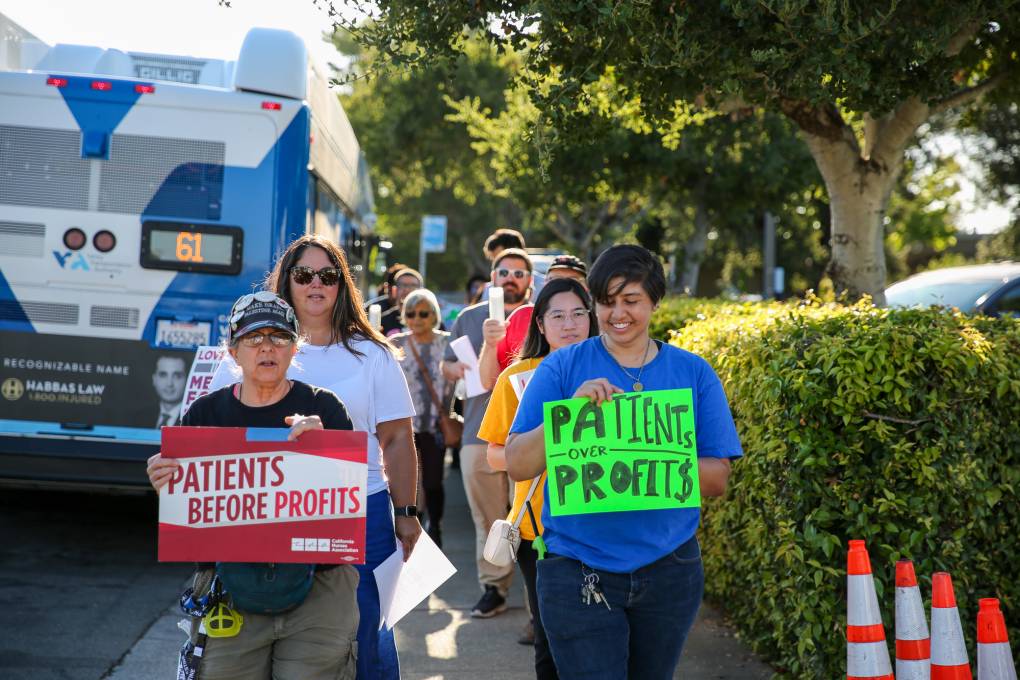
"caption": "Residents and advocates rally outside Good Samaritan Hospital, owned by HCA Healthcare, in West San José on Monday. The group is trying to bring attention to cuts to the trauma center and other critical health services at another HCA hospital, Regional Medical Center in East San José.",
"credit": "Joseph Geha/KQED",
"altTag": null,
"description": null,
"imgSizes": {
"medium": {
"file": "https://cdn.kqed.org/wp-content/uploads/sites/10/2024/08/240812-HCAVIGIL-JG-3-800x533.jpg",
"width": 800,
"height": 533,
"mimeType": "image/jpeg"
},
"large": {
"file": "https://cdn.kqed.org/wp-content/uploads/sites/10/2024/08/240812-HCAVIGIL-JG-3-1020x680.jpg",
"width": 1020,
"height": 680,
"mimeType": "image/jpeg"
},
"thumbnail": {
"file": "https://cdn.kqed.org/wp-content/uploads/sites/10/2024/08/240812-HCAVIGIL-JG-3-160x107.jpg",
"width": 160,
"height": 107,
"mimeType": "image/jpeg"
},
"1536x1536": {
"file": "https://cdn.kqed.org/wp-content/uploads/sites/10/2024/08/240812-HCAVIGIL-JG-3-1536x1024.jpg",
"width": 1536,
"height": 1024,
"mimeType": "image/jpeg"
},
"post-thumbnail": {
"file": "https://cdn.kqed.org/wp-content/uploads/sites/10/2024/08/240812-HCAVIGIL-JG-3-672x372.jpg",
"width": 672,
"height": 372,
"mimeType": "image/jpeg"
},
"twentyfourteen-full-width": {
"file": "https://cdn.kqed.org/wp-content/uploads/sites/10/2024/08/240812-HCAVIGIL-JG-3-1038x576.jpg",
"width": 1038,
"height": 576,
"mimeType": "image/jpeg"
},
"full-width": {
"file": "https://cdn.kqed.org/wp-content/uploads/sites/10/2024/08/240812-HCAVIGIL-JG-3-1920x1280.jpg",
"width": 1920,
"height": 1280,
"mimeType": "image/jpeg"
},
"kqedFullSize": {
"file": "https://cdn.kqed.org/wp-content/uploads/sites/10/2024/08/240812-HCAVIGIL-JG-3.jpg",
"width": 2000,
"height": 1333
}
},
"isLoading": false,
"fetchFailed": false
},
"news_11946812": {
"type": "attachments",
"id": "news_11946812",
"meta": {
"index": "attachments_1716263798",
"site": "news",
"id": "11946812",
"found": true
},
"title": "US-ABORTION-DEMONSTRATION-SOCIAL-HEALTH-WOMEN",
"publishDate": 1681590684,
"status": "inherit",
"parent": 11946802,
"modified": 1723081672,
"caption": "Demonstrators rally in support of abortion rights at the US Supreme Court in Washington, DC, on April 15, 2023, a day after the court temporarily preserved access to mifepristone, a widely used abortion pill.",
"credit": "Andrew Caballero-Reynolds/AFP via Getty Images",
"altTag": "Protesters outside a neoclassical white building with columns holding signs that read \"Keep Abortion Legal.\"",
"description": null,
"imgSizes": {
"medium": {
"file": "https://cdn.kqed.org/wp-content/uploads/sites/10/2023/04/GettyImages-1251851922-800x534.jpg",
"width": 800,
"height": 534,
"mimeType": "image/jpeg"
},
"large": {
"file": "https://cdn.kqed.org/wp-content/uploads/sites/10/2023/04/GettyImages-1251851922-1020x680.jpg",
"width": 1020,
"height": 680,
"mimeType": "image/jpeg"
},
"thumbnail": {
"file": "https://cdn.kqed.org/wp-content/uploads/sites/10/2023/04/GettyImages-1251851922-160x107.jpg",
"width": 160,
"height": 107,
"mimeType": "image/jpeg"
},
"post-thumbnail": {
"file": "https://cdn.kqed.org/wp-content/uploads/sites/10/2023/04/GettyImages-1251851922-672x372.jpg",
"width": 672,
"height": 372,
"mimeType": "image/jpeg"
},
"twentyfourteen-full-width": {
"file": "https://cdn.kqed.org/wp-content/uploads/sites/10/2023/04/GettyImages-1251851922-1024x576.jpg",
"width": 1024,
"height": 576,
"mimeType": "image/jpeg"
},
"kqedFullSize": {
"file": "https://cdn.kqed.org/wp-content/uploads/sites/10/2023/04/GettyImages-1251851922.jpg",
"width": 1024,
"height": 683
}
},
"isLoading": false,
"fetchFailed": false
},
"news_11998720": {
"type": "attachments",
"id": "news_11998720",
"meta": {
"index": "attachments_1716263798",
"site": "news",
"id": "11998720",
"found": true
},
"title": "GettyImages-1771553132",
"publishDate": 1722645117,
"status": "inherit",
"parent": 11998703,
"modified": 1722645191,
"caption": "Valley fever is caused when people inhale microscopic spores of a fungus found in soil. This fungus typically affects the lungs.",
"credit": "Carolyn Van Houten/The Washington Post/Getty Images",
"altTag": "A picture of dirt on the ground.",
"description": null,
"imgSizes": {
"medium": {
"file": "https://cdn.kqed.org/wp-content/uploads/sites/10/2024/08/GettyImages-1771553132-800x535.jpg",
"width": 800,
"height": 535,
"mimeType": "image/jpeg"
},
"large": {
"file": "https://cdn.kqed.org/wp-content/uploads/sites/10/2024/08/GettyImages-1771553132-1020x682.jpg",
"width": 1020,
"height": 682,
"mimeType": "image/jpeg"
},
"thumbnail": {
"file": "https://cdn.kqed.org/wp-content/uploads/sites/10/2024/08/GettyImages-1771553132-160x107.jpg",
"width": 160,
"height": 107,
"mimeType": "image/jpeg"
},
"1536x1536": {
"file": "https://cdn.kqed.org/wp-content/uploads/sites/10/2024/08/GettyImages-1771553132-1536x1026.jpg",
"width": 1536,
"height": 1026,
"mimeType": "image/jpeg"
},
"post-thumbnail": {
"file": "https://cdn.kqed.org/wp-content/uploads/sites/10/2024/08/GettyImages-1771553132-672x372.jpg",
"width": 672,
"height": 372,
"mimeType": "image/jpeg"
},
"twentyfourteen-full-width": {
"file": "https://cdn.kqed.org/wp-content/uploads/sites/10/2024/08/GettyImages-1771553132-1038x576.jpg",
"width": 1038,
"height": 576,
"mimeType": "image/jpeg"
},
"kqedFullSize": {
"file": "https://cdn.kqed.org/wp-content/uploads/sites/10/2024/08/GettyImages-1771553132.jpg",
"width": 1920,
"height": 1283
}
},
"isLoading": false,
"fetchFailed": false
},
"news_11998632": {
"type": "attachments",
"id": "news_11998632",
"meta": {
"index": "attachments_1716263798",
"site": "news",
"id": "11998632",
"found": true
},
"title": "ICE Holds Immigrants At Adelanto Detention Facility",
"publishDate": 1722625203,
"status": "inherit",
"parent": 11998614,
"modified": 1722627027,
"caption": "Detainees at the Adelanto Detention Facility walk down a hallway on November 15, 2013, in Adelanto, California. The facility, the largest and newest Immigration and Customs Enforcement (ICE) detention center in California, houses an average of 1,100 immigrants in custody pending a decision in their immigration cases or awaiting deportation. ",
"credit": " John Moore/Getty Images",
"altTag": "Immigrant detainees walk down a hallway.",
"description": null,
"imgSizes": {
"medium": {
"file": "https://cdn.kqed.org/wp-content/uploads/sites/10/2024/08/GettyImages-450371283-2-800x534.jpg",
"width": 800,
"height": 534,
"mimeType": "image/jpeg"
},
"large": {
"file": "https://cdn.kqed.org/wp-content/uploads/sites/10/2024/08/GettyImages-450371283-2-1020x680.jpg",
"width": 1020,
"height": 680,
"mimeType": "image/jpeg"
},
"thumbnail": {
"file": "https://cdn.kqed.org/wp-content/uploads/sites/10/2024/08/GettyImages-450371283-2-160x107.jpg",
"width": 160,
"height": 107,
"mimeType": "image/jpeg"
},
"post-thumbnail": {
"file": "https://cdn.kqed.org/wp-content/uploads/sites/10/2024/08/GettyImages-450371283-2-672x372.jpg",
"width": 672,
"height": 372,
"mimeType": "image/jpeg"
},
"twentyfourteen-full-width": {
"file": "https://cdn.kqed.org/wp-content/uploads/sites/10/2024/08/GettyImages-450371283-2-1024x576.jpg",
"width": 1024,
"height": 576,
"mimeType": "image/jpeg"
},
"kqedFullSize": {
"file": "https://cdn.kqed.org/wp-content/uploads/sites/10/2024/08/GettyImages-450371283-2.jpg",
"width": 1024,
"height": 683
}
},
"isLoading": false,
"fetchFailed": false
},
"news_11998219": {
"type": "attachments",
"id": "news_11998219",
"meta": {
"index": "attachments_1716263798",
"site": "news",
"id": "11998219",
"found": true
},
"title": "Judith 9.jpg",
"publishDate": 1722454616,
"status": "inherit",
"parent": 11998218,
"modified": 1722457766,
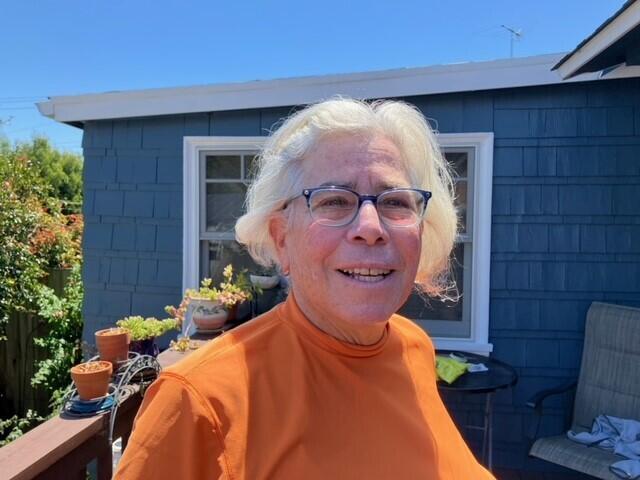
"caption": "Judith Dambowic, a multiple myeloma patient, on her porch in Oakland, California, right before shaving her head in preparation for a stem cell transplant in May. Dambowic wanted California to pass a law regulating Medigap insurance policies. The reform, which ultimately failed, would have made it easier for her to switch her coverage from Medicare Advantage to traditional Medicare.",
"credit": "Courtesy of Judith Dambowic",
"altTag": "A woman with grey hair stands in front of a blue house wearing an orange sweater.",
"description": null,
"imgSizes": {
"thumbnail": {
"file": "https://cdn.kqed.org/wp-content/uploads/sites/10/2024/07/judith-9-160x120.jpeg",
"width": 160,
"height": 120,
"mimeType": "image/jpeg"
},
"post-thumbnail": {
"file": "https://cdn.kqed.org/wp-content/uploads/sites/10/2024/07/judith-9-640x372.jpeg",
"width": 640,
"height": 372,
"mimeType": "image/jpeg"
},
"kqedFullSize": {
"file": "https://cdn.kqed.org/wp-content/uploads/sites/10/2024/07/judith-9.jpeg",
"width": 640,
"height": 480
}
},
"isLoading": false,
"fetchFailed": false
},
"news_11959780": {
"type": "attachments",
"id": "news_11959780",
"meta": {
"index": "attachments_1716263798",
"site": "news",
"id": "11959780",
"found": true
},
"parent": 11959803,
"imgSizes": {
"twentyfourteen-full-width": {
"file": "https://ww2.kqed.org/app/uploads/sites/10/2023/08/230831-SAFE-USE-POP-UP-MD-04-KQED-1038x576.jpg",
"width": 1038,
"mimeType": "image/jpeg",
"height": 576
},
"thumbnail": {
"file": "https://ww2.kqed.org/app/uploads/sites/10/2023/08/230831-SAFE-USE-POP-UP-MD-04-KQED-160x107.jpg",
"width": 160,
"mimeType": "image/jpeg",
"height": 107
},
"post-thumbnail": {
"file": "https://ww2.kqed.org/app/uploads/sites/10/2023/08/230831-SAFE-USE-POP-UP-MD-04-KQED-672x372.jpg",
"width": 672,
"mimeType": "image/jpeg",
"height": 372
},
"kqedFullSize": {
"file": "https://ww2.kqed.org/app/uploads/sites/10/2023/08/230831-SAFE-USE-POP-UP-MD-04-KQED.jpg",
"width": 2000,
"height": 1333
},
"large": {
"file": "https://ww2.kqed.org/app/uploads/sites/10/2023/08/230831-SAFE-USE-POP-UP-MD-04-KQED-1020x680.jpg",
"width": 1020,
"mimeType": "image/jpeg",
"height": 680
},
"1536x1536": {
"file": "https://ww2.kqed.org/app/uploads/sites/10/2023/08/230831-SAFE-USE-POP-UP-MD-04-KQED-1536x1024.jpg",
"width": 1536,
"mimeType": "image/jpeg",
"height": 1024
},
"full-width": {
"file": "https://ww2.kqed.org/app/uploads/sites/10/2023/08/230831-SAFE-USE-POP-UP-MD-04-KQED-1920x1280.jpg",
"width": 1920,
"mimeType": "image/jpeg",
"height": 1280
},
"medium": {
"file": "https://ww2.kqed.org/app/uploads/sites/10/2023/08/230831-SAFE-USE-POP-UP-MD-04-KQED-800x533.jpg",
"width": 800,
"mimeType": "image/jpeg",
"height": 533
}
},
"publishDate": 1693512316,
"modified": 1693525051,
"caption": "Michael Scarce (second from left), a Concerned Public Response member, greets a community member visiting a safe drug consumption site in San Francisco on Aug. 31, 2023.",
"description": null,
"title": "230831-SAFE USE POP UP-MD-04-KQED",
"credit": "Martin do Nascimento/KQED",
"status": "inherit",
"altTag": "A group of people congregate around a table in an outdoor setting.",
"isLoading": false,
"fetchFailed": false
},
"news_11996999": {
"type": "attachments",
"id": "news_11996999",
"meta": {
"index": "attachments_1716263798",
"site": "news",
"id": "11996999",
"found": true
},
"title": "012_KQED_SchnitzerSteelPortofOakland_03082022_qed",
"publishDate": 1721769382,
"status": "inherit",
"parent": 11996994,
"modified": 1721781136,
"caption": "The Alameda County District Attorney charged Radius Recycling, formerly known as Schnitzer Steel, with 10 environmental crimes related to a fire last August at the West Oakland steel recycling facility that blanketed parts of the East Bay in toxic smoke. ",
"credit": "Beth LaBerge/KQED",
"altTag": null,
"description": null,
"imgSizes": {
"medium": {
"file": "https://cdn.kqed.org/wp-content/uploads/sites/10/2024/07/012_KQED_SchnitzerSteelPortofOakland_03082022_qed-800x532.jpg",
"width": 800,
"height": 532,
"mimeType": "image/jpeg"
},
"large": {
"file": "https://cdn.kqed.org/wp-content/uploads/sites/10/2024/07/012_KQED_SchnitzerSteelPortofOakland_03082022_qed-1020x679.jpg",
"width": 1020,
"height": 679,
"mimeType": "image/jpeg"
},
"thumbnail": {
"file": "https://cdn.kqed.org/wp-content/uploads/sites/10/2024/07/012_KQED_SchnitzerSteelPortofOakland_03082022_qed-160x106.jpg",
"width": 160,
"height": 106,
"mimeType": "image/jpeg"
},
"1536x1536": {
"file": "https://cdn.kqed.org/wp-content/uploads/sites/10/2024/07/012_KQED_SchnitzerSteelPortofOakland_03082022_qed-1536x1022.jpg",
"width": 1536,
"height": 1022,
"mimeType": "image/jpeg"
},
"post-thumbnail": {
"file": "https://cdn.kqed.org/wp-content/uploads/sites/10/2024/07/012_KQED_SchnitzerSteelPortofOakland_03082022_qed-672x372.jpg",
"width": 672,
"height": 372,
"mimeType": "image/jpeg"
},
"twentyfourteen-full-width": {
"file": "https://cdn.kqed.org/wp-content/uploads/sites/10/2024/07/012_KQED_SchnitzerSteelPortofOakland_03082022_qed-1038x576.jpg",
"width": 1038,
"height": 576,
"mimeType": "image/jpeg"
},
"full-width": {
"file": "https://cdn.kqed.org/wp-content/uploads/sites/10/2024/07/012_KQED_SchnitzerSteelPortofOakland_03082022_qed-1920x1278.jpg",
"width": 1920,
"height": 1278,
"mimeType": "image/jpeg"
},
"kqedFullSize": {
"file": "https://cdn.kqed.org/wp-content/uploads/sites/10/2024/07/012_KQED_SchnitzerSteelPortofOakland_03082022_qed.jpg",
"width": 2000,
"height": 1331
}
},
"isLoading": false,
"fetchFailed": false
},
"news_11996599": {
"type": "attachments",
"id": "news_11996599",
"meta": {
"index": "attachments_1716263798",
"site": "news",
"id": "11996599",
"found": true
},
"title": "2024.06.27_Middleton_HospitalBill_128-2 copy",
"publishDate": 1721513144,
"status": "inherit",
"parent": 11996598,
"modified": 1721513168,
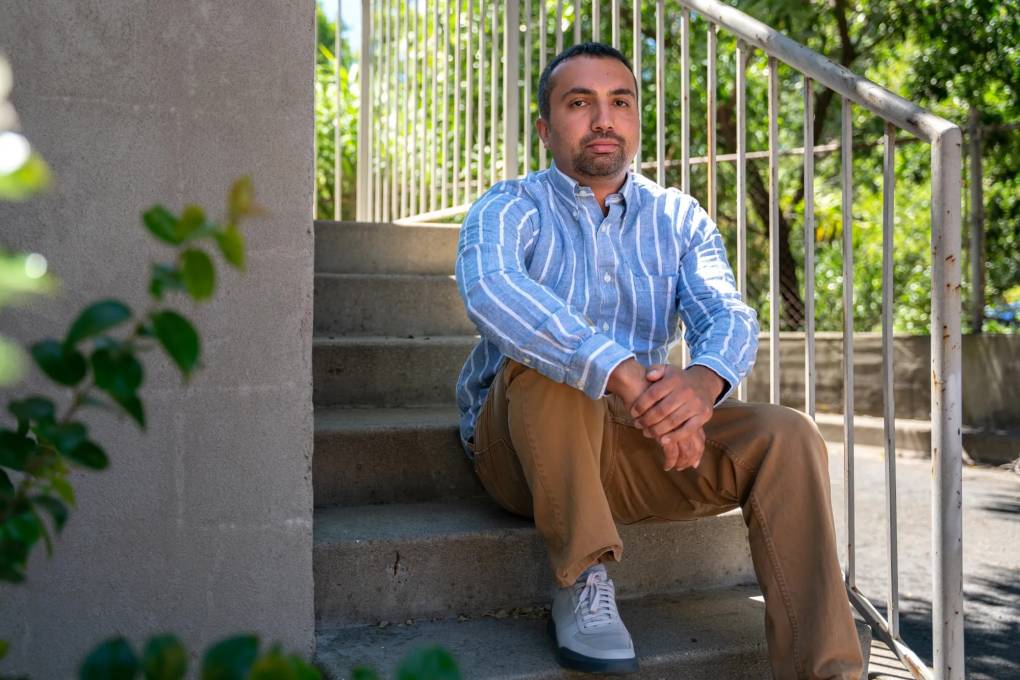
"caption": "Sultan Khan, who received a bill from the California Department of State Hospitals for nearly $770,000 for his care after he was involuntarily committed to Napa State Hospital, in Martinez, on June 27, 2024. ",
"credit": "Florence Middleton/CalMatters",
"altTag": null,
"description": null,
"imgSizes": {
"medium": {
"file": "https://cdn.kqed.org/wp-content/uploads/sites/10/2024/07/2024.06.27_Middleton_HospitalBill_128-2-copy-800x534.jpg",
"width": 800,
"height": 534,
"mimeType": "image/jpeg"
},
"large": {
"file": "https://cdn.kqed.org/wp-content/uploads/sites/10/2024/07/2024.06.27_Middleton_HospitalBill_128-2-copy-1020x680.jpg",
"width": 1020,
"height": 680,
"mimeType": "image/jpeg"
},
"thumbnail": {
"file": "https://cdn.kqed.org/wp-content/uploads/sites/10/2024/07/2024.06.27_Middleton_HospitalBill_128-2-copy-160x107.jpg",
"width": 160,
"height": 107,
"mimeType": "image/jpeg"
},
"1536x1536": {
"file": "https://cdn.kqed.org/wp-content/uploads/sites/10/2024/07/2024.06.27_Middleton_HospitalBill_128-2-copy-1536x1025.jpg",
"width": 1536,
"height": 1025,
"mimeType": "image/jpeg"
},
"post-thumbnail": {
"file": "https://cdn.kqed.org/wp-content/uploads/sites/10/2024/07/2024.06.27_Middleton_HospitalBill_128-2-copy-672x372.jpg",
"width": 672,
"height": 372,
"mimeType": "image/jpeg"
},
"twentyfourteen-full-width": {
"file": "https://cdn.kqed.org/wp-content/uploads/sites/10/2024/07/2024.06.27_Middleton_HospitalBill_128-2-copy-1038x576.jpg",
"width": 1038,
"height": 576,
"mimeType": "image/jpeg"
},
"full-width": {
"file": "https://cdn.kqed.org/wp-content/uploads/sites/10/2024/07/2024.06.27_Middleton_HospitalBill_128-2-copy-1920x1281.jpg",
"width": 1920,
"height": 1281,
"mimeType": "image/jpeg"
},
"kqedFullSize": {
"file": "https://cdn.kqed.org/wp-content/uploads/sites/10/2024/07/2024.06.27_Middleton_HospitalBill_128-2-copy.jpg",
"width": 2000,
"height": 1334
}
},
"isLoading": false,
"fetchFailed": false
},
"news_11991678": {
"type": "attachments",
"id": "news_11991678",
"meta": {
"index": "attachments_1716263798",
"site": "news",
"id": "11991678",
"found": true
},
"title": "SanJoseRegionalMedCenter",
"publishDate": 1719251522,
"status": "inherit",
"parent": 11991654,
"modified": 1719251592,
"caption": "Regional Medical Center in East San José on May 24, 2024.",
"credit": "Joseph Geha/KQED",
"altTag": null,
"description": null,
"imgSizes": {
"medium": {
"file": "https://cdn.kqed.org/wp-content/uploads/sites/10/2024/06/SanJoseRegionalMedCenter-800x533.jpg",
"width": 800,
"height": 533,
"mimeType": "image/jpeg"
},
"large": {
"file": "https://cdn.kqed.org/wp-content/uploads/sites/10/2024/06/SanJoseRegionalMedCenter-1020x679.jpg",
"width": 1020,
"height": 679,
"mimeType": "image/jpeg"
},
"thumbnail": {
"file": "https://cdn.kqed.org/wp-content/uploads/sites/10/2024/06/SanJoseRegionalMedCenter-160x107.jpg",
"width": 160,
"height": 107,
"mimeType": "image/jpeg"
},
"1536x1536": {
"file": "https://cdn.kqed.org/wp-content/uploads/sites/10/2024/06/SanJoseRegionalMedCenter-1536x1023.jpg",
"width": 1536,
"height": 1023,
"mimeType": "image/jpeg"
},
"post-thumbnail": {
"file": "https://cdn.kqed.org/wp-content/uploads/sites/10/2024/06/SanJoseRegionalMedCenter-672x372.jpg",
"width": 672,
"height": 372,
"mimeType": "image/jpeg"
},
"twentyfourteen-full-width": {
"file": "https://cdn.kqed.org/wp-content/uploads/sites/10/2024/06/SanJoseRegionalMedCenter-1038x576.jpg",
"width": 1038,
"height": 576,
"mimeType": "image/jpeg"
},
"kqedFullSize": {
"file": "https://cdn.kqed.org/wp-content/uploads/sites/10/2024/06/SanJoseRegionalMedCenter.jpg",
"width": 1920,
"height": 1279
}
},
"isLoading": false,
"fetchFailed": false
}
},
"audioPlayerReducer": {
"postId": "stream_live",
"isPaused": true,
"isPlaying": false,
"pfsActive": false,
"pledgeModalIsOpen": true,
"playerDrawerIsOpen": false,
"liveAudioPlayStartedAt": 0,
"liveAudioPlayContext": ""
},
"authorsReducer": {
"byline_news_11999996": {
"type": "authors",
"id": "byline_news_11999996",
"meta": {
"override": true
},
"slug": "byline_news_11999996",
"name": "\u003ca href=\"https://kffhealthnews.org/news/author/bernard-j-wolfson/\">Bernard J. Wolfson\u003c/a>, KFF Health News",
"isLoading": false
},
"byline_news_11999170": {
"type": "authors",
"id": "byline_news_11999170",
"meta": {
"override": true
},
"slug": "byline_news_11999170",
"name": "Geoff Mulvihill and Kimberlee Kruesi, Associated Press",
"isLoading": false
},
"byline_news_11998703": {
"type": "authors",
"id": "byline_news_11998703",
"meta": {
"override": true
},
"slug": "byline_news_11998703",
"name": "Ana B. Ibarra, CalMatters",
"isLoading": false
},
"byline_news_11998614": {
"type": "authors",
"id": "byline_news_11998614",
"meta": {
"override": true
},
"slug": "byline_news_11998614",
"name": "Vanessa G. Sánchez, KFF Health News ",
"isLoading": false
},
"byline_news_11998218": {
"type": "authors",
"id": "byline_news_11998218",
"meta": {
"override": true
},
"slug": "byline_news_11998218",
"name": "Kate Wolffe, NPR",
"isLoading": false
},
"byline_news_11996598": {
"type": "authors",
"id": "byline_news_11996598",
"meta": {
"override": true
},
"slug": "byline_news_11996598",
"name": "\u003ca href=\"https://calmatters.org/health/mental-health/2024/07/state-hospital-bill/\">Jocelyn Wiener\u003c/a>, CalMatters",
"isLoading": false
},
"fjhabvala": {
"type": "authors",
"id": "8659",
"meta": {
"index": "authors_1716337520",
"id": "8659",
"found": true
},
"name": "Farida Jhabvala Romero",
"firstName": "Farida",
"lastName": "Jhabvala Romero",
"slug": "fjhabvala",
"email": "fjhabvala@kqed.org",
"display_author_email": true,
"staff_mastheads": [
"news"
],
"title": "KQED Contributor",
"bio": "Farida Jhabvala Romero is a Labor Correspondent for KQED. She previously covered immigration. Farida was \u003ca href=\"https://www.ccnma.org/2022-most-influential-latina-journalists\">named\u003c/a> one of the 10 Most Influential Latina Journalists in California in 2022 by the California Chicano News Media Association. Her work has won awards from the Society of Professional Journalists (Northern California), as well as a national and regional Edward M. Murrow Award for the collaborative reporting projects “Dangerous Air” and “Graying California.” Before joining KQED, Farida worked as a producer at Radio Bilingüe, a national public radio network. Farida earned her master’s degree in journalism from Stanford University.",
"avatar": "https://secure.gravatar.com/avatar/f9f022d4e2609741874222a1e9d41f48fea74011aa7c615eef91d9a50c944ebe?s=600&d=blank&r=g",
"twitter": "FaridaJhabvala",
"bluesky": null,
"facebook": null,
"instagram": null,
"linkedin": "https://www.linkedin.com/in/faridajhabvala/",
"sites": [
{
"site": "news",
"roles": [
"editor"
]
},
{
"site": "stateofhealth",
"roles": [
"author"
]
},
{
"site": "liveblog",
"roles": [
"author"
]
}
],
"headData": {
"title": "Farida Jhabvala Romero | KQED",
"description": "KQED Contributor",
"ogImgSrc": "https://secure.gravatar.com/avatar/f9f022d4e2609741874222a1e9d41f48fea74011aa7c615eef91d9a50c944ebe?s=600&d=blank&r=g",
"twImgSrc": "https://secure.gravatar.com/avatar/f9f022d4e2609741874222a1e9d41f48fea74011aa7c615eef91d9a50c944ebe?s=600&d=blank&r=g"
},
"isLoading": false,
"link": "/author/fjhabvala"
},
"afinney": {
"type": "authors",
"id": "11772",
"meta": {
"index": "authors_1716337520",
"id": "11772",
"found": true
},
"name": "Annelise Finney",
"firstName": "Annelise",
"lastName": "Finney",
"slug": "afinney",
"email": "afinney@kqed.org",
"display_author_email": true,
"staff_mastheads": [
"news"
],
"title": "Reporter",
"bio": "Annelise reports on reparations in California and East Bay politics. She co-produced the Sunday Music Drop, a limited-term radio series featuring Bay Area musicians that aired between Sept 2022 and Oct 2024. She joined KQED in 2021 as a general assignment reporter and is an alumna of KALW's Audio Academy. She was born and raised in the East Bay. She is currently away from KQED completing a year-long reporting project in Berlin, Germany as a Alexander Von Humboldt German Chancellor Fellow.",
"avatar": "https://secure.gravatar.com/avatar/5fded66cae47704cdfc5021cde0f3aa4?s=600&d=blank&r=g",
"twitter": null,
"facebook": null,
"instagram": null,
"linkedin": null,
"sites": [
{
"site": "news",
"roles": [
"editor"
]
},
{
"site": "liveblog",
"roles": [
"author"
]
}
],
"headData": {
"title": "Annelise Finney | KQED",
"description": "Reporter",
"ogImgSrc": "https://secure.gravatar.com/avatar/5fded66cae47704cdfc5021cde0f3aa4?s=600&d=blank&r=g",
"twImgSrc": "https://secure.gravatar.com/avatar/5fded66cae47704cdfc5021cde0f3aa4?s=600&d=blank&r=g"
},
"isLoading": false,
"link": "/author/afinney"
},
"jgeha": {
"type": "authors",
"id": "11906",
"meta": {
"index": "authors_1716337520",
"id": "11906",
"found": true
},
"name": "Joseph Geha",
"firstName": "Joseph",
"lastName": "Geha",
"slug": "jgeha",
"email": "jgeha@kqed.org",
"display_author_email": false,
"staff_mastheads": [
"news",
"science"
],
"title": "KQED Contributor",
"bio": null,
"avatar": "https://secure.gravatar.com/avatar/ea84d2b6dd93d6369d453edf19dd583f117cd1759d2d9c9c92f9de77017354fe?s=600&d=blank&r=g",
"twitter": null,
"bluesky": null,
"facebook": null,
"instagram": null,
"linkedin": null,
"sites": [
{
"site": "news",
"roles": [
"editor"
]
},
{
"site": "liveblog",
"roles": [
"author"
]
}
],
"headData": {
"title": "Joseph Geha | KQED",
"description": "KQED Contributor",
"ogImgSrc": "https://secure.gravatar.com/avatar/ea84d2b6dd93d6369d453edf19dd583f117cd1759d2d9c9c92f9de77017354fe?s=600&d=blank&r=g",
"twImgSrc": "https://secure.gravatar.com/avatar/ea84d2b6dd93d6369d453edf19dd583f117cd1759d2d9c9c92f9de77017354fe?s=600&d=blank&r=g"
},
"isLoading": false,
"link": "/author/jgeha"
},
"kdebenedetti": {
"type": "authors",
"id": "11913",
"meta": {
"index": "authors_1716337520",
"id": "11913",
"found": true
},
"name": "Katie DeBenedetti",
"firstName": "Katie",
"lastName": "DeBenedetti",
"slug": "kdebenedetti",
"email": "kdebenedetti@kqed.org",
"display_author_email": false,
"staff_mastheads": [
"news",
"science"
],
"title": "KQED Contributor",
"bio": "Katie DeBenedetti is a digital reporter covering daily news for the Express Desk. Prior to joining KQED as a culture reporting intern in January 2024, she covered education and city government for the Napa Valley Register.",
"avatar": "https://secure.gravatar.com/avatar/6e31073cb8f7e4214ab03f42771d0f45?s=600&d=blank&r=g",
"twitter": null,
"facebook": null,
"instagram": null,
"linkedin": null,
"sites": [
{
"site": "news",
"roles": [
"author"
]
},
{
"site": "science",
"roles": [
"author"
]
},
{
"site": "liveblog",
"roles": [
"author"
]
}
],
"headData": {
"title": "Katie DeBenedetti | KQED",
"description": "KQED Contributor",
"ogImgSrc": "https://secure.gravatar.com/avatar/6e31073cb8f7e4214ab03f42771d0f45?s=600&d=blank&r=g",
"twImgSrc": "https://secure.gravatar.com/avatar/6e31073cb8f7e4214ab03f42771d0f45?s=600&d=blank&r=g"
},
"isLoading": false,
"link": "/author/kdebenedetti"
}
},
"pagesReducer": {
"news_tag_health": {
"type": "terms",
"id": "news_18543",
"meta": {
"index": "terms_1716263798",
"site": "news",
"id": "18543",
"score": 6.886679
},
"featImg": null,
"name": "Health",
"description": null,
"taxonomy": "tag",
"headData": {
"twImgId": null,
"twTitle": null,
"ogTitle": null,
"ogImgId": null,
"twDescription": null,
"description": null,
"title": "Health Archives | KQED News",
"ogDescription": null
},
"ttid": 466,
"slug": "health",
"isLoading": false,
"title": "Health",
"pageMeta": {
"site": "news",
"WpPageTemplate": "page-topic-editorial",
"currentPage": 32
},
"blocks": [
{
"blockName": "kqed/post-list",
"attrs": {
"layout": "cardArticle2",
"query": "posts/news?tag=health",
"seeMore": false,
"paginated": true,
"page": 32
}
},
{
"blockName": "kqed/ad"
}
]
}
},
"pfsSessionReducer": {},
"postsReducer": {
"stream_live": {
"type": "live",
"id": "stream_live",
"audioUrl": "https://streams.kqed.org/kqedradio",
"title": "Live Stream",
"excerpt": "Live Stream information currently unavailable.",
"link": "/radio",
"featImg": "",
"label": {
"name": "KQED Live",
"link": "/"
}
},
"stream_kqedNewscast": {
"type": "posts",
"id": "stream_kqedNewscast",
"audioUrl": "https://www.kqed.org/.stream/anon/radio/RDnews/newscast.mp3?_=1",
"title": "KQED Newscast",
"featImg": "",
"label": {
"name": "88.5 FM",
"link": "/"
}
},
"news_12000161": {
"type": "posts",
"id": "news_12000161",
"meta": {
"index": "posts_1716263798",
"site": "news",
"id": "12000161",
"score": null,
"sort": [
1723663212000
]
},
"guestAuthors": [],
"slug": "san-francisco-overdose-deaths-fall-to-lowest-level-since-pre-pandemic",
"title": "San Francisco Overdose Deaths Fall to Lowest Level Since Pre-Pandemic",
"publishDate": 1723663212,
"format": "standard",
"headTitle": "San Francisco Overdose Deaths Fall to Lowest Level Since Pre-Pandemic | KQED",
"labelTerm": {
"site": "news"
},
"content": "\u003cp>San Francisco’s \u003ca href=\"https://www.kqed.org/news/tag/overdose-deaths\">overdose deaths\u003c/a> last month reached a four-year low, falling to a level not seen since before the COVID-19 pandemic, according to preliminary data released Wednesday by the medical examiner’s office.\u003c/p>\n\u003cp>The city reported 39 deaths from accidental overdose in July, the first time the figure has dipped below 40 since January 2020. That represents a 50% year-over-year reduction from last July, when 79 overdoses were reported.\u003c/p>\n\u003cp>The decline continues a trend seen in the first half of the year, offering some hope after 2023 marked the \u003ca href=\"https://www.kqed.org/news/11972898/2023-was-san-franciscos-deadliest-year-for-drug-overdoses-new-data-confirms\">deadliest year on record for overdoses in San Francisco\u003c/a>, with 810. Through June, the city was still on track to get close to last year’s total, but after July, the annual figure is on pace to be 706 — lower than in 2023 and 2020, the year with the second-highest total.\u003c/p>\n\u003cp>July was the fourth consecutive month with a year-over-year decline in overdose deaths after June’s total marked the lowest monthly figure since 2022.\u003c/p>\n\u003cp>[ad fullwidth]\u003c/p>\n\u003cp>This year to date, overdose deaths are 15% lower than they were during the same period last year.\u003c/p>\n\u003cp>Policy expert Keith Humphreys told KQED last month that the trend was\u003ca href=\"https://www.kqed.org/news/11995842/san-francisco-overdose-deaths-are-at-nearly-2-year-low-whats-behind-the-decline\"> likely due to factors reflected in the national decline\u003c/a> of overdose deaths — like fading heroin use and the waning COVID-19 pandemic, which he said likely accelerated some overdose deaths that otherwise could have occurred years later.\u003c/p>\n\u003cp>While health officials called the drop in deaths a “hopeful sign,” they said wider access to overdose-preventing medications is still needed.\u003c/p>\n\u003cfigure id=\"attachment_12000177\" class=\"wp-caption aligncenter\" style=\"max-width: 2000px\">\u003cimg loading=\"lazy\" decoding=\"async\" class=\"size-full wp-image-12000177\" src=\"https://cdn.kqed.org/wp-content/uploads/sites/10/2024/08/230831-SAFE-USE-POP-UP-MD-05_qed.jpg\" alt=\"\" width=\"2000\" height=\"1333\" srcset=\"https://cdn.kqed.org/wp-content/uploads/sites/10/2024/08/230831-SAFE-USE-POP-UP-MD-05_qed.jpg 2000w, https://cdn.kqed.org/wp-content/uploads/sites/10/2024/08/230831-SAFE-USE-POP-UP-MD-05_qed-800x533.jpg 800w, https://cdn.kqed.org/wp-content/uploads/sites/10/2024/08/230831-SAFE-USE-POP-UP-MD-05_qed-1020x680.jpg 1020w, https://cdn.kqed.org/wp-content/uploads/sites/10/2024/08/230831-SAFE-USE-POP-UP-MD-05_qed-160x107.jpg 160w, https://cdn.kqed.org/wp-content/uploads/sites/10/2024/08/230831-SAFE-USE-POP-UP-MD-05_qed-1536x1024.jpg 1536w, https://cdn.kqed.org/wp-content/uploads/sites/10/2024/08/230831-SAFE-USE-POP-UP-MD-05_qed-1920x1280.jpg 1920w\" sizes=\"auto, (max-width: 2000px) 100vw, 2000px\">\u003cfigcaption class=\"wp-caption-text\">Boxes of Narcan, the overdose prevention drug, at a safe drug use pop-up site created by volunteers with Concerned Public Response in San Francisco on Aug. 31, 2023. \u003ccite>(Martin do Nascimento/KQED)\u003c/cite>\u003c/figcaption>\u003c/figure>\n\u003cp>“California needs to make more regulatory changes around methadone access in order to make a greater impact locally,” Dr. Grant Colfax, the director of the San Francisco Department of Public Health, said during a press conference on Wednesday. “We must continue to break down the outdated and cumbersome and, frankly, sometimes ridiculous bureaucratic barriers that make treatment hard to access and to maintain.”\u003c/p>\n\u003cp>He said that methadone and buprenorphine, synthetic opioids used to treat opioid use disorder, reduce the risk of death by up to 50% in some cases and reduce cravings and withdrawal symptoms. Currently, more than 2,500 people are in methadone treatment through the Department of Public Health.\u003c/p>\n\u003cp>\u003cspan style=\"font-weight: 400\">[aside postID=news_11997957 hero='https://ww2.kqed.org/app/uploads/sites/10/2023/08/230831-SAFE-USE-POP-UP-MD-04-KQED-1020x680.jpg']\u003c/span>\u003c/p>\n\u003cp>Dr. Hillary Kunins, the city’s director of behavioral health, said that methadone is the most regulated medication in the country.\u003c/p>\n\u003cp>“The stigma and barriers caused by this overregulation prevent people from entering and staying in treatment,” she said. “Can you imagine requiring a person who has heart disease to be physically present at a special cardiac clinic every day to take their medication? That’s what new methadone patients need to do to get their daily medication.”\u003c/p>\n\u003cp>In California, methadone can only be dispensed from a licensed opioid treatment program or methadone clinic.\u003c/p>\n\u003cp>New federal policy changes make the treatments more accessible. Patients can initiate methadone treatment via telehealth and receive up to three days’ worth of methadone from a hospital at a time. They can also be prescribed methadone by a nurse practitioner or physician’s assistant and get the treatments from a hospital or other health clinic.\u003c/p>\n\u003cp>Assembly Bill 2115, written by Assemblymember Matt Haney (D-San Francisco), would align California with the federal regulations.\u003c/p>\n\u003cp>“The state must adopt the federal rules before people wanting to start methadone treatment can benefit,” Kunins said. “We implore our California state legislators to pass AB 2115. Making methadone more accessible in California will save lives.”\u003c/p>\n\u003cp>\u003cem>KQED’s Gilare Zada contributed to this report.\u003c/em>\u003c/p>\n\u003cp>\u003c/p>\n",
"blocks": [],
"excerpt": "The city reported 39 deaths from accidental overdose in July, the first time the figure has dipped below 40 since January 2020, offering some hope amid the opioid crisis.",
"status": "publish",
"parent": 0,
"modified": 1738095849,
"stats": {
"hasAudio": false,
"hasVideo": false,
"hasChartOrMap": false,
"iframeSrcs": [],
"hasGoogleForm": false,
"hasGallery": false,
"hasHearkenModule": false,
"hasPolis": false,
"paragraphCount": 19,
"wordCount": 669
},
"headData": {
"title": "San Francisco Overdose Deaths Fall to Lowest Level Since Pre-Pandemic | KQED",
"description": "The city reported 39 deaths from accidental overdose in July, the first time the figure has dipped below 40 since January 2020, offering some hope amid the opioid crisis.",
"ogTitle": "",
"ogDescription": "",
"ogImgId": "",
"twTitle": "",
"twDescription": "",
"twImgId": "",
"schema": {
"@context": "https://schema.org",
"@type": "NewsArticle",
"headline": "San Francisco Overdose Deaths Fall to Lowest Level Since Pre-Pandemic",
"datePublished": "2024-08-14T12:20:12-07:00",
"dateModified": "2025-01-28T12:24:09-08:00",
"image": "https://cdn.kqed.org/wp-content/uploads/2020/02/KQED-OG-Image@1x.png",
"isAccessibleForFree": "True",
"publisher": {
"@type": "NewsMediaOrganization",
"@id": "https://www.kqed.org/#organization",
"name": "KQED",
"logo": "https://cdn.kqed.org/wp-content/uploads/2020/02/KQED-OG-Image@1x.png",
"url": "https://www.kqed.org",
"sameAs": [
"https://www.facebook.com/KQED",
"https://twitter.com/KQED",
"https://www.instagram.com/kqed/",
"https://www.tiktok.com/@kqedofficial",
"https://www.linkedin.com/company/kqed",
"https://www.youtube.com/channel/UCeC0IOo7i1P_61zVUWbJ4nw"
]
}
}
},
"sticky": false,
"nprStoryId": "kqed-12000161",
"excludeFromSiteSearch": "Include",
"articleAge": "0",
"path": "/news/12000161/san-francisco-overdose-deaths-fall-to-lowest-level-since-pre-pandemic",
"audioTrackLength": null,
"parsedContent": [
{
"type": "contentString",
"content": "\u003cdiv class=\"post-body\">\u003cp>\u003cp>San Francisco’s \u003ca href=\"https://www.kqed.org/news/tag/overdose-deaths\">overdose deaths\u003c/a> last month reached a four-year low, falling to a level not seen since before the COVID-19 pandemic, according to preliminary data released Wednesday by the medical examiner’s office.\u003c/p>\n\u003cp>The city reported 39 deaths from accidental overdose in July, the first time the figure has dipped below 40 since January 2020. That represents a 50% year-over-year reduction from last July, when 79 overdoses were reported.\u003c/p>\n\u003cp>The decline continues a trend seen in the first half of the year, offering some hope after 2023 marked the \u003ca href=\"https://www.kqed.org/news/11972898/2023-was-san-franciscos-deadliest-year-for-drug-overdoses-new-data-confirms\">deadliest year on record for overdoses in San Francisco\u003c/a>, with 810. Through June, the city was still on track to get close to last year’s total, but after July, the annual figure is on pace to be 706 — lower than in 2023 and 2020, the year with the second-highest total.\u003c/p>\n\u003cp>July was the fourth consecutive month with a year-over-year decline in overdose deaths after June’s total marked the lowest monthly figure since 2022.\u003c/p>\n\u003cp>\u003c/p>\u003c/div>",
"attributes": {
"named": {},
"numeric": []
}
},
{
"type": "component",
"content": "",
"name": "ad",
"attributes": {
"named": {
"label": "fullwidth"
},
"numeric": [
"fullwidth"
]
}
},
{
"type": "contentString",
"content": "\u003cdiv class=\"post-body\">\u003cp>\u003c/p>\n\u003cp>This year to date, overdose deaths are 15% lower than they were during the same period last year.\u003c/p>\n\u003cp>Policy expert Keith Humphreys told KQED last month that the trend was\u003ca href=\"https://www.kqed.org/news/11995842/san-francisco-overdose-deaths-are-at-nearly-2-year-low-whats-behind-the-decline\"> likely due to factors reflected in the national decline\u003c/a> of overdose deaths — like fading heroin use and the waning COVID-19 pandemic, which he said likely accelerated some overdose deaths that otherwise could have occurred years later.\u003c/p>\n\u003cp>While health officials called the drop in deaths a “hopeful sign,” they said wider access to overdose-preventing medications is still needed.\u003c/p>\n\u003cfigure id=\"attachment_12000177\" class=\"wp-caption aligncenter\" style=\"max-width: 2000px\">\u003cimg loading=\"lazy\" decoding=\"async\" class=\"size-full wp-image-12000177\" src=\"https://cdn.kqed.org/wp-content/uploads/sites/10/2024/08/230831-SAFE-USE-POP-UP-MD-05_qed.jpg\" alt=\"\" width=\"2000\" height=\"1333\" srcset=\"https://cdn.kqed.org/wp-content/uploads/sites/10/2024/08/230831-SAFE-USE-POP-UP-MD-05_qed.jpg 2000w, https://cdn.kqed.org/wp-content/uploads/sites/10/2024/08/230831-SAFE-USE-POP-UP-MD-05_qed-800x533.jpg 800w, https://cdn.kqed.org/wp-content/uploads/sites/10/2024/08/230831-SAFE-USE-POP-UP-MD-05_qed-1020x680.jpg 1020w, https://cdn.kqed.org/wp-content/uploads/sites/10/2024/08/230831-SAFE-USE-POP-UP-MD-05_qed-160x107.jpg 160w, https://cdn.kqed.org/wp-content/uploads/sites/10/2024/08/230831-SAFE-USE-POP-UP-MD-05_qed-1536x1024.jpg 1536w, https://cdn.kqed.org/wp-content/uploads/sites/10/2024/08/230831-SAFE-USE-POP-UP-MD-05_qed-1920x1280.jpg 1920w\" sizes=\"auto, (max-width: 2000px) 100vw, 2000px\">\u003cfigcaption class=\"wp-caption-text\">Boxes of Narcan, the overdose prevention drug, at a safe drug use pop-up site created by volunteers with Concerned Public Response in San Francisco on Aug. 31, 2023. \u003ccite>(Martin do Nascimento/KQED)\u003c/cite>\u003c/figcaption>\u003c/figure>\n\u003cp>“California needs to make more regulatory changes around methadone access in order to make a greater impact locally,” Dr. Grant Colfax, the director of the San Francisco Department of Public Health, said during a press conference on Wednesday. “We must continue to break down the outdated and cumbersome and, frankly, sometimes ridiculous bureaucratic barriers that make treatment hard to access and to maintain.”\u003c/p>\n\u003cp>He said that methadone and buprenorphine, synthetic opioids used to treat opioid use disorder, reduce the risk of death by up to 50% in some cases and reduce cravings and withdrawal symptoms. Currently, more than 2,500 people are in methadone treatment through the Department of Public Health.\u003c/p>\n\u003cp>\u003cspan style=\"font-weight: 400\">\u003c/p>\u003c/div>",
"attributes": {
"named": {},
"numeric": []
}
},
{
"type": "component",
"content": "",
"name": "aside",
"attributes": {
"named": {
"postid": "news_11997957",
"hero": "https://ww2.kqed.org/app/uploads/sites/10/2023/08/230831-SAFE-USE-POP-UP-MD-04-KQED-1020x680.jpg",
"label": ""
},
"numeric": []
}
},
{
"type": "contentString",
"content": "\u003cdiv class=\"post-body\">\u003cp>\u003c/span>\u003c/p>\n\u003cp>Dr. Hillary Kunins, the city’s director of behavioral health, said that methadone is the most regulated medication in the country.\u003c/p>\n\u003cp>“The stigma and barriers caused by this overregulation prevent people from entering and staying in treatment,” she said. “Can you imagine requiring a person who has heart disease to be physically present at a special cardiac clinic every day to take their medication? That’s what new methadone patients need to do to get their daily medication.”\u003c/p>\n\u003cp>In California, methadone can only be dispensed from a licensed opioid treatment program or methadone clinic.\u003c/p>\n\u003cp>New federal policy changes make the treatments more accessible. Patients can initiate methadone treatment via telehealth and receive up to three days’ worth of methadone from a hospital at a time. They can also be prescribed methadone by a nurse practitioner or physician’s assistant and get the treatments from a hospital or other health clinic.\u003c/p>\n\u003cp>Assembly Bill 2115, written by Assemblymember Matt Haney (D-San Francisco), would align California with the federal regulations.\u003c/p>\n\u003cp>“The state must adopt the federal rules before people wanting to start methadone treatment can benefit,” Kunins said. “We implore our California state legislators to pass AB 2115. Making methadone more accessible in California will save lives.”\u003c/p>\n\u003cp>\u003cem>KQED’s Gilare Zada contributed to this report.\u003c/em>\u003c/p>\n\u003cp>\u003c/p>\n\u003c/div>\u003c/p>",
"attributes": {
"named": {},
"numeric": []
}
}
],
"link": "/news/12000161/san-francisco-overdose-deaths-fall-to-lowest-level-since-pre-pandemic",
"authors": [
"11913"
],
"categories": [
"news_457",
"news_8"
],
"tags": [
"news_25968",
"news_30249",
"news_27626",
"news_18543",
"news_22774",
"news_29747",
"news_19960",
"news_38"
],
"featImg": "news_12000164",
"label": "news"
},
"news_11999996": {
"type": "posts",
"id": "news_11999996",
"meta": {
"index": "posts_1716263798",
"site": "news",
"id": "11999996",
"score": null,
"sort": [
1723645832000
]
},
"guestAuthors": [],
"slug": "california-bill-would-require-state-review-of-private-equity-deals-in-health-care",
"title": "California Bill Would Require State Review of Private Equity Deals in Health Care",
"publishDate": 1723645832,
"format": "standard",
"headTitle": "California Bill Would Require State Review of Private Equity Deals in Health Care | KQED",
"labelTerm": {
"site": "news"
},
"content": "\u003cp>A bill pending in California’s Legislature to ratchet up oversight of private equity investments in health care is receiving enthusiastic backing from consumer advocates, labor unions, and the California Medical Association but drawing heavy fire from hospitals concerned about losing a potential funding source.\u003c/p>\n\u003cp>The legislation, sponsored by Attorney General Rob Bonta, \u003ca href=\"https://leginfo.legislature.ca.gov/faces/billAnalysisClient.xhtml?bill_id=202320240AB3129\">would require\u003c/a> private equity groups and hedge funds to notify his office of planned purchases of many types of health care businesses and obtain its consent. It also reinforces state laws that bar nonphysicians from directly employing doctors or directing their activities, which is a primary reason for the doctor association’s support.\u003c/p>\n\u003cp>Private equity firms raise money from institutional investors such as pension funds and typically acquire companies they believe can be run more profitably. Then, they look to boost earnings and sell the assets for multiples of what they paid for them.\u003c/p>\n\u003cp>[ad fullwidth]\u003c/p>\n\u003cp>That can be good for future retirees and sometimes for mismanaged companies that need a capital infusion and a new direction. But critics say the profit-first approach isn’t good for health care. Private equity deals in the sector are coming under increased scrutiny around the country amid mounting evidence that they often lead to higher prices, lower-quality care, and reduced access to core health services.\u003c/p>\n\u003cp>Opponents of the bill, led by the state’s hospital association, the California Chamber of Commerce, and a national private equity advocacy group, say it would discourage much-needed investment. The hospital industry has already persuaded lawmakers to exempt sales of for-profit hospitals from the proposed law.\u003c/p>\n\u003cp>“We preferred not to make that amendment,” Bonta said in an interview. “But we still have a strong bill that provides very important protections.”\u003c/p>\n\u003cp>The legislation would still apply to a broad swath of medical businesses, including clinics, physician groups, nursing homes, testing labs, and outpatient facilities, among others. Nonprofit hospital deals are already subject to the attorney general’s review.\u003c/p>\n\u003cp>A final vote on the bill could come this month if a state Senate committee moves it forward.\u003c/p>\n\u003cp>Nationally, private equity investors \u003ca href=\"https://www.commonwealthfund.org/publications/explainer/2023/nov/private-equity-role-health-care\">have spent $1 trillion\u003c/a> on health care acquisitions in the past decade, according to a report by The Commonwealth Fund. Physician practices have been especially attractive to them, with transactions \u003ca href=\"https://www.antitrustinstitute.org/wp-content/uploads/2023/07/AAI-UCB-EG_Private-Equity-I-Physician-Practice-Report_FINAL.pdf\">growing sixfold (PDF)\u003c/a> in a decade and often leading to significant price increases. Other types of outpatient services, as well as clinics, have also been targets.\u003c/p>\n\u003cp>In California, the value of private equity health care deals \u003ca href=\"https://www.chcf.org/wp-content/uploads/2024/05/PrivateEquityPrevalenceImpactPolicy.pdf#page=9\">grew more than twentyfold (PDF)\u003c/a> from 2005 to 2021, from less than $1 billion to $20 billion, according to the California Health Care Foundation. Private equity firms are tracking the pending legislation closely but so far haven’t slowed investment in California, according to a \u003ca href=\"https://files.pitchbook.com/website/files/pdf/Q2_2024_Healthcare_Services_Report.pdf\">new report (PDF)\u003c/a> from the research firm PitchBook.\u003c/p>\n\u003cp>Multiple studies, as well as a \u003ca href=\"https://kffhealthnews.org/private-equity/\">series of reports by KFF Health News\u003c/a>, have documented some of the difficulties created by private equity in health care.\u003c/p>\n\u003cp>\u003ca href=\"https://jamanetwork.com/journals/jama/article-abstract/2813379\">Research published last December\u003c/a> in the Journal of the American Medical Association showed a larger likelihood of adverse events such as patient infections and falls at private equity hospitals compared with others. Analysts say more research is needed on how patient care is being affected but that the impact on cost is clear.\u003c/p>\n\u003cp>“We can be almost certain that after a private equity acquisition, we’re going to be paying more for the same thing or for something that’s gotten worse,” said Kristof Stremikis, the director of Market Analysis and Insight at the California Health Care Foundation.\u003c/p>\n\u003cp>Most private equity deals in health care are below the $119.5 million threshold that triggers a \u003ca href=\"https://www.ftc.gov/enforcement/competition-matters/2024/02/new-hsr-thresholds-filing-fees-2024\">requirement to notify\u003c/a> federal regulators, so they often slide under the government radar. The Federal Trade Commission is stepping up scrutiny, and \u003ca href=\"https://www.ftc.gov/news-events/news/press-releases/2023/09/ftc-challenges-private-equity-firms-scheme-suppress-competition-anesthesiology-practices-across\">last year, it sued\u003c/a> a private equity-backed anesthesia group for anti-competitive practices in Texas.\u003c/p>\n\u003cp>Lawmakers in several other states, including Connecticut, Minnesota, and Massachusetts, have proposed legislation that would subject private equity deals to greater transparency.\u003c/p>\n\u003cp>Not all private equity firms are bad operators, said Assemblymember Jim Wood, a Democrat from Healdsburg, but the review is essential: “If you are a good entity, you shouldn’t fear this.”\u003c/p>\n\u003cp>The bill would require the attorney general to examine proposed transactions to determine their impact on the quality and accessibility of care, as well as on regional competition and prices.\u003c/p>\n\u003cp>Critics note that private equity deals are often financed with debt that is then owed by the acquired company. In many cases, private equity groups \u003ca href=\"https://prospect.org/health/2023-05-23-quackonomics-medical-properties-trust/\">sell off real estate\u003c/a> to generate immediate returns for investors, and the new owners of the property then charge the acquired company rent.\u003c/p>\n\u003cp>[aside label=\"more health care stories\" postID=\"news_11990215,news_11986998,news_11986075\"]\u003c/p>\n\u003cp>That was a factor in the financial collapse of Steward Health Care, a multistate hospital system that was owned by the private equity firm Cerberus Capital Management from 2010 to 2020, \u003ca href=\"https://pestakeholder.org/reports/the-pillaging-of-steward-health-care/\">according to a report\u003c/a> by the Private Equity Stakeholder Project, a nonprofit that supports the California bill. Steward filed for Chapter 11 bankruptcy in May. “Almost all of the most distressed US healthcare companies are owned by private equity firms,” \u003ca href=\"https://pestakeholder.org/private-equity-healthcare-bankruptcies-are-on-the-rise/\">according to another study\u003c/a> by the group.\u003c/p>\n\u003cp>Opponents of the legislation argue it would dampen much-needed investment in an industry with soaring operating costs. “Our concern is that it will cut off funding that can improve health care,” said Ned Wigglesworth, a spokesperson for \u003ca href=\"https://protectcommunityhealthcare.org/\">Californians to Protect Community Health Care\u003c/a>, a coalition of groups fighting the legislation. The prospect of having to submit to a lengthy review by the attorney general, he said, would create “a chilling effect on private funders.”\u003c/p>\n\u003cp>Proponents of private equity investment point to what they say are notable successes in California health care.\u003c/p>\n\u003cp>Children’s Choice Dental Care, for example, said \u003ca href=\"https://kffhealthnews.org/wp-content/uploads/sites/2/2024/08/Childrens-Choice-Oppose-6.10.24.pdf\">in a letter (PDF)\u003c/a> to state senators that it logs over 227,000 dental visits annually, mostly with children on Medi-Cal, the health insurance program for low-income Californians. “We have been able to expand to 25 locations because we have been able to access capital from a private equity firm,” the group wrote.\u003c/p>\n\u003cp>Ivy Fertility, with clinics in California and eight other states, said \u003ca href=\"https://kffhealthnews.org/wp-content/uploads/sites/2/2024/08/Ivy-Fertility-Oppose.pdf\">in a letter (PDF)\u003c/a> to state senators that private investment has expanded its ability to provide fertility treatments at a time when demand for them is increasing.\u003c/p>\n\u003cp>Researchers note that private equity investors are hardly alone when it comes to health care profiteering, which extends even to nonprofits. \u003ca href=\"https://californiahealthline.org/news/surprise-settlement-in-sutter-health-antitrust-case/\">Sutter Health\u003c/a>, a major nonprofit hospital chain, for example, \u003ca href=\"https://oag.ca.gov/news/press-releases/attorney-general-bonta-announces-final-approval-575-million-settlement-sutter\">settled for $575 million\u003c/a> in a \u003ca href=\"https://oag.ca.gov/news/press-releases/attorney-general-becerra-sues-sutter-health-anti-competitive-practices-increase\">lawsuit brought\u003c/a> by then-Attorney General Xavier Becerra for unfair contracting and pricing.\u003c/p>\n\u003cp>“It’s helpful to look at ownership classes like private equity, but at the end of the day, we should look at behavior, and anyone can do the things that private equity firms do,” said Christopher Cai, a physician and health policy researcher at Harvard Medical School. He added, though, that private equity investors are “more likely to engage in financially risky or purely profit-driven behavior.”\u003c/p>\n\u003cp>\u003cem>This article was produced by \u003c/em>\u003ca href=\"https://kffhealthnews.org/about-us\" target=\"_blank\" rel=\"noreferrer noopener\">\u003cem>KFF Health News\u003c/em>\u003c/a>\u003cem>, which publishes \u003c/em>\u003ca href=\"http://www.californiahealthline.org/\" target=\"_blank\" rel=\"noreferrer noopener\">\u003cem>California Healthline\u003c/em>\u003c/a>\u003cem>, an editorially independent service of the \u003c/em>\u003ca href=\"http://www.chcf.org/\" target=\"_blank\" rel=\"noreferrer noopener\">\u003cem>California Health Care Foundation\u003c/em>\u003c/a>\u003cem>.\u003c/em>\u003c/p>\n\u003cp>[ad floatright]\u003c/p>\n",
"blocks": [],
"excerpt": "The legislation, sponsored by Attorney General Rob Bonta, is being backed by labor unions, but hospitals are concerned about losing potential funding.",
"status": "publish",
"parent": 0,
"modified": 1738186143,
"stats": {
"hasAudio": false,
"hasVideo": false,
"hasChartOrMap": false,
"iframeSrcs": [],
"hasGoogleForm": false,
"hasGallery": false,
"hasHearkenModule": false,
"hasPolis": false,
"paragraphCount": 29,
"wordCount": 1261
},
"headData": {
"title": "California Bill Would Require State Review of Private Equity Deals in Health Care | KQED",
"description": "The legislation, sponsored by Attorney General Rob Bonta, is being backed by labor unions, but hospitals are concerned about losing potential funding.",
"ogTitle": "",
"ogDescription": "",
"ogImgId": "",
"twTitle": "",
"twDescription": "",
"twImgId": "",
"schema": {
"@context": "https://schema.org",
"@type": "NewsArticle",
"headline": "California Bill Would Require State Review of Private Equity Deals in Health Care",
"datePublished": "2024-08-14T07:30:32-07:00",
"dateModified": "2025-01-29T13:29:03-08:00",
"image": "https://cdn.kqed.org/wp-content/uploads/2020/02/KQED-OG-Image@1x.png",
"isAccessibleForFree": "True",
"publisher": {
"@type": "NewsMediaOrganization",
"@id": "https://www.kqed.org/#organization",
"name": "KQED",
"logo": "https://cdn.kqed.org/wp-content/uploads/2020/02/KQED-OG-Image@1x.png",
"url": "https://www.kqed.org",
"sameAs": [
"https://www.facebook.com/KQED",
"https://twitter.com/KQED",
"https://www.instagram.com/kqed/",
"https://www.tiktok.com/@kqedofficial",
"https://www.linkedin.com/company/kqed",
"https://www.youtube.com/channel/UCeC0IOo7i1P_61zVUWbJ4nw"
]
}
}
},
"sticky": false,
"nprByline": "\u003ca href=\"https://kffhealthnews.org/news/author/bernard-j-wolfson/\">Bernard J. Wolfson\u003c/a>, KFF Health News",
"nprStoryId": "kqed-11999996",
"excludeFromSiteSearch": "Include",
"showOnAuthorArchivePages": "No",
"articleAge": "0",
"path": "/news/11999996/california-bill-would-require-state-review-of-private-equity-deals-in-health-care",
"audioTrackLength": null,
"parsedContent": [
{
"type": "contentString",
"content": "\u003cdiv class=\"post-body\">\u003cp>\u003cp>A bill pending in California’s Legislature to ratchet up oversight of private equity investments in health care is receiving enthusiastic backing from consumer advocates, labor unions, and the California Medical Association but drawing heavy fire from hospitals concerned about losing a potential funding source.\u003c/p>\n\u003cp>The legislation, sponsored by Attorney General Rob Bonta, \u003ca href=\"https://leginfo.legislature.ca.gov/faces/billAnalysisClient.xhtml?bill_id=202320240AB3129\">would require\u003c/a> private equity groups and hedge funds to notify his office of planned purchases of many types of health care businesses and obtain its consent. It also reinforces state laws that bar nonphysicians from directly employing doctors or directing their activities, which is a primary reason for the doctor association’s support.\u003c/p>\n\u003cp>Private equity firms raise money from institutional investors such as pension funds and typically acquire companies they believe can be run more profitably. Then, they look to boost earnings and sell the assets for multiples of what they paid for them.\u003c/p>\n\u003cp>\u003c/p>\u003c/div>",
"attributes": {
"named": {},
"numeric": []
}
},
{
"type": "component",
"content": "",
"name": "ad",
"attributes": {
"named": {
"label": "fullwidth"
},
"numeric": [
"fullwidth"
]
}
},
{
"type": "contentString",
"content": "\u003cdiv class=\"post-body\">\u003cp>\u003c/p>\n\u003cp>That can be good for future retirees and sometimes for mismanaged companies that need a capital infusion and a new direction. But critics say the profit-first approach isn’t good for health care. Private equity deals in the sector are coming under increased scrutiny around the country amid mounting evidence that they often lead to higher prices, lower-quality care, and reduced access to core health services.\u003c/p>\n\u003cp>Opponents of the bill, led by the state’s hospital association, the California Chamber of Commerce, and a national private equity advocacy group, say it would discourage much-needed investment. The hospital industry has already persuaded lawmakers to exempt sales of for-profit hospitals from the proposed law.\u003c/p>\n\u003cp>“We preferred not to make that amendment,” Bonta said in an interview. “But we still have a strong bill that provides very important protections.”\u003c/p>\n\u003cp>The legislation would still apply to a broad swath of medical businesses, including clinics, physician groups, nursing homes, testing labs, and outpatient facilities, among others. Nonprofit hospital deals are already subject to the attorney general’s review.\u003c/p>\n\u003cp>A final vote on the bill could come this month if a state Senate committee moves it forward.\u003c/p>\n\u003cp>Nationally, private equity investors \u003ca href=\"https://www.commonwealthfund.org/publications/explainer/2023/nov/private-equity-role-health-care\">have spent $1 trillion\u003c/a> on health care acquisitions in the past decade, according to a report by The Commonwealth Fund. Physician practices have been especially attractive to them, with transactions \u003ca href=\"https://www.antitrustinstitute.org/wp-content/uploads/2023/07/AAI-UCB-EG_Private-Equity-I-Physician-Practice-Report_FINAL.pdf\">growing sixfold (PDF)\u003c/a> in a decade and often leading to significant price increases. Other types of outpatient services, as well as clinics, have also been targets.\u003c/p>\n\u003cp>In California, the value of private equity health care deals \u003ca href=\"https://www.chcf.org/wp-content/uploads/2024/05/PrivateEquityPrevalenceImpactPolicy.pdf#page=9\">grew more than twentyfold (PDF)\u003c/a> from 2005 to 2021, from less than $1 billion to $20 billion, according to the California Health Care Foundation. Private equity firms are tracking the pending legislation closely but so far haven’t slowed investment in California, according to a \u003ca href=\"https://files.pitchbook.com/website/files/pdf/Q2_2024_Healthcare_Services_Report.pdf\">new report (PDF)\u003c/a> from the research firm PitchBook.\u003c/p>\n\u003cp>Multiple studies, as well as a \u003ca href=\"https://kffhealthnews.org/private-equity/\">series of reports by KFF Health News\u003c/a>, have documented some of the difficulties created by private equity in health care.\u003c/p>\n\u003cp>\u003ca href=\"https://jamanetwork.com/journals/jama/article-abstract/2813379\">Research published last December\u003c/a> in the Journal of the American Medical Association showed a larger likelihood of adverse events such as patient infections and falls at private equity hospitals compared with others. Analysts say more research is needed on how patient care is being affected but that the impact on cost is clear.\u003c/p>\n\u003cp>“We can be almost certain that after a private equity acquisition, we’re going to be paying more for the same thing or for something that’s gotten worse,” said Kristof Stremikis, the director of Market Analysis and Insight at the California Health Care Foundation.\u003c/p>\n\u003cp>Most private equity deals in health care are below the $119.5 million threshold that triggers a \u003ca href=\"https://www.ftc.gov/enforcement/competition-matters/2024/02/new-hsr-thresholds-filing-fees-2024\">requirement to notify\u003c/a> federal regulators, so they often slide under the government radar. The Federal Trade Commission is stepping up scrutiny, and \u003ca href=\"https://www.ftc.gov/news-events/news/press-releases/2023/09/ftc-challenges-private-equity-firms-scheme-suppress-competition-anesthesiology-practices-across\">last year, it sued\u003c/a> a private equity-backed anesthesia group for anti-competitive practices in Texas.\u003c/p>\n\u003cp>Lawmakers in several other states, including Connecticut, Minnesota, and Massachusetts, have proposed legislation that would subject private equity deals to greater transparency.\u003c/p>\n\u003cp>Not all private equity firms are bad operators, said Assemblymember Jim Wood, a Democrat from Healdsburg, but the review is essential: “If you are a good entity, you shouldn’t fear this.”\u003c/p>\n\u003cp>The bill would require the attorney general to examine proposed transactions to determine their impact on the quality and accessibility of care, as well as on regional competition and prices.\u003c/p>\n\u003cp>Critics note that private equity deals are often financed with debt that is then owed by the acquired company. In many cases, private equity groups \u003ca href=\"https://prospect.org/health/2023-05-23-quackonomics-medical-properties-trust/\">sell off real estate\u003c/a> to generate immediate returns for investors, and the new owners of the property then charge the acquired company rent.\u003c/p>\n\u003cp>\u003c/p>\u003c/div>",
"attributes": {
"named": {},
"numeric": []
}
},
{
"type": "component",
"content": "",
"name": "aside",
"attributes": {
"named": {
"label": "more health care stories ",
"postid": "news_11990215,news_11986998,news_11986075"
},
"numeric": []
}
},
{
"type": "contentString",
"content": "\u003cdiv class=\"post-body\">\u003cp>\u003c/p>\n\u003cp>That was a factor in the financial collapse of Steward Health Care, a multistate hospital system that was owned by the private equity firm Cerberus Capital Management from 2010 to 2020, \u003ca href=\"https://pestakeholder.org/reports/the-pillaging-of-steward-health-care/\">according to a report\u003c/a> by the Private Equity Stakeholder Project, a nonprofit that supports the California bill. Steward filed for Chapter 11 bankruptcy in May. “Almost all of the most distressed US healthcare companies are owned by private equity firms,” \u003ca href=\"https://pestakeholder.org/private-equity-healthcare-bankruptcies-are-on-the-rise/\">according to another study\u003c/a> by the group.\u003c/p>\n\u003cp>Opponents of the legislation argue it would dampen much-needed investment in an industry with soaring operating costs. “Our concern is that it will cut off funding that can improve health care,” said Ned Wigglesworth, a spokesperson for \u003ca href=\"https://protectcommunityhealthcare.org/\">Californians to Protect Community Health Care\u003c/a>, a coalition of groups fighting the legislation. The prospect of having to submit to a lengthy review by the attorney general, he said, would create “a chilling effect on private funders.”\u003c/p>\n\u003cp>Proponents of private equity investment point to what they say are notable successes in California health care.\u003c/p>\n\u003cp>Children’s Choice Dental Care, for example, said \u003ca href=\"https://kffhealthnews.org/wp-content/uploads/sites/2/2024/08/Childrens-Choice-Oppose-6.10.24.pdf\">in a letter (PDF)\u003c/a> to state senators that it logs over 227,000 dental visits annually, mostly with children on Medi-Cal, the health insurance program for low-income Californians. “We have been able to expand to 25 locations because we have been able to access capital from a private equity firm,” the group wrote.\u003c/p>\n\u003cp>Ivy Fertility, with clinics in California and eight other states, said \u003ca href=\"https://kffhealthnews.org/wp-content/uploads/sites/2/2024/08/Ivy-Fertility-Oppose.pdf\">in a letter (PDF)\u003c/a> to state senators that private investment has expanded its ability to provide fertility treatments at a time when demand for them is increasing.\u003c/p>\n\u003cp>Researchers note that private equity investors are hardly alone when it comes to health care profiteering, which extends even to nonprofits. \u003ca href=\"https://californiahealthline.org/news/surprise-settlement-in-sutter-health-antitrust-case/\">Sutter Health\u003c/a>, a major nonprofit hospital chain, for example, \u003ca href=\"https://oag.ca.gov/news/press-releases/attorney-general-bonta-announces-final-approval-575-million-settlement-sutter\">settled for $575 million\u003c/a> in a \u003ca href=\"https://oag.ca.gov/news/press-releases/attorney-general-becerra-sues-sutter-health-anti-competitive-practices-increase\">lawsuit brought\u003c/a> by then-Attorney General Xavier Becerra for unfair contracting and pricing.\u003c/p>\n\u003cp>“It’s helpful to look at ownership classes like private equity, but at the end of the day, we should look at behavior, and anyone can do the things that private equity firms do,” said Christopher Cai, a physician and health policy researcher at Harvard Medical School. He added, though, that private equity investors are “more likely to engage in financially risky or purely profit-driven behavior.”\u003c/p>\n\u003cp>\u003cem>This article was produced by \u003c/em>\u003ca href=\"https://kffhealthnews.org/about-us\" target=\"_blank\" rel=\"noreferrer noopener\">\u003cem>KFF Health News\u003c/em>\u003c/a>\u003cem>, which publishes \u003c/em>\u003ca href=\"http://www.californiahealthline.org/\" target=\"_blank\" rel=\"noreferrer noopener\">\u003cem>California Healthline\u003c/em>\u003c/a>\u003cem>, an editorially independent service of the \u003c/em>\u003ca href=\"http://www.chcf.org/\" target=\"_blank\" rel=\"noreferrer noopener\">\u003cem>California Health Care Foundation\u003c/em>\u003c/a>\u003cem>.\u003c/em>\u003c/p>\n\u003cp>\u003c/p>\u003c/div>",
"attributes": {
"named": {},
"numeric": []
}
},
{
"type": "component",
"content": "",
"name": "ad",
"attributes": {
"named": {
"label": "floatright"
},
"numeric": [
"floatright"
]
}
},
{
"type": "contentString",
"content": "\u003cdiv class=\"post-body\">\u003cp>\u003c/p>\n\u003c/div>\u003c/p>",
"attributes": {
"named": {},
"numeric": []
}
}
],
"link": "/news/11999996/california-bill-would-require-state-review-of-private-equity-deals-in-health-care",
"authors": [
"byline_news_11999996"
],
"categories": [
"news_31795",
"news_457",
"news_8"
],
"tags": [
"news_21405",
"news_18543",
"news_3674"
],
"featImg": "news_11999997",
"label": "news"
},
"news_11999978": {
"type": "posts",
"id": "news_11999978",
"meta": {
"index": "posts_1716263798",
"site": "news",
"id": "11999978",
"score": null,
"sort": [
1723577320000
]
},
"guestAuthors": [],
"slug": "california-farmworkers-call-for-more-employers-to-comply-with-heat-illness-prevention",
"title": "California Farmworkers Call For More Employers to Comply with Heat-Illness Prevention",
"publishDate": 1723577320,
"format": "standard",
"headTitle": "California Farmworkers Call For More Employers to Comply with Heat-Illness Prevention | KQED",
"labelTerm": {
"site": "news"
},
"content": "\u003cp>California \u003ca href=\"https://www.kqed.org/news/tag/farmworkers\">farmworkers\u003c/a> who say they’ve faced dangerously hot worksites spoke Monday in support of a bill that seeks to protect them from extreme heat.\u003c/p>\n\u003cp>The proposed legislation, SB 1299, would make it easier for agricultural laborers to win workers’ compensation claims for heat-related illnesses or deaths. Opponents of the bill, which faces a legislative deadline this week, said it could lead to unfair costs for employers even if they comply with existing worker protections. But supporters hope it will save lives by boosting compliance.\u003c/p>\n\u003cp>Many farmworkers are low-wage immigrants who are reluctant to complain to state authorities about problems at their worksites because they fear losing their jobs. Erika Barros, who experienced heat stroke symptoms in June while picking tomatoes on a day when the temperature surpassed triple digits, didn’t know she had the right to rest breaks in the shade.\u003c/p>\n\u003cp>She said her employer, Ruiz Farm Labor, did not provide any training on heat illness prevention as required by state state law.\u003c/p>\n\u003cp>[ad fullwidth]\u003c/p>\n\u003cp>“Workers have rights when it’s hot, but those rights aren’t good for much if bosses don’t respect them,” Barros, 32, said in Spanish at a press conference in Sacramento. “That’s why I’m here today because I want things to actually change. We don’t want to risk our lives when we go to work.”\u003c/p>\n\u003cp>On Monday, workers in agriculture, fast food, airports and other industries across the U.S. kicked off “Heat Week,” a campaign led by the Service Employees International Union. The union is calling on the Biden Administration to implement recently proposed nationwide protections for both indoor and outdoor workers and on employers to voluntarily do more to keep staffers safe.\u003c/p>\n\u003cp>Nearly 500 workers in the U.S. died from heat-related causes from 2011 to 2022, and almost 34,000 injuries and illnesses resulted in days away from work, according to the U.S. Bureau of Labor Statistics. Workers in agriculture are much \u003ca href=\"https://www.lung.org/blog/climate-change-impacts-farmworkers#:~:text=As%20outdoor%20workers%2C%20they%20are,harmful%20exposures%20to%20wildfire%20smoke.\">more likely\u003c/a> to die from heat-related stress than in other industries, according to research, partly because of the strenuous physical work they often do in direct sun.\u003c/p>\n\u003cfigure id=\"attachment_12000022\" class=\"wp-caption aligncenter\" style=\"max-width: 2000px\">\u003cimg loading=\"lazy\" decoding=\"async\" class=\"size-full wp-image-12000022\" src=\"https://cdn.kqed.org/wp-content/uploads/sites/10/2024/08/oranges-lining-road-2_qed.jpg\" alt=\"\" width=\"2000\" height=\"1333\" srcset=\"https://cdn.kqed.org/wp-content/uploads/sites/10/2024/08/oranges-lining-road-2_qed.jpg 2000w, https://cdn.kqed.org/wp-content/uploads/sites/10/2024/08/oranges-lining-road-2_qed-800x533.jpg 800w, https://cdn.kqed.org/wp-content/uploads/sites/10/2024/08/oranges-lining-road-2_qed-1020x680.jpg 1020w, https://cdn.kqed.org/wp-content/uploads/sites/10/2024/08/oranges-lining-road-2_qed-160x107.jpg 160w, https://cdn.kqed.org/wp-content/uploads/sites/10/2024/08/oranges-lining-road-2_qed-1536x1024.jpg 1536w, https://cdn.kqed.org/wp-content/uploads/sites/10/2024/08/oranges-lining-road-2_qed-1920x1280.jpg 1920w\" sizes=\"(max-width: 2000px) 100vw, 2000px\">\u003cfigcaption class=\"wp-caption-text\">Lindsay, California, is a town of about 12,000 in the heart of the state’s citrus farming belt in Tulare County. \u003ccite>(Kerry Klein/KQED)\u003c/cite>\u003c/figcaption>\u003c/figure>\n\u003cp>After four workers died from heat illnesses in 2005, California became the first state to require employers to offer drinking water, shade and rest breaks at outdoor worksites when the temperature exceeds 80 degrees. However, agricultural laborers \u003ca href=\"https://insideclimatenews.org/news/31122023/california-farmworkers-dying-in-the-heat/#:~:text=According%20to%20the%202022%20annual,exposure%20between%202018%20and%202022.\">still died\u003c/a> or got sick from excessive heat, though how many exactly is hard to pinpoint.\u003c/p>\n\u003cp>About 15% of farmworkers reported employers never provided enough breaks or shade when it was 80 degrees or warmer, according to a \u003ca href=\"https://clc.ucmerced.edu/sites/clc.ucmerced.edu/files/page/documents/fwhs_report_2.2.2383.pdf\">survey\u003c/a> of 1,200 agricultural workers published by UC Merced researchers in 2022.\u003c/p>\n\u003cp>The state agency tasked with enforcing workplace safety rules, the California Division of Occupational Safety and Health, known as Cal/OSHA, has struggled for years with severe understaffing. More than \u003ca href=\"https://www.dir.ca.gov/dosh/DOSH-Recruitment-Hiring.html\">one in three\u003c/a> of the agency’s enforcement positions remained vacant in June.\u003c/p>\n\u003cp>“The enforcement-only approach is not enough, and we have seen it,” said Teresa Romero, president of the United Farm Workers, which is sponsoring SB 1299. “Every year, the UFW receives complaints from workers who are experiencing dangerous, out-of-compliance workplaces during extreme heat. The question has been what to do about it. And we believe that SB 1299 is the best path forward.”\u003c/p>\n\u003cp>The state Senate passed SB 1299 in May, and the state Assembly’s Appropriations Committee is expected to decide on Thursday whether to advance the measure to a full floor vote.\u003c/p>\n\u003cp>It can often be difficult for workers to prove that a heat illness was developed at their job. According to the proposed legislation, authored by state Sen. Dave Cortese (D- San Jose), a farmworkers’ heat-related illness or death would be presumed to have occurred on the job if a worker or a surviving relative proves the employer was not following heat safety regulations. Employers would have an opportunity to rebut claims.\u003c/p>\n\u003cp>[aside postID=news_11999237 hero='https://cdn.kqed.org/wp-content/uploads/sites/10/2024/08/farmlabor20120427_qed-1020x558.jpg']\u003c/p>\n\u003cp>A long list of agricultural and business groups, as well as some insurance carriers, oppose the bill. Bryan Little, who directs employment policy at the California Farm Bureau, worries that the Workers Compensation Appeals Board, rather than experienced inspectors at Cal/OSHA, would decide whether an employer violated heat regulations if SB 1299 becomes law.\u003c/p>\n\u003cp>“People by and large are in compliance and doing the things that the heat prevention standard requires them to do,” said Little, who has led dozens of employer trainings on the state’s heat rules. “A lot of our employers are not always perfect in their compliance, but they’re working very hard at it and training their employees and training the supervisors, and making sure that everyone understands how we protect ourselves.”\u003c/p>\n\u003cp>Heat illness can develop gradually over days, and workers may get sick due to other activities or pre-existing conditions, he added.\u003c/p>\n\u003cp>“It’s a terrible thing when someone suffers from a heart attack in the months between April and September, but that doesn’t mean that every heart attack that someone suffers from is heat-related,” Little said.\u003c/p>\n\u003cp>Barros, a mother of three, said she shivered and felt nauseous — both symptoms of the body overheating — while working in a tomato field in Yolo County on June 6. The temperature reached 105 degrees. She and five co-workers ended up leaving the worksite near Winters after checking in with a supervisor. When they returned to work the next day, Barros said they were fired.\u003c/p>\n\u003cp>Cal/OSHA is \u003ca href=\"https://www.osha.gov/ords/imis/establishment.inspection_detail?id=1755569.015\">investigating\u003c/a> Ruiz Farm Labor over workplace safety. The California Labor Commissioner is also investigating the business for potential retaliation.\u003c/p>\n\u003cp>A Cal/OSHA spokesperson told KQED in a statement that the agency is working to increase hiring and create a new, first-ever agricultural unit to significantly expand enforcement, with new offices planned in Salinas, Bakersfield, Fresno and other communities to better protect workers.\u003c/p>\n\u003cp>Heat inspections by the agency increased last year, as compared to 2021, according to the spokesperson.\u003c/p>\n\u003cp>\u003c/p>\n",
"blocks": [],
"excerpt": "SB 1299 would make it easier to win workers’ compensation claims for heat-related illnesses or deaths in the agricultural industry. Opponents say it could lead to unfair costs for employers.",
"status": "publish",
"parent": 0,
"modified": 1723655473,
"stats": {
"hasAudio": false,
"hasVideo": false,
"hasChartOrMap": false,
"iframeSrcs": [],
"hasGoogleForm": false,
"hasGallery": false,
"hasHearkenModule": false,
"hasPolis": false,
"paragraphCount": 24,
"wordCount": 1069
},
"headData": {
"title": "California Farmworkers Call For More Employers to Comply with Heat-Illness Prevention | KQED",
"description": "SB 1299 would make it easier to win workers’ compensation claims for heat-related illnesses or deaths in the agricultural industry. Opponents say it could lead to unfair costs for employers.",
"ogTitle": "",
"ogDescription": "",
"ogImgId": "",
"twTitle": "",
"twDescription": "",
"twImgId": "",
"schema": {
"@context": "https://schema.org",
"@type": "NewsArticle",
"headline": "California Farmworkers Call For More Employers to Comply with Heat-Illness Prevention",
"datePublished": "2024-08-13T12:28:40-07:00",
"dateModified": "2024-08-14T10:11:13-07:00",
"image": "https://cdn.kqed.org/wp-content/uploads/2020/02/KQED-OG-Image@1x.png",
"isAccessibleForFree": "True",
"publisher": {
"@type": "NewsMediaOrganization",
"@id": "https://www.kqed.org/#organization",
"name": "KQED",
"logo": "https://cdn.kqed.org/wp-content/uploads/2020/02/KQED-OG-Image@1x.png",
"url": "https://www.kqed.org",
"sameAs": [
"https://www.facebook.com/KQED",
"https://twitter.com/KQED",
"https://www.instagram.com/kqed/",
"https://www.tiktok.com/@kqedofficial",
"https://www.linkedin.com/company/kqed",
"https://www.youtube.com/channel/UCeC0IOo7i1P_61zVUWbJ4nw"
]
}
}
},
"audioUrl": "https://traffic.omny.fm/d/clips/0af137ef-751e-4b19-a055-aaef00d2d578/ffca7e9f-6831-4[…]f-aaef00f5a073/67ebc884-ea8b-47af-bce8-b1cc01072890/audio.mp3",
"sticky": false,
"nprStoryId": "kqed-11999978",
"excludeFromSiteSearch": "Include",
"articleAge": "0",
"path": "/news/11999978/california-farmworkers-call-for-more-employers-to-comply-with-heat-illness-prevention",
"audioTrackLength": null,
"parsedContent": [
{
"type": "contentString",
"content": "\u003cdiv class=\"post-body\">\u003cp>\u003cp>California \u003ca href=\"https://www.kqed.org/news/tag/farmworkers\">farmworkers\u003c/a> who say they’ve faced dangerously hot worksites spoke Monday in support of a bill that seeks to protect them from extreme heat.\u003c/p>\n\u003cp>The proposed legislation, SB 1299, would make it easier for agricultural laborers to win workers’ compensation claims for heat-related illnesses or deaths. Opponents of the bill, which faces a legislative deadline this week, said it could lead to unfair costs for employers even if they comply with existing worker protections. But supporters hope it will save lives by boosting compliance.\u003c/p>\n\u003cp>Many farmworkers are low-wage immigrants who are reluctant to complain to state authorities about problems at their worksites because they fear losing their jobs. Erika Barros, who experienced heat stroke symptoms in June while picking tomatoes on a day when the temperature surpassed triple digits, didn’t know she had the right to rest breaks in the shade.\u003c/p>\n\u003cp>She said her employer, Ruiz Farm Labor, did not provide any training on heat illness prevention as required by state state law.\u003c/p>\n\u003cp>\u003c/p>\u003c/div>",
"attributes": {
"named": {},
"numeric": []
}
},
{
"type": "component",
"content": "",
"name": "ad",
"attributes": {
"named": {
"label": "fullwidth"
},
"numeric": [
"fullwidth"
]
}
},
{
"type": "contentString",
"content": "\u003cdiv class=\"post-body\">\u003cp>\u003c/p>\n\u003cp>“Workers have rights when it’s hot, but those rights aren’t good for much if bosses don’t respect them,” Barros, 32, said in Spanish at a press conference in Sacramento. “That’s why I’m here today because I want things to actually change. We don’t want to risk our lives when we go to work.”\u003c/p>\n\u003cp>On Monday, workers in agriculture, fast food, airports and other industries across the U.S. kicked off “Heat Week,” a campaign led by the Service Employees International Union. The union is calling on the Biden Administration to implement recently proposed nationwide protections for both indoor and outdoor workers and on employers to voluntarily do more to keep staffers safe.\u003c/p>\n\u003cp>Nearly 500 workers in the U.S. died from heat-related causes from 2011 to 2022, and almost 34,000 injuries and illnesses resulted in days away from work, according to the U.S. Bureau of Labor Statistics. Workers in agriculture are much \u003ca href=\"https://www.lung.org/blog/climate-change-impacts-farmworkers#:~:text=As%20outdoor%20workers%2C%20they%20are,harmful%20exposures%20to%20wildfire%20smoke.\">more likely\u003c/a> to die from heat-related stress than in other industries, according to research, partly because of the strenuous physical work they often do in direct sun.\u003c/p>\n\u003cfigure id=\"attachment_12000022\" class=\"wp-caption aligncenter\" style=\"max-width: 2000px\">\u003cimg loading=\"lazy\" decoding=\"async\" class=\"size-full wp-image-12000022\" src=\"https://cdn.kqed.org/wp-content/uploads/sites/10/2024/08/oranges-lining-road-2_qed.jpg\" alt=\"\" width=\"2000\" height=\"1333\" srcset=\"https://cdn.kqed.org/wp-content/uploads/sites/10/2024/08/oranges-lining-road-2_qed.jpg 2000w, https://cdn.kqed.org/wp-content/uploads/sites/10/2024/08/oranges-lining-road-2_qed-800x533.jpg 800w, https://cdn.kqed.org/wp-content/uploads/sites/10/2024/08/oranges-lining-road-2_qed-1020x680.jpg 1020w, https://cdn.kqed.org/wp-content/uploads/sites/10/2024/08/oranges-lining-road-2_qed-160x107.jpg 160w, https://cdn.kqed.org/wp-content/uploads/sites/10/2024/08/oranges-lining-road-2_qed-1536x1024.jpg 1536w, https://cdn.kqed.org/wp-content/uploads/sites/10/2024/08/oranges-lining-road-2_qed-1920x1280.jpg 1920w\" sizes=\"(max-width: 2000px) 100vw, 2000px\">\u003cfigcaption class=\"wp-caption-text\">Lindsay, California, is a town of about 12,000 in the heart of the state’s citrus farming belt in Tulare County. \u003ccite>(Kerry Klein/KQED)\u003c/cite>\u003c/figcaption>\u003c/figure>\n\u003cp>After four workers died from heat illnesses in 2005, California became the first state to require employers to offer drinking water, shade and rest breaks at outdoor worksites when the temperature exceeds 80 degrees. However, agricultural laborers \u003ca href=\"https://insideclimatenews.org/news/31122023/california-farmworkers-dying-in-the-heat/#:~:text=According%20to%20the%202022%20annual,exposure%20between%202018%20and%202022.\">still died\u003c/a> or got sick from excessive heat, though how many exactly is hard to pinpoint.\u003c/p>\n\u003cp>About 15% of farmworkers reported employers never provided enough breaks or shade when it was 80 degrees or warmer, according to a \u003ca href=\"https://clc.ucmerced.edu/sites/clc.ucmerced.edu/files/page/documents/fwhs_report_2.2.2383.pdf\">survey\u003c/a> of 1,200 agricultural workers published by UC Merced researchers in 2022.\u003c/p>\n\u003cp>The state agency tasked with enforcing workplace safety rules, the California Division of Occupational Safety and Health, known as Cal/OSHA, has struggled for years with severe understaffing. More than \u003ca href=\"https://www.dir.ca.gov/dosh/DOSH-Recruitment-Hiring.html\">one in three\u003c/a> of the agency’s enforcement positions remained vacant in June.\u003c/p>\n\u003cp>“The enforcement-only approach is not enough, and we have seen it,” said Teresa Romero, president of the United Farm Workers, which is sponsoring SB 1299. “Every year, the UFW receives complaints from workers who are experiencing dangerous, out-of-compliance workplaces during extreme heat. The question has been what to do about it. And we believe that SB 1299 is the best path forward.”\u003c/p>\n\u003cp>The state Senate passed SB 1299 in May, and the state Assembly’s Appropriations Committee is expected to decide on Thursday whether to advance the measure to a full floor vote.\u003c/p>\n\u003cp>It can often be difficult for workers to prove that a heat illness was developed at their job. According to the proposed legislation, authored by state Sen. Dave Cortese (D- San Jose), a farmworkers’ heat-related illness or death would be presumed to have occurred on the job if a worker or a surviving relative proves the employer was not following heat safety regulations. Employers would have an opportunity to rebut claims.\u003c/p>\n\u003cp>\u003c/p>\u003c/div>",
"attributes": {
"named": {},
"numeric": []
}
},
{
"type": "component",
"content": "",
"name": "aside",
"attributes": {
"named": {
"postid": "news_11999237",
"hero": "https://cdn.kqed.org/wp-content/uploads/sites/10/2024/08/farmlabor20120427_qed-1020x558.jpg",
"label": ""
},
"numeric": []
}
},
{
"type": "contentString",
"content": "\u003cdiv class=\"post-body\">\u003cp>\u003c/p>\n\u003cp>A long list of agricultural and business groups, as well as some insurance carriers, oppose the bill. Bryan Little, who directs employment policy at the California Farm Bureau, worries that the Workers Compensation Appeals Board, rather than experienced inspectors at Cal/OSHA, would decide whether an employer violated heat regulations if SB 1299 becomes law.\u003c/p>\n\u003cp>“People by and large are in compliance and doing the things that the heat prevention standard requires them to do,” said Little, who has led dozens of employer trainings on the state’s heat rules. “A lot of our employers are not always perfect in their compliance, but they’re working very hard at it and training their employees and training the supervisors, and making sure that everyone understands how we protect ourselves.”\u003c/p>\n\u003cp>Heat illness can develop gradually over days, and workers may get sick due to other activities or pre-existing conditions, he added.\u003c/p>\n\u003cp>“It’s a terrible thing when someone suffers from a heart attack in the months between April and September, but that doesn’t mean that every heart attack that someone suffers from is heat-related,” Little said.\u003c/p>\n\u003cp>Barros, a mother of three, said she shivered and felt nauseous — both symptoms of the body overheating — while working in a tomato field in Yolo County on June 6. The temperature reached 105 degrees. She and five co-workers ended up leaving the worksite near Winters after checking in with a supervisor. When they returned to work the next day, Barros said they were fired.\u003c/p>\n\u003cp>Cal/OSHA is \u003ca href=\"https://www.osha.gov/ords/imis/establishment.inspection_detail?id=1755569.015\">investigating\u003c/a> Ruiz Farm Labor over workplace safety. The California Labor Commissioner is also investigating the business for potential retaliation.\u003c/p>\n\u003cp>A Cal/OSHA spokesperson told KQED in a statement that the agency is working to increase hiring and create a new, first-ever agricultural unit to significantly expand enforcement, with new offices planned in Salinas, Bakersfield, Fresno and other communities to better protect workers.\u003c/p>\n\u003cp>Heat inspections by the agency increased last year, as compared to 2021, according to the spokesperson.\u003c/p>\n\u003cp>\u003c/p>\n\u003c/div>\u003c/p>",
"attributes": {
"named": {},
"numeric": []
}
}
],
"link": "/news/11999978/california-farmworkers-call-for-more-employers-to-comply-with-heat-illness-prevention",
"authors": [
"8659"
],
"categories": [
"news_457",
"news_8"
],
"tags": [
"news_18538",
"news_34263",
"news_18269",
"news_27626",
"news_18543",
"news_2929",
"news_31551",
"news_32889",
"news_20579",
"news_17708",
"news_19904"
],
"featImg": "news_12000015",
"label": "news"
},
"news_11999936": {
"type": "posts",
"id": "news_11999936",
"meta": {
"index": "posts_1716263798",
"site": "news",
"id": "11999936",
"score": null,
"sort": [
1723570247000
]
},
"guestAuthors": [],
"slug": "cuts-at-east-san-jose-hospital-will-harm-vulnerable-residents-advocates-say",
"title": "Cuts at East San José Hospital Will Harm Vulnerable Residents, Advocates Say",
"publishDate": 1723570247,
"format": "standard",
"headTitle": "Cuts at East San José Hospital Will Harm Vulnerable Residents, Advocates Say | KQED",
"labelTerm": {
"site": "news"
},
"content": "\u003cp>Late Monday afternoon — on the same day \u003ca href=\"https://www.kqed.org/news/11996422/hospital-operator-backs-off-closure-of-east-san-jose-trauma-center-after-public-outcry\">Regional Medical Center in East San José planned to downgrade its trauma center\u003c/a> and cut back other critical health care services — residents and advocates held a vigil to mourn what they called an irresponsible divestment from a largely working-class community.\u003c/p>\n\u003cp>The action was the latest in a \u003ca href=\"https://www.kqed.org/news/11990284/doctors-community-leaders-ramp-up-efforts-to-halt-closure-of-east-san-jose-trauma-center\">series of rallies and protests\u003c/a> since May by a coalition of medical workers, community members and patient advocates who were angered by cutbacks enacted by HCA Healthcare — the parent company of Regional Medical Center.\u003c/p>\n\u003cp>“We’re here mourning their disregard for our lives,” said Darcie Green, the executive director of health nonprofit Latinas Contra Cancer, who joined about a dozen other members of the coalition at the vigil.\u003c/p>\n\u003cp>They held their vigil outside Good Samaritan Hospital in the more affluent West San José area, another facility owned by HCA Healthcare — where the company is pursuing a major expansion.\u003c/p>\n\u003cp>The group shared stories of their experiences with Regional Medical Center and their concerns, marched and chanted in front of Good Samaritan, and lit candles, leaving them on the edge of the facility’s east entrance driveway.\u003c/p>\n\u003cp>[ad fullwidth]\u003c/p>\n\u003cp>“As these candles are lit, they are a reminder that this fire is still burning. We’re not stopping today,” Green said. “We’re going to continue on this fight because all communities deserve to have full access to health care.”\u003c/p>\n\u003cp>In February, HCA announced it planned to close the Regional Medical Center’s trauma center, eliminate its severe heart attack services and reduce stroke services on Aug. 12.\u003c/p>\n\u003cp>However, following months of protests by the coalition, the company \u003ca href=\"https://www.kqed.org/news/11996422/hospital-operator-backs-off-closure-of-east-san-jose-trauma-center-after-public-outcry\">backed off the closures in mid-July\u003c/a>.\u003c/p>\n\u003cp>Instead, hospital officials said the company plans to downgrade its trauma center from a Level II to a Level III, which offers lower levels of care, doesn’t require specialists to be on-site around the clock, and leans more on transferring patients with serious needs to other facilities after stabilizing them.\u003c/p>\n\u003cp>The company said that instead of eliminating its ST-elevation myocardial infarction (STEMI) program, which handles severe heart attacks, it will reduce services. For example, the hospital’s around-the-clock catheterization laboratory, where cardiologists insert catheters to help diagnose heart issues, will now only be staffed in the daytime.\u003c/p>\n\u003cp>Stroke services will also be reduced from “comprehensive” to just above “primary” levels, which the company said will still be able to serve 97% of patients.\u003c/p>\n\u003cfigure id=\"attachment_11999961\" class=\"wp-caption aligncenter\" style=\"max-width: 2000px\">\u003cimg loading=\"lazy\" decoding=\"async\" class=\"size-full wp-image-11999961\" src=\"https://cdn.kqed.org/wp-content/uploads/sites/10/2024/08/240812-HCAVIGIL-JG-7.jpg\" alt=\"\" width=\"2000\" height=\"1333\" srcset=\"https://cdn.kqed.org/wp-content/uploads/sites/10/2024/08/240812-HCAVIGIL-JG-7.jpg 2000w, https://cdn.kqed.org/wp-content/uploads/sites/10/2024/08/240812-HCAVIGIL-JG-7-800x533.jpg 800w, https://cdn.kqed.org/wp-content/uploads/sites/10/2024/08/240812-HCAVIGIL-JG-7-1020x680.jpg 1020w, https://cdn.kqed.org/wp-content/uploads/sites/10/2024/08/240812-HCAVIGIL-JG-7-160x107.jpg 160w, https://cdn.kqed.org/wp-content/uploads/sites/10/2024/08/240812-HCAVIGIL-JG-7-1536x1024.jpg 1536w, https://cdn.kqed.org/wp-content/uploads/sites/10/2024/08/240812-HCAVIGIL-JG-7-1920x1280.jpg 1920w\" sizes=\"(max-width: 2000px) 100vw, 2000px\">\u003cfigcaption class=\"wp-caption-text\">Darcie Green, executive director of the health nonprofit Latinas Contra Cancer, speaks during a vigil held outside of Good Samaritan Hospital in West San José on Monday. \u003ccite>(Joseph Geha/KQED)\u003c/cite>\u003c/figcaption>\u003c/figure>\n\u003cp>Until the changes, Regional Medical Center was the only comprehensive stroke center on the entire eastern side of Santa Clara County — a \u003ca href=\"https://files.santaclaracounty.gov/2024-05/impact-assessment-final.pdf?VersionId=76kKMmMNBS.DDrTkkIa.TB08YZkvCUqI\">previous report\u003c/a> released in April said 20% of the county’s stroke patients arrive there.\u003c/p>\n\u003cp>Coalition members said they plan to continue pushing back against the changes.\u003c/p>\n\u003cp>“So HCA would have you believe that the move from downgrading to a Level II to a Level III is a big win for us because at least our trauma center is still open,” Green said at the vigil. “But in reality, there is a very, very, very large gap between a Level II and a Level III trauma center, and in that gap will fall the lives of patients.”\u003c/p>\n\u003cp>Advocates said the cuts will disproportionately affect people who already face challenges accessing health care, including people of color, older people, and those who are uninsured or underinsured.\u003c/p>\n\u003cp>The group is trying to bring attention to what they call an inequitable investment strategy by HCA, which is the largest for-profit hospital operator in the nation.\u003c/p>\n\u003cp>As cutbacks are being made at Regional Medical Center in the city’s East Side, the company is in the midst of a multi-year effort to get major expansion plans approved for Good Samaritan, which includes two new hospital wings and a medical office building.\u003c/p>\n\u003cp>While the primary reason for the new construction at Good Samaritan is due to state seismic safety requirements, the hospital company is also adding more beds and more space to upgrade technology and add private rooms, as well as keep up with accessibility requirements.\u003c/p>\n\u003cp>\u003cspan style=\"font-weight: 400\">[aside postID=news_11996422 hero='https://cdn.kqed.org/wp-content/uploads/sites/10/2024/06/SanJoseRegionalMedCenter-1020x679.jpg']\u003c/span>\u003c/p>\n\u003cp>A spokesperson for HCA said claims of inequity are false, noting that HCA invested hundreds of millions of dollars in seismically upgrading Regional Medical Center facilities and buildings in 2014 and nearly $200 million since in ongoing equipment and facilities upgrades.\u003c/p>\n\u003cp>The company also plans to expand the Regional Medical Center emergency department from 43 beds to 63 beds in the coming year, costing about $10 million.\u003c/p>\n\u003cp>The spokesperson said the company is making decisions based on the long-term financial viability of the hospital, balanced with the health care needs of the community.\u003c/p>\n\u003cp>Some of the company’s critics have questioned the decision to pull back on services on the East Side when the Nashville-based conglomerate is earning significant profits, with its stock price around an all-time high.\u003c/p>\n\u003cp>In its second-quarter \u003ca href=\"https://investor.hcahealthcare.com/news/news-details/2024/HCA-Healthcare-Reports-Second-Quarter-2024-Results/default.aspx#:~:text=Revenues%20in%20the%20second%20quarter,the%20second%20quarter%20of%202023.\">earnings report\u003c/a> for 2024, HCA said its net income totaled $1.461 billion, and it expects to earn nearly $6 billion over the course of the year.\u003c/p>\n\u003cp>“In terms of the care, we’re trying to provide that but also do that in a sustainable way so that the institution itself doesn’t start going down a slippery slope because we haven’t managed the finances required to provide that care,” the spokesperson said.\u003c/p>\n\u003cp>“For the most part, not much will change in terms of what the public will experience,” the spokesperson said.\u003c/p>\n\u003cfigure id=\"attachment_11987728\" class=\"wp-caption aligncenter\" style=\"max-width: 1920px\">\u003cimg loading=\"lazy\" decoding=\"async\" class=\"size-full wp-image-11987728\" src=\"https://cdn.kqed.org/wp-content/uploads/sites/10/2024/05/240524-REGIONALMEDICAL-JG-6_qut.jpg\" alt=\"\" width=\"1920\" height=\"1280\" srcset=\"https://cdn.kqed.org/wp-content/uploads/sites/10/2024/05/240524-REGIONALMEDICAL-JG-6_qut.jpg 1920w, https://cdn.kqed.org/wp-content/uploads/sites/10/2024/05/240524-REGIONALMEDICAL-JG-6_qut-800x533.jpg 800w, https://cdn.kqed.org/wp-content/uploads/sites/10/2024/05/240524-REGIONALMEDICAL-JG-6_qut-1020x680.jpg 1020w, https://cdn.kqed.org/wp-content/uploads/sites/10/2024/05/240524-REGIONALMEDICAL-JG-6_qut-160x107.jpg 160w, https://cdn.kqed.org/wp-content/uploads/sites/10/2024/05/240524-REGIONALMEDICAL-JG-6_qut-1536x1024.jpg 1536w\" sizes=\"(max-width: 1920px) 100vw, 1920px\">\u003cfigcaption class=\"wp-caption-text\">Santa Clara County Supervisor Cindy Chavez speaks during a rally outside of Regional Medical Center in East San José on May 24. Chavez and others called on Attorney General Rob Bonta to halt service cuts planned by the hospital’s ownership. \u003ccite>(Joseph Geha/KQED)\u003c/cite>\u003c/figcaption>\u003c/figure>\n\u003cp>Santa Clara County Supervisor Cindy Chavez said it’s “ridiculous” and “dishonest” to suggest that cuts won’t be impactful.\u003c/p>\n\u003cp>“They’re not looking out for patient care. They’re looking out for their business interests,” Chavez said.\u003c/p>\n\u003cp>“What they’re saying is they’re looking out for their bottom line. And our obligation is to look out for the people who live, work, play, learn and worship here,” Chavez said.\u003c/p>\n\u003cp>[ad floatright]\u003c/p>\n\u003cp>“My expectation is that corporations that care deeply about the community try to share in that responsibility. I’m not seeing HCA do that,” she said.\u003c/p>\n\n",
"blocks": [],
"excerpt": "East San José residents and advocates held a vigil on Monday evening to mourn Regional Medical Center's reduction in services — something they called an irresponsible divestment from a largely working-class community.",
"status": "publish",
"parent": 0,
"modified": 1729027031,
"stats": {
"hasAudio": false,
"hasVideo": false,
"hasChartOrMap": false,
"iframeSrcs": [],
"hasGoogleForm": false,
"hasGallery": false,
"hasHearkenModule": false,
"hasPolis": false,
"paragraphCount": 32,
"wordCount": 1148
},
"headData": {
"title": "Cuts at East San José Hospital Will Harm Vulnerable Residents, Advocates Say | KQED",
"description": "East San José residents and advocates held a vigil on Monday evening to mourn Regional Medical Center's reduction in services — something they called an irresponsible divestment from a largely working-class community.",
"ogTitle": "",
"ogDescription": "",
"ogImgId": "",
"twTitle": "",
"twDescription": "",
"twImgId": "",
"schema": {
"@context": "https://schema.org",
"@type": "NewsArticle",
"headline": "Cuts at East San José Hospital Will Harm Vulnerable Residents, Advocates Say",
"datePublished": "2024-08-13T10:30:47-07:00",
"dateModified": "2024-10-15T14:17:11-07:00",
"image": "https://cdn.kqed.org/wp-content/uploads/2020/02/KQED-OG-Image@1x.png",
"isAccessibleForFree": "True",
"publisher": {
"@type": "NewsMediaOrganization",
"@id": "https://www.kqed.org/#organization",
"name": "KQED",
"logo": "https://cdn.kqed.org/wp-content/uploads/2020/02/KQED-OG-Image@1x.png",
"url": "https://www.kqed.org",
"sameAs": [
"https://www.facebook.com/KQED",
"https://twitter.com/KQED",
"https://www.instagram.com/kqed/",
"https://www.tiktok.com/@kqedofficial",
"https://www.linkedin.com/company/kqed",
"https://www.youtube.com/channel/UCeC0IOo7i1P_61zVUWbJ4nw"
]
}
}
},
"sticky": false,
"nprStoryId": "kqed-11999936",
"excludeFromSiteSearch": "Include",
"articleAge": "0",
"path": "/news/11999936/cuts-at-east-san-jose-hospital-will-harm-vulnerable-residents-advocates-say",
"audioTrackLength": null,
"parsedContent": [
{
"type": "contentString",
"content": "\u003cdiv class=\"post-body\">\u003cp>\u003cp>Late Monday afternoon — on the same day \u003ca href=\"https://www.kqed.org/news/11996422/hospital-operator-backs-off-closure-of-east-san-jose-trauma-center-after-public-outcry\">Regional Medical Center in East San José planned to downgrade its trauma center\u003c/a> and cut back other critical health care services — residents and advocates held a vigil to mourn what they called an irresponsible divestment from a largely working-class community.\u003c/p>\n\u003cp>The action was the latest in a \u003ca href=\"https://www.kqed.org/news/11990284/doctors-community-leaders-ramp-up-efforts-to-halt-closure-of-east-san-jose-trauma-center\">series of rallies and protests\u003c/a> since May by a coalition of medical workers, community members and patient advocates who were angered by cutbacks enacted by HCA Healthcare — the parent company of Regional Medical Center.\u003c/p>\n\u003cp>“We’re here mourning their disregard for our lives,” said Darcie Green, the executive director of health nonprofit Latinas Contra Cancer, who joined about a dozen other members of the coalition at the vigil.\u003c/p>\n\u003cp>They held their vigil outside Good Samaritan Hospital in the more affluent West San José area, another facility owned by HCA Healthcare — where the company is pursuing a major expansion.\u003c/p>\n\u003cp>The group shared stories of their experiences with Regional Medical Center and their concerns, marched and chanted in front of Good Samaritan, and lit candles, leaving them on the edge of the facility’s east entrance driveway.\u003c/p>\n\u003cp>\u003c/p>\u003c/div>",
"attributes": {
"named": {},
"numeric": []
}
},
{
"type": "component",
"content": "",
"name": "ad",
"attributes": {
"named": {
"label": "fullwidth"
},
"numeric": [
"fullwidth"
]
}
},
{
"type": "contentString",
"content": "\u003cdiv class=\"post-body\">\u003cp>\u003c/p>\n\u003cp>“As these candles are lit, they are a reminder that this fire is still burning. We’re not stopping today,” Green said. “We’re going to continue on this fight because all communities deserve to have full access to health care.”\u003c/p>\n\u003cp>In February, HCA announced it planned to close the Regional Medical Center’s trauma center, eliminate its severe heart attack services and reduce stroke services on Aug. 12.\u003c/p>\n\u003cp>However, following months of protests by the coalition, the company \u003ca href=\"https://www.kqed.org/news/11996422/hospital-operator-backs-off-closure-of-east-san-jose-trauma-center-after-public-outcry\">backed off the closures in mid-July\u003c/a>.\u003c/p>\n\u003cp>Instead, hospital officials said the company plans to downgrade its trauma center from a Level II to a Level III, which offers lower levels of care, doesn’t require specialists to be on-site around the clock, and leans more on transferring patients with serious needs to other facilities after stabilizing them.\u003c/p>\n\u003cp>The company said that instead of eliminating its ST-elevation myocardial infarction (STEMI) program, which handles severe heart attacks, it will reduce services. For example, the hospital’s around-the-clock catheterization laboratory, where cardiologists insert catheters to help diagnose heart issues, will now only be staffed in the daytime.\u003c/p>\n\u003cp>Stroke services will also be reduced from “comprehensive” to just above “primary” levels, which the company said will still be able to serve 97% of patients.\u003c/p>\n\u003cfigure id=\"attachment_11999961\" class=\"wp-caption aligncenter\" style=\"max-width: 2000px\">\u003cimg loading=\"lazy\" decoding=\"async\" class=\"size-full wp-image-11999961\" src=\"https://cdn.kqed.org/wp-content/uploads/sites/10/2024/08/240812-HCAVIGIL-JG-7.jpg\" alt=\"\" width=\"2000\" height=\"1333\" srcset=\"https://cdn.kqed.org/wp-content/uploads/sites/10/2024/08/240812-HCAVIGIL-JG-7.jpg 2000w, https://cdn.kqed.org/wp-content/uploads/sites/10/2024/08/240812-HCAVIGIL-JG-7-800x533.jpg 800w, https://cdn.kqed.org/wp-content/uploads/sites/10/2024/08/240812-HCAVIGIL-JG-7-1020x680.jpg 1020w, https://cdn.kqed.org/wp-content/uploads/sites/10/2024/08/240812-HCAVIGIL-JG-7-160x107.jpg 160w, https://cdn.kqed.org/wp-content/uploads/sites/10/2024/08/240812-HCAVIGIL-JG-7-1536x1024.jpg 1536w, https://cdn.kqed.org/wp-content/uploads/sites/10/2024/08/240812-HCAVIGIL-JG-7-1920x1280.jpg 1920w\" sizes=\"(max-width: 2000px) 100vw, 2000px\">\u003cfigcaption class=\"wp-caption-text\">Darcie Green, executive director of the health nonprofit Latinas Contra Cancer, speaks during a vigil held outside of Good Samaritan Hospital in West San José on Monday. \u003ccite>(Joseph Geha/KQED)\u003c/cite>\u003c/figcaption>\u003c/figure>\n\u003cp>Until the changes, Regional Medical Center was the only comprehensive stroke center on the entire eastern side of Santa Clara County — a \u003ca href=\"https://files.santaclaracounty.gov/2024-05/impact-assessment-final.pdf?VersionId=76kKMmMNBS.DDrTkkIa.TB08YZkvCUqI\">previous report\u003c/a> released in April said 20% of the county’s stroke patients arrive there.\u003c/p>\n\u003cp>Coalition members said they plan to continue pushing back against the changes.\u003c/p>\n\u003cp>“So HCA would have you believe that the move from downgrading to a Level II to a Level III is a big win for us because at least our trauma center is still open,” Green said at the vigil. “But in reality, there is a very, very, very large gap between a Level II and a Level III trauma center, and in that gap will fall the lives of patients.”\u003c/p>\n\u003cp>Advocates said the cuts will disproportionately affect people who already face challenges accessing health care, including people of color, older people, and those who are uninsured or underinsured.\u003c/p>\n\u003cp>The group is trying to bring attention to what they call an inequitable investment strategy by HCA, which is the largest for-profit hospital operator in the nation.\u003c/p>\n\u003cp>As cutbacks are being made at Regional Medical Center in the city’s East Side, the company is in the midst of a multi-year effort to get major expansion plans approved for Good Samaritan, which includes two new hospital wings and a medical office building.\u003c/p>\n\u003cp>While the primary reason for the new construction at Good Samaritan is due to state seismic safety requirements, the hospital company is also adding more beds and more space to upgrade technology and add private rooms, as well as keep up with accessibility requirements.\u003c/p>\n\u003cp>\u003cspan style=\"font-weight: 400\">\u003c/p>\u003c/div>",
"attributes": {
"named": {},
"numeric": []
}
},
{
"type": "component",
"content": "",
"name": "aside",
"attributes": {
"named": {
"postid": "news_11996422",
"hero": "https://cdn.kqed.org/wp-content/uploads/sites/10/2024/06/SanJoseRegionalMedCenter-1020x679.jpg",
"label": ""
},
"numeric": []
}
},
{
"type": "contentString",
"content": "\u003cdiv class=\"post-body\">\u003cp>\u003c/span>\u003c/p>\n\u003cp>A spokesperson for HCA said claims of inequity are false, noting that HCA invested hundreds of millions of dollars in seismically upgrading Regional Medical Center facilities and buildings in 2014 and nearly $200 million since in ongoing equipment and facilities upgrades.\u003c/p>\n\u003cp>The company also plans to expand the Regional Medical Center emergency department from 43 beds to 63 beds in the coming year, costing about $10 million.\u003c/p>\n\u003cp>The spokesperson said the company is making decisions based on the long-term financial viability of the hospital, balanced with the health care needs of the community.\u003c/p>\n\u003cp>Some of the company’s critics have questioned the decision to pull back on services on the East Side when the Nashville-based conglomerate is earning significant profits, with its stock price around an all-time high.\u003c/p>\n\u003cp>In its second-quarter \u003ca href=\"https://investor.hcahealthcare.com/news/news-details/2024/HCA-Healthcare-Reports-Second-Quarter-2024-Results/default.aspx#:~:text=Revenues%20in%20the%20second%20quarter,the%20second%20quarter%20of%202023.\">earnings report\u003c/a> for 2024, HCA said its net income totaled $1.461 billion, and it expects to earn nearly $6 billion over the course of the year.\u003c/p>\n\u003cp>“In terms of the care, we’re trying to provide that but also do that in a sustainable way so that the institution itself doesn’t start going down a slippery slope because we haven’t managed the finances required to provide that care,” the spokesperson said.\u003c/p>\n\u003cp>“For the most part, not much will change in terms of what the public will experience,” the spokesperson said.\u003c/p>\n\u003cfigure id=\"attachment_11987728\" class=\"wp-caption aligncenter\" style=\"max-width: 1920px\">\u003cimg loading=\"lazy\" decoding=\"async\" class=\"size-full wp-image-11987728\" src=\"https://cdn.kqed.org/wp-content/uploads/sites/10/2024/05/240524-REGIONALMEDICAL-JG-6_qut.jpg\" alt=\"\" width=\"1920\" height=\"1280\" srcset=\"https://cdn.kqed.org/wp-content/uploads/sites/10/2024/05/240524-REGIONALMEDICAL-JG-6_qut.jpg 1920w, https://cdn.kqed.org/wp-content/uploads/sites/10/2024/05/240524-REGIONALMEDICAL-JG-6_qut-800x533.jpg 800w, https://cdn.kqed.org/wp-content/uploads/sites/10/2024/05/240524-REGIONALMEDICAL-JG-6_qut-1020x680.jpg 1020w, https://cdn.kqed.org/wp-content/uploads/sites/10/2024/05/240524-REGIONALMEDICAL-JG-6_qut-160x107.jpg 160w, https://cdn.kqed.org/wp-content/uploads/sites/10/2024/05/240524-REGIONALMEDICAL-JG-6_qut-1536x1024.jpg 1536w\" sizes=\"(max-width: 1920px) 100vw, 1920px\">\u003cfigcaption class=\"wp-caption-text\">Santa Clara County Supervisor Cindy Chavez speaks during a rally outside of Regional Medical Center in East San José on May 24. Chavez and others called on Attorney General Rob Bonta to halt service cuts planned by the hospital’s ownership. \u003ccite>(Joseph Geha/KQED)\u003c/cite>\u003c/figcaption>\u003c/figure>\n\u003cp>Santa Clara County Supervisor Cindy Chavez said it’s “ridiculous” and “dishonest” to suggest that cuts won’t be impactful.\u003c/p>\n\u003cp>“They’re not looking out for patient care. They’re looking out for their business interests,” Chavez said.\u003c/p>\n\u003cp>“What they’re saying is they’re looking out for their bottom line. And our obligation is to look out for the people who live, work, play, learn and worship here,” Chavez said.\u003c/p>\n\u003cp>\u003c/p>\u003c/div>",
"attributes": {
"named": {},
"numeric": []
}
},
{
"type": "component",
"content": "",
"name": "ad",
"attributes": {
"named": {
"label": "floatright"
},
"numeric": [
"floatright"
]
}
},
{
"type": "contentString",
"content": "\u003cdiv class=\"post-body\">\u003cp>\u003c/p>\n\u003cp>“My expectation is that corporations that care deeply about the community try to share in that responsibility. I’m not seeing HCA do that,” she said.\u003c/p>\n\n\u003c/div>\u003c/p>",
"attributes": {
"named": {},
"numeric": []
}
}
],
"link": "/news/11999936/cuts-at-east-san-jose-hospital-will-harm-vulnerable-residents-advocates-say",
"authors": [
"11906"
],
"categories": [
"news_457",
"news_8",
"news_248"
],
"tags": [
"news_31196",
"news_18543",
"news_18541",
"news_21285"
],
"featImg": "news_11999962",
"label": "news"
},
"news_11999170": {
"type": "posts",
"id": "news_11999170",
"meta": {
"index": "posts_1716263798",
"site": "news",
"id": "11999170",
"score": null,
"sort": [
1723055933000
]
},
"guestAuthors": [],
"slug": "us-abortion-rates-have-gone-up-slightly-since-roe-was-overturned-new-study-finds",
"title": "US Abortion Rates Have Gone Up Slightly Since Roe Was Overturned, New Study Finds",
"publishDate": 1723055933,
"format": "standard",
"headTitle": "US Abortion Rates Have Gone Up Slightly Since Roe Was Overturned, New Study Finds | KQED",
"labelTerm": {
"site": "news"
},
"content": "\u003cp>The number of women getting \u003ca href=\"https://apnews.com/hub/abortion\">abortions\u003c/a> in the U.S. each month actually went up in the first three months of 2024 compared with the months before the Supreme Court overturned Roe v. Wade, \u003ca href=\"https://societyfp.org/wp-content/uploads/2024/07/WeCount-Report-7-Mar-2024-data.pdf\">a report released Wednesday found\u003c/a>, reflecting the lengths that Democratic-controlled states went to expand access.\u003c/p>\n\u003cp>A major reason for the increase is that some Democratic-controlled states enacted laws to protect doctors who use telemedicine to see patients in places that have abortion bans, according to the quarterly #WeCount report for the Society of Family Planning, which supports abortion access.\u003c/p>\n\u003cp>The data comes ahead of the \u003ca href=\"https://apnews.com/hub/election-2024\">November elections\u003c/a> in which abortion-rights supporters hope the issue will drive voters to the polls. In some places, voters will have a chance to enshrine or reject state-level abortion protections.\u003c/p>\n\u003cp>Fallout from the Supreme Court’s \u003ca href=\"https://apnews.com/article/abortion-supreme-court-decision-854f60302f21c2c35129e58cf8d8a7b0\">June 2022 ruling\u003c/a> in Dobbs v. Jackson Women’s Health Organization has remade the way abortion works across the country. The #WeCount data, which has been collected in a monthly survey since April 2022, shows how those providing and seeking abortion have adapted to changing laws.\u003c/p>\n\u003cp>The survey found that the number of abortions fell to nearly zero in states that banned abortion in all stages of pregnancy and declined by about half in places that banned it after six weeks of pregnancy, before many women know they are pregnant. Fourteen states are enforcing bans on abortion at all stages of pregnancy, with some exceptions, and four others bar it after about six weeks of pregnancy.\u003c/p>\n\u003cp>[ad fullwidth]\u003c/p>\n\u003cp>Numbers went up in places where abortion remains legal until further into pregnancy — and especially in states such as Illinois, Kansas and New Mexico, which border states with bans.\u003c/p>\n\u003cp>The report estimates that if not for the post-Dobbs bans, there would have been about 9,900 more abortions per month — and 208,000 total since — in those states. The numbers were up by more than 2,600 per month in Illinois, about 1,300 in Virginia, 1,200 in Kansas and more than 500 in New Mexico.\u003c/p>\n\u003cp>In the first three months of 2024, California provided the largest average number of abortions per month (16,217), followed by New York (9,660), Illinois (8,243), Florida (7,470), and New Jersey (4,983), the study found.\u003c/p>\n\u003cp>Comparing the first quarter of 2024 with the first quarter of 2023, New York had the largest increases in the average number of abortions per month (1,357), followed by California (957), Virginia (597), Kansas (503), and Pennsylvania (430).\u003c/p>\n\u003cp>\u003c!-- iframe plugin v.4.3 wordpress.org/plugins/iframe/ -->\u003cbr>\n\u003ciframe loading=\"lazy\" src=\"https://interactives.ap.org/embeds/kxHC1/12/\" width=\"1000\" height=\"700\" scrolling=\"yes\" class=\"iframe-class\" frameborder=\"0\">\u003c/iframe>\u003c/p>\n\u003cp>Abortion pills and telemedicine play a key role. In March, doctors in states with laws to protect medical providers used telemedicine to prescribe abortion pills to nearly 10,000 patients in states with bans or restrictions on abortion by telehealth — accounting for about 1 in 10 abortions in the U.S.\u003c/p>\n\u003cp>Laws to protect medical providers who use telemedicine to prescribe abortion pills started taking effect in some Democratic-led states last year.\u003c/p>\n\u003cp>“It eases the burden on clinics,” said Ushma Upadhyay, a UCSF School of Medicine professor who co-leads #WeCount. “So it creates more space for the people who are coming to clinics.”\u003c/p>\n\u003cp>Comparing the same three-month time periods, the study also found that virtual-only telehealth abortions increased dramatically in states like Kansas (59%) and Virginia (53%) but declined by 2% in both California and New York.\u003c/p>\n\u003cp>Abortion opponents say the fight over the \u003ca href=\"https://apnews.com/article/mifepristone-abortion-pill-supreme-court-2814cfe39174580c8cd4eb63a8e8b3cd\">abortion drug mifepristone\u003c/a> isn’t over after \u003ca href=\"https://apnews.com/article/supreme-court-abortion-mifepristone-8b6ac57709fa72e9ce433852582f5fde\">a narrow Supreme Court ruling\u003c/a> that preserved access to it for now. But so far, there have not been legal challenges to shield laws.\u003c/p>\n\u003cp>The latest edition of the survey, covering the first three months of this year, counted an average of just under 99,000 abortions per month, compared with 84,000 in the two months before Dobbs. January was the first time since the survey began that it has counted more than 100,000 abortions across the country in a single month.\u003c/p>\n\u003cp>The tracking effort collects monthly data from providers across the country, creating a snapshot of abortion trends. In some states, a portion of the data is estimated. The effort makes data public with less than a six-month lag, giving a picture of trends far faster than annual reports from the Centers for Disease Control and Prevention, where the most recent report covers abortion in 2021.\u003c/p>\n\u003cp>[aside label=\"more abortion coverage\" tag=\"abortion\"]\u003c/p>\n\u003cp>Before the shield laws began kicking in and #WeCount started tallying them, people were still getting some pills in places with bans.\u003c/p>\n\u003cp>One of the states where abortions increased was Florida. \u003ca href=\"https://apnews.com/article/florida-abortion-ban-9509a806453e1eab50d118aaecffa2f1#:~:text=(AP)%20%E2%80%94%20Florida's%20ban%20on,access%20to%20needed%20health%20care.\">That changed in April\u003c/a> when a ban after six weeks’ gestation took effect. The data doesn’t yet reflect that change.\u003c/p>\n\u003cp>That state’s policy could change again through a November ballot measure that would make abortion legal until viability, generally considered to be around 23 or 24 weeks into pregnancy. It needs at least 60% approval to be added to the state constitution.\u003c/p>\n\u003cp>One vote against it will come from Mia Adkins, a 20-year-old senior at Florida International University.\u003c/p>\n\u003cp>“Instead of pushing for more legal abortion later in pregnancy, we should be pushing for laws that protect these pregnant parents and students and provide them with the support that they need,” said Akins, a senior at Florida International University.\u003c/p>\n\u003cp>Florida is one of six states where abortion-related measures are already on the ballot. Determinations from elections officials about adding similar questions are pending in four more states. In one, Nebraska, there are dueling amendments: One to allow access until viability and one to keep the current ban on most abortions after 12 weeks of pregnancy.\u003c/p>\n\u003cp>Meanwhile, a \u003ca href=\"https://jamanetwork.com/journals/jamanetworkopen/fullarticle/2821654\">separate study published last week\u003c/a> by Advancing New Standards in Reproductive Health, a research group also based at UCSF, found that the percentage of people who say they’ve tried to end a pregnancy without medical assistance increased after Roe was overturned.\u003c/p>\n\u003cp>Abortion rights supporters have prevailed in all seven state abortion ballot questions in the U.S. since 2022. That tracks with public opinion polling that has shown growing support for abortion rights, including a recent \u003ca href=\"https://apnews.com/article/abortion-trump-biden-election-2024-dobbs-498d14f6e2bbfe1f313f006ad089de4e\">Associated Press-NORC poll\u003c/a> that found 6 in 10 Americans think their state should allow someone to obtain a legal abortion if they don’t want to be pregnant for any reason.\u003c/p>\n\u003cp>An \u003ca href=\"https://apnews.com/article/arizona-abortion-ballot-petitions-83cb053919be342d7bbb60217129fe49\">amendment to protect access\u003c/a> could be on the ballot in Arizona, a political battleground state where court cases have swung abortion policy — and access — since the Dobbs ruling.\u003c/p>\n\u003cp>The state Supreme Court ruled in April that Arizona should enforce a 1864 ban on abortions at all stages of pregnancy, only for lawmakers to \u003ca href=\"https://apnews.com/article/arizona-abortion-1864-ban-repeal-24578e546b69ca087e01034bcaf4aa01\">repeal that law shortly after the ruling\u003c/a>. The state’s ban on abortion after 15 weeks of pregnancy remains. The ballot measure would expand it to 24 weeks.\u003c/p>\n\u003cp>Natalie Harper, a 23-year-old independent who usually doesn’t vote, said the potential of bringing back the Civil War-era ban “absolutely” impacts her decision to vote for the ballot measure this November.\u003c/p>\n\u003cp>“Seeing that as a possibility really made me realize that everyone’s pro-choice voices need to be heard in hopes it never goes in that direction again,” she said.\u003c/p>\n\u003cp>In Missouri, which has \u003ca href=\"https://apnews.com/article/abortion-us-supreme-court-missouri-government-and-politics-7bb5798bae32c3f15abad3a10941dfb5\">outlawed almost all abortions\u003c/a> and where nearly none were reported in the new data, election officials could soon certify whether a \u003ca href=\"https://apnews.com/article/abortion-missouri-constitution-amendment-ballot-voter-d6c3098ca082772954b36e03287f5b10\">proposed constitutional amendment\u003c/a> guaranteeing abortion rights received enough petition signatures to qualify for the ballot in the reliably Republican state.\u003c/p>\n\u003cp>University of Missouri political scientist Peverill Squire said that if the measure is on the ballot, it could draw out enough Democratic voters to help swing a few competitive legislative races.\u003c/p>\n\u003cp>[ad floatright]\u003c/p>\n\u003cp>“They can seize on the personal freedom arguments the Republicans have generally owned over the recent elections,” he said.\u003c/p>\n\n",
"blocks": [],
"excerpt": "A new report shows the number of monthly abortions in the U.S. went up slightly in the first three months of 2024, as compared to the months before the Supreme Court overturned Roe v. Wade — a likely result of patients using telemedicine to connect with doctors in Democratic-controlled states.",
"status": "publish",
"parent": 0,
"modified": 1723081675,
"stats": {
"hasAudio": false,
"hasVideo": false,
"hasChartOrMap": true,
"iframeSrcs": [
"https://interactives.ap.org/embeds/kxHC1/12/"
],
"hasGoogleForm": false,
"hasGallery": false,
"hasHearkenModule": false,
"hasPolis": false,
"paragraphCount": 35,
"wordCount": 1344
},
"headData": {
"title": "US Abortion Rates Have Gone Up Slightly Since Roe Was Overturned, New Study Finds | KQED",
"description": "A new report shows the number of monthly abortions in the U.S. went up slightly in the first three months of 2024, as compared to the months before the Supreme Court overturned Roe v. Wade — a likely result of patients using telemedicine to connect with doctors in Democratic-controlled states.",
"ogTitle": "",
"ogDescription": "",
"ogImgId": "",
"twTitle": "",
"twDescription": "",
"twImgId": "",
"schema": {
"@context": "https://schema.org",
"@type": "NewsArticle",
"headline": "US Abortion Rates Have Gone Up Slightly Since Roe Was Overturned, New Study Finds",
"datePublished": "2024-08-07T11:38:53-07:00",
"dateModified": "2024-08-07T18:47:55-07:00",
"image": "https://cdn.kqed.org/wp-content/uploads/2020/02/KQED-OG-Image@1x.png",
"isAccessibleForFree": "True",
"publisher": {
"@type": "NewsMediaOrganization",
"@id": "https://www.kqed.org/#organization",
"name": "KQED",
"logo": "https://cdn.kqed.org/wp-content/uploads/2020/02/KQED-OG-Image@1x.png",
"url": "https://www.kqed.org",
"sameAs": [
"https://www.facebook.com/KQED",
"https://twitter.com/KQED",
"https://www.instagram.com/kqed/",
"https://www.tiktok.com/@kqedofficial",
"https://www.linkedin.com/company/kqed",
"https://www.youtube.com/channel/UCeC0IOo7i1P_61zVUWbJ4nw"
]
}
}
},
"sticky": false,
"nprByline": "Geoff Mulvihill and Kimberlee Kruesi, Associated Press",
"nprStoryId": "kqed-11999170",
"excludeFromSiteSearch": "Include",
"showOnAuthorArchivePages": "No",
"articleAge": "0",
"path": "/news/11999170/us-abortion-rates-have-gone-up-slightly-since-roe-was-overturned-new-study-finds",
"audioTrackLength": null,
"parsedContent": [
{
"type": "contentString",
"content": "\u003cdiv class=\"post-body\">\u003cp>\u003cp>The number of women getting \u003ca href=\"https://apnews.com/hub/abortion\">abortions\u003c/a> in the U.S. each month actually went up in the first three months of 2024 compared with the months before the Supreme Court overturned Roe v. Wade, \u003ca href=\"https://societyfp.org/wp-content/uploads/2024/07/WeCount-Report-7-Mar-2024-data.pdf\">a report released Wednesday found\u003c/a>, reflecting the lengths that Democratic-controlled states went to expand access.\u003c/p>\n\u003cp>A major reason for the increase is that some Democratic-controlled states enacted laws to protect doctors who use telemedicine to see patients in places that have abortion bans, according to the quarterly #WeCount report for the Society of Family Planning, which supports abortion access.\u003c/p>\n\u003cp>The data comes ahead of the \u003ca href=\"https://apnews.com/hub/election-2024\">November elections\u003c/a> in which abortion-rights supporters hope the issue will drive voters to the polls. In some places, voters will have a chance to enshrine or reject state-level abortion protections.\u003c/p>\n\u003cp>Fallout from the Supreme Court’s \u003ca href=\"https://apnews.com/article/abortion-supreme-court-decision-854f60302f21c2c35129e58cf8d8a7b0\">June 2022 ruling\u003c/a> in Dobbs v. Jackson Women’s Health Organization has remade the way abortion works across the country. The #WeCount data, which has been collected in a monthly survey since April 2022, shows how those providing and seeking abortion have adapted to changing laws.\u003c/p>\n\u003cp>The survey found that the number of abortions fell to nearly zero in states that banned abortion in all stages of pregnancy and declined by about half in places that banned it after six weeks of pregnancy, before many women know they are pregnant. Fourteen states are enforcing bans on abortion at all stages of pregnancy, with some exceptions, and four others bar it after about six weeks of pregnancy.\u003c/p>\n\u003cp>\u003c/p>\u003c/div>",
"attributes": {
"named": {},
"numeric": []
}
},
{
"type": "component",
"content": "",
"name": "ad",
"attributes": {
"named": {
"label": "fullwidth"
},
"numeric": [
"fullwidth"
]
}
},
{
"type": "contentString",
"content": "\u003cdiv class=\"post-body\">\u003cp>\u003c/p>\n\u003cp>Numbers went up in places where abortion remains legal until further into pregnancy — and especially in states such as Illinois, Kansas and New Mexico, which border states with bans.\u003c/p>\n\u003cp>The report estimates that if not for the post-Dobbs bans, there would have been about 9,900 more abortions per month — and 208,000 total since — in those states. The numbers were up by more than 2,600 per month in Illinois, about 1,300 in Virginia, 1,200 in Kansas and more than 500 in New Mexico.\u003c/p>\n\u003cp>In the first three months of 2024, California provided the largest average number of abortions per month (16,217), followed by New York (9,660), Illinois (8,243), Florida (7,470), and New Jersey (4,983), the study found.\u003c/p>\n\u003cp>Comparing the first quarter of 2024 with the first quarter of 2023, New York had the largest increases in the average number of abortions per month (1,357), followed by California (957), Virginia (597), Kansas (503), and Pennsylvania (430).\u003c/p>\n\u003cp>\u003c!-- iframe plugin v.4.3 wordpress.org/plugins/iframe/ -->\u003cbr>\n\u003ciframe loading=\"lazy\" src=\"https://interactives.ap.org/embeds/kxHC1/12/\" width=\"1000\" height=\"700\" scrolling=\"yes\" class=\"iframe-class\" frameborder=\"0\">\u003c/iframe>\u003c/p>\n\u003cp>Abortion pills and telemedicine play a key role. In March, doctors in states with laws to protect medical providers used telemedicine to prescribe abortion pills to nearly 10,000 patients in states with bans or restrictions on abortion by telehealth — accounting for about 1 in 10 abortions in the U.S.\u003c/p>\n\u003cp>Laws to protect medical providers who use telemedicine to prescribe abortion pills started taking effect in some Democratic-led states last year.\u003c/p>\n\u003cp>“It eases the burden on clinics,” said Ushma Upadhyay, a UCSF School of Medicine professor who co-leads #WeCount. “So it creates more space for the people who are coming to clinics.”\u003c/p>\n\u003cp>Comparing the same three-month time periods, the study also found that virtual-only telehealth abortions increased dramatically in states like Kansas (59%) and Virginia (53%) but declined by 2% in both California and New York.\u003c/p>\n\u003cp>Abortion opponents say the fight over the \u003ca href=\"https://apnews.com/article/mifepristone-abortion-pill-supreme-court-2814cfe39174580c8cd4eb63a8e8b3cd\">abortion drug mifepristone\u003c/a> isn’t over after \u003ca href=\"https://apnews.com/article/supreme-court-abortion-mifepristone-8b6ac57709fa72e9ce433852582f5fde\">a narrow Supreme Court ruling\u003c/a> that preserved access to it for now. But so far, there have not been legal challenges to shield laws.\u003c/p>\n\u003cp>The latest edition of the survey, covering the first three months of this year, counted an average of just under 99,000 abortions per month, compared with 84,000 in the two months before Dobbs. January was the first time since the survey began that it has counted more than 100,000 abortions across the country in a single month.\u003c/p>\n\u003cp>The tracking effort collects monthly data from providers across the country, creating a snapshot of abortion trends. In some states, a portion of the data is estimated. The effort makes data public with less than a six-month lag, giving a picture of trends far faster than annual reports from the Centers for Disease Control and Prevention, where the most recent report covers abortion in 2021.\u003c/p>\n\u003cp>\u003c/p>\u003c/div>",
"attributes": {
"named": {},
"numeric": []
}
},
{
"type": "component",
"content": "",
"name": "aside",
"attributes": {
"named": {
"label": "more abortion coverage ",
"tag": "abortion"
},
"numeric": []
}
},
{
"type": "contentString",
"content": "\u003cdiv class=\"post-body\">\u003cp>\u003c/p>\n\u003cp>Before the shield laws began kicking in and #WeCount started tallying them, people were still getting some pills in places with bans.\u003c/p>\n\u003cp>One of the states where abortions increased was Florida. \u003ca href=\"https://apnews.com/article/florida-abortion-ban-9509a806453e1eab50d118aaecffa2f1#:~:text=(AP)%20%E2%80%94%20Florida's%20ban%20on,access%20to%20needed%20health%20care.\">That changed in April\u003c/a> when a ban after six weeks’ gestation took effect. The data doesn’t yet reflect that change.\u003c/p>\n\u003cp>That state’s policy could change again through a November ballot measure that would make abortion legal until viability, generally considered to be around 23 or 24 weeks into pregnancy. It needs at least 60% approval to be added to the state constitution.\u003c/p>\n\u003cp>One vote against it will come from Mia Adkins, a 20-year-old senior at Florida International University.\u003c/p>\n\u003cp>“Instead of pushing for more legal abortion later in pregnancy, we should be pushing for laws that protect these pregnant parents and students and provide them with the support that they need,” said Akins, a senior at Florida International University.\u003c/p>\n\u003cp>Florida is one of six states where abortion-related measures are already on the ballot. Determinations from elections officials about adding similar questions are pending in four more states. In one, Nebraska, there are dueling amendments: One to allow access until viability and one to keep the current ban on most abortions after 12 weeks of pregnancy.\u003c/p>\n\u003cp>Meanwhile, a \u003ca href=\"https://jamanetwork.com/journals/jamanetworkopen/fullarticle/2821654\">separate study published last week\u003c/a> by Advancing New Standards in Reproductive Health, a research group also based at UCSF, found that the percentage of people who say they’ve tried to end a pregnancy without medical assistance increased after Roe was overturned.\u003c/p>\n\u003cp>Abortion rights supporters have prevailed in all seven state abortion ballot questions in the U.S. since 2022. That tracks with public opinion polling that has shown growing support for abortion rights, including a recent \u003ca href=\"https://apnews.com/article/abortion-trump-biden-election-2024-dobbs-498d14f6e2bbfe1f313f006ad089de4e\">Associated Press-NORC poll\u003c/a> that found 6 in 10 Americans think their state should allow someone to obtain a legal abortion if they don’t want to be pregnant for any reason.\u003c/p>\n\u003cp>An \u003ca href=\"https://apnews.com/article/arizona-abortion-ballot-petitions-83cb053919be342d7bbb60217129fe49\">amendment to protect access\u003c/a> could be on the ballot in Arizona, a political battleground state where court cases have swung abortion policy — and access — since the Dobbs ruling.\u003c/p>\n\u003cp>The state Supreme Court ruled in April that Arizona should enforce a 1864 ban on abortions at all stages of pregnancy, only for lawmakers to \u003ca href=\"https://apnews.com/article/arizona-abortion-1864-ban-repeal-24578e546b69ca087e01034bcaf4aa01\">repeal that law shortly after the ruling\u003c/a>. The state’s ban on abortion after 15 weeks of pregnancy remains. The ballot measure would expand it to 24 weeks.\u003c/p>\n\u003cp>Natalie Harper, a 23-year-old independent who usually doesn’t vote, said the potential of bringing back the Civil War-era ban “absolutely” impacts her decision to vote for the ballot measure this November.\u003c/p>\n\u003cp>“Seeing that as a possibility really made me realize that everyone’s pro-choice voices need to be heard in hopes it never goes in that direction again,” she said.\u003c/p>\n\u003cp>In Missouri, which has \u003ca href=\"https://apnews.com/article/abortion-us-supreme-court-missouri-government-and-politics-7bb5798bae32c3f15abad3a10941dfb5\">outlawed almost all abortions\u003c/a> and where nearly none were reported in the new data, election officials could soon certify whether a \u003ca href=\"https://apnews.com/article/abortion-missouri-constitution-amendment-ballot-voter-d6c3098ca082772954b36e03287f5b10\">proposed constitutional amendment\u003c/a> guaranteeing abortion rights received enough petition signatures to qualify for the ballot in the reliably Republican state.\u003c/p>\n\u003cp>University of Missouri political scientist Peverill Squire said that if the measure is on the ballot, it could draw out enough Democratic voters to help swing a few competitive legislative races.\u003c/p>\n\u003cp>\u003c/p>\u003c/div>",
"attributes": {
"named": {},
"numeric": []
}
},
{
"type": "component",
"content": "",
"name": "ad",
"attributes": {
"named": {
"label": "floatright"
},
"numeric": [
"floatright"
]
}
},
{
"type": "contentString",
"content": "\u003cdiv class=\"post-body\">\u003cp>\u003c/p>\n\u003cp>“They can seize on the personal freedom arguments the Republicans have generally owned over the recent elections,” he said.\u003c/p>\n\n\u003c/div>\u003c/p>",
"attributes": {
"named": {},
"numeric": []
}
}
],
"link": "/news/11999170/us-abortion-rates-have-gone-up-slightly-since-roe-was-overturned-new-study-finds",
"authors": [
"byline_news_11999170"
],
"categories": [
"news_457",
"news_8"
],
"tags": [
"news_866",
"news_18543",
"news_23688"
],
"featImg": "news_11946812",
"label": "news"
},
"news_11998703": {
"type": "posts",
"id": "news_11998703",
"meta": {
"index": "posts_1716263798",
"site": "news",
"id": "11998703",
"score": null,
"sort": [
1722695441000
]
},
"guestAuthors": [],
"slug": "valley-fever-cases-are-on-the-rise-in-california-what-to-know-about-the-fungal-disease",
"title": "Valley Fever Cases Are on the Rise in California: What to Know About the Fungal Disease",
"publishDate": 1722695441,
"format": "standard",
"headTitle": "Valley Fever Cases Are on the Rise in California: What to Know About the Fungal Disease | KQED",
"labelTerm": {},
"content": "\u003cp>It’s shaping up to be a bad year — possibly the worst yet — when it comes to Valley fever, a fungal disease marked by cough and fevers. More than 5,300 cases have been reported in California through June, that’s 63% more infections than the same period last year.\u003c/p>\n\u003cp>Valley fever is caused when people inhale microscopic spores of a fungus found in soil. This fungus typically affects the lungs. Many cases are mild and resolve on their own, but the infections, which are not contagious, can become serious enough to require hospitalization. About 80 Californians die every year from it. Moderate cases may last months and require antifungal medication.\u003c/p>\n\u003cp>Earlier this week the California Department of Public Health announced that at least a handful of people became sick with Valley fever after traveling to Kern County for an outdoor music festival at Buena Vista Lake in May. Three attendees were hospitalized, the department said. Health officials are encouraging people who attended the Lightning in a Bottle festival to contact their medical provider if they have been feeling sick and not improving.\u003c/p>\n\u003cp>Historically, the majority of Valley fever cases have been reported in Kern County, but a significant number have also been identified in Los Angeles, Fresno and in Central Coast counties.\u003c/p>\n\u003cp>As cases rise across the state, here are four things to know about Valley fever.[ad fullwidth]\u003c/p>\n\u003ch2>Valley fever fungus can travel long distances\u003c/h2>\n\u003cp>A fungus known as Coccidioides is responsible for Valley fever. Fungus spores can be rustled from the soil and into the air by activities such as farming and construction, but winds also stir them. In rare cases, infection can spread from the lungs to other parts of the body, including the heart and brain.\u003c/p>\n\u003cp>Valley fever is most common in the dry, hot southwestern U.S. and northern Mexico. In California, the majority of cases have been concentrated in the San Joaquin Valley — in fact, the region is the disease’s namesake. However, cases have been reported throughout the state.\u003c/p>\n\u003cp>The fungus can travel quite far in the air. “So even if you don’t live in the region, you still might be exposed,” said Katrina Hoyer, an immunologist and professor at UC Merced.\u003c/p>\n\u003cp>Avoiding dust is the best protection, said Kimberly Hernandez, an epidemiologist and division director of health services with the Kern County Public Health Department. That means avoiding going outside on especially windy days, if possible. People who have to be outdoors on a dusty day could benefit from wearing an N95 facemask.\u003c/p>\n\u003ch2>Valley fever cases in California tripled over the last 10 years\u003c/h2>\n\u003cp>[aside label=\"More Health Stories\" tag=\"valley-fever\"]Just over 2,300 people were diagnosed with Valley fever in 2014, according to the state’s data. By 2023, annual cases had more than tripled to more than 9,000. And in just the first six months of this year, 5,370 people were reported to have contracted Valley fever. About a third of this year’s cases have been reported in Kern County.\u003c/p>\n\u003cp>This growing number of reported infections could be attributed to a few different factors, experts say.\u003c/p>\n\u003cp>“There’s a lot more construction happening up and down the San Joaquin Valley, as we continue to grow in this region. More roads, more solar panels, more homes, all of that is disturbing the soil,” Hoyer said.\u003c/p>\n\u003cp>Also, more providers and patients are becoming aware of the disease and testing for it.\u003c/p>\n\u003cp>“We are hopeful in Kern County, given our history of having lots of Valley fever, that our health care providers are really good at looking for it,” Hernandez said. “That’s sort of the bright spot, even though we do have a lot of cases. We want people with Valley fever to get diagnosed, because if they need medication, we want them to be on that medication and to be monitored by their healthcare provider.”\u003c/p>\n\u003ch2>Symptoms may resemble COVID-19\u003c/h2>\n\u003cp>Some people may never develop symptoms, but those who do may experience a cough, fever, chest pain, headaches and fatigue. A rash and night sweats also may develop.\u003c/p>\n\u003cp>Valley fever symptoms typically show up one to three weeks after exposure and may last for a month or more.\u003c/p>\n\u003cp>Because it shares many of the same signs as COVID-19, health officials recommend that people first test for COVID-19. If COVID is ruled out, a blood test can check for antibodies to the fungus that causes Valley fever. Unlike COVID-19, Valley fever is not contagious.\u003c/p>\n\u003cp>In Kern County, the disease has hit close to home for public officials. Last week, the county’s own public health director, Brynn Carrigan, shared her own struggles with Valley fever. \u003ca href=\"https://www.bakersfield.com/news/public-health-director-shares-harrowing-experience-with-valley-fever-as-infection-numbers-rise/article_77919b98-4ac3-11ef-a572-d734cc2ec1b2.html\">The Bakersfield Californian reported\u003c/a> that Carrigan’s case developed into meningitis, a swelling of the tissue surrounding the spinal cord and brain, that can be fatal if left untreated.\u003c/p>\n\u003cp>“I knew I was sick, but I was shocked to hear how sick I really was,” Carrigan told the newspaper.\u003c/p>\n\u003ch2>Climate change plays a role\u003c/h2>\n\u003cp>Research has shown that cases of Valley fever tend to go up during dry seasons following a rainy period. “They call this the grow-and-blow hypothesis,” Hernandez said. “As a fungus, it likes moisture, and when it’s dark and it’s moist, that’s when it grows.\u003c/p>\n\u003cp>“And then when we get the next summer months, when it’s dry, there is more Valley fever fungus that can go into the air.”\u003c/p>\n\u003cp>Hernandez said Coccidioides is a hardy fungus that can survive even in severe droughts.\u003c/p>\n\u003cp>\u003ca href=\"https://agupubs.onlinelibrary.wiley.com/doi/pdf/10.1002/2017GL073524\">Some research has linked\u003c/a> the increasing number of cases to the growing incidence of dust storms in the southwest. As the Earth warms, the region is becoming drier and that means more dust storms blowing fungal spores into the air.\u003c/p>\n\u003cp>\u003c/p>\n",
"blocks": [],
"excerpt": "About 80 Californians die every year after contracting Valley fever, a fungal disease that typically affects the lungs. A recent outbreak was traced to a music festival in Kern County.",
"status": "publish",
"parent": 0,
"modified": 1722712320,
"stats": {
"hasAudio": false,
"hasVideo": false,
"hasChartOrMap": false,
"iframeSrcs": [],
"hasGoogleForm": false,
"hasGallery": false,
"hasHearkenModule": false,
"hasPolis": false,
"paragraphCount": 24,
"wordCount": 1001
},
"headData": {
"title": "Valley Fever Cases Are on the Rise in California: What to Know About the Fungal Disease | KQED",
"description": "About 80 Californians die every year after contracting Valley fever, a fungal disease that typically affects the lungs. A recent outbreak was traced to a music festival in Kern County.",
"ogTitle": "",
"ogDescription": "",
"ogImgId": "",
"twTitle": "",
"twDescription": "",
"twImgId": "",
"schema": {
"@context": "https://schema.org",
"@type": "NewsArticle",
"headline": "Valley Fever Cases Are on the Rise in California: What to Know About the Fungal Disease",
"datePublished": "2024-08-03T07:30:41-07:00",
"dateModified": "2024-08-03T12:12:00-07:00",
"image": "https://cdn.kqed.org/wp-content/uploads/2020/02/KQED-OG-Image@1x.png",
"isAccessibleForFree": "True",
"publisher": {
"@type": "NewsMediaOrganization",
"@id": "https://www.kqed.org/#organization",
"name": "KQED",
"logo": "https://cdn.kqed.org/wp-content/uploads/2020/02/KQED-OG-Image@1x.png",
"url": "https://www.kqed.org",
"sameAs": [
"https://www.facebook.com/KQED",
"https://twitter.com/KQED",
"https://www.instagram.com/kqed/",
"https://www.tiktok.com/@kqedofficial",
"https://www.linkedin.com/company/kqed",
"https://www.youtube.com/channel/UCeC0IOo7i1P_61zVUWbJ4nw"
]
}
}
},
"source": "CalMatters",
"sourceUrl": "https://calmatters.org/health/2024/08/valley-fever/",
"sticky": false,
"nprByline": "Ana B. Ibarra, CalMatters",
"nprStoryId": "kqed-11998703",
"excludeFromSiteSearch": "Include",
"showOnAuthorArchivePages": "No",
"articleAge": "0",
"path": "/news/11998703/valley-fever-cases-are-on-the-rise-in-california-what-to-know-about-the-fungal-disease",
"audioTrackLength": null,
"parsedContent": [
{
"type": "contentString",
"content": "\u003cdiv class=\"post-body\">\u003cp>\u003cp>It’s shaping up to be a bad year — possibly the worst yet — when it comes to Valley fever, a fungal disease marked by cough and fevers. More than 5,300 cases have been reported in California through June, that’s 63% more infections than the same period last year.\u003c/p>\n\u003cp>Valley fever is caused when people inhale microscopic spores of a fungus found in soil. This fungus typically affects the lungs. Many cases are mild and resolve on their own, but the infections, which are not contagious, can become serious enough to require hospitalization. About 80 Californians die every year from it. Moderate cases may last months and require antifungal medication.\u003c/p>\n\u003cp>Earlier this week the California Department of Public Health announced that at least a handful of people became sick with Valley fever after traveling to Kern County for an outdoor music festival at Buena Vista Lake in May. Three attendees were hospitalized, the department said. Health officials are encouraging people who attended the Lightning in a Bottle festival to contact their medical provider if they have been feeling sick and not improving.\u003c/p>\n\u003cp>Historically, the majority of Valley fever cases have been reported in Kern County, but a significant number have also been identified in Los Angeles, Fresno and in Central Coast counties.\u003c/p>\n\u003cp>As cases rise across the state, here are four things to know about Valley fever.\u003c/p>\u003c/div>",
"attributes": {
"named": {},
"numeric": []
}
},
{
"type": "component",
"content": "",
"name": "ad",
"attributes": {
"named": {
"label": "fullwidth"
},
"numeric": [
"fullwidth"
]
}
},
{
"type": "contentString",
"content": "\u003cdiv class=\"post-body\">\u003cp>\u003c/p>\n\u003ch2>Valley fever fungus can travel long distances\u003c/h2>\n\u003cp>A fungus known as Coccidioides is responsible for Valley fever. Fungus spores can be rustled from the soil and into the air by activities such as farming and construction, but winds also stir them. In rare cases, infection can spread from the lungs to other parts of the body, including the heart and brain.\u003c/p>\n\u003cp>Valley fever is most common in the dry, hot southwestern U.S. and northern Mexico. In California, the majority of cases have been concentrated in the San Joaquin Valley — in fact, the region is the disease’s namesake. However, cases have been reported throughout the state.\u003c/p>\n\u003cp>The fungus can travel quite far in the air. “So even if you don’t live in the region, you still might be exposed,” said Katrina Hoyer, an immunologist and professor at UC Merced.\u003c/p>\n\u003cp>Avoiding dust is the best protection, said Kimberly Hernandez, an epidemiologist and division director of health services with the Kern County Public Health Department. That means avoiding going outside on especially windy days, if possible. People who have to be outdoors on a dusty day could benefit from wearing an N95 facemask.\u003c/p>\n\u003ch2>Valley fever cases in California tripled over the last 10 years\u003c/h2>\n\u003cp>\u003c/p>\u003c/div>",
"attributes": {
"named": {},
"numeric": []
}
},
{
"type": "component",
"content": "",
"name": "aside",
"attributes": {
"named": {
"label": "More Health Stories ",
"tag": "valley-fever"
},
"numeric": []
}
},
{
"type": "contentString",
"content": "\u003cdiv class=\"post-body\">\u003cp>Just over 2,300 people were diagnosed with Valley fever in 2014, according to the state’s data. By 2023, annual cases had more than tripled to more than 9,000. And in just the first six months of this year, 5,370 people were reported to have contracted Valley fever. About a third of this year’s cases have been reported in Kern County.\u003c/p>\n\u003cp>This growing number of reported infections could be attributed to a few different factors, experts say.\u003c/p>\n\u003cp>“There’s a lot more construction happening up and down the San Joaquin Valley, as we continue to grow in this region. More roads, more solar panels, more homes, all of that is disturbing the soil,” Hoyer said.\u003c/p>\n\u003cp>Also, more providers and patients are becoming aware of the disease and testing for it.\u003c/p>\n\u003cp>“We are hopeful in Kern County, given our history of having lots of Valley fever, that our health care providers are really good at looking for it,” Hernandez said. “That’s sort of the bright spot, even though we do have a lot of cases. We want people with Valley fever to get diagnosed, because if they need medication, we want them to be on that medication and to be monitored by their healthcare provider.”\u003c/p>\n\u003ch2>Symptoms may resemble COVID-19\u003c/h2>\n\u003cp>Some people may never develop symptoms, but those who do may experience a cough, fever, chest pain, headaches and fatigue. A rash and night sweats also may develop.\u003c/p>\n\u003cp>Valley fever symptoms typically show up one to three weeks after exposure and may last for a month or more.\u003c/p>\n\u003cp>Because it shares many of the same signs as COVID-19, health officials recommend that people first test for COVID-19. If COVID is ruled out, a blood test can check for antibodies to the fungus that causes Valley fever. Unlike COVID-19, Valley fever is not contagious.\u003c/p>\n\u003cp>In Kern County, the disease has hit close to home for public officials. Last week, the county’s own public health director, Brynn Carrigan, shared her own struggles with Valley fever. \u003ca href=\"https://www.bakersfield.com/news/public-health-director-shares-harrowing-experience-with-valley-fever-as-infection-numbers-rise/article_77919b98-4ac3-11ef-a572-d734cc2ec1b2.html\">The Bakersfield Californian reported\u003c/a> that Carrigan’s case developed into meningitis, a swelling of the tissue surrounding the spinal cord and brain, that can be fatal if left untreated.\u003c/p>\n\u003cp>“I knew I was sick, but I was shocked to hear how sick I really was,” Carrigan told the newspaper.\u003c/p>\n\u003ch2>Climate change plays a role\u003c/h2>\n\u003cp>Research has shown that cases of Valley fever tend to go up during dry seasons following a rainy period. “They call this the grow-and-blow hypothesis,” Hernandez said. “As a fungus, it likes moisture, and when it’s dark and it’s moist, that’s when it grows.\u003c/p>\n\u003cp>“And then when we get the next summer months, when it’s dry, there is more Valley fever fungus that can go into the air.”\u003c/p>\n\u003cp>Hernandez said Coccidioides is a hardy fungus that can survive even in severe droughts.\u003c/p>\n\u003cp>\u003ca href=\"https://agupubs.onlinelibrary.wiley.com/doi/pdf/10.1002/2017GL073524\">Some research has linked\u003c/a> the increasing number of cases to the growing incidence of dust storms in the southwest. As the Earth warms, the region is becoming drier and that means more dust storms blowing fungal spores into the air.\u003c/p>\n\u003cp>\u003c/p>\n\u003c/div>\u003c/p>",
"attributes": {
"named": {},
"numeric": []
}
}
],
"link": "/news/11998703/valley-fever-cases-are-on-the-rise-in-california-what-to-know-about-the-fungal-disease",
"authors": [
"byline_news_11998703"
],
"categories": [
"news_457",
"news_8"
],
"tags": [
"news_18543",
"news_20320",
"news_20548"
],
"featImg": "news_11998720",
"label": "source_news_11998703"
},
"news_11998614": {
"type": "posts",
"id": "news_11998614",
"meta": {
"index": "posts_1716263798",
"site": "news",
"id": "11998614",
"score": null,
"sort": [
1722628905000
]
},
"guestAuthors": [],
"slug": "local-health-inspectors-cant-access-immigration-detention-centers-california-may-change-that",
"title": "Local Health Inspectors Can’t Access Immigration Detention Centers. California May Change That",
"publishDate": 1722628905,
"format": "standard",
"headTitle": "Local Health Inspectors Can’t Access Immigration Detention Centers. California May Change That | KQED",
"labelTerm": {},
"content": "\u003cp>COVID-19, mumps and chickenpox outbreaks. Contaminated water, moldy food, and air ducts spewing black dust.\u003c/p>\n\u003cp>These health threats have been documented inside privately run immigration detention facilities in California through lawsuits, federal and state audits, and complaints lodged by detainees themselves.\u003c/p>\n\u003cp>However, local public health officers who routinely inspect county jails and state prisons say they don’t have the authority under state law to inspect detention centers operated by private companies, including all six federal immigration centers in California.\u003c/p>\n\u003cp>State \u003ca href=\"https://sd26.senate.ca.gov/\">Sen. María Elena Durazo\u003c/a> (D-Los Angeles) wants to close that loophole with legislation that would allow county health officers to conduct inspections at the facilities if health officers deem them necessary.\u003c/p>\n\u003cp>Durazo said that many detainees live in substandard conditions and that communicable diseases sweeping through these facilities could pose a risk to surrounding communities.\u003c/p>\n\u003cp>[ad fullwidth]\u003c/p>\n\u003cp>“Unfortunately, our detainees are treated as if they’re not human beings,” she said. “We don’t want any excuses. We want state and public health officials to go in whenever it’s needed.”\u003c/p>\n\u003cp>It’s not clear how much authority local health officers would have to implement changes, but public health experts say they could act as independent observers who document violations that would otherwise remain unknown to the public.\u003c/p>\n\u003cp>The state Senate passed the bill, \u003ca href=\"https://leginfo.legislature.ca.gov/faces/billNavClient.xhtml?bill_id=202320240SB1132\">SB 1132\u003c/a>, unanimously in late May. It is now under consideration in the state Assembly.\u003c/p>\n\u003cp>The federal government regulates immigration. GEO Group, the country’s largest private prison contractor, runs California’s federal centers, located in four counties. Together, they can house up to 6,500 people awaiting deportation or immigration hearings. [aside label=\"Related Stories\" tag=\"geo-group\"]\u003c/p>\n\u003cp>While campaigning in 2020, President Joe Biden pledged to end for-profit immigration detention. However, more than 90% of the roughly 30,000 people held by the U.S. Immigration and Customs Enforcement agency on any given day remain in private facilities, according to a \u003ca href=\"https://www.aclu.org/news/immigrants-rights/unchecked-growth-private-prison-corporations-and-immigration-detention-three-years-into-the-biden-administration\">2023 analysis\u003c/a> by the American Civil Liberties Union. Congress members in both chambers have introduced legislation to \u003ca href=\"https://jayapal.house.gov/2023/04/20/jayapal-booker-and-smith-introduce-dignity-for-detained-immigrants-act/#:~:text=%E2%80%9CThe%20Dignity%20for%20Detained%20Immigrants%20Act%20is%20a%20critical%20bill,long%20history%20of%20cruel%20conditions\">phase out private detention centers\u003c/a>, while other lawmakers, including at least two this month, have called for investigations into substandard \u003ca href=\"https://www.judiciary.senate.gov/press/dem/releases/durbin-launches-inquiry-into-medical-and-mental-health-care-in-ice-detention-facilities\">medical and mental health care\u003c/a> and \u003ca href=\"https://www.spokesman.com/stories/2024/jul/12/murray-requests-federal-audit-on-ice-health-care-s/\">deaths\u003c/a>.\u003c/p>\n\u003cp>Lawmakers in Washington state passed a law in 2023 to impose state oversight of private detention facilities, but the GEO Group sued and the measure is \u003ca href=\"https://www.reuters.com/legal/judge-blocks-tighter-washington-state-oversight-immigration-detention-center-2024-03-10/\">tied up in court\u003c/a>. California lawmakers have repeatedly attempted to regulate such facilities, with mixed results.\u003c/p>\n\u003cp>In 2019, California Gov. Gavin Newsom, a Democrat, signed a measure banning private prisons and detention facilities from operating in California. However, a federal court later declared the law unconstitutional as it related to immigration detention centers, saying it interfered with federal functions.\u003c/p>\n\u003cp>In 2021, state lawmakers passed a bill requiring private detention centers to comply with state and local public health orders and worker safety and health regulations. That measure was adopted at the height of the COVID-19 pandemic, as the virus tore through detention facilities where people were packed into dorms with little or no protection from airborne viruses.\u003c/p>\n\u003cp>For instance, at the Otay Mesa Detention Center in San Diego, one outbreak at the start of the pandemic infected more than 300 staff members and detainees.\u003c/p>\n\u003cp>The Health Officers Association of California, which represents the public health officers for the state’s 61 local health departments, supports Durazo’s legislation.\u003c/p>\n\u003cp>“These investigations play a pivotal role in identifying and addressing health and sanitary concerns within these facilities, thereby mitigating risks to detainees, staff, and the surrounding communities,” according to \u003ca href=\"https://californiahealthline.org/wp-content/uploads/sites/3/2024/07/240531-SB-1132-Durazo-Support-Letter.pdf\">a letter\u003c/a> from the association’s executive director, Kat DeBurgh.\u003c/p>\n\u003cp>Under the measure, public health officers \u003ca href=\"https://californiahealthline.org/wp-content/uploads/sites/3/2024/07/202320240SB1132_Assembly-Public-Safety.pdf\">would determine\u003c/a> whether the facilities are complying with environmental rules, such as ensuring proper ventilation, and offering basic mental and health care, emergency treatment, and safely prepared food.\u003c/p>\n\u003cp>Unlike public correctional facilities, which local health officers inspect every year, private detention centers would be inspected as needed, to be determined by the health officer.[aside label=\"More Immigration Coverage\" tag=\"immigration\"]\u003c/p>\n\u003cp>GEO Group spokesperson Christopher Ferreira and ICE spokesperson Richard Beam declined to comment on the measure.\u003c/p>\n\u003cp>American Public Health Association Executive Director Georges Benjamin said public health officers are well positioned to inspect these facilities because they understand how to make confined spaces safer for large populations.\u003c/p>\n\u003cp>Even though they likely can’t force the detention centers to comply with their recommendations, their reports could provide valuable information for public officials, attorneys, and others who want to pursue options such as litigation, he said. “When the system isn’t working, the courts can play a very profound role,” Benjamin said.\u003c/p>\n\u003cp>The federal system that monitors health care and the transmission of communicable diseases inside immigration detention centers is broken, said Annette Dekker, an assistant clinical professor of emergency medicine at UCLA, who studies health care in these facilities.\u003c/p>\n\u003cp>Inspections of detention centers are typically conducted by ICE employees and, up until 2022, by a private auditor. In a paper \u003ca href=\"https://www.thelancet.com/journals/lanam/article/PIIS2667-193X(24)00152-2/fulltext#secsectitle0045\">published in June\u003c/a>, Dekker and other researchers showed that immigration officials and the auditor conducted inspections infrequently — at least once every three years — and provided limited public information about deficiencies and how they were addressed.\u003c/p>\n\u003cp>“There’s a lot of harm that is happening in detention centers that we are not able to document,” Dekker said.\u003c/p>\n\u003cp>ICE and the GEO Group have been the subjects of lawsuits and hundreds of complaints alleging poor conditions inside the California facilities since the pandemic began. Some of these lawsuits are pending, but a significant share of complaints have been dismissed, according to \u003ca href=\"https://www.aclunc.org/CA_database\">a database\u003c/a> maintained by the American Civil Liberties Union.\u003c/p>\n\u003cp>The most recent lawsuits by detainees allege crowded and \u003ca href=\"https://cdn.craft.cloud/5cd1c590-65ba-4ad2-a52c-b55e67f8f04b/assets/media/Programs/Immigrant-Rights/Form95andSupplement_ICEAdminComplaint_IR_12202023_Redacted.pdf\">unsanitary conditions\u003c/a>, denial of adequate mental and medical health care, \u003ca href=\"https://www.kpbs.org/news/border-immigration/2024/04/16/lawsuit-against-ice-detention-center-highlights-medical-neglect-complaints\">medical neglect\u003c/a>, and \u003ca href=\"https://www.ccijustice.org/laf-05-17-2022\">wrongful death\u003c/a> by suicide.\u003c/p>\n\u003cp>The California Division of Occupational Safety and Health fined the GEO Group about $100,000 in 2022 for failing to maintain written procedures to reduce exposure to COVID-19. The GEO Group has contested the fine.\u003c/p>\n\u003cp>“I have experienced really inhumane living conditions,” 28-year-old Dilmer Lovos told KFF Health News by phone from the Golden State Annex immigration detention center in McFarland, Kern County. Lovos has been held there since January while awaiting an immigration hearing.\u003c/p>\n\u003cp>Lovos, who was born in El Salvador and uses the pronouns they/them, has been a legal permanent resident for 15 years and was detained by immigration officials while on parole.\u003c/p>\n\u003cp>In early July, Lovos and 58 other detainees from Golden State Annex and the Mesa Verde ICE Processing Center in Bakersfield started a labor and hunger strike demanding the end of poor living conditions, solitary confinement, and inadequate medical and mental health services.\u003c/p>\n\u003cp>Lovos described a packed dorm room, clogged air filters, mice and cockroaches scurrying in the kitchen, water leaking from the ceiling, and detainees with flu-like symptoms who couldn’t get access to medication or a COVID-19 test when requested.\u003c/p>\n\u003cp>\u003ca href=\"https://www.ice.gov/doclib/coronavirus/eroCOVID19PostPandemicEmergencyGuidelinesProtocol_05112023.pdf\" target=\"_blank\" rel=\"noreferrer noopener\">ICE protocols\u003c/a> require testing of detainees with symptoms upon intake into facilities with no COVID-19 hospitalizations or deaths in the previous week. In facilities with two or more hospitalizations or deaths in the previous week, all detainees are tested during intake. It is up to each facility’s medical providers to decide when a test is necessary after that.\u003c/p>\n\u003cp>After Lovos filed a complaint with the GEO Group in June, alleging medical and mental health neglect, they said they were placed in solitary confinement for 20 days without a properly functioning toilet. “I was smelling my urine and feces because I was not able to flush.”\u003c/p>\n\u003cp>Ferreira declined to address Lovos’ allegations but said via email that detainees receive “around-the-clock access to medical care,” including doctors, dentists, psychologists, and referrals to off-site specialists.\u003c/p>\n\u003cp>“GEO takes exception to the unsubstantiated allegations that have been made regarding access to health care services at GEO-contracted ICE Processing Centers,” he said.\u003c/p>\n\u003cp>An \u003ca href=\"https://www.oig.dhs.gov/sites/default/files/assets/2024-04/OIG-24-23-Apr24.pdf\">unannounced inspection\u003c/a> by federal immigration officials in April 2023 found Golden State Annex employees did not respond within 24 hours to medical complaints, which the report said could negatively affect detainees’ health and did not properly store detainees’ medical records.\u003c/p>\n\u003cp>Lovos said that no one has addressed their concerns and that conditions have only worsened.\u003c/p>\n\u003cp>“Please come check these places out,” Lovos said in a plea to local health officials.\u003c/p>\n\u003cp>[ad floatright]\u003c/p>\n\u003cp>\u003cem>This article was produced by \u003c/em>\u003ca href=\"https://kffhealthnews.org/about-us\" target=\"_blank\" rel=\"noreferrer noopener\">\u003cem>KFF Health News\u003c/em>\u003c/a>\u003cem>, which publishes \u003c/em>\u003ca href=\"http://www.californiahealthline.org/\" target=\"_blank\" rel=\"noreferrer noopener\">\u003cem>California Healthline\u003c/em>\u003c/a>\u003cem>, an editorially independent service of the \u003c/em>\u003ca href=\"http://www.chcf.org/\" target=\"_blank\" rel=\"noreferrer noopener\">\u003cem>California Health Care Foundation\u003c/em>\u003c/a>\u003cem>.\u003c/em>\u003c/p>\n\n",
"blocks": [],
"excerpt": "The federal government regulates immigration, but California lawmakers may give local public health inspectors the authority to inspect privately operated immigration detention facilities, citing complaints and lawsuits from detainees alleging inadequate medical care and unsanitary conditions.",
"status": "publish",
"parent": 0,
"modified": 1722629014,
"stats": {
"hasAudio": false,
"hasVideo": false,
"hasChartOrMap": false,
"iframeSrcs": [],
"hasGoogleForm": false,
"hasGallery": false,
"hasHearkenModule": false,
"hasPolis": false,
"paragraphCount": 41,
"wordCount": 1475
},
"headData": {
"title": "Local Health Inspectors Can’t Access Immigration Detention Centers. California May Change That | KQED",
"description": "The federal government regulates immigration, but California lawmakers may give local public health inspectors the authority to inspect privately operated immigration detention facilities, citing complaints and lawsuits from detainees alleging inadequate medical care and unsanitary conditions.",
"ogTitle": "",
"ogDescription": "",
"ogImgId": "",
"twTitle": "",
"twDescription": "",
"twImgId": "",
"schema": {
"@context": "https://schema.org",
"@type": "NewsArticle",
"headline": "Local Health Inspectors Can’t Access Immigration Detention Centers. California May Change That",
"datePublished": "2024-08-02T13:01:45-07:00",
"dateModified": "2024-08-02T13:03:34-07:00",
"image": "https://cdn.kqed.org/wp-content/uploads/2020/02/KQED-OG-Image@1x.png",
"isAccessibleForFree": "True",
"publisher": {
"@type": "NewsMediaOrganization",
"@id": "https://www.kqed.org/#organization",
"name": "KQED",
"logo": "https://cdn.kqed.org/wp-content/uploads/2020/02/KQED-OG-Image@1x.png",
"url": "https://www.kqed.org",
"sameAs": [
"https://www.facebook.com/KQED",
"https://twitter.com/KQED",
"https://www.instagram.com/kqed/",
"https://www.tiktok.com/@kqedofficial",
"https://www.linkedin.com/company/kqed",
"https://www.youtube.com/channel/UCeC0IOo7i1P_61zVUWbJ4nw"
]
}
}
},
"source": "KFF Health News ",
"sourceUrl": "https://kffhealthnews.org/news/article/federal-immigration-detention-facilities-ice-local-health-inspectors-complaints-deaths/",
"sticky": false,
"nprByline": "Vanessa G. Sánchez, KFF Health News ",
"nprStoryId": "kqed-11998614",
"excludeFromSiteSearch": "Include",
"showOnAuthorArchivePages": "No",
"articleAge": "0",
"path": "/news/11998614/local-health-inspectors-cant-access-immigration-detention-centers-california-may-change-that",
"audioTrackLength": null,
"parsedContent": [
{
"type": "contentString",
"content": "\u003cdiv class=\"post-body\">\u003cp>\u003cp>COVID-19, mumps and chickenpox outbreaks. Contaminated water, moldy food, and air ducts spewing black dust.\u003c/p>\n\u003cp>These health threats have been documented inside privately run immigration detention facilities in California through lawsuits, federal and state audits, and complaints lodged by detainees themselves.\u003c/p>\n\u003cp>However, local public health officers who routinely inspect county jails and state prisons say they don’t have the authority under state law to inspect detention centers operated by private companies, including all six federal immigration centers in California.\u003c/p>\n\u003cp>State \u003ca href=\"https://sd26.senate.ca.gov/\">Sen. María Elena Durazo\u003c/a> (D-Los Angeles) wants to close that loophole with legislation that would allow county health officers to conduct inspections at the facilities if health officers deem them necessary.\u003c/p>\n\u003cp>Durazo said that many detainees live in substandard conditions and that communicable diseases sweeping through these facilities could pose a risk to surrounding communities.\u003c/p>\n\u003cp>\u003c/p>\u003c/div>",
"attributes": {
"named": {},
"numeric": []
}
},
{
"type": "component",
"content": "",
"name": "ad",
"attributes": {
"named": {
"label": "fullwidth"
},
"numeric": [
"fullwidth"
]
}
},
{
"type": "contentString",
"content": "\u003cdiv class=\"post-body\">\u003cp>\u003c/p>\n\u003cp>“Unfortunately, our detainees are treated as if they’re not human beings,” she said. “We don’t want any excuses. We want state and public health officials to go in whenever it’s needed.”\u003c/p>\n\u003cp>It’s not clear how much authority local health officers would have to implement changes, but public health experts say they could act as independent observers who document violations that would otherwise remain unknown to the public.\u003c/p>\n\u003cp>The state Senate passed the bill, \u003ca href=\"https://leginfo.legislature.ca.gov/faces/billNavClient.xhtml?bill_id=202320240SB1132\">SB 1132\u003c/a>, unanimously in late May. It is now under consideration in the state Assembly.\u003c/p>\n\u003cp>The federal government regulates immigration. GEO Group, the country’s largest private prison contractor, runs California’s federal centers, located in four counties. Together, they can house up to 6,500 people awaiting deportation or immigration hearings. \u003c/p>\u003c/div>",
"attributes": {
"named": {},
"numeric": []
}
},
{
"type": "component",
"content": "",
"name": "aside",
"attributes": {
"named": {
"label": "Related Stories ",
"tag": "geo-group"
},
"numeric": []
}
},
{
"type": "contentString",
"content": "\u003cdiv class=\"post-body\">\u003cp>\u003c/p>\n\u003cp>While campaigning in 2020, President Joe Biden pledged to end for-profit immigration detention. However, more than 90% of the roughly 30,000 people held by the U.S. Immigration and Customs Enforcement agency on any given day remain in private facilities, according to a \u003ca href=\"https://www.aclu.org/news/immigrants-rights/unchecked-growth-private-prison-corporations-and-immigration-detention-three-years-into-the-biden-administration\">2023 analysis\u003c/a> by the American Civil Liberties Union. Congress members in both chambers have introduced legislation to \u003ca href=\"https://jayapal.house.gov/2023/04/20/jayapal-booker-and-smith-introduce-dignity-for-detained-immigrants-act/#:~:text=%E2%80%9CThe%20Dignity%20for%20Detained%20Immigrants%20Act%20is%20a%20critical%20bill,long%20history%20of%20cruel%20conditions\">phase out private detention centers\u003c/a>, while other lawmakers, including at least two this month, have called for investigations into substandard \u003ca href=\"https://www.judiciary.senate.gov/press/dem/releases/durbin-launches-inquiry-into-medical-and-mental-health-care-in-ice-detention-facilities\">medical and mental health care\u003c/a> and \u003ca href=\"https://www.spokesman.com/stories/2024/jul/12/murray-requests-federal-audit-on-ice-health-care-s/\">deaths\u003c/a>.\u003c/p>\n\u003cp>Lawmakers in Washington state passed a law in 2023 to impose state oversight of private detention facilities, but the GEO Group sued and the measure is \u003ca href=\"https://www.reuters.com/legal/judge-blocks-tighter-washington-state-oversight-immigration-detention-center-2024-03-10/\">tied up in court\u003c/a>. California lawmakers have repeatedly attempted to regulate such facilities, with mixed results.\u003c/p>\n\u003cp>In 2019, California Gov. Gavin Newsom, a Democrat, signed a measure banning private prisons and detention facilities from operating in California. However, a federal court later declared the law unconstitutional as it related to immigration detention centers, saying it interfered with federal functions.\u003c/p>\n\u003cp>In 2021, state lawmakers passed a bill requiring private detention centers to comply with state and local public health orders and worker safety and health regulations. That measure was adopted at the height of the COVID-19 pandemic, as the virus tore through detention facilities where people were packed into dorms with little or no protection from airborne viruses.\u003c/p>\n\u003cp>For instance, at the Otay Mesa Detention Center in San Diego, one outbreak at the start of the pandemic infected more than 300 staff members and detainees.\u003c/p>\n\u003cp>The Health Officers Association of California, which represents the public health officers for the state’s 61 local health departments, supports Durazo’s legislation.\u003c/p>\n\u003cp>“These investigations play a pivotal role in identifying and addressing health and sanitary concerns within these facilities, thereby mitigating risks to detainees, staff, and the surrounding communities,” according to \u003ca href=\"https://californiahealthline.org/wp-content/uploads/sites/3/2024/07/240531-SB-1132-Durazo-Support-Letter.pdf\">a letter\u003c/a> from the association’s executive director, Kat DeBurgh.\u003c/p>\n\u003cp>Under the measure, public health officers \u003ca href=\"https://californiahealthline.org/wp-content/uploads/sites/3/2024/07/202320240SB1132_Assembly-Public-Safety.pdf\">would determine\u003c/a> whether the facilities are complying with environmental rules, such as ensuring proper ventilation, and offering basic mental and health care, emergency treatment, and safely prepared food.\u003c/p>\n\u003cp>Unlike public correctional facilities, which local health officers inspect every year, private detention centers would be inspected as needed, to be determined by the health officer.\u003c/p>\u003c/div>",
"attributes": {
"named": {},
"numeric": []
}
},
{
"type": "component",
"content": "",
"name": "aside",
"attributes": {
"named": {
"label": "More Immigration Coverage ",
"tag": "immigration"
},
"numeric": []
}
},
{
"type": "contentString",
"content": "\u003cdiv class=\"post-body\">\u003cp>\u003c/p>\n\u003cp>GEO Group spokesperson Christopher Ferreira and ICE spokesperson Richard Beam declined to comment on the measure.\u003c/p>\n\u003cp>American Public Health Association Executive Director Georges Benjamin said public health officers are well positioned to inspect these facilities because they understand how to make confined spaces safer for large populations.\u003c/p>\n\u003cp>Even though they likely can’t force the detention centers to comply with their recommendations, their reports could provide valuable information for public officials, attorneys, and others who want to pursue options such as litigation, he said. “When the system isn’t working, the courts can play a very profound role,” Benjamin said.\u003c/p>\n\u003cp>The federal system that monitors health care and the transmission of communicable diseases inside immigration detention centers is broken, said Annette Dekker, an assistant clinical professor of emergency medicine at UCLA, who studies health care in these facilities.\u003c/p>\n\u003cp>Inspections of detention centers are typically conducted by ICE employees and, up until 2022, by a private auditor. In a paper \u003ca href=\"https://www.thelancet.com/journals/lanam/article/PIIS2667-193X(24)00152-2/fulltext#secsectitle0045\">published in June\u003c/a>, Dekker and other researchers showed that immigration officials and the auditor conducted inspections infrequently — at least once every three years — and provided limited public information about deficiencies and how they were addressed.\u003c/p>\n\u003cp>“There’s a lot of harm that is happening in detention centers that we are not able to document,” Dekker said.\u003c/p>\n\u003cp>ICE and the GEO Group have been the subjects of lawsuits and hundreds of complaints alleging poor conditions inside the California facilities since the pandemic began. Some of these lawsuits are pending, but a significant share of complaints have been dismissed, according to \u003ca href=\"https://www.aclunc.org/CA_database\">a database\u003c/a> maintained by the American Civil Liberties Union.\u003c/p>\n\u003cp>The most recent lawsuits by detainees allege crowded and \u003ca href=\"https://cdn.craft.cloud/5cd1c590-65ba-4ad2-a52c-b55e67f8f04b/assets/media/Programs/Immigrant-Rights/Form95andSupplement_ICEAdminComplaint_IR_12202023_Redacted.pdf\">unsanitary conditions\u003c/a>, denial of adequate mental and medical health care, \u003ca href=\"https://www.kpbs.org/news/border-immigration/2024/04/16/lawsuit-against-ice-detention-center-highlights-medical-neglect-complaints\">medical neglect\u003c/a>, and \u003ca href=\"https://www.ccijustice.org/laf-05-17-2022\">wrongful death\u003c/a> by suicide.\u003c/p>\n\u003cp>The California Division of Occupational Safety and Health fined the GEO Group about $100,000 in 2022 for failing to maintain written procedures to reduce exposure to COVID-19. The GEO Group has contested the fine.\u003c/p>\n\u003cp>“I have experienced really inhumane living conditions,” 28-year-old Dilmer Lovos told KFF Health News by phone from the Golden State Annex immigration detention center in McFarland, Kern County. Lovos has been held there since January while awaiting an immigration hearing.\u003c/p>\n\u003cp>Lovos, who was born in El Salvador and uses the pronouns they/them, has been a legal permanent resident for 15 years and was detained by immigration officials while on parole.\u003c/p>\n\u003cp>In early July, Lovos and 58 other detainees from Golden State Annex and the Mesa Verde ICE Processing Center in Bakersfield started a labor and hunger strike demanding the end of poor living conditions, solitary confinement, and inadequate medical and mental health services.\u003c/p>\n\u003cp>Lovos described a packed dorm room, clogged air filters, mice and cockroaches scurrying in the kitchen, water leaking from the ceiling, and detainees with flu-like symptoms who couldn’t get access to medication or a COVID-19 test when requested.\u003c/p>\n\u003cp>\u003ca href=\"https://www.ice.gov/doclib/coronavirus/eroCOVID19PostPandemicEmergencyGuidelinesProtocol_05112023.pdf\" target=\"_blank\" rel=\"noreferrer noopener\">ICE protocols\u003c/a> require testing of detainees with symptoms upon intake into facilities with no COVID-19 hospitalizations or deaths in the previous week. In facilities with two or more hospitalizations or deaths in the previous week, all detainees are tested during intake. It is up to each facility’s medical providers to decide when a test is necessary after that.\u003c/p>\n\u003cp>After Lovos filed a complaint with the GEO Group in June, alleging medical and mental health neglect, they said they were placed in solitary confinement for 20 days without a properly functioning toilet. “I was smelling my urine and feces because I was not able to flush.”\u003c/p>\n\u003cp>Ferreira declined to address Lovos’ allegations but said via email that detainees receive “around-the-clock access to medical care,” including doctors, dentists, psychologists, and referrals to off-site specialists.\u003c/p>\n\u003cp>“GEO takes exception to the unsubstantiated allegations that have been made regarding access to health care services at GEO-contracted ICE Processing Centers,” he said.\u003c/p>\n\u003cp>An \u003ca href=\"https://www.oig.dhs.gov/sites/default/files/assets/2024-04/OIG-24-23-Apr24.pdf\">unannounced inspection\u003c/a> by federal immigration officials in April 2023 found Golden State Annex employees did not respond within 24 hours to medical complaints, which the report said could negatively affect detainees’ health and did not properly store detainees’ medical records.\u003c/p>\n\u003cp>Lovos said that no one has addressed their concerns and that conditions have only worsened.\u003c/p>\n\u003cp>“Please come check these places out,” Lovos said in a plea to local health officials.\u003c/p>\n\u003cp>\u003c/p>\u003c/div>",
"attributes": {
"named": {},
"numeric": []
}
},
{
"type": "component",
"content": "",
"name": "ad",
"attributes": {
"named": {
"label": "floatright"
},
"numeric": [
"floatright"
]
}
},
{
"type": "contentString",
"content": "\u003cdiv class=\"post-body\">\u003cp>\u003c/p>\n\u003cp>\u003cem>This article was produced by \u003c/em>\u003ca href=\"https://kffhealthnews.org/about-us\" target=\"_blank\" rel=\"noreferrer noopener\">\u003cem>KFF Health News\u003c/em>\u003c/a>\u003cem>, which publishes \u003c/em>\u003ca href=\"http://www.californiahealthline.org/\" target=\"_blank\" rel=\"noreferrer noopener\">\u003cem>California Healthline\u003c/em>\u003c/a>\u003cem>, an editorially independent service of the \u003c/em>\u003ca href=\"http://www.chcf.org/\" target=\"_blank\" rel=\"noreferrer noopener\">\u003cem>California Health Care Foundation\u003c/em>\u003c/a>\u003cem>.\u003c/em>\u003c/p>\n\n\u003c/div>\u003c/p>",
"attributes": {
"named": {},
"numeric": []
}
}
],
"link": "/news/11998614/local-health-inspectors-cant-access-immigration-detention-centers-california-may-change-that",
"authors": [
"byline_news_11998614"
],
"categories": [
"news_457",
"news_1169",
"news_8"
],
"tags": [
"news_24238",
"news_18543",
"news_20202",
"news_20584"
],
"featImg": "news_11998632",
"label": "source_news_11998614"
},
"news_11998218": {
"type": "posts",
"id": "news_11998218",
"meta": {
"index": "posts_1716263798",
"site": "news",
"id": "11998218",
"score": null,
"sort": [
1722466905000
]
},
"guestAuthors": [],
"slug": "california-tries-but-fails-to-fix-a-major-medicare-loophole-for-seniors",
"title": "California Tries But Fails to Fix a Major Medicare Loophole for Seniors",
"publishDate": 1722466905,
"format": "standard",
"headTitle": "California Tries But Fails to Fix a Major Medicare Loophole for Seniors | KQED",
"labelTerm": {},
"content": "\u003cp>Many seniors are grateful when they turn 65 and become eligible for Medicare. But to get enrolled they first have to make a big decision — choosing a Medicare plan.\u003c/p>\n\u003cp>The initial choice is whether to go with traditional Medicare or Medicare Advantage.\u003c/p>\n\u003cp>Traditional Medicare has deductibles, co-pays, and co-insurance, and the extra costs can add up. To fill in the gaps, people often buy a private supplemental plan called Medigap insurance.\u003c/p>\n\u003cp>“One of the main benefits of Medigap is that it provides people on Medicare predictable expenses, because people pay monthly premiums to avoid unpredictable expenses if they get sick,” said \u003ca href=\"https://www.kff.org/person/tricia-neuman/#:~:text=Tricia%20Neuman%20is%20senior%20vice,Americans%20and%20people%20with%20disabilities\">Tricia Neuman\u003c/a>, Executive Director for KFF’s Program on Medicare Policy.\u003c/p>\n\u003cp>This combination also gives people the most options in choosing doctors, because most accept traditional Medicare.\u003c/p>\n\u003cp>[ad fullwidth]\u003c/p>\n\u003cp>The other option a newly eligible senior can choose is Medicare Advantage. This plan, sold by a private insurance company, streamlines the upfront costs, making a separate Medigap plan unnecessary.\u003c/p>\n\u003cp>Insurance companies often \u003ca href=\"https://www.kff.org/medicare/report/how-health-insurers-and-brokers-are-marketing-medicare/\">heavily market\u003c/a> their Medicare Advantage plans, and offer extra benefits like dental and vision insurance.\u003c/p>\n\u003cp>Because of the initial appeal of Medicare Advantage plans, over half of people eligible for Medicare \u003ca href=\"https://www.kff.org/policy-watch/half-of-all-eligible-medicare-beneficiaries-are-now-enrolled-in-private-medicare-advantage-plans/\">opted\u003c/a> for a Medicare Advantage plan in 2023.\u003c/p>\n\u003cp>But there’s a major drawback to Medicare Advantage plans: they lock patients into a preferred network of doctors and hospitals, narrowing options for treatment.\u003c/p>\n\u003cp>“They might be 65, 66, 67 — in the scheme of things, they’re at their healthiest, but it could be that over the course of several years, they develop a serious illness,” Neuman said.\u003c/p>\n\u003cp>The limited nature of the Advantage plans, Neuman added, means seniors might not be able to go to the specialists they want.\u003c/p>\n\u003cp>Sometimes seniors decide they’d rather have the flexibility and choice of providers available under traditional Medicare and try to switch back.\u003c/p>\n\u003cp>But they might be stuck. If they try to switch back after the first 6 months of enrollment in Medicare, there’s no guarantee they can get a Medigap policy to pair with traditional Medicare.\u003c/p>\n\u003cp>That’s because private insurers who issue Medigap policies have the power to refuse coverage or set a high price once the six-month window is closed.\u003c/p>\n\u003cp>“People can be denied a policy because they have a pre-existing condition, or they can be charged more, or they can get the policy — but not for the particular condition that will require medical attention,” Neuman said.\u003c/p>\n\u003cp>These coverage denials and price hikes were common in the individual health insurance market before reforms under the Affordable Care Act. However, the ACA’s regulations don’t apply to seniors seeking Medigap plans after the six-month window.\u003c/p>\n\u003ch3>\u003cstrong>California takes a stab at opening Medigap enrollment\u003c/strong>\u003c/h3>\n\u003cp>A bill that would have changed that was introduced in the California legislature this year.\u003c/p>\n\u003cp>Driving the effort was concern among legislators that California seniors on Medicare Advantage plans were facing fewer and fewer choices in their networks.\u003c/p>\n\u003cp>In 2023, Scripps Health, a major San Diego hospital system, stopped accepting \u003ca href=\"https://www.medpagetoday.com/special-reports/exclusives/106483\">Medicare Advantage plans\u003c/a>, saying the plans paid less than other insurers for the same treatments and required doctors to navigate prior authorization protocols that were burdensome and time-consuming.\u003c/p>\n\u003cp>The move sent seniors in the San Diego region scrambling to sign up for traditional Medicare, supplemented by Medigap plans. The high number of people who found Medigap plans unaffordable drew the attention of State Senator \u003ca href=\"https://sd38.senate.ca.gov/\">Catherine Blakespear\u003c/a>, who put forward a Medigap reform \u003ca href=\"https://sd38.senate.ca.gov/news/legislation-protect-seniors-high-health-care-costs-passes-senate-health-committee#:~:text=SB%201236%20protects%20people%20who,regular%20private%20health%20insurance%20markets\">bill\u003c/a>.\u003c/p>\n\u003cp>Four states reformed Medigap in the 1990s — Connecticut, Maine, Massachusetts, and New York. The rest, including California, allow Medigap insurers wide leeway in setting prices and issuing denials.\u003c/p>\n\u003cp>California’s bill would have created a 90-day open enrollment period for Medigap every single year. That would allow seniors to opt in or out each year and not be denied — or face exorbitant premiums due to pre-existing conditions.\u003c/p>\n\u003cfigure class=\"wp-block-image size-large\">\n\u003cfigure class=\"wp-caption aligncenter\" style=\"max-width: 1200px\">\u003cimg loading=\"lazy\" decoding=\"async\" src=\"https://npr.brightspotcdn.com/dims3/default/strip/false/crop/844x423+0+0/resize/1200/quality/75/format/jpeg/?url=http%3A%2F%2Fnpr-brightspot.s3.amazonaws.com%2F96%2F8e%2F9e96bd744cccaf43a7ca65b5f266%2Fsteffanie-watkins.png\" alt=\"Insurance industry representative Steffanie Watkins testifies April 24 before the Senate Standing Committee on Health, in opposition to a bill that would have created an annual open enrollment period for Medigap insurance. This could have allowed seniors greater flexibility in switching from Medicare Advantage plans to traditional Medicare.\" width=\"1200\" height=\"601\">\u003cfigcaption class=\"wp-caption-text\">Insurance industry representative Steffanie Watkins testifies on April 24 before the Senate Standing Committee on Health in opposition to a bill that would have created an annual open enrollment period for Medigap insurance. This could have allowed seniors greater flexibility in switching from Medicare Advantage plans to traditional Medicare. (Senate of the State of California)\u003c/figcaption>\u003c/figure>\u003cfigcaption>\u003c/figcaption>\u003c/figure>\n\u003cp>The Leukemia and Lymphoma Society became a major supporter of the effort to pass the bill.\u003c/p>\n\u003cp>“Cancer or any chronic illness is very, very expensive, and that’s why having supplemental coverage is important,” said Adam \u003ca href=\"https://www.linkedin.com/in/adam-zarrin/?original_referer=https%3A%2F%2Fwww.google.com%2F\">Zarrin\u003c/a>, a policy analyst for the Society. “The second part is about making sure that patients have access to the best health care available.”\u003c/p>\n\u003cp>Zarrin says leukemia and other blood cancers are more commonly diagnosed in older adults after age 55.\u003c/p>\n\u003cp>That was the case for Oakland resident \u003ca href=\"https://healthtree.org/myeloma/community/articles/a-myeloma-patient-s-story-judith-dambowic-and-her-cancer-cafe\">Judith Dambowic\u003c/a>.\u003c/p>\n\u003cp>Dambowic was 58 and working as a physical therapist when she found out her swollen and painful eye was a symptom of multiple myeloma, a cancer of the bone marrow.\u003c/p>\n\u003cp>Ten years after being diagnosed, Dambowic has become a patient advocate in the effort to reform Medigap in California.\u003c/p>\n\u003cp>“It’s the options. It’s the choice that matters,” she said.\u003c/p>\n\u003cp>Dambowic has a Medicare Advantage plan, and for the moment, she is satisfied with her network choices. But with her cancer, traditional treatment options often stop working to manage the disease.\u003c/p>\n\u003cp>Dambowic wants flexibility in the future to seek out different clinicians or even experimental trials.\u003c/p>\n\u003cp>“These slots are highly coveted, and it’s very hard to get in from an Advantage plan. And the Advantage plans aren’t really running these cutting-edge clinical trials,” Dambowic said.\u003c/p>\n\u003cp>But unless the regulations change, Dambowic will have to stay in Medicare Advantage. She thinks it’s unlikely she could get a Medigap policy that would allow her to return to traditional Medicare.\u003c/p>\n\u003cp>There’s some evidence that indicates cancer patients may have fewer options in Medicare Advantage.\u003c/p>\n\u003cp>A recent study in the Journal of Clinical Oncology found that “[Medicare Advantage] beneficiaries have significant barriers in accessing optimal surgical cancer care” when compared to people with traditional Medicare.\u003c/p>\n\u003ch3>\u003cstrong>Insurance rates would increase, industry fights back\u003c/strong>\u003c/h3>\n\u003cp>As the bill was being debated in the state Capitol this spring, \u003ca href=\"https://aclhic.com/about-us/steffanie-watkins/\">Steffanie Watkins\u003c/a> spoke to lawmakers on behalf of the insurance lobby.\u003c/p>\n\u003cp>If more sick Californians are able to move onto Medigap plans, Watkins argued, insurance companies would have to raise premiums for everyone.\u003c/p>\n\u003cp>“We are concerned with the potential devastating impacts this bill could have on the 1.1 million seniors who, by no fault of their own, would experience significant rate increases if this bill were to pass,” she said.\u003c/p>\n\u003cp>A \u003ca href=\"https://www.chbrp.org/sites/default/files/bill-documents/SB1236/SB%201236%20Infographic_revised.pdf\">state budget analysis\u003c/a> of the proposed bill found the average Medigap premium would increase by 33%, about $80 a month.\u003c/p>\n\u003cp>That’s a valid concern, according to KFF’s Tricia Neuman.\u003c/p>\n\u003cp>“For people with modest incomes, people [on]of the sort of lower end of the income scale who have Medigap, they might feel priced out of the market,” she said.[aside postID=news_1993623,news_11764070]\u003c/p>\n\u003cp>In the end, the bill failed to advance to a full vote in the Senate after being passed through the appropriations committee.\u003c/p>\n\u003cp>Zarrin blamed legislators for siding with the insurance companies but said his group will keep pushing for this reform in future sessions.\u003c/p>\n\u003cp>Judith Dambowic was also disappointed.\u003c/p>\n\u003cp>For now, she’ll continue to focus on educating friends and other cancer patients about their Medicare options, so they know what they’re signing up for from the start — and how difficult it might be to change.\u003c/p>\n\u003cp>[ad floatright]\u003c/p>\n\u003cp>\u003cem>This story comes from NPR’s health reporting partnership with\u003c/em> \u003ca href=\"https://www.capradio.org/\">CapRadio\u003c/a> \u003cem>and \u003c/em>\u003ca href=\"https://kffhealthnews.org/\">KFF Health News.\u003c/a>\u003c/p>\n\n",
"blocks": [],
"excerpt": "Seniors choosing Medicare Advantage plans for the first time often don't realize they might get locked out of traditional Medicare for good. However, changing this problem must be done state by state. ",
"status": "publish",
"parent": 0,
"modified": 1738186146,
"stats": {
"hasAudio": false,
"hasVideo": false,
"hasChartOrMap": false,
"iframeSrcs": [],
"hasGoogleForm": false,
"hasGallery": false,
"hasHearkenModule": false,
"hasPolis": false,
"paragraphCount": 48,
"wordCount": 1312
},
"headData": {
"title": "California Tries But Fails to Fix a Major Medicare Loophole for Seniors | KQED",
"description": "Seniors choosing Medicare Advantage plans for the first time often don't realize they might get locked out of traditional Medicare for good. However, changing this problem must be done state by state. ",
"ogTitle": "",
"ogDescription": "",
"ogImgId": "",
"twTitle": "",
"twDescription": "",
"twImgId": "",
"schema": {
"@context": "https://schema.org",
"@type": "NewsArticle",
"headline": "California Tries But Fails to Fix a Major Medicare Loophole for Seniors",
"datePublished": "2024-07-31T16:01:45-07:00",
"dateModified": "2025-01-29T13:29:06-08:00",
"image": "https://cdn.kqed.org/wp-content/uploads/2020/02/KQED-OG-Image@1x.png",
"isAccessibleForFree": "True",
"publisher": {
"@type": "NewsMediaOrganization",
"@id": "https://www.kqed.org/#organization",
"name": "KQED",
"logo": "https://cdn.kqed.org/wp-content/uploads/2020/02/KQED-OG-Image@1x.png",
"url": "https://www.kqed.org",
"sameAs": [
"https://www.facebook.com/KQED",
"https://twitter.com/KQED",
"https://www.instagram.com/kqed/",
"https://www.tiktok.com/@kqedofficial",
"https://www.linkedin.com/company/kqed",
"https://www.youtube.com/channel/UCeC0IOo7i1P_61zVUWbJ4nw"
]
}
}
},
"source": "NPR",
"sourceUrl": "https://www.npr.org/sections/shots-health-news/2024/07/25/nx-s1-5050850/california-tries-but-fails-to-fix-a-major-medicare-loophole-for-seniors",
"sticky": false,
"nprByline": "Kate Wolffe, NPR",
"nprStoryId": "nx-s1-5050850",
"nprHtmlLink": "https://www.npr.org/sections/shots-health-news/2024/07/25/nx-s1-5050850/california-tries-but-fails-to-fix-a-major-medicare-loophole-for-seniors",
"nprRetrievedStory": "1",
"nprPubDate": "2024-07-25T09:19:03.614-04:00",
"nprStoryDate": "2024-07-25T09:19:03.614-04:00",
"nprLastModifiedDate": "2024-07-25T09:19:03.614-04:00",
"excludeFromSiteSearch": "Include",
"showOnAuthorArchivePages": "No",
"articleAge": "0",
"path": "/news/11998218/california-tries-but-fails-to-fix-a-major-medicare-loophole-for-seniors",
"audioTrackLength": null,
"parsedContent": [
{
"type": "contentString",
"content": "\u003cdiv class=\"post-body\">\u003cp>\u003cp>Many seniors are grateful when they turn 65 and become eligible for Medicare. But to get enrolled they first have to make a big decision — choosing a Medicare plan.\u003c/p>\n\u003cp>The initial choice is whether to go with traditional Medicare or Medicare Advantage.\u003c/p>\n\u003cp>Traditional Medicare has deductibles, co-pays, and co-insurance, and the extra costs can add up. To fill in the gaps, people often buy a private supplemental plan called Medigap insurance.\u003c/p>\n\u003cp>“One of the main benefits of Medigap is that it provides people on Medicare predictable expenses, because people pay monthly premiums to avoid unpredictable expenses if they get sick,” said \u003ca href=\"https://www.kff.org/person/tricia-neuman/#:~:text=Tricia%20Neuman%20is%20senior%20vice,Americans%20and%20people%20with%20disabilities\">Tricia Neuman\u003c/a>, Executive Director for KFF’s Program on Medicare Policy.\u003c/p>\n\u003cp>This combination also gives people the most options in choosing doctors, because most accept traditional Medicare.\u003c/p>\n\u003cp>\u003c/p>\u003c/div>",
"attributes": {
"named": {},
"numeric": []
}
},
{
"type": "component",
"content": "",
"name": "ad",
"attributes": {
"named": {
"label": "fullwidth"
},
"numeric": [
"fullwidth"
]
}
},
{
"type": "contentString",
"content": "\u003cdiv class=\"post-body\">\u003cp>\u003c/p>\n\u003cp>The other option a newly eligible senior can choose is Medicare Advantage. This plan, sold by a private insurance company, streamlines the upfront costs, making a separate Medigap plan unnecessary.\u003c/p>\n\u003cp>Insurance companies often \u003ca href=\"https://www.kff.org/medicare/report/how-health-insurers-and-brokers-are-marketing-medicare/\">heavily market\u003c/a> their Medicare Advantage plans, and offer extra benefits like dental and vision insurance.\u003c/p>\n\u003cp>Because of the initial appeal of Medicare Advantage plans, over half of people eligible for Medicare \u003ca href=\"https://www.kff.org/policy-watch/half-of-all-eligible-medicare-beneficiaries-are-now-enrolled-in-private-medicare-advantage-plans/\">opted\u003c/a> for a Medicare Advantage plan in 2023.\u003c/p>\n\u003cp>But there’s a major drawback to Medicare Advantage plans: they lock patients into a preferred network of doctors and hospitals, narrowing options for treatment.\u003c/p>\n\u003cp>“They might be 65, 66, 67 — in the scheme of things, they’re at their healthiest, but it could be that over the course of several years, they develop a serious illness,” Neuman said.\u003c/p>\n\u003cp>The limited nature of the Advantage plans, Neuman added, means seniors might not be able to go to the specialists they want.\u003c/p>\n\u003cp>Sometimes seniors decide they’d rather have the flexibility and choice of providers available under traditional Medicare and try to switch back.\u003c/p>\n\u003cp>But they might be stuck. If they try to switch back after the first 6 months of enrollment in Medicare, there’s no guarantee they can get a Medigap policy to pair with traditional Medicare.\u003c/p>\n\u003cp>That’s because private insurers who issue Medigap policies have the power to refuse coverage or set a high price once the six-month window is closed.\u003c/p>\n\u003cp>“People can be denied a policy because they have a pre-existing condition, or they can be charged more, or they can get the policy — but not for the particular condition that will require medical attention,” Neuman said.\u003c/p>\n\u003cp>These coverage denials and price hikes were common in the individual health insurance market before reforms under the Affordable Care Act. However, the ACA’s regulations don’t apply to seniors seeking Medigap plans after the six-month window.\u003c/p>\n\u003ch3>\u003cstrong>California takes a stab at opening Medigap enrollment\u003c/strong>\u003c/h3>\n\u003cp>A bill that would have changed that was introduced in the California legislature this year.\u003c/p>\n\u003cp>Driving the effort was concern among legislators that California seniors on Medicare Advantage plans were facing fewer and fewer choices in their networks.\u003c/p>\n\u003cp>In 2023, Scripps Health, a major San Diego hospital system, stopped accepting \u003ca href=\"https://www.medpagetoday.com/special-reports/exclusives/106483\">Medicare Advantage plans\u003c/a>, saying the plans paid less than other insurers for the same treatments and required doctors to navigate prior authorization protocols that were burdensome and time-consuming.\u003c/p>\n\u003cp>The move sent seniors in the San Diego region scrambling to sign up for traditional Medicare, supplemented by Medigap plans. The high number of people who found Medigap plans unaffordable drew the attention of State Senator \u003ca href=\"https://sd38.senate.ca.gov/\">Catherine Blakespear\u003c/a>, who put forward a Medigap reform \u003ca href=\"https://sd38.senate.ca.gov/news/legislation-protect-seniors-high-health-care-costs-passes-senate-health-committee#:~:text=SB%201236%20protects%20people%20who,regular%20private%20health%20insurance%20markets\">bill\u003c/a>.\u003c/p>\n\u003cp>Four states reformed Medigap in the 1990s — Connecticut, Maine, Massachusetts, and New York. The rest, including California, allow Medigap insurers wide leeway in setting prices and issuing denials.\u003c/p>\n\u003cp>California’s bill would have created a 90-day open enrollment period for Medigap every single year. That would allow seniors to opt in or out each year and not be denied — or face exorbitant premiums due to pre-existing conditions.\u003c/p>\n\u003cfigure class=\"wp-block-image size-large\">\n\u003cfigure class=\"wp-caption aligncenter\" style=\"max-width: 1200px\">\u003cimg loading=\"lazy\" decoding=\"async\" src=\"https://npr.brightspotcdn.com/dims3/default/strip/false/crop/844x423+0+0/resize/1200/quality/75/format/jpeg/?url=http%3A%2F%2Fnpr-brightspot.s3.amazonaws.com%2F96%2F8e%2F9e96bd744cccaf43a7ca65b5f266%2Fsteffanie-watkins.png\" alt=\"Insurance industry representative Steffanie Watkins testifies April 24 before the Senate Standing Committee on Health, in opposition to a bill that would have created an annual open enrollment period for Medigap insurance. This could have allowed seniors greater flexibility in switching from Medicare Advantage plans to traditional Medicare.\" width=\"1200\" height=\"601\">\u003cfigcaption class=\"wp-caption-text\">Insurance industry representative Steffanie Watkins testifies on April 24 before the Senate Standing Committee on Health in opposition to a bill that would have created an annual open enrollment period for Medigap insurance. This could have allowed seniors greater flexibility in switching from Medicare Advantage plans to traditional Medicare. (Senate of the State of California)\u003c/figcaption>\u003c/figure>\u003cfigcaption>\u003c/figcaption>\u003c/figure>\n\u003cp>The Leukemia and Lymphoma Society became a major supporter of the effort to pass the bill.\u003c/p>\n\u003cp>“Cancer or any chronic illness is very, very expensive, and that’s why having supplemental coverage is important,” said Adam \u003ca href=\"https://www.linkedin.com/in/adam-zarrin/?original_referer=https%3A%2F%2Fwww.google.com%2F\">Zarrin\u003c/a>, a policy analyst for the Society. “The second part is about making sure that patients have access to the best health care available.”\u003c/p>\n\u003cp>Zarrin says leukemia and other blood cancers are more commonly diagnosed in older adults after age 55.\u003c/p>\n\u003cp>That was the case for Oakland resident \u003ca href=\"https://healthtree.org/myeloma/community/articles/a-myeloma-patient-s-story-judith-dambowic-and-her-cancer-cafe\">Judith Dambowic\u003c/a>.\u003c/p>\n\u003cp>Dambowic was 58 and working as a physical therapist when she found out her swollen and painful eye was a symptom of multiple myeloma, a cancer of the bone marrow.\u003c/p>\n\u003cp>Ten years after being diagnosed, Dambowic has become a patient advocate in the effort to reform Medigap in California.\u003c/p>\n\u003cp>“It’s the options. It’s the choice that matters,” she said.\u003c/p>\n\u003cp>Dambowic has a Medicare Advantage plan, and for the moment, she is satisfied with her network choices. But with her cancer, traditional treatment options often stop working to manage the disease.\u003c/p>\n\u003cp>Dambowic wants flexibility in the future to seek out different clinicians or even experimental trials.\u003c/p>\n\u003cp>“These slots are highly coveted, and it’s very hard to get in from an Advantage plan. And the Advantage plans aren’t really running these cutting-edge clinical trials,” Dambowic said.\u003c/p>\n\u003cp>But unless the regulations change, Dambowic will have to stay in Medicare Advantage. She thinks it’s unlikely she could get a Medigap policy that would allow her to return to traditional Medicare.\u003c/p>\n\u003cp>There’s some evidence that indicates cancer patients may have fewer options in Medicare Advantage.\u003c/p>\n\u003cp>A recent study in the Journal of Clinical Oncology found that “[Medicare Advantage] beneficiaries have significant barriers in accessing optimal surgical cancer care” when compared to people with traditional Medicare.\u003c/p>\n\u003ch3>\u003cstrong>Insurance rates would increase, industry fights back\u003c/strong>\u003c/h3>\n\u003cp>As the bill was being debated in the state Capitol this spring, \u003ca href=\"https://aclhic.com/about-us/steffanie-watkins/\">Steffanie Watkins\u003c/a> spoke to lawmakers on behalf of the insurance lobby.\u003c/p>\n\u003cp>If more sick Californians are able to move onto Medigap plans, Watkins argued, insurance companies would have to raise premiums for everyone.\u003c/p>\n\u003cp>“We are concerned with the potential devastating impacts this bill could have on the 1.1 million seniors who, by no fault of their own, would experience significant rate increases if this bill were to pass,” she said.\u003c/p>\n\u003cp>A \u003ca href=\"https://www.chbrp.org/sites/default/files/bill-documents/SB1236/SB%201236%20Infographic_revised.pdf\">state budget analysis\u003c/a> of the proposed bill found the average Medigap premium would increase by 33%, about $80 a month.\u003c/p>\n\u003cp>That’s a valid concern, according to KFF’s Tricia Neuman.\u003c/p>\n\u003cp>“For people with modest incomes, people [on]of the sort of lower end of the income scale who have Medigap, they might feel priced out of the market,” she said.\u003c/p>\u003c/div>",
"attributes": {
"named": {},
"numeric": []
}
},
{
"type": "component",
"content": "",
"name": "aside",
"attributes": {
"named": {
"postid": "news_1993623,news_11764070",
"label": ""
},
"numeric": []
}
},
{
"type": "contentString",
"content": "\u003cdiv class=\"post-body\">\u003cp>\u003c/p>\n\u003cp>In the end, the bill failed to advance to a full vote in the Senate after being passed through the appropriations committee.\u003c/p>\n\u003cp>Zarrin blamed legislators for siding with the insurance companies but said his group will keep pushing for this reform in future sessions.\u003c/p>\n\u003cp>Judith Dambowic was also disappointed.\u003c/p>\n\u003cp>For now, she’ll continue to focus on educating friends and other cancer patients about their Medicare options, so they know what they’re signing up for from the start — and how difficult it might be to change.\u003c/p>\n\u003cp>\u003c/p>\u003c/div>",
"attributes": {
"named": {},
"numeric": []
}
},
{
"type": "component",
"content": "",
"name": "ad",
"attributes": {
"named": {
"label": "floatright"
},
"numeric": [
"floatright"
]
}
},
{
"type": "contentString",
"content": "\u003cdiv class=\"post-body\">\u003cp>\u003c/p>\n\u003cp>\u003cem>This story comes from NPR’s health reporting partnership with\u003c/em> \u003ca href=\"https://www.capradio.org/\">CapRadio\u003c/a> \u003cem>and \u003c/em>\u003ca href=\"https://kffhealthnews.org/\">KFF Health News.\u003c/a>\u003c/p>\n\n\u003c/div>\u003c/p>",
"attributes": {
"named": {},
"numeric": []
}
}
],
"link": "/news/11998218/california-tries-but-fails-to-fix-a-major-medicare-loophole-for-seniors",
"authors": [
"byline_news_11998218"
],
"categories": [
"news_31795",
"news_457",
"news_8"
],
"tags": [
"news_18543"
],
"featImg": "news_11998219",
"label": "source_news_11998218"
},
"news_11997957": {
"type": "posts",
"id": "news_11997957",
"meta": {
"index": "posts_1716263798",
"site": "news",
"id": "11997957",
"score": null,
"sort": [
1722436228000
]
},
"guestAuthors": [],
"slug": "heres-why-some-san-francisco-nonprofits-give-foil-and-pipes-to-drug-users",
"title": "Here's Why Some San Francisco Nonprofits Give Foil and Pipes to Drug Users",
"publishDate": 1722436228,
"format": "standard",
"headTitle": "Here’s Why Some San Francisco Nonprofits Give Foil and Pipes to Drug Users | KQED",
"labelTerm": {
"site": "news"
},
"content": "\u003cp>Critics of San Francisco’s approach to the \u003ca href=\"https://www.kqed.org/news/tag/overdose-crisis\">overdose crisis\u003c/a> are pointing to a handful of nonprofits that give out aluminum foil, pipes and other supplies to drug users, arguing that they’re only making the problem worse. However, the programs, while they might seem counterintuitive, represent a key strategy for reducing harm and guiding people toward recovery, nonprofit leaders and health experts said.\u003c/p>\n\u003cp>Harm-reduction programs such as supervised consumption sites and needle exchanges have come under fire in the past. Last week, a report from the \u003cem>San Francisco Chronicle\u003c/em> drew attention to the Tenderloin’s Glide Foundation and other city-funded nonprofits for supplying people with foil, pipes and other materials used for smoking drugs such as fentanyl.\u003c/p>\n\u003cp>People who visit Glide can request these materials during its Syringe Access and Health Hub hours and at its mobile clinics, according to Glide’s senior director of health access services, Mike Discepola.\u003c/p>\n\u003cp>Once people are there, Glide CEO Gina Fromer said, they have access to recovery services, including a peer-led 12-step program, referrals to detox and inpatient treatment beds, medically assisted treatment options like methadone, and educational materials. In October, the nonprofit plans to open a mental health services clinic.\u003c/p>\n\u003cp>[ad fullwidth]\u003c/p>\n\u003cp>“Maybe you yesterday said, ‘I’m going to start recovery,’ and you didn’t because addiction is strong, addiction is a disease, it takes a lot to get to a place where you’re ready to get on that recovery spectrum,” Fromer said. “But we want to make sure when you’re ready, you have what you need.”\u003c/p>\n\u003cp>She told KQED that Glide’s decision to offer foil and other supplies “is really about saving lives and preventing disease, but also creating opportunities for recovery.”\u003c/p>\n\u003cp>Dr. Amer Raheemullah, the director of the Inpatient Addiction Medicine Service at Stanford Hospital, said such harm-reduction strategies not only make drug users safer but also can urge them to turn to treatment options when made available at the same location as other recovery services.\u003c/p>\n\u003cfigure id=\"attachment_11998108\" class=\"wp-caption aligncenter\" style=\"max-width: 1999px\">\u003cimg loading=\"lazy\" decoding=\"async\" class=\"size-full wp-image-11998108\" src=\"https://cdn.kqed.org/wp-content/uploads/sites/10/2024/07/240617-SyringeExchange-35-BL_qed.jpg\" alt=\"\" width=\"1999\" height=\"1333\" srcset=\"https://cdn.kqed.org/wp-content/uploads/sites/10/2024/07/240617-SyringeExchange-35-BL_qed.jpg 1999w, https://cdn.kqed.org/wp-content/uploads/sites/10/2024/07/240617-SyringeExchange-35-BL_qed-800x533.jpg 800w, https://cdn.kqed.org/wp-content/uploads/sites/10/2024/07/240617-SyringeExchange-35-BL_qed-1020x680.jpg 1020w, https://cdn.kqed.org/wp-content/uploads/sites/10/2024/07/240617-SyringeExchange-35-BL_qed-160x107.jpg 160w, https://cdn.kqed.org/wp-content/uploads/sites/10/2024/07/240617-SyringeExchange-35-BL_qed-1536x1024.jpg 1536w, https://cdn.kqed.org/wp-content/uploads/sites/10/2024/07/240617-SyringeExchange-35-BL_qed-1920x1280.jpg 1920w\" sizes=\"auto, (max-width: 1999px) 100vw, 1999px\">\u003cfigcaption class=\"wp-caption-text\">Contents of a harm reduction kit on June 17, 2024. The kit includes new syringes, fentanyl test strips and Narcan. \u003ccite>(Beth LaBerge/KQED)\u003c/cite>\u003c/figcaption>\u003c/figure>\n\u003cp>“The idea is to reduce harm, but then also have this interaction with somebody who’s actively using to slowly nudge them toward treatment,” he told KQED. “That can be through counseling, like a skilled counseling interview that’s been shown to be effective, but it can also simply be by co-locating treatment in the same place that they’re getting these needles or these other harm reduction tools.”\u003c/p>\n\u003cp>One way to think about harm reduction, Raheemullah said, is to consider those struggling with addiction as having a neurological deficit.\u003c/p>\n\u003cp>Take someone with Parkinson’s disease, for example — “They might have an increased risk of falls. So, in order to reduce harm, we pad their house; we may make adjustments in their living situation, not to encourage falls, but to reduce the damage of falls if or when they occur. It’s the same with substance use,” he said.\u003c/p>\n\u003cp>Sharing and reusing needles can increase the risk of contracting HIV and Hepatitis C, which can lead to illness and, in some cases, death.\u003c/p>\n\u003cfigure id=\"attachment_11998115\" class=\"wp-caption aligncenter\" style=\"max-width: 2000px\">\u003cimg loading=\"lazy\" decoding=\"async\" class=\"size-full wp-image-11998115\" src=\"https://cdn.kqed.org/wp-content/uploads/sites/10/2024/07/001_KQED_SOMABuprenorphineDelivery_03232023_qed.jpg\" alt=\"\" width=\"2000\" height=\"1333\" srcset=\"https://cdn.kqed.org/wp-content/uploads/sites/10/2024/07/001_KQED_SOMABuprenorphineDelivery_03232023_qed.jpg 2000w, https://cdn.kqed.org/wp-content/uploads/sites/10/2024/07/001_KQED_SOMABuprenorphineDelivery_03232023_qed-800x533.jpg 800w, https://cdn.kqed.org/wp-content/uploads/sites/10/2024/07/001_KQED_SOMABuprenorphineDelivery_03232023_qed-1020x680.jpg 1020w, https://cdn.kqed.org/wp-content/uploads/sites/10/2024/07/001_KQED_SOMABuprenorphineDelivery_03232023_qed-160x107.jpg 160w, https://cdn.kqed.org/wp-content/uploads/sites/10/2024/07/001_KQED_SOMABuprenorphineDelivery_03232023_qed-1536x1024.jpg 1536w, https://cdn.kqed.org/wp-content/uploads/sites/10/2024/07/001_KQED_SOMABuprenorphineDelivery_03232023_qed-1920x1280.jpg 1920w\" sizes=\"auto, (max-width: 2000px) 100vw, 2000px\">\u003cfigcaption class=\"wp-caption-text\">A psychiatric clinical pharmacist with the San Francisco Department of Public Health packs a backpack with harm reduction supplies before making deliveries to SROs and Permanent Supportive Housing in San Francisco on March 23, 2023. \u003ccite>(Beth LaBerge/KQED)\u003c/cite>\u003c/figcaption>\u003c/figure>\n\u003cp>“The higher objective is to just reduce this harm that’s occurring, preserve life and not do too much damage for later down the line when people eventually accept treatment,” Raheemullah said.\u003c/p>\n\u003cp>There is also no proof that administering needles or other safe injection supplies increases the use of illegal drugs, he told KQED.\u003c/p>\n\u003cp>A randomized study of 600 people who injected cocaine, morphine and/or amphetamines found “no difference in the number of injections over time” for people supplied with sterile needles compared to those taught how to purchase them, according to the 2003 report out of the University of Alaska Anchorage.\u003c/p>\n\u003cp>The Center for Disease Control also said in a February 2024 report that 30 years of research has shown programs that provide access to sterile injection equipment “do not increase illegal drug use.”\u003c/p>\n\u003cp>Fromer said that Glide’s distribution of safer drug-use materials is one of the nonprofit’s many programs geared toward helping drug users — whether they have chosen recovery or not.[aside postID=news_11995842 hero='https://cdn.kqed.org/wp-content/uploads/sites/10/2024/07/SFOverdoseDeathDecline-1020x680.jpg']“Anybody walking through our door, we want to have resources and information available to them so they can decide what their recovery journey might look like,” she said. “Or, It might start next week, and we’re going to make sure that you’re not going to die in that week or catch HIV or Hepatitis C in that week.”\u003c/p>\n\u003cp>Providing clean materials lessens infectious disease spread and decreases overdose risk, Discepola said — if someone were to pick up used foil from the ground or borrow a pipe, they might not know what substances have come in contact with it.\u003c/p>\n\u003cp>“There could be very small quantities of fentanyl in a device, and if someone doesn’t know it and they think they’re smoking something else, then they could actually overdose and die,” he said.\u003c/p>\n\u003cp>Handing out clean foil or pipes can also encourage people to smoke instead of injecting drugs, which can be less dangerous because it doesn’t have the same disease transmission risks, Raheemullah told KQED. But there can be a risk in administering foil or pipes to people who have previously used drugs by snorting them, which is considered less addicting than smoking or injecting, he explained.\u003c/p>\n\u003cp>In general, providing sterile drug supplies is an important tool for addressing the opioid epidemic, he said.\u003c/p>\n\u003cp>Fromer said that Glide will continue to provide access to those materials — and encourage people to recover.\u003c/p>\n\u003cp>“We’re going to be talking to them about recovery; we’re going to hint toward recovery,” she said. “Every time you walk into Glide, you’re going to learn about recovery.”\u003c/p>\n\u003cp>[ad floatright]\u003c/p>\n",
"blocks": [],
"excerpt": "Providing supplies, while it might seem counterintuitive, can reduce harm and guide people toward treatment, nonprofit leaders and health experts said.",
"status": "publish",
"parent": 0,
"modified": 1738095851,
"stats": {
"hasAudio": false,
"hasVideo": false,
"hasChartOrMap": false,
"iframeSrcs": [],
"hasGoogleForm": false,
"hasGallery": false,
"hasHearkenModule": false,
"hasPolis": false,
"paragraphCount": 24,
"wordCount": 1084
},
"headData": {
"title": "Here's Why Some San Francisco Nonprofits Give Foil and Pipes to Drug Users | KQED",
"description": "Providing supplies, while it might seem counterintuitive, can reduce harm and guide people toward treatment, nonprofit leaders and health experts said.",
"ogTitle": "",
"ogDescription": "",
"ogImgId": "",
"twTitle": "",
"twDescription": "",
"twImgId": "",
"schema": {
"@context": "https://schema.org",
"@type": "NewsArticle",
"headline": "Here's Why Some San Francisco Nonprofits Give Foil and Pipes to Drug Users",
"datePublished": "2024-07-31T07:30:28-07:00",
"dateModified": "2025-01-28T12:24:11-08:00",
"image": "https://cdn.kqed.org/wp-content/uploads/2020/02/KQED-OG-Image@1x.png",
"isAccessibleForFree": "True",
"publisher": {
"@type": "NewsMediaOrganization",
"@id": "https://www.kqed.org/#organization",
"name": "KQED",
"logo": "https://cdn.kqed.org/wp-content/uploads/2020/02/KQED-OG-Image@1x.png",
"url": "https://www.kqed.org",
"sameAs": [
"https://www.facebook.com/KQED",
"https://twitter.com/KQED",
"https://www.instagram.com/kqed/",
"https://www.tiktok.com/@kqedofficial",
"https://www.linkedin.com/company/kqed",
"https://www.youtube.com/channel/UCeC0IOo7i1P_61zVUWbJ4nw"
]
}
}
},
"sticky": false,
"nprStoryId": "kqed-11997957",
"excludeFromSiteSearch": "Include",
"articleAge": "0",
"path": "/news/11997957/heres-why-some-san-francisco-nonprofits-give-foil-and-pipes-to-drug-users",
"audioTrackLength": null,
"parsedContent": [
{
"type": "contentString",
"content": "\u003cdiv class=\"post-body\">\u003cp>\u003cp>Critics of San Francisco’s approach to the \u003ca href=\"https://www.kqed.org/news/tag/overdose-crisis\">overdose crisis\u003c/a> are pointing to a handful of nonprofits that give out aluminum foil, pipes and other supplies to drug users, arguing that they’re only making the problem worse. However, the programs, while they might seem counterintuitive, represent a key strategy for reducing harm and guiding people toward recovery, nonprofit leaders and health experts said.\u003c/p>\n\u003cp>Harm-reduction programs such as supervised consumption sites and needle exchanges have come under fire in the past. Last week, a report from the \u003cem>San Francisco Chronicle\u003c/em> drew attention to the Tenderloin’s Glide Foundation and other city-funded nonprofits for supplying people with foil, pipes and other materials used for smoking drugs such as fentanyl.\u003c/p>\n\u003cp>People who visit Glide can request these materials during its Syringe Access and Health Hub hours and at its mobile clinics, according to Glide’s senior director of health access services, Mike Discepola.\u003c/p>\n\u003cp>Once people are there, Glide CEO Gina Fromer said, they have access to recovery services, including a peer-led 12-step program, referrals to detox and inpatient treatment beds, medically assisted treatment options like methadone, and educational materials. In October, the nonprofit plans to open a mental health services clinic.\u003c/p>\n\u003cp>\u003c/p>\u003c/div>",
"attributes": {
"named": {},
"numeric": []
}
},
{
"type": "component",
"content": "",
"name": "ad",
"attributes": {
"named": {
"label": "fullwidth"
},
"numeric": [
"fullwidth"
]
}
},
{
"type": "contentString",
"content": "\u003cdiv class=\"post-body\">\u003cp>\u003c/p>\n\u003cp>“Maybe you yesterday said, ‘I’m going to start recovery,’ and you didn’t because addiction is strong, addiction is a disease, it takes a lot to get to a place where you’re ready to get on that recovery spectrum,” Fromer said. “But we want to make sure when you’re ready, you have what you need.”\u003c/p>\n\u003cp>She told KQED that Glide’s decision to offer foil and other supplies “is really about saving lives and preventing disease, but also creating opportunities for recovery.”\u003c/p>\n\u003cp>Dr. Amer Raheemullah, the director of the Inpatient Addiction Medicine Service at Stanford Hospital, said such harm-reduction strategies not only make drug users safer but also can urge them to turn to treatment options when made available at the same location as other recovery services.\u003c/p>\n\u003cfigure id=\"attachment_11998108\" class=\"wp-caption aligncenter\" style=\"max-width: 1999px\">\u003cimg loading=\"lazy\" decoding=\"async\" class=\"size-full wp-image-11998108\" src=\"https://cdn.kqed.org/wp-content/uploads/sites/10/2024/07/240617-SyringeExchange-35-BL_qed.jpg\" alt=\"\" width=\"1999\" height=\"1333\" srcset=\"https://cdn.kqed.org/wp-content/uploads/sites/10/2024/07/240617-SyringeExchange-35-BL_qed.jpg 1999w, https://cdn.kqed.org/wp-content/uploads/sites/10/2024/07/240617-SyringeExchange-35-BL_qed-800x533.jpg 800w, https://cdn.kqed.org/wp-content/uploads/sites/10/2024/07/240617-SyringeExchange-35-BL_qed-1020x680.jpg 1020w, https://cdn.kqed.org/wp-content/uploads/sites/10/2024/07/240617-SyringeExchange-35-BL_qed-160x107.jpg 160w, https://cdn.kqed.org/wp-content/uploads/sites/10/2024/07/240617-SyringeExchange-35-BL_qed-1536x1024.jpg 1536w, https://cdn.kqed.org/wp-content/uploads/sites/10/2024/07/240617-SyringeExchange-35-BL_qed-1920x1280.jpg 1920w\" sizes=\"auto, (max-width: 1999px) 100vw, 1999px\">\u003cfigcaption class=\"wp-caption-text\">Contents of a harm reduction kit on June 17, 2024. The kit includes new syringes, fentanyl test strips and Narcan. \u003ccite>(Beth LaBerge/KQED)\u003c/cite>\u003c/figcaption>\u003c/figure>\n\u003cp>“The idea is to reduce harm, but then also have this interaction with somebody who’s actively using to slowly nudge them toward treatment,” he told KQED. “That can be through counseling, like a skilled counseling interview that’s been shown to be effective, but it can also simply be by co-locating treatment in the same place that they’re getting these needles or these other harm reduction tools.”\u003c/p>\n\u003cp>One way to think about harm reduction, Raheemullah said, is to consider those struggling with addiction as having a neurological deficit.\u003c/p>\n\u003cp>Take someone with Parkinson’s disease, for example — “They might have an increased risk of falls. So, in order to reduce harm, we pad their house; we may make adjustments in their living situation, not to encourage falls, but to reduce the damage of falls if or when they occur. It’s the same with substance use,” he said.\u003c/p>\n\u003cp>Sharing and reusing needles can increase the risk of contracting HIV and Hepatitis C, which can lead to illness and, in some cases, death.\u003c/p>\n\u003cfigure id=\"attachment_11998115\" class=\"wp-caption aligncenter\" style=\"max-width: 2000px\">\u003cimg loading=\"lazy\" decoding=\"async\" class=\"size-full wp-image-11998115\" src=\"https://cdn.kqed.org/wp-content/uploads/sites/10/2024/07/001_KQED_SOMABuprenorphineDelivery_03232023_qed.jpg\" alt=\"\" width=\"2000\" height=\"1333\" srcset=\"https://cdn.kqed.org/wp-content/uploads/sites/10/2024/07/001_KQED_SOMABuprenorphineDelivery_03232023_qed.jpg 2000w, https://cdn.kqed.org/wp-content/uploads/sites/10/2024/07/001_KQED_SOMABuprenorphineDelivery_03232023_qed-800x533.jpg 800w, https://cdn.kqed.org/wp-content/uploads/sites/10/2024/07/001_KQED_SOMABuprenorphineDelivery_03232023_qed-1020x680.jpg 1020w, https://cdn.kqed.org/wp-content/uploads/sites/10/2024/07/001_KQED_SOMABuprenorphineDelivery_03232023_qed-160x107.jpg 160w, https://cdn.kqed.org/wp-content/uploads/sites/10/2024/07/001_KQED_SOMABuprenorphineDelivery_03232023_qed-1536x1024.jpg 1536w, https://cdn.kqed.org/wp-content/uploads/sites/10/2024/07/001_KQED_SOMABuprenorphineDelivery_03232023_qed-1920x1280.jpg 1920w\" sizes=\"auto, (max-width: 2000px) 100vw, 2000px\">\u003cfigcaption class=\"wp-caption-text\">A psychiatric clinical pharmacist with the San Francisco Department of Public Health packs a backpack with harm reduction supplies before making deliveries to SROs and Permanent Supportive Housing in San Francisco on March 23, 2023. \u003ccite>(Beth LaBerge/KQED)\u003c/cite>\u003c/figcaption>\u003c/figure>\n\u003cp>“The higher objective is to just reduce this harm that’s occurring, preserve life and not do too much damage for later down the line when people eventually accept treatment,” Raheemullah said.\u003c/p>\n\u003cp>There is also no proof that administering needles or other safe injection supplies increases the use of illegal drugs, he told KQED.\u003c/p>\n\u003cp>A randomized study of 600 people who injected cocaine, morphine and/or amphetamines found “no difference in the number of injections over time” for people supplied with sterile needles compared to those taught how to purchase them, according to the 2003 report out of the University of Alaska Anchorage.\u003c/p>\n\u003cp>The Center for Disease Control also said in a February 2024 report that 30 years of research has shown programs that provide access to sterile injection equipment “do not increase illegal drug use.”\u003c/p>\n\u003cp>Fromer said that Glide’s distribution of safer drug-use materials is one of the nonprofit’s many programs geared toward helping drug users — whether they have chosen recovery or not.\u003c/p>\u003c/div>",
"attributes": {
"named": {},
"numeric": []
}
},
{
"type": "component",
"content": "",
"name": "aside",
"attributes": {
"named": {
"postid": "news_11995842",
"hero": "https://cdn.kqed.org/wp-content/uploads/sites/10/2024/07/SFOverdoseDeathDecline-1020x680.jpg",
"label": ""
},
"numeric": []
}
},
{
"type": "contentString",
"content": "\u003cdiv class=\"post-body\">\u003cp>“Anybody walking through our door, we want to have resources and information available to them so they can decide what their recovery journey might look like,” she said. “Or, It might start next week, and we’re going to make sure that you’re not going to die in that week or catch HIV or Hepatitis C in that week.”\u003c/p>\n\u003cp>Providing clean materials lessens infectious disease spread and decreases overdose risk, Discepola said — if someone were to pick up used foil from the ground or borrow a pipe, they might not know what substances have come in contact with it.\u003c/p>\n\u003cp>“There could be very small quantities of fentanyl in a device, and if someone doesn’t know it and they think they’re smoking something else, then they could actually overdose and die,” he said.\u003c/p>\n\u003cp>Handing out clean foil or pipes can also encourage people to smoke instead of injecting drugs, which can be less dangerous because it doesn’t have the same disease transmission risks, Raheemullah told KQED. But there can be a risk in administering foil or pipes to people who have previously used drugs by snorting them, which is considered less addicting than smoking or injecting, he explained.\u003c/p>\n\u003cp>In general, providing sterile drug supplies is an important tool for addressing the opioid epidemic, he said.\u003c/p>\n\u003cp>Fromer said that Glide will continue to provide access to those materials — and encourage people to recover.\u003c/p>\n\u003cp>“We’re going to be talking to them about recovery; we’re going to hint toward recovery,” she said. “Every time you walk into Glide, you’re going to learn about recovery.”\u003c/p>\n\u003cp>\u003c/p>\u003c/div>",
"attributes": {
"named": {},
"numeric": []
}
},
{
"type": "component",
"content": "",
"name": "ad",
"attributes": {
"named": {
"label": "floatright"
},
"numeric": [
"floatright"
]
}
},
{
"type": "contentString",
"content": "\u003cdiv class=\"post-body\">\u003cp>\u003c/p>\n\u003c/div>\u003c/p>",
"attributes": {
"named": {},
"numeric": []
}
}
],
"link": "/news/11997957/heres-why-some-san-francisco-nonprofits-give-foil-and-pipes-to-drug-users",
"authors": [
"11913"
],
"categories": [
"news_457",
"news_8"
],
"tags": [
"news_28991",
"news_25959",
"news_18543",
"news_22774",
"news_19960",
"news_22456",
"news_38",
"news_33251"
],
"featImg": "news_11959780",
"label": "news"
},
"news_11996994": {
"type": "posts",
"id": "news_11996994",
"meta": {
"index": "posts_1716263798",
"site": "news",
"id": "11996994",
"score": null,
"sort": [
1721778630000
]
},
"guestAuthors": [],
"slug": "west-oakland-steel-recycler-charged-with-10-crimes-after-toxic-fire-last-summer",
"title": "West Oakland Steel Recycler Charged With 10 Crimes After Toxic Fire Last Summer",
"publishDate": 1721778630,
"format": "standard",
"headTitle": "West Oakland Steel Recycler Charged With 10 Crimes After Toxic Fire Last Summer | KQED",
"labelTerm": {
"site": "news"
},
"content": "\u003cp>Radius Steel and two company leaders were charged with 10 environmental crimes for a \u003ca href=\"https://www.kqed.org/news/11957894/smelly-smoke-from-oakland-metal-recycler-fire-prompts-health-concerns\">fire that broke out last August\u003c/a> at the large scrap metal processing plant near the Port of Oakland, Alameda County District Attorney Pamela Price announced Tuesday.\u003c/p>\n\u003cp>The charges allege that Radius Steel, Daniel Woltman and Dane Morales recklessly managed hazardous materials and later engaged in a cover-up. The company and the two men are also charged with violating local air quality regulations and state toxic substance control laws.\u003c/p>\n\u003cp>The charges are the first ever filed by an Alameda County district attorney for environmental crimes committed by a corporation, according to Price.\u003c/p>\n\u003cp>“This administration will not allow corporate criminals to poison our community recklessly and just walk away having made a profit and get off with a slap on the wrist,” she said at a press conference.\u003c/p>\n\u003cp>[ad fullwidth]\u003c/p>\n\u003cp>On Aug. 9, 2023, the fire at Radius Recycling, formerly Schnitzer Steel, sent plumes of gray, toxic smoke over the East Bay. Price announced an investigation into the Oregon-based company days later. The charges were filed at the end of June following a grand jury indictment and unsealed this week.\u003c/p>\n\u003cfigure id=\"attachment_11957857\" class=\"wp-caption aligncenter\" style=\"max-width: 2000px\">\u003cimg loading=\"lazy\" decoding=\"async\" class=\"size-full wp-image-11957857\" src=\"https://cdn.kqed.org/wp-content/uploads/sites/10/2023/08/230809-altenberg-port-fire-3-KQED.jpg\" alt=\"Large clouds of smoke rise from an industrial-looking space where many truck cabs are parked.\" width=\"2000\" height=\"1336\" srcset=\"https://cdn.kqed.org/wp-content/uploads/sites/10/2023/08/230809-altenberg-port-fire-3-KQED.jpg 2000w, https://cdn.kqed.org/wp-content/uploads/sites/10/2023/08/230809-altenberg-port-fire-3-KQED-800x534.jpg 800w, https://cdn.kqed.org/wp-content/uploads/sites/10/2023/08/230809-altenberg-port-fire-3-KQED-1020x681.jpg 1020w, https://cdn.kqed.org/wp-content/uploads/sites/10/2023/08/230809-altenberg-port-fire-3-KQED-160x107.jpg 160w, https://cdn.kqed.org/wp-content/uploads/sites/10/2023/08/230809-altenberg-port-fire-3-KQED-1536x1026.jpg 1536w, https://cdn.kqed.org/wp-content/uploads/sites/10/2023/08/230809-altenberg-port-fire-3-KQED-1920x1283.jpg 1920w\" sizes=\"auto, (max-width: 2000px) 100vw, 2000px\">\u003cfigcaption class=\"wp-caption-text\">Smoke rises from a fire burning at Schnitzer Steel in Oakland on Aug. 10, 2023. \u003ccite>(Nik Altenberg/KQED)\u003c/cite>\u003c/figcaption>\u003c/figure>\n\u003cp>If found guilty, Radius would be liable for between $625,000 and $33 million in criminal fines, according to Price’s office. Woltmann and Morales could face up to three years in county jail, in addition to financial penalties.\u003c/p>\n\u003cp>“We believe that Radius has often shrugged off the regulations when it was convenient to them, treating minor administrative fines and civil penalties as the cost of doing business,” Price said. “There is a new day in Alameda County and we intend to hold people accountable. No one is above the law, and we will no longer have a double standard.”\u003c/p>\n\u003cp>In a statement, Aaron Dyer, an attorney for Radius, said the company does not treat or store hazardous waste, and it did not hide or destroy any evidence.\u003c/p>\n\u003cp>“We are fully confident that the company’s actions will be proven to have prioritized public safety and compliance with the law,” he said.\u003c/p>\n\u003cp>Michael Hunt, a spokesperson for the Oakland Fire Department, said the fire started in a pile of scrap metal and was likely caused by a lithium battery. The facility shreds cars and other large appliances. The size of the scrap pile prevented firefighters from reaching the source of the fire for hours, according to Hunt. County and city officials advised residents near the Port of Oakland to avoid Jack London Square and to keep windows closed.\u003c/p>\n\u003cp>“The most impacted areas were immediately downwind of the fire. So that was East Oakland, West Oakland and other areas along the I-80 corridor, which are historically overburdened communities that kind of experience a disproportionate impact and exposure to poor air pollution already,” Michael Flagg, principal air quality specialist at Bay Area Air Quality Management District told KQED in August 2023.\u003c/p>\n\u003cp>Environmental justice advocates have long called for the facility to leave the city, citing harmful smoke from frequent fires. The facility was the site of large fires in 2009, 2010, 2018 and 2020.\u003c/p>\n\u003cp>In 2020, the \u003ca href=\"https://www.kqed.org/news/11832073/as-file-suit-against-state-agency-to-regulate-steel-recycler\">Oakland A’s sued\u003c/a> to have the waste materials created by the plant reclassified as hazardous, alleging that five smaller fires had occurred at the facility since 2018. The A’s \u003ca href=\"https://www.sfchronicle.com/bayarea/article/State-Supreme-Court-rejects-Oakland-A-s-legal-17726660.php\">lost\u003c/a> the legal challenge.\u003c/p>\n\u003cp>Past investigations by the Alameda County DA and the California Department of Toxic Substances Control found that the facility released particulate matter contaminated with hazardous metals such as lead, cadmium and zinc. The investigations were cited in a 2021 \u003ca href=\"https://oag.ca.gov/news/press-releases/attorney-general-becerra-announces-41-million-settlement-schnitzer-steel\">settlement\u003c/a> between Schnitzer and the state Department of Justice over “the release of toxic air contaminants and hazardous particulates” in West Oakland and across the Oakland estuary.\u003c/p>\n\u003cp>While Price called the number of fires significant, the Oakland Fire Department said fires at the facility “are not frequent” compared to other fire sources the city responds to.\u003c/p>\n\u003cp>“Awareness and interest in fires at Schnitzer has grown over the last few years,” Hunt said, adding that frequent fires at homeless encampments, which often include burning plastics, pose a more daily source of local air pollution.\u003c/p>\n\u003cp>Margaret Gordon, the co-founder of the West Oakland Environmental Indicators Project, an environmental justice organization, said pollution from trucks, ships and fires in and around the Port of Oakland, as well as fires at nearby homeless encampments, contribute to the poor air quality in her West Oakland neighborhood.\u003c/p>\n\u003cp>“I’m glad that they saw the impact and investigated with the depth that they did,” Gordon said.\u003c/p>\n\u003cp>\u003cem>The Alameda County District Attorney’s Office is requesting anyone who was impacted by the fire to contact its consumer justice bureau by email at \u003ca href=\"mailto:askcjb-da@acgov.org\">askcjb-da@acgov.org\u003c/a>.\u003c/em>\u003c/p>\n\u003cp>\u003c/p>\n",
"blocks": [],
"excerpt": "The charges are the first ever filed by an Alameda County district attorney for environmental crimes committed by a corporation, according to current DA Pamela Price. ",
"status": "publish",
"parent": 0,
"modified": 1740011094,
"stats": {
"hasAudio": false,
"hasVideo": false,
"hasChartOrMap": false,
"iframeSrcs": [],
"hasGoogleForm": false,
"hasGallery": false,
"hasHearkenModule": false,
"hasPolis": false,
"paragraphCount": 21,
"wordCount": 825
},
"headData": {
"title": "West Oakland Steel Recycler Charged With 10 Crimes After Toxic Fire Last Summer | KQED",
"description": "The charges are the first ever filed by an Alameda County district attorney for environmental crimes committed by a corporation, according to current DA Pamela Price. ",
"ogTitle": "",
"ogDescription": "",
"ogImgId": "",
"twTitle": "",
"twDescription": "",
"twImgId": "",
"schema": {
"@context": "https://schema.org",
"@type": "NewsArticle",
"headline": "West Oakland Steel Recycler Charged With 10 Crimes After Toxic Fire Last Summer",
"datePublished": "2024-07-23T16:50:30-07:00",
"dateModified": "2025-02-19T16:24:54-08:00",
"image": "https://cdn.kqed.org/wp-content/uploads/2020/02/KQED-OG-Image@1x.png",
"isAccessibleForFree": "True",
"publisher": {
"@type": "NewsMediaOrganization",
"@id": "https://www.kqed.org/#organization",
"name": "KQED",
"logo": "https://cdn.kqed.org/wp-content/uploads/2020/02/KQED-OG-Image@1x.png",
"url": "https://www.kqed.org",
"sameAs": [
"https://www.facebook.com/KQED",
"https://twitter.com/KQED",
"https://www.instagram.com/kqed/",
"https://www.tiktok.com/@kqedofficial",
"https://www.linkedin.com/company/kqed",
"https://www.youtube.com/channel/UCeC0IOo7i1P_61zVUWbJ4nw"
]
}
}
},
"sticky": false,
"nprStoryId": "kqed-11996994",
"excludeFromSiteSearch": "Include",
"articleAge": "0",
"path": "/news/11996994/west-oakland-steel-recycler-charged-with-10-crimes-after-toxic-fire-last-summer",
"audioTrackLength": null,
"parsedContent": [
{
"type": "contentString",
"content": "\u003cdiv class=\"post-body\">\u003cp>\u003cp>Radius Steel and two company leaders were charged with 10 environmental crimes for a \u003ca href=\"https://www.kqed.org/news/11957894/smelly-smoke-from-oakland-metal-recycler-fire-prompts-health-concerns\">fire that broke out last August\u003c/a> at the large scrap metal processing plant near the Port of Oakland, Alameda County District Attorney Pamela Price announced Tuesday.\u003c/p>\n\u003cp>The charges allege that Radius Steel, Daniel Woltman and Dane Morales recklessly managed hazardous materials and later engaged in a cover-up. The company and the two men are also charged with violating local air quality regulations and state toxic substance control laws.\u003c/p>\n\u003cp>The charges are the first ever filed by an Alameda County district attorney for environmental crimes committed by a corporation, according to Price.\u003c/p>\n\u003cp>“This administration will not allow corporate criminals to poison our community recklessly and just walk away having made a profit and get off with a slap on the wrist,” she said at a press conference.\u003c/p>\n\u003cp>\u003c/p>\u003c/div>",
"attributes": {
"named": {},
"numeric": []
}
},
{
"type": "component",
"content": "",
"name": "ad",
"attributes": {
"named": {
"label": "fullwidth"
},
"numeric": [
"fullwidth"
]
}
},
{
"type": "contentString",
"content": "\u003cdiv class=\"post-body\">\u003cp>\u003c/p>\n\u003cp>On Aug. 9, 2023, the fire at Radius Recycling, formerly Schnitzer Steel, sent plumes of gray, toxic smoke over the East Bay. Price announced an investigation into the Oregon-based company days later. The charges were filed at the end of June following a grand jury indictment and unsealed this week.\u003c/p>\n\u003cfigure id=\"attachment_11957857\" class=\"wp-caption aligncenter\" style=\"max-width: 2000px\">\u003cimg loading=\"lazy\" decoding=\"async\" class=\"size-full wp-image-11957857\" src=\"https://cdn.kqed.org/wp-content/uploads/sites/10/2023/08/230809-altenberg-port-fire-3-KQED.jpg\" alt=\"Large clouds of smoke rise from an industrial-looking space where many truck cabs are parked.\" width=\"2000\" height=\"1336\" srcset=\"https://cdn.kqed.org/wp-content/uploads/sites/10/2023/08/230809-altenberg-port-fire-3-KQED.jpg 2000w, https://cdn.kqed.org/wp-content/uploads/sites/10/2023/08/230809-altenberg-port-fire-3-KQED-800x534.jpg 800w, https://cdn.kqed.org/wp-content/uploads/sites/10/2023/08/230809-altenberg-port-fire-3-KQED-1020x681.jpg 1020w, https://cdn.kqed.org/wp-content/uploads/sites/10/2023/08/230809-altenberg-port-fire-3-KQED-160x107.jpg 160w, https://cdn.kqed.org/wp-content/uploads/sites/10/2023/08/230809-altenberg-port-fire-3-KQED-1536x1026.jpg 1536w, https://cdn.kqed.org/wp-content/uploads/sites/10/2023/08/230809-altenberg-port-fire-3-KQED-1920x1283.jpg 1920w\" sizes=\"auto, (max-width: 2000px) 100vw, 2000px\">\u003cfigcaption class=\"wp-caption-text\">Smoke rises from a fire burning at Schnitzer Steel in Oakland on Aug. 10, 2023. \u003ccite>(Nik Altenberg/KQED)\u003c/cite>\u003c/figcaption>\u003c/figure>\n\u003cp>If found guilty, Radius would be liable for between $625,000 and $33 million in criminal fines, according to Price’s office. Woltmann and Morales could face up to three years in county jail, in addition to financial penalties.\u003c/p>\n\u003cp>“We believe that Radius has often shrugged off the regulations when it was convenient to them, treating minor administrative fines and civil penalties as the cost of doing business,” Price said. “There is a new day in Alameda County and we intend to hold people accountable. No one is above the law, and we will no longer have a double standard.”\u003c/p>\n\u003cp>In a statement, Aaron Dyer, an attorney for Radius, said the company does not treat or store hazardous waste, and it did not hide or destroy any evidence.\u003c/p>\n\u003cp>“We are fully confident that the company’s actions will be proven to have prioritized public safety and compliance with the law,” he said.\u003c/p>\n\u003cp>Michael Hunt, a spokesperson for the Oakland Fire Department, said the fire started in a pile of scrap metal and was likely caused by a lithium battery. The facility shreds cars and other large appliances. The size of the scrap pile prevented firefighters from reaching the source of the fire for hours, according to Hunt. County and city officials advised residents near the Port of Oakland to avoid Jack London Square and to keep windows closed.\u003c/p>\n\u003cp>“The most impacted areas were immediately downwind of the fire. So that was East Oakland, West Oakland and other areas along the I-80 corridor, which are historically overburdened communities that kind of experience a disproportionate impact and exposure to poor air pollution already,” Michael Flagg, principal air quality specialist at Bay Area Air Quality Management District told KQED in August 2023.\u003c/p>\n\u003cp>Environmental justice advocates have long called for the facility to leave the city, citing harmful smoke from frequent fires. The facility was the site of large fires in 2009, 2010, 2018 and 2020.\u003c/p>\n\u003cp>In 2020, the \u003ca href=\"https://www.kqed.org/news/11832073/as-file-suit-against-state-agency-to-regulate-steel-recycler\">Oakland A’s sued\u003c/a> to have the waste materials created by the plant reclassified as hazardous, alleging that five smaller fires had occurred at the facility since 2018. The A’s \u003ca href=\"https://www.sfchronicle.com/bayarea/article/State-Supreme-Court-rejects-Oakland-A-s-legal-17726660.php\">lost\u003c/a> the legal challenge.\u003c/p>\n\u003cp>Past investigations by the Alameda County DA and the California Department of Toxic Substances Control found that the facility released particulate matter contaminated with hazardous metals such as lead, cadmium and zinc. The investigations were cited in a 2021 \u003ca href=\"https://oag.ca.gov/news/press-releases/attorney-general-becerra-announces-41-million-settlement-schnitzer-steel\">settlement\u003c/a> between Schnitzer and the state Department of Justice over “the release of toxic air contaminants and hazardous particulates” in West Oakland and across the Oakland estuary.\u003c/p>\n\u003cp>While Price called the number of fires significant, the Oakland Fire Department said fires at the facility “are not frequent” compared to other fire sources the city responds to.\u003c/p>\n\u003cp>“Awareness and interest in fires at Schnitzer has grown over the last few years,” Hunt said, adding that frequent fires at homeless encampments, which often include burning plastics, pose a more daily source of local air pollution.\u003c/p>\n\u003cp>Margaret Gordon, the co-founder of the West Oakland Environmental Indicators Project, an environmental justice organization, said pollution from trucks, ships and fires in and around the Port of Oakland, as well as fires at nearby homeless encampments, contribute to the poor air quality in her West Oakland neighborhood.\u003c/p>\n\u003cp>“I’m glad that they saw the impact and investigated with the depth that they did,” Gordon said.\u003c/p>\n\u003cp>\u003cem>The Alameda County District Attorney’s Office is requesting anyone who was impacted by the fire to contact its consumer justice bureau by email at \u003ca href=\"mailto:askcjb-da@acgov.org\">askcjb-da@acgov.org\u003c/a>.\u003c/em>\u003c/p>\n\u003cp>\u003c/p>\n\u003c/div>\u003c/p>",
"attributes": {
"named": {},
"numeric": []
}
}
],
"link": "/news/11996994/west-oakland-steel-recycler-charged-with-10-crimes-after-toxic-fire-last-summer",
"authors": [
"11772"
],
"categories": [
"news_457",
"news_8"
],
"tags": [
"news_23318",
"news_18299",
"news_31830",
"news_18543",
"news_24461",
"news_19960",
"news_382",
"news_28361",
"news_2318"
],
"featImg": "news_11996999",
"label": "news"
},
"news_11996598": {
"type": "posts",
"id": "news_11996598",
"meta": {
"index": "posts_1716263798",
"site": "news",
"id": "11996598",
"score": null,
"sort": [
1721514118000
]
},
"guestAuthors": [],
"slug": "california-sent-a-mentally-ill-man-to-a-state-hospital-and-charged-him-nearly-770000",
"title": "California Sent a Mentally Ill Man to a State Hospital and Charged Him Nearly $770,000",
"publishDate": 1721514118,
"format": "standard",
"headTitle": "California Sent a Mentally Ill Man to a State Hospital and Charged Him Nearly $770,000 | KQED",
"labelTerm": {
"term": 18481,
"site": "news"
},
"content": "\u003cp>The first bill arrived in Sultan Khan’s mailbox two years after his release from Napa State Hospital. Khan had received psychiatric treatment there for three years after pleading not guilty by reason of insanity to a criminal charge stemming from an assault.\u003c/p>\n\u003cp>He stared in disbelief at the paper in front of him.\u003c/p>\n\u003cp>The Department of State Hospitals wanted him to pay back the cost of that stay: $769,490.\u003c/p>\n\u003cp>Wondering if he was being scammed, Khan phoned the department.\u003c/p>\n\u003cp>They suggested a payment plan.\u003c/p>\n\u003cp>[ad fullwidth]\u003c/p>\n\u003cp>The department’s practice of billing patients exorbitant sums after releasing them from its care has existed for decades, attorneys and advocates say. Such billing has been required under state law since 1967, and has been allowable since the 1930s. The practice has endured even though the state has passed laws in recent years preventing other government entities from charging big fees to vulnerable populations. One example: People leaving prisons and jails no longer have to pay for many of the costs of their incarceration.\u003c/p>\n\u003cp>“Here’s (the Department of State Hospitals) quietly collecting hundreds of thousands of dollars from our absolutely most, most vulnerable clients with the least ability to make any kind of payment,” said Rachel Draznin-Nagy, Khan’s public defender in Contra Costa county. “I’m so furious about it.”\u003c/p>\n\u003cp>California has five state mental health hospitals caring for more than 5,500 patients, the vast majority of them from the criminal justice system. Most have been charged with or convicted of offenses related to their serious mental illnesses; some, like Khan, are sick enough to be found not guilty by reason of insanity. \u003ca href=\"https://calmatters.org/tag/medi-cal/\">Medi-Cal\u003c/a> does not insure people who are in state hospitals.\u003c/p>\n\u003cp>After they are released months or years later, few of these patients have the financial resources to pay off massive bills, Draznin-Nagy and other public defenders said.\u003c/p>\n\u003cp>The Department of State Hospitals refused to make anyone available to speak with CalMatters about its fee collections program. But, in an unsigned email, representatives of the department said it “recognizes the stress and concern that individuals may experience when receiving financial notifications.”\u003c/p>\n\u003cp>They pointed to \u003ca href=\"https://codes.findlaw.com/ca/welfare-and-institutions-code/wic-sect-7275/\">statutes\u003c/a> “which require (the department) to collect upon the cost of care delivered in state hospitals.” In order to be reimbursed by Medicare, they said, state agencies must bill patients for the cost of care when such billing is required by state law.\u003c/p>\n\u003cp>This past May, thanks to \u003ca href=\"https://legiscan.com/CA/text/SB184/id/2600107\">recent changes in law\u003c/a>, the department rolled out a new \u003ca href=\"https://www.dsh.ca.gov/Financial_Assistance_Program/index.html\">financial assistance program\u003c/a> that allows it to forgive some or all of a patient’s debt. But public defenders say many of their clients do not have the wherewithal to complete the paperwork required to apply for the program in a timely manner.\u003c/p>\n\u003cp>The evening before publication, the department announced it had fully forgiven the debt of its first applicant.\u003c/p>\n\u003cp>Data from a report to the Legislature in 2022 showed that the department collected $418,861 from an unspecified number of former patients between January 2018 and September 2021. The report also noted that the department had filed six lawsuits seeking collections during that time. It had not written off, reduced or canceled any patient debt in that period. The department did not provide CalMatters with more recent data. Its current budget is \u003ca href=\"https://www.dsh.ca.gov/About_Us/docs/DSH_2024-25_Budget_Act_Highlights.pdf\">$3.4 billion (PDF)\u003c/a>.\u003c/p>\n\u003cp>In its email, the department’s representatives said it has neither sent former patients to collections agencies nor garnished their wages. But if patients have not made an effort to pay their bills or been in contact about making payment arrangements, contesting their bill, or applying for the financial assistance program, the department can forward a request to the Franchise Tax Board to collect unclaimed property, funds or tax returns to offset the cost of care.\u003c/p>\n\u003ch2>‘Shocking’ hospital bills\u003c/h2>\n\u003cp>In recent years, advocates and attorneys have convinced the Legislature to overturn other policies that require billing vulnerable groups, often low-income people of color.\u003c/p>\n\u003cp>In 2018, California led the way nationally in \u003ca href=\"https://digitaldemocracy.calmatters.org/bills/ca_201720180sb190\">abolishing fees for juvenile offenders\u003c/a>.\u003c/p>\n\u003cp>In 2022, the state halted the collection of fees from people in jail and prison for\u003ca href=\"https://leginfo.legislature.ca.gov/faces/billTextClient.xhtml?bill_id=202120220AB177\"> costs associated with their incarceration\u003c/a>.\u003c/p>\n\u003cfigure id=\"attachment_11996600\" class=\"wp-caption alignnone\" style=\"max-width: 1568px\">\u003cimg loading=\"lazy\" decoding=\"async\" class=\"size-full wp-image-11996600\" src=\"https://cdn.kqed.org/wp-content/uploads/sites/10/2024/07/2024.06.27_Middleton_HospitalBill_72-2-copy.jpg\" alt=\"\" width=\"1568\" height=\"1046\" srcset=\"https://cdn.kqed.org/wp-content/uploads/sites/10/2024/07/2024.06.27_Middleton_HospitalBill_72-2-copy.jpg 1568w, https://cdn.kqed.org/wp-content/uploads/sites/10/2024/07/2024.06.27_Middleton_HospitalBill_72-2-copy-800x534.jpg 800w, https://cdn.kqed.org/wp-content/uploads/sites/10/2024/07/2024.06.27_Middleton_HospitalBill_72-2-copy-1020x680.jpg 1020w, https://cdn.kqed.org/wp-content/uploads/sites/10/2024/07/2024.06.27_Middleton_HospitalBill_72-2-copy-160x107.jpg 160w, https://cdn.kqed.org/wp-content/uploads/sites/10/2024/07/2024.06.27_Middleton_HospitalBill_72-2-copy-1536x1025.jpg 1536w\" sizes=\"auto, (max-width: 1568px) 100vw, 1568px\">\u003cfigcaption class=\"wp-caption-text\">Sultan Khan’s medical bills and related letters that he received from the California Department of State in Martinez, on June 27, 2024. \u003ccite>(Florence Middleton/CalMatters)\u003c/cite>\u003c/figcaption>\u003c/figure>\n\u003cp>Stephanie Campos-Bui, a Berkeley Law professor involved with those efforts, said the size of Department of State Hospitals bills, such as the one Khan received, is “shocking.” Part of what led to legislative changes banning collection of other types of fees is that the cost to the state often negates any revenue such fees might generate, she said.\u003c/p>\n\u003cp>“If we really think it’s in our interest as a society to be placing these people in state hospitals, that should be on the general fund, the taxpayers, to do that, not on people who are involuntarily being committed to these facilities,” she said.\u003c/p>\n\u003cp>Joseph Gocke, a public defender from Yolo County, said one of his clients received a bill in 2022 for $81,491 after spending months in a state hospital.\u003c/p>\n\u003cp>“We went to court. We contested it. We lost, unfortunately,” he said.\u003c/p>\n\u003cp>Some of the case law that allows the department to collect such fees dates back to the 1950s and early ’60s, he said, predating even the right to an attorney, which was \u003ca href=\"https://supreme.justia.com/cases/federal/us/372/335/\">established in 1963\u003c/a>.\u003c/p>\n\u003cp>“It’s bizarre that this is still allowed because these are clients of ours that the law also mandates that they go to the state hospital for treatment,” he said. “And to then turn around and give them a bill for something they’re not choosing seems fundamentally unfair.”\u003c/p>\n\u003cp>Elizabeth Madsen, a Placer County public defender, requested an itemized bill for one client in 2020, after he was deemed incompetent to stand trial and sent to a state hospital. The Department of State Hospitals, the bill showed, charged $520 a day for his three-month stay. State officials sent multiple bills to his parents trying to collect a total of $51,945, which included the day rate as well as the cost of medications and vaccines.\u003c/p>\n\u003cfigure id=\"attachment_11996602\" class=\"wp-caption alignnone\" style=\"max-width: 1568px\">\u003cimg loading=\"lazy\" decoding=\"async\" class=\"size-full wp-image-11996602\" src=\"https://cdn.kqed.org/wp-content/uploads/sites/10/2024/07/2024.06.27_Middleton_HospitalBill_51-2-copy.jpg\" alt=\"\" width=\"1568\" height=\"1046\" srcset=\"https://cdn.kqed.org/wp-content/uploads/sites/10/2024/07/2024.06.27_Middleton_HospitalBill_51-2-copy.jpg 1568w, https://cdn.kqed.org/wp-content/uploads/sites/10/2024/07/2024.06.27_Middleton_HospitalBill_51-2-copy-800x534.jpg 800w, https://cdn.kqed.org/wp-content/uploads/sites/10/2024/07/2024.06.27_Middleton_HospitalBill_51-2-copy-1020x680.jpg 1020w, https://cdn.kqed.org/wp-content/uploads/sites/10/2024/07/2024.06.27_Middleton_HospitalBill_51-2-copy-160x107.jpg 160w, https://cdn.kqed.org/wp-content/uploads/sites/10/2024/07/2024.06.27_Middleton_HospitalBill_51-2-copy-1536x1025.jpg 1536w\" sizes=\"auto, (max-width: 1568px) 100vw, 1568px\">\u003cfigcaption class=\"wp-caption-text\">Sultan Khan at the Contra Costa County Public Defenders’ office in Martinez on June 27, 2024. \u003ccite>(Florence Middleton/CalMatters)\u003c/cite>\u003c/figcaption>\u003c/figure>\n\u003cp>Madsen said this was the only such bill she was aware of any of her clients receiving over the years, leading her and other public defenders to believe such billing is unevenly implemented. She said state hospital representatives told her they sent such bills all the time.\u003c/p>\n\u003cp>The email from the Department of State Hospitals earlier this month noted that, “upon any individual’s admission to the state hospital, the Hospital’s Trust Office informs the patient about their liability for the care, support, and maintenance in a state institution.”\u003c/p>\n\u003ch2>‘I’m basically going to be in debt for the rest of my life’\u003c/h2>\n\u003cp>Khan doesn’t remember anyone telling him he’d be on the hook for so much money. He was struggling with a new diagnosis of schizophrenia and his life being upended at the time: “I had other things on my mind,” he said.\u003c/p>\n\u003cp>If hospital officials had explained how much debt he’d be in, he said, he might have opted to just go to prison – even though he feels the treatment he received at the state hospital ultimately helped him enormously.\u003c/p>\n\u003cp>“I mean, $760,000, I’m basically going to be in debt for the rest of my life,” he said recently, sitting in a conference room in downtown Martinez with his public defender, Draznin-Nagy. “It’s not a good feeling, believe me.”\u003c/p>\n\u003cfigure id=\"attachment_11996601\" class=\"wp-caption alignnone\" style=\"max-width: 1568px\">\u003cimg loading=\"lazy\" decoding=\"async\" class=\"size-full wp-image-11996601\" src=\"https://cdn.kqed.org/wp-content/uploads/sites/10/2024/07/2024.06.27_Middleton_HospitalBill_68-2-copy.jpg\" alt=\"\" width=\"1568\" height=\"1046\" srcset=\"https://cdn.kqed.org/wp-content/uploads/sites/10/2024/07/2024.06.27_Middleton_HospitalBill_68-2-copy.jpg 1568w, https://cdn.kqed.org/wp-content/uploads/sites/10/2024/07/2024.06.27_Middleton_HospitalBill_68-2-copy-800x534.jpg 800w, https://cdn.kqed.org/wp-content/uploads/sites/10/2024/07/2024.06.27_Middleton_HospitalBill_68-2-copy-1020x680.jpg 1020w, https://cdn.kqed.org/wp-content/uploads/sites/10/2024/07/2024.06.27_Middleton_HospitalBill_68-2-copy-160x107.jpg 160w, https://cdn.kqed.org/wp-content/uploads/sites/10/2024/07/2024.06.27_Middleton_HospitalBill_68-2-copy-1536x1025.jpg 1536w\" sizes=\"auto, (max-width: 1568px) 100vw, 1568px\">\u003cfigcaption class=\"wp-caption-text\">Sultan Khan’s medical bills and related letters that he received from the California Department of State after he was involuntarily committed to Napa State Hospital by Contra Costa County in Martinez, on June 27, 2024. \u003ccite>(Florence Middleton/CalMatters)\u003c/cite>\u003c/figcaption>\u003c/figure>\n\u003cp>Khan had landed in the criminal justice system soon after he returned from a stint as a Pashto interpreter at Guantanamo Bay, the controversial detention camp in Cuba where the United States military housed detainees after 9/11. The violence he saw while working there traumatized him, he said. In addition to experiencing Post Traumatic Stress Disorder and depression, he was diagnosed with schizophrenia in jail. In the state hospital, his illness responded well to medication and treatment. He was discharged in 2018, and began the process of piecing his life back together. He moved in with his family. He started collecting disability payments. He got a part-time job at a local grocery store.\u003c/p>\n\u003cp>He received the first bill two years later. The treatment team that worked with him in the county’s conditional release program sent the department proof of his inability to pay, he and Draznin-Nagy said.\u003c/p>\n\u003cp>A year went by before Khan received another letter from the department informing him that it was updating its policies and would not pursue collection until that process was completed.\u003c/p>\n\u003cp>Almost three years after that, Khan received a third letter this past May. If he did not contact the department’s Patient Cost Recovery Section to request financial help within 30 days, it said, the department would resume billing.\u003c/p>\n\u003cp>Even though he has reached out to the state through his attorney, Khan says anxiety about the bill keeps him awake at night. He thinks about it while he’s working and during walks through the local park that used to help him clear his head.\u003c/p>\n\u003cp>“It’s like a weight on my shoulders,” he said. “It lingers in my mind.”\u003c/p>\n\u003cp>[ad floatright]\u003c/p>\n",
"blocks": [],
"excerpt": "California State Hospitals can bill patients for the care they receive during confinement. The charges often run in the tens of thousands of dollars, putting vulnerable people in debt for years.",
"status": "publish",
"parent": 0,
"modified": 1738186152,
"stats": {
"hasAudio": false,
"hasVideo": false,
"hasChartOrMap": false,
"iframeSrcs": [],
"hasGoogleForm": false,
"hasGallery": false,
"hasHearkenModule": false,
"hasPolis": false,
"paragraphCount": 38,
"wordCount": 1667
},
"headData": {
"title": "California Sent a Mentally Ill Man to a State Hospital and Charged Him Nearly $770,000 | KQED",
"description": "California State Hospitals can bill patients for the care they receive during confinement. The charges often run in the tens of thousands of dollars, putting vulnerable people in debt for years.",
"ogTitle": "",
"ogDescription": "",
"ogImgId": "",
"twTitle": "",
"twDescription": "",
"twImgId": "",
"schema": {
"@context": "https://schema.org",
"@type": "NewsArticle",
"headline": "California Sent a Mentally Ill Man to a State Hospital and Charged Him Nearly $770,000",
"datePublished": "2024-07-20T15:21:58-07:00",
"dateModified": "2025-01-29T13:29:12-08:00",
"image": "https://cdn.kqed.org/wp-content/uploads/2020/02/KQED-OG-Image@1x.png",
"isAccessibleForFree": "True",
"publisher": {
"@type": "NewsMediaOrganization",
"@id": "https://www.kqed.org/#organization",
"name": "KQED",
"logo": "https://cdn.kqed.org/wp-content/uploads/2020/02/KQED-OG-Image@1x.png",
"url": "https://www.kqed.org",
"sameAs": [
"https://www.facebook.com/KQED",
"https://twitter.com/KQED",
"https://www.instagram.com/kqed/",
"https://www.tiktok.com/@kqedofficial",
"https://www.linkedin.com/company/kqed",
"https://www.youtube.com/channel/UCeC0IOo7i1P_61zVUWbJ4nw"
]
}
}
},
"sticky": false,
"nprByline": "\u003ca href=\"https://calmatters.org/health/mental-health/2024/07/state-hospital-bill/\">Jocelyn Wiener\u003c/a>, CalMatters",
"nprStoryId": "kqed-11996598",
"excludeFromSiteSearch": "Include",
"showOnAuthorArchivePages": "No",
"articleAge": "0",
"path": "/news/11996598/california-sent-a-mentally-ill-man-to-a-state-hospital-and-charged-him-nearly-770000",
"audioTrackLength": null,
"parsedContent": [
{
"type": "contentString",
"content": "\u003cdiv class=\"post-body\">\u003cp>\u003cp>The first bill arrived in Sultan Khan’s mailbox two years after his release from Napa State Hospital. Khan had received psychiatric treatment there for three years after pleading not guilty by reason of insanity to a criminal charge stemming from an assault.\u003c/p>\n\u003cp>He stared in disbelief at the paper in front of him.\u003c/p>\n\u003cp>The Department of State Hospitals wanted him to pay back the cost of that stay: $769,490.\u003c/p>\n\u003cp>Wondering if he was being scammed, Khan phoned the department.\u003c/p>\n\u003cp>They suggested a payment plan.\u003c/p>\n\u003cp>\u003c/p>\u003c/div>",
"attributes": {
"named": {},
"numeric": []
}
},
{
"type": "component",
"content": "",
"name": "ad",
"attributes": {
"named": {
"label": "fullwidth"
},
"numeric": [
"fullwidth"
]
}
},
{
"type": "contentString",
"content": "\u003cdiv class=\"post-body\">\u003cp>\u003c/p>\n\u003cp>The department’s practice of billing patients exorbitant sums after releasing them from its care has existed for decades, attorneys and advocates say. Such billing has been required under state law since 1967, and has been allowable since the 1930s. The practice has endured even though the state has passed laws in recent years preventing other government entities from charging big fees to vulnerable populations. One example: People leaving prisons and jails no longer have to pay for many of the costs of their incarceration.\u003c/p>\n\u003cp>“Here’s (the Department of State Hospitals) quietly collecting hundreds of thousands of dollars from our absolutely most, most vulnerable clients with the least ability to make any kind of payment,” said Rachel Draznin-Nagy, Khan’s public defender in Contra Costa county. “I’m so furious about it.”\u003c/p>\n\u003cp>California has five state mental health hospitals caring for more than 5,500 patients, the vast majority of them from the criminal justice system. Most have been charged with or convicted of offenses related to their serious mental illnesses; some, like Khan, are sick enough to be found not guilty by reason of insanity. \u003ca href=\"https://calmatters.org/tag/medi-cal/\">Medi-Cal\u003c/a> does not insure people who are in state hospitals.\u003c/p>\n\u003cp>After they are released months or years later, few of these patients have the financial resources to pay off massive bills, Draznin-Nagy and other public defenders said.\u003c/p>\n\u003cp>The Department of State Hospitals refused to make anyone available to speak with CalMatters about its fee collections program. But, in an unsigned email, representatives of the department said it “recognizes the stress and concern that individuals may experience when receiving financial notifications.”\u003c/p>\n\u003cp>They pointed to \u003ca href=\"https://codes.findlaw.com/ca/welfare-and-institutions-code/wic-sect-7275/\">statutes\u003c/a> “which require (the department) to collect upon the cost of care delivered in state hospitals.” In order to be reimbursed by Medicare, they said, state agencies must bill patients for the cost of care when such billing is required by state law.\u003c/p>\n\u003cp>This past May, thanks to \u003ca href=\"https://legiscan.com/CA/text/SB184/id/2600107\">recent changes in law\u003c/a>, the department rolled out a new \u003ca href=\"https://www.dsh.ca.gov/Financial_Assistance_Program/index.html\">financial assistance program\u003c/a> that allows it to forgive some or all of a patient’s debt. But public defenders say many of their clients do not have the wherewithal to complete the paperwork required to apply for the program in a timely manner.\u003c/p>\n\u003cp>The evening before publication, the department announced it had fully forgiven the debt of its first applicant.\u003c/p>\n\u003cp>Data from a report to the Legislature in 2022 showed that the department collected $418,861 from an unspecified number of former patients between January 2018 and September 2021. The report also noted that the department had filed six lawsuits seeking collections during that time. It had not written off, reduced or canceled any patient debt in that period. The department did not provide CalMatters with more recent data. Its current budget is \u003ca href=\"https://www.dsh.ca.gov/About_Us/docs/DSH_2024-25_Budget_Act_Highlights.pdf\">$3.4 billion (PDF)\u003c/a>.\u003c/p>\n\u003cp>In its email, the department’s representatives said it has neither sent former patients to collections agencies nor garnished their wages. But if patients have not made an effort to pay their bills or been in contact about making payment arrangements, contesting their bill, or applying for the financial assistance program, the department can forward a request to the Franchise Tax Board to collect unclaimed property, funds or tax returns to offset the cost of care.\u003c/p>\n\u003ch2>‘Shocking’ hospital bills\u003c/h2>\n\u003cp>In recent years, advocates and attorneys have convinced the Legislature to overturn other policies that require billing vulnerable groups, often low-income people of color.\u003c/p>\n\u003cp>In 2018, California led the way nationally in \u003ca href=\"https://digitaldemocracy.calmatters.org/bills/ca_201720180sb190\">abolishing fees for juvenile offenders\u003c/a>.\u003c/p>\n\u003cp>In 2022, the state halted the collection of fees from people in jail and prison for\u003ca href=\"https://leginfo.legislature.ca.gov/faces/billTextClient.xhtml?bill_id=202120220AB177\"> costs associated with their incarceration\u003c/a>.\u003c/p>\n\u003cfigure id=\"attachment_11996600\" class=\"wp-caption alignnone\" style=\"max-width: 1568px\">\u003cimg loading=\"lazy\" decoding=\"async\" class=\"size-full wp-image-11996600\" src=\"https://cdn.kqed.org/wp-content/uploads/sites/10/2024/07/2024.06.27_Middleton_HospitalBill_72-2-copy.jpg\" alt=\"\" width=\"1568\" height=\"1046\" srcset=\"https://cdn.kqed.org/wp-content/uploads/sites/10/2024/07/2024.06.27_Middleton_HospitalBill_72-2-copy.jpg 1568w, https://cdn.kqed.org/wp-content/uploads/sites/10/2024/07/2024.06.27_Middleton_HospitalBill_72-2-copy-800x534.jpg 800w, https://cdn.kqed.org/wp-content/uploads/sites/10/2024/07/2024.06.27_Middleton_HospitalBill_72-2-copy-1020x680.jpg 1020w, https://cdn.kqed.org/wp-content/uploads/sites/10/2024/07/2024.06.27_Middleton_HospitalBill_72-2-copy-160x107.jpg 160w, https://cdn.kqed.org/wp-content/uploads/sites/10/2024/07/2024.06.27_Middleton_HospitalBill_72-2-copy-1536x1025.jpg 1536w\" sizes=\"auto, (max-width: 1568px) 100vw, 1568px\">\u003cfigcaption class=\"wp-caption-text\">Sultan Khan’s medical bills and related letters that he received from the California Department of State in Martinez, on June 27, 2024. \u003ccite>(Florence Middleton/CalMatters)\u003c/cite>\u003c/figcaption>\u003c/figure>\n\u003cp>Stephanie Campos-Bui, a Berkeley Law professor involved with those efforts, said the size of Department of State Hospitals bills, such as the one Khan received, is “shocking.” Part of what led to legislative changes banning collection of other types of fees is that the cost to the state often negates any revenue such fees might generate, she said.\u003c/p>\n\u003cp>“If we really think it’s in our interest as a society to be placing these people in state hospitals, that should be on the general fund, the taxpayers, to do that, not on people who are involuntarily being committed to these facilities,” she said.\u003c/p>\n\u003cp>Joseph Gocke, a public defender from Yolo County, said one of his clients received a bill in 2022 for $81,491 after spending months in a state hospital.\u003c/p>\n\u003cp>“We went to court. We contested it. We lost, unfortunately,” he said.\u003c/p>\n\u003cp>Some of the case law that allows the department to collect such fees dates back to the 1950s and early ’60s, he said, predating even the right to an attorney, which was \u003ca href=\"https://supreme.justia.com/cases/federal/us/372/335/\">established in 1963\u003c/a>.\u003c/p>\n\u003cp>“It’s bizarre that this is still allowed because these are clients of ours that the law also mandates that they go to the state hospital for treatment,” he said. “And to then turn around and give them a bill for something they’re not choosing seems fundamentally unfair.”\u003c/p>\n\u003cp>Elizabeth Madsen, a Placer County public defender, requested an itemized bill for one client in 2020, after he was deemed incompetent to stand trial and sent to a state hospital. The Department of State Hospitals, the bill showed, charged $520 a day for his three-month stay. State officials sent multiple bills to his parents trying to collect a total of $51,945, which included the day rate as well as the cost of medications and vaccines.\u003c/p>\n\u003cfigure id=\"attachment_11996602\" class=\"wp-caption alignnone\" style=\"max-width: 1568px\">\u003cimg loading=\"lazy\" decoding=\"async\" class=\"size-full wp-image-11996602\" src=\"https://cdn.kqed.org/wp-content/uploads/sites/10/2024/07/2024.06.27_Middleton_HospitalBill_51-2-copy.jpg\" alt=\"\" width=\"1568\" height=\"1046\" srcset=\"https://cdn.kqed.org/wp-content/uploads/sites/10/2024/07/2024.06.27_Middleton_HospitalBill_51-2-copy.jpg 1568w, https://cdn.kqed.org/wp-content/uploads/sites/10/2024/07/2024.06.27_Middleton_HospitalBill_51-2-copy-800x534.jpg 800w, https://cdn.kqed.org/wp-content/uploads/sites/10/2024/07/2024.06.27_Middleton_HospitalBill_51-2-copy-1020x680.jpg 1020w, https://cdn.kqed.org/wp-content/uploads/sites/10/2024/07/2024.06.27_Middleton_HospitalBill_51-2-copy-160x107.jpg 160w, https://cdn.kqed.org/wp-content/uploads/sites/10/2024/07/2024.06.27_Middleton_HospitalBill_51-2-copy-1536x1025.jpg 1536w\" sizes=\"auto, (max-width: 1568px) 100vw, 1568px\">\u003cfigcaption class=\"wp-caption-text\">Sultan Khan at the Contra Costa County Public Defenders’ office in Martinez on June 27, 2024. \u003ccite>(Florence Middleton/CalMatters)\u003c/cite>\u003c/figcaption>\u003c/figure>\n\u003cp>Madsen said this was the only such bill she was aware of any of her clients receiving over the years, leading her and other public defenders to believe such billing is unevenly implemented. She said state hospital representatives told her they sent such bills all the time.\u003c/p>\n\u003cp>The email from the Department of State Hospitals earlier this month noted that, “upon any individual’s admission to the state hospital, the Hospital’s Trust Office informs the patient about their liability for the care, support, and maintenance in a state institution.”\u003c/p>\n\u003ch2>‘I’m basically going to be in debt for the rest of my life’\u003c/h2>\n\u003cp>Khan doesn’t remember anyone telling him he’d be on the hook for so much money. He was struggling with a new diagnosis of schizophrenia and his life being upended at the time: “I had other things on my mind,” he said.\u003c/p>\n\u003cp>If hospital officials had explained how much debt he’d be in, he said, he might have opted to just go to prison – even though he feels the treatment he received at the state hospital ultimately helped him enormously.\u003c/p>\n\u003cp>“I mean, $760,000, I’m basically going to be in debt for the rest of my life,” he said recently, sitting in a conference room in downtown Martinez with his public defender, Draznin-Nagy. “It’s not a good feeling, believe me.”\u003c/p>\n\u003cfigure id=\"attachment_11996601\" class=\"wp-caption alignnone\" style=\"max-width: 1568px\">\u003cimg loading=\"lazy\" decoding=\"async\" class=\"size-full wp-image-11996601\" src=\"https://cdn.kqed.org/wp-content/uploads/sites/10/2024/07/2024.06.27_Middleton_HospitalBill_68-2-copy.jpg\" alt=\"\" width=\"1568\" height=\"1046\" srcset=\"https://cdn.kqed.org/wp-content/uploads/sites/10/2024/07/2024.06.27_Middleton_HospitalBill_68-2-copy.jpg 1568w, https://cdn.kqed.org/wp-content/uploads/sites/10/2024/07/2024.06.27_Middleton_HospitalBill_68-2-copy-800x534.jpg 800w, https://cdn.kqed.org/wp-content/uploads/sites/10/2024/07/2024.06.27_Middleton_HospitalBill_68-2-copy-1020x680.jpg 1020w, https://cdn.kqed.org/wp-content/uploads/sites/10/2024/07/2024.06.27_Middleton_HospitalBill_68-2-copy-160x107.jpg 160w, https://cdn.kqed.org/wp-content/uploads/sites/10/2024/07/2024.06.27_Middleton_HospitalBill_68-2-copy-1536x1025.jpg 1536w\" sizes=\"auto, (max-width: 1568px) 100vw, 1568px\">\u003cfigcaption class=\"wp-caption-text\">Sultan Khan’s medical bills and related letters that he received from the California Department of State after he was involuntarily committed to Napa State Hospital by Contra Costa County in Martinez, on June 27, 2024. \u003ccite>(Florence Middleton/CalMatters)\u003c/cite>\u003c/figcaption>\u003c/figure>\n\u003cp>Khan had landed in the criminal justice system soon after he returned from a stint as a Pashto interpreter at Guantanamo Bay, the controversial detention camp in Cuba where the United States military housed detainees after 9/11. The violence he saw while working there traumatized him, he said. In addition to experiencing Post Traumatic Stress Disorder and depression, he was diagnosed with schizophrenia in jail. In the state hospital, his illness responded well to medication and treatment. He was discharged in 2018, and began the process of piecing his life back together. He moved in with his family. He started collecting disability payments. He got a part-time job at a local grocery store.\u003c/p>\n\u003cp>He received the first bill two years later. The treatment team that worked with him in the county’s conditional release program sent the department proof of his inability to pay, he and Draznin-Nagy said.\u003c/p>\n\u003cp>A year went by before Khan received another letter from the department informing him that it was updating its policies and would not pursue collection until that process was completed.\u003c/p>\n\u003cp>Almost three years after that, Khan received a third letter this past May. If he did not contact the department’s Patient Cost Recovery Section to request financial help within 30 days, it said, the department would resume billing.\u003c/p>\n\u003cp>Even though he has reached out to the state through his attorney, Khan says anxiety about the bill keeps him awake at night. He thinks about it while he’s working and during walks through the local park that used to help him clear his head.\u003c/p>\n\u003cp>“It’s like a weight on my shoulders,” he said. “It lingers in my mind.”\u003c/p>\n\u003cp>\u003c/p>\u003c/div>",
"attributes": {
"named": {},
"numeric": []
}
},
{
"type": "component",
"content": "",
"name": "ad",
"attributes": {
"named": {
"label": "floatright"
},
"numeric": [
"floatright"
]
}
},
{
"type": "contentString",
"content": "\u003cdiv class=\"post-body\">\u003cp>\u003c/p>\n\u003c/div>\u003c/p>",
"attributes": {
"named": {},
"numeric": []
}
}
],
"link": "/news/11996598/california-sent-a-mentally-ill-man-to-a-state-hospital-and-charged-him-nearly-770000",
"authors": [
"byline_news_11996598"
],
"categories": [
"news_31795",
"news_457",
"news_8"
],
"tags": [
"news_18543",
"news_21770",
"news_2605",
"news_26763",
"news_17983"
],
"affiliates": [
"news_18481"
],
"featImg": "news_11996599",
"label": "news_18481"
},
"news_11996422": {
"type": "posts",
"id": "news_11996422",
"meta": {
"index": "posts_1716263798",
"site": "news",
"id": "11996422",
"score": null,
"sort": [
1721418156000
]
},
"guestAuthors": [],
"slug": "hospital-operator-backs-off-closure-of-east-san-jose-trauma-center-after-public-outcry",
"title": "Hospital Operator Backs Off Closure of East San José Trauma Center After Public Outcry",
"publishDate": 1721418156,
"format": "standard",
"headTitle": "Hospital Operator Backs Off Closure of East San José Trauma Center After Public Outcry | KQED",
"labelTerm": {
"site": "news"
},
"content": "\u003cp>\u003cem>Updated 5:15 p.m. Friday\u003c/em>\u003c/p>\n\u003cp>Following months of outcry from residents and county officials, leaders of the Regional Medical Center in East San José are backing off plans to shutter the hospital’s trauma center and cut other services.\u003c/p>\n\u003cp>Although the hospital announced Friday morning that it would preserve its trauma center, severe heart attack treatment program and stroke services, they will be downgraded to less comprehensive levels.\u003c/p>\n\u003cp>The changes were announced with little notice to local officials and advocates, who expressed frustration on Friday and said the course change doesn’t address their concerns and instead raises more questions.\u003c/p>\n\u003cp>[ad fullwidth]\u003c/p>\n\u003cp>The hospital’s trauma center is one of three in Santa Clara County and the only such facility on the east side of the county. The Level II trauma center had been scheduled to close on Aug. 12. Hospital officials said it would be reinstated that day as a Level III facility that “provides prompt assessment, resuscitation, surgery, intensive care and stabilization of injured patients and emergency operations.”\u003c/p>\n\u003cp>“We worked closely with our emergency services partners to ensure we will meet the evolving medical needs of our patients and the East San Jose Community,” Matt Cova, CEO of Regional Medical Center, said in a press release. “We’re pleased to have found a path that supports the revisions we’re announcing today.”\u003c/p>\n\u003cp>Regional Medical Center, which is owned by the Hospital Corporation of America, or HCA Healthcare, also previously planned to eliminate its ST-elevation myocardial infarction (STEMI) program, which handles severe heart attacks, and downgrade its stroke services from the “comprehensive” level — which can care for all types of stroke patients and has 24/7 availability for complex neurosurgery — to “primary.”\u003c/p>\n\u003cp>County Executive James Williams said Friday that with the new announcement, “HCA has finally acknowledged the severe impacts of its previously announced closure of trauma services and downgrading of STEMI and stroke care at Regional Medical Center.”\u003c/p>\n\u003cp>But even with the closures avoided in the new proposal, the downgrading of services “would have a very negative and permanent impact on healthcare access in our most vulnerable communities,” Williams said in a statement.\u003c/p>\n\u003cp>Residents, doctors and nurses, patient advocates and elected officials had earlier decried the planned cuts as discriminatory and likely to cause more deaths and poorer health outcomes for potentially thousands of vulnerable residents in the largely working-class area. The closures could also have “cascading negative effects” on the broader county health system, a county report said.\u003c/p>\n\u003cp>Advocates called on state officials, including Attorney General Rob Bonta, to intervene, though Bonta’s office has declined to comment on the situation other than to say it is reviewing the matter.\u003c/p>\n\u003cp>The hospital company said Friday that instead of eliminating its serious heart attack services, it is “revamping” its acute heart attack program “to feature around-the-clock cardiologist availability and a daytime catheterization laboratory.” The hospital currently has a full-time catheterization laboratory, where cardiologists insert catheters to help diagnose heart issues.\u003c/p>\n\u003cp>The hospital will also operate a stroke center with “enhanced interventional capabilities to address the needs of 97% of stroke patients,” with the remaining patients expected to be transferred to other health care facilities.\u003c/p>\n\u003cp>The hospital statement didn’t clarify what specific level of service would ultimately be offered in the stroke center. A source familiar with the planned changes confirmed the stroke center would be downgraded to less than the current “comprehensive” level but noted details are still being worked out.\u003c/p>\n\u003cp>It also will stick to a previous plan to increase its emergency department capacity from 43 to 63 beds by 2025.\u003c/p>\n\u003cfigure id=\"attachment_11996447\" class=\"wp-caption alignnone\" style=\"max-width: 1770px\">\u003cimg loading=\"lazy\" decoding=\"async\" class=\"size-full wp-image-11996447\" src=\"https://cdn.kqed.org/wp-content/uploads/sites/10/2024/07/PXL_20240524_182334712_qed.jpg\" alt=\"\" width=\"1770\" height=\"1333\" srcset=\"https://cdn.kqed.org/wp-content/uploads/sites/10/2024/07/PXL_20240524_182334712_qed.jpg 1770w, https://cdn.kqed.org/wp-content/uploads/sites/10/2024/07/PXL_20240524_182334712_qed-800x602.jpg 800w, https://cdn.kqed.org/wp-content/uploads/sites/10/2024/07/PXL_20240524_182334712_qed-1020x768.jpg 1020w, https://cdn.kqed.org/wp-content/uploads/sites/10/2024/07/PXL_20240524_182334712_qed-160x120.jpg 160w, https://cdn.kqed.org/wp-content/uploads/sites/10/2024/07/PXL_20240524_182334712_qed-1536x1157.jpg 1536w\" sizes=\"(max-width: 1770px) 100vw, 1770px\">\u003cfigcaption class=\"wp-caption-text\">Darcie Green, executive director of Latinas Contra Cancer, speaks at a rally urging California Attorney General Rob Bonta to intervene in planned cuts to trauma services at Regional Medical Center in San José on May 24, 2024. \u003ccite>(Joseph Geha/KQED)\u003c/cite>\u003c/figcaption>\u003c/figure>\n\u003cp>Dr. Raj Gupta, the head of neurology and stroke services at the hospital, who has spoken out previously against the cuts, criticized the changes Friday, including the reduction in catheterization lab hours.\u003c/p>\n\u003cp>“Between nine to five, there may be some cath lab, but at 5 p.m., if a patient shows up, they have no cath lab. They have to transfer all the patients (who arrive) at off times, as well as on weekends,” Gupta said. “Without real, modern cardiology services, this is just lip service.”\u003c/p>\n\u003cp>He also raised concerns about the lessening of trauma services.\u003c/p>\n\u003cp>“I don’t think this community’s needs are met by a Level III,” Gupta said during a press conference outside the hospital. “This is a big downgrade.”\u003c/p>\n\u003cp>While Regional’s statement said the decision to make these changes came “after extensive coordination with local agencies, internal discussions, community outreach and analysis of the county’s impact report of the initial changes,” county officials and advocates countered that narrative.\u003c/p>\n\u003cp>Williams, the county executive, noted in his statement Friday that Santa Clara County “has not received any formal proposal from Regional related to these changes, and there is a process it must first follow to propose, obtain approval, and then implement these service changes.”\u003c/p>\n\u003cp>Santa Clara County Supervisor Cindy Chavez, who has been one of the leading critics of Regional Medical Center, said the company did not submit a formal request about the changes to the Santa Clara County emergency medical services agency.\u003c/p>\n\u003cp>“Not even a letter saying, ‘Here’s the things we’d like to work on, here’s how we’d like to work on them with you.’ So the idea that they are collaborating with the county is just untrue; they are having conversations, but that is absolutely not the same thing,” Chavez said.\u003c/p>\n\u003cp>The changes announced by Regional “feel like a good press move” but don’t help with “moving our communities forward in terms of their health,” Chavez added.\u003c/p>\n\u003cp>“I take big issue with the fact that in their release today, they claim to be working with community,” Darcie Green, head of health nonprofit Latinas Contra Cancer, said. “I can find nobody that HCA and Regional Medical Center have been working within the community.”\u003c/p>\n\u003cp>Green said the community’s fight with the hospital chain is not over.\u003c/p>\n\u003cp>“We will continue organizing community and patients to hold HCA Healthcare accountable to being responsive to the community, to being present in the community and to not divesting from East San José.”\u003c/p>\n\u003cp>[ad floatright]\u003c/p>\n",
"blocks": [],
"excerpt": "Regional Medical Center will preserve its trauma center but downgrade its services, frustrating residents and officials who say the changes will have a negative impact on the community.",
"status": "publish",
"parent": 0,
"modified": 1726004335,
"stats": {
"hasAudio": false,
"hasVideo": false,
"hasChartOrMap": false,
"iframeSrcs": [],
"hasGoogleForm": false,
"hasGallery": false,
"hasHearkenModule": false,
"hasPolis": false,
"paragraphCount": 29,
"wordCount": 1134
},
"headData": {
"title": "Hospital Operator Backs Off Closure of East San José Trauma Center After Public Outcry | KQED",
"description": "Regional Medical Center will preserve its trauma center but downgrade its services, frustrating residents and officials who say the changes will have a negative impact on the community.",
"ogTitle": "",
"ogDescription": "",
"ogImgId": "",
"twTitle": "",
"twDescription": "",
"twImgId": "",
"schema": {
"@context": "https://schema.org",
"@type": "NewsArticle",
"headline": "Hospital Operator Backs Off Closure of East San José Trauma Center After Public Outcry",
"datePublished": "2024-07-19T12:42:36-07:00",
"dateModified": "2024-09-10T14:38:55-07:00",
"image": "https://cdn.kqed.org/wp-content/uploads/2020/02/KQED-OG-Image@1x.png",
"isAccessibleForFree": "True",
"publisher": {
"@type": "NewsMediaOrganization",
"@id": "https://www.kqed.org/#organization",
"name": "KQED",
"logo": "https://cdn.kqed.org/wp-content/uploads/2020/02/KQED-OG-Image@1x.png",
"url": "https://www.kqed.org",
"sameAs": [
"https://www.facebook.com/KQED",
"https://twitter.com/KQED",
"https://www.instagram.com/kqed/",
"https://www.tiktok.com/@kqedofficial",
"https://www.linkedin.com/company/kqed",
"https://www.youtube.com/channel/UCeC0IOo7i1P_61zVUWbJ4nw"
]
}
}
},
"sticky": false,
"nprStoryId": "kqed-11996422",
"excludeFromSiteSearch": "Include",
"articleAge": "0",
"path": "/news/11996422/hospital-operator-backs-off-closure-of-east-san-jose-trauma-center-after-public-outcry",
"audioTrackLength": null,
"parsedContent": [
{
"type": "contentString",
"content": "\u003cdiv class=\"post-body\">\u003cp>\u003cp>\u003cem>Updated 5:15 p.m. Friday\u003c/em>\u003c/p>\n\u003cp>Following months of outcry from residents and county officials, leaders of the Regional Medical Center in East San José are backing off plans to shutter the hospital’s trauma center and cut other services.\u003c/p>\n\u003cp>Although the hospital announced Friday morning that it would preserve its trauma center, severe heart attack treatment program and stroke services, they will be downgraded to less comprehensive levels.\u003c/p>\n\u003cp>The changes were announced with little notice to local officials and advocates, who expressed frustration on Friday and said the course change doesn’t address their concerns and instead raises more questions.\u003c/p>\n\u003cp>\u003c/p>\u003c/div>",
"attributes": {
"named": {},
"numeric": []
}
},
{
"type": "component",
"content": "",
"name": "ad",
"attributes": {
"named": {
"label": "fullwidth"
},
"numeric": [
"fullwidth"
]
}
},
{
"type": "contentString",
"content": "\u003cdiv class=\"post-body\">\u003cp>\u003c/p>\n\u003cp>The hospital’s trauma center is one of three in Santa Clara County and the only such facility on the east side of the county. The Level II trauma center had been scheduled to close on Aug. 12. Hospital officials said it would be reinstated that day as a Level III facility that “provides prompt assessment, resuscitation, surgery, intensive care and stabilization of injured patients and emergency operations.”\u003c/p>\n\u003cp>“We worked closely with our emergency services partners to ensure we will meet the evolving medical needs of our patients and the East San Jose Community,” Matt Cova, CEO of Regional Medical Center, said in a press release. “We’re pleased to have found a path that supports the revisions we’re announcing today.”\u003c/p>\n\u003cp>Regional Medical Center, which is owned by the Hospital Corporation of America, or HCA Healthcare, also previously planned to eliminate its ST-elevation myocardial infarction (STEMI) program, which handles severe heart attacks, and downgrade its stroke services from the “comprehensive” level — which can care for all types of stroke patients and has 24/7 availability for complex neurosurgery — to “primary.”\u003c/p>\n\u003cp>County Executive James Williams said Friday that with the new announcement, “HCA has finally acknowledged the severe impacts of its previously announced closure of trauma services and downgrading of STEMI and stroke care at Regional Medical Center.”\u003c/p>\n\u003cp>But even with the closures avoided in the new proposal, the downgrading of services “would have a very negative and permanent impact on healthcare access in our most vulnerable communities,” Williams said in a statement.\u003c/p>\n\u003cp>Residents, doctors and nurses, patient advocates and elected officials had earlier decried the planned cuts as discriminatory and likely to cause more deaths and poorer health outcomes for potentially thousands of vulnerable residents in the largely working-class area. The closures could also have “cascading negative effects” on the broader county health system, a county report said.\u003c/p>\n\u003cp>Advocates called on state officials, including Attorney General Rob Bonta, to intervene, though Bonta’s office has declined to comment on the situation other than to say it is reviewing the matter.\u003c/p>\n\u003cp>The hospital company said Friday that instead of eliminating its serious heart attack services, it is “revamping” its acute heart attack program “to feature around-the-clock cardiologist availability and a daytime catheterization laboratory.” The hospital currently has a full-time catheterization laboratory, where cardiologists insert catheters to help diagnose heart issues.\u003c/p>\n\u003cp>The hospital will also operate a stroke center with “enhanced interventional capabilities to address the needs of 97% of stroke patients,” with the remaining patients expected to be transferred to other health care facilities.\u003c/p>\n\u003cp>The hospital statement didn’t clarify what specific level of service would ultimately be offered in the stroke center. A source familiar with the planned changes confirmed the stroke center would be downgraded to less than the current “comprehensive” level but noted details are still being worked out.\u003c/p>\n\u003cp>It also will stick to a previous plan to increase its emergency department capacity from 43 to 63 beds by 2025.\u003c/p>\n\u003cfigure id=\"attachment_11996447\" class=\"wp-caption alignnone\" style=\"max-width: 1770px\">\u003cimg loading=\"lazy\" decoding=\"async\" class=\"size-full wp-image-11996447\" src=\"https://cdn.kqed.org/wp-content/uploads/sites/10/2024/07/PXL_20240524_182334712_qed.jpg\" alt=\"\" width=\"1770\" height=\"1333\" srcset=\"https://cdn.kqed.org/wp-content/uploads/sites/10/2024/07/PXL_20240524_182334712_qed.jpg 1770w, https://cdn.kqed.org/wp-content/uploads/sites/10/2024/07/PXL_20240524_182334712_qed-800x602.jpg 800w, https://cdn.kqed.org/wp-content/uploads/sites/10/2024/07/PXL_20240524_182334712_qed-1020x768.jpg 1020w, https://cdn.kqed.org/wp-content/uploads/sites/10/2024/07/PXL_20240524_182334712_qed-160x120.jpg 160w, https://cdn.kqed.org/wp-content/uploads/sites/10/2024/07/PXL_20240524_182334712_qed-1536x1157.jpg 1536w\" sizes=\"(max-width: 1770px) 100vw, 1770px\">\u003cfigcaption class=\"wp-caption-text\">Darcie Green, executive director of Latinas Contra Cancer, speaks at a rally urging California Attorney General Rob Bonta to intervene in planned cuts to trauma services at Regional Medical Center in San José on May 24, 2024. \u003ccite>(Joseph Geha/KQED)\u003c/cite>\u003c/figcaption>\u003c/figure>\n\u003cp>Dr. Raj Gupta, the head of neurology and stroke services at the hospital, who has spoken out previously against the cuts, criticized the changes Friday, including the reduction in catheterization lab hours.\u003c/p>\n\u003cp>“Between nine to five, there may be some cath lab, but at 5 p.m., if a patient shows up, they have no cath lab. They have to transfer all the patients (who arrive) at off times, as well as on weekends,” Gupta said. “Without real, modern cardiology services, this is just lip service.”\u003c/p>\n\u003cp>He also raised concerns about the lessening of trauma services.\u003c/p>\n\u003cp>“I don’t think this community’s needs are met by a Level III,” Gupta said during a press conference outside the hospital. “This is a big downgrade.”\u003c/p>\n\u003cp>While Regional’s statement said the decision to make these changes came “after extensive coordination with local agencies, internal discussions, community outreach and analysis of the county’s impact report of the initial changes,” county officials and advocates countered that narrative.\u003c/p>\n\u003cp>Williams, the county executive, noted in his statement Friday that Santa Clara County “has not received any formal proposal from Regional related to these changes, and there is a process it must first follow to propose, obtain approval, and then implement these service changes.”\u003c/p>\n\u003cp>Santa Clara County Supervisor Cindy Chavez, who has been one of the leading critics of Regional Medical Center, said the company did not submit a formal request about the changes to the Santa Clara County emergency medical services agency.\u003c/p>\n\u003cp>“Not even a letter saying, ‘Here’s the things we’d like to work on, here’s how we’d like to work on them with you.’ So the idea that they are collaborating with the county is just untrue; they are having conversations, but that is absolutely not the same thing,” Chavez said.\u003c/p>\n\u003cp>The changes announced by Regional “feel like a good press move” but don’t help with “moving our communities forward in terms of their health,” Chavez added.\u003c/p>\n\u003cp>“I take big issue with the fact that in their release today, they claim to be working with community,” Darcie Green, head of health nonprofit Latinas Contra Cancer, said. “I can find nobody that HCA and Regional Medical Center have been working within the community.”\u003c/p>\n\u003cp>Green said the community’s fight with the hospital chain is not over.\u003c/p>\n\u003cp>“We will continue organizing community and patients to hold HCA Healthcare accountable to being responsive to the community, to being present in the community and to not divesting from East San José.”\u003c/p>\n\u003cp>\u003c/p>\u003c/div>",
"attributes": {
"named": {},
"numeric": []
}
},
{
"type": "component",
"content": "",
"name": "ad",
"attributes": {
"named": {
"label": "floatright"
},
"numeric": [
"floatright"
]
}
},
{
"type": "contentString",
"content": "\u003cdiv class=\"post-body\">\u003cp>\u003c/p>\n\u003c/div>\u003c/p>",
"attributes": {
"named": {},
"numeric": []
}
}
],
"link": "/news/11996422/hospital-operator-backs-off-closure-of-east-san-jose-trauma-center-after-public-outcry",
"authors": [
"11906"
],
"categories": [
"news_457",
"news_8"
],
"tags": [
"news_27626",
"news_18543",
"news_18541",
"news_21285"
],
"featImg": "news_11991678",
"label": "news"
}
},
"podcastsReducer": {
"isFetching": false,
"fetchFailed": false,
"hasFetched": false,
"podcasts": {}
},
"radioProgramsReducer": {
"isFetching": false,
"fetchFailed": false,
"hasFetched": false,
"radioPrograms": {}
},
"radioSearchSegmentsReducer": {},
"programsReducer": {
"all-things-considered": {
"id": "all-things-considered",
"title": "All Things Considered",
"info": "Every weekday, \u003cem>All Things Considered\u003c/em> hosts Robert Siegel, Audie Cornish, Ari Shapiro, and Kelly McEvers present the program's trademark mix of news, interviews, commentaries, reviews, and offbeat features. Michel Martin hosts on the weekends.",
"airtime": "MON-FRI 1pm-2pm, 4:30pm-6:30pm\u003cbr />SAT-SUN 5pm-6pm",
"imageSrc": "https://cdn.kqed.org/wp-content/uploads/2024/04/All-Things-Considered-Podcast-Tile-360x360-1.jpg",
"officialWebsiteLink": "https://www.npr.org/programs/all-things-considered/",
"meta": {
"site": "news",
"source": "npr"
},
"link": "/radio/program/all-things-considered"
},
"american-suburb-podcast": {
"id": "american-suburb-podcast",
"title": "American Suburb: The Podcast",
"tagline": "The flip side of gentrification, told through one town",
"info": "Gentrification is changing cities across America, forcing people from neighborhoods they have long called home. Call them the displaced. Now those priced out of the Bay Area are looking for a better life in an unlikely place. American Suburb follows this migration to one California town along the Delta, 45 miles from San Francisco. But is this once sleepy suburb ready for them?",
"imageSrc": "https://cdn.kqed.org/wp-content/uploads/2024/04/American-Suburb-Podcast-Tile-703x703-1.jpg",
"officialWebsiteLink": "/news/series/american-suburb-podcast",
"meta": {
"site": "news",
"source": "kqed",
"order": 19
},
"link": "/news/series/american-suburb-podcast/",
"subscribe": {
"npr": "https://rpb3r.app.goo.gl/RBrW",
"apple": "https://itunes.apple.com/WebObjects/MZStore.woa/wa/viewPodcast?mt=2&id=1287748328",
"tuneIn": "https://tunein.com/radio/American-Suburb-p1086805/",
"rss": "https://ww2.kqed.org/news/series/american-suburb-podcast/feed/podcast",
"google": "https://podcasts.google.com/feed/aHR0cHM6Ly9mZWVkcy5tZWdhcGhvbmUuZm0vS1FJTkMzMDExODgxNjA5"
}
},
"baycurious": {
"id": "baycurious",
"title": "Bay Curious",
"tagline": "Exploring the Bay Area, one question at a time",
"info": "KQED’s new podcast, Bay Curious, gets to the bottom of the mysteries — both profound and peculiar — that give the Bay Area its unique identity. And we’ll do it with your help! You ask the questions. You decide what Bay Curious investigates. And you join us on the journey to find the answers.",
"imageSrc": "https://cdn.kqed.org/wp-content/uploads/2024/04/Bay-Curious-Podcast-Tile-703x703-1.jpg",
"imageAlt": "KQED Bay Curious",
"officialWebsiteLink": "/news/series/baycurious",
"meta": {
"site": "news",
"source": "kqed",
"order": 3
},
"link": "/podcasts/baycurious",
"subscribe": {
"apple": "https://podcasts.apple.com/us/podcast/bay-curious/id1172473406",
"npr": "https://www.npr.org/podcasts/500557090/bay-curious",
"rss": "https://ww2.kqed.org/news/category/bay-curious-podcast/feed/podcast",
"amazon": "https://music.amazon.com/podcasts/9a90d476-aa04-455d-9a4c-0871ed6216d4/bay-curious",
"stitcher": "https://www.stitcher.com/podcast/kqed/bay-curious",
"spotify": "https://open.spotify.com/show/6O76IdmhixfijmhTZLIJ8k"
}
},
"bbc-world-service": {
"id": "bbc-world-service",
"title": "BBC World Service",
"info": "The day's top stories from BBC News compiled twice daily in the week, once at weekends.",
"airtime": "MON-FRI 9pm-10pm, TUE-FRI 1am-2am",
"imageSrc": "https://cdn.kqed.org/wp-content/uploads/2024/04/BBC-World-Service-Podcast-Tile-360x360-1.jpg",
"officialWebsiteLink": "https://www.bbc.co.uk/sounds/play/live:bbc_world_service",
"meta": {
"site": "news",
"source": "BBC World Service"
},
"link": "/radio/program/bbc-world-service",
"subscribe": {
"apple": "https://itunes.apple.com/us/podcast/global-news-podcast/id135067274?mt=2",
"tuneIn": "https://tunein.com/radio/BBC-World-Service-p455581/",
"rss": "https://podcasts.files.bbci.co.uk/p02nq0gn.rss"
}
},
"californiareport": {
"id": "californiareport",
"title": "The California Report",
"tagline": "California, day by day",
"info": "KQED’s statewide radio news program providing daily coverage of issues, trends and public policy decisions.",
"imageSrc": "https://cdn.kqed.org/wp-content/uploads/2024/04/The-California-Report-Podcast-Tile-703x703-1.jpg",
"imageAlt": "KQED The California Report",
"officialWebsiteLink": "/californiareport",
"meta": {
"site": "news",
"source": "kqed",
"order": 8
},
"link": "/californiareport",
"subscribe": {
"apple": "https://podcasts.apple.com/us/podcast/kqeds-the-california-report/id79681292",
"amazon": "https://music.amazon.com/podcasts/26099305-72af-4542-9dde-ac1807fe36d5/kqed-s-the-california-report",
"npr": "https://www.npr.org/podcasts/432285393/the-california-report",
"stitcher": "https://www.stitcher.com/podcast/kqedfm-kqeds-the-california-report-podcast-8838",
"rss": "https://ww2.kqed.org/news/tag/tcram/feed/podcast"
}
},
"californiareportmagazine": {
"id": "californiareportmagazine",
"title": "The California Report Magazine",
"tagline": "Your state, your stories",
"info": "Every week, The California Report Magazine takes you on a road trip for the ears: to visit the places and meet the people who make California unique. The in-depth storytelling podcast from the California Report.",
"airtime": "FRI 4:30pm-5pm, 6:30pm-7pm, 11pm-11:30pm",
"imageSrc": "https://cdn.kqed.org/wp-content/uploads/2024/04/The-California-Report-Magazine-Podcast-Tile-703x703-1.jpg",
"imageAlt": "KQED The California Report Magazine",
"officialWebsiteLink": "/californiareportmagazine",
"meta": {
"site": "news",
"source": "kqed",
"order": 10
},
"link": "/californiareportmagazine",
"subscribe": {
"apple": "https://podcasts.apple.com/us/podcast/the-california-report-magazine/id1314750545",
"google": "https://podcasts.google.com/feed/aHR0cHM6Ly9mZWVkcy5tZWdhcGhvbmUuZm0vS1FJTkM3NjkwNjk1OTAz",
"npr": "https://www.npr.org/podcasts/564733126/the-california-report-magazine",
"stitcher": "https://www.stitcher.com/podcast/kqed/the-california-report-magazine",
"rss": "https://ww2.kqed.org/news/tag/tcrmag/feed/podcast"
}
},
"city-arts": {
"id": "city-arts",
"title": "City Arts & Lectures",
"info": "A one-hour radio program to hear celebrated writers, artists and thinkers address contemporary ideas and values, often discussing the creative process. Please note: tapes or transcripts are not available",
"imageSrc": "https://ww2.kqed.org/radio/wp-content/uploads/sites/50/2018/05/cityartsandlecture-300x300.jpg",
"officialWebsiteLink": "https://www.cityarts.net/",
"airtime": "SUN 1pm-2pm, TUE 10pm, WED 1am",
"meta": {
"site": "news",
"source": "City Arts & Lectures"
},
"link": "https://www.cityarts.net",
"subscribe": {
"tuneIn": "https://tunein.com/radio/City-Arts-and-Lectures-p692/",
"rss": "https://www.cityarts.net/feed/"
}
},
"closealltabs": {
"id": "closealltabs",
"title": "Close All Tabs",
"tagline": "Your irreverent guide to the trends redefining our world",
"info": "Close All Tabs breaks down how digital culture shapes our world through thoughtful insights and irreverent humor.",
"imageSrc": "https://cdn.kqed.org/wp-content/uploads/2025/02/CAT_2_Tile-scaled.jpg",
"imageAlt": "KQED Close All Tabs",
"officialWebsiteLink": "/podcasts/closealltabs",
"meta": {
"site": "news",
"source": "kqed",
"order": 1
},
"link": "/podcasts/closealltabs",
"subscribe": {
"apple": "https://podcasts.apple.com/us/podcast/close-all-tabs/id214663465",
"rss": "https://feeds.megaphone.fm/KQINC6993880386",
"amazon": "https://music.amazon.com/podcasts/92d9d4ac-67a3-4eed-b10a-fb45d45b1ef2/close-all-tabs",
"spotify": "https://open.spotify.com/show/6LAJFHnGK1pYXYzv6SIol6?si=deb0cae19813417c"
}
},
"code-switch-life-kit": {
"id": "code-switch-life-kit",
"title": "Code Switch / Life Kit",
"info": "\u003cem>Code Switch\u003c/em>, which listeners will hear in the first part of the hour, has fearless and much-needed conversations about race. Hosted by journalists of color, the show tackles the subject of race head-on, exploring how it impacts every part of society — from politics and pop culture to history, sports and more.\u003cbr />\u003cbr />\u003cem>Life Kit\u003c/em>, which will be in the second part of the hour, guides you through spaces and feelings no one prepares you for — from finances to mental health, from workplace microaggressions to imposter syndrome, from relationships to parenting. The show features experts with real world experience and shares their knowledge. Because everyone needs a little help being human.\u003cbr />\u003cbr />\u003ca href=\"https://www.npr.org/podcasts/510312/codeswitch\">\u003cem>Code Switch\u003c/em> offical site and podcast\u003c/a>\u003cbr />\u003ca href=\"https://www.npr.org/lifekit\">\u003cem>Life Kit\u003c/em> offical site and podcast\u003c/a>\u003cbr />",
"airtime": "SUN 9pm-10pm",
"imageSrc": "https://cdn.kqed.org/wp-content/uploads/2024/04/Code-Switch-Life-Kit-Podcast-Tile-360x360-1.jpg",
"meta": {
"site": "radio",
"source": "npr"
},
"link": "/radio/program/code-switch-life-kit",
"subscribe": {
"apple": "https://podcasts.apple.com/podcast/1112190608?mt=2&at=11l79Y&ct=nprdirectory",
"google": "https://podcasts.google.com/feed/aHR0cHM6Ly93d3cubnByLm9yZy9yc3MvcG9kY2FzdC5waHA_aWQ9NTEwMzEy",
"spotify": "https://open.spotify.com/show/3bExJ9JQpkwNhoHvaIIuyV",
"rss": "https://feeds.npr.org/510312/podcast.xml"
}
},
"commonwealth-club": {
"id": "commonwealth-club",
"title": "Commonwealth Club of California Podcast",
"info": "The Commonwealth Club of California is the nation's oldest and largest public affairs forum. As a non-partisan forum, The Club brings to the public airwaves diverse viewpoints on important topics. The Club's weekly radio broadcast - the oldest in the U.S., dating back to 1924 - is carried across the nation on public radio stations and is now podcasting. Our website archive features audio of our recent programs, as well as selected speeches from our long and distinguished history. This podcast feed is usually updated twice a week and is always un-edited.",
"airtime": "THU 10pm, FRI 1am",
"imageSrc": "https://cdn.kqed.org/wp-content/uploads/2024/04/Commonwealth-Club-Podcast-Tile-360x360-1.jpg",
"officialWebsiteLink": "https://www.commonwealthclub.org/podcasts",
"meta": {
"site": "news",
"source": "Commonwealth Club of California"
},
"link": "/radio/program/commonwealth-club",
"subscribe": {
"apple": "https://itunes.apple.com/us/podcast/commonwealth-club-of-california-podcast/id976334034?mt=2",
"google": "https://podcasts.google.com/feed/aHR0cDovL3d3dy5jb21tb253ZWFsdGhjbHViLm9yZy9hdWRpby9wb2RjYXN0L3dlZWtseS54bWw",
"tuneIn": "https://tunein.com/radio/Commonwealth-Club-of-California-p1060/"
}
},
"forum": {
"id": "forum",
"title": "Forum",
"tagline": "The conversation starts here",
"info": "KQED’s live call-in program discussing local, state, national and international issues, as well as in-depth interviews.",
"airtime": "MON-FRI 9am-11am, 10pm-11pm",
"imageSrc": "https://cdn.kqed.org/wp-content/uploads/2024/04/Forum-Podcast-Tile-703x703-1.jpg",
"imageAlt": "KQED Forum with Mina Kim and Alexis Madrigal",
"officialWebsiteLink": "/forum",
"meta": {
"site": "news",
"source": "kqed",
"order": 9
},
"link": "/forum",
"subscribe": {
"apple": "https://podcasts.apple.com/us/podcast/kqeds-forum/id73329719",
"google": "https://podcasts.google.com/feed/aHR0cHM6Ly9mZWVkcy5tZWdhcGhvbmUuZm0vS1FJTkM5NTU3MzgxNjMz",
"npr": "https://www.npr.org/podcasts/432307980/forum",
"stitcher": "https://www.stitcher.com/podcast/kqedfm-kqeds-forum-podcast",
"rss": "https://feeds.megaphone.fm/KQINC9557381633"
}
},
"freakonomics-radio": {
"id": "freakonomics-radio",
"title": "Freakonomics Radio",
"info": "Freakonomics Radio is a one-hour award-winning podcast and public-radio project hosted by Stephen Dubner, with co-author Steve Levitt as a regular guest. It is produced in partnership with WNYC.",
"imageSrc": "https://ww2.kqed.org/news/wp-content/uploads/sites/10/2018/05/freakonomicsRadio.png",
"officialWebsiteLink": "http://freakonomics.com/",
"airtime": "SUN 1am-2am, SAT 3pm-4pm",
"meta": {
"site": "radio",
"source": "WNYC"
},
"link": "/radio/program/freakonomics-radio",
"subscribe": {
"npr": "https://rpb3r.app.goo.gl/4s8b",
"apple": "https://itunes.apple.com/us/podcast/freakonomics-radio/id354668519",
"tuneIn": "https://tunein.com/podcasts/WNYC-Podcasts/Freakonomics-Radio-p272293/",
"rss": "https://feeds.feedburner.com/freakonomicsradio"
}
},
"fresh-air": {
"id": "fresh-air",
"title": "Fresh Air",
"info": "Hosted by Terry Gross, \u003cem>Fresh Air from WHYY\u003c/em> is the Peabody Award-winning weekday magazine of contemporary arts and issues. One of public radio's most popular programs, Fresh Air features intimate conversations with today's biggest luminaries.",
"airtime": "MON-FRI 7pm-8pm",
"imageSrc": "https://cdn.kqed.org/wp-content/uploads/2024/04/Fresh-Air-Podcast-Tile-360x360-1.jpg",
"officialWebsiteLink": "https://www.npr.org/programs/fresh-air/",
"meta": {
"site": "radio",
"source": "npr"
},
"link": "/radio/program/fresh-air",
"subscribe": {
"npr": "https://rpb3r.app.goo.gl/4s8b",
"apple": "https://itunes.apple.com/WebObjects/MZStore.woa/wa/viewPodcast?s=143441&mt=2&id=214089682&at=11l79Y&ct=nprdirectory",
"tuneIn": "https://tunein.com/radio/Fresh-Air-p17/",
"rss": "https://feeds.npr.org/381444908/podcast.xml"
}
},
"here-and-now": {
"id": "here-and-now",
"title": "Here & Now",
"info": "A live production of NPR and WBUR Boston, in collaboration with stations across the country, Here & Now reflects the fluid world of news as it's happening in the middle of the day, with timely, in-depth news, interviews and conversation. Hosted by Robin Young, Jeremy Hobson and Tonya Mosley.",
"airtime": "MON-THU 11am-12pm",
"imageSrc": "https://cdn.kqed.org/wp-content/uploads/2024/04/Here-And-Now-Podcast-Tile-360x360-1.jpg",
"officialWebsiteLink": "http://www.wbur.org/hereandnow",
"meta": {
"site": "news",
"source": "npr"
},
"link": "/radio/program/here-and-now",
"subsdcribe": {
"apple": "https://itunes.apple.com/WebObjects/MZStore.woa/wa/viewPodcast?mt=2&id=426698661",
"tuneIn": "https://tunein.com/radio/Here--Now-p211/",
"rss": "https://feeds.npr.org/510051/podcast.xml"
}
},
"hidden-brain": {
"id": "hidden-brain",
"title": "Hidden Brain",
"info": "Shankar Vedantam uses science and storytelling to reveal the unconscious patterns that drive human behavior, shape our choices and direct our relationships.",
"imageSrc": "https://ww2.kqed.org/radio/wp-content/uploads/sites/50/2018/05/hiddenbrain.jpg",
"officialWebsiteLink": "https://www.npr.org/series/423302056/hidden-brain",
"airtime": "SUN 7pm-8pm",
"meta": {
"site": "news",
"source": "NPR"
},
"link": "/radio/program/hidden-brain",
"subscribe": {
"apple": "https://itunes.apple.com/us/podcast/hidden-brain/id1028908750?mt=2",
"tuneIn": "https://tunein.com/podcasts/Science-Podcasts/Hidden-Brain-p787503/",
"rss": "https://feeds.npr.org/510308/podcast.xml"
}
},
"how-i-built-this": {
"id": "how-i-built-this",
"title": "How I Built This with Guy Raz",
"info": "Guy Raz dives into the stories behind some of the world's best known companies. How I Built This weaves a narrative journey about innovators, entrepreneurs and idealists—and the movements they built.",
"imageSrc": "https://ww2.kqed.org/news/wp-content/uploads/sites/10/2018/05/howIBuiltThis.png",
"officialWebsiteLink": "https://www.npr.org/podcasts/510313/how-i-built-this",
"airtime": "SUN 7:30pm-8pm",
"meta": {
"site": "news",
"source": "npr"
},
"link": "/radio/program/how-i-built-this",
"subscribe": {
"npr": "https://rpb3r.app.goo.gl/3zxy",
"apple": "https://itunes.apple.com/us/podcast/how-i-built-this-with-guy-raz/id1150510297?mt=2",
"tuneIn": "https://tunein.com/podcasts/Arts--Culture-Podcasts/How-I-Built-This-p910896/",
"rss": "https://feeds.npr.org/510313/podcast.xml"
}
},
"hyphenacion": {
"id": "hyphenacion",
"title": "Hyphenación",
"tagline": "Where conversation and cultura meet",
"info": "What kind of no sabo word is Hyphenación? For us, it’s about living within a hyphenation. Like being a third-gen Mexican-American from the Texas border now living that Bay Area Chicano life. Like Xorje! Each week we bring together a couple of hyphenated Latinos to talk all about personal life choices: family, careers, relationships, belonging … everything is on the table. ",
"imageSrc": "https://cdn.kqed.org/wp-content/uploads/2025/03/Hyphenacion_FinalAssets_PodcastTile.png",
"imageAlt": "KQED Hyphenación",
"officialWebsiteLink": "/podcasts/hyphenacion",
"meta": {
"site": "news",
"source": "kqed",
"order": 15
},
"link": "/podcasts/hyphenacion",
"subscribe": {
"apple": "https://podcasts.apple.com/us/podcast/hyphenaci%C3%B3n/id1191591838",
"spotify": "https://open.spotify.com/show/2p3Fifq96nw9BPcmFdIq0o?si=39209f7b25774f38",
"youtube": "https://www.youtube.com/c/kqedarts",
"amazon": "https://music.amazon.com/podcasts/6c3dd23c-93fb-4aab-97ba-1725fa6315f1/hyphenaci%C3%B3n",
"rss": "https://feeds.megaphone.fm/KQINC2275451163"
}
},
"jerrybrown": {
"id": "jerrybrown",
"title": "The Political Mind of Jerry Brown",
"tagline": "Lessons from a lifetime in politics",
"info": "The Political Mind of Jerry Brown brings listeners the wisdom of the former Governor, Mayor, and presidential candidate. Scott Shafer interviewed Brown for more than 40 hours, covering the former governor's life and half-century in the political game – and Brown has some lessons he'd like to share. ",
"imageSrc": "https://cdn.kqed.org/wp-content/uploads/2024/04/The-Political-Mind-of-Jerry-Brown-Podcast-Tile-703x703-1.jpg",
"imageAlt": "KQED The Political Mind of Jerry Brown",
"officialWebsiteLink": "/podcasts/jerrybrown",
"meta": {
"site": "news",
"source": "kqed",
"order": 18
},
"link": "/podcasts/jerrybrown",
"subscribe": {
"npr": "https://www.npr.org/podcasts/790253322/the-political-mind-of-jerry-brown",
"apple": "https://itunes.apple.com/us/podcast/id1492194549",
"rss": "https://ww2.kqed.org/news/series/jerrybrown/feed/podcast/",
"tuneIn": "http://tun.in/pjGcK",
"stitcher": "https://www.stitcher.com/podcast/kqed/the-political-mind-of-jerry-brown",
"spotify": "https://open.spotify.com/show/54C1dmuyFyKMFttY6X2j6r?si=K8SgRCoISNK6ZbjpXrX5-w",
"amazon": "https://music.amazon.com/podcasts/44420f75-3b0e-4301-ab3b-16da6b09e543/the-political-mind-of-jerry-brown"
}
},
"latino-usa": {
"id": "latino-usa",
"title": "Latino USA",
"airtime": "MON 1am-2am, SUN 6pm-7pm",
"info": "Latino USA, the radio journal of news and culture, is the only national, English-language radio program produced from a Latino perspective.",
"imageSrc": "https://ww2.kqed.org/radio/wp-content/uploads/sites/50/2018/04/latinoUsa.jpg",
"officialWebsiteLink": "http://latinousa.org/",
"meta": {
"site": "news",
"source": "npr"
},
"link": "/radio/program/latino-usa",
"subscribe": {
"npr": "https://rpb3r.app.goo.gl/xtTd",
"apple": "https://itunes.apple.com/WebObjects/MZStore.woa/wa/viewPodcast?s=143441&mt=2&id=79681317&at=11l79Y&ct=nprdirectory",
"tuneIn": "https://tunein.com/radio/Latino-USA-p621/",
"rss": "https://feeds.npr.org/510016/podcast.xml"
}
},
"marketplace": {
"id": "marketplace",
"title": "Marketplace",
"info": "Our flagship program, helmed by Kai Ryssdal, examines what the day in money delivered, through stories, conversations, newsworthy numbers and more. Updated Monday through Friday at about 3:30 p.m. PT.",
"airtime": "MON-FRI 4pm-4:30pm, MON-WED 6:30pm-7pm",
"imageSrc": "https://cdn.kqed.org/wp-content/uploads/2024/04/Marketplace-Podcast-Tile-360x360-1.jpg",
"officialWebsiteLink": "https://www.marketplace.org/",
"meta": {
"site": "news",
"source": "American Public Media"
},
"link": "/radio/program/marketplace",
"subscribe": {
"apple": "https://itunes.apple.com/WebObjects/MZStore.woa/wa/viewPodcast?s=143441&mt=2&id=201853034&at=11l79Y&ct=nprdirectory",
"tuneIn": "https://tunein.com/radio/APM-Marketplace-p88/",
"rss": "https://feeds.publicradio.org/public_feeds/marketplace-pm/rss/rss"
}
},
"masters-of-scale": {
"id": "masters-of-scale",
"title": "Masters of Scale",
"info": "Masters of Scale is an original podcast in which LinkedIn co-founder and Greylock Partner Reid Hoffman sets out to describe and prove theories that explain how great entrepreneurs take their companies from zero to a gazillion in ingenious fashion.",
"airtime": "Every other Wednesday June 12 through October 16 at 8pm (repeats Thursdays at 2am)",
"imageSrc": "https://cdn.kqed.org/wp-content/uploads/2024/04/Masters-of-Scale-Podcast-Tile-360x360-1.jpg",
"officialWebsiteLink": "https://mastersofscale.com/",
"meta": {
"site": "radio",
"source": "WaitWhat"
},
"link": "/radio/program/masters-of-scale",
"subscribe": {
"apple": "http://mastersofscale.app.link/",
"rss": "https://rss.art19.com/masters-of-scale"
}
},
"mindshift": {
"id": "mindshift",
"title": "MindShift",
"tagline": "A podcast about the future of learning and how we raise our kids",
"info": "The MindShift podcast explores the innovations in education that are shaping how kids learn. Hosts Ki Sung and Katrina Schwartz introduce listeners to educators, researchers, parents and students who are developing effective ways to improve how kids learn. We cover topics like how fed-up administrators are developing surprising tactics to deal with classroom disruptions; how listening to podcasts are helping kids develop reading skills; the consequences of overparenting; and why interdisciplinary learning can engage students on all ends of the traditional achievement spectrum. This podcast is part of the MindShift education site, a division of KQED News. KQED is an NPR/PBS member station based in San Francisco. You can also visit the MindShift website for episodes and supplemental blog posts or tweet us \u003ca href=\"https://twitter.com/MindShiftKQED\">@MindShiftKQED\u003c/a> or visit us at \u003ca href=\"/mindshift\">MindShift.KQED.org\u003c/a>",
"imageSrc": "https://cdn.kqed.org/wp-content/uploads/2024/04/Mindshift-Podcast-Tile-703x703-1.jpg",
"imageAlt": "KQED MindShift: How We Will Learn",
"officialWebsiteLink": "/mindshift/",
"meta": {
"site": "news",
"source": "kqed",
"order": 12
},
"link": "/podcasts/mindshift",
"subscribe": {
"apple": "https://podcasts.apple.com/us/podcast/mindshift-podcast/id1078765985",
"google": "https://podcasts.google.com/feed/aHR0cHM6Ly9mZWVkcy5tZWdhcGhvbmUuZm0vS1FJTkM1NzY0NjAwNDI5",
"npr": "https://www.npr.org/podcasts/464615685/mind-shift-podcast",
"stitcher": "https://www.stitcher.com/podcast/kqed/stories-teachers-share",
"spotify": "https://open.spotify.com/show/0MxSpNYZKNprFLCl7eEtyx"
}
},
"morning-edition": {
"id": "morning-edition",
"title": "Morning Edition",
"info": "\u003cem>Morning Edition\u003c/em> takes listeners around the country and the world with multi-faceted stories and commentaries every weekday. Hosts Steve Inskeep, David Greene and Rachel Martin bring you the latest breaking news and features to prepare you for the day.",
"airtime": "MON-FRI 3am-9am",
"imageSrc": "https://cdn.kqed.org/wp-content/uploads/2024/04/Morning-Edition-Podcast-Tile-360x360-1.jpg",
"officialWebsiteLink": "https://www.npr.org/programs/morning-edition/",
"meta": {
"site": "news",
"source": "npr"
},
"link": "/radio/program/morning-edition"
},
"onourwatch": {
"id": "onourwatch",
"title": "On Our Watch",
"tagline": "Deeply-reported investigative journalism",
"info": "For decades, the process for how police police themselves has been inconsistent – if not opaque. In some states, like California, these proceedings were completely hidden. After a new police transparency law unsealed scores of internal affairs files, our reporters set out to examine these cases and the shadow world of police discipline. On Our Watch brings listeners into the rooms where officers are questioned and witnesses are interrogated to find out who this system is really protecting. Is it the officers, or the public they've sworn to serve?",
"imageSrc": "https://cdn.kqed.org/wp-content/uploads/2024/04/On-Our-Watch-Podcast-Tile-703x703-1.jpg",
"imageAlt": "On Our Watch from NPR and KQED",
"officialWebsiteLink": "/podcasts/onourwatch",
"meta": {
"site": "news",
"source": "kqed",
"order": 11
},
"link": "/podcasts/onourwatch",
"subscribe": {
"apple": "https://podcasts.apple.com/podcast/id1567098962",
"google": "https://podcasts.google.com/feed/aHR0cHM6Ly9mZWVkcy5ucHIub3JnLzUxMDM2MC9wb2RjYXN0LnhtbD9zYz1nb29nbGVwb2RjYXN0cw",
"npr": "https://rpb3r.app.goo.gl/onourwatch",
"spotify": "https://open.spotify.com/show/0OLWoyizopu6tY1XiuX70x",
"tuneIn": "https://tunein.com/radio/On-Our-Watch-p1436229/",
"stitcher": "https://www.stitcher.com/show/on-our-watch",
"rss": "https://feeds.npr.org/510360/podcast.xml"
}
},
"on-the-media": {
"id": "on-the-media",
"title": "On The Media",
"info": "Our weekly podcast explores how the media 'sausage' is made, casts an incisive eye on fluctuations in the marketplace of ideas, and examines threats to the freedom of information and expression in America and abroad. For one hour a week, the show tries to lift the veil from the process of \"making media,\" especially news media, because it's through that lens that we see the world and the world sees us",
"airtime": "SUN 2pm-3pm, MON 12am-1am",
"imageSrc": "https://ww2.kqed.org/radio/wp-content/uploads/sites/50/2018/04/onTheMedia.png",
"officialWebsiteLink": "https://www.wnycstudios.org/shows/otm",
"meta": {
"site": "news",
"source": "wnyc"
},
"link": "/radio/program/on-the-media",
"subscribe": {
"apple": "https://itunes.apple.com/us/podcast/on-the-media/id73330715?mt=2",
"tuneIn": "https://tunein.com/radio/On-the-Media-p69/",
"rss": "http://feeds.wnyc.org/onthemedia"
}
},
"pbs-newshour": {
"id": "pbs-newshour",
"title": "PBS NewsHour",
"info": "Analysis, background reports and updates from the PBS NewsHour putting today's news in context.",
"airtime": "MON-FRI 3pm-4pm",
"imageSrc": "https://cdn.kqed.org/wp-content/uploads/2024/04/PBS-News-Hour-Podcast-Tile-360x360-1.jpg",
"officialWebsiteLink": "https://www.pbs.org/newshour/",
"meta": {
"site": "news",
"source": "pbs"
},
"link": "/radio/program/pbs-newshour",
"subscribe": {
"apple": "https://itunes.apple.com/us/podcast/pbs-newshour-full-show/id394432287?mt=2",
"tuneIn": "https://tunein.com/radio/PBS-NewsHour---Full-Show-p425698/",
"rss": "https://www.pbs.org/newshour/feeds/rss/podcasts/show"
}
},
"perspectives": {
"id": "perspectives",
"title": "Perspectives",
"tagline": "KQED's series of daily listener commentaries since 1991",
"info": "KQED's series of daily listener commentaries since 1991.",
"imageSrc": "https://cdn.kqed.org/wp-content/uploads/2025/01/Perspectives_Tile_Final.jpg",
"imageAlt": "KQED Perspectives",
"officialWebsiteLink": "/perspectives/",
"meta": {
"site": "radio",
"source": "kqed",
"order": 14
},
"link": "/perspectives",
"subscribe": {
"apple": "https://podcasts.apple.com/us/podcast/id73801135",
"npr": "https://www.npr.org/podcasts/432309616/perspectives",
"rss": "https://ww2.kqed.org/perspectives/category/perspectives/feed/",
"google": "https://podcasts.google.com/feed/aHR0cHM6Ly93dzIua3FlZC5vcmcvcGVyc3BlY3RpdmVzL2NhdGVnb3J5L3BlcnNwZWN0aXZlcy9mZWVkLw"
}
},
"planet-money": {
"id": "planet-money",
"title": "Planet Money",
"info": "The economy explained. Imagine you could call up a friend and say, Meet me at the bar and tell me what's going on with the economy. Now imagine that's actually a fun evening.",
"airtime": "SUN 3pm-4pm",
"imageSrc": "https://ww2.kqed.org/radio/wp-content/uploads/sites/50/2018/04/planetmoney.jpg",
"officialWebsiteLink": "https://www.npr.org/sections/money/",
"meta": {
"site": "news",
"source": "npr"
},
"link": "/radio/program/planet-money",
"subscribe": {
"npr": "https://rpb3r.app.goo.gl/M4f5",
"apple": "https://itunes.apple.com/us/podcast/planet-money/id290783428?mt=2",
"tuneIn": "https://tunein.com/podcasts/Business--Economics-Podcasts/Planet-Money-p164680/",
"rss": "https://feeds.npr.org/510289/podcast.xml"
}
},
"politicalbreakdown": {
"id": "politicalbreakdown",
"title": "Political Breakdown",
"tagline": "Politics from a personal perspective",
"info": "Political Breakdown is a new series that explores the political intersection of California and the nation. Each week hosts Scott Shafer and Marisa Lagos are joined with a new special guest to unpack politics -- with personality — and offer an insider’s glimpse at how politics happens.",
"airtime": "THU 6:30pm-7pm",
"imageSrc": "https://cdn.kqed.org/wp-content/uploads/2024/04/Political-Breakdown-2024-Podcast-Tile-703x703-1.jpg",
"imageAlt": "KQED Political Breakdown",
"officialWebsiteLink": "/podcasts/politicalbreakdown",
"meta": {
"site": "radio",
"source": "kqed",
"order": 5
},
"link": "/podcasts/politicalbreakdown",
"subscribe": {
"apple": "https://podcasts.apple.com/us/podcast/political-breakdown/id1327641087",
"amazon": "https://music.amazon.com/podcasts/e0c2d153-ad36-4c8d-901d-f1da6a724824/political-breakdown",
"npr": "https://www.npr.org/podcasts/572155894/political-breakdown",
"stitcher": "https://www.stitcher.com/podcast/kqed/political-breakdown",
"spotify": "https://open.spotify.com/show/07RVyIjIdk2WDuVehvBMoN",
"rss": "https://ww2.kqed.org/news/tag/political-breakdown/feed/podcast"
}
},
"possible": {
"id": "possible",
"title": "Possible",
"info": "Possible is hosted by entrepreneur Reid Hoffman and writer Aria Finger. Together in Possible, Hoffman and Finger lead enlightening discussions about building a brighter collective future. The show features interviews with visionary guests like Trevor Noah, Sam Altman and Janette Sadik-Khan. Possible paints an optimistic portrait of the world we can create through science, policy, business, art and our shared humanity. It asks: What if everything goes right for once? How can we get there? Each episode also includes a short fiction story generated by advanced AI GPT-4, serving as a thought-provoking springboard to speculate how humanity could leverage technology for good.",
"airtime": "SUN 2pm",
"imageSrc": "https://cdn.kqed.org/wp-content/uploads/2024/04/Possible-Podcast-Tile-360x360-1.jpg",
"officialWebsiteLink": "https://www.possible.fm/",
"meta": {
"site": "news",
"source": "Possible"
},
"link": "/radio/program/possible",
"subscribe": {
"apple": "https://podcasts.apple.com/us/podcast/possible/id1677184070",
"spotify": "https://open.spotify.com/show/730YpdUSNlMyPQwNnyjp4k"
}
},
"pri-the-world": {
"id": "pri-the-world",
"title": "PRI's The World: Latest Edition",
"info": "Each weekday, host Marco Werman and his team of producers bring you the world's most interesting stories in an hour of radio that reminds us just how small our planet really is.",
"airtime": "MON-FRI 2pm-3pm",
"imageSrc": "https://cdn.kqed.org/wp-content/uploads/2024/04/The-World-Podcast-Tile-360x360-1.jpg",
"officialWebsiteLink": "https://www.pri.org/programs/the-world",
"meta": {
"site": "news",
"source": "PRI"
},
"link": "/radio/program/pri-the-world",
"subscribe": {
"apple": "https://itunes.apple.com/us/podcast/pris-the-world-latest-edition/id278196007?mt=2",
"tuneIn": "https://tunein.com/podcasts/News--Politics-Podcasts/PRIs-The-World-p24/",
"rss": "http://feeds.feedburner.com/pri/theworld"
}
},
"radiolab": {
"id": "radiolab",
"title": "Radiolab",
"info": "A two-time Peabody Award-winner, Radiolab is an investigation told through sounds and stories, and centered around one big idea. In the Radiolab world, information sounds like music and science and culture collide. Hosted by Jad Abumrad and Robert Krulwich, the show is designed for listeners who demand skepticism, but appreciate wonder. WNYC Studios is the producer of other leading podcasts including Freakonomics Radio, Death, Sex & Money, On the Media and many more.",
"airtime": "SUN 12am-1am, SAT 2pm-3pm",
"imageSrc": "https://ww2.kqed.org/radio/wp-content/uploads/sites/50/2018/04/radiolab1400.png",
"officialWebsiteLink": "https://www.wnycstudios.org/shows/radiolab/",
"meta": {
"site": "science",
"source": "WNYC"
},
"link": "/radio/program/radiolab",
"subscribe": {
"apple": "https://itunes.apple.com/us/podcast/radiolab/id152249110?mt=2",
"tuneIn": "https://tunein.com/radio/RadioLab-p68032/",
"rss": "https://feeds.wnyc.org/radiolab"
}
},
"reveal": {
"id": "reveal",
"title": "Reveal",
"info": "Created by The Center for Investigative Reporting and PRX, Reveal is public radios first one-hour weekly radio show and podcast dedicated to investigative reporting. Credible, fact based and without a partisan agenda, Reveal combines the power and artistry of driveway moment storytelling with data-rich reporting on critically important issues. The result is stories that inform and inspire, arming our listeners with information to right injustices, hold the powerful accountable and improve lives.Reveal is hosted by Al Letson and showcases the award-winning work of CIR and newsrooms large and small across the nation. In a radio and podcast market crowded with choices, Reveal focuses on important and often surprising stories that illuminate the world for our listeners.",
"airtime": "SAT 4pm-5pm",
"imageSrc": "https://ww2.kqed.org/radio/wp-content/uploads/sites/50/2018/04/reveal300px.png",
"officialWebsiteLink": "https://www.revealnews.org/episodes/",
"meta": {
"site": "news",
"source": "npr"
},
"link": "/radio/program/reveal",
"subscribe": {
"apple": "https://itunes.apple.com/us/podcast/reveal/id886009669",
"tuneIn": "https://tunein.com/radio/Reveal-p679597/",
"rss": "http://feeds.revealradio.org/revealpodcast"
}
},
"rightnowish": {
"id": "rightnowish",
"title": "Rightnowish",
"tagline": "Art is where you find it",
"info": "Rightnowish digs into life in the Bay Area right now… ish. Journalist Pendarvis Harshaw takes us to galleries painted on the sides of liquor stores in West Oakland. We'll dance in warehouses in the Bayview, make smoothies with kids in South Berkeley, and listen to classical music in a 1984 Cutlass Supreme in Richmond. Every week, Pen talks to movers and shakers about how the Bay Area shapes what they create, and how they shape the place we call home.",
"imageSrc": "https://cdn.kqed.org/wp-content/uploads/2024/04/Rightnowish-Podcast-Tile-500x500-1.jpg",
"imageAlt": "KQED Rightnowish with Pendarvis Harshaw",
"officialWebsiteLink": "/podcasts/rightnowish",
"meta": {
"site": "arts",
"source": "kqed",
"order": 16
},
"link": "/podcasts/rightnowish",
"subscribe": {
"npr": "https://www.npr.org/podcasts/721590300/rightnowish",
"rss": "https://ww2.kqed.org/arts/programs/rightnowish/feed/podcast",
"apple": "https://podcasts.apple.com/us/podcast/rightnowish/id1482187648",
"stitcher": "https://www.stitcher.com/podcast/kqed/rightnowish",
"google": "https://podcasts.google.com/feed/aHR0cHM6Ly9mZWVkcy5tZWdhcGhvbmUuZm0vS1FJTkMxMjU5MTY3NDc4",
"spotify": "https://open.spotify.com/show/7kEJuafTzTVan7B78ttz1I"
}
},
"science-friday": {
"id": "science-friday",
"title": "Science Friday",
"info": "Science Friday is a weekly science talk show, broadcast live over public radio stations nationwide. Each week, the show focuses on science topics that are in the news and tries to bring an educated, balanced discussion to bear on the scientific issues at hand. Panels of expert guests join host Ira Flatow, a veteran science journalist, to discuss science and to take questions from listeners during the call-in portion of the program.",
"airtime": "FRI 11am-1pm",
"imageSrc": "https://cdn.kqed.org/wp-content/uploads/2024/04/Science-Friday-Podcast-Tile-360x360-1.jpg",
"officialWebsiteLink": "https://www.wnycstudios.org/shows/science-friday",
"meta": {
"site": "news",
"source": "npr"
},
"link": "/radio/program/science-friday",
"subscribe": {
"apple": "https://itunes.apple.com/WebObjects/MZStore.woa/wa/viewPodcast?s=143441&mt=2&id=73329284&at=11l79Y&ct=nprdirectory",
"tuneIn": "https://tunein.com/radio/Science-Friday-p394/",
"rss": "http://feeds.wnyc.org/science-friday"
}
},
"snap-judgment": {
"id": "snap-judgment",
"title": "Snap Judgment",
"tagline": "Real stories with killer beats",
"info": "The Snap Judgment radio show and podcast mixes real stories with killer beats to produce cinematic, dramatic radio. Snap's musical brand of storytelling dares listeners to see the world through the eyes of another. This is storytelling... with a BEAT!! Snap first aired on public radio stations nationwide in July 2010. Today, Snap Judgment airs on over 450 public radio stations and is brought to the airwaves by KQED & PRX.",
"airtime": "SAT 1pm-2pm, 9pm-10pm",
"imageSrc": "https://cdn.kqed.org/wp-content/uploads/2024/05/Snap-Judgment-Podcast-Tile-703x703-1.jpg",
"imageAlt": "KQED Snap Judgment",
"officialWebsiteLink": "https://snapjudgment.org",
"meta": {
"site": "arts",
"source": "kqed",
"order": 4
},
"link": "https://snapjudgment.org",
"subscribe": {
"apple": "https://podcasts.apple.com/us/podcast/snap-judgment/id283657561",
"npr": "https://www.npr.org/podcasts/449018144/snap-judgment",
"stitcher": "https://www.pandora.com/podcast/snap-judgment/PC:241?source=stitcher-sunset",
"spotify": "https://open.spotify.com/show/3Cct7ZWmxHNAtLgBTqjC5v",
"rss": "https://snap.feed.snapjudgment.org/"
}
},
"soldout": {
"id": "soldout",
"title": "SOLD OUT: Rethinking Housing in America",
"tagline": "A new future for housing",
"info": "Sold Out: Rethinking Housing in America",
"imageSrc": "https://cdn.kqed.org/wp-content/uploads/2024/04/Sold-Out-Podcast-Tile-703x703-1.jpg",
"imageAlt": "KQED Sold Out: Rethinking Housing in America",
"officialWebsiteLink": "/podcasts/soldout",
"meta": {
"site": "news",
"source": "kqed",
"order": 13
},
"link": "/podcasts/soldout",
"subscribe": {
"npr": "https://www.npr.org/podcasts/911586047/s-o-l-d-o-u-t-a-new-future-for-housing",
"apple": "https://podcasts.apple.com/us/podcast/introducing-sold-out-rethinking-housing-in-america/id1531354937",
"rss": "https://feeds.megaphone.fm/soldout",
"spotify": "https://open.spotify.com/show/38dTBSk2ISFoPiyYNoKn1X",
"stitcher": "https://www.stitcher.com/podcast/kqed/sold-out-rethinking-housing-in-america",
"tunein": "https://tunein.com/radio/SOLD-OUT-Rethinking-Housing-in-America-p1365871/"
}
},
"spooked": {
"id": "spooked",
"title": "Spooked",
"tagline": "True-life supernatural stories",
"info": "",
"imageSrc": "https://cdn.kqed.org/wp-content/uploads/2024/10/Spooked-Podcast-Tile-703x703-1.jpg",
"imageAlt": "KQED Spooked",
"officialWebsiteLink": "https://spookedpodcast.org/",
"meta": {
"site": "news",
"source": "kqed",
"order": 7
},
"link": "https://spookedpodcast.org/",
"subscribe": {
"apple": "https://podcasts.apple.com/us/podcast/spooked/id1279361017",
"npr": "https://www.npr.org/podcasts/549547848/snap-judgment-presents-spooked",
"spotify": "https://open.spotify.com/show/76571Rfl3m7PLJQZKQIGCT",
"rss": "https://feeds.simplecast.com/TBotaapn"
}
},
"tech-nation": {
"id": "tech-nation",
"title": "Tech Nation Radio Podcast",
"info": "Tech Nation is a weekly public radio program, hosted by Dr. Moira Gunn. Founded in 1993, it has grown from a simple interview show to a multi-faceted production, featuring conversations with noted technology and science leaders, and a weekly science and technology-related commentary.",
"airtime": "FRI 10pm",
"imageSrc": "https://cdn.kqed.org/wp-content/uploads/2024/04/Tech-Nation-Radio-Podcast-Tile-360x360-1.jpg",
"officialWebsiteLink": "http://technation.podomatic.com/",
"meta": {
"site": "science",
"source": "Tech Nation Media"
},
"link": "/radio/program/tech-nation",
"subscribe": {
"rss": "https://technation.podomatic.com/rss2.xml"
}
},
"ted-radio-hour": {
"id": "ted-radio-hour",
"title": "TED Radio Hour",
"info": "The TED Radio Hour is a journey through fascinating ideas, astonishing inventions, fresh approaches to old problems, and new ways to think and create.",
"airtime": "SUN 3pm-4pm, SAT 10pm-11pm",
"imageSrc": "https://ww2.kqed.org/radio/wp-content/uploads/sites/50/2018/04/tedRadioHour.jpg",
"officialWebsiteLink": "https://www.npr.org/programs/ted-radio-hour/?showDate=2018-06-22",
"meta": {
"site": "news",
"source": "npr"
},
"link": "/radio/program/ted-radio-hour",
"subscribe": {
"npr": "https://rpb3r.app.goo.gl/8vsS",
"apple": "https://itunes.apple.com/WebObjects/MZStore.woa/wa/viewPodcast?s=143441&mt=2&id=523121474&at=11l79Y&ct=nprdirectory",
"tuneIn": "https://tunein.com/radio/TED-Radio-Hour-p418021/",
"rss": "https://feeds.npr.org/510298/podcast.xml"
}
},
"thebay": {
"id": "thebay",
"title": "The Bay",
"tagline": "Local news to keep you rooted",
"info": "Host Devin Katayama walks you through the biggest story of the day with reporters and newsmakers.",
"imageSrc": "https://cdn.kqed.org/wp-content/uploads/2024/04/The-Bay-Podcast-Tile-703x703-1.jpg",
"imageAlt": "KQED The Bay",
"officialWebsiteLink": "/podcasts/thebay",
"meta": {
"site": "radio",
"source": "kqed",
"order": 2
},
"link": "/podcasts/thebay",
"subscribe": {
"apple": "https://podcasts.apple.com/us/podcast/the-bay/id1350043452",
"amazon": "https://music.amazon.com/podcasts/d800ea4c-7a2c-42f2-b861-edaf78a5db0b/the-bay",
"npr": "https://www.npr.org/podcasts/586725995/the-bay",
"stitcher": "https://www.stitcher.com/podcast/kqed/the-bay",
"spotify": "https://open.spotify.com/show/4BIKBKIujizLHlIlBNaAqQ",
"rss": "https://feeds.megaphone.fm/KQINC8259786327"
}
},
"thelatest": {
"id": "thelatest",
"title": "The Latest",
"tagline": "Trusted local news in real time",
"info": "",
"imageSrc": "https://cdn.kqed.org/wp-content/uploads/2025/05/The-Latest-2025-Podcast-Tile-703x703-1.jpg",
"imageAlt": "KQED The Latest",
"officialWebsiteLink": "/thelatest",
"meta": {
"site": "news",
"source": "kqed",
"order": 6
},
"link": "/thelatest",
"subscribe": {
"apple": "https://podcasts.apple.com/us/podcast/the-latest-from-kqed/id1197721799",
"npr": "https://www.npr.org/podcasts/1257949365/the-latest-from-k-q-e-d",
"spotify": "https://open.spotify.com/show/5KIIXMgM9GTi5AepwOYvIZ?si=bd3053fec7244dba",
"rss": "https://feeds.megaphone.fm/KQINC9137121918"
}
},
"theleap": {
"id": "theleap",
"title": "The Leap",
"tagline": "What if you closed your eyes, and jumped?",
"info": "Stories about people making dramatic, risky changes, told by award-winning public radio reporter Judy Campbell.",
"imageSrc": "https://cdn.kqed.org/wp-content/uploads/2024/04/The-Leap-Podcast-Tile-703x703-1.jpg",
"imageAlt": "KQED The Leap",
"officialWebsiteLink": "/podcasts/theleap",
"meta": {
"site": "news",
"source": "kqed",
"order": 17
},
"link": "/podcasts/theleap",
"subscribe": {
"apple": "https://podcasts.apple.com/us/podcast/the-leap/id1046668171",
"npr": "https://www.npr.org/podcasts/447248267/the-leap",
"stitcher": "https://www.stitcher.com/podcast/kqed/the-leap",
"spotify": "https://open.spotify.com/show/3sSlVHHzU0ytLwuGs1SD1U",
"rss": "https://ww2.kqed.org/news/programs/the-leap/feed/podcast"
}
},
"the-moth-radio-hour": {
"id": "the-moth-radio-hour",
"title": "The Moth Radio Hour",
"info": "Since its launch in 1997, The Moth has presented thousands of true stories, told live and without notes, to standing-room-only crowds worldwide. Moth storytellers stand alone, under a spotlight, with only a microphone and a roomful of strangers. The storyteller and the audience embark on a high-wire act of shared experience which is both terrifying and exhilarating. Since 2008, The Moth podcast has featured many of our favorite stories told live on Moth stages around the country. For information on all of our programs and live events, visit themoth.org.",
"airtime": "SAT 8pm-9pm and SUN 11am-12pm",
"imageSrc": "https://ww2.kqed.org/radio/wp-content/uploads/sites/50/2018/04/theMoth.jpg",
"officialWebsiteLink": "https://themoth.org/",
"meta": {
"site": "arts",
"source": "prx"
},
"link": "/radio/program/the-moth-radio-hour",
"subscribe": {
"apple": "https://itunes.apple.com/us/podcast/the-moth-podcast/id275699983?mt=2",
"tuneIn": "https://tunein.com/radio/The-Moth-p273888/",
"rss": "http://feeds.themoth.org/themothpodcast"
}
},
"the-new-yorker-radio-hour": {
"id": "the-new-yorker-radio-hour",
"title": "The New Yorker Radio Hour",
"info": "The New Yorker Radio Hour is a weekly program presented by the magazine's editor, David Remnick, and produced by WNYC Studios and The New Yorker. Each episode features a diverse mix of interviews, profiles, storytelling, and an occasional burst of humor inspired by the magazine, and shaped by its writers, artists, and editors. This isn't a radio version of a magazine, but something all its own, reflecting the rich possibilities of audio storytelling and conversation. Theme music for the show was composed and performed by Merrill Garbus of tUnE-YArDs.",
"airtime": "SAT 10am-11am",
"imageSrc": "https://cdn.kqed.org/wp-content/uploads/2024/04/The-New-Yorker-Podcast-Tile-360x360-1.jpg",
"officialWebsiteLink": "https://www.wnycstudios.org/shows/tnyradiohour",
"meta": {
"site": "arts",
"source": "WNYC"
},
"link": "/radio/program/the-new-yorker-radio-hour",
"subscribe": {
"apple": "https://itunes.apple.com/us/podcast/id1050430296",
"tuneIn": "https://tunein.com/podcasts/WNYC-Podcasts/New-Yorker-Radio-Hour-p803804/",
"rss": "https://feeds.feedburner.com/newyorkerradiohour"
}
},
"the-sam-sanders-show": {
"id": "the-sam-sanders-show",
"title": "The Sam Sanders Show",
"info": "One of public radio's most dynamic voices, Sam Sanders helped launch The NPR Politics Podcast and hosted NPR's hit show It's Been A Minute. Now, the award-winning host returns with something brand new, The Sam Sanders Show. Every week, Sam Sanders and friends dig into the culture that shapes our lives: what's driving the biggest trends, how artists really think, and even the memes you can't stop scrolling past. Sam is beloved for his way of unpacking the world and bringing you up close to fresh currents and engaging conversations. The Sam Sanders Show is smart, funny and always a good time.",
"airtime": "FRI 12-1pm AND SAT 11am-12pm",
"imageSrc": "https://cdn.kqed.org/wp-content/uploads/2025/11/The-Sam-Sanders-Show-Podcast-Tile-400x400-1.jpg",
"officialWebsiteLink": "https://www.kcrw.com/shows/the-sam-sanders-show/latest",
"meta": {
"site": "arts",
"source": "KCRW"
},
"link": "https://www.kcrw.com/shows/the-sam-sanders-show/latest",
"subscribe": {
"rss": "https://feed.cdnstream1.com/zjb/feed/download/ac/28/59/ac28594c-e1d0-4231-8728-61865cdc80e8.xml"
}
},
"the-splendid-table": {
"id": "the-splendid-table",
"title": "The Splendid Table",
"info": "\u003cem>The Splendid Table\u003c/em> hosts our nation's conversations about cooking, sustainability and food culture.",
"imageSrc": "https://cdn.kqed.org/wp-content/uploads/2024/04/The-Splendid-Table-Podcast-Tile-360x360-1.jpg",
"officialWebsiteLink": "https://www.splendidtable.org/",
"airtime": "SUN 10-11 pm",
"meta": {
"site": "radio",
"source": "npr"
},
"link": "/radio/program/the-splendid-table"
},
"this-american-life": {
"id": "this-american-life",
"title": "This American Life",
"info": "This American Life is a weekly public radio show, heard by 2.2 million people on more than 500 stations. Another 2.5 million people download the weekly podcast. It is hosted by Ira Glass, produced in collaboration with Chicago Public Media, delivered to stations by PRX The Public Radio Exchange, and has won all of the major broadcasting awards.",
"airtime": "SAT 12pm-1pm, 7pm-8pm",
"imageSrc": "https://ww2.kqed.org/radio/wp-content/uploads/sites/50/2018/04/thisAmericanLife.png",
"officialWebsiteLink": "https://www.thisamericanlife.org/",
"meta": {
"site": "news",
"source": "wbez"
},
"link": "/radio/program/this-american-life",
"subscribe": {
"apple": "https://itunes.apple.com/WebObjects/MZStore.woa/wa/viewPodcast?s=143441&mt=2&id=201671138&at=11l79Y&ct=nprdirectory",
"rss": "https://www.thisamericanlife.org/podcast/rss.xml"
}
},
"tinydeskradio": {
"id": "tinydeskradio",
"title": "Tiny Desk Radio",
"info": "We're bringing the best of Tiny Desk to the airwaves, only on public radio.",
"airtime": "SUN 8pm and SAT 9pm",
"imageSrc": "https://cdn.kqed.org/wp-content/uploads/2025/04/300x300-For-Member-Station-Logo-Tiny-Desk-Radio-@2x.png",
"officialWebsiteLink": "https://www.npr.org/series/g-s1-52030/tiny-desk-radio",
"meta": {
"site": "news",
"source": "npr"
},
"link": "/radio/program/tinydeskradio",
"subscribe": {
"rss": "https://feeds.npr.org/g-s1-52030/rss.xml"
}
},
"wait-wait-dont-tell-me": {
"id": "wait-wait-dont-tell-me",
"title": "Wait Wait... Don't Tell Me!",
"info": "Peter Sagal and Bill Kurtis host the weekly NPR News quiz show alongside some of the best and brightest news and entertainment personalities.",
"airtime": "SUN 10am-11am, SAT 11am-12pm, SAT 6pm-7pm",
"imageSrc": "https://cdn.kqed.org/wp-content/uploads/2024/04/Wait-Wait-Podcast-Tile-300x300-1.jpg",
"officialWebsiteLink": "https://www.npr.org/programs/wait-wait-dont-tell-me/",
"meta": {
"site": "news",
"source": "npr"
},
"link": "/radio/program/wait-wait-dont-tell-me",
"subscribe": {
"npr": "https://rpb3r.app.goo.gl/Xogv",
"apple": "https://itunes.apple.com/WebObjects/MZStore.woa/wa/viewPodcast?s=143441&mt=2&id=121493804&at=11l79Y&ct=nprdirectory",
"tuneIn": "https://tunein.com/radio/Wait-Wait-Dont-Tell-Me-p46/",
"rss": "https://feeds.npr.org/344098539/podcast.xml"
}
},
"weekend-edition-saturday": {
"id": "weekend-edition-saturday",
"title": "Weekend Edition Saturday",
"info": "Weekend Edition Saturday wraps up the week's news and offers a mix of analysis and features on a wide range of topics, including arts, sports, entertainment, and human interest stories. The two-hour program is hosted by NPR's Peabody Award-winning Scott Simon.",
"airtime": "SAT 5am-10am",
"imageSrc": "https://cdn.kqed.org/wp-content/uploads/2024/04/Weekend-Edition-Podcast-Tile-360x360-1.jpg",
"officialWebsiteLink": "https://www.npr.org/programs/weekend-edition-saturday/",
"meta": {
"site": "news",
"source": "npr"
},
"link": "/radio/program/weekend-edition-saturday"
},
"weekend-edition-sunday": {
"id": "weekend-edition-sunday",
"title": "Weekend Edition Sunday",
"info": "Weekend Edition Sunday features interviews with newsmakers, artists, scientists, politicians, musicians, writers, theologians and historians. The program has covered news events from Nelson Mandela's 1990 release from a South African prison to the capture of Saddam Hussein.",
"airtime": "SUN 5am-10am",
"imageSrc": "https://cdn.kqed.org/wp-content/uploads/2024/04/Weekend-Edition-Podcast-Tile-360x360-1.jpg",
"officialWebsiteLink": "https://www.npr.org/programs/weekend-edition-sunday/",
"meta": {
"site": "news",
"source": "npr"
},
"link": "/radio/program/weekend-edition-sunday"
}
},
"racesReducer": {},
"racesGenElectionReducer": {},
"racesGenElection2026Reducer": {},
"radioSchedulesReducer": {},
"listsReducer": {
"posts/news?tag=health": {
"isFetching": false,
"latestQuery": {
"from": 372,
"size": 12
},
"vitalsOnly": false,
"totalRequested": 12,
"isLoading": false,
"isLoadingMore": true,
"total": {
"value": 1634,
"relation": "eq"
},
"items": [
"news_12000161",
"news_11999996",
"news_11999978",
"news_11999936",
"news_11999170",
"news_11998703",
"news_11998614",
"news_11998218",
"news_11997957",
"news_11996994",
"news_11996598",
"news_11996422"
],
"complete": true
}
},
"recallGuideReducer": {
"intros": {},
"policy": {},
"candidates": {}
},
"savedArticleReducer": {
"articles": [],
"status": {}
},
"newslettersReducer": {
"isFetching": false,
"fetchFailed": false,
"hasFetched": false,
"newsletters": {},
"isSubscribing": false,
"isUnsubscribing": false,
"subscribedNewsletters": {}
},
"termsReducer": {
"about": {
"name": "About",
"type": "terms",
"id": "about",
"slug": "about",
"link": "/about",
"taxonomy": "site"
},
"arts": {
"name": "Arts & Culture",
"grouping": [
"arts",
"pop",
"trulyca"
],
"description": "KQED Arts provides daily in-depth coverage of the Bay Area's music, art, film, performing arts, literature and arts news, as well as cultural commentary and criticism.",
"type": "terms",
"id": "arts",
"slug": "arts",
"link": "/arts",
"taxonomy": "site"
},
"artschool": {
"name": "Art School",
"parent": "arts",
"type": "terms",
"id": "artschool",
"slug": "artschool",
"link": "/artschool",
"taxonomy": "site"
},
"bayareabites": {
"name": "KQED food",
"grouping": [
"food",
"bayareabites",
"checkplease"
],
"parent": "food",
"type": "terms",
"id": "bayareabites",
"slug": "bayareabites",
"link": "/food",
"taxonomy": "site"
},
"bayareahiphop": {
"name": "Bay Area Hiphop",
"type": "terms",
"id": "bayareahiphop",
"slug": "bayareahiphop",
"link": "/bayareahiphop",
"taxonomy": "site"
},
"campaign21": {
"name": "Campaign 21",
"type": "terms",
"id": "campaign21",
"slug": "campaign21",
"link": "/campaign21",
"taxonomy": "site"
},
"careers": {
"name": "Careers",
"type": "terms",
"id": "careers",
"slug": "careers",
"link": "/careers",
"taxonomy": "site"
},
"checkplease": {
"name": "KQED food",
"grouping": [
"food",
"bayareabites",
"checkplease"
],
"parent": "food",
"type": "terms",
"id": "checkplease",
"slug": "checkplease",
"link": "/food",
"taxonomy": "site"
},
"education": {
"name": "Education",
"grouping": [
"education"
],
"type": "terms",
"id": "education",
"slug": "education",
"link": "/education",
"taxonomy": "site"
},
"elections": {
"name": "Elections",
"type": "terms",
"id": "elections",
"slug": "elections",
"link": "/elections",
"taxonomy": "site"
},
"events": {
"name": "Events",
"type": "terms",
"id": "events",
"slug": "events",
"link": "/events",
"taxonomy": "site"
},
"event": {
"name": "Event",
"alias": "events",
"type": "terms",
"id": "event",
"slug": "event",
"link": "/event",
"taxonomy": "site"
},
"filmschoolshorts": {
"name": "Film School Shorts",
"type": "terms",
"id": "filmschoolshorts",
"slug": "filmschoolshorts",
"link": "/filmschoolshorts",
"taxonomy": "site"
},
"food": {
"name": "KQED food",
"grouping": [
"food",
"bayareabites",
"checkplease"
],
"type": "terms",
"id": "food",
"slug": "food",
"link": "/food",
"taxonomy": "site"
},
"forum": {
"name": "Forum",
"relatedContentQuery": "posts/forum?",
"parent": "news",
"type": "terms",
"id": "forum",
"slug": "forum",
"link": "/forum",
"taxonomy": "site"
},
"futureofyou": {
"name": "Future of You",
"grouping": [
"science",
"futureofyou"
],
"parent": "science",
"type": "terms",
"id": "futureofyou",
"slug": "futureofyou",
"link": "/futureofyou",
"taxonomy": "site"
},
"jpepinheart": {
"name": "KQED food",
"relatedContentQuery": "posts/food,bayareabites,checkplease",
"parent": "food",
"type": "terms",
"id": "jpepinheart",
"slug": "jpepinheart",
"link": "/food",
"taxonomy": "site"
},
"liveblog": {
"name": "Live Blog",
"type": "terms",
"id": "liveblog",
"slug": "liveblog",
"link": "/liveblog",
"taxonomy": "site"
},
"livetv": {
"name": "Live TV",
"parent": "tv",
"type": "terms",
"id": "livetv",
"slug": "livetv",
"link": "/livetv",
"taxonomy": "site"
},
"lowdown": {
"name": "The Lowdown",
"relatedContentQuery": "posts/lowdown?",
"parent": "news",
"type": "terms",
"id": "lowdown",
"slug": "lowdown",
"link": "/lowdown",
"taxonomy": "site"
},
"mindshift": {
"name": "Mindshift",
"parent": "news",
"description": "MindShift explores the future of education by highlighting the innovative – and sometimes counterintuitive – ways educators and parents are helping all children succeed.",
"type": "terms",
"id": "mindshift",
"slug": "mindshift",
"link": "/mindshift",
"taxonomy": "site"
},
"news": {
"name": "News",
"grouping": [
"news",
"forum"
],
"type": "terms",
"id": "news",
"slug": "news",
"link": "/news",
"taxonomy": "site"
},
"newsletters": {
"name": "newsletters",
"type": "terms",
"id": "newsletters",
"slug": "newsletters",
"link": "/newsletters",
"taxonomy": "site"
},
"perspectives": {
"name": "Perspectives",
"parent": "radio",
"type": "terms",
"id": "perspectives",
"slug": "perspectives",
"link": "/perspectives",
"taxonomy": "site"
},
"podcasts": {
"name": "Podcasts",
"type": "terms",
"id": "podcasts",
"slug": "podcasts",
"link": "/podcasts",
"taxonomy": "site"
},
"pop": {
"name": "Pop",
"parent": "arts",
"type": "terms",
"id": "pop",
"slug": "pop",
"link": "/pop",
"taxonomy": "site"
},
"pressroom": {
"name": "Pressroom",
"type": "terms",
"id": "pressroom",
"slug": "pressroom",
"link": "/pressroom",
"taxonomy": "site"
},
"quest": {
"name": "Quest",
"parent": "science",
"type": "terms",
"id": "quest",
"slug": "quest",
"link": "/quest",
"taxonomy": "site"
},
"radio": {
"name": "Radio",
"grouping": [
"forum",
"perspectives"
],
"description": "Listen to KQED Public Radio – home of Forum and The California Report – on 88.5 FM in San Francisco, 89.3 FM in Sacramento, 88.3 FM in Santa Rosa and 88.1 FM in Martinez.",
"type": "terms",
"id": "radio",
"slug": "radio",
"link": "/radio",
"taxonomy": "site"
},
"root": {
"name": "KQED",
"image": "https://ww2.kqed.org/app/uploads/2020/02/KQED-OG-Image@1x.png",
"imageWidth": 1200,
"imageHeight": 630,
"headData": {
"title": "KQED | News, Radio, Podcasts, TV | Public Media for Northern California",
"description": "KQED provides public radio, television, and independent reporting on issues that matter to the Bay Area. We’re the NPR and PBS member station for Northern California."
},
"type": "terms",
"id": "root",
"slug": "root",
"link": "/root",
"taxonomy": "site"
},
"science": {
"name": "Science",
"grouping": [
"science",
"futureofyou"
],
"description": "KQED Science brings you award-winning science and environment coverage from the Bay Area and beyond.",
"type": "terms",
"id": "science",
"slug": "science",
"link": "/science",
"taxonomy": "site"
},
"stateofhealth": {
"name": "State of Health",
"parent": "science",
"type": "terms",
"id": "stateofhealth",
"slug": "stateofhealth",
"link": "/stateofhealth",
"taxonomy": "site"
},
"support": {
"name": "Support",
"type": "terms",
"id": "support",
"slug": "support",
"link": "/support",
"taxonomy": "site"
},
"thedolist": {
"name": "The Do List",
"parent": "arts",
"type": "terms",
"id": "thedolist",
"slug": "thedolist",
"link": "/thedolist",
"taxonomy": "site"
},
"trulyca": {
"name": "Truly CA",
"grouping": [
"arts",
"pop",
"trulyca"
],
"parent": "arts",
"type": "terms",
"id": "trulyca",
"slug": "trulyca",
"link": "/trulyca",
"taxonomy": "site"
},
"tv": {
"name": "TV",
"type": "terms",
"id": "tv",
"slug": "tv",
"link": "/tv",
"taxonomy": "site"
},
"voterguide": {
"name": "Voter Guide",
"parent": "elections",
"alias": "elections",
"type": "terms",
"id": "voterguide",
"slug": "voterguide",
"link": "/voterguide",
"taxonomy": "site"
},
"guiaelectoral": {
"name": "Guia Electoral",
"parent": "elections",
"alias": "elections",
"type": "terms",
"id": "guiaelectoral",
"slug": "guiaelectoral",
"link": "/guiaelectoral",
"taxonomy": "site"
},
"news_tag_health": {
"isLoading": true
},
"news_18543": {
"type": "terms",
"id": "news_18543",
"meta": {
"index": "terms_1716263798",
"site": "news",
"id": "18543",
"found": true
},
"relationships": {},
"featImg": null,
"name": "Health",
"description": null,
"taxonomy": "tag",
"headData": {
"twImgId": null,
"twTitle": null,
"ogTitle": null,
"ogImgId": null,
"twDescription": null,
"description": null,
"title": "Health Archives | KQED News",
"ogDescription": null
},
"ttid": 466,
"slug": "health",
"isLoading": false,
"link": "/news/tag/health"
},
"source_news_11998703": {
"type": "terms",
"id": "source_news_11998703",
"meta": {
"override": true
},
"name": "CalMatters",
"link": "https://calmatters.org/health/2024/08/valley-fever/",
"isLoading": false
},
"source_news_11998614": {
"type": "terms",
"id": "source_news_11998614",
"meta": {
"override": true
},
"name": "KFF Health News ",
"link": "https://kffhealthnews.org/news/article/federal-immigration-detention-facilities-ice-local-health-inspectors-complaints-deaths/",
"isLoading": false
},
"source_news_11998218": {
"type": "terms",
"id": "source_news_11998218",
"meta": {
"override": true
},
"name": "NPR",
"link": "https://www.npr.org/sections/shots-health-news/2024/07/25/nx-s1-5050850/california-tries-but-fails-to-fix-a-major-medicare-loophole-for-seniors",
"isLoading": false
},
"news_457": {
"type": "terms",
"id": "news_457",
"meta": {
"index": "terms_1716263798",
"site": "news",
"id": "457",
"found": true
},
"relationships": {},
"featImg": null,
"name": "Health",
"description": null,
"taxonomy": "category",
"headData": {
"twImgId": null,
"twTitle": null,
"ogTitle": null,
"ogImgId": null,
"twDescription": null,
"description": null,
"title": "Health Archives | KQED News",
"ogDescription": null
},
"ttid": 16998,
"slug": "health",
"isLoading": false,
"link": "/news/category/health"
},
"news_8": {
"type": "terms",
"id": "news_8",
"meta": {
"index": "terms_1716263798",
"site": "news",
"id": "8",
"found": true
},
"relationships": {},
"featImg": null,
"name": "News",
"description": null,
"taxonomy": "category",
"headData": {
"twImgId": null,
"twTitle": null,
"ogTitle": null,
"ogImgId": null,
"twDescription": null,
"description": null,
"title": "News Archives | KQED News",
"ogDescription": null
},
"ttid": 8,
"slug": "news",
"isLoading": false,
"link": "/news/category/news"
},
"news_25968": {
"type": "terms",
"id": "news_25968",
"meta": {
"index": "terms_1716263798",
"site": "news",
"id": "25968",
"found": true
},
"relationships": {},
"featImg": null,
"name": "drug addiction",
"description": null,
"taxonomy": "tag",
"headData": {
"twImgId": null,
"twTitle": null,
"ogTitle": null,
"ogImgId": null,
"twDescription": null,
"description": null,
"title": "drug addiction Archives | KQED News",
"ogDescription": null
},
"ttid": 25985,
"slug": "drug-addiction",
"isLoading": false,
"link": "/news/tag/drug-addiction"
},
"news_30249": {
"type": "terms",
"id": "news_30249",
"meta": {
"index": "terms_1716263798",
"site": "news",
"id": "30249",
"found": true
},
"relationships": {},
"featImg": null,
"name": "drug overdoses",
"description": null,
"taxonomy": "tag",
"headData": {
"twImgId": null,
"twTitle": null,
"ogTitle": null,
"ogImgId": null,
"twDescription": null,
"description": null,
"title": "drug overdoses Archives | KQED News",
"ogDescription": null
},
"ttid": 30266,
"slug": "drug-overdoses",
"isLoading": false,
"link": "/news/tag/drug-overdoses"
},
"news_27626": {
"type": "terms",
"id": "news_27626",
"meta": {
"index": "terms_1716263798",
"site": "news",
"id": "27626",
"found": true
},
"relationships": {},
"featImg": null,
"name": "featured-news",
"description": null,
"taxonomy": "tag",
"headData": {
"twImgId": null,
"twTitle": null,
"ogTitle": null,
"ogImgId": null,
"twDescription": null,
"description": null,
"title": "featured-news Archives | KQED News",
"ogDescription": null
},
"ttid": 27643,
"slug": "featured-news",
"isLoading": false,
"link": "/news/tag/featured-news"
},
"news_22774": {
"type": "terms",
"id": "news_22774",
"meta": {
"index": "terms_1716263798",
"site": "news",
"id": "22774",
"found": true
},
"relationships": {},
"featImg": null,
"name": "opioids",
"description": null,
"taxonomy": "tag",
"headData": {
"twImgId": null,
"twTitle": null,
"ogTitle": null,
"ogImgId": null,
"twDescription": null,
"description": null,
"title": "opioids Archives | KQED News",
"ogDescription": null
},
"ttid": 22791,
"slug": "opioids",
"isLoading": false,
"link": "/news/tag/opioids"
},
"news_29747": {
"type": "terms",
"id": "news_29747",
"meta": {
"index": "terms_1716263798",
"site": "news",
"id": "29747",
"found": true
},
"relationships": {},
"featImg": null,
"name": "overdose deaths",
"description": null,
"taxonomy": "tag",
"headData": {
"twImgId": null,
"twTitle": null,
"ogTitle": null,
"ogImgId": null,
"twDescription": null,
"description": null,
"title": "overdose deaths Archives | KQED News",
"ogDescription": null
},
"ttid": 29764,
"slug": "overdose-deaths",
"isLoading": false,
"link": "/news/tag/overdose-deaths"
},
"news_19960": {
"type": "terms",
"id": "news_19960",
"meta": {
"index": "terms_1716263798",
"site": "news",
"id": "19960",
"found": true
},
"relationships": {},
"featImg": null,
"name": "public health",
"description": null,
"taxonomy": "tag",
"headData": {
"twImgId": null,
"twTitle": null,
"ogTitle": null,
"ogImgId": null,
"twDescription": null,
"description": null,
"title": "public health Archives | KQED News",
"ogDescription": null
},
"ttid": 19977,
"slug": "public-health",
"isLoading": false,
"link": "/news/tag/public-health"
},
"news_38": {
"type": "terms",
"id": "news_38",
"meta": {
"index": "terms_1716263798",
"site": "news",
"id": "38",
"found": true
},
"relationships": {},
"featImg": null,
"name": "San Francisco",
"description": null,
"taxonomy": "tag",
"headData": {
"twImgId": null,
"twTitle": null,
"ogTitle": null,
"ogImgId": null,
"twDescription": null,
"description": null,
"title": "San Francisco Archives | KQED News",
"ogDescription": null
},
"ttid": 58,
"slug": "san-francisco",
"isLoading": false,
"link": "/news/tag/san-francisco"
},
"news_33747": {
"type": "terms",
"id": "news_33747",
"meta": {
"index": "terms_1716263798",
"site": "news",
"id": "33747",
"found": true
},
"relationships": {},
"featImg": null,
"name": "Health",
"description": null,
"taxonomy": "interest",
"headData": {
"twImgId": null,
"twTitle": null,
"ogTitle": null,
"ogImgId": null,
"twDescription": null,
"description": null,
"title": "Health Archives | KQED News",
"ogDescription": null
},
"ttid": 33764,
"slug": "health",
"isLoading": false,
"link": "/news/interest/health"
},
"news_33733": {
"type": "terms",
"id": "news_33733",
"meta": {
"index": "terms_1716263798",
"site": "news",
"id": "33733",
"found": true
},
"relationships": {},
"featImg": null,
"name": "News",
"description": null,
"taxonomy": "interest",
"headData": {
"twImgId": null,
"twTitle": null,
"ogTitle": null,
"ogImgId": null,
"twDescription": null,
"description": null,
"title": "News Archives | KQED News",
"ogDescription": null
},
"ttid": 33750,
"slug": "news",
"isLoading": false,
"link": "/news/interest/news"
},
"news_33729": {
"type": "terms",
"id": "news_33729",
"meta": {
"index": "terms_1716263798",
"site": "news",
"id": "33729",
"found": true
},
"relationships": {},
"featImg": null,
"name": "San Francisco",
"description": null,
"taxonomy": "interest",
"headData": {
"twImgId": null,
"twTitle": null,
"ogTitle": null,
"ogImgId": null,
"twDescription": null,
"description": null,
"title": "San Francisco Archives | KQED News",
"ogDescription": null
},
"ttid": 33746,
"slug": "san-francisco",
"isLoading": false,
"link": "/news/interest/san-francisco"
},
"news_31795": {
"type": "terms",
"id": "news_31795",
"meta": {
"index": "terms_1716263798",
"site": "news",
"id": "31795",
"found": true
},
"relationships": {},
"featImg": null,
"name": "California",
"description": null,
"taxonomy": "category",
"headData": {
"twImgId": null,
"twTitle": null,
"ogTitle": null,
"ogImgId": null,
"twDescription": null,
"description": null,
"title": "California Archives | KQED News",
"ogDescription": null
},
"ttid": 31812,
"slug": "california",
"isLoading": false,
"link": "/news/category/california"
},
"news_21405": {
"type": "terms",
"id": "news_21405",
"meta": {
"index": "terms_1716263798",
"site": "news",
"id": "21405",
"found": true
},
"relationships": {},
"featImg": null,
"name": "equity",
"description": null,
"taxonomy": "tag",
"headData": {
"twImgId": null,
"twTitle": null,
"ogTitle": null,
"ogImgId": null,
"twDescription": null,
"description": null,
"title": "equity Archives | KQED News",
"ogDescription": null
},
"ttid": 21422,
"slug": "equity",
"isLoading": false,
"link": "/news/tag/equity"
},
"news_3674": {
"type": "terms",
"id": "news_3674",
"meta": {
"index": "terms_1716263798",
"site": "news",
"id": "3674",
"found": true
},
"relationships": {},
"featImg": null,
"name": "Rob Bonta",
"description": null,
"taxonomy": "tag",
"headData": {
"twImgId": null,
"twTitle": null,
"ogTitle": null,
"ogImgId": null,
"twDescription": null,
"description": null,
"title": "Rob Bonta Archives | KQED News",
"ogDescription": null
},
"ttid": 3692,
"slug": "rob-bonta",
"isLoading": false,
"link": "/news/tag/rob-bonta"
},
"news_33738": {
"type": "terms",
"id": "news_33738",
"meta": {
"index": "terms_1716263798",
"site": "news",
"id": "33738",
"found": true
},
"relationships": {},
"featImg": null,
"name": "California",
"description": null,
"taxonomy": "interest",
"headData": {
"twImgId": null,
"twTitle": null,
"ogTitle": null,
"ogImgId": null,
"twDescription": null,
"description": null,
"title": "California Archives | KQED News",
"ogDescription": null
},
"ttid": 33755,
"slug": "california",
"isLoading": false,
"link": "/news/interest/california"
},
"news_18538": {
"type": "terms",
"id": "news_18538",
"meta": {
"index": "terms_1716263798",
"site": "news",
"id": "18538",
"found": true
},
"relationships": {},
"featImg": null,
"name": "California",
"description": null,
"taxonomy": "tag",
"headData": {
"twImgId": null,
"twTitle": null,
"ogTitle": null,
"ogImgId": null,
"twDescription": null,
"description": null,
"title": "California Archives | KQED News",
"ogDescription": null
},
"ttid": 31,
"slug": "california",
"isLoading": false,
"link": "/news/tag/california"
},
"news_34263": {
"type": "terms",
"id": "news_34263",
"meta": {
"index": "terms_1716263798",
"site": "news",
"id": "34263",
"found": true
},
"relationships": {},
"name": "Extreme Heat",
"slug": "extreme-heat",
"taxonomy": "tag",
"description": null,
"featImg": null,
"headData": {
"title": "Extreme Heat Archives | KQED News",
"description": null,
"ogTitle": null,
"ogDescription": null,
"ogImgId": null,
"twTitle": null,
"twDescription": null,
"twImgId": null
},
"ttid": 34280,
"isLoading": false,
"link": "/news/tag/extreme-heat"
},
"news_18269": {
"type": "terms",
"id": "news_18269",
"meta": {
"index": "terms_1716263798",
"site": "news",
"id": "18269",
"found": true
},
"relationships": {},
"featImg": null,
"name": "farmworkers",
"description": null,
"taxonomy": "tag",
"headData": {
"twImgId": null,
"twTitle": null,
"ogTitle": null,
"ogImgId": null,
"twDescription": null,
"description": null,
"title": "farmworkers Archives | KQED News",
"ogDescription": null
},
"ttid": 18303,
"slug": "farmworkers",
"isLoading": false,
"link": "/news/tag/farmworkers"
},
"news_2929": {
"type": "terms",
"id": "news_2929",
"meta": {
"index": "terms_1716263798",
"site": "news",
"id": "2929",
"found": true
},
"relationships": {},
"featImg": null,
"name": "heat",
"description": null,
"taxonomy": "tag",
"headData": {
"twImgId": null,
"twTitle": null,
"ogTitle": null,
"ogImgId": null,
"twDescription": null,
"description": null,
"title": "heat Archives | KQED News",
"ogDescription": null
},
"ttid": 2947,
"slug": "heat",
"isLoading": false,
"link": "/news/tag/heat"
},
"news_31551": {
"type": "terms",
"id": "news_31551",
"meta": {
"index": "terms_1716263798",
"site": "news",
"id": "31551",
"found": true
},
"relationships": {},
"featImg": null,
"name": "heat illness",
"description": null,
"taxonomy": "tag",
"headData": {
"twImgId": null,
"twTitle": null,
"ogTitle": null,
"ogImgId": null,
"twDescription": null,
"description": null,
"title": "heat illness Archives | KQED News",
"ogDescription": null
},
"ttid": 31568,
"slug": "heat-illness",
"isLoading": false,
"link": "/news/tag/heat-illness"
},
"news_32889": {
"type": "terms",
"id": "news_32889",
"meta": {
"index": "terms_1716263798",
"site": "news",
"id": "32889",
"found": true
},
"relationships": {},
"featImg": null,
"name": "immigrant farmworkers",
"description": null,
"taxonomy": "tag",
"headData": {
"twImgId": null,
"twTitle": null,
"ogTitle": null,
"ogImgId": null,
"twDescription": null,
"description": null,
"title": "immigrant farmworkers Archives | KQED News",
"ogDescription": null
},
"ttid": 32906,
"slug": "immigrant-farmworkers",
"isLoading": false,
"link": "/news/tag/immigrant-farmworkers"
},
"news_20579": {
"type": "terms",
"id": "news_20579",
"meta": {
"index": "terms_1716263798",
"site": "news",
"id": "20579",
"found": true
},
"relationships": {},
"featImg": null,
"name": "immigrant rights",
"description": null,
"taxonomy": "tag",
"headData": {
"twImgId": null,
"twTitle": null,
"ogTitle": null,
"ogImgId": null,
"twDescription": null,
"description": null,
"title": "immigrant rights Archives | KQED News",
"ogDescription": null
},
"ttid": 20596,
"slug": "immigrant-rights",
"isLoading": false,
"link": "/news/tag/immigrant-rights"
},
"news_17708": {
"type": "terms",
"id": "news_17708",
"meta": {
"index": "terms_1716263798",
"site": "news",
"id": "17708",
"found": true
},
"relationships": {},
"featImg": null,
"name": "immigrants",
"description": null,
"taxonomy": "tag",
"headData": {
"twImgId": null,
"twTitle": null,
"ogTitle": null,
"ogImgId": null,
"twDescription": null,
"description": null,
"title": "immigrants Archives | KQED News",
"ogDescription": null
},
"ttid": 17742,
"slug": "immigrants",
"isLoading": false,
"link": "/news/tag/immigrants"
},
"news_19904": {
"type": "terms",
"id": "news_19904",
"meta": {
"index": "terms_1716263798",
"site": "news",
"id": "19904",
"found": true
},
"relationships": {},
"name": "Labor",
"slug": "labor",
"taxonomy": "tag",
"description": null,
"featImg": null,
"headData": {
"title": "Labor | KQED News",
"description": null,
"ogTitle": null,
"ogDescription": null,
"ogImgId": null,
"twTitle": null,
"twDescription": null,
"twImgId": null
},
"ttid": 19921,
"isLoading": false,
"link": "/news/tag/labor"
},
"news_33748": {
"type": "terms",
"id": "news_33748",
"meta": {
"index": "terms_1716263798",
"site": "news",
"id": "33748",
"found": true
},
"relationships": {},
"featImg": null,
"name": "Immigration",
"description": null,
"taxonomy": "interest",
"headData": {
"twImgId": null,
"twTitle": null,
"ogTitle": null,
"ogImgId": null,
"twDescription": null,
"description": null,
"title": "Immigration Archives | KQED News",
"ogDescription": null
},
"ttid": 33765,
"slug": "immigration",
"isLoading": false,
"link": "/news/interest/immigration"
},
"news_248": {
"type": "terms",
"id": "news_248",
"meta": {
"index": "terms_1716263798",
"site": "news",
"id": "248",
"found": true
},
"relationships": {},
"featImg": null,
"name": "Technology",
"description": null,
"taxonomy": "category",
"headData": {
"twImgId": null,
"twTitle": null,
"ogTitle": null,
"ogImgId": null,
"twDescription": null,
"description": null,
"title": "Technology Archives | KQED News",
"ogDescription": null
},
"ttid": 256,
"slug": "technology",
"isLoading": false,
"link": "/news/category/technology"
},
"news_31196": {
"type": "terms",
"id": "news_31196",
"meta": {
"index": "terms_1716263798",
"site": "news",
"id": "31196",
"found": true
},
"relationships": {},
"featImg": null,
"name": "cindy chavez",
"description": null,
"taxonomy": "tag",
"headData": {
"twImgId": null,
"twTitle": null,
"ogTitle": null,
"ogImgId": null,
"twDescription": null,
"description": null,
"title": "cindy chavez Archives | KQED News",
"ogDescription": null
},
"ttid": 31213,
"slug": "cindy-chavez",
"isLoading": false,
"link": "/news/tag/cindy-chavez"
},
"news_18541": {
"type": "terms",
"id": "news_18541",
"meta": {
"index": "terms_1716263798",
"site": "news",
"id": "18541",
"found": true
},
"relationships": {},
"featImg": null,
"name": "San Jose",
"description": null,
"taxonomy": "tag",
"headData": {
"twImgId": null,
"twTitle": null,
"ogTitle": null,
"ogImgId": null,
"twDescription": null,
"description": null,
"title": "San Jose Archives | KQED News",
"ogDescription": null
},
"ttid": 91,
"slug": "san-jose",
"isLoading": false,
"link": "/news/tag/san-jose"
},
"news_21285": {
"type": "terms",
"id": "news_21285",
"meta": {
"index": "terms_1716263798",
"site": "news",
"id": "21285",
"found": true
},
"relationships": {},
"featImg": null,
"name": "South Bay",
"description": null,
"taxonomy": "tag",
"headData": {
"twImgId": null,
"twTitle": null,
"ogTitle": null,
"ogImgId": null,
"twDescription": null,
"description": null,
"title": "South Bay Archives | KQED News",
"ogDescription": null
},
"ttid": 21302,
"slug": "south-bay",
"isLoading": false,
"link": "/news/tag/south-bay"
},
"news_33731": {
"type": "terms",
"id": "news_33731",
"meta": {
"index": "terms_1716263798",
"site": "news",
"id": "33731",
"found": true
},
"relationships": {},
"featImg": null,
"name": "South Bay",
"description": null,
"taxonomy": "interest",
"headData": {
"twImgId": null,
"twTitle": null,
"ogTitle": null,
"ogImgId": null,
"twDescription": null,
"description": null,
"title": "South Bay Archives | KQED News",
"ogDescription": null
},
"ttid": 33748,
"slug": "south-bay",
"isLoading": false,
"link": "/news/interest/south-bay"
},
"news_866": {
"type": "terms",
"id": "news_866",
"meta": {
"index": "terms_1716263798",
"site": "news",
"id": "866",
"found": true
},
"relationships": {},
"featImg": null,
"name": "abortion",
"description": null,
"taxonomy": "tag",
"headData": {
"twImgId": null,
"twTitle": null,
"ogTitle": null,
"ogImgId": null,
"twDescription": null,
"description": null,
"title": "abortion Archives | KQED News",
"ogDescription": null
},
"ttid": 876,
"slug": "abortion",
"isLoading": false,
"link": "/news/tag/abortion"
},
"news_23688": {
"type": "terms",
"id": "news_23688",
"meta": {
"index": "terms_1716263798",
"site": "news",
"id": "23688",
"found": true
},
"relationships": {},
"featImg": null,
"name": "roe v. wade",
"description": null,
"taxonomy": "tag",
"headData": {
"twImgId": null,
"twTitle": null,
"ogTitle": null,
"ogImgId": null,
"twDescription": null,
"description": null,
"title": "roe v. wade Archives | KQED News",
"ogDescription": null
},
"ttid": 23705,
"slug": "roe-v-wade",
"isLoading": false,
"link": "/news/tag/roe-v-wade"
},
"news_20320": {
"type": "terms",
"id": "news_20320",
"meta": {
"index": "terms_1716263798",
"site": "news",
"id": "20320",
"found": true
},
"relationships": {},
"featImg": null,
"name": "kern county",
"description": null,
"taxonomy": "tag",
"headData": {
"twImgId": null,
"twTitle": null,
"ogTitle": null,
"ogImgId": null,
"twDescription": null,
"description": null,
"title": "kern county Archives | KQED News",
"ogDescription": null
},
"ttid": 20337,
"slug": "kern-county",
"isLoading": false,
"link": "/news/tag/kern-county"
},
"news_20548": {
"type": "terms",
"id": "news_20548",
"meta": {
"index": "terms_1716263798",
"site": "news",
"id": "20548",
"found": true
},
"relationships": {},
"featImg": null,
"name": "valley fever",
"description": null,
"taxonomy": "tag",
"headData": {
"twImgId": null,
"twTitle": null,
"ogTitle": null,
"ogImgId": null,
"twDescription": null,
"description": null,
"title": "valley fever Archives | KQED News",
"ogDescription": null
},
"ttid": 20565,
"slug": "valley-fever",
"isLoading": false,
"link": "/news/tag/valley-fever"
},
"news_1169": {
"type": "terms",
"id": "news_1169",
"meta": {
"index": "terms_1716263798",
"site": "news",
"id": "1169",
"found": true
},
"relationships": {},
"featImg": null,
"name": "Immigration",
"description": null,
"taxonomy": "category",
"headData": {
"twImgId": null,
"twTitle": null,
"ogTitle": null,
"ogImgId": null,
"twDescription": null,
"description": null,
"title": "Immigration Archives | KQED News",
"ogDescription": null
},
"ttid": 1180,
"slug": "immigration",
"isLoading": false,
"link": "/news/category/immigration"
},
"news_24238": {
"type": "terms",
"id": "news_24238",
"meta": {
"index": "terms_1716263798",
"site": "news",
"id": "24238",
"found": true
},
"relationships": {},
"featImg": null,
"name": "GEO Group",
"description": null,
"taxonomy": "tag",
"headData": {
"twImgId": null,
"twTitle": null,
"ogTitle": null,
"ogImgId": null,
"twDescription": null,
"description": null,
"title": "GEO Group Archives | KQED News",
"ogDescription": null
},
"ttid": 24255,
"slug": "geo-group",
"isLoading": false,
"link": "/news/tag/geo-group"
},
"news_20202": {
"type": "terms",
"id": "news_20202",
"meta": {
"index": "terms_1716263798",
"site": "news",
"id": "20202",
"found": true
},
"relationships": {},
"featImg": null,
"name": "immigration",
"description": null,
"taxonomy": "tag",
"headData": {
"twImgId": null,
"twTitle": null,
"ogTitle": null,
"ogImgId": null,
"twDescription": null,
"description": null,
"title": "immigration Archives | KQED News",
"ogDescription": null
},
"ttid": 20219,
"slug": "immigration",
"isLoading": false,
"link": "/news/tag/immigration"
},
"news_20584": {
"type": "terms",
"id": "news_20584",
"meta": {
"index": "terms_1716263798",
"site": "news",
"id": "20584",
"found": true
},
"relationships": {},
"featImg": null,
"name": "immigration detention",
"description": null,
"taxonomy": "tag",
"headData": {
"twImgId": null,
"twTitle": null,
"ogTitle": null,
"ogImgId": null,
"twDescription": null,
"description": null,
"title": "immigration detention Archives | KQED News",
"ogDescription": null
},
"ttid": 20601,
"slug": "immigration-detention",
"isLoading": false,
"link": "/news/tag/immigration-detention"
},
"news_28991": {
"type": "terms",
"id": "news_28991",
"meta": {
"index": "terms_1716263798",
"site": "news",
"id": "28991",
"found": true
},
"relationships": {},
"featImg": null,
"name": "addiction treatment",
"description": null,
"taxonomy": "tag",
"headData": {
"twImgId": null,
"twTitle": null,
"ogTitle": null,
"ogImgId": null,
"twDescription": null,
"description": null,
"title": "addiction treatment Archives | KQED News",
"ogDescription": null
},
"ttid": 29008,
"slug": "addiction-treatment",
"isLoading": false,
"link": "/news/tag/addiction-treatment"
},
"news_25959": {
"type": "terms",
"id": "news_25959",
"meta": {
"index": "terms_1716263798",
"site": "news",
"id": "25959",
"found": true
},
"relationships": {},
"featImg": null,
"name": "drug treatment",
"description": null,
"taxonomy": "tag",
"headData": {
"twImgId": null,
"twTitle": null,
"ogTitle": null,
"ogImgId": null,
"twDescription": null,
"description": null,
"title": "drug treatment Archives | KQED News",
"ogDescription": null
},
"ttid": 25976,
"slug": "drug-treatment",
"isLoading": false,
"link": "/news/tag/drug-treatment"
},
"news_22456": {
"type": "terms",
"id": "news_22456",
"meta": {
"index": "terms_1716263798",
"site": "news",
"id": "22456",
"found": true
},
"relationships": {},
"featImg": null,
"name": "public safety",
"description": null,
"taxonomy": "tag",
"headData": {
"twImgId": null,
"twTitle": null,
"ogTitle": null,
"ogImgId": null,
"twDescription": null,
"description": null,
"title": "public safety Archives | KQED News",
"ogDescription": null
},
"ttid": 22473,
"slug": "public-safety",
"isLoading": false,
"link": "/news/tag/public-safety"
},
"news_33251": {
"type": "terms",
"id": "news_33251",
"meta": {
"index": "terms_1716263798",
"site": "news",
"id": "33251",
"found": true
},
"relationships": {},
"featImg": null,
"name": "san francisco drug use",
"description": null,
"taxonomy": "tag",
"headData": {
"twImgId": null,
"twTitle": null,
"ogTitle": null,
"ogImgId": null,
"twDescription": null,
"description": null,
"title": "san francisco drug use Archives | KQED News",
"ogDescription": null
},
"ttid": 33268,
"slug": "san-francisco-drug-use",
"isLoading": false,
"link": "/news/tag/san-francisco-drug-use"
},
"news_23318": {
"type": "terms",
"id": "news_23318",
"meta": {
"index": "terms_1716263798",
"site": "news",
"id": "23318",
"found": true
},
"relationships": {},
"featImg": null,
"name": "Alameda County District Attorney's Office",
"description": null,
"taxonomy": "tag",
"headData": {
"twImgId": null,
"twTitle": null,
"ogTitle": null,
"ogImgId": null,
"twDescription": null,
"description": null,
"title": "Alameda County District Attorney's Office Archives | KQED News",
"ogDescription": null
},
"ttid": 23335,
"slug": "alameda-county-district-attorneys-office",
"isLoading": false,
"link": "/news/tag/alameda-county-district-attorneys-office"
},
"news_18299": {
"type": "terms",
"id": "news_18299",
"meta": {
"index": "terms_1716263798",
"site": "news",
"id": "18299",
"found": true
},
"relationships": {},
"featImg": null,
"name": "environmental justice",
"description": null,
"taxonomy": "tag",
"headData": {
"twImgId": null,
"twTitle": null,
"ogTitle": null,
"ogImgId": null,
"twDescription": null,
"description": null,
"title": "environmental justice Archives | KQED News",
"ogDescription": null
},
"ttid": 18333,
"slug": "environmental-justice",
"isLoading": false,
"link": "/news/tag/environmental-justice"
},
"news_31830": {
"type": "terms",
"id": "news_31830",
"meta": {
"index": "terms_1716263798",
"site": "news",
"id": "31830",
"found": true
},
"relationships": {},
"featImg": null,
"name": "environmental pollution",
"description": null,
"taxonomy": "tag",
"headData": {
"twImgId": null,
"twTitle": null,
"ogTitle": null,
"ogImgId": null,
"twDescription": null,
"description": null,
"title": "environmental pollution Archives | KQED News",
"ogDescription": null
},
"ttid": 31847,
"slug": "environmental-pollution",
"isLoading": false,
"link": "/news/tag/environmental-pollution"
},
"news_24461": {
"type": "terms",
"id": "news_24461",
"meta": {
"index": "terms_1716263798",
"site": "news",
"id": "24461",
"found": true
},
"relationships": {},
"name": "Pamela Price",
"slug": "pamela-price",
"taxonomy": "tag",
"description": null,
"featImg": null,
"headData": {
"title": "Pamela Price | KQED News",
"description": null,
"ogTitle": null,
"ogDescription": null,
"ogImgId": null,
"twTitle": null,
"twDescription": null,
"twImgId": null
},
"ttid": 24478,
"isLoading": false,
"link": "/news/tag/pamela-price"
},
"news_382": {
"type": "terms",
"id": "news_382",
"meta": {
"index": "terms_1716263798",
"site": "news",
"id": "382",
"found": true
},
"relationships": {},
"featImg": null,
"name": "recycling",
"description": null,
"taxonomy": "tag",
"headData": {
"twImgId": null,
"twTitle": null,
"ogTitle": null,
"ogImgId": null,
"twDescription": null,
"description": null,
"title": "recycling Archives | KQED News",
"ogDescription": null
},
"ttid": 390,
"slug": "recycling",
"isLoading": false,
"link": "/news/tag/recycling"
},
"news_28361": {
"type": "terms",
"id": "news_28361",
"meta": {
"index": "terms_1716263798",
"site": "news",
"id": "28361",
"found": true
},
"relationships": {},
"featImg": null,
"name": "schnitzer steel",
"description": null,
"taxonomy": "tag",
"headData": {
"twImgId": null,
"twTitle": null,
"ogTitle": null,
"ogImgId": null,
"twDescription": null,
"description": null,
"title": "schnitzer steel Archives | KQED News",
"ogDescription": null
},
"ttid": 28378,
"slug": "schnitzer-steel",
"isLoading": false,
"link": "/news/tag/schnitzer-steel"
},
"news_2318": {
"type": "terms",
"id": "news_2318",
"meta": {
"index": "terms_1716263798",
"site": "news",
"id": "2318",
"found": true
},
"relationships": {},
"featImg": null,
"name": "West Oakland",
"description": null,
"taxonomy": "tag",
"headData": {
"twImgId": null,
"twTitle": null,
"ogTitle": null,
"ogImgId": null,
"twDescription": null,
"description": null,
"title": "West Oakland Archives | KQED News",
"ogDescription": null
},
"ttid": 2333,
"slug": "west-oakland",
"isLoading": false,
"link": "/news/tag/west-oakland"
},
"news_33730": {
"type": "terms",
"id": "news_33730",
"meta": {
"index": "terms_1716263798",
"site": "news",
"id": "33730",
"found": true
},
"relationships": {},
"featImg": null,
"name": "Oakland",
"description": null,
"taxonomy": "interest",
"headData": {
"twImgId": null,
"twTitle": null,
"ogTitle": null,
"ogImgId": null,
"twDescription": null,
"description": null,
"title": "Oakland Archives | KQED News",
"ogDescription": null
},
"ttid": 33747,
"slug": "oakland",
"isLoading": false,
"link": "/news/interest/oakland"
},
"news_21770": {
"type": "terms",
"id": "news_21770",
"meta": {
"index": "terms_1716263798",
"site": "news",
"id": "21770",
"found": true
},
"relationships": {},
"featImg": null,
"name": "hospital",
"description": null,
"taxonomy": "tag",
"headData": {
"twImgId": null,
"twTitle": null,
"ogTitle": null,
"ogImgId": null,
"twDescription": null,
"description": null,
"title": "hospital Archives | KQED News",
"ogDescription": null
},
"ttid": 21787,
"slug": "hospital",
"isLoading": false,
"link": "/news/tag/hospital"
},
"news_2605": {
"type": "terms",
"id": "news_2605",
"meta": {
"index": "terms_1716263798",
"site": "news",
"id": "2605",
"found": true
},
"relationships": {},
"featImg": null,
"name": "Medi-Cal",
"description": null,
"taxonomy": "tag",
"headData": {
"twImgId": null,
"twTitle": null,
"ogTitle": null,
"ogImgId": null,
"twDescription": null,
"description": null,
"title": "Medi-Cal Archives | KQED News",
"ogDescription": null
},
"ttid": 2621,
"slug": "medi-cal",
"isLoading": false,
"link": "/news/tag/medi-cal"
},
"news_26763": {
"type": "terms",
"id": "news_26763",
"meta": {
"index": "terms_1716263798",
"site": "news",
"id": "26763",
"found": true
},
"relationships": {},
"featImg": null,
"name": "Medicare",
"description": null,
"taxonomy": "tag",
"headData": {
"twImgId": null,
"twTitle": null,
"ogTitle": null,
"ogImgId": null,
"twDescription": null,
"description": null,
"title": "Medicare Archives | KQED News",
"ogDescription": null
},
"ttid": 26780,
"slug": "medicare",
"isLoading": false,
"link": "/news/tag/medicare"
},
"news_17983": {
"type": "terms",
"id": "news_17983",
"meta": {
"index": "terms_1716263798",
"site": "news",
"id": "17983",
"found": true
},
"relationships": {},
"featImg": null,
"name": "mental illness",
"description": null,
"taxonomy": "tag",
"headData": {
"twImgId": null,
"twTitle": null,
"ogTitle": null,
"ogImgId": null,
"twDescription": null,
"description": null,
"title": "mental illness Archives | KQED News",
"ogDescription": null
},
"ttid": 18017,
"slug": "mental-illness",
"isLoading": false,
"link": "/news/tag/mental-illness"
},
"news_18481": {
"type": "terms",
"id": "news_18481",
"meta": {
"index": "terms_1716263798",
"site": "news",
"id": "18481",
"found": true
},
"relationships": {},
"featImg": null,
"name": "CALmatters",
"description": null,
"taxonomy": "affiliate",
"headData": {
"twImgId": null,
"twTitle": null,
"ogTitle": null,
"ogImgId": null,
"twDescription": null,
"description": null,
"title": "CALmatters Archives | KQED Arts",
"ogDescription": null
},
"ttid": 18515,
"slug": "calmatters",
"isLoading": false,
"link": "/news/affiliate/calmatters"
},
"news_33743": {
"type": "terms",
"id": "news_33743",
"meta": {
"index": "terms_1716263798",
"site": "news",
"id": "33743",
"found": true
},
"relationships": {},
"featImg": null,
"name": "North Bay",
"description": null,
"taxonomy": "interest",
"headData": {
"twImgId": null,
"twTitle": null,
"ogTitle": null,
"ogImgId": null,
"twDescription": null,
"description": null,
"title": "North Bay Archives | KQED News",
"ogDescription": null
},
"ttid": 33760,
"slug": "north-bay",
"isLoading": false,
"link": "/news/interest/north-bay"
}
},
"userPermissionsReducer": {
"wpLoggedIn": false
},
"eventsReducer": {},
"fssReducer": {},
"tvDailyScheduleReducer": {},
"tvWeeklyScheduleReducer": {},
"tvPrimetimeScheduleReducer": {},
"tvMonthlyScheduleReducer": {},
"userAccountReducer": {
"user": {
"email": null,
"emailStatus": "EMAIL_UNVALIDATED",
"loggedStatus": "LOGGED_OUT",
"loggingChecked": false,
"articles": [],
"firstName": null,
"lastName": null,
"phoneNumber": null,
"fetchingMembership": false,
"membershipError": false,
"memberships": [
{
"id": null,
"startDate": null,
"firstName": null,
"lastName": null,
"familyNumber": null,
"memberNumber": null,
"memberSince": null,
"expirationDate": null,
"pfsEligible": false,
"isSustaining": false,
"membershipLevel": "Prospect",
"membershipStatus": "Non Member",
"lastGiftDate": null,
"renewalDate": null,
"lastDonationAmount": null
}
]
},
"authModal": {
"isOpen": false,
"view": "LANDING_VIEW"
},
"error": null
},
"youthMediaReducer": {},
"checkPleaseReducer": {
"filterData": {
"region": {
"key": "Restaurant Region",
"filters": [
"Any Region"
]
},
"cuisine": {
"key": "Restaurant Cuisine",
"filters": [
"Any Cuisine"
]
}
},
"restaurantDataById": {},
"restaurantIdsSorted": [],
"error": null
},
"userAgentReducer": {
"userAgent": "Mozilla/5.0 AppleWebKit/537.36 (KHTML, like Gecko; compatible; ClaudeBot/1.0; +claudebot@anthropic.com)",
"isBot": true
},
"requestOutcomesReducer": {
"notFound": []
}
}