window.__IS_SSR__=true
window.__INITIAL_STATE__={
"attachmentsReducer": {
"audio_0": {
"type": "attachments",
"id": "audio_0",
"imgSizes": {
"kqedFullSize": {
"file": "https://ww2.kqed.org/news/wp-content/themes/KQED-unified/img/audio_bgs/background0.jpg"
}
}
},
"audio_1": {
"type": "attachments",
"id": "audio_1",
"imgSizes": {
"kqedFullSize": {
"file": "https://ww2.kqed.org/news/wp-content/themes/KQED-unified/img/audio_bgs/background1.jpg"
}
}
},
"audio_2": {
"type": "attachments",
"id": "audio_2",
"imgSizes": {
"kqedFullSize": {
"file": "https://ww2.kqed.org/news/wp-content/themes/KQED-unified/img/audio_bgs/background2.jpg"
}
}
},
"audio_3": {
"type": "attachments",
"id": "audio_3",
"imgSizes": {
"kqedFullSize": {
"file": "https://ww2.kqed.org/news/wp-content/themes/KQED-unified/img/audio_bgs/background3.jpg"
}
}
},
"audio_4": {
"type": "attachments",
"id": "audio_4",
"imgSizes": {
"kqedFullSize": {
"file": "https://ww2.kqed.org/news/wp-content/themes/KQED-unified/img/audio_bgs/background4.jpg"
}
}
},
"placeholder": {
"type": "attachments",
"id": "placeholder",
"imgSizes": {
"thumbnail": {
"file": "https://cdn.kqed.org/wp-content/uploads/2024/12/KQED-Default-Image-816638274-2000x1333-1-160x107.jpg",
"width": 160,
"height": 107,
"mimeType": "image/jpeg"
},
"medium": {
"file": "https://cdn.kqed.org/wp-content/uploads/2024/12/KQED-Default-Image-816638274-2000x1333-1-800x533.jpg",
"width": 800,
"height": 533,
"mimeType": "image/jpeg"
},
"medium_large": {
"file": "https://cdn.kqed.org/wp-content/uploads/2024/12/KQED-Default-Image-816638274-2000x1333-1-768x512.jpg",
"width": 768,
"height": 512,
"mimeType": "image/jpeg"
},
"large": {
"file": "https://cdn.kqed.org/wp-content/uploads/2024/12/KQED-Default-Image-816638274-2000x1333-1-1020x680.jpg",
"width": 1020,
"height": 680,
"mimeType": "image/jpeg"
},
"1536x1536": {
"file": "https://cdn.kqed.org/wp-content/uploads/2024/12/KQED-Default-Image-816638274-2000x1333-1-1536x1024.jpg",
"width": 1536,
"height": 1024,
"mimeType": "image/jpeg"
},
"fd-lrg": {
"file": "https://cdn.kqed.org/wp-content/uploads/2024/12/KQED-Default-Image-816638274-2000x1333-1-1536x1024.jpg",
"width": 1536,
"height": 1024,
"mimeType": "image/jpeg"
},
"fd-med": {
"file": "https://cdn.kqed.org/wp-content/uploads/2024/12/KQED-Default-Image-816638274-2000x1333-1-1020x680.jpg",
"width": 1020,
"height": 680,
"mimeType": "image/jpeg"
},
"fd-sm": {
"file": "https://cdn.kqed.org/wp-content/uploads/2024/12/KQED-Default-Image-816638274-2000x1333-1-800x533.jpg",
"width": 800,
"height": 533,
"mimeType": "image/jpeg"
},
"post-thumbnail": {
"file": "https://cdn.kqed.org/wp-content/uploads/2024/12/KQED-Default-Image-816638274-2000x1333-1-672x372.jpg",
"width": 672,
"height": 372,
"mimeType": "image/jpeg"
},
"twentyfourteen-full-width": {
"file": "https://cdn.kqed.org/wp-content/uploads/2024/12/KQED-Default-Image-816638274-2000x1333-1-1038x576.jpg",
"width": 1038,
"height": 576,
"mimeType": "image/jpeg"
},
"xxsmall": {
"file": "https://cdn.kqed.org/wp-content/uploads/2024/12/KQED-Default-Image-816638274-2000x1333-1-160x107.jpg",
"width": 160,
"height": 107,
"mimeType": "image/jpeg"
},
"xsmall": {
"file": "https://cdn.kqed.org/wp-content/uploads/2024/12/KQED-Default-Image-816638274-2000x1333-1-672x372.jpg",
"width": 672,
"height": 372,
"mimeType": "image/jpeg"
},
"small": {
"file": "https://cdn.kqed.org/wp-content/uploads/2024/12/KQED-Default-Image-816638274-2000x1333-1-672x372.jpg",
"width": 672,
"height": 372,
"mimeType": "image/jpeg"
},
"xlarge": {
"file": "https://cdn.kqed.org/wp-content/uploads/2024/12/KQED-Default-Image-816638274-2000x1333-1-1020x680.jpg",
"width": 1020,
"height": 680,
"mimeType": "image/jpeg"
},
"full-width": {
"file": "https://cdn.kqed.org/wp-content/uploads/2024/12/KQED-Default-Image-816638274-2000x1333-1-1920x1280.jpg",
"width": 1920,
"height": 1280,
"mimeType": "image/jpeg"
},
"guest-author-32": {
"file": "https://cdn.kqed.org/wp-content/uploads/2025/01/KQED-Default-Image-816638274-1333x1333-1-160x160.jpg",
"width": 32,
"height": 32,
"mimeType": "image/jpeg"
},
"guest-author-50": {
"file": "https://cdn.kqed.org/wp-content/uploads/2025/01/KQED-Default-Image-816638274-1333x1333-1-160x160.jpg",
"width": 50,
"height": 50,
"mimeType": "image/jpeg"
},
"guest-author-64": {
"file": "https://cdn.kqed.org/wp-content/uploads/2025/01/KQED-Default-Image-816638274-1333x1333-1-160x160.jpg",
"width": 64,
"height": 64,
"mimeType": "image/jpeg"
},
"guest-author-96": {
"file": "https://cdn.kqed.org/wp-content/uploads/2025/01/KQED-Default-Image-816638274-1333x1333-1-160x160.jpg",
"width": 96,
"height": 96,
"mimeType": "image/jpeg"
},
"guest-author-128": {
"file": "https://cdn.kqed.org/wp-content/uploads/2025/01/KQED-Default-Image-816638274-1333x1333-1-160x160.jpg",
"width": 128,
"height": 128,
"mimeType": "image/jpeg"
},
"detail": {
"file": "https://cdn.kqed.org/wp-content/uploads/2025/01/KQED-Default-Image-816638274-1333x1333-1-160x160.jpg",
"width": 160,
"height": 160,
"mimeType": "image/jpeg"
},
"kqedFullSize": {
"file": "https://cdn.kqed.org/wp-content/uploads/2024/12/KQED-Default-Image-816638274-2000x1333-1.jpg",
"width": 2000,
"height": 1333
}
}
},
"news_11995962": {
"type": "attachments",
"id": "news_11995962",
"meta": {
"index": "attachments_1716263798",
"site": "news",
"id": "11995962",
"found": true
},
"title": "Drug releated deaths are up on the West Coast",
"publishDate": 1721172938,
"status": "inherit",
"parent": 11995842,
"modified": 1721174861,
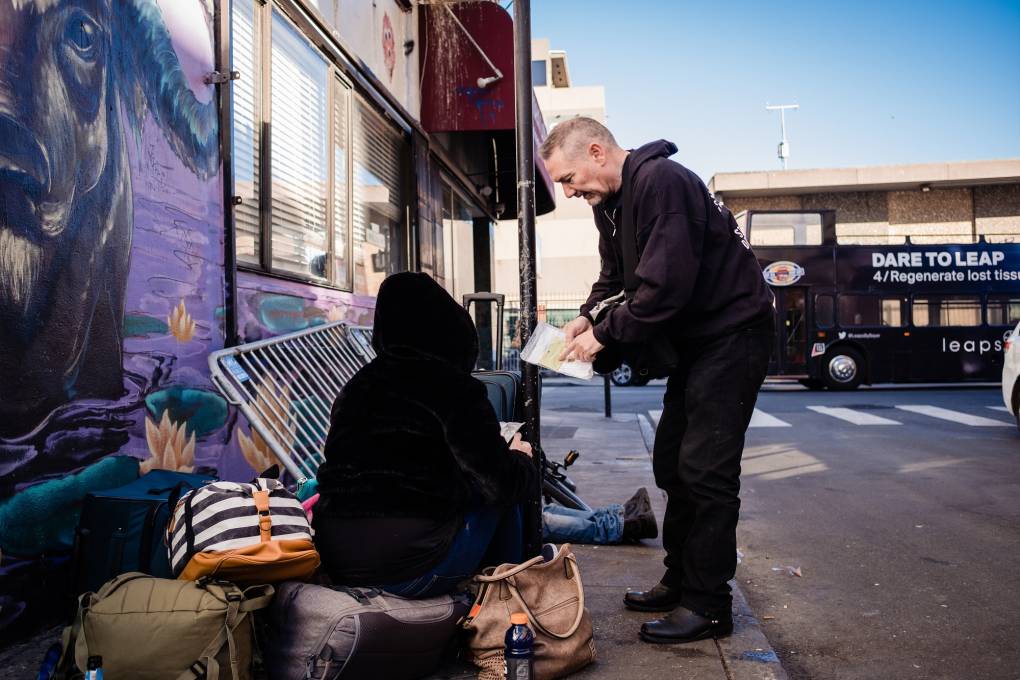
"caption": "A harm reduction program representative speaks with people on a popular alleyway in the Tenderloin neighborhood to hand out Narcan, fentanyl detection packets and tinfoil to those who need them as a part of drug addiction outreach in San Francisco.",
"credit": "Nick Otto/Washington Post via Getty Images",
"altTag": null,
"description": null,
"imgSizes": {
"medium": {
"file": "https://cdn.kqed.org/wp-content/uploads/sites/10/2024/07/SFOverdoseDeathDecline-800x533.jpg",
"width": 800,
"height": 533,
"mimeType": "image/jpeg"
},
"large": {
"file": "https://cdn.kqed.org/wp-content/uploads/sites/10/2024/07/SFOverdoseDeathDecline-1020x680.jpg",
"width": 1020,
"height": 680,
"mimeType": "image/jpeg"
},
"thumbnail": {
"file": "https://cdn.kqed.org/wp-content/uploads/sites/10/2024/07/SFOverdoseDeathDecline-160x107.jpg",
"width": 160,
"height": 107,
"mimeType": "image/jpeg"
},
"1536x1536": {
"file": "https://cdn.kqed.org/wp-content/uploads/sites/10/2024/07/SFOverdoseDeathDecline-1536x1024.jpg",
"width": 1536,
"height": 1024,
"mimeType": "image/jpeg"
},
"post-thumbnail": {
"file": "https://cdn.kqed.org/wp-content/uploads/sites/10/2024/07/SFOverdoseDeathDecline-672x372.jpg",
"width": 672,
"height": 372,
"mimeType": "image/jpeg"
},
"twentyfourteen-full-width": {
"file": "https://cdn.kqed.org/wp-content/uploads/sites/10/2024/07/SFOverdoseDeathDecline-1038x576.jpg",
"width": 1038,
"height": 576,
"mimeType": "image/jpeg"
},
"full-width": {
"file": "https://cdn.kqed.org/wp-content/uploads/sites/10/2024/07/SFOverdoseDeathDecline-1920x1280.jpg",
"width": 1920,
"height": 1280,
"mimeType": "image/jpeg"
},
"kqedFullSize": {
"file": "https://cdn.kqed.org/wp-content/uploads/sites/10/2024/07/SFOverdoseDeathDecline.jpg",
"width": 2000,
"height": 1333
}
},
"isLoading": false,
"fetchFailed": false
},
"news_11993831": {
"type": "attachments",
"id": "news_11993831",
"meta": {
"index": "attachments_1716263798",
"site": "news",
"id": "11993831",
"found": true
},
"title": "US-HEALTH-VIRUS-HEARING",
"publishDate": 1720811126,
"status": "inherit",
"parent": 0,
"modified": 1720816050,
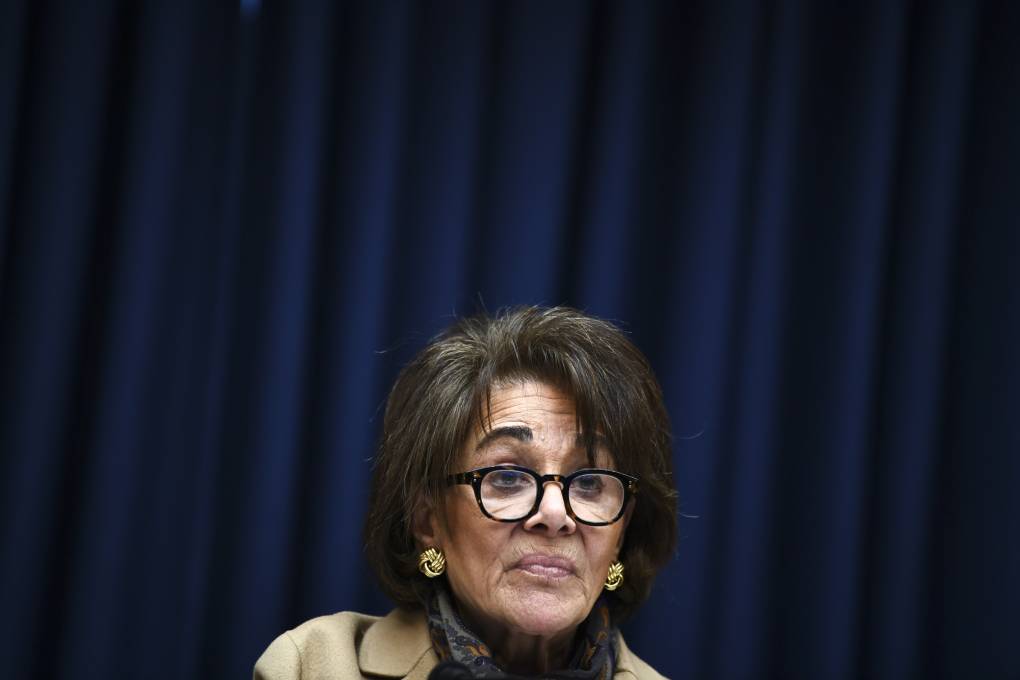
"caption": "US Rep. Anna Eshoo (D-Calif.) speaks at the House Energy and Commerce Committee Health Subcommittee in Washington, DC, on Feb. 26, 2020.",
"credit": "Brendan Smialowski/AFP via Getty Images",
"altTag": null,
"description": null,
"imgSizes": {
"medium": {
"file": "https://cdn.kqed.org/wp-content/uploads/sites/10/2024/07/gettyimages-1203482401-KQED-800x533.jpg",
"width": 800,
"height": 533,
"mimeType": "image/jpeg"
},
"large": {
"file": "https://cdn.kqed.org/wp-content/uploads/sites/10/2024/07/gettyimages-1203482401-KQED-1020x680.jpg",
"width": 1020,
"height": 680,
"mimeType": "image/jpeg"
},
"thumbnail": {
"file": "https://cdn.kqed.org/wp-content/uploads/sites/10/2024/07/gettyimages-1203482401-KQED-160x107.jpg",
"width": 160,
"height": 107,
"mimeType": "image/jpeg"
},
"1536x1536": {
"file": "https://cdn.kqed.org/wp-content/uploads/sites/10/2024/07/gettyimages-1203482401-KQED-1536x1024.jpg",
"width": 1536,
"height": 1024,
"mimeType": "image/jpeg"
},
"post-thumbnail": {
"file": "https://cdn.kqed.org/wp-content/uploads/sites/10/2024/07/gettyimages-1203482401-KQED-672x372.jpg",
"width": 672,
"height": 372,
"mimeType": "image/jpeg"
},
"twentyfourteen-full-width": {
"file": "https://cdn.kqed.org/wp-content/uploads/sites/10/2024/07/gettyimages-1203482401-KQED-1038x576.jpg",
"width": 1038,
"height": 576,
"mimeType": "image/jpeg"
},
"full-width": {
"file": "https://cdn.kqed.org/wp-content/uploads/sites/10/2024/07/gettyimages-1203482401-KQED-1920x1280.jpg",
"width": 1920,
"height": 1280,
"mimeType": "image/jpeg"
},
"kqedFullSize": {
"file": "https://cdn.kqed.org/wp-content/uploads/sites/10/2024/07/gettyimages-1203482401-KQED.jpg",
"width": 2000,
"height": 1333
}
},
"isLoading": false,
"fetchFailed": false
},
"news_11973137": {
"type": "attachments",
"id": "news_11973137",
"meta": {
"index": "attachments_1716263798",
"site": "news",
"id": "11973137",
"found": true
},
"title": "quarantine-guidelines-2024",
"publishDate": 1705700469,
"status": "inherit",
"parent": 11973108,
"modified": 1720727082,
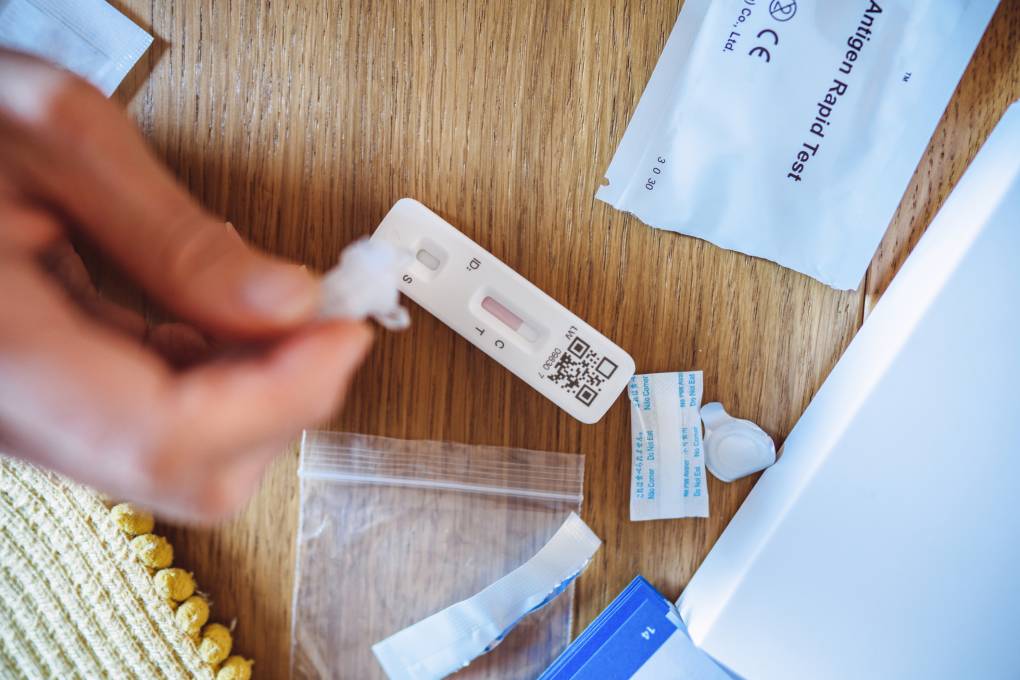
"caption": "How long should you isolate with COVID in 2024?",
"credit": "Tang Ming Tung/Getty Images",
"altTag": "A hand holding a COVID at-home antigen test is seen from above, with various wrappers and packaging strewn around a wooden surface.",
"description": null,
"imgSizes": {
"medium": {
"file": "https://cdn.kqed.org/wp-content/uploads/sites/10/2024/01/GettyImages-1361590305-1-800x533.jpg",
"width": 800,
"height": 533,
"mimeType": "image/jpeg"
},
"large": {
"file": "https://cdn.kqed.org/wp-content/uploads/sites/10/2024/01/GettyImages-1361590305-1-1020x680.jpg",
"width": 1020,
"height": 680,
"mimeType": "image/jpeg"
},
"thumbnail": {
"file": "https://cdn.kqed.org/wp-content/uploads/sites/10/2024/01/GettyImages-1361590305-1-160x107.jpg",
"width": 160,
"height": 107,
"mimeType": "image/jpeg"
},
"1536x1536": {
"file": "https://cdn.kqed.org/wp-content/uploads/sites/10/2024/01/GettyImages-1361590305-1-1536x1024.jpg",
"width": 1536,
"height": 1024,
"mimeType": "image/jpeg"
},
"2048x2048": {
"file": "https://cdn.kqed.org/wp-content/uploads/sites/10/2024/01/GettyImages-1361590305-1-2048x1365.jpg",
"width": 2048,
"height": 1365,
"mimeType": "image/jpeg"
},
"post-thumbnail": {
"file": "https://cdn.kqed.org/wp-content/uploads/sites/10/2024/01/GettyImages-1361590305-1-672x372.jpg",
"width": 672,
"height": 372,
"mimeType": "image/jpeg"
},
"twentyfourteen-full-width": {
"file": "https://cdn.kqed.org/wp-content/uploads/sites/10/2024/01/GettyImages-1361590305-1-1038x576.jpg",
"width": 1038,
"height": 576,
"mimeType": "image/jpeg"
},
"full-width": {
"file": "https://cdn.kqed.org/wp-content/uploads/sites/10/2024/01/GettyImages-1361590305-1-1920x1280.jpg",
"width": 1920,
"height": 1280,
"mimeType": "image/jpeg"
},
"kqedFullSize": {
"file": "https://cdn.kqed.org/wp-content/uploads/sites/10/2024/01/GettyImages-1361590305-1.jpg",
"width": 2121,
"height": 1414
}
},
"isLoading": false,
"fetchFailed": false
},
"news_11993621": {
"type": "attachments",
"id": "news_11993621",
"meta": {
"index": "attachments_1716263798",
"site": "news",
"id": "11993621",
"found": true
},
"title": "053124-Bakersfield-Rural-Homelessness-LV_05",
"publishDate": 1720718669,
"status": "inherit",
"parent": 11993616,
"modified": 1720721130,
"caption": "Construction site for an affordable housing apartment complex in Bakersfield, Kern County, on May 29, 2024. ",
"credit": "Larry Valenzuela/CalMatters/CatchLight Local",
"altTag": "Men wearing bright safety uniforms and hard hats walk around a construction site.",
"description": null,
"imgSizes": {
"medium": {
"file": "https://cdn.kqed.org/wp-content/uploads/sites/10/2024/07/053124-Bakersfield-Rural-Homelessness-LV_05-800x533.jpg",
"width": 800,
"height": 533,
"mimeType": "image/jpeg"
},
"large": {
"file": "https://cdn.kqed.org/wp-content/uploads/sites/10/2024/07/053124-Bakersfield-Rural-Homelessness-LV_05-1020x680.jpg",
"width": 1020,
"height": 680,
"mimeType": "image/jpeg"
},
"thumbnail": {
"file": "https://cdn.kqed.org/wp-content/uploads/sites/10/2024/07/053124-Bakersfield-Rural-Homelessness-LV_05-160x107.jpg",
"width": 160,
"height": 107,
"mimeType": "image/jpeg"
},
"1536x1536": {
"file": "https://cdn.kqed.org/wp-content/uploads/sites/10/2024/07/053124-Bakersfield-Rural-Homelessness-LV_05-1536x1024.jpg",
"width": 1536,
"height": 1024,
"mimeType": "image/jpeg"
},
"post-thumbnail": {
"file": "https://cdn.kqed.org/wp-content/uploads/sites/10/2024/07/053124-Bakersfield-Rural-Homelessness-LV_05-672x372.jpg",
"width": 672,
"height": 372,
"mimeType": "image/jpeg"
},
"twentyfourteen-full-width": {
"file": "https://cdn.kqed.org/wp-content/uploads/sites/10/2024/07/053124-Bakersfield-Rural-Homelessness-LV_05-1038x576.jpg",
"width": 1038,
"height": 576,
"mimeType": "image/jpeg"
},
"full-width": {
"file": "https://cdn.kqed.org/wp-content/uploads/sites/10/2024/07/053124-Bakersfield-Rural-Homelessness-LV_05-1920x1280.jpg",
"width": 1920,
"height": 1280,
"mimeType": "image/jpeg"
},
"kqedFullSize": {
"file": "https://cdn.kqed.org/wp-content/uploads/sites/10/2024/07/053124-Bakersfield-Rural-Homelessness-LV_05.jpg",
"width": 2000,
"height": 1333
}
},
"isLoading": false,
"fetchFailed": false
},
"news_11992370": {
"type": "attachments",
"id": "news_11992370",
"meta": {
"index": "attachments_1716263798",
"site": "news",
"id": "11992370",
"found": true
},
"title": "Purdue Pharma Still Faces Hundreds Of Lawsuits Related To OxyContin",
"publishDate": 1719592999,
"status": "inherit",
"parent": 11992365,
"modified": 1737657926,
"caption": "Purdue Pharma headquarters in Stamford, Connecticut. Purdue Pharma, the maker of OxyContin, and its owners, the Sackler family, are facing hundreds of lawsuits across the country for the company's alleged role in the opioid epidemic that has killed more than 200,000 Americans over the past 20 years. ",
"credit": "Drew Angerer/Getty Images",
"altTag": null,
"description": null,
"imgSizes": {
"medium": {
"file": "https://cdn.kqed.org/wp-content/uploads/sites/10/2024/06/PurduePharmaHeadquarters01-800x533.jpg",
"width": 800,
"height": 533,
"mimeType": "image/jpeg"
},
"large": {
"file": "https://cdn.kqed.org/wp-content/uploads/sites/10/2024/06/PurduePharmaHeadquarters01-1020x680.jpg",
"width": 1020,
"height": 680,
"mimeType": "image/jpeg"
},
"thumbnail": {
"file": "https://cdn.kqed.org/wp-content/uploads/sites/10/2024/06/PurduePharmaHeadquarters01-160x107.jpg",
"width": 160,
"height": 107,
"mimeType": "image/jpeg"
},
"1536x1536": {
"file": "https://cdn.kqed.org/wp-content/uploads/sites/10/2024/06/PurduePharmaHeadquarters01-1536x1024.jpg",
"width": 1536,
"height": 1024,
"mimeType": "image/jpeg"
},
"post-thumbnail": {
"file": "https://cdn.kqed.org/wp-content/uploads/sites/10/2024/06/PurduePharmaHeadquarters01-672x372.jpg",
"width": 672,
"height": 372,
"mimeType": "image/jpeg"
},
"twentyfourteen-full-width": {
"file": "https://cdn.kqed.org/wp-content/uploads/sites/10/2024/06/PurduePharmaHeadquarters01-1038x576.jpg",
"width": 1038,
"height": 576,
"mimeType": "image/jpeg"
},
"kqedFullSize": {
"file": "https://cdn.kqed.org/wp-content/uploads/sites/10/2024/06/PurduePharmaHeadquarters01.jpg",
"width": 1920,
"height": 1280
}
},
"isLoading": false,
"fetchFailed": false
},
"news_11992198": {
"type": "attachments",
"id": "news_11992198",
"meta": {
"index": "attachments_1716263798",
"site": "news",
"id": "11992198",
"found": true
},
"title": "image (2)",
"publishDate": 1719457473,
"status": "inherit",
"parent": 11992142,
"modified": 1719498334,
"caption": "The lime-green RV with its stretched-out awnings looks like a festive food truck. But inside, it has all the necessities of a preschool classroom on wheels.\n",
"credit": "Gina Castro/KQED",
"altTag": null,
"description": null,
"imgSizes": {
"medium": {
"file": "https://cdn.kqed.org/wp-content/uploads/sites/10/2024/06/image-2-800x533.png",
"width": 800,
"height": 533,
"mimeType": "image/png"
},
"large": {
"file": "https://cdn.kqed.org/wp-content/uploads/sites/10/2024/06/image-2-1020x680.png",
"width": 1020,
"height": 680,
"mimeType": "image/png"
},
"thumbnail": {
"file": "https://cdn.kqed.org/wp-content/uploads/sites/10/2024/06/image-2-160x107.png",
"width": 160,
"height": 107,
"mimeType": "image/png"
},
"post-thumbnail": {
"file": "https://cdn.kqed.org/wp-content/uploads/sites/10/2024/06/image-2-672x372.png",
"width": 672,
"height": 372,
"mimeType": "image/png"
},
"twentyfourteen-full-width": {
"file": "https://cdn.kqed.org/wp-content/uploads/sites/10/2024/06/image-2-1038x576.png",
"width": 1038,
"height": 576,
"mimeType": "image/png"
},
"kqedFullSize": {
"file": "https://cdn.kqed.org/wp-content/uploads/sites/10/2024/06/image-2.png",
"width": 1200,
"height": 800
}
},
"isLoading": false,
"fetchFailed": false
},
"news_11992248": {
"type": "attachments",
"id": "news_11992248",
"meta": {
"index": "attachments_1716263798",
"site": "news",
"id": "11992248",
"found": true
},
"title": "240617-HEALTHCAREMINWAGE-07-BL-KQED",
"publishDate": 1719510797,
"status": "inherit",
"parent": 0,
"modified": 1719516777,
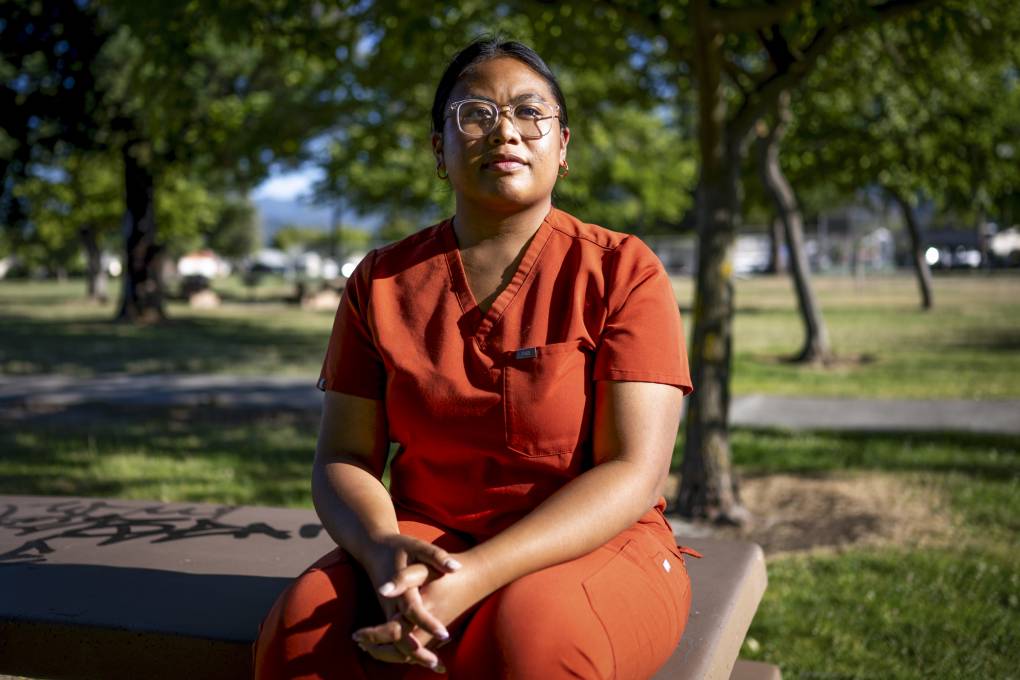
"caption": "Tessa Tuliao, a dialysis technician, poses for a portrait after work at Satellite Healthcare dialysis clinic in San José on June 17, 2024.",
"credit": "Beth LaBerge/KQED",
"altTag": null,
"description": null,
"imgSizes": {
"medium": {
"file": "https://cdn.kqed.org/wp-content/uploads/sites/10/2024/06/240617-HEALTHCAREMINWAGE-07-BL-KQED-800x533.jpg",
"width": 800,
"height": 533,
"mimeType": "image/jpeg"
},
"large": {
"file": "https://cdn.kqed.org/wp-content/uploads/sites/10/2024/06/240617-HEALTHCAREMINWAGE-07-BL-KQED-1020x680.jpg",
"width": 1020,
"height": 680,
"mimeType": "image/jpeg"
},
"thumbnail": {
"file": "https://cdn.kqed.org/wp-content/uploads/sites/10/2024/06/240617-HEALTHCAREMINWAGE-07-BL-KQED-160x107.jpg",
"width": 160,
"height": 107,
"mimeType": "image/jpeg"
},
"1536x1536": {
"file": "https://cdn.kqed.org/wp-content/uploads/sites/10/2024/06/240617-HEALTHCAREMINWAGE-07-BL-KQED-1536x1024.jpg",
"width": 1536,
"height": 1024,
"mimeType": "image/jpeg"
},
"post-thumbnail": {
"file": "https://cdn.kqed.org/wp-content/uploads/sites/10/2024/06/240617-HEALTHCAREMINWAGE-07-BL-KQED-672x372.jpg",
"width": 672,
"height": 372,
"mimeType": "image/jpeg"
},
"twentyfourteen-full-width": {
"file": "https://cdn.kqed.org/wp-content/uploads/sites/10/2024/06/240617-HEALTHCAREMINWAGE-07-BL-KQED-1038x576.jpg",
"width": 1038,
"height": 576,
"mimeType": "image/jpeg"
},
"full-width": {
"file": "https://cdn.kqed.org/wp-content/uploads/sites/10/2024/06/240617-HEALTHCAREMINWAGE-07-BL-KQED-1920x1280.jpg",
"width": 1920,
"height": 1280,
"mimeType": "image/jpeg"
},
"kqedFullSize": {
"file": "https://cdn.kqed.org/wp-content/uploads/sites/10/2024/06/240617-HEALTHCAREMINWAGE-07-BL-KQED.jpg",
"width": 2000,
"height": 1333
}
},
"isLoading": false,
"fetchFailed": false
},
"news_11991962": {
"type": "attachments",
"id": "news_11991962",
"meta": {
"index": "attachments_1716263798",
"site": "news",
"id": "11991962",
"found": true
},
"title": "Psilocybin Mushrooms Increasingly Sought For Therapeutic Purposes",
"publishDate": 1719359127,
"status": "inherit",
"parent": 11991959,
"modified": 1719359179,
"caption": "Psilocybin 'Golden Teacher' mushrooms grow in a humidified monotub.",
"credit": "John Moore/Getty Images",
"altTag": null,
"description": null,
"imgSizes": {
"medium": {
"file": "https://cdn.kqed.org/wp-content/uploads/sites/10/2024/06/GettyImages-1887894814_qed-800x600.jpg",
"width": 800,
"height": 600,
"mimeType": "image/jpeg"
},
"large": {
"file": "https://cdn.kqed.org/wp-content/uploads/sites/10/2024/06/GettyImages-1887894814_qed-1020x765.jpg",
"width": 1020,
"height": 765,
"mimeType": "image/jpeg"
},
"thumbnail": {
"file": "https://cdn.kqed.org/wp-content/uploads/sites/10/2024/06/GettyImages-1887894814_qed-160x120.jpg",
"width": 160,
"height": 120,
"mimeType": "image/jpeg"
},
"1536x1536": {
"file": "https://cdn.kqed.org/wp-content/uploads/sites/10/2024/06/GettyImages-1887894814_qed-1536x1152.jpg",
"width": 1536,
"height": 1152,
"mimeType": "image/jpeg"
},
"post-thumbnail": {
"file": "https://cdn.kqed.org/wp-content/uploads/sites/10/2024/06/GettyImages-1887894814_qed-672x372.jpg",
"width": 672,
"height": 372,
"mimeType": "image/jpeg"
},
"twentyfourteen-full-width": {
"file": "https://cdn.kqed.org/wp-content/uploads/sites/10/2024/06/GettyImages-1887894814_qed-1038x576.jpg",
"width": 1038,
"height": 576,
"mimeType": "image/jpeg"
},
"kqedFullSize": {
"file": "https://cdn.kqed.org/wp-content/uploads/sites/10/2024/06/GettyImages-1887894814_qed.jpg",
"width": 1777,
"height": 1333
}
},
"isLoading": false,
"fetchFailed": false
},
"news_11991748": {
"type": "attachments",
"id": "news_11991748",
"meta": {
"index": "attachments_1716263798",
"site": "news",
"id": "11991748",
"found": true
},
"title": "051024_Newsom-Budget_FG_CM_15-1",
"publishDate": 1719266104,
"status": "inherit",
"parent": 11991747,
"modified": 1719269062,
"caption": "Gov. Gavin Newsom addresses the media during a press conference unveiling his revised 2024–25 budget proposal at the Capitol Annex Swing Space in Sacramento on May 10, 2024. ",
"credit": "Photo by Fred Greaves/CalMatters",
"altTag": "A white man wearing a business suit stands behind a podium with flags on both sides and a state logo above him while gesturing with his left hand.",
"description": null,
"imgSizes": {
"medium": {
"file": "https://cdn.kqed.org/wp-content/uploads/sites/10/2024/06/051024_Newsom-Budget_FG_CM_15-1-800x533.jpg",
"width": 800,
"height": 533,
"mimeType": "image/jpeg"
},
"large": {
"file": "https://cdn.kqed.org/wp-content/uploads/sites/10/2024/06/051024_Newsom-Budget_FG_CM_15-1-1020x680.jpg",
"width": 1020,
"height": 680,
"mimeType": "image/jpeg"
},
"thumbnail": {
"file": "https://cdn.kqed.org/wp-content/uploads/sites/10/2024/06/051024_Newsom-Budget_FG_CM_15-1-160x107.jpg",
"width": 160,
"height": 107,
"mimeType": "image/jpeg"
},
"1536x1536": {
"file": "https://cdn.kqed.org/wp-content/uploads/sites/10/2024/06/051024_Newsom-Budget_FG_CM_15-1-1536x1024.jpg",
"width": 1536,
"height": 1024,
"mimeType": "image/jpeg"
},
"post-thumbnail": {
"file": "https://cdn.kqed.org/wp-content/uploads/sites/10/2024/06/051024_Newsom-Budget_FG_CM_15-1-672x372.jpg",
"width": 672,
"height": 372,
"mimeType": "image/jpeg"
},
"twentyfourteen-full-width": {
"file": "https://cdn.kqed.org/wp-content/uploads/sites/10/2024/06/051024_Newsom-Budget_FG_CM_15-1-1038x576.jpg",
"width": 1038,
"height": 576,
"mimeType": "image/jpeg"
},
"full-width": {
"file": "https://cdn.kqed.org/wp-content/uploads/sites/10/2024/06/051024_Newsom-Budget_FG_CM_15-1-1920x1280.jpg",
"width": 1920,
"height": 1280,
"mimeType": "image/jpeg"
},
"kqedFullSize": {
"file": "https://cdn.kqed.org/wp-content/uploads/sites/10/2024/06/051024_Newsom-Budget_FG_CM_15-1.jpg",
"width": 2000,
"height": 1333
}
},
"isLoading": false,
"fetchFailed": false
},
"news_11991678": {
"type": "attachments",
"id": "news_11991678",
"meta": {
"index": "attachments_1716263798",
"site": "news",
"id": "11991678",
"found": true
},
"title": "SanJoseRegionalMedCenter",
"publishDate": 1719251522,
"status": "inherit",
"parent": 11991654,
"modified": 1719251592,
"caption": "Regional Medical Center in East San José on May 24, 2024.",
"credit": "Joseph Geha/KQED",
"altTag": null,
"description": null,
"imgSizes": {
"medium": {
"file": "https://cdn.kqed.org/wp-content/uploads/sites/10/2024/06/SanJoseRegionalMedCenter-800x533.jpg",
"width": 800,
"height": 533,
"mimeType": "image/jpeg"
},
"large": {
"file": "https://cdn.kqed.org/wp-content/uploads/sites/10/2024/06/SanJoseRegionalMedCenter-1020x679.jpg",
"width": 1020,
"height": 679,
"mimeType": "image/jpeg"
},
"thumbnail": {
"file": "https://cdn.kqed.org/wp-content/uploads/sites/10/2024/06/SanJoseRegionalMedCenter-160x107.jpg",
"width": 160,
"height": 107,
"mimeType": "image/jpeg"
},
"1536x1536": {
"file": "https://cdn.kqed.org/wp-content/uploads/sites/10/2024/06/SanJoseRegionalMedCenter-1536x1023.jpg",
"width": 1536,
"height": 1023,
"mimeType": "image/jpeg"
},
"post-thumbnail": {
"file": "https://cdn.kqed.org/wp-content/uploads/sites/10/2024/06/SanJoseRegionalMedCenter-672x372.jpg",
"width": 672,
"height": 372,
"mimeType": "image/jpeg"
},
"twentyfourteen-full-width": {
"file": "https://cdn.kqed.org/wp-content/uploads/sites/10/2024/06/SanJoseRegionalMedCenter-1038x576.jpg",
"width": 1038,
"height": 576,
"mimeType": "image/jpeg"
},
"kqedFullSize": {
"file": "https://cdn.kqed.org/wp-content/uploads/sites/10/2024/06/SanJoseRegionalMedCenter.jpg",
"width": 1920,
"height": 1279
}
},
"isLoading": false,
"fetchFailed": false
},
"news_11991669": {
"type": "attachments",
"id": "news_11991669",
"meta": {
"index": "attachments_1716263798",
"site": "news",
"id": "11991669",
"found": true
},
"title": "061424-MaternalCare-KC-CM-01 (1)",
"publishDate": 1719250773,
"status": "inherit",
"parent": 11991664,
"modified": 1719251061,
"caption": "Angie Costales, 39, at her home in San Diego on June 14, 2024. In December, a CVS pharmacy in San Diego denied Costales the medication she was prescribed to manage her miscarriage. ",
"credit": "Kristian Carreon/CalMatters",
"altTag": "A young woman in a blue shirt and white pants sits on the foot of a bed.",
"description": null,
"imgSizes": {
"medium": {
"file": "https://cdn.kqed.org/wp-content/uploads/sites/10/2024/06/061424-MaternalCare-KC-CM-01-1-800x533.jpg",
"width": 800,
"height": 533,
"mimeType": "image/jpeg"
},
"large": {
"file": "https://cdn.kqed.org/wp-content/uploads/sites/10/2024/06/061424-MaternalCare-KC-CM-01-1-1020x680.jpg",
"width": 1020,
"height": 680,
"mimeType": "image/jpeg"
},
"thumbnail": {
"file": "https://cdn.kqed.org/wp-content/uploads/sites/10/2024/06/061424-MaternalCare-KC-CM-01-1-160x107.jpg",
"width": 160,
"height": 107,
"mimeType": "image/jpeg"
},
"1536x1536": {
"file": "https://cdn.kqed.org/wp-content/uploads/sites/10/2024/06/061424-MaternalCare-KC-CM-01-1-1536x1024.jpg",
"width": 1536,
"height": 1024,
"mimeType": "image/jpeg"
},
"post-thumbnail": {
"file": "https://cdn.kqed.org/wp-content/uploads/sites/10/2024/06/061424-MaternalCare-KC-CM-01-1-672x372.jpg",
"width": 672,
"height": 372,
"mimeType": "image/jpeg"
},
"twentyfourteen-full-width": {
"file": "https://cdn.kqed.org/wp-content/uploads/sites/10/2024/06/061424-MaternalCare-KC-CM-01-1-1038x576.jpg",
"width": 1038,
"height": 576,
"mimeType": "image/jpeg"
},
"kqedFullSize": {
"file": "https://cdn.kqed.org/wp-content/uploads/sites/10/2024/06/061424-MaternalCare-KC-CM-01-1.jpg",
"width": 1568,
"height": 1045
}
},
"isLoading": false,
"fetchFailed": false
},
"news_11991444": {
"type": "attachments",
"id": "news_11991444",
"meta": {
"index": "attachments_1716263798",
"site": "news",
"id": "11991444",
"found": true
},
"title": "GettyImages-2154645859-resized copy",
"publishDate": 1718994727,
"status": "inherit",
"parent": 11991442,
"modified": 1718994799,
"caption": "California Gov. Gavin Newsom speaks at an event in Berkeley on May 29, 2024.",
"credit": "Tayfun Coskun/Anadolu via Getty Images",
"altTag": null,
"description": null,
"imgSizes": {
"medium": {
"file": "https://cdn.kqed.org/wp-content/uploads/sites/10/2024/06/GettyImages-2154645859-resized-copy-800x533.jpg",
"width": 800,
"height": 533,
"mimeType": "image/jpeg"
},
"large": {
"file": "https://cdn.kqed.org/wp-content/uploads/sites/10/2024/06/GettyImages-2154645859-resized-copy-1020x680.jpg",
"width": 1020,
"height": 680,
"mimeType": "image/jpeg"
},
"thumbnail": {
"file": "https://cdn.kqed.org/wp-content/uploads/sites/10/2024/06/GettyImages-2154645859-resized-copy-160x107.jpg",
"width": 160,
"height": 107,
"mimeType": "image/jpeg"
},
"1536x1536": {
"file": "https://cdn.kqed.org/wp-content/uploads/sites/10/2024/06/GettyImages-2154645859-resized-copy-1536x1024.jpg",
"width": 1536,
"height": 1024,
"mimeType": "image/jpeg"
},
"2048x2048": {
"file": "https://cdn.kqed.org/wp-content/uploads/sites/10/2024/06/GettyImages-2154645859-resized-copy-2048x1365.jpg",
"width": 2048,
"height": 1365,
"mimeType": "image/jpeg"
},
"post-thumbnail": {
"file": "https://cdn.kqed.org/wp-content/uploads/sites/10/2024/06/GettyImages-2154645859-resized-copy-672x372.jpg",
"width": 672,
"height": 372,
"mimeType": "image/jpeg"
},
"twentyfourteen-full-width": {
"file": "https://cdn.kqed.org/wp-content/uploads/sites/10/2024/06/GettyImages-2154645859-resized-copy-1038x576.jpg",
"width": 1038,
"height": 576,
"mimeType": "image/jpeg"
},
"full-width": {
"file": "https://cdn.kqed.org/wp-content/uploads/sites/10/2024/06/GettyImages-2154645859-resized-copy-1920x1280.jpg",
"width": 1920,
"height": 1280,
"mimeType": "image/jpeg"
},
"kqedFullSize": {
"file": "https://cdn.kqed.org/wp-content/uploads/sites/10/2024/06/GettyImages-2154645859-resized-copy-scaled.jpg",
"width": 2560,
"height": 1707
}
},
"isLoading": false,
"fetchFailed": false
}
},
"audioPlayerReducer": {
"postId": "stream_live",
"isPaused": true,
"isPlaying": false,
"pfsActive": false,
"pledgeModalIsOpen": true,
"playerDrawerIsOpen": false,
"liveAudioPlayStartedAt": 0,
"liveAudioPlayContext": ""
},
"authorsReducer": {
"byline_news_11993616": {
"type": "authors",
"id": "byline_news_11993616",
"meta": {
"override": true
},
"slug": "byline_news_11993616",
"name": "\u003ca href=\"https://calmatters.org/author/marisa-kendall/\">Marisa Kendall\u003c/a>, CalMatters",
"isLoading": false
},
"byline_news_11991747": {
"type": "authors",
"id": "byline_news_11991747",
"meta": {
"override": true
},
"slug": "byline_news_11991747",
"name": "Alexei Koseff, CalMatters",
"isLoading": false
},
"byline_news_11991664": {
"type": "authors",
"id": "byline_news_11991664",
"meta": {
"override": true
},
"slug": "byline_news_11991664",
"name": "\u003ca href=\"https://calmatters.org/author/kristen-hwang/\">Kristen Hwang\u003c/a>",
"isLoading": false
},
"byline_news_11991442": {
"type": "authors",
"id": "byline_news_11991442",
"meta": {
"override": true
},
"slug": "byline_news_11991442",
"name": "\u003ca href=\"https://kffhealthnews.org/news/author/bernard-j-wolfson/\">Bernard J. Wolfson\u003c/a>, \u003ca href=\"https://kffhealthnews.org/\">KFF Health News\u003c/a>",
"isLoading": false
},
"carlysevern": {
"type": "authors",
"id": "3243",
"meta": {
"index": "authors_1716337520",
"id": "3243",
"found": true
},
"name": "Carly Severn",
"firstName": "Carly",
"lastName": "Severn",
"slug": "carlysevern",
"email": "csevern@kqed.org",
"display_author_email": false,
"staff_mastheads": [
"news"
],
"title": "Senior Editor, Audience News ",
"bio": "Carly is KQED's Senior Editor of Audience News on the Digital News team, and has reported for the California Report Magazine, Bay Curious and KQED Arts. She's formerly the host of \u003ca href=\"http://ww2.kqed.org/pop/category/the-cooler/\" rel=\"noopener noreferrer\">The Cooler\u003c/a> podcast.",
"avatar": "https://secure.gravatar.com/avatar/54037bf5c128fe678f0ef26cec97a93f2e7f220a22d7285703328f12c42c1b1d?s=600&d=blank&r=g",
"twitter": "teacupinthebay",
"bluesky": null,
"facebook": null,
"instagram": null,
"linkedin": null,
"sites": [
{
"site": "",
"roles": [
"editor"
]
},
{
"site": "arts",
"roles": [
"editor"
]
},
{
"site": "news",
"roles": [
"administrator"
]
},
{
"site": "pop",
"roles": [
"editor"
]
},
{
"site": "futureofyou",
"roles": [
"editor"
]
},
{
"site": "about",
"roles": [
"administrator"
]
},
{
"site": "mindshift",
"roles": [
"editor"
]
},
{
"site": "bayareabites",
"roles": [
"editor"
]
},
{
"site": "stateofhealth",
"roles": [
"editor"
]
},
{
"site": "science",
"roles": [
"editor"
]
},
{
"site": "food",
"roles": [
"contributor"
]
},
{
"site": "forum",
"roles": [
"editor"
]
},
{
"site": "perspectives",
"roles": [
"administrator"
]
},
{
"site": "liveblog",
"roles": [
"editor"
]
}
],
"headData": {
"title": "Carly Severn | KQED",
"description": "Senior Editor, Audience News ",
"ogImgSrc": "https://secure.gravatar.com/avatar/54037bf5c128fe678f0ef26cec97a93f2e7f220a22d7285703328f12c42c1b1d?s=600&d=blank&r=g",
"twImgSrc": "https://secure.gravatar.com/avatar/54037bf5c128fe678f0ef26cec97a93f2e7f220a22d7285703328f12c42c1b1d?s=600&d=blank&r=g"
},
"isLoading": false,
"link": "/author/carlysevern"
},
"fjhabvala": {
"type": "authors",
"id": "8659",
"meta": {
"index": "authors_1716337520",
"id": "8659",
"found": true
},
"name": "Farida Jhabvala Romero",
"firstName": "Farida",
"lastName": "Jhabvala Romero",
"slug": "fjhabvala",
"email": "fjhabvala@kqed.org",
"display_author_email": true,
"staff_mastheads": [
"news"
],
"title": "KQED Contributor",
"bio": "Farida Jhabvala Romero is a Labor Correspondent for KQED. She previously covered immigration. Farida was \u003ca href=\"https://www.ccnma.org/2022-most-influential-latina-journalists\">named\u003c/a> one of the 10 Most Influential Latina Journalists in California in 2022 by the California Chicano News Media Association. Her work has won awards from the Society of Professional Journalists (Northern California), as well as a national and regional Edward M. Murrow Award for the collaborative reporting projects “Dangerous Air” and “Graying California.” Before joining KQED, Farida worked as a producer at Radio Bilingüe, a national public radio network. Farida earned her master’s degree in journalism from Stanford University.",
"avatar": "https://secure.gravatar.com/avatar/f9f022d4e2609741874222a1e9d41f48fea74011aa7c615eef91d9a50c944ebe?s=600&d=blank&r=g",
"twitter": "FaridaJhabvala",
"bluesky": null,
"facebook": null,
"instagram": null,
"linkedin": "https://www.linkedin.com/in/faridajhabvala/",
"sites": [
{
"site": "news",
"roles": [
"editor"
]
},
{
"site": "stateofhealth",
"roles": [
"author"
]
},
{
"site": "liveblog",
"roles": [
"author"
]
}
],
"headData": {
"title": "Farida Jhabvala Romero | KQED",
"description": "KQED Contributor",
"ogImgSrc": "https://secure.gravatar.com/avatar/f9f022d4e2609741874222a1e9d41f48fea74011aa7c615eef91d9a50c944ebe?s=600&d=blank&r=g",
"twImgSrc": "https://secure.gravatar.com/avatar/f9f022d4e2609741874222a1e9d41f48fea74011aa7c615eef91d9a50c944ebe?s=600&d=blank&r=g"
},
"isLoading": false,
"link": "/author/fjhabvala"
},
"calam": {
"type": "authors",
"id": "11834",
"meta": {
"index": "authors_1716337520",
"id": "11834",
"found": true
},
"name": "Christopher Alam",
"firstName": "Christopher",
"lastName": "Alam",
"slug": "calam",
"email": "calam@kqed.org",
"display_author_email": true,
"staff_mastheads": [
"news"
],
"title": "KQED Contributor",
"bio": "Christopher Alam is a radio newscast intern working on local news and general assignment reporting. Before joining KQED he was active in college radio and journalism at UC Davis, where he received a bachelor's degree in English and professional writing in 2021. He is also a creative writer and does freelance work. Born in Fresno, he is now based in San Francisco and Oakland.",
"avatar": "https://secure.gravatar.com/avatar/b3a8308c5aaa97024a7274f0a617bd7083c2b6c50039ea7d1c08f831158d1951?s=600&d=blank&r=g",
"twitter": "_chrisalam",
"bluesky": null,
"facebook": null,
"instagram": "christopher_alam",
"linkedin": null,
"sites": [
{
"site": "arts",
"roles": [
"editor"
]
},
{
"site": "news",
"roles": [
"editor"
]
}
],
"headData": {
"title": "Christopher Alam | KQED",
"description": "KQED Contributor",
"ogImgSrc": "https://secure.gravatar.com/avatar/b3a8308c5aaa97024a7274f0a617bd7083c2b6c50039ea7d1c08f831158d1951?s=600&d=blank&r=g",
"twImgSrc": "https://secure.gravatar.com/avatar/b3a8308c5aaa97024a7274f0a617bd7083c2b6c50039ea7d1c08f831158d1951?s=600&d=blank&r=g"
},
"isLoading": false,
"link": "/author/calam"
},
"sjohnson": {
"type": "authors",
"id": "11840",
"meta": {
"index": "authors_1716337520",
"id": "11840",
"found": true
},
"name": "Sydney Johnson",
"firstName": "Sydney",
"lastName": "Johnson",
"slug": "sjohnson",
"email": "sjohnson@kqed.org",
"display_author_email": false,
"staff_mastheads": [
"news"
],
"title": "KQED Reporter",
"bio": "Sydney Johnson is a general assignment reporter at KQED. She previously reported on public health and city government at the San Francisco Examiner, and before that, she covered statewide education policy for EdSource. Her reporting has won multiple local, state and national awards. Sydney is a graduate of the University of California, Berkeley and lives in San Francisco.",
"avatar": "https://secure.gravatar.com/avatar/97855f2719b72ad6190b7c535fe642c8?s=600&d=blank&r=g",
"twitter": "sydneyfjohnson",
"facebook": null,
"instagram": null,
"linkedin": null,
"sites": [
{
"site": "news",
"roles": [
"editor"
]
}
],
"headData": {
"title": "Sydney Johnson | KQED",
"description": "KQED Reporter",
"ogImgSrc": "https://secure.gravatar.com/avatar/97855f2719b72ad6190b7c535fe642c8?s=600&d=blank&r=g",
"twImgSrc": "https://secure.gravatar.com/avatar/97855f2719b72ad6190b7c535fe642c8?s=600&d=blank&r=g"
},
"isLoading": false,
"link": "/author/sjohnson"
},
"jgeha": {
"type": "authors",
"id": "11906",
"meta": {
"index": "authors_1716337520",
"id": "11906",
"found": true
},
"name": "Joseph Geha",
"firstName": "Joseph",
"lastName": "Geha",
"slug": "jgeha",
"email": "jgeha@kqed.org",
"display_author_email": false,
"staff_mastheads": [
"news",
"science"
],
"title": "KQED Contributor",
"bio": null,
"avatar": "https://secure.gravatar.com/avatar/ea84d2b6dd93d6369d453edf19dd583f117cd1759d2d9c9c92f9de77017354fe?s=600&d=blank&r=g",
"twitter": null,
"bluesky": null,
"facebook": null,
"instagram": null,
"linkedin": null,
"sites": [
{
"site": "news",
"roles": [
"editor"
]
},
{
"site": "liveblog",
"roles": [
"author"
]
}
],
"headData": {
"title": "Joseph Geha | KQED",
"description": "KQED Contributor",
"ogImgSrc": "https://secure.gravatar.com/avatar/ea84d2b6dd93d6369d453edf19dd583f117cd1759d2d9c9c92f9de77017354fe?s=600&d=blank&r=g",
"twImgSrc": "https://secure.gravatar.com/avatar/ea84d2b6dd93d6369d453edf19dd583f117cd1759d2d9c9c92f9de77017354fe?s=600&d=blank&r=g"
},
"isLoading": false,
"link": "/author/jgeha"
},
"kdebenedetti": {
"type": "authors",
"id": "11913",
"meta": {
"index": "authors_1716337520",
"id": "11913",
"found": true
},
"name": "Katie DeBenedetti",
"firstName": "Katie",
"lastName": "DeBenedetti",
"slug": "kdebenedetti",
"email": "kdebenedetti@kqed.org",
"display_author_email": false,
"staff_mastheads": [
"news",
"science"
],
"title": "KQED Contributor",
"bio": "Katie DeBenedetti is a digital reporter covering daily news for the Express Desk. Prior to joining KQED as a culture reporting intern in January 2024, she covered education and city government for the Napa Valley Register.",
"avatar": "https://secure.gravatar.com/avatar/6e31073cb8f7e4214ab03f42771d0f45?s=600&d=blank&r=g",
"twitter": null,
"facebook": null,
"instagram": null,
"linkedin": null,
"sites": [
{
"site": "news",
"roles": [
"author"
]
},
{
"site": "science",
"roles": [
"author"
]
},
{
"site": "liveblog",
"roles": [
"author"
]
}
],
"headData": {
"title": "Katie DeBenedetti | KQED",
"description": "KQED Contributor",
"ogImgSrc": "https://secure.gravatar.com/avatar/6e31073cb8f7e4214ab03f42771d0f45?s=600&d=blank&r=g",
"twImgSrc": "https://secure.gravatar.com/avatar/6e31073cb8f7e4214ab03f42771d0f45?s=600&d=blank&r=g"
},
"isLoading": false,
"link": "/author/kdebenedetti"
}
},
"pagesReducer": {
"news_tag_health": {
"type": "terms",
"id": "news_18543",
"meta": {
"index": "terms_1716263798",
"site": "news",
"id": "18543",
"score": 6.886659
},
"featImg": null,
"name": "Health",
"description": null,
"taxonomy": "tag",
"headData": {
"twImgId": null,
"twTitle": null,
"ogTitle": null,
"ogImgId": null,
"twDescription": null,
"description": null,
"title": "Health Archives | KQED News",
"ogDescription": null
},
"ttid": 466,
"slug": "health",
"isLoading": false,
"title": "Health",
"pageMeta": {
"site": "news",
"WpPageTemplate": "page-topic-editorial",
"currentPage": 33
},
"blocks": [
{
"blockName": "kqed/post-list",
"attrs": {
"layout": "cardArticle2",
"query": "posts/news?tag=health",
"seeMore": false,
"paginated": true,
"page": 33
}
},
{
"blockName": "kqed/ad"
}
]
}
},
"pfsSessionReducer": {},
"postsReducer": {
"stream_live": {
"type": "live",
"id": "stream_live",
"audioUrl": "https://streams.kqed.org/kqedradio",
"title": "Live Stream",
"excerpt": "Live Stream information currently unavailable.",
"link": "/radio",
"featImg": "",
"label": {
"name": "KQED Live",
"link": "/"
}
},
"stream_kqedNewscast": {
"type": "posts",
"id": "stream_kqedNewscast",
"audioUrl": "https://www.kqed.org/.stream/anon/radio/RDnews/newscast.mp3?_=1",
"title": "KQED Newscast",
"featImg": "",
"label": {
"name": "88.5 FM",
"link": "/"
}
},
"news_11995842": {
"type": "posts",
"id": "news_11995842",
"meta": {
"index": "posts_1716263798",
"site": "news",
"id": "11995842",
"score": null,
"sort": [
1721214045000
]
},
"guestAuthors": [],
"slug": "san-francisco-overdose-deaths-are-at-nearly-2-year-low-whats-behind-the-decline",
"title": "San Francisco Overdose Deaths Are At Nearly 2-Year Low. What’s Behind the Decline?",
"publishDate": 1721214045,
"format": "standard",
"headTitle": "San Francisco Overdose Deaths Are At Nearly 2-Year Low. What’s Behind the Decline? | KQED",
"labelTerm": {
"site": "news"
},
"content": "\u003cp>San Francisco saw its lowest monthly number of fatal overdoses in nearly two years in June, officials announced Monday, offering slight good news as the city \u003ca href=\"https://www.kqed.org/news/11991538/san-francisco-attributes-lower-drug-deaths-to-microdosing-addiction-medication\">battles a severe overdose crisis\u003c/a>.\u003c/p>\n\u003cp>According to preliminary data \u003ca href=\"https://www.sf.gov/sites/default/files/2024-07/2024%2007_OCME%20Overdose%20Report.pdf\">from the medical examiner’s office\u003c/a>, 48 people died of accidental overdoses last month. That’s down more than 15% from 57 deaths in June of last year, and it represents the lowest monthly total since July 2022, when the city reported 43 overdose deaths.\u003c/p>\n\u003cp>The data also show a decrease in overdose deaths in the first half of the year compared to 2023. While public health officials say the “heartening” numbers could result from citywide programs, a policy expert said wider drug use trends are likely making the difference.\u003c/p>\n\u003cp>Dr. Hillary Kunins, the director of behavioral health at the San Francisco Department of Public Health, spoke about the city’s increased access in recent months to the overdose-reversing medicine Narcan, as well as more street care teams and both telehealth and in-person treatment while announcing the June overdose data on Monday.\u003c/p>\n\u003cp>[ad fullwidth]\u003c/p>\n\u003cp>However, Keith Humphreys, a drug policy expert and professor at Stanford University, believes that the downward trend likely has little to do with citywide policies.\u003c/p>\n\u003cp>“There’s certainly some sensible things going on — the biggest one: making anti-overdose medication widely available to as many people as possible,” he told KQED. “We’ve been doing that for years at a pretty high level — the good that did was baked in already, so I don’t think that would explain a change like this.”\u003c/p>\n\u003cp>Instead, Humphreys said, the trajectory mirrors \u003ca href=\"https://www.cdc.gov/nchs/pressroom/nchs_press_releases/2024/20240515.htm#:~:text=Provisional%20data%20from%20CDC's%20National,111%2C029%20deaths%20estimated%20in%202022.\">national data\u003c/a> and likely suggests that more people who are using fentanyl are doing so knowingly rather than suffering “surprise overdoses” when they thought they were using another drug.\u003c/p>\n\u003cp>He pointed to a spike in overdose deaths that began around the time of the COVID-19 pandemic. In 2020, the city saw a then-record 726 deaths, according to data from the office of the medical examiner. That number dipped a bit in 2021 and 2022, though overdoses remained above pre-pandemic levels, and last year surpassed 2020 as the city’s \u003ca href=\"https://www.kqed.org/news/11972898/2023-was-san-franciscos-deadliest-year-for-drug-overdoses-new-data-confirms\">deadliest year\u003c/a> on record with 810 deaths.\u003c/p>\n\u003cp>\u003c!-- iframe plugin v.4.3 wordpress.org/plugins/iframe/ -->\u003cbr>\n\u003ciframe loading=\"lazy\" title=\"SF drug overdose deaths, Jan.-June 2023/2024 \" aria-label=\"Grouped Columns\" id=\"datawrapper-chart-tGJps\" src=\"https://datawrapper.dwcdn.net/tGJps/1/\" scrolling=\"no\" frameborder=\"0\" style=\"border: none;\" width=\"800\" height=\"547\" data-external=\"1\" class=\"iframe-class\">\u003c/iframe>\u003c/p>\n\u003cp>So far, there have been 374 overdose-related deaths in 2024. The figure is slightly lower than the number of deaths recorded during the same period in 2023, but it is still on track to come close to the year’s staggering total.\u003c/p>\n\u003cp>Humphreys said that the small reduction was not surprising, given that pandemic restrictions — \u003ca href=\"https://www.kqed.org/news/11973108/how-long-to-isolate-with-covid-in-2024-california-now-says-that-depends-on-symptoms\">though not COVID-19 infections\u003c/a> — have all but completely wound down. Nationwide, annual overdose deaths decreased last year for the first time since 2018.\u003c/p>\n\u003cp>“During the pandemic, we had increases [in overdoses] beyond anything we’ve had in the history of our country,” he said. “Which I think said a lot about the impact of isolation, stress, the destruction of social opportunities, the loss of jobs, all those kinds of things. Now, we’re getting the other side of it … the restoration of all those things is going to be good for human health,” including drug use and overdose.\u003c/p>\n\u003cp>Kunins agreed that the pandemic led to a spike in overdose deaths and “worsened health outcomes.”\u003c/p>\n\u003cp>The hopeful trajectory is also likely a reflection of heroin’s diminished presence in the illicit drug market, according to Humphreys. High numbers of heroin users suffered accidental fentanyl overdoses in recent years, according to Humphreys.\u003c/p>\n\u003cp>“When heroin is completely gone, people will know that what is being bought and sold is fentanyl,” he told KQED, noting that San Francisco is not at that point yet.\u003c/p>\n\u003cp>“We had a lot of surprise overdoses three years ago in San Francisco, a lot of people who didn’t think they were going to be exposed but were. Now we’re getting to a point where almost no one is surprised, and that should reduce overdoses.”[aside postID=news_11991538 hero='https://cdn.kqed.org/wp-content/uploads/sites/10/2024/06/GettyImages-955608454-1020x680.jpg']Fentanyl entered the drug market on the West Coast just before the pandemic, Kunins said. In the following years, heroin has made up a shrinking portion of overall overdose deaths. In 2020, 93 of the overdoses reported by the city involved heroin, nearly 12%. So far, in 2024, 20 overdoses included opioids, making up only about 5% of the total.\u003c/p>\n\u003cp>Despite the slight downturn in overall deaths, Kunins said overdose “is very much a crisis in our city and our country.”\u003c/p>\n\u003cp>How officials want to handle the crisis is expected to play a large role in city elections this fall. Three leading mayoral candidates — Mayor London Breed, former Mayor Mark Farrell and Levi Strauss heir Daniel Lurie — have all supported tougher policies surrounding drug use.\u003c/p>\n\u003cp>Farrell previously called for California National Guard members to be deployed in highly trafficked areas, like the Tenderloin and SoMa neighborhoods, and Lurie has expressed support for compelling drug users to enter treatment. In March, Breed placed two measures on citywide ballots expanding police powers and increasing screening and treatment requirements for drug users receiving welfare and touted increased drug-related arrests in May.\u003c/p>\n\u003cp>Both Humphreys and Kunins cautioned against implementing harsher policies. Humphreys said bringing in outside law enforcement likely wouldn’t be effective, while Kunins said that DPH’s priority is expanding treatment, not limiting it.\u003c/p>\n\u003cp>“Many of the regulations and structures surrounding access to medications for addiction treatment that are at the federal and state level really serve to limit access to treatments,” Kunins said. “Our goal is to decrease barriers into care, make it easier and more appealing for people to get into treatment, and to reach our overall goal of saving lives and supporting people to get into recovery.”\u003c/p>\n\u003cp>\u003c/p>\n",
"blocks": [],
"excerpt": "San Francisco reported 48 accidental overdose deaths in June. Though public health officials cited citywide programs, an expert says wider drug use trends are likely at play.",
"status": "publish",
"parent": 0,
"modified": 1738095854,
"stats": {
"hasAudio": false,
"hasVideo": false,
"hasChartOrMap": true,
"iframeSrcs": [
"https://datawrapper.dwcdn.net/tGJps/1/"
],
"hasGoogleForm": false,
"hasGallery": false,
"hasHearkenModule": false,
"hasPolis": false,
"paragraphCount": 23,
"wordCount": 1007
},
"headData": {
"title": "San Francisco Overdose Deaths Are At Nearly 2-Year Low. What’s Behind the Decline? | KQED",
"description": "San Francisco reported 48 accidental overdose deaths in June. Though public health officials cited citywide programs, an expert says wider drug use trends are likely at play.",
"ogTitle": "",
"ogDescription": "",
"ogImgId": "",
"twTitle": "",
"twDescription": "",
"twImgId": "",
"schema": {
"@context": "https://schema.org",
"@type": "NewsArticle",
"headline": "San Francisco Overdose Deaths Are At Nearly 2-Year Low. What’s Behind the Decline?",
"datePublished": "2024-07-17T04:00:45-07:00",
"dateModified": "2025-01-28T12:24:14-08:00",
"image": "https://cdn.kqed.org/wp-content/uploads/2020/02/KQED-OG-Image@1x.png",
"isAccessibleForFree": "True",
"publisher": {
"@type": "NewsMediaOrganization",
"@id": "https://www.kqed.org/#organization",
"name": "KQED",
"logo": "https://cdn.kqed.org/wp-content/uploads/2020/02/KQED-OG-Image@1x.png",
"url": "https://www.kqed.org",
"sameAs": [
"https://www.facebook.com/KQED",
"https://twitter.com/KQED",
"https://www.instagram.com/kqed/",
"https://www.tiktok.com/@kqedofficial",
"https://www.linkedin.com/company/kqed",
"https://www.youtube.com/channel/UCeC0IOo7i1P_61zVUWbJ4nw"
]
}
}
},
"sticky": false,
"nprStoryId": "kqed-11995842",
"excludeFromSiteSearch": "Include",
"articleAge": "0",
"path": "/news/11995842/san-francisco-overdose-deaths-are-at-nearly-2-year-low-whats-behind-the-decline",
"audioTrackLength": null,
"parsedContent": [
{
"type": "contentString",
"content": "\u003cdiv class=\"post-body\">\u003cp>\u003cp>San Francisco saw its lowest monthly number of fatal overdoses in nearly two years in June, officials announced Monday, offering slight good news as the city \u003ca href=\"https://www.kqed.org/news/11991538/san-francisco-attributes-lower-drug-deaths-to-microdosing-addiction-medication\">battles a severe overdose crisis\u003c/a>.\u003c/p>\n\u003cp>According to preliminary data \u003ca href=\"https://www.sf.gov/sites/default/files/2024-07/2024%2007_OCME%20Overdose%20Report.pdf\">from the medical examiner’s office\u003c/a>, 48 people died of accidental overdoses last month. That’s down more than 15% from 57 deaths in June of last year, and it represents the lowest monthly total since July 2022, when the city reported 43 overdose deaths.\u003c/p>\n\u003cp>The data also show a decrease in overdose deaths in the first half of the year compared to 2023. While public health officials say the “heartening” numbers could result from citywide programs, a policy expert said wider drug use trends are likely making the difference.\u003c/p>\n\u003cp>Dr. Hillary Kunins, the director of behavioral health at the San Francisco Department of Public Health, spoke about the city’s increased access in recent months to the overdose-reversing medicine Narcan, as well as more street care teams and both telehealth and in-person treatment while announcing the June overdose data on Monday.\u003c/p>\n\u003cp>\u003c/p>\u003c/div>",
"attributes": {
"named": {},
"numeric": []
}
},
{
"type": "component",
"content": "",
"name": "ad",
"attributes": {
"named": {
"label": "fullwidth"
},
"numeric": [
"fullwidth"
]
}
},
{
"type": "contentString",
"content": "\u003cdiv class=\"post-body\">\u003cp>\u003c/p>\n\u003cp>However, Keith Humphreys, a drug policy expert and professor at Stanford University, believes that the downward trend likely has little to do with citywide policies.\u003c/p>\n\u003cp>“There’s certainly some sensible things going on — the biggest one: making anti-overdose medication widely available to as many people as possible,” he told KQED. “We’ve been doing that for years at a pretty high level — the good that did was baked in already, so I don’t think that would explain a change like this.”\u003c/p>\n\u003cp>Instead, Humphreys said, the trajectory mirrors \u003ca href=\"https://www.cdc.gov/nchs/pressroom/nchs_press_releases/2024/20240515.htm#:~:text=Provisional%20data%20from%20CDC's%20National,111%2C029%20deaths%20estimated%20in%202022.\">national data\u003c/a> and likely suggests that more people who are using fentanyl are doing so knowingly rather than suffering “surprise overdoses” when they thought they were using another drug.\u003c/p>\n\u003cp>He pointed to a spike in overdose deaths that began around the time of the COVID-19 pandemic. In 2020, the city saw a then-record 726 deaths, according to data from the office of the medical examiner. That number dipped a bit in 2021 and 2022, though overdoses remained above pre-pandemic levels, and last year surpassed 2020 as the city’s \u003ca href=\"https://www.kqed.org/news/11972898/2023-was-san-franciscos-deadliest-year-for-drug-overdoses-new-data-confirms\">deadliest year\u003c/a> on record with 810 deaths.\u003c/p>\n\u003cp>\u003c!-- iframe plugin v.4.3 wordpress.org/plugins/iframe/ -->\u003cbr>\n\u003ciframe loading=\"lazy\" title=\"SF drug overdose deaths, Jan.-June 2023/2024 \" aria-label=\"Grouped Columns\" id=\"datawrapper-chart-tGJps\" src=\"https://datawrapper.dwcdn.net/tGJps/1/\" scrolling=\"no\" frameborder=\"0\" style=\"border: none;\" width=\"800\" height=\"547\" data-external=\"1\" class=\"iframe-class\">\u003c/iframe>\u003c/p>\n\u003cp>So far, there have been 374 overdose-related deaths in 2024. The figure is slightly lower than the number of deaths recorded during the same period in 2023, but it is still on track to come close to the year’s staggering total.\u003c/p>\n\u003cp>Humphreys said that the small reduction was not surprising, given that pandemic restrictions — \u003ca href=\"https://www.kqed.org/news/11973108/how-long-to-isolate-with-covid-in-2024-california-now-says-that-depends-on-symptoms\">though not COVID-19 infections\u003c/a> — have all but completely wound down. Nationwide, annual overdose deaths decreased last year for the first time since 2018.\u003c/p>\n\u003cp>“During the pandemic, we had increases [in overdoses] beyond anything we’ve had in the history of our country,” he said. “Which I think said a lot about the impact of isolation, stress, the destruction of social opportunities, the loss of jobs, all those kinds of things. Now, we’re getting the other side of it … the restoration of all those things is going to be good for human health,” including drug use and overdose.\u003c/p>\n\u003cp>Kunins agreed that the pandemic led to a spike in overdose deaths and “worsened health outcomes.”\u003c/p>\n\u003cp>The hopeful trajectory is also likely a reflection of heroin’s diminished presence in the illicit drug market, according to Humphreys. High numbers of heroin users suffered accidental fentanyl overdoses in recent years, according to Humphreys.\u003c/p>\n\u003cp>“When heroin is completely gone, people will know that what is being bought and sold is fentanyl,” he told KQED, noting that San Francisco is not at that point yet.\u003c/p>\n\u003cp>“We had a lot of surprise overdoses three years ago in San Francisco, a lot of people who didn’t think they were going to be exposed but were. Now we’re getting to a point where almost no one is surprised, and that should reduce overdoses.”\u003c/p>\u003c/div>",
"attributes": {
"named": {},
"numeric": []
}
},
{
"type": "component",
"content": "",
"name": "aside",
"attributes": {
"named": {
"postid": "news_11991538",
"hero": "https://cdn.kqed.org/wp-content/uploads/sites/10/2024/06/GettyImages-955608454-1020x680.jpg",
"label": ""
},
"numeric": []
}
},
{
"type": "contentString",
"content": "\u003cdiv class=\"post-body\">\u003cp>Fentanyl entered the drug market on the West Coast just before the pandemic, Kunins said. In the following years, heroin has made up a shrinking portion of overall overdose deaths. In 2020, 93 of the overdoses reported by the city involved heroin, nearly 12%. So far, in 2024, 20 overdoses included opioids, making up only about 5% of the total.\u003c/p>\n\u003cp>Despite the slight downturn in overall deaths, Kunins said overdose “is very much a crisis in our city and our country.”\u003c/p>\n\u003cp>How officials want to handle the crisis is expected to play a large role in city elections this fall. Three leading mayoral candidates — Mayor London Breed, former Mayor Mark Farrell and Levi Strauss heir Daniel Lurie — have all supported tougher policies surrounding drug use.\u003c/p>\n\u003cp>Farrell previously called for California National Guard members to be deployed in highly trafficked areas, like the Tenderloin and SoMa neighborhoods, and Lurie has expressed support for compelling drug users to enter treatment. In March, Breed placed two measures on citywide ballots expanding police powers and increasing screening and treatment requirements for drug users receiving welfare and touted increased drug-related arrests in May.\u003c/p>\n\u003cp>Both Humphreys and Kunins cautioned against implementing harsher policies. Humphreys said bringing in outside law enforcement likely wouldn’t be effective, while Kunins said that DPH’s priority is expanding treatment, not limiting it.\u003c/p>\n\u003cp>“Many of the regulations and structures surrounding access to medications for addiction treatment that are at the federal and state level really serve to limit access to treatments,” Kunins said. “Our goal is to decrease barriers into care, make it easier and more appealing for people to get into treatment, and to reach our overall goal of saving lives and supporting people to get into recovery.”\u003c/p>\n\u003cp>\u003c/p>\n\u003c/div>\u003c/p>",
"attributes": {
"named": {},
"numeric": []
}
}
],
"link": "/news/11995842/san-francisco-overdose-deaths-are-at-nearly-2-year-low-whats-behind-the-decline",
"authors": [
"11913"
],
"categories": [
"news_457",
"news_8"
],
"tags": [
"news_28991",
"news_18543",
"news_22774",
"news_29747",
"news_19960",
"news_38"
],
"featImg": "news_11995962",
"label": "news"
},
"news_11993823": {
"type": "posts",
"id": "news_11993823",
"meta": {
"index": "posts_1716263798",
"site": "news",
"id": "11993823",
"score": null,
"sort": [
1720815904000
]
},
"guestAuthors": [],
"slug": "a-catastrophic-occurrence-rep-eshoo-urges-bonta-to-scrutinize-temporary-er-closure-in-moss-beach",
"title": "'A Catastrophic Occurrence': Rep. Eshoo Urges Bonta to Scrutinize Temporary ER Closure in Moss Beach",
"publishDate": 1720815904,
"format": "standard",
"headTitle": "‘A Catastrophic Occurrence’: Rep. Eshoo Urges Bonta to Scrutinize Temporary ER Closure in Moss Beach | KQED",
"labelTerm": {
"site": "news"
},
"content": "\u003cp>\u003cem>\u003ca href=\"#anchor\">This report contains a correction.\u003c/a>\u003c/em>\u003c/p>\n\u003cp>Bay Area Congresswoman Anna Eshoo is stepping up her calls for the state to take action against a hospital corporation that closed an emergency room near Half Moon Bay.\u003c/p>\n\u003cp>Since April, just days after AHMC Healthcare shut down its Seton Coastside facility in Moss Beach, citing a need to make repairs after storm damage, Eshoo has been raising alarms.\u003c/p>\n\u003cp>On July 10, Eshoo wrote a letter to Attorney General Rob Bonta asking him to step in and hold the company accountable.\u003c/p>\n\u003cp>She said the closure, which could last through the end of the year, violates contractual obligations, leaves residents in the lurch and forces the county to spend hundreds of thousands of dollars to try and fill the void.\u003c/p>\n\u003cp>[ad fullwidth]\u003c/p>\n\u003cp>“It was a catastrophic occurrence,” Eshoo told KQED about the closure. “My constituents lost that level of service, which could mean life or death.”\u003c/p>\n\u003cp>Eshoo previously wrote two letters to the California Department of Public Health in April to share her concerns but was rebuffed. The agency responded in a letter that it cannot compel a hospital to offer emergency services.\u003c/p>\n\u003cp>The agency also said it anticipated the impact of the temporary closure would be “minimal” because the coastside emergency department was used as a standby facility, “which assessed fewer than five patients a day, who were then either released or transferred to the Daly City campus for additional care.”\u003c/p>\n\u003cp>In her letter to Bonta, Eshoo said the agency saying the impact would not be significant is offensive.\u003c/p>\n\u003cp>“As the only facility providing emergency services for 55 miles along the Pacific Coastline, Seton Coastside has been a lifeline for acute medical emergencies, and CDPH’s assertion suggests to me that the Department had no understanding of the area and made a decision lacking a knowledge of it.”\u003c/p>\n\u003cp>She also wrote that she had a “highly unsatisfactory” call with Dr. Tomás Aragón, the head of the CDPH, in June, where he told her his hands were tied, she said.\u003c/p>\n\u003cp>Eshoo has cast doubt on whether any repair work is actually happening, noting her staff have been to the site multiple times this year since April and saw no work taking place.\u003c/p>\n\u003cfigure id=\"attachment_11993828\" class=\"wp-caption aligncenter\" style=\"max-width: 2000px\">\u003cimg loading=\"lazy\" decoding=\"async\" class=\"size-full wp-image-11993828\" src=\"https://cdn.kqed.org/wp-content/uploads/sites/10/2024/07/240712-SETON-MOSS-BEACH-JG-01-KQED.jpg\" alt=\"\" width=\"2000\" height=\"1333\" srcset=\"https://cdn.kqed.org/wp-content/uploads/sites/10/2024/07/240712-SETON-MOSS-BEACH-JG-01-KQED.jpg 2000w, https://cdn.kqed.org/wp-content/uploads/sites/10/2024/07/240712-SETON-MOSS-BEACH-JG-01-KQED-800x533.jpg 800w, https://cdn.kqed.org/wp-content/uploads/sites/10/2024/07/240712-SETON-MOSS-BEACH-JG-01-KQED-1020x680.jpg 1020w, https://cdn.kqed.org/wp-content/uploads/sites/10/2024/07/240712-SETON-MOSS-BEACH-JG-01-KQED-160x107.jpg 160w, https://cdn.kqed.org/wp-content/uploads/sites/10/2024/07/240712-SETON-MOSS-BEACH-JG-01-KQED-1536x1024.jpg 1536w, https://cdn.kqed.org/wp-content/uploads/sites/10/2024/07/240712-SETON-MOSS-BEACH-JG-01-KQED-1920x1280.jpg 1920w\" sizes=\"(max-width: 2000px) 100vw, 2000px\">\u003cfigcaption class=\"wp-caption-text\">A security guard walks around the grounds of the temporarily closed Seton Coastside medical facility in Moss Beach on April 11, 2024. \u003ccite>(Courtesy of Rep. Anna Eshoo's Office)\u003c/cite>\u003c/figcaption>\u003c/figure>\n\u003cp>AHMC bought the coastside facility along with Seton Medical Center in Daly City from nonprofit Verity Health in 2020, and in doing so, agreed to a list of conditions from the attorney general’s office at the time. Chief among those conditions was that it would keep running the facility through mid-December 2025, including the 24-hour standby emergency department.\u003c/p>\n\u003cp>“I certainly hope that the AG of California chooses to pursue the actions that need to be taken to bring a suit against them because I believe that they have walked away from the responsibilities that are contained in the contract,” Eshoo said.\u003c/p>\n\u003cp>Eshoo isn’t alone in her concerns. San Mateo County supervisors earlier this month approved spending nearly $500,000 to have Dignity Health Medical Foundation open a temporary urgent care facility in its existing clinic in Half Moon Bay.\u003c/p>\n\u003cp>Services are set to begin on Oct. 1 and run through March 2025 as a pilot program, with the option to extend the contract by another six months.\u003c/p>\n\u003cp>Since the closure of Seton Coastside, “residents have expressed concern that getting timely access to urgent care services requires going ‘over the hill’ via a two-lane highway subject to frequent traffic jams and stoppages,” a county memo said.\u003c/p>\n\u003cp>The county memo also noted concerns about “the large number of seniors” that might be challenged by long drives to get urgent care.\u003c/p>\n\u003cp>Supervisor Ray Mueller added that during the summer, the roads serving the coastal area often have “horrendous traffic” that could force someone seeking emergency medical care to be in the car more than an hour to reach another facility.\u003c/p>\n\u003cp>He said the temporary urgent care facility won’t fill the entire gap left by Seton’s closure, because it won’t operate 24 hours a day, and will only be open six days a week. The county is also looking into funding a vehicle with emergency room capabilities.\u003c/p>\n\u003cp>He’s been unhappy with what he described as a lack of transparency around the closure, including whether the storm damage actually affected the emergency department, and what kind of vetting of AHMC’s reasoning for the closure has been done by the state.\u003c/p>\n\u003cp>He noted a skilled nursing facility at the coastside building was closed for repairs much earlier than the emergency department and said he hasn’t received clear answers from Seton officials.\u003c/p>\n\u003cp>“We want this information verified, and the only entity that can verify it for us is going to be the Attorney General’s office,” Mueller said.\u003c/p>\n\u003cp>“Someone has to look at it and say whether or not it was appropriate. “We have to step into the void, provide taxpayer money, provide for the public health, when there’s a contract that’s supposed to do that,” Mueller said. “And no one is investigating whether or not this contract is being enforced appropriately.”\u003c/p>\n\u003cp>Bonta’s office and Seton Medical Center’s associate chief operating officer, Tim Schulze, did not respond to requests for comment.\u003c/p>\n\u003cp>Bonta is also being asked \u003ca href=\"https://www.kqed.org/news/11987665/advocates-urge-state-to-intervene-in-closure-of-san-jose-trauma-center\">by local and state leaders to intervene in a similar situation in East San José\u003c/a>, where the only trauma center on that side of Santa Clara County is planned to be shuttered Aug. 12.\u003c/p>\n\u003cp>American Hospital Corporation, or AHC Healthcare, cited declining patients as a reason to close the facility at its Regional Medical Center, along with a reduction in the quality of its stroke services and the elimination of its serious heart attack services.\u003c/p>\n\u003cp>Santa Clara County Supervisor Cindy Chavez, doctors, nurses and patient advocates have called on Bonta to step in to prevent the closure, which they say puts residents’ lives at risk.\u003c/p>\n\u003cp>\u003ca id=\"anchor\">\u003c/a>\u003cem>July 15: The original version of this report incorrectly spelled San Mateo County Supervisor Ray Mueller’s first name. We have since updated this story to reflect the correct spelling.\u003c/em>\u003c/p>\n\u003cp>[ad floatright]\u003c/p>\n",
"blocks": [],
"excerpt": "US Rep. Anna Eshoo contends AHMC Healthcare is obligated to keep the emergency room open after the company agreed to a list of conditions from the attorney general’s office during its purchase of Seton Medical Center in 2020.",
"status": "publish",
"parent": 0,
"modified": 1721090137,
"stats": {
"hasAudio": false,
"hasVideo": false,
"hasChartOrMap": false,
"iframeSrcs": [],
"hasGoogleForm": false,
"hasGallery": false,
"hasHearkenModule": false,
"hasPolis": false,
"paragraphCount": 31,
"wordCount": 1086
},
"headData": {
"title": "'A Catastrophic Occurrence': Rep. Eshoo Urges Bonta to Scrutinize Temporary ER Closure in Moss Beach | KQED",
"description": "US Rep. Anna Eshoo contends AHMC Healthcare is obligated to keep the emergency room open after the company agreed to a list of conditions from the attorney general’s office during its purchase of Seton Medical Center in 2020.",
"ogTitle": "",
"ogDescription": "",
"ogImgId": "",
"twTitle": "",
"twDescription": "",
"twImgId": "",
"schema": {
"@context": "https://schema.org",
"@type": "NewsArticle",
"headline": "'A Catastrophic Occurrence': Rep. Eshoo Urges Bonta to Scrutinize Temporary ER Closure in Moss Beach",
"datePublished": "2024-07-12T13:25:04-07:00",
"dateModified": "2024-07-15T17:35:37-07:00",
"image": "https://cdn.kqed.org/wp-content/uploads/2020/02/KQED-OG-Image@1x.png",
"isAccessibleForFree": "True",
"publisher": {
"@type": "NewsMediaOrganization",
"@id": "https://www.kqed.org/#organization",
"name": "KQED",
"logo": "https://cdn.kqed.org/wp-content/uploads/2020/02/KQED-OG-Image@1x.png",
"url": "https://www.kqed.org",
"sameAs": [
"https://www.facebook.com/KQED",
"https://twitter.com/KQED",
"https://www.instagram.com/kqed/",
"https://www.tiktok.com/@kqedofficial",
"https://www.linkedin.com/company/kqed",
"https://www.youtube.com/channel/UCeC0IOo7i1P_61zVUWbJ4nw"
]
}
}
},
"sticky": false,
"nprStoryId": "kqed-11993823",
"excludeFromSiteSearch": "Include",
"articleAge": "0",
"path": "/news/11993823/a-catastrophic-occurrence-rep-eshoo-urges-bonta-to-scrutinize-temporary-er-closure-in-moss-beach",
"audioTrackLength": null,
"parsedContent": [
{
"type": "contentString",
"content": "\u003cdiv class=\"post-body\">\u003cp>\u003cp>\u003cem>\u003ca href=\"#anchor\">This report contains a correction.\u003c/a>\u003c/em>\u003c/p>\n\u003cp>Bay Area Congresswoman Anna Eshoo is stepping up her calls for the state to take action against a hospital corporation that closed an emergency room near Half Moon Bay.\u003c/p>\n\u003cp>Since April, just days after AHMC Healthcare shut down its Seton Coastside facility in Moss Beach, citing a need to make repairs after storm damage, Eshoo has been raising alarms.\u003c/p>\n\u003cp>On July 10, Eshoo wrote a letter to Attorney General Rob Bonta asking him to step in and hold the company accountable.\u003c/p>\n\u003cp>She said the closure, which could last through the end of the year, violates contractual obligations, leaves residents in the lurch and forces the county to spend hundreds of thousands of dollars to try and fill the void.\u003c/p>\n\u003cp>\u003c/p>\u003c/div>",
"attributes": {
"named": {},
"numeric": []
}
},
{
"type": "component",
"content": "",
"name": "ad",
"attributes": {
"named": {
"label": "fullwidth"
},
"numeric": [
"fullwidth"
]
}
},
{
"type": "contentString",
"content": "\u003cdiv class=\"post-body\">\u003cp>\u003c/p>\n\u003cp>“It was a catastrophic occurrence,” Eshoo told KQED about the closure. “My constituents lost that level of service, which could mean life or death.”\u003c/p>\n\u003cp>Eshoo previously wrote two letters to the California Department of Public Health in April to share her concerns but was rebuffed. The agency responded in a letter that it cannot compel a hospital to offer emergency services.\u003c/p>\n\u003cp>The agency also said it anticipated the impact of the temporary closure would be “minimal” because the coastside emergency department was used as a standby facility, “which assessed fewer than five patients a day, who were then either released or transferred to the Daly City campus for additional care.”\u003c/p>\n\u003cp>In her letter to Bonta, Eshoo said the agency saying the impact would not be significant is offensive.\u003c/p>\n\u003cp>“As the only facility providing emergency services for 55 miles along the Pacific Coastline, Seton Coastside has been a lifeline for acute medical emergencies, and CDPH’s assertion suggests to me that the Department had no understanding of the area and made a decision lacking a knowledge of it.”\u003c/p>\n\u003cp>She also wrote that she had a “highly unsatisfactory” call with Dr. Tomás Aragón, the head of the CDPH, in June, where he told her his hands were tied, she said.\u003c/p>\n\u003cp>Eshoo has cast doubt on whether any repair work is actually happening, noting her staff have been to the site multiple times this year since April and saw no work taking place.\u003c/p>\n\u003cfigure id=\"attachment_11993828\" class=\"wp-caption aligncenter\" style=\"max-width: 2000px\">\u003cimg loading=\"lazy\" decoding=\"async\" class=\"size-full wp-image-11993828\" src=\"https://cdn.kqed.org/wp-content/uploads/sites/10/2024/07/240712-SETON-MOSS-BEACH-JG-01-KQED.jpg\" alt=\"\" width=\"2000\" height=\"1333\" srcset=\"https://cdn.kqed.org/wp-content/uploads/sites/10/2024/07/240712-SETON-MOSS-BEACH-JG-01-KQED.jpg 2000w, https://cdn.kqed.org/wp-content/uploads/sites/10/2024/07/240712-SETON-MOSS-BEACH-JG-01-KQED-800x533.jpg 800w, https://cdn.kqed.org/wp-content/uploads/sites/10/2024/07/240712-SETON-MOSS-BEACH-JG-01-KQED-1020x680.jpg 1020w, https://cdn.kqed.org/wp-content/uploads/sites/10/2024/07/240712-SETON-MOSS-BEACH-JG-01-KQED-160x107.jpg 160w, https://cdn.kqed.org/wp-content/uploads/sites/10/2024/07/240712-SETON-MOSS-BEACH-JG-01-KQED-1536x1024.jpg 1536w, https://cdn.kqed.org/wp-content/uploads/sites/10/2024/07/240712-SETON-MOSS-BEACH-JG-01-KQED-1920x1280.jpg 1920w\" sizes=\"(max-width: 2000px) 100vw, 2000px\">\u003cfigcaption class=\"wp-caption-text\">A security guard walks around the grounds of the temporarily closed Seton Coastside medical facility in Moss Beach on April 11, 2024. \u003ccite>(Courtesy of Rep. Anna Eshoo's Office)\u003c/cite>\u003c/figcaption>\u003c/figure>\n\u003cp>AHMC bought the coastside facility along with Seton Medical Center in Daly City from nonprofit Verity Health in 2020, and in doing so, agreed to a list of conditions from the attorney general’s office at the time. Chief among those conditions was that it would keep running the facility through mid-December 2025, including the 24-hour standby emergency department.\u003c/p>\n\u003cp>“I certainly hope that the AG of California chooses to pursue the actions that need to be taken to bring a suit against them because I believe that they have walked away from the responsibilities that are contained in the contract,” Eshoo said.\u003c/p>\n\u003cp>Eshoo isn’t alone in her concerns. San Mateo County supervisors earlier this month approved spending nearly $500,000 to have Dignity Health Medical Foundation open a temporary urgent care facility in its existing clinic in Half Moon Bay.\u003c/p>\n\u003cp>Services are set to begin on Oct. 1 and run through March 2025 as a pilot program, with the option to extend the contract by another six months.\u003c/p>\n\u003cp>Since the closure of Seton Coastside, “residents have expressed concern that getting timely access to urgent care services requires going ‘over the hill’ via a two-lane highway subject to frequent traffic jams and stoppages,” a county memo said.\u003c/p>\n\u003cp>The county memo also noted concerns about “the large number of seniors” that might be challenged by long drives to get urgent care.\u003c/p>\n\u003cp>Supervisor Ray Mueller added that during the summer, the roads serving the coastal area often have “horrendous traffic” that could force someone seeking emergency medical care to be in the car more than an hour to reach another facility.\u003c/p>\n\u003cp>He said the temporary urgent care facility won’t fill the entire gap left by Seton’s closure, because it won’t operate 24 hours a day, and will only be open six days a week. The county is also looking into funding a vehicle with emergency room capabilities.\u003c/p>\n\u003cp>He’s been unhappy with what he described as a lack of transparency around the closure, including whether the storm damage actually affected the emergency department, and what kind of vetting of AHMC’s reasoning for the closure has been done by the state.\u003c/p>\n\u003cp>He noted a skilled nursing facility at the coastside building was closed for repairs much earlier than the emergency department and said he hasn’t received clear answers from Seton officials.\u003c/p>\n\u003cp>“We want this information verified, and the only entity that can verify it for us is going to be the Attorney General’s office,” Mueller said.\u003c/p>\n\u003cp>“Someone has to look at it and say whether or not it was appropriate. “We have to step into the void, provide taxpayer money, provide for the public health, when there’s a contract that’s supposed to do that,” Mueller said. “And no one is investigating whether or not this contract is being enforced appropriately.”\u003c/p>\n\u003cp>Bonta’s office and Seton Medical Center’s associate chief operating officer, Tim Schulze, did not respond to requests for comment.\u003c/p>\n\u003cp>Bonta is also being asked \u003ca href=\"https://www.kqed.org/news/11987665/advocates-urge-state-to-intervene-in-closure-of-san-jose-trauma-center\">by local and state leaders to intervene in a similar situation in East San José\u003c/a>, where the only trauma center on that side of Santa Clara County is planned to be shuttered Aug. 12.\u003c/p>\n\u003cp>American Hospital Corporation, or AHC Healthcare, cited declining patients as a reason to close the facility at its Regional Medical Center, along with a reduction in the quality of its stroke services and the elimination of its serious heart attack services.\u003c/p>\n\u003cp>Santa Clara County Supervisor Cindy Chavez, doctors, nurses and patient advocates have called on Bonta to step in to prevent the closure, which they say puts residents’ lives at risk.\u003c/p>\n\u003cp>\u003ca id=\"anchor\">\u003c/a>\u003cem>July 15: The original version of this report incorrectly spelled San Mateo County Supervisor Ray Mueller’s first name. We have since updated this story to reflect the correct spelling.\u003c/em>\u003c/p>\n\u003cp>\u003c/p>\u003c/div>",
"attributes": {
"named": {},
"numeric": []
}
},
{
"type": "component",
"content": "",
"name": "ad",
"attributes": {
"named": {
"label": "floatright"
},
"numeric": [
"floatright"
]
}
},
{
"type": "contentString",
"content": "\u003cdiv class=\"post-body\">\u003cp>\u003c/p>\n\u003c/div>\u003c/p>",
"attributes": {
"named": {},
"numeric": []
}
}
],
"link": "/news/11993823/a-catastrophic-occurrence-rep-eshoo-urges-bonta-to-scrutinize-temporary-er-closure-in-moss-beach",
"authors": [
"11906"
],
"categories": [
"news_457",
"news_8"
],
"tags": [
"news_21275",
"news_18543",
"news_551",
"news_33628"
],
"featImg": "news_11993831",
"label": "news"
},
"news_11973108": {
"type": "posts",
"id": "news_11973108",
"meta": {
"index": "posts_1716263798",
"site": "news",
"id": "11973108",
"score": null,
"sort": [
1720810627000
]
},
"guestAuthors": [],
"slug": "how-long-to-isolate-with-covid-in-2024-california-now-says-that-depends-on-symptoms",
"title": "Got COVID (Again)? Here's What the CDC Says About 2024 Isolation Guidelines",
"publishDate": 1720810627,
"format": "standard",
"headTitle": "Got COVID (Again)? Here’s What the CDC Says About 2024 Isolation Guidelines | KQED",
"labelTerm": {
"site": "news"
},
"content": "\u003cp>\u003cem>Updated 1:20 p.m. on Tuesday, July 30\u003c/em>\u003c/p>\n\u003cp>We’re now in the fifth year of the COVID-19 pandemic and still \u003ca href=\"https://www.kqed.org/news/11987343/covid-bay-area-wastewater-variant-symptoms-isolation-guidance\">the virus continues to spread,\u003c/a> with \u003ca href=\"https://www.cdc.gov/nwss/rv/COVID19-currentlevels.html\">California currently in the “Very High” category\u003c/a> for levels of the virus in wastewater. And after several years of evolving guidelines and best practices from public health officials, if you’re unclear on the current recommendations on what anyone with COVID-19 should actually \u003cem>do\u003c/em> when it comes to what we all used to call “quarantine,” you’re definitely not alone.\u003c/p>\n\u003cp>This spring, the Centers for Disease Control and Prevention (CDC) officially revised their national guidance for how long people with COVID-19 should isolate from others — saying that \u003ca href=\"https://www.cdc.gov/media/releases/2024/p0301-respiratory-virus.html\">COVID-positive people can now return to work or regular activities\u003c/a> once their symptoms are “improving overall,” and they’ve been fever-free for at least 24 hours without use of a fever-reducing medication. The CDC’s new isolation guidelines have been in effect since March 1.\u003c/p>\n\u003cp>Previously, the CDC advised that people who test positive for COVID-19 should stay home and isolate from other people for at least five days, regardless of the severity of their symptoms — or whether they had symptoms at all. Now, the CDC says that the number of days you isolate for instead depends on how long you have symptoms, which could be longer (or shorter) than five days.\u003c/p>\n\u003cp>\u003cstrong>Jump straight to:\u003c/strong>\u003c/p>\n\u003cul>\n\u003cli>\u003ca href=\"#covidguidelines\">\u003cstrong>I tested positive. How do the CDC’s latest COVID isolation guidelines work?\u003c/strong>\u003c/a>\u003c/li>\n\u003cli>\u003ca href=\"#asymptomaticcovid\">\u003cstrong>Why do officials think it’s safe for asymptomatic COVID-positive folks to be in public?\u003c/strong>\u003c/a>\u003c/li>\n\u003c/ul>\n\u003cp>Keep reading for a breakdown of the CDC’s 2024 COVID-19 isolation guidelines, how they’re different to the recommendations you may have become used to over the past few years and how to think about the risk your positive COVID-19 test still poses to others.\u003c/p>\n\u003cp>And remember, if you get COVID-19 there’s nothing stopping you — if you’re able — from continuing to use at-home antigen testing and leaving isolation only when you get that negative result. (In fact, t\u003ca href=\"http://publichealth.lacounty.gov/acd/ncorona2019/covidcommunity/\">he Los Angeles County Department of Public Health still recommends that you “test negative\u003c/a> before leaving isolation.”)\u003c/p>\n\u003cp>Unfortunately, this option has become a lot more difficult for many people in 2024, due to limited sick days and how it’s become far harder to \u003ca href=\"https://www.kqed.org/news/11940562/how-to-find-a-free-covid-test-near-you-in-2023-because-its-getting-harder\">find free COVID-19 tests\u003c/a> to do that repeat testing. Remember, you can still \u003ca href=\"https://www.kqed.org/news/11902122/at-home-covid-test-reimbursement-from-blue-shield-to-kaiser-how-to-get-your-health-insurance-to-pay-you-back\">get your health insurer to reimburse you\u003c/a> for the costs of up to eight antigen tests per month.\u003c/p>\n\u003cp>[ad fullwidth]\u003c/p>\n\u003ch2>\u003ca id=\"covidguidelines\">\u003c/a>I just tested positive. How do the CDC’s latest COVID isolation guidelines work?\u003c/h2>\n\u003cp>According to the CDC, you should isolate from other people for as long as you’re experiencing COVID-19 symptoms that aren’t improving.\u003c/p>\n\u003cp>\u003cstrong>When can I start to consider leaving isolation, according to the CDC?\u003c/strong>\u003c/p>\n\u003cp>Once your symptoms start improving, \u003cem>and\u003c/em> any fever you’ve had has been gone for 24 hours without the aid of fever-reducing medication, the CDC says that you can exit isolation.\u003c/p>\n\u003cp>But you’ll need both of these things — symptoms improving for at least 24 hours \u003cem>and\u003c/em> the absence of fever for at least 24 hours — to happen before you can leave isolation.\u003c/p>\n\u003cp>So if your fever has been gone more than a day but your other symptoms haven’t improved, you still need to keep isolating until they do improve, says the CDC. And if your other symptoms get better but you get a new fever, you need to keep isolating (or go back into isolation) until that fever has been gone for 24 hours.\u003c/p>\n\u003cp>(Remember, there’s growing evidence that\u003ca href=\"https://www.kqed.org/news/11972313/negative-covid-test-incubation-period\"> some people take longer to get a positive test on an at-home antigen test.\u003c/a> If you have symptoms but have tested negative, don’t assume it means you’re COVID-free. \u003ca href=\"https://www.cdc.gov/coronavirus/2019-ncov/symptoms-testing/testing.html\">The CDC recommends that you take another antigen test 48 hours later\u003c/a> and then test again after another 48 hours. (You can also \u003ca href=\"https://www.kqed.org/news/11957790/the-new-covid-eris-variant-and-rising-cases-what-you-need-to-know#freecovidtests\">seek out a PCR test\u003c/a>, which is more sensitive.)\u003c/p>\n\u003cfigure id=\"attachment_11993742\" class=\"wp-caption alignnone\" style=\"max-width: 1920px\">\u003cimg loading=\"lazy\" decoding=\"async\" class=\"size-full wp-image-11993742\" src=\"https://cdn.kqed.org/wp-content/uploads/sites/10/2024/03/covid-isolation.png\" alt=\"\" width=\"1920\" height=\"1912\" srcset=\"https://cdn.kqed.org/wp-content/uploads/sites/10/2024/03/covid-isolation.png 1920w, https://cdn.kqed.org/wp-content/uploads/sites/10/2024/03/covid-isolation-800x797.png 800w, https://cdn.kqed.org/wp-content/uploads/sites/10/2024/03/covid-isolation-1020x1016.png 1020w, https://cdn.kqed.org/wp-content/uploads/sites/10/2024/03/covid-isolation-160x159.png 160w, https://cdn.kqed.org/wp-content/uploads/sites/10/2024/03/covid-isolation-1536x1530.png 1536w\" sizes=\"(max-width: 1920px) 100vw, 1920px\">\u003cfigcaption class=\"wp-caption-text\">A visualization of the CDC’s 2024 guidelines around isolating with COVID \u003ccite>(Centers for Disease Control and Prevention)\u003c/cite>\u003c/figcaption>\u003c/figure>\n\u003cp>\u003cstrong>What should I do when I leave isolation, according to the CDC?\u003c/strong>\u003c/p>\n\u003cp>Once your COVID-19 symptoms are mild and improving for at least 24 hours, and any fever has been gone without the aid of medication for that period of time, the CDC says that you should still take “added precaution over the next 5 days.” These precautions include:\u003c/p>\n\u003cul>\n\u003cli>Wearing \u003ca href=\"https://www.cdc.gov/respiratory-viruses/prevention/masks.html\">a mask around others.\u003c/a>\u003c/li>\n\u003cli>Taking additional \u003ca href=\"https://www.cdc.gov/respiratory-viruses/prevention/air-quality.html\">steps for cleaner air.\u003c/a>\u003c/li>\n\u003cli>\u003ca href=\"https://www.cdc.gov/respiratory-viruses/prevention/hygiene.html\">Taking additional steps for hygiene.\u003c/a>\u003c/li>\n\u003cli>Maintaining \u003ca href=\"https://www.cdc.gov/respiratory-viruses/prevention/physical-distancing.html\">physical distance \u003c/a>around others.\u003c/li>\n\u003cli>\u003ca href=\"https://www.cdc.gov/respiratory-viruses/prevention/testing.html\">Testing \u003c/a>when you will be around other people indoors.\u003c/li>\n\u003c/ul>\n\u003cp>The CDC recommends that you “keep in mind that you may still be able to spread the virus that made you sick, even if you are feeling better.” How much less contagious you actually are during this time “depend[s] on factors like how long you were sick or how sick you were,” says the CDC.\u003c/p>\n\u003cp>\u003ca href=\"https://www.cdc.gov/respiratory-viruses/prevention/precautions-when-sick.html\">See the CDC’s visualizations of different isolation timelines for people who test positive for COVID.\u003c/a>\u003c/p>\n\u003cp>\u003cstrong>What if I test positive but don’t have any symptoms?\u003c/strong>\u003c/p>\n\u003cp>“You may be contagious,” says the CDC, so assume that you are, for the safety of those around you.\u003c/p>\n\u003cp>The CDC recommends that for five days after you test positive without symptoms, you should take those same added precautions they advise for symptomatic people once they leave isolation: masking, creating cleaner air, enhanced hygiene and physical distancing. This is, the agency says, “especially important to protect people with factors that increase their risk of severe illness from respiratory viruses.”\u003c/p>\n\u003ch2>Are California’s isolation guidelines any different from the CDC’s?\u003c/h2>\n\u003cp>No. \u003ca href=\"https://www.cdph.ca.gov/Programs/CID/DCDC/Pages/Respiratory-Viruses/Home.aspx\">California’s own online resources around COVID-19\u003c/a> and other respiratory viruses now recommend that Californians with COVID-19 refer directly to \u003ca href=\"https://www.cdc.gov/respiratory-viruses/prevention/precautions-when-sick.html\">the CDC’s guidelines around isolation\u003c/a>.\u003c/p>\n\u003cp>But if you feel like the state’s quarantine guidance used to be different to the CDC’s, you’re not imagining it — they were. Back in January, when the CDC was still recommending that people who test positive should stay away from other people for at least five days regardless of whether or not they had symptoms, the California Department of Public Health announced it was softening those guidelines for Californians — and was instead advising a move away from the five-day rule in favor of “instead focus[ing] on clinical symptoms to determine when to end isolation.” Then in March, the CDC’s own update isolation guidance almost exactly resembled the policy California had adopted a few months earlier.\u003c/p>\n\u003cp>The biggest difference between \u003ca href=\"https://www.cdph.ca.gov/Programs/CID/DCDC/Pages/COVID-19/COVID-19-Isolation-Guidance.aspx#\">California’s January guidelines\u003c/a> and the CDC’s revised advice was what people who test positive for COVID but do \u003cem>not\u003c/em> have symptoms — known as asymptomatic infections — should do when it comes to isolation and avoiding infecting others. \u003ca href=\"https://www.cdph.ca.gov/Programs/CID/DCDC/Pages/COVID-19/COVID-19-Isolation-Guidance.aspx#\">The state said that asymptomatic people with COVID should wear a mask indoors around others for 10 days\u003c/a> and avoid higher-risk people for the same duration. \u003ca href=\"https://www.cdc.gov/respiratory-viruses/prevention/precautions-when-sick.html\">The CDC’s update noted that asymptomatic people “may be contagious”\u003c/a> and should only take “added precautions[s],” including possible masking, for five days — advice that California’s public health officials have now also adopted.\u003c/p>\n\u003cp>California’s January guidelines also recommended that \u003ca href=\"https://www.cdph.ca.gov/Programs/CID/DCDC/Pages/COVID-19/COVID-19-Isolation-Guidance.aspx#\">COVID-positive people with symptoms should mask \u003c/a>around other people indoors for a full 10 days after their positive test or symptom onset. Now that California public health officials are directing state residents to the CDC’s own advice, this 10-day requirement is no longer mentioned.\u003c/p>\n\u003cp>The March 1 update represented the first time during the pandemic that the CDC had moved away from set periods of isolation for people with COVID. At the outset of the pandemic in 2020, the CDC stipulated a 10-day period of isolation for COVID-positive patients —\u003ca href=\"https://archive.cdc.gov/www_cdc_gov/media/releases/2021/s1227-isolation-quarantine-guidance.html\"> a period shortened to five days in December 2021\u003c/a>. This update was still accompanied by guidance to wear a well-fitted mask for another five days.\u003c/p>\n\u003cul>\n\u003cli>\u003cstrong>\u003ca href=\"#tellus\">Tell us: What else do you need information about right now?\u003c/a>\u003c/strong>\u003c/li>\n\u003c/ul>\n\u003cp>[ad fullwidth]\u003c/p>\n\u003ch2>Why did public health officials make this change to COVID isolation guidelines?\u003c/h2>\n\u003cp>The CDC says that this latest guidance “brings a unified approach to addressing risks from a range of common respiratory viral illnesses,” bundling guidance on COVID into that for other viruses like flu and RSV as \u003ca href=\"https://www.cdc.gov/respiratory-viruses/guidance/respiratory-virus-guidance.html\">one set of Respiratory Virus Guidance\u003c/a>.\u003c/p>\n\u003cp>Doing this, said the agency, “makes recommendations easier to follow and thus more likely to be adopted and does not rely on individuals to test for illness, a practice that data indicates is uneven.”\u003c/p>\n\u003cp>CDPH says that in 2024, the agency’s “policies and priorities for intervention are now \u003ca href=\"https://www.cdph.ca.gov/Programs/CID/DCDC/Pages/COVID-19/COVID-19-Isolation-Guidance.aspx#\">focused on protecting those most at risk for serious illness while reducing social disruption \u003c/a>that is disproportionate to recommendations for the prevention of other endemic respiratory viral infections.”\u003c/p>\n\u003ch2>\u003ca id=\"asymptomaticcovid\">\u003c/a>Why does the state now think it’s safe for asymptomatic COVID-positive folks to be in public?\u003c/h2>\n\u003cp>After over four years of public health policy at the federal and state levels that’s emphasized “If you’re COVID-positive, stay the heck away from other people,” the 2024 update might seem jarring to you.\u003c/p>\n\u003cp>There’s also the fact that since 2020, we’ve been told that not only can asymptomatic people be contagious with COVID-19, they might be responsible for fueling a lot of the spread of COVID-19 — because those folks are so often unaware they even have the virus.\u003c/p>\n\u003cp>“We know that you can be contagious without symptoms,” said Dr. Abraar Karan, an infectious disease physician and researcher at Stanford University. “We also know that symptomatology can increase the risk of transmission. So if you’re coughing and sneezing, you’re probably emitting more viral particles.”\u003c/p>\n\u003cp>[aside postID=news_11968709 hero='https://ww2.kqed.org/app/uploads/sites/10/2023/11/GettyImages-1447896208-1020x680.jpg']This latest guidance focuses on symptomatic people as posing the \u003ci>most \u003c/i>risk to others, noted Karan — hence the continuing recommendation that those people stay home until those symptoms get milder.\u003c/p>\n\u003ch2>What are the concerns over this latest guidance?\u003c/h2>\n\u003cp>Karan says he’d have liked to have seen California public health officials give the public more information about “the rationale behind why they were doing it,” so that the public could understand that this guidance wasn’t a green light to go out into the world with COVID-19.\u003c/p>\n\u003cp>“If they’d said, ‘People that are not symptomatic can be contagious, but it’s less likely, and people without symptoms are likely going to be shedding less virus, so if you wear a high filtration mask, your risk of infecting others is quite low, and that’s why we’re doing it’? I think that would have made a lot of sense,” Karan says.\u003c/p>\n\u003cp>\u003ca href=\"https://calmatters.org/health/2024/01/california-covid-rule-isolation/\">Calmatters has reported that disability and equity advocates particularly criticized the latest guidelines when they were first announced by California health officials\u003c/a>, saying the guidance could increase the risk of infection for Californians most vulnerable to severe illness or death from the virus.\u003c/p>\n\u003cp>“This policy is not based in science, equity or public health,” Lisa McCorkell, cofounder of the Patient-Led Research Collaborative that studies the impacts of long COVID, told CalMatters. “It devalues the lives of immunocompromised and disabled people and completely ignores \u003ca href=\"https://www.kqed.org/news/11950643/screaming-into-a-void-long-covid-patients-have-waited-in-vain-for-years-for-treatments\">the risk of long COVID\u003c/a>.”\u003c/p>\n\u003cp>Michelle Gutierrez Vo, a registered nurse with Kaiser Permanente and a president of the California Nurses Association, echoed these concerns back when CDPH announced their guidelines relaxing isolation requirements, calling them “a step backwards from protecting public health” and “very dangerous.”\u003c/p>\n\u003cp>“High risk people do not walk around with a flag saying ‘I am high risk,’ so then the people that are COVID-positive can identify them and stay away from them,” said Gutierrez Vo. “It doesn’t work that way.”\u003c/p>\n\u003cp>“So therefore, if you cannot be selective of who you need to be getting away from, then there just has to be a general understanding or a mandate — which is what we had — to make sure to protect the general public. It is the Department of Public Health’s responsibility to uphold public health, and they are not doing that with this new guidance,” said Gutierrez Vo.\u003c/p>\n\u003cp>On the risks of long COVID, Gutierrez Vo said that California’s relaxing of isolation protocol\u003cem> “\u003c/em>puts everyone in danger.” COVID, she said, “is not like any other respiratory illness. When you have flu and you get over it, it doesn’t have long term effects. When you have RSV, or any other respiratory illness like a viral syndrome, it doesn’t damage your kidney or it doesn’t damage your heart.”\u003c/p>\n\u003cp>\u003cem>This story contains reporting by KQED’s Lesley McClurg. An earlier version of this story originally published on March 4.\u003c/em>\u003c/p>\n\u003ch2>\u003ca id=\"tellus\">\u003c/a>Tell us: What else do you need information about?\u003c/h2>\n\u003cp>At KQED News, we know that it can sometimes be hard to track down the answers to navigate life in the Bay Area in 2024. We’ve published \u003ca href=\"https://www.kqed.org/news/tag/coronavirus-resources-and-explainers\">clear, practical explainers and guides about COVID-19\u003c/a>, \u003ca href=\"https://www.kqed.org/news/11936674/how-to-prepare-for-this-weeks-atmospheric-river-storm-sandbags-emergency-kits-and-more\">how to cope with intense winter weather\u003c/a>, and \u003ca href=\"https://www.kqed.org/news/11821950/how-to-safely-attend-a-protest-in-the-bay-area\">how to exercise your right to protest safely\u003c/a>.\u003c/p>\n\u003cp>So tell us: What do you need to know more about? Tell us, and you could see your question answered online or on social media. What you submit will make our reporting stronger and help us decide what to cover here on our site and on KQED Public Radio, too.\u003c/p>\n\u003cp>[hearken id=\"10483\" src=\"https://modules.wearehearken.com/kqed/embed/10483.js\"]\u003c/p>\n\u003cp>[ad floatright]\u003c/p>\n",
"blocks": [],
"excerpt": "California's latest isolation guidelines for people who test positive for COVID-19 includes the guidance that people without symptoms no longer have to isolate. Here's what you need to know.",
"status": "publish",
"parent": 0,
"modified": 1726011840,
"stats": {
"hasAudio": false,
"hasVideo": false,
"hasChartOrMap": false,
"iframeSrcs": [],
"hasGoogleForm": false,
"hasGallery": false,
"hasHearkenModule": true,
"hasPolis": false,
"paragraphCount": 48,
"wordCount": 2396
},
"headData": {
"title": "Got COVID (Again)? Here's What the CDC Says About 2024 Isolation Guidelines | KQED",
"description": "California's latest isolation guidelines for people who test positive for COVID-19 includes the guidance that people without symptoms no longer have to isolate. Here's what you need to know.",
"ogTitle": "",
"ogDescription": "",
"ogImgId": "",
"twTitle": "",
"twDescription": "",
"twImgId": "",
"schema": {
"@context": "https://schema.org",
"@type": "NewsArticle",
"headline": "Got COVID (Again)? Here's What the CDC Says About 2024 Isolation Guidelines",
"datePublished": "2024-07-12T11:57:07-07:00",
"dateModified": "2024-09-10T16:44:00-07:00",
"image": "https://cdn.kqed.org/wp-content/uploads/2020/02/KQED-OG-Image@1x.png",
"isAccessibleForFree": "True",
"publisher": {
"@type": "NewsMediaOrganization",
"@id": "https://www.kqed.org/#organization",
"name": "KQED",
"logo": "https://cdn.kqed.org/wp-content/uploads/2020/02/KQED-OG-Image@1x.png",
"url": "https://www.kqed.org",
"sameAs": [
"https://www.facebook.com/KQED",
"https://twitter.com/KQED",
"https://www.instagram.com/kqed/",
"https://www.tiktok.com/@kqedofficial",
"https://www.linkedin.com/company/kqed",
"https://www.youtube.com/channel/UCeC0IOo7i1P_61zVUWbJ4nw"
]
}
}
},
"sticky": false,
"excludeFromSiteSearch": "Include",
"articleAge": "0",
"path": "/news/11973108/how-long-to-isolate-with-covid-in-2024-california-now-says-that-depends-on-symptoms",
"audioTrackLength": null,
"parsedContent": [
{
"type": "contentString",
"content": "\u003cdiv class=\"post-body\">\u003cp>\u003cp>\u003cem>Updated 1:20 p.m. on Tuesday, July 30\u003c/em>\u003c/p>\n\u003cp>We’re now in the fifth year of the COVID-19 pandemic and still \u003ca href=\"https://www.kqed.org/news/11987343/covid-bay-area-wastewater-variant-symptoms-isolation-guidance\">the virus continues to spread,\u003c/a> with \u003ca href=\"https://www.cdc.gov/nwss/rv/COVID19-currentlevels.html\">California currently in the “Very High” category\u003c/a> for levels of the virus in wastewater. And after several years of evolving guidelines and best practices from public health officials, if you’re unclear on the current recommendations on what anyone with COVID-19 should actually \u003cem>do\u003c/em> when it comes to what we all used to call “quarantine,” you’re definitely not alone.\u003c/p>\n\u003cp>This spring, the Centers for Disease Control and Prevention (CDC) officially revised their national guidance for how long people with COVID-19 should isolate from others — saying that \u003ca href=\"https://www.cdc.gov/media/releases/2024/p0301-respiratory-virus.html\">COVID-positive people can now return to work or regular activities\u003c/a> once their symptoms are “improving overall,” and they’ve been fever-free for at least 24 hours without use of a fever-reducing medication. The CDC’s new isolation guidelines have been in effect since March 1.\u003c/p>\n\u003cp>Previously, the CDC advised that people who test positive for COVID-19 should stay home and isolate from other people for at least five days, regardless of the severity of their symptoms — or whether they had symptoms at all. Now, the CDC says that the number of days you isolate for instead depends on how long you have symptoms, which could be longer (or shorter) than five days.\u003c/p>\n\u003cp>\u003cstrong>Jump straight to:\u003c/strong>\u003c/p>\n\u003cul>\n\u003cli>\u003ca href=\"#covidguidelines\">\u003cstrong>I tested positive. How do the CDC’s latest COVID isolation guidelines work?\u003c/strong>\u003c/a>\u003c/li>\n\u003cli>\u003ca href=\"#asymptomaticcovid\">\u003cstrong>Why do officials think it’s safe for asymptomatic COVID-positive folks to be in public?\u003c/strong>\u003c/a>\u003c/li>\n\u003c/ul>\n\u003cp>Keep reading for a breakdown of the CDC’s 2024 COVID-19 isolation guidelines, how they’re different to the recommendations you may have become used to over the past few years and how to think about the risk your positive COVID-19 test still poses to others.\u003c/p>\n\u003cp>And remember, if you get COVID-19 there’s nothing stopping you — if you’re able — from continuing to use at-home antigen testing and leaving isolation only when you get that negative result. (In fact, t\u003ca href=\"http://publichealth.lacounty.gov/acd/ncorona2019/covidcommunity/\">he Los Angeles County Department of Public Health still recommends that you “test negative\u003c/a> before leaving isolation.”)\u003c/p>\n\u003cp>Unfortunately, this option has become a lot more difficult for many people in 2024, due to limited sick days and how it’s become far harder to \u003ca href=\"https://www.kqed.org/news/11940562/how-to-find-a-free-covid-test-near-you-in-2023-because-its-getting-harder\">find free COVID-19 tests\u003c/a> to do that repeat testing. Remember, you can still \u003ca href=\"https://www.kqed.org/news/11902122/at-home-covid-test-reimbursement-from-blue-shield-to-kaiser-how-to-get-your-health-insurance-to-pay-you-back\">get your health insurer to reimburse you\u003c/a> for the costs of up to eight antigen tests per month.\u003c/p>\n\u003cp>\u003c/p>\u003c/div>",
"attributes": {
"named": {},
"numeric": []
}
},
{
"type": "component",
"content": "",
"name": "ad",
"attributes": {
"named": {
"label": "fullwidth"
},
"numeric": [
"fullwidth"
]
}
},
{
"type": "contentString",
"content": "\u003cdiv class=\"post-body\">\u003cp>\u003c/p>\n\u003ch2>\u003ca id=\"covidguidelines\">\u003c/a>I just tested positive. How do the CDC’s latest COVID isolation guidelines work?\u003c/h2>\n\u003cp>According to the CDC, you should isolate from other people for as long as you’re experiencing COVID-19 symptoms that aren’t improving.\u003c/p>\n\u003cp>\u003cstrong>When can I start to consider leaving isolation, according to the CDC?\u003c/strong>\u003c/p>\n\u003cp>Once your symptoms start improving, \u003cem>and\u003c/em> any fever you’ve had has been gone for 24 hours without the aid of fever-reducing medication, the CDC says that you can exit isolation.\u003c/p>\n\u003cp>But you’ll need both of these things — symptoms improving for at least 24 hours \u003cem>and\u003c/em> the absence of fever for at least 24 hours — to happen before you can leave isolation.\u003c/p>\n\u003cp>So if your fever has been gone more than a day but your other symptoms haven’t improved, you still need to keep isolating until they do improve, says the CDC. And if your other symptoms get better but you get a new fever, you need to keep isolating (or go back into isolation) until that fever has been gone for 24 hours.\u003c/p>\n\u003cp>(Remember, there’s growing evidence that\u003ca href=\"https://www.kqed.org/news/11972313/negative-covid-test-incubation-period\"> some people take longer to get a positive test on an at-home antigen test.\u003c/a> If you have symptoms but have tested negative, don’t assume it means you’re COVID-free. \u003ca href=\"https://www.cdc.gov/coronavirus/2019-ncov/symptoms-testing/testing.html\">The CDC recommends that you take another antigen test 48 hours later\u003c/a> and then test again after another 48 hours. (You can also \u003ca href=\"https://www.kqed.org/news/11957790/the-new-covid-eris-variant-and-rising-cases-what-you-need-to-know#freecovidtests\">seek out a PCR test\u003c/a>, which is more sensitive.)\u003c/p>\n\u003cfigure id=\"attachment_11993742\" class=\"wp-caption alignnone\" style=\"max-width: 1920px\">\u003cimg loading=\"lazy\" decoding=\"async\" class=\"size-full wp-image-11993742\" src=\"https://cdn.kqed.org/wp-content/uploads/sites/10/2024/03/covid-isolation.png\" alt=\"\" width=\"1920\" height=\"1912\" srcset=\"https://cdn.kqed.org/wp-content/uploads/sites/10/2024/03/covid-isolation.png 1920w, https://cdn.kqed.org/wp-content/uploads/sites/10/2024/03/covid-isolation-800x797.png 800w, https://cdn.kqed.org/wp-content/uploads/sites/10/2024/03/covid-isolation-1020x1016.png 1020w, https://cdn.kqed.org/wp-content/uploads/sites/10/2024/03/covid-isolation-160x159.png 160w, https://cdn.kqed.org/wp-content/uploads/sites/10/2024/03/covid-isolation-1536x1530.png 1536w\" sizes=\"(max-width: 1920px) 100vw, 1920px\">\u003cfigcaption class=\"wp-caption-text\">A visualization of the CDC’s 2024 guidelines around isolating with COVID \u003ccite>(Centers for Disease Control and Prevention)\u003c/cite>\u003c/figcaption>\u003c/figure>\n\u003cp>\u003cstrong>What should I do when I leave isolation, according to the CDC?\u003c/strong>\u003c/p>\n\u003cp>Once your COVID-19 symptoms are mild and improving for at least 24 hours, and any fever has been gone without the aid of medication for that period of time, the CDC says that you should still take “added precaution over the next 5 days.” These precautions include:\u003c/p>\n\u003cul>\n\u003cli>Wearing \u003ca href=\"https://www.cdc.gov/respiratory-viruses/prevention/masks.html\">a mask around others.\u003c/a>\u003c/li>\n\u003cli>Taking additional \u003ca href=\"https://www.cdc.gov/respiratory-viruses/prevention/air-quality.html\">steps for cleaner air.\u003c/a>\u003c/li>\n\u003cli>\u003ca href=\"https://www.cdc.gov/respiratory-viruses/prevention/hygiene.html\">Taking additional steps for hygiene.\u003c/a>\u003c/li>\n\u003cli>Maintaining \u003ca href=\"https://www.cdc.gov/respiratory-viruses/prevention/physical-distancing.html\">physical distance \u003c/a>around others.\u003c/li>\n\u003cli>\u003ca href=\"https://www.cdc.gov/respiratory-viruses/prevention/testing.html\">Testing \u003c/a>when you will be around other people indoors.\u003c/li>\n\u003c/ul>\n\u003cp>The CDC recommends that you “keep in mind that you may still be able to spread the virus that made you sick, even if you are feeling better.” How much less contagious you actually are during this time “depend[s] on factors like how long you were sick or how sick you were,” says the CDC.\u003c/p>\n\u003cp>\u003ca href=\"https://www.cdc.gov/respiratory-viruses/prevention/precautions-when-sick.html\">See the CDC’s visualizations of different isolation timelines for people who test positive for COVID.\u003c/a>\u003c/p>\n\u003cp>\u003cstrong>What if I test positive but don’t have any symptoms?\u003c/strong>\u003c/p>\n\u003cp>“You may be contagious,” says the CDC, so assume that you are, for the safety of those around you.\u003c/p>\n\u003cp>The CDC recommends that for five days after you test positive without symptoms, you should take those same added precautions they advise for symptomatic people once they leave isolation: masking, creating cleaner air, enhanced hygiene and physical distancing. This is, the agency says, “especially important to protect people with factors that increase their risk of severe illness from respiratory viruses.”\u003c/p>\n\u003ch2>Are California’s isolation guidelines any different from the CDC’s?\u003c/h2>\n\u003cp>No. \u003ca href=\"https://www.cdph.ca.gov/Programs/CID/DCDC/Pages/Respiratory-Viruses/Home.aspx\">California’s own online resources around COVID-19\u003c/a> and other respiratory viruses now recommend that Californians with COVID-19 refer directly to \u003ca href=\"https://www.cdc.gov/respiratory-viruses/prevention/precautions-when-sick.html\">the CDC’s guidelines around isolation\u003c/a>.\u003c/p>\n\u003cp>But if you feel like the state’s quarantine guidance used to be different to the CDC’s, you’re not imagining it — they were. Back in January, when the CDC was still recommending that people who test positive should stay away from other people for at least five days regardless of whether or not they had symptoms, the California Department of Public Health announced it was softening those guidelines for Californians — and was instead advising a move away from the five-day rule in favor of “instead focus[ing] on clinical symptoms to determine when to end isolation.” Then in March, the CDC’s own update isolation guidance almost exactly resembled the policy California had adopted a few months earlier.\u003c/p>\n\u003cp>The biggest difference between \u003ca href=\"https://www.cdph.ca.gov/Programs/CID/DCDC/Pages/COVID-19/COVID-19-Isolation-Guidance.aspx#\">California’s January guidelines\u003c/a> and the CDC’s revised advice was what people who test positive for COVID but do \u003cem>not\u003c/em> have symptoms — known as asymptomatic infections — should do when it comes to isolation and avoiding infecting others. \u003ca href=\"https://www.cdph.ca.gov/Programs/CID/DCDC/Pages/COVID-19/COVID-19-Isolation-Guidance.aspx#\">The state said that asymptomatic people with COVID should wear a mask indoors around others for 10 days\u003c/a> and avoid higher-risk people for the same duration. \u003ca href=\"https://www.cdc.gov/respiratory-viruses/prevention/precautions-when-sick.html\">The CDC’s update noted that asymptomatic people “may be contagious”\u003c/a> and should only take “added precautions[s],” including possible masking, for five days — advice that California’s public health officials have now also adopted.\u003c/p>\n\u003cp>California’s January guidelines also recommended that \u003ca href=\"https://www.cdph.ca.gov/Programs/CID/DCDC/Pages/COVID-19/COVID-19-Isolation-Guidance.aspx#\">COVID-positive people with symptoms should mask \u003c/a>around other people indoors for a full 10 days after their positive test or symptom onset. Now that California public health officials are directing state residents to the CDC’s own advice, this 10-day requirement is no longer mentioned.\u003c/p>\n\u003cp>The March 1 update represented the first time during the pandemic that the CDC had moved away from set periods of isolation for people with COVID. At the outset of the pandemic in 2020, the CDC stipulated a 10-day period of isolation for COVID-positive patients —\u003ca href=\"https://archive.cdc.gov/www_cdc_gov/media/releases/2021/s1227-isolation-quarantine-guidance.html\"> a period shortened to five days in December 2021\u003c/a>. This update was still accompanied by guidance to wear a well-fitted mask for another five days.\u003c/p>\n\u003cul>\n\u003cli>\u003cstrong>\u003ca href=\"#tellus\">Tell us: What else do you need information about right now?\u003c/a>\u003c/strong>\u003c/li>\n\u003c/ul>\n\u003cp>\u003c/p>\u003c/div>",
"attributes": {
"named": {},
"numeric": []
}
},
{
"type": "component",
"content": "",
"name": "ad",
"attributes": {
"named": {
"label": "fullwidth"
},
"numeric": [
"fullwidth"
]
}
},
{
"type": "contentString",
"content": "\u003cdiv class=\"post-body\">\u003cp>\u003c/p>\n\u003ch2>Why did public health officials make this change to COVID isolation guidelines?\u003c/h2>\n\u003cp>The CDC says that this latest guidance “brings a unified approach to addressing risks from a range of common respiratory viral illnesses,” bundling guidance on COVID into that for other viruses like flu and RSV as \u003ca href=\"https://www.cdc.gov/respiratory-viruses/guidance/respiratory-virus-guidance.html\">one set of Respiratory Virus Guidance\u003c/a>.\u003c/p>\n\u003cp>Doing this, said the agency, “makes recommendations easier to follow and thus more likely to be adopted and does not rely on individuals to test for illness, a practice that data indicates is uneven.”\u003c/p>\n\u003cp>CDPH says that in 2024, the agency’s “policies and priorities for intervention are now \u003ca href=\"https://www.cdph.ca.gov/Programs/CID/DCDC/Pages/COVID-19/COVID-19-Isolation-Guidance.aspx#\">focused on protecting those most at risk for serious illness while reducing social disruption \u003c/a>that is disproportionate to recommendations for the prevention of other endemic respiratory viral infections.”\u003c/p>\n\u003ch2>\u003ca id=\"asymptomaticcovid\">\u003c/a>Why does the state now think it’s safe for asymptomatic COVID-positive folks to be in public?\u003c/h2>\n\u003cp>After over four years of public health policy at the federal and state levels that’s emphasized “If you’re COVID-positive, stay the heck away from other people,” the 2024 update might seem jarring to you.\u003c/p>\n\u003cp>There’s also the fact that since 2020, we’ve been told that not only can asymptomatic people be contagious with COVID-19, they might be responsible for fueling a lot of the spread of COVID-19 — because those folks are so often unaware they even have the virus.\u003c/p>\n\u003cp>“We know that you can be contagious without symptoms,” said Dr. Abraar Karan, an infectious disease physician and researcher at Stanford University. “We also know that symptomatology can increase the risk of transmission. So if you’re coughing and sneezing, you’re probably emitting more viral particles.”\u003c/p>\n\u003cp>\u003c/p>\u003c/div>",
"attributes": {
"named": {},
"numeric": []
}
},
{
"type": "component",
"content": "",
"name": "aside",
"attributes": {
"named": {
"postid": "news_11968709",
"hero": "https://ww2.kqed.org/app/uploads/sites/10/2023/11/GettyImages-1447896208-1020x680.jpg",
"label": ""
},
"numeric": []
}
},
{
"type": "contentString",
"content": "\u003cdiv class=\"post-body\">\u003cp>This latest guidance focuses on symptomatic people as posing the \u003ci>most \u003c/i>risk to others, noted Karan — hence the continuing recommendation that those people stay home until those symptoms get milder.\u003c/p>\n\u003ch2>What are the concerns over this latest guidance?\u003c/h2>\n\u003cp>Karan says he’d have liked to have seen California public health officials give the public more information about “the rationale behind why they were doing it,” so that the public could understand that this guidance wasn’t a green light to go out into the world with COVID-19.\u003c/p>\n\u003cp>“If they’d said, ‘People that are not symptomatic can be contagious, but it’s less likely, and people without symptoms are likely going to be shedding less virus, so if you wear a high filtration mask, your risk of infecting others is quite low, and that’s why we’re doing it’? I think that would have made a lot of sense,” Karan says.\u003c/p>\n\u003cp>\u003ca href=\"https://calmatters.org/health/2024/01/california-covid-rule-isolation/\">Calmatters has reported that disability and equity advocates particularly criticized the latest guidelines when they were first announced by California health officials\u003c/a>, saying the guidance could increase the risk of infection for Californians most vulnerable to severe illness or death from the virus.\u003c/p>\n\u003cp>“This policy is not based in science, equity or public health,” Lisa McCorkell, cofounder of the Patient-Led Research Collaborative that studies the impacts of long COVID, told CalMatters. “It devalues the lives of immunocompromised and disabled people and completely ignores \u003ca href=\"https://www.kqed.org/news/11950643/screaming-into-a-void-long-covid-patients-have-waited-in-vain-for-years-for-treatments\">the risk of long COVID\u003c/a>.”\u003c/p>\n\u003cp>Michelle Gutierrez Vo, a registered nurse with Kaiser Permanente and a president of the California Nurses Association, echoed these concerns back when CDPH announced their guidelines relaxing isolation requirements, calling them “a step backwards from protecting public health” and “very dangerous.”\u003c/p>\n\u003cp>“High risk people do not walk around with a flag saying ‘I am high risk,’ so then the people that are COVID-positive can identify them and stay away from them,” said Gutierrez Vo. “It doesn’t work that way.”\u003c/p>\n\u003cp>“So therefore, if you cannot be selective of who you need to be getting away from, then there just has to be a general understanding or a mandate — which is what we had — to make sure to protect the general public. It is the Department of Public Health’s responsibility to uphold public health, and they are not doing that with this new guidance,” said Gutierrez Vo.\u003c/p>\n\u003cp>On the risks of long COVID, Gutierrez Vo said that California’s relaxing of isolation protocol\u003cem> “\u003c/em>puts everyone in danger.” COVID, she said, “is not like any other respiratory illness. When you have flu and you get over it, it doesn’t have long term effects. When you have RSV, or any other respiratory illness like a viral syndrome, it doesn’t damage your kidney or it doesn’t damage your heart.”\u003c/p>\n\u003cp>\u003cem>This story contains reporting by KQED’s Lesley McClurg. An earlier version of this story originally published on March 4.\u003c/em>\u003c/p>\n\u003ch2>\u003ca id=\"tellus\">\u003c/a>Tell us: What else do you need information about?\u003c/h2>\n\u003cp>At KQED News, we know that it can sometimes be hard to track down the answers to navigate life in the Bay Area in 2024. We’ve published \u003ca href=\"https://www.kqed.org/news/tag/coronavirus-resources-and-explainers\">clear, practical explainers and guides about COVID-19\u003c/a>, \u003ca href=\"https://www.kqed.org/news/11936674/how-to-prepare-for-this-weeks-atmospheric-river-storm-sandbags-emergency-kits-and-more\">how to cope with intense winter weather\u003c/a>, and \u003ca href=\"https://www.kqed.org/news/11821950/how-to-safely-attend-a-protest-in-the-bay-area\">how to exercise your right to protest safely\u003c/a>.\u003c/p>\n\u003cp>So tell us: What do you need to know more about? Tell us, and you could see your question answered online or on social media. What you submit will make our reporting stronger and help us decide what to cover here on our site and on KQED Public Radio, too.\u003c/p>\n\u003cp>\u003c/p>\u003c/div>",
"attributes": {
"named": {},
"numeric": []
}
},
{
"type": "component",
"content": "",
"name": "hearken",
"attributes": {
"named": {
"id": "10483",
"src": "https://modules.wearehearken.com/kqed/embed/10483.js",
"label": ""
},
"numeric": []
}
},
{
"type": "contentString",
"content": "\u003cdiv class=\"post-body\">\u003cp>\u003c/p>\n\u003cp>\u003c/p>\u003c/div>",
"attributes": {
"named": {},
"numeric": []
}
},
{
"type": "component",
"content": "",
"name": "ad",
"attributes": {
"named": {
"label": "floatright"
},
"numeric": [
"floatright"
]
}
},
{
"type": "contentString",
"content": "\u003cdiv class=\"post-body\">\u003cp>\u003c/p>\n\u003c/div>\u003c/p>",
"attributes": {
"named": {},
"numeric": []
}
}
],
"link": "/news/11973108/how-long-to-isolate-with-covid-in-2024-california-now-says-that-depends-on-symptoms",
"authors": [
"3243"
],
"categories": [
"news_34168",
"news_457",
"news_8"
],
"tags": [
"news_32707",
"news_29029",
"news_27989",
"news_27504",
"news_18543"
],
"featImg": "news_11973137",
"label": "news"
},
"news_11993616": {
"type": "posts",
"id": "news_11993616",
"meta": {
"index": "posts_1716263798",
"site": "news",
"id": "11993616",
"score": null,
"sort": [
1720724436000
]
},
"guestAuthors": [],
"slug": "california-health-care-providers-tackle-homelessness-crisis-with-new-state-funds",
"title": "California Health Care Providers Tackle Homelessness Crisis With New State Funds",
"publishDate": 1720724436,
"format": "standard",
"headTitle": "California Health Care Providers Tackle Homelessness Crisis With New State Funds | KQED",
"labelTerm": {
"term": 18481,
"site": "news"
},
"content": "\u003cp>When a shortfall of several hundred thousand dollars almost derailed new homeless housing in Bakersfield, the savior that swooped in to salvage the project wasn’t an affordable housing nonprofit, state housing grant or other traditional source.\u003c/p>\n\u003cp>Instead, it was a health care company that had never before built a single home.\u003c/p>\n\u003cp>That unorthodox move is part of a broader effort to commingle California’s health care and homeless services agencies, as providers in both areas increasingly acknowledge a glaring truth: It’s nearly impossible to be healthy if you’re living on the street.\u003c/p>\n\u003cp>Health care company Akido Labs, which runs clinics and street medicine teams in Southern and Central California, covered about 10% of the cost to build that 16-unit project in Bakersfield. Health insurance giant Anthem Blue Cross Blue Shield is funding homeless housing projects in Alameda, Kings and Tulare counties. And Los Angeles County’s biggest health plan is paying to lease properties for its homeless clients.\u003c/p>\n\u003cp>“For the unhoused, housing is medicine,” said Karthik Murali, head of public health at Akido Labs. “Providing stable housing can alleviate more health conditions than taking them to the ICU and the hospital and providing street medicine. … Knowing that fact, we wanted to be part of the solution.”\u003c/p>\n\u003cp>[ad fullwidth]\u003c/p>\n\u003cp>People who are \u003ca href=\"https://calmatters.org/explainers/californias-homelessness-crisis-explained/\">homeless\u003c/a> have higher rates of illness, and die an average of 12 years younger than the general U.S. population, according to the \u003ca href=\"https://nhchc.org/wp-content/uploads/2019/08/homelessness-and-health.pdf\">National Health Care for the Homeless Council (PDF)\u003c/a>.\u003c/p>\n\u003cp>Gov. Gavin Newsom set the marriage between housing and health care in motion in 2022, via his \u003ca href=\"https://calmatters.org/health/2022/02/california-medi-cal-reform/\">massive overhaul\u003c/a> of the state’s Medicaid system. With the launch of CalAIM, the state allows \u003ca href=\"https://calmatters.org/tag/medi-cal\">Medi-Cal\u003c/a> to fund things not traditionally covered as health care — such as helping \u003ca href=\"https://calmatters.org/category/housing/homelessness/\">homeless\u003c/a> clients find housing, paying for security deposits and preventing evictions.\u003c/p>\n\u003cp>As an incentive for health care plans to ramp up these new services, the state also provided $1.3 billion in additional funding under the \u003ca href=\"https://www.chcf.org/resource-center/homelessness-health-care/medi-cal-and-homelessness/housing-and-homelessness-incentive-program/\">Housing and Homelessness Incentive Program\u003c/a>. Managed care plans can earn those funds by investing in solutions to homelessness. It’s that money Akido and other health care providers are using to build and lease new homeless housing.\u003c/p>\n\u003cfigure id=\"attachment_11993619\" class=\"wp-caption aligncenter\" style=\"max-width: 2000px\">\u003ca href=\"https://cdn.kqed.org/wp-content/uploads/sites/10/2024/07/053124-Bakersfield-Injectable-LV_13.jpg\">\u003cimg loading=\"lazy\" decoding=\"async\" class=\"size-full wp-image-11993619\" src=\"https://cdn.kqed.org/wp-content/uploads/sites/10/2024/07/053124-Bakersfield-Injectable-LV_13.jpg\" alt=\"A man wearing a hat sits down next to bags of medicine and equipment in a vineyard.\" width=\"2000\" height=\"1333\" srcset=\"https://cdn.kqed.org/wp-content/uploads/sites/10/2024/07/053124-Bakersfield-Injectable-LV_13.jpg 2000w, https://cdn.kqed.org/wp-content/uploads/sites/10/2024/07/053124-Bakersfield-Injectable-LV_13-800x533.jpg 800w, https://cdn.kqed.org/wp-content/uploads/sites/10/2024/07/053124-Bakersfield-Injectable-LV_13-1020x680.jpg 1020w, https://cdn.kqed.org/wp-content/uploads/sites/10/2024/07/053124-Bakersfield-Injectable-LV_13-160x107.jpg 160w, https://cdn.kqed.org/wp-content/uploads/sites/10/2024/07/053124-Bakersfield-Injectable-LV_13-1536x1024.jpg 1536w, https://cdn.kqed.org/wp-content/uploads/sites/10/2024/07/053124-Bakersfield-Injectable-LV_13-1920x1280.jpg 1920w\" sizes=\"auto, (max-width: 2000px) 100vw, 2000px\">\u003c/a>\u003cfigcaption class=\"wp-caption-text\">Dr. Rishi Patel from the Akido street medicine team checks on a homeless man living in a vineyard in Arvin on May 28, 2024. Street medicine teams throughout California are increasingly using long-acting injectable antipsychotic medication to stabilize the mental health of people living in homeless encampments. \u003ccite>(Larry Valenzuela/CalMatters/CatchLight Local)\u003c/cite>\u003c/figcaption>\u003c/figure>\n\u003cp>It’s still a relatively rare use of the money — it’s more likely to pay for services for unhoused people, such as case managers or safe RV parking sites. That’s partly because creating housing is so expensive in California, and partly because most health care providers don’t know much about homebuilding.\u003c/p>\n\u003cp>Even so, Murali said the new funds made a big difference. Recognizing that it could only do so much to help its homeless patients as long as they were living on the street, Akido had long wanted to get into the business of developing housing. The incentive program gave it the funds to do so.\u003c/p>\n\u003cp>“It could not have been possible before, and it’s possible now,” Murali said.\u003c/p>\n\u003ch2>Housing as medicine\u003c/h2>\n\u003cp>Los Angeles-based Akido Labs got its start as a health tech company out of Y Combinator, the startup incubator that grew big-name companies such as Airbnb and Dropbox. It later launched medical clinics and street medicine teams in Central and Southern California.\u003c/p>\n\u003cp>When the Kern County Housing Authority found itself over budget on the Bakersfield homeless housing project — in part because the housing authority underestimated the cost of an expensive retaining wall — Akido jumped in.\u003c/p>\n\u003cfigure id=\"attachment_11993622\" class=\"wp-caption aligncenter\" style=\"max-width: 2000px\">\u003ca href=\"https://cdn.kqed.org/wp-content/uploads/sites/10/2024/07/053124-Bakersfield-Rural-Homelessness-LV_06.jpg\">\u003cimg loading=\"lazy\" decoding=\"async\" class=\"size-full wp-image-11993622\" src=\"https://cdn.kqed.org/wp-content/uploads/sites/10/2024/07/053124-Bakersfield-Rural-Homelessness-LV_06.jpg\" alt=\"Men wearing bright safety uniforms and hard hats look up near a construction site.\" width=\"2000\" height=\"1333\" srcset=\"https://cdn.kqed.org/wp-content/uploads/sites/10/2024/07/053124-Bakersfield-Rural-Homelessness-LV_06.jpg 2000w, https://cdn.kqed.org/wp-content/uploads/sites/10/2024/07/053124-Bakersfield-Rural-Homelessness-LV_06-800x533.jpg 800w, https://cdn.kqed.org/wp-content/uploads/sites/10/2024/07/053124-Bakersfield-Rural-Homelessness-LV_06-1020x680.jpg 1020w, https://cdn.kqed.org/wp-content/uploads/sites/10/2024/07/053124-Bakersfield-Rural-Homelessness-LV_06-160x107.jpg 160w, https://cdn.kqed.org/wp-content/uploads/sites/10/2024/07/053124-Bakersfield-Rural-Homelessness-LV_06-1536x1024.jpg 1536w, https://cdn.kqed.org/wp-content/uploads/sites/10/2024/07/053124-Bakersfield-Rural-Homelessness-LV_06-1920x1280.jpg 1920w\" sizes=\"auto, (max-width: 2000px) 100vw, 2000px\">\u003c/a>\u003cfigcaption class=\"wp-caption-text\">Construction site for an affordable housing apartment complex in Bakersfield on May 29, 2024. \u003ccite>(Larry Valenzuela/CalMatters/CatchLight Local)\u003c/cite>\u003c/figcaption>\u003c/figure>\n\u003cp>“We would have been stalled, and who knows where it would have been now if we hadn’t had that money come in,” said Stephen Pelz, executive director of the housing authority, who said Akido funded about 10% of the roughly $3 million project.\u003c/p>\n\u003cfigure id=\"attachment_11993620\" class=\"wp-caption aligncenter\" style=\"max-width: 2000px\">\u003ca href=\"https://cdn.kqed.org/wp-content/uploads/sites/10/2024/07/053124-Bakersfield-Rural-Homelessness-LV_04.jpg\">\u003cimg loading=\"lazy\" decoding=\"async\" class=\"size-full wp-image-11993620\" src=\"https://cdn.kqed.org/wp-content/uploads/sites/10/2024/07/053124-Bakersfield-Rural-Homelessness-LV_04.jpg\" alt=\"The inside of a building under construction.\" width=\"2000\" height=\"1333\" srcset=\"https://cdn.kqed.org/wp-content/uploads/sites/10/2024/07/053124-Bakersfield-Rural-Homelessness-LV_04.jpg 2000w, https://cdn.kqed.org/wp-content/uploads/sites/10/2024/07/053124-Bakersfield-Rural-Homelessness-LV_04-800x533.jpg 800w, https://cdn.kqed.org/wp-content/uploads/sites/10/2024/07/053124-Bakersfield-Rural-Homelessness-LV_04-1020x680.jpg 1020w, https://cdn.kqed.org/wp-content/uploads/sites/10/2024/07/053124-Bakersfield-Rural-Homelessness-LV_04-160x107.jpg 160w, https://cdn.kqed.org/wp-content/uploads/sites/10/2024/07/053124-Bakersfield-Rural-Homelessness-LV_04-1536x1024.jpg 1536w, https://cdn.kqed.org/wp-content/uploads/sites/10/2024/07/053124-Bakersfield-Rural-Homelessness-LV_04-1920x1280.jpg 1920w\" sizes=\"auto, (max-width: 2000px) 100vw, 2000px\">\u003c/a>\u003cfigcaption class=\"wp-caption-text\">Construction site for an affordable housing apartment complex in Bakersfield on May 29, 2024. \u003ccite>(Larry Valenzuela/CalMatters/CatchLight Local)\u003c/cite>\u003c/figcaption>\u003c/figure>\n\u003cp>The two-story development, where tenants will pay 30% of their income in rent, sits on a formerly vacant lot next to what used to be a large homeless encampment. Each apartment is a small one-bedroom, one-bath — about 500 square feet — and you can see the Sierra Nevada from the upstairs windows on a clear day. It’s a big deal to complete a project in that area, where most of the street doesn’t even have a sidewalk and new construction is rare, Pelz said. You’re more likely to see something here catch fire and then be torn down than you are to see something new get built, he said.\u003c/p>\n\u003cp>Akido also took on a second, 40-unit homeless housing project in Bakersfield. That development, now set to open in 2025, would have fallen apart without the health care company’s funding. The county had applied for a state \u003ca href=\"https://calmatters.org/housing/homelessness/2023/12/california-homeless-developer-investigation/\">Homekey\u003c/a> grant, but that wasn’t enough to buy the property or fund the project.\u003c/p>\n\u003cp>Akido paid about 20% of the project’s total $10 million cost, and it’s now working with the county housing authority. Akido is advocating for features it knows will help its clients, such as wheelchair accessible outdoor spaces, suicide prevention designs (such as shelves in closets instead of rails) and semigloss paint that makes cleaning easier. The health care company is learning to navigate the complicated world of housing production as it goes.\u003c/p>\n\u003cp>“That’s been an interesting process,” Murali said.\u003c/p>\n\u003ch2>Homeless housing from Sacramento to LA\u003c/h2>\n\u003cp>Other counties are using the money to secure housing units without putting shovels in the ground. Sacramento County won $3.2 million for its Landlord Engagement and Assistance Program, which gives unhoused clients rental subsidies and places them with private landlords, while also working with landlords to prevent evictions.\u003c/p>\n\u003cp>That money will allow the county to expand that program by about 30%, said human services program manager Neil Kurtz.\u003c/p>\n\u003cp>“It’s everything,” Kurtz said. “We’re going to be able to make a significant impact, I think, in reducing homelessness.”\u003c/p>\n\u003cfigure id=\"attachment_11993624\" class=\"wp-caption aligncenter\" style=\"max-width: 2000px\">\u003ca href=\"https://cdn.kqed.org/wp-content/uploads/sites/10/2024/07/04112023-Homeless-Encampment-Enforcement-RL-05-CM.jpg\">\u003cimg loading=\"lazy\" decoding=\"async\" class=\"size-full wp-image-11993624\" src=\"https://cdn.kqed.org/wp-content/uploads/sites/10/2024/07/04112023-Homeless-Encampment-Enforcement-RL-05-CM.jpg\" alt=\"A tarp and other debris forming a living structure underneath an overpass.\" width=\"2000\" height=\"1333\" srcset=\"https://cdn.kqed.org/wp-content/uploads/sites/10/2024/07/04112023-Homeless-Encampment-Enforcement-RL-05-CM.jpg 2000w, https://cdn.kqed.org/wp-content/uploads/sites/10/2024/07/04112023-Homeless-Encampment-Enforcement-RL-05-CM-800x533.jpg 800w, https://cdn.kqed.org/wp-content/uploads/sites/10/2024/07/04112023-Homeless-Encampment-Enforcement-RL-05-CM-1020x680.jpg 1020w, https://cdn.kqed.org/wp-content/uploads/sites/10/2024/07/04112023-Homeless-Encampment-Enforcement-RL-05-CM-160x107.jpg 160w, https://cdn.kqed.org/wp-content/uploads/sites/10/2024/07/04112023-Homeless-Encampment-Enforcement-RL-05-CM-1536x1024.jpg 1536w, https://cdn.kqed.org/wp-content/uploads/sites/10/2024/07/04112023-Homeless-Encampment-Enforcement-RL-05-CM-1920x1280.jpg 1920w\" sizes=\"auto, (max-width: 2000px) 100vw, 2000px\">\u003c/a>\u003cfigcaption class=\"wp-caption-text\">A homeless encampment on W Street and Alhambra Boulevard in Sacramento on April 11, 2023. \u003ccite>(Rahul Lal/CalMatters)\u003c/cite>\u003c/figcaption>\u003c/figure>\n\u003cp>Los Angeles County’s largest health plan, LA Care, is using the incentive funds to help open 1,700 homes to homeless residents by 2027. Working with the county, the health plan is funding programs to buy and lease those units, or pay for security deposits and other expenses. As of the end of last year, 600 of those homes were available, said Dr. Sameer Amin, chief medical officer for LA Care.\u003c/p>\n\u003cp>Anthem Blue Cross Blue Shield recently put money into a 42-unit homeless housing project in Tulare County, helped fund two more projects in Kings County, and contributed to a fund in Alameda County that’s building additional units.\u003c/p>\n\u003cp>“We’re looking at other opportunities,” said Kris Kuntz, program director for housing and homeless strategy at Anthem. ”We’re looking at: Do we go purchase single family homes that are on the market? Things like that.”\u003c/p>\n\u003ch2>Can the housing-health care partnership be sustainable?\u003c/h2>\n\u003cp>Blurring the line between housing and health care has been confusing for many involved, said Carolina Reid, faculty research advisor at the UC Berkeley Terner Center for Housing Innovation.\u003c/p>\n\u003cp>Health care providers don’t know what organizations to partner with in order to get housing built, or how to enter their clients’ information into the state’s homelessness data system. Housing providers don’t know how to navigate strict patient privacy laws. The Terner Center is \u003ca href=\"https://ternercenter.berkeley.edu/wp-content/uploads/2024/02/CalAIM-Brief-February-2024.pdf\">researching (PDF)\u003c/a> ways to help both sides adjust.\u003c/p>\n\u003cp>The state paints this health-care-meets-housing experiment as a success so far. Health care providers using the Housing and Homelessness Incentive Program money reported they now are more frequently screening their patients for homelessness, while also offering them more housing-related services. According to the state Department of Health Care Services, 48,172 patients have received housing — and 81% of them have remained housed.\u003c/p>\n\u003cp>But the problem with this money is that it’s a one-time grant, and Newsom has given no indication that he’ll replenish the coffers when it runs out. After Newsom and legislators \u003ca href=\"https://calmatters.org/politics/capitol/2024/06/california-budget-deal-4/\">scrambled to close\u003c/a> a multibillion-dollar budget deficit this year, there’s little state funding up for grabs.\u003c/p>\n\u003cp>“One question I have that I can’t answer is: Are these efforts sustained after the HHIP funds run out?” Reid said. “There needs to be a sustained source of funding to help managed care plans do this type of work.”\u003c/p>\n\u003cfigure id=\"attachment_11993623\" class=\"wp-caption aligncenter\" style=\"max-width: 2000px\">\u003ca href=\"https://cdn.kqed.org/wp-content/uploads/sites/10/2024/07/053124-Bakersfield-Rural-Homelessness-LV_08.jpg\">\u003cimg loading=\"lazy\" decoding=\"async\" class=\"size-full wp-image-11993623\" src=\"https://cdn.kqed.org/wp-content/uploads/sites/10/2024/07/053124-Bakersfield-Rural-Homelessness-LV_08.jpg\" alt=\"A sign that reads "Golden Empire Affordable Housing SWPPP's Strictly Enforced" with bullet points and text on a fence in front of a building and vehicle.\" width=\"2000\" height=\"1333\" srcset=\"https://cdn.kqed.org/wp-content/uploads/sites/10/2024/07/053124-Bakersfield-Rural-Homelessness-LV_08.jpg 2000w, https://cdn.kqed.org/wp-content/uploads/sites/10/2024/07/053124-Bakersfield-Rural-Homelessness-LV_08-800x533.jpg 800w, https://cdn.kqed.org/wp-content/uploads/sites/10/2024/07/053124-Bakersfield-Rural-Homelessness-LV_08-1020x680.jpg 1020w, https://cdn.kqed.org/wp-content/uploads/sites/10/2024/07/053124-Bakersfield-Rural-Homelessness-LV_08-160x107.jpg 160w, https://cdn.kqed.org/wp-content/uploads/sites/10/2024/07/053124-Bakersfield-Rural-Homelessness-LV_08-1536x1024.jpg 1536w, https://cdn.kqed.org/wp-content/uploads/sites/10/2024/07/053124-Bakersfield-Rural-Homelessness-LV_08-1920x1280.jpg 1920w\" sizes=\"auto, (max-width: 2000px) 100vw, 2000px\">\u003c/a>\u003cfigcaption class=\"wp-caption-text\">Construction site for an affordable housing apartment complex in Bakersfield on May 29, 2024. \u003ccite>(Larry Valenzuela/CalMatters/CatchLight Local)\u003c/cite>\u003c/figcaption>\u003c/figure>\n\u003cp>Murali hopes Akido can drum up private equity to replace the state funding in future projects, but whether investors can be convinced it’s a good business move remains to be seen.\u003c/p>\n\u003cp>What’s more, when up against the steep cost of building or buying housing in California, the money the state allocated doesn’t amount to that much, Reid said. That’s why, she said, we haven’t seen more health care providers using the money to create new housing.\u003c/p>\n\u003cp>Kuntz agrees.\u003c/p>\n\u003cp>“When it comes to housing and homelessness,” he said, “you think it’s a large amount of money, but per county, it’s still … not huge, per say, given the need.”\u003c/p>\n\u003cp>In Kern County, the housing authority typically receives anywhere from 500 to 1,000 applications for each new project, Pelz said. The project set to finish next month in Bakersfield has room for just 16 households.\u003c/p>\n\u003cp>[ad floatright]\u003c/p>\n\u003cp>That means, if you get chosen, Pelz said, “It’s kind of like winning the lottery.”\u003c/p>\n\n",
"blocks": [],
"excerpt": "Some California health care providers are starting to offer what their homeless patients really need: housing.",
"status": "publish",
"parent": 0,
"modified": 1740530278,
"stats": {
"hasAudio": false,
"hasVideo": false,
"hasChartOrMap": false,
"iframeSrcs": [],
"hasGoogleForm": false,
"hasGallery": false,
"hasHearkenModule": false,
"hasPolis": false,
"paragraphCount": 37,
"wordCount": 1735
},
"headData": {
"title": "California Health Care Providers Tackle Homelessness Crisis With New State Funds | KQED",
"description": "Some California health care providers are starting to offer what their homeless patients really need: housing.",
"ogTitle": "",
"ogDescription": "",
"ogImgId": "",
"twTitle": "",
"twDescription": "",
"twImgId": "",
"schema": {
"@context": "https://schema.org",
"@type": "NewsArticle",
"headline": "California Health Care Providers Tackle Homelessness Crisis With New State Funds",
"datePublished": "2024-07-11T12:00:36-07:00",
"dateModified": "2025-02-25T16:37:58-08:00",
"image": "https://cdn.kqed.org/wp-content/uploads/2020/02/KQED-OG-Image@1x.png",
"isAccessibleForFree": "True",
"publisher": {
"@type": "NewsMediaOrganization",
"@id": "https://www.kqed.org/#organization",
"name": "KQED",
"logo": "https://cdn.kqed.org/wp-content/uploads/2020/02/KQED-OG-Image@1x.png",
"url": "https://www.kqed.org",
"sameAs": [
"https://www.facebook.com/KQED",
"https://twitter.com/KQED",
"https://www.instagram.com/kqed/",
"https://www.tiktok.com/@kqedofficial",
"https://www.linkedin.com/company/kqed",
"https://www.youtube.com/channel/UCeC0IOo7i1P_61zVUWbJ4nw"
]
}
}
},
"sticky": false,
"nprByline": "\u003ca href=\"https://calmatters.org/author/marisa-kendall/\">Marisa Kendall\u003c/a>, CalMatters",
"nprStoryId": "kqed-11993616",
"excludeFromSiteSearch": "Include",
"showOnAuthorArchivePages": "No",
"articleAge": "0",
"path": "/news/11993616/california-health-care-providers-tackle-homelessness-crisis-with-new-state-funds",
"audioTrackLength": null,
"parsedContent": [
{
"type": "contentString",
"content": "\u003cdiv class=\"post-body\">\u003cp>\u003cp>When a shortfall of several hundred thousand dollars almost derailed new homeless housing in Bakersfield, the savior that swooped in to salvage the project wasn’t an affordable housing nonprofit, state housing grant or other traditional source.\u003c/p>\n\u003cp>Instead, it was a health care company that had never before built a single home.\u003c/p>\n\u003cp>That unorthodox move is part of a broader effort to commingle California’s health care and homeless services agencies, as providers in both areas increasingly acknowledge a glaring truth: It’s nearly impossible to be healthy if you’re living on the street.\u003c/p>\n\u003cp>Health care company Akido Labs, which runs clinics and street medicine teams in Southern and Central California, covered about 10% of the cost to build that 16-unit project in Bakersfield. Health insurance giant Anthem Blue Cross Blue Shield is funding homeless housing projects in Alameda, Kings and Tulare counties. And Los Angeles County’s biggest health plan is paying to lease properties for its homeless clients.\u003c/p>\n\u003cp>“For the unhoused, housing is medicine,” said Karthik Murali, head of public health at Akido Labs. “Providing stable housing can alleviate more health conditions than taking them to the ICU and the hospital and providing street medicine. … Knowing that fact, we wanted to be part of the solution.”\u003c/p>\n\u003cp>\u003c/p>\u003c/div>",
"attributes": {
"named": {},
"numeric": []
}
},
{
"type": "component",
"content": "",
"name": "ad",
"attributes": {
"named": {
"label": "fullwidth"
},
"numeric": [
"fullwidth"
]
}
},
{
"type": "contentString",
"content": "\u003cdiv class=\"post-body\">\u003cp>\u003c/p>\n\u003cp>People who are \u003ca href=\"https://calmatters.org/explainers/californias-homelessness-crisis-explained/\">homeless\u003c/a> have higher rates of illness, and die an average of 12 years younger than the general U.S. population, according to the \u003ca href=\"https://nhchc.org/wp-content/uploads/2019/08/homelessness-and-health.pdf\">National Health Care for the Homeless Council (PDF)\u003c/a>.\u003c/p>\n\u003cp>Gov. Gavin Newsom set the marriage between housing and health care in motion in 2022, via his \u003ca href=\"https://calmatters.org/health/2022/02/california-medi-cal-reform/\">massive overhaul\u003c/a> of the state’s Medicaid system. With the launch of CalAIM, the state allows \u003ca href=\"https://calmatters.org/tag/medi-cal\">Medi-Cal\u003c/a> to fund things not traditionally covered as health care — such as helping \u003ca href=\"https://calmatters.org/category/housing/homelessness/\">homeless\u003c/a> clients find housing, paying for security deposits and preventing evictions.\u003c/p>\n\u003cp>As an incentive for health care plans to ramp up these new services, the state also provided $1.3 billion in additional funding under the \u003ca href=\"https://www.chcf.org/resource-center/homelessness-health-care/medi-cal-and-homelessness/housing-and-homelessness-incentive-program/\">Housing and Homelessness Incentive Program\u003c/a>. Managed care plans can earn those funds by investing in solutions to homelessness. It’s that money Akido and other health care providers are using to build and lease new homeless housing.\u003c/p>\n\u003cfigure id=\"attachment_11993619\" class=\"wp-caption aligncenter\" style=\"max-width: 2000px\">\u003ca href=\"https://cdn.kqed.org/wp-content/uploads/sites/10/2024/07/053124-Bakersfield-Injectable-LV_13.jpg\">\u003cimg loading=\"lazy\" decoding=\"async\" class=\"size-full wp-image-11993619\" src=\"https://cdn.kqed.org/wp-content/uploads/sites/10/2024/07/053124-Bakersfield-Injectable-LV_13.jpg\" alt=\"A man wearing a hat sits down next to bags of medicine and equipment in a vineyard.\" width=\"2000\" height=\"1333\" srcset=\"https://cdn.kqed.org/wp-content/uploads/sites/10/2024/07/053124-Bakersfield-Injectable-LV_13.jpg 2000w, https://cdn.kqed.org/wp-content/uploads/sites/10/2024/07/053124-Bakersfield-Injectable-LV_13-800x533.jpg 800w, https://cdn.kqed.org/wp-content/uploads/sites/10/2024/07/053124-Bakersfield-Injectable-LV_13-1020x680.jpg 1020w, https://cdn.kqed.org/wp-content/uploads/sites/10/2024/07/053124-Bakersfield-Injectable-LV_13-160x107.jpg 160w, https://cdn.kqed.org/wp-content/uploads/sites/10/2024/07/053124-Bakersfield-Injectable-LV_13-1536x1024.jpg 1536w, https://cdn.kqed.org/wp-content/uploads/sites/10/2024/07/053124-Bakersfield-Injectable-LV_13-1920x1280.jpg 1920w\" sizes=\"auto, (max-width: 2000px) 100vw, 2000px\">\u003c/a>\u003cfigcaption class=\"wp-caption-text\">Dr. Rishi Patel from the Akido street medicine team checks on a homeless man living in a vineyard in Arvin on May 28, 2024. Street medicine teams throughout California are increasingly using long-acting injectable antipsychotic medication to stabilize the mental health of people living in homeless encampments. \u003ccite>(Larry Valenzuela/CalMatters/CatchLight Local)\u003c/cite>\u003c/figcaption>\u003c/figure>\n\u003cp>It’s still a relatively rare use of the money — it’s more likely to pay for services for unhoused people, such as case managers or safe RV parking sites. That’s partly because creating housing is so expensive in California, and partly because most health care providers don’t know much about homebuilding.\u003c/p>\n\u003cp>Even so, Murali said the new funds made a big difference. Recognizing that it could only do so much to help its homeless patients as long as they were living on the street, Akido had long wanted to get into the business of developing housing. The incentive program gave it the funds to do so.\u003c/p>\n\u003cp>“It could not have been possible before, and it’s possible now,” Murali said.\u003c/p>\n\u003ch2>Housing as medicine\u003c/h2>\n\u003cp>Los Angeles-based Akido Labs got its start as a health tech company out of Y Combinator, the startup incubator that grew big-name companies such as Airbnb and Dropbox. It later launched medical clinics and street medicine teams in Central and Southern California.\u003c/p>\n\u003cp>When the Kern County Housing Authority found itself over budget on the Bakersfield homeless housing project — in part because the housing authority underestimated the cost of an expensive retaining wall — Akido jumped in.\u003c/p>\n\u003cfigure id=\"attachment_11993622\" class=\"wp-caption aligncenter\" style=\"max-width: 2000px\">\u003ca href=\"https://cdn.kqed.org/wp-content/uploads/sites/10/2024/07/053124-Bakersfield-Rural-Homelessness-LV_06.jpg\">\u003cimg loading=\"lazy\" decoding=\"async\" class=\"size-full wp-image-11993622\" src=\"https://cdn.kqed.org/wp-content/uploads/sites/10/2024/07/053124-Bakersfield-Rural-Homelessness-LV_06.jpg\" alt=\"Men wearing bright safety uniforms and hard hats look up near a construction site.\" width=\"2000\" height=\"1333\" srcset=\"https://cdn.kqed.org/wp-content/uploads/sites/10/2024/07/053124-Bakersfield-Rural-Homelessness-LV_06.jpg 2000w, https://cdn.kqed.org/wp-content/uploads/sites/10/2024/07/053124-Bakersfield-Rural-Homelessness-LV_06-800x533.jpg 800w, https://cdn.kqed.org/wp-content/uploads/sites/10/2024/07/053124-Bakersfield-Rural-Homelessness-LV_06-1020x680.jpg 1020w, https://cdn.kqed.org/wp-content/uploads/sites/10/2024/07/053124-Bakersfield-Rural-Homelessness-LV_06-160x107.jpg 160w, https://cdn.kqed.org/wp-content/uploads/sites/10/2024/07/053124-Bakersfield-Rural-Homelessness-LV_06-1536x1024.jpg 1536w, https://cdn.kqed.org/wp-content/uploads/sites/10/2024/07/053124-Bakersfield-Rural-Homelessness-LV_06-1920x1280.jpg 1920w\" sizes=\"auto, (max-width: 2000px) 100vw, 2000px\">\u003c/a>\u003cfigcaption class=\"wp-caption-text\">Construction site for an affordable housing apartment complex in Bakersfield on May 29, 2024. \u003ccite>(Larry Valenzuela/CalMatters/CatchLight Local)\u003c/cite>\u003c/figcaption>\u003c/figure>\n\u003cp>“We would have been stalled, and who knows where it would have been now if we hadn’t had that money come in,” said Stephen Pelz, executive director of the housing authority, who said Akido funded about 10% of the roughly $3 million project.\u003c/p>\n\u003cfigure id=\"attachment_11993620\" class=\"wp-caption aligncenter\" style=\"max-width: 2000px\">\u003ca href=\"https://cdn.kqed.org/wp-content/uploads/sites/10/2024/07/053124-Bakersfield-Rural-Homelessness-LV_04.jpg\">\u003cimg loading=\"lazy\" decoding=\"async\" class=\"size-full wp-image-11993620\" src=\"https://cdn.kqed.org/wp-content/uploads/sites/10/2024/07/053124-Bakersfield-Rural-Homelessness-LV_04.jpg\" alt=\"The inside of a building under construction.\" width=\"2000\" height=\"1333\" srcset=\"https://cdn.kqed.org/wp-content/uploads/sites/10/2024/07/053124-Bakersfield-Rural-Homelessness-LV_04.jpg 2000w, https://cdn.kqed.org/wp-content/uploads/sites/10/2024/07/053124-Bakersfield-Rural-Homelessness-LV_04-800x533.jpg 800w, https://cdn.kqed.org/wp-content/uploads/sites/10/2024/07/053124-Bakersfield-Rural-Homelessness-LV_04-1020x680.jpg 1020w, https://cdn.kqed.org/wp-content/uploads/sites/10/2024/07/053124-Bakersfield-Rural-Homelessness-LV_04-160x107.jpg 160w, https://cdn.kqed.org/wp-content/uploads/sites/10/2024/07/053124-Bakersfield-Rural-Homelessness-LV_04-1536x1024.jpg 1536w, https://cdn.kqed.org/wp-content/uploads/sites/10/2024/07/053124-Bakersfield-Rural-Homelessness-LV_04-1920x1280.jpg 1920w\" sizes=\"auto, (max-width: 2000px) 100vw, 2000px\">\u003c/a>\u003cfigcaption class=\"wp-caption-text\">Construction site for an affordable housing apartment complex in Bakersfield on May 29, 2024. \u003ccite>(Larry Valenzuela/CalMatters/CatchLight Local)\u003c/cite>\u003c/figcaption>\u003c/figure>\n\u003cp>The two-story development, where tenants will pay 30% of their income in rent, sits on a formerly vacant lot next to what used to be a large homeless encampment. Each apartment is a small one-bedroom, one-bath — about 500 square feet — and you can see the Sierra Nevada from the upstairs windows on a clear day. It’s a big deal to complete a project in that area, where most of the street doesn’t even have a sidewalk and new construction is rare, Pelz said. You’re more likely to see something here catch fire and then be torn down than you are to see something new get built, he said.\u003c/p>\n\u003cp>Akido also took on a second, 40-unit homeless housing project in Bakersfield. That development, now set to open in 2025, would have fallen apart without the health care company’s funding. The county had applied for a state \u003ca href=\"https://calmatters.org/housing/homelessness/2023/12/california-homeless-developer-investigation/\">Homekey\u003c/a> grant, but that wasn’t enough to buy the property or fund the project.\u003c/p>\n\u003cp>Akido paid about 20% of the project’s total $10 million cost, and it’s now working with the county housing authority. Akido is advocating for features it knows will help its clients, such as wheelchair accessible outdoor spaces, suicide prevention designs (such as shelves in closets instead of rails) and semigloss paint that makes cleaning easier. The health care company is learning to navigate the complicated world of housing production as it goes.\u003c/p>\n\u003cp>“That’s been an interesting process,” Murali said.\u003c/p>\n\u003ch2>Homeless housing from Sacramento to LA\u003c/h2>\n\u003cp>Other counties are using the money to secure housing units without putting shovels in the ground. Sacramento County won $3.2 million for its Landlord Engagement and Assistance Program, which gives unhoused clients rental subsidies and places them with private landlords, while also working with landlords to prevent evictions.\u003c/p>\n\u003cp>That money will allow the county to expand that program by about 30%, said human services program manager Neil Kurtz.\u003c/p>\n\u003cp>“It’s everything,” Kurtz said. “We’re going to be able to make a significant impact, I think, in reducing homelessness.”\u003c/p>\n\u003cfigure id=\"attachment_11993624\" class=\"wp-caption aligncenter\" style=\"max-width: 2000px\">\u003ca href=\"https://cdn.kqed.org/wp-content/uploads/sites/10/2024/07/04112023-Homeless-Encampment-Enforcement-RL-05-CM.jpg\">\u003cimg loading=\"lazy\" decoding=\"async\" class=\"size-full wp-image-11993624\" src=\"https://cdn.kqed.org/wp-content/uploads/sites/10/2024/07/04112023-Homeless-Encampment-Enforcement-RL-05-CM.jpg\" alt=\"A tarp and other debris forming a living structure underneath an overpass.\" width=\"2000\" height=\"1333\" srcset=\"https://cdn.kqed.org/wp-content/uploads/sites/10/2024/07/04112023-Homeless-Encampment-Enforcement-RL-05-CM.jpg 2000w, https://cdn.kqed.org/wp-content/uploads/sites/10/2024/07/04112023-Homeless-Encampment-Enforcement-RL-05-CM-800x533.jpg 800w, https://cdn.kqed.org/wp-content/uploads/sites/10/2024/07/04112023-Homeless-Encampment-Enforcement-RL-05-CM-1020x680.jpg 1020w, https://cdn.kqed.org/wp-content/uploads/sites/10/2024/07/04112023-Homeless-Encampment-Enforcement-RL-05-CM-160x107.jpg 160w, https://cdn.kqed.org/wp-content/uploads/sites/10/2024/07/04112023-Homeless-Encampment-Enforcement-RL-05-CM-1536x1024.jpg 1536w, https://cdn.kqed.org/wp-content/uploads/sites/10/2024/07/04112023-Homeless-Encampment-Enforcement-RL-05-CM-1920x1280.jpg 1920w\" sizes=\"auto, (max-width: 2000px) 100vw, 2000px\">\u003c/a>\u003cfigcaption class=\"wp-caption-text\">A homeless encampment on W Street and Alhambra Boulevard in Sacramento on April 11, 2023. \u003ccite>(Rahul Lal/CalMatters)\u003c/cite>\u003c/figcaption>\u003c/figure>\n\u003cp>Los Angeles County’s largest health plan, LA Care, is using the incentive funds to help open 1,700 homes to homeless residents by 2027. Working with the county, the health plan is funding programs to buy and lease those units, or pay for security deposits and other expenses. As of the end of last year, 600 of those homes were available, said Dr. Sameer Amin, chief medical officer for LA Care.\u003c/p>\n\u003cp>Anthem Blue Cross Blue Shield recently put money into a 42-unit homeless housing project in Tulare County, helped fund two more projects in Kings County, and contributed to a fund in Alameda County that’s building additional units.\u003c/p>\n\u003cp>“We’re looking at other opportunities,” said Kris Kuntz, program director for housing and homeless strategy at Anthem. ”We’re looking at: Do we go purchase single family homes that are on the market? Things like that.”\u003c/p>\n\u003ch2>Can the housing-health care partnership be sustainable?\u003c/h2>\n\u003cp>Blurring the line between housing and health care has been confusing for many involved, said Carolina Reid, faculty research advisor at the UC Berkeley Terner Center for Housing Innovation.\u003c/p>\n\u003cp>Health care providers don’t know what organizations to partner with in order to get housing built, or how to enter their clients’ information into the state’s homelessness data system. Housing providers don’t know how to navigate strict patient privacy laws. The Terner Center is \u003ca href=\"https://ternercenter.berkeley.edu/wp-content/uploads/2024/02/CalAIM-Brief-February-2024.pdf\">researching (PDF)\u003c/a> ways to help both sides adjust.\u003c/p>\n\u003cp>The state paints this health-care-meets-housing experiment as a success so far. Health care providers using the Housing and Homelessness Incentive Program money reported they now are more frequently screening their patients for homelessness, while also offering them more housing-related services. According to the state Department of Health Care Services, 48,172 patients have received housing — and 81% of them have remained housed.\u003c/p>\n\u003cp>But the problem with this money is that it’s a one-time grant, and Newsom has given no indication that he’ll replenish the coffers when it runs out. After Newsom and legislators \u003ca href=\"https://calmatters.org/politics/capitol/2024/06/california-budget-deal-4/\">scrambled to close\u003c/a> a multibillion-dollar budget deficit this year, there’s little state funding up for grabs.\u003c/p>\n\u003cp>“One question I have that I can’t answer is: Are these efforts sustained after the HHIP funds run out?” Reid said. “There needs to be a sustained source of funding to help managed care plans do this type of work.”\u003c/p>\n\u003cfigure id=\"attachment_11993623\" class=\"wp-caption aligncenter\" style=\"max-width: 2000px\">\u003ca href=\"https://cdn.kqed.org/wp-content/uploads/sites/10/2024/07/053124-Bakersfield-Rural-Homelessness-LV_08.jpg\">\u003cimg loading=\"lazy\" decoding=\"async\" class=\"size-full wp-image-11993623\" src=\"https://cdn.kqed.org/wp-content/uploads/sites/10/2024/07/053124-Bakersfield-Rural-Homelessness-LV_08.jpg\" alt=\"A sign that reads "Golden Empire Affordable Housing SWPPP's Strictly Enforced" with bullet points and text on a fence in front of a building and vehicle.\" width=\"2000\" height=\"1333\" srcset=\"https://cdn.kqed.org/wp-content/uploads/sites/10/2024/07/053124-Bakersfield-Rural-Homelessness-LV_08.jpg 2000w, https://cdn.kqed.org/wp-content/uploads/sites/10/2024/07/053124-Bakersfield-Rural-Homelessness-LV_08-800x533.jpg 800w, https://cdn.kqed.org/wp-content/uploads/sites/10/2024/07/053124-Bakersfield-Rural-Homelessness-LV_08-1020x680.jpg 1020w, https://cdn.kqed.org/wp-content/uploads/sites/10/2024/07/053124-Bakersfield-Rural-Homelessness-LV_08-160x107.jpg 160w, https://cdn.kqed.org/wp-content/uploads/sites/10/2024/07/053124-Bakersfield-Rural-Homelessness-LV_08-1536x1024.jpg 1536w, https://cdn.kqed.org/wp-content/uploads/sites/10/2024/07/053124-Bakersfield-Rural-Homelessness-LV_08-1920x1280.jpg 1920w\" sizes=\"auto, (max-width: 2000px) 100vw, 2000px\">\u003c/a>\u003cfigcaption class=\"wp-caption-text\">Construction site for an affordable housing apartment complex in Bakersfield on May 29, 2024. \u003ccite>(Larry Valenzuela/CalMatters/CatchLight Local)\u003c/cite>\u003c/figcaption>\u003c/figure>\n\u003cp>Murali hopes Akido can drum up private equity to replace the state funding in future projects, but whether investors can be convinced it’s a good business move remains to be seen.\u003c/p>\n\u003cp>What’s more, when up against the steep cost of building or buying housing in California, the money the state allocated doesn’t amount to that much, Reid said. That’s why, she said, we haven’t seen more health care providers using the money to create new housing.\u003c/p>\n\u003cp>Kuntz agrees.\u003c/p>\n\u003cp>“When it comes to housing and homelessness,” he said, “you think it’s a large amount of money, but per county, it’s still … not huge, per say, given the need.”\u003c/p>\n\u003cp>In Kern County, the housing authority typically receives anywhere from 500 to 1,000 applications for each new project, Pelz said. The project set to finish next month in Bakersfield has room for just 16 households.\u003c/p>\n\u003cp>\u003c/p>\u003c/div>",
"attributes": {
"named": {},
"numeric": []
}
},
{
"type": "component",
"content": "",
"name": "ad",
"attributes": {
"named": {
"label": "floatright"
},
"numeric": [
"floatright"
]
}
},
{
"type": "contentString",
"content": "\u003cdiv class=\"post-body\">\u003cp>\u003c/p>\n\u003cp>That means, if you get chosen, Pelz said, “It’s kind of like winning the lottery.”\u003c/p>\n\n\u003c/div>\u003c/p>",
"attributes": {
"named": {},
"numeric": []
}
}
],
"link": "/news/11993616/california-health-care-providers-tackle-homelessness-crisis-with-new-state-funds",
"authors": [
"byline_news_11993616"
],
"categories": [
"news_6266",
"news_8"
],
"tags": [
"news_3921",
"news_16",
"news_18543",
"news_4020"
],
"affiliates": [
"news_18481"
],
"featImg": "news_11993621",
"label": "news_18481"
},
"news_11992365": {
"type": "posts",
"id": "news_11992365",
"meta": {
"index": "posts_1716263798",
"site": "news",
"id": "11992365",
"score": null,
"sort": [
1719671448000
]
},
"guestAuthors": [],
"slug": "money-for-californias-opioid-fight-in-limbo-after-u-s-supreme-court-ruling",
"title": "Money for California's Opioid Fight in Limbo After US Supreme Court Ruling",
"publishDate": 1719671448,
"format": "standard",
"headTitle": "Money for California’s Opioid Fight in Limbo After US Supreme Court Ruling | KQED",
"labelTerm": {
"site": "news"
},
"content": "\u003cp>After a Supreme Court’s decision this week jeopardized a massive nationwide settlement over Purdue Pharma’s role in the U.S. opioid epidemic, hundreds of millions of dollars that the deal earmarked for addiction treatment in California could be in limbo.\u003c/p>\n\u003cp>Some of the funds allocated for the state would go to services in San Francisco, which previously brought its own lawsuit against Purdue Pharma, best known as the manufacturer of OxyContin, and the billionaire Sackler family that owns it.\u003c/p>\n\u003cp>San Francisco’s case was put on pause when Purdue filed for bankruptcy in 2019 — launching settlement negotiations between the company and thousands of plaintiffs, including California. Under the settlement deal that was eventually struck in bankruptcy court, Purdue was dissolved, the Sacklers agreed to pay billions toward addressing the opioid crisis, and members of the family — among the wealthiest in the U.S. — were shielded from future liability. It was that last provision underpinning the deal that the \u003ca href=\"https://www.supremecourt.gov/opinions/23pdf/23-124new_nkp1.pdf\">Supreme Court majority took issue with (PDF)\u003c/a>, given that the Sacklers had never filed for bankruptcy.\u003c/p>\n\u003cp>[ad fullwidth]\u003c/p>\n\u003cp>San Francisco would have only been eligible for funds through the state, which was in line for $486 million, according to Attorney General Rob Bonta. How those funds would be distributed to cities like San Francisco had not yet been determined.\u003c/p>\n\u003cp>What comes next for San Francisco and the thousands of cities, states, tribes and individuals with cases against Purdue and the Sacklers is still up in the air, according to UC Davis law professor John Hunt.\u003c/p>\n\u003cp>The bankruptcy court’s stay on these cases appears to still be in place, he said, and a renegotiation process could happen.\u003c/p>\n\u003cp>If these negotiations fall apart, Hunt said, the Sackler family might declare bankruptcy themselves, which would allow them to enter into a new settlement negotiation with plaintiffs. Otherwise, cases like San Francisco’s could be handled individually.\u003c/p>\n\u003cp>“I would expect that if they’re facing 2,600 individual plaintiffs, plus large cities, I think it’s pretty likely they would go into bankruptcy — that’s kind of what bankruptcy is to deal with,” he said. “On the other hand, they might fight it; they have the means.”\u003c/p>\n\u003cp>Whether entities would get larger payouts from individual cases could vary, Hunt said.\u003c/p>\n\u003cp>The San Francisco city attorney’s office is figuring out what will come next for its case, according to spokesperson Jen Kwart.\u003c/p>\n\u003cp>“We are still evaluating the decision, but it is unlikely to have an immediate impact on San Francisco’s case against Purdue Pharma or the Sackler defendants,” she said. “San Francisco’s case against Purdue and the Sacklers is pending before Judge Charles Breyer.”\u003c/p>\n\u003cp>In the past, money allocated to California in other major opioid settlement cases has been \u003ca href=\"https://californiaopioidresponse.org/opioid-settlements/state-funded-projects/\">used for \u003c/a>distributing naloxone, opioid education training and overdose prevention and harm reduction efforts, among other initiatives.\u003c/p>\n\u003cp>San Francisco has approved opioid abatement \u003ca href=\"https://www.sfcityattorney.org/2023/05/17/san-francisco-city-attorney-announces-230-million-settlement-with-walgreens-after-victory-in-opioid-litigation/\">settlements\u003c/a> with other drug manufacturing and distributing companies totaling more than $350 million. In 2023, the city won a $230 million settlement from Walgreens after a federal judge ruled the pharmacy chain could be held liable for filling hundreds of thousands of “red flag” prescriptions without investigation. The funds gained through that settlement are set to go to addressing the city’s opioid crisis.\u003c/p>\n\u003cp>While the Supreme Court’s decision means settlement negotiations in the Purdue Pharma case could continue and money to plaintiffs will be further delayed, Bonta said the ruling could be a good thing.\u003c/p>\n\u003cp>“Today’s decision will allow those that have suffered at the hands of the Sacklers to hold them accountable for their greed and willful misconduct,” the attorney general said in a statement on Thursday.\u003c/p>\n\u003cp>Last September, he and the attorneys general of Oregon and Connecticut filed a \u003ca href=\"https://oag.ca.gov/system/files/attachments/press-docs/23-124%20Letter%20of%20California%20et%20al.pdf\">letter (PDF)\u003c/a> with the Supreme Court saying they believed nonconsensual third party releases in the Purdue case would be unlawful.\u003c/p>\n\u003cp>\u003c/p>\n",
"blocks": [],
"excerpt": "The Supreme Court struck down a key provision in a massive nationwide settlement over Purdue Pharma’s role in the opioid crisis.",
"status": "publish",
"parent": 0,
"modified": 1738095860,
"stats": {
"hasAudio": false,
"hasVideo": false,
"hasChartOrMap": false,
"iframeSrcs": [],
"hasGoogleForm": false,
"hasGallery": false,
"hasHearkenModule": false,
"hasPolis": false,
"paragraphCount": 18,
"wordCount": 675
},
"headData": {
"title": "Money for California's Opioid Fight in Limbo After US Supreme Court Ruling | KQED",
"description": "The Supreme Court struck down a key provision in a massive nationwide settlement over Purdue Pharma’s role in the opioid crisis.",
"ogTitle": "",
"ogDescription": "",
"ogImgId": "",
"twTitle": "",
"twDescription": "",
"twImgId": "",
"schema": {
"@context": "https://schema.org",
"@type": "NewsArticle",
"headline": "Money for California's Opioid Fight in Limbo After US Supreme Court Ruling",
"datePublished": "2024-06-29T07:30:48-07:00",
"dateModified": "2025-01-28T12:24:20-08:00",
"image": "https://cdn.kqed.org/wp-content/uploads/2020/02/KQED-OG-Image@1x.png",
"isAccessibleForFree": "True",
"publisher": {
"@type": "NewsMediaOrganization",
"@id": "https://www.kqed.org/#organization",
"name": "KQED",
"logo": "https://cdn.kqed.org/wp-content/uploads/2020/02/KQED-OG-Image@1x.png",
"url": "https://www.kqed.org",
"sameAs": [
"https://www.facebook.com/KQED",
"https://twitter.com/KQED",
"https://www.instagram.com/kqed/",
"https://www.tiktok.com/@kqedofficial",
"https://www.linkedin.com/company/kqed",
"https://www.youtube.com/channel/UCeC0IOo7i1P_61zVUWbJ4nw"
]
}
}
},
"sticky": false,
"nprStoryId": "kqed-11992365",
"excludeFromSiteSearch": "Include",
"articleAge": "0",
"path": "/news/11992365/money-for-californias-opioid-fight-in-limbo-after-u-s-supreme-court-ruling",
"audioTrackLength": null,
"parsedContent": [
{
"type": "contentString",
"content": "\u003cdiv class=\"post-body\">\u003cp>\u003cp>After a Supreme Court’s decision this week jeopardized a massive nationwide settlement over Purdue Pharma’s role in the U.S. opioid epidemic, hundreds of millions of dollars that the deal earmarked for addiction treatment in California could be in limbo.\u003c/p>\n\u003cp>Some of the funds allocated for the state would go to services in San Francisco, which previously brought its own lawsuit against Purdue Pharma, best known as the manufacturer of OxyContin, and the billionaire Sackler family that owns it.\u003c/p>\n\u003cp>San Francisco’s case was put on pause when Purdue filed for bankruptcy in 2019 — launching settlement negotiations between the company and thousands of plaintiffs, including California. Under the settlement deal that was eventually struck in bankruptcy court, Purdue was dissolved, the Sacklers agreed to pay billions toward addressing the opioid crisis, and members of the family — among the wealthiest in the U.S. — were shielded from future liability. It was that last provision underpinning the deal that the \u003ca href=\"https://www.supremecourt.gov/opinions/23pdf/23-124new_nkp1.pdf\">Supreme Court majority took issue with (PDF)\u003c/a>, given that the Sacklers had never filed for bankruptcy.\u003c/p>\n\u003cp>\u003c/p>\u003c/div>",
"attributes": {
"named": {},
"numeric": []
}
},
{
"type": "component",
"content": "",
"name": "ad",
"attributes": {
"named": {
"label": "fullwidth"
},
"numeric": [
"fullwidth"
]
}
},
{
"type": "contentString",
"content": "\u003cdiv class=\"post-body\">\u003cp>\u003c/p>\n\u003cp>San Francisco would have only been eligible for funds through the state, which was in line for $486 million, according to Attorney General Rob Bonta. How those funds would be distributed to cities like San Francisco had not yet been determined.\u003c/p>\n\u003cp>What comes next for San Francisco and the thousands of cities, states, tribes and individuals with cases against Purdue and the Sacklers is still up in the air, according to UC Davis law professor John Hunt.\u003c/p>\n\u003cp>The bankruptcy court’s stay on these cases appears to still be in place, he said, and a renegotiation process could happen.\u003c/p>\n\u003cp>If these negotiations fall apart, Hunt said, the Sackler family might declare bankruptcy themselves, which would allow them to enter into a new settlement negotiation with plaintiffs. Otherwise, cases like San Francisco’s could be handled individually.\u003c/p>\n\u003cp>“I would expect that if they’re facing 2,600 individual plaintiffs, plus large cities, I think it’s pretty likely they would go into bankruptcy — that’s kind of what bankruptcy is to deal with,” he said. “On the other hand, they might fight it; they have the means.”\u003c/p>\n\u003cp>Whether entities would get larger payouts from individual cases could vary, Hunt said.\u003c/p>\n\u003cp>The San Francisco city attorney’s office is figuring out what will come next for its case, according to spokesperson Jen Kwart.\u003c/p>\n\u003cp>“We are still evaluating the decision, but it is unlikely to have an immediate impact on San Francisco’s case against Purdue Pharma or the Sackler defendants,” she said. “San Francisco’s case against Purdue and the Sacklers is pending before Judge Charles Breyer.”\u003c/p>\n\u003cp>In the past, money allocated to California in other major opioid settlement cases has been \u003ca href=\"https://californiaopioidresponse.org/opioid-settlements/state-funded-projects/\">used for \u003c/a>distributing naloxone, opioid education training and overdose prevention and harm reduction efforts, among other initiatives.\u003c/p>\n\u003cp>San Francisco has approved opioid abatement \u003ca href=\"https://www.sfcityattorney.org/2023/05/17/san-francisco-city-attorney-announces-230-million-settlement-with-walgreens-after-victory-in-opioid-litigation/\">settlements\u003c/a> with other drug manufacturing and distributing companies totaling more than $350 million. In 2023, the city won a $230 million settlement from Walgreens after a federal judge ruled the pharmacy chain could be held liable for filling hundreds of thousands of “red flag” prescriptions without investigation. The funds gained through that settlement are set to go to addressing the city’s opioid crisis.\u003c/p>\n\u003cp>While the Supreme Court’s decision means settlement negotiations in the Purdue Pharma case could continue and money to plaintiffs will be further delayed, Bonta said the ruling could be a good thing.\u003c/p>\n\u003cp>“Today’s decision will allow those that have suffered at the hands of the Sacklers to hold them accountable for their greed and willful misconduct,” the attorney general said in a statement on Thursday.\u003c/p>\n\u003cp>Last September, he and the attorneys general of Oregon and Connecticut filed a \u003ca href=\"https://oag.ca.gov/system/files/attachments/press-docs/23-124%20Letter%20of%20California%20et%20al.pdf\">letter (PDF)\u003c/a> with the Supreme Court saying they believed nonconsensual third party releases in the Purdue case would be unlawful.\u003c/p>\n\u003cp>\u003c/p>\n\u003c/div>\u003c/p>",
"attributes": {
"named": {},
"numeric": []
}
}
],
"link": "/news/11992365/money-for-californias-opioid-fight-in-limbo-after-u-s-supreme-court-ruling",
"authors": [
"11913"
],
"categories": [
"news_457",
"news_8"
],
"tags": [
"news_28991",
"news_18538",
"news_18543",
"news_22774",
"news_201"
],
"featImg": "news_11992370",
"label": "news"
},
"news_11992206": {
"type": "posts",
"id": "news_11992206",
"meta": {
"index": "posts_1716263798",
"site": "news",
"id": "11992206",
"score": null,
"sort": [
1719499730000
]
},
"guestAuthors": [],
"slug": "oakland-program-invests-in-mobile-classroom-for-homeless-students",
"title": "Oakland Program Invests in Mobile Classroom for Homeless Students",
"publishDate": 1719499730,
"format": "standard",
"headTitle": "Oakland Program Invests in Mobile Classroom for Homeless Students | KQED",
"labelTerm": {},
"content": "\u003cp>\u003cb>Here are the morning’s top stories on Thursday, June 27, 2024:\u003c/b>\u003c/p>\n\u003cul>\n\u003cli>LA County supervisors have voted unanimously to approve\u003ca href=\"https://hahn.lacounty.gov/la-county-will-launch-pilot-program-to-eliminate-low-income-residents-medical-debt/\"> a pilot program to forgive millions of dollars in medical debt for hundreds of thousands of residents\u003c/a>. Supervisor Janice Hahn, who co-authored the measure, has said that medical debt exceeds $2.9 billion for L.A. County residents, affecting as many as one in 10 adults throughout 2022.\u003c/li>\n\u003cli>\u003ca href=\"https://www.kqed.org/news/11986871/california-promised-health-care-workers-a-higher-minimum-wage-but-will-newsom-delay-it\">Hundreds of thousands of California healthcare workers who have not yet received their pay raise can expect it by mid-October, due to the state’s new budget deal.\u003c/a> That’s as long as the state’s fiscal situation improves or if the state is able to secure additional federal funding.\u003c/li>\n\u003cli>\u003ca href=\"https://www.kqed.org/news/11992142/how-this-classroom-on-wheels-is-meeting-oaklands-unhoused-kids-where-they-are\">In Oakland, nearly 20 percent of young children enrolled in Head Start are going through housing insecurity.\u003c/a> That makes it hard for their families to get to the preschool program consistently and on time, causing some to have to drop out. Now, the city has invested a half-million dollars on a mobile classroom to reach these children.\u003c/li>\n\u003c/ul>\n\u003ch2>\u003ca href=\"https://hahn.lacounty.gov/la-county-will-launch-pilot-program-to-eliminate-low-income-residents-medical-debt/\">LA County Votes Unanimously to Forgive Medical Debts\u003c/a>\u003c/h2>\n\u003cp>Supervisor Hahn’s office estimates the program’s $5 million dollar investment will help \u003ca href=\"http://publichealth.lacounty.gov/hccp/docs/Medical_Debt_Update_Jan24_English.pdf\">150-thousand residents\u003c/a> and wipe $500 million dollars in debt.\u003cbr>\nThe county will partner with a national organization that buys the debt for pennies on the dollar before canceling it. In addition to identifying funding, the approved motion allows the Department of Public Health to enter into an agreement with Undue Medical Debt to design and execute the pilot program. Details regarding the pilot program, partnerships with the hospital association and other key stakeholders, and the timeline will be worked out and announced in the coming months.\u003cbr>\nDetails are still being worked out about who will be eligible and when the program will start.\u003c/p>\n\u003ch2>\u003ca href=\"https://www.kqed.org/news/11986871/california-promised-health-care-workers-a-higher-minimum-wage-but-will-newsom-delay-it\">Wage Increase for California Healthcare Workers Delayed\u003c/a>\u003c/h2>\n\u003cp>Under the new budget deal, workers who have not yet received their pay raise can expect it by mid-October. \u003ca href=\"https://calmatters.org/health/2024/06/health-care-minimum-wage/\">That’s as long as the state’s fiscal situation improves or if the state is able to secure additional federal funding.\u003c/a>\u003cbr>\nIf the money doesn’t come through, health workers will have to wait until Jan. 1 for their wage increases.\u003cbr>\nOriginally, the new minimum wage law for health workers mandated that employers begin raising wages by June 1. Newsom asked for a delay because of the state’s budget deficit.\u003c/p>\n\u003ch2>\u003ca href=\"https://www.kqed.org/news/11992142/how-this-classroom-on-wheels-is-meeting-oaklands-unhoused-kids-where-they-are\">Oakland Program Invests in Mobile Classroom for Homeless Students\u003c/a>\u003c/h2>\n\u003cp>Mobile classrooms are increasingly being deployed in places short on accessible and affordable preschools. Since launching in November, this preschool on wheels has been going to homeless shelters and city parks in Oakland, in an effort to keep more children enrolled in Head Start and Early Head Start programs, which serve children from lower-income families. Programs like Head Start offer a range of support for unhoused families, from free diapers to access to educators who are trained in caring for children affected by trauma.\u003cbr>\nPreviously, many children weren’t showing up consistently or on time, and a significant number inevitably dropped out, particularly those who didn’t have a stable place to live.\u003cbr>\nThis most recent school year, 78 out 423 Oakland families – or more than 18% – who qualified for Head Start, experienced homelessness, Oakland’s $530,000 investment in its mobile classroom is helping the city meet the growing demand for Head Start. There are more than 400 families on the waitlist for the program, according to the city’s Head Start program director, who said the program has wrestled with finding enough workers and facilities.\u003c/p>\n\u003cp>[ad fullwidth]\u003c/p>\u003cp>\u003c/p>\n",
"blocks": [],
"excerpt": null,
"status": "publish",
"parent": 0,
"modified": 1740530135,
"stats": {
"hasAudio": false,
"hasVideo": false,
"hasChartOrMap": false,
"iframeSrcs": [],
"hasGoogleForm": false,
"hasGallery": false,
"hasHearkenModule": false,
"hasPolis": false,
"paragraphCount": 6,
"wordCount": 620
},
"headData": {
"title": "Oakland Program Invests in Mobile Classroom for Homeless Students | KQED",
"description": "Here are the morning’s top stories on Thursday, June 27, 2024: LA County supervisors have voted unanimously to approve a pilot program to forgive millions of dollars in medical debt for hundreds of thousands of residents. Supervisor Janice Hahn, who co-authored the measure, has said that medical debt exceeds $2.9 billion for L.A. County residents, affecting as many as one in 10 adults throughout 2022. Hundreds of thousands of California healthcare workers who have not yet received their pay raise can expect it by mid-October, due to the state's new budget deal. That’s as long as the state’s fiscal situation improves or",
"ogTitle": "",
"ogDescription": "",
"ogImgId": "",
"twTitle": "",
"twDescription": "",
"twImgId": "",
"schema": {
"@context": "https://schema.org",
"@type": "NewsArticle",
"headline": "Oakland Program Invests in Mobile Classroom for Homeless Students",
"datePublished": "2024-06-27T07:48:50-07:00",
"dateModified": "2025-02-25T16:35:35-08:00",
"image": "https://cdn.kqed.org/wp-content/uploads/2020/02/KQED-OG-Image@1x.png",
"isAccessibleForFree": "True",
"publisher": {
"@type": "NewsMediaOrganization",
"@id": "https://www.kqed.org/#organization",
"name": "KQED",
"logo": "https://cdn.kqed.org/wp-content/uploads/2020/02/KQED-OG-Image@1x.png",
"url": "https://www.kqed.org",
"sameAs": [
"https://www.facebook.com/KQED",
"https://twitter.com/KQED",
"https://www.instagram.com/kqed/",
"https://www.tiktok.com/@kqedofficial",
"https://www.linkedin.com/company/kqed",
"https://www.youtube.com/channel/UCeC0IOo7i1P_61zVUWbJ4nw"
]
}
}
},
"source": "Morning Report ",
"sourceUrl": "https://www.kqed.org/californiareport",
"audioUrl": "https://www.podtrac.com/pts/redirect.mp3/chrt.fm/track/G6C7C3/traffic.megaphone.fm/KQINC1854983348.mp3?updated=1719499868",
"sticky": false,
"nprStoryId": "kqed-11992206",
"excludeFromSiteSearch": "Include",
"articleAge": "0",
"path": "/news/11992206/oakland-program-invests-in-mobile-classroom-for-homeless-students",
"audioTrackLength": null,
"parsedContent": [
{
"type": "contentString",
"content": "\u003cdiv class=\"post-body\">\u003cp>\u003cp>\u003cb>Here are the morning’s top stories on Thursday, June 27, 2024:\u003c/b>\u003c/p>\n\u003cul>\n\u003cli>LA County supervisors have voted unanimously to approve\u003ca href=\"https://hahn.lacounty.gov/la-county-will-launch-pilot-program-to-eliminate-low-income-residents-medical-debt/\"> a pilot program to forgive millions of dollars in medical debt for hundreds of thousands of residents\u003c/a>. Supervisor Janice Hahn, who co-authored the measure, has said that medical debt exceeds $2.9 billion for L.A. County residents, affecting as many as one in 10 adults throughout 2022.\u003c/li>\n\u003cli>\u003ca href=\"https://www.kqed.org/news/11986871/california-promised-health-care-workers-a-higher-minimum-wage-but-will-newsom-delay-it\">Hundreds of thousands of California healthcare workers who have not yet received their pay raise can expect it by mid-October, due to the state’s new budget deal.\u003c/a> That’s as long as the state’s fiscal situation improves or if the state is able to secure additional federal funding.\u003c/li>\n\u003cli>\u003ca href=\"https://www.kqed.org/news/11992142/how-this-classroom-on-wheels-is-meeting-oaklands-unhoused-kids-where-they-are\">In Oakland, nearly 20 percent of young children enrolled in Head Start are going through housing insecurity.\u003c/a> That makes it hard for their families to get to the preschool program consistently and on time, causing some to have to drop out. Now, the city has invested a half-million dollars on a mobile classroom to reach these children.\u003c/li>\n\u003c/ul>\n\u003ch2>\u003ca href=\"https://hahn.lacounty.gov/la-county-will-launch-pilot-program-to-eliminate-low-income-residents-medical-debt/\">LA County Votes Unanimously to Forgive Medical Debts\u003c/a>\u003c/h2>\n\u003cp>Supervisor Hahn’s office estimates the program’s $5 million dollar investment will help \u003ca href=\"http://publichealth.lacounty.gov/hccp/docs/Medical_Debt_Update_Jan24_English.pdf\">150-thousand residents\u003c/a> and wipe $500 million dollars in debt.\u003cbr>\nThe county will partner with a national organization that buys the debt for pennies on the dollar before canceling it. In addition to identifying funding, the approved motion allows the Department of Public Health to enter into an agreement with Undue Medical Debt to design and execute the pilot program. Details regarding the pilot program, partnerships with the hospital association and other key stakeholders, and the timeline will be worked out and announced in the coming months.\u003cbr>\nDetails are still being worked out about who will be eligible and when the program will start.\u003c/p>\n\u003ch2>\u003ca href=\"https://www.kqed.org/news/11986871/california-promised-health-care-workers-a-higher-minimum-wage-but-will-newsom-delay-it\">Wage Increase for California Healthcare Workers Delayed\u003c/a>\u003c/h2>\n\u003cp>Under the new budget deal, workers who have not yet received their pay raise can expect it by mid-October. \u003ca href=\"https://calmatters.org/health/2024/06/health-care-minimum-wage/\">That’s as long as the state’s fiscal situation improves or if the state is able to secure additional federal funding.\u003c/a>\u003cbr>\nIf the money doesn’t come through, health workers will have to wait until Jan. 1 for their wage increases.\u003cbr>\nOriginally, the new minimum wage law for health workers mandated that employers begin raising wages by June 1. Newsom asked for a delay because of the state’s budget deficit.\u003c/p>\n\u003ch2>\u003ca href=\"https://www.kqed.org/news/11992142/how-this-classroom-on-wheels-is-meeting-oaklands-unhoused-kids-where-they-are\">Oakland Program Invests in Mobile Classroom for Homeless Students\u003c/a>\u003c/h2>\n\u003cp>Mobile classrooms are increasingly being deployed in places short on accessible and affordable preschools. Since launching in November, this preschool on wheels has been going to homeless shelters and city parks in Oakland, in an effort to keep more children enrolled in Head Start and Early Head Start programs, which serve children from lower-income families. Programs like Head Start offer a range of support for unhoused families, from free diapers to access to educators who are trained in caring for children affected by trauma.\u003cbr>\nPreviously, many children weren’t showing up consistently or on time, and a significant number inevitably dropped out, particularly those who didn’t have a stable place to live.\u003cbr>\nThis most recent school year, 78 out 423 Oakland families – or more than 18% – who qualified for Head Start, experienced homelessness, Oakland’s $530,000 investment in its mobile classroom is helping the city meet the growing demand for Head Start. There are more than 400 families on the waitlist for the program, according to the city’s Head Start program director, who said the program has wrestled with finding enough workers and facilities.\u003c/p>\n\u003cp>\u003c/p>\u003c/div>",
"attributes": {
"named": {},
"numeric": []
}
},
{
"type": "component",
"content": "",
"name": "ad",
"attributes": {
"named": {
"label": "fullwidth"
},
"numeric": [
"fullwidth"
]
}
},
{
"type": "contentString",
"content": "\u003cdiv class=\"post-body\">\u003cp>\u003c/p>\u003cp>\u003c/p>\n\u003c/div>\u003c/p>",
"attributes": {
"named": {},
"numeric": []
}
}
],
"link": "/news/11992206/oakland-program-invests-in-mobile-classroom-for-homeless-students",
"authors": [
"11834"
],
"programs": [
"news_72"
],
"categories": [
"news_33520",
"news_34018"
],
"tags": [
"news_20382",
"news_29460",
"news_18543",
"news_24939",
"news_4020",
"news_21998",
"news_21268"
],
"featImg": "news_11992198",
"label": "source_news_11992206"
},
"news_11992165": {
"type": "posts",
"id": "news_11992165",
"meta": {
"index": "posts_1716263798",
"site": "news",
"id": "11992165",
"score": null,
"sort": [
1719498600000
]
},
"guestAuthors": [],
"slug": "why-the-budget-deal-delaying-the-health-care-minimum-wage-hike-is-not-as-big-as-you-might-think",
"title": "Health Care Minimum Wage Hike Delay Leaves Some Workers Behind",
"publishDate": 1719498600,
"format": "standard",
"headTitle": "Health Care Minimum Wage Hike Delay Leaves Some Workers Behind | KQED",
"labelTerm": {
"site": "news"
},
"content": "\u003cp>\u003cem>Updated 4:45 p.m. Thursday\u003c/em>\u003c/p>\n\u003cp>The state budget deal that delays gradually increasing the minimum hourly wage in health care to $25 will have a greater impact outside of the San Francisco Bay Area, according to economic experts. That’s because some large health care employers already pay workers higher wages, especially in the state’s most expensive regions.\u003c/p>\n\u003cp>But that doesn’t lessen the sting for those who currently earn much less than $25 an hour.\u003c/p>\n\u003cp>California lawmakers gave final approval Thursday to a compromise deferring the first programmed wage hikes until mid-October, if state revenues exceed projections by at least 3% for the next three months. If they don’t, the raises would be effective no later than January 1, 2025.\u003c/p>\n\u003cp>Democrats had \u003ca href=\"https://www.kqed.org/news/11986998/first-of-californias-healthcare-minimum-wage-hikes-likely-to-be-delayed\">already delayed\u003c/a> the health care wage boost once from June 1 to July 1 due to concerns that costs would exacerbate the state’s multibillion-dollar budget deficit. The legislation outlining the increases, \u003ca href=\"https://leginfo.legislature.ca.gov/faces/billNavClient.xhtml?bill_id=202320240SB525\">SB 525\u003c/a>, was approved last year to try to ease labor shortages in the industry and improve patient care.\u003c/p>\n\u003cp>[ad fullwidth]\u003c/p>\n\u003cp>“Workers led the way in this victory for wages that will lift 400,000 workers out of poverty,” said state Sen. María Elena Durazo (D-Los Angeles), who authored SB 525, in a statement after the latest delay was announced. “The impact of this community win will be greatest in our most underserved communities, a critical step forward for health care for all.”\u003c/p>\n\u003cp>Earlier figures by the Department of Finance pointed to $4 billion in costs to the state in the first year of implementing the legislation, which worker advocates criticized as too high. The department has since revised its cost estimates to $1.4 billion in 2025, and more later on, including increased pay for 26,000 state employees and higher Medi-Cal reimbursements for providers that will also be required to raise salaries.\u003c/p>\n\u003ch2>Where health care workers are paid less\u003c/h2>\n\u003cp>Large health care employers in the Bay Area tend to offer higher wages for their lowest-paid workers than smaller hospitals in the Central Valley, the Inland Empire and northern rural counties, said Joanne Spetz, an economist who directs the Institute for Health Policy Studies at UCSF.\u003c/p>\n\u003cp>State \u003ca href=\"https://data.chhs.ca.gov/dataset/hospital-annual-financial-data-selected-data-pivot-tables\">hospital data\u003c/a> reviewed by Spetz for KQED show that medical assistants and other aides at the Walnut Creek Medical Center, a Kaiser hospital, for instance, earned on average $40.73 in 2022, compared to $16.99 at an Adventist Health hospital in Tulare.\u003c/p>\n\u003cp>[aside label=\"Related Stories\" postID=\"news_11986998,news_11986871,news_11984163\"]“The Bay Area definitely has among the highest average wages that you see across California for the jobs that tend to have the lowest wages in the hospital,” Spetz said, adding that employers in the Bay Area and other pricey regions face more competitive labor markets.\u003c/p>\n\u003cp>“If you are in San José or Santa Barbara, you’ve got a limited talent pool that you are competing against all these other employers to get, so you are going to have to raise your wages,” she added. “In areas like the Central Valley, you’ve got a combination of the housing being cheaper, in general, the cost of living is lower, so wages tend to be lower.”\u003c/p>\n\u003cp>About \u003ca href=\"https://laborcenter.berkeley.edu/ca-health-care-minimum-wage-new-estimates-feb2024/\">426,000 people\u003c/a> statewide — or about 36% of the health care workforce — will benefit from the minimum wage hike, said Laurel Lucia, who directs the health care program at the UC Berkeley Labor Center.\u003c/p>\n\u003ch2>Some workers disappointed with the delay\u003c/h2>\n\u003cp>Workers who are set to get higher pay include clerical and food service staff, medical and nursing assistants, and hemodialysis technicians. Some, like Tessa Tuliao, who works at a dialysis clinic in San José, said the delay saddened them. Tuliao, 23, said her plans to become more financially independent and help support her parents, so they don’t have to work two jobs, will have to wait.\u003c/p>\n\u003cp>“When I found out, it was very, very disappointing because many private hospitals, which is a majority of California’s health care system, have the money to implement that minimum wage,” said a crestfallen Tuliao, who expected her hourly wage to jump from $19.75 to $23 on July 1. “And actually, many hospitals and clinics already have. So there’s no reason that others like ours shouldn’t start.”\u003c/p>\n\u003cp>Tuliao believes the higher pay would help retain workers in the industry and attract new ones, easing the staffing shortages that make her job more difficult and stressful.\u003c/p>\n\u003cfigure id=\"attachment_11990963\" class=\"wp-caption alignnone\" style=\"max-width: 2000px\">\u003cimg loading=\"lazy\" decoding=\"async\" class=\"size-full wp-image-11990963\" src=\"https://cdn.kqed.org/wp-content/uploads/sites/10/2024/06/240617-HEALTHCAREMINWAGE-14-BL-KQED.jpg\" alt=\"\" width=\"2000\" height=\"1333\" srcset=\"https://cdn.kqed.org/wp-content/uploads/sites/10/2024/06/240617-HEALTHCAREMINWAGE-14-BL-KQED.jpg 2000w, https://cdn.kqed.org/wp-content/uploads/sites/10/2024/06/240617-HEALTHCAREMINWAGE-14-BL-KQED-800x533.jpg 800w, https://cdn.kqed.org/wp-content/uploads/sites/10/2024/06/240617-HEALTHCAREMINWAGE-14-BL-KQED-1020x680.jpg 1020w, https://cdn.kqed.org/wp-content/uploads/sites/10/2024/06/240617-HEALTHCAREMINWAGE-14-BL-KQED-160x107.jpg 160w, https://cdn.kqed.org/wp-content/uploads/sites/10/2024/06/240617-HEALTHCAREMINWAGE-14-BL-KQED-1536x1024.jpg 1536w, https://cdn.kqed.org/wp-content/uploads/sites/10/2024/06/240617-HEALTHCAREMINWAGE-14-BL-KQED-1920x1280.jpg 1920w\" sizes=\"auto, (max-width: 2000px) 100vw, 2000px\">\u003cfigcaption class=\"wp-caption-text\">Satellite Healthcare dialysis clinic in San José on June 17, 2024. \u003ccite>(Beth LaBerge/KQED)\u003c/cite>\u003c/figcaption>\u003c/figure>\n\u003cp>She often has to take on more patients during her shifts at a dialysis clinic, while patients with kidney disease face longer wait times for the life-saving treatment they need, she said.\u003c/p>\n\u003cp>A spokesperson with Satellite Healthcare, Tuliao’s employer, said the nonprofit company had already increased its minimum wage to $23 an hour — which is also the first change outlined for dialysis clinics under SB 525 — but only for workers who are not part of ongoing collective bargaining negotiations. The raise excluded Tuliao and other employees at 11 Satellite Healthcare clinics who SEIU United Healthcare Workers said it has represented in contract negotiations that began in September 2023.\u003c/p>\n\u003cp>“A small portion of our employees have chosen to be represented by SEIU and we continue to bargain in good faith,” the Satellite Healthcare spokesperson said in a statement.\u003c/p>\n\u003cp>The California Kidney Care Alliance and California Hospital Association confirmed some of its members have also raised employee pay while others are working to meet the new requirements when they go into effect.\u003c/p>\n\u003cp>“Dialysis providers in California value their caregivers and are following the requirements laid out in SB 525, and in the new state budget deal, to establish a health care minimum wage,” said Jaycob Bytel, spokesperson for California Kidney Care Alliance. “In fact, many providers have already increased wages well ahead of the requirements of the bill.”\u003c/p>\n\u003cp>\u003c/p>\n",
"blocks": [],
"excerpt": "Even as most California health care workers already make more than $25 an hour, those impacted by the delay say it's disappointing.",
"status": "publish",
"parent": 0,
"modified": 1738186162,
"stats": {
"hasAudio": false,
"hasVideo": false,
"hasChartOrMap": false,
"iframeSrcs": [],
"hasGoogleForm": false,
"hasGallery": false,
"hasHearkenModule": false,
"hasPolis": false,
"paragraphCount": 22,
"wordCount": 1026
},
"headData": {
"title": "Health Care Minimum Wage Hike Delay Leaves Some Workers Behind | KQED",
"description": "Even as most California health care workers already make more than $25 an hour, those impacted by the delay say it's disappointing.",
"ogTitle": "",
"ogDescription": "",
"ogImgId": "",
"twTitle": "",
"twDescription": "",
"twImgId": "",
"schema": {
"@context": "https://schema.org",
"@type": "NewsArticle",
"headline": "Health Care Minimum Wage Hike Delay Leaves Some Workers Behind",
"datePublished": "2024-06-27T07:30:00-07:00",
"dateModified": "2025-01-29T13:29:22-08:00",
"image": "https://cdn.kqed.org/wp-content/uploads/2020/02/KQED-OG-Image@1x.png",
"isAccessibleForFree": "True",
"publisher": {
"@type": "NewsMediaOrganization",
"@id": "https://www.kqed.org/#organization",
"name": "KQED",
"logo": "https://cdn.kqed.org/wp-content/uploads/2020/02/KQED-OG-Image@1x.png",
"url": "https://www.kqed.org",
"sameAs": [
"https://www.facebook.com/KQED",
"https://twitter.com/KQED",
"https://www.instagram.com/kqed/",
"https://www.tiktok.com/@kqedofficial",
"https://www.linkedin.com/company/kqed",
"https://www.youtube.com/channel/UCeC0IOo7i1P_61zVUWbJ4nw"
]
}
}
},
"audioUrl": "https://traffic.omny.fm/d/clips/0af137ef-751e-4b19-a055-aaef00d2d578/ffca7e9f-6831-4[…]f-aaef00f5a073/a2a99936-03ea-4077-bd74-b19c0102498d/audio.mp3",
"sticky": false,
"nprStoryId": "kqed-11992165",
"excludeFromSiteSearch": "Include",
"articleAge": "0",
"path": "/news/11992165/why-the-budget-deal-delaying-the-health-care-minimum-wage-hike-is-not-as-big-as-you-might-think",
"audioTrackLength": null,
"parsedContent": [
{
"type": "contentString",
"content": "\u003cdiv class=\"post-body\">\u003cp>\u003cp>\u003cem>Updated 4:45 p.m. Thursday\u003c/em>\u003c/p>\n\u003cp>The state budget deal that delays gradually increasing the minimum hourly wage in health care to $25 will have a greater impact outside of the San Francisco Bay Area, according to economic experts. That’s because some large health care employers already pay workers higher wages, especially in the state’s most expensive regions.\u003c/p>\n\u003cp>But that doesn’t lessen the sting for those who currently earn much less than $25 an hour.\u003c/p>\n\u003cp>California lawmakers gave final approval Thursday to a compromise deferring the first programmed wage hikes until mid-October, if state revenues exceed projections by at least 3% for the next three months. If they don’t, the raises would be effective no later than January 1, 2025.\u003c/p>\n\u003cp>Democrats had \u003ca href=\"https://www.kqed.org/news/11986998/first-of-californias-healthcare-minimum-wage-hikes-likely-to-be-delayed\">already delayed\u003c/a> the health care wage boost once from June 1 to July 1 due to concerns that costs would exacerbate the state’s multibillion-dollar budget deficit. The legislation outlining the increases, \u003ca href=\"https://leginfo.legislature.ca.gov/faces/billNavClient.xhtml?bill_id=202320240SB525\">SB 525\u003c/a>, was approved last year to try to ease labor shortages in the industry and improve patient care.\u003c/p>\n\u003cp>\u003c/p>\u003c/div>",
"attributes": {
"named": {},
"numeric": []
}
},
{
"type": "component",
"content": "",
"name": "ad",
"attributes": {
"named": {
"label": "fullwidth"
},
"numeric": [
"fullwidth"
]
}
},
{
"type": "contentString",
"content": "\u003cdiv class=\"post-body\">\u003cp>\u003c/p>\n\u003cp>“Workers led the way in this victory for wages that will lift 400,000 workers out of poverty,” said state Sen. María Elena Durazo (D-Los Angeles), who authored SB 525, in a statement after the latest delay was announced. “The impact of this community win will be greatest in our most underserved communities, a critical step forward for health care for all.”\u003c/p>\n\u003cp>Earlier figures by the Department of Finance pointed to $4 billion in costs to the state in the first year of implementing the legislation, which worker advocates criticized as too high. The department has since revised its cost estimates to $1.4 billion in 2025, and more later on, including increased pay for 26,000 state employees and higher Medi-Cal reimbursements for providers that will also be required to raise salaries.\u003c/p>\n\u003ch2>Where health care workers are paid less\u003c/h2>\n\u003cp>Large health care employers in the Bay Area tend to offer higher wages for their lowest-paid workers than smaller hospitals in the Central Valley, the Inland Empire and northern rural counties, said Joanne Spetz, an economist who directs the Institute for Health Policy Studies at UCSF.\u003c/p>\n\u003cp>State \u003ca href=\"https://data.chhs.ca.gov/dataset/hospital-annual-financial-data-selected-data-pivot-tables\">hospital data\u003c/a> reviewed by Spetz for KQED show that medical assistants and other aides at the Walnut Creek Medical Center, a Kaiser hospital, for instance, earned on average $40.73 in 2022, compared to $16.99 at an Adventist Health hospital in Tulare.\u003c/p>\n\u003cp>\u003c/p>\u003c/div>",
"attributes": {
"named": {},
"numeric": []
}
},
{
"type": "component",
"content": "",
"name": "aside",
"attributes": {
"named": {
"label": "Related Stories ",
"postid": "news_11986998,news_11986871,news_11984163"
},
"numeric": []
}
},
{
"type": "contentString",
"content": "\u003cdiv class=\"post-body\">\u003cp>“The Bay Area definitely has among the highest average wages that you see across California for the jobs that tend to have the lowest wages in the hospital,” Spetz said, adding that employers in the Bay Area and other pricey regions face more competitive labor markets.\u003c/p>\n\u003cp>“If you are in San José or Santa Barbara, you’ve got a limited talent pool that you are competing against all these other employers to get, so you are going to have to raise your wages,” she added. “In areas like the Central Valley, you’ve got a combination of the housing being cheaper, in general, the cost of living is lower, so wages tend to be lower.”\u003c/p>\n\u003cp>About \u003ca href=\"https://laborcenter.berkeley.edu/ca-health-care-minimum-wage-new-estimates-feb2024/\">426,000 people\u003c/a> statewide — or about 36% of the health care workforce — will benefit from the minimum wage hike, said Laurel Lucia, who directs the health care program at the UC Berkeley Labor Center.\u003c/p>\n\u003ch2>Some workers disappointed with the delay\u003c/h2>\n\u003cp>Workers who are set to get higher pay include clerical and food service staff, medical and nursing assistants, and hemodialysis technicians. Some, like Tessa Tuliao, who works at a dialysis clinic in San José, said the delay saddened them. Tuliao, 23, said her plans to become more financially independent and help support her parents, so they don’t have to work two jobs, will have to wait.\u003c/p>\n\u003cp>“When I found out, it was very, very disappointing because many private hospitals, which is a majority of California’s health care system, have the money to implement that minimum wage,” said a crestfallen Tuliao, who expected her hourly wage to jump from $19.75 to $23 on July 1. “And actually, many hospitals and clinics already have. So there’s no reason that others like ours shouldn’t start.”\u003c/p>\n\u003cp>Tuliao believes the higher pay would help retain workers in the industry and attract new ones, easing the staffing shortages that make her job more difficult and stressful.\u003c/p>\n\u003cfigure id=\"attachment_11990963\" class=\"wp-caption alignnone\" style=\"max-width: 2000px\">\u003cimg loading=\"lazy\" decoding=\"async\" class=\"size-full wp-image-11990963\" src=\"https://cdn.kqed.org/wp-content/uploads/sites/10/2024/06/240617-HEALTHCAREMINWAGE-14-BL-KQED.jpg\" alt=\"\" width=\"2000\" height=\"1333\" srcset=\"https://cdn.kqed.org/wp-content/uploads/sites/10/2024/06/240617-HEALTHCAREMINWAGE-14-BL-KQED.jpg 2000w, https://cdn.kqed.org/wp-content/uploads/sites/10/2024/06/240617-HEALTHCAREMINWAGE-14-BL-KQED-800x533.jpg 800w, https://cdn.kqed.org/wp-content/uploads/sites/10/2024/06/240617-HEALTHCAREMINWAGE-14-BL-KQED-1020x680.jpg 1020w, https://cdn.kqed.org/wp-content/uploads/sites/10/2024/06/240617-HEALTHCAREMINWAGE-14-BL-KQED-160x107.jpg 160w, https://cdn.kqed.org/wp-content/uploads/sites/10/2024/06/240617-HEALTHCAREMINWAGE-14-BL-KQED-1536x1024.jpg 1536w, https://cdn.kqed.org/wp-content/uploads/sites/10/2024/06/240617-HEALTHCAREMINWAGE-14-BL-KQED-1920x1280.jpg 1920w\" sizes=\"auto, (max-width: 2000px) 100vw, 2000px\">\u003cfigcaption class=\"wp-caption-text\">Satellite Healthcare dialysis clinic in San José on June 17, 2024. \u003ccite>(Beth LaBerge/KQED)\u003c/cite>\u003c/figcaption>\u003c/figure>\n\u003cp>She often has to take on more patients during her shifts at a dialysis clinic, while patients with kidney disease face longer wait times for the life-saving treatment they need, she said.\u003c/p>\n\u003cp>A spokesperson with Satellite Healthcare, Tuliao’s employer, said the nonprofit company had already increased its minimum wage to $23 an hour — which is also the first change outlined for dialysis clinics under SB 525 — but only for workers who are not part of ongoing collective bargaining negotiations. The raise excluded Tuliao and other employees at 11 Satellite Healthcare clinics who SEIU United Healthcare Workers said it has represented in contract negotiations that began in September 2023.\u003c/p>\n\u003cp>“A small portion of our employees have chosen to be represented by SEIU and we continue to bargain in good faith,” the Satellite Healthcare spokesperson said in a statement.\u003c/p>\n\u003cp>The California Kidney Care Alliance and California Hospital Association confirmed some of its members have also raised employee pay while others are working to meet the new requirements when they go into effect.\u003c/p>\n\u003cp>“Dialysis providers in California value their caregivers and are following the requirements laid out in SB 525, and in the new state budget deal, to establish a health care minimum wage,” said Jaycob Bytel, spokesperson for California Kidney Care Alliance. “In fact, many providers have already increased wages well ahead of the requirements of the bill.”\u003c/p>\n\u003cp>\u003c/p>\n\u003c/div>\u003c/p>",
"attributes": {
"named": {},
"numeric": []
}
}
],
"link": "/news/11992165/why-the-budget-deal-delaying-the-health-care-minimum-wage-hike-is-not-as-big-as-you-might-think",
"authors": [
"8659"
],
"categories": [
"news_1758",
"news_457",
"news_8"
],
"tags": [
"news_27626",
"news_18543",
"news_24939",
"news_2141"
],
"featImg": "news_11992248",
"label": "news"
},
"news_11991959": {
"type": "posts",
"id": "news_11991959",
"meta": {
"index": "posts_1716263798",
"site": "news",
"id": "11991959",
"score": null,
"sort": [
1719359363000
]
},
"guestAuthors": [],
"slug": "california-drops-psychedelic-therapy-legalization-bill-again",
"title": "California Drops Psychedelic Therapy Legalization Bill, Again",
"publishDate": 1719359363,
"format": "standard",
"headTitle": "California Drops Psychedelic Therapy Legalization Bill, Again | KQED",
"labelTerm": {
"site": "news"
},
"content": "\u003cp>California’s latest effort to legalize psychedelic substances for therapeutic purposes has tripped up.\u003c/p>\n\u003cp>A \u003ca href=\"https://leginfo.legislature.ca.gov/faces/billTextClient.xhtml?bill_id=202320240SB803\">bipartisan bill\u003c/a> that would have allowed three counties — San Francisco, San Diego and Santa Cruz — to operate facilities for three years where veterans and former first responders could use psilocybin, or psychedelic mushrooms, under the supervision of a licensed physician died in committee on Tuesday.\u003c/p>\n\u003cp>Sen. John Becker (D-Menlo Park) and Sen. Brian Jones (R-San Diego) recently put Senate Bill 803 forward after a \u003ca href=\"https://www.kqed.org/science/1992363/as-california-seeks-to-legalize-psychedelics-for-therapeutic-use-oregon-provides-key-lessons\">broader bill\u003c/a> aiming to legalize psychedelic substances also \u003ca href=\"https://www.kqed.org/science/1992997/advocates-for-legalized-psychedelics-in-california-plan-a-ballot-measure-push\">died in committee last month\u003c/a>. The authors pulled SB 803, titled the \u003cem>Heal Our Heroes Act\u003c/em>, after it appeared headed for a ‘no’ vote.\u003c/p>\n\u003cp>“While the Heal Our Heroes Act will not advance in the Assembly Health Committee, it has raised awareness of the work-related trauma and troubling mental health issues our veterans and first responders face after honorably serving our state and country,” Becker said in a statement to KQED. “More than 17 veterans die by suicide each week. This is unacceptable. Our heroes deserve the best care possible.”\u003c/p>\n\u003cp>SB 803 was the fourth major effort by state lawmakers in recent years to create legal access to psychedelics for therapeutic use.\u003c/p>\n\u003cp>[ad fullwidth]\u003c/p>\n\u003cp>“The Legislature has again failed veterans, first responders and the 130,000 veteran families that have lost a loved one to suicide,” said Jesse Gould, founder of Heroic Hearts Project, a nonprofit which works to further the acceptance of psychedelic therapies for veterans. “We applaud the legislators that supported SB 803 and its previous iterations, and are undeterred in our fight to find effective solutions to reduce veteran suicide and the veteran mental health crisis.”\u003c/p>\n\u003cp>Assembly Health Committee Chair Mia Bonta vowed to keep the issue top-of-mind.\u003c/p>\n\u003cp>“It may well be that psychedelics have the potential to provide significant mental health benefits for those experiencing Post-Traumatic Stress Disorder. However, it is also crucial to provide a medical and therapeutic pathway with robust and meaningful regulation so California can be a beacon of leadership on this form of care,” Bonta said in a prepared statement. “This issue will undoubtedly remain top of mind for me as I seek to ensure all Californians can access the safest and most effective care possible.”\u003c/p>\n\u003cp>At the local level, cities including Berkeley, Oakland, San Francisco and Santa Cruz have voted to effectively decriminalize psychedelic mushrooms by de-prioritizing law enforcement and penalties for possession and use of the substances.\u003c/p>\n\u003cp>But the push to regulate psychedelics has been an uphill battle in the Golden State, where it is illegal to possess, cultivate and sell psilocybin and psilocin.\u003c/p>\n\u003cp>In 2023, Gov. Gavin Newsom vetoed a broad bill aiming to decriminalize psychedelic substances. In his veto, the governor asked lawmakers to come back with a bill \u003ca href=\"https://www.kqed.org/science/1992363/as-california-seeks-to-legalize-psychedelics-for-therapeutic-use-oregon-provides-key-lessons\">similar to a model already used in Oregon\u003c/a>, the first state in the U.S. to pass a regulatory framework for the use of psychedelic mushrooms.\u003c/p>\n\u003cp>The bill lawmakers came back with, authored by Sen. Scott Wiener (D-San Francisco), would have approved service centers where people could use magic mushrooms, MDMA and mescaline for therapeutic purposes. That bill died in committee in May.\u003c/p>\n\u003cp>Advocates for therapeutic uses of psychedelics said they are seeking to put the issue in voters’ hands in 2026.\u003c/p>\n\u003cp>\u003ca href=\"https://www.kqed.org/news/11990945/uc-berkeley-launches-landmark-study-how-exactly-do-magic-mushrooms-alter-the-brain\">A small but growing body of research\u003c/a> shows that using magic mushrooms can help with certain mental health challenges like \u003ca href=\"https://pubmed.ncbi.nlm.nih.gov/37844352/\">anxiety and depression\u003c/a>. However, studies have also shown a small portion of people have negative experiences using psychedelics, including anxiety and suicidal thoughts, particularly with recreational use outside of a controlled setting.\u003c/p>\n\u003cp>\u003c/p>\n\u003cp>\u003cem>This story has been updated.\u003c/em>\u003c/p>\n\n",
"blocks": [],
"excerpt": "The latest attempt to legalize psychedelics focused on supervised use for veterans and former first responders.",
"status": "publish",
"parent": 0,
"modified": 1719421388,
"stats": {
"hasAudio": false,
"hasVideo": false,
"hasChartOrMap": false,
"iframeSrcs": [],
"hasGoogleForm": false,
"hasGallery": false,
"hasHearkenModule": false,
"hasPolis": false,
"paragraphCount": 17,
"wordCount": 623
},
"headData": {
"title": "California Drops Psychedelic Therapy Legalization Bill, Again | KQED",
"description": "The latest attempt to legalize psychedelics focused on supervised use for veterans and former first responders.",
"ogTitle": "",
"ogDescription": "",
"ogImgId": "",
"twTitle": "",
"twDescription": "",
"twImgId": "",
"schema": {
"@context": "https://schema.org",
"@type": "NewsArticle",
"headline": "California Drops Psychedelic Therapy Legalization Bill, Again",
"datePublished": "2024-06-25T16:49:23-07:00",
"dateModified": "2024-06-26T10:03:08-07:00",
"image": "https://cdn.kqed.org/wp-content/uploads/2020/02/KQED-OG-Image@1x.png",
"isAccessibleForFree": "True",
"publisher": {
"@type": "NewsMediaOrganization",
"@id": "https://www.kqed.org/#organization",
"name": "KQED",
"logo": "https://cdn.kqed.org/wp-content/uploads/2020/02/KQED-OG-Image@1x.png",
"url": "https://www.kqed.org",
"sameAs": [
"https://www.facebook.com/KQED",
"https://twitter.com/KQED",
"https://www.instagram.com/kqed/",
"https://www.tiktok.com/@kqedofficial",
"https://www.linkedin.com/company/kqed",
"https://www.youtube.com/channel/UCeC0IOo7i1P_61zVUWbJ4nw"
]
}
}
},
"sticky": false,
"nprStoryId": "kqed-11991959",
"excludeFromSiteSearch": "Include",
"articleAge": "0",
"path": "/news/11991959/california-drops-psychedelic-therapy-legalization-bill-again",
"audioTrackLength": null,
"parsedContent": [
{
"type": "contentString",
"content": "\u003cdiv class=\"post-body\">\u003cp>\u003cp>California’s latest effort to legalize psychedelic substances for therapeutic purposes has tripped up.\u003c/p>\n\u003cp>A \u003ca href=\"https://leginfo.legislature.ca.gov/faces/billTextClient.xhtml?bill_id=202320240SB803\">bipartisan bill\u003c/a> that would have allowed three counties — San Francisco, San Diego and Santa Cruz — to operate facilities for three years where veterans and former first responders could use psilocybin, or psychedelic mushrooms, under the supervision of a licensed physician died in committee on Tuesday.\u003c/p>\n\u003cp>Sen. John Becker (D-Menlo Park) and Sen. Brian Jones (R-San Diego) recently put Senate Bill 803 forward after a \u003ca href=\"https://www.kqed.org/science/1992363/as-california-seeks-to-legalize-psychedelics-for-therapeutic-use-oregon-provides-key-lessons\">broader bill\u003c/a> aiming to legalize psychedelic substances also \u003ca href=\"https://www.kqed.org/science/1992997/advocates-for-legalized-psychedelics-in-california-plan-a-ballot-measure-push\">died in committee last month\u003c/a>. The authors pulled SB 803, titled the \u003cem>Heal Our Heroes Act\u003c/em>, after it appeared headed for a ‘no’ vote.\u003c/p>\n\u003cp>“While the Heal Our Heroes Act will not advance in the Assembly Health Committee, it has raised awareness of the work-related trauma and troubling mental health issues our veterans and first responders face after honorably serving our state and country,” Becker said in a statement to KQED. “More than 17 veterans die by suicide each week. This is unacceptable. Our heroes deserve the best care possible.”\u003c/p>\n\u003cp>SB 803 was the fourth major effort by state lawmakers in recent years to create legal access to psychedelics for therapeutic use.\u003c/p>\n\u003cp>\u003c/p>\u003c/div>",
"attributes": {
"named": {},
"numeric": []
}
},
{
"type": "component",
"content": "",
"name": "ad",
"attributes": {
"named": {
"label": "fullwidth"
},
"numeric": [
"fullwidth"
]
}
},
{
"type": "contentString",
"content": "\u003cdiv class=\"post-body\">\u003cp>\u003c/p>\n\u003cp>“The Legislature has again failed veterans, first responders and the 130,000 veteran families that have lost a loved one to suicide,” said Jesse Gould, founder of Heroic Hearts Project, a nonprofit which works to further the acceptance of psychedelic therapies for veterans. “We applaud the legislators that supported SB 803 and its previous iterations, and are undeterred in our fight to find effective solutions to reduce veteran suicide and the veteran mental health crisis.”\u003c/p>\n\u003cp>Assembly Health Committee Chair Mia Bonta vowed to keep the issue top-of-mind.\u003c/p>\n\u003cp>“It may well be that psychedelics have the potential to provide significant mental health benefits for those experiencing Post-Traumatic Stress Disorder. However, it is also crucial to provide a medical and therapeutic pathway with robust and meaningful regulation so California can be a beacon of leadership on this form of care,” Bonta said in a prepared statement. “This issue will undoubtedly remain top of mind for me as I seek to ensure all Californians can access the safest and most effective care possible.”\u003c/p>\n\u003cp>At the local level, cities including Berkeley, Oakland, San Francisco and Santa Cruz have voted to effectively decriminalize psychedelic mushrooms by de-prioritizing law enforcement and penalties for possession and use of the substances.\u003c/p>\n\u003cp>But the push to regulate psychedelics has been an uphill battle in the Golden State, where it is illegal to possess, cultivate and sell psilocybin and psilocin.\u003c/p>\n\u003cp>In 2023, Gov. Gavin Newsom vetoed a broad bill aiming to decriminalize psychedelic substances. In his veto, the governor asked lawmakers to come back with a bill \u003ca href=\"https://www.kqed.org/science/1992363/as-california-seeks-to-legalize-psychedelics-for-therapeutic-use-oregon-provides-key-lessons\">similar to a model already used in Oregon\u003c/a>, the first state in the U.S. to pass a regulatory framework for the use of psychedelic mushrooms.\u003c/p>\n\u003cp>The bill lawmakers came back with, authored by Sen. Scott Wiener (D-San Francisco), would have approved service centers where people could use magic mushrooms, MDMA and mescaline for therapeutic purposes. That bill died in committee in May.\u003c/p>\n\u003cp>Advocates for therapeutic uses of psychedelics said they are seeking to put the issue in voters’ hands in 2026.\u003c/p>\n\u003cp>\u003ca href=\"https://www.kqed.org/news/11990945/uc-berkeley-launches-landmark-study-how-exactly-do-magic-mushrooms-alter-the-brain\">A small but growing body of research\u003c/a> shows that using magic mushrooms can help with certain mental health challenges like \u003ca href=\"https://pubmed.ncbi.nlm.nih.gov/37844352/\">anxiety and depression\u003c/a>. However, studies have also shown a small portion of people have negative experiences using psychedelics, including anxiety and suicidal thoughts, particularly with recreational use outside of a controlled setting.\u003c/p>\n\u003cp>\u003c/p>\n\u003cp>\u003cem>This story has been updated.\u003c/em>\u003c/p>\n\n\u003c/div>\u003c/p>",
"attributes": {
"named": {},
"numeric": []
}
}
],
"link": "/news/11991959/california-drops-psychedelic-therapy-legalization-bill-again",
"authors": [
"11840"
],
"categories": [
"news_457",
"news_8",
"news_13"
],
"tags": [
"news_18543",
"news_2109",
"news_17968",
"news_24012",
"news_33111",
"news_29536"
],
"featImg": "news_11991962",
"label": "news"
},
"news_11991747": {
"type": "posts",
"id": "news_11991747",
"meta": {
"index": "posts_1716263798",
"site": "news",
"id": "11991747",
"score": null,
"sort": [
1719325805000
]
},
"guestAuthors": [],
"slug": "heres-what-you-should-know-about-californias-budget-deal",
"title": "Here's What You Should Know About California's Budget Deal",
"publishDate": 1719325805,
"format": "standard",
"headTitle": "Here’s What You Should Know About California’s Budget Deal | KQED",
"labelTerm": {
"term": 18481,
"site": "news"
},
"content": "\u003cp>California will make widespread cuts to state government operations, prisons, housing programs and health care workforce development in order to maintain its social safety net as it moves to close a multibillion-dollar budget deficit.\u003c/p>\n\u003cp>The \u003ca href=\"https://www.gov.ca.gov/wp-content/uploads/2024/06/2024-Budget-Agreement-.pdf\">$297.9 billion spending plan\u003c/a>, announced on Saturday by Gov. Gavin Newsom, Senate President Pro Tem \u003ca href=\"https://digitaldemocracy.calmatters.org/legislators/mike-mcguire-93\">Mike McGuire\u003c/a> and Assembly Speaker \u003ca href=\"https://digitaldemocracy.calmatters.org/legislators/robert-rivas-165041\">Robert Rivas\u003c/a>, also relies on reserves and pauses some business tax credits to address a remaining revenue gap estimated at $56 billion over the next two years.\u003c/p>\n\u003cp>“This agreement sets the state on a path for long-term fiscal stability — addressing the current shortfall and strengthening budget resilience down the road,” Newsom \u003ca href=\"https://www.gov.ca.gov/2024/06/22/california-leaders-announce-2024-state-budget-agreement/\">said in a statement\u003c/a>. “We’re making sure to preserve programs that serve millions of Californians, including key funding for education, health care, expanded behavioral health services, and combatting homelessness.”\u003c/p>\n\u003cp>The Legislature \u003ca href=\"https://calmatters.org/politics/capitol/2024/06/california-budget-deficit-legislature-newsom/\">passed a budget more than a week ago\u003c/a> to meet a statutory deadline, but it did not represent a final deal with Newsom as they continued to negotiate over whether to repurpose billions of dollars \u003ca href=\"https://calmatters.org/health/2024/05/medi-cal-health-care-budget/\">earmarked to increase payments\u003c/a> for health care providers who treat low-income patients and whether to further delay \u003ca href=\"https://calmatters.org/health/2024/05/minimum-wage-health-care-deadline/\">minimum wage increases for health care workers\u003c/a>, among other issues.\u003c/p>\n\u003cp>\u003ca href=\"https://www.gov.ca.gov/wp-content/uploads/2024/06/2024-Budget-Agreement-.pdf\">Their agreement\u003c/a> — which the Democratic-controlled Legislature is expected to vote on \u003ca href=\"https://jasonsisney.substack.com/p/governor-and-legislative-leaders-588\">through a series of bills this week\u003c/a> ahead of the July 1 start of the new fiscal year — does claw back the funding intended for Medi-Cal provider rates. It pushes back the \u003ca href=\"https://calmatters.org/health/2024/06/health-care-minimum-wage/\">health care wage hikes\u003c/a> until at least October and potentially until next year, depending on the strength of revenue collections in the coming months. Despite heavy opposition from labor unions, the move could save California hundreds of millions of dollars.\u003c/p>\n\u003cp>[ad fullwidth]\u003c/p>\n\u003cp>The plan makes $16 billion in cuts, including a blanket 7.95% reduction in funding for nearly all state departments and the elimination of thousands of vacant positions, which are collectively expected to save nearly $3.7 billion. The Department of Corrections and Rehabilitation will take an additional $385 million cut at the urging of progressive lawmakers, far higher than what Newsom had originally sought \u003ca href=\"https://calmatters.org/justice/2024/05/californa-prison-closures-deficit/\">for the shrinking prison system\u003c/a>.\u003c/p>\n\u003cp>Other major reductions include $1.1 billion from various affordable housing programs, $746 million for health care workforce development and $500 million to build student housing. A scholarship program for middle-class college students will lose $110 million annually, about a fifth of \u003ca href=\"https://calmatters.org/education/higher-education/2024/06/financial-aid-california-budget/\">what the governor had originally sought to cut\u003c/a>.\u003c/p>\n\u003cp>More than $3 billion in previously promised funding to expand food benefits to undocumented immigrants, increase pay for providers who care for people with developmental disabilities, add new subsidized child care slots and \u003ca href=\"https://calmatters.org/economy/technology/2024/05/california-broadband-funding/\">build out broadband internet\u003c/a> will be delayed.\u003c/p>\n\u003cp>[aside postID=\"news_11986893,news_11990465,news_11985798\" label=\"Related Stories\"]This will allow the state to protect what Newsom and legislative leaders touted in their announcement as “core programs,” including an expansion of Medi-Cal, California’s health care program for the poor, to all adults regardless of their immigration status, as well as increased funding for behavioral health, welfare grants and supplemental income for seniors. Local governments will receive another \u003ca href=\"https://calmatters.org/housing/homelessness/2022/11/california-homeless-newsom-funding-reversal/\">$1 billion to address homelessness\u003c/a>.\u003c/p>\n\u003cp>The budget deal shrinks a proposed cut to school funding following a \u003ca href=\"https://calmatters.org/newsletter/california-budget-schools-funding/\">tense negotiation with education groups\u003c/a> during which teachers unions ran a television advertising campaign criticizing Newsom. About $5.5 billion will be delayed until future years.\u003c/p>\n\u003cp>“\u003ca href=\"https://abgt.assembly.ca.gov/system/files/2024-06/floor-report-of-the-2024-25-budget-june-22-2024.pdf\">The Assembly\u003c/a> fought hard to protect the public services that matter most to Californians, and we are delivering a budget that prioritizes affordability and long-term stability,” Rivas, a Salinas Democrat, said in a statement.\u003c/p>\n\u003cp>As part of their agreement, Newsom and the Legislature will pursue several additional measures to address the circumstances that led to California’s steep deficit. While the state experienced a \u003ca href=\"https://calmatters.org/explainers/california-budget-whiplash/\">historic surplus just two years ago\u003c/a>, a delay in tax collections last year caused by winter storms shielded the extent of California’s weakening fiscal condition until after the governor and lawmakers had already committed to too much new spending.\u003c/p>\n\u003cp>The budget deal proposes legislation, to be taken up in August, that will require the state to set aside a portion of future projected surpluses so that it cannot be spent until the money is collected. It also suggests putting a constitutional amendment before voters in 2026 to grow California’s main reserve account.\u003c/p>\n\u003cp>In the meantime, the state plans to dip into that rainy day fund, pulling out more than $12 billion over the next two years to address the fiscal shortfall. It will also suspend the net operating loss for companies with more than $1 million in taxable income and limit business tax credits to $5 million annually — strategies that it previously employed at the height of the coronavirus pandemic — to raise an estimated nearly $15 billion in new revenue over the next three years.\u003c/p>\n\u003cp>\u003c/p>\n\u003cp>“Make no mistake: This is a tough budget year, but it also isn’t the budget situation we were originally fearing,” McGuire, a Healdsburg Democrat, said in a statement. “\u003ca href=\"https://sbud.senate.ca.gov/system/files/2024-06/budget-act-of-2024-key-highlights.pdf\">This balanced budget\u003c/a> helps tackle some of our toughest challenges with resources to combat the homelessness crisis, investments in housing, and funding to fight wildfires and retail theft.”\u003c/p>\n\n",
"blocks": [],
"excerpt": "Gov. Newsom and legislative leaders announced an agreement to bridge the state budget deficit by dipping into reserves and reducing some spending. ",
"status": "publish",
"parent": 0,
"modified": 1740530292,
"stats": {
"hasAudio": false,
"hasVideo": false,
"hasChartOrMap": false,
"iframeSrcs": [],
"hasGoogleForm": false,
"hasGallery": false,
"hasHearkenModule": false,
"hasPolis": false,
"paragraphCount": 17,
"wordCount": 886
},
"headData": {
"title": "Here's What You Should Know About California's Budget Deal | KQED",
"description": "Gov. Newsom and legislative leaders announced an agreement to bridge the state budget deficit by dipping into reserves and reducing some spending. ",
"ogTitle": "",
"ogDescription": "",
"ogImgId": "",
"twTitle": "",
"twDescription": "",
"twImgId": "",
"schema": {
"@context": "https://schema.org",
"@type": "NewsArticle",
"headline": "Here's What You Should Know About California's Budget Deal",
"datePublished": "2024-06-25T07:30:05-07:00",
"dateModified": "2025-02-25T16:38:12-08:00",
"image": "https://cdn.kqed.org/wp-content/uploads/2020/02/KQED-OG-Image@1x.png",
"isAccessibleForFree": "True",
"publisher": {
"@type": "NewsMediaOrganization",
"@id": "https://www.kqed.org/#organization",
"name": "KQED",
"logo": "https://cdn.kqed.org/wp-content/uploads/2020/02/KQED-OG-Image@1x.png",
"url": "https://www.kqed.org",
"sameAs": [
"https://www.facebook.com/KQED",
"https://twitter.com/KQED",
"https://www.instagram.com/kqed/",
"https://www.tiktok.com/@kqedofficial",
"https://www.linkedin.com/company/kqed",
"https://www.youtube.com/channel/UCeC0IOo7i1P_61zVUWbJ4nw"
]
}
}
},
"sticky": false,
"nprByline": "Alexei Koseff, CalMatters",
"nprStoryId": "kqed-11991747",
"excludeFromSiteSearch": "Include",
"showOnAuthorArchivePages": "No",
"articleAge": "0",
"path": "/news/11991747/heres-what-you-should-know-about-californias-budget-deal",
"audioTrackLength": null,
"parsedContent": [
{
"type": "contentString",
"content": "\u003cdiv class=\"post-body\">\u003cp>\u003cp>California will make widespread cuts to state government operations, prisons, housing programs and health care workforce development in order to maintain its social safety net as it moves to close a multibillion-dollar budget deficit.\u003c/p>\n\u003cp>The \u003ca href=\"https://www.gov.ca.gov/wp-content/uploads/2024/06/2024-Budget-Agreement-.pdf\">$297.9 billion spending plan\u003c/a>, announced on Saturday by Gov. Gavin Newsom, Senate President Pro Tem \u003ca href=\"https://digitaldemocracy.calmatters.org/legislators/mike-mcguire-93\">Mike McGuire\u003c/a> and Assembly Speaker \u003ca href=\"https://digitaldemocracy.calmatters.org/legislators/robert-rivas-165041\">Robert Rivas\u003c/a>, also relies on reserves and pauses some business tax credits to address a remaining revenue gap estimated at $56 billion over the next two years.\u003c/p>\n\u003cp>“This agreement sets the state on a path for long-term fiscal stability — addressing the current shortfall and strengthening budget resilience down the road,” Newsom \u003ca href=\"https://www.gov.ca.gov/2024/06/22/california-leaders-announce-2024-state-budget-agreement/\">said in a statement\u003c/a>. “We’re making sure to preserve programs that serve millions of Californians, including key funding for education, health care, expanded behavioral health services, and combatting homelessness.”\u003c/p>\n\u003cp>The Legislature \u003ca href=\"https://calmatters.org/politics/capitol/2024/06/california-budget-deficit-legislature-newsom/\">passed a budget more than a week ago\u003c/a> to meet a statutory deadline, but it did not represent a final deal with Newsom as they continued to negotiate over whether to repurpose billions of dollars \u003ca href=\"https://calmatters.org/health/2024/05/medi-cal-health-care-budget/\">earmarked to increase payments\u003c/a> for health care providers who treat low-income patients and whether to further delay \u003ca href=\"https://calmatters.org/health/2024/05/minimum-wage-health-care-deadline/\">minimum wage increases for health care workers\u003c/a>, among other issues.\u003c/p>\n\u003cp>\u003ca href=\"https://www.gov.ca.gov/wp-content/uploads/2024/06/2024-Budget-Agreement-.pdf\">Their agreement\u003c/a> — which the Democratic-controlled Legislature is expected to vote on \u003ca href=\"https://jasonsisney.substack.com/p/governor-and-legislative-leaders-588\">through a series of bills this week\u003c/a> ahead of the July 1 start of the new fiscal year — does claw back the funding intended for Medi-Cal provider rates. It pushes back the \u003ca href=\"https://calmatters.org/health/2024/06/health-care-minimum-wage/\">health care wage hikes\u003c/a> until at least October and potentially until next year, depending on the strength of revenue collections in the coming months. Despite heavy opposition from labor unions, the move could save California hundreds of millions of dollars.\u003c/p>\n\u003cp>\u003c/p>\u003c/div>",
"attributes": {
"named": {},
"numeric": []
}
},
{
"type": "component",
"content": "",
"name": "ad",
"attributes": {
"named": {
"label": "fullwidth"
},
"numeric": [
"fullwidth"
]
}
},
{
"type": "contentString",
"content": "\u003cdiv class=\"post-body\">\u003cp>\u003c/p>\n\u003cp>The plan makes $16 billion in cuts, including a blanket 7.95% reduction in funding for nearly all state departments and the elimination of thousands of vacant positions, which are collectively expected to save nearly $3.7 billion. The Department of Corrections and Rehabilitation will take an additional $385 million cut at the urging of progressive lawmakers, far higher than what Newsom had originally sought \u003ca href=\"https://calmatters.org/justice/2024/05/californa-prison-closures-deficit/\">for the shrinking prison system\u003c/a>.\u003c/p>\n\u003cp>Other major reductions include $1.1 billion from various affordable housing programs, $746 million for health care workforce development and $500 million to build student housing. A scholarship program for middle-class college students will lose $110 million annually, about a fifth of \u003ca href=\"https://calmatters.org/education/higher-education/2024/06/financial-aid-california-budget/\">what the governor had originally sought to cut\u003c/a>.\u003c/p>\n\u003cp>More than $3 billion in previously promised funding to expand food benefits to undocumented immigrants, increase pay for providers who care for people with developmental disabilities, add new subsidized child care slots and \u003ca href=\"https://calmatters.org/economy/technology/2024/05/california-broadband-funding/\">build out broadband internet\u003c/a> will be delayed.\u003c/p>\n\u003cp>\u003c/p>\u003c/div>",
"attributes": {
"named": {},
"numeric": []
}
},
{
"type": "component",
"content": "",
"name": "aside",
"attributes": {
"named": {
"postid": "news_11986893,news_11990465,news_11985798",
"label": "Related Stories "
},
"numeric": []
}
},
{
"type": "contentString",
"content": "\u003cdiv class=\"post-body\">\u003cp>This will allow the state to protect what Newsom and legislative leaders touted in their announcement as “core programs,” including an expansion of Medi-Cal, California’s health care program for the poor, to all adults regardless of their immigration status, as well as increased funding for behavioral health, welfare grants and supplemental income for seniors. Local governments will receive another \u003ca href=\"https://calmatters.org/housing/homelessness/2022/11/california-homeless-newsom-funding-reversal/\">$1 billion to address homelessness\u003c/a>.\u003c/p>\n\u003cp>The budget deal shrinks a proposed cut to school funding following a \u003ca href=\"https://calmatters.org/newsletter/california-budget-schools-funding/\">tense negotiation with education groups\u003c/a> during which teachers unions ran a television advertising campaign criticizing Newsom. About $5.5 billion will be delayed until future years.\u003c/p>\n\u003cp>“\u003ca href=\"https://abgt.assembly.ca.gov/system/files/2024-06/floor-report-of-the-2024-25-budget-june-22-2024.pdf\">The Assembly\u003c/a> fought hard to protect the public services that matter most to Californians, and we are delivering a budget that prioritizes affordability and long-term stability,” Rivas, a Salinas Democrat, said in a statement.\u003c/p>\n\u003cp>As part of their agreement, Newsom and the Legislature will pursue several additional measures to address the circumstances that led to California’s steep deficit. While the state experienced a \u003ca href=\"https://calmatters.org/explainers/california-budget-whiplash/\">historic surplus just two years ago\u003c/a>, a delay in tax collections last year caused by winter storms shielded the extent of California’s weakening fiscal condition until after the governor and lawmakers had already committed to too much new spending.\u003c/p>\n\u003cp>The budget deal proposes legislation, to be taken up in August, that will require the state to set aside a portion of future projected surpluses so that it cannot be spent until the money is collected. It also suggests putting a constitutional amendment before voters in 2026 to grow California’s main reserve account.\u003c/p>\n\u003cp>In the meantime, the state plans to dip into that rainy day fund, pulling out more than $12 billion over the next two years to address the fiscal shortfall. It will also suspend the net operating loss for companies with more than $1 million in taxable income and limit business tax credits to $5 million annually — strategies that it previously employed at the height of the coronavirus pandemic — to raise an estimated nearly $15 billion in new revenue over the next three years.\u003c/p>\n\u003cp>\u003c/p>\n\u003cp>“Make no mistake: This is a tough budget year, but it also isn’t the budget situation we were originally fearing,” McGuire, a Healdsburg Democrat, said in a statement. “\u003ca href=\"https://sbud.senate.ca.gov/system/files/2024-06/budget-act-of-2024-key-highlights.pdf\">This balanced budget\u003c/a> helps tackle some of our toughest challenges with resources to combat the homelessness crisis, investments in housing, and funding to fight wildfires and retail theft.”\u003c/p>\n\n\u003c/div>\u003c/p>",
"attributes": {
"named": {},
"numeric": []
}
}
],
"link": "/news/11991747/heres-what-you-should-know-about-californias-budget-deal",
"authors": [
"byline_news_11991747"
],
"categories": [
"news_18540",
"news_6266",
"news_8",
"news_13"
],
"tags": [
"news_3921",
"news_616",
"news_22178",
"news_20013",
"news_27626",
"news_23122",
"news_16",
"news_18543",
"news_4020"
],
"affiliates": [
"news_18481"
],
"featImg": "news_11991748",
"label": "news_18481"
},
"news_11991654": {
"type": "posts",
"id": "news_11991654",
"meta": {
"index": "posts_1716263798",
"site": "news",
"id": "11991654",
"score": null,
"sort": [
1719274448000
]
},
"guestAuthors": [],
"slug": "state-department-of-public-health-wont-intervene-in-upcoming-closure-of-east-san-jose-trauma-center",
"title": "State Department of Public Health Won't Intervene in Upcoming Closure of East San José Trauma Center",
"publishDate": 1719274448,
"format": "standard",
"headTitle": "State Department of Public Health Won’t Intervene in Upcoming Closure of East San José Trauma Center | KQED",
"labelTerm": {
"site": "news"
},
"content": "\u003cp>In the ongoing fight to stop the planned closure of the \u003ca href=\"https://www.kqed.org/news/11988440/advocates-protest-planned-closure-of-east-san-jose-trauma-center\">only trauma center on the east side of Santa Clara County\u003c/a>, the state has dealt a blow to advocates and elected officials.\u003c/p>\n\u003cp>The California Department of Public Health shot down a request from a group of state Assembly members asking the agency to intervene in \u003ca href=\"https://www.kqed.org/news/11990284/doctors-community-leaders-ramp-up-efforts-to-halt-closure-of-east-san-jose-trauma-center\">Regional Medical Center’s closure of its trauma center\u003c/a> and cuts to other services, set to take effect Aug. 12.\u003c/p>\n\u003cp>Assemblymembers Ash Kalra, Marc Berman, Alex Lee, Evan Low and Gail Pellerin penned a June 17 letter asking CDPH to stop HCA Healthcare, the owner of Regional Medical Center, from closing its trauma center, eliminating its severe heart attack treatment program and downgrading its stroke services.\u003c/p>\n\u003cp>The CDPH, in a response to the legislators, said it has no authority to stop the planned cuts, because the services on the chopping block are considered supplemental, and fall outside a set of prescribed offerings the state mandates general acute care hospitals maintain, according to Kalra’s office.\u003c/p>\n\u003cp>[ad fullwidth]\u003c/p>\n\u003cp>In a statement emailed to KQED, the public health agency said it supports equitable access to hospital care for all communities but noted the law only requires CDPH and other agencies to be notified about hospitals’ intent to cut services or close departments.\u003c/p>\n\u003cp>“While any reduction of supplemental services is concerning, CDPH cannot compel facilities to provide them,” the statement said. “CDPH is monitoring this situation, and basic services at [Regional Medical Center] continue to be provided.”\u003c/p>\n\u003cp>The cuts “will have negative impacts on health care services for disadvantaged communities in East San José and further strain the County’s health care system,” the legislators wrote. “Our delegation has serious concerns about how this will cause further harm to historically underserved and marginalized members of our communities, potentially leading to preventable fatalities.”\u003c/p>\n\u003cp>While the legislators sent their letter to CDPH and got a response within about a week, the County Board of Supervisors approved sending a similar request to intervene to CDPH in April, though county staff told KQED the county has not yet received an official response.\u003c/p>\n\u003cp>As the clock on the closures and cuts at Regional Medical Center ticks, the denial from CDPH further narrows a slim list of potential reprieves for those hoping to avert the loss of services.\u003c/p>\n\u003cp>Since May, patient advocates, doctors, nurses and elected officials have called on Attorney General Rob Bonta and Gov. Gavin Newsom to intervene, but it’s unclear if any action will be taken.\u003c/p>\n\u003cp>Because Regional Medical Center was previously a nonprofit hospital before being purchased by HCA in 2002, local officials say Bonta has the authority to stop service cuts at the hospital if they would have a “discriminatory” impact.\u003c/p>\n\u003cp>Bonta’s office previously told KQED it is reviewing the matter but cannot comment on a potential or ongoing investigation “to protect its integrity.”\u003c/p>\n\u003cp>A spokesperson for the governor’s office previously deferred comment to the California Health and Human Services Agency, which has not responded to requests for comment.\u003c/p>\n\u003cp>Carmella Gutierrez, a spokesperson for HCA’s Far West Division, said in a prior statement that the campaign against the hospital is choosing “exaggeration to generate a false fear” in the community.\u003c/p>\n\u003cp>HCA said in a letter to the county’s emergency services department that it has seen a 38% reduction in patients at Regional Medical Center’s trauma center since 2019.\u003c/p>\n\u003cp>And while a county report found that the trauma center handles an average of 2,450 trauma patients annually, about a quarter of all reported cases for the trauma system in the county, Gutierrez said only 1,466 met National Trauma Data Bank criteria.\u003c/p>\n\u003cp>Regional Medical Center is the only comprehensive stroke center on the northeast, east and southeast side of the county — and a county report said that 20% of all stroke patients arrive there.\u003c/p>\n\u003cp>Gutierrez said that although the hospital is cutting its severe heart attack services and downgrading its stroke services, it has strong and considerate transition plans that ensure patients are treated “in a timely manner.”\u003c/p>\n\u003cp>Another potential option is for the county to buy Regional Medical Center. The county previously purchased O’Connor Hospital in San José and St. Louise Regional Hospital in Gilroy as its previous owner, Verity Health, filed for bankruptcy.\u003c/p>\n\u003cp>It’s unclear whether such a deal could happen with Regional Medical Center. County officials have held closed-door meetings with the hospital’s ownership, but details remain confidential.\u003c/p>\n\u003cp>Santa Clara County Supervisor Cindy Chavez said last month that she hopes HCA Healthcare will decide not to cut services at Regional Medical Center in San José on its own.\u003c/p>\n\u003cp>“If they don’t do that, the county and other public entities are going to have to look at what we can do to protect the health and well-being of our citizens. And I assure you, we are doing that,” Chavez said.\u003c/p>\n\u003cp>\u003c/p>\n",
"blocks": [],
"excerpt": "The California Department of Public Health denied a request from a group of state legislators to halt the closure of an East San José trauma center. ",
"status": "publish",
"parent": 0,
"modified": 1738186171,
"stats": {
"hasAudio": false,
"hasVideo": false,
"hasChartOrMap": false,
"iframeSrcs": [],
"hasGoogleForm": false,
"hasGallery": false,
"hasHearkenModule": false,
"hasPolis": false,
"paragraphCount": 24,
"wordCount": 852
},
"headData": {
"title": "State Department of Public Health Won't Intervene in Upcoming Closure of East San José Trauma Center | KQED",
"description": "The California Department of Public Health denied a request from a group of state legislators to halt the closure of an East San José trauma center. ",
"ogTitle": "",
"ogDescription": "",
"ogImgId": "",
"twTitle": "",
"twDescription": "",
"twImgId": "",
"schema": {
"@context": "https://schema.org",
"@type": "NewsArticle",
"headline": "State Department of Public Health Won't Intervene in Upcoming Closure of East San José Trauma Center",
"datePublished": "2024-06-24T17:14:08-07:00",
"dateModified": "2025-01-29T13:29:31-08:00",
"image": "https://cdn.kqed.org/wp-content/uploads/2020/02/KQED-OG-Image@1x.png",
"isAccessibleForFree": "True",
"publisher": {
"@type": "NewsMediaOrganization",
"@id": "https://www.kqed.org/#organization",
"name": "KQED",
"logo": "https://cdn.kqed.org/wp-content/uploads/2020/02/KQED-OG-Image@1x.png",
"url": "https://www.kqed.org",
"sameAs": [
"https://www.facebook.com/KQED",
"https://twitter.com/KQED",
"https://www.instagram.com/kqed/",
"https://www.tiktok.com/@kqedofficial",
"https://www.linkedin.com/company/kqed",
"https://www.youtube.com/channel/UCeC0IOo7i1P_61zVUWbJ4nw"
]
}
}
},
"sticky": false,
"nprStoryId": "kqed-11991654",
"excludeFromSiteSearch": "Include",
"articleAge": "0",
"path": "/news/11991654/state-department-of-public-health-wont-intervene-in-upcoming-closure-of-east-san-jose-trauma-center",
"audioTrackLength": null,
"parsedContent": [
{
"type": "contentString",
"content": "\u003cdiv class=\"post-body\">\u003cp>\u003cp>In the ongoing fight to stop the planned closure of the \u003ca href=\"https://www.kqed.org/news/11988440/advocates-protest-planned-closure-of-east-san-jose-trauma-center\">only trauma center on the east side of Santa Clara County\u003c/a>, the state has dealt a blow to advocates and elected officials.\u003c/p>\n\u003cp>The California Department of Public Health shot down a request from a group of state Assembly members asking the agency to intervene in \u003ca href=\"https://www.kqed.org/news/11990284/doctors-community-leaders-ramp-up-efforts-to-halt-closure-of-east-san-jose-trauma-center\">Regional Medical Center’s closure of its trauma center\u003c/a> and cuts to other services, set to take effect Aug. 12.\u003c/p>\n\u003cp>Assemblymembers Ash Kalra, Marc Berman, Alex Lee, Evan Low and Gail Pellerin penned a June 17 letter asking CDPH to stop HCA Healthcare, the owner of Regional Medical Center, from closing its trauma center, eliminating its severe heart attack treatment program and downgrading its stroke services.\u003c/p>\n\u003cp>The CDPH, in a response to the legislators, said it has no authority to stop the planned cuts, because the services on the chopping block are considered supplemental, and fall outside a set of prescribed offerings the state mandates general acute care hospitals maintain, according to Kalra’s office.\u003c/p>\n\u003cp>\u003c/p>\u003c/div>",
"attributes": {
"named": {},
"numeric": []
}
},
{
"type": "component",
"content": "",
"name": "ad",
"attributes": {
"named": {
"label": "fullwidth"
},
"numeric": [
"fullwidth"
]
}
},
{
"type": "contentString",
"content": "\u003cdiv class=\"post-body\">\u003cp>\u003c/p>\n\u003cp>In a statement emailed to KQED, the public health agency said it supports equitable access to hospital care for all communities but noted the law only requires CDPH and other agencies to be notified about hospitals’ intent to cut services or close departments.\u003c/p>\n\u003cp>“While any reduction of supplemental services is concerning, CDPH cannot compel facilities to provide them,” the statement said. “CDPH is monitoring this situation, and basic services at [Regional Medical Center] continue to be provided.”\u003c/p>\n\u003cp>The cuts “will have negative impacts on health care services for disadvantaged communities in East San José and further strain the County’s health care system,” the legislators wrote. “Our delegation has serious concerns about how this will cause further harm to historically underserved and marginalized members of our communities, potentially leading to preventable fatalities.”\u003c/p>\n\u003cp>While the legislators sent their letter to CDPH and got a response within about a week, the County Board of Supervisors approved sending a similar request to intervene to CDPH in April, though county staff told KQED the county has not yet received an official response.\u003c/p>\n\u003cp>As the clock on the closures and cuts at Regional Medical Center ticks, the denial from CDPH further narrows a slim list of potential reprieves for those hoping to avert the loss of services.\u003c/p>\n\u003cp>Since May, patient advocates, doctors, nurses and elected officials have called on Attorney General Rob Bonta and Gov. Gavin Newsom to intervene, but it’s unclear if any action will be taken.\u003c/p>\n\u003cp>Because Regional Medical Center was previously a nonprofit hospital before being purchased by HCA in 2002, local officials say Bonta has the authority to stop service cuts at the hospital if they would have a “discriminatory” impact.\u003c/p>\n\u003cp>Bonta’s office previously told KQED it is reviewing the matter but cannot comment on a potential or ongoing investigation “to protect its integrity.”\u003c/p>\n\u003cp>A spokesperson for the governor’s office previously deferred comment to the California Health and Human Services Agency, which has not responded to requests for comment.\u003c/p>\n\u003cp>Carmella Gutierrez, a spokesperson for HCA’s Far West Division, said in a prior statement that the campaign against the hospital is choosing “exaggeration to generate a false fear” in the community.\u003c/p>\n\u003cp>HCA said in a letter to the county’s emergency services department that it has seen a 38% reduction in patients at Regional Medical Center’s trauma center since 2019.\u003c/p>\n\u003cp>And while a county report found that the trauma center handles an average of 2,450 trauma patients annually, about a quarter of all reported cases for the trauma system in the county, Gutierrez said only 1,466 met National Trauma Data Bank criteria.\u003c/p>\n\u003cp>Regional Medical Center is the only comprehensive stroke center on the northeast, east and southeast side of the county — and a county report said that 20% of all stroke patients arrive there.\u003c/p>\n\u003cp>Gutierrez said that although the hospital is cutting its severe heart attack services and downgrading its stroke services, it has strong and considerate transition plans that ensure patients are treated “in a timely manner.”\u003c/p>\n\u003cp>Another potential option is for the county to buy Regional Medical Center. The county previously purchased O’Connor Hospital in San José and St. Louise Regional Hospital in Gilroy as its previous owner, Verity Health, filed for bankruptcy.\u003c/p>\n\u003cp>It’s unclear whether such a deal could happen with Regional Medical Center. County officials have held closed-door meetings with the hospital’s ownership, but details remain confidential.\u003c/p>\n\u003cp>Santa Clara County Supervisor Cindy Chavez said last month that she hopes HCA Healthcare will decide not to cut services at Regional Medical Center in San José on its own.\u003c/p>\n\u003cp>“If they don’t do that, the county and other public entities are going to have to look at what we can do to protect the health and well-being of our citizens. And I assure you, we are doing that,” Chavez said.\u003c/p>\n\u003cp>\u003c/p>\n\u003c/div>\u003c/p>",
"attributes": {
"named": {},
"numeric": []
}
}
],
"link": "/news/11991654/state-department-of-public-health-wont-intervene-in-upcoming-closure-of-east-san-jose-trauma-center",
"authors": [
"11906"
],
"categories": [
"news_457",
"news_8"
],
"tags": [
"news_1153",
"news_27626",
"news_18543",
"news_24939",
"news_21770",
"news_18541",
"news_21285"
],
"featImg": "news_11991678",
"label": "news"
},
"news_11991664": {
"type": "posts",
"id": "news_11991664",
"meta": {
"index": "posts_1716263798",
"site": "news",
"id": "11991664",
"score": null,
"sort": [
1719255627000
]
},
"guestAuthors": [],
"slug": "if-it-happened-to-me-its-happening-to-other-people-woman-says-a-california-cvs-refused-to-fill-her-abortion-pill-prescription",
"title": "‘If It Happened to Me, It’s Happening to Other People’: A California Woman Says CVS Refused to Fill Her Abortion Pill Prescription",
"publishDate": 1719255627,
"format": "standard",
"headTitle": "‘If It Happened to Me, It’s Happening to Other People’: A California Woman Says CVS Refused to Fill Her Abortion Pill Prescription | KQED",
"labelTerm": {
"term": 18481,
"site": "news"
},
"content": "\u003cp>After months of trying, Angela Costales eagerly watched her at-home pregnancy test turn positive. She and her husband were so excited that they filmed a video at 3 a.m. to document the moment.\u003c/p>\n\u003cp>But the joy they felt didn’t last.\u003c/p>\n\u003cp>Costales’ first ultrasound, in December, showed placental abnormalities and no fetal heartbeat.\u003c/p>\n\u003cp>Losing the pregnancy was devastating, she said. What happened after made her feel even worse: The CVS Pharmacy in her San Diego neighborhood, she said, refused to fill the prescription given to her to manage her miscarriage.\u003c/p>\n\u003cp>The drug Costales needed was misoprostol, a pill commonly used to help with miscarriages that is also used in \u003ca href=\"https://calmatters.org/tag/abortion/\">abortions\u003c/a>. Three separate pharmacy employees refused to help her acquire the medication while she stood in the store bleeding and in pain, according to Costales and her lawyer.\u003c/p>\n\u003cp>[ad fullwidth]\u003c/p>\n\u003cp>“I couldn’t believe what was happening,” Costales said. “I really felt like I was in danger, and [CVS] … denied my care without my well-being in mind.”\u003c/p>\n\u003cp>Costales and the nonprofit National Women’s Law Center assert that the retail pharmacy chain broke federal and state laws when it turned her away. In a \u003ca href=\"https://nwlc.org/wp-content/uploads/2024/06/2024.6.6-CVS-Demand-Letter.pdf\">public letter\u003c/a> to CVS earlier this month, they demanded that the company improve its policies and employee training nationwide to prevent similar occurrences and that every pharmacy post notices detailing “patients’ rights to obtain their prescribed medication.”\u003c/p>\n\u003cp>Costales has not filed a lawsuit against CVS but is not ruling one out, her attorney said.\u003c/p>\n\u003cp>“If it happened to me, it’s happening to other people,” Costales said.\u003c/p>\n\u003cp>The company is investigating Costales’ claims, CVS Pharmacy spokesperson Amy Thibault said in an email.\u003c/p>\n\u003cp>Thibault said any pharmacist with personal objections to providing certain medications must notify the company in advance so that arrangements can be made to fill the prescription.\u003c/p>\n\u003cp>[aside label=\"more abortion coverage\" tag=\"abortion\"]“Our highest priority is ensuring safe and timely access to medications for our patients, and we understand the important role pharmacies serve in support of women’s health care. We have policies in place to ensure no patient is ever denied access to medication prescribed by a physician based on a pharmacist’s individual religious or moral beliefs,” Thibault said.\u003c/p>\n\u003cp>More broadly, reproductive rights advocates say the alleged incident is a jarring reminder of how the national fight over abortion can spill over into \u003ca href=\"https://calmatters.org/explainers/abortion-in-california-laws/\">deeply blue California\u003c/a>, affecting patient care. In the two years since the U.S. Supreme Court eliminated federal abortion protections, California lawmakers have gone to great lengths to expand and \u003ca href=\"https://calmatters.org/explainers/abortion-in-california-laws/\">protect reproductive health rights\u003c/a>, and voters in 2022 \u003ca href=\"https://apnews.com/article/abortion-us-supreme-court-health-california-89310197d2b3bd3e3ba806620dd2bdbb\">amended the state constitution\u003c/a> to include the right to an abortion. But enforcing the laws on the ground can be difficult, experts say.\u003c/p>\n\u003cp>Legal scholars, doctors and abortion rights advocates also contend ongoing court battles and laws criminalizing abortion in other states can affect reproductive health access everywhere — even when abortion is not involved.\u003c/p>\n\u003cp>“This prescription was to manage continued miscarriage, and yet employees at CVS, their stigma against anything that looks like abortion or sounds like abortion, interfered with their legal obligation to provide (Costales) with her medication,” said Clara Spera, senior counsel for the National Women’s Law Center, and Costales’ attorney.\u003c/p>\n\u003cp>California law requires pharmacies to dispense legally prescribed medications to patients and make accommodations for both the patient and employee if an individual employee registers a sincerely held objection to providing the medication. Costales’ attorney said CVS violated that law — as well as the state’s \u003ca href=\"https://calcivilrights.ca.gov/wp-content/uploads/sites/32/2017/12/DFEH_UnruhFactSheet.pdf\">Unruh Civil Rights Act\u003c/a> prohibiting discrimination based on sex or pregnancy-related conditions — when it denied her misoprostol.\u003c/p>\n\u003cp>CVS and its national competitor Walgreens have previously faced scrutiny from federal regulators over similar complaints from patients around the country. Last year, the U.S. Department of Health and Human Services Office for Civil Rights \u003ca href=\"https://www.hhs.gov/civil-rights/for-providers/compliance-enforcement/agreements/cvs-walgreens/index.html\">published an agreement the companies made\u003c/a> after numerous discrimination complaints of medication denial from women experiencing miscarriages and people with disabilities. The companies agreed to train pharmacy staff on reproductive health rights and monitor medication denials to ensure patients receive prescriptions in a timely manner.\u003c/p>\n\u003cp>Thibault did not answer questions about when the last time employees at Costales’ local pharmacy had been trained on reproductive health rights or what specific company policies are in place to ensure patients get medications in a timely manner.\u003c/p>\n\u003ch2>\u003cstrong>A rare pregnancy complication\u003c/strong>\u003c/h2>\n\u003cp>Costales’ said her ultrasound and other tests led doctors to suspect she might have a \u003ca href=\"https://www.mayoclinic.org/diseases-conditions/molar-pregnancy/symptoms-causes/syc-20375175\">molar pregnancy\u003c/a>, a rare complication that can form cancer if untreated, and recommended surgery to find out.\u003c/p>\n\u003cp>Surgery is the only way to remove the tissue and confirm a molar pregnancy diagnosis, said Dr. Aparna Sridhar, an obstetrician and associate clinical professor at UCLA’s David Geffen School of Medicine. Sridhar was not involved in Costales’ care.\u003c/p>\n\u003cp>After the procedure, Costales said she felt fine until a week later when she woke up bleeding heavily and in severe pain. In the emergency room, a doctor recommended misoprostol to help her body finish expelling any remaining pregnancy tissue or uterine lining.\u003c/p>\n\u003cp>“I wanted to get my medication as soon as I could. And I wanted to get home and administer it so that we could feel at ease and at peace with, you know, the rest of our care plan,” Costales said.\u003c/p>\n\u003cp>For most \u003ca href=\"https://www.acog.org/clinical/clinical-guidance/practice-bulletin/articles/2018/11/early-pregnancy-loss\">miscarriages and early pregnancy loss\u003c/a>, Sridhar said the three management options are surgical intervention, medication and waiting to see if the body successfully empties the uterus by itself. Determining the course of treatment should be a joint decision between the patient and doctor, and all three options have been shown to be safe, Sridhar said.\u003c/p>\n\u003cp>But at her CVS pharmacy, the first employee told Costales there was no prescription for her on file, the National Women’s Law Center letter alleges. The second employee told her, “I don’t know if we can fill this,” according to the letter. And after asking to speak with the pharmacist for an explanation, Costales alleges in the letter that the pharmacist said, “It doesn’t matter if I have it, I am not comfortable dispensing it to you,” and walked away.\u003c/p>\n\u003cp>The experience was humiliating, Costales said, adding that the shame and anger have lasted for months.\u003c/p>\n\u003cp>“The hardest part is I feel like CVS robbed me of my ability to mourn my pregnancy loss,” she said.\u003c/p>\n\u003ch2>\u003cstrong>Abortion challenges continue\u003c/strong>\u003c/h2>\n\u003cp>The CVS employees did not tell Costales why they objected to providing her with the medication prescribed to her, she said. Nonetheless, California health experts say that since the U.S. Supreme Court \u003ca href=\"https://www.supremecourt.gov/opinions/21pdf/19-1392_6j37.pdf\">overturned Roe v. Wade\u003c/a> two years ago, ending the constitutional right to an abortion, there has been confusion among providers about what is required under the law.\u003c/p>\n\u003cp>Last week, the \u003ca href=\"https://calmatters.org/health/2024/06/supreme-court-abortion-pill/\">Supreme Court rejected the latest bid by anti-abortion groups\u003c/a> to overturn federal Food and Drug Administration regulations that expanded access to another medication, mifepristone, used both for abortion and miscarriage management. The plaintiffs were doctors opposed to abortion who argued that they could be required to treat someone in the emergency room with a complication related to abortion.\u003c/p>\n\u003cp>In that ruling, Justice Brett Kavanaugh wrote that federal law guarantees “broad and comprehensive conscience protections” for doctors who object to abortion and that the plaintiffs had no examples of being forced to treat a patient who had an abortion. The anti-abortion legal group leading the case against the FDA has already pledged to continue its legal battle.\u003c/p>\n\u003cp>Experts say religious and moral objections have been protected for decades.\u003c/p>\n\u003cp>“That’s the status quo. We have decided that we are going to allow people to opt out of care that they don’t want to perform,” said Cathren Cohen, a staff attorney with the UCLA Center on Reproductive Health, Law and Policy.\u003c/p>\n\u003cp>Despite laws protecting a patient’s right to medical care, individuals can struggle to defend or advocate for themselves.\u003c/p>\n\u003cp>“This flip-flopping of changing of laws from day to day does have a detrimental and chilling effect on care people are getting,” Cohen said.\u003c/p>\n\u003cp>Even in California, the constantly changing landscape causes uncertainty, said Dr. Josie Urbina, an obstetrician at Zuckerberg San Francisco General Hospital. Doctors like herself have difficulty keeping up with the ripple effects of national decision-making, and patients find it especially hard to know what is available to them and what they have a right to, she said.\u003c/p>\n\u003cp>“It still causes confusion; it still causes people to think, ‘This may affect me,’” Urbina said.\u003c/p>\n\u003cp>Costales said she wants Californians who identify with her story to know that they have legal protections.\u003c/p>\n\u003cp>“One of the reasons why I live in California is to make sure I will be protected, and I don’t have to worry about planning for my family,” Costales said. “How many other people are being impacted by this and are getting their rights neglected or just stomped on?”\u003c/p>\n\u003cp>[ad floatright]\u003c/p>\n\u003cp>\u003cem>Supported by the California Health Care Foundation (CHCF), which works to ensure that\u003c/em> \u003cem>people have access to the care they need, when they need it, at a price they can afford. Visit \u003c/em>\u003ca href=\"http://www.chcf.org/\">\u003cem>www.chcf.org\u003c/em>\u003c/a>\u003cem> to learn more.\u003c/em>\u003c/p>\n\n",
"blocks": [],
"excerpt": "California has greatly expanded protections for abortion care since the Supreme Court overturned Roe v. Wade. However, enforcing the laws can be complicated, and some providers are confused about what’s required of them.",
"status": "publish",
"parent": 0,
"modified": 1738186177,
"stats": {
"hasAudio": false,
"hasVideo": false,
"hasChartOrMap": false,
"iframeSrcs": [],
"hasGoogleForm": false,
"hasGallery": false,
"hasHearkenModule": false,
"hasPolis": false,
"paragraphCount": 40,
"wordCount": 1596
},
"headData": {
"title": "‘If It Happened to Me, It’s Happening to Other People’: A California Woman Says CVS Refused to Fill Her Abortion Pill Prescription | KQED",
"description": "California has greatly expanded protections for abortion care since the Supreme Court overturned Roe v. Wade. However, enforcing the laws can be complicated, and some providers are confused about what’s required of them.",
"ogTitle": "",
"ogDescription": "",
"ogImgId": "",
"twTitle": "",
"twDescription": "",
"twImgId": "",
"schema": {
"@context": "https://schema.org",
"@type": "NewsArticle",
"headline": "‘If It Happened to Me, It’s Happening to Other People’: A California Woman Says CVS Refused to Fill Her Abortion Pill Prescription",
"datePublished": "2024-06-24T12:00:27-07:00",
"dateModified": "2025-01-29T13:29:37-08:00",
"image": "https://cdn.kqed.org/wp-content/uploads/2020/02/KQED-OG-Image@1x.png",
"isAccessibleForFree": "True",
"publisher": {
"@type": "NewsMediaOrganization",
"@id": "https://www.kqed.org/#organization",
"name": "KQED",
"logo": "https://cdn.kqed.org/wp-content/uploads/2020/02/KQED-OG-Image@1x.png",
"url": "https://www.kqed.org",
"sameAs": [
"https://www.facebook.com/KQED",
"https://twitter.com/KQED",
"https://www.instagram.com/kqed/",
"https://www.tiktok.com/@kqedofficial",
"https://www.linkedin.com/company/kqed",
"https://www.youtube.com/channel/UCeC0IOo7i1P_61zVUWbJ4nw"
]
}
}
},
"sticky": false,
"nprByline": "\u003ca href=\"https://calmatters.org/author/kristen-hwang/\">Kristen Hwang\u003c/a>",
"nprStoryId": "kqed-11991664",
"excludeFromSiteSearch": "Include",
"showOnAuthorArchivePages": "No",
"articleAge": "0",
"path": "/news/11991664/if-it-happened-to-me-its-happening-to-other-people-woman-says-a-california-cvs-refused-to-fill-her-abortion-pill-prescription",
"audioTrackLength": null,
"parsedContent": [
{
"type": "contentString",
"content": "\u003cdiv class=\"post-body\">\u003cp>\u003cp>After months of trying, Angela Costales eagerly watched her at-home pregnancy test turn positive. She and her husband were so excited that they filmed a video at 3 a.m. to document the moment.\u003c/p>\n\u003cp>But the joy they felt didn’t last.\u003c/p>\n\u003cp>Costales’ first ultrasound, in December, showed placental abnormalities and no fetal heartbeat.\u003c/p>\n\u003cp>Losing the pregnancy was devastating, she said. What happened after made her feel even worse: The CVS Pharmacy in her San Diego neighborhood, she said, refused to fill the prescription given to her to manage her miscarriage.\u003c/p>\n\u003cp>The drug Costales needed was misoprostol, a pill commonly used to help with miscarriages that is also used in \u003ca href=\"https://calmatters.org/tag/abortion/\">abortions\u003c/a>. Three separate pharmacy employees refused to help her acquire the medication while she stood in the store bleeding and in pain, according to Costales and her lawyer.\u003c/p>\n\u003cp>\u003c/p>\u003c/div>",
"attributes": {
"named": {},
"numeric": []
}
},
{
"type": "component",
"content": "",
"name": "ad",
"attributes": {
"named": {
"label": "fullwidth"
},
"numeric": [
"fullwidth"
]
}
},
{
"type": "contentString",
"content": "\u003cdiv class=\"post-body\">\u003cp>\u003c/p>\n\u003cp>“I couldn’t believe what was happening,” Costales said. “I really felt like I was in danger, and [CVS] … denied my care without my well-being in mind.”\u003c/p>\n\u003cp>Costales and the nonprofit National Women’s Law Center assert that the retail pharmacy chain broke federal and state laws when it turned her away. In a \u003ca href=\"https://nwlc.org/wp-content/uploads/2024/06/2024.6.6-CVS-Demand-Letter.pdf\">public letter\u003c/a> to CVS earlier this month, they demanded that the company improve its policies and employee training nationwide to prevent similar occurrences and that every pharmacy post notices detailing “patients’ rights to obtain their prescribed medication.”\u003c/p>\n\u003cp>Costales has not filed a lawsuit against CVS but is not ruling one out, her attorney said.\u003c/p>\n\u003cp>“If it happened to me, it’s happening to other people,” Costales said.\u003c/p>\n\u003cp>The company is investigating Costales’ claims, CVS Pharmacy spokesperson Amy Thibault said in an email.\u003c/p>\n\u003cp>Thibault said any pharmacist with personal objections to providing certain medications must notify the company in advance so that arrangements can be made to fill the prescription.\u003c/p>\n\u003cp>\u003c/p>\u003c/div>",
"attributes": {
"named": {},
"numeric": []
}
},
{
"type": "component",
"content": "",
"name": "aside",
"attributes": {
"named": {
"label": "more abortion coverage ",
"tag": "abortion"
},
"numeric": []
}
},
{
"type": "contentString",
"content": "\u003cdiv class=\"post-body\">\u003cp>“Our highest priority is ensuring safe and timely access to medications for our patients, and we understand the important role pharmacies serve in support of women’s health care. We have policies in place to ensure no patient is ever denied access to medication prescribed by a physician based on a pharmacist’s individual religious or moral beliefs,” Thibault said.\u003c/p>\n\u003cp>More broadly, reproductive rights advocates say the alleged incident is a jarring reminder of how the national fight over abortion can spill over into \u003ca href=\"https://calmatters.org/explainers/abortion-in-california-laws/\">deeply blue California\u003c/a>, affecting patient care. In the two years since the U.S. Supreme Court eliminated federal abortion protections, California lawmakers have gone to great lengths to expand and \u003ca href=\"https://calmatters.org/explainers/abortion-in-california-laws/\">protect reproductive health rights\u003c/a>, and voters in 2022 \u003ca href=\"https://apnews.com/article/abortion-us-supreme-court-health-california-89310197d2b3bd3e3ba806620dd2bdbb\">amended the state constitution\u003c/a> to include the right to an abortion. But enforcing the laws on the ground can be difficult, experts say.\u003c/p>\n\u003cp>Legal scholars, doctors and abortion rights advocates also contend ongoing court battles and laws criminalizing abortion in other states can affect reproductive health access everywhere — even when abortion is not involved.\u003c/p>\n\u003cp>“This prescription was to manage continued miscarriage, and yet employees at CVS, their stigma against anything that looks like abortion or sounds like abortion, interfered with their legal obligation to provide (Costales) with her medication,” said Clara Spera, senior counsel for the National Women’s Law Center, and Costales’ attorney.\u003c/p>\n\u003cp>California law requires pharmacies to dispense legally prescribed medications to patients and make accommodations for both the patient and employee if an individual employee registers a sincerely held objection to providing the medication. Costales’ attorney said CVS violated that law — as well as the state’s \u003ca href=\"https://calcivilrights.ca.gov/wp-content/uploads/sites/32/2017/12/DFEH_UnruhFactSheet.pdf\">Unruh Civil Rights Act\u003c/a> prohibiting discrimination based on sex or pregnancy-related conditions — when it denied her misoprostol.\u003c/p>\n\u003cp>CVS and its national competitor Walgreens have previously faced scrutiny from federal regulators over similar complaints from patients around the country. Last year, the U.S. Department of Health and Human Services Office for Civil Rights \u003ca href=\"https://www.hhs.gov/civil-rights/for-providers/compliance-enforcement/agreements/cvs-walgreens/index.html\">published an agreement the companies made\u003c/a> after numerous discrimination complaints of medication denial from women experiencing miscarriages and people with disabilities. The companies agreed to train pharmacy staff on reproductive health rights and monitor medication denials to ensure patients receive prescriptions in a timely manner.\u003c/p>\n\u003cp>Thibault did not answer questions about when the last time employees at Costales’ local pharmacy had been trained on reproductive health rights or what specific company policies are in place to ensure patients get medications in a timely manner.\u003c/p>\n\u003ch2>\u003cstrong>A rare pregnancy complication\u003c/strong>\u003c/h2>\n\u003cp>Costales’ said her ultrasound and other tests led doctors to suspect she might have a \u003ca href=\"https://www.mayoclinic.org/diseases-conditions/molar-pregnancy/symptoms-causes/syc-20375175\">molar pregnancy\u003c/a>, a rare complication that can form cancer if untreated, and recommended surgery to find out.\u003c/p>\n\u003cp>Surgery is the only way to remove the tissue and confirm a molar pregnancy diagnosis, said Dr. Aparna Sridhar, an obstetrician and associate clinical professor at UCLA’s David Geffen School of Medicine. Sridhar was not involved in Costales’ care.\u003c/p>\n\u003cp>After the procedure, Costales said she felt fine until a week later when she woke up bleeding heavily and in severe pain. In the emergency room, a doctor recommended misoprostol to help her body finish expelling any remaining pregnancy tissue or uterine lining.\u003c/p>\n\u003cp>“I wanted to get my medication as soon as I could. And I wanted to get home and administer it so that we could feel at ease and at peace with, you know, the rest of our care plan,” Costales said.\u003c/p>\n\u003cp>For most \u003ca href=\"https://www.acog.org/clinical/clinical-guidance/practice-bulletin/articles/2018/11/early-pregnancy-loss\">miscarriages and early pregnancy loss\u003c/a>, Sridhar said the three management options are surgical intervention, medication and waiting to see if the body successfully empties the uterus by itself. Determining the course of treatment should be a joint decision between the patient and doctor, and all three options have been shown to be safe, Sridhar said.\u003c/p>\n\u003cp>But at her CVS pharmacy, the first employee told Costales there was no prescription for her on file, the National Women’s Law Center letter alleges. The second employee told her, “I don’t know if we can fill this,” according to the letter. And after asking to speak with the pharmacist for an explanation, Costales alleges in the letter that the pharmacist said, “It doesn’t matter if I have it, I am not comfortable dispensing it to you,” and walked away.\u003c/p>\n\u003cp>The experience was humiliating, Costales said, adding that the shame and anger have lasted for months.\u003c/p>\n\u003cp>“The hardest part is I feel like CVS robbed me of my ability to mourn my pregnancy loss,” she said.\u003c/p>\n\u003ch2>\u003cstrong>Abortion challenges continue\u003c/strong>\u003c/h2>\n\u003cp>The CVS employees did not tell Costales why they objected to providing her with the medication prescribed to her, she said. Nonetheless, California health experts say that since the U.S. Supreme Court \u003ca href=\"https://www.supremecourt.gov/opinions/21pdf/19-1392_6j37.pdf\">overturned Roe v. Wade\u003c/a> two years ago, ending the constitutional right to an abortion, there has been confusion among providers about what is required under the law.\u003c/p>\n\u003cp>Last week, the \u003ca href=\"https://calmatters.org/health/2024/06/supreme-court-abortion-pill/\">Supreme Court rejected the latest bid by anti-abortion groups\u003c/a> to overturn federal Food and Drug Administration regulations that expanded access to another medication, mifepristone, used both for abortion and miscarriage management. The plaintiffs were doctors opposed to abortion who argued that they could be required to treat someone in the emergency room with a complication related to abortion.\u003c/p>\n\u003cp>In that ruling, Justice Brett Kavanaugh wrote that federal law guarantees “broad and comprehensive conscience protections” for doctors who object to abortion and that the plaintiffs had no examples of being forced to treat a patient who had an abortion. The anti-abortion legal group leading the case against the FDA has already pledged to continue its legal battle.\u003c/p>\n\u003cp>Experts say religious and moral objections have been protected for decades.\u003c/p>\n\u003cp>“That’s the status quo. We have decided that we are going to allow people to opt out of care that they don’t want to perform,” said Cathren Cohen, a staff attorney with the UCLA Center on Reproductive Health, Law and Policy.\u003c/p>\n\u003cp>Despite laws protecting a patient’s right to medical care, individuals can struggle to defend or advocate for themselves.\u003c/p>\n\u003cp>“This flip-flopping of changing of laws from day to day does have a detrimental and chilling effect on care people are getting,” Cohen said.\u003c/p>\n\u003cp>Even in California, the constantly changing landscape causes uncertainty, said Dr. Josie Urbina, an obstetrician at Zuckerberg San Francisco General Hospital. Doctors like herself have difficulty keeping up with the ripple effects of national decision-making, and patients find it especially hard to know what is available to them and what they have a right to, she said.\u003c/p>\n\u003cp>“It still causes confusion; it still causes people to think, ‘This may affect me,’” Urbina said.\u003c/p>\n\u003cp>Costales said she wants Californians who identify with her story to know that they have legal protections.\u003c/p>\n\u003cp>“One of the reasons why I live in California is to make sure I will be protected, and I don’t have to worry about planning for my family,” Costales said. “How many other people are being impacted by this and are getting their rights neglected or just stomped on?”\u003c/p>\n\u003cp>\u003c/p>\u003c/div>",
"attributes": {
"named": {},
"numeric": []
}
},
{
"type": "component",
"content": "",
"name": "ad",
"attributes": {
"named": {
"label": "floatright"
},
"numeric": [
"floatright"
]
}
},
{
"type": "contentString",
"content": "\u003cdiv class=\"post-body\">\u003cp>\u003c/p>\n\u003cp>\u003cem>Supported by the California Health Care Foundation (CHCF), which works to ensure that\u003c/em> \u003cem>people have access to the care they need, when they need it, at a price they can afford. Visit \u003c/em>\u003ca href=\"http://www.chcf.org/\">\u003cem>www.chcf.org\u003c/em>\u003c/a>\u003cem> to learn more.\u003c/em>\u003c/p>\n\n\u003c/div>\u003c/p>",
"attributes": {
"named": {},
"numeric": []
}
}
],
"link": "/news/11991664/if-it-happened-to-me-its-happening-to-other-people-woman-says-a-california-cvs-refused-to-fill-her-abortion-pill-prescription",
"authors": [
"byline_news_11991664"
],
"categories": [
"news_457",
"news_8"
],
"tags": [
"news_866",
"news_18543",
"news_34180"
],
"affiliates": [
"news_18481"
],
"featImg": "news_11991669",
"label": "news_18481"
},
"news_11991442": {
"type": "posts",
"id": "news_11991442",
"meta": {
"index": "posts_1716263798",
"site": "news",
"id": "11991442",
"score": null,
"sort": [
1719066624000
]
},
"guestAuthors": [],
"slug": "california-leaders-tussle-with-health-industry-over-billions-of-new-dollars-for-medi-cal",
"title": "Newsom, Lawmakers Tussle With Health Industry Over Billions for Medi-Cal",
"publishDate": 1719066624,
"format": "standard",
"headTitle": "Newsom, Lawmakers Tussle With Health Industry Over Billions for Medi-Cal | KQED",
"labelTerm": {
"site": "news"
},
"content": "\u003cp>Gov. Gavin Newsom, state lawmakers, and health industry leaders have a small window to reach an agreement on billions of new dollars for Medi-Cal before it’s put to voters in November.\u003c/p>\n\u003cp>\u003ca href=\"https://oag.ca.gov/system/files/initiatives/pdfs/23-0024A1%20%28Medi-Cal%20Funding%29_0.pdf\">An initiative (PDF)\u003c/a>, supported by \u003ca href=\"https://www.accesstohealthcareca.com/ourcoalition\">virtually every sector\u003c/a> of the state’s health care industry as well as the local Republican and Democratic parties, would lock in the money for Medi-Cal, California’s version of the Medicaid health insurance program for residents with low income. The funds would be used primarily to increase payment rates for health care professionals who serve Medi-Cal patients.\u003c/p>\n\u003cp>Newsom, a Democrat, \u003ca href=\"https://californiahealthline.org/news/article/health-industry-groups-new-medicaid-money/\">initially supported\u003c/a> using the money for that purpose. However, after California’s fiscal situation darkened, he reversed course in May, proposing to divert most of it to reduce the state’s $45 billion budget deficit.\u003c/p>\n\u003cp>[ad fullwidth]\u003c/p>\n\u003cp>The money comes from a two-decade-old tax on managed-care health plans, which has historically been used to offset existing state spending rather than support new investments in Medi-Cal.\u003c/p>\n\u003cp>“The importance of this ballot initiative is finally being serious about investing in the viability of the Medi-Cal system,” said Adam Dougherty, chief of emergency medicine at Sutter Medical Center in Sacramento. “The MCO tax literally touches every aspect of the Medi-Cal system, and it can’t be at the mercy of year-to-year budget crises.”\u003c/p>\n\u003cp>Michael Genest, a former finance director under Republican Gov. Arnold Schwarzenegger, noted that several ballot initiatives approved by voters in the past continue to narrow the state’s fiscal choices, including one that limits property tax increases and another that guarantees a large share of the state budget to schools.\u003c/p>\n\u003cp>“We do ballot-box budgeting in the state of California. We’ve done it forever. And everything we’ve done in that regard has turned out to be very hard on fiscal stability,” Genest said.\u003c/p>\n\u003cp>It’s possible that the \u003ca href=\"https://www.accesstohealthcareca.com/\">Coalition to Protect Access to Care\u003c/a>, made up of doctors, hospitals, health plans, and other medical providers, could settle their differences with state leaders before a June 27 deadline to withdraw the initiative.\u003c/p>\n\u003cp>Newsom’s desire to claw back most of the promised money puts him at odds with proponents of the initiative, many of whom have long counted themselves among his allies. Elana Ross, a spokesperson for Newsom, declined to comment on the status of the initiative.\u003c/p>\n\u003cp>In May, Newsom proposed using about $6.7 billion previously earmarked for Medi-Cal pay hikes and some other health care priorities, mostly in 2025 and 2026, to offset existing state spending. His proposal would retain Medi-Cal payment increases totaling around $300 million a year for some primary care, mental health, and maternity services.\u003c/p>\n\u003cp>The Legislature passed a new budget on June 13, largely following the governor’s wishes by canceling the planned Medi-Cal increases in 2025. But Newsom hasn’t signed off.\u003c/p>\n\u003cp>“What was approved represents a two-house agreement between the Senate and the Assembly — not an agreement with the governor,” said H.D. Palmer, spokesperson for the state’s Department of Finance. “We’ll respectfully decline to speculate on what the contours of a final agreement would look like.”\u003c/p>\n\u003cp>Revenue from the managed-care tax allows the state to draw matching federal dollars, more than doubling the amount available. Federal and state money would also be used to reimburse the health plans for nearly all the taxes they paid, theoretically having no effect on insurance premiums.\u003c/p>\n\u003cp>California is among 19 states that have such an “MCO tax” in place to help fund their Medicaid programs. Using the tax revenue to pay Medi-Cal providers more is “a generational opportunity to fundamentally fix access to care for Medi-Cal recipients,” said Dustin Corcoran, CEO of the California Medical Association and a spokesperson for the ballot initiative.\u003c/p>\n\u003cp>Corcoran said internal polling shows the initiative has public support by “very healthy margins,” though he declined to share specific numbers.\u003c/p>\n\u003cp>If the initiative does end up on the November ballot and is approved, it would override any compromise Newsom strikes with lawmakers. It would restore the previously planned Medi-Cal investments for 2025 and 2026. And it would make the increased funding, and more of it, permanent starting in 2027, though that would require federal approval.\u003c/p>\n\u003cp>[aside label=\"Related Stories\" postID=\"news_11990005,news_11986075,news_11986871\"]Proponents of the initiative say it is fundamentally a question of health equity. Medi-Cal covers medical and mental health services for nearly 15 million Californians, well over a third of the state, many of them among the poorest and most vulnerable residents. The program has a budget of \u003ca href=\"https://lao.ca.gov/Publications/Report/4838\">about $157 billion\u003c/a>, including recent expansions to cover all immigrants regardless of legal status and a \u003ca href=\"https://californiahealthline.org/news/article/newsom-medicaid-12-billion-dollar-makeover-nonprofits-bureacracy-calaim/\">$12 billion\u003c/a> experiment to offer socioeconomic supports not traditionally covered by health insurance.\u003c/p>\n\u003cp>However, access to care is notoriously spotty for many Medi-Cal patients, in part because low payment rates discourage providers from seeing them. The shortage is particularly acute in \u003ca href=\"https://californiahealthline.org/news/article/medicaid-specialist-shortage-wait-pain-riverside-county/\">specialty care\u003c/a>.\u003c/p>\n\u003cp>“Our patients wait months for access to specialists or travel great distances to see them,” said Joel Ramirez, chief medical officer of Camarena Health, a chain of over 20 community clinics based in Madera. “Higher rates would allow for more providers.”\u003c/p>\n\u003cp>Ramirez said 60% to 70% of Camarena’s patients are on Medi-Cal, many of them farmworkers. “It’s a tall ask for them to find time off work and get the transportation to travel an hour for an appointment,” he said. “Whatever condition that patient has that needs the attention of a specialist is being either untreated or incompletely treated.”\u003c/p>\n\u003cp>Dougherty, Sutter Medical Center’s ER chief, said that over half of his patients are on Medi-Cal and the ER is always at full capacity, with the waiting rooms jammed and an insufficient number of beds. The initiative, he said, “allows us to hire more staff, add more beds, create more infrastructure for the volume we’re seeing.”\u003c/p>\n\u003cp>\u003cem>This article was produced by \u003c/em>\u003ca href=\"https://kffhealthnews.org/about-us\" target=\"_blank\" rel=\"noreferrer noopener\">\u003cem>KFF Health News\u003c/em>\u003c/a>\u003cem>, which publishes \u003c/em>\u003ca href=\"http://www.californiahealthline.org/\" target=\"_blank\" rel=\"noreferrer noopener\">\u003cem>California Healthline\u003c/em>\u003c/a>\u003cem>, an editorially independent service of the \u003c/em>\u003ca href=\"http://www.chcf.org/\" target=\"_blank\" rel=\"noreferrer noopener\">\u003cem>California Health Care Foundation\u003c/em>\u003c/a>\u003cem>.\u003c/em>\u003c/p>\n\u003cp>\u003c/p>\n",
"blocks": [],
"excerpt": "Gov. Gavin Newsom, state lawmakers and health industry leaders have a small window to reach an agreement on billions of new dollars for Medi-Cal before it’s put to voters in November.",
"status": "publish",
"parent": 0,
"modified": 1738186184,
"stats": {
"hasAudio": false,
"hasVideo": false,
"hasChartOrMap": false,
"iframeSrcs": [],
"hasGoogleForm": false,
"hasGallery": false,
"hasHearkenModule": false,
"hasPolis": false,
"paragraphCount": 24,
"wordCount": 1068
},
"headData": {
"title": "Newsom, Lawmakers Tussle With Health Industry Over Billions for Medi-Cal | KQED",
"description": "Gov. Gavin Newsom, state lawmakers and health industry leaders have a small window to reach an agreement on billions of new dollars for Medi-Cal before it’s put to voters in November.",
"ogTitle": "",
"ogDescription": "",
"ogImgId": "",
"twTitle": "",
"twDescription": "",
"twImgId": "",
"schema": {
"@context": "https://schema.org",
"@type": "NewsArticle",
"headline": "Newsom, Lawmakers Tussle With Health Industry Over Billions for Medi-Cal",
"datePublished": "2024-06-22T07:30:24-07:00",
"dateModified": "2025-01-29T13:29:44-08:00",
"image": "https://cdn.kqed.org/wp-content/uploads/2020/02/KQED-OG-Image@1x.png",
"isAccessibleForFree": "True",
"publisher": {
"@type": "NewsMediaOrganization",
"@id": "https://www.kqed.org/#organization",
"name": "KQED",
"logo": "https://cdn.kqed.org/wp-content/uploads/2020/02/KQED-OG-Image@1x.png",
"url": "https://www.kqed.org",
"sameAs": [
"https://www.facebook.com/KQED",
"https://twitter.com/KQED",
"https://www.instagram.com/kqed/",
"https://www.tiktok.com/@kqedofficial",
"https://www.linkedin.com/company/kqed",
"https://www.youtube.com/channel/UCeC0IOo7i1P_61zVUWbJ4nw"
]
}
}
},
"sticky": false,
"nprByline": "\u003ca href=\"https://kffhealthnews.org/news/author/bernard-j-wolfson/\">Bernard J. Wolfson\u003c/a>, \u003ca href=\"https://kffhealthnews.org/\">KFF Health News\u003c/a>",
"nprStoryId": "kqed-11991442",
"excludeFromSiteSearch": "Include",
"showOnAuthorArchivePages": "No",
"articleAge": "0",
"path": "/news/11991442/california-leaders-tussle-with-health-industry-over-billions-of-new-dollars-for-medi-cal",
"audioTrackLength": null,
"parsedContent": [
{
"type": "contentString",
"content": "\u003cdiv class=\"post-body\">\u003cp>\u003cp>Gov. Gavin Newsom, state lawmakers, and health industry leaders have a small window to reach an agreement on billions of new dollars for Medi-Cal before it’s put to voters in November.\u003c/p>\n\u003cp>\u003ca href=\"https://oag.ca.gov/system/files/initiatives/pdfs/23-0024A1%20%28Medi-Cal%20Funding%29_0.pdf\">An initiative (PDF)\u003c/a>, supported by \u003ca href=\"https://www.accesstohealthcareca.com/ourcoalition\">virtually every sector\u003c/a> of the state’s health care industry as well as the local Republican and Democratic parties, would lock in the money for Medi-Cal, California’s version of the Medicaid health insurance program for residents with low income. The funds would be used primarily to increase payment rates for health care professionals who serve Medi-Cal patients.\u003c/p>\n\u003cp>Newsom, a Democrat, \u003ca href=\"https://californiahealthline.org/news/article/health-industry-groups-new-medicaid-money/\">initially supported\u003c/a> using the money for that purpose. However, after California’s fiscal situation darkened, he reversed course in May, proposing to divert most of it to reduce the state’s $45 billion budget deficit.\u003c/p>\n\u003cp>\u003c/p>\u003c/div>",
"attributes": {
"named": {},
"numeric": []
}
},
{
"type": "component",
"content": "",
"name": "ad",
"attributes": {
"named": {
"label": "fullwidth"
},
"numeric": [
"fullwidth"
]
}
},
{
"type": "contentString",
"content": "\u003cdiv class=\"post-body\">\u003cp>\u003c/p>\n\u003cp>The money comes from a two-decade-old tax on managed-care health plans, which has historically been used to offset existing state spending rather than support new investments in Medi-Cal.\u003c/p>\n\u003cp>“The importance of this ballot initiative is finally being serious about investing in the viability of the Medi-Cal system,” said Adam Dougherty, chief of emergency medicine at Sutter Medical Center in Sacramento. “The MCO tax literally touches every aspect of the Medi-Cal system, and it can’t be at the mercy of year-to-year budget crises.”\u003c/p>\n\u003cp>Michael Genest, a former finance director under Republican Gov. Arnold Schwarzenegger, noted that several ballot initiatives approved by voters in the past continue to narrow the state’s fiscal choices, including one that limits property tax increases and another that guarantees a large share of the state budget to schools.\u003c/p>\n\u003cp>“We do ballot-box budgeting in the state of California. We’ve done it forever. And everything we’ve done in that regard has turned out to be very hard on fiscal stability,” Genest said.\u003c/p>\n\u003cp>It’s possible that the \u003ca href=\"https://www.accesstohealthcareca.com/\">Coalition to Protect Access to Care\u003c/a>, made up of doctors, hospitals, health plans, and other medical providers, could settle their differences with state leaders before a June 27 deadline to withdraw the initiative.\u003c/p>\n\u003cp>Newsom’s desire to claw back most of the promised money puts him at odds with proponents of the initiative, many of whom have long counted themselves among his allies. Elana Ross, a spokesperson for Newsom, declined to comment on the status of the initiative.\u003c/p>\n\u003cp>In May, Newsom proposed using about $6.7 billion previously earmarked for Medi-Cal pay hikes and some other health care priorities, mostly in 2025 and 2026, to offset existing state spending. His proposal would retain Medi-Cal payment increases totaling around $300 million a year for some primary care, mental health, and maternity services.\u003c/p>\n\u003cp>The Legislature passed a new budget on June 13, largely following the governor’s wishes by canceling the planned Medi-Cal increases in 2025. But Newsom hasn’t signed off.\u003c/p>\n\u003cp>“What was approved represents a two-house agreement between the Senate and the Assembly — not an agreement with the governor,” said H.D. Palmer, spokesperson for the state’s Department of Finance. “We’ll respectfully decline to speculate on what the contours of a final agreement would look like.”\u003c/p>\n\u003cp>Revenue from the managed-care tax allows the state to draw matching federal dollars, more than doubling the amount available. Federal and state money would also be used to reimburse the health plans for nearly all the taxes they paid, theoretically having no effect on insurance premiums.\u003c/p>\n\u003cp>California is among 19 states that have such an “MCO tax” in place to help fund their Medicaid programs. Using the tax revenue to pay Medi-Cal providers more is “a generational opportunity to fundamentally fix access to care for Medi-Cal recipients,” said Dustin Corcoran, CEO of the California Medical Association and a spokesperson for the ballot initiative.\u003c/p>\n\u003cp>Corcoran said internal polling shows the initiative has public support by “very healthy margins,” though he declined to share specific numbers.\u003c/p>\n\u003cp>If the initiative does end up on the November ballot and is approved, it would override any compromise Newsom strikes with lawmakers. It would restore the previously planned Medi-Cal investments for 2025 and 2026. And it would make the increased funding, and more of it, permanent starting in 2027, though that would require federal approval.\u003c/p>\n\u003cp>\u003c/p>\u003c/div>",
"attributes": {
"named": {},
"numeric": []
}
},
{
"type": "component",
"content": "",
"name": "aside",
"attributes": {
"named": {
"label": "Related Stories ",
"postid": "news_11990005,news_11986075,news_11986871"
},
"numeric": []
}
},
{
"type": "contentString",
"content": "\u003cdiv class=\"post-body\">\u003cp>Proponents of the initiative say it is fundamentally a question of health equity. Medi-Cal covers medical and mental health services for nearly 15 million Californians, well over a third of the state, many of them among the poorest and most vulnerable residents. The program has a budget of \u003ca href=\"https://lao.ca.gov/Publications/Report/4838\">about $157 billion\u003c/a>, including recent expansions to cover all immigrants regardless of legal status and a \u003ca href=\"https://californiahealthline.org/news/article/newsom-medicaid-12-billion-dollar-makeover-nonprofits-bureacracy-calaim/\">$12 billion\u003c/a> experiment to offer socioeconomic supports not traditionally covered by health insurance.\u003c/p>\n\u003cp>However, access to care is notoriously spotty for many Medi-Cal patients, in part because low payment rates discourage providers from seeing them. The shortage is particularly acute in \u003ca href=\"https://californiahealthline.org/news/article/medicaid-specialist-shortage-wait-pain-riverside-county/\">specialty care\u003c/a>.\u003c/p>\n\u003cp>“Our patients wait months for access to specialists or travel great distances to see them,” said Joel Ramirez, chief medical officer of Camarena Health, a chain of over 20 community clinics based in Madera. “Higher rates would allow for more providers.”\u003c/p>\n\u003cp>Ramirez said 60% to 70% of Camarena’s patients are on Medi-Cal, many of them farmworkers. “It’s a tall ask for them to find time off work and get the transportation to travel an hour for an appointment,” he said. “Whatever condition that patient has that needs the attention of a specialist is being either untreated or incompletely treated.”\u003c/p>\n\u003cp>Dougherty, Sutter Medical Center’s ER chief, said that over half of his patients are on Medi-Cal and the ER is always at full capacity, with the waiting rooms jammed and an insufficient number of beds. The initiative, he said, “allows us to hire more staff, add more beds, create more infrastructure for the volume we’re seeing.”\u003c/p>\n\u003cp>\u003cem>This article was produced by \u003c/em>\u003ca href=\"https://kffhealthnews.org/about-us\" target=\"_blank\" rel=\"noreferrer noopener\">\u003cem>KFF Health News\u003c/em>\u003c/a>\u003cem>, which publishes \u003c/em>\u003ca href=\"http://www.californiahealthline.org/\" target=\"_blank\" rel=\"noreferrer noopener\">\u003cem>California Healthline\u003c/em>\u003c/a>\u003cem>, an editorially independent service of the \u003c/em>\u003ca href=\"http://www.chcf.org/\" target=\"_blank\" rel=\"noreferrer noopener\">\u003cem>California Health Care Foundation\u003c/em>\u003c/a>\u003cem>.\u003c/em>\u003c/p>\n\u003cp>\u003c/p>\n\u003c/div>\u003c/p>",
"attributes": {
"named": {},
"numeric": []
}
}
],
"link": "/news/11991442/california-leaders-tussle-with-health-industry-over-billions-of-new-dollars-for-medi-cal",
"authors": [
"byline_news_11991442"
],
"categories": [
"news_8"
],
"tags": [
"news_16",
"news_18543",
"news_2605"
],
"featImg": "news_11991444",
"label": "news"
}
},
"podcastsReducer": {
"isFetching": false,
"fetchFailed": false,
"hasFetched": false,
"podcasts": {}
},
"radioProgramsReducer": {
"isFetching": false,
"fetchFailed": false,
"hasFetched": false,
"radioPrograms": {}
},
"radioSearchSegmentsReducer": {},
"programsReducer": {
"all-things-considered": {
"id": "all-things-considered",
"title": "All Things Considered",
"info": "Every weekday, \u003cem>All Things Considered\u003c/em> hosts Robert Siegel, Audie Cornish, Ari Shapiro, and Kelly McEvers present the program's trademark mix of news, interviews, commentaries, reviews, and offbeat features. Michel Martin hosts on the weekends.",
"airtime": "MON-FRI 1pm-2pm, 4:30pm-6:30pm\u003cbr />SAT-SUN 5pm-6pm",
"imageSrc": "https://cdn.kqed.org/wp-content/uploads/2024/04/All-Things-Considered-Podcast-Tile-360x360-1.jpg",
"officialWebsiteLink": "https://www.npr.org/programs/all-things-considered/",
"meta": {
"site": "news",
"source": "npr"
},
"link": "/radio/program/all-things-considered"
},
"american-suburb-podcast": {
"id": "american-suburb-podcast",
"title": "American Suburb: The Podcast",
"tagline": "The flip side of gentrification, told through one town",
"info": "Gentrification is changing cities across America, forcing people from neighborhoods they have long called home. Call them the displaced. Now those priced out of the Bay Area are looking for a better life in an unlikely place. American Suburb follows this migration to one California town along the Delta, 45 miles from San Francisco. But is this once sleepy suburb ready for them?",
"imageSrc": "https://cdn.kqed.org/wp-content/uploads/2024/04/American-Suburb-Podcast-Tile-703x703-1.jpg",
"officialWebsiteLink": "/news/series/american-suburb-podcast",
"meta": {
"site": "news",
"source": "kqed",
"order": 19
},
"link": "/news/series/american-suburb-podcast/",
"subscribe": {
"npr": "https://rpb3r.app.goo.gl/RBrW",
"apple": "https://itunes.apple.com/WebObjects/MZStore.woa/wa/viewPodcast?mt=2&id=1287748328",
"tuneIn": "https://tunein.com/radio/American-Suburb-p1086805/",
"rss": "https://ww2.kqed.org/news/series/american-suburb-podcast/feed/podcast",
"google": "https://podcasts.google.com/feed/aHR0cHM6Ly9mZWVkcy5tZWdhcGhvbmUuZm0vS1FJTkMzMDExODgxNjA5"
}
},
"baycurious": {
"id": "baycurious",
"title": "Bay Curious",
"tagline": "Exploring the Bay Area, one question at a time",
"info": "KQED’s new podcast, Bay Curious, gets to the bottom of the mysteries — both profound and peculiar — that give the Bay Area its unique identity. And we’ll do it with your help! You ask the questions. You decide what Bay Curious investigates. And you join us on the journey to find the answers.",
"imageSrc": "https://cdn.kqed.org/wp-content/uploads/2024/04/Bay-Curious-Podcast-Tile-703x703-1.jpg",
"imageAlt": "KQED Bay Curious",
"officialWebsiteLink": "/news/series/baycurious",
"meta": {
"site": "news",
"source": "kqed",
"order": 3
},
"link": "/podcasts/baycurious",
"subscribe": {
"apple": "https://podcasts.apple.com/us/podcast/bay-curious/id1172473406",
"npr": "https://www.npr.org/podcasts/500557090/bay-curious",
"rss": "https://ww2.kqed.org/news/category/bay-curious-podcast/feed/podcast",
"amazon": "https://music.amazon.com/podcasts/9a90d476-aa04-455d-9a4c-0871ed6216d4/bay-curious",
"stitcher": "https://www.stitcher.com/podcast/kqed/bay-curious",
"spotify": "https://open.spotify.com/show/6O76IdmhixfijmhTZLIJ8k"
}
},
"bbc-world-service": {
"id": "bbc-world-service",
"title": "BBC World Service",
"info": "The day's top stories from BBC News compiled twice daily in the week, once at weekends.",
"airtime": "MON-FRI 9pm-10pm, TUE-FRI 1am-2am",
"imageSrc": "https://cdn.kqed.org/wp-content/uploads/2024/04/BBC-World-Service-Podcast-Tile-360x360-1.jpg",
"officialWebsiteLink": "https://www.bbc.co.uk/sounds/play/live:bbc_world_service",
"meta": {
"site": "news",
"source": "BBC World Service"
},
"link": "/radio/program/bbc-world-service",
"subscribe": {
"apple": "https://itunes.apple.com/us/podcast/global-news-podcast/id135067274?mt=2",
"tuneIn": "https://tunein.com/radio/BBC-World-Service-p455581/",
"rss": "https://podcasts.files.bbci.co.uk/p02nq0gn.rss"
}
},
"californiareport": {
"id": "californiareport",
"title": "The California Report",
"tagline": "California, day by day",
"info": "KQED’s statewide radio news program providing daily coverage of issues, trends and public policy decisions.",
"imageSrc": "https://cdn.kqed.org/wp-content/uploads/2024/04/The-California-Report-Podcast-Tile-703x703-1.jpg",
"imageAlt": "KQED The California Report",
"officialWebsiteLink": "/californiareport",
"meta": {
"site": "news",
"source": "kqed",
"order": 8
},
"link": "/californiareport",
"subscribe": {
"apple": "https://podcasts.apple.com/us/podcast/kqeds-the-california-report/id79681292",
"amazon": "https://music.amazon.com/podcasts/26099305-72af-4542-9dde-ac1807fe36d5/kqed-s-the-california-report",
"npr": "https://www.npr.org/podcasts/432285393/the-california-report",
"stitcher": "https://www.stitcher.com/podcast/kqedfm-kqeds-the-california-report-podcast-8838",
"rss": "https://ww2.kqed.org/news/tag/tcram/feed/podcast"
}
},
"californiareportmagazine": {
"id": "californiareportmagazine",
"title": "The California Report Magazine",
"tagline": "Your state, your stories",
"info": "Every week, The California Report Magazine takes you on a road trip for the ears: to visit the places and meet the people who make California unique. The in-depth storytelling podcast from the California Report.",
"airtime": "FRI 4:30pm-5pm, 6:30pm-7pm, 11pm-11:30pm",
"imageSrc": "https://cdn.kqed.org/wp-content/uploads/2024/04/The-California-Report-Magazine-Podcast-Tile-703x703-1.jpg",
"imageAlt": "KQED The California Report Magazine",
"officialWebsiteLink": "/californiareportmagazine",
"meta": {
"site": "news",
"source": "kqed",
"order": 10
},
"link": "/californiareportmagazine",
"subscribe": {
"apple": "https://podcasts.apple.com/us/podcast/the-california-report-magazine/id1314750545",
"google": "https://podcasts.google.com/feed/aHR0cHM6Ly9mZWVkcy5tZWdhcGhvbmUuZm0vS1FJTkM3NjkwNjk1OTAz",
"npr": "https://www.npr.org/podcasts/564733126/the-california-report-magazine",
"stitcher": "https://www.stitcher.com/podcast/kqed/the-california-report-magazine",
"rss": "https://ww2.kqed.org/news/tag/tcrmag/feed/podcast"
}
},
"city-arts": {
"id": "city-arts",
"title": "City Arts & Lectures",
"info": "A one-hour radio program to hear celebrated writers, artists and thinkers address contemporary ideas and values, often discussing the creative process. Please note: tapes or transcripts are not available",
"imageSrc": "https://ww2.kqed.org/radio/wp-content/uploads/sites/50/2018/05/cityartsandlecture-300x300.jpg",
"officialWebsiteLink": "https://www.cityarts.net/",
"airtime": "SUN 1pm-2pm, TUE 10pm, WED 1am",
"meta": {
"site": "news",
"source": "City Arts & Lectures"
},
"link": "https://www.cityarts.net",
"subscribe": {
"tuneIn": "https://tunein.com/radio/City-Arts-and-Lectures-p692/",
"rss": "https://www.cityarts.net/feed/"
}
},
"closealltabs": {
"id": "closealltabs",
"title": "Close All Tabs",
"tagline": "Your irreverent guide to the trends redefining our world",
"info": "Close All Tabs breaks down how digital culture shapes our world through thoughtful insights and irreverent humor.",
"imageSrc": "https://cdn.kqed.org/wp-content/uploads/2025/02/CAT_2_Tile-scaled.jpg",
"imageAlt": "KQED Close All Tabs",
"officialWebsiteLink": "/podcasts/closealltabs",
"meta": {
"site": "news",
"source": "kqed",
"order": 1
},
"link": "/podcasts/closealltabs",
"subscribe": {
"apple": "https://podcasts.apple.com/us/podcast/close-all-tabs/id214663465",
"rss": "https://feeds.megaphone.fm/KQINC6993880386",
"amazon": "https://music.amazon.com/podcasts/92d9d4ac-67a3-4eed-b10a-fb45d45b1ef2/close-all-tabs",
"spotify": "https://open.spotify.com/show/6LAJFHnGK1pYXYzv6SIol6?si=deb0cae19813417c"
}
},
"code-switch-life-kit": {
"id": "code-switch-life-kit",
"title": "Code Switch / Life Kit",
"info": "\u003cem>Code Switch\u003c/em>, which listeners will hear in the first part of the hour, has fearless and much-needed conversations about race. Hosted by journalists of color, the show tackles the subject of race head-on, exploring how it impacts every part of society — from politics and pop culture to history, sports and more.\u003cbr />\u003cbr />\u003cem>Life Kit\u003c/em>, which will be in the second part of the hour, guides you through spaces and feelings no one prepares you for — from finances to mental health, from workplace microaggressions to imposter syndrome, from relationships to parenting. The show features experts with real world experience and shares their knowledge. Because everyone needs a little help being human.\u003cbr />\u003cbr />\u003ca href=\"https://www.npr.org/podcasts/510312/codeswitch\">\u003cem>Code Switch\u003c/em> offical site and podcast\u003c/a>\u003cbr />\u003ca href=\"https://www.npr.org/lifekit\">\u003cem>Life Kit\u003c/em> offical site and podcast\u003c/a>\u003cbr />",
"airtime": "SUN 9pm-10pm",
"imageSrc": "https://cdn.kqed.org/wp-content/uploads/2024/04/Code-Switch-Life-Kit-Podcast-Tile-360x360-1.jpg",
"meta": {
"site": "radio",
"source": "npr"
},
"link": "/radio/program/code-switch-life-kit",
"subscribe": {
"apple": "https://podcasts.apple.com/podcast/1112190608?mt=2&at=11l79Y&ct=nprdirectory",
"google": "https://podcasts.google.com/feed/aHR0cHM6Ly93d3cubnByLm9yZy9yc3MvcG9kY2FzdC5waHA_aWQ9NTEwMzEy",
"spotify": "https://open.spotify.com/show/3bExJ9JQpkwNhoHvaIIuyV",
"rss": "https://feeds.npr.org/510312/podcast.xml"
}
},
"commonwealth-club": {
"id": "commonwealth-club",
"title": "Commonwealth Club of California Podcast",
"info": "The Commonwealth Club of California is the nation's oldest and largest public affairs forum. As a non-partisan forum, The Club brings to the public airwaves diverse viewpoints on important topics. The Club's weekly radio broadcast - the oldest in the U.S., dating back to 1924 - is carried across the nation on public radio stations and is now podcasting. Our website archive features audio of our recent programs, as well as selected speeches from our long and distinguished history. This podcast feed is usually updated twice a week and is always un-edited.",
"airtime": "THU 10pm, FRI 1am",
"imageSrc": "https://cdn.kqed.org/wp-content/uploads/2024/04/Commonwealth-Club-Podcast-Tile-360x360-1.jpg",
"officialWebsiteLink": "https://www.commonwealthclub.org/podcasts",
"meta": {
"site": "news",
"source": "Commonwealth Club of California"
},
"link": "/radio/program/commonwealth-club",
"subscribe": {
"apple": "https://itunes.apple.com/us/podcast/commonwealth-club-of-california-podcast/id976334034?mt=2",
"google": "https://podcasts.google.com/feed/aHR0cDovL3d3dy5jb21tb253ZWFsdGhjbHViLm9yZy9hdWRpby9wb2RjYXN0L3dlZWtseS54bWw",
"tuneIn": "https://tunein.com/radio/Commonwealth-Club-of-California-p1060/"
}
},
"forum": {
"id": "forum",
"title": "Forum",
"tagline": "The conversation starts here",
"info": "KQED’s live call-in program discussing local, state, national and international issues, as well as in-depth interviews.",
"airtime": "MON-FRI 9am-11am, 10pm-11pm",
"imageSrc": "https://cdn.kqed.org/wp-content/uploads/2024/04/Forum-Podcast-Tile-703x703-1.jpg",
"imageAlt": "KQED Forum with Mina Kim and Alexis Madrigal",
"officialWebsiteLink": "/forum",
"meta": {
"site": "news",
"source": "kqed",
"order": 9
},
"link": "/forum",
"subscribe": {
"apple": "https://podcasts.apple.com/us/podcast/kqeds-forum/id73329719",
"google": "https://podcasts.google.com/feed/aHR0cHM6Ly9mZWVkcy5tZWdhcGhvbmUuZm0vS1FJTkM5NTU3MzgxNjMz",
"npr": "https://www.npr.org/podcasts/432307980/forum",
"stitcher": "https://www.stitcher.com/podcast/kqedfm-kqeds-forum-podcast",
"rss": "https://feeds.megaphone.fm/KQINC9557381633"
}
},
"freakonomics-radio": {
"id": "freakonomics-radio",
"title": "Freakonomics Radio",
"info": "Freakonomics Radio is a one-hour award-winning podcast and public-radio project hosted by Stephen Dubner, with co-author Steve Levitt as a regular guest. It is produced in partnership with WNYC.",
"imageSrc": "https://ww2.kqed.org/news/wp-content/uploads/sites/10/2018/05/freakonomicsRadio.png",
"officialWebsiteLink": "http://freakonomics.com/",
"airtime": "SUN 1am-2am, SAT 3pm-4pm",
"meta": {
"site": "radio",
"source": "WNYC"
},
"link": "/radio/program/freakonomics-radio",
"subscribe": {
"npr": "https://rpb3r.app.goo.gl/4s8b",
"apple": "https://itunes.apple.com/us/podcast/freakonomics-radio/id354668519",
"tuneIn": "https://tunein.com/podcasts/WNYC-Podcasts/Freakonomics-Radio-p272293/",
"rss": "https://feeds.feedburner.com/freakonomicsradio"
}
},
"fresh-air": {
"id": "fresh-air",
"title": "Fresh Air",
"info": "Hosted by Terry Gross, \u003cem>Fresh Air from WHYY\u003c/em> is the Peabody Award-winning weekday magazine of contemporary arts and issues. One of public radio's most popular programs, Fresh Air features intimate conversations with today's biggest luminaries.",
"airtime": "MON-FRI 7pm-8pm",
"imageSrc": "https://cdn.kqed.org/wp-content/uploads/2024/04/Fresh-Air-Podcast-Tile-360x360-1.jpg",
"officialWebsiteLink": "https://www.npr.org/programs/fresh-air/",
"meta": {
"site": "radio",
"source": "npr"
},
"link": "/radio/program/fresh-air",
"subscribe": {
"npr": "https://rpb3r.app.goo.gl/4s8b",
"apple": "https://itunes.apple.com/WebObjects/MZStore.woa/wa/viewPodcast?s=143441&mt=2&id=214089682&at=11l79Y&ct=nprdirectory",
"tuneIn": "https://tunein.com/radio/Fresh-Air-p17/",
"rss": "https://feeds.npr.org/381444908/podcast.xml"
}
},
"here-and-now": {
"id": "here-and-now",
"title": "Here & Now",
"info": "A live production of NPR and WBUR Boston, in collaboration with stations across the country, Here & Now reflects the fluid world of news as it's happening in the middle of the day, with timely, in-depth news, interviews and conversation. Hosted by Robin Young, Jeremy Hobson and Tonya Mosley.",
"airtime": "MON-THU 11am-12pm",
"imageSrc": "https://cdn.kqed.org/wp-content/uploads/2024/04/Here-And-Now-Podcast-Tile-360x360-1.jpg",
"officialWebsiteLink": "http://www.wbur.org/hereandnow",
"meta": {
"site": "news",
"source": "npr"
},
"link": "/radio/program/here-and-now",
"subsdcribe": {
"apple": "https://itunes.apple.com/WebObjects/MZStore.woa/wa/viewPodcast?mt=2&id=426698661",
"tuneIn": "https://tunein.com/radio/Here--Now-p211/",
"rss": "https://feeds.npr.org/510051/podcast.xml"
}
},
"hidden-brain": {
"id": "hidden-brain",
"title": "Hidden Brain",
"info": "Shankar Vedantam uses science and storytelling to reveal the unconscious patterns that drive human behavior, shape our choices and direct our relationships.",
"imageSrc": "https://ww2.kqed.org/radio/wp-content/uploads/sites/50/2018/05/hiddenbrain.jpg",
"officialWebsiteLink": "https://www.npr.org/series/423302056/hidden-brain",
"airtime": "SUN 7pm-8pm",
"meta": {
"site": "news",
"source": "NPR"
},
"link": "/radio/program/hidden-brain",
"subscribe": {
"apple": "https://itunes.apple.com/us/podcast/hidden-brain/id1028908750?mt=2",
"tuneIn": "https://tunein.com/podcasts/Science-Podcasts/Hidden-Brain-p787503/",
"rss": "https://feeds.npr.org/510308/podcast.xml"
}
},
"how-i-built-this": {
"id": "how-i-built-this",
"title": "How I Built This with Guy Raz",
"info": "Guy Raz dives into the stories behind some of the world's best known companies. How I Built This weaves a narrative journey about innovators, entrepreneurs and idealists—and the movements they built.",
"imageSrc": "https://ww2.kqed.org/news/wp-content/uploads/sites/10/2018/05/howIBuiltThis.png",
"officialWebsiteLink": "https://www.npr.org/podcasts/510313/how-i-built-this",
"airtime": "SUN 7:30pm-8pm",
"meta": {
"site": "news",
"source": "npr"
},
"link": "/radio/program/how-i-built-this",
"subscribe": {
"npr": "https://rpb3r.app.goo.gl/3zxy",
"apple": "https://itunes.apple.com/us/podcast/how-i-built-this-with-guy-raz/id1150510297?mt=2",
"tuneIn": "https://tunein.com/podcasts/Arts--Culture-Podcasts/How-I-Built-This-p910896/",
"rss": "https://feeds.npr.org/510313/podcast.xml"
}
},
"hyphenacion": {
"id": "hyphenacion",
"title": "Hyphenación",
"tagline": "Where conversation and cultura meet",
"info": "What kind of no sabo word is Hyphenación? For us, it’s about living within a hyphenation. Like being a third-gen Mexican-American from the Texas border now living that Bay Area Chicano life. Like Xorje! Each week we bring together a couple of hyphenated Latinos to talk all about personal life choices: family, careers, relationships, belonging … everything is on the table. ",
"imageSrc": "https://cdn.kqed.org/wp-content/uploads/2025/03/Hyphenacion_FinalAssets_PodcastTile.png",
"imageAlt": "KQED Hyphenación",
"officialWebsiteLink": "/podcasts/hyphenacion",
"meta": {
"site": "news",
"source": "kqed",
"order": 15
},
"link": "/podcasts/hyphenacion",
"subscribe": {
"apple": "https://podcasts.apple.com/us/podcast/hyphenaci%C3%B3n/id1191591838",
"spotify": "https://open.spotify.com/show/2p3Fifq96nw9BPcmFdIq0o?si=39209f7b25774f38",
"youtube": "https://www.youtube.com/c/kqedarts",
"amazon": "https://music.amazon.com/podcasts/6c3dd23c-93fb-4aab-97ba-1725fa6315f1/hyphenaci%C3%B3n",
"rss": "https://feeds.megaphone.fm/KQINC2275451163"
}
},
"jerrybrown": {
"id": "jerrybrown",
"title": "The Political Mind of Jerry Brown",
"tagline": "Lessons from a lifetime in politics",
"info": "The Political Mind of Jerry Brown brings listeners the wisdom of the former Governor, Mayor, and presidential candidate. Scott Shafer interviewed Brown for more than 40 hours, covering the former governor's life and half-century in the political game – and Brown has some lessons he'd like to share. ",
"imageSrc": "https://cdn.kqed.org/wp-content/uploads/2024/04/The-Political-Mind-of-Jerry-Brown-Podcast-Tile-703x703-1.jpg",
"imageAlt": "KQED The Political Mind of Jerry Brown",
"officialWebsiteLink": "/podcasts/jerrybrown",
"meta": {
"site": "news",
"source": "kqed",
"order": 18
},
"link": "/podcasts/jerrybrown",
"subscribe": {
"npr": "https://www.npr.org/podcasts/790253322/the-political-mind-of-jerry-brown",
"apple": "https://itunes.apple.com/us/podcast/id1492194549",
"rss": "https://ww2.kqed.org/news/series/jerrybrown/feed/podcast/",
"tuneIn": "http://tun.in/pjGcK",
"stitcher": "https://www.stitcher.com/podcast/kqed/the-political-mind-of-jerry-brown",
"spotify": "https://open.spotify.com/show/54C1dmuyFyKMFttY6X2j6r?si=K8SgRCoISNK6ZbjpXrX5-w",
"amazon": "https://music.amazon.com/podcasts/44420f75-3b0e-4301-ab3b-16da6b09e543/the-political-mind-of-jerry-brown"
}
},
"latino-usa": {
"id": "latino-usa",
"title": "Latino USA",
"airtime": "MON 1am-2am, SUN 6pm-7pm",
"info": "Latino USA, the radio journal of news and culture, is the only national, English-language radio program produced from a Latino perspective.",
"imageSrc": "https://ww2.kqed.org/radio/wp-content/uploads/sites/50/2018/04/latinoUsa.jpg",
"officialWebsiteLink": "http://latinousa.org/",
"meta": {
"site": "news",
"source": "npr"
},
"link": "/radio/program/latino-usa",
"subscribe": {
"npr": "https://rpb3r.app.goo.gl/xtTd",
"apple": "https://itunes.apple.com/WebObjects/MZStore.woa/wa/viewPodcast?s=143441&mt=2&id=79681317&at=11l79Y&ct=nprdirectory",
"tuneIn": "https://tunein.com/radio/Latino-USA-p621/",
"rss": "https://feeds.npr.org/510016/podcast.xml"
}
},
"marketplace": {
"id": "marketplace",
"title": "Marketplace",
"info": "Our flagship program, helmed by Kai Ryssdal, examines what the day in money delivered, through stories, conversations, newsworthy numbers and more. Updated Monday through Friday at about 3:30 p.m. PT.",
"airtime": "MON-FRI 4pm-4:30pm, MON-WED 6:30pm-7pm",
"imageSrc": "https://cdn.kqed.org/wp-content/uploads/2024/04/Marketplace-Podcast-Tile-360x360-1.jpg",
"officialWebsiteLink": "https://www.marketplace.org/",
"meta": {
"site": "news",
"source": "American Public Media"
},
"link": "/radio/program/marketplace",
"subscribe": {
"apple": "https://itunes.apple.com/WebObjects/MZStore.woa/wa/viewPodcast?s=143441&mt=2&id=201853034&at=11l79Y&ct=nprdirectory",
"tuneIn": "https://tunein.com/radio/APM-Marketplace-p88/",
"rss": "https://feeds.publicradio.org/public_feeds/marketplace-pm/rss/rss"
}
},
"masters-of-scale": {
"id": "masters-of-scale",
"title": "Masters of Scale",
"info": "Masters of Scale is an original podcast in which LinkedIn co-founder and Greylock Partner Reid Hoffman sets out to describe and prove theories that explain how great entrepreneurs take their companies from zero to a gazillion in ingenious fashion.",
"airtime": "Every other Wednesday June 12 through October 16 at 8pm (repeats Thursdays at 2am)",
"imageSrc": "https://cdn.kqed.org/wp-content/uploads/2024/04/Masters-of-Scale-Podcast-Tile-360x360-1.jpg",
"officialWebsiteLink": "https://mastersofscale.com/",
"meta": {
"site": "radio",
"source": "WaitWhat"
},
"link": "/radio/program/masters-of-scale",
"subscribe": {
"apple": "http://mastersofscale.app.link/",
"rss": "https://rss.art19.com/masters-of-scale"
}
},
"mindshift": {
"id": "mindshift",
"title": "MindShift",
"tagline": "A podcast about the future of learning and how we raise our kids",
"info": "The MindShift podcast explores the innovations in education that are shaping how kids learn. Hosts Ki Sung and Katrina Schwartz introduce listeners to educators, researchers, parents and students who are developing effective ways to improve how kids learn. We cover topics like how fed-up administrators are developing surprising tactics to deal with classroom disruptions; how listening to podcasts are helping kids develop reading skills; the consequences of overparenting; and why interdisciplinary learning can engage students on all ends of the traditional achievement spectrum. This podcast is part of the MindShift education site, a division of KQED News. KQED is an NPR/PBS member station based in San Francisco. You can also visit the MindShift website for episodes and supplemental blog posts or tweet us \u003ca href=\"https://twitter.com/MindShiftKQED\">@MindShiftKQED\u003c/a> or visit us at \u003ca href=\"/mindshift\">MindShift.KQED.org\u003c/a>",
"imageSrc": "https://cdn.kqed.org/wp-content/uploads/2024/04/Mindshift-Podcast-Tile-703x703-1.jpg",
"imageAlt": "KQED MindShift: How We Will Learn",
"officialWebsiteLink": "/mindshift/",
"meta": {
"site": "news",
"source": "kqed",
"order": 12
},
"link": "/podcasts/mindshift",
"subscribe": {
"apple": "https://podcasts.apple.com/us/podcast/mindshift-podcast/id1078765985",
"google": "https://podcasts.google.com/feed/aHR0cHM6Ly9mZWVkcy5tZWdhcGhvbmUuZm0vS1FJTkM1NzY0NjAwNDI5",
"npr": "https://www.npr.org/podcasts/464615685/mind-shift-podcast",
"stitcher": "https://www.stitcher.com/podcast/kqed/stories-teachers-share",
"spotify": "https://open.spotify.com/show/0MxSpNYZKNprFLCl7eEtyx"
}
},
"morning-edition": {
"id": "morning-edition",
"title": "Morning Edition",
"info": "\u003cem>Morning Edition\u003c/em> takes listeners around the country and the world with multi-faceted stories and commentaries every weekday. Hosts Steve Inskeep, David Greene and Rachel Martin bring you the latest breaking news and features to prepare you for the day.",
"airtime": "MON-FRI 3am-9am",
"imageSrc": "https://cdn.kqed.org/wp-content/uploads/2024/04/Morning-Edition-Podcast-Tile-360x360-1.jpg",
"officialWebsiteLink": "https://www.npr.org/programs/morning-edition/",
"meta": {
"site": "news",
"source": "npr"
},
"link": "/radio/program/morning-edition"
},
"onourwatch": {
"id": "onourwatch",
"title": "On Our Watch",
"tagline": "Deeply-reported investigative journalism",
"info": "For decades, the process for how police police themselves has been inconsistent – if not opaque. In some states, like California, these proceedings were completely hidden. After a new police transparency law unsealed scores of internal affairs files, our reporters set out to examine these cases and the shadow world of police discipline. On Our Watch brings listeners into the rooms where officers are questioned and witnesses are interrogated to find out who this system is really protecting. Is it the officers, or the public they've sworn to serve?",
"imageSrc": "https://cdn.kqed.org/wp-content/uploads/2024/04/On-Our-Watch-Podcast-Tile-703x703-1.jpg",
"imageAlt": "On Our Watch from NPR and KQED",
"officialWebsiteLink": "/podcasts/onourwatch",
"meta": {
"site": "news",
"source": "kqed",
"order": 11
},
"link": "/podcasts/onourwatch",
"subscribe": {
"apple": "https://podcasts.apple.com/podcast/id1567098962",
"google": "https://podcasts.google.com/feed/aHR0cHM6Ly9mZWVkcy5ucHIub3JnLzUxMDM2MC9wb2RjYXN0LnhtbD9zYz1nb29nbGVwb2RjYXN0cw",
"npr": "https://rpb3r.app.goo.gl/onourwatch",
"spotify": "https://open.spotify.com/show/0OLWoyizopu6tY1XiuX70x",
"tuneIn": "https://tunein.com/radio/On-Our-Watch-p1436229/",
"stitcher": "https://www.stitcher.com/show/on-our-watch",
"rss": "https://feeds.npr.org/510360/podcast.xml"
}
},
"on-the-media": {
"id": "on-the-media",
"title": "On The Media",
"info": "Our weekly podcast explores how the media 'sausage' is made, casts an incisive eye on fluctuations in the marketplace of ideas, and examines threats to the freedom of information and expression in America and abroad. For one hour a week, the show tries to lift the veil from the process of \"making media,\" especially news media, because it's through that lens that we see the world and the world sees us",
"airtime": "SUN 2pm-3pm, MON 12am-1am",
"imageSrc": "https://ww2.kqed.org/radio/wp-content/uploads/sites/50/2018/04/onTheMedia.png",
"officialWebsiteLink": "https://www.wnycstudios.org/shows/otm",
"meta": {
"site": "news",
"source": "wnyc"
},
"link": "/radio/program/on-the-media",
"subscribe": {
"apple": "https://itunes.apple.com/us/podcast/on-the-media/id73330715?mt=2",
"tuneIn": "https://tunein.com/radio/On-the-Media-p69/",
"rss": "http://feeds.wnyc.org/onthemedia"
}
},
"pbs-newshour": {
"id": "pbs-newshour",
"title": "PBS NewsHour",
"info": "Analysis, background reports and updates from the PBS NewsHour putting today's news in context.",
"airtime": "MON-FRI 3pm-4pm",
"imageSrc": "https://cdn.kqed.org/wp-content/uploads/2024/04/PBS-News-Hour-Podcast-Tile-360x360-1.jpg",
"officialWebsiteLink": "https://www.pbs.org/newshour/",
"meta": {
"site": "news",
"source": "pbs"
},
"link": "/radio/program/pbs-newshour",
"subscribe": {
"apple": "https://itunes.apple.com/us/podcast/pbs-newshour-full-show/id394432287?mt=2",
"tuneIn": "https://tunein.com/radio/PBS-NewsHour---Full-Show-p425698/",
"rss": "https://www.pbs.org/newshour/feeds/rss/podcasts/show"
}
},
"perspectives": {
"id": "perspectives",
"title": "Perspectives",
"tagline": "KQED's series of daily listener commentaries since 1991",
"info": "KQED's series of daily listener commentaries since 1991.",
"imageSrc": "https://cdn.kqed.org/wp-content/uploads/2025/01/Perspectives_Tile_Final.jpg",
"imageAlt": "KQED Perspectives",
"officialWebsiteLink": "/perspectives/",
"meta": {
"site": "radio",
"source": "kqed",
"order": 14
},
"link": "/perspectives",
"subscribe": {
"apple": "https://podcasts.apple.com/us/podcast/id73801135",
"npr": "https://www.npr.org/podcasts/432309616/perspectives",
"rss": "https://ww2.kqed.org/perspectives/category/perspectives/feed/",
"google": "https://podcasts.google.com/feed/aHR0cHM6Ly93dzIua3FlZC5vcmcvcGVyc3BlY3RpdmVzL2NhdGVnb3J5L3BlcnNwZWN0aXZlcy9mZWVkLw"
}
},
"planet-money": {
"id": "planet-money",
"title": "Planet Money",
"info": "The economy explained. Imagine you could call up a friend and say, Meet me at the bar and tell me what's going on with the economy. Now imagine that's actually a fun evening.",
"airtime": "SUN 3pm-4pm",
"imageSrc": "https://ww2.kqed.org/radio/wp-content/uploads/sites/50/2018/04/planetmoney.jpg",
"officialWebsiteLink": "https://www.npr.org/sections/money/",
"meta": {
"site": "news",
"source": "npr"
},
"link": "/radio/program/planet-money",
"subscribe": {
"npr": "https://rpb3r.app.goo.gl/M4f5",
"apple": "https://itunes.apple.com/us/podcast/planet-money/id290783428?mt=2",
"tuneIn": "https://tunein.com/podcasts/Business--Economics-Podcasts/Planet-Money-p164680/",
"rss": "https://feeds.npr.org/510289/podcast.xml"
}
},
"politicalbreakdown": {
"id": "politicalbreakdown",
"title": "Political Breakdown",
"tagline": "Politics from a personal perspective",
"info": "Political Breakdown is a new series that explores the political intersection of California and the nation. Each week hosts Scott Shafer and Marisa Lagos are joined with a new special guest to unpack politics -- with personality — and offer an insider’s glimpse at how politics happens.",
"airtime": "THU 6:30pm-7pm",
"imageSrc": "https://cdn.kqed.org/wp-content/uploads/2024/04/Political-Breakdown-2024-Podcast-Tile-703x703-1.jpg",
"imageAlt": "KQED Political Breakdown",
"officialWebsiteLink": "/podcasts/politicalbreakdown",
"meta": {
"site": "radio",
"source": "kqed",
"order": 5
},
"link": "/podcasts/politicalbreakdown",
"subscribe": {
"apple": "https://podcasts.apple.com/us/podcast/political-breakdown/id1327641087",
"amazon": "https://music.amazon.com/podcasts/e0c2d153-ad36-4c8d-901d-f1da6a724824/political-breakdown",
"npr": "https://www.npr.org/podcasts/572155894/political-breakdown",
"stitcher": "https://www.stitcher.com/podcast/kqed/political-breakdown",
"spotify": "https://open.spotify.com/show/07RVyIjIdk2WDuVehvBMoN",
"rss": "https://ww2.kqed.org/news/tag/political-breakdown/feed/podcast"
}
},
"possible": {
"id": "possible",
"title": "Possible",
"info": "Possible is hosted by entrepreneur Reid Hoffman and writer Aria Finger. Together in Possible, Hoffman and Finger lead enlightening discussions about building a brighter collective future. The show features interviews with visionary guests like Trevor Noah, Sam Altman and Janette Sadik-Khan. Possible paints an optimistic portrait of the world we can create through science, policy, business, art and our shared humanity. It asks: What if everything goes right for once? How can we get there? Each episode also includes a short fiction story generated by advanced AI GPT-4, serving as a thought-provoking springboard to speculate how humanity could leverage technology for good.",
"airtime": "SUN 2pm",
"imageSrc": "https://cdn.kqed.org/wp-content/uploads/2024/04/Possible-Podcast-Tile-360x360-1.jpg",
"officialWebsiteLink": "https://www.possible.fm/",
"meta": {
"site": "news",
"source": "Possible"
},
"link": "/radio/program/possible",
"subscribe": {
"apple": "https://podcasts.apple.com/us/podcast/possible/id1677184070",
"spotify": "https://open.spotify.com/show/730YpdUSNlMyPQwNnyjp4k"
}
},
"pri-the-world": {
"id": "pri-the-world",
"title": "PRI's The World: Latest Edition",
"info": "Each weekday, host Marco Werman and his team of producers bring you the world's most interesting stories in an hour of radio that reminds us just how small our planet really is.",
"airtime": "MON-FRI 2pm-3pm",
"imageSrc": "https://cdn.kqed.org/wp-content/uploads/2024/04/The-World-Podcast-Tile-360x360-1.jpg",
"officialWebsiteLink": "https://www.pri.org/programs/the-world",
"meta": {
"site": "news",
"source": "PRI"
},
"link": "/radio/program/pri-the-world",
"subscribe": {
"apple": "https://itunes.apple.com/us/podcast/pris-the-world-latest-edition/id278196007?mt=2",
"tuneIn": "https://tunein.com/podcasts/News--Politics-Podcasts/PRIs-The-World-p24/",
"rss": "http://feeds.feedburner.com/pri/theworld"
}
},
"radiolab": {
"id": "radiolab",
"title": "Radiolab",
"info": "A two-time Peabody Award-winner, Radiolab is an investigation told through sounds and stories, and centered around one big idea. In the Radiolab world, information sounds like music and science and culture collide. Hosted by Jad Abumrad and Robert Krulwich, the show is designed for listeners who demand skepticism, but appreciate wonder. WNYC Studios is the producer of other leading podcasts including Freakonomics Radio, Death, Sex & Money, On the Media and many more.",
"airtime": "SUN 12am-1am, SAT 2pm-3pm",
"imageSrc": "https://ww2.kqed.org/radio/wp-content/uploads/sites/50/2018/04/radiolab1400.png",
"officialWebsiteLink": "https://www.wnycstudios.org/shows/radiolab/",
"meta": {
"site": "science",
"source": "WNYC"
},
"link": "/radio/program/radiolab",
"subscribe": {
"apple": "https://itunes.apple.com/us/podcast/radiolab/id152249110?mt=2",
"tuneIn": "https://tunein.com/radio/RadioLab-p68032/",
"rss": "https://feeds.wnyc.org/radiolab"
}
},
"reveal": {
"id": "reveal",
"title": "Reveal",
"info": "Created by The Center for Investigative Reporting and PRX, Reveal is public radios first one-hour weekly radio show and podcast dedicated to investigative reporting. Credible, fact based and without a partisan agenda, Reveal combines the power and artistry of driveway moment storytelling with data-rich reporting on critically important issues. The result is stories that inform and inspire, arming our listeners with information to right injustices, hold the powerful accountable and improve lives.Reveal is hosted by Al Letson and showcases the award-winning work of CIR and newsrooms large and small across the nation. In a radio and podcast market crowded with choices, Reveal focuses on important and often surprising stories that illuminate the world for our listeners.",
"airtime": "SAT 4pm-5pm",
"imageSrc": "https://ww2.kqed.org/radio/wp-content/uploads/sites/50/2018/04/reveal300px.png",
"officialWebsiteLink": "https://www.revealnews.org/episodes/",
"meta": {
"site": "news",
"source": "npr"
},
"link": "/radio/program/reveal",
"subscribe": {
"apple": "https://itunes.apple.com/us/podcast/reveal/id886009669",
"tuneIn": "https://tunein.com/radio/Reveal-p679597/",
"rss": "http://feeds.revealradio.org/revealpodcast"
}
},
"rightnowish": {
"id": "rightnowish",
"title": "Rightnowish",
"tagline": "Art is where you find it",
"info": "Rightnowish digs into life in the Bay Area right now… ish. Journalist Pendarvis Harshaw takes us to galleries painted on the sides of liquor stores in West Oakland. We'll dance in warehouses in the Bayview, make smoothies with kids in South Berkeley, and listen to classical music in a 1984 Cutlass Supreme in Richmond. Every week, Pen talks to movers and shakers about how the Bay Area shapes what they create, and how they shape the place we call home.",
"imageSrc": "https://cdn.kqed.org/wp-content/uploads/2024/04/Rightnowish-Podcast-Tile-500x500-1.jpg",
"imageAlt": "KQED Rightnowish with Pendarvis Harshaw",
"officialWebsiteLink": "/podcasts/rightnowish",
"meta": {
"site": "arts",
"source": "kqed",
"order": 16
},
"link": "/podcasts/rightnowish",
"subscribe": {
"npr": "https://www.npr.org/podcasts/721590300/rightnowish",
"rss": "https://ww2.kqed.org/arts/programs/rightnowish/feed/podcast",
"apple": "https://podcasts.apple.com/us/podcast/rightnowish/id1482187648",
"stitcher": "https://www.stitcher.com/podcast/kqed/rightnowish",
"google": "https://podcasts.google.com/feed/aHR0cHM6Ly9mZWVkcy5tZWdhcGhvbmUuZm0vS1FJTkMxMjU5MTY3NDc4",
"spotify": "https://open.spotify.com/show/7kEJuafTzTVan7B78ttz1I"
}
},
"science-friday": {
"id": "science-friday",
"title": "Science Friday",
"info": "Science Friday is a weekly science talk show, broadcast live over public radio stations nationwide. Each week, the show focuses on science topics that are in the news and tries to bring an educated, balanced discussion to bear on the scientific issues at hand. Panels of expert guests join host Ira Flatow, a veteran science journalist, to discuss science and to take questions from listeners during the call-in portion of the program.",
"airtime": "FRI 11am-1pm",
"imageSrc": "https://cdn.kqed.org/wp-content/uploads/2024/04/Science-Friday-Podcast-Tile-360x360-1.jpg",
"officialWebsiteLink": "https://www.wnycstudios.org/shows/science-friday",
"meta": {
"site": "news",
"source": "npr"
},
"link": "/radio/program/science-friday",
"subscribe": {
"apple": "https://itunes.apple.com/WebObjects/MZStore.woa/wa/viewPodcast?s=143441&mt=2&id=73329284&at=11l79Y&ct=nprdirectory",
"tuneIn": "https://tunein.com/radio/Science-Friday-p394/",
"rss": "http://feeds.wnyc.org/science-friday"
}
},
"snap-judgment": {
"id": "snap-judgment",
"title": "Snap Judgment",
"tagline": "Real stories with killer beats",
"info": "The Snap Judgment radio show and podcast mixes real stories with killer beats to produce cinematic, dramatic radio. Snap's musical brand of storytelling dares listeners to see the world through the eyes of another. This is storytelling... with a BEAT!! Snap first aired on public radio stations nationwide in July 2010. Today, Snap Judgment airs on over 450 public radio stations and is brought to the airwaves by KQED & PRX.",
"airtime": "SAT 1pm-2pm, 9pm-10pm",
"imageSrc": "https://cdn.kqed.org/wp-content/uploads/2024/05/Snap-Judgment-Podcast-Tile-703x703-1.jpg",
"imageAlt": "KQED Snap Judgment",
"officialWebsiteLink": "https://snapjudgment.org",
"meta": {
"site": "arts",
"source": "kqed",
"order": 4
},
"link": "https://snapjudgment.org",
"subscribe": {
"apple": "https://podcasts.apple.com/us/podcast/snap-judgment/id283657561",
"npr": "https://www.npr.org/podcasts/449018144/snap-judgment",
"stitcher": "https://www.pandora.com/podcast/snap-judgment/PC:241?source=stitcher-sunset",
"spotify": "https://open.spotify.com/show/3Cct7ZWmxHNAtLgBTqjC5v",
"rss": "https://snap.feed.snapjudgment.org/"
}
},
"soldout": {
"id": "soldout",
"title": "SOLD OUT: Rethinking Housing in America",
"tagline": "A new future for housing",
"info": "Sold Out: Rethinking Housing in America",
"imageSrc": "https://cdn.kqed.org/wp-content/uploads/2024/04/Sold-Out-Podcast-Tile-703x703-1.jpg",
"imageAlt": "KQED Sold Out: Rethinking Housing in America",
"officialWebsiteLink": "/podcasts/soldout",
"meta": {
"site": "news",
"source": "kqed",
"order": 13
},
"link": "/podcasts/soldout",
"subscribe": {
"npr": "https://www.npr.org/podcasts/911586047/s-o-l-d-o-u-t-a-new-future-for-housing",
"apple": "https://podcasts.apple.com/us/podcast/introducing-sold-out-rethinking-housing-in-america/id1531354937",
"rss": "https://feeds.megaphone.fm/soldout",
"spotify": "https://open.spotify.com/show/38dTBSk2ISFoPiyYNoKn1X",
"stitcher": "https://www.stitcher.com/podcast/kqed/sold-out-rethinking-housing-in-america",
"tunein": "https://tunein.com/radio/SOLD-OUT-Rethinking-Housing-in-America-p1365871/"
}
},
"spooked": {
"id": "spooked",
"title": "Spooked",
"tagline": "True-life supernatural stories",
"info": "",
"imageSrc": "https://cdn.kqed.org/wp-content/uploads/2024/10/Spooked-Podcast-Tile-703x703-1.jpg",
"imageAlt": "KQED Spooked",
"officialWebsiteLink": "https://spookedpodcast.org/",
"meta": {
"site": "news",
"source": "kqed",
"order": 7
},
"link": "https://spookedpodcast.org/",
"subscribe": {
"apple": "https://podcasts.apple.com/us/podcast/spooked/id1279361017",
"npr": "https://www.npr.org/podcasts/549547848/snap-judgment-presents-spooked",
"spotify": "https://open.spotify.com/show/76571Rfl3m7PLJQZKQIGCT",
"rss": "https://feeds.simplecast.com/TBotaapn"
}
},
"tech-nation": {
"id": "tech-nation",
"title": "Tech Nation Radio Podcast",
"info": "Tech Nation is a weekly public radio program, hosted by Dr. Moira Gunn. Founded in 1993, it has grown from a simple interview show to a multi-faceted production, featuring conversations with noted technology and science leaders, and a weekly science and technology-related commentary.",
"airtime": "FRI 10pm",
"imageSrc": "https://cdn.kqed.org/wp-content/uploads/2024/04/Tech-Nation-Radio-Podcast-Tile-360x360-1.jpg",
"officialWebsiteLink": "http://technation.podomatic.com/",
"meta": {
"site": "science",
"source": "Tech Nation Media"
},
"link": "/radio/program/tech-nation",
"subscribe": {
"rss": "https://technation.podomatic.com/rss2.xml"
}
},
"ted-radio-hour": {
"id": "ted-radio-hour",
"title": "TED Radio Hour",
"info": "The TED Radio Hour is a journey through fascinating ideas, astonishing inventions, fresh approaches to old problems, and new ways to think and create.",
"airtime": "SUN 3pm-4pm, SAT 10pm-11pm",
"imageSrc": "https://ww2.kqed.org/radio/wp-content/uploads/sites/50/2018/04/tedRadioHour.jpg",
"officialWebsiteLink": "https://www.npr.org/programs/ted-radio-hour/?showDate=2018-06-22",
"meta": {
"site": "news",
"source": "npr"
},
"link": "/radio/program/ted-radio-hour",
"subscribe": {
"npr": "https://rpb3r.app.goo.gl/8vsS",
"apple": "https://itunes.apple.com/WebObjects/MZStore.woa/wa/viewPodcast?s=143441&mt=2&id=523121474&at=11l79Y&ct=nprdirectory",
"tuneIn": "https://tunein.com/radio/TED-Radio-Hour-p418021/",
"rss": "https://feeds.npr.org/510298/podcast.xml"
}
},
"thebay": {
"id": "thebay",
"title": "The Bay",
"tagline": "Local news to keep you rooted",
"info": "Host Devin Katayama walks you through the biggest story of the day with reporters and newsmakers.",
"imageSrc": "https://cdn.kqed.org/wp-content/uploads/2024/04/The-Bay-Podcast-Tile-703x703-1.jpg",
"imageAlt": "KQED The Bay",
"officialWebsiteLink": "/podcasts/thebay",
"meta": {
"site": "radio",
"source": "kqed",
"order": 2
},
"link": "/podcasts/thebay",
"subscribe": {
"apple": "https://podcasts.apple.com/us/podcast/the-bay/id1350043452",
"amazon": "https://music.amazon.com/podcasts/d800ea4c-7a2c-42f2-b861-edaf78a5db0b/the-bay",
"npr": "https://www.npr.org/podcasts/586725995/the-bay",
"stitcher": "https://www.stitcher.com/podcast/kqed/the-bay",
"spotify": "https://open.spotify.com/show/4BIKBKIujizLHlIlBNaAqQ",
"rss": "https://feeds.megaphone.fm/KQINC8259786327"
}
},
"thelatest": {
"id": "thelatest",
"title": "The Latest",
"tagline": "Trusted local news in real time",
"info": "",
"imageSrc": "https://cdn.kqed.org/wp-content/uploads/2025/05/The-Latest-2025-Podcast-Tile-703x703-1.jpg",
"imageAlt": "KQED The Latest",
"officialWebsiteLink": "/thelatest",
"meta": {
"site": "news",
"source": "kqed",
"order": 6
},
"link": "/thelatest",
"subscribe": {
"apple": "https://podcasts.apple.com/us/podcast/the-latest-from-kqed/id1197721799",
"npr": "https://www.npr.org/podcasts/1257949365/the-latest-from-k-q-e-d",
"spotify": "https://open.spotify.com/show/5KIIXMgM9GTi5AepwOYvIZ?si=bd3053fec7244dba",
"rss": "https://feeds.megaphone.fm/KQINC9137121918"
}
},
"theleap": {
"id": "theleap",
"title": "The Leap",
"tagline": "What if you closed your eyes, and jumped?",
"info": "Stories about people making dramatic, risky changes, told by award-winning public radio reporter Judy Campbell.",
"imageSrc": "https://cdn.kqed.org/wp-content/uploads/2024/04/The-Leap-Podcast-Tile-703x703-1.jpg",
"imageAlt": "KQED The Leap",
"officialWebsiteLink": "/podcasts/theleap",
"meta": {
"site": "news",
"source": "kqed",
"order": 17
},
"link": "/podcasts/theleap",
"subscribe": {
"apple": "https://podcasts.apple.com/us/podcast/the-leap/id1046668171",
"npr": "https://www.npr.org/podcasts/447248267/the-leap",
"stitcher": "https://www.stitcher.com/podcast/kqed/the-leap",
"spotify": "https://open.spotify.com/show/3sSlVHHzU0ytLwuGs1SD1U",
"rss": "https://ww2.kqed.org/news/programs/the-leap/feed/podcast"
}
},
"the-moth-radio-hour": {
"id": "the-moth-radio-hour",
"title": "The Moth Radio Hour",
"info": "Since its launch in 1997, The Moth has presented thousands of true stories, told live and without notes, to standing-room-only crowds worldwide. Moth storytellers stand alone, under a spotlight, with only a microphone and a roomful of strangers. The storyteller and the audience embark on a high-wire act of shared experience which is both terrifying and exhilarating. Since 2008, The Moth podcast has featured many of our favorite stories told live on Moth stages around the country. For information on all of our programs and live events, visit themoth.org.",
"airtime": "SAT 8pm-9pm and SUN 11am-12pm",
"imageSrc": "https://ww2.kqed.org/radio/wp-content/uploads/sites/50/2018/04/theMoth.jpg",
"officialWebsiteLink": "https://themoth.org/",
"meta": {
"site": "arts",
"source": "prx"
},
"link": "/radio/program/the-moth-radio-hour",
"subscribe": {
"apple": "https://itunes.apple.com/us/podcast/the-moth-podcast/id275699983?mt=2",
"tuneIn": "https://tunein.com/radio/The-Moth-p273888/",
"rss": "http://feeds.themoth.org/themothpodcast"
}
},
"the-new-yorker-radio-hour": {
"id": "the-new-yorker-radio-hour",
"title": "The New Yorker Radio Hour",
"info": "The New Yorker Radio Hour is a weekly program presented by the magazine's editor, David Remnick, and produced by WNYC Studios and The New Yorker. Each episode features a diverse mix of interviews, profiles, storytelling, and an occasional burst of humor inspired by the magazine, and shaped by its writers, artists, and editors. This isn't a radio version of a magazine, but something all its own, reflecting the rich possibilities of audio storytelling and conversation. Theme music for the show was composed and performed by Merrill Garbus of tUnE-YArDs.",
"airtime": "SAT 10am-11am",
"imageSrc": "https://cdn.kqed.org/wp-content/uploads/2024/04/The-New-Yorker-Podcast-Tile-360x360-1.jpg",
"officialWebsiteLink": "https://www.wnycstudios.org/shows/tnyradiohour",
"meta": {
"site": "arts",
"source": "WNYC"
},
"link": "/radio/program/the-new-yorker-radio-hour",
"subscribe": {
"apple": "https://itunes.apple.com/us/podcast/id1050430296",
"tuneIn": "https://tunein.com/podcasts/WNYC-Podcasts/New-Yorker-Radio-Hour-p803804/",
"rss": "https://feeds.feedburner.com/newyorkerradiohour"
}
},
"the-sam-sanders-show": {
"id": "the-sam-sanders-show",
"title": "The Sam Sanders Show",
"info": "One of public radio's most dynamic voices, Sam Sanders helped launch The NPR Politics Podcast and hosted NPR's hit show It's Been A Minute. Now, the award-winning host returns with something brand new, The Sam Sanders Show. Every week, Sam Sanders and friends dig into the culture that shapes our lives: what's driving the biggest trends, how artists really think, and even the memes you can't stop scrolling past. Sam is beloved for his way of unpacking the world and bringing you up close to fresh currents and engaging conversations. The Sam Sanders Show is smart, funny and always a good time.",
"airtime": "FRI 12-1pm AND SAT 11am-12pm",
"imageSrc": "https://cdn.kqed.org/wp-content/uploads/2025/11/The-Sam-Sanders-Show-Podcast-Tile-400x400-1.jpg",
"officialWebsiteLink": "https://www.kcrw.com/shows/the-sam-sanders-show/latest",
"meta": {
"site": "arts",
"source": "KCRW"
},
"link": "https://www.kcrw.com/shows/the-sam-sanders-show/latest",
"subscribe": {
"rss": "https://feed.cdnstream1.com/zjb/feed/download/ac/28/59/ac28594c-e1d0-4231-8728-61865cdc80e8.xml"
}
},
"the-splendid-table": {
"id": "the-splendid-table",
"title": "The Splendid Table",
"info": "\u003cem>The Splendid Table\u003c/em> hosts our nation's conversations about cooking, sustainability and food culture.",
"imageSrc": "https://cdn.kqed.org/wp-content/uploads/2024/04/The-Splendid-Table-Podcast-Tile-360x360-1.jpg",
"officialWebsiteLink": "https://www.splendidtable.org/",
"airtime": "SUN 10-11 pm",
"meta": {
"site": "radio",
"source": "npr"
},
"link": "/radio/program/the-splendid-table"
},
"this-american-life": {
"id": "this-american-life",
"title": "This American Life",
"info": "This American Life is a weekly public radio show, heard by 2.2 million people on more than 500 stations. Another 2.5 million people download the weekly podcast. It is hosted by Ira Glass, produced in collaboration with Chicago Public Media, delivered to stations by PRX The Public Radio Exchange, and has won all of the major broadcasting awards.",
"airtime": "SAT 12pm-1pm, 7pm-8pm",
"imageSrc": "https://ww2.kqed.org/radio/wp-content/uploads/sites/50/2018/04/thisAmericanLife.png",
"officialWebsiteLink": "https://www.thisamericanlife.org/",
"meta": {
"site": "news",
"source": "wbez"
},
"link": "/radio/program/this-american-life",
"subscribe": {
"apple": "https://itunes.apple.com/WebObjects/MZStore.woa/wa/viewPodcast?s=143441&mt=2&id=201671138&at=11l79Y&ct=nprdirectory",
"rss": "https://www.thisamericanlife.org/podcast/rss.xml"
}
},
"tinydeskradio": {
"id": "tinydeskradio",
"title": "Tiny Desk Radio",
"info": "We're bringing the best of Tiny Desk to the airwaves, only on public radio.",
"airtime": "SUN 8pm and SAT 9pm",
"imageSrc": "https://cdn.kqed.org/wp-content/uploads/2025/04/300x300-For-Member-Station-Logo-Tiny-Desk-Radio-@2x.png",
"officialWebsiteLink": "https://www.npr.org/series/g-s1-52030/tiny-desk-radio",
"meta": {
"site": "news",
"source": "npr"
},
"link": "/radio/program/tinydeskradio",
"subscribe": {
"rss": "https://feeds.npr.org/g-s1-52030/rss.xml"
}
},
"wait-wait-dont-tell-me": {
"id": "wait-wait-dont-tell-me",
"title": "Wait Wait... Don't Tell Me!",
"info": "Peter Sagal and Bill Kurtis host the weekly NPR News quiz show alongside some of the best and brightest news and entertainment personalities.",
"airtime": "SUN 10am-11am, SAT 11am-12pm, SAT 6pm-7pm",
"imageSrc": "https://cdn.kqed.org/wp-content/uploads/2024/04/Wait-Wait-Podcast-Tile-300x300-1.jpg",
"officialWebsiteLink": "https://www.npr.org/programs/wait-wait-dont-tell-me/",
"meta": {
"site": "news",
"source": "npr"
},
"link": "/radio/program/wait-wait-dont-tell-me",
"subscribe": {
"npr": "https://rpb3r.app.goo.gl/Xogv",
"apple": "https://itunes.apple.com/WebObjects/MZStore.woa/wa/viewPodcast?s=143441&mt=2&id=121493804&at=11l79Y&ct=nprdirectory",
"tuneIn": "https://tunein.com/radio/Wait-Wait-Dont-Tell-Me-p46/",
"rss": "https://feeds.npr.org/344098539/podcast.xml"
}
},
"weekend-edition-saturday": {
"id": "weekend-edition-saturday",
"title": "Weekend Edition Saturday",
"info": "Weekend Edition Saturday wraps up the week's news and offers a mix of analysis and features on a wide range of topics, including arts, sports, entertainment, and human interest stories. The two-hour program is hosted by NPR's Peabody Award-winning Scott Simon.",
"airtime": "SAT 5am-10am",
"imageSrc": "https://cdn.kqed.org/wp-content/uploads/2024/04/Weekend-Edition-Podcast-Tile-360x360-1.jpg",
"officialWebsiteLink": "https://www.npr.org/programs/weekend-edition-saturday/",
"meta": {
"site": "news",
"source": "npr"
},
"link": "/radio/program/weekend-edition-saturday"
},
"weekend-edition-sunday": {
"id": "weekend-edition-sunday",
"title": "Weekend Edition Sunday",
"info": "Weekend Edition Sunday features interviews with newsmakers, artists, scientists, politicians, musicians, writers, theologians and historians. The program has covered news events from Nelson Mandela's 1990 release from a South African prison to the capture of Saddam Hussein.",
"airtime": "SUN 5am-10am",
"imageSrc": "https://cdn.kqed.org/wp-content/uploads/2024/04/Weekend-Edition-Podcast-Tile-360x360-1.jpg",
"officialWebsiteLink": "https://www.npr.org/programs/weekend-edition-sunday/",
"meta": {
"site": "news",
"source": "npr"
},
"link": "/radio/program/weekend-edition-sunday"
}
},
"racesReducer": {},
"racesGenElectionReducer": {},
"racesGenElection2026Reducer": {},
"radioSchedulesReducer": {},
"listsReducer": {
"posts/news?tag=health": {
"isFetching": false,
"latestQuery": {
"from": 384,
"size": 12
},
"vitalsOnly": false,
"totalRequested": 12,
"isLoading": false,
"isLoadingMore": true,
"total": {
"value": 1634,
"relation": "eq"
},
"items": [
"news_11995842",
"news_11993823",
"news_11973108",
"news_11993616",
"news_11992365",
"news_11992206",
"news_11992165",
"news_11991959",
"news_11991747",
"news_11991654",
"news_11991664",
"news_11991442"
],
"complete": true
}
},
"recallGuideReducer": {
"intros": {},
"policy": {},
"candidates": {}
},
"savedArticleReducer": {
"articles": [],
"status": {}
},
"newslettersReducer": {
"isFetching": false,
"fetchFailed": false,
"hasFetched": false,
"newsletters": {},
"isSubscribing": false,
"isUnsubscribing": false,
"subscribedNewsletters": {}
},
"termsReducer": {
"about": {
"name": "About",
"type": "terms",
"id": "about",
"slug": "about",
"link": "/about",
"taxonomy": "site"
},
"arts": {
"name": "Arts & Culture",
"grouping": [
"arts",
"pop",
"trulyca"
],
"description": "KQED Arts provides daily in-depth coverage of the Bay Area's music, art, film, performing arts, literature and arts news, as well as cultural commentary and criticism.",
"type": "terms",
"id": "arts",
"slug": "arts",
"link": "/arts",
"taxonomy": "site"
},
"artschool": {
"name": "Art School",
"parent": "arts",
"type": "terms",
"id": "artschool",
"slug": "artschool",
"link": "/artschool",
"taxonomy": "site"
},
"bayareabites": {
"name": "KQED food",
"grouping": [
"food",
"bayareabites",
"checkplease"
],
"parent": "food",
"type": "terms",
"id": "bayareabites",
"slug": "bayareabites",
"link": "/food",
"taxonomy": "site"
},
"bayareahiphop": {
"name": "Bay Area Hiphop",
"type": "terms",
"id": "bayareahiphop",
"slug": "bayareahiphop",
"link": "/bayareahiphop",
"taxonomy": "site"
},
"campaign21": {
"name": "Campaign 21",
"type": "terms",
"id": "campaign21",
"slug": "campaign21",
"link": "/campaign21",
"taxonomy": "site"
},
"careers": {
"name": "Careers",
"type": "terms",
"id": "careers",
"slug": "careers",
"link": "/careers",
"taxonomy": "site"
},
"checkplease": {
"name": "KQED food",
"grouping": [
"food",
"bayareabites",
"checkplease"
],
"parent": "food",
"type": "terms",
"id": "checkplease",
"slug": "checkplease",
"link": "/food",
"taxonomy": "site"
},
"education": {
"name": "Education",
"grouping": [
"education"
],
"type": "terms",
"id": "education",
"slug": "education",
"link": "/education",
"taxonomy": "site"
},
"elections": {
"name": "Elections",
"type": "terms",
"id": "elections",
"slug": "elections",
"link": "/elections",
"taxonomy": "site"
},
"events": {
"name": "Events",
"type": "terms",
"id": "events",
"slug": "events",
"link": "/events",
"taxonomy": "site"
},
"event": {
"name": "Event",
"alias": "events",
"type": "terms",
"id": "event",
"slug": "event",
"link": "/event",
"taxonomy": "site"
},
"filmschoolshorts": {
"name": "Film School Shorts",
"type": "terms",
"id": "filmschoolshorts",
"slug": "filmschoolshorts",
"link": "/filmschoolshorts",
"taxonomy": "site"
},
"food": {
"name": "KQED food",
"grouping": [
"food",
"bayareabites",
"checkplease"
],
"type": "terms",
"id": "food",
"slug": "food",
"link": "/food",
"taxonomy": "site"
},
"forum": {
"name": "Forum",
"relatedContentQuery": "posts/forum?",
"parent": "news",
"type": "terms",
"id": "forum",
"slug": "forum",
"link": "/forum",
"taxonomy": "site"
},
"futureofyou": {
"name": "Future of You",
"grouping": [
"science",
"futureofyou"
],
"parent": "science",
"type": "terms",
"id": "futureofyou",
"slug": "futureofyou",
"link": "/futureofyou",
"taxonomy": "site"
},
"jpepinheart": {
"name": "KQED food",
"relatedContentQuery": "posts/food,bayareabites,checkplease",
"parent": "food",
"type": "terms",
"id": "jpepinheart",
"slug": "jpepinheart",
"link": "/food",
"taxonomy": "site"
},
"liveblog": {
"name": "Live Blog",
"type": "terms",
"id": "liveblog",
"slug": "liveblog",
"link": "/liveblog",
"taxonomy": "site"
},
"livetv": {
"name": "Live TV",
"parent": "tv",
"type": "terms",
"id": "livetv",
"slug": "livetv",
"link": "/livetv",
"taxonomy": "site"
},
"lowdown": {
"name": "The Lowdown",
"relatedContentQuery": "posts/lowdown?",
"parent": "news",
"type": "terms",
"id": "lowdown",
"slug": "lowdown",
"link": "/lowdown",
"taxonomy": "site"
},
"mindshift": {
"name": "Mindshift",
"parent": "news",
"description": "MindShift explores the future of education by highlighting the innovative – and sometimes counterintuitive – ways educators and parents are helping all children succeed.",
"type": "terms",
"id": "mindshift",
"slug": "mindshift",
"link": "/mindshift",
"taxonomy": "site"
},
"news": {
"name": "News",
"grouping": [
"news",
"forum"
],
"type": "terms",
"id": "news",
"slug": "news",
"link": "/news",
"taxonomy": "site"
},
"newsletters": {
"name": "newsletters",
"type": "terms",
"id": "newsletters",
"slug": "newsletters",
"link": "/newsletters",
"taxonomy": "site"
},
"perspectives": {
"name": "Perspectives",
"parent": "radio",
"type": "terms",
"id": "perspectives",
"slug": "perspectives",
"link": "/perspectives",
"taxonomy": "site"
},
"podcasts": {
"name": "Podcasts",
"type": "terms",
"id": "podcasts",
"slug": "podcasts",
"link": "/podcasts",
"taxonomy": "site"
},
"pop": {
"name": "Pop",
"parent": "arts",
"type": "terms",
"id": "pop",
"slug": "pop",
"link": "/pop",
"taxonomy": "site"
},
"pressroom": {
"name": "Pressroom",
"type": "terms",
"id": "pressroom",
"slug": "pressroom",
"link": "/pressroom",
"taxonomy": "site"
},
"quest": {
"name": "Quest",
"parent": "science",
"type": "terms",
"id": "quest",
"slug": "quest",
"link": "/quest",
"taxonomy": "site"
},
"radio": {
"name": "Radio",
"grouping": [
"forum",
"perspectives"
],
"description": "Listen to KQED Public Radio – home of Forum and The California Report – on 88.5 FM in San Francisco, 89.3 FM in Sacramento, 88.3 FM in Santa Rosa and 88.1 FM in Martinez.",
"type": "terms",
"id": "radio",
"slug": "radio",
"link": "/radio",
"taxonomy": "site"
},
"root": {
"name": "KQED",
"image": "https://ww2.kqed.org/app/uploads/2020/02/KQED-OG-Image@1x.png",
"imageWidth": 1200,
"imageHeight": 630,
"headData": {
"title": "KQED | News, Radio, Podcasts, TV | Public Media for Northern California",
"description": "KQED provides public radio, television, and independent reporting on issues that matter to the Bay Area. We’re the NPR and PBS member station for Northern California."
},
"type": "terms",
"id": "root",
"slug": "root",
"link": "/root",
"taxonomy": "site"
},
"science": {
"name": "Science",
"grouping": [
"science",
"futureofyou"
],
"description": "KQED Science brings you award-winning science and environment coverage from the Bay Area and beyond.",
"type": "terms",
"id": "science",
"slug": "science",
"link": "/science",
"taxonomy": "site"
},
"stateofhealth": {
"name": "State of Health",
"parent": "science",
"type": "terms",
"id": "stateofhealth",
"slug": "stateofhealth",
"link": "/stateofhealth",
"taxonomy": "site"
},
"support": {
"name": "Support",
"type": "terms",
"id": "support",
"slug": "support",
"link": "/support",
"taxonomy": "site"
},
"thedolist": {
"name": "The Do List",
"parent": "arts",
"type": "terms",
"id": "thedolist",
"slug": "thedolist",
"link": "/thedolist",
"taxonomy": "site"
},
"trulyca": {
"name": "Truly CA",
"grouping": [
"arts",
"pop",
"trulyca"
],
"parent": "arts",
"type": "terms",
"id": "trulyca",
"slug": "trulyca",
"link": "/trulyca",
"taxonomy": "site"
},
"tv": {
"name": "TV",
"type": "terms",
"id": "tv",
"slug": "tv",
"link": "/tv",
"taxonomy": "site"
},
"voterguide": {
"name": "Voter Guide",
"parent": "elections",
"alias": "elections",
"type": "terms",
"id": "voterguide",
"slug": "voterguide",
"link": "/voterguide",
"taxonomy": "site"
},
"guiaelectoral": {
"name": "Guia Electoral",
"parent": "elections",
"alias": "elections",
"type": "terms",
"id": "guiaelectoral",
"slug": "guiaelectoral",
"link": "/guiaelectoral",
"taxonomy": "site"
},
"news_tag_health": {
"isLoading": true
},
"news_18543": {
"type": "terms",
"id": "news_18543",
"meta": {
"index": "terms_1716263798",
"site": "news",
"id": "18543",
"found": true
},
"relationships": {},
"featImg": null,
"name": "Health",
"description": null,
"taxonomy": "tag",
"headData": {
"twImgId": null,
"twTitle": null,
"ogTitle": null,
"ogImgId": null,
"twDescription": null,
"description": null,
"title": "Health Archives | KQED News",
"ogDescription": null
},
"ttid": 466,
"slug": "health",
"isLoading": false,
"link": "/news/tag/health"
},
"source_news_11992206": {
"type": "terms",
"id": "source_news_11992206",
"meta": {
"override": true
},
"name": "Morning Report ",
"link": "https://www.kqed.org/californiareport",
"isLoading": false
},
"news_457": {
"type": "terms",
"id": "news_457",
"meta": {
"index": "terms_1716263798",
"site": "news",
"id": "457",
"found": true
},
"relationships": {},
"featImg": null,
"name": "Health",
"description": null,
"taxonomy": "category",
"headData": {
"twImgId": null,
"twTitle": null,
"ogTitle": null,
"ogImgId": null,
"twDescription": null,
"description": null,
"title": "Health Archives | KQED News",
"ogDescription": null
},
"ttid": 16998,
"slug": "health",
"isLoading": false,
"link": "/news/category/health"
},
"news_8": {
"type": "terms",
"id": "news_8",
"meta": {
"index": "terms_1716263798",
"site": "news",
"id": "8",
"found": true
},
"relationships": {},
"featImg": null,
"name": "News",
"description": null,
"taxonomy": "category",
"headData": {
"twImgId": null,
"twTitle": null,
"ogTitle": null,
"ogImgId": null,
"twDescription": null,
"description": null,
"title": "News Archives | KQED News",
"ogDescription": null
},
"ttid": 8,
"slug": "news",
"isLoading": false,
"link": "/news/category/news"
},
"news_28991": {
"type": "terms",
"id": "news_28991",
"meta": {
"index": "terms_1716263798",
"site": "news",
"id": "28991",
"found": true
},
"relationships": {},
"featImg": null,
"name": "addiction treatment",
"description": null,
"taxonomy": "tag",
"headData": {
"twImgId": null,
"twTitle": null,
"ogTitle": null,
"ogImgId": null,
"twDescription": null,
"description": null,
"title": "addiction treatment Archives | KQED News",
"ogDescription": null
},
"ttid": 29008,
"slug": "addiction-treatment",
"isLoading": false,
"link": "/news/tag/addiction-treatment"
},
"news_22774": {
"type": "terms",
"id": "news_22774",
"meta": {
"index": "terms_1716263798",
"site": "news",
"id": "22774",
"found": true
},
"relationships": {},
"featImg": null,
"name": "opioids",
"description": null,
"taxonomy": "tag",
"headData": {
"twImgId": null,
"twTitle": null,
"ogTitle": null,
"ogImgId": null,
"twDescription": null,
"description": null,
"title": "opioids Archives | KQED News",
"ogDescription": null
},
"ttid": 22791,
"slug": "opioids",
"isLoading": false,
"link": "/news/tag/opioids"
},
"news_29747": {
"type": "terms",
"id": "news_29747",
"meta": {
"index": "terms_1716263798",
"site": "news",
"id": "29747",
"found": true
},
"relationships": {},
"featImg": null,
"name": "overdose deaths",
"description": null,
"taxonomy": "tag",
"headData": {
"twImgId": null,
"twTitle": null,
"ogTitle": null,
"ogImgId": null,
"twDescription": null,
"description": null,
"title": "overdose deaths Archives | KQED News",
"ogDescription": null
},
"ttid": 29764,
"slug": "overdose-deaths",
"isLoading": false,
"link": "/news/tag/overdose-deaths"
},
"news_19960": {
"type": "terms",
"id": "news_19960",
"meta": {
"index": "terms_1716263798",
"site": "news",
"id": "19960",
"found": true
},
"relationships": {},
"featImg": null,
"name": "public health",
"description": null,
"taxonomy": "tag",
"headData": {
"twImgId": null,
"twTitle": null,
"ogTitle": null,
"ogImgId": null,
"twDescription": null,
"description": null,
"title": "public health Archives | KQED News",
"ogDescription": null
},
"ttid": 19977,
"slug": "public-health",
"isLoading": false,
"link": "/news/tag/public-health"
},
"news_38": {
"type": "terms",
"id": "news_38",
"meta": {
"index": "terms_1716263798",
"site": "news",
"id": "38",
"found": true
},
"relationships": {},
"featImg": null,
"name": "San Francisco",
"description": null,
"taxonomy": "tag",
"headData": {
"twImgId": null,
"twTitle": null,
"ogTitle": null,
"ogImgId": null,
"twDescription": null,
"description": null,
"title": "San Francisco Archives | KQED News",
"ogDescription": null
},
"ttid": 58,
"slug": "san-francisco",
"isLoading": false,
"link": "/news/tag/san-francisco"
},
"news_33747": {
"type": "terms",
"id": "news_33747",
"meta": {
"index": "terms_1716263798",
"site": "news",
"id": "33747",
"found": true
},
"relationships": {},
"featImg": null,
"name": "Health",
"description": null,
"taxonomy": "interest",
"headData": {
"twImgId": null,
"twTitle": null,
"ogTitle": null,
"ogImgId": null,
"twDescription": null,
"description": null,
"title": "Health Archives | KQED News",
"ogDescription": null
},
"ttid": 33764,
"slug": "health",
"isLoading": false,
"link": "/news/interest/health"
},
"news_33733": {
"type": "terms",
"id": "news_33733",
"meta": {
"index": "terms_1716263798",
"site": "news",
"id": "33733",
"found": true
},
"relationships": {},
"featImg": null,
"name": "News",
"description": null,
"taxonomy": "interest",
"headData": {
"twImgId": null,
"twTitle": null,
"ogTitle": null,
"ogImgId": null,
"twDescription": null,
"description": null,
"title": "News Archives | KQED News",
"ogDescription": null
},
"ttid": 33750,
"slug": "news",
"isLoading": false,
"link": "/news/interest/news"
},
"news_33729": {
"type": "terms",
"id": "news_33729",
"meta": {
"index": "terms_1716263798",
"site": "news",
"id": "33729",
"found": true
},
"relationships": {},
"featImg": null,
"name": "San Francisco",
"description": null,
"taxonomy": "interest",
"headData": {
"twImgId": null,
"twTitle": null,
"ogTitle": null,
"ogImgId": null,
"twDescription": null,
"description": null,
"title": "San Francisco Archives | KQED News",
"ogDescription": null
},
"ttid": 33746,
"slug": "san-francisco",
"isLoading": false,
"link": "/news/interest/san-francisco"
},
"news_21275": {
"type": "terms",
"id": "news_21275",
"meta": {
"index": "terms_1716263798",
"site": "news",
"id": "21275",
"found": true
},
"relationships": {},
"featImg": null,
"name": "anna eshoo",
"description": null,
"taxonomy": "tag",
"headData": {
"twImgId": null,
"twTitle": null,
"ogTitle": null,
"ogImgId": null,
"twDescription": null,
"description": null,
"title": "anna eshoo Archives | KQED News",
"ogDescription": null
},
"ttid": 21292,
"slug": "anna-eshoo",
"isLoading": false,
"link": "/news/tag/anna-eshoo"
},
"news_551": {
"type": "terms",
"id": "news_551",
"meta": {
"index": "terms_1716263798",
"site": "news",
"id": "551",
"found": true
},
"relationships": {},
"featImg": null,
"name": "San Mateo County",
"description": null,
"taxonomy": "tag",
"headData": {
"twImgId": null,
"twTitle": null,
"ogTitle": null,
"ogImgId": null,
"twDescription": null,
"description": null,
"title": "San Mateo County Archives | KQED News",
"ogDescription": null
},
"ttid": 560,
"slug": "san-mateo-county",
"isLoading": false,
"link": "/news/tag/san-mateo-county"
},
"news_33628": {
"type": "terms",
"id": "news_33628",
"meta": {
"index": "terms_1716263798",
"site": "news",
"id": "33628",
"found": true
},
"relationships": {},
"featImg": null,
"name": "San Mateo County Board of Supervisors",
"description": null,
"taxonomy": "tag",
"headData": {
"twImgId": null,
"twTitle": null,
"ogTitle": null,
"ogImgId": null,
"twDescription": null,
"description": null,
"title": "San Mateo County Board of Supervisors Archives | KQED News",
"ogDescription": null
},
"ttid": 33645,
"slug": "san-mateo-county-board-of-supervisors",
"isLoading": false,
"link": "/news/tag/san-mateo-county-board-of-supervisors"
},
"news_33744": {
"type": "terms",
"id": "news_33744",
"meta": {
"index": "terms_1716263798",
"site": "news",
"id": "33744",
"found": true
},
"relationships": {},
"featImg": null,
"name": "Peninsula",
"description": null,
"taxonomy": "interest",
"headData": {
"twImgId": null,
"twTitle": null,
"ogTitle": null,
"ogImgId": null,
"twDescription": null,
"description": null,
"title": "Peninsula Archives | KQED News",
"ogDescription": null
},
"ttid": 33761,
"slug": "peninsula",
"isLoading": false,
"link": "/news/interest/peninsula"
},
"news_34168": {
"type": "terms",
"id": "news_34168",
"meta": {
"index": "terms_1716263798",
"site": "news",
"id": "34168",
"found": true
},
"relationships": {},
"name": "Guides and Explainers",
"slug": "guides-and-explainers",
"taxonomy": "category",
"description": null,
"featImg": null,
"headData": {
"title": "Guides and Explainers Archives | KQED News",
"description": null,
"ogTitle": null,
"ogDescription": null,
"ogImgId": null,
"twTitle": null,
"twDescription": null,
"twImgId": null
},
"ttid": 34185,
"isLoading": false,
"link": "/news/category/guides-and-explainers"
},
"news_32707": {
"type": "terms",
"id": "news_32707",
"meta": {
"index": "terms_1716263798",
"site": "news",
"id": "32707",
"found": true
},
"relationships": {},
"featImg": null,
"name": "audience-news",
"description": null,
"taxonomy": "tag",
"headData": {
"twImgId": null,
"twTitle": null,
"ogTitle": null,
"ogImgId": null,
"twDescription": null,
"description": null,
"title": "audience-news Archives | KQED News",
"ogDescription": null
},
"ttid": 32724,
"slug": "audience-news",
"isLoading": false,
"link": "/news/tag/audience-news"
},
"news_29029": {
"type": "terms",
"id": "news_29029",
"meta": {
"index": "terms_1716263798",
"site": "news",
"id": "29029",
"found": true
},
"relationships": {},
"featImg": null,
"name": "Coronavirus Resources and Explainers",
"description": null,
"taxonomy": "tag",
"headData": {
"twImgId": null,
"twTitle": null,
"ogTitle": null,
"ogImgId": null,
"twDescription": null,
"description": null,
"title": "Coronavirus Resources and Explainers Archives | KQED News",
"ogDescription": null
},
"ttid": 29046,
"slug": "coronavirus-resources-and-explainers",
"isLoading": false,
"link": "/news/tag/coronavirus-resources-and-explainers"
},
"news_27989": {
"type": "terms",
"id": "news_27989",
"meta": {
"index": "terms_1716263798",
"site": "news",
"id": "27989",
"found": true
},
"relationships": {},
"featImg": null,
"name": "covid",
"description": null,
"taxonomy": "tag",
"headData": {
"twImgId": null,
"twTitle": null,
"ogTitle": null,
"ogImgId": null,
"twDescription": null,
"description": null,
"title": "covid Archives | KQED News",
"ogDescription": null
},
"ttid": 28006,
"slug": "covid",
"isLoading": false,
"link": "/news/tag/covid"
},
"news_27504": {
"type": "terms",
"id": "news_27504",
"meta": {
"index": "terms_1716263798",
"site": "news",
"id": "27504",
"found": true
},
"relationships": {},
"featImg": null,
"name": "covid-19",
"description": null,
"taxonomy": "tag",
"headData": {
"twImgId": null,
"twTitle": null,
"ogTitle": null,
"ogImgId": null,
"twDescription": null,
"description": null,
"title": "covid-19 Archives | KQED News",
"ogDescription": null
},
"ttid": 27521,
"slug": "covid-19",
"isLoading": false,
"link": "/news/tag/covid-19"
},
"news_33738": {
"type": "terms",
"id": "news_33738",
"meta": {
"index": "terms_1716263798",
"site": "news",
"id": "33738",
"found": true
},
"relationships": {},
"featImg": null,
"name": "California",
"description": null,
"taxonomy": "interest",
"headData": {
"twImgId": null,
"twTitle": null,
"ogTitle": null,
"ogImgId": null,
"twDescription": null,
"description": null,
"title": "California Archives | KQED News",
"ogDescription": null
},
"ttid": 33755,
"slug": "california",
"isLoading": false,
"link": "/news/interest/california"
},
"news_33737": {
"type": "terms",
"id": "news_33737",
"meta": {
"index": "terms_1716263798",
"site": "news",
"id": "33737",
"found": true
},
"relationships": {},
"featImg": null,
"name": "Science",
"description": null,
"taxonomy": "interest",
"headData": {
"twImgId": null,
"twTitle": null,
"ogTitle": null,
"ogImgId": null,
"twDescription": null,
"description": null,
"title": "Science Archives | KQED News",
"ogDescription": null
},
"ttid": 33754,
"slug": "science",
"isLoading": false,
"link": "/news/interest/science"
},
"news_6266": {
"type": "terms",
"id": "news_6266",
"meta": {
"index": "terms_1716263798",
"site": "news",
"id": "6266",
"found": true
},
"relationships": {},
"featImg": null,
"name": "Housing",
"description": null,
"taxonomy": "category",
"headData": {
"twImgId": null,
"twTitle": null,
"ogTitle": null,
"ogImgId": null,
"twDescription": null,
"description": null,
"title": "Housing Archives | KQED News",
"ogDescription": null
},
"ttid": 6290,
"slug": "housing",
"isLoading": false,
"link": "/news/category/housing"
},
"news_3921": {
"type": "terms",
"id": "news_3921",
"meta": {
"index": "terms_1716263798",
"site": "news",
"id": "3921",
"found": true
},
"relationships": {},
"featImg": null,
"name": "affordable housing",
"description": null,
"taxonomy": "tag",
"headData": {
"twImgId": null,
"twTitle": null,
"ogTitle": null,
"ogImgId": null,
"twDescription": null,
"description": null,
"title": "affordable housing Archives | KQED News",
"ogDescription": null
},
"ttid": 3940,
"slug": "affordable-housing",
"isLoading": false,
"link": "/news/tag/affordable-housing"
},
"news_16": {
"type": "terms",
"id": "news_16",
"meta": {
"index": "terms_1716263798",
"site": "news",
"id": "16",
"found": true
},
"relationships": {},
"featImg": null,
"name": "Gavin Newsom",
"description": null,
"taxonomy": "tag",
"headData": {
"twImgId": null,
"twTitle": null,
"ogTitle": null,
"ogImgId": null,
"twDescription": null,
"description": null,
"title": "Gavin Newsom Archives | KQED News",
"ogDescription": null
},
"ttid": 16,
"slug": "gavin-newsom",
"isLoading": false,
"link": "/news/tag/gavin-newsom"
},
"news_4020": {
"type": "terms",
"id": "news_4020",
"meta": {
"index": "terms_1716263798",
"site": "news",
"id": "4020",
"found": true
},
"relationships": {},
"name": "Homelessness",
"slug": "homelessness",
"taxonomy": "tag",
"description": null,
"featImg": null,
"headData": {
"title": "Homelessness | KQED News",
"description": null,
"ogTitle": null,
"ogDescription": null,
"ogImgId": null,
"twTitle": null,
"twDescription": null,
"twImgId": null,
"metaRobotsNoIndex": "index"
},
"ttid": 4039,
"isLoading": false,
"link": "/news/tag/homelessness"
},
"news_18481": {
"type": "terms",
"id": "news_18481",
"meta": {
"index": "terms_1716263798",
"site": "news",
"id": "18481",
"found": true
},
"relationships": {},
"featImg": null,
"name": "CALmatters",
"description": null,
"taxonomy": "affiliate",
"headData": {
"twImgId": null,
"twTitle": null,
"ogTitle": null,
"ogImgId": null,
"twDescription": null,
"description": null,
"title": "CALmatters Archives | KQED Arts",
"ogDescription": null
},
"ttid": 18515,
"slug": "calmatters",
"isLoading": false,
"link": "/news/affiliate/calmatters"
},
"news_33739": {
"type": "terms",
"id": "news_33739",
"meta": {
"index": "terms_1716263798",
"site": "news",
"id": "33739",
"found": true
},
"relationships": {},
"featImg": null,
"name": "Housing",
"description": null,
"taxonomy": "interest",
"headData": {
"twImgId": null,
"twTitle": null,
"ogTitle": null,
"ogImgId": null,
"twDescription": null,
"description": null,
"title": "Housing Archives | KQED News",
"ogDescription": null
},
"ttid": 33756,
"slug": "housing",
"isLoading": false,
"link": "/news/interest/housing"
},
"news_18538": {
"type": "terms",
"id": "news_18538",
"meta": {
"index": "terms_1716263798",
"site": "news",
"id": "18538",
"found": true
},
"relationships": {},
"featImg": null,
"name": "California",
"description": null,
"taxonomy": "tag",
"headData": {
"twImgId": null,
"twTitle": null,
"ogTitle": null,
"ogImgId": null,
"twDescription": null,
"description": null,
"title": "California Archives | KQED News",
"ogDescription": null
},
"ttid": 31,
"slug": "california",
"isLoading": false,
"link": "/news/tag/california"
},
"news_201": {
"type": "terms",
"id": "news_201",
"meta": {
"index": "terms_1716263798",
"site": "news",
"id": "201",
"found": true
},
"relationships": {},
"featImg": null,
"name": "SCOTUS",
"description": null,
"taxonomy": "tag",
"headData": {
"twImgId": null,
"twTitle": null,
"ogTitle": null,
"ogImgId": null,
"twDescription": null,
"description": null,
"title": "SCOTUS Archives | KQED News",
"ogDescription": null
},
"ttid": 209,
"slug": "scotus",
"isLoading": false,
"link": "/news/tag/scotus"
},
"news_72": {
"type": "terms",
"id": "news_72",
"meta": {
"index": "terms_1716263798",
"site": "news",
"id": "72",
"found": true
},
"relationships": {},
"featImg": "https://ww2.kqed.org/app/uploads/sites/10/2014/10/TCR-2-Logo-Web-Banners-03.png",
"name": "The California Report",
"description": null,
"taxonomy": "program",
"headData": {
"twImgId": null,
"twTitle": null,
"ogTitle": null,
"ogImgId": null,
"twDescription": null,
"description": null,
"title": "The California Report Archives | KQED News",
"ogDescription": null
},
"ttid": 6969,
"slug": "the-california-report",
"isLoading": false,
"link": "/news/program/the-california-report"
},
"news_33520": {
"type": "terms",
"id": "news_33520",
"meta": {
"index": "terms_1716263798",
"site": "news",
"id": "33520",
"found": true
},
"relationships": {},
"featImg": null,
"name": "Podcast",
"description": null,
"taxonomy": "category",
"headData": {
"twImgId": null,
"twTitle": null,
"ogTitle": null,
"ogImgId": null,
"twDescription": null,
"description": null,
"title": "Podcast Archives | KQED News",
"ogDescription": null
},
"ttid": 33537,
"slug": "podcast",
"isLoading": false,
"link": "/news/category/podcast"
},
"news_34018": {
"type": "terms",
"id": "news_34018",
"meta": {
"index": "terms_1716263798",
"site": "news",
"id": "34018",
"found": true
},
"relationships": {},
"featImg": null,
"name": "tcr",
"description": null,
"taxonomy": "category",
"headData": {
"twImgId": null,
"twTitle": null,
"ogTitle": null,
"ogImgId": null,
"twDescription": null,
"description": null,
"title": "tcr Archives | KQED News",
"ogDescription": null
},
"ttid": 34035,
"slug": "tcr",
"isLoading": false,
"link": "/news/category/tcr"
},
"news_20382": {
"type": "terms",
"id": "news_20382",
"meta": {
"index": "terms_1716263798",
"site": "news",
"id": "20382",
"found": true
},
"relationships": {},
"featImg": null,
"name": "debt",
"description": null,
"taxonomy": "tag",
"headData": {
"twImgId": null,
"twTitle": null,
"ogTitle": null,
"ogImgId": null,
"twDescription": null,
"description": null,
"title": "debt Archives | KQED News",
"ogDescription": null
},
"ttid": 20399,
"slug": "debt",
"isLoading": false,
"link": "/news/tag/debt"
},
"news_29460": {
"type": "terms",
"id": "news_29460",
"meta": {
"index": "terms_1716263798",
"site": "news",
"id": "29460",
"found": true
},
"relationships": {},
"featImg": null,
"name": "early education",
"description": null,
"taxonomy": "tag",
"headData": {
"twImgId": null,
"twTitle": null,
"ogTitle": null,
"ogImgId": null,
"twDescription": null,
"description": null,
"title": "early education Archives | KQED News",
"ogDescription": null
},
"ttid": 29477,
"slug": "early-education",
"isLoading": false,
"link": "/news/tag/early-education"
},
"news_24939": {
"type": "terms",
"id": "news_24939",
"meta": {
"index": "terms_1716263798",
"site": "news",
"id": "24939",
"found": true
},
"relationships": {},
"featImg": null,
"name": "health care workers",
"description": null,
"taxonomy": "tag",
"headData": {
"twImgId": null,
"twTitle": null,
"ogTitle": null,
"ogImgId": null,
"twDescription": null,
"description": null,
"title": "health care workers Archives | KQED News",
"ogDescription": null
},
"ttid": 24956,
"slug": "health-care-workers",
"isLoading": false,
"link": "/news/tag/health-care-workers"
},
"news_21998": {
"type": "terms",
"id": "news_21998",
"meta": {
"index": "terms_1716263798",
"site": "news",
"id": "21998",
"found": true
},
"relationships": {},
"featImg": null,
"name": "TCRAM",
"description": null,
"taxonomy": "tag",
"headData": {
"twImgId": null,
"twTitle": null,
"ogTitle": null,
"ogImgId": null,
"twDescription": null,
"description": null,
"title": "TCRAM Archives | KQED News",
"ogDescription": null
},
"ttid": 22015,
"slug": "tcram",
"isLoading": false,
"link": "/news/tag/tcram"
},
"news_21268": {
"type": "terms",
"id": "news_21268",
"meta": {
"index": "terms_1716263798",
"site": "news",
"id": "21268",
"found": true
},
"relationships": {},
"featImg": null,
"name": "tcrarchive",
"description": null,
"taxonomy": "tag",
"headData": {
"twImgId": null,
"twTitle": null,
"ogTitle": null,
"ogImgId": null,
"twDescription": null,
"description": null,
"title": "tcrarchive Archives | KQED News",
"ogDescription": null
},
"ttid": 21285,
"slug": "tcrarchive",
"isLoading": false,
"link": "/news/tag/tcrarchive"
},
"news_1758": {
"type": "terms",
"id": "news_1758",
"meta": {
"index": "terms_1716263798",
"site": "news",
"id": "1758",
"found": true
},
"relationships": {},
"featImg": null,
"name": "Economy",
"description": null,
"taxonomy": "category",
"headData": {
"twImgId": null,
"twTitle": null,
"ogTitle": null,
"ogImgId": null,
"twDescription": null,
"description": "Full coverage of the economy",
"title": "Economy Archives | KQED News",
"ogDescription": null
},
"ttid": 2648,
"slug": "economy",
"isLoading": false,
"link": "/news/category/economy"
},
"news_27626": {
"type": "terms",
"id": "news_27626",
"meta": {
"index": "terms_1716263798",
"site": "news",
"id": "27626",
"found": true
},
"relationships": {},
"featImg": null,
"name": "featured-news",
"description": null,
"taxonomy": "tag",
"headData": {
"twImgId": null,
"twTitle": null,
"ogTitle": null,
"ogImgId": null,
"twDescription": null,
"description": null,
"title": "featured-news Archives | KQED News",
"ogDescription": null
},
"ttid": 27643,
"slug": "featured-news",
"isLoading": false,
"link": "/news/tag/featured-news"
},
"news_2141": {
"type": "terms",
"id": "news_2141",
"meta": {
"index": "terms_1716263798",
"site": "news",
"id": "2141",
"found": true
},
"relationships": {},
"featImg": null,
"name": "minimum wage",
"description": null,
"taxonomy": "tag",
"headData": {
"twImgId": null,
"twTitle": null,
"ogTitle": null,
"ogImgId": null,
"twDescription": null,
"description": null,
"title": "minimum wage Archives | KQED News",
"ogDescription": null
},
"ttid": 2156,
"slug": "minimum-wage",
"isLoading": false,
"link": "/news/tag/minimum-wage"
},
"news_13": {
"type": "terms",
"id": "news_13",
"meta": {
"index": "terms_1716263798",
"site": "news",
"id": "13",
"found": true
},
"relationships": {},
"name": "Politics",
"slug": "politics",
"taxonomy": "category",
"description": null,
"featImg": null,
"headData": {
"title": "Politics | KQED News",
"description": null,
"ogTitle": null,
"ogDescription": null,
"ogImgId": null,
"twTitle": null,
"twDescription": null,
"twImgId": null
},
"ttid": 13,
"isLoading": false,
"link": "/news/category/politics"
},
"news_2109": {
"type": "terms",
"id": "news_2109",
"meta": {
"index": "terms_1716263798",
"site": "news",
"id": "2109",
"found": true
},
"relationships": {},
"featImg": null,
"name": "mental health",
"description": null,
"taxonomy": "tag",
"headData": {
"twImgId": null,
"twTitle": null,
"ogTitle": null,
"ogImgId": null,
"twDescription": null,
"description": null,
"title": "mental health Archives | KQED News",
"ogDescription": null
},
"ttid": 2124,
"slug": "mental-health",
"isLoading": false,
"link": "/news/tag/mental-health"
},
"news_17968": {
"type": "terms",
"id": "news_17968",
"meta": {
"index": "terms_1716263798",
"site": "news",
"id": "17968",
"found": true
},
"relationships": {},
"name": "Politics",
"slug": "politics",
"taxonomy": "tag",
"description": null,
"featImg": null,
"headData": {
"title": "Politics | KQED News",
"description": null,
"ogTitle": null,
"ogDescription": null,
"ogImgId": null,
"twTitle": null,
"twDescription": null,
"twImgId": null
},
"ttid": 18002,
"isLoading": false,
"link": "/news/tag/politics"
},
"news_24012": {
"type": "terms",
"id": "news_24012",
"meta": {
"index": "terms_1716263798",
"site": "news",
"id": "24012",
"found": true
},
"relationships": {},
"name": "psilocybin",
"slug": "psilocybin",
"taxonomy": "tag",
"description": null,
"featImg": null,
"headData": {
"title": "psilocybin | KQED News",
"description": null,
"ogTitle": null,
"ogDescription": null,
"ogImgId": null,
"twTitle": null,
"twDescription": null,
"twImgId": null,
"metaRobotsNoIndex": "noindex"
},
"ttid": 24029,
"isLoading": false,
"link": "/news/tag/psilocybin"
},
"news_33111": {
"type": "terms",
"id": "news_33111",
"meta": {
"index": "terms_1716263798",
"site": "news",
"id": "33111",
"found": true
},
"relationships": {},
"featImg": null,
"name": "psilocybin mushrooms",
"description": null,
"taxonomy": "tag",
"headData": {
"twImgId": null,
"twTitle": null,
"ogTitle": null,
"ogImgId": null,
"twDescription": null,
"description": null,
"title": "psilocybin mushrooms Archives | KQED News",
"ogDescription": null
},
"ttid": 33128,
"slug": "psilocybin-mushrooms",
"isLoading": false,
"link": "/news/tag/psilocybin-mushrooms"
},
"news_29536": {
"type": "terms",
"id": "news_29536",
"meta": {
"index": "terms_1716263798",
"site": "news",
"id": "29536",
"found": true
},
"relationships": {},
"featImg": null,
"name": "psychedelics",
"description": null,
"taxonomy": "tag",
"headData": {
"twImgId": null,
"twTitle": null,
"ogTitle": null,
"ogImgId": null,
"twDescription": null,
"description": null,
"title": "psychedelics Archives | KQED News",
"ogDescription": null
},
"ttid": 29553,
"slug": "psychedelics",
"isLoading": false,
"link": "/news/tag/psychedelics"
},
"news_18540": {
"type": "terms",
"id": "news_18540",
"meta": {
"index": "terms_1716263798",
"site": "news",
"id": "18540",
"found": true
},
"relationships": {},
"featImg": null,
"name": "Education",
"description": null,
"taxonomy": "category",
"headData": {
"twImgId": null,
"twTitle": null,
"ogTitle": null,
"ogImgId": null,
"twDescription": null,
"description": null,
"title": "Education Archives | KQED News",
"ogDescription": null
},
"ttid": 2595,
"slug": "education",
"isLoading": false,
"link": "/news/category/education"
},
"news_616": {
"type": "terms",
"id": "news_616",
"meta": {
"index": "terms_1716263798",
"site": "news",
"id": "616",
"found": true
},
"relationships": {},
"featImg": null,
"name": "California prisons",
"description": null,
"taxonomy": "tag",
"headData": {
"twImgId": null,
"twTitle": null,
"ogTitle": null,
"ogImgId": null,
"twDescription": null,
"description": null,
"title": "California prisons Archives | KQED News",
"ogDescription": null
},
"ttid": 625,
"slug": "california-prisons",
"isLoading": false,
"link": "/news/tag/california-prisons"
},
"news_22178": {
"type": "terms",
"id": "news_22178",
"meta": {
"index": "terms_1716263798",
"site": "news",
"id": "22178",
"found": true
},
"relationships": {},
"featImg": null,
"name": "California State Budget",
"description": null,
"taxonomy": "tag",
"headData": {
"twImgId": null,
"twTitle": null,
"ogTitle": null,
"ogImgId": null,
"twDescription": null,
"description": null,
"title": "California State Budget Archives | KQED News",
"ogDescription": null
},
"ttid": 22195,
"slug": "california-state-budget",
"isLoading": false,
"link": "/news/tag/california-state-budget"
},
"news_20013": {
"type": "terms",
"id": "news_20013",
"meta": {
"index": "terms_1716263798",
"site": "news",
"id": "20013",
"found": true
},
"relationships": {},
"featImg": null,
"name": "education",
"description": null,
"taxonomy": "tag",
"headData": {
"twImgId": null,
"twTitle": null,
"ogTitle": null,
"ogImgId": null,
"twDescription": null,
"description": null,
"title": "education Archives | KQED News",
"ogDescription": null
},
"ttid": 20030,
"slug": "education",
"isLoading": false,
"link": "/news/tag/education"
},
"news_23122": {
"type": "terms",
"id": "news_23122",
"meta": {
"index": "terms_1716263798",
"site": "news",
"id": "23122",
"found": true
},
"relationships": {},
"featImg": null,
"name": "food assistance",
"description": null,
"taxonomy": "tag",
"headData": {
"twImgId": null,
"twTitle": null,
"ogTitle": null,
"ogImgId": null,
"twDescription": null,
"description": null,
"title": "food assistance Archives | KQED News",
"ogDescription": null
},
"ttid": 23139,
"slug": "food-assistance",
"isLoading": false,
"link": "/news/tag/food-assistance"
},
"news_33734": {
"type": "terms",
"id": "news_33734",
"meta": {
"index": "terms_1716263798",
"site": "news",
"id": "33734",
"found": true
},
"relationships": {},
"featImg": null,
"name": "Local Politics",
"description": null,
"taxonomy": "interest",
"headData": {
"twImgId": null,
"twTitle": null,
"ogTitle": null,
"ogImgId": null,
"twDescription": null,
"description": null,
"title": "Local Politics Archives | KQED News",
"ogDescription": null
},
"ttid": 33751,
"slug": "local-politics",
"isLoading": false,
"link": "/news/interest/local-politics"
},
"news_1153": {
"type": "terms",
"id": "news_1153",
"meta": {
"index": "terms_1716263798",
"site": "news",
"id": "1153",
"found": true
},
"relationships": {},
"featImg": null,
"name": "California Department of Public Health",
"description": null,
"taxonomy": "tag",
"headData": {
"twImgId": null,
"twTitle": null,
"ogTitle": null,
"ogImgId": null,
"twDescription": null,
"description": null,
"title": "California Department of Public Health Archives | KQED News",
"ogDescription": null
},
"ttid": 1164,
"slug": "california-department-of-public-health",
"isLoading": false,
"link": "/news/tag/california-department-of-public-health"
},
"news_21770": {
"type": "terms",
"id": "news_21770",
"meta": {
"index": "terms_1716263798",
"site": "news",
"id": "21770",
"found": true
},
"relationships": {},
"featImg": null,
"name": "hospital",
"description": null,
"taxonomy": "tag",
"headData": {
"twImgId": null,
"twTitle": null,
"ogTitle": null,
"ogImgId": null,
"twDescription": null,
"description": null,
"title": "hospital Archives | KQED News",
"ogDescription": null
},
"ttid": 21787,
"slug": "hospital",
"isLoading": false,
"link": "/news/tag/hospital"
},
"news_18541": {
"type": "terms",
"id": "news_18541",
"meta": {
"index": "terms_1716263798",
"site": "news",
"id": "18541",
"found": true
},
"relationships": {},
"featImg": null,
"name": "San Jose",
"description": null,
"taxonomy": "tag",
"headData": {
"twImgId": null,
"twTitle": null,
"ogTitle": null,
"ogImgId": null,
"twDescription": null,
"description": null,
"title": "San Jose Archives | KQED News",
"ogDescription": null
},
"ttid": 91,
"slug": "san-jose",
"isLoading": false,
"link": "/news/tag/san-jose"
},
"news_21285": {
"type": "terms",
"id": "news_21285",
"meta": {
"index": "terms_1716263798",
"site": "news",
"id": "21285",
"found": true
},
"relationships": {},
"featImg": null,
"name": "South Bay",
"description": null,
"taxonomy": "tag",
"headData": {
"twImgId": null,
"twTitle": null,
"ogTitle": null,
"ogImgId": null,
"twDescription": null,
"description": null,
"title": "South Bay Archives | KQED News",
"ogDescription": null
},
"ttid": 21302,
"slug": "south-bay",
"isLoading": false,
"link": "/news/tag/south-bay"
},
"news_33731": {
"type": "terms",
"id": "news_33731",
"meta": {
"index": "terms_1716263798",
"site": "news",
"id": "33731",
"found": true
},
"relationships": {},
"featImg": null,
"name": "South Bay",
"description": null,
"taxonomy": "interest",
"headData": {
"twImgId": null,
"twTitle": null,
"ogTitle": null,
"ogImgId": null,
"twDescription": null,
"description": null,
"title": "South Bay Archives | KQED News",
"ogDescription": null
},
"ttid": 33748,
"slug": "south-bay",
"isLoading": false,
"link": "/news/interest/south-bay"
},
"news_866": {
"type": "terms",
"id": "news_866",
"meta": {
"index": "terms_1716263798",
"site": "news",
"id": "866",
"found": true
},
"relationships": {},
"featImg": null,
"name": "abortion",
"description": null,
"taxonomy": "tag",
"headData": {
"twImgId": null,
"twTitle": null,
"ogTitle": null,
"ogImgId": null,
"twDescription": null,
"description": null,
"title": "abortion Archives | KQED News",
"ogDescription": null
},
"ttid": 876,
"slug": "abortion",
"isLoading": false,
"link": "/news/tag/abortion"
},
"news_34180": {
"type": "terms",
"id": "news_34180",
"meta": {
"index": "terms_1716263798",
"site": "news",
"id": "34180",
"found": true
},
"relationships": {},
"name": "mifepristone",
"slug": "mifepristone",
"taxonomy": "tag",
"description": null,
"featImg": null,
"headData": {
"title": "mifepristone | KQED News",
"description": null,
"ogTitle": null,
"ogDescription": null,
"ogImgId": null,
"twTitle": null,
"twDescription": null,
"twImgId": null,
"metaRobotsNoIndex": "noindex"
},
"ttid": 34197,
"isLoading": false,
"link": "/news/tag/mifepristone"
},
"news_2605": {
"type": "terms",
"id": "news_2605",
"meta": {
"index": "terms_1716263798",
"site": "news",
"id": "2605",
"found": true
},
"relationships": {},
"featImg": null,
"name": "Medi-Cal",
"description": null,
"taxonomy": "tag",
"headData": {
"twImgId": null,
"twTitle": null,
"ogTitle": null,
"ogImgId": null,
"twDescription": null,
"description": null,
"title": "Medi-Cal Archives | KQED News",
"ogDescription": null
},
"ttid": 2621,
"slug": "medi-cal",
"isLoading": false,
"link": "/news/tag/medi-cal"
}
},
"userPermissionsReducer": {
"wpLoggedIn": false
},
"eventsReducer": {},
"fssReducer": {},
"tvDailyScheduleReducer": {},
"tvWeeklyScheduleReducer": {},
"tvPrimetimeScheduleReducer": {},
"tvMonthlyScheduleReducer": {},
"userAccountReducer": {
"user": {
"email": null,
"emailStatus": "EMAIL_UNVALIDATED",
"loggedStatus": "LOGGED_OUT",
"loggingChecked": false,
"articles": [],
"firstName": null,
"lastName": null,
"phoneNumber": null,
"fetchingMembership": false,
"membershipError": false,
"memberships": [
{
"id": null,
"startDate": null,
"firstName": null,
"lastName": null,
"familyNumber": null,
"memberNumber": null,
"memberSince": null,
"expirationDate": null,
"pfsEligible": false,
"isSustaining": false,
"membershipLevel": "Prospect",
"membershipStatus": "Non Member",
"lastGiftDate": null,
"renewalDate": null,
"lastDonationAmount": null
}
]
},
"authModal": {
"isOpen": false,
"view": "LANDING_VIEW"
},
"error": null
},
"youthMediaReducer": {},
"checkPleaseReducer": {
"filterData": {
"region": {
"key": "Restaurant Region",
"filters": [
"Any Region"
]
},
"cuisine": {
"key": "Restaurant Cuisine",
"filters": [
"Any Cuisine"
]
}
},
"restaurantDataById": {},
"restaurantIdsSorted": [],
"error": null
},
"userAgentReducer": {
"userAgent": "Mozilla/5.0 AppleWebKit/537.36 (KHTML, like Gecko; compatible; ClaudeBot/1.0; +claudebot@anthropic.com)",
"isBot": true
},
"requestOutcomesReducer": {
"notFound": []
}
}