window.__IS_SSR__=true
window.__INITIAL_STATE__={
"attachmentsReducer": {
"audio_0": {
"type": "attachments",
"id": "audio_0",
"imgSizes": {
"kqedFullSize": {
"file": "https://ww2.kqed.org/news/wp-content/themes/KQED-unified/img/audio_bgs/background0.jpg"
}
}
},
"audio_1": {
"type": "attachments",
"id": "audio_1",
"imgSizes": {
"kqedFullSize": {
"file": "https://ww2.kqed.org/news/wp-content/themes/KQED-unified/img/audio_bgs/background1.jpg"
}
}
},
"audio_2": {
"type": "attachments",
"id": "audio_2",
"imgSizes": {
"kqedFullSize": {
"file": "https://ww2.kqed.org/news/wp-content/themes/KQED-unified/img/audio_bgs/background2.jpg"
}
}
},
"audio_3": {
"type": "attachments",
"id": "audio_3",
"imgSizes": {
"kqedFullSize": {
"file": "https://ww2.kqed.org/news/wp-content/themes/KQED-unified/img/audio_bgs/background3.jpg"
}
}
},
"audio_4": {
"type": "attachments",
"id": "audio_4",
"imgSizes": {
"kqedFullSize": {
"file": "https://ww2.kqed.org/news/wp-content/themes/KQED-unified/img/audio_bgs/background4.jpg"
}
}
},
"placeholder": {
"type": "attachments",
"id": "placeholder",
"imgSizes": {
"thumbnail": {
"file": "https://cdn.kqed.org/wp-content/uploads/2024/12/KQED-Default-Image-816638274-2000x1333-1-160x107.jpg",
"width": 160,
"height": 107,
"mimeType": "image/jpeg"
},
"medium": {
"file": "https://cdn.kqed.org/wp-content/uploads/2024/12/KQED-Default-Image-816638274-2000x1333-1-800x533.jpg",
"width": 800,
"height": 533,
"mimeType": "image/jpeg"
},
"medium_large": {
"file": "https://cdn.kqed.org/wp-content/uploads/2024/12/KQED-Default-Image-816638274-2000x1333-1-768x512.jpg",
"width": 768,
"height": 512,
"mimeType": "image/jpeg"
},
"large": {
"file": "https://cdn.kqed.org/wp-content/uploads/2024/12/KQED-Default-Image-816638274-2000x1333-1-1020x680.jpg",
"width": 1020,
"height": 680,
"mimeType": "image/jpeg"
},
"1536x1536": {
"file": "https://cdn.kqed.org/wp-content/uploads/2024/12/KQED-Default-Image-816638274-2000x1333-1-1536x1024.jpg",
"width": 1536,
"height": 1024,
"mimeType": "image/jpeg"
},
"fd-lrg": {
"file": "https://cdn.kqed.org/wp-content/uploads/2024/12/KQED-Default-Image-816638274-2000x1333-1-1536x1024.jpg",
"width": 1536,
"height": 1024,
"mimeType": "image/jpeg"
},
"fd-med": {
"file": "https://cdn.kqed.org/wp-content/uploads/2024/12/KQED-Default-Image-816638274-2000x1333-1-1020x680.jpg",
"width": 1020,
"height": 680,
"mimeType": "image/jpeg"
},
"fd-sm": {
"file": "https://cdn.kqed.org/wp-content/uploads/2024/12/KQED-Default-Image-816638274-2000x1333-1-800x533.jpg",
"width": 800,
"height": 533,
"mimeType": "image/jpeg"
},
"post-thumbnail": {
"file": "https://cdn.kqed.org/wp-content/uploads/2024/12/KQED-Default-Image-816638274-2000x1333-1-672x372.jpg",
"width": 672,
"height": 372,
"mimeType": "image/jpeg"
},
"twentyfourteen-full-width": {
"file": "https://cdn.kqed.org/wp-content/uploads/2024/12/KQED-Default-Image-816638274-2000x1333-1-1038x576.jpg",
"width": 1038,
"height": 576,
"mimeType": "image/jpeg"
},
"xxsmall": {
"file": "https://cdn.kqed.org/wp-content/uploads/2024/12/KQED-Default-Image-816638274-2000x1333-1-160x107.jpg",
"width": 160,
"height": 107,
"mimeType": "image/jpeg"
},
"xsmall": {
"file": "https://cdn.kqed.org/wp-content/uploads/2024/12/KQED-Default-Image-816638274-2000x1333-1-672x372.jpg",
"width": 672,
"height": 372,
"mimeType": "image/jpeg"
},
"small": {
"file": "https://cdn.kqed.org/wp-content/uploads/2024/12/KQED-Default-Image-816638274-2000x1333-1-672x372.jpg",
"width": 672,
"height": 372,
"mimeType": "image/jpeg"
},
"xlarge": {
"file": "https://cdn.kqed.org/wp-content/uploads/2024/12/KQED-Default-Image-816638274-2000x1333-1-1020x680.jpg",
"width": 1020,
"height": 680,
"mimeType": "image/jpeg"
},
"full-width": {
"file": "https://cdn.kqed.org/wp-content/uploads/2024/12/KQED-Default-Image-816638274-2000x1333-1-1920x1280.jpg",
"width": 1920,
"height": 1280,
"mimeType": "image/jpeg"
},
"guest-author-32": {
"file": "https://cdn.kqed.org/wp-content/uploads/2025/01/KQED-Default-Image-816638274-1333x1333-1-160x160.jpg",
"width": 32,
"height": 32,
"mimeType": "image/jpeg"
},
"guest-author-50": {
"file": "https://cdn.kqed.org/wp-content/uploads/2025/01/KQED-Default-Image-816638274-1333x1333-1-160x160.jpg",
"width": 50,
"height": 50,
"mimeType": "image/jpeg"
},
"guest-author-64": {
"file": "https://cdn.kqed.org/wp-content/uploads/2025/01/KQED-Default-Image-816638274-1333x1333-1-160x160.jpg",
"width": 64,
"height": 64,
"mimeType": "image/jpeg"
},
"guest-author-96": {
"file": "https://cdn.kqed.org/wp-content/uploads/2025/01/KQED-Default-Image-816638274-1333x1333-1-160x160.jpg",
"width": 96,
"height": 96,
"mimeType": "image/jpeg"
},
"guest-author-128": {
"file": "https://cdn.kqed.org/wp-content/uploads/2025/01/KQED-Default-Image-816638274-1333x1333-1-160x160.jpg",
"width": 128,
"height": 128,
"mimeType": "image/jpeg"
},
"detail": {
"file": "https://cdn.kqed.org/wp-content/uploads/2025/01/KQED-Default-Image-816638274-1333x1333-1-160x160.jpg",
"width": 160,
"height": 160,
"mimeType": "image/jpeg"
},
"kqedFullSize": {
"file": "https://cdn.kqed.org/wp-content/uploads/2024/12/KQED-Default-Image-816638274-2000x1333-1.jpg",
"width": 2000,
"height": 1333
}
}
},
"news_12042486": {
"type": "attachments",
"id": "news_12042486",
"meta": {
"index": "attachments_1716263798",
"site": "news",
"id": "12042486",
"found": true
},
"title": "curling1-KQED",
"publishDate": 1748968929,
"status": "inherit",
"parent": 0,
"modified": 1748985731,
"caption": "A participant throws a stone during a curling match at Silicon Valley Curling Club. ",
"credit": "Courtesy of Sharilyn Johnson ",
"altTag": null,
"description": null,
"imgSizes": {
"medium": {
"file": "https://cdn.kqed.org/wp-content/uploads/sites/10/2025/06/curling1-KQED-800x533.jpg",
"width": 800,
"height": 533,
"mimeType": "image/jpeg"
},
"large": {
"file": "https://cdn.kqed.org/wp-content/uploads/sites/10/2025/06/curling1-KQED-1020x680.jpg",
"width": 1020,
"height": 680,
"mimeType": "image/jpeg"
},
"thumbnail": {
"file": "https://cdn.kqed.org/wp-content/uploads/sites/10/2025/06/curling1-KQED-160x107.jpg",
"width": 160,
"height": 107,
"mimeType": "image/jpeg"
},
"1536x1536": {
"file": "https://cdn.kqed.org/wp-content/uploads/sites/10/2025/06/curling1-KQED-1536x1024.jpg",
"width": 1536,
"height": 1024,
"mimeType": "image/jpeg"
},
"post-thumbnail": {
"file": "https://cdn.kqed.org/wp-content/uploads/sites/10/2025/06/curling1-KQED-672x372.jpg",
"width": 672,
"height": 372,
"mimeType": "image/jpeg"
},
"twentyfourteen-full-width": {
"file": "https://cdn.kqed.org/wp-content/uploads/sites/10/2025/06/curling1-KQED-1038x576.jpg",
"width": 1038,
"height": 576,
"mimeType": "image/jpeg"
},
"kqedFullSize": {
"file": "https://cdn.kqed.org/wp-content/uploads/sites/10/2025/06/curling1-KQED.jpg",
"width": 1800,
"height": 1200
}
},
"isLoading": false,
"fetchFailed": false
},
"news_12036969": {
"type": "attachments",
"id": "news_12036969",
"meta": {
"index": "attachments_1716263798",
"site": "news",
"id": "12036969",
"found": true
},
"title": "Residential homes by the Martinez Refining Company in Martinez on Feb. 3, 2025.",
"publishDate": 1745267903,
"status": "inherit",
"parent": 0,
"modified": 1745267962,
"caption": "Residential homes by the Martinez Refining Company in Martinez on Feb. 3, 2025.",
"credit": "Gina Castro/KQED",
"altTag": null,
"description": null,
"imgSizes": {
"medium": {
"file": "https://cdn.kqed.org/wp-content/uploads/sites/10/2025/04/20250203_MartinezRefineryFolo_GC-23_qed-800x533.jpg",
"width": 800,
"height": 533,
"mimeType": "image/jpeg"
},
"large": {
"file": "https://cdn.kqed.org/wp-content/uploads/sites/10/2025/04/20250203_MartinezRefineryFolo_GC-23_qed-1020x680.jpg",
"width": 1020,
"height": 680,
"mimeType": "image/jpeg"
},
"thumbnail": {
"file": "https://cdn.kqed.org/wp-content/uploads/sites/10/2025/04/20250203_MartinezRefineryFolo_GC-23_qed-160x107.jpg",
"width": 160,
"height": 107,
"mimeType": "image/jpeg"
},
"1536x1536": {
"file": "https://cdn.kqed.org/wp-content/uploads/sites/10/2025/04/20250203_MartinezRefineryFolo_GC-23_qed-1536x1024.jpg",
"width": 1536,
"height": 1024,
"mimeType": "image/jpeg"
},
"post-thumbnail": {
"file": "https://cdn.kqed.org/wp-content/uploads/sites/10/2025/04/20250203_MartinezRefineryFolo_GC-23_qed-672x372.jpg",
"width": 672,
"height": 372,
"mimeType": "image/jpeg"
},
"twentyfourteen-full-width": {
"file": "https://cdn.kqed.org/wp-content/uploads/sites/10/2025/04/20250203_MartinezRefineryFolo_GC-23_qed-1038x576.jpg",
"width": 1038,
"height": 576,
"mimeType": "image/jpeg"
},
"full-width": {
"file": "https://cdn.kqed.org/wp-content/uploads/sites/10/2025/04/20250203_MartinezRefineryFolo_GC-23_qed-1920x1280.jpg",
"width": 1920,
"height": 1280,
"mimeType": "image/jpeg"
},
"kqedFullSize": {
"file": "https://cdn.kqed.org/wp-content/uploads/sites/10/2025/04/20250203_MartinezRefineryFolo_GC-23_qed.jpg",
"width": 2000,
"height": 1333
}
},
"isLoading": false,
"fetchFailed": false
},
"news_12042346": {
"type": "attachments",
"id": "news_12042346",
"meta": {
"index": "attachments_1716263798",
"site": "news",
"id": "12042346",
"found": true
},
"title": "052825_WorkRequirements_JC_CM_23 copy",
"publishDate": 1748732813,
"status": "inherit",
"parent": 12042342,
"modified": 1748732847,
"caption": "At the Central City Neighborhood Partners office in Los Angeles, health navigator Elba Medina (left) assists Carmen Umana with her Medi-Cal application.\n",
"credit": "Jill Connelly for CalMatters",
"altTag": null,
"description": null,
"imgSizes": {
"medium": {
"file": "https://cdn.kqed.org/wp-content/uploads/sites/10/2025/05/052825_WorkRequirements_JC_CM_23-copy-800x534.jpg",
"width": 800,
"height": 534,
"mimeType": "image/jpeg"
},
"large": {
"file": "https://cdn.kqed.org/wp-content/uploads/sites/10/2025/05/052825_WorkRequirements_JC_CM_23-copy-1020x680.jpg",
"width": 1020,
"height": 680,
"mimeType": "image/jpeg"
},
"thumbnail": {
"file": "https://cdn.kqed.org/wp-content/uploads/sites/10/2025/05/052825_WorkRequirements_JC_CM_23-copy-160x107.jpg",
"width": 160,
"height": 107,
"mimeType": "image/jpeg"
},
"1536x1536": {
"file": "https://cdn.kqed.org/wp-content/uploads/sites/10/2025/05/052825_WorkRequirements_JC_CM_23-copy-1536x1025.jpg",
"width": 1536,
"height": 1025,
"mimeType": "image/jpeg"
},
"post-thumbnail": {
"file": "https://cdn.kqed.org/wp-content/uploads/sites/10/2025/05/052825_WorkRequirements_JC_CM_23-copy-672x372.jpg",
"width": 672,
"height": 372,
"mimeType": "image/jpeg"
},
"twentyfourteen-full-width": {
"file": "https://cdn.kqed.org/wp-content/uploads/sites/10/2025/05/052825_WorkRequirements_JC_CM_23-copy-1038x576.jpg",
"width": 1038,
"height": 576,
"mimeType": "image/jpeg"
},
"full-width": {
"file": "https://cdn.kqed.org/wp-content/uploads/sites/10/2025/05/052825_WorkRequirements_JC_CM_23-copy-1920x1281.jpg",
"width": 1920,
"height": 1281,
"mimeType": "image/jpeg"
},
"kqedFullSize": {
"file": "https://cdn.kqed.org/wp-content/uploads/sites/10/2025/05/052825_WorkRequirements_JC_CM_23-copy.jpg",
"width": 2000,
"height": 1334
}
},
"isLoading": false,
"fetchFailed": false
},
"news_12042202": {
"type": "attachments",
"id": "news_12042202",
"meta": {
"index": "attachments_1716263798",
"site": "news",
"id": "12042202",
"found": true
},
"title": "Measles virus, illustration",
"publishDate": 1748630661,
"status": "inherit",
"parent": 12042174,
"modified": 1748630706,
"caption": "Measles virus particle, illustration. This virus, from the Morbillivirus group of viruses, consists of an RNA (ribonucleic acid) core surrounded by an envelope studded with surface proteins haemagglutinin-neuraminidase and fusion protein, which are used to attach to and penetrate a host cell. Measles is a highly infectious itchy rash with a fever. It mainly affects children, but one attack usually gives life-long immunity.",
"credit": "Kateryna Kon/Science Photo Library",
"altTag": null,
"description": null,
"imgSizes": {
"medium": {
"file": "https://cdn.kqed.org/wp-content/uploads/sites/10/2025/05/measels-800x450.jpg",
"width": 800,
"height": 450,
"mimeType": "image/jpeg"
},
"large": {
"file": "https://cdn.kqed.org/wp-content/uploads/sites/10/2025/05/measels-1020x574.jpg",
"width": 1020,
"height": 574,
"mimeType": "image/jpeg"
},
"thumbnail": {
"file": "https://cdn.kqed.org/wp-content/uploads/sites/10/2025/05/measels-160x90.jpg",
"width": 160,
"height": 90,
"mimeType": "image/jpeg"
},
"1536x1536": {
"file": "https://cdn.kqed.org/wp-content/uploads/sites/10/2025/05/measels-1536x864.jpg",
"width": 1536,
"height": 864,
"mimeType": "image/jpeg"
},
"post-thumbnail": {
"file": "https://cdn.kqed.org/wp-content/uploads/sites/10/2025/05/measels-672x372.jpg",
"width": 672,
"height": 372,
"mimeType": "image/jpeg"
},
"twentyfourteen-full-width": {
"file": "https://cdn.kqed.org/wp-content/uploads/sites/10/2025/05/measels-1038x576.jpg",
"width": 1038,
"height": 576,
"mimeType": "image/jpeg"
},
"full-width": {
"file": "https://cdn.kqed.org/wp-content/uploads/sites/10/2025/05/measels-1920x1080.jpg",
"width": 1920,
"height": 1080,
"mimeType": "image/jpeg"
},
"kqedFullSize": {
"file": "https://cdn.kqed.org/wp-content/uploads/sites/10/2025/05/measels.jpg",
"width": 2000,
"height": 1125
}
},
"isLoading": false,
"fetchFailed": false
},
"news_11996999": {
"type": "attachments",
"id": "news_11996999",
"meta": {
"index": "attachments_1716263798",
"site": "news",
"id": "11996999",
"found": true
},
"title": "012_KQED_SchnitzerSteelPortofOakland_03082022_qed",
"publishDate": 1721769382,
"status": "inherit",
"parent": 11996994,
"modified": 1721781136,
"caption": "The Alameda County District Attorney charged Radius Recycling, formerly known as Schnitzer Steel, with 10 environmental crimes related to a fire last August at the West Oakland steel recycling facility that blanketed parts of the East Bay in toxic smoke. ",
"credit": "Beth LaBerge/KQED",
"altTag": null,
"description": null,
"imgSizes": {
"medium": {
"file": "https://cdn.kqed.org/wp-content/uploads/sites/10/2024/07/012_KQED_SchnitzerSteelPortofOakland_03082022_qed-800x532.jpg",
"width": 800,
"height": 532,
"mimeType": "image/jpeg"
},
"large": {
"file": "https://cdn.kqed.org/wp-content/uploads/sites/10/2024/07/012_KQED_SchnitzerSteelPortofOakland_03082022_qed-1020x679.jpg",
"width": 1020,
"height": 679,
"mimeType": "image/jpeg"
},
"thumbnail": {
"file": "https://cdn.kqed.org/wp-content/uploads/sites/10/2024/07/012_KQED_SchnitzerSteelPortofOakland_03082022_qed-160x106.jpg",
"width": 160,
"height": 106,
"mimeType": "image/jpeg"
},
"1536x1536": {
"file": "https://cdn.kqed.org/wp-content/uploads/sites/10/2024/07/012_KQED_SchnitzerSteelPortofOakland_03082022_qed-1536x1022.jpg",
"width": 1536,
"height": 1022,
"mimeType": "image/jpeg"
},
"post-thumbnail": {
"file": "https://cdn.kqed.org/wp-content/uploads/sites/10/2024/07/012_KQED_SchnitzerSteelPortofOakland_03082022_qed-672x372.jpg",
"width": 672,
"height": 372,
"mimeType": "image/jpeg"
},
"twentyfourteen-full-width": {
"file": "https://cdn.kqed.org/wp-content/uploads/sites/10/2024/07/012_KQED_SchnitzerSteelPortofOakland_03082022_qed-1038x576.jpg",
"width": 1038,
"height": 576,
"mimeType": "image/jpeg"
},
"full-width": {
"file": "https://cdn.kqed.org/wp-content/uploads/sites/10/2024/07/012_KQED_SchnitzerSteelPortofOakland_03082022_qed-1920x1278.jpg",
"width": 1920,
"height": 1278,
"mimeType": "image/jpeg"
},
"kqedFullSize": {
"file": "https://cdn.kqed.org/wp-content/uploads/sites/10/2024/07/012_KQED_SchnitzerSteelPortofOakland_03082022_qed.jpg",
"width": 2000,
"height": 1331
}
},
"isLoading": false,
"fetchFailed": false
},
"news_12041725": {
"type": "attachments",
"id": "news_12041725",
"meta": {
"index": "attachments_1716263798",
"site": "news",
"id": "12041725",
"found": true
},
"title": "IMG_8132",
"publishDate": 1748387782,
"status": "inherit",
"parent": 0,
"modified": 1748388292,
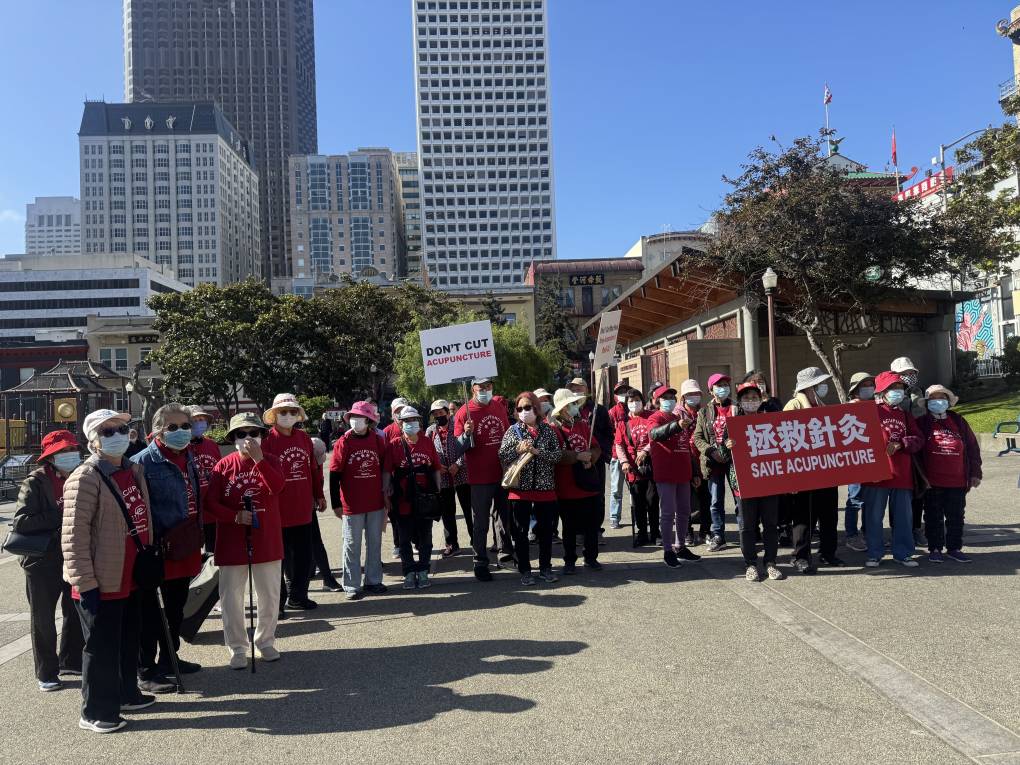
"caption": "Health care providers and patients who receive acupuncture treatment spoke against the state budget cut on Medi-Cal’s acupuncture benefit on May 27, 2025, in San Francisco's Chinatown.",
"credit": "Gilare Zada/KQED",
"altTag": null,
"description": null,
"imgSizes": {
"medium": {
"file": "https://cdn.kqed.org/wp-content/uploads/sites/10/2025/05/IMG_8132-800x600.jpg",
"width": 800,
"height": 600,
"mimeType": "image/jpeg"
},
"large": {
"file": "https://cdn.kqed.org/wp-content/uploads/sites/10/2025/05/IMG_8132-1020x765.jpg",
"width": 1020,
"height": 765,
"mimeType": "image/jpeg"
},
"thumbnail": {
"file": "https://cdn.kqed.org/wp-content/uploads/sites/10/2025/05/IMG_8132-160x120.jpg",
"width": 160,
"height": 120,
"mimeType": "image/jpeg"
},
"1536x1536": {
"file": "https://cdn.kqed.org/wp-content/uploads/sites/10/2025/05/IMG_8132-1536x1152.jpg",
"width": 1536,
"height": 1152,
"mimeType": "image/jpeg"
},
"2048x2048": {
"file": "https://cdn.kqed.org/wp-content/uploads/sites/10/2025/05/IMG_8132-2048x1536.jpg",
"width": 2048,
"height": 1536,
"mimeType": "image/jpeg"
},
"post-thumbnail": {
"file": "https://cdn.kqed.org/wp-content/uploads/sites/10/2025/05/IMG_8132-672x372.jpg",
"width": 672,
"height": 372,
"mimeType": "image/jpeg"
},
"twentyfourteen-full-width": {
"file": "https://cdn.kqed.org/wp-content/uploads/sites/10/2025/05/IMG_8132-1038x576.jpg",
"width": 1038,
"height": 576,
"mimeType": "image/jpeg"
},
"full-width": {
"file": "https://cdn.kqed.org/wp-content/uploads/sites/10/2025/05/IMG_8132-1920x1440.jpg",
"width": 1920,
"height": 1440,
"mimeType": "image/jpeg"
},
"kqedFullSize": {
"file": "https://cdn.kqed.org/wp-content/uploads/sites/10/2025/05/IMG_8132-scaled.jpg",
"width": 2560,
"height": 1920
}
},
"isLoading": false,
"fetchFailed": false
},
"news_11733297": {
"type": "attachments",
"id": "news_11733297",
"meta": {
"index": "attachments_1716263798",
"site": "news",
"id": "11733297",
"found": true
},
"title": "Wet Winter Weather Brings 'Super Bloom' Of Wildflowers To California",
"publishDate": 1552692501,
"status": "inherit",
"parent": 11732758,
"modified": 1747867312,
"caption": "A woman takes in the view of a ‘super bloom’ of wild poppies blanketing the hills of Walker Canyon on March 12, 2019, near Lake Elsinore, California. Heavier-than-normal winter rains in California have caused a ‘super bloom’ of wildflowers in various parts of the state.",
"credit": "Mario Tama/Getty Images",
"altTag": null,
"description": null,
"imgSizes": {
"thumbnail": {
"file": "https://cdn.kqed.org/wp-content/uploads/sites/10/2019/03/super-bloom_golden-poppy_wildflowers_person_california-qut-160x107.jpg",
"width": 160,
"height": 107,
"mimeType": "image/jpeg"
},
"medium": {
"file": "https://cdn.kqed.org/wp-content/uploads/sites/10/2019/03/super-bloom_golden-poppy_wildflowers_person_california-qut-800x533.jpg",
"width": 800,
"height": 533,
"mimeType": "image/jpeg"
},
"large": {
"file": "https://cdn.kqed.org/wp-content/uploads/sites/10/2019/03/super-bloom_golden-poppy_wildflowers_person_california-qut-1020x680.jpg",
"width": 1020,
"height": 680,
"mimeType": "image/jpeg"
},
"complete_open_graph": {
"file": "https://cdn.kqed.org/wp-content/uploads/sites/10/2019/03/super-bloom_golden-poppy_wildflowers_person_california-qut-1200x800.jpg",
"width": 1200,
"height": 800,
"mimeType": "image/jpeg"
},
"post-thumbnail": {
"file": "https://cdn.kqed.org/wp-content/uploads/sites/10/2019/03/super-bloom_golden-poppy_wildflowers_person_california-qut-672x372.jpg",
"width": 672,
"height": 372,
"mimeType": "image/jpeg"
},
"twentyfourteen-full-width": {
"file": "https://cdn.kqed.org/wp-content/uploads/sites/10/2019/03/super-bloom_golden-poppy_wildflowers_person_california-qut-1038x576.jpg",
"width": 1038,
"height": 576,
"mimeType": "image/jpeg"
},
"full-width": {
"file": "https://cdn.kqed.org/wp-content/uploads/sites/10/2019/03/super-bloom_golden-poppy_wildflowers_person_california-qut-1920x1280.jpg",
"width": 1920,
"height": 1280,
"mimeType": "image/jpeg"
},
"guest-author-32": {
"file": "https://cdn.kqed.org/wp-content/uploads/sites/10/2019/03/super-bloom_golden-poppy_wildflowers_person_california-qut-32x32.jpg",
"width": 32,
"height": 32,
"mimeType": "image/jpeg"
},
"guest-author-50": {
"file": "https://cdn.kqed.org/wp-content/uploads/sites/10/2019/03/super-bloom_golden-poppy_wildflowers_person_california-qut-50x50.jpg",
"width": 50,
"height": 50,
"mimeType": "image/jpeg"
},
"guest-author-64": {
"file": "https://cdn.kqed.org/wp-content/uploads/sites/10/2019/03/super-bloom_golden-poppy_wildflowers_person_california-qut-64x64.jpg",
"width": 64,
"height": 64,
"mimeType": "image/jpeg"
},
"guest-author-96": {
"file": "https://cdn.kqed.org/wp-content/uploads/sites/10/2019/03/super-bloom_golden-poppy_wildflowers_person_california-qut-96x96.jpg",
"width": 96,
"height": 96,
"mimeType": "image/jpeg"
},
"guest-author-128": {
"file": "https://cdn.kqed.org/wp-content/uploads/sites/10/2019/03/super-bloom_golden-poppy_wildflowers_person_california-qut-128x128.jpg",
"width": 128,
"height": 128,
"mimeType": "image/jpeg"
},
"kqedFullSize": {
"file": "https://cdn.kqed.org/wp-content/uploads/sites/10/2019/03/super-bloom_golden-poppy_wildflowers_person_california-qut.jpg",
"width": 1920,
"height": 1280
}
},
"isLoading": false,
"fetchFailed": false
},
"news_12030841": {
"type": "attachments",
"id": "news_12030841",
"meta": {
"index": "attachments_1716263798",
"site": "news",
"id": "12030841",
"found": true
},
"title": "Medicaid",
"publishDate": 1741733766,
"status": "inherit",
"parent": 12030830,
"modified": 1757976663,
"caption": "A \"Save Medicaid\" sign is affixed to the podium for the House Democrats' press event to oppose the Republicans' budget on the House steps of the Capitol on Feb. 25, 2024.",
"credit": "Bill Clark/CRoll Call, Inc., via Getty Images",
"altTag": null,
"description": null,
"imgSizes": {
"medium": {
"file": "https://cdn.kqed.org/wp-content/uploads/sites/10/2025/03/GettyImages-2201320740-800x533.jpg",
"width": 800,
"height": 533,
"mimeType": "image/jpeg"
},
"large": {
"file": "https://cdn.kqed.org/wp-content/uploads/sites/10/2025/03/GettyImages-2201320740-1020x680.jpg",
"width": 1020,
"height": 680,
"mimeType": "image/jpeg"
},
"thumbnail": {
"file": "https://cdn.kqed.org/wp-content/uploads/sites/10/2025/03/GettyImages-2201320740-160x107.jpg",
"width": 160,
"height": 107,
"mimeType": "image/jpeg"
},
"1536x1536": {
"file": "https://cdn.kqed.org/wp-content/uploads/sites/10/2025/03/GettyImages-2201320740-1536x1024.jpg",
"width": 1536,
"height": 1024,
"mimeType": "image/jpeg"
},
"post-thumbnail": {
"file": "https://cdn.kqed.org/wp-content/uploads/sites/10/2025/03/GettyImages-2201320740-672x372.jpg",
"width": 672,
"height": 372,
"mimeType": "image/jpeg"
},
"twentyfourteen-full-width": {
"file": "https://cdn.kqed.org/wp-content/uploads/sites/10/2025/03/GettyImages-2201320740-1038x576.jpg",
"width": 1038,
"height": 576,
"mimeType": "image/jpeg"
},
"full-width": {
"file": "https://cdn.kqed.org/wp-content/uploads/sites/10/2025/03/GettyImages-2201320740-1920x1280.jpg",
"width": 1920,
"height": 1280,
"mimeType": "image/jpeg"
},
"kqedFullSize": {
"file": "https://cdn.kqed.org/wp-content/uploads/sites/10/2025/03/GettyImages-2201320740.jpg",
"width": 2000,
"height": 1333
}
},
"isLoading": false,
"fetchFailed": false
},
"news_12041106": {
"type": "attachments",
"id": "news_12041106",
"meta": {
"index": "attachments_1716263798",
"site": "news",
"id": "12041106",
"found": true
},
"title": "Boy playing videogames at home",
"publishDate": 1747852485,
"status": "inherit",
"parent": 12041102,
"modified": 1747852523,
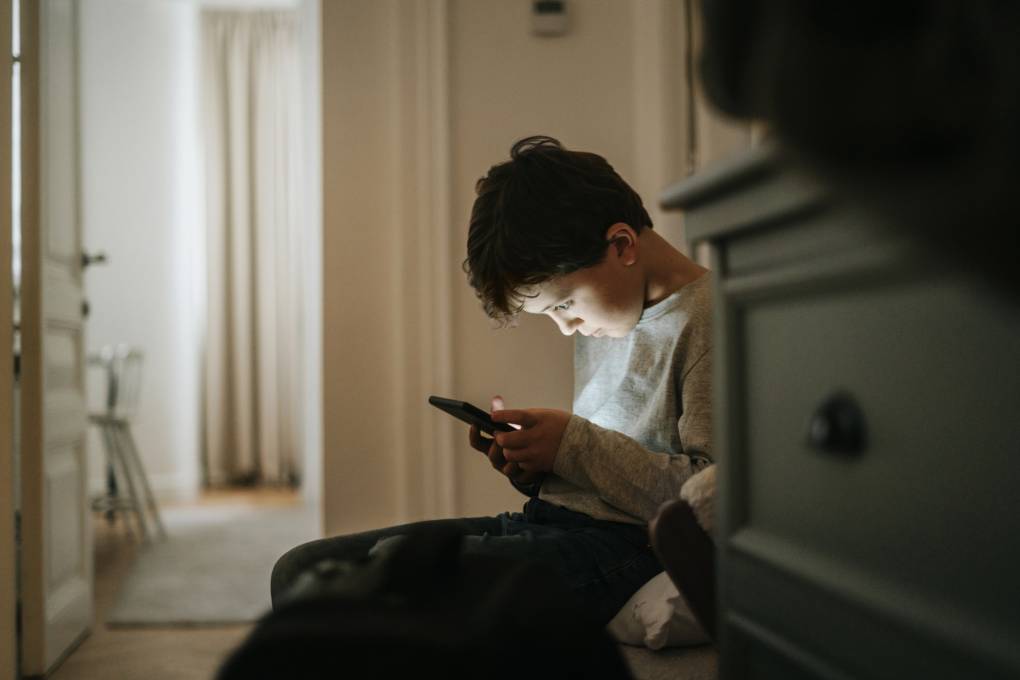
"caption": "A nationwide study of nearly 12,000 children and adolescents found that as their social media use rose significantly between ages 9 and 13, so did depressive symptoms.",
"credit": "Orbon Alija/Getty Images",
"altTag": null,
"description": null,
"imgSizes": {
"medium": {
"file": "https://cdn.kqed.org/wp-content/uploads/sites/10/2025/05/SocialMediaChildrenHealthGetty-800x534.jpg",
"width": 800,
"height": 534,
"mimeType": "image/jpeg"
},
"large": {
"file": "https://cdn.kqed.org/wp-content/uploads/sites/10/2025/05/SocialMediaChildrenHealthGetty-1020x680.jpg",
"width": 1020,
"height": 680,
"mimeType": "image/jpeg"
},
"thumbnail": {
"file": "https://cdn.kqed.org/wp-content/uploads/sites/10/2025/05/SocialMediaChildrenHealthGetty-160x107.jpg",
"width": 160,
"height": 107,
"mimeType": "image/jpeg"
},
"1536x1536": {
"file": "https://cdn.kqed.org/wp-content/uploads/sites/10/2025/05/SocialMediaChildrenHealthGetty-1536x1025.jpg",
"width": 1536,
"height": 1025,
"mimeType": "image/jpeg"
},
"post-thumbnail": {
"file": "https://cdn.kqed.org/wp-content/uploads/sites/10/2025/05/SocialMediaChildrenHealthGetty-672x372.jpg",
"width": 672,
"height": 372,
"mimeType": "image/jpeg"
},
"twentyfourteen-full-width": {
"file": "https://cdn.kqed.org/wp-content/uploads/sites/10/2025/05/SocialMediaChildrenHealthGetty-1038x576.jpg",
"width": 1038,
"height": 576,
"mimeType": "image/jpeg"
},
"full-width": {
"file": "https://cdn.kqed.org/wp-content/uploads/sites/10/2025/05/SocialMediaChildrenHealthGetty-1920x1281.jpg",
"width": 1920,
"height": 1281,
"mimeType": "image/jpeg"
},
"kqedFullSize": {
"file": "https://cdn.kqed.org/wp-content/uploads/sites/10/2025/05/SocialMediaChildrenHealthGetty.jpg",
"width": 2000,
"height": 1334
}
},
"isLoading": false,
"fetchFailed": false
},
"news_12012812": {
"type": "attachments",
"id": "news_12012812",
"meta": {
"index": "attachments_1716263798",
"site": "news",
"id": "12012812",
"found": true
},
"title": "20241029_CAREGIVINGPOETS_GC-11-KQED",
"publishDate": 1730858844,
"status": "inherit",
"parent": 0,
"modified": 1747336687,
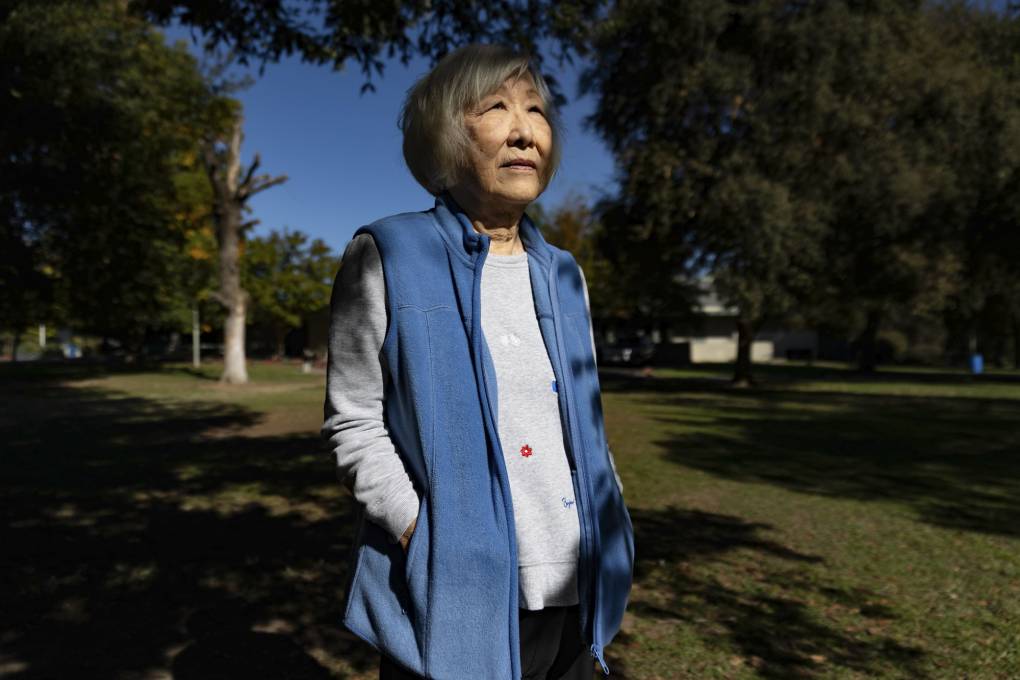
"caption": "Frances Kakugawa, award-winning author, poses for a portrait in Sacramento on Oct. 29, 2024. Kakugawa, a former caregiver for her mother with Alzheimer’s, now leads writing support groups for Dementia caregivers.",
"credit": "Gina Castro/KQED",
"altTag": null,
"description": null,
"imgSizes": {
"medium": {
"file": "https://cdn.kqed.org/wp-content/uploads/sites/10/2024/11/20241029_CAREGIVINGPOETS_GC-11-KQED-800x533.jpg",
"width": 800,
"height": 533,
"mimeType": "image/jpeg"
},
"large": {
"file": "https://cdn.kqed.org/wp-content/uploads/sites/10/2024/11/20241029_CAREGIVINGPOETS_GC-11-KQED-1020x680.jpg",
"width": 1020,
"height": 680,
"mimeType": "image/jpeg"
},
"thumbnail": {
"file": "https://cdn.kqed.org/wp-content/uploads/sites/10/2024/11/20241029_CAREGIVINGPOETS_GC-11-KQED-160x107.jpg",
"width": 160,
"height": 107,
"mimeType": "image/jpeg"
},
"1536x1536": {
"file": "https://cdn.kqed.org/wp-content/uploads/sites/10/2024/11/20241029_CAREGIVINGPOETS_GC-11-KQED-1536x1024.jpg",
"width": 1536,
"height": 1024,
"mimeType": "image/jpeg"
},
"post-thumbnail": {
"file": "https://cdn.kqed.org/wp-content/uploads/sites/10/2024/11/20241029_CAREGIVINGPOETS_GC-11-KQED-672x372.jpg",
"width": 672,
"height": 372,
"mimeType": "image/jpeg"
},
"twentyfourteen-full-width": {
"file": "https://cdn.kqed.org/wp-content/uploads/sites/10/2024/11/20241029_CAREGIVINGPOETS_GC-11-KQED-1038x576.jpg",
"width": 1038,
"height": 576,
"mimeType": "image/jpeg"
},
"full-width": {
"file": "https://cdn.kqed.org/wp-content/uploads/sites/10/2024/11/20241029_CAREGIVINGPOETS_GC-11-KQED-1920x1280.jpg",
"width": 1920,
"height": 1280,
"mimeType": "image/jpeg"
},
"kqedFullSize": {
"file": "https://cdn.kqed.org/wp-content/uploads/sites/10/2024/11/20241029_CAREGIVINGPOETS_GC-11-KQED.jpg",
"width": 2000,
"height": 1333
}
},
"isLoading": false,
"fetchFailed": false
},
"news_12040369": {
"type": "attachments",
"id": "news_12040369",
"meta": {
"index": "attachments_1716263798",
"site": "news",
"id": "12040369",
"found": true
},
"title": "UCRegents1",
"publishDate": 1747336938,
"status": "inherit",
"parent": 12040282,
"modified": 1747337073,
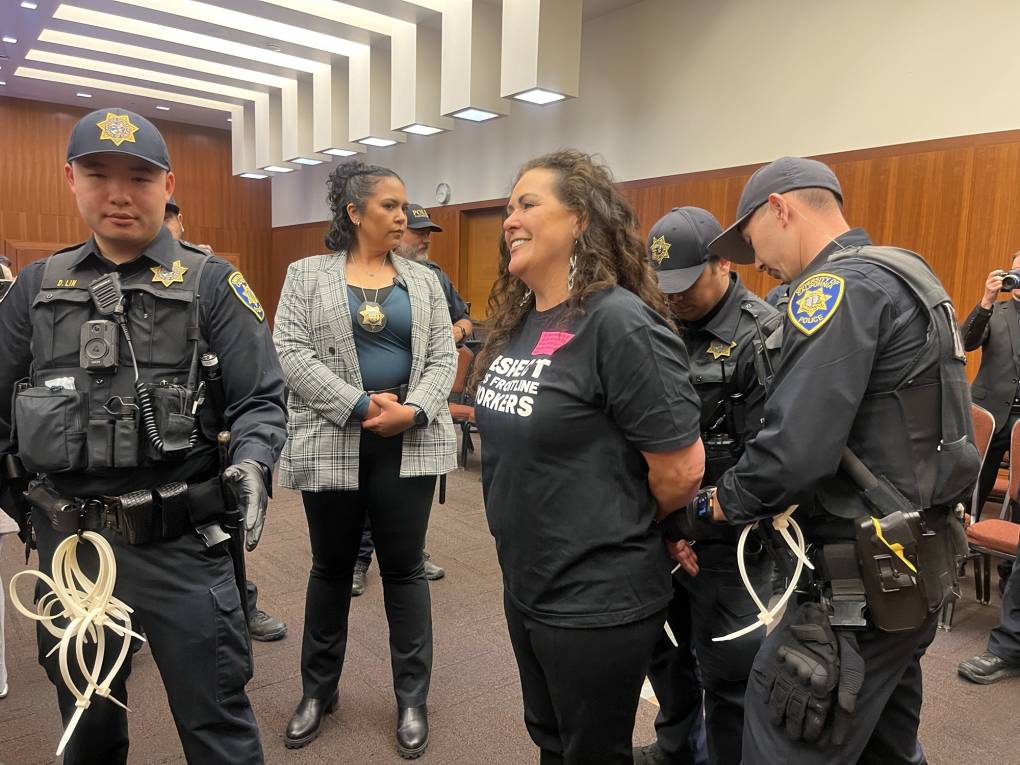
"caption": "During Thursday's UC Regents meeting, some union members refused to leave the room and were arrested, including Lorena Gonzalez, California Labor Federation President.",
"credit": "Juan Carlos Lara/KQED",
"altTag": null,
"description": null,
"imgSizes": {
"medium": {
"file": "https://cdn.kqed.org/wp-content/uploads/sites/10/2025/05/UCRegents1-800x600.jpg",
"width": 800,
"height": 600,
"mimeType": "image/jpeg"
},
"large": {
"file": "https://cdn.kqed.org/wp-content/uploads/sites/10/2025/05/UCRegents1-1020x765.jpg",
"width": 1020,
"height": 765,
"mimeType": "image/jpeg"
},
"thumbnail": {
"file": "https://cdn.kqed.org/wp-content/uploads/sites/10/2025/05/UCRegents1-160x120.jpg",
"width": 160,
"height": 120,
"mimeType": "image/jpeg"
},
"1536x1536": {
"file": "https://cdn.kqed.org/wp-content/uploads/sites/10/2025/05/UCRegents1-1536x1152.jpg",
"width": 1536,
"height": 1152,
"mimeType": "image/jpeg"
},
"post-thumbnail": {
"file": "https://cdn.kqed.org/wp-content/uploads/sites/10/2025/05/UCRegents1-672x372.jpg",
"width": 672,
"height": 372,
"mimeType": "image/jpeg"
},
"twentyfourteen-full-width": {
"file": "https://cdn.kqed.org/wp-content/uploads/sites/10/2025/05/UCRegents1-1038x576.jpg",
"width": 1038,
"height": 576,
"mimeType": "image/jpeg"
},
"full-width": {
"file": "https://cdn.kqed.org/wp-content/uploads/sites/10/2025/05/UCRegents1-1920x1440.jpg",
"width": 1920,
"height": 1440,
"mimeType": "image/jpeg"
},
"kqedFullSize": {
"file": "https://cdn.kqed.org/wp-content/uploads/sites/10/2025/05/UCRegents1.jpg",
"width": 2000,
"height": 1500
}
},
"isLoading": false,
"fetchFailed": false
},
"news_12038428": {
"type": "attachments",
"id": "news_12038428",
"meta": {
"index": "attachments_1716263798",
"site": "news",
"id": "12038428",
"found": true
},
"title": "Going through a rough patch",
"publishDate": 1746129114,
"status": "inherit",
"parent": 12038426,
"modified": 1747260537,
"caption": "Shot of a young woman looking despondent after a fight with her boyfriend.",
"credit": "iStock/Getty Images Plus",
"altTag": null,
"description": null,
"imgSizes": {
"medium": {
"file": "https://cdn.kqed.org/wp-content/uploads/sites/10/2025/05/LoveLabGetty-800x534.jpg",
"width": 800,
"height": 534,
"mimeType": "image/jpeg"
},
"large": {
"file": "https://cdn.kqed.org/wp-content/uploads/sites/10/2025/05/LoveLabGetty-1020x680.jpg",
"width": 1020,
"height": 680,
"mimeType": "image/jpeg"
},
"thumbnail": {
"file": "https://cdn.kqed.org/wp-content/uploads/sites/10/2025/05/LoveLabGetty-160x107.jpg",
"width": 160,
"height": 107,
"mimeType": "image/jpeg"
},
"1536x1536": {
"file": "https://cdn.kqed.org/wp-content/uploads/sites/10/2025/05/LoveLabGetty-1536x1025.jpg",
"width": 1536,
"height": 1025,
"mimeType": "image/jpeg"
},
"post-thumbnail": {
"file": "https://cdn.kqed.org/wp-content/uploads/sites/10/2025/05/LoveLabGetty-672x372.jpg",
"width": 672,
"height": 372,
"mimeType": "image/jpeg"
},
"twentyfourteen-full-width": {
"file": "https://cdn.kqed.org/wp-content/uploads/sites/10/2025/05/LoveLabGetty-1038x576.jpg",
"width": 1038,
"height": 576,
"mimeType": "image/jpeg"
},
"full-width": {
"file": "https://cdn.kqed.org/wp-content/uploads/sites/10/2025/05/LoveLabGetty-1920x1281.jpg",
"width": 1920,
"height": 1281,
"mimeType": "image/jpeg"
},
"kqedFullSize": {
"file": "https://cdn.kqed.org/wp-content/uploads/sites/10/2025/05/LoveLabGetty.jpg",
"width": 2000,
"height": 1334
}
},
"isLoading": false,
"fetchFailed": false
}
},
"audioPlayerReducer": {
"postId": "stream_live",
"isPaused": true,
"isPlaying": false,
"pfsActive": false,
"pledgeModalIsOpen": true,
"playerDrawerIsOpen": false,
"liveAudioPlayStartedAt": 0,
"liveAudioPlayContext": ""
},
"authorsReducer": {
"byline_news_12042342": {
"type": "authors",
"id": "byline_news_12042342",
"meta": {
"override": true
},
"slug": "byline_news_12042342",
"name": "\u003ca href=\"https://calmatters.org/author/anaibarra/\">Ana B. Ibarra\u003c/a>, CalMatters",
"isLoading": false
},
"gmarzorati": {
"type": "authors",
"id": "227",
"meta": {
"index": "authors_1716337520",
"id": "227",
"found": true
},
"name": "Guy Marzorati",
"firstName": "Guy",
"lastName": "Marzorati",
"slug": "gmarzorati",
"email": "gmarzorati@KQED.org",
"display_author_email": true,
"staff_mastheads": [
"news"
],
"title": "Correspondent",
"bio": "Guy Marzorati is a correspondent on KQED's California Politics and Government Desk, based in San Jose. A graduate of Santa Clara University, Guy joined KQED in 2013. He reports on state and local politics and produces KQED's digital voter guide.",
"avatar": "https://secure.gravatar.com/avatar/e7038b8dbfd55b104369b76b1cd0b9de?s=600&d=blank&r=g",
"twitter": "guymarzorati",
"facebook": null,
"instagram": null,
"linkedin": null,
"sites": [
{
"site": "",
"roles": [
"editor"
]
},
{
"site": "news",
"roles": [
"editor"
]
},
{
"site": "science",
"roles": [
"editor"
]
},
{
"site": "forum",
"roles": [
"editor"
]
},
{
"site": "elections",
"roles": [
"editor"
]
},
{
"site": "liveblog",
"roles": [
"editor"
]
}
],
"headData": {
"title": "Guy Marzorati | KQED",
"description": "Correspondent",
"ogImgSrc": "https://secure.gravatar.com/avatar/e7038b8dbfd55b104369b76b1cd0b9de?s=600&d=blank&r=g",
"twImgSrc": "https://secure.gravatar.com/avatar/e7038b8dbfd55b104369b76b1cd0b9de?s=600&d=blank&r=g"
},
"isLoading": false,
"link": "/author/gmarzorati"
},
"minakim": {
"type": "authors",
"id": "243",
"meta": {
"index": "authors_1716337520",
"id": "243",
"found": true
},
"name": "Mina Kim",
"firstName": "Mina",
"lastName": "Kim",
"slug": "minakim",
"email": "mkim@kqed.org",
"display_author_email": false,
"staff_mastheads": [
"news"
],
"title": "Host, Forum",
"bio": "Mina Kim is host of the 10 a.m. statewide hour of Forum; a live daily talk show for curious Californians on issues that matter to the state and nation, with a particular emphasis on race and equity.\r\n\r\nBefore joining the Forum team, Mina was KQED’s evening news anchor, and health reporter for The California Report. Her award-winning work has included natural disasters in Napa and gun violence in Oakland. Mina grew up in St. John’s, Newfoundland.",
"avatar": "https://secure.gravatar.com/avatar/145ce657a2d08cb86d93686beb958982?s=600&d=blank&r=g",
"twitter": "mkimreporter",
"facebook": null,
"instagram": null,
"linkedin": null,
"sites": [
{
"site": "news",
"roles": [
"contributor"
]
},
{
"site": "stateofhealth",
"roles": [
"author"
]
},
{
"site": "forum",
"roles": [
"editor"
]
}
],
"headData": {
"title": "Mina Kim | KQED",
"description": "Host, Forum",
"ogImgSrc": "https://secure.gravatar.com/avatar/145ce657a2d08cb86d93686beb958982?s=600&d=blank&r=g",
"twImgSrc": "https://secure.gravatar.com/avatar/145ce657a2d08cb86d93686beb958982?s=600&d=blank&r=g"
},
"isLoading": false,
"link": "/author/minakim"
},
"matthewgreen": {
"type": "authors",
"id": "1263",
"meta": {
"index": "authors_1716337520",
"id": "1263",
"found": true
},
"name": "Matthew Green",
"firstName": "Matthew",
"lastName": "Green",
"slug": "matthewgreen",
"email": "mgreen@kqed.org",
"display_author_email": false,
"staff_mastheads": [],
"title": "KQED Editor/Reporter",
"bio": "Matthew Green is a digital media producer for KQED News. He previously produced \u003ca href=\"http://www.kqed.org/lowdown\">The Lowdown\u003c/a>, KQED’s multimedia news education blog. Matthew's written for numerous Bay Area publications, including the Oakland Tribune and San Francisco Chronicle. He also taught journalism classes at Fremont High School in East Oakland.\r\n\r\nEmail: mgreen@kqed.org; Twitter: @MGreenKQED",
"avatar": "https://secure.gravatar.com/avatar/3bf498d1267ca02c8494f33d8cfc575e?s=600&d=blank&r=g",
"twitter": "MGreenKQED",
"facebook": null,
"instagram": null,
"linkedin": null,
"sites": [
{
"site": "news",
"roles": []
},
{
"site": "lowdown",
"roles": []
},
{
"site": "science",
"roles": []
},
{
"site": "education",
"roles": []
},
{
"site": "quest",
"roles": []
},
{
"site": "liveblog",
"roles": []
}
],
"headData": {
"title": "Matthew Green | KQED",
"description": "KQED Editor/Reporter",
"ogImgSrc": "https://secure.gravatar.com/avatar/3bf498d1267ca02c8494f33d8cfc575e?s=600&d=blank&r=g",
"twImgSrc": "https://secure.gravatar.com/avatar/3bf498d1267ca02c8494f33d8cfc575e?s=600&d=blank&r=g"
},
"isLoading": false,
"link": "/author/matthewgreen"
},
"jsmall": {
"type": "authors",
"id": "6625",
"meta": {
"index": "authors_1716337520",
"id": "6625",
"found": true
},
"name": "Julie Small",
"firstName": "Julie",
"lastName": "Small",
"slug": "jsmall",
"email": "jsmall@kqed.org",
"display_author_email": true,
"staff_mastheads": [
"news"
],
"title": "KQED Contributor",
"bio": "Julie Small reports on criminal justice and immigration.\r\n\r\nShe was part of a team at KQED awarded a regional 2019 Edward R. Murrow award for continuing coverage of the Trump Administration's family separation policy.\r\n\r\nThe Society for Professional Journalists recognized Julie's 2018 \u003ca href=\"https://www.kqed.org/news/11636262/the-officer-tased-him-31-times-the-sheriff-called-his-death-an-accident\">reporting\u003c/a> on the San Joaquin County Sheriff's \u003ca href=\"https://www.kqed.org/news/11634689/autopsy-doctors-sheriff-overrode-death-findings-to-protect-law-enforcement\">interference\u003c/a> in death investigations with an Excellence in Journalism Award for Ongoing Coverage.\r\n\r\nJulie's\u003ca href=\"https://www.kqed.org/news/11039666/two-mentally-ill-inmates-died-one-month-in-santa-clara\"> reporting\u003c/a> with Lisa Pickoff-White on the treatment of mentally ill offenders in California jails earned a 2017 regional Edward R. Murrow Award for news reporting and an investigative reporting award from the SPJ of Northern California.\r\n\r\nBefore joining KQED, Julie covered government and politics in Sacramento for Southern California Public Radio (SCPR). Her 2010 \u003ca href=\"https://www.scpr.org/specials/prisonmedical/\">series\u003c/a> on lapses in California’s prison medical care also won a regional Edward R. Murrow Award for investigative reporting and a Golden Mic Award from the RTNDA of Southern California.\r\n\r\nJulie began her career in journalism in 2000 as the deputy foreign editor for public radio's \u003cem>Marketplace, \u003c/em>while earning her master's degree in journalism from USC’s Annenberg School of Communication.",
"avatar": "https://secure.gravatar.com/avatar/4baedf201468df97be97c2a9dd7585d0?s=600&d=blank&r=g",
"twitter": "@SmallRadio2",
"facebook": null,
"instagram": null,
"linkedin": null,
"sites": [
{
"site": "news",
"roles": [
"editor"
]
},
{
"site": "stateofhealth",
"roles": [
"author"
]
},
{
"site": "science",
"roles": [
"author"
]
}
],
"headData": {
"title": "Julie Small | KQED",
"description": "KQED Contributor",
"ogImgSrc": "https://secure.gravatar.com/avatar/4baedf201468df97be97c2a9dd7585d0?s=600&d=blank&r=g",
"twImgSrc": "https://secure.gravatar.com/avatar/4baedf201468df97be97c2a9dd7585d0?s=600&d=blank&r=g"
},
"isLoading": false,
"link": "/author/jsmall"
},
"lesleymcclurg": {
"type": "authors",
"id": "11229",
"meta": {
"index": "authors_1716337520",
"id": "11229",
"found": true
},
"name": "Lesley McClurg",
"firstName": "Lesley",
"lastName": "McClurg",
"slug": "lesleymcclurg",
"email": "lmcclurg@KQED.org",
"display_author_email": false,
"staff_mastheads": [
"news",
"science"
],
"title": "KQED Health Correspondent",
"bio": "Lesley McClurg is a health correspondent and fill-in host whose work is regularly rebroadcast on NPR and PBS programs. She’s earned multiple regional Emmy awards, a national and a regional Edward R. Murrow award, and was named Best Beat Reporter by the Association of Health Care Journalists. The Society of Professional Journalists has recognized her work several times, and the Society of Environmental Journalists spotlighted her coverage of California’s historic drought.\r\n\r\nBefore joining KQED in 2016, Lesley covered food and sustainability for Capital Public Radio, environmental issues for Colorado Public Radio, and reported for KUOW and KCTS 9 in Seattle. Away from the newsroom, she loves skiing with her daughter, mountain biking with her partner, and playing with Ollie, the family’s goldendoodle. On deadline, she runs almost entirely on chocolate chips.\r\n\r\n ",
"avatar": "https://secure.gravatar.com/avatar/bab49e972ea10c774fe0f5e29dba1722b158f7c0d58a360923d1389d380b2978?s=600&d=blank&r=g",
"twitter": "lesleywmcclurg",
"bluesky": null,
"facebook": null,
"instagram": null,
"linkedin": null,
"sites": [
{
"site": "arts",
"roles": [
"author"
]
},
{
"site": "news",
"roles": [
"editor"
]
},
{
"site": "futureofyou",
"roles": [
"editor"
]
},
{
"site": "stateofhealth",
"roles": [
"author"
]
},
{
"site": "science",
"roles": [
"editor"
]
},
{
"site": "quest",
"roles": [
"subscriber"
]
},
{
"site": "forum",
"roles": [
"administrator"
]
},
{
"site": "liveblog",
"roles": [
"author"
]
}
],
"headData": {
"title": "Lesley McClurg | KQED",
"description": "KQED Health Correspondent",
"ogImgSrc": "https://secure.gravatar.com/avatar/bab49e972ea10c774fe0f5e29dba1722b158f7c0d58a360923d1389d380b2978?s=600&d=blank&r=g",
"twImgSrc": "https://secure.gravatar.com/avatar/bab49e972ea10c774fe0f5e29dba1722b158f7c0d58a360923d1389d380b2978?s=600&d=blank&r=g"
},
"isLoading": false,
"link": "/author/lesleymcclurg"
},
"hmcdede": {
"type": "authors",
"id": "11635",
"meta": {
"index": "authors_1716337520",
"id": "11635",
"found": true
},
"name": "Holly McDede",
"firstName": "Holly",
"lastName": "McDede",
"slug": "hmcdede",
"email": "hmcdede@KQED.org",
"display_author_email": false,
"staff_mastheads": [],
"title": "KQED Contributor",
"bio": null,
"avatar": "https://secure.gravatar.com/avatar/999d9bf31bb3a2f0511932d99526cb3e?s=600&d=blank&r=g",
"twitter": null,
"facebook": null,
"instagram": null,
"linkedin": null,
"sites": [
{
"site": "arts",
"roles": [
"editor"
]
},
{
"site": "news",
"roles": [
"edit_others_posts",
"editor"
]
},
{
"site": "science",
"roles": [
"editor"
]
},
{
"site": "forum",
"roles": [
"editor"
]
},
{
"site": "perspectives",
"roles": [
"administrator"
]
}
],
"headData": {
"title": "Holly McDede | KQED",
"description": "KQED Contributor",
"ogImgSrc": "https://secure.gravatar.com/avatar/999d9bf31bb3a2f0511932d99526cb3e?s=600&d=blank&r=g",
"twImgSrc": "https://secure.gravatar.com/avatar/999d9bf31bb3a2f0511932d99526cb3e?s=600&d=blank&r=g"
},
"isLoading": false,
"link": "/author/hmcdede"
},
"kdebenedetti": {
"type": "authors",
"id": "11913",
"meta": {
"index": "authors_1716337520",
"id": "11913",
"found": true
},
"name": "Katie DeBenedetti",
"firstName": "Katie",
"lastName": "DeBenedetti",
"slug": "kdebenedetti",
"email": "kdebenedetti@kqed.org",
"display_author_email": false,
"staff_mastheads": [
"news",
"science"
],
"title": "KQED Contributor",
"bio": "Katie DeBenedetti is a digital reporter covering daily news for the Express Desk. Prior to joining KQED as a culture reporting intern in January 2024, she covered education and city government for the Napa Valley Register.",
"avatar": "https://secure.gravatar.com/avatar/6e31073cb8f7e4214ab03f42771d0f45?s=600&d=blank&r=g",
"twitter": null,
"facebook": null,
"instagram": null,
"linkedin": null,
"sites": [
{
"site": "news",
"roles": [
"author"
]
},
{
"site": "science",
"roles": [
"author"
]
},
{
"site": "liveblog",
"roles": [
"author"
]
}
],
"headData": {
"title": "Katie DeBenedetti | KQED",
"description": "KQED Contributor",
"ogImgSrc": "https://secure.gravatar.com/avatar/6e31073cb8f7e4214ab03f42771d0f45?s=600&d=blank&r=g",
"twImgSrc": "https://secure.gravatar.com/avatar/6e31073cb8f7e4214ab03f42771d0f45?s=600&d=blank&r=g"
},
"isLoading": false,
"link": "/author/kdebenedetti"
},
"slim": {
"type": "authors",
"id": "11920",
"meta": {
"index": "authors_1716337520",
"id": "11920",
"found": true
},
"name": "Samantha Lim",
"firstName": "Samantha",
"lastName": "Lim",
"slug": "slim",
"email": "slim@KQED.org",
"display_author_email": false,
"staff_mastheads": [],
"title": "KQED Contributor",
"bio": null,
"avatar": "https://secure.gravatar.com/avatar/82e592e6c15fe1a04d385e8ad0fb0b4e?s=600&d=blank&r=g",
"twitter": null,
"facebook": null,
"instagram": null,
"linkedin": null,
"sites": [
{
"site": "news",
"roles": []
}
],
"headData": {
"title": "Samantha Lim | KQED",
"description": "KQED Contributor",
"ogImgSrc": "https://secure.gravatar.com/avatar/82e592e6c15fe1a04d385e8ad0fb0b4e?s=600&d=blank&r=g",
"twImgSrc": "https://secure.gravatar.com/avatar/82e592e6c15fe1a04d385e8ad0fb0b4e?s=600&d=blank&r=g"
},
"isLoading": false,
"link": "/author/slim"
},
"gzada": {
"type": "authors",
"id": "11929",
"meta": {
"index": "authors_1716337520",
"id": "11929",
"found": true
},
"name": "Gilare Zada",
"firstName": "Gilare",
"lastName": "Zada",
"slug": "gzada",
"email": "gzada@kqed.org",
"display_author_email": true,
"staff_mastheads": [
"news"
],
"title": null,
"bio": "Gilare Zada is a Kurdish-American from San Diego, CA. Storytelling, fitness, and binge reading are some of her passions outside of news reporting. Her work has appeared in Mission Local, the Peninsula Press, the San Francisco Press Club, and more. She also writes as a class correspondent for the Stanford Magazine - go Card!",
"avatar": "https://secure.gravatar.com/avatar/33a75f2b947669a488a805edec3fbf3838c1cedaedda710e983770633b4d6a75?s=600&d=blank&r=g",
"twitter": null,
"bluesky": null,
"facebook": null,
"instagram": null,
"linkedin": null,
"sites": [
{
"site": "arts",
"roles": [
"editor"
]
},
{
"site": "news",
"roles": [
"administrator"
]
},
{
"site": "science",
"roles": [
"editor"
]
}
],
"headData": {
"title": "Gilare Zada | KQED",
"description": null,
"ogImgSrc": "https://secure.gravatar.com/avatar/33a75f2b947669a488a805edec3fbf3838c1cedaedda710e983770633b4d6a75?s=600&d=blank&r=g",
"twImgSrc": "https://secure.gravatar.com/avatar/33a75f2b947669a488a805edec3fbf3838c1cedaedda710e983770633b4d6a75?s=600&d=blank&r=g"
},
"isLoading": false,
"link": "/author/gzada"
},
"skennedy": {
"type": "authors",
"id": "11935",
"meta": {
"index": "authors_1716337520",
"id": "11935",
"found": true
},
"name": "Samantha Kennedy",
"firstName": "Samantha",
"lastName": "Kennedy",
"slug": "skennedy",
"email": "SKennedy@kqed.org",
"display_author_email": false,
"staff_mastheads": [],
"title": "KQED Contributor",
"bio": null,
"avatar": "https://secure.gravatar.com/avatar/adc7b14bf1e801793202a156ecc864d4ad505b0fd63162a2f3da0e5ba57222d0?s=600&d=blank&r=g",
"twitter": null,
"bluesky": null,
"facebook": null,
"instagram": null,
"linkedin": null,
"sites": [
{
"site": "arts",
"roles": [
"author"
]
},
{
"site": "news",
"roles": [
"editor"
]
},
{
"site": "science",
"roles": [
"editor"
]
}
],
"headData": {
"title": "Samantha Kennedy | KQED",
"description": "KQED Contributor",
"ogImgSrc": "https://secure.gravatar.com/avatar/adc7b14bf1e801793202a156ecc864d4ad505b0fd63162a2f3da0e5ba57222d0?s=600&d=blank&r=g",
"twImgSrc": "https://secure.gravatar.com/avatar/adc7b14bf1e801793202a156ecc864d4ad505b0fd63162a2f3da0e5ba57222d0?s=600&d=blank&r=g"
},
"isLoading": false,
"link": "/author/skennedy"
},
"sarahwright": {
"type": "authors",
"id": "11956",
"meta": {
"index": "authors_1716337520",
"id": "11956",
"found": true
},
"name": "Sarah Wright",
"firstName": "Sarah",
"lastName": "Wright",
"slug": "sarahwright",
"email": "swright@kqed.org",
"display_author_email": true,
"staff_mastheads": [],
"title": "Outdoors Engagement Reporter",
"bio": "Sarah Wright is KQED's Outdoors Engagement Reporter. Originally from Lake Tahoe, she completed a thru-hike of the Pacific Crest Trail in 2019 and was a U.S. Fulbright Program grantee to Argentina in 2023. Her journalism has appeared in The Guardian, The San Francisco Standard, The Palo Alto Weekly and the Half Moon Bay Review.",
"avatar": "https://secure.gravatar.com/avatar/c161a3d6441865cba25e6db4fa561099ad665799e9432e34da2b84d7e371524c?s=600&d=blank&r=g",
"twitter": null,
"bluesky": null,
"facebook": null,
"instagram": null,
"linkedin": null,
"sites": [
{
"site": "arts",
"roles": [
"editor"
]
},
{
"site": "news",
"roles": [
"editor"
]
},
{
"site": "science",
"roles": [
"contributor",
"author"
]
},
{
"site": "forum",
"roles": [
"editor"
]
}
],
"headData": {
"title": "Sarah Wright | KQED",
"description": "Outdoors Engagement Reporter",
"ogImgSrc": "https://secure.gravatar.com/avatar/c161a3d6441865cba25e6db4fa561099ad665799e9432e34da2b84d7e371524c?s=600&d=blank&r=g",
"twImgSrc": "https://secure.gravatar.com/avatar/c161a3d6441865cba25e6db4fa561099ad665799e9432e34da2b84d7e371524c?s=600&d=blank&r=g"
},
"isLoading": false,
"link": "/author/sarahwright"
}
},
"pagesReducer": {
"news_tag_health": {
"type": "terms",
"id": "news_18543",
"meta": {
"index": "terms_1716263798",
"site": "news",
"id": "18543",
"score": 6.886659
},
"featImg": null,
"name": "Health",
"description": null,
"taxonomy": "tag",
"headData": {
"twImgId": null,
"twTitle": null,
"ogTitle": null,
"ogImgId": null,
"twDescription": null,
"description": null,
"title": "Health Archives | KQED News",
"ogDescription": null
},
"ttid": 466,
"slug": "health",
"isLoading": false,
"title": "Health",
"pageMeta": {
"site": "news",
"WpPageTemplate": "page-topic-editorial",
"currentPage": 18
},
"blocks": [
{
"blockName": "kqed/post-list",
"attrs": {
"layout": "cardArticle2",
"query": "posts/news?tag=health",
"seeMore": false,
"paginated": true,
"page": 18
}
},
{
"blockName": "kqed/ad"
}
]
}
},
"pfsSessionReducer": {},
"postsReducer": {
"stream_live": {
"type": "live",
"id": "stream_live",
"audioUrl": "https://streams.kqed.org/kqedradio",
"title": "Live Stream",
"excerpt": "Live Stream information currently unavailable.",
"link": "/radio",
"featImg": "",
"label": {
"name": "KQED Live",
"link": "/"
}
},
"stream_kqedNewscast": {
"type": "posts",
"id": "stream_kqedNewscast",
"audioUrl": "https://www.kqed.org/.stream/anon/radio/RDnews/newscast.mp3?_=1",
"title": "KQED Newscast",
"featImg": "",
"label": {
"name": "88.5 FM",
"link": "/"
}
},
"news_12042550": {
"type": "posts",
"id": "news_12042550",
"meta": {
"index": "posts_1716263798",
"site": "news",
"id": "12042550",
"score": null,
"sort": [
1749132039000
]
},
"guestAuthors": [],
"slug": "fun-and-affordable-sports-and-activities-to-try-in-the-bay-area",
"title": "Fun and Affordable Sports and Activities To Try in the Bay Area",
"publishDate": 1749132039,
"format": "standard",
"headTitle": "Fun and Affordable Sports and Activities To Try in the Bay Area | KQED",
"labelTerm": {
"site": "news"
},
"content": "\u003cp>Taking up a new sport or hobby can be tough on the wallet, especially popular ones here in the Bay Area, like \u003ca href=\"https://www.kqed.org/news/12035335/bay-area-bike-shops-raging-trade-war-brings-uncertain-future\">cycling\u003c/a> or skiing.\u003c/p>\n\u003cp>But not every outdoor activity has to \u003ca href=\"https://www.kqed.org/forum/2010101909839/have-you-been-priced-out-of-a-hobby#:~:text=You've%20probably%20noticed%20that,personal%20fulfillment%20and%20community%20building.\">break the bank\u003c/a> or require \u003ca href=\"https://www.kqed.org/news/11985235/sf-born-rock-climber-beth-rodden-shares-triumphs-traumas-in-new-memoir\">hundreds of hours of training \u003c/a>before you feel confident in your skills.\u003c/p>\n\u003cp>If your main goal is to get moving — and \u003ca href=\"https://www.kqed.org/news/11952701/finding-community-in-the-oakland-pickleball-scene\">maybe even to find an active community along the way\u003c/a> — this list of sports taught right here in the Bay Area might be for you.\u003c/p>\n\u003cp>[ad fullwidth]\u003c/p>\n\u003cp>Plus, read on for a few keys to success (or at the very least fun and safety) from the teachers themselves and extra information about cost so you know exactly what you’re getting yourself into.\u003c/p>\n\u003cp>\u003cstrong>Jump straight to:\u003c/strong>\u003c/p>\n\u003cul>\n\u003cli>\u003cstrong>\u003ca href=\"#Archery\">Archery\u003c/a>\u003c/strong>\u003c/li>\n\u003cli>\u003cstrong>\u003ca href=\"#Indoorrockclimbing\">Indoor rock climbing\u003c/a>\u003c/strong>\u003c/li>\n\u003cli>\u003cstrong>\u003ca href=\"#Australianfootball\">Australian football\u003c/a>\u003c/strong>\u003c/li>\n\u003cli>\u003cstrong>\u003ca href=\"#Curling\">Curling\u003c/a>\u003c/strong>\u003c/li>\n\u003cli>\u003cstrong>\u003ca href=\"#Openwaterswimming\">Open water swimming\u003c/a>\u003c/strong>\u003c/li>\n\u003cli>\u003cstrong>\u003ca href=\"#Swingdancing\">Swing dancing\u003c/a>\u003c/strong>\u003c/li>\n\u003c/ul>\n\u003cfigure id=\"attachment_12042489\" class=\"wp-caption aligncenter\" style=\"max-width: 2000px\">\u003ca href=\"https://cdn.kqed.org/wp-content/uploads/sites/10/2025/06/SWIMMING1-KQED.jpg\">\u003cimg loading=\"lazy\" decoding=\"async\" class=\"size-full wp-image-12042489\" src=\"https://cdn.kqed.org/wp-content/uploads/sites/10/2025/06/SWIMMING1-KQED.jpg\" alt=\"\" width=\"2000\" height=\"2000\" srcset=\"https://cdn.kqed.org/wp-content/uploads/sites/10/2025/06/SWIMMING1-KQED.jpg 2000w, https://cdn.kqed.org/wp-content/uploads/sites/10/2025/06/SWIMMING1-KQED-800x800.jpg 800w, https://cdn.kqed.org/wp-content/uploads/sites/10/2025/06/SWIMMING1-KQED-1020x1020.jpg 1020w, https://cdn.kqed.org/wp-content/uploads/sites/10/2025/06/SWIMMING1-KQED-160x160.jpg 160w, https://cdn.kqed.org/wp-content/uploads/sites/10/2025/06/SWIMMING1-KQED-1536x1536.jpg 1536w, https://cdn.kqed.org/wp-content/uploads/sites/10/2025/06/SWIMMING1-KQED-1920x1920.jpg 1920w\" sizes=\"auto, (max-width: 2000px) 100vw, 2000px\">\u003c/a>\u003cfigcaption class=\"wp-caption-text\">Open water swimmers travel under the Golden Gate Bridge in the San Francisco Bay on Nov. 2, 2022. \u003ccite>(Courtesy of the Pacific Open Water Swim Co.)\u003c/cite>\u003c/figcaption>\u003c/figure>\n\u003ch2>Bay Area outdoor \u003ca id=\"Archery\">\u003c/a>archery range\u003c/h2>\n\u003cp>Shooting a bow and arrow might be something you’ve only ever seen on TV or in the movies, but “this isn’t the Olympics,” Bowhunters Unlimited President Debbie Golzen said. “Anyone can do it.”\u003c/p>\n\u003cp>\u003ca href=\"https://www.bhuarchers.org/\">Bowhunters Unlimited\u003c/a>, an all-volunteer group that operates out of \u003ca href=\"https://parks.santaclaracounty.gov/locations/stevens-creek-county-park\">Stevens Creek County Park\u003c/a> in Saratoga, offers beginner lessons, team-building activities, a practice range and a field range with around 30 targets along a 3-mile course to get in a full day of target practice.\u003c/p>\n\u003cp>During a lesson, participants learn the \u003ca href=\"https://www.youtube.com/watch?v=u2-mqV2EV1c\">basics about archery equipment\u003c/a>, safety and shooting form from the training area, where the targets are set close to the shooter and have backstops so you don’t have to chase down your arrows too far, Golzen said. Plus, the lesson area is separated from the regular range so newcomers can take as much time as they need to set up, shoot and retrieve arrows.\u003c/p>\n\u003cp>“By the end of your lesson, you will feel confident to continue the sport at your leisure,” Golzen said. “Archery is so simple. If you can play catch with someone with a ball without making them chase that ball all over the place every time you throw it to them, you can shoot an arrow 10 yards.”\u003c/p>\n\u003cp>[aside postID=news_12040892 hero='https://cdn.kqed.org/wp-content/uploads/sites/10/2025/05/best-hikes-bay-area-memorial-day-1020x679.png']\u003c/p>\n\u003cp>Archery is an age-inclusive sport, too, Golzen said, with some of their oldest members in their 80s. The group attends tournaments that are open to anyone of any skill level, where participants, organized by age, gender and category of shooter, shoot at 3D foam targets that are shaped like animals.\u003c/p>\n\u003cp>“If you make it through all those targets and try, that’s success,” she said.\u003c/p>\n\u003cp>\u003cstrong>Set up for success: \u003c/strong>Golzen recommends wearing close-toed shoes with some ankle support to the park, and to bring some water. To make shooting easier, wear close-fitted sleeves. All the coaches and the range itself are certified to keep everyone safe. As for gear, they have light bows and arrows available for those taking lessons.\u003c/p>\n\u003cp>If you decide to continue pursuing the sport, Golzen recommends \u003ca href=\"https://www.archeryonly.com/\">Archery Only in Newark\u003c/a>, \u003ca href=\"https://predatorsarchery.com/?srsltid=AfmBOopFClLD6F0fYmpsVkrdwArqp-3W2wi1TsMnX5yOf44UUpMR677Z\">Predator’s Archery in Gilroy\u003c/a> or \u003ca href=\"https://www.pacificaarchery.com/\">Pacifica Archery in Daly City\u003c/a> to get fitted for and purchase a bow and arrows that are right for you.\u003c/p>\n\u003cp>“You can’t shoot someone else’s gear,” Golzen said.\u003c/p>\n\u003cp>\u003cstrong>Cost: \u003c/strong>There is no fee to use the range, but a $40 yearly membership helps support keeping it open for all. A lesson, \u003ca href=\"https://docs.google.com/forms/d/e/1FAIpQLSdAjeoJ8wkVh2zJidoF5rommyraCKjewY_X6EKNqo31rI1ysQ/viewform\">booked through a form\u003c/a> on their website, costs between $20 and $45, depending on how long you’d like and how many people are in your group.\u003c/p>\n\u003cfigure id=\"attachment_12042488\" class=\"wp-caption aligncenter\" style=\"max-width: 1875px\">\u003ca href=\"https://cdn.kqed.org/wp-content/uploads/sites/10/2025/06/ARCHERY1-KQED.jpg\">\u003cimg loading=\"lazy\" decoding=\"async\" class=\"size-full wp-image-12042488\" src=\"https://cdn.kqed.org/wp-content/uploads/sites/10/2025/06/ARCHERY1-KQED.jpg\" alt=\"\" width=\"1875\" height=\"1406\" srcset=\"https://cdn.kqed.org/wp-content/uploads/sites/10/2025/06/ARCHERY1-KQED.jpg 1875w, https://cdn.kqed.org/wp-content/uploads/sites/10/2025/06/ARCHERY1-KQED-800x600.jpg 800w, https://cdn.kqed.org/wp-content/uploads/sites/10/2025/06/ARCHERY1-KQED-1020x765.jpg 1020w, https://cdn.kqed.org/wp-content/uploads/sites/10/2025/06/ARCHERY1-KQED-160x120.jpg 160w, https://cdn.kqed.org/wp-content/uploads/sites/10/2025/06/ARCHERY1-KQED-1536x1152.jpg 1536w\" sizes=\"auto, (max-width: 1875px) 100vw, 1875px\">\u003c/a>\u003cfigcaption class=\"wp-caption-text\">A quiver holds colorful arrows at Bowhunters Unlimited at Stevens Creek Archery Range in Saratoga, Calif., on Oct. 4, 2022. \u003ccite>(Courtesy of Debbie Golzen)\u003c/cite>\u003c/figcaption>\u003c/figure>\n\u003ch2>Free indoor \u003ca id=\"Indoorrockclimbing\">\u003c/a>rock climbing\u003c/h2>\n\u003cp>Ever considered joining a rock climbing gym, but it all just feels a little too intimidating?\u003c/p>\n\u003cp>Maybe you tried the sport once or twice as a kid at a birthday party or tagged along with a friend, but never took the leap yourself.\u003c/p>\n\u003cp>To get you started, \u003ca href=\"https://movementgyms.com/\">Movement Gyms’\u003c/a> San Francisco, Belmont, Santa Clara, Sunnyvale and Mountain View \u003ca href=\"https://www.instagram.com/p/DJ7tZu6S5T0/\">locations offer periodic free-for-all days\u003c/a> for anyone interested in trying out the sport of indoor rock climbing. The days, which Bay Area district director Joey Luna said the gym hopes to offer a few times per year, include free gear rentals and lessons, and are tailored specifically toward beginners.\u003c/p>\n\u003cp>To help with that, on free days, the gyms are full of extra staff milling around to help participants get started, give pointers on form and answer any questions, he said.\u003c/p>\n\u003cp>If you’re not able to make a free day in the future, \u003ca href=\"https://movementgyms.com/first-class-free/?utm_source=google&utm_medium=cpc&utm_campaign=Search+SanFrancisco&utm_content=153473390569&utm_term=movement%20gym&gad_source=1&gad_campaignid=20318686462&gbraid=0AAAAAoU9BBuQHJLN-4KZvbYNTd31aYI0Q&gclid=CjwKCAjwi-DBBhA5EiwAXOHsGRYldoGYY-wl0P8fRXNV87AhRALCAvIF38nRx2325o-BuGoLezV6uBoCg94QAvD_BwE\">Luna suggested coming out for one of their free introductory courses\u003c/a>, which are offered at each of their Bay Area locations.[aside postID=news_12040961 hero='https://cdn.kqed.org/wp-content/uploads/sites/10/2025/05/GettyImages-1312721999-1020x680.jpg'] You can sign up for intro bouldering, intro rope climbing or any of their other fitness or yoga classes.\u003c/p>\n\u003cp>The sport of indoor rock climbing \u003ca href=\"https://www.kqed.org/arts/13969423/sports-dad-rock-climbing-bouldering-parenting\">can be extremely rewarding\u003c/a>, Luna said, especially as you begin to be able to complete routes and execute moves that previously felt impossible.\u003c/p>\n\u003cp>“It stokes the fire,” he said. “I was hooked after one climb.”\u003c/p>\n\u003cp>The routes at the gym, Luna said, are set for a wide range of skill levels and heights, so everyone can find a way up the wall that’s comfortable for them.\u003c/p>\n\u003cp>\u003cstrong>Set up for success: \u003c/strong>Luna suggested wearing clothing that’s easy to bend and stretch in for your first time on the wall. If you want to set yourself up for future sessions, consider choosing the intro to rope climbing course to learn how to belay for your friends and get your certification on your next visit, he said.\u003c/p>\n\u003cp>\u003cstrong>Cost: \u003c/strong>The occasional open days are completely free, including rental gear, as is your first intro class at the gym. You can also sign up for \u003ca href=\"https://movementgyms.com/trial-membership/?utm_source=google&utm_medium=cpc&utm_campaign=Search+National&utm_content=153473390569&utm_term=movement%20gym&gad_source=1&gad_campaignid=20318686462&gbraid=0AAAAAoU9BBuQHJLN-4KZvbYNTd31aYI0Q&gclid=CjwKCAjwi-DBBhA5EiwAXOHsGRWxc2fxNO_civn1K4O4B2hQdzNJSuq-sxY6sDHI1Uj4QWL9njUb-BoCyjQQAvD_BwE\">two weeks of access to the gym \u003c/a>and rentals for $40 if you’re not ready to commit to a full membership.\u003c/p>\n\u003ch2>Learn how to play \u003ca id=\"Australianfootball\">\u003c/a>Australian football in Oakland and San Francisco\u003c/h2>\n\u003cp>If team sports are more your speed, consider joining the \u003ca href=\"https://www.ggafl.com/\">Golden Gate Australian Football League.\u003c/a> The sport is much like other field sports, but “a bit more fast and free-flowing,” league President Loren Dawes said.\u003c/p>\n\u003cp>“I think the best thing about \u003ca href=\"https://www.youtube.com/watch?v=u_SqfNNfhmM\">Aussie rules\u003c/a> is that it’s like a real hybrid of a bunch of other sports,” Dawes said. “So it’s really easy if you’re athletic in any other sport like soccer, basketball, volleyball, ultimate frisbee or rugby. There’s elements in those games that are really going to translate well to Aussie rules.”\u003c/p>\n\u003cp>Dawes said the group is always looking for new players, and anyone is welcome to come to any of the three training sessions they host per week across the Bay Area — \u003ca href=\"https://www.ggafl.com/schedule.html\">on Tuesday nights in Oakland, Wednesdays in San Francisco and Thursdays in the South Bay.\u003c/a>\u003c/p>\n\u003cp>Then, if you like the sport, you can come out for their metro league, where they split off participants into teams and compete in games.[aside postID=news_12040242 hero='https://cdn.kqed.org/wp-content/uploads/sites/10/2025/05/HENRY-COE-6-KQED-1020x765.jpg']The league also forms more competitive \u003ca href=\"https://www.ggafl.com/womens-league.html\">women’s\u003c/a> and \u003ca href=\"https://www.ggafl.com/mens-league.html\">men’s\u003c/a> teams to compete against other cities across the United States and Canada.\u003c/p>\n\u003cp>“Although it is a sport that originated in Australia and it’s not super well known here in the United States, once you discover it, you realize it’s a pretty cool sport to play and also spectate,” Dawes said.\u003c/p>\n\u003cp>\u003cstrong>Set up for success: \u003c/strong>If you decide to come out to a training, there’s no need to let anyone know — just show up. They will provide the footballs, and you can train in running shoes or cleats. Dawes said it may be smart to bring a mouthguard, because the sport does include a fair amount of contact.\u003c/p>\n\u003cp>But “it’s more incidental,” kind of like basketball, she said. Plus, they can modify the training or your participation depending on your comfort level.\u003c/p>\n\u003cp>If you’re more comfortable knowing someone else on the field, bring a friend or reach out via \u003ca href=\"https://www.ggafl.com/contact-us.html\">GGAFL’s interest form\u003c/a> to get in touch with a member. And there’s no real commitment required, either.\u003c/p>\n\u003cp>“We wanted to be as accessible as possible,” Dawes said. “People can drop in. If they want to stay for 10 minutes and leave, they can.”\u003c/p>\n\u003cp>\u003cstrong>Cost: \u003c/strong>There’s no cost to come out to training. If you decide to join the league more permanently, there are yearly dues that cost $80 to $100 per year for your first year.\u003c/p>\n\u003cfigure id=\"attachment_12042565\" class=\"wp-caption aligncenter\" style=\"max-width: 2000px\">\u003ca href=\"https://cdn.kqed.org/wp-content/uploads/sites/10/2025/06/GettyImages-657595064-scaled-e1748986206492.jpg\">\u003cimg loading=\"lazy\" decoding=\"async\" class=\"size-full wp-image-12042565\" src=\"https://cdn.kqed.org/wp-content/uploads/sites/10/2025/06/GettyImages-657595064-scaled-e1748986206492.jpg\" alt=\"\" width=\"2000\" height=\"1298\">\u003c/a>\u003cfigcaption class=\"wp-caption-text\">Scotland players sweep ahead of the stone during their play-off against Sweden at the Women’s Curling World Championships in Beijing on March 25, 2017. \u003ccite>(Photo by GREG BAKER / AFP via Getty Images)\u003c/cite>\u003c/figcaption>\u003c/figure>\n\u003ch2>Curling\u003ca id=\"Curling\">\u003c/a> in Silicon Valley\u003c/h2>\n\u003cp>Did you know you can get out on the ice and \u003ca href=\"https://www.youtube.com/watch?v=WXHh_wadqPw\">learn the sport of curling\u003c/a> any time of year right here in the Bay Area?\u003c/p>\n\u003cp>The \u003ca href=\"https://siliconvalleycurling.com/\">Silicon Valley Curling Club\u003c/a> is \u003ca href=\"https://bayareacurling.com/\">one of a few\u003c/a> \u003ca href=\"https://winecountrycurlingclub.com/\">local clubs\u003c/a> that offer \u003ca href=\"https://siliconvalleycurling.com/ltc/\">introductory courses\u003c/a> to the sport of curling at its San Jose and Fremont locations.\u003c/p>\n\u003cp>Curling instructor Jeremy Malerich said the two-hour session starts with some basic skills, like how to slide with the stones, how to sweep and how to communicate with your teammates.\u003c/p>\n\u003cp>“By the end of it, we want people to be able to play a game,” Malerich said. “And everybody plays their first game by the end of those two hours.”\u003c/p>\n\u003cp>From there, many curlers can jump straight into \u003ca href=\"https://siliconvalleycurling.com/svccleagues/\">playing in the local leagues,\u003c/a> which are seasonal and held once weekly on weekday nights in San Jose and weekends in Fremont. But if you \u003ca href=\"https://siliconvalleycurling.com/curl/\">want more time to get comfortable\u003c/a> before jumping into a league, the club also offers a second-level class, where the focus is more on balance and strategy.[aside postID=news_12041142 hero='https://cdn.kqed.org/wp-content/uploads/sites/10/2019/03/super-bloom_golden-poppy_wildflowers_person_california-qut-1020x680.jpg']Plus, SVCC periodically hosts “fun nights” where things are more fluid and anyone can come play — their members range from ages 13 to in their 70s and are of all abilities.\u003c/p>\n\u003cp>“It’s a game that you can play for the rest of your life,” he said, noting that curling can also be easily adapted to be \u003ca href=\"https://www.youtube.com/watch?v=iA27m26nuk8\">played from a wheelchair. \u003c/a>\u003c/p>\n\u003cp>Malerich said inevitably, their intro sessions get \u003ca href=\"https://www.kqed.org/news/127024/wannabe-curlers-hurry-hard-to-bay-area-curling-club-clinics\">more popular around the Winter Olympics\u003c/a>, when the sport is being broadcast prominently on national TV. That’s also when they get the most beginners. But a dedicated curler can get good very quickly, he said, and nobody — even first-timers — ever looks too out of place on the ice. Plus, their social events are open to all, too.\u003c/p>\n\u003cp>“It’s very traditional to go to the bar together with your opposition after you play,” Malerich said. “Not everybody drinks, but we do like to still hang out together for a bit.”\u003c/p>\n\u003cp>\u003cstrong>Set up for success: \u003c/strong>Make sure you bring layers, because the rink can get cold, Malerich said. Otherwise, you just need athletic clothes and sneakers to get started — the club provides the rest of the equipment.\u003c/p>\n\u003cp>Malerich said the club always makes sure to match new curlers with more experienced ones for their first season or two to help them develop and learn. During the rush of new players around the Olympics, almost all teams will be a blend of newer and more experienced players, he said.\u003c/p>\n\u003cp>\u003cstrong>Cost: \u003c/strong>Each intro course costs $40 for the two-hour session. After that, you can choose to \u003ca href=\"https://siliconvalleycurling.com/membership/\">become a member\u003c/a> for an additional fee of $75 per year or \u003ca href=\"https://siliconvalleycurling.com/event/tuesday-summer-2025-san-jose-league-registration-open/\">join a league\u003c/a> for about $40 per game.\u003c/p>\n\u003cfigure id=\"attachment_10467054\" class=\"wp-caption aligncenter\" style=\"max-width: 2000px\">\u003ca href=\"https://cdn.kqed.org/wp-content/uploads/sites/10/2015/03/club-logo-e1748986414993.jpg\">\u003cimg loading=\"lazy\" decoding=\"async\" class=\"size-full wp-image-10467054\" src=\"https://cdn.kqed.org/wp-content/uploads/sites/10/2015/03/club-logo-e1748986414993.jpg\" alt=\"\" width=\"2000\" height=\"1111\">\u003c/a>\u003cfigcaption class=\"wp-caption-text\">Members of the Dolphin Club have been swimming and rowing in the cold waters of the San Francisco Bay for over a century. \u003ccite>(Anya Schultz/KQED)\u003c/cite>\u003c/figcaption>\u003c/figure>\n\u003ch2>Open water \u003ca id=\"Openwaterswimming\">\u003c/a>swimming in the San Francisco Bay\u003c/h2>\n\u003cp>Looking to get your feet wet in a slightly more extreme sport this summer? Try open water swimming in the Bay, and consider joining one of several local groups that host formal and informal swims every single week.\u003c/p>\n\u003cp>In Aquatic Park are the \u003ca href=\"https://dolphinclub.org/\">Dolphin Club\u003c/a> and the \u003ca href=\"https://serc.com/swimming\">South End Rowing Club\u003c/a>, where swimmers can be found every morning braving the cold water for an energizing workout. Local triathlon clubs like the \u003ca href=\"https://sftriclub.org/swim\">San Francisco Triathlon Club\u003c/a> and the \u003ca href=\"https://ggtc.org/swim\">Golden Gate Triathlon Club\u003c/a> also run supervised open water swims each week. Plus, a handful of other informal swims can usually be found at public beaches in Sausalito, Crissy Field and in the East Bay.\u003c/p>\n\u003cp>Sylvia Lacock, co-founder of \u003ca href=\"https://www.pacificswim.co/\">Pacific Open Water Swim Co.\u003c/a>, which runs guided swims in the Bay and in Lake Tahoe, said a sheltered area like Aquatic Park or Crane Cove are great places to get started if you’re new to the sport.\u003ca href=\"https://pacificswimco.substack.com/p/open-water-swimming-safety-guide\">[aside postID=news_11979339 hero='https://cdn.kqed.org/wp-content/uploads/sites/10/2024/03/GettyImages-1853812919_qut-1536x1024.jpg']Just make sure you take into account the wind\u003c/a>, currents and others who may be in your path, like \u003ca href=\"https://www.pacificswim.co/sea-lions-and-seal-risk-in-san-francisco-bay/\">marine life,\u003c/a> boaters or paddlers.\u003c/p>\n\u003cp>Lacock’s group also hosts the triathlon clubs’ new swimmer orientation, where they go over conditions, practice breathing in cold water and work on navigation — all skills important to get the hang of before your first open water swim.\u003c/p>\n\u003cp>“It’s highly addictive,” Lacock said. “Some people who come out, they get in the water, and they’re like, ‘I want to do this every day.’”\u003c/p>\n\u003cp>\u003cstrong>Set up for success: \u003c/strong>It’s really important that you’re a confident pool swimmer before attempting open water swimming, Lacock said. Wearing goggles and a bright swim cap is recommended, as is a \u003ca href=\"https://shop.sportsbasement.com/products/safety-buoy?srsltid=AfmBOooCP59PozkO7TMJ8ouyaxQkKjEF3fJRQ0VvZSJvGOAdZeXKhmFJ\">tow float\u003c/a> that attaches to your waist and floats behind you, to keep you visible to boats and others in the water.\u003c/p>\n\u003cp>“It’s your responsibility as a swimmer to also make sure that you are checking on their location and making yourself seen,” Lacock said.\u003c/p>\n\u003cp>\u003ca href=\"https://pacificswimco.substack.com/p/whats-the-water-temp-a-swimmers-guide?open=false#%C2%A7do-you-need-a-wetsuit\">Many people also choose to wear wetsuits\u003c/a>, but if you go that route, make sure you get one that’s for swimming, Lacock said — or \u003ca href=\"https://shop.sportsbasement.com/pages/wetsuit-rental-rates?srsltid=AfmBOoo3SjqJgyq1wD6cWyI1neJmxbQ1LubJzn6jX5PSZwDDzSKBTENu\">rent one from Sports Basement\u003c/a> or other nearby retailers.\u003c/p>\n\u003cp>Lacock said it’s better to start with shorter times in the water, like 10 or 20 minutes for your first few swims to \u003ca href=\"https://www.pacificswim.co/sf-water-temps-for-swimming/\">get used to the cold \u003c/a>and the roughness of the water. If you can’t go with one of the groups, consider bringing a buddy so you can check in on one another.\u003c/p>\n\u003cp>“You might feel really good right up until the point you don’t,” Lacock said. “And at that point, it may be too late.”\u003c/p>\n\u003cp>\u003cstrong>Cost: \u003c/strong>While swimming in the Bay is totally free, you might consider becoming a member of one of the local triathlon clubs for around $150 per year. The Dolphin Club and South End Rowing Club also each offer day use passes for $12 on alternating days, giving you access to their facilities for showers and lockers. To get professional instruction on open water swimming, \u003ca href=\"https://www.pacificswim.co/open-water-swim-clinics/\">Pacific Open Water Swim’s clinic is pricier\u003c/a>, at $150. If you decide the sport is for you, the group offers personalized events and courses to help you get from casual swimming to completing more difficult routes like swims to Alcatraz or to Angel Island and back.\u003c/p>\n\u003ch2>Swing \u003ca id=\"Swingdancing\">\u003c/a>dancing in Golden Gate Park\u003c/h2>\n\u003cp>\u003ca href=\"https://lindyinthepark.com/\">Lindy in the Park,\u003c/a> the free dance session and lesson held each Sunday in San Francisco’s Golden Gate Park, is a completely free and open-to-all event to get your swing on.\u003c/p>\n\u003cp>It doesn’t matter if you’ve been dancing for years or never at all — from 11 a.m. to 2 p.m. every Sunday, a DJ, dance instructor and dozens of participants will be out on \u003ca href=\"https://lindyinthepark.com/faq/directions/\">JFK Drive between Eighth and 10th avenues\u003c/a> swinging to the beat. \u003ca href=\"https://lindyinthepark.com/about/free-lesson/\">The dance lesson\u003c/a>, held at noon each Sunday, is just a half hour and will work you up from basic footwork to learning the dance so you can feel confident jumping onto the dance floor. You don’t even have to bring a partner, co-founder and organizer, Kenneth Watanabe said.\u003c/p>\n\u003cfigure id=\"attachment_12042491\" class=\"wp-caption aligncenter\" style=\"max-width: 978px\">\u003ca href=\"https://cdn.kqed.org/wp-content/uploads/sites/10/2025/06/LINDY1-KQED.jpg\">\u003cimg loading=\"lazy\" decoding=\"async\" class=\"size-full wp-image-12042491\" src=\"https://cdn.kqed.org/wp-content/uploads/sites/10/2025/06/LINDY1-KQED.jpg\" alt=\"\" width=\"978\" height=\"550\" srcset=\"https://cdn.kqed.org/wp-content/uploads/sites/10/2025/06/LINDY1-KQED.jpg 978w, https://cdn.kqed.org/wp-content/uploads/sites/10/2025/06/LINDY1-KQED-800x450.jpg 800w, https://cdn.kqed.org/wp-content/uploads/sites/10/2025/06/LINDY1-KQED-160x90.jpg 160w\" sizes=\"auto, (max-width: 978px) 100vw, 978px\">\u003c/a>\u003cfigcaption class=\"wp-caption-text\">Dancers practice the Lindy Hop in Golden Gate Park in San Francisco as part of “Lindy in the Park,” a free swing dance lesson offered every Sunday. \u003ccite>(Sentio Photo)\u003c/cite>\u003c/figcaption>\u003c/figure>\n\u003cp>“You can just show up by yourself and learn a few steps,” Watanabe said. “It’s a good way to try it out and see if you like it.”\u003c/p>\n\u003cp>Watanabe and co-founder Chad Kubo \u003ca href=\"https://lindyinthepark.com/about/\">created the group in 1996\u003c/a>, when swing was making a renaissance and the dancing scene in the Bay Area was growing quickly, he said. After someone suggested trying to organize an outside event, Watanabe sent out an email to the around 20 people he knew in the local Lindy Hop community at the time, “and then people just showed up.”\u003c/p>\n\u003cp>“One of my friends brought a boombox and we all met at the bandshell and played CDs,” Watanabe said. “We thought it would be fun just to dance outside.”\u003c/p>\n\u003cp>Since then, the group has grown from a monthly to a weekly event to make it easier to attend — on its busiest days, more than 100 people will be out dancing. Watanabe said, apart from occasional disruptions like Bay to Breakers, assume the dancing is on.\u003c/p>\n\u003cp>\u003cstrong>Set up for success: \u003c/strong>All you need to get started is comfortable shoes, Watanabe said. Depending on the weather that day, bring layers, as the park can get cold and foggy. And don’t worry about tripping over your own feet: “It’s a really friendly crowd,” Watanabe said.\u003c/p>\n\u003cp>\u003ca href=\"https://www.youtube.com/watch?v=JkonZbTj2wE\">“It’s just a happy dance,”\u003c/a> he said. “You’re jumping around, you’re kicking, you’re moving. It is a way to express yourself, it’s a great way to meet people — and the music’s fun.”\u003c/p>\n\u003cp>\u003cstrong>Cost: \u003c/strong>Access to the park and the dance event is completely free.\u003c/p>\n\u003cp>https://docs.google.com/forms/d/e/1FAIpQLSeCeDp_MY_h4G6VWj_-VPl-BJlQ3Uya2H0vxRZZd_47BpXwVA/viewform?embedded=true\u003c/p>\n\u003cp>[ad floatright]\u003c/p>\n",
"blocks": [],
"excerpt": "Check out fun things to do in the Bay Area! From archery to rock climbing to swing dancing, get active this weekend with these free or affordable activities.",
"status": "publish",
"parent": 0,
"modified": 1749065713,
"stats": {
"hasAudio": false,
"hasVideo": false,
"hasChartOrMap": false,
"iframeSrcs": [],
"hasGoogleForm": true,
"hasGallery": false,
"hasHearkenModule": false,
"hasPolis": false,
"paragraphCount": 69,
"wordCount": 3206
},
"headData": {
"title": "Fun and Affordable Sports and Activities To Try in the Bay Area | KQED",
"description": "Check out fun things to do in the Bay Area! From archery to rock climbing to swing dancing, get active this weekend with these free or affordable activities.",
"ogTitle": "",
"ogDescription": "",
"ogImgId": "",
"twTitle": "",
"twDescription": "",
"twImgId": "",
"schema": {
"@context": "https://schema.org",
"@type": "NewsArticle",
"headline": "Fun and Affordable Sports and Activities To Try in the Bay Area",
"datePublished": "2025-06-05T07:00:39-07:00",
"dateModified": "2025-06-04T12:35:13-07:00",
"image": "https://cdn.kqed.org/wp-content/uploads/2020/02/KQED-OG-Image@1x.png",
"isAccessibleForFree": "True",
"publisher": {
"@type": "NewsMediaOrganization",
"@id": "https://www.kqed.org/#organization",
"name": "KQED",
"logo": "https://cdn.kqed.org/wp-content/uploads/2020/02/KQED-OG-Image@1x.png",
"url": "https://www.kqed.org",
"sameAs": [
"https://www.facebook.com/KQED",
"https://twitter.com/KQED",
"https://www.instagram.com/kqed/",
"https://www.tiktok.com/@kqedofficial",
"https://www.linkedin.com/company/kqed",
"https://www.youtube.com/channel/UCeC0IOo7i1P_61zVUWbJ4nw"
]
}
}
},
"sticky": false,
"templateType": "standard",
"featuredImageType": "standard",
"excludeFromSiteSearch": "Include",
"articleAge": "0",
"path": "/news/12042550/fun-and-affordable-sports-and-activities-to-try-in-the-bay-area",
"audioTrackLength": null,
"parsedContent": [
{
"type": "contentString",
"content": "\u003cdiv class=\"post-body\">\u003cp>\u003cp>Taking up a new sport or hobby can be tough on the wallet, especially popular ones here in the Bay Area, like \u003ca href=\"https://www.kqed.org/news/12035335/bay-area-bike-shops-raging-trade-war-brings-uncertain-future\">cycling\u003c/a> or skiing.\u003c/p>\n\u003cp>But not every outdoor activity has to \u003ca href=\"https://www.kqed.org/forum/2010101909839/have-you-been-priced-out-of-a-hobby#:~:text=You've%20probably%20noticed%20that,personal%20fulfillment%20and%20community%20building.\">break the bank\u003c/a> or require \u003ca href=\"https://www.kqed.org/news/11985235/sf-born-rock-climber-beth-rodden-shares-triumphs-traumas-in-new-memoir\">hundreds of hours of training \u003c/a>before you feel confident in your skills.\u003c/p>\n\u003cp>If your main goal is to get moving — and \u003ca href=\"https://www.kqed.org/news/11952701/finding-community-in-the-oakland-pickleball-scene\">maybe even to find an active community along the way\u003c/a> — this list of sports taught right here in the Bay Area might be for you.\u003c/p>\n\u003cp>\u003c/p>\u003c/div>",
"attributes": {
"named": {},
"numeric": []
}
},
{
"type": "component",
"content": "",
"name": "ad",
"attributes": {
"named": {
"label": "fullwidth"
},
"numeric": [
"fullwidth"
]
}
},
{
"type": "contentString",
"content": "\u003cdiv class=\"post-body\">\u003cp>\u003c/p>\n\u003cp>Plus, read on for a few keys to success (or at the very least fun and safety) from the teachers themselves and extra information about cost so you know exactly what you’re getting yourself into.\u003c/p>\n\u003cp>\u003cstrong>Jump straight to:\u003c/strong>\u003c/p>\n\u003cul>\n\u003cli>\u003cstrong>\u003ca href=\"#Archery\">Archery\u003c/a>\u003c/strong>\u003c/li>\n\u003cli>\u003cstrong>\u003ca href=\"#Indoorrockclimbing\">Indoor rock climbing\u003c/a>\u003c/strong>\u003c/li>\n\u003cli>\u003cstrong>\u003ca href=\"#Australianfootball\">Australian football\u003c/a>\u003c/strong>\u003c/li>\n\u003cli>\u003cstrong>\u003ca href=\"#Curling\">Curling\u003c/a>\u003c/strong>\u003c/li>\n\u003cli>\u003cstrong>\u003ca href=\"#Openwaterswimming\">Open water swimming\u003c/a>\u003c/strong>\u003c/li>\n\u003cli>\u003cstrong>\u003ca href=\"#Swingdancing\">Swing dancing\u003c/a>\u003c/strong>\u003c/li>\n\u003c/ul>\n\u003cfigure id=\"attachment_12042489\" class=\"wp-caption aligncenter\" style=\"max-width: 2000px\">\u003ca href=\"https://cdn.kqed.org/wp-content/uploads/sites/10/2025/06/SWIMMING1-KQED.jpg\">\u003cimg loading=\"lazy\" decoding=\"async\" class=\"size-full wp-image-12042489\" src=\"https://cdn.kqed.org/wp-content/uploads/sites/10/2025/06/SWIMMING1-KQED.jpg\" alt=\"\" width=\"2000\" height=\"2000\" srcset=\"https://cdn.kqed.org/wp-content/uploads/sites/10/2025/06/SWIMMING1-KQED.jpg 2000w, https://cdn.kqed.org/wp-content/uploads/sites/10/2025/06/SWIMMING1-KQED-800x800.jpg 800w, https://cdn.kqed.org/wp-content/uploads/sites/10/2025/06/SWIMMING1-KQED-1020x1020.jpg 1020w, https://cdn.kqed.org/wp-content/uploads/sites/10/2025/06/SWIMMING1-KQED-160x160.jpg 160w, https://cdn.kqed.org/wp-content/uploads/sites/10/2025/06/SWIMMING1-KQED-1536x1536.jpg 1536w, https://cdn.kqed.org/wp-content/uploads/sites/10/2025/06/SWIMMING1-KQED-1920x1920.jpg 1920w\" sizes=\"auto, (max-width: 2000px) 100vw, 2000px\">\u003c/a>\u003cfigcaption class=\"wp-caption-text\">Open water swimmers travel under the Golden Gate Bridge in the San Francisco Bay on Nov. 2, 2022. \u003ccite>(Courtesy of the Pacific Open Water Swim Co.)\u003c/cite>\u003c/figcaption>\u003c/figure>\n\u003ch2>Bay Area outdoor \u003ca id=\"Archery\">\u003c/a>archery range\u003c/h2>\n\u003cp>Shooting a bow and arrow might be something you’ve only ever seen on TV or in the movies, but “this isn’t the Olympics,” Bowhunters Unlimited President Debbie Golzen said. “Anyone can do it.”\u003c/p>\n\u003cp>\u003ca href=\"https://www.bhuarchers.org/\">Bowhunters Unlimited\u003c/a>, an all-volunteer group that operates out of \u003ca href=\"https://parks.santaclaracounty.gov/locations/stevens-creek-county-park\">Stevens Creek County Park\u003c/a> in Saratoga, offers beginner lessons, team-building activities, a practice range and a field range with around 30 targets along a 3-mile course to get in a full day of target practice.\u003c/p>\n\u003cp>During a lesson, participants learn the \u003ca href=\"https://www.youtube.com/watch?v=u2-mqV2EV1c\">basics about archery equipment\u003c/a>, safety and shooting form from the training area, where the targets are set close to the shooter and have backstops so you don’t have to chase down your arrows too far, Golzen said. Plus, the lesson area is separated from the regular range so newcomers can take as much time as they need to set up, shoot and retrieve arrows.\u003c/p>\n\u003cp>“By the end of your lesson, you will feel confident to continue the sport at your leisure,” Golzen said. “Archery is so simple. If you can play catch with someone with a ball without making them chase that ball all over the place every time you throw it to them, you can shoot an arrow 10 yards.”\u003c/p>\n\u003cp>\u003c/p>\u003c/div>",
"attributes": {
"named": {},
"numeric": []
}
},
{
"type": "component",
"content": "",
"name": "aside",
"attributes": {
"named": {
"postid": "news_12040892",
"hero": "https://cdn.kqed.org/wp-content/uploads/sites/10/2025/05/best-hikes-bay-area-memorial-day-1020x679.png",
"label": ""
},
"numeric": []
}
},
{
"type": "contentString",
"content": "\u003cdiv class=\"post-body\">\u003cp>\u003c/p>\n\u003cp>Archery is an age-inclusive sport, too, Golzen said, with some of their oldest members in their 80s. The group attends tournaments that are open to anyone of any skill level, where participants, organized by age, gender and category of shooter, shoot at 3D foam targets that are shaped like animals.\u003c/p>\n\u003cp>“If you make it through all those targets and try, that’s success,” she said.\u003c/p>\n\u003cp>\u003cstrong>Set up for success: \u003c/strong>Golzen recommends wearing close-toed shoes with some ankle support to the park, and to bring some water. To make shooting easier, wear close-fitted sleeves. All the coaches and the range itself are certified to keep everyone safe. As for gear, they have light bows and arrows available for those taking lessons.\u003c/p>\n\u003cp>If you decide to continue pursuing the sport, Golzen recommends \u003ca href=\"https://www.archeryonly.com/\">Archery Only in Newark\u003c/a>, \u003ca href=\"https://predatorsarchery.com/?srsltid=AfmBOopFClLD6F0fYmpsVkrdwArqp-3W2wi1TsMnX5yOf44UUpMR677Z\">Predator’s Archery in Gilroy\u003c/a> or \u003ca href=\"https://www.pacificaarchery.com/\">Pacifica Archery in Daly City\u003c/a> to get fitted for and purchase a bow and arrows that are right for you.\u003c/p>\n\u003cp>“You can’t shoot someone else’s gear,” Golzen said.\u003c/p>\n\u003cp>\u003cstrong>Cost: \u003c/strong>There is no fee to use the range, but a $40 yearly membership helps support keeping it open for all. A lesson, \u003ca href=\"https://docs.google.com/forms/d/e/1FAIpQLSdAjeoJ8wkVh2zJidoF5rommyraCKjewY_X6EKNqo31rI1ysQ/viewform\">booked through a form\u003c/a> on their website, costs between $20 and $45, depending on how long you’d like and how many people are in your group.\u003c/p>\n\u003cfigure id=\"attachment_12042488\" class=\"wp-caption aligncenter\" style=\"max-width: 1875px\">\u003ca href=\"https://cdn.kqed.org/wp-content/uploads/sites/10/2025/06/ARCHERY1-KQED.jpg\">\u003cimg loading=\"lazy\" decoding=\"async\" class=\"size-full wp-image-12042488\" src=\"https://cdn.kqed.org/wp-content/uploads/sites/10/2025/06/ARCHERY1-KQED.jpg\" alt=\"\" width=\"1875\" height=\"1406\" srcset=\"https://cdn.kqed.org/wp-content/uploads/sites/10/2025/06/ARCHERY1-KQED.jpg 1875w, https://cdn.kqed.org/wp-content/uploads/sites/10/2025/06/ARCHERY1-KQED-800x600.jpg 800w, https://cdn.kqed.org/wp-content/uploads/sites/10/2025/06/ARCHERY1-KQED-1020x765.jpg 1020w, https://cdn.kqed.org/wp-content/uploads/sites/10/2025/06/ARCHERY1-KQED-160x120.jpg 160w, https://cdn.kqed.org/wp-content/uploads/sites/10/2025/06/ARCHERY1-KQED-1536x1152.jpg 1536w\" sizes=\"auto, (max-width: 1875px) 100vw, 1875px\">\u003c/a>\u003cfigcaption class=\"wp-caption-text\">A quiver holds colorful arrows at Bowhunters Unlimited at Stevens Creek Archery Range in Saratoga, Calif., on Oct. 4, 2022. \u003ccite>(Courtesy of Debbie Golzen)\u003c/cite>\u003c/figcaption>\u003c/figure>\n\u003ch2>Free indoor \u003ca id=\"Indoorrockclimbing\">\u003c/a>rock climbing\u003c/h2>\n\u003cp>Ever considered joining a rock climbing gym, but it all just feels a little too intimidating?\u003c/p>\n\u003cp>Maybe you tried the sport once or twice as a kid at a birthday party or tagged along with a friend, but never took the leap yourself.\u003c/p>\n\u003cp>To get you started, \u003ca href=\"https://movementgyms.com/\">Movement Gyms’\u003c/a> San Francisco, Belmont, Santa Clara, Sunnyvale and Mountain View \u003ca href=\"https://www.instagram.com/p/DJ7tZu6S5T0/\">locations offer periodic free-for-all days\u003c/a> for anyone interested in trying out the sport of indoor rock climbing. The days, which Bay Area district director Joey Luna said the gym hopes to offer a few times per year, include free gear rentals and lessons, and are tailored specifically toward beginners.\u003c/p>\n\u003cp>To help with that, on free days, the gyms are full of extra staff milling around to help participants get started, give pointers on form and answer any questions, he said.\u003c/p>\n\u003cp>If you’re not able to make a free day in the future, \u003ca href=\"https://movementgyms.com/first-class-free/?utm_source=google&utm_medium=cpc&utm_campaign=Search+SanFrancisco&utm_content=153473390569&utm_term=movement%20gym&gad_source=1&gad_campaignid=20318686462&gbraid=0AAAAAoU9BBuQHJLN-4KZvbYNTd31aYI0Q&gclid=CjwKCAjwi-DBBhA5EiwAXOHsGRYldoGYY-wl0P8fRXNV87AhRALCAvIF38nRx2325o-BuGoLezV6uBoCg94QAvD_BwE\">Luna suggested coming out for one of their free introductory courses\u003c/a>, which are offered at each of their Bay Area locations.\u003c/p>\u003c/div>",
"attributes": {
"named": {},
"numeric": []
}
},
{
"type": "component",
"content": "",
"name": "aside",
"attributes": {
"named": {
"postid": "news_12040961",
"hero": "https://cdn.kqed.org/wp-content/uploads/sites/10/2025/05/GettyImages-1312721999-1020x680.jpg",
"label": ""
},
"numeric": []
}
},
{
"type": "contentString",
"content": "\u003cdiv class=\"post-body\">\u003cp> You can sign up for intro bouldering, intro rope climbing or any of their other fitness or yoga classes.\u003c/p>\n\u003cp>The sport of indoor rock climbing \u003ca href=\"https://www.kqed.org/arts/13969423/sports-dad-rock-climbing-bouldering-parenting\">can be extremely rewarding\u003c/a>, Luna said, especially as you begin to be able to complete routes and execute moves that previously felt impossible.\u003c/p>\n\u003cp>“It stokes the fire,” he said. “I was hooked after one climb.”\u003c/p>\n\u003cp>The routes at the gym, Luna said, are set for a wide range of skill levels and heights, so everyone can find a way up the wall that’s comfortable for them.\u003c/p>\n\u003cp>\u003cstrong>Set up for success: \u003c/strong>Luna suggested wearing clothing that’s easy to bend and stretch in for your first time on the wall. If you want to set yourself up for future sessions, consider choosing the intro to rope climbing course to learn how to belay for your friends and get your certification on your next visit, he said.\u003c/p>\n\u003cp>\u003cstrong>Cost: \u003c/strong>The occasional open days are completely free, including rental gear, as is your first intro class at the gym. You can also sign up for \u003ca href=\"https://movementgyms.com/trial-membership/?utm_source=google&utm_medium=cpc&utm_campaign=Search+National&utm_content=153473390569&utm_term=movement%20gym&gad_source=1&gad_campaignid=20318686462&gbraid=0AAAAAoU9BBuQHJLN-4KZvbYNTd31aYI0Q&gclid=CjwKCAjwi-DBBhA5EiwAXOHsGRWxc2fxNO_civn1K4O4B2hQdzNJSuq-sxY6sDHI1Uj4QWL9njUb-BoCyjQQAvD_BwE\">two weeks of access to the gym \u003c/a>and rentals for $40 if you’re not ready to commit to a full membership.\u003c/p>\n\u003ch2>Learn how to play \u003ca id=\"Australianfootball\">\u003c/a>Australian football in Oakland and San Francisco\u003c/h2>\n\u003cp>If team sports are more your speed, consider joining the \u003ca href=\"https://www.ggafl.com/\">Golden Gate Australian Football League.\u003c/a> The sport is much like other field sports, but “a bit more fast and free-flowing,” league President Loren Dawes said.\u003c/p>\n\u003cp>“I think the best thing about \u003ca href=\"https://www.youtube.com/watch?v=u_SqfNNfhmM\">Aussie rules\u003c/a> is that it’s like a real hybrid of a bunch of other sports,” Dawes said. “So it’s really easy if you’re athletic in any other sport like soccer, basketball, volleyball, ultimate frisbee or rugby. There’s elements in those games that are really going to translate well to Aussie rules.”\u003c/p>\n\u003cp>Dawes said the group is always looking for new players, and anyone is welcome to come to any of the three training sessions they host per week across the Bay Area — \u003ca href=\"https://www.ggafl.com/schedule.html\">on Tuesday nights in Oakland, Wednesdays in San Francisco and Thursdays in the South Bay.\u003c/a>\u003c/p>\n\u003cp>Then, if you like the sport, you can come out for their metro league, where they split off participants into teams and compete in games.\u003c/p>\u003c/div>",
"attributes": {
"named": {},
"numeric": []
}
},
{
"type": "component",
"content": "",
"name": "aside",
"attributes": {
"named": {
"postid": "news_12040242",
"hero": "https://cdn.kqed.org/wp-content/uploads/sites/10/2025/05/HENRY-COE-6-KQED-1020x765.jpg",
"label": ""
},
"numeric": []
}
},
{
"type": "contentString",
"content": "\u003cdiv class=\"post-body\">\u003cp>The league also forms more competitive \u003ca href=\"https://www.ggafl.com/womens-league.html\">women’s\u003c/a> and \u003ca href=\"https://www.ggafl.com/mens-league.html\">men’s\u003c/a> teams to compete against other cities across the United States and Canada.\u003c/p>\n\u003cp>“Although it is a sport that originated in Australia and it’s not super well known here in the United States, once you discover it, you realize it’s a pretty cool sport to play and also spectate,” Dawes said.\u003c/p>\n\u003cp>\u003cstrong>Set up for success: \u003c/strong>If you decide to come out to a training, there’s no need to let anyone know — just show up. They will provide the footballs, and you can train in running shoes or cleats. Dawes said it may be smart to bring a mouthguard, because the sport does include a fair amount of contact.\u003c/p>\n\u003cp>But “it’s more incidental,” kind of like basketball, she said. Plus, they can modify the training or your participation depending on your comfort level.\u003c/p>\n\u003cp>If you’re more comfortable knowing someone else on the field, bring a friend or reach out via \u003ca href=\"https://www.ggafl.com/contact-us.html\">GGAFL’s interest form\u003c/a> to get in touch with a member. And there’s no real commitment required, either.\u003c/p>\n\u003cp>“We wanted to be as accessible as possible,” Dawes said. “People can drop in. If they want to stay for 10 minutes and leave, they can.”\u003c/p>\n\u003cp>\u003cstrong>Cost: \u003c/strong>There’s no cost to come out to training. If you decide to join the league more permanently, there are yearly dues that cost $80 to $100 per year for your first year.\u003c/p>\n\u003cfigure id=\"attachment_12042565\" class=\"wp-caption aligncenter\" style=\"max-width: 2000px\">\u003ca href=\"https://cdn.kqed.org/wp-content/uploads/sites/10/2025/06/GettyImages-657595064-scaled-e1748986206492.jpg\">\u003cimg loading=\"lazy\" decoding=\"async\" class=\"size-full wp-image-12042565\" src=\"https://cdn.kqed.org/wp-content/uploads/sites/10/2025/06/GettyImages-657595064-scaled-e1748986206492.jpg\" alt=\"\" width=\"2000\" height=\"1298\">\u003c/a>\u003cfigcaption class=\"wp-caption-text\">Scotland players sweep ahead of the stone during their play-off against Sweden at the Women’s Curling World Championships in Beijing on March 25, 2017. \u003ccite>(Photo by GREG BAKER / AFP via Getty Images)\u003c/cite>\u003c/figcaption>\u003c/figure>\n\u003ch2>Curling\u003ca id=\"Curling\">\u003c/a> in Silicon Valley\u003c/h2>\n\u003cp>Did you know you can get out on the ice and \u003ca href=\"https://www.youtube.com/watch?v=WXHh_wadqPw\">learn the sport of curling\u003c/a> any time of year right here in the Bay Area?\u003c/p>\n\u003cp>The \u003ca href=\"https://siliconvalleycurling.com/\">Silicon Valley Curling Club\u003c/a> is \u003ca href=\"https://bayareacurling.com/\">one of a few\u003c/a> \u003ca href=\"https://winecountrycurlingclub.com/\">local clubs\u003c/a> that offer \u003ca href=\"https://siliconvalleycurling.com/ltc/\">introductory courses\u003c/a> to the sport of curling at its San Jose and Fremont locations.\u003c/p>\n\u003cp>Curling instructor Jeremy Malerich said the two-hour session starts with some basic skills, like how to slide with the stones, how to sweep and how to communicate with your teammates.\u003c/p>\n\u003cp>“By the end of it, we want people to be able to play a game,” Malerich said. “And everybody plays their first game by the end of those two hours.”\u003c/p>\n\u003cp>From there, many curlers can jump straight into \u003ca href=\"https://siliconvalleycurling.com/svccleagues/\">playing in the local leagues,\u003c/a> which are seasonal and held once weekly on weekday nights in San Jose and weekends in Fremont. But if you \u003ca href=\"https://siliconvalleycurling.com/curl/\">want more time to get comfortable\u003c/a> before jumping into a league, the club also offers a second-level class, where the focus is more on balance and strategy.\u003c/p>\u003c/div>",
"attributes": {
"named": {},
"numeric": []
}
},
{
"type": "component",
"content": "",
"name": "aside",
"attributes": {
"named": {
"postid": "news_12041142",
"hero": "https://cdn.kqed.org/wp-content/uploads/sites/10/2019/03/super-bloom_golden-poppy_wildflowers_person_california-qut-1020x680.jpg",
"label": ""
},
"numeric": []
}
},
{
"type": "contentString",
"content": "\u003cdiv class=\"post-body\">\u003cp>Plus, SVCC periodically hosts “fun nights” where things are more fluid and anyone can come play — their members range from ages 13 to in their 70s and are of all abilities.\u003c/p>\n\u003cp>“It’s a game that you can play for the rest of your life,” he said, noting that curling can also be easily adapted to be \u003ca href=\"https://www.youtube.com/watch?v=iA27m26nuk8\">played from a wheelchair. \u003c/a>\u003c/p>\n\u003cp>Malerich said inevitably, their intro sessions get \u003ca href=\"https://www.kqed.org/news/127024/wannabe-curlers-hurry-hard-to-bay-area-curling-club-clinics\">more popular around the Winter Olympics\u003c/a>, when the sport is being broadcast prominently on national TV. That’s also when they get the most beginners. But a dedicated curler can get good very quickly, he said, and nobody — even first-timers — ever looks too out of place on the ice. Plus, their social events are open to all, too.\u003c/p>\n\u003cp>“It’s very traditional to go to the bar together with your opposition after you play,” Malerich said. “Not everybody drinks, but we do like to still hang out together for a bit.”\u003c/p>\n\u003cp>\u003cstrong>Set up for success: \u003c/strong>Make sure you bring layers, because the rink can get cold, Malerich said. Otherwise, you just need athletic clothes and sneakers to get started — the club provides the rest of the equipment.\u003c/p>\n\u003cp>Malerich said the club always makes sure to match new curlers with more experienced ones for their first season or two to help them develop and learn. During the rush of new players around the Olympics, almost all teams will be a blend of newer and more experienced players, he said.\u003c/p>\n\u003cp>\u003cstrong>Cost: \u003c/strong>Each intro course costs $40 for the two-hour session. After that, you can choose to \u003ca href=\"https://siliconvalleycurling.com/membership/\">become a member\u003c/a> for an additional fee of $75 per year or \u003ca href=\"https://siliconvalleycurling.com/event/tuesday-summer-2025-san-jose-league-registration-open/\">join a league\u003c/a> for about $40 per game.\u003c/p>\n\u003cfigure id=\"attachment_10467054\" class=\"wp-caption aligncenter\" style=\"max-width: 2000px\">\u003ca href=\"https://cdn.kqed.org/wp-content/uploads/sites/10/2015/03/club-logo-e1748986414993.jpg\">\u003cimg loading=\"lazy\" decoding=\"async\" class=\"size-full wp-image-10467054\" src=\"https://cdn.kqed.org/wp-content/uploads/sites/10/2015/03/club-logo-e1748986414993.jpg\" alt=\"\" width=\"2000\" height=\"1111\">\u003c/a>\u003cfigcaption class=\"wp-caption-text\">Members of the Dolphin Club have been swimming and rowing in the cold waters of the San Francisco Bay for over a century. \u003ccite>(Anya Schultz/KQED)\u003c/cite>\u003c/figcaption>\u003c/figure>\n\u003ch2>Open water \u003ca id=\"Openwaterswimming\">\u003c/a>swimming in the San Francisco Bay\u003c/h2>\n\u003cp>Looking to get your feet wet in a slightly more extreme sport this summer? Try open water swimming in the Bay, and consider joining one of several local groups that host formal and informal swims every single week.\u003c/p>\n\u003cp>In Aquatic Park are the \u003ca href=\"https://dolphinclub.org/\">Dolphin Club\u003c/a> and the \u003ca href=\"https://serc.com/swimming\">South End Rowing Club\u003c/a>, where swimmers can be found every morning braving the cold water for an energizing workout. Local triathlon clubs like the \u003ca href=\"https://sftriclub.org/swim\">San Francisco Triathlon Club\u003c/a> and the \u003ca href=\"https://ggtc.org/swim\">Golden Gate Triathlon Club\u003c/a> also run supervised open water swims each week. Plus, a handful of other informal swims can usually be found at public beaches in Sausalito, Crissy Field and in the East Bay.\u003c/p>\n\u003cp>Sylvia Lacock, co-founder of \u003ca href=\"https://www.pacificswim.co/\">Pacific Open Water Swim Co.\u003c/a>, which runs guided swims in the Bay and in Lake Tahoe, said a sheltered area like Aquatic Park or Crane Cove are great places to get started if you’re new to the sport.\u003ca href=\"https://pacificswimco.substack.com/p/open-water-swimming-safety-guide\">\u003c/p>\u003c/div>",
"attributes": {
"named": {},
"numeric": []
}
},
{
"type": "component",
"content": "",
"name": "aside",
"attributes": {
"named": {
"postid": "news_11979339",
"hero": "https://cdn.kqed.org/wp-content/uploads/sites/10/2024/03/GettyImages-1853812919_qut-1536x1024.jpg",
"label": ""
},
"numeric": []
}
},
{
"type": "contentString",
"content": "\u003cdiv class=\"post-body\">\u003cp>Just make sure you take into account the wind\u003c/a>, currents and others who may be in your path, like \u003ca href=\"https://www.pacificswim.co/sea-lions-and-seal-risk-in-san-francisco-bay/\">marine life,\u003c/a> boaters or paddlers.\u003c/p>\n\u003cp>Lacock’s group also hosts the triathlon clubs’ new swimmer orientation, where they go over conditions, practice breathing in cold water and work on navigation — all skills important to get the hang of before your first open water swim.\u003c/p>\n\u003cp>“It’s highly addictive,” Lacock said. “Some people who come out, they get in the water, and they’re like, ‘I want to do this every day.’”\u003c/p>\n\u003cp>\u003cstrong>Set up for success: \u003c/strong>It’s really important that you’re a confident pool swimmer before attempting open water swimming, Lacock said. Wearing goggles and a bright swim cap is recommended, as is a \u003ca href=\"https://shop.sportsbasement.com/products/safety-buoy?srsltid=AfmBOooCP59PozkO7TMJ8ouyaxQkKjEF3fJRQ0VvZSJvGOAdZeXKhmFJ\">tow float\u003c/a> that attaches to your waist and floats behind you, to keep you visible to boats and others in the water.\u003c/p>\n\u003cp>“It’s your responsibility as a swimmer to also make sure that you are checking on their location and making yourself seen,” Lacock said.\u003c/p>\n\u003cp>\u003ca href=\"https://pacificswimco.substack.com/p/whats-the-water-temp-a-swimmers-guide?open=false#%C2%A7do-you-need-a-wetsuit\">Many people also choose to wear wetsuits\u003c/a>, but if you go that route, make sure you get one that’s for swimming, Lacock said — or \u003ca href=\"https://shop.sportsbasement.com/pages/wetsuit-rental-rates?srsltid=AfmBOoo3SjqJgyq1wD6cWyI1neJmxbQ1LubJzn6jX5PSZwDDzSKBTENu\">rent one from Sports Basement\u003c/a> or other nearby retailers.\u003c/p>\n\u003cp>Lacock said it’s better to start with shorter times in the water, like 10 or 20 minutes for your first few swims to \u003ca href=\"https://www.pacificswim.co/sf-water-temps-for-swimming/\">get used to the cold \u003c/a>and the roughness of the water. If you can’t go with one of the groups, consider bringing a buddy so you can check in on one another.\u003c/p>\n\u003cp>“You might feel really good right up until the point you don’t,” Lacock said. “And at that point, it may be too late.”\u003c/p>\n\u003cp>\u003cstrong>Cost: \u003c/strong>While swimming in the Bay is totally free, you might consider becoming a member of one of the local triathlon clubs for around $150 per year. The Dolphin Club and South End Rowing Club also each offer day use passes for $12 on alternating days, giving you access to their facilities for showers and lockers. To get professional instruction on open water swimming, \u003ca href=\"https://www.pacificswim.co/open-water-swim-clinics/\">Pacific Open Water Swim’s clinic is pricier\u003c/a>, at $150. If you decide the sport is for you, the group offers personalized events and courses to help you get from casual swimming to completing more difficult routes like swims to Alcatraz or to Angel Island and back.\u003c/p>\n\u003ch2>Swing \u003ca id=\"Swingdancing\">\u003c/a>dancing in Golden Gate Park\u003c/h2>\n\u003cp>\u003ca href=\"https://lindyinthepark.com/\">Lindy in the Park,\u003c/a> the free dance session and lesson held each Sunday in San Francisco’s Golden Gate Park, is a completely free and open-to-all event to get your swing on.\u003c/p>\n\u003cp>It doesn’t matter if you’ve been dancing for years or never at all — from 11 a.m. to 2 p.m. every Sunday, a DJ, dance instructor and dozens of participants will be out on \u003ca href=\"https://lindyinthepark.com/faq/directions/\">JFK Drive between Eighth and 10th avenues\u003c/a> swinging to the beat. \u003ca href=\"https://lindyinthepark.com/about/free-lesson/\">The dance lesson\u003c/a>, held at noon each Sunday, is just a half hour and will work you up from basic footwork to learning the dance so you can feel confident jumping onto the dance floor. You don’t even have to bring a partner, co-founder and organizer, Kenneth Watanabe said.\u003c/p>\n\u003cfigure id=\"attachment_12042491\" class=\"wp-caption aligncenter\" style=\"max-width: 978px\">\u003ca href=\"https://cdn.kqed.org/wp-content/uploads/sites/10/2025/06/LINDY1-KQED.jpg\">\u003cimg loading=\"lazy\" decoding=\"async\" class=\"size-full wp-image-12042491\" src=\"https://cdn.kqed.org/wp-content/uploads/sites/10/2025/06/LINDY1-KQED.jpg\" alt=\"\" width=\"978\" height=\"550\" srcset=\"https://cdn.kqed.org/wp-content/uploads/sites/10/2025/06/LINDY1-KQED.jpg 978w, https://cdn.kqed.org/wp-content/uploads/sites/10/2025/06/LINDY1-KQED-800x450.jpg 800w, https://cdn.kqed.org/wp-content/uploads/sites/10/2025/06/LINDY1-KQED-160x90.jpg 160w\" sizes=\"auto, (max-width: 978px) 100vw, 978px\">\u003c/a>\u003cfigcaption class=\"wp-caption-text\">Dancers practice the Lindy Hop in Golden Gate Park in San Francisco as part of “Lindy in the Park,” a free swing dance lesson offered every Sunday. \u003ccite>(Sentio Photo)\u003c/cite>\u003c/figcaption>\u003c/figure>\n\u003cp>“You can just show up by yourself and learn a few steps,” Watanabe said. “It’s a good way to try it out and see if you like it.”\u003c/p>\n\u003cp>Watanabe and co-founder Chad Kubo \u003ca href=\"https://lindyinthepark.com/about/\">created the group in 1996\u003c/a>, when swing was making a renaissance and the dancing scene in the Bay Area was growing quickly, he said. After someone suggested trying to organize an outside event, Watanabe sent out an email to the around 20 people he knew in the local Lindy Hop community at the time, “and then people just showed up.”\u003c/p>\n\u003cp>“One of my friends brought a boombox and we all met at the bandshell and played CDs,” Watanabe said. “We thought it would be fun just to dance outside.”\u003c/p>\n\u003cp>Since then, the group has grown from a monthly to a weekly event to make it easier to attend — on its busiest days, more than 100 people will be out dancing. Watanabe said, apart from occasional disruptions like Bay to Breakers, assume the dancing is on.\u003c/p>\n\u003cp>\u003cstrong>Set up for success: \u003c/strong>All you need to get started is comfortable shoes, Watanabe said. Depending on the weather that day, bring layers, as the park can get cold and foggy. And don’t worry about tripping over your own feet: “It’s a really friendly crowd,” Watanabe said.\u003c/p>\n\u003cp>\u003ca href=\"https://www.youtube.com/watch?v=JkonZbTj2wE\">“It’s just a happy dance,”\u003c/a> he said. “You’re jumping around, you’re kicking, you’re moving. It is a way to express yourself, it’s a great way to meet people — and the music’s fun.”\u003c/p>\n\u003cp>\u003cstrong>Cost: \u003c/strong>Access to the park and the dance event is completely free.\u003c/p>\u003c/p>\u003cp>\u003cdiv class='utils-parseShortcode-shortcodes-__shortcodes__shortcodeWrapper'>\n \u003ciframe\n src='https://docs.google.com/forms/d/e/1FAIpQLSeCeDp_MY_h4G6VWj_-VPl-BJlQ3Uya2H0vxRZZd_47BpXwVA/viewform?embedded=true?embedded=true'\n title='https://docs.google.com/forms/d/e/1FAIpQLSeCeDp_MY_h4G6VWj_-VPl-BJlQ3Uya2H0vxRZZd_47BpXwVA/viewform?embedded=true'\n width='760' height='500'\n frameborder='0'\n marginheight='0' marginwidth='0'>\u003c/iframe>\u003c/div>\u003c/p>\u003cp>\u003cp>\u003c/p>\u003c/div>",
"attributes": {
"named": {},
"numeric": []
}
},
{
"type": "component",
"content": "",
"name": "ad",
"attributes": {
"named": {
"label": "floatright"
},
"numeric": [
"floatright"
]
}
},
{
"type": "contentString",
"content": "\u003cdiv class=\"post-body\">\u003cp>\u003c/p>\n\u003c/div>\u003c/p>",
"attributes": {
"named": {},
"numeric": []
}
}
],
"link": "/news/12042550/fun-and-affordable-sports-and-activities-to-try-in-the-bay-area",
"authors": [
"11956"
],
"categories": [
"news_34168",
"news_8",
"news_10"
],
"tags": [
"news_35283",
"news_32707",
"news_1386",
"news_33130",
"news_18538",
"news_22960",
"news_27626",
"news_2231",
"news_18543"
],
"featImg": "news_12042486",
"label": "news"
},
"news_12042387": {
"type": "posts",
"id": "news_12042387",
"meta": {
"index": "posts_1716263798",
"site": "news",
"id": "12042387",
"score": null,
"sort": [
1748961051000
]
},
"guestAuthors": [],
"slug": "massive-martinez-refinery-fire-in-february-caused-by-human-error-investigation-finds",
"title": "Massive Martinez Refinery Fire in February Caused by Human Error, Investigation Finds",
"publishDate": 1748961051,
"format": "standard",
"headTitle": "Massive Martinez Refinery Fire in February Caused by Human Error, Investigation Finds | KQED",
"labelTerm": {
"site": "news"
},
"content": "\u003cp>Human error, worker inexperience and lack of supervision were at the root of early February’s \u003ca href=\"https://www.kqed.org/news/12026572/10-days-after-martinez-refinery-fire-new-details-toxic-chemicals-released\">massive fire at the PBF Energy refinery\u003c/a> in Martinez, according to an independent investigation commissioned by Contra Costa County health officials that will be presented to the refinery’s oversight committee on Tuesday.\u003c/p>\n\u003cp>After starting on Feb. 1, the blaze burned for days, prompting a shelter-in-place advisory for surrounding neighborhoods. The subsequent two-month shutdown of the refinery, which produces more than 156,000 barrels of crude oil per day and accounts for \u003ca href=\"https://www.energy.ca.gov/data-reports/energy-almanac/californias-petroleum-market/californias-oil-refineries\">nearly 10% of California’s total production\u003c/a>, led to a \u003ca href=\"https://www.energy.ca.gov/news/2025-02/californias-petroleum-watchdog-issues-market-update-and-consumer-advisory\">surge in gas prices\u003c/a> throughout the state.\u003c/p>\n\u003cp>According to the \u003ca href=\"https://www.cchealth.org/home/showpublisheddocument/31810/638839587286590004\">21-page report\u003c/a> by consulting firm JEM Advisors, the fire ignited when two contract union workers mistakenly loosened the bolts on a flange full of hot hydrocarbons during a routine but hazardous procedure called a turnaround, in which a piece of equipment or a processing unit is taken offline to be cleaned, inspected and repaired.\u003c/p>\n\u003cp>[ad fullwidth]\u003c/p>\n\u003cp>The workers fled the unit as the fluid started leaking and pooling on the ground, igniting within a minute and rapidly intensifying as other pipe systems failed, according to the report.\u003c/p>\n\u003cp>The main culprit, the investigation determined, was the “inadequate” supervision and training of the contract workers tasked with completing the critical operation. The report’s authors blame that deficit, in part, on “regulatory issues impacting contractor skill sets, selection and training,” noting that “there are few options to address the gaps brought about by the regulatory policies.”\u003c/p>\n\u003cp>In particular, the investigation singled out \u003ca href=\"http://www.leginfo.ca.gov/pub/13-14/bill/sen/sb_0051-0100/sb_54_cfa_20130911_104104_sen_floor.html#:~:text=Qualified%20journeypersons%20must%20be%20graduates,state's%20transportation%20and%20fuel%20supplies.\">SB 54\u003c/a>, a 2013 California law that requires refineries to hire many of their contractors from local union halls and ensure they are enrolled in or graduates of approved apprenticeship programs. As a result, the report said, the Martinez refinery is often unable to rehire the most experienced workers.\u003c/p>\n\u003cfigure id=\"attachment_12032370\" class=\"wp-caption aligncenter\" style=\"max-width: 1440px\">\u003cimg loading=\"lazy\" decoding=\"async\" class=\"size-full wp-image-12032370\" src=\"https://cdn.kqed.org/wp-content/uploads/sites/10/2025/03/475966196_17941090172958161_4612211217959910985_n-e1738464480621.jpg\" alt=\"\" width=\"1440\" height=\"996\" srcset=\"https://cdn.kqed.org/wp-content/uploads/sites/10/2025/03/475966196_17941090172958161_4612211217959910985_n-e1738464480621.jpg 1440w, https://cdn.kqed.org/wp-content/uploads/sites/10/2025/03/475966196_17941090172958161_4612211217959910985_n-e1738464480621-800x553.jpg 800w, https://cdn.kqed.org/wp-content/uploads/sites/10/2025/03/475966196_17941090172958161_4612211217959910985_n-e1738464480621-1020x706.jpg 1020w, https://cdn.kqed.org/wp-content/uploads/sites/10/2025/03/475966196_17941090172958161_4612211217959910985_n-e1738464480621-160x111.jpg 160w\" sizes=\"auto, (max-width: 1440px) 100vw, 1440px\">\u003cfigcaption class=\"wp-caption-text\">Contra Costa County Fire Department firefighters outside the Martinez Refining Company as smoke billows from the refinery on Feb. 2, 2025, in Martinez. \u003ccite>(Courtesy of Contra Costa County Fire Department)\u003c/cite>\u003c/figcaption>\u003c/figure>\n\u003cp>“Past resources that included ‘professional shutdown execution’ personnel from other locations are no longer available for PBF to use on turnarounds,” the report said. “There is no confirmation that contract workers understand the most significant process hazards and simultaneous operation hazards.”\u003c/p>\n\u003cp>Contra Costa County health officials declined to comment on the report ahead of Tuesday’s hearing.\u003c/p>\n\u003cp>JEM Advisors, which did not respond to requests for comment, is a private national firm of oil industry experts, many of whom previously worked for Chevron and other major oil companies.\u003c/p>\n\u003cp>The report additionally faulted California’s co-employment rules, in which two entities have some degree of control over the same workers — in this case, PBF Energy and TIMEC, the Texas-based company that employed the two contractors. Those regulations, the report said, preclude the refinery from directly approving contractor safety plans and providing critical safety training to those workers.[aside postID=news_12031389 hero='https://cdn.kqed.org/wp-content/uploads/sites/10/2025/02/20250203_MartinezRefineryFolo_GC-7-1020x680.jpg']“As a result of these two regulations, there is now a higher likelihood for human errors entering into maintenance work performed by contractor resources,” the report said, also noting that one team of contract workers created the maintenance operation plan, while a different team executed it, without the necessary supervision.\u003c/p>\n\u003cp>TIMEC did not return a request for comment by publication.\u003c/p>\n\u003cp>Shortly after the Martinez refinery resumed operations in April, Valero announced it \u003ca href=\"https://www.kqed.org/news/12036242/oil-giant-valero-announces-plans-to-shutter-troubled-benicia-refinery\">planned to close down\u003c/a> its Benicia refinery, just across the Carquinez Strait, within a year, citing burdensome state regulations.\u003c/p>\n\u003cp>The report on the Martinez fire also emphasized that, despite these restrictions, PBF Energy must do more to ensure its operations are conducted safely.\u003c/p>\n\u003cp>The report noted that “operational presence from start of job until work is in a safe state is required but not always enforced, and was not in place.”\u003c/p>\n\u003cp>“As owners of the facility, operations cannot allow the poor performance of others to impact the safety and performance of the refinery,” it said, recommending that the refinery increase oversight of such operations and ensure that workers understand hazard risks before starting projects.\u003c/p>\n\u003cp>The February fire, which started around 1:30 p.m. on a Saturday, was the third major incident at the Martinez refinery since Shell sold it to PBF Energy in 2020 — including \u003ca href=\"https://www.kqed.org/news/11952517/martinez-refinery-chemical-release-poses-no-long-term-hazard-tests-find\">the release\u003c/a> of nearly 50,000 pounds of powdered industrial chemicals into the air in 2022. The incident prompted a growing number of nearby residents to demand greater oversight of the facility, with some calling for it to be shut down altogether.\u003c/p>\n\u003cp>“It just seems like this kind of stuff is happening more and more, which is really scary,” Samantha Viano, who has lived in Martinez for 30 years, told KQED after the February fire. “How are they going to stop this from happening? Because I think the whole community is really scared now.”\u003c/p>\n\u003cp>\u003cem>KQED’s \u003c/em>\u003ca href=\"https://www.kqed.org/author/kdebenedetti\">\u003cem>Katie DeBenedetti\u003c/em>\u003c/a>\u003cem> contributed to this report.\u003c/em>\u003c/p>\n\u003cp>\u003c/p>\n",
"blocks": [],
"excerpt": "The Feb. 1 blaze at the PBF Energy facility in Martinez ignited when two contract workers mistakenly loosened the bolts on a flange full of hot hydrocarbons during a routine operation. ",
"status": "publish",
"parent": 0,
"modified": 1748972376,
"stats": {
"hasAudio": false,
"hasVideo": false,
"hasChartOrMap": false,
"iframeSrcs": [],
"hasGoogleForm": false,
"hasGallery": false,
"hasHearkenModule": false,
"hasPolis": false,
"paragraphCount": 20,
"wordCount": 860
},
"headData": {
"title": "Massive Martinez Refinery Fire in February Caused by Human Error, Investigation Finds | KQED",
"description": "The Feb. 1 blaze at the PBF Energy facility in Martinez ignited when two contract workers mistakenly loosened the bolts on a flange full of hot hydrocarbons during a routine operation. ",
"ogTitle": "",
"ogDescription": "",
"ogImgId": "",
"twTitle": "",
"twDescription": "",
"twImgId": "",
"schema": {
"@context": "https://schema.org",
"@type": "NewsArticle",
"headline": "Massive Martinez Refinery Fire in February Caused by Human Error, Investigation Finds",
"datePublished": "2025-06-03T07:30:51-07:00",
"dateModified": "2025-06-03T10:39:36-07:00",
"image": "https://cdn.kqed.org/wp-content/uploads/2020/02/KQED-OG-Image@1x.png",
"isAccessibleForFree": "True",
"publisher": {
"@type": "NewsMediaOrganization",
"@id": "https://www.kqed.org/#organization",
"name": "KQED",
"logo": "https://cdn.kqed.org/wp-content/uploads/2020/02/KQED-OG-Image@1x.png",
"url": "https://www.kqed.org",
"sameAs": [
"https://www.facebook.com/KQED",
"https://twitter.com/KQED",
"https://www.instagram.com/kqed/",
"https://www.tiktok.com/@kqedofficial",
"https://www.linkedin.com/company/kqed",
"https://www.youtube.com/channel/UCeC0IOo7i1P_61zVUWbJ4nw"
]
}
}
},
"sticky": false,
"nprStoryId": "kqed-12042387",
"templateType": "standard",
"featuredImageType": "standard",
"excludeFromSiteSearch": "Include",
"articleAge": "0",
"path": "/news/12042387/massive-martinez-refinery-fire-in-february-caused-by-human-error-investigation-finds",
"audioTrackLength": null,
"parsedContent": [
{
"type": "contentString",
"content": "\u003cdiv class=\"post-body\">\u003cp>\u003cp>Human error, worker inexperience and lack of supervision were at the root of early February’s \u003ca href=\"https://www.kqed.org/news/12026572/10-days-after-martinez-refinery-fire-new-details-toxic-chemicals-released\">massive fire at the PBF Energy refinery\u003c/a> in Martinez, according to an independent investigation commissioned by Contra Costa County health officials that will be presented to the refinery’s oversight committee on Tuesday.\u003c/p>\n\u003cp>After starting on Feb. 1, the blaze burned for days, prompting a shelter-in-place advisory for surrounding neighborhoods. The subsequent two-month shutdown of the refinery, which produces more than 156,000 barrels of crude oil per day and accounts for \u003ca href=\"https://www.energy.ca.gov/data-reports/energy-almanac/californias-petroleum-market/californias-oil-refineries\">nearly 10% of California’s total production\u003c/a>, led to a \u003ca href=\"https://www.energy.ca.gov/news/2025-02/californias-petroleum-watchdog-issues-market-update-and-consumer-advisory\">surge in gas prices\u003c/a> throughout the state.\u003c/p>\n\u003cp>According to the \u003ca href=\"https://www.cchealth.org/home/showpublisheddocument/31810/638839587286590004\">21-page report\u003c/a> by consulting firm JEM Advisors, the fire ignited when two contract union workers mistakenly loosened the bolts on a flange full of hot hydrocarbons during a routine but hazardous procedure called a turnaround, in which a piece of equipment or a processing unit is taken offline to be cleaned, inspected and repaired.\u003c/p>\n\u003cp>\u003c/p>\u003c/div>",
"attributes": {
"named": {},
"numeric": []
}
},
{
"type": "component",
"content": "",
"name": "ad",
"attributes": {
"named": {
"label": "fullwidth"
},
"numeric": [
"fullwidth"
]
}
},
{
"type": "contentString",
"content": "\u003cdiv class=\"post-body\">\u003cp>\u003c/p>\n\u003cp>The workers fled the unit as the fluid started leaking and pooling on the ground, igniting within a minute and rapidly intensifying as other pipe systems failed, according to the report.\u003c/p>\n\u003cp>The main culprit, the investigation determined, was the “inadequate” supervision and training of the contract workers tasked with completing the critical operation. The report’s authors blame that deficit, in part, on “regulatory issues impacting contractor skill sets, selection and training,” noting that “there are few options to address the gaps brought about by the regulatory policies.”\u003c/p>\n\u003cp>In particular, the investigation singled out \u003ca href=\"http://www.leginfo.ca.gov/pub/13-14/bill/sen/sb_0051-0100/sb_54_cfa_20130911_104104_sen_floor.html#:~:text=Qualified%20journeypersons%20must%20be%20graduates,state's%20transportation%20and%20fuel%20supplies.\">SB 54\u003c/a>, a 2013 California law that requires refineries to hire many of their contractors from local union halls and ensure they are enrolled in or graduates of approved apprenticeship programs. As a result, the report said, the Martinez refinery is often unable to rehire the most experienced workers.\u003c/p>\n\u003cfigure id=\"attachment_12032370\" class=\"wp-caption aligncenter\" style=\"max-width: 1440px\">\u003cimg loading=\"lazy\" decoding=\"async\" class=\"size-full wp-image-12032370\" src=\"https://cdn.kqed.org/wp-content/uploads/sites/10/2025/03/475966196_17941090172958161_4612211217959910985_n-e1738464480621.jpg\" alt=\"\" width=\"1440\" height=\"996\" srcset=\"https://cdn.kqed.org/wp-content/uploads/sites/10/2025/03/475966196_17941090172958161_4612211217959910985_n-e1738464480621.jpg 1440w, https://cdn.kqed.org/wp-content/uploads/sites/10/2025/03/475966196_17941090172958161_4612211217959910985_n-e1738464480621-800x553.jpg 800w, https://cdn.kqed.org/wp-content/uploads/sites/10/2025/03/475966196_17941090172958161_4612211217959910985_n-e1738464480621-1020x706.jpg 1020w, https://cdn.kqed.org/wp-content/uploads/sites/10/2025/03/475966196_17941090172958161_4612211217959910985_n-e1738464480621-160x111.jpg 160w\" sizes=\"auto, (max-width: 1440px) 100vw, 1440px\">\u003cfigcaption class=\"wp-caption-text\">Contra Costa County Fire Department firefighters outside the Martinez Refining Company as smoke billows from the refinery on Feb. 2, 2025, in Martinez. \u003ccite>(Courtesy of Contra Costa County Fire Department)\u003c/cite>\u003c/figcaption>\u003c/figure>\n\u003cp>“Past resources that included ‘professional shutdown execution’ personnel from other locations are no longer available for PBF to use on turnarounds,” the report said. “There is no confirmation that contract workers understand the most significant process hazards and simultaneous operation hazards.”\u003c/p>\n\u003cp>Contra Costa County health officials declined to comment on the report ahead of Tuesday’s hearing.\u003c/p>\n\u003cp>JEM Advisors, which did not respond to requests for comment, is a private national firm of oil industry experts, many of whom previously worked for Chevron and other major oil companies.\u003c/p>\n\u003cp>The report additionally faulted California’s co-employment rules, in which two entities have some degree of control over the same workers — in this case, PBF Energy and TIMEC, the Texas-based company that employed the two contractors. Those regulations, the report said, preclude the refinery from directly approving contractor safety plans and providing critical safety training to those workers.\u003c/p>\u003c/div>",
"attributes": {
"named": {},
"numeric": []
}
},
{
"type": "component",
"content": "",
"name": "aside",
"attributes": {
"named": {
"postid": "news_12031389",
"hero": "https://cdn.kqed.org/wp-content/uploads/sites/10/2025/02/20250203_MartinezRefineryFolo_GC-7-1020x680.jpg",
"label": ""
},
"numeric": []
}
},
{
"type": "contentString",
"content": "\u003cdiv class=\"post-body\">\u003cp>“As a result of these two regulations, there is now a higher likelihood for human errors entering into maintenance work performed by contractor resources,” the report said, also noting that one team of contract workers created the maintenance operation plan, while a different team executed it, without the necessary supervision.\u003c/p>\n\u003cp>TIMEC did not return a request for comment by publication.\u003c/p>\n\u003cp>Shortly after the Martinez refinery resumed operations in April, Valero announced it \u003ca href=\"https://www.kqed.org/news/12036242/oil-giant-valero-announces-plans-to-shutter-troubled-benicia-refinery\">planned to close down\u003c/a> its Benicia refinery, just across the Carquinez Strait, within a year, citing burdensome state regulations.\u003c/p>\n\u003cp>The report on the Martinez fire also emphasized that, despite these restrictions, PBF Energy must do more to ensure its operations are conducted safely.\u003c/p>\n\u003cp>The report noted that “operational presence from start of job until work is in a safe state is required but not always enforced, and was not in place.”\u003c/p>\n\u003cp>“As owners of the facility, operations cannot allow the poor performance of others to impact the safety and performance of the refinery,” it said, recommending that the refinery increase oversight of such operations and ensure that workers understand hazard risks before starting projects.\u003c/p>\n\u003cp>The February fire, which started around 1:30 p.m. on a Saturday, was the third major incident at the Martinez refinery since Shell sold it to PBF Energy in 2020 — including \u003ca href=\"https://www.kqed.org/news/11952517/martinez-refinery-chemical-release-poses-no-long-term-hazard-tests-find\">the release\u003c/a> of nearly 50,000 pounds of powdered industrial chemicals into the air in 2022. The incident prompted a growing number of nearby residents to demand greater oversight of the facility, with some calling for it to be shut down altogether.\u003c/p>\n\u003cp>“It just seems like this kind of stuff is happening more and more, which is really scary,” Samantha Viano, who has lived in Martinez for 30 years, told KQED after the February fire. “How are they going to stop this from happening? Because I think the whole community is really scared now.”\u003c/p>\n\u003cp>\u003cem>KQED’s \u003c/em>\u003ca href=\"https://www.kqed.org/author/kdebenedetti\">\u003cem>Katie DeBenedetti\u003c/em>\u003c/a>\u003cem> contributed to this report.\u003c/em>\u003c/p>\n\u003cp>\u003c/p>\n\u003c/div>\u003c/p>",
"attributes": {
"named": {},
"numeric": []
}
}
],
"link": "/news/12042387/massive-martinez-refinery-fire-in-february-caused-by-human-error-investigation-finds",
"authors": [
"6625",
"1263"
],
"categories": [
"news_19906",
"news_28250",
"news_8"
],
"tags": [
"news_2036",
"news_1467",
"news_18352",
"news_31830",
"news_27626",
"news_18543",
"news_227",
"news_20455",
"news_29527",
"news_19960"
],
"featImg": "news_12036969",
"label": "news"
},
"news_12042342": {
"type": "posts",
"id": "news_12042342",
"meta": {
"index": "posts_1716263798",
"site": "news",
"id": "12042342",
"score": null,
"sort": [
1748797209000
]
},
"guestAuthors": [],
"slug": "medicaid-work-rules-could-leave-a-million-californians-with-no-health-insurance",
"title": "Medicaid Work Rules Could Leave a Million Californians With No Health Insurance",
"publishDate": 1748797209,
"format": "standard",
"headTitle": "Medicaid Work Rules Could Leave a Million Californians With No Health Insurance | KQED",
"labelTerm": {
"term": 18481,
"site": "news"
},
"content": "\u003cp>\u003c!-- Creative Commons Attribution-NonCommercial-NoDerivatives https://creativecommons.org/licenses/by-nc-nd/4.0/ -->\u003c/p>\n\u003cp>\u003cem>This story was originally published by \u003ca href=\"https://calmatters.org/\">CalMatters\u003c/a>. \u003ca href=\"https://calmatters.org/subscribe-to-calmatters/\">Sign up\u003c/a> for their newsletters.\u003c/em>\u003c/p>\n\u003cp>If Congress moves forward with a controversial \u003ca href=\"https://www.nytimes.com/2025/05/22/upshot/medicaid-republicans-work-requirement.html\">proposal to require people to report work hours\u003c/a> to keep Medicaid, more than a million of California’s poorest residents could lose their health insurance.\u003c/p>\n\u003cp>The budget bill that the U.S. House advanced last week includes a requirement that certain adults — largely those under 65 without children or a disability — meet work reporting rules. In California, about a third of them could lose their health coverage, according to an analysis by the research group Urban Institute. Based on 2026 enrollment projections, that’s \u003ca href=\"https://www.urban.org/research/publication/expanding-federal-work-requirements-medicaid-expansion-coverage-age-64-would\">between 1.2 and 1.4 million\u003c/a> Californians.\u003c/p>\n\u003cp>As Congress looks at Medicaid for ways to help offset the cost of extending President Donald Trump’s 2017 tax cuts, imposing work requirements has increasingly been deemed as one of the most feasible and significant cost-savings actions. House Speaker Mike Johnson \u003ca href=\"https://www.cbsnews.com/news/mike-johnson-house-speaker-trump-bill-medicaid-work-requirements/\">told CBS that work requirements\u003c/a> have a “moral component” and that people who don’t work are “defrauding the system.”\u003c/p>\n\u003cp>[ad fullwidth]\u003c/p>\n\u003cp>But health policy researchers and advocates point to New Hampshire and Arkansas, where state-imposed work requirements failed in recent years. Their \u003ca href=\"https://www.healthaffairs.org/doi/10.1377/hlthaff.2020.00538\">policies didn’t actually boost employment\u003c/a>; they did, however, leave thousands of eligible people without health insurance within a matter of months. Both states have since canceled their work policies. Georgia is the only state that currently has work requirements.\u003c/p>\n\u003cp>Nationwide and in California, about two-thirds of Medicaid enrollees work, according to the health research firm KFF. Another 29% care for children, attend school or have a disability that would exempt them. But health advocates say the additional red tape to prove employment could be so cumbersome that many eligible people would fall out of the health insurance program.\u003c/p>\n\u003cp>“You might say you’re combating waste, fraud and abuse,” said Katherine Hempstead, a senior policy officer at the Robert Wood Johnson Foundation, a nonprofit health advocacy organization that funds policy research. But “the way you’re going to save money is by people inadvertently or accidentally losing their coverage. The program saves money through mistakes. And that’s not a good way to run social insurance or to run policy.”\u003c/p>\n\u003cp>Medi-Cal — the California version of Medicaid — provides health insurance to almost 15 million people.\u003c/p>\n\u003cp>Diana Alfaro, associate executive director of Central City Neighborhood Partners, a nonprofit that helps people enroll in public benefits and services, says some of her low-income clients in Los Angeles who rely on Medi-Cal are employed — but not always in “typical” paying jobs. They are housekeepers, gardeners, construction workers and others who don’t have a regular paycheck or a single employer.\u003c/p>\n\u003cfigure>\u003cimg decoding=\"async\" src=\"https://calmatters.org/wp-content/uploads/2025/05/052825_WorkRequirements_JC_CM_16-819x1024.jpg\" alt=\"A person with long, wavy dark hair smiles while leaning on a podium decorated with various organizational logos. They wear a navy blouse with white trim and black pants, standing against a bright blue background. The overall mood is confident and welcoming.\">\u003cfigcaption>Diana Alfaro, shown at the Central City Neighborhood Partners office in Los Angeles, worries about people who will have trouble documenting work requirements if Congress’ proposal is enacted. Many are housekeepers, gardeners or others without a single employer and pay stubs. \u003cem>Jill Connelly for CalMatters\u003c/em>\u003c/figcaption>\u003c/figure>\n\u003cp>So far, it’s unclear exactly what documentation enrollees would need to show if a work requirement is enacted. But Alfaro is concerned that it could be especially challenging for people whose schedules fluctuate or who are paid in cash and don’t receive a pay stub that shows their hours worked. Some enrollees use a copy of their taxes, a letter from their employer or in some cases self-attestation to verify income eligibility when first applying for Medi-Cal.\u003c/p>\n\u003cp>“Some of them are doing those jobs of gardening or being a nanny or a housekeeper, and so they’re already going to have a hard time getting a letter that certifies the amount of hours that they’re doing if this were to pass,” Alfaro said.\u003c/p>\n\u003ch2>House proposal requires 80 hours a month of work or school\u003c/h2>\n\u003cp>The work requirement proposal is part of President Donald Trump’s “big beautiful bill,” which the U.S. House passed last week and is now in the hands of the Senate. All nine of California’s House Republicans voted in favor of the bill, while all Democrats voted against it.[aside postID=news_12039465 hero='https://cdn.kqed.org/wp-content/uploads/sites/10/2025/03/250323-DEM-TOWN-HALLS-MD-13-KQED-1-1020x680.jpg']The current version requires certain adults to log at least 80 hours a month of “community engagement,” which could be employment, school or volunteer work. As proposed, the rule would pertain specifically to adults ages 19 to 64 who qualify for Medicaid as part of an expansion under the Affordable Care Act. Pregnant women, parents and caregivers of young children, and people with mental and physical disabilities would be exempt.\u003c/p>\n\u003cp>Rep. David Valadao, a California Republican who represents portions of the San Joaquin Valley that have some of the highest Medicaid enrollment, \u003ca href=\"https://www.youtube.com/watch?v=mBNAOogpqGs\">told ABC’s Bakersfield affiliate\u003c/a> that work requirements are a fair ask.\u003c/p>\n\u003cp>“For those who are able-bodied with no dependents and you choose not to try to make that effort to go get a job, go to school or volunteer, do something in your community, yeah you’re probably going to be affected by this, but the average person who is working really hard to provide for their family thinks that’s the right thing to do,” Valadao said.\u003c/p>\n\u003cp>But Rep. Laura Friedman, a California Democrat representing Los Angeles, said it is the responsibility of the government to help people stay safe and healthy, but work requirements would do the opposite.\u003c/p>\n\u003cp>“They want to make it so hard for you and your family to access care with these onerous work requirements that you say ‘I’m not even going to bother, I’ll just try not to get sick,’” Friedman said during a press conference this week.\u003c/p>\n\u003cp>Friedman said the proposed cuts and requirements in the House bill would lead to more uncompensated care costs for clinics and hospitals, which ultimately could lead to reduced services for entire communities.\u003c/p>\n\u003cfigure>\u003cimg decoding=\"async\" src=\"https://calmatters.org/wp-content/uploads/2025/05/052825_WorkRequirements_JC_CM_02-1024x683.jpg\" alt=\"Two people sit across from each other at a white table in a brightly lit community center. One person, wearing a blue blazer, types on a laptop and speaks while holding a pen. The other person listens attentively, seated with hands on the table. Papers, folders, and a red wallet are spread out between them. The background includes folding chairs, a table with flowers, and yellow walls.\">\u003cfigcaption>Health navigator Elba Medina, right, works with Carmen Umana to apply for Medi-Cal. \u003cem>Jill Connelly for CalMatters\u003c/em>\u003c/figcaption>\u003c/figure>\n\u003cp>As currently drafted in the House bill, work requirements would kick in on Dec. 31, 2026. States would have the option to start earlier.\u003c/p>\n\u003cp>In addition to the work rules, the House budget bill proposes several other changes, including requiring these enrollees to verify their income every six months, rather than once a year. A separate measure seeks to financially penalize states that offer non-emergency Medicaid coverage to undocumented people, even if it’s with state-only funds, as California does. And less federal funding may force states to reduce benefits or enrollment.\u003c/p>\n\u003cp>The federal proposals are on top of changes that Gov. Gavin Newsom is already eyeing that could also force people to lose their health insurance. In his most recent budget proposal, Newsom proposed \u003ca href=\"https://calmatters.org/health/2025/05/newsom-freeze-medi-cal-undocumented-immigrants/\">benefit reductions, a premium charge and enrollment freezes\u003c/a> for undocumented residents as the state deals with a projected $12 billion shortfall.\u003c/p>\n\u003cp>All of the proposals at the federal and state level are bound to result in confusion and disruption for patients, Alfaro said.\u003c/p>\n\u003cp>“Last year we were doing a bunch of promotion around how easier it is to get health insurance,” she said. “And it seems like now we’re going a step backwards.”\u003c/p>\n\u003ch2>The Arkansas and New Hampshire experience\u003c/h2>\n\u003cp>Currently about 5 million Californians with Medi-Cal are eligible because of the Affordable Care Act’s Medicaid expansion. The 2010 health law allowed states to add adults without children or a disability to their rolls. It’s this group of enrollees that would be subject to the work requirements.\u003c/p>\n\u003cp>The Urban Institute’s estimate of more than a million of them losing coverage in 2026 is based on multiple factors, including trends and experiences observed in Arkansas and New Hampshire.\u003c/p>\n\u003cp>In 2018, Arkansas became the first state to implement work rules as a condition for Medicaid coverage. The rule applied to adults ages 30 to 49 who had to show 80 hours of work a month. Within six months, 18,000 adults had lost their coverage. In 2019, \u003ca href=\"https://www.npr.org/2019/03/27/707425729/federal-judge-strikes-down-medicaid-work-requirements-in-arkansas-and-kentucky\">a federal judge struck down\u003c/a> the state’s work requirement.\u003c/p>\n\u003cp>State lawmakers in New Hampshire said they’d do a better job than Arkansas in rolling out their own 2019 work requirement, but they faced similar challenges. The state had \u003ca href=\"https://www.unionleader.com/news/health/spreading-the-word-on-medicaid-work-requirement-proves-challenging/article_740b99e7-9f48-52d4-b2d8-030167e66af8.html\">a difficult time reaching enrollees\u003c/a> and notifying them about the changes, news reports at the time show. On track to lose thousands of people more than anticipated, the state suspended its rule.\u003c/p>\n\u003cp>“Based on the experience of other states, even if you spend a ton of energy on outreach, a lot of people just don’t realize what they have to do,” said Nari Rhee, director of the Retirement Security Program at the UC Berkeley Labor Center. “People have a bunch of questions: ‘Am I exempt? What do I have to do?’\u003c/p>\n\u003cp>“Even in New Hampshire, where they thought they were being gentle about the rollout, people had a hard time getting through (phone lines) to ask questions,” Rhee said. “So you can expect a pretty large percentage of people who could meet the requirements just fine, basically falling through the cracks and losing coverage because they just didn’t know or couldn’t get the information they needed.”\u003c/p>\n\u003cp>\u003cem>This article was \u003ca href=\"https://calmatters.org/health/2025/05/medicaid-work-requirement-california-congress/\">originally published on CalMatters\u003c/a> and was republished under the \u003ca href=\"https://creativecommons.org/licenses/by-nc-nd/4.0/\">Creative Commons Attribution-NonCommercial-NoDerivatives\u003c/a> license.\u003c/em>\u003c/p>\n\u003cp>[ad floatright]\u003c/p>\n",
"blocks": [],
"excerpt": "A proposal in Congress would require some adults to document 80 hours a month of work or school. Experts say the red tape and paperwork is so cumbersome that even people who work will lose their health insurance.",
"status": "publish",
"parent": 0,
"modified": 1748733185,
"stats": {
"hasAudio": false,
"hasVideo": false,
"hasChartOrMap": false,
"iframeSrcs": [],
"hasGoogleForm": false,
"hasGallery": false,
"hasHearkenModule": false,
"hasPolis": false,
"paragraphCount": 32,
"wordCount": 1636
},
"headData": {
"title": "Medicaid Work Rules Could Leave a Million Californians With No Health Insurance | KQED",
"description": "A proposal in Congress would require some adults to document 80 hours a month of work or school. Experts say the red tape and paperwork is so cumbersome that even people who work will lose their health insurance.",
"ogTitle": "",
"ogDescription": "",
"ogImgId": "",
"twTitle": "",
"twDescription": "",
"twImgId": "",
"schema": {
"@context": "https://schema.org",
"@type": "NewsArticle",
"headline": "Medicaid Work Rules Could Leave a Million Californians With No Health Insurance",
"datePublished": "2025-06-01T10:00:09-07:00",
"dateModified": "2025-05-31T16:13:05-07:00",
"image": "https://cdn.kqed.org/wp-content/uploads/2020/02/KQED-OG-Image@1x.png",
"isAccessibleForFree": "True",
"publisher": {
"@type": "NewsMediaOrganization",
"@id": "https://www.kqed.org/#organization",
"name": "KQED",
"logo": "https://cdn.kqed.org/wp-content/uploads/2020/02/KQED-OG-Image@1x.png",
"url": "https://www.kqed.org",
"sameAs": [
"https://www.facebook.com/KQED",
"https://twitter.com/KQED",
"https://www.instagram.com/kqed/",
"https://www.tiktok.com/@kqedofficial",
"https://www.linkedin.com/company/kqed",
"https://www.youtube.com/channel/UCeC0IOo7i1P_61zVUWbJ4nw"
]
}
}
},
"sticky": false,
"nprByline": "\u003ca href=\"https://calmatters.org/author/anaibarra/\">Ana B. Ibarra\u003c/a>, CalMatters",
"templateType": "standard",
"featuredImageType": "standard",
"excludeFromSiteSearch": "Include",
"showOnAuthorArchivePages": "No",
"articleAge": "0",
"path": "/news/12042342/medicaid-work-rules-could-leave-a-million-californians-with-no-health-insurance",
"audioTrackLength": null,
"parsedContent": [
{
"type": "contentString",
"content": "\u003cdiv class=\"post-body\">\u003cp>\u003cp>\u003c!-- Creative Commons Attribution-NonCommercial-NoDerivatives https://creativecommons.org/licenses/by-nc-nd/4.0/ -->\u003c/p>\n\u003cp>\u003cem>This story was originally published by \u003ca href=\"https://calmatters.org/\">CalMatters\u003c/a>. \u003ca href=\"https://calmatters.org/subscribe-to-calmatters/\">Sign up\u003c/a> for their newsletters.\u003c/em>\u003c/p>\n\u003cp>If Congress moves forward with a controversial \u003ca href=\"https://www.nytimes.com/2025/05/22/upshot/medicaid-republicans-work-requirement.html\">proposal to require people to report work hours\u003c/a> to keep Medicaid, more than a million of California’s poorest residents could lose their health insurance.\u003c/p>\n\u003cp>The budget bill that the U.S. House advanced last week includes a requirement that certain adults — largely those under 65 without children or a disability — meet work reporting rules. In California, about a third of them could lose their health coverage, according to an analysis by the research group Urban Institute. Based on 2026 enrollment projections, that’s \u003ca href=\"https://www.urban.org/research/publication/expanding-federal-work-requirements-medicaid-expansion-coverage-age-64-would\">between 1.2 and 1.4 million\u003c/a> Californians.\u003c/p>\n\u003cp>As Congress looks at Medicaid for ways to help offset the cost of extending President Donald Trump’s 2017 tax cuts, imposing work requirements has increasingly been deemed as one of the most feasible and significant cost-savings actions. House Speaker Mike Johnson \u003ca href=\"https://www.cbsnews.com/news/mike-johnson-house-speaker-trump-bill-medicaid-work-requirements/\">told CBS that work requirements\u003c/a> have a “moral component” and that people who don’t work are “defrauding the system.”\u003c/p>\n\u003cp>\u003c/p>\u003c/div>",
"attributes": {
"named": {},
"numeric": []
}
},
{
"type": "component",
"content": "",
"name": "ad",
"attributes": {
"named": {
"label": "fullwidth"
},
"numeric": [
"fullwidth"
]
}
},
{
"type": "contentString",
"content": "\u003cdiv class=\"post-body\">\u003cp>\u003c/p>\n\u003cp>But health policy researchers and advocates point to New Hampshire and Arkansas, where state-imposed work requirements failed in recent years. Their \u003ca href=\"https://www.healthaffairs.org/doi/10.1377/hlthaff.2020.00538\">policies didn’t actually boost employment\u003c/a>; they did, however, leave thousands of eligible people without health insurance within a matter of months. Both states have since canceled their work policies. Georgia is the only state that currently has work requirements.\u003c/p>\n\u003cp>Nationwide and in California, about two-thirds of Medicaid enrollees work, according to the health research firm KFF. Another 29% care for children, attend school or have a disability that would exempt them. But health advocates say the additional red tape to prove employment could be so cumbersome that many eligible people would fall out of the health insurance program.\u003c/p>\n\u003cp>“You might say you’re combating waste, fraud and abuse,” said Katherine Hempstead, a senior policy officer at the Robert Wood Johnson Foundation, a nonprofit health advocacy organization that funds policy research. But “the way you’re going to save money is by people inadvertently or accidentally losing their coverage. The program saves money through mistakes. And that’s not a good way to run social insurance or to run policy.”\u003c/p>\n\u003cp>Medi-Cal — the California version of Medicaid — provides health insurance to almost 15 million people.\u003c/p>\n\u003cp>Diana Alfaro, associate executive director of Central City Neighborhood Partners, a nonprofit that helps people enroll in public benefits and services, says some of her low-income clients in Los Angeles who rely on Medi-Cal are employed — but not always in “typical” paying jobs. They are housekeepers, gardeners, construction workers and others who don’t have a regular paycheck or a single employer.\u003c/p>\n\u003cfigure>\u003cimg decoding=\"async\" src=\"https://calmatters.org/wp-content/uploads/2025/05/052825_WorkRequirements_JC_CM_16-819x1024.jpg\" alt=\"A person with long, wavy dark hair smiles while leaning on a podium decorated with various organizational logos. They wear a navy blouse with white trim and black pants, standing against a bright blue background. The overall mood is confident and welcoming.\">\u003cfigcaption>Diana Alfaro, shown at the Central City Neighborhood Partners office in Los Angeles, worries about people who will have trouble documenting work requirements if Congress’ proposal is enacted. Many are housekeepers, gardeners or others without a single employer and pay stubs. \u003cem>Jill Connelly for CalMatters\u003c/em>\u003c/figcaption>\u003c/figure>\n\u003cp>So far, it’s unclear exactly what documentation enrollees would need to show if a work requirement is enacted. But Alfaro is concerned that it could be especially challenging for people whose schedules fluctuate or who are paid in cash and don’t receive a pay stub that shows their hours worked. Some enrollees use a copy of their taxes, a letter from their employer or in some cases self-attestation to verify income eligibility when first applying for Medi-Cal.\u003c/p>\n\u003cp>“Some of them are doing those jobs of gardening or being a nanny or a housekeeper, and so they’re already going to have a hard time getting a letter that certifies the amount of hours that they’re doing if this were to pass,” Alfaro said.\u003c/p>\n\u003ch2>House proposal requires 80 hours a month of work or school\u003c/h2>\n\u003cp>The work requirement proposal is part of President Donald Trump’s “big beautiful bill,” which the U.S. House passed last week and is now in the hands of the Senate. All nine of California’s House Republicans voted in favor of the bill, while all Democrats voted against it.\u003c/p>\u003c/div>",
"attributes": {
"named": {},
"numeric": []
}
},
{
"type": "component",
"content": "",
"name": "aside",
"attributes": {
"named": {
"postid": "news_12039465",
"hero": "https://cdn.kqed.org/wp-content/uploads/sites/10/2025/03/250323-DEM-TOWN-HALLS-MD-13-KQED-1-1020x680.jpg",
"label": ""
},
"numeric": []
}
},
{
"type": "contentString",
"content": "\u003cdiv class=\"post-body\">\u003cp>The current version requires certain adults to log at least 80 hours a month of “community engagement,” which could be employment, school or volunteer work. As proposed, the rule would pertain specifically to adults ages 19 to 64 who qualify for Medicaid as part of an expansion under the Affordable Care Act. Pregnant women, parents and caregivers of young children, and people with mental and physical disabilities would be exempt.\u003c/p>\n\u003cp>Rep. David Valadao, a California Republican who represents portions of the San Joaquin Valley that have some of the highest Medicaid enrollment, \u003ca href=\"https://www.youtube.com/watch?v=mBNAOogpqGs\">told ABC’s Bakersfield affiliate\u003c/a> that work requirements are a fair ask.\u003c/p>\n\u003cp>“For those who are able-bodied with no dependents and you choose not to try to make that effort to go get a job, go to school or volunteer, do something in your community, yeah you’re probably going to be affected by this, but the average person who is working really hard to provide for their family thinks that’s the right thing to do,” Valadao said.\u003c/p>\n\u003cp>But Rep. Laura Friedman, a California Democrat representing Los Angeles, said it is the responsibility of the government to help people stay safe and healthy, but work requirements would do the opposite.\u003c/p>\n\u003cp>“They want to make it so hard for you and your family to access care with these onerous work requirements that you say ‘I’m not even going to bother, I’ll just try not to get sick,’” Friedman said during a press conference this week.\u003c/p>\n\u003cp>Friedman said the proposed cuts and requirements in the House bill would lead to more uncompensated care costs for clinics and hospitals, which ultimately could lead to reduced services for entire communities.\u003c/p>\n\u003cfigure>\u003cimg decoding=\"async\" src=\"https://calmatters.org/wp-content/uploads/2025/05/052825_WorkRequirements_JC_CM_02-1024x683.jpg\" alt=\"Two people sit across from each other at a white table in a brightly lit community center. One person, wearing a blue blazer, types on a laptop and speaks while holding a pen. The other person listens attentively, seated with hands on the table. Papers, folders, and a red wallet are spread out between them. The background includes folding chairs, a table with flowers, and yellow walls.\">\u003cfigcaption>Health navigator Elba Medina, right, works with Carmen Umana to apply for Medi-Cal. \u003cem>Jill Connelly for CalMatters\u003c/em>\u003c/figcaption>\u003c/figure>\n\u003cp>As currently drafted in the House bill, work requirements would kick in on Dec. 31, 2026. States would have the option to start earlier.\u003c/p>\n\u003cp>In addition to the work rules, the House budget bill proposes several other changes, including requiring these enrollees to verify their income every six months, rather than once a year. A separate measure seeks to financially penalize states that offer non-emergency Medicaid coverage to undocumented people, even if it’s with state-only funds, as California does. And less federal funding may force states to reduce benefits or enrollment.\u003c/p>\n\u003cp>The federal proposals are on top of changes that Gov. Gavin Newsom is already eyeing that could also force people to lose their health insurance. In his most recent budget proposal, Newsom proposed \u003ca href=\"https://calmatters.org/health/2025/05/newsom-freeze-medi-cal-undocumented-immigrants/\">benefit reductions, a premium charge and enrollment freezes\u003c/a> for undocumented residents as the state deals with a projected $12 billion shortfall.\u003c/p>\n\u003cp>All of the proposals at the federal and state level are bound to result in confusion and disruption for patients, Alfaro said.\u003c/p>\n\u003cp>“Last year we were doing a bunch of promotion around how easier it is to get health insurance,” she said. “And it seems like now we’re going a step backwards.”\u003c/p>\n\u003ch2>The Arkansas and New Hampshire experience\u003c/h2>\n\u003cp>Currently about 5 million Californians with Medi-Cal are eligible because of the Affordable Care Act’s Medicaid expansion. The 2010 health law allowed states to add adults without children or a disability to their rolls. It’s this group of enrollees that would be subject to the work requirements.\u003c/p>\n\u003cp>The Urban Institute’s estimate of more than a million of them losing coverage in 2026 is based on multiple factors, including trends and experiences observed in Arkansas and New Hampshire.\u003c/p>\n\u003cp>In 2018, Arkansas became the first state to implement work rules as a condition for Medicaid coverage. The rule applied to adults ages 30 to 49 who had to show 80 hours of work a month. Within six months, 18,000 adults had lost their coverage. In 2019, \u003ca href=\"https://www.npr.org/2019/03/27/707425729/federal-judge-strikes-down-medicaid-work-requirements-in-arkansas-and-kentucky\">a federal judge struck down\u003c/a> the state’s work requirement.\u003c/p>\n\u003cp>State lawmakers in New Hampshire said they’d do a better job than Arkansas in rolling out their own 2019 work requirement, but they faced similar challenges. The state had \u003ca href=\"https://www.unionleader.com/news/health/spreading-the-word-on-medicaid-work-requirement-proves-challenging/article_740b99e7-9f48-52d4-b2d8-030167e66af8.html\">a difficult time reaching enrollees\u003c/a> and notifying them about the changes, news reports at the time show. On track to lose thousands of people more than anticipated, the state suspended its rule.\u003c/p>\n\u003cp>“Based on the experience of other states, even if you spend a ton of energy on outreach, a lot of people just don’t realize what they have to do,” said Nari Rhee, director of the Retirement Security Program at the UC Berkeley Labor Center. “People have a bunch of questions: ‘Am I exempt? What do I have to do?’\u003c/p>\n\u003cp>“Even in New Hampshire, where they thought they were being gentle about the rollout, people had a hard time getting through (phone lines) to ask questions,” Rhee said. “So you can expect a pretty large percentage of people who could meet the requirements just fine, basically falling through the cracks and losing coverage because they just didn’t know or couldn’t get the information they needed.”\u003c/p>\n\u003cp>\u003cem>This article was \u003ca href=\"https://calmatters.org/health/2025/05/medicaid-work-requirement-california-congress/\">originally published on CalMatters\u003c/a> and was republished under the \u003ca href=\"https://creativecommons.org/licenses/by-nc-nd/4.0/\">Creative Commons Attribution-NonCommercial-NoDerivatives\u003c/a> license.\u003c/em>\u003c/p>\n\u003cp>\u003c/p>\u003c/div>",
"attributes": {
"named": {},
"numeric": []
}
},
{
"type": "component",
"content": "",
"name": "ad",
"attributes": {
"named": {
"label": "floatright"
},
"numeric": [
"floatright"
]
}
},
{
"type": "contentString",
"content": "\u003cdiv class=\"post-body\">\u003cp>\u003c/p>\n\u003c/div>\u003c/p>",
"attributes": {
"named": {},
"numeric": []
}
}
],
"link": "/news/12042342/medicaid-work-rules-could-leave-a-million-californians-with-no-health-insurance",
"authors": [
"byline_news_12042342"
],
"categories": [
"news_31795",
"news_457",
"news_8",
"news_13"
],
"tags": [
"news_18543",
"news_1054",
"news_2605",
"news_20666",
"news_35256"
],
"affiliates": [
"news_18481"
],
"featImg": "news_12042346",
"label": "news_18481"
},
"news_12042174": {
"type": "posts",
"id": "news_12042174",
"meta": {
"index": "posts_1716263798",
"site": "news",
"id": "12042174",
"score": null,
"sort": [
1748636148000
]
},
"guestAuthors": [],
"slug": "bay-area-measles-case-spurs-warnings-of-possible-exposures-at-3-locations",
"title": "Bay Area Measles Case Spurs Warnings of Possible Exposures at 3 Locations",
"publishDate": 1748636148,
"format": "standard",
"headTitle": "Bay Area Measles Case Spurs Warnings of Possible Exposures at 3 Locations | KQED",
"labelTerm": {
"site": "news"
},
"content": "\u003cp>A confirmed measles case in the Bay Area this month has health officials in Alameda and Santa Clara counties calling on the public \u003ca href=\"https://www.kqed.org/science/1996377/do-i-need-measles-booster-mmr-vaccine-outbreak-cases\">to remain vigilant\u003c/a>, saying it could make all the difference in stopping potential exposures.\u003c/p>\n\u003cp>The person tested positive for measles after returning from traveling internationally. The trip included passing through a U.S. airport “where the person might have been exposed to measles,” officials said.\u003c/p>\n\u003cp>People who are \u003ca href=\"https://www.kqed.org/science/1996377/do-i-need-measles-booster-mmr-vaccine-outbreak-cases\">unvaccinated or unsure of their vaccination status\u003c/a> and went to one of the same locations as that person — in San José, Milpitas and Newark — are most at risk of developing the disease, officials said.\u003c/p>\n\u003cp>[ad fullwidth]\u003c/p>\n\u003cp>“We have a very highly vaccinated population, which is why we expect to contain the spread of this disease if everyone pays attention to their own vaccination status, stays up to date with their vaccinations and seeks the care we recommend today,” Dr. Sarah Rudman, the acting public health officer and director at Santa Clara County’s Department of Public Health, said during an announcement on Friday.\u003c/p>\n\u003cp>The person who tested positive for measles went to the following locations in Alameda and Santa Clara counties:\u003c/p>\n\u003cul>\n\u003cli>On May 21, between 7:15 p.m. and 9 p.m.: 1710 Oakland Rd., San José, CA 95131\u003c/li>\n\u003cli>On May 23, between 11:45 a.m. and 2 p.m.: 35040 Newark Blvd., Newark, CA 94560\u003c/li>\n\u003cli>On May 25, between 4:45 p.m. and 8 p.m.: 1306 Great Mall Pkwy., Milpitas, CA 95035\u003c/li>\n\u003c/ul>\n\u003cp>The businesses have posted notices to alert customers of the potential exposure, but Rudman and Dr. Kavita Trivedi, director of clinical guidance at the Alameda County Department of Public Health, said there is no risk in going to those locations now.\u003c/p>\n\u003cp>“We have no reason to believe there are other measles cases at these locations,” Rudman said. “And no reason to believe that going to these locations is of any greater risk than an average day in our very well vaccinated communities.”[aside postID=science_1996377 hero='https://cdn.kqed.org/wp-content/uploads/sites/35/2015/05/41314-thumb.jpg']Between 2020 to 2023, Santa Clara County kindergarteners had some of the highest vaccination rates in the state, according to the California Department of Public Health.\u003c/p>\n\u003cp>The case is the first Santa Clara County has had since a resident tested positive for measles in 2019, Rudman said. Other nonresidents who have tested positive have also traveled through the county.\u003c/p>\n\u003cp>Trivedi said Alameda County last had a confirmed measles case \u003ca href=\"https://www.kqed.org/news/11980260/alameda-county-measles-exposure-sons-of-liberty-san-leandro\">last year\u003c/a>.\u003c/p>\n\u003cp>Across California, 11 measles cases have been confirmed in seven counties this year, in addition to the one in Alameda and Santa Clara. San Mateo is the only other Bay Area county \u003ca href=\"https://www.kqed.org/news/12033049/san-mateo-county-measles-case-highlights-risk-for-unvaccinated-expert-says\">with a case\u003c/a>.\u003c/p>\n\u003cp>The most common symptoms of measles are fever, cough, rash, runny nose and red eyes. Symptoms can take between one to three weeks to appear after being exposed.\u003c/p>\n\u003cp>People who have an illness or take medications that weaken their immune system, those who are pregnant and infants are most at risk. Anyone in those groups who shows symptoms after a potential exposure should contact their health provider.\u003c/p>\n\u003cp>If planning on going to visit a health provider, officials said it’s important to call ahead to ensure the facility can protect against potential exposures.\u003c/p>\n\u003cp>\u003c/p>\n",
"blocks": [],
"excerpt": "Health officials in Alameda and Santa Clara counties are calling on the public to remain vigilant after a person with measles visited locations in San José, Milpitas and Newark.",
"status": "publish",
"parent": 0,
"modified": 1748640483,
"stats": {
"hasAudio": false,
"hasVideo": false,
"hasChartOrMap": false,
"iframeSrcs": [],
"hasGoogleForm": false,
"hasGallery": false,
"hasHearkenModule": false,
"hasPolis": false,
"paragraphCount": 15,
"wordCount": 561
},
"headData": {
"title": "Bay Area Measles Case Spurs Warnings of Possible Exposures at 3 Locations | KQED",
"description": "Health officials in Alameda and Santa Clara counties are calling on the public to remain vigilant after a person with measles visited locations in San José, Milpitas and Newark.",
"ogTitle": "",
"ogDescription": "",
"ogImgId": "",
"twTitle": "",
"twDescription": "",
"twImgId": "",
"schema": {
"@context": "https://schema.org",
"@type": "NewsArticle",
"headline": "Bay Area Measles Case Spurs Warnings of Possible Exposures at 3 Locations",
"datePublished": "2025-05-30T13:15:48-07:00",
"dateModified": "2025-05-30T14:28:03-07:00",
"image": "https://cdn.kqed.org/wp-content/uploads/2020/02/KQED-OG-Image@1x.png",
"isAccessibleForFree": "True",
"publisher": {
"@type": "NewsMediaOrganization",
"@id": "https://www.kqed.org/#organization",
"name": "KQED",
"logo": "https://cdn.kqed.org/wp-content/uploads/2020/02/KQED-OG-Image@1x.png",
"url": "https://www.kqed.org",
"sameAs": [
"https://www.facebook.com/KQED",
"https://twitter.com/KQED",
"https://www.instagram.com/kqed/",
"https://www.tiktok.com/@kqedofficial",
"https://www.linkedin.com/company/kqed",
"https://www.youtube.com/channel/UCeC0IOo7i1P_61zVUWbJ4nw"
]
}
}
},
"sticky": false,
"nprStoryId": "kqed-12042174",
"templateType": "standard",
"featuredImageType": "standard",
"excludeFromSiteSearch": "Include",
"articleAge": "0",
"path": "/news/12042174/bay-area-measles-case-spurs-warnings-of-possible-exposures-at-3-locations",
"audioTrackLength": null,
"parsedContent": [
{
"type": "contentString",
"content": "\u003cdiv class=\"post-body\">\u003cp>\u003cp>A confirmed measles case in the Bay Area this month has health officials in Alameda and Santa Clara counties calling on the public \u003ca href=\"https://www.kqed.org/science/1996377/do-i-need-measles-booster-mmr-vaccine-outbreak-cases\">to remain vigilant\u003c/a>, saying it could make all the difference in stopping potential exposures.\u003c/p>\n\u003cp>The person tested positive for measles after returning from traveling internationally. The trip included passing through a U.S. airport “where the person might have been exposed to measles,” officials said.\u003c/p>\n\u003cp>People who are \u003ca href=\"https://www.kqed.org/science/1996377/do-i-need-measles-booster-mmr-vaccine-outbreak-cases\">unvaccinated or unsure of their vaccination status\u003c/a> and went to one of the same locations as that person — in San José, Milpitas and Newark — are most at risk of developing the disease, officials said.\u003c/p>\n\u003cp>\u003c/p>\u003c/div>",
"attributes": {
"named": {},
"numeric": []
}
},
{
"type": "component",
"content": "",
"name": "ad",
"attributes": {
"named": {
"label": "fullwidth"
},
"numeric": [
"fullwidth"
]
}
},
{
"type": "contentString",
"content": "\u003cdiv class=\"post-body\">\u003cp>\u003c/p>\n\u003cp>“We have a very highly vaccinated population, which is why we expect to contain the spread of this disease if everyone pays attention to their own vaccination status, stays up to date with their vaccinations and seeks the care we recommend today,” Dr. Sarah Rudman, the acting public health officer and director at Santa Clara County’s Department of Public Health, said during an announcement on Friday.\u003c/p>\n\u003cp>The person who tested positive for measles went to the following locations in Alameda and Santa Clara counties:\u003c/p>\n\u003cul>\n\u003cli>On May 21, between 7:15 p.m. and 9 p.m.: 1710 Oakland Rd., San José, CA 95131\u003c/li>\n\u003cli>On May 23, between 11:45 a.m. and 2 p.m.: 35040 Newark Blvd., Newark, CA 94560\u003c/li>\n\u003cli>On May 25, between 4:45 p.m. and 8 p.m.: 1306 Great Mall Pkwy., Milpitas, CA 95035\u003c/li>\n\u003c/ul>\n\u003cp>The businesses have posted notices to alert customers of the potential exposure, but Rudman and Dr. Kavita Trivedi, director of clinical guidance at the Alameda County Department of Public Health, said there is no risk in going to those locations now.\u003c/p>\n\u003cp>“We have no reason to believe there are other measles cases at these locations,” Rudman said. “And no reason to believe that going to these locations is of any greater risk than an average day in our very well vaccinated communities.”\u003c/p>\u003c/div>",
"attributes": {
"named": {},
"numeric": []
}
},
{
"type": "component",
"content": "",
"name": "aside",
"attributes": {
"named": {
"postid": "science_1996377",
"hero": "https://cdn.kqed.org/wp-content/uploads/sites/35/2015/05/41314-thumb.jpg",
"label": ""
},
"numeric": []
}
},
{
"type": "contentString",
"content": "\u003cdiv class=\"post-body\">\u003cp>Between 2020 to 2023, Santa Clara County kindergarteners had some of the highest vaccination rates in the state, according to the California Department of Public Health.\u003c/p>\n\u003cp>The case is the first Santa Clara County has had since a resident tested positive for measles in 2019, Rudman said. Other nonresidents who have tested positive have also traveled through the county.\u003c/p>\n\u003cp>Trivedi said Alameda County last had a confirmed measles case \u003ca href=\"https://www.kqed.org/news/11980260/alameda-county-measles-exposure-sons-of-liberty-san-leandro\">last year\u003c/a>.\u003c/p>\n\u003cp>Across California, 11 measles cases have been confirmed in seven counties this year, in addition to the one in Alameda and Santa Clara. San Mateo is the only other Bay Area county \u003ca href=\"https://www.kqed.org/news/12033049/san-mateo-county-measles-case-highlights-risk-for-unvaccinated-expert-says\">with a case\u003c/a>.\u003c/p>\n\u003cp>The most common symptoms of measles are fever, cough, rash, runny nose and red eyes. Symptoms can take between one to three weeks to appear after being exposed.\u003c/p>\n\u003cp>People who have an illness or take medications that weaken their immune system, those who are pregnant and infants are most at risk. Anyone in those groups who shows symptoms after a potential exposure should contact their health provider.\u003c/p>\n\u003cp>If planning on going to visit a health provider, officials said it’s important to call ahead to ensure the facility can protect against potential exposures.\u003c/p>\n\u003cp>\u003c/p>\n\u003c/div>\u003c/p>",
"attributes": {
"named": {},
"numeric": []
}
}
],
"link": "/news/12042174/bay-area-measles-case-spurs-warnings-of-possible-exposures-at-3-locations",
"authors": [
"11935"
],
"categories": [
"news_31795",
"news_457",
"news_8"
],
"tags": [
"news_260",
"news_1386",
"news_18538",
"news_18543",
"news_17604",
"news_19960",
"news_18188"
],
"featImg": "news_12042202",
"label": "news"
},
"news_12041820": {
"type": "posts",
"id": "news_12041820",
"meta": {
"index": "posts_1716263798",
"site": "news",
"id": "12041820",
"score": null,
"sort": [
1748471474000
]
},
"guestAuthors": [],
"slug": "environmental-case-against-west-oakland-scrap-yard-is-dropped-by-new-da",
"title": "Environmental Case Against West Oakland Scrap Yard Is Dropped by New DA",
"publishDate": 1748471474,
"format": "standard",
"headTitle": "Environmental Case Against West Oakland Scrap Yard Is Dropped by New DA | KQED",
"labelTerm": {
"site": "news"
},
"content": "\u003cp>\u003cem>Updated 5:04 p.m. \u003c/em>\u003c/p>\n\u003cp>Environmental justice advocates and former Alameda County District Attorney Pamela Price are not happy with prosecutors’ decision to drop charges against a West Oakland scrap metal processing plant that \u003ca href=\"https://www.kqed.org/news/11957894/smelly-smoke-from-oakland-metal-recycler-fire-prompts-health-concerns\">caught fire two years ago\u003c/a>.\u003c/p>\n\u003cp>Radius Recycling, formerly Schnitzer Steel, had \u003ca href=\"https://www.kqed.org/news/12031593/california-falls-short-enforcing-regulations-for-metal-shredding-industry\">a history of environmental violations\u003c/a> before the 2023 blaze that Price’s office said spewed toxic smoke across the East Bay. The company and two of its managers will no longer face criminal charges and millions of dollars in fines after Alameda County District Attorney Ursula Jones Dickson’s office quietly dismissed the case on Friday, citing a lack of proof for criminal liability.\u003c/p>\n\u003cp>“This isn’t a question of us standing with polluters — we’re not. But we can only proceed where we can proceed,” said Casey Bates, an assistant district attorney in Jones Dickson’s office.\u003c/p>\n\u003cp>[ad fullwidth]\u003c/p>\n\u003cp>He said, however, that the decision does not preclude the district attorney from seeking criminal charges against the company and its employees in the future, or from pursuing a civil case against them.\u003c/p>\n\u003cp>But that comes as cold comfort to advocates who backed the high-profile prosecution that Price launched last year. Calling the action “historic,” Price in July announced \u003ca href=\"https://www.kqed.org/news/11996994/west-oakland-steel-recycler-charged-with-10-crimes-after-toxic-fire-last-summer\">a 10-count grand jury indictment\u003c/a> against the company for its “terrible legacy of environmental racism and poison in Alameda County that has had a deleterious impact on West Oakland.”\u003c/p>\n\u003cfigure id=\"attachment_12031603\" class=\"wp-caption aligncenter\" style=\"max-width: 2000px\">\u003ca href=\"https://cdn.kqed.org/wp-content/uploads/sites/10/2025/03/PHW-Photo-3.jpg\">\u003cimg loading=\"lazy\" decoding=\"async\" class=\"size-full wp-image-12031603\" src=\"https://cdn.kqed.org/wp-content/uploads/sites/10/2025/03/PHW-Photo-3.jpg\" alt=\"\" width=\"2000\" height=\"1500\" srcset=\"https://cdn.kqed.org/wp-content/uploads/sites/10/2025/03/PHW-Photo-3.jpg 2000w, https://cdn.kqed.org/wp-content/uploads/sites/10/2025/03/PHW-Photo-3-800x600.jpg 800w, https://cdn.kqed.org/wp-content/uploads/sites/10/2025/03/PHW-Photo-3-1020x765.jpg 1020w, https://cdn.kqed.org/wp-content/uploads/sites/10/2025/03/PHW-Photo-3-160x120.jpg 160w, https://cdn.kqed.org/wp-content/uploads/sites/10/2025/03/PHW-Photo-3-1536x1152.jpg 1536w, https://cdn.kqed.org/wp-content/uploads/sites/10/2025/03/PHW-Photo-3-1920x1440.jpg 1920w\" sizes=\"auto, (max-width: 2000px) 100vw, 2000px\">\u003c/a>\u003cfigcaption class=\"wp-caption-text\">6231 Schnitzer Steel workers use cranes to pull metal out of the smoky mound after a fire started deep in a pile of scrap on Aug. 9, 2023. \u003ccite>(Courtesy Oakland Fire Department)\u003c/cite>\u003c/figcaption>\u003c/figure>\n\u003cp>Voters \u003ca href=\"https://www.kqed.org/news/12014858/alameda-county-da-pamela-price-concedes-recall-defeat-after-long-holdout\">recalled Price\u003c/a> several months later, and Jones Dickson was appointed in January by the county Board of Supervisors to complete her term.\u003c/p>\n\u003cp>Price called her successor’s decision to dismiss the case “outrageous” and disconcerting.\u003c/p>\n\u003cp>“It was grounded in the evidence and the experience of the residents of West Oakland, of the firefighters who were called to fight this very dangerous and toxic fire and who risked their lives to protect the community,” she said. ”And for the district attorney to step back from enforcing the rights of the people and holding this corporation and its corporate managers accountable is absolutely disgraceful.”\u003c/p>\n\u003cp>The decision is further evidence that the district attorney’s office is no longer “concerned or accountable to the community,” she noted, suggesting that Jones Dickson was beholden to corporate interests.\u003c/p>\n\u003cp>Margaret Gordon, who’s lived near the West Oakland facility for three decades and founded the West Oakland Environmental Indicators Project, accused Jones Dickson’s office of failing to reach out to her community about its decision to dismiss the charges against a company that she said has a long history of air quality violations.\u003c/p>\n\u003cp>“We should have been informed that she was doing that,” Gordon said. “We should have some kind of communication.”\u003c/p>\n\u003cp>Environmental justice advocates have long called for the facility to leave Oakland, citing harmful smoke from frequent fires, including large blazes in 2009, 2010, 2018 and 2020.[aside postID=news_11957894 hero='https://cdn.kqed.org/wp-content/uploads/sites/10/2023/08/230809-altenberg-port-fire-3-KQED-1020x681.jpg']West Oakland residents, who live near a major highway, the port, and industrial facilities, have some of the \u003ca href=\"https://ww2.arb.ca.gov/sites/default/files/2018-03/capp_consultation_group_march_2018_alameda_county_health_presentation.pdf\">highest rates of asthma\u003c/a> and other respiratory diseases in the region.\u003c/p>\n\u003cp>State Assemblymember Mia Bonta, who represents West Oakland and the surrounding areas, decried the district attorney’s decision to drop the case against the company.\u003c/p>\n\u003cp>“Serial polluters shouldn’t be allowed to fill our lungs with hazardous waste, including lead, and get away with it with nothing more than a slap on the wrist,” Bonta said.\u003c/p>\n\u003cp>She noted that the company — which is located within a mile of 18 day care centers, 10 parks, eight schools and two hospitals — has been hit with 13 notices of violation from local air regulators since 2018.\u003c/p>\n\u003cp>“The repeated fires from this facility threaten the well-being of the entire Bay Area, particularly the surrounding community in Oakland,” Bonta said.\u003c/p>\n\u003cp>Past investigations by the Alameda County district attorney’s office and the California Department of Toxic Substances Control found that the facility released particulate matter contaminated with hazardous metals such as lead, cadmium and zinc. The investigations were cited in a 2021 settlement between Schnitzer and the state Department of Justice over “the release of toxic air contaminants and hazardous particulates” in West Oakland and across the Oakland Estuary.\u003c/p>\n\u003cp>“The DA’s office had a long history of negotiating settlements with Schnitzer and then not enforcing the settlements,” Price said, noting that Radius was shocked when her office set out to hold the company accountable.\u003c/p>\n\u003cfigure id=\"attachment_12027613\" class=\"wp-caption aligncenter\" style=\"max-width: 2000px\">\u003ca href=\"https://cdn.kqed.org/wp-content/uploads/sites/10/2025/02/250218-AlCoDASwornIn-07.jpg\">\u003cimg loading=\"lazy\" decoding=\"async\" class=\"size-full wp-image-12027613\" src=\"https://cdn.kqed.org/wp-content/uploads/sites/10/2025/02/250218-AlCoDASwornIn-07.jpg\" alt=\"\" width=\"2000\" height=\"1333\" srcset=\"https://cdn.kqed.org/wp-content/uploads/sites/10/2025/02/250218-AlCoDASwornIn-07.jpg 2000w, https://cdn.kqed.org/wp-content/uploads/sites/10/2025/02/250218-AlCoDASwornIn-07-800x533.jpg 800w, https://cdn.kqed.org/wp-content/uploads/sites/10/2025/02/250218-AlCoDASwornIn-07-1020x680.jpg 1020w, https://cdn.kqed.org/wp-content/uploads/sites/10/2025/02/250218-AlCoDASwornIn-07-160x107.jpg 160w, https://cdn.kqed.org/wp-content/uploads/sites/10/2025/02/250218-AlCoDASwornIn-07-1536x1024.jpg 1536w, https://cdn.kqed.org/wp-content/uploads/sites/10/2025/02/250218-AlCoDASwornIn-07-1920x1280.jpg 1920w\" sizes=\"auto, (max-width: 2000px) 100vw, 2000px\">\u003c/a>\u003cfigcaption class=\"wp-caption-text\">Alameda County District Attorney Ursula Jones Dickson speaks during a press conference at the René C. Davidson Courthouse in Oakland on Feb. 18, 2025. \u003ccite>(Beth LaBerge/KQED)\u003c/cite>\u003c/figcaption>\u003c/figure>\n\u003cp>The charges \u003ca href=\"https://www.kqed.org/news/11996994/west-oakland-steel-recycler-charged-with-10-crimes-after-toxic-fire-last-summer\">filed last year\u003c/a> by Price’s office alleged that Radius Steel as well as Daniel Woltman and Dane Morales, the heads of the West Oakland facility, recklessly managed hazardous materials, elevating the risk of fire, and later destroyed evidence by cleaning up the 40-ton charred “tin pile” before prosecutors could inspect it to help build their case against the company.\u003c/p>\n\u003cp>The company and the two men were also charged with violating local air quality regulations and state toxic substance control laws.\u003c/p>\n\u003cp>The charges, which carried a penalty of up to $33 million in criminal fines and up to three years in county jail, were the first ever filed by an Alameda County district attorney for environmental crimes allegedly committed by a corporation, Price said at a press conference in July.\u003c/p>\n\u003cp>Price’s office first announced the investigation against the Oregon-based company days after the August 2023 blaze at its Oakland facility, which burned for more than 24 hours, shrouding the region in a gray smoky haze.\u003c/p>\n\u003cp>The fire started in a pile of scrap metal and was likely caused by a lithium battery, according to the Oakland Fire Department, whose crews were unable to reach the source of the blaze for hours due to the sheer size of the pile. County and city officials advised residents near the Port of Oakland to avoid Jack London Square and to keep their windows closed.\u003c/p>\n\u003cp>The West Oakland facility, which shreds cars and other large appliances, is one of at least four operated by Radius Recycling in California.[aside postID=news_12041689 hero='https://cdn.kqed.org/wp-content/uploads/sites/10/2025/05/Alameda-Fire_5-1020x765.jpg'] The company, which rebranded in 2023, bills itself as one of North America’s largest manufacturers and exporters of recycled metal products, with 100 operations centers and over 50 recycling facilities in the U.S. and Canada.\u003c/p>\n\u003cp>“From the beginning, we have been confident that a full and fair review of the facts would confirm that our actions were responsible, transparent, and fully compliant with the law,” Eric Potashner, a Radius spokesperson, said in an email to KQED. “We are proud of how our team responded in the aftermath of the 2023 fire—prioritizing safety, collaborating closely with regulators, and maintaining our commitment to environmental responsibility.”\u003c/p>\n\u003cp>In a statement issued last year after charges were filed, Aaron Dyer, an attorney for Radius, said that the company does not treat or store hazardous waste and that it did not hide or destroy any evidence.\u003c/p>\n\u003cp>“We are fully confident that the company’s actions will be proven to have prioritized public safety and compliance with the law,” he said.\u003c/p>\n\u003cp>The company’s attorneys at the time argued that the case was politically motivated because Price was facing a recall election and wanted to secure a high-profile win. They also denied destroying any evidence from the fire, saying that officials were allowed to inspect the debris and collect samples.\u003c/p>\n\u003cp>Last month, Alameda County Superior Court Judge Scott Patton removed four prosecutors from the case over their ongoing contention that the company had ignored orders not to clean up the burn pile in its alleged effort to destroy evidence.\u003c/p>\n\u003cp>In his recusal order, Patton dismissed the prosecution’s argument as negligent and “disingenuous,” insisting that they should have done more to “act immediately” to find any evidence of toxic chemicals in the wreckage. Not cleaning up the burn pile for days, he wrote, would have also “created an unacceptable public health hazard.”\u003c/p>\n\u003cp>Price staunchly defended the team of prosecutors she picked to pursue the charges against Radius.\u003c/p>\n\u003cp>“These are folks who were trained and experienced in prosecuting this type of case,” Price said. “And they went to the grand jury, which was a collective body of residents of Alameda County, everyday people, looked at that evidence, and they made a decision.”\u003c/p>\n\u003cfigure id=\"attachment_12011912\" class=\"wp-caption aligncenter\" style=\"max-width: 2000px\">\u003ca href=\"https://cdn.kqed.org/wp-content/uploads/sites/10/2024/10/241021-OaklandPDDrunkDriving-06-BL_qed.jpg\">\u003cimg loading=\"lazy\" decoding=\"async\" class=\"size-full wp-image-12011912\" src=\"https://cdn.kqed.org/wp-content/uploads/sites/10/2024/10/241021-OaklandPDDrunkDriving-06-BL_qed.jpg\" alt=\"A middle-aged Black woman in a suit jacket speaks at a podium, with a 'Alameda County District Attorney's Office banner behind her.\" width=\"2000\" height=\"1333\" srcset=\"https://cdn.kqed.org/wp-content/uploads/sites/10/2024/10/241021-OaklandPDDrunkDriving-06-BL_qed.jpg 2000w, https://cdn.kqed.org/wp-content/uploads/sites/10/2024/10/241021-OaklandPDDrunkDriving-06-BL_qed-800x533.jpg 800w, https://cdn.kqed.org/wp-content/uploads/sites/10/2024/10/241021-OaklandPDDrunkDriving-06-BL_qed-1020x680.jpg 1020w, https://cdn.kqed.org/wp-content/uploads/sites/10/2024/10/241021-OaklandPDDrunkDriving-06-BL_qed-160x107.jpg 160w, https://cdn.kqed.org/wp-content/uploads/sites/10/2024/10/241021-OaklandPDDrunkDriving-06-BL_qed-1536x1024.jpg 1536w, https://cdn.kqed.org/wp-content/uploads/sites/10/2024/10/241021-OaklandPDDrunkDriving-06-BL_qed-1920x1280.jpg 1920w\" sizes=\"auto, (max-width: 2000px) 100vw, 2000px\">\u003c/a>\u003cfigcaption class=\"wp-caption-text\">Alameda County District Attorney Pamela Price speaks to reporters during a briefing in Oakland on Oct. 21, 2024. \u003ccite>(Beth LaBerge/KQED)\u003c/cite>\u003c/figcaption>\u003c/figure>\n\u003cp>She called it dumbfounding for the district attorney’s office to argue that it could not meet the burden of proof for criminal liability, and she criticized prosecutors for dismissing the case without attempting to secure a plea deal.\u003c/p>\n\u003cp>“The investigation of the case and preparation of the case took many months, and then it went to the grand jury, and then the indictment was approved by a judge,” Price said. “And so why they don’t know how to use that evidence is beside me, other than these folks are not really experienced in doing this kind of work.”\u003c/p>\n\u003cp>The case, she added, was a critical step in working to hold the company accountable.\u003c/p>\n\u003cp>“I think the danger of allowing corporate criminals to violate environmental laws with impunity is obviously something that undermines public safety for all of us,” she said.\u003c/p>\n\u003cp>\u003cem>This story includes reporting from KQED’s Sara Hossaini and Annelise Finney.\u003c/em>\u003c/p>\n\u003cp>[ad floatright]\u003c/p>\n",
"blocks": [],
"excerpt": "Advocates and former Alameda County District Attorney Pamela Price are not happy after prosecutors quietly dismissed criminal charges linked to a 2023 fire at the Schnitzer Steel plant. \r\n",
"status": "publish",
"parent": 0,
"modified": 1748542795,
"stats": {
"hasAudio": false,
"hasVideo": false,
"hasChartOrMap": false,
"iframeSrcs": [],
"hasGoogleForm": false,
"hasGallery": false,
"hasHearkenModule": false,
"hasPolis": false,
"paragraphCount": 40,
"wordCount": 1703
},
"headData": {
"title": "Environmental Case Against West Oakland Scrap Yard Is Dropped by New DA | KQED",
"description": "Advocates and former Alameda County District Attorney Pamela Price are not happy after prosecutors quietly dismissed criminal charges linked to a 2023 fire at the Schnitzer Steel plant. \r\n",
"ogTitle": "",
"ogDescription": "",
"ogImgId": "",
"twTitle": "",
"twDescription": "",
"twImgId": "",
"schema": {
"@context": "https://schema.org",
"@type": "NewsArticle",
"headline": "Environmental Case Against West Oakland Scrap Yard Is Dropped by New DA",
"datePublished": "2025-05-28T15:31:14-07:00",
"dateModified": "2025-05-29T11:19:55-07:00",
"image": "https://cdn.kqed.org/wp-content/uploads/2020/02/KQED-OG-Image@1x.png",
"isAccessibleForFree": "True",
"publisher": {
"@type": "NewsMediaOrganization",
"@id": "https://www.kqed.org/#organization",
"name": "KQED",
"logo": "https://cdn.kqed.org/wp-content/uploads/2020/02/KQED-OG-Image@1x.png",
"url": "https://www.kqed.org",
"sameAs": [
"https://www.facebook.com/KQED",
"https://twitter.com/KQED",
"https://www.instagram.com/kqed/",
"https://www.tiktok.com/@kqedofficial",
"https://www.linkedin.com/company/kqed",
"https://www.youtube.com/channel/UCeC0IOo7i1P_61zVUWbJ4nw"
]
}
}
},
"sticky": false,
"nprStoryId": "kqed-12041820",
"templateType": "standard",
"featuredImageType": "standard",
"excludeFromSiteSearch": "Include",
"articleAge": "0",
"path": "/news/12041820/environmental-case-against-west-oakland-scrap-yard-is-dropped-by-new-da",
"audioTrackLength": null,
"parsedContent": [
{
"type": "contentString",
"content": "\u003cdiv class=\"post-body\">\u003cp>\u003cp>\u003cem>Updated 5:04 p.m. \u003c/em>\u003c/p>\n\u003cp>Environmental justice advocates and former Alameda County District Attorney Pamela Price are not happy with prosecutors’ decision to drop charges against a West Oakland scrap metal processing plant that \u003ca href=\"https://www.kqed.org/news/11957894/smelly-smoke-from-oakland-metal-recycler-fire-prompts-health-concerns\">caught fire two years ago\u003c/a>.\u003c/p>\n\u003cp>Radius Recycling, formerly Schnitzer Steel, had \u003ca href=\"https://www.kqed.org/news/12031593/california-falls-short-enforcing-regulations-for-metal-shredding-industry\">a history of environmental violations\u003c/a> before the 2023 blaze that Price’s office said spewed toxic smoke across the East Bay. The company and two of its managers will no longer face criminal charges and millions of dollars in fines after Alameda County District Attorney Ursula Jones Dickson’s office quietly dismissed the case on Friday, citing a lack of proof for criminal liability.\u003c/p>\n\u003cp>“This isn’t a question of us standing with polluters — we’re not. But we can only proceed where we can proceed,” said Casey Bates, an assistant district attorney in Jones Dickson’s office.\u003c/p>\n\u003cp>\u003c/p>\u003c/div>",
"attributes": {
"named": {},
"numeric": []
}
},
{
"type": "component",
"content": "",
"name": "ad",
"attributes": {
"named": {
"label": "fullwidth"
},
"numeric": [
"fullwidth"
]
}
},
{
"type": "contentString",
"content": "\u003cdiv class=\"post-body\">\u003cp>\u003c/p>\n\u003cp>He said, however, that the decision does not preclude the district attorney from seeking criminal charges against the company and its employees in the future, or from pursuing a civil case against them.\u003c/p>\n\u003cp>But that comes as cold comfort to advocates who backed the high-profile prosecution that Price launched last year. Calling the action “historic,” Price in July announced \u003ca href=\"https://www.kqed.org/news/11996994/west-oakland-steel-recycler-charged-with-10-crimes-after-toxic-fire-last-summer\">a 10-count grand jury indictment\u003c/a> against the company for its “terrible legacy of environmental racism and poison in Alameda County that has had a deleterious impact on West Oakland.”\u003c/p>\n\u003cfigure id=\"attachment_12031603\" class=\"wp-caption aligncenter\" style=\"max-width: 2000px\">\u003ca href=\"https://cdn.kqed.org/wp-content/uploads/sites/10/2025/03/PHW-Photo-3.jpg\">\u003cimg loading=\"lazy\" decoding=\"async\" class=\"size-full wp-image-12031603\" src=\"https://cdn.kqed.org/wp-content/uploads/sites/10/2025/03/PHW-Photo-3.jpg\" alt=\"\" width=\"2000\" height=\"1500\" srcset=\"https://cdn.kqed.org/wp-content/uploads/sites/10/2025/03/PHW-Photo-3.jpg 2000w, https://cdn.kqed.org/wp-content/uploads/sites/10/2025/03/PHW-Photo-3-800x600.jpg 800w, https://cdn.kqed.org/wp-content/uploads/sites/10/2025/03/PHW-Photo-3-1020x765.jpg 1020w, https://cdn.kqed.org/wp-content/uploads/sites/10/2025/03/PHW-Photo-3-160x120.jpg 160w, https://cdn.kqed.org/wp-content/uploads/sites/10/2025/03/PHW-Photo-3-1536x1152.jpg 1536w, https://cdn.kqed.org/wp-content/uploads/sites/10/2025/03/PHW-Photo-3-1920x1440.jpg 1920w\" sizes=\"auto, (max-width: 2000px) 100vw, 2000px\">\u003c/a>\u003cfigcaption class=\"wp-caption-text\">6231 Schnitzer Steel workers use cranes to pull metal out of the smoky mound after a fire started deep in a pile of scrap on Aug. 9, 2023. \u003ccite>(Courtesy Oakland Fire Department)\u003c/cite>\u003c/figcaption>\u003c/figure>\n\u003cp>Voters \u003ca href=\"https://www.kqed.org/news/12014858/alameda-county-da-pamela-price-concedes-recall-defeat-after-long-holdout\">recalled Price\u003c/a> several months later, and Jones Dickson was appointed in January by the county Board of Supervisors to complete her term.\u003c/p>\n\u003cp>Price called her successor’s decision to dismiss the case “outrageous” and disconcerting.\u003c/p>\n\u003cp>“It was grounded in the evidence and the experience of the residents of West Oakland, of the firefighters who were called to fight this very dangerous and toxic fire and who risked their lives to protect the community,” she said. ”And for the district attorney to step back from enforcing the rights of the people and holding this corporation and its corporate managers accountable is absolutely disgraceful.”\u003c/p>\n\u003cp>The decision is further evidence that the district attorney’s office is no longer “concerned or accountable to the community,” she noted, suggesting that Jones Dickson was beholden to corporate interests.\u003c/p>\n\u003cp>Margaret Gordon, who’s lived near the West Oakland facility for three decades and founded the West Oakland Environmental Indicators Project, accused Jones Dickson’s office of failing to reach out to her community about its decision to dismiss the charges against a company that she said has a long history of air quality violations.\u003c/p>\n\u003cp>“We should have been informed that she was doing that,” Gordon said. “We should have some kind of communication.”\u003c/p>\n\u003cp>Environmental justice advocates have long called for the facility to leave Oakland, citing harmful smoke from frequent fires, including large blazes in 2009, 2010, 2018 and 2020.\u003c/p>\u003c/div>",
"attributes": {
"named": {},
"numeric": []
}
},
{
"type": "component",
"content": "",
"name": "aside",
"attributes": {
"named": {
"postid": "news_11957894",
"hero": "https://cdn.kqed.org/wp-content/uploads/sites/10/2023/08/230809-altenberg-port-fire-3-KQED-1020x681.jpg",
"label": ""
},
"numeric": []
}
},
{
"type": "contentString",
"content": "\u003cdiv class=\"post-body\">\u003cp>West Oakland residents, who live near a major highway, the port, and industrial facilities, have some of the \u003ca href=\"https://ww2.arb.ca.gov/sites/default/files/2018-03/capp_consultation_group_march_2018_alameda_county_health_presentation.pdf\">highest rates of asthma\u003c/a> and other respiratory diseases in the region.\u003c/p>\n\u003cp>State Assemblymember Mia Bonta, who represents West Oakland and the surrounding areas, decried the district attorney’s decision to drop the case against the company.\u003c/p>\n\u003cp>“Serial polluters shouldn’t be allowed to fill our lungs with hazardous waste, including lead, and get away with it with nothing more than a slap on the wrist,” Bonta said.\u003c/p>\n\u003cp>She noted that the company — which is located within a mile of 18 day care centers, 10 parks, eight schools and two hospitals — has been hit with 13 notices of violation from local air regulators since 2018.\u003c/p>\n\u003cp>“The repeated fires from this facility threaten the well-being of the entire Bay Area, particularly the surrounding community in Oakland,” Bonta said.\u003c/p>\n\u003cp>Past investigations by the Alameda County district attorney’s office and the California Department of Toxic Substances Control found that the facility released particulate matter contaminated with hazardous metals such as lead, cadmium and zinc. The investigations were cited in a 2021 settlement between Schnitzer and the state Department of Justice over “the release of toxic air contaminants and hazardous particulates” in West Oakland and across the Oakland Estuary.\u003c/p>\n\u003cp>“The DA’s office had a long history of negotiating settlements with Schnitzer and then not enforcing the settlements,” Price said, noting that Radius was shocked when her office set out to hold the company accountable.\u003c/p>\n\u003cfigure id=\"attachment_12027613\" class=\"wp-caption aligncenter\" style=\"max-width: 2000px\">\u003ca href=\"https://cdn.kqed.org/wp-content/uploads/sites/10/2025/02/250218-AlCoDASwornIn-07.jpg\">\u003cimg loading=\"lazy\" decoding=\"async\" class=\"size-full wp-image-12027613\" src=\"https://cdn.kqed.org/wp-content/uploads/sites/10/2025/02/250218-AlCoDASwornIn-07.jpg\" alt=\"\" width=\"2000\" height=\"1333\" srcset=\"https://cdn.kqed.org/wp-content/uploads/sites/10/2025/02/250218-AlCoDASwornIn-07.jpg 2000w, https://cdn.kqed.org/wp-content/uploads/sites/10/2025/02/250218-AlCoDASwornIn-07-800x533.jpg 800w, https://cdn.kqed.org/wp-content/uploads/sites/10/2025/02/250218-AlCoDASwornIn-07-1020x680.jpg 1020w, https://cdn.kqed.org/wp-content/uploads/sites/10/2025/02/250218-AlCoDASwornIn-07-160x107.jpg 160w, https://cdn.kqed.org/wp-content/uploads/sites/10/2025/02/250218-AlCoDASwornIn-07-1536x1024.jpg 1536w, https://cdn.kqed.org/wp-content/uploads/sites/10/2025/02/250218-AlCoDASwornIn-07-1920x1280.jpg 1920w\" sizes=\"auto, (max-width: 2000px) 100vw, 2000px\">\u003c/a>\u003cfigcaption class=\"wp-caption-text\">Alameda County District Attorney Ursula Jones Dickson speaks during a press conference at the René C. Davidson Courthouse in Oakland on Feb. 18, 2025. \u003ccite>(Beth LaBerge/KQED)\u003c/cite>\u003c/figcaption>\u003c/figure>\n\u003cp>The charges \u003ca href=\"https://www.kqed.org/news/11996994/west-oakland-steel-recycler-charged-with-10-crimes-after-toxic-fire-last-summer\">filed last year\u003c/a> by Price’s office alleged that Radius Steel as well as Daniel Woltman and Dane Morales, the heads of the West Oakland facility, recklessly managed hazardous materials, elevating the risk of fire, and later destroyed evidence by cleaning up the 40-ton charred “tin pile” before prosecutors could inspect it to help build their case against the company.\u003c/p>\n\u003cp>The company and the two men were also charged with violating local air quality regulations and state toxic substance control laws.\u003c/p>\n\u003cp>The charges, which carried a penalty of up to $33 million in criminal fines and up to three years in county jail, were the first ever filed by an Alameda County district attorney for environmental crimes allegedly committed by a corporation, Price said at a press conference in July.\u003c/p>\n\u003cp>Price’s office first announced the investigation against the Oregon-based company days after the August 2023 blaze at its Oakland facility, which burned for more than 24 hours, shrouding the region in a gray smoky haze.\u003c/p>\n\u003cp>The fire started in a pile of scrap metal and was likely caused by a lithium battery, according to the Oakland Fire Department, whose crews were unable to reach the source of the blaze for hours due to the sheer size of the pile. County and city officials advised residents near the Port of Oakland to avoid Jack London Square and to keep their windows closed.\u003c/p>\n\u003cp>The West Oakland facility, which shreds cars and other large appliances, is one of at least four operated by Radius Recycling in California.\u003c/p>\u003c/div>",
"attributes": {
"named": {},
"numeric": []
}
},
{
"type": "component",
"content": "",
"name": "aside",
"attributes": {
"named": {
"postid": "news_12041689",
"hero": "https://cdn.kqed.org/wp-content/uploads/sites/10/2025/05/Alameda-Fire_5-1020x765.jpg",
"label": ""
},
"numeric": []
}
},
{
"type": "contentString",
"content": "\u003cdiv class=\"post-body\">\u003cp> The company, which rebranded in 2023, bills itself as one of North America’s largest manufacturers and exporters of recycled metal products, with 100 operations centers and over 50 recycling facilities in the U.S. and Canada.\u003c/p>\n\u003cp>“From the beginning, we have been confident that a full and fair review of the facts would confirm that our actions were responsible, transparent, and fully compliant with the law,” Eric Potashner, a Radius spokesperson, said in an email to KQED. “We are proud of how our team responded in the aftermath of the 2023 fire—prioritizing safety, collaborating closely with regulators, and maintaining our commitment to environmental responsibility.”\u003c/p>\n\u003cp>In a statement issued last year after charges were filed, Aaron Dyer, an attorney for Radius, said that the company does not treat or store hazardous waste and that it did not hide or destroy any evidence.\u003c/p>\n\u003cp>“We are fully confident that the company’s actions will be proven to have prioritized public safety and compliance with the law,” he said.\u003c/p>\n\u003cp>The company’s attorneys at the time argued that the case was politically motivated because Price was facing a recall election and wanted to secure a high-profile win. They also denied destroying any evidence from the fire, saying that officials were allowed to inspect the debris and collect samples.\u003c/p>\n\u003cp>Last month, Alameda County Superior Court Judge Scott Patton removed four prosecutors from the case over their ongoing contention that the company had ignored orders not to clean up the burn pile in its alleged effort to destroy evidence.\u003c/p>\n\u003cp>In his recusal order, Patton dismissed the prosecution’s argument as negligent and “disingenuous,” insisting that they should have done more to “act immediately” to find any evidence of toxic chemicals in the wreckage. Not cleaning up the burn pile for days, he wrote, would have also “created an unacceptable public health hazard.”\u003c/p>\n\u003cp>Price staunchly defended the team of prosecutors she picked to pursue the charges against Radius.\u003c/p>\n\u003cp>“These are folks who were trained and experienced in prosecuting this type of case,” Price said. “And they went to the grand jury, which was a collective body of residents of Alameda County, everyday people, looked at that evidence, and they made a decision.”\u003c/p>\n\u003cfigure id=\"attachment_12011912\" class=\"wp-caption aligncenter\" style=\"max-width: 2000px\">\u003ca href=\"https://cdn.kqed.org/wp-content/uploads/sites/10/2024/10/241021-OaklandPDDrunkDriving-06-BL_qed.jpg\">\u003cimg loading=\"lazy\" decoding=\"async\" class=\"size-full wp-image-12011912\" src=\"https://cdn.kqed.org/wp-content/uploads/sites/10/2024/10/241021-OaklandPDDrunkDriving-06-BL_qed.jpg\" alt=\"A middle-aged Black woman in a suit jacket speaks at a podium, with a 'Alameda County District Attorney's Office banner behind her.\" width=\"2000\" height=\"1333\" srcset=\"https://cdn.kqed.org/wp-content/uploads/sites/10/2024/10/241021-OaklandPDDrunkDriving-06-BL_qed.jpg 2000w, https://cdn.kqed.org/wp-content/uploads/sites/10/2024/10/241021-OaklandPDDrunkDriving-06-BL_qed-800x533.jpg 800w, https://cdn.kqed.org/wp-content/uploads/sites/10/2024/10/241021-OaklandPDDrunkDriving-06-BL_qed-1020x680.jpg 1020w, https://cdn.kqed.org/wp-content/uploads/sites/10/2024/10/241021-OaklandPDDrunkDriving-06-BL_qed-160x107.jpg 160w, https://cdn.kqed.org/wp-content/uploads/sites/10/2024/10/241021-OaklandPDDrunkDriving-06-BL_qed-1536x1024.jpg 1536w, https://cdn.kqed.org/wp-content/uploads/sites/10/2024/10/241021-OaklandPDDrunkDriving-06-BL_qed-1920x1280.jpg 1920w\" sizes=\"auto, (max-width: 2000px) 100vw, 2000px\">\u003c/a>\u003cfigcaption class=\"wp-caption-text\">Alameda County District Attorney Pamela Price speaks to reporters during a briefing in Oakland on Oct. 21, 2024. \u003ccite>(Beth LaBerge/KQED)\u003c/cite>\u003c/figcaption>\u003c/figure>\n\u003cp>She called it dumbfounding for the district attorney’s office to argue that it could not meet the burden of proof for criminal liability, and she criticized prosecutors for dismissing the case without attempting to secure a plea deal.\u003c/p>\n\u003cp>“The investigation of the case and preparation of the case took many months, and then it went to the grand jury, and then the indictment was approved by a judge,” Price said. “And so why they don’t know how to use that evidence is beside me, other than these folks are not really experienced in doing this kind of work.”\u003c/p>\n\u003cp>The case, she added, was a critical step in working to hold the company accountable.\u003c/p>\n\u003cp>“I think the danger of allowing corporate criminals to violate environmental laws with impunity is obviously something that undermines public safety for all of us,” she said.\u003c/p>\n\u003cp>\u003cem>This story includes reporting from KQED’s Sara Hossaini and Annelise Finney.\u003c/em>\u003c/p>\n\u003cp>\u003c/p>\u003c/div>",
"attributes": {
"named": {},
"numeric": []
}
},
{
"type": "component",
"content": "",
"name": "ad",
"attributes": {
"named": {
"label": "floatright"
},
"numeric": [
"floatright"
]
}
},
{
"type": "contentString",
"content": "\u003cdiv class=\"post-body\">\u003cp>\u003c/p>\n\u003c/div>\u003c/p>",
"attributes": {
"named": {},
"numeric": []
}
}
],
"link": "/news/12041820/environmental-case-against-west-oakland-scrap-yard-is-dropped-by-new-da",
"authors": [
"1263"
],
"categories": [
"news_19906",
"news_457",
"news_28250",
"news_8"
],
"tags": [
"news_2036",
"news_260",
"news_31830",
"news_18543",
"news_34054",
"news_24461",
"news_19960",
"news_382",
"news_28361",
"news_2318"
],
"featImg": "news_11996999",
"label": "news"
},
"news_12041709": {
"type": "posts",
"id": "news_12041709",
"meta": {
"index": "posts_1716263798",
"site": "news",
"id": "12041709",
"score": null,
"sort": [
1748442610000
]
},
"guestAuthors": [],
"slug": "newsom-cuts-acupuncture-from-medi-cal-alarming-patients-and-providers",
"title": "Newsom Proposes to Cut Acupuncture From Medi-Cal, Alarming Patients and Providers",
"publishDate": 1748442610,
"format": "standard",
"headTitle": "Newsom Proposes to Cut Acupuncture From Medi-Cal, Alarming Patients and Providers | KQED",
"labelTerm": {
"site": "news"
},
"content": "\u003cp>In the face of a $12 billion state deficit, Gov. Gavin Newsom’s revised budget plan has sparked a wave of \u003ca href=\"https://www.kqed.org/news/12041584/health-advocates-say-newsoms-medi-cal-budget-could-cripple-womens-reproductive-care\">backlash\u003c/a> among acupuncture advocates across the state.\u003c/p>\n\u003cp>A coalition of San Francisco health care providers and patients gathered in Chinatown on Tuesday to slam Newsom’s exclusion of acupuncture from state-subsidized Medi-Cal services from the proposal, released earlier this month.\u003c/p>\n\u003cp>Michael Bozier, a San Francisco resident, said acupuncture is the only treatment that has relieved his debilitating and chronic pain from a car accident 40 years ago.\u003c/p>\n\u003cp>“As we look to vote to fund or defund acupuncture, remember … there is a face and a name to suffering,” Bozier said. “Help when the opportunity calls — save the acupuncture.”\u003c/p>\n\u003cp>[ad fullwidth]\u003c/p>\n\u003cp>Eliminating the benefit would result in an estimated saving of $5.4 million from the state’s general fund this year, and “$13.1 million ongoing,” according to the state’s revised Department of Health Care Services budget.\u003c/p>\n\u003cp>In a statement, Newsom’s staff attributed the cuts to tough choices the Trump administration has forced upon the state.\u003c/p>\n\u003cp>“Because of the $16 billion Trump Slump and higher-than-expected health care utilization, the state must take difficult but necessary steps to ensure fiscal stability and preserve the long-term viability of Medi-Cal for all Californians,” a spokesperson said by email.\u003c/p>\n\u003cfigure id=\"attachment_12041726\" class=\"wp-caption aligncenter\" style=\"max-width: 2560px\">\u003cimg loading=\"lazy\" decoding=\"async\" class=\"wp-image-12041726 size-full\" src=\"https://cdn.kqed.org/wp-content/uploads/sites/10/2025/05/IMG_8129-scaled.jpg\" alt=\"\" width=\"2560\" height=\"1920\" srcset=\"https://cdn.kqed.org/wp-content/uploads/sites/10/2025/05/IMG_8129-scaled.jpg 2560w, https://cdn.kqed.org/wp-content/uploads/sites/10/2025/05/IMG_8129-800x600.jpg 800w, https://cdn.kqed.org/wp-content/uploads/sites/10/2025/05/IMG_8129-1020x765.jpg 1020w, https://cdn.kqed.org/wp-content/uploads/sites/10/2025/05/IMG_8129-160x120.jpg 160w, https://cdn.kqed.org/wp-content/uploads/sites/10/2025/05/IMG_8129-1536x1152.jpg 1536w, https://cdn.kqed.org/wp-content/uploads/sites/10/2025/05/IMG_8129-2048x1536.jpg 2048w, https://cdn.kqed.org/wp-content/uploads/sites/10/2025/05/IMG_8129-1920x1440.jpg 1920w\" sizes=\"auto, (max-width: 2560px) 100vw, 2560px\">\u003cfigcaption class=\"wp-caption-text\">Acupuncture advocates and health care providers rally in San Francisco’s Chinatown on Tuesday to protest Gov. Gavin Newsom’s revised budget plan, which excludes acupuncture from Medi-Cal coverage amid a $12 billion state deficit. \u003ccite>(Gilare Zada/KQED)\u003c/cite>\u003c/figcaption>\u003c/figure>\n\u003cp>Last year, Newsom also attempted to slash the traditional Chinese treatment from Medi-Cal, the state’s health insurance for low-income residents.\u003c/p>\n\u003cp>But the AAPI legislative caucus, state Sen. Scott Wiener and other legislative leadership were able to restore acupuncture in the budget, said Kenneth Wilkerson, a spokesperson for North East Medical Services, a nonprofit community health center.\u003c/p>\n\u003cp>“Here we are again,” Wilkerson told KQED in an email, “trying to restore this critical benefit again this year.”\u003c/p>\n\u003cp>Of the 20,000 patient visits to NEMS since 2017, 90% “were funded by Medi-Cal,” state Assemblymember Matt Haney said at the protest.\u003c/p>\n\u003cp>If the cuts go through, those who won’t be able to afford it out of pocket “will be forced into much more expensive, sometimes addictive medications, and higher cost, riskier treatments,” Haney added.[aside postID=news_12041305 hero='https://cdn.kqed.org/wp-content/uploads/sites/10/2025/03/GettyImages-2201320740-1020x680.jpg']At the press conference, retired acupuncturist Han Shulin carried a book of scrolls, bound by leather ties and filled with loose-leaf parchment that frayed at the corners.\u003c/p>\n\u003cp>The book bears ancient Chinese instructions for acupuncture treatment, Shulin said at the event, referring to the book as “a kind of acupuncture bible.”\u003c/p>\n\u003cp>\u003cstrong>“\u003c/strong>Our job is to inherit, to achieve acupunctures, to let acupunctions travel the world, to let them travel the whole family,” Shulin said, the book’s yellowed pages wrestling with light gusts of wind.\u003c/p>\n\u003cp>In a major \u003ca href=\"https://pubmed.ncbi.nlm.nih.gov/39384145/\">study —\u003c/a> in which Veterans Affairs Healthcare of Connecticut and Yale University researchers followed nearly 2 million veterans suffering from musculoskeletal disorders from 2005 to 2017 — researchers found that for over 270,000 veterans who used acupuncture services, opioid prescriptions “dropped significantly after these approaches were integrated.”\u003c/p>\n\u003cp>After these results, the VA widely adopted acupuncture as part of its holistic health model, “because it works and it reduces long-term costs,” Lin Yang, vice-president of the California Acupuncture Coalition, said at the event.\u003c/p>\n\u003cp>Speaking at the event, District 3 Supervisor Danny Sauter recalled that a year earlier, his campaign trail led him to Chinatown’s Portsmouth Square, where the budget cut protest was located. He had asked a senior citizen what was most important to her, expecting her response to involve housing affordability or public safety.\u003c/p>\n\u003cp>But he said he was surprised when she responded: ‘Zom Gao,’ or acupuncture, in Mandarin.\u003c/p>\n\u003cp>“She grabbed my hand and showed [me] where she gets acupuncture,” Sauter said. “She said, ‘Zom-Gao.’ She said acupuncture is the most important thing to her.”\u003c/p>\n\u003cp>\u003c/p>\n",
"blocks": [],
"excerpt": "Patients and providers gathered in San Francisco’s Chinatown to speak out against the state’s cuts to acupuncture coverage.",
"status": "publish",
"parent": 0,
"modified": 1748448436,
"stats": {
"hasAudio": false,
"hasVideo": false,
"hasChartOrMap": false,
"iframeSrcs": [],
"hasGoogleForm": false,
"hasGallery": false,
"hasHearkenModule": false,
"hasPolis": false,
"paragraphCount": 21,
"wordCount": 731
},
"headData": {
"title": "Newsom Proposes to Cut Acupuncture From Medi-Cal, Alarming Patients and Providers | KQED",
"description": "Patients and providers gathered in San Francisco’s Chinatown to speak out against the state’s cuts to acupuncture coverage.",
"ogTitle": "",
"ogDescription": "",
"ogImgId": "",
"twTitle": "",
"twDescription": "",
"twImgId": "",
"schema": {
"@context": "https://schema.org",
"@type": "NewsArticle",
"headline": "Newsom Proposes to Cut Acupuncture From Medi-Cal, Alarming Patients and Providers",
"datePublished": "2025-05-28T07:30:10-07:00",
"dateModified": "2025-05-28T09:07:16-07:00",
"image": "https://cdn.kqed.org/wp-content/uploads/2020/02/KQED-OG-Image@1x.png",
"isAccessibleForFree": "True",
"publisher": {
"@type": "NewsMediaOrganization",
"@id": "https://www.kqed.org/#organization",
"name": "KQED",
"logo": "https://cdn.kqed.org/wp-content/uploads/2020/02/KQED-OG-Image@1x.png",
"url": "https://www.kqed.org",
"sameAs": [
"https://www.facebook.com/KQED",
"https://twitter.com/KQED",
"https://www.instagram.com/kqed/",
"https://www.tiktok.com/@kqedofficial",
"https://www.linkedin.com/company/kqed",
"https://www.youtube.com/channel/UCeC0IOo7i1P_61zVUWbJ4nw"
]
}
}
},
"sticky": false,
"nprStoryId": "kqed-12041709",
"templateType": "standard",
"featuredImageType": "standard",
"excludeFromSiteSearch": "Include",
"articleAge": "0",
"path": "/news/12041709/newsom-cuts-acupuncture-from-medi-cal-alarming-patients-and-providers",
"audioTrackLength": null,
"parsedContent": [
{
"type": "contentString",
"content": "\u003cdiv class=\"post-body\">\u003cp>\u003cp>In the face of a $12 billion state deficit, Gov. Gavin Newsom’s revised budget plan has sparked a wave of \u003ca href=\"https://www.kqed.org/news/12041584/health-advocates-say-newsoms-medi-cal-budget-could-cripple-womens-reproductive-care\">backlash\u003c/a> among acupuncture advocates across the state.\u003c/p>\n\u003cp>A coalition of San Francisco health care providers and patients gathered in Chinatown on Tuesday to slam Newsom’s exclusion of acupuncture from state-subsidized Medi-Cal services from the proposal, released earlier this month.\u003c/p>\n\u003cp>Michael Bozier, a San Francisco resident, said acupuncture is the only treatment that has relieved his debilitating and chronic pain from a car accident 40 years ago.\u003c/p>\n\u003cp>“As we look to vote to fund or defund acupuncture, remember … there is a face and a name to suffering,” Bozier said. “Help when the opportunity calls — save the acupuncture.”\u003c/p>\n\u003cp>\u003c/p>\u003c/div>",
"attributes": {
"named": {},
"numeric": []
}
},
{
"type": "component",
"content": "",
"name": "ad",
"attributes": {
"named": {
"label": "fullwidth"
},
"numeric": [
"fullwidth"
]
}
},
{
"type": "contentString",
"content": "\u003cdiv class=\"post-body\">\u003cp>\u003c/p>\n\u003cp>Eliminating the benefit would result in an estimated saving of $5.4 million from the state’s general fund this year, and “$13.1 million ongoing,” according to the state’s revised Department of Health Care Services budget.\u003c/p>\n\u003cp>In a statement, Newsom’s staff attributed the cuts to tough choices the Trump administration has forced upon the state.\u003c/p>\n\u003cp>“Because of the $16 billion Trump Slump and higher-than-expected health care utilization, the state must take difficult but necessary steps to ensure fiscal stability and preserve the long-term viability of Medi-Cal for all Californians,” a spokesperson said by email.\u003c/p>\n\u003cfigure id=\"attachment_12041726\" class=\"wp-caption aligncenter\" style=\"max-width: 2560px\">\u003cimg loading=\"lazy\" decoding=\"async\" class=\"wp-image-12041726 size-full\" src=\"https://cdn.kqed.org/wp-content/uploads/sites/10/2025/05/IMG_8129-scaled.jpg\" alt=\"\" width=\"2560\" height=\"1920\" srcset=\"https://cdn.kqed.org/wp-content/uploads/sites/10/2025/05/IMG_8129-scaled.jpg 2560w, https://cdn.kqed.org/wp-content/uploads/sites/10/2025/05/IMG_8129-800x600.jpg 800w, https://cdn.kqed.org/wp-content/uploads/sites/10/2025/05/IMG_8129-1020x765.jpg 1020w, https://cdn.kqed.org/wp-content/uploads/sites/10/2025/05/IMG_8129-160x120.jpg 160w, https://cdn.kqed.org/wp-content/uploads/sites/10/2025/05/IMG_8129-1536x1152.jpg 1536w, https://cdn.kqed.org/wp-content/uploads/sites/10/2025/05/IMG_8129-2048x1536.jpg 2048w, https://cdn.kqed.org/wp-content/uploads/sites/10/2025/05/IMG_8129-1920x1440.jpg 1920w\" sizes=\"auto, (max-width: 2560px) 100vw, 2560px\">\u003cfigcaption class=\"wp-caption-text\">Acupuncture advocates and health care providers rally in San Francisco’s Chinatown on Tuesday to protest Gov. Gavin Newsom’s revised budget plan, which excludes acupuncture from Medi-Cal coverage amid a $12 billion state deficit. \u003ccite>(Gilare Zada/KQED)\u003c/cite>\u003c/figcaption>\u003c/figure>\n\u003cp>Last year, Newsom also attempted to slash the traditional Chinese treatment from Medi-Cal, the state’s health insurance for low-income residents.\u003c/p>\n\u003cp>But the AAPI legislative caucus, state Sen. Scott Wiener and other legislative leadership were able to restore acupuncture in the budget, said Kenneth Wilkerson, a spokesperson for North East Medical Services, a nonprofit community health center.\u003c/p>\n\u003cp>“Here we are again,” Wilkerson told KQED in an email, “trying to restore this critical benefit again this year.”\u003c/p>\n\u003cp>Of the 20,000 patient visits to NEMS since 2017, 90% “were funded by Medi-Cal,” state Assemblymember Matt Haney said at the protest.\u003c/p>\n\u003cp>If the cuts go through, those who won’t be able to afford it out of pocket “will be forced into much more expensive, sometimes addictive medications, and higher cost, riskier treatments,” Haney added.\u003c/p>\u003c/div>",
"attributes": {
"named": {},
"numeric": []
}
},
{
"type": "component",
"content": "",
"name": "aside",
"attributes": {
"named": {
"postid": "news_12041305",
"hero": "https://cdn.kqed.org/wp-content/uploads/sites/10/2025/03/GettyImages-2201320740-1020x680.jpg",
"label": ""
},
"numeric": []
}
},
{
"type": "contentString",
"content": "\u003cdiv class=\"post-body\">\u003cp>At the press conference, retired acupuncturist Han Shulin carried a book of scrolls, bound by leather ties and filled with loose-leaf parchment that frayed at the corners.\u003c/p>\n\u003cp>The book bears ancient Chinese instructions for acupuncture treatment, Shulin said at the event, referring to the book as “a kind of acupuncture bible.”\u003c/p>\n\u003cp>\u003cstrong>“\u003c/strong>Our job is to inherit, to achieve acupunctures, to let acupunctions travel the world, to let them travel the whole family,” Shulin said, the book’s yellowed pages wrestling with light gusts of wind.\u003c/p>\n\u003cp>In a major \u003ca href=\"https://pubmed.ncbi.nlm.nih.gov/39384145/\">study —\u003c/a> in which Veterans Affairs Healthcare of Connecticut and Yale University researchers followed nearly 2 million veterans suffering from musculoskeletal disorders from 2005 to 2017 — researchers found that for over 270,000 veterans who used acupuncture services, opioid prescriptions “dropped significantly after these approaches were integrated.”\u003c/p>\n\u003cp>After these results, the VA widely adopted acupuncture as part of its holistic health model, “because it works and it reduces long-term costs,” Lin Yang, vice-president of the California Acupuncture Coalition, said at the event.\u003c/p>\n\u003cp>Speaking at the event, District 3 Supervisor Danny Sauter recalled that a year earlier, his campaign trail led him to Chinatown’s Portsmouth Square, where the budget cut protest was located. He had asked a senior citizen what was most important to her, expecting her response to involve housing affordability or public safety.\u003c/p>\n\u003cp>But he said he was surprised when she responded: ‘Zom Gao,’ or acupuncture, in Mandarin.\u003c/p>\n\u003cp>“She grabbed my hand and showed [me] where she gets acupuncture,” Sauter said. “She said, ‘Zom-Gao.’ She said acupuncture is the most important thing to her.”\u003c/p>\n\u003cp>\u003c/p>\n\u003c/div>\u003c/p>",
"attributes": {
"named": {},
"numeric": []
}
}
],
"link": "/news/12041709/newsom-cuts-acupuncture-from-medi-cal-alarming-patients-and-providers",
"authors": [
"11929"
],
"categories": [
"news_31795",
"news_457",
"news_8"
],
"tags": [
"news_18538",
"news_16",
"news_18543",
"news_35118",
"news_2605",
"news_20666",
"news_19960"
],
"featImg": "news_12041725",
"label": "news"
},
"news_12041142": {
"type": "posts",
"id": "news_12041142",
"meta": {
"index": "posts_1716263798",
"site": "news",
"id": "12041142",
"score": null,
"sort": [
1748008848000
]
},
"guestAuthors": [],
"slug": "why-do-bay-area-allergies-feel-worse-this-spring",
"title": "Why Do Bay Area Allergies Feel Worse This Spring?",
"publishDate": 1748008848,
"format": "standard",
"headTitle": "Why Do Bay Area Allergies Feel Worse This Spring? | KQED",
"labelTerm": {
"site": "news"
},
"content": "\u003cp>It’s not your imagination — your allergies may feel worse this spring. And climate change is partially to blame.\u003c/p>\n\u003cp>However, taking small steps to reduce your exposure and acting quickly to treat allergies can make a huge difference in your day-to-day life.\u003c/p>\n\u003cp>\u003ca href=\"https://www.kqed.org/forum/2010101909922/what-are-your-allergy-season-questions\">KQED \u003cem>Forum\u003c/em>\u003c/a> spoke with the following experts about why your allergies might feel different this year, the science behind how you’re feeling and what you can do to find some relief:\u003c/p>\n\u003cul>\n\u003cli style=\"list-style-type: none\">\n\u003cul>\n\u003cli>\u003cstrong>Dr. Sayantani Sindher\u003c/strong>, clinical associate professor of Allergy and Immunology at Stanford University School of Medicine\u003c/li>\n\u003cli>\u003cstrong>Dr. Maria Garcia-Lloret\u003c/strong>, associate professor of pediatrics and fellowship program director in the Division of Pediatric Allergy, Immunology and Rheumatology at UCLA David Geffen School of Medicine\u003c/li>\n\u003c/ul>\n\u003c/li>\n\u003c/ul>\n\u003cp>[ad fullwidth]\u003cbr>\n\u003cem>This interview has been edited for brevity and clarity.\u003c/em>\u003c/p>\n\u003ch2>Is allergy season really worse this year? And is climate to blame?\u003c/h2>\n\u003cp>\u003cstrong>Dr. Sayantani Sindher:\u003c/strong> It definitely feels more severe — stronger, with more people being affected. Every year for the past several years, each year has felt worse than the preceding year.\u003c/p>\n\u003cfigure id=\"attachment_12041147\" class=\"wp-caption aligncenter\" style=\"max-width: 2000px\">\u003ca href=\"https://cdn.kqed.org/wp-content/uploads/sites/10/2025/05/GettyImages-1241866236-scaled-e1747865276270.jpg\">\u003cimg loading=\"lazy\" decoding=\"async\" class=\"size-full wp-image-12041147\" src=\"https://cdn.kqed.org/wp-content/uploads/sites/10/2025/05/GettyImages-1241866236-scaled-e1747865276270.jpg\" alt=\"\" width=\"2000\" height=\"1334\">\u003c/a>\u003cfigcaption class=\"wp-caption-text\">A bee collects pollen from prickly poppies (Argemone munita) blooming in a landscape that burned in the 2020 El Dorado Fire, on July 12, 2022, in the San Gorgonio Wilderness near Angelus Oaks, California. \u003ccite>(Photo by David McNew/Getty Images)\u003c/cite>\u003c/figcaption>\u003c/figure>\n\u003cp>It’s really hard to track that from year to year. However, there have been some publications that look at it from a much larger perspective, looking at pollen levels, looking at the change in temperature, looking at carbon dioxide.\u003c/p>\n\u003cp>There was a \u003ca href=\"https://www.frontiersin.org/journals/allergy/articles/10.3389/falgy.2022.887672/full\">paper in 2022 published in the journal \u003cem>Frontiers in Allergy\u003c/em>\u003c/a> that tracked oak and ragweed pollen and just how much it’s been going up over time, and they tied it directly to temperature change and an increase in CO\u003csub>2\u003c/sub> levels.\u003c/p>\n\u003cp>\u003cstrong>Dr. Maria Garcia-Lloret:\u003c/strong> There is no doubt that in the last 40 years, there has been a progressive increase in respiratory and food allergies. In some parts of the country, you can grow tomatoes in May, but you can also grow them in December. \u003ca href=\"https://www.capradio.org/articles/2024/09/09/california-farmers-turn-to-agave-amid-drought-conditions-and-climate-change/\">So the growing season and the pollen season have increased. \u003c/a>\u003c/p>\n\u003cp>In Southern California, last year was a particularly tough year because we had relatively unseasonal and strong rains in the month of January that compounded the problem of allergies with a certain degree of mold and pollen exposure.\u003c/p>\n\u003cp>\u003cstrong>Dr. Sindher: \u003c/strong>In the past several decades, [pollen season] has extended out by about 20 days. So the seasons themselves, the timing of the pollination, is extended, and that is directly tied to the increase in temperature.\u003c/p>\n\u003cp>[aside postID=news_12040892 hero='https://cdn.kqed.org/wp-content/uploads/sites/10/2025/05/best-hikes-bay-area-memorial-day-1020x679.png']\u003c/p>\n\u003cp>\u003ca href=\"https://pubmed.ncbi.nlm.nih.gov/34140579/\">We have a physician who has been doing pollen counts since 2002\u003c/a> … We found that over time, he was seeing the same kind of pattern where [the seasons for] tree pollen — as well as some mold and wheat pollen — were extending much more than other allergens.\u003c/p>\n\u003cp>\u003ca href=\"https://www.kqed.org/science/1995420/climate-scientists-warn-of-growing-whiplash-effect-on-weather-patterns\">Not only is [wind] distributing the pollen,\u003c/a> the allergies themselves have become more allergenic, so they’re almost stronger than they used to be in the past. If you think of some areas that are in the valley — notably Sacramento and Fresno that are very impacted by allergies, because of their topographical nature — the allergen almost can’t leave. So the winds kind of keep it in there, and they can’t disperse.\u003c/p>\n\u003ch2>Is it allergies, or am I sick?\u003c/h2>\n\u003cp>\u003cstrong>Dr. Garcia-Lloret:\u003c/strong> \u003ca href=\"https://www.kqed.org/news/11968709/cold-flu-or-rsv-how-to-tell-which-virus-you-might-have-from-testing-to-symptoms\">Cold season usually starts in September and peters out by March\u003c/a>, and then … the pollen season overlaps somewhat.\u003c/p>\n\u003cp>Allergies can cause body aches, but are usually more associated during flu season with the flu. And then sometimes, [your cold-like symptoms are actually] the therapeutic effect of allergy medicine. \u003ca href=\"https://www.kqed.org/news/11961481/after-panel-finds-no-evidence-for-leading-drug-in-cold-meds-doctors-warn-other-remedies-also-lack-proven-effectiveness\">A cold is not going to respond to the standard antihistamine.\u003c/a>\u003c/p>\n\u003cp>It’s also important for people to know that allergies make you more predisposed [to a cold] or make your cold last longer. It’s one of the questions I usually have to ask my allergic patients: “Do you cling to your cold?” Because the allergic inflammation that many times we have year-round makes us \u003cem>more \u003c/em>vulnerable to respiratory infections.\u003c/p>\n\u003cp>So, is this a cold or is this an allergy? Many times it’s going to be both.\u003c/p>\n\u003ch2>What’s the science behind my allergies?\u003c/h2>\n\u003cp>\u003cstrong>Dr. Sindher:\u003c/strong> Generally, when we’re allergic to something, it essentially means our body has formed these preformed \u003ca href=\"https://www.aaaai.org/tools-for-the-public/allergy,-asthma-immunology-glossary/immunoglobulin-e-(ige)-defined\">allergen-specific IgE antibodies. \u003c/a>\u003c/p>\n\u003cp>We’ll use grass as an example: That means your body has already created grass-specific IgE antibodies. And so when you come into exposure to the grass pollen, it attaches to those antibodies which are connected to these allergy cells called mast cells, and these contain your histamine, tryptase, all the preformed and mediators that get created that lead to an inflammatory response.\u003c/p>\n\u003cfigure id=\"attachment_11919856\" class=\"wp-caption aligncenter\" style=\"max-width: 1920px\">\u003ca href=\"https://cdn.kqed.org/wp-content/uploads/sites/10/2022/07/RS56366_053_KQED_BigBasinRedwoods_05262022-qut.jpg\">\u003cimg loading=\"lazy\" decoding=\"async\" class=\"size-full wp-image-11919856\" src=\"https://cdn.kqed.org/wp-content/uploads/sites/10/2022/07/RS56366_053_KQED_BigBasinRedwoods_05262022-qut.jpg\" alt=\"\" width=\"1920\" height=\"1280\" srcset=\"https://cdn.kqed.org/wp-content/uploads/sites/10/2022/07/RS56366_053_KQED_BigBasinRedwoods_05262022-qut.jpg 1920w, https://cdn.kqed.org/wp-content/uploads/sites/10/2022/07/RS56366_053_KQED_BigBasinRedwoods_05262022-qut-800x533.jpg 800w, https://cdn.kqed.org/wp-content/uploads/sites/10/2022/07/RS56366_053_KQED_BigBasinRedwoods_05262022-qut-1020x680.jpg 1020w, https://cdn.kqed.org/wp-content/uploads/sites/10/2022/07/RS56366_053_KQED_BigBasinRedwoods_05262022-qut-160x107.jpg 160w, https://cdn.kqed.org/wp-content/uploads/sites/10/2022/07/RS56366_053_KQED_BigBasinRedwoods_05262022-qut-1536x1024.jpg 1536w\" sizes=\"auto, (max-width: 1920px) 100vw, 1920px\">\u003c/a>\u003cfigcaption class=\"wp-caption-text\">Tall grass and wildflowers grow in a meadow at Big Basin Redwoods State Park on May 26, 2022. \u003ccite>(Beth LaBerge/KQED)\u003c/cite>\u003c/figcaption>\u003c/figure>\n\u003cp>\u003ca href=\"https://www.aaaai.org/tools-for-the-public/allergy,-asthma-immunology-glossary/immune-system-defined\">So once your mast cells or basophils get activated\u003c/a>, and it releases all these mediators, they contribute to that inflammatory allergic response.\u003c/p>\n\u003cp>It’s not just the immediate response: they also recruit more allergy cells to have a much later-stage or longer-lasting course of symptoms.\u003c/p>\n\u003ch2>Who is most at risk from allergies?\u003c/h2>\n\u003cp>\u003cstrong>Dr. Garcia-Lloret: \u003c/strong>Allergy is a disease of the young. You start showing your propensity to develop allergies at a very young age, although the pattern changes.\u003c/p>\n\u003cp>Early on, your skin allergies are a bit more manifest. You partially outgrow that, and the food allergy comes along.\u003c/p>\n\u003cp>And then, when you think you’re getting rid of your food allergy, the respiratory allergy catches you.\u003c/p>\n\u003cp>\u003cstrong>Dr. Sindher:\u003c/strong> What I tell my patients is: “Even though we’re focusing on the allergy, it is the whole person.” So if you are sleep deprived, if you have a lot of stress, if you’re not eating well, if there’s a lot going on, \u003ca href=\"https://www.kqed.org/science/1995393/9-unexpected-things-we-learned-about-mental-health-and-our-brains-in-2024\">all symptoms can be much worse than if you take care of yourself. \u003c/a>\u003c/p>\n\u003cp>You need to take care of your body and you in all other arenas, so that as we are treating your food allergy, the symptoms are better managed. There is something to be said for treating the person as a whole, and not just focusing on allergy by itself, but all the other elements that might be that might be stressing out the immune system.\u003c/p>\n\u003ch2>What allergy medicines actually work?\u003c/h2>\n\u003cp>\u003cstrong>Dr. Sindher:\u003c/strong> One is just mitigation and reducing your exposure: sitting indoors when possible, limiting activities that might trigger your symptoms. So, for instance, if you’re very grass allergic, maybe don’t mow the lawn yourself in the midst of grass allergy season.[aside postID=news_12040516 hero='https://cdn.kqed.org/wp-content/uploads/sites/10/2024/05/240526-CarnavalParade-08-BL-1020x680.jpg']If you must be outdoors and your symptoms are very bad, \u003ca href=\"https://pmc.ncbi.nlm.nih.gov/articles/PMC7467086/\">you can potentially use an N95 or a KN95. \u003c/a>\u003c/p>\n\u003cp>When you’re indoors, keep your windows closed, if you can, and run air purifiers. If you have air conditioning, just make sure the filter is also changed.\u003c/p>\n\u003cp>If you are outdoors — which most of my patients are — when you come in, change out your shoes. Change your clothes, take a shower, rinse off as much of that as you can.\u003c/p>\n\u003cp>And the earlier you can start your allergy medications, the better your symptoms will be. Don’t wait until your symptoms are unbearable before you start your treatment regimen.\u003c/p>\n\u003cp>Easy over-the-counter ones are \u003ca href=\"https://www.mayoclinic.org/diseases-conditions/allergies/in-depth/allergy-medications/art-20047403\">antihistamines \u003c/a>such as loratadine, Claritin, or Zyrtec, cetirizine, and then Allegra — which is fexofenadine — are excellent choices.\u003c/p>\n\u003cp>You can also use saline rinses or a \u003ca href=\"https://www.fda.gov/consumers/consumer-updates/rinsing-your-sinuses-neti-pots-safe\">Neti pot\u003c/a>, and then nasal sprays, which have a very low-dose steroid that can calm down the inflammation and swelling inside your nasal passages.\u003c/p>\n\u003cp>If that doesn’t do the trick and you are working with an allergist, they can do allergy shots that can be personalized to the individual’s allergic profile and what they’re allergic to.\u003c/p>\n\u003cp>And then for certain allergens, there’s also a sublingual immunotherapy option, and there are \u003ca href=\"https://aafa.org/allergies/allergy-treatments/\">some biologics or medications that are being explored in clinical trials right now.\u003c/a> So, hopefully, more options down the line in a few years.\u003c/p>\n\u003cp>\u003cstrong>Dr. Garcia-Lloret: \u003c/strong>Just about the only good thing about getting old is that your allergies don’t get worse. In fact, you get better.\u003c/p>\n\u003cp>https://docs.google.com/forms/d/e/1FAIpQLSeCeDp_MY_h4G6VWj_-VPl-BJlQ3Uya2H0vxRZZd_47BpXwVA/viewform?embedded=true\u003c/p>\n\u003cp>[ad floatright]\u003c/p>\n",
"blocks": [],
"excerpt": "Two specialists discuss the science behind heightened allergies and what you can do to reduce all that itching and sneezing.",
"status": "publish",
"parent": 0,
"modified": 1747868918,
"stats": {
"hasAudio": false,
"hasVideo": false,
"hasChartOrMap": false,
"iframeSrcs": [],
"hasGoogleForm": true,
"hasGallery": false,
"hasHearkenModule": false,
"hasPolis": false,
"paragraphCount": 36,
"wordCount": 1474
},
"headData": {
"title": "Why Do Bay Area Allergies Feel Worse This Spring? | KQED",
"description": "Two specialists discuss the science behind heightened allergies and what you can do to reduce all that itching and sneezing.",
"ogTitle": "",
"ogDescription": "",
"ogImgId": "",
"twTitle": "",
"twDescription": "",
"twImgId": "",
"schema": {
"@context": "https://schema.org",
"@type": "NewsArticle",
"headline": "Why Do Bay Area Allergies Feel Worse This Spring?",
"datePublished": "2025-05-23T07:00:48-07:00",
"dateModified": "2025-05-21T16:08:38-07:00",
"image": "https://cdn.kqed.org/wp-content/uploads/2020/02/KQED-OG-Image@1x.png",
"isAccessibleForFree": "True",
"publisher": {
"@type": "NewsMediaOrganization",
"@id": "https://www.kqed.org/#organization",
"name": "KQED",
"logo": "https://cdn.kqed.org/wp-content/uploads/2020/02/KQED-OG-Image@1x.png",
"url": "https://www.kqed.org",
"sameAs": [
"https://www.facebook.com/KQED",
"https://twitter.com/KQED",
"https://www.instagram.com/kqed/",
"https://www.tiktok.com/@kqedofficial",
"https://www.linkedin.com/company/kqed",
"https://www.youtube.com/channel/UCeC0IOo7i1P_61zVUWbJ4nw"
]
}
}
},
"sticky": false,
"templateType": "standard",
"featuredImageType": "standard",
"excludeFromSiteSearch": "Include",
"articleAge": "0",
"path": "/news/12041142/why-do-bay-area-allergies-feel-worse-this-spring",
"audioTrackLength": null,
"parsedContent": [
{
"type": "contentString",
"content": "\u003cdiv class=\"post-body\">\u003cp>\u003cp>It’s not your imagination — your allergies may feel worse this spring. And climate change is partially to blame.\u003c/p>\n\u003cp>However, taking small steps to reduce your exposure and acting quickly to treat allergies can make a huge difference in your day-to-day life.\u003c/p>\n\u003cp>\u003ca href=\"https://www.kqed.org/forum/2010101909922/what-are-your-allergy-season-questions\">KQED \u003cem>Forum\u003c/em>\u003c/a> spoke with the following experts about why your allergies might feel different this year, the science behind how you’re feeling and what you can do to find some relief:\u003c/p>\n\u003cul>\n\u003cli style=\"list-style-type: none\">\n\u003cul>\n\u003cli>\u003cstrong>Dr. Sayantani Sindher\u003c/strong>, clinical associate professor of Allergy and Immunology at Stanford University School of Medicine\u003c/li>\n\u003cli>\u003cstrong>Dr. Maria Garcia-Lloret\u003c/strong>, associate professor of pediatrics and fellowship program director in the Division of Pediatric Allergy, Immunology and Rheumatology at UCLA David Geffen School of Medicine\u003c/li>\n\u003c/ul>\n\u003c/li>\n\u003c/ul>\n\u003cp>\u003c/p>\u003c/div>",
"attributes": {
"named": {},
"numeric": []
}
},
{
"type": "component",
"content": "",
"name": "ad",
"attributes": {
"named": {
"label": "fullwidth"
},
"numeric": [
"fullwidth"
]
}
},
{
"type": "contentString",
"content": "\u003cdiv class=\"post-body\">\u003cp>\u003cbr>\n\u003cem>This interview has been edited for brevity and clarity.\u003c/em>\u003c/p>\n\u003ch2>Is allergy season really worse this year? And is climate to blame?\u003c/h2>\n\u003cp>\u003cstrong>Dr. Sayantani Sindher:\u003c/strong> It definitely feels more severe — stronger, with more people being affected. Every year for the past several years, each year has felt worse than the preceding year.\u003c/p>\n\u003cfigure id=\"attachment_12041147\" class=\"wp-caption aligncenter\" style=\"max-width: 2000px\">\u003ca href=\"https://cdn.kqed.org/wp-content/uploads/sites/10/2025/05/GettyImages-1241866236-scaled-e1747865276270.jpg\">\u003cimg loading=\"lazy\" decoding=\"async\" class=\"size-full wp-image-12041147\" src=\"https://cdn.kqed.org/wp-content/uploads/sites/10/2025/05/GettyImages-1241866236-scaled-e1747865276270.jpg\" alt=\"\" width=\"2000\" height=\"1334\">\u003c/a>\u003cfigcaption class=\"wp-caption-text\">A bee collects pollen from prickly poppies (Argemone munita) blooming in a landscape that burned in the 2020 El Dorado Fire, on July 12, 2022, in the San Gorgonio Wilderness near Angelus Oaks, California. \u003ccite>(Photo by David McNew/Getty Images)\u003c/cite>\u003c/figcaption>\u003c/figure>\n\u003cp>It’s really hard to track that from year to year. However, there have been some publications that look at it from a much larger perspective, looking at pollen levels, looking at the change in temperature, looking at carbon dioxide.\u003c/p>\n\u003cp>There was a \u003ca href=\"https://www.frontiersin.org/journals/allergy/articles/10.3389/falgy.2022.887672/full\">paper in 2022 published in the journal \u003cem>Frontiers in Allergy\u003c/em>\u003c/a> that tracked oak and ragweed pollen and just how much it’s been going up over time, and they tied it directly to temperature change and an increase in CO\u003csub>2\u003c/sub> levels.\u003c/p>\n\u003cp>\u003cstrong>Dr. Maria Garcia-Lloret:\u003c/strong> There is no doubt that in the last 40 years, there has been a progressive increase in respiratory and food allergies. In some parts of the country, you can grow tomatoes in May, but you can also grow them in December. \u003ca href=\"https://www.capradio.org/articles/2024/09/09/california-farmers-turn-to-agave-amid-drought-conditions-and-climate-change/\">So the growing season and the pollen season have increased. \u003c/a>\u003c/p>\n\u003cp>In Southern California, last year was a particularly tough year because we had relatively unseasonal and strong rains in the month of January that compounded the problem of allergies with a certain degree of mold and pollen exposure.\u003c/p>\n\u003cp>\u003cstrong>Dr. Sindher: \u003c/strong>In the past several decades, [pollen season] has extended out by about 20 days. So the seasons themselves, the timing of the pollination, is extended, and that is directly tied to the increase in temperature.\u003c/p>\n\u003cp>\u003c/p>\u003c/div>",
"attributes": {
"named": {},
"numeric": []
}
},
{
"type": "component",
"content": "",
"name": "aside",
"attributes": {
"named": {
"postid": "news_12040892",
"hero": "https://cdn.kqed.org/wp-content/uploads/sites/10/2025/05/best-hikes-bay-area-memorial-day-1020x679.png",
"label": ""
},
"numeric": []
}
},
{
"type": "contentString",
"content": "\u003cdiv class=\"post-body\">\u003cp>\u003c/p>\n\u003cp>\u003ca href=\"https://pubmed.ncbi.nlm.nih.gov/34140579/\">We have a physician who has been doing pollen counts since 2002\u003c/a> … We found that over time, he was seeing the same kind of pattern where [the seasons for] tree pollen — as well as some mold and wheat pollen — were extending much more than other allergens.\u003c/p>\n\u003cp>\u003ca href=\"https://www.kqed.org/science/1995420/climate-scientists-warn-of-growing-whiplash-effect-on-weather-patterns\">Not only is [wind] distributing the pollen,\u003c/a> the allergies themselves have become more allergenic, so they’re almost stronger than they used to be in the past. If you think of some areas that are in the valley — notably Sacramento and Fresno that are very impacted by allergies, because of their topographical nature — the allergen almost can’t leave. So the winds kind of keep it in there, and they can’t disperse.\u003c/p>\n\u003ch2>Is it allergies, or am I sick?\u003c/h2>\n\u003cp>\u003cstrong>Dr. Garcia-Lloret:\u003c/strong> \u003ca href=\"https://www.kqed.org/news/11968709/cold-flu-or-rsv-how-to-tell-which-virus-you-might-have-from-testing-to-symptoms\">Cold season usually starts in September and peters out by March\u003c/a>, and then … the pollen season overlaps somewhat.\u003c/p>\n\u003cp>Allergies can cause body aches, but are usually more associated during flu season with the flu. And then sometimes, [your cold-like symptoms are actually] the therapeutic effect of allergy medicine. \u003ca href=\"https://www.kqed.org/news/11961481/after-panel-finds-no-evidence-for-leading-drug-in-cold-meds-doctors-warn-other-remedies-also-lack-proven-effectiveness\">A cold is not going to respond to the standard antihistamine.\u003c/a>\u003c/p>\n\u003cp>It’s also important for people to know that allergies make you more predisposed [to a cold] or make your cold last longer. It’s one of the questions I usually have to ask my allergic patients: “Do you cling to your cold?” Because the allergic inflammation that many times we have year-round makes us \u003cem>more \u003c/em>vulnerable to respiratory infections.\u003c/p>\n\u003cp>So, is this a cold or is this an allergy? Many times it’s going to be both.\u003c/p>\n\u003ch2>What’s the science behind my allergies?\u003c/h2>\n\u003cp>\u003cstrong>Dr. Sindher:\u003c/strong> Generally, when we’re allergic to something, it essentially means our body has formed these preformed \u003ca href=\"https://www.aaaai.org/tools-for-the-public/allergy,-asthma-immunology-glossary/immunoglobulin-e-(ige)-defined\">allergen-specific IgE antibodies. \u003c/a>\u003c/p>\n\u003cp>We’ll use grass as an example: That means your body has already created grass-specific IgE antibodies. And so when you come into exposure to the grass pollen, it attaches to those antibodies which are connected to these allergy cells called mast cells, and these contain your histamine, tryptase, all the preformed and mediators that get created that lead to an inflammatory response.\u003c/p>\n\u003cfigure id=\"attachment_11919856\" class=\"wp-caption aligncenter\" style=\"max-width: 1920px\">\u003ca href=\"https://cdn.kqed.org/wp-content/uploads/sites/10/2022/07/RS56366_053_KQED_BigBasinRedwoods_05262022-qut.jpg\">\u003cimg loading=\"lazy\" decoding=\"async\" class=\"size-full wp-image-11919856\" src=\"https://cdn.kqed.org/wp-content/uploads/sites/10/2022/07/RS56366_053_KQED_BigBasinRedwoods_05262022-qut.jpg\" alt=\"\" width=\"1920\" height=\"1280\" srcset=\"https://cdn.kqed.org/wp-content/uploads/sites/10/2022/07/RS56366_053_KQED_BigBasinRedwoods_05262022-qut.jpg 1920w, https://cdn.kqed.org/wp-content/uploads/sites/10/2022/07/RS56366_053_KQED_BigBasinRedwoods_05262022-qut-800x533.jpg 800w, https://cdn.kqed.org/wp-content/uploads/sites/10/2022/07/RS56366_053_KQED_BigBasinRedwoods_05262022-qut-1020x680.jpg 1020w, https://cdn.kqed.org/wp-content/uploads/sites/10/2022/07/RS56366_053_KQED_BigBasinRedwoods_05262022-qut-160x107.jpg 160w, https://cdn.kqed.org/wp-content/uploads/sites/10/2022/07/RS56366_053_KQED_BigBasinRedwoods_05262022-qut-1536x1024.jpg 1536w\" sizes=\"auto, (max-width: 1920px) 100vw, 1920px\">\u003c/a>\u003cfigcaption class=\"wp-caption-text\">Tall grass and wildflowers grow in a meadow at Big Basin Redwoods State Park on May 26, 2022. \u003ccite>(Beth LaBerge/KQED)\u003c/cite>\u003c/figcaption>\u003c/figure>\n\u003cp>\u003ca href=\"https://www.aaaai.org/tools-for-the-public/allergy,-asthma-immunology-glossary/immune-system-defined\">So once your mast cells or basophils get activated\u003c/a>, and it releases all these mediators, they contribute to that inflammatory allergic response.\u003c/p>\n\u003cp>It’s not just the immediate response: they also recruit more allergy cells to have a much later-stage or longer-lasting course of symptoms.\u003c/p>\n\u003ch2>Who is most at risk from allergies?\u003c/h2>\n\u003cp>\u003cstrong>Dr. Garcia-Lloret: \u003c/strong>Allergy is a disease of the young. You start showing your propensity to develop allergies at a very young age, although the pattern changes.\u003c/p>\n\u003cp>Early on, your skin allergies are a bit more manifest. You partially outgrow that, and the food allergy comes along.\u003c/p>\n\u003cp>And then, when you think you’re getting rid of your food allergy, the respiratory allergy catches you.\u003c/p>\n\u003cp>\u003cstrong>Dr. Sindher:\u003c/strong> What I tell my patients is: “Even though we’re focusing on the allergy, it is the whole person.” So if you are sleep deprived, if you have a lot of stress, if you’re not eating well, if there’s a lot going on, \u003ca href=\"https://www.kqed.org/science/1995393/9-unexpected-things-we-learned-about-mental-health-and-our-brains-in-2024\">all symptoms can be much worse than if you take care of yourself. \u003c/a>\u003c/p>\n\u003cp>You need to take care of your body and you in all other arenas, so that as we are treating your food allergy, the symptoms are better managed. There is something to be said for treating the person as a whole, and not just focusing on allergy by itself, but all the other elements that might be that might be stressing out the immune system.\u003c/p>\n\u003ch2>What allergy medicines actually work?\u003c/h2>\n\u003cp>\u003cstrong>Dr. Sindher:\u003c/strong> One is just mitigation and reducing your exposure: sitting indoors when possible, limiting activities that might trigger your symptoms. So, for instance, if you’re very grass allergic, maybe don’t mow the lawn yourself in the midst of grass allergy season.\u003c/p>\u003c/div>",
"attributes": {
"named": {},
"numeric": []
}
},
{
"type": "component",
"content": "",
"name": "aside",
"attributes": {
"named": {
"postid": "news_12040516",
"hero": "https://cdn.kqed.org/wp-content/uploads/sites/10/2024/05/240526-CarnavalParade-08-BL-1020x680.jpg",
"label": ""
},
"numeric": []
}
},
{
"type": "contentString",
"content": "\u003cdiv class=\"post-body\">\u003cp>If you must be outdoors and your symptoms are very bad, \u003ca href=\"https://pmc.ncbi.nlm.nih.gov/articles/PMC7467086/\">you can potentially use an N95 or a KN95. \u003c/a>\u003c/p>\n\u003cp>When you’re indoors, keep your windows closed, if you can, and run air purifiers. If you have air conditioning, just make sure the filter is also changed.\u003c/p>\n\u003cp>If you are outdoors — which most of my patients are — when you come in, change out your shoes. Change your clothes, take a shower, rinse off as much of that as you can.\u003c/p>\n\u003cp>And the earlier you can start your allergy medications, the better your symptoms will be. Don’t wait until your symptoms are unbearable before you start your treatment regimen.\u003c/p>\n\u003cp>Easy over-the-counter ones are \u003ca href=\"https://www.mayoclinic.org/diseases-conditions/allergies/in-depth/allergy-medications/art-20047403\">antihistamines \u003c/a>such as loratadine, Claritin, or Zyrtec, cetirizine, and then Allegra — which is fexofenadine — are excellent choices.\u003c/p>\n\u003cp>You can also use saline rinses or a \u003ca href=\"https://www.fda.gov/consumers/consumer-updates/rinsing-your-sinuses-neti-pots-safe\">Neti pot\u003c/a>, and then nasal sprays, which have a very low-dose steroid that can calm down the inflammation and swelling inside your nasal passages.\u003c/p>\n\u003cp>If that doesn’t do the trick and you are working with an allergist, they can do allergy shots that can be personalized to the individual’s allergic profile and what they’re allergic to.\u003c/p>\n\u003cp>And then for certain allergens, there’s also a sublingual immunotherapy option, and there are \u003ca href=\"https://aafa.org/allergies/allergy-treatments/\">some biologics or medications that are being explored in clinical trials right now.\u003c/a> So, hopefully, more options down the line in a few years.\u003c/p>\n\u003cp>\u003cstrong>Dr. Garcia-Lloret: \u003c/strong>Just about the only good thing about getting old is that your allergies don’t get worse. In fact, you get better.\u003c/p>\u003c/p>\u003cp>\u003cdiv class='utils-parseShortcode-shortcodes-__shortcodes__shortcodeWrapper'>\n \u003ciframe\n src='https://docs.google.com/forms/d/e/1FAIpQLSeCeDp_MY_h4G6VWj_-VPl-BJlQ3Uya2H0vxRZZd_47BpXwVA/viewform?embedded=true?embedded=true'\n title='https://docs.google.com/forms/d/e/1FAIpQLSeCeDp_MY_h4G6VWj_-VPl-BJlQ3Uya2H0vxRZZd_47BpXwVA/viewform?embedded=true'\n width='760' height='500'\n frameborder='0'\n marginheight='0' marginwidth='0'>\u003c/iframe>\u003c/div>\u003c/p>\u003cp>\u003cp>\u003c/p>\u003c/div>",
"attributes": {
"named": {},
"numeric": []
}
},
{
"type": "component",
"content": "",
"name": "ad",
"attributes": {
"named": {
"label": "floatright"
},
"numeric": [
"floatright"
]
}
},
{
"type": "contentString",
"content": "\u003cdiv class=\"post-body\">\u003cp>\u003c/p>\n\u003c/div>\u003c/p>",
"attributes": {
"named": {},
"numeric": []
}
}
],
"link": "/news/12041142/why-do-bay-area-allergies-feel-worse-this-spring",
"authors": [
"243",
"11956"
],
"categories": [
"news_34165",
"news_19906",
"news_8"
],
"tags": [
"news_32707",
"news_1386",
"news_18538",
"news_255",
"news_20023",
"news_18543"
],
"featImg": "news_11733297",
"label": "news"
},
"news_12041305": {
"type": "posts",
"id": "news_12041305",
"meta": {
"index": "posts_1716263798",
"site": "news",
"id": "12041305",
"score": null,
"sort": [
1747947602000
]
},
"guestAuthors": [],
"slug": "californias-members-congress-vote-along-party-lines-house-budget-bill",
"title": "California’s Members of Congress Vote Along Party Lines on House Budget Bill",
"publishDate": 1747947602,
"format": "standard",
"headTitle": "California’s Members of Congress Vote Along Party Lines on House Budget Bill | KQED",
"labelTerm": {
"site": "news"
},
"content": "\u003cp>California’s congressional delegation split along party lines early Thursday morning, as the U.S. House of Representatives passed a sweeping budget plan on a \u003ca href=\"https://clerk.house.gov/Votes/2025145\">narrow\u003c/a> 215–214 vote.\u003c/p>\n\u003cp>The One Big Beautiful Act contains much of President Donald Trump’s legislative agenda, including an extension of the 2017 tax cuts, which are partially offset by cuts to health care, food assistance and clean energy programs. Key pieces of the bill will have an outsized impact on California — such as \u003ca href=\"https://www.kqed.org/news/12039102/californians-worried-about-medi-cal-congressional-republicans-consider-cuts\">cuts to Medicaid\u003c/a> and the expansion of the state and local tax deduction — and will likely feature prominently in next year’s midterm congressional campaigns.\u003c/p>\n\u003cp>California is home to a dozen congressional districts deemed “competitive” by the Cook Political Report — more than any other state — putting a microscope on the vote of many swing-district members. In the end, all 43 California Democrats in the House voted against the bill, while the state’s nine Republican representatives voted in support. The legislation now heads to the U.S. Senate, where it can pass with a simple majority vote under budget reconciliation rules.\u003c/p>\n\u003cp>[ad fullwidth]\u003c/p>\n\u003cp>Republicans in California touted the bill’s extension of income tax cuts that are set to expire at the end of the year, in addition to new tax breaks on tips and overtime, and increased funding for border security.\u003c/p>\n\u003cp>“By this time next year, Americans could be experiencing one of the most explosive periods of growth in our history,” Rep. Tom McClintock, a Republican from the Sierra foothills, said early Thursday on the House floor. “All of that means secure borders, safer communities, lower taxes, abundant energy, more and better jobs, a higher standard of living and a better quality of life.”\u003c/p>\n\u003cp>Democrats focused much of their criticism on the bill’s cuts to Medicaid, which provides healthcare coverage for Americans with low incomes and disabilities, as well as covering nursing home costs. Los Angeles Democratic Rep. Sydney Kamlager-Dove called the legislation a “backstabbing billionaire bill” during the House debate.\u003c/p>\n\u003cfigure id=\"attachment_12041312\" class=\"wp-caption aligncenter\" style=\"max-width: 2000px\">\u003cimg loading=\"lazy\" decoding=\"async\" class=\"size-full wp-image-12041312\" src=\"https://cdn.kqed.org/wp-content/uploads/sites/10/2025/05/Sydney-Kamlager-Dove-Getty.jpg\" alt=\"\" width=\"2000\" height=\"1600\" srcset=\"https://cdn.kqed.org/wp-content/uploads/sites/10/2025/05/Sydney-Kamlager-Dove-Getty.jpg 2000w, https://cdn.kqed.org/wp-content/uploads/sites/10/2025/05/Sydney-Kamlager-Dove-Getty-800x640.jpg 800w, https://cdn.kqed.org/wp-content/uploads/sites/10/2025/05/Sydney-Kamlager-Dove-Getty-1020x816.jpg 1020w, https://cdn.kqed.org/wp-content/uploads/sites/10/2025/05/Sydney-Kamlager-Dove-Getty-160x128.jpg 160w, https://cdn.kqed.org/wp-content/uploads/sites/10/2025/05/Sydney-Kamlager-Dove-Getty-1536x1229.jpg 1536w, https://cdn.kqed.org/wp-content/uploads/sites/10/2025/05/Sydney-Kamlager-Dove-Getty-1920x1536.jpg 1920w\" sizes=\"auto, (max-width: 2000px) 100vw, 2000px\">\u003cfigcaption class=\"wp-caption-text\">U.S. Representative Sydney Kamlager-Dove, D-CA, speaks as bipartisan lawmakers mark the end of Second Chance Month with Federal Clean Slate Legislation on April 30, 2025, in Washington, D.C. \u003ccite>(Shannon Finney/Getty Images for The Clean Slate Initiative)\u003c/cite>\u003c/figcaption>\u003c/figure>\n\u003cp>“My constituents call my office asking me to protect their Medicaid,” she said. “They don’t ask that their life-saving benefits be taken away and given to the 1%.”\u003c/p>\n\u003cp>The largest cuts to Medicaid spending, known as Medi-Cal in California, will come through the implementation of new requirements that adults ages 19–64 document 80 hours of monthly work, volunteering or education in order to receive health care coverage. People with disabilities, pregnant women and caregivers will be exempted from the requirements.\u003c/p>\n\u003cp>The Center on Budget on Policy Priorities \u003ca href=\"https://www.cbpp.org/research/health/harsh-work-requirements-in-house-republican-bill-would-take-away-medicaid-coverage\">estimated\u003c/a> that the new documentation requirements could lead to health care coverage loss for between 2.2 million and 3.4 million Californians, depending on how strictly the state implements the law.[aside postID=news_12040842 hero='https://cdn.kqed.org/wp-content/uploads/sites/10/2025/05/npr.brightspotcdn-1020x680.jpg']Their study found that “much of the coverage loss due to work requirements would occur among people who work or should qualify for an exemption but nevertheless would lose coverage due to red tape.”\u003c/p>\n\u003cp>Another provision of the bill would punish California more directly by reducing federal payments to states that allow undocumented residents to enroll in Medicaid or have expanded health coverage to children and pregnant women who have green cards. California has expanded Medi-Cal coverage eligibility to all residents, regardless of immigration status, and does so with state funds. The Center on Budget on Policy Priorities found the penalty could \u003ca href=\"https://www.cbpp.org/research/health/house-republican-bill-grows-even-harsher-cutting-medicaid-funding-to-states-that\">cost California\u003c/a> $27 billion between 2028 and 2034.\u003c/p>\n\u003cp>“Our constituents lose, our hospitals and our clinics close, our veterans’ communities lose — this is a bad bill,” said Rep. Mike Thompson, a Democrat from Napa.\u003c/p>\n\u003cp>The cuts to Medi-Cal could be a particularly vulnerable issue for Republicans in California. A \u003ca href=\"https://www.kqed.org/news/12033802/how-cuts-medicaid-republican-gains-california\">KQED analysis\u003c/a> found that the congressional districts that moved the most toward President Trump in last year’s election also rely disproportionately on Medi-Cal.\u003c/p>\n\u003cp>While the health care cuts will have an outsized impact in working-class political battlegrounds, including many communities in the Central Valley, the GOP will likely tout a provision of the budget bill that expands the state and local tax (SALT) deduction limit — a boon to residents in competitive suburban districts.\u003c/p>\n\u003cp>The SALT deduction allows taxpayers to subtract what they owe in state and local taxes, such as property taxes, from their federal tax bill. The legislation passed by the House raises the limit on that deduction from $10,000 to $40,000. In 2022, 15% of California taxpayers \u003ca href=\"https://bipartisanpolicy.org/explainer/which-states-benefit-most-from-the-salt-deduction/\">utilized\u003c/a> the SALT deduction, the second-highest share of any state, according to the Bipartisan Policy Center.\u003c/p>\n\u003cp>“Increasing the SALT cap means bringing vital tax relief for hardworking, middle-class families I represent who face double taxation,” Orange County Republican Rep. Young Kim wrote on the social media platform X on Wednesday.\u003c/p>\n\u003cp>\u003c/p>\n",
"blocks": [],
"excerpt": "The Medi-Cal cuts and SALT deduction changes in the One Big Beautiful Act have far-reaching consequences for California. ",
"status": "publish",
"parent": 0,
"modified": 1747951028,
"stats": {
"hasAudio": false,
"hasVideo": false,
"hasChartOrMap": false,
"iframeSrcs": [],
"hasGoogleForm": false,
"hasGallery": false,
"hasHearkenModule": false,
"hasPolis": false,
"paragraphCount": 17,
"wordCount": 882
},
"headData": {
"title": "California’s Members of Congress Vote Along Party Lines on House Budget Bill | KQED",
"description": "The Medi-Cal cuts and SALT deduction changes in the One Big Beautiful Act have far-reaching consequences for California. ",
"ogTitle": "",
"ogDescription": "",
"ogImgId": "",
"twTitle": "",
"twDescription": "",
"twImgId": "",
"schema": {
"@context": "https://schema.org",
"@type": "NewsArticle",
"headline": "California’s Members of Congress Vote Along Party Lines on House Budget Bill",
"datePublished": "2025-05-22T14:00:02-07:00",
"dateModified": "2025-05-22T14:57:08-07:00",
"image": "https://cdn.kqed.org/wp-content/uploads/2020/02/KQED-OG-Image@1x.png",
"isAccessibleForFree": "True",
"publisher": {
"@type": "NewsMediaOrganization",
"@id": "https://www.kqed.org/#organization",
"name": "KQED",
"logo": "https://cdn.kqed.org/wp-content/uploads/2020/02/KQED-OG-Image@1x.png",
"url": "https://www.kqed.org",
"sameAs": [
"https://www.facebook.com/KQED",
"https://twitter.com/KQED",
"https://www.instagram.com/kqed/",
"https://www.tiktok.com/@kqedofficial",
"https://www.linkedin.com/company/kqed",
"https://www.youtube.com/channel/UCeC0IOo7i1P_61zVUWbJ4nw"
]
}
}
},
"sticky": false,
"nprStoryId": "kqed-12041305",
"templateType": "standard",
"featuredImageType": "standard",
"excludeFromSiteSearch": "Include",
"articleAge": "0",
"path": "/news/12041305/californias-members-congress-vote-along-party-lines-house-budget-bill",
"audioTrackLength": null,
"parsedContent": [
{
"type": "contentString",
"content": "\u003cdiv class=\"post-body\">\u003cp>\u003cp>California’s congressional delegation split along party lines early Thursday morning, as the U.S. House of Representatives passed a sweeping budget plan on a \u003ca href=\"https://clerk.house.gov/Votes/2025145\">narrow\u003c/a> 215–214 vote.\u003c/p>\n\u003cp>The One Big Beautiful Act contains much of President Donald Trump’s legislative agenda, including an extension of the 2017 tax cuts, which are partially offset by cuts to health care, food assistance and clean energy programs. Key pieces of the bill will have an outsized impact on California — such as \u003ca href=\"https://www.kqed.org/news/12039102/californians-worried-about-medi-cal-congressional-republicans-consider-cuts\">cuts to Medicaid\u003c/a> and the expansion of the state and local tax deduction — and will likely feature prominently in next year’s midterm congressional campaigns.\u003c/p>\n\u003cp>California is home to a dozen congressional districts deemed “competitive” by the Cook Political Report — more than any other state — putting a microscope on the vote of many swing-district members. In the end, all 43 California Democrats in the House voted against the bill, while the state’s nine Republican representatives voted in support. The legislation now heads to the U.S. Senate, where it can pass with a simple majority vote under budget reconciliation rules.\u003c/p>\n\u003cp>\u003c/p>\u003c/div>",
"attributes": {
"named": {},
"numeric": []
}
},
{
"type": "component",
"content": "",
"name": "ad",
"attributes": {
"named": {
"label": "fullwidth"
},
"numeric": [
"fullwidth"
]
}
},
{
"type": "contentString",
"content": "\u003cdiv class=\"post-body\">\u003cp>\u003c/p>\n\u003cp>Republicans in California touted the bill’s extension of income tax cuts that are set to expire at the end of the year, in addition to new tax breaks on tips and overtime, and increased funding for border security.\u003c/p>\n\u003cp>“By this time next year, Americans could be experiencing one of the most explosive periods of growth in our history,” Rep. Tom McClintock, a Republican from the Sierra foothills, said early Thursday on the House floor. “All of that means secure borders, safer communities, lower taxes, abundant energy, more and better jobs, a higher standard of living and a better quality of life.”\u003c/p>\n\u003cp>Democrats focused much of their criticism on the bill’s cuts to Medicaid, which provides healthcare coverage for Americans with low incomes and disabilities, as well as covering nursing home costs. Los Angeles Democratic Rep. Sydney Kamlager-Dove called the legislation a “backstabbing billionaire bill” during the House debate.\u003c/p>\n\u003cfigure id=\"attachment_12041312\" class=\"wp-caption aligncenter\" style=\"max-width: 2000px\">\u003cimg loading=\"lazy\" decoding=\"async\" class=\"size-full wp-image-12041312\" src=\"https://cdn.kqed.org/wp-content/uploads/sites/10/2025/05/Sydney-Kamlager-Dove-Getty.jpg\" alt=\"\" width=\"2000\" height=\"1600\" srcset=\"https://cdn.kqed.org/wp-content/uploads/sites/10/2025/05/Sydney-Kamlager-Dove-Getty.jpg 2000w, https://cdn.kqed.org/wp-content/uploads/sites/10/2025/05/Sydney-Kamlager-Dove-Getty-800x640.jpg 800w, https://cdn.kqed.org/wp-content/uploads/sites/10/2025/05/Sydney-Kamlager-Dove-Getty-1020x816.jpg 1020w, https://cdn.kqed.org/wp-content/uploads/sites/10/2025/05/Sydney-Kamlager-Dove-Getty-160x128.jpg 160w, https://cdn.kqed.org/wp-content/uploads/sites/10/2025/05/Sydney-Kamlager-Dove-Getty-1536x1229.jpg 1536w, https://cdn.kqed.org/wp-content/uploads/sites/10/2025/05/Sydney-Kamlager-Dove-Getty-1920x1536.jpg 1920w\" sizes=\"auto, (max-width: 2000px) 100vw, 2000px\">\u003cfigcaption class=\"wp-caption-text\">U.S. Representative Sydney Kamlager-Dove, D-CA, speaks as bipartisan lawmakers mark the end of Second Chance Month with Federal Clean Slate Legislation on April 30, 2025, in Washington, D.C. \u003ccite>(Shannon Finney/Getty Images for The Clean Slate Initiative)\u003c/cite>\u003c/figcaption>\u003c/figure>\n\u003cp>“My constituents call my office asking me to protect their Medicaid,” she said. “They don’t ask that their life-saving benefits be taken away and given to the 1%.”\u003c/p>\n\u003cp>The largest cuts to Medicaid spending, known as Medi-Cal in California, will come through the implementation of new requirements that adults ages 19–64 document 80 hours of monthly work, volunteering or education in order to receive health care coverage. People with disabilities, pregnant women and caregivers will be exempted from the requirements.\u003c/p>\n\u003cp>The Center on Budget on Policy Priorities \u003ca href=\"https://www.cbpp.org/research/health/harsh-work-requirements-in-house-republican-bill-would-take-away-medicaid-coverage\">estimated\u003c/a> that the new documentation requirements could lead to health care coverage loss for between 2.2 million and 3.4 million Californians, depending on how strictly the state implements the law.\u003c/p>\u003c/div>",
"attributes": {
"named": {},
"numeric": []
}
},
{
"type": "component",
"content": "",
"name": "aside",
"attributes": {
"named": {
"postid": "news_12040842",
"hero": "https://cdn.kqed.org/wp-content/uploads/sites/10/2025/05/npr.brightspotcdn-1020x680.jpg",
"label": ""
},
"numeric": []
}
},
{
"type": "contentString",
"content": "\u003cdiv class=\"post-body\">\u003cp>Their study found that “much of the coverage loss due to work requirements would occur among people who work or should qualify for an exemption but nevertheless would lose coverage due to red tape.”\u003c/p>\n\u003cp>Another provision of the bill would punish California more directly by reducing federal payments to states that allow undocumented residents to enroll in Medicaid or have expanded health coverage to children and pregnant women who have green cards. California has expanded Medi-Cal coverage eligibility to all residents, regardless of immigration status, and does so with state funds. The Center on Budget on Policy Priorities found the penalty could \u003ca href=\"https://www.cbpp.org/research/health/house-republican-bill-grows-even-harsher-cutting-medicaid-funding-to-states-that\">cost California\u003c/a> $27 billion between 2028 and 2034.\u003c/p>\n\u003cp>“Our constituents lose, our hospitals and our clinics close, our veterans’ communities lose — this is a bad bill,” said Rep. Mike Thompson, a Democrat from Napa.\u003c/p>\n\u003cp>The cuts to Medi-Cal could be a particularly vulnerable issue for Republicans in California. A \u003ca href=\"https://www.kqed.org/news/12033802/how-cuts-medicaid-republican-gains-california\">KQED analysis\u003c/a> found that the congressional districts that moved the most toward President Trump in last year’s election also rely disproportionately on Medi-Cal.\u003c/p>\n\u003cp>While the health care cuts will have an outsized impact in working-class political battlegrounds, including many communities in the Central Valley, the GOP will likely tout a provision of the budget bill that expands the state and local tax (SALT) deduction limit — a boon to residents in competitive suburban districts.\u003c/p>\n\u003cp>The SALT deduction allows taxpayers to subtract what they owe in state and local taxes, such as property taxes, from their federal tax bill. The legislation passed by the House raises the limit on that deduction from $10,000 to $40,000. In 2022, 15% of California taxpayers \u003ca href=\"https://bipartisanpolicy.org/explainer/which-states-benefit-most-from-the-salt-deduction/\">utilized\u003c/a> the SALT deduction, the second-highest share of any state, according to the Bipartisan Policy Center.\u003c/p>\n\u003cp>“Increasing the SALT cap means bringing vital tax relief for hardworking, middle-class families I represent who face double taxation,” Orange County Republican Rep. Young Kim wrote on the social media platform X on Wednesday.\u003c/p>\n\u003cp>\u003c/p>\n\u003c/div>\u003c/p>",
"attributes": {
"named": {},
"numeric": []
}
}
],
"link": "/news/12041305/californias-members-congress-vote-along-party-lines-house-budget-bill",
"authors": [
"227"
],
"categories": [
"news_31795",
"news_457",
"news_8",
"news_13"
],
"tags": [
"news_18538",
"news_20251",
"news_3976",
"news_1323",
"news_34377",
"news_18543",
"news_35118",
"news_2605",
"news_30761",
"news_20666",
"news_17968",
"news_237"
],
"featImg": "news_12030841",
"label": "news"
},
"news_12041102": {
"type": "posts",
"id": "news_12041102",
"meta": {
"index": "posts_1716263798",
"site": "news",
"id": "12041102",
"score": null,
"sort": [
1747852784000
]
},
"guestAuthors": [],
"slug": "is-social-media-making-children-more-depressed-ucsf-research-suggests-a-link",
"title": "Is Social Media Making Children More Depressed? UCSF Research Suggests a Link",
"publishDate": 1747852784,
"format": "standard",
"headTitle": "Is Social Media Making Children More Depressed? UCSF Research Suggests a Link | KQED",
"labelTerm": {
"site": "news"
},
"content": "\u003cp>Higher \u003ca href=\"https://www.kqed.org/mindshift/tag/social-media\">social media\u003c/a> usage could be linked to increased rates of depression among young adolescents, according to a new \u003ca href=\"https://jamanetwork.com/journals/jamanetworkopen/fullarticle/2834349?utm_source=For_The_Media&utm_medium=referral&utm_campaign=ftm_links&utm_term=052125\">study\u003c/a> published Wednesday by researchers at UCSF.\u003c/p>\n\u003cp>The nationwide study, which tracked the cognitive development of nearly 12,000 children and adolescents over the course of a few years, found that their social media use rose significantly between the ages of 9 and 13. Depressive symptoms likewise increased in these children by more than 30% during the same time period, with the study suggesting that the two may be related.\u003c/p>\n\u003cp>“If an individual teen increased their social media use from year to year, that increase was associated with a subsequent rise in depression,” said Dr. Jason Nagata, a pediatrician at UCSF and the study’s lead author.\u003c/p>\n\u003cp>[ad fullwidth]\u003c/p>\n\u003cp>Higher levels of depression, however, do not necessarily predict an increase in future social media usage, suggesting that the link between the two exists in only one direction, Nagata said.\u003c/p>\n\u003cp>As social media use among young people becomes more widespread, some health experts have already begun sounding alarm bells. In 2023, then-U.S. Surgeon General Dr. Vivek Murthy issued a \u003ca href=\"https://www.hhs.gov/sites/default/files/sg-youth-mental-health-social-media-advisory.pdf\">public advisory\u003c/a> on the potential risks \u003ca href=\"https://www.kqed.org/news/11990672/us-surgeon-general-urges-congress-to-require-warning-labels-for-social-media\">associated with frequent social media usage\u003c/a>, particularly for adolescents and their mental health.\u003c/p>\n\u003cp>However, while Murthy’s warning urged parents to monitor their children’s social media presence and to teach them about safe boundaries and moderate consumption, it did not include exact guidance on good practice nor an overview of what the long-term consequences of excessive social media use are.\u003c/p>\n\u003cp>According to Nagata, there are a lot of variables involved when it comes to assessing how healthy or unhealthy one’s social media use is.[aside postID=news_12038874 hero='https://cdn.kqed.org/wp-content/uploads/sites/10/2025/05/AIChatBotsGetty-1020x765.jpg']“Social media is not inherently bad or good. There are some risks and there are some benefits,” Nagata said.\u003c/p>\n\u003cp>The ability to connect and communicate, which many teens and younger children find in social media, can be beneficial for their development, Nagata said. It’s when the more negative effects of social media arise that people should pause and consider whether it’s worth it to them, he said.\u003c/p>\n\u003cp>While the study conducted by Nagata and his team does not provide a specific explanation for why depression has a positive correlation with increased social media use, they pointed to a variety of potential factors.\u003c/p>\n\u003cp>Sleep deprivation, the proliferation of content that glamorizes disordered eating, and cyberbullying can all contribute to worsening mental health among young people, Nagata noted. Another \u003ca href=\"https://www.thelancet.com/journals/lanam/article/PIIS2667-193X(25)00012-2/fulltext\">study\u003c/a> published this week by Nagata and his team, for example, found that cyberbullied tweens were nearly three times more likely to report having suicidal thoughts or attempts.\u003c/p>\n\u003cp>Researchers in the study also found that social media use \u003ca href=\"https://www.kqed.org/news/12005967/california-acts-to-protect-children-from-addictive-social-media\">can actually be addictive\u003c/a>, and that excessive consumption of it can adversely affect children’s daily functioning and their in-person relationships. Many apps have built-in algorithms and notification systems that are intended to \u003ca href=\"https://www.kqed.org/news/12017249/california-bill-would-put-tobacco-like-warnings-social-media-apps\">keep people hooked\u003c/a>, and young people can be particularly susceptible, Nagata said.\u003c/p>\n\u003cp>“Social media and some of these devices can be used in ways that are actually harmful for adolescents,” said Nagata, whose clinical practice focuses on adolescents with eating disorders. “Particularly for those with mental health conditions, it can even worsen them.”\u003c/p>\n\u003cp>He urged concerned parents to think about limiting their children’s access to social media — especially before bedtime — and to model healthy screen usage in their homes. For younger children, more restrictions could also prove beneficial as the effects of social media on their mental health seemed especially pronounced, he added.\u003c/p>\n\u003cp>There is no “one size fits all” solution, Nagata said, adding that parents should have open discussions with their children to find a social media strategy that works for their family.\u003c/p>\n\u003cp>\u003cem>KQED’s \u003c/em>\u003ca href=\"https://www.kqed.org/author/shossaini\">\u003cem>Sara Hossaini\u003c/em>\u003c/a>\u003cem> contributed to this report. \u003c/em>\u003c/p>\n\u003cp>\u003c/p>\n",
"blocks": [],
"excerpt": "A nationwide study of nearly 12,000 children and adolescents found that as their social media use rose significantly between ages 9 and 13, so did depressive symptoms.",
"status": "publish",
"parent": 0,
"modified": 1747932386,
"stats": {
"hasAudio": false,
"hasVideo": false,
"hasChartOrMap": false,
"iframeSrcs": [],
"hasGoogleForm": false,
"hasGallery": false,
"hasHearkenModule": false,
"hasPolis": false,
"paragraphCount": 17,
"wordCount": 667
},
"headData": {
"title": "Is Social Media Making Children More Depressed? UCSF Research Suggests a Link | KQED",
"description": "A nationwide study of nearly 12,000 children and adolescents found that as their social media use rose significantly between ages 9 and 13, so did depressive symptoms.",
"ogTitle": "",
"ogDescription": "",
"ogImgId": "",
"twTitle": "",
"twDescription": "",
"twImgId": "",
"schema": {
"@context": "https://schema.org",
"@type": "NewsArticle",
"headline": "Is Social Media Making Children More Depressed? UCSF Research Suggests a Link",
"datePublished": "2025-05-21T11:39:44-07:00",
"dateModified": "2025-05-22T09:46:26-07:00",
"image": "https://cdn.kqed.org/wp-content/uploads/2020/02/KQED-OG-Image@1x.png",
"isAccessibleForFree": "True",
"publisher": {
"@type": "NewsMediaOrganization",
"@id": "https://www.kqed.org/#organization",
"name": "KQED",
"logo": "https://cdn.kqed.org/wp-content/uploads/2020/02/KQED-OG-Image@1x.png",
"url": "https://www.kqed.org",
"sameAs": [
"https://www.facebook.com/KQED",
"https://twitter.com/KQED",
"https://www.instagram.com/kqed/",
"https://www.tiktok.com/@kqedofficial",
"https://www.linkedin.com/company/kqed",
"https://www.youtube.com/channel/UCeC0IOo7i1P_61zVUWbJ4nw"
]
}
}
},
"audioUrl": "https://traffic.omny.fm/d/clips/0af137ef-751e-4b19-a055-aaef00d2d578/ffca7e9f-6831-41c5-bcaf-aaef00f5a073/1ec74a9f-7cb5-46af-9809-b2e500fb3ecc/audio.mp3",
"sticky": false,
"nprStoryId": "kqed-12041102",
"templateType": "standard",
"featuredImageType": "standard",
"excludeFromSiteSearch": "Include",
"articleAge": "0",
"path": "/news/12041102/is-social-media-making-children-more-depressed-ucsf-research-suggests-a-link",
"audioTrackLength": null,
"parsedContent": [
{
"type": "contentString",
"content": "\u003cdiv class=\"post-body\">\u003cp>\u003cp>Higher \u003ca href=\"https://www.kqed.org/mindshift/tag/social-media\">social media\u003c/a> usage could be linked to increased rates of depression among young adolescents, according to a new \u003ca href=\"https://jamanetwork.com/journals/jamanetworkopen/fullarticle/2834349?utm_source=For_The_Media&utm_medium=referral&utm_campaign=ftm_links&utm_term=052125\">study\u003c/a> published Wednesday by researchers at UCSF.\u003c/p>\n\u003cp>The nationwide study, which tracked the cognitive development of nearly 12,000 children and adolescents over the course of a few years, found that their social media use rose significantly between the ages of 9 and 13. Depressive symptoms likewise increased in these children by more than 30% during the same time period, with the study suggesting that the two may be related.\u003c/p>\n\u003cp>“If an individual teen increased their social media use from year to year, that increase was associated with a subsequent rise in depression,” said Dr. Jason Nagata, a pediatrician at UCSF and the study’s lead author.\u003c/p>\n\u003cp>\u003c/p>\u003c/div>",
"attributes": {
"named": {},
"numeric": []
}
},
{
"type": "component",
"content": "",
"name": "ad",
"attributes": {
"named": {
"label": "fullwidth"
},
"numeric": [
"fullwidth"
]
}
},
{
"type": "contentString",
"content": "\u003cdiv class=\"post-body\">\u003cp>\u003c/p>\n\u003cp>Higher levels of depression, however, do not necessarily predict an increase in future social media usage, suggesting that the link between the two exists in only one direction, Nagata said.\u003c/p>\n\u003cp>As social media use among young people becomes more widespread, some health experts have already begun sounding alarm bells. In 2023, then-U.S. Surgeon General Dr. Vivek Murthy issued a \u003ca href=\"https://www.hhs.gov/sites/default/files/sg-youth-mental-health-social-media-advisory.pdf\">public advisory\u003c/a> on the potential risks \u003ca href=\"https://www.kqed.org/news/11990672/us-surgeon-general-urges-congress-to-require-warning-labels-for-social-media\">associated with frequent social media usage\u003c/a>, particularly for adolescents and their mental health.\u003c/p>\n\u003cp>However, while Murthy’s warning urged parents to monitor their children’s social media presence and to teach them about safe boundaries and moderate consumption, it did not include exact guidance on good practice nor an overview of what the long-term consequences of excessive social media use are.\u003c/p>\n\u003cp>According to Nagata, there are a lot of variables involved when it comes to assessing how healthy or unhealthy one’s social media use is.\u003c/p>\u003c/div>",
"attributes": {
"named": {},
"numeric": []
}
},
{
"type": "component",
"content": "",
"name": "aside",
"attributes": {
"named": {
"postid": "news_12038874",
"hero": "https://cdn.kqed.org/wp-content/uploads/sites/10/2025/05/AIChatBotsGetty-1020x765.jpg",
"label": ""
},
"numeric": []
}
},
{
"type": "contentString",
"content": "\u003cdiv class=\"post-body\">\u003cp>“Social media is not inherently bad or good. There are some risks and there are some benefits,” Nagata said.\u003c/p>\n\u003cp>The ability to connect and communicate, which many teens and younger children find in social media, can be beneficial for their development, Nagata said. It’s when the more negative effects of social media arise that people should pause and consider whether it’s worth it to them, he said.\u003c/p>\n\u003cp>While the study conducted by Nagata and his team does not provide a specific explanation for why depression has a positive correlation with increased social media use, they pointed to a variety of potential factors.\u003c/p>\n\u003cp>Sleep deprivation, the proliferation of content that glamorizes disordered eating, and cyberbullying can all contribute to worsening mental health among young people, Nagata noted. Another \u003ca href=\"https://www.thelancet.com/journals/lanam/article/PIIS2667-193X(25)00012-2/fulltext\">study\u003c/a> published this week by Nagata and his team, for example, found that cyberbullied tweens were nearly three times more likely to report having suicidal thoughts or attempts.\u003c/p>\n\u003cp>Researchers in the study also found that social media use \u003ca href=\"https://www.kqed.org/news/12005967/california-acts-to-protect-children-from-addictive-social-media\">can actually be addictive\u003c/a>, and that excessive consumption of it can adversely affect children’s daily functioning and their in-person relationships. Many apps have built-in algorithms and notification systems that are intended to \u003ca href=\"https://www.kqed.org/news/12017249/california-bill-would-put-tobacco-like-warnings-social-media-apps\">keep people hooked\u003c/a>, and young people can be particularly susceptible, Nagata said.\u003c/p>\n\u003cp>“Social media and some of these devices can be used in ways that are actually harmful for adolescents,” said Nagata, whose clinical practice focuses on adolescents with eating disorders. “Particularly for those with mental health conditions, it can even worsen them.”\u003c/p>\n\u003cp>He urged concerned parents to think about limiting their children’s access to social media — especially before bedtime — and to model healthy screen usage in their homes. For younger children, more restrictions could also prove beneficial as the effects of social media on their mental health seemed especially pronounced, he added.\u003c/p>\n\u003cp>There is no “one size fits all” solution, Nagata said, adding that parents should have open discussions with their children to find a social media strategy that works for their family.\u003c/p>\n\u003cp>\u003cem>KQED’s \u003c/em>\u003ca href=\"https://www.kqed.org/author/shossaini\">\u003cem>Sara Hossaini\u003c/em>\u003c/a>\u003cem> contributed to this report. \u003c/em>\u003c/p>\n\u003cp>\u003c/p>\n\u003c/div>\u003c/p>",
"attributes": {
"named": {},
"numeric": []
}
}
],
"link": "/news/12041102/is-social-media-making-children-more-depressed-ucsf-research-suggests-a-link",
"authors": [
"11920"
],
"categories": [
"news_457",
"news_8",
"news_248"
],
"tags": [
"news_29886",
"news_20634",
"news_27626",
"news_18543",
"news_2109",
"news_1089",
"news_922"
],
"featImg": "news_12041106",
"label": "news"
},
"news_12039754": {
"type": "posts",
"id": "news_12039754",
"meta": {
"index": "posts_1716263798",
"site": "news",
"id": "12039754",
"score": null,
"sort": [
1747407648000
]
},
"guestAuthors": [],
"slug": "how-poetry-helps-dementia-caregivers-find-shelter-from-the-storm",
"title": "How Poetry Helps Dementia Caregivers Find Shelter from the Storm",
"publishDate": 1747407648,
"format": "standard",
"headTitle": "How Poetry Helps Dementia Caregivers Find Shelter from the Storm | KQED",
"labelTerm": {
"term": 26731,
"site": "news"
},
"content": "\u003cp>Frances Kakugawa is a firm believer that the act of caring for another human being can inspire poetry.\u003c/p>\n\u003cp>She knows this from experience, having cared for her mother, Matsue, who was diagnosed with \u003ca href=\"https://www.kqed.org/news/tag/alzheimers\">Alzheimer’s \u003c/a>in the 1990s.\u003c/p>\n\u003cp>Panicked that she would forget how to write her own name, Matsue penned her signature again and again and again in notebooks, Kakugawa recounted to a group of older adults at a Sacramento community center last October.\u003c/p>\n\u003cp>[ad fullwidth]\u003c/p>\n\u003cp>During the event, Kakugawa read from her poem, “Five Notebooks.”\u003c/p>\n\u003cp>\u003cem>Five notebooks, one hundred sheets,\u003c/em>\u003cbr>\n\u003cem>Two hundred pages, twenty two lines per page.\u003c/em>\u003cbr>\n\u003cem>Twenty two thousand Matsue Kakugawa.\u003c/em>\u003cbr>\n\u003cem>Twenty two thousand attempts\u003c/em>\u003cbr>\n\u003cem>To save herself from the thief\u003c/em>\u003cbr>\n\u003cem>Who was stealing her name.\u003c/em>\u003c/p>\n\u003cfigure id=\"attachment_12012811\" class=\"wp-caption aligncenter\" style=\"max-width: 2000px\">\u003ca href=\"https://cdn.kqed.org/wp-content/uploads/sites/10/2024/11/20241029_CAREGIVINGPOETS_GC-6-KQED.jpg\">\u003cimg loading=\"lazy\" decoding=\"async\" class=\"size-full wp-image-12012811\" src=\"https://cdn.kqed.org/wp-content/uploads/sites/10/2024/11/20241029_CAREGIVINGPOETS_GC-6-KQED.jpg\" alt=\"\" width=\"2000\" height=\"1333\" srcset=\"https://cdn.kqed.org/wp-content/uploads/sites/10/2024/11/20241029_CAREGIVINGPOETS_GC-6-KQED.jpg 2000w, https://cdn.kqed.org/wp-content/uploads/sites/10/2024/11/20241029_CAREGIVINGPOETS_GC-6-KQED-800x533.jpg 800w, https://cdn.kqed.org/wp-content/uploads/sites/10/2024/11/20241029_CAREGIVINGPOETS_GC-6-KQED-1020x680.jpg 1020w, https://cdn.kqed.org/wp-content/uploads/sites/10/2024/11/20241029_CAREGIVINGPOETS_GC-6-KQED-160x107.jpg 160w, https://cdn.kqed.org/wp-content/uploads/sites/10/2024/11/20241029_CAREGIVINGPOETS_GC-6-KQED-1536x1024.jpg 1536w, https://cdn.kqed.org/wp-content/uploads/sites/10/2024/11/20241029_CAREGIVINGPOETS_GC-6-KQED-1920x1280.jpg 1920w\" sizes=\"auto, (max-width: 2000px) 100vw, 2000px\">\u003c/a>\u003cfigcaption class=\"wp-caption-text\">The poem “Mother Into Child, Child Into Mother,” which was the first poem Frances Kakugawa wrote about being her mother’s caregiver on Oct. 29, 2024. \u003ccite>(Gina Castro/KQED)\u003c/cite>\u003c/figcaption>\u003c/figure>\n\u003cp>Poetry helped Kakugawa take control of the painful experience of watching her mother’s cognitive abilities decline. With pen and paper, she transformed caregiving into something profound, while preserving her mother’s dignity.\u003c/p>\n\u003cp>“In the middle of chaos, writing poetry helped me make sense of what was going on,” Kakugawa said.\u003c/p>\n\u003cp>In the decades since her mother was diagnosed, Kakugawa has continued inspiring other caregivers to write poetry. For about 20 years, she’s run a poetry group in Sacramento for caregivers. She helps caregivers write poetry during monthly sessions and during lectures on elder care.\u003c/p>\n\u003cp>Kakugawa believes caregivers need spaces to express themselves. The role is often all-consuming, leaving people isolated, exhausted and with little time to focus on themselves.\u003c/p>\n\u003cp>[aside postID=news_12038795 hero='https://cdn.kqed.org/wp-content/uploads/sites/10/2025/05/250505-SUZY-DEGAZON-NM-05-KQED-1020x599.jpg']\u003c/p>\n\u003cp>“They’re able to process that through poetry, and become the kind of caregiver that is needed,” Kakugawa said.\u003c/p>\n\u003cp>Nearly \u003ca href=\"https://www.alz.org/professionals/public-health/state-overview/california\">1.4 million\u003c/a> unpaid caregivers in California are providing care for people with Alzheimer’s disease or dementia, according to the Alzheimer’s Association. And the share of older adults in the state is growing, with the Public Policy Institute of California \u003ca href=\"https://www.ppic.org/publication/californias-aging-population/\">projecting \u003c/a>almost one-quarter of Californians to be age 65 or older by 2040. That means many more people caring for older adults may be looking for avenues to relieve stress and share their experiences.\u003c/p>\n\u003cp>Studies have documented the \u003ca href=\"https://www.ncbi.nlm.nih.gov/pmc/articles/PMC7447694/\">positive impact\u003c/a> of poetry on emotional well-being, but research examining whether writing poetry helps caregivers specifically is limited. A 2011 clinical trial \u003ca href=\"https://pubmed.ncbi.nlm.nih.gov/21859411/\">tested \u003c/a>the effectiveness of writing poetry for family caregivers of people with dementia. The caregivers saw a range of benefits to writing poems, like a sense of pride, catharsis and greater acceptance of their loved ones and their illnesses. .\u003c/p>\n\u003cp>One example described in the trial was a woman who had been irritated by the constant laughter of her spouse. After writing a poem, “she realized that his laugh was the only sound left to her husband; suddenly, it became something to hold onto and to preserve.”\u003c/p>\n\u003ch2>‘Caregiver Confidential’\u003c/h2>\n\u003cp>At his home in Sacramento, Ross Powers flipped through a manuscript of poems he wrote during Kakugawa’s poetry group. He’s calling the manuscript “Caregiver Confidential.”\u003c/p>\n\u003cp>The poems are about caregiving for his late wife, Michela, who died in 2022. Michela had been diagnosed with progressive supranuclear palsy, a condition that causes dementia and problems with movement.\u003c/p>\n\u003cfigure id=\"attachment_12012813\" class=\"wp-caption aligncenter\" style=\"max-width: 2000px\">\u003ca href=\"https://cdn.kqed.org/wp-content/uploads/sites/10/2024/11/20241029_CAREGIVINGPOETS_GC-17-KQED.jpg\">\u003cimg loading=\"lazy\" decoding=\"async\" class=\"size-full wp-image-12012813\" src=\"https://cdn.kqed.org/wp-content/uploads/sites/10/2024/11/20241029_CAREGIVINGPOETS_GC-17-KQED.jpg\" alt=\"\" width=\"2000\" height=\"1333\" srcset=\"https://cdn.kqed.org/wp-content/uploads/sites/10/2024/11/20241029_CAREGIVINGPOETS_GC-17-KQED.jpg 2000w, https://cdn.kqed.org/wp-content/uploads/sites/10/2024/11/20241029_CAREGIVINGPOETS_GC-17-KQED-800x533.jpg 800w, https://cdn.kqed.org/wp-content/uploads/sites/10/2024/11/20241029_CAREGIVINGPOETS_GC-17-KQED-1020x680.jpg 1020w, https://cdn.kqed.org/wp-content/uploads/sites/10/2024/11/20241029_CAREGIVINGPOETS_GC-17-KQED-160x107.jpg 160w, https://cdn.kqed.org/wp-content/uploads/sites/10/2024/11/20241029_CAREGIVINGPOETS_GC-17-KQED-1536x1024.jpg 1536w, https://cdn.kqed.org/wp-content/uploads/sites/10/2024/11/20241029_CAREGIVINGPOETS_GC-17-KQED-1920x1280.jpg 1920w\" sizes=\"auto, (max-width: 2000px) 100vw, 2000px\">\u003c/a>\u003cfigcaption class=\"wp-caption-text\">Ross Powers’ home decorated with artwork made by his late wife, Michela Maiden, in Sacramento on Oct. 29, 2024. \u003ccite>(Gina Castro/KQED)\u003c/cite>\u003c/figcaption>\u003c/figure>\n\u003cp>Her artwork fills the walls of his living room and her presence is everywhere.\u003c/p>\n\u003cp>He and Michela started dating in the 1980s. She was clever, funny and naturally curious, knowing the right questions to ask to keep conversations flowing. She liked to entertain those around her.\u003c/p>\n\u003cp>As Michela’s condition worsened, she lost the ability to read or write. She depended on her husband for everything.\u003c/p>\n\u003cp>Powers tried joining a support group, but the mood was too dark for him. Then he learned about Kakugawa’s poetry group, and that changed everything.\u003c/p>\n\u003cp>“These were people who were willing to talk, not just in an ordinary conversation, but they were willing to try and squeeze their emotions into some other form,” Powers said. “It might be an exaggeration to say it saved my life, but it saved some part of my sanity. It gave me a place to stand.”\u003c/p>\n\u003cp>Writing poetry helped him process this massive and confusing responsibility of caring for his wife. She needed him, and he would be there for her.\u003c/p>\n\u003cp>“Being of service to her was probably the great privilege of my life,” he said.\u003c/p>\n\u003cfigure id=\"attachment_12040339\" class=\"wp-caption aligncenter\" style=\"max-width: 2500px\">\u003ca href=\"https://cdn.kqed.org/wp-content/uploads/sites/10/2025/05/20241029_CAREGIVINGPOETS_GC-DIPTYCH-1-KQED.jpg\">\u003cimg loading=\"lazy\" decoding=\"async\" class=\"size-full wp-image-12040339\" src=\"https://cdn.kqed.org/wp-content/uploads/sites/10/2025/05/20241029_CAREGIVINGPOETS_GC-DIPTYCH-1-KQED.jpg\" alt=\"\" width=\"2500\" height=\"841\" srcset=\"https://cdn.kqed.org/wp-content/uploads/sites/10/2025/05/20241029_CAREGIVINGPOETS_GC-DIPTYCH-1-KQED.jpg 2500w, https://cdn.kqed.org/wp-content/uploads/sites/10/2025/05/20241029_CAREGIVINGPOETS_GC-DIPTYCH-1-KQED-800x269.jpg 800w, https://cdn.kqed.org/wp-content/uploads/sites/10/2025/05/20241029_CAREGIVINGPOETS_GC-DIPTYCH-1-KQED-1020x343.jpg 1020w, https://cdn.kqed.org/wp-content/uploads/sites/10/2025/05/20241029_CAREGIVINGPOETS_GC-DIPTYCH-1-KQED-160x54.jpg 160w, https://cdn.kqed.org/wp-content/uploads/sites/10/2025/05/20241029_CAREGIVINGPOETS_GC-DIPTYCH-1-KQED-1536x517.jpg 1536w, https://cdn.kqed.org/wp-content/uploads/sites/10/2025/05/20241029_CAREGIVINGPOETS_GC-DIPTYCH-1-KQED-2048x689.jpg 2048w, https://cdn.kqed.org/wp-content/uploads/sites/10/2025/05/20241029_CAREGIVINGPOETS_GC-DIPTYCH-1-KQED-1920x646.jpg 1920w\" sizes=\"auto, (max-width: 2500px) 100vw, 2500px\">\u003c/a>\u003cfigcaption class=\"wp-caption-text\">Left: Ross Powers speaks about his experience as a dementia caregiver for his late wife, Michela Maiden, at his home in Sacramento on Oct. 29, 2024. Right: Ross Powers holds a photo of his late wife, Michela Maiden, who was diagnosed with a form of dementia, at their home in Sacramento on Oct. 29, 2024. Ross Powers was his wife’s caregiver for 3 years. Ross now attends Frances Kakugawa’s poetry support group for dementia caregivers. \u003ccite>(Gina Castro/KQED)\u003c/cite>\u003c/figcaption>\u003c/figure>\n\u003cp>In his poem “Nursing,” Powers writes:\u003c/p>\n\u003cp>\u003cem>place an arm around shoulders\u003c/em>\u003cbr>\n\u003cem>lean close, study her eyes \u003c/em>\u003cbr>\n\u003cem>for signs of their meaning\u003c/em>\u003cbr>\n\u003cem>slice, dice, crush, blend \u003c/em>\u003cbr>\n\u003cem>something she can swallow\u003c/em>\u003cbr>\n\u003cem>bathe her, dress her\u003c/em>\u003cbr>\n\u003cem>prep the meds, liquids, liquids \u003c/em>\u003cbr>\n\u003cem>always the liquids…\u003c/em>\u003cbr>\n\u003cem>Oh, call it nursing, so what?\u003c/em>\u003cbr>\n\u003cem>call it care-giving or compassion\u003c/em>\u003cbr>\n\u003cem>call it love if you want to\u003c/em>\u003c/p>\n\u003ch2>‘Am I the caregiver or the receiver?\u003cstrong>’\u003c/strong>\u003c/h2>\n\u003cp>Poems written by the caregivers also document a fleeting experience in time, memorializing the stories of the caregivers.\u003c/p>\n\u003cp>Last fall, Brenda Sue Pignata lost her husband, Frank.\u003c/p>\n\u003cp>They were both math teachers. When they met, Frank was the assistant headmaster at Sacramento Country Day School, and Pignata taught in Stockton. He asked her to dance during a math conference. He loved airplanes, and on one of their first dates, he flew her around in a little airplane.\u003c/p>\n\u003cp>During their 40-plus-year marriage, the dancing continued with disco lessons, even after the craze was popular. They lived together in the unincorporated community of Rescue, Calif., calling it their “little piece of heaven.”\u003c/p>\n\u003cp>In an interview last spring, Pignata said she began noticing signs Frank’s health was declining around 2007. Her husband had always been a gentle soul, she said, but he started becoming easily frustrated as his short-term memory declined. The family rallied around him, though “nobody ever used the word dementia, nobody ever used the word caregiver,” Pignata said.\u003c/p>\n\u003cp>Gardening and journaling became her refuge. Pignata said Frank, who needed the comfort of knowing exactly where she was, would sit on the deck of their home and watch while she gardened. He continued to write her love letters and leave little notes for her to find.\u003c/p>\n\u003cp>[aside postID=news_12035436 hero='https://cdn.kqed.org/wp-content/uploads/sites/10/2025/04/230401-Brittianna-Robinson-04-KQED-1020x680.jpg']\u003c/p>\n\u003cp>Just months after her husband, Pignata, also died suddenly.\u003c/p>\n\u003cp>At Pignata’s home in Rescue, her son Mike Smith read poems his mother wrote about caregiving for the first time. He worried his mother was so consumed with Frank that she neglected herself.\u003c/p>\n\u003cp>But writing poems about caregiving seemed to lift a weight off his mother’s shoulders. And now he has his mother’s poetry to read.\u003c/p>\n\u003cp>“There is so much of her in this house. Everything I look at reminds me of her — and of him,” Smith said. “She has so much writing for me to read and learn what was going on in her mind.”\u003c/p>\n\u003cp>Pignata was working on a book, “Dancing with Mr. P: Disco to Dementia,” that her son hopes to finish someday.\u003c/p>\n\u003cp>One of Pignata’s poems is about how she grew to appreciate simple moments with Frank. It’s called “Am I the caregiver or the care receiver?”\u003c/p>\n\u003cp>“I know she learned so much about caring for dementia patients, and dealing with the feelings of guilt, sadness, sorrow and grief,” Smith said. “And I guarantee you that other people are going to find that valuable. I just need to be able to get it out there.”\u003c/p>\n\u003ch2>The force holding the poets together\u003c/h2>\n\u003cp>For Diane Woodruff, a caregiver from an earlier cohort, poetry helped express her gratitude to Kakugawa after the poetry teacher danced hula at the Alzheimer’s facility where her mother stayed.\u003c/p>\n\u003cp>In the piece, Woodruff described how Kakugawa transformed into a hula goddess.\u003c/p>\n\u003cp>\u003cem>I learned a valuable lesson from my poetry teacher and the Hawaiian hula goddess that day \u003c/em>\u003cbr>\n\u003cem>It is important to continue to create fun in the darkest times and places\u003c/em>\u003cbr>\n\u003cem>Laughter is the medicine of the Gods\u003c/em>\u003cbr>\n\u003cem>It helps us get through the toughest times \u003c/em>\u003c/p>\n\u003cfigure id=\"attachment_12012810\" class=\"wp-caption aligncenter\" style=\"max-width: 2000px\">\u003ca href=\"https://cdn.kqed.org/wp-content/uploads/sites/10/2024/11/20241029_CAREGIVINGPOETS_GC-2-KQED.jpg\">\u003cimg loading=\"lazy\" decoding=\"async\" class=\"size-full wp-image-12012810\" src=\"https://cdn.kqed.org/wp-content/uploads/sites/10/2024/11/20241029_CAREGIVINGPOETS_GC-2-KQED.jpg\" alt=\"\" width=\"2000\" height=\"1333\" srcset=\"https://cdn.kqed.org/wp-content/uploads/sites/10/2024/11/20241029_CAREGIVINGPOETS_GC-2-KQED.jpg 2000w, https://cdn.kqed.org/wp-content/uploads/sites/10/2024/11/20241029_CAREGIVINGPOETS_GC-2-KQED-800x533.jpg 800w, https://cdn.kqed.org/wp-content/uploads/sites/10/2024/11/20241029_CAREGIVINGPOETS_GC-2-KQED-1020x680.jpg 1020w, https://cdn.kqed.org/wp-content/uploads/sites/10/2024/11/20241029_CAREGIVINGPOETS_GC-2-KQED-160x107.jpg 160w, https://cdn.kqed.org/wp-content/uploads/sites/10/2024/11/20241029_CAREGIVINGPOETS_GC-2-KQED-1536x1024.jpg 1536w, https://cdn.kqed.org/wp-content/uploads/sites/10/2024/11/20241029_CAREGIVINGPOETS_GC-2-KQED-1920x1280.jpg 1920w\" sizes=\"auto, (max-width: 2000px) 100vw, 2000px\">\u003c/a>\u003cfigcaption class=\"wp-caption-text\">Frances Kakugawa interacts with her mall friends at the Arden Fair in Sacramento on Oct. 29, 2024. The group walks around the mall almost daily every morning. \u003ccite>(Gina Castro/KQED)\u003c/cite>\u003c/figcaption>\u003c/figure>\n\u003cp>Hearing so many poems about pain and redemption, compassion and frustration and love over the years has inspired Kakugawa, but it has also left her feeling burned out.\u003c/p>\n\u003cp>As caregivers gradually leave the poetry group over time, she expects it to fade away on its own.\u003c/p>\n\u003cp>Growing up in Hawaii, Kakugawa decided she was going to become a writer when she was six years old. She kept her poetry a secret for years and escaped to the outhouse to enjoy rare moments of privacy and read whatever she could find.\u003c/p>\n\u003cp>Now she shares her poetry with strangers — everyone from caregivers to older adults she meets at a shopping mall near her Sacramento home.\u003c/p>\n\u003cp>She’s working on a book called “The Outhouse Poet: Reflections of a Writer.”\u003c/p>\n\u003cp>Kakugawa expects that book to be her last. She’s ready to relax — and to take care of herself.\u003c/p>\n\u003cp>\u003cem>Reporter \u003ca href=\"https://www.kqed.org/author/hmcdede\">Holly J. McDede\u003c/a> is a writer with the Investigative Reporting Program at the \u003ca href=\"https://journalism.berkeley.edu/\">UC Berkeley Graduate School of Journalism\u003c/a>. She covered this story through a grant from \u003ca href=\"https://www.thescanfoundation.org/\">The SCAN Foundation\u003c/a>.\u003c/em>\u003c/p>\n\u003cp>[ad floatright]\u003c/p>\n",
"blocks": [],
"excerpt": "Caring for loved ones with Alzheimer’s or dementia is often stressful and isolating. For caregivers in a Sacramento poetry group, led by writer Frances Kakugawa, self-expression helps channel emotion and find meaning in dementia care.",
"status": "publish",
"parent": 0,
"modified": 1747337576,
"stats": {
"hasAudio": false,
"hasVideo": false,
"hasChartOrMap": false,
"iframeSrcs": [],
"hasGoogleForm": false,
"hasGallery": false,
"hasHearkenModule": false,
"hasPolis": false,
"paragraphCount": 51,
"wordCount": 1743
},
"headData": {
"title": "How Poetry Helps Dementia Caregivers Find Shelter from the Storm | KQED",
"description": "Caring for loved ones with Alzheimer’s or dementia is often stressful and isolating. For caregivers in a Sacramento poetry group, led by writer Frances Kakugawa, self-expression helps channel emotion and find meaning in dementia care.",
"ogTitle": "",
"ogDescription": "",
"ogImgId": "",
"twTitle": "",
"twDescription": "",
"twImgId": "",
"schema": {
"@context": "https://schema.org",
"@type": "NewsArticle",
"headline": "How Poetry Helps Dementia Caregivers Find Shelter from the Storm",
"datePublished": "2025-05-16T08:00:48-07:00",
"dateModified": "2025-05-15T12:32:56-07:00",
"image": "https://cdn.kqed.org/wp-content/uploads/2020/02/KQED-OG-Image@1x.png",
"isAccessibleForFree": "True",
"publisher": {
"@type": "NewsMediaOrganization",
"@id": "https://www.kqed.org/#organization",
"name": "KQED",
"logo": "https://cdn.kqed.org/wp-content/uploads/2020/02/KQED-OG-Image@1x.png",
"url": "https://www.kqed.org",
"sameAs": [
"https://www.facebook.com/KQED",
"https://twitter.com/KQED",
"https://www.instagram.com/kqed/",
"https://www.tiktok.com/@kqedofficial",
"https://www.linkedin.com/company/kqed",
"https://www.youtube.com/channel/UCeC0IOo7i1P_61zVUWbJ4nw"
]
}
}
},
"audioUrl": "https://traffic.omny.fm/d/clips/0af137ef-751e-4b19-a055-aaef00d2d578/ffca7e9f-6831-41c5-bcaf-aaef00f5a073/95417271-f80b-4666-a7bc-b2de012768d6/audio.mp3",
"sticky": false,
"WpOldSlug": "the-eaton-fire-hit-caltech-scientists-close-to-home-now-theyre-studying-the-toxic-aftermath-2",
"nprStoryId": "kqed-12035436",
"templateType": "standard",
"featuredImageType": "standard",
"excludeFromSiteSearch": "Include",
"showOnAuthorArchivePages": "No",
"articleAge": "0",
"path": "/news/12039754/how-poetry-helps-dementia-caregivers-find-shelter-from-the-storm",
"audioTrackLength": null,
"parsedContent": [
{
"type": "contentString",
"content": "\u003cdiv class=\"post-body\">\u003cp>\u003cp>Frances Kakugawa is a firm believer that the act of caring for another human being can inspire poetry.\u003c/p>\n\u003cp>She knows this from experience, having cared for her mother, Matsue, who was diagnosed with \u003ca href=\"https://www.kqed.org/news/tag/alzheimers\">Alzheimer’s \u003c/a>in the 1990s.\u003c/p>\n\u003cp>Panicked that she would forget how to write her own name, Matsue penned her signature again and again and again in notebooks, Kakugawa recounted to a group of older adults at a Sacramento community center last October.\u003c/p>\n\u003cp>\u003c/p>\u003c/div>",
"attributes": {
"named": {},
"numeric": []
}
},
{
"type": "component",
"content": "",
"name": "ad",
"attributes": {
"named": {
"label": "fullwidth"
},
"numeric": [
"fullwidth"
]
}
},
{
"type": "contentString",
"content": "\u003cdiv class=\"post-body\">\u003cp>\u003c/p>\n\u003cp>During the event, Kakugawa read from her poem, “Five Notebooks.”\u003c/p>\n\u003cp>\u003cem>Five notebooks, one hundred sheets,\u003c/em>\u003cbr>\n\u003cem>Two hundred pages, twenty two lines per page.\u003c/em>\u003cbr>\n\u003cem>Twenty two thousand Matsue Kakugawa.\u003c/em>\u003cbr>\n\u003cem>Twenty two thousand attempts\u003c/em>\u003cbr>\n\u003cem>To save herself from the thief\u003c/em>\u003cbr>\n\u003cem>Who was stealing her name.\u003c/em>\u003c/p>\n\u003cfigure id=\"attachment_12012811\" class=\"wp-caption aligncenter\" style=\"max-width: 2000px\">\u003ca href=\"https://cdn.kqed.org/wp-content/uploads/sites/10/2024/11/20241029_CAREGIVINGPOETS_GC-6-KQED.jpg\">\u003cimg loading=\"lazy\" decoding=\"async\" class=\"size-full wp-image-12012811\" src=\"https://cdn.kqed.org/wp-content/uploads/sites/10/2024/11/20241029_CAREGIVINGPOETS_GC-6-KQED.jpg\" alt=\"\" width=\"2000\" height=\"1333\" srcset=\"https://cdn.kqed.org/wp-content/uploads/sites/10/2024/11/20241029_CAREGIVINGPOETS_GC-6-KQED.jpg 2000w, https://cdn.kqed.org/wp-content/uploads/sites/10/2024/11/20241029_CAREGIVINGPOETS_GC-6-KQED-800x533.jpg 800w, https://cdn.kqed.org/wp-content/uploads/sites/10/2024/11/20241029_CAREGIVINGPOETS_GC-6-KQED-1020x680.jpg 1020w, https://cdn.kqed.org/wp-content/uploads/sites/10/2024/11/20241029_CAREGIVINGPOETS_GC-6-KQED-160x107.jpg 160w, https://cdn.kqed.org/wp-content/uploads/sites/10/2024/11/20241029_CAREGIVINGPOETS_GC-6-KQED-1536x1024.jpg 1536w, https://cdn.kqed.org/wp-content/uploads/sites/10/2024/11/20241029_CAREGIVINGPOETS_GC-6-KQED-1920x1280.jpg 1920w\" sizes=\"auto, (max-width: 2000px) 100vw, 2000px\">\u003c/a>\u003cfigcaption class=\"wp-caption-text\">The poem “Mother Into Child, Child Into Mother,” which was the first poem Frances Kakugawa wrote about being her mother’s caregiver on Oct. 29, 2024. \u003ccite>(Gina Castro/KQED)\u003c/cite>\u003c/figcaption>\u003c/figure>\n\u003cp>Poetry helped Kakugawa take control of the painful experience of watching her mother’s cognitive abilities decline. With pen and paper, she transformed caregiving into something profound, while preserving her mother’s dignity.\u003c/p>\n\u003cp>“In the middle of chaos, writing poetry helped me make sense of what was going on,” Kakugawa said.\u003c/p>\n\u003cp>In the decades since her mother was diagnosed, Kakugawa has continued inspiring other caregivers to write poetry. For about 20 years, she’s run a poetry group in Sacramento for caregivers. She helps caregivers write poetry during monthly sessions and during lectures on elder care.\u003c/p>\n\u003cp>Kakugawa believes caregivers need spaces to express themselves. The role is often all-consuming, leaving people isolated, exhausted and with little time to focus on themselves.\u003c/p>\n\u003cp>\u003c/p>\u003c/div>",
"attributes": {
"named": {},
"numeric": []
}
},
{
"type": "component",
"content": "",
"name": "aside",
"attributes": {
"named": {
"postid": "news_12038795",
"hero": "https://cdn.kqed.org/wp-content/uploads/sites/10/2025/05/250505-SUZY-DEGAZON-NM-05-KQED-1020x599.jpg",
"label": ""
},
"numeric": []
}
},
{
"type": "contentString",
"content": "\u003cdiv class=\"post-body\">\u003cp>\u003c/p>\n\u003cp>“They’re able to process that through poetry, and become the kind of caregiver that is needed,” Kakugawa said.\u003c/p>\n\u003cp>Nearly \u003ca href=\"https://www.alz.org/professionals/public-health/state-overview/california\">1.4 million\u003c/a> unpaid caregivers in California are providing care for people with Alzheimer’s disease or dementia, according to the Alzheimer’s Association. And the share of older adults in the state is growing, with the Public Policy Institute of California \u003ca href=\"https://www.ppic.org/publication/californias-aging-population/\">projecting \u003c/a>almost one-quarter of Californians to be age 65 or older by 2040. That means many more people caring for older adults may be looking for avenues to relieve stress and share their experiences.\u003c/p>\n\u003cp>Studies have documented the \u003ca href=\"https://www.ncbi.nlm.nih.gov/pmc/articles/PMC7447694/\">positive impact\u003c/a> of poetry on emotional well-being, but research examining whether writing poetry helps caregivers specifically is limited. A 2011 clinical trial \u003ca href=\"https://pubmed.ncbi.nlm.nih.gov/21859411/\">tested \u003c/a>the effectiveness of writing poetry for family caregivers of people with dementia. The caregivers saw a range of benefits to writing poems, like a sense of pride, catharsis and greater acceptance of their loved ones and their illnesses. .\u003c/p>\n\u003cp>One example described in the trial was a woman who had been irritated by the constant laughter of her spouse. After writing a poem, “she realized that his laugh was the only sound left to her husband; suddenly, it became something to hold onto and to preserve.”\u003c/p>\n\u003ch2>‘Caregiver Confidential’\u003c/h2>\n\u003cp>At his home in Sacramento, Ross Powers flipped through a manuscript of poems he wrote during Kakugawa’s poetry group. He’s calling the manuscript “Caregiver Confidential.”\u003c/p>\n\u003cp>The poems are about caregiving for his late wife, Michela, who died in 2022. Michela had been diagnosed with progressive supranuclear palsy, a condition that causes dementia and problems with movement.\u003c/p>\n\u003cfigure id=\"attachment_12012813\" class=\"wp-caption aligncenter\" style=\"max-width: 2000px\">\u003ca href=\"https://cdn.kqed.org/wp-content/uploads/sites/10/2024/11/20241029_CAREGIVINGPOETS_GC-17-KQED.jpg\">\u003cimg loading=\"lazy\" decoding=\"async\" class=\"size-full wp-image-12012813\" src=\"https://cdn.kqed.org/wp-content/uploads/sites/10/2024/11/20241029_CAREGIVINGPOETS_GC-17-KQED.jpg\" alt=\"\" width=\"2000\" height=\"1333\" srcset=\"https://cdn.kqed.org/wp-content/uploads/sites/10/2024/11/20241029_CAREGIVINGPOETS_GC-17-KQED.jpg 2000w, https://cdn.kqed.org/wp-content/uploads/sites/10/2024/11/20241029_CAREGIVINGPOETS_GC-17-KQED-800x533.jpg 800w, https://cdn.kqed.org/wp-content/uploads/sites/10/2024/11/20241029_CAREGIVINGPOETS_GC-17-KQED-1020x680.jpg 1020w, https://cdn.kqed.org/wp-content/uploads/sites/10/2024/11/20241029_CAREGIVINGPOETS_GC-17-KQED-160x107.jpg 160w, https://cdn.kqed.org/wp-content/uploads/sites/10/2024/11/20241029_CAREGIVINGPOETS_GC-17-KQED-1536x1024.jpg 1536w, https://cdn.kqed.org/wp-content/uploads/sites/10/2024/11/20241029_CAREGIVINGPOETS_GC-17-KQED-1920x1280.jpg 1920w\" sizes=\"auto, (max-width: 2000px) 100vw, 2000px\">\u003c/a>\u003cfigcaption class=\"wp-caption-text\">Ross Powers’ home decorated with artwork made by his late wife, Michela Maiden, in Sacramento on Oct. 29, 2024. \u003ccite>(Gina Castro/KQED)\u003c/cite>\u003c/figcaption>\u003c/figure>\n\u003cp>Her artwork fills the walls of his living room and her presence is everywhere.\u003c/p>\n\u003cp>He and Michela started dating in the 1980s. She was clever, funny and naturally curious, knowing the right questions to ask to keep conversations flowing. She liked to entertain those around her.\u003c/p>\n\u003cp>As Michela’s condition worsened, she lost the ability to read or write. She depended on her husband for everything.\u003c/p>\n\u003cp>Powers tried joining a support group, but the mood was too dark for him. Then he learned about Kakugawa’s poetry group, and that changed everything.\u003c/p>\n\u003cp>“These were people who were willing to talk, not just in an ordinary conversation, but they were willing to try and squeeze their emotions into some other form,” Powers said. “It might be an exaggeration to say it saved my life, but it saved some part of my sanity. It gave me a place to stand.”\u003c/p>\n\u003cp>Writing poetry helped him process this massive and confusing responsibility of caring for his wife. She needed him, and he would be there for her.\u003c/p>\n\u003cp>“Being of service to her was probably the great privilege of my life,” he said.\u003c/p>\n\u003cfigure id=\"attachment_12040339\" class=\"wp-caption aligncenter\" style=\"max-width: 2500px\">\u003ca href=\"https://cdn.kqed.org/wp-content/uploads/sites/10/2025/05/20241029_CAREGIVINGPOETS_GC-DIPTYCH-1-KQED.jpg\">\u003cimg loading=\"lazy\" decoding=\"async\" class=\"size-full wp-image-12040339\" src=\"https://cdn.kqed.org/wp-content/uploads/sites/10/2025/05/20241029_CAREGIVINGPOETS_GC-DIPTYCH-1-KQED.jpg\" alt=\"\" width=\"2500\" height=\"841\" srcset=\"https://cdn.kqed.org/wp-content/uploads/sites/10/2025/05/20241029_CAREGIVINGPOETS_GC-DIPTYCH-1-KQED.jpg 2500w, https://cdn.kqed.org/wp-content/uploads/sites/10/2025/05/20241029_CAREGIVINGPOETS_GC-DIPTYCH-1-KQED-800x269.jpg 800w, https://cdn.kqed.org/wp-content/uploads/sites/10/2025/05/20241029_CAREGIVINGPOETS_GC-DIPTYCH-1-KQED-1020x343.jpg 1020w, https://cdn.kqed.org/wp-content/uploads/sites/10/2025/05/20241029_CAREGIVINGPOETS_GC-DIPTYCH-1-KQED-160x54.jpg 160w, https://cdn.kqed.org/wp-content/uploads/sites/10/2025/05/20241029_CAREGIVINGPOETS_GC-DIPTYCH-1-KQED-1536x517.jpg 1536w, https://cdn.kqed.org/wp-content/uploads/sites/10/2025/05/20241029_CAREGIVINGPOETS_GC-DIPTYCH-1-KQED-2048x689.jpg 2048w, https://cdn.kqed.org/wp-content/uploads/sites/10/2025/05/20241029_CAREGIVINGPOETS_GC-DIPTYCH-1-KQED-1920x646.jpg 1920w\" sizes=\"auto, (max-width: 2500px) 100vw, 2500px\">\u003c/a>\u003cfigcaption class=\"wp-caption-text\">Left: Ross Powers speaks about his experience as a dementia caregiver for his late wife, Michela Maiden, at his home in Sacramento on Oct. 29, 2024. Right: Ross Powers holds a photo of his late wife, Michela Maiden, who was diagnosed with a form of dementia, at their home in Sacramento on Oct. 29, 2024. Ross Powers was his wife’s caregiver for 3 years. Ross now attends Frances Kakugawa’s poetry support group for dementia caregivers. \u003ccite>(Gina Castro/KQED)\u003c/cite>\u003c/figcaption>\u003c/figure>\n\u003cp>In his poem “Nursing,” Powers writes:\u003c/p>\n\u003cp>\u003cem>place an arm around shoulders\u003c/em>\u003cbr>\n\u003cem>lean close, study her eyes \u003c/em>\u003cbr>\n\u003cem>for signs of their meaning\u003c/em>\u003cbr>\n\u003cem>slice, dice, crush, blend \u003c/em>\u003cbr>\n\u003cem>something she can swallow\u003c/em>\u003cbr>\n\u003cem>bathe her, dress her\u003c/em>\u003cbr>\n\u003cem>prep the meds, liquids, liquids \u003c/em>\u003cbr>\n\u003cem>always the liquids…\u003c/em>\u003cbr>\n\u003cem>Oh, call it nursing, so what?\u003c/em>\u003cbr>\n\u003cem>call it care-giving or compassion\u003c/em>\u003cbr>\n\u003cem>call it love if you want to\u003c/em>\u003c/p>\n\u003ch2>‘Am I the caregiver or the receiver?\u003cstrong>’\u003c/strong>\u003c/h2>\n\u003cp>Poems written by the caregivers also document a fleeting experience in time, memorializing the stories of the caregivers.\u003c/p>\n\u003cp>Last fall, Brenda Sue Pignata lost her husband, Frank.\u003c/p>\n\u003cp>They were both math teachers. When they met, Frank was the assistant headmaster at Sacramento Country Day School, and Pignata taught in Stockton. He asked her to dance during a math conference. He loved airplanes, and on one of their first dates, he flew her around in a little airplane.\u003c/p>\n\u003cp>During their 40-plus-year marriage, the dancing continued with disco lessons, even after the craze was popular. They lived together in the unincorporated community of Rescue, Calif., calling it their “little piece of heaven.”\u003c/p>\n\u003cp>In an interview last spring, Pignata said she began noticing signs Frank’s health was declining around 2007. Her husband had always been a gentle soul, she said, but he started becoming easily frustrated as his short-term memory declined. The family rallied around him, though “nobody ever used the word dementia, nobody ever used the word caregiver,” Pignata said.\u003c/p>\n\u003cp>Gardening and journaling became her refuge. Pignata said Frank, who needed the comfort of knowing exactly where she was, would sit on the deck of their home and watch while she gardened. He continued to write her love letters and leave little notes for her to find.\u003c/p>\n\u003cp>\u003c/p>\u003c/div>",
"attributes": {
"named": {},
"numeric": []
}
},
{
"type": "component",
"content": "",
"name": "aside",
"attributes": {
"named": {
"postid": "news_12035436",
"hero": "https://cdn.kqed.org/wp-content/uploads/sites/10/2025/04/230401-Brittianna-Robinson-04-KQED-1020x680.jpg",
"label": ""
},
"numeric": []
}
},
{
"type": "contentString",
"content": "\u003cdiv class=\"post-body\">\u003cp>\u003c/p>\n\u003cp>Just months after her husband, Pignata, also died suddenly.\u003c/p>\n\u003cp>At Pignata’s home in Rescue, her son Mike Smith read poems his mother wrote about caregiving for the first time. He worried his mother was so consumed with Frank that she neglected herself.\u003c/p>\n\u003cp>But writing poems about caregiving seemed to lift a weight off his mother’s shoulders. And now he has his mother’s poetry to read.\u003c/p>\n\u003cp>“There is so much of her in this house. Everything I look at reminds me of her — and of him,” Smith said. “She has so much writing for me to read and learn what was going on in her mind.”\u003c/p>\n\u003cp>Pignata was working on a book, “Dancing with Mr. P: Disco to Dementia,” that her son hopes to finish someday.\u003c/p>\n\u003cp>One of Pignata’s poems is about how she grew to appreciate simple moments with Frank. It’s called “Am I the caregiver or the care receiver?”\u003c/p>\n\u003cp>“I know she learned so much about caring for dementia patients, and dealing with the feelings of guilt, sadness, sorrow and grief,” Smith said. “And I guarantee you that other people are going to find that valuable. I just need to be able to get it out there.”\u003c/p>\n\u003ch2>The force holding the poets together\u003c/h2>\n\u003cp>For Diane Woodruff, a caregiver from an earlier cohort, poetry helped express her gratitude to Kakugawa after the poetry teacher danced hula at the Alzheimer’s facility where her mother stayed.\u003c/p>\n\u003cp>In the piece, Woodruff described how Kakugawa transformed into a hula goddess.\u003c/p>\n\u003cp>\u003cem>I learned a valuable lesson from my poetry teacher and the Hawaiian hula goddess that day \u003c/em>\u003cbr>\n\u003cem>It is important to continue to create fun in the darkest times and places\u003c/em>\u003cbr>\n\u003cem>Laughter is the medicine of the Gods\u003c/em>\u003cbr>\n\u003cem>It helps us get through the toughest times \u003c/em>\u003c/p>\n\u003cfigure id=\"attachment_12012810\" class=\"wp-caption aligncenter\" style=\"max-width: 2000px\">\u003ca href=\"https://cdn.kqed.org/wp-content/uploads/sites/10/2024/11/20241029_CAREGIVINGPOETS_GC-2-KQED.jpg\">\u003cimg loading=\"lazy\" decoding=\"async\" class=\"size-full wp-image-12012810\" src=\"https://cdn.kqed.org/wp-content/uploads/sites/10/2024/11/20241029_CAREGIVINGPOETS_GC-2-KQED.jpg\" alt=\"\" width=\"2000\" height=\"1333\" srcset=\"https://cdn.kqed.org/wp-content/uploads/sites/10/2024/11/20241029_CAREGIVINGPOETS_GC-2-KQED.jpg 2000w, https://cdn.kqed.org/wp-content/uploads/sites/10/2024/11/20241029_CAREGIVINGPOETS_GC-2-KQED-800x533.jpg 800w, https://cdn.kqed.org/wp-content/uploads/sites/10/2024/11/20241029_CAREGIVINGPOETS_GC-2-KQED-1020x680.jpg 1020w, https://cdn.kqed.org/wp-content/uploads/sites/10/2024/11/20241029_CAREGIVINGPOETS_GC-2-KQED-160x107.jpg 160w, https://cdn.kqed.org/wp-content/uploads/sites/10/2024/11/20241029_CAREGIVINGPOETS_GC-2-KQED-1536x1024.jpg 1536w, https://cdn.kqed.org/wp-content/uploads/sites/10/2024/11/20241029_CAREGIVINGPOETS_GC-2-KQED-1920x1280.jpg 1920w\" sizes=\"auto, (max-width: 2000px) 100vw, 2000px\">\u003c/a>\u003cfigcaption class=\"wp-caption-text\">Frances Kakugawa interacts with her mall friends at the Arden Fair in Sacramento on Oct. 29, 2024. The group walks around the mall almost daily every morning. \u003ccite>(Gina Castro/KQED)\u003c/cite>\u003c/figcaption>\u003c/figure>\n\u003cp>Hearing so many poems about pain and redemption, compassion and frustration and love over the years has inspired Kakugawa, but it has also left her feeling burned out.\u003c/p>\n\u003cp>As caregivers gradually leave the poetry group over time, she expects it to fade away on its own.\u003c/p>\n\u003cp>Growing up in Hawaii, Kakugawa decided she was going to become a writer when she was six years old. She kept her poetry a secret for years and escaped to the outhouse to enjoy rare moments of privacy and read whatever she could find.\u003c/p>\n\u003cp>Now she shares her poetry with strangers — everyone from caregivers to older adults she meets at a shopping mall near her Sacramento home.\u003c/p>\n\u003cp>She’s working on a book called “The Outhouse Poet: Reflections of a Writer.”\u003c/p>\n\u003cp>Kakugawa expects that book to be her last. She’s ready to relax — and to take care of herself.\u003c/p>\n\u003cp>\u003cem>Reporter \u003ca href=\"https://www.kqed.org/author/hmcdede\">Holly J. McDede\u003c/a> is a writer with the Investigative Reporting Program at the \u003ca href=\"https://journalism.berkeley.edu/\">UC Berkeley Graduate School of Journalism\u003c/a>. She covered this story through a grant from \u003ca href=\"https://www.thescanfoundation.org/\">The SCAN Foundation\u003c/a>.\u003c/em>\u003c/p>\n\u003cp>\u003c/p>\u003c/div>",
"attributes": {
"named": {},
"numeric": []
}
},
{
"type": "component",
"content": "",
"name": "ad",
"attributes": {
"named": {
"label": "floatright"
},
"numeric": [
"floatright"
]
}
},
{
"type": "contentString",
"content": "\u003cdiv class=\"post-body\">\u003cp>\u003c/p>\n\u003c/div>\u003c/p>",
"attributes": {
"named": {},
"numeric": []
}
}
],
"link": "/news/12039754/how-poetry-helps-dementia-caregivers-find-shelter-from-the-storm",
"authors": [
"11635"
],
"programs": [
"news_72",
"news_26731"
],
"categories": [
"news_223",
"news_31795",
"news_8",
"news_34018"
],
"tags": [
"news_21407",
"news_18538",
"news_21406",
"news_18543",
"news_17996",
"news_1222",
"news_95",
"news_20851",
"news_30162"
],
"featImg": "news_12012812",
"label": "news_26731"
},
"news_12040282": {
"type": "posts",
"id": "news_12040282",
"meta": {
"index": "posts_1716263798",
"site": "news",
"id": "12040282",
"score": null,
"sort": [
1747342936000
]
},
"guestAuthors": [],
"slug": "dozens-of-uc-workers-labor-leaders-arrested-while-protesting-understaffing-unfair-wages",
"title": "Dozens of UC Workers, Labor Leaders Arrested While Protesting Understaffing, Unfair Wages",
"publishDate": 1747342936,
"format": "standard",
"headTitle": "Dozens of UC Workers, Labor Leaders Arrested While Protesting Understaffing, Unfair Wages | KQED",
"labelTerm": {
"site": "news"
},
"content": "\u003cp>About two dozen demonstrators were arrested Wednesday morning after staging a sit-in to support UC laborers during the final day of the \u003ca href=\"https://www.kqed.org/news/tag/university-of-california\">University of California’\u003c/a>s Board of Regents meeting in San Francisco.\u003c/p>\n\u003cp>Lorena Gonzalez, the president of the California Labor Federation, and Teresa Romero, the national president of United Farm Workers, joined about 20 union-backed UC workers who were zip-tied and removed from the William J. Rutter Center at UC San Francisco’s Mission Bay campus just after 9:30 a.m.\u003c/p>\n\u003cp>Demonstrators refused to leave the room as the board prepared to go into a closed-door meeting, chanting “Whose university? Our university” in an effort to call out UC leadership for what they say are unsafe job vacancy rates and unfair wages amid ongoing contract negotiations.\u003c/p>\n\u003cp>“Our UC unions have been on strike four times, they’ve been without a contract since November, and it’s time for the UC Regents to intervene and settle the contract,” Gonzalez said as campus police officers arrested her and others who remained in the conference hall after the public comment period of the Regents’ regularly scheduled bi-monthly meeting.\u003c/p>\n\u003cp>[ad fullwidth]\u003c/p>\n\u003cp>In a statement, the UC said it “supports our employees’ rights to engage in lawful protests and free speech activities. At the same time, all community members must abide by the University’s reasonable time, place and manner rules.”\u003c/p>\n\u003cp>The action follows four recent \u003ca href=\"https://www.kqed.org/news/12034098/nearly-60000-uc-workers-hit-picket-lines-in-3rd-statewide-strike-in-recent-months\">work stoppages by members\u003c/a> of the American Federation of State, County and Municipal Employees (AFSCME) Local 3299 and University Professional and Technical Employees (UPTE) Local 9119 unions, which represent a collective 55,000 UC employees, since they kicked off bargaining campaigns last June and January, respectively.\u003c/p>\n\u003cfigure id=\"attachment_12040397\" class=\"wp-caption aligncenter\" style=\"max-width: 2000px\">\u003ca href=\"https://cdn.kqed.org/wp-content/uploads/sites/10/2025/05/IMG_7525-scaled-e1747342689641.jpg\">\u003cimg loading=\"lazy\" decoding=\"async\" class=\"size-full wp-image-12040397\" src=\"https://cdn.kqed.org/wp-content/uploads/sites/10/2025/05/IMG_7525-scaled-e1747342689641.jpg\" alt=\"\" width=\"2000\" height=\"1500\">\u003c/a>\u003cfigcaption class=\"wp-caption-text\">About two dozen demonstrators were arrested on May 15, 2025, after staging a sit-in to protest what they called “unsafe job vacancy rates and unfair wages amid ongoing contract negotiations” on the final day of the University of California’s Board of Regents meeting in San Francisco. \u003ccite>(Juan Carlos Lara/KQED)\u003c/cite>\u003c/figcaption>\u003c/figure>\n\u003cp>Both negotiations have been in a stalemate for months as the unions lobby for higher wages, which they say haven’t kept up with the cost of living around UC campuses, leaving some workers without stable housing and others with hour-long commutes to their jobs.\u003c/p>\n\u003cp>The university has offered UPTE a 5% wage increase starting July 1, 2025, followed by a 3% raise both in 2026 and 2027. Its “best and final” offer for AFSCME in April included raises of 5% in 2025, 4% in 2026 and 3% in 2027, 2028 and 2029.\u003c/p>\n\u003cp>While university officials said earlier this month that they have attempted to negotiate “mutually beneficial contracts” with both unions repeatedly, the unions have said the proposals are insufficient.\u003c/p>\n\u003cp>“They want these workers to accept a permanent wage cut, higher healthcare costs, continued desperate under-staffing, no assistance with housing, even though they’re giving all the assistance in the world to their wealthiest executives who clearly don’t need it,” said Todd Steinhaus, a spokesperson for AFSCME. The union’s stance is that meager wage increases are outpaced by inflation, netting a loss of income.\u003c/p>\n\u003cp>Workers are also pushing for increased staffing at medical sites, like UCSF, that they say are chronically understaffed, contributing to employee burnout and poor patient care.\u003c/p>\n\u003cp>[aside postID=news_12039972 hero='https://cdn.kqed.org/wp-content/uploads/sites/10/2025/05/DSC06624_qed-1020x680.jpg']\u003c/p>\n\u003cp>UPTE said UCSF’s social workers are paid 32% less than hospital-based workers, compounding staffing shortages within the school’s citywide case management programs through San Francisco’s public-private partnership with Tipping Point Community, Mayor Daniel Lurie’s anti-poverty nonprofit, that offers housing-focused services.\u003c/p>\n\u003cp>In March, the school enacted a \u003ca href=\"https://ucnet.universityofcalifornia.edu/employee-news/president-drake-on-the-university-of-california-financial-outlook/\">systemwide hiring freeze\u003c/a> in response to the Trump administration’s threats to university funding, prompting complaints with state workforce regulators alleging that the UC failed to notify them of the hiring freeze or to allow bargaining over it ahead of time.\u003c/p>\n\u003cp>After the arrests on Wednesday, hundreds of union members marched through the campus, holding signs that read “Safe Staffing Now” and “Fair Contract Now.”\u003c/p>\n\u003cp>“Given the continued threats to federal funding, the University is grateful it has been able to provide its UPTE and AFSCME-represented employees with fair and reasonable wage and health care offers,” the UC statement said. It said that AFSCME has only provided one counteroffer, and UPTE has yet to provide a counteroffer to its deal proposed late last year.\u003c/p>\n\u003cp>Elizabeth Strater, the national vice president of United Farm Workers, was among the crowd gathered to oppose UC leaders. She said the wider labor movement in the state is watching to see how the school system handles its contract negotiations with workers moving forward.\u003c/p>\n\u003cp>“The whole of the California labor movement has got their eyes on UC right now,” she told KQED at the meeting. “We’ve been watching people really try to get some justice for these frontline workers for a long period of time, and I think we’re at a point right now where we’re not asking anymore. We really do expect [the UC] to do right by these workers.”\u003c/p>\n\u003cp>\u003cem>KQED’s \u003c/em>\u003ca href=\"https://www.kqed.org/author/jlara\">\u003cem>Juan Carlos Lara\u003c/em>\u003c/a>\u003cem> contributed to this story.\u003c/em>\u003c/p>\n\u003cp>\u003c/p>\n",
"blocks": [],
"excerpt": "The demonstrators were staging a sit-in at the University of California’s Board of Regents meeting at UC San Francisco Wednesday morning.\r\n\r\n",
"status": "publish",
"parent": 0,
"modified": 1747344815,
"stats": {
"hasAudio": false,
"hasVideo": false,
"hasChartOrMap": false,
"iframeSrcs": [],
"hasGoogleForm": false,
"hasGallery": false,
"hasHearkenModule": false,
"hasPolis": false,
"paragraphCount": 21,
"wordCount": 916
},
"headData": {
"title": "Dozens of UC Workers, Labor Leaders Arrested While Protesting Understaffing, Unfair Wages | KQED",
"description": "The demonstrators were staging a sit-in at the University of California’s Board of Regents meeting at UC San Francisco Wednesday morning.\r\n\r\n",
"ogTitle": "",
"ogDescription": "",
"ogImgId": "",
"twTitle": "",
"twDescription": "",
"twImgId": "",
"schema": {
"@context": "https://schema.org",
"@type": "NewsArticle",
"headline": "Dozens of UC Workers, Labor Leaders Arrested While Protesting Understaffing, Unfair Wages",
"datePublished": "2025-05-15T14:02:16-07:00",
"dateModified": "2025-05-15T14:33:35-07:00",
"image": "https://cdn.kqed.org/wp-content/uploads/2020/02/KQED-OG-Image@1x.png",
"isAccessibleForFree": "True",
"publisher": {
"@type": "NewsMediaOrganization",
"@id": "https://www.kqed.org/#organization",
"name": "KQED",
"logo": "https://cdn.kqed.org/wp-content/uploads/2020/02/KQED-OG-Image@1x.png",
"url": "https://www.kqed.org",
"sameAs": [
"https://www.facebook.com/KQED",
"https://twitter.com/KQED",
"https://www.instagram.com/kqed/",
"https://www.tiktok.com/@kqedofficial",
"https://www.linkedin.com/company/kqed",
"https://www.youtube.com/channel/UCeC0IOo7i1P_61zVUWbJ4nw"
]
}
}
},
"sticky": false,
"nprStoryId": "kqed-12040282",
"templateType": "standard",
"featuredImageType": "standard",
"excludeFromSiteSearch": "Include",
"articleAge": "0",
"path": "/news/12040282/dozens-of-uc-workers-labor-leaders-arrested-while-protesting-understaffing-unfair-wages",
"audioTrackLength": null,
"parsedContent": [
{
"type": "contentString",
"content": "\u003cdiv class=\"post-body\">\u003cp>\u003cp>About two dozen demonstrators were arrested Wednesday morning after staging a sit-in to support UC laborers during the final day of the \u003ca href=\"https://www.kqed.org/news/tag/university-of-california\">University of California’\u003c/a>s Board of Regents meeting in San Francisco.\u003c/p>\n\u003cp>Lorena Gonzalez, the president of the California Labor Federation, and Teresa Romero, the national president of United Farm Workers, joined about 20 union-backed UC workers who were zip-tied and removed from the William J. Rutter Center at UC San Francisco’s Mission Bay campus just after 9:30 a.m.\u003c/p>\n\u003cp>Demonstrators refused to leave the room as the board prepared to go into a closed-door meeting, chanting “Whose university? Our university” in an effort to call out UC leadership for what they say are unsafe job vacancy rates and unfair wages amid ongoing contract negotiations.\u003c/p>\n\u003cp>“Our UC unions have been on strike four times, they’ve been without a contract since November, and it’s time for the UC Regents to intervene and settle the contract,” Gonzalez said as campus police officers arrested her and others who remained in the conference hall after the public comment period of the Regents’ regularly scheduled bi-monthly meeting.\u003c/p>\n\u003cp>\u003c/p>\u003c/div>",
"attributes": {
"named": {},
"numeric": []
}
},
{
"type": "component",
"content": "",
"name": "ad",
"attributes": {
"named": {
"label": "fullwidth"
},
"numeric": [
"fullwidth"
]
}
},
{
"type": "contentString",
"content": "\u003cdiv class=\"post-body\">\u003cp>\u003c/p>\n\u003cp>In a statement, the UC said it “supports our employees’ rights to engage in lawful protests and free speech activities. At the same time, all community members must abide by the University’s reasonable time, place and manner rules.”\u003c/p>\n\u003cp>The action follows four recent \u003ca href=\"https://www.kqed.org/news/12034098/nearly-60000-uc-workers-hit-picket-lines-in-3rd-statewide-strike-in-recent-months\">work stoppages by members\u003c/a> of the American Federation of State, County and Municipal Employees (AFSCME) Local 3299 and University Professional and Technical Employees (UPTE) Local 9119 unions, which represent a collective 55,000 UC employees, since they kicked off bargaining campaigns last June and January, respectively.\u003c/p>\n\u003cfigure id=\"attachment_12040397\" class=\"wp-caption aligncenter\" style=\"max-width: 2000px\">\u003ca href=\"https://cdn.kqed.org/wp-content/uploads/sites/10/2025/05/IMG_7525-scaled-e1747342689641.jpg\">\u003cimg loading=\"lazy\" decoding=\"async\" class=\"size-full wp-image-12040397\" src=\"https://cdn.kqed.org/wp-content/uploads/sites/10/2025/05/IMG_7525-scaled-e1747342689641.jpg\" alt=\"\" width=\"2000\" height=\"1500\">\u003c/a>\u003cfigcaption class=\"wp-caption-text\">About two dozen demonstrators were arrested on May 15, 2025, after staging a sit-in to protest what they called “unsafe job vacancy rates and unfair wages amid ongoing contract negotiations” on the final day of the University of California’s Board of Regents meeting in San Francisco. \u003ccite>(Juan Carlos Lara/KQED)\u003c/cite>\u003c/figcaption>\u003c/figure>\n\u003cp>Both negotiations have been in a stalemate for months as the unions lobby for higher wages, which they say haven’t kept up with the cost of living around UC campuses, leaving some workers without stable housing and others with hour-long commutes to their jobs.\u003c/p>\n\u003cp>The university has offered UPTE a 5% wage increase starting July 1, 2025, followed by a 3% raise both in 2026 and 2027. Its “best and final” offer for AFSCME in April included raises of 5% in 2025, 4% in 2026 and 3% in 2027, 2028 and 2029.\u003c/p>\n\u003cp>While university officials said earlier this month that they have attempted to negotiate “mutually beneficial contracts” with both unions repeatedly, the unions have said the proposals are insufficient.\u003c/p>\n\u003cp>“They want these workers to accept a permanent wage cut, higher healthcare costs, continued desperate under-staffing, no assistance with housing, even though they’re giving all the assistance in the world to their wealthiest executives who clearly don’t need it,” said Todd Steinhaus, a spokesperson for AFSCME. The union’s stance is that meager wage increases are outpaced by inflation, netting a loss of income.\u003c/p>\n\u003cp>Workers are also pushing for increased staffing at medical sites, like UCSF, that they say are chronically understaffed, contributing to employee burnout and poor patient care.\u003c/p>\n\u003cp>\u003c/p>\u003c/div>",
"attributes": {
"named": {},
"numeric": []
}
},
{
"type": "component",
"content": "",
"name": "aside",
"attributes": {
"named": {
"postid": "news_12039972",
"hero": "https://cdn.kqed.org/wp-content/uploads/sites/10/2025/05/DSC06624_qed-1020x680.jpg",
"label": ""
},
"numeric": []
}
},
{
"type": "contentString",
"content": "\u003cdiv class=\"post-body\">\u003cp>\u003c/p>\n\u003cp>UPTE said UCSF’s social workers are paid 32% less than hospital-based workers, compounding staffing shortages within the school’s citywide case management programs through San Francisco’s public-private partnership with Tipping Point Community, Mayor Daniel Lurie’s anti-poverty nonprofit, that offers housing-focused services.\u003c/p>\n\u003cp>In March, the school enacted a \u003ca href=\"https://ucnet.universityofcalifornia.edu/employee-news/president-drake-on-the-university-of-california-financial-outlook/\">systemwide hiring freeze\u003c/a> in response to the Trump administration’s threats to university funding, prompting complaints with state workforce regulators alleging that the UC failed to notify them of the hiring freeze or to allow bargaining over it ahead of time.\u003c/p>\n\u003cp>After the arrests on Wednesday, hundreds of union members marched through the campus, holding signs that read “Safe Staffing Now” and “Fair Contract Now.”\u003c/p>\n\u003cp>“Given the continued threats to federal funding, the University is grateful it has been able to provide its UPTE and AFSCME-represented employees with fair and reasonable wage and health care offers,” the UC statement said. It said that AFSCME has only provided one counteroffer, and UPTE has yet to provide a counteroffer to its deal proposed late last year.\u003c/p>\n\u003cp>Elizabeth Strater, the national vice president of United Farm Workers, was among the crowd gathered to oppose UC leaders. She said the wider labor movement in the state is watching to see how the school system handles its contract negotiations with workers moving forward.\u003c/p>\n\u003cp>“The whole of the California labor movement has got their eyes on UC right now,” she told KQED at the meeting. “We’ve been watching people really try to get some justice for these frontline workers for a long period of time, and I think we’re at a point right now where we’re not asking anymore. We really do expect [the UC] to do right by these workers.”\u003c/p>\n\u003cp>\u003cem>KQED’s \u003c/em>\u003ca href=\"https://www.kqed.org/author/jlara\">\u003cem>Juan Carlos Lara\u003c/em>\u003c/a>\u003cem> contributed to this story.\u003c/em>\u003c/p>\n\u003cp>\u003c/p>\n\u003c/div>\u003c/p>",
"attributes": {
"named": {},
"numeric": []
}
}
],
"link": "/news/12040282/dozens-of-uc-workers-labor-leaders-arrested-while-protesting-understaffing-unfair-wages",
"authors": [
"11913"
],
"categories": [
"news_457",
"news_34551",
"news_28250",
"news_8"
],
"tags": [
"news_1386",
"news_18543",
"news_35118",
"news_24939",
"news_19904",
"news_20482",
"news_38",
"news_2100",
"news_922"
],
"featImg": "news_12040369",
"label": "news"
},
"news_12040109": {
"type": "posts",
"id": "news_12040109",
"meta": {
"index": "posts_1716263798",
"site": "news",
"id": "12040109",
"score": null,
"sort": [
1747324822000
]
},
"guestAuthors": [],
"slug": "what-happens-when-you-love-someone-who-votes-for-everything-youre-against",
"title": "What Happens When You Love Someone Who Votes for Everything You’re Against?",
"publishDate": 1747324822,
"format": "standard",
"headTitle": "What Happens When You Love Someone Who Votes for Everything You’re Against? | KQED",
"labelTerm": {
"site": "news"
},
"content": "\u003cp>You believe the country is at a breaking point. Your partner thinks the media is lying — or that \u003ca href=\"https://www.kqed.org/news/tag/donald-trump\">President Donald Trump\u003c/a> is the only one \u003ca href=\"https://www.kqed.org/news/12039390/do-california-trump-supporters-have-buyers-remorse-not-so-far\">telling the truth\u003c/a>.\u003c/p>\n\u003cp>Or maybe it’s the other way around.\u003c/p>\n\u003cp>These days, political differences aren’t just disagreements — they’re reckonings.\u003c/p>\n\u003cp>What do you do when the political views of your spouse, partner or love interest start to make your skin crawl? Or when they embrace conspiracy theories or defend policies you find morally indefensible?\u003c/p>\n\u003cp>If that’s happened to you, we want to hear your story.\u003c/p>\n\u003cp>[ad fullwidth]\u003c/p>\n\u003cp>KQED’s \u003cem>LoveLab\u003c/em> explores how we love — and stay connected — when the ground shifts beneath us. In our next episode, we’ll look at relationships strained by politics.\u003c/p>\n\u003cp>If you’ve experienced this — or are going through it now — we’d like to hear your story.\u003c/p>\n\u003cp>Here are three ways to share your experience:\u003c/p>\n\u003cul>\n\u003cli>Fill out the short form below\u003c/li>\n\u003cli>Record a one-minute voice memo and email it to \u003ca href=\"mailto:lmcclurg@kqed.org\">lmcclurg@kqed.org\u003c/a>\u003c/li>\n\u003cli>Or leave us a voicemail at 415-553-3300\u003c/li>\n\u003c/ul>\n\u003cp>Please include your name, location, age and the best way to reach you. The information you share will only be used by KQED journalists who may follow up for a deeper conversation.\u003c/p>\n\u003cp>Thank you for your honesty. We’ll try to help you make sense of the tension — and the tenderness — when love splits the aisle.\u003c/p>\n\u003cp>\u003c/p>\n\u003cp>https://docs.google.com/forms/d/e/1FAIpQLSeXK5Tdq3WYNYX7H8nIFDKIm2UP_uFHL1vwFo7VRkz54MRi4g/viewform?embedded=true\u003c/p>\n\n",
"blocks": [],
"excerpt": "When the political views of your spouse, partner or love interest start to make your skin crawl, it increases stress in the relationship. We're going to talk about it. ",
"status": "publish",
"parent": 0,
"modified": 1747260801,
"stats": {
"hasAudio": false,
"hasVideo": false,
"hasChartOrMap": false,
"iframeSrcs": [],
"hasGoogleForm": true,
"hasGallery": false,
"hasHearkenModule": false,
"hasPolis": false,
"paragraphCount": 12,
"wordCount": 261
},
"headData": {
"title": "What Happens When You Love Someone Who Votes for Everything You’re Against? | KQED",
"description": "When the political views of your spouse, partner or love interest start to make your skin crawl, it increases stress in the relationship. We're going to talk about it. ",
"ogTitle": "",
"ogDescription": "",
"ogImgId": "",
"twTitle": "",
"twDescription": "",
"twImgId": "",
"schema": {
"@context": "https://schema.org",
"@type": "NewsArticle",
"headline": "What Happens When You Love Someone Who Votes for Everything You’re Against?",
"datePublished": "2025-05-15T09:00:22-07:00",
"dateModified": "2025-05-14T15:13:21-07:00",
"image": "https://cdn.kqed.org/wp-content/uploads/2020/02/KQED-OG-Image@1x.png",
"isAccessibleForFree": "True",
"publisher": {
"@type": "NewsMediaOrganization",
"@id": "https://www.kqed.org/#organization",
"name": "KQED",
"logo": "https://cdn.kqed.org/wp-content/uploads/2020/02/KQED-OG-Image@1x.png",
"url": "https://www.kqed.org",
"sameAs": [
"https://www.facebook.com/KQED",
"https://twitter.com/KQED",
"https://www.instagram.com/kqed/",
"https://www.tiktok.com/@kqedofficial",
"https://www.linkedin.com/company/kqed",
"https://www.youtube.com/channel/UCeC0IOo7i1P_61zVUWbJ4nw"
]
}
}
},
"sticky": false,
"templateType": "standard",
"featuredImageType": "standard",
"excludeFromSiteSearch": "Include",
"articleAge": "0",
"path": "/news/12040109/what-happens-when-you-love-someone-who-votes-for-everything-youre-against",
"audioTrackLength": null,
"parsedContent": [
{
"type": "contentString",
"content": "\u003cdiv class=\"post-body\">\u003cp>\u003cp>You believe the country is at a breaking point. Your partner thinks the media is lying — or that \u003ca href=\"https://www.kqed.org/news/tag/donald-trump\">President Donald Trump\u003c/a> is the only one \u003ca href=\"https://www.kqed.org/news/12039390/do-california-trump-supporters-have-buyers-remorse-not-so-far\">telling the truth\u003c/a>.\u003c/p>\n\u003cp>Or maybe it’s the other way around.\u003c/p>\n\u003cp>These days, political differences aren’t just disagreements — they’re reckonings.\u003c/p>\n\u003cp>What do you do when the political views of your spouse, partner or love interest start to make your skin crawl? Or when they embrace conspiracy theories or defend policies you find morally indefensible?\u003c/p>\n\u003cp>If that’s happened to you, we want to hear your story.\u003c/p>\n\u003cp>\u003c/p>\u003c/div>",
"attributes": {
"named": {},
"numeric": []
}
},
{
"type": "component",
"content": "",
"name": "ad",
"attributes": {
"named": {
"label": "fullwidth"
},
"numeric": [
"fullwidth"
]
}
},
{
"type": "contentString",
"content": "\u003cdiv class=\"post-body\">\u003cp>\u003c/p>\n\u003cp>KQED’s \u003cem>LoveLab\u003c/em> explores how we love — and stay connected — when the ground shifts beneath us. In our next episode, we’ll look at relationships strained by politics.\u003c/p>\n\u003cp>If you’ve experienced this — or are going through it now — we’d like to hear your story.\u003c/p>\n\u003cp>Here are three ways to share your experience:\u003c/p>\n\u003cul>\n\u003cli>Fill out the short form below\u003c/li>\n\u003cli>Record a one-minute voice memo and email it to \u003ca href=\"mailto:lmcclurg@kqed.org\">lmcclurg@kqed.org\u003c/a>\u003c/li>\n\u003cli>Or leave us a voicemail at 415-553-3300\u003c/li>\n\u003c/ul>\n\u003cp>Please include your name, location, age and the best way to reach you. The information you share will only be used by KQED journalists who may follow up for a deeper conversation.\u003c/p>\n\u003cp>Thank you for your honesty. We’ll try to help you make sense of the tension — and the tenderness — when love splits the aisle.\u003c/p>\n\u003cp>\u003c/p>\u003c/p>\u003cp>\u003cdiv class='utils-parseShortcode-shortcodes-__shortcodes__shortcodeWrapper'>\n \u003ciframe\n src='https://docs.google.com/forms/d/e/1FAIpQLSeXK5Tdq3WYNYX7H8nIFDKIm2UP_uFHL1vwFo7VRkz54MRi4g/viewform?embedded=true?embedded=true'\n title='https://docs.google.com/forms/d/e/1FAIpQLSeXK5Tdq3WYNYX7H8nIFDKIm2UP_uFHL1vwFo7VRkz54MRi4g/viewform?embedded=true'\n width='760' height='500'\n frameborder='0'\n marginheight='0' marginwidth='0'>\u003c/iframe>\u003c/div>\u003c/p>\u003cp>\n\u003c/div>\u003c/p>",
"attributes": {
"named": {},
"numeric": []
}
}
],
"link": "/news/12040109/what-happens-when-you-love-someone-who-votes-for-everything-youre-against",
"authors": [
"11229"
],
"categories": [
"news_31795",
"news_457",
"news_8"
],
"tags": [
"news_18538",
"news_1323",
"news_18543",
"news_35118",
"news_2109",
"news_25020"
],
"featImg": "news_12038428",
"label": "news"
}
},
"podcastsReducer": {
"isFetching": false,
"fetchFailed": false,
"hasFetched": false,
"podcasts": {}
},
"radioProgramsReducer": {
"isFetching": false,
"fetchFailed": false,
"hasFetched": false,
"radioPrograms": {}
},
"radioSearchSegmentsReducer": {},
"programsReducer": {
"all-things-considered": {
"id": "all-things-considered",
"title": "All Things Considered",
"info": "Every weekday, \u003cem>All Things Considered\u003c/em> hosts Robert Siegel, Audie Cornish, Ari Shapiro, and Kelly McEvers present the program's trademark mix of news, interviews, commentaries, reviews, and offbeat features. Michel Martin hosts on the weekends.",
"airtime": "MON-FRI 1pm-2pm, 4:30pm-6:30pm\u003cbr />SAT-SUN 5pm-6pm",
"imageSrc": "https://cdn.kqed.org/wp-content/uploads/2024/04/All-Things-Considered-Podcast-Tile-360x360-1.jpg",
"officialWebsiteLink": "https://www.npr.org/programs/all-things-considered/",
"meta": {
"site": "news",
"source": "npr"
},
"link": "/radio/program/all-things-considered"
},
"american-suburb-podcast": {
"id": "american-suburb-podcast",
"title": "American Suburb: The Podcast",
"tagline": "The flip side of gentrification, told through one town",
"info": "Gentrification is changing cities across America, forcing people from neighborhoods they have long called home. Call them the displaced. Now those priced out of the Bay Area are looking for a better life in an unlikely place. American Suburb follows this migration to one California town along the Delta, 45 miles from San Francisco. But is this once sleepy suburb ready for them?",
"imageSrc": "https://cdn.kqed.org/wp-content/uploads/2024/04/American-Suburb-Podcast-Tile-703x703-1.jpg",
"officialWebsiteLink": "/news/series/american-suburb-podcast",
"meta": {
"site": "news",
"source": "kqed",
"order": 19
},
"link": "/news/series/american-suburb-podcast/",
"subscribe": {
"npr": "https://rpb3r.app.goo.gl/RBrW",
"apple": "https://itunes.apple.com/WebObjects/MZStore.woa/wa/viewPodcast?mt=2&id=1287748328",
"tuneIn": "https://tunein.com/radio/American-Suburb-p1086805/",
"rss": "https://ww2.kqed.org/news/series/american-suburb-podcast/feed/podcast",
"google": "https://podcasts.google.com/feed/aHR0cHM6Ly9mZWVkcy5tZWdhcGhvbmUuZm0vS1FJTkMzMDExODgxNjA5"
}
},
"baycurious": {
"id": "baycurious",
"title": "Bay Curious",
"tagline": "Exploring the Bay Area, one question at a time",
"info": "KQED’s new podcast, Bay Curious, gets to the bottom of the mysteries — both profound and peculiar — that give the Bay Area its unique identity. And we’ll do it with your help! You ask the questions. You decide what Bay Curious investigates. And you join us on the journey to find the answers.",
"imageSrc": "https://cdn.kqed.org/wp-content/uploads/2024/04/Bay-Curious-Podcast-Tile-703x703-1.jpg",
"imageAlt": "KQED Bay Curious",
"officialWebsiteLink": "/news/series/baycurious",
"meta": {
"site": "news",
"source": "kqed",
"order": 3
},
"link": "/podcasts/baycurious",
"subscribe": {
"apple": "https://podcasts.apple.com/us/podcast/bay-curious/id1172473406",
"npr": "https://www.npr.org/podcasts/500557090/bay-curious",
"rss": "https://ww2.kqed.org/news/category/bay-curious-podcast/feed/podcast",
"amazon": "https://music.amazon.com/podcasts/9a90d476-aa04-455d-9a4c-0871ed6216d4/bay-curious",
"stitcher": "https://www.stitcher.com/podcast/kqed/bay-curious",
"spotify": "https://open.spotify.com/show/6O76IdmhixfijmhTZLIJ8k"
}
},
"bbc-world-service": {
"id": "bbc-world-service",
"title": "BBC World Service",
"info": "The day's top stories from BBC News compiled twice daily in the week, once at weekends.",
"airtime": "MON-FRI 9pm-10pm, TUE-FRI 1am-2am",
"imageSrc": "https://cdn.kqed.org/wp-content/uploads/2024/04/BBC-World-Service-Podcast-Tile-360x360-1.jpg",
"officialWebsiteLink": "https://www.bbc.co.uk/sounds/play/live:bbc_world_service",
"meta": {
"site": "news",
"source": "BBC World Service"
},
"link": "/radio/program/bbc-world-service",
"subscribe": {
"apple": "https://itunes.apple.com/us/podcast/global-news-podcast/id135067274?mt=2",
"tuneIn": "https://tunein.com/radio/BBC-World-Service-p455581/",
"rss": "https://podcasts.files.bbci.co.uk/p02nq0gn.rss"
}
},
"californiareport": {
"id": "californiareport",
"title": "The California Report",
"tagline": "California, day by day",
"info": "KQED’s statewide radio news program providing daily coverage of issues, trends and public policy decisions.",
"imageSrc": "https://cdn.kqed.org/wp-content/uploads/2024/04/The-California-Report-Podcast-Tile-703x703-1.jpg",
"imageAlt": "KQED The California Report",
"officialWebsiteLink": "/californiareport",
"meta": {
"site": "news",
"source": "kqed",
"order": 8
},
"link": "/californiareport",
"subscribe": {
"apple": "https://podcasts.apple.com/us/podcast/kqeds-the-california-report/id79681292",
"amazon": "https://music.amazon.com/podcasts/26099305-72af-4542-9dde-ac1807fe36d5/kqed-s-the-california-report",
"npr": "https://www.npr.org/podcasts/432285393/the-california-report",
"stitcher": "https://www.stitcher.com/podcast/kqedfm-kqeds-the-california-report-podcast-8838",
"rss": "https://ww2.kqed.org/news/tag/tcram/feed/podcast"
}
},
"californiareportmagazine": {
"id": "californiareportmagazine",
"title": "The California Report Magazine",
"tagline": "Your state, your stories",
"info": "Every week, The California Report Magazine takes you on a road trip for the ears: to visit the places and meet the people who make California unique. The in-depth storytelling podcast from the California Report.",
"airtime": "FRI 4:30pm-5pm, 6:30pm-7pm, 11pm-11:30pm",
"imageSrc": "https://cdn.kqed.org/wp-content/uploads/2024/04/The-California-Report-Magazine-Podcast-Tile-703x703-1.jpg",
"imageAlt": "KQED The California Report Magazine",
"officialWebsiteLink": "/californiareportmagazine",
"meta": {
"site": "news",
"source": "kqed",
"order": 10
},
"link": "/californiareportmagazine",
"subscribe": {
"apple": "https://podcasts.apple.com/us/podcast/the-california-report-magazine/id1314750545",
"google": "https://podcasts.google.com/feed/aHR0cHM6Ly9mZWVkcy5tZWdhcGhvbmUuZm0vS1FJTkM3NjkwNjk1OTAz",
"npr": "https://www.npr.org/podcasts/564733126/the-california-report-magazine",
"stitcher": "https://www.stitcher.com/podcast/kqed/the-california-report-magazine",
"rss": "https://ww2.kqed.org/news/tag/tcrmag/feed/podcast"
}
},
"city-arts": {
"id": "city-arts",
"title": "City Arts & Lectures",
"info": "A one-hour radio program to hear celebrated writers, artists and thinkers address contemporary ideas and values, often discussing the creative process. Please note: tapes or transcripts are not available",
"imageSrc": "https://ww2.kqed.org/radio/wp-content/uploads/sites/50/2018/05/cityartsandlecture-300x300.jpg",
"officialWebsiteLink": "https://www.cityarts.net/",
"airtime": "SUN 1pm-2pm, TUE 10pm, WED 1am",
"meta": {
"site": "news",
"source": "City Arts & Lectures"
},
"link": "https://www.cityarts.net",
"subscribe": {
"tuneIn": "https://tunein.com/radio/City-Arts-and-Lectures-p692/",
"rss": "https://www.cityarts.net/feed/"
}
},
"closealltabs": {
"id": "closealltabs",
"title": "Close All Tabs",
"tagline": "Your irreverent guide to the trends redefining our world",
"info": "Close All Tabs breaks down how digital culture shapes our world through thoughtful insights and irreverent humor.",
"imageSrc": "https://cdn.kqed.org/wp-content/uploads/2025/02/CAT_2_Tile-scaled.jpg",
"imageAlt": "KQED Close All Tabs",
"officialWebsiteLink": "/podcasts/closealltabs",
"meta": {
"site": "news",
"source": "kqed",
"order": 1
},
"link": "/podcasts/closealltabs",
"subscribe": {
"apple": "https://podcasts.apple.com/us/podcast/close-all-tabs/id214663465",
"rss": "https://feeds.megaphone.fm/KQINC6993880386",
"amazon": "https://music.amazon.com/podcasts/92d9d4ac-67a3-4eed-b10a-fb45d45b1ef2/close-all-tabs",
"spotify": "https://open.spotify.com/show/6LAJFHnGK1pYXYzv6SIol6?si=deb0cae19813417c"
}
},
"code-switch-life-kit": {
"id": "code-switch-life-kit",
"title": "Code Switch / Life Kit",
"info": "\u003cem>Code Switch\u003c/em>, which listeners will hear in the first part of the hour, has fearless and much-needed conversations about race. Hosted by journalists of color, the show tackles the subject of race head-on, exploring how it impacts every part of society — from politics and pop culture to history, sports and more.\u003cbr />\u003cbr />\u003cem>Life Kit\u003c/em>, which will be in the second part of the hour, guides you through spaces and feelings no one prepares you for — from finances to mental health, from workplace microaggressions to imposter syndrome, from relationships to parenting. The show features experts with real world experience and shares their knowledge. Because everyone needs a little help being human.\u003cbr />\u003cbr />\u003ca href=\"https://www.npr.org/podcasts/510312/codeswitch\">\u003cem>Code Switch\u003c/em> offical site and podcast\u003c/a>\u003cbr />\u003ca href=\"https://www.npr.org/lifekit\">\u003cem>Life Kit\u003c/em> offical site and podcast\u003c/a>\u003cbr />",
"airtime": "SUN 9pm-10pm",
"imageSrc": "https://cdn.kqed.org/wp-content/uploads/2024/04/Code-Switch-Life-Kit-Podcast-Tile-360x360-1.jpg",
"meta": {
"site": "radio",
"source": "npr"
},
"link": "/radio/program/code-switch-life-kit",
"subscribe": {
"apple": "https://podcasts.apple.com/podcast/1112190608?mt=2&at=11l79Y&ct=nprdirectory",
"google": "https://podcasts.google.com/feed/aHR0cHM6Ly93d3cubnByLm9yZy9yc3MvcG9kY2FzdC5waHA_aWQ9NTEwMzEy",
"spotify": "https://open.spotify.com/show/3bExJ9JQpkwNhoHvaIIuyV",
"rss": "https://feeds.npr.org/510312/podcast.xml"
}
},
"commonwealth-club": {
"id": "commonwealth-club",
"title": "Commonwealth Club of California Podcast",
"info": "The Commonwealth Club of California is the nation's oldest and largest public affairs forum. As a non-partisan forum, The Club brings to the public airwaves diverse viewpoints on important topics. The Club's weekly radio broadcast - the oldest in the U.S., dating back to 1924 - is carried across the nation on public radio stations and is now podcasting. Our website archive features audio of our recent programs, as well as selected speeches from our long and distinguished history. This podcast feed is usually updated twice a week and is always un-edited.",
"airtime": "THU 10pm, FRI 1am",
"imageSrc": "https://cdn.kqed.org/wp-content/uploads/2024/04/Commonwealth-Club-Podcast-Tile-360x360-1.jpg",
"officialWebsiteLink": "https://www.commonwealthclub.org/podcasts",
"meta": {
"site": "news",
"source": "Commonwealth Club of California"
},
"link": "/radio/program/commonwealth-club",
"subscribe": {
"apple": "https://itunes.apple.com/us/podcast/commonwealth-club-of-california-podcast/id976334034?mt=2",
"google": "https://podcasts.google.com/feed/aHR0cDovL3d3dy5jb21tb253ZWFsdGhjbHViLm9yZy9hdWRpby9wb2RjYXN0L3dlZWtseS54bWw",
"tuneIn": "https://tunein.com/radio/Commonwealth-Club-of-California-p1060/"
}
},
"forum": {
"id": "forum",
"title": "Forum",
"tagline": "The conversation starts here",
"info": "KQED’s live call-in program discussing local, state, national and international issues, as well as in-depth interviews.",
"airtime": "MON-FRI 9am-11am, 10pm-11pm",
"imageSrc": "https://cdn.kqed.org/wp-content/uploads/2024/04/Forum-Podcast-Tile-703x703-1.jpg",
"imageAlt": "KQED Forum with Mina Kim and Alexis Madrigal",
"officialWebsiteLink": "/forum",
"meta": {
"site": "news",
"source": "kqed",
"order": 9
},
"link": "/forum",
"subscribe": {
"apple": "https://podcasts.apple.com/us/podcast/kqeds-forum/id73329719",
"google": "https://podcasts.google.com/feed/aHR0cHM6Ly9mZWVkcy5tZWdhcGhvbmUuZm0vS1FJTkM5NTU3MzgxNjMz",
"npr": "https://www.npr.org/podcasts/432307980/forum",
"stitcher": "https://www.stitcher.com/podcast/kqedfm-kqeds-forum-podcast",
"rss": "https://feeds.megaphone.fm/KQINC9557381633"
}
},
"freakonomics-radio": {
"id": "freakonomics-radio",
"title": "Freakonomics Radio",
"info": "Freakonomics Radio is a one-hour award-winning podcast and public-radio project hosted by Stephen Dubner, with co-author Steve Levitt as a regular guest. It is produced in partnership with WNYC.",
"imageSrc": "https://ww2.kqed.org/news/wp-content/uploads/sites/10/2018/05/freakonomicsRadio.png",
"officialWebsiteLink": "http://freakonomics.com/",
"airtime": "SUN 1am-2am, SAT 3pm-4pm",
"meta": {
"site": "radio",
"source": "WNYC"
},
"link": "/radio/program/freakonomics-radio",
"subscribe": {
"npr": "https://rpb3r.app.goo.gl/4s8b",
"apple": "https://itunes.apple.com/us/podcast/freakonomics-radio/id354668519",
"tuneIn": "https://tunein.com/podcasts/WNYC-Podcasts/Freakonomics-Radio-p272293/",
"rss": "https://feeds.feedburner.com/freakonomicsradio"
}
},
"fresh-air": {
"id": "fresh-air",
"title": "Fresh Air",
"info": "Hosted by Terry Gross, \u003cem>Fresh Air from WHYY\u003c/em> is the Peabody Award-winning weekday magazine of contemporary arts and issues. One of public radio's most popular programs, Fresh Air features intimate conversations with today's biggest luminaries.",
"airtime": "MON-FRI 7pm-8pm",
"imageSrc": "https://cdn.kqed.org/wp-content/uploads/2024/04/Fresh-Air-Podcast-Tile-360x360-1.jpg",
"officialWebsiteLink": "https://www.npr.org/programs/fresh-air/",
"meta": {
"site": "radio",
"source": "npr"
},
"link": "/radio/program/fresh-air",
"subscribe": {
"npr": "https://rpb3r.app.goo.gl/4s8b",
"apple": "https://itunes.apple.com/WebObjects/MZStore.woa/wa/viewPodcast?s=143441&mt=2&id=214089682&at=11l79Y&ct=nprdirectory",
"tuneIn": "https://tunein.com/radio/Fresh-Air-p17/",
"rss": "https://feeds.npr.org/381444908/podcast.xml"
}
},
"here-and-now": {
"id": "here-and-now",
"title": "Here & Now",
"info": "A live production of NPR and WBUR Boston, in collaboration with stations across the country, Here & Now reflects the fluid world of news as it's happening in the middle of the day, with timely, in-depth news, interviews and conversation. Hosted by Robin Young, Jeremy Hobson and Tonya Mosley.",
"airtime": "MON-THU 11am-12pm",
"imageSrc": "https://cdn.kqed.org/wp-content/uploads/2024/04/Here-And-Now-Podcast-Tile-360x360-1.jpg",
"officialWebsiteLink": "http://www.wbur.org/hereandnow",
"meta": {
"site": "news",
"source": "npr"
},
"link": "/radio/program/here-and-now",
"subsdcribe": {
"apple": "https://itunes.apple.com/WebObjects/MZStore.woa/wa/viewPodcast?mt=2&id=426698661",
"tuneIn": "https://tunein.com/radio/Here--Now-p211/",
"rss": "https://feeds.npr.org/510051/podcast.xml"
}
},
"hidden-brain": {
"id": "hidden-brain",
"title": "Hidden Brain",
"info": "Shankar Vedantam uses science and storytelling to reveal the unconscious patterns that drive human behavior, shape our choices and direct our relationships.",
"imageSrc": "https://ww2.kqed.org/radio/wp-content/uploads/sites/50/2018/05/hiddenbrain.jpg",
"officialWebsiteLink": "https://www.npr.org/series/423302056/hidden-brain",
"airtime": "SUN 7pm-8pm",
"meta": {
"site": "news",
"source": "NPR"
},
"link": "/radio/program/hidden-brain",
"subscribe": {
"apple": "https://itunes.apple.com/us/podcast/hidden-brain/id1028908750?mt=2",
"tuneIn": "https://tunein.com/podcasts/Science-Podcasts/Hidden-Brain-p787503/",
"rss": "https://feeds.npr.org/510308/podcast.xml"
}
},
"how-i-built-this": {
"id": "how-i-built-this",
"title": "How I Built This with Guy Raz",
"info": "Guy Raz dives into the stories behind some of the world's best known companies. How I Built This weaves a narrative journey about innovators, entrepreneurs and idealists—and the movements they built.",
"imageSrc": "https://ww2.kqed.org/news/wp-content/uploads/sites/10/2018/05/howIBuiltThis.png",
"officialWebsiteLink": "https://www.npr.org/podcasts/510313/how-i-built-this",
"airtime": "SUN 7:30pm-8pm",
"meta": {
"site": "news",
"source": "npr"
},
"link": "/radio/program/how-i-built-this",
"subscribe": {
"npr": "https://rpb3r.app.goo.gl/3zxy",
"apple": "https://itunes.apple.com/us/podcast/how-i-built-this-with-guy-raz/id1150510297?mt=2",
"tuneIn": "https://tunein.com/podcasts/Arts--Culture-Podcasts/How-I-Built-This-p910896/",
"rss": "https://feeds.npr.org/510313/podcast.xml"
}
},
"hyphenacion": {
"id": "hyphenacion",
"title": "Hyphenación",
"tagline": "Where conversation and cultura meet",
"info": "What kind of no sabo word is Hyphenación? For us, it’s about living within a hyphenation. Like being a third-gen Mexican-American from the Texas border now living that Bay Area Chicano life. Like Xorje! Each week we bring together a couple of hyphenated Latinos to talk all about personal life choices: family, careers, relationships, belonging … everything is on the table. ",
"imageSrc": "https://cdn.kqed.org/wp-content/uploads/2025/03/Hyphenacion_FinalAssets_PodcastTile.png",
"imageAlt": "KQED Hyphenación",
"officialWebsiteLink": "/podcasts/hyphenacion",
"meta": {
"site": "news",
"source": "kqed",
"order": 15
},
"link": "/podcasts/hyphenacion",
"subscribe": {
"apple": "https://podcasts.apple.com/us/podcast/hyphenaci%C3%B3n/id1191591838",
"spotify": "https://open.spotify.com/show/2p3Fifq96nw9BPcmFdIq0o?si=39209f7b25774f38",
"youtube": "https://www.youtube.com/c/kqedarts",
"amazon": "https://music.amazon.com/podcasts/6c3dd23c-93fb-4aab-97ba-1725fa6315f1/hyphenaci%C3%B3n",
"rss": "https://feeds.megaphone.fm/KQINC2275451163"
}
},
"jerrybrown": {
"id": "jerrybrown",
"title": "The Political Mind of Jerry Brown",
"tagline": "Lessons from a lifetime in politics",
"info": "The Political Mind of Jerry Brown brings listeners the wisdom of the former Governor, Mayor, and presidential candidate. Scott Shafer interviewed Brown for more than 40 hours, covering the former governor's life and half-century in the political game – and Brown has some lessons he'd like to share. ",
"imageSrc": "https://cdn.kqed.org/wp-content/uploads/2024/04/The-Political-Mind-of-Jerry-Brown-Podcast-Tile-703x703-1.jpg",
"imageAlt": "KQED The Political Mind of Jerry Brown",
"officialWebsiteLink": "/podcasts/jerrybrown",
"meta": {
"site": "news",
"source": "kqed",
"order": 18
},
"link": "/podcasts/jerrybrown",
"subscribe": {
"npr": "https://www.npr.org/podcasts/790253322/the-political-mind-of-jerry-brown",
"apple": "https://itunes.apple.com/us/podcast/id1492194549",
"rss": "https://ww2.kqed.org/news/series/jerrybrown/feed/podcast/",
"tuneIn": "http://tun.in/pjGcK",
"stitcher": "https://www.stitcher.com/podcast/kqed/the-political-mind-of-jerry-brown",
"spotify": "https://open.spotify.com/show/54C1dmuyFyKMFttY6X2j6r?si=K8SgRCoISNK6ZbjpXrX5-w",
"amazon": "https://music.amazon.com/podcasts/44420f75-3b0e-4301-ab3b-16da6b09e543/the-political-mind-of-jerry-brown"
}
},
"latino-usa": {
"id": "latino-usa",
"title": "Latino USA",
"airtime": "MON 1am-2am, SUN 6pm-7pm",
"info": "Latino USA, the radio journal of news and culture, is the only national, English-language radio program produced from a Latino perspective.",
"imageSrc": "https://ww2.kqed.org/radio/wp-content/uploads/sites/50/2018/04/latinoUsa.jpg",
"officialWebsiteLink": "http://latinousa.org/",
"meta": {
"site": "news",
"source": "npr"
},
"link": "/radio/program/latino-usa",
"subscribe": {
"npr": "https://rpb3r.app.goo.gl/xtTd",
"apple": "https://itunes.apple.com/WebObjects/MZStore.woa/wa/viewPodcast?s=143441&mt=2&id=79681317&at=11l79Y&ct=nprdirectory",
"tuneIn": "https://tunein.com/radio/Latino-USA-p621/",
"rss": "https://feeds.npr.org/510016/podcast.xml"
}
},
"marketplace": {
"id": "marketplace",
"title": "Marketplace",
"info": "Our flagship program, helmed by Kai Ryssdal, examines what the day in money delivered, through stories, conversations, newsworthy numbers and more. Updated Monday through Friday at about 3:30 p.m. PT.",
"airtime": "MON-FRI 4pm-4:30pm, MON-WED 6:30pm-7pm",
"imageSrc": "https://cdn.kqed.org/wp-content/uploads/2024/04/Marketplace-Podcast-Tile-360x360-1.jpg",
"officialWebsiteLink": "https://www.marketplace.org/",
"meta": {
"site": "news",
"source": "American Public Media"
},
"link": "/radio/program/marketplace",
"subscribe": {
"apple": "https://itunes.apple.com/WebObjects/MZStore.woa/wa/viewPodcast?s=143441&mt=2&id=201853034&at=11l79Y&ct=nprdirectory",
"tuneIn": "https://tunein.com/radio/APM-Marketplace-p88/",
"rss": "https://feeds.publicradio.org/public_feeds/marketplace-pm/rss/rss"
}
},
"masters-of-scale": {
"id": "masters-of-scale",
"title": "Masters of Scale",
"info": "Masters of Scale is an original podcast in which LinkedIn co-founder and Greylock Partner Reid Hoffman sets out to describe and prove theories that explain how great entrepreneurs take their companies from zero to a gazillion in ingenious fashion.",
"airtime": "Every other Wednesday June 12 through October 16 at 8pm (repeats Thursdays at 2am)",
"imageSrc": "https://cdn.kqed.org/wp-content/uploads/2024/04/Masters-of-Scale-Podcast-Tile-360x360-1.jpg",
"officialWebsiteLink": "https://mastersofscale.com/",
"meta": {
"site": "radio",
"source": "WaitWhat"
},
"link": "/radio/program/masters-of-scale",
"subscribe": {
"apple": "http://mastersofscale.app.link/",
"rss": "https://rss.art19.com/masters-of-scale"
}
},
"mindshift": {
"id": "mindshift",
"title": "MindShift",
"tagline": "A podcast about the future of learning and how we raise our kids",
"info": "The MindShift podcast explores the innovations in education that are shaping how kids learn. Hosts Ki Sung and Katrina Schwartz introduce listeners to educators, researchers, parents and students who are developing effective ways to improve how kids learn. We cover topics like how fed-up administrators are developing surprising tactics to deal with classroom disruptions; how listening to podcasts are helping kids develop reading skills; the consequences of overparenting; and why interdisciplinary learning can engage students on all ends of the traditional achievement spectrum. This podcast is part of the MindShift education site, a division of KQED News. KQED is an NPR/PBS member station based in San Francisco. You can also visit the MindShift website for episodes and supplemental blog posts or tweet us \u003ca href=\"https://twitter.com/MindShiftKQED\">@MindShiftKQED\u003c/a> or visit us at \u003ca href=\"/mindshift\">MindShift.KQED.org\u003c/a>",
"imageSrc": "https://cdn.kqed.org/wp-content/uploads/2024/04/Mindshift-Podcast-Tile-703x703-1.jpg",
"imageAlt": "KQED MindShift: How We Will Learn",
"officialWebsiteLink": "/mindshift/",
"meta": {
"site": "news",
"source": "kqed",
"order": 12
},
"link": "/podcasts/mindshift",
"subscribe": {
"apple": "https://podcasts.apple.com/us/podcast/mindshift-podcast/id1078765985",
"google": "https://podcasts.google.com/feed/aHR0cHM6Ly9mZWVkcy5tZWdhcGhvbmUuZm0vS1FJTkM1NzY0NjAwNDI5",
"npr": "https://www.npr.org/podcasts/464615685/mind-shift-podcast",
"stitcher": "https://www.stitcher.com/podcast/kqed/stories-teachers-share",
"spotify": "https://open.spotify.com/show/0MxSpNYZKNprFLCl7eEtyx"
}
},
"morning-edition": {
"id": "morning-edition",
"title": "Morning Edition",
"info": "\u003cem>Morning Edition\u003c/em> takes listeners around the country and the world with multi-faceted stories and commentaries every weekday. Hosts Steve Inskeep, David Greene and Rachel Martin bring you the latest breaking news and features to prepare you for the day.",
"airtime": "MON-FRI 3am-9am",
"imageSrc": "https://cdn.kqed.org/wp-content/uploads/2024/04/Morning-Edition-Podcast-Tile-360x360-1.jpg",
"officialWebsiteLink": "https://www.npr.org/programs/morning-edition/",
"meta": {
"site": "news",
"source": "npr"
},
"link": "/radio/program/morning-edition"
},
"onourwatch": {
"id": "onourwatch",
"title": "On Our Watch",
"tagline": "Deeply-reported investigative journalism",
"info": "For decades, the process for how police police themselves has been inconsistent – if not opaque. In some states, like California, these proceedings were completely hidden. After a new police transparency law unsealed scores of internal affairs files, our reporters set out to examine these cases and the shadow world of police discipline. On Our Watch brings listeners into the rooms where officers are questioned and witnesses are interrogated to find out who this system is really protecting. Is it the officers, or the public they've sworn to serve?",
"imageSrc": "https://cdn.kqed.org/wp-content/uploads/2024/04/On-Our-Watch-Podcast-Tile-703x703-1.jpg",
"imageAlt": "On Our Watch from NPR and KQED",
"officialWebsiteLink": "/podcasts/onourwatch",
"meta": {
"site": "news",
"source": "kqed",
"order": 11
},
"link": "/podcasts/onourwatch",
"subscribe": {
"apple": "https://podcasts.apple.com/podcast/id1567098962",
"google": "https://podcasts.google.com/feed/aHR0cHM6Ly9mZWVkcy5ucHIub3JnLzUxMDM2MC9wb2RjYXN0LnhtbD9zYz1nb29nbGVwb2RjYXN0cw",
"npr": "https://rpb3r.app.goo.gl/onourwatch",
"spotify": "https://open.spotify.com/show/0OLWoyizopu6tY1XiuX70x",
"tuneIn": "https://tunein.com/radio/On-Our-Watch-p1436229/",
"stitcher": "https://www.stitcher.com/show/on-our-watch",
"rss": "https://feeds.npr.org/510360/podcast.xml"
}
},
"on-the-media": {
"id": "on-the-media",
"title": "On The Media",
"info": "Our weekly podcast explores how the media 'sausage' is made, casts an incisive eye on fluctuations in the marketplace of ideas, and examines threats to the freedom of information and expression in America and abroad. For one hour a week, the show tries to lift the veil from the process of \"making media,\" especially news media, because it's through that lens that we see the world and the world sees us",
"airtime": "SUN 2pm-3pm, MON 12am-1am",
"imageSrc": "https://ww2.kqed.org/radio/wp-content/uploads/sites/50/2018/04/onTheMedia.png",
"officialWebsiteLink": "https://www.wnycstudios.org/shows/otm",
"meta": {
"site": "news",
"source": "wnyc"
},
"link": "/radio/program/on-the-media",
"subscribe": {
"apple": "https://itunes.apple.com/us/podcast/on-the-media/id73330715?mt=2",
"tuneIn": "https://tunein.com/radio/On-the-Media-p69/",
"rss": "http://feeds.wnyc.org/onthemedia"
}
},
"pbs-newshour": {
"id": "pbs-newshour",
"title": "PBS NewsHour",
"info": "Analysis, background reports and updates from the PBS NewsHour putting today's news in context.",
"airtime": "MON-FRI 3pm-4pm",
"imageSrc": "https://cdn.kqed.org/wp-content/uploads/2024/04/PBS-News-Hour-Podcast-Tile-360x360-1.jpg",
"officialWebsiteLink": "https://www.pbs.org/newshour/",
"meta": {
"site": "news",
"source": "pbs"
},
"link": "/radio/program/pbs-newshour",
"subscribe": {
"apple": "https://itunes.apple.com/us/podcast/pbs-newshour-full-show/id394432287?mt=2",
"tuneIn": "https://tunein.com/radio/PBS-NewsHour---Full-Show-p425698/",
"rss": "https://www.pbs.org/newshour/feeds/rss/podcasts/show"
}
},
"perspectives": {
"id": "perspectives",
"title": "Perspectives",
"tagline": "KQED's series of daily listener commentaries since 1991",
"info": "KQED's series of daily listener commentaries since 1991.",
"imageSrc": "https://cdn.kqed.org/wp-content/uploads/2025/01/Perspectives_Tile_Final.jpg",
"imageAlt": "KQED Perspectives",
"officialWebsiteLink": "/perspectives/",
"meta": {
"site": "radio",
"source": "kqed",
"order": 14
},
"link": "/perspectives",
"subscribe": {
"apple": "https://podcasts.apple.com/us/podcast/id73801135",
"npr": "https://www.npr.org/podcasts/432309616/perspectives",
"rss": "https://ww2.kqed.org/perspectives/category/perspectives/feed/",
"google": "https://podcasts.google.com/feed/aHR0cHM6Ly93dzIua3FlZC5vcmcvcGVyc3BlY3RpdmVzL2NhdGVnb3J5L3BlcnNwZWN0aXZlcy9mZWVkLw"
}
},
"planet-money": {
"id": "planet-money",
"title": "Planet Money",
"info": "The economy explained. Imagine you could call up a friend and say, Meet me at the bar and tell me what's going on with the economy. Now imagine that's actually a fun evening.",
"airtime": "SUN 3pm-4pm",
"imageSrc": "https://ww2.kqed.org/radio/wp-content/uploads/sites/50/2018/04/planetmoney.jpg",
"officialWebsiteLink": "https://www.npr.org/sections/money/",
"meta": {
"site": "news",
"source": "npr"
},
"link": "/radio/program/planet-money",
"subscribe": {
"npr": "https://rpb3r.app.goo.gl/M4f5",
"apple": "https://itunes.apple.com/us/podcast/planet-money/id290783428?mt=2",
"tuneIn": "https://tunein.com/podcasts/Business--Economics-Podcasts/Planet-Money-p164680/",
"rss": "https://feeds.npr.org/510289/podcast.xml"
}
},
"politicalbreakdown": {
"id": "politicalbreakdown",
"title": "Political Breakdown",
"tagline": "Politics from a personal perspective",
"info": "Political Breakdown is a new series that explores the political intersection of California and the nation. Each week hosts Scott Shafer and Marisa Lagos are joined with a new special guest to unpack politics -- with personality — and offer an insider’s glimpse at how politics happens.",
"airtime": "THU 6:30pm-7pm",
"imageSrc": "https://cdn.kqed.org/wp-content/uploads/2024/04/Political-Breakdown-2024-Podcast-Tile-703x703-1.jpg",
"imageAlt": "KQED Political Breakdown",
"officialWebsiteLink": "/podcasts/politicalbreakdown",
"meta": {
"site": "radio",
"source": "kqed",
"order": 5
},
"link": "/podcasts/politicalbreakdown",
"subscribe": {
"apple": "https://podcasts.apple.com/us/podcast/political-breakdown/id1327641087",
"amazon": "https://music.amazon.com/podcasts/e0c2d153-ad36-4c8d-901d-f1da6a724824/political-breakdown",
"npr": "https://www.npr.org/podcasts/572155894/political-breakdown",
"stitcher": "https://www.stitcher.com/podcast/kqed/political-breakdown",
"spotify": "https://open.spotify.com/show/07RVyIjIdk2WDuVehvBMoN",
"rss": "https://ww2.kqed.org/news/tag/political-breakdown/feed/podcast"
}
},
"possible": {
"id": "possible",
"title": "Possible",
"info": "Possible is hosted by entrepreneur Reid Hoffman and writer Aria Finger. Together in Possible, Hoffman and Finger lead enlightening discussions about building a brighter collective future. The show features interviews with visionary guests like Trevor Noah, Sam Altman and Janette Sadik-Khan. Possible paints an optimistic portrait of the world we can create through science, policy, business, art and our shared humanity. It asks: What if everything goes right for once? How can we get there? Each episode also includes a short fiction story generated by advanced AI GPT-4, serving as a thought-provoking springboard to speculate how humanity could leverage technology for good.",
"airtime": "SUN 2pm",
"imageSrc": "https://cdn.kqed.org/wp-content/uploads/2024/04/Possible-Podcast-Tile-360x360-1.jpg",
"officialWebsiteLink": "https://www.possible.fm/",
"meta": {
"site": "news",
"source": "Possible"
},
"link": "/radio/program/possible",
"subscribe": {
"apple": "https://podcasts.apple.com/us/podcast/possible/id1677184070",
"spotify": "https://open.spotify.com/show/730YpdUSNlMyPQwNnyjp4k"
}
},
"pri-the-world": {
"id": "pri-the-world",
"title": "PRI's The World: Latest Edition",
"info": "Each weekday, host Marco Werman and his team of producers bring you the world's most interesting stories in an hour of radio that reminds us just how small our planet really is.",
"airtime": "MON-FRI 2pm-3pm",
"imageSrc": "https://cdn.kqed.org/wp-content/uploads/2024/04/The-World-Podcast-Tile-360x360-1.jpg",
"officialWebsiteLink": "https://www.pri.org/programs/the-world",
"meta": {
"site": "news",
"source": "PRI"
},
"link": "/radio/program/pri-the-world",
"subscribe": {
"apple": "https://itunes.apple.com/us/podcast/pris-the-world-latest-edition/id278196007?mt=2",
"tuneIn": "https://tunein.com/podcasts/News--Politics-Podcasts/PRIs-The-World-p24/",
"rss": "http://feeds.feedburner.com/pri/theworld"
}
},
"radiolab": {
"id": "radiolab",
"title": "Radiolab",
"info": "A two-time Peabody Award-winner, Radiolab is an investigation told through sounds and stories, and centered around one big idea. In the Radiolab world, information sounds like music and science and culture collide. Hosted by Jad Abumrad and Robert Krulwich, the show is designed for listeners who demand skepticism, but appreciate wonder. WNYC Studios is the producer of other leading podcasts including Freakonomics Radio, Death, Sex & Money, On the Media and many more.",
"airtime": "SUN 12am-1am, SAT 2pm-3pm",
"imageSrc": "https://ww2.kqed.org/radio/wp-content/uploads/sites/50/2018/04/radiolab1400.png",
"officialWebsiteLink": "https://www.wnycstudios.org/shows/radiolab/",
"meta": {
"site": "science",
"source": "WNYC"
},
"link": "/radio/program/radiolab",
"subscribe": {
"apple": "https://itunes.apple.com/us/podcast/radiolab/id152249110?mt=2",
"tuneIn": "https://tunein.com/radio/RadioLab-p68032/",
"rss": "https://feeds.wnyc.org/radiolab"
}
},
"reveal": {
"id": "reveal",
"title": "Reveal",
"info": "Created by The Center for Investigative Reporting and PRX, Reveal is public radios first one-hour weekly radio show and podcast dedicated to investigative reporting. Credible, fact based and without a partisan agenda, Reveal combines the power and artistry of driveway moment storytelling with data-rich reporting on critically important issues. The result is stories that inform and inspire, arming our listeners with information to right injustices, hold the powerful accountable and improve lives.Reveal is hosted by Al Letson and showcases the award-winning work of CIR and newsrooms large and small across the nation. In a radio and podcast market crowded with choices, Reveal focuses on important and often surprising stories that illuminate the world for our listeners.",
"airtime": "SAT 4pm-5pm",
"imageSrc": "https://ww2.kqed.org/radio/wp-content/uploads/sites/50/2018/04/reveal300px.png",
"officialWebsiteLink": "https://www.revealnews.org/episodes/",
"meta": {
"site": "news",
"source": "npr"
},
"link": "/radio/program/reveal",
"subscribe": {
"apple": "https://itunes.apple.com/us/podcast/reveal/id886009669",
"tuneIn": "https://tunein.com/radio/Reveal-p679597/",
"rss": "http://feeds.revealradio.org/revealpodcast"
}
},
"rightnowish": {
"id": "rightnowish",
"title": "Rightnowish",
"tagline": "Art is where you find it",
"info": "Rightnowish digs into life in the Bay Area right now… ish. Journalist Pendarvis Harshaw takes us to galleries painted on the sides of liquor stores in West Oakland. We'll dance in warehouses in the Bayview, make smoothies with kids in South Berkeley, and listen to classical music in a 1984 Cutlass Supreme in Richmond. Every week, Pen talks to movers and shakers about how the Bay Area shapes what they create, and how they shape the place we call home.",
"imageSrc": "https://cdn.kqed.org/wp-content/uploads/2024/04/Rightnowish-Podcast-Tile-500x500-1.jpg",
"imageAlt": "KQED Rightnowish with Pendarvis Harshaw",
"officialWebsiteLink": "/podcasts/rightnowish",
"meta": {
"site": "arts",
"source": "kqed",
"order": 16
},
"link": "/podcasts/rightnowish",
"subscribe": {
"npr": "https://www.npr.org/podcasts/721590300/rightnowish",
"rss": "https://ww2.kqed.org/arts/programs/rightnowish/feed/podcast",
"apple": "https://podcasts.apple.com/us/podcast/rightnowish/id1482187648",
"stitcher": "https://www.stitcher.com/podcast/kqed/rightnowish",
"google": "https://podcasts.google.com/feed/aHR0cHM6Ly9mZWVkcy5tZWdhcGhvbmUuZm0vS1FJTkMxMjU5MTY3NDc4",
"spotify": "https://open.spotify.com/show/7kEJuafTzTVan7B78ttz1I"
}
},
"science-friday": {
"id": "science-friday",
"title": "Science Friday",
"info": "Science Friday is a weekly science talk show, broadcast live over public radio stations nationwide. Each week, the show focuses on science topics that are in the news and tries to bring an educated, balanced discussion to bear on the scientific issues at hand. Panels of expert guests join host Ira Flatow, a veteran science journalist, to discuss science and to take questions from listeners during the call-in portion of the program.",
"airtime": "FRI 11am-1pm",
"imageSrc": "https://cdn.kqed.org/wp-content/uploads/2024/04/Science-Friday-Podcast-Tile-360x360-1.jpg",
"officialWebsiteLink": "https://www.wnycstudios.org/shows/science-friday",
"meta": {
"site": "news",
"source": "npr"
},
"link": "/radio/program/science-friday",
"subscribe": {
"apple": "https://itunes.apple.com/WebObjects/MZStore.woa/wa/viewPodcast?s=143441&mt=2&id=73329284&at=11l79Y&ct=nprdirectory",
"tuneIn": "https://tunein.com/radio/Science-Friday-p394/",
"rss": "http://feeds.wnyc.org/science-friday"
}
},
"snap-judgment": {
"id": "snap-judgment",
"title": "Snap Judgment",
"tagline": "Real stories with killer beats",
"info": "The Snap Judgment radio show and podcast mixes real stories with killer beats to produce cinematic, dramatic radio. Snap's musical brand of storytelling dares listeners to see the world through the eyes of another. This is storytelling... with a BEAT!! Snap first aired on public radio stations nationwide in July 2010. Today, Snap Judgment airs on over 450 public radio stations and is brought to the airwaves by KQED & PRX.",
"airtime": "SAT 1pm-2pm, 9pm-10pm",
"imageSrc": "https://cdn.kqed.org/wp-content/uploads/2024/05/Snap-Judgment-Podcast-Tile-703x703-1.jpg",
"imageAlt": "KQED Snap Judgment",
"officialWebsiteLink": "https://snapjudgment.org",
"meta": {
"site": "arts",
"source": "kqed",
"order": 4
},
"link": "https://snapjudgment.org",
"subscribe": {
"apple": "https://podcasts.apple.com/us/podcast/snap-judgment/id283657561",
"npr": "https://www.npr.org/podcasts/449018144/snap-judgment",
"stitcher": "https://www.pandora.com/podcast/snap-judgment/PC:241?source=stitcher-sunset",
"spotify": "https://open.spotify.com/show/3Cct7ZWmxHNAtLgBTqjC5v",
"rss": "https://snap.feed.snapjudgment.org/"
}
},
"soldout": {
"id": "soldout",
"title": "SOLD OUT: Rethinking Housing in America",
"tagline": "A new future for housing",
"info": "Sold Out: Rethinking Housing in America",
"imageSrc": "https://cdn.kqed.org/wp-content/uploads/2024/04/Sold-Out-Podcast-Tile-703x703-1.jpg",
"imageAlt": "KQED Sold Out: Rethinking Housing in America",
"officialWebsiteLink": "/podcasts/soldout",
"meta": {
"site": "news",
"source": "kqed",
"order": 13
},
"link": "/podcasts/soldout",
"subscribe": {
"npr": "https://www.npr.org/podcasts/911586047/s-o-l-d-o-u-t-a-new-future-for-housing",
"apple": "https://podcasts.apple.com/us/podcast/introducing-sold-out-rethinking-housing-in-america/id1531354937",
"rss": "https://feeds.megaphone.fm/soldout",
"spotify": "https://open.spotify.com/show/38dTBSk2ISFoPiyYNoKn1X",
"stitcher": "https://www.stitcher.com/podcast/kqed/sold-out-rethinking-housing-in-america",
"tunein": "https://tunein.com/radio/SOLD-OUT-Rethinking-Housing-in-America-p1365871/"
}
},
"spooked": {
"id": "spooked",
"title": "Spooked",
"tagline": "True-life supernatural stories",
"info": "",
"imageSrc": "https://cdn.kqed.org/wp-content/uploads/2024/10/Spooked-Podcast-Tile-703x703-1.jpg",
"imageAlt": "KQED Spooked",
"officialWebsiteLink": "https://spookedpodcast.org/",
"meta": {
"site": "news",
"source": "kqed",
"order": 7
},
"link": "https://spookedpodcast.org/",
"subscribe": {
"apple": "https://podcasts.apple.com/us/podcast/spooked/id1279361017",
"npr": "https://www.npr.org/podcasts/549547848/snap-judgment-presents-spooked",
"spotify": "https://open.spotify.com/show/76571Rfl3m7PLJQZKQIGCT",
"rss": "https://feeds.simplecast.com/TBotaapn"
}
},
"tech-nation": {
"id": "tech-nation",
"title": "Tech Nation Radio Podcast",
"info": "Tech Nation is a weekly public radio program, hosted by Dr. Moira Gunn. Founded in 1993, it has grown from a simple interview show to a multi-faceted production, featuring conversations with noted technology and science leaders, and a weekly science and technology-related commentary.",
"airtime": "FRI 10pm",
"imageSrc": "https://cdn.kqed.org/wp-content/uploads/2024/04/Tech-Nation-Radio-Podcast-Tile-360x360-1.jpg",
"officialWebsiteLink": "http://technation.podomatic.com/",
"meta": {
"site": "science",
"source": "Tech Nation Media"
},
"link": "/radio/program/tech-nation",
"subscribe": {
"rss": "https://technation.podomatic.com/rss2.xml"
}
},
"ted-radio-hour": {
"id": "ted-radio-hour",
"title": "TED Radio Hour",
"info": "The TED Radio Hour is a journey through fascinating ideas, astonishing inventions, fresh approaches to old problems, and new ways to think and create.",
"airtime": "SUN 3pm-4pm, SAT 10pm-11pm",
"imageSrc": "https://ww2.kqed.org/radio/wp-content/uploads/sites/50/2018/04/tedRadioHour.jpg",
"officialWebsiteLink": "https://www.npr.org/programs/ted-radio-hour/?showDate=2018-06-22",
"meta": {
"site": "news",
"source": "npr"
},
"link": "/radio/program/ted-radio-hour",
"subscribe": {
"npr": "https://rpb3r.app.goo.gl/8vsS",
"apple": "https://itunes.apple.com/WebObjects/MZStore.woa/wa/viewPodcast?s=143441&mt=2&id=523121474&at=11l79Y&ct=nprdirectory",
"tuneIn": "https://tunein.com/radio/TED-Radio-Hour-p418021/",
"rss": "https://feeds.npr.org/510298/podcast.xml"
}
},
"thebay": {
"id": "thebay",
"title": "The Bay",
"tagline": "Local news to keep you rooted",
"info": "Host Devin Katayama walks you through the biggest story of the day with reporters and newsmakers.",
"imageSrc": "https://cdn.kqed.org/wp-content/uploads/2024/04/The-Bay-Podcast-Tile-703x703-1.jpg",
"imageAlt": "KQED The Bay",
"officialWebsiteLink": "/podcasts/thebay",
"meta": {
"site": "radio",
"source": "kqed",
"order": 2
},
"link": "/podcasts/thebay",
"subscribe": {
"apple": "https://podcasts.apple.com/us/podcast/the-bay/id1350043452",
"amazon": "https://music.amazon.com/podcasts/d800ea4c-7a2c-42f2-b861-edaf78a5db0b/the-bay",
"npr": "https://www.npr.org/podcasts/586725995/the-bay",
"stitcher": "https://www.stitcher.com/podcast/kqed/the-bay",
"spotify": "https://open.spotify.com/show/4BIKBKIujizLHlIlBNaAqQ",
"rss": "https://feeds.megaphone.fm/KQINC8259786327"
}
},
"thelatest": {
"id": "thelatest",
"title": "The Latest",
"tagline": "Trusted local news in real time",
"info": "",
"imageSrc": "https://cdn.kqed.org/wp-content/uploads/2025/05/The-Latest-2025-Podcast-Tile-703x703-1.jpg",
"imageAlt": "KQED The Latest",
"officialWebsiteLink": "/thelatest",
"meta": {
"site": "news",
"source": "kqed",
"order": 6
},
"link": "/thelatest",
"subscribe": {
"apple": "https://podcasts.apple.com/us/podcast/the-latest-from-kqed/id1197721799",
"npr": "https://www.npr.org/podcasts/1257949365/the-latest-from-k-q-e-d",
"spotify": "https://open.spotify.com/show/5KIIXMgM9GTi5AepwOYvIZ?si=bd3053fec7244dba",
"rss": "https://feeds.megaphone.fm/KQINC9137121918"
}
},
"theleap": {
"id": "theleap",
"title": "The Leap",
"tagline": "What if you closed your eyes, and jumped?",
"info": "Stories about people making dramatic, risky changes, told by award-winning public radio reporter Judy Campbell.",
"imageSrc": "https://cdn.kqed.org/wp-content/uploads/2024/04/The-Leap-Podcast-Tile-703x703-1.jpg",
"imageAlt": "KQED The Leap",
"officialWebsiteLink": "/podcasts/theleap",
"meta": {
"site": "news",
"source": "kqed",
"order": 17
},
"link": "/podcasts/theleap",
"subscribe": {
"apple": "https://podcasts.apple.com/us/podcast/the-leap/id1046668171",
"npr": "https://www.npr.org/podcasts/447248267/the-leap",
"stitcher": "https://www.stitcher.com/podcast/kqed/the-leap",
"spotify": "https://open.spotify.com/show/3sSlVHHzU0ytLwuGs1SD1U",
"rss": "https://ww2.kqed.org/news/programs/the-leap/feed/podcast"
}
},
"the-moth-radio-hour": {
"id": "the-moth-radio-hour",
"title": "The Moth Radio Hour",
"info": "Since its launch in 1997, The Moth has presented thousands of true stories, told live and without notes, to standing-room-only crowds worldwide. Moth storytellers stand alone, under a spotlight, with only a microphone and a roomful of strangers. The storyteller and the audience embark on a high-wire act of shared experience which is both terrifying and exhilarating. Since 2008, The Moth podcast has featured many of our favorite stories told live on Moth stages around the country. For information on all of our programs and live events, visit themoth.org.",
"airtime": "SAT 8pm-9pm and SUN 11am-12pm",
"imageSrc": "https://ww2.kqed.org/radio/wp-content/uploads/sites/50/2018/04/theMoth.jpg",
"officialWebsiteLink": "https://themoth.org/",
"meta": {
"site": "arts",
"source": "prx"
},
"link": "/radio/program/the-moth-radio-hour",
"subscribe": {
"apple": "https://itunes.apple.com/us/podcast/the-moth-podcast/id275699983?mt=2",
"tuneIn": "https://tunein.com/radio/The-Moth-p273888/",
"rss": "http://feeds.themoth.org/themothpodcast"
}
},
"the-new-yorker-radio-hour": {
"id": "the-new-yorker-radio-hour",
"title": "The New Yorker Radio Hour",
"info": "The New Yorker Radio Hour is a weekly program presented by the magazine's editor, David Remnick, and produced by WNYC Studios and The New Yorker. Each episode features a diverse mix of interviews, profiles, storytelling, and an occasional burst of humor inspired by the magazine, and shaped by its writers, artists, and editors. This isn't a radio version of a magazine, but something all its own, reflecting the rich possibilities of audio storytelling and conversation. Theme music for the show was composed and performed by Merrill Garbus of tUnE-YArDs.",
"airtime": "SAT 10am-11am",
"imageSrc": "https://cdn.kqed.org/wp-content/uploads/2024/04/The-New-Yorker-Podcast-Tile-360x360-1.jpg",
"officialWebsiteLink": "https://www.wnycstudios.org/shows/tnyradiohour",
"meta": {
"site": "arts",
"source": "WNYC"
},
"link": "/radio/program/the-new-yorker-radio-hour",
"subscribe": {
"apple": "https://itunes.apple.com/us/podcast/id1050430296",
"tuneIn": "https://tunein.com/podcasts/WNYC-Podcasts/New-Yorker-Radio-Hour-p803804/",
"rss": "https://feeds.feedburner.com/newyorkerradiohour"
}
},
"the-sam-sanders-show": {
"id": "the-sam-sanders-show",
"title": "The Sam Sanders Show",
"info": "One of public radio's most dynamic voices, Sam Sanders helped launch The NPR Politics Podcast and hosted NPR's hit show It's Been A Minute. Now, the award-winning host returns with something brand new, The Sam Sanders Show. Every week, Sam Sanders and friends dig into the culture that shapes our lives: what's driving the biggest trends, how artists really think, and even the memes you can't stop scrolling past. Sam is beloved for his way of unpacking the world and bringing you up close to fresh currents and engaging conversations. The Sam Sanders Show is smart, funny and always a good time.",
"airtime": "FRI 12-1pm AND SAT 11am-12pm",
"imageSrc": "https://cdn.kqed.org/wp-content/uploads/2025/11/The-Sam-Sanders-Show-Podcast-Tile-400x400-1.jpg",
"officialWebsiteLink": "https://www.kcrw.com/shows/the-sam-sanders-show/latest",
"meta": {
"site": "arts",
"source": "KCRW"
},
"link": "https://www.kcrw.com/shows/the-sam-sanders-show/latest",
"subscribe": {
"rss": "https://feed.cdnstream1.com/zjb/feed/download/ac/28/59/ac28594c-e1d0-4231-8728-61865cdc80e8.xml"
}
},
"the-splendid-table": {
"id": "the-splendid-table",
"title": "The Splendid Table",
"info": "\u003cem>The Splendid Table\u003c/em> hosts our nation's conversations about cooking, sustainability and food culture.",
"imageSrc": "https://cdn.kqed.org/wp-content/uploads/2024/04/The-Splendid-Table-Podcast-Tile-360x360-1.jpg",
"officialWebsiteLink": "https://www.splendidtable.org/",
"airtime": "SUN 10-11 pm",
"meta": {
"site": "radio",
"source": "npr"
},
"link": "/radio/program/the-splendid-table"
},
"this-american-life": {
"id": "this-american-life",
"title": "This American Life",
"info": "This American Life is a weekly public radio show, heard by 2.2 million people on more than 500 stations. Another 2.5 million people download the weekly podcast. It is hosted by Ira Glass, produced in collaboration with Chicago Public Media, delivered to stations by PRX The Public Radio Exchange, and has won all of the major broadcasting awards.",
"airtime": "SAT 12pm-1pm, 7pm-8pm",
"imageSrc": "https://ww2.kqed.org/radio/wp-content/uploads/sites/50/2018/04/thisAmericanLife.png",
"officialWebsiteLink": "https://www.thisamericanlife.org/",
"meta": {
"site": "news",
"source": "wbez"
},
"link": "/radio/program/this-american-life",
"subscribe": {
"apple": "https://itunes.apple.com/WebObjects/MZStore.woa/wa/viewPodcast?s=143441&mt=2&id=201671138&at=11l79Y&ct=nprdirectory",
"rss": "https://www.thisamericanlife.org/podcast/rss.xml"
}
},
"tinydeskradio": {
"id": "tinydeskradio",
"title": "Tiny Desk Radio",
"info": "We're bringing the best of Tiny Desk to the airwaves, only on public radio.",
"airtime": "SUN 8pm and SAT 9pm",
"imageSrc": "https://cdn.kqed.org/wp-content/uploads/2025/04/300x300-For-Member-Station-Logo-Tiny-Desk-Radio-@2x.png",
"officialWebsiteLink": "https://www.npr.org/series/g-s1-52030/tiny-desk-radio",
"meta": {
"site": "news",
"source": "npr"
},
"link": "/radio/program/tinydeskradio",
"subscribe": {
"rss": "https://feeds.npr.org/g-s1-52030/rss.xml"
}
},
"wait-wait-dont-tell-me": {
"id": "wait-wait-dont-tell-me",
"title": "Wait Wait... Don't Tell Me!",
"info": "Peter Sagal and Bill Kurtis host the weekly NPR News quiz show alongside some of the best and brightest news and entertainment personalities.",
"airtime": "SUN 10am-11am, SAT 11am-12pm, SAT 6pm-7pm",
"imageSrc": "https://cdn.kqed.org/wp-content/uploads/2024/04/Wait-Wait-Podcast-Tile-300x300-1.jpg",
"officialWebsiteLink": "https://www.npr.org/programs/wait-wait-dont-tell-me/",
"meta": {
"site": "news",
"source": "npr"
},
"link": "/radio/program/wait-wait-dont-tell-me",
"subscribe": {
"npr": "https://rpb3r.app.goo.gl/Xogv",
"apple": "https://itunes.apple.com/WebObjects/MZStore.woa/wa/viewPodcast?s=143441&mt=2&id=121493804&at=11l79Y&ct=nprdirectory",
"tuneIn": "https://tunein.com/radio/Wait-Wait-Dont-Tell-Me-p46/",
"rss": "https://feeds.npr.org/344098539/podcast.xml"
}
},
"weekend-edition-saturday": {
"id": "weekend-edition-saturday",
"title": "Weekend Edition Saturday",
"info": "Weekend Edition Saturday wraps up the week's news and offers a mix of analysis and features on a wide range of topics, including arts, sports, entertainment, and human interest stories. The two-hour program is hosted by NPR's Peabody Award-winning Scott Simon.",
"airtime": "SAT 5am-10am",
"imageSrc": "https://cdn.kqed.org/wp-content/uploads/2024/04/Weekend-Edition-Podcast-Tile-360x360-1.jpg",
"officialWebsiteLink": "https://www.npr.org/programs/weekend-edition-saturday/",
"meta": {
"site": "news",
"source": "npr"
},
"link": "/radio/program/weekend-edition-saturday"
},
"weekend-edition-sunday": {
"id": "weekend-edition-sunday",
"title": "Weekend Edition Sunday",
"info": "Weekend Edition Sunday features interviews with newsmakers, artists, scientists, politicians, musicians, writers, theologians and historians. The program has covered news events from Nelson Mandela's 1990 release from a South African prison to the capture of Saddam Hussein.",
"airtime": "SUN 5am-10am",
"imageSrc": "https://cdn.kqed.org/wp-content/uploads/2024/04/Weekend-Edition-Podcast-Tile-360x360-1.jpg",
"officialWebsiteLink": "https://www.npr.org/programs/weekend-edition-sunday/",
"meta": {
"site": "news",
"source": "npr"
},
"link": "/radio/program/weekend-edition-sunday"
}
},
"racesReducer": {},
"racesGenElectionReducer": {},
"racesGenElection2026Reducer": {},
"radioSchedulesReducer": {},
"listsReducer": {
"posts/news?tag=health": {
"isFetching": false,
"latestQuery": {
"from": 204,
"size": 12
},
"vitalsOnly": false,
"totalRequested": 12,
"isLoading": false,
"isLoadingMore": true,
"total": {
"value": 1633,
"relation": "eq"
},
"items": [
"news_12042550",
"news_12042387",
"news_12042342",
"news_12042174",
"news_12041820",
"news_12041709",
"news_12041142",
"news_12041305",
"news_12041102",
"news_12039754",
"news_12040282",
"news_12040109"
],
"complete": true
}
},
"recallGuideReducer": {
"intros": {},
"policy": {},
"candidates": {}
},
"savedArticleReducer": {
"articles": [],
"status": {}
},
"newslettersReducer": {
"isFetching": false,
"fetchFailed": false,
"hasFetched": false,
"newsletters": {},
"isSubscribing": false,
"isUnsubscribing": false,
"subscribedNewsletters": {}
},
"termsReducer": {
"about": {
"name": "About",
"type": "terms",
"id": "about",
"slug": "about",
"link": "/about",
"taxonomy": "site"
},
"arts": {
"name": "Arts & Culture",
"grouping": [
"arts",
"pop",
"trulyca"
],
"description": "KQED Arts provides daily in-depth coverage of the Bay Area's music, art, film, performing arts, literature and arts news, as well as cultural commentary and criticism.",
"type": "terms",
"id": "arts",
"slug": "arts",
"link": "/arts",
"taxonomy": "site"
},
"artschool": {
"name": "Art School",
"parent": "arts",
"type": "terms",
"id": "artschool",
"slug": "artschool",
"link": "/artschool",
"taxonomy": "site"
},
"bayareabites": {
"name": "KQED food",
"grouping": [
"food",
"bayareabites",
"checkplease"
],
"parent": "food",
"type": "terms",
"id": "bayareabites",
"slug": "bayareabites",
"link": "/food",
"taxonomy": "site"
},
"bayareahiphop": {
"name": "Bay Area Hiphop",
"type": "terms",
"id": "bayareahiphop",
"slug": "bayareahiphop",
"link": "/bayareahiphop",
"taxonomy": "site"
},
"campaign21": {
"name": "Campaign 21",
"type": "terms",
"id": "campaign21",
"slug": "campaign21",
"link": "/campaign21",
"taxonomy": "site"
},
"careers": {
"name": "Careers",
"type": "terms",
"id": "careers",
"slug": "careers",
"link": "/careers",
"taxonomy": "site"
},
"checkplease": {
"name": "KQED food",
"grouping": [
"food",
"bayareabites",
"checkplease"
],
"parent": "food",
"type": "terms",
"id": "checkplease",
"slug": "checkplease",
"link": "/food",
"taxonomy": "site"
},
"education": {
"name": "Education",
"grouping": [
"education"
],
"type": "terms",
"id": "education",
"slug": "education",
"link": "/education",
"taxonomy": "site"
},
"elections": {
"name": "Elections",
"type": "terms",
"id": "elections",
"slug": "elections",
"link": "/elections",
"taxonomy": "site"
},
"events": {
"name": "Events",
"type": "terms",
"id": "events",
"slug": "events",
"link": "/events",
"taxonomy": "site"
},
"event": {
"name": "Event",
"alias": "events",
"type": "terms",
"id": "event",
"slug": "event",
"link": "/event",
"taxonomy": "site"
},
"filmschoolshorts": {
"name": "Film School Shorts",
"type": "terms",
"id": "filmschoolshorts",
"slug": "filmschoolshorts",
"link": "/filmschoolshorts",
"taxonomy": "site"
},
"food": {
"name": "KQED food",
"grouping": [
"food",
"bayareabites",
"checkplease"
],
"type": "terms",
"id": "food",
"slug": "food",
"link": "/food",
"taxonomy": "site"
},
"forum": {
"name": "Forum",
"relatedContentQuery": "posts/forum?",
"parent": "news",
"type": "terms",
"id": "forum",
"slug": "forum",
"link": "/forum",
"taxonomy": "site"
},
"futureofyou": {
"name": "Future of You",
"grouping": [
"science",
"futureofyou"
],
"parent": "science",
"type": "terms",
"id": "futureofyou",
"slug": "futureofyou",
"link": "/futureofyou",
"taxonomy": "site"
},
"jpepinheart": {
"name": "KQED food",
"relatedContentQuery": "posts/food,bayareabites,checkplease",
"parent": "food",
"type": "terms",
"id": "jpepinheart",
"slug": "jpepinheart",
"link": "/food",
"taxonomy": "site"
},
"liveblog": {
"name": "Live Blog",
"type": "terms",
"id": "liveblog",
"slug": "liveblog",
"link": "/liveblog",
"taxonomy": "site"
},
"livetv": {
"name": "Live TV",
"parent": "tv",
"type": "terms",
"id": "livetv",
"slug": "livetv",
"link": "/livetv",
"taxonomy": "site"
},
"lowdown": {
"name": "The Lowdown",
"relatedContentQuery": "posts/lowdown?",
"parent": "news",
"type": "terms",
"id": "lowdown",
"slug": "lowdown",
"link": "/lowdown",
"taxonomy": "site"
},
"mindshift": {
"name": "Mindshift",
"parent": "news",
"description": "MindShift explores the future of education by highlighting the innovative – and sometimes counterintuitive – ways educators and parents are helping all children succeed.",
"type": "terms",
"id": "mindshift",
"slug": "mindshift",
"link": "/mindshift",
"taxonomy": "site"
},
"news": {
"name": "News",
"grouping": [
"news",
"forum"
],
"type": "terms",
"id": "news",
"slug": "news",
"link": "/news",
"taxonomy": "site"
},
"newsletters": {
"name": "newsletters",
"type": "terms",
"id": "newsletters",
"slug": "newsletters",
"link": "/newsletters",
"taxonomy": "site"
},
"perspectives": {
"name": "Perspectives",
"parent": "radio",
"type": "terms",
"id": "perspectives",
"slug": "perspectives",
"link": "/perspectives",
"taxonomy": "site"
},
"podcasts": {
"name": "Podcasts",
"type": "terms",
"id": "podcasts",
"slug": "podcasts",
"link": "/podcasts",
"taxonomy": "site"
},
"pop": {
"name": "Pop",
"parent": "arts",
"type": "terms",
"id": "pop",
"slug": "pop",
"link": "/pop",
"taxonomy": "site"
},
"pressroom": {
"name": "Pressroom",
"type": "terms",
"id": "pressroom",
"slug": "pressroom",
"link": "/pressroom",
"taxonomy": "site"
},
"quest": {
"name": "Quest",
"parent": "science",
"type": "terms",
"id": "quest",
"slug": "quest",
"link": "/quest",
"taxonomy": "site"
},
"radio": {
"name": "Radio",
"grouping": [
"forum",
"perspectives"
],
"description": "Listen to KQED Public Radio – home of Forum and The California Report – on 88.5 FM in San Francisco, 89.3 FM in Sacramento, 88.3 FM in Santa Rosa and 88.1 FM in Martinez.",
"type": "terms",
"id": "radio",
"slug": "radio",
"link": "/radio",
"taxonomy": "site"
},
"root": {
"name": "KQED",
"image": "https://ww2.kqed.org/app/uploads/2020/02/KQED-OG-Image@1x.png",
"imageWidth": 1200,
"imageHeight": 630,
"headData": {
"title": "KQED | News, Radio, Podcasts, TV | Public Media for Northern California",
"description": "KQED provides public radio, television, and independent reporting on issues that matter to the Bay Area. We’re the NPR and PBS member station for Northern California."
},
"type": "terms",
"id": "root",
"slug": "root",
"link": "/root",
"taxonomy": "site"
},
"science": {
"name": "Science",
"grouping": [
"science",
"futureofyou"
],
"description": "KQED Science brings you award-winning science and environment coverage from the Bay Area and beyond.",
"type": "terms",
"id": "science",
"slug": "science",
"link": "/science",
"taxonomy": "site"
},
"stateofhealth": {
"name": "State of Health",
"parent": "science",
"type": "terms",
"id": "stateofhealth",
"slug": "stateofhealth",
"link": "/stateofhealth",
"taxonomy": "site"
},
"support": {
"name": "Support",
"type": "terms",
"id": "support",
"slug": "support",
"link": "/support",
"taxonomy": "site"
},
"thedolist": {
"name": "The Do List",
"parent": "arts",
"type": "terms",
"id": "thedolist",
"slug": "thedolist",
"link": "/thedolist",
"taxonomy": "site"
},
"trulyca": {
"name": "Truly CA",
"grouping": [
"arts",
"pop",
"trulyca"
],
"parent": "arts",
"type": "terms",
"id": "trulyca",
"slug": "trulyca",
"link": "/trulyca",
"taxonomy": "site"
},
"tv": {
"name": "TV",
"type": "terms",
"id": "tv",
"slug": "tv",
"link": "/tv",
"taxonomy": "site"
},
"voterguide": {
"name": "Voter Guide",
"parent": "elections",
"alias": "elections",
"type": "terms",
"id": "voterguide",
"slug": "voterguide",
"link": "/voterguide",
"taxonomy": "site"
},
"guiaelectoral": {
"name": "Guia Electoral",
"parent": "elections",
"alias": "elections",
"type": "terms",
"id": "guiaelectoral",
"slug": "guiaelectoral",
"link": "/guiaelectoral",
"taxonomy": "site"
},
"news_tag_health": {
"isLoading": true
},
"news_18543": {
"type": "terms",
"id": "news_18543",
"meta": {
"index": "terms_1716263798",
"site": "news",
"id": "18543",
"found": true
},
"relationships": {},
"featImg": null,
"name": "Health",
"description": null,
"taxonomy": "tag",
"headData": {
"twImgId": null,
"twTitle": null,
"ogTitle": null,
"ogImgId": null,
"twDescription": null,
"description": null,
"title": "Health Archives | KQED News",
"ogDescription": null
},
"ttid": 466,
"slug": "health",
"isLoading": false,
"link": "/news/tag/health"
},
"news_34168": {
"type": "terms",
"id": "news_34168",
"meta": {
"index": "terms_1716263798",
"site": "news",
"id": "34168",
"found": true
},
"relationships": {},
"name": "Guides and Explainers",
"slug": "guides-and-explainers",
"taxonomy": "category",
"description": null,
"featImg": null,
"headData": {
"title": "Guides and Explainers Archives | KQED News",
"description": null,
"ogTitle": null,
"ogDescription": null,
"ogImgId": null,
"twTitle": null,
"twDescription": null,
"twImgId": null
},
"ttid": 34185,
"isLoading": false,
"link": "/news/category/guides-and-explainers"
},
"news_8": {
"type": "terms",
"id": "news_8",
"meta": {
"index": "terms_1716263798",
"site": "news",
"id": "8",
"found": true
},
"relationships": {},
"featImg": null,
"name": "News",
"description": null,
"taxonomy": "category",
"headData": {
"twImgId": null,
"twTitle": null,
"ogTitle": null,
"ogImgId": null,
"twDescription": null,
"description": null,
"title": "News Archives | KQED News",
"ogDescription": null
},
"ttid": 8,
"slug": "news",
"isLoading": false,
"link": "/news/category/news"
},
"news_10": {
"type": "terms",
"id": "news_10",
"meta": {
"index": "terms_1716263798",
"site": "news",
"id": "10",
"found": true
},
"relationships": {},
"featImg": null,
"name": "Sports",
"description": null,
"taxonomy": "category",
"headData": {
"twImgId": null,
"twTitle": null,
"ogTitle": null,
"ogImgId": null,
"twDescription": null,
"description": null,
"title": "Sports Archives | KQED News",
"ogDescription": null
},
"ttid": 10,
"slug": "sports",
"isLoading": false,
"link": "/news/category/sports"
},
"news_35283": {
"type": "terms",
"id": "news_35283",
"meta": {
"index": "terms_1716263798",
"site": "news",
"id": "35283",
"found": true
},
"relationships": {},
"name": "affordable",
"slug": "affordable",
"taxonomy": "tag",
"description": null,
"featImg": null,
"headData": {
"title": "affordable | KQED News",
"description": null,
"ogTitle": null,
"ogDescription": null,
"ogImgId": null,
"twTitle": null,
"twDescription": null,
"twImgId": null
},
"ttid": 35300,
"isLoading": false,
"link": "/news/tag/affordable"
},
"news_32707": {
"type": "terms",
"id": "news_32707",
"meta": {
"index": "terms_1716263798",
"site": "news",
"id": "32707",
"found": true
},
"relationships": {},
"featImg": null,
"name": "audience-news",
"description": null,
"taxonomy": "tag",
"headData": {
"twImgId": null,
"twTitle": null,
"ogTitle": null,
"ogImgId": null,
"twDescription": null,
"description": null,
"title": "audience-news Archives | KQED News",
"ogDescription": null
},
"ttid": 32724,
"slug": "audience-news",
"isLoading": false,
"link": "/news/tag/audience-news"
},
"news_1386": {
"type": "terms",
"id": "news_1386",
"meta": {
"index": "terms_1716263798",
"site": "news",
"id": "1386",
"found": true
},
"relationships": {},
"featImg": null,
"name": "Bay Area",
"description": null,
"taxonomy": "tag",
"headData": {
"twImgId": null,
"twTitle": null,
"ogTitle": null,
"ogImgId": null,
"twDescription": null,
"description": null,
"title": "Bay Area Archives | KQED News",
"ogDescription": null
},
"ttid": 1398,
"slug": "bay-area",
"isLoading": false,
"link": "/news/tag/bay-area"
},
"news_33130": {
"type": "terms",
"id": "news_33130",
"meta": {
"index": "terms_1716263798",
"site": "news",
"id": "33130",
"found": true
},
"relationships": {},
"featImg": null,
"name": "Bay Area sports",
"description": null,
"taxonomy": "tag",
"headData": {
"twImgId": null,
"twTitle": null,
"ogTitle": null,
"ogImgId": null,
"twDescription": null,
"description": null,
"title": "Bay Area sports Archives | KQED News",
"ogDescription": null
},
"ttid": 33147,
"slug": "bay-area-sports",
"isLoading": false,
"link": "/news/tag/bay-area-sports"
},
"news_18538": {
"type": "terms",
"id": "news_18538",
"meta": {
"index": "terms_1716263798",
"site": "news",
"id": "18538",
"found": true
},
"relationships": {},
"featImg": null,
"name": "California",
"description": null,
"taxonomy": "tag",
"headData": {
"twImgId": null,
"twTitle": null,
"ogTitle": null,
"ogImgId": null,
"twDescription": null,
"description": null,
"title": "California Archives | KQED News",
"ogDescription": null
},
"ttid": 31,
"slug": "california",
"isLoading": false,
"link": "/news/tag/california"
},
"news_22960": {
"type": "terms",
"id": "news_22960",
"meta": {
"index": "terms_1716263798",
"site": "news",
"id": "22960",
"found": true
},
"relationships": {},
"featImg": null,
"name": "community",
"description": null,
"taxonomy": "tag",
"headData": {
"twImgId": null,
"twTitle": null,
"ogTitle": null,
"ogImgId": null,
"twDescription": null,
"description": null,
"title": "community Archives | KQED News",
"ogDescription": null
},
"ttid": 22977,
"slug": "community",
"isLoading": false,
"link": "/news/tag/community"
},
"news_27626": {
"type": "terms",
"id": "news_27626",
"meta": {
"index": "terms_1716263798",
"site": "news",
"id": "27626",
"found": true
},
"relationships": {},
"featImg": null,
"name": "featured-news",
"description": null,
"taxonomy": "tag",
"headData": {
"twImgId": null,
"twTitle": null,
"ogTitle": null,
"ogImgId": null,
"twDescription": null,
"description": null,
"title": "featured-news Archives | KQED News",
"ogDescription": null
},
"ttid": 27643,
"slug": "featured-news",
"isLoading": false,
"link": "/news/tag/featured-news"
},
"news_2231": {
"type": "terms",
"id": "news_2231",
"meta": {
"index": "terms_1716263798",
"site": "news",
"id": "2231",
"found": true
},
"relationships": {},
"featImg": null,
"name": "Football",
"description": null,
"taxonomy": "tag",
"headData": {
"twImgId": null,
"twTitle": null,
"ogTitle": null,
"ogImgId": null,
"twDescription": null,
"description": null,
"title": "Football Archives | KQED News",
"ogDescription": null
},
"ttid": 2246,
"slug": "football",
"isLoading": false,
"link": "/news/tag/football"
},
"news_33749": {
"type": "terms",
"id": "news_33749",
"meta": {
"index": "terms_1716263798",
"site": "news",
"id": "33749",
"found": true
},
"relationships": {},
"featImg": null,
"name": "Entertainment",
"description": null,
"taxonomy": "interest",
"headData": {
"twImgId": null,
"twTitle": null,
"ogTitle": null,
"ogImgId": null,
"twDescription": null,
"description": null,
"title": "Entertainment Archives | KQED News",
"ogDescription": null
},
"ttid": 33766,
"slug": "entertainment",
"isLoading": false,
"link": "/news/interest/entertainment"
},
"news_33747": {
"type": "terms",
"id": "news_33747",
"meta": {
"index": "terms_1716263798",
"site": "news",
"id": "33747",
"found": true
},
"relationships": {},
"featImg": null,
"name": "Health",
"description": null,
"taxonomy": "interest",
"headData": {
"twImgId": null,
"twTitle": null,
"ogTitle": null,
"ogImgId": null,
"twDescription": null,
"description": null,
"title": "Health Archives | KQED News",
"ogDescription": null
},
"ttid": 33764,
"slug": "health",
"isLoading": false,
"link": "/news/interest/health"
},
"news_33733": {
"type": "terms",
"id": "news_33733",
"meta": {
"index": "terms_1716263798",
"site": "news",
"id": "33733",
"found": true
},
"relationships": {},
"featImg": null,
"name": "News",
"description": null,
"taxonomy": "interest",
"headData": {
"twImgId": null,
"twTitle": null,
"ogTitle": null,
"ogImgId": null,
"twDescription": null,
"description": null,
"title": "News Archives | KQED News",
"ogDescription": null
},
"ttid": 33750,
"slug": "news",
"isLoading": false,
"link": "/news/interest/news"
},
"news_19906": {
"type": "terms",
"id": "news_19906",
"meta": {
"index": "terms_1716263798",
"site": "news",
"id": "19906",
"found": true
},
"relationships": {},
"featImg": null,
"name": "Environment",
"description": null,
"taxonomy": "category",
"headData": {
"twImgId": null,
"twTitle": null,
"ogTitle": null,
"ogImgId": null,
"twDescription": null,
"description": null,
"title": "Environment Archives | KQED News",
"ogDescription": null
},
"ttid": 19923,
"slug": "environment",
"isLoading": false,
"link": "/news/category/environment"
},
"news_28250": {
"type": "terms",
"id": "news_28250",
"meta": {
"index": "terms_1716263798",
"site": "news",
"id": "28250",
"found": true
},
"relationships": {},
"featImg": null,
"name": "Local",
"description": null,
"taxonomy": "category",
"headData": {
"twImgId": null,
"twTitle": null,
"ogTitle": null,
"ogImgId": null,
"twDescription": null,
"description": null,
"title": "Local Archives | KQED News",
"ogDescription": null
},
"ttid": 28267,
"slug": "local",
"isLoading": false,
"link": "/news/category/local"
},
"news_2036": {
"type": "terms",
"id": "news_2036",
"meta": {
"index": "terms_1716263798",
"site": "news",
"id": "2036",
"found": true
},
"relationships": {},
"featImg": null,
"name": "air pollution",
"description": null,
"taxonomy": "tag",
"headData": {
"twImgId": null,
"twTitle": null,
"ogTitle": null,
"ogImgId": null,
"twDescription": null,
"description": null,
"title": "air pollution Archives | KQED News",
"ogDescription": null
},
"ttid": 2051,
"slug": "air-pollution",
"isLoading": false,
"link": "/news/tag/air-pollution"
},
"news_1467": {
"type": "terms",
"id": "news_1467",
"meta": {
"index": "terms_1716263798",
"site": "news",
"id": "1467",
"found": true
},
"relationships": {},
"featImg": null,
"name": "Contra Costa County",
"description": null,
"taxonomy": "tag",
"headData": {
"twImgId": null,
"twTitle": null,
"ogTitle": null,
"ogImgId": null,
"twDescription": null,
"description": null,
"title": "Contra Costa County Archives | KQED News",
"ogDescription": null
},
"ttid": 1479,
"slug": "contra-costa-county",
"isLoading": false,
"link": "/news/tag/contra-costa-county"
},
"news_18352": {
"type": "terms",
"id": "news_18352",
"meta": {
"index": "terms_1716263798",
"site": "news",
"id": "18352",
"found": true
},
"relationships": {},
"featImg": null,
"name": "East Bay",
"description": null,
"taxonomy": "tag",
"headData": {
"twImgId": null,
"twTitle": null,
"ogTitle": null,
"ogImgId": null,
"twDescription": null,
"description": null,
"title": "East Bay Archives | KQED News",
"ogDescription": null
},
"ttid": 18386,
"slug": "east-bay",
"isLoading": false,
"link": "/news/tag/east-bay"
},
"news_31830": {
"type": "terms",
"id": "news_31830",
"meta": {
"index": "terms_1716263798",
"site": "news",
"id": "31830",
"found": true
},
"relationships": {},
"featImg": null,
"name": "environmental pollution",
"description": null,
"taxonomy": "tag",
"headData": {
"twImgId": null,
"twTitle": null,
"ogTitle": null,
"ogImgId": null,
"twDescription": null,
"description": null,
"title": "environmental pollution Archives | KQED News",
"ogDescription": null
},
"ttid": 31847,
"slug": "environmental-pollution",
"isLoading": false,
"link": "/news/tag/environmental-pollution"
},
"news_227": {
"type": "terms",
"id": "news_227",
"meta": {
"index": "terms_1716263798",
"site": "news",
"id": "227",
"found": true
},
"relationships": {},
"featImg": null,
"name": "Martinez",
"description": null,
"taxonomy": "tag",
"headData": {
"twImgId": null,
"twTitle": null,
"ogTitle": null,
"ogImgId": null,
"twDescription": null,
"description": null,
"title": "Martinez Archives | KQED News",
"ogDescription": null
},
"ttid": 235,
"slug": "martinez",
"isLoading": false,
"link": "/news/tag/martinez"
},
"news_20455": {
"type": "terms",
"id": "news_20455",
"meta": {
"index": "terms_1716263798",
"site": "news",
"id": "20455",
"found": true
},
"relationships": {},
"featImg": null,
"name": "Martinez Refinery",
"description": null,
"taxonomy": "tag",
"headData": {
"twImgId": null,
"twTitle": null,
"ogTitle": null,
"ogImgId": null,
"twDescription": null,
"description": null,
"title": "Martinez Refinery Archives | KQED News",
"ogDescription": null
},
"ttid": 20472,
"slug": "martinez-refinery",
"isLoading": false,
"link": "/news/tag/martinez-refinery"
},
"news_29527": {
"type": "terms",
"id": "news_29527",
"meta": {
"index": "terms_1716263798",
"site": "news",
"id": "29527",
"found": true
},
"relationships": {},
"featImg": null,
"name": "PBF Energy",
"description": null,
"taxonomy": "tag",
"headData": {
"twImgId": null,
"twTitle": null,
"ogTitle": null,
"ogImgId": null,
"twDescription": null,
"description": null,
"title": "PBF Energy Archives | KQED News",
"ogDescription": null
},
"ttid": 29544,
"slug": "pbf-energy",
"isLoading": false,
"link": "/news/tag/pbf-energy"
},
"news_19960": {
"type": "terms",
"id": "news_19960",
"meta": {
"index": "terms_1716263798",
"site": "news",
"id": "19960",
"found": true
},
"relationships": {},
"featImg": null,
"name": "public health",
"description": null,
"taxonomy": "tag",
"headData": {
"twImgId": null,
"twTitle": null,
"ogTitle": null,
"ogImgId": null,
"twDescription": null,
"description": null,
"title": "public health Archives | KQED News",
"ogDescription": null
},
"ttid": 19977,
"slug": "public-health",
"isLoading": false,
"link": "/news/tag/public-health"
},
"news_33741": {
"type": "terms",
"id": "news_33741",
"meta": {
"index": "terms_1716263798",
"site": "news",
"id": "33741",
"found": true
},
"relationships": {},
"featImg": null,
"name": "East Bay",
"description": null,
"taxonomy": "interest",
"headData": {
"twImgId": null,
"twTitle": null,
"ogTitle": null,
"ogImgId": null,
"twDescription": null,
"description": null,
"title": "East Bay Archives | KQED News",
"ogDescription": null
},
"ttid": 33758,
"slug": "east-bay",
"isLoading": false,
"link": "/news/interest/east-bay"
},
"news_31795": {
"type": "terms",
"id": "news_31795",
"meta": {
"index": "terms_1716263798",
"site": "news",
"id": "31795",
"found": true
},
"relationships": {},
"featImg": null,
"name": "California",
"description": null,
"taxonomy": "category",
"headData": {
"twImgId": null,
"twTitle": null,
"ogTitle": null,
"ogImgId": null,
"twDescription": null,
"description": null,
"title": "California Archives | KQED News",
"ogDescription": null
},
"ttid": 31812,
"slug": "california",
"isLoading": false,
"link": "/news/category/california"
},
"news_457": {
"type": "terms",
"id": "news_457",
"meta": {
"index": "terms_1716263798",
"site": "news",
"id": "457",
"found": true
},
"relationships": {},
"featImg": null,
"name": "Health",
"description": null,
"taxonomy": "category",
"headData": {
"twImgId": null,
"twTitle": null,
"ogTitle": null,
"ogImgId": null,
"twDescription": null,
"description": null,
"title": "Health Archives | KQED News",
"ogDescription": null
},
"ttid": 16998,
"slug": "health",
"isLoading": false,
"link": "/news/category/health"
},
"news_13": {
"type": "terms",
"id": "news_13",
"meta": {
"index": "terms_1716263798",
"site": "news",
"id": "13",
"found": true
},
"relationships": {},
"name": "Politics",
"slug": "politics",
"taxonomy": "category",
"description": null,
"featImg": null,
"headData": {
"title": "Politics | KQED News",
"description": null,
"ogTitle": null,
"ogDescription": null,
"ogImgId": null,
"twTitle": null,
"twDescription": null,
"twImgId": null
},
"ttid": 13,
"isLoading": false,
"link": "/news/category/politics"
},
"news_1054": {
"type": "terms",
"id": "news_1054",
"meta": {
"index": "terms_1716263798",
"site": "news",
"id": "1054",
"found": true
},
"relationships": {},
"featImg": null,
"name": "health insurance",
"description": null,
"taxonomy": "tag",
"headData": {
"twImgId": null,
"twTitle": null,
"ogTitle": null,
"ogImgId": null,
"twDescription": null,
"description": null,
"title": "health insurance Archives | KQED News",
"ogDescription": null
},
"ttid": 1065,
"slug": "health-insurance",
"isLoading": false,
"link": "/news/tag/health-insurance"
},
"news_2605": {
"type": "terms",
"id": "news_2605",
"meta": {
"index": "terms_1716263798",
"site": "news",
"id": "2605",
"found": true
},
"relationships": {},
"featImg": null,
"name": "Medi-Cal",
"description": null,
"taxonomy": "tag",
"headData": {
"twImgId": null,
"twTitle": null,
"ogTitle": null,
"ogImgId": null,
"twDescription": null,
"description": null,
"title": "Medi-Cal Archives | KQED News",
"ogDescription": null
},
"ttid": 2621,
"slug": "medi-cal",
"isLoading": false,
"link": "/news/tag/medi-cal"
},
"news_20666": {
"type": "terms",
"id": "news_20666",
"meta": {
"index": "terms_1716263798",
"site": "news",
"id": "20666",
"found": true
},
"relationships": {},
"featImg": null,
"name": "Medicaid",
"description": null,
"taxonomy": "tag",
"headData": {
"twImgId": null,
"twTitle": null,
"ogTitle": null,
"ogImgId": null,
"twDescription": null,
"description": null,
"title": "Medicaid Archives | KQED News",
"ogDescription": null
},
"ttid": 20683,
"slug": "medicaid",
"isLoading": false,
"link": "/news/tag/medicaid"
},
"news_35256": {
"type": "terms",
"id": "news_35256",
"meta": {
"index": "terms_1716263798",
"site": "news",
"id": "35256",
"found": true
},
"relationships": {},
"name": "Trump Administration",
"slug": "trump-administration",
"taxonomy": "tag",
"description": null,
"featImg": null,
"headData": {
"title": "Trump Administration | KQED News",
"description": null,
"ogTitle": null,
"ogDescription": null,
"ogImgId": null,
"twTitle": null,
"twDescription": null,
"twImgId": null
},
"ttid": 35273,
"isLoading": false,
"link": "/news/tag/trump-administration"
},
"news_18481": {
"type": "terms",
"id": "news_18481",
"meta": {
"index": "terms_1716263798",
"site": "news",
"id": "18481",
"found": true
},
"relationships": {},
"featImg": null,
"name": "CALmatters",
"description": null,
"taxonomy": "affiliate",
"headData": {
"twImgId": null,
"twTitle": null,
"ogTitle": null,
"ogImgId": null,
"twDescription": null,
"description": null,
"title": "CALmatters Archives | KQED Arts",
"ogDescription": null
},
"ttid": 18515,
"slug": "calmatters",
"isLoading": false,
"link": "/news/affiliate/calmatters"
},
"news_33738": {
"type": "terms",
"id": "news_33738",
"meta": {
"index": "terms_1716263798",
"site": "news",
"id": "33738",
"found": true
},
"relationships": {},
"featImg": null,
"name": "California",
"description": null,
"taxonomy": "interest",
"headData": {
"twImgId": null,
"twTitle": null,
"ogTitle": null,
"ogImgId": null,
"twDescription": null,
"description": null,
"title": "California Archives | KQED News",
"ogDescription": null
},
"ttid": 33755,
"slug": "california",
"isLoading": false,
"link": "/news/interest/california"
},
"news_260": {
"type": "terms",
"id": "news_260",
"meta": {
"index": "terms_1716263798",
"site": "news",
"id": "260",
"found": true
},
"relationships": {},
"featImg": null,
"name": "Alameda County",
"description": null,
"taxonomy": "tag",
"headData": {
"twImgId": null,
"twTitle": null,
"ogTitle": null,
"ogImgId": null,
"twDescription": null,
"description": null,
"title": "Alameda County Archives | KQED News",
"ogDescription": null
},
"ttid": 268,
"slug": "alameda-county",
"isLoading": false,
"link": "/news/tag/alameda-county"
},
"news_17604": {
"type": "terms",
"id": "news_17604",
"meta": {
"index": "terms_1716263798",
"site": "news",
"id": "17604",
"found": true
},
"relationships": {},
"featImg": null,
"name": "measles",
"description": null,
"taxonomy": "tag",
"headData": {
"twImgId": null,
"twTitle": null,
"ogTitle": null,
"ogImgId": null,
"twDescription": null,
"description": null,
"title": "measles Archives | KQED News",
"ogDescription": null
},
"ttid": 17638,
"slug": "measles",
"isLoading": false,
"link": "/news/tag/measles"
},
"news_18188": {
"type": "terms",
"id": "news_18188",
"meta": {
"index": "terms_1716263798",
"site": "news",
"id": "18188",
"found": true
},
"relationships": {},
"featImg": null,
"name": "Santa Clara County",
"description": null,
"taxonomy": "tag",
"headData": {
"twImgId": null,
"twTitle": null,
"ogTitle": null,
"ogImgId": null,
"twDescription": null,
"description": null,
"title": "Santa Clara County Archives | KQED News",
"ogDescription": null
},
"ttid": 18222,
"slug": "santa-clara-county",
"isLoading": false,
"link": "/news/tag/santa-clara-county"
},
"news_34054": {
"type": "terms",
"id": "news_34054",
"meta": {
"index": "terms_1716263798",
"site": "news",
"id": "34054",
"found": true
},
"relationships": {},
"featImg": null,
"name": "oakland",
"description": null,
"taxonomy": "tag",
"headData": {
"twImgId": null,
"twTitle": null,
"ogTitle": null,
"ogImgId": null,
"twDescription": null,
"description": null,
"title": "oakland Archives | KQED News",
"ogDescription": null
},
"ttid": 34071,
"slug": "oakland",
"isLoading": false,
"link": "/news/tag/oakland"
},
"news_24461": {
"type": "terms",
"id": "news_24461",
"meta": {
"index": "terms_1716263798",
"site": "news",
"id": "24461",
"found": true
},
"relationships": {},
"name": "Pamela Price",
"slug": "pamela-price",
"taxonomy": "tag",
"description": null,
"featImg": null,
"headData": {
"title": "Pamela Price | KQED News",
"description": null,
"ogTitle": null,
"ogDescription": null,
"ogImgId": null,
"twTitle": null,
"twDescription": null,
"twImgId": null
},
"ttid": 24478,
"isLoading": false,
"link": "/news/tag/pamela-price"
},
"news_382": {
"type": "terms",
"id": "news_382",
"meta": {
"index": "terms_1716263798",
"site": "news",
"id": "382",
"found": true
},
"relationships": {},
"featImg": null,
"name": "recycling",
"description": null,
"taxonomy": "tag",
"headData": {
"twImgId": null,
"twTitle": null,
"ogTitle": null,
"ogImgId": null,
"twDescription": null,
"description": null,
"title": "recycling Archives | KQED News",
"ogDescription": null
},
"ttid": 390,
"slug": "recycling",
"isLoading": false,
"link": "/news/tag/recycling"
},
"news_28361": {
"type": "terms",
"id": "news_28361",
"meta": {
"index": "terms_1716263798",
"site": "news",
"id": "28361",
"found": true
},
"relationships": {},
"featImg": null,
"name": "schnitzer steel",
"description": null,
"taxonomy": "tag",
"headData": {
"twImgId": null,
"twTitle": null,
"ogTitle": null,
"ogImgId": null,
"twDescription": null,
"description": null,
"title": "schnitzer steel Archives | KQED News",
"ogDescription": null
},
"ttid": 28378,
"slug": "schnitzer-steel",
"isLoading": false,
"link": "/news/tag/schnitzer-steel"
},
"news_2318": {
"type": "terms",
"id": "news_2318",
"meta": {
"index": "terms_1716263798",
"site": "news",
"id": "2318",
"found": true
},
"relationships": {},
"featImg": null,
"name": "West Oakland",
"description": null,
"taxonomy": "tag",
"headData": {
"twImgId": null,
"twTitle": null,
"ogTitle": null,
"ogImgId": null,
"twDescription": null,
"description": null,
"title": "West Oakland Archives | KQED News",
"ogDescription": null
},
"ttid": 2333,
"slug": "west-oakland",
"isLoading": false,
"link": "/news/tag/west-oakland"
},
"news_33730": {
"type": "terms",
"id": "news_33730",
"meta": {
"index": "terms_1716263798",
"site": "news",
"id": "33730",
"found": true
},
"relationships": {},
"featImg": null,
"name": "Oakland",
"description": null,
"taxonomy": "interest",
"headData": {
"twImgId": null,
"twTitle": null,
"ogTitle": null,
"ogImgId": null,
"twDescription": null,
"description": null,
"title": "Oakland Archives | KQED News",
"ogDescription": null
},
"ttid": 33747,
"slug": "oakland",
"isLoading": false,
"link": "/news/interest/oakland"
},
"news_16": {
"type": "terms",
"id": "news_16",
"meta": {
"index": "terms_1716263798",
"site": "news",
"id": "16",
"found": true
},
"relationships": {},
"featImg": null,
"name": "Gavin Newsom",
"description": null,
"taxonomy": "tag",
"headData": {
"twImgId": null,
"twTitle": null,
"ogTitle": null,
"ogImgId": null,
"twDescription": null,
"description": null,
"title": "Gavin Newsom Archives | KQED News",
"ogDescription": null
},
"ttid": 16,
"slug": "gavin-newsom",
"isLoading": false,
"link": "/news/tag/gavin-newsom"
},
"news_35118": {
"type": "terms",
"id": "news_35118",
"meta": {
"index": "terms_1716263798",
"site": "news",
"id": "35118",
"found": true
},
"relationships": {},
"name": "health care",
"slug": "health-care",
"taxonomy": "tag",
"description": null,
"featImg": null,
"headData": {
"title": "health care | KQED News",
"description": null,
"ogTitle": null,
"ogDescription": null,
"ogImgId": null,
"twTitle": null,
"twDescription": null,
"twImgId": null
},
"ttid": 35135,
"isLoading": false,
"link": "/news/tag/health-care"
},
"news_34165": {
"type": "terms",
"id": "news_34165",
"meta": {
"index": "terms_1716263798",
"site": "news",
"id": "34165",
"found": true
},
"relationships": {},
"name": "Climate",
"slug": "climate",
"taxonomy": "category",
"description": null,
"featImg": null,
"headData": {
"title": "Climate Archives | KQED News",
"description": null,
"ogTitle": null,
"ogDescription": null,
"ogImgId": null,
"twTitle": null,
"twDescription": null,
"twImgId": null
},
"ttid": 34182,
"isLoading": false,
"link": "/news/category/climate"
},
"news_255": {
"type": "terms",
"id": "news_255",
"meta": {
"index": "terms_1716263798",
"site": "news",
"id": "255",
"found": true
},
"relationships": {},
"featImg": null,
"name": "climate change",
"description": null,
"taxonomy": "tag",
"headData": {
"twImgId": null,
"twTitle": null,
"ogTitle": null,
"ogImgId": null,
"twDescription": null,
"description": null,
"title": "climate change Archives | KQED News",
"ogDescription": null
},
"ttid": 263,
"slug": "climate-change",
"isLoading": false,
"link": "/news/tag/climate-change"
},
"news_20023": {
"type": "terms",
"id": "news_20023",
"meta": {
"index": "terms_1716263798",
"site": "news",
"id": "20023",
"found": true
},
"relationships": {},
"featImg": null,
"name": "environment",
"description": null,
"taxonomy": "tag",
"headData": {
"twImgId": null,
"twTitle": null,
"ogTitle": null,
"ogImgId": null,
"twDescription": null,
"description": null,
"title": "environment Archives | KQED News",
"ogDescription": null
},
"ttid": 20040,
"slug": "environment",
"isLoading": false,
"link": "/news/tag/environment"
},
"news_33750": {
"type": "terms",
"id": "news_33750",
"meta": {
"index": "terms_1716263798",
"site": "news",
"id": "33750",
"found": true
},
"relationships": {},
"featImg": null,
"name": "Climate",
"description": null,
"taxonomy": "interest",
"headData": {
"twImgId": null,
"twTitle": null,
"ogTitle": null,
"ogImgId": null,
"twDescription": null,
"description": null,
"title": "Climate Archives | KQED News",
"ogDescription": null
},
"ttid": 33767,
"slug": "climate",
"isLoading": false,
"link": "/news/interest/climate"
},
"news_20251": {
"type": "terms",
"id": "news_20251",
"meta": {
"index": "terms_1716263798",
"site": "news",
"id": "20251",
"found": true
},
"relationships": {},
"featImg": null,
"name": "California Democrats",
"description": null,
"taxonomy": "tag",
"headData": {
"twImgId": null,
"twTitle": null,
"ogTitle": null,
"ogImgId": null,
"twDescription": null,
"description": null,
"title": "California Democrats Archives | KQED News",
"ogDescription": null
},
"ttid": 20268,
"slug": "california-democrats",
"isLoading": false,
"link": "/news/tag/california-democrats"
},
"news_3976": {
"type": "terms",
"id": "news_3976",
"meta": {
"index": "terms_1716263798",
"site": "news",
"id": "3976",
"found": true
},
"relationships": {},
"featImg": null,
"name": "California Republicans",
"description": null,
"taxonomy": "tag",
"headData": {
"twImgId": null,
"twTitle": null,
"ogTitle": null,
"ogImgId": null,
"twDescription": null,
"description": null,
"title": "California Republicans Archives | KQED News",
"ogDescription": null
},
"ttid": 3995,
"slug": "california-republicans",
"isLoading": false,
"link": "/news/tag/california-republicans"
},
"news_1323": {
"type": "terms",
"id": "news_1323",
"meta": {
"index": "terms_1716263798",
"site": "news",
"id": "1323",
"found": true
},
"relationships": {},
"featImg": null,
"name": "Donald Trump",
"description": null,
"taxonomy": "tag",
"headData": {
"twImgId": null,
"twTitle": null,
"ogTitle": null,
"ogImgId": null,
"twDescription": null,
"description": null,
"title": "Donald Trump Archives | KQED News",
"ogDescription": null
},
"ttid": 1335,
"slug": "donald-trump",
"isLoading": false,
"link": "/news/tag/donald-trump"
},
"news_34377": {
"type": "terms",
"id": "news_34377",
"meta": {
"index": "terms_1716263798",
"site": "news",
"id": "34377",
"found": true
},
"relationships": {},
"name": "featured-politics",
"slug": "featured-politics",
"taxonomy": "tag",
"description": null,
"featImg": null,
"headData": {
"title": "featured-politics Archives | KQED News",
"description": null,
"ogTitle": null,
"ogDescription": null,
"ogImgId": null,
"twTitle": null,
"twDescription": null,
"twImgId": null
},
"ttid": 34394,
"isLoading": false,
"link": "/news/tag/featured-politics"
},
"news_30761": {
"type": "terms",
"id": "news_30761",
"meta": {
"index": "terms_1716263798",
"site": "news",
"id": "30761",
"found": true
},
"relationships": {},
"featImg": null,
"name": "Medi-Cal coverage",
"description": null,
"taxonomy": "tag",
"headData": {
"twImgId": null,
"twTitle": null,
"ogTitle": null,
"ogImgId": null,
"twDescription": null,
"description": null,
"title": "Medi-Cal coverage Archives | KQED News",
"ogDescription": null
},
"ttid": 30778,
"slug": "medi-cal-coverage",
"isLoading": false,
"link": "/news/tag/medi-cal-coverage"
},
"news_17968": {
"type": "terms",
"id": "news_17968",
"meta": {
"index": "terms_1716263798",
"site": "news",
"id": "17968",
"found": true
},
"relationships": {},
"name": "Politics",
"slug": "politics",
"taxonomy": "tag",
"description": null,
"featImg": null,
"headData": {
"title": "Politics | KQED News",
"description": null,
"ogTitle": null,
"ogDescription": null,
"ogImgId": null,
"twTitle": null,
"twDescription": null,
"twImgId": null
},
"ttid": 18002,
"isLoading": false,
"link": "/news/tag/politics"
},
"news_237": {
"type": "terms",
"id": "news_237",
"meta": {
"index": "terms_1716263798",
"site": "news",
"id": "237",
"found": true
},
"relationships": {},
"featImg": null,
"name": "veterans",
"description": null,
"taxonomy": "tag",
"headData": {
"twImgId": null,
"twTitle": null,
"ogTitle": null,
"ogImgId": null,
"twDescription": null,
"description": null,
"title": "veterans Archives | KQED News",
"ogDescription": null
},
"ttid": 245,
"slug": "veterans",
"isLoading": false,
"link": "/news/tag/veterans"
},
"news_248": {
"type": "terms",
"id": "news_248",
"meta": {
"index": "terms_1716263798",
"site": "news",
"id": "248",
"found": true
},
"relationships": {},
"featImg": null,
"name": "Technology",
"description": null,
"taxonomy": "category",
"headData": {
"twImgId": null,
"twTitle": null,
"ogTitle": null,
"ogImgId": null,
"twDescription": null,
"description": null,
"title": "Technology Archives | KQED News",
"ogDescription": null
},
"ttid": 256,
"slug": "technology",
"isLoading": false,
"link": "/news/category/technology"
},
"news_29886": {
"type": "terms",
"id": "news_29886",
"meta": {
"index": "terms_1716263798",
"site": "news",
"id": "29886",
"found": true
},
"relationships": {},
"featImg": null,
"name": "children's health",
"description": null,
"taxonomy": "tag",
"headData": {
"twImgId": null,
"twTitle": null,
"ogTitle": null,
"ogImgId": null,
"twDescription": null,
"description": null,
"title": "children's health Archives | KQED News",
"ogDescription": null
},
"ttid": 29903,
"slug": "childrens-health",
"isLoading": false,
"link": "/news/tag/childrens-health"
},
"news_20634": {
"type": "terms",
"id": "news_20634",
"meta": {
"index": "terms_1716263798",
"site": "news",
"id": "20634",
"found": true
},
"relationships": {},
"featImg": null,
"name": "Depression",
"description": null,
"taxonomy": "tag",
"headData": {
"twImgId": null,
"twTitle": null,
"ogTitle": null,
"ogImgId": null,
"twDescription": null,
"description": null,
"title": "Depression Archives | KQED News",
"ogDescription": null
},
"ttid": 20651,
"slug": "depression",
"isLoading": false,
"link": "/news/tag/depression"
},
"news_2109": {
"type": "terms",
"id": "news_2109",
"meta": {
"index": "terms_1716263798",
"site": "news",
"id": "2109",
"found": true
},
"relationships": {},
"featImg": null,
"name": "mental health",
"description": null,
"taxonomy": "tag",
"headData": {
"twImgId": null,
"twTitle": null,
"ogTitle": null,
"ogImgId": null,
"twDescription": null,
"description": null,
"title": "mental health Archives | KQED News",
"ogDescription": null
},
"ttid": 2124,
"slug": "mental-health",
"isLoading": false,
"link": "/news/tag/mental-health"
},
"news_1089": {
"type": "terms",
"id": "news_1089",
"meta": {
"index": "terms_1716263798",
"site": "news",
"id": "1089",
"found": true
},
"relationships": {},
"featImg": null,
"name": "social media",
"description": null,
"taxonomy": "tag",
"headData": {
"twImgId": null,
"twTitle": null,
"ogTitle": null,
"ogImgId": null,
"twDescription": null,
"description": null,
"title": "social media Archives | KQED News",
"ogDescription": null
},
"ttid": 1100,
"slug": "social-media",
"isLoading": false,
"link": "/news/tag/social-media"
},
"news_922": {
"type": "terms",
"id": "news_922",
"meta": {
"index": "terms_1716263798",
"site": "news",
"id": "922",
"found": true
},
"relationships": {},
"featImg": null,
"name": "ucsf",
"description": null,
"taxonomy": "tag",
"headData": {
"twImgId": null,
"twTitle": null,
"ogTitle": null,
"ogImgId": null,
"twDescription": null,
"description": null,
"title": "ucsf Archives | KQED News",
"ogDescription": null
},
"ttid": 932,
"slug": "ucsf",
"isLoading": false,
"link": "/news/tag/ucsf"
},
"news_33732": {
"type": "terms",
"id": "news_33732",
"meta": {
"index": "terms_1716263798",
"site": "news",
"id": "33732",
"found": true
},
"relationships": {},
"featImg": null,
"name": "Technology",
"description": null,
"taxonomy": "interest",
"headData": {
"twImgId": null,
"twTitle": null,
"ogTitle": null,
"ogImgId": null,
"twDescription": null,
"description": null,
"title": "Technology Archives | KQED News",
"ogDescription": null
},
"ttid": 33749,
"slug": "technology",
"isLoading": false,
"link": "/news/interest/technology"
},
"news_72": {
"type": "terms",
"id": "news_72",
"meta": {
"index": "terms_1716263798",
"site": "news",
"id": "72",
"found": true
},
"relationships": {},
"featImg": "https://ww2.kqed.org/app/uploads/sites/10/2014/10/TCR-2-Logo-Web-Banners-03.png",
"name": "The California Report",
"description": null,
"taxonomy": "program",
"headData": {
"twImgId": null,
"twTitle": null,
"ogTitle": null,
"ogImgId": null,
"twDescription": null,
"description": null,
"title": "The California Report Archives | KQED News",
"ogDescription": null
},
"ttid": 6969,
"slug": "the-california-report",
"isLoading": false,
"link": "/news/program/the-california-report"
},
"news_26731": {
"type": "terms",
"id": "news_26731",
"meta": {
"index": "terms_1716263798",
"site": "news",
"id": "26731",
"found": true
},
"relationships": {},
"featImg": null,
"name": "The California Report Magazine",
"description": null,
"taxonomy": "program",
"headData": {
"twImgId": null,
"twTitle": null,
"ogTitle": null,
"ogImgId": null,
"twDescription": null,
"description": null,
"title": "The California Report Magazine Archives | KQED News",
"ogDescription": null
},
"ttid": 26748,
"slug": "the-california-report-magazine",
"isLoading": false,
"link": "/news/program/the-california-report-magazine"
},
"news_223": {
"type": "terms",
"id": "news_223",
"meta": {
"index": "terms_1716263798",
"site": "news",
"id": "223",
"found": true
},
"relationships": {},
"featImg": null,
"name": "Arts and Culture",
"description": null,
"taxonomy": "category",
"headData": {
"twImgId": null,
"twTitle": null,
"ogTitle": null,
"ogImgId": null,
"twDescription": null,
"description": null,
"title": "Arts and Culture Archives | KQED News",
"ogDescription": null
},
"ttid": 231,
"slug": "arts-and-culture",
"isLoading": false,
"link": "/news/category/arts-and-culture"
},
"news_34018": {
"type": "terms",
"id": "news_34018",
"meta": {
"index": "terms_1716263798",
"site": "news",
"id": "34018",
"found": true
},
"relationships": {},
"featImg": null,
"name": "tcr",
"description": null,
"taxonomy": "category",
"headData": {
"twImgId": null,
"twTitle": null,
"ogTitle": null,
"ogImgId": null,
"twDescription": null,
"description": null,
"title": "tcr Archives | KQED News",
"ogDescription": null
},
"ttid": 34035,
"slug": "tcr",
"isLoading": false,
"link": "/news/category/tcr"
},
"news_21407": {
"type": "terms",
"id": "news_21407",
"meta": {
"index": "terms_1716263798",
"site": "news",
"id": "21407",
"found": true
},
"relationships": {},
"featImg": null,
"name": "Alzheimer's",
"description": null,
"taxonomy": "tag",
"headData": {
"twImgId": null,
"twTitle": null,
"ogTitle": null,
"ogImgId": null,
"twDescription": null,
"description": null,
"title": "Alzheimer's Archives | KQED News",
"ogDescription": null
},
"ttid": 21424,
"slug": "alzheimers",
"isLoading": false,
"link": "/news/tag/alzheimers"
},
"news_21406": {
"type": "terms",
"id": "news_21406",
"meta": {
"index": "terms_1716263798",
"site": "news",
"id": "21406",
"found": true
},
"relationships": {},
"featImg": null,
"name": "dementia",
"description": null,
"taxonomy": "tag",
"headData": {
"twImgId": null,
"twTitle": null,
"ogTitle": null,
"ogImgId": null,
"twDescription": null,
"description": null,
"title": "dementia Archives | KQED News",
"ogDescription": null
},
"ttid": 21423,
"slug": "dementia",
"isLoading": false,
"link": "/news/tag/dementia"
},
"news_17996": {
"type": "terms",
"id": "news_17996",
"meta": {
"index": "terms_1716263798",
"site": "news",
"id": "17996",
"found": true
},
"relationships": {},
"featImg": null,
"name": "News",
"description": null,
"taxonomy": "tag",
"headData": {
"twImgId": null,
"twTitle": null,
"ogTitle": null,
"ogImgId": null,
"twDescription": null,
"description": null,
"title": "News Archives | KQED News",
"ogDescription": null
},
"ttid": 18030,
"slug": "news",
"isLoading": false,
"link": "/news/tag/news"
},
"news_1222": {
"type": "terms",
"id": "news_1222",
"meta": {
"index": "terms_1716263798",
"site": "news",
"id": "1222",
"found": true
},
"relationships": {},
"featImg": null,
"name": "poetry",
"description": null,
"taxonomy": "tag",
"headData": {
"twImgId": null,
"twTitle": null,
"ogTitle": null,
"ogImgId": null,
"twDescription": null,
"description": null,
"title": "poetry Archives | KQED News",
"ogDescription": null
},
"ttid": 1234,
"slug": "poetry",
"isLoading": false,
"link": "/news/tag/poetry"
},
"news_95": {
"type": "terms",
"id": "news_95",
"meta": {
"index": "terms_1716263798",
"site": "news",
"id": "95",
"found": true
},
"relationships": {},
"featImg": null,
"name": "Sacramento",
"description": null,
"taxonomy": "tag",
"headData": {
"twImgId": null,
"twTitle": null,
"ogTitle": null,
"ogImgId": null,
"twDescription": null,
"description": null,
"title": "Sacramento Archives | KQED News",
"ogDescription": null
},
"ttid": 411,
"slug": "sacramento",
"isLoading": false,
"link": "/news/tag/sacramento"
},
"news_20851": {
"type": "terms",
"id": "news_20851",
"meta": {
"index": "terms_1716263798",
"site": "news",
"id": "20851",
"found": true
},
"relationships": {},
"featImg": null,
"name": "The California Report",
"description": null,
"taxonomy": "tag",
"headData": {
"twImgId": null,
"twTitle": null,
"ogTitle": null,
"ogImgId": null,
"twDescription": null,
"description": null,
"title": "The California Report Archives | KQED News",
"ogDescription": null
},
"ttid": 20868,
"slug": "the-california-report",
"isLoading": false,
"link": "/news/tag/the-california-report"
},
"news_30162": {
"type": "terms",
"id": "news_30162",
"meta": {
"index": "terms_1716263798",
"site": "news",
"id": "30162",
"found": true
},
"relationships": {},
"featImg": null,
"name": "The California Report Magazine",
"description": null,
"taxonomy": "tag",
"headData": {
"twImgId": null,
"twTitle": null,
"ogTitle": null,
"ogImgId": null,
"twDescription": null,
"description": null,
"title": "The California Report Magazine Archives | KQED News",
"ogDescription": null
},
"ttid": 30179,
"slug": "the-california-report-magazine",
"isLoading": false,
"link": "/news/tag/the-california-report-magazine"
},
"news_34551": {
"type": "terms",
"id": "news_34551",
"meta": {
"index": "terms_1716263798",
"site": "news",
"id": "34551",
"found": true
},
"relationships": {},
"name": "Labor",
"slug": "labor",
"taxonomy": "category",
"description": "We examine worker safety, workplace regulation, employment trends and union organizing.",
"featImg": null,
"headData": {
"title": "Labor | KQED News",
"description": "We examine worker safety, workplace regulation, employment trends and union organizing.",
"ogTitle": null,
"ogDescription": null,
"ogImgId": null,
"twTitle": null,
"twDescription": null,
"twImgId": null
},
"ttid": 34568,
"isLoading": false,
"link": "/news/category/labor"
},
"news_24939": {
"type": "terms",
"id": "news_24939",
"meta": {
"index": "terms_1716263798",
"site": "news",
"id": "24939",
"found": true
},
"relationships": {},
"featImg": null,
"name": "health care workers",
"description": null,
"taxonomy": "tag",
"headData": {
"twImgId": null,
"twTitle": null,
"ogTitle": null,
"ogImgId": null,
"twDescription": null,
"description": null,
"title": "health care workers Archives | KQED News",
"ogDescription": null
},
"ttid": 24956,
"slug": "health-care-workers",
"isLoading": false,
"link": "/news/tag/health-care-workers"
},
"news_19904": {
"type": "terms",
"id": "news_19904",
"meta": {
"index": "terms_1716263798",
"site": "news",
"id": "19904",
"found": true
},
"relationships": {},
"name": "Labor",
"slug": "labor",
"taxonomy": "tag",
"description": null,
"featImg": null,
"headData": {
"title": "Labor | KQED News",
"description": null,
"ogTitle": null,
"ogDescription": null,
"ogImgId": null,
"twTitle": null,
"twDescription": null,
"twImgId": null
},
"ttid": 19921,
"isLoading": false,
"link": "/news/tag/labor"
},
"news_20482": {
"type": "terms",
"id": "news_20482",
"meta": {
"index": "terms_1716263798",
"site": "news",
"id": "20482",
"found": true
},
"relationships": {},
"featImg": null,
"name": "labor unions",
"description": null,
"taxonomy": "tag",
"headData": {
"twImgId": null,
"twTitle": null,
"ogTitle": null,
"ogImgId": null,
"twDescription": null,
"description": null,
"title": "labor unions Archives | KQED News",
"ogDescription": null
},
"ttid": 20499,
"slug": "labor-unions",
"isLoading": false,
"link": "/news/tag/labor-unions"
},
"news_38": {
"type": "terms",
"id": "news_38",
"meta": {
"index": "terms_1716263798",
"site": "news",
"id": "38",
"found": true
},
"relationships": {},
"featImg": null,
"name": "San Francisco",
"description": null,
"taxonomy": "tag",
"headData": {
"twImgId": null,
"twTitle": null,
"ogTitle": null,
"ogImgId": null,
"twDescription": null,
"description": null,
"title": "San Francisco Archives | KQED News",
"ogDescription": null
},
"ttid": 58,
"slug": "san-francisco",
"isLoading": false,
"link": "/news/tag/san-francisco"
},
"news_2100": {
"type": "terms",
"id": "news_2100",
"meta": {
"index": "terms_1716263798",
"site": "news",
"id": "2100",
"found": true
},
"relationships": {},
"featImg": null,
"name": "UC regents",
"description": null,
"taxonomy": "tag",
"headData": {
"twImgId": null,
"twTitle": null,
"ogTitle": null,
"ogImgId": null,
"twDescription": null,
"description": null,
"title": "UC regents Archives | KQED News",
"ogDescription": null
},
"ttid": 2115,
"slug": "uc-regents",
"isLoading": false,
"link": "/news/tag/uc-regents"
},
"news_33729": {
"type": "terms",
"id": "news_33729",
"meta": {
"index": "terms_1716263798",
"site": "news",
"id": "33729",
"found": true
},
"relationships": {},
"featImg": null,
"name": "San Francisco",
"description": null,
"taxonomy": "interest",
"headData": {
"twImgId": null,
"twTitle": null,
"ogTitle": null,
"ogImgId": null,
"twDescription": null,
"description": null,
"title": "San Francisco Archives | KQED News",
"ogDescription": null
},
"ttid": 33746,
"slug": "san-francisco",
"isLoading": false,
"link": "/news/interest/san-francisco"
},
"news_25020": {
"type": "terms",
"id": "news_25020",
"meta": {
"index": "terms_1716263798",
"site": "news",
"id": "25020",
"found": true
},
"relationships": {},
"featImg": null,
"name": "relationships",
"description": null,
"taxonomy": "tag",
"headData": {
"twImgId": null,
"twTitle": null,
"ogTitle": null,
"ogImgId": null,
"twDescription": null,
"description": null,
"title": "relationships Archives | KQED News",
"ogDescription": null
},
"ttid": 25037,
"slug": "relationships",
"isLoading": false,
"link": "/news/tag/relationships"
},
"news_33743": {
"type": "terms",
"id": "news_33743",
"meta": {
"index": "terms_1716263798",
"site": "news",
"id": "33743",
"found": true
},
"relationships": {},
"featImg": null,
"name": "North Bay",
"description": null,
"taxonomy": "interest",
"headData": {
"twImgId": null,
"twTitle": null,
"ogTitle": null,
"ogImgId": null,
"twDescription": null,
"description": null,
"title": "North Bay Archives | KQED News",
"ogDescription": null
},
"ttid": 33760,
"slug": "north-bay",
"isLoading": false,
"link": "/news/interest/north-bay"
},
"news_33731": {
"type": "terms",
"id": "news_33731",
"meta": {
"index": "terms_1716263798",
"site": "news",
"id": "33731",
"found": true
},
"relationships": {},
"featImg": null,
"name": "South Bay",
"description": null,
"taxonomy": "interest",
"headData": {
"twImgId": null,
"twTitle": null,
"ogTitle": null,
"ogImgId": null,
"twDescription": null,
"description": null,
"title": "South Bay Archives | KQED News",
"ogDescription": null
},
"ttid": 33748,
"slug": "south-bay",
"isLoading": false,
"link": "/news/interest/south-bay"
}
},
"userPermissionsReducer": {
"wpLoggedIn": false
},
"eventsReducer": {},
"fssReducer": {},
"tvDailyScheduleReducer": {},
"tvWeeklyScheduleReducer": {},
"tvPrimetimeScheduleReducer": {},
"tvMonthlyScheduleReducer": {},
"userAccountReducer": {
"user": {
"email": null,
"emailStatus": "EMAIL_UNVALIDATED",
"loggedStatus": "LOGGED_OUT",
"loggingChecked": false,
"articles": [],
"firstName": null,
"lastName": null,
"phoneNumber": null,
"fetchingMembership": false,
"membershipError": false,
"memberships": [
{
"id": null,
"startDate": null,
"firstName": null,
"lastName": null,
"familyNumber": null,
"memberNumber": null,
"memberSince": null,
"expirationDate": null,
"pfsEligible": false,
"isSustaining": false,
"membershipLevel": "Prospect",
"membershipStatus": "Non Member",
"lastGiftDate": null,
"renewalDate": null,
"lastDonationAmount": null
}
]
},
"authModal": {
"isOpen": false,
"view": "LANDING_VIEW"
},
"error": null
},
"youthMediaReducer": {},
"checkPleaseReducer": {
"filterData": {
"region": {
"key": "Restaurant Region",
"filters": [
"Any Region"
]
},
"cuisine": {
"key": "Restaurant Cuisine",
"filters": [
"Any Cuisine"
]
}
},
"restaurantDataById": {},
"restaurantIdsSorted": [],
"error": null
},
"userAgentReducer": {
"userAgent": "Mozilla/5.0 AppleWebKit/537.36 (KHTML, like Gecko; compatible; ClaudeBot/1.0; +claudebot@anthropic.com)",
"isBot": true
},
"requestOutcomesReducer": {
"notFound": []
}
}