window.__IS_SSR__=true
window.__INITIAL_STATE__={
"attachmentsReducer": {
"audio_0": {
"type": "attachments",
"id": "audio_0",
"imgSizes": {
"kqedFullSize": {
"file": "https://ww2.kqed.org/news/wp-content/themes/KQED-unified/img/audio_bgs/background0.jpg"
}
}
},
"audio_1": {
"type": "attachments",
"id": "audio_1",
"imgSizes": {
"kqedFullSize": {
"file": "https://ww2.kqed.org/news/wp-content/themes/KQED-unified/img/audio_bgs/background1.jpg"
}
}
},
"audio_2": {
"type": "attachments",
"id": "audio_2",
"imgSizes": {
"kqedFullSize": {
"file": "https://ww2.kqed.org/news/wp-content/themes/KQED-unified/img/audio_bgs/background2.jpg"
}
}
},
"audio_3": {
"type": "attachments",
"id": "audio_3",
"imgSizes": {
"kqedFullSize": {
"file": "https://ww2.kqed.org/news/wp-content/themes/KQED-unified/img/audio_bgs/background3.jpg"
}
}
},
"audio_4": {
"type": "attachments",
"id": "audio_4",
"imgSizes": {
"kqedFullSize": {
"file": "https://ww2.kqed.org/news/wp-content/themes/KQED-unified/img/audio_bgs/background4.jpg"
}
}
},
"placeholder": {
"type": "attachments",
"id": "placeholder",
"imgSizes": {
"thumbnail": {
"file": "https://cdn.kqed.org/wp-content/uploads/2024/12/KQED-Default-Image-816638274-2000x1333-1-160x107.jpg",
"width": 160,
"height": 107,
"mimeType": "image/jpeg"
},
"medium": {
"file": "https://cdn.kqed.org/wp-content/uploads/2024/12/KQED-Default-Image-816638274-2000x1333-1-800x533.jpg",
"width": 800,
"height": 533,
"mimeType": "image/jpeg"
},
"medium_large": {
"file": "https://cdn.kqed.org/wp-content/uploads/2024/12/KQED-Default-Image-816638274-2000x1333-1-768x512.jpg",
"width": 768,
"height": 512,
"mimeType": "image/jpeg"
},
"large": {
"file": "https://cdn.kqed.org/wp-content/uploads/2024/12/KQED-Default-Image-816638274-2000x1333-1-1020x680.jpg",
"width": 1020,
"height": 680,
"mimeType": "image/jpeg"
},
"1536x1536": {
"file": "https://cdn.kqed.org/wp-content/uploads/2024/12/KQED-Default-Image-816638274-2000x1333-1-1536x1024.jpg",
"width": 1536,
"height": 1024,
"mimeType": "image/jpeg"
},
"fd-lrg": {
"file": "https://cdn.kqed.org/wp-content/uploads/2024/12/KQED-Default-Image-816638274-2000x1333-1-1536x1024.jpg",
"width": 1536,
"height": 1024,
"mimeType": "image/jpeg"
},
"fd-med": {
"file": "https://cdn.kqed.org/wp-content/uploads/2024/12/KQED-Default-Image-816638274-2000x1333-1-1020x680.jpg",
"width": 1020,
"height": 680,
"mimeType": "image/jpeg"
},
"fd-sm": {
"file": "https://cdn.kqed.org/wp-content/uploads/2024/12/KQED-Default-Image-816638274-2000x1333-1-800x533.jpg",
"width": 800,
"height": 533,
"mimeType": "image/jpeg"
},
"post-thumbnail": {
"file": "https://cdn.kqed.org/wp-content/uploads/2024/12/KQED-Default-Image-816638274-2000x1333-1-672x372.jpg",
"width": 672,
"height": 372,
"mimeType": "image/jpeg"
},
"twentyfourteen-full-width": {
"file": "https://cdn.kqed.org/wp-content/uploads/2024/12/KQED-Default-Image-816638274-2000x1333-1-1038x576.jpg",
"width": 1038,
"height": 576,
"mimeType": "image/jpeg"
},
"xxsmall": {
"file": "https://cdn.kqed.org/wp-content/uploads/2024/12/KQED-Default-Image-816638274-2000x1333-1-160x107.jpg",
"width": 160,
"height": 107,
"mimeType": "image/jpeg"
},
"xsmall": {
"file": "https://cdn.kqed.org/wp-content/uploads/2024/12/KQED-Default-Image-816638274-2000x1333-1-672x372.jpg",
"width": 672,
"height": 372,
"mimeType": "image/jpeg"
},
"small": {
"file": "https://cdn.kqed.org/wp-content/uploads/2024/12/KQED-Default-Image-816638274-2000x1333-1-672x372.jpg",
"width": 672,
"height": 372,
"mimeType": "image/jpeg"
},
"xlarge": {
"file": "https://cdn.kqed.org/wp-content/uploads/2024/12/KQED-Default-Image-816638274-2000x1333-1-1020x680.jpg",
"width": 1020,
"height": 680,
"mimeType": "image/jpeg"
},
"full-width": {
"file": "https://cdn.kqed.org/wp-content/uploads/2024/12/KQED-Default-Image-816638274-2000x1333-1-1920x1280.jpg",
"width": 1920,
"height": 1280,
"mimeType": "image/jpeg"
},
"guest-author-32": {
"file": "https://cdn.kqed.org/wp-content/uploads/2025/01/KQED-Default-Image-816638274-1333x1333-1-160x160.jpg",
"width": 32,
"height": 32,
"mimeType": "image/jpeg"
},
"guest-author-50": {
"file": "https://cdn.kqed.org/wp-content/uploads/2025/01/KQED-Default-Image-816638274-1333x1333-1-160x160.jpg",
"width": 50,
"height": 50,
"mimeType": "image/jpeg"
},
"guest-author-64": {
"file": "https://cdn.kqed.org/wp-content/uploads/2025/01/KQED-Default-Image-816638274-1333x1333-1-160x160.jpg",
"width": 64,
"height": 64,
"mimeType": "image/jpeg"
},
"guest-author-96": {
"file": "https://cdn.kqed.org/wp-content/uploads/2025/01/KQED-Default-Image-816638274-1333x1333-1-160x160.jpg",
"width": 96,
"height": 96,
"mimeType": "image/jpeg"
},
"guest-author-128": {
"file": "https://cdn.kqed.org/wp-content/uploads/2025/01/KQED-Default-Image-816638274-1333x1333-1-160x160.jpg",
"width": 128,
"height": 128,
"mimeType": "image/jpeg"
},
"detail": {
"file": "https://cdn.kqed.org/wp-content/uploads/2025/01/KQED-Default-Image-816638274-1333x1333-1-160x160.jpg",
"width": 160,
"height": 160,
"mimeType": "image/jpeg"
},
"kqedFullSize": {
"file": "https://cdn.kqed.org/wp-content/uploads/2024/12/KQED-Default-Image-816638274-2000x1333-1.jpg",
"width": 2000,
"height": 1333
}
}
},
"news_12040844": {
"type": "attachments",
"id": "news_12040844",
"meta": {
"index": "attachments_1716263798",
"site": "news",
"id": "12040844",
"found": true
},
"title": "npr.brightspotcdn",
"publishDate": 1747752360,
"status": "inherit",
"parent": 12040842,
"modified": 1753218453,
"caption": "Protesters gather outside of Kern Medical Hospital in Bakersfield. They're opposing proposed GOP cuts to Medicaid, which provides health insurance to lower-income Americans. Federal cuts to SNAP and Medicaid could devastate California’s Central Valley, where reliance on safety-net programs is among the highest in the state.",
"credit": "Joshua Yeager/KVPR",
"altTag": null,
"description": "Protesters gather outside of Kern Medical Hospital in Bakersfield. They're opposing proposed GOP cuts to Medicaid, which provides health insurance to lower-income Americans. \n",
"imgSizes": {
"medium": {
"file": "https://cdn.kqed.org/wp-content/uploads/sites/10/2025/05/npr.brightspotcdn-800x534.jpg",
"width": 800,
"height": 534,
"mimeType": "image/jpeg"
},
"large": {
"file": "https://cdn.kqed.org/wp-content/uploads/sites/10/2025/05/npr.brightspotcdn-1020x680.jpg",
"width": 1020,
"height": 680,
"mimeType": "image/jpeg"
},
"thumbnail": {
"file": "https://cdn.kqed.org/wp-content/uploads/sites/10/2025/05/npr.brightspotcdn-160x107.jpg",
"width": 160,
"height": 107,
"mimeType": "image/jpeg"
},
"1536x1536": {
"file": "https://cdn.kqed.org/wp-content/uploads/sites/10/2025/05/npr.brightspotcdn-1536x1025.jpg",
"width": 1536,
"height": 1025,
"mimeType": "image/jpeg"
},
"post-thumbnail": {
"file": "https://cdn.kqed.org/wp-content/uploads/sites/10/2025/05/npr.brightspotcdn-672x372.jpg",
"width": 672,
"height": 372,
"mimeType": "image/jpeg"
},
"twentyfourteen-full-width": {
"file": "https://cdn.kqed.org/wp-content/uploads/sites/10/2025/05/npr.brightspotcdn-1038x576.jpg",
"width": 1038,
"height": 576,
"mimeType": "image/jpeg"
},
"kqedFullSize": {
"file": "https://cdn.kqed.org/wp-content/uploads/sites/10/2025/05/npr.brightspotcdn.jpg",
"width": 1760,
"height": 1174
}
},
"isLoading": false,
"fetchFailed": false
},
"news_12047801": {
"type": "attachments",
"id": "news_12047801",
"meta": {
"index": "attachments_1716263798",
"site": "news",
"id": "12047801",
"found": true
},
"title": "WNBA-mom",
"publishDate": 1752279410,
"status": "inherit",
"parent": 0,
"modified": 1752281158,
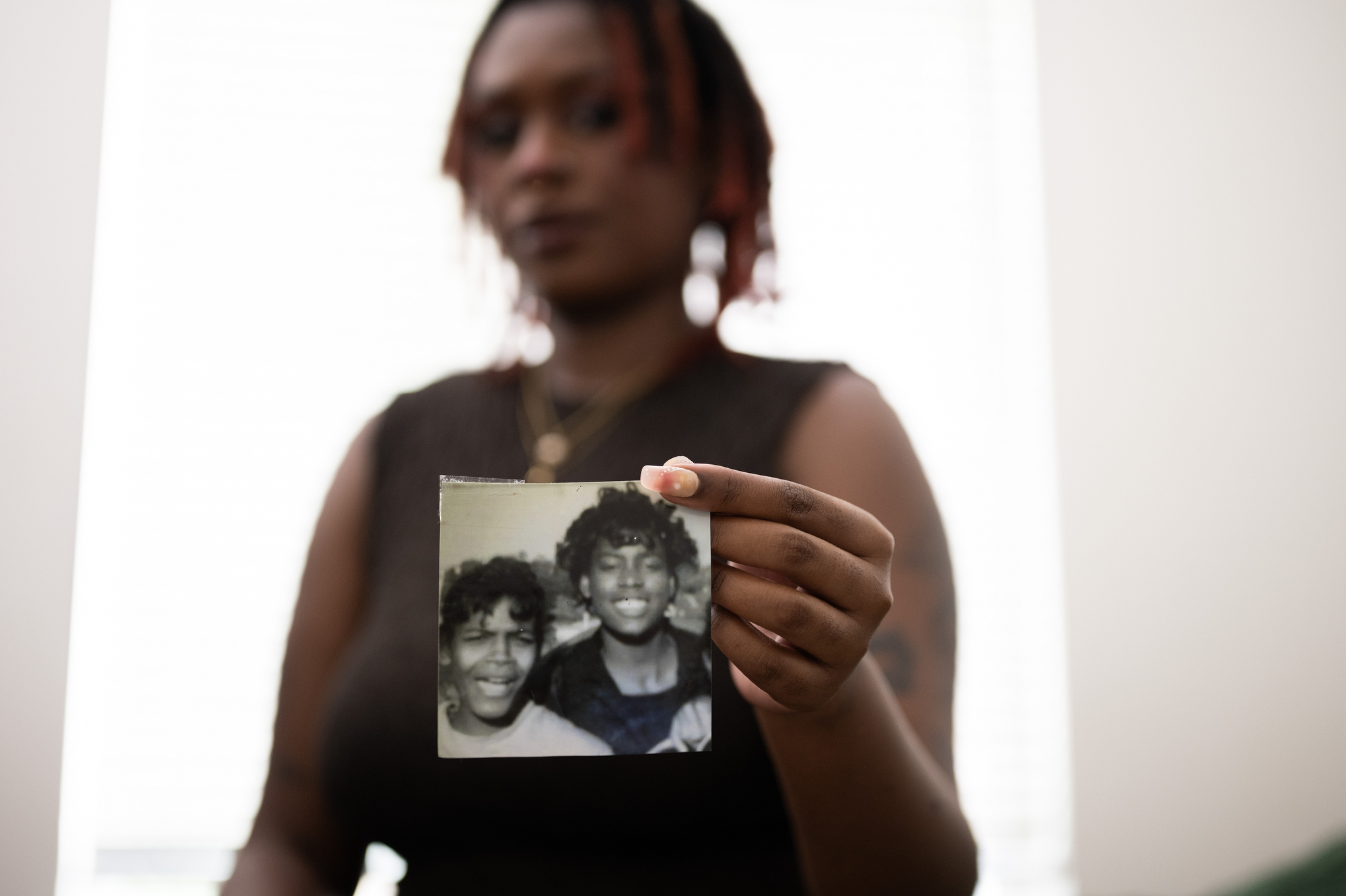
"caption": "Audy McAfee holds a family picture of her mother and aunt at her home in Oakland, CA on July 11, 2025. McAfee’s mother, Judy Mosely-McAfee, was the 6th woman picked for the WNBA in 1997, for the Sacramento Monarchs.",
"credit": "Brian L. Frank/KQED",
"altTag": null,
"description": null,
"imgSizes": {
"thumbnail": {
"file": "https://cdn.kqed.org/wp-content/uploads/sites/10/2025/07/250711_WNBA-mom_008_BF_KQED-160x107.jpg",
"width": 160,
"height": 107,
"mimeType": "image/jpeg"
},
"1536x1536": {
"file": "https://cdn.kqed.org/wp-content/uploads/sites/10/2025/07/250711_WNBA-mom_008_BF_KQED-1536x1023.jpg",
"width": 1536,
"height": 1023,
"mimeType": "image/jpeg"
},
"post-thumbnail": {
"file": "https://cdn.kqed.org/wp-content/uploads/sites/10/2025/07/250711_WNBA-mom_008_BF_KQED-672x372.jpg",
"width": 672,
"height": 372,
"mimeType": "image/jpeg"
},
"twentyfourteen-full-width": {
"file": "https://cdn.kqed.org/wp-content/uploads/sites/10/2025/07/250711_WNBA-mom_008_BF_KQED-1038x576.jpg",
"width": 1038,
"height": 576,
"mimeType": "image/jpeg"
},
"kqedFullSize": {
"file": "https://cdn.kqed.org/wp-content/uploads/sites/10/2025/07/250711_WNBA-mom_008_BF_KQED.jpg",
"width": 2000,
"height": 1332
}
},
"isLoading": false,
"fetchFailed": false
},
"news_12048517": {
"type": "attachments",
"id": "news_12048517",
"meta": {
"index": "attachments_1716263798",
"site": "news",
"id": "12048517",
"found": true
},
"title": "250717-BontaForum-04-BL_qed",
"publishDate": 1752773433,
"status": "inherit",
"parent": 0,
"modified": 1752773451,
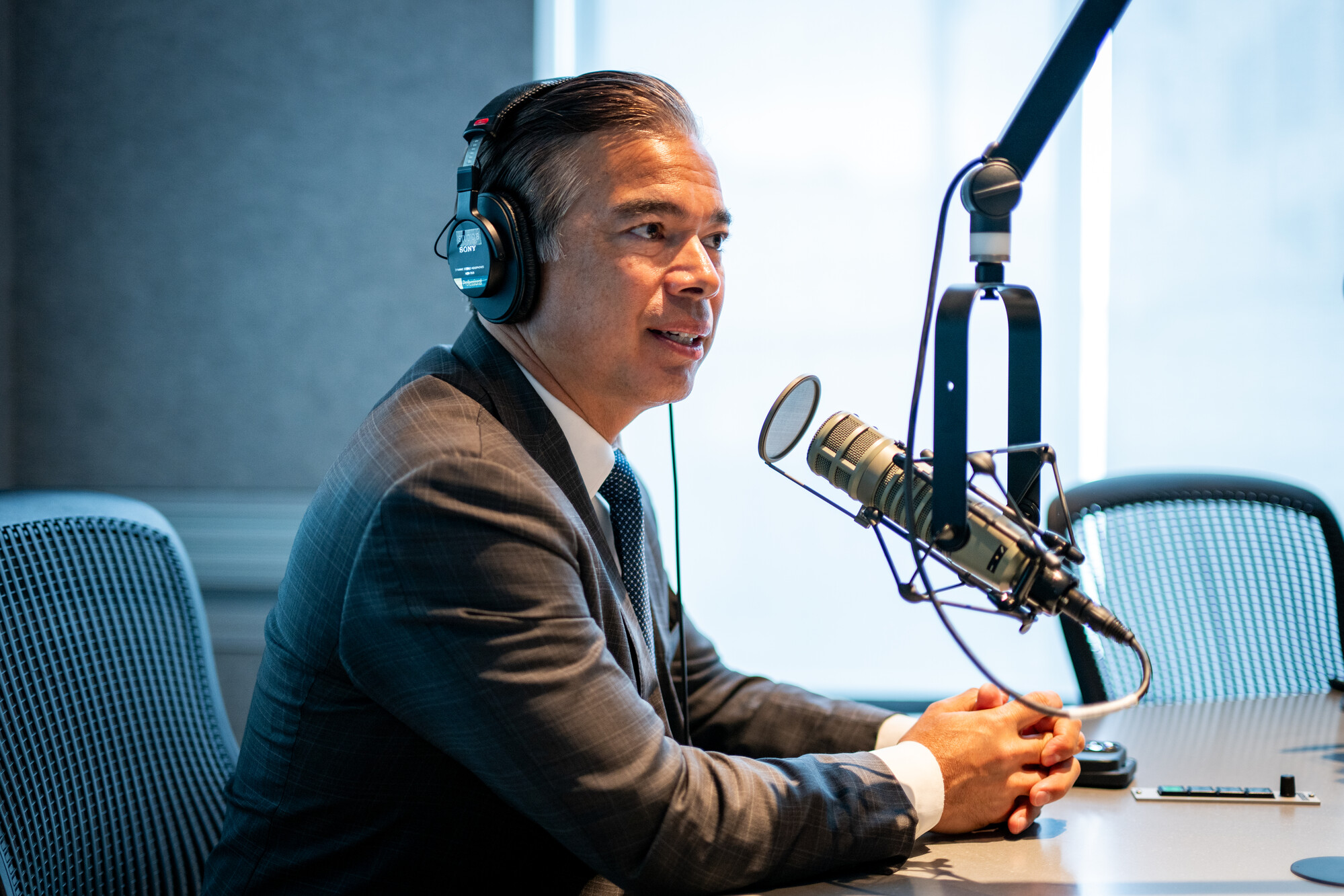
"caption": "Attorney General Rob Bonta speaks with Mina Kim before Forum at the KQED offices in San Francisco on July 17, 2025.",
"credit": "Beth LaBerge/KQED",
"altTag": null,
"description": null,
"imgSizes": {
"thumbnail": {
"file": "https://cdn.kqed.org/wp-content/uploads/sites/10/2025/07/250717-BontaForum-04-BL_qed-160x107.jpg",
"width": 160,
"height": 107,
"mimeType": "image/jpeg"
},
"1536x1536": {
"file": "https://cdn.kqed.org/wp-content/uploads/sites/10/2025/07/250717-BontaForum-04-BL_qed-1536x1024.jpg",
"width": 1536,
"height": 1024,
"mimeType": "image/jpeg"
},
"post-thumbnail": {
"file": "https://cdn.kqed.org/wp-content/uploads/sites/10/2025/07/250717-BontaForum-04-BL_qed-672x372.jpg",
"width": 672,
"height": 372,
"mimeType": "image/jpeg"
},
"twentyfourteen-full-width": {
"file": "https://cdn.kqed.org/wp-content/uploads/sites/10/2025/07/250717-BontaForum-04-BL_qed-1038x576.jpg",
"width": 1038,
"height": 576,
"mimeType": "image/jpeg"
},
"kqedFullSize": {
"file": "https://cdn.kqed.org/wp-content/uploads/sites/10/2025/07/250717-BontaForum-04-BL_qed.jpg",
"width": 1999,
"height": 1333
}
},
"isLoading": false,
"fetchFailed": false
},
"news_11343203": {
"type": "attachments",
"id": "news_11343203",
"meta": {
"index": "attachments_1716263798",
"site": "news",
"id": "11343203",
"found": true
},
"parent": 11343175,
"imgSizes": {
"small": {
"file": "https://ww2.kqed.org/app/uploads/sites/10/2017/03/hospital-520x347.jpg",
"width": 520,
"mimeType": "image/jpeg",
"height": 347
},
"twentyfourteen-full-width": {
"file": "https://ww2.kqed.org/app/uploads/sites/10/2017/03/hospital-1038x576.jpg",
"width": 1038,
"mimeType": "image/jpeg",
"height": 576
},
"thumbnail": {
"file": "https://ww2.kqed.org/app/uploads/sites/10/2017/03/hospital-160x107.jpg",
"width": 160,
"mimeType": "image/jpeg",
"height": 107
},
"fd-sm": {
"file": "https://ww2.kqed.org/app/uploads/sites/10/2017/03/hospital-960x640.jpg",
"width": 960,
"mimeType": "image/jpeg",
"height": 640
},
"post-thumbnail": {
"file": "https://ww2.kqed.org/app/uploads/sites/10/2017/03/hospital-672x372.jpg",
"width": 672,
"mimeType": "image/jpeg",
"height": 372
},
"xsmall": {
"file": "https://ww2.kqed.org/app/uploads/sites/10/2017/03/hospital-375x250.jpg",
"width": 375,
"mimeType": "image/jpeg",
"height": 250
},
"kqedFullSize": {
"file": "https://ww2.kqed.org/app/uploads/sites/10/2017/03/hospital.jpg",
"width": 1440,
"height": 960
},
"large": {
"file": "https://ww2.kqed.org/app/uploads/sites/10/2017/03/hospital-1020x680.jpg",
"width": 1020,
"mimeType": "image/jpeg",
"height": 680
},
"xlarge": {
"file": "https://ww2.kqed.org/app/uploads/sites/10/2017/03/hospital-1180x787.jpg",
"width": 1180,
"mimeType": "image/jpeg",
"height": 787
},
"guest-author-50": {
"file": "https://ww2.kqed.org/app/uploads/sites/10/2017/03/hospital-50x50.jpg",
"width": 50,
"mimeType": "image/jpeg",
"height": 50
},
"guest-author-96": {
"file": "https://ww2.kqed.org/app/uploads/sites/10/2017/03/hospital-96x96.jpg",
"width": 96,
"mimeType": "image/jpeg",
"height": 96
},
"medium": {
"file": "https://ww2.kqed.org/app/uploads/sites/10/2017/03/hospital-800x533.jpg",
"width": 800,
"mimeType": "image/jpeg",
"height": 533
},
"guest-author-64": {
"file": "https://ww2.kqed.org/app/uploads/sites/10/2017/03/hospital-64x64.jpg",
"width": 64,
"mimeType": "image/jpeg",
"height": 64
},
"guest-author-32": {
"file": "https://ww2.kqed.org/app/uploads/sites/10/2017/03/hospital-32x32.jpg",
"width": 32,
"mimeType": "image/jpeg",
"height": 32
},
"fd-med": {
"file": "https://ww2.kqed.org/app/uploads/sites/10/2017/03/hospital-1180x787.jpg",
"width": 1180,
"mimeType": "image/jpeg",
"height": 787
},
"detail": {
"file": "https://ww2.kqed.org/app/uploads/sites/10/2017/03/hospital-150x150.jpg",
"width": 150,
"mimeType": "image/jpeg",
"height": 150
},
"guest-author-128": {
"file": "https://ww2.kqed.org/app/uploads/sites/10/2017/03/hospital-128x128.jpg",
"width": 128,
"mimeType": "image/jpeg",
"height": 128
},
"xxsmall": {
"file": "https://ww2.kqed.org/app/uploads/sites/10/2017/03/hospital-240x160.jpg",
"width": 240,
"mimeType": "image/jpeg",
"height": 160
}
},
"publishDate": 1488590043,
"modified": 1488834303,
"caption": "Roughly 40 of the 113 records UC released detailing investigations and findings related to allegations of sex-based discrimination or misconduct involved UC medical centers and hospitals. ",
"description": null,
"title": "hospital",
"credit": "Getty Images",
"status": "inherit",
"isLoading": false,
"fetchFailed": false
},
"news_12047167": {
"type": "attachments",
"id": "news_12047167",
"meta": {
"index": "attachments_1716263798",
"site": "news",
"id": "12047167",
"found": true
},
"title": "Supreme Court Ruling Allows States To Cut Medicaid Funds To Planned Parenthood",
"publishDate": 1751912374,
"status": "inherit",
"parent": 12047147,
"modified": 1751912417,
"caption": "A Planned Parenthood health center on June 26, 2025 in San Rafael, California. A Supreme Court ruling will allow states to cut Medicaid funds to reproductive health provider Planned Parenthood, which will disqualify Medicaid patients from obtaining health care services from Planned Parenthood providers if the funding has been cut by the state. ",
"credit": "Justin Sullivan/Getty Images",
"altTag": null,
"description": null,
"imgSizes": {
"thumbnail": {
"file": "https://cdn.kqed.org/wp-content/uploads/sites/10/2025/07/PPNorcal-160x107.jpg",
"width": 160,
"height": 107,
"mimeType": "image/jpeg"
},
"1536x1536": {
"file": "https://cdn.kqed.org/wp-content/uploads/sites/10/2025/07/PPNorcal-1536x1026.jpg",
"width": 1536,
"height": 1026,
"mimeType": "image/jpeg"
},
"post-thumbnail": {
"file": "https://cdn.kqed.org/wp-content/uploads/sites/10/2025/07/PPNorcal-672x372.jpg",
"width": 672,
"height": 372,
"mimeType": "image/jpeg"
},
"twentyfourteen-full-width": {
"file": "https://cdn.kqed.org/wp-content/uploads/sites/10/2025/07/PPNorcal-1038x576.jpg",
"width": 1038,
"height": 576,
"mimeType": "image/jpeg"
},
"kqedFullSize": {
"file": "https://cdn.kqed.org/wp-content/uploads/sites/10/2025/07/PPNorcal.jpg",
"width": 2000,
"height": 1336
}
},
"isLoading": false,
"fetchFailed": false
},
"news_12045100": {
"type": "attachments",
"id": "news_12045100",
"meta": {
"index": "attachments_1716263798",
"site": "news",
"id": "12045100",
"found": true
},
"title": "061325_Glenn-Medical-Center_CK_02 copy",
"publishDate": 1750352984,
"status": "inherit",
"parent": 12045099,
"modified": 1750353017,
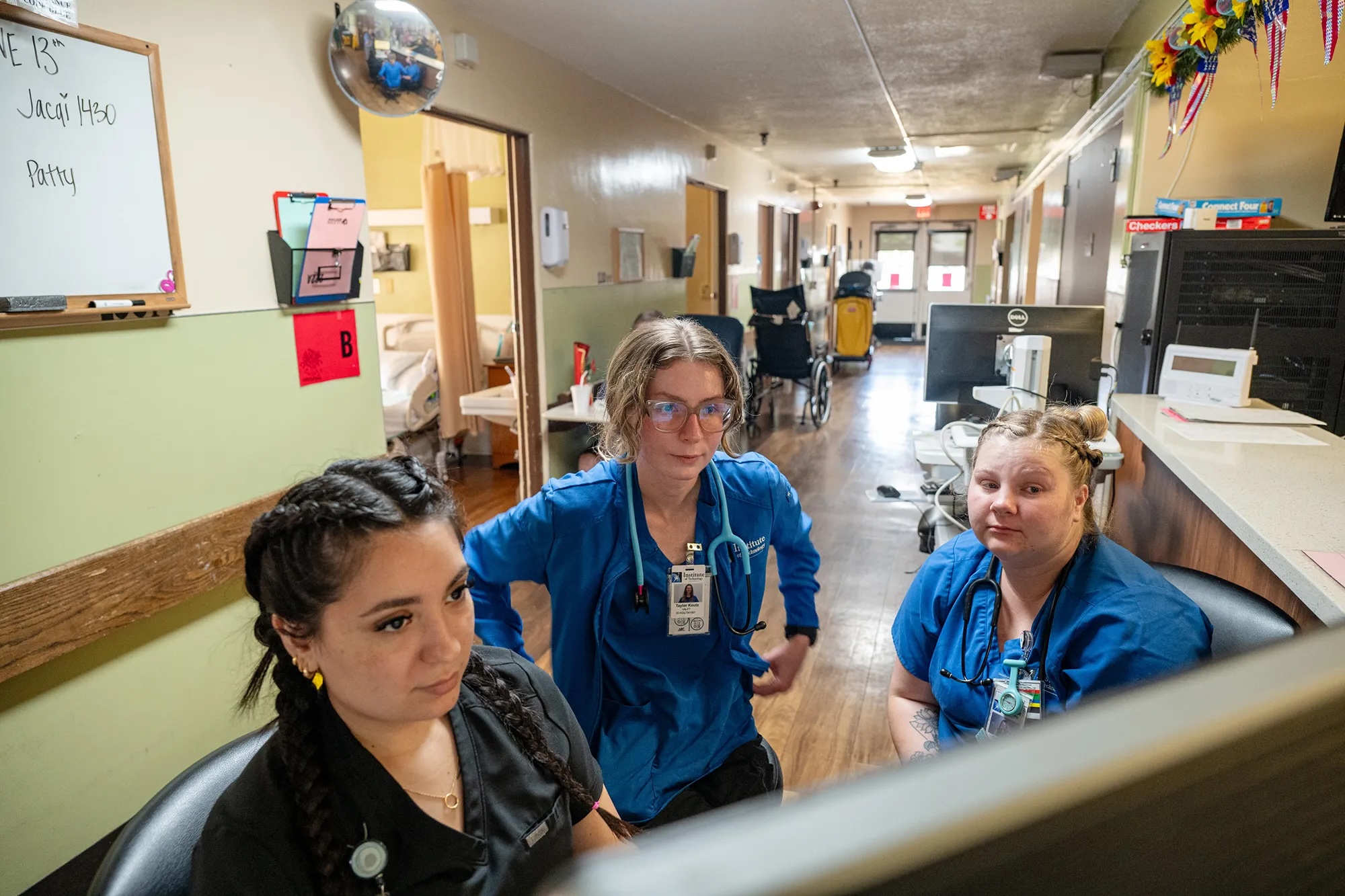
"caption": "Licensed vocational nurse Jacqi Valdez (left) works with student vocational nurses Taylor Koutz, center, and Callie Baxter (right) at the Glenn Medical Center in Willows on June 13, 2025. ",
"credit": "Chris Kaufman for CalMatters",
"altTag": null,
"description": null,
"imgSizes": {
"thumbnail": {
"file": "https://cdn.kqed.org/wp-content/uploads/sites/10/2025/06/061325_Glenn-Medical-Center_CK_02-copy-160x107.jpg",
"width": 160,
"height": 107,
"mimeType": "image/jpeg"
},
"1536x1536": {
"file": "https://cdn.kqed.org/wp-content/uploads/sites/10/2025/06/061325_Glenn-Medical-Center_CK_02-copy-1536x1024.jpg",
"width": 1536,
"height": 1024,
"mimeType": "image/jpeg"
},
"post-thumbnail": {
"file": "https://cdn.kqed.org/wp-content/uploads/sites/10/2025/06/061325_Glenn-Medical-Center_CK_02-copy-672x372.jpg",
"width": 672,
"height": 372,
"mimeType": "image/jpeg"
},
"twentyfourteen-full-width": {
"file": "https://cdn.kqed.org/wp-content/uploads/sites/10/2025/06/061325_Glenn-Medical-Center_CK_02-copy-1038x576.jpg",
"width": 1038,
"height": 576,
"mimeType": "image/jpeg"
},
"kqedFullSize": {
"file": "https://cdn.kqed.org/wp-content/uploads/sites/10/2025/06/061325_Glenn-Medical-Center_CK_02-copy.jpg",
"width": 2000,
"height": 1333
}
},
"isLoading": false,
"fetchFailed": false
},
"news_12045085": {
"type": "attachments",
"id": "news_12045085",
"meta": {
"index": "attachments_1716263798",
"site": "news",
"id": "12045085",
"found": true
},
"title": "061125-HEALTH-EXCHANGE-LEAKS-GH-CM copy",
"publishDate": 1750351185,
"status": "inherit",
"parent": 12045084,
"modified": 1750351199,
"caption": null,
"credit": "Illustration by Gabriel Hongsdusit/CalMatters",
"altTag": null,
"description": null,
"imgSizes": {
"thumbnail": {
"file": "https://cdn.kqed.org/wp-content/uploads/sites/10/2025/06/061125-HEALTH-EXCHANGE-LEAKS-GH-CM-copy-160x107.jpg",
"width": 160,
"height": 107,
"mimeType": "image/jpeg"
},
"1536x1536": {
"file": "https://cdn.kqed.org/wp-content/uploads/sites/10/2025/06/061125-HEALTH-EXCHANGE-LEAKS-GH-CM-copy-1536x1024.jpg",
"width": 1536,
"height": 1024,
"mimeType": "image/jpeg"
},
"post-thumbnail": {
"file": "https://cdn.kqed.org/wp-content/uploads/sites/10/2025/06/061125-HEALTH-EXCHANGE-LEAKS-GH-CM-copy-672x372.jpg",
"width": 672,
"height": 372,
"mimeType": "image/jpeg"
},
"twentyfourteen-full-width": {
"file": "https://cdn.kqed.org/wp-content/uploads/sites/10/2025/06/061125-HEALTH-EXCHANGE-LEAKS-GH-CM-copy-1038x576.jpg",
"width": 1038,
"height": 576,
"mimeType": "image/jpeg"
},
"kqedFullSize": {
"file": "https://cdn.kqed.org/wp-content/uploads/sites/10/2025/06/061125-HEALTH-EXCHANGE-LEAKS-GH-CM-copy.jpg",
"width": 2000,
"height": 1333
}
},
"isLoading": false,
"fetchFailed": false
},
"news_12044077": {
"type": "attachments",
"id": "news_12044077",
"meta": {
"index": "attachments_1716263798",
"site": "news",
"id": "12044077",
"found": true
},
"title": "VermontHouse",
"publishDate": 1749772211,
"status": "inherit",
"parent": 12043926,
"modified": 1749772289,
"caption": null,
"credit": "Courtesy of Santa Clara County",
"altTag": null,
"description": null,
"imgSizes": {
"thumbnail": {
"file": "https://cdn.kqed.org/wp-content/uploads/sites/10/2025/06/VermontHouse-160x90.jpg",
"width": 160,
"height": 90,
"mimeType": "image/jpeg"
},
"1536x1536": {
"file": "https://cdn.kqed.org/wp-content/uploads/sites/10/2025/06/VermontHouse-1536x864.jpg",
"width": 1536,
"height": 864,
"mimeType": "image/jpeg"
},
"post-thumbnail": {
"file": "https://cdn.kqed.org/wp-content/uploads/sites/10/2025/06/VermontHouse-672x372.jpg",
"width": 672,
"height": 372,
"mimeType": "image/jpeg"
},
"twentyfourteen-full-width": {
"file": "https://cdn.kqed.org/wp-content/uploads/sites/10/2025/06/VermontHouse-1038x576.jpg",
"width": 1038,
"height": 576,
"mimeType": "image/jpeg"
},
"kqedFullSize": {
"file": "https://cdn.kqed.org/wp-content/uploads/sites/10/2025/06/VermontHouse.jpg",
"width": 2000,
"height": 1125
}
},
"isLoading": false,
"fetchFailed": false
},
"news_12041725": {
"type": "attachments",
"id": "news_12041725",
"meta": {
"index": "attachments_1716263798",
"site": "news",
"id": "12041725",
"found": true
},
"title": "IMG_8132",
"publishDate": 1748387782,
"status": "inherit",
"parent": 0,
"modified": 1748388292,
"caption": "Health care providers and patients who receive acupuncture treatment spoke against the state budget cut on Medi-Cal’s acupuncture benefit on May 27, 2025, in San Francisco's Chinatown.",
"credit": "Gilare Zada/KQED",
"altTag": null,
"description": null,
"imgSizes": {
"medium": {
"file": "https://cdn.kqed.org/wp-content/uploads/sites/10/2025/05/IMG_8132-800x600.jpg",
"width": 800,
"height": 600,
"mimeType": "image/jpeg"
},
"large": {
"file": "https://cdn.kqed.org/wp-content/uploads/sites/10/2025/05/IMG_8132-1020x765.jpg",
"width": 1020,
"height": 765,
"mimeType": "image/jpeg"
},
"thumbnail": {
"file": "https://cdn.kqed.org/wp-content/uploads/sites/10/2025/05/IMG_8132-160x120.jpg",
"width": 160,
"height": 120,
"mimeType": "image/jpeg"
},
"1536x1536": {
"file": "https://cdn.kqed.org/wp-content/uploads/sites/10/2025/05/IMG_8132-1536x1152.jpg",
"width": 1536,
"height": 1152,
"mimeType": "image/jpeg"
},
"2048x2048": {
"file": "https://cdn.kqed.org/wp-content/uploads/sites/10/2025/05/IMG_8132-2048x1536.jpg",
"width": 2048,
"height": 1536,
"mimeType": "image/jpeg"
},
"post-thumbnail": {
"file": "https://cdn.kqed.org/wp-content/uploads/sites/10/2025/05/IMG_8132-672x372.jpg",
"width": 672,
"height": 372,
"mimeType": "image/jpeg"
},
"twentyfourteen-full-width": {
"file": "https://cdn.kqed.org/wp-content/uploads/sites/10/2025/05/IMG_8132-1038x576.jpg",
"width": 1038,
"height": 576,
"mimeType": "image/jpeg"
},
"full-width": {
"file": "https://cdn.kqed.org/wp-content/uploads/sites/10/2025/05/IMG_8132-1920x1440.jpg",
"width": 1920,
"height": 1440,
"mimeType": "image/jpeg"
},
"kqedFullSize": {
"file": "https://cdn.kqed.org/wp-content/uploads/sites/10/2025/05/IMG_8132-scaled.jpg",
"width": 2560,
"height": 1920
}
},
"isLoading": false,
"fetchFailed": false
},
"news_12030841": {
"type": "attachments",
"id": "news_12030841",
"meta": {
"index": "attachments_1716263798",
"site": "news",
"id": "12030841",
"found": true
},
"title": "Medicaid",
"publishDate": 1741733766,
"status": "inherit",
"parent": 12030830,
"modified": 1757976663,
"caption": "A \"Save Medicaid\" sign is affixed to the podium for the House Democrats' press event to oppose the Republicans' budget on the House steps of the Capitol on Feb. 25, 2024.",
"credit": "Bill Clark/CRoll Call, Inc., via Getty Images",
"altTag": null,
"description": null,
"imgSizes": {
"medium": {
"file": "https://cdn.kqed.org/wp-content/uploads/sites/10/2025/03/GettyImages-2201320740-800x533.jpg",
"width": 800,
"height": 533,
"mimeType": "image/jpeg"
},
"large": {
"file": "https://cdn.kqed.org/wp-content/uploads/sites/10/2025/03/GettyImages-2201320740-1020x680.jpg",
"width": 1020,
"height": 680,
"mimeType": "image/jpeg"
},
"thumbnail": {
"file": "https://cdn.kqed.org/wp-content/uploads/sites/10/2025/03/GettyImages-2201320740-160x107.jpg",
"width": 160,
"height": 107,
"mimeType": "image/jpeg"
},
"1536x1536": {
"file": "https://cdn.kqed.org/wp-content/uploads/sites/10/2025/03/GettyImages-2201320740-1536x1024.jpg",
"width": 1536,
"height": 1024,
"mimeType": "image/jpeg"
},
"post-thumbnail": {
"file": "https://cdn.kqed.org/wp-content/uploads/sites/10/2025/03/GettyImages-2201320740-672x372.jpg",
"width": 672,
"height": 372,
"mimeType": "image/jpeg"
},
"twentyfourteen-full-width": {
"file": "https://cdn.kqed.org/wp-content/uploads/sites/10/2025/03/GettyImages-2201320740-1038x576.jpg",
"width": 1038,
"height": 576,
"mimeType": "image/jpeg"
},
"full-width": {
"file": "https://cdn.kqed.org/wp-content/uploads/sites/10/2025/03/GettyImages-2201320740-1920x1280.jpg",
"width": 1920,
"height": 1280,
"mimeType": "image/jpeg"
},
"kqedFullSize": {
"file": "https://cdn.kqed.org/wp-content/uploads/sites/10/2025/03/GettyImages-2201320740.jpg",
"width": 2000,
"height": 1333
}
},
"isLoading": false,
"fetchFailed": false
},
"news_12040369": {
"type": "attachments",
"id": "news_12040369",
"meta": {
"index": "attachments_1716263798",
"site": "news",
"id": "12040369",
"found": true
},
"title": "UCRegents1",
"publishDate": 1747336938,
"status": "inherit",
"parent": 12040282,
"modified": 1747337073,
"caption": "During Thursday's UC Regents meeting, some union members refused to leave the room and were arrested, including Lorena Gonzalez, California Labor Federation President.",
"credit": "Juan Carlos Lara/KQED",
"altTag": null,
"description": null,
"imgSizes": {
"medium": {
"file": "https://cdn.kqed.org/wp-content/uploads/sites/10/2025/05/UCRegents1-800x600.jpg",
"width": 800,
"height": 600,
"mimeType": "image/jpeg"
},
"large": {
"file": "https://cdn.kqed.org/wp-content/uploads/sites/10/2025/05/UCRegents1-1020x765.jpg",
"width": 1020,
"height": 765,
"mimeType": "image/jpeg"
},
"thumbnail": {
"file": "https://cdn.kqed.org/wp-content/uploads/sites/10/2025/05/UCRegents1-160x120.jpg",
"width": 160,
"height": 120,
"mimeType": "image/jpeg"
},
"1536x1536": {
"file": "https://cdn.kqed.org/wp-content/uploads/sites/10/2025/05/UCRegents1-1536x1152.jpg",
"width": 1536,
"height": 1152,
"mimeType": "image/jpeg"
},
"post-thumbnail": {
"file": "https://cdn.kqed.org/wp-content/uploads/sites/10/2025/05/UCRegents1-672x372.jpg",
"width": 672,
"height": 372,
"mimeType": "image/jpeg"
},
"twentyfourteen-full-width": {
"file": "https://cdn.kqed.org/wp-content/uploads/sites/10/2025/05/UCRegents1-1038x576.jpg",
"width": 1038,
"height": 576,
"mimeType": "image/jpeg"
},
"full-width": {
"file": "https://cdn.kqed.org/wp-content/uploads/sites/10/2025/05/UCRegents1-1920x1440.jpg",
"width": 1920,
"height": 1440,
"mimeType": "image/jpeg"
},
"kqedFullSize": {
"file": "https://cdn.kqed.org/wp-content/uploads/sites/10/2025/05/UCRegents1.jpg",
"width": 2000,
"height": 1500
}
},
"isLoading": false,
"fetchFailed": false
},
"news_12038428": {
"type": "attachments",
"id": "news_12038428",
"meta": {
"index": "attachments_1716263798",
"site": "news",
"id": "12038428",
"found": true
},
"title": "Going through a rough patch",
"publishDate": 1746129114,
"status": "inherit",
"parent": 12038426,
"modified": 1747260537,
"caption": "Shot of a young woman looking despondent after a fight with her boyfriend.",
"credit": "iStock/Getty Images Plus",
"altTag": null,
"description": null,
"imgSizes": {
"medium": {
"file": "https://cdn.kqed.org/wp-content/uploads/sites/10/2025/05/LoveLabGetty-800x534.jpg",
"width": 800,
"height": 534,
"mimeType": "image/jpeg"
},
"large": {
"file": "https://cdn.kqed.org/wp-content/uploads/sites/10/2025/05/LoveLabGetty-1020x680.jpg",
"width": 1020,
"height": 680,
"mimeType": "image/jpeg"
},
"thumbnail": {
"file": "https://cdn.kqed.org/wp-content/uploads/sites/10/2025/05/LoveLabGetty-160x107.jpg",
"width": 160,
"height": 107,
"mimeType": "image/jpeg"
},
"1536x1536": {
"file": "https://cdn.kqed.org/wp-content/uploads/sites/10/2025/05/LoveLabGetty-1536x1025.jpg",
"width": 1536,
"height": 1025,
"mimeType": "image/jpeg"
},
"post-thumbnail": {
"file": "https://cdn.kqed.org/wp-content/uploads/sites/10/2025/05/LoveLabGetty-672x372.jpg",
"width": 672,
"height": 372,
"mimeType": "image/jpeg"
},
"twentyfourteen-full-width": {
"file": "https://cdn.kqed.org/wp-content/uploads/sites/10/2025/05/LoveLabGetty-1038x576.jpg",
"width": 1038,
"height": 576,
"mimeType": "image/jpeg"
},
"full-width": {
"file": "https://cdn.kqed.org/wp-content/uploads/sites/10/2025/05/LoveLabGetty-1920x1281.jpg",
"width": 1920,
"height": 1281,
"mimeType": "image/jpeg"
},
"kqedFullSize": {
"file": "https://cdn.kqed.org/wp-content/uploads/sites/10/2025/05/LoveLabGetty.jpg",
"width": 2000,
"height": 1334
}
},
"isLoading": false,
"fetchFailed": false
}
},
"audioPlayerReducer": {
"postId": "stream_live",
"isPaused": true,
"isPlaying": false,
"pfsActive": false,
"pledgeModalIsOpen": true,
"playerDrawerIsOpen": false,
"liveAudioPlayStartedAt": 0,
"liveAudioPlayContext": ""
},
"authorsReducer": {
"byline_news_12045099": {
"type": "authors",
"id": "byline_news_12045099",
"meta": {
"override": true
},
"slug": "byline_news_12045099",
"name": "Ana B. Ibarra, CalMatters",
"isLoading": false
},
"byline_news_12045084": {
"type": "authors",
"id": "byline_news_12045084",
"meta": {
"override": true
},
"slug": "byline_news_12045084",
"name": "Colin Lecher and Tomas Apodaca, CalMatters",
"isLoading": false
},
"gmarzorati": {
"type": "authors",
"id": "227",
"meta": {
"index": "authors_1716337520",
"id": "227",
"found": true
},
"name": "Guy Marzorati",
"firstName": "Guy",
"lastName": "Marzorati",
"slug": "gmarzorati",
"email": "gmarzorati@KQED.org",
"display_author_email": true,
"staff_mastheads": [
"news"
],
"title": "Correspondent",
"bio": "Guy Marzorati is a correspondent on KQED's California Politics and Government Desk, based in San Jose. A graduate of Santa Clara University, Guy joined KQED in 2013. He reports on state and local politics and produces KQED's digital voter guide.",
"avatar": "https://secure.gravatar.com/avatar/e7038b8dbfd55b104369b76b1cd0b9de?s=600&d=blank&r=g",
"twitter": "guymarzorati",
"facebook": null,
"instagram": null,
"linkedin": null,
"sites": [
{
"site": "",
"roles": [
"editor"
]
},
{
"site": "news",
"roles": [
"editor"
]
},
{
"site": "science",
"roles": [
"editor"
]
},
{
"site": "forum",
"roles": [
"editor"
]
},
{
"site": "elections",
"roles": [
"editor"
]
},
{
"site": "liveblog",
"roles": [
"editor"
]
}
],
"headData": {
"title": "Guy Marzorati | KQED",
"description": "Correspondent",
"ogImgSrc": "https://secure.gravatar.com/avatar/e7038b8dbfd55b104369b76b1cd0b9de?s=600&d=blank&r=g",
"twImgSrc": "https://secure.gravatar.com/avatar/e7038b8dbfd55b104369b76b1cd0b9de?s=600&d=blank&r=g"
},
"isLoading": false,
"link": "/author/gmarzorati"
},
"kqed": {
"type": "authors",
"id": "236",
"meta": {
"index": "authors_1716337520",
"id": "236",
"found": true
},
"name": "KQED News Staff",
"firstName": "KQED News Staff",
"lastName": null,
"slug": "kqed",
"email": "faq@kqed.org",
"display_author_email": false,
"staff_mastheads": [],
"title": null,
"bio": null,
"avatar": "https://secure.gravatar.com/avatar/ef0e801a68c4c54afa9180db14084167?s=600&d=blank&r=g",
"twitter": null,
"facebook": null,
"instagram": null,
"linkedin": null,
"sites": [
{
"site": "arts",
"roles": [
"contributor"
]
},
{
"site": "news",
"roles": [
"editor"
]
},
{
"site": "futureofyou",
"roles": [
"author"
]
}
],
"headData": {
"title": "KQED News Staff | KQED",
"description": null,
"ogImgSrc": "https://secure.gravatar.com/avatar/ef0e801a68c4c54afa9180db14084167?s=600&d=blank&r=g",
"twImgSrc": "https://secure.gravatar.com/avatar/ef0e801a68c4c54afa9180db14084167?s=600&d=blank&r=g"
},
"isLoading": false,
"link": "/author/kqed"
},
"lesleymcclurg": {
"type": "authors",
"id": "11229",
"meta": {
"index": "authors_1716337520",
"id": "11229",
"found": true
},
"name": "Lesley McClurg",
"firstName": "Lesley",
"lastName": "McClurg",
"slug": "lesleymcclurg",
"email": "lmcclurg@KQED.org",
"display_author_email": false,
"staff_mastheads": [
"news",
"science"
],
"title": "KQED Health Correspondent",
"bio": "Lesley McClurg is a health correspondent and fill-in host whose work is regularly rebroadcast on NPR and PBS programs. She’s earned multiple regional Emmy awards, a national and a regional Edward R. Murrow award, and was named Best Beat Reporter by the Association of Health Care Journalists. The Society of Professional Journalists has recognized her work several times, and the Society of Environmental Journalists spotlighted her coverage of California’s historic drought.\r\n\r\nBefore joining KQED in 2016, Lesley covered food and sustainability for Capital Public Radio, environmental issues for Colorado Public Radio, and reported for KUOW and KCTS 9 in Seattle. Away from the newsroom, she loves skiing with her daughter, mountain biking with her partner, and playing with Ollie, the family’s goldendoodle. On deadline, she runs almost entirely on chocolate chips.\r\n\r\n ",
"avatar": "https://secure.gravatar.com/avatar/bab49e972ea10c774fe0f5e29dba1722b158f7c0d58a360923d1389d380b2978?s=600&d=blank&r=g",
"twitter": "lesleywmcclurg",
"bluesky": null,
"facebook": null,
"instagram": null,
"linkedin": null,
"sites": [
{
"site": "arts",
"roles": [
"author"
]
},
{
"site": "news",
"roles": [
"editor"
]
},
{
"site": "futureofyou",
"roles": [
"editor"
]
},
{
"site": "stateofhealth",
"roles": [
"author"
]
},
{
"site": "science",
"roles": [
"editor"
]
},
{
"site": "quest",
"roles": [
"subscriber"
]
},
{
"site": "forum",
"roles": [
"administrator"
]
},
{
"site": "liveblog",
"roles": [
"author"
]
}
],
"headData": {
"title": "Lesley McClurg | KQED",
"description": "KQED Health Correspondent",
"ogImgSrc": "https://secure.gravatar.com/avatar/bab49e972ea10c774fe0f5e29dba1722b158f7c0d58a360923d1389d380b2978?s=600&d=blank&r=g",
"twImgSrc": "https://secure.gravatar.com/avatar/bab49e972ea10c774fe0f5e29dba1722b158f7c0d58a360923d1389d380b2978?s=600&d=blank&r=g"
},
"isLoading": false,
"link": "/author/lesleymcclurg"
},
"ccabreralomeli": {
"type": "authors",
"id": "11708",
"meta": {
"index": "authors_1716337520",
"id": "11708",
"found": true
},
"name": "Carlos Cabrera-Lomelí",
"firstName": "Carlos",
"lastName": "Cabrera-Lomelí",
"slug": "ccabreralomeli",
"email": "ccabreralomeli@KQED.org",
"display_author_email": true,
"staff_mastheads": [
"news"
],
"title": "Community Reporter",
"bio": "Carlos Cabrera-Lomelí is a community reporter with KQED's digital engagement team. He also reports and co-produces for KQED's bilingual news hub KQED en Español. He grew up in San Francisco's Mission District and has previously worked with Univision, 48 Hills and REFORMA in Mexico City.",
"avatar": "https://secure.gravatar.com/avatar/c309be9665e484f887b818c89e273ecc673004f426f36b24d00a4d813a2e0518?s=600&d=blank&r=g",
"twitter": "@LomeliCabrera",
"bluesky": null,
"facebook": null,
"instagram": null,
"linkedin": null,
"sites": [
{
"site": "arts",
"roles": [
"editor"
]
},
{
"site": "news",
"roles": [
"editor"
]
},
{
"site": "about",
"roles": [
"editor"
]
},
{
"site": "science",
"roles": [
"editor"
]
},
{
"site": "perspectives",
"roles": [
"editor"
]
},
{
"site": "elections",
"roles": [
"editor"
]
},
{
"site": "liveblog",
"roles": [
"contributor"
]
}
],
"headData": {
"title": "Carlos Cabrera-Lomelí | KQED",
"description": "Community Reporter",
"ogImgSrc": "https://secure.gravatar.com/avatar/c309be9665e484f887b818c89e273ecc673004f426f36b24d00a4d813a2e0518?s=600&d=blank&r=g",
"twImgSrc": "https://secure.gravatar.com/avatar/c309be9665e484f887b818c89e273ecc673004f426f36b24d00a4d813a2e0518?s=600&d=blank&r=g"
},
"isLoading": false,
"link": "/author/ccabreralomeli"
},
"jgeha": {
"type": "authors",
"id": "11906",
"meta": {
"index": "authors_1716337520",
"id": "11906",
"found": true
},
"name": "Joseph Geha",
"firstName": "Joseph",
"lastName": "Geha",
"slug": "jgeha",
"email": "jgeha@kqed.org",
"display_author_email": false,
"staff_mastheads": [
"news",
"science"
],
"title": "KQED Contributor",
"bio": null,
"avatar": "https://secure.gravatar.com/avatar/ea84d2b6dd93d6369d453edf19dd583f117cd1759d2d9c9c92f9de77017354fe?s=600&d=blank&r=g",
"twitter": null,
"bluesky": null,
"facebook": null,
"instagram": null,
"linkedin": null,
"sites": [
{
"site": "news",
"roles": [
"editor"
]
},
{
"site": "liveblog",
"roles": [
"author"
]
}
],
"headData": {
"title": "Joseph Geha | KQED",
"description": "KQED Contributor",
"ogImgSrc": "https://secure.gravatar.com/avatar/ea84d2b6dd93d6369d453edf19dd583f117cd1759d2d9c9c92f9de77017354fe?s=600&d=blank&r=g",
"twImgSrc": "https://secure.gravatar.com/avatar/ea84d2b6dd93d6369d453edf19dd583f117cd1759d2d9c9c92f9de77017354fe?s=600&d=blank&r=g"
},
"isLoading": false,
"link": "/author/jgeha"
},
"kdebenedetti": {
"type": "authors",
"id": "11913",
"meta": {
"index": "authors_1716337520",
"id": "11913",
"found": true
},
"name": "Katie DeBenedetti",
"firstName": "Katie",
"lastName": "DeBenedetti",
"slug": "kdebenedetti",
"email": "kdebenedetti@kqed.org",
"display_author_email": false,
"staff_mastheads": [
"news",
"science"
],
"title": "KQED Contributor",
"bio": "Katie DeBenedetti is a digital reporter covering daily news for the Express Desk. Prior to joining KQED as a culture reporting intern in January 2024, she covered education and city government for the Napa Valley Register.",
"avatar": "https://secure.gravatar.com/avatar/6e31073cb8f7e4214ab03f42771d0f45?s=600&d=blank&r=g",
"twitter": null,
"facebook": null,
"instagram": null,
"linkedin": null,
"sites": [
{
"site": "news",
"roles": [
"author"
]
},
{
"site": "science",
"roles": [
"author"
]
},
{
"site": "liveblog",
"roles": [
"author"
]
}
],
"headData": {
"title": "Katie DeBenedetti | KQED",
"description": "KQED Contributor",
"ogImgSrc": "https://secure.gravatar.com/avatar/6e31073cb8f7e4214ab03f42771d0f45?s=600&d=blank&r=g",
"twImgSrc": "https://secure.gravatar.com/avatar/6e31073cb8f7e4214ab03f42771d0f45?s=600&d=blank&r=g"
},
"isLoading": false,
"link": "/author/kdebenedetti"
},
"slim": {
"type": "authors",
"id": "11920",
"meta": {
"index": "authors_1716337520",
"id": "11920",
"found": true
},
"name": "Samantha Lim",
"firstName": "Samantha",
"lastName": "Lim",
"slug": "slim",
"email": "slim@KQED.org",
"display_author_email": false,
"staff_mastheads": [],
"title": "KQED Contributor",
"bio": null,
"avatar": "https://secure.gravatar.com/avatar/82e592e6c15fe1a04d385e8ad0fb0b4e?s=600&d=blank&r=g",
"twitter": null,
"facebook": null,
"instagram": null,
"linkedin": null,
"sites": [
{
"site": "news",
"roles": []
}
],
"headData": {
"title": "Samantha Lim | KQED",
"description": "KQED Contributor",
"ogImgSrc": "https://secure.gravatar.com/avatar/82e592e6c15fe1a04d385e8ad0fb0b4e?s=600&d=blank&r=g",
"twImgSrc": "https://secure.gravatar.com/avatar/82e592e6c15fe1a04d385e8ad0fb0b4e?s=600&d=blank&r=g"
},
"isLoading": false,
"link": "/author/slim"
},
"gzada": {
"type": "authors",
"id": "11929",
"meta": {
"index": "authors_1716337520",
"id": "11929",
"found": true
},
"name": "Gilare Zada",
"firstName": "Gilare",
"lastName": "Zada",
"slug": "gzada",
"email": "gzada@kqed.org",
"display_author_email": true,
"staff_mastheads": [
"news"
],
"title": null,
"bio": "Gilare Zada is a Kurdish-American from San Diego, CA. Storytelling, fitness, and binge reading are some of her passions outside of news reporting. Her work has appeared in Mission Local, the Peninsula Press, the San Francisco Press Club, and more. She also writes as a class correspondent for the Stanford Magazine - go Card!",
"avatar": "https://secure.gravatar.com/avatar/33a75f2b947669a488a805edec3fbf3838c1cedaedda710e983770633b4d6a75?s=600&d=blank&r=g",
"twitter": null,
"bluesky": null,
"facebook": null,
"instagram": null,
"linkedin": null,
"sites": [
{
"site": "arts",
"roles": [
"editor"
]
},
{
"site": "news",
"roles": [
"administrator"
]
},
{
"site": "science",
"roles": [
"editor"
]
}
],
"headData": {
"title": "Gilare Zada | KQED",
"description": null,
"ogImgSrc": "https://secure.gravatar.com/avatar/33a75f2b947669a488a805edec3fbf3838c1cedaedda710e983770633b4d6a75?s=600&d=blank&r=g",
"twImgSrc": "https://secure.gravatar.com/avatar/33a75f2b947669a488a805edec3fbf3838c1cedaedda710e983770633b4d6a75?s=600&d=blank&r=g"
},
"isLoading": false,
"link": "/author/gzada"
}
},
"pagesReducer": {
"news_tag_health-care": {
"type": "terms",
"id": "news_683",
"meta": {
"index": "terms_1716263798",
"site": "news",
"id": "683",
"score": 8.557362
},
"featImg": null,
"name": "health care",
"description": null,
"taxonomy": "tag",
"headData": {
"twImgId": null,
"twTitle": null,
"ogTitle": null,
"ogImgId": null,
"twDescription": null,
"description": null,
"title": "health care Archives | KQED News",
"ogDescription": null
},
"ttid": 692,
"slug": "health-care",
"isLoading": false,
"title": "health care",
"pageMeta": {
"site": "news",
"WpPageTemplate": "page-topic-editorial",
"currentPage": 7
},
"blocks": [
{
"blockName": "kqed/post-list",
"attrs": {
"layout": "cardArticle2",
"query": "posts/news?tag=health-care",
"seeMore": false,
"paginated": true,
"page": 7
}
},
{
"blockName": "kqed/ad"
}
]
}
},
"pfsSessionReducer": {},
"postsReducer": {
"stream_live": {
"type": "live",
"id": "stream_live",
"audioUrl": "https://streams.kqed.org/kqedradio",
"title": "Live Stream",
"excerpt": "Live Stream information currently unavailable.",
"link": "/radio",
"featImg": "",
"label": {
"name": "KQED Live",
"link": "/"
}
},
"stream_kqedNewscast": {
"type": "posts",
"id": "stream_kqedNewscast",
"audioUrl": "https://www.kqed.org/.stream/anon/radio/RDnews/newscast.mp3?_=1",
"title": "KQED Newscast",
"featImg": "",
"label": {
"name": "88.5 FM",
"link": "/"
}
},
"news_12048636": {
"type": "posts",
"id": "news_12048636",
"meta": {
"index": "posts_1716263798",
"site": "news",
"id": "12048636",
"score": null,
"sort": [
1753279241000
]
},
"guestAuthors": [],
"slug": "snap-and-medicaid-cuts-put-bakersfield-in-political-economic-crosshairs",
"title": "SNAP and Medicaid Cuts Put Bakersfield in Political, Economic Crosshairs",
"publishDate": 1753279241,
"format": "standard",
"headTitle": "SNAP and Medicaid Cuts Put Bakersfield in Political, Economic Crosshairs | KQED",
"labelTerm": {
"site": "news"
},
"content": "\u003cp>Emelia Reed has a front-row seat to the critical \u003ca href=\"https://www.kqed.org/news/12033802/how-cuts-medicaid-republican-gains-california\">safety-net needs\u003c/a> of Central Valley residents in her role as a student assistant at California State University, Bakersfield’s food pantry.\u003c/p>\n\u003cp>The pantry serves students and staff who need groceries like rice or milk — or even just a can of tuna or beans for a quick meal. It’s also an on-ramp for more reliable \u003ca href=\"https://www.kqed.org/news/12044713/food-stamps-at-risk-in-trump-budget-bill-bay-area-food-banks-warn\">food aid\u003c/a>: at checkout, patrons are asked if they would like to enroll in CalFresh, the state’s Supplemental Nutrition Assistance Program, or SNAP. The signup connects patrons with a campus basic needs coordinator who helps with their enrollment.\u003c/p>\n\u003cp>“A lot of communities in Bakersfield are multi-generational households, so you’ll have a student who is a parent and then also lives with their mother-in-law,” Reed said. “You get that three generations in one household, and that’s what will stress the food security in that home.”\u003c/p>\n\u003cp>[ad fullwidth]\u003c/p>\n\u003cp>A Bakersfield native, Reed said she views the commuter-heavy Cal State campus as a microcosm of the daily struggles facing Kern County residents.\u003c/p>\n\u003cp>“I see it as a reflection of my community,” she said. “And I know that the community is food insecure.”\u003c/p>\n\u003cp>Few places in California will feel the \u003ca href=\"https://www.kqed.org/news/12039102/californians-worried-about-medi-cal-congressional-republicans-consider-cuts\">squeeze\u003c/a> of recently approved federal cuts to SNAP and \u003ca href=\"https://www.kqed.org/news/tag/medicaid\">Medicaid\u003c/a> — the nation’s low-income healthcare program — more than Bakersfield and its surrounding communities. The fallout from those cuts, enacted as part of President Donald Trump’s One Big Beautiful Bill Act, \u003ca href=\"https://www.kqed.org/news/12032994/democrats-focus-their-message-on-gop-cuts-to-medicaid\">could play a key role\u003c/a> in next year’s election for the 22nd Congressional District seat held by Republican Rep. David Valadao, who voted for the legislation.\u003c/p>\n\u003cfigure id=\"attachment_12010091\" class=\"wp-caption aligncenter\" style=\"max-width: 2000px\">\u003cimg loading=\"lazy\" decoding=\"async\" class=\"size-full wp-image-12010091\" src=\"https://cdn.kqed.org/wp-content/uploads/sites/10/2024/10/GettyImages-1255046550-1-scaled-e1743452454384.jpg\" alt=\"\" width=\"2000\" height=\"1334\">\u003cfigcaption class=\"wp-caption-text\">Republican Rep. David Valadao pictured in 2022. \u003ccite>(Irfan Khan/Los Angeles Times via Getty Images)\u003c/cite>\u003c/figcaption>\u003c/figure>\n\u003cp>The bill \u003ca href=\"https://www.kqed.org/forum/2010101910533/what-the-big-beautiful-bill-means-for-california\">paired\u003c/a> an extension of personal and business income tax cuts and funding for immigration enforcement with reductions in health care and food assistance spending.\u003c/p>\n\u003cp>The 22nd District, which includes much of Bakersfield and cities to the north such as Delano, Porterville and Tulare, is \u003ca href=\"https://www.kqed.org/news/12033802/how-cuts-medicaid-republican-gains-california\">heavily reliant\u003c/a> on social safety-net programs.\u003c/p>\n\u003cp>Two-thirds of residents in the district are \u003ca href=\"https://laborcenter.berkeley.edu/medi-cal-enrollment-by-district-and-county-2024/\">enrolled in Medi-Cal\u003c/a>, the state’s Medicaid program — more than any other congressional district in the state, according to the UC Berkeley Labor Center.\u003c/p>\n\u003cp>The California Budget & Policy Center \u003ca href=\"https://calbudgetcenter.org/resources/how-republican-led-budget-cuts-could-impact-californians-in-every-congressional-district/\">found\u003c/a> that 27% of residents in the district receive nutrition assistance through CalFresh, the second-highest total of any district in the state.[aside postID=news_12033802 hero='https://cdn.kqed.org/wp-content/uploads/sites/10/2025/03/250323-DEM-TOWN-HALLS-MD-14-KQED-1-1020x680.jpg']The One Big Beautiful Bill Act will reduce federal SNAP spending by tightening exemptions for work requirements and requiring states to pick up a larger share of the program’s cost. The Center on Budget and Policy Priorities \u003ca href=\"https://www.cbpp.org/research/food-assistance/senate-agriculture-committees-revised-work-requirement-would-risk-taking\">estimated\u003c/a> that nearly 370,000 Californians are at risk of losing food stamp benefits because of the changes in work requirements.\u003c/p>\n\u003cp>Even deeper cuts are coming to Medicaid. The bill includes new requirements for recipients to prove they are working, volunteering or attending school, along with new limits on provider taxes — mechanisms that states such as California use to fund their Medicaid programs. Nonprofit health research group KFF \u003ca href=\"https://www.kff.org/medicaid/issue-brief/allocating-cbos-estimates-of-federal-medicaid-spending-reductions-across-the-states-senate-reconciliation-bill/\">estimates\u003c/a> that California will lose 19% of its federal Medicaid funding over the next decade — a total of $164 billion.\u003c/p>\n\u003cp>“Fewer people are going to have health insurance coverage, because the amount of money that’s available to finance that coverage has been cut at the federal level,” said Kristof Stremikis, director of market analysis and insight at the California Health Care Foundation. “The insurance that people have is going to be less comprehensive, and so with less money available, you just cannot cover as many services.”\u003c/p>\n\u003cp>The fate of hospitals in rural areas such as the Central Valley is a particular concern, Stremikis said. Kaweah Health Medical Center in Visalia receives more than 30% of its revenue from Medi-Cal. It’s not only the largest hospital in Tulare County — it’s also the largest employer.\u003c/p>\n\u003cfigure id=\"attachment_12045245\" class=\"wp-caption aligncenter\" style=\"max-width: 2560px\">\u003cimg loading=\"lazy\" decoding=\"async\" class=\"size-full wp-image-12045245\" src=\"https://cdn.kqed.org/wp-content/uploads/sites/10/2025/06/GettyImages-2208803787-scaled.jpg\" alt=\"\" width=\"2560\" height=\"1570\" srcset=\"https://cdn.kqed.org/wp-content/uploads/sites/10/2025/06/GettyImages-2208803787-scaled.jpg 2560w, https://cdn.kqed.org/wp-content/uploads/sites/10/2025/06/GettyImages-2208803787-2000x1226.jpg 2000w, https://cdn.kqed.org/wp-content/uploads/sites/10/2025/06/GettyImages-2208803787-160x98.jpg 160w, https://cdn.kqed.org/wp-content/uploads/sites/10/2025/06/GettyImages-2208803787-1536x942.jpg 1536w, https://cdn.kqed.org/wp-content/uploads/sites/10/2025/06/GettyImages-2208803787-2048x1256.jpg 2048w\" sizes=\"auto, (max-width: 2560px) 100vw, 2560px\">\u003cfigcaption class=\"wp-caption-text\">Farm workers labor in the fields south of Bakersfield, in Kern County, California’s breadbasket, on April 9, 2025. \u003ccite>(Frederic J. Brown/AFP via Getty Images)\u003c/cite>\u003c/figcaption>\u003c/figure>\n\u003cp>In addition to the limits on eligibility and provider taxes, the bill also reduces the amount that hospitals can be reimbursed for treating certain undocumented immigrants, such as single adults making up to $21,597 a year.\u003c/p>\n\u003cp>“Providers are going to get paid less,” Stremikis said. “When there’s less money in the system, there’s just less money to pay hospitals, health systems, nursing homes, physicians’ offices.”\u003c/p>\n\u003cp>In a statement, Valadao defended his vote in support of the bill, citing a new $50 billion fund for rural hospitals and promising to “engage with the Centers for Medicare and Medicaid Services [CMS] to identify specific risks to Valley hospitals and mitigate them.”[aside postID=news_12032994 hero='https://cdn.kqed.org/wp-content/uploads/sites/10/2025/03/250323-DEM-TOWN-HALLS-MD-07-KQED-1-1020x680.jpg']“Ultimately, I voted for this bill because it does preserve the Medicaid program for its intended recipients — children, pregnant women, the disabled and elderly,” Valadao said.\u003c/p>\n\u003cp>“The bill also includes dozens of other policy provisions that directly benefit CA-22, including blocking the largest tax hike on working families in American history, eliminating taxes on tips and overtime, expanding the Child Tax Credit, enhancing deductions for seniors, and keeping provisions in place that double the standard deduction for over 90% of taxpayers in my district,” he added.\u003c/p>\n\u003cp>Republicans are hoping the tax benefits of the bill will allow the party to build on the gains it made in the 22nd District in last year’s election.\u003c/p>\n\u003cp>In 2024, Trump improved his showing in the district by 19 points over 2020, the largest shift in California. With the highest share of Latino voters and the lowest share of college graduates of any seat in the state, the 22nd fits the mold of communities across the country that gravitated toward the GOP last year.\u003c/p>\n\u003cp>But Democratic consultant Jeff Gozzo said the budget bill will come back to haunt Republicans in the Central Valley next year.\u003c/p>\n\u003cp>“I can’t understate how enormous of an impact that this Big Beautiful Bill is going to have on races here in California,” Gozzo said. “You’re taking away that opportunity for that working mom in Merced to be able to see their doctor or access that care in Kern County for addiction treatment.”\u003c/p>\n\u003cp>In a sign of how motivated Democrats are to center the One Big Beautiful Bill vote in the midterms, Dr. Jasmeet Bains, a state Assemblymember, \u003ca href=\"https://www.kqed.org/news/12048676/democrats-plotting-a-path-out-of-the-political-wilderness\">launched\u003c/a> her campaign against Valadao last week, wearing a lab coat and stethoscope in a video decrying the health care cuts.\u003c/p>\n\u003cp>“Nowhere else has this much to lose,” Bains said.\u003c/p>\n\u003cp>[ad floatright]\u003c/p>\n",
"blocks": [],
"excerpt": "Federal cuts to SNAP and Medicaid could devastate California’s Central Valley, where reliance on safety-net programs is among the highest in the state.",
"status": "publish",
"parent": 0,
"modified": 1753284855,
"stats": {
"hasAudio": false,
"hasVideo": false,
"hasChartOrMap": false,
"iframeSrcs": [],
"hasGoogleForm": false,
"hasGallery": false,
"hasHearkenModule": false,
"hasPolis": false,
"paragraphCount": 25,
"wordCount": 1200
},
"headData": {
"title": "SNAP and Medicaid Cuts Put Bakersfield in Political, Economic Crosshairs | KQED",
"description": "Federal cuts to SNAP and Medicaid could devastate California’s Central Valley, where reliance on safety-net programs is among the highest in the state.",
"ogTitle": "",
"ogDescription": "",
"ogImgId": "",
"twTitle": "",
"twDescription": "",
"twImgId": "",
"schema": {
"@context": "https://schema.org",
"@type": "NewsArticle",
"headline": "SNAP and Medicaid Cuts Put Bakersfield in Political, Economic Crosshairs",
"datePublished": "2025-07-23T07:00:41-07:00",
"dateModified": "2025-07-23T08:34:15-07:00",
"image": "https://cdn.kqed.org/wp-content/uploads/2020/02/KQED-OG-Image@1x.png",
"isAccessibleForFree": "True",
"publisher": {
"@type": "NewsMediaOrganization",
"@id": "https://www.kqed.org/#organization",
"name": "KQED",
"logo": "https://cdn.kqed.org/wp-content/uploads/2020/02/KQED-OG-Image@1x.png",
"url": "https://www.kqed.org",
"sameAs": [
"https://www.facebook.com/KQED",
"https://twitter.com/KQED",
"https://www.instagram.com/kqed/",
"https://www.tiktok.com/@kqedofficial",
"https://www.linkedin.com/company/kqed",
"https://www.youtube.com/channel/UCeC0IOo7i1P_61zVUWbJ4nw"
]
}
}
},
"primaryCategory": {
"termId": 8,
"slug": "news",
"name": "News"
},
"sticky": false,
"nprStoryId": "kqed-12048636",
"templateType": "standard",
"featuredImageType": "standard",
"excludeFromSiteSearch": "Include",
"articleAge": "0",
"path": "/news/12048636/snap-and-medicaid-cuts-put-bakersfield-in-political-economic-crosshairs",
"audioTrackLength": null,
"parsedContent": [
{
"type": "contentString",
"content": "\u003cdiv class=\"post-body\">\u003cp>\u003cp>Emelia Reed has a front-row seat to the critical \u003ca href=\"https://www.kqed.org/news/12033802/how-cuts-medicaid-republican-gains-california\">safety-net needs\u003c/a> of Central Valley residents in her role as a student assistant at California State University, Bakersfield’s food pantry.\u003c/p>\n\u003cp>The pantry serves students and staff who need groceries like rice or milk — or even just a can of tuna or beans for a quick meal. It’s also an on-ramp for more reliable \u003ca href=\"https://www.kqed.org/news/12044713/food-stamps-at-risk-in-trump-budget-bill-bay-area-food-banks-warn\">food aid\u003c/a>: at checkout, patrons are asked if they would like to enroll in CalFresh, the state’s Supplemental Nutrition Assistance Program, or SNAP. The signup connects patrons with a campus basic needs coordinator who helps with their enrollment.\u003c/p>\n\u003cp>“A lot of communities in Bakersfield are multi-generational households, so you’ll have a student who is a parent and then also lives with their mother-in-law,” Reed said. “You get that three generations in one household, and that’s what will stress the food security in that home.”\u003c/p>\n\u003cp>\u003c/p>\u003c/div>",
"attributes": {
"named": {},
"numeric": []
}
},
{
"type": "component",
"content": "",
"name": "ad",
"attributes": {
"named": {
"label": "fullwidth"
},
"numeric": [
"fullwidth"
]
}
},
{
"type": "contentString",
"content": "\u003cdiv class=\"post-body\">\u003cp>\u003c/p>\n\u003cp>A Bakersfield native, Reed said she views the commuter-heavy Cal State campus as a microcosm of the daily struggles facing Kern County residents.\u003c/p>\n\u003cp>“I see it as a reflection of my community,” she said. “And I know that the community is food insecure.”\u003c/p>\n\u003cp>Few places in California will feel the \u003ca href=\"https://www.kqed.org/news/12039102/californians-worried-about-medi-cal-congressional-republicans-consider-cuts\">squeeze\u003c/a> of recently approved federal cuts to SNAP and \u003ca href=\"https://www.kqed.org/news/tag/medicaid\">Medicaid\u003c/a> — the nation’s low-income healthcare program — more than Bakersfield and its surrounding communities. The fallout from those cuts, enacted as part of President Donald Trump’s One Big Beautiful Bill Act, \u003ca href=\"https://www.kqed.org/news/12032994/democrats-focus-their-message-on-gop-cuts-to-medicaid\">could play a key role\u003c/a> in next year’s election for the 22nd Congressional District seat held by Republican Rep. David Valadao, who voted for the legislation.\u003c/p>\n\u003cfigure id=\"attachment_12010091\" class=\"wp-caption aligncenter\" style=\"max-width: 2000px\">\u003cimg loading=\"lazy\" decoding=\"async\" class=\"size-full wp-image-12010091\" src=\"https://cdn.kqed.org/wp-content/uploads/sites/10/2024/10/GettyImages-1255046550-1-scaled-e1743452454384.jpg\" alt=\"\" width=\"2000\" height=\"1334\">\u003cfigcaption class=\"wp-caption-text\">Republican Rep. David Valadao pictured in 2022. \u003ccite>(Irfan Khan/Los Angeles Times via Getty Images)\u003c/cite>\u003c/figcaption>\u003c/figure>\n\u003cp>The bill \u003ca href=\"https://www.kqed.org/forum/2010101910533/what-the-big-beautiful-bill-means-for-california\">paired\u003c/a> an extension of personal and business income tax cuts and funding for immigration enforcement with reductions in health care and food assistance spending.\u003c/p>\n\u003cp>The 22nd District, which includes much of Bakersfield and cities to the north such as Delano, Porterville and Tulare, is \u003ca href=\"https://www.kqed.org/news/12033802/how-cuts-medicaid-republican-gains-california\">heavily reliant\u003c/a> on social safety-net programs.\u003c/p>\n\u003cp>Two-thirds of residents in the district are \u003ca href=\"https://laborcenter.berkeley.edu/medi-cal-enrollment-by-district-and-county-2024/\">enrolled in Medi-Cal\u003c/a>, the state’s Medicaid program — more than any other congressional district in the state, according to the UC Berkeley Labor Center.\u003c/p>\n\u003cp>The California Budget & Policy Center \u003ca href=\"https://calbudgetcenter.org/resources/how-republican-led-budget-cuts-could-impact-californians-in-every-congressional-district/\">found\u003c/a> that 27% of residents in the district receive nutrition assistance through CalFresh, the second-highest total of any district in the state.\u003c/p>\u003c/div>",
"attributes": {
"named": {},
"numeric": []
}
},
{
"type": "component",
"content": "",
"name": "aside",
"attributes": {
"named": {
"postid": "news_12033802",
"hero": "https://cdn.kqed.org/wp-content/uploads/sites/10/2025/03/250323-DEM-TOWN-HALLS-MD-14-KQED-1-1020x680.jpg",
"label": ""
},
"numeric": []
}
},
{
"type": "contentString",
"content": "\u003cdiv class=\"post-body\">\u003cp>The One Big Beautiful Bill Act will reduce federal SNAP spending by tightening exemptions for work requirements and requiring states to pick up a larger share of the program’s cost. The Center on Budget and Policy Priorities \u003ca href=\"https://www.cbpp.org/research/food-assistance/senate-agriculture-committees-revised-work-requirement-would-risk-taking\">estimated\u003c/a> that nearly 370,000 Californians are at risk of losing food stamp benefits because of the changes in work requirements.\u003c/p>\n\u003cp>Even deeper cuts are coming to Medicaid. The bill includes new requirements for recipients to prove they are working, volunteering or attending school, along with new limits on provider taxes — mechanisms that states such as California use to fund their Medicaid programs. Nonprofit health research group KFF \u003ca href=\"https://www.kff.org/medicaid/issue-brief/allocating-cbos-estimates-of-federal-medicaid-spending-reductions-across-the-states-senate-reconciliation-bill/\">estimates\u003c/a> that California will lose 19% of its federal Medicaid funding over the next decade — a total of $164 billion.\u003c/p>\n\u003cp>“Fewer people are going to have health insurance coverage, because the amount of money that’s available to finance that coverage has been cut at the federal level,” said Kristof Stremikis, director of market analysis and insight at the California Health Care Foundation. “The insurance that people have is going to be less comprehensive, and so with less money available, you just cannot cover as many services.”\u003c/p>\n\u003cp>The fate of hospitals in rural areas such as the Central Valley is a particular concern, Stremikis said. Kaweah Health Medical Center in Visalia receives more than 30% of its revenue from Medi-Cal. It’s not only the largest hospital in Tulare County — it’s also the largest employer.\u003c/p>\n\u003cfigure id=\"attachment_12045245\" class=\"wp-caption aligncenter\" style=\"max-width: 2560px\">\u003cimg loading=\"lazy\" decoding=\"async\" class=\"size-full wp-image-12045245\" src=\"https://cdn.kqed.org/wp-content/uploads/sites/10/2025/06/GettyImages-2208803787-scaled.jpg\" alt=\"\" width=\"2560\" height=\"1570\" srcset=\"https://cdn.kqed.org/wp-content/uploads/sites/10/2025/06/GettyImages-2208803787-scaled.jpg 2560w, https://cdn.kqed.org/wp-content/uploads/sites/10/2025/06/GettyImages-2208803787-2000x1226.jpg 2000w, https://cdn.kqed.org/wp-content/uploads/sites/10/2025/06/GettyImages-2208803787-160x98.jpg 160w, https://cdn.kqed.org/wp-content/uploads/sites/10/2025/06/GettyImages-2208803787-1536x942.jpg 1536w, https://cdn.kqed.org/wp-content/uploads/sites/10/2025/06/GettyImages-2208803787-2048x1256.jpg 2048w\" sizes=\"auto, (max-width: 2560px) 100vw, 2560px\">\u003cfigcaption class=\"wp-caption-text\">Farm workers labor in the fields south of Bakersfield, in Kern County, California’s breadbasket, on April 9, 2025. \u003ccite>(Frederic J. Brown/AFP via Getty Images)\u003c/cite>\u003c/figcaption>\u003c/figure>\n\u003cp>In addition to the limits on eligibility and provider taxes, the bill also reduces the amount that hospitals can be reimbursed for treating certain undocumented immigrants, such as single adults making up to $21,597 a year.\u003c/p>\n\u003cp>“Providers are going to get paid less,” Stremikis said. “When there’s less money in the system, there’s just less money to pay hospitals, health systems, nursing homes, physicians’ offices.”\u003c/p>\n\u003cp>In a statement, Valadao defended his vote in support of the bill, citing a new $50 billion fund for rural hospitals and promising to “engage with the Centers for Medicare and Medicaid Services [CMS] to identify specific risks to Valley hospitals and mitigate them.”\u003c/p>\u003c/div>",
"attributes": {
"named": {},
"numeric": []
}
},
{
"type": "component",
"content": "",
"name": "aside",
"attributes": {
"named": {
"postid": "news_12032994",
"hero": "https://cdn.kqed.org/wp-content/uploads/sites/10/2025/03/250323-DEM-TOWN-HALLS-MD-07-KQED-1-1020x680.jpg",
"label": ""
},
"numeric": []
}
},
{
"type": "contentString",
"content": "\u003cdiv class=\"post-body\">\u003cp>“Ultimately, I voted for this bill because it does preserve the Medicaid program for its intended recipients — children, pregnant women, the disabled and elderly,” Valadao said.\u003c/p>\n\u003cp>“The bill also includes dozens of other policy provisions that directly benefit CA-22, including blocking the largest tax hike on working families in American history, eliminating taxes on tips and overtime, expanding the Child Tax Credit, enhancing deductions for seniors, and keeping provisions in place that double the standard deduction for over 90% of taxpayers in my district,” he added.\u003c/p>\n\u003cp>Republicans are hoping the tax benefits of the bill will allow the party to build on the gains it made in the 22nd District in last year’s election.\u003c/p>\n\u003cp>In 2024, Trump improved his showing in the district by 19 points over 2020, the largest shift in California. With the highest share of Latino voters and the lowest share of college graduates of any seat in the state, the 22nd fits the mold of communities across the country that gravitated toward the GOP last year.\u003c/p>\n\u003cp>But Democratic consultant Jeff Gozzo said the budget bill will come back to haunt Republicans in the Central Valley next year.\u003c/p>\n\u003cp>“I can’t understate how enormous of an impact that this Big Beautiful Bill is going to have on races here in California,” Gozzo said. “You’re taking away that opportunity for that working mom in Merced to be able to see their doctor or access that care in Kern County for addiction treatment.”\u003c/p>\n\u003cp>In a sign of how motivated Democrats are to center the One Big Beautiful Bill vote in the midterms, Dr. Jasmeet Bains, a state Assemblymember, \u003ca href=\"https://www.kqed.org/news/12048676/democrats-plotting-a-path-out-of-the-political-wilderness\">launched\u003c/a> her campaign against Valadao last week, wearing a lab coat and stethoscope in a video decrying the health care cuts.\u003c/p>\n\u003cp>“Nowhere else has this much to lose,” Bains said.\u003c/p>\n\u003cp>\u003c/p>\u003c/div>",
"attributes": {
"named": {},
"numeric": []
}
},
{
"type": "component",
"content": "",
"name": "ad",
"attributes": {
"named": {
"label": "floatright"
},
"numeric": [
"floatright"
]
}
},
{
"type": "contentString",
"content": "\u003cdiv class=\"post-body\">\u003cp>\u003c/p>\n\u003c/div>\u003c/p>",
"attributes": {
"named": {},
"numeric": []
}
}
],
"link": "/news/12048636/snap-and-medicaid-cuts-put-bakersfield-in-political-economic-crosshairs",
"authors": [
"227"
],
"categories": [
"news_31795",
"news_457",
"news_8",
"news_13"
],
"tags": [
"news_18538",
"news_1323",
"news_27626",
"news_34377",
"news_16",
"news_18543",
"news_35118",
"news_2605",
"news_30761",
"news_20666",
"news_17968",
"news_19960"
],
"featImg": "news_12040844",
"label": "news"
},
"news_12048097": {
"type": "posts",
"id": "news_12048097",
"meta": {
"index": "posts_1716263798",
"site": "news",
"id": "12048097",
"score": null,
"sort": [
1752865223000
]
},
"guestAuthors": [],
"slug": "daughter-looks-back-at-her-wnba-mom-community-care-in-the-castro",
"title": "The Legacy of a WNBA Trailblazer; Community Care in the Castro",
"publishDate": 1752865223,
"format": "standard",
"headTitle": "The Legacy of a WNBA Trailblazer; Community Care in the Castro | KQED",
"labelTerm": {},
"content": "\u003cp>\u003cem>\u003ca href=\"http://itunes.apple.com/us/podcast/the-california-report-magazine/id1314750545?mt=2\" target=\"_blank\" rel=\"noopener noreferrer\">Listen to this and more in-depth storytelling by subscribing to The California Report Magazine podcast.\u003c/a>\u003c/em>\u003c/p>\n\u003cdiv class=\"routes-Site-routes-Post-SinglePost-__SinglePost__mpost_Title\">\n\u003cdiv>\n\u003ch2 class=\"routes-Site-routes-Post-Title-__Title__title\">\u003ca href=\"https://www.kqed.org/news/12047979/a-basketball-trailblazer-my-mother-the-wnba-star-youve-never-heard-of\">\u003cb>\u003cstrong>A Basketball Trailblazer: My Mother, the WNBA Star You’ve Never Heard Of\u003c/strong> \u003c/b>\u003c/a>\u003c/h2>\n\u003c/div>\n\u003c/div>\n\u003cp>\u003cspan style=\"font-weight: 400\">In May, the Golden State Valkyries kicked off their inaugural season. Even though they just started playing games in front of Bay Area fans, the team is said to be valued at $500 million dollars, the most of any franchise in the WNBA. And the team just had their first player named to the All-Star team: Forward Kayla Thornton was named as a reserve. These days the WNBA is on fire with record viewership and attendance. And more sold out games than ever. But that growth has taken nearly 28 years since the league launched in 1997. And while Caitlin Clark has become a household name, we rarely hear about the early players who fought for professional women’s basketball to get respect. Judy Mosley McAfee was one of them. She was the sixth woman drafted into the WNBA. Her daughter, reporter Audy McAfee, brings us this tribute.\u003c/span>\u003c/p>\n\u003cdiv class=\"routes-Site-routes-Post-SinglePost-__SinglePost__mpost_Title\">\n\u003cdiv>\n\u003ch2 class=\"routes-Site-routes-Post-Title-__Title__title\">\u003ca href=\"https://www.kqed.org/news/12047959/a-compassionate-care-center-right-in-the-heart-of-san-francisco\">\u003cb>\u003cstrong>A Compassionate Care Center, Right in the Heart of San Francisco\u003c/strong> \u003c/b>\u003c/a>\u003c/h2>\n\u003c/div>\n\u003c/div>\n\u003cp>\u003cspan style=\"font-weight: 400\">San Francisco’s Castro District is home to Maitri Compassionate Care Center. In addition to providing hospice care for people living with AIDS, for the last several years, it’s provided affordable care for those preparing for or recovering from gender affirmation surgery. At a moment when the Trump administration is issuing executive orders to dismantle protections for transgender people, Maitri remains committed to their work. KQED’s Kyana Moghadam takes us inside the center to learn about its legacy, and what it means to provide care in the heart of San Francisco..\u003c/span>\u003c/p>\n\u003cp>[ad fullwidth]\u003c/p>\u003cp>\u003c/p>\n",
"blocks": [],
"excerpt": "This week, a daughter remembers her mom, a pioneer of the WNBA. Plus we visit a Maitri Community Care which provides 24-hour medical services for those with HIV or AIDS, as well as those going through gender affirmation surgery. ",
"status": "publish",
"parent": 0,
"modified": 1752865052,
"stats": {
"hasAudio": false,
"hasVideo": false,
"hasChartOrMap": false,
"iframeSrcs": [],
"hasGoogleForm": false,
"hasGallery": false,
"hasHearkenModule": false,
"hasPolis": false,
"paragraphCount": 5,
"wordCount": 290
},
"headData": {
"title": "The Legacy of a WNBA Trailblazer; Community Care in the Castro | KQED",
"description": "This week, a daughter remembers her mom, a pioneer of the WNBA. Plus we visit a Maitri Community Care which provides 24-hour medical services for those with HIV or AIDS, as well as those going through gender affirmation surgery. ",
"ogTitle": "",
"ogDescription": "",
"ogImgId": "",
"twTitle": "",
"twDescription": "",
"twImgId": "",
"schema": {
"@context": "https://schema.org",
"@type": "NewsArticle",
"headline": "The Legacy of a WNBA Trailblazer; Community Care in the Castro",
"datePublished": "2025-07-18T12:00:23-07:00",
"dateModified": "2025-07-18T11:57:32-07:00",
"image": "https://cdn.kqed.org/wp-content/uploads/2020/02/KQED-OG-Image@1x.png",
"isAccessibleForFree": "True",
"publisher": {
"@type": "NewsMediaOrganization",
"@id": "https://www.kqed.org/#organization",
"name": "KQED",
"logo": "https://cdn.kqed.org/wp-content/uploads/2020/02/KQED-OG-Image@1x.png",
"url": "https://www.kqed.org",
"sameAs": [
"https://www.facebook.com/KQED",
"https://twitter.com/KQED",
"https://www.instagram.com/kqed/",
"https://www.tiktok.com/@kqedofficial",
"https://www.linkedin.com/company/kqed",
"https://www.youtube.com/channel/UCeC0IOo7i1P_61zVUWbJ4nw"
]
}
}
},
"primaryCategory": {
"termId": 31795,
"slug": "california",
"name": "California"
},
"source": "The California Report Magazine",
"sourceUrl": "https://www.kqed.org/news/tag/tcrmag/ ",
"audioUrl": "https://www.podtrac.com/pts/redirect.mp3/chrt.fm/track/G6C7C3/traffic.megaphone.fm/KQINC8549815876.mp3?updated=1752601477",
"sticky": false,
"templateType": "standard",
"featuredImageType": "standard",
"excludeFromSiteSearch": "Include",
"articleAge": "0",
"path": "/news/12048097/daughter-looks-back-at-her-wnba-mom-community-care-in-the-castro",
"audioTrackLength": null,
"parsedContent": [
{
"type": "contentString",
"content": "\u003cdiv class=\"post-body\">\u003cp>\u003cp>\u003cem>\u003ca href=\"http://itunes.apple.com/us/podcast/the-california-report-magazine/id1314750545?mt=2\" target=\"_blank\" rel=\"noopener noreferrer\">Listen to this and more in-depth storytelling by subscribing to The California Report Magazine podcast.\u003c/a>\u003c/em>\u003c/p>\n\u003cdiv class=\"routes-Site-routes-Post-SinglePost-__SinglePost__mpost_Title\">\n\u003cdiv>\n\u003ch2 class=\"routes-Site-routes-Post-Title-__Title__title\">\u003ca href=\"https://www.kqed.org/news/12047979/a-basketball-trailblazer-my-mother-the-wnba-star-youve-never-heard-of\">\u003cb>\u003cstrong>A Basketball Trailblazer: My Mother, the WNBA Star You’ve Never Heard Of\u003c/strong> \u003c/b>\u003c/a>\u003c/h2>\n\u003c/div>\n\u003c/div>\n\u003cp>\u003cspan style=\"font-weight: 400\">In May, the Golden State Valkyries kicked off their inaugural season. Even though they just started playing games in front of Bay Area fans, the team is said to be valued at $500 million dollars, the most of any franchise in the WNBA. And the team just had their first player named to the All-Star team: Forward Kayla Thornton was named as a reserve. These days the WNBA is on fire with record viewership and attendance. And more sold out games than ever. But that growth has taken nearly 28 years since the league launched in 1997. And while Caitlin Clark has become a household name, we rarely hear about the early players who fought for professional women’s basketball to get respect. Judy Mosley McAfee was one of them. She was the sixth woman drafted into the WNBA. Her daughter, reporter Audy McAfee, brings us this tribute.\u003c/span>\u003c/p>\n\u003cdiv class=\"routes-Site-routes-Post-SinglePost-__SinglePost__mpost_Title\">\n\u003cdiv>\n\u003ch2 class=\"routes-Site-routes-Post-Title-__Title__title\">\u003ca href=\"https://www.kqed.org/news/12047959/a-compassionate-care-center-right-in-the-heart-of-san-francisco\">\u003cb>\u003cstrong>A Compassionate Care Center, Right in the Heart of San Francisco\u003c/strong> \u003c/b>\u003c/a>\u003c/h2>\n\u003c/div>\n\u003c/div>\n\u003cp>\u003cspan style=\"font-weight: 400\">San Francisco’s Castro District is home to Maitri Compassionate Care Center. In addition to providing hospice care for people living with AIDS, for the last several years, it’s provided affordable care for those preparing for or recovering from gender affirmation surgery. At a moment when the Trump administration is issuing executive orders to dismantle protections for transgender people, Maitri remains committed to their work. KQED’s Kyana Moghadam takes us inside the center to learn about its legacy, and what it means to provide care in the heart of San Francisco..\u003c/span>\u003c/p>\n\u003cp>\u003c/p>\u003c/div>",
"attributes": {
"named": {},
"numeric": []
}
},
{
"type": "component",
"content": "",
"name": "ad",
"attributes": {
"named": {
"label": "fullwidth"
},
"numeric": [
"fullwidth"
]
}
},
{
"type": "contentString",
"content": "\u003cdiv class=\"post-body\">\u003cp>\u003c/p>\u003cp>\u003c/p>\n\u003c/div>\u003c/p>",
"attributes": {
"named": {},
"numeric": []
}
}
],
"link": "/news/12048097/daughter-looks-back-at-her-wnba-mom-community-care-in-the-castro",
"authors": [
"236"
],
"programs": [
"news_72",
"news_26731"
],
"categories": [
"news_31795",
"news_33520"
],
"tags": [
"news_18538",
"news_35118",
"news_2486",
"news_33257"
],
"featImg": "news_12047801",
"label": "source_news_12048097"
},
"news_12048504": {
"type": "posts",
"id": "news_12048504",
"meta": {
"index": "posts_1716263798",
"site": "news",
"id": "12048504",
"score": null,
"sort": [
1752783248000
]
},
"guestAuthors": [],
"slug": "bonta-announces-33rd-trump-lawsuit-on-kqed-this-one-targets-health-care-cuts",
"title": "Bonta Announces 33rd Trump Lawsuit on KQED, This One Targets Health Care Cuts",
"publishDate": 1752783248,
"format": "standard",
"headTitle": "Bonta Announces 33rd Trump Lawsuit on KQED, This One Targets Health Care Cuts | KQED",
"labelTerm": {
"site": "news"
},
"content": "\u003cp>\u003cstrong>\u003cem>Updated at 3 p.m. July 18\u003c/em>\u003c/strong>\u003c/p>\n\u003cp>California Attorney General Rob Bonta \u003ca href=\"https://www.kqed.org/forum/2010101910625/california-attorney-general-rob-bonta-on-standing-up-to-the-trump-administration\">announced Thursday on KQED’s Forum\u003c/a> that the state is filing a third lawsuit this week against President Donald Trump.\u003c/p>\n\u003cp>On Monday, Bonta \u003ca href=\"https://www.kqed.org/news/12047925/california-sues-trump-administration-again-this-time-over-withheld-school-funds\">joined \u003c/a>23 other states in suing the administration over its withholding of nearly $6 billion of federal education funding. On Wednesday, he joined 18 other states in filing suit over Trump’s \u003ca href=\"https://www.npr.org/2025/04/02/nx-s1-5345777/trump-states-fema-funds\">cancellation \u003c/a>of FEMA disaster mitigation funds.\u003c/p>\n\u003cp>This time, Bonta will join New Jersey and Massachusetts to co-lead a \u003ca href=\"https://oag.ca.gov/news/press-releases/attorney-general-bonta-co-leads-lawsuit-challenging-trump-administration-rule#:~:text=OAKLAND%2520%E2%80%94%2520California%2520Attorney%2520General%2520Rob,Medicare%2520%2526%2520Medicaid%2520Services%2520(CMS)\">lawsuit\u003c/a> challenging a Trump administration rule designed to make it more difficult for Americans to access health coverage through the Affordable Care Act.\u003c/p>\n\u003cp>It marks the 33rd lawsuit that Bonta has filed against Trump since the start of the year.\u003c/p>\n\u003cp>[ad fullwidth]\u003c/p>\n\u003cp>\u003cstrong>The big picture: \u003c/strong>Since his January inauguration, Trump has signed 170 executive \u003ca href=\"https://www.federalregister.gov/presidential-documents/executive-orders/donald-trump/2025\">orders \u003c/a>— many of them targeted by Bonta’s legal challenges. Bonta’s first lawsuit contested Trump’s executive order \u003ca href=\"https://www.kqed.org/news/12015449/a-129-year-old-san-francisco-lawsuit-could-stop-trump-from-ending-birthright-citizenship\">ending birthright citizenship\u003c/a>. He has since sued over mass firings of federal workers, \u003ca href=\"https://www.kqed.org/news/tag/california-national-guard\">deployment of the National Guard to California\u003c/a>, and other legislative policies. Bonta estimates that his office has filed lawsuits at a pace of more than one per week.\u003c/p>\n\u003cp>\u003cstrong>The latest: \u003c/strong>Bonta appeared on \u003ca href=\"https://www.kqed.org/forum/2010101910625/california-attorney-general-rob-bonta-on-standing-up-to-the-trump-administration\">Forum\u003c/a>, where he announced the latest lawsuit.\u003c/p>\n\u003cp>“We are following our North Star, which is the law,” Bonta said.[aside postID=forum_2010101910625 hero='https://cdn.kqed.org/wp-content/uploads/sites/43/2025/07/241107-AttorneyGeneralBonta-01-BL_qed.jpg']The final rule by the U.S. Department of Health and Human Services would add new bureaucratic barriers, shorten the ACA enrollment window, impose automatic charges on some $0-premium plans, and make coverage less affordable for millions while also excluding gender-affirming care as an essential benefit in federal exchange plans. (California’s coverage would not be affected.)\u003c/p>\n\u003cp>Bonta said it would strip millions of Americans of coverage and restrict others from receiving gender affirming care.\u003c/p>\n\u003cp>\u003cstrong>By the numbers: \u003c/strong>Bonta said California has spent $5 million on lawsuits against Trump this year — legal action he said has saved roughly $170 billion for the state. He estimates that at stake in this most recent lawsuit is around 2 million Americans who could lose access to healthcare under Trump’s new legislation.\u003c/p>\n\u003cp>\u003cstrong>What we’re watching: \u003c/strong>“We’ve got a full tank of gas,” Bonta said. He said his office isn’t slowing down and will sue again anytime Trump “tramples over the Constitution.” As for the rescission vote this week that would strip $9 billion in funding for NPR and PBS, Bonta said he plans to look at the lawfulness of the rescission package and “If it’s lawful, it’s lawful. If it’s not, we’ll sue.”\u003c/p>\n\u003cp>\u003cem>\u003cstrong>Editor’s Note:\u003c/strong> This story was updated to clarify that the lawsuit filed by California Attorney General Rob Bonta challenges a rule designed to make it more difficult for Americans to access health coverage through the Affordable Care Act.\u003c/em>\u003c/p>\n\u003cp>\u003c/p>\n",
"blocks": [],
"excerpt": "California Attorney General Rob Bonta announced on KQED that he’s suing the Trump administration over new legislation slashing Medicaid and Affordable Care Act funding.",
"status": "publish",
"parent": 0,
"modified": 1752876882,
"stats": {
"hasAudio": false,
"hasVideo": false,
"hasChartOrMap": false,
"iframeSrcs": [],
"hasGoogleForm": false,
"hasGallery": false,
"hasHearkenModule": false,
"hasPolis": false,
"paragraphCount": 14,
"wordCount": 516
},
"headData": {
"title": "Bonta Announces 33rd Trump Lawsuit on KQED, This One Targets Health Care Cuts | KQED",
"description": "California Attorney General Rob Bonta announced on KQED that he’s suing the Trump administration over new legislation slashing Medicaid and Affordable Care Act funding.",
"ogTitle": "",
"ogDescription": "",
"ogImgId": "",
"twTitle": "",
"twDescription": "",
"twImgId": "",
"schema": {
"@context": "https://schema.org",
"@type": "NewsArticle",
"headline": "Bonta Announces 33rd Trump Lawsuit on KQED, This One Targets Health Care Cuts",
"datePublished": "2025-07-17T13:14:08-07:00",
"dateModified": "2025-07-18T15:14:42-07:00",
"image": "https://cdn.kqed.org/wp-content/uploads/2020/02/KQED-OG-Image@1x.png",
"isAccessibleForFree": "True",
"publisher": {
"@type": "NewsMediaOrganization",
"@id": "https://www.kqed.org/#organization",
"name": "KQED",
"logo": "https://cdn.kqed.org/wp-content/uploads/2020/02/KQED-OG-Image@1x.png",
"url": "https://www.kqed.org",
"sameAs": [
"https://www.facebook.com/KQED",
"https://twitter.com/KQED",
"https://www.instagram.com/kqed/",
"https://www.tiktok.com/@kqedofficial",
"https://www.linkedin.com/company/kqed",
"https://www.youtube.com/channel/UCeC0IOo7i1P_61zVUWbJ4nw"
]
}
}
},
"primaryCategory": {
"termId": 8,
"slug": "news",
"name": "News"
},
"sticky": false,
"nprStoryId": "kqed-12048504",
"templateType": "standard",
"featuredImageType": "standard",
"excludeFromSiteSearch": "Include",
"articleAge": "0",
"path": "/news/12048504/bonta-announces-33rd-trump-lawsuit-on-kqed-this-one-targets-health-care-cuts",
"audioTrackLength": null,
"parsedContent": [
{
"type": "contentString",
"content": "\u003cdiv class=\"post-body\">\u003cp>\u003cp>\u003cstrong>\u003cem>Updated at 3 p.m. July 18\u003c/em>\u003c/strong>\u003c/p>\n\u003cp>California Attorney General Rob Bonta \u003ca href=\"https://www.kqed.org/forum/2010101910625/california-attorney-general-rob-bonta-on-standing-up-to-the-trump-administration\">announced Thursday on KQED’s Forum\u003c/a> that the state is filing a third lawsuit this week against President Donald Trump.\u003c/p>\n\u003cp>On Monday, Bonta \u003ca href=\"https://www.kqed.org/news/12047925/california-sues-trump-administration-again-this-time-over-withheld-school-funds\">joined \u003c/a>23 other states in suing the administration over its withholding of nearly $6 billion of federal education funding. On Wednesday, he joined 18 other states in filing suit over Trump’s \u003ca href=\"https://www.npr.org/2025/04/02/nx-s1-5345777/trump-states-fema-funds\">cancellation \u003c/a>of FEMA disaster mitigation funds.\u003c/p>\n\u003cp>This time, Bonta will join New Jersey and Massachusetts to co-lead a \u003ca href=\"https://oag.ca.gov/news/press-releases/attorney-general-bonta-co-leads-lawsuit-challenging-trump-administration-rule#:~:text=OAKLAND%2520%E2%80%94%2520California%2520Attorney%2520General%2520Rob,Medicare%2520%2526%2520Medicaid%2520Services%2520(CMS)\">lawsuit\u003c/a> challenging a Trump administration rule designed to make it more difficult for Americans to access health coverage through the Affordable Care Act.\u003c/p>\n\u003cp>It marks the 33rd lawsuit that Bonta has filed against Trump since the start of the year.\u003c/p>\n\u003cp>\u003c/p>\u003c/div>",
"attributes": {
"named": {},
"numeric": []
}
},
{
"type": "component",
"content": "",
"name": "ad",
"attributes": {
"named": {
"label": "fullwidth"
},
"numeric": [
"fullwidth"
]
}
},
{
"type": "contentString",
"content": "\u003cdiv class=\"post-body\">\u003cp>\u003c/p>\n\u003cp>\u003cstrong>The big picture: \u003c/strong>Since his January inauguration, Trump has signed 170 executive \u003ca href=\"https://www.federalregister.gov/presidential-documents/executive-orders/donald-trump/2025\">orders \u003c/a>— many of them targeted by Bonta’s legal challenges. Bonta’s first lawsuit contested Trump’s executive order \u003ca href=\"https://www.kqed.org/news/12015449/a-129-year-old-san-francisco-lawsuit-could-stop-trump-from-ending-birthright-citizenship\">ending birthright citizenship\u003c/a>. He has since sued over mass firings of federal workers, \u003ca href=\"https://www.kqed.org/news/tag/california-national-guard\">deployment of the National Guard to California\u003c/a>, and other legislative policies. Bonta estimates that his office has filed lawsuits at a pace of more than one per week.\u003c/p>\n\u003cp>\u003cstrong>The latest: \u003c/strong>Bonta appeared on \u003ca href=\"https://www.kqed.org/forum/2010101910625/california-attorney-general-rob-bonta-on-standing-up-to-the-trump-administration\">Forum\u003c/a>, where he announced the latest lawsuit.\u003c/p>\n\u003cp>“We are following our North Star, which is the law,” Bonta said.\u003c/p>\u003c/div>",
"attributes": {
"named": {},
"numeric": []
}
},
{
"type": "component",
"content": "",
"name": "aside",
"attributes": {
"named": {
"postid": "forum_2010101910625",
"hero": "https://cdn.kqed.org/wp-content/uploads/sites/43/2025/07/241107-AttorneyGeneralBonta-01-BL_qed.jpg",
"label": ""
},
"numeric": []
}
},
{
"type": "contentString",
"content": "\u003cdiv class=\"post-body\">\u003cp>The final rule by the U.S. Department of Health and Human Services would add new bureaucratic barriers, shorten the ACA enrollment window, impose automatic charges on some $0-premium plans, and make coverage less affordable for millions while also excluding gender-affirming care as an essential benefit in federal exchange plans. (California’s coverage would not be affected.)\u003c/p>\n\u003cp>Bonta said it would strip millions of Americans of coverage and restrict others from receiving gender affirming care.\u003c/p>\n\u003cp>\u003cstrong>By the numbers: \u003c/strong>Bonta said California has spent $5 million on lawsuits against Trump this year — legal action he said has saved roughly $170 billion for the state. He estimates that at stake in this most recent lawsuit is around 2 million Americans who could lose access to healthcare under Trump’s new legislation.\u003c/p>\n\u003cp>\u003cstrong>What we’re watching: \u003c/strong>“We’ve got a full tank of gas,” Bonta said. He said his office isn’t slowing down and will sue again anytime Trump “tramples over the Constitution.” As for the rescission vote this week that would strip $9 billion in funding for NPR and PBS, Bonta said he plans to look at the lawfulness of the rescission package and “If it’s lawful, it’s lawful. If it’s not, we’ll sue.”\u003c/p>\n\u003cp>\u003cem>\u003cstrong>Editor’s Note:\u003c/strong> This story was updated to clarify that the lawsuit filed by California Attorney General Rob Bonta challenges a rule designed to make it more difficult for Americans to access health coverage through the Affordable Care Act.\u003c/em>\u003c/p>\n\u003cp>\u003c/p>\n\u003c/div>\u003c/p>",
"attributes": {
"named": {},
"numeric": []
}
}
],
"link": "/news/12048504/bonta-announces-33rd-trump-lawsuit-on-kqed-this-one-targets-health-care-cuts",
"authors": [
"11929"
],
"categories": [
"news_31795",
"news_1169",
"news_8",
"news_13"
],
"tags": [
"news_18538",
"news_1323",
"news_34377",
"news_35118",
"news_21891",
"news_2605",
"news_20666",
"news_17968",
"news_19960",
"news_3674",
"news_38"
],
"featImg": "news_12048517",
"label": "news"
},
"news_12047647": {
"type": "posts",
"id": "news_12047647",
"meta": {
"index": "posts_1716263798",
"site": "news",
"id": "12047647",
"score": null,
"sort": [
1752332404000
]
},
"guestAuthors": [],
"slug": "trumps-health-law-spurs-big-medi-cal-changes-what-californians-need-to-know",
"title": "On Medi-Cal? When to Expect New Rules, Higher Costs and Enrollment Freezes",
"publishDate": 1752332404,
"format": "standard",
"headTitle": "On Medi-Cal? When to Expect New Rules, Higher Costs and Enrollment Freezes | KQED",
"labelTerm": {
"site": "news"
},
"content": "\u003cp>Weeks before President Donald Trump signed into law the \u003ca href=\"https://www.kqed.org/news/12047037/a-betrayal-bay-area-leaders-react-to-us-house-passing-trumps-tax-and-welfare-cuts\">massive spending and tax plan\u003c/a> known as the One Big Beautiful Bill, California officials warned about its potential impacts on \u003ca href=\"https://www.coveredca.com/health/medi-cal/\">Medi-Cal\u003c/a>, the state’s Medicaid program that covers over 15 million lower-income Californians.\u003c/p>\n\u003cp>Gov. Gavin Newsom \u003ca href=\"https://www.youtube.com/watch?v=5qqbn1FK1Ac\">called Trump’s budget plan\u003c/a> “reckless, cruel and damaging,” citing \u003ca href=\"https://www.gov.ca.gov/wp-content/uploads/2025/05/newsom-medicaid-impacts-memo.pdf\">state estimates\u003c/a> that up to 3.4 million Medi-Cal recipients could lose their coverage if the legislation moved forward. While the White House insists that the OBBB \u003ca href=\"https://www.whitehouse.gov/articles/2025/06/myth-vs-fact-the-one-big-beautiful-bill/\">will not kick people off their health care plan\u003c/a>, the back-and-forth has sown confusion among many Californians about their Medi-Cal coverage.\u003c/p>\n\u003cp>“What we’re hearing from members is: One, is my information protected? And two, have there been any changes to my benefits and when can I expect a change?” said Michael Hunn, CEO of CalOptima Health, which serves Medi-Cal patients in Orange County.\u003c/p>\n\u003cp>[ad fullwidth]\u003c/p>\n\u003cp>Hunn said that his team has been assuring members that their personal health information is protected and that “there have been no changes to either benefits or eligibility right now in California.”\u003c/p>\n\u003cp>“We don’t want any of our members to think that somehow their coverage or their health insurance has gone away because it has not,” he said. “Please continue to get the care you need.”\u003c/p>\n\u003cfigure id=\"attachment_12029302\" class=\"wp-caption aligncenter\" style=\"max-width: 2000px\">\u003cimg loading=\"lazy\" decoding=\"async\" class=\"size-full wp-image-12029302\" src=\"https://cdn.kqed.org/wp-content/uploads/sites/10/2025/03/072820-Doctor-Pediatrician-Kid-GETTY-CM-01-copy.jpg\" alt=\"\" width=\"2000\" height=\"1333\" srcset=\"https://cdn.kqed.org/wp-content/uploads/sites/10/2025/03/072820-Doctor-Pediatrician-Kid-GETTY-CM-01-copy.jpg 2000w, https://cdn.kqed.org/wp-content/uploads/sites/10/2025/03/072820-Doctor-Pediatrician-Kid-GETTY-CM-01-copy-800x533.jpg 800w, https://cdn.kqed.org/wp-content/uploads/sites/10/2025/03/072820-Doctor-Pediatrician-Kid-GETTY-CM-01-copy-1020x680.jpg 1020w, https://cdn.kqed.org/wp-content/uploads/sites/10/2025/03/072820-Doctor-Pediatrician-Kid-GETTY-CM-01-copy-160x107.jpg 160w, https://cdn.kqed.org/wp-content/uploads/sites/10/2025/03/072820-Doctor-Pediatrician-Kid-GETTY-CM-01-copy-1536x1024.jpg 1536w, https://cdn.kqed.org/wp-content/uploads/sites/10/2025/03/072820-Doctor-Pediatrician-Kid-GETTY-CM-01-copy-1920x1280.jpg 1920w\" sizes=\"auto, (max-width: 2000px) 100vw, 2000px\">\u003cfigcaption class=\"wp-caption-text\">A doctor examines a child at Southern Orange County Pediatric Associates in Ladera Ranch on July 28, 2020. \u003ccite>(Paul Bersebach/Orange County Register via Getty Images)\u003c/cite>\u003c/figcaption>\u003c/figure>\n\u003cp>While Medi-Cal remains the same for the time being, the OBBB — along with other state and federal legislation — is expected to bring \u003ca href=\"https://www.congress.gov/119/bills/hr1/BILLS-119hr1eas.pdf\">big changes to the program\u003c/a> in the coming years, impacting different groups of recipients.\u003c/p>\n\u003cp>Keep reading for a timeline of when these changes will kick in and how to prepare. We will be updating this guide as more information becomes available.\u003c/p>\n\u003ch2>\u003cstrong>Dec. 31, 2025: \u003c/strong>\u003c/h2>\n\u003cp>\u003cstrong>End of subsidies for those who bought health coverage through Covered California\u003c/strong>\u003c/p>\n\u003cp>In 2021, Congress approved additional tax credits for people who bought health insurance through an Affordable Care Act marketplace, with Covered California being one.[aside postID=news_12033802 hero='https://cdn.kqed.org/wp-content/uploads/sites/10/2025/03/250323-DEM-TOWN-HALLS-MD-14-KQED-1-1020x680.jpg']The subsidies include both Medicare and market-rate plans, making it easier for \u003ca href=\"https://www.kff.org/affordable-care-act/issue-brief/inflation-reduction-act-health-insurance-subsidies-what-is-their-impact-and-what-would-happen-if-they-expire/\">millions of Americans to buy health insurance\u003c/a>. But when the credits expire, it will be more expensive for folks to keep their current coverage.\u003c/p>\n\u003cp>According to the \u003ca href=\"https://www.kff.org/affordable-care-act/issue-brief/inflation-reduction-act-health-insurance-subsidies-what-is-their-impact-and-what-would-happen-if-they-expire/#:~:text=The%20enhanced%20subsidies%20in%20the%20Inflation%20Reduction%20Act%20reduce%20net%20premium%20costs%20by%2044%25%2C%20on%20average%2C%20for%20enrollees%20receiving%20premium%20tax%20credits%2C%20though%20the%20amount%20of%20savings%20varies%20by%20person.\">Kaiser Family Foundation\u003c/a>, a San Francisco-based public health research nonprofit, the average annual premium payment for Medicaid in 2024 decreased from $1,593 to $888 — a difference of $705.\u003c/p>\n\u003cp>Two income groups could see the biggest changes in their premiums, said Dylan Roby, professor of health, society and behavior at UC Irvine. “When people start getting their renewals this year for coverage, they will probably see their premiums skyrocket if they make under 150% of the federal poverty level or above 400% of the federal poverty level,” he said.\u003c/p>\n\u003cul>\n\u003cli>\u003cstrong>\u003ca href=\"https://www.coveredca.com/pdfs/FPL-chart.pdf\">CHART: See where your income falls according to the federal poverty level\u003c/a>\u003c/strong>\u003c/li>\n\u003c/ul>\n\u003cp>Without enhanced subsidies, people above 400% of the federal poverty level may have to pay the full monthly premium for their insurance. On the other hand, those under 150% of the federal poverty level who previously received enough subsidies to cover all their premiums would have to start paying for part of their coverage.\u003c/p>\n\u003cp>While Congress failed to renew the subsidies in the OBBB, it still has time to extend them this year before they end.\u003c/p>\n\u003ch2>\u003cstrong>Jan. 1, 2026: \u003c/strong>\u003c/h2>\n\u003cp>\u003cstrong>Medi-Cal begins to freeze new enrollment for undocumented Californians \u003c/strong>\u003c/p>\n\u003cp>California has gradually expanded Medi-Cal enrollment to lower-income undocumented immigrants, adding new age groups every few years. About 1.6 million undocumented Californians are now covered by Medi-Cal, but the expansion cost the state \u003ca href=\"https://www.kqed.org/news/12031544/providing-health-care-for-immigrants-is-costing-california-more-than-expected-is-coverage-at-risk\">$2.7 billion more than it originally projected\u003c/a>, CalMatters reported.[aside postID=forum_2010101908967 hero='https://cdn.kqed.org/wp-content/uploads/sites/43/2025/02/iStock-1156622320-1-1020x574.jpg']As the state faces a growing deficit, \u003ca href=\"https://calmatters.org/politics/2025/06/california-budget-newsom-democrats/\">Newsom and the state Legislature agreed\u003c/a> to freeze Medi-Cal enrollment for undocumented immigrants who are 19 and older at the start of 2026. Then, on July 1, Medi-Cal will stop covering dental services for both undocumented individuals and those with an immigration status the \u003ca href=\"https://www.dhcs.ca.gov/Budget/Documents/DHCS-TBL-Policy-Changes-to-Individuals-with-UIS-Fact-Sheet.pdf\">state considers\u003c/a> “unsatisfactory.”\u003c/p>\n\u003cp>These cuts put at risk the yearslong work to improve health care access among the state’s undocumented community, said Adriana Ramos-Yamamoto, senior policy analyst at the California Budget and Policy Center.\u003c/p>\n\u003cp>“All of this progress is now under threat because of our own state budget deficit,” she said, adding that lawmakers in Sacramento are now under greater pressure as the federal government cuts down on funding for state programs. “We currently do not have the funding to help backfill any loss in federal funds.\u003c/p>\n\u003cp>“We really need state leaders to take bold action to equitably raise revenues to help mitigate the impact of these federal funding cuts to our state and Medi-Cal specifically.\u003c/p>\n\u003ch2>\u003cstrong>Dec. 31, 2026: \u003c/strong>\u003c/h2>\n\u003cp>\u003cstrong>States begin to roll out new Medicaid eligibility rules\u003c/strong>\u003c/p>\n\u003cp>When then-President Barack Obama \u003ca href=\"https://www.kqed.org/news/tag/affordable-care-act\">signed the Affordable Care Act\u003c/a> in 2010, it allowed adults ages 19–64 with incomes below 138% of the federal poverty level to qualify for Medicaid. Since then, \u003ca href=\"https://www.kff.org/medicaid/issue-brief/medicaid-expansion-is-a-red-and-blue-state-issue/\">over 21 million adults\u003c/a> have enrolled nationwide, including 5 million in Medi-Cal.\u003c/p>\n\u003cp>Under the OBBB, states must implement new eligibility requirements for this “expansion population”:\u003c/p>\n\u003cul>\n\u003cli>Individuals will now have to go through the Medicaid renewal process \u003ca href=\"https://www.kqed.org/news/11944543/on-medi\">with their county’s health and human services agency\u003c/a> every six months, instead of once a year.\u003c/li>\n\u003cli>Able-bodied adults without dependents must work, attend school classes or do community service for at least 80 hours each month. There are several exceptions, including if your state’s unemployment rate rises above 8%.\u003c/li>\n\u003c/ul>\n\u003cp>This will mean a lot more paperwork for both Medi-Cal recipients and the county offices managing these requirements, UC Irvine’s Roby said. “You could have somebody working two different jobs, but they don’t see the email coming from their eligibility office or maybe they changed addresses,” he said. “Because they don’t turn in proof that they’re working, they could lose their coverage.”\u003c/p>\n\u003cp>Individual states and counties will have two years to fully implement these changes, said Hunn from CalOptima Health, who added that his team will be working with Orange County officials to make sure that their members are aware of all the new forms they need to complete. “So they know when to look for certain envelopes,” he said, “and that they understand they have X number of days to complete that application redetermination package and turn it in.”\u003c/p>\n\u003cdiv class=\"mceTemp\">\u003c/div>\n\u003cfigure id=\"attachment_12047349\" class=\"wp-caption aligncenter\" style=\"max-width: 2000px\">\u003cimg loading=\"lazy\" decoding=\"async\" class=\"size-medium wp-image-12047349\" src=\"https://cdn.kqed.org/wp-content/uploads/sites/10/2025/07/GettyImages-2216476723-2000x1363.jpg\" alt=\"\" width=\"2000\" height=\"1363\" srcset=\"https://cdn.kqed.org/wp-content/uploads/sites/10/2025/07/GettyImages-2216476723-2000x1363.jpg 2000w, https://cdn.kqed.org/wp-content/uploads/sites/10/2025/07/GettyImages-2216476723-160x109.jpg 160w, https://cdn.kqed.org/wp-content/uploads/sites/10/2025/07/GettyImages-2216476723-1536x1047.jpg 1536w, https://cdn.kqed.org/wp-content/uploads/sites/10/2025/07/GettyImages-2216476723-2048x1396.jpg 2048w\" sizes=\"auto, (max-width: 2000px) 100vw, 2000px\">\u003cfigcaption class=\"wp-caption-text\">US Speaker of the House Mike Johnson (R-La.) speaks to the media after the House narrowly passed a bill forwarding President Donald Trump’s agenda at the US Capitol on May 22, 2025, in Washington, DC. \u003ccite>(Kevin Dietsch/Getty Images)\u003c/cite>\u003c/figcaption>\u003c/figure>\n\u003ch2>\u003cstrong>Jan. 1, 2027: \u003c/strong>\u003c/h2>\n\u003cp>\u003cstrong>Higher premiums for undocumented immigrants on Medi-Cal\u003c/strong>\u003c/p>\n\u003cp>As part of this year’s state budget deal, Medi-Cal recipients ages 19–59 with an immigration status \u003ca href=\"https://www.dhcs.ca.gov/Budget/Documents/DHCS-TBL-Policy-Changes-to-Individuals-with-UIS-Fact-Sheet.pdf\">the state considers “unsatisfactory”\u003c/a> — which includes both undocumented immigrants and those with a temporary status — will have to pay a $30 monthly premium starting in 2027.\u003c/p>\n\u003cp>Pregnant people will be exempt.\u003c/p>\n\u003cp>If someone misses three consecutive premium payments, they will be dropped from their coverage — and because of the 2026 enrollment freeze, they would be unable to reenroll.\u003c/p>\n\u003cp>\u003cstrong>Oct. 1, 2028: Minimum copays begin at the national level\u003c/strong>\u003c/p>\n\u003cp>The OBBB will also require Medicaid recipients in the “expansion population” to begin paying copays for medical care or services. States will set their own copays, but the OBBB requires the amount to be between $1 and $35 per service. There is an exception to this rule: copays are not required for primary care and services for mental health or substance use disorders.\u003c/p>\n\u003cp>Another caveat: The total amount that someone pays in copays in one year cannot exceed 5% of their income. This could make things confusing for individual states, Roby said.\u003c/p>\n\u003cp>“The state would have to track how much people are spending out of pocket on their cost sharing in order to make sure they don’t hit the 5% level,” he said.\u003c/p>\n\u003cp>[ad floatright]\u003c/p>\n",
"blocks": [],
"excerpt": "Medi-Cal faces major changes under Trump’s new health care law, including enrollment freezes, premium hikes for undocumented immigrants and stricter eligibility rules that could impact millions of lower-income Californians.",
"status": "publish",
"parent": 0,
"modified": 1752270935,
"stats": {
"hasAudio": false,
"hasVideo": false,
"hasChartOrMap": false,
"iframeSrcs": [],
"hasGoogleForm": false,
"hasGallery": false,
"hasHearkenModule": false,
"hasPolis": false,
"paragraphCount": 33,
"wordCount": 1447
},
"headData": {
"title": "On Medi-Cal? When to Expect New Rules, Higher Costs and Enrollment Freezes | KQED",
"description": "Medi-Cal faces major changes under Trump’s new health care law, including enrollment freezes, premium hikes for undocumented immigrants and stricter eligibility rules that could impact millions of lower-income Californians.",
"ogTitle": "",
"ogDescription": "",
"ogImgId": "",
"twTitle": "",
"twDescription": "",
"twImgId": "",
"schema": {
"@context": "https://schema.org",
"@type": "NewsArticle",
"headline": "On Medi-Cal? When to Expect New Rules, Higher Costs and Enrollment Freezes",
"datePublished": "2025-07-12T08:00:04-07:00",
"dateModified": "2025-07-11T14:55:35-07:00",
"image": "https://cdn.kqed.org/wp-content/uploads/2020/02/KQED-OG-Image@1x.png",
"isAccessibleForFree": "True",
"publisher": {
"@type": "NewsMediaOrganization",
"@id": "https://www.kqed.org/#organization",
"name": "KQED",
"logo": "https://cdn.kqed.org/wp-content/uploads/2020/02/KQED-OG-Image@1x.png",
"url": "https://www.kqed.org",
"sameAs": [
"https://www.facebook.com/KQED",
"https://twitter.com/KQED",
"https://www.instagram.com/kqed/",
"https://www.tiktok.com/@kqedofficial",
"https://www.linkedin.com/company/kqed",
"https://www.youtube.com/channel/UCeC0IOo7i1P_61zVUWbJ4nw"
]
}
}
},
"primaryCategory": {
"termId": 31795,
"slug": "california",
"name": "California"
},
"audioUrl": "https://cdn.kqed.org/wp-content/uploads/sites/10/2025/07/What-Medi-Cal-Recipients-Need-to-Know-About-the-Federal-Budget-Bill.mp3",
"sticky": false,
"templateType": "standard",
"featuredImageType": "standard",
"excludeFromSiteSearch": "Include",
"articleAge": "0",
"path": "/news/12047647/trumps-health-law-spurs-big-medi-cal-changes-what-californians-need-to-know",
"audioTrackLength": null,
"parsedContent": [
{
"type": "contentString",
"content": "\u003cdiv class=\"post-body\">\u003cp>\u003cp>Weeks before President Donald Trump signed into law the \u003ca href=\"https://www.kqed.org/news/12047037/a-betrayal-bay-area-leaders-react-to-us-house-passing-trumps-tax-and-welfare-cuts\">massive spending and tax plan\u003c/a> known as the One Big Beautiful Bill, California officials warned about its potential impacts on \u003ca href=\"https://www.coveredca.com/health/medi-cal/\">Medi-Cal\u003c/a>, the state’s Medicaid program that covers over 15 million lower-income Californians.\u003c/p>\n\u003cp>Gov. Gavin Newsom \u003ca href=\"https://www.youtube.com/watch?v=5qqbn1FK1Ac\">called Trump’s budget plan\u003c/a> “reckless, cruel and damaging,” citing \u003ca href=\"https://www.gov.ca.gov/wp-content/uploads/2025/05/newsom-medicaid-impacts-memo.pdf\">state estimates\u003c/a> that up to 3.4 million Medi-Cal recipients could lose their coverage if the legislation moved forward. While the White House insists that the OBBB \u003ca href=\"https://www.whitehouse.gov/articles/2025/06/myth-vs-fact-the-one-big-beautiful-bill/\">will not kick people off their health care plan\u003c/a>, the back-and-forth has sown confusion among many Californians about their Medi-Cal coverage.\u003c/p>\n\u003cp>“What we’re hearing from members is: One, is my information protected? And two, have there been any changes to my benefits and when can I expect a change?” said Michael Hunn, CEO of CalOptima Health, which serves Medi-Cal patients in Orange County.\u003c/p>\n\u003cp>\u003c/p>\u003c/div>",
"attributes": {
"named": {},
"numeric": []
}
},
{
"type": "component",
"content": "",
"name": "ad",
"attributes": {
"named": {
"label": "fullwidth"
},
"numeric": [
"fullwidth"
]
}
},
{
"type": "contentString",
"content": "\u003cdiv class=\"post-body\">\u003cp>\u003c/p>\n\u003cp>Hunn said that his team has been assuring members that their personal health information is protected and that “there have been no changes to either benefits or eligibility right now in California.”\u003c/p>\n\u003cp>“We don’t want any of our members to think that somehow their coverage or their health insurance has gone away because it has not,” he said. “Please continue to get the care you need.”\u003c/p>\n\u003cfigure id=\"attachment_12029302\" class=\"wp-caption aligncenter\" style=\"max-width: 2000px\">\u003cimg loading=\"lazy\" decoding=\"async\" class=\"size-full wp-image-12029302\" src=\"https://cdn.kqed.org/wp-content/uploads/sites/10/2025/03/072820-Doctor-Pediatrician-Kid-GETTY-CM-01-copy.jpg\" alt=\"\" width=\"2000\" height=\"1333\" srcset=\"https://cdn.kqed.org/wp-content/uploads/sites/10/2025/03/072820-Doctor-Pediatrician-Kid-GETTY-CM-01-copy.jpg 2000w, https://cdn.kqed.org/wp-content/uploads/sites/10/2025/03/072820-Doctor-Pediatrician-Kid-GETTY-CM-01-copy-800x533.jpg 800w, https://cdn.kqed.org/wp-content/uploads/sites/10/2025/03/072820-Doctor-Pediatrician-Kid-GETTY-CM-01-copy-1020x680.jpg 1020w, https://cdn.kqed.org/wp-content/uploads/sites/10/2025/03/072820-Doctor-Pediatrician-Kid-GETTY-CM-01-copy-160x107.jpg 160w, https://cdn.kqed.org/wp-content/uploads/sites/10/2025/03/072820-Doctor-Pediatrician-Kid-GETTY-CM-01-copy-1536x1024.jpg 1536w, https://cdn.kqed.org/wp-content/uploads/sites/10/2025/03/072820-Doctor-Pediatrician-Kid-GETTY-CM-01-copy-1920x1280.jpg 1920w\" sizes=\"auto, (max-width: 2000px) 100vw, 2000px\">\u003cfigcaption class=\"wp-caption-text\">A doctor examines a child at Southern Orange County Pediatric Associates in Ladera Ranch on July 28, 2020. \u003ccite>(Paul Bersebach/Orange County Register via Getty Images)\u003c/cite>\u003c/figcaption>\u003c/figure>\n\u003cp>While Medi-Cal remains the same for the time being, the OBBB — along with other state and federal legislation — is expected to bring \u003ca href=\"https://www.congress.gov/119/bills/hr1/BILLS-119hr1eas.pdf\">big changes to the program\u003c/a> in the coming years, impacting different groups of recipients.\u003c/p>\n\u003cp>Keep reading for a timeline of when these changes will kick in and how to prepare. We will be updating this guide as more information becomes available.\u003c/p>\n\u003ch2>\u003cstrong>Dec. 31, 2025: \u003c/strong>\u003c/h2>\n\u003cp>\u003cstrong>End of subsidies for those who bought health coverage through Covered California\u003c/strong>\u003c/p>\n\u003cp>In 2021, Congress approved additional tax credits for people who bought health insurance through an Affordable Care Act marketplace, with Covered California being one.\u003c/p>\u003c/div>",
"attributes": {
"named": {},
"numeric": []
}
},
{
"type": "component",
"content": "",
"name": "aside",
"attributes": {
"named": {
"postid": "news_12033802",
"hero": "https://cdn.kqed.org/wp-content/uploads/sites/10/2025/03/250323-DEM-TOWN-HALLS-MD-14-KQED-1-1020x680.jpg",
"label": ""
},
"numeric": []
}
},
{
"type": "contentString",
"content": "\u003cdiv class=\"post-body\">\u003cp>The subsidies include both Medicare and market-rate plans, making it easier for \u003ca href=\"https://www.kff.org/affordable-care-act/issue-brief/inflation-reduction-act-health-insurance-subsidies-what-is-their-impact-and-what-would-happen-if-they-expire/\">millions of Americans to buy health insurance\u003c/a>. But when the credits expire, it will be more expensive for folks to keep their current coverage.\u003c/p>\n\u003cp>According to the \u003ca href=\"https://www.kff.org/affordable-care-act/issue-brief/inflation-reduction-act-health-insurance-subsidies-what-is-their-impact-and-what-would-happen-if-they-expire/#:~:text=The%20enhanced%20subsidies%20in%20the%20Inflation%20Reduction%20Act%20reduce%20net%20premium%20costs%20by%2044%25%2C%20on%20average%2C%20for%20enrollees%20receiving%20premium%20tax%20credits%2C%20though%20the%20amount%20of%20savings%20varies%20by%20person.\">Kaiser Family Foundation\u003c/a>, a San Francisco-based public health research nonprofit, the average annual premium payment for Medicaid in 2024 decreased from $1,593 to $888 — a difference of $705.\u003c/p>\n\u003cp>Two income groups could see the biggest changes in their premiums, said Dylan Roby, professor of health, society and behavior at UC Irvine. “When people start getting their renewals this year for coverage, they will probably see their premiums skyrocket if they make under 150% of the federal poverty level or above 400% of the federal poverty level,” he said.\u003c/p>\n\u003cul>\n\u003cli>\u003cstrong>\u003ca href=\"https://www.coveredca.com/pdfs/FPL-chart.pdf\">CHART: See where your income falls according to the federal poverty level\u003c/a>\u003c/strong>\u003c/li>\n\u003c/ul>\n\u003cp>Without enhanced subsidies, people above 400% of the federal poverty level may have to pay the full monthly premium for their insurance. On the other hand, those under 150% of the federal poverty level who previously received enough subsidies to cover all their premiums would have to start paying for part of their coverage.\u003c/p>\n\u003cp>While Congress failed to renew the subsidies in the OBBB, it still has time to extend them this year before they end.\u003c/p>\n\u003ch2>\u003cstrong>Jan. 1, 2026: \u003c/strong>\u003c/h2>\n\u003cp>\u003cstrong>Medi-Cal begins to freeze new enrollment for undocumented Californians \u003c/strong>\u003c/p>\n\u003cp>California has gradually expanded Medi-Cal enrollment to lower-income undocumented immigrants, adding new age groups every few years. About 1.6 million undocumented Californians are now covered by Medi-Cal, but the expansion cost the state \u003ca href=\"https://www.kqed.org/news/12031544/providing-health-care-for-immigrants-is-costing-california-more-than-expected-is-coverage-at-risk\">$2.7 billion more than it originally projected\u003c/a>, CalMatters reported.\u003c/p>\u003c/div>",
"attributes": {
"named": {},
"numeric": []
}
},
{
"type": "component",
"content": "",
"name": "aside",
"attributes": {
"named": {
"postid": "forum_2010101908967",
"hero": "https://cdn.kqed.org/wp-content/uploads/sites/43/2025/02/iStock-1156622320-1-1020x574.jpg",
"label": ""
},
"numeric": []
}
},
{
"type": "contentString",
"content": "\u003cdiv class=\"post-body\">\u003cp>As the state faces a growing deficit, \u003ca href=\"https://calmatters.org/politics/2025/06/california-budget-newsom-democrats/\">Newsom and the state Legislature agreed\u003c/a> to freeze Medi-Cal enrollment for undocumented immigrants who are 19 and older at the start of 2026. Then, on July 1, Medi-Cal will stop covering dental services for both undocumented individuals and those with an immigration status the \u003ca href=\"https://www.dhcs.ca.gov/Budget/Documents/DHCS-TBL-Policy-Changes-to-Individuals-with-UIS-Fact-Sheet.pdf\">state considers\u003c/a> “unsatisfactory.”\u003c/p>\n\u003cp>These cuts put at risk the yearslong work to improve health care access among the state’s undocumented community, said Adriana Ramos-Yamamoto, senior policy analyst at the California Budget and Policy Center.\u003c/p>\n\u003cp>“All of this progress is now under threat because of our own state budget deficit,” she said, adding that lawmakers in Sacramento are now under greater pressure as the federal government cuts down on funding for state programs. “We currently do not have the funding to help backfill any loss in federal funds.\u003c/p>\n\u003cp>“We really need state leaders to take bold action to equitably raise revenues to help mitigate the impact of these federal funding cuts to our state and Medi-Cal specifically.\u003c/p>\n\u003ch2>\u003cstrong>Dec. 31, 2026: \u003c/strong>\u003c/h2>\n\u003cp>\u003cstrong>States begin to roll out new Medicaid eligibility rules\u003c/strong>\u003c/p>\n\u003cp>When then-President Barack Obama \u003ca href=\"https://www.kqed.org/news/tag/affordable-care-act\">signed the Affordable Care Act\u003c/a> in 2010, it allowed adults ages 19–64 with incomes below 138% of the federal poverty level to qualify for Medicaid. Since then, \u003ca href=\"https://www.kff.org/medicaid/issue-brief/medicaid-expansion-is-a-red-and-blue-state-issue/\">over 21 million adults\u003c/a> have enrolled nationwide, including 5 million in Medi-Cal.\u003c/p>\n\u003cp>Under the OBBB, states must implement new eligibility requirements for this “expansion population”:\u003c/p>\n\u003cul>\n\u003cli>Individuals will now have to go through the Medicaid renewal process \u003ca href=\"https://www.kqed.org/news/11944543/on-medi\">with their county’s health and human services agency\u003c/a> every six months, instead of once a year.\u003c/li>\n\u003cli>Able-bodied adults without dependents must work, attend school classes or do community service for at least 80 hours each month. There are several exceptions, including if your state’s unemployment rate rises above 8%.\u003c/li>\n\u003c/ul>\n\u003cp>This will mean a lot more paperwork for both Medi-Cal recipients and the county offices managing these requirements, UC Irvine’s Roby said. “You could have somebody working two different jobs, but they don’t see the email coming from their eligibility office or maybe they changed addresses,” he said. “Because they don’t turn in proof that they’re working, they could lose their coverage.”\u003c/p>\n\u003cp>Individual states and counties will have two years to fully implement these changes, said Hunn from CalOptima Health, who added that his team will be working with Orange County officials to make sure that their members are aware of all the new forms they need to complete. “So they know when to look for certain envelopes,” he said, “and that they understand they have X number of days to complete that application redetermination package and turn it in.”\u003c/p>\n\u003cdiv class=\"mceTemp\">\u003c/div>\n\u003cfigure id=\"attachment_12047349\" class=\"wp-caption aligncenter\" style=\"max-width: 2000px\">\u003cimg loading=\"lazy\" decoding=\"async\" class=\"size-medium wp-image-12047349\" src=\"https://cdn.kqed.org/wp-content/uploads/sites/10/2025/07/GettyImages-2216476723-2000x1363.jpg\" alt=\"\" width=\"2000\" height=\"1363\" srcset=\"https://cdn.kqed.org/wp-content/uploads/sites/10/2025/07/GettyImages-2216476723-2000x1363.jpg 2000w, https://cdn.kqed.org/wp-content/uploads/sites/10/2025/07/GettyImages-2216476723-160x109.jpg 160w, https://cdn.kqed.org/wp-content/uploads/sites/10/2025/07/GettyImages-2216476723-1536x1047.jpg 1536w, https://cdn.kqed.org/wp-content/uploads/sites/10/2025/07/GettyImages-2216476723-2048x1396.jpg 2048w\" sizes=\"auto, (max-width: 2000px) 100vw, 2000px\">\u003cfigcaption class=\"wp-caption-text\">US Speaker of the House Mike Johnson (R-La.) speaks to the media after the House narrowly passed a bill forwarding President Donald Trump’s agenda at the US Capitol on May 22, 2025, in Washington, DC. \u003ccite>(Kevin Dietsch/Getty Images)\u003c/cite>\u003c/figcaption>\u003c/figure>\n\u003ch2>\u003cstrong>Jan. 1, 2027: \u003c/strong>\u003c/h2>\n\u003cp>\u003cstrong>Higher premiums for undocumented immigrants on Medi-Cal\u003c/strong>\u003c/p>\n\u003cp>As part of this year’s state budget deal, Medi-Cal recipients ages 19–59 with an immigration status \u003ca href=\"https://www.dhcs.ca.gov/Budget/Documents/DHCS-TBL-Policy-Changes-to-Individuals-with-UIS-Fact-Sheet.pdf\">the state considers “unsatisfactory”\u003c/a> — which includes both undocumented immigrants and those with a temporary status — will have to pay a $30 monthly premium starting in 2027.\u003c/p>\n\u003cp>Pregnant people will be exempt.\u003c/p>\n\u003cp>If someone misses three consecutive premium payments, they will be dropped from their coverage — and because of the 2026 enrollment freeze, they would be unable to reenroll.\u003c/p>\n\u003cp>\u003cstrong>Oct. 1, 2028: Minimum copays begin at the national level\u003c/strong>\u003c/p>\n\u003cp>The OBBB will also require Medicaid recipients in the “expansion population” to begin paying copays for medical care or services. States will set their own copays, but the OBBB requires the amount to be between $1 and $35 per service. There is an exception to this rule: copays are not required for primary care and services for mental health or substance use disorders.\u003c/p>\n\u003cp>Another caveat: The total amount that someone pays in copays in one year cannot exceed 5% of their income. This could make things confusing for individual states, Roby said.\u003c/p>\n\u003cp>“The state would have to track how much people are spending out of pocket on their cost sharing in order to make sure they don’t hit the 5% level,” he said.\u003c/p>\n\u003cp>\u003c/p>\u003c/div>",
"attributes": {
"named": {},
"numeric": []
}
},
{
"type": "component",
"content": "",
"name": "ad",
"attributes": {
"named": {
"label": "floatright"
},
"numeric": [
"floatright"
]
}
},
{
"type": "contentString",
"content": "\u003cdiv class=\"post-body\">\u003cp>\u003c/p>\n\u003c/div>\u003c/p>",
"attributes": {
"named": {},
"numeric": []
}
}
],
"link": "/news/12047647/trumps-health-law-spurs-big-medi-cal-changes-what-californians-need-to-know",
"authors": [
"11708"
],
"categories": [
"news_31795",
"news_34168",
"news_457",
"news_8",
"news_13"
],
"tags": [
"news_32707",
"news_1323",
"news_35118",
"news_1054",
"news_26702",
"news_2605",
"news_20666",
"news_17968",
"news_35256"
],
"featImg": "news_11343203",
"label": "news"
},
"news_12047147": {
"type": "posts",
"id": "news_12047147",
"meta": {
"index": "posts_1716263798",
"site": "news",
"id": "12047147",
"score": null,
"sort": [
1751920200000
]
},
"guestAuthors": [],
"slug": "trumps-tax-bill-defunded-abortion-providers-planned-parenthood-is-fighting-back",
"title": "Trump’s Tax Bill Defunded Abortion Providers. Planned Parenthood Is Fighting Back",
"publishDate": 1751920200,
"format": "standard",
"headTitle": "Trump’s Tax Bill Defunded Abortion Providers. Planned Parenthood Is Fighting Back | KQED",
"labelTerm": {
"site": "news"
},
"content": "\u003cp>\u003ca href=\"https://www.kqed.org/news/tag/planned-parenthood\">Planned Parenthood\u003c/a> centers in California are facing an existential threat after the passage of President Donald Trump’s new federal budget, which includes a provision that slashes federal funding for certain health care nonprofits.\u003c/p>\n\u003cp>Under the so-called “\u003ca href=\"https://www.kqed.org/news/12047037/a-betrayal-bay-area-leaders-react-to-us-house-passing-trumps-tax-and-welfare-cuts\">Big Beautiful Bill\u003c/a>,” health care providers that offer abortions are under a one-year prohibition from federal Medicaid funding. Organizers with Planned Parenthood, one of several organizations that could see their funding slashed, are blasting the provision as a “backdoor abortion ban.”\u003c/p>\n\u003cp>“Existing law already prohibits federal dollars from paying for abortion care,” the nonprofit said in a statement. “By attacking Planned Parenthood health centers’ ability to provide the full spectrum of reproductive health care services, they aim to decimate abortion access in states like California where it is legal and a constitutional right.”\u003c/p>\n\u003cp>[ad fullwidth]\u003c/p>\n\u003cp>Votes for the bills fell largely along party lines, with the exception of two Republican representatives who sided with Democrats to vote against Trump’s budget proposal. Nine California Republicans, including Rep. David Valadao, R-Bakersfield, were among those who voted in its favor.\u003c/p>\n\u003cp>More than 80% of Planned Parenthood patients in the state rely on Medi-Cal programs for health care access, according to the organization. Planned Parenthood health centers provide a multitude of services ranging from STI testing and family planning to cancer screening and routine health care.\u003c/p>\n\u003cfigure id=\"attachment_12015956\" class=\"wp-caption aligncenter\" style=\"max-width: 2000px\">\u003cimg loading=\"lazy\" decoding=\"async\" class=\"size-full wp-image-12015956\" src=\"https://cdn.kqed.org/wp-content/uploads/sites/10/2024/11/092722-RPE-L-ABORTION-BANG-CM-copy.jpg\" alt=\"\" width=\"2000\" height=\"1333\" srcset=\"https://cdn.kqed.org/wp-content/uploads/sites/10/2024/11/092722-RPE-L-ABORTION-BANG-CM-copy.jpg 2000w, https://cdn.kqed.org/wp-content/uploads/sites/10/2024/11/092722-RPE-L-ABORTION-BANG-CM-copy-800x533.jpg 800w, https://cdn.kqed.org/wp-content/uploads/sites/10/2024/11/092722-RPE-L-ABORTION-BANG-CM-copy-1020x680.jpg 1020w, https://cdn.kqed.org/wp-content/uploads/sites/10/2024/11/092722-RPE-L-ABORTION-BANG-CM-copy-160x107.jpg 160w, https://cdn.kqed.org/wp-content/uploads/sites/10/2024/11/092722-RPE-L-ABORTION-BANG-CM-copy-1536x1024.jpg 1536w, https://cdn.kqed.org/wp-content/uploads/sites/10/2024/11/092722-RPE-L-ABORTION-BANG-CM-copy-1920x1280.jpg 1920w\" sizes=\"auto, (max-width: 2000px) 100vw, 2000px\">\u003cfigcaption class=\"wp-caption-text\">An exam room at Planned Parenthood of Orange and San Bernardino Counties’ health center. \u003ccite>(Courtesy of Planned Parenthood of Orange and San Bernardino Counties)\u003c/cite>\u003c/figcaption>\u003c/figure>\n\u003cp>Christian Garcia, vice president of government relations with Planned Parenthood Northern California, said it’s likely that rural communities will be the most affected if the nonprofit is forced to reduce its services. In cities such as Redding, Eureka and Chico, Planned Parenthood is often the only reproductive health care provider within a three-hour radius, he noted.\u003c/p>\n\u003cp>“These are also communities who have lost community hospitals … who now have private hospitals that are religiously associated and are already making it difficult for [patients] to get primary sexual reproductive health care services,” Garcia said. “In the scenario that funding is not accessible, you’re going to see more health care deserts across California.”\u003c/p>\n\u003cp>Planned Parenthood affiliates in California could lose more than $300 million if the organization’s federal funding is slashed, Garcia said. He added that while the nonprofit still has access to the state’s critical reproductive health care investment, it won’t be enough to make up for the massive loss.[aside postID=news_12016046 hero='https://cdn.kqed.org/wp-content/uploads/sites/10/2024/11/GettyImages-1441687304-1020x680.jpg']In a statement, Gov. Gavin Newsom lambasted Trump’s tax and spending legislation as a “massive tax break for the wealthiest Americans.” The bill’s passage jeopardizes taxpayer jobs, family support through Medicaid, public safety infrastructure and other critical programs across the country and state, Newsom said.\u003c/p>\n\u003cp>He said the cuts to Planned Parenthood would affect more than 1 million patients and force nearly 200 health centers to close.\u003c/p>\n\u003cp>“This bill is a tragedy for the American people, and a complete moral failure,” Newsom said. “With this measure, [Trump’s] legacy is now forever cemented: he has created a more unequal, more indebted, and more dangerous America. Shame on him.”\u003c/p>\n\u003cp>Garcia said Planned Parenthood is prepared to fight back. On Monday, the nonprofit filed a complaint against the Trump administration in federal court, calling the provision that would cut Medicaid funding for certain health care nonprofits “unconstitutional” and an attack on the organization’s centers.\u003c/p>\n\u003cp>The nonprofit is also meeting with state and local partners to ensure that California residents continue to have access to its full gauntlet of services, especially in rural areas where patients are the most vulnerable. As of now, there are no plans to shut down any Planned Parenthood centers and patients can still come in and expect the same level of care, he said.\u003c/p>\n\u003cp>“It’s important for people to know that their health care services are still here,” Garcia said. “Whether you’re a Medicaid patient — whether you’re a Planned Parenthood patient who is on Medicaid — we are here and we’re going to provide services.”\u003c/p>\n\u003cp>\u003cem>KQED’s \u003c/em>\u003ca href=\"https://www.kqed.org/author/lklivans\">\u003cem>Laura Klivans\u003c/em>\u003c/a>\u003cem> contributed to this report.\u003c/em>\u003c/p>\n\u003cp>\u003c/p>\n",
"blocks": [],
"excerpt": "Planned Parenthood is suing President Donald Trump over a new funding ban, which will threaten abortion access even in states where abortion care is a constitutional right, like California. ",
"status": "publish",
"parent": 0,
"modified": 1751921169,
"stats": {
"hasAudio": false,
"hasVideo": false,
"hasChartOrMap": false,
"iframeSrcs": [],
"hasGoogleForm": false,
"hasGallery": false,
"hasHearkenModule": false,
"hasPolis": false,
"paragraphCount": 16,
"wordCount": 747
},
"headData": {
"title": "Trump’s Tax Bill Defunded Abortion Providers. Planned Parenthood Is Fighting Back | KQED",
"description": "Planned Parenthood is suing President Donald Trump over a new funding ban, which will threaten abortion access even in states where abortion care is a constitutional right, like California. ",
"ogTitle": "",
"ogDescription": "",
"ogImgId": "",
"twTitle": "",
"twDescription": "",
"twImgId": "",
"schema": {
"@context": "https://schema.org",
"@type": "NewsArticle",
"headline": "Trump’s Tax Bill Defunded Abortion Providers. Planned Parenthood Is Fighting Back",
"datePublished": "2025-07-07T13:30:00-07:00",
"dateModified": "2025-07-07T13:46:09-07:00",
"image": "https://cdn.kqed.org/wp-content/uploads/2020/02/KQED-OG-Image@1x.png",
"isAccessibleForFree": "True",
"publisher": {
"@type": "NewsMediaOrganization",
"@id": "https://www.kqed.org/#organization",
"name": "KQED",
"logo": "https://cdn.kqed.org/wp-content/uploads/2020/02/KQED-OG-Image@1x.png",
"url": "https://www.kqed.org",
"sameAs": [
"https://www.facebook.com/KQED",
"https://twitter.com/KQED",
"https://www.instagram.com/kqed/",
"https://www.tiktok.com/@kqedofficial",
"https://www.linkedin.com/company/kqed",
"https://www.youtube.com/channel/UCeC0IOo7i1P_61zVUWbJ4nw"
]
}
}
},
"primaryCategory": {
"termId": 8,
"slug": "news",
"name": "News"
},
"sticky": false,
"nprStoryId": "kqed-12047147",
"templateType": "standard",
"featuredImageType": "standard",
"excludeFromSiteSearch": "Include",
"articleAge": "0",
"path": "/news/12047147/trumps-tax-bill-defunded-abortion-providers-planned-parenthood-is-fighting-back",
"audioTrackLength": null,
"parsedContent": [
{
"type": "contentString",
"content": "\u003cdiv class=\"post-body\">\u003cp>\u003cp>\u003ca href=\"https://www.kqed.org/news/tag/planned-parenthood\">Planned Parenthood\u003c/a> centers in California are facing an existential threat after the passage of President Donald Trump’s new federal budget, which includes a provision that slashes federal funding for certain health care nonprofits.\u003c/p>\n\u003cp>Under the so-called “\u003ca href=\"https://www.kqed.org/news/12047037/a-betrayal-bay-area-leaders-react-to-us-house-passing-trumps-tax-and-welfare-cuts\">Big Beautiful Bill\u003c/a>,” health care providers that offer abortions are under a one-year prohibition from federal Medicaid funding. Organizers with Planned Parenthood, one of several organizations that could see their funding slashed, are blasting the provision as a “backdoor abortion ban.”\u003c/p>\n\u003cp>“Existing law already prohibits federal dollars from paying for abortion care,” the nonprofit said in a statement. “By attacking Planned Parenthood health centers’ ability to provide the full spectrum of reproductive health care services, they aim to decimate abortion access in states like California where it is legal and a constitutional right.”\u003c/p>\n\u003cp>\u003c/p>\u003c/div>",
"attributes": {
"named": {},
"numeric": []
}
},
{
"type": "component",
"content": "",
"name": "ad",
"attributes": {
"named": {
"label": "fullwidth"
},
"numeric": [
"fullwidth"
]
}
},
{
"type": "contentString",
"content": "\u003cdiv class=\"post-body\">\u003cp>\u003c/p>\n\u003cp>Votes for the bills fell largely along party lines, with the exception of two Republican representatives who sided with Democrats to vote against Trump’s budget proposal. Nine California Republicans, including Rep. David Valadao, R-Bakersfield, were among those who voted in its favor.\u003c/p>\n\u003cp>More than 80% of Planned Parenthood patients in the state rely on Medi-Cal programs for health care access, according to the organization. Planned Parenthood health centers provide a multitude of services ranging from STI testing and family planning to cancer screening and routine health care.\u003c/p>\n\u003cfigure id=\"attachment_12015956\" class=\"wp-caption aligncenter\" style=\"max-width: 2000px\">\u003cimg loading=\"lazy\" decoding=\"async\" class=\"size-full wp-image-12015956\" src=\"https://cdn.kqed.org/wp-content/uploads/sites/10/2024/11/092722-RPE-L-ABORTION-BANG-CM-copy.jpg\" alt=\"\" width=\"2000\" height=\"1333\" srcset=\"https://cdn.kqed.org/wp-content/uploads/sites/10/2024/11/092722-RPE-L-ABORTION-BANG-CM-copy.jpg 2000w, https://cdn.kqed.org/wp-content/uploads/sites/10/2024/11/092722-RPE-L-ABORTION-BANG-CM-copy-800x533.jpg 800w, https://cdn.kqed.org/wp-content/uploads/sites/10/2024/11/092722-RPE-L-ABORTION-BANG-CM-copy-1020x680.jpg 1020w, https://cdn.kqed.org/wp-content/uploads/sites/10/2024/11/092722-RPE-L-ABORTION-BANG-CM-copy-160x107.jpg 160w, https://cdn.kqed.org/wp-content/uploads/sites/10/2024/11/092722-RPE-L-ABORTION-BANG-CM-copy-1536x1024.jpg 1536w, https://cdn.kqed.org/wp-content/uploads/sites/10/2024/11/092722-RPE-L-ABORTION-BANG-CM-copy-1920x1280.jpg 1920w\" sizes=\"auto, (max-width: 2000px) 100vw, 2000px\">\u003cfigcaption class=\"wp-caption-text\">An exam room at Planned Parenthood of Orange and San Bernardino Counties’ health center. \u003ccite>(Courtesy of Planned Parenthood of Orange and San Bernardino Counties)\u003c/cite>\u003c/figcaption>\u003c/figure>\n\u003cp>Christian Garcia, vice president of government relations with Planned Parenthood Northern California, said it’s likely that rural communities will be the most affected if the nonprofit is forced to reduce its services. In cities such as Redding, Eureka and Chico, Planned Parenthood is often the only reproductive health care provider within a three-hour radius, he noted.\u003c/p>\n\u003cp>“These are also communities who have lost community hospitals … who now have private hospitals that are religiously associated and are already making it difficult for [patients] to get primary sexual reproductive health care services,” Garcia said. “In the scenario that funding is not accessible, you’re going to see more health care deserts across California.”\u003c/p>\n\u003cp>Planned Parenthood affiliates in California could lose more than $300 million if the organization’s federal funding is slashed, Garcia said. He added that while the nonprofit still has access to the state’s critical reproductive health care investment, it won’t be enough to make up for the massive loss.\u003c/p>\u003c/div>",
"attributes": {
"named": {},
"numeric": []
}
},
{
"type": "component",
"content": "",
"name": "aside",
"attributes": {
"named": {
"postid": "news_12016046",
"hero": "https://cdn.kqed.org/wp-content/uploads/sites/10/2024/11/GettyImages-1441687304-1020x680.jpg",
"label": ""
},
"numeric": []
}
},
{
"type": "contentString",
"content": "\u003cdiv class=\"post-body\">\u003cp>In a statement, Gov. Gavin Newsom lambasted Trump’s tax and spending legislation as a “massive tax break for the wealthiest Americans.” The bill’s passage jeopardizes taxpayer jobs, family support through Medicaid, public safety infrastructure and other critical programs across the country and state, Newsom said.\u003c/p>\n\u003cp>He said the cuts to Planned Parenthood would affect more than 1 million patients and force nearly 200 health centers to close.\u003c/p>\n\u003cp>“This bill is a tragedy for the American people, and a complete moral failure,” Newsom said. “With this measure, [Trump’s] legacy is now forever cemented: he has created a more unequal, more indebted, and more dangerous America. Shame on him.”\u003c/p>\n\u003cp>Garcia said Planned Parenthood is prepared to fight back. On Monday, the nonprofit filed a complaint against the Trump administration in federal court, calling the provision that would cut Medicaid funding for certain health care nonprofits “unconstitutional” and an attack on the organization’s centers.\u003c/p>\n\u003cp>The nonprofit is also meeting with state and local partners to ensure that California residents continue to have access to its full gauntlet of services, especially in rural areas where patients are the most vulnerable. As of now, there are no plans to shut down any Planned Parenthood centers and patients can still come in and expect the same level of care, he said.\u003c/p>\n\u003cp>“It’s important for people to know that their health care services are still here,” Garcia said. “Whether you’re a Medicaid patient — whether you’re a Planned Parenthood patient who is on Medicaid — we are here and we’re going to provide services.”\u003c/p>\n\u003cp>\u003cem>KQED’s \u003c/em>\u003ca href=\"https://www.kqed.org/author/lklivans\">\u003cem>Laura Klivans\u003c/em>\u003c/a>\u003cem> contributed to this report.\u003c/em>\u003c/p>\n\u003cp>\u003c/p>\n\u003c/div>\u003c/p>",
"attributes": {
"named": {},
"numeric": []
}
}
],
"link": "/news/12047147/trumps-tax-bill-defunded-abortion-providers-planned-parenthood-is-fighting-back",
"authors": [
"11920"
],
"categories": [
"news_31795",
"news_457",
"news_8"
],
"tags": [
"news_866",
"news_30251",
"news_22880",
"news_34389",
"news_18538",
"news_30275",
"news_1323",
"news_27626",
"news_34377",
"news_16",
"news_18543",
"news_35118",
"news_20296",
"news_17968",
"news_3674",
"news_18077",
"news_1917"
],
"featImg": "news_12047167",
"label": "news"
},
"news_12045099": {
"type": "posts",
"id": "news_12045099",
"meta": {
"index": "posts_1716263798",
"site": "news",
"id": "12045099",
"score": null,
"sort": [
1750611657000
]
},
"guestAuthors": [],
"slug": "a-california-county-may-lose-its-only-hospital-in-a-dispute-over-roads",
"title": "A California County May Lose Its Only Hospital in a Dispute Over Roads",
"publishDate": 1750611657,
"format": "standard",
"headTitle": "A California County May Lose Its Only Hospital in a Dispute Over Roads | KQED",
"labelTerm": {
"term": 18481,
"site": "news"
},
"content": "\u003cp>\u003c!-- Creative Commons Attribution-NonCommercial-NoDerivatives https://creativecommons.org/licenses/by-nc-nd/4.0/ -->\u003c/p>\n\u003cp>\u003cem>This story was originally published by \u003ca href=\"https://calmatters.org/\">CalMatters\u003c/a>. \u003ca href=\"https://calmatters.org/subscribe-to-calmatters/\">Sign up\u003c/a> for their newsletters.\u003c/em>\u003c/p>\n\u003cp>A debate over roads may cost Glenn County its only emergency room.\u003c/p>\n\u003cp>Glenn Medical Center, a 25-bed hospital in the rural agricultural town of Willows, north of Sacramento, is about to lose its “critical access” title. Without it, administrators say the hospital couldn’t afford to stay open because it would lose its increased Medicare reimbursements and regulatory flexibilities.\u003c/p>\n\u003cp>Glenn Medical Center received a letter in April from the U.S. Centers for Medicare and Medicaid Services notifying the hospital that it was no longer in compliance with the distance requirement to qualify as “critical access.” That requirement states that hospitals must be more than a 35-mile drive on primary roads — or a 15-mile drive on mountainous or secondary roads — from the next nearest hospital.\u003c/p>\n\u003cp>[ad fullwidth]\u003c/p>\n\u003cp>The next closest hospital is Colusa Medical Center, which the federal Medicare and Medicaid agency places at 32 miles south of Glenn Medical Center. That makes Glenn County’s hospital three miles short of the qualifying distance for the critical access title. But local health officials and the Willows Fire Department say ambulances and most patients take the “more reliable” route of I-5 and Highway 20, which makes the distance between the hospitals 35.7 miles — far enough to qualify.\u003c/p>\n\u003cp>About 40% of Glenn County’s 30,000 residents rely on public health insurance programs — Medicaid and Medicare — and 12% live under the poverty line.\u003c/p>\n\u003cp>“We treat and see and care for a lot of people who are unseen in the community. A lot of behavioral health crises, a lot of justice-involved folks, a lot of elderly, a lot of people without transportation. And we are truly a lifeline for those folks,” said Lauren Still, chief administrative officer at Glenn Medical Center.\u003c/p>\n\u003cfigure id=\"attachment_12045105\" class=\"wp-caption aligncenter\" style=\"max-width: 2500px\">\u003cimg loading=\"lazy\" decoding=\"async\" class=\"size-full wp-image-12045105\" src=\"https://cdn.kqed.org/wp-content/uploads/sites/10/2025/06/Side-by-side-Downpage-2.jpg\" alt=\"\" width=\"2500\" height=\"833\" srcset=\"https://cdn.kqed.org/wp-content/uploads/sites/10/2025/06/Side-by-side-Downpage-2.jpg 2500w, https://cdn.kqed.org/wp-content/uploads/sites/10/2025/06/Side-by-side-Downpage-2-2000x666.jpg 2000w, https://cdn.kqed.org/wp-content/uploads/sites/10/2025/06/Side-by-side-Downpage-2-160x53.jpg 160w, https://cdn.kqed.org/wp-content/uploads/sites/10/2025/06/Side-by-side-Downpage-2-1536x512.jpg 1536w, https://cdn.kqed.org/wp-content/uploads/sites/10/2025/06/Side-by-side-Downpage-2-2048x682.jpg 2048w\" sizes=\"auto, (max-width: 2500px) 100vw, 2500px\">\u003cfigcaption class=\"wp-caption-text\">Left: An ambulance parked at Glenn Medical Center in Willows. Right: Emergency medicine physician Dr. Salah Sherif (center) talks with Bradley Ford (right) assistant ER manager, and registered nurse Rebecca Vranich (left). \u003ccite>(Chris Kaufman for CalMatters)\u003c/cite>\u003c/figcaption>\u003c/figure>\n\u003cp>Closing the only hospital in this Sacramento Valley county would mean residents would have to travel farther for emergency care and ambulances would take longer responding to 911 calls.\u003c/p>\n\u003cp>Dr. Jared Garrison, Glenn County’s health officer, said losing the hospital would be a devastating blow to the community. Garrison worries about the elderly who may be afraid to drive at night and people who don’t have transportation to make it out of the county. Heart attacks, strokes, traumatic injuries and overdoses can become more deadly when hospital treatment is delayed.\u003c/p>\n\u003cp>“If Glenn Medical Center closes, it’s not just a health crisis — it’s an economic and social crisis,” Garrison said. “We’ll see longer emergency response times, job losses, declining local businesses, and worsening health outcomes for our most vulnerable neighbors.”\u003c/p>\n\u003ch2>\u003cstrong>‘This is not the road people would take’\u003c/strong>\u003c/h2>\n\u003cp>Both hospitals, Colusa and Glenn, have been at the same location since their construction decades ago. In 2001, Glenn Medical Center was first approved to participate in the federal \u003ca href=\"https://www.cms.gov/medicare/health-safety-standards/certification-compliance/critical-access-hospitals\">Critical Access Hospital Program\u003c/a> under the same distance rule. Hospital and county health officials say geographically nothing has changed.\u003c/p>\n\u003cp>“We tried to send some emails back and forth and say, ‘Hey, this is not the road people would take. This is not the road the ambulance takes. This is just not accurate,’” Garrison said. The “shorter” route, he explained, actually takes longer because it includes a county road that often floods and is primarily used by farm equipment.\u003c/p>\n\u003cp>The hospital’s appeals to the federal agency have been unsuccessful. Still said she is clinging to one last hope that U.S. Rep. Doug LaMalfa, a Richvale Republican, can make the hospital’s case.\u003c/p>\n\u003cp>Mark Spannagel, chief of staff at LaMalfa’s office, told CalMatters that no resolution has been reached yet, but that conversations with the federal agency continue and that the hospital’s situation is under “heightened review.”\u003c/p>\n\u003cp>The federal Medicare and Medicaid agency is supposed to review critical access hospitals’ eligibility periodically. This review started last year and the issue seems to be a reclassification of roads, Spannagel said.\u003c/p>\n\u003cp>The federal agency did not respond to a CalMatters request for comment about why it changed its decision on the roads.\u003c/p>\n\u003cfigure>\u003cimg decoding=\"async\" src=\"https://calmatters.org/wp-content/uploads/2025/06/061325_Glenn-Medical-Center_CK_26-1024x682.jpg\" alt=\"\">\u003cfigcaption>At left, Glenn County public health officer Dr. Jared Garrison and Lauren Still, chief administrative officer, worry that the hospital may have to close. \u003cem>Chris Kaufman for CalMatters\u003c/em>\u003c/figcaption>\u003c/figure>\n\u003cp>Peggy Wheeler, vice president of policy at the California Hospital Association, said she is aware of four critical access hospitals in California that received a similar letter. Two of them, Bear Valley Community Hospital in Big Bear Lake and George L. Mee Memorial in Monterey County, have since resolved their cases and will be allowed to keep their “critical access” designation.\u003c/p>\n\u003cp>A third, Santa Ynez Valley Cottage Hospital in Solvang is also working with the federal agency and considering its options, Wheeler said. The Cottage Health system declined an interview request from CalMatters.\u003c/p>\n\u003cp>Wheeler explained that hospitals that lose their “critical access” designation may have to apply for other classifications, such as a “low volume provider” or “sole community hospital,” which also provide enhanced Medicare payments.\u003c/p>\n\u003cp>In its letter, the federal agency told Glenn Medical Center that it has until April 23, 2026 to reclassify as another type of hospital to continue participating in the Medicare program.\u003c/p>\n\u003ch2>\u003cstrong>A financial buffer for ‘critical access’ hospitals\u003c/strong>\u003c/h2>\n\u003cp>The Clinton administration created the Critical Access Program in 1997 as a way to support rural hospitals. The goal of the program is to make sure that remote areas far from cities have adequate medical care.\u003c/p>\n\u003cp>“Our hospital was on the brink of closure back in 2001. We got this designation and have kept our doors open for the next 24 years,” said Still at Glenn Medical Center. The hospital is owned by American Advanced Management, the same group that \u003ca href=\"https://calmatters.org/health/2024/02/madera-hospital-reopen/\">recently purchased and reopened Madera Community Hospital\u003c/a>.[aside postID=forum_2010101909199 hero='https://cdn.kqed.org/wp-content/uploads/sites/43/2025/03/iStock-921681588-1-1020x574.jpg']The program gives the hospital a bit of a financial buffer through higher-than-average Medicare reimbursement. Medicare pays critical access hospitals 101% of costs for most inpatient and outpatient services; for comparison, Medicare reimburses \u003ca href=\"https://www.aha.org/2024-01-10-infographic-medicare-significantly-underpays-hospitals-cost-patient-care\">most other hospitals 82% of costs\u003c/a>, according to the American Hospital Association.\u003c/p>\n\u003cp>The designation also allows rural hospitals to stay open even if they don’t meet certain standards required of most other general acute hospitals. For example, Glenn Medical Center does not have a serviceable operating room, and bringing it up to required standards is financially prohibitive, Still said.\u003c/p>\n\u003cp>The financial burden of losing its critical access designation would be such that the hospital would likely have to close its inpatient services by next spring, Still said. Outpatient services, such as clinics and labs, would remain open.\u003c/p>\n\u003cp>Like hospitals across the country, Glenn Medical Center is also bracing for a separate financial blow in the form of potential Medicaid cuts that are currently being debated in Congress. Hospitals could see decreased federal funding and increased costs because of uncompensated care from people who lose their Medicaid coverage. The American Hospital Association has estimated that \u003ca href=\"https://www.aha.org/news/headline/2025-06-16-analysis-highlights-impact-proposed-medicaid-cuts-rural-patients-and-hospitals\">rural hospitals across the country could lose about $50 billion\u003c/a> altogether in federal Medicaid spending by 2034, if President Donald Trump’s “One Big Beautiful Bill” were to pass as currently drafted.\u003c/p>\n\u003cp>Last month, all of California’s Republican House members \u003ca href=\"https://lamalfa.house.gov/media-center/press-releases/lamalfa-applauds-house-passage-budget-reconciliation-package\">voted in support \u003c/a>of the budget bill, including LaMalfa, who represents the area. The Senate is now deliberating on its own version of the bill.\u003c/p>\n\u003cp>To raise awareness of the hospital’s looming loss of its critical access status, Glenn Medical Center \u003ca href=\"https://saveglennmedical.com/\">recently launched a campaign\u003c/a> urging residents to write testimonials and letters in support.\u003c/p>\n\u003cp>Without a local hospital, the county’s two ambulances would have to travel farther, to Enloe Medical Center in Chico, about 36 miles north. Garrison explained that ambulances would probably choose Enloe over Colusa Medical Center because it is the larger of the two and has a trauma center.\u003c/p>\n\u003cp>The vast central-north region between Mendocino and Plumas National Forests is already down a hospital after Adventist’s Feather River Hospital was damaged in the 2018 Camp Fire and did not reopen.\u003c/p>\n\u003cp>If ambulances have to drive 45 minutes out of the county instead of the five to ten minutes to their local hospital, that will affect the ability of Emergency Medical Services to respond to 911 calls, Garrison said.\u003c/p>\n\u003cp>“I was talking to an administrator at Enloe and they estimated that this could increase their wait times by up to two hours,” Garrison said.\u003c/p>\n\u003cp>\u003cem>Supported by the California Health Care Foundation (CHCF), which works to ensure that people have access to the care they need, when they need it, at a price they can afford. Visit www.chcf.org to learn more.\u003c/em>\u003c/p>\n\u003cp>\u003cem>This article was \u003ca href=\"https://calmatters.org/health/2025/06/california-glenn-county-hospital-critical-access-closure-medicaid/\">originally published on CalMatters\u003c/a> and was republished under the \u003ca href=\"https://creativecommons.org/licenses/by-nc-nd/4.0/\">Creative Commons Attribution-NonCommercial-NoDerivatives\u003c/a> license.\u003c/em>\u003c/p>\n\u003cp>[ad floatright]\u003c/p>\n",
"blocks": [],
"excerpt": "Glenn County’s only hospital may be forced to close because a federal agency is removing its 'critical access' designation. Patients would have longer waits for ambulances and longer drives for emergency care.",
"status": "publish",
"parent": 0,
"modified": 1750353756,
"stats": {
"hasAudio": false,
"hasVideo": false,
"hasChartOrMap": false,
"iframeSrcs": [],
"hasGoogleForm": false,
"hasGallery": false,
"hasHearkenModule": false,
"hasPolis": false,
"paragraphCount": 36,
"wordCount": 1566
},
"headData": {
"title": "A California County May Lose Its Only Hospital in a Dispute Over Roads | KQED",
"description": "Glenn County’s only hospital may be forced to close because a federal agency is removing its 'critical access' designation. Patients would have longer waits for ambulances and longer drives for emergency care.",
"ogTitle": "",
"ogDescription": "",
"ogImgId": "",
"twTitle": "",
"twDescription": "",
"twImgId": "",
"schema": {
"@context": "https://schema.org",
"@type": "NewsArticle",
"headline": "A California County May Lose Its Only Hospital in a Dispute Over Roads",
"datePublished": "2025-06-22T10:00:57-07:00",
"dateModified": "2025-06-19T10:22:36-07:00",
"image": "https://cdn.kqed.org/wp-content/uploads/2020/02/KQED-OG-Image@1x.png",
"isAccessibleForFree": "True",
"publisher": {
"@type": "NewsMediaOrganization",
"@id": "https://www.kqed.org/#organization",
"name": "KQED",
"logo": "https://cdn.kqed.org/wp-content/uploads/2020/02/KQED-OG-Image@1x.png",
"url": "https://www.kqed.org",
"sameAs": [
"https://www.facebook.com/KQED",
"https://twitter.com/KQED",
"https://www.instagram.com/kqed/",
"https://www.tiktok.com/@kqedofficial",
"https://www.linkedin.com/company/kqed",
"https://www.youtube.com/channel/UCeC0IOo7i1P_61zVUWbJ4nw"
]
}
}
},
"sticky": false,
"nprByline": "Ana B. Ibarra, CalMatters",
"templateType": "standard",
"featuredImageType": "standard",
"excludeFromSiteSearch": "Include",
"showOnAuthorArchivePages": "No",
"articleAge": "0",
"path": "/news/12045099/a-california-county-may-lose-its-only-hospital-in-a-dispute-over-roads",
"audioTrackLength": null,
"parsedContent": [
{
"type": "contentString",
"content": "\u003cdiv class=\"post-body\">\u003cp>\u003cp>\u003c!-- Creative Commons Attribution-NonCommercial-NoDerivatives https://creativecommons.org/licenses/by-nc-nd/4.0/ -->\u003c/p>\n\u003cp>\u003cem>This story was originally published by \u003ca href=\"https://calmatters.org/\">CalMatters\u003c/a>. \u003ca href=\"https://calmatters.org/subscribe-to-calmatters/\">Sign up\u003c/a> for their newsletters.\u003c/em>\u003c/p>\n\u003cp>A debate over roads may cost Glenn County its only emergency room.\u003c/p>\n\u003cp>Glenn Medical Center, a 25-bed hospital in the rural agricultural town of Willows, north of Sacramento, is about to lose its “critical access” title. Without it, administrators say the hospital couldn’t afford to stay open because it would lose its increased Medicare reimbursements and regulatory flexibilities.\u003c/p>\n\u003cp>Glenn Medical Center received a letter in April from the U.S. Centers for Medicare and Medicaid Services notifying the hospital that it was no longer in compliance with the distance requirement to qualify as “critical access.” That requirement states that hospitals must be more than a 35-mile drive on primary roads — or a 15-mile drive on mountainous or secondary roads — from the next nearest hospital.\u003c/p>\n\u003cp>\u003c/p>\u003c/div>",
"attributes": {
"named": {},
"numeric": []
}
},
{
"type": "component",
"content": "",
"name": "ad",
"attributes": {
"named": {
"label": "fullwidth"
},
"numeric": [
"fullwidth"
]
}
},
{
"type": "contentString",
"content": "\u003cdiv class=\"post-body\">\u003cp>\u003c/p>\n\u003cp>The next closest hospital is Colusa Medical Center, which the federal Medicare and Medicaid agency places at 32 miles south of Glenn Medical Center. That makes Glenn County’s hospital three miles short of the qualifying distance for the critical access title. But local health officials and the Willows Fire Department say ambulances and most patients take the “more reliable” route of I-5 and Highway 20, which makes the distance between the hospitals 35.7 miles — far enough to qualify.\u003c/p>\n\u003cp>About 40% of Glenn County’s 30,000 residents rely on public health insurance programs — Medicaid and Medicare — and 12% live under the poverty line.\u003c/p>\n\u003cp>“We treat and see and care for a lot of people who are unseen in the community. A lot of behavioral health crises, a lot of justice-involved folks, a lot of elderly, a lot of people without transportation. And we are truly a lifeline for those folks,” said Lauren Still, chief administrative officer at Glenn Medical Center.\u003c/p>\n\u003cfigure id=\"attachment_12045105\" class=\"wp-caption aligncenter\" style=\"max-width: 2500px\">\u003cimg loading=\"lazy\" decoding=\"async\" class=\"size-full wp-image-12045105\" src=\"https://cdn.kqed.org/wp-content/uploads/sites/10/2025/06/Side-by-side-Downpage-2.jpg\" alt=\"\" width=\"2500\" height=\"833\" srcset=\"https://cdn.kqed.org/wp-content/uploads/sites/10/2025/06/Side-by-side-Downpage-2.jpg 2500w, https://cdn.kqed.org/wp-content/uploads/sites/10/2025/06/Side-by-side-Downpage-2-2000x666.jpg 2000w, https://cdn.kqed.org/wp-content/uploads/sites/10/2025/06/Side-by-side-Downpage-2-160x53.jpg 160w, https://cdn.kqed.org/wp-content/uploads/sites/10/2025/06/Side-by-side-Downpage-2-1536x512.jpg 1536w, https://cdn.kqed.org/wp-content/uploads/sites/10/2025/06/Side-by-side-Downpage-2-2048x682.jpg 2048w\" sizes=\"auto, (max-width: 2500px) 100vw, 2500px\">\u003cfigcaption class=\"wp-caption-text\">Left: An ambulance parked at Glenn Medical Center in Willows. Right: Emergency medicine physician Dr. Salah Sherif (center) talks with Bradley Ford (right) assistant ER manager, and registered nurse Rebecca Vranich (left). \u003ccite>(Chris Kaufman for CalMatters)\u003c/cite>\u003c/figcaption>\u003c/figure>\n\u003cp>Closing the only hospital in this Sacramento Valley county would mean residents would have to travel farther for emergency care and ambulances would take longer responding to 911 calls.\u003c/p>\n\u003cp>Dr. Jared Garrison, Glenn County’s health officer, said losing the hospital would be a devastating blow to the community. Garrison worries about the elderly who may be afraid to drive at night and people who don’t have transportation to make it out of the county. Heart attacks, strokes, traumatic injuries and overdoses can become more deadly when hospital treatment is delayed.\u003c/p>\n\u003cp>“If Glenn Medical Center closes, it’s not just a health crisis — it’s an economic and social crisis,” Garrison said. “We’ll see longer emergency response times, job losses, declining local businesses, and worsening health outcomes for our most vulnerable neighbors.”\u003c/p>\n\u003ch2>\u003cstrong>‘This is not the road people would take’\u003c/strong>\u003c/h2>\n\u003cp>Both hospitals, Colusa and Glenn, have been at the same location since their construction decades ago. In 2001, Glenn Medical Center was first approved to participate in the federal \u003ca href=\"https://www.cms.gov/medicare/health-safety-standards/certification-compliance/critical-access-hospitals\">Critical Access Hospital Program\u003c/a> under the same distance rule. Hospital and county health officials say geographically nothing has changed.\u003c/p>\n\u003cp>“We tried to send some emails back and forth and say, ‘Hey, this is not the road people would take. This is not the road the ambulance takes. This is just not accurate,’” Garrison said. The “shorter” route, he explained, actually takes longer because it includes a county road that often floods and is primarily used by farm equipment.\u003c/p>\n\u003cp>The hospital’s appeals to the federal agency have been unsuccessful. Still said she is clinging to one last hope that U.S. Rep. Doug LaMalfa, a Richvale Republican, can make the hospital’s case.\u003c/p>\n\u003cp>Mark Spannagel, chief of staff at LaMalfa’s office, told CalMatters that no resolution has been reached yet, but that conversations with the federal agency continue and that the hospital’s situation is under “heightened review.”\u003c/p>\n\u003cp>The federal Medicare and Medicaid agency is supposed to review critical access hospitals’ eligibility periodically. This review started last year and the issue seems to be a reclassification of roads, Spannagel said.\u003c/p>\n\u003cp>The federal agency did not respond to a CalMatters request for comment about why it changed its decision on the roads.\u003c/p>\n\u003cfigure>\u003cimg decoding=\"async\" src=\"https://calmatters.org/wp-content/uploads/2025/06/061325_Glenn-Medical-Center_CK_26-1024x682.jpg\" alt=\"\">\u003cfigcaption>At left, Glenn County public health officer Dr. Jared Garrison and Lauren Still, chief administrative officer, worry that the hospital may have to close. \u003cem>Chris Kaufman for CalMatters\u003c/em>\u003c/figcaption>\u003c/figure>\n\u003cp>Peggy Wheeler, vice president of policy at the California Hospital Association, said she is aware of four critical access hospitals in California that received a similar letter. Two of them, Bear Valley Community Hospital in Big Bear Lake and George L. Mee Memorial in Monterey County, have since resolved their cases and will be allowed to keep their “critical access” designation.\u003c/p>\n\u003cp>A third, Santa Ynez Valley Cottage Hospital in Solvang is also working with the federal agency and considering its options, Wheeler said. The Cottage Health system declined an interview request from CalMatters.\u003c/p>\n\u003cp>Wheeler explained that hospitals that lose their “critical access” designation may have to apply for other classifications, such as a “low volume provider” or “sole community hospital,” which also provide enhanced Medicare payments.\u003c/p>\n\u003cp>In its letter, the federal agency told Glenn Medical Center that it has until April 23, 2026 to reclassify as another type of hospital to continue participating in the Medicare program.\u003c/p>\n\u003ch2>\u003cstrong>A financial buffer for ‘critical access’ hospitals\u003c/strong>\u003c/h2>\n\u003cp>The Clinton administration created the Critical Access Program in 1997 as a way to support rural hospitals. The goal of the program is to make sure that remote areas far from cities have adequate medical care.\u003c/p>\n\u003cp>“Our hospital was on the brink of closure back in 2001. We got this designation and have kept our doors open for the next 24 years,” said Still at Glenn Medical Center. The hospital is owned by American Advanced Management, the same group that \u003ca href=\"https://calmatters.org/health/2024/02/madera-hospital-reopen/\">recently purchased and reopened Madera Community Hospital\u003c/a>.\u003c/p>\u003c/div>",
"attributes": {
"named": {},
"numeric": []
}
},
{
"type": "component",
"content": "",
"name": "aside",
"attributes": {
"named": {
"postid": "forum_2010101909199",
"hero": "https://cdn.kqed.org/wp-content/uploads/sites/43/2025/03/iStock-921681588-1-1020x574.jpg",
"label": ""
},
"numeric": []
}
},
{
"type": "contentString",
"content": "\u003cdiv class=\"post-body\">\u003cp>The program gives the hospital a bit of a financial buffer through higher-than-average Medicare reimbursement. Medicare pays critical access hospitals 101% of costs for most inpatient and outpatient services; for comparison, Medicare reimburses \u003ca href=\"https://www.aha.org/2024-01-10-infographic-medicare-significantly-underpays-hospitals-cost-patient-care\">most other hospitals 82% of costs\u003c/a>, according to the American Hospital Association.\u003c/p>\n\u003cp>The designation also allows rural hospitals to stay open even if they don’t meet certain standards required of most other general acute hospitals. For example, Glenn Medical Center does not have a serviceable operating room, and bringing it up to required standards is financially prohibitive, Still said.\u003c/p>\n\u003cp>The financial burden of losing its critical access designation would be such that the hospital would likely have to close its inpatient services by next spring, Still said. Outpatient services, such as clinics and labs, would remain open.\u003c/p>\n\u003cp>Like hospitals across the country, Glenn Medical Center is also bracing for a separate financial blow in the form of potential Medicaid cuts that are currently being debated in Congress. Hospitals could see decreased federal funding and increased costs because of uncompensated care from people who lose their Medicaid coverage. The American Hospital Association has estimated that \u003ca href=\"https://www.aha.org/news/headline/2025-06-16-analysis-highlights-impact-proposed-medicaid-cuts-rural-patients-and-hospitals\">rural hospitals across the country could lose about $50 billion\u003c/a> altogether in federal Medicaid spending by 2034, if President Donald Trump’s “One Big Beautiful Bill” were to pass as currently drafted.\u003c/p>\n\u003cp>Last month, all of California’s Republican House members \u003ca href=\"https://lamalfa.house.gov/media-center/press-releases/lamalfa-applauds-house-passage-budget-reconciliation-package\">voted in support \u003c/a>of the budget bill, including LaMalfa, who represents the area. The Senate is now deliberating on its own version of the bill.\u003c/p>\n\u003cp>To raise awareness of the hospital’s looming loss of its critical access status, Glenn Medical Center \u003ca href=\"https://saveglennmedical.com/\">recently launched a campaign\u003c/a> urging residents to write testimonials and letters in support.\u003c/p>\n\u003cp>Without a local hospital, the county’s two ambulances would have to travel farther, to Enloe Medical Center in Chico, about 36 miles north. Garrison explained that ambulances would probably choose Enloe over Colusa Medical Center because it is the larger of the two and has a trauma center.\u003c/p>\n\u003cp>The vast central-north region between Mendocino and Plumas National Forests is already down a hospital after Adventist’s Feather River Hospital was damaged in the 2018 Camp Fire and did not reopen.\u003c/p>\n\u003cp>If ambulances have to drive 45 minutes out of the county instead of the five to ten minutes to their local hospital, that will affect the ability of Emergency Medical Services to respond to 911 calls, Garrison said.\u003c/p>\n\u003cp>“I was talking to an administrator at Enloe and they estimated that this could increase their wait times by up to two hours,” Garrison said.\u003c/p>\n\u003cp>\u003cem>Supported by the California Health Care Foundation (CHCF), which works to ensure that people have access to the care they need, when they need it, at a price they can afford. Visit www.chcf.org to learn more.\u003c/em>\u003c/p>\n\u003cp>\u003cem>This article was \u003ca href=\"https://calmatters.org/health/2025/06/california-glenn-county-hospital-critical-access-closure-medicaid/\">originally published on CalMatters\u003c/a> and was republished under the \u003ca href=\"https://creativecommons.org/licenses/by-nc-nd/4.0/\">Creative Commons Attribution-NonCommercial-NoDerivatives\u003c/a> license.\u003c/em>\u003c/p>\n\u003cp>\u003c/p>\u003c/div>",
"attributes": {
"named": {},
"numeric": []
}
},
{
"type": "component",
"content": "",
"name": "ad",
"attributes": {
"named": {
"label": "floatright"
},
"numeric": [
"floatright"
]
}
},
{
"type": "contentString",
"content": "\u003cdiv class=\"post-body\">\u003cp>\u003c/p>\n\u003c/div>\u003c/p>",
"attributes": {
"named": {},
"numeric": []
}
}
],
"link": "/news/12045099/a-california-county-may-lose-its-only-hospital-in-a-dispute-over-roads",
"authors": [
"byline_news_12045099"
],
"categories": [
"news_31795",
"news_457",
"news_8"
],
"tags": [
"news_33988",
"news_35118",
"news_18659",
"news_20666",
"news_26763",
"news_78"
],
"affiliates": [
"news_18481"
],
"featImg": "news_12045100",
"label": "news_18481"
},
"news_12045084": {
"type": "posts",
"id": "news_12045084",
"meta": {
"index": "posts_1716263798",
"site": "news",
"id": "12045084",
"score": null,
"sort": [
1750528801000
]
},
"guestAuthors": [],
"slug": "4-more-states-caught-sharing-personal-health-data-with-big-tech",
"title": "4 More States Caught Sharing Personal Health Data With Big Tech",
"publishDate": 1750528801,
"format": "standard",
"headTitle": "4 More States Caught Sharing Personal Health Data With Big Tech | KQED",
"labelTerm": {
"term": 18481,
"site": "news"
},
"content": "\u003cp>\u003cem>This story was originally published by \u003ca href=\"https://calmatters.org/\">CalMatters\u003c/a>. \u003ca href=\"https://calmatters.org/subscribe-to-calmatters/\">Sign up\u003c/a> for their newsletters.\u003c/em>\u003c/p>\n\u003cp>State-run health care websites around the country, meant to provide a simple way to shop for insurance, have been quietly sending visitors’ sensitive health information to Google and social media companies, The Markup and CalMatters found.\u003c/p>\n\u003cp>\u003ca href=\"https://github.com/the-markup/investigation-healthcare-exchange-tracking\">The data\u003c/a>, including prescription drug names and dosages, was sent by web trackers on state exchanges set up under the Affordable Care Act to help Americans purchase health coverage.\u003c/p>\n\u003cp>The exchange websites ask users to answer a series of questions, including about their health histories, to find them the most relevant information on plans. But in some cases, when visitors responded to sensitive questions, the invisible trackers sent that information to platforms like Google, LinkedIn, and Snapchat.\u003c/p>\n\u003cp>[ad fullwidth]\u003c/p>\n\u003cp>The Markup and CalMatters audited the websites of all 19 states that independently operate their own online health exchange. While most of the sites contained advertising trackers of some kind, The Markup and CalMatters found that four states exposed visitors’ sensitive health information.\u003c/p>\n\u003cp>Nevada’s exchange, Nevada Health Link, asks visitors about what prescriptions they use, including the names and dosages of the drugs, to help them find their best options for health insurance. When visitors start typing, it suggests specific medications, including antidepressants, birth control and hormone therapies.\u003c/p>\n\u003cp>As visitors answered the questions, their responses were sent to LinkedIn and Snapchat, according to tests conducted by The Markup and CalMatters in April and May.\u003c/p>\n\u003cp>\u003cimg loading=\"lazy\" decoding=\"async\" class=\"aligncenter size-full wp-image-12045091\" src=\"https://cdn.kqed.org/wp-content/uploads/sites/10/2025/06/Image-6-19-25-at-9.49%E2%80%AFAM.jpg\" alt=\"\" width=\"1024\" height=\"747\" srcset=\"https://cdn.kqed.org/wp-content/uploads/sites/10/2025/06/Image-6-19-25-at-9.49 AM.jpg 1024w, https://cdn.kqed.org/wp-content/uploads/sites/10/2025/06/Image-6-19-25-at-9.49 AM-160x117.jpg 160w\" sizes=\"auto, (max-width: 1024px) 100vw, 1024px\">\u003c/p>\n\u003cp>On the other side of the country, Maine’s exchange, CoverME.gov, sent information on drug prescriptions and dosages to Google through an analytics tool. It also sent the names of doctors and hospitals that people had previously visited.\u003c/p>\n\u003cp>Rhode Island’s exchange, HealthSource RI, sent prescription information, dosages, and doctors’ names to Google.\u003c/p>\n\u003cp>[aside postID=news_12037319 hero='https://cdn.kqed.org/wp-content/uploads/sites/10/2025/04/GettyImages-2207057172-1020x680.jpg']\u003c/p>\n\u003cp>Massachusetts Health Connector, another exchange, told LinkedIn whether visitors said they were pregnant, blind, or disabled.\u003c/p>\n\u003cp>After being contacted by The Markup and CalMatters, Nevada’s health exchange stopped sending visitors’ data to Snapchat and Massachusetts stopped sending data to LinkedIn. Additionally, The Markup and CalMatters found that Nevada stopped sending data to LinkedIn in early May, as we were testing.\u003c/p>\n\u003cp>The Markup and CalMatters discovered the sharing after finding that California’s exchange, Covered California, \u003ca href=\"https://themarkup.org/pixel-hunt/2025/04/28/how-california-sent-residents-personal-health-data-to-linkedin\">told LinkedIn when a visitor indicated\u003c/a> they were blind, pregnant, or a victim of domestic violence.\u003c/p>\n\u003cp>Experts said state health exchanges’ use of advertising trackers was troubling if not entirely surprising. Such tools can help organizations to reach visitors and tailor ads for them. Google Analytics allows website operators to better understand who is coming to their site and to optimize ad campaigns. The LinkedIn and Snap trackers, like a similar offering from Meta, help companies target their social media ads.\u003c/p>\n\u003cp>Nevada uses the trackers to help target marketing at uninsured residents, according to Russell Cook, Executive Director of the state agency that operates Nevada’s exchange, Silver State Health Insurance Exchange.\u003c/p>\n\u003cp>But health care services need to be especially careful with those tools, said John Haskell, a data privacy attorney who has previously worked as an investigator for the Department of Health and Human Services.\u003c/p>\n\u003cp>“It doesn’t surprise me that organizations that have these massive tech stacks that rely on third party-resources don’t have a full understanding of what the configuration is, what the data flows are, and then once they go to somebody, what that data is being used for,” Haskell said. “It’s something that needs to be addressed.”\u003c/p>\n\u003ch2>How was state exchange data tied to users’ identities?\u003c/h2>\n\u003cp>After \u003ca href=\"https://themarkup.org/pixel-hunt/2025/04/28/how-california-sent-residents-personal-health-data-to-linkedin\">The Markup and CalMatters reported\u003c/a> on Covered California’s sharing of health data with LinkedIn, the exchange removed its trackers and said it would review its data practices. The news \u003ca href=\"https://themarkup.org/impact/2025/05/02/after-markup-investigation-linkedin-and-google-face-lawsuit-alleging-improper-access-to-health-data\">triggered\u003c/a> a class-action lawsuit and questions from federal lawmakers.\u003c/p>\n\u003cp>The Markup and CalMatters then examined websites operated by 18 states other than California, as well as Washington, D.C., to see what information they shared as users navigated them. The sites were established under the Affordable Care Act, which requires states to offer health insurance either through their own exchanges or one operated by the federal government.\u003c/p>\n\u003cp>To test them, we first ran the sites through \u003ca href=\"https://themarkup.org/blacklight\">Blacklight\u003c/a>, a tool we developed to reveal web trackers. We then reviewed network traffic on the sites to see what data the trackers received when visitors filled out forms.\u003c/p>\n\u003cp>The results showed that 18 used some sort of tracker. Some were filled with them. Nevada, for example, used nearly 50. By contrast, Blacklight found no tracker of any kind on Washington, D.C.’s exchange. Popular websites use on average seven trackers, according to \u003ca href=\"https://themarkup.org/blacklight/2020/09/22/how-we-built-a-real-time-privacy-inspector#survey\">Blacklight scans of the 100,000 most trafficked sites on the web\u003c/a>.\u003c/p>\n\u003cdiv id=\"datawrapper-vis-KRc8b\" style=\"min-height: 971px\">\u003cimg decoding=\"async\" src=\"https://datawrapper.dwcdn.net/KRc8b/full.png\" alt=\"\">\u003c/div>\n\u003cp>Many of the sites used trackers in relatively innocuous ways, like counting page views.\u003c/p>\n\u003cp>The four exchanges we found sharing sensitive health data sent varied responses to questions about the tracking.\u003c/p>\n\u003cp>Cook said in a statement that trackers placed by his Nevada agency were “inadvertently obtaining information regarding the name and dosage of prescription drugs” and sending it to LinkedIn and Snapchat.\u003c/p>\n\u003cp>Cook acknowledged such data was “wholly irrelevant to our marketing efforts” and said it had disabled tracking software pending an audit.\u003c/p>\n\u003cp>Jason Lefferts, a spokesperson for Massachusetts Health Connector, said in a statement that “personally identifiable information is not part of the tool’s structure and no personally identifiable information, not even the IP addresses of users of the tool, has ever been shared with any party in any way via this tool.” But LinkedIn’s \u003ca href=\"https://www.linkedin.com/help/lms/answer/a427660\">tracker documentation\u003c/a> makes clear that it correlates the information it receives with specific LinkedIn accounts so companies can use the data for features like retargeting website visitors. The company’s documentation also states it later obscures this information and eventually deletes it.\u003c/p>\n\u003cp>Spokespeople for the Rhode Island and Maine health exchanges said that they pay a vendor, Consumers’ Checkbook, to run a separate site that allows visitors to explore what plans are available to them through their states’ exchanges. It was from these sites that sensitive information was shared to Google. Consumers’ Checkbook’s sites are at different web addresses than the exchange sites, but are prominently linked to on the exchange sites and display identical branding like the state health exchange’s logo, making it unlikely that an average visitor would realize they were no longer on a state-run domain.\u003c/p>\n\u003cp>Christina Spaight O’Reilly, a spokesperson for HealthSource RI, said the company uses Google Analytics to study trends but not to serve ads, and “disables Google Signals Data Collection, ensuring that no data is shared with Google Ads for audience creation or ad personalization, and no session data is linked to Google’s advertising cookies or identifiers.” HealthSource RI’s terms of use mention the use of Google Analytics, she noted. A spokesperson for CoverME.gov made similar points, saying that the agency “does not collect or retain any data entered into the tool.”\u003c/p>\n\u003cp>Consumers’ Checkbook declined to comment beyond the exchanges’ statements.\u003c/p>\n\u003cp>All of the exchanges said that individually identifiable health information, like names and addresses, wasn’t sent to third parties. But the point of the trackers is to enhance information sent about a user with data the platforms already have on that user, and every tracker found by The Markup and CalMatters logged details about individual visitors, such as their operating system, browser, device, and times of visit.\u003c/p>\n\u003cp>In response to requests for comment, the tech companies whose trackers we examined uniformly said they do not want organizations sending them potentially sensitive health data, and that doing so is against their terms of use.\u003c/p>\n\u003cp>Steve Ganem, Director of Product Management for Google Analytics, said that “by default any data sent to Google Analytics does not identify individuals, and we have strict policies against collecting Private Health Information or advertising based on sensitive information.” A spokesperson for LinkedIn, Brionna Ruff, said that advertisers are not allowed “to target ads based on sensitive data categories,” such as health issues. A spokesperson for Snapchat owner Snap said the same, noting that sending purchases of supplies like prescriptions would run afoul of the company’s rules about sensitive data.\u003c/p>\n\u003cp>\u003ca href=\"https://support.google.com/analytics/answer/13297105?hl=en\">A Google Analytics information page\u003c/a> specifically discusses how organizations that use the company’s tools should comply with the Health Insurance Portability and Accountability Act, which protects health data. The page notes that “Google makes no representations that Google Analytics satisfies HIPAA requirements.”\u003c/p>\n\u003cp>“It is important to ensure that your implementation of Google Analytics and the data collected about visitors to your properties satisfies all applicable legal requirements,” the page reads.\u003c/p>\n\u003cp>(Full disclosure: CalMatters uses Google Analytics on our website. \u003ca href=\"https://calmatters.org/about/policies-and-standards/#j-privacy-policy\">Read more about how\u003c/a>.)\u003c/p>\n\u003ch2>More incidents\u003c/h2>\n\u003cp>State exchanges aren’t the only health sites that have sent medical information to social media companies.\u003c/p>\n\u003cp>In 2022, \u003ca href=\"https://themarkup.org/pixel-hunt/2022/06/16/facebook-is-receiving-sensitive-medical-information-from-hospital-websites\">The Markup revealed\u003c/a> that dozens of hospital websites shared information with Facebook’s parent company, Meta, through a tool called the Meta Pixel. The hospitals faced \u003ca href=\"https://themarkup.org/pixel-hunt/2022/09/19/meta-faces-mounting-questions-from-congress-on-health-data-privacy-as-hospitals-remove-facebook-tracker\">scrutiny from Congress and legal action\u003c/a>. \u003ca href=\"https://themarkup.org/pixel-hunt/2023/06/30/need-to-get-plan-b-or-an-hiv-test-online-facebook-may-know-about-it\">Another Markup investigation\u003c/a> found trackers logging information about online drugstore visitors purchasing HIV tests and Plan B.\u003c/p>\n\u003cp>In 2023, a New York hospital agreed to pay a $300,000 fine for violations of the Health Insurance Portability and Accountability Act, or HIPAA.\u003c/p>\n\u003cp>In response to a series of incidents, the \u003ca href=\"https://www.hhs.gov/sites/default/files/use-online-tracking-technologies.pdf\">Department of Health and Human Services said in 2023\u003c/a> that use of social media trackers to log health information could violate HIPAA, although recent court decisions have narrowed how the law can be applied against companies that use those trackers.\u003c/p>\n\u003cp>Some plaintiffs have used state laws, like those in California, to argue that they should be compensated for having their health data sent to third parties without consent. Others have argued that this kind of tracking runs afoul of \u003ca href=\"https://www.wisnerbaum.com/consumer-class-actions/hr-block-lawsuit/\">wiretapping or even racketeering laws\u003c/a>.\u003cbr>\n“Organizations aren’t investing enough time and resources into properly vetting everything,” said Haskell, who advises clients to be very careful about the information they track on their sites. “When organizations are saying, ‘we didn’t understand that there’s a certain configuration of this tool that we’re using,’ well, I can’t really \u003cem>not\u003c/em> put that on you.”\u003c/p>\n\u003cp>\u003cem>This article was \u003ca href=\"https://calmatters.org/economy/technology/2025/06/more-states-share-health-data-to-trackers/\">originally published on CalMatters\u003c/a> and was republished under the \u003ca href=\"https://creativecommons.org/licenses/by-nc-nd/4.0/\">Creative Commons Attribution-NonCommercial-NoDerivatives\u003c/a> license.\u003c/em>\u003c/p>\n\u003cp>[ad floatright]\u003c/p>\n",
"blocks": [],
"excerpt": "Health care exchanges in Nevada, Maine, Massachusetts and Rhode Island shared users’ sensitive health data with companies like Google and LinkedIn.",
"status": "publish",
"parent": 0,
"modified": 1750352587,
"stats": {
"hasAudio": false,
"hasVideo": false,
"hasChartOrMap": false,
"iframeSrcs": [],
"hasGoogleForm": false,
"hasGallery": false,
"hasHearkenModule": false,
"hasPolis": false,
"paragraphCount": 44,
"wordCount": 1797
},
"headData": {
"title": "4 More States Caught Sharing Personal Health Data With Big Tech | KQED",
"description": "Health care exchanges in Nevada, Maine, Massachusetts and Rhode Island shared users’ sensitive health data with companies like Google and LinkedIn.",
"ogTitle": "",
"ogDescription": "",
"ogImgId": "",
"twTitle": "",
"twDescription": "",
"twImgId": "",
"schema": {
"@context": "https://schema.org",
"@type": "NewsArticle",
"headline": "4 More States Caught Sharing Personal Health Data With Big Tech",
"datePublished": "2025-06-21T11:00:01-07:00",
"dateModified": "2025-06-19T10:03:07-07:00",
"image": "https://cdn.kqed.org/wp-content/uploads/2020/02/KQED-OG-Image@1x.png",
"isAccessibleForFree": "True",
"publisher": {
"@type": "NewsMediaOrganization",
"@id": "https://www.kqed.org/#organization",
"name": "KQED",
"logo": "https://cdn.kqed.org/wp-content/uploads/2020/02/KQED-OG-Image@1x.png",
"url": "https://www.kqed.org",
"sameAs": [
"https://www.facebook.com/KQED",
"https://twitter.com/KQED",
"https://www.instagram.com/kqed/",
"https://www.tiktok.com/@kqedofficial",
"https://www.linkedin.com/company/kqed",
"https://www.youtube.com/channel/UCeC0IOo7i1P_61zVUWbJ4nw"
]
}
}
},
"sticky": false,
"nprByline": "Colin Lecher and Tomas Apodaca, CalMatters",
"templateType": "standard",
"featuredImageType": "standard",
"excludeFromSiteSearch": "Include",
"showOnAuthorArchivePages": "No",
"articleAge": "0",
"path": "/news/12045084/4-more-states-caught-sharing-personal-health-data-with-big-tech",
"audioTrackLength": null,
"parsedContent": [
{
"type": "contentString",
"content": "\u003cdiv class=\"post-body\">\u003cp>\u003cp>\u003cem>This story was originally published by \u003ca href=\"https://calmatters.org/\">CalMatters\u003c/a>. \u003ca href=\"https://calmatters.org/subscribe-to-calmatters/\">Sign up\u003c/a> for their newsletters.\u003c/em>\u003c/p>\n\u003cp>State-run health care websites around the country, meant to provide a simple way to shop for insurance, have been quietly sending visitors’ sensitive health information to Google and social media companies, The Markup and CalMatters found.\u003c/p>\n\u003cp>\u003ca href=\"https://github.com/the-markup/investigation-healthcare-exchange-tracking\">The data\u003c/a>, including prescription drug names and dosages, was sent by web trackers on state exchanges set up under the Affordable Care Act to help Americans purchase health coverage.\u003c/p>\n\u003cp>The exchange websites ask users to answer a series of questions, including about their health histories, to find them the most relevant information on plans. But in some cases, when visitors responded to sensitive questions, the invisible trackers sent that information to platforms like Google, LinkedIn, and Snapchat.\u003c/p>\n\u003cp>\u003c/p>\u003c/div>",
"attributes": {
"named": {},
"numeric": []
}
},
{
"type": "component",
"content": "",
"name": "ad",
"attributes": {
"named": {
"label": "fullwidth"
},
"numeric": [
"fullwidth"
]
}
},
{
"type": "contentString",
"content": "\u003cdiv class=\"post-body\">\u003cp>\u003c/p>\n\u003cp>The Markup and CalMatters audited the websites of all 19 states that independently operate their own online health exchange. While most of the sites contained advertising trackers of some kind, The Markup and CalMatters found that four states exposed visitors’ sensitive health information.\u003c/p>\n\u003cp>Nevada’s exchange, Nevada Health Link, asks visitors about what prescriptions they use, including the names and dosages of the drugs, to help them find their best options for health insurance. When visitors start typing, it suggests specific medications, including antidepressants, birth control and hormone therapies.\u003c/p>\n\u003cp>As visitors answered the questions, their responses were sent to LinkedIn and Snapchat, according to tests conducted by The Markup and CalMatters in April and May.\u003c/p>\n\u003cp>\u003cimg loading=\"lazy\" decoding=\"async\" class=\"aligncenter size-full wp-image-12045091\" src=\"https://cdn.kqed.org/wp-content/uploads/sites/10/2025/06/Image-6-19-25-at-9.49%E2%80%AFAM.jpg\" alt=\"\" width=\"1024\" height=\"747\" srcset=\"https://cdn.kqed.org/wp-content/uploads/sites/10/2025/06/Image-6-19-25-at-9.49 AM.jpg 1024w, https://cdn.kqed.org/wp-content/uploads/sites/10/2025/06/Image-6-19-25-at-9.49 AM-160x117.jpg 160w\" sizes=\"auto, (max-width: 1024px) 100vw, 1024px\">\u003c/p>\n\u003cp>On the other side of the country, Maine’s exchange, CoverME.gov, sent information on drug prescriptions and dosages to Google through an analytics tool. It also sent the names of doctors and hospitals that people had previously visited.\u003c/p>\n\u003cp>Rhode Island’s exchange, HealthSource RI, sent prescription information, dosages, and doctors’ names to Google.\u003c/p>\n\u003cp>\u003c/p>\u003c/div>",
"attributes": {
"named": {},
"numeric": []
}
},
{
"type": "component",
"content": "",
"name": "aside",
"attributes": {
"named": {
"postid": "news_12037319",
"hero": "https://cdn.kqed.org/wp-content/uploads/sites/10/2025/04/GettyImages-2207057172-1020x680.jpg",
"label": ""
},
"numeric": []
}
},
{
"type": "contentString",
"content": "\u003cdiv class=\"post-body\">\u003cp>\u003c/p>\n\u003cp>Massachusetts Health Connector, another exchange, told LinkedIn whether visitors said they were pregnant, blind, or disabled.\u003c/p>\n\u003cp>After being contacted by The Markup and CalMatters, Nevada’s health exchange stopped sending visitors’ data to Snapchat and Massachusetts stopped sending data to LinkedIn. Additionally, The Markup and CalMatters found that Nevada stopped sending data to LinkedIn in early May, as we were testing.\u003c/p>\n\u003cp>The Markup and CalMatters discovered the sharing after finding that California’s exchange, Covered California, \u003ca href=\"https://themarkup.org/pixel-hunt/2025/04/28/how-california-sent-residents-personal-health-data-to-linkedin\">told LinkedIn when a visitor indicated\u003c/a> they were blind, pregnant, or a victim of domestic violence.\u003c/p>\n\u003cp>Experts said state health exchanges’ use of advertising trackers was troubling if not entirely surprising. Such tools can help organizations to reach visitors and tailor ads for them. Google Analytics allows website operators to better understand who is coming to their site and to optimize ad campaigns. The LinkedIn and Snap trackers, like a similar offering from Meta, help companies target their social media ads.\u003c/p>\n\u003cp>Nevada uses the trackers to help target marketing at uninsured residents, according to Russell Cook, Executive Director of the state agency that operates Nevada’s exchange, Silver State Health Insurance Exchange.\u003c/p>\n\u003cp>But health care services need to be especially careful with those tools, said John Haskell, a data privacy attorney who has previously worked as an investigator for the Department of Health and Human Services.\u003c/p>\n\u003cp>“It doesn’t surprise me that organizations that have these massive tech stacks that rely on third party-resources don’t have a full understanding of what the configuration is, what the data flows are, and then once they go to somebody, what that data is being used for,” Haskell said. “It’s something that needs to be addressed.”\u003c/p>\n\u003ch2>How was state exchange data tied to users’ identities?\u003c/h2>\n\u003cp>After \u003ca href=\"https://themarkup.org/pixel-hunt/2025/04/28/how-california-sent-residents-personal-health-data-to-linkedin\">The Markup and CalMatters reported\u003c/a> on Covered California’s sharing of health data with LinkedIn, the exchange removed its trackers and said it would review its data practices. The news \u003ca href=\"https://themarkup.org/impact/2025/05/02/after-markup-investigation-linkedin-and-google-face-lawsuit-alleging-improper-access-to-health-data\">triggered\u003c/a> a class-action lawsuit and questions from federal lawmakers.\u003c/p>\n\u003cp>The Markup and CalMatters then examined websites operated by 18 states other than California, as well as Washington, D.C., to see what information they shared as users navigated them. The sites were established under the Affordable Care Act, which requires states to offer health insurance either through their own exchanges or one operated by the federal government.\u003c/p>\n\u003cp>To test them, we first ran the sites through \u003ca href=\"https://themarkup.org/blacklight\">Blacklight\u003c/a>, a tool we developed to reveal web trackers. We then reviewed network traffic on the sites to see what data the trackers received when visitors filled out forms.\u003c/p>\n\u003cp>The results showed that 18 used some sort of tracker. Some were filled with them. Nevada, for example, used nearly 50. By contrast, Blacklight found no tracker of any kind on Washington, D.C.’s exchange. Popular websites use on average seven trackers, according to \u003ca href=\"https://themarkup.org/blacklight/2020/09/22/how-we-built-a-real-time-privacy-inspector#survey\">Blacklight scans of the 100,000 most trafficked sites on the web\u003c/a>.\u003c/p>\n\u003cdiv id=\"datawrapper-vis-KRc8b\" style=\"min-height: 971px\">\u003cimg decoding=\"async\" src=\"https://datawrapper.dwcdn.net/KRc8b/full.png\" alt=\"\">\u003c/div>\n\u003cp>Many of the sites used trackers in relatively innocuous ways, like counting page views.\u003c/p>\n\u003cp>The four exchanges we found sharing sensitive health data sent varied responses to questions about the tracking.\u003c/p>\n\u003cp>Cook said in a statement that trackers placed by his Nevada agency were “inadvertently obtaining information regarding the name and dosage of prescription drugs” and sending it to LinkedIn and Snapchat.\u003c/p>\n\u003cp>Cook acknowledged such data was “wholly irrelevant to our marketing efforts” and said it had disabled tracking software pending an audit.\u003c/p>\n\u003cp>Jason Lefferts, a spokesperson for Massachusetts Health Connector, said in a statement that “personally identifiable information is not part of the tool’s structure and no personally identifiable information, not even the IP addresses of users of the tool, has ever been shared with any party in any way via this tool.” But LinkedIn’s \u003ca href=\"https://www.linkedin.com/help/lms/answer/a427660\">tracker documentation\u003c/a> makes clear that it correlates the information it receives with specific LinkedIn accounts so companies can use the data for features like retargeting website visitors. The company’s documentation also states it later obscures this information and eventually deletes it.\u003c/p>\n\u003cp>Spokespeople for the Rhode Island and Maine health exchanges said that they pay a vendor, Consumers’ Checkbook, to run a separate site that allows visitors to explore what plans are available to them through their states’ exchanges. It was from these sites that sensitive information was shared to Google. Consumers’ Checkbook’s sites are at different web addresses than the exchange sites, but are prominently linked to on the exchange sites and display identical branding like the state health exchange’s logo, making it unlikely that an average visitor would realize they were no longer on a state-run domain.\u003c/p>\n\u003cp>Christina Spaight O’Reilly, a spokesperson for HealthSource RI, said the company uses Google Analytics to study trends but not to serve ads, and “disables Google Signals Data Collection, ensuring that no data is shared with Google Ads for audience creation or ad personalization, and no session data is linked to Google’s advertising cookies or identifiers.” HealthSource RI’s terms of use mention the use of Google Analytics, she noted. A spokesperson for CoverME.gov made similar points, saying that the agency “does not collect or retain any data entered into the tool.”\u003c/p>\n\u003cp>Consumers’ Checkbook declined to comment beyond the exchanges’ statements.\u003c/p>\n\u003cp>All of the exchanges said that individually identifiable health information, like names and addresses, wasn’t sent to third parties. But the point of the trackers is to enhance information sent about a user with data the platforms already have on that user, and every tracker found by The Markup and CalMatters logged details about individual visitors, such as their operating system, browser, device, and times of visit.\u003c/p>\n\u003cp>In response to requests for comment, the tech companies whose trackers we examined uniformly said they do not want organizations sending them potentially sensitive health data, and that doing so is against their terms of use.\u003c/p>\n\u003cp>Steve Ganem, Director of Product Management for Google Analytics, said that “by default any data sent to Google Analytics does not identify individuals, and we have strict policies against collecting Private Health Information or advertising based on sensitive information.” A spokesperson for LinkedIn, Brionna Ruff, said that advertisers are not allowed “to target ads based on sensitive data categories,” such as health issues. A spokesperson for Snapchat owner Snap said the same, noting that sending purchases of supplies like prescriptions would run afoul of the company’s rules about sensitive data.\u003c/p>\n\u003cp>\u003ca href=\"https://support.google.com/analytics/answer/13297105?hl=en\">A Google Analytics information page\u003c/a> specifically discusses how organizations that use the company’s tools should comply with the Health Insurance Portability and Accountability Act, which protects health data. The page notes that “Google makes no representations that Google Analytics satisfies HIPAA requirements.”\u003c/p>\n\u003cp>“It is important to ensure that your implementation of Google Analytics and the data collected about visitors to your properties satisfies all applicable legal requirements,” the page reads.\u003c/p>\n\u003cp>(Full disclosure: CalMatters uses Google Analytics on our website. \u003ca href=\"https://calmatters.org/about/policies-and-standards/#j-privacy-policy\">Read more about how\u003c/a>.)\u003c/p>\n\u003ch2>More incidents\u003c/h2>\n\u003cp>State exchanges aren’t the only health sites that have sent medical information to social media companies.\u003c/p>\n\u003cp>In 2022, \u003ca href=\"https://themarkup.org/pixel-hunt/2022/06/16/facebook-is-receiving-sensitive-medical-information-from-hospital-websites\">The Markup revealed\u003c/a> that dozens of hospital websites shared information with Facebook’s parent company, Meta, through a tool called the Meta Pixel. The hospitals faced \u003ca href=\"https://themarkup.org/pixel-hunt/2022/09/19/meta-faces-mounting-questions-from-congress-on-health-data-privacy-as-hospitals-remove-facebook-tracker\">scrutiny from Congress and legal action\u003c/a>. \u003ca href=\"https://themarkup.org/pixel-hunt/2023/06/30/need-to-get-plan-b-or-an-hiv-test-online-facebook-may-know-about-it\">Another Markup investigation\u003c/a> found trackers logging information about online drugstore visitors purchasing HIV tests and Plan B.\u003c/p>\n\u003cp>In 2023, a New York hospital agreed to pay a $300,000 fine for violations of the Health Insurance Portability and Accountability Act, or HIPAA.\u003c/p>\n\u003cp>In response to a series of incidents, the \u003ca href=\"https://www.hhs.gov/sites/default/files/use-online-tracking-technologies.pdf\">Department of Health and Human Services said in 2023\u003c/a> that use of social media trackers to log health information could violate HIPAA, although recent court decisions have narrowed how the law can be applied against companies that use those trackers.\u003c/p>\n\u003cp>Some plaintiffs have used state laws, like those in California, to argue that they should be compensated for having their health data sent to third parties without consent. Others have argued that this kind of tracking runs afoul of \u003ca href=\"https://www.wisnerbaum.com/consumer-class-actions/hr-block-lawsuit/\">wiretapping or even racketeering laws\u003c/a>.\u003cbr>\n“Organizations aren’t investing enough time and resources into properly vetting everything,” said Haskell, who advises clients to be very careful about the information they track on their sites. “When organizations are saying, ‘we didn’t understand that there’s a certain configuration of this tool that we’re using,’ well, I can’t really \u003cem>not\u003c/em> put that on you.”\u003c/p>\n\u003cp>\u003cem>This article was \u003ca href=\"https://calmatters.org/economy/technology/2025/06/more-states-share-health-data-to-trackers/\">originally published on CalMatters\u003c/a> and was republished under the \u003ca href=\"https://creativecommons.org/licenses/by-nc-nd/4.0/\">Creative Commons Attribution-NonCommercial-NoDerivatives\u003c/a> license.\u003c/em>\u003c/p>\n\u003cp>\u003c/p>\u003c/div>",
"attributes": {
"named": {},
"numeric": []
}
},
{
"type": "component",
"content": "",
"name": "ad",
"attributes": {
"named": {
"label": "floatright"
},
"numeric": [
"floatright"
]
}
},
{
"type": "contentString",
"content": "\u003cdiv class=\"post-body\">\u003cp>\u003c/p>\n\u003c/div>\u003c/p>",
"attributes": {
"named": {},
"numeric": []
}
}
],
"link": "/news/12045084/4-more-states-caught-sharing-personal-health-data-with-big-tech",
"authors": [
"byline_news_12045084"
],
"categories": [
"news_457",
"news_8",
"news_248"
],
"tags": [
"news_93",
"news_35118",
"news_1445",
"news_34586",
"news_1631"
],
"affiliates": [
"news_18481"
],
"featImg": "news_12045085",
"label": "news_18481"
},
"news_12043926": {
"type": "posts",
"id": "news_12043926",
"meta": {
"index": "posts_1716263798",
"site": "news",
"id": "12043926",
"score": null,
"sort": [
1749770715000
]
},
"guestAuthors": [],
"slug": "santa-clara-county-opens-new-mental-health-housing-in-san-jose",
"title": "Santa Clara County Opens New Mental Health Housing in San José",
"publishDate": 1749770715,
"format": "standard",
"headTitle": "Santa Clara County Opens New Mental Health Housing in San José | KQED",
"labelTerm": {
"site": "news"
},
"content": "\u003cp>\u003ca href=\"https://www.kqed.org/news/tag/santa-clara-county\">Santa Clara County officials\u003c/a> celebrated the opening of a new residential treatment facility in San José on Thursday that will provide shared living space for people in jail diversion programs with mental health treatment needs.\u003c/p>\n\u003cp>The opening of what’s known as the Vermont House, just off The Alameda, will add 15 beds to the county’s growing inventory of places for \u003ca href=\"https://www.kqed.org/news/11977258/despite-progress-santa-clara-county-sees-sharp-rise-in-first-time-homelessness\">people who need transitional housing\u003c/a> and different levels of treatment or services.\u003c/p>\n\u003cp>“Having a stable and secure roof over one’s head helps to diminish all of the other challenges one may face,” Board of Supervisors President Otto Lee said Thursday during an event marking the opening.\u003c/p>\n\u003cp>[ad fullwidth]\u003c/p>\n\u003cp>“By investing in these additional pathway-toward-treatment services, we can get more people toward care more quickly so that they can get the help they need. And by investing in these programs, we’re improving the quality of life for everyone in our community,” Lee said.\u003c/p>\n\u003cp>The Vermont House beds are spread across two homes, each of which will include a room for a live-in manager or site supervisor, and there will be “wraparound” services for tenants, including case management to help with things such as job placement or benefits applications. There will also be security on site during the week, at night and on weekends, officials said.\u003c/p>\n\u003cfigure id=\"attachment_12044069\" class=\"wp-caption aligncenter\" style=\"max-width: 1999px\">\u003cimg loading=\"lazy\" decoding=\"async\" class=\"size-full wp-image-12044069\" src=\"https://cdn.kqed.org/wp-content/uploads/sites/10/2025/06/250612-SCCVERMONT-JG-1_qed.jpg\" alt=\"\" width=\"1999\" height=\"1333\" srcset=\"https://cdn.kqed.org/wp-content/uploads/sites/10/2025/06/250612-SCCVERMONT-JG-1_qed.jpg 1999w, https://cdn.kqed.org/wp-content/uploads/sites/10/2025/06/250612-SCCVERMONT-JG-1_qed-160x107.jpg 160w, https://cdn.kqed.org/wp-content/uploads/sites/10/2025/06/250612-SCCVERMONT-JG-1_qed-1536x1024.jpg 1536w\" sizes=\"auto, (max-width: 1999px) 100vw, 1999px\">\u003cfigcaption class=\"wp-caption-text\">A private bedroom is seen on June 12, 2025, at Vermont House in San José, a newly opened residential treatment facility for people leaving jail with mental health needs. \u003ccite>(Joseph Geha/KQED)\u003c/cite>\u003c/figcaption>\u003c/figure>\n\u003cp>Melissa Santos, head of people and workforce development at Community Solutions, the contractor who operates Vermont House for the county, said the program’s clients also can receive support for shopping and meal planning and therapy sessions, among other services.\u003c/p>\n\u003cp>“Essentially, the idea is independent living. We’re building their skills, and we’re helping them to gain the skills that they need to then go on with the next chapter of their lives,” Santos said.[aside postID=news_12043787 hero='https://cdn.kqed.org/wp-content/uploads/sites/10/2025/06/250606-SJICEPROTEST-JG-5-KQED.jpg']The program aims to keep clients at the home for about six months to a year, and, during that time, works to find a permanent housing opportunity for them, whether it be an individual apartment or rejoining family or friends.\u003c/p>\n\u003cp>The county purchased the Vermont House property from San José in January using a California Health Facilities Financing Authority grant. The city previously ran a program for housing formerly homeless veterans at the site.\u003c/p>\n\u003cp>The house will now serve as a “middle ground for people leaving incarceration whose mental health does not require hospitalization or crisis stabilization, but would benefit from a structured treatment environment and support,” the county said in a statement.\u003c/p>\n\u003cp>“Everyone, every resident here will have their own bedroom, their own space, closet, bed, beautiful light, windows and a dresser and the ability to close the door and to have privacy and security while they are proceeding on their journey back toward health,” Supervisor Susan Ellenberg said Thursday.\u003c/p>\n\u003cfigure id=\"attachment_12044070\" class=\"wp-caption aligncenter\" style=\"max-width: 1999px\">\u003cimg loading=\"lazy\" decoding=\"async\" class=\"size-full wp-image-12044070\" src=\"https://cdn.kqed.org/wp-content/uploads/sites/10/2025/06/250612-SCCVERMONT-JG-4_qed.jpg\" alt=\"\" width=\"1999\" height=\"1333\" srcset=\"https://cdn.kqed.org/wp-content/uploads/sites/10/2025/06/250612-SCCVERMONT-JG-4_qed.jpg 1999w, https://cdn.kqed.org/wp-content/uploads/sites/10/2025/06/250612-SCCVERMONT-JG-4_qed-160x107.jpg 160w, https://cdn.kqed.org/wp-content/uploads/sites/10/2025/06/250612-SCCVERMONT-JG-4_qed-1536x1024.jpg 1536w\" sizes=\"auto, (max-width: 1999px) 100vw, 1999px\">\u003cfigcaption class=\"wp-caption-text\">Santa Clara County Supervisor Susan Ellenberg speaks during an event celebrating the opening of Vermont House, a new residential treatment facility in San José for people leaving jail with mental health needs. \u003ccite>(Joseph Geha/KQED)\u003c/cite>\u003c/figcaption>\u003c/figure>\n\u003cp>“When residents walk through here, my anticipation and hope is that they immediately feel at home, that they feel well taken care of, that they feel comfortable,” she said.\u003c/p>\n\u003cp>During the event on Thursday, Ellenberg and other supervisors appeared to allude to an ongoing war of words with \u003ca href=\"https://www.kqed.org/news/12042370/in-san-jose-a-controversial-choice-for-unhoused-shelter-or-arrest\">San José Mayor Matt Mahan\u003c/a>, with whom they have clashed over his recently approved \u003ca href=\"https://www.kqed.org/news/12043418/san-jose-council-approves-mahans-shelter-enforcement-plan\">Responsibility to Shelter plan\u003c/a>, which aims to get unhoused people into temporary housing by arresting them if they refuse shelter multiple times.\u003c/p>\n\u003cp>Mahan has called on the county to expand shelter and treatment services as part of his campaign around the program.\u003c/p>\n\u003cp>“Every level of government bears responsibility,” Ellenberg said in an interview. “So, of course, we need to expand services, and we are working with urgency to do so. We are literally moving at the fastest speed possible in order to expand these services. I would love to see all of our cities work at that same speed to expand the supply of housing at all levels of income.”\u003c/p>\n\u003cp>\u003ca href=\"https://www.kqed.org/news/12017754/meet-betty-duong-santa-clara-countys-first-vietnamese-american-supervisor\">Supervisor Betty Duong\u003c/a>, who represents the area where the Vermont House is located, said such facilities will be critical in the push to end homelessness.\u003c/p>\n\u003cfigure id=\"attachment_12044071\" class=\"wp-caption aligncenter\" style=\"max-width: 2000px\">\u003cimg loading=\"lazy\" decoding=\"async\" class=\"size-full wp-image-12044071\" src=\"https://cdn.kqed.org/wp-content/uploads/sites/10/2025/06/250612-SCCVERMONT-JG-3_qed.jpg\" alt=\"\" width=\"2000\" height=\"1333\" srcset=\"https://cdn.kqed.org/wp-content/uploads/sites/10/2025/06/250612-SCCVERMONT-JG-3_qed.jpg 2000w, https://cdn.kqed.org/wp-content/uploads/sites/10/2025/06/250612-SCCVERMONT-JG-3_qed-160x107.jpg 160w, https://cdn.kqed.org/wp-content/uploads/sites/10/2025/06/250612-SCCVERMONT-JG-3_qed-1536x1024.jpg 1536w\" sizes=\"auto, (max-width: 2000px) 100vw, 2000px\">\u003cfigcaption class=\"wp-caption-text\">Santa Clara County Supervisor Betty Duong speaks during an event marking the opening of Vermont House, a newly opened county-run residential treatment facility in San José for people leaving jail with mental health needs. \u003ccite>(Joseph Geha/KQED)\u003c/cite>\u003c/figcaption>\u003c/figure>\n\u003cp>“We know that true solutions require critical, clinical, true compassion and care. This is not a problem that we can incarcerate and criminalize our way out of,” Duong said during the event.\u003c/p>\n\u003cp>Under Ellenberg and Lee’s leadership, the county in 2022 declared a \u003ca href=\"https://www.kqed.org/news/11903644/santa-clara-county-considered-building-a-mental-health-facility-instead-of-a-new-jail-it-chose-the-jail\">mental health crisis\u003c/a> and set a goal to add 530 more beds for people with varying mental health needs by 2030, on top of the 1,060 the county oversaw at the time.\u003c/p>\n\u003cp>The county is nearly 40% toward the goal, officials said, having added 208 beds since July 1, 2022, including a mix of acute facilities, mental health community homes, substance use homes and withdrawal management centers.\u003c/p>\n\u003cp>Another 227 beds are in the pipeline, the county said, including 77 in development at the planned Behavioral Health Services Center on the Valley Medical Center campus.\u003c/p>\n\u003cp>Also on Thursday, supervisors were expected to approve the county’s annual budget, including about $870 million for behavioral health programs and services, the county said. The funds will go toward expanding treatment bed capacity, substance use treatment services and a new mobile narcotic treatment program, among other programs.\u003c/p>\n\u003cp>\u003c/p>\n",
"blocks": [],
"excerpt": "Santa Clara County’s new residential facility in San José will offer shared living spaces to people leaving jail with mental health needs. ",
"status": "publish",
"parent": 0,
"modified": 1749772336,
"stats": {
"hasAudio": false,
"hasVideo": false,
"hasChartOrMap": false,
"iframeSrcs": [],
"hasGoogleForm": false,
"hasGallery": false,
"hasHearkenModule": false,
"hasPolis": false,
"paragraphCount": 22,
"wordCount": 1006
},
"headData": {
"title": "Santa Clara County Opens New Mental Health Housing in San José | KQED",
"description": "Santa Clara County’s new residential facility in San José will offer shared living spaces to people leaving jail with mental health needs. ",
"ogTitle": "",
"ogDescription": "",
"ogImgId": "",
"twTitle": "",
"twDescription": "",
"twImgId": "",
"schema": {
"@context": "https://schema.org",
"@type": "NewsArticle",
"headline": "Santa Clara County Opens New Mental Health Housing in San José",
"datePublished": "2025-06-12T16:25:15-07:00",
"dateModified": "2025-06-12T16:52:16-07:00",
"image": "https://cdn.kqed.org/wp-content/uploads/2020/02/KQED-OG-Image@1x.png",
"isAccessibleForFree": "True",
"publisher": {
"@type": "NewsMediaOrganization",
"@id": "https://www.kqed.org/#organization",
"name": "KQED",
"logo": "https://cdn.kqed.org/wp-content/uploads/2020/02/KQED-OG-Image@1x.png",
"url": "https://www.kqed.org",
"sameAs": [
"https://www.facebook.com/KQED",
"https://twitter.com/KQED",
"https://www.instagram.com/kqed/",
"https://www.tiktok.com/@kqedofficial",
"https://www.linkedin.com/company/kqed",
"https://www.youtube.com/channel/UCeC0IOo7i1P_61zVUWbJ4nw"
]
}
}
},
"sticky": false,
"nprStoryId": "kqed-12043926",
"templateType": "standard",
"featuredImageType": "standard",
"excludeFromSiteSearch": "Include",
"articleAge": "0",
"path": "/news/12043926/santa-clara-county-opens-new-mental-health-housing-in-san-jose",
"audioTrackLength": null,
"parsedContent": [
{
"type": "contentString",
"content": "\u003cdiv class=\"post-body\">\u003cp>\u003cp>\u003ca href=\"https://www.kqed.org/news/tag/santa-clara-county\">Santa Clara County officials\u003c/a> celebrated the opening of a new residential treatment facility in San José on Thursday that will provide shared living space for people in jail diversion programs with mental health treatment needs.\u003c/p>\n\u003cp>The opening of what’s known as the Vermont House, just off The Alameda, will add 15 beds to the county’s growing inventory of places for \u003ca href=\"https://www.kqed.org/news/11977258/despite-progress-santa-clara-county-sees-sharp-rise-in-first-time-homelessness\">people who need transitional housing\u003c/a> and different levels of treatment or services.\u003c/p>\n\u003cp>“Having a stable and secure roof over one’s head helps to diminish all of the other challenges one may face,” Board of Supervisors President Otto Lee said Thursday during an event marking the opening.\u003c/p>\n\u003cp>\u003c/p>\u003c/div>",
"attributes": {
"named": {},
"numeric": []
}
},
{
"type": "component",
"content": "",
"name": "ad",
"attributes": {
"named": {
"label": "fullwidth"
},
"numeric": [
"fullwidth"
]
}
},
{
"type": "contentString",
"content": "\u003cdiv class=\"post-body\">\u003cp>\u003c/p>\n\u003cp>“By investing in these additional pathway-toward-treatment services, we can get more people toward care more quickly so that they can get the help they need. And by investing in these programs, we’re improving the quality of life for everyone in our community,” Lee said.\u003c/p>\n\u003cp>The Vermont House beds are spread across two homes, each of which will include a room for a live-in manager or site supervisor, and there will be “wraparound” services for tenants, including case management to help with things such as job placement or benefits applications. There will also be security on site during the week, at night and on weekends, officials said.\u003c/p>\n\u003cfigure id=\"attachment_12044069\" class=\"wp-caption aligncenter\" style=\"max-width: 1999px\">\u003cimg loading=\"lazy\" decoding=\"async\" class=\"size-full wp-image-12044069\" src=\"https://cdn.kqed.org/wp-content/uploads/sites/10/2025/06/250612-SCCVERMONT-JG-1_qed.jpg\" alt=\"\" width=\"1999\" height=\"1333\" srcset=\"https://cdn.kqed.org/wp-content/uploads/sites/10/2025/06/250612-SCCVERMONT-JG-1_qed.jpg 1999w, https://cdn.kqed.org/wp-content/uploads/sites/10/2025/06/250612-SCCVERMONT-JG-1_qed-160x107.jpg 160w, https://cdn.kqed.org/wp-content/uploads/sites/10/2025/06/250612-SCCVERMONT-JG-1_qed-1536x1024.jpg 1536w\" sizes=\"auto, (max-width: 1999px) 100vw, 1999px\">\u003cfigcaption class=\"wp-caption-text\">A private bedroom is seen on June 12, 2025, at Vermont House in San José, a newly opened residential treatment facility for people leaving jail with mental health needs. \u003ccite>(Joseph Geha/KQED)\u003c/cite>\u003c/figcaption>\u003c/figure>\n\u003cp>Melissa Santos, head of people and workforce development at Community Solutions, the contractor who operates Vermont House for the county, said the program’s clients also can receive support for shopping and meal planning and therapy sessions, among other services.\u003c/p>\n\u003cp>“Essentially, the idea is independent living. We’re building their skills, and we’re helping them to gain the skills that they need to then go on with the next chapter of their lives,” Santos said.\u003c/p>\u003c/div>",
"attributes": {
"named": {},
"numeric": []
}
},
{
"type": "component",
"content": "",
"name": "aside",
"attributes": {
"named": {
"postid": "news_12043787",
"hero": "https://cdn.kqed.org/wp-content/uploads/sites/10/2025/06/250606-SJICEPROTEST-JG-5-KQED.jpg",
"label": ""
},
"numeric": []
}
},
{
"type": "contentString",
"content": "\u003cdiv class=\"post-body\">\u003cp>The program aims to keep clients at the home for about six months to a year, and, during that time, works to find a permanent housing opportunity for them, whether it be an individual apartment or rejoining family or friends.\u003c/p>\n\u003cp>The county purchased the Vermont House property from San José in January using a California Health Facilities Financing Authority grant. The city previously ran a program for housing formerly homeless veterans at the site.\u003c/p>\n\u003cp>The house will now serve as a “middle ground for people leaving incarceration whose mental health does not require hospitalization or crisis stabilization, but would benefit from a structured treatment environment and support,” the county said in a statement.\u003c/p>\n\u003cp>“Everyone, every resident here will have their own bedroom, their own space, closet, bed, beautiful light, windows and a dresser and the ability to close the door and to have privacy and security while they are proceeding on their journey back toward health,” Supervisor Susan Ellenberg said Thursday.\u003c/p>\n\u003cfigure id=\"attachment_12044070\" class=\"wp-caption aligncenter\" style=\"max-width: 1999px\">\u003cimg loading=\"lazy\" decoding=\"async\" class=\"size-full wp-image-12044070\" src=\"https://cdn.kqed.org/wp-content/uploads/sites/10/2025/06/250612-SCCVERMONT-JG-4_qed.jpg\" alt=\"\" width=\"1999\" height=\"1333\" srcset=\"https://cdn.kqed.org/wp-content/uploads/sites/10/2025/06/250612-SCCVERMONT-JG-4_qed.jpg 1999w, https://cdn.kqed.org/wp-content/uploads/sites/10/2025/06/250612-SCCVERMONT-JG-4_qed-160x107.jpg 160w, https://cdn.kqed.org/wp-content/uploads/sites/10/2025/06/250612-SCCVERMONT-JG-4_qed-1536x1024.jpg 1536w\" sizes=\"auto, (max-width: 1999px) 100vw, 1999px\">\u003cfigcaption class=\"wp-caption-text\">Santa Clara County Supervisor Susan Ellenberg speaks during an event celebrating the opening of Vermont House, a new residential treatment facility in San José for people leaving jail with mental health needs. \u003ccite>(Joseph Geha/KQED)\u003c/cite>\u003c/figcaption>\u003c/figure>\n\u003cp>“When residents walk through here, my anticipation and hope is that they immediately feel at home, that they feel well taken care of, that they feel comfortable,” she said.\u003c/p>\n\u003cp>During the event on Thursday, Ellenberg and other supervisors appeared to allude to an ongoing war of words with \u003ca href=\"https://www.kqed.org/news/12042370/in-san-jose-a-controversial-choice-for-unhoused-shelter-or-arrest\">San José Mayor Matt Mahan\u003c/a>, with whom they have clashed over his recently approved \u003ca href=\"https://www.kqed.org/news/12043418/san-jose-council-approves-mahans-shelter-enforcement-plan\">Responsibility to Shelter plan\u003c/a>, which aims to get unhoused people into temporary housing by arresting them if they refuse shelter multiple times.\u003c/p>\n\u003cp>Mahan has called on the county to expand shelter and treatment services as part of his campaign around the program.\u003c/p>\n\u003cp>“Every level of government bears responsibility,” Ellenberg said in an interview. “So, of course, we need to expand services, and we are working with urgency to do so. We are literally moving at the fastest speed possible in order to expand these services. I would love to see all of our cities work at that same speed to expand the supply of housing at all levels of income.”\u003c/p>\n\u003cp>\u003ca href=\"https://www.kqed.org/news/12017754/meet-betty-duong-santa-clara-countys-first-vietnamese-american-supervisor\">Supervisor Betty Duong\u003c/a>, who represents the area where the Vermont House is located, said such facilities will be critical in the push to end homelessness.\u003c/p>\n\u003cfigure id=\"attachment_12044071\" class=\"wp-caption aligncenter\" style=\"max-width: 2000px\">\u003cimg loading=\"lazy\" decoding=\"async\" class=\"size-full wp-image-12044071\" src=\"https://cdn.kqed.org/wp-content/uploads/sites/10/2025/06/250612-SCCVERMONT-JG-3_qed.jpg\" alt=\"\" width=\"2000\" height=\"1333\" srcset=\"https://cdn.kqed.org/wp-content/uploads/sites/10/2025/06/250612-SCCVERMONT-JG-3_qed.jpg 2000w, https://cdn.kqed.org/wp-content/uploads/sites/10/2025/06/250612-SCCVERMONT-JG-3_qed-160x107.jpg 160w, https://cdn.kqed.org/wp-content/uploads/sites/10/2025/06/250612-SCCVERMONT-JG-3_qed-1536x1024.jpg 1536w\" sizes=\"auto, (max-width: 2000px) 100vw, 2000px\">\u003cfigcaption class=\"wp-caption-text\">Santa Clara County Supervisor Betty Duong speaks during an event marking the opening of Vermont House, a newly opened county-run residential treatment facility in San José for people leaving jail with mental health needs. \u003ccite>(Joseph Geha/KQED)\u003c/cite>\u003c/figcaption>\u003c/figure>\n\u003cp>“We know that true solutions require critical, clinical, true compassion and care. This is not a problem that we can incarcerate and criminalize our way out of,” Duong said during the event.\u003c/p>\n\u003cp>Under Ellenberg and Lee’s leadership, the county in 2022 declared a \u003ca href=\"https://www.kqed.org/news/11903644/santa-clara-county-considered-building-a-mental-health-facility-instead-of-a-new-jail-it-chose-the-jail\">mental health crisis\u003c/a> and set a goal to add 530 more beds for people with varying mental health needs by 2030, on top of the 1,060 the county oversaw at the time.\u003c/p>\n\u003cp>The county is nearly 40% toward the goal, officials said, having added 208 beds since July 1, 2022, including a mix of acute facilities, mental health community homes, substance use homes and withdrawal management centers.\u003c/p>\n\u003cp>Another 227 beds are in the pipeline, the county said, including 77 in development at the planned Behavioral Health Services Center on the Valley Medical Center campus.\u003c/p>\n\u003cp>Also on Thursday, supervisors were expected to approve the county’s annual budget, including about $870 million for behavioral health programs and services, the county said. The funds will go toward expanding treatment bed capacity, substance use treatment services and a new mobile narcotic treatment program, among other programs.\u003c/p>\n\u003cp>\u003c/p>\n\u003c/div>\u003c/p>",
"attributes": {
"named": {},
"numeric": []
}
}
],
"link": "/news/12043926/santa-clara-county-opens-new-mental-health-housing-in-san-jose",
"authors": [
"11906"
],
"categories": [
"news_457",
"news_28250",
"news_8"
],
"tags": [
"news_18543",
"news_35118",
"news_35077",
"news_2109",
"news_1749",
"news_18188",
"news_21285"
],
"featImg": "news_12044077",
"label": "news"
},
"news_12041709": {
"type": "posts",
"id": "news_12041709",
"meta": {
"index": "posts_1716263798",
"site": "news",
"id": "12041709",
"score": null,
"sort": [
1748442610000
]
},
"guestAuthors": [],
"slug": "newsom-cuts-acupuncture-from-medi-cal-alarming-patients-and-providers",
"title": "Newsom Proposes to Cut Acupuncture From Medi-Cal, Alarming Patients and Providers",
"publishDate": 1748442610,
"format": "standard",
"headTitle": "Newsom Proposes to Cut Acupuncture From Medi-Cal, Alarming Patients and Providers | KQED",
"labelTerm": {
"site": "news"
},
"content": "\u003cp>In the face of a $12 billion state deficit, Gov. Gavin Newsom’s revised budget plan has sparked a wave of \u003ca href=\"https://www.kqed.org/news/12041584/health-advocates-say-newsoms-medi-cal-budget-could-cripple-womens-reproductive-care\">backlash\u003c/a> among acupuncture advocates across the state.\u003c/p>\n\u003cp>A coalition of San Francisco health care providers and patients gathered in Chinatown on Tuesday to slam Newsom’s exclusion of acupuncture from state-subsidized Medi-Cal services from the proposal, released earlier this month.\u003c/p>\n\u003cp>Michael Bozier, a San Francisco resident, said acupuncture is the only treatment that has relieved his debilitating and chronic pain from a car accident 40 years ago.\u003c/p>\n\u003cp>“As we look to vote to fund or defund acupuncture, remember … there is a face and a name to suffering,” Bozier said. “Help when the opportunity calls — save the acupuncture.”\u003c/p>\n\u003cp>[ad fullwidth]\u003c/p>\n\u003cp>Eliminating the benefit would result in an estimated saving of $5.4 million from the state’s general fund this year, and “$13.1 million ongoing,” according to the state’s revised Department of Health Care Services budget.\u003c/p>\n\u003cp>In a statement, Newsom’s staff attributed the cuts to tough choices the Trump administration has forced upon the state.\u003c/p>\n\u003cp>“Because of the $16 billion Trump Slump and higher-than-expected health care utilization, the state must take difficult but necessary steps to ensure fiscal stability and preserve the long-term viability of Medi-Cal for all Californians,” a spokesperson said by email.\u003c/p>\n\u003cfigure id=\"attachment_12041726\" class=\"wp-caption aligncenter\" style=\"max-width: 2560px\">\u003cimg loading=\"lazy\" decoding=\"async\" class=\"wp-image-12041726 size-full\" src=\"https://cdn.kqed.org/wp-content/uploads/sites/10/2025/05/IMG_8129-scaled.jpg\" alt=\"\" width=\"2560\" height=\"1920\" srcset=\"https://cdn.kqed.org/wp-content/uploads/sites/10/2025/05/IMG_8129-scaled.jpg 2560w, https://cdn.kqed.org/wp-content/uploads/sites/10/2025/05/IMG_8129-800x600.jpg 800w, https://cdn.kqed.org/wp-content/uploads/sites/10/2025/05/IMG_8129-1020x765.jpg 1020w, https://cdn.kqed.org/wp-content/uploads/sites/10/2025/05/IMG_8129-160x120.jpg 160w, https://cdn.kqed.org/wp-content/uploads/sites/10/2025/05/IMG_8129-1536x1152.jpg 1536w, https://cdn.kqed.org/wp-content/uploads/sites/10/2025/05/IMG_8129-2048x1536.jpg 2048w, https://cdn.kqed.org/wp-content/uploads/sites/10/2025/05/IMG_8129-1920x1440.jpg 1920w\" sizes=\"auto, (max-width: 2560px) 100vw, 2560px\">\u003cfigcaption class=\"wp-caption-text\">Acupuncture advocates and health care providers rally in San Francisco’s Chinatown on Tuesday to protest Gov. Gavin Newsom’s revised budget plan, which excludes acupuncture from Medi-Cal coverage amid a $12 billion state deficit. \u003ccite>(Gilare Zada/KQED)\u003c/cite>\u003c/figcaption>\u003c/figure>\n\u003cp>Last year, Newsom also attempted to slash the traditional Chinese treatment from Medi-Cal, the state’s health insurance for low-income residents.\u003c/p>\n\u003cp>But the AAPI legislative caucus, state Sen. Scott Wiener and other legislative leadership were able to restore acupuncture in the budget, said Kenneth Wilkerson, a spokesperson for North East Medical Services, a nonprofit community health center.\u003c/p>\n\u003cp>“Here we are again,” Wilkerson told KQED in an email, “trying to restore this critical benefit again this year.”\u003c/p>\n\u003cp>Of the 20,000 patient visits to NEMS since 2017, 90% “were funded by Medi-Cal,” state Assemblymember Matt Haney said at the protest.\u003c/p>\n\u003cp>If the cuts go through, those who won’t be able to afford it out of pocket “will be forced into much more expensive, sometimes addictive medications, and higher cost, riskier treatments,” Haney added.[aside postID=news_12041305 hero='https://cdn.kqed.org/wp-content/uploads/sites/10/2025/03/GettyImages-2201320740-1020x680.jpg']At the press conference, retired acupuncturist Han Shulin carried a book of scrolls, bound by leather ties and filled with loose-leaf parchment that frayed at the corners.\u003c/p>\n\u003cp>The book bears ancient Chinese instructions for acupuncture treatment, Shulin said at the event, referring to the book as “a kind of acupuncture bible.”\u003c/p>\n\u003cp>\u003cstrong>“\u003c/strong>Our job is to inherit, to achieve acupunctures, to let acupunctions travel the world, to let them travel the whole family,” Shulin said, the book’s yellowed pages wrestling with light gusts of wind.\u003c/p>\n\u003cp>In a major \u003ca href=\"https://pubmed.ncbi.nlm.nih.gov/39384145/\">study —\u003c/a> in which Veterans Affairs Healthcare of Connecticut and Yale University researchers followed nearly 2 million veterans suffering from musculoskeletal disorders from 2005 to 2017 — researchers found that for over 270,000 veterans who used acupuncture services, opioid prescriptions “dropped significantly after these approaches were integrated.”\u003c/p>\n\u003cp>After these results, the VA widely adopted acupuncture as part of its holistic health model, “because it works and it reduces long-term costs,” Lin Yang, vice-president of the California Acupuncture Coalition, said at the event.\u003c/p>\n\u003cp>Speaking at the event, District 3 Supervisor Danny Sauter recalled that a year earlier, his campaign trail led him to Chinatown’s Portsmouth Square, where the budget cut protest was located. He had asked a senior citizen what was most important to her, expecting her response to involve housing affordability or public safety.\u003c/p>\n\u003cp>But he said he was surprised when she responded: ‘Zom Gao,’ or acupuncture, in Mandarin.\u003c/p>\n\u003cp>“She grabbed my hand and showed [me] where she gets acupuncture,” Sauter said. “She said, ‘Zom-Gao.’ She said acupuncture is the most important thing to her.”\u003c/p>\n\u003cp>\u003c/p>\n",
"blocks": [],
"excerpt": "Patients and providers gathered in San Francisco’s Chinatown to speak out against the state’s cuts to acupuncture coverage.",
"status": "publish",
"parent": 0,
"modified": 1748448436,
"stats": {
"hasAudio": false,
"hasVideo": false,
"hasChartOrMap": false,
"iframeSrcs": [],
"hasGoogleForm": false,
"hasGallery": false,
"hasHearkenModule": false,
"hasPolis": false,
"paragraphCount": 21,
"wordCount": 731
},
"headData": {
"title": "Newsom Proposes to Cut Acupuncture From Medi-Cal, Alarming Patients and Providers | KQED",
"description": "Patients and providers gathered in San Francisco’s Chinatown to speak out against the state’s cuts to acupuncture coverage.",
"ogTitle": "",
"ogDescription": "",
"ogImgId": "",
"twTitle": "",
"twDescription": "",
"twImgId": "",
"schema": {
"@context": "https://schema.org",
"@type": "NewsArticle",
"headline": "Newsom Proposes to Cut Acupuncture From Medi-Cal, Alarming Patients and Providers",
"datePublished": "2025-05-28T07:30:10-07:00",
"dateModified": "2025-05-28T09:07:16-07:00",
"image": "https://cdn.kqed.org/wp-content/uploads/2020/02/KQED-OG-Image@1x.png",
"isAccessibleForFree": "True",
"publisher": {
"@type": "NewsMediaOrganization",
"@id": "https://www.kqed.org/#organization",
"name": "KQED",
"logo": "https://cdn.kqed.org/wp-content/uploads/2020/02/KQED-OG-Image@1x.png",
"url": "https://www.kqed.org",
"sameAs": [
"https://www.facebook.com/KQED",
"https://twitter.com/KQED",
"https://www.instagram.com/kqed/",
"https://www.tiktok.com/@kqedofficial",
"https://www.linkedin.com/company/kqed",
"https://www.youtube.com/channel/UCeC0IOo7i1P_61zVUWbJ4nw"
]
}
}
},
"sticky": false,
"nprStoryId": "kqed-12041709",
"templateType": "standard",
"featuredImageType": "standard",
"excludeFromSiteSearch": "Include",
"articleAge": "0",
"path": "/news/12041709/newsom-cuts-acupuncture-from-medi-cal-alarming-patients-and-providers",
"audioTrackLength": null,
"parsedContent": [
{
"type": "contentString",
"content": "\u003cdiv class=\"post-body\">\u003cp>\u003cp>In the face of a $12 billion state deficit, Gov. Gavin Newsom’s revised budget plan has sparked a wave of \u003ca href=\"https://www.kqed.org/news/12041584/health-advocates-say-newsoms-medi-cal-budget-could-cripple-womens-reproductive-care\">backlash\u003c/a> among acupuncture advocates across the state.\u003c/p>\n\u003cp>A coalition of San Francisco health care providers and patients gathered in Chinatown on Tuesday to slam Newsom’s exclusion of acupuncture from state-subsidized Medi-Cal services from the proposal, released earlier this month.\u003c/p>\n\u003cp>Michael Bozier, a San Francisco resident, said acupuncture is the only treatment that has relieved his debilitating and chronic pain from a car accident 40 years ago.\u003c/p>\n\u003cp>“As we look to vote to fund or defund acupuncture, remember … there is a face and a name to suffering,” Bozier said. “Help when the opportunity calls — save the acupuncture.”\u003c/p>\n\u003cp>\u003c/p>\u003c/div>",
"attributes": {
"named": {},
"numeric": []
}
},
{
"type": "component",
"content": "",
"name": "ad",
"attributes": {
"named": {
"label": "fullwidth"
},
"numeric": [
"fullwidth"
]
}
},
{
"type": "contentString",
"content": "\u003cdiv class=\"post-body\">\u003cp>\u003c/p>\n\u003cp>Eliminating the benefit would result in an estimated saving of $5.4 million from the state’s general fund this year, and “$13.1 million ongoing,” according to the state’s revised Department of Health Care Services budget.\u003c/p>\n\u003cp>In a statement, Newsom’s staff attributed the cuts to tough choices the Trump administration has forced upon the state.\u003c/p>\n\u003cp>“Because of the $16 billion Trump Slump and higher-than-expected health care utilization, the state must take difficult but necessary steps to ensure fiscal stability and preserve the long-term viability of Medi-Cal for all Californians,” a spokesperson said by email.\u003c/p>\n\u003cfigure id=\"attachment_12041726\" class=\"wp-caption aligncenter\" style=\"max-width: 2560px\">\u003cimg loading=\"lazy\" decoding=\"async\" class=\"wp-image-12041726 size-full\" src=\"https://cdn.kqed.org/wp-content/uploads/sites/10/2025/05/IMG_8129-scaled.jpg\" alt=\"\" width=\"2560\" height=\"1920\" srcset=\"https://cdn.kqed.org/wp-content/uploads/sites/10/2025/05/IMG_8129-scaled.jpg 2560w, https://cdn.kqed.org/wp-content/uploads/sites/10/2025/05/IMG_8129-800x600.jpg 800w, https://cdn.kqed.org/wp-content/uploads/sites/10/2025/05/IMG_8129-1020x765.jpg 1020w, https://cdn.kqed.org/wp-content/uploads/sites/10/2025/05/IMG_8129-160x120.jpg 160w, https://cdn.kqed.org/wp-content/uploads/sites/10/2025/05/IMG_8129-1536x1152.jpg 1536w, https://cdn.kqed.org/wp-content/uploads/sites/10/2025/05/IMG_8129-2048x1536.jpg 2048w, https://cdn.kqed.org/wp-content/uploads/sites/10/2025/05/IMG_8129-1920x1440.jpg 1920w\" sizes=\"auto, (max-width: 2560px) 100vw, 2560px\">\u003cfigcaption class=\"wp-caption-text\">Acupuncture advocates and health care providers rally in San Francisco’s Chinatown on Tuesday to protest Gov. Gavin Newsom’s revised budget plan, which excludes acupuncture from Medi-Cal coverage amid a $12 billion state deficit. \u003ccite>(Gilare Zada/KQED)\u003c/cite>\u003c/figcaption>\u003c/figure>\n\u003cp>Last year, Newsom also attempted to slash the traditional Chinese treatment from Medi-Cal, the state’s health insurance for low-income residents.\u003c/p>\n\u003cp>But the AAPI legislative caucus, state Sen. Scott Wiener and other legislative leadership were able to restore acupuncture in the budget, said Kenneth Wilkerson, a spokesperson for North East Medical Services, a nonprofit community health center.\u003c/p>\n\u003cp>“Here we are again,” Wilkerson told KQED in an email, “trying to restore this critical benefit again this year.”\u003c/p>\n\u003cp>Of the 20,000 patient visits to NEMS since 2017, 90% “were funded by Medi-Cal,” state Assemblymember Matt Haney said at the protest.\u003c/p>\n\u003cp>If the cuts go through, those who won’t be able to afford it out of pocket “will be forced into much more expensive, sometimes addictive medications, and higher cost, riskier treatments,” Haney added.\u003c/p>\u003c/div>",
"attributes": {
"named": {},
"numeric": []
}
},
{
"type": "component",
"content": "",
"name": "aside",
"attributes": {
"named": {
"postid": "news_12041305",
"hero": "https://cdn.kqed.org/wp-content/uploads/sites/10/2025/03/GettyImages-2201320740-1020x680.jpg",
"label": ""
},
"numeric": []
}
},
{
"type": "contentString",
"content": "\u003cdiv class=\"post-body\">\u003cp>At the press conference, retired acupuncturist Han Shulin carried a book of scrolls, bound by leather ties and filled with loose-leaf parchment that frayed at the corners.\u003c/p>\n\u003cp>The book bears ancient Chinese instructions for acupuncture treatment, Shulin said at the event, referring to the book as “a kind of acupuncture bible.”\u003c/p>\n\u003cp>\u003cstrong>“\u003c/strong>Our job is to inherit, to achieve acupunctures, to let acupunctions travel the world, to let them travel the whole family,” Shulin said, the book’s yellowed pages wrestling with light gusts of wind.\u003c/p>\n\u003cp>In a major \u003ca href=\"https://pubmed.ncbi.nlm.nih.gov/39384145/\">study —\u003c/a> in which Veterans Affairs Healthcare of Connecticut and Yale University researchers followed nearly 2 million veterans suffering from musculoskeletal disorders from 2005 to 2017 — researchers found that for over 270,000 veterans who used acupuncture services, opioid prescriptions “dropped significantly after these approaches were integrated.”\u003c/p>\n\u003cp>After these results, the VA widely adopted acupuncture as part of its holistic health model, “because it works and it reduces long-term costs,” Lin Yang, vice-president of the California Acupuncture Coalition, said at the event.\u003c/p>\n\u003cp>Speaking at the event, District 3 Supervisor Danny Sauter recalled that a year earlier, his campaign trail led him to Chinatown’s Portsmouth Square, where the budget cut protest was located. He had asked a senior citizen what was most important to her, expecting her response to involve housing affordability or public safety.\u003c/p>\n\u003cp>But he said he was surprised when she responded: ‘Zom Gao,’ or acupuncture, in Mandarin.\u003c/p>\n\u003cp>“She grabbed my hand and showed [me] where she gets acupuncture,” Sauter said. “She said, ‘Zom-Gao.’ She said acupuncture is the most important thing to her.”\u003c/p>\n\u003cp>\u003c/p>\n\u003c/div>\u003c/p>",
"attributes": {
"named": {},
"numeric": []
}
}
],
"link": "/news/12041709/newsom-cuts-acupuncture-from-medi-cal-alarming-patients-and-providers",
"authors": [
"11929"
],
"categories": [
"news_31795",
"news_457",
"news_8"
],
"tags": [
"news_18538",
"news_16",
"news_18543",
"news_35118",
"news_2605",
"news_20666",
"news_19960"
],
"featImg": "news_12041725",
"label": "news"
},
"news_12041305": {
"type": "posts",
"id": "news_12041305",
"meta": {
"index": "posts_1716263798",
"site": "news",
"id": "12041305",
"score": null,
"sort": [
1747947602000
]
},
"guestAuthors": [],
"slug": "californias-members-congress-vote-along-party-lines-house-budget-bill",
"title": "California’s Members of Congress Vote Along Party Lines on House Budget Bill",
"publishDate": 1747947602,
"format": "standard",
"headTitle": "California’s Members of Congress Vote Along Party Lines on House Budget Bill | KQED",
"labelTerm": {
"site": "news"
},
"content": "\u003cp>California’s congressional delegation split along party lines early Thursday morning, as the U.S. House of Representatives passed a sweeping budget plan on a \u003ca href=\"https://clerk.house.gov/Votes/2025145\">narrow\u003c/a> 215–214 vote.\u003c/p>\n\u003cp>The One Big Beautiful Act contains much of President Donald Trump’s legislative agenda, including an extension of the 2017 tax cuts, which are partially offset by cuts to health care, food assistance and clean energy programs. Key pieces of the bill will have an outsized impact on California — such as \u003ca href=\"https://www.kqed.org/news/12039102/californians-worried-about-medi-cal-congressional-republicans-consider-cuts\">cuts to Medicaid\u003c/a> and the expansion of the state and local tax deduction — and will likely feature prominently in next year’s midterm congressional campaigns.\u003c/p>\n\u003cp>California is home to a dozen congressional districts deemed “competitive” by the Cook Political Report — more than any other state — putting a microscope on the vote of many swing-district members. In the end, all 43 California Democrats in the House voted against the bill, while the state’s nine Republican representatives voted in support. The legislation now heads to the U.S. Senate, where it can pass with a simple majority vote under budget reconciliation rules.\u003c/p>\n\u003cp>[ad fullwidth]\u003c/p>\n\u003cp>Republicans in California touted the bill’s extension of income tax cuts that are set to expire at the end of the year, in addition to new tax breaks on tips and overtime, and increased funding for border security.\u003c/p>\n\u003cp>“By this time next year, Americans could be experiencing one of the most explosive periods of growth in our history,” Rep. Tom McClintock, a Republican from the Sierra foothills, said early Thursday on the House floor. “All of that means secure borders, safer communities, lower taxes, abundant energy, more and better jobs, a higher standard of living and a better quality of life.”\u003c/p>\n\u003cp>Democrats focused much of their criticism on the bill’s cuts to Medicaid, which provides healthcare coverage for Americans with low incomes and disabilities, as well as covering nursing home costs. Los Angeles Democratic Rep. Sydney Kamlager-Dove called the legislation a “backstabbing billionaire bill” during the House debate.\u003c/p>\n\u003cfigure id=\"attachment_12041312\" class=\"wp-caption aligncenter\" style=\"max-width: 2000px\">\u003cimg loading=\"lazy\" decoding=\"async\" class=\"size-full wp-image-12041312\" src=\"https://cdn.kqed.org/wp-content/uploads/sites/10/2025/05/Sydney-Kamlager-Dove-Getty.jpg\" alt=\"\" width=\"2000\" height=\"1600\" srcset=\"https://cdn.kqed.org/wp-content/uploads/sites/10/2025/05/Sydney-Kamlager-Dove-Getty.jpg 2000w, https://cdn.kqed.org/wp-content/uploads/sites/10/2025/05/Sydney-Kamlager-Dove-Getty-800x640.jpg 800w, https://cdn.kqed.org/wp-content/uploads/sites/10/2025/05/Sydney-Kamlager-Dove-Getty-1020x816.jpg 1020w, https://cdn.kqed.org/wp-content/uploads/sites/10/2025/05/Sydney-Kamlager-Dove-Getty-160x128.jpg 160w, https://cdn.kqed.org/wp-content/uploads/sites/10/2025/05/Sydney-Kamlager-Dove-Getty-1536x1229.jpg 1536w, https://cdn.kqed.org/wp-content/uploads/sites/10/2025/05/Sydney-Kamlager-Dove-Getty-1920x1536.jpg 1920w\" sizes=\"auto, (max-width: 2000px) 100vw, 2000px\">\u003cfigcaption class=\"wp-caption-text\">U.S. Representative Sydney Kamlager-Dove, D-CA, speaks as bipartisan lawmakers mark the end of Second Chance Month with Federal Clean Slate Legislation on April 30, 2025, in Washington, D.C. \u003ccite>(Shannon Finney/Getty Images for The Clean Slate Initiative)\u003c/cite>\u003c/figcaption>\u003c/figure>\n\u003cp>“My constituents call my office asking me to protect their Medicaid,” she said. “They don’t ask that their life-saving benefits be taken away and given to the 1%.”\u003c/p>\n\u003cp>The largest cuts to Medicaid spending, known as Medi-Cal in California, will come through the implementation of new requirements that adults ages 19–64 document 80 hours of monthly work, volunteering or education in order to receive health care coverage. People with disabilities, pregnant women and caregivers will be exempted from the requirements.\u003c/p>\n\u003cp>The Center on Budget on Policy Priorities \u003ca href=\"https://www.cbpp.org/research/health/harsh-work-requirements-in-house-republican-bill-would-take-away-medicaid-coverage\">estimated\u003c/a> that the new documentation requirements could lead to health care coverage loss for between 2.2 million and 3.4 million Californians, depending on how strictly the state implements the law.[aside postID=news_12040842 hero='https://cdn.kqed.org/wp-content/uploads/sites/10/2025/05/npr.brightspotcdn-1020x680.jpg']Their study found that “much of the coverage loss due to work requirements would occur among people who work or should qualify for an exemption but nevertheless would lose coverage due to red tape.”\u003c/p>\n\u003cp>Another provision of the bill would punish California more directly by reducing federal payments to states that allow undocumented residents to enroll in Medicaid or have expanded health coverage to children and pregnant women who have green cards. California has expanded Medi-Cal coverage eligibility to all residents, regardless of immigration status, and does so with state funds. The Center on Budget on Policy Priorities found the penalty could \u003ca href=\"https://www.cbpp.org/research/health/house-republican-bill-grows-even-harsher-cutting-medicaid-funding-to-states-that\">cost California\u003c/a> $27 billion between 2028 and 2034.\u003c/p>\n\u003cp>“Our constituents lose, our hospitals and our clinics close, our veterans’ communities lose — this is a bad bill,” said Rep. Mike Thompson, a Democrat from Napa.\u003c/p>\n\u003cp>The cuts to Medi-Cal could be a particularly vulnerable issue for Republicans in California. A \u003ca href=\"https://www.kqed.org/news/12033802/how-cuts-medicaid-republican-gains-california\">KQED analysis\u003c/a> found that the congressional districts that moved the most toward President Trump in last year’s election also rely disproportionately on Medi-Cal.\u003c/p>\n\u003cp>While the health care cuts will have an outsized impact in working-class political battlegrounds, including many communities in the Central Valley, the GOP will likely tout a provision of the budget bill that expands the state and local tax (SALT) deduction limit — a boon to residents in competitive suburban districts.\u003c/p>\n\u003cp>The SALT deduction allows taxpayers to subtract what they owe in state and local taxes, such as property taxes, from their federal tax bill. The legislation passed by the House raises the limit on that deduction from $10,000 to $40,000. In 2022, 15% of California taxpayers \u003ca href=\"https://bipartisanpolicy.org/explainer/which-states-benefit-most-from-the-salt-deduction/\">utilized\u003c/a> the SALT deduction, the second-highest share of any state, according to the Bipartisan Policy Center.\u003c/p>\n\u003cp>“Increasing the SALT cap means bringing vital tax relief for hardworking, middle-class families I represent who face double taxation,” Orange County Republican Rep. Young Kim wrote on the social media platform X on Wednesday.\u003c/p>\n\u003cp>\u003c/p>\n",
"blocks": [],
"excerpt": "The Medi-Cal cuts and SALT deduction changes in the One Big Beautiful Act have far-reaching consequences for California. ",
"status": "publish",
"parent": 0,
"modified": 1747951028,
"stats": {
"hasAudio": false,
"hasVideo": false,
"hasChartOrMap": false,
"iframeSrcs": [],
"hasGoogleForm": false,
"hasGallery": false,
"hasHearkenModule": false,
"hasPolis": false,
"paragraphCount": 17,
"wordCount": 882
},
"headData": {
"title": "California’s Members of Congress Vote Along Party Lines on House Budget Bill | KQED",
"description": "The Medi-Cal cuts and SALT deduction changes in the One Big Beautiful Act have far-reaching consequences for California. ",
"ogTitle": "",
"ogDescription": "",
"ogImgId": "",
"twTitle": "",
"twDescription": "",
"twImgId": "",
"schema": {
"@context": "https://schema.org",
"@type": "NewsArticle",
"headline": "California’s Members of Congress Vote Along Party Lines on House Budget Bill",
"datePublished": "2025-05-22T14:00:02-07:00",
"dateModified": "2025-05-22T14:57:08-07:00",
"image": "https://cdn.kqed.org/wp-content/uploads/2020/02/KQED-OG-Image@1x.png",
"isAccessibleForFree": "True",
"publisher": {
"@type": "NewsMediaOrganization",
"@id": "https://www.kqed.org/#organization",
"name": "KQED",
"logo": "https://cdn.kqed.org/wp-content/uploads/2020/02/KQED-OG-Image@1x.png",
"url": "https://www.kqed.org",
"sameAs": [
"https://www.facebook.com/KQED",
"https://twitter.com/KQED",
"https://www.instagram.com/kqed/",
"https://www.tiktok.com/@kqedofficial",
"https://www.linkedin.com/company/kqed",
"https://www.youtube.com/channel/UCeC0IOo7i1P_61zVUWbJ4nw"
]
}
}
},
"sticky": false,
"nprStoryId": "kqed-12041305",
"templateType": "standard",
"featuredImageType": "standard",
"excludeFromSiteSearch": "Include",
"articleAge": "0",
"path": "/news/12041305/californias-members-congress-vote-along-party-lines-house-budget-bill",
"audioTrackLength": null,
"parsedContent": [
{
"type": "contentString",
"content": "\u003cdiv class=\"post-body\">\u003cp>\u003cp>California’s congressional delegation split along party lines early Thursday morning, as the U.S. House of Representatives passed a sweeping budget plan on a \u003ca href=\"https://clerk.house.gov/Votes/2025145\">narrow\u003c/a> 215–214 vote.\u003c/p>\n\u003cp>The One Big Beautiful Act contains much of President Donald Trump’s legislative agenda, including an extension of the 2017 tax cuts, which are partially offset by cuts to health care, food assistance and clean energy programs. Key pieces of the bill will have an outsized impact on California — such as \u003ca href=\"https://www.kqed.org/news/12039102/californians-worried-about-medi-cal-congressional-republicans-consider-cuts\">cuts to Medicaid\u003c/a> and the expansion of the state and local tax deduction — and will likely feature prominently in next year’s midterm congressional campaigns.\u003c/p>\n\u003cp>California is home to a dozen congressional districts deemed “competitive” by the Cook Political Report — more than any other state — putting a microscope on the vote of many swing-district members. In the end, all 43 California Democrats in the House voted against the bill, while the state’s nine Republican representatives voted in support. The legislation now heads to the U.S. Senate, where it can pass with a simple majority vote under budget reconciliation rules.\u003c/p>\n\u003cp>\u003c/p>\u003c/div>",
"attributes": {
"named": {},
"numeric": []
}
},
{
"type": "component",
"content": "",
"name": "ad",
"attributes": {
"named": {
"label": "fullwidth"
},
"numeric": [
"fullwidth"
]
}
},
{
"type": "contentString",
"content": "\u003cdiv class=\"post-body\">\u003cp>\u003c/p>\n\u003cp>Republicans in California touted the bill’s extension of income tax cuts that are set to expire at the end of the year, in addition to new tax breaks on tips and overtime, and increased funding for border security.\u003c/p>\n\u003cp>“By this time next year, Americans could be experiencing one of the most explosive periods of growth in our history,” Rep. Tom McClintock, a Republican from the Sierra foothills, said early Thursday on the House floor. “All of that means secure borders, safer communities, lower taxes, abundant energy, more and better jobs, a higher standard of living and a better quality of life.”\u003c/p>\n\u003cp>Democrats focused much of their criticism on the bill’s cuts to Medicaid, which provides healthcare coverage for Americans with low incomes and disabilities, as well as covering nursing home costs. Los Angeles Democratic Rep. Sydney Kamlager-Dove called the legislation a “backstabbing billionaire bill” during the House debate.\u003c/p>\n\u003cfigure id=\"attachment_12041312\" class=\"wp-caption aligncenter\" style=\"max-width: 2000px\">\u003cimg loading=\"lazy\" decoding=\"async\" class=\"size-full wp-image-12041312\" src=\"https://cdn.kqed.org/wp-content/uploads/sites/10/2025/05/Sydney-Kamlager-Dove-Getty.jpg\" alt=\"\" width=\"2000\" height=\"1600\" srcset=\"https://cdn.kqed.org/wp-content/uploads/sites/10/2025/05/Sydney-Kamlager-Dove-Getty.jpg 2000w, https://cdn.kqed.org/wp-content/uploads/sites/10/2025/05/Sydney-Kamlager-Dove-Getty-800x640.jpg 800w, https://cdn.kqed.org/wp-content/uploads/sites/10/2025/05/Sydney-Kamlager-Dove-Getty-1020x816.jpg 1020w, https://cdn.kqed.org/wp-content/uploads/sites/10/2025/05/Sydney-Kamlager-Dove-Getty-160x128.jpg 160w, https://cdn.kqed.org/wp-content/uploads/sites/10/2025/05/Sydney-Kamlager-Dove-Getty-1536x1229.jpg 1536w, https://cdn.kqed.org/wp-content/uploads/sites/10/2025/05/Sydney-Kamlager-Dove-Getty-1920x1536.jpg 1920w\" sizes=\"auto, (max-width: 2000px) 100vw, 2000px\">\u003cfigcaption class=\"wp-caption-text\">U.S. Representative Sydney Kamlager-Dove, D-CA, speaks as bipartisan lawmakers mark the end of Second Chance Month with Federal Clean Slate Legislation on April 30, 2025, in Washington, D.C. \u003ccite>(Shannon Finney/Getty Images for The Clean Slate Initiative)\u003c/cite>\u003c/figcaption>\u003c/figure>\n\u003cp>“My constituents call my office asking me to protect their Medicaid,” she said. “They don’t ask that their life-saving benefits be taken away and given to the 1%.”\u003c/p>\n\u003cp>The largest cuts to Medicaid spending, known as Medi-Cal in California, will come through the implementation of new requirements that adults ages 19–64 document 80 hours of monthly work, volunteering or education in order to receive health care coverage. People with disabilities, pregnant women and caregivers will be exempted from the requirements.\u003c/p>\n\u003cp>The Center on Budget on Policy Priorities \u003ca href=\"https://www.cbpp.org/research/health/harsh-work-requirements-in-house-republican-bill-would-take-away-medicaid-coverage\">estimated\u003c/a> that the new documentation requirements could lead to health care coverage loss for between 2.2 million and 3.4 million Californians, depending on how strictly the state implements the law.\u003c/p>\u003c/div>",
"attributes": {
"named": {},
"numeric": []
}
},
{
"type": "component",
"content": "",
"name": "aside",
"attributes": {
"named": {
"postid": "news_12040842",
"hero": "https://cdn.kqed.org/wp-content/uploads/sites/10/2025/05/npr.brightspotcdn-1020x680.jpg",
"label": ""
},
"numeric": []
}
},
{
"type": "contentString",
"content": "\u003cdiv class=\"post-body\">\u003cp>Their study found that “much of the coverage loss due to work requirements would occur among people who work or should qualify for an exemption but nevertheless would lose coverage due to red tape.”\u003c/p>\n\u003cp>Another provision of the bill would punish California more directly by reducing federal payments to states that allow undocumented residents to enroll in Medicaid or have expanded health coverage to children and pregnant women who have green cards. California has expanded Medi-Cal coverage eligibility to all residents, regardless of immigration status, and does so with state funds. The Center on Budget on Policy Priorities found the penalty could \u003ca href=\"https://www.cbpp.org/research/health/house-republican-bill-grows-even-harsher-cutting-medicaid-funding-to-states-that\">cost California\u003c/a> $27 billion between 2028 and 2034.\u003c/p>\n\u003cp>“Our constituents lose, our hospitals and our clinics close, our veterans’ communities lose — this is a bad bill,” said Rep. Mike Thompson, a Democrat from Napa.\u003c/p>\n\u003cp>The cuts to Medi-Cal could be a particularly vulnerable issue for Republicans in California. A \u003ca href=\"https://www.kqed.org/news/12033802/how-cuts-medicaid-republican-gains-california\">KQED analysis\u003c/a> found that the congressional districts that moved the most toward President Trump in last year’s election also rely disproportionately on Medi-Cal.\u003c/p>\n\u003cp>While the health care cuts will have an outsized impact in working-class political battlegrounds, including many communities in the Central Valley, the GOP will likely tout a provision of the budget bill that expands the state and local tax (SALT) deduction limit — a boon to residents in competitive suburban districts.\u003c/p>\n\u003cp>The SALT deduction allows taxpayers to subtract what they owe in state and local taxes, such as property taxes, from their federal tax bill. The legislation passed by the House raises the limit on that deduction from $10,000 to $40,000. In 2022, 15% of California taxpayers \u003ca href=\"https://bipartisanpolicy.org/explainer/which-states-benefit-most-from-the-salt-deduction/\">utilized\u003c/a> the SALT deduction, the second-highest share of any state, according to the Bipartisan Policy Center.\u003c/p>\n\u003cp>“Increasing the SALT cap means bringing vital tax relief for hardworking, middle-class families I represent who face double taxation,” Orange County Republican Rep. Young Kim wrote on the social media platform X on Wednesday.\u003c/p>\n\u003cp>\u003c/p>\n\u003c/div>\u003c/p>",
"attributes": {
"named": {},
"numeric": []
}
}
],
"link": "/news/12041305/californias-members-congress-vote-along-party-lines-house-budget-bill",
"authors": [
"227"
],
"categories": [
"news_31795",
"news_457",
"news_8",
"news_13"
],
"tags": [
"news_18538",
"news_20251",
"news_3976",
"news_1323",
"news_34377",
"news_18543",
"news_35118",
"news_2605",
"news_30761",
"news_20666",
"news_17968",
"news_237"
],
"featImg": "news_12030841",
"label": "news"
},
"news_12040282": {
"type": "posts",
"id": "news_12040282",
"meta": {
"index": "posts_1716263798",
"site": "news",
"id": "12040282",
"score": null,
"sort": [
1747342936000
]
},
"guestAuthors": [],
"slug": "dozens-of-uc-workers-labor-leaders-arrested-while-protesting-understaffing-unfair-wages",
"title": "Dozens of UC Workers, Labor Leaders Arrested While Protesting Understaffing, Unfair Wages",
"publishDate": 1747342936,
"format": "standard",
"headTitle": "Dozens of UC Workers, Labor Leaders Arrested While Protesting Understaffing, Unfair Wages | KQED",
"labelTerm": {
"site": "news"
},
"content": "\u003cp>About two dozen demonstrators were arrested Wednesday morning after staging a sit-in to support UC laborers during the final day of the \u003ca href=\"https://www.kqed.org/news/tag/university-of-california\">University of California’\u003c/a>s Board of Regents meeting in San Francisco.\u003c/p>\n\u003cp>Lorena Gonzalez, the president of the California Labor Federation, and Teresa Romero, the national president of United Farm Workers, joined about 20 union-backed UC workers who were zip-tied and removed from the William J. Rutter Center at UC San Francisco’s Mission Bay campus just after 9:30 a.m.\u003c/p>\n\u003cp>Demonstrators refused to leave the room as the board prepared to go into a closed-door meeting, chanting “Whose university? Our university” in an effort to call out UC leadership for what they say are unsafe job vacancy rates and unfair wages amid ongoing contract negotiations.\u003c/p>\n\u003cp>“Our UC unions have been on strike four times, they’ve been without a contract since November, and it’s time for the UC Regents to intervene and settle the contract,” Gonzalez said as campus police officers arrested her and others who remained in the conference hall after the public comment period of the Regents’ regularly scheduled bi-monthly meeting.\u003c/p>\n\u003cp>[ad fullwidth]\u003c/p>\n\u003cp>In a statement, the UC said it “supports our employees’ rights to engage in lawful protests and free speech activities. At the same time, all community members must abide by the University’s reasonable time, place and manner rules.”\u003c/p>\n\u003cp>The action follows four recent \u003ca href=\"https://www.kqed.org/news/12034098/nearly-60000-uc-workers-hit-picket-lines-in-3rd-statewide-strike-in-recent-months\">work stoppages by members\u003c/a> of the American Federation of State, County and Municipal Employees (AFSCME) Local 3299 and University Professional and Technical Employees (UPTE) Local 9119 unions, which represent a collective 55,000 UC employees, since they kicked off bargaining campaigns last June and January, respectively.\u003c/p>\n\u003cfigure id=\"attachment_12040397\" class=\"wp-caption aligncenter\" style=\"max-width: 2000px\">\u003ca href=\"https://cdn.kqed.org/wp-content/uploads/sites/10/2025/05/IMG_7525-scaled-e1747342689641.jpg\">\u003cimg loading=\"lazy\" decoding=\"async\" class=\"size-full wp-image-12040397\" src=\"https://cdn.kqed.org/wp-content/uploads/sites/10/2025/05/IMG_7525-scaled-e1747342689641.jpg\" alt=\"\" width=\"2000\" height=\"1500\">\u003c/a>\u003cfigcaption class=\"wp-caption-text\">About two dozen demonstrators were arrested on May 15, 2025, after staging a sit-in to protest what they called “unsafe job vacancy rates and unfair wages amid ongoing contract negotiations” on the final day of the University of California’s Board of Regents meeting in San Francisco. \u003ccite>(Juan Carlos Lara/KQED)\u003c/cite>\u003c/figcaption>\u003c/figure>\n\u003cp>Both negotiations have been in a stalemate for months as the unions lobby for higher wages, which they say haven’t kept up with the cost of living around UC campuses, leaving some workers without stable housing and others with hour-long commutes to their jobs.\u003c/p>\n\u003cp>The university has offered UPTE a 5% wage increase starting July 1, 2025, followed by a 3% raise both in 2026 and 2027. Its “best and final” offer for AFSCME in April included raises of 5% in 2025, 4% in 2026 and 3% in 2027, 2028 and 2029.\u003c/p>\n\u003cp>While university officials said earlier this month that they have attempted to negotiate “mutually beneficial contracts” with both unions repeatedly, the unions have said the proposals are insufficient.\u003c/p>\n\u003cp>“They want these workers to accept a permanent wage cut, higher healthcare costs, continued desperate under-staffing, no assistance with housing, even though they’re giving all the assistance in the world to their wealthiest executives who clearly don’t need it,” said Todd Steinhaus, a spokesperson for AFSCME. The union’s stance is that meager wage increases are outpaced by inflation, netting a loss of income.\u003c/p>\n\u003cp>Workers are also pushing for increased staffing at medical sites, like UCSF, that they say are chronically understaffed, contributing to employee burnout and poor patient care.\u003c/p>\n\u003cp>[aside postID=news_12039972 hero='https://cdn.kqed.org/wp-content/uploads/sites/10/2025/05/DSC06624_qed-1020x680.jpg']\u003c/p>\n\u003cp>UPTE said UCSF’s social workers are paid 32% less than hospital-based workers, compounding staffing shortages within the school’s citywide case management programs through San Francisco’s public-private partnership with Tipping Point Community, Mayor Daniel Lurie’s anti-poverty nonprofit, that offers housing-focused services.\u003c/p>\n\u003cp>In March, the school enacted a \u003ca href=\"https://ucnet.universityofcalifornia.edu/employee-news/president-drake-on-the-university-of-california-financial-outlook/\">systemwide hiring freeze\u003c/a> in response to the Trump administration’s threats to university funding, prompting complaints with state workforce regulators alleging that the UC failed to notify them of the hiring freeze or to allow bargaining over it ahead of time.\u003c/p>\n\u003cp>After the arrests on Wednesday, hundreds of union members marched through the campus, holding signs that read “Safe Staffing Now” and “Fair Contract Now.”\u003c/p>\n\u003cp>“Given the continued threats to federal funding, the University is grateful it has been able to provide its UPTE and AFSCME-represented employees with fair and reasonable wage and health care offers,” the UC statement said. It said that AFSCME has only provided one counteroffer, and UPTE has yet to provide a counteroffer to its deal proposed late last year.\u003c/p>\n\u003cp>Elizabeth Strater, the national vice president of United Farm Workers, was among the crowd gathered to oppose UC leaders. She said the wider labor movement in the state is watching to see how the school system handles its contract negotiations with workers moving forward.\u003c/p>\n\u003cp>“The whole of the California labor movement has got their eyes on UC right now,” she told KQED at the meeting. “We’ve been watching people really try to get some justice for these frontline workers for a long period of time, and I think we’re at a point right now where we’re not asking anymore. We really do expect [the UC] to do right by these workers.”\u003c/p>\n\u003cp>\u003cem>KQED’s \u003c/em>\u003ca href=\"https://www.kqed.org/author/jlara\">\u003cem>Juan Carlos Lara\u003c/em>\u003c/a>\u003cem> contributed to this story.\u003c/em>\u003c/p>\n\u003cp>\u003c/p>\n",
"blocks": [],
"excerpt": "The demonstrators were staging a sit-in at the University of California’s Board of Regents meeting at UC San Francisco Wednesday morning.\r\n\r\n",
"status": "publish",
"parent": 0,
"modified": 1747344815,
"stats": {
"hasAudio": false,
"hasVideo": false,
"hasChartOrMap": false,
"iframeSrcs": [],
"hasGoogleForm": false,
"hasGallery": false,
"hasHearkenModule": false,
"hasPolis": false,
"paragraphCount": 21,
"wordCount": 916
},
"headData": {
"title": "Dozens of UC Workers, Labor Leaders Arrested While Protesting Understaffing, Unfair Wages | KQED",
"description": "The demonstrators were staging a sit-in at the University of California’s Board of Regents meeting at UC San Francisco Wednesday morning.\r\n\r\n",
"ogTitle": "",
"ogDescription": "",
"ogImgId": "",
"twTitle": "",
"twDescription": "",
"twImgId": "",
"schema": {
"@context": "https://schema.org",
"@type": "NewsArticle",
"headline": "Dozens of UC Workers, Labor Leaders Arrested While Protesting Understaffing, Unfair Wages",
"datePublished": "2025-05-15T14:02:16-07:00",
"dateModified": "2025-05-15T14:33:35-07:00",
"image": "https://cdn.kqed.org/wp-content/uploads/2020/02/KQED-OG-Image@1x.png",
"isAccessibleForFree": "True",
"publisher": {
"@type": "NewsMediaOrganization",
"@id": "https://www.kqed.org/#organization",
"name": "KQED",
"logo": "https://cdn.kqed.org/wp-content/uploads/2020/02/KQED-OG-Image@1x.png",
"url": "https://www.kqed.org",
"sameAs": [
"https://www.facebook.com/KQED",
"https://twitter.com/KQED",
"https://www.instagram.com/kqed/",
"https://www.tiktok.com/@kqedofficial",
"https://www.linkedin.com/company/kqed",
"https://www.youtube.com/channel/UCeC0IOo7i1P_61zVUWbJ4nw"
]
}
}
},
"sticky": false,
"nprStoryId": "kqed-12040282",
"templateType": "standard",
"featuredImageType": "standard",
"excludeFromSiteSearch": "Include",
"articleAge": "0",
"path": "/news/12040282/dozens-of-uc-workers-labor-leaders-arrested-while-protesting-understaffing-unfair-wages",
"audioTrackLength": null,
"parsedContent": [
{
"type": "contentString",
"content": "\u003cdiv class=\"post-body\">\u003cp>\u003cp>About two dozen demonstrators were arrested Wednesday morning after staging a sit-in to support UC laborers during the final day of the \u003ca href=\"https://www.kqed.org/news/tag/university-of-california\">University of California’\u003c/a>s Board of Regents meeting in San Francisco.\u003c/p>\n\u003cp>Lorena Gonzalez, the president of the California Labor Federation, and Teresa Romero, the national president of United Farm Workers, joined about 20 union-backed UC workers who were zip-tied and removed from the William J. Rutter Center at UC San Francisco’s Mission Bay campus just after 9:30 a.m.\u003c/p>\n\u003cp>Demonstrators refused to leave the room as the board prepared to go into a closed-door meeting, chanting “Whose university? Our university” in an effort to call out UC leadership for what they say are unsafe job vacancy rates and unfair wages amid ongoing contract negotiations.\u003c/p>\n\u003cp>“Our UC unions have been on strike four times, they’ve been without a contract since November, and it’s time for the UC Regents to intervene and settle the contract,” Gonzalez said as campus police officers arrested her and others who remained in the conference hall after the public comment period of the Regents’ regularly scheduled bi-monthly meeting.\u003c/p>\n\u003cp>\u003c/p>\u003c/div>",
"attributes": {
"named": {},
"numeric": []
}
},
{
"type": "component",
"content": "",
"name": "ad",
"attributes": {
"named": {
"label": "fullwidth"
},
"numeric": [
"fullwidth"
]
}
},
{
"type": "contentString",
"content": "\u003cdiv class=\"post-body\">\u003cp>\u003c/p>\n\u003cp>In a statement, the UC said it “supports our employees’ rights to engage in lawful protests and free speech activities. At the same time, all community members must abide by the University’s reasonable time, place and manner rules.”\u003c/p>\n\u003cp>The action follows four recent \u003ca href=\"https://www.kqed.org/news/12034098/nearly-60000-uc-workers-hit-picket-lines-in-3rd-statewide-strike-in-recent-months\">work stoppages by members\u003c/a> of the American Federation of State, County and Municipal Employees (AFSCME) Local 3299 and University Professional and Technical Employees (UPTE) Local 9119 unions, which represent a collective 55,000 UC employees, since they kicked off bargaining campaigns last June and January, respectively.\u003c/p>\n\u003cfigure id=\"attachment_12040397\" class=\"wp-caption aligncenter\" style=\"max-width: 2000px\">\u003ca href=\"https://cdn.kqed.org/wp-content/uploads/sites/10/2025/05/IMG_7525-scaled-e1747342689641.jpg\">\u003cimg loading=\"lazy\" decoding=\"async\" class=\"size-full wp-image-12040397\" src=\"https://cdn.kqed.org/wp-content/uploads/sites/10/2025/05/IMG_7525-scaled-e1747342689641.jpg\" alt=\"\" width=\"2000\" height=\"1500\">\u003c/a>\u003cfigcaption class=\"wp-caption-text\">About two dozen demonstrators were arrested on May 15, 2025, after staging a sit-in to protest what they called “unsafe job vacancy rates and unfair wages amid ongoing contract negotiations” on the final day of the University of California’s Board of Regents meeting in San Francisco. \u003ccite>(Juan Carlos Lara/KQED)\u003c/cite>\u003c/figcaption>\u003c/figure>\n\u003cp>Both negotiations have been in a stalemate for months as the unions lobby for higher wages, which they say haven’t kept up with the cost of living around UC campuses, leaving some workers without stable housing and others with hour-long commutes to their jobs.\u003c/p>\n\u003cp>The university has offered UPTE a 5% wage increase starting July 1, 2025, followed by a 3% raise both in 2026 and 2027. Its “best and final” offer for AFSCME in April included raises of 5% in 2025, 4% in 2026 and 3% in 2027, 2028 and 2029.\u003c/p>\n\u003cp>While university officials said earlier this month that they have attempted to negotiate “mutually beneficial contracts” with both unions repeatedly, the unions have said the proposals are insufficient.\u003c/p>\n\u003cp>“They want these workers to accept a permanent wage cut, higher healthcare costs, continued desperate under-staffing, no assistance with housing, even though they’re giving all the assistance in the world to their wealthiest executives who clearly don’t need it,” said Todd Steinhaus, a spokesperson for AFSCME. The union’s stance is that meager wage increases are outpaced by inflation, netting a loss of income.\u003c/p>\n\u003cp>Workers are also pushing for increased staffing at medical sites, like UCSF, that they say are chronically understaffed, contributing to employee burnout and poor patient care.\u003c/p>\n\u003cp>\u003c/p>\u003c/div>",
"attributes": {
"named": {},
"numeric": []
}
},
{
"type": "component",
"content": "",
"name": "aside",
"attributes": {
"named": {
"postid": "news_12039972",
"hero": "https://cdn.kqed.org/wp-content/uploads/sites/10/2025/05/DSC06624_qed-1020x680.jpg",
"label": ""
},
"numeric": []
}
},
{
"type": "contentString",
"content": "\u003cdiv class=\"post-body\">\u003cp>\u003c/p>\n\u003cp>UPTE said UCSF’s social workers are paid 32% less than hospital-based workers, compounding staffing shortages within the school’s citywide case management programs through San Francisco’s public-private partnership with Tipping Point Community, Mayor Daniel Lurie’s anti-poverty nonprofit, that offers housing-focused services.\u003c/p>\n\u003cp>In March, the school enacted a \u003ca href=\"https://ucnet.universityofcalifornia.edu/employee-news/president-drake-on-the-university-of-california-financial-outlook/\">systemwide hiring freeze\u003c/a> in response to the Trump administration’s threats to university funding, prompting complaints with state workforce regulators alleging that the UC failed to notify them of the hiring freeze or to allow bargaining over it ahead of time.\u003c/p>\n\u003cp>After the arrests on Wednesday, hundreds of union members marched through the campus, holding signs that read “Safe Staffing Now” and “Fair Contract Now.”\u003c/p>\n\u003cp>“Given the continued threats to federal funding, the University is grateful it has been able to provide its UPTE and AFSCME-represented employees with fair and reasonable wage and health care offers,” the UC statement said. It said that AFSCME has only provided one counteroffer, and UPTE has yet to provide a counteroffer to its deal proposed late last year.\u003c/p>\n\u003cp>Elizabeth Strater, the national vice president of United Farm Workers, was among the crowd gathered to oppose UC leaders. She said the wider labor movement in the state is watching to see how the school system handles its contract negotiations with workers moving forward.\u003c/p>\n\u003cp>“The whole of the California labor movement has got their eyes on UC right now,” she told KQED at the meeting. “We’ve been watching people really try to get some justice for these frontline workers for a long period of time, and I think we’re at a point right now where we’re not asking anymore. We really do expect [the UC] to do right by these workers.”\u003c/p>\n\u003cp>\u003cem>KQED’s \u003c/em>\u003ca href=\"https://www.kqed.org/author/jlara\">\u003cem>Juan Carlos Lara\u003c/em>\u003c/a>\u003cem> contributed to this story.\u003c/em>\u003c/p>\n\u003cp>\u003c/p>\n\u003c/div>\u003c/p>",
"attributes": {
"named": {},
"numeric": []
}
}
],
"link": "/news/12040282/dozens-of-uc-workers-labor-leaders-arrested-while-protesting-understaffing-unfair-wages",
"authors": [
"11913"
],
"categories": [
"news_457",
"news_34551",
"news_28250",
"news_8"
],
"tags": [
"news_1386",
"news_18543",
"news_35118",
"news_24939",
"news_19904",
"news_20482",
"news_38",
"news_2100",
"news_922"
],
"featImg": "news_12040369",
"label": "news"
},
"news_12040109": {
"type": "posts",
"id": "news_12040109",
"meta": {
"index": "posts_1716263798",
"site": "news",
"id": "12040109",
"score": null,
"sort": [
1747324822000
]
},
"guestAuthors": [],
"slug": "what-happens-when-you-love-someone-who-votes-for-everything-youre-against",
"title": "What Happens When You Love Someone Who Votes for Everything You’re Against?",
"publishDate": 1747324822,
"format": "standard",
"headTitle": "What Happens When You Love Someone Who Votes for Everything You’re Against? | KQED",
"labelTerm": {
"site": "news"
},
"content": "\u003cp>You believe the country is at a breaking point. Your partner thinks the media is lying — or that \u003ca href=\"https://www.kqed.org/news/tag/donald-trump\">President Donald Trump\u003c/a> is the only one \u003ca href=\"https://www.kqed.org/news/12039390/do-california-trump-supporters-have-buyers-remorse-not-so-far\">telling the truth\u003c/a>.\u003c/p>\n\u003cp>Or maybe it’s the other way around.\u003c/p>\n\u003cp>These days, political differences aren’t just disagreements — they’re reckonings.\u003c/p>\n\u003cp>What do you do when the political views of your spouse, partner or love interest start to make your skin crawl? Or when they embrace conspiracy theories or defend policies you find morally indefensible?\u003c/p>\n\u003cp>If that’s happened to you, we want to hear your story.\u003c/p>\n\u003cp>[ad fullwidth]\u003c/p>\n\u003cp>KQED’s \u003cem>LoveLab\u003c/em> explores how we love — and stay connected — when the ground shifts beneath us. In our next episode, we’ll look at relationships strained by politics.\u003c/p>\n\u003cp>If you’ve experienced this — or are going through it now — we’d like to hear your story.\u003c/p>\n\u003cp>Here are three ways to share your experience:\u003c/p>\n\u003cul>\n\u003cli>Fill out the short form below\u003c/li>\n\u003cli>Record a one-minute voice memo and email it to \u003ca href=\"mailto:lmcclurg@kqed.org\">lmcclurg@kqed.org\u003c/a>\u003c/li>\n\u003cli>Or leave us a voicemail at 415-553-3300\u003c/li>\n\u003c/ul>\n\u003cp>Please include your name, location, age and the best way to reach you. The information you share will only be used by KQED journalists who may follow up for a deeper conversation.\u003c/p>\n\u003cp>Thank you for your honesty. We’ll try to help you make sense of the tension — and the tenderness — when love splits the aisle.\u003c/p>\n\u003cp>\u003c/p>\n\u003cp>https://docs.google.com/forms/d/e/1FAIpQLSeXK5Tdq3WYNYX7H8nIFDKIm2UP_uFHL1vwFo7VRkz54MRi4g/viewform?embedded=true\u003c/p>\n\n",
"blocks": [],
"excerpt": "When the political views of your spouse, partner or love interest start to make your skin crawl, it increases stress in the relationship. We're going to talk about it. ",
"status": "publish",
"parent": 0,
"modified": 1747260801,
"stats": {
"hasAudio": false,
"hasVideo": false,
"hasChartOrMap": false,
"iframeSrcs": [],
"hasGoogleForm": true,
"hasGallery": false,
"hasHearkenModule": false,
"hasPolis": false,
"paragraphCount": 12,
"wordCount": 261
},
"headData": {
"title": "What Happens When You Love Someone Who Votes for Everything You’re Against? | KQED",
"description": "When the political views of your spouse, partner or love interest start to make your skin crawl, it increases stress in the relationship. We're going to talk about it. ",
"ogTitle": "",
"ogDescription": "",
"ogImgId": "",
"twTitle": "",
"twDescription": "",
"twImgId": "",
"schema": {
"@context": "https://schema.org",
"@type": "NewsArticle",
"headline": "What Happens When You Love Someone Who Votes for Everything You’re Against?",
"datePublished": "2025-05-15T09:00:22-07:00",
"dateModified": "2025-05-14T15:13:21-07:00",
"image": "https://cdn.kqed.org/wp-content/uploads/2020/02/KQED-OG-Image@1x.png",
"isAccessibleForFree": "True",
"publisher": {
"@type": "NewsMediaOrganization",
"@id": "https://www.kqed.org/#organization",
"name": "KQED",
"logo": "https://cdn.kqed.org/wp-content/uploads/2020/02/KQED-OG-Image@1x.png",
"url": "https://www.kqed.org",
"sameAs": [
"https://www.facebook.com/KQED",
"https://twitter.com/KQED",
"https://www.instagram.com/kqed/",
"https://www.tiktok.com/@kqedofficial",
"https://www.linkedin.com/company/kqed",
"https://www.youtube.com/channel/UCeC0IOo7i1P_61zVUWbJ4nw"
]
}
}
},
"sticky": false,
"templateType": "standard",
"featuredImageType": "standard",
"excludeFromSiteSearch": "Include",
"articleAge": "0",
"path": "/news/12040109/what-happens-when-you-love-someone-who-votes-for-everything-youre-against",
"audioTrackLength": null,
"parsedContent": [
{
"type": "contentString",
"content": "\u003cdiv class=\"post-body\">\u003cp>\u003cp>You believe the country is at a breaking point. Your partner thinks the media is lying — or that \u003ca href=\"https://www.kqed.org/news/tag/donald-trump\">President Donald Trump\u003c/a> is the only one \u003ca href=\"https://www.kqed.org/news/12039390/do-california-trump-supporters-have-buyers-remorse-not-so-far\">telling the truth\u003c/a>.\u003c/p>\n\u003cp>Or maybe it’s the other way around.\u003c/p>\n\u003cp>These days, political differences aren’t just disagreements — they’re reckonings.\u003c/p>\n\u003cp>What do you do when the political views of your spouse, partner or love interest start to make your skin crawl? Or when they embrace conspiracy theories or defend policies you find morally indefensible?\u003c/p>\n\u003cp>If that’s happened to you, we want to hear your story.\u003c/p>\n\u003cp>\u003c/p>\u003c/div>",
"attributes": {
"named": {},
"numeric": []
}
},
{
"type": "component",
"content": "",
"name": "ad",
"attributes": {
"named": {
"label": "fullwidth"
},
"numeric": [
"fullwidth"
]
}
},
{
"type": "contentString",
"content": "\u003cdiv class=\"post-body\">\u003cp>\u003c/p>\n\u003cp>KQED’s \u003cem>LoveLab\u003c/em> explores how we love — and stay connected — when the ground shifts beneath us. In our next episode, we’ll look at relationships strained by politics.\u003c/p>\n\u003cp>If you’ve experienced this — or are going through it now — we’d like to hear your story.\u003c/p>\n\u003cp>Here are three ways to share your experience:\u003c/p>\n\u003cul>\n\u003cli>Fill out the short form below\u003c/li>\n\u003cli>Record a one-minute voice memo and email it to \u003ca href=\"mailto:lmcclurg@kqed.org\">lmcclurg@kqed.org\u003c/a>\u003c/li>\n\u003cli>Or leave us a voicemail at 415-553-3300\u003c/li>\n\u003c/ul>\n\u003cp>Please include your name, location, age and the best way to reach you. The information you share will only be used by KQED journalists who may follow up for a deeper conversation.\u003c/p>\n\u003cp>Thank you for your honesty. We’ll try to help you make sense of the tension — and the tenderness — when love splits the aisle.\u003c/p>\n\u003cp>\u003c/p>\u003c/p>\u003cp>\u003cdiv class='utils-parseShortcode-shortcodes-__shortcodes__shortcodeWrapper'>\n \u003ciframe\n src='https://docs.google.com/forms/d/e/1FAIpQLSeXK5Tdq3WYNYX7H8nIFDKIm2UP_uFHL1vwFo7VRkz54MRi4g/viewform?embedded=true?embedded=true'\n title='https://docs.google.com/forms/d/e/1FAIpQLSeXK5Tdq3WYNYX7H8nIFDKIm2UP_uFHL1vwFo7VRkz54MRi4g/viewform?embedded=true'\n width='760' height='500'\n frameborder='0'\n marginheight='0' marginwidth='0'>\u003c/iframe>\u003c/div>\u003c/p>\u003cp>\n\u003c/div>\u003c/p>",
"attributes": {
"named": {},
"numeric": []
}
}
],
"link": "/news/12040109/what-happens-when-you-love-someone-who-votes-for-everything-youre-against",
"authors": [
"11229"
],
"categories": [
"news_31795",
"news_457",
"news_8"
],
"tags": [
"news_18538",
"news_1323",
"news_18543",
"news_35118",
"news_2109",
"news_25020"
],
"featImg": "news_12038428",
"label": "news"
}
},
"podcastsReducer": {
"isFetching": false,
"fetchFailed": false,
"hasFetched": false,
"podcasts": {}
},
"radioProgramsReducer": {
"isFetching": false,
"fetchFailed": false,
"hasFetched": false,
"radioPrograms": {}
},
"radioSearchSegmentsReducer": {},
"programsReducer": {
"all-things-considered": {
"id": "all-things-considered",
"title": "All Things Considered",
"info": "Every weekday, \u003cem>All Things Considered\u003c/em> hosts Robert Siegel, Audie Cornish, Ari Shapiro, and Kelly McEvers present the program's trademark mix of news, interviews, commentaries, reviews, and offbeat features. Michel Martin hosts on the weekends.",
"airtime": "MON-FRI 1pm-2pm, 4:30pm-6:30pm\u003cbr />SAT-SUN 5pm-6pm",
"imageSrc": "https://cdn.kqed.org/wp-content/uploads/2024/04/All-Things-Considered-Podcast-Tile-360x360-1.jpg",
"officialWebsiteLink": "https://www.npr.org/programs/all-things-considered/",
"meta": {
"site": "news",
"source": "npr"
},
"link": "/radio/program/all-things-considered"
},
"american-suburb-podcast": {
"id": "american-suburb-podcast",
"title": "American Suburb: The Podcast",
"tagline": "The flip side of gentrification, told through one town",
"info": "Gentrification is changing cities across America, forcing people from neighborhoods they have long called home. Call them the displaced. Now those priced out of the Bay Area are looking for a better life in an unlikely place. American Suburb follows this migration to one California town along the Delta, 45 miles from San Francisco. But is this once sleepy suburb ready for them?",
"imageSrc": "https://cdn.kqed.org/wp-content/uploads/2024/04/American-Suburb-Podcast-Tile-703x703-1.jpg",
"officialWebsiteLink": "/news/series/american-suburb-podcast",
"meta": {
"site": "news",
"source": "kqed",
"order": 19
},
"link": "/news/series/american-suburb-podcast/",
"subscribe": {
"npr": "https://rpb3r.app.goo.gl/RBrW",
"apple": "https://itunes.apple.com/WebObjects/MZStore.woa/wa/viewPodcast?mt=2&id=1287748328",
"tuneIn": "https://tunein.com/radio/American-Suburb-p1086805/",
"rss": "https://ww2.kqed.org/news/series/american-suburb-podcast/feed/podcast",
"google": "https://podcasts.google.com/feed/aHR0cHM6Ly9mZWVkcy5tZWdhcGhvbmUuZm0vS1FJTkMzMDExODgxNjA5"
}
},
"baycurious": {
"id": "baycurious",
"title": "Bay Curious",
"tagline": "Exploring the Bay Area, one question at a time",
"info": "KQED’s new podcast, Bay Curious, gets to the bottom of the mysteries — both profound and peculiar — that give the Bay Area its unique identity. And we’ll do it with your help! You ask the questions. You decide what Bay Curious investigates. And you join us on the journey to find the answers.",
"imageSrc": "https://cdn.kqed.org/wp-content/uploads/2024/04/Bay-Curious-Podcast-Tile-703x703-1.jpg",
"imageAlt": "KQED Bay Curious",
"officialWebsiteLink": "/news/series/baycurious",
"meta": {
"site": "news",
"source": "kqed",
"order": 3
},
"link": "/podcasts/baycurious",
"subscribe": {
"apple": "https://podcasts.apple.com/us/podcast/bay-curious/id1172473406",
"npr": "https://www.npr.org/podcasts/500557090/bay-curious",
"rss": "https://ww2.kqed.org/news/category/bay-curious-podcast/feed/podcast",
"amazon": "https://music.amazon.com/podcasts/9a90d476-aa04-455d-9a4c-0871ed6216d4/bay-curious",
"stitcher": "https://www.stitcher.com/podcast/kqed/bay-curious",
"spotify": "https://open.spotify.com/show/6O76IdmhixfijmhTZLIJ8k"
}
},
"bbc-world-service": {
"id": "bbc-world-service",
"title": "BBC World Service",
"info": "The day's top stories from BBC News compiled twice daily in the week, once at weekends.",
"airtime": "MON-FRI 9pm-10pm, TUE-FRI 1am-2am",
"imageSrc": "https://cdn.kqed.org/wp-content/uploads/2024/04/BBC-World-Service-Podcast-Tile-360x360-1.jpg",
"officialWebsiteLink": "https://www.bbc.co.uk/sounds/play/live:bbc_world_service",
"meta": {
"site": "news",
"source": "BBC World Service"
},
"link": "/radio/program/bbc-world-service",
"subscribe": {
"apple": "https://itunes.apple.com/us/podcast/global-news-podcast/id135067274?mt=2",
"tuneIn": "https://tunein.com/radio/BBC-World-Service-p455581/",
"rss": "https://podcasts.files.bbci.co.uk/p02nq0gn.rss"
}
},
"californiareport": {
"id": "californiareport",
"title": "The California Report",
"tagline": "California, day by day",
"info": "KQED’s statewide radio news program providing daily coverage of issues, trends and public policy decisions.",
"imageSrc": "https://cdn.kqed.org/wp-content/uploads/2024/04/The-California-Report-Podcast-Tile-703x703-1.jpg",
"imageAlt": "KQED The California Report",
"officialWebsiteLink": "/californiareport",
"meta": {
"site": "news",
"source": "kqed",
"order": 8
},
"link": "/californiareport",
"subscribe": {
"apple": "https://podcasts.apple.com/us/podcast/kqeds-the-california-report/id79681292",
"amazon": "https://music.amazon.com/podcasts/26099305-72af-4542-9dde-ac1807fe36d5/kqed-s-the-california-report",
"npr": "https://www.npr.org/podcasts/432285393/the-california-report",
"stitcher": "https://www.stitcher.com/podcast/kqedfm-kqeds-the-california-report-podcast-8838",
"rss": "https://ww2.kqed.org/news/tag/tcram/feed/podcast"
}
},
"californiareportmagazine": {
"id": "californiareportmagazine",
"title": "The California Report Magazine",
"tagline": "Your state, your stories",
"info": "Every week, The California Report Magazine takes you on a road trip for the ears: to visit the places and meet the people who make California unique. The in-depth storytelling podcast from the California Report.",
"airtime": "FRI 4:30pm-5pm, 6:30pm-7pm, 11pm-11:30pm",
"imageSrc": "https://cdn.kqed.org/wp-content/uploads/2024/04/The-California-Report-Magazine-Podcast-Tile-703x703-1.jpg",
"imageAlt": "KQED The California Report Magazine",
"officialWebsiteLink": "/californiareportmagazine",
"meta": {
"site": "news",
"source": "kqed",
"order": 10
},
"link": "/californiareportmagazine",
"subscribe": {
"apple": "https://podcasts.apple.com/us/podcast/the-california-report-magazine/id1314750545",
"google": "https://podcasts.google.com/feed/aHR0cHM6Ly9mZWVkcy5tZWdhcGhvbmUuZm0vS1FJTkM3NjkwNjk1OTAz",
"npr": "https://www.npr.org/podcasts/564733126/the-california-report-magazine",
"stitcher": "https://www.stitcher.com/podcast/kqed/the-california-report-magazine",
"rss": "https://ww2.kqed.org/news/tag/tcrmag/feed/podcast"
}
},
"city-arts": {
"id": "city-arts",
"title": "City Arts & Lectures",
"info": "A one-hour radio program to hear celebrated writers, artists and thinkers address contemporary ideas and values, often discussing the creative process. Please note: tapes or transcripts are not available",
"imageSrc": "https://ww2.kqed.org/radio/wp-content/uploads/sites/50/2018/05/cityartsandlecture-300x300.jpg",
"officialWebsiteLink": "https://www.cityarts.net/",
"airtime": "SUN 1pm-2pm, TUE 10pm, WED 1am",
"meta": {
"site": "news",
"source": "City Arts & Lectures"
},
"link": "https://www.cityarts.net",
"subscribe": {
"tuneIn": "https://tunein.com/radio/City-Arts-and-Lectures-p692/",
"rss": "https://www.cityarts.net/feed/"
}
},
"closealltabs": {
"id": "closealltabs",
"title": "Close All Tabs",
"tagline": "Your irreverent guide to the trends redefining our world",
"info": "Close All Tabs breaks down how digital culture shapes our world through thoughtful insights and irreverent humor.",
"imageSrc": "https://cdn.kqed.org/wp-content/uploads/2025/02/CAT_2_Tile-scaled.jpg",
"imageAlt": "KQED Close All Tabs",
"officialWebsiteLink": "/podcasts/closealltabs",
"meta": {
"site": "news",
"source": "kqed",
"order": 1
},
"link": "/podcasts/closealltabs",
"subscribe": {
"apple": "https://podcasts.apple.com/us/podcast/close-all-tabs/id214663465",
"rss": "https://feeds.megaphone.fm/KQINC6993880386",
"amazon": "https://music.amazon.com/podcasts/92d9d4ac-67a3-4eed-b10a-fb45d45b1ef2/close-all-tabs",
"spotify": "https://open.spotify.com/show/6LAJFHnGK1pYXYzv6SIol6?si=deb0cae19813417c"
}
},
"code-switch-life-kit": {
"id": "code-switch-life-kit",
"title": "Code Switch / Life Kit",
"info": "\u003cem>Code Switch\u003c/em>, which listeners will hear in the first part of the hour, has fearless and much-needed conversations about race. Hosted by journalists of color, the show tackles the subject of race head-on, exploring how it impacts every part of society — from politics and pop culture to history, sports and more.\u003cbr />\u003cbr />\u003cem>Life Kit\u003c/em>, which will be in the second part of the hour, guides you through spaces and feelings no one prepares you for — from finances to mental health, from workplace microaggressions to imposter syndrome, from relationships to parenting. The show features experts with real world experience and shares their knowledge. Because everyone needs a little help being human.\u003cbr />\u003cbr />\u003ca href=\"https://www.npr.org/podcasts/510312/codeswitch\">\u003cem>Code Switch\u003c/em> offical site and podcast\u003c/a>\u003cbr />\u003ca href=\"https://www.npr.org/lifekit\">\u003cem>Life Kit\u003c/em> offical site and podcast\u003c/a>\u003cbr />",
"airtime": "SUN 9pm-10pm",
"imageSrc": "https://cdn.kqed.org/wp-content/uploads/2024/04/Code-Switch-Life-Kit-Podcast-Tile-360x360-1.jpg",
"meta": {
"site": "radio",
"source": "npr"
},
"link": "/radio/program/code-switch-life-kit",
"subscribe": {
"apple": "https://podcasts.apple.com/podcast/1112190608?mt=2&at=11l79Y&ct=nprdirectory",
"google": "https://podcasts.google.com/feed/aHR0cHM6Ly93d3cubnByLm9yZy9yc3MvcG9kY2FzdC5waHA_aWQ9NTEwMzEy",
"spotify": "https://open.spotify.com/show/3bExJ9JQpkwNhoHvaIIuyV",
"rss": "https://feeds.npr.org/510312/podcast.xml"
}
},
"commonwealth-club": {
"id": "commonwealth-club",
"title": "Commonwealth Club of California Podcast",
"info": "The Commonwealth Club of California is the nation's oldest and largest public affairs forum. As a non-partisan forum, The Club brings to the public airwaves diverse viewpoints on important topics. The Club's weekly radio broadcast - the oldest in the U.S., dating back to 1924 - is carried across the nation on public radio stations and is now podcasting. Our website archive features audio of our recent programs, as well as selected speeches from our long and distinguished history. This podcast feed is usually updated twice a week and is always un-edited.",
"airtime": "THU 10pm, FRI 1am",
"imageSrc": "https://cdn.kqed.org/wp-content/uploads/2024/04/Commonwealth-Club-Podcast-Tile-360x360-1.jpg",
"officialWebsiteLink": "https://www.commonwealthclub.org/podcasts",
"meta": {
"site": "news",
"source": "Commonwealth Club of California"
},
"link": "/radio/program/commonwealth-club",
"subscribe": {
"apple": "https://itunes.apple.com/us/podcast/commonwealth-club-of-california-podcast/id976334034?mt=2",
"google": "https://podcasts.google.com/feed/aHR0cDovL3d3dy5jb21tb253ZWFsdGhjbHViLm9yZy9hdWRpby9wb2RjYXN0L3dlZWtseS54bWw",
"tuneIn": "https://tunein.com/radio/Commonwealth-Club-of-California-p1060/"
}
},
"forum": {
"id": "forum",
"title": "Forum",
"tagline": "The conversation starts here",
"info": "KQED’s live call-in program discussing local, state, national and international issues, as well as in-depth interviews.",
"airtime": "MON-FRI 9am-11am, 10pm-11pm",
"imageSrc": "https://cdn.kqed.org/wp-content/uploads/2024/04/Forum-Podcast-Tile-703x703-1.jpg",
"imageAlt": "KQED Forum with Mina Kim and Alexis Madrigal",
"officialWebsiteLink": "/forum",
"meta": {
"site": "news",
"source": "kqed",
"order": 9
},
"link": "/forum",
"subscribe": {
"apple": "https://podcasts.apple.com/us/podcast/kqeds-forum/id73329719",
"google": "https://podcasts.google.com/feed/aHR0cHM6Ly9mZWVkcy5tZWdhcGhvbmUuZm0vS1FJTkM5NTU3MzgxNjMz",
"npr": "https://www.npr.org/podcasts/432307980/forum",
"stitcher": "https://www.stitcher.com/podcast/kqedfm-kqeds-forum-podcast",
"rss": "https://feeds.megaphone.fm/KQINC9557381633"
}
},
"freakonomics-radio": {
"id": "freakonomics-radio",
"title": "Freakonomics Radio",
"info": "Freakonomics Radio is a one-hour award-winning podcast and public-radio project hosted by Stephen Dubner, with co-author Steve Levitt as a regular guest. It is produced in partnership with WNYC.",
"imageSrc": "https://ww2.kqed.org/news/wp-content/uploads/sites/10/2018/05/freakonomicsRadio.png",
"officialWebsiteLink": "http://freakonomics.com/",
"airtime": "SUN 1am-2am, SAT 3pm-4pm",
"meta": {
"site": "radio",
"source": "WNYC"
},
"link": "/radio/program/freakonomics-radio",
"subscribe": {
"npr": "https://rpb3r.app.goo.gl/4s8b",
"apple": "https://itunes.apple.com/us/podcast/freakonomics-radio/id354668519",
"tuneIn": "https://tunein.com/podcasts/WNYC-Podcasts/Freakonomics-Radio-p272293/",
"rss": "https://feeds.feedburner.com/freakonomicsradio"
}
},
"fresh-air": {
"id": "fresh-air",
"title": "Fresh Air",
"info": "Hosted by Terry Gross, \u003cem>Fresh Air from WHYY\u003c/em> is the Peabody Award-winning weekday magazine of contemporary arts and issues. One of public radio's most popular programs, Fresh Air features intimate conversations with today's biggest luminaries.",
"airtime": "MON-FRI 7pm-8pm",
"imageSrc": "https://cdn.kqed.org/wp-content/uploads/2024/04/Fresh-Air-Podcast-Tile-360x360-1.jpg",
"officialWebsiteLink": "https://www.npr.org/programs/fresh-air/",
"meta": {
"site": "radio",
"source": "npr"
},
"link": "/radio/program/fresh-air",
"subscribe": {
"npr": "https://rpb3r.app.goo.gl/4s8b",
"apple": "https://itunes.apple.com/WebObjects/MZStore.woa/wa/viewPodcast?s=143441&mt=2&id=214089682&at=11l79Y&ct=nprdirectory",
"tuneIn": "https://tunein.com/radio/Fresh-Air-p17/",
"rss": "https://feeds.npr.org/381444908/podcast.xml"
}
},
"here-and-now": {
"id": "here-and-now",
"title": "Here & Now",
"info": "A live production of NPR and WBUR Boston, in collaboration with stations across the country, Here & Now reflects the fluid world of news as it's happening in the middle of the day, with timely, in-depth news, interviews and conversation. Hosted by Robin Young, Jeremy Hobson and Tonya Mosley.",
"airtime": "MON-THU 11am-12pm",
"imageSrc": "https://cdn.kqed.org/wp-content/uploads/2024/04/Here-And-Now-Podcast-Tile-360x360-1.jpg",
"officialWebsiteLink": "http://www.wbur.org/hereandnow",
"meta": {
"site": "news",
"source": "npr"
},
"link": "/radio/program/here-and-now",
"subsdcribe": {
"apple": "https://itunes.apple.com/WebObjects/MZStore.woa/wa/viewPodcast?mt=2&id=426698661",
"tuneIn": "https://tunein.com/radio/Here--Now-p211/",
"rss": "https://feeds.npr.org/510051/podcast.xml"
}
},
"hidden-brain": {
"id": "hidden-brain",
"title": "Hidden Brain",
"info": "Shankar Vedantam uses science and storytelling to reveal the unconscious patterns that drive human behavior, shape our choices and direct our relationships.",
"imageSrc": "https://ww2.kqed.org/radio/wp-content/uploads/sites/50/2018/05/hiddenbrain.jpg",
"officialWebsiteLink": "https://www.npr.org/series/423302056/hidden-brain",
"airtime": "SUN 7pm-8pm",
"meta": {
"site": "news",
"source": "NPR"
},
"link": "/radio/program/hidden-brain",
"subscribe": {
"apple": "https://itunes.apple.com/us/podcast/hidden-brain/id1028908750?mt=2",
"tuneIn": "https://tunein.com/podcasts/Science-Podcasts/Hidden-Brain-p787503/",
"rss": "https://feeds.npr.org/510308/podcast.xml"
}
},
"how-i-built-this": {
"id": "how-i-built-this",
"title": "How I Built This with Guy Raz",
"info": "Guy Raz dives into the stories behind some of the world's best known companies. How I Built This weaves a narrative journey about innovators, entrepreneurs and idealists—and the movements they built.",
"imageSrc": "https://ww2.kqed.org/news/wp-content/uploads/sites/10/2018/05/howIBuiltThis.png",
"officialWebsiteLink": "https://www.npr.org/podcasts/510313/how-i-built-this",
"airtime": "SUN 7:30pm-8pm",
"meta": {
"site": "news",
"source": "npr"
},
"link": "/radio/program/how-i-built-this",
"subscribe": {
"npr": "https://rpb3r.app.goo.gl/3zxy",
"apple": "https://itunes.apple.com/us/podcast/how-i-built-this-with-guy-raz/id1150510297?mt=2",
"tuneIn": "https://tunein.com/podcasts/Arts--Culture-Podcasts/How-I-Built-This-p910896/",
"rss": "https://feeds.npr.org/510313/podcast.xml"
}
},
"hyphenacion": {
"id": "hyphenacion",
"title": "Hyphenación",
"tagline": "Where conversation and cultura meet",
"info": "What kind of no sabo word is Hyphenación? For us, it’s about living within a hyphenation. Like being a third-gen Mexican-American from the Texas border now living that Bay Area Chicano life. Like Xorje! Each week we bring together a couple of hyphenated Latinos to talk all about personal life choices: family, careers, relationships, belonging … everything is on the table. ",
"imageSrc": "https://cdn.kqed.org/wp-content/uploads/2025/03/Hyphenacion_FinalAssets_PodcastTile.png",
"imageAlt": "KQED Hyphenación",
"officialWebsiteLink": "/podcasts/hyphenacion",
"meta": {
"site": "news",
"source": "kqed",
"order": 15
},
"link": "/podcasts/hyphenacion",
"subscribe": {
"apple": "https://podcasts.apple.com/us/podcast/hyphenaci%C3%B3n/id1191591838",
"spotify": "https://open.spotify.com/show/2p3Fifq96nw9BPcmFdIq0o?si=39209f7b25774f38",
"youtube": "https://www.youtube.com/c/kqedarts",
"amazon": "https://music.amazon.com/podcasts/6c3dd23c-93fb-4aab-97ba-1725fa6315f1/hyphenaci%C3%B3n",
"rss": "https://feeds.megaphone.fm/KQINC2275451163"
}
},
"jerrybrown": {
"id": "jerrybrown",
"title": "The Political Mind of Jerry Brown",
"tagline": "Lessons from a lifetime in politics",
"info": "The Political Mind of Jerry Brown brings listeners the wisdom of the former Governor, Mayor, and presidential candidate. Scott Shafer interviewed Brown for more than 40 hours, covering the former governor's life and half-century in the political game – and Brown has some lessons he'd like to share. ",
"imageSrc": "https://cdn.kqed.org/wp-content/uploads/2024/04/The-Political-Mind-of-Jerry-Brown-Podcast-Tile-703x703-1.jpg",
"imageAlt": "KQED The Political Mind of Jerry Brown",
"officialWebsiteLink": "/podcasts/jerrybrown",
"meta": {
"site": "news",
"source": "kqed",
"order": 18
},
"link": "/podcasts/jerrybrown",
"subscribe": {
"npr": "https://www.npr.org/podcasts/790253322/the-political-mind-of-jerry-brown",
"apple": "https://itunes.apple.com/us/podcast/id1492194549",
"rss": "https://ww2.kqed.org/news/series/jerrybrown/feed/podcast/",
"tuneIn": "http://tun.in/pjGcK",
"stitcher": "https://www.stitcher.com/podcast/kqed/the-political-mind-of-jerry-brown",
"spotify": "https://open.spotify.com/show/54C1dmuyFyKMFttY6X2j6r?si=K8SgRCoISNK6ZbjpXrX5-w",
"amazon": "https://music.amazon.com/podcasts/44420f75-3b0e-4301-ab3b-16da6b09e543/the-political-mind-of-jerry-brown"
}
},
"latino-usa": {
"id": "latino-usa",
"title": "Latino USA",
"airtime": "MON 1am-2am, SUN 6pm-7pm",
"info": "Latino USA, the radio journal of news and culture, is the only national, English-language radio program produced from a Latino perspective.",
"imageSrc": "https://ww2.kqed.org/radio/wp-content/uploads/sites/50/2018/04/latinoUsa.jpg",
"officialWebsiteLink": "http://latinousa.org/",
"meta": {
"site": "news",
"source": "npr"
},
"link": "/radio/program/latino-usa",
"subscribe": {
"npr": "https://rpb3r.app.goo.gl/xtTd",
"apple": "https://itunes.apple.com/WebObjects/MZStore.woa/wa/viewPodcast?s=143441&mt=2&id=79681317&at=11l79Y&ct=nprdirectory",
"tuneIn": "https://tunein.com/radio/Latino-USA-p621/",
"rss": "https://feeds.npr.org/510016/podcast.xml"
}
},
"marketplace": {
"id": "marketplace",
"title": "Marketplace",
"info": "Our flagship program, helmed by Kai Ryssdal, examines what the day in money delivered, through stories, conversations, newsworthy numbers and more. Updated Monday through Friday at about 3:30 p.m. PT.",
"airtime": "MON-FRI 4pm-4:30pm, MON-WED 6:30pm-7pm",
"imageSrc": "https://cdn.kqed.org/wp-content/uploads/2024/04/Marketplace-Podcast-Tile-360x360-1.jpg",
"officialWebsiteLink": "https://www.marketplace.org/",
"meta": {
"site": "news",
"source": "American Public Media"
},
"link": "/radio/program/marketplace",
"subscribe": {
"apple": "https://itunes.apple.com/WebObjects/MZStore.woa/wa/viewPodcast?s=143441&mt=2&id=201853034&at=11l79Y&ct=nprdirectory",
"tuneIn": "https://tunein.com/radio/APM-Marketplace-p88/",
"rss": "https://feeds.publicradio.org/public_feeds/marketplace-pm/rss/rss"
}
},
"masters-of-scale": {
"id": "masters-of-scale",
"title": "Masters of Scale",
"info": "Masters of Scale is an original podcast in which LinkedIn co-founder and Greylock Partner Reid Hoffman sets out to describe and prove theories that explain how great entrepreneurs take their companies from zero to a gazillion in ingenious fashion.",
"airtime": "Every other Wednesday June 12 through October 16 at 8pm (repeats Thursdays at 2am)",
"imageSrc": "https://cdn.kqed.org/wp-content/uploads/2024/04/Masters-of-Scale-Podcast-Tile-360x360-1.jpg",
"officialWebsiteLink": "https://mastersofscale.com/",
"meta": {
"site": "radio",
"source": "WaitWhat"
},
"link": "/radio/program/masters-of-scale",
"subscribe": {
"apple": "http://mastersofscale.app.link/",
"rss": "https://rss.art19.com/masters-of-scale"
}
},
"mindshift": {
"id": "mindshift",
"title": "MindShift",
"tagline": "A podcast about the future of learning and how we raise our kids",
"info": "The MindShift podcast explores the innovations in education that are shaping how kids learn. Hosts Ki Sung and Katrina Schwartz introduce listeners to educators, researchers, parents and students who are developing effective ways to improve how kids learn. We cover topics like how fed-up administrators are developing surprising tactics to deal with classroom disruptions; how listening to podcasts are helping kids develop reading skills; the consequences of overparenting; and why interdisciplinary learning can engage students on all ends of the traditional achievement spectrum. This podcast is part of the MindShift education site, a division of KQED News. KQED is an NPR/PBS member station based in San Francisco. You can also visit the MindShift website for episodes and supplemental blog posts or tweet us \u003ca href=\"https://twitter.com/MindShiftKQED\">@MindShiftKQED\u003c/a> or visit us at \u003ca href=\"/mindshift\">MindShift.KQED.org\u003c/a>",
"imageSrc": "https://cdn.kqed.org/wp-content/uploads/2024/04/Mindshift-Podcast-Tile-703x703-1.jpg",
"imageAlt": "KQED MindShift: How We Will Learn",
"officialWebsiteLink": "/mindshift/",
"meta": {
"site": "news",
"source": "kqed",
"order": 12
},
"link": "/podcasts/mindshift",
"subscribe": {
"apple": "https://podcasts.apple.com/us/podcast/mindshift-podcast/id1078765985",
"google": "https://podcasts.google.com/feed/aHR0cHM6Ly9mZWVkcy5tZWdhcGhvbmUuZm0vS1FJTkM1NzY0NjAwNDI5",
"npr": "https://www.npr.org/podcasts/464615685/mind-shift-podcast",
"stitcher": "https://www.stitcher.com/podcast/kqed/stories-teachers-share",
"spotify": "https://open.spotify.com/show/0MxSpNYZKNprFLCl7eEtyx"
}
},
"morning-edition": {
"id": "morning-edition",
"title": "Morning Edition",
"info": "\u003cem>Morning Edition\u003c/em> takes listeners around the country and the world with multi-faceted stories and commentaries every weekday. Hosts Steve Inskeep, David Greene and Rachel Martin bring you the latest breaking news and features to prepare you for the day.",
"airtime": "MON-FRI 3am-9am",
"imageSrc": "https://cdn.kqed.org/wp-content/uploads/2024/04/Morning-Edition-Podcast-Tile-360x360-1.jpg",
"officialWebsiteLink": "https://www.npr.org/programs/morning-edition/",
"meta": {
"site": "news",
"source": "npr"
},
"link": "/radio/program/morning-edition"
},
"onourwatch": {
"id": "onourwatch",
"title": "On Our Watch",
"tagline": "Deeply-reported investigative journalism",
"info": "For decades, the process for how police police themselves has been inconsistent – if not opaque. In some states, like California, these proceedings were completely hidden. After a new police transparency law unsealed scores of internal affairs files, our reporters set out to examine these cases and the shadow world of police discipline. On Our Watch brings listeners into the rooms where officers are questioned and witnesses are interrogated to find out who this system is really protecting. Is it the officers, or the public they've sworn to serve?",
"imageSrc": "https://cdn.kqed.org/wp-content/uploads/2024/04/On-Our-Watch-Podcast-Tile-703x703-1.jpg",
"imageAlt": "On Our Watch from NPR and KQED",
"officialWebsiteLink": "/podcasts/onourwatch",
"meta": {
"site": "news",
"source": "kqed",
"order": 11
},
"link": "/podcasts/onourwatch",
"subscribe": {
"apple": "https://podcasts.apple.com/podcast/id1567098962",
"google": "https://podcasts.google.com/feed/aHR0cHM6Ly9mZWVkcy5ucHIub3JnLzUxMDM2MC9wb2RjYXN0LnhtbD9zYz1nb29nbGVwb2RjYXN0cw",
"npr": "https://rpb3r.app.goo.gl/onourwatch",
"spotify": "https://open.spotify.com/show/0OLWoyizopu6tY1XiuX70x",
"tuneIn": "https://tunein.com/radio/On-Our-Watch-p1436229/",
"stitcher": "https://www.stitcher.com/show/on-our-watch",
"rss": "https://feeds.npr.org/510360/podcast.xml"
}
},
"on-the-media": {
"id": "on-the-media",
"title": "On The Media",
"info": "Our weekly podcast explores how the media 'sausage' is made, casts an incisive eye on fluctuations in the marketplace of ideas, and examines threats to the freedom of information and expression in America and abroad. For one hour a week, the show tries to lift the veil from the process of \"making media,\" especially news media, because it's through that lens that we see the world and the world sees us",
"airtime": "SUN 2pm-3pm, MON 12am-1am",
"imageSrc": "https://ww2.kqed.org/radio/wp-content/uploads/sites/50/2018/04/onTheMedia.png",
"officialWebsiteLink": "https://www.wnycstudios.org/shows/otm",
"meta": {
"site": "news",
"source": "wnyc"
},
"link": "/radio/program/on-the-media",
"subscribe": {
"apple": "https://itunes.apple.com/us/podcast/on-the-media/id73330715?mt=2",
"tuneIn": "https://tunein.com/radio/On-the-Media-p69/",
"rss": "http://feeds.wnyc.org/onthemedia"
}
},
"pbs-newshour": {
"id": "pbs-newshour",
"title": "PBS NewsHour",
"info": "Analysis, background reports and updates from the PBS NewsHour putting today's news in context.",
"airtime": "MON-FRI 3pm-4pm",
"imageSrc": "https://cdn.kqed.org/wp-content/uploads/2024/04/PBS-News-Hour-Podcast-Tile-360x360-1.jpg",
"officialWebsiteLink": "https://www.pbs.org/newshour/",
"meta": {
"site": "news",
"source": "pbs"
},
"link": "/radio/program/pbs-newshour",
"subscribe": {
"apple": "https://itunes.apple.com/us/podcast/pbs-newshour-full-show/id394432287?mt=2",
"tuneIn": "https://tunein.com/radio/PBS-NewsHour---Full-Show-p425698/",
"rss": "https://www.pbs.org/newshour/feeds/rss/podcasts/show"
}
},
"perspectives": {
"id": "perspectives",
"title": "Perspectives",
"tagline": "KQED's series of daily listener commentaries since 1991",
"info": "KQED's series of daily listener commentaries since 1991.",
"imageSrc": "https://cdn.kqed.org/wp-content/uploads/2025/01/Perspectives_Tile_Final.jpg",
"imageAlt": "KQED Perspectives",
"officialWebsiteLink": "/perspectives/",
"meta": {
"site": "radio",
"source": "kqed",
"order": 14
},
"link": "/perspectives",
"subscribe": {
"apple": "https://podcasts.apple.com/us/podcast/id73801135",
"npr": "https://www.npr.org/podcasts/432309616/perspectives",
"rss": "https://ww2.kqed.org/perspectives/category/perspectives/feed/",
"google": "https://podcasts.google.com/feed/aHR0cHM6Ly93dzIua3FlZC5vcmcvcGVyc3BlY3RpdmVzL2NhdGVnb3J5L3BlcnNwZWN0aXZlcy9mZWVkLw"
}
},
"planet-money": {
"id": "planet-money",
"title": "Planet Money",
"info": "The economy explained. Imagine you could call up a friend and say, Meet me at the bar and tell me what's going on with the economy. Now imagine that's actually a fun evening.",
"airtime": "SUN 3pm-4pm",
"imageSrc": "https://ww2.kqed.org/radio/wp-content/uploads/sites/50/2018/04/planetmoney.jpg",
"officialWebsiteLink": "https://www.npr.org/sections/money/",
"meta": {
"site": "news",
"source": "npr"
},
"link": "/radio/program/planet-money",
"subscribe": {
"npr": "https://rpb3r.app.goo.gl/M4f5",
"apple": "https://itunes.apple.com/us/podcast/planet-money/id290783428?mt=2",
"tuneIn": "https://tunein.com/podcasts/Business--Economics-Podcasts/Planet-Money-p164680/",
"rss": "https://feeds.npr.org/510289/podcast.xml"
}
},
"politicalbreakdown": {
"id": "politicalbreakdown",
"title": "Political Breakdown",
"tagline": "Politics from a personal perspective",
"info": "Political Breakdown is a new series that explores the political intersection of California and the nation. Each week hosts Scott Shafer and Marisa Lagos are joined with a new special guest to unpack politics -- with personality — and offer an insider’s glimpse at how politics happens.",
"airtime": "THU 6:30pm-7pm",
"imageSrc": "https://cdn.kqed.org/wp-content/uploads/2024/04/Political-Breakdown-2024-Podcast-Tile-703x703-1.jpg",
"imageAlt": "KQED Political Breakdown",
"officialWebsiteLink": "/podcasts/politicalbreakdown",
"meta": {
"site": "radio",
"source": "kqed",
"order": 5
},
"link": "/podcasts/politicalbreakdown",
"subscribe": {
"apple": "https://podcasts.apple.com/us/podcast/political-breakdown/id1327641087",
"amazon": "https://music.amazon.com/podcasts/e0c2d153-ad36-4c8d-901d-f1da6a724824/political-breakdown",
"npr": "https://www.npr.org/podcasts/572155894/political-breakdown",
"stitcher": "https://www.stitcher.com/podcast/kqed/political-breakdown",
"spotify": "https://open.spotify.com/show/07RVyIjIdk2WDuVehvBMoN",
"rss": "https://ww2.kqed.org/news/tag/political-breakdown/feed/podcast"
}
},
"possible": {
"id": "possible",
"title": "Possible",
"info": "Possible is hosted by entrepreneur Reid Hoffman and writer Aria Finger. Together in Possible, Hoffman and Finger lead enlightening discussions about building a brighter collective future. The show features interviews with visionary guests like Trevor Noah, Sam Altman and Janette Sadik-Khan. Possible paints an optimistic portrait of the world we can create through science, policy, business, art and our shared humanity. It asks: What if everything goes right for once? How can we get there? Each episode also includes a short fiction story generated by advanced AI GPT-4, serving as a thought-provoking springboard to speculate how humanity could leverage technology for good.",
"airtime": "SUN 2pm",
"imageSrc": "https://cdn.kqed.org/wp-content/uploads/2024/04/Possible-Podcast-Tile-360x360-1.jpg",
"officialWebsiteLink": "https://www.possible.fm/",
"meta": {
"site": "news",
"source": "Possible"
},
"link": "/radio/program/possible",
"subscribe": {
"apple": "https://podcasts.apple.com/us/podcast/possible/id1677184070",
"spotify": "https://open.spotify.com/show/730YpdUSNlMyPQwNnyjp4k"
}
},
"pri-the-world": {
"id": "pri-the-world",
"title": "PRI's The World: Latest Edition",
"info": "Each weekday, host Marco Werman and his team of producers bring you the world's most interesting stories in an hour of radio that reminds us just how small our planet really is.",
"airtime": "MON-FRI 2pm-3pm",
"imageSrc": "https://cdn.kqed.org/wp-content/uploads/2024/04/The-World-Podcast-Tile-360x360-1.jpg",
"officialWebsiteLink": "https://www.pri.org/programs/the-world",
"meta": {
"site": "news",
"source": "PRI"
},
"link": "/radio/program/pri-the-world",
"subscribe": {
"apple": "https://itunes.apple.com/us/podcast/pris-the-world-latest-edition/id278196007?mt=2",
"tuneIn": "https://tunein.com/podcasts/News--Politics-Podcasts/PRIs-The-World-p24/",
"rss": "http://feeds.feedburner.com/pri/theworld"
}
},
"radiolab": {
"id": "radiolab",
"title": "Radiolab",
"info": "A two-time Peabody Award-winner, Radiolab is an investigation told through sounds and stories, and centered around one big idea. In the Radiolab world, information sounds like music and science and culture collide. Hosted by Jad Abumrad and Robert Krulwich, the show is designed for listeners who demand skepticism, but appreciate wonder. WNYC Studios is the producer of other leading podcasts including Freakonomics Radio, Death, Sex & Money, On the Media and many more.",
"airtime": "SUN 12am-1am, SAT 2pm-3pm",
"imageSrc": "https://ww2.kqed.org/radio/wp-content/uploads/sites/50/2018/04/radiolab1400.png",
"officialWebsiteLink": "https://www.wnycstudios.org/shows/radiolab/",
"meta": {
"site": "science",
"source": "WNYC"
},
"link": "/radio/program/radiolab",
"subscribe": {
"apple": "https://itunes.apple.com/us/podcast/radiolab/id152249110?mt=2",
"tuneIn": "https://tunein.com/radio/RadioLab-p68032/",
"rss": "https://feeds.wnyc.org/radiolab"
}
},
"reveal": {
"id": "reveal",
"title": "Reveal",
"info": "Created by The Center for Investigative Reporting and PRX, Reveal is public radios first one-hour weekly radio show and podcast dedicated to investigative reporting. Credible, fact based and without a partisan agenda, Reveal combines the power and artistry of driveway moment storytelling with data-rich reporting on critically important issues. The result is stories that inform and inspire, arming our listeners with information to right injustices, hold the powerful accountable and improve lives.Reveal is hosted by Al Letson and showcases the award-winning work of CIR and newsrooms large and small across the nation. In a radio and podcast market crowded with choices, Reveal focuses on important and often surprising stories that illuminate the world for our listeners.",
"airtime": "SAT 4pm-5pm",
"imageSrc": "https://ww2.kqed.org/radio/wp-content/uploads/sites/50/2018/04/reveal300px.png",
"officialWebsiteLink": "https://www.revealnews.org/episodes/",
"meta": {
"site": "news",
"source": "npr"
},
"link": "/radio/program/reveal",
"subscribe": {
"apple": "https://itunes.apple.com/us/podcast/reveal/id886009669",
"tuneIn": "https://tunein.com/radio/Reveal-p679597/",
"rss": "http://feeds.revealradio.org/revealpodcast"
}
},
"rightnowish": {
"id": "rightnowish",
"title": "Rightnowish",
"tagline": "Art is where you find it",
"info": "Rightnowish digs into life in the Bay Area right now… ish. Journalist Pendarvis Harshaw takes us to galleries painted on the sides of liquor stores in West Oakland. We'll dance in warehouses in the Bayview, make smoothies with kids in South Berkeley, and listen to classical music in a 1984 Cutlass Supreme in Richmond. Every week, Pen talks to movers and shakers about how the Bay Area shapes what they create, and how they shape the place we call home.",
"imageSrc": "https://cdn.kqed.org/wp-content/uploads/2024/04/Rightnowish-Podcast-Tile-500x500-1.jpg",
"imageAlt": "KQED Rightnowish with Pendarvis Harshaw",
"officialWebsiteLink": "/podcasts/rightnowish",
"meta": {
"site": "arts",
"source": "kqed",
"order": 16
},
"link": "/podcasts/rightnowish",
"subscribe": {
"npr": "https://www.npr.org/podcasts/721590300/rightnowish",
"rss": "https://ww2.kqed.org/arts/programs/rightnowish/feed/podcast",
"apple": "https://podcasts.apple.com/us/podcast/rightnowish/id1482187648",
"stitcher": "https://www.stitcher.com/podcast/kqed/rightnowish",
"google": "https://podcasts.google.com/feed/aHR0cHM6Ly9mZWVkcy5tZWdhcGhvbmUuZm0vS1FJTkMxMjU5MTY3NDc4",
"spotify": "https://open.spotify.com/show/7kEJuafTzTVan7B78ttz1I"
}
},
"science-friday": {
"id": "science-friday",
"title": "Science Friday",
"info": "Science Friday is a weekly science talk show, broadcast live over public radio stations nationwide. Each week, the show focuses on science topics that are in the news and tries to bring an educated, balanced discussion to bear on the scientific issues at hand. Panels of expert guests join host Ira Flatow, a veteran science journalist, to discuss science and to take questions from listeners during the call-in portion of the program.",
"airtime": "FRI 11am-1pm",
"imageSrc": "https://cdn.kqed.org/wp-content/uploads/2024/04/Science-Friday-Podcast-Tile-360x360-1.jpg",
"officialWebsiteLink": "https://www.wnycstudios.org/shows/science-friday",
"meta": {
"site": "news",
"source": "npr"
},
"link": "/radio/program/science-friday",
"subscribe": {
"apple": "https://itunes.apple.com/WebObjects/MZStore.woa/wa/viewPodcast?s=143441&mt=2&id=73329284&at=11l79Y&ct=nprdirectory",
"tuneIn": "https://tunein.com/radio/Science-Friday-p394/",
"rss": "http://feeds.wnyc.org/science-friday"
}
},
"snap-judgment": {
"id": "snap-judgment",
"title": "Snap Judgment",
"tagline": "Real stories with killer beats",
"info": "The Snap Judgment radio show and podcast mixes real stories with killer beats to produce cinematic, dramatic radio. Snap's musical brand of storytelling dares listeners to see the world through the eyes of another. This is storytelling... with a BEAT!! Snap first aired on public radio stations nationwide in July 2010. Today, Snap Judgment airs on over 450 public radio stations and is brought to the airwaves by KQED & PRX.",
"airtime": "SAT 1pm-2pm, 9pm-10pm",
"imageSrc": "https://cdn.kqed.org/wp-content/uploads/2024/05/Snap-Judgment-Podcast-Tile-703x703-1.jpg",
"imageAlt": "KQED Snap Judgment",
"officialWebsiteLink": "https://snapjudgment.org",
"meta": {
"site": "arts",
"source": "kqed",
"order": 4
},
"link": "https://snapjudgment.org",
"subscribe": {
"apple": "https://podcasts.apple.com/us/podcast/snap-judgment/id283657561",
"npr": "https://www.npr.org/podcasts/449018144/snap-judgment",
"stitcher": "https://www.pandora.com/podcast/snap-judgment/PC:241?source=stitcher-sunset",
"spotify": "https://open.spotify.com/show/3Cct7ZWmxHNAtLgBTqjC5v",
"rss": "https://snap.feed.snapjudgment.org/"
}
},
"soldout": {
"id": "soldout",
"title": "SOLD OUT: Rethinking Housing in America",
"tagline": "A new future for housing",
"info": "Sold Out: Rethinking Housing in America",
"imageSrc": "https://cdn.kqed.org/wp-content/uploads/2024/04/Sold-Out-Podcast-Tile-703x703-1.jpg",
"imageAlt": "KQED Sold Out: Rethinking Housing in America",
"officialWebsiteLink": "/podcasts/soldout",
"meta": {
"site": "news",
"source": "kqed",
"order": 13
},
"link": "/podcasts/soldout",
"subscribe": {
"npr": "https://www.npr.org/podcasts/911586047/s-o-l-d-o-u-t-a-new-future-for-housing",
"apple": "https://podcasts.apple.com/us/podcast/introducing-sold-out-rethinking-housing-in-america/id1531354937",
"rss": "https://feeds.megaphone.fm/soldout",
"spotify": "https://open.spotify.com/show/38dTBSk2ISFoPiyYNoKn1X",
"stitcher": "https://www.stitcher.com/podcast/kqed/sold-out-rethinking-housing-in-america",
"tunein": "https://tunein.com/radio/SOLD-OUT-Rethinking-Housing-in-America-p1365871/"
}
},
"spooked": {
"id": "spooked",
"title": "Spooked",
"tagline": "True-life supernatural stories",
"info": "",
"imageSrc": "https://cdn.kqed.org/wp-content/uploads/2024/10/Spooked-Podcast-Tile-703x703-1.jpg",
"imageAlt": "KQED Spooked",
"officialWebsiteLink": "https://spookedpodcast.org/",
"meta": {
"site": "news",
"source": "kqed",
"order": 7
},
"link": "https://spookedpodcast.org/",
"subscribe": {
"apple": "https://podcasts.apple.com/us/podcast/spooked/id1279361017",
"npr": "https://www.npr.org/podcasts/549547848/snap-judgment-presents-spooked",
"spotify": "https://open.spotify.com/show/76571Rfl3m7PLJQZKQIGCT",
"rss": "https://feeds.simplecast.com/TBotaapn"
}
},
"tech-nation": {
"id": "tech-nation",
"title": "Tech Nation Radio Podcast",
"info": "Tech Nation is a weekly public radio program, hosted by Dr. Moira Gunn. Founded in 1993, it has grown from a simple interview show to a multi-faceted production, featuring conversations with noted technology and science leaders, and a weekly science and technology-related commentary.",
"airtime": "FRI 10pm",
"imageSrc": "https://cdn.kqed.org/wp-content/uploads/2024/04/Tech-Nation-Radio-Podcast-Tile-360x360-1.jpg",
"officialWebsiteLink": "http://technation.podomatic.com/",
"meta": {
"site": "science",
"source": "Tech Nation Media"
},
"link": "/radio/program/tech-nation",
"subscribe": {
"rss": "https://technation.podomatic.com/rss2.xml"
}
},
"ted-radio-hour": {
"id": "ted-radio-hour",
"title": "TED Radio Hour",
"info": "The TED Radio Hour is a journey through fascinating ideas, astonishing inventions, fresh approaches to old problems, and new ways to think and create.",
"airtime": "SUN 3pm-4pm, SAT 10pm-11pm",
"imageSrc": "https://ww2.kqed.org/radio/wp-content/uploads/sites/50/2018/04/tedRadioHour.jpg",
"officialWebsiteLink": "https://www.npr.org/programs/ted-radio-hour/?showDate=2018-06-22",
"meta": {
"site": "news",
"source": "npr"
},
"link": "/radio/program/ted-radio-hour",
"subscribe": {
"npr": "https://rpb3r.app.goo.gl/8vsS",
"apple": "https://itunes.apple.com/WebObjects/MZStore.woa/wa/viewPodcast?s=143441&mt=2&id=523121474&at=11l79Y&ct=nprdirectory",
"tuneIn": "https://tunein.com/radio/TED-Radio-Hour-p418021/",
"rss": "https://feeds.npr.org/510298/podcast.xml"
}
},
"thebay": {
"id": "thebay",
"title": "The Bay",
"tagline": "Local news to keep you rooted",
"info": "Host Devin Katayama walks you through the biggest story of the day with reporters and newsmakers.",
"imageSrc": "https://cdn.kqed.org/wp-content/uploads/2024/04/The-Bay-Podcast-Tile-703x703-1.jpg",
"imageAlt": "KQED The Bay",
"officialWebsiteLink": "/podcasts/thebay",
"meta": {
"site": "radio",
"source": "kqed",
"order": 2
},
"link": "/podcasts/thebay",
"subscribe": {
"apple": "https://podcasts.apple.com/us/podcast/the-bay/id1350043452",
"amazon": "https://music.amazon.com/podcasts/d800ea4c-7a2c-42f2-b861-edaf78a5db0b/the-bay",
"npr": "https://www.npr.org/podcasts/586725995/the-bay",
"stitcher": "https://www.stitcher.com/podcast/kqed/the-bay",
"spotify": "https://open.spotify.com/show/4BIKBKIujizLHlIlBNaAqQ",
"rss": "https://feeds.megaphone.fm/KQINC8259786327"
}
},
"thelatest": {
"id": "thelatest",
"title": "The Latest",
"tagline": "Trusted local news in real time",
"info": "",
"imageSrc": "https://cdn.kqed.org/wp-content/uploads/2025/05/The-Latest-2025-Podcast-Tile-703x703-1.jpg",
"imageAlt": "KQED The Latest",
"officialWebsiteLink": "/thelatest",
"meta": {
"site": "news",
"source": "kqed",
"order": 6
},
"link": "/thelatest",
"subscribe": {
"apple": "https://podcasts.apple.com/us/podcast/the-latest-from-kqed/id1197721799",
"npr": "https://www.npr.org/podcasts/1257949365/the-latest-from-k-q-e-d",
"spotify": "https://open.spotify.com/show/5KIIXMgM9GTi5AepwOYvIZ?si=bd3053fec7244dba",
"rss": "https://feeds.megaphone.fm/KQINC9137121918"
}
},
"theleap": {
"id": "theleap",
"title": "The Leap",
"tagline": "What if you closed your eyes, and jumped?",
"info": "Stories about people making dramatic, risky changes, told by award-winning public radio reporter Judy Campbell.",
"imageSrc": "https://cdn.kqed.org/wp-content/uploads/2024/04/The-Leap-Podcast-Tile-703x703-1.jpg",
"imageAlt": "KQED The Leap",
"officialWebsiteLink": "/podcasts/theleap",
"meta": {
"site": "news",
"source": "kqed",
"order": 17
},
"link": "/podcasts/theleap",
"subscribe": {
"apple": "https://podcasts.apple.com/us/podcast/the-leap/id1046668171",
"npr": "https://www.npr.org/podcasts/447248267/the-leap",
"stitcher": "https://www.stitcher.com/podcast/kqed/the-leap",
"spotify": "https://open.spotify.com/show/3sSlVHHzU0ytLwuGs1SD1U",
"rss": "https://ww2.kqed.org/news/programs/the-leap/feed/podcast"
}
},
"the-moth-radio-hour": {
"id": "the-moth-radio-hour",
"title": "The Moth Radio Hour",
"info": "Since its launch in 1997, The Moth has presented thousands of true stories, told live and without notes, to standing-room-only crowds worldwide. Moth storytellers stand alone, under a spotlight, with only a microphone and a roomful of strangers. The storyteller and the audience embark on a high-wire act of shared experience which is both terrifying and exhilarating. Since 2008, The Moth podcast has featured many of our favorite stories told live on Moth stages around the country. For information on all of our programs and live events, visit themoth.org.",
"airtime": "SAT 8pm-9pm and SUN 11am-12pm",
"imageSrc": "https://ww2.kqed.org/radio/wp-content/uploads/sites/50/2018/04/theMoth.jpg",
"officialWebsiteLink": "https://themoth.org/",
"meta": {
"site": "arts",
"source": "prx"
},
"link": "/radio/program/the-moth-radio-hour",
"subscribe": {
"apple": "https://itunes.apple.com/us/podcast/the-moth-podcast/id275699983?mt=2",
"tuneIn": "https://tunein.com/radio/The-Moth-p273888/",
"rss": "http://feeds.themoth.org/themothpodcast"
}
},
"the-new-yorker-radio-hour": {
"id": "the-new-yorker-radio-hour",
"title": "The New Yorker Radio Hour",
"info": "The New Yorker Radio Hour is a weekly program presented by the magazine's editor, David Remnick, and produced by WNYC Studios and The New Yorker. Each episode features a diverse mix of interviews, profiles, storytelling, and an occasional burst of humor inspired by the magazine, and shaped by its writers, artists, and editors. This isn't a radio version of a magazine, but something all its own, reflecting the rich possibilities of audio storytelling and conversation. Theme music for the show was composed and performed by Merrill Garbus of tUnE-YArDs.",
"airtime": "SAT 10am-11am",
"imageSrc": "https://cdn.kqed.org/wp-content/uploads/2024/04/The-New-Yorker-Podcast-Tile-360x360-1.jpg",
"officialWebsiteLink": "https://www.wnycstudios.org/shows/tnyradiohour",
"meta": {
"site": "arts",
"source": "WNYC"
},
"link": "/radio/program/the-new-yorker-radio-hour",
"subscribe": {
"apple": "https://itunes.apple.com/us/podcast/id1050430296",
"tuneIn": "https://tunein.com/podcasts/WNYC-Podcasts/New-Yorker-Radio-Hour-p803804/",
"rss": "https://feeds.feedburner.com/newyorkerradiohour"
}
},
"the-sam-sanders-show": {
"id": "the-sam-sanders-show",
"title": "The Sam Sanders Show",
"info": "One of public radio's most dynamic voices, Sam Sanders helped launch The NPR Politics Podcast and hosted NPR's hit show It's Been A Minute. Now, the award-winning host returns with something brand new, The Sam Sanders Show. Every week, Sam Sanders and friends dig into the culture that shapes our lives: what's driving the biggest trends, how artists really think, and even the memes you can't stop scrolling past. Sam is beloved for his way of unpacking the world and bringing you up close to fresh currents and engaging conversations. The Sam Sanders Show is smart, funny and always a good time.",
"airtime": "FRI 12-1pm AND SAT 11am-12pm",
"imageSrc": "https://cdn.kqed.org/wp-content/uploads/2025/11/The-Sam-Sanders-Show-Podcast-Tile-400x400-1.jpg",
"officialWebsiteLink": "https://www.kcrw.com/shows/the-sam-sanders-show/latest",
"meta": {
"site": "arts",
"source": "KCRW"
},
"link": "https://www.kcrw.com/shows/the-sam-sanders-show/latest",
"subscribe": {
"rss": "https://feed.cdnstream1.com/zjb/feed/download/ac/28/59/ac28594c-e1d0-4231-8728-61865cdc80e8.xml"
}
},
"the-splendid-table": {
"id": "the-splendid-table",
"title": "The Splendid Table",
"info": "\u003cem>The Splendid Table\u003c/em> hosts our nation's conversations about cooking, sustainability and food culture.",
"imageSrc": "https://cdn.kqed.org/wp-content/uploads/2024/04/The-Splendid-Table-Podcast-Tile-360x360-1.jpg",
"officialWebsiteLink": "https://www.splendidtable.org/",
"airtime": "SUN 10-11 pm",
"meta": {
"site": "radio",
"source": "npr"
},
"link": "/radio/program/the-splendid-table"
},
"this-american-life": {
"id": "this-american-life",
"title": "This American Life",
"info": "This American Life is a weekly public radio show, heard by 2.2 million people on more than 500 stations. Another 2.5 million people download the weekly podcast. It is hosted by Ira Glass, produced in collaboration with Chicago Public Media, delivered to stations by PRX The Public Radio Exchange, and has won all of the major broadcasting awards.",
"airtime": "SAT 12pm-1pm, 7pm-8pm",
"imageSrc": "https://ww2.kqed.org/radio/wp-content/uploads/sites/50/2018/04/thisAmericanLife.png",
"officialWebsiteLink": "https://www.thisamericanlife.org/",
"meta": {
"site": "news",
"source": "wbez"
},
"link": "/radio/program/this-american-life",
"subscribe": {
"apple": "https://itunes.apple.com/WebObjects/MZStore.woa/wa/viewPodcast?s=143441&mt=2&id=201671138&at=11l79Y&ct=nprdirectory",
"rss": "https://www.thisamericanlife.org/podcast/rss.xml"
}
},
"tinydeskradio": {
"id": "tinydeskradio",
"title": "Tiny Desk Radio",
"info": "We're bringing the best of Tiny Desk to the airwaves, only on public radio.",
"airtime": "SUN 8pm and SAT 9pm",
"imageSrc": "https://cdn.kqed.org/wp-content/uploads/2025/04/300x300-For-Member-Station-Logo-Tiny-Desk-Radio-@2x.png",
"officialWebsiteLink": "https://www.npr.org/series/g-s1-52030/tiny-desk-radio",
"meta": {
"site": "news",
"source": "npr"
},
"link": "/radio/program/tinydeskradio",
"subscribe": {
"rss": "https://feeds.npr.org/g-s1-52030/rss.xml"
}
},
"wait-wait-dont-tell-me": {
"id": "wait-wait-dont-tell-me",
"title": "Wait Wait... Don't Tell Me!",
"info": "Peter Sagal and Bill Kurtis host the weekly NPR News quiz show alongside some of the best and brightest news and entertainment personalities.",
"airtime": "SUN 10am-11am, SAT 11am-12pm, SAT 6pm-7pm",
"imageSrc": "https://cdn.kqed.org/wp-content/uploads/2024/04/Wait-Wait-Podcast-Tile-300x300-1.jpg",
"officialWebsiteLink": "https://www.npr.org/programs/wait-wait-dont-tell-me/",
"meta": {
"site": "news",
"source": "npr"
},
"link": "/radio/program/wait-wait-dont-tell-me",
"subscribe": {
"npr": "https://rpb3r.app.goo.gl/Xogv",
"apple": "https://itunes.apple.com/WebObjects/MZStore.woa/wa/viewPodcast?s=143441&mt=2&id=121493804&at=11l79Y&ct=nprdirectory",
"tuneIn": "https://tunein.com/radio/Wait-Wait-Dont-Tell-Me-p46/",
"rss": "https://feeds.npr.org/344098539/podcast.xml"
}
},
"weekend-edition-saturday": {
"id": "weekend-edition-saturday",
"title": "Weekend Edition Saturday",
"info": "Weekend Edition Saturday wraps up the week's news and offers a mix of analysis and features on a wide range of topics, including arts, sports, entertainment, and human interest stories. The two-hour program is hosted by NPR's Peabody Award-winning Scott Simon.",
"airtime": "SAT 5am-10am",
"imageSrc": "https://cdn.kqed.org/wp-content/uploads/2024/04/Weekend-Edition-Podcast-Tile-360x360-1.jpg",
"officialWebsiteLink": "https://www.npr.org/programs/weekend-edition-saturday/",
"meta": {
"site": "news",
"source": "npr"
},
"link": "/radio/program/weekend-edition-saturday"
},
"weekend-edition-sunday": {
"id": "weekend-edition-sunday",
"title": "Weekend Edition Sunday",
"info": "Weekend Edition Sunday features interviews with newsmakers, artists, scientists, politicians, musicians, writers, theologians and historians. The program has covered news events from Nelson Mandela's 1990 release from a South African prison to the capture of Saddam Hussein.",
"airtime": "SUN 5am-10am",
"imageSrc": "https://cdn.kqed.org/wp-content/uploads/2024/04/Weekend-Edition-Podcast-Tile-360x360-1.jpg",
"officialWebsiteLink": "https://www.npr.org/programs/weekend-edition-sunday/",
"meta": {
"site": "news",
"source": "npr"
},
"link": "/radio/program/weekend-edition-sunday"
}
},
"racesReducer": {},
"racesGenElectionReducer": {},
"racesGenElection2026Reducer": {},
"radioSchedulesReducer": {},
"listsReducer": {
"posts/news?tag=health-care": {
"isFetching": false,
"latestQuery": {
"from": 72,
"size": 12
},
"vitalsOnly": false,
"totalRequested": 12,
"isLoading": false,
"isLoadingMore": true,
"total": {
"value": 96,
"relation": "eq"
},
"items": [
"news_12048636",
"news_12048097",
"news_12048504",
"news_12047647",
"news_12047147",
"news_12045099",
"news_12045084",
"news_12043926",
"news_12041709",
"news_12041305",
"news_12040282",
"news_12040109"
],
"complete": true
}
},
"recallGuideReducer": {
"intros": {},
"policy": {},
"candidates": {}
},
"savedArticleReducer": {
"articles": [],
"status": {}
},
"newslettersReducer": {
"isFetching": false,
"fetchFailed": false,
"hasFetched": false,
"newsletters": {},
"isSubscribing": false,
"isUnsubscribing": false,
"subscribedNewsletters": {}
},
"termsReducer": {
"about": {
"name": "About",
"type": "terms",
"id": "about",
"slug": "about",
"link": "/about",
"taxonomy": "site"
},
"arts": {
"name": "Arts & Culture",
"grouping": [
"arts",
"pop",
"trulyca"
],
"description": "KQED Arts provides daily in-depth coverage of the Bay Area's music, art, film, performing arts, literature and arts news, as well as cultural commentary and criticism.",
"type": "terms",
"id": "arts",
"slug": "arts",
"link": "/arts",
"taxonomy": "site"
},
"artschool": {
"name": "Art School",
"parent": "arts",
"type": "terms",
"id": "artschool",
"slug": "artschool",
"link": "/artschool",
"taxonomy": "site"
},
"bayareabites": {
"name": "KQED food",
"grouping": [
"food",
"bayareabites",
"checkplease"
],
"parent": "food",
"type": "terms",
"id": "bayareabites",
"slug": "bayareabites",
"link": "/food",
"taxonomy": "site"
},
"bayareahiphop": {
"name": "Bay Area Hiphop",
"type": "terms",
"id": "bayareahiphop",
"slug": "bayareahiphop",
"link": "/bayareahiphop",
"taxonomy": "site"
},
"campaign21": {
"name": "Campaign 21",
"type": "terms",
"id": "campaign21",
"slug": "campaign21",
"link": "/campaign21",
"taxonomy": "site"
},
"careers": {
"name": "Careers",
"type": "terms",
"id": "careers",
"slug": "careers",
"link": "/careers",
"taxonomy": "site"
},
"checkplease": {
"name": "KQED food",
"grouping": [
"food",
"bayareabites",
"checkplease"
],
"parent": "food",
"type": "terms",
"id": "checkplease",
"slug": "checkplease",
"link": "/food",
"taxonomy": "site"
},
"education": {
"name": "Education",
"grouping": [
"education"
],
"type": "terms",
"id": "education",
"slug": "education",
"link": "/education",
"taxonomy": "site"
},
"elections": {
"name": "Elections",
"type": "terms",
"id": "elections",
"slug": "elections",
"link": "/elections",
"taxonomy": "site"
},
"events": {
"name": "Events",
"type": "terms",
"id": "events",
"slug": "events",
"link": "/events",
"taxonomy": "site"
},
"event": {
"name": "Event",
"alias": "events",
"type": "terms",
"id": "event",
"slug": "event",
"link": "/event",
"taxonomy": "site"
},
"filmschoolshorts": {
"name": "Film School Shorts",
"type": "terms",
"id": "filmschoolshorts",
"slug": "filmschoolshorts",
"link": "/filmschoolshorts",
"taxonomy": "site"
},
"food": {
"name": "KQED food",
"grouping": [
"food",
"bayareabites",
"checkplease"
],
"type": "terms",
"id": "food",
"slug": "food",
"link": "/food",
"taxonomy": "site"
},
"forum": {
"name": "Forum",
"relatedContentQuery": "posts/forum?",
"parent": "news",
"type": "terms",
"id": "forum",
"slug": "forum",
"link": "/forum",
"taxonomy": "site"
},
"futureofyou": {
"name": "Future of You",
"grouping": [
"science",
"futureofyou"
],
"parent": "science",
"type": "terms",
"id": "futureofyou",
"slug": "futureofyou",
"link": "/futureofyou",
"taxonomy": "site"
},
"jpepinheart": {
"name": "KQED food",
"relatedContentQuery": "posts/food,bayareabites,checkplease",
"parent": "food",
"type": "terms",
"id": "jpepinheart",
"slug": "jpepinheart",
"link": "/food",
"taxonomy": "site"
},
"liveblog": {
"name": "Live Blog",
"type": "terms",
"id": "liveblog",
"slug": "liveblog",
"link": "/liveblog",
"taxonomy": "site"
},
"livetv": {
"name": "Live TV",
"parent": "tv",
"type": "terms",
"id": "livetv",
"slug": "livetv",
"link": "/livetv",
"taxonomy": "site"
},
"lowdown": {
"name": "The Lowdown",
"relatedContentQuery": "posts/lowdown?",
"parent": "news",
"type": "terms",
"id": "lowdown",
"slug": "lowdown",
"link": "/lowdown",
"taxonomy": "site"
},
"mindshift": {
"name": "Mindshift",
"parent": "news",
"description": "MindShift explores the future of education by highlighting the innovative – and sometimes counterintuitive – ways educators and parents are helping all children succeed.",
"type": "terms",
"id": "mindshift",
"slug": "mindshift",
"link": "/mindshift",
"taxonomy": "site"
},
"news": {
"name": "News",
"grouping": [
"news",
"forum"
],
"type": "terms",
"id": "news",
"slug": "news",
"link": "/news",
"taxonomy": "site"
},
"newsletters": {
"name": "newsletters",
"type": "terms",
"id": "newsletters",
"slug": "newsletters",
"link": "/newsletters",
"taxonomy": "site"
},
"perspectives": {
"name": "Perspectives",
"parent": "radio",
"type": "terms",
"id": "perspectives",
"slug": "perspectives",
"link": "/perspectives",
"taxonomy": "site"
},
"podcasts": {
"name": "Podcasts",
"type": "terms",
"id": "podcasts",
"slug": "podcasts",
"link": "/podcasts",
"taxonomy": "site"
},
"pop": {
"name": "Pop",
"parent": "arts",
"type": "terms",
"id": "pop",
"slug": "pop",
"link": "/pop",
"taxonomy": "site"
},
"pressroom": {
"name": "Pressroom",
"type": "terms",
"id": "pressroom",
"slug": "pressroom",
"link": "/pressroom",
"taxonomy": "site"
},
"quest": {
"name": "Quest",
"parent": "science",
"type": "terms",
"id": "quest",
"slug": "quest",
"link": "/quest",
"taxonomy": "site"
},
"radio": {
"name": "Radio",
"grouping": [
"forum",
"perspectives"
],
"description": "Listen to KQED Public Radio – home of Forum and The California Report – on 88.5 FM in San Francisco, 89.3 FM in Sacramento, 88.3 FM in Santa Rosa and 88.1 FM in Martinez.",
"type": "terms",
"id": "radio",
"slug": "radio",
"link": "/radio",
"taxonomy": "site"
},
"root": {
"name": "KQED",
"image": "https://ww2.kqed.org/app/uploads/2020/02/KQED-OG-Image@1x.png",
"imageWidth": 1200,
"imageHeight": 630,
"headData": {
"title": "KQED | News, Radio, Podcasts, TV | Public Media for Northern California",
"description": "KQED provides public radio, television, and independent reporting on issues that matter to the Bay Area. We’re the NPR and PBS member station for Northern California."
},
"type": "terms",
"id": "root",
"slug": "root",
"link": "/root",
"taxonomy": "site"
},
"science": {
"name": "Science",
"grouping": [
"science",
"futureofyou"
],
"description": "KQED Science brings you award-winning science and environment coverage from the Bay Area and beyond.",
"type": "terms",
"id": "science",
"slug": "science",
"link": "/science",
"taxonomy": "site"
},
"stateofhealth": {
"name": "State of Health",
"parent": "science",
"type": "terms",
"id": "stateofhealth",
"slug": "stateofhealth",
"link": "/stateofhealth",
"taxonomy": "site"
},
"support": {
"name": "Support",
"type": "terms",
"id": "support",
"slug": "support",
"link": "/support",
"taxonomy": "site"
},
"thedolist": {
"name": "The Do List",
"parent": "arts",
"type": "terms",
"id": "thedolist",
"slug": "thedolist",
"link": "/thedolist",
"taxonomy": "site"
},
"trulyca": {
"name": "Truly CA",
"grouping": [
"arts",
"pop",
"trulyca"
],
"parent": "arts",
"type": "terms",
"id": "trulyca",
"slug": "trulyca",
"link": "/trulyca",
"taxonomy": "site"
},
"tv": {
"name": "TV",
"type": "terms",
"id": "tv",
"slug": "tv",
"link": "/tv",
"taxonomy": "site"
},
"voterguide": {
"name": "Voter Guide",
"parent": "elections",
"alias": "elections",
"type": "terms",
"id": "voterguide",
"slug": "voterguide",
"link": "/voterguide",
"taxonomy": "site"
},
"guiaelectoral": {
"name": "Guia Electoral",
"parent": "elections",
"alias": "elections",
"type": "terms",
"id": "guiaelectoral",
"slug": "guiaelectoral",
"link": "/guiaelectoral",
"taxonomy": "site"
},
"news_tag_health-care": {
"isLoading": true
},
"news_683": {
"type": "terms",
"id": "news_683",
"meta": "[Circular]",
"relationships": {},
"featImg": null,
"name": "health care",
"description": null,
"taxonomy": "tag",
"headData": {
"twImgId": null,
"twTitle": null,
"ogTitle": null,
"ogImgId": null,
"twDescription": null,
"description": null,
"title": "health care Archives | KQED News",
"ogDescription": null
},
"ttid": 692,
"slug": "health-care",
"isLoading": false,
"link": "/news/tag/health-care"
},
"source_news_12048097": {
"type": "terms",
"id": "source_news_12048097",
"meta": {
"override": true
},
"name": "The California Report Magazine",
"link": "https://www.kqed.org/news/tag/tcrmag/ ",
"isLoading": false
},
"news_31795": {
"type": "terms",
"id": "news_31795",
"meta": {
"index": "terms_1716263798",
"site": "news",
"id": "31795",
"found": true
},
"relationships": {},
"featImg": null,
"name": "California",
"description": null,
"taxonomy": "category",
"headData": {
"twImgId": null,
"twTitle": null,
"ogTitle": null,
"ogImgId": null,
"twDescription": null,
"description": null,
"title": "California Archives | KQED News",
"ogDescription": null
},
"ttid": 31812,
"slug": "california",
"isLoading": false,
"link": "/news/category/california"
},
"news_457": {
"type": "terms",
"id": "news_457",
"meta": {
"index": "terms_1716263798",
"site": "news",
"id": "457",
"found": true
},
"relationships": {},
"featImg": null,
"name": "Health",
"description": null,
"taxonomy": "category",
"headData": {
"twImgId": null,
"twTitle": null,
"ogTitle": null,
"ogImgId": null,
"twDescription": null,
"description": null,
"title": "Health Archives | KQED News",
"ogDescription": null
},
"ttid": 16998,
"slug": "health",
"isLoading": false,
"link": "/news/category/health"
},
"news_8": {
"type": "terms",
"id": "news_8",
"meta": {
"index": "terms_1716263798",
"site": "news",
"id": "8",
"found": true
},
"relationships": {},
"featImg": null,
"name": "News",
"description": null,
"taxonomy": "category",
"headData": {
"twImgId": null,
"twTitle": null,
"ogTitle": null,
"ogImgId": null,
"twDescription": null,
"description": null,
"title": "News Archives | KQED News",
"ogDescription": null
},
"ttid": 8,
"slug": "news",
"isLoading": false,
"link": "/news/category/news"
},
"news_13": {
"type": "terms",
"id": "news_13",
"meta": {
"index": "terms_1716263798",
"site": "news",
"id": "13",
"found": true
},
"relationships": {},
"name": "Politics",
"slug": "politics",
"taxonomy": "category",
"description": null,
"featImg": null,
"headData": {
"title": "Politics | KQED News",
"description": null,
"ogTitle": null,
"ogDescription": null,
"ogImgId": null,
"twTitle": null,
"twDescription": null,
"twImgId": null
},
"ttid": 13,
"isLoading": false,
"link": "/news/category/politics"
},
"news_18538": {
"type": "terms",
"id": "news_18538",
"meta": {
"index": "terms_1716263798",
"site": "news",
"id": "18538",
"found": true
},
"relationships": {},
"featImg": null,
"name": "California",
"description": null,
"taxonomy": "tag",
"headData": {
"twImgId": null,
"twTitle": null,
"ogTitle": null,
"ogImgId": null,
"twDescription": null,
"description": null,
"title": "California Archives | KQED News",
"ogDescription": null
},
"ttid": 31,
"slug": "california",
"isLoading": false,
"link": "/news/tag/california"
},
"news_1323": {
"type": "terms",
"id": "news_1323",
"meta": {
"index": "terms_1716263798",
"site": "news",
"id": "1323",
"found": true
},
"relationships": {},
"featImg": null,
"name": "Donald Trump",
"description": null,
"taxonomy": "tag",
"headData": {
"twImgId": null,
"twTitle": null,
"ogTitle": null,
"ogImgId": null,
"twDescription": null,
"description": null,
"title": "Donald Trump Archives | KQED News",
"ogDescription": null
},
"ttid": 1335,
"slug": "donald-trump",
"isLoading": false,
"link": "/news/tag/donald-trump"
},
"news_27626": {
"type": "terms",
"id": "news_27626",
"meta": {
"index": "terms_1716263798",
"site": "news",
"id": "27626",
"found": true
},
"relationships": {},
"featImg": null,
"name": "featured-news",
"description": null,
"taxonomy": "tag",
"headData": {
"twImgId": null,
"twTitle": null,
"ogTitle": null,
"ogImgId": null,
"twDescription": null,
"description": null,
"title": "featured-news Archives | KQED News",
"ogDescription": null
},
"ttid": 27643,
"slug": "featured-news",
"isLoading": false,
"link": "/news/tag/featured-news"
},
"news_34377": {
"type": "terms",
"id": "news_34377",
"meta": {
"index": "terms_1716263798",
"site": "news",
"id": "34377",
"found": true
},
"relationships": {},
"name": "featured-politics",
"slug": "featured-politics",
"taxonomy": "tag",
"description": null,
"featImg": null,
"headData": {
"title": "featured-politics Archives | KQED News",
"description": null,
"ogTitle": null,
"ogDescription": null,
"ogImgId": null,
"twTitle": null,
"twDescription": null,
"twImgId": null
},
"ttid": 34394,
"isLoading": false,
"link": "/news/tag/featured-politics"
},
"news_16": {
"type": "terms",
"id": "news_16",
"meta": {
"index": "terms_1716263798",
"site": "news",
"id": "16",
"found": true
},
"relationships": {},
"featImg": null,
"name": "Gavin Newsom",
"description": null,
"taxonomy": "tag",
"headData": {
"twImgId": null,
"twTitle": null,
"ogTitle": null,
"ogImgId": null,
"twDescription": null,
"description": null,
"title": "Gavin Newsom Archives | KQED News",
"ogDescription": null
},
"ttid": 16,
"slug": "gavin-newsom",
"isLoading": false,
"link": "/news/tag/gavin-newsom"
},
"news_18543": {
"type": "terms",
"id": "news_18543",
"meta": {
"index": "terms_1716263798",
"site": "news",
"id": "18543",
"found": true
},
"relationships": {},
"featImg": null,
"name": "Health",
"description": null,
"taxonomy": "tag",
"headData": {
"twImgId": null,
"twTitle": null,
"ogTitle": null,
"ogImgId": null,
"twDescription": null,
"description": null,
"title": "Health Archives | KQED News",
"ogDescription": null
},
"ttid": 466,
"slug": "health",
"isLoading": false,
"link": "/news/tag/health"
},
"news_35118": {
"type": "terms",
"id": "news_35118",
"meta": {
"index": "terms_1716263798",
"site": "news",
"id": "35118",
"found": true
},
"relationships": {},
"name": "health care",
"slug": "health-care",
"taxonomy": "tag",
"description": null,
"featImg": null,
"headData": {
"title": "health care | KQED News",
"description": null,
"ogTitle": null,
"ogDescription": null,
"ogImgId": null,
"twTitle": null,
"twDescription": null,
"twImgId": null
},
"ttid": 35135,
"isLoading": false,
"link": "/news/tag/health-care"
},
"news_2605": {
"type": "terms",
"id": "news_2605",
"meta": {
"index": "terms_1716263798",
"site": "news",
"id": "2605",
"found": true
},
"relationships": {},
"featImg": null,
"name": "Medi-Cal",
"description": null,
"taxonomy": "tag",
"headData": {
"twImgId": null,
"twTitle": null,
"ogTitle": null,
"ogImgId": null,
"twDescription": null,
"description": null,
"title": "Medi-Cal Archives | KQED News",
"ogDescription": null
},
"ttid": 2621,
"slug": "medi-cal",
"isLoading": false,
"link": "/news/tag/medi-cal"
},
"news_30761": {
"type": "terms",
"id": "news_30761",
"meta": {
"index": "terms_1716263798",
"site": "news",
"id": "30761",
"found": true
},
"relationships": {},
"featImg": null,
"name": "Medi-Cal coverage",
"description": null,
"taxonomy": "tag",
"headData": {
"twImgId": null,
"twTitle": null,
"ogTitle": null,
"ogImgId": null,
"twDescription": null,
"description": null,
"title": "Medi-Cal coverage Archives | KQED News",
"ogDescription": null
},
"ttid": 30778,
"slug": "medi-cal-coverage",
"isLoading": false,
"link": "/news/tag/medi-cal-coverage"
},
"news_20666": {
"type": "terms",
"id": "news_20666",
"meta": {
"index": "terms_1716263798",
"site": "news",
"id": "20666",
"found": true
},
"relationships": {},
"featImg": null,
"name": "Medicaid",
"description": null,
"taxonomy": "tag",
"headData": {
"twImgId": null,
"twTitle": null,
"ogTitle": null,
"ogImgId": null,
"twDescription": null,
"description": null,
"title": "Medicaid Archives | KQED News",
"ogDescription": null
},
"ttid": 20683,
"slug": "medicaid",
"isLoading": false,
"link": "/news/tag/medicaid"
},
"news_17968": {
"type": "terms",
"id": "news_17968",
"meta": {
"index": "terms_1716263798",
"site": "news",
"id": "17968",
"found": true
},
"relationships": {},
"name": "Politics",
"slug": "politics",
"taxonomy": "tag",
"description": null,
"featImg": null,
"headData": {
"title": "Politics | KQED News",
"description": null,
"ogTitle": null,
"ogDescription": null,
"ogImgId": null,
"twTitle": null,
"twDescription": null,
"twImgId": null
},
"ttid": 18002,
"isLoading": false,
"link": "/news/tag/politics"
},
"news_19960": {
"type": "terms",
"id": "news_19960",
"meta": {
"index": "terms_1716263798",
"site": "news",
"id": "19960",
"found": true
},
"relationships": {},
"featImg": null,
"name": "public health",
"description": null,
"taxonomy": "tag",
"headData": {
"twImgId": null,
"twTitle": null,
"ogTitle": null,
"ogImgId": null,
"twDescription": null,
"description": null,
"title": "public health Archives | KQED News",
"ogDescription": null
},
"ttid": 19977,
"slug": "public-health",
"isLoading": false,
"link": "/news/tag/public-health"
},
"news_33747": {
"type": "terms",
"id": "news_33747",
"meta": {
"index": "terms_1716263798",
"site": "news",
"id": "33747",
"found": true
},
"relationships": {},
"featImg": null,
"name": "Health",
"description": null,
"taxonomy": "interest",
"headData": {
"twImgId": null,
"twTitle": null,
"ogTitle": null,
"ogImgId": null,
"twDescription": null,
"description": null,
"title": "Health Archives | KQED News",
"ogDescription": null
},
"ttid": 33764,
"slug": "health",
"isLoading": false,
"link": "/news/interest/health"
},
"news_33734": {
"type": "terms",
"id": "news_33734",
"meta": {
"index": "terms_1716263798",
"site": "news",
"id": "33734",
"found": true
},
"relationships": {},
"featImg": null,
"name": "Local Politics",
"description": null,
"taxonomy": "interest",
"headData": {
"twImgId": null,
"twTitle": null,
"ogTitle": null,
"ogImgId": null,
"twDescription": null,
"description": null,
"title": "Local Politics Archives | KQED News",
"ogDescription": null
},
"ttid": 33751,
"slug": "local-politics",
"isLoading": false,
"link": "/news/interest/local-politics"
},
"news_33733": {
"type": "terms",
"id": "news_33733",
"meta": {
"index": "terms_1716263798",
"site": "news",
"id": "33733",
"found": true
},
"relationships": {},
"featImg": null,
"name": "News",
"description": null,
"taxonomy": "interest",
"headData": {
"twImgId": null,
"twTitle": null,
"ogTitle": null,
"ogImgId": null,
"twDescription": null,
"description": null,
"title": "News Archives | KQED News",
"ogDescription": null
},
"ttid": 33750,
"slug": "news",
"isLoading": false,
"link": "/news/interest/news"
},
"news_72": {
"type": "terms",
"id": "news_72",
"meta": {
"index": "terms_1716263798",
"site": "news",
"id": "72",
"found": true
},
"relationships": {},
"featImg": "https://ww2.kqed.org/app/uploads/sites/10/2014/10/TCR-2-Logo-Web-Banners-03.png",
"name": "The California Report",
"description": null,
"taxonomy": "program",
"headData": {
"twImgId": null,
"twTitle": null,
"ogTitle": null,
"ogImgId": null,
"twDescription": null,
"description": null,
"title": "The California Report Archives | KQED News",
"ogDescription": null
},
"ttid": 6969,
"slug": "the-california-report",
"isLoading": false,
"link": "/news/program/the-california-report"
},
"news_26731": {
"type": "terms",
"id": "news_26731",
"meta": {
"index": "terms_1716263798",
"site": "news",
"id": "26731",
"found": true
},
"relationships": {},
"featImg": null,
"name": "The California Report Magazine",
"description": null,
"taxonomy": "program",
"headData": {
"twImgId": null,
"twTitle": null,
"ogTitle": null,
"ogImgId": null,
"twDescription": null,
"description": null,
"title": "The California Report Magazine Archives | KQED News",
"ogDescription": null
},
"ttid": 26748,
"slug": "the-california-report-magazine",
"isLoading": false,
"link": "/news/program/the-california-report-magazine"
},
"news_33520": {
"type": "terms",
"id": "news_33520",
"meta": {
"index": "terms_1716263798",
"site": "news",
"id": "33520",
"found": true
},
"relationships": {},
"featImg": null,
"name": "Podcast",
"description": null,
"taxonomy": "category",
"headData": {
"twImgId": null,
"twTitle": null,
"ogTitle": null,
"ogImgId": null,
"twDescription": null,
"description": null,
"title": "Podcast Archives | KQED News",
"ogDescription": null
},
"ttid": 33537,
"slug": "podcast",
"isLoading": false,
"link": "/news/category/podcast"
},
"news_2486": {
"type": "terms",
"id": "news_2486",
"meta": {
"index": "terms_1716263798",
"site": "news",
"id": "2486",
"found": true
},
"relationships": {},
"featImg": null,
"name": "transgender",
"description": null,
"taxonomy": "tag",
"headData": {
"twImgId": null,
"twTitle": null,
"ogTitle": null,
"ogImgId": null,
"twDescription": null,
"description": null,
"title": "transgender Archives | KQED News",
"ogDescription": null
},
"ttid": 2501,
"slug": "transgender",
"isLoading": false,
"link": "/news/tag/transgender"
},
"news_33257": {
"type": "terms",
"id": "news_33257",
"meta": {
"index": "terms_1716263798",
"site": "news",
"id": "33257",
"found": true
},
"relationships": {},
"featImg": null,
"name": "WNBA",
"description": null,
"taxonomy": "tag",
"headData": {
"twImgId": null,
"twTitle": null,
"ogTitle": null,
"ogImgId": null,
"twDescription": null,
"description": null,
"title": "WNBA Archives | KQED News",
"ogDescription": null
},
"ttid": 33274,
"slug": "wnba",
"isLoading": false,
"link": "/news/tag/wnba"
},
"news_1169": {
"type": "terms",
"id": "news_1169",
"meta": {
"index": "terms_1716263798",
"site": "news",
"id": "1169",
"found": true
},
"relationships": {},
"featImg": null,
"name": "Immigration",
"description": null,
"taxonomy": "category",
"headData": {
"twImgId": null,
"twTitle": null,
"ogTitle": null,
"ogImgId": null,
"twDescription": null,
"description": null,
"title": "Immigration Archives | KQED News",
"ogDescription": null
},
"ttid": 1180,
"slug": "immigration",
"isLoading": false,
"link": "/news/category/immigration"
},
"news_21891": {
"type": "terms",
"id": "news_21891",
"meta": {
"index": "terms_1716263798",
"site": "news",
"id": "21891",
"found": true
},
"relationships": {},
"featImg": null,
"name": "lawsuits",
"description": null,
"taxonomy": "tag",
"headData": {
"twImgId": null,
"twTitle": null,
"ogTitle": null,
"ogImgId": null,
"twDescription": null,
"description": null,
"title": "lawsuits Archives | KQED News",
"ogDescription": null
},
"ttid": 21908,
"slug": "lawsuits",
"isLoading": false,
"link": "/news/tag/lawsuits"
},
"news_3674": {
"type": "terms",
"id": "news_3674",
"meta": {
"index": "terms_1716263798",
"site": "news",
"id": "3674",
"found": true
},
"relationships": {},
"featImg": null,
"name": "Rob Bonta",
"description": null,
"taxonomy": "tag",
"headData": {
"twImgId": null,
"twTitle": null,
"ogTitle": null,
"ogImgId": null,
"twDescription": null,
"description": null,
"title": "Rob Bonta Archives | KQED News",
"ogDescription": null
},
"ttid": 3692,
"slug": "rob-bonta",
"isLoading": false,
"link": "/news/tag/rob-bonta"
},
"news_38": {
"type": "terms",
"id": "news_38",
"meta": {
"index": "terms_1716263798",
"site": "news",
"id": "38",
"found": true
},
"relationships": {},
"featImg": null,
"name": "San Francisco",
"description": null,
"taxonomy": "tag",
"headData": {
"twImgId": null,
"twTitle": null,
"ogTitle": null,
"ogImgId": null,
"twDescription": null,
"description": null,
"title": "San Francisco Archives | KQED News",
"ogDescription": null
},
"ttid": 58,
"slug": "san-francisco",
"isLoading": false,
"link": "/news/tag/san-francisco"
},
"news_33738": {
"type": "terms",
"id": "news_33738",
"meta": {
"index": "terms_1716263798",
"site": "news",
"id": "33738",
"found": true
},
"relationships": {},
"featImg": null,
"name": "California",
"description": null,
"taxonomy": "interest",
"headData": {
"twImgId": null,
"twTitle": null,
"ogTitle": null,
"ogImgId": null,
"twDescription": null,
"description": null,
"title": "California Archives | KQED News",
"ogDescription": null
},
"ttid": 33755,
"slug": "california",
"isLoading": false,
"link": "/news/interest/california"
},
"news_34168": {
"type": "terms",
"id": "news_34168",
"meta": {
"index": "terms_1716263798",
"site": "news",
"id": "34168",
"found": true
},
"relationships": {},
"name": "Guides and Explainers",
"slug": "guides-and-explainers",
"taxonomy": "category",
"description": null,
"featImg": null,
"headData": {
"title": "Guides and Explainers Archives | KQED News",
"description": null,
"ogTitle": null,
"ogDescription": null,
"ogImgId": null,
"twTitle": null,
"twDescription": null,
"twImgId": null
},
"ttid": 34185,
"isLoading": false,
"link": "/news/category/guides-and-explainers"
},
"news_32707": {
"type": "terms",
"id": "news_32707",
"meta": {
"index": "terms_1716263798",
"site": "news",
"id": "32707",
"found": true
},
"relationships": {},
"featImg": null,
"name": "audience-news",
"description": null,
"taxonomy": "tag",
"headData": {
"twImgId": null,
"twTitle": null,
"ogTitle": null,
"ogImgId": null,
"twDescription": null,
"description": null,
"title": "audience-news Archives | KQED News",
"ogDescription": null
},
"ttid": 32724,
"slug": "audience-news",
"isLoading": false,
"link": "/news/tag/audience-news"
},
"news_1054": {
"type": "terms",
"id": "news_1054",
"meta": {
"index": "terms_1716263798",
"site": "news",
"id": "1054",
"found": true
},
"relationships": {},
"featImg": null,
"name": "health insurance",
"description": null,
"taxonomy": "tag",
"headData": {
"twImgId": null,
"twTitle": null,
"ogTitle": null,
"ogImgId": null,
"twDescription": null,
"description": null,
"title": "health insurance Archives | KQED News",
"ogDescription": null
},
"ttid": 1065,
"slug": "health-insurance",
"isLoading": false,
"link": "/news/tag/health-insurance"
},
"news_26702": {
"type": "terms",
"id": "news_26702",
"meta": {
"index": "terms_1716263798",
"site": "news",
"id": "26702",
"found": true
},
"relationships": {},
"featImg": null,
"name": "KQED guides",
"description": null,
"taxonomy": "tag",
"headData": {
"twImgId": null,
"twTitle": null,
"ogTitle": null,
"ogImgId": null,
"twDescription": null,
"description": null,
"title": "KQED guides Archives | KQED News",
"ogDescription": null
},
"ttid": 26719,
"slug": "kqed-guides",
"isLoading": false,
"link": "/news/tag/kqed-guides"
},
"news_35256": {
"type": "terms",
"id": "news_35256",
"meta": {
"index": "terms_1716263798",
"site": "news",
"id": "35256",
"found": true
},
"relationships": {},
"name": "Trump Administration",
"slug": "trump-administration",
"taxonomy": "tag",
"description": null,
"featImg": null,
"headData": {
"title": "Trump Administration | KQED News",
"description": null,
"ogTitle": null,
"ogDescription": null,
"ogImgId": null,
"twTitle": null,
"twDescription": null,
"twImgId": null
},
"ttid": 35273,
"isLoading": false,
"link": "/news/tag/trump-administration"
},
"news_866": {
"type": "terms",
"id": "news_866",
"meta": {
"index": "terms_1716263798",
"site": "news",
"id": "866",
"found": true
},
"relationships": {},
"featImg": null,
"name": "abortion",
"description": null,
"taxonomy": "tag",
"headData": {
"twImgId": null,
"twTitle": null,
"ogTitle": null,
"ogImgId": null,
"twDescription": null,
"description": null,
"title": "abortion Archives | KQED News",
"ogDescription": null
},
"ttid": 876,
"slug": "abortion",
"isLoading": false,
"link": "/news/tag/abortion"
},
"news_30251": {
"type": "terms",
"id": "news_30251",
"meta": {
"index": "terms_1716263798",
"site": "news",
"id": "30251",
"found": true
},
"relationships": {},
"featImg": null,
"name": "abortion access",
"description": null,
"taxonomy": "tag",
"headData": {
"twImgId": null,
"twTitle": null,
"ogTitle": null,
"ogImgId": null,
"twDescription": null,
"description": null,
"title": "abortion access Archives | KQED News",
"ogDescription": null
},
"ttid": 30268,
"slug": "abortion-access",
"isLoading": false,
"link": "/news/tag/abortion-access"
},
"news_22880": {
"type": "terms",
"id": "news_22880",
"meta": {
"index": "terms_1716263798",
"site": "news",
"id": "22880",
"found": true
},
"relationships": {},
"featImg": null,
"name": "abortion rights",
"description": null,
"taxonomy": "tag",
"headData": {
"twImgId": null,
"twTitle": null,
"ogTitle": null,
"ogImgId": null,
"twDescription": null,
"description": null,
"title": "abortion rights Archives | KQED News",
"ogDescription": null
},
"ttid": 22897,
"slug": "abortion-rights",
"isLoading": false,
"link": "/news/tag/abortion-rights"
},
"news_34389": {
"type": "terms",
"id": "news_34389",
"meta": {
"index": "terms_1716263798",
"site": "news",
"id": "34389",
"found": true
},
"relationships": {},
"name": "abortions",
"slug": "abortions",
"taxonomy": "tag",
"description": null,
"featImg": null,
"headData": {
"title": "abortions | KQED News",
"description": null,
"ogTitle": null,
"ogDescription": null,
"ogImgId": null,
"twTitle": null,
"twDescription": null,
"twImgId": null,
"metaRobotsNoIndex": "noindex"
},
"ttid": 34406,
"isLoading": false,
"link": "/news/tag/abortions"
},
"news_30275": {
"type": "terms",
"id": "news_30275",
"meta": {
"index": "terms_1716263798",
"site": "news",
"id": "30275",
"found": true
},
"relationships": {},
"featImg": null,
"name": "California abortion laws",
"description": null,
"taxonomy": "tag",
"headData": {
"twImgId": null,
"twTitle": null,
"ogTitle": null,
"ogImgId": null,
"twDescription": null,
"description": null,
"title": "California abortion laws Archives | KQED News",
"ogDescription": null
},
"ttid": 30292,
"slug": "california-abortion-laws",
"isLoading": false,
"link": "/news/tag/california-abortion-laws"
},
"news_20296": {
"type": "terms",
"id": "news_20296",
"meta": {
"index": "terms_1716263798",
"site": "news",
"id": "20296",
"found": true
},
"relationships": {},
"featImg": null,
"name": "planned parenthood",
"description": null,
"taxonomy": "tag",
"headData": {
"twImgId": null,
"twTitle": null,
"ogTitle": null,
"ogImgId": null,
"twDescription": null,
"description": null,
"title": "planned parenthood Archives | KQED News",
"ogDescription": null
},
"ttid": 20313,
"slug": "planned-parenthood",
"isLoading": false,
"link": "/news/tag/planned-parenthood"
},
"news_18077": {
"type": "terms",
"id": "news_18077",
"meta": {
"index": "terms_1716263798",
"site": "news",
"id": "18077",
"found": true
},
"relationships": {},
"featImg": null,
"name": "Women's Health",
"description": null,
"taxonomy": "tag",
"headData": {
"twImgId": null,
"twTitle": null,
"ogTitle": null,
"ogImgId": null,
"twDescription": null,
"description": null,
"title": "Women's Health Archives | KQED News",
"ogDescription": null
},
"ttid": 18111,
"slug": "womens-health",
"isLoading": false,
"link": "/news/tag/womens-health"
},
"news_1917": {
"type": "terms",
"id": "news_1917",
"meta": {
"index": "terms_1716263798",
"site": "news",
"id": "1917",
"found": true
},
"relationships": {},
"featImg": null,
"name": "women's rights",
"description": null,
"taxonomy": "tag",
"headData": {
"twImgId": null,
"twTitle": null,
"ogTitle": null,
"ogImgId": null,
"twDescription": null,
"description": null,
"title": "women's rights Archives | KQED News",
"ogDescription": null
},
"ttid": 1932,
"slug": "womens-rights",
"isLoading": false,
"link": "/news/tag/womens-rights"
},
"news_33988": {
"type": "terms",
"id": "news_33988",
"meta": {
"index": "terms_1716263798",
"site": "news",
"id": "33988",
"found": true
},
"relationships": {},
"featImg": null,
"name": "ambulance",
"description": null,
"taxonomy": "tag",
"headData": {
"twImgId": null,
"twTitle": null,
"ogTitle": null,
"ogImgId": null,
"twDescription": null,
"description": null,
"title": "ambulance Archives | KQED News",
"ogDescription": null
},
"ttid": 34005,
"slug": "ambulance",
"isLoading": false,
"link": "/news/tag/ambulance"
},
"news_18659": {
"type": "terms",
"id": "news_18659",
"meta": {
"index": "terms_1716263798",
"site": "news",
"id": "18659",
"found": true
},
"relationships": {},
"featImg": null,
"name": "hospitals",
"description": null,
"taxonomy": "tag",
"headData": {
"twImgId": null,
"twTitle": null,
"ogTitle": null,
"ogImgId": null,
"twDescription": null,
"description": null,
"title": "hospitals Archives | KQED News",
"ogDescription": null
},
"ttid": 18676,
"slug": "hospitals",
"isLoading": false,
"link": "/news/tag/hospitals"
},
"news_26763": {
"type": "terms",
"id": "news_26763",
"meta": {
"index": "terms_1716263798",
"site": "news",
"id": "26763",
"found": true
},
"relationships": {},
"featImg": null,
"name": "Medicare",
"description": null,
"taxonomy": "tag",
"headData": {
"twImgId": null,
"twTitle": null,
"ogTitle": null,
"ogImgId": null,
"twDescription": null,
"description": null,
"title": "Medicare Archives | KQED News",
"ogDescription": null
},
"ttid": 26780,
"slug": "medicare",
"isLoading": false,
"link": "/news/tag/medicare"
},
"news_78": {
"type": "terms",
"id": "news_78",
"meta": {
"index": "terms_1716263798",
"site": "news",
"id": "78",
"found": true
},
"relationships": {},
"featImg": null,
"name": "roads",
"description": null,
"taxonomy": "tag",
"headData": {
"twImgId": null,
"twTitle": null,
"ogTitle": null,
"ogImgId": null,
"twDescription": null,
"description": null,
"title": "roads Archives | KQED News",
"ogDescription": null
},
"ttid": 79,
"slug": "roads",
"isLoading": false,
"link": "/news/tag/roads"
},
"news_18481": {
"type": "terms",
"id": "news_18481",
"meta": {
"index": "terms_1716263798",
"site": "news",
"id": "18481",
"found": true
},
"relationships": {},
"featImg": null,
"name": "CALmatters",
"description": null,
"taxonomy": "affiliate",
"headData": {
"twImgId": null,
"twTitle": null,
"ogTitle": null,
"ogImgId": null,
"twDescription": null,
"description": null,
"title": "CALmatters Archives | KQED Arts",
"ogDescription": null
},
"ttid": 18515,
"slug": "calmatters",
"isLoading": false,
"link": "/news/affiliate/calmatters"
},
"news_248": {
"type": "terms",
"id": "news_248",
"meta": {
"index": "terms_1716263798",
"site": "news",
"id": "248",
"found": true
},
"relationships": {},
"featImg": null,
"name": "Technology",
"description": null,
"taxonomy": "category",
"headData": {
"twImgId": null,
"twTitle": null,
"ogTitle": null,
"ogImgId": null,
"twDescription": null,
"description": null,
"title": "Technology Archives | KQED News",
"ogDescription": null
},
"ttid": 256,
"slug": "technology",
"isLoading": false,
"link": "/news/category/technology"
},
"news_93": {
"type": "terms",
"id": "news_93",
"meta": {
"index": "terms_1716263798",
"site": "news",
"id": "93",
"found": true
},
"relationships": {},
"featImg": null,
"name": "Google",
"description": null,
"taxonomy": "tag",
"headData": {
"twImgId": null,
"twTitle": null,
"ogTitle": null,
"ogImgId": null,
"twDescription": null,
"description": null,
"title": "Google Archives | KQED News",
"ogDescription": null
},
"ttid": 96,
"slug": "google",
"isLoading": false,
"link": "/news/tag/google"
},
"news_1445": {
"type": "terms",
"id": "news_1445",
"meta": {
"index": "terms_1716263798",
"site": "news",
"id": "1445",
"found": true
},
"relationships": {},
"featImg": null,
"name": "LinkedIn",
"description": null,
"taxonomy": "tag",
"headData": {
"twImgId": null,
"twTitle": null,
"ogTitle": null,
"ogImgId": null,
"twDescription": null,
"description": null,
"title": "LinkedIn Archives | KQED News",
"ogDescription": null
},
"ttid": 1457,
"slug": "linkedin",
"isLoading": false,
"link": "/news/tag/linkedin"
},
"news_34586": {
"type": "terms",
"id": "news_34586",
"meta": {
"index": "terms_1716263798",
"site": "news",
"id": "34586",
"found": true
},
"relationships": {},
"name": "Silicon Valley",
"slug": "silicon-valley",
"taxonomy": "tag",
"description": null,
"featImg": null,
"headData": {
"title": "Silicon Valley | KQED News",
"description": null,
"ogTitle": null,
"ogDescription": null,
"ogImgId": null,
"twTitle": null,
"twDescription": null,
"twImgId": null
},
"ttid": 34603,
"isLoading": false,
"link": "/news/tag/silicon-valley"
},
"news_1631": {
"type": "terms",
"id": "news_1631",
"meta": {
"index": "terms_1716263798",
"site": "news",
"id": "1631",
"found": true
},
"relationships": {},
"name": "Technology",
"slug": "technology",
"taxonomy": "tag",
"description": null,
"featImg": null,
"headData": {
"title": "Technology | KQED News",
"description": null,
"ogTitle": null,
"ogDescription": null,
"ogImgId": null,
"twTitle": null,
"twDescription": null,
"twImgId": null
},
"ttid": 1643,
"isLoading": false,
"link": "/news/tag/technology"
},
"news_33732": {
"type": "terms",
"id": "news_33732",
"meta": {
"index": "terms_1716263798",
"site": "news",
"id": "33732",
"found": true
},
"relationships": {},
"featImg": null,
"name": "Technology",
"description": null,
"taxonomy": "interest",
"headData": {
"twImgId": null,
"twTitle": null,
"ogTitle": null,
"ogImgId": null,
"twDescription": null,
"description": null,
"title": "Technology Archives | KQED News",
"ogDescription": null
},
"ttid": 33749,
"slug": "technology",
"isLoading": false,
"link": "/news/interest/technology"
},
"news_28250": {
"type": "terms",
"id": "news_28250",
"meta": {
"index": "terms_1716263798",
"site": "news",
"id": "28250",
"found": true
},
"relationships": {},
"featImg": null,
"name": "Local",
"description": null,
"taxonomy": "category",
"headData": {
"twImgId": null,
"twTitle": null,
"ogTitle": null,
"ogImgId": null,
"twDescription": null,
"description": null,
"title": "Local Archives | KQED News",
"ogDescription": null
},
"ttid": 28267,
"slug": "local",
"isLoading": false,
"link": "/news/category/local"
},
"news_35077": {
"type": "terms",
"id": "news_35077",
"meta": {
"index": "terms_1716263798",
"site": "news",
"id": "35077",
"found": true
},
"relationships": {},
"name": "health centers",
"slug": "health-centers",
"taxonomy": "tag",
"description": null,
"featImg": null,
"headData": {
"title": "health centers | KQED News",
"description": null,
"ogTitle": null,
"ogDescription": null,
"ogImgId": null,
"twTitle": null,
"twDescription": null,
"twImgId": null
},
"ttid": 35094,
"isLoading": false,
"link": "/news/tag/health-centers"
},
"news_2109": {
"type": "terms",
"id": "news_2109",
"meta": {
"index": "terms_1716263798",
"site": "news",
"id": "2109",
"found": true
},
"relationships": {},
"featImg": null,
"name": "mental health",
"description": null,
"taxonomy": "tag",
"headData": {
"twImgId": null,
"twTitle": null,
"ogTitle": null,
"ogImgId": null,
"twDescription": null,
"description": null,
"title": "mental health Archives | KQED News",
"ogDescription": null
},
"ttid": 2124,
"slug": "mental-health",
"isLoading": false,
"link": "/news/tag/mental-health"
},
"news_1749": {
"type": "terms",
"id": "news_1749",
"meta": {
"index": "terms_1716263798",
"site": "news",
"id": "1749",
"found": true
},
"relationships": {},
"featImg": null,
"name": "Santa Clara",
"description": null,
"taxonomy": "tag",
"headData": {
"twImgId": null,
"twTitle": null,
"ogTitle": null,
"ogImgId": null,
"twDescription": null,
"description": null,
"title": "Santa Clara Archives | KQED News",
"ogDescription": null
},
"ttid": 1761,
"slug": "santa-clara",
"isLoading": false,
"link": "/news/tag/santa-clara"
},
"news_18188": {
"type": "terms",
"id": "news_18188",
"meta": {
"index": "terms_1716263798",
"site": "news",
"id": "18188",
"found": true
},
"relationships": {},
"featImg": null,
"name": "Santa Clara County",
"description": null,
"taxonomy": "tag",
"headData": {
"twImgId": null,
"twTitle": null,
"ogTitle": null,
"ogImgId": null,
"twDescription": null,
"description": null,
"title": "Santa Clara County Archives | KQED News",
"ogDescription": null
},
"ttid": 18222,
"slug": "santa-clara-county",
"isLoading": false,
"link": "/news/tag/santa-clara-county"
},
"news_21285": {
"type": "terms",
"id": "news_21285",
"meta": {
"index": "terms_1716263798",
"site": "news",
"id": "21285",
"found": true
},
"relationships": {},
"featImg": null,
"name": "South Bay",
"description": null,
"taxonomy": "tag",
"headData": {
"twImgId": null,
"twTitle": null,
"ogTitle": null,
"ogImgId": null,
"twDescription": null,
"description": null,
"title": "South Bay Archives | KQED News",
"ogDescription": null
},
"ttid": 21302,
"slug": "south-bay",
"isLoading": false,
"link": "/news/tag/south-bay"
},
"news_33731": {
"type": "terms",
"id": "news_33731",
"meta": {
"index": "terms_1716263798",
"site": "news",
"id": "33731",
"found": true
},
"relationships": {},
"featImg": null,
"name": "South Bay",
"description": null,
"taxonomy": "interest",
"headData": {
"twImgId": null,
"twTitle": null,
"ogTitle": null,
"ogImgId": null,
"twDescription": null,
"description": null,
"title": "South Bay Archives | KQED News",
"ogDescription": null
},
"ttid": 33748,
"slug": "south-bay",
"isLoading": false,
"link": "/news/interest/south-bay"
},
"news_20251": {
"type": "terms",
"id": "news_20251",
"meta": {
"index": "terms_1716263798",
"site": "news",
"id": "20251",
"found": true
},
"relationships": {},
"featImg": null,
"name": "California Democrats",
"description": null,
"taxonomy": "tag",
"headData": {
"twImgId": null,
"twTitle": null,
"ogTitle": null,
"ogImgId": null,
"twDescription": null,
"description": null,
"title": "California Democrats Archives | KQED News",
"ogDescription": null
},
"ttid": 20268,
"slug": "california-democrats",
"isLoading": false,
"link": "/news/tag/california-democrats"
},
"news_3976": {
"type": "terms",
"id": "news_3976",
"meta": {
"index": "terms_1716263798",
"site": "news",
"id": "3976",
"found": true
},
"relationships": {},
"featImg": null,
"name": "California Republicans",
"description": null,
"taxonomy": "tag",
"headData": {
"twImgId": null,
"twTitle": null,
"ogTitle": null,
"ogImgId": null,
"twDescription": null,
"description": null,
"title": "California Republicans Archives | KQED News",
"ogDescription": null
},
"ttid": 3995,
"slug": "california-republicans",
"isLoading": false,
"link": "/news/tag/california-republicans"
},
"news_237": {
"type": "terms",
"id": "news_237",
"meta": {
"index": "terms_1716263798",
"site": "news",
"id": "237",
"found": true
},
"relationships": {},
"featImg": null,
"name": "veterans",
"description": null,
"taxonomy": "tag",
"headData": {
"twImgId": null,
"twTitle": null,
"ogTitle": null,
"ogImgId": null,
"twDescription": null,
"description": null,
"title": "veterans Archives | KQED News",
"ogDescription": null
},
"ttid": 245,
"slug": "veterans",
"isLoading": false,
"link": "/news/tag/veterans"
},
"news_34551": {
"type": "terms",
"id": "news_34551",
"meta": {
"index": "terms_1716263798",
"site": "news",
"id": "34551",
"found": true
},
"relationships": {},
"name": "Labor",
"slug": "labor",
"taxonomy": "category",
"description": "We examine worker safety, workplace regulation, employment trends and union organizing.",
"featImg": null,
"headData": {
"title": "Labor | KQED News",
"description": "We examine worker safety, workplace regulation, employment trends and union organizing.",
"ogTitle": null,
"ogDescription": null,
"ogImgId": null,
"twTitle": null,
"twDescription": null,
"twImgId": null
},
"ttid": 34568,
"isLoading": false,
"link": "/news/category/labor"
},
"news_1386": {
"type": "terms",
"id": "news_1386",
"meta": {
"index": "terms_1716263798",
"site": "news",
"id": "1386",
"found": true
},
"relationships": {},
"featImg": null,
"name": "Bay Area",
"description": null,
"taxonomy": "tag",
"headData": {
"twImgId": null,
"twTitle": null,
"ogTitle": null,
"ogImgId": null,
"twDescription": null,
"description": null,
"title": "Bay Area Archives | KQED News",
"ogDescription": null
},
"ttid": 1398,
"slug": "bay-area",
"isLoading": false,
"link": "/news/tag/bay-area"
},
"news_24939": {
"type": "terms",
"id": "news_24939",
"meta": {
"index": "terms_1716263798",
"site": "news",
"id": "24939",
"found": true
},
"relationships": {},
"featImg": null,
"name": "health care workers",
"description": null,
"taxonomy": "tag",
"headData": {
"twImgId": null,
"twTitle": null,
"ogTitle": null,
"ogImgId": null,
"twDescription": null,
"description": null,
"title": "health care workers Archives | KQED News",
"ogDescription": null
},
"ttid": 24956,
"slug": "health-care-workers",
"isLoading": false,
"link": "/news/tag/health-care-workers"
},
"news_19904": {
"type": "terms",
"id": "news_19904",
"meta": {
"index": "terms_1716263798",
"site": "news",
"id": "19904",
"found": true
},
"relationships": {},
"name": "Labor",
"slug": "labor",
"taxonomy": "tag",
"description": null,
"featImg": null,
"headData": {
"title": "Labor | KQED News",
"description": null,
"ogTitle": null,
"ogDescription": null,
"ogImgId": null,
"twTitle": null,
"twDescription": null,
"twImgId": null
},
"ttid": 19921,
"isLoading": false,
"link": "/news/tag/labor"
},
"news_20482": {
"type": "terms",
"id": "news_20482",
"meta": {
"index": "terms_1716263798",
"site": "news",
"id": "20482",
"found": true
},
"relationships": {},
"featImg": null,
"name": "labor unions",
"description": null,
"taxonomy": "tag",
"headData": {
"twImgId": null,
"twTitle": null,
"ogTitle": null,
"ogImgId": null,
"twDescription": null,
"description": null,
"title": "labor unions Archives | KQED News",
"ogDescription": null
},
"ttid": 20499,
"slug": "labor-unions",
"isLoading": false,
"link": "/news/tag/labor-unions"
},
"news_2100": {
"type": "terms",
"id": "news_2100",
"meta": {
"index": "terms_1716263798",
"site": "news",
"id": "2100",
"found": true
},
"relationships": {},
"featImg": null,
"name": "UC regents",
"description": null,
"taxonomy": "tag",
"headData": {
"twImgId": null,
"twTitle": null,
"ogTitle": null,
"ogImgId": null,
"twDescription": null,
"description": null,
"title": "UC regents Archives | KQED News",
"ogDescription": null
},
"ttid": 2115,
"slug": "uc-regents",
"isLoading": false,
"link": "/news/tag/uc-regents"
},
"news_922": {
"type": "terms",
"id": "news_922",
"meta": {
"index": "terms_1716263798",
"site": "news",
"id": "922",
"found": true
},
"relationships": {},
"featImg": null,
"name": "ucsf",
"description": null,
"taxonomy": "tag",
"headData": {
"twImgId": null,
"twTitle": null,
"ogTitle": null,
"ogImgId": null,
"twDescription": null,
"description": null,
"title": "ucsf Archives | KQED News",
"ogDescription": null
},
"ttid": 932,
"slug": "ucsf",
"isLoading": false,
"link": "/news/tag/ucsf"
},
"news_33729": {
"type": "terms",
"id": "news_33729",
"meta": {
"index": "terms_1716263798",
"site": "news",
"id": "33729",
"found": true
},
"relationships": {},
"featImg": null,
"name": "San Francisco",
"description": null,
"taxonomy": "interest",
"headData": {
"twImgId": null,
"twTitle": null,
"ogTitle": null,
"ogImgId": null,
"twDescription": null,
"description": null,
"title": "San Francisco Archives | KQED News",
"ogDescription": null
},
"ttid": 33746,
"slug": "san-francisco",
"isLoading": false,
"link": "/news/interest/san-francisco"
},
"news_25020": {
"type": "terms",
"id": "news_25020",
"meta": {
"index": "terms_1716263798",
"site": "news",
"id": "25020",
"found": true
},
"relationships": {},
"featImg": null,
"name": "relationships",
"description": null,
"taxonomy": "tag",
"headData": {
"twImgId": null,
"twTitle": null,
"ogTitle": null,
"ogImgId": null,
"twDescription": null,
"description": null,
"title": "relationships Archives | KQED News",
"ogDescription": null
},
"ttid": 25037,
"slug": "relationships",
"isLoading": false,
"link": "/news/tag/relationships"
},
"news_33743": {
"type": "terms",
"id": "news_33743",
"meta": {
"index": "terms_1716263798",
"site": "news",
"id": "33743",
"found": true
},
"relationships": {},
"featImg": null,
"name": "North Bay",
"description": null,
"taxonomy": "interest",
"headData": {
"twImgId": null,
"twTitle": null,
"ogTitle": null,
"ogImgId": null,
"twDescription": null,
"description": null,
"title": "North Bay Archives | KQED News",
"ogDescription": null
},
"ttid": 33760,
"slug": "north-bay",
"isLoading": false,
"link": "/news/interest/north-bay"
},
"news_33730": {
"type": "terms",
"id": "news_33730",
"meta": {
"index": "terms_1716263798",
"site": "news",
"id": "33730",
"found": true
},
"relationships": {},
"featImg": null,
"name": "Oakland",
"description": null,
"taxonomy": "interest",
"headData": {
"twImgId": null,
"twTitle": null,
"ogTitle": null,
"ogImgId": null,
"twDescription": null,
"description": null,
"title": "Oakland Archives | KQED News",
"ogDescription": null
},
"ttid": 33747,
"slug": "oakland",
"isLoading": false,
"link": "/news/interest/oakland"
}
},
"userPermissionsReducer": {
"wpLoggedIn": false
},
"eventsReducer": {},
"fssReducer": {},
"tvDailyScheduleReducer": {},
"tvWeeklyScheduleReducer": {},
"tvPrimetimeScheduleReducer": {},
"tvMonthlyScheduleReducer": {},
"userAccountReducer": {
"user": {
"email": null,
"emailStatus": "EMAIL_UNVALIDATED",
"loggedStatus": "LOGGED_OUT",
"loggingChecked": false,
"articles": [],
"firstName": null,
"lastName": null,
"phoneNumber": null,
"fetchingMembership": false,
"membershipError": false,
"memberships": [
{
"id": null,
"startDate": null,
"firstName": null,
"lastName": null,
"familyNumber": null,
"memberNumber": null,
"memberSince": null,
"expirationDate": null,
"pfsEligible": false,
"isSustaining": false,
"membershipLevel": "Prospect",
"membershipStatus": "Non Member",
"lastGiftDate": null,
"renewalDate": null,
"lastDonationAmount": null
}
]
},
"authModal": {
"isOpen": false,
"view": "LANDING_VIEW"
},
"error": null
},
"youthMediaReducer": {},
"checkPleaseReducer": {
"filterData": {
"region": {
"key": "Restaurant Region",
"filters": [
"Any Region"
]
},
"cuisine": {
"key": "Restaurant Cuisine",
"filters": [
"Any Cuisine"
]
}
},
"restaurantDataById": {},
"restaurantIdsSorted": [],
"error": null
},
"userAgentReducer": {
"userAgent": "Mozilla/5.0 AppleWebKit/537.36 (KHTML, like Gecko; compatible; ClaudeBot/1.0; +claudebot@anthropic.com)",
"isBot": true
},
"requestOutcomesReducer": {
"notFound": []
}
}