window.__IS_SSR__=true
window.__INITIAL_STATE__={
"attachmentsReducer": {
"audio_0": {
"type": "attachments",
"id": "audio_0",
"imgSizes": {
"kqedFullSize": {
"file": "https://ww2.kqed.org/news/wp-content/themes/KQED-unified/img/audio_bgs/background0.jpg"
}
}
},
"audio_1": {
"type": "attachments",
"id": "audio_1",
"imgSizes": {
"kqedFullSize": {
"file": "https://ww2.kqed.org/news/wp-content/themes/KQED-unified/img/audio_bgs/background1.jpg"
}
}
},
"audio_2": {
"type": "attachments",
"id": "audio_2",
"imgSizes": {
"kqedFullSize": {
"file": "https://ww2.kqed.org/news/wp-content/themes/KQED-unified/img/audio_bgs/background2.jpg"
}
}
},
"audio_3": {
"type": "attachments",
"id": "audio_3",
"imgSizes": {
"kqedFullSize": {
"file": "https://ww2.kqed.org/news/wp-content/themes/KQED-unified/img/audio_bgs/background3.jpg"
}
}
},
"audio_4": {
"type": "attachments",
"id": "audio_4",
"imgSizes": {
"kqedFullSize": {
"file": "https://ww2.kqed.org/news/wp-content/themes/KQED-unified/img/audio_bgs/background4.jpg"
}
}
},
"placeholder": {
"type": "attachments",
"id": "placeholder",
"imgSizes": {
"thumbnail": {
"file": "https://cdn.kqed.org/wp-content/uploads/2024/12/KQED-Default-Image-816638274-2000x1333-1-160x107.jpg",
"width": 160,
"height": 107,
"mimeType": "image/jpeg"
},
"medium": {
"file": "https://cdn.kqed.org/wp-content/uploads/2024/12/KQED-Default-Image-816638274-2000x1333-1-800x533.jpg",
"width": 800,
"height": 533,
"mimeType": "image/jpeg"
},
"medium_large": {
"file": "https://cdn.kqed.org/wp-content/uploads/2024/12/KQED-Default-Image-816638274-2000x1333-1-768x512.jpg",
"width": 768,
"height": 512,
"mimeType": "image/jpeg"
},
"large": {
"file": "https://cdn.kqed.org/wp-content/uploads/2024/12/KQED-Default-Image-816638274-2000x1333-1-1020x680.jpg",
"width": 1020,
"height": 680,
"mimeType": "image/jpeg"
},
"1536x1536": {
"file": "https://cdn.kqed.org/wp-content/uploads/2024/12/KQED-Default-Image-816638274-2000x1333-1-1536x1024.jpg",
"width": 1536,
"height": 1024,
"mimeType": "image/jpeg"
},
"fd-lrg": {
"file": "https://cdn.kqed.org/wp-content/uploads/2024/12/KQED-Default-Image-816638274-2000x1333-1-1536x1024.jpg",
"width": 1536,
"height": 1024,
"mimeType": "image/jpeg"
},
"fd-med": {
"file": "https://cdn.kqed.org/wp-content/uploads/2024/12/KQED-Default-Image-816638274-2000x1333-1-1020x680.jpg",
"width": 1020,
"height": 680,
"mimeType": "image/jpeg"
},
"fd-sm": {
"file": "https://cdn.kqed.org/wp-content/uploads/2024/12/KQED-Default-Image-816638274-2000x1333-1-800x533.jpg",
"width": 800,
"height": 533,
"mimeType": "image/jpeg"
},
"post-thumbnail": {
"file": "https://cdn.kqed.org/wp-content/uploads/2024/12/KQED-Default-Image-816638274-2000x1333-1-672x372.jpg",
"width": 672,
"height": 372,
"mimeType": "image/jpeg"
},
"twentyfourteen-full-width": {
"file": "https://cdn.kqed.org/wp-content/uploads/2024/12/KQED-Default-Image-816638274-2000x1333-1-1038x576.jpg",
"width": 1038,
"height": 576,
"mimeType": "image/jpeg"
},
"xxsmall": {
"file": "https://cdn.kqed.org/wp-content/uploads/2024/12/KQED-Default-Image-816638274-2000x1333-1-160x107.jpg",
"width": 160,
"height": 107,
"mimeType": "image/jpeg"
},
"xsmall": {
"file": "https://cdn.kqed.org/wp-content/uploads/2024/12/KQED-Default-Image-816638274-2000x1333-1-672x372.jpg",
"width": 672,
"height": 372,
"mimeType": "image/jpeg"
},
"small": {
"file": "https://cdn.kqed.org/wp-content/uploads/2024/12/KQED-Default-Image-816638274-2000x1333-1-672x372.jpg",
"width": 672,
"height": 372,
"mimeType": "image/jpeg"
},
"xlarge": {
"file": "https://cdn.kqed.org/wp-content/uploads/2024/12/KQED-Default-Image-816638274-2000x1333-1-1020x680.jpg",
"width": 1020,
"height": 680,
"mimeType": "image/jpeg"
},
"full-width": {
"file": "https://cdn.kqed.org/wp-content/uploads/2024/12/KQED-Default-Image-816638274-2000x1333-1-1920x1280.jpg",
"width": 1920,
"height": 1280,
"mimeType": "image/jpeg"
},
"guest-author-32": {
"file": "https://cdn.kqed.org/wp-content/uploads/2025/01/KQED-Default-Image-816638274-1333x1333-1-160x160.jpg",
"width": 32,
"height": 32,
"mimeType": "image/jpeg"
},
"guest-author-50": {
"file": "https://cdn.kqed.org/wp-content/uploads/2025/01/KQED-Default-Image-816638274-1333x1333-1-160x160.jpg",
"width": 50,
"height": 50,
"mimeType": "image/jpeg"
},
"guest-author-64": {
"file": "https://cdn.kqed.org/wp-content/uploads/2025/01/KQED-Default-Image-816638274-1333x1333-1-160x160.jpg",
"width": 64,
"height": 64,
"mimeType": "image/jpeg"
},
"guest-author-96": {
"file": "https://cdn.kqed.org/wp-content/uploads/2025/01/KQED-Default-Image-816638274-1333x1333-1-160x160.jpg",
"width": 96,
"height": 96,
"mimeType": "image/jpeg"
},
"guest-author-128": {
"file": "https://cdn.kqed.org/wp-content/uploads/2025/01/KQED-Default-Image-816638274-1333x1333-1-160x160.jpg",
"width": 128,
"height": 128,
"mimeType": "image/jpeg"
},
"detail": {
"file": "https://cdn.kqed.org/wp-content/uploads/2025/01/KQED-Default-Image-816638274-1333x1333-1-160x160.jpg",
"width": 160,
"height": 160,
"mimeType": "image/jpeg"
},
"kqedFullSize": {
"file": "https://cdn.kqed.org/wp-content/uploads/2024/12/KQED-Default-Image-816638274-2000x1333-1.jpg",
"width": 2000,
"height": 1333
}
}
},
"news_130562": {
"type": "attachments",
"id": "news_130562",
"meta": {
"index": "attachments_1716263798",
"site": "news",
"id": "130562",
"found": true
},
"parent": 130555,
"imgSizes": {
"kqedFullSize": {
"file": "https://ww2.kqed.org/app/uploads/sites/10/2014/03/RS9450_131732221-1.jpg",
"width": 1530,
"height": 1029
}
},
"publishDate": 1395874901,
"modified": 1435770578,
"caption": "State Sen. Leland Yee (Justin Sullivan/Getty Images)",
"description": "State Sen. Leland Yee (Justin Sullivan/Getty Images)",
"title": "Leland Yee",
"credit": null,
"status": "inherit",
"isLoading": false,
"fetchFailed": false
},
"news_130320": {
"type": "attachments",
"id": "news_130320",
"meta": {
"index": "attachments_1716263798",
"site": "news",
"id": "130320",
"found": true
},
"parent": 130319,
"imgSizes": {
"kqedFullSize": {
"file": "https://ww2.kqed.org/app/uploads/sites/10/2014/03/CG-photo.jpg",
"width": 640,
"height": 480
}
},
"publishDate": 1395770686,
"modified": 1395770686,
"caption": "Supporters of the BUSD cooking and gardening program speak out at the March 12 BUSD Board meeting. Photo: Mary Flaherty/Berkeleyside",
"description": null,
"title": "CG-photo",
"credit": null,
"status": "inherit",
"isLoading": false,
"fetchFailed": false
},
"news_128675": {
"type": "attachments",
"id": "news_128675",
"meta": {
"index": "attachments_1716263798",
"site": "news",
"id": "128675",
"found": true
},
"parent": 128668,
"imgSizes": {
"kqedFullSize": {
"file": "https://ww2.kqed.org/app/uploads/sites/10/2014/03/RS9066_470756133-lpr.jpg",
"width": 1536,
"height": 1024
}
},
"publishDate": 1394154693,
"modified": 1394154693,
"caption": "Julia Boyle enjoys an electronic cigarette at the Vapor Shark store. (Joe Raedle/Getty Images))",
"description": null,
"title": "RS9066_470756133-lpr",
"credit": null,
"status": "inherit",
"isLoading": false,
"fetchFailed": false
},
"news_129833": {
"type": "attachments",
"id": "news_129833",
"meta": {
"index": "attachments_1716263798",
"site": "news",
"id": "129833",
"found": true
},
"parent": 129760,
"imgSizes": {
"kqedFullSize": {
"file": "https://ww2.kqed.org/app/uploads/sites/10/2014/03/JeanQuan.jpg",
"width": 640,
"height": 360
}
},
"publishDate": 1395184958,
"modified": 1395184958,
"caption": "Oakland mayor Jean Quan (Justin Sullivan/Getty Images)",
"description": "Oakland mayor Jean Quan (Justin Sullivan/Getty Images)",
"title": "JeanQuan",
"credit": null,
"status": "inherit",
"isLoading": false,
"fetchFailed": false
},
"news_129721": {
"type": "attachments",
"id": "news_129721",
"meta": {
"index": "attachments_1716263798",
"site": "news",
"id": "129721",
"found": true
},
"parent": 129719,
"imgSizes": {
"kqedFullSize": {
"file": "https://ww2.kqed.org/app/uploads/sites/10/2014/03/calcapito-e1395157775165.jpg",
"width": 640,
"height": 480
}
},
"publishDate": 1395157728,
"modified": 1395157728,
"caption": "(Photo by Craig Miller/KQED)",
"description": null,
"title": "calcapito",
"credit": null,
"status": "inherit",
"isLoading": false,
"fetchFailed": false
},
"news_121939": {
"type": "attachments",
"id": "news_121939",
"meta": {
"index": "attachments_1716263798",
"site": "news",
"id": "121939",
"found": true
},
"parent": 121931,
"imgSizes": {
"kqedFullSize": {
"file": "https://ww2.kqed.org/app/uploads/sites/10/2013/12/RS7953_185719392-scr-e1387918479608.jpg",
"width": 640,
"height": 422
}
},
"publishDate": 1387918439,
"modified": 1387918439,
"caption": "Gov. Jerry Brown (Jim Watson/AFP/Getty Images)",
"description": "Gov. Jerry Brown (Jim Watson/AFP/Getty Images)",
"title": "RS7953_185719392-scr",
"credit": null,
"status": "inherit",
"isLoading": false,
"fetchFailed": false
},
"news_127566": {
"type": "attachments",
"id": "news_127566",
"meta": {
"index": "attachments_1716263798",
"site": "news",
"id": "127566",
"found": true
},
"parent": 127553,
"imgSizes": {
"kqedFullSize": {
"file": "https://ww2.kqed.org/app/uploads/sites/10/2014/02/Western_Sushi.jpg",
"width": 1539,
"height": 1023
}
},
"publishDate": 1393343762,
"modified": 1393343762,
"caption": "Sushi: hard to construct wearing gloves. (Wikimedia Commons)",
"description": "Sushi: hard to construct wearing gloves. (Wikimedia Commons)",
"title": "Sushi",
"credit": null,
"status": "inherit",
"isLoading": false,
"fetchFailed": false
},
"news_127323": {
"type": "attachments",
"id": "news_127323",
"meta": {
"index": "attachments_1716263798",
"site": "news",
"id": "127323",
"found": true
},
"parent": 127026,
"imgSizes": {
"kqedFullSize": {
"file": "https://ww2.kqed.org/app/uploads/sites/10/2014/02/RS1833_SanFranciscoCityHall-scr-e1396539080257.jpg",
"width": 640,
"height": 428
}
},
"publishDate": 1393025514,
"modified": 1493070555,
"caption": "San Francisco City Hall ",
"description": "San Francisco City Hall (jivedanson/Flickr)",
"title": "RS1833_SanFranciscoCityHall-scr",
"credit": "jivedanson/Flickr",
"status": "inherit",
"isLoading": false,
"fetchFailed": false
},
"news_126759": {
"type": "attachments",
"id": "news_126759",
"meta": {
"index": "attachments_1716263798",
"site": "news",
"id": "126759",
"found": true
},
"parent": 126732,
"imgSizes": {
"kqedFullSize": {
"file": "https://ww2.kqed.org/app/uploads/sites/10/2014/02/TargetTransaction.jpg",
"width": 640,
"height": 360
}
},
"publishDate": 1392682924,
"modified": 1392682924,
"caption": "A customer prepares to sign a credit card slip at a Target store on December 19, 2013 in Miami. (Joe Raedle/Getty Images)",
"description": null,
"title": "TargetTransaction",
"credit": null,
"status": "inherit",
"isLoading": false,
"fetchFailed": false
},
"news_126241": {
"type": "attachments",
"id": "news_126241",
"meta": {
"index": "attachments_1716263798",
"site": "news",
"id": "126241",
"found": true
},
"parent": 126234,
"imgSizes": {
"kqedFullSize": {
"file": "https://ww2.kqed.org/app/uploads/sites/10/2014/02/photo-e1392304540316.jpg",
"width": 640,
"height": 480
}
},
"publishDate": 1392272688,
"modified": 1392272688,
"caption": "California Attorney General Kamala Harris files for re-election at San Francisco City Hall on Wednesday (Jack Detsch/KQED)",
"description": null,
"title": "Kamala Harris Files for Re-Election",
"credit": null,
"status": "inherit",
"isLoading": false,
"fetchFailed": false
},
"news_124905": {
"type": "attachments",
"id": "news_124905",
"meta": {
"index": "attachments_1716263798",
"site": "news",
"id": "124905",
"found": true
},
"parent": 124901,
"imgSizes": {
"kqedFullSize": {
"file": "https://ww2.kqed.org/app/uploads/sites/10/2014/01/daycare07.jpg",
"width": 1668,
"height": 943
}
},
"publishDate": 1391123507,
"modified": 1391123507,
"caption": "Denise Davis, shown in her daughter’s bedroom in her San Jose, Calif., home, used to send her children to a day care in Stephanie Newbrough’s home in Milpitas. The day care was shut down last year after a long history of breaking state rules,including a lack of supervision of children. Davis says she would not have sent her children there if she had known about its record. (Noah Berger/The Center for Investigative Reporting)",
"description": null,
"title": "daycare07",
"credit": null,
"status": "inherit",
"isLoading": false,
"fetchFailed": false
},
"news_124250": {
"type": "attachments",
"id": "news_124250",
"meta": {
"index": "attachments_1716263798",
"site": "news",
"id": "124250",
"found": true
},
"parent": 124234,
"imgSizes": {
"kqedFullSize": {
"file": "https://ww2.kqed.org/app/uploads/sites/10/2015/01/RS8304_120189595-e1390500275711.jpg",
"width": 300,
"height": 435
}
},
"publishDate": 1390495734,
"modified": 1390495734,
"caption": null,
"description": null,
"title": "RS8304_120189595",
"credit": null,
"status": "inherit",
"isLoading": false,
"fetchFailed": false
}
},
"audioPlayerReducer": {
"postId": "stream_live",
"isPaused": true,
"isPlaying": false,
"pfsActive": false,
"pledgeModalIsOpen": true,
"playerDrawerIsOpen": false,
"liveAudioPlayStartedAt": 0,
"liveAudioPlayContext": ""
},
"authorsReducer": {
"astupi": {
"type": "authors",
"id": "70",
"meta": {
"index": "authors_1716337520",
"id": "70",
"found": true
},
"name": "Amanda Stupi",
"firstName": "Amanda",
"lastName": "Stupi",
"slug": "astupi",
"email": "astupi@kqed.org",
"display_author_email": false,
"staff_mastheads": [],
"title": "Senior Engagement Producer",
"bio": "Amanda joined KQED Science’s engagement team as a Senior Audience Engagement Strategist in the spring of 2019. She has helped craft messaging around wildfires, the coronavirus pandemic, climate change and many other stories. She has also brought KQED Science to new platforms such as Reddit’s Ask Me Anything series. Prior to joining KQED Science, Amanda spent seven years as an engagement producer with Forum, KQED’s daily live call-in show. She got her start in radio at KALW's weekly call in show, City Visions, before going on to an internship and stint at NPR's Talk of the Nation.\r\n\r\nPrior to journalism, Amanda taught English at Lowell High School. She's a native of Petaluma and currently lives under the \"South San Francisco the Industrial City\" sign in South City. She believes that engagement is vital to news’s future and that good journalism listens as much as it asks questions.",
"avatar": "https://secure.gravatar.com/avatar/e981c503e5c162da701dcaccfbf87e35?s=600&d=blank&r=g",
"twitter": null,
"facebook": null,
"instagram": null,
"linkedin": null,
"sites": [
{
"site": "arts",
"roles": [
"Contributor"
]
},
{
"site": "news",
"roles": [
"editor"
]
},
{
"site": "pop",
"roles": [
"contributor"
]
},
{
"site": "stateofhealth",
"roles": [
"editor"
]
},
{
"site": "science",
"roles": []
},
{
"site": "perspectives",
"roles": [
"editor"
]
}
],
"headData": {
"title": "Amanda Stupi | KQED",
"description": "Senior Engagement Producer",
"ogImgSrc": "https://secure.gravatar.com/avatar/e981c503e5c162da701dcaccfbf87e35?s=600&d=blank&r=g",
"twImgSrc": "https://secure.gravatar.com/avatar/e981c503e5c162da701dcaccfbf87e35?s=600&d=blank&r=g"
},
"isLoading": false,
"link": "/author/astupi"
},
"ohubertallen": {
"type": "authors",
"id": "102",
"meta": {
"index": "authors_1716337520",
"id": "102",
"found": true
},
"name": "Olivia Allen-Price",
"firstName": "Olivia",
"lastName": "Allen-Price",
"slug": "ohubertallen",
"email": "oallenprice@kqed.org",
"display_author_email": false,
"staff_mastheads": [
"news"
],
"title": "Senior Editor",
"bio": "Olivia Allen-Price is senior editor and host of the award-winning Bay Curious podcast. Prior to joining KQED in 2013, Olivia worked at The Baltimore Sun and The Virginian-Pilot in Norfolk, Va. She holds degrees in journalism and political science from Elon University. Her work has earned awards from the Society of Professional Journalists, the Hearst Foundation and Hearken. She loves to talk about running and curly hair.\r\n\r\nFollow: \u003ca href=\"https://twitter.com/oallenprice\">@oallenprice\u003c/a>\r\nEmail: \u003ca href=\"mailto:oallenprice@kqed.org\">oallenprice@kqed.org\u003c/a>",
"avatar": "https://secure.gravatar.com/avatar/07f7803c1f6be56f3be58ef276dfa64dce898502e0554408ef4858451a8294f7?s=600&d=blank&r=g",
"twitter": "oallenprice",
"bluesky": null,
"facebook": null,
"instagram": null,
"linkedin": null,
"sites": [
{
"site": "",
"roles": [
"editor"
]
},
{
"site": "arts",
"roles": [
"subscriber"
]
},
{
"site": "news",
"roles": [
"administrator"
]
},
{
"site": "pop",
"roles": [
"administrator"
]
},
{
"site": "bayareabites",
"roles": [
"contributor"
]
},
{
"site": "stateofhealth",
"roles": [
"administrator"
]
},
{
"site": "science",
"roles": [
"editor"
]
}
],
"headData": {
"title": "Olivia Allen-Price | KQED",
"description": "Senior Editor",
"ogImgSrc": "https://secure.gravatar.com/avatar/07f7803c1f6be56f3be58ef276dfa64dce898502e0554408ef4858451a8294f7?s=600&d=blank&r=g",
"twImgSrc": "https://secure.gravatar.com/avatar/07f7803c1f6be56f3be58ef276dfa64dce898502e0554408ef4858451a8294f7?s=600&d=blank&r=g"
},
"isLoading": false,
"link": "/author/ohubertallen"
},
"dclyde": {
"type": "authors",
"id": "104",
"meta": {
"index": "authors_1716337520",
"id": "104",
"found": true
},
"name": "Don Clyde",
"firstName": "Don",
"lastName": "Clyde",
"slug": "dclyde",
"email": "dclyde@kqed.org",
"display_author_email": false,
"staff_mastheads": [],
"title": "KQED Contributor",
"bio": "Don Clyde is an online producer, reporter and copy editor for KQED News. Before venturing into journalism, he worked as a medical device engineer and scientist for nearly a decade after earning a degree in physics from UC Berkeley. He loves travel, reading, living in Oakland, and most importantly, a good walk. Email him at dclyde@kqed.org or follow him @clydedon.",
"avatar": "https://secure.gravatar.com/avatar/decd3e640c3eedbd0a574275aebb2d19?s=600&d=blank&r=g",
"twitter": "clydedon",
"facebook": null,
"instagram": null,
"linkedin": null,
"sites": [
{
"site": "artschool",
"roles": [
"editor"
]
},
{
"site": "news",
"roles": [
"administrator"
]
},
{
"site": "futureofyou",
"roles": [
"editor"
]
},
{
"site": "about",
"roles": [
"editor"
]
},
{
"site": "mindshift",
"roles": [
"contributor"
]
},
{
"site": "bayareabites",
"roles": [
"contributor"
]
},
{
"site": "lowdown",
"roles": [
"editor"
]
},
{
"site": "stateofhealth",
"roles": [
"administrator"
]
},
{
"site": "spark",
"roles": [
"administrator"
]
},
{
"site": "trulyca",
"roles": [
"administrator"
]
},
{
"site": "imagemakers",
"roles": [
"administrator"
]
},
{
"site": "science",
"roles": []
},
{
"site": "education",
"roles": [
"editor"
]
},
{
"site": "quest",
"roles": [
"subscriber"
]
},
{
"site": "checkplease",
"roles": [
"subscriber"
]
},
{
"site": "forum",
"roles": [
"editor"
]
},
{
"site": "perspectives",
"roles": [
"editor"
]
}
],
"headData": {
"title": "Don Clyde | KQED",
"description": "KQED Contributor",
"ogImgSrc": "https://secure.gravatar.com/avatar/decd3e640c3eedbd0a574275aebb2d19?s=600&d=blank&r=g",
"twImgSrc": "https://secure.gravatar.com/avatar/decd3e640c3eedbd0a574275aebb2d19?s=600&d=blank&r=g"
},
"isLoading": false,
"link": "/author/dclyde"
},
"dmarks": {
"type": "authors",
"id": "182",
"meta": {
"index": "authors_1716337520",
"id": "182",
"found": true
},
"name": "David Marks",
"firstName": "David",
"lastName": "Marks",
"slug": "dmarks",
"email": "dmarks@kqed.org",
"display_author_email": false,
"staff_mastheads": [],
"title": "KQED Editor",
"bio": "David Marks is a senior digital editor for KQED News. \u003c/a>Reach him at dmarks@kqed.org.",
"avatar": "https://secure.gravatar.com/avatar/b88bd6227ce6cb96ae33fefaf42b2a29?s=600&d=mm&r=g",
"twitter": "divadskram",
"facebook": null,
"instagram": null,
"linkedin": null,
"sites": [
{
"site": "news",
"roles": []
},
{
"site": "science",
"roles": []
},
{
"site": "perspectives",
"roles": []
},
{
"site": "liveblog",
"roles": []
}
],
"headData": {
"title": "David Marks | KQED",
"description": "KQED Editor",
"ogImgSrc": "https://secure.gravatar.com/avatar/b88bd6227ce6cb96ae33fefaf42b2a29?s=600&d=mm&r=g",
"twImgSrc": "https://secure.gravatar.com/avatar/b88bd6227ce6cb96ae33fefaf42b2a29?s=600&d=mm&r=g"
},
"isLoading": false,
"link": "/author/dmarks"
},
"grubenstein": {
"type": "authors",
"id": "228",
"meta": {
"index": "authors_1716337520",
"id": "228",
"found": true
},
"name": "Grace Rubenstein",
"firstName": "Grace",
"lastName": "Rubenstein",
"slug": "grubenstein",
"email": "grubenstein@KQED.org",
"display_author_email": false,
"staff_mastheads": [],
"title": null,
"bio": null,
"avatar": "https://secure.gravatar.com/avatar/050f919cc66b38c8f1bc29eff45e3e6c?s=600&d=blank&r=g",
"twitter": null,
"facebook": null,
"instagram": null,
"linkedin": null,
"sites": [
{
"site": "news",
"roles": [
"subscriber"
]
},
{
"site": "stateofhealth",
"roles": [
"author"
]
}
],
"headData": {
"title": "Grace Rubenstein | KQED",
"description": null,
"ogImgSrc": "https://secure.gravatar.com/avatar/050f919cc66b38c8f1bc29eff45e3e6c?s=600&d=blank&r=g",
"twImgSrc": "https://secure.gravatar.com/avatar/050f919cc66b38c8f1bc29eff45e3e6c?s=600&d=blank&r=g"
},
"isLoading": false,
"link": "/author/grubenstein"
},
"kqed": {
"type": "authors",
"id": "236",
"meta": {
"index": "authors_1716337520",
"id": "236",
"found": true
},
"name": "KQED News Staff",
"firstName": "KQED News Staff",
"lastName": null,
"slug": "kqed",
"email": "faq@kqed.org",
"display_author_email": false,
"staff_mastheads": [],
"title": null,
"bio": null,
"avatar": "https://secure.gravatar.com/avatar/ef0e801a68c4c54afa9180db14084167?s=600&d=blank&r=g",
"twitter": null,
"facebook": null,
"instagram": null,
"linkedin": null,
"sites": [
{
"site": "arts",
"roles": [
"contributor"
]
},
{
"site": "news",
"roles": [
"editor"
]
},
{
"site": "futureofyou",
"roles": [
"author"
]
}
],
"headData": {
"title": "KQED News Staff | KQED",
"description": null,
"ogImgSrc": "https://secure.gravatar.com/avatar/ef0e801a68c4c54afa9180db14084167?s=600&d=blank&r=g",
"twImgSrc": "https://secure.gravatar.com/avatar/ef0e801a68c4c54afa9180db14084167?s=600&d=blank&r=g"
},
"isLoading": false,
"link": "/author/kqed"
},
"kqednewsstaffandwires": {
"type": "authors",
"id": "237",
"meta": {
"index": "authors_1716337520",
"id": "237",
"found": true
},
"name": "KQED News Staff and Wires",
"firstName": "KQED News Staff and Wires",
"lastName": null,
"slug": "kqednewsstaffandwires",
"email": "onlinenewsstaff@kqed.org",
"display_author_email": false,
"staff_mastheads": [],
"title": null,
"bio": null,
"avatar": "https://secure.gravatar.com/avatar/72295af8ebbfbd19a4948f5271285664?s=600&d=blank&r=g",
"twitter": null,
"facebook": null,
"instagram": null,
"linkedin": null,
"sites": [
{
"site": "arts",
"roles": [
"contributor"
]
},
{
"site": "news",
"roles": [
"contributor"
]
},
{
"site": "lowdown",
"roles": [
"author"
]
},
{
"site": "stateofhealth",
"roles": [
"contributor"
]
},
{
"site": "food",
"roles": [
"author"
]
}
],
"headData": {
"title": "KQED News Staff and Wires | KQED",
"description": null,
"ogImgSrc": "https://secure.gravatar.com/avatar/72295af8ebbfbd19a4948f5271285664?s=600&d=blank&r=g",
"twImgSrc": "https://secure.gravatar.com/avatar/72295af8ebbfbd19a4948f5271285664?s=600&d=blank&r=g"
},
"isLoading": false,
"link": "/author/kqednewsstaffandwires"
},
"ninathorsen": {
"type": "authors",
"id": "246",
"meta": {
"index": "authors_1716337520",
"id": "246",
"found": true
},
"name": "Nina Thorsen",
"firstName": "Nina",
"lastName": "Thorsen",
"slug": "ninathorsen",
"email": "nthorsen@kqed.org",
"display_author_email": false,
"staff_mastheads": [
"news"
],
"title": "Producer, Radio",
"bio": "\u003cspan style=\"color: #000000;\">Nina Thorsen is a KQED radio producer, and frequently reports on sports and culture. \u003c/span>\u003cspan style=\"color: #000000;\">She co-created and produced KQED's \u003cem>Pacific Time, \u003c/em> a weekly radio program on Asian and Asian American issues that aired from 2000 to 2007. Before coming to KQED, Thorsen was the deputy foreign editor for \u003cem>Marketplace, \u003c/em>and in her home state of Minnesota, worked for \u003cem>A Prairie Home Companion\u003c/em> and for Public Radio International. \u003c/span>",
"avatar": "https://secure.gravatar.com/avatar/e13dc7282cec33c15d973ebb56d57ead?s=600&d=blank&r=g",
"twitter": "NinaKQED",
"facebook": null,
"instagram": null,
"linkedin": null,
"sites": [
{
"site": "news",
"roles": [
"editor"
]
},
{
"site": "podcasts",
"roles": [
"editor"
]
}
],
"headData": {
"title": "Nina Thorsen | KQED",
"description": "Producer, Radio",
"ogImgSrc": "https://secure.gravatar.com/avatar/e13dc7282cec33c15d973ebb56d57ead?s=600&d=blank&r=g",
"twImgSrc": "https://secure.gravatar.com/avatar/e13dc7282cec33c15d973ebb56d57ead?s=600&d=blank&r=g"
},
"isLoading": false,
"link": "/author/ninathorsen"
},
"kdomara": {
"type": "authors",
"id": "1459",
"meta": {
"index": "authors_1716337520",
"id": "1459",
"found": true
},
"name": "Kelly O'Mara",
"firstName": "Kelly",
"lastName": "O'Mara",
"slug": "kdomara",
"email": "komara@kqed.org",
"display_author_email": false,
"staff_mastheads": [
"news"
],
"title": "KQED Contributor",
"bio": "Kelly O'Mara is a writer and reporter in the San Francisco Bay Area. She writes about food, health, sports, travel, business and California news. Her work has appeared on KQED, online for Outside Magazine, epsnW, VICE and in Competitor Magazine, among others. Follow Kelly on Twitter \u003ca href=\"https://twitter.com/kellydomara\">@kellydomara\u003c/a>.",
"avatar": "https://secure.gravatar.com/avatar/768fec7412028b72f13bdd0f5f9d8186?s=600&d=blank&r=g",
"twitter": null,
"facebook": null,
"instagram": null,
"linkedin": null,
"sites": [
{
"site": "arts",
"roles": []
},
{
"site": "news",
"roles": []
},
{
"site": "bayareabites",
"roles": []
},
{
"site": "stateofhealth",
"roles": []
},
{
"site": "science",
"roles": []
},
{
"site": "checkplease",
"roles": [
"editor"
]
},
{
"site": "food",
"roles": []
},
{
"site": "forum",
"roles": [
"editor"
]
},
{
"site": "liveblog",
"roles": [
"editor"
]
}
],
"headData": {
"title": "Kelly O'Mara | KQED",
"description": "KQED Contributor",
"ogImgSrc": "https://secure.gravatar.com/avatar/768fec7412028b72f13bdd0f5f9d8186?s=600&d=blank&r=g",
"twImgSrc": "https://secure.gravatar.com/avatar/768fec7412028b72f13bdd0f5f9d8186?s=600&d=blank&r=g"
},
"isLoading": false,
"link": "/author/kdomara"
},
"adetsch": {
"type": "authors",
"id": "1545",
"meta": {
"index": "authors_1716337520",
"id": "1545",
"found": true
},
"name": "Jack Detsch",
"firstName": "Jack",
"lastName": "Detsch",
"slug": "adetsch",
"email": "adetsch@gwmail.gwu.edu",
"display_author_email": false,
"staff_mastheads": [],
"title": null,
"bio": null,
"avatar": "https://secure.gravatar.com/avatar/f278b745206699c02184f4af4f8ff9a8?s=600&d=blank&r=g",
"twitter": null,
"facebook": null,
"instagram": null,
"linkedin": null,
"sites": [
{
"site": "news",
"roles": [
"subscriber"
]
},
{
"site": "science",
"roles": [
"author"
]
}
],
"headData": {
"title": "Jack Detsch | KQED",
"description": null,
"ogImgSrc": "https://secure.gravatar.com/avatar/f278b745206699c02184f4af4f8ff9a8?s=600&d=blank&r=g",
"twImgSrc": "https://secure.gravatar.com/avatar/f278b745206699c02184f4af4f8ff9a8?s=600&d=blank&r=g"
},
"isLoading": false,
"link": "/author/adetsch"
}
},
"pagesReducer": {
"news_tag_government": {
"type": "terms",
"id": "news_152",
"meta": {
"index": "terms_1716263798",
"site": "news",
"id": "152",
"score": 8.668607
},
"featImg": null,
"name": "Government",
"description": null,
"taxonomy": "tag",
"headData": {
"twImgId": null,
"twTitle": null,
"ogTitle": null,
"ogImgId": null,
"twDescription": null,
"description": null,
"title": "Government Archives | KQED News",
"ogDescription": null
},
"ttid": 159,
"slug": "government",
"isLoading": false,
"title": "Government",
"pageMeta": {
"site": "news",
"WpPageTemplate": "page-topic-editorial",
"currentPage": 4
},
"blocks": [
{
"blockName": "kqed/post-list",
"attrs": {
"layout": "cardArticle2",
"query": "posts/news?tag=government",
"seeMore": false,
"paginated": true,
"page": 4
}
},
{
"blockName": "kqed/ad"
}
]
}
},
"pfsSessionReducer": {},
"postsReducer": {
"stream_live": {
"type": "live",
"id": "stream_live",
"audioUrl": "https://streams.kqed.org/kqedradio",
"title": "Live Stream",
"excerpt": "Live Stream information currently unavailable.",
"link": "/radio",
"featImg": "",
"label": {
"name": "KQED Live",
"link": "/"
}
},
"stream_kqedNewscast": {
"type": "posts",
"id": "stream_kqedNewscast",
"audioUrl": "https://www.kqed.org/.stream/anon/radio/RDnews/newscast.mp3?_=1",
"title": "KQED Newscast",
"featImg": "",
"label": {
"name": "88.5 FM",
"link": "/"
}
},
"news_130555": {
"type": "posts",
"id": "news_130555",
"meta": {
"index": "posts_1716263798",
"site": "news",
"id": "130555",
"score": null,
"sort": [
1395881364000
]
},
"parent": 0,
"labelTerm": {
"site": "news",
"term": 6944
},
"blocks": [],
"publishDate": 1395881364,
"format": "aside",
"disqusTitle": "FBI: Yee Offered to Facilitate Arms Trafficking for Campaign Cash",
"title": "FBI: Yee Offered to Facilitate Arms Trafficking for Campaign Cash",
"headTitle": "News Fix | KQED News",
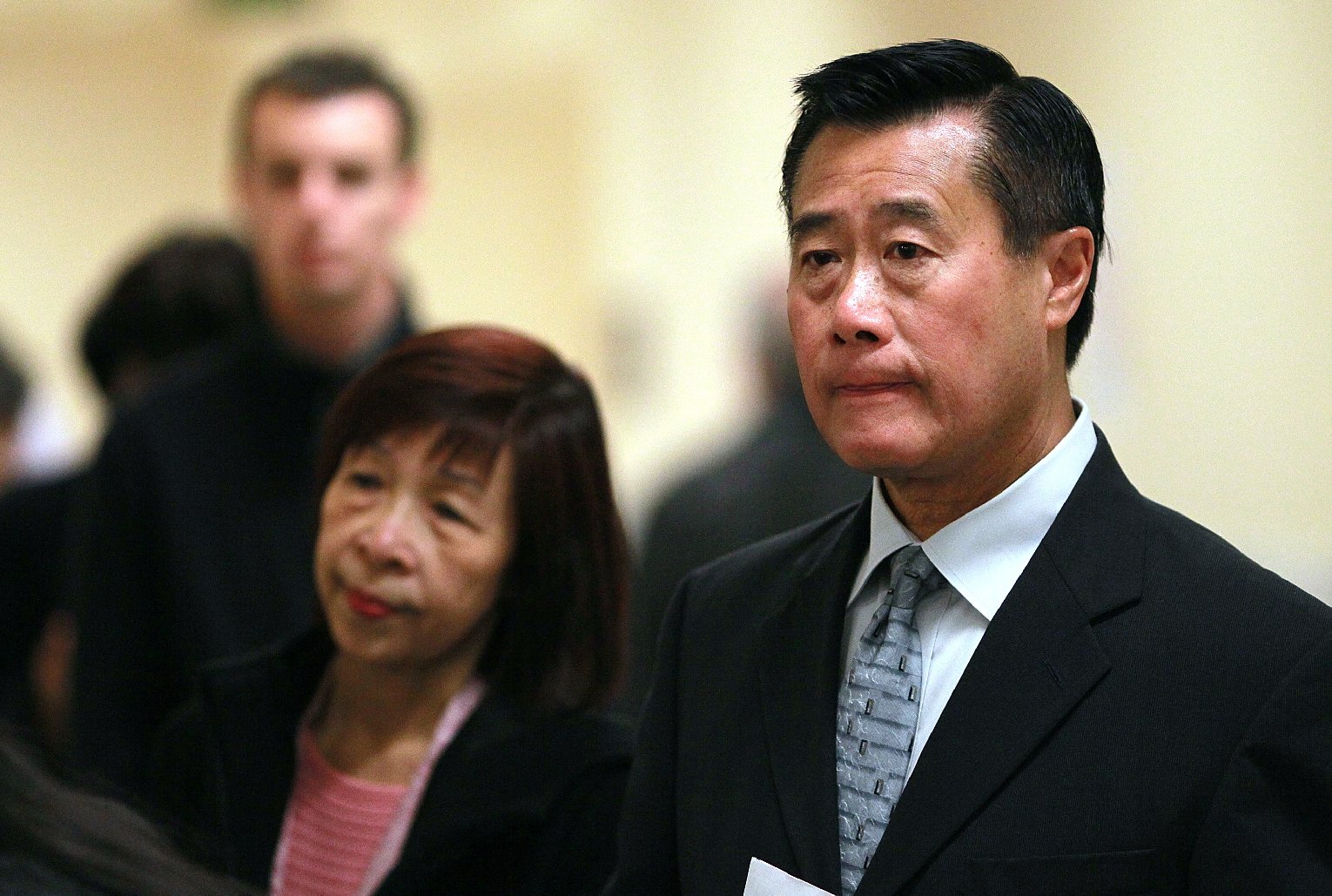
"content": "\u003cfigure id=\"attachment_130562\" class=\"wp-caption aligncenter\" style=\"max-width: 640px\">\u003cimg class=\"size-medium wp-image-130562\" src=\"http://ww2.kqed.org/news/wp-content/uploads/sites/10/2014/03/RS9450_131732221-1-640x430.jpg\" alt=\"State Sen. Leland Yee\" width=\"640\" height=\"430\">\u003cfigcaption class=\"wp-caption-text\">State Sen. Leland Yee in a file photo. (Justin Sullivan/Getty Images)\u003c/figcaption>\u003c/figure>\n\u003cp>\u003cstrong>By Associated Press\u003c/strong>\u003c/p>\n\u003cp>A California state senator who authored gun control legislation asked for campaign donations in exchange for introducing an undercover FBI agent to an arms trafficker, according to \u003ca href=\"http://ww2.kqed.org/news/2014/03/26/a-reporters-guide-to-affidavit-on-leland-yee/\" target=\"_blank\">court documents unsealed Wednesday\u003c/a>.\u003c/p>\n\u003cp>The allegations against state Sen. Leland Yee were outlined in an FBI affidavit in support of a criminal complaint. The affidavit accuses Yee of conspiracy to deal firearms without a license and to illegally import firearms. Yee was arrested Wednesday.\u003c/p>\n\u003cp>Yee is also accused of accepting tens of thousands of dollars in campaign contributions and cash payments to provide introductions, help a client get a contract and influence legislation. He or members of his campaign staff accepted at least $42,800 in cash or campaign contributions from undercover FBI agents in exchange for carrying out the agents' specific requests, the court documents allege.\u003c/p>\n\u003cp>[contextly_sidebar id=\"9e3992bca7fa68932d3a1988ca438b5f\"]\u003c/p>\n\u003cp>Yee discussed helping the agent get weapons worth $500,000 to $2.5 million, including shoulder-fired automatic weapons and missiles, and took him through the entire process of acquiring them from a Muslim separatist group in the Philippines to bringing them to the United States, according to the affidavit by FBI Special Agent Emmanuel V. Pascua.\u003c/p>\n\u003cp>[ad fullwidth]\u003c/p>\n\u003cp>He was unhappy with his life and told the agent he wanted to hide out in the Philippines, according to the affidavit.\u003c/p>\n\u003cp>\"There's a part of me that wants to be like you,'' he told the undercover agent, according to the affidavit. \"You know how I'm going to be like you? Just be a free agent there.\"\u003c/p>\n\u003cp>The introduction with the trafficker took place at a San Francisco restaurant earlier this month, according to the documents. Yee said he wouldn't go to the Philippines until November.\u003c/p>\n\u003cp>\"Once things start to move, it's going to attract attention. We just got to be extra-extra careful,'' he said, according to court documents.\u003c/p>\n\u003cp>The affidavit names Yee and 25 others, including Raymond Chow, a onetime gang leader with ties to San Francisco's Chinatown known as \"Shrimp Boy,\" and Keith Jackson, Yee's campaign aide. Jackson is accused of multiple counts of fraud and conspiracy to commit fraud.\u003c/p>\n\u003cp>The grand total of 26 defendants named in the affidavit are charged with firearms trafficking, money laundering, murder-for-hire, drug distribution, trafficking in contraband cigarettes and honest services fraud.\u003c/p>\n\u003cp>Yee, Jackson and Chow are charged as follows:\u003c/p>\n\u003cp>\u003cstrong>Leland Yee\u003c/strong>\u003c/p>\n\u003cp>· Conspiracy to Traffic in Firearms Without a License, and to Illegally Import Firearms\u003cbr>\n· Scheme to Defraud Citizens of Honest Services\u003c/p>\n\u003cp>\u003cstrong>Keith Jackson\u003c/strong>\u003c/p>\n\u003cp>· Conspiracy to Traffic in Firearms Without a License and to Illegally Import Firearms\u003cbr>\n· Trafficking in Firearms Without a License\u003cbr>\n· Scheme to Defraud Citizens of Honest Services\u003cbr>\n· Use of an Interstate Commerce Facility for the Commission of a Murder-for-Hire\u003cbr>\n· Conspiracy to Distribute Narcotics\u003c/p>\n\u003cp>\u003cstrong>Raymond \"Shrimp Boy\" Chow\u003c/strong>\u003c/p>\n\u003cp>· Money Laundering of Funds Believed to be Proceeds of Specified Unlawful Activity\u003cbr>\n· Money Laundering\u003cbr>\n· Conspiracy to Receive and Transport Stolen Property in Interstate Commerce\u003cbr>\n· Conspiracy to Traffic and Trafficking in Contraband Cigarettes\u003c/p>\n\u003cp>The office of U.S. Attorney Melinda Haag summarized some of the undercover operations leading to the charges in a press release:\u003c/p>\n\u003cp style=\"margin: 12px auto 6px auto;font-family: Helvetica,Arial,Sans-serif;font-style: normal;font-variant: normal;font-weight: normal;font-size: 14px;line-height: normal\">\u003ca style=\"text-decoration: underline\" title=\"View U.S. Attorney Details Charges Against Sen. Leland Yee, Others on Scribd\" href=\"http://www.scribd.com/doc/214745082/U-S-Attorney-Details-Charges-Against-Sen-Leland-Yee-Others\">U.S. Attorney Details Charges Against Sen. Leland Yee, Others\u003c/a> by \u003ca style=\"text-decoration: underline\" title=\"View KQED News's profile on Scribd\" href=\"http://www.scribd.com/KQED_News\">KQED News\u003c/a>\u003c/p>\n\u003cp>\u003c/p>\n\u003cp>\u003ciframe id=\"doc_92839\" src=\"//www.scribd.com/embeds/214745082/content?start_page=1&view_mode=scroll&access_key=key-1bi87pxtvywaye83uwo5&show_recommendations=true\" frameborder=\"0\" scrolling=\"no\" width=\"100%\" height=\"600\">\u003c/iframe>\u003c/p>\n\n",
"disqusIdentifier": "130555 http://ww2.kqed.org/news/?p=130555",
"disqusUrl": "https://ww2.kqed.org/news/2014/03/26/fbi-yee-offered-to-facilitate-arms-trafficking-for-campaign-cash/",
"stats": {
"hasVideo": false,
"hasChartOrMap": false,
"hasAudio": false,
"hasPolis": false,
"wordCount": 559,
"hasGoogleForm": false,
"hasGallery": false,
"hasHearkenModule": false,
"iframeSrcs": [],
"paragraphCount": 23
},
"modified": 1398733171,
"excerpt": "Federal complaint names 26 defendants, alleges money laundering, murder for hire and much more.",
"headData": {
"twImgId": "",
"twTitle": "",
"ogTitle": "",
"ogImgId": "",
"twDescription": "",
"description": "Federal complaint names 26 defendants, alleges money laundering, murder for hire and much more.",
"title": "FBI: Yee Offered to Facilitate Arms Trafficking for Campaign Cash | KQED",
"ogDescription": "",
"schema": {
"@context": "https://schema.org",
"@type": "NewsArticle",
"headline": "FBI: Yee Offered to Facilitate Arms Trafficking for Campaign Cash",
"datePublished": "2014-03-26T17:49:24-07:00",
"dateModified": "2014-04-28T17:59:31-07:00",
"image": "https://cdn.kqed.org/wp-content/uploads/2020/02/KQED-OG-Image@1x.png",
"isAccessibleForFree": "True",
"publisher": {
"@type": "NewsMediaOrganization",
"@id": "https://www.kqed.org/#organization",
"name": "KQED",
"logo": "https://cdn.kqed.org/wp-content/uploads/2020/02/KQED-OG-Image@1x.png",
"url": "https://www.kqed.org",
"sameAs": [
"https://www.facebook.com/KQED",
"https://twitter.com/KQED",
"https://www.instagram.com/kqed/",
"https://www.tiktok.com/@kqedofficial",
"https://www.linkedin.com/company/kqed",
"https://www.youtube.com/channel/UCeC0IOo7i1P_61zVUWbJ4nw"
]
}
}
},
"guestAuthors": [],
"slug": "fbi-yee-offered-to-facilitate-arms-trafficking-for-campaign-cash",
"status": "publish",
"customPermalink": "2014/03/26/u/Leland-Yee-Firearms-Trafficking-FBI/",
"path": "/news/130555/fbi-yee-offered-to-facilitate-arms-trafficking-for-campaign-cash",
"audioTrackLength": null,
"parsedContent": [
{
"type": "contentString",
"content": "\u003cdiv class=\"post-body\">\u003cp>\u003cfigure id=\"attachment_130562\" class=\"wp-caption aligncenter\" style=\"max-width: 640px\">\u003cimg class=\"size-medium wp-image-130562\" src=\"http://ww2.kqed.org/news/wp-content/uploads/sites/10/2014/03/RS9450_131732221-1-640x430.jpg\" alt=\"State Sen. Leland Yee\" width=\"640\" height=\"430\">\u003cfigcaption class=\"wp-caption-text\">State Sen. Leland Yee in a file photo. (Justin Sullivan/Getty Images)\u003c/figcaption>\u003c/figure>\n\u003cp>\u003cstrong>By Associated Press\u003c/strong>\u003c/p>\n\u003cp>A California state senator who authored gun control legislation asked for campaign donations in exchange for introducing an undercover FBI agent to an arms trafficker, according to \u003ca href=\"http://ww2.kqed.org/news/2014/03/26/a-reporters-guide-to-affidavit-on-leland-yee/\" target=\"_blank\">court documents unsealed Wednesday\u003c/a>.\u003c/p>\n\u003cp>The allegations against state Sen. Leland Yee were outlined in an FBI affidavit in support of a criminal complaint. The affidavit accuses Yee of conspiracy to deal firearms without a license and to illegally import firearms. Yee was arrested Wednesday.\u003c/p>\n\u003cp>Yee is also accused of accepting tens of thousands of dollars in campaign contributions and cash payments to provide introductions, help a client get a contract and influence legislation. He or members of his campaign staff accepted at least $42,800 in cash or campaign contributions from undercover FBI agents in exchange for carrying out the agents' specific requests, the court documents allege.\u003c/p>\n\u003cp>\u003c/p>\u003cp>\u003c/p>\u003cp>\u003c/p>\n\u003cp>Yee discussed helping the agent get weapons worth $500,000 to $2.5 million, including shoulder-fired automatic weapons and missiles, and took him through the entire process of acquiring them from a Muslim separatist group in the Philippines to bringing them to the United States, according to the affidavit by FBI Special Agent Emmanuel V. Pascua.\u003c/p>\n\u003cp>\u003c/p>\u003c/div>",
"attributes": {
"named": {},
"numeric": []
}
},
{
"type": "component",
"content": "",
"name": "ad",
"attributes": {
"named": {
"label": "fullwidth"
},
"numeric": [
"fullwidth"
]
}
},
{
"type": "contentString",
"content": "\u003cdiv class=\"post-body\">\u003cp>\u003c/p>\n\u003cp>He was unhappy with his life and told the agent he wanted to hide out in the Philippines, according to the affidavit.\u003c/p>\n\u003cp>\"There's a part of me that wants to be like you,'' he told the undercover agent, according to the affidavit. \"You know how I'm going to be like you? Just be a free agent there.\"\u003c/p>\n\u003cp>The introduction with the trafficker took place at a San Francisco restaurant earlier this month, according to the documents. Yee said he wouldn't go to the Philippines until November.\u003c/p>\n\u003cp>\"Once things start to move, it's going to attract attention. We just got to be extra-extra careful,'' he said, according to court documents.\u003c/p>\n\u003cp>The affidavit names Yee and 25 others, including Raymond Chow, a onetime gang leader with ties to San Francisco's Chinatown known as \"Shrimp Boy,\" and Keith Jackson, Yee's campaign aide. Jackson is accused of multiple counts of fraud and conspiracy to commit fraud.\u003c/p>\n\u003cp>The grand total of 26 defendants named in the affidavit are charged with firearms trafficking, money laundering, murder-for-hire, drug distribution, trafficking in contraband cigarettes and honest services fraud.\u003c/p>\n\u003cp>Yee, Jackson and Chow are charged as follows:\u003c/p>\n\u003cp>\u003cstrong>Leland Yee\u003c/strong>\u003c/p>\n\u003cp>· Conspiracy to Traffic in Firearms Without a License, and to Illegally Import Firearms\u003cbr>\n· Scheme to Defraud Citizens of Honest Services\u003c/p>\n\u003cp>\u003cstrong>Keith Jackson\u003c/strong>\u003c/p>\n\u003cp>· Conspiracy to Traffic in Firearms Without a License and to Illegally Import Firearms\u003cbr>\n· Trafficking in Firearms Without a License\u003cbr>\n· Scheme to Defraud Citizens of Honest Services\u003cbr>\n· Use of an Interstate Commerce Facility for the Commission of a Murder-for-Hire\u003cbr>\n· Conspiracy to Distribute Narcotics\u003c/p>\n\u003cp>\u003cstrong>Raymond \"Shrimp Boy\" Chow\u003c/strong>\u003c/p>\n\u003cp>· Money Laundering of Funds Believed to be Proceeds of Specified Unlawful Activity\u003cbr>\n· Money Laundering\u003cbr>\n· Conspiracy to Receive and Transport Stolen Property in Interstate Commerce\u003cbr>\n· Conspiracy to Traffic and Trafficking in Contraband Cigarettes\u003c/p>\n\u003cp>The office of U.S. Attorney Melinda Haag summarized some of the undercover operations leading to the charges in a press release:\u003c/p>\n\u003cp style=\"margin: 12px auto 6px auto;font-family: Helvetica,Arial,Sans-serif;font-style: normal;font-variant: normal;font-weight: normal;font-size: 14px;line-height: normal\">\u003ca style=\"text-decoration: underline\" title=\"View U.S. Attorney Details Charges Against Sen. Leland Yee, Others on Scribd\" href=\"http://www.scribd.com/doc/214745082/U-S-Attorney-Details-Charges-Against-Sen-Leland-Yee-Others\">U.S. Attorney Details Charges Against Sen. Leland Yee, Others\u003c/a> by \u003ca style=\"text-decoration: underline\" title=\"View KQED News's profile on Scribd\" href=\"http://www.scribd.com/KQED_News\">KQED News\u003c/a>\u003c/p>\n\u003cp>\u003c/p>\n\u003cp>\u003ciframe id=\"doc_92839\" src=\"//www.scribd.com/embeds/214745082/content?start_page=1&view_mode=scroll&access_key=key-1bi87pxtvywaye83uwo5&show_recommendations=true\" frameborder=\"0\" scrolling=\"no\" width=\"100%\" height=\"600\">\u003c/iframe>\u003c/p>\n\n\u003c/div>\u003c/p>",
"attributes": {
"named": {},
"numeric": []
}
}
],
"link": "/news/130555/fbi-yee-offered-to-facilitate-arms-trafficking-for-campaign-cash",
"authors": [
"182"
],
"programs": [
"news_6944"
],
"categories": [
"news_6188",
"news_13"
],
"tags": [
"news_152",
"news_2865"
],
"featImg": "news_130562",
"label": "news_6944"
},
"news_130319": {
"type": "posts",
"id": "news_130319",
"meta": {
"index": "posts_1716263798",
"site": "news",
"id": "130319",
"score": null,
"sort": [
1395770895000
]
},
"parent": 0,
"labelTerm": {
"site": "news",
"term": 6944
},
"blocks": [],
"publishDate": 1395770895,
"format": "aside",
"disqusTitle": "Berkeley School Board Set to Slash Funding for Cooking and Gardening Program",
"title": "Berkeley School Board Set to Slash Funding for Cooking and Gardening Program",
"headTitle": "News Fix | KQED News",
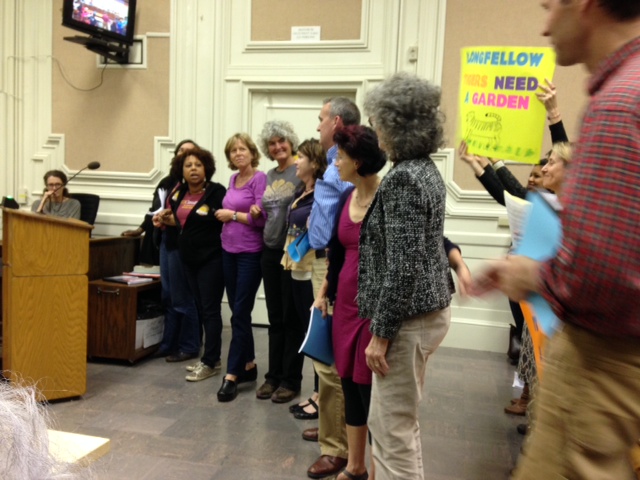
"content": "\u003cfigure id=\"attachment_130320\" class=\"wp-caption aligncenter\" style=\"max-width: 640px\">\u003ca href=\"http://ww2.kqed.org/news/wp-content/uploads/sites/10/2014/03/CG-photo.jpg\">\u003cimg class=\"size-full wp-image-130320\" src=\"http://ww2.kqed.org/news/wp-content/uploads/sites/10/2014/03/CG-photo.jpg\" alt=\"Supporters of the BUSD cooking and gardening program speak out at the March 12 BUSD Board meeting. Photo: Mary Flaherty/Berkeleyside\" width=\"640\" height=\"480\">\u003c/a>\u003cfigcaption class=\"wp-caption-text\">Supporters of the BUSD cooking and gardening program speak out at the March 12 BUSD Board meeting. Photo: Mary Flaherty/Berkeleyside\u003c/figcaption>\u003c/figure>\n\u003cp>\u003cstrong>Mary Flaherty, \u003ca href=\"http://www.berkeleyside.com/\" target=\"_blank\">Berkeleyside\u003c/a>\u003c/strong>\u003c/p>\n\u003cp>For the past few months the Berkeley school district has been struggling along with funding for its beloved cooking and gardening program. After some back-and-forth on proposals this winter, the board is now expected to vote March 26 to approve \u003ca href=\"http://www.berkeleyside.com/2014/01/29/cooking-may-be-cut-in-berkeley-schools-edible-program/\" target=\"_blank\">very reduced funding for gardening classes only in the 2014-15 school year\u003c/a>.\u003c/p>\n\u003cp>Supporters – teachers, students and parents – pleaded with the school board at its March 12 meeting not to make further cuts to the cooking and gardening classes, which lost an annual $1.9 million in federal funding last fall. The program is already operating on less than half its former budget this year – about $850,000 — with bridge funds. Next year’s budget would be under $500,000.\u003c/p>\n\u003cp>“This has been a very difficult process for all of us,” Superintendent Donald Evans said. “This is a nationally recognized program. But that was when we had $2 million. We can no longer retain that type of program.”\u003c/p>\n\u003cp>The cuts affect cooking and gardening classes at every school in the district, except King Middle School, where the garden is operated under separate funding by the non-profit Edible Schoolyard Project, founded by Alice Waters of Chez Panisse.\u003c/p>\n\u003cp>[ad fullwidth]\u003c/p>\n\u003cp>During their long discussion, the board members appeared to agree that the current BUSD program needs to eliminate its cooking classes for now and offer limited gardening classes. The latest proposal called for gardening classes for pre-kindergarten through grade 7 (eliminating grades 8-12). However, board members said they’d also like to fund the garden at Berkeley Technical Academy (which is shared by the Independent Study students), and that will be added to the proposal the board is expected to pass Wednesday, March 26.\u003c/p>\n\u003cp>But even at a reduced cost of $485,000 for the coming year, with only $178,000 requested in new funding, the board members were very concerned about whether the budget could accommodate the outlay.\u003c/p>\n\u003cp>“I’m struggling with this,” board member Karen Hemphill said. “We’re having a lot of things come to the board, piecemeal, that are all a priority, that all have their supporters. Nobody here doesn’t love this program.”\u003c/p>\n\u003cp>The board will be committing to funding only one year right now. Board members recognized that a longer term financial commitment is probably better for attracting major donors. However, with changes in school funding this coming year (the new \u003ca href=\"http://www.cde.ca.gov/fg/aa/lc/\" target=\"_blank\">Local Control Funding Formula\u003c/a> from the state), the district is still sorting out priorities for any new monies it gets.\u003c/p>\n\u003cp>Board members discussed allowing individual PTAs to raise funds supporting cooking classes in their own schools. Hemphill was initially opposed, saying it would create inequalities between the schools. But by the end of the discussion, the board members seemed to agree that if a principal signed off, they were fine with PTA-funded cooking classes.\u003c/p>\n\u003cp>Another possibility for the future is involvement from the Edible Schoolyard Project which has offered to help run BUSD’s middle school cooking and gardening program once a blueprint for sustainability is in place.\u003c/p>\n\u003cp>Board president Josh Daniels said he is hoping that \u003ca href=\"http://www.berkeleyside.com/2014/03/14/berkeley-likes-taxing-soda-but-support-for-parks-pools-lags/\" target=\"_blank\">a proposed city tax on sugar-sweetened beverages\u003c/a> (not just soda) for November’s election, will help fund the cooking and gardening program. The tax — which the City Council has not yet decided to put on the ballot — would bring in an estimated $1.5 million a year, say supporters. That’s less than the $2 million cost of the full cooking and gardening program, and it’s unlikely all the proceeds from the tax would go to the program. A further hurdle is that any funding for the cooking and gardening program would have to be re-approved annually by the city council, if, as expected, the tax is a general tax (which would only require a 50% vote to pass). A special tax, which would segregate the funds for specific uses, requires a two-thirds vote to pass.\u003c/p>\n\u003cp>\u003cem>Starting March 26 the board moves its meeting location to 2020 Bonar St. Meetings will no longer take place at 2134 Martin Luther King Jr. Way. The meeting starts at 7:30 p.m.\u003c/em>\u003c/p>\n\u003cp>\u003c/p>\n\u003cp>\u003cem>KQED News Associate \u003ca href=\"http://www.berkeleyside.com/\" target=\"_blank\">Berkeleyside\u003c/a> is an independently owned news website based in Berkeley, Calif. \u003ca href=\"http://berkeleyside.us2.list-manage.com/subscribe?u=4851428a10883a05193b1dd6c&id=aad4b5ee64\" target=\"_blank\">Click here\u003c/a> if you would you like to receive the latest Berkeley news in your inbox once a day for free with Berkeleyside’s Daily Briefing email.\u003c/em>\u003c/p>\n\n",
"disqusIdentifier": "130319 http://ww2.kqed.org/news/?p=130319",
"disqusUrl": "https://ww2.kqed.org/news/2014/03/25/berkeley-school-board-set-to-slash-budget-for-beloved-cooking-and-gardening-program/",
"stats": {
"hasVideo": false,
"hasChartOrMap": false,
"hasAudio": false,
"hasPolis": false,
"wordCount": 781,
"hasGoogleForm": false,
"hasGallery": false,
"hasHearkenModule": false,
"iframeSrcs": [],
"paragraphCount": 16
},
"modified": 1395778482,
"excerpt": "Faced with budget shortfalls, the Berkeley School District opts to cut cooking and gardening classes.",
"headData": {
"twImgId": "",
"twTitle": "",
"ogTitle": "",
"ogImgId": "",
"twDescription": "",
"description": "Faced with budget shortfalls, the Berkeley School District opts to cut cooking and gardening classes.",
"title": "Berkeley School Board Set to Slash Funding for Cooking and Gardening Program | KQED",
"ogDescription": "",
"schema": {
"@context": "https://schema.org",
"@type": "NewsArticle",
"headline": "Berkeley School Board Set to Slash Funding for Cooking and Gardening Program",
"datePublished": "2014-03-25T11:08:15-07:00",
"dateModified": "2014-03-25T13:14:42-07:00",
"image": "https://cdn.kqed.org/wp-content/uploads/2020/02/KQED-OG-Image@1x.png",
"isAccessibleForFree": "True",
"publisher": {
"@type": "NewsMediaOrganization",
"@id": "https://www.kqed.org/#organization",
"name": "KQED",
"logo": "https://cdn.kqed.org/wp-content/uploads/2020/02/KQED-OG-Image@1x.png",
"url": "https://www.kqed.org",
"sameAs": [
"https://www.facebook.com/KQED",
"https://twitter.com/KQED",
"https://www.instagram.com/kqed/",
"https://www.tiktok.com/@kqedofficial",
"https://www.linkedin.com/company/kqed",
"https://www.youtube.com/channel/UCeC0IOo7i1P_61zVUWbJ4nw"
]
}
}
},
"guestAuthors": [],
"slug": "berkeley-school-board-set-to-slash-budget-for-beloved-cooking-and-gardening-program",
"status": "publish",
"customPermalink": "2014/03/25/berkeley-school-board-set-to-slash-budget-for-cooking-and-gardening/",
"path": "/news/130319/berkeley-school-board-set-to-slash-budget-for-beloved-cooking-and-gardening-program",
"audioTrackLength": null,
"parsedContent": [
{
"type": "contentString",
"content": "\u003cdiv class=\"post-body\">\u003cp>\u003cfigure id=\"attachment_130320\" class=\"wp-caption aligncenter\" style=\"max-width: 640px\">\u003ca href=\"http://ww2.kqed.org/news/wp-content/uploads/sites/10/2014/03/CG-photo.jpg\">\u003cimg class=\"size-full wp-image-130320\" src=\"http://ww2.kqed.org/news/wp-content/uploads/sites/10/2014/03/CG-photo.jpg\" alt=\"Supporters of the BUSD cooking and gardening program speak out at the March 12 BUSD Board meeting. Photo: Mary Flaherty/Berkeleyside\" width=\"640\" height=\"480\">\u003c/a>\u003cfigcaption class=\"wp-caption-text\">Supporters of the BUSD cooking and gardening program speak out at the March 12 BUSD Board meeting. Photo: Mary Flaherty/Berkeleyside\u003c/figcaption>\u003c/figure>\n\u003cp>\u003cstrong>Mary Flaherty, \u003ca href=\"http://www.berkeleyside.com/\" target=\"_blank\">Berkeleyside\u003c/a>\u003c/strong>\u003c/p>\n\u003cp>For the past few months the Berkeley school district has been struggling along with funding for its beloved cooking and gardening program. After some back-and-forth on proposals this winter, the board is now expected to vote March 26 to approve \u003ca href=\"http://www.berkeleyside.com/2014/01/29/cooking-may-be-cut-in-berkeley-schools-edible-program/\" target=\"_blank\">very reduced funding for gardening classes only in the 2014-15 school year\u003c/a>.\u003c/p>\n\u003cp>Supporters – teachers, students and parents – pleaded with the school board at its March 12 meeting not to make further cuts to the cooking and gardening classes, which lost an annual $1.9 million in federal funding last fall. The program is already operating on less than half its former budget this year – about $850,000 — with bridge funds. Next year’s budget would be under $500,000.\u003c/p>\n\u003cp>“This has been a very difficult process for all of us,” Superintendent Donald Evans said. “This is a nationally recognized program. But that was when we had $2 million. We can no longer retain that type of program.”\u003c/p>\n\u003cp>The cuts affect cooking and gardening classes at every school in the district, except King Middle School, where the garden is operated under separate funding by the non-profit Edible Schoolyard Project, founded by Alice Waters of Chez Panisse.\u003c/p>\n\u003cp>\u003c/p>\u003c/div>",
"attributes": {
"named": {},
"numeric": []
}
},
{
"type": "component",
"content": "",
"name": "ad",
"attributes": {
"named": {
"label": "fullwidth"
},
"numeric": [
"fullwidth"
]
}
},
{
"type": "contentString",
"content": "\u003cdiv class=\"post-body\">\u003cp>\u003c/p>\n\u003cp>During their long discussion, the board members appeared to agree that the current BUSD program needs to eliminate its cooking classes for now and offer limited gardening classes. The latest proposal called for gardening classes for pre-kindergarten through grade 7 (eliminating grades 8-12). However, board members said they’d also like to fund the garden at Berkeley Technical Academy (which is shared by the Independent Study students), and that will be added to the proposal the board is expected to pass Wednesday, March 26.\u003c/p>\n\u003cp>But even at a reduced cost of $485,000 for the coming year, with only $178,000 requested in new funding, the board members were very concerned about whether the budget could accommodate the outlay.\u003c/p>\n\u003cp>“I’m struggling with this,” board member Karen Hemphill said. “We’re having a lot of things come to the board, piecemeal, that are all a priority, that all have their supporters. Nobody here doesn’t love this program.”\u003c/p>\n\u003cp>The board will be committing to funding only one year right now. Board members recognized that a longer term financial commitment is probably better for attracting major donors. However, with changes in school funding this coming year (the new \u003ca href=\"http://www.cde.ca.gov/fg/aa/lc/\" target=\"_blank\">Local Control Funding Formula\u003c/a> from the state), the district is still sorting out priorities for any new monies it gets.\u003c/p>\n\u003cp>Board members discussed allowing individual PTAs to raise funds supporting cooking classes in their own schools. Hemphill was initially opposed, saying it would create inequalities between the schools. But by the end of the discussion, the board members seemed to agree that if a principal signed off, they were fine with PTA-funded cooking classes.\u003c/p>\n\u003cp>Another possibility for the future is involvement from the Edible Schoolyard Project which has offered to help run BUSD’s middle school cooking and gardening program once a blueprint for sustainability is in place.\u003c/p>\n\u003cp>Board president Josh Daniels said he is hoping that \u003ca href=\"http://www.berkeleyside.com/2014/03/14/berkeley-likes-taxing-soda-but-support-for-parks-pools-lags/\" target=\"_blank\">a proposed city tax on sugar-sweetened beverages\u003c/a> (not just soda) for November’s election, will help fund the cooking and gardening program. The tax — which the City Council has not yet decided to put on the ballot — would bring in an estimated $1.5 million a year, say supporters. That’s less than the $2 million cost of the full cooking and gardening program, and it’s unlikely all the proceeds from the tax would go to the program. A further hurdle is that any funding for the cooking and gardening program would have to be re-approved annually by the city council, if, as expected, the tax is a general tax (which would only require a 50% vote to pass). A special tax, which would segregate the funds for specific uses, requires a two-thirds vote to pass.\u003c/p>\n\u003cp>\u003cem>Starting March 26 the board moves its meeting location to 2020 Bonar St. Meetings will no longer take place at 2134 Martin Luther King Jr. Way. The meeting starts at 7:30 p.m.\u003c/em>\u003c/p>\n\u003cp>\u003c/p>\n\u003cp>\u003cem>KQED News Associate \u003ca href=\"http://www.berkeleyside.com/\" target=\"_blank\">Berkeleyside\u003c/a> is an independently owned news website based in Berkeley, Calif. \u003ca href=\"http://berkeleyside.us2.list-manage.com/subscribe?u=4851428a10883a05193b1dd6c&id=aad4b5ee64\" target=\"_blank\">Click here\u003c/a> if you would you like to receive the latest Berkeley news in your inbox once a day for free with Berkeleyside’s Daily Briefing email.\u003c/em>\u003c/p>\n\n\u003c/div>\u003c/p>",
"attributes": {
"named": {},
"numeric": []
}
}
],
"link": "/news/130319/berkeley-school-board-set-to-slash-budget-for-beloved-cooking-and-gardening-program",
"authors": [
"236"
],
"programs": [
"news_6944"
],
"categories": [
"news_1758",
"news_18540"
],
"tags": [
"news_129",
"news_3854",
"news_5620",
"news_152"
],
"affiliates": [
"news_5078"
],
"featImg": "news_130320",
"label": "news_6944"
},
"news_128668": {
"type": "posts",
"id": "news_128668",
"meta": {
"index": "posts_1716263798",
"site": "news",
"id": "128668",
"score": null,
"sort": [
1395255613000
]
},
"guestAuthors": [],
"slug": "san-francisco-poised-to-severely-restrict-e-cigarettes",
"title": "San Francisco Approves E-Cigarette Regulations",
"publishDate": 1395255613,
"format": "aside",
"headTitle": "San Francisco Approves E-Cigarette Regulations | KQED",
"labelTerm": {
"term": 6944,
"site": "news"
},
"content": "\u003cp>\u003cstrong>By Mina Kim and Lisa Pickoff-White\u003c/strong>\u003c/p>\n\u003cfigure id=\"attachment_128675\" class=\"wp-caption aligncenter\" style=\"max-width: 640px\">\u003ca href=\"http://ww2.kqed.org/news/wp-content/uploads/sites/10/2014/03/RS9066_470756133-lpr.jpg\">\u003cimg loading=\"lazy\" decoding=\"async\" class=\"size-medium wp-image-128675\" src=\"http://ww2.kqed.org/news/wp-content/uploads/sites/10/2014/03/RS9066_470756133-lpr-640x426.jpg\" alt=\"Julia Boyle enjoys an electronic cigarette at the Vapor Shark store. (Joe Raedle/Getty Images))\" width=\"640\" height=\"426\">\u003c/a>\u003cfigcaption class=\"wp-caption-text\">Julia Boyle enjoys an electronic cigarette at the Vapor Shark store. (Joe Raedle/Getty Images))\u003c/figcaption>\u003c/figure>\n\u003cp>\u003cstrong>Update March 19:\u003c/strong> The San Francisco Board of Supervisors unanimously voted on Tuesday to treat electronic cigarettes as regular cigarettes, effectively banning them at bars, restaurants and businesses. Sellers will also have to secure a special permit, and e-cigarettes can’t be sold at pharmacies and other businesses where tobacco sales are banned.\u003c/p>\n\u003cp>\u003cstrong>Original story:\u003c/strong> A committee of the San Francisco Board of Supervisors debated on Thursday afternoon (March 7) whether to restrict the use of electronic cigarettes to areas where smoking tobacco is allowed. Supporters and opponents packed the room.\u003c/p>\n\u003cp>“The VA Medical Center recommended I try e-cigarettes to stop smoking,” Michael Barger said during public comments. “Within three weeks I stopped, and now this is my vaporizer.”\u003c/p>\n\u003cp>Several other cities around the country already have restricted e-cigarettes, the battery-powered devices that heat up liquid nicotine so that the vapor can be inhaled. On Tuesday, Los Angeles City Council members placed “vaping” in the same category as tobacco smoking. Long Beach then passed a stricter ordinance, also banning shops and “vaping” lounges. Richmond passed a ban in December. Some states also are considering regulations, and a U.S. Senate bill introduced last month would curb electronic cigarette marketing while the fast-growing industry awaits regulation by the Food and Drug Administration.\u003c/p>\n\u003cp>[ad fullwidth]\u003c/p>\n\u003cp>Thursday’s hearing coincided with the release of a \u003ca href=\"http://archpedi.jamanetwork.com/article.aspx?articleid=1840772\" target=\"_blank\" rel=\"noopener\">UC San Francisco study\u003c/a> that found teens who try e-cigarettes are more likely to try cigarettes as well.\u003c/p>\n\u003cp>“We found that e-cigarettes were associated with more, not less, cigarette smoking among adolescents,” said lead author Lauren Dutra, a postdoctoral fellow at the UCSF \u003ca href=\"http://tobacco.ucsf.edu/\" target=\"_blank\" rel=\"noopener\">Center for Tobacco Control Research and Education\u003c/a>. “E-cigarettes are likely to be gateway devices for nicotine addiction among youth, opening up a whole new market for tobacco.”\u003c/p>\n\u003cp>The study analyzed responses from U.S. middle and high school students to the 2011 and 2012 National Youth Tobacco Survey. The study didn’t examine whether youths initiated smoking with conventional cigarettes or e-cigarettes. But the authors noted that about 20 percent of middle school students and about 7 percent of high school students who had ever used e-cigarettes had never smoked regular cigarettes, which indicates that some kids are introduced to the addictive drug nicotine through e-cigarettes, the authors said.\u003c/p>\n\u003cp>“I can’t tell you, for example, that e-cigarettes cause smoking among adolescents,” Dutra said. “But what we saw is among e-cig users, they were more likely to be cigarette smokers. Those who use e-cigs and conventional tobacco cigs were less likely to quit smoking, even though they reported being more likely to be planning to quit in the next year. They were also more likely to be heavier smokers.”\u003c/p>\n\u003cp>The legislation could be considered by the full board on Tuesday.\u003c/p>\n\u003cp>\u003ciframe loading=\"lazy\" src=\"https://w.soundcloud.com/player/?url=https%3A//api.soundcloud.com/tracks/138312815&color=ff5500&auto_play=false&hide_related=false&show_artwork=true\" frameborder=\"no\" scrolling=\"no\" width=\"100%\" height=\"166\">\u003c/iframe>\u003c/p>\n\u003cp>\u003c/p>\n\u003cp>\u003cem>The Associated Press also contributed to this report.\u003c/em>\u003c/p>\n\n",
"blocks": [],
"excerpt": "New restrictions will treat e-cigarettes the same as cigarettes.\r\n",
"status": "publish",
"parent": 0,
"modified": 1726009598,
"stats": {
"hasAudio": true,
"hasVideo": false,
"hasChartOrMap": false,
"iframeSrcs": [],
"hasGoogleForm": false,
"hasGallery": false,
"hasHearkenModule": false,
"hasPolis": false,
"paragraphCount": 14,
"wordCount": 519
},
"headData": {
"title": "San Francisco Approves E-Cigarette Regulations | KQED",
"description": "New restrictions will treat e-cigarettes the same as cigarettes.\r\n",
"ogTitle": "",
"ogDescription": "",
"ogImgId": "",
"twTitle": "",
"twDescription": "",
"twImgId": "",
"schema": {
"@context": "https://schema.org",
"@type": "NewsArticle",
"headline": "San Francisco Approves E-Cigarette Regulations",
"datePublished": "2014-03-19T12:00:13-07:00",
"dateModified": "2024-09-10T16:06:38-07:00",
"image": "https://cdn.kqed.org/wp-content/uploads/2020/02/KQED-OG-Image@1x.png",
"isAccessibleForFree": "True",
"publisher": {
"@type": "NewsMediaOrganization",
"@id": "https://www.kqed.org/#organization",
"name": "KQED",
"logo": "https://cdn.kqed.org/wp-content/uploads/2020/02/KQED-OG-Image@1x.png",
"url": "https://www.kqed.org",
"sameAs": [
"https://www.facebook.com/KQED",
"https://twitter.com/KQED",
"https://www.instagram.com/kqed/",
"https://www.tiktok.com/@kqedofficial",
"https://www.linkedin.com/company/kqed",
"https://www.youtube.com/channel/UCeC0IOo7i1P_61zVUWbJ4nw"
]
}
}
},
"sticky": false,
"customPermalink": "2014/03/06/san-francisco-poised-to-ban-e-cigarettes-to-smoking-sections/",
"path": "/news/128668/san-francisco-poised-to-severely-restrict-e-cigarettes",
"audioTrackLength": null,
"parsedContent": [
{
"type": "contentString",
"content": "\u003cdiv class=\"post-body\">\u003cp>\u003cp>\u003cstrong>By Mina Kim and Lisa Pickoff-White\u003c/strong>\u003c/p>\n\u003cfigure id=\"attachment_128675\" class=\"wp-caption aligncenter\" style=\"max-width: 640px\">\u003ca href=\"http://ww2.kqed.org/news/wp-content/uploads/sites/10/2014/03/RS9066_470756133-lpr.jpg\">\u003cimg loading=\"lazy\" decoding=\"async\" class=\"size-medium wp-image-128675\" src=\"http://ww2.kqed.org/news/wp-content/uploads/sites/10/2014/03/RS9066_470756133-lpr-640x426.jpg\" alt=\"Julia Boyle enjoys an electronic cigarette at the Vapor Shark store. (Joe Raedle/Getty Images))\" width=\"640\" height=\"426\">\u003c/a>\u003cfigcaption class=\"wp-caption-text\">Julia Boyle enjoys an electronic cigarette at the Vapor Shark store. (Joe Raedle/Getty Images))\u003c/figcaption>\u003c/figure>\n\u003cp>\u003cstrong>Update March 19:\u003c/strong> The San Francisco Board of Supervisors unanimously voted on Tuesday to treat electronic cigarettes as regular cigarettes, effectively banning them at bars, restaurants and businesses. Sellers will also have to secure a special permit, and e-cigarettes can’t be sold at pharmacies and other businesses where tobacco sales are banned.\u003c/p>\n\u003cp>\u003cstrong>Original story:\u003c/strong> A committee of the San Francisco Board of Supervisors debated on Thursday afternoon (March 7) whether to restrict the use of electronic cigarettes to areas where smoking tobacco is allowed. Supporters and opponents packed the room.\u003c/p>\n\u003cp>“The VA Medical Center recommended I try e-cigarettes to stop smoking,” Michael Barger said during public comments. “Within three weeks I stopped, and now this is my vaporizer.”\u003c/p>\n\u003cp>Several other cities around the country already have restricted e-cigarettes, the battery-powered devices that heat up liquid nicotine so that the vapor can be inhaled. On Tuesday, Los Angeles City Council members placed “vaping” in the same category as tobacco smoking. Long Beach then passed a stricter ordinance, also banning shops and “vaping” lounges. Richmond passed a ban in December. Some states also are considering regulations, and a U.S. Senate bill introduced last month would curb electronic cigarette marketing while the fast-growing industry awaits regulation by the Food and Drug Administration.\u003c/p>\n\u003cp>\u003c/p>\u003c/div>",
"attributes": {
"named": {},
"numeric": []
}
},
{
"type": "component",
"content": "",
"name": "ad",
"attributes": {
"named": {
"label": "fullwidth"
},
"numeric": [
"fullwidth"
]
}
},
{
"type": "contentString",
"content": "\u003cdiv class=\"post-body\">\u003cp>\u003c/p>\n\u003cp>Thursday’s hearing coincided with the release of a \u003ca href=\"http://archpedi.jamanetwork.com/article.aspx?articleid=1840772\" target=\"_blank\" rel=\"noopener\">UC San Francisco study\u003c/a> that found teens who try e-cigarettes are more likely to try cigarettes as well.\u003c/p>\n\u003cp>“We found that e-cigarettes were associated with more, not less, cigarette smoking among adolescents,” said lead author Lauren Dutra, a postdoctoral fellow at the UCSF \u003ca href=\"http://tobacco.ucsf.edu/\" target=\"_blank\" rel=\"noopener\">Center for Tobacco Control Research and Education\u003c/a>. “E-cigarettes are likely to be gateway devices for nicotine addiction among youth, opening up a whole new market for tobacco.”\u003c/p>\n\u003cp>The study analyzed responses from U.S. middle and high school students to the 2011 and 2012 National Youth Tobacco Survey. The study didn’t examine whether youths initiated smoking with conventional cigarettes or e-cigarettes. But the authors noted that about 20 percent of middle school students and about 7 percent of high school students who had ever used e-cigarettes had never smoked regular cigarettes, which indicates that some kids are introduced to the addictive drug nicotine through e-cigarettes, the authors said.\u003c/p>\n\u003cp>“I can’t tell you, for example, that e-cigarettes cause smoking among adolescents,” Dutra said. “But what we saw is among e-cig users, they were more likely to be cigarette smokers. Those who use e-cigs and conventional tobacco cigs were less likely to quit smoking, even though they reported being more likely to be planning to quit in the next year. They were also more likely to be heavier smokers.”\u003c/p>\n\u003cp>The legislation could be considered by the full board on Tuesday.\u003c/p>\n\u003cp>\u003ciframe loading=\"lazy\" src=\"https://w.soundcloud.com/player/?url=https%3A//api.soundcloud.com/tracks/138312815&color=ff5500&auto_play=false&hide_related=false&show_artwork=true\" frameborder=\"no\" scrolling=\"no\" width=\"100%\" height=\"166\">\u003c/iframe>\u003c/p>\n\u003cp>\u003c/p>\n\u003cp>\u003cem>The Associated Press also contributed to this report.\u003c/em>\u003c/p>\n\n\u003c/div>\u003c/p>",
"attributes": {
"named": {},
"numeric": []
}
}
],
"link": "/news/128668/san-francisco-poised-to-severely-restrict-e-cigarettes",
"authors": [
"237"
],
"programs": [
"news_6944"
],
"categories": [
"news_457",
"news_8"
],
"tags": [
"news_152",
"news_18543",
"news_38",
"news_196",
"news_458",
"news_2629"
],
"featImg": "news_128675",
"label": "news_6944"
},
"news_129760": {
"type": "posts",
"id": "news_129760",
"meta": {
"index": "posts_1716263798",
"site": "news",
"id": "129760",
"score": null,
"sort": [
1395185953000
]
},
"guestAuthors": [],
"slug": "oakland-mayor-jean-quan-on-crime-occupy-an-as-stadium-and-more-crime",
"title": "Oakland Mayor Jean Quan on Crime, Occupy, an A's Stadium ... and More Crime",
"publishDate": 1395185953,
"format": "aside",
"headTitle": "Oakland Mayor Jean Quan on Crime, Occupy, an A’s Stadium … and More Crime | KQED",
"labelTerm": {
"term": 6944,
"site": "news"
},
"content": "\u003cfigure id=\"attachment_129833\" class=\"wp-caption aligncenter\" style=\"max-width: 640px\">\u003cimg loading=\"lazy\" decoding=\"async\" class=\"size-full wp-image-129833 \" src=\"http://ww2.kqed.org/news/wp-content/uploads/sites/10/2014/03/JeanQuan.jpg\" alt=\"Oakland mayor Jean Quan\" width=\"640\" height=\"360\">\u003cfigcaption class=\"wp-caption-text\">Jean Quan (Justin Sullivan/Getty Images)\u003c/figcaption>\u003c/figure>\n\u003cp>Oakland Mayor Jean Quan and newly appointment City Administrator Fred Blackwell joined \u003ca href=\"http://www.kqed.org/a/forum/R201403180900\">KQED’s “Forum” \u003c/a>on Tuesday morning to speak about all the good things taking place in the city: increased revenue, a growing nightlife, \u003ca href=\"http://www.contracostatimes.com/news/ci_25338515/mega-development-getting-underway-oakland\">new developments like the Brooklyn Basin project\u003c/a> and, according to Quan, a reduction in crime.\u003c/p>\n\u003cp>But where crime is concerned, listeners had a very different view.\u003c/p>\n\u003cp>Quan credited reorganization in the police department and the city’s cease-fire program with major gains in fighting crime. Of the last seven months, Quan said:\u003c/p>\n\u003cp>“Shootings are down 41 percent, robberies are down 29 percent, residential burglaries are down 33 percent. Even car thefts, which is sort of the problem statewide, are down 14 percent.”\u003c/p>\n\u003cp>“Forum” listeners pushed back. One listener with the Twitter handle @GonzOakland sent this tweet: “Mayor Quan just told you Oakland is getting safer. It isn’t. The murder rate dipped last year, but it is way up this year.”\u003c/p>\n\u003cp>[ad fullwidth]\u003c/p>\n\u003cp>Quan acknowledged that murders are up by two so far this year, but hopes that the city can improve on last year, which saw a 31 percent reduction in murder.\u003c/p>\n\u003cp>“We are going to go for at least another 10 or 20 percent drop this year,” said Quan. She attributed the uptick so far this year to domestic violence, as opposed to gang-related violence.\u003c/p>\n\u003cp>\u003ciframe loading=\"lazy\" src=\"https://w.soundcloud.com/player/?url=https%3A//api.soundcloud.com/tracks/140239891&color=ff5500&auto_play=false&hide_related=false&show_artwork=true\" frameborder=\"no\" scrolling=\"no\" width=\"100%\" height=\"166\">\u003c/iframe>\u003c/p>\n\u003cp>Another caller asked the city representatives to speak to the continued loitering along Oakland’s 14th Street corridor.\u003c/p>\n\u003cp>Quan said that “the 14th and Broadway corridor is something we’ve been working on for a long time,” and seemed to suggest that a certain amount of crime is inevitable. “When you have major corridors in big cities, you are going to have a lot more crime.” Quan said that she has seen a lot less loitering, and cited plans ” to try to get a coffee shop that opens late right near that BART station, so that there is more eyes on the street.”\u003c/p>\n\u003cp>Other issues touched on during the hour included stadium plans for the Oakland A’s and Raiders.\u003c/p>\n\u003cp>“When I arrived at the city about 2½ years ago, things did not look very good,” said Blackwell. “I mean it looked like all three of the teams had exit strategies that they were trying to execute.”\u003c/p>\n\u003cp>But Blackwell said the situation has improved. Oakland has “two viable sites” to offer the A’s, he said, and the city is in discussion with the Raiders.\u003c/p>\n\u003cp>“We are not operating from the assumption that we have the money or the political will to provide significant public subsidy for these private facilities,” said Blackwell. “The way we are approaching all these deals is that the city and potentially the county would be looking at investing in the infrastructure around these areas, but really it would be the teams and private developers that would have to come up with the resources.”\u003c/p>\n\u003cp>No interview with Quan can be complete without discussing her reaction to the \u003ca href=\"http://ww2.kqed.org/news/2011/11/03/occupy-oakland-update/\">city’s 2011 Occupy protests\u003c/a>. Host Michael Krasny asked her what she had learned from those events.\u003c/p>\n\u003cp>“What I tried to do was to get as much consensus (as possible) so that we could make movement as a city,” Quan said. “That was not an easy thing to do. It’s probably one of the toughest things I’ve had to do in my life.”\u003c/p>\n\u003cp>\u003c/p>\n\u003cp>And likely something that will resurface in \u003ca href=\"http://www.contracostatimes.com/news/ci_25230764/auditor-enter-oakland-mayors-race\">the upcoming election\u003c/a>.\u003c/p>\n\n",
"blocks": [],
"excerpt": "According to Mayor Jean Quan, crime is down in Oakland. But KQED \"Forum\" listeners had a different view.",
"status": "publish",
"parent": 0,
"modified": 1721102797,
"stats": {
"hasAudio": true,
"hasVideo": false,
"hasChartOrMap": false,
"iframeSrcs": [],
"hasGoogleForm": false,
"hasGallery": false,
"hasHearkenModule": false,
"hasPolis": false,
"paragraphCount": 19,
"wordCount": 626
},
"headData": {
"title": "Oakland Mayor Jean Quan on Crime, Occupy, an A's Stadium ... and More Crime | KQED",
"description": "According to Mayor Jean Quan, crime is down in Oakland. But KQED "Forum" listeners had a different view.",
"ogTitle": "",
"ogDescription": "",
"ogImgId": "",
"twTitle": "",
"twDescription": "",
"twImgId": "",
"schema": {
"@context": "https://schema.org",
"@type": "NewsArticle",
"headline": "Oakland Mayor Jean Quan on Crime, Occupy, an A's Stadium ... and More Crime",
"datePublished": "2014-03-18T16:39:13-07:00",
"dateModified": "2024-07-15T21:06:37-07:00",
"image": "https://cdn.kqed.org/wp-content/uploads/2020/02/KQED-OG-Image@1x.png",
"isAccessibleForFree": "True",
"publisher": {
"@type": "NewsMediaOrganization",
"@id": "https://www.kqed.org/#organization",
"name": "KQED",
"logo": "https://cdn.kqed.org/wp-content/uploads/2020/02/KQED-OG-Image@1x.png",
"url": "https://www.kqed.org",
"sameAs": [
"https://www.facebook.com/KQED",
"https://twitter.com/KQED",
"https://www.instagram.com/kqed/",
"https://www.tiktok.com/@kqedofficial",
"https://www.linkedin.com/company/kqed",
"https://www.youtube.com/channel/UCeC0IOo7i1P_61zVUWbJ4nw"
]
}
}
},
"sticky": false,
"path": "/news/129760/oakland-mayor-jean-quan-on-crime-occupy-an-as-stadium-and-more-crime",
"audioTrackLength": null,
"parsedContent": [
{
"type": "contentString",
"content": "\u003cdiv class=\"post-body\">\u003cp>\u003cfigure id=\"attachment_129833\" class=\"wp-caption aligncenter\" style=\"max-width: 640px\">\u003cimg loading=\"lazy\" decoding=\"async\" class=\"size-full wp-image-129833 \" src=\"http://ww2.kqed.org/news/wp-content/uploads/sites/10/2014/03/JeanQuan.jpg\" alt=\"Oakland mayor Jean Quan\" width=\"640\" height=\"360\">\u003cfigcaption class=\"wp-caption-text\">Jean Quan (Justin Sullivan/Getty Images)\u003c/figcaption>\u003c/figure>\n\u003cp>Oakland Mayor Jean Quan and newly appointment City Administrator Fred Blackwell joined \u003ca href=\"http://www.kqed.org/a/forum/R201403180900\">KQED’s “Forum” \u003c/a>on Tuesday morning to speak about all the good things taking place in the city: increased revenue, a growing nightlife, \u003ca href=\"http://www.contracostatimes.com/news/ci_25338515/mega-development-getting-underway-oakland\">new developments like the Brooklyn Basin project\u003c/a> and, according to Quan, a reduction in crime.\u003c/p>\n\u003cp>But where crime is concerned, listeners had a very different view.\u003c/p>\n\u003cp>Quan credited reorganization in the police department and the city’s cease-fire program with major gains in fighting crime. Of the last seven months, Quan said:\u003c/p>\n\u003cp>“Shootings are down 41 percent, robberies are down 29 percent, residential burglaries are down 33 percent. Even car thefts, which is sort of the problem statewide, are down 14 percent.”\u003c/p>\n\u003cp>“Forum” listeners pushed back. One listener with the Twitter handle @GonzOakland sent this tweet: “Mayor Quan just told you Oakland is getting safer. It isn’t. The murder rate dipped last year, but it is way up this year.”\u003c/p>\n\u003cp>\u003c/p>\u003c/div>",
"attributes": {
"named": {},
"numeric": []
}
},
{
"type": "component",
"content": "",
"name": "ad",
"attributes": {
"named": {
"label": "fullwidth"
},
"numeric": [
"fullwidth"
]
}
},
{
"type": "contentString",
"content": "\u003cdiv class=\"post-body\">\u003cp>\u003c/p>\n\u003cp>Quan acknowledged that murders are up by two so far this year, but hopes that the city can improve on last year, which saw a 31 percent reduction in murder.\u003c/p>\n\u003cp>“We are going to go for at least another 10 or 20 percent drop this year,” said Quan. She attributed the uptick so far this year to domestic violence, as opposed to gang-related violence.\u003c/p>\n\u003cp>\u003ciframe loading=\"lazy\" src=\"https://w.soundcloud.com/player/?url=https%3A//api.soundcloud.com/tracks/140239891&color=ff5500&auto_play=false&hide_related=false&show_artwork=true\" frameborder=\"no\" scrolling=\"no\" width=\"100%\" height=\"166\">\u003c/iframe>\u003c/p>\n\u003cp>Another caller asked the city representatives to speak to the continued loitering along Oakland’s 14th Street corridor.\u003c/p>\n\u003cp>Quan said that “the 14th and Broadway corridor is something we’ve been working on for a long time,” and seemed to suggest that a certain amount of crime is inevitable. “When you have major corridors in big cities, you are going to have a lot more crime.” Quan said that she has seen a lot less loitering, and cited plans ” to try to get a coffee shop that opens late right near that BART station, so that there is more eyes on the street.”\u003c/p>\n\u003cp>Other issues touched on during the hour included stadium plans for the Oakland A’s and Raiders.\u003c/p>\n\u003cp>“When I arrived at the city about 2½ years ago, things did not look very good,” said Blackwell. “I mean it looked like all three of the teams had exit strategies that they were trying to execute.”\u003c/p>\n\u003cp>But Blackwell said the situation has improved. Oakland has “two viable sites” to offer the A’s, he said, and the city is in discussion with the Raiders.\u003c/p>\n\u003cp>“We are not operating from the assumption that we have the money or the political will to provide significant public subsidy for these private facilities,” said Blackwell. “The way we are approaching all these deals is that the city and potentially the county would be looking at investing in the infrastructure around these areas, but really it would be the teams and private developers that would have to come up with the resources.”\u003c/p>\n\u003cp>No interview with Quan can be complete without discussing her reaction to the \u003ca href=\"http://ww2.kqed.org/news/2011/11/03/occupy-oakland-update/\">city’s 2011 Occupy protests\u003c/a>. Host Michael Krasny asked her what she had learned from those events.\u003c/p>\n\u003cp>“What I tried to do was to get as much consensus (as possible) so that we could make movement as a city,” Quan said. “That was not an easy thing to do. It’s probably one of the toughest things I’ve had to do in my life.”\u003c/p>\n\u003cp>\u003c/p>\n\u003cp>And likely something that will resurface in \u003ca href=\"http://www.contracostatimes.com/news/ci_25230764/auditor-enter-oakland-mayors-race\">the upcoming election\u003c/a>.\u003c/p>\n\n\u003c/div>\u003c/p>",
"attributes": {
"named": {},
"numeric": []
}
}
],
"link": "/news/129760/oakland-mayor-jean-quan-on-crime-occupy-an-as-stadium-and-more-crime",
"authors": [
"70"
],
"programs": [
"news_6944"
],
"categories": [
"news_6188",
"news_10"
],
"tags": [
"news_20013",
"news_5992",
"news_152",
"news_204",
"news_161",
"news_17596",
"news_12"
],
"featImg": "news_129833",
"label": "news_6944"
},
"news_129719": {
"type": "posts",
"id": "news_129719",
"meta": {
"index": "posts_1716263798",
"site": "news",
"id": "129719",
"score": null,
"sort": [
1395157947000
]
},
"parent": 0,
"labelTerm": {
"site": "news",
"term": 6944
},
"blocks": [],
"publishDate": 1395157947,
"format": "aside",
"disqusTitle": "California Assembly Elects First Openly Lesbian Leader",
"title": "California Assembly Elects First Openly Lesbian Leader",
"headTitle": "News Fix | KQED News",
"content": "\u003cp>SACRAMENTO, Calif. (AP and KQED) — The California State Assembly voted Monday to make \u003ca href=\"http://asmdc.org/members/a78/\" target=\"_blank\">San Diego Democrat Toni Atkins\u003c/a> its next speaker, replacing John Pérez. Atkins will be the third woman to lead the Assembly, and the first out lesbian to serve in the role. Pérez, who became Assembly speaker four years ago, was its first openly gay leader.\u003c/p>\n\u003cfigure id=\"attachment_129721\" class=\"wp-caption alignleft\" style=\"max-width: 346px\">\u003cimg class=\"size-medium wp-image-129721\" src=\"http://ww2.kqed.org/news/wp-content/uploads/sites/10/2014/03/calcapito-640x480.jpg\" alt=\"(Photo by Craig Miller/KQED)\" width=\"346\" height=\"257\">\u003cfigcaption class=\"wp-caption-text\">(Photo by Craig Miller/KQED)\u003c/figcaption>\u003c/figure>\n\u003cp>A transition date has not been set, but Atkins will assume the role later this spring. Pérez, a Los Angeles Democrat, is termed out this year and running for state controller.\u003c/p>\n\u003cp>Atkins, the Democratic majority leader, was elected to run the 80-member Assembly by unanimous voice vote. As majority leader, she will appoint members to committees and subcommittees, establish committee schedules, and allocate funds and staffing.\u003c/p>\n\u003cp>Democratic lawmakers praised her commitment to social justice and the diversity she brings to the job.\u003c/p>\n\u003cp>She called her election as speaker \"surreal.\"\u003c/p>\n\u003cp>[ad fullwidth]\u003c/p>\n\u003cp>\u003c/p>\n\u003cp>\"It was honestly never in my world vision that I could do this,\" the \u003ca href=\"http://www.latimes.com/local/political/la-me-pc-toni-atkins-speaker-20140317,0,432403.story#axzz2wKXnhikD\" target=\"_blank\">L.A. Times\u003c/a> reported her as saying. \"So it's an incredible personal honor.\"\u003c/p>\n\u003cdiv>\n\u003cp>\"I suspect her humble beginnings growing up in the Appalachian Mountains of Virginia prepared her to appreciate the needs of the less fortunate and to give them a voice in the halls of power, which she has done,\" said Assemblyman Chris Holden, D-Pasadena.\u003c/p>\n\u003cp>Republicans said they work well with Atkins despite policy differences.\u003c/p>\n\u003cp>\"Though we hold different political views, she and I have had a very cordial and productive working relationship as the leaders of our respective caucuses,\" Assembly Republican leader Connie Conway said in a news release.\u003c/p>\n\u003cp>Atkins told her fellow lawmakers that her priorities include stabilizing the state budget, addressing the state's long-term water needs and improving the economy. She said she'd take a special interest in reducing homelessness and affordable housing issues.\u003c/p>\n\u003cp>The chamber she will lead has a Democratic supermajority, with nearly half of all Assembly members first elected in 2012.\u003c/p>\n\u003cp>She won her seat in 2010 after serving on the San Diego City Council, including a stint as interim mayor, and has two years remaining before her term expires.\u003c/p>\n\u003cp>The California State Senate is expected to choose Kevin de León, D-Los Angeles, as its new leader, as Senate President pro Tem Darrell Steinberg also terms out.\u003c/p>\n\u003c/div>\n\n",
"disqusIdentifier": "129719 http://ww2.kqed.org/news/?p=129719",
"disqusUrl": "https://ww2.kqed.org/news/2014/03/18/california-assembly-elects-first-openly-lesbian-leader-to-replace-perez/",
"stats": {
"hasVideo": false,
"hasChartOrMap": false,
"hasAudio": false,
"hasPolis": false,
"wordCount": 398,
"hasGoogleForm": false,
"hasGallery": false,
"hasHearkenModule": false,
"iframeSrcs": [],
"paragraphCount": 15
},
"modified": 1395183119,
"excerpt": "Toni Atkins, a Democrat from San Diego, will replace John Pérez and inherits a supermajority.",
"headData": {
"twImgId": "",
"twTitle": "",
"ogTitle": "",
"ogImgId": "",
"twDescription": "",
"description": "Toni Atkins, a Democrat from San Diego, will replace John Pérez and inherits a supermajority.",
"title": "California Assembly Elects First Openly Lesbian Leader | KQED",
"ogDescription": "",
"schema": {
"@context": "https://schema.org",
"@type": "NewsArticle",
"headline": "California Assembly Elects First Openly Lesbian Leader",
"datePublished": "2014-03-18T08:52:27-07:00",
"dateModified": "2014-03-18T15:51:59-07:00",
"image": "https://cdn.kqed.org/wp-content/uploads/2020/02/KQED-OG-Image@1x.png",
"isAccessibleForFree": "True",
"publisher": {
"@type": "NewsMediaOrganization",
"@id": "https://www.kqed.org/#organization",
"name": "KQED",
"logo": "https://cdn.kqed.org/wp-content/uploads/2020/02/KQED-OG-Image@1x.png",
"url": "https://www.kqed.org",
"sameAs": [
"https://www.facebook.com/KQED",
"https://twitter.com/KQED",
"https://www.instagram.com/kqed/",
"https://www.tiktok.com/@kqedofficial",
"https://www.linkedin.com/company/kqed",
"https://www.youtube.com/channel/UCeC0IOo7i1P_61zVUWbJ4nw"
]
}
}
},
"guestAuthors": [],
"slug": "california-assembly-elects-first-openly-lesbian-leader-to-replace-perez",
"status": "publish",
"path": "/news/129719/california-assembly-elects-first-openly-lesbian-leader-to-replace-perez",
"audioTrackLength": null,
"parsedContent": [
{
"type": "contentString",
"content": "\u003cdiv class=\"post-body\">\u003cp>\u003cp>SACRAMENTO, Calif. (AP and KQED) — The California State Assembly voted Monday to make \u003ca href=\"http://asmdc.org/members/a78/\" target=\"_blank\">San Diego Democrat Toni Atkins\u003c/a> its next speaker, replacing John Pérez. Atkins will be the third woman to lead the Assembly, and the first out lesbian to serve in the role. Pérez, who became Assembly speaker four years ago, was its first openly gay leader.\u003c/p>\n\u003cfigure id=\"attachment_129721\" class=\"wp-caption alignleft\" style=\"max-width: 346px\">\u003cimg class=\"size-medium wp-image-129721\" src=\"http://ww2.kqed.org/news/wp-content/uploads/sites/10/2014/03/calcapito-640x480.jpg\" alt=\"(Photo by Craig Miller/KQED)\" width=\"346\" height=\"257\">\u003cfigcaption class=\"wp-caption-text\">(Photo by Craig Miller/KQED)\u003c/figcaption>\u003c/figure>\n\u003cp>A transition date has not been set, but Atkins will assume the role later this spring. Pérez, a Los Angeles Democrat, is termed out this year and running for state controller.\u003c/p>\n\u003cp>Atkins, the Democratic majority leader, was elected to run the 80-member Assembly by unanimous voice vote. As majority leader, she will appoint members to committees and subcommittees, establish committee schedules, and allocate funds and staffing.\u003c/p>\n\u003cp>Democratic lawmakers praised her commitment to social justice and the diversity she brings to the job.\u003c/p>\n\u003cp>She called her election as speaker \"surreal.\"\u003c/p>\n\u003cp>\u003c/p>\u003c/div>",
"attributes": {
"named": {},
"numeric": []
}
},
{
"type": "component",
"content": "",
"name": "ad",
"attributes": {
"named": {
"label": "fullwidth"
},
"numeric": [
"fullwidth"
]
}
},
{
"type": "contentString",
"content": "\u003cdiv class=\"post-body\">\u003cp>\u003c/p>\n\u003cp>\u003c/p>\n\u003cp>\"It was honestly never in my world vision that I could do this,\" the \u003ca href=\"http://www.latimes.com/local/political/la-me-pc-toni-atkins-speaker-20140317,0,432403.story#axzz2wKXnhikD\" target=\"_blank\">L.A. Times\u003c/a> reported her as saying. \"So it's an incredible personal honor.\"\u003c/p>\n\u003cdiv>\n\u003cp>\"I suspect her humble beginnings growing up in the Appalachian Mountains of Virginia prepared her to appreciate the needs of the less fortunate and to give them a voice in the halls of power, which she has done,\" said Assemblyman Chris Holden, D-Pasadena.\u003c/p>\n\u003cp>Republicans said they work well with Atkins despite policy differences.\u003c/p>\n\u003cp>\"Though we hold different political views, she and I have had a very cordial and productive working relationship as the leaders of our respective caucuses,\" Assembly Republican leader Connie Conway said in a news release.\u003c/p>\n\u003cp>Atkins told her fellow lawmakers that her priorities include stabilizing the state budget, addressing the state's long-term water needs and improving the economy. She said she'd take a special interest in reducing homelessness and affordable housing issues.\u003c/p>\n\u003cp>The chamber she will lead has a Democratic supermajority, with nearly half of all Assembly members first elected in 2012.\u003c/p>\n\u003cp>She won her seat in 2010 after serving on the San Diego City Council, including a stint as interim mayor, and has two years remaining before her term expires.\u003c/p>\n\u003cp>The California State Senate is expected to choose Kevin de León, D-Los Angeles, as its new leader, as Senate President pro Tem Darrell Steinberg also terms out.\u003c/p>\n\u003c/div>\n\n\u003c/div>\u003c/p>",
"attributes": {
"named": {},
"numeric": []
}
}
],
"link": "/news/129719/california-assembly-elects-first-openly-lesbian-leader-to-replace-perez",
"authors": [
"237"
],
"programs": [
"news_6944"
],
"tags": [
"news_851",
"news_152",
"news_1052",
"news_82",
"news_95",
"news_5986"
],
"featImg": "news_129721",
"label": "news_6944"
},
"news_127941": {
"type": "posts",
"id": "news_127941",
"meta": {
"index": "posts_1716263798",
"site": "news",
"id": "127941",
"score": null,
"sort": [
1393538652000
]
},
"parent": 0,
"labelTerm": {
"site": "news",
"term": 6944
},
"blocks": [],
"publishDate": 1393538652,
"format": "aside",
"disqusTitle": "'Excited' Jerry Brown Announces He'll Run Again for Governor",
"title": "'Excited' Jerry Brown Announces He'll Run Again for Governor",
"headTitle": "News Fix | KQED News",
"content": "\u003cfigure id=\"attachment_121939\" class=\"wp-caption aligncenter\" style=\"max-width: 640px\">\u003ca href=\"http://ww2.kqed.org/news/wp-content/uploads/sites/10/2013/12/RS7953_185719392-scr-e1387918479608.jpg\">\u003cimg class=\"size-medium wp-image-121939\" src=\"http://ww2.kqed.org/news/wp-content/uploads/sites/10/2013/12/RS7953_185719392-scr-640x422.jpg\" alt=\"Gov. Jerry Brown (Jim Watson/AFP/Getty Images)\" width=\"640\" height=\"422\">\u003c/a>\u003cfigcaption class=\"wp-caption-text\">Gov. Jerry Brown (Jim Watson/AFP/Getty Images)\u003c/figcaption>\u003c/figure>\n\u003cp>In a move that probably surprises no one, Gov. Jerry Brown announced Thursday that he'll seek re-election this fall.\u003c/p>\n\u003cp>On \u003ca href=\"http://www.jerrybrown.org/announcement\" target=\"_blank\">his campaign website\u003c/a> he touted bringing California back from a financial abyss -- turning around a $27 billion deficit in just four years, with the state now boasting a surplus. He cited other achievements such as passage of the state's DREAM Act, $10 billion in additional funding for schools and moves to reform the prison system.\u003c/p>\n\u003cp>But Brown also said the state faces underfunded pension and health care plans, long-deferred maintenance to infrastructure and a severe drought. From Brown's website:\u003c/p>\n\u003cblockquote>\u003cp>At this stage of my life, I can say — without any hesitation — that I am prepared and excited to tackle these challenges and the many others that lay before us. In fact, there is nothing I would rather do. So today, I have taken out the papers to run for re-election.\u003c/p>\u003c/blockquote>\n\u003cp>Brown's two principal opponents in the fall are Republicans Neel Kashkari, a former Treasury Department official who oversaw the launch of the federal government's financial sector rescue in 2008-09, and Tim Donnelly, a Southern California Assembly member.\u003c/p>\n\u003cp>Brown will turn 76 in April. He was the youngest governor in California history when elected to the first of two consecutive terms in 1974. He became the oldest when elected in 2010 after a long hiatus during which he ran for president and served as mayor of Oakland and state attorney general. If he wins re-election to a fourth term this year, he'll extend his record as California's longest-serving governor.\u003c/p>\n\u003cp>[ad fullwidth]\u003c/p>\n\u003cp>[ad floatright]\u003c/p>\n\u003cp>Read the full statement from his website below:\u003c/p>\n\u003cblockquote>\u003cp>To my fellow citizens of California:\u003c/p>\n\u003cp>Four years ago, I asked that you support my candidacy for governor based on my bringing an “insider’s knowledge but an outsider’s mind” to fix the budget breakdown and overcome Sacramento’s poisonous partisanship. Now, four years later, a $27 billion deficit has become a surplus and our credit rating and public confidence are rising. State budgets are not only balanced but they are on time and free of the rancor of past years.\u003c/p>\n\u003cp>I said that I would work with both Democrats and Republicans, oil companies and environmentalists, unions and business, and I have.\u003c/p>\n\u003cp>I pledged that there would be no smoke and mirrors in the budget, and there aren’t.\u003c/p>\n\u003cp>I promised that there would be no new taxes unless you the people voted for them, and you did.\u003c/p>\n\u003cp>I also said that we would return decisions and authority to local government and schools, and we have -- through Prison Realignment and the Local Control Spending Formula for schools.\u003c/p>\n\u003cp>The goal was to get California working again -- both its government and its overall economy, and that is happening.\u003c/p>\n\u003cp>For our schools, where once there were thousands of layoffs and widespread elimination of arts and science programs, there is now local control, new hiring and restoration of programs -- $10 billion in additional funds this year alone. As for health care, millions of Californians will now either be covered for the first time or enjoy more affordable and better plans.\u003c/p>\n\u003cp>With Congress failing to reform immigration laws, California acted on its own, passing the Dream Act, making drivers’ licenses available and protecting immigrants from employer retaliation or being deported for minor offenses.\u003c/p>\n\u003cp>Since the recession, California created a million new jobs, raised the minimum wage, and reformed workers compensation to increase benefits and cut costs.\u003c/p>\n\u003cp>After more than a fivefold increase in the prison population, California has now embraced a series of major reforms that place responsibility and funding for lower level offenders with local governments. As a result, the prison population is down dramatically and significant funding is going to treatment and rehabilitation.\u003c/p>\n\u003cp>But, of course, there is much more to do. The many laws that have been passed need oversight and wise administration. Despite the passage of solid pension reform, our pension and retiree health care plans remain underfunded. And California still faces huge liabilities in the form of long deferred maintenance of our roads and public buildings. In short, the current budget surplus, if it is to endure, requires vigilance and a resolute will.\u003c/p>\n\u003cp>At this stage of my life, I can say -- without any hesitation -- that I am prepared and excited to tackle these challenges and the many others that lay before us. In fact, there is nothing I would rather do. So today, I have taken out the papers to run for re-election.\u003c/p>\n\u003cp>If you had asked me 40 years ago -- when I first ran for governor--what I would be doing in 2014, I could never have guessed. Nor could anyone else. Yet, by the grace of God and habits of perseverance instilled in me by my family, the Dominican nuns and the Jesuits, I am here and ready to go.\u003c/p>\n\u003cp>We live in unprecedented times. The tasks ahead are not simple or mundane. The climate itself is changing, threatening catastrophic and irreversible damage to the oceans and natural systems on which human beings and other forms of life depend. In many respects, California is leading the way and we will continue to do so by encouraging many kinds of innovation and by joining with other states and nations. But this is a global problem and only by acting both locally and globally do we have any chance of reducing the unrelenting increase of heat-trapping gasses.\u003c/p>\n\u003cp>California is now formally committed to obtaining at least one third of its electricity from renewable sources. We are also building the nation’s only high speed rail system and linking it closely with improved local and regional rails systems. Finally, California is strongly encouraging electric and other low emission vehicles, along with better land use to get people and jobs closer together. In all these endeavors, my goal is to decrease the use of fossil fuels while fostering vibrant communities and a sustainable environment.\u003c/p>\n\u003cp>The current drought is a portent of weather to come. It should awaken us to the actions we need to take this year and in the years to follow. Water is more than a resource. It is a vital and fundamental element of our wellbeing. In the next few years, we need to make solid progress in managing our water both above and below the ground. I pledge my full commitment to bringing all the disparate parties together and working to achieve sensible, scientific and sustainable water policies.\u003c/p>\n\u003cp>California is known for its brilliant innovation and Nobel Prizes. Yet, millions of our families are struggling and too many men and women cannot find work or the living wages they deserve. My policy is to encourage both new jobs and to protect workers’ rights and environmental values. Balance here is key but what constitutes balance is contested on all sides. I won’t make everyone happy every time but I will listen and I will seek to find the best and fairest way forward.\u003c/p>\n\u003cp>I’ve lived here my whole life. I love this state and will do my utmost to enable California to keep faith with its past and pave the way for a future as bold as our forebears would expect.\u003c/p>\n\u003cp>Respectfully,\u003c/p>\n\u003cp>Jerry Brown\u003c/p>\u003c/blockquote>\n\n",
"disqusIdentifier": "127941 http://ww2.kqed.org/news/?p=127941",
"disqusUrl": "https://ww2.kqed.org/news/2014/02/27/excited-jerry-brown-announces-hell-run-again-for-governor/",
"stats": {
"hasVideo": false,
"hasChartOrMap": false,
"hasAudio": false,
"hasPolis": false,
"wordCount": 1235,
"hasGoogleForm": false,
"hasGallery": false,
"hasHearkenModule": false,
"iframeSrcs": [],
"paragraphCount": 30
},
"modified": 1393542718,
"excerpt": "Veteran Democrat cites fiscal accomplishments as he confirms campaign for historic fourth term. ",
"headData": {
"twImgId": "",
"twTitle": "",
"ogTitle": "",
"ogImgId": "",
"twDescription": "",
"description": "Veteran Democrat cites fiscal accomplishments as he confirms campaign for historic fourth term. ",
"title": "'Excited' Jerry Brown Announces He'll Run Again for Governor | KQED",
"ogDescription": "",
"schema": {
"@context": "https://schema.org",
"@type": "NewsArticle",
"headline": "'Excited' Jerry Brown Announces He'll Run Again for Governor",
"datePublished": "2014-02-27T14:04:12-08:00",
"dateModified": "2014-02-27T15:11:58-08:00",
"image": "https://cdn.kqed.org/wp-content/uploads/2020/02/KQED-OG-Image@1x.png",
"isAccessibleForFree": "True",
"publisher": {
"@type": "NewsMediaOrganization",
"@id": "https://www.kqed.org/#organization",
"name": "KQED",
"logo": "https://cdn.kqed.org/wp-content/uploads/2020/02/KQED-OG-Image@1x.png",
"url": "https://www.kqed.org",
"sameAs": [
"https://www.facebook.com/KQED",
"https://twitter.com/KQED",
"https://www.instagram.com/kqed/",
"https://www.tiktok.com/@kqedofficial",
"https://www.linkedin.com/company/kqed",
"https://www.youtube.com/channel/UCeC0IOo7i1P_61zVUWbJ4nw"
]
}
}
},
"guestAuthors": [],
"slug": "excited-jerry-brown-announces-hell-run-again-for-governor",
"status": "publish",
"customPermalink": "2014/02/27/gov-jerry-brown-announces-plan-to-run-for-re-election/",
"path": "/news/127941/excited-jerry-brown-announces-hell-run-again-for-governor",
"audioTrackLength": null,
"parsedContent": [
{
"type": "contentString",
"content": "\u003cdiv class=\"post-body\">\u003cp>\u003cfigure id=\"attachment_121939\" class=\"wp-caption aligncenter\" style=\"max-width: 640px\">\u003ca href=\"http://ww2.kqed.org/news/wp-content/uploads/sites/10/2013/12/RS7953_185719392-scr-e1387918479608.jpg\">\u003cimg class=\"size-medium wp-image-121939\" src=\"http://ww2.kqed.org/news/wp-content/uploads/sites/10/2013/12/RS7953_185719392-scr-640x422.jpg\" alt=\"Gov. Jerry Brown (Jim Watson/AFP/Getty Images)\" width=\"640\" height=\"422\">\u003c/a>\u003cfigcaption class=\"wp-caption-text\">Gov. Jerry Brown (Jim Watson/AFP/Getty Images)\u003c/figcaption>\u003c/figure>\n\u003cp>In a move that probably surprises no one, Gov. Jerry Brown announced Thursday that he'll seek re-election this fall.\u003c/p>\n\u003cp>On \u003ca href=\"http://www.jerrybrown.org/announcement\" target=\"_blank\">his campaign website\u003c/a> he touted bringing California back from a financial abyss -- turning around a $27 billion deficit in just four years, with the state now boasting a surplus. He cited other achievements such as passage of the state's DREAM Act, $10 billion in additional funding for schools and moves to reform the prison system.\u003c/p>\n\u003cp>But Brown also said the state faces underfunded pension and health care plans, long-deferred maintenance to infrastructure and a severe drought. From Brown's website:\u003c/p>\n\u003cblockquote>\u003cp>At this stage of my life, I can say — without any hesitation — that I am prepared and excited to tackle these challenges and the many others that lay before us. In fact, there is nothing I would rather do. So today, I have taken out the papers to run for re-election.\u003c/p>\u003c/blockquote>\n\u003cp>Brown's two principal opponents in the fall are Republicans Neel Kashkari, a former Treasury Department official who oversaw the launch of the federal government's financial sector rescue in 2008-09, and Tim Donnelly, a Southern California Assembly member.\u003c/p>\n\u003cp>Brown will turn 76 in April. He was the youngest governor in California history when elected to the first of two consecutive terms in 1974. He became the oldest when elected in 2010 after a long hiatus during which he ran for president and served as mayor of Oakland and state attorney general. If he wins re-election to a fourth term this year, he'll extend his record as California's longest-serving governor.\u003c/p>\n\u003cp>\u003c/p>\u003c/div>",
"attributes": {
"named": {},
"numeric": []
}
},
{
"type": "component",
"content": "",
"name": "ad",
"attributes": {
"named": {
"label": "fullwidth"
},
"numeric": [
"fullwidth"
]
}
},
{
"type": "contentString",
"content": "\u003cdiv class=\"post-body\">\u003cp>\u003c/p>\n\u003cp>\u003c/p>\u003c/div>",
"attributes": {
"named": {},
"numeric": []
}
},
{
"type": "component",
"content": "",
"name": "ad",
"attributes": {
"named": {
"label": "floatright"
},
"numeric": [
"floatright"
]
}
},
{
"type": "contentString",
"content": "\u003cdiv class=\"post-body\">\u003cp>\u003c/p>\n\u003cp>Read the full statement from his website below:\u003c/p>\n\u003cblockquote>\u003cp>To my fellow citizens of California:\u003c/p>\n\u003cp>Four years ago, I asked that you support my candidacy for governor based on my bringing an “insider’s knowledge but an outsider’s mind” to fix the budget breakdown and overcome Sacramento’s poisonous partisanship. Now, four years later, a $27 billion deficit has become a surplus and our credit rating and public confidence are rising. State budgets are not only balanced but they are on time and free of the rancor of past years.\u003c/p>\n\u003cp>I said that I would work with both Democrats and Republicans, oil companies and environmentalists, unions and business, and I have.\u003c/p>\n\u003cp>I pledged that there would be no smoke and mirrors in the budget, and there aren’t.\u003c/p>\n\u003cp>I promised that there would be no new taxes unless you the people voted for them, and you did.\u003c/p>\n\u003cp>I also said that we would return decisions and authority to local government and schools, and we have -- through Prison Realignment and the Local Control Spending Formula for schools.\u003c/p>\n\u003cp>The goal was to get California working again -- both its government and its overall economy, and that is happening.\u003c/p>\n\u003cp>For our schools, where once there were thousands of layoffs and widespread elimination of arts and science programs, there is now local control, new hiring and restoration of programs -- $10 billion in additional funds this year alone. As for health care, millions of Californians will now either be covered for the first time or enjoy more affordable and better plans.\u003c/p>\n\u003cp>With Congress failing to reform immigration laws, California acted on its own, passing the Dream Act, making drivers’ licenses available and protecting immigrants from employer retaliation or being deported for minor offenses.\u003c/p>\n\u003cp>Since the recession, California created a million new jobs, raised the minimum wage, and reformed workers compensation to increase benefits and cut costs.\u003c/p>\n\u003cp>After more than a fivefold increase in the prison population, California has now embraced a series of major reforms that place responsibility and funding for lower level offenders with local governments. As a result, the prison population is down dramatically and significant funding is going to treatment and rehabilitation.\u003c/p>\n\u003cp>But, of course, there is much more to do. The many laws that have been passed need oversight and wise administration. Despite the passage of solid pension reform, our pension and retiree health care plans remain underfunded. And California still faces huge liabilities in the form of long deferred maintenance of our roads and public buildings. In short, the current budget surplus, if it is to endure, requires vigilance and a resolute will.\u003c/p>\n\u003cp>At this stage of my life, I can say -- without any hesitation -- that I am prepared and excited to tackle these challenges and the many others that lay before us. In fact, there is nothing I would rather do. So today, I have taken out the papers to run for re-election.\u003c/p>\n\u003cp>If you had asked me 40 years ago -- when I first ran for governor--what I would be doing in 2014, I could never have guessed. Nor could anyone else. Yet, by the grace of God and habits of perseverance instilled in me by my family, the Dominican nuns and the Jesuits, I am here and ready to go.\u003c/p>\n\u003cp>We live in unprecedented times. The tasks ahead are not simple or mundane. The climate itself is changing, threatening catastrophic and irreversible damage to the oceans and natural systems on which human beings and other forms of life depend. In many respects, California is leading the way and we will continue to do so by encouraging many kinds of innovation and by joining with other states and nations. But this is a global problem and only by acting both locally and globally do we have any chance of reducing the unrelenting increase of heat-trapping gasses.\u003c/p>\n\u003cp>California is now formally committed to obtaining at least one third of its electricity from renewable sources. We are also building the nation’s only high speed rail system and linking it closely with improved local and regional rails systems. Finally, California is strongly encouraging electric and other low emission vehicles, along with better land use to get people and jobs closer together. In all these endeavors, my goal is to decrease the use of fossil fuels while fostering vibrant communities and a sustainable environment.\u003c/p>\n\u003cp>The current drought is a portent of weather to come. It should awaken us to the actions we need to take this year and in the years to follow. Water is more than a resource. It is a vital and fundamental element of our wellbeing. In the next few years, we need to make solid progress in managing our water both above and below the ground. I pledge my full commitment to bringing all the disparate parties together and working to achieve sensible, scientific and sustainable water policies.\u003c/p>\n\u003cp>California is known for its brilliant innovation and Nobel Prizes. Yet, millions of our families are struggling and too many men and women cannot find work or the living wages they deserve. My policy is to encourage both new jobs and to protect workers’ rights and environmental values. Balance here is key but what constitutes balance is contested on all sides. I won’t make everyone happy every time but I will listen and I will seek to find the best and fairest way forward.\u003c/p>\n\u003cp>I’ve lived here my whole life. I love this state and will do my utmost to enable California to keep faith with its past and pave the way for a future as bold as our forebears would expect.\u003c/p>\n\u003cp>Respectfully,\u003c/p>\n\u003cp>Jerry Brown\u003c/p>\u003c/blockquote>\n\n\u003c/div>\u003c/p>",
"attributes": {
"named": {},
"numeric": []
}
}
],
"link": "/news/127941/excited-jerry-brown-announces-hell-run-again-for-governor",
"authors": [
"104"
],
"programs": [
"news_6944"
],
"tags": [
"news_152",
"news_2601",
"news_30",
"news_71"
],
"featImg": "news_121939",
"label": "news_6944"
},
"news_127553": {
"type": "posts",
"id": "news_127553",
"meta": {
"index": "posts_1716263798",
"site": "news",
"id": "127553",
"score": null,
"sort": [
1393344768000
]
},
"guestAuthors": [],
"slug": "legislator-washes-his-hands-of-unpopular-restaurant-glove-law",
"title": "Legislator Washes His Hands of Unpopular Restaurant Glove Law",
"publishDate": 1393344768,
"format": "aside",
"headTitle": "Legislator Washes His Hands of Unpopular Restaurant Glove Law | KQED",
"labelTerm": {
"term": 6944,
"site": "news"
},
"content": "\u003cfigure id=\"attachment_127566\" class=\"wp-caption aligncenter\" style=\"max-width: 640px\">\u003ca href=\"http://ww2.kqed.org/news/wp-content/uploads/sites/10/2014/02/Western_Sushi.jpg\">\u003cimg loading=\"lazy\" decoding=\"async\" src=\"http://ww2.kqed.org/news/wp-content/uploads/sites/10/2014/02/Western_Sushi-640x425.jpg\" alt=\"Sushi: hard to construct wearing gloves. (Wikimedia Commons)\" width=\"640\" height=\"425\" class=\"size-medium wp-image-127566\">\u003c/a>\u003cfigcaption class=\"wp-caption-text\">Sushi: hard to construct wearing gloves. (Wikimedia Commons)\u003c/figcaption>\u003c/figure>\n\u003cp>A new California law that requires food service workers from bartenders to sushi chefs to wear gloves is under attack — by the legislator who sponsored it. \u003c/p>\n\u003cp>\u003ca href=\"http://www.asmdc.org/members/a09/\" target=\"_blank\" rel=\"noopener\">Assemblymember Richard Pan\u003c/a>, D-Sacramento, says the intent of his bill, which became law Jan. 1, was to give local health departments more flexibility in regulating food safety in the restaurant industry. It required gloves for people handling ready-to-serve food unless their business has an exemption from local authorities.\u003c/p>\n\u003cp>“Our expectations were that local health departments would make the exemptions easy to use,” Pan said Monday. “Something that would be used fairly commonly, to ensure that while we protect food safety, we didn’t create problems for the restaurants and bars. Unfortunately, after the bill passed, the implementation of this particular now-law seemed to be fairly variable across different localities. It was interpreted by some local health departments as that it would be a major violation if people didn’t wear gloves.”\u003c/p>\n\u003caside class=\"pullquote alignleft\">‘Just wearing gloves alone is not necessarily going to make the food safer. … A dirty glove is worse than a clean hand.’\u003ccite>— Assemblymember Richard Pan\u003c/cite>\u003c/aside>\n\u003cp>Pan, who’s a pediatrician and chairs the Assembly’s \u003ca href=\"http://ahea.assembly.ca.gov/\" target=\"_blank\" rel=\"noopener\">Health Committee\u003c/a>, says that’s not at all what he had in mind and not what food safety best practices demand.\u003c/p>\n\u003cp>“Just wearing gloves alone is not necessarily going to make the food safer,” he said. The issue is the cleanliness of what’s touching the food. A dirty glove is worse than a clean hand.”\u003c/p>\n\u003cp>[ad fullwidth]\u003c/p>\n\u003cp>So Pan has introduced emergency legislation which would replace the new law with the previous standard. Once that’s done, he says he wants to work with chefs, restaurants and other interested parties to design regulations that’ll be more workable.\u003c/p>\n\u003cp>The glove policy wasn’t seen as particularly onerous by many national restaurant groups, but smaller chains and independent restaurants were caught unawares. Sushi chefs, like \u003ca href=\"http://www.npr.org/blogs/thesalt/2014/01/26/266761284/sushi-chefs-arent-feeling-californias-new-glove-law\" target=\"_blank\" rel=\"noopener\">Toshi Sugiura of Los Angeles\u003c/a>, were particularly unhappy because they believe tactile contact with the fish and rice is essential to their art.\u003c/p>\n\u003cp>“I’ve been doing 30 years making sushi, and it’s never been using gloves!” Sugiura told NPR.\u003c/p>\n\u003cp>In fact, \u003ca href=\"http://www.japantimes.co.jp/news/2014/02/11/national/california-law-flusters-sushi-chefs/#.Uwwpu4W9bXA\" target=\"_blank\" rel=\"noopener\">so many sushi-makers\u003c/a> have been sought out by journalists doing stories about the controversy it’s been referred to as the “sushi glove law.” That came as a surprise to Pan. \u003c/p>\n\u003cp>“Actually, before it was passed, it was known as the hot dog law, because there was some media focus on the fact that we had to include a definition of a hot dog,” he said. “But no one commented on the glove issue at all. That only happened after the law was passed.”\u003c/p>\n\u003cp>Pan credits Josh Miller of Alameda as a major force behind the decision to scrap the law. Miller started \u003ca href=\"http://www.change.org/petitions/state-rep-richard-pan-exempt-bartenders-from-ab-1252-the-disposable-glove-law\" target=\"_blank\" rel=\"noopener\">an online petition\u003c/a> to repeal the law as it pertains to bartenders. \u003c/p>\n\u003cp>The petition reads, in part, “While I’m sure the state Legislature had our best interests in mind when they created this law, I am equally sure they were not attempting to protect us from bartenders smacking a sprig of mint with their bare hands or expressing the oil of an orange twist above a cocktail.” \u003c/p>\n\u003cp>\u003ca href=\"http://sf.eater.com/archives/2014/02/24/good_news_the_glove_law_is_on_track_for_a_repeal.php\" target=\"_blank\" rel=\"noopener\">More than 17,000 people signed\u003c/a> either Miller’s petition or one from Iso Rabins of ForageSF.\u003c/p>\n\u003cp>Pan says although the law went into effect in January, health departments were only supposed to issue warnings to restaurants until July 1, with no penalties. He thinks the new bill will be passed and in effect before then. And he says there’s a lesson learned.\u003c/p>\n\u003cp>\u003c/p>\n\u003cp>“Passing a law is only part of the journey,” Pan said. “The implementation is also a very important part. Clearly the issues involved in this were not as vetted as we would have liked, and there are unintended consequences that we are just realizing now.”\u003c/p>\n\n",
"blocks": [],
"excerpt": "Bill's author says the law hasn't worked out as he intended. He wants to scrap it and try again. ",
"status": "publish",
"parent": 0,
"modified": 1721149834,
"stats": {
"hasAudio": false,
"hasVideo": false,
"hasChartOrMap": false,
"iframeSrcs": [],
"hasGoogleForm": false,
"hasGallery": false,
"hasHearkenModule": false,
"hasPolis": false,
"paragraphCount": 17,
"wordCount": 698
},
"headData": {
"title": "Legislator Washes His Hands of Unpopular Restaurant Glove Law | KQED",
"description": "Bill's author says the law hasn't worked out as he intended. He wants to scrap it and try again. ",
"ogTitle": "",
"ogDescription": "",
"ogImgId": "",
"twTitle": "",
"twDescription": "",
"twImgId": "",
"schema": {
"@context": "https://schema.org",
"@type": "NewsArticle",
"headline": "Legislator Washes His Hands of Unpopular Restaurant Glove Law",
"datePublished": "2014-02-25T08:12:48-08:00",
"dateModified": "2024-07-16T10:10:34-07:00",
"image": "https://cdn.kqed.org/wp-content/uploads/2020/02/KQED-OG-Image@1x.png",
"isAccessibleForFree": "True",
"publisher": {
"@type": "NewsMediaOrganization",
"@id": "https://www.kqed.org/#organization",
"name": "KQED",
"logo": "https://cdn.kqed.org/wp-content/uploads/2020/02/KQED-OG-Image@1x.png",
"url": "https://www.kqed.org",
"sameAs": [
"https://www.facebook.com/KQED",
"https://twitter.com/KQED",
"https://www.instagram.com/kqed/",
"https://www.tiktok.com/@kqedofficial",
"https://www.linkedin.com/company/kqed",
"https://www.youtube.com/channel/UCeC0IOo7i1P_61zVUWbJ4nw"
]
}
}
},
"sticky": false,
"customPermalink": "2014/02/24/author-of-restaurant-glove-law-seeks-to-reverse-measure/",
"path": "/news/127553/legislator-washes-his-hands-of-unpopular-restaurant-glove-law",
"audioTrackLength": null,
"parsedContent": [
{
"type": "contentString",
"content": "\u003cdiv class=\"post-body\">\u003cp>\u003cfigure id=\"attachment_127566\" class=\"wp-caption aligncenter\" style=\"max-width: 640px\">\u003ca href=\"http://ww2.kqed.org/news/wp-content/uploads/sites/10/2014/02/Western_Sushi.jpg\">\u003cimg loading=\"lazy\" decoding=\"async\" src=\"http://ww2.kqed.org/news/wp-content/uploads/sites/10/2014/02/Western_Sushi-640x425.jpg\" alt=\"Sushi: hard to construct wearing gloves. (Wikimedia Commons)\" width=\"640\" height=\"425\" class=\"size-medium wp-image-127566\">\u003c/a>\u003cfigcaption class=\"wp-caption-text\">Sushi: hard to construct wearing gloves. (Wikimedia Commons)\u003c/figcaption>\u003c/figure>\n\u003cp>A new California law that requires food service workers from bartenders to sushi chefs to wear gloves is under attack — by the legislator who sponsored it. \u003c/p>\n\u003cp>\u003ca href=\"http://www.asmdc.org/members/a09/\" target=\"_blank\" rel=\"noopener\">Assemblymember Richard Pan\u003c/a>, D-Sacramento, says the intent of his bill, which became law Jan. 1, was to give local health departments more flexibility in regulating food safety in the restaurant industry. It required gloves for people handling ready-to-serve food unless their business has an exemption from local authorities.\u003c/p>\n\u003cp>“Our expectations were that local health departments would make the exemptions easy to use,” Pan said Monday. “Something that would be used fairly commonly, to ensure that while we protect food safety, we didn’t create problems for the restaurants and bars. Unfortunately, after the bill passed, the implementation of this particular now-law seemed to be fairly variable across different localities. It was interpreted by some local health departments as that it would be a major violation if people didn’t wear gloves.”\u003c/p>\n\u003caside class=\"pullquote alignleft\">‘Just wearing gloves alone is not necessarily going to make the food safer. … A dirty glove is worse than a clean hand.’\u003ccite>— Assemblymember Richard Pan\u003c/cite>\u003c/aside>\n\u003cp>Pan, who’s a pediatrician and chairs the Assembly’s \u003ca href=\"http://ahea.assembly.ca.gov/\" target=\"_blank\" rel=\"noopener\">Health Committee\u003c/a>, says that’s not at all what he had in mind and not what food safety best practices demand.\u003c/p>\n\u003cp>“Just wearing gloves alone is not necessarily going to make the food safer,” he said. The issue is the cleanliness of what’s touching the food. A dirty glove is worse than a clean hand.”\u003c/p>\n\u003cp>\u003c/p>\u003c/div>",
"attributes": {
"named": {},
"numeric": []
}
},
{
"type": "component",
"content": "",
"name": "ad",
"attributes": {
"named": {
"label": "fullwidth"
},
"numeric": [
"fullwidth"
]
}
},
{
"type": "contentString",
"content": "\u003cdiv class=\"post-body\">\u003cp>\u003c/p>\n\u003cp>So Pan has introduced emergency legislation which would replace the new law with the previous standard. Once that’s done, he says he wants to work with chefs, restaurants and other interested parties to design regulations that’ll be more workable.\u003c/p>\n\u003cp>The glove policy wasn’t seen as particularly onerous by many national restaurant groups, but smaller chains and independent restaurants were caught unawares. Sushi chefs, like \u003ca href=\"http://www.npr.org/blogs/thesalt/2014/01/26/266761284/sushi-chefs-arent-feeling-californias-new-glove-law\" target=\"_blank\" rel=\"noopener\">Toshi Sugiura of Los Angeles\u003c/a>, were particularly unhappy because they believe tactile contact with the fish and rice is essential to their art.\u003c/p>\n\u003cp>“I’ve been doing 30 years making sushi, and it’s never been using gloves!” Sugiura told NPR.\u003c/p>\n\u003cp>In fact, \u003ca href=\"http://www.japantimes.co.jp/news/2014/02/11/national/california-law-flusters-sushi-chefs/#.Uwwpu4W9bXA\" target=\"_blank\" rel=\"noopener\">so many sushi-makers\u003c/a> have been sought out by journalists doing stories about the controversy it’s been referred to as the “sushi glove law.” That came as a surprise to Pan. \u003c/p>\n\u003cp>“Actually, before it was passed, it was known as the hot dog law, because there was some media focus on the fact that we had to include a definition of a hot dog,” he said. “But no one commented on the glove issue at all. That only happened after the law was passed.”\u003c/p>\n\u003cp>Pan credits Josh Miller of Alameda as a major force behind the decision to scrap the law. Miller started \u003ca href=\"http://www.change.org/petitions/state-rep-richard-pan-exempt-bartenders-from-ab-1252-the-disposable-glove-law\" target=\"_blank\" rel=\"noopener\">an online petition\u003c/a> to repeal the law as it pertains to bartenders. \u003c/p>\n\u003cp>The petition reads, in part, “While I’m sure the state Legislature had our best interests in mind when they created this law, I am equally sure they were not attempting to protect us from bartenders smacking a sprig of mint with their bare hands or expressing the oil of an orange twist above a cocktail.” \u003c/p>\n\u003cp>\u003ca href=\"http://sf.eater.com/archives/2014/02/24/good_news_the_glove_law_is_on_track_for_a_repeal.php\" target=\"_blank\" rel=\"noopener\">More than 17,000 people signed\u003c/a> either Miller’s petition or one from Iso Rabins of ForageSF.\u003c/p>\n\u003cp>Pan says although the law went into effect in January, health departments were only supposed to issue warnings to restaurants until July 1, with no penalties. He thinks the new bill will be passed and in effect before then. And he says there’s a lesson learned.\u003c/p>\n\u003cp>\u003c/p>\n\u003cp>“Passing a law is only part of the journey,” Pan said. “The implementation is also a very important part. Clearly the issues involved in this were not as vetted as we would have liked, and there are unintended consequences that we are just realizing now.”\u003c/p>\n\n\u003c/div>\u003c/p>",
"attributes": {
"named": {},
"numeric": []
}
}
],
"link": "/news/127553/legislator-washes-his-hands-of-unpopular-restaurant-glove-law",
"authors": [
"246"
],
"programs": [
"news_6944"
],
"categories": [
"news_8"
],
"tags": [
"news_333",
"news_152",
"news_5833",
"news_5832",
"news_5830",
"news_5831",
"news_5829"
],
"featImg": "news_127566",
"label": "news_6944"
},
"news_127026": {
"type": "posts",
"id": "news_127026",
"meta": {
"index": "posts_1716263798",
"site": "news",
"id": "127026",
"score": null,
"sort": [
1393026432000
]
},
"parent": 0,
"labelTerm": {
"site": "news",
"term": 6944
},
"blocks": [],
"publishDate": 1393026432,
"format": "aside",
"disqusTitle": "Former SF Supervisor Agrees to Pay Settlement Over Lobbying Allegations",
"title": "Former SF Supervisor Agrees to Pay Settlement Over Lobbying Allegations",
"headTitle": "News Fix | KQED News",
"content": "\u003cfigure id=\"attachment_127333\" class=\"wp-caption alignnone\" style=\"max-width: 640px\">\u003ca href=\"http://ww2.kqed.org/news/2014/02/20/127026/former-sf-supervisor-settlement-unreported-lobbying/michael-yaki-2/\" rel=\"attachment wp-att-127333\">\u003cimg class=\"size-full wp-image-127333\" src=\"http://ww2.kqed.org/news/wp-content/uploads/sites/10/2014/02/Michael-Yaki.png\" alt=\"Michael Yaki, former San Francisco supervisor and current member of U.S. Civil Rights Commission, is accused of violating city’s lobbyist law. (KRON4)\" width=\"640\" height=\"363\">\u003c/a>\u003cfigcaption class=\"wp-caption-text\">Michael Yaki, former San Francisco supervisor and current member of U.S. Civil Rights Commission, is accused of violating city’s lobbyist law. (KRON4)\u003c/figcaption>\u003c/figure>\n\u003cp>Former San Francisco Supervisor Michael Yaki has agreed to pay the city $75,000 over nine years to settle claims that he lobbied for a fire equipment manufacturer. The city attorney claims Yaki violated the city's lobbyist ordinance -- which he voted for as a supervisor in 2000 -- at least 70 times.\u003c/p>\n\u003cp>In a \u003ca href=\"http://www.scribd.com/doc/208465673/Lobbying-Complaint-Against-Michael-Yaki\">lawsuit\u003c/a> filed last December, the City Attorney Dennis Herrera alleged that Yaki \"flouted the lobbyist ordinance in every way.\" The suit claims that Yaki:\u003c/p>\n\u003cblockquote>\u003cp>\"spent over a year lobbying Board members, the Mayor's Office, members of the Fire Commission, and the Fire Department on behalf of his client, Rescue Air Systems, Inc. Yet despite making more than 70 lobbying contacts, Yaki ... failed to register as a lobbyist, failed to disclose who was paying him to lobby and how much he was paid, and failed to disclose any of his lobbying contacts. With his identity as a paid lobbyist undisclosed, Yaki sometimes misrepresented who he worked for.\"\u003c/p>\u003c/blockquote>\n\u003cp>Yaki, a lawyer and political consultant who served as supervisor from 1996 to 2001, neither admits nor denies the allegations in the settlement. He currently serves on the U.S. Commission on Civil Rights.\u003c/p>\n\u003cp>The lobbying claims center on a San Carlos company, Rescue Air Systems, that is the exclusive manufacturer of a firefighter air replenishment system, meant to enable firefighters to refill their portable oxygen tanks while fighting fires in highrise buildings. Starting in 2004 San Francisco required such systems in all new buildings more than 75 feet tall.\u003c/p>\n\u003cp>However, in 2012, the city's Fire Commission began exploring allowing developers to use different methods of oxygen delivery. The lawsuit says Rescue Air Systems then hired Yaki to convince city officials to stick with the existing fire code. The Fire Commission did delay consideration of the change. But despite the emails, texts, phone calls and in-person meetings that the lawsuit claims Yaki employed, the Board of Supervisors last September did vote to allow alternative oxygen systems.\u003c/p>\n\u003cp>[ad fullwidth]\u003c/p>\n\u003cp>Yaki's lawyer, Stuart Gasner, declined to comment on the allegations. Yaki had previously told KQED in an email that his work for Rescue Air Systems was legal:\u003c/p>\n\u003cblockquote>\u003cp>“There is an exception within the Ordinance allowing attorney representation, and as an attorney I worked within the parameters of the ordinance. My client retained several lobbying firms to handle lobbying on the ordinance when it came to the Board of Supervisors. I look forward to positively resolving this matter with the City Attorney.”\u003c/p>\u003c/blockquote>\n\u003cp>Under the proposed agreement, Yaki will register as a lobbyist, and file the monthly lobbyist disclosures required by law and complete a lobbyist training session. The deal must still be approved by the city's Ethics Commission and Board of Supervisors.\u003c/p>\n\u003cp>\u003c/p>\n\u003cp>The Ethics Commission will also review a separate, smaller settlement with retired state Fire Marshal Ruben Grijalva on allegations of lobbying for the same air system vendor. The agreement would require Grijalva to register as a lobbyist retroactively, pay the required $500 registration fee and complete a lobbyist training session.\u003c/p>\n\n",
"disqusIdentifier": "127026 http://ww2.kqed.org/news/?p=127026",
"disqusUrl": "https://ww2.kqed.org/news/2014/02/21/former-sf-supervisor-agrees-to-pay-settlement-over-lobbying-allegations/",
"stats": {
"hasVideo": false,
"hasChartOrMap": false,
"hasAudio": false,
"hasPolis": false,
"wordCount": 531,
"hasGoogleForm": false,
"hasGallery": false,
"hasHearkenModule": false,
"iframeSrcs": [],
"paragraphCount": 12
},
"modified": 1393026432,
"excerpt": "Michael Yaki agrees to pay $75,000 over claims that he didn't disclose his lobbying, though he admits no guilt.. ",
"headData": {
"twImgId": "",
"twTitle": "",
"ogTitle": "",
"ogImgId": "",
"twDescription": "",
"description": "Michael Yaki agrees to pay $75,000 over claims that he didn't disclose his lobbying, though he admits no guilt.. ",
"title": "Former SF Supervisor Agrees to Pay Settlement Over Lobbying Allegations | KQED",
"ogDescription": "",
"schema": {
"@context": "https://schema.org",
"@type": "NewsArticle",
"headline": "Former SF Supervisor Agrees to Pay Settlement Over Lobbying Allegations",
"datePublished": "2014-02-21T15:47:12-08:00",
"dateModified": "2014-02-21T15:47:12-08:00",
"image": "https://cdn.kqed.org/wp-content/uploads/2020/02/KQED-OG-Image@1x.png",
"isAccessibleForFree": "True",
"publisher": {
"@type": "NewsMediaOrganization",
"@id": "https://www.kqed.org/#organization",
"name": "KQED",
"logo": "https://cdn.kqed.org/wp-content/uploads/2020/02/KQED-OG-Image@1x.png",
"url": "https://www.kqed.org",
"sameAs": [
"https://www.facebook.com/KQED",
"https://twitter.com/KQED",
"https://www.instagram.com/kqed/",
"https://www.tiktok.com/@kqedofficial",
"https://www.linkedin.com/company/kqed",
"https://www.youtube.com/channel/UCeC0IOo7i1P_61zVUWbJ4nw"
]
}
}
},
"guestAuthors": [],
"slug": "former-sf-supervisor-agrees-to-pay-settlement-over-lobbying-allegations",
"status": "publish",
"customPermalink": "2014/02/20/127026/former-sf-supervisor-settlement-unreported-lobbying/",
"path": "/news/127026/former-sf-supervisor-agrees-to-pay-settlement-over-lobbying-allegations",
"audioTrackLength": null,
"parsedContent": [
{
"type": "contentString",
"content": "\u003cdiv class=\"post-body\">\u003cp>\u003cfigure id=\"attachment_127333\" class=\"wp-caption alignnone\" style=\"max-width: 640px\">\u003ca href=\"http://ww2.kqed.org/news/2014/02/20/127026/former-sf-supervisor-settlement-unreported-lobbying/michael-yaki-2/\" rel=\"attachment wp-att-127333\">\u003cimg class=\"size-full wp-image-127333\" src=\"http://ww2.kqed.org/news/wp-content/uploads/sites/10/2014/02/Michael-Yaki.png\" alt=\"Michael Yaki, former San Francisco supervisor and current member of U.S. Civil Rights Commission, is accused of violating city’s lobbyist law. (KRON4)\" width=\"640\" height=\"363\">\u003c/a>\u003cfigcaption class=\"wp-caption-text\">Michael Yaki, former San Francisco supervisor and current member of U.S. Civil Rights Commission, is accused of violating city’s lobbyist law. (KRON4)\u003c/figcaption>\u003c/figure>\n\u003cp>Former San Francisco Supervisor Michael Yaki has agreed to pay the city $75,000 over nine years to settle claims that he lobbied for a fire equipment manufacturer. The city attorney claims Yaki violated the city's lobbyist ordinance -- which he voted for as a supervisor in 2000 -- at least 70 times.\u003c/p>\n\u003cp>In a \u003ca href=\"http://www.scribd.com/doc/208465673/Lobbying-Complaint-Against-Michael-Yaki\">lawsuit\u003c/a> filed last December, the City Attorney Dennis Herrera alleged that Yaki \"flouted the lobbyist ordinance in every way.\" The suit claims that Yaki:\u003c/p>\n\u003cblockquote>\u003cp>\"spent over a year lobbying Board members, the Mayor's Office, members of the Fire Commission, and the Fire Department on behalf of his client, Rescue Air Systems, Inc. Yet despite making more than 70 lobbying contacts, Yaki ... failed to register as a lobbyist, failed to disclose who was paying him to lobby and how much he was paid, and failed to disclose any of his lobbying contacts. With his identity as a paid lobbyist undisclosed, Yaki sometimes misrepresented who he worked for.\"\u003c/p>\u003c/blockquote>\n\u003cp>Yaki, a lawyer and political consultant who served as supervisor from 1996 to 2001, neither admits nor denies the allegations in the settlement. He currently serves on the U.S. Commission on Civil Rights.\u003c/p>\n\u003cp>The lobbying claims center on a San Carlos company, Rescue Air Systems, that is the exclusive manufacturer of a firefighter air replenishment system, meant to enable firefighters to refill their portable oxygen tanks while fighting fires in highrise buildings. Starting in 2004 San Francisco required such systems in all new buildings more than 75 feet tall.\u003c/p>\n\u003cp>However, in 2012, the city's Fire Commission began exploring allowing developers to use different methods of oxygen delivery. The lawsuit says Rescue Air Systems then hired Yaki to convince city officials to stick with the existing fire code. The Fire Commission did delay consideration of the change. But despite the emails, texts, phone calls and in-person meetings that the lawsuit claims Yaki employed, the Board of Supervisors last September did vote to allow alternative oxygen systems.\u003c/p>\n\u003cp>\u003c/p>\u003c/div>",
"attributes": {
"named": {},
"numeric": []
}
},
{
"type": "component",
"content": "",
"name": "ad",
"attributes": {
"named": {
"label": "fullwidth"
},
"numeric": [
"fullwidth"
]
}
},
{
"type": "contentString",
"content": "\u003cdiv class=\"post-body\">\u003cp>\u003c/p>\n\u003cp>Yaki's lawyer, Stuart Gasner, declined to comment on the allegations. Yaki had previously told KQED in an email that his work for Rescue Air Systems was legal:\u003c/p>\n\u003cblockquote>\u003cp>“There is an exception within the Ordinance allowing attorney representation, and as an attorney I worked within the parameters of the ordinance. My client retained several lobbying firms to handle lobbying on the ordinance when it came to the Board of Supervisors. I look forward to positively resolving this matter with the City Attorney.”\u003c/p>\u003c/blockquote>\n\u003cp>Under the proposed agreement, Yaki will register as a lobbyist, and file the monthly lobbyist disclosures required by law and complete a lobbyist training session. The deal must still be approved by the city's Ethics Commission and Board of Supervisors.\u003c/p>\n\u003cp>\u003c/p>\n\u003cp>The Ethics Commission will also review a separate, smaller settlement with retired state Fire Marshal Ruben Grijalva on allegations of lobbying for the same air system vendor. The agreement would require Grijalva to register as a lobbyist retroactively, pay the required $500 registration fee and complete a lobbyist training session.\u003c/p>\n\n\u003c/div>\u003c/p>",
"attributes": {
"named": {},
"numeric": []
}
}
],
"link": "/news/127026/former-sf-supervisor-agrees-to-pay-settlement-over-lobbying-allegations",
"authors": [
"228"
],
"programs": [
"news_6944"
],
"categories": [
"news_6188",
"news_13"
],
"tags": [
"news_152",
"news_3172",
"news_38",
"news_168"
],
"featImg": "news_127323",
"label": "news_6944"
},
"news_126732": {
"type": "posts",
"id": "news_126732",
"meta": {
"index": "posts_1716263798",
"site": "news",
"id": "126732",
"score": null,
"sort": [
1392732059000
]
},
"guestAuthors": [],
"slug": "california-holds-hearing-on-data-breaches-target-neiman-marcus-wont-attend",
"title": "California Holds Hearing on Data Breaches; Target, Neiman Marcus Won't Attend",
"publishDate": 1392732059,
"format": "aside",
"headTitle": "California Holds Hearing on Data Breaches; Target, Neiman Marcus Won’t Attend | KQED",
"labelTerm": {
"term": 6944,
"site": "news"
},
"content": "\u003cfigure id=\"attachment_126759\" class=\"wp-caption aligncenter\" style=\"max-width: 640px\">\u003ca href=\"http://ww2.kqed.org/news/wp-content/uploads/sites/10/2014/02/TargetTransaction.jpg\">\u003cimg loading=\"lazy\" decoding=\"async\" class=\"size-full wp-image-126759\" src=\"http://ww2.kqed.org/news/wp-content/uploads/sites/10/2014/02/TargetTransaction.jpg\" alt=\"A customer prepares to sign a credit card slip at a Target store on December 19, 2013 in Miami. (Joe Raedle/Getty Images)\" width=\"640\" height=\"360\">\u003c/a>\u003cfigcaption class=\"wp-caption-text\">A customer prepares to sign a credit card slip at a Target store on Dec. 19, 2013 in Miami. (Joe Raedle/Getty Images)\u003c/figcaption>\u003c/figure>\n\u003cp> \u003c/p>\n\u003cp> \u003c/p>\n\u003cp>\u003ciframe loading=\"lazy\" src=\"https://w.soundcloud.com/player/?url=https%3A//api.soundcloud.com/tracks/135390124&color=ff5500&auto_play=false&hide_related=false&show_artwork=true\" frameborder=\"no\" scrolling=\"no\" width=\"100%\" height=\"166\">\u003c/iframe>\u003c/p>\n\u003cp>Today, Feb. 18, the California Assembly Judiciary and Assembly Banking and Finance Committees will gather for a joint hearing to discuss one of the more technologically complex problems the Legislature has tried to tackle: data security breaches of companies such as Target, Neiman Marcus and Yahoo.\u003c/p>\n\u003cp>During the first two weeks of December 2013, \u003ca href=\"http://www.npr.org/blogs/thetwo-way/2013/12/19/255415230/breach-at-target-stores-may-affect-40-million-card-accounts\" target=\"_blank\" rel=\"noopener\">nearly 40 million Target customers might have had credit or debit card information stolen\u003c/a> and another 70 million had personal information such as emails and addresses taken in the breach. Yahoo email accounts were hacked in late January. And Neiman Marcus revealed in January that 1.1 million credit cards were infected with malware last summer, resulting in at least 2,400 cards being used fraudulently. One of the most recent security breaches is believed to involve data from the company that manages franchises for Marriott, Hilton and Starwood Hotels, \u003ca href=\"White%20Lodging,%20which%20manages%20hotel%20franchises%20for%20chains%20like%20Marriott,%20Hilton%20and%20Starwood%20Hotels,\" target=\"_blank\" rel=\"noopener\">according to the New York Times.\u003c/a>\u003c/p>\n\u003cp>[ad fullwidth]\u003c/p>\n\u003cp>“I think consumers are frightened,” said Assemblyman Bob Wieckowski, who chairs the judiciary committee, particularly in light of how much data that companies typically collect now. Wieckowski spoke with KQED’s Joshua Johnson about the hearing. For the lawmakers and for worried consumers, he said, there’s really just one question: “How is California law sufficient to protect them?”\u003c/p>\n\u003cp>Current state law focuses heavily on ensuring that retailers encrypt sensitive data, such as credit card numbers. Wieckowski said that the Legislature first passed a law in 2003 to require that consumers be notified if their data was hacked. Not much thought was put in, at the time, about data that didn’t need to be encrypted. But since that law was passed, Wieckowski said, “We’ve learned that maybe 70 million people’s personal data that Target is just assembling and holding — it’s not part of the point of sale. The hackers were able to get into their database and use this data.” While that kind of data — emails, phone numbers, addresses — tends to be viewed as not as sensitive as credit card numbers, it can affect credit reports and people’s lives, said Wieckowski. “Maybe a third of these people can be vulnerable to identity theft.”\u003c/p>\n\u003cp>The committees’ hearing will primarily feature speakers from the California Retailers Association, Visa and MasterCard, as well as consumer advocates. Notably, Target and Neiman Marcus representatives will be absent.\u003c/p>\n\u003cp>According to Wieckowski, both retailers were invited but turned down the invitation because of their own “ongoing investigations,” he said.\u003c/p>\n\u003cp>Much of the hearing will be focused on simply understanding the nature of the breaches, what can be done to minimize the harm and looking forward to where hackers are going. This can be challenging when payment methods, hacking techniques and technology are constantly changing.\u003c/p>\n\u003cp>“Maybe these breaches are inevitable,” said Wieckowski. “So maybe the question we need to ask (retailers) is what is the personal data they’re collecting on us?” Other states, like Minnesota, have laws that regulate how long a company can hold onto a consumer’s data. California could, theoretically, minimize that time period and change how personal data, which isn’t currently necessarily encrypted, has to be stored. In California, these kinds of data breaches are overseen by the attorney general’s office, but they can enforce only current California law. “I think our current laws are a bit dated. I think that goes without saying,” said Wieckowski.\u003c/p>\n\u003cp>Attorney General Kamala Harris released \u003ca href=\"http://oag.ca.gov/news/press-releases/attorney-general-kamala-d-harris-releases-report-data-breaches-25-million\" target=\"_blank\" rel=\"noopener\">a study\u003c/a> last year that found 2.5 million Californians had their data jeopardized by 131 breaches reported to her office.\u003c/p>\n\u003cp>\u003c/p>\n\u003cp>There is one way to avoid the danger of your information being taken: Don’t give it out. “I tend to use cash now (versus) sliding my card at every opportunity I have,” said Wieckowski.\u003c/p>\n\n",
"blocks": [],
"excerpt": "Two state Assembly committees will hold a hearing today on data breaches and what California can do.",
"status": "publish",
"parent": 0,
"modified": 1721149768,
"stats": {
"hasAudio": true,
"hasVideo": false,
"hasChartOrMap": false,
"iframeSrcs": [],
"hasGoogleForm": false,
"hasGallery": false,
"hasHearkenModule": false,
"hasPolis": false,
"paragraphCount": 13,
"wordCount": 682
},
"headData": {
"title": "California Holds Hearing on Data Breaches; Target, Neiman Marcus Won't Attend | KQED",
"description": "Two state Assembly committees will hold a hearing today on data breaches and what California can do.",
"ogTitle": "",
"ogDescription": "",
"ogImgId": "",
"twTitle": "",
"twDescription": "",
"twImgId": "",
"schema": {
"@context": "https://schema.org",
"@type": "NewsArticle",
"headline": "California Holds Hearing on Data Breaches; Target, Neiman Marcus Won't Attend",
"datePublished": "2014-02-18T06:00:59-08:00",
"dateModified": "2024-07-16T10:09:28-07:00",
"image": "https://cdn.kqed.org/wp-content/uploads/2020/02/KQED-OG-Image@1x.png",
"isAccessibleForFree": "True",
"publisher": {
"@type": "NewsMediaOrganization",
"@id": "https://www.kqed.org/#organization",
"name": "KQED",
"logo": "https://cdn.kqed.org/wp-content/uploads/2020/02/KQED-OG-Image@1x.png",
"url": "https://www.kqed.org",
"sameAs": [
"https://www.facebook.com/KQED",
"https://twitter.com/KQED",
"https://www.instagram.com/kqed/",
"https://www.tiktok.com/@kqedofficial",
"https://www.linkedin.com/company/kqed",
"https://www.youtube.com/channel/UCeC0IOo7i1P_61zVUWbJ4nw"
]
}
}
},
"sticky": false,
"customPermalink": "2014/02/17/data-breach-hearing/",
"path": "/news/126732/california-holds-hearing-on-data-breaches-target-neiman-marcus-wont-attend",
"audioTrackLength": null,
"parsedContent": [
{
"type": "contentString",
"content": "\u003cdiv class=\"post-body\">\u003cp>\u003cfigure id=\"attachment_126759\" class=\"wp-caption aligncenter\" style=\"max-width: 640px\">\u003ca href=\"http://ww2.kqed.org/news/wp-content/uploads/sites/10/2014/02/TargetTransaction.jpg\">\u003cimg loading=\"lazy\" decoding=\"async\" class=\"size-full wp-image-126759\" src=\"http://ww2.kqed.org/news/wp-content/uploads/sites/10/2014/02/TargetTransaction.jpg\" alt=\"A customer prepares to sign a credit card slip at a Target store on December 19, 2013 in Miami. (Joe Raedle/Getty Images)\" width=\"640\" height=\"360\">\u003c/a>\u003cfigcaption class=\"wp-caption-text\">A customer prepares to sign a credit card slip at a Target store on Dec. 19, 2013 in Miami. (Joe Raedle/Getty Images)\u003c/figcaption>\u003c/figure>\n\u003cp> \u003c/p>\n\u003cp> \u003c/p>\n\u003cp>\u003ciframe loading=\"lazy\" src=\"https://w.soundcloud.com/player/?url=https%3A//api.soundcloud.com/tracks/135390124&color=ff5500&auto_play=false&hide_related=false&show_artwork=true\" frameborder=\"no\" scrolling=\"no\" width=\"100%\" height=\"166\">\u003c/iframe>\u003c/p>\n\u003cp>Today, Feb. 18, the California Assembly Judiciary and Assembly Banking and Finance Committees will gather for a joint hearing to discuss one of the more technologically complex problems the Legislature has tried to tackle: data security breaches of companies such as Target, Neiman Marcus and Yahoo.\u003c/p>\n\u003cp>During the first two weeks of December 2013, \u003ca href=\"http://www.npr.org/blogs/thetwo-way/2013/12/19/255415230/breach-at-target-stores-may-affect-40-million-card-accounts\" target=\"_blank\" rel=\"noopener\">nearly 40 million Target customers might have had credit or debit card information stolen\u003c/a> and another 70 million had personal information such as emails and addresses taken in the breach. Yahoo email accounts were hacked in late January. And Neiman Marcus revealed in January that 1.1 million credit cards were infected with malware last summer, resulting in at least 2,400 cards being used fraudulently. One of the most recent security breaches is believed to involve data from the company that manages franchises for Marriott, Hilton and Starwood Hotels, \u003ca href=\"White%20Lodging,%20which%20manages%20hotel%20franchises%20for%20chains%20like%20Marriott,%20Hilton%20and%20Starwood%20Hotels,\" target=\"_blank\" rel=\"noopener\">according to the New York Times.\u003c/a>\u003c/p>\n\u003cp>\u003c/p>\u003c/div>",
"attributes": {
"named": {},
"numeric": []
}
},
{
"type": "component",
"content": "",
"name": "ad",
"attributes": {
"named": {
"label": "fullwidth"
},
"numeric": [
"fullwidth"
]
}
},
{
"type": "contentString",
"content": "\u003cdiv class=\"post-body\">\u003cp>\u003c/p>\n\u003cp>“I think consumers are frightened,” said Assemblyman Bob Wieckowski, who chairs the judiciary committee, particularly in light of how much data that companies typically collect now. Wieckowski spoke with KQED’s Joshua Johnson about the hearing. For the lawmakers and for worried consumers, he said, there’s really just one question: “How is California law sufficient to protect them?”\u003c/p>\n\u003cp>Current state law focuses heavily on ensuring that retailers encrypt sensitive data, such as credit card numbers. Wieckowski said that the Legislature first passed a law in 2003 to require that consumers be notified if their data was hacked. Not much thought was put in, at the time, about data that didn’t need to be encrypted. But since that law was passed, Wieckowski said, “We’ve learned that maybe 70 million people’s personal data that Target is just assembling and holding — it’s not part of the point of sale. The hackers were able to get into their database and use this data.” While that kind of data — emails, phone numbers, addresses — tends to be viewed as not as sensitive as credit card numbers, it can affect credit reports and people’s lives, said Wieckowski. “Maybe a third of these people can be vulnerable to identity theft.”\u003c/p>\n\u003cp>The committees’ hearing will primarily feature speakers from the California Retailers Association, Visa and MasterCard, as well as consumer advocates. Notably, Target and Neiman Marcus representatives will be absent.\u003c/p>\n\u003cp>According to Wieckowski, both retailers were invited but turned down the invitation because of their own “ongoing investigations,” he said.\u003c/p>\n\u003cp>Much of the hearing will be focused on simply understanding the nature of the breaches, what can be done to minimize the harm and looking forward to where hackers are going. This can be challenging when payment methods, hacking techniques and technology are constantly changing.\u003c/p>\n\u003cp>“Maybe these breaches are inevitable,” said Wieckowski. “So maybe the question we need to ask (retailers) is what is the personal data they’re collecting on us?” Other states, like Minnesota, have laws that regulate how long a company can hold onto a consumer’s data. California could, theoretically, minimize that time period and change how personal data, which isn’t currently necessarily encrypted, has to be stored. In California, these kinds of data breaches are overseen by the attorney general’s office, but they can enforce only current California law. “I think our current laws are a bit dated. I think that goes without saying,” said Wieckowski.\u003c/p>\n\u003cp>Attorney General Kamala Harris released \u003ca href=\"http://oag.ca.gov/news/press-releases/attorney-general-kamala-d-harris-releases-report-data-breaches-25-million\" target=\"_blank\" rel=\"noopener\">a study\u003c/a> last year that found 2.5 million Californians had their data jeopardized by 131 breaches reported to her office.\u003c/p>\n\u003cp>\u003c/p>\n\u003cp>There is one way to avoid the danger of your information being taken: Don’t give it out. “I tend to use cash now (versus) sliding my card at every opportunity I have,” said Wieckowski.\u003c/p>\n\n\u003c/div>\u003c/p>",
"attributes": {
"named": {},
"numeric": []
}
}
],
"link": "/news/126732/california-holds-hearing-on-data-breaches-target-neiman-marcus-wont-attend",
"authors": [
"1459"
],
"programs": [
"news_6944"
],
"categories": [
"news_6188",
"news_248"
],
"tags": [
"news_2704",
"news_152",
"news_5776",
"news_1859"
],
"featImg": "news_126759",
"label": "news_6944"
},
"news_126234": {
"type": "posts",
"id": "news_126234",
"meta": {
"index": "posts_1716263798",
"site": "news",
"id": "126234",
"score": null,
"sort": [
1392306313000
]
},
"parent": 0,
"labelTerm": {
"site": "news",
"term": 6944
},
"blocks": [],
"publishDate": 1392306313,
"format": "aside",
"disqusTitle": "Attorney General Kamala Harris Declares Bid for Re-Election",
"title": "Attorney General Kamala Harris Declares Bid for Re-Election",
"headTitle": "California Election Watch 2014 | News Fix | KQED News",
"content": "\u003cfigure id=\"attachment_126241\" class=\"wp-caption alignnone\" style=\"max-width: 640px\">\u003ca href=\"http://ww2.kqed.org/news/wp-content/uploads/sites/10/2014/02/photo.jpg\">\u003cimg class=\"size-medium wp-image-126241\" src=\"http://ww2.kqed.org/news/wp-content/uploads/sites/10/2014/02/photo-640x480.jpg\" alt=\"California Attorney General Kamala Harris files for re-election at San Francisco City Hall on Wednesday (Jack Detsch/KQED)\" width=\"640\" height=\"480\">\u003c/a>\u003cfigcaption class=\"wp-caption-text\">California Attorney General Kamala Harris files for re-election at San Francisco City Hall on Wednesday (Jack Detsch/KQED)\u003c/figcaption>\u003c/figure>\n\u003cp>State Attorney General Kamala Harris launched her re-election bid at San Francisco City Hall Wednesday with the prospect of an unusually comfortable race. So far, California’s first female top lawyer is running completely unopposed.\u003c/p>\n\u003cp>The lack of enthusiasm about the campaign among Republicans and other potential challengers makes sense. Four years after defeating L.A. District Attorney Steve Cooley by just eight-tenths of a percent to win the job, Harris is a formidable favorite, and \u003ca href=\"http://www.washingtonpost.com/blogs/the-fix/wp/2013/04/05/whats-next-for-kamala-harris/\">\u003cspan style=\"text-decoration: underline\">increasingly seen as\u003c/span> \u003c/a>a heavyweight on the national stage.\u003c/p>\n\u003cp>In 2012, she received major plaudits for \u003ca href=\"http://www.youtube.com/watch?v=dQSRrLBjTQI\">holding out to win an $18 billion in relief \u003c/a>to California homeowners in a national mortgage settlement against five major banks. The Democratic Party also gave her \u003ca href=\"http://www.sfgate.com/politics/joegarofoli/article/Kamala-Harris-gets-key-convention-slot-3840124.php\">a plum speaking slot at their 2012 convention\u003c/a> in Charlotte.\u003c/p>\n\u003cp>Harris’ name recognition and fundraising power are significant factors in the race. The former San Francisco DA \u003ca href=\"http://www.electiontrack.com/lookup.php?committee=1336303\">has raised over three million dollars\u003c/a> for her campaign to date. Even law enforcement organizations that endorsed Cooley in 2010, such as the California Statewide Law Enforcement Association and the Peace Officers Research Association of California \u003ca href=\"http://www.sfgate.com/politics/joegarofoli/article/Kamala-Harris-wins-new-badges-of-respect-from-5158187.php\">have endorsed Harris this time around\u003c/a>.\u003c/p>\n\u003cp>Increased coziness with the law enforcement community may come at some cost to Harris. Demonstrators demanding the prosecution of police officers implicated in civilian deaths \u003ca href=\"https://www.facebook.com/events/684595568258092/\">plan to protest\u003c/a> outside the Attorney General’s Oakland office this afternoon.\u003c/p>\n\u003cp>[ad fullwidth]\u003c/p>\n\u003cp>Still, any prospective G.O.P. candidate could face a prohibitive headwind. While Harmeet K. Dhillon, Vice Chairman of the California Republican Party, notes that the organization is actively recruiting people for the race, she acknowledges that the obstacles for prospective candidates are considerable.\u003c/p>\n\u003cp>“The barriers to entry are really money and power of incumbency.” she said, adding that not having the Democratic Party endorsement “is a very significant hurdle” to running for any of California’s ten statewide elected offices at this time.\u003c/p>\n\u003cp>With no challenger on the horizon at the moment and a run for higher office not currently a viable option, Harris kept Wednesday’s announcement low-key. While Lt. Governor Gavin Newsom and Mayor Ed Lee \u003ca href=\"http://www.sfgate.com/bayarea/article/French-president-Francois-Hollande-visits-San-5229141.php\">\u003cspan style=\"text-decoration: underline\">lunched with French President Francois Hollande\u003c/span>\u003c/a> upstairs, Harris jived with elections officials for nearly ten minutes, talking down her ambitions to a gaggle of a half-dozen reporters.\u003c/p>\n\u003cp>When asked what she would do if the Republicans fail to put up a candidate, Harris jested, “I’ll probably celebrate.”\u003c/p>\n\u003cp>\u003c/p>\n\u003cp>But there will be no confetti – at least for now. Challengers have until March 7\u003csup>th\u003c/sup> to enter the race.\u003c/p>\n\n",
"disqusIdentifier": "126234 http://ww2.kqed.org/news/?p=126234",
"disqusUrl": "https://ww2.kqed.org/news/2014/02/13/attorney-general-kamala-harris-declares-bid-for-re-election/",
"stats": {
"hasVideo": false,
"hasChartOrMap": false,
"hasAudio": false,
"hasPolis": false,
"wordCount": 459,
"hasGoogleForm": false,
"hasGallery": false,
"hasHearkenModule": false,
"iframeSrcs": [],
"paragraphCount": 12
},
"modified": 1400017594,
"excerpt": "At this point, she is running unopposed but Republicans have until March 7th to put up a candidate.",
"headData": {
"twImgId": "",
"twTitle": "",
"ogTitle": "",
"ogImgId": "",
"twDescription": "",
"description": "At this point, she is running unopposed but Republicans have until March 7th to put up a candidate.",
"title": "Attorney General Kamala Harris Declares Bid for Re-Election | KQED",
"ogDescription": "",
"schema": {
"@context": "https://schema.org",
"@type": "NewsArticle",
"headline": "Attorney General Kamala Harris Declares Bid for Re-Election",
"datePublished": "2014-02-13T07:45:13-08:00",
"dateModified": "2014-05-13T14:46:34-07:00",
"image": "https://cdn.kqed.org/wp-content/uploads/2020/02/KQED-OG-Image@1x.png",
"isAccessibleForFree": "True",
"publisher": {
"@type": "NewsMediaOrganization",
"@id": "https://www.kqed.org/#organization",
"name": "KQED",
"logo": "https://cdn.kqed.org/wp-content/uploads/2020/02/KQED-OG-Image@1x.png",
"url": "https://www.kqed.org",
"sameAs": [
"https://www.facebook.com/KQED",
"https://twitter.com/KQED",
"https://www.instagram.com/kqed/",
"https://www.tiktok.com/@kqedofficial",
"https://www.linkedin.com/company/kqed",
"https://www.youtube.com/channel/UCeC0IOo7i1P_61zVUWbJ4nw"
]
}
}
},
"guestAuthors": [],
"slug": "attorney-general-kamala-harris-declares-bid-for-re-election",
"status": "publish",
"customPermalink": "2014/02/12/126234/Kamala-Harris-Declares-Election-Bid/",
"path": "/news/126234/attorney-general-kamala-harris-declares-bid-for-re-election",
"audioTrackLength": null,
"parsedContent": [
{
"type": "contentString",
"content": "\u003cdiv class=\"post-body\">\u003cp>\u003cfigure id=\"attachment_126241\" class=\"wp-caption alignnone\" style=\"max-width: 640px\">\u003ca href=\"http://ww2.kqed.org/news/wp-content/uploads/sites/10/2014/02/photo.jpg\">\u003cimg class=\"size-medium wp-image-126241\" src=\"http://ww2.kqed.org/news/wp-content/uploads/sites/10/2014/02/photo-640x480.jpg\" alt=\"California Attorney General Kamala Harris files for re-election at San Francisco City Hall on Wednesday (Jack Detsch/KQED)\" width=\"640\" height=\"480\">\u003c/a>\u003cfigcaption class=\"wp-caption-text\">California Attorney General Kamala Harris files for re-election at San Francisco City Hall on Wednesday (Jack Detsch/KQED)\u003c/figcaption>\u003c/figure>\n\u003cp>State Attorney General Kamala Harris launched her re-election bid at San Francisco City Hall Wednesday with the prospect of an unusually comfortable race. So far, California’s first female top lawyer is running completely unopposed.\u003c/p>\n\u003cp>The lack of enthusiasm about the campaign among Republicans and other potential challengers makes sense. Four years after defeating L.A. District Attorney Steve Cooley by just eight-tenths of a percent to win the job, Harris is a formidable favorite, and \u003ca href=\"http://www.washingtonpost.com/blogs/the-fix/wp/2013/04/05/whats-next-for-kamala-harris/\">\u003cspan style=\"text-decoration: underline\">increasingly seen as\u003c/span> \u003c/a>a heavyweight on the national stage.\u003c/p>\n\u003cp>In 2012, she received major plaudits for \u003ca href=\"http://www.youtube.com/watch?v=dQSRrLBjTQI\">holding out to win an $18 billion in relief \u003c/a>to California homeowners in a national mortgage settlement against five major banks. The Democratic Party also gave her \u003ca href=\"http://www.sfgate.com/politics/joegarofoli/article/Kamala-Harris-gets-key-convention-slot-3840124.php\">a plum speaking slot at their 2012 convention\u003c/a> in Charlotte.\u003c/p>\n\u003cp>Harris’ name recognition and fundraising power are significant factors in the race. The former San Francisco DA \u003ca href=\"http://www.electiontrack.com/lookup.php?committee=1336303\">has raised over three million dollars\u003c/a> for her campaign to date. Even law enforcement organizations that endorsed Cooley in 2010, such as the California Statewide Law Enforcement Association and the Peace Officers Research Association of California \u003ca href=\"http://www.sfgate.com/politics/joegarofoli/article/Kamala-Harris-wins-new-badges-of-respect-from-5158187.php\">have endorsed Harris this time around\u003c/a>.\u003c/p>\n\u003cp>Increased coziness with the law enforcement community may come at some cost to Harris. Demonstrators demanding the prosecution of police officers implicated in civilian deaths \u003ca href=\"https://www.facebook.com/events/684595568258092/\">plan to protest\u003c/a> outside the Attorney General’s Oakland office this afternoon.\u003c/p>\n\u003cp>\u003c/p>\u003c/div>",
"attributes": {
"named": {},
"numeric": []
}
},
{
"type": "component",
"content": "",
"name": "ad",
"attributes": {
"named": {
"label": "fullwidth"
},
"numeric": [
"fullwidth"
]
}
},
{
"type": "contentString",
"content": "\u003cdiv class=\"post-body\">\u003cp>\u003c/p>\n\u003cp>Still, any prospective G.O.P. candidate could face a prohibitive headwind. While Harmeet K. Dhillon, Vice Chairman of the California Republican Party, notes that the organization is actively recruiting people for the race, she acknowledges that the obstacles for prospective candidates are considerable.\u003c/p>\n\u003cp>“The barriers to entry are really money and power of incumbency.” she said, adding that not having the Democratic Party endorsement “is a very significant hurdle” to running for any of California’s ten statewide elected offices at this time.\u003c/p>\n\u003cp>With no challenger on the horizon at the moment and a run for higher office not currently a viable option, Harris kept Wednesday’s announcement low-key. While Lt. Governor Gavin Newsom and Mayor Ed Lee \u003ca href=\"http://www.sfgate.com/bayarea/article/French-president-Francois-Hollande-visits-San-5229141.php\">\u003cspan style=\"text-decoration: underline\">lunched with French President Francois Hollande\u003c/span>\u003c/a> upstairs, Harris jived with elections officials for nearly ten minutes, talking down her ambitions to a gaggle of a half-dozen reporters.\u003c/p>\n\u003cp>When asked what she would do if the Republicans fail to put up a candidate, Harris jested, “I’ll probably celebrate.”\u003c/p>\n\u003cp>\u003c/p>\n\u003cp>But there will be no confetti – at least for now. Challengers have until March 7\u003csup>th\u003c/sup> to enter the race.\u003c/p>\n\n\u003c/div>\u003c/p>",
"attributes": {
"named": {},
"numeric": []
}
}
],
"link": "/news/126234/attorney-general-kamala-harris-declares-bid-for-re-election",
"authors": [
"1545"
],
"programs": [
"news_6944"
],
"series": [
"news_6304"
],
"categories": [
"news_13"
],
"tags": [
"news_152",
"news_61",
"news_19379"
],
"featImg": "news_126241",
"label": "news_6944"
},
"news_124901": {
"type": "posts",
"id": "news_124901",
"meta": {
"index": "posts_1716263798",
"site": "news",
"id": "124901",
"score": null,
"sort": [
1391173204000
]
},
"guestAuthors": [],
"slug": "californias-lack-of-online-child-care-records-leaves-parents-in-dark",
"title": "California’s Lack of Online Child Care Records Leaves Parents in Dark",
"publishDate": 1391173204,
"format": "aside",
"headTitle": "California’s Lack of Online Child Care Records Leaves Parents in Dark | KQED",
"labelTerm": {
"term": 6944,
"site": "news"
},
"content": "\u003cp>\u003cstrong>By Katharine Mieszkowski, The Center for Investigative Reporting\u003c/strong>\u003c/p>\n\u003cfigure id=\"attachment_124905\" class=\"wp-caption aligncenter\" style=\"max-width: 640px\">\u003ca href=\"http://ww2.kqed.org/news/wp-content/uploads/sites/10/2014/01/daycare07.jpg\">\u003cimg loading=\"lazy\" decoding=\"async\" class=\"size-medium wp-image-124905\" src=\"http://ww2.kqed.org/news/wp-content/uploads/sites/10/2014/01/daycare07-640x361.jpg\" alt=\"Denise Davis, shown in her daughter’s bedroom in her San Jose, Calif., home, used to send her children to a day care in Stephanie Newbrough’s home in Milpitas. The day care was shut down last year after a long history of breaking state rules,including a lack of supervision of children. Davis says she would not have sent her children there if she had known about its record. (Noah Berger/The Center for Investigative Reporting)\" width=\"640\" height=\"361\">\u003c/a>\u003cfigcaption class=\"wp-caption-text\">Denise Davis, shown in her daughter’s bedroom in her San Jose home, used to send her children to day care in Stephanie Newbrough’s home in Milpitas. The day care was shut down last year after a long history of breaking state rules, including a lack of supervision of children. Davis says she would not have sent her children there if she had known about its record. (Noah Berger/The Center for Investigative Reporting)\u003c/figcaption>\u003c/figure>\n\u003cp>The infant boy had been left alone in a closet. He was strapped into a car seat, facing a wall on the second floor of a Milpitas day care.\u003c/p>\n\u003cp>A state inspector discovered the isolated boy when she visited in April and shut down the day care that Stephanie Newbrough had run out of her home for more than 18 years. Newbrough had been a respected member of the local community. Many parents who left children in her care lived nearby or learned about her day care through word of mouth.\u003c/p>\n\u003cp>But behind that neighborly image, the day care had a long history of breaking state rules, including a lack of supervision of children in its care. Parents like Denise Davis knew nothing of the problems. “It’s your worst nightmare,” she said.\u003c/p>\n\u003cp>The violations were so severe that Newbrough ultimately lost her license and was banned for life from operating a day care in California.\u003c/p>\n\u003cp>[ad fullwidth]\u003c/p>\n\u003cp>California doesn’t make it easy for parents to find out what’s going on at the places that care for their children.\u003c/p>\n\u003cp>The state keeps a vast archive of inspection and complaint reports against nearly 48,000 state-licensed day care, preschool and after-school programs. But for the most part, these records remain stored away in obscure government offices, making access difficult for busy parents of the 1.1 million children who attend these programs.\u003c/p>\n\u003cp>The majority of states already make public reports available online. California has no plans to do so, despite years of pressure from state and now federal officials who want to give parents a complete picture of what the state knows about the care of their children.\u003c/p>\n\u003cp>Davis, who’d known Newbrough since she was a teen, said she would not have sent her three children to the day care if she had known about its record. She did not know the records existed, much less what they said about Newbrough’s day care when she sent her children there.\u003c/p>\n\u003cp>The Center of Investigative Reporting is trying to get electronic copies from the state under the California Public Records Act with the hopes of putting them online. The state Department of Social Services says it will\u003cstrong> \u003c/strong>cost more than $20,000 and take more than two years for CIR to get the public data.\u003c/p>\n\u003cp>Experts say the request should take minimal time and money because databases are designed to be able to export information easily.\u003c/p>\n\u003caside class=\"pullquote alignleft\">The majority of states already make public reports available online.\n\u003cp>California has no plans to do so.\u003c/p>\u003c/aside>\n\u003cp>“That’s just embarrassing. Do they really want to be known as the dumbest, most backward government agency in California?” said \u003ca href=\"http://journalism.arizona.edu/david-cuillier\" target=\"_blank\" rel=\"noopener\">David Cuillier\u003c/a>, an expert on public records who directs the University of Arizona’s School of Journalism. “Because if they cannot export data quickly, then they’ve got problems.”\u003c/p>\n\u003cp>Contrast California with other large states, like Texas.\u003c/p>\n\u003cp>Google “Texas child care,” and the first search result that comes up is the Texas Department of Family and Protective Services’ \u003ca href=\"http://www.dfps.state.tx.us/Child_Care/Search_Texas_Child_Care/\" target=\"_blank\" rel=\"noopener\">site\u003c/a> for day care records. “Don’t be in the dark about child care!” the website warns. “Before entrusting your child to a day care, check its state record.”\u003c/p>\n\u003cp>In California, a top official at the Department of Social Services admitted the problem and called its technology “old and outdated.”\u003c/p>\n\u003cp>“We all expect that any information that we want to know, we just Google it, and we should be able to pull up everything,” said Pat Leary, chief deputy director. “And it’s frustrating for parents, I know, when they can’t just get easy access to information.”\u003c/p>\n\u003cp>Research shows that putting the reports online improves the quality of child care.\u003c/p>\n\u003cp>That’s one reason that the federal government is finalizing regulations that will require states to put records online in order to receive subsidies for low-income families.\u003c/p>\n\u003cp>California is the nation’s largest recipient from the U.S. Department of Health and Human Services’ Child Care and Development Fund, pulling in more than half a billion dollars a year. It’s the only one of the four largest states that doesn’t already make investigation and inspection information available on the Web.\u003c/p>\n\u003cp>The U.S. Health and Human Services Department considers the records an essential tool for parents choosing child care. “Limiting access to this information creates a burden for parents,” its \u003ca href=\"https://www.federalregister.gov/articles/2013/05/20/2013-11673/child-care-and-development-fund-ccdf-program#/h\" target=\"_blank\" rel=\"noopener\">proposed new rule\u003c/a> says.\u003c/p>\n\u003cp>Ann Dryden Witte, an economist at the National Bureau of Economic Research, \u003ca href=\"http://www.nber.org/papers/w10227.pdf\">found\u003c/a> in 2004 that providers’ quality of care for children of low-income families\u003cstrong> \u003c/strong>went up when the reports went online in Broward County, Fla. The mean assessment score of local providers went from 89 to 91, on par with education efforts to improve classroom environment or curriculum. Inspectors also were more productive, completing an average of 14 more inspections a year.\u003c/p>\n\u003cp>“As a result, they cleaned up their act,” Witte said.\u003c/p>\n\u003cp>In California, parents can contact \u003ca href=\"http://www.rrnetwork.org/\" target=\"_blank\" rel=\"noopener\">child care resource and referral agencies\u003c/a> to find out which child care providers are licensed. But these agencies don’t have access to the state’s inspection and complaint records. The agencies tell the parents they must get in touch with one of the state’s \u003ca href=\"http://www.ccld.ca.gov/res/pdf/cclistingMaster.pdf\" target=\"_blank\" rel=\"noopener\">regional licensing offices\u003c/a>.\u003c/p>\n\u003cp>Calling or visiting such a little-known office is too high a barrier for busy parents of young children, the state auditor concluded in a \u003ca href=\"https://www.bsa.ca.gov/pdfs/reports/2005-129.pdf\" target=\"_blank\" rel=\"noopener\">2006 report\u003c/a>. The offices are open only during typical work hours, and most parents who send their children to child care do so because they’re at work.\u003c/p>\n\u003cp>\u003ciframe loading=\"lazy\" width=\"100%\" height=\"166\" scrolling=\"no\" frameborder=\"no\" src=\"https://w.soundcloud.com/player/?url=https%3A//api.soundcloud.com/tracks/132396178&color=ff5500&auto_play=false&hide_related=false&show_artwork=true\">\u003c/iframe>\u003c/p>\n\u003cp>For more than seven years, the Department of Social Services has been pledging to get the records online. In 2006, the department assured the state auditor that it was working on it but warned that it needed money to do so. More than five years later, it told the auditor that it planned to use stimulus money to get the job done.\u003c/p>\n\u003cp>In 2012, the state auditor gave up on the department, saying it had no confidence the state would put the records online. The Department of Social Services ended up getting $1 million in education stimulus money, but it’s being spent on other things. Leary said that money didn’t cover the costs for the project. The department still doesn’t have a plan to get the records online.\u003c/p>\n\u003cp>For CIR’s request, the department estimates that extracting the data from its database would require more than 500 hours of staff time at a cost of $41 an hour, totaling at least $20,500. The agency also says it can devote only four hours per week to this project, so it would take more than two years to complete.\u003c/p>\n\u003cp>Experts say that estimate strains credulity. “If it takes someone working full time for 12½ weeks to export data, that is probably one of the worst government computer systems I’ve ever heard of,” Cuillier said.\u003c/p>\n\u003cp>In Milpitas, Davis and her husband abruptly pulled their children out of the Newbrough’s day care in 2010 when they learned from a worker at the day care that their infant daughter was put down for naps in her car seat, which may \u003ca href=\"http://www.medpagetoday.com/Pediatrics/GeneralPediatrics/15652\" target=\"_blank\" rel=\"noopener\">inhibit the child’s breathing\u003c/a>. Newbrough subsequently sued the parents for breach of contract in small claims court and won.\u003c/p>\n\u003cp>The inspector who found the infant in the closet and shut down the facility also discovered that there weren’t enough caregivers\u003cstrong> \u003c/strong>providing supervision, a violation that Newbrough had received before. In years prior, inspectors cited the day care seven times for threatening the health, safety or rights of children, its most serious violation.\u003c/p>\n\u003cp>Newbrough, who didn’t respond to requests for comment, is no longer operating a day care. But that doesn’t mean she’s entirely out of the child care business in the state.\u003c/p>\n\u003cp>Newbrough still is listed as the president and founder of \u003ca href=\"http://pandpsitters.com\">Prince and Princess Sitters\u003c/a> on the company’s website. It is a baby-sitting and nanny placement agency in San Jose.\u003c/p>\n\u003cp>\u003cem>This story was edited by Andrew Donohue and copy edited by Nikki Frick and Christine Lee.\u003c/em>\u003c/p>\n\u003cp>[ad floatright]\u003c/p>\n\u003cp>\u003cstrong>This story was produced by the independent, nonprofit Center for Investigative Reporting, the country’s largest investigative reporting team. For more, visit cironline.org. Mieszkowski can be reached at \u003c/strong>\u003ca href=\"mailto:kmieszkowski@cironline.org\">\u003cstrong>kmieszkowski@cironline.org\u003c/strong>\u003c/a>.\u003c/p>\n\n",
"blocks": [],
"excerpt": "The majority of states make reports on licensed preschool and after-care programs available online.",
"status": "publish",
"parent": 0,
"modified": 1721148814,
"stats": {
"hasAudio": true,
"hasVideo": false,
"hasChartOrMap": false,
"iframeSrcs": [],
"hasGoogleForm": false,
"hasGallery": false,
"hasHearkenModule": false,
"hasPolis": false,
"paragraphCount": 38,
"wordCount": 1529
},
"headData": {
"title": "California’s Lack of Online Child Care Records Leaves Parents in Dark | KQED",
"description": "The majority of states make reports on licensed preschool and after-care programs available online.",
"ogTitle": "",
"ogDescription": "",
"ogImgId": "",
"twTitle": "",
"twDescription": "",
"twImgId": "",
"schema": {
"@context": "https://schema.org",
"@type": "NewsArticle",
"headline": "California’s Lack of Online Child Care Records Leaves Parents in Dark",
"datePublished": "2014-01-31T05:00:04-08:00",
"dateModified": "2024-07-16T09:53:34-07:00",
"image": "https://cdn.kqed.org/wp-content/uploads/2020/02/KQED-OG-Image@1x.png",
"isAccessibleForFree": "True",
"publisher": {
"@type": "NewsMediaOrganization",
"@id": "https://www.kqed.org/#organization",
"name": "KQED",
"logo": "https://cdn.kqed.org/wp-content/uploads/2020/02/KQED-OG-Image@1x.png",
"url": "https://www.kqed.org",
"sameAs": [
"https://www.facebook.com/KQED",
"https://twitter.com/KQED",
"https://www.instagram.com/kqed/",
"https://www.tiktok.com/@kqedofficial",
"https://www.linkedin.com/company/kqed",
"https://www.youtube.com/channel/UCeC0IOo7i1P_61zVUWbJ4nw"
]
}
}
},
"sticky": false,
"customPermalink": "2014/01/30/californias-lack-of-online-child-care-records-leaves-parents-in-dark/",
"path": "/news/124901/californias-lack-of-online-child-care-records-leaves-parents-in-dark",
"audioTrackLength": null,
"parsedContent": [
{
"type": "contentString",
"content": "\u003cdiv class=\"post-body\">\u003cp>\u003cp>\u003cstrong>By Katharine Mieszkowski, The Center for Investigative Reporting\u003c/strong>\u003c/p>\n\u003cfigure id=\"attachment_124905\" class=\"wp-caption aligncenter\" style=\"max-width: 640px\">\u003ca href=\"http://ww2.kqed.org/news/wp-content/uploads/sites/10/2014/01/daycare07.jpg\">\u003cimg loading=\"lazy\" decoding=\"async\" class=\"size-medium wp-image-124905\" src=\"http://ww2.kqed.org/news/wp-content/uploads/sites/10/2014/01/daycare07-640x361.jpg\" alt=\"Denise Davis, shown in her daughter’s bedroom in her San Jose, Calif., home, used to send her children to a day care in Stephanie Newbrough’s home in Milpitas. The day care was shut down last year after a long history of breaking state rules,including a lack of supervision of children. Davis says she would not have sent her children there if she had known about its record. (Noah Berger/The Center for Investigative Reporting)\" width=\"640\" height=\"361\">\u003c/a>\u003cfigcaption class=\"wp-caption-text\">Denise Davis, shown in her daughter’s bedroom in her San Jose home, used to send her children to day care in Stephanie Newbrough’s home in Milpitas. The day care was shut down last year after a long history of breaking state rules, including a lack of supervision of children. Davis says she would not have sent her children there if she had known about its record. (Noah Berger/The Center for Investigative Reporting)\u003c/figcaption>\u003c/figure>\n\u003cp>The infant boy had been left alone in a closet. He was strapped into a car seat, facing a wall on the second floor of a Milpitas day care.\u003c/p>\n\u003cp>A state inspector discovered the isolated boy when she visited in April and shut down the day care that Stephanie Newbrough had run out of her home for more than 18 years. Newbrough had been a respected member of the local community. Many parents who left children in her care lived nearby or learned about her day care through word of mouth.\u003c/p>\n\u003cp>But behind that neighborly image, the day care had a long history of breaking state rules, including a lack of supervision of children in its care. Parents like Denise Davis knew nothing of the problems. “It’s your worst nightmare,” she said.\u003c/p>\n\u003cp>The violations were so severe that Newbrough ultimately lost her license and was banned for life from operating a day care in California.\u003c/p>\n\u003cp>\u003c/p>\u003c/div>",
"attributes": {
"named": {},
"numeric": []
}
},
{
"type": "component",
"content": "",
"name": "ad",
"attributes": {
"named": {
"label": "fullwidth"
},
"numeric": [
"fullwidth"
]
}
},
{
"type": "contentString",
"content": "\u003cdiv class=\"post-body\">\u003cp>\u003c/p>\n\u003cp>California doesn’t make it easy for parents to find out what’s going on at the places that care for their children.\u003c/p>\n\u003cp>The state keeps a vast archive of inspection and complaint reports against nearly 48,000 state-licensed day care, preschool and after-school programs. But for the most part, these records remain stored away in obscure government offices, making access difficult for busy parents of the 1.1 million children who attend these programs.\u003c/p>\n\u003cp>The majority of states already make public reports available online. California has no plans to do so, despite years of pressure from state and now federal officials who want to give parents a complete picture of what the state knows about the care of their children.\u003c/p>\n\u003cp>Davis, who’d known Newbrough since she was a teen, said she would not have sent her three children to the day care if she had known about its record. She did not know the records existed, much less what they said about Newbrough’s day care when she sent her children there.\u003c/p>\n\u003cp>The Center of Investigative Reporting is trying to get electronic copies from the state under the California Public Records Act with the hopes of putting them online. The state Department of Social Services says it will\u003cstrong> \u003c/strong>cost more than $20,000 and take more than two years for CIR to get the public data.\u003c/p>\n\u003cp>Experts say the request should take minimal time and money because databases are designed to be able to export information easily.\u003c/p>\n\u003caside class=\"pullquote alignleft\">The majority of states already make public reports available online.\n\u003cp>California has no plans to do so.\u003c/p>\u003c/aside>\n\u003cp>“That’s just embarrassing. Do they really want to be known as the dumbest, most backward government agency in California?” said \u003ca href=\"http://journalism.arizona.edu/david-cuillier\" target=\"_blank\" rel=\"noopener\">David Cuillier\u003c/a>, an expert on public records who directs the University of Arizona’s School of Journalism. “Because if they cannot export data quickly, then they’ve got problems.”\u003c/p>\n\u003cp>Contrast California with other large states, like Texas.\u003c/p>\n\u003cp>Google “Texas child care,” and the first search result that comes up is the Texas Department of Family and Protective Services’ \u003ca href=\"http://www.dfps.state.tx.us/Child_Care/Search_Texas_Child_Care/\" target=\"_blank\" rel=\"noopener\">site\u003c/a> for day care records. “Don’t be in the dark about child care!” the website warns. “Before entrusting your child to a day care, check its state record.”\u003c/p>\n\u003cp>In California, a top official at the Department of Social Services admitted the problem and called its technology “old and outdated.”\u003c/p>\n\u003cp>“We all expect that any information that we want to know, we just Google it, and we should be able to pull up everything,” said Pat Leary, chief deputy director. “And it’s frustrating for parents, I know, when they can’t just get easy access to information.”\u003c/p>\n\u003cp>Research shows that putting the reports online improves the quality of child care.\u003c/p>\n\u003cp>That’s one reason that the federal government is finalizing regulations that will require states to put records online in order to receive subsidies for low-income families.\u003c/p>\n\u003cp>California is the nation’s largest recipient from the U.S. Department of Health and Human Services’ Child Care and Development Fund, pulling in more than half a billion dollars a year. It’s the only one of the four largest states that doesn’t already make investigation and inspection information available on the Web.\u003c/p>\n\u003cp>The U.S. Health and Human Services Department considers the records an essential tool for parents choosing child care. “Limiting access to this information creates a burden for parents,” its \u003ca href=\"https://www.federalregister.gov/articles/2013/05/20/2013-11673/child-care-and-development-fund-ccdf-program#/h\" target=\"_blank\" rel=\"noopener\">proposed new rule\u003c/a> says.\u003c/p>\n\u003cp>Ann Dryden Witte, an economist at the National Bureau of Economic Research, \u003ca href=\"http://www.nber.org/papers/w10227.pdf\">found\u003c/a> in 2004 that providers’ quality of care for children of low-income families\u003cstrong> \u003c/strong>went up when the reports went online in Broward County, Fla. The mean assessment score of local providers went from 89 to 91, on par with education efforts to improve classroom environment or curriculum. Inspectors also were more productive, completing an average of 14 more inspections a year.\u003c/p>\n\u003cp>“As a result, they cleaned up their act,” Witte said.\u003c/p>\n\u003cp>In California, parents can contact \u003ca href=\"http://www.rrnetwork.org/\" target=\"_blank\" rel=\"noopener\">child care resource and referral agencies\u003c/a> to find out which child care providers are licensed. But these agencies don’t have access to the state’s inspection and complaint records. The agencies tell the parents they must get in touch with one of the state’s \u003ca href=\"http://www.ccld.ca.gov/res/pdf/cclistingMaster.pdf\" target=\"_blank\" rel=\"noopener\">regional licensing offices\u003c/a>.\u003c/p>\n\u003cp>Calling or visiting such a little-known office is too high a barrier for busy parents of young children, the state auditor concluded in a \u003ca href=\"https://www.bsa.ca.gov/pdfs/reports/2005-129.pdf\" target=\"_blank\" rel=\"noopener\">2006 report\u003c/a>. The offices are open only during typical work hours, and most parents who send their children to child care do so because they’re at work.\u003c/p>\n\u003cp>\u003ciframe loading=\"lazy\" width=\"100%\" height=\"166\" scrolling=\"no\" frameborder=\"no\" src=\"https://w.soundcloud.com/player/?url=https%3A//api.soundcloud.com/tracks/132396178&color=ff5500&auto_play=false&hide_related=false&show_artwork=true\">\u003c/iframe>\u003c/p>\n\u003cp>For more than seven years, the Department of Social Services has been pledging to get the records online. In 2006, the department assured the state auditor that it was working on it but warned that it needed money to do so. More than five years later, it told the auditor that it planned to use stimulus money to get the job done.\u003c/p>\n\u003cp>In 2012, the state auditor gave up on the department, saying it had no confidence the state would put the records online. The Department of Social Services ended up getting $1 million in education stimulus money, but it’s being spent on other things. Leary said that money didn’t cover the costs for the project. The department still doesn’t have a plan to get the records online.\u003c/p>\n\u003cp>For CIR’s request, the department estimates that extracting the data from its database would require more than 500 hours of staff time at a cost of $41 an hour, totaling at least $20,500. The agency also says it can devote only four hours per week to this project, so it would take more than two years to complete.\u003c/p>\n\u003cp>Experts say that estimate strains credulity. “If it takes someone working full time for 12½ weeks to export data, that is probably one of the worst government computer systems I’ve ever heard of,” Cuillier said.\u003c/p>\n\u003cp>In Milpitas, Davis and her husband abruptly pulled their children out of the Newbrough’s day care in 2010 when they learned from a worker at the day care that their infant daughter was put down for naps in her car seat, which may \u003ca href=\"http://www.medpagetoday.com/Pediatrics/GeneralPediatrics/15652\" target=\"_blank\" rel=\"noopener\">inhibit the child’s breathing\u003c/a>. Newbrough subsequently sued the parents for breach of contract in small claims court and won.\u003c/p>\n\u003cp>The inspector who found the infant in the closet and shut down the facility also discovered that there weren’t enough caregivers\u003cstrong> \u003c/strong>providing supervision, a violation that Newbrough had received before. In years prior, inspectors cited the day care seven times for threatening the health, safety or rights of children, its most serious violation.\u003c/p>\n\u003cp>Newbrough, who didn’t respond to requests for comment, is no longer operating a day care. But that doesn’t mean she’s entirely out of the child care business in the state.\u003c/p>\n\u003cp>Newbrough still is listed as the president and founder of \u003ca href=\"http://pandpsitters.com\">Prince and Princess Sitters\u003c/a> on the company’s website. It is a baby-sitting and nanny placement agency in San Jose.\u003c/p>\n\u003cp>\u003cem>This story was edited by Andrew Donohue and copy edited by Nikki Frick and Christine Lee.\u003c/em>\u003c/p>\n\u003cp>\u003c/p>\u003c/div>",
"attributes": {
"named": {},
"numeric": []
}
},
{
"type": "component",
"content": "",
"name": "ad",
"attributes": {
"named": {
"label": "floatright"
},
"numeric": [
"floatright"
]
}
},
{
"type": "contentString",
"content": "\u003cdiv class=\"post-body\">\u003cp>\u003c/p>\n\u003cp>\u003cstrong>This story was produced by the independent, nonprofit Center for Investigative Reporting, the country’s largest investigative reporting team. For more, visit cironline.org. Mieszkowski can be reached at \u003c/strong>\u003ca href=\"mailto:kmieszkowski@cironline.org\">\u003cstrong>kmieszkowski@cironline.org\u003c/strong>\u003c/a>.\u003c/p>\n\n\u003c/div>\u003c/p>",
"attributes": {
"named": {},
"numeric": []
}
}
],
"link": "/news/124901/californias-lack-of-online-child-care-records-leaves-parents-in-dark",
"authors": [
"236"
],
"programs": [
"news_6944"
],
"categories": [
"news_6188",
"news_8"
],
"tags": [
"news_2043",
"news_152"
],
"featImg": "news_124905",
"label": "news_6944"
},
"news_124234": {
"type": "posts",
"id": "news_124234",
"meta": {
"index": "posts_1716263798",
"site": "news",
"id": "124234",
"score": null,
"sort": [
1390838409000
]
},
"parent": 0,
"labelTerm": {
"site": "news",
"term": 7052
},
"blocks": [],
"publishDate": 1390838409,
"format": "aside",
"disqusTitle": "Ken Burns Wants You to Learn the Gettysburg Address",
"title": "Ken Burns Wants You to Learn the Gettysburg Address",
"headTitle": "KQED Newsroom | KQED News",
"content": "\u003cdiv class=\"single-video\">\u003ciframe src=\"//www.youtube.com/embed/QLyImyVqMkk?list=UU0FISFbEaHFc5ccrIgkZ3mg\" frameborder=\"0\" width=\"640\" height=\"360\">\u003c/iframe>\u003c/div>\n\u003cp>It was just over 150 years ago that Abraham Lincoln visited the site of one of the Civil War's bloodiest battles to help dedicate a cemetery for soldiers who had perished in the fighting.\u003c/p>\n\u003cp>\"Four score and seven years ago,\" \u003ca href=\"http://www.abrahamlincolnonline.org/lincoln/speeches/gettysburg.htm\" target=\"_blank\">his brief address\u003c/a> began, \"our fathers brought forth, upon this continent, a new nation, conceived in liberty, and dedicated to the proposition that all men are created equal.\"\u003c/p>\n\u003cp>The Gettysburg Address is recited annually at various places around the country, including at a tiny boys school in Putney, Vt., not far from where filmmaker Ken Burns lives. Memorizing the speech can be a daunting challenge for the students, who struggle with learning differences such as dyslexia, ADHD and dysgraphia. But the boys persevere.\u003c/p>\n\u003cp>\"I was so moved, I mean tears just ran down my cheeks, and I said, 'Somebody should make a film of this,' \" Burns told Scott Shafer in an interview for \"KQED Newsroom.\"\u003c/p>\n\u003cp>That inspiration turned into a 90-minute documentary, \"\u003ca href=\"http://www.pbs.org/kenburns/the-address/home/\">The Address\u003c/a>,\" slated to air on PBS this spring. The film weaves together the context and importance of Lincoln's speech with the stories of the boys at the \u003ca href=\"http://www.greenwood.org/\">Greenwood School\u003c/a> as they embark on their annual mission.\u003c/p>\n\u003cp>[ad fullwidth]\u003c/p>\n\u003cp>\"Some can memorize it right away but are scared. Some take forever to do it because of certain issues with reading or memorization,\" Burns said. \"They bring meaning to it, and it’s so expressive and moving.\"\u003c/p>\n\u003caside class=\"left noborder\">\u003ciframe src=\"//www.youtube.com/embed/LO-jRBSj6vI\" frameborder=\"0\" width=\"320\" height=\"169\">\u003c/iframe>\u003c/aside>\n\u003cp>Burns was so taken with the kids in Putney that he set out to do more than make a film: He embarked on his own mission to encourage everyone in the United States to learn and recite the Gettysburg Address. At the website dedicated to that mission, \u003ca href=\"http://www.learntheaddress.org/\" target=\"_blank\">learntheaddress.org\u003c/a>, you will find the speech read by President Obama, former President George W. Bush, singer Taylor Swift, comic/pundit Stephen Colbert and thousands of Americans who have uploaded their own YouTube videos.\u003c/p>\n\u003cp>In his speech, Lincoln noted the horrors of the Civil War and called on his fellow citizens to rededicate themselves to the nation's founding principles of freedom and equality. To Burns, this message rings true today in a society that divides itself by political philosophy, geography or demographic categories.\u003c/p>\n\u003cp>\"We often do best as a country when we’ve got our oars in the water at the same time, pulling in the same direction,\" Burns said. \"And we don’t do this now. ... We’re red state or we’re blue state. We’re male or female. We’re gay or straight, young or old, black or white, North or South, East or West. We always want to make a distinction about the other. But what if we realize what we share?\"\u003c/p>\n\u003cp>Also airing on PBS later this year is a Burns documentary about the intertwined lives of Theodore, Franklin and Eleanor Roosevelt. In the interview, Shafer asked the filmmaker if California Gov. Jerry Brown and his father, the late Gov. Pat Brown, might make for an interesting documentary.\u003c/p>\n\u003cp>\"Absolutely. You know, if I were given a thousand years to live, I wouldn't run out of topics in American history,\" Burns said. \"You think about the way about which the Brown family has superimposed their lives and struggles and paralleled the life and struggles of California. It’d be a terrific film.\"\u003c/p>\n\u003cp>\u003c/p>\n\u003cp>\u003cem>Scott Shafer reported on this story for \"KQED Newsroom,\" which is a weekly news magazine program on television, radio and online. Watch Fridays at 8 p.m. on KQED Public Television 9, listen on Sundays at 6 p.m. on KQED Public Radio 88.5 FM and watch on demand \u003ca href=\"http://www.kqed.org/tv/programs/newsroom/\" target=\"_blank\">here\u003c/a>. \" The Address\" is scheduled to air on April 15 at 9 p.m.\u003cbr>\n\u003c/em>\u003c/p>\n\n",
"disqusIdentifier": "124234 http://ww2.kqed.org/news/?p=124234",
"disqusUrl": "https://ww2.kqed.org/news/2014/01/27/ken-burns-wants-you-to-learn-the-gettysburg-address/",
"stats": {
"hasVideo": true,
"hasChartOrMap": false,
"hasAudio": false,
"hasPolis": false,
"wordCount": 629,
"hasGoogleForm": false,
"hasGallery": false,
"hasHearkenModule": false,
"iframeSrcs": [],
"paragraphCount": 14
},
"modified": 1391016214,
"excerpt": "Ken Burns' latest film explores Lincoln's speech through the lens of a small school in Vermont.",
"headData": {
"twImgId": "",
"twTitle": "",
"ogTitle": "",
"ogImgId": "",
"twDescription": "",
"description": "Ken Burns' latest film explores Lincoln's speech through the lens of a small school in Vermont.",
"title": "Ken Burns Wants You to Learn the Gettysburg Address | KQED",
"ogDescription": "",
"schema": {
"@context": "https://schema.org",
"@type": "NewsArticle",
"headline": "Ken Burns Wants You to Learn the Gettysburg Address",
"datePublished": "2014-01-27T08:00:09-08:00",
"dateModified": "2014-01-29T09:23:34-08:00",
"image": "https://cdn.kqed.org/wp-content/uploads/2020/02/KQED-OG-Image@1x.png",
"isAccessibleForFree": "True",
"publisher": {
"@type": "NewsMediaOrganization",
"@id": "https://www.kqed.org/#organization",
"name": "KQED",
"logo": "https://cdn.kqed.org/wp-content/uploads/2020/02/KQED-OG-Image@1x.png",
"url": "https://www.kqed.org",
"sameAs": [
"https://www.facebook.com/KQED",
"https://twitter.com/KQED",
"https://www.instagram.com/kqed/",
"https://www.tiktok.com/@kqedofficial",
"https://www.linkedin.com/company/kqed",
"https://www.youtube.com/channel/UCeC0IOo7i1P_61zVUWbJ4nw"
]
}
}
},
"guestAuthors": [],
"slug": "ken-burns-wants-you-to-learn-the-gettysburg-address",
"status": "publish",
"customPermalink": "2014/01/22/ken-burns-learn-the-gettysburg-address/",
"path": "/news/124234/ken-burns-wants-you-to-learn-the-gettysburg-address",
"audioTrackLength": null,
"parsedContent": [
{
"type": "contentString",
"content": "\u003cdiv class=\"post-body\">\u003cp>\u003cdiv class=\"single-video\">\u003ciframe src=\"//www.youtube.com/embed/QLyImyVqMkk?list=UU0FISFbEaHFc5ccrIgkZ3mg\" frameborder=\"0\" width=\"640\" height=\"360\">\u003c/iframe>\u003c/div>\n\u003cp>It was just over 150 years ago that Abraham Lincoln visited the site of one of the Civil War's bloodiest battles to help dedicate a cemetery for soldiers who had perished in the fighting.\u003c/p>\n\u003cp>\"Four score and seven years ago,\" \u003ca href=\"http://www.abrahamlincolnonline.org/lincoln/speeches/gettysburg.htm\" target=\"_blank\">his brief address\u003c/a> began, \"our fathers brought forth, upon this continent, a new nation, conceived in liberty, and dedicated to the proposition that all men are created equal.\"\u003c/p>\n\u003cp>The Gettysburg Address is recited annually at various places around the country, including at a tiny boys school in Putney, Vt., not far from where filmmaker Ken Burns lives. Memorizing the speech can be a daunting challenge for the students, who struggle with learning differences such as dyslexia, ADHD and dysgraphia. But the boys persevere.\u003c/p>\n\u003cp>\"I was so moved, I mean tears just ran down my cheeks, and I said, 'Somebody should make a film of this,' \" Burns told Scott Shafer in an interview for \"KQED Newsroom.\"\u003c/p>\n\u003cp>That inspiration turned into a 90-minute documentary, \"\u003ca href=\"http://www.pbs.org/kenburns/the-address/home/\">The Address\u003c/a>,\" slated to air on PBS this spring. The film weaves together the context and importance of Lincoln's speech with the stories of the boys at the \u003ca href=\"http://www.greenwood.org/\">Greenwood School\u003c/a> as they embark on their annual mission.\u003c/p>\n\u003cp>\u003c/p>\u003c/div>",
"attributes": {
"named": {},
"numeric": []
}
},
{
"type": "component",
"content": "",
"name": "ad",
"attributes": {
"named": {
"label": "fullwidth"
},
"numeric": [
"fullwidth"
]
}
},
{
"type": "contentString",
"content": "\u003cdiv class=\"post-body\">\u003cp>\u003c/p>\n\u003cp>\"Some can memorize it right away but are scared. Some take forever to do it because of certain issues with reading or memorization,\" Burns said. \"They bring meaning to it, and it’s so expressive and moving.\"\u003c/p>\n\u003caside class=\"left noborder\">\u003ciframe src=\"//www.youtube.com/embed/LO-jRBSj6vI\" frameborder=\"0\" width=\"320\" height=\"169\">\u003c/iframe>\u003c/aside>\n\u003cp>Burns was so taken with the kids in Putney that he set out to do more than make a film: He embarked on his own mission to encourage everyone in the United States to learn and recite the Gettysburg Address. At the website dedicated to that mission, \u003ca href=\"http://www.learntheaddress.org/\" target=\"_blank\">learntheaddress.org\u003c/a>, you will find the speech read by President Obama, former President George W. Bush, singer Taylor Swift, comic/pundit Stephen Colbert and thousands of Americans who have uploaded their own YouTube videos.\u003c/p>\n\u003cp>In his speech, Lincoln noted the horrors of the Civil War and called on his fellow citizens to rededicate themselves to the nation's founding principles of freedom and equality. To Burns, this message rings true today in a society that divides itself by political philosophy, geography or demographic categories.\u003c/p>\n\u003cp>\"We often do best as a country when we’ve got our oars in the water at the same time, pulling in the same direction,\" Burns said. \"And we don’t do this now. ... We’re red state or we’re blue state. We’re male or female. We’re gay or straight, young or old, black or white, North or South, East or West. We always want to make a distinction about the other. But what if we realize what we share?\"\u003c/p>\n\u003cp>Also airing on PBS later this year is a Burns documentary about the intertwined lives of Theodore, Franklin and Eleanor Roosevelt. In the interview, Shafer asked the filmmaker if California Gov. Jerry Brown and his father, the late Gov. Pat Brown, might make for an interesting documentary.\u003c/p>\n\u003cp>\"Absolutely. You know, if I were given a thousand years to live, I wouldn't run out of topics in American history,\" Burns said. \"You think about the way about which the Brown family has superimposed their lives and struggles and paralleled the life and struggles of California. It’d be a terrific film.\"\u003c/p>\n\u003cp>\u003c/p>\n\u003cp>\u003cem>Scott Shafer reported on this story for \"KQED Newsroom,\" which is a weekly news magazine program on television, radio and online. Watch Fridays at 8 p.m. on KQED Public Television 9, listen on Sundays at 6 p.m. on KQED Public Radio 88.5 FM and watch on demand \u003ca href=\"http://www.kqed.org/tv/programs/newsroom/\" target=\"_blank\">here\u003c/a>. \" The Address\" is scheduled to air on April 15 at 9 p.m.\u003cbr>\n\u003c/em>\u003c/p>\n\n\u003c/div>\u003c/p>",
"attributes": {
"named": {},
"numeric": []
}
}
],
"link": "/news/124234/ken-burns-wants-you-to-learn-the-gettysburg-address",
"authors": [
"102"
],
"programs": [
"news_6944",
"news_7052"
],
"categories": [
"news_223",
"news_13"
],
"tags": [
"news_5580",
"news_1216",
"news_5582",
"news_5583",
"news_152",
"news_5579",
"news_4593",
"news_5581"
],
"featImg": "news_124250",
"label": "news_7052"
}
},
"podcastsReducer": {
"isFetching": false,
"fetchFailed": false,
"hasFetched": false,
"podcasts": {}
},
"radioProgramsReducer": {
"isFetching": false,
"fetchFailed": false,
"hasFetched": false,
"radioPrograms": {}
},
"radioSearchSegmentsReducer": {},
"programsReducer": {
"all-things-considered": {
"id": "all-things-considered",
"title": "All Things Considered",
"info": "Every weekday, \u003cem>All Things Considered\u003c/em> hosts Robert Siegel, Audie Cornish, Ari Shapiro, and Kelly McEvers present the program's trademark mix of news, interviews, commentaries, reviews, and offbeat features. Michel Martin hosts on the weekends.",
"airtime": "MON-FRI 1pm-2pm, 4:30pm-6:30pm\u003cbr />SAT-SUN 5pm-6pm",
"imageSrc": "https://cdn.kqed.org/wp-content/uploads/2024/04/All-Things-Considered-Podcast-Tile-360x360-1.jpg",
"officialWebsiteLink": "https://www.npr.org/programs/all-things-considered/",
"meta": {
"site": "news",
"source": "npr"
},
"link": "/radio/program/all-things-considered"
},
"american-suburb-podcast": {
"id": "american-suburb-podcast",
"title": "American Suburb: The Podcast",
"tagline": "The flip side of gentrification, told through one town",
"info": "Gentrification is changing cities across America, forcing people from neighborhoods they have long called home. Call them the displaced. Now those priced out of the Bay Area are looking for a better life in an unlikely place. American Suburb follows this migration to one California town along the Delta, 45 miles from San Francisco. But is this once sleepy suburb ready for them?",
"imageSrc": "https://cdn.kqed.org/wp-content/uploads/2024/04/American-Suburb-Podcast-Tile-703x703-1.jpg",
"officialWebsiteLink": "/news/series/american-suburb-podcast",
"meta": {
"site": "news",
"source": "kqed",
"order": 19
},
"link": "/news/series/american-suburb-podcast/",
"subscribe": {
"npr": "https://rpb3r.app.goo.gl/RBrW",
"apple": "https://itunes.apple.com/WebObjects/MZStore.woa/wa/viewPodcast?mt=2&id=1287748328",
"tuneIn": "https://tunein.com/radio/American-Suburb-p1086805/",
"rss": "https://ww2.kqed.org/news/series/american-suburb-podcast/feed/podcast",
"google": "https://podcasts.google.com/feed/aHR0cHM6Ly9mZWVkcy5tZWdhcGhvbmUuZm0vS1FJTkMzMDExODgxNjA5"
}
},
"baycurious": {
"id": "baycurious",
"title": "Bay Curious",
"tagline": "Exploring the Bay Area, one question at a time",
"info": "KQED’s new podcast, Bay Curious, gets to the bottom of the mysteries — both profound and peculiar — that give the Bay Area its unique identity. And we’ll do it with your help! You ask the questions. You decide what Bay Curious investigates. And you join us on the journey to find the answers.",
"imageSrc": "https://cdn.kqed.org/wp-content/uploads/2024/04/Bay-Curious-Podcast-Tile-703x703-1.jpg",
"imageAlt": "KQED Bay Curious",
"officialWebsiteLink": "/news/series/baycurious",
"meta": {
"site": "news",
"source": "kqed",
"order": 3
},
"link": "/podcasts/baycurious",
"subscribe": {
"apple": "https://podcasts.apple.com/us/podcast/bay-curious/id1172473406",
"npr": "https://www.npr.org/podcasts/500557090/bay-curious",
"rss": "https://ww2.kqed.org/news/category/bay-curious-podcast/feed/podcast",
"amazon": "https://music.amazon.com/podcasts/9a90d476-aa04-455d-9a4c-0871ed6216d4/bay-curious",
"stitcher": "https://www.stitcher.com/podcast/kqed/bay-curious",
"spotify": "https://open.spotify.com/show/6O76IdmhixfijmhTZLIJ8k"
}
},
"bbc-world-service": {
"id": "bbc-world-service",
"title": "BBC World Service",
"info": "The day's top stories from BBC News compiled twice daily in the week, once at weekends.",
"airtime": "MON-FRI 9pm-10pm, TUE-FRI 1am-2am",
"imageSrc": "https://cdn.kqed.org/wp-content/uploads/2024/04/BBC-World-Service-Podcast-Tile-360x360-1.jpg",
"officialWebsiteLink": "https://www.bbc.co.uk/sounds/play/live:bbc_world_service",
"meta": {
"site": "news",
"source": "BBC World Service"
},
"link": "/radio/program/bbc-world-service",
"subscribe": {
"apple": "https://itunes.apple.com/us/podcast/global-news-podcast/id135067274?mt=2",
"tuneIn": "https://tunein.com/radio/BBC-World-Service-p455581/",
"rss": "https://podcasts.files.bbci.co.uk/p02nq0gn.rss"
}
},
"californiareport": {
"id": "californiareport",
"title": "The California Report",
"tagline": "California, day by day",
"info": "KQED’s statewide radio news program providing daily coverage of issues, trends and public policy decisions.",
"imageSrc": "https://cdn.kqed.org/wp-content/uploads/2024/04/The-California-Report-Podcast-Tile-703x703-1.jpg",
"imageAlt": "KQED The California Report",
"officialWebsiteLink": "/californiareport",
"meta": {
"site": "news",
"source": "kqed",
"order": 8
},
"link": "/californiareport",
"subscribe": {
"apple": "https://podcasts.apple.com/us/podcast/kqeds-the-california-report/id79681292",
"amazon": "https://music.amazon.com/podcasts/26099305-72af-4542-9dde-ac1807fe36d5/kqed-s-the-california-report",
"npr": "https://www.npr.org/podcasts/432285393/the-california-report",
"stitcher": "https://www.stitcher.com/podcast/kqedfm-kqeds-the-california-report-podcast-8838",
"rss": "https://ww2.kqed.org/news/tag/tcram/feed/podcast"
}
},
"californiareportmagazine": {
"id": "californiareportmagazine",
"title": "The California Report Magazine",
"tagline": "Your state, your stories",
"info": "Every week, The California Report Magazine takes you on a road trip for the ears: to visit the places and meet the people who make California unique. The in-depth storytelling podcast from the California Report.",
"airtime": "FRI 4:30pm-5pm, 6:30pm-7pm, 11pm-11:30pm",
"imageSrc": "https://cdn.kqed.org/wp-content/uploads/2024/04/The-California-Report-Magazine-Podcast-Tile-703x703-1.jpg",
"imageAlt": "KQED The California Report Magazine",
"officialWebsiteLink": "/californiareportmagazine",
"meta": {
"site": "news",
"source": "kqed",
"order": 10
},
"link": "/californiareportmagazine",
"subscribe": {
"apple": "https://podcasts.apple.com/us/podcast/the-california-report-magazine/id1314750545",
"google": "https://podcasts.google.com/feed/aHR0cHM6Ly9mZWVkcy5tZWdhcGhvbmUuZm0vS1FJTkM3NjkwNjk1OTAz",
"npr": "https://www.npr.org/podcasts/564733126/the-california-report-magazine",
"stitcher": "https://www.stitcher.com/podcast/kqed/the-california-report-magazine",
"rss": "https://ww2.kqed.org/news/tag/tcrmag/feed/podcast"
}
},
"city-arts": {
"id": "city-arts",
"title": "City Arts & Lectures",
"info": "A one-hour radio program to hear celebrated writers, artists and thinkers address contemporary ideas and values, often discussing the creative process. Please note: tapes or transcripts are not available",
"imageSrc": "https://ww2.kqed.org/radio/wp-content/uploads/sites/50/2018/05/cityartsandlecture-300x300.jpg",
"officialWebsiteLink": "https://www.cityarts.net/",
"airtime": "SUN 1pm-2pm, TUE 10pm, WED 1am",
"meta": {
"site": "news",
"source": "City Arts & Lectures"
},
"link": "https://www.cityarts.net",
"subscribe": {
"tuneIn": "https://tunein.com/radio/City-Arts-and-Lectures-p692/",
"rss": "https://www.cityarts.net/feed/"
}
},
"closealltabs": {
"id": "closealltabs",
"title": "Close All Tabs",
"tagline": "Your irreverent guide to the trends redefining our world",
"info": "Close All Tabs breaks down how digital culture shapes our world through thoughtful insights and irreverent humor.",
"imageSrc": "https://cdn.kqed.org/wp-content/uploads/2025/02/CAT_2_Tile-scaled.jpg",
"imageAlt": "KQED Close All Tabs",
"officialWebsiteLink": "/podcasts/closealltabs",
"meta": {
"site": "news",
"source": "kqed",
"order": 1
},
"link": "/podcasts/closealltabs",
"subscribe": {
"apple": "https://podcasts.apple.com/us/podcast/close-all-tabs/id214663465",
"rss": "https://feeds.megaphone.fm/KQINC6993880386",
"amazon": "https://music.amazon.com/podcasts/92d9d4ac-67a3-4eed-b10a-fb45d45b1ef2/close-all-tabs",
"spotify": "https://open.spotify.com/show/6LAJFHnGK1pYXYzv6SIol6?si=deb0cae19813417c"
}
},
"code-switch-life-kit": {
"id": "code-switch-life-kit",
"title": "Code Switch / Life Kit",
"info": "\u003cem>Code Switch\u003c/em>, which listeners will hear in the first part of the hour, has fearless and much-needed conversations about race. Hosted by journalists of color, the show tackles the subject of race head-on, exploring how it impacts every part of society — from politics and pop culture to history, sports and more.\u003cbr />\u003cbr />\u003cem>Life Kit\u003c/em>, which will be in the second part of the hour, guides you through spaces and feelings no one prepares you for — from finances to mental health, from workplace microaggressions to imposter syndrome, from relationships to parenting. The show features experts with real world experience and shares their knowledge. Because everyone needs a little help being human.\u003cbr />\u003cbr />\u003ca href=\"https://www.npr.org/podcasts/510312/codeswitch\">\u003cem>Code Switch\u003c/em> offical site and podcast\u003c/a>\u003cbr />\u003ca href=\"https://www.npr.org/lifekit\">\u003cem>Life Kit\u003c/em> offical site and podcast\u003c/a>\u003cbr />",
"airtime": "SUN 9pm-10pm",
"imageSrc": "https://cdn.kqed.org/wp-content/uploads/2024/04/Code-Switch-Life-Kit-Podcast-Tile-360x360-1.jpg",
"meta": {
"site": "radio",
"source": "npr"
},
"link": "/radio/program/code-switch-life-kit",
"subscribe": {
"apple": "https://podcasts.apple.com/podcast/1112190608?mt=2&at=11l79Y&ct=nprdirectory",
"google": "https://podcasts.google.com/feed/aHR0cHM6Ly93d3cubnByLm9yZy9yc3MvcG9kY2FzdC5waHA_aWQ9NTEwMzEy",
"spotify": "https://open.spotify.com/show/3bExJ9JQpkwNhoHvaIIuyV",
"rss": "https://feeds.npr.org/510312/podcast.xml"
}
},
"commonwealth-club": {
"id": "commonwealth-club",
"title": "Commonwealth Club of California Podcast",
"info": "The Commonwealth Club of California is the nation's oldest and largest public affairs forum. As a non-partisan forum, The Club brings to the public airwaves diverse viewpoints on important topics. The Club's weekly radio broadcast - the oldest in the U.S., dating back to 1924 - is carried across the nation on public radio stations and is now podcasting. Our website archive features audio of our recent programs, as well as selected speeches from our long and distinguished history. This podcast feed is usually updated twice a week and is always un-edited.",
"airtime": "THU 10pm, FRI 1am",
"imageSrc": "https://cdn.kqed.org/wp-content/uploads/2024/04/Commonwealth-Club-Podcast-Tile-360x360-1.jpg",
"officialWebsiteLink": "https://www.commonwealthclub.org/podcasts",
"meta": {
"site": "news",
"source": "Commonwealth Club of California"
},
"link": "/radio/program/commonwealth-club",
"subscribe": {
"apple": "https://itunes.apple.com/us/podcast/commonwealth-club-of-california-podcast/id976334034?mt=2",
"google": "https://podcasts.google.com/feed/aHR0cDovL3d3dy5jb21tb253ZWFsdGhjbHViLm9yZy9hdWRpby9wb2RjYXN0L3dlZWtseS54bWw",
"tuneIn": "https://tunein.com/radio/Commonwealth-Club-of-California-p1060/"
}
},
"forum": {
"id": "forum",
"title": "Forum",
"tagline": "The conversation starts here",
"info": "KQED’s live call-in program discussing local, state, national and international issues, as well as in-depth interviews.",
"airtime": "MON-FRI 9am-11am, 10pm-11pm",
"imageSrc": "https://cdn.kqed.org/wp-content/uploads/2024/04/Forum-Podcast-Tile-703x703-1.jpg",
"imageAlt": "KQED Forum with Mina Kim and Alexis Madrigal",
"officialWebsiteLink": "/forum",
"meta": {
"site": "news",
"source": "kqed",
"order": 9
},
"link": "/forum",
"subscribe": {
"apple": "https://podcasts.apple.com/us/podcast/kqeds-forum/id73329719",
"google": "https://podcasts.google.com/feed/aHR0cHM6Ly9mZWVkcy5tZWdhcGhvbmUuZm0vS1FJTkM5NTU3MzgxNjMz",
"npr": "https://www.npr.org/podcasts/432307980/forum",
"stitcher": "https://www.stitcher.com/podcast/kqedfm-kqeds-forum-podcast",
"rss": "https://feeds.megaphone.fm/KQINC9557381633"
}
},
"freakonomics-radio": {
"id": "freakonomics-radio",
"title": "Freakonomics Radio",
"info": "Freakonomics Radio is a one-hour award-winning podcast and public-radio project hosted by Stephen Dubner, with co-author Steve Levitt as a regular guest. It is produced in partnership with WNYC.",
"imageSrc": "https://ww2.kqed.org/news/wp-content/uploads/sites/10/2018/05/freakonomicsRadio.png",
"officialWebsiteLink": "http://freakonomics.com/",
"airtime": "SUN 1am-2am, SAT 3pm-4pm",
"meta": {
"site": "radio",
"source": "WNYC"
},
"link": "/radio/program/freakonomics-radio",
"subscribe": {
"npr": "https://rpb3r.app.goo.gl/4s8b",
"apple": "https://itunes.apple.com/us/podcast/freakonomics-radio/id354668519",
"tuneIn": "https://tunein.com/podcasts/WNYC-Podcasts/Freakonomics-Radio-p272293/",
"rss": "https://feeds.feedburner.com/freakonomicsradio"
}
},
"fresh-air": {
"id": "fresh-air",
"title": "Fresh Air",
"info": "Hosted by Terry Gross, \u003cem>Fresh Air from WHYY\u003c/em> is the Peabody Award-winning weekday magazine of contemporary arts and issues. One of public radio's most popular programs, Fresh Air features intimate conversations with today's biggest luminaries.",
"airtime": "MON-FRI 7pm-8pm",
"imageSrc": "https://cdn.kqed.org/wp-content/uploads/2024/04/Fresh-Air-Podcast-Tile-360x360-1.jpg",
"officialWebsiteLink": "https://www.npr.org/programs/fresh-air/",
"meta": {
"site": "radio",
"source": "npr"
},
"link": "/radio/program/fresh-air",
"subscribe": {
"npr": "https://rpb3r.app.goo.gl/4s8b",
"apple": "https://itunes.apple.com/WebObjects/MZStore.woa/wa/viewPodcast?s=143441&mt=2&id=214089682&at=11l79Y&ct=nprdirectory",
"tuneIn": "https://tunein.com/radio/Fresh-Air-p17/",
"rss": "https://feeds.npr.org/381444908/podcast.xml"
}
},
"here-and-now": {
"id": "here-and-now",
"title": "Here & Now",
"info": "A live production of NPR and WBUR Boston, in collaboration with stations across the country, Here & Now reflects the fluid world of news as it's happening in the middle of the day, with timely, in-depth news, interviews and conversation. Hosted by Robin Young, Jeremy Hobson and Tonya Mosley.",
"airtime": "MON-THU 11am-12pm",
"imageSrc": "https://cdn.kqed.org/wp-content/uploads/2024/04/Here-And-Now-Podcast-Tile-360x360-1.jpg",
"officialWebsiteLink": "http://www.wbur.org/hereandnow",
"meta": {
"site": "news",
"source": "npr"
},
"link": "/radio/program/here-and-now",
"subsdcribe": {
"apple": "https://itunes.apple.com/WebObjects/MZStore.woa/wa/viewPodcast?mt=2&id=426698661",
"tuneIn": "https://tunein.com/radio/Here--Now-p211/",
"rss": "https://feeds.npr.org/510051/podcast.xml"
}
},
"hidden-brain": {
"id": "hidden-brain",
"title": "Hidden Brain",
"info": "Shankar Vedantam uses science and storytelling to reveal the unconscious patterns that drive human behavior, shape our choices and direct our relationships.",
"imageSrc": "https://ww2.kqed.org/radio/wp-content/uploads/sites/50/2018/05/hiddenbrain.jpg",
"officialWebsiteLink": "https://www.npr.org/series/423302056/hidden-brain",
"airtime": "SUN 7pm-8pm",
"meta": {
"site": "news",
"source": "NPR"
},
"link": "/radio/program/hidden-brain",
"subscribe": {
"apple": "https://itunes.apple.com/us/podcast/hidden-brain/id1028908750?mt=2",
"tuneIn": "https://tunein.com/podcasts/Science-Podcasts/Hidden-Brain-p787503/",
"rss": "https://feeds.npr.org/510308/podcast.xml"
}
},
"how-i-built-this": {
"id": "how-i-built-this",
"title": "How I Built This with Guy Raz",
"info": "Guy Raz dives into the stories behind some of the world's best known companies. How I Built This weaves a narrative journey about innovators, entrepreneurs and idealists—and the movements they built.",
"imageSrc": "https://ww2.kqed.org/news/wp-content/uploads/sites/10/2018/05/howIBuiltThis.png",
"officialWebsiteLink": "https://www.npr.org/podcasts/510313/how-i-built-this",
"airtime": "SUN 7:30pm-8pm",
"meta": {
"site": "news",
"source": "npr"
},
"link": "/radio/program/how-i-built-this",
"subscribe": {
"npr": "https://rpb3r.app.goo.gl/3zxy",
"apple": "https://itunes.apple.com/us/podcast/how-i-built-this-with-guy-raz/id1150510297?mt=2",
"tuneIn": "https://tunein.com/podcasts/Arts--Culture-Podcasts/How-I-Built-This-p910896/",
"rss": "https://feeds.npr.org/510313/podcast.xml"
}
},
"hyphenacion": {
"id": "hyphenacion",
"title": "Hyphenación",
"tagline": "Where conversation and cultura meet",
"info": "What kind of no sabo word is Hyphenación? For us, it’s about living within a hyphenation. Like being a third-gen Mexican-American from the Texas border now living that Bay Area Chicano life. Like Xorje! Each week we bring together a couple of hyphenated Latinos to talk all about personal life choices: family, careers, relationships, belonging … everything is on the table. ",
"imageSrc": "https://cdn.kqed.org/wp-content/uploads/2025/03/Hyphenacion_FinalAssets_PodcastTile.png",
"imageAlt": "KQED Hyphenación",
"officialWebsiteLink": "/podcasts/hyphenacion",
"meta": {
"site": "news",
"source": "kqed",
"order": 15
},
"link": "/podcasts/hyphenacion",
"subscribe": {
"apple": "https://podcasts.apple.com/us/podcast/hyphenaci%C3%B3n/id1191591838",
"spotify": "https://open.spotify.com/show/2p3Fifq96nw9BPcmFdIq0o?si=39209f7b25774f38",
"youtube": "https://www.youtube.com/c/kqedarts",
"amazon": "https://music.amazon.com/podcasts/6c3dd23c-93fb-4aab-97ba-1725fa6315f1/hyphenaci%C3%B3n",
"rss": "https://feeds.megaphone.fm/KQINC2275451163"
}
},
"jerrybrown": {
"id": "jerrybrown",
"title": "The Political Mind of Jerry Brown",
"tagline": "Lessons from a lifetime in politics",
"info": "The Political Mind of Jerry Brown brings listeners the wisdom of the former Governor, Mayor, and presidential candidate. Scott Shafer interviewed Brown for more than 40 hours, covering the former governor's life and half-century in the political game – and Brown has some lessons he'd like to share. ",
"imageSrc": "https://cdn.kqed.org/wp-content/uploads/2024/04/The-Political-Mind-of-Jerry-Brown-Podcast-Tile-703x703-1.jpg",
"imageAlt": "KQED The Political Mind of Jerry Brown",
"officialWebsiteLink": "/podcasts/jerrybrown",
"meta": {
"site": "news",
"source": "kqed",
"order": 18
},
"link": "/podcasts/jerrybrown",
"subscribe": {
"npr": "https://www.npr.org/podcasts/790253322/the-political-mind-of-jerry-brown",
"apple": "https://itunes.apple.com/us/podcast/id1492194549",
"rss": "https://ww2.kqed.org/news/series/jerrybrown/feed/podcast/",
"tuneIn": "http://tun.in/pjGcK",
"stitcher": "https://www.stitcher.com/podcast/kqed/the-political-mind-of-jerry-brown",
"spotify": "https://open.spotify.com/show/54C1dmuyFyKMFttY6X2j6r?si=K8SgRCoISNK6ZbjpXrX5-w",
"amazon": "https://music.amazon.com/podcasts/44420f75-3b0e-4301-ab3b-16da6b09e543/the-political-mind-of-jerry-brown"
}
},
"latino-usa": {
"id": "latino-usa",
"title": "Latino USA",
"airtime": "MON 1am-2am, SUN 6pm-7pm",
"info": "Latino USA, the radio journal of news and culture, is the only national, English-language radio program produced from a Latino perspective.",
"imageSrc": "https://ww2.kqed.org/radio/wp-content/uploads/sites/50/2018/04/latinoUsa.jpg",
"officialWebsiteLink": "http://latinousa.org/",
"meta": {
"site": "news",
"source": "npr"
},
"link": "/radio/program/latino-usa",
"subscribe": {
"npr": "https://rpb3r.app.goo.gl/xtTd",
"apple": "https://itunes.apple.com/WebObjects/MZStore.woa/wa/viewPodcast?s=143441&mt=2&id=79681317&at=11l79Y&ct=nprdirectory",
"tuneIn": "https://tunein.com/radio/Latino-USA-p621/",
"rss": "https://feeds.npr.org/510016/podcast.xml"
}
},
"marketplace": {
"id": "marketplace",
"title": "Marketplace",
"info": "Our flagship program, helmed by Kai Ryssdal, examines what the day in money delivered, through stories, conversations, newsworthy numbers and more. Updated Monday through Friday at about 3:30 p.m. PT.",
"airtime": "MON-FRI 4pm-4:30pm, MON-WED 6:30pm-7pm",
"imageSrc": "https://cdn.kqed.org/wp-content/uploads/2024/04/Marketplace-Podcast-Tile-360x360-1.jpg",
"officialWebsiteLink": "https://www.marketplace.org/",
"meta": {
"site": "news",
"source": "American Public Media"
},
"link": "/radio/program/marketplace",
"subscribe": {
"apple": "https://itunes.apple.com/WebObjects/MZStore.woa/wa/viewPodcast?s=143441&mt=2&id=201853034&at=11l79Y&ct=nprdirectory",
"tuneIn": "https://tunein.com/radio/APM-Marketplace-p88/",
"rss": "https://feeds.publicradio.org/public_feeds/marketplace-pm/rss/rss"
}
},
"masters-of-scale": {
"id": "masters-of-scale",
"title": "Masters of Scale",
"info": "Masters of Scale is an original podcast in which LinkedIn co-founder and Greylock Partner Reid Hoffman sets out to describe and prove theories that explain how great entrepreneurs take their companies from zero to a gazillion in ingenious fashion.",
"airtime": "Every other Wednesday June 12 through October 16 at 8pm (repeats Thursdays at 2am)",
"imageSrc": "https://cdn.kqed.org/wp-content/uploads/2024/04/Masters-of-Scale-Podcast-Tile-360x360-1.jpg",
"officialWebsiteLink": "https://mastersofscale.com/",
"meta": {
"site": "radio",
"source": "WaitWhat"
},
"link": "/radio/program/masters-of-scale",
"subscribe": {
"apple": "http://mastersofscale.app.link/",
"rss": "https://rss.art19.com/masters-of-scale"
}
},
"mindshift": {
"id": "mindshift",
"title": "MindShift",
"tagline": "A podcast about the future of learning and how we raise our kids",
"info": "The MindShift podcast explores the innovations in education that are shaping how kids learn. Hosts Ki Sung and Katrina Schwartz introduce listeners to educators, researchers, parents and students who are developing effective ways to improve how kids learn. We cover topics like how fed-up administrators are developing surprising tactics to deal with classroom disruptions; how listening to podcasts are helping kids develop reading skills; the consequences of overparenting; and why interdisciplinary learning can engage students on all ends of the traditional achievement spectrum. This podcast is part of the MindShift education site, a division of KQED News. KQED is an NPR/PBS member station based in San Francisco. You can also visit the MindShift website for episodes and supplemental blog posts or tweet us \u003ca href=\"https://twitter.com/MindShiftKQED\">@MindShiftKQED\u003c/a> or visit us at \u003ca href=\"/mindshift\">MindShift.KQED.org\u003c/a>",
"imageSrc": "https://cdn.kqed.org/wp-content/uploads/2024/04/Mindshift-Podcast-Tile-703x703-1.jpg",
"imageAlt": "KQED MindShift: How We Will Learn",
"officialWebsiteLink": "/mindshift/",
"meta": {
"site": "news",
"source": "kqed",
"order": 12
},
"link": "/podcasts/mindshift",
"subscribe": {
"apple": "https://podcasts.apple.com/us/podcast/mindshift-podcast/id1078765985",
"google": "https://podcasts.google.com/feed/aHR0cHM6Ly9mZWVkcy5tZWdhcGhvbmUuZm0vS1FJTkM1NzY0NjAwNDI5",
"npr": "https://www.npr.org/podcasts/464615685/mind-shift-podcast",
"stitcher": "https://www.stitcher.com/podcast/kqed/stories-teachers-share",
"spotify": "https://open.spotify.com/show/0MxSpNYZKNprFLCl7eEtyx"
}
},
"morning-edition": {
"id": "morning-edition",
"title": "Morning Edition",
"info": "\u003cem>Morning Edition\u003c/em> takes listeners around the country and the world with multi-faceted stories and commentaries every weekday. Hosts Steve Inskeep, David Greene and Rachel Martin bring you the latest breaking news and features to prepare you for the day.",
"airtime": "MON-FRI 3am-9am",
"imageSrc": "https://cdn.kqed.org/wp-content/uploads/2024/04/Morning-Edition-Podcast-Tile-360x360-1.jpg",
"officialWebsiteLink": "https://www.npr.org/programs/morning-edition/",
"meta": {
"site": "news",
"source": "npr"
},
"link": "/radio/program/morning-edition"
},
"onourwatch": {
"id": "onourwatch",
"title": "On Our Watch",
"tagline": "Deeply-reported investigative journalism",
"info": "For decades, the process for how police police themselves has been inconsistent – if not opaque. In some states, like California, these proceedings were completely hidden. After a new police transparency law unsealed scores of internal affairs files, our reporters set out to examine these cases and the shadow world of police discipline. On Our Watch brings listeners into the rooms where officers are questioned and witnesses are interrogated to find out who this system is really protecting. Is it the officers, or the public they've sworn to serve?",
"imageSrc": "https://cdn.kqed.org/wp-content/uploads/2024/04/On-Our-Watch-Podcast-Tile-703x703-1.jpg",
"imageAlt": "On Our Watch from NPR and KQED",
"officialWebsiteLink": "/podcasts/onourwatch",
"meta": {
"site": "news",
"source": "kqed",
"order": 11
},
"link": "/podcasts/onourwatch",
"subscribe": {
"apple": "https://podcasts.apple.com/podcast/id1567098962",
"google": "https://podcasts.google.com/feed/aHR0cHM6Ly9mZWVkcy5ucHIub3JnLzUxMDM2MC9wb2RjYXN0LnhtbD9zYz1nb29nbGVwb2RjYXN0cw",
"npr": "https://rpb3r.app.goo.gl/onourwatch",
"spotify": "https://open.spotify.com/show/0OLWoyizopu6tY1XiuX70x",
"tuneIn": "https://tunein.com/radio/On-Our-Watch-p1436229/",
"stitcher": "https://www.stitcher.com/show/on-our-watch",
"rss": "https://feeds.npr.org/510360/podcast.xml"
}
},
"on-the-media": {
"id": "on-the-media",
"title": "On The Media",
"info": "Our weekly podcast explores how the media 'sausage' is made, casts an incisive eye on fluctuations in the marketplace of ideas, and examines threats to the freedom of information and expression in America and abroad. For one hour a week, the show tries to lift the veil from the process of \"making media,\" especially news media, because it's through that lens that we see the world and the world sees us",
"airtime": "SUN 2pm-3pm, MON 12am-1am",
"imageSrc": "https://ww2.kqed.org/radio/wp-content/uploads/sites/50/2018/04/onTheMedia.png",
"officialWebsiteLink": "https://www.wnycstudios.org/shows/otm",
"meta": {
"site": "news",
"source": "wnyc"
},
"link": "/radio/program/on-the-media",
"subscribe": {
"apple": "https://itunes.apple.com/us/podcast/on-the-media/id73330715?mt=2",
"tuneIn": "https://tunein.com/radio/On-the-Media-p69/",
"rss": "http://feeds.wnyc.org/onthemedia"
}
},
"pbs-newshour": {
"id": "pbs-newshour",
"title": "PBS NewsHour",
"info": "Analysis, background reports and updates from the PBS NewsHour putting today's news in context.",
"airtime": "MON-FRI 3pm-4pm",
"imageSrc": "https://cdn.kqed.org/wp-content/uploads/2024/04/PBS-News-Hour-Podcast-Tile-360x360-1.jpg",
"officialWebsiteLink": "https://www.pbs.org/newshour/",
"meta": {
"site": "news",
"source": "pbs"
},
"link": "/radio/program/pbs-newshour",
"subscribe": {
"apple": "https://itunes.apple.com/us/podcast/pbs-newshour-full-show/id394432287?mt=2",
"tuneIn": "https://tunein.com/radio/PBS-NewsHour---Full-Show-p425698/",
"rss": "https://www.pbs.org/newshour/feeds/rss/podcasts/show"
}
},
"perspectives": {
"id": "perspectives",
"title": "Perspectives",
"tagline": "KQED's series of daily listener commentaries since 1991",
"info": "KQED's series of daily listener commentaries since 1991.",
"imageSrc": "https://cdn.kqed.org/wp-content/uploads/2025/01/Perspectives_Tile_Final.jpg",
"imageAlt": "KQED Perspectives",
"officialWebsiteLink": "/perspectives/",
"meta": {
"site": "radio",
"source": "kqed",
"order": 14
},
"link": "/perspectives",
"subscribe": {
"apple": "https://podcasts.apple.com/us/podcast/id73801135",
"npr": "https://www.npr.org/podcasts/432309616/perspectives",
"rss": "https://ww2.kqed.org/perspectives/category/perspectives/feed/",
"google": "https://podcasts.google.com/feed/aHR0cHM6Ly93dzIua3FlZC5vcmcvcGVyc3BlY3RpdmVzL2NhdGVnb3J5L3BlcnNwZWN0aXZlcy9mZWVkLw"
}
},
"planet-money": {
"id": "planet-money",
"title": "Planet Money",
"info": "The economy explained. Imagine you could call up a friend and say, Meet me at the bar and tell me what's going on with the economy. Now imagine that's actually a fun evening.",
"airtime": "SUN 3pm-4pm",
"imageSrc": "https://ww2.kqed.org/radio/wp-content/uploads/sites/50/2018/04/planetmoney.jpg",
"officialWebsiteLink": "https://www.npr.org/sections/money/",
"meta": {
"site": "news",
"source": "npr"
},
"link": "/radio/program/planet-money",
"subscribe": {
"npr": "https://rpb3r.app.goo.gl/M4f5",
"apple": "https://itunes.apple.com/us/podcast/planet-money/id290783428?mt=2",
"tuneIn": "https://tunein.com/podcasts/Business--Economics-Podcasts/Planet-Money-p164680/",
"rss": "https://feeds.npr.org/510289/podcast.xml"
}
},
"politicalbreakdown": {
"id": "politicalbreakdown",
"title": "Political Breakdown",
"tagline": "Politics from a personal perspective",
"info": "Political Breakdown is a new series that explores the political intersection of California and the nation. Each week hosts Scott Shafer and Marisa Lagos are joined with a new special guest to unpack politics -- with personality — and offer an insider’s glimpse at how politics happens.",
"airtime": "THU 6:30pm-7pm",
"imageSrc": "https://cdn.kqed.org/wp-content/uploads/2024/04/Political-Breakdown-2024-Podcast-Tile-703x703-1.jpg",
"imageAlt": "KQED Political Breakdown",
"officialWebsiteLink": "/podcasts/politicalbreakdown",
"meta": {
"site": "radio",
"source": "kqed",
"order": 5
},
"link": "/podcasts/politicalbreakdown",
"subscribe": {
"apple": "https://podcasts.apple.com/us/podcast/political-breakdown/id1327641087",
"amazon": "https://music.amazon.com/podcasts/e0c2d153-ad36-4c8d-901d-f1da6a724824/political-breakdown",
"npr": "https://www.npr.org/podcasts/572155894/political-breakdown",
"stitcher": "https://www.stitcher.com/podcast/kqed/political-breakdown",
"spotify": "https://open.spotify.com/show/07RVyIjIdk2WDuVehvBMoN",
"rss": "https://ww2.kqed.org/news/tag/political-breakdown/feed/podcast"
}
},
"possible": {
"id": "possible",
"title": "Possible",
"info": "Possible is hosted by entrepreneur Reid Hoffman and writer Aria Finger. Together in Possible, Hoffman and Finger lead enlightening discussions about building a brighter collective future. The show features interviews with visionary guests like Trevor Noah, Sam Altman and Janette Sadik-Khan. Possible paints an optimistic portrait of the world we can create through science, policy, business, art and our shared humanity. It asks: What if everything goes right for once? How can we get there? Each episode also includes a short fiction story generated by advanced AI GPT-4, serving as a thought-provoking springboard to speculate how humanity could leverage technology for good.",
"airtime": "SUN 2pm",
"imageSrc": "https://cdn.kqed.org/wp-content/uploads/2024/04/Possible-Podcast-Tile-360x360-1.jpg",
"officialWebsiteLink": "https://www.possible.fm/",
"meta": {
"site": "news",
"source": "Possible"
},
"link": "/radio/program/possible",
"subscribe": {
"apple": "https://podcasts.apple.com/us/podcast/possible/id1677184070",
"spotify": "https://open.spotify.com/show/730YpdUSNlMyPQwNnyjp4k"
}
},
"pri-the-world": {
"id": "pri-the-world",
"title": "PRI's The World: Latest Edition",
"info": "Each weekday, host Marco Werman and his team of producers bring you the world's most interesting stories in an hour of radio that reminds us just how small our planet really is.",
"airtime": "MON-FRI 2pm-3pm",
"imageSrc": "https://cdn.kqed.org/wp-content/uploads/2024/04/The-World-Podcast-Tile-360x360-1.jpg",
"officialWebsiteLink": "https://www.pri.org/programs/the-world",
"meta": {
"site": "news",
"source": "PRI"
},
"link": "/radio/program/pri-the-world",
"subscribe": {
"apple": "https://itunes.apple.com/us/podcast/pris-the-world-latest-edition/id278196007?mt=2",
"tuneIn": "https://tunein.com/podcasts/News--Politics-Podcasts/PRIs-The-World-p24/",
"rss": "http://feeds.feedburner.com/pri/theworld"
}
},
"radiolab": {
"id": "radiolab",
"title": "Radiolab",
"info": "A two-time Peabody Award-winner, Radiolab is an investigation told through sounds and stories, and centered around one big idea. In the Radiolab world, information sounds like music and science and culture collide. Hosted by Jad Abumrad and Robert Krulwich, the show is designed for listeners who demand skepticism, but appreciate wonder. WNYC Studios is the producer of other leading podcasts including Freakonomics Radio, Death, Sex & Money, On the Media and many more.",
"airtime": "SUN 12am-1am, SAT 2pm-3pm",
"imageSrc": "https://ww2.kqed.org/radio/wp-content/uploads/sites/50/2018/04/radiolab1400.png",
"officialWebsiteLink": "https://www.wnycstudios.org/shows/radiolab/",
"meta": {
"site": "science",
"source": "WNYC"
},
"link": "/radio/program/radiolab",
"subscribe": {
"apple": "https://itunes.apple.com/us/podcast/radiolab/id152249110?mt=2",
"tuneIn": "https://tunein.com/radio/RadioLab-p68032/",
"rss": "https://feeds.wnyc.org/radiolab"
}
},
"reveal": {
"id": "reveal",
"title": "Reveal",
"info": "Created by The Center for Investigative Reporting and PRX, Reveal is public radios first one-hour weekly radio show and podcast dedicated to investigative reporting. Credible, fact based and without a partisan agenda, Reveal combines the power and artistry of driveway moment storytelling with data-rich reporting on critically important issues. The result is stories that inform and inspire, arming our listeners with information to right injustices, hold the powerful accountable and improve lives.Reveal is hosted by Al Letson and showcases the award-winning work of CIR and newsrooms large and small across the nation. In a radio and podcast market crowded with choices, Reveal focuses on important and often surprising stories that illuminate the world for our listeners.",
"airtime": "SAT 4pm-5pm",
"imageSrc": "https://ww2.kqed.org/radio/wp-content/uploads/sites/50/2018/04/reveal300px.png",
"officialWebsiteLink": "https://www.revealnews.org/episodes/",
"meta": {
"site": "news",
"source": "npr"
},
"link": "/radio/program/reveal",
"subscribe": {
"apple": "https://itunes.apple.com/us/podcast/reveal/id886009669",
"tuneIn": "https://tunein.com/radio/Reveal-p679597/",
"rss": "http://feeds.revealradio.org/revealpodcast"
}
},
"rightnowish": {
"id": "rightnowish",
"title": "Rightnowish",
"tagline": "Art is where you find it",
"info": "Rightnowish digs into life in the Bay Area right now… ish. Journalist Pendarvis Harshaw takes us to galleries painted on the sides of liquor stores in West Oakland. We'll dance in warehouses in the Bayview, make smoothies with kids in South Berkeley, and listen to classical music in a 1984 Cutlass Supreme in Richmond. Every week, Pen talks to movers and shakers about how the Bay Area shapes what they create, and how they shape the place we call home.",
"imageSrc": "https://cdn.kqed.org/wp-content/uploads/2024/04/Rightnowish-Podcast-Tile-500x500-1.jpg",
"imageAlt": "KQED Rightnowish with Pendarvis Harshaw",
"officialWebsiteLink": "/podcasts/rightnowish",
"meta": {
"site": "arts",
"source": "kqed",
"order": 16
},
"link": "/podcasts/rightnowish",
"subscribe": {
"npr": "https://www.npr.org/podcasts/721590300/rightnowish",
"rss": "https://ww2.kqed.org/arts/programs/rightnowish/feed/podcast",
"apple": "https://podcasts.apple.com/us/podcast/rightnowish/id1482187648",
"stitcher": "https://www.stitcher.com/podcast/kqed/rightnowish",
"google": "https://podcasts.google.com/feed/aHR0cHM6Ly9mZWVkcy5tZWdhcGhvbmUuZm0vS1FJTkMxMjU5MTY3NDc4",
"spotify": "https://open.spotify.com/show/7kEJuafTzTVan7B78ttz1I"
}
},
"science-friday": {
"id": "science-friday",
"title": "Science Friday",
"info": "Science Friday is a weekly science talk show, broadcast live over public radio stations nationwide. Each week, the show focuses on science topics that are in the news and tries to bring an educated, balanced discussion to bear on the scientific issues at hand. Panels of expert guests join host Ira Flatow, a veteran science journalist, to discuss science and to take questions from listeners during the call-in portion of the program.",
"airtime": "FRI 11am-1pm",
"imageSrc": "https://cdn.kqed.org/wp-content/uploads/2024/04/Science-Friday-Podcast-Tile-360x360-1.jpg",
"officialWebsiteLink": "https://www.wnycstudios.org/shows/science-friday",
"meta": {
"site": "news",
"source": "npr"
},
"link": "/radio/program/science-friday",
"subscribe": {
"apple": "https://itunes.apple.com/WebObjects/MZStore.woa/wa/viewPodcast?s=143441&mt=2&id=73329284&at=11l79Y&ct=nprdirectory",
"tuneIn": "https://tunein.com/radio/Science-Friday-p394/",
"rss": "http://feeds.wnyc.org/science-friday"
}
},
"snap-judgment": {
"id": "snap-judgment",
"title": "Snap Judgment",
"tagline": "Real stories with killer beats",
"info": "The Snap Judgment radio show and podcast mixes real stories with killer beats to produce cinematic, dramatic radio. Snap's musical brand of storytelling dares listeners to see the world through the eyes of another. This is storytelling... with a BEAT!! Snap first aired on public radio stations nationwide in July 2010. Today, Snap Judgment airs on over 450 public radio stations and is brought to the airwaves by KQED & PRX.",
"airtime": "SAT 1pm-2pm, 9pm-10pm",
"imageSrc": "https://cdn.kqed.org/wp-content/uploads/2024/05/Snap-Judgment-Podcast-Tile-703x703-1.jpg",
"imageAlt": "KQED Snap Judgment",
"officialWebsiteLink": "https://snapjudgment.org",
"meta": {
"site": "arts",
"source": "kqed",
"order": 4
},
"link": "https://snapjudgment.org",
"subscribe": {
"apple": "https://podcasts.apple.com/us/podcast/snap-judgment/id283657561",
"npr": "https://www.npr.org/podcasts/449018144/snap-judgment",
"stitcher": "https://www.pandora.com/podcast/snap-judgment/PC:241?source=stitcher-sunset",
"spotify": "https://open.spotify.com/show/3Cct7ZWmxHNAtLgBTqjC5v",
"rss": "https://snap.feed.snapjudgment.org/"
}
},
"soldout": {
"id": "soldout",
"title": "SOLD OUT: Rethinking Housing in America",
"tagline": "A new future for housing",
"info": "Sold Out: Rethinking Housing in America",
"imageSrc": "https://cdn.kqed.org/wp-content/uploads/2024/04/Sold-Out-Podcast-Tile-703x703-1.jpg",
"imageAlt": "KQED Sold Out: Rethinking Housing in America",
"officialWebsiteLink": "/podcasts/soldout",
"meta": {
"site": "news",
"source": "kqed",
"order": 13
},
"link": "/podcasts/soldout",
"subscribe": {
"npr": "https://www.npr.org/podcasts/911586047/s-o-l-d-o-u-t-a-new-future-for-housing",
"apple": "https://podcasts.apple.com/us/podcast/introducing-sold-out-rethinking-housing-in-america/id1531354937",
"rss": "https://feeds.megaphone.fm/soldout",
"spotify": "https://open.spotify.com/show/38dTBSk2ISFoPiyYNoKn1X",
"stitcher": "https://www.stitcher.com/podcast/kqed/sold-out-rethinking-housing-in-america",
"tunein": "https://tunein.com/radio/SOLD-OUT-Rethinking-Housing-in-America-p1365871/"
}
},
"spooked": {
"id": "spooked",
"title": "Spooked",
"tagline": "True-life supernatural stories",
"info": "",
"imageSrc": "https://cdn.kqed.org/wp-content/uploads/2024/10/Spooked-Podcast-Tile-703x703-1.jpg",
"imageAlt": "KQED Spooked",
"officialWebsiteLink": "https://spookedpodcast.org/",
"meta": {
"site": "news",
"source": "kqed",
"order": 7
},
"link": "https://spookedpodcast.org/",
"subscribe": {
"apple": "https://podcasts.apple.com/us/podcast/spooked/id1279361017",
"npr": "https://www.npr.org/podcasts/549547848/snap-judgment-presents-spooked",
"spotify": "https://open.spotify.com/show/76571Rfl3m7PLJQZKQIGCT",
"rss": "https://feeds.simplecast.com/TBotaapn"
}
},
"tech-nation": {
"id": "tech-nation",
"title": "Tech Nation Radio Podcast",
"info": "Tech Nation is a weekly public radio program, hosted by Dr. Moira Gunn. Founded in 1993, it has grown from a simple interview show to a multi-faceted production, featuring conversations with noted technology and science leaders, and a weekly science and technology-related commentary.",
"airtime": "FRI 10pm",
"imageSrc": "https://cdn.kqed.org/wp-content/uploads/2024/04/Tech-Nation-Radio-Podcast-Tile-360x360-1.jpg",
"officialWebsiteLink": "http://technation.podomatic.com/",
"meta": {
"site": "science",
"source": "Tech Nation Media"
},
"link": "/radio/program/tech-nation",
"subscribe": {
"rss": "https://technation.podomatic.com/rss2.xml"
}
},
"ted-radio-hour": {
"id": "ted-radio-hour",
"title": "TED Radio Hour",
"info": "The TED Radio Hour is a journey through fascinating ideas, astonishing inventions, fresh approaches to old problems, and new ways to think and create.",
"airtime": "SUN 3pm-4pm, SAT 10pm-11pm",
"imageSrc": "https://ww2.kqed.org/radio/wp-content/uploads/sites/50/2018/04/tedRadioHour.jpg",
"officialWebsiteLink": "https://www.npr.org/programs/ted-radio-hour/?showDate=2018-06-22",
"meta": {
"site": "news",
"source": "npr"
},
"link": "/radio/program/ted-radio-hour",
"subscribe": {
"npr": "https://rpb3r.app.goo.gl/8vsS",
"apple": "https://itunes.apple.com/WebObjects/MZStore.woa/wa/viewPodcast?s=143441&mt=2&id=523121474&at=11l79Y&ct=nprdirectory",
"tuneIn": "https://tunein.com/radio/TED-Radio-Hour-p418021/",
"rss": "https://feeds.npr.org/510298/podcast.xml"
}
},
"thebay": {
"id": "thebay",
"title": "The Bay",
"tagline": "Local news to keep you rooted",
"info": "Host Devin Katayama walks you through the biggest story of the day with reporters and newsmakers.",
"imageSrc": "https://cdn.kqed.org/wp-content/uploads/2024/04/The-Bay-Podcast-Tile-703x703-1.jpg",
"imageAlt": "KQED The Bay",
"officialWebsiteLink": "/podcasts/thebay",
"meta": {
"site": "radio",
"source": "kqed",
"order": 2
},
"link": "/podcasts/thebay",
"subscribe": {
"apple": "https://podcasts.apple.com/us/podcast/the-bay/id1350043452",
"amazon": "https://music.amazon.com/podcasts/d800ea4c-7a2c-42f2-b861-edaf78a5db0b/the-bay",
"npr": "https://www.npr.org/podcasts/586725995/the-bay",
"stitcher": "https://www.stitcher.com/podcast/kqed/the-bay",
"spotify": "https://open.spotify.com/show/4BIKBKIujizLHlIlBNaAqQ",
"rss": "https://feeds.megaphone.fm/KQINC8259786327"
}
},
"thelatest": {
"id": "thelatest",
"title": "The Latest",
"tagline": "Trusted local news in real time",
"info": "",
"imageSrc": "https://cdn.kqed.org/wp-content/uploads/2025/05/The-Latest-2025-Podcast-Tile-703x703-1.jpg",
"imageAlt": "KQED The Latest",
"officialWebsiteLink": "/thelatest",
"meta": {
"site": "news",
"source": "kqed",
"order": 6
},
"link": "/thelatest",
"subscribe": {
"apple": "https://podcasts.apple.com/us/podcast/the-latest-from-kqed/id1197721799",
"npr": "https://www.npr.org/podcasts/1257949365/the-latest-from-k-q-e-d",
"spotify": "https://open.spotify.com/show/5KIIXMgM9GTi5AepwOYvIZ?si=bd3053fec7244dba",
"rss": "https://feeds.megaphone.fm/KQINC9137121918"
}
},
"theleap": {
"id": "theleap",
"title": "The Leap",
"tagline": "What if you closed your eyes, and jumped?",
"info": "Stories about people making dramatic, risky changes, told by award-winning public radio reporter Judy Campbell.",
"imageSrc": "https://cdn.kqed.org/wp-content/uploads/2024/04/The-Leap-Podcast-Tile-703x703-1.jpg",
"imageAlt": "KQED The Leap",
"officialWebsiteLink": "/podcasts/theleap",
"meta": {
"site": "news",
"source": "kqed",
"order": 17
},
"link": "/podcasts/theleap",
"subscribe": {
"apple": "https://podcasts.apple.com/us/podcast/the-leap/id1046668171",
"npr": "https://www.npr.org/podcasts/447248267/the-leap",
"stitcher": "https://www.stitcher.com/podcast/kqed/the-leap",
"spotify": "https://open.spotify.com/show/3sSlVHHzU0ytLwuGs1SD1U",
"rss": "https://ww2.kqed.org/news/programs/the-leap/feed/podcast"
}
},
"the-moth-radio-hour": {
"id": "the-moth-radio-hour",
"title": "The Moth Radio Hour",
"info": "Since its launch in 1997, The Moth has presented thousands of true stories, told live and without notes, to standing-room-only crowds worldwide. Moth storytellers stand alone, under a spotlight, with only a microphone and a roomful of strangers. The storyteller and the audience embark on a high-wire act of shared experience which is both terrifying and exhilarating. Since 2008, The Moth podcast has featured many of our favorite stories told live on Moth stages around the country. For information on all of our programs and live events, visit themoth.org.",
"airtime": "SAT 8pm-9pm and SUN 11am-12pm",
"imageSrc": "https://ww2.kqed.org/radio/wp-content/uploads/sites/50/2018/04/theMoth.jpg",
"officialWebsiteLink": "https://themoth.org/",
"meta": {
"site": "arts",
"source": "prx"
},
"link": "/radio/program/the-moth-radio-hour",
"subscribe": {
"apple": "https://itunes.apple.com/us/podcast/the-moth-podcast/id275699983?mt=2",
"tuneIn": "https://tunein.com/radio/The-Moth-p273888/",
"rss": "http://feeds.themoth.org/themothpodcast"
}
},
"the-new-yorker-radio-hour": {
"id": "the-new-yorker-radio-hour",
"title": "The New Yorker Radio Hour",
"info": "The New Yorker Radio Hour is a weekly program presented by the magazine's editor, David Remnick, and produced by WNYC Studios and The New Yorker. Each episode features a diverse mix of interviews, profiles, storytelling, and an occasional burst of humor inspired by the magazine, and shaped by its writers, artists, and editors. This isn't a radio version of a magazine, but something all its own, reflecting the rich possibilities of audio storytelling and conversation. Theme music for the show was composed and performed by Merrill Garbus of tUnE-YArDs.",
"airtime": "SAT 10am-11am",
"imageSrc": "https://cdn.kqed.org/wp-content/uploads/2024/04/The-New-Yorker-Podcast-Tile-360x360-1.jpg",
"officialWebsiteLink": "https://www.wnycstudios.org/shows/tnyradiohour",
"meta": {
"site": "arts",
"source": "WNYC"
},
"link": "/radio/program/the-new-yorker-radio-hour",
"subscribe": {
"apple": "https://itunes.apple.com/us/podcast/id1050430296",
"tuneIn": "https://tunein.com/podcasts/WNYC-Podcasts/New-Yorker-Radio-Hour-p803804/",
"rss": "https://feeds.feedburner.com/newyorkerradiohour"
}
},
"the-sam-sanders-show": {
"id": "the-sam-sanders-show",
"title": "The Sam Sanders Show",
"info": "One of public radio's most dynamic voices, Sam Sanders helped launch The NPR Politics Podcast and hosted NPR's hit show It's Been A Minute. Now, the award-winning host returns with something brand new, The Sam Sanders Show. Every week, Sam Sanders and friends dig into the culture that shapes our lives: what's driving the biggest trends, how artists really think, and even the memes you can't stop scrolling past. Sam is beloved for his way of unpacking the world and bringing you up close to fresh currents and engaging conversations. The Sam Sanders Show is smart, funny and always a good time.",
"airtime": "FRI 12-1pm AND SAT 11am-12pm",
"imageSrc": "https://cdn.kqed.org/wp-content/uploads/2025/11/The-Sam-Sanders-Show-Podcast-Tile-400x400-1.jpg",
"officialWebsiteLink": "https://www.kcrw.com/shows/the-sam-sanders-show/latest",
"meta": {
"site": "arts",
"source": "KCRW"
},
"link": "https://www.kcrw.com/shows/the-sam-sanders-show/latest",
"subscribe": {
"rss": "https://feed.cdnstream1.com/zjb/feed/download/ac/28/59/ac28594c-e1d0-4231-8728-61865cdc80e8.xml"
}
},
"the-splendid-table": {
"id": "the-splendid-table",
"title": "The Splendid Table",
"info": "\u003cem>The Splendid Table\u003c/em> hosts our nation's conversations about cooking, sustainability and food culture.",
"imageSrc": "https://cdn.kqed.org/wp-content/uploads/2024/04/The-Splendid-Table-Podcast-Tile-360x360-1.jpg",
"officialWebsiteLink": "https://www.splendidtable.org/",
"airtime": "SUN 10-11 pm",
"meta": {
"site": "radio",
"source": "npr"
},
"link": "/radio/program/the-splendid-table"
},
"this-american-life": {
"id": "this-american-life",
"title": "This American Life",
"info": "This American Life is a weekly public radio show, heard by 2.2 million people on more than 500 stations. Another 2.5 million people download the weekly podcast. It is hosted by Ira Glass, produced in collaboration with Chicago Public Media, delivered to stations by PRX The Public Radio Exchange, and has won all of the major broadcasting awards.",
"airtime": "SAT 12pm-1pm, 7pm-8pm",
"imageSrc": "https://ww2.kqed.org/radio/wp-content/uploads/sites/50/2018/04/thisAmericanLife.png",
"officialWebsiteLink": "https://www.thisamericanlife.org/",
"meta": {
"site": "news",
"source": "wbez"
},
"link": "/radio/program/this-american-life",
"subscribe": {
"apple": "https://itunes.apple.com/WebObjects/MZStore.woa/wa/viewPodcast?s=143441&mt=2&id=201671138&at=11l79Y&ct=nprdirectory",
"rss": "https://www.thisamericanlife.org/podcast/rss.xml"
}
},
"tinydeskradio": {
"id": "tinydeskradio",
"title": "Tiny Desk Radio",
"info": "We're bringing the best of Tiny Desk to the airwaves, only on public radio.",
"airtime": "SUN 8pm and SAT 9pm",
"imageSrc": "https://cdn.kqed.org/wp-content/uploads/2025/04/300x300-For-Member-Station-Logo-Tiny-Desk-Radio-@2x.png",
"officialWebsiteLink": "https://www.npr.org/series/g-s1-52030/tiny-desk-radio",
"meta": {
"site": "news",
"source": "npr"
},
"link": "/radio/program/tinydeskradio",
"subscribe": {
"rss": "https://feeds.npr.org/g-s1-52030/rss.xml"
}
},
"wait-wait-dont-tell-me": {
"id": "wait-wait-dont-tell-me",
"title": "Wait Wait... Don't Tell Me!",
"info": "Peter Sagal and Bill Kurtis host the weekly NPR News quiz show alongside some of the best and brightest news and entertainment personalities.",
"airtime": "SUN 10am-11am, SAT 11am-12pm, SAT 6pm-7pm",
"imageSrc": "https://cdn.kqed.org/wp-content/uploads/2024/04/Wait-Wait-Podcast-Tile-300x300-1.jpg",
"officialWebsiteLink": "https://www.npr.org/programs/wait-wait-dont-tell-me/",
"meta": {
"site": "news",
"source": "npr"
},
"link": "/radio/program/wait-wait-dont-tell-me",
"subscribe": {
"npr": "https://rpb3r.app.goo.gl/Xogv",
"apple": "https://itunes.apple.com/WebObjects/MZStore.woa/wa/viewPodcast?s=143441&mt=2&id=121493804&at=11l79Y&ct=nprdirectory",
"tuneIn": "https://tunein.com/radio/Wait-Wait-Dont-Tell-Me-p46/",
"rss": "https://feeds.npr.org/344098539/podcast.xml"
}
},
"weekend-edition-saturday": {
"id": "weekend-edition-saturday",
"title": "Weekend Edition Saturday",
"info": "Weekend Edition Saturday wraps up the week's news and offers a mix of analysis and features on a wide range of topics, including arts, sports, entertainment, and human interest stories. The two-hour program is hosted by NPR's Peabody Award-winning Scott Simon.",
"airtime": "SAT 5am-10am",
"imageSrc": "https://cdn.kqed.org/wp-content/uploads/2024/04/Weekend-Edition-Podcast-Tile-360x360-1.jpg",
"officialWebsiteLink": "https://www.npr.org/programs/weekend-edition-saturday/",
"meta": {
"site": "news",
"source": "npr"
},
"link": "/radio/program/weekend-edition-saturday"
},
"weekend-edition-sunday": {
"id": "weekend-edition-sunday",
"title": "Weekend Edition Sunday",
"info": "Weekend Edition Sunday features interviews with newsmakers, artists, scientists, politicians, musicians, writers, theologians and historians. The program has covered news events from Nelson Mandela's 1990 release from a South African prison to the capture of Saddam Hussein.",
"airtime": "SUN 5am-10am",
"imageSrc": "https://cdn.kqed.org/wp-content/uploads/2024/04/Weekend-Edition-Podcast-Tile-360x360-1.jpg",
"officialWebsiteLink": "https://www.npr.org/programs/weekend-edition-sunday/",
"meta": {
"site": "news",
"source": "npr"
},
"link": "/radio/program/weekend-edition-sunday"
}
},
"racesReducer": {},
"racesGenElectionReducer": {},
"racesGenElection2026Reducer": {},
"radioSchedulesReducer": {},
"listsReducer": {
"posts/news?tag=government": {
"isFetching": false,
"latestQuery": {
"from": 36,
"size": 12
},
"vitalsOnly": false,
"totalRequested": 12,
"isLoading": false,
"isLoadingMore": true,
"total": {
"value": 503,
"relation": "eq"
},
"items": [
"news_130555",
"news_130319",
"news_128668",
"news_129760",
"news_129719",
"news_127941",
"news_127553",
"news_127026",
"news_126732",
"news_126234",
"news_124901",
"news_124234"
],
"complete": true
}
},
"recallGuideReducer": {
"intros": {},
"policy": {},
"candidates": {}
},
"savedArticleReducer": {
"articles": [],
"status": {}
},
"newslettersReducer": {
"isFetching": false,
"fetchFailed": false,
"hasFetched": false,
"newsletters": {},
"isSubscribing": false,
"isUnsubscribing": false,
"subscribedNewsletters": {}
},
"termsReducer": {
"about": {
"name": "About",
"type": "terms",
"id": "about",
"slug": "about",
"link": "/about",
"taxonomy": "site"
},
"arts": {
"name": "Arts & Culture",
"grouping": [
"arts",
"pop",
"trulyca"
],
"description": "KQED Arts provides daily in-depth coverage of the Bay Area's music, art, film, performing arts, literature and arts news, as well as cultural commentary and criticism.",
"type": "terms",
"id": "arts",
"slug": "arts",
"link": "/arts",
"taxonomy": "site"
},
"artschool": {
"name": "Art School",
"parent": "arts",
"type": "terms",
"id": "artschool",
"slug": "artschool",
"link": "/artschool",
"taxonomy": "site"
},
"bayareabites": {
"name": "KQED food",
"grouping": [
"food",
"bayareabites",
"checkplease"
],
"parent": "food",
"type": "terms",
"id": "bayareabites",
"slug": "bayareabites",
"link": "/food",
"taxonomy": "site"
},
"bayareahiphop": {
"name": "Bay Area Hiphop",
"type": "terms",
"id": "bayareahiphop",
"slug": "bayareahiphop",
"link": "/bayareahiphop",
"taxonomy": "site"
},
"campaign21": {
"name": "Campaign 21",
"type": "terms",
"id": "campaign21",
"slug": "campaign21",
"link": "/campaign21",
"taxonomy": "site"
},
"careers": {
"name": "Careers",
"type": "terms",
"id": "careers",
"slug": "careers",
"link": "/careers",
"taxonomy": "site"
},
"checkplease": {
"name": "KQED food",
"grouping": [
"food",
"bayareabites",
"checkplease"
],
"parent": "food",
"type": "terms",
"id": "checkplease",
"slug": "checkplease",
"link": "/food",
"taxonomy": "site"
},
"education": {
"name": "Education",
"grouping": [
"education"
],
"type": "terms",
"id": "education",
"slug": "education",
"link": "/education",
"taxonomy": "site"
},
"elections": {
"name": "Elections",
"type": "terms",
"id": "elections",
"slug": "elections",
"link": "/elections",
"taxonomy": "site"
},
"events": {
"name": "Events",
"type": "terms",
"id": "events",
"slug": "events",
"link": "/events",
"taxonomy": "site"
},
"event": {
"name": "Event",
"alias": "events",
"type": "terms",
"id": "event",
"slug": "event",
"link": "/event",
"taxonomy": "site"
},
"filmschoolshorts": {
"name": "Film School Shorts",
"type": "terms",
"id": "filmschoolshorts",
"slug": "filmschoolshorts",
"link": "/filmschoolshorts",
"taxonomy": "site"
},
"food": {
"name": "KQED food",
"grouping": [
"food",
"bayareabites",
"checkplease"
],
"type": "terms",
"id": "food",
"slug": "food",
"link": "/food",
"taxonomy": "site"
},
"forum": {
"name": "Forum",
"relatedContentQuery": "posts/forum?",
"parent": "news",
"type": "terms",
"id": "forum",
"slug": "forum",
"link": "/forum",
"taxonomy": "site"
},
"futureofyou": {
"name": "Future of You",
"grouping": [
"science",
"futureofyou"
],
"parent": "science",
"type": "terms",
"id": "futureofyou",
"slug": "futureofyou",
"link": "/futureofyou",
"taxonomy": "site"
},
"jpepinheart": {
"name": "KQED food",
"relatedContentQuery": "posts/food,bayareabites,checkplease",
"parent": "food",
"type": "terms",
"id": "jpepinheart",
"slug": "jpepinheart",
"link": "/food",
"taxonomy": "site"
},
"liveblog": {
"name": "Live Blog",
"type": "terms",
"id": "liveblog",
"slug": "liveblog",
"link": "/liveblog",
"taxonomy": "site"
},
"livetv": {
"name": "Live TV",
"parent": "tv",
"type": "terms",
"id": "livetv",
"slug": "livetv",
"link": "/livetv",
"taxonomy": "site"
},
"lowdown": {
"name": "The Lowdown",
"relatedContentQuery": "posts/lowdown?",
"parent": "news",
"type": "terms",
"id": "lowdown",
"slug": "lowdown",
"link": "/lowdown",
"taxonomy": "site"
},
"mindshift": {
"name": "Mindshift",
"parent": "news",
"description": "MindShift explores the future of education by highlighting the innovative – and sometimes counterintuitive – ways educators and parents are helping all children succeed.",
"type": "terms",
"id": "mindshift",
"slug": "mindshift",
"link": "/mindshift",
"taxonomy": "site"
},
"news": {
"name": "News",
"grouping": [
"news",
"forum"
],
"type": "terms",
"id": "news",
"slug": "news",
"link": "/news",
"taxonomy": "site"
},
"newsletters": {
"name": "newsletters",
"type": "terms",
"id": "newsletters",
"slug": "newsletters",
"link": "/newsletters",
"taxonomy": "site"
},
"perspectives": {
"name": "Perspectives",
"parent": "radio",
"type": "terms",
"id": "perspectives",
"slug": "perspectives",
"link": "/perspectives",
"taxonomy": "site"
},
"podcasts": {
"name": "Podcasts",
"type": "terms",
"id": "podcasts",
"slug": "podcasts",
"link": "/podcasts",
"taxonomy": "site"
},
"pop": {
"name": "Pop",
"parent": "arts",
"type": "terms",
"id": "pop",
"slug": "pop",
"link": "/pop",
"taxonomy": "site"
},
"pressroom": {
"name": "Pressroom",
"type": "terms",
"id": "pressroom",
"slug": "pressroom",
"link": "/pressroom",
"taxonomy": "site"
},
"quest": {
"name": "Quest",
"parent": "science",
"type": "terms",
"id": "quest",
"slug": "quest",
"link": "/quest",
"taxonomy": "site"
},
"radio": {
"name": "Radio",
"grouping": [
"forum",
"perspectives"
],
"description": "Listen to KQED Public Radio – home of Forum and The California Report – on 88.5 FM in San Francisco, 89.3 FM in Sacramento, 88.3 FM in Santa Rosa and 88.1 FM in Martinez.",
"type": "terms",
"id": "radio",
"slug": "radio",
"link": "/radio",
"taxonomy": "site"
},
"root": {
"name": "KQED",
"image": "https://ww2.kqed.org/app/uploads/2020/02/KQED-OG-Image@1x.png",
"imageWidth": 1200,
"imageHeight": 630,
"headData": {
"title": "KQED | News, Radio, Podcasts, TV | Public Media for Northern California",
"description": "KQED provides public radio, television, and independent reporting on issues that matter to the Bay Area. We’re the NPR and PBS member station for Northern California."
},
"type": "terms",
"id": "root",
"slug": "root",
"link": "/root",
"taxonomy": "site"
},
"science": {
"name": "Science",
"grouping": [
"science",
"futureofyou"
],
"description": "KQED Science brings you award-winning science and environment coverage from the Bay Area and beyond.",
"type": "terms",
"id": "science",
"slug": "science",
"link": "/science",
"taxonomy": "site"
},
"stateofhealth": {
"name": "State of Health",
"parent": "science",
"type": "terms",
"id": "stateofhealth",
"slug": "stateofhealth",
"link": "/stateofhealth",
"taxonomy": "site"
},
"support": {
"name": "Support",
"type": "terms",
"id": "support",
"slug": "support",
"link": "/support",
"taxonomy": "site"
},
"thedolist": {
"name": "The Do List",
"parent": "arts",
"type": "terms",
"id": "thedolist",
"slug": "thedolist",
"link": "/thedolist",
"taxonomy": "site"
},
"trulyca": {
"name": "Truly CA",
"grouping": [
"arts",
"pop",
"trulyca"
],
"parent": "arts",
"type": "terms",
"id": "trulyca",
"slug": "trulyca",
"link": "/trulyca",
"taxonomy": "site"
},
"tv": {
"name": "TV",
"type": "terms",
"id": "tv",
"slug": "tv",
"link": "/tv",
"taxonomy": "site"
},
"voterguide": {
"name": "Voter Guide",
"parent": "elections",
"alias": "elections",
"type": "terms",
"id": "voterguide",
"slug": "voterguide",
"link": "/voterguide",
"taxonomy": "site"
},
"guiaelectoral": {
"name": "Guia Electoral",
"parent": "elections",
"alias": "elections",
"type": "terms",
"id": "guiaelectoral",
"slug": "guiaelectoral",
"link": "/guiaelectoral",
"taxonomy": "site"
},
"news_tag_government": {
"isLoading": true
},
"news_152": {
"type": "terms",
"id": "news_152",
"meta": {
"index": "terms_1716263798",
"site": "news",
"id": "152",
"found": true
},
"relationships": {},
"featImg": null,
"name": "Government",
"description": null,
"taxonomy": "tag",
"headData": {
"twImgId": null,
"twTitle": null,
"ogTitle": null,
"ogImgId": null,
"twDescription": null,
"description": null,
"title": "Government Archives | KQED News",
"ogDescription": null
},
"ttid": 159,
"slug": "government",
"isLoading": false,
"link": "/news/tag/government"
},
"news_6944": {
"type": "terms",
"id": "news_6944",
"meta": {
"index": "terms_1716263798",
"site": "news",
"id": "6944",
"found": true
},
"relationships": {},
"featImg": "https://ww2.kqed.org/app/uploads/sites/10/2014/10/News-Fix-Logo-Web-Banners-04.png",
"name": "News Fix",
"description": null,
"taxonomy": "program",
"headData": {
"twImgId": null,
"twTitle": null,
"ogTitle": null,
"ogImgId": null,
"twDescription": null,
"description": "The News Fix is a daily news podcast from KQED that breaks down the latest headlines and provides in-depth analysis of the stories that matter to the Bay Area.",
"title": "News Fix - Daily Dose of Bay Area News | KQED",
"ogDescription": null
},
"ttid": 6968,
"slug": "news-fix",
"isLoading": false,
"link": "/news/program/news-fix"
},
"news_6188": {
"type": "terms",
"id": "news_6188",
"meta": {
"index": "terms_1716263798",
"site": "news",
"id": "6188",
"found": true
},
"relationships": {},
"featImg": null,
"name": "Law and Justice",
"description": null,
"taxonomy": "category",
"headData": {
"twImgId": null,
"twTitle": null,
"ogTitle": null,
"ogImgId": null,
"twDescription": null,
"description": null,
"title": "Law and Justice Archives | KQED News",
"ogDescription": null
},
"ttid": 6212,
"slug": "law-and-justice",
"isLoading": false,
"link": "/news/category/law-and-justice"
},
"news_13": {
"type": "terms",
"id": "news_13",
"meta": {
"index": "terms_1716263798",
"site": "news",
"id": "13",
"found": true
},
"relationships": {},
"name": "Politics",
"slug": "politics",
"taxonomy": "category",
"description": null,
"featImg": null,
"headData": {
"title": "Politics | KQED News",
"description": null,
"ogTitle": null,
"ogDescription": null,
"ogImgId": null,
"twTitle": null,
"twDescription": null,
"twImgId": null
},
"ttid": 13,
"isLoading": false,
"link": "/news/category/politics"
},
"news_2865": {
"type": "terms",
"id": "news_2865",
"meta": {
"index": "terms_1716263798",
"site": "news",
"id": "2865",
"found": true
},
"relationships": {},
"featImg": null,
"name": "Gun Issues",
"description": null,
"taxonomy": "tag",
"headData": {
"twImgId": null,
"twTitle": null,
"ogTitle": null,
"ogImgId": null,
"twDescription": null,
"description": null,
"title": "Gun Issues Archives | KQED News",
"ogDescription": null
},
"ttid": 2883,
"slug": "gun-issues",
"isLoading": false,
"link": "/news/tag/gun-issues"
},
"news_1758": {
"type": "terms",
"id": "news_1758",
"meta": {
"index": "terms_1716263798",
"site": "news",
"id": "1758",
"found": true
},
"relationships": {},
"featImg": null,
"name": "Economy",
"description": null,
"taxonomy": "category",
"headData": {
"twImgId": null,
"twTitle": null,
"ogTitle": null,
"ogImgId": null,
"twDescription": null,
"description": "Full coverage of the economy",
"title": "Economy Archives | KQED News",
"ogDescription": null
},
"ttid": 2648,
"slug": "economy",
"isLoading": false,
"link": "/news/category/economy"
},
"news_18540": {
"type": "terms",
"id": "news_18540",
"meta": {
"index": "terms_1716263798",
"site": "news",
"id": "18540",
"found": true
},
"relationships": {},
"featImg": null,
"name": "Education",
"description": null,
"taxonomy": "category",
"headData": {
"twImgId": null,
"twTitle": null,
"ogTitle": null,
"ogImgId": null,
"twDescription": null,
"description": null,
"title": "Education Archives | KQED News",
"ogDescription": null
},
"ttid": 2595,
"slug": "education",
"isLoading": false,
"link": "/news/category/education"
},
"news_129": {
"type": "terms",
"id": "news_129",
"meta": {
"index": "terms_1716263798",
"site": "news",
"id": "129",
"found": true
},
"relationships": {},
"featImg": null,
"name": "Berkeley",
"description": null,
"taxonomy": "tag",
"headData": {
"twImgId": null,
"twTitle": null,
"ogTitle": null,
"ogImgId": null,
"twDescription": null,
"description": null,
"title": "Berkeley Archives | KQED News",
"ogDescription": null
},
"ttid": 133,
"slug": "berkeley",
"isLoading": false,
"link": "/news/tag/berkeley"
},
"news_3854": {
"type": "terms",
"id": "news_3854",
"meta": {
"index": "terms_1716263798",
"site": "news",
"id": "3854",
"found": true
},
"relationships": {},
"featImg": null,
"name": "budget cuts",
"description": null,
"taxonomy": "tag",
"headData": {
"twImgId": null,
"twTitle": null,
"ogTitle": null,
"ogImgId": null,
"twDescription": null,
"description": null,
"title": "budget cuts Archives | KQED News",
"ogDescription": null
},
"ttid": 3873,
"slug": "budget-cuts",
"isLoading": false,
"link": "/news/tag/budget-cuts"
},
"news_5620": {
"type": "terms",
"id": "news_5620",
"meta": {
"index": "terms_1716263798",
"site": "news",
"id": "5620",
"found": true
},
"relationships": {},
"featImg": null,
"name": "gardening",
"description": null,
"taxonomy": "tag",
"headData": {
"twImgId": null,
"twTitle": null,
"ogTitle": null,
"ogImgId": null,
"twDescription": null,
"description": null,
"title": "gardening Archives | KQED News",
"ogDescription": null
},
"ttid": 5644,
"slug": "gardening",
"isLoading": false,
"link": "/news/tag/gardening"
},
"news_5078": {
"type": "terms",
"id": "news_5078",
"meta": {
"index": "terms_1716263798",
"site": "news",
"id": "5078",
"found": true
},
"relationships": {},
"featImg": null,
"name": "Berkeleyside",
"description": "Berkeleyside is Berkeley, California’s independently owned local news site. We report on the extraordinary diversity of people, issues, events, food and environment in our city on the Bay.",
"taxonomy": "affiliate",
"headData": {
"twImgId": null,
"twTitle": null,
"ogTitle": null,
"ogImgId": null,
"twDescription": null,
"description": "Berkeleyside is Berkeley, California’s independently owned local news site. We report on the extraordinary diversity of people, issues, events, food and environment in our city on the Bay.",
"title": "Berkeleyside Archives | KQED Arts",
"ogDescription": null
},
"ttid": 5099,
"slug": "berkeleyside-2",
"isLoading": false,
"link": "/news/affiliate/berkeleyside-2"
},
"news_457": {
"type": "terms",
"id": "news_457",
"meta": {
"index": "terms_1716263798",
"site": "news",
"id": "457",
"found": true
},
"relationships": {},
"featImg": null,
"name": "Health",
"description": null,
"taxonomy": "category",
"headData": {
"twImgId": null,
"twTitle": null,
"ogTitle": null,
"ogImgId": null,
"twDescription": null,
"description": null,
"title": "Health Archives | KQED News",
"ogDescription": null
},
"ttid": 16998,
"slug": "health",
"isLoading": false,
"link": "/news/category/health"
},
"news_8": {
"type": "terms",
"id": "news_8",
"meta": {
"index": "terms_1716263798",
"site": "news",
"id": "8",
"found": true
},
"relationships": {},
"featImg": null,
"name": "News",
"description": null,
"taxonomy": "category",
"headData": {
"twImgId": null,
"twTitle": null,
"ogTitle": null,
"ogImgId": null,
"twDescription": null,
"description": null,
"title": "News Archives | KQED News",
"ogDescription": null
},
"ttid": 8,
"slug": "news",
"isLoading": false,
"link": "/news/category/news"
},
"news_18543": {
"type": "terms",
"id": "news_18543",
"meta": {
"index": "terms_1716263798",
"site": "news",
"id": "18543",
"found": true
},
"relationships": {},
"featImg": null,
"name": "Health",
"description": null,
"taxonomy": "tag",
"headData": {
"twImgId": null,
"twTitle": null,
"ogTitle": null,
"ogImgId": null,
"twDescription": null,
"description": null,
"title": "Health Archives | KQED News",
"ogDescription": null
},
"ttid": 466,
"slug": "health",
"isLoading": false,
"link": "/news/tag/health"
},
"news_38": {
"type": "terms",
"id": "news_38",
"meta": {
"index": "terms_1716263798",
"site": "news",
"id": "38",
"found": true
},
"relationships": {},
"featImg": null,
"name": "San Francisco",
"description": null,
"taxonomy": "tag",
"headData": {
"twImgId": null,
"twTitle": null,
"ogTitle": null,
"ogImgId": null,
"twDescription": null,
"description": null,
"title": "San Francisco Archives | KQED News",
"ogDescription": null
},
"ttid": 58,
"slug": "san-francisco",
"isLoading": false,
"link": "/news/tag/san-francisco"
},
"news_196": {
"type": "terms",
"id": "news_196",
"meta": {
"index": "terms_1716263798",
"site": "news",
"id": "196",
"found": true
},
"relationships": {},
"featImg": null,
"name": "San Francisco Board of Supervisors",
"description": null,
"taxonomy": "tag",
"headData": {
"twImgId": null,
"twTitle": null,
"ogTitle": null,
"ogImgId": null,
"twDescription": null,
"description": null,
"title": "San Francisco Board of Supervisors Archives | KQED News",
"ogDescription": null
},
"ttid": 204,
"slug": "san-francisco-board-of-supervisors",
"isLoading": false,
"link": "/news/tag/san-francisco-board-of-supervisors"
},
"news_458": {
"type": "terms",
"id": "news_458",
"meta": {
"index": "terms_1716263798",
"site": "news",
"id": "458",
"found": true
},
"relationships": {},
"featImg": null,
"name": "smoking",
"description": null,
"taxonomy": "tag",
"headData": {
"twImgId": null,
"twTitle": null,
"ogTitle": null,
"ogImgId": null,
"twDescription": null,
"description": null,
"title": "smoking Archives | KQED News",
"ogDescription": null
},
"ttid": 467,
"slug": "smoking",
"isLoading": false,
"link": "/news/tag/smoking"
},
"news_2629": {
"type": "terms",
"id": "news_2629",
"meta": {
"index": "terms_1716263798",
"site": "news",
"id": "2629",
"found": true
},
"relationships": {},
"featImg": null,
"name": "tobacco",
"description": null,
"taxonomy": "tag",
"headData": {
"twImgId": null,
"twTitle": null,
"ogTitle": null,
"ogImgId": null,
"twDescription": null,
"description": null,
"title": "tobacco Archives | KQED News",
"ogDescription": null
},
"ttid": 2645,
"slug": "tobacco",
"isLoading": false,
"link": "/news/tag/tobacco"
},
"news_10": {
"type": "terms",
"id": "news_10",
"meta": {
"index": "terms_1716263798",
"site": "news",
"id": "10",
"found": true
},
"relationships": {},
"featImg": null,
"name": "Sports",
"description": null,
"taxonomy": "category",
"headData": {
"twImgId": null,
"twTitle": null,
"ogTitle": null,
"ogImgId": null,
"twDescription": null,
"description": null,
"title": "Sports Archives | KQED News",
"ogDescription": null
},
"ttid": 10,
"slug": "sports",
"isLoading": false,
"link": "/news/category/sports"
},
"news_20013": {
"type": "terms",
"id": "news_20013",
"meta": {
"index": "terms_1716263798",
"site": "news",
"id": "20013",
"found": true
},
"relationships": {},
"featImg": null,
"name": "education",
"description": null,
"taxonomy": "tag",
"headData": {
"twImgId": null,
"twTitle": null,
"ogTitle": null,
"ogImgId": null,
"twDescription": null,
"description": null,
"title": "education Archives | KQED News",
"ogDescription": null
},
"ttid": 20030,
"slug": "education",
"isLoading": false,
"link": "/news/tag/education"
},
"news_5992": {
"type": "terms",
"id": "news_5992",
"meta": {
"index": "terms_1716263798",
"site": "news",
"id": "5992",
"found": true
},
"relationships": {},
"name": "Fred Blackwell",
"slug": "fred-blackwell",
"taxonomy": "tag",
"description": null,
"featImg": null,
"headData": {
"title": "Fred Blackwell | KQED News",
"description": null,
"ogTitle": null,
"ogDescription": null,
"ogImgId": null,
"twTitle": null,
"twDescription": null,
"twImgId": null,
"metaRobotsNoIndex": "noindex"
},
"ttid": 6016,
"isLoading": false,
"link": "/news/tag/fred-blackwell"
},
"news_204": {
"type": "terms",
"id": "news_204",
"meta": {
"index": "terms_1716263798",
"site": "news",
"id": "204",
"found": true
},
"relationships": {},
"featImg": null,
"name": "Jean Quan",
"description": null,
"taxonomy": "tag",
"headData": {
"twImgId": null,
"twTitle": null,
"ogTitle": null,
"ogImgId": null,
"twDescription": null,
"description": null,
"title": "Jean Quan Archives | KQED News",
"ogDescription": null
},
"ttid": 212,
"slug": "jean-quan",
"isLoading": false,
"link": "/news/tag/jean-quan"
},
"news_161": {
"type": "terms",
"id": "news_161",
"meta": {
"index": "terms_1716263798",
"site": "news",
"id": "161",
"found": true
},
"relationships": {},
"name": "Oakland As",
"slug": "oakland-as",
"taxonomy": "tag",
"description": null,
"featImg": null,
"headData": {
"title": "Oakland As | KQED News",
"description": null,
"ogTitle": null,
"ogDescription": null,
"ogImgId": null,
"twTitle": null,
"twDescription": null,
"twImgId": null
},
"ttid": 168,
"isLoading": false,
"link": "/news/tag/oakland-as"
},
"news_17596": {
"type": "terms",
"id": "news_17596",
"meta": {
"index": "terms_1716263798",
"site": "news",
"id": "17596",
"found": true
},
"relationships": {},
"featImg": null,
"name": "Oakland Coliseum",
"description": null,
"taxonomy": "tag",
"headData": {
"twImgId": null,
"twTitle": null,
"ogTitle": null,
"ogImgId": null,
"twDescription": null,
"description": null,
"title": "Oakland Coliseum Archives | KQED News",
"ogDescription": null
},
"ttid": 17630,
"slug": "oakland-coliseum",
"isLoading": false,
"link": "/news/tag/oakland-coliseum"
},
"news_12": {
"type": "terms",
"id": "news_12",
"meta": {
"index": "terms_1716263798",
"site": "news",
"id": "12",
"found": true
},
"relationships": {},
"featImg": null,
"name": "Raiders",
"description": null,
"taxonomy": "tag",
"headData": {
"twImgId": null,
"twTitle": null,
"ogTitle": null,
"ogImgId": null,
"twDescription": null,
"description": null,
"title": "Raiders Archives | KQED News",
"ogDescription": null
},
"ttid": 12,
"slug": "raiders",
"isLoading": false,
"link": "/news/tag/raiders"
},
"news_851": {
"type": "terms",
"id": "news_851",
"meta": {
"index": "terms_1716263798",
"site": "news",
"id": "851",
"found": true
},
"relationships": {},
"featImg": null,
"name": "Gender Issues",
"description": null,
"taxonomy": "tag",
"headData": {
"twImgId": null,
"twTitle": null,
"ogTitle": null,
"ogImgId": null,
"twDescription": null,
"description": null,
"title": "Gender Issues Archives | KQED News",
"ogDescription": null
},
"ttid": 861,
"slug": "gender-issues",
"isLoading": false,
"link": "/news/tag/gender-issues"
},
"news_1052": {
"type": "terms",
"id": "news_1052",
"meta": {
"index": "terms_1716263798",
"site": "news",
"id": "1052",
"found": true
},
"relationships": {},
"featImg": null,
"name": "John Perez",
"description": null,
"taxonomy": "tag",
"headData": {
"twImgId": null,
"twTitle": null,
"ogTitle": null,
"ogImgId": null,
"twDescription": null,
"description": null,
"title": "John Perez Archives | KQED News",
"ogDescription": null
},
"ttid": 1063,
"slug": "john-perez",
"isLoading": false,
"link": "/news/tag/john-perez"
},
"news_82": {
"type": "terms",
"id": "news_82",
"meta": {
"index": "terms_1716263798",
"site": "news",
"id": "82",
"found": true
},
"relationships": {},
"featImg": null,
"name": "LGBT",
"description": null,
"taxonomy": "tag",
"headData": {
"twImgId": null,
"twTitle": null,
"ogTitle": null,
"ogImgId": null,
"twDescription": null,
"description": null,
"title": "LGBT Archives | KQED News",
"ogDescription": null
},
"ttid": 83,
"slug": "lgbt",
"isLoading": false,
"link": "/news/tag/lgbt"
},
"news_95": {
"type": "terms",
"id": "news_95",
"meta": {
"index": "terms_1716263798",
"site": "news",
"id": "95",
"found": true
},
"relationships": {},
"featImg": null,
"name": "Sacramento",
"description": null,
"taxonomy": "tag",
"headData": {
"twImgId": null,
"twTitle": null,
"ogTitle": null,
"ogImgId": null,
"twDescription": null,
"description": null,
"title": "Sacramento Archives | KQED News",
"ogDescription": null
},
"ttid": 411,
"slug": "sacramento",
"isLoading": false,
"link": "/news/tag/sacramento"
},
"news_5986": {
"type": "terms",
"id": "news_5986",
"meta": {
"index": "terms_1716263798",
"site": "news",
"id": "5986",
"found": true
},
"relationships": {},
"featImg": null,
"name": "Toni Atkins",
"description": null,
"taxonomy": "tag",
"headData": {
"twImgId": null,
"twTitle": null,
"ogTitle": null,
"ogImgId": null,
"twDescription": null,
"description": null,
"title": "Toni Atkins Archives | KQED News",
"ogDescription": null
},
"ttid": 6010,
"slug": "toni-atkins",
"isLoading": false,
"link": "/news/tag/toni-atkins"
},
"news_2601": {
"type": "terms",
"id": "news_2601",
"meta": {
"index": "terms_1716263798",
"site": "news",
"id": "2601",
"found": true
},
"relationships": {},
"name": "Governor",
"slug": "governor",
"taxonomy": "tag",
"description": null,
"featImg": null,
"headData": {
"title": "Governor | KQED News",
"description": null,
"ogTitle": null,
"ogDescription": null,
"ogImgId": null,
"twTitle": null,
"twDescription": null,
"twImgId": null
},
"ttid": 2617,
"isLoading": false,
"link": "/news/tag/governor"
},
"news_30": {
"type": "terms",
"id": "news_30",
"meta": {
"index": "terms_1716263798",
"site": "news",
"id": "30",
"found": true
},
"relationships": {},
"featImg": null,
"name": "Jerry Brown",
"description": null,
"taxonomy": "tag",
"headData": {
"twImgId": null,
"twTitle": null,
"ogTitle": null,
"ogImgId": null,
"twDescription": null,
"description": null,
"title": "Jerry Brown Archives | KQED News",
"ogDescription": null
},
"ttid": 30,
"slug": "jerry-brown",
"isLoading": false,
"link": "/news/tag/jerry-brown"
},
"news_71": {
"type": "terms",
"id": "news_71",
"meta": {
"index": "terms_1716263798",
"site": "news",
"id": "71",
"found": true
},
"relationships": {},
"featImg": null,
"name": "State Budget",
"description": null,
"taxonomy": "tag",
"headData": {
"twImgId": null,
"twTitle": null,
"ogTitle": null,
"ogImgId": null,
"twDescription": null,
"description": null,
"title": "State Budget Archives | KQED News",
"ogDescription": null
},
"ttid": 72,
"slug": "state-budget-2",
"isLoading": false,
"link": "/news/tag/state-budget-2"
},
"news_333": {
"type": "terms",
"id": "news_333",
"meta": {
"index": "terms_1716263798",
"site": "news",
"id": "333",
"found": true
},
"relationships": {},
"featImg": null,
"name": "Food",
"description": null,
"taxonomy": "tag",
"headData": {
"twImgId": null,
"twTitle": null,
"ogTitle": null,
"ogImgId": null,
"twDescription": null,
"description": null,
"title": "Food Archives | KQED News",
"ogDescription": null
},
"ttid": 341,
"slug": "food",
"isLoading": false,
"link": "/news/tag/food"
},
"news_5833": {
"type": "terms",
"id": "news_5833",
"meta": {
"index": "terms_1716263798",
"site": "news",
"id": "5833",
"found": true
},
"relationships": {},
"name": "Iso Rabins",
"slug": "iso-rabins",
"taxonomy": "tag",
"description": null,
"featImg": null,
"headData": {
"title": "Iso Rabins | KQED News",
"description": null,
"ogTitle": null,
"ogDescription": null,
"ogImgId": null,
"twTitle": null,
"twDescription": null,
"twImgId": null,
"metaRobotsNoIndex": "noindex"
},
"ttid": 5857,
"isLoading": false,
"link": "/news/tag/iso-rabins"
},
"news_5832": {
"type": "terms",
"id": "news_5832",
"meta": {
"index": "terms_1716263798",
"site": "news",
"id": "5832",
"found": true
},
"relationships": {},
"name": "Josh Miller",
"slug": "josh-miller",
"taxonomy": "tag",
"description": null,
"featImg": null,
"headData": {
"title": "Josh Miller | KQED News",
"description": null,
"ogTitle": null,
"ogDescription": null,
"ogImgId": null,
"twTitle": null,
"twDescription": null,
"twImgId": null,
"metaRobotsNoIndex": "noindex"
},
"ttid": 5856,
"isLoading": false,
"link": "/news/tag/josh-miller"
},
"news_5830": {
"type": "terms",
"id": "news_5830",
"meta": {
"index": "terms_1716263798",
"site": "news",
"id": "5830",
"found": true
},
"relationships": {},
"name": "restaurant glove law",
"slug": "restaurant-glove-law",
"taxonomy": "tag",
"description": null,
"featImg": null,
"headData": {
"title": "restaurant glove law | KQED News",
"description": null,
"ogTitle": null,
"ogDescription": null,
"ogImgId": null,
"twTitle": null,
"twDescription": null,
"twImgId": null,
"metaRobotsNoIndex": "noindex"
},
"ttid": 5854,
"isLoading": false,
"link": "/news/tag/restaurant-glove-law"
},
"news_5831": {
"type": "terms",
"id": "news_5831",
"meta": {
"index": "terms_1716263798",
"site": "news",
"id": "5831",
"found": true
},
"relationships": {},
"featImg": null,
"name": "Richard Pan",
"description": null,
"taxonomy": "tag",
"headData": {
"twImgId": null,
"twTitle": null,
"ogTitle": null,
"ogImgId": null,
"twDescription": null,
"description": null,
"title": "Richard Pan Archives | KQED News",
"ogDescription": null
},
"ttid": 5855,
"slug": "richard-pan",
"isLoading": false,
"link": "/news/tag/richard-pan"
},
"news_5829": {
"type": "terms",
"id": "news_5829",
"meta": {
"index": "terms_1716263798",
"site": "news",
"id": "5829",
"found": true
},
"relationships": {},
"name": "sushi chefs",
"slug": "sushi-chefs",
"taxonomy": "tag",
"description": null,
"featImg": null,
"headData": {
"title": "sushi chefs | KQED News",
"description": null,
"ogTitle": null,
"ogDescription": null,
"ogImgId": null,
"twTitle": null,
"twDescription": null,
"twImgId": null,
"metaRobotsNoIndex": "noindex"
},
"ttid": 5853,
"isLoading": false,
"link": "/news/tag/sushi-chefs"
},
"news_3172": {
"type": "terms",
"id": "news_3172",
"meta": {
"index": "terms_1716263798",
"site": "news",
"id": "3172",
"found": true
},
"relationships": {},
"featImg": null,
"name": "lobbying",
"description": null,
"taxonomy": "tag",
"headData": {
"twImgId": null,
"twTitle": null,
"ogTitle": null,
"ogImgId": null,
"twDescription": null,
"description": null,
"title": "lobbying Archives | KQED News",
"ogDescription": null
},
"ttid": 3190,
"slug": "lobbying",
"isLoading": false,
"link": "/news/tag/lobbying"
},
"news_168": {
"type": "terms",
"id": "news_168",
"meta": {
"index": "terms_1716263798",
"site": "news",
"id": "168",
"found": true
},
"relationships": {},
"featImg": null,
"name": "San Francisco Supervisors",
"description": null,
"taxonomy": "tag",
"headData": {
"twImgId": null,
"twTitle": null,
"ogTitle": null,
"ogImgId": null,
"twDescription": null,
"description": null,
"title": "San Francisco Supervisors Archives | KQED News",
"ogDescription": null
},
"ttid": 175,
"slug": "san-francisco-supervisors",
"isLoading": false,
"link": "/news/tag/san-francisco-supervisors"
},
"news_248": {
"type": "terms",
"id": "news_248",
"meta": {
"index": "terms_1716263798",
"site": "news",
"id": "248",
"found": true
},
"relationships": {},
"featImg": null,
"name": "Technology",
"description": null,
"taxonomy": "category",
"headData": {
"twImgId": null,
"twTitle": null,
"ogTitle": null,
"ogImgId": null,
"twDescription": null,
"description": null,
"title": "Technology Archives | KQED News",
"ogDescription": null
},
"ttid": 256,
"slug": "technology",
"isLoading": false,
"link": "/news/category/technology"
},
"news_2704": {
"type": "terms",
"id": "news_2704",
"meta": {
"index": "terms_1716263798",
"site": "news",
"id": "2704",
"found": true
},
"relationships": {},
"featImg": null,
"name": "California Legislature",
"description": null,
"taxonomy": "tag",
"headData": {
"twImgId": null,
"twTitle": null,
"ogTitle": null,
"ogImgId": null,
"twDescription": null,
"description": null,
"title": "California Legislature Archives | KQED News",
"ogDescription": null
},
"ttid": 2722,
"slug": "california-legislature",
"isLoading": false,
"link": "/news/tag/california-legislature"
},
"news_5776": {
"type": "terms",
"id": "news_5776",
"meta": {
"index": "terms_1716263798",
"site": "news",
"id": "5776",
"found": true
},
"relationships": {},
"name": "Neiman Marcus",
"slug": "neiman-marcus",
"taxonomy": "tag",
"description": null,
"featImg": null,
"headData": {
"title": "Neiman Marcus | KQED News",
"description": null,
"ogTitle": null,
"ogDescription": null,
"ogImgId": null,
"twTitle": null,
"twDescription": null,
"twImgId": null,
"metaRobotsNoIndex": "noindex"
},
"ttid": 5800,
"isLoading": false,
"link": "/news/tag/neiman-marcus"
},
"news_1859": {
"type": "terms",
"id": "news_1859",
"meta": {
"index": "terms_1716263798",
"site": "news",
"id": "1859",
"found": true
},
"relationships": {},
"featImg": null,
"name": "privacy",
"description": null,
"taxonomy": "tag",
"headData": {
"twImgId": null,
"twTitle": null,
"ogTitle": null,
"ogImgId": null,
"twDescription": null,
"description": null,
"title": "privacy Archives | KQED News",
"ogDescription": null
},
"ttid": 1874,
"slug": "privacy",
"isLoading": false,
"link": "/news/tag/privacy"
},
"news_6304": {
"type": "terms",
"id": "news_6304",
"meta": {
"index": "terms_1716263798",
"site": "news",
"id": "6304",
"found": true
},
"relationships": {},
"featImg": null,
"name": "California Election Watch 2014",
"description": "\u003cstyle>\r\n.column-left{ float: left; width: 33%; }\r\n.column-right{ float: right; width: 33%; }\r\n.column-center{ display: inline-block; width: 33%; }\r\n.archive-title{display:none;}\r\n@media screen and (max-width: 680px) {\r\n.column-left, .column-right, .column-center { float: none; width: auto; }\r\n}\r\n\u003c/style>\r\n\u003cimg class=\"aligncenter size-medium wp-image-10343791\" src=\"http://u.s.kqed.net/2014/10/14/cewseries.png\" alt=\"\" width=\"500px\" />\r\n\u003cdiv class=\"column-left\">\r\n\u003ch3>Get The Latest\u003c/h3>\r\n\u003cul>\r\n\u003cli>\u003ca href=\"https://twitter.com/kqednews\" target=\"_blank\">Follow @KQEDNews\u003c/a>\u003c/li>\r\n\u003c/ul>\r\n\u003ch3>Propositions\u003c/h3>\r\n\u003cul>\r\n\u003cli>\u003ca href=\"http://ww2.kqed.org/news/tag/proposition-1/\" target=\"_blank\">Prop 1\u003c/a>\u003c/li>\r\n\u003cli>\u003ca href=\"http://ww2.kqed.org/news/tag/proposition-2/\" target=\"_blank\">Prop 2\u003c/a>\u003c/li>\r\n\u003cli>\u003ca href=\"http://ww2.kqed.org/news/tag/proposition-45/\" target=\"_blank\">Prop 45\u003c/a>\u003c/li>\r\n\u003cli>\u003ca href=\"http://ww2.kqed.org/news/tag/proposition-46/\" target=\"_blank\">Prop 46\u003c/a>\u003c/li>\r\n\u003cli>\u003ca href=\"http://ww2.kqed.org/news/tag/proposition-47/\" target=\"_blank\">Prop 47\u003c/a>\u003c/li>\r\n\u003cli>\u003ca href=\"http://ww2.kqed.org/news/tag/proposition-48/\" target=\"_blank\">Prop 48\u003c/a>\u003c/li>\r\n\u003c/ul>\r\n\u003c/div>\r\n\u003cdiv class=\"column-center\">\r\n\u003ch3>Statewide Races\u003c/h3>\r\n\u003cul>\r\n\u003cli>\u003ca href=\"http://ww2.kqed.org/news/tag/governor/\" target=\"_blank\">Governor\u003c/a>\u003c/li>\r\n\u003cli>\u003ca href=\"http://ww2.kqed.org/news/tag/lieutenant-governor/\" target=\"_blank\">Lieutenant Governor\u003c/a>\u003c/li>\r\n\u003cli>\u003ca href=\"http://ww2.kqed.org/news/tag/attorney-general/\" target=\"_blank\">Attorney General\u003c/a>\u003c/li>\r\n\u003cli>\u003ca href=\"http://ww2.kqed.org/news/tag/secretary-of-state\" target=\"_blank\">Secretary of State\u003c/a>\u003c/li>\r\n\u003cli>\u003ca href=\"http://ww2.kqed.org/news/tag/controller\" target=\"_blank\">Controller\u003c/a>\u003c/li>\r\n\u003cli>\u003ca href=\"http://ww2.kqed.org/news/tag/treasurer\" target=\"_blank\">Treasurer\u003c/a>\u003c/li>\r\n\u003cli>\u003ca href=\"http://ww2.kqed.org/news/tag/insurance-commissioner\" target=\"_blank\">Insurance Commissioner\u003c/a>\u003c/li>\r\n\u003cli>\u003ca href=\"http://ww2.kqed.org/news/tag/Superintendent-of-Public-Instruction\" target=\"_blank\">Superintendent of Public Instruction\u003c/a>\u003c/li>\r\n\u003c/ul>\r\n\u003c/div>\r\n\u003cdiv class=\"column-right\">\r\n\u003ch3>Local Measures & Races\u003c/h3>\r\n\u003cul>\r\n\u003cli>\u003ca href=\"http://ww2.kqed.org/news/tag/soda-tax\" target=\"_blank\">Soda Tax\u003c/a>\u003c/li>\r\n\u003cli>\u003ca href=\"http://ww2.kqed.org/news/tag/17th-congressional-district\" target=\"_blank\">Congressional District 17\u003c/a>\u003c/li>\r\n\u003cli>\u003ca href=\"http://ww2.kqed.org/news/tag/district-17\" target=\"_blank\">Assembly District 17\u003c/a>\u003c/li>\r\n\u003cli>\u003ca href=\"http://ww2.kqed.org/news/tag/oakland-mayor\" target=\"_blank\">Oakland Mayoral\u003c/a>\u003c/li>\r\n\u003cli>\u003ca href=\"http://ww2.kqed.org/news/tag/san-jose-mayor\" target=\"_blank\">San Jose Mayoral\u003c/a>\u003c/li>\r\n\u003c/ul>\r\n\u003ch3>Guides\u003c/h3>\r\n\u003cul>\r\n\u003cli>\u003ca href=\"http://ww2.kqed.org/news/2014/10/03/california-watch-2014-election-guide\" target=\"_blank\">KQED Election Guide\u003c/a>\u003c/li>\r\n\u003cbr />\r\n\u003c/ul>\r\n\u003c/div>\r\n\u003ch2>Latest Coverage\u003c/h2>",
"taxonomy": "series",
"headData": {
"twImgId": null,
"twTitle": null,
"ogTitle": null,
"ogImgId": null,
"twDescription": null,
"description": "Get The Latest Follow @KQEDNews Propositions Prop 1 Prop 2 Prop 45 Prop 46 Prop 47 Prop 48 Statewide Races Governor Lieutenant Governor Attorney General Secretary of State Controller Treasurer Insurance Commissioner Superintendent of Public Instruction Local Measures & Races Soda Tax Congressional District 17 Assembly District 17 Oakland Mayoral San Jose Mayoral Guides KQED Election Guide Latest Coverage",
"title": "California Election Watch 2014 Archives | KQED News",
"ogDescription": null
},
"ttid": 6328,
"slug": "election-watch-2014",
"isLoading": false,
"link": "/news/series/election-watch-2014"
},
"news_61": {
"type": "terms",
"id": "news_61",
"meta": {
"index": "terms_1716263798",
"site": "news",
"id": "61",
"found": true
},
"relationships": {},
"name": "Kamala Harris",
"slug": "kamala-harris",
"taxonomy": "tag",
"description": "Browse all our stories on Vice President Kamala Harris, including archive coverage of her accomplishments — and controversies — during her time in Bay Area and California politics before 2020.\r\n\r\nThe Oakland-born, Berkeley-raised Harris was San Francisco district attorney from 2004–10, California attorney general from 2011–17 and United States senator for California from 2017–21. In 2020, she became the first woman, the first Black woman and the first South Asian woman to be elected to vice president.",
"featImg": null,
"headData": {
"title": "Kamala Harris Archives | KQED News",
"description": "Browse all our stories on Vice President Kamala Harris, including archive coverage of her accomplishments — and controversies — during her time in Bay Area and California politics before 2020. The Oakland-born, Berkeley-raised Harris was San Francisco district attorney from 2004–10, California attorney general from 2011–17 and United States senator for California from 2017–21. In 2020, she became the first woman, the first Black woman and the first South Asian woman to be elected to vice president.",
"ogTitle": null,
"ogDescription": null,
"ogImgId": null,
"twTitle": null,
"twDescription": null,
"twImgId": null
},
"ttid": 62,
"isLoading": false,
"link": "/news/tag/kamala-harris"
},
"news_19379": {
"type": "terms",
"id": "news_19379",
"meta": {
"index": "terms_1716263798",
"site": "news",
"id": "19379",
"found": true
},
"relationships": {},
"featImg": null,
"name": "U.S. Senate race",
"description": null,
"taxonomy": "tag",
"headData": {
"twImgId": null,
"twTitle": null,
"ogTitle": null,
"ogImgId": null,
"twDescription": null,
"description": null,
"title": "U.S. Senate race Archives | KQED News",
"ogDescription": null
},
"ttid": 19396,
"slug": "u-s-senate-race",
"isLoading": false,
"link": "/news/tag/u-s-senate-race"
},
"news_2043": {
"type": "terms",
"id": "news_2043",
"meta": {
"index": "terms_1716263798",
"site": "news",
"id": "2043",
"found": true
},
"relationships": {},
"featImg": null,
"name": "children",
"description": null,
"taxonomy": "tag",
"headData": {
"twImgId": null,
"twTitle": null,
"ogTitle": null,
"ogImgId": null,
"twDescription": null,
"description": null,
"title": "children Archives | KQED News",
"ogDescription": null
},
"ttid": 2058,
"slug": "children",
"isLoading": false,
"link": "/news/tag/children"
},
"news_7052": {
"type": "terms",
"id": "news_7052",
"meta": {
"index": "terms_1716263798",
"site": "news",
"id": "7052",
"found": true
},
"relationships": {
"ogImgId": {
"data": {
"type": "attachments",
"id": "news_117396"
}
}
},
"featImg": "https://ww2.kqed.org/app/uploads/sites/10/2014/10/KQED-Newsroom-Logo-Web-Banners-051.png",
"name": "KQED Newsroom",
"description": null,
"taxonomy": "program",
"headData": {
"twImgId": null,
"twTitle": null,
"ogTitle": "KQED Newsroom",
"ogImgId": "news_117396",
"twDescription": null,
"description": "KQED Newsroom airs every Friday on KQED-9",
"title": "KQED Newsroom | KQED Arts",
"ogDescription": "KQED Newsroom is our weekly show highlighting the issues that matter most to the people of Northern California."
},
"ttid": 7078,
"slug": "kqed-newsroom",
"isLoading": false,
"link": "/news/program/kqed-newsroom"
},
"news_223": {
"type": "terms",
"id": "news_223",
"meta": {
"index": "terms_1716263798",
"site": "news",
"id": "223",
"found": true
},
"relationships": {},
"featImg": null,
"name": "Arts and Culture",
"description": null,
"taxonomy": "category",
"headData": {
"twImgId": null,
"twTitle": null,
"ogTitle": null,
"ogImgId": null,
"twDescription": null,
"description": null,
"title": "Arts and Culture Archives | KQED News",
"ogDescription": null
},
"ttid": 231,
"slug": "arts-and-culture",
"isLoading": false,
"link": "/news/category/arts-and-culture"
},
"news_5580": {
"type": "terms",
"id": "news_5580",
"meta": {
"index": "terms_1716263798",
"site": "news",
"id": "5580",
"found": true
},
"relationships": {},
"name": "Abraham Lincoln",
"slug": "abraham-lincoln",
"taxonomy": "tag",
"description": null,
"featImg": null,
"headData": {
"title": "Abraham Lincoln | KQED News",
"description": null,
"ogTitle": null,
"ogDescription": null,
"ogImgId": null,
"twTitle": null,
"twDescription": null,
"twImgId": null,
"metaRobotsNoIndex": "noindex"
},
"ttid": 5604,
"isLoading": false,
"link": "/news/tag/abraham-lincoln"
},
"news_1216": {
"type": "terms",
"id": "news_1216",
"meta": {
"index": "terms_1716263798",
"site": "news",
"id": "1216",
"found": true
},
"relationships": {},
"featImg": null,
"name": "Civil War",
"description": null,
"taxonomy": "tag",
"headData": {
"twImgId": null,
"twTitle": null,
"ogTitle": null,
"ogImgId": null,
"twDescription": null,
"description": null,
"title": "Civil War Archives | KQED News",
"ogDescription": null
},
"ttid": 1228,
"slug": "civil-war",
"isLoading": false,
"link": "/news/tag/civil-war"
},
"news_5582": {
"type": "terms",
"id": "news_5582",
"meta": {
"index": "terms_1716263798",
"site": "news",
"id": "5582",
"found": true
},
"relationships": {},
"featImg": null,
"name": "Gettysburg",
"description": null,
"taxonomy": "tag",
"headData": {
"twImgId": null,
"twTitle": null,
"ogTitle": null,
"ogImgId": null,
"twDescription": null,
"description": null,
"title": "Gettysburg Archives | KQED News",
"ogDescription": null
},
"ttid": 5606,
"slug": "gettysburg",
"isLoading": false,
"link": "/news/tag/gettysburg"
},
"news_5583": {
"type": "terms",
"id": "news_5583",
"meta": {
"index": "terms_1716263798",
"site": "news",
"id": "5583",
"found": true
},
"relationships": {},
"featImg": null,
"name": "Gettysburg Address",
"description": null,
"taxonomy": "tag",
"headData": {
"twImgId": null,
"twTitle": null,
"ogTitle": null,
"ogImgId": null,
"twDescription": null,
"description": null,
"title": "Gettysburg Address Archives | KQED News",
"ogDescription": null
},
"ttid": 5607,
"slug": "gettysburg-address",
"isLoading": false,
"link": "/news/tag/gettysburg-address"
},
"news_5579": {
"type": "terms",
"id": "news_5579",
"meta": {
"index": "terms_1716263798",
"site": "news",
"id": "5579",
"found": true
},
"relationships": {},
"featImg": null,
"name": "Ken Burns",
"description": null,
"taxonomy": "tag",
"headData": {
"twImgId": null,
"twTitle": null,
"ogTitle": null,
"ogImgId": null,
"twDescription": null,
"description": null,
"title": "Ken Burns Archives | KQED News",
"ogDescription": null
},
"ttid": 5603,
"slug": "ken-burns",
"isLoading": false,
"link": "/news/tag/ken-burns"
},
"news_4593": {
"type": "terms",
"id": "news_4593",
"meta": {
"index": "terms_1716263798",
"site": "news",
"id": "4593",
"found": true
},
"relationships": {},
"featImg": null,
"name": "KQED newsroom",
"description": null,
"taxonomy": "tag",
"headData": {
"twImgId": null,
"twTitle": null,
"ogTitle": null,
"ogImgId": null,
"twDescription": null,
"description": null,
"title": "KQED newsroom Archives | KQED News",
"ogDescription": null
},
"ttid": 4612,
"slug": "newsroom-kqed",
"isLoading": false,
"link": "/news/tag/newsroom-kqed"
},
"news_5581": {
"type": "terms",
"id": "news_5581",
"meta": {
"index": "terms_1716263798",
"site": "news",
"id": "5581",
"found": true
},
"relationships": {},
"featImg": null,
"name": "Lincoln",
"description": null,
"taxonomy": "tag",
"headData": {
"twImgId": null,
"twTitle": null,
"ogTitle": null,
"ogImgId": null,
"twDescription": null,
"description": null,
"title": "Lincoln Archives | KQED News",
"ogDescription": null
},
"ttid": 5605,
"slug": "lincoln",
"isLoading": false,
"link": "/news/tag/lincoln"
}
},
"userPermissionsReducer": {
"wpLoggedIn": false
},
"eventsReducer": {},
"fssReducer": {},
"tvDailyScheduleReducer": {},
"tvWeeklyScheduleReducer": {},
"tvPrimetimeScheduleReducer": {},
"tvMonthlyScheduleReducer": {},
"userAccountReducer": {
"user": {
"email": null,
"emailStatus": "EMAIL_UNVALIDATED",
"loggedStatus": "LOGGED_OUT",
"loggingChecked": false,
"articles": [],
"firstName": null,
"lastName": null,
"phoneNumber": null,
"fetchingMembership": false,
"membershipError": false,
"memberships": [
{
"id": null,
"startDate": null,
"firstName": null,
"lastName": null,
"familyNumber": null,
"memberNumber": null,
"memberSince": null,
"expirationDate": null,
"pfsEligible": false,
"isSustaining": false,
"membershipLevel": "Prospect",
"membershipStatus": "Non Member",
"lastGiftDate": null,
"renewalDate": null,
"lastDonationAmount": null
}
]
},
"authModal": {
"isOpen": false,
"view": "LANDING_VIEW"
},
"error": null
},
"youthMediaReducer": {},
"checkPleaseReducer": {
"filterData": {
"region": {
"key": "Restaurant Region",
"filters": [
"Any Region"
]
},
"cuisine": {
"key": "Restaurant Cuisine",
"filters": [
"Any Cuisine"
]
}
},
"restaurantDataById": {},
"restaurantIdsSorted": [],
"error": null
},
"userAgentReducer": {
"userAgent": "Mozilla/5.0 AppleWebKit/537.36 (KHTML, like Gecko; compatible; ClaudeBot/1.0; +claudebot@anthropic.com)",
"isBot": true
},
"requestOutcomesReducer": {
"notFound": []
}
}