window.__IS_SSR__=true
window.__INITIAL_STATE__={
"attachmentsReducer": {
"audio_0": {
"type": "attachments",
"id": "audio_0",
"imgSizes": {
"kqedFullSize": {
"file": "https://ww2.kqed.org/news/wp-content/themes/KQED-unified/img/audio_bgs/background0.jpg"
}
}
},
"audio_1": {
"type": "attachments",
"id": "audio_1",
"imgSizes": {
"kqedFullSize": {
"file": "https://ww2.kqed.org/news/wp-content/themes/KQED-unified/img/audio_bgs/background1.jpg"
}
}
},
"audio_2": {
"type": "attachments",
"id": "audio_2",
"imgSizes": {
"kqedFullSize": {
"file": "https://ww2.kqed.org/news/wp-content/themes/KQED-unified/img/audio_bgs/background2.jpg"
}
}
},
"audio_3": {
"type": "attachments",
"id": "audio_3",
"imgSizes": {
"kqedFullSize": {
"file": "https://ww2.kqed.org/news/wp-content/themes/KQED-unified/img/audio_bgs/background3.jpg"
}
}
},
"audio_4": {
"type": "attachments",
"id": "audio_4",
"imgSizes": {
"kqedFullSize": {
"file": "https://ww2.kqed.org/news/wp-content/themes/KQED-unified/img/audio_bgs/background4.jpg"
}
}
},
"placeholder": {
"type": "attachments",
"id": "placeholder",
"imgSizes": {
"thumbnail": {
"file": "https://cdn.kqed.org/wp-content/uploads/2024/12/KQED-Default-Image-816638274-2000x1333-1-160x107.jpg",
"width": 160,
"height": 107,
"mimeType": "image/jpeg"
},
"medium": {
"file": "https://cdn.kqed.org/wp-content/uploads/2024/12/KQED-Default-Image-816638274-2000x1333-1-800x533.jpg",
"width": 800,
"height": 533,
"mimeType": "image/jpeg"
},
"medium_large": {
"file": "https://cdn.kqed.org/wp-content/uploads/2024/12/KQED-Default-Image-816638274-2000x1333-1-768x512.jpg",
"width": 768,
"height": 512,
"mimeType": "image/jpeg"
},
"large": {
"file": "https://cdn.kqed.org/wp-content/uploads/2024/12/KQED-Default-Image-816638274-2000x1333-1-1020x680.jpg",
"width": 1020,
"height": 680,
"mimeType": "image/jpeg"
},
"1536x1536": {
"file": "https://cdn.kqed.org/wp-content/uploads/2024/12/KQED-Default-Image-816638274-2000x1333-1-1536x1024.jpg",
"width": 1536,
"height": 1024,
"mimeType": "image/jpeg"
},
"fd-lrg": {
"file": "https://cdn.kqed.org/wp-content/uploads/2024/12/KQED-Default-Image-816638274-2000x1333-1-1536x1024.jpg",
"width": 1536,
"height": 1024,
"mimeType": "image/jpeg"
},
"fd-med": {
"file": "https://cdn.kqed.org/wp-content/uploads/2024/12/KQED-Default-Image-816638274-2000x1333-1-1020x680.jpg",
"width": 1020,
"height": 680,
"mimeType": "image/jpeg"
},
"fd-sm": {
"file": "https://cdn.kqed.org/wp-content/uploads/2024/12/KQED-Default-Image-816638274-2000x1333-1-800x533.jpg",
"width": 800,
"height": 533,
"mimeType": "image/jpeg"
},
"post-thumbnail": {
"file": "https://cdn.kqed.org/wp-content/uploads/2024/12/KQED-Default-Image-816638274-2000x1333-1-672x372.jpg",
"width": 672,
"height": 372,
"mimeType": "image/jpeg"
},
"twentyfourteen-full-width": {
"file": "https://cdn.kqed.org/wp-content/uploads/2024/12/KQED-Default-Image-816638274-2000x1333-1-1038x576.jpg",
"width": 1038,
"height": 576,
"mimeType": "image/jpeg"
},
"xxsmall": {
"file": "https://cdn.kqed.org/wp-content/uploads/2024/12/KQED-Default-Image-816638274-2000x1333-1-160x107.jpg",
"width": 160,
"height": 107,
"mimeType": "image/jpeg"
},
"xsmall": {
"file": "https://cdn.kqed.org/wp-content/uploads/2024/12/KQED-Default-Image-816638274-2000x1333-1-672x372.jpg",
"width": 672,
"height": 372,
"mimeType": "image/jpeg"
},
"small": {
"file": "https://cdn.kqed.org/wp-content/uploads/2024/12/KQED-Default-Image-816638274-2000x1333-1-672x372.jpg",
"width": 672,
"height": 372,
"mimeType": "image/jpeg"
},
"xlarge": {
"file": "https://cdn.kqed.org/wp-content/uploads/2024/12/KQED-Default-Image-816638274-2000x1333-1-1020x680.jpg",
"width": 1020,
"height": 680,
"mimeType": "image/jpeg"
},
"full-width": {
"file": "https://cdn.kqed.org/wp-content/uploads/2024/12/KQED-Default-Image-816638274-2000x1333-1-1920x1280.jpg",
"width": 1920,
"height": 1280,
"mimeType": "image/jpeg"
},
"guest-author-32": {
"file": "https://cdn.kqed.org/wp-content/uploads/2025/01/KQED-Default-Image-816638274-1333x1333-1-160x160.jpg",
"width": 32,
"height": 32,
"mimeType": "image/jpeg"
},
"guest-author-50": {
"file": "https://cdn.kqed.org/wp-content/uploads/2025/01/KQED-Default-Image-816638274-1333x1333-1-160x160.jpg",
"width": 50,
"height": 50,
"mimeType": "image/jpeg"
},
"guest-author-64": {
"file": "https://cdn.kqed.org/wp-content/uploads/2025/01/KQED-Default-Image-816638274-1333x1333-1-160x160.jpg",
"width": 64,
"height": 64,
"mimeType": "image/jpeg"
},
"guest-author-96": {
"file": "https://cdn.kqed.org/wp-content/uploads/2025/01/KQED-Default-Image-816638274-1333x1333-1-160x160.jpg",
"width": 96,
"height": 96,
"mimeType": "image/jpeg"
},
"guest-author-128": {
"file": "https://cdn.kqed.org/wp-content/uploads/2025/01/KQED-Default-Image-816638274-1333x1333-1-160x160.jpg",
"width": 128,
"height": 128,
"mimeType": "image/jpeg"
},
"detail": {
"file": "https://cdn.kqed.org/wp-content/uploads/2025/01/KQED-Default-Image-816638274-1333x1333-1-160x160.jpg",
"width": 160,
"height": 160,
"mimeType": "image/jpeg"
},
"kqedFullSize": {
"file": "https://cdn.kqed.org/wp-content/uploads/2024/12/KQED-Default-Image-816638274-2000x1333-1.jpg",
"width": 2000,
"height": 1333
}
}
},
"news_11923134": {
"type": "attachments",
"id": "news_11923134",
"meta": {
"index": "attachments_1716263798",
"site": "news",
"id": "11923134",
"found": true
},
"parent": 11923129,
"imgSizes": {
"twentyfourteen-full-width": {
"file": "https://ww2.kqed.org/app/uploads/sites/10/2022/08/RS57923_20220821_121740-1038x576.jpg",
"width": 1038,
"mimeType": "image/jpeg",
"height": 576
},
"thumbnail": {
"file": "https://ww2.kqed.org/app/uploads/sites/10/2022/08/RS57923_20220821_121740-160x120.jpg",
"width": 160,
"mimeType": "image/jpeg",
"height": 120
},
"post-thumbnail": {
"file": "https://ww2.kqed.org/app/uploads/sites/10/2022/08/RS57923_20220821_121740-672x372.jpg",
"width": 672,
"mimeType": "image/jpeg",
"height": 372
},
"kqedFullSize": {
"file": "https://ww2.kqed.org/app/uploads/sites/10/2022/08/RS57923_20220821_121740.jpg",
"width": 1920,
"height": 1440
},
"large": {
"file": "https://ww2.kqed.org/app/uploads/sites/10/2022/08/RS57923_20220821_121740-1020x765.jpg",
"width": 1020,
"mimeType": "image/jpeg",
"height": 765
},
"1536x1536": {
"file": "https://ww2.kqed.org/app/uploads/sites/10/2022/08/RS57923_20220821_121740-1536x1152.jpg",
"width": 1536,
"mimeType": "image/jpeg",
"height": 1152
},
"medium": {
"file": "https://ww2.kqed.org/app/uploads/sites/10/2022/08/RS57923_20220821_121740-800x600.jpg",
"width": 800,
"mimeType": "image/jpeg",
"height": 600
}
},
"publishDate": 1661198638,
"modified": 1661206117,
"caption": "San Francisco District Attorney Brooke Jenkins embraces a supporter from Mothers Against Drug Deaths at a City Hall rally to raise awareness for fentanyl deaths in San Francisco on Aug. 21.",
"description": null,
"title": "RS57923_20220821_121740",
"credit": "Joe Fitzgerald Rodriguez/KQED",
"status": "inherit",
"altTag": "two women hug at a rally in front of city hall, with news cameras all around",
"isLoading": false,
"fetchFailed": false
},
"news_11922717": {
"type": "attachments",
"id": "news_11922717",
"meta": {
"index": "attachments_1716263798",
"site": "news",
"id": "11922717",
"found": true
},
"parent": 11922708,
"imgSizes": {
"twentyfourteen-full-width": {
"file": "https://ww2.kqed.org/app/uploads/sites/10/2022/08/RS57716_IMG_0008-qut-1038x576.jpg",
"width": 1038,
"mimeType": "image/jpeg",
"height": 576
},
"thumbnail": {
"file": "https://ww2.kqed.org/app/uploads/sites/10/2022/08/RS57716_IMG_0008-qut-160x120.jpg",
"width": 160,
"mimeType": "image/jpeg",
"height": 120
},
"post-thumbnail": {
"file": "https://ww2.kqed.org/app/uploads/sites/10/2022/08/RS57716_IMG_0008-qut-672x372.jpg",
"width": 672,
"mimeType": "image/jpeg",
"height": 372
},
"kqedFullSize": {
"file": "https://ww2.kqed.org/app/uploads/sites/10/2022/08/RS57716_IMG_0008-qut.jpg",
"width": 1920,
"height": 1440
},
"large": {
"file": "https://ww2.kqed.org/app/uploads/sites/10/2022/08/RS57716_IMG_0008-qut-1020x765.jpg",
"width": 1020,
"mimeType": "image/jpeg",
"height": 765
},
"1536x1536": {
"file": "https://ww2.kqed.org/app/uploads/sites/10/2022/08/RS57716_IMG_0008-qut-1536x1152.jpg",
"width": 1536,
"mimeType": "image/jpeg",
"height": 1152
},
"medium": {
"file": "https://ww2.kqed.org/app/uploads/sites/10/2022/08/RS57716_IMG_0008-qut-800x600.jpg",
"width": 800,
"mimeType": "image/jpeg",
"height": 600
}
},
"publishDate": 1660679641,
"modified": 1660688672,
"caption": "Flordeliza Dalit's transitional kindergarten classroom, ready to welcome students at Jesse G. Sanchez Elementary School in Salinas. The beginning of a three-year, $2.7 billion plan to widen access to pre-kindergarten to 4-year-old children in California is off to an uneven start. Some school districts are seeing dismally low enrollment while others are reporting high demand.",
"description": null,
"title": "RS57716_IMG_0008-qut",
"credit": "Daisy Nguyen/KQED",
"status": "inherit",
"altTag": "children's desks with supplies on them in a classroom",
"isLoading": false,
"fetchFailed": false
},
"news_11912857": {
"type": "attachments",
"id": "news_11912857",
"meta": {
"index": "attachments_1716263798",
"site": "news",
"id": "11912857",
"found": true
},
"parent": 11912856,
"imgSizes": {
"twentyfourteen-full-width": {
"file": "https://ww2.kqed.org/app/uploads/sites/10/2022/05/GettyImages-1356860443-1038x576.jpg",
"width": 1038,
"mimeType": "image/jpeg",
"height": 576
},
"thumbnail": {
"file": "https://ww2.kqed.org/app/uploads/sites/10/2022/05/GettyImages-1356860443-160x107.jpg",
"width": 160,
"mimeType": "image/jpeg",
"height": 107
},
"post-thumbnail": {
"file": "https://ww2.kqed.org/app/uploads/sites/10/2022/05/GettyImages-1356860443-672x372.jpg",
"width": 672,
"mimeType": "image/jpeg",
"height": 372
},
"kqedFullSize": {
"file": "https://ww2.kqed.org/app/uploads/sites/10/2022/05/GettyImages-1356860443-scaled.jpg",
"width": 2560,
"height": 1707
},
"2048x2048": {
"file": "https://ww2.kqed.org/app/uploads/sites/10/2022/05/GettyImages-1356860443-2048x1365.jpg",
"width": 2048,
"mimeType": "image/jpeg",
"height": 1365
},
"large": {
"file": "https://ww2.kqed.org/app/uploads/sites/10/2022/05/GettyImages-1356860443-1020x680.jpg",
"width": 1020,
"mimeType": "image/jpeg",
"height": 680
},
"1536x1536": {
"file": "https://ww2.kqed.org/app/uploads/sites/10/2022/05/GettyImages-1356860443-1536x1024.jpg",
"width": 1536,
"mimeType": "image/jpeg",
"height": 1024
},
"full-width": {
"file": "https://ww2.kqed.org/app/uploads/sites/10/2022/05/GettyImages-1356860443-1920x1280.jpg",
"width": 1920,
"mimeType": "image/jpeg",
"height": 1280
},
"medium": {
"file": "https://ww2.kqed.org/app/uploads/sites/10/2022/05/GettyImages-1356860443-800x533.jpg",
"width": 800,
"mimeType": "image/jpeg",
"height": 533
}
},
"publishDate": 1651498890,
"modified": 1674680046,
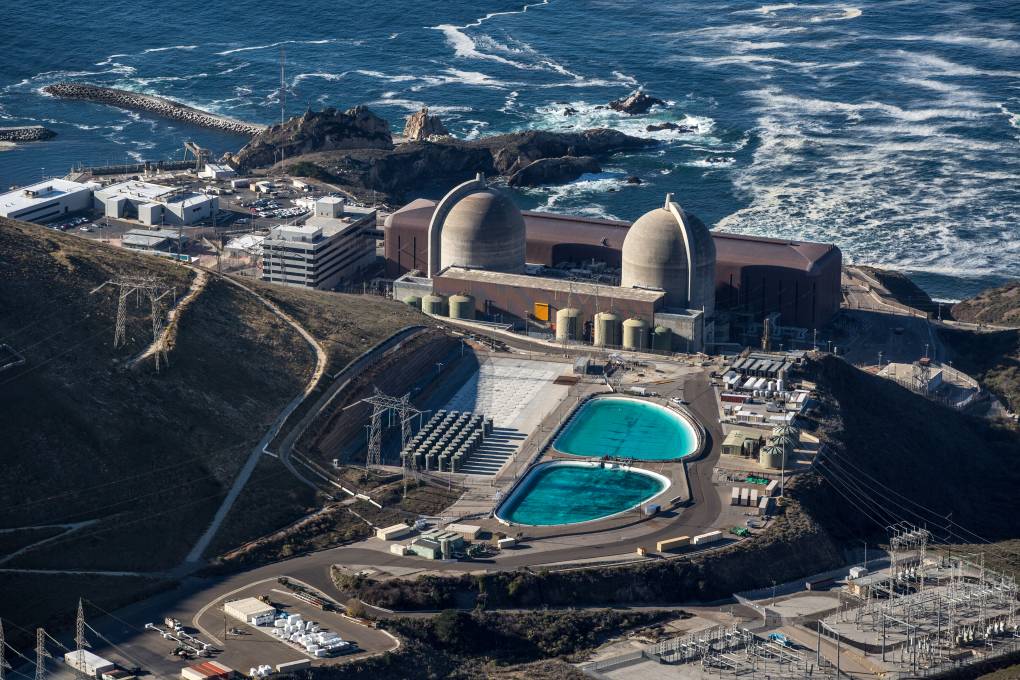
"caption": "Aerial view of the Diablo Canyon Power Plant, the only operational nuclear plant left in California.",
"description": "DIABLO CANYON, CA - DECEMBER 1: Aerial view of the Diablo Canyon, the only operational nuclear plant left in California. (Photo by George Rose/Getty Images)",
"title": "Diablo Canyon Nuclear Power Plant",
"credit": "George Rose/Getty Images",
"status": "inherit",
"altTag": "An aerial view of the Diablo Canyon nuclear plant.",
"isLoading": false,
"fetchFailed": false
},
"news_11922334": {
"type": "attachments",
"id": "news_11922334",
"meta": {
"index": "attachments_1716263798",
"site": "news",
"id": "11922334",
"found": true
},
"parent": 11922301,
"imgSizes": {
"twentyfourteen-full-width": {
"file": "https://ww2.kqed.org/app/uploads/sites/10/2022/08/Needle-1038x576.jpg",
"width": 1038,
"mimeType": "image/jpeg",
"height": 576
},
"thumbnail": {
"file": "https://ww2.kqed.org/app/uploads/sites/10/2022/08/Needle-160x105.jpg",
"width": 160,
"mimeType": "image/jpeg",
"height": 105
},
"post-thumbnail": {
"file": "https://ww2.kqed.org/app/uploads/sites/10/2022/08/Needle-672x372.jpg",
"width": 672,
"mimeType": "image/jpeg",
"height": 372
},
"kqedFullSize": {
"file": "https://ww2.kqed.org/app/uploads/sites/10/2022/08/Needle.jpg",
"width": 1980,
"height": 1301
},
"large": {
"file": "https://ww2.kqed.org/app/uploads/sites/10/2022/08/Needle-1020x670.jpg",
"width": 1020,
"mimeType": "image/jpeg",
"height": 670
},
"1536x1536": {
"file": "https://ww2.kqed.org/app/uploads/sites/10/2022/08/Needle-1536x1009.jpg",
"width": 1536,
"mimeType": "image/jpeg",
"height": 1009
},
"full-width": {
"file": "https://ww2.kqed.org/app/uploads/sites/10/2022/08/Needle-1920x1262.jpg",
"width": 1920,
"mimeType": "image/jpeg",
"height": 1262
},
"medium": {
"file": "https://ww2.kqed.org/app/uploads/sites/10/2022/08/Needle-800x526.jpg",
"width": 800,
"mimeType": "image/jpeg",
"height": 526
}
},
"publishDate": 1660263326,
"modified": 1661200290,
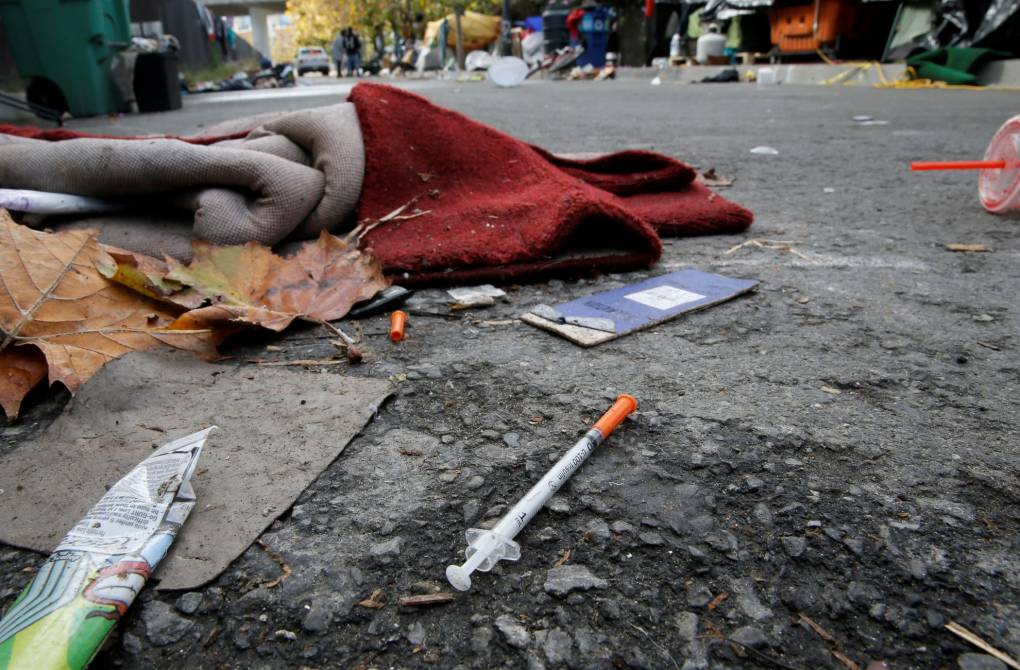
"caption": "A syringe is seen discarded near a homeless encampment along Berry St. south of Market Street in San Francisco on Tuesday November 1, 2016.",
"description": "A syringe is seen discarded near a homeless encampment along Berry St. south of Market Street in San Francisco, California, on Tuesday November 1, 2016.",
"title": "Needle",
"credit": "Michael Macor/San Francisco Chronicle via Getty Images",
"status": "inherit",
"altTag": "A syringe is seen discarded near a homeless encampment along Berry St. south of Market Street in San Francisco, California, on Tuesday November 1, 2016.",
"isLoading": false,
"fetchFailed": false
},
"news_11922055": {
"type": "attachments",
"id": "news_11922055",
"meta": {
"index": "attachments_1716263798",
"site": "news",
"id": "11922055",
"found": true
},
"parent": 11922045,
"imgSizes": {
"twentyfourteen-full-width": {
"file": "https://ww2.kqed.org/app/uploads/sites/10/2022/08/080822-Bounty-Hunter-Texas-California-CM-02-1038x576.jpg",
"width": 1038,
"mimeType": "image/jpeg",
"height": 576
},
"thumbnail": {
"file": "https://ww2.kqed.org/app/uploads/sites/10/2022/08/080822-Bounty-Hunter-Texas-California-CM-02-160x107.jpg",
"width": 160,
"mimeType": "image/jpeg",
"height": 107
},
"post-thumbnail": {
"file": "https://ww2.kqed.org/app/uploads/sites/10/2022/08/080822-Bounty-Hunter-Texas-California-CM-02-672x372.jpg",
"width": 672,
"mimeType": "image/jpeg",
"height": 372
},
"kqedFullSize": {
"file": "https://ww2.kqed.org/app/uploads/sites/10/2022/08/080822-Bounty-Hunter-Texas-California-CM-02.jpg",
"width": 2000,
"height": 1333
},
"large": {
"file": "https://ww2.kqed.org/app/uploads/sites/10/2022/08/080822-Bounty-Hunter-Texas-California-CM-02-1020x680.jpg",
"width": 1020,
"mimeType": "image/jpeg",
"height": 680
},
"1536x1536": {
"file": "https://ww2.kqed.org/app/uploads/sites/10/2022/08/080822-Bounty-Hunter-Texas-California-CM-02-1536x1024.jpg",
"width": 1536,
"mimeType": "image/jpeg",
"height": 1024
},
"full-width": {
"file": "https://ww2.kqed.org/app/uploads/sites/10/2022/08/080822-Bounty-Hunter-Texas-California-CM-02-1920x1280.jpg",
"width": 1920,
"mimeType": "image/jpeg",
"height": 1280
},
"medium": {
"file": "https://ww2.kqed.org/app/uploads/sites/10/2022/08/080822-Bounty-Hunter-Texas-California-CM-02-800x533.jpg",
"width": 800,
"mimeType": "image/jpeg",
"height": 533
}
},
"publishDate": 1660069895,
"modified": 1660080477,
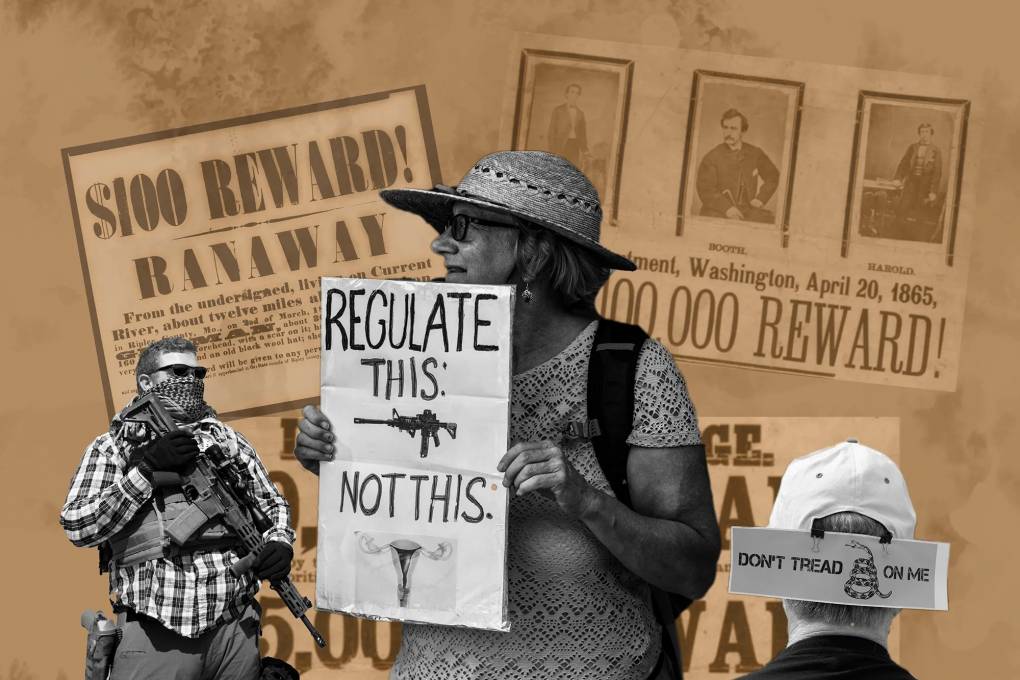
"caption": "Rival states have enacted recent bounty laws — over abortion in Texas and gun sales in California — but critics worry about where this is headed. ",
"description": null,
"title": "080822-Bounty-Hunter-Texas-California-CM-02",
"credit": "Illustration by Miguel Gutierrez Jr., CalMatters, iStock and Reuters",
"status": "inherit",
"altTag": "a collage showing bounty signs and a protester with a sign demanding gun control",
"isLoading": false,
"fetchFailed": false
},
"news_11921439": {
"type": "attachments",
"id": "news_11921439",
"meta": {
"index": "attachments_1716263798",
"site": "news",
"id": "11921439",
"found": true
},
"parent": 11921363,
"imgSizes": {
"twentyfourteen-full-width": {
"file": "https://ww2.kqed.org/app/uploads/sites/10/2022/08/GettyImages-1411282837-1038x576.jpg",
"width": 1038,
"mimeType": "image/jpeg",
"height": 576
},
"thumbnail": {
"file": "https://ww2.kqed.org/app/uploads/sites/10/2022/08/GettyImages-1411282837-160x105.jpg",
"width": 160,
"mimeType": "image/jpeg",
"height": 105
},
"post-thumbnail": {
"file": "https://ww2.kqed.org/app/uploads/sites/10/2022/08/GettyImages-1411282837-672x372.jpg",
"width": 672,
"mimeType": "image/jpeg",
"height": 372
},
"kqedFullSize": {
"file": "https://ww2.kqed.org/app/uploads/sites/10/2022/08/GettyImages-1411282837-scaled.jpg",
"width": 2560,
"height": 1683
},
"2048x2048": {
"file": "https://ww2.kqed.org/app/uploads/sites/10/2022/08/GettyImages-1411282837-2048x1347.jpg",
"width": 2048,
"mimeType": "image/jpeg",
"height": 1347
},
"large": {
"file": "https://ww2.kqed.org/app/uploads/sites/10/2022/08/GettyImages-1411282837-1020x671.jpg",
"width": 1020,
"mimeType": "image/jpeg",
"height": 671
},
"1536x1536": {
"file": "https://ww2.kqed.org/app/uploads/sites/10/2022/08/GettyImages-1411282837-1536x1010.jpg",
"width": 1536,
"mimeType": "image/jpeg",
"height": 1010
},
"full-width": {
"file": "https://ww2.kqed.org/app/uploads/sites/10/2022/08/GettyImages-1411282837-1920x1263.jpg",
"width": 1920,
"mimeType": "image/jpeg",
"height": 1263
},
"medium": {
"file": "https://ww2.kqed.org/app/uploads/sites/10/2022/08/GettyImages-1411282837-800x526.jpg",
"width": 800,
"mimeType": "image/jpeg",
"height": 526
}
},
"publishDate": 1659556982,
"modified": 1659567453,
"caption": "Los Angeles Department of Water and Power (LADWP) water conservation specialist Damon Ayala makes notes in July 2022 while inspecting a sprinkler system, which is operating in violation of the water conservation ordinance. The Bay Area led the state in water conservation in June, with a 12.6% cut compared to June last year.",
"description": "Los Angeles Department of Water and Power (LADWP) water conservation specialist Damon Ayala makes notes in July 2022 while inspecting a sprinkler system, which is operating in violation of the water conservation ordinance. The Bay Area led the state in water conservation in June, with a 12.6% cut compared to June last year.",
"title": "Los Angeles Deploys \"Water Police\" To Search For Water Restriction Violations",
"credit": "Mario Tama/Getty Images",
"status": "inherit",
"altTag": "A bald man with light skin and a close-cropped silver beard makes notes on a tablet. He's wearing a blue short-sleeved shirt with Los Angeles Department of Water and Power embroidered in white. Behind the man is blurred green grass and a tree trunk.",
"isLoading": false,
"fetchFailed": false
},
"news_11875032": {
"type": "attachments",
"id": "news_11875032",
"meta": {
"index": "attachments_1716263798",
"site": "news",
"id": "11875032",
"found": true
},
"parent": 11875020,
"imgSizes": {
"twentyfourteen-full-width": {
"file": "https://ww2.kqed.org/app/uploads/sites/10/2021/05/GettyImages-480340717-1038x576.jpg",
"width": 1038,
"mimeType": "image/jpeg",
"height": 576
},
"thumbnail": {
"file": "https://ww2.kqed.org/app/uploads/sites/10/2021/05/GettyImages-480340717-160x107.jpg",
"width": 160,
"mimeType": "image/jpeg",
"height": 107
},
"post-thumbnail": {
"file": "https://ww2.kqed.org/app/uploads/sites/10/2021/05/GettyImages-480340717-672x372.jpg",
"width": 672,
"mimeType": "image/jpeg",
"height": 372
},
"kqedFullSize": {
"file": "https://ww2.kqed.org/app/uploads/sites/10/2021/05/GettyImages-480340717-scaled.jpg",
"width": 2560,
"height": 1707
},
"2048x2048": {
"file": "https://ww2.kqed.org/app/uploads/sites/10/2021/05/GettyImages-480340717-2048x1365.jpg",
"width": 2048,
"mimeType": "image/jpeg",
"height": 1365
},
"large": {
"file": "https://ww2.kqed.org/app/uploads/sites/10/2021/05/GettyImages-480340717-1020x680.jpg",
"width": 1020,
"mimeType": "image/jpeg",
"height": 680
},
"1536x1536": {
"file": "https://ww2.kqed.org/app/uploads/sites/10/2021/05/GettyImages-480340717-1536x1024.jpg",
"width": 1536,
"mimeType": "image/jpeg",
"height": 1024
},
"full-width": {
"file": "https://ww2.kqed.org/app/uploads/sites/10/2021/05/GettyImages-480340717-1920x1280.jpg",
"width": 1920,
"mimeType": "image/jpeg",
"height": 1280
},
"medium": {
"file": "https://ww2.kqed.org/app/uploads/sites/10/2021/05/GettyImages-480340717-800x533.jpg",
"width": 800,
"mimeType": "image/jpeg",
"height": 533
}
},
"publishDate": 1621882586,
"modified": 1621883664,
"caption": "Pump jacks are seen at dawn in an oil field over the Monterey Shale formation in Kern County on March 24, 2014. Gov. Gavin Newsom has set ambitious goals for weaning his state off oil, including calling for an end to oil production by 2045.",
"description": "Pump jacks are seen at dawn in an oil field over the Monterey Shale formation in Kern County on March 24, 2014. Gov. Gavin Newsom has set ambitious goals for weaning his state off oil, including calling for an end to oil production by 2045.",
"title": "Fracking In California Under Spotlight As Some Local Municipalities Issue Bans",
"credit": "David McNew/Getty Images",
"status": "inherit",
"altTag": "Pump jacks draw oil in a field over the Monterey Shale formation ear Lost Hills, California in 2014. It is the late afternoon and the sky is painted a fierce orange.",
"isLoading": false,
"fetchFailed": false
},
"news_11921194": {
"type": "attachments",
"id": "news_11921194",
"meta": {
"index": "attachments_1716263798",
"site": "news",
"id": "11921194",
"found": true
},
"parent": 11921185,
"imgSizes": {
"twentyfourteen-full-width": {
"file": "https://ww2.kqed.org/app/uploads/sites/10/2022/08/RS57498_005_KQED_MonkeypoxVaccineLineSFGen_08012022-qut-1038x576.jpg",
"width": 1038,
"mimeType": "image/jpeg",
"height": 576
},
"thumbnail": {
"file": "https://ww2.kqed.org/app/uploads/sites/10/2022/08/RS57498_005_KQED_MonkeypoxVaccineLineSFGen_08012022-qut-160x107.jpg",
"width": 160,
"mimeType": "image/jpeg",
"height": 107
},
"post-thumbnail": {
"file": "https://ww2.kqed.org/app/uploads/sites/10/2022/08/RS57498_005_KQED_MonkeypoxVaccineLineSFGen_08012022-qut-672x372.jpg",
"width": 672,
"mimeType": "image/jpeg",
"height": 372
},
"kqedFullSize": {
"file": "https://ww2.kqed.org/app/uploads/sites/10/2022/08/RS57498_005_KQED_MonkeypoxVaccineLineSFGen_08012022-qut.jpg",
"width": 1920,
"height": 1280
},
"large": {
"file": "https://ww2.kqed.org/app/uploads/sites/10/2022/08/RS57498_005_KQED_MonkeypoxVaccineLineSFGen_08012022-qut-1020x680.jpg",
"width": 1020,
"mimeType": "image/jpeg",
"height": 680
},
"1536x1536": {
"file": "https://ww2.kqed.org/app/uploads/sites/10/2022/08/RS57498_005_KQED_MonkeypoxVaccineLineSFGen_08012022-qut-1536x1024.jpg",
"width": 1536,
"mimeType": "image/jpeg",
"height": 1024
},
"medium": {
"file": "https://ww2.kqed.org/app/uploads/sites/10/2022/08/RS57498_005_KQED_MonkeypoxVaccineLineSFGen_08012022-qut-800x533.jpg",
"width": 800,
"mimeType": "image/jpeg",
"height": 533
}
},
"publishDate": 1659404546,
"modified": 1659404632,
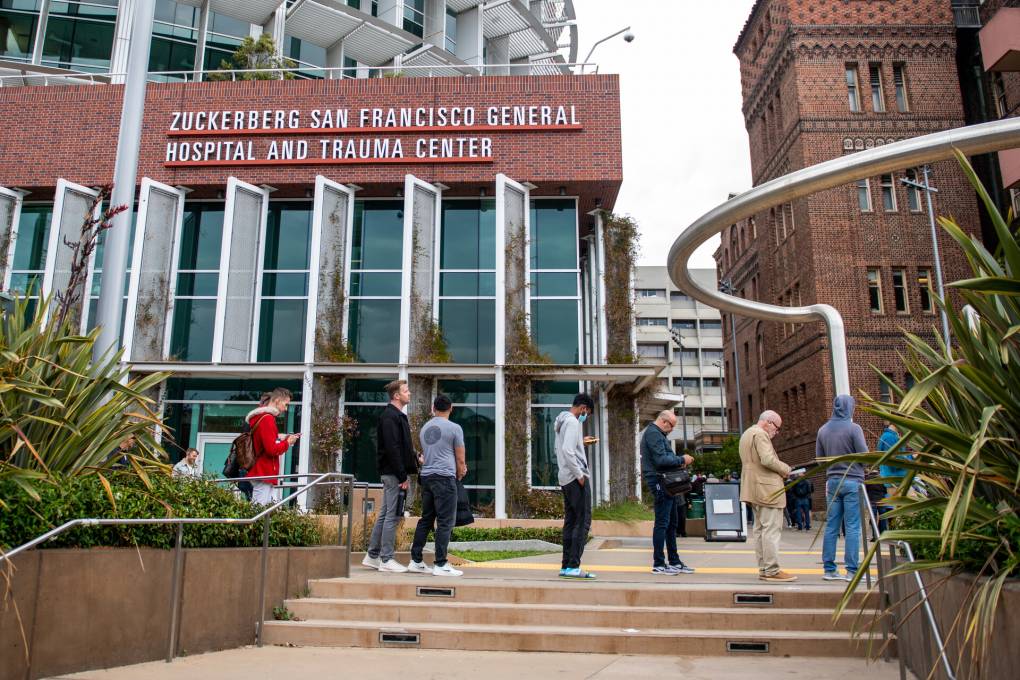
"caption": "Hundreds of people wait in a walk-in line for a the monkeypox vaccine at Zuckerberg San Francisco General Hospital on Aug. 1, 2022.",
"description": null,
"title": "RS57498_005_KQED_MonkeypoxVaccineLineSFGen_08012022-qut",
"credit": "Beth LaBerge/KQED",
"status": "inherit",
"altTag": "A long line of men wait in line in front of a Zuckerberg San Francisco General Hospital",
"isLoading": false,
"fetchFailed": false
},
"news_11921149": {
"type": "attachments",
"id": "news_11921149",
"meta": {
"index": "attachments_1716263798",
"site": "news",
"id": "11921149",
"found": true
},
"parent": 11921039,
"imgSizes": {
"twentyfourteen-full-width": {
"file": "https://ww2.kqed.org/app/uploads/sites/10/2022/07/McKinneyFire-8122-GettyImages-1242241702-1038x576.jpg",
"width": 1038,
"mimeType": "image/jpeg",
"height": 576
},
"thumbnail": {
"file": "https://ww2.kqed.org/app/uploads/sites/10/2022/07/McKinneyFire-8122-GettyImages-1242241702-160x107.jpg",
"width": 160,
"mimeType": "image/jpeg",
"height": 107
},
"post-thumbnail": {
"file": "https://ww2.kqed.org/app/uploads/sites/10/2022/07/McKinneyFire-8122-GettyImages-1242241702-672x372.jpg",
"width": 672,
"mimeType": "image/jpeg",
"height": 372
},
"kqedFullSize": {
"file": "https://ww2.kqed.org/app/uploads/sites/10/2022/07/McKinneyFire-8122-GettyImages-1242241702.jpg",
"width": 1920,
"height": 1281
},
"large": {
"file": "https://ww2.kqed.org/app/uploads/sites/10/2022/07/McKinneyFire-8122-GettyImages-1242241702-1020x681.jpg",
"width": 1020,
"mimeType": "image/jpeg",
"height": 681
},
"1536x1536": {
"file": "https://ww2.kqed.org/app/uploads/sites/10/2022/07/McKinneyFire-8122-GettyImages-1242241702-1536x1025.jpg",
"width": 1536,
"mimeType": "image/jpeg",
"height": 1025
},
"medium": {
"file": "https://ww2.kqed.org/app/uploads/sites/10/2022/07/McKinneyFire-8122-GettyImages-1242241702-800x534.jpg",
"width": 800,
"mimeType": "image/jpeg",
"height": 534
}
},
"publishDate": 1659392942,
"modified": 1659394843,
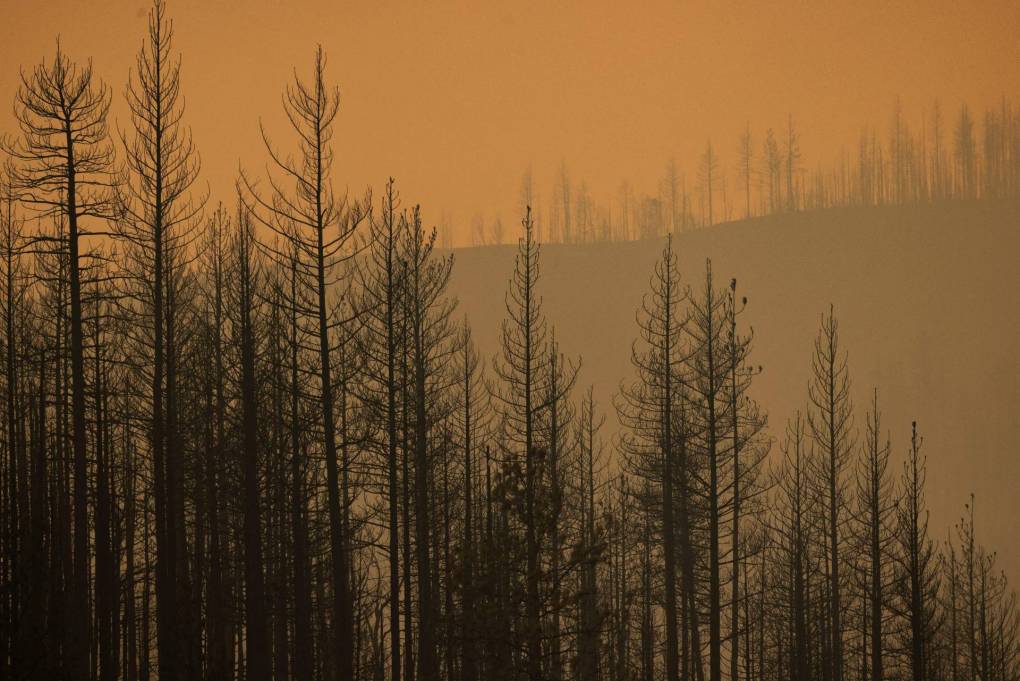
"caption": "Burnt trees are seen at the McKinney Fire in the Klamath National Forest northwest of Yreka, Siskiyou County, on July 31, 2022. The largest fire in California this year is forcing thousands of people to evacuate as it destroys homes and rips through the state's dry terrain, whipped up by strong winds and lightning storms. The McKinney Fire was zero percent contained, CalFire said, spreading more than 51,000 acres near the city of Yreka. \n",
"description": null,
"title": "McKinneyFire-8122-GettyImages-1242241702",
"credit": "David McNew/AFP/Getty Imates",
"status": "inherit",
"altTag": "Burnt trees on hills. The air is the color yellow, orange.",
"isLoading": false,
"fetchFailed": false
},
"news_11920957": {
"type": "attachments",
"id": "news_11920957",
"meta": {
"index": "attachments_1716263798",
"site": "news",
"id": "11920957",
"found": true
},
"parent": 11920898,
"imgSizes": {
"twentyfourteen-full-width": {
"file": "https://ww2.kqed.org/app/uploads/sites/10/2022/07/GettyImages-1197447255-1038x576.jpg",
"width": 1038,
"mimeType": "image/jpeg",
"height": 576
},
"thumbnail": {
"file": "https://ww2.kqed.org/app/uploads/sites/10/2022/07/GettyImages-1197447255-160x107.jpg",
"width": 160,
"mimeType": "image/jpeg",
"height": 107
},
"post-thumbnail": {
"file": "https://ww2.kqed.org/app/uploads/sites/10/2022/07/GettyImages-1197447255-672x372.jpg",
"width": 672,
"mimeType": "image/jpeg",
"height": 372
},
"kqedFullSize": {
"file": "https://ww2.kqed.org/app/uploads/sites/10/2022/07/GettyImages-1197447255-scaled.jpg",
"width": 2560,
"height": 1707
},
"2048x2048": {
"file": "https://ww2.kqed.org/app/uploads/sites/10/2022/07/GettyImages-1197447255-2048x1365.jpg",
"width": 2048,
"mimeType": "image/jpeg",
"height": 1365
},
"large": {
"file": "https://ww2.kqed.org/app/uploads/sites/10/2022/07/GettyImages-1197447255-1020x680.jpg",
"width": 1020,
"mimeType": "image/jpeg",
"height": 680
},
"1536x1536": {
"file": "https://ww2.kqed.org/app/uploads/sites/10/2022/07/GettyImages-1197447255-1536x1024.jpg",
"width": 1536,
"mimeType": "image/jpeg",
"height": 1024
},
"full-width": {
"file": "https://ww2.kqed.org/app/uploads/sites/10/2022/07/GettyImages-1197447255-1920x1280.jpg",
"width": 1920,
"mimeType": "image/jpeg",
"height": 1280
},
"medium": {
"file": "https://ww2.kqed.org/app/uploads/sites/10/2022/07/GettyImages-1197447255-800x533.jpg",
"width": 800,
"mimeType": "image/jpeg",
"height": 533
}
},
"publishDate": 1659127739,
"modified": 1659131480,
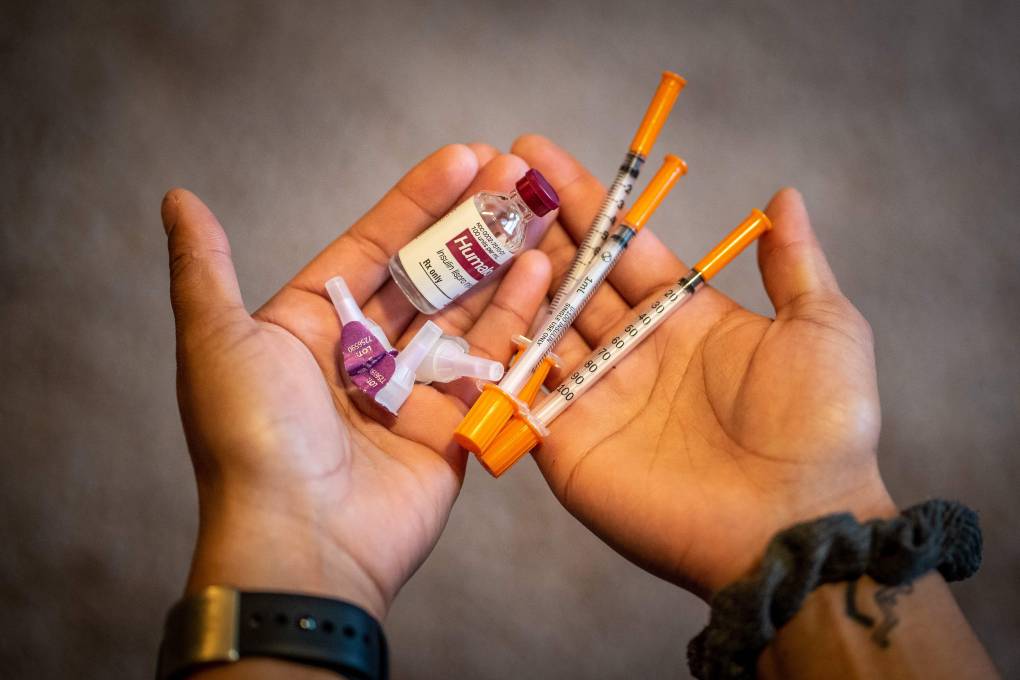
"caption": "Alexis Stanley displays her insulin kit. Gov. Gavin Newsom announced this month that California would invest $100 million to develop three types of insulin products and a manufacturing facility.",
"description": null,
"title": "DOUNIAMAG-US-CANADA-POLITICS-HEALTH-INSURANCE",
"credit": "Kerem Yucel/AFP via Getty Images",
"status": "inherit",
"altTag": "Someone holds an insulin kit.",
"isLoading": false,
"fetchFailed": false
},
"news_11920567": {
"type": "attachments",
"id": "news_11920567",
"meta": {
"index": "attachments_1716263798",
"site": "news",
"id": "11920567",
"found": true
},
"parent": 11920517,
"imgSizes": {
"twentyfourteen-full-width": {
"file": "https://ww2.kqed.org/app/uploads/sites/10/2022/07/GettyImages-1324303916-1-1024x576.jpg",
"width": 1024,
"mimeType": "image/jpeg",
"height": 576
},
"thumbnail": {
"file": "https://ww2.kqed.org/app/uploads/sites/10/2022/07/GettyImages-1324303916-1-160x106.jpg",
"width": 160,
"mimeType": "image/jpeg",
"height": 106
},
"post-thumbnail": {
"file": "https://ww2.kqed.org/app/uploads/sites/10/2022/07/GettyImages-1324303916-1-672x372.jpg",
"width": 672,
"mimeType": "image/jpeg",
"height": 372
},
"kqedFullSize": {
"file": "https://ww2.kqed.org/app/uploads/sites/10/2022/07/GettyImages-1324303916-1.jpg",
"width": 1024,
"height": 678
},
"large": {
"file": "https://ww2.kqed.org/app/uploads/sites/10/2022/07/GettyImages-1324303916-1-1020x675.jpg",
"width": 1020,
"mimeType": "image/jpeg",
"height": 675
},
"medium": {
"file": "https://ww2.kqed.org/app/uploads/sites/10/2022/07/GettyImages-1324303916-1-800x530.jpg",
"width": 800,
"mimeType": "image/jpeg",
"height": 530
}
},
"publishDate": 1658889950,
"modified": 1658890027,
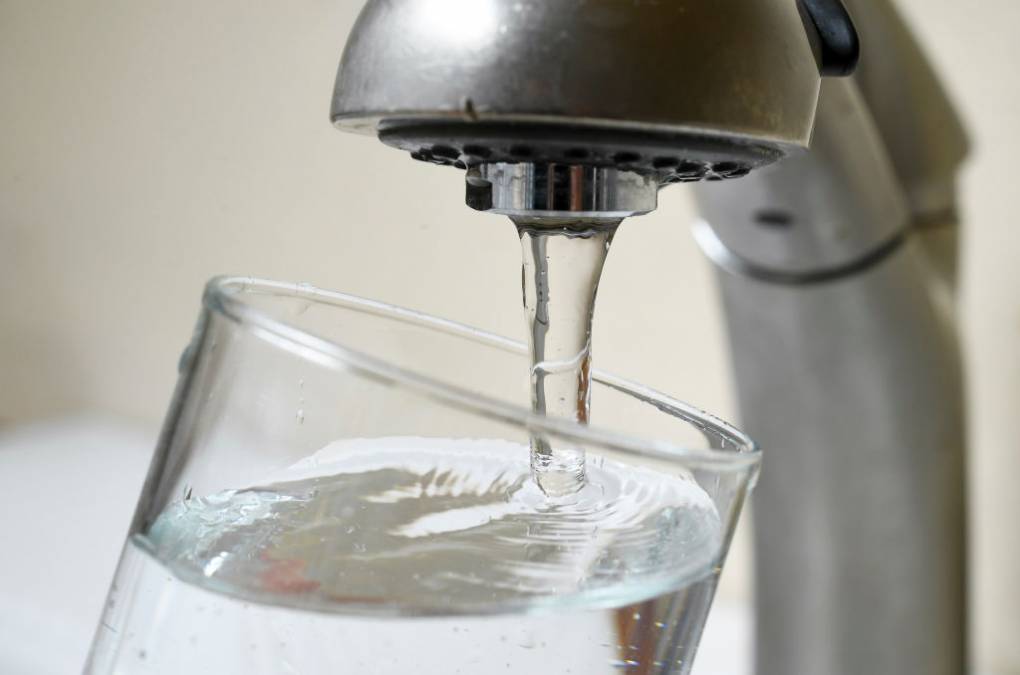
"caption": "A new report found 370 of California's water systems to be contaminated, particularly in economically disadvantaged communities in the Central Valley, the state's agricultural heartland.",
"description": null,
"title": "Tap Water In A Glass In Pennsylvania",
"credit": "Ben Hasty/MediaNews Group via Getty Images",
"status": "inherit",
"altTag": "A kitchen sink tap fills a glass of water.",
"isLoading": false,
"fetchFailed": false
},
"news_11920277": {
"type": "attachments",
"id": "news_11920277",
"meta": {
"index": "attachments_1716263798",
"site": "news",
"id": "11920277",
"found": true
},
"parent": 11920270,
"imgSizes": {
"twentyfourteen-full-width": {
"file": "https://ww2.kqed.org/app/uploads/sites/10/2022/07/GettyImages-1242055768-1024x576.jpg",
"width": 1024,
"mimeType": "image/jpeg",
"height": 576
},
"thumbnail": {
"file": "https://ww2.kqed.org/app/uploads/sites/10/2022/07/GettyImages-1242055768-160x107.jpg",
"width": 160,
"mimeType": "image/jpeg",
"height": 107
},
"post-thumbnail": {
"file": "https://ww2.kqed.org/app/uploads/sites/10/2022/07/GettyImages-1242055768-672x372.jpg",
"width": 672,
"mimeType": "image/jpeg",
"height": 372
},
"kqedFullSize": {
"file": "https://ww2.kqed.org/app/uploads/sites/10/2022/07/GettyImages-1242055768.jpg",
"width": 1024,
"height": 683
},
"large": {
"file": "https://ww2.kqed.org/app/uploads/sites/10/2022/07/GettyImages-1242055768-1020x680.jpg",
"width": 1020,
"mimeType": "image/jpeg",
"height": 680
},
"medium": {
"file": "https://ww2.kqed.org/app/uploads/sites/10/2022/07/GettyImages-1242055768-800x534.jpg",
"width": 800,
"mimeType": "image/jpeg",
"height": 534
}
},
"publishDate": 1658520078,
"modified": 1658855724,
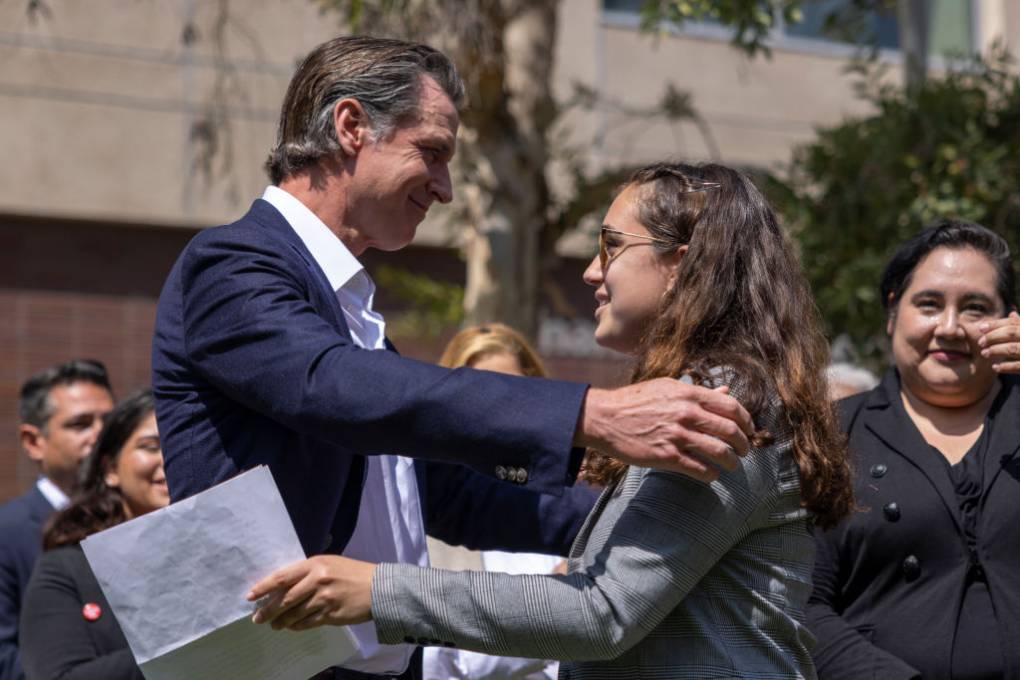
"caption": "Mia Tretta (center), who was shot in the stomach with a ghost gun during a school shooting in 2019, embraces Gov. Gavin Newsom moments after he signed SB 1327 — a law allowing citizens to sue gunmakers — on July 22, 2022, in Los Angeles.",
"description": null,
"title": "California Gov. Newsom Highlights New State Efforts To Stem Gun Violence",
"credit": "David McNew/Getty Images",
"status": "inherit",
"altTag": "Gov. Gavin Newsom embraces a young woman at a press event.",
"isLoading": false,
"fetchFailed": false
}
},
"audioPlayerReducer": {
"postId": "stream_live",
"isPaused": true,
"isPlaying": false,
"pfsActive": false,
"pledgeModalIsOpen": true,
"playerDrawerIsOpen": false,
"liveAudioPlayStartedAt": 0,
"liveAudioPlayContext": ""
},
"authorsReducer": {
"byline_news_11922354": {
"type": "authors",
"id": "byline_news_11922354",
"meta": {
"override": true
},
"slug": "byline_news_11922354",
"name": "Michael R. Blood, Associated Press",
"isLoading": false
},
"byline_news_11922301": {
"type": "authors",
"id": "byline_news_11922301",
"meta": {
"override": true
},
"slug": "byline_news_11922301",
"name": "Ana B. Ibarra",
"isLoading": false
},
"byline_news_11922045": {
"type": "authors",
"id": "byline_news_11922045",
"meta": {
"override": true
},
"slug": "byline_news_11922045",
"name": "Nigel Duara",
"isLoading": false
},
"byline_news_11921363": {
"type": "authors",
"id": "byline_news_11921363",
"meta": {
"override": true
},
"slug": "byline_news_11921363",
"name": "KQED News Staff and Wires",
"isLoading": false
},
"byline_news_11921256": {
"type": "authors",
"id": "byline_news_11921256",
"meta": {
"override": true
},
"slug": "byline_news_11921256",
"name": "Kathleen Ronayne, Associated Press",
"isLoading": false
},
"byline_news_11921039": {
"type": "authors",
"id": "byline_news_11921039",
"meta": {
"override": true
},
"slug": "byline_news_11921039",
"name": "Noah Berger and Christopher Weber, Associated Press",
"isLoading": false
},
"byline_news_11920898": {
"type": "authors",
"id": "byline_news_11920898",
"meta": {
"override": true
},
"slug": "byline_news_11920898",
"name": "Adam Beam\u003cbr>The Associated Press",
"isLoading": false
},
"byline_news_11920517": {
"type": "authors",
"id": "byline_news_11920517",
"meta": {
"override": true
},
"slug": "byline_news_11920517",
"name": "Kathleen Ronayne\u003cbr>The Associated Press",
"isLoading": false
},
"kqednewsstaffandwires": {
"type": "authors",
"id": "237",
"meta": {
"index": "authors_1716337520",
"id": "237",
"found": true
},
"name": "KQED News Staff and Wires",
"firstName": "KQED News Staff and Wires",
"lastName": null,
"slug": "kqednewsstaffandwires",
"email": "onlinenewsstaff@kqed.org",
"display_author_email": false,
"staff_mastheads": [],
"title": null,
"bio": null,
"avatar": "https://secure.gravatar.com/avatar/72295af8ebbfbd19a4948f5271285664?s=600&d=blank&r=g",
"twitter": null,
"facebook": null,
"instagram": null,
"linkedin": null,
"sites": [
{
"site": "arts",
"roles": [
"contributor"
]
},
{
"site": "news",
"roles": [
"contributor"
]
},
{
"site": "lowdown",
"roles": [
"author"
]
},
{
"site": "stateofhealth",
"roles": [
"contributor"
]
},
{
"site": "food",
"roles": [
"author"
]
}
],
"headData": {
"title": "KQED News Staff and Wires | KQED",
"description": null,
"ogImgSrc": "https://secure.gravatar.com/avatar/72295af8ebbfbd19a4948f5271285664?s=600&d=blank&r=g",
"twImgSrc": "https://secure.gravatar.com/avatar/72295af8ebbfbd19a4948f5271285664?s=600&d=blank&r=g"
},
"isLoading": false,
"link": "/author/kqednewsstaffandwires"
},
"scottshafer": {
"type": "authors",
"id": "255",
"meta": {
"index": "authors_1716337520",
"id": "255",
"found": true
},
"name": "Scott Shafer",
"firstName": "Scott",
"lastName": "Shafer",
"slug": "scottshafer",
"email": "sshafer@kqed.org",
"display_author_email": false,
"staff_mastheads": [
"news"
],
"title": "KQED Contributor",
"bio": "Scott Shafer is a senior editor with the KQED Politics and Government desk. He is co-host of Political Breakdown, the award-winning radio show and podcast with a personal take on the world of politics. Scott came to KQED in 1998 to host the statewide\u003cem> California Report\u003c/em>. Prior to that he had extended stints in politics and government\u003cem>.\u003c/em> He uses that inside experience at KQED in his, reporting, hosting and analysis for the politics desk. Scott collaborated \u003cem>Political Breakdown a\u003c/em>nd on \u003cem>The Political Mind of Jerry Brown, \u003c/em>an eight-part series about the life and extraordinary political career of the former governor. For fun, he plays water polo with the San Francisco Tsunami.",
"avatar": "https://secure.gravatar.com/avatar/a62ebae45b79d7aed1a39a0e3bf68104?s=600&d=blank&r=g",
"twitter": "scottshafer",
"bluesky": null,
"facebook": null,
"instagram": null,
"linkedin": null,
"sites": [
{
"site": "news",
"roles": [
"editor"
]
},
{
"site": "stateofhealth",
"roles": [
"author"
]
},
{
"site": "science",
"roles": [
"author"
]
},
{
"site": "forum",
"roles": [
"subscriber"
]
},
{
"site": "liveblog",
"roles": [
"author"
]
}
],
"headData": {
"title": "Scott Shafer | KQED",
"description": "KQED Contributor",
"ogImgSrc": "https://secure.gravatar.com/avatar/a62ebae45b79d7aed1a39a0e3bf68104?s=600&d=blank&r=g",
"twImgSrc": "https://secure.gravatar.com/avatar/a62ebae45b79d7aed1a39a0e3bf68104?s=600&d=blank&r=g"
},
"isLoading": false,
"link": "/author/scottshafer"
},
"jrodriguez": {
"type": "authors",
"id": "11690",
"meta": {
"index": "authors_1716337520",
"id": "11690",
"found": true
},
"name": "Joe Fitzgerald Rodriguez",
"firstName": "Joe",
"lastName": "Fitzgerald Rodriguez",
"slug": "jrodriguez",
"email": "jrodriguez@kqed.org",
"display_author_email": true,
"staff_mastheads": [
"news"
],
"title": "Reporter and Producer",
"bio": "Joe Fitzgerald Rodriguez is a reporter and digital producer for KQED covering politics. Joe most recently wrote for the \u003cem>San Francisco Examiner\u003c/em> as a political columnist covering The City. He was raised in San Francisco and has spent his reporting career in his beloved, foggy, city by the bay. Joe was 12-years-old when he conducted his first interview in journalism, grilling former San Francisco Mayor Willie Brown for the Marina Middle School newspaper, \u003cem>The Penguin Press, \u003c/em>and he continues to report on the San Francisco Bay Area to this day.",
"avatar": "https://secure.gravatar.com/avatar/2247beb0564c1e9c62228d5649d2edac?s=600&d=blank&r=g",
"twitter": "FitztheReporter",
"facebook": null,
"instagram": "https://www.instagram.com/fitzthereporter/",
"linkedin": null,
"sites": [
{
"site": "",
"roles": [
"editor"
]
},
{
"site": "arts",
"roles": [
"editor"
]
},
{
"site": "news",
"roles": [
"editor"
]
},
{
"site": "science",
"roles": [
"editor"
]
},
{
"site": "elections",
"roles": [
"editor"
]
},
{
"site": "liveblog",
"roles": [
"editor"
]
}
],
"headData": {
"title": "Joe Fitzgerald Rodriguez | KQED",
"description": "Reporter and Producer",
"ogImgSrc": "https://secure.gravatar.com/avatar/2247beb0564c1e9c62228d5649d2edac?s=600&d=blank&r=g",
"twImgSrc": "https://secure.gravatar.com/avatar/2247beb0564c1e9c62228d5649d2edac?s=600&d=blank&r=g"
},
"isLoading": false,
"link": "/author/jrodriguez"
},
"daisynguyen": {
"type": "authors",
"id": "11829",
"meta": {
"index": "authors_1716337520",
"id": "11829",
"found": true
},
"name": "Daisy Nguyen",
"firstName": "Daisy",
"lastName": "Nguyen",
"slug": "daisynguyen",
"email": "daisynguyen@kqed.org",
"display_author_email": true,
"staff_mastheads": [
"news"
],
"title": "KQED Contributor",
"bio": "I have covered early childhood education and child care for KQED since 2022. I focus on policies aimed at increasing access to early care and education and how they shape individual lives. I've been a journalist for more than two decades, with most of that time devoted to covering breaking news throughout California for The Associated Press. I grew up in San Francisco and studied at UC Davis and Columbia University's Graduate School of Journalism. I live in Oakland with my husband and two kids.",
"avatar": "https://secure.gravatar.com/avatar/2da2127c27f7143b53ebd419800fd55f?s=600&d=blank&r=g",
"twitter": null,
"facebook": null,
"instagram": null,
"linkedin": "https://www.linkedin.com/in/daisynguyen/",
"sites": [
{
"site": "news",
"roles": [
"author"
]
},
{
"site": "liveblog",
"roles": [
"author"
]
}
],
"headData": {
"title": "Daisy Nguyen | KQED",
"description": "KQED Contributor",
"ogImgSrc": "https://secure.gravatar.com/avatar/2da2127c27f7143b53ebd419800fd55f?s=600&d=blank&r=g",
"twImgSrc": "https://secure.gravatar.com/avatar/2da2127c27f7143b53ebd419800fd55f?s=600&d=blank&r=g"
},
"isLoading": false,
"link": "/author/daisynguyen"
}
},
"pagesReducer": {
"news_tag_gavin-newsom": {
"type": "terms",
"id": "news_16",
"meta": {
"index": "terms_1716263798",
"site": "news",
"id": "16",
"score": 8.937016
},
"featImg": null,
"name": "Gavin Newsom",
"description": null,
"taxonomy": "tag",
"headData": {
"twImgId": null,
"twTitle": null,
"ogTitle": null,
"ogImgId": null,
"twDescription": null,
"description": null,
"title": "Gavin Newsom Archives | KQED News",
"ogDescription": null
},
"ttid": 16,
"slug": "gavin-newsom",
"isLoading": false,
"title": "Gavin Newsom",
"pageMeta": {
"site": "news",
"WpPageTemplate": "page-topic-editorial",
"currentPage": 46
},
"blocks": [
{
"blockName": "kqed/post-list",
"attrs": {
"layout": "cardArticle2",
"query": "posts/news?tag=gavin-newsom",
"seeMore": false,
"paginated": true,
"page": 46
}
},
{
"blockName": "kqed/ad"
}
]
}
},
"pfsSessionReducer": {},
"postsReducer": {
"stream_live": {
"type": "live",
"id": "stream_live",
"audioUrl": "https://streams.kqed.org/kqedradio",
"title": "Live Stream",
"excerpt": "Live Stream information currently unavailable.",
"link": "/radio",
"featImg": "",
"label": {
"name": "KQED Live",
"link": "/"
}
},
"stream_kqedNewscast": {
"type": "posts",
"id": "stream_kqedNewscast",
"audioUrl": "https://www.kqed.org/.stream/anon/radio/RDnews/newscast.mp3?_=1",
"title": "KQED Newscast",
"featImg": "",
"label": {
"name": "88.5 FM",
"link": "/"
}
},
"news_11923129": {
"type": "posts",
"id": "news_11923129",
"meta": {
"index": "posts_1716263798",
"site": "news",
"id": "11923129",
"score": null,
"sort": [
1661206403000
]
},
"parent": 0,
"labelTerm": {
"site": "news"
},
"blocks": [],
"publishDate": 1661206403,
"format": "standard",
"disqusTitle": "SF Political Leaders Speak at Rally Opposing Safe Injection Sites, Even as Many Privately Say They Support Them",
"title": "SF Political Leaders Speak at Rally Opposing Safe Injection Sites, Even as Many Privately Say They Support Them",
"headTitle": "KQED News",
"content": "\u003cp>San Franciscans rallied against fentanyl Sunday at an event marking National Fentanyl Prevention and Awareness Day — but even as they stood at City Hall in unity over a broader shared goal, opinions split over a bill that would allow the city to create safe injection sites for drug users.\u003c/p>\n\u003cp>The rally was hosted by Mothers Against Drug Deaths, an advocacy group that favors stricter penalties for drug users; group members argue that supervised injection sites will worsen addictions. But local officials are mostly in favor of the sites, arguing that pilot programs in the country and a growing body of science show \u003ca href=\"https://www.npr.org/sections/health-shots/2018/09/07/645609248/whats-the-evidence-that-supervised-drug-injection-sites-save-lives\">they prevent deaths among drug users\u003c/a>.\u003c/p>\n\u003cp>Notably, even District Attorney Brooke Jenkins, who has billed herself as tough on crime, has said she’s in favor of such spaces.\u003c/p>\n\u003cp>[aside label=\"Related Stories\" postID=\"news_11922301,news_11691210,news_11911092\"]Safe injection sites, which are controversial because they allow drugs to be consumed on-site under the supervision of health care workers, may soon be a reality in California. Senate Bill 57, authored by state Sen. Scott Wiener, D-San Francisco, would allow a pilot program for safe injection sites to move forward in San Francisco, Oakland and Los Angeles. Several elected leaders who took part in Sunday’s event said they support the bill.\u003c/p>\n\u003cp>Gov. Gavin Newsom is expected to announce his decision either to sign or veto the bill on Monday, timing that the rally’s organizers used to deliver their message against it.\u003c/p>\n\u003cp>[ad fullwidth]\u003c/p>\n\u003cp>San Franciscan Tanya Tilghman told the crowd her son became addicted to drugs after seeking prescription drug treatment for his attention-deficit/hyperactivity disorder. Their family’s life soon spiraled into chaos, she said, including an incident where her son held himself hostage in North Beach until more than 15 SFPD officers managed to talk him down.\u003c/p>\n\u003cp>Her experience sharpened her opposition to SB 57.\u003c/p>\n\u003cp>“I am a mother, and I do kind of have an idea. Maybe we shouldn’t be passing SB 57 and funding it. Maybe we should take the money and put it into residential treatment programs and rehabilitation,” said Tilghman, one of several speakers at the rally who spoke out against the bill. She said putting government resources toward such sites was akin to “saying that it is OK to use illegal drugs.”\u003c/p>\n\u003cfigure id=\"attachment_11923138\" class=\"wp-caption aligncenter\" style=\"max-width: 1920px\">\u003ca href=\"https://ww2.kqed.org/app/uploads/sites/10/2022/08/RS57926_20220821_111507.jpg\">\u003cimg class=\"size-full wp-image-11923138\" src=\"https://ww2.kqed.org/app/uploads/sites/10/2022/08/RS57926_20220821_111507.jpg\" alt=\"a line of women prepare to speak on the steps of San Francisco City Hall at a rally against fentanyl deaths\" width=\"1920\" height=\"1440\" srcset=\"https://ww2.kqed.org/app/uploads/sites/10/2022/08/RS57926_20220821_111507.jpg 1920w, https://ww2.kqed.org/app/uploads/sites/10/2022/08/RS57926_20220821_111507-800x600.jpg 800w, https://ww2.kqed.org/app/uploads/sites/10/2022/08/RS57926_20220821_111507-1020x765.jpg 1020w, https://ww2.kqed.org/app/uploads/sites/10/2022/08/RS57926_20220821_111507-160x120.jpg 160w, https://ww2.kqed.org/app/uploads/sites/10/2022/08/RS57926_20220821_111507-1536x1152.jpg 1536w\" sizes=\"(max-width: 1920px) 100vw, 1920px\">\u003c/a>\u003cfigcaption class=\"wp-caption-text\">Moms Against Drug Deaths hold a City Hall rally to raise awareness for fentanyl deaths in San Francisco on Aug. 21. \u003ccite>(Joe Fitzgerald Rodriguez/KQED)\u003c/cite>\u003c/figcaption>\u003c/figure>\n\u003cp>City officials who spoke at the rally — including Supervisors Rafael Mandelman and Matt Dorsey in addition to Jenkins — said they support the group's larger aim: to prevent drug deaths. But all three also told KQED they back supervised injection sites.\u003c/p>\n\u003cp>Mandelman, for his part, said speaking at a rally held by Mothers Against Drug Deaths was natural for him as he pushes for more ways to ease suffering on San Francisco streets — even if he does believe in safe injection sites.\u003c/p>\n\u003cp>“We don't have to agree on everything,” he said, “but we're real strong allies around a whole bunch of stuff.”\u003c/p>\n\u003ch2>Walking a fine political line\u003c/h2>\n\u003cp>Jenkins might be in a more sensitive political position as she runs to keep the seat to which she was appointed following the recall of her predecessor, Chesa Boudin. Perhaps in recognition of that, she walked a particularly fine line at the rally.\u003c/p>\n\u003cp>At the podium, Jenkins promised Mothers Against Drug Deaths her support of their broader efforts to curb drug use, and promoted her \u003ca href=\"https://www.sfdistrictattorney.org/press-release/district-attorney-brooke-jenkins-announces-new-policy-to-hold-drug-dealers-accountable-revokes-misdemeanor-plea-offers-for-fentanyl-dealers/\">newly announced policy to revoke misdemeanor plea deals for fentanyl dealers\u003c/a>. She avoided the topic of supervised consumption sites in her speech, while advocates who spoke touched on it repeatedly.\u003c/p>\n\u003cp>“Drug sales is not a victimless crime. And I think today really tells the story of how many people have been victims of this illegal conduct,” Jenkins told the crowd of about 50 people. “Yes, we are in a war against fentanyl. We are in a war against making sure that our children don't get what looks like candy in their hands, but that will kill them.”\u003c/p>\n\u003cp>But when asked if she supports SB 57, Jenkins told KQED in an interview that she does support safe injection sites.\u003c/p>\n\u003cp>“I agree with safe injection sites, safe consumption sites. We need to be saving lives. We're in a different universe right now. You know, 10 years ago, we didn't have as lethal a drug as fentanyl on the market,” she said.[pullquote align=\"right\" size=\"medium\" citation=\"Brooke Jenkins, San Francisco district attorney\"]'I agree with safe injection sites, safe consumption sites. We need to be saving lives.'[/pullquote]Appearing at a rally championed by a group so staunchly against safe consumption sites may be a natural choice for a district attorney who has branded herself as a bastion of law and order, and depends on supporters who value that punishment-focused message. In public statements made against former DA Chesa Boudin, Jenkins criticized his policies as sending a message that San Francisco wouldn’t prosecute crime.\u003c/p>\n\u003cp>Yet she also needs the support of politicos like Mayor London Breed, who has been a longtime champion of legalizing safe injection sites, and Sen. Wiener, who authored the safe injection sites bill and also endorsed Jenkins. Breed appointed Jenkins as district attorney after Boudin was recalled in June.\u003c/p>\n\u003cp>Breed believes in safe injection sites so strongly, she touted them in her \u003ca href=\"https://sfmayor.org/mayor-london-n-breeds-2020-inauguration-speech\">2020 inauguration speech\u003c/a>.\u003c/p>\n\u003cp>“We are working to open meth sobering centers, safe injection sites and managed alcohol facilities so we can stop walking by addiction spilling out on our streets, and start treating it like the health care issue that it is,” Breed said at the steps of City Hall in 2020.\u003c/p>\n\u003cp>Jason McDaniel, associate professor of political science at San Francisco State University, said navigating those differing viewpoints may test Jenkins’ relationships with major supporters.\u003c/p>\n\u003cp>“It is perhaps risky to create the possibility of daylight between her view and important supporters,” McDaniel said. “I think it is a recognition that this is a difficult issue.”\u003c/p>\n\u003ch2>Painful personal histories\u003c/h2>\n\u003cp>It’s also an issue that has affected a growing number of families. There were \u003ca href=\"https://sf.gov/resource/2020/ocme-accidental-overdose-reports\">641 accidental drug overdose deaths in San Francisco in 2021, and more than 300 so far this year\u003c/a>, according to the Office of the Chief Medical Examiner. The majority of those overdoses came from fentanyl use.\u003c/p>\n\u003cp>Keneda Gibson of Oakland, who spoke at the San Francisco rally Sunday, said her younger brother fell into drug addiction after being treated for gunshot wounds with opiates. The medical system failed him, she said, and he found himself in San Francisco seeking drugs.\u003c/p>\n\u003cp>“He had gone to seek heroin in the streets,” she said.\u003c/p>\n\u003cp>At one point, she said, someone mistakenly informed her family that he had died. They searched in San Francisco and Oakland looking for John Doe's who fit his description. Her family mourned him. It was only later that someone reached out and said they had found him alive. But his quality of life and his drug addiction were still daunting, she said, and sent her family into a depression.\u003c/p>\n\u003cp>When asked if she supported SB 57, Gibson said, “I think that Governor Newsom is absolutely insane for even considering such an idea.”\u003c/p>\n\u003cfigure id=\"attachment_11923139\" class=\"wp-caption aligncenter\" style=\"max-width: 1920px\">\u003ca href=\"https://ww2.kqed.org/app/uploads/sites/10/2022/08/RS57927_20220821_105401.jpg\">\u003cimg class=\"size-full wp-image-11923139\" src=\"https://ww2.kqed.org/app/uploads/sites/10/2022/08/RS57927_20220821_105401.jpg\" alt='a sign that reads \"What has fentanyl stolen from you?\"' width=\"1920\" height=\"1440\" srcset=\"https://ww2.kqed.org/app/uploads/sites/10/2022/08/RS57927_20220821_105401.jpg 1920w, https://ww2.kqed.org/app/uploads/sites/10/2022/08/RS57927_20220821_105401-800x600.jpg 800w, https://ww2.kqed.org/app/uploads/sites/10/2022/08/RS57927_20220821_105401-1020x765.jpg 1020w, https://ww2.kqed.org/app/uploads/sites/10/2022/08/RS57927_20220821_105401-160x120.jpg 160w, https://ww2.kqed.org/app/uploads/sites/10/2022/08/RS57927_20220821_105401-1536x1152.jpg 1536w\" sizes=\"(max-width: 1920px) 100vw, 1920px\">\u003c/a>\u003cfigcaption class=\"wp-caption-text\">A sign produced by Moms Against Drug Deaths at a City Hall rally to raise awareness for fentanyl deaths in San Francisco on Aug. 21. \u003ccite>(Joe Fitzgerald Rodriguez/KQED)\u003c/cite>\u003c/figcaption>\u003c/figure>\n\u003cp>Gibson hopes California studies the use of psychedelics to aid those suffering from addiction. (Studying the broader benefits of psychedelics is another effort by Sen. Wiener, in the form of \u003ca href=\"https://www.marijuanamoment.net/california-senator-gives-up-psychedelics-reform-push-for-2022-after-bill-gutted-by-key-committee/\">Senate Bill 519\u003c/a>.)\u003c/p>\n\u003cp>Safe consumption sites have long been controversial because they allow drugs to be consumed on-site.\u003c/p>\n\u003cp>Yet because safe consumption sites are usually staffed with medical professionals and social workers — people who can connect drug users to services and administer lifesaving treatments if someone overdoses — the sites have been hailed by proponents for saving lives and for allowing opportunities for drug users to end the cycle of addiction. \u003ca href=\"https://www.sfchronicle.com/projects/2022/supervised-drug-use-sites/\">Two such sites opened in New York City last year\u003c/a> to much fanfare, and more than 100 sites exist around the world. San Francisco has considered the use of safe consumption sites for close to a decade.\u003c/p>\n\u003cp>Ellen Grantz, a co-founder of Mothers Against Drug Deaths, told KQED she believes SB 57 is “premature at best.” The group would prefer the state focus on committing more resources to preventing the epidemic of drug use, instead.\u003c/p>\n\u003cp>“The reality is that there are people who are trying to get clean. They actually have appointments with treatment intake, but they're being turned away from their appointment because there isn't enough staff,” Grantz said. “So before doing something else around helping people to use a safe consumption site, we want these treatment issues to be addressed.”\u003c/p>\n\u003cp>Two years later, Jenkins appeared on those same steps with a group that decries the use of safe injection sites. The day before they met at City Hall’s steps, Grantz of Mothers Against Drug Deaths praised Jenkins for agreeing to appear at their event.\u003c/p>\n\u003cp>“We're super excited to have her, also talking about what her role is in helping to address the fentanyl situation and the drug overdose situation,” Grantz said.\u003c/p>\n\u003cp>[ad floatright]\u003c/p>\n\u003cp>\u003cem>Annelise Finney contributed to this report.\u003c/em>\u003c/p>\n\n",
"disqusIdentifier": "11923129 https://ww2.kqed.org/news/?p=11923129",
"disqusUrl": "https://ww2.kqed.org/news/2022/08/22/sf-political-leaders-speak-at-rally-opposing-safe-injection-sites-even-as-many-privately-say-they-support-them/",
"stats": {
"hasVideo": false,
"hasChartOrMap": false,
"hasAudio": false,
"hasPolis": false,
"wordCount": 1605,
"hasGoogleForm": false,
"hasGallery": false,
"hasHearkenModule": false,
"iframeSrcs": [],
"paragraphCount": 36
},
"modified": 1661206403,
"excerpt": "At a rally the day before Gov. Newsom is expected to sign or veto a bill allowing safe injection sites to move forward, an advocacy group and elected officials came together to speak out against fentanyl deaths — despite opposing views on the proposed legislation. ",
"headData": {
"twImgId": "",
"twTitle": "",
"ogTitle": "",
"ogImgId": "",
"twDescription": "",
"description": "At a rally the day before Gov. Newsom is expected to sign or veto a bill allowing safe injection sites to move forward, an advocacy group and elected officials came together to speak out against fentanyl deaths — despite opposing views on the proposed legislation. ",
"title": "SF Political Leaders Speak at Rally Opposing Safe Injection Sites, Even as Many Privately Say They Support Them | KQED",
"ogDescription": "",
"schema": {
"@context": "https://schema.org",
"@type": "NewsArticle",
"headline": "SF Political Leaders Speak at Rally Opposing Safe Injection Sites, Even as Many Privately Say They Support Them",
"datePublished": "2022-08-22T15:13:23-07:00",
"dateModified": "2022-08-22T15:13:23-07:00",
"image": "https://cdn.kqed.org/wp-content/uploads/2020/02/KQED-OG-Image@1x.png",
"isAccessibleForFree": "True",
"publisher": {
"@type": "NewsMediaOrganization",
"@id": "https://www.kqed.org/#organization",
"name": "KQED",
"logo": "https://cdn.kqed.org/wp-content/uploads/2020/02/KQED-OG-Image@1x.png",
"url": "https://www.kqed.org",
"sameAs": [
"https://www.facebook.com/KQED",
"https://twitter.com/KQED",
"https://www.instagram.com/kqed/",
"https://www.tiktok.com/@kqedofficial",
"https://www.linkedin.com/company/kqed",
"https://www.youtube.com/channel/UCeC0IOo7i1P_61zVUWbJ4nw"
]
}
}
},
"guestAuthors": [],
"slug": "sf-political-leaders-speak-at-rally-opposing-safe-injection-sites-even-as-many-privately-say-they-support-them",
"status": "publish",
"excludeFromSiteSearch": "Include",
"path": "/news/11923129/sf-political-leaders-speak-at-rally-opposing-safe-injection-sites-even-as-many-privately-say-they-support-them",
"audioTrackLength": null,
"parsedContent": [
{
"type": "contentString",
"content": "\u003cdiv class=\"post-body\">\u003cp>\u003cp>San Franciscans rallied against fentanyl Sunday at an event marking National Fentanyl Prevention and Awareness Day — but even as they stood at City Hall in unity over a broader shared goal, opinions split over a bill that would allow the city to create safe injection sites for drug users.\u003c/p>\n\u003cp>The rally was hosted by Mothers Against Drug Deaths, an advocacy group that favors stricter penalties for drug users; group members argue that supervised injection sites will worsen addictions. But local officials are mostly in favor of the sites, arguing that pilot programs in the country and a growing body of science show \u003ca href=\"https://www.npr.org/sections/health-shots/2018/09/07/645609248/whats-the-evidence-that-supervised-drug-injection-sites-save-lives\">they prevent deaths among drug users\u003c/a>.\u003c/p>\n\u003cp>Notably, even District Attorney Brooke Jenkins, who has billed herself as tough on crime, has said she’s in favor of such spaces.\u003c/p>\n\u003cp>\u003c/p>\u003c/div>",
"attributes": {
"named": {},
"numeric": []
}
},
{
"type": "component",
"content": "",
"name": "aside",
"attributes": {
"named": {
"label": "Related Stories ",
"postid": "news_11922301,news_11691210,news_11911092"
},
"numeric": []
}
},
{
"type": "contentString",
"content": "\u003cdiv class=\"post-body\">\u003cp>Safe injection sites, which are controversial because they allow drugs to be consumed on-site under the supervision of health care workers, may soon be a reality in California. Senate Bill 57, authored by state Sen. Scott Wiener, D-San Francisco, would allow a pilot program for safe injection sites to move forward in San Francisco, Oakland and Los Angeles. Several elected leaders who took part in Sunday’s event said they support the bill.\u003c/p>\n\u003cp>Gov. Gavin Newsom is expected to announce his decision either to sign or veto the bill on Monday, timing that the rally’s organizers used to deliver their message against it.\u003c/p>\n\u003cp>\u003c/p>\u003c/div>",
"attributes": {
"named": {},
"numeric": []
}
},
{
"type": "component",
"content": "",
"name": "ad",
"attributes": {
"named": {
"label": "fullwidth"
},
"numeric": [
"fullwidth"
]
}
},
{
"type": "contentString",
"content": "\u003cdiv class=\"post-body\">\u003cp>\u003c/p>\n\u003cp>San Franciscan Tanya Tilghman told the crowd her son became addicted to drugs after seeking prescription drug treatment for his attention-deficit/hyperactivity disorder. Their family’s life soon spiraled into chaos, she said, including an incident where her son held himself hostage in North Beach until more than 15 SFPD officers managed to talk him down.\u003c/p>\n\u003cp>Her experience sharpened her opposition to SB 57.\u003c/p>\n\u003cp>“I am a mother, and I do kind of have an idea. Maybe we shouldn’t be passing SB 57 and funding it. Maybe we should take the money and put it into residential treatment programs and rehabilitation,” said Tilghman, one of several speakers at the rally who spoke out against the bill. She said putting government resources toward such sites was akin to “saying that it is OK to use illegal drugs.”\u003c/p>\n\u003cfigure id=\"attachment_11923138\" class=\"wp-caption aligncenter\" style=\"max-width: 1920px\">\u003ca href=\"https://ww2.kqed.org/app/uploads/sites/10/2022/08/RS57926_20220821_111507.jpg\">\u003cimg class=\"size-full wp-image-11923138\" src=\"https://ww2.kqed.org/app/uploads/sites/10/2022/08/RS57926_20220821_111507.jpg\" alt=\"a line of women prepare to speak on the steps of San Francisco City Hall at a rally against fentanyl deaths\" width=\"1920\" height=\"1440\" srcset=\"https://ww2.kqed.org/app/uploads/sites/10/2022/08/RS57926_20220821_111507.jpg 1920w, https://ww2.kqed.org/app/uploads/sites/10/2022/08/RS57926_20220821_111507-800x600.jpg 800w, https://ww2.kqed.org/app/uploads/sites/10/2022/08/RS57926_20220821_111507-1020x765.jpg 1020w, https://ww2.kqed.org/app/uploads/sites/10/2022/08/RS57926_20220821_111507-160x120.jpg 160w, https://ww2.kqed.org/app/uploads/sites/10/2022/08/RS57926_20220821_111507-1536x1152.jpg 1536w\" sizes=\"(max-width: 1920px) 100vw, 1920px\">\u003c/a>\u003cfigcaption class=\"wp-caption-text\">Moms Against Drug Deaths hold a City Hall rally to raise awareness for fentanyl deaths in San Francisco on Aug. 21. \u003ccite>(Joe Fitzgerald Rodriguez/KQED)\u003c/cite>\u003c/figcaption>\u003c/figure>\n\u003cp>City officials who spoke at the rally — including Supervisors Rafael Mandelman and Matt Dorsey in addition to Jenkins — said they support the group's larger aim: to prevent drug deaths. But all three also told KQED they back supervised injection sites.\u003c/p>\n\u003cp>Mandelman, for his part, said speaking at a rally held by Mothers Against Drug Deaths was natural for him as he pushes for more ways to ease suffering on San Francisco streets — even if he does believe in safe injection sites.\u003c/p>\n\u003cp>“We don't have to agree on everything,” he said, “but we're real strong allies around a whole bunch of stuff.”\u003c/p>\n\u003ch2>Walking a fine political line\u003c/h2>\n\u003cp>Jenkins might be in a more sensitive political position as she runs to keep the seat to which she was appointed following the recall of her predecessor, Chesa Boudin. Perhaps in recognition of that, she walked a particularly fine line at the rally.\u003c/p>\n\u003cp>At the podium, Jenkins promised Mothers Against Drug Deaths her support of their broader efforts to curb drug use, and promoted her \u003ca href=\"https://www.sfdistrictattorney.org/press-release/district-attorney-brooke-jenkins-announces-new-policy-to-hold-drug-dealers-accountable-revokes-misdemeanor-plea-offers-for-fentanyl-dealers/\">newly announced policy to revoke misdemeanor plea deals for fentanyl dealers\u003c/a>. She avoided the topic of supervised consumption sites in her speech, while advocates who spoke touched on it repeatedly.\u003c/p>\n\u003cp>“Drug sales is not a victimless crime. And I think today really tells the story of how many people have been victims of this illegal conduct,” Jenkins told the crowd of about 50 people. “Yes, we are in a war against fentanyl. We are in a war against making sure that our children don't get what looks like candy in their hands, but that will kill them.”\u003c/p>\n\u003cp>But when asked if she supports SB 57, Jenkins told KQED in an interview that she does support safe injection sites.\u003c/p>\n\u003cp>“I agree with safe injection sites, safe consumption sites. We need to be saving lives. We're in a different universe right now. You know, 10 years ago, we didn't have as lethal a drug as fentanyl on the market,” she said.\u003c/p>\u003c/div>",
"attributes": {
"named": {},
"numeric": []
}
},
{
"type": "component",
"content": "'I agree with safe injection sites, safe consumption sites. We need to be saving lives.'",
"name": "pullquote",
"attributes": {
"named": {
"align": "right",
"size": "medium",
"citation": "Brooke Jenkins, San Francisco district attorney",
"label": ""
},
"numeric": []
}
},
{
"type": "contentString",
"content": "\u003cdiv class=\"post-body\">\u003cp>Appearing at a rally championed by a group so staunchly against safe consumption sites may be a natural choice for a district attorney who has branded herself as a bastion of law and order, and depends on supporters who value that punishment-focused message. In public statements made against former DA Chesa Boudin, Jenkins criticized his policies as sending a message that San Francisco wouldn’t prosecute crime.\u003c/p>\n\u003cp>Yet she also needs the support of politicos like Mayor London Breed, who has been a longtime champion of legalizing safe injection sites, and Sen. Wiener, who authored the safe injection sites bill and also endorsed Jenkins. Breed appointed Jenkins as district attorney after Boudin was recalled in June.\u003c/p>\n\u003cp>Breed believes in safe injection sites so strongly, she touted them in her \u003ca href=\"https://sfmayor.org/mayor-london-n-breeds-2020-inauguration-speech\">2020 inauguration speech\u003c/a>.\u003c/p>\n\u003cp>“We are working to open meth sobering centers, safe injection sites and managed alcohol facilities so we can stop walking by addiction spilling out on our streets, and start treating it like the health care issue that it is,” Breed said at the steps of City Hall in 2020.\u003c/p>\n\u003cp>Jason McDaniel, associate professor of political science at San Francisco State University, said navigating those differing viewpoints may test Jenkins’ relationships with major supporters.\u003c/p>\n\u003cp>“It is perhaps risky to create the possibility of daylight between her view and important supporters,” McDaniel said. “I think it is a recognition that this is a difficult issue.”\u003c/p>\n\u003ch2>Painful personal histories\u003c/h2>\n\u003cp>It’s also an issue that has affected a growing number of families. There were \u003ca href=\"https://sf.gov/resource/2020/ocme-accidental-overdose-reports\">641 accidental drug overdose deaths in San Francisco in 2021, and more than 300 so far this year\u003c/a>, according to the Office of the Chief Medical Examiner. The majority of those overdoses came from fentanyl use.\u003c/p>\n\u003cp>Keneda Gibson of Oakland, who spoke at the San Francisco rally Sunday, said her younger brother fell into drug addiction after being treated for gunshot wounds with opiates. The medical system failed him, she said, and he found himself in San Francisco seeking drugs.\u003c/p>\n\u003cp>“He had gone to seek heroin in the streets,” she said.\u003c/p>\n\u003cp>At one point, she said, someone mistakenly informed her family that he had died. They searched in San Francisco and Oakland looking for John Doe's who fit his description. Her family mourned him. It was only later that someone reached out and said they had found him alive. But his quality of life and his drug addiction were still daunting, she said, and sent her family into a depression.\u003c/p>\n\u003cp>When asked if she supported SB 57, Gibson said, “I think that Governor Newsom is absolutely insane for even considering such an idea.”\u003c/p>\n\u003cfigure id=\"attachment_11923139\" class=\"wp-caption aligncenter\" style=\"max-width: 1920px\">\u003ca href=\"https://ww2.kqed.org/app/uploads/sites/10/2022/08/RS57927_20220821_105401.jpg\">\u003cimg class=\"size-full wp-image-11923139\" src=\"https://ww2.kqed.org/app/uploads/sites/10/2022/08/RS57927_20220821_105401.jpg\" alt='a sign that reads \"What has fentanyl stolen from you?\"' width=\"1920\" height=\"1440\" srcset=\"https://ww2.kqed.org/app/uploads/sites/10/2022/08/RS57927_20220821_105401.jpg 1920w, https://ww2.kqed.org/app/uploads/sites/10/2022/08/RS57927_20220821_105401-800x600.jpg 800w, https://ww2.kqed.org/app/uploads/sites/10/2022/08/RS57927_20220821_105401-1020x765.jpg 1020w, https://ww2.kqed.org/app/uploads/sites/10/2022/08/RS57927_20220821_105401-160x120.jpg 160w, https://ww2.kqed.org/app/uploads/sites/10/2022/08/RS57927_20220821_105401-1536x1152.jpg 1536w\" sizes=\"(max-width: 1920px) 100vw, 1920px\">\u003c/a>\u003cfigcaption class=\"wp-caption-text\">A sign produced by Moms Against Drug Deaths at a City Hall rally to raise awareness for fentanyl deaths in San Francisco on Aug. 21. \u003ccite>(Joe Fitzgerald Rodriguez/KQED)\u003c/cite>\u003c/figcaption>\u003c/figure>\n\u003cp>Gibson hopes California studies the use of psychedelics to aid those suffering from addiction. (Studying the broader benefits of psychedelics is another effort by Sen. Wiener, in the form of \u003ca href=\"https://www.marijuanamoment.net/california-senator-gives-up-psychedelics-reform-push-for-2022-after-bill-gutted-by-key-committee/\">Senate Bill 519\u003c/a>.)\u003c/p>\n\u003cp>Safe consumption sites have long been controversial because they allow drugs to be consumed on-site.\u003c/p>\n\u003cp>Yet because safe consumption sites are usually staffed with medical professionals and social workers — people who can connect drug users to services and administer lifesaving treatments if someone overdoses — the sites have been hailed by proponents for saving lives and for allowing opportunities for drug users to end the cycle of addiction. \u003ca href=\"https://www.sfchronicle.com/projects/2022/supervised-drug-use-sites/\">Two such sites opened in New York City last year\u003c/a> to much fanfare, and more than 100 sites exist around the world. San Francisco has considered the use of safe consumption sites for close to a decade.\u003c/p>\n\u003cp>Ellen Grantz, a co-founder of Mothers Against Drug Deaths, told KQED she believes SB 57 is “premature at best.” The group would prefer the state focus on committing more resources to preventing the epidemic of drug use, instead.\u003c/p>\n\u003cp>“The reality is that there are people who are trying to get clean. They actually have appointments with treatment intake, but they're being turned away from their appointment because there isn't enough staff,” Grantz said. “So before doing something else around helping people to use a safe consumption site, we want these treatment issues to be addressed.”\u003c/p>\n\u003cp>Two years later, Jenkins appeared on those same steps with a group that decries the use of safe injection sites. The day before they met at City Hall’s steps, Grantz of Mothers Against Drug Deaths praised Jenkins for agreeing to appear at their event.\u003c/p>\n\u003cp>“We're super excited to have her, also talking about what her role is in helping to address the fentanyl situation and the drug overdose situation,” Grantz said.\u003c/p>\n\u003cp>\u003c/p>\u003c/div>",
"attributes": {
"named": {},
"numeric": []
}
},
{
"type": "component",
"content": "",
"name": "ad",
"attributes": {
"named": {
"label": "floatright"
},
"numeric": [
"floatright"
]
}
},
{
"type": "contentString",
"content": "\u003cdiv class=\"post-body\">\u003cp>\u003c/p>\n\u003cp>\u003cem>Annelise Finney contributed to this report.\u003c/em>\u003c/p>\n\n\u003c/div>\u003c/p>",
"attributes": {
"named": {},
"numeric": []
}
}
],
"link": "/news/11923129/sf-political-leaders-speak-at-rally-opposing-safe-injection-sites-even-as-many-privately-say-they-support-them",
"authors": [
"11690"
],
"categories": [
"news_8"
],
"tags": [
"news_31298",
"news_23051",
"news_16",
"news_25113",
"news_24074",
"news_1217"
],
"featImg": "news_11923134",
"label": "news"
},
"news_11922708": {
"type": "posts",
"id": "news_11922708",
"meta": {
"index": "posts_1716263798",
"site": "news",
"id": "11922708",
"score": null,
"sort": [
1660741351000
]
},
"guestAuthors": [],
"slug": "californias-2-7-billion-plan-to-expand-transitional-kindergarten-is-off-to-an-uneven-start",
"title": "California's $2.7 Billion Plan to Expand Transitional Kindergarten Is Off to an Uneven Start",
"publishDate": 1660741351,
"format": "standard",
"headTitle": "California’s $2.7 Billion Plan to Expand Transitional Kindergarten Is Off to an Uneven Start | KQED",
"labelTerm": {},
"content": "\u003cp>When Gov. Gavin Newsom held \u003ca href=\"https://www.youtube.com/watch?v=uwii7zCZmBM\">a press conference\u003c/a> at a Monterey County elementary school in May 2021, he announced historic funding for a pre-kindergarten grade, hailing his multibillion-dollar proposal as key to California’s pandemic recovery.\u003c/p>\n\u003cp>Achieving universal access to transitional kindergarten for 4-year-olds, he said, “is so foundational and so important” toward narrowing the so-called \u003ca href=\"https://journals.sagepub.com/doi/full/10.1177/2332858416657343\">readiness gap\u003c/a> between kids in lower-income families and those in middle-income families before their traditional schooling begins. Providing a free, high-quality early education program not only benefits youngsters but allows parents to return to the workforce, Newsom said.\u003c/p>\n\u003cp>But the beginning of a three-year, $2.7 billion plan to expand transitional kindergarten, or TK, is off to an uneven start. Administrators at some public school districts who had hoped expansion would offset the statewide decline in student enrollment are seeing low turnouts at the start of this school year. Other districts report high demand from parents seeking child care relief.\u003c/p>\n\u003cp>[aside label='Early Childhood Education and Care' tag='early-childhood-education-and-care']In Salinas, about 400 students are eligible by age to enter transitional kindergarten, but less than half were enrolled when school began last week. It’s a sharp drop-off from pre-pandemic years, when nearly all children who were qualified for TK showed up, according to Jim Koenig, superintendent of Alisal Union School District.\u003c/p>\n\u003cp>Meanwhile, the superintendent of the state’s largest school district, Los Angeles Unified, estimates that more than 10,000 school-age children weren’t registered for the school year that began Monday. He believes many of them are concentrated in the earliest grades, from transitional kindergarten through first grade.\u003c/p>\n\u003cp>“We’re very concerned about that loss of enrollment because we’re not seeing a spike of enrollment in other school settings,” Alberto M. Carvahlo said at a recent news conference, referring to private and charter schools.\u003c/p>\n\u003cp>Carvahlo said school administrators went into neighborhoods to track the missing students, and found that many of their families moved out of state or shifted to homeschooling. In some cases, older students were staying home to care for their younger siblings.\u003c/p>\n\u003cp>Participation in TK was rising statewide before COVID-19, but dropped by 23% for the 2020-21 school year. The greatest decline was among Black and Native American children and kids from lower-income families, according to an analysis of enrollment data by the \u003ca href=\"https://www.ppic.org/blog/what-do-enrollment-declines-mean-for-transitional-kindergarten/\">Public Policy Institute of California\u003c/a>.\u003c/p>\n\u003ch2>The lingering toll of COVID\u003c/h2>\n\u003cp>In the Salinas Valley, the coronavirus hit the working class hard — and the toll has lingered.\u003c/p>\n\u003cp>The Alisal Union district serves about 7,500 students, mostly children of immigrants and farmworkers in East Salinas, 70% of whom are English learners. Koenig thinks some of these working parents are still worried about COVID. Salinas, about 85 miles southeast of San Francisco, is the most populous city in Monterey County.\u003c/p>\n\u003cp>“I think they’re just still concerned about enrolling these very young kids in school and possibly exposing them to the virus,” Koenig said.\u003c/p>\n\u003cp>The rate of COVID infection among farmworkers in the Salinas Valley was \u003ca href=\"https://www.google.com/url?q=https://jamanetwork.com/journals/jamanetworkopen/fullarticle/2784117&sa=D&source=docs&ust=1660681526314875&usg=AOvVaw0i9rhHkjup2AbnredunNuv\">four times higher\u003c/a> than in the rest of the local population during the later half of 2020, according to a study that suggested crowded housing as a contributing factor.\u003c/p>\n\u003cfigure id=\"attachment_11922723\" class=\"wp-caption aligncenter\" style=\"max-width: 1920px\">\u003ca href=\"https://ww2.kqed.org/app/uploads/sites/10/2022/08/RS57715_IMG_0017-qut.jpg\">\u003cimg loading=\"lazy\" decoding=\"async\" class=\"size-full wp-image-11922723\" src=\"https://ww2.kqed.org/app/uploads/sites/10/2022/08/RS57715_IMG_0017-qut.jpg\" alt=\"a banner hangs on a school fence against a blue sky\" width=\"1920\" height=\"1440\" srcset=\"https://cdn.kqed.org/wp-content/uploads/sites/10/2022/08/RS57715_IMG_0017-qut.jpg 1920w, https://cdn.kqed.org/wp-content/uploads/sites/10/2022/08/RS57715_IMG_0017-qut-800x600.jpg 800w, https://cdn.kqed.org/wp-content/uploads/sites/10/2022/08/RS57715_IMG_0017-qut-1020x765.jpg 1020w, https://cdn.kqed.org/wp-content/uploads/sites/10/2022/08/RS57715_IMG_0017-qut-160x120.jpg 160w, https://cdn.kqed.org/wp-content/uploads/sites/10/2022/08/RS57715_IMG_0017-qut-1536x1152.jpg 1536w\" sizes=\"(max-width: 1920px) 100vw, 1920px\">\u003c/a>\u003cfigcaption class=\"wp-caption-text\">A banner hangs on the fence outside Jesse G. Sanchez Elementary School in Salinas, encouraging parents to enroll students. The area is home to many migrant workers who were hit hard by COVID, and some educators think low enrollment is due to fears about exposing kids to the virus. \u003ccite>(Daisy Nguyen/KQED)\u003c/cite>\u003c/figcaption>\u003c/figure>\n\u003cp>\u003ca href=\"https://www.co.monterey.ca.us/government/departments-a-h/health/diseases/2019-novel-coronavirus-covid-19/2019-novel-coronavirus-2019-ncov-local-data/vaccines\">Only 5% of children under 4\u003c/a> in Monterey County have gotten the COVID vaccine, though it’s not clear whether that is driving under-enrollment. Nationwide, children are behind on routine immunizations against illnesses such as measles, mumps and pertussis, which are required to attend public school. In California, the COVID vaccine will not be a requirement for students until at least the 2023-24 school year. Many school districts have relaxed masking rules.\u003c/p>\n\u003cp>School is not mandatory in California until kids turn 6, but years of research have detailed how pre-kindergarten shapes young brains and \u003ca href=\"https://www.brookings.edu/wp-content/uploads/2017/04/duke_prekstudy_final_4-4-17_hires.pdf\">advances children’s development\u003c/a>.\u003c/p>\n\u003cp>[pullquote align=\"right\" size=\"medium\" citation=\"Julie Ellis, administrator for the TK rollout at the Simi Valley Unified School District\"]‘Pre-K education (was) mostly available through private preschools. And now we have a public institution that’s welcoming these 4-year-olds. It kind of levels the playing field for students to have early access to public education.’[/pullquote]Transitional kindergarten was created in California a decade ago to provide an extra year of schooling for kids who narrowly miss the cutoff to go to kindergarten. Until now, only older 4-year-olds were eligible to participate. Under the expansion plan, districts must gradually add more children, grouping them by their birth months so that by fall 2025, anyone who turns 4 by Sept. 1 can go to TK. As the program increases in size, the student-to-teacher ratio must lower to 10-to-1 by 2025 to ensure students get the attention they need. This year, the ratio is 12-to-1.\u003c/p>\n\u003cp>Luz Alonso said she looked into enrolling her 4-year-old daughter at a school operated by Alisal Union School District, and asked a school official if there would be enough staff to assist her child with potty training.\u003c/p>\n\u003cp>“When I asked for support, they just said, ‘Well, she’s just going to have to do it on her own.’ I was like, ‘Oh, my goodness, that’s not what I want for her. That’s not right. I mean, they are too little (for TK),’” she said.\u003c/p>\n\u003cp>Alonso said she decided her child would be better off spending another year in a Head Start program, where class sizes are typically smaller.\u003c/p>\n\u003cp>[ad fullwidth]\u003c/p>\n\u003ch2>Leveling the playing field\u003c/h2>\n\u003cp>Meanwhile, school districts in San Diego and Simi Valley, which went ahead and accepted all 4-year-old children this school year, reported high application rates.\u003c/p>\n\u003cp>“It shows how much the community needs it,” said Julie Ellis, who helped oversee the TK rollout at the Simi Valley Unified School District. “Pre-K education (was) mostly available through private preschools. And now we have a public institution that’s welcoming these 4-year-olds. It kind of levels the playing field for students to have early access to public education.”\u003c/p>\n\u003cfigure id=\"attachment_11922719\" class=\"wp-caption aligncenter\" style=\"max-width: 1920px\">\u003ca href=\"https://ww2.kqed.org/app/uploads/sites/10/2022/08/RS57713_FullSizeRender-2-qut.jpg\">\u003cimg loading=\"lazy\" decoding=\"async\" class=\"size-full wp-image-11922719\" src=\"https://ww2.kqed.org/app/uploads/sites/10/2022/08/RS57713_FullSizeRender-2-qut.jpg\" alt=\"a woman with black hair prepares an elementary school classroom with colorful decorations\" width=\"1920\" height=\"1440\" srcset=\"https://cdn.kqed.org/wp-content/uploads/sites/10/2022/08/RS57713_FullSizeRender-2-qut.jpg 1920w, https://cdn.kqed.org/wp-content/uploads/sites/10/2022/08/RS57713_FullSizeRender-2-qut-800x600.jpg 800w, https://cdn.kqed.org/wp-content/uploads/sites/10/2022/08/RS57713_FullSizeRender-2-qut-1020x765.jpg 1020w, https://cdn.kqed.org/wp-content/uploads/sites/10/2022/08/RS57713_FullSizeRender-2-qut-160x120.jpg 160w, https://cdn.kqed.org/wp-content/uploads/sites/10/2022/08/RS57713_FullSizeRender-2-qut-1536x1152.jpg 1536w\" sizes=\"(max-width: 1920px) 100vw, 1920px\">\u003c/a>\u003cfigcaption class=\"wp-caption-text\">Flordeliza Dalit prepares her transitional kindergarten classroom on July 29, 2022, before welcoming students at Jesse G. Sanchez Elementary School in Salinas. \u003ccite>(Daisy Nguyen/KQED)\u003c/cite>\u003c/figcaption>\u003c/figure>\n\u003cp>Koenig said his district tried to get out information about the new program to the parent community by word of mouth and through a bilingual ad campaign on local television. The week before school started, teachers like Flordeliza Dalit held open houses to introduce themselves and their classrooms to new students.\u003c/p>\n\u003cp>Dalit is teaching the only TK classroom at Sanchez Elementary School in Salinas. Low enrollment led the school district to consolidate a TK classroom at another school with hers. Right before the school year began, she prepared homework folders and care packages stuffed with wooden puzzles, pencils, erasers and candy to welcome her new students.\u003c/p>\n\u003cp>When some kids stopped coming to her spacious and colorful classroom last year, the 64-year-old teacher called parents to learn why.\u003c/p>\n\u003cp>“A lot of these parents are migrant workers, so they work really early in the morning and the children had no one to drop them off,” Dalit said.\u003c/p>\n\u003cp>Because TK will be most of her students’ first exposure to school or an adult who speaks English, she said she tries to make learning fun so children will hopefully want to come back.\u003c/p>\n\u003cp>She does this by providing a play-based curriculum where students are developing social-emotional, preliteracy and motor skills at their own pace.\u003c/p>\n\u003cp>“They don’t even know that they are learning,” Dalit said. “A lot of it is self-exploration and they are learning (by) themselves.”\u003c/p>\n\u003cp>[ad floatright]\u003c/p>\n",
"blocks": [],
"excerpt": "Gov. Gavin Newsom hailed the program as a game-changer for early childhood education, working parents and even pandemic recovery — but many eligible families have been slow to enroll.",
"status": "publish",
"parent": 0,
"modified": 1721131167,
"stats": {
"hasAudio": false,
"hasVideo": false,
"hasChartOrMap": false,
"iframeSrcs": [],
"hasGoogleForm": false,
"hasGallery": false,
"hasHearkenModule": false,
"hasPolis": false,
"paragraphCount": 29,
"wordCount": 1378
},
"headData": {
"title": "California's $2.7 Billion Plan to Expand Transitional Kindergarten Is Off to an Uneven Start | KQED",
"description": "Gov. Gavin Newsom hailed the program as a game-changer for early childhood education, working parents and even pandemic recovery — but many eligible families have been slow to enroll.",
"ogTitle": "",
"ogDescription": "",
"ogImgId": "",
"twTitle": "",
"twDescription": "",
"twImgId": "",
"schema": {
"@context": "https://schema.org",
"@type": "NewsArticle",
"headline": "California's $2.7 Billion Plan to Expand Transitional Kindergarten Is Off to an Uneven Start",
"datePublished": "2022-08-17T06:02:31-07:00",
"dateModified": "2024-07-16T04:59:27-07:00",
"image": "https://cdn.kqed.org/wp-content/uploads/2020/02/KQED-OG-Image@1x.png",
"isAccessibleForFree": "True",
"publisher": {
"@type": "NewsMediaOrganization",
"@id": "https://www.kqed.org/#organization",
"name": "KQED",
"logo": "https://cdn.kqed.org/wp-content/uploads/2020/02/KQED-OG-Image@1x.png",
"url": "https://www.kqed.org",
"sameAs": [
"https://www.facebook.com/KQED",
"https://twitter.com/KQED",
"https://www.instagram.com/kqed/",
"https://www.tiktok.com/@kqedofficial",
"https://www.linkedin.com/company/kqed",
"https://www.youtube.com/channel/UCeC0IOo7i1P_61zVUWbJ4nw"
]
}
}
},
"source": "Early Childhood Education and Care",
"sourceUrl": "https://www.kqed.org/early-childhood-education-and-care",
"audioUrl": "https://traffic.omny.fm/d/clips/0af137ef-751e-4b19-a055-aaef00d2d578/ffca7e9f-6831-41c5-bcaf-aaef00f5a073/73eb51e2-501c-4c06-b347-aef4010735f6/audio.mp3",
"sticky": false,
"excludeFromSiteSearch": "Include",
"showOnAuthorArchivePages": "No",
"path": "/news/11922708/californias-2-7-billion-plan-to-expand-transitional-kindergarten-is-off-to-an-uneven-start",
"audioTrackLength": null,
"parsedContent": [
{
"type": "contentString",
"content": "\u003cdiv class=\"post-body\">\u003cp>\u003cp>When Gov. Gavin Newsom held \u003ca href=\"https://www.youtube.com/watch?v=uwii7zCZmBM\">a press conference\u003c/a> at a Monterey County elementary school in May 2021, he announced historic funding for a pre-kindergarten grade, hailing his multibillion-dollar proposal as key to California’s pandemic recovery.\u003c/p>\n\u003cp>Achieving universal access to transitional kindergarten for 4-year-olds, he said, “is so foundational and so important” toward narrowing the so-called \u003ca href=\"https://journals.sagepub.com/doi/full/10.1177/2332858416657343\">readiness gap\u003c/a> between kids in lower-income families and those in middle-income families before their traditional schooling begins. Providing a free, high-quality early education program not only benefits youngsters but allows parents to return to the workforce, Newsom said.\u003c/p>\n\u003cp>But the beginning of a three-year, $2.7 billion plan to expand transitional kindergarten, or TK, is off to an uneven start. Administrators at some public school districts who had hoped expansion would offset the statewide decline in student enrollment are seeing low turnouts at the start of this school year. Other districts report high demand from parents seeking child care relief.\u003c/p>\n\u003cp>\u003c/p>\u003c/div>",
"attributes": {
"named": {},
"numeric": []
}
},
{
"type": "component",
"content": "",
"name": "aside",
"attributes": {
"named": {
"label": "Early Childhood Education and Care ",
"tag": "early-childhood-education-and-care"
},
"numeric": []
}
},
{
"type": "contentString",
"content": "\u003cdiv class=\"post-body\">\u003cp>In Salinas, about 400 students are eligible by age to enter transitional kindergarten, but less than half were enrolled when school began last week. It’s a sharp drop-off from pre-pandemic years, when nearly all children who were qualified for TK showed up, according to Jim Koenig, superintendent of Alisal Union School District.\u003c/p>\n\u003cp>Meanwhile, the superintendent of the state’s largest school district, Los Angeles Unified, estimates that more than 10,000 school-age children weren’t registered for the school year that began Monday. He believes many of them are concentrated in the earliest grades, from transitional kindergarten through first grade.\u003c/p>\n\u003cp>“We’re very concerned about that loss of enrollment because we’re not seeing a spike of enrollment in other school settings,” Alberto M. Carvahlo said at a recent news conference, referring to private and charter schools.\u003c/p>\n\u003cp>Carvahlo said school administrators went into neighborhoods to track the missing students, and found that many of their families moved out of state or shifted to homeschooling. In some cases, older students were staying home to care for their younger siblings.\u003c/p>\n\u003cp>Participation in TK was rising statewide before COVID-19, but dropped by 23% for the 2020-21 school year. The greatest decline was among Black and Native American children and kids from lower-income families, according to an analysis of enrollment data by the \u003ca href=\"https://www.ppic.org/blog/what-do-enrollment-declines-mean-for-transitional-kindergarten/\">Public Policy Institute of California\u003c/a>.\u003c/p>\n\u003ch2>The lingering toll of COVID\u003c/h2>\n\u003cp>In the Salinas Valley, the coronavirus hit the working class hard — and the toll has lingered.\u003c/p>\n\u003cp>The Alisal Union district serves about 7,500 students, mostly children of immigrants and farmworkers in East Salinas, 70% of whom are English learners. Koenig thinks some of these working parents are still worried about COVID. Salinas, about 85 miles southeast of San Francisco, is the most populous city in Monterey County.\u003c/p>\n\u003cp>“I think they’re just still concerned about enrolling these very young kids in school and possibly exposing them to the virus,” Koenig said.\u003c/p>\n\u003cp>The rate of COVID infection among farmworkers in the Salinas Valley was \u003ca href=\"https://www.google.com/url?q=https://jamanetwork.com/journals/jamanetworkopen/fullarticle/2784117&sa=D&source=docs&ust=1660681526314875&usg=AOvVaw0i9rhHkjup2AbnredunNuv\">four times higher\u003c/a> than in the rest of the local population during the later half of 2020, according to a study that suggested crowded housing as a contributing factor.\u003c/p>\n\u003cfigure id=\"attachment_11922723\" class=\"wp-caption aligncenter\" style=\"max-width: 1920px\">\u003ca href=\"https://ww2.kqed.org/app/uploads/sites/10/2022/08/RS57715_IMG_0017-qut.jpg\">\u003cimg loading=\"lazy\" decoding=\"async\" class=\"size-full wp-image-11922723\" src=\"https://ww2.kqed.org/app/uploads/sites/10/2022/08/RS57715_IMG_0017-qut.jpg\" alt=\"a banner hangs on a school fence against a blue sky\" width=\"1920\" height=\"1440\" srcset=\"https://cdn.kqed.org/wp-content/uploads/sites/10/2022/08/RS57715_IMG_0017-qut.jpg 1920w, https://cdn.kqed.org/wp-content/uploads/sites/10/2022/08/RS57715_IMG_0017-qut-800x600.jpg 800w, https://cdn.kqed.org/wp-content/uploads/sites/10/2022/08/RS57715_IMG_0017-qut-1020x765.jpg 1020w, https://cdn.kqed.org/wp-content/uploads/sites/10/2022/08/RS57715_IMG_0017-qut-160x120.jpg 160w, https://cdn.kqed.org/wp-content/uploads/sites/10/2022/08/RS57715_IMG_0017-qut-1536x1152.jpg 1536w\" sizes=\"(max-width: 1920px) 100vw, 1920px\">\u003c/a>\u003cfigcaption class=\"wp-caption-text\">A banner hangs on the fence outside Jesse G. Sanchez Elementary School in Salinas, encouraging parents to enroll students. The area is home to many migrant workers who were hit hard by COVID, and some educators think low enrollment is due to fears about exposing kids to the virus. \u003ccite>(Daisy Nguyen/KQED)\u003c/cite>\u003c/figcaption>\u003c/figure>\n\u003cp>\u003ca href=\"https://www.co.monterey.ca.us/government/departments-a-h/health/diseases/2019-novel-coronavirus-covid-19/2019-novel-coronavirus-2019-ncov-local-data/vaccines\">Only 5% of children under 4\u003c/a> in Monterey County have gotten the COVID vaccine, though it’s not clear whether that is driving under-enrollment. Nationwide, children are behind on routine immunizations against illnesses such as measles, mumps and pertussis, which are required to attend public school. In California, the COVID vaccine will not be a requirement for students until at least the 2023-24 school year. Many school districts have relaxed masking rules.\u003c/p>\n\u003cp>School is not mandatory in California until kids turn 6, but years of research have detailed how pre-kindergarten shapes young brains and \u003ca href=\"https://www.brookings.edu/wp-content/uploads/2017/04/duke_prekstudy_final_4-4-17_hires.pdf\">advances children’s development\u003c/a>.\u003c/p>\n\u003cp>\u003c/p>\u003c/div>",
"attributes": {
"named": {},
"numeric": []
}
},
{
"type": "component",
"content": "‘Pre-K education (was) mostly available through private preschools. And now we have a public institution that’s welcoming these 4-year-olds. It kind of levels the playing field for students to have early access to public education.’",
"name": "pullquote",
"attributes": {
"named": {
"align": "right",
"size": "medium",
"citation": "Julie Ellis, administrator for the TK rollout at the Simi Valley Unified School District",
"label": ""
},
"numeric": []
}
},
{
"type": "contentString",
"content": "\u003cdiv class=\"post-body\">\u003cp>Transitional kindergarten was created in California a decade ago to provide an extra year of schooling for kids who narrowly miss the cutoff to go to kindergarten. Until now, only older 4-year-olds were eligible to participate. Under the expansion plan, districts must gradually add more children, grouping them by their birth months so that by fall 2025, anyone who turns 4 by Sept. 1 can go to TK. As the program increases in size, the student-to-teacher ratio must lower to 10-to-1 by 2025 to ensure students get the attention they need. This year, the ratio is 12-to-1.\u003c/p>\n\u003cp>Luz Alonso said she looked into enrolling her 4-year-old daughter at a school operated by Alisal Union School District, and asked a school official if there would be enough staff to assist her child with potty training.\u003c/p>\n\u003cp>“When I asked for support, they just said, ‘Well, she’s just going to have to do it on her own.’ I was like, ‘Oh, my goodness, that’s not what I want for her. That’s not right. I mean, they are too little (for TK),’” she said.\u003c/p>\n\u003cp>Alonso said she decided her child would be better off spending another year in a Head Start program, where class sizes are typically smaller.\u003c/p>\n\u003cp>\u003c/p>\u003c/div>",
"attributes": {
"named": {},
"numeric": []
}
},
{
"type": "component",
"content": "",
"name": "ad",
"attributes": {
"named": {
"label": "fullwidth"
},
"numeric": [
"fullwidth"
]
}
},
{
"type": "contentString",
"content": "\u003cdiv class=\"post-body\">\u003cp>\u003c/p>\n\u003ch2>Leveling the playing field\u003c/h2>\n\u003cp>Meanwhile, school districts in San Diego and Simi Valley, which went ahead and accepted all 4-year-old children this school year, reported high application rates.\u003c/p>\n\u003cp>“It shows how much the community needs it,” said Julie Ellis, who helped oversee the TK rollout at the Simi Valley Unified School District. “Pre-K education (was) mostly available through private preschools. And now we have a public institution that’s welcoming these 4-year-olds. It kind of levels the playing field for students to have early access to public education.”\u003c/p>\n\u003cfigure id=\"attachment_11922719\" class=\"wp-caption aligncenter\" style=\"max-width: 1920px\">\u003ca href=\"https://ww2.kqed.org/app/uploads/sites/10/2022/08/RS57713_FullSizeRender-2-qut.jpg\">\u003cimg loading=\"lazy\" decoding=\"async\" class=\"size-full wp-image-11922719\" src=\"https://ww2.kqed.org/app/uploads/sites/10/2022/08/RS57713_FullSizeRender-2-qut.jpg\" alt=\"a woman with black hair prepares an elementary school classroom with colorful decorations\" width=\"1920\" height=\"1440\" srcset=\"https://cdn.kqed.org/wp-content/uploads/sites/10/2022/08/RS57713_FullSizeRender-2-qut.jpg 1920w, https://cdn.kqed.org/wp-content/uploads/sites/10/2022/08/RS57713_FullSizeRender-2-qut-800x600.jpg 800w, https://cdn.kqed.org/wp-content/uploads/sites/10/2022/08/RS57713_FullSizeRender-2-qut-1020x765.jpg 1020w, https://cdn.kqed.org/wp-content/uploads/sites/10/2022/08/RS57713_FullSizeRender-2-qut-160x120.jpg 160w, https://cdn.kqed.org/wp-content/uploads/sites/10/2022/08/RS57713_FullSizeRender-2-qut-1536x1152.jpg 1536w\" sizes=\"(max-width: 1920px) 100vw, 1920px\">\u003c/a>\u003cfigcaption class=\"wp-caption-text\">Flordeliza Dalit prepares her transitional kindergarten classroom on July 29, 2022, before welcoming students at Jesse G. Sanchez Elementary School in Salinas. \u003ccite>(Daisy Nguyen/KQED)\u003c/cite>\u003c/figcaption>\u003c/figure>\n\u003cp>Koenig said his district tried to get out information about the new program to the parent community by word of mouth and through a bilingual ad campaign on local television. The week before school started, teachers like Flordeliza Dalit held open houses to introduce themselves and their classrooms to new students.\u003c/p>\n\u003cp>Dalit is teaching the only TK classroom at Sanchez Elementary School in Salinas. Low enrollment led the school district to consolidate a TK classroom at another school with hers. Right before the school year began, she prepared homework folders and care packages stuffed with wooden puzzles, pencils, erasers and candy to welcome her new students.\u003c/p>\n\u003cp>When some kids stopped coming to her spacious and colorful classroom last year, the 64-year-old teacher called parents to learn why.\u003c/p>\n\u003cp>“A lot of these parents are migrant workers, so they work really early in the morning and the children had no one to drop them off,” Dalit said.\u003c/p>\n\u003cp>Because TK will be most of her students’ first exposure to school or an adult who speaks English, she said she tries to make learning fun so children will hopefully want to come back.\u003c/p>\n\u003cp>She does this by providing a play-based curriculum where students are developing social-emotional, preliteracy and motor skills at their own pace.\u003c/p>\n\u003cp>“They don’t even know that they are learning,” Dalit said. “A lot of it is self-exploration and they are learning (by) themselves.”\u003c/p>\n\u003cp>\u003c/p>\u003c/div>",
"attributes": {
"named": {},
"numeric": []
}
},
{
"type": "component",
"content": "",
"name": "ad",
"attributes": {
"named": {
"label": "floatright"
},
"numeric": [
"floatright"
]
}
},
{
"type": "contentString",
"content": "\u003cdiv class=\"post-body\">\u003cp>\u003c/p>\n\u003c/div>\u003c/p>",
"attributes": {
"named": {},
"numeric": []
}
}
],
"link": "/news/11922708/californias-2-7-billion-plan-to-expand-transitional-kindergarten-is-off-to-an-uneven-start",
"authors": [
"11829"
],
"programs": [
"news_72"
],
"categories": [
"news_18540",
"news_8"
],
"tags": [
"news_32102",
"news_20013",
"news_27626",
"news_16",
"news_22350",
"news_20516",
"news_4889",
"news_2252"
],
"featImg": "news_11922717",
"label": "source_news_11922708"
},
"news_11922354": {
"type": "posts",
"id": "news_11922354",
"meta": {
"index": "posts_1716263798",
"site": "news",
"id": "11922354",
"score": null,
"sort": [
1660334946000
]
},
"parent": 0,
"labelTerm": {
"site": "news"
},
"blocks": [],
"publishDate": 1660334946,
"format": "standard",
"disqusTitle": "Amid Grid and Climate Challenges, Newsom Moves to Keep Diablo Canyon Nuclear Plant Open",
"title": "Amid Grid and Climate Challenges, Newsom Moves to Keep Diablo Canyon Nuclear Plant Open",
"headTitle": "KQED News",
"content": "\u003cp>\u003cem>Updated 2:05 p.m. Friday\u003c/em>\u003c/p>\n\u003cp>California Gov. Gavin Newsom on Friday proposed extending the life of the state’s last operating nuclear power plant by at least 5 to 10 years to maintain reliable power supplies in the climate-change era.\u003c/p>\n\u003cp>Under a complex agreement struck between state agencies, labor unions, environmentalists and plant owner PG&E, the plant was scheduled to shut down by 2025.\u003c/p>\n\u003cp>The Newsom administration's draft proposal, obtained by The Associated Press, includes a possible state loan to PG&E of as much as $1.4 billion.\u003c/p>\n\u003cp>The proposal was confirmed by Newsom spokesman Anthony York. The bill says impacts of climate change are occurring sooner than anticipated and are simultaneously driving up electrical demand while reducing power supplies.[aside postID=\"news_11897239,news_11681597,science_801694\" label=\"Related Posts\"]“The governor has been clear for months about the potential need to extend the life of Diablo Canyon,” York said. He added that Newsom's administration has stressed the need to keep all options on the table to maintain reliable power and that “this proposal reflects the continued need to keep that flexibility.”\u003c/p>\n\u003cp>The proposal said the continued operation of the Diablo Canyon Power Plant beyond 2025 is “critical to ensure statewide energy system reliability.”\u003c/p>\n\u003cp>Nuclear power doesn’t produce carbon pollution like fossil fuels do, but it does leave behind waste that remains dangerously radioactive for centuries.\u003c/p>\n\u003cp>The plant has been controversial from its very inception more than half a century ago. Opponents have cited seismic risks at the plant site, the facility's impact on the local marine environment and potential health risks to nearby communities. More recently, critics have \u003ca href=\"https://www.kqed.org/news/11681597/business-group-asks-state-supreme-court-to-hear-case-on-diablo-canyon-safety\">raised questions\u003c/a> about whether the aging plant is safe to run indefinitely.\u003c/p>\n\u003cp>The Newsom proposal was obtained just hours ahead of \u003ca href=\"https://www.energy.ca.gov/event/workshop/2022-08/joint-agency-workshop-diablo-canyon-power-plant\">a Friday afternoon California Energy Commission meeting\u003c/a> on the state’s energy needs and the role that the seaside plant near San Luis Obispo might play in meeting them.\u003c/p>\n\u003cp>Newsom's plan was met by immediate criticism from environmentalists who called it a huge financial giveaway for PG&E that pushes aside state environmental safeguards.\u003c/p>\n\u003cp>If approved, the state would “give PG&E over $1 billion in loans at below the interest rate even state agencies charge among themselves,” said David Weisman, legislative director of the \u003ca href=\"http://a4nr.org/\">Alliance for Nuclear Responsibility\u003c/a>, a San Luis Obispo County group that has fought to close Diablo Canyon.\u003c/p>\n\u003cp>Touching on the fact that PG&E's service area is concentrated in Northern California, Weisman asked: “What are taxpayers in Southern California getting out of this?”\u003c/p>\n\u003cp>Ralph Cavanagh of the Natural Resources Defense Council said the plan would provide sweeping exemptions from environmental rules, including the California Environmental Quality Act.\u003c/p>\n\u003cp>“This draft was prepared by someone with little understanding of California energy policy or history,” Cavanagh said.\u003c/p>\n\u003cp>The Legislature has less than three weeks to determine if it will take an extraordinary step and attempt to extend the life of the plant — a decision that would be made amid looming questions over the cost, who would pay and earthquake safety risks.[pullquote size=\"medium\" align=\"right\" citation=\"Ralph Cavanagh, Natural Resources Defense Council\"]'This draft was prepared by someone with little understanding of California energy policy or history'[/pullquote]The legislative session ends Aug. 31 — when all business is suspended — and only a rare special session called by Newsom could provide a longer period to consider the move.\u003c/p>\n\u003cp>The Democratic governor, who is seen as a possible future White House candidate, has urged PG&E for months to pursue a longer run beyond a scheduled closing by 2025, warning that the plant's power is needed to maintain reliable service as the state transitions to solar, wind and other renewable sources of energy.\u003c/p>\n\u003cp>Those raising questions with Newsom include state Sen. John Laird, a Santa Cruz Democrat whose district extends down the coast and includes the seaside power plant near San Luis Obispo.\u003c/p>\n\u003cp>If the plant is kept open, “Who pays, and is there fairness in who pays?” Laird asked in an interview. “There have been additional earthquake faults discovered near the plant, and seismic upgrades were never totally completed. Will they address that?”\u003c/p>\n\u003cp>Laird outlined other issues too, including who would pay for maintenance that has been put off because the plant is scheduled to close by 2025; whether there is time for PG&E to order and receive additional radioactive fuel and casks to store spent fuel; and whether electricity from the reactors would get in the way of transmission for wind power that is expected to come on line in coming years, adding that it could cost billions to keep the plant running.\u003c/p>\n\u003cp>“We are under a tight time-frame,” Laird said. “That begs the question of could they do everything it needs to be extended by 2025?”\u003c/p>\n\u003cp>“I’m really waiting to see whether ... and how they address all the issues that are associated with a possible extension before I decide what I’m going to do,” Laird said, referring to a possible vote.[pullquote size=\"medium\" align=\"right\" citation=\"State Sen. John Laird, D-Santa Cruz\"]'There have been additional earthquake faults discovered near the plant, and seismic upgrades were never totally completed. Will they address that?'[/pullquote]For Diablo Canyon, the issue is whether the Newsom administration, in concert with investor-owned PG&E, can find a way to reverse the 2016 agreement among environmentalists, plant worker unions and the utility to close the plant by 2025. The joint decision to shut down the facility was also endorsed by California utility regulators, the Legislature and Gov. Jerry Brown.\u003c/p>\n\u003cp>PG&E CEO Patti Poppe told investors in a call last month that state legislation would have to be enacted by September to open the way for PG&E to change course.\u003c/p>\n\u003cp>PG&E, which has long said the plant is seismically safe, hasn’t said much about whether it will push to extend operations beyond 2025. It is assessing that possibility while continuing to plan for closing and dismantling the plant “unless those actions are superseded by new state policies,” PG&E spokesperson Suzanne Hosn said in a statement.\u003c/p>\n\u003cp>[ad fullwidth]\u003c/p>\n\u003cp>Newsom's push for a longer run for the reactors doesn't square easily with his assessment in 2016, when as lieutenant governor he supported the closure agreement as part of the State Lands Commission.\u003c/p>\n\u003cp>Seismic issues at the plant “are not insignificant concerns,” he said at the time. “This is not the preeminent site if you’re ... concerned about seismic safety.”\u003c/p>\n\u003cp>[ad floatright]\u003c/p>\n",
"disqusIdentifier": "11922354 https://ww2.kqed.org/news/?p=11922354",
"disqusUrl": "https://ww2.kqed.org/news/2022/08/12/state-officials-face-growing-pressure-to-decide-future-of-diablo-canyon-nuclear-power-plant/",
"stats": {
"hasVideo": false,
"hasChartOrMap": false,
"hasAudio": false,
"hasPolis": false,
"wordCount": 1140,
"hasGoogleForm": false,
"hasGallery": false,
"hasHearkenModule": false,
"iframeSrcs": [],
"paragraphCount": 27
},
"modified": 1661212938,
"excerpt": "Draft bill from governor's office would loan PG&E up to $1.4 billion to keep the aging power plant running for up to a decade beyond its planned 2025 closure date.",
"headData": {
"twImgId": "",
"twTitle": "",
"ogTitle": "",
"ogImgId": "",
"twDescription": "",
"description": "Draft bill from governor's office would loan PG&E up to $1.4 billion to keep the aging power plant running for up to a decade beyond its planned 2025 closure date.",
"title": "Amid Grid and Climate Challenges, Newsom Moves to Keep Diablo Canyon Nuclear Plant Open | KQED",
"ogDescription": "",
"schema": {
"@context": "https://schema.org",
"@type": "NewsArticle",
"headline": "Amid Grid and Climate Challenges, Newsom Moves to Keep Diablo Canyon Nuclear Plant Open",
"datePublished": "2022-08-12T13:09:06-07:00",
"dateModified": "2022-08-22T17:02:18-07:00",
"image": "https://cdn.kqed.org/wp-content/uploads/2020/02/KQED-OG-Image@1x.png",
"isAccessibleForFree": "True",
"publisher": {
"@type": "NewsMediaOrganization",
"@id": "https://www.kqed.org/#organization",
"name": "KQED",
"logo": "https://cdn.kqed.org/wp-content/uploads/2020/02/KQED-OG-Image@1x.png",
"url": "https://www.kqed.org",
"sameAs": [
"https://www.facebook.com/KQED",
"https://twitter.com/KQED",
"https://www.instagram.com/kqed/",
"https://www.tiktok.com/@kqedofficial",
"https://www.linkedin.com/company/kqed",
"https://www.youtube.com/channel/UCeC0IOo7i1P_61zVUWbJ4nw"
]
}
}
},
"guestAuthors": [],
"slug": "state-officials-face-growing-pressure-to-decide-future-of-diablo-canyon-nuclear-power-plant",
"status": "publish",
"nprByline": "Michael R. Blood, Associated Press",
"excludeFromSiteSearch": "Include",
"showOnAuthorArchivePages": "No",
"path": "/news/11922354/state-officials-face-growing-pressure-to-decide-future-of-diablo-canyon-nuclear-power-plant",
"audioTrackLength": null,
"parsedContent": [
{
"type": "contentString",
"content": "\u003cdiv class=\"post-body\">\u003cp>\u003cp>\u003cem>Updated 2:05 p.m. Friday\u003c/em>\u003c/p>\n\u003cp>California Gov. Gavin Newsom on Friday proposed extending the life of the state’s last operating nuclear power plant by at least 5 to 10 years to maintain reliable power supplies in the climate-change era.\u003c/p>\n\u003cp>Under a complex agreement struck between state agencies, labor unions, environmentalists and plant owner PG&E, the plant was scheduled to shut down by 2025.\u003c/p>\n\u003cp>The Newsom administration's draft proposal, obtained by The Associated Press, includes a possible state loan to PG&E of as much as $1.4 billion.\u003c/p>\n\u003cp>The proposal was confirmed by Newsom spokesman Anthony York. The bill says impacts of climate change are occurring sooner than anticipated and are simultaneously driving up electrical demand while reducing power supplies.\u003c/p>\u003c/div>",
"attributes": {
"named": {},
"numeric": []
}
},
{
"type": "component",
"content": "",
"name": "aside",
"attributes": {
"named": {
"postid": "news_11897239,news_11681597,science_801694",
"label": "Related Posts "
},
"numeric": []
}
},
{
"type": "contentString",
"content": "\u003cdiv class=\"post-body\">\u003cp>“The governor has been clear for months about the potential need to extend the life of Diablo Canyon,” York said. He added that Newsom's administration has stressed the need to keep all options on the table to maintain reliable power and that “this proposal reflects the continued need to keep that flexibility.”\u003c/p>\n\u003cp>The proposal said the continued operation of the Diablo Canyon Power Plant beyond 2025 is “critical to ensure statewide energy system reliability.”\u003c/p>\n\u003cp>Nuclear power doesn’t produce carbon pollution like fossil fuels do, but it does leave behind waste that remains dangerously radioactive for centuries.\u003c/p>\n\u003cp>The plant has been controversial from its very inception more than half a century ago. Opponents have cited seismic risks at the plant site, the facility's impact on the local marine environment and potential health risks to nearby communities. More recently, critics have \u003ca href=\"https://www.kqed.org/news/11681597/business-group-asks-state-supreme-court-to-hear-case-on-diablo-canyon-safety\">raised questions\u003c/a> about whether the aging plant is safe to run indefinitely.\u003c/p>\n\u003cp>The Newsom proposal was obtained just hours ahead of \u003ca href=\"https://www.energy.ca.gov/event/workshop/2022-08/joint-agency-workshop-diablo-canyon-power-plant\">a Friday afternoon California Energy Commission meeting\u003c/a> on the state’s energy needs and the role that the seaside plant near San Luis Obispo might play in meeting them.\u003c/p>\n\u003cp>Newsom's plan was met by immediate criticism from environmentalists who called it a huge financial giveaway for PG&E that pushes aside state environmental safeguards.\u003c/p>\n\u003cp>If approved, the state would “give PG&E over $1 billion in loans at below the interest rate even state agencies charge among themselves,” said David Weisman, legislative director of the \u003ca href=\"http://a4nr.org/\">Alliance for Nuclear Responsibility\u003c/a>, a San Luis Obispo County group that has fought to close Diablo Canyon.\u003c/p>\n\u003cp>Touching on the fact that PG&E's service area is concentrated in Northern California, Weisman asked: “What are taxpayers in Southern California getting out of this?”\u003c/p>\n\u003cp>Ralph Cavanagh of the Natural Resources Defense Council said the plan would provide sweeping exemptions from environmental rules, including the California Environmental Quality Act.\u003c/p>\n\u003cp>“This draft was prepared by someone with little understanding of California energy policy or history,” Cavanagh said.\u003c/p>\n\u003cp>The Legislature has less than three weeks to determine if it will take an extraordinary step and attempt to extend the life of the plant — a decision that would be made amid looming questions over the cost, who would pay and earthquake safety risks.\u003c/p>\u003c/div>",
"attributes": {
"named": {},
"numeric": []
}
},
{
"type": "component",
"content": "'This draft was prepared by someone with little understanding of California energy policy or history'",
"name": "pullquote",
"attributes": {
"named": {
"size": "medium",
"align": "right",
"citation": "Ralph Cavanagh, Natural Resources Defense Council",
"label": ""
},
"numeric": []
}
},
{
"type": "contentString",
"content": "\u003cdiv class=\"post-body\">\u003cp>The legislative session ends Aug. 31 — when all business is suspended — and only a rare special session called by Newsom could provide a longer period to consider the move.\u003c/p>\n\u003cp>The Democratic governor, who is seen as a possible future White House candidate, has urged PG&E for months to pursue a longer run beyond a scheduled closing by 2025, warning that the plant's power is needed to maintain reliable service as the state transitions to solar, wind and other renewable sources of energy.\u003c/p>\n\u003cp>Those raising questions with Newsom include state Sen. John Laird, a Santa Cruz Democrat whose district extends down the coast and includes the seaside power plant near San Luis Obispo.\u003c/p>\n\u003cp>If the plant is kept open, “Who pays, and is there fairness in who pays?” Laird asked in an interview. “There have been additional earthquake faults discovered near the plant, and seismic upgrades were never totally completed. Will they address that?”\u003c/p>\n\u003cp>Laird outlined other issues too, including who would pay for maintenance that has been put off because the plant is scheduled to close by 2025; whether there is time for PG&E to order and receive additional radioactive fuel and casks to store spent fuel; and whether electricity from the reactors would get in the way of transmission for wind power that is expected to come on line in coming years, adding that it could cost billions to keep the plant running.\u003c/p>\n\u003cp>“We are under a tight time-frame,” Laird said. “That begs the question of could they do everything it needs to be extended by 2025?”\u003c/p>\n\u003cp>“I’m really waiting to see whether ... and how they address all the issues that are associated with a possible extension before I decide what I’m going to do,” Laird said, referring to a possible vote.\u003c/p>\u003c/div>",
"attributes": {
"named": {},
"numeric": []
}
},
{
"type": "component",
"content": "'There have been additional earthquake faults discovered near the plant, and seismic upgrades were never totally completed. Will they address that?'",
"name": "pullquote",
"attributes": {
"named": {
"size": "medium",
"align": "right",
"citation": "State Sen. John Laird, D-Santa Cruz",
"label": ""
},
"numeric": []
}
},
{
"type": "contentString",
"content": "\u003cdiv class=\"post-body\">\u003cp>For Diablo Canyon, the issue is whether the Newsom administration, in concert with investor-owned PG&E, can find a way to reverse the 2016 agreement among environmentalists, plant worker unions and the utility to close the plant by 2025. The joint decision to shut down the facility was also endorsed by California utility regulators, the Legislature and Gov. Jerry Brown.\u003c/p>\n\u003cp>PG&E CEO Patti Poppe told investors in a call last month that state legislation would have to be enacted by September to open the way for PG&E to change course.\u003c/p>\n\u003cp>PG&E, which has long said the plant is seismically safe, hasn’t said much about whether it will push to extend operations beyond 2025. It is assessing that possibility while continuing to plan for closing and dismantling the plant “unless those actions are superseded by new state policies,” PG&E spokesperson Suzanne Hosn said in a statement.\u003c/p>\n\u003cp>\u003c/p>\u003c/div>",
"attributes": {
"named": {},
"numeric": []
}
},
{
"type": "component",
"content": "",
"name": "ad",
"attributes": {
"named": {
"label": "fullwidth"
},
"numeric": [
"fullwidth"
]
}
},
{
"type": "contentString",
"content": "\u003cdiv class=\"post-body\">\u003cp>\u003c/p>\n\u003cp>Newsom's push for a longer run for the reactors doesn't square easily with his assessment in 2016, when as lieutenant governor he supported the closure agreement as part of the State Lands Commission.\u003c/p>\n\u003cp>Seismic issues at the plant “are not insignificant concerns,” he said at the time. “This is not the preeminent site if you’re ... concerned about seismic safety.”\u003c/p>\n\u003cp>\u003c/p>\u003c/div>",
"attributes": {
"named": {},
"numeric": []
}
},
{
"type": "component",
"content": "",
"name": "ad",
"attributes": {
"named": {
"label": "floatright"
},
"numeric": [
"floatright"
]
}
},
{
"type": "contentString",
"content": "\u003cdiv class=\"post-body\">\u003cp>\u003c/p>\n\u003c/div>\u003c/p>",
"attributes": {
"named": {},
"numeric": []
}
}
],
"link": "/news/11922354/state-officials-face-growing-pressure-to-decide-future-of-diablo-canyon-nuclear-power-plant",
"authors": [
"byline_news_11922354"
],
"categories": [
"news_8",
"news_356"
],
"tags": [
"news_1068",
"news_16",
"news_31444",
"news_1069",
"news_140"
],
"featImg": "news_11912857",
"label": "news"
},
"news_11922301": {
"type": "posts",
"id": "news_11922301",
"meta": {
"index": "posts_1716263798",
"site": "news",
"id": "11922301",
"score": null,
"sort": [
1660263402000
]
},
"guestAuthors": [],
"slug": "newsom-may-soon-approve-supervised-drug-injection-sites-how-will-they-work",
"title": "Newsom May Soon Approve Supervised Drug Injection Sites. How Will They Work?",
"publishDate": 1660263402,
"format": "standard",
"headTitle": "Newsom May Soon Approve Supervised Drug Injection Sites. How Will They Work? | KQED",
"labelTerm": {
"term": 18481,
"site": "news"
},
"content": "\u003cp>Establishing supervised drug injection sites has been a long-standing goal for some progressive California leaders looking to address the burgeoning overdose crisis. Efforts to launch such programs have come close, but never to the finish line.\u003c/p>\n\u003cp>Now, as the latest legislation seeking to sanction these sites heads to the governor’s desk, proponents are gearing up to make these injection sites a reality — and, they hope, a success — in the Golden State.\u003c/p>\n\u003cp>Senate Bill 57 would authorize these overdose prevention pilot programs in Oakland, San Francisco and Los Angeles, which would operate through Jan. 1, 2028.\u003c/p>\n\u003cp>While former \u003ca href=\"https://www.kqed.org/news/11695653/brown-rejects-supervised-injection-site-for-san-francisco\">Gov. Jerry Brown rejected similar legislation in 2018\u003c/a>, supporters are hopeful Gov. Gavin Newsom will sign this one after he said he was open to the idea during his campaign for governor.\u003c/p>\n\u003cp>“We have been engaging with the governor’s office for the past four years on this measure. We haven’t heard that he’s not going to sign it, so we’re hopeful that he’ll stick to his word from 2018,” said Jeannette Zanipatin, California state director of the Drug Policy Alliance, an advocacy group that works to decriminalize drugs and a co-sponsor of the bill.\u003c/p>\n\u003cp>[ad fullwidth]\u003c/p>\n\u003cp>Alex Stack, a spokesperson for the governor’s office, said they don’t comment on pending legislation.\u003c/p>\n\u003cp>But if Newsom does sign it, what exactly would these sites look like? Who would be responsible for staffing them and how will they be funded? The details and logistics will be left to local officials.[pullquote align=\"right\" size=\"medium\" citation=\"State Senator Scott Wiener\"]‘They are asking us to help them address the escalations and crisis of overdose deaths that we’re experiencing in California’[/pullquote]Because San Francisco has been considering this idea for almost a decade, it would likely be the first city ready to launch a program in early 2023, Zanipatin said. Supervised injection sites could cost a couple of million dollars per year to run, and cities and counties that choose to establish these programs will have to find their own source of funding.\u003c/p>\n\u003cp>Last year, New York City became the first to establish supervised injection sites in the U.S. Cities in other countries have operated such centers for years, including \u003ca href=\"http://www.vch.ca/public-health/harm-reduction/supervised-consumption-sites\">Vancouver\u003c/a>, \u003ca href=\"https://www.eluniversal.com.mx/english/mexicali-offers-safe-spot-for-heroin-addicts\">Mexicali\u003c/a> and \u003ca href=\"https://ssir.org/articles/entry/Wary_of_an_Opioid_Epidemic_Europe_Pushes_Safe_Sites_for_Drug_Use#\">Barcelona\u003c/a>. The Vancouver site is often \u003ca href=\"https://www.rti.org/impact/cost-benefit-analysis-opening-safe-consumption-site-san-francisco\">referenced as a model\u003c/a> — with about 1,700 individuals using it each month, the center is credited with \u003ca href=\"https://www.thelancet.com/journals/lancet/article/PIIS0140-6736(10)62353-7/fulltext\">reducing overdose deaths\u003c/a> in its neighborhood and city. Switzerland was the first country to open a supervised injection site in 1986.\u003c/p>\n\u003cp>The goal of these programs, supporters say, is to provide drug users a safe, hygienic space where they can get clean needles and administer their own drugs under the supervision of trained staff. Staff members would monitor users and be ready to administer overdose reversal medications if needed, which could ultimately save lives. Medical groups in support of these programs have pointed out injection sites could also \u003ca href=\"https://www.aafp.org/pubs/afp/issues/2022/0500/p454.html\">help reduce the risk of Hepatitis C and HIV infections\u003c/a> associated with intravenous drug use.\u003c/p>\n\u003cp>Sen. Scott Wiener, author of the bill, said the jurisdictions that would pilot the programs asked to be included in the bill. “They are asking us to help them address the escalations and crisis of overdose deaths that we’re experiencing in California,” Wiener, a San Francisco Democrat, said during an Aug. 1 legislative hearing.\u003c/p>\n\u003cp>Those in opposition to Wiener’s bill, including Republican legislators and law enforcement groups, argue these programs are a type of addiction maintenance that normalize illegal behavior.\u003c/p>\n\u003cp>Before setting up their overdose prevention programs, the cities and counties must provide local health and law enforcement officials the opportunity to weigh in. Once set up, these centers must make referrals to substance-use-disorder treatment programs and other social services if the user wishes to access them. The bill would also protect people from criminal charges for using the sites.\u003c/p>\n\u003cp>The overdose crisis has become one of the most pressing public health issues, with deaths and emergency room visits spiking in recent years, in large part due to the infiltration of the synthetic opioid fentanyl. Overdose deaths from fentanyl jumped from 1,603 in 2019 to 3,946 in 2020, and then to 5,722 in 2021, according to the \u003ca href=\"https://skylab.cdph.ca.gov/ODdash/?tab=Home\">California Opioid Overdose Surveillance Dashboard\u003c/a>.\u003c/p>\n\u003cp>\u003c!-- iframe plugin v.4.3 wordpress.org/plugins/iframe/ -->\u003cbr>\n\u003ciframe loading=\"lazy\" src=\"https://e.infogram.com/d37b51d7-b97d-4947-b813-0653e3bf0ff7?src=embed\" title=\"overdose deaths - all drugs\" width=\"550\" height=\"820\" scrolling=\"no\" frameborder=\"0\" style=\"border:none;\" allowfullscreen=\"allowfullscreen\" class=\"iframe-class\">\u003c/iframe>\u003c/p>\n\u003cp>California’s second swing at this policy comes as the \u003ca href=\"https://www.whitehouse.gov/ondcp/briefing-room/2022/03/28/president-biden-calls-for-increased-funding-to-address-addiction-and-the-overdose-epidemic/\">Biden administration is also embracing “harm reduction” strategies\u003c/a> — which focus on keeping drug users alive and safe rather than punishing them. Needle exchange programs and programs that distribute the overdose reversal drug naloxone are some examples.\u003c/p>\n\u003cp>Among those urging the governor to veto the bill is the Senate Republican Caucus. “Fueling the drug epidemic with drug dens and needle supplies is like pouring gasoline on a forest fire. It merely worsens the problem,” the caucus wrote in an \u003ca href=\"https://cssrc.us/sites/default/files/SB%2057%20%28Wiener%29%20Senate%20Republican%20Caucus%20Veto%20Letter%20FINAL.pdf\">Aug. 1 letter to Newsom\u003c/a>.\u003c/p>\n\u003cp>Law enforcement organizations have stated their opposition to the bill, saying it sends the wrong message to the public and fails to address addiction at its root.\u003c/p>\n\u003cp>Wiener and supporters of the bill say supervised injection sites will not solve the overdose crisis. Rather, the goal is to prevent deaths.\u003c/p>\n\u003cp>Opponents have also raised concerns about the bill not providing a “cognizable strategy for figuring out how to get the addict to the injection site,” John Lovell, a lobbyist with the California Narcotic Officers’ Association, said during last week’s hearing. “What injection sites do is there is a magnet effect so that people come into the area,” but that doesn’t mean they will actually go inside the facility, he said.\u003c/p>\n\u003cp>Laura Thomas, director of HIV and harm reduction policy at the San Francisco AIDS Foundation, another co-sponsor of the bill, said she doesn’t think getting people into these centers will be a challenge. “Overwhelmingly, people would prefer to use in a clean space. No one wants to be using drugs on the sidewalk. If we give people a better option they will use it,” she said.\u003c/p>\n\u003cp>An often-referenced \u003ca href=\"https://www.ncbi.nlm.nih.gov/pmc/articles/PMC2885552/\">survey of 602 injection drug users in San Francisco\u003c/a> showed that 85% would use a supervised injection site. About 75% of them said they would use it at least three days per week.\u003cspan style=\"font-weight: 400\">[aside label=\"Related Stories\" postID=\"news_11909484,news_11910405,news_11922249\" align=\"left\"]\u003c/span>The idea, according to supporters, is to build trust with people who come in, prompting them to spread the word and eventually link people to treatment when they are ready. These centers often look like a clinic, and people usually go through a brief interview when they first walk in.\u003c/p>\n\u003cp>Thomas said that while it would be ideal for such centers to be open 24/7, realistically, hours of operation would be dependent on funding. That same San Francisco study showed that 62% of the drug users surveyed preferred a supervised injection site to be open from 8 a.m. to 4 p.m.\u003c/p>\n\u003cp>Funding could prove to be a challenge in the long term. In New York City, where two safe injection sites opened last fall, \u003ca href=\"https://www.npr.org/2022/06/04/1103114131/supervised-injection-sites-in-nyc-have-saved-lives-but-officials-wont-provide-fu\">the city and state do not pay for them\u003c/a>. The nonprofits running the programs seek private donations, making it difficult for the centers to extend their hours or expand into other neighborhoods.\u003c/p>\n\u003cp>A supervised injection site in San Francisco is \u003ca href=\"https://www.rti.org/impact/cost-benefit-analysis-opening-safe-consumption-site-san-francisco\">estimated to cost about $2.6 million a year\u003c/a>, according to RTI International, a nonprofit research institute.\u003c/p>\n\u003cp>Thomas said California community organizations that already work in the field of substance use disorders would be best-equipped to run the programs, but funding should come from public health departments because they are a public benefit.\u003c/p>\n\u003cp>Some of the cities and counties included in the bill have potential public funding streams. For example, Los Angeles County \u003ca href=\"https://ceo.lacounty.gov/wp-content/uploads/2021/06/Updated_MeasureJ_Report-Revised-06.14.21.pdf\">voters in 2020 passed Measure J\u003c/a>, which allows the county to use at least 10% of its locally generated, unrestricted funding for community investment programs, which could include overdose prevention programs.\u003c/p>\n\u003cp>“We’re also hoping that these pilot projects serve as a catalyst and identify some private-public partnerships,” Zanipatin said.\u003c/p>\n\u003cp>[ad floatright]\u003c/p>\n\u003cp>\u003ca href=\"https://calmatters.org/addiction/2022/08/supervised-injection-sites/\">This story first appeared in CalMatters.\u003c/a>\u003c/p>\n\n",
"blocks": [],
"excerpt": "Local officials will have much discretion in how they run injection sites if Newson signs the legislation",
"status": "publish",
"parent": 0,
"modified": 1726005652,
"stats": {
"hasAudio": false,
"hasVideo": false,
"hasChartOrMap": true,
"iframeSrcs": [
"https://e.infogram.com/d37b51d7-b97d-4947-b813-0653e3bf0ff7"
],
"hasGoogleForm": false,
"hasGallery": false,
"hasHearkenModule": false,
"hasPolis": false,
"paragraphCount": 30,
"wordCount": 1383
},
"headData": {
"title": "Newsom May Soon Approve Supervised Drug Injection Sites. How Will They Work? | KQED",
"description": "Local officials will have much discretion in how they run injection sites if Newson signs the legislation",
"ogTitle": "",
"ogDescription": "",
"ogImgId": "",
"twTitle": "",
"twDescription": "",
"twImgId": "",
"schema": {
"@context": "https://schema.org",
"@type": "NewsArticle",
"headline": "Newsom May Soon Approve Supervised Drug Injection Sites. How Will They Work?",
"datePublished": "2022-08-11T17:16:42-07:00",
"dateModified": "2024-09-10T15:00:52-07:00",
"image": "https://cdn.kqed.org/wp-content/uploads/2020/02/KQED-OG-Image@1x.png",
"isAccessibleForFree": "True",
"publisher": {
"@type": "NewsMediaOrganization",
"@id": "https://www.kqed.org/#organization",
"name": "KQED",
"logo": "https://cdn.kqed.org/wp-content/uploads/2020/02/KQED-OG-Image@1x.png",
"url": "https://www.kqed.org",
"sameAs": [
"https://www.facebook.com/KQED",
"https://twitter.com/KQED",
"https://www.instagram.com/kqed/",
"https://www.tiktok.com/@kqedofficial",
"https://www.linkedin.com/company/kqed",
"https://www.youtube.com/channel/UCeC0IOo7i1P_61zVUWbJ4nw"
]
}
}
},
"sticky": false,
"nprByline": "Ana B. Ibarra",
"excludeFromSiteSearch": "Include",
"showOnAuthorArchivePages": "No",
"path": "/news/11922301/newsom-may-soon-approve-supervised-drug-injection-sites-how-will-they-work",
"audioTrackLength": null,
"parsedContent": [
{
"type": "contentString",
"content": "\u003cdiv class=\"post-body\">\u003cp>\u003cp>Establishing supervised drug injection sites has been a long-standing goal for some progressive California leaders looking to address the burgeoning overdose crisis. Efforts to launch such programs have come close, but never to the finish line.\u003c/p>\n\u003cp>Now, as the latest legislation seeking to sanction these sites heads to the governor’s desk, proponents are gearing up to make these injection sites a reality — and, they hope, a success — in the Golden State.\u003c/p>\n\u003cp>Senate Bill 57 would authorize these overdose prevention pilot programs in Oakland, San Francisco and Los Angeles, which would operate through Jan. 1, 2028.\u003c/p>\n\u003cp>While former \u003ca href=\"https://www.kqed.org/news/11695653/brown-rejects-supervised-injection-site-for-san-francisco\">Gov. Jerry Brown rejected similar legislation in 2018\u003c/a>, supporters are hopeful Gov. Gavin Newsom will sign this one after he said he was open to the idea during his campaign for governor.\u003c/p>\n\u003cp>“We have been engaging with the governor’s office for the past four years on this measure. We haven’t heard that he’s not going to sign it, so we’re hopeful that he’ll stick to his word from 2018,” said Jeannette Zanipatin, California state director of the Drug Policy Alliance, an advocacy group that works to decriminalize drugs and a co-sponsor of the bill.\u003c/p>\n\u003cp>\u003c/p>\u003c/div>",
"attributes": {
"named": {},
"numeric": []
}
},
{
"type": "component",
"content": "",
"name": "ad",
"attributes": {
"named": {
"label": "fullwidth"
},
"numeric": [
"fullwidth"
]
}
},
{
"type": "contentString",
"content": "\u003cdiv class=\"post-body\">\u003cp>\u003c/p>\n\u003cp>Alex Stack, a spokesperson for the governor’s office, said they don’t comment on pending legislation.\u003c/p>\n\u003cp>But if Newsom does sign it, what exactly would these sites look like? Who would be responsible for staffing them and how will they be funded? The details and logistics will be left to local officials.\u003c/p>\u003c/div>",
"attributes": {
"named": {},
"numeric": []
}
},
{
"type": "component",
"content": "‘They are asking us to help them address the escalations and crisis of overdose deaths that we’re experiencing in California’",
"name": "pullquote",
"attributes": {
"named": {
"align": "right",
"size": "medium",
"citation": "State Senator Scott Wiener",
"label": ""
},
"numeric": []
}
},
{
"type": "contentString",
"content": "\u003cdiv class=\"post-body\">\u003cp>Because San Francisco has been considering this idea for almost a decade, it would likely be the first city ready to launch a program in early 2023, Zanipatin said. Supervised injection sites could cost a couple of million dollars per year to run, and cities and counties that choose to establish these programs will have to find their own source of funding.\u003c/p>\n\u003cp>Last year, New York City became the first to establish supervised injection sites in the U.S. Cities in other countries have operated such centers for years, including \u003ca href=\"http://www.vch.ca/public-health/harm-reduction/supervised-consumption-sites\">Vancouver\u003c/a>, \u003ca href=\"https://www.eluniversal.com.mx/english/mexicali-offers-safe-spot-for-heroin-addicts\">Mexicali\u003c/a> and \u003ca href=\"https://ssir.org/articles/entry/Wary_of_an_Opioid_Epidemic_Europe_Pushes_Safe_Sites_for_Drug_Use#\">Barcelona\u003c/a>. The Vancouver site is often \u003ca href=\"https://www.rti.org/impact/cost-benefit-analysis-opening-safe-consumption-site-san-francisco\">referenced as a model\u003c/a> — with about 1,700 individuals using it each month, the center is credited with \u003ca href=\"https://www.thelancet.com/journals/lancet/article/PIIS0140-6736(10)62353-7/fulltext\">reducing overdose deaths\u003c/a> in its neighborhood and city. Switzerland was the first country to open a supervised injection site in 1986.\u003c/p>\n\u003cp>The goal of these programs, supporters say, is to provide drug users a safe, hygienic space where they can get clean needles and administer their own drugs under the supervision of trained staff. Staff members would monitor users and be ready to administer overdose reversal medications if needed, which could ultimately save lives. Medical groups in support of these programs have pointed out injection sites could also \u003ca href=\"https://www.aafp.org/pubs/afp/issues/2022/0500/p454.html\">help reduce the risk of Hepatitis C and HIV infections\u003c/a> associated with intravenous drug use.\u003c/p>\n\u003cp>Sen. Scott Wiener, author of the bill, said the jurisdictions that would pilot the programs asked to be included in the bill. “They are asking us to help them address the escalations and crisis of overdose deaths that we’re experiencing in California,” Wiener, a San Francisco Democrat, said during an Aug. 1 legislative hearing.\u003c/p>\n\u003cp>Those in opposition to Wiener’s bill, including Republican legislators and law enforcement groups, argue these programs are a type of addiction maintenance that normalize illegal behavior.\u003c/p>\n\u003cp>Before setting up their overdose prevention programs, the cities and counties must provide local health and law enforcement officials the opportunity to weigh in. Once set up, these centers must make referrals to substance-use-disorder treatment programs and other social services if the user wishes to access them. The bill would also protect people from criminal charges for using the sites.\u003c/p>\n\u003cp>The overdose crisis has become one of the most pressing public health issues, with deaths and emergency room visits spiking in recent years, in large part due to the infiltration of the synthetic opioid fentanyl. Overdose deaths from fentanyl jumped from 1,603 in 2019 to 3,946 in 2020, and then to 5,722 in 2021, according to the \u003ca href=\"https://skylab.cdph.ca.gov/ODdash/?tab=Home\">California Opioid Overdose Surveillance Dashboard\u003c/a>.\u003c/p>\n\u003cp>\u003c!-- iframe plugin v.4.3 wordpress.org/plugins/iframe/ -->\u003cbr>\n\u003ciframe loading=\"lazy\" src=\"https://e.infogram.com/d37b51d7-b97d-4947-b813-0653e3bf0ff7?src=embed\" title=\"overdose deaths - all drugs\" width=\"550\" height=\"820\" scrolling=\"no\" frameborder=\"0\" style=\"border:none;\" allowfullscreen=\"allowfullscreen\" class=\"iframe-class\">\u003c/iframe>\u003c/p>\n\u003cp>California’s second swing at this policy comes as the \u003ca href=\"https://www.whitehouse.gov/ondcp/briefing-room/2022/03/28/president-biden-calls-for-increased-funding-to-address-addiction-and-the-overdose-epidemic/\">Biden administration is also embracing “harm reduction” strategies\u003c/a> — which focus on keeping drug users alive and safe rather than punishing them. Needle exchange programs and programs that distribute the overdose reversal drug naloxone are some examples.\u003c/p>\n\u003cp>Among those urging the governor to veto the bill is the Senate Republican Caucus. “Fueling the drug epidemic with drug dens and needle supplies is like pouring gasoline on a forest fire. It merely worsens the problem,” the caucus wrote in an \u003ca href=\"https://cssrc.us/sites/default/files/SB%2057%20%28Wiener%29%20Senate%20Republican%20Caucus%20Veto%20Letter%20FINAL.pdf\">Aug. 1 letter to Newsom\u003c/a>.\u003c/p>\n\u003cp>Law enforcement organizations have stated their opposition to the bill, saying it sends the wrong message to the public and fails to address addiction at its root.\u003c/p>\n\u003cp>Wiener and supporters of the bill say supervised injection sites will not solve the overdose crisis. Rather, the goal is to prevent deaths.\u003c/p>\n\u003cp>Opponents have also raised concerns about the bill not providing a “cognizable strategy for figuring out how to get the addict to the injection site,” John Lovell, a lobbyist with the California Narcotic Officers’ Association, said during last week’s hearing. “What injection sites do is there is a magnet effect so that people come into the area,” but that doesn’t mean they will actually go inside the facility, he said.\u003c/p>\n\u003cp>Laura Thomas, director of HIV and harm reduction policy at the San Francisco AIDS Foundation, another co-sponsor of the bill, said she doesn’t think getting people into these centers will be a challenge. “Overwhelmingly, people would prefer to use in a clean space. No one wants to be using drugs on the sidewalk. If we give people a better option they will use it,” she said.\u003c/p>\n\u003cp>An often-referenced \u003ca href=\"https://www.ncbi.nlm.nih.gov/pmc/articles/PMC2885552/\">survey of 602 injection drug users in San Francisco\u003c/a> showed that 85% would use a supervised injection site. About 75% of them said they would use it at least three days per week.\u003cspan style=\"font-weight: 400\">\u003c/p>\u003c/div>",
"attributes": {
"named": {},
"numeric": []
}
},
{
"type": "component",
"content": "",
"name": "aside",
"attributes": {
"named": {
"label": "Related Stories ",
"postid": "news_11909484,news_11910405,news_11922249",
"align": "left"
},
"numeric": []
}
},
{
"type": "contentString",
"content": "\u003cdiv class=\"post-body\">\u003cp>\u003c/span>The idea, according to supporters, is to build trust with people who come in, prompting them to spread the word and eventually link people to treatment when they are ready. These centers often look like a clinic, and people usually go through a brief interview when they first walk in.\u003c/p>\n\u003cp>Thomas said that while it would be ideal for such centers to be open 24/7, realistically, hours of operation would be dependent on funding. That same San Francisco study showed that 62% of the drug users surveyed preferred a supervised injection site to be open from 8 a.m. to 4 p.m.\u003c/p>\n\u003cp>Funding could prove to be a challenge in the long term. In New York City, where two safe injection sites opened last fall, \u003ca href=\"https://www.npr.org/2022/06/04/1103114131/supervised-injection-sites-in-nyc-have-saved-lives-but-officials-wont-provide-fu\">the city and state do not pay for them\u003c/a>. The nonprofits running the programs seek private donations, making it difficult for the centers to extend their hours or expand into other neighborhoods.\u003c/p>\n\u003cp>A supervised injection site in San Francisco is \u003ca href=\"https://www.rti.org/impact/cost-benefit-analysis-opening-safe-consumption-site-san-francisco\">estimated to cost about $2.6 million a year\u003c/a>, according to RTI International, a nonprofit research institute.\u003c/p>\n\u003cp>Thomas said California community organizations that already work in the field of substance use disorders would be best-equipped to run the programs, but funding should come from public health departments because they are a public benefit.\u003c/p>\n\u003cp>Some of the cities and counties included in the bill have potential public funding streams. For example, Los Angeles County \u003ca href=\"https://ceo.lacounty.gov/wp-content/uploads/2021/06/Updated_MeasureJ_Report-Revised-06.14.21.pdf\">voters in 2020 passed Measure J\u003c/a>, which allows the county to use at least 10% of its locally generated, unrestricted funding for community investment programs, which could include overdose prevention programs.\u003c/p>\n\u003cp>“We’re also hoping that these pilot projects serve as a catalyst and identify some private-public partnerships,” Zanipatin said.\u003c/p>\n\u003cp>\u003c/p>\u003c/div>",
"attributes": {
"named": {},
"numeric": []
}
},
{
"type": "component",
"content": "",
"name": "ad",
"attributes": {
"named": {
"label": "floatright"
},
"numeric": [
"floatright"
]
}
},
{
"type": "contentString",
"content": "\u003cdiv class=\"post-body\">\u003cp>\u003c/p>\n\u003cp>\u003ca href=\"https://calmatters.org/addiction/2022/08/supervised-injection-sites/\">This story first appeared in CalMatters.\u003c/a>\u003c/p>\n\n\u003c/div>\u003c/p>",
"attributes": {
"named": {},
"numeric": []
}
}
],
"link": "/news/11922301/newsom-may-soon-approve-supervised-drug-injection-sites-how-will-they-work",
"authors": [
"byline_news_11922301"
],
"categories": [
"news_457",
"news_6188",
"news_8",
"news_13"
],
"tags": [
"news_30249",
"news_23051",
"news_16",
"news_18543",
"news_29747",
"news_24074",
"news_1217"
],
"affiliates": [
"news_18481"
],
"featImg": "news_11922334",
"label": "news_18481"
},
"news_11922045": {
"type": "posts",
"id": "news_11922045",
"meta": {
"index": "posts_1716263798",
"site": "news",
"id": "11922045",
"score": null,
"sort": [
1660078629000
]
},
"guestAuthors": [],
"slug": "the-return-of-bounty-law-as-gun-and-abortion-bills-empower-citizens-experts-warn-of-dangerous-precedent",
"title": "The Return of 'Bounty Law': As Gun and Abortion Bills Empower Citizens, Experts Warn of Dangerous Precedent",
"publishDate": 1660078629,
"format": "standard",
"headTitle": "The Return of ‘Bounty Law’: As Gun and Abortion Bills Empower Citizens, Experts Warn of Dangerous Precedent | KQED",
"labelTerm": {},
"content": "\u003cp>In Texas and California, new laws call on the people of each state to watch and report their neighbors — and reap a reward for doing so. Unusual, yes — although it’s a concept that dates back to the earliest days of the American republic.\u003c/p>\n\u003cp>But what do Civil War-era legislators raging about sick mules and wet gunpowder have to do with \u003ca href=\"https://capitol.texas.gov/tlodocs/87R/billtext/pdf/SB00008F.pdf\">Texas Senate Bill 8\u003c/a>, its “heartbeat” abortion law, and \u003ca href=\"https://leginfo.legislature.ca.gov/faces/billNavClient.xhtml?bill_id=202120220SB1327\">California Senate Bill 1327\u003c/a>, its newest gun act?\u003c/p>\n\u003cp>They all \u003ca href=\"https://cite.case.law/cal/106/113/\">set out bounties\u003c/a>, with the state entrusting its citizens to enforce the law and promising remuneration to those who do.\u003c/p>\n\u003cp>The Texas law, passed in 2021, bans abortions if a doctor detects a fetal heartbeat, usually at about six weeks — but it’s not up to the state to enforce it. Instead, people anywhere in the United States can sue anyone who helped a Texan get an abortion. Successful lawsuits offer at least $10,000 per reported abortion, and the defendant, not the state, pays the plaintiff.\u003c/p>\n\u003cp>As U.S. Chief Justice John Roberts noted, the law ran contrary to abortion rights guaranteed under Roe v. Wade, then the law of the land. Instead, he wrote in a \u003ca href=\"https://www.oyez.org/cases/2021/21-463\">concurring opinion\u003c/a>, “Texas has employed an array of stratagems designed to shield its unconstitutional law from judicial review.”\u003c/p>\n\u003cp>Opponents included the firearms industry, which \u003ca href=\"https://www.supremecourt.gov/DocketPDF/21/21-463/197884/20211027164758725_21-463%20tsac%20WWH%20-amicus-FPC-final.pdf\">started getting nervous\u003c/a> about the implications for gun owners.\u003c/p>\n\u003cp>Sure enough, by the time the U.S. Supreme Court later jettisoned Roe’s right to abortion, perhaps making the machinations of Texas unnecessary, California was already fighting fire with fire.\u003c/p>\n\u003cp>Last month, Gov. Gavin Newsom \u003ca href=\"https://www.latimes.com/california/story/2022-07-22/newsom-signs-gun-bill-modeled-after-texas-abortion-ban-setting-up\">signed a bounty law\u003c/a> targeting \u003ca href=\"https://calmatters.org/explainers/california-gun-laws-policy-explained/\">not abortion but guns\u003c/a>. It allows private citizens to sue anyone for $10,000 for selling, distributing or importing ghost guns or \u003ca href=\"https://oag.ca.gov/firearms/regagunfaqs#1\">assault weapons\u003c/a>.\u003c/p>\n\u003cp>A \u003ca href=\"https://www.texastribune.org/2022/04/19/abortion-texas-wendy-davis/\">new legal challenge to the Texas law\u003c/a> was filed in April. Gun rights supporters have promised to challenge California’s law as well.\u003c/p>\n\u003cp>Entrusting the public to enforce the laws and paying them with bounties was once how this country kept the lights on — or, at least, the lanterns lit.\u003c/p>\n\u003cp>“Before you had a really strong central state, and before you had a professional civil service, a lot of government services were provided on a bounty or a fee-for-service basis,” said Stanford Law School professor David Freeman Engstrom.\u003c/p>\n\u003cp>To catch wrongdoing back then, the state had to rely on people watching their neighbors — and maybe hauling them to court.\u003c/p>\n\u003cfigure id=\"attachment_11922056\" class=\"wp-caption aligncenter\" style=\"max-width: 2560px\">\u003ca href=\"https://ww2.kqed.org/app/uploads/sites/10/2022/08/GettyImages-1242055989-scaled.jpg\">\u003cimg loading=\"lazy\" decoding=\"async\" class=\"size-full wp-image-11922056\" src=\"https://ww2.kqed.org/app/uploads/sites/10/2022/08/GettyImages-1242055989-scaled.jpg\" alt=\"\" width=\"2560\" height=\"1707\" srcset=\"https://cdn.kqed.org/wp-content/uploads/sites/10/2022/08/GettyImages-1242055989-scaled.jpg 2560w, https://cdn.kqed.org/wp-content/uploads/sites/10/2022/08/GettyImages-1242055989-800x533.jpg 800w, https://cdn.kqed.org/wp-content/uploads/sites/10/2022/08/GettyImages-1242055989-1020x680.jpg 1020w, https://cdn.kqed.org/wp-content/uploads/sites/10/2022/08/GettyImages-1242055989-160x107.jpg 160w, https://cdn.kqed.org/wp-content/uploads/sites/10/2022/08/GettyImages-1242055989-1536x1024.jpg 1536w, https://cdn.kqed.org/wp-content/uploads/sites/10/2022/08/GettyImages-1242055989-2048x1365.jpg 2048w, https://cdn.kqed.org/wp-content/uploads/sites/10/2022/08/GettyImages-1242055989-1920x1280.jpg 1920w\" sizes=\"(max-width: 2560px) 100vw, 2560px\">\u003c/a>\u003cfigcaption class=\"wp-caption-text\">Gov. Gavin Newsom speaks during a news conference on gun legislation at Santa Monica College, where five people were shot and killed in 2013 by a gunman. In July, Newsom signed a bounty law that allows private citizens to sue anyone for $10,000 for selling, distributing or importing so-called ghost guns. \u003ccite>(Hans Gutknecht/MediaNews Group/Los Angeles Daily News via Getty Images)\u003c/cite>\u003c/figcaption>\u003c/figure>\n\u003cp>Today the U.S. government rewards people who report fraudulent war contracts, \u003ca href=\"https://rewardsforjustice.net/\">terrorism\u003c/a>, violations of federal environmental law and Medicaid fraud. The state of California allows financial rewards for people who sue to enforce its Proposition 65 toxics warning law.\u003c/p>\n\u003cp>And, of course, there’s bail-jumping, for which we still have “professional” bounty hunters, though the subjects of bail bounties \u003ca href=\"https://static.prisonpolicy.org/scans/UCLA_Devil%20_in_the_Details.pdf\">sign a contract surrendering many of their rights\u003c/a>.\u003c/p>\n\u003cp>Not all bounties pay in money, Engstrom said — under federal environmental laws, a nonprofit is only able to recover attorney’s fees, from a successful injunction either against a polluter; against other violations of environmental law; or to protect an endangered species of animals. But the nonprofit is also able to demonstrate to potential donors that they’re “doing important work out in the world,” he said.\u003c/p>\n\u003cp>The Texas and California bounty laws are relatively novel now, said University of Georgia School of Law professor Randy Beck, but he worries about what could come next.\u003c/p>\n\u003cp>“There’s a long history with these things that is not very happy,” Beck said. “There’s a good reason that legislators have stopped using them, and I think I’m worried that a bunch of legislators are repeating history that we don’t want to repeat.”\u003c/p>\n\u003ch2>‘We’ve created a monster’\u003c/h2>\n\u003cp>\u003ca href=\"https://core.ac.uk/download/pdf/151514455.pdf\">One of the first bounty laws in history\u003c/a> was enacted in England in the early 1300s. Local officials were supposed to set uniform prices for wine, but some of them were also wine sellers. That conflict of interest complicated King Edward II’s effort to reassert political control over a fractious kingdom.[aside label=\"Related Stories\" postID=\"news_11920270,news_11918271\"]But he couldn’t be everywhere. So, he deputized every man in England: If they found local officials selling wine, the Crown would seize that wine — and the person who made the complaint would receive one-third of the seizure.\u003c/p>\n\u003cp>Across the pond and 500 years later, Abraham Lincoln was tiring of fraudulent war contractors. The Union Army had been sold lame horses, sick mules, rancid food, guns that wouldn’t fire and artillery shells filled with sawdust. Sometimes they erroneously purchased them twice.\u003c/p>\n\u003cp>U.S. Sen. Jacob Howard of Michigan in 1863 led the charge for what would become the False Claims Act, the gold standard for bounty laws that, in its modern form, triples the damages for fraud and allots the person who reports it one-third of the award. The idea, said Howard: “Setting a rogue to catch a rogue, which is the safest and most expeditious way I have ever discovered of bringing rogues to justice.”\u003c/p>\n\u003cp>For most of its history, the U.S. government operated on bribes and bounties, argued Yale law and history professor Nicholas Parrillo.\u003c/p>\n\u003cp>His book “\u003ca href=\"https://academic.oup.com/yale-scholarship-online/book/29766?login=false\">Against the Profit Motive\u003c/a>” details how until the early 1900s, states often left unpaid tax collections to bounty hunters and rewarded them with a portion of the proceeds. Bounties also went to naval officers who captured enemy ships and took a percentage of their value.\u003c/p>\n\u003cp>People would rush to punish murder and thievery, Parrillo wrote, but getting communities to follow federal laws that the community itself didn’t agree with — or care about — was impossible without incentives.\u003c/p>\n\u003cfigure id=\"attachment_11922061\" class=\"wp-caption alignright\" style=\"max-width: 1349px\">\u003ca href=\"https://ww2.kqed.org/app/uploads/sites/10/2022/08/080822-WANTED-SIGN-OAC-CM-scaled-1.jpg\">\u003cimg loading=\"lazy\" decoding=\"async\" class=\"size-full wp-image-11922061\" src=\"https://ww2.kqed.org/app/uploads/sites/10/2022/08/080822-WANTED-SIGN-OAC-CM-scaled-1.jpg\" alt=\"a wanted sign from 1912 announcing a reward for a wanted man\" width=\"1349\" height=\"2048\" srcset=\"https://cdn.kqed.org/wp-content/uploads/sites/10/2022/08/080822-WANTED-SIGN-OAC-CM-scaled-1.jpg 1349w, https://cdn.kqed.org/wp-content/uploads/sites/10/2022/08/080822-WANTED-SIGN-OAC-CM-scaled-1-800x1215.jpg 800w, https://cdn.kqed.org/wp-content/uploads/sites/10/2022/08/080822-WANTED-SIGN-OAC-CM-scaled-1-1020x1549.jpg 1020w, https://cdn.kqed.org/wp-content/uploads/sites/10/2022/08/080822-WANTED-SIGN-OAC-CM-scaled-1-160x243.jpg 160w, https://cdn.kqed.org/wp-content/uploads/sites/10/2022/08/080822-WANTED-SIGN-OAC-CM-scaled-1-1012x1536.jpg 1012w\" sizes=\"(max-width: 1349px) 100vw, 1349px\">\u003c/a>\u003cfigcaption class=\"wp-caption-text\">A wanted poster issued by the San Francisco chief of police in 1912. \u003ccite>(Image courtesy of UC Berkeley, Bancroft Library via Online Archive of California)\u003c/cite>\u003c/figcaption>\u003c/figure>\n\u003cp>The concept may evoke romantic notions of the California Rangers chasing the \u003ca href=\"https://en.wikipedia.org/wiki/Five_Joaquins_Gang\">Five Joaquins Gang\u003c/a> through the goldfields for a \u003ca href=\"https://digitalcommons.usu.edu/cgi/viewcontent.cgi?article=3058&context=etd\">$6,000 bounty\u003c/a>. But bounties had a darker history in the 1800s. The Fugitive Slave Act offered \u003ca href=\"https://www.npr.org/transcripts/1035741353#:~:text=HERSHIPS%3A%20Back%20in%201850%2C%20the,the%20one%20Texas%20just%20enacted.\">rewards for catching enslaved people who had escaped\u003c/a>, and Mexico once offered bounties for Native American scalps.\u003c/p>\n\u003cp>U.S. lawmakers had created a system that encouraged bounty hunters to maximize their earnings by finding the most crimes, not the most serious crimes. That meant punishing people for the smallest technical violations of the tax code.\u003c/p>\n\u003cp>“When officials live by bounties, it becomes impossible for laypersons to attribute good motives to those people,” \u003ca href=\"https://www.youtube.com/watch?app=desktop&v=6Uim8TRTWvU\">Parrillo explained\u003c/a>.\u003c/p>\n\u003cp>Parrillo read from a lengthy speech by Maine Republican Thomas Brackett Reed, former speaker of the House in the 1890s: “What community ever bestirred itself against frauds on the internal revenue, against moonshine distilleries, against smuggling, against a hundred other things which are crimes against the United States?\u003c/p>\n\u003cp>“You need to have the officials stimulated by a similar self-interest to that which excites and supports and sustains the criminal.”\u003c/p>\n\u003cp>And that, it should be noted, was in a speech in favor of bounties.\u003c/p>\n\u003cp>“American lawmakers recoiled from what they had done,” Parrillo said. “They said, ‘Oh, my God, we’ve created a monster. We need to shut it down right now.'”\u003c/p>\n\u003cp>So out went bounties, and, eventually, in came paid professional IRS agents and beat cops, creating a system of salaried civil service employees. In the late 1800s and early 1900s, Congress and state legislatures gradually removed bounties and replaced bounty hunters with paid police.\u003c/p>\n\u003cp>Lincoln’s False Claims Act remained in effect, though Congress significantly diluted it in 1943, after a successful False Claims Act lawsuit worried military contractors during World War II. Then came the 1980s, when the Department of Defense was charged \u003ca href=\"https://www.grassley.senate.gov/news/news-releases/qanda-whistleblowers-shine-light-on-fraud\">$7,000 for a coffee pot and $640 for a toilet seat\u003c/a>.\u003c/p>\n\u003cp>At a hearing, Rep. Andy Ireland of Florida read from a list of fraudulent sales to the military during the Civil War and harkened back to the False Claims Act. “Here we are \u003ca href=\"https://www.justice.gov/sites/default/files/jmd/legacy/2014/02/09/hear-48-1986.pdf\">120 years later\u003c/a>,” he said, “and we are still confronted with the same problems in military procurement.”\u003c/p>\n\u003cp>[pullquote align=\"right\" size=\"medium\" citation=\"Nicholas Parrillo, Yale law and history professor\"]‘American lawmakers recoiled from what they had done. They said, ‘Oh, my God, we’ve created a monster. We need to shut it down right now.’[/pullquote]The act came roaring back, and today, Engstrom said, it’s the “purest form” of a bounty statute.\u003c/p>\n\u003cp>And California created its own modern version of bounty hunting with voter-approved \u003ca href=\"https://oehha.ca.gov/proposition-65\">Prop. 65\u003c/a>. Since 1986, the state has invited residents to report violations of the environmental law that seeks to warn people about carcinogenic chemicals or those that affect reproduction in the products they consume.\u003c/p>\n\u003cp>The state permits citizens to bring private lawsuits for violations — and reap the rewards if they prevail in court or the company they sued decides to settle.\u003c/p>\n\u003cp>In 2019, the California Chamber of Commerce fought a new \u003ca href=\"https://calmatters.org/health/2019/03/prop-65-toxic-warning-online-wine-coffee/\">proposed Prop. 65 warning\u003c/a> on acrylamide, a chemical created by cooking food, and one that the state couldn’t say definitively caused cancer. \u003ca href=\"https://casetext.com/case/cal-chamber-of-commerce-v-becerra-2\">The chamber won\u003c/a>, and the chamber’s attorneys said the court action halted “hundreds of pending — but not yet filed — private enforcement actions” about that one chemical alone.\u003c/p>\n\u003cp>But the new abortion and gun moves in Texas and California take the resurgence of bounty laws to a new level.\u003c/p>\n\u003cp>Texas State Sen. Bryan Hughes, the author of the state’s new abortion law, wrote last September in \u003ca href=\"https://www.bryanhughes.com/wsj-heartbeat-bill\">a Wall Street Journal op-ed\u003c/a> that though the law is unconventional, legislators were out of options.\u003c/p>\n\u003cp>“The law departs from conventional enforcement channels, obviously,” Hughes wrote. “In almost every case, the person wronged, and therefore the person who brings the claim, is the plaintiff.\u003c/p>\n\u003cp>“In the case of abortion, the wronged party has been extinguished.”\u003c/p>\n\u003cp>For his part, Newsom didn’t discourage accusations that California’s gun law is aimed at merely trolling conservative states, when he took out ads in Florida urging residents to move to California and \u003ca href=\"https://twitter.com/GavinNewsom/status/1550492943441485824?s=20&t=0Sf1Fxbzc2j9_yfZ9Z1QOQ\">tweeted at Texas Gov. Greg Abbott on July 22\u003c/a>.\u003c/p>\n\u003cp>“Texans will wake up this morning to this simple message,” Newsom wrote on Twitter. “If Texas can ban abortion and endanger lives, California can ban deadly weapons of war and save lives. If [Abbott] truly wants to protect the right to life, he should follow California’s lead.”\u003c/p>\n\u003cp>[pullquote align=\"right\" size=\"medium\" citation=\"American Civil Liberties Union\"]‘Replicating the reprehensible Texas model only serves to legitimize and promote it.’[/pullquote]The \u003ca href=\"https://aclucalaction.org/wp-content/uploads/2022/05/SB-1327-5.2.22.pdf\">American Civil Liberties Union isn’t having it\u003c/a> from either side. In opposing California’s law allowing citizens to sue over ghost guns and assault weapons, the ACLU called the law “an attack on the Constitution.” It said that despite California’s aim to force the Supreme Court to choose between states’ rights and gun rights, California was following a dangerous precedent.\u003c/p>\n\u003cp>“Replicating the reprehensible Texas model only serves to legitimize and promote it,” the group wrote in May.\u003c/p>\n\u003cp>Beck, the Georgia law professor, notes in \u003ca href=\"https://papers.ssrn.com/sol3/papers.cfm?abstract_id=4029815\">a forthcoming paper\u003c/a> that red-state \u003ca href=\"https://idahocapitalsun.com/2022/03/23/idaho-governor-signs-bill-effectively-banning-most-abortions/\">Idaho has already adopted\u003c/a> a scaled-down version of the Texas abortion law, and blue-state Illinois is already considering legislation mirroring California’s gun law.\u003c/p>\n\u003cp>Idaho Gov. Brad Little has \u003ca href=\"https://www.courthousenews.com/idaho-governor-signs-texas-styled-abortion-bill-into-law/\">expressed doubts\u003c/a> about the law’s civil enforcement: “While I support the pro-life policy in this legislation, I fear the novel civil enforcement mechanism will, in short order, be proven both unconstitutional and unwise.”\u003c/p>\n\u003cp>“It becomes kind of part of this culture war, one state retaliating against another state,” Beck said. “These things are not good in practice, and in my view, I think they have lots of problems. I’d like to kind of keep them in the corners for very, very infrequent use.”\u003c/p>\n\u003cp>[ad fullwidth]\u003c/p>\n\u003cp>[ad floatright]\u003c/p>\n",
"blocks": [],
"excerpt": "Texas put a bounty on abortion providers and California did the same for illegal gun sales. But bounties have a long and troubled history — and critics say bringing them back is not a good idea.",
"status": "publish",
"parent": 0,
"modified": 1721133972,
"stats": {
"hasAudio": false,
"hasVideo": false,
"hasChartOrMap": false,
"iframeSrcs": [],
"hasGoogleForm": false,
"hasGallery": false,
"hasHearkenModule": false,
"hasPolis": false,
"paragraphCount": 50,
"wordCount": 2130
},
"headData": {
"title": "The Return of 'Bounty Law': As Gun and Abortion Bills Empower Citizens, Experts Warn of Dangerous Precedent | KQED",
"description": "Texas put a bounty on abortion providers and California did the same for illegal gun sales. But bounties have a long and troubled history — and critics say bringing them back is not a good idea.",
"ogTitle": "",
"ogDescription": "",
"ogImgId": "",
"twTitle": "",
"twDescription": "",
"twImgId": "",
"schema": {
"@context": "https://schema.org",
"@type": "NewsArticle",
"headline": "The Return of 'Bounty Law': As Gun and Abortion Bills Empower Citizens, Experts Warn of Dangerous Precedent",
"datePublished": "2022-08-09T13:57:09-07:00",
"dateModified": "2024-07-16T05:46:12-07:00",
"image": "https://cdn.kqed.org/wp-content/uploads/2020/02/KQED-OG-Image@1x.png",
"isAccessibleForFree": "True",
"publisher": {
"@type": "NewsMediaOrganization",
"@id": "https://www.kqed.org/#organization",
"name": "KQED",
"logo": "https://cdn.kqed.org/wp-content/uploads/2020/02/KQED-OG-Image@1x.png",
"url": "https://www.kqed.org",
"sameAs": [
"https://www.facebook.com/KQED",
"https://twitter.com/KQED",
"https://www.instagram.com/kqed/",
"https://www.tiktok.com/@kqedofficial",
"https://www.linkedin.com/company/kqed",
"https://www.youtube.com/channel/UCeC0IOo7i1P_61zVUWbJ4nw"
]
}
}
},
"source": "CalMatters",
"sourceUrl": "https://calmatters.org/",
"sticky": false,
"nprByline": "Nigel Duara",
"excludeFromSiteSearch": "Include",
"showOnAuthorArchivePages": "No",
"path": "/news/11922045/the-return-of-bounty-law-as-gun-and-abortion-bills-empower-citizens-experts-warn-of-dangerous-precedent",
"audioTrackLength": null,
"parsedContent": [
{
"type": "contentString",
"content": "\u003cdiv class=\"post-body\">\u003cp>\u003cp>In Texas and California, new laws call on the people of each state to watch and report their neighbors — and reap a reward for doing so. Unusual, yes — although it’s a concept that dates back to the earliest days of the American republic.\u003c/p>\n\u003cp>But what do Civil War-era legislators raging about sick mules and wet gunpowder have to do with \u003ca href=\"https://capitol.texas.gov/tlodocs/87R/billtext/pdf/SB00008F.pdf\">Texas Senate Bill 8\u003c/a>, its “heartbeat” abortion law, and \u003ca href=\"https://leginfo.legislature.ca.gov/faces/billNavClient.xhtml?bill_id=202120220SB1327\">California Senate Bill 1327\u003c/a>, its newest gun act?\u003c/p>\n\u003cp>They all \u003ca href=\"https://cite.case.law/cal/106/113/\">set out bounties\u003c/a>, with the state entrusting its citizens to enforce the law and promising remuneration to those who do.\u003c/p>\n\u003cp>The Texas law, passed in 2021, bans abortions if a doctor detects a fetal heartbeat, usually at about six weeks — but it’s not up to the state to enforce it. Instead, people anywhere in the United States can sue anyone who helped a Texan get an abortion. Successful lawsuits offer at least $10,000 per reported abortion, and the defendant, not the state, pays the plaintiff.\u003c/p>\n\u003cp>As U.S. Chief Justice John Roberts noted, the law ran contrary to abortion rights guaranteed under Roe v. Wade, then the law of the land. Instead, he wrote in a \u003ca href=\"https://www.oyez.org/cases/2021/21-463\">concurring opinion\u003c/a>, “Texas has employed an array of stratagems designed to shield its unconstitutional law from judicial review.”\u003c/p>\n\u003cp>Opponents included the firearms industry, which \u003ca href=\"https://www.supremecourt.gov/DocketPDF/21/21-463/197884/20211027164758725_21-463%20tsac%20WWH%20-amicus-FPC-final.pdf\">started getting nervous\u003c/a> about the implications for gun owners.\u003c/p>\n\u003cp>Sure enough, by the time the U.S. Supreme Court later jettisoned Roe’s right to abortion, perhaps making the machinations of Texas unnecessary, California was already fighting fire with fire.\u003c/p>\n\u003cp>Last month, Gov. Gavin Newsom \u003ca href=\"https://www.latimes.com/california/story/2022-07-22/newsom-signs-gun-bill-modeled-after-texas-abortion-ban-setting-up\">signed a bounty law\u003c/a> targeting \u003ca href=\"https://calmatters.org/explainers/california-gun-laws-policy-explained/\">not abortion but guns\u003c/a>. It allows private citizens to sue anyone for $10,000 for selling, distributing or importing ghost guns or \u003ca href=\"https://oag.ca.gov/firearms/regagunfaqs#1\">assault weapons\u003c/a>.\u003c/p>\n\u003cp>A \u003ca href=\"https://www.texastribune.org/2022/04/19/abortion-texas-wendy-davis/\">new legal challenge to the Texas law\u003c/a> was filed in April. Gun rights supporters have promised to challenge California’s law as well.\u003c/p>\n\u003cp>Entrusting the public to enforce the laws and paying them with bounties was once how this country kept the lights on — or, at least, the lanterns lit.\u003c/p>\n\u003cp>“Before you had a really strong central state, and before you had a professional civil service, a lot of government services were provided on a bounty or a fee-for-service basis,” said Stanford Law School professor David Freeman Engstrom.\u003c/p>\n\u003cp>To catch wrongdoing back then, the state had to rely on people watching their neighbors — and maybe hauling them to court.\u003c/p>\n\u003cfigure id=\"attachment_11922056\" class=\"wp-caption aligncenter\" style=\"max-width: 2560px\">\u003ca href=\"https://ww2.kqed.org/app/uploads/sites/10/2022/08/GettyImages-1242055989-scaled.jpg\">\u003cimg loading=\"lazy\" decoding=\"async\" class=\"size-full wp-image-11922056\" src=\"https://ww2.kqed.org/app/uploads/sites/10/2022/08/GettyImages-1242055989-scaled.jpg\" alt=\"\" width=\"2560\" height=\"1707\" srcset=\"https://cdn.kqed.org/wp-content/uploads/sites/10/2022/08/GettyImages-1242055989-scaled.jpg 2560w, https://cdn.kqed.org/wp-content/uploads/sites/10/2022/08/GettyImages-1242055989-800x533.jpg 800w, https://cdn.kqed.org/wp-content/uploads/sites/10/2022/08/GettyImages-1242055989-1020x680.jpg 1020w, https://cdn.kqed.org/wp-content/uploads/sites/10/2022/08/GettyImages-1242055989-160x107.jpg 160w, https://cdn.kqed.org/wp-content/uploads/sites/10/2022/08/GettyImages-1242055989-1536x1024.jpg 1536w, https://cdn.kqed.org/wp-content/uploads/sites/10/2022/08/GettyImages-1242055989-2048x1365.jpg 2048w, https://cdn.kqed.org/wp-content/uploads/sites/10/2022/08/GettyImages-1242055989-1920x1280.jpg 1920w\" sizes=\"(max-width: 2560px) 100vw, 2560px\">\u003c/a>\u003cfigcaption class=\"wp-caption-text\">Gov. Gavin Newsom speaks during a news conference on gun legislation at Santa Monica College, where five people were shot and killed in 2013 by a gunman. In July, Newsom signed a bounty law that allows private citizens to sue anyone for $10,000 for selling, distributing or importing so-called ghost guns. \u003ccite>(Hans Gutknecht/MediaNews Group/Los Angeles Daily News via Getty Images)\u003c/cite>\u003c/figcaption>\u003c/figure>\n\u003cp>Today the U.S. government rewards people who report fraudulent war contracts, \u003ca href=\"https://rewardsforjustice.net/\">terrorism\u003c/a>, violations of federal environmental law and Medicaid fraud. The state of California allows financial rewards for people who sue to enforce its Proposition 65 toxics warning law.\u003c/p>\n\u003cp>And, of course, there’s bail-jumping, for which we still have “professional” bounty hunters, though the subjects of bail bounties \u003ca href=\"https://static.prisonpolicy.org/scans/UCLA_Devil%20_in_the_Details.pdf\">sign a contract surrendering many of their rights\u003c/a>.\u003c/p>\n\u003cp>Not all bounties pay in money, Engstrom said — under federal environmental laws, a nonprofit is only able to recover attorney’s fees, from a successful injunction either against a polluter; against other violations of environmental law; or to protect an endangered species of animals. But the nonprofit is also able to demonstrate to potential donors that they’re “doing important work out in the world,” he said.\u003c/p>\n\u003cp>The Texas and California bounty laws are relatively novel now, said University of Georgia School of Law professor Randy Beck, but he worries about what could come next.\u003c/p>\n\u003cp>“There’s a long history with these things that is not very happy,” Beck said. “There’s a good reason that legislators have stopped using them, and I think I’m worried that a bunch of legislators are repeating history that we don’t want to repeat.”\u003c/p>\n\u003ch2>‘We’ve created a monster’\u003c/h2>\n\u003cp>\u003ca href=\"https://core.ac.uk/download/pdf/151514455.pdf\">One of the first bounty laws in history\u003c/a> was enacted in England in the early 1300s. Local officials were supposed to set uniform prices for wine, but some of them were also wine sellers. That conflict of interest complicated King Edward II’s effort to reassert political control over a fractious kingdom.\u003c/p>\u003c/div>",
"attributes": {
"named": {},
"numeric": []
}
},
{
"type": "component",
"content": "",
"name": "aside",
"attributes": {
"named": {
"label": "Related Stories ",
"postid": "news_11920270,news_11918271"
},
"numeric": []
}
},
{
"type": "contentString",
"content": "\u003cdiv class=\"post-body\">\u003cp>But he couldn’t be everywhere. So, he deputized every man in England: If they found local officials selling wine, the Crown would seize that wine — and the person who made the complaint would receive one-third of the seizure.\u003c/p>\n\u003cp>Across the pond and 500 years later, Abraham Lincoln was tiring of fraudulent war contractors. The Union Army had been sold lame horses, sick mules, rancid food, guns that wouldn’t fire and artillery shells filled with sawdust. Sometimes they erroneously purchased them twice.\u003c/p>\n\u003cp>U.S. Sen. Jacob Howard of Michigan in 1863 led the charge for what would become the False Claims Act, the gold standard for bounty laws that, in its modern form, triples the damages for fraud and allots the person who reports it one-third of the award. The idea, said Howard: “Setting a rogue to catch a rogue, which is the safest and most expeditious way I have ever discovered of bringing rogues to justice.”\u003c/p>\n\u003cp>For most of its history, the U.S. government operated on bribes and bounties, argued Yale law and history professor Nicholas Parrillo.\u003c/p>\n\u003cp>His book “\u003ca href=\"https://academic.oup.com/yale-scholarship-online/book/29766?login=false\">Against the Profit Motive\u003c/a>” details how until the early 1900s, states often left unpaid tax collections to bounty hunters and rewarded them with a portion of the proceeds. Bounties also went to naval officers who captured enemy ships and took a percentage of their value.\u003c/p>\n\u003cp>People would rush to punish murder and thievery, Parrillo wrote, but getting communities to follow federal laws that the community itself didn’t agree with — or care about — was impossible without incentives.\u003c/p>\n\u003cfigure id=\"attachment_11922061\" class=\"wp-caption alignright\" style=\"max-width: 1349px\">\u003ca href=\"https://ww2.kqed.org/app/uploads/sites/10/2022/08/080822-WANTED-SIGN-OAC-CM-scaled-1.jpg\">\u003cimg loading=\"lazy\" decoding=\"async\" class=\"size-full wp-image-11922061\" src=\"https://ww2.kqed.org/app/uploads/sites/10/2022/08/080822-WANTED-SIGN-OAC-CM-scaled-1.jpg\" alt=\"a wanted sign from 1912 announcing a reward for a wanted man\" width=\"1349\" height=\"2048\" srcset=\"https://cdn.kqed.org/wp-content/uploads/sites/10/2022/08/080822-WANTED-SIGN-OAC-CM-scaled-1.jpg 1349w, https://cdn.kqed.org/wp-content/uploads/sites/10/2022/08/080822-WANTED-SIGN-OAC-CM-scaled-1-800x1215.jpg 800w, https://cdn.kqed.org/wp-content/uploads/sites/10/2022/08/080822-WANTED-SIGN-OAC-CM-scaled-1-1020x1549.jpg 1020w, https://cdn.kqed.org/wp-content/uploads/sites/10/2022/08/080822-WANTED-SIGN-OAC-CM-scaled-1-160x243.jpg 160w, https://cdn.kqed.org/wp-content/uploads/sites/10/2022/08/080822-WANTED-SIGN-OAC-CM-scaled-1-1012x1536.jpg 1012w\" sizes=\"(max-width: 1349px) 100vw, 1349px\">\u003c/a>\u003cfigcaption class=\"wp-caption-text\">A wanted poster issued by the San Francisco chief of police in 1912. \u003ccite>(Image courtesy of UC Berkeley, Bancroft Library via Online Archive of California)\u003c/cite>\u003c/figcaption>\u003c/figure>\n\u003cp>The concept may evoke romantic notions of the California Rangers chasing the \u003ca href=\"https://en.wikipedia.org/wiki/Five_Joaquins_Gang\">Five Joaquins Gang\u003c/a> through the goldfields for a \u003ca href=\"https://digitalcommons.usu.edu/cgi/viewcontent.cgi?article=3058&context=etd\">$6,000 bounty\u003c/a>. But bounties had a darker history in the 1800s. The Fugitive Slave Act offered \u003ca href=\"https://www.npr.org/transcripts/1035741353#:~:text=HERSHIPS%3A%20Back%20in%201850%2C%20the,the%20one%20Texas%20just%20enacted.\">rewards for catching enslaved people who had escaped\u003c/a>, and Mexico once offered bounties for Native American scalps.\u003c/p>\n\u003cp>U.S. lawmakers had created a system that encouraged bounty hunters to maximize their earnings by finding the most crimes, not the most serious crimes. That meant punishing people for the smallest technical violations of the tax code.\u003c/p>\n\u003cp>“When officials live by bounties, it becomes impossible for laypersons to attribute good motives to those people,” \u003ca href=\"https://www.youtube.com/watch?app=desktop&v=6Uim8TRTWvU\">Parrillo explained\u003c/a>.\u003c/p>\n\u003cp>Parrillo read from a lengthy speech by Maine Republican Thomas Brackett Reed, former speaker of the House in the 1890s: “What community ever bestirred itself against frauds on the internal revenue, against moonshine distilleries, against smuggling, against a hundred other things which are crimes against the United States?\u003c/p>\n\u003cp>“You need to have the officials stimulated by a similar self-interest to that which excites and supports and sustains the criminal.”\u003c/p>\n\u003cp>And that, it should be noted, was in a speech in favor of bounties.\u003c/p>\n\u003cp>“American lawmakers recoiled from what they had done,” Parrillo said. “They said, ‘Oh, my God, we’ve created a monster. We need to shut it down right now.'”\u003c/p>\n\u003cp>So out went bounties, and, eventually, in came paid professional IRS agents and beat cops, creating a system of salaried civil service employees. In the late 1800s and early 1900s, Congress and state legislatures gradually removed bounties and replaced bounty hunters with paid police.\u003c/p>\n\u003cp>Lincoln’s False Claims Act remained in effect, though Congress significantly diluted it in 1943, after a successful False Claims Act lawsuit worried military contractors during World War II. Then came the 1980s, when the Department of Defense was charged \u003ca href=\"https://www.grassley.senate.gov/news/news-releases/qanda-whistleblowers-shine-light-on-fraud\">$7,000 for a coffee pot and $640 for a toilet seat\u003c/a>.\u003c/p>\n\u003cp>At a hearing, Rep. Andy Ireland of Florida read from a list of fraudulent sales to the military during the Civil War and harkened back to the False Claims Act. “Here we are \u003ca href=\"https://www.justice.gov/sites/default/files/jmd/legacy/2014/02/09/hear-48-1986.pdf\">120 years later\u003c/a>,” he said, “and we are still confronted with the same problems in military procurement.”\u003c/p>\n\u003cp>\u003c/p>\u003c/div>",
"attributes": {
"named": {},
"numeric": []
}
},
{
"type": "component",
"content": "‘American lawmakers recoiled from what they had done. They said, ‘Oh, my God, we’ve created a monster. We need to shut it down right now.’",
"name": "pullquote",
"attributes": {
"named": {
"align": "right",
"size": "medium",
"citation": "Nicholas Parrillo, Yale law and history professor",
"label": ""
},
"numeric": []
}
},
{
"type": "contentString",
"content": "\u003cdiv class=\"post-body\">\u003cp>The act came roaring back, and today, Engstrom said, it’s the “purest form” of a bounty statute.\u003c/p>\n\u003cp>And California created its own modern version of bounty hunting with voter-approved \u003ca href=\"https://oehha.ca.gov/proposition-65\">Prop. 65\u003c/a>. Since 1986, the state has invited residents to report violations of the environmental law that seeks to warn people about carcinogenic chemicals or those that affect reproduction in the products they consume.\u003c/p>\n\u003cp>The state permits citizens to bring private lawsuits for violations — and reap the rewards if they prevail in court or the company they sued decides to settle.\u003c/p>\n\u003cp>In 2019, the California Chamber of Commerce fought a new \u003ca href=\"https://calmatters.org/health/2019/03/prop-65-toxic-warning-online-wine-coffee/\">proposed Prop. 65 warning\u003c/a> on acrylamide, a chemical created by cooking food, and one that the state couldn’t say definitively caused cancer. \u003ca href=\"https://casetext.com/case/cal-chamber-of-commerce-v-becerra-2\">The chamber won\u003c/a>, and the chamber’s attorneys said the court action halted “hundreds of pending — but not yet filed — private enforcement actions” about that one chemical alone.\u003c/p>\n\u003cp>But the new abortion and gun moves in Texas and California take the resurgence of bounty laws to a new level.\u003c/p>\n\u003cp>Texas State Sen. Bryan Hughes, the author of the state’s new abortion law, wrote last September in \u003ca href=\"https://www.bryanhughes.com/wsj-heartbeat-bill\">a Wall Street Journal op-ed\u003c/a> that though the law is unconventional, legislators were out of options.\u003c/p>\n\u003cp>“The law departs from conventional enforcement channels, obviously,” Hughes wrote. “In almost every case, the person wronged, and therefore the person who brings the claim, is the plaintiff.\u003c/p>\n\u003cp>“In the case of abortion, the wronged party has been extinguished.”\u003c/p>\n\u003cp>For his part, Newsom didn’t discourage accusations that California’s gun law is aimed at merely trolling conservative states, when he took out ads in Florida urging residents to move to California and \u003ca href=\"https://twitter.com/GavinNewsom/status/1550492943441485824?s=20&t=0Sf1Fxbzc2j9_yfZ9Z1QOQ\">tweeted at Texas Gov. Greg Abbott on July 22\u003c/a>.\u003c/p>\n\u003cp>“Texans will wake up this morning to this simple message,” Newsom wrote on Twitter. “If Texas can ban abortion and endanger lives, California can ban deadly weapons of war and save lives. If [Abbott] truly wants to protect the right to life, he should follow California’s lead.”\u003c/p>\n\u003cp>\u003c/p>\u003c/div>",
"attributes": {
"named": {},
"numeric": []
}
},
{
"type": "component",
"content": "‘Replicating the reprehensible Texas model only serves to legitimize and promote it.’",
"name": "pullquote",
"attributes": {
"named": {
"align": "right",
"size": "medium",
"citation": "American Civil Liberties Union",
"label": ""
},
"numeric": []
}
},
{
"type": "contentString",
"content": "\u003cdiv class=\"post-body\">\u003cp>The \u003ca href=\"https://aclucalaction.org/wp-content/uploads/2022/05/SB-1327-5.2.22.pdf\">American Civil Liberties Union isn’t having it\u003c/a> from either side. In opposing California’s law allowing citizens to sue over ghost guns and assault weapons, the ACLU called the law “an attack on the Constitution.” It said that despite California’s aim to force the Supreme Court to choose between states’ rights and gun rights, California was following a dangerous precedent.\u003c/p>\n\u003cp>“Replicating the reprehensible Texas model only serves to legitimize and promote it,” the group wrote in May.\u003c/p>\n\u003cp>Beck, the Georgia law professor, notes in \u003ca href=\"https://papers.ssrn.com/sol3/papers.cfm?abstract_id=4029815\">a forthcoming paper\u003c/a> that red-state \u003ca href=\"https://idahocapitalsun.com/2022/03/23/idaho-governor-signs-bill-effectively-banning-most-abortions/\">Idaho has already adopted\u003c/a> a scaled-down version of the Texas abortion law, and blue-state Illinois is already considering legislation mirroring California’s gun law.\u003c/p>\n\u003cp>Idaho Gov. Brad Little has \u003ca href=\"https://www.courthousenews.com/idaho-governor-signs-texas-styled-abortion-bill-into-law/\">expressed doubts\u003c/a> about the law’s civil enforcement: “While I support the pro-life policy in this legislation, I fear the novel civil enforcement mechanism will, in short order, be proven both unconstitutional and unwise.”\u003c/p>\n\u003cp>“It becomes kind of part of this culture war, one state retaliating against another state,” Beck said. “These things are not good in practice, and in my view, I think they have lots of problems. I’d like to kind of keep them in the corners for very, very infrequent use.”\u003c/p>\n\u003cp>\u003c/p>\u003c/div>",
"attributes": {
"named": {},
"numeric": []
}
},
{
"type": "component",
"content": "",
"name": "ad",
"attributes": {
"named": {
"label": "fullwidth"
},
"numeric": [
"fullwidth"
]
}
},
{
"type": "contentString",
"content": "\u003cdiv class=\"post-body\">\u003cp>\u003c/p>\n\u003cp>\u003c/p>\u003c/div>",
"attributes": {
"named": {},
"numeric": []
}
},
{
"type": "component",
"content": "",
"name": "ad",
"attributes": {
"named": {
"label": "floatright"
},
"numeric": [
"floatright"
]
}
},
{
"type": "contentString",
"content": "\u003cdiv class=\"post-body\">\u003cp>\u003c/p>\n\u003c/div>\u003c/p>",
"attributes": {
"named": {},
"numeric": []
}
}
],
"link": "/news/11922045/the-return-of-bounty-law-as-gun-and-abortion-bills-empower-citizens-experts-warn-of-dangerous-precedent",
"authors": [
"byline_news_11922045"
],
"categories": [
"news_8"
],
"tags": [
"news_866",
"news_17725",
"news_16",
"news_2795"
],
"affiliates": [
"news_18481"
],
"featImg": "news_11922055",
"label": "source_news_11922045"
},
"news_11921363": {
"type": "posts",
"id": "news_11921363",
"meta": {
"index": "posts_1716263798",
"site": "news",
"id": "11921363",
"score": null,
"sort": [
1659558855000
]
},
"guestAuthors": [],
"slug": "bay-area-leads-state-in-latest-water-conservation-numbers",
"title": "Bay Area Leads State in Latest Water Conservation Numbers",
"publishDate": 1659558855,
"format": "standard",
"headTitle": "Bay Area Leads State in Latest Water Conservation Numbers | KQED",
"labelTerm": {
"site": "news"
},
"content": "\u003cp>The latest statewide water conservation numbers are improving, having more than doubled from May to June, and the Bay Area is leading the way.\u003c/p>\n\u003cp>In June, statewide water consumption dropped by 7.6% compared to June 2020, whereas in May, Californians reduced water use by just 3.1%, according to a report from the State Water Resources Control Board on Tuesday.\u003c/p>\n\u003cp>“The second round of the drought emergency regulations took effect at the end of May and the numbers seem to indicate we’re seeing some positive impacts from that,” said Marielle Pinheiro, a data specialist with the Water Board’s Office of Research, Planning and Performance.\u003c/p>\n\u003cp>[pullquote size='medium' citation='Dave Eggerton Association of California Water Agencies']‘I think the numbers are definitely heading in the right direction.’[/pullquote]The emergency regulations require all of the state’s 436 urban water suppliers to implement Water Shortage Contingency Plans, which vary from supplier to supplier but can include things like incentives for conservation and for replacing water-intensive landscaping as well as fines or additional charges for overconsuming water.\u003c/p>\n\u003cp>For example, the East Bay Municipal Utility District (EBMUD), which delivers drinking water to 1.4 million customers in Alameda and Contra Costa counties, mandated a 10% water-use reduction, tightened restrictions on outdoor water use and reinstated its Excessive Use Penalty Ordinance, which includes fines of $2 for every 748 gallons of water used above a 1,646-gallon threshold, among other things.\u003c/p>\n\u003cp>The district says it has recorded water-use reductions of 6% in May, 12% in June and 16% in July, compared to those months two years ago.\u003c/p>\n\u003cp>“Customer savings figures are moving in the right direction, but we know we must do more,” said EBMUD General Manager Clifford Chan in a news release Tuesday.\u003c/p>\n\u003cp>“EBMUD asks its customers to continue to conserve, and if they are able, make more changes to make long-term impacts to their water use habits,” Chan said.\u003c/p>\n\u003cp>[aside tag=water,drought label='Related Coverage']Also in June, the Water Board banned the use of potable water on “decorative or non-functional grass” at commercial, industrial and institutional properties across the state.\u003c/p>\n\u003cp>“I think the numbers are definitely heading in the right direction,” said Dave Eggerton, executive director of the Association of California Water Agencies.\u003c/p>\n\u003cp>“It’s positive and only getting better,” said Eggerton, whose association represents hundreds of water systems that collectively deliver about 90% of the state’s water to residential and commercial users.\u003c/p>\n\u003cp>Water Board chairman E. Joaquin Esquivel said June’s conservation numbers are heartening since they come on the heels of two months, March and April, when statewide water-use numbers rose by 18.7% and 17.8% respectively.\u003c/p>\n\u003cp>“What is important to see is that turnaround,” Esquivel said. “We did pass in late May our regs; all water agencies are now at Level 2 of their Water Shortage Contingency Plan and we began banning the irrigation of non-functional turf.”\u003c/p>\n\u003cp>In June, all of the state’s 10 hydrologic regions reported a decrease in water use\u003cspan style=\"font-weight: 400\"> — \u003c/span>the Bay Area heading up the list with 12.6%, followed by the North Coast and San Joaquin River regions with a bit over 10% each.\u003c/p>\n\u003cp>Marin County residents saved the most at 24.7% in May. Napa and Sonoma counties also beat Gov. Gavin Newsom’s targeted 15% conservation goal.\u003c/p>\n\u003cp>San Francisco and Solano lagged behind, each at only around 5% savings.\u003c/p>\n\u003cp>[ad fullwidth]The South Coast region, which includes Los Angeles and San Diego and is home to more than 55% of the state’s population, recorded a nearly 6% drop in water use.\u003c/p>\n\u003cp>From July 2021 to June 2022, the state’s cumulative water use dropped by 2.7% compared to 2020, well below the governor’s conservation goal.\u003c/p>\n\u003cp>“We met with the governor recently and he made it very clear that he wants to see this happen,” Eggerton said. “It’s a critical part of our response to the drought.”\u003c/p>\n\u003cp>Eggerton also said the state needs to continue investing in water storage and delivery systems in order to build resiliency in the face of ongoing temperature rise and precipitation declines.\u003c/p>\n\u003cp>“We really need to capture as much (water) as we can when we do have wet years so we’re in a better position to deal with the challenges we have now,” he said.\u003c/p>\n\u003cp>\u003cem>KQED’s Kevin Stark and Bay City News contributed to this report. \u003c/em>\u003c/p>\n\u003cp>\u003c/p>\n",
"blocks": [],
"excerpt": " Californians are conserving more water than before but are still well shy of meeting the state’s conservation target.",
"status": "publish",
"parent": 0,
"modified": 1727905291,
"stats": {
"hasAudio": false,
"hasVideo": false,
"hasChartOrMap": false,
"iframeSrcs": [],
"hasGoogleForm": false,
"hasGallery": false,
"hasHearkenModule": false,
"hasPolis": false,
"paragraphCount": 23,
"wordCount": 780
},
"headData": {
"title": "Bay Area Leads State in Latest Water Conservation Numbers | KQED",
"description": " Californians are conserving more water than before but are still well shy of meeting the state’s conservation target.",
"ogTitle": "",
"ogDescription": "",
"ogImgId": "",
"twTitle": "",
"twDescription": "",
"twImgId": "",
"schema": {
"@context": "https://schema.org",
"@type": "NewsArticle",
"headline": "Bay Area Leads State in Latest Water Conservation Numbers",
"datePublished": "2022-08-03T13:34:15-07:00",
"dateModified": "2024-10-02T14:41:31-07:00",
"image": "https://cdn.kqed.org/wp-content/uploads/2020/02/KQED-OG-Image@1x.png",
"isAccessibleForFree": "True",
"publisher": {
"@type": "NewsMediaOrganization",
"@id": "https://www.kqed.org/#organization",
"name": "KQED",
"logo": "https://cdn.kqed.org/wp-content/uploads/2020/02/KQED-OG-Image@1x.png",
"url": "https://www.kqed.org",
"sameAs": [
"https://www.facebook.com/KQED",
"https://twitter.com/KQED",
"https://www.instagram.com/kqed/",
"https://www.tiktok.com/@kqedofficial",
"https://www.linkedin.com/company/kqed",
"https://www.youtube.com/channel/UCeC0IOo7i1P_61zVUWbJ4nw"
]
}
}
},
"sticky": false,
"nprByline": "KQED News Staff and Wires",
"excludeFromSiteSearch": "Include",
"showOnAuthorArchivePages": "No",
"path": "/news/11921363/bay-area-leads-state-in-latest-water-conservation-numbers",
"audioTrackLength": null,
"parsedContent": [
{
"type": "contentString",
"content": "\u003cdiv class=\"post-body\">\u003cp>\u003cp>The latest statewide water conservation numbers are improving, having more than doubled from May to June, and the Bay Area is leading the way.\u003c/p>\n\u003cp>In June, statewide water consumption dropped by 7.6% compared to June 2020, whereas in May, Californians reduced water use by just 3.1%, according to a report from the State Water Resources Control Board on Tuesday.\u003c/p>\n\u003cp>“The second round of the drought emergency regulations took effect at the end of May and the numbers seem to indicate we’re seeing some positive impacts from that,” said Marielle Pinheiro, a data specialist with the Water Board’s Office of Research, Planning and Performance.\u003c/p>\n\u003cp>\u003c/p>\u003c/div>",
"attributes": {
"named": {},
"numeric": []
}
},
{
"type": "component",
"content": "‘I think the numbers are definitely heading in the right direction.’",
"name": "pullquote",
"attributes": {
"named": {
"size": "medium",
"citation": "Dave Eggerton Association of California Water Agencies",
"label": ""
},
"numeric": []
}
},
{
"type": "contentString",
"content": "\u003cdiv class=\"post-body\">\u003cp>The emergency regulations require all of the state’s 436 urban water suppliers to implement Water Shortage Contingency Plans, which vary from supplier to supplier but can include things like incentives for conservation and for replacing water-intensive landscaping as well as fines or additional charges for overconsuming water.\u003c/p>\n\u003cp>For example, the East Bay Municipal Utility District (EBMUD), which delivers drinking water to 1.4 million customers in Alameda and Contra Costa counties, mandated a 10% water-use reduction, tightened restrictions on outdoor water use and reinstated its Excessive Use Penalty Ordinance, which includes fines of $2 for every 748 gallons of water used above a 1,646-gallon threshold, among other things.\u003c/p>\n\u003cp>The district says it has recorded water-use reductions of 6% in May, 12% in June and 16% in July, compared to those months two years ago.\u003c/p>\n\u003cp>“Customer savings figures are moving in the right direction, but we know we must do more,” said EBMUD General Manager Clifford Chan in a news release Tuesday.\u003c/p>\n\u003cp>“EBMUD asks its customers to continue to conserve, and if they are able, make more changes to make long-term impacts to their water use habits,” Chan said.\u003c/p>\n\u003cp>\u003c/p>\u003c/div>",
"attributes": {
"named": {},
"numeric": []
}
},
{
"type": "component",
"content": "",
"name": "aside",
"attributes": {
"named": {
"tag": "water,drought",
"label": "Related Coverage "
},
"numeric": []
}
},
{
"type": "contentString",
"content": "\u003cdiv class=\"post-body\">\u003cp>Also in June, the Water Board banned the use of potable water on “decorative or non-functional grass” at commercial, industrial and institutional properties across the state.\u003c/p>\n\u003cp>“I think the numbers are definitely heading in the right direction,” said Dave Eggerton, executive director of the Association of California Water Agencies.\u003c/p>\n\u003cp>“It’s positive and only getting better,” said Eggerton, whose association represents hundreds of water systems that collectively deliver about 90% of the state’s water to residential and commercial users.\u003c/p>\n\u003cp>Water Board chairman E. Joaquin Esquivel said June’s conservation numbers are heartening since they come on the heels of two months, March and April, when statewide water-use numbers rose by 18.7% and 17.8% respectively.\u003c/p>\n\u003cp>“What is important to see is that turnaround,” Esquivel said. “We did pass in late May our regs; all water agencies are now at Level 2 of their Water Shortage Contingency Plan and we began banning the irrigation of non-functional turf.”\u003c/p>\n\u003cp>In June, all of the state’s 10 hydrologic regions reported a decrease in water use\u003cspan style=\"font-weight: 400\"> — \u003c/span>the Bay Area heading up the list with 12.6%, followed by the North Coast and San Joaquin River regions with a bit over 10% each.\u003c/p>\n\u003cp>Marin County residents saved the most at 24.7% in May. Napa and Sonoma counties also beat Gov. Gavin Newsom’s targeted 15% conservation goal.\u003c/p>\n\u003cp>San Francisco and Solano lagged behind, each at only around 5% savings.\u003c/p>\n\u003cp>\u003c/p>\u003c/div>",
"attributes": {
"named": {},
"numeric": []
}
},
{
"type": "component",
"content": "",
"name": "ad",
"attributes": {
"named": {
"label": "fullwidth"
},
"numeric": [
"fullwidth"
]
}
},
{
"type": "contentString",
"content": "\u003cdiv class=\"post-body\">\u003cp>The South Coast region, which includes Los Angeles and San Diego and is home to more than 55% of the state’s population, recorded a nearly 6% drop in water use.\u003c/p>\n\u003cp>From July 2021 to June 2022, the state’s cumulative water use dropped by 2.7% compared to 2020, well below the governor’s conservation goal.\u003c/p>\n\u003cp>“We met with the governor recently and he made it very clear that he wants to see this happen,” Eggerton said. “It’s a critical part of our response to the drought.”\u003c/p>\n\u003cp>Eggerton also said the state needs to continue investing in water storage and delivery systems in order to build resiliency in the face of ongoing temperature rise and precipitation declines.\u003c/p>\n\u003cp>“We really need to capture as much (water) as we can when we do have wet years so we’re in a better position to deal with the challenges we have now,” he said.\u003c/p>\n\u003cp>\u003cem>KQED’s Kevin Stark and Bay City News contributed to this report. \u003c/em>\u003c/p>\n\u003cp>\u003c/p>\n\u003c/div>\u003c/p>",
"attributes": {
"named": {},
"numeric": []
}
}
],
"link": "/news/11921363/bay-area-leads-state-in-latest-water-conservation-numbers",
"authors": [
"byline_news_11921363"
],
"categories": [
"news_34165",
"news_19906",
"news_8",
"news_356"
],
"tags": [
"news_31711",
"news_1386",
"news_19204",
"news_21074",
"news_17601",
"news_16"
],
"featImg": "news_11921439",
"label": "news"
},
"news_11921256": {
"type": "posts",
"id": "news_11921256",
"meta": {
"index": "posts_1716263798",
"site": "news",
"id": "11921256",
"score": null,
"sort": [
1659473893000
]
},
"guestAuthors": [],
"slug": "settlement-blocks-new-federal-fracking-leases-in-california",
"title": "Settlement Blocks New Federal Fracking Leases in California",
"publishDate": 1659473893,
"format": "standard",
"headTitle": "Settlement Blocks New Federal Fracking Leases in California | KQED",
"labelTerm": {
"site": "news"
},
"content": "\u003cp>Leasing for new oil and gas drilling on federal land in Central California is temporarily blocked under \u003ca href=\"https://oag.ca.gov/system/files/attachments/press-docs/84-1%20Stipulated%20Settlement%20Agreement.pdf\">a settlement\u003c/a> announced Monday between the state and the U.S. Bureau of Land Management.\u003c/p>\n\u003cp>The deal, which still needs court approval, centers on more than 2,500 square miles of land and subsurface mineral rights owned by the federal government in California’s Central Valley, a hub for oil and gas activity. It prohibits the federal government from leasing any of the land for drilling until it completes a fresh review of environmental harms that may be caused by fracking, a process used to extract oil and gas from rock.\u003c/p>\n\u003cp>“Fracking is dangerous for our communities, damaging to our environment, and out of step with California’s climate goals,” California Attorney General Rob Bonta said in a statement announcing the settlement.\u003c/p>\n\u003cp>[pullquote size='medium' align='right' citation=\"Rob Bonta, California Attorney General\"]‘Fracking is dangerous for our communities, damaging to our environment, and out of step with California’s climate goals.’[/pullquote]\u003c/p>\n\u003cp>The dispute over federal drilling activity on the land began in 2014, when the Obama administration wanted to lease the land. Environmental groups sued, arguing the plan failed to assess environmental harms. In 2017, the bureau agreed to provide additional environmental review, according to the settlement.\u003c/p>\n\u003cp>Later, the Trump administration moved forward with the 2014 plan without substantial changes, the settlement said. The environmental groups sued again and so did the state of California, arguing that the federal government failed to evaluate how fracking would affect water, air quality, greenhouse gas emissions, recreational use of the lands, seismic impacts and more.\u003c/p>\n\u003cp>Fracking is the process of injecting a high-pressure mix of mostly water with some sand and chemical additives into rock to create or expand fractures that allow oil and gas to be extracted. It’s a controversial practice due to concerns about the injected chemicals contaminating groundwater.\u003c/p>\n\u003cp>[ad fullwidth]\u003c/p>\n\u003cp>The settlement puts a moratorium on any sales of oil and gas leases on federal land around Bakersfield until the appropriate environmental reviews are completed.\u003c/p>\n\u003cp>The Biden administration tried to suspend sales of leases for oil and gas drilling on federal land but was blocked by a court. The first auctions for onshore leasing since Biden took office began at \u003ca href=\"https://apnews.com/article/climate-biden-billings-and-environment-9ed80ac0373cf202f730f5ad8ccc13d0\">the end of June\u003c/a>. The available land covered about 225 square miles \u003ca href=\"https://apnews.com/article/biden-business-billings-environment-4f5213bcc57da138e4d9ae859841b74d\">in mostly Western states\u003c/a>, but none in California.\u003c/p>\n\u003cp>[aside label=\"Related Stories\" tag=\"fracking\"]\u003c/p>\n\u003cp>California Gov. Gavin Newsom has called for a ban on new fracking permits on state-permitted land starting in 2024. Fracking accounts for just a small percentage of oil production in the state. Newsom’s administration has already begun \u003ca href=\"https://apnews.com/article/climate-business-environment-and-nature-california-gavin-newsom-1671bce1013b33ba9013b8c06ac2c645\">denying fracking permits\u003c/a> solely based on climate change concerns, prompting oil and gas groups to sue.\u003c/p>\n\u003cp>Kevin Slagle, a spokesman for the Western States Petroleum Association, said decisions that make it harder to produce energy in California will cause prices to rise.\u003c/p>\n\u003cp>“It’s unfortunate that President Biden travels the world asking other countries to increase production while our governor is working hard to eliminate domestic resources,” he said in a statement.\u003c/p>\n\u003cp>\u003c/p>\n",
"blocks": [],
"excerpt": "The agreement prohibits the federal government from leasing any of the land for drilling until it completes a fresh review of environmental harms that may be caused by fracking, a process used to extract oil and gas from rock.",
"status": "publish",
"parent": 0,
"modified": 1721132365,
"stats": {
"hasAudio": false,
"hasVideo": false,
"hasChartOrMap": false,
"iframeSrcs": [],
"hasGoogleForm": false,
"hasGallery": false,
"hasHearkenModule": false,
"hasPolis": false,
"paragraphCount": 15,
"wordCount": 534
},
"headData": {
"title": "Settlement Blocks New Federal Fracking Leases in California | KQED",
"description": "The agreement prohibits the federal government from leasing any of the land for drilling until it completes a fresh review of environmental harms that may be caused by fracking, a process used to extract oil and gas from rock.",
"ogTitle": "",
"ogDescription": "",
"ogImgId": "",
"twTitle": "",
"twDescription": "",
"twImgId": "",
"schema": {
"@context": "https://schema.org",
"@type": "NewsArticle",
"headline": "Settlement Blocks New Federal Fracking Leases in California",
"datePublished": "2022-08-02T13:58:13-07:00",
"dateModified": "2024-07-16T05:19:25-07:00",
"image": "https://cdn.kqed.org/wp-content/uploads/2020/02/KQED-OG-Image@1x.png",
"isAccessibleForFree": "True",
"publisher": {
"@type": "NewsMediaOrganization",
"@id": "https://www.kqed.org/#organization",
"name": "KQED",
"logo": "https://cdn.kqed.org/wp-content/uploads/2020/02/KQED-OG-Image@1x.png",
"url": "https://www.kqed.org",
"sameAs": [
"https://www.facebook.com/KQED",
"https://twitter.com/KQED",
"https://www.instagram.com/kqed/",
"https://www.tiktok.com/@kqedofficial",
"https://www.linkedin.com/company/kqed",
"https://www.youtube.com/channel/UCeC0IOo7i1P_61zVUWbJ4nw"
]
}
}
},
"sticky": false,
"nprByline": "Kathleen Ronayne, Associated Press",
"excludeFromSiteSearch": "Include",
"showOnAuthorArchivePages": "No",
"path": "/news/11921256/settlement-blocks-new-federal-fracking-leases-in-california",
"audioTrackLength": null,
"parsedContent": [
{
"type": "contentString",
"content": "\u003cdiv class=\"post-body\">\u003cp>\u003cp>Leasing for new oil and gas drilling on federal land in Central California is temporarily blocked under \u003ca href=\"https://oag.ca.gov/system/files/attachments/press-docs/84-1%20Stipulated%20Settlement%20Agreement.pdf\">a settlement\u003c/a> announced Monday between the state and the U.S. Bureau of Land Management.\u003c/p>\n\u003cp>The deal, which still needs court approval, centers on more than 2,500 square miles of land and subsurface mineral rights owned by the federal government in California’s Central Valley, a hub for oil and gas activity. It prohibits the federal government from leasing any of the land for drilling until it completes a fresh review of environmental harms that may be caused by fracking, a process used to extract oil and gas from rock.\u003c/p>\n\u003cp>“Fracking is dangerous for our communities, damaging to our environment, and out of step with California’s climate goals,” California Attorney General Rob Bonta said in a statement announcing the settlement.\u003c/p>\n\u003cp>\u003c/p>\u003c/div>",
"attributes": {
"named": {},
"numeric": []
}
},
{
"type": "component",
"content": "‘Fracking is dangerous for our communities, damaging to our environment, and out of step with California’s climate goals.’",
"name": "pullquote",
"attributes": {
"named": {
"size": "medium",
"align": "right",
"citation": "Rob Bonta, California Attorney General",
"label": ""
},
"numeric": []
}
},
{
"type": "contentString",
"content": "\u003cdiv class=\"post-body\">\u003cp>\u003c/p>\n\u003cp>The dispute over federal drilling activity on the land began in 2014, when the Obama administration wanted to lease the land. Environmental groups sued, arguing the plan failed to assess environmental harms. In 2017, the bureau agreed to provide additional environmental review, according to the settlement.\u003c/p>\n\u003cp>Later, the Trump administration moved forward with the 2014 plan without substantial changes, the settlement said. The environmental groups sued again and so did the state of California, arguing that the federal government failed to evaluate how fracking would affect water, air quality, greenhouse gas emissions, recreational use of the lands, seismic impacts and more.\u003c/p>\n\u003cp>Fracking is the process of injecting a high-pressure mix of mostly water with some sand and chemical additives into rock to create or expand fractures that allow oil and gas to be extracted. It’s a controversial practice due to concerns about the injected chemicals contaminating groundwater.\u003c/p>\n\u003cp>\u003c/p>\u003c/div>",
"attributes": {
"named": {},
"numeric": []
}
},
{
"type": "component",
"content": "",
"name": "ad",
"attributes": {
"named": {
"label": "fullwidth"
},
"numeric": [
"fullwidth"
]
}
},
{
"type": "contentString",
"content": "\u003cdiv class=\"post-body\">\u003cp>\u003c/p>\n\u003cp>The settlement puts a moratorium on any sales of oil and gas leases on federal land around Bakersfield until the appropriate environmental reviews are completed.\u003c/p>\n\u003cp>The Biden administration tried to suspend sales of leases for oil and gas drilling on federal land but was blocked by a court. The first auctions for onshore leasing since Biden took office began at \u003ca href=\"https://apnews.com/article/climate-biden-billings-and-environment-9ed80ac0373cf202f730f5ad8ccc13d0\">the end of June\u003c/a>. The available land covered about 225 square miles \u003ca href=\"https://apnews.com/article/biden-business-billings-environment-4f5213bcc57da138e4d9ae859841b74d\">in mostly Western states\u003c/a>, but none in California.\u003c/p>\n\u003cp>\u003c/p>\u003c/div>",
"attributes": {
"named": {},
"numeric": []
}
},
{
"type": "component",
"content": "",
"name": "aside",
"attributes": {
"named": {
"label": "Related Stories ",
"tag": "fracking"
},
"numeric": []
}
},
{
"type": "contentString",
"content": "\u003cdiv class=\"post-body\">\u003cp>\u003c/p>\n\u003cp>California Gov. Gavin Newsom has called for a ban on new fracking permits on state-permitted land starting in 2024. Fracking accounts for just a small percentage of oil production in the state. Newsom’s administration has already begun \u003ca href=\"https://apnews.com/article/climate-business-environment-and-nature-california-gavin-newsom-1671bce1013b33ba9013b8c06ac2c645\">denying fracking permits\u003c/a> solely based on climate change concerns, prompting oil and gas groups to sue.\u003c/p>\n\u003cp>Kevin Slagle, a spokesman for the Western States Petroleum Association, said decisions that make it harder to produce energy in California will cause prices to rise.\u003c/p>\n\u003cp>“It’s unfortunate that President Biden travels the world asking other countries to increase production while our governor is working hard to eliminate domestic resources,” he said in a statement.\u003c/p>\n\u003cp>\u003c/p>\n\u003c/div>\u003c/p>",
"attributes": {
"named": {},
"numeric": []
}
}
],
"link": "/news/11921256/settlement-blocks-new-federal-fracking-leases-in-california",
"authors": [
"byline_news_11921256"
],
"categories": [
"news_19906",
"news_8"
],
"tags": [
"news_29052",
"news_255",
"news_3605",
"news_16"
],
"featImg": "news_11875032",
"label": "news"
},
"news_11921185": {
"type": "posts",
"id": "news_11921185",
"meta": {
"index": "posts_1716263798",
"site": "news",
"id": "11921185",
"score": null,
"sort": [
1659405095000
]
},
"guestAuthors": [],
"slug": "newsom-declares-statewide-emergency-amid-rapid-spread-of-monkeypox-virus",
"title": "Newsom Declares Statewide Emergency Amid Rapid Spread of Monkeypox Virus",
"publishDate": 1659405095,
"format": "standard",
"headTitle": "Newsom Declares Statewide Emergency Amid Rapid Spread of Monkeypox Virus | KQED",
"labelTerm": {
"site": "news"
},
"content": "\u003cp>Gov. Gavin Newsom declared a public health state of emergency Monday to boost California’s monkeypox vaccination efforts as the virus continues its rapid spread in the state.\u003c/p>\n\u003cp>The governor said the declaration will help California coordinate a government-wide response, acquire and distribute more vaccines and steer outreach efforts.\u003c/p>\n\u003cp>“California is working urgently across all levels of government to slow the spread of monkeypox, leveraging our robust testing, contact tracing and community partnerships strengthened during the pandemic to ensure that those most at risk are our focus for vaccines, treatment and outreach,” Newsom said in a statement. “We’ll continue to work with the federal government to secure more vaccines, raise awareness about reducing risk, and stand with the LGBTQ community fighting stigmatization.”\u003c/p>\n\u003cp>https://twitter.com/KQEDnews/status/1554527744767041537\u003c/p>\n\u003cp>The proclamation comes amid a spike in monkeypox cases in recent weeks. As of July 28, \u003ca href=\"https://www.cdph.ca.gov/Programs/CID/DCDC/Pages/Monkeypox.aspx\">786 people in California\u003c/a> had tested positive for the virus. More than 98% of them have been men, and the vast majority live in San Francisco and Los Angeles, according to state health officials.\u003c/p>\n\u003cp>[aside label=\"related coverage\" tag=\"monkeypox\"]In San Francisco alone, the case count had \u003ca href=\"https://sf.gov/information/monkeypox-cases\">risen to 310\u003c/a> as of Monday, accounting for nearly 40% of the state’s total.\u003c/p>\n\u003cp>The monkeypox virus spreads through prolonged and close skin-to-skin contact, which can include hugging, cuddling and kissing, as well as through the sharing of bedding, towels and clothing. It has so far overwhelmingly spread among men who have sex with men, and disproportionately impacted young Latino men, recent state data shows, though health officials stress that anyone can be infected.\u003c/p>\n\u003cp>The type of monkeypox virus identified in this outbreak is rarely fatal, and people usually recover within weeks. But the lesions and blisters caused by the virus are painful, and can prevent swallowing or bowel movements if they develop in the throat or anus.\u003c/p>\n\u003cp>\u003ca href=\"https://www.gov.ca.gov/wp-content/uploads/2022/08/8.1.22-Monkeypox-SOE-signed.pdf?emrc=2a3e09\">Newsom’s proclamation\u003c/a> allows emergency medical personnel to administer federally approved monkeypox vaccines.\u003c/p>\n\u003cp>That’s similar to a recent law that allows pharmacists to administer vaccines, the governor’s office said. The state’s response, it noted, is building on steps developed during the coronavirus pandemic to set up vaccination clinics and make sure outreach is available to vulnerable populations in coordination with local and community-based organizations.\u003c/p>\n\u003cp>California’s declaration follows an equivalent measure \u003ca href=\"https://apnews.com/article/health-africa-new-york-city-public-ee7bdc51b22ebe65a92f3056feceb3b9\">announced in New York state\u003c/a> on Saturday, and \u003ca href=\"https://www.kqed.org/news/11920764/an-epicenter-for-the-country-san-francisco-declares-state-of-emergency-over-monkeypox-outbreak\">one in San Francisco on Thursday\u003c/a>. Illinois on Monday also \u003ca href=\"https://www.npr.org/2022/08/02/1115104209/california-illinois-state-of-emergency-monkeypox\">proclaimed a state of emergency\u003c/a> over the virus.\u003c/p>\n\u003cp>Newsom’s administration had said as recently as Friday that it was too soon for such a declaration.\u003c/p>\n\u003cp>After pressing for Newsom to make the move, Democratic state Sen. Scott Wiener of San Francisco hailed the governor’s decision.\u003c/p>\n\u003cp>“The monkeypox outbreak is an emergency, and we need to use every tool we have to control it,” Wiener said.\u003c/p>\n\u003cfigure id=\"attachment_11921210\" class=\"wp-caption aligncenter\" style=\"max-width: 1920px\">\u003ca href=\"https://ww2.kqed.org/app/uploads/sites/10/2022/08/RS57504_008_KQED_MonkeypoxVaccineLineSFGen_08012022-qut.jpg\">\u003cimg loading=\"lazy\" decoding=\"async\" class=\"size-full wp-image-11921210\" src=\"https://ww2.kqed.org/app/uploads/sites/10/2022/08/RS57504_008_KQED_MonkeypoxVaccineLineSFGen_08012022-qut.jpg\" alt=\"Men wait in a long line on the street.\" width=\"1920\" height=\"1280\" srcset=\"https://cdn.kqed.org/wp-content/uploads/sites/10/2022/08/RS57504_008_KQED_MonkeypoxVaccineLineSFGen_08012022-qut.jpg 1920w, https://cdn.kqed.org/wp-content/uploads/sites/10/2022/08/RS57504_008_KQED_MonkeypoxVaccineLineSFGen_08012022-qut-800x533.jpg 800w, https://cdn.kqed.org/wp-content/uploads/sites/10/2022/08/RS57504_008_KQED_MonkeypoxVaccineLineSFGen_08012022-qut-1020x680.jpg 1020w, https://cdn.kqed.org/wp-content/uploads/sites/10/2022/08/RS57504_008_KQED_MonkeypoxVaccineLineSFGen_08012022-qut-160x107.jpg 160w, https://cdn.kqed.org/wp-content/uploads/sites/10/2022/08/RS57504_008_KQED_MonkeypoxVaccineLineSFGen_08012022-qut-1536x1024.jpg 1536w\" sizes=\"(max-width: 1920px) 100vw, 1920px\">\u003c/a>\u003cfigcaption class=\"wp-caption-text\">The line to receive a monkeypox vaccine stretches for multiple blocks, outside San Francisco General Hospital on Monday, Aug. 1, 2022. \u003ccite>(Beth LaBerge/KQED)\u003c/cite>\u003c/figcaption>\u003c/figure>\n\u003cp>California has received more than 61,000 vaccine doses and distributed more than 25,000 doses, officials said. And as of last week, the state had expanded its testing capacity to process more than 1,000 tests a week.\u003c/p>\n\u003cp>But state and federal health officials have come under fire for what many say has been a lackluster response to the outbreak, with vaccines still in short supply despite rapidly rising demand.\u003c/p>\n\u003cp>On Monday, Peter Tran was among hundreds who lined up sometimes for hours to receive the monkeypox vaccine at the Zuckerberg San Francisco General Hospital (ZSFG) after the clinic was forced to close last week because it did not receive enough doses.\u003c/p>\n\u003cp>“It’s horrible. Like this is a vaccine that’s been out for such a long time. And like, it’s not even a deadly disease. It’s harder to be transmitted than COVID. But the rollout of the vaccines throughout this nation is absolutely horrible,” Tran said.\u003c/p>\n\u003cp>“I think the science shows that protection is greatly improved with the vaccine. So that’s why I’m doing it,” he added. “And I honestly just don’t want the lesions on my body. I heard the lesions are painful and leave scarring. So I think that’s another motivation to go out and get it.”\u003c/p>\n\u003cp>The city received about 4,000 doses on Friday and hopes to administer them by mid-week, said Dr. Lukejohn Day, chief medical officer at ZSFG.\u003c/p>\n\u003cp>\u003cem>This post includes reporting from Don Thompson of The Associated Press and KQED’s Matthew Green.\u003c/em>\u003cbr>\n[ad fullwidth]\u003c/p>\n\u003cp>\u003c/p>\n",
"blocks": [],
"excerpt": "The declaration, which comes just days after a similar action in New York state, is intended to boost California's vaccination and outreach efforts, allowing emergency medical personnel to administer federally approved monkeypox vaccines.",
"status": "publish",
"parent": 0,
"modified": 1726005661,
"stats": {
"hasAudio": false,
"hasVideo": false,
"hasChartOrMap": false,
"iframeSrcs": [],
"hasGoogleForm": false,
"hasGallery": false,
"hasHearkenModule": false,
"hasPolis": false,
"paragraphCount": 21,
"wordCount": 795
},
"headData": {
"title": "Newsom Declares Statewide Emergency Amid Rapid Spread of Monkeypox Virus | KQED",
"description": "The declaration, which comes just days after a similar action in New York state, is intended to boost California's vaccination and outreach efforts, allowing emergency medical personnel to administer federally approved monkeypox vaccines.",
"ogTitle": "",
"ogDescription": "",
"ogImgId": "",
"twTitle": "",
"twDescription": "",
"twImgId": "",
"schema": {
"@context": "https://schema.org",
"@type": "NewsArticle",
"headline": "Newsom Declares Statewide Emergency Amid Rapid Spread of Monkeypox Virus",
"datePublished": "2022-08-01T18:51:35-07:00",
"dateModified": "2024-09-10T15:01:01-07:00",
"image": "https://cdn.kqed.org/wp-content/uploads/2020/02/KQED-OG-Image@1x.png",
"isAccessibleForFree": "True",
"publisher": {
"@type": "NewsMediaOrganization",
"@id": "https://www.kqed.org/#organization",
"name": "KQED",
"logo": "https://cdn.kqed.org/wp-content/uploads/2020/02/KQED-OG-Image@1x.png",
"url": "https://www.kqed.org",
"sameAs": [
"https://www.facebook.com/KQED",
"https://twitter.com/KQED",
"https://www.instagram.com/kqed/",
"https://www.tiktok.com/@kqedofficial",
"https://www.linkedin.com/company/kqed",
"https://www.youtube.com/channel/UCeC0IOo7i1P_61zVUWbJ4nw"
]
}
}
},
"sticky": false,
"excludeFromSiteSearch": "Include",
"path": "/news/11921185/newsom-declares-statewide-emergency-amid-rapid-spread-of-monkeypox-virus",
"audioTrackLength": null,
"parsedContent": [
{
"type": "contentString",
"content": "\u003cdiv class=\"post-body\">\u003cp>\u003cp>Gov. Gavin Newsom declared a public health state of emergency Monday to boost California’s monkeypox vaccination efforts as the virus continues its rapid spread in the state.\u003c/p>\n\u003cp>The governor said the declaration will help California coordinate a government-wide response, acquire and distribute more vaccines and steer outreach efforts.\u003c/p>\n\u003cp>“California is working urgently across all levels of government to slow the spread of monkeypox, leveraging our robust testing, contact tracing and community partnerships strengthened during the pandemic to ensure that those most at risk are our focus for vaccines, treatment and outreach,” Newsom said in a statement. “We’ll continue to work with the federal government to secure more vaccines, raise awareness about reducing risk, and stand with the LGBTQ community fighting stigmatization.”\u003c/p>\u003c/p>\u003c/div>",
"attributes": {
"named": {},
"numeric": []
}
},
{
"type": "component",
"content": "",
"name": "singleTwitterStatus",
"attributes": {
"named": {
"id": "1554527744767041537"
},
"numeric": []
}
},
{
"type": "contentString",
"content": "\u003cdiv class=\"post-body\">\u003cp>\n\u003cp>The proclamation comes amid a spike in monkeypox cases in recent weeks. As of July 28, \u003ca href=\"https://www.cdph.ca.gov/Programs/CID/DCDC/Pages/Monkeypox.aspx\">786 people in California\u003c/a> had tested positive for the virus. More than 98% of them have been men, and the vast majority live in San Francisco and Los Angeles, according to state health officials.\u003c/p>\n\u003cp>\u003c/p>\u003c/div>",
"attributes": {
"named": {},
"numeric": []
}
},
{
"type": "component",
"content": "",
"name": "aside",
"attributes": {
"named": {
"label": "related coverage ",
"tag": "monkeypox"
},
"numeric": []
}
},
{
"type": "contentString",
"content": "\u003cdiv class=\"post-body\">\u003cp>In San Francisco alone, the case count had \u003ca href=\"https://sf.gov/information/monkeypox-cases\">risen to 310\u003c/a> as of Monday, accounting for nearly 40% of the state’s total.\u003c/p>\n\u003cp>The monkeypox virus spreads through prolonged and close skin-to-skin contact, which can include hugging, cuddling and kissing, as well as through the sharing of bedding, towels and clothing. It has so far overwhelmingly spread among men who have sex with men, and disproportionately impacted young Latino men, recent state data shows, though health officials stress that anyone can be infected.\u003c/p>\n\u003cp>The type of monkeypox virus identified in this outbreak is rarely fatal, and people usually recover within weeks. But the lesions and blisters caused by the virus are painful, and can prevent swallowing or bowel movements if they develop in the throat or anus.\u003c/p>\n\u003cp>\u003ca href=\"https://www.gov.ca.gov/wp-content/uploads/2022/08/8.1.22-Monkeypox-SOE-signed.pdf?emrc=2a3e09\">Newsom’s proclamation\u003c/a> allows emergency medical personnel to administer federally approved monkeypox vaccines.\u003c/p>\n\u003cp>That’s similar to a recent law that allows pharmacists to administer vaccines, the governor’s office said. The state’s response, it noted, is building on steps developed during the coronavirus pandemic to set up vaccination clinics and make sure outreach is available to vulnerable populations in coordination with local and community-based organizations.\u003c/p>\n\u003cp>California’s declaration follows an equivalent measure \u003ca href=\"https://apnews.com/article/health-africa-new-york-city-public-ee7bdc51b22ebe65a92f3056feceb3b9\">announced in New York state\u003c/a> on Saturday, and \u003ca href=\"https://www.kqed.org/news/11920764/an-epicenter-for-the-country-san-francisco-declares-state-of-emergency-over-monkeypox-outbreak\">one in San Francisco on Thursday\u003c/a>. Illinois on Monday also \u003ca href=\"https://www.npr.org/2022/08/02/1115104209/california-illinois-state-of-emergency-monkeypox\">proclaimed a state of emergency\u003c/a> over the virus.\u003c/p>\n\u003cp>Newsom’s administration had said as recently as Friday that it was too soon for such a declaration.\u003c/p>\n\u003cp>After pressing for Newsom to make the move, Democratic state Sen. Scott Wiener of San Francisco hailed the governor’s decision.\u003c/p>\n\u003cp>“The monkeypox outbreak is an emergency, and we need to use every tool we have to control it,” Wiener said.\u003c/p>\n\u003cfigure id=\"attachment_11921210\" class=\"wp-caption aligncenter\" style=\"max-width: 1920px\">\u003ca href=\"https://ww2.kqed.org/app/uploads/sites/10/2022/08/RS57504_008_KQED_MonkeypoxVaccineLineSFGen_08012022-qut.jpg\">\u003cimg loading=\"lazy\" decoding=\"async\" class=\"size-full wp-image-11921210\" src=\"https://ww2.kqed.org/app/uploads/sites/10/2022/08/RS57504_008_KQED_MonkeypoxVaccineLineSFGen_08012022-qut.jpg\" alt=\"Men wait in a long line on the street.\" width=\"1920\" height=\"1280\" srcset=\"https://cdn.kqed.org/wp-content/uploads/sites/10/2022/08/RS57504_008_KQED_MonkeypoxVaccineLineSFGen_08012022-qut.jpg 1920w, https://cdn.kqed.org/wp-content/uploads/sites/10/2022/08/RS57504_008_KQED_MonkeypoxVaccineLineSFGen_08012022-qut-800x533.jpg 800w, https://cdn.kqed.org/wp-content/uploads/sites/10/2022/08/RS57504_008_KQED_MonkeypoxVaccineLineSFGen_08012022-qut-1020x680.jpg 1020w, https://cdn.kqed.org/wp-content/uploads/sites/10/2022/08/RS57504_008_KQED_MonkeypoxVaccineLineSFGen_08012022-qut-160x107.jpg 160w, https://cdn.kqed.org/wp-content/uploads/sites/10/2022/08/RS57504_008_KQED_MonkeypoxVaccineLineSFGen_08012022-qut-1536x1024.jpg 1536w\" sizes=\"(max-width: 1920px) 100vw, 1920px\">\u003c/a>\u003cfigcaption class=\"wp-caption-text\">The line to receive a monkeypox vaccine stretches for multiple blocks, outside San Francisco General Hospital on Monday, Aug. 1, 2022. \u003ccite>(Beth LaBerge/KQED)\u003c/cite>\u003c/figcaption>\u003c/figure>\n\u003cp>California has received more than 61,000 vaccine doses and distributed more than 25,000 doses, officials said. And as of last week, the state had expanded its testing capacity to process more than 1,000 tests a week.\u003c/p>\n\u003cp>But state and federal health officials have come under fire for what many say has been a lackluster response to the outbreak, with vaccines still in short supply despite rapidly rising demand.\u003c/p>\n\u003cp>On Monday, Peter Tran was among hundreds who lined up sometimes for hours to receive the monkeypox vaccine at the Zuckerberg San Francisco General Hospital (ZSFG) after the clinic was forced to close last week because it did not receive enough doses.\u003c/p>\n\u003cp>“It’s horrible. Like this is a vaccine that’s been out for such a long time. And like, it’s not even a deadly disease. It’s harder to be transmitted than COVID. But the rollout of the vaccines throughout this nation is absolutely horrible,” Tran said.\u003c/p>\n\u003cp>“I think the science shows that protection is greatly improved with the vaccine. So that’s why I’m doing it,” he added. “And I honestly just don’t want the lesions on my body. I heard the lesions are painful and leave scarring. So I think that’s another motivation to go out and get it.”\u003c/p>\n\u003cp>The city received about 4,000 doses on Friday and hopes to administer them by mid-week, said Dr. Lukejohn Day, chief medical officer at ZSFG.\u003c/p>\n\u003cp>\u003cem>This post includes reporting from Don Thompson of The Associated Press and KQED’s Matthew Green.\u003c/em>\u003cbr>\n\u003c/p>\u003c/div>",
"attributes": {
"named": {},
"numeric": []
}
},
{
"type": "component",
"content": "",
"name": "ad",
"attributes": {
"named": {
"label": "fullwidth"
},
"numeric": [
"fullwidth"
]
}
},
{
"type": "contentString",
"content": "\u003cdiv class=\"post-body\">\u003cp>\u003c/p>\n\u003cp>\u003c/p>\n\u003c/div>\u003c/p>",
"attributes": {
"named": {},
"numeric": []
}
}
],
"link": "/news/11921185/newsom-declares-statewide-emergency-amid-rapid-spread-of-monkeypox-virus",
"authors": [
"237"
],
"categories": [
"news_457",
"news_8"
],
"tags": [
"news_27626",
"news_16",
"news_18543",
"news_31133",
"news_32353"
],
"featImg": "news_11921194",
"label": "news"
},
"news_11921039": {
"type": "posts",
"id": "news_11921039",
"meta": {
"index": "posts_1716263798",
"site": "news",
"id": "11921039",
"score": null,
"sort": [
1659310998000
]
},
"guestAuthors": [],
"slug": "mckinney-fire-grows-to-more-than-50000-acres-newsom-declares-state-of-emergency",
"title": "McKinney Fire Grows to More Than 55,000 Acres, 2 Found Dead in Burned Vehicle",
"publishDate": 1659310998,
"format": "standard",
"headTitle": "McKinney Fire Grows to More Than 55,000 Acres, 2 Found Dead in Burned Vehicle | KQED",
"labelTerm": {
"site": "news"
},
"content": "\u003cp>\u003cem>Updated 3:20 p.m., Monday, Aug. 1\u003c/em>\u003c/p>\n\u003cp>Two bodies were found inside a charred vehicle in a driveway in the wildfire zone of the McKinney Fire, one of several wildfires menacing thousands of homes Monday in the western U.S., officials said. Hot and gusty weather and lightning storms threatened to boost the danger that the fires will keep growing.\u003c/p>\n\u003cp>The McKinney Fire near the state line with Oregon \u003ca href=\"https://inciweb.nwcg.gov/photos/CAKNF/2022-07-29-1953-McKinney-Fire/related_files/pict20220701-115129-0.pdf\">exploded to more than 55,000 acres\u003c/a> after erupting Friday in the Klamath National Forest, firefighting officials said. It is California’s largest wildfire of the year so far and officials have not determined the cause.\u003c/p>\n\u003cp>\u003ca href=\"https://www.facebook.com/SiskiyouCountySheriff/posts/pfbid0G99aodzEqYJ5rf3rN8kmEdZZA96WzTF7gCB6cdf7o9diYCkpDUMhaMMWWUe67veDl\">The vehicle and the bodies were found Sunday morning in the driveway of a residence\u003c/a> near the remote community of Klamath River, the Siskiyou County Sheriff’s Office said in a statement.\u003c/p>\n\u003cp>Nearly 5,000 Northern California homes and other structures were threatened and an unknown number of buildings have burned, said Adrienne Freeman, a spokesperson for the U.S. Forest Service.\u003c/p>\n\u003cp>[ad fullwidth]\u003c/p>\n\u003cp>The smoky blaze cast an eerie, orange-brown hue in one neighborhood where a brick chimney stood surrounded by rubble and scorched vehicles on Sunday. Flames torched trees along State Route 96 and raced through hillsides in sight of homes.\u003c/p>\n\u003cp>[aside postID=\"news_11834901\" hero='https://ww2.kqed.org/app/uploads/sites/10/2020/08/RS44522_002_KQED_SantaCruzCo_CZULightningComplex_08202020-qut-1020x680.jpg']\u003c/p>\n\u003cp>Firefighting crews on the ground were trying to prevent the blaze from moving closer to the town of Yreka, population about 7,500. The blaze was about four miles away as of Monday.\u003c/p>\n\u003cp>On Saturday, Gov. Gavin Newsom \u003ca href=\"https://www.gov.ca.gov/2022/07/30/governor-newsom-proclaims-state-of-emergency-in-siskiyou-county-due-to-mckinney-and-other-fires/\">declared a state of emergency\u003c/a> as the McKinney Fire intensified.\u003c/p>\n\u003cp>The fire “destroyed homes, threatened critical infrastructure and forced the evacuation of almost 2,000 residents,” Newsom’s office wrote, in a statement. The proclamation allows Newsom more flexibility to coordinate emergency response and recovery effort decisions and to access federal aid.\u003c/p>\n\u003cblockquote class=\"twitter-tweet\">\n\u003cp dir=\"ltr\" lang=\"en\">The \u003ca href=\"https://twitter.com/hashtag/McKinneyFire?src=hash&ref_src=twsrc%5Etfw\">#McKinneyFire\u003c/a> is so intense it’s creating its own weather — pyrocumulonimbus clouds which can generate lightning (starting new fires) and strong winds (spreading existing fires)\u003c/p>\n\u003cp>50,000+ acres already burned near the CA/OR border 🔥\u003ca href=\"https://t.co/xDFvNRpSlu\">pic.twitter.com/xDFvNRpSlu\u003c/a>\u003c/p>\n\u003cp>— Chase Cain (@ChaseCainNBC) \u003ca href=\"https://twitter.com/ChaseCainNBC/status/1553844640704446465?ref_src=twsrc%5Etfw\">July 31, 2022\u003c/a>\u003c/p>\u003c/blockquote>\n\u003cp>A second, smaller fire in the region that was sparked by dry lightning Saturday threatened the tiny California community of Seiad.\u003c/p>\n\u003cp>Freeman said “there has been significant damage and loss along the Highway 96 corridor” that runs parallel to the Klamath River and is one of the few roads in and out of the region\u003c/p>\n\u003cp>She added: “But just how much damage is still being assessed.”\u003c/p>\n\u003cp>Erratic storms were expected to move through Northern California again on Monday with lightning that threatened to spark new fires in bone-dry vegetation, forecasters said. A day earlier, thunderstorms caused Southern California flash flooding that damaged roads in Death Valley National Park.\u003c/p>\n\u003cblockquote class=\"twitter-tweet\">\n\u003cp dir=\"ltr\" lang=\"en\">Mandatory \u003ca href=\"https://twitter.com/hashtag/McKinneyFire?src=hash&ref_src=twsrc%5Etfw\">#McKinneyFire\u003c/a> evacuation orders are in effect for a roughly 40-by-40-mile area in Siskiyou County, along the Oregon border. County’s evacuation map:\u003ca href=\"https://t.co/plkX66tzwG\">https://t.co/plkX66tzwG\u003c/a> \u003ca href=\"https://t.co/u5bJgYslaI\">pic.twitter.com/u5bJgYslaI\u003c/a>\u003c/p>\n\u003cp>— Dan Brekke (@danbrekke) \u003ca href=\"https://twitter.com/danbrekke/status/1553829149839568896?ref_src=twsrc%5Etfw\">July 31, 2022\u003c/a>\u003c/p>\u003c/blockquote>\n\u003cp>Over the weekend, California law enforcement knocked on doors to urge residents to get out and safely evacuate their livestock onto trailers. Automated calls were being sent to land phone lines as well because there were areas without cell phone service.\u003c/p>\n\u003cp>“We are asking people to evacuate. The area is very rural,” said Roxanne Strangfeld with Siskiyou County Probation in a video \u003ca href=\"https://twitter.com/SiskiyouSheriff/status/1553851762657742848?s=20&t=ggN44Run5QXu0ChI6zQSZA\">posted on Twitter\u003c/a>. “We are noticing that there are quite a few people helping each other, which is a really wonderful thing in this time of lots of stress.”\u003c/p>\n\u003cp>The Pacific Coast Trail Association urged hikers to get to the nearest town while the U.S. Forest Service closed a 110-mile section of the trail from the Etna Summit to the Mt. Ashland Campground in southern Oregon.\u003c/p>\n\u003cp>The McKinney Fire also closed about 30 miles of State Route 96 between Scott River Road, which leads into the Klamath National Forest and State Route 263, about 10 miles northwest of Yreka.\u003c/p>\n\u003cp>Fire departments in the Bay Area sent firefighters to Siskiyou County to help contain the McKinney Fire and nearby wildfires.\u003c/p>\n\u003cp>On Friday, the U.S. House of Representatives approved wide-ranging legislation aimed at helping communities in the West cope with increasingly severe wildfires and drought — fueled by climate change — that have caused billions of dollars of damage to homes and businesses in recent years. The measure combines 49 separate bills and would increase firefighter pay and benefits, boost resiliency and mitigation projects for communities affected by climate change, protect watersheds, and make it easier for wildfire victims to get federal assistance.[pullquote size=\"medium\" align=\"right\" citation=\"Roxanne Strangfeld, Siskiyou County Probation Department\"]‘We are noticing that there are quite a few people helping each other, which is a really wonderful thing in this time of lots of stress.’[/pullquote]House Speaker Nancy Pelosi, a California Democrat, called the bill “a major victory for Californians — and for the country.” The Oak Fire, the largest wildfire so far this year, “is ravaging our state,” she said. “At the same time, countless of our communities regularly suffer lack of rainfall that can kill crops and further fuel fires.”\u003c/p>\n\u003cp>The House bill would deliver “urgently needed resources” to combat fires and droughts, “which will only increase in frequency and intensity due to the climate crisis,” Pelosi said. The bill includes $500 million to preserve water levels in key reservoirs in the drought-stricken Colorado River and invest in water recycling and desalination.\u003c/p>\n\u003cp>The bill now goes to the Senate.\u003c/p>\n\u003cp>\u003c/p>\n\u003cp>\u003cem>KQED’s Cesar Saldaña contributed to this report. Matthew Daily from the Associated Press contributed to this report.\u003c/em>\u003c/p>\n\n",
"blocks": [],
"excerpt": "At over 55,000 acres as of Monday morning, the McKinney Fire in Klamath National Forest in Siskiyou County is, so far, California's largest wildfire of the year.",
"status": "publish",
"parent": 0,
"modified": 1722640435,
"stats": {
"hasAudio": false,
"hasVideo": false,
"hasChartOrMap": false,
"iframeSrcs": [],
"hasGoogleForm": false,
"hasGallery": false,
"hasHearkenModule": false,
"hasPolis": false,
"paragraphCount": 28,
"wordCount": 988
},
"headData": {
"title": "McKinney Fire Grows to More Than 55,000 Acres, 2 Found Dead in Burned Vehicle | KQED",
"description": "At over 55,000 acres as of Monday morning, the McKinney Fire in Klamath National Forest in Siskiyou County is, so far, California's largest wildfire of the year.",
"ogTitle": "",
"ogDescription": "",
"ogImgId": "",
"twTitle": "",
"twDescription": "",
"twImgId": "",
"schema": {
"@context": "https://schema.org",
"@type": "NewsArticle",
"headline": "McKinney Fire Grows to More Than 55,000 Acres, 2 Found Dead in Burned Vehicle",
"datePublished": "2022-07-31T16:43:18-07:00",
"dateModified": "2024-08-02T16:13:55-07:00",
"image": "https://cdn.kqed.org/wp-content/uploads/2020/02/KQED-OG-Image@1x.png",
"isAccessibleForFree": "True",
"publisher": {
"@type": "NewsMediaOrganization",
"@id": "https://www.kqed.org/#organization",
"name": "KQED",
"logo": "https://cdn.kqed.org/wp-content/uploads/2020/02/KQED-OG-Image@1x.png",
"url": "https://www.kqed.org",
"sameAs": [
"https://www.facebook.com/KQED",
"https://twitter.com/KQED",
"https://www.instagram.com/kqed/",
"https://www.tiktok.com/@kqedofficial",
"https://www.linkedin.com/company/kqed",
"https://www.youtube.com/channel/UCeC0IOo7i1P_61zVUWbJ4nw"
]
}
}
},
"sticky": false,
"nprByline": "Noah Berger and Christopher Weber, Associated Press",
"subhead": "At over 50,000 acres as of Sunday afternoon, the McKinney Fire in Klamath National Forest in Siskiyou County is California's largest wildfire of 2022. ",
"excludeFromSiteSearch": "Include",
"showOnAuthorArchivePages": "No",
"path": "/news/11921039/mckinney-fire-grows-to-more-than-50000-acres-newsom-declares-state-of-emergency",
"audioTrackLength": null,
"parsedContent": [
{
"type": "contentString",
"content": "\u003cdiv class=\"post-body\">\u003cp>\u003cp>\u003cem>Updated 3:20 p.m., Monday, Aug. 1\u003c/em>\u003c/p>\n\u003cp>Two bodies were found inside a charred vehicle in a driveway in the wildfire zone of the McKinney Fire, one of several wildfires menacing thousands of homes Monday in the western U.S., officials said. Hot and gusty weather and lightning storms threatened to boost the danger that the fires will keep growing.\u003c/p>\n\u003cp>The McKinney Fire near the state line with Oregon \u003ca href=\"https://inciweb.nwcg.gov/photos/CAKNF/2022-07-29-1953-McKinney-Fire/related_files/pict20220701-115129-0.pdf\">exploded to more than 55,000 acres\u003c/a> after erupting Friday in the Klamath National Forest, firefighting officials said. It is California’s largest wildfire of the year so far and officials have not determined the cause.\u003c/p>\n\u003cp>\u003ca href=\"https://www.facebook.com/SiskiyouCountySheriff/posts/pfbid0G99aodzEqYJ5rf3rN8kmEdZZA96WzTF7gCB6cdf7o9diYCkpDUMhaMMWWUe67veDl\">The vehicle and the bodies were found Sunday morning in the driveway of a residence\u003c/a> near the remote community of Klamath River, the Siskiyou County Sheriff’s Office said in a statement.\u003c/p>\n\u003cp>Nearly 5,000 Northern California homes and other structures were threatened and an unknown number of buildings have burned, said Adrienne Freeman, a spokesperson for the U.S. Forest Service.\u003c/p>\n\u003cp>\u003c/p>\u003c/div>",
"attributes": {
"named": {},
"numeric": []
}
},
{
"type": "component",
"content": "",
"name": "ad",
"attributes": {
"named": {
"label": "fullwidth"
},
"numeric": [
"fullwidth"
]
}
},
{
"type": "contentString",
"content": "\u003cdiv class=\"post-body\">\u003cp>\u003c/p>\n\u003cp>The smoky blaze cast an eerie, orange-brown hue in one neighborhood where a brick chimney stood surrounded by rubble and scorched vehicles on Sunday. Flames torched trees along State Route 96 and raced through hillsides in sight of homes.\u003c/p>\n\u003cp>\u003c/p>\u003c/div>",
"attributes": {
"named": {},
"numeric": []
}
},
{
"type": "component",
"content": "",
"name": "aside",
"attributes": {
"named": {
"postid": "news_11834901",
"hero": "https://ww2.kqed.org/app/uploads/sites/10/2020/08/RS44522_002_KQED_SantaCruzCo_CZULightningComplex_08202020-qut-1020x680.jpg",
"label": ""
},
"numeric": []
}
},
{
"type": "contentString",
"content": "\u003cdiv class=\"post-body\">\u003cp>\u003c/p>\n\u003cp>Firefighting crews on the ground were trying to prevent the blaze from moving closer to the town of Yreka, population about 7,500. The blaze was about four miles away as of Monday.\u003c/p>\n\u003cp>On Saturday, Gov. Gavin Newsom \u003ca href=\"https://www.gov.ca.gov/2022/07/30/governor-newsom-proclaims-state-of-emergency-in-siskiyou-county-due-to-mckinney-and-other-fires/\">declared a state of emergency\u003c/a> as the McKinney Fire intensified.\u003c/p>\n\u003cp>The fire “destroyed homes, threatened critical infrastructure and forced the evacuation of almost 2,000 residents,” Newsom’s office wrote, in a statement. The proclamation allows Newsom more flexibility to coordinate emergency response and recovery effort decisions and to access federal aid.\u003c/p>\n\u003cblockquote class=\"twitter-tweet\">\n\u003cp dir=\"ltr\" lang=\"en\">The \u003ca href=\"https://twitter.com/hashtag/McKinneyFire?src=hash&ref_src=twsrc%5Etfw\">#McKinneyFire\u003c/a> is so intense it’s creating its own weather — pyrocumulonimbus clouds which can generate lightning (starting new fires) and strong winds (spreading existing fires)\u003c/p>\n\u003cp>50,000+ acres already burned near the CA/OR border 🔥\u003ca href=\"https://t.co/xDFvNRpSlu\">pic.twitter.com/xDFvNRpSlu\u003c/a>\u003c/p>\n\u003cp>— Chase Cain (@ChaseCainNBC) \u003ca href=\"https://twitter.com/ChaseCainNBC/status/1553844640704446465?ref_src=twsrc%5Etfw\">July 31, 2022\u003c/a>\u003c/p>\u003c/blockquote>\n\u003cp>A second, smaller fire in the region that was sparked by dry lightning Saturday threatened the tiny California community of Seiad.\u003c/p>\n\u003cp>Freeman said “there has been significant damage and loss along the Highway 96 corridor” that runs parallel to the Klamath River and is one of the few roads in and out of the region\u003c/p>\n\u003cp>She added: “But just how much damage is still being assessed.”\u003c/p>\n\u003cp>Erratic storms were expected to move through Northern California again on Monday with lightning that threatened to spark new fires in bone-dry vegetation, forecasters said. A day earlier, thunderstorms caused Southern California flash flooding that damaged roads in Death Valley National Park.\u003c/p>\n\u003cblockquote class=\"twitter-tweet\">\n\u003cp dir=\"ltr\" lang=\"en\">Mandatory \u003ca href=\"https://twitter.com/hashtag/McKinneyFire?src=hash&ref_src=twsrc%5Etfw\">#McKinneyFire\u003c/a> evacuation orders are in effect for a roughly 40-by-40-mile area in Siskiyou County, along the Oregon border. County’s evacuation map:\u003ca href=\"https://t.co/plkX66tzwG\">https://t.co/plkX66tzwG\u003c/a> \u003ca href=\"https://t.co/u5bJgYslaI\">pic.twitter.com/u5bJgYslaI\u003c/a>\u003c/p>\n\u003cp>— Dan Brekke (@danbrekke) \u003ca href=\"https://twitter.com/danbrekke/status/1553829149839568896?ref_src=twsrc%5Etfw\">July 31, 2022\u003c/a>\u003c/p>\u003c/blockquote>\n\u003cp>Over the weekend, California law enforcement knocked on doors to urge residents to get out and safely evacuate their livestock onto trailers. Automated calls were being sent to land phone lines as well because there were areas without cell phone service.\u003c/p>\n\u003cp>“We are asking people to evacuate. The area is very rural,” said Roxanne Strangfeld with Siskiyou County Probation in a video \u003ca href=\"https://twitter.com/SiskiyouSheriff/status/1553851762657742848?s=20&t=ggN44Run5QXu0ChI6zQSZA\">posted on Twitter\u003c/a>. “We are noticing that there are quite a few people helping each other, which is a really wonderful thing in this time of lots of stress.”\u003c/p>\n\u003cp>The Pacific Coast Trail Association urged hikers to get to the nearest town while the U.S. Forest Service closed a 110-mile section of the trail from the Etna Summit to the Mt. Ashland Campground in southern Oregon.\u003c/p>\n\u003cp>The McKinney Fire also closed about 30 miles of State Route 96 between Scott River Road, which leads into the Klamath National Forest and State Route 263, about 10 miles northwest of Yreka.\u003c/p>\n\u003cp>Fire departments in the Bay Area sent firefighters to Siskiyou County to help contain the McKinney Fire and nearby wildfires.\u003c/p>\n\u003cp>On Friday, the U.S. House of Representatives approved wide-ranging legislation aimed at helping communities in the West cope with increasingly severe wildfires and drought — fueled by climate change — that have caused billions of dollars of damage to homes and businesses in recent years. The measure combines 49 separate bills and would increase firefighter pay and benefits, boost resiliency and mitigation projects for communities affected by climate change, protect watersheds, and make it easier for wildfire victims to get federal assistance.\u003c/p>\u003c/div>",
"attributes": {
"named": {},
"numeric": []
}
},
{
"type": "component",
"content": "‘We are noticing that there are quite a few people helping each other, which is a really wonderful thing in this time of lots of stress.’",
"name": "pullquote",
"attributes": {
"named": {
"size": "medium",
"align": "right",
"citation": "Roxanne Strangfeld, Siskiyou County Probation Department",
"label": ""
},
"numeric": []
}
},
{
"type": "contentString",
"content": "\u003cdiv class=\"post-body\">\u003cp>House Speaker Nancy Pelosi, a California Democrat, called the bill “a major victory for Californians — and for the country.” The Oak Fire, the largest wildfire so far this year, “is ravaging our state,” she said. “At the same time, countless of our communities regularly suffer lack of rainfall that can kill crops and further fuel fires.”\u003c/p>\n\u003cp>The House bill would deliver “urgently needed resources” to combat fires and droughts, “which will only increase in frequency and intensity due to the climate crisis,” Pelosi said. The bill includes $500 million to preserve water levels in key reservoirs in the drought-stricken Colorado River and invest in water recycling and desalination.\u003c/p>\n\u003cp>The bill now goes to the Senate.\u003c/p>\n\u003cp>\u003c/p>\n\u003cp>\u003cem>KQED’s Cesar Saldaña contributed to this report. Matthew Daily from the Associated Press contributed to this report.\u003c/em>\u003c/p>\n\n\u003c/div>\u003c/p>",
"attributes": {
"named": {},
"numeric": []
}
}
],
"link": "/news/11921039/mckinney-fire-grows-to-more-than-50000-acres-newsom-declares-state-of-emergency",
"authors": [
"byline_news_11921039"
],
"categories": [
"news_8"
],
"tags": [
"news_212",
"news_16",
"news_6826",
"news_6801",
"news_4463"
],
"featImg": "news_11921149",
"label": "news"
},
"news_11920898": {
"type": "posts",
"id": "news_11920898",
"meta": {
"index": "posts_1716263798",
"site": "news",
"id": "11920898",
"score": null,
"sort": [
1659132018000
]
},
"guestAuthors": [],
"slug": "to-make-insulin-affordable-california-aims-to-create-its-own-brand",
"title": "To Make Insulin Affordable, California Aims to Create Its Own Brand",
"publishDate": 1659132018,
"format": "standard",
"headTitle": "To Make Insulin Affordable, California Aims to Create Its Own Brand | KQED",
"labelTerm": {
"site": "news"
},
"content": "\u003cp>A vial of insulin cost $25 in 1995, back when Chris Noble was 5 years old and just learning how to manage his Type 1 diabetes with the help of his parents and his doctors.\u003c/p>\n\u003cp>Nearly three decades later, Noble says that same vial of insulin costs more than $300 — a 12-fold increase for something he and millions like him can’t live without.\u003c/p>\n\u003cp>“It’s as essential as water,” Noble said.\u003c/p>\n\u003cp>Health care advocates have bemoaned for years that insulin, while inexpensive to produce, is held hostage by a U.S. health care system stubbornly resistant to reforms as companies monopolize and maximize profits.\u003c/p>\n\u003cp class=\"p1\">Now, with several insulin patents nearing their expiration dates, California is looking to disrupt that market by making its own insulin and selling it for a much cheaper price. Last month, after a few years of study, state lawmakers approved $100 million for the project, with $50 million dedicated to developing three types of insulin and the rest set aside to invest in a manufacturing facility.\u003c/p>\n\u003cp>[ad fullwidth]\u003c/p>\n\u003cp>Gov. Gavin Newsom and state lawmakers still have many details to work out, including contracting with a private company to do most of the work. But the budget was a put-his-money-where-his-mouth-is moment for Newsom, who has been calling for the state to launch its own brand of generic drugs to lower the overall price of medication.\u003c/p>\n\u003cp>“Nothing epitomizes market failures more than the cost of insulin,” Newsom said in a video posted to his Twitter account. “California is now taking matters into our own hands.”\u003c/p>\n\u003cp>https://twitter.com/GavinNewsom/status/1545122879649374209\u003c/p>\n\u003cp>This wouldn’t be the first time California has made its own medicine. In 1990, about half of all cases of infant botulism — a rare illness that affects the large intestine — were in California. The California Department of Public Health got a federal grant to develop and test a treatment. The treatment won federal approval in 2003, and California has been making it ever since.\u003c/p>\n\u003cp>But the market for infant botulism treatments is small, with about 110 cases reported each year, according to the U.S. Centers for Disease Control and Prevention. One course of California’s botulism treatment costs more than $57,000, according to a legislative analysis.\u003c/p>\n\u003cp>Meanwhile, about 7 million people in the United States require insulin to manage their diabetes. The human body converts most of the food we eat into sugar. The pancreas then produces insulin, which converts that sugar into energy. People who have diabetes don’t produce enough insulin. People with Type 1 diabetes must take insulin every day to survive.[aside label=\"Related Stories\" postID=\"stateofhealth_24623,news_11026460\"]Insulin was first discovered in the 1920s by a team of Canadian scientists. They sold the patent to the University of Toronto for just $1, hoping the school would license the product to multiple companies to prevent a monopoly that would lead to high prices.\u003c/p>\n\u003cp>But over time, the insulin market was slowly cornered. Today, just three companies produce most of the world’s insulin. In the United States, the line between an insulin manufacturer and a patient is not straight. It zigs and zags between insurance companies and pharmacy benefit managers — third parties that manage prescription drug benefits for health plans.\u003c/p>\n\u003cp>It’s that system that has kept the cost of insulin much higher in the United States than in other countries, as more companies benefit from the higher price tag, said Kasia Lipska, an associate professor at the Yale School of Medicine.\u003c/p>\n\u003cp>“It creates this really weird incentive,” Lipska said.\u003c/p>\n\u003cp>California will try to break that incentive. The reason more companies haven’t entered the insulin market is because if they did, the established manufacturers would just undercut them, making it impossible to recoup their investment, said Anthony Wright, executive director of Health Access California, a consumer advocacy group.\u003c/p>\n\u003cp>But California is in a different position because aside from selling insulin, it also buys the product every year for the millions of people on its publicly funded health plans. That means if California’s product drives down the price of insulin across the market, the state would still benefit.\u003c/p>\n\u003cp>“That’s why California’s market power matters,” Wright said. “To a Wall Street investor, driving down the cost of insulin means you might not be able to get your investment back. To California, driving down the price of insulin is a real savings to both taxpayers as well as to our residents.”\u003c/p>\n\u003cp>Still, there’s no guarantee California’s plan will work. For one thing, insurers and pharmacy benefit managers might not cover California’s insulin products, making it more difficult for patients to get them.\u003c/p>\n\u003cp>Sarah Sutton, director of public affairs for Pharmaceutical Research and Manufacturers of America, said a better idea would be for California to focus on “commonsense solutions” to address the role pharmacy benefit managers play in insulin pricing.\u003c/p>\n\u003cp>“That would bring real relief to patients right now,” she said.\u003c/p>\n\u003cp>Dr. Mark Ghaly, secretary of the California Health and Human Services Agency, said he hopes a state as large as California making its own insulin would significantly diminish the role of pharmacy benefit managers in insulin pricing.\u003c/p>\n\u003cp>If successful, Ghaly said, he thinks the price of California-branded insulin would be so competitive that patients could buy it off the shelf cheaper than going through their insurance plan.\u003c/p>\n\u003cp>\u003c/p>\n\u003cp>“We expect to save hundreds of millions of dollars for California because of this,” Ghaly said. “This gives us an opportunity to create a blueprint for health care affordability that has been so far out of reach for states and, frankly, the federal government, and it’s really exciting to see where it can go.”\u003c/p>\n\n",
"blocks": [],
"excerpt": "State lawmakers approved $100 million to develop three types of insulin products and invest in a manufacturing facility.",
"status": "publish",
"parent": 0,
"modified": 1726005668,
"stats": {
"hasAudio": false,
"hasVideo": false,
"hasChartOrMap": false,
"iframeSrcs": [],
"hasGoogleForm": false,
"hasGallery": false,
"hasHearkenModule": false,
"hasPolis": false,
"paragraphCount": 23,
"wordCount": 994
},
"headData": {
"title": "To Make Insulin Affordable, California Aims to Create Its Own Brand | KQED",
"description": "State lawmakers approved $100 million to develop three types of insulin products and invest in a manufacturing facility.",
"ogTitle": "",
"ogDescription": "",
"ogImgId": "",
"twTitle": "",
"twDescription": "",
"twImgId": "",
"schema": {
"@context": "https://schema.org",
"@type": "NewsArticle",
"headline": "To Make Insulin Affordable, California Aims to Create Its Own Brand",
"datePublished": "2022-07-29T15:00:18-07:00",
"dateModified": "2024-09-10T15:01:08-07:00",
"image": "https://cdn.kqed.org/wp-content/uploads/2020/02/KQED-OG-Image@1x.png",
"isAccessibleForFree": "True",
"publisher": {
"@type": "NewsMediaOrganization",
"@id": "https://www.kqed.org/#organization",
"name": "KQED",
"logo": "https://cdn.kqed.org/wp-content/uploads/2020/02/KQED-OG-Image@1x.png",
"url": "https://www.kqed.org",
"sameAs": [
"https://www.facebook.com/KQED",
"https://twitter.com/KQED",
"https://www.instagram.com/kqed/",
"https://www.tiktok.com/@kqedofficial",
"https://www.linkedin.com/company/kqed",
"https://www.youtube.com/channel/UCeC0IOo7i1P_61zVUWbJ4nw"
]
}
}
},
"sticky": false,
"nprByline": "Adam Beam\u003cbr>The Associated Press",
"excludeFromSiteSearch": "Include",
"showOnAuthorArchivePages": "No",
"path": "/news/11920898/to-make-insulin-affordable-california-aims-to-create-its-own-brand",
"audioTrackLength": null,
"parsedContent": [
{
"type": "contentString",
"content": "\u003cdiv class=\"post-body\">\u003cp>\u003cp>A vial of insulin cost $25 in 1995, back when Chris Noble was 5 years old and just learning how to manage his Type 1 diabetes with the help of his parents and his doctors.\u003c/p>\n\u003cp>Nearly three decades later, Noble says that same vial of insulin costs more than $300 — a 12-fold increase for something he and millions like him can’t live without.\u003c/p>\n\u003cp>“It’s as essential as water,” Noble said.\u003c/p>\n\u003cp>Health care advocates have bemoaned for years that insulin, while inexpensive to produce, is held hostage by a U.S. health care system stubbornly resistant to reforms as companies monopolize and maximize profits.\u003c/p>\n\u003cp class=\"p1\">Now, with several insulin patents nearing their expiration dates, California is looking to disrupt that market by making its own insulin and selling it for a much cheaper price. Last month, after a few years of study, state lawmakers approved $100 million for the project, with $50 million dedicated to developing three types of insulin and the rest set aside to invest in a manufacturing facility.\u003c/p>\n\u003cp>\u003c/p>\u003c/div>",
"attributes": {
"named": {},
"numeric": []
}
},
{
"type": "component",
"content": "",
"name": "ad",
"attributes": {
"named": {
"label": "fullwidth"
},
"numeric": [
"fullwidth"
]
}
},
{
"type": "contentString",
"content": "\u003cdiv class=\"post-body\">\u003cp>\u003c/p>\n\u003cp>Gov. Gavin Newsom and state lawmakers still have many details to work out, including contracting with a private company to do most of the work. But the budget was a put-his-money-where-his-mouth-is moment for Newsom, who has been calling for the state to launch its own brand of generic drugs to lower the overall price of medication.\u003c/p>\n\u003cp>“Nothing epitomizes market failures more than the cost of insulin,” Newsom said in a video posted to his Twitter account. “California is now taking matters into our own hands.”\u003c/p>\u003c/p>\u003c/div>",
"attributes": {
"named": {},
"numeric": []
}
},
{
"type": "component",
"content": "",
"name": "singleTwitterStatus",
"attributes": {
"named": {
"id": "1545122879649374209"
},
"numeric": []
}
},
{
"type": "contentString",
"content": "\u003cdiv class=\"post-body\">\u003cp>\n\u003cp>This wouldn’t be the first time California has made its own medicine. In 1990, about half of all cases of infant botulism — a rare illness that affects the large intestine — were in California. The California Department of Public Health got a federal grant to develop and test a treatment. The treatment won federal approval in 2003, and California has been making it ever since.\u003c/p>\n\u003cp>But the market for infant botulism treatments is small, with about 110 cases reported each year, according to the U.S. Centers for Disease Control and Prevention. One course of California’s botulism treatment costs more than $57,000, according to a legislative analysis.\u003c/p>\n\u003cp>Meanwhile, about 7 million people in the United States require insulin to manage their diabetes. The human body converts most of the food we eat into sugar. The pancreas then produces insulin, which converts that sugar into energy. People who have diabetes don’t produce enough insulin. People with Type 1 diabetes must take insulin every day to survive.\u003c/p>\u003c/div>",
"attributes": {
"named": {},
"numeric": []
}
},
{
"type": "component",
"content": "",
"name": "aside",
"attributes": {
"named": {
"label": "Related Stories ",
"postid": "stateofhealth_24623,news_11026460"
},
"numeric": []
}
},
{
"type": "contentString",
"content": "\u003cdiv class=\"post-body\">\u003cp>Insulin was first discovered in the 1920s by a team of Canadian scientists. They sold the patent to the University of Toronto for just $1, hoping the school would license the product to multiple companies to prevent a monopoly that would lead to high prices.\u003c/p>\n\u003cp>But over time, the insulin market was slowly cornered. Today, just three companies produce most of the world’s insulin. In the United States, the line between an insulin manufacturer and a patient is not straight. It zigs and zags between insurance companies and pharmacy benefit managers — third parties that manage prescription drug benefits for health plans.\u003c/p>\n\u003cp>It’s that system that has kept the cost of insulin much higher in the United States than in other countries, as more companies benefit from the higher price tag, said Kasia Lipska, an associate professor at the Yale School of Medicine.\u003c/p>\n\u003cp>“It creates this really weird incentive,” Lipska said.\u003c/p>\n\u003cp>California will try to break that incentive. The reason more companies haven’t entered the insulin market is because if they did, the established manufacturers would just undercut them, making it impossible to recoup their investment, said Anthony Wright, executive director of Health Access California, a consumer advocacy group.\u003c/p>\n\u003cp>But California is in a different position because aside from selling insulin, it also buys the product every year for the millions of people on its publicly funded health plans. That means if California’s product drives down the price of insulin across the market, the state would still benefit.\u003c/p>\n\u003cp>“That’s why California’s market power matters,” Wright said. “To a Wall Street investor, driving down the cost of insulin means you might not be able to get your investment back. To California, driving down the price of insulin is a real savings to both taxpayers as well as to our residents.”\u003c/p>\n\u003cp>Still, there’s no guarantee California’s plan will work. For one thing, insurers and pharmacy benefit managers might not cover California’s insulin products, making it more difficult for patients to get them.\u003c/p>\n\u003cp>Sarah Sutton, director of public affairs for Pharmaceutical Research and Manufacturers of America, said a better idea would be for California to focus on “commonsense solutions” to address the role pharmacy benefit managers play in insulin pricing.\u003c/p>\n\u003cp>“That would bring real relief to patients right now,” she said.\u003c/p>\n\u003cp>Dr. Mark Ghaly, secretary of the California Health and Human Services Agency, said he hopes a state as large as California making its own insulin would significantly diminish the role of pharmacy benefit managers in insulin pricing.\u003c/p>\n\u003cp>If successful, Ghaly said, he thinks the price of California-branded insulin would be so competitive that patients could buy it off the shelf cheaper than going through their insurance plan.\u003c/p>\n\u003cp>\u003c/p>\n\u003cp>“We expect to save hundreds of millions of dollars for California because of this,” Ghaly said. “This gives us an opportunity to create a blueprint for health care affordability that has been so far out of reach for states and, frankly, the federal government, and it’s really exciting to see where it can go.”\u003c/p>\n\n\u003c/div>\u003c/p>",
"attributes": {
"named": {},
"numeric": []
}
}
],
"link": "/news/11920898/to-make-insulin-affordable-california-aims-to-create-its-own-brand",
"authors": [
"byline_news_11920898"
],
"categories": [
"news_457",
"news_8"
],
"tags": [
"news_18538",
"news_16",
"news_18543"
],
"featImg": "news_11920957",
"label": "news"
},
"news_11920517": {
"type": "posts",
"id": "news_11920517",
"meta": {
"index": "posts_1716263798",
"site": "news",
"id": "11920517",
"score": null,
"sort": [
1658881157000
]
},
"parent": 0,
"labelTerm": {
"site": "news"
},
"blocks": [],
"publishDate": 1658881157,
"format": "standard",
"disqusTitle": "State Audit: California Too Slow to Fix Unsafe Tap Water for More Than 900,000 Residents",
"title": "State Audit: California Too Slow to Fix Unsafe Tap Water for More Than 900,000 Residents",
"headTitle": "KQED News",
"content": "\u003cp>The water that comes out of the tap for more than 900,000 Californians is unsafe to drink and the state isn't acting fast enough to help clean it up, state auditors said in a report released Tuesday.\u003c/p>\n\u003cp>Thousands of water systems supply the state's nearly 39 million people, and about 5% of them contain some type of contaminant, like nitrates or arsenic, according to the audit. That means people can't safely drink the water or use it to cook or bathe. Most of the 370 failing systems are in economically disadvantaged communities, many in the Central Valley, the state's agricultural heartland.\u003c/p>\n\u003cp>The State Water Resources Control Board has provided at least $1.7 billion in grants since 2016 for design and construction to improve water systems. That could include building new treatment plants, consolidating water systems or other actions designed to improve water quality.\u003c/p>\n\u003cp>But it took the board 33 months on average in 2021 for water system operators to complete the application process and receive money, the audit found — nearly double the time it took in 2017. The audit found that a lack of clear metrics and poor communication created confusion for water districts seeking help and slowed down the award process.\u003c/p>\n\u003cp>“The longer the board takes to fund projects, the more expensive those projects become. More importantly, delays increase the likelihood of negative health outcomes for Californians served by the failing water systems,” Acting State Auditor Michael Tilden wrote in a letter to the Legislature.\u003c/p>\n\u003cp>[ad fullwidth]\u003c/p>\n\u003cp>Eileen Sobeck, executive director for the water board, told state auditors the board agrees the process could be clearer and faster. But she disagreed with the conclusion that the board hasn't acted with urgency to improve contaminated water systems, saying the board's “highest priority is advancing the human right to water.\" California made a right to safe drinking water state law in 2013. The water board has previously said it would need $4.5 billion to address all the needs through 2025.\u003c/p>\n\u003cp>She said the state has reduced the number of people who rely on contaminated water from 1.6 million in 2019 to less than 1 million today. It’s also provided $700 million in grants to water systems. It’s helped pay for construction projects in 90 communities and consolidation of 73 water systems, and begun streamlining the application process, she said.\u003c/p>\n\u003cp>[aside label=\"Related Stories\" postID=\"news_11908869,news_11886536,science_1971582\"]\u003c/p>\n\u003cp>E. Joaquin Esquivel, chair of the water board, said the audit’s finding that the board lacks urgency in addressing the problem is “salacious” and doesn’t reflect the “tremendous amount of progress” the board has made in helping water systems.\u003c/p>\n\u003cp>The state sets requirements for more than 100 water contaminants, including nitrate, arsenic and E. coli, limiting the amount that can be in water. Some, like nitrates, come from excess fertilizer used by agriculture. Different contaminants can cause respiratory problems for infants, harm the liver and kidneys, and increase the risk of cancer. Even when water isn't safe to drink, people still have to pay the water bill, plus the added cost of buying bottled water or hauling it in from elsewhere.\u003c/p>\n\u003cp>“Just because you're not drinking from the tap doesn't mean you don't have to pay for the access,\" said Kyle Jones, policy and legal director for the Community Water Center, which works to expand access to clean water.\u003c/p>\n\u003cp>Gov. Gavin Newsom, a Democrat, created a $130 million fund in 2019 to improve drinking water systems, particularly those that serve lower-income communities. At the time, he called it a “moral disgrace\" that Californians couldn't rely on clean water to drink or bathe. His office didn't respond to an email Tuesday seeking comment on the audit.\u003c/p>\n\u003cp>In one example of the slow process, the audit found the water board wasn't checking in enough on a technical assistance project for a water system in Kern County. Ten months after the board had assigned a provider to help the district, no work had been completed, causing the board to look for another provider. In another case, it took the water board 14 months to figure out whether a water district in rural Northern California was eligible for grant funding to improve its drinking and wastewater.\u003c/p>\n\u003cp>Water districts that took a survey from the auditor called the board's application process a “nightmare\" filled with red tape and unclear expectations.\u003c/p>\n\u003cp>Michael Claiborne, directing attorney for Leadership Counsel for Justice and Accountability, said many Californians have been fighting for decades for clean water to no avail.\u003c/p>\n\u003cp>His organization advocates for access to safe and affordable drinking water for communities in the San Joaquin Valley and east Coachella Valley, and it has been hired as a legal and technical consultant for some of the projects that receive board funding. As both an advocate and a contractor on some projects, he agreed with the audit's findings that the board needs clear metrics to access its progress and set expectations.\u003c/p>\n\u003cp>But he said local governments need to step up as well, as they can delay projects to consolidate water systems or begin new construction.\u003c/p>\n\u003cp>\u003c/p>\n\u003cp>“Without cooperation from local governments and local water systems, you can't implement solutions,\" he said.\u003c/p>\n\n",
"disqusIdentifier": "11920517 https://ww2.kqed.org/news/?p=11920517",
"disqusUrl": "https://ww2.kqed.org/news/2022/07/26/report-state-too-slow-to-fix-unsafe-tap-water-for-more-than-900000-residents/",
"stats": {
"hasVideo": false,
"hasChartOrMap": false,
"hasAudio": false,
"hasPolis": false,
"wordCount": 897,
"hasGoogleForm": false,
"hasGallery": false,
"hasHearkenModule": false,
"iframeSrcs": [],
"paragraphCount": 20
},
"modified": 1659653727,
"excerpt": "Despite statewide cleanup efforts, 5% of California's water systems are contaminated, particularly in economically disadvantaged Central Valley communities, according to a report released Tuesday.",
"headData": {
"twImgId": "",
"twTitle": "",
"ogTitle": "",
"ogImgId": "",
"twDescription": "",
"description": "Despite statewide cleanup efforts, 5% of California's water systems are contaminated, particularly in economically disadvantaged Central Valley communities, according to a report released Tuesday.",
"title": "State Audit: California Too Slow to Fix Unsafe Tap Water for More Than 900,000 Residents | KQED",
"ogDescription": "",
"schema": {
"@context": "https://schema.org",
"@type": "NewsArticle",
"headline": "State Audit: California Too Slow to Fix Unsafe Tap Water for More Than 900,000 Residents",
"datePublished": "2022-07-26T17:19:17-07:00",
"dateModified": "2022-08-04T15:55:27-07:00",
"image": "https://cdn.kqed.org/wp-content/uploads/2020/02/KQED-OG-Image@1x.png",
"isAccessibleForFree": "True",
"publisher": {
"@type": "NewsMediaOrganization",
"@id": "https://www.kqed.org/#organization",
"name": "KQED",
"logo": "https://cdn.kqed.org/wp-content/uploads/2020/02/KQED-OG-Image@1x.png",
"url": "https://www.kqed.org",
"sameAs": [
"https://www.facebook.com/KQED",
"https://twitter.com/KQED",
"https://www.instagram.com/kqed/",
"https://www.tiktok.com/@kqedofficial",
"https://www.linkedin.com/company/kqed",
"https://www.youtube.com/channel/UCeC0IOo7i1P_61zVUWbJ4nw"
]
}
}
},
"guestAuthors": [],
"slug": "report-state-too-slow-to-fix-unsafe-tap-water-for-more-than-900000-residents",
"status": "publish",
"nprByline": "Kathleen Ronayne\u003cbr>The Associated Press",
"excludeFromSiteSearch": "Include",
"showOnAuthorArchivePages": "No",
"path": "/news/11920517/report-state-too-slow-to-fix-unsafe-tap-water-for-more-than-900000-residents",
"audioTrackLength": null,
"parsedContent": [
{
"type": "contentString",
"content": "\u003cdiv class=\"post-body\">\u003cp>\u003cp>The water that comes out of the tap for more than 900,000 Californians is unsafe to drink and the state isn't acting fast enough to help clean it up, state auditors said in a report released Tuesday.\u003c/p>\n\u003cp>Thousands of water systems supply the state's nearly 39 million people, and about 5% of them contain some type of contaminant, like nitrates or arsenic, according to the audit. That means people can't safely drink the water or use it to cook or bathe. Most of the 370 failing systems are in economically disadvantaged communities, many in the Central Valley, the state's agricultural heartland.\u003c/p>\n\u003cp>The State Water Resources Control Board has provided at least $1.7 billion in grants since 2016 for design and construction to improve water systems. That could include building new treatment plants, consolidating water systems or other actions designed to improve water quality.\u003c/p>\n\u003cp>But it took the board 33 months on average in 2021 for water system operators to complete the application process and receive money, the audit found — nearly double the time it took in 2017. The audit found that a lack of clear metrics and poor communication created confusion for water districts seeking help and slowed down the award process.\u003c/p>\n\u003cp>“The longer the board takes to fund projects, the more expensive those projects become. More importantly, delays increase the likelihood of negative health outcomes for Californians served by the failing water systems,” Acting State Auditor Michael Tilden wrote in a letter to the Legislature.\u003c/p>\n\u003cp>\u003c/p>\u003c/div>",
"attributes": {
"named": {},
"numeric": []
}
},
{
"type": "component",
"content": "",
"name": "ad",
"attributes": {
"named": {
"label": "fullwidth"
},
"numeric": [
"fullwidth"
]
}
},
{
"type": "contentString",
"content": "\u003cdiv class=\"post-body\">\u003cp>\u003c/p>\n\u003cp>Eileen Sobeck, executive director for the water board, told state auditors the board agrees the process could be clearer and faster. But she disagreed with the conclusion that the board hasn't acted with urgency to improve contaminated water systems, saying the board's “highest priority is advancing the human right to water.\" California made a right to safe drinking water state law in 2013. The water board has previously said it would need $4.5 billion to address all the needs through 2025.\u003c/p>\n\u003cp>She said the state has reduced the number of people who rely on contaminated water from 1.6 million in 2019 to less than 1 million today. It’s also provided $700 million in grants to water systems. It’s helped pay for construction projects in 90 communities and consolidation of 73 water systems, and begun streamlining the application process, she said.\u003c/p>\n\u003cp>\u003c/p>\u003c/div>",
"attributes": {
"named": {},
"numeric": []
}
},
{
"type": "component",
"content": "",
"name": "aside",
"attributes": {
"named": {
"label": "Related Stories ",
"postid": "news_11908869,news_11886536,science_1971582"
},
"numeric": []
}
},
{
"type": "contentString",
"content": "\u003cdiv class=\"post-body\">\u003cp>\u003c/p>\n\u003cp>E. Joaquin Esquivel, chair of the water board, said the audit’s finding that the board lacks urgency in addressing the problem is “salacious” and doesn’t reflect the “tremendous amount of progress” the board has made in helping water systems.\u003c/p>\n\u003cp>The state sets requirements for more than 100 water contaminants, including nitrate, arsenic and E. coli, limiting the amount that can be in water. Some, like nitrates, come from excess fertilizer used by agriculture. Different contaminants can cause respiratory problems for infants, harm the liver and kidneys, and increase the risk of cancer. Even when water isn't safe to drink, people still have to pay the water bill, plus the added cost of buying bottled water or hauling it in from elsewhere.\u003c/p>\n\u003cp>“Just because you're not drinking from the tap doesn't mean you don't have to pay for the access,\" said Kyle Jones, policy and legal director for the Community Water Center, which works to expand access to clean water.\u003c/p>\n\u003cp>Gov. Gavin Newsom, a Democrat, created a $130 million fund in 2019 to improve drinking water systems, particularly those that serve lower-income communities. At the time, he called it a “moral disgrace\" that Californians couldn't rely on clean water to drink or bathe. His office didn't respond to an email Tuesday seeking comment on the audit.\u003c/p>\n\u003cp>In one example of the slow process, the audit found the water board wasn't checking in enough on a technical assistance project for a water system in Kern County. Ten months after the board had assigned a provider to help the district, no work had been completed, causing the board to look for another provider. In another case, it took the water board 14 months to figure out whether a water district in rural Northern California was eligible for grant funding to improve its drinking and wastewater.\u003c/p>\n\u003cp>Water districts that took a survey from the auditor called the board's application process a “nightmare\" filled with red tape and unclear expectations.\u003c/p>\n\u003cp>Michael Claiborne, directing attorney for Leadership Counsel for Justice and Accountability, said many Californians have been fighting for decades for clean water to no avail.\u003c/p>\n\u003cp>His organization advocates for access to safe and affordable drinking water for communities in the San Joaquin Valley and east Coachella Valley, and it has been hired as a legal and technical consultant for some of the projects that receive board funding. As both an advocate and a contractor on some projects, he agreed with the audit's findings that the board needs clear metrics to access its progress and set expectations.\u003c/p>\n\u003cp>But he said local governments need to step up as well, as they can delay projects to consolidate water systems or begin new construction.\u003c/p>\n\u003cp>\u003c/p>\n\u003cp>“Without cooperation from local governments and local water systems, you can't implement solutions,\" he said.\u003c/p>\n\n\u003c/div>\u003c/p>",
"attributes": {
"named": {},
"numeric": []
}
}
],
"link": "/news/11920517/report-state-too-slow-to-fix-unsafe-tap-water-for-more-than-900000-residents",
"authors": [
"byline_news_11920517"
],
"categories": [
"news_19906",
"news_8"
],
"tags": [
"news_311",
"news_31377",
"news_19232",
"news_16"
],
"featImg": "news_11920567",
"label": "news"
},
"news_11920270": {
"type": "posts",
"id": "news_11920270",
"meta": {
"index": "posts_1716263798",
"site": "news",
"id": "11920270",
"score": null,
"sort": [
1658521928000
]
},
"guestAuthors": [],
"slug": "taking-a-cue-from-texas-abortion-ban-newsom-signs-law-allowing-citizens-to-sue-gun-industry",
"title": "Newsom Signs New Gun Law Modeled After Texas Abortion Ban, Empowering Citizens to Sue Gun Industry",
"publishDate": 1658521928,
"format": "standard",
"headTitle": "Newsom Signs New Gun Law Modeled After Texas Abortion Ban, Empowering Citizens to Sue Gun Industry | KQED",
"labelTerm": {
"site": "news"
},
"content": "\u003cp>Gov. Gavin Newsom signed legislation Friday making California the first state to allow individual citizens to sue gun makers and sellers who violate state law.\u003c/p>\n\u003cp>\u003ca href=\"https://leginfo.legislature.ca.gov/faces/billNavClient.xhtml?bill_id=202120220SB1327\">SB 1327\u003c/a>, authored by state Sen. Bob Hertzberg, D-San Fernando Valley, allows individuals to file civil lawsuits against anyone who imports, distributes, manufactures or sells illegal firearms in California, including assault weapons and hard-to-trace ghost guns — both of which are prohibited under the state’s restrictive gun laws.[aside label=\"related coverage\" tag=\"gun-control\"]\u003c/p>\n\u003cp>The controversial, high-profile move fulfills a promise Newsom made after the U.S. Supreme Court in December \u003ca href=\"https://www.npr.org/2021/12/10/1053628779/supreme-court-refuse-to-block-texas-abortion-law-as-legal-fights-move-forward\">allowed a Texas anti-abortion-rights law to take effect\u003c/a>. It comes a day after the governor signed a package of eight other bills aimed at further restricting access to guns.\u003c/p>\n\u003cp>Flanked by state Attorney General Rob Bonta, lawmakers and gun violence survivors, Newsom signed the bill at Santa Monica College, where six people were killed in 2013 when a gunman opened fire with an AR-15-type semi-automatic assault weapon that the shooter assembled using component parts without serial numbers. Under the new law, victims of so-called ghost guns will be allowed to sue the companies that manufacture and sell them.\u003c/p>\n\u003cp>Newsom called the legislation “perhaps the most impactful thing we have done in California in decades … allowing 40 million Californians to enforce the law.”\u003c/p>\n\u003cp>[ad fullwidth]\u003c/p>\n\u003cp>Referring to gun rights’ supporters and the firearm industry lobby, Newsom said, \u003cstrong>“\u003c/strong>We are sick and tired of being on the defense in this movement. It’s time to put \u003cem>them\u003c/em> on the defense.”\u003c/p>\n\u003cp>Newsom implored other states to act more boldly if the federal government fails to do so.\u003c/p>\n\u003cp>“I hope other Democratic governors in other states take notice. We need to take these guns off the streets,” he said. “Let’s meet this moment and let’s not have any more moments saying, ‘We could have, would have and should have.’”\u003c/p>\n\u003cp>The new law, set to go into effect in January, allows citizens to sue violators for $10,000 per weapon involved in a crime. Gun dealers who illegally sell firearms to anyone younger than 21 are also liable for the same damages.\u003c/p>\n\u003cp>Newsom was introduced on Friday by Mia Tretta, who in 2019 was hit in the stomach by a bullet fired from a ghost gun during a mass shooting at her Santa Clarita high school. “You, Gov. Newsom, are saving lives,” she said.\u003c/p>\n\u003cp>At the signing, Hertzberg also pledged that the Legislature would continue sending Newsom bills intended to further prevent gun violence. “If it takes another 100 laws, so be it to protect our citizens,” he said.\u003c/p>\n\u003cfigure id=\"attachment_11920274\" class=\"wp-caption alignright\" style=\"max-width: 351px\">\u003ca href=\"https://ww2.kqed.org/app/uploads/sites/10/2022/07/newsom-texas.jpeg\">\u003cimg loading=\"lazy\" decoding=\"async\" class=\"wp-image-11920274\" src=\"https://ww2.kqed.org/app/uploads/sites/10/2022/07/newsom-texas.jpeg\" alt=\"a poster that repurposes an anti-abortion statement to address about gun violence.\" width=\"351\" height=\"739\" srcset=\"https://cdn.kqed.org/wp-content/uploads/sites/10/2022/07/newsom-texas.jpeg 1200w, https://cdn.kqed.org/wp-content/uploads/sites/10/2022/07/newsom-texas-800x1685.jpeg 800w, https://cdn.kqed.org/wp-content/uploads/sites/10/2022/07/newsom-texas-1020x2148.jpeg 1020w, https://cdn.kqed.org/wp-content/uploads/sites/10/2022/07/newsom-texas-160x337.jpeg 160w, https://cdn.kqed.org/wp-content/uploads/sites/10/2022/07/newsom-texas-729x1536.jpeg 729w, https://cdn.kqed.org/wp-content/uploads/sites/10/2022/07/newsom-texas-973x2048.jpeg 973w\" sizes=\"(max-width: 351px) 100vw, 351px\">\u003c/a>\u003cfigcaption class=\"wp-caption-text\">The ad Gov. Gavin Newsom ran in several Texas newspapers on Friday, repurposing an anti-abortion-rights quote from Texas Gov. Greg Abbott. \u003ccite>(Courtesy of Office of the Governor of California)\u003c/cite>\u003c/figcaption>\u003c/figure>\n\u003cp>The bill signing comes a month after the U.S. Supreme Court \u003ca href=\"https://www.npr.org/2022/06/24/1102305878/supreme-court-abortion-roe-v-wade-decision-overturn\">overturned Roe v. Wade\u003c/a> and the constitutional right to have an abortion, and also \u003ca href=\"https://www.nytimes.com/2022/06/23/us/supreme-court-ny-open-carry-gun-law.html\">struck down a New York law \u003c/a>that placed strict limits on carrying concealed firearms in public.\u003c/p>\n\u003cp>On Thursday, Newsom also signed a package of bills with more restrained impacts than SB 1327. They include measures that bar anyone from making more than three guns a year or making any guns with a 3D printer without obtaining a state-issued license. Other measures require schools to periodically inform parents about the safe storage of firearms, prohibit gun sales on state property, boost inspections of gun dealers, and add child and elder abuse to the list of crimes that block gun ownership.\u003c/p>\n\u003cp>Two weeks ago Newsom signed another bill introduced by San Francisco Democratic Assemblymember Phil Ting that allows individuals, as well as state and local governments, to sue gun manufacturers for negligence that results in injury or death. The bill creates a code of conduct for firearms makers and allows civil lawsuits for violations.\u003c/p>\n\u003cp>The new laws come amid a rise in gun violence in recent years — both in California and nationwide — and a spate of mass shootings in just the last few months, including one at a school in Uvalde, Texas, in late May that left 19 children and two teachers dead, and a July 4 massacre in Highland Park, Illinois, that killed seven people and injured dozens more.\u003c/p>\n\u003cp>Many of California’s new gun control laws are more than likely to face legal challenges, some possibly making their way to the U.S. Supreme Court.\u003c/p>\n\u003cp>To elevate his ongoing political jousting match with Texas Gov. Greg Abbott — an anti-abortion-rights, pro-gun-rights Republican — Newsom also ran an ad Friday \u003ca href=\"https://thehill.com/homenews/state-watch/3570623-newsom-runs-ads-in-texas-newspapers-hitting-abbott-on-guns-abortion/\">in several Texas newspapers\u003c/a> repurposing a statement Abbott made \u003ca href=\"https://www.texastribune.org/2021/05/18/texas-heartbeat-bill-abortions-law/\">when he signed his state’s anti-abortion-rights law\u003c/a> last year. In the ad, the word “abortion” is crossed out and replaced with “gun violence” as the cause of children’s deaths.\u003c/p>\n\u003cp>“If Texas can ban abortion and endanger lives, California can ban deadly weapons of war and save lives,” Newsom said in a statement announcing the ad. “If Governor Abbott truly wants to protect the right to life, I urge him to follow California’s lead.”\u003c/p>\n\u003cp>The ad follows a \u003ca href=\"https://www.youtube.com/watch?v=6anO63fQyVc\">video message Newsom aired in Florida\u003c/a> last month attacking Gov. Ron DeSantis over his support for laws restricting LGBTQ+ rights.\u003c/p>\n\u003cp>Newsom has flatly denied that these out-of-state ad campaigns are intended to promote his rumored run for president, but they have successfully garnered the attention of national media outlets and Democrats hungry for outspoken leaders willing to forcefully take on the Supreme Court, the gun industry and the Republican establishment.\u003c/p>\n\u003cp>Indeed, Newsom has declared himself to be “pro-life,” borrowing the phrase used by anti-abortion-rights activists and turning it against them, the gun lobby and others who oppose restrictions on firearms.\u003c/p>\n\u003cp>\u003c/p>\n\u003cp>Asked Friday if he was considering a run for president, Newsom reiterated his previous position that he has “subzero” interest.\u003c/p>\n\n",
"blocks": [],
"excerpt": "SB 1327 allows individuals to file civil lawsuits against firearms companies for illegally manufacturing, selling, transporting or distributing guns in California, including assault weapons and hard-to-trace ghost guns.",
"status": "publish",
"parent": 0,
"modified": 1721133977,
"stats": {
"hasAudio": false,
"hasVideo": false,
"hasChartOrMap": false,
"iframeSrcs": [],
"hasGoogleForm": false,
"hasGallery": false,
"hasHearkenModule": false,
"hasPolis": false,
"paragraphCount": 24,
"wordCount": 1030
},
"headData": {
"title": "Newsom Signs New Gun Law Modeled After Texas Abortion Ban, Empowering Citizens to Sue Gun Industry | KQED",
"description": "SB 1327 allows individuals to file civil lawsuits against firearms companies for illegally manufacturing, selling, transporting or distributing guns in California, including assault weapons and hard-to-trace ghost guns.",
"ogTitle": "",
"ogDescription": "",
"ogImgId": "",
"twTitle": "",
"twDescription": "",
"twImgId": "",
"schema": {
"@context": "https://schema.org",
"@type": "NewsArticle",
"headline": "Newsom Signs New Gun Law Modeled After Texas Abortion Ban, Empowering Citizens to Sue Gun Industry",
"datePublished": "2022-07-22T13:32:08-07:00",
"dateModified": "2024-07-16T05:46:17-07:00",
"image": "https://cdn.kqed.org/wp-content/uploads/2020/02/KQED-OG-Image@1x.png",
"isAccessibleForFree": "True",
"publisher": {
"@type": "NewsMediaOrganization",
"@id": "https://www.kqed.org/#organization",
"name": "KQED",
"logo": "https://cdn.kqed.org/wp-content/uploads/2020/02/KQED-OG-Image@1x.png",
"url": "https://www.kqed.org",
"sameAs": [
"https://www.facebook.com/KQED",
"https://twitter.com/KQED",
"https://www.instagram.com/kqed/",
"https://www.tiktok.com/@kqedofficial",
"https://www.linkedin.com/company/kqed",
"https://www.youtube.com/channel/UCeC0IOo7i1P_61zVUWbJ4nw"
]
}
}
},
"sticky": false,
"excludeFromSiteSearch": "Include",
"path": "/news/11920270/taking-a-cue-from-texas-abortion-ban-newsom-signs-law-allowing-citizens-to-sue-gun-industry",
"audioTrackLength": null,
"parsedContent": [
{
"type": "contentString",
"content": "\u003cdiv class=\"post-body\">\u003cp>\u003cp>Gov. Gavin Newsom signed legislation Friday making California the first state to allow individual citizens to sue gun makers and sellers who violate state law.\u003c/p>\n\u003cp>\u003ca href=\"https://leginfo.legislature.ca.gov/faces/billNavClient.xhtml?bill_id=202120220SB1327\">SB 1327\u003c/a>, authored by state Sen. Bob Hertzberg, D-San Fernando Valley, allows individuals to file civil lawsuits against anyone who imports, distributes, manufactures or sells illegal firearms in California, including assault weapons and hard-to-trace ghost guns — both of which are prohibited under the state’s restrictive gun laws.\u003c/p>\u003c/div>",
"attributes": {
"named": {},
"numeric": []
}
},
{
"type": "component",
"content": "",
"name": "aside",
"attributes": {
"named": {
"label": "related coverage ",
"tag": "gun-control"
},
"numeric": []
}
},
{
"type": "contentString",
"content": "\u003cdiv class=\"post-body\">\u003cp>\u003c/p>\n\u003cp>The controversial, high-profile move fulfills a promise Newsom made after the U.S. Supreme Court in December \u003ca href=\"https://www.npr.org/2021/12/10/1053628779/supreme-court-refuse-to-block-texas-abortion-law-as-legal-fights-move-forward\">allowed a Texas anti-abortion-rights law to take effect\u003c/a>. It comes a day after the governor signed a package of eight other bills aimed at further restricting access to guns.\u003c/p>\n\u003cp>Flanked by state Attorney General Rob Bonta, lawmakers and gun violence survivors, Newsom signed the bill at Santa Monica College, where six people were killed in 2013 when a gunman opened fire with an AR-15-type semi-automatic assault weapon that the shooter assembled using component parts without serial numbers. Under the new law, victims of so-called ghost guns will be allowed to sue the companies that manufacture and sell them.\u003c/p>\n\u003cp>Newsom called the legislation “perhaps the most impactful thing we have done in California in decades … allowing 40 million Californians to enforce the law.”\u003c/p>\n\u003cp>\u003c/p>\u003c/div>",
"attributes": {
"named": {},
"numeric": []
}
},
{
"type": "component",
"content": "",
"name": "ad",
"attributes": {
"named": {
"label": "fullwidth"
},
"numeric": [
"fullwidth"
]
}
},
{
"type": "contentString",
"content": "\u003cdiv class=\"post-body\">\u003cp>\u003c/p>\n\u003cp>Referring to gun rights’ supporters and the firearm industry lobby, Newsom said, \u003cstrong>“\u003c/strong>We are sick and tired of being on the defense in this movement. It’s time to put \u003cem>them\u003c/em> on the defense.”\u003c/p>\n\u003cp>Newsom implored other states to act more boldly if the federal government fails to do so.\u003c/p>\n\u003cp>“I hope other Democratic governors in other states take notice. We need to take these guns off the streets,” he said. “Let’s meet this moment and let’s not have any more moments saying, ‘We could have, would have and should have.’”\u003c/p>\n\u003cp>The new law, set to go into effect in January, allows citizens to sue violators for $10,000 per weapon involved in a crime. Gun dealers who illegally sell firearms to anyone younger than 21 are also liable for the same damages.\u003c/p>\n\u003cp>Newsom was introduced on Friday by Mia Tretta, who in 2019 was hit in the stomach by a bullet fired from a ghost gun during a mass shooting at her Santa Clarita high school. “You, Gov. Newsom, are saving lives,” she said.\u003c/p>\n\u003cp>At the signing, Hertzberg also pledged that the Legislature would continue sending Newsom bills intended to further prevent gun violence. “If it takes another 100 laws, so be it to protect our citizens,” he said.\u003c/p>\n\u003cfigure id=\"attachment_11920274\" class=\"wp-caption alignright\" style=\"max-width: 351px\">\u003ca href=\"https://ww2.kqed.org/app/uploads/sites/10/2022/07/newsom-texas.jpeg\">\u003cimg loading=\"lazy\" decoding=\"async\" class=\"wp-image-11920274\" src=\"https://ww2.kqed.org/app/uploads/sites/10/2022/07/newsom-texas.jpeg\" alt=\"a poster that repurposes an anti-abortion statement to address about gun violence.\" width=\"351\" height=\"739\" srcset=\"https://cdn.kqed.org/wp-content/uploads/sites/10/2022/07/newsom-texas.jpeg 1200w, https://cdn.kqed.org/wp-content/uploads/sites/10/2022/07/newsom-texas-800x1685.jpeg 800w, https://cdn.kqed.org/wp-content/uploads/sites/10/2022/07/newsom-texas-1020x2148.jpeg 1020w, https://cdn.kqed.org/wp-content/uploads/sites/10/2022/07/newsom-texas-160x337.jpeg 160w, https://cdn.kqed.org/wp-content/uploads/sites/10/2022/07/newsom-texas-729x1536.jpeg 729w, https://cdn.kqed.org/wp-content/uploads/sites/10/2022/07/newsom-texas-973x2048.jpeg 973w\" sizes=\"(max-width: 351px) 100vw, 351px\">\u003c/a>\u003cfigcaption class=\"wp-caption-text\">The ad Gov. Gavin Newsom ran in several Texas newspapers on Friday, repurposing an anti-abortion-rights quote from Texas Gov. Greg Abbott. \u003ccite>(Courtesy of Office of the Governor of California)\u003c/cite>\u003c/figcaption>\u003c/figure>\n\u003cp>The bill signing comes a month after the U.S. Supreme Court \u003ca href=\"https://www.npr.org/2022/06/24/1102305878/supreme-court-abortion-roe-v-wade-decision-overturn\">overturned Roe v. Wade\u003c/a> and the constitutional right to have an abortion, and also \u003ca href=\"https://www.nytimes.com/2022/06/23/us/supreme-court-ny-open-carry-gun-law.html\">struck down a New York law \u003c/a>that placed strict limits on carrying concealed firearms in public.\u003c/p>\n\u003cp>On Thursday, Newsom also signed a package of bills with more restrained impacts than SB 1327. They include measures that bar anyone from making more than three guns a year or making any guns with a 3D printer without obtaining a state-issued license. Other measures require schools to periodically inform parents about the safe storage of firearms, prohibit gun sales on state property, boost inspections of gun dealers, and add child and elder abuse to the list of crimes that block gun ownership.\u003c/p>\n\u003cp>Two weeks ago Newsom signed another bill introduced by San Francisco Democratic Assemblymember Phil Ting that allows individuals, as well as state and local governments, to sue gun manufacturers for negligence that results in injury or death. The bill creates a code of conduct for firearms makers and allows civil lawsuits for violations.\u003c/p>\n\u003cp>The new laws come amid a rise in gun violence in recent years — both in California and nationwide — and a spate of mass shootings in just the last few months, including one at a school in Uvalde, Texas, in late May that left 19 children and two teachers dead, and a July 4 massacre in Highland Park, Illinois, that killed seven people and injured dozens more.\u003c/p>\n\u003cp>Many of California’s new gun control laws are more than likely to face legal challenges, some possibly making their way to the U.S. Supreme Court.\u003c/p>\n\u003cp>To elevate his ongoing political jousting match with Texas Gov. Greg Abbott — an anti-abortion-rights, pro-gun-rights Republican — Newsom also ran an ad Friday \u003ca href=\"https://thehill.com/homenews/state-watch/3570623-newsom-runs-ads-in-texas-newspapers-hitting-abbott-on-guns-abortion/\">in several Texas newspapers\u003c/a> repurposing a statement Abbott made \u003ca href=\"https://www.texastribune.org/2021/05/18/texas-heartbeat-bill-abortions-law/\">when he signed his state’s anti-abortion-rights law\u003c/a> last year. In the ad, the word “abortion” is crossed out and replaced with “gun violence” as the cause of children’s deaths.\u003c/p>\n\u003cp>“If Texas can ban abortion and endanger lives, California can ban deadly weapons of war and save lives,” Newsom said in a statement announcing the ad. “If Governor Abbott truly wants to protect the right to life, I urge him to follow California’s lead.”\u003c/p>\n\u003cp>The ad follows a \u003ca href=\"https://www.youtube.com/watch?v=6anO63fQyVc\">video message Newsom aired in Florida\u003c/a> last month attacking Gov. Ron DeSantis over his support for laws restricting LGBTQ+ rights.\u003c/p>\n\u003cp>Newsom has flatly denied that these out-of-state ad campaigns are intended to promote his rumored run for president, but they have successfully garnered the attention of national media outlets and Democrats hungry for outspoken leaders willing to forcefully take on the Supreme Court, the gun industry and the Republican establishment.\u003c/p>\n\u003cp>Indeed, Newsom has declared himself to be “pro-life,” borrowing the phrase used by anti-abortion-rights activists and turning it against them, the gun lobby and others who oppose restrictions on firearms.\u003c/p>\n\u003cp>\u003c/p>\n\u003cp>Asked Friday if he was considering a run for president, Newsom reiterated his previous position that he has “subzero” interest.\u003c/p>\n\n\u003c/div>\u003c/p>",
"attributes": {
"named": {},
"numeric": []
}
}
],
"link": "/news/11920270/taking-a-cue-from-texas-abortion-ban-newsom-signs-law-allowing-citizens-to-sue-gun-industry",
"authors": [
"255"
],
"categories": [
"news_6188",
"news_8",
"news_13"
],
"tags": [
"news_866",
"news_18538",
"news_27626",
"news_16",
"news_2795",
"news_1103",
"news_17968"
],
"featImg": "news_11920277",
"label": "news"
}
},
"podcastsReducer": {
"isFetching": false,
"fetchFailed": false,
"hasFetched": false,
"podcasts": {}
},
"radioProgramsReducer": {
"isFetching": false,
"fetchFailed": false,
"hasFetched": false,
"radioPrograms": {}
},
"radioSearchSegmentsReducer": {},
"programsReducer": {
"all-things-considered": {
"id": "all-things-considered",
"title": "All Things Considered",
"info": "Every weekday, \u003cem>All Things Considered\u003c/em> hosts Robert Siegel, Audie Cornish, Ari Shapiro, and Kelly McEvers present the program's trademark mix of news, interviews, commentaries, reviews, and offbeat features. Michel Martin hosts on the weekends.",
"airtime": "MON-FRI 1pm-2pm, 4:30pm-6:30pm\u003cbr />SAT-SUN 5pm-6pm",
"imageSrc": "https://cdn.kqed.org/wp-content/uploads/2024/04/All-Things-Considered-Podcast-Tile-360x360-1.jpg",
"officialWebsiteLink": "https://www.npr.org/programs/all-things-considered/",
"meta": {
"site": "news",
"source": "npr"
},
"link": "/radio/program/all-things-considered"
},
"american-suburb-podcast": {
"id": "american-suburb-podcast",
"title": "American Suburb: The Podcast",
"tagline": "The flip side of gentrification, told through one town",
"info": "Gentrification is changing cities across America, forcing people from neighborhoods they have long called home. Call them the displaced. Now those priced out of the Bay Area are looking for a better life in an unlikely place. American Suburb follows this migration to one California town along the Delta, 45 miles from San Francisco. But is this once sleepy suburb ready for them?",
"imageSrc": "https://cdn.kqed.org/wp-content/uploads/2024/04/American-Suburb-Podcast-Tile-703x703-1.jpg",
"officialWebsiteLink": "/news/series/american-suburb-podcast",
"meta": {
"site": "news",
"source": "kqed",
"order": 19
},
"link": "/news/series/american-suburb-podcast/",
"subscribe": {
"npr": "https://rpb3r.app.goo.gl/RBrW",
"apple": "https://itunes.apple.com/WebObjects/MZStore.woa/wa/viewPodcast?mt=2&id=1287748328",
"tuneIn": "https://tunein.com/radio/American-Suburb-p1086805/",
"rss": "https://ww2.kqed.org/news/series/american-suburb-podcast/feed/podcast",
"google": "https://podcasts.google.com/feed/aHR0cHM6Ly9mZWVkcy5tZWdhcGhvbmUuZm0vS1FJTkMzMDExODgxNjA5"
}
},
"baycurious": {
"id": "baycurious",
"title": "Bay Curious",
"tagline": "Exploring the Bay Area, one question at a time",
"info": "KQED’s new podcast, Bay Curious, gets to the bottom of the mysteries — both profound and peculiar — that give the Bay Area its unique identity. And we’ll do it with your help! You ask the questions. You decide what Bay Curious investigates. And you join us on the journey to find the answers.",
"imageSrc": "https://cdn.kqed.org/wp-content/uploads/2024/04/Bay-Curious-Podcast-Tile-703x703-1.jpg",
"imageAlt": "KQED Bay Curious",
"officialWebsiteLink": "/news/series/baycurious",
"meta": {
"site": "news",
"source": "kqed",
"order": 3
},
"link": "/podcasts/baycurious",
"subscribe": {
"apple": "https://podcasts.apple.com/us/podcast/bay-curious/id1172473406",
"npr": "https://www.npr.org/podcasts/500557090/bay-curious",
"rss": "https://ww2.kqed.org/news/category/bay-curious-podcast/feed/podcast",
"amazon": "https://music.amazon.com/podcasts/9a90d476-aa04-455d-9a4c-0871ed6216d4/bay-curious",
"stitcher": "https://www.stitcher.com/podcast/kqed/bay-curious",
"spotify": "https://open.spotify.com/show/6O76IdmhixfijmhTZLIJ8k"
}
},
"bbc-world-service": {
"id": "bbc-world-service",
"title": "BBC World Service",
"info": "The day's top stories from BBC News compiled twice daily in the week, once at weekends.",
"airtime": "MON-FRI 9pm-10pm, TUE-FRI 1am-2am",
"imageSrc": "https://cdn.kqed.org/wp-content/uploads/2024/04/BBC-World-Service-Podcast-Tile-360x360-1.jpg",
"officialWebsiteLink": "https://www.bbc.co.uk/sounds/play/live:bbc_world_service",
"meta": {
"site": "news",
"source": "BBC World Service"
},
"link": "/radio/program/bbc-world-service",
"subscribe": {
"apple": "https://itunes.apple.com/us/podcast/global-news-podcast/id135067274?mt=2",
"tuneIn": "https://tunein.com/radio/BBC-World-Service-p455581/",
"rss": "https://podcasts.files.bbci.co.uk/p02nq0gn.rss"
}
},
"californiareport": {
"id": "californiareport",
"title": "The California Report",
"tagline": "California, day by day",
"info": "KQED’s statewide radio news program providing daily coverage of issues, trends and public policy decisions.",
"imageSrc": "https://cdn.kqed.org/wp-content/uploads/2024/04/The-California-Report-Podcast-Tile-703x703-1.jpg",
"imageAlt": "KQED The California Report",
"officialWebsiteLink": "/californiareport",
"meta": {
"site": "news",
"source": "kqed",
"order": 8
},
"link": "/californiareport",
"subscribe": {
"apple": "https://podcasts.apple.com/us/podcast/kqeds-the-california-report/id79681292",
"amazon": "https://music.amazon.com/podcasts/26099305-72af-4542-9dde-ac1807fe36d5/kqed-s-the-california-report",
"npr": "https://www.npr.org/podcasts/432285393/the-california-report",
"stitcher": "https://www.stitcher.com/podcast/kqedfm-kqeds-the-california-report-podcast-8838",
"rss": "https://ww2.kqed.org/news/tag/tcram/feed/podcast"
}
},
"californiareportmagazine": {
"id": "californiareportmagazine",
"title": "The California Report Magazine",
"tagline": "Your state, your stories",
"info": "Every week, The California Report Magazine takes you on a road trip for the ears: to visit the places and meet the people who make California unique. The in-depth storytelling podcast from the California Report.",
"airtime": "FRI 4:30pm-5pm, 6:30pm-7pm, 11pm-11:30pm",
"imageSrc": "https://cdn.kqed.org/wp-content/uploads/2024/04/The-California-Report-Magazine-Podcast-Tile-703x703-1.jpg",
"imageAlt": "KQED The California Report Magazine",
"officialWebsiteLink": "/californiareportmagazine",
"meta": {
"site": "news",
"source": "kqed",
"order": 10
},
"link": "/californiareportmagazine",
"subscribe": {
"apple": "https://podcasts.apple.com/us/podcast/the-california-report-magazine/id1314750545",
"google": "https://podcasts.google.com/feed/aHR0cHM6Ly9mZWVkcy5tZWdhcGhvbmUuZm0vS1FJTkM3NjkwNjk1OTAz",
"npr": "https://www.npr.org/podcasts/564733126/the-california-report-magazine",
"stitcher": "https://www.stitcher.com/podcast/kqed/the-california-report-magazine",
"rss": "https://ww2.kqed.org/news/tag/tcrmag/feed/podcast"
}
},
"city-arts": {
"id": "city-arts",
"title": "City Arts & Lectures",
"info": "A one-hour radio program to hear celebrated writers, artists and thinkers address contemporary ideas and values, often discussing the creative process. Please note: tapes or transcripts are not available",
"imageSrc": "https://ww2.kqed.org/radio/wp-content/uploads/sites/50/2018/05/cityartsandlecture-300x300.jpg",
"officialWebsiteLink": "https://www.cityarts.net/",
"airtime": "SUN 1pm-2pm, TUE 10pm, WED 1am",
"meta": {
"site": "news",
"source": "City Arts & Lectures"
},
"link": "https://www.cityarts.net",
"subscribe": {
"tuneIn": "https://tunein.com/radio/City-Arts-and-Lectures-p692/",
"rss": "https://www.cityarts.net/feed/"
}
},
"closealltabs": {
"id": "closealltabs",
"title": "Close All Tabs",
"tagline": "Your irreverent guide to the trends redefining our world",
"info": "Close All Tabs breaks down how digital culture shapes our world through thoughtful insights and irreverent humor.",
"imageSrc": "https://cdn.kqed.org/wp-content/uploads/2025/02/CAT_2_Tile-scaled.jpg",
"imageAlt": "KQED Close All Tabs",
"officialWebsiteLink": "/podcasts/closealltabs",
"meta": {
"site": "news",
"source": "kqed",
"order": 1
},
"link": "/podcasts/closealltabs",
"subscribe": {
"apple": "https://podcasts.apple.com/us/podcast/close-all-tabs/id214663465",
"rss": "https://feeds.megaphone.fm/KQINC6993880386",
"amazon": "https://music.amazon.com/podcasts/92d9d4ac-67a3-4eed-b10a-fb45d45b1ef2/close-all-tabs",
"spotify": "https://open.spotify.com/show/6LAJFHnGK1pYXYzv6SIol6?si=deb0cae19813417c"
}
},
"code-switch-life-kit": {
"id": "code-switch-life-kit",
"title": "Code Switch / Life Kit",
"info": "\u003cem>Code Switch\u003c/em>, which listeners will hear in the first part of the hour, has fearless and much-needed conversations about race. Hosted by journalists of color, the show tackles the subject of race head-on, exploring how it impacts every part of society — from politics and pop culture to history, sports and more.\u003cbr />\u003cbr />\u003cem>Life Kit\u003c/em>, which will be in the second part of the hour, guides you through spaces and feelings no one prepares you for — from finances to mental health, from workplace microaggressions to imposter syndrome, from relationships to parenting. The show features experts with real world experience and shares their knowledge. Because everyone needs a little help being human.\u003cbr />\u003cbr />\u003ca href=\"https://www.npr.org/podcasts/510312/codeswitch\">\u003cem>Code Switch\u003c/em> offical site and podcast\u003c/a>\u003cbr />\u003ca href=\"https://www.npr.org/lifekit\">\u003cem>Life Kit\u003c/em> offical site and podcast\u003c/a>\u003cbr />",
"airtime": "SUN 9pm-10pm",
"imageSrc": "https://cdn.kqed.org/wp-content/uploads/2024/04/Code-Switch-Life-Kit-Podcast-Tile-360x360-1.jpg",
"meta": {
"site": "radio",
"source": "npr"
},
"link": "/radio/program/code-switch-life-kit",
"subscribe": {
"apple": "https://podcasts.apple.com/podcast/1112190608?mt=2&at=11l79Y&ct=nprdirectory",
"google": "https://podcasts.google.com/feed/aHR0cHM6Ly93d3cubnByLm9yZy9yc3MvcG9kY2FzdC5waHA_aWQ9NTEwMzEy",
"spotify": "https://open.spotify.com/show/3bExJ9JQpkwNhoHvaIIuyV",
"rss": "https://feeds.npr.org/510312/podcast.xml"
}
},
"commonwealth-club": {
"id": "commonwealth-club",
"title": "Commonwealth Club of California Podcast",
"info": "The Commonwealth Club of California is the nation's oldest and largest public affairs forum. As a non-partisan forum, The Club brings to the public airwaves diverse viewpoints on important topics. The Club's weekly radio broadcast - the oldest in the U.S., dating back to 1924 - is carried across the nation on public radio stations and is now podcasting. Our website archive features audio of our recent programs, as well as selected speeches from our long and distinguished history. This podcast feed is usually updated twice a week and is always un-edited.",
"airtime": "THU 10pm, FRI 1am",
"imageSrc": "https://cdn.kqed.org/wp-content/uploads/2024/04/Commonwealth-Club-Podcast-Tile-360x360-1.jpg",
"officialWebsiteLink": "https://www.commonwealthclub.org/podcasts",
"meta": {
"site": "news",
"source": "Commonwealth Club of California"
},
"link": "/radio/program/commonwealth-club",
"subscribe": {
"apple": "https://itunes.apple.com/us/podcast/commonwealth-club-of-california-podcast/id976334034?mt=2",
"google": "https://podcasts.google.com/feed/aHR0cDovL3d3dy5jb21tb253ZWFsdGhjbHViLm9yZy9hdWRpby9wb2RjYXN0L3dlZWtseS54bWw",
"tuneIn": "https://tunein.com/radio/Commonwealth-Club-of-California-p1060/"
}
},
"forum": {
"id": "forum",
"title": "Forum",
"tagline": "The conversation starts here",
"info": "KQED’s live call-in program discussing local, state, national and international issues, as well as in-depth interviews.",
"airtime": "MON-FRI 9am-11am, 10pm-11pm",
"imageSrc": "https://cdn.kqed.org/wp-content/uploads/2024/04/Forum-Podcast-Tile-703x703-1.jpg",
"imageAlt": "KQED Forum with Mina Kim and Alexis Madrigal",
"officialWebsiteLink": "/forum",
"meta": {
"site": "news",
"source": "kqed",
"order": 9
},
"link": "/forum",
"subscribe": {
"apple": "https://podcasts.apple.com/us/podcast/kqeds-forum/id73329719",
"google": "https://podcasts.google.com/feed/aHR0cHM6Ly9mZWVkcy5tZWdhcGhvbmUuZm0vS1FJTkM5NTU3MzgxNjMz",
"npr": "https://www.npr.org/podcasts/432307980/forum",
"stitcher": "https://www.stitcher.com/podcast/kqedfm-kqeds-forum-podcast",
"rss": "https://feeds.megaphone.fm/KQINC9557381633"
}
},
"freakonomics-radio": {
"id": "freakonomics-radio",
"title": "Freakonomics Radio",
"info": "Freakonomics Radio is a one-hour award-winning podcast and public-radio project hosted by Stephen Dubner, with co-author Steve Levitt as a regular guest. It is produced in partnership with WNYC.",
"imageSrc": "https://ww2.kqed.org/news/wp-content/uploads/sites/10/2018/05/freakonomicsRadio.png",
"officialWebsiteLink": "http://freakonomics.com/",
"airtime": "SUN 1am-2am, SAT 3pm-4pm",
"meta": {
"site": "radio",
"source": "WNYC"
},
"link": "/radio/program/freakonomics-radio",
"subscribe": {
"npr": "https://rpb3r.app.goo.gl/4s8b",
"apple": "https://itunes.apple.com/us/podcast/freakonomics-radio/id354668519",
"tuneIn": "https://tunein.com/podcasts/WNYC-Podcasts/Freakonomics-Radio-p272293/",
"rss": "https://feeds.feedburner.com/freakonomicsradio"
}
},
"fresh-air": {
"id": "fresh-air",
"title": "Fresh Air",
"info": "Hosted by Terry Gross, \u003cem>Fresh Air from WHYY\u003c/em> is the Peabody Award-winning weekday magazine of contemporary arts and issues. One of public radio's most popular programs, Fresh Air features intimate conversations with today's biggest luminaries.",
"airtime": "MON-FRI 7pm-8pm",
"imageSrc": "https://cdn.kqed.org/wp-content/uploads/2024/04/Fresh-Air-Podcast-Tile-360x360-1.jpg",
"officialWebsiteLink": "https://www.npr.org/programs/fresh-air/",
"meta": {
"site": "radio",
"source": "npr"
},
"link": "/radio/program/fresh-air",
"subscribe": {
"npr": "https://rpb3r.app.goo.gl/4s8b",
"apple": "https://itunes.apple.com/WebObjects/MZStore.woa/wa/viewPodcast?s=143441&mt=2&id=214089682&at=11l79Y&ct=nprdirectory",
"tuneIn": "https://tunein.com/radio/Fresh-Air-p17/",
"rss": "https://feeds.npr.org/381444908/podcast.xml"
}
},
"here-and-now": {
"id": "here-and-now",
"title": "Here & Now",
"info": "A live production of NPR and WBUR Boston, in collaboration with stations across the country, Here & Now reflects the fluid world of news as it's happening in the middle of the day, with timely, in-depth news, interviews and conversation. Hosted by Robin Young, Jeremy Hobson and Tonya Mosley.",
"airtime": "MON-THU 11am-12pm",
"imageSrc": "https://cdn.kqed.org/wp-content/uploads/2024/04/Here-And-Now-Podcast-Tile-360x360-1.jpg",
"officialWebsiteLink": "http://www.wbur.org/hereandnow",
"meta": {
"site": "news",
"source": "npr"
},
"link": "/radio/program/here-and-now",
"subsdcribe": {
"apple": "https://itunes.apple.com/WebObjects/MZStore.woa/wa/viewPodcast?mt=2&id=426698661",
"tuneIn": "https://tunein.com/radio/Here--Now-p211/",
"rss": "https://feeds.npr.org/510051/podcast.xml"
}
},
"hidden-brain": {
"id": "hidden-brain",
"title": "Hidden Brain",
"info": "Shankar Vedantam uses science and storytelling to reveal the unconscious patterns that drive human behavior, shape our choices and direct our relationships.",
"imageSrc": "https://ww2.kqed.org/radio/wp-content/uploads/sites/50/2018/05/hiddenbrain.jpg",
"officialWebsiteLink": "https://www.npr.org/series/423302056/hidden-brain",
"airtime": "SUN 7pm-8pm",
"meta": {
"site": "news",
"source": "NPR"
},
"link": "/radio/program/hidden-brain",
"subscribe": {
"apple": "https://itunes.apple.com/us/podcast/hidden-brain/id1028908750?mt=2",
"tuneIn": "https://tunein.com/podcasts/Science-Podcasts/Hidden-Brain-p787503/",
"rss": "https://feeds.npr.org/510308/podcast.xml"
}
},
"how-i-built-this": {
"id": "how-i-built-this",
"title": "How I Built This with Guy Raz",
"info": "Guy Raz dives into the stories behind some of the world's best known companies. How I Built This weaves a narrative journey about innovators, entrepreneurs and idealists—and the movements they built.",
"imageSrc": "https://ww2.kqed.org/news/wp-content/uploads/sites/10/2018/05/howIBuiltThis.png",
"officialWebsiteLink": "https://www.npr.org/podcasts/510313/how-i-built-this",
"airtime": "SUN 7:30pm-8pm",
"meta": {
"site": "news",
"source": "npr"
},
"link": "/radio/program/how-i-built-this",
"subscribe": {
"npr": "https://rpb3r.app.goo.gl/3zxy",
"apple": "https://itunes.apple.com/us/podcast/how-i-built-this-with-guy-raz/id1150510297?mt=2",
"tuneIn": "https://tunein.com/podcasts/Arts--Culture-Podcasts/How-I-Built-This-p910896/",
"rss": "https://feeds.npr.org/510313/podcast.xml"
}
},
"hyphenacion": {
"id": "hyphenacion",
"title": "Hyphenación",
"tagline": "Where conversation and cultura meet",
"info": "What kind of no sabo word is Hyphenación? For us, it’s about living within a hyphenation. Like being a third-gen Mexican-American from the Texas border now living that Bay Area Chicano life. Like Xorje! Each week we bring together a couple of hyphenated Latinos to talk all about personal life choices: family, careers, relationships, belonging … everything is on the table. ",
"imageSrc": "https://cdn.kqed.org/wp-content/uploads/2025/03/Hyphenacion_FinalAssets_PodcastTile.png",
"imageAlt": "KQED Hyphenación",
"officialWebsiteLink": "/podcasts/hyphenacion",
"meta": {
"site": "news",
"source": "kqed",
"order": 15
},
"link": "/podcasts/hyphenacion",
"subscribe": {
"apple": "https://podcasts.apple.com/us/podcast/hyphenaci%C3%B3n/id1191591838",
"spotify": "https://open.spotify.com/show/2p3Fifq96nw9BPcmFdIq0o?si=39209f7b25774f38",
"youtube": "https://www.youtube.com/c/kqedarts",
"amazon": "https://music.amazon.com/podcasts/6c3dd23c-93fb-4aab-97ba-1725fa6315f1/hyphenaci%C3%B3n",
"rss": "https://feeds.megaphone.fm/KQINC2275451163"
}
},
"jerrybrown": {
"id": "jerrybrown",
"title": "The Political Mind of Jerry Brown",
"tagline": "Lessons from a lifetime in politics",
"info": "The Political Mind of Jerry Brown brings listeners the wisdom of the former Governor, Mayor, and presidential candidate. Scott Shafer interviewed Brown for more than 40 hours, covering the former governor's life and half-century in the political game – and Brown has some lessons he'd like to share. ",
"imageSrc": "https://cdn.kqed.org/wp-content/uploads/2024/04/The-Political-Mind-of-Jerry-Brown-Podcast-Tile-703x703-1.jpg",
"imageAlt": "KQED The Political Mind of Jerry Brown",
"officialWebsiteLink": "/podcasts/jerrybrown",
"meta": {
"site": "news",
"source": "kqed",
"order": 18
},
"link": "/podcasts/jerrybrown",
"subscribe": {
"npr": "https://www.npr.org/podcasts/790253322/the-political-mind-of-jerry-brown",
"apple": "https://itunes.apple.com/us/podcast/id1492194549",
"rss": "https://ww2.kqed.org/news/series/jerrybrown/feed/podcast/",
"tuneIn": "http://tun.in/pjGcK",
"stitcher": "https://www.stitcher.com/podcast/kqed/the-political-mind-of-jerry-brown",
"spotify": "https://open.spotify.com/show/54C1dmuyFyKMFttY6X2j6r?si=K8SgRCoISNK6ZbjpXrX5-w",
"amazon": "https://music.amazon.com/podcasts/44420f75-3b0e-4301-ab3b-16da6b09e543/the-political-mind-of-jerry-brown"
}
},
"latino-usa": {
"id": "latino-usa",
"title": "Latino USA",
"airtime": "MON 1am-2am, SUN 6pm-7pm",
"info": "Latino USA, the radio journal of news and culture, is the only national, English-language radio program produced from a Latino perspective.",
"imageSrc": "https://ww2.kqed.org/radio/wp-content/uploads/sites/50/2018/04/latinoUsa.jpg",
"officialWebsiteLink": "http://latinousa.org/",
"meta": {
"site": "news",
"source": "npr"
},
"link": "/radio/program/latino-usa",
"subscribe": {
"npr": "https://rpb3r.app.goo.gl/xtTd",
"apple": "https://itunes.apple.com/WebObjects/MZStore.woa/wa/viewPodcast?s=143441&mt=2&id=79681317&at=11l79Y&ct=nprdirectory",
"tuneIn": "https://tunein.com/radio/Latino-USA-p621/",
"rss": "https://feeds.npr.org/510016/podcast.xml"
}
},
"marketplace": {
"id": "marketplace",
"title": "Marketplace",
"info": "Our flagship program, helmed by Kai Ryssdal, examines what the day in money delivered, through stories, conversations, newsworthy numbers and more. Updated Monday through Friday at about 3:30 p.m. PT.",
"airtime": "MON-FRI 4pm-4:30pm, MON-WED 6:30pm-7pm",
"imageSrc": "https://cdn.kqed.org/wp-content/uploads/2024/04/Marketplace-Podcast-Tile-360x360-1.jpg",
"officialWebsiteLink": "https://www.marketplace.org/",
"meta": {
"site": "news",
"source": "American Public Media"
},
"link": "/radio/program/marketplace",
"subscribe": {
"apple": "https://itunes.apple.com/WebObjects/MZStore.woa/wa/viewPodcast?s=143441&mt=2&id=201853034&at=11l79Y&ct=nprdirectory",
"tuneIn": "https://tunein.com/radio/APM-Marketplace-p88/",
"rss": "https://feeds.publicradio.org/public_feeds/marketplace-pm/rss/rss"
}
},
"masters-of-scale": {
"id": "masters-of-scale",
"title": "Masters of Scale",
"info": "Masters of Scale is an original podcast in which LinkedIn co-founder and Greylock Partner Reid Hoffman sets out to describe and prove theories that explain how great entrepreneurs take their companies from zero to a gazillion in ingenious fashion.",
"airtime": "Every other Wednesday June 12 through October 16 at 8pm (repeats Thursdays at 2am)",
"imageSrc": "https://cdn.kqed.org/wp-content/uploads/2024/04/Masters-of-Scale-Podcast-Tile-360x360-1.jpg",
"officialWebsiteLink": "https://mastersofscale.com/",
"meta": {
"site": "radio",
"source": "WaitWhat"
},
"link": "/radio/program/masters-of-scale",
"subscribe": {
"apple": "http://mastersofscale.app.link/",
"rss": "https://rss.art19.com/masters-of-scale"
}
},
"mindshift": {
"id": "mindshift",
"title": "MindShift",
"tagline": "A podcast about the future of learning and how we raise our kids",
"info": "The MindShift podcast explores the innovations in education that are shaping how kids learn. Hosts Ki Sung and Katrina Schwartz introduce listeners to educators, researchers, parents and students who are developing effective ways to improve how kids learn. We cover topics like how fed-up administrators are developing surprising tactics to deal with classroom disruptions; how listening to podcasts are helping kids develop reading skills; the consequences of overparenting; and why interdisciplinary learning can engage students on all ends of the traditional achievement spectrum. This podcast is part of the MindShift education site, a division of KQED News. KQED is an NPR/PBS member station based in San Francisco. You can also visit the MindShift website for episodes and supplemental blog posts or tweet us \u003ca href=\"https://twitter.com/MindShiftKQED\">@MindShiftKQED\u003c/a> or visit us at \u003ca href=\"/mindshift\">MindShift.KQED.org\u003c/a>",
"imageSrc": "https://cdn.kqed.org/wp-content/uploads/2024/04/Mindshift-Podcast-Tile-703x703-1.jpg",
"imageAlt": "KQED MindShift: How We Will Learn",
"officialWebsiteLink": "/mindshift/",
"meta": {
"site": "news",
"source": "kqed",
"order": 12
},
"link": "/podcasts/mindshift",
"subscribe": {
"apple": "https://podcasts.apple.com/us/podcast/mindshift-podcast/id1078765985",
"google": "https://podcasts.google.com/feed/aHR0cHM6Ly9mZWVkcy5tZWdhcGhvbmUuZm0vS1FJTkM1NzY0NjAwNDI5",
"npr": "https://www.npr.org/podcasts/464615685/mind-shift-podcast",
"stitcher": "https://www.stitcher.com/podcast/kqed/stories-teachers-share",
"spotify": "https://open.spotify.com/show/0MxSpNYZKNprFLCl7eEtyx"
}
},
"morning-edition": {
"id": "morning-edition",
"title": "Morning Edition",
"info": "\u003cem>Morning Edition\u003c/em> takes listeners around the country and the world with multi-faceted stories and commentaries every weekday. Hosts Steve Inskeep, David Greene and Rachel Martin bring you the latest breaking news and features to prepare you for the day.",
"airtime": "MON-FRI 3am-9am",
"imageSrc": "https://cdn.kqed.org/wp-content/uploads/2024/04/Morning-Edition-Podcast-Tile-360x360-1.jpg",
"officialWebsiteLink": "https://www.npr.org/programs/morning-edition/",
"meta": {
"site": "news",
"source": "npr"
},
"link": "/radio/program/morning-edition"
},
"onourwatch": {
"id": "onourwatch",
"title": "On Our Watch",
"tagline": "Deeply-reported investigative journalism",
"info": "For decades, the process for how police police themselves has been inconsistent – if not opaque. In some states, like California, these proceedings were completely hidden. After a new police transparency law unsealed scores of internal affairs files, our reporters set out to examine these cases and the shadow world of police discipline. On Our Watch brings listeners into the rooms where officers are questioned and witnesses are interrogated to find out who this system is really protecting. Is it the officers, or the public they've sworn to serve?",
"imageSrc": "https://cdn.kqed.org/wp-content/uploads/2024/04/On-Our-Watch-Podcast-Tile-703x703-1.jpg",
"imageAlt": "On Our Watch from NPR and KQED",
"officialWebsiteLink": "/podcasts/onourwatch",
"meta": {
"site": "news",
"source": "kqed",
"order": 11
},
"link": "/podcasts/onourwatch",
"subscribe": {
"apple": "https://podcasts.apple.com/podcast/id1567098962",
"google": "https://podcasts.google.com/feed/aHR0cHM6Ly9mZWVkcy5ucHIub3JnLzUxMDM2MC9wb2RjYXN0LnhtbD9zYz1nb29nbGVwb2RjYXN0cw",
"npr": "https://rpb3r.app.goo.gl/onourwatch",
"spotify": "https://open.spotify.com/show/0OLWoyizopu6tY1XiuX70x",
"tuneIn": "https://tunein.com/radio/On-Our-Watch-p1436229/",
"stitcher": "https://www.stitcher.com/show/on-our-watch",
"rss": "https://feeds.npr.org/510360/podcast.xml"
}
},
"on-the-media": {
"id": "on-the-media",
"title": "On The Media",
"info": "Our weekly podcast explores how the media 'sausage' is made, casts an incisive eye on fluctuations in the marketplace of ideas, and examines threats to the freedom of information and expression in America and abroad. For one hour a week, the show tries to lift the veil from the process of \"making media,\" especially news media, because it's through that lens that we see the world and the world sees us",
"airtime": "SUN 2pm-3pm, MON 12am-1am",
"imageSrc": "https://ww2.kqed.org/radio/wp-content/uploads/sites/50/2018/04/onTheMedia.png",
"officialWebsiteLink": "https://www.wnycstudios.org/shows/otm",
"meta": {
"site": "news",
"source": "wnyc"
},
"link": "/radio/program/on-the-media",
"subscribe": {
"apple": "https://itunes.apple.com/us/podcast/on-the-media/id73330715?mt=2",
"tuneIn": "https://tunein.com/radio/On-the-Media-p69/",
"rss": "http://feeds.wnyc.org/onthemedia"
}
},
"pbs-newshour": {
"id": "pbs-newshour",
"title": "PBS NewsHour",
"info": "Analysis, background reports and updates from the PBS NewsHour putting today's news in context.",
"airtime": "MON-FRI 3pm-4pm",
"imageSrc": "https://cdn.kqed.org/wp-content/uploads/2024/04/PBS-News-Hour-Podcast-Tile-360x360-1.jpg",
"officialWebsiteLink": "https://www.pbs.org/newshour/",
"meta": {
"site": "news",
"source": "pbs"
},
"link": "/radio/program/pbs-newshour",
"subscribe": {
"apple": "https://itunes.apple.com/us/podcast/pbs-newshour-full-show/id394432287?mt=2",
"tuneIn": "https://tunein.com/radio/PBS-NewsHour---Full-Show-p425698/",
"rss": "https://www.pbs.org/newshour/feeds/rss/podcasts/show"
}
},
"perspectives": {
"id": "perspectives",
"title": "Perspectives",
"tagline": "KQED's series of daily listener commentaries since 1991",
"info": "KQED's series of daily listener commentaries since 1991.",
"imageSrc": "https://cdn.kqed.org/wp-content/uploads/2025/01/Perspectives_Tile_Final.jpg",
"imageAlt": "KQED Perspectives",
"officialWebsiteLink": "/perspectives/",
"meta": {
"site": "radio",
"source": "kqed",
"order": 14
},
"link": "/perspectives",
"subscribe": {
"apple": "https://podcasts.apple.com/us/podcast/id73801135",
"npr": "https://www.npr.org/podcasts/432309616/perspectives",
"rss": "https://ww2.kqed.org/perspectives/category/perspectives/feed/",
"google": "https://podcasts.google.com/feed/aHR0cHM6Ly93dzIua3FlZC5vcmcvcGVyc3BlY3RpdmVzL2NhdGVnb3J5L3BlcnNwZWN0aXZlcy9mZWVkLw"
}
},
"planet-money": {
"id": "planet-money",
"title": "Planet Money",
"info": "The economy explained. Imagine you could call up a friend and say, Meet me at the bar and tell me what's going on with the economy. Now imagine that's actually a fun evening.",
"airtime": "SUN 3pm-4pm",
"imageSrc": "https://ww2.kqed.org/radio/wp-content/uploads/sites/50/2018/04/planetmoney.jpg",
"officialWebsiteLink": "https://www.npr.org/sections/money/",
"meta": {
"site": "news",
"source": "npr"
},
"link": "/radio/program/planet-money",
"subscribe": {
"npr": "https://rpb3r.app.goo.gl/M4f5",
"apple": "https://itunes.apple.com/us/podcast/planet-money/id290783428?mt=2",
"tuneIn": "https://tunein.com/podcasts/Business--Economics-Podcasts/Planet-Money-p164680/",
"rss": "https://feeds.npr.org/510289/podcast.xml"
}
},
"politicalbreakdown": {
"id": "politicalbreakdown",
"title": "Political Breakdown",
"tagline": "Politics from a personal perspective",
"info": "Political Breakdown is a new series that explores the political intersection of California and the nation. Each week hosts Scott Shafer and Marisa Lagos are joined with a new special guest to unpack politics -- with personality — and offer an insider’s glimpse at how politics happens.",
"airtime": "THU 6:30pm-7pm",
"imageSrc": "https://cdn.kqed.org/wp-content/uploads/2024/04/Political-Breakdown-2024-Podcast-Tile-703x703-1.jpg",
"imageAlt": "KQED Political Breakdown",
"officialWebsiteLink": "/podcasts/politicalbreakdown",
"meta": {
"site": "radio",
"source": "kqed",
"order": 5
},
"link": "/podcasts/politicalbreakdown",
"subscribe": {
"apple": "https://podcasts.apple.com/us/podcast/political-breakdown/id1327641087",
"amazon": "https://music.amazon.com/podcasts/e0c2d153-ad36-4c8d-901d-f1da6a724824/political-breakdown",
"npr": "https://www.npr.org/podcasts/572155894/political-breakdown",
"stitcher": "https://www.stitcher.com/podcast/kqed/political-breakdown",
"spotify": "https://open.spotify.com/show/07RVyIjIdk2WDuVehvBMoN",
"rss": "https://ww2.kqed.org/news/tag/political-breakdown/feed/podcast"
}
},
"possible": {
"id": "possible",
"title": "Possible",
"info": "Possible is hosted by entrepreneur Reid Hoffman and writer Aria Finger. Together in Possible, Hoffman and Finger lead enlightening discussions about building a brighter collective future. The show features interviews with visionary guests like Trevor Noah, Sam Altman and Janette Sadik-Khan. Possible paints an optimistic portrait of the world we can create through science, policy, business, art and our shared humanity. It asks: What if everything goes right for once? How can we get there? Each episode also includes a short fiction story generated by advanced AI GPT-4, serving as a thought-provoking springboard to speculate how humanity could leverage technology for good.",
"airtime": "SUN 2pm",
"imageSrc": "https://cdn.kqed.org/wp-content/uploads/2024/04/Possible-Podcast-Tile-360x360-1.jpg",
"officialWebsiteLink": "https://www.possible.fm/",
"meta": {
"site": "news",
"source": "Possible"
},
"link": "/radio/program/possible",
"subscribe": {
"apple": "https://podcasts.apple.com/us/podcast/possible/id1677184070",
"spotify": "https://open.spotify.com/show/730YpdUSNlMyPQwNnyjp4k"
}
},
"pri-the-world": {
"id": "pri-the-world",
"title": "PRI's The World: Latest Edition",
"info": "Each weekday, host Marco Werman and his team of producers bring you the world's most interesting stories in an hour of radio that reminds us just how small our planet really is.",
"airtime": "MON-FRI 2pm-3pm",
"imageSrc": "https://cdn.kqed.org/wp-content/uploads/2024/04/The-World-Podcast-Tile-360x360-1.jpg",
"officialWebsiteLink": "https://www.pri.org/programs/the-world",
"meta": {
"site": "news",
"source": "PRI"
},
"link": "/radio/program/pri-the-world",
"subscribe": {
"apple": "https://itunes.apple.com/us/podcast/pris-the-world-latest-edition/id278196007?mt=2",
"tuneIn": "https://tunein.com/podcasts/News--Politics-Podcasts/PRIs-The-World-p24/",
"rss": "http://feeds.feedburner.com/pri/theworld"
}
},
"radiolab": {
"id": "radiolab",
"title": "Radiolab",
"info": "A two-time Peabody Award-winner, Radiolab is an investigation told through sounds and stories, and centered around one big idea. In the Radiolab world, information sounds like music and science and culture collide. Hosted by Jad Abumrad and Robert Krulwich, the show is designed for listeners who demand skepticism, but appreciate wonder. WNYC Studios is the producer of other leading podcasts including Freakonomics Radio, Death, Sex & Money, On the Media and many more.",
"airtime": "SUN 12am-1am, SAT 2pm-3pm",
"imageSrc": "https://ww2.kqed.org/radio/wp-content/uploads/sites/50/2018/04/radiolab1400.png",
"officialWebsiteLink": "https://www.wnycstudios.org/shows/radiolab/",
"meta": {
"site": "science",
"source": "WNYC"
},
"link": "/radio/program/radiolab",
"subscribe": {
"apple": "https://itunes.apple.com/us/podcast/radiolab/id152249110?mt=2",
"tuneIn": "https://tunein.com/radio/RadioLab-p68032/",
"rss": "https://feeds.wnyc.org/radiolab"
}
},
"reveal": {
"id": "reveal",
"title": "Reveal",
"info": "Created by The Center for Investigative Reporting and PRX, Reveal is public radios first one-hour weekly radio show and podcast dedicated to investigative reporting. Credible, fact based and without a partisan agenda, Reveal combines the power and artistry of driveway moment storytelling with data-rich reporting on critically important issues. The result is stories that inform and inspire, arming our listeners with information to right injustices, hold the powerful accountable and improve lives.Reveal is hosted by Al Letson and showcases the award-winning work of CIR and newsrooms large and small across the nation. In a radio and podcast market crowded with choices, Reveal focuses on important and often surprising stories that illuminate the world for our listeners.",
"airtime": "SAT 4pm-5pm",
"imageSrc": "https://ww2.kqed.org/radio/wp-content/uploads/sites/50/2018/04/reveal300px.png",
"officialWebsiteLink": "https://www.revealnews.org/episodes/",
"meta": {
"site": "news",
"source": "npr"
},
"link": "/radio/program/reveal",
"subscribe": {
"apple": "https://itunes.apple.com/us/podcast/reveal/id886009669",
"tuneIn": "https://tunein.com/radio/Reveal-p679597/",
"rss": "http://feeds.revealradio.org/revealpodcast"
}
},
"rightnowish": {
"id": "rightnowish",
"title": "Rightnowish",
"tagline": "Art is where you find it",
"info": "Rightnowish digs into life in the Bay Area right now… ish. Journalist Pendarvis Harshaw takes us to galleries painted on the sides of liquor stores in West Oakland. We'll dance in warehouses in the Bayview, make smoothies with kids in South Berkeley, and listen to classical music in a 1984 Cutlass Supreme in Richmond. Every week, Pen talks to movers and shakers about how the Bay Area shapes what they create, and how they shape the place we call home.",
"imageSrc": "https://cdn.kqed.org/wp-content/uploads/2024/04/Rightnowish-Podcast-Tile-500x500-1.jpg",
"imageAlt": "KQED Rightnowish with Pendarvis Harshaw",
"officialWebsiteLink": "/podcasts/rightnowish",
"meta": {
"site": "arts",
"source": "kqed",
"order": 16
},
"link": "/podcasts/rightnowish",
"subscribe": {
"npr": "https://www.npr.org/podcasts/721590300/rightnowish",
"rss": "https://ww2.kqed.org/arts/programs/rightnowish/feed/podcast",
"apple": "https://podcasts.apple.com/us/podcast/rightnowish/id1482187648",
"stitcher": "https://www.stitcher.com/podcast/kqed/rightnowish",
"google": "https://podcasts.google.com/feed/aHR0cHM6Ly9mZWVkcy5tZWdhcGhvbmUuZm0vS1FJTkMxMjU5MTY3NDc4",
"spotify": "https://open.spotify.com/show/7kEJuafTzTVan7B78ttz1I"
}
},
"science-friday": {
"id": "science-friday",
"title": "Science Friday",
"info": "Science Friday is a weekly science talk show, broadcast live over public radio stations nationwide. Each week, the show focuses on science topics that are in the news and tries to bring an educated, balanced discussion to bear on the scientific issues at hand. Panels of expert guests join host Ira Flatow, a veteran science journalist, to discuss science and to take questions from listeners during the call-in portion of the program.",
"airtime": "FRI 11am-1pm",
"imageSrc": "https://cdn.kqed.org/wp-content/uploads/2024/04/Science-Friday-Podcast-Tile-360x360-1.jpg",
"officialWebsiteLink": "https://www.wnycstudios.org/shows/science-friday",
"meta": {
"site": "news",
"source": "npr"
},
"link": "/radio/program/science-friday",
"subscribe": {
"apple": "https://itunes.apple.com/WebObjects/MZStore.woa/wa/viewPodcast?s=143441&mt=2&id=73329284&at=11l79Y&ct=nprdirectory",
"tuneIn": "https://tunein.com/radio/Science-Friday-p394/",
"rss": "http://feeds.wnyc.org/science-friday"
}
},
"snap-judgment": {
"id": "snap-judgment",
"title": "Snap Judgment",
"tagline": "Real stories with killer beats",
"info": "The Snap Judgment radio show and podcast mixes real stories with killer beats to produce cinematic, dramatic radio. Snap's musical brand of storytelling dares listeners to see the world through the eyes of another. This is storytelling... with a BEAT!! Snap first aired on public radio stations nationwide in July 2010. Today, Snap Judgment airs on over 450 public radio stations and is brought to the airwaves by KQED & PRX.",
"airtime": "SAT 1pm-2pm, 9pm-10pm",
"imageSrc": "https://cdn.kqed.org/wp-content/uploads/2024/05/Snap-Judgment-Podcast-Tile-703x703-1.jpg",
"imageAlt": "KQED Snap Judgment",
"officialWebsiteLink": "https://snapjudgment.org",
"meta": {
"site": "arts",
"source": "kqed",
"order": 4
},
"link": "https://snapjudgment.org",
"subscribe": {
"apple": "https://podcasts.apple.com/us/podcast/snap-judgment/id283657561",
"npr": "https://www.npr.org/podcasts/449018144/snap-judgment",
"stitcher": "https://www.pandora.com/podcast/snap-judgment/PC:241?source=stitcher-sunset",
"spotify": "https://open.spotify.com/show/3Cct7ZWmxHNAtLgBTqjC5v",
"rss": "https://snap.feed.snapjudgment.org/"
}
},
"soldout": {
"id": "soldout",
"title": "SOLD OUT: Rethinking Housing in America",
"tagline": "A new future for housing",
"info": "Sold Out: Rethinking Housing in America",
"imageSrc": "https://cdn.kqed.org/wp-content/uploads/2024/04/Sold-Out-Podcast-Tile-703x703-1.jpg",
"imageAlt": "KQED Sold Out: Rethinking Housing in America",
"officialWebsiteLink": "/podcasts/soldout",
"meta": {
"site": "news",
"source": "kqed",
"order": 13
},
"link": "/podcasts/soldout",
"subscribe": {
"npr": "https://www.npr.org/podcasts/911586047/s-o-l-d-o-u-t-a-new-future-for-housing",
"apple": "https://podcasts.apple.com/us/podcast/introducing-sold-out-rethinking-housing-in-america/id1531354937",
"rss": "https://feeds.megaphone.fm/soldout",
"spotify": "https://open.spotify.com/show/38dTBSk2ISFoPiyYNoKn1X",
"stitcher": "https://www.stitcher.com/podcast/kqed/sold-out-rethinking-housing-in-america",
"tunein": "https://tunein.com/radio/SOLD-OUT-Rethinking-Housing-in-America-p1365871/"
}
},
"spooked": {
"id": "spooked",
"title": "Spooked",
"tagline": "True-life supernatural stories",
"info": "",
"imageSrc": "https://cdn.kqed.org/wp-content/uploads/2024/10/Spooked-Podcast-Tile-703x703-1.jpg",
"imageAlt": "KQED Spooked",
"officialWebsiteLink": "https://spookedpodcast.org/",
"meta": {
"site": "news",
"source": "kqed",
"order": 7
},
"link": "https://spookedpodcast.org/",
"subscribe": {
"apple": "https://podcasts.apple.com/us/podcast/spooked/id1279361017",
"npr": "https://www.npr.org/podcasts/549547848/snap-judgment-presents-spooked",
"spotify": "https://open.spotify.com/show/76571Rfl3m7PLJQZKQIGCT",
"rss": "https://feeds.simplecast.com/TBotaapn"
}
},
"tech-nation": {
"id": "tech-nation",
"title": "Tech Nation Radio Podcast",
"info": "Tech Nation is a weekly public radio program, hosted by Dr. Moira Gunn. Founded in 1993, it has grown from a simple interview show to a multi-faceted production, featuring conversations with noted technology and science leaders, and a weekly science and technology-related commentary.",
"airtime": "FRI 10pm",
"imageSrc": "https://cdn.kqed.org/wp-content/uploads/2024/04/Tech-Nation-Radio-Podcast-Tile-360x360-1.jpg",
"officialWebsiteLink": "http://technation.podomatic.com/",
"meta": {
"site": "science",
"source": "Tech Nation Media"
},
"link": "/radio/program/tech-nation",
"subscribe": {
"rss": "https://technation.podomatic.com/rss2.xml"
}
},
"ted-radio-hour": {
"id": "ted-radio-hour",
"title": "TED Radio Hour",
"info": "The TED Radio Hour is a journey through fascinating ideas, astonishing inventions, fresh approaches to old problems, and new ways to think and create.",
"airtime": "SUN 3pm-4pm, SAT 10pm-11pm",
"imageSrc": "https://ww2.kqed.org/radio/wp-content/uploads/sites/50/2018/04/tedRadioHour.jpg",
"officialWebsiteLink": "https://www.npr.org/programs/ted-radio-hour/?showDate=2018-06-22",
"meta": {
"site": "news",
"source": "npr"
},
"link": "/radio/program/ted-radio-hour",
"subscribe": {
"npr": "https://rpb3r.app.goo.gl/8vsS",
"apple": "https://itunes.apple.com/WebObjects/MZStore.woa/wa/viewPodcast?s=143441&mt=2&id=523121474&at=11l79Y&ct=nprdirectory",
"tuneIn": "https://tunein.com/radio/TED-Radio-Hour-p418021/",
"rss": "https://feeds.npr.org/510298/podcast.xml"
}
},
"thebay": {
"id": "thebay",
"title": "The Bay",
"tagline": "Local news to keep you rooted",
"info": "Host Devin Katayama walks you through the biggest story of the day with reporters and newsmakers.",
"imageSrc": "https://cdn.kqed.org/wp-content/uploads/2024/04/The-Bay-Podcast-Tile-703x703-1.jpg",
"imageAlt": "KQED The Bay",
"officialWebsiteLink": "/podcasts/thebay",
"meta": {
"site": "radio",
"source": "kqed",
"order": 2
},
"link": "/podcasts/thebay",
"subscribe": {
"apple": "https://podcasts.apple.com/us/podcast/the-bay/id1350043452",
"amazon": "https://music.amazon.com/podcasts/d800ea4c-7a2c-42f2-b861-edaf78a5db0b/the-bay",
"npr": "https://www.npr.org/podcasts/586725995/the-bay",
"stitcher": "https://www.stitcher.com/podcast/kqed/the-bay",
"spotify": "https://open.spotify.com/show/4BIKBKIujizLHlIlBNaAqQ",
"rss": "https://feeds.megaphone.fm/KQINC8259786327"
}
},
"thelatest": {
"id": "thelatest",
"title": "The Latest",
"tagline": "Trusted local news in real time",
"info": "",
"imageSrc": "https://cdn.kqed.org/wp-content/uploads/2025/05/The-Latest-2025-Podcast-Tile-703x703-1.jpg",
"imageAlt": "KQED The Latest",
"officialWebsiteLink": "/thelatest",
"meta": {
"site": "news",
"source": "kqed",
"order": 6
},
"link": "/thelatest",
"subscribe": {
"apple": "https://podcasts.apple.com/us/podcast/the-latest-from-kqed/id1197721799",
"npr": "https://www.npr.org/podcasts/1257949365/the-latest-from-k-q-e-d",
"spotify": "https://open.spotify.com/show/5KIIXMgM9GTi5AepwOYvIZ?si=bd3053fec7244dba",
"rss": "https://feeds.megaphone.fm/KQINC9137121918"
}
},
"theleap": {
"id": "theleap",
"title": "The Leap",
"tagline": "What if you closed your eyes, and jumped?",
"info": "Stories about people making dramatic, risky changes, told by award-winning public radio reporter Judy Campbell.",
"imageSrc": "https://cdn.kqed.org/wp-content/uploads/2024/04/The-Leap-Podcast-Tile-703x703-1.jpg",
"imageAlt": "KQED The Leap",
"officialWebsiteLink": "/podcasts/theleap",
"meta": {
"site": "news",
"source": "kqed",
"order": 17
},
"link": "/podcasts/theleap",
"subscribe": {
"apple": "https://podcasts.apple.com/us/podcast/the-leap/id1046668171",
"npr": "https://www.npr.org/podcasts/447248267/the-leap",
"stitcher": "https://www.stitcher.com/podcast/kqed/the-leap",
"spotify": "https://open.spotify.com/show/3sSlVHHzU0ytLwuGs1SD1U",
"rss": "https://ww2.kqed.org/news/programs/the-leap/feed/podcast"
}
},
"the-moth-radio-hour": {
"id": "the-moth-radio-hour",
"title": "The Moth Radio Hour",
"info": "Since its launch in 1997, The Moth has presented thousands of true stories, told live and without notes, to standing-room-only crowds worldwide. Moth storytellers stand alone, under a spotlight, with only a microphone and a roomful of strangers. The storyteller and the audience embark on a high-wire act of shared experience which is both terrifying and exhilarating. Since 2008, The Moth podcast has featured many of our favorite stories told live on Moth stages around the country. For information on all of our programs and live events, visit themoth.org.",
"airtime": "SAT 8pm-9pm and SUN 11am-12pm",
"imageSrc": "https://ww2.kqed.org/radio/wp-content/uploads/sites/50/2018/04/theMoth.jpg",
"officialWebsiteLink": "https://themoth.org/",
"meta": {
"site": "arts",
"source": "prx"
},
"link": "/radio/program/the-moth-radio-hour",
"subscribe": {
"apple": "https://itunes.apple.com/us/podcast/the-moth-podcast/id275699983?mt=2",
"tuneIn": "https://tunein.com/radio/The-Moth-p273888/",
"rss": "http://feeds.themoth.org/themothpodcast"
}
},
"the-new-yorker-radio-hour": {
"id": "the-new-yorker-radio-hour",
"title": "The New Yorker Radio Hour",
"info": "The New Yorker Radio Hour is a weekly program presented by the magazine's editor, David Remnick, and produced by WNYC Studios and The New Yorker. Each episode features a diverse mix of interviews, profiles, storytelling, and an occasional burst of humor inspired by the magazine, and shaped by its writers, artists, and editors. This isn't a radio version of a magazine, but something all its own, reflecting the rich possibilities of audio storytelling and conversation. Theme music for the show was composed and performed by Merrill Garbus of tUnE-YArDs.",
"airtime": "SAT 10am-11am",
"imageSrc": "https://cdn.kqed.org/wp-content/uploads/2024/04/The-New-Yorker-Podcast-Tile-360x360-1.jpg",
"officialWebsiteLink": "https://www.wnycstudios.org/shows/tnyradiohour",
"meta": {
"site": "arts",
"source": "WNYC"
},
"link": "/radio/program/the-new-yorker-radio-hour",
"subscribe": {
"apple": "https://itunes.apple.com/us/podcast/id1050430296",
"tuneIn": "https://tunein.com/podcasts/WNYC-Podcasts/New-Yorker-Radio-Hour-p803804/",
"rss": "https://feeds.feedburner.com/newyorkerradiohour"
}
},
"the-sam-sanders-show": {
"id": "the-sam-sanders-show",
"title": "The Sam Sanders Show",
"info": "One of public radio's most dynamic voices, Sam Sanders helped launch The NPR Politics Podcast and hosted NPR's hit show It's Been A Minute. Now, the award-winning host returns with something brand new, The Sam Sanders Show. Every week, Sam Sanders and friends dig into the culture that shapes our lives: what's driving the biggest trends, how artists really think, and even the memes you can't stop scrolling past. Sam is beloved for his way of unpacking the world and bringing you up close to fresh currents and engaging conversations. The Sam Sanders Show is smart, funny and always a good time.",
"airtime": "FRI 12-1pm AND SAT 11am-12pm",
"imageSrc": "https://cdn.kqed.org/wp-content/uploads/2025/11/The-Sam-Sanders-Show-Podcast-Tile-400x400-1.jpg",
"officialWebsiteLink": "https://www.kcrw.com/shows/the-sam-sanders-show/latest",
"meta": {
"site": "arts",
"source": "KCRW"
},
"link": "https://www.kcrw.com/shows/the-sam-sanders-show/latest",
"subscribe": {
"rss": "https://feed.cdnstream1.com/zjb/feed/download/ac/28/59/ac28594c-e1d0-4231-8728-61865cdc80e8.xml"
}
},
"the-splendid-table": {
"id": "the-splendid-table",
"title": "The Splendid Table",
"info": "\u003cem>The Splendid Table\u003c/em> hosts our nation's conversations about cooking, sustainability and food culture.",
"imageSrc": "https://cdn.kqed.org/wp-content/uploads/2024/04/The-Splendid-Table-Podcast-Tile-360x360-1.jpg",
"officialWebsiteLink": "https://www.splendidtable.org/",
"airtime": "SUN 10-11 pm",
"meta": {
"site": "radio",
"source": "npr"
},
"link": "/radio/program/the-splendid-table"
},
"this-american-life": {
"id": "this-american-life",
"title": "This American Life",
"info": "This American Life is a weekly public radio show, heard by 2.2 million people on more than 500 stations. Another 2.5 million people download the weekly podcast. It is hosted by Ira Glass, produced in collaboration with Chicago Public Media, delivered to stations by PRX The Public Radio Exchange, and has won all of the major broadcasting awards.",
"airtime": "SAT 12pm-1pm, 7pm-8pm",
"imageSrc": "https://ww2.kqed.org/radio/wp-content/uploads/sites/50/2018/04/thisAmericanLife.png",
"officialWebsiteLink": "https://www.thisamericanlife.org/",
"meta": {
"site": "news",
"source": "wbez"
},
"link": "/radio/program/this-american-life",
"subscribe": {
"apple": "https://itunes.apple.com/WebObjects/MZStore.woa/wa/viewPodcast?s=143441&mt=2&id=201671138&at=11l79Y&ct=nprdirectory",
"rss": "https://www.thisamericanlife.org/podcast/rss.xml"
}
},
"tinydeskradio": {
"id": "tinydeskradio",
"title": "Tiny Desk Radio",
"info": "We're bringing the best of Tiny Desk to the airwaves, only on public radio.",
"airtime": "SUN 8pm and SAT 9pm",
"imageSrc": "https://cdn.kqed.org/wp-content/uploads/2025/04/300x300-For-Member-Station-Logo-Tiny-Desk-Radio-@2x.png",
"officialWebsiteLink": "https://www.npr.org/series/g-s1-52030/tiny-desk-radio",
"meta": {
"site": "news",
"source": "npr"
},
"link": "/radio/program/tinydeskradio",
"subscribe": {
"rss": "https://feeds.npr.org/g-s1-52030/rss.xml"
}
},
"wait-wait-dont-tell-me": {
"id": "wait-wait-dont-tell-me",
"title": "Wait Wait... Don't Tell Me!",
"info": "Peter Sagal and Bill Kurtis host the weekly NPR News quiz show alongside some of the best and brightest news and entertainment personalities.",
"airtime": "SUN 10am-11am, SAT 11am-12pm, SAT 6pm-7pm",
"imageSrc": "https://cdn.kqed.org/wp-content/uploads/2024/04/Wait-Wait-Podcast-Tile-300x300-1.jpg",
"officialWebsiteLink": "https://www.npr.org/programs/wait-wait-dont-tell-me/",
"meta": {
"site": "news",
"source": "npr"
},
"link": "/radio/program/wait-wait-dont-tell-me",
"subscribe": {
"npr": "https://rpb3r.app.goo.gl/Xogv",
"apple": "https://itunes.apple.com/WebObjects/MZStore.woa/wa/viewPodcast?s=143441&mt=2&id=121493804&at=11l79Y&ct=nprdirectory",
"tuneIn": "https://tunein.com/radio/Wait-Wait-Dont-Tell-Me-p46/",
"rss": "https://feeds.npr.org/344098539/podcast.xml"
}
},
"weekend-edition-saturday": {
"id": "weekend-edition-saturday",
"title": "Weekend Edition Saturday",
"info": "Weekend Edition Saturday wraps up the week's news and offers a mix of analysis and features on a wide range of topics, including arts, sports, entertainment, and human interest stories. The two-hour program is hosted by NPR's Peabody Award-winning Scott Simon.",
"airtime": "SAT 5am-10am",
"imageSrc": "https://cdn.kqed.org/wp-content/uploads/2024/04/Weekend-Edition-Podcast-Tile-360x360-1.jpg",
"officialWebsiteLink": "https://www.npr.org/programs/weekend-edition-saturday/",
"meta": {
"site": "news",
"source": "npr"
},
"link": "/radio/program/weekend-edition-saturday"
},
"weekend-edition-sunday": {
"id": "weekend-edition-sunday",
"title": "Weekend Edition Sunday",
"info": "Weekend Edition Sunday features interviews with newsmakers, artists, scientists, politicians, musicians, writers, theologians and historians. The program has covered news events from Nelson Mandela's 1990 release from a South African prison to the capture of Saddam Hussein.",
"airtime": "SUN 5am-10am",
"imageSrc": "https://cdn.kqed.org/wp-content/uploads/2024/04/Weekend-Edition-Podcast-Tile-360x360-1.jpg",
"officialWebsiteLink": "https://www.npr.org/programs/weekend-edition-sunday/",
"meta": {
"site": "news",
"source": "npr"
},
"link": "/radio/program/weekend-edition-sunday"
}
},
"racesReducer": {},
"racesGenElectionReducer": {},
"racesGenElection2026Reducer": {},
"radioSchedulesReducer": {},
"listsReducer": {
"posts/news?tag=gavin-newsom": {
"isFetching": false,
"latestQuery": {
"from": 540,
"size": 12
},
"vitalsOnly": false,
"totalRequested": 12,
"isLoading": false,
"isLoadingMore": true,
"total": {
"value": 1221,
"relation": "eq"
},
"items": [
"news_11923129",
"news_11922708",
"news_11922354",
"news_11922301",
"news_11922045",
"news_11921363",
"news_11921256",
"news_11921185",
"news_11921039",
"news_11920898",
"news_11920517",
"news_11920270"
],
"complete": true
}
},
"recallGuideReducer": {
"intros": {},
"policy": {},
"candidates": {}
},
"savedArticleReducer": {
"articles": [],
"status": {}
},
"newslettersReducer": {
"isFetching": false,
"fetchFailed": false,
"hasFetched": false,
"newsletters": {},
"isSubscribing": false,
"isUnsubscribing": false,
"subscribedNewsletters": {}
},
"termsReducer": {
"about": {
"name": "About",
"type": "terms",
"id": "about",
"slug": "about",
"link": "/about",
"taxonomy": "site"
},
"arts": {
"name": "Arts & Culture",
"grouping": [
"arts",
"pop",
"trulyca"
],
"description": "KQED Arts provides daily in-depth coverage of the Bay Area's music, art, film, performing arts, literature and arts news, as well as cultural commentary and criticism.",
"type": "terms",
"id": "arts",
"slug": "arts",
"link": "/arts",
"taxonomy": "site"
},
"artschool": {
"name": "Art School",
"parent": "arts",
"type": "terms",
"id": "artschool",
"slug": "artschool",
"link": "/artschool",
"taxonomy": "site"
},
"bayareabites": {
"name": "KQED food",
"grouping": [
"food",
"bayareabites",
"checkplease"
],
"parent": "food",
"type": "terms",
"id": "bayareabites",
"slug": "bayareabites",
"link": "/food",
"taxonomy": "site"
},
"bayareahiphop": {
"name": "Bay Area Hiphop",
"type": "terms",
"id": "bayareahiphop",
"slug": "bayareahiphop",
"link": "/bayareahiphop",
"taxonomy": "site"
},
"campaign21": {
"name": "Campaign 21",
"type": "terms",
"id": "campaign21",
"slug": "campaign21",
"link": "/campaign21",
"taxonomy": "site"
},
"careers": {
"name": "Careers",
"type": "terms",
"id": "careers",
"slug": "careers",
"link": "/careers",
"taxonomy": "site"
},
"checkplease": {
"name": "KQED food",
"grouping": [
"food",
"bayareabites",
"checkplease"
],
"parent": "food",
"type": "terms",
"id": "checkplease",
"slug": "checkplease",
"link": "/food",
"taxonomy": "site"
},
"education": {
"name": "Education",
"grouping": [
"education"
],
"type": "terms",
"id": "education",
"slug": "education",
"link": "/education",
"taxonomy": "site"
},
"elections": {
"name": "Elections",
"type": "terms",
"id": "elections",
"slug": "elections",
"link": "/elections",
"taxonomy": "site"
},
"events": {
"name": "Events",
"type": "terms",
"id": "events",
"slug": "events",
"link": "/events",
"taxonomy": "site"
},
"event": {
"name": "Event",
"alias": "events",
"type": "terms",
"id": "event",
"slug": "event",
"link": "/event",
"taxonomy": "site"
},
"filmschoolshorts": {
"name": "Film School Shorts",
"type": "terms",
"id": "filmschoolshorts",
"slug": "filmschoolshorts",
"link": "/filmschoolshorts",
"taxonomy": "site"
},
"food": {
"name": "KQED food",
"grouping": [
"food",
"bayareabites",
"checkplease"
],
"type": "terms",
"id": "food",
"slug": "food",
"link": "/food",
"taxonomy": "site"
},
"forum": {
"name": "Forum",
"relatedContentQuery": "posts/forum?",
"parent": "news",
"type": "terms",
"id": "forum",
"slug": "forum",
"link": "/forum",
"taxonomy": "site"
},
"futureofyou": {
"name": "Future of You",
"grouping": [
"science",
"futureofyou"
],
"parent": "science",
"type": "terms",
"id": "futureofyou",
"slug": "futureofyou",
"link": "/futureofyou",
"taxonomy": "site"
},
"jpepinheart": {
"name": "KQED food",
"relatedContentQuery": "posts/food,bayareabites,checkplease",
"parent": "food",
"type": "terms",
"id": "jpepinheart",
"slug": "jpepinheart",
"link": "/food",
"taxonomy": "site"
},
"liveblog": {
"name": "Live Blog",
"type": "terms",
"id": "liveblog",
"slug": "liveblog",
"link": "/liveblog",
"taxonomy": "site"
},
"livetv": {
"name": "Live TV",
"parent": "tv",
"type": "terms",
"id": "livetv",
"slug": "livetv",
"link": "/livetv",
"taxonomy": "site"
},
"lowdown": {
"name": "The Lowdown",
"relatedContentQuery": "posts/lowdown?",
"parent": "news",
"type": "terms",
"id": "lowdown",
"slug": "lowdown",
"link": "/lowdown",
"taxonomy": "site"
},
"mindshift": {
"name": "Mindshift",
"parent": "news",
"description": "MindShift explores the future of education by highlighting the innovative – and sometimes counterintuitive – ways educators and parents are helping all children succeed.",
"type": "terms",
"id": "mindshift",
"slug": "mindshift",
"link": "/mindshift",
"taxonomy": "site"
},
"news": {
"name": "News",
"grouping": [
"news",
"forum"
],
"type": "terms",
"id": "news",
"slug": "news",
"link": "/news",
"taxonomy": "site"
},
"newsletters": {
"name": "newsletters",
"type": "terms",
"id": "newsletters",
"slug": "newsletters",
"link": "/newsletters",
"taxonomy": "site"
},
"perspectives": {
"name": "Perspectives",
"parent": "radio",
"type": "terms",
"id": "perspectives",
"slug": "perspectives",
"link": "/perspectives",
"taxonomy": "site"
},
"podcasts": {
"name": "Podcasts",
"type": "terms",
"id": "podcasts",
"slug": "podcasts",
"link": "/podcasts",
"taxonomy": "site"
},
"pop": {
"name": "Pop",
"parent": "arts",
"type": "terms",
"id": "pop",
"slug": "pop",
"link": "/pop",
"taxonomy": "site"
},
"pressroom": {
"name": "Pressroom",
"type": "terms",
"id": "pressroom",
"slug": "pressroom",
"link": "/pressroom",
"taxonomy": "site"
},
"quest": {
"name": "Quest",
"parent": "science",
"type": "terms",
"id": "quest",
"slug": "quest",
"link": "/quest",
"taxonomy": "site"
},
"radio": {
"name": "Radio",
"grouping": [
"forum",
"perspectives"
],
"description": "Listen to KQED Public Radio – home of Forum and The California Report – on 88.5 FM in San Francisco, 89.3 FM in Sacramento, 88.3 FM in Santa Rosa and 88.1 FM in Martinez.",
"type": "terms",
"id": "radio",
"slug": "radio",
"link": "/radio",
"taxonomy": "site"
},
"root": {
"name": "KQED",
"image": "https://ww2.kqed.org/app/uploads/2020/02/KQED-OG-Image@1x.png",
"imageWidth": 1200,
"imageHeight": 630,
"headData": {
"title": "KQED | News, Radio, Podcasts, TV | Public Media for Northern California",
"description": "KQED provides public radio, television, and independent reporting on issues that matter to the Bay Area. We’re the NPR and PBS member station for Northern California."
},
"type": "terms",
"id": "root",
"slug": "root",
"link": "/root",
"taxonomy": "site"
},
"science": {
"name": "Science",
"grouping": [
"science",
"futureofyou"
],
"description": "KQED Science brings you award-winning science and environment coverage from the Bay Area and beyond.",
"type": "terms",
"id": "science",
"slug": "science",
"link": "/science",
"taxonomy": "site"
},
"stateofhealth": {
"name": "State of Health",
"parent": "science",
"type": "terms",
"id": "stateofhealth",
"slug": "stateofhealth",
"link": "/stateofhealth",
"taxonomy": "site"
},
"support": {
"name": "Support",
"type": "terms",
"id": "support",
"slug": "support",
"link": "/support",
"taxonomy": "site"
},
"thedolist": {
"name": "The Do List",
"parent": "arts",
"type": "terms",
"id": "thedolist",
"slug": "thedolist",
"link": "/thedolist",
"taxonomy": "site"
},
"trulyca": {
"name": "Truly CA",
"grouping": [
"arts",
"pop",
"trulyca"
],
"parent": "arts",
"type": "terms",
"id": "trulyca",
"slug": "trulyca",
"link": "/trulyca",
"taxonomy": "site"
},
"tv": {
"name": "TV",
"type": "terms",
"id": "tv",
"slug": "tv",
"link": "/tv",
"taxonomy": "site"
},
"voterguide": {
"name": "Voter Guide",
"parent": "elections",
"alias": "elections",
"type": "terms",
"id": "voterguide",
"slug": "voterguide",
"link": "/voterguide",
"taxonomy": "site"
},
"guiaelectoral": {
"name": "Guia Electoral",
"parent": "elections",
"alias": "elections",
"type": "terms",
"id": "guiaelectoral",
"slug": "guiaelectoral",
"link": "/guiaelectoral",
"taxonomy": "site"
},
"news_tag_gavin-newsom": {
"isLoading": true
},
"news_16": {
"type": "terms",
"id": "news_16",
"meta": {
"index": "terms_1716263798",
"site": "news",
"id": "16",
"found": true
},
"relationships": {},
"featImg": null,
"name": "Gavin Newsom",
"description": null,
"taxonomy": "tag",
"headData": {
"twImgId": null,
"twTitle": null,
"ogTitle": null,
"ogImgId": null,
"twDescription": null,
"description": null,
"title": "Gavin Newsom Archives | KQED News",
"ogDescription": null
},
"ttid": 16,
"slug": "gavin-newsom",
"isLoading": false,
"link": "/news/tag/gavin-newsom"
},
"source_news_11922708": {
"type": "terms",
"id": "source_news_11922708",
"meta": {
"override": true
},
"name": "Early Childhood Education and Care",
"link": "https://www.kqed.org/early-childhood-education-and-care",
"isLoading": false
},
"source_news_11922045": {
"type": "terms",
"id": "source_news_11922045",
"meta": {
"override": true
},
"name": "CalMatters",
"link": "https://calmatters.org/",
"isLoading": false
},
"news_8": {
"type": "terms",
"id": "news_8",
"meta": {
"index": "terms_1716263798",
"site": "news",
"id": "8",
"found": true
},
"relationships": {},
"featImg": null,
"name": "News",
"description": null,
"taxonomy": "category",
"headData": {
"twImgId": null,
"twTitle": null,
"ogTitle": null,
"ogImgId": null,
"twDescription": null,
"description": null,
"title": "News Archives | KQED News",
"ogDescription": null
},
"ttid": 8,
"slug": "news",
"isLoading": false,
"link": "/news/category/news"
},
"news_31298": {
"type": "terms",
"id": "news_31298",
"meta": {
"index": "terms_1716263798",
"site": "news",
"id": "31298",
"found": true
},
"relationships": {},
"name": "Brooke Jenkins",
"slug": "brooke-jenkins",
"taxonomy": "tag",
"description": null,
"featImg": null,
"headData": {
"title": "Brooke Jenkins | KQED News",
"description": null,
"ogTitle": null,
"ogDescription": null,
"ogImgId": null,
"twTitle": null,
"twDescription": null,
"twImgId": null,
"metaRobotsNoIndex": "index"
},
"ttid": 31315,
"isLoading": false,
"link": "/news/tag/brooke-jenkins"
},
"news_23051": {
"type": "terms",
"id": "news_23051",
"meta": {
"index": "terms_1716263798",
"site": "news",
"id": "23051",
"found": true
},
"relationships": {},
"featImg": null,
"name": "fentanyl",
"description": null,
"taxonomy": "tag",
"headData": {
"twImgId": null,
"twTitle": null,
"ogTitle": null,
"ogImgId": null,
"twDescription": null,
"description": null,
"title": "fentanyl Archives | KQED News",
"ogDescription": null
},
"ttid": 23068,
"slug": "fentanyl",
"isLoading": false,
"link": "/news/tag/fentanyl"
},
"news_25113": {
"type": "terms",
"id": "news_25113",
"meta": {
"index": "terms_1716263798",
"site": "news",
"id": "25113",
"found": true
},
"relationships": {},
"featImg": null,
"name": "Rafael Mandelman",
"description": null,
"taxonomy": "tag",
"headData": {
"twImgId": null,
"twTitle": null,
"ogTitle": null,
"ogImgId": null,
"twDescription": null,
"description": null,
"title": "Rafael Mandelman Archives | KQED News",
"ogDescription": null
},
"ttid": 25130,
"slug": "rafael-mandelman",
"isLoading": false,
"link": "/news/tag/rafael-mandelman"
},
"news_24074": {
"type": "terms",
"id": "news_24074",
"meta": {
"index": "terms_1716263798",
"site": "news",
"id": "24074",
"found": true
},
"relationships": {},
"featImg": null,
"name": "safe injection sites",
"description": null,
"taxonomy": "tag",
"headData": {
"twImgId": null,
"twTitle": null,
"ogTitle": null,
"ogImgId": null,
"twDescription": null,
"description": null,
"title": "safe injection sites Archives | KQED News",
"ogDescription": null
},
"ttid": 24091,
"slug": "safe-injection-sites",
"isLoading": false,
"link": "/news/tag/safe-injection-sites"
},
"news_1217": {
"type": "terms",
"id": "news_1217",
"meta": {
"index": "terms_1716263798",
"site": "news",
"id": "1217",
"found": true
},
"relationships": {},
"featImg": null,
"name": "Scott Wiener",
"description": null,
"taxonomy": "tag",
"headData": {
"twImgId": null,
"twTitle": null,
"ogTitle": null,
"ogImgId": null,
"twDescription": null,
"description": null,
"title": "Scott Wiener Archives | KQED News",
"ogDescription": null
},
"ttid": 1229,
"slug": "scott-wiener",
"isLoading": false,
"link": "/news/tag/scott-wiener"
},
"news_72": {
"type": "terms",
"id": "news_72",
"meta": {
"index": "terms_1716263798",
"site": "news",
"id": "72",
"found": true
},
"relationships": {},
"featImg": "https://ww2.kqed.org/app/uploads/sites/10/2014/10/TCR-2-Logo-Web-Banners-03.png",
"name": "The California Report",
"description": null,
"taxonomy": "program",
"headData": {
"twImgId": null,
"twTitle": null,
"ogTitle": null,
"ogImgId": null,
"twDescription": null,
"description": null,
"title": "The California Report Archives | KQED News",
"ogDescription": null
},
"ttid": 6969,
"slug": "the-california-report",
"isLoading": false,
"link": "/news/program/the-california-report"
},
"news_18540": {
"type": "terms",
"id": "news_18540",
"meta": {
"index": "terms_1716263798",
"site": "news",
"id": "18540",
"found": true
},
"relationships": {},
"featImg": null,
"name": "Education",
"description": null,
"taxonomy": "category",
"headData": {
"twImgId": null,
"twTitle": null,
"ogTitle": null,
"ogImgId": null,
"twDescription": null,
"description": null,
"title": "Education Archives | KQED News",
"ogDescription": null
},
"ttid": 2595,
"slug": "education",
"isLoading": false,
"link": "/news/category/education"
},
"news_32102": {
"type": "terms",
"id": "news_32102",
"meta": {
"index": "terms_1716263798",
"site": "news",
"id": "32102",
"found": true
},
"relationships": {},
"featImg": null,
"name": "early childhood education and care",
"description": null,
"taxonomy": "tag",
"headData": {
"twImgId": null,
"twTitle": null,
"ogTitle": null,
"ogImgId": null,
"twDescription": null,
"description": null,
"title": "early childhood education and care Archives | KQED News",
"ogDescription": null
},
"ttid": 32119,
"slug": "early-childhood-education-and-care",
"isLoading": false,
"link": "/news/tag/early-childhood-education-and-care"
},
"news_20013": {
"type": "terms",
"id": "news_20013",
"meta": {
"index": "terms_1716263798",
"site": "news",
"id": "20013",
"found": true
},
"relationships": {},
"featImg": null,
"name": "education",
"description": null,
"taxonomy": "tag",
"headData": {
"twImgId": null,
"twTitle": null,
"ogTitle": null,
"ogImgId": null,
"twDescription": null,
"description": null,
"title": "education Archives | KQED News",
"ogDescription": null
},
"ttid": 20030,
"slug": "education",
"isLoading": false,
"link": "/news/tag/education"
},
"news_27626": {
"type": "terms",
"id": "news_27626",
"meta": {
"index": "terms_1716263798",
"site": "news",
"id": "27626",
"found": true
},
"relationships": {},
"featImg": null,
"name": "featured-news",
"description": null,
"taxonomy": "tag",
"headData": {
"twImgId": null,
"twTitle": null,
"ogTitle": null,
"ogImgId": null,
"twDescription": null,
"description": null,
"title": "featured-news Archives | KQED News",
"ogDescription": null
},
"ttid": 27643,
"slug": "featured-news",
"isLoading": false,
"link": "/news/tag/featured-news"
},
"news_22350": {
"type": "terms",
"id": "news_22350",
"meta": {
"index": "terms_1716263798",
"site": "news",
"id": "22350",
"found": true
},
"relationships": {},
"featImg": null,
"name": "kindergarten",
"description": null,
"taxonomy": "tag",
"headData": {
"twImgId": null,
"twTitle": null,
"ogTitle": null,
"ogImgId": null,
"twDescription": null,
"description": null,
"title": "kindergarten Archives | KQED News",
"ogDescription": null
},
"ttid": 22367,
"slug": "kindergarten",
"isLoading": false,
"link": "/news/tag/kindergarten"
},
"news_20516": {
"type": "terms",
"id": "news_20516",
"meta": {
"index": "terms_1716263798",
"site": "news",
"id": "20516",
"found": true
},
"relationships": {},
"featImg": null,
"name": "public schools",
"description": null,
"taxonomy": "tag",
"headData": {
"twImgId": null,
"twTitle": null,
"ogTitle": null,
"ogImgId": null,
"twDescription": null,
"description": null,
"title": "public schools Archives | KQED News",
"ogDescription": null
},
"ttid": 20533,
"slug": "public-schools",
"isLoading": false,
"link": "/news/tag/public-schools"
},
"news_4889": {
"type": "terms",
"id": "news_4889",
"meta": {
"index": "terms_1716263798",
"site": "news",
"id": "4889",
"found": true
},
"relationships": {},
"featImg": null,
"name": "Salinas",
"description": null,
"taxonomy": "tag",
"headData": {
"twImgId": null,
"twTitle": null,
"ogTitle": null,
"ogImgId": null,
"twDescription": null,
"description": null,
"title": "Salinas Archives | KQED News",
"ogDescription": null
},
"ttid": 4908,
"slug": "salinas",
"isLoading": false,
"link": "/news/tag/salinas"
},
"news_2252": {
"type": "terms",
"id": "news_2252",
"meta": {
"index": "terms_1716263798",
"site": "news",
"id": "2252",
"found": true
},
"relationships": {},
"featImg": null,
"name": "transitional kindergarten",
"description": null,
"taxonomy": "tag",
"headData": {
"twImgId": null,
"twTitle": null,
"ogTitle": null,
"ogImgId": null,
"twDescription": null,
"description": null,
"title": "transitional kindergarten Archives | KQED News",
"ogDescription": null
},
"ttid": 2267,
"slug": "transitional-kindergarten",
"isLoading": false,
"link": "/news/tag/transitional-kindergarten"
},
"news_356": {
"type": "terms",
"id": "news_356",
"meta": {
"index": "terms_1716263798",
"site": "news",
"id": "356",
"found": true
},
"relationships": {},
"featImg": null,
"name": "Science",
"description": null,
"taxonomy": "category",
"headData": {
"twImgId": null,
"twTitle": null,
"ogTitle": null,
"ogImgId": null,
"twDescription": null,
"description": null,
"title": "Science Archives | KQED News",
"ogDescription": null
},
"ttid": 364,
"slug": "science",
"isLoading": false,
"link": "/news/category/science"
},
"news_1068": {
"type": "terms",
"id": "news_1068",
"meta": {
"index": "terms_1716263798",
"site": "news",
"id": "1068",
"found": true
},
"relationships": {},
"featImg": null,
"name": "Diablo Canyon",
"description": null,
"taxonomy": "tag",
"headData": {
"twImgId": null,
"twTitle": null,
"ogTitle": null,
"ogImgId": null,
"twDescription": null,
"description": null,
"title": "Diablo Canyon Archives | KQED News",
"ogDescription": null
},
"ttid": 1079,
"slug": "diablo-canyon",
"isLoading": false,
"link": "/news/tag/diablo-canyon"
},
"news_1069": {
"type": "terms",
"id": "news_1069",
"meta": {
"index": "terms_1716263798",
"site": "news",
"id": "1069",
"found": true
},
"relationships": {},
"featImg": null,
"name": "nuclear power",
"description": null,
"taxonomy": "tag",
"headData": {
"twImgId": null,
"twTitle": null,
"ogTitle": null,
"ogImgId": null,
"twDescription": null,
"description": null,
"title": "nuclear power Archives | KQED News",
"ogDescription": null
},
"ttid": 1080,
"slug": "nuclear-power",
"isLoading": false,
"link": "/news/tag/nuclear-power"
},
"news_140": {
"type": "terms",
"id": "news_140",
"meta": {
"index": "terms_1716263798",
"site": "news",
"id": "140",
"found": true
},
"relationships": {},
"featImg": null,
"name": "PG&E",
"description": null,
"taxonomy": "tag",
"headData": {
"twImgId": null,
"twTitle": null,
"ogTitle": null,
"ogImgId": null,
"twDescription": null,
"description": null,
"title": "PG&E Archives | KQED News",
"ogDescription": null
},
"ttid": 144,
"slug": "pge",
"isLoading": false,
"link": "/news/tag/pge"
},
"news_457": {
"type": "terms",
"id": "news_457",
"meta": {
"index": "terms_1716263798",
"site": "news",
"id": "457",
"found": true
},
"relationships": {},
"featImg": null,
"name": "Health",
"description": null,
"taxonomy": "category",
"headData": {
"twImgId": null,
"twTitle": null,
"ogTitle": null,
"ogImgId": null,
"twDescription": null,
"description": null,
"title": "Health Archives | KQED News",
"ogDescription": null
},
"ttid": 16998,
"slug": "health",
"isLoading": false,
"link": "/news/category/health"
},
"news_6188": {
"type": "terms",
"id": "news_6188",
"meta": {
"index": "terms_1716263798",
"site": "news",
"id": "6188",
"found": true
},
"relationships": {},
"featImg": null,
"name": "Law and Justice",
"description": null,
"taxonomy": "category",
"headData": {
"twImgId": null,
"twTitle": null,
"ogTitle": null,
"ogImgId": null,
"twDescription": null,
"description": null,
"title": "Law and Justice Archives | KQED News",
"ogDescription": null
},
"ttid": 6212,
"slug": "law-and-justice",
"isLoading": false,
"link": "/news/category/law-and-justice"
},
"news_13": {
"type": "terms",
"id": "news_13",
"meta": {
"index": "terms_1716263798",
"site": "news",
"id": "13",
"found": true
},
"relationships": {},
"name": "Politics",
"slug": "politics",
"taxonomy": "category",
"description": null,
"featImg": null,
"headData": {
"title": "Politics | KQED News",
"description": null,
"ogTitle": null,
"ogDescription": null,
"ogImgId": null,
"twTitle": null,
"twDescription": null,
"twImgId": null
},
"ttid": 13,
"isLoading": false,
"link": "/news/category/politics"
},
"news_30249": {
"type": "terms",
"id": "news_30249",
"meta": {
"index": "terms_1716263798",
"site": "news",
"id": "30249",
"found": true
},
"relationships": {},
"featImg": null,
"name": "drug overdoses",
"description": null,
"taxonomy": "tag",
"headData": {
"twImgId": null,
"twTitle": null,
"ogTitle": null,
"ogImgId": null,
"twDescription": null,
"description": null,
"title": "drug overdoses Archives | KQED News",
"ogDescription": null
},
"ttid": 30266,
"slug": "drug-overdoses",
"isLoading": false,
"link": "/news/tag/drug-overdoses"
},
"news_18543": {
"type": "terms",
"id": "news_18543",
"meta": {
"index": "terms_1716263798",
"site": "news",
"id": "18543",
"found": true
},
"relationships": {},
"featImg": null,
"name": "Health",
"description": null,
"taxonomy": "tag",
"headData": {
"twImgId": null,
"twTitle": null,
"ogTitle": null,
"ogImgId": null,
"twDescription": null,
"description": null,
"title": "Health Archives | KQED News",
"ogDescription": null
},
"ttid": 466,
"slug": "health",
"isLoading": false,
"link": "/news/tag/health"
},
"news_29747": {
"type": "terms",
"id": "news_29747",
"meta": {
"index": "terms_1716263798",
"site": "news",
"id": "29747",
"found": true
},
"relationships": {},
"featImg": null,
"name": "overdose deaths",
"description": null,
"taxonomy": "tag",
"headData": {
"twImgId": null,
"twTitle": null,
"ogTitle": null,
"ogImgId": null,
"twDescription": null,
"description": null,
"title": "overdose deaths Archives | KQED News",
"ogDescription": null
},
"ttid": 29764,
"slug": "overdose-deaths",
"isLoading": false,
"link": "/news/tag/overdose-deaths"
},
"news_18481": {
"type": "terms",
"id": "news_18481",
"meta": {
"index": "terms_1716263798",
"site": "news",
"id": "18481",
"found": true
},
"relationships": {},
"featImg": null,
"name": "CALmatters",
"description": null,
"taxonomy": "affiliate",
"headData": {
"twImgId": null,
"twTitle": null,
"ogTitle": null,
"ogImgId": null,
"twDescription": null,
"description": null,
"title": "CALmatters Archives | KQED Arts",
"ogDescription": null
},
"ttid": 18515,
"slug": "calmatters",
"isLoading": false,
"link": "/news/affiliate/calmatters"
},
"news_866": {
"type": "terms",
"id": "news_866",
"meta": {
"index": "terms_1716263798",
"site": "news",
"id": "866",
"found": true
},
"relationships": {},
"featImg": null,
"name": "abortion",
"description": null,
"taxonomy": "tag",
"headData": {
"twImgId": null,
"twTitle": null,
"ogTitle": null,
"ogImgId": null,
"twDescription": null,
"description": null,
"title": "abortion Archives | KQED News",
"ogDescription": null
},
"ttid": 876,
"slug": "abortion",
"isLoading": false,
"link": "/news/tag/abortion"
},
"news_17725": {
"type": "terms",
"id": "news_17725",
"meta": {
"index": "terms_1716263798",
"site": "news",
"id": "17725",
"found": true
},
"relationships": {},
"featImg": null,
"name": "criminal justice",
"description": null,
"taxonomy": "tag",
"headData": {
"twImgId": null,
"twTitle": null,
"ogTitle": null,
"ogImgId": null,
"twDescription": null,
"description": null,
"title": "criminal justice Archives | KQED News",
"ogDescription": null
},
"ttid": 17759,
"slug": "criminal-justice",
"isLoading": false,
"link": "/news/tag/criminal-justice"
},
"news_2795": {
"type": "terms",
"id": "news_2795",
"meta": {
"index": "terms_1716263798",
"site": "news",
"id": "2795",
"found": true
},
"relationships": {},
"featImg": null,
"name": "gun control",
"description": null,
"taxonomy": "tag",
"headData": {
"twImgId": null,
"twTitle": null,
"ogTitle": null,
"ogImgId": null,
"twDescription": null,
"description": null,
"title": "gun control Archives | KQED News",
"ogDescription": null
},
"ttid": 2813,
"slug": "gun-control",
"isLoading": false,
"link": "/news/tag/gun-control"
},
"news_34165": {
"type": "terms",
"id": "news_34165",
"meta": {
"index": "terms_1716263798",
"site": "news",
"id": "34165",
"found": true
},
"relationships": {},
"name": "Climate",
"slug": "climate",
"taxonomy": "category",
"description": null,
"featImg": null,
"headData": {
"title": "Climate Archives | KQED News",
"description": null,
"ogTitle": null,
"ogDescription": null,
"ogImgId": null,
"twTitle": null,
"twDescription": null,
"twImgId": null
},
"ttid": 34182,
"isLoading": false,
"link": "/news/category/climate"
},
"news_19906": {
"type": "terms",
"id": "news_19906",
"meta": {
"index": "terms_1716263798",
"site": "news",
"id": "19906",
"found": true
},
"relationships": {},
"featImg": null,
"name": "Environment",
"description": null,
"taxonomy": "category",
"headData": {
"twImgId": null,
"twTitle": null,
"ogTitle": null,
"ogImgId": null,
"twDescription": null,
"description": null,
"title": "Environment Archives | KQED News",
"ogDescription": null
},
"ttid": 19923,
"slug": "environment",
"isLoading": false,
"link": "/news/category/environment"
},
"news_31711": {
"type": "terms",
"id": "news_31711",
"meta": {
"index": "terms_1716263798",
"site": "news",
"id": "31711",
"found": true
},
"relationships": {},
"name": "#water",
"slug": "water",
"taxonomy": "tag",
"description": null,
"featImg": null,
"headData": {
"title": "#water | KQED News",
"description": null,
"ogTitle": null,
"ogDescription": null,
"ogImgId": null,
"twTitle": null,
"twDescription": null,
"twImgId": null
},
"ttid": 31728,
"isLoading": false,
"link": "/news/tag/water"
},
"news_1386": {
"type": "terms",
"id": "news_1386",
"meta": {
"index": "terms_1716263798",
"site": "news",
"id": "1386",
"found": true
},
"relationships": {},
"featImg": null,
"name": "Bay Area",
"description": null,
"taxonomy": "tag",
"headData": {
"twImgId": null,
"twTitle": null,
"ogTitle": null,
"ogImgId": null,
"twDescription": null,
"description": null,
"title": "Bay Area Archives | KQED News",
"ogDescription": null
},
"ttid": 1398,
"slug": "bay-area",
"isLoading": false,
"link": "/news/tag/bay-area"
},
"news_19204": {
"type": "terms",
"id": "news_19204",
"meta": {
"index": "terms_1716263798",
"site": "news",
"id": "19204",
"found": true
},
"relationships": {},
"featImg": null,
"name": "climate",
"description": null,
"taxonomy": "tag",
"headData": {
"twImgId": null,
"twTitle": null,
"ogTitle": null,
"ogImgId": null,
"twDescription": null,
"description": null,
"title": "climate Archives | KQED News",
"ogDescription": null
},
"ttid": 19221,
"slug": "climate",
"isLoading": false,
"link": "/news/tag/climate"
},
"news_21074": {
"type": "terms",
"id": "news_21074",
"meta": {
"index": "terms_1716263798",
"site": "news",
"id": "21074",
"found": true
},
"relationships": {},
"featImg": null,
"name": "Conservation",
"description": null,
"taxonomy": "tag",
"headData": {
"twImgId": null,
"twTitle": null,
"ogTitle": null,
"ogImgId": null,
"twDescription": null,
"description": null,
"title": "Conservation Archives | KQED News",
"ogDescription": null
},
"ttid": 21091,
"slug": "conservation",
"isLoading": false,
"link": "/news/tag/conservation"
},
"news_17601": {
"type": "terms",
"id": "news_17601",
"meta": {
"index": "terms_1716263798",
"site": "news",
"id": "17601",
"found": true
},
"relationships": {},
"featImg": null,
"name": "Drought",
"description": null,
"taxonomy": "tag",
"headData": {
"twImgId": null,
"twTitle": null,
"ogTitle": null,
"ogImgId": null,
"twDescription": null,
"description": null,
"title": "Drought Archives | KQED News",
"ogDescription": null
},
"ttid": 17635,
"slug": "drought",
"isLoading": false,
"link": "/news/tag/drought"
},
"news_29052": {
"type": "terms",
"id": "news_29052",
"meta": {
"index": "terms_1716263798",
"site": "news",
"id": "29052",
"found": true
},
"relationships": {},
"featImg": null,
"name": "biden administration",
"description": null,
"taxonomy": "tag",
"headData": {
"twImgId": null,
"twTitle": null,
"ogTitle": null,
"ogImgId": null,
"twDescription": null,
"description": null,
"title": "biden administration Archives | KQED News",
"ogDescription": null
},
"ttid": 29069,
"slug": "biden-administration",
"isLoading": false,
"link": "/news/tag/biden-administration"
},
"news_255": {
"type": "terms",
"id": "news_255",
"meta": {
"index": "terms_1716263798",
"site": "news",
"id": "255",
"found": true
},
"relationships": {},
"featImg": null,
"name": "climate change",
"description": null,
"taxonomy": "tag",
"headData": {
"twImgId": null,
"twTitle": null,
"ogTitle": null,
"ogImgId": null,
"twDescription": null,
"description": null,
"title": "climate change Archives | KQED News",
"ogDescription": null
},
"ttid": 263,
"slug": "climate-change",
"isLoading": false,
"link": "/news/tag/climate-change"
},
"news_3605": {
"type": "terms",
"id": "news_3605",
"meta": {
"index": "terms_1716263798",
"site": "news",
"id": "3605",
"found": true
},
"relationships": {},
"featImg": null,
"name": "fracking",
"description": null,
"taxonomy": "tag",
"headData": {
"twImgId": null,
"twTitle": null,
"ogTitle": null,
"ogImgId": null,
"twDescription": null,
"description": null,
"title": "fracking Archives | KQED News",
"ogDescription": null
},
"ttid": 3623,
"slug": "fracking",
"isLoading": false,
"link": "/news/tag/fracking"
},
"news_31133": {
"type": "terms",
"id": "news_31133",
"meta": {
"index": "terms_1716263798",
"site": "news",
"id": "31133",
"found": true
},
"relationships": {},
"featImg": null,
"name": "Monkeypox",
"description": null,
"taxonomy": "tag",
"headData": {
"twImgId": null,
"twTitle": null,
"ogTitle": null,
"ogImgId": null,
"twDescription": null,
"description": null,
"title": "Monkeypox Archives | KQED News",
"ogDescription": null
},
"ttid": 31150,
"slug": "monkeypox",
"isLoading": false,
"link": "/news/tag/monkeypox"
},
"news_32353": {
"type": "terms",
"id": "news_32353",
"meta": {
"index": "terms_1716263798",
"site": "news",
"id": "32353",
"found": true
},
"relationships": {},
"featImg": null,
"name": "mpox",
"description": null,
"taxonomy": "tag",
"headData": {
"twImgId": null,
"twTitle": null,
"ogTitle": null,
"ogImgId": null,
"twDescription": null,
"description": null,
"title": "mpox Archives | KQED News",
"ogDescription": null
},
"ttid": 32370,
"slug": "mpox",
"isLoading": false,
"link": "/news/tag/mpox"
},
"news_212": {
"type": "terms",
"id": "news_212",
"meta": {
"index": "terms_1716263798",
"site": "news",
"id": "212",
"found": true
},
"relationships": {},
"featImg": null,
"name": "Fire",
"description": null,
"taxonomy": "tag",
"headData": {
"twImgId": null,
"twTitle": null,
"ogTitle": null,
"ogImgId": null,
"twDescription": null,
"description": null,
"title": "Fire Archives | KQED News",
"ogDescription": null
},
"ttid": 220,
"slug": "fire",
"isLoading": false,
"link": "/news/tag/fire"
},
"news_6826": {
"type": "terms",
"id": "news_6826",
"meta": {
"index": "terms_1716263798",
"site": "news",
"id": "6826",
"found": true
},
"relationships": {},
"name": "Klamath National Forest",
"slug": "klamath-national-forest",
"taxonomy": "tag",
"description": null,
"featImg": null,
"headData": {
"title": "Klamath National Forest | KQED News",
"description": null,
"ogTitle": null,
"ogDescription": null,
"ogImgId": null,
"twTitle": null,
"twDescription": null,
"twImgId": null,
"metaRobotsNoIndex": "noindex"
},
"ttid": 6850,
"isLoading": false,
"link": "/news/tag/klamath-national-forest"
},
"news_6801": {
"type": "terms",
"id": "news_6801",
"meta": {
"index": "terms_1716263798",
"site": "news",
"id": "6801",
"found": true
},
"relationships": {},
"featImg": null,
"name": "Klamath River",
"description": null,
"taxonomy": "tag",
"headData": {
"twImgId": null,
"twTitle": null,
"ogTitle": null,
"ogImgId": null,
"twDescription": null,
"description": null,
"title": "Klamath River Archives | KQED News",
"ogDescription": null
},
"ttid": 6825,
"slug": "klamath-river",
"isLoading": false,
"link": "/news/tag/klamath-river"
},
"news_4463": {
"type": "terms",
"id": "news_4463",
"meta": {
"index": "terms_1716263798",
"site": "news",
"id": "4463",
"found": true
},
"relationships": {},
"featImg": null,
"name": "wildfires",
"description": null,
"taxonomy": "tag",
"headData": {
"twImgId": null,
"twTitle": null,
"ogTitle": null,
"ogImgId": null,
"twDescription": null,
"description": null,
"title": "wildfires Archives | KQED News",
"ogDescription": null
},
"ttid": 4482,
"slug": "wildfires",
"isLoading": false,
"link": "/news/tag/wildfires"
},
"news_18538": {
"type": "terms",
"id": "news_18538",
"meta": {
"index": "terms_1716263798",
"site": "news",
"id": "18538",
"found": true
},
"relationships": {},
"featImg": null,
"name": "California",
"description": null,
"taxonomy": "tag",
"headData": {
"twImgId": null,
"twTitle": null,
"ogTitle": null,
"ogImgId": null,
"twDescription": null,
"description": null,
"title": "California Archives | KQED News",
"ogDescription": null
},
"ttid": 31,
"slug": "california",
"isLoading": false,
"link": "/news/tag/california"
},
"news_311": {
"type": "terms",
"id": "news_311",
"meta": {
"index": "terms_1716263798",
"site": "news",
"id": "311",
"found": true
},
"relationships": {},
"featImg": null,
"name": "Central Valley",
"description": null,
"taxonomy": "tag",
"headData": {
"twImgId": null,
"twTitle": null,
"ogTitle": null,
"ogImgId": null,
"twDescription": null,
"description": null,
"title": "Central Valley Archives | KQED News",
"ogDescription": null
},
"ttid": 319,
"slug": "central-valley",
"isLoading": false,
"link": "/news/tag/central-valley"
},
"news_19232": {
"type": "terms",
"id": "news_19232",
"meta": {
"index": "terms_1716263798",
"site": "news",
"id": "19232",
"found": true
},
"relationships": {},
"featImg": null,
"name": "drinking water",
"description": null,
"taxonomy": "tag",
"headData": {
"twImgId": null,
"twTitle": null,
"ogTitle": null,
"ogImgId": null,
"twDescription": null,
"description": null,
"title": "drinking water Archives | KQED News",
"ogDescription": null
},
"ttid": 19249,
"slug": "drinking-water",
"isLoading": false,
"link": "/news/tag/drinking-water"
},
"news_1103": {
"type": "terms",
"id": "news_1103",
"meta": {
"index": "terms_1716263798",
"site": "news",
"id": "1103",
"found": true
},
"relationships": {},
"featImg": null,
"name": "guns",
"description": null,
"taxonomy": "tag",
"headData": {
"twImgId": null,
"twTitle": null,
"ogTitle": null,
"ogImgId": null,
"twDescription": null,
"description": null,
"title": "guns Archives | KQED News",
"ogDescription": null
},
"ttid": 1114,
"slug": "guns",
"isLoading": false,
"link": "/news/tag/guns"
},
"news_17968": {
"type": "terms",
"id": "news_17968",
"meta": {
"index": "terms_1716263798",
"site": "news",
"id": "17968",
"found": true
},
"relationships": {},
"name": "Politics",
"slug": "politics",
"taxonomy": "tag",
"description": null,
"featImg": null,
"headData": {
"title": "Politics | KQED News",
"description": null,
"ogTitle": null,
"ogDescription": null,
"ogImgId": null,
"twTitle": null,
"twDescription": null,
"twImgId": null
},
"ttid": 18002,
"isLoading": false,
"link": "/news/tag/politics"
}
},
"userPermissionsReducer": {
"wpLoggedIn": false
},
"eventsReducer": {},
"fssReducer": {},
"tvDailyScheduleReducer": {},
"tvWeeklyScheduleReducer": {},
"tvPrimetimeScheduleReducer": {},
"tvMonthlyScheduleReducer": {},
"userAccountReducer": {
"user": {
"email": null,
"emailStatus": "EMAIL_UNVALIDATED",
"loggedStatus": "LOGGED_OUT",
"loggingChecked": false,
"articles": [],
"firstName": null,
"lastName": null,
"phoneNumber": null,
"fetchingMembership": false,
"membershipError": false,
"memberships": [
{
"id": null,
"startDate": null,
"firstName": null,
"lastName": null,
"familyNumber": null,
"memberNumber": null,
"memberSince": null,
"expirationDate": null,
"pfsEligible": false,
"isSustaining": false,
"membershipLevel": "Prospect",
"membershipStatus": "Non Member",
"lastGiftDate": null,
"renewalDate": null,
"lastDonationAmount": null
}
]
},
"authModal": {
"isOpen": false,
"view": "LANDING_VIEW"
},
"error": null
},
"youthMediaReducer": {},
"checkPleaseReducer": {
"filterData": {
"region": {
"key": "Restaurant Region",
"filters": [
"Any Region"
]
},
"cuisine": {
"key": "Restaurant Cuisine",
"filters": [
"Any Cuisine"
]
}
},
"restaurantDataById": {},
"restaurantIdsSorted": [],
"error": null
},
"userAgentReducer": {
"userAgent": "Mozilla/5.0 AppleWebKit/537.36 (KHTML, like Gecko; compatible; ClaudeBot/1.0; +claudebot@anthropic.com)",
"isBot": true
},
"requestOutcomesReducer": {
"notFound": []
}
}