window.__IS_SSR__=true
window.__INITIAL_STATE__={
"attachmentsReducer": {
"audio_0": {
"type": "attachments",
"id": "audio_0",
"imgSizes": {
"kqedFullSize": {
"file": "https://ww2.kqed.org/news/wp-content/themes/KQED-unified/img/audio_bgs/background0.jpg"
}
}
},
"audio_1": {
"type": "attachments",
"id": "audio_1",
"imgSizes": {
"kqedFullSize": {
"file": "https://ww2.kqed.org/news/wp-content/themes/KQED-unified/img/audio_bgs/background1.jpg"
}
}
},
"audio_2": {
"type": "attachments",
"id": "audio_2",
"imgSizes": {
"kqedFullSize": {
"file": "https://ww2.kqed.org/news/wp-content/themes/KQED-unified/img/audio_bgs/background2.jpg"
}
}
},
"audio_3": {
"type": "attachments",
"id": "audio_3",
"imgSizes": {
"kqedFullSize": {
"file": "https://ww2.kqed.org/news/wp-content/themes/KQED-unified/img/audio_bgs/background3.jpg"
}
}
},
"audio_4": {
"type": "attachments",
"id": "audio_4",
"imgSizes": {
"kqedFullSize": {
"file": "https://ww2.kqed.org/news/wp-content/themes/KQED-unified/img/audio_bgs/background4.jpg"
}
}
},
"placeholder": {
"type": "attachments",
"id": "placeholder",
"imgSizes": {
"thumbnail": {
"file": "https://cdn.kqed.org/wp-content/uploads/2024/12/KQED-Default-Image-816638274-2000x1333-1-160x107.jpg",
"width": 160,
"height": 107,
"mimeType": "image/jpeg"
},
"medium": {
"file": "https://cdn.kqed.org/wp-content/uploads/2024/12/KQED-Default-Image-816638274-2000x1333-1-800x533.jpg",
"width": 800,
"height": 533,
"mimeType": "image/jpeg"
},
"medium_large": {
"file": "https://cdn.kqed.org/wp-content/uploads/2024/12/KQED-Default-Image-816638274-2000x1333-1-768x512.jpg",
"width": 768,
"height": 512,
"mimeType": "image/jpeg"
},
"large": {
"file": "https://cdn.kqed.org/wp-content/uploads/2024/12/KQED-Default-Image-816638274-2000x1333-1-1020x680.jpg",
"width": 1020,
"height": 680,
"mimeType": "image/jpeg"
},
"1536x1536": {
"file": "https://cdn.kqed.org/wp-content/uploads/2024/12/KQED-Default-Image-816638274-2000x1333-1-1536x1024.jpg",
"width": 1536,
"height": 1024,
"mimeType": "image/jpeg"
},
"fd-lrg": {
"file": "https://cdn.kqed.org/wp-content/uploads/2024/12/KQED-Default-Image-816638274-2000x1333-1-1536x1024.jpg",
"width": 1536,
"height": 1024,
"mimeType": "image/jpeg"
},
"fd-med": {
"file": "https://cdn.kqed.org/wp-content/uploads/2024/12/KQED-Default-Image-816638274-2000x1333-1-1020x680.jpg",
"width": 1020,
"height": 680,
"mimeType": "image/jpeg"
},
"fd-sm": {
"file": "https://cdn.kqed.org/wp-content/uploads/2024/12/KQED-Default-Image-816638274-2000x1333-1-800x533.jpg",
"width": 800,
"height": 533,
"mimeType": "image/jpeg"
},
"post-thumbnail": {
"file": "https://cdn.kqed.org/wp-content/uploads/2024/12/KQED-Default-Image-816638274-2000x1333-1-672x372.jpg",
"width": 672,
"height": 372,
"mimeType": "image/jpeg"
},
"twentyfourteen-full-width": {
"file": "https://cdn.kqed.org/wp-content/uploads/2024/12/KQED-Default-Image-816638274-2000x1333-1-1038x576.jpg",
"width": 1038,
"height": 576,
"mimeType": "image/jpeg"
},
"xxsmall": {
"file": "https://cdn.kqed.org/wp-content/uploads/2024/12/KQED-Default-Image-816638274-2000x1333-1-160x107.jpg",
"width": 160,
"height": 107,
"mimeType": "image/jpeg"
},
"xsmall": {
"file": "https://cdn.kqed.org/wp-content/uploads/2024/12/KQED-Default-Image-816638274-2000x1333-1-672x372.jpg",
"width": 672,
"height": 372,
"mimeType": "image/jpeg"
},
"small": {
"file": "https://cdn.kqed.org/wp-content/uploads/2024/12/KQED-Default-Image-816638274-2000x1333-1-672x372.jpg",
"width": 672,
"height": 372,
"mimeType": "image/jpeg"
},
"xlarge": {
"file": "https://cdn.kqed.org/wp-content/uploads/2024/12/KQED-Default-Image-816638274-2000x1333-1-1020x680.jpg",
"width": 1020,
"height": 680,
"mimeType": "image/jpeg"
},
"full-width": {
"file": "https://cdn.kqed.org/wp-content/uploads/2024/12/KQED-Default-Image-816638274-2000x1333-1-1920x1280.jpg",
"width": 1920,
"height": 1280,
"mimeType": "image/jpeg"
},
"guest-author-32": {
"file": "https://cdn.kqed.org/wp-content/uploads/2025/01/KQED-Default-Image-816638274-1333x1333-1-160x160.jpg",
"width": 32,
"height": 32,
"mimeType": "image/jpeg"
},
"guest-author-50": {
"file": "https://cdn.kqed.org/wp-content/uploads/2025/01/KQED-Default-Image-816638274-1333x1333-1-160x160.jpg",
"width": 50,
"height": 50,
"mimeType": "image/jpeg"
},
"guest-author-64": {
"file": "https://cdn.kqed.org/wp-content/uploads/2025/01/KQED-Default-Image-816638274-1333x1333-1-160x160.jpg",
"width": 64,
"height": 64,
"mimeType": "image/jpeg"
},
"guest-author-96": {
"file": "https://cdn.kqed.org/wp-content/uploads/2025/01/KQED-Default-Image-816638274-1333x1333-1-160x160.jpg",
"width": 96,
"height": 96,
"mimeType": "image/jpeg"
},
"guest-author-128": {
"file": "https://cdn.kqed.org/wp-content/uploads/2025/01/KQED-Default-Image-816638274-1333x1333-1-160x160.jpg",
"width": 128,
"height": 128,
"mimeType": "image/jpeg"
},
"detail": {
"file": "https://cdn.kqed.org/wp-content/uploads/2025/01/KQED-Default-Image-816638274-1333x1333-1-160x160.jpg",
"width": 160,
"height": 160,
"mimeType": "image/jpeg"
},
"kqedFullSize": {
"file": "https://cdn.kqed.org/wp-content/uploads/2024/12/KQED-Default-Image-816638274-2000x1333-1.jpg",
"width": 2000,
"height": 1333
}
}
},
"news_11961358": {
"type": "attachments",
"id": "news_11961358",
"meta": {
"index": "attachments_1716263798",
"site": "news",
"id": "11961358",
"found": true
},
"parent": 0,
"imgSizes": {
"twentyfourteen-full-width": {
"file": "https://ww2.kqed.org/app/uploads/sites/10/2023/09/CMNewsom01-1038x576.jpg",
"width": 1038,
"mimeType": "image/jpeg",
"height": 576
},
"thumbnail": {
"file": "https://ww2.kqed.org/app/uploads/sites/10/2023/09/CMNewsom01-160x99.jpg",
"width": 160,
"mimeType": "image/jpeg",
"height": 99
},
"post-thumbnail": {
"file": "https://ww2.kqed.org/app/uploads/sites/10/2023/09/CMNewsom01-672x372.jpg",
"width": 672,
"mimeType": "image/jpeg",
"height": 372
},
"kqedFullSize": {
"file": "https://ww2.kqed.org/app/uploads/sites/10/2023/09/CMNewsom01.jpg",
"width": 2000,
"height": 1238
},
"large": {
"file": "https://ww2.kqed.org/app/uploads/sites/10/2023/09/CMNewsom01-1020x631.jpg",
"width": 1020,
"mimeType": "image/jpeg",
"height": 631
},
"1536x1536": {
"file": "https://ww2.kqed.org/app/uploads/sites/10/2023/09/CMNewsom01-1536x951.jpg",
"width": 1536,
"mimeType": "image/jpeg",
"height": 951
},
"full-width": {
"file": "https://ww2.kqed.org/app/uploads/sites/10/2023/09/CMNewsom01-1920x1188.jpg",
"width": 1920,
"mimeType": "image/jpeg",
"height": 1188
},
"medium": {
"file": "https://ww2.kqed.org/app/uploads/sites/10/2023/09/CMNewsom01-800x495.jpg",
"width": 800,
"mimeType": "image/jpeg",
"height": 495
}
},
"publishDate": 1694802193,
"modified": 1694809839,
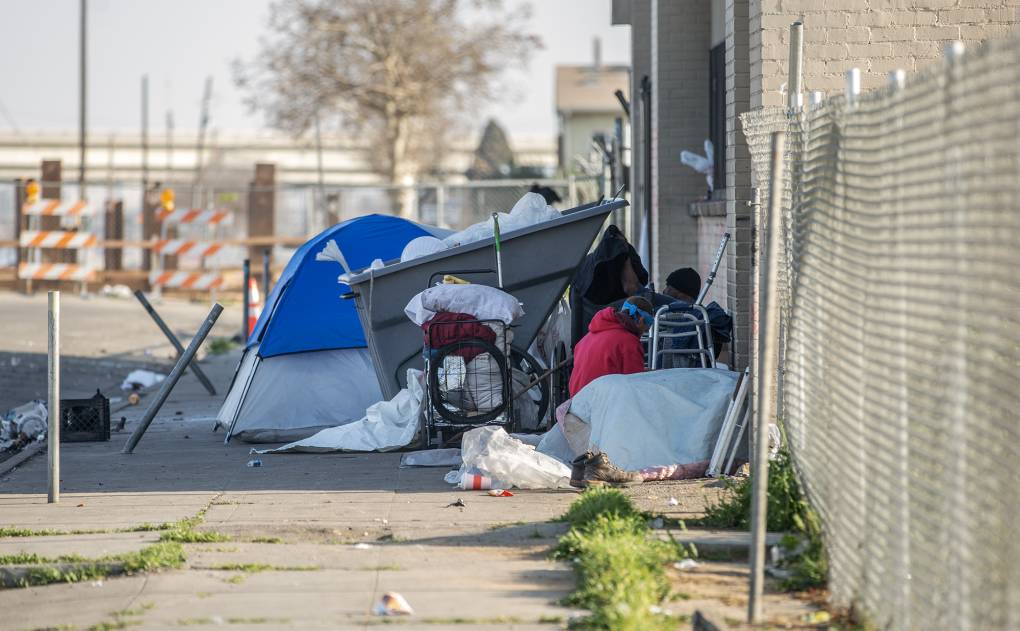
"caption": "People sit on the sidewalk of G Street in a small homeless encampment in the Chinatown neighborhood of Fresno on Feb. 10, 2022. ",
"description": null,
"title": "CMNewsom01",
"credit": "Larry Valenzuela/CalMatters",
"status": "inherit",
"altTag": "An encampment is seen with a tent, pillows and other belongings arranged on a sidewalk next to a building lined with a chain-link fence.",
"isLoading": false,
"fetchFailed": false
},
"news_11961454": {
"type": "attachments",
"id": "news_11961454",
"meta": {
"index": "attachments_1716263798",
"site": "news",
"id": "11961454",
"found": true
},
"parent": 11961449,
"imgSizes": {
"twentyfourteen-full-width": {
"file": "https://ww2.kqed.org/app/uploads/sites/10/2023/09/GettyImages-1236922203-1038x576.jpg",
"width": 1038,
"mimeType": "image/jpeg",
"height": 576
},
"thumbnail": {
"file": "https://ww2.kqed.org/app/uploads/sites/10/2023/09/GettyImages-1236922203-160x107.jpg",
"width": 160,
"mimeType": "image/jpeg",
"height": 107
},
"post-thumbnail": {
"file": "https://ww2.kqed.org/app/uploads/sites/10/2023/09/GettyImages-1236922203-672x372.jpg",
"width": 672,
"mimeType": "image/jpeg",
"height": 372
},
"kqedFullSize": {
"file": "https://ww2.kqed.org/app/uploads/sites/10/2023/09/GettyImages-1236922203-scaled.jpg",
"width": 2560,
"height": 1707
},
"2048x2048": {
"file": "https://ww2.kqed.org/app/uploads/sites/10/2023/09/GettyImages-1236922203-2048x1366.jpg",
"width": 2048,
"mimeType": "image/jpeg",
"height": 1366
},
"large": {
"file": "https://ww2.kqed.org/app/uploads/sites/10/2023/09/GettyImages-1236922203-1020x680.jpg",
"width": 1020,
"mimeType": "image/jpeg",
"height": 680
},
"1536x1536": {
"file": "https://ww2.kqed.org/app/uploads/sites/10/2023/09/GettyImages-1236922203-1536x1024.jpg",
"width": 1536,
"mimeType": "image/jpeg",
"height": 1024
},
"full-width": {
"file": "https://ww2.kqed.org/app/uploads/sites/10/2023/09/GettyImages-1236922203-1920x1281.jpg",
"width": 1920,
"mimeType": "image/jpeg",
"height": 1281
},
"medium": {
"file": "https://ww2.kqed.org/app/uploads/sites/10/2023/09/GettyImages-1236922203-800x534.jpg",
"width": 800,
"mimeType": "image/jpeg",
"height": 534
}
},
"publishDate": 1694819931,
"modified": 1694820004,
"caption": "A security guard outside the Louis Vuitton store in downtown San Francisco, which had increased its security following a string of thefts.",
"description": null,
"title": "Businesses In San Francisco Board Up In Response To Recent String Of Robberies",
"credit": "Ethan Swope/Getty Images",
"status": "inherit",
"altTag": "the boarded up windows of a Louis Vuitton store with a security guard out front",
"isLoading": false,
"fetchFailed": false
},
"news_11961404": {
"type": "attachments",
"id": "news_11961404",
"meta": {
"index": "attachments_1716263798",
"site": "news",
"id": "11961404",
"found": true
},
"parent": 0,
"imgSizes": {
"twentyfourteen-full-width": {
"file": "https://ww2.kqed.org/app/uploads/sites/10/2023/09/AP23258004036977-1038x576.jpg",
"width": 1038,
"mimeType": "image/jpeg",
"height": 576
},
"thumbnail": {
"file": "https://ww2.kqed.org/app/uploads/sites/10/2023/09/AP23258004036977-160x107.jpg",
"width": 160,
"mimeType": "image/jpeg",
"height": 107
},
"post-thumbnail": {
"file": "https://ww2.kqed.org/app/uploads/sites/10/2023/09/AP23258004036977-672x372.jpg",
"width": 672,
"mimeType": "image/jpeg",
"height": 372
},
"kqedFullSize": {
"file": "https://ww2.kqed.org/app/uploads/sites/10/2023/09/AP23258004036977-scaled.jpg",
"width": 2560,
"height": 1707
},
"2048x2048": {
"file": "https://ww2.kqed.org/app/uploads/sites/10/2023/09/AP23258004036977-2048x1366.jpg",
"width": 2048,
"mimeType": "image/jpeg",
"height": 1366
},
"large": {
"file": "https://ww2.kqed.org/app/uploads/sites/10/2023/09/AP23258004036977-1020x680.jpg",
"width": 1020,
"mimeType": "image/jpeg",
"height": 680
},
"1536x1536": {
"file": "https://ww2.kqed.org/app/uploads/sites/10/2023/09/AP23258004036977-1536x1024.jpg",
"width": 1536,
"mimeType": "image/jpeg",
"height": 1024
},
"full-width": {
"file": "https://ww2.kqed.org/app/uploads/sites/10/2023/09/AP23258004036977-1920x1280.jpg",
"width": 1920,
"mimeType": "image/jpeg",
"height": 1280
},
"medium": {
"file": "https://ww2.kqed.org/app/uploads/sites/10/2023/09/AP23258004036977-800x533.jpg",
"width": 800,
"mimeType": "image/jpeg",
"height": 533
}
},
"publishDate": 1694808860,
"modified": 1694813584,
"caption": "Guests tour the 5 turbines of America's first offshore wind farm, owned by the Danish company, Orsted, off the coast of Block Island, R.I., as part of a wind power conference on Oct. 17, 2022. California lawmakers were scheduled to vote Thursday, Sept. 14, 2023, on whether to give Gov. Newsom's administration permission to buy massive amounts of electricity.",
"description": null,
"title": "California Legislature Energy",
"credit": "David Goldman/AP Photo",
"status": "inherit",
"altTag": "People on a windy pier look out into the wavy ocean and see wind turbines in the distance poking out among the water. The sky is gray and cloudy. One blond woman's hair is blowing in the wind.",
"isLoading": false,
"fetchFailed": false
},
"news_11961353": {
"type": "attachments",
"id": "news_11961353",
"meta": {
"index": "attachments_1716263798",
"site": "news",
"id": "11961353",
"found": true
},
"parent": 11961350,
"imgSizes": {
"twentyfourteen-full-width": {
"file": "https://ww2.kqed.org/app/uploads/sites/10/2023/09/GettyImages-524576215-1038x576.jpg",
"width": 1038,
"mimeType": "image/jpeg",
"height": 576
},
"thumbnail": {
"file": "https://ww2.kqed.org/app/uploads/sites/10/2023/09/GettyImages-524576215-160x106.jpg",
"width": 160,
"mimeType": "image/jpeg",
"height": 106
},
"post-thumbnail": {
"file": "https://ww2.kqed.org/app/uploads/sites/10/2023/09/GettyImages-524576215-672x372.jpg",
"width": 672,
"mimeType": "image/jpeg",
"height": 372
},
"kqedFullSize": {
"file": "https://ww2.kqed.org/app/uploads/sites/10/2023/09/GettyImages-524576215-scaled.jpg",
"width": 2560,
"height": 1696
},
"2048x2048": {
"file": "https://ww2.kqed.org/app/uploads/sites/10/2023/09/GettyImages-524576215-2048x1356.jpg",
"width": 2048,
"mimeType": "image/jpeg",
"height": 1356
},
"large": {
"file": "https://ww2.kqed.org/app/uploads/sites/10/2023/09/GettyImages-524576215-1020x676.jpg",
"width": 1020,
"mimeType": "image/jpeg",
"height": 676
},
"1536x1536": {
"file": "https://ww2.kqed.org/app/uploads/sites/10/2023/09/GettyImages-524576215-1536x1017.jpg",
"width": 1536,
"mimeType": "image/jpeg",
"height": 1017
},
"full-width": {
"file": "https://ww2.kqed.org/app/uploads/sites/10/2023/09/GettyImages-524576215-1920x1272.jpg",
"width": 1920,
"mimeType": "image/jpeg",
"height": 1272
},
"medium": {
"file": "https://ww2.kqed.org/app/uploads/sites/10/2023/09/GettyImages-524576215-800x530.jpg",
"width": 800,
"mimeType": "image/jpeg",
"height": 530
}
},
"publishDate": 1694801405,
"modified": 1694801550,
"caption": "The California Legislature met late into the night at the Capitol building in Sacramento.",
"description": null,
"title": "Sacramento capital building - California",
"credit": "Getty Images",
"status": "inherit",
"altTag": "The Sacramento Capitol building lit up at night",
"isLoading": false,
"fetchFailed": false
},
"news_11960976": {
"type": "attachments",
"id": "news_11960976",
"meta": {
"index": "attachments_1716263798",
"site": "news",
"id": "11960976",
"found": true
},
"parent": 0,
"imgSizes": {
"twentyfourteen-full-width": {
"file": "https://ww2.kqed.org/app/uploads/sites/10/2023/09/230913-NEWSOM-HOMELESS-AP-RP-KQED-1038x576.jpg",
"width": 1038,
"mimeType": "image/jpeg",
"height": 576
},
"thumbnail": {
"file": "https://ww2.kqed.org/app/uploads/sites/10/2023/09/230913-NEWSOM-HOMELESS-AP-RP-KQED-160x107.jpg",
"width": 160,
"mimeType": "image/jpeg",
"height": 107
},
"post-thumbnail": {
"file": "https://ww2.kqed.org/app/uploads/sites/10/2023/09/230913-NEWSOM-HOMELESS-AP-RP-KQED-672x372.jpg",
"width": 672,
"mimeType": "image/jpeg",
"height": 372
},
"kqedFullSize": {
"file": "https://ww2.kqed.org/app/uploads/sites/10/2023/09/230913-NEWSOM-HOMELESS-AP-RP-KQED.jpg",
"width": 2000,
"height": 1334
},
"large": {
"file": "https://ww2.kqed.org/app/uploads/sites/10/2023/09/230913-NEWSOM-HOMELESS-AP-RP-KQED-1020x680.jpg",
"width": 1020,
"mimeType": "image/jpeg",
"height": 680
},
"1536x1536": {
"file": "https://ww2.kqed.org/app/uploads/sites/10/2023/09/230913-NEWSOM-HOMELESS-AP-RP-KQED-1536x1025.jpg",
"width": 1536,
"mimeType": "image/jpeg",
"height": 1025
},
"full-width": {
"file": "https://ww2.kqed.org/app/uploads/sites/10/2023/09/230913-NEWSOM-HOMELESS-AP-RP-KQED-1920x1281.jpg",
"width": 1920,
"mimeType": "image/jpeg",
"height": 1281
},
"medium": {
"file": "https://ww2.kqed.org/app/uploads/sites/10/2023/09/230913-NEWSOM-HOMELESS-AP-RP-KQED-800x534.jpg",
"width": 800,
"mimeType": "image/jpeg",
"height": 534
}
},
"publishDate": 1694629313,
"modified": 1694641499,
"caption": "California Gov. Gavin Newsom speaks during an interview with Politico in Sacramento on Sept. 12, 2023. Newsom said the state will intervene in an ongoing federal court case that has barred San Francisco from cleaning up homeless encampments.",
"description": null,
"title": "California Governor Homelessness",
"credit": "Rich Pedroncelli/AP Photo",
"status": "inherit",
"altTag": "A person in a suit and ties speaks and gestures with their hands.",
"isLoading": false,
"fetchFailed": false
},
"news_11960809": {
"type": "attachments",
"id": "news_11960809",
"meta": {
"index": "attachments_1716263798",
"site": "news",
"id": "11960809",
"found": true
},
"parent": 0,
"imgSizes": {
"twentyfourteen-full-width": {
"file": "https://ww2.kqed.org/app/uploads/sites/10/2023/09/GettyImages-450371241-qut-1038x576.jpg",
"width": 1038,
"mimeType": "image/jpeg",
"height": 576
},
"thumbnail": {
"file": "https://ww2.kqed.org/app/uploads/sites/10/2023/09/GettyImages-450371241-qut-160x107.jpg",
"width": 160,
"mimeType": "image/jpeg",
"height": 107
},
"post-thumbnail": {
"file": "https://ww2.kqed.org/app/uploads/sites/10/2023/09/GettyImages-450371241-qut-672x372.jpg",
"width": 672,
"mimeType": "image/jpeg",
"height": 372
},
"kqedFullSize": {
"file": "https://ww2.kqed.org/app/uploads/sites/10/2023/09/GettyImages-450371241-qut.jpg",
"width": 1920,
"height": 1280
},
"large": {
"file": "https://ww2.kqed.org/app/uploads/sites/10/2023/09/GettyImages-450371241-qut-1020x680.jpg",
"width": 1020,
"mimeType": "image/jpeg",
"height": 680
},
"1536x1536": {
"file": "https://ww2.kqed.org/app/uploads/sites/10/2023/09/GettyImages-450371241-qut-1536x1024.jpg",
"width": 1536,
"mimeType": "image/jpeg",
"height": 1024
},
"medium": {
"file": "https://ww2.kqed.org/app/uploads/sites/10/2023/09/GettyImages-450371241-qut-800x533.jpg",
"width": 800,
"mimeType": "image/jpeg",
"height": 533
}
},
"publishDate": 1694540341,
"modified": 1694557561,
"caption": "On average, nearly 1,600 people come out of state prison each year with an immigration detainer that leads to their transfer to ICE to be deported, according to an estimate by state Senate staff.",
"description": null,
"title": "GettyImages-450371241-qut",
"credit": "John Moore/Getty Images",
"status": "inherit",
"altTag": "A line of individuals are shown from their wrists down. Their hands are shackles with handcuffs. They are incarcerated individuals seemingly on their way to be transported to a different area.",
"isLoading": false,
"fetchFailed": false
},
"news_11960691": {
"type": "attachments",
"id": "news_11960691",
"meta": {
"index": "attachments_1716263798",
"site": "news",
"id": "11960691",
"found": true
},
"parent": 11960671,
"imgSizes": {
"twentyfourteen-full-width": {
"file": "https://ww2.kqed.org/app/uploads/sites/10/2023/09/KQED_Oakland_McDonaldsStrike_01152021-11-qut-1038x576.jpg",
"width": 1038,
"mimeType": "image/jpeg",
"height": 576
},
"thumbnail": {
"file": "https://ww2.kqed.org/app/uploads/sites/10/2023/09/KQED_Oakland_McDonaldsStrike_01152021-11-qut-160x107.jpg",
"width": 160,
"mimeType": "image/jpeg",
"height": 107
},
"post-thumbnail": {
"file": "https://ww2.kqed.org/app/uploads/sites/10/2023/09/KQED_Oakland_McDonaldsStrike_01152021-11-qut-672x372.jpg",
"width": 672,
"mimeType": "image/jpeg",
"height": 372
},
"kqedFullSize": {
"file": "https://ww2.kqed.org/app/uploads/sites/10/2023/09/KQED_Oakland_McDonaldsStrike_01152021-11-qut.jpg",
"width": 1920,
"height": 1282
},
"large": {
"file": "https://ww2.kqed.org/app/uploads/sites/10/2023/09/KQED_Oakland_McDonaldsStrike_01152021-11-qut-1020x681.jpg",
"width": 1020,
"mimeType": "image/jpeg",
"height": 681
},
"1536x1536": {
"file": "https://ww2.kqed.org/app/uploads/sites/10/2023/09/KQED_Oakland_McDonaldsStrike_01152021-11-qut-1536x1026.jpg",
"width": 1536,
"mimeType": "image/jpeg",
"height": 1026
},
"medium": {
"file": "https://ww2.kqed.org/app/uploads/sites/10/2023/09/KQED_Oakland_McDonaldsStrike_01152021-11-qut-800x534.jpg",
"width": 800,
"mimeType": "image/jpeg",
"height": 534
}
},
"publishDate": 1694468715,
"modified": 1694471460,
"caption": "Oakland fast-food workers convened for a car caravan strike at a McDonald's restaurant in January, 2021 to demand better working conditions and higher minimum wage for fast-food workers around the country.",
"description": null,
"title": "KQED_Oakland_McDonaldsStrike_01152021-11-qut",
"credit": "Anna Vignet/KQED",
"status": "inherit",
"altTag": "Two people stand wearing black in front of a protest sign at a McDonald's drive-thru.",
"isLoading": false,
"fetchFailed": false
},
"news_11959821": {
"type": "attachments",
"id": "news_11959821",
"meta": {
"index": "attachments_1716263798",
"site": "news",
"id": "11959821",
"found": true
},
"parent": 11959818,
"imgSizes": {
"twentyfourteen-full-width": {
"file": "https://ww2.kqed.org/app/uploads/sites/10/2023/08/GettyImages-1301483160-1038x576.jpg",
"width": 1038,
"mimeType": "image/jpeg",
"height": 576
},
"thumbnail": {
"file": "https://ww2.kqed.org/app/uploads/sites/10/2023/08/GettyImages-1301483160-160x107.jpg",
"width": 160,
"mimeType": "image/jpeg",
"height": 107
},
"post-thumbnail": {
"file": "https://ww2.kqed.org/app/uploads/sites/10/2023/08/GettyImages-1301483160-672x372.jpg",
"width": 672,
"mimeType": "image/jpeg",
"height": 372
},
"kqedFullSize": {
"file": "https://ww2.kqed.org/app/uploads/sites/10/2023/08/GettyImages-1301483160-scaled.jpg",
"width": 2560,
"height": 1708
},
"2048x2048": {
"file": "https://ww2.kqed.org/app/uploads/sites/10/2023/08/GettyImages-1301483160-2048x1366.jpg",
"width": 2048,
"mimeType": "image/jpeg",
"height": 1366
},
"large": {
"file": "https://ww2.kqed.org/app/uploads/sites/10/2023/08/GettyImages-1301483160-1020x680.jpg",
"width": 1020,
"mimeType": "image/jpeg",
"height": 680
},
"1536x1536": {
"file": "https://ww2.kqed.org/app/uploads/sites/10/2023/08/GettyImages-1301483160-1536x1025.jpg",
"width": 1536,
"mimeType": "image/jpeg",
"height": 1025
},
"full-width": {
"file": "https://ww2.kqed.org/app/uploads/sites/10/2023/08/GettyImages-1301483160-1920x1281.jpg",
"width": 1920,
"mimeType": "image/jpeg",
"height": 1281
},
"medium": {
"file": "https://ww2.kqed.org/app/uploads/sites/10/2023/08/GettyImages-1301483160-800x534.jpg",
"width": 800,
"mimeType": "image/jpeg",
"height": 534
}
},
"publishDate": 1693521215,
"modified": 1693521293,
"caption": "San Quentin State Prison was the long-time home of death row and is now in the process of a rehabilitation overhaul.",
"description": null,
"title": "SFChronicleVirusPrisons",
"credit": "Scott Strazzante/The San Francisco Chronicle via Getty Images",
"status": "inherit",
"altTag": "a large prison building in the background of a parking lot",
"isLoading": false,
"fetchFailed": false
},
"news_11959337": {
"type": "attachments",
"id": "news_11959337",
"meta": {
"index": "attachments_1716263798",
"site": "news",
"id": "11959337",
"found": true
},
"parent": 0,
"imgSizes": {
"twentyfourteen-full-width": {
"file": "https://ww2.kqed.org/app/uploads/sites/10/2023/08/CMCareCourts01-1038x576.jpg",
"width": 1038,
"mimeType": "image/jpeg",
"height": 576
},
"thumbnail": {
"file": "https://ww2.kqed.org/app/uploads/sites/10/2023/08/CMCareCourts01-160x107.jpg",
"width": 160,
"mimeType": "image/jpeg",
"height": 107
},
"post-thumbnail": {
"file": "https://ww2.kqed.org/app/uploads/sites/10/2023/08/CMCareCourts01-672x372.jpg",
"width": 672,
"mimeType": "image/jpeg",
"height": 372
},
"kqedFullSize": {
"file": "https://ww2.kqed.org/app/uploads/sites/10/2023/08/CMCareCourts01.jpg",
"width": 2000,
"height": 1333
},
"large": {
"file": "https://ww2.kqed.org/app/uploads/sites/10/2023/08/CMCareCourts01-1020x680.jpg",
"width": 1020,
"mimeType": "image/jpeg",
"height": 680
},
"1536x1536": {
"file": "https://ww2.kqed.org/app/uploads/sites/10/2023/08/CMCareCourts01-1536x1024.jpg",
"width": 1536,
"mimeType": "image/jpeg",
"height": 1024
},
"full-width": {
"file": "https://ww2.kqed.org/app/uploads/sites/10/2023/08/CMCareCourts01-1920x1280.jpg",
"width": 1920,
"mimeType": "image/jpeg",
"height": 1280
},
"medium": {
"file": "https://ww2.kqed.org/app/uploads/sites/10/2023/08/CMCareCourts01-800x533.jpg",
"width": 800,
"mimeType": "image/jpeg",
"height": 533
}
},
"publishDate": 1693249635,
"modified": 1693255903,
"caption": "Stacey Berardino, assistant deputy director over the forensics and justice involved division of mental health, speaks to community members about CARE Court, a new program that will be implemented in October 2023, at the St. Irenaeus Catholic Church in Cypress.",
"description": null,
"title": "CMCareCourts01",
"credit": "Lauren Justice/CalMatters",
"status": "inherit",
"altTag": "A woman speaks in front of a crowd with a microphone in her hand. A projected screen behind her reads, \"What is in a CARE/Agreement Plan?\"",
"isLoading": false,
"fetchFailed": false
},
"news_11958565": {
"type": "attachments",
"id": "news_11958565",
"meta": {
"index": "attachments_1716263798",
"site": "news",
"id": "11958565",
"found": true
},
"parent": 11958561,
"imgSizes": {
"twentyfourteen-full-width": {
"file": "https://ww2.kqed.org/app/uploads/sites/10/2023/08/081822_NewsomFresno_LV_CM_006-copy-1038x576.jpg",
"width": 1038,
"mimeType": "image/jpeg",
"height": 576
},
"thumbnail": {
"file": "https://ww2.kqed.org/app/uploads/sites/10/2023/08/081822_NewsomFresno_LV_CM_006-copy-160x107.jpg",
"width": 160,
"mimeType": "image/jpeg",
"height": 107
},
"post-thumbnail": {
"file": "https://ww2.kqed.org/app/uploads/sites/10/2023/08/081822_NewsomFresno_LV_CM_006-copy-672x372.jpg",
"width": 672,
"mimeType": "image/jpeg",
"height": 372
},
"kqedFullSize": {
"file": "https://ww2.kqed.org/app/uploads/sites/10/2023/08/081822_NewsomFresno_LV_CM_006-copy.jpg",
"width": 2000,
"height": 1333
},
"large": {
"file": "https://ww2.kqed.org/app/uploads/sites/10/2023/08/081822_NewsomFresno_LV_CM_006-copy-1020x680.jpg",
"width": 1020,
"mimeType": "image/jpeg",
"height": 680
},
"1536x1536": {
"file": "https://ww2.kqed.org/app/uploads/sites/10/2023/08/081822_NewsomFresno_LV_CM_006-copy-1536x1024.jpg",
"width": 1536,
"mimeType": "image/jpeg",
"height": 1024
},
"full-width": {
"file": "https://ww2.kqed.org/app/uploads/sites/10/2023/08/081822_NewsomFresno_LV_CM_006-copy-1920x1280.jpg",
"width": 1920,
"mimeType": "image/jpeg",
"height": 1280
},
"medium": {
"file": "https://ww2.kqed.org/app/uploads/sites/10/2023/08/081822_NewsomFresno_LV_CM_006-copy-800x533.jpg",
"width": 800,
"mimeType": "image/jpeg",
"height": 533
}
},
"publishDate": 1692383651,
"modified": 1692383792,
"caption": "Gov. Gavin Newsom outlined new efforts to support the mental health of students at McLane High School in Fresno on Aug. 18, 2022.",
"description": null,
"title": "081822_NewsomFresno_LV_CM_006 copy",
"credit": "Larry Valenzuela, CalMatters/CatchLight Local",
"status": "inherit",
"altTag": "A white middle-aged man in a blue suit and blue tie speaks behind a dais that says \"Healthy Minds For California Kids\" surrounded by people.",
"isLoading": false,
"fetchFailed": false
},
"news_11957165": {
"type": "attachments",
"id": "news_11957165",
"meta": {
"index": "attachments_1716263798",
"site": "news",
"id": "11957165",
"found": true
},
"parent": 0,
"imgSizes": {
"twentyfourteen-full-width": {
"file": "https://ww2.kqed.org/app/uploads/sites/10/2023/08/RS67586_230728-WildfireSantaRosaHousing-53-BL-KQED-1038x576.jpg",
"width": 1038,
"mimeType": "image/jpeg",
"height": 576
},
"thumbnail": {
"file": "https://ww2.kqed.org/app/uploads/sites/10/2023/08/RS67586_230728-WildfireSantaRosaHousing-53-BL-KQED-160x107.jpg",
"width": 160,
"mimeType": "image/jpeg",
"height": 107
},
"post-thumbnail": {
"file": "https://ww2.kqed.org/app/uploads/sites/10/2023/08/RS67586_230728-WildfireSantaRosaHousing-53-BL-KQED-672x372.jpg",
"width": 672,
"mimeType": "image/jpeg",
"height": 372
},
"kqedFullSize": {
"file": "https://ww2.kqed.org/app/uploads/sites/10/2023/08/RS67586_230728-WildfireSantaRosaHousing-53-BL-KQED.jpg",
"width": 2000,
"height": 1333
},
"large": {
"file": "https://ww2.kqed.org/app/uploads/sites/10/2023/08/RS67586_230728-WildfireSantaRosaHousing-53-BL-KQED-1020x680.jpg",
"width": 1020,
"mimeType": "image/jpeg",
"height": 680
},
"1536x1536": {
"file": "https://ww2.kqed.org/app/uploads/sites/10/2023/08/RS67586_230728-WildfireSantaRosaHousing-53-BL-KQED-1536x1024.jpg",
"width": 1536,
"mimeType": "image/jpeg",
"height": 1024
},
"full-width": {
"file": "https://ww2.kqed.org/app/uploads/sites/10/2023/08/RS67586_230728-WildfireSantaRosaHousing-53-BL-KQED-1920x1280.jpg",
"width": 1920,
"mimeType": "image/jpeg",
"height": 1280
},
"medium": {
"file": "https://ww2.kqed.org/app/uploads/sites/10/2023/08/RS67586_230728-WildfireSantaRosaHousing-53-BL-KQED-800x533.jpg",
"width": 800,
"mimeType": "image/jpeg",
"height": 533
}
},
"publishDate": 1690993097,
"modified": 1691091614,
"caption": "A foundation for a home can be seen in the Fountaingrove area of Santa Rosa on July 28, 2023. Fountaingrove was hit hard by the Tubbs Fire in October 2017. In the single-family home market, large carriers, including Allstate, State Farm, Farmers and AIG, cited economic conditions and the increasing frequency and severity of weather events such as floods and wildfires as reasons for declining to sell new policies in the state.",
"description": null,
"title": "RS67586_230728-WildfireSantaRosaHousing-53-BL-KQED",
"credit": "Beth LaBerge/KQED",
"status": "inherit",
"altTag": "A hillside with the exposed foundations of several destroyed homes and a handful of newly built houses.",
"isLoading": false,
"fetchFailed": false
},
"news_11957496": {
"type": "attachments",
"id": "news_11957496",
"meta": {
"index": "attachments_1716263798",
"site": "news",
"id": "11957496",
"found": true
},
"parent": 11957487,
"imgSizes": {
"twentyfourteen-full-width": {
"file": "https://ww2.kqed.org/app/uploads/sites/10/2023/08/ezgif.com-webp-to-jpg-1038x576.jpg",
"width": 1038,
"mimeType": "image/jpeg",
"height": 576
},
"thumbnail": {
"file": "https://ww2.kqed.org/app/uploads/sites/10/2023/08/ezgif.com-webp-to-jpg-160x107.jpg",
"width": 160,
"mimeType": "image/jpeg",
"height": 107
},
"post-thumbnail": {
"file": "https://ww2.kqed.org/app/uploads/sites/10/2023/08/ezgif.com-webp-to-jpg-672x372.jpg",
"width": 672,
"mimeType": "image/jpeg",
"height": 372
},
"kqedFullSize": {
"file": "https://ww2.kqed.org/app/uploads/sites/10/2023/08/ezgif.com-webp-to-jpg.jpg",
"width": 2000,
"height": 1333
},
"large": {
"file": "https://ww2.kqed.org/app/uploads/sites/10/2023/08/ezgif.com-webp-to-jpg-1020x680.jpg",
"width": 1020,
"mimeType": "image/jpeg",
"height": 680
},
"1536x1536": {
"file": "https://ww2.kqed.org/app/uploads/sites/10/2023/08/ezgif.com-webp-to-jpg-1536x1024.jpg",
"width": 1536,
"mimeType": "image/jpeg",
"height": 1024
},
"full-width": {
"file": "https://ww2.kqed.org/app/uploads/sites/10/2023/08/ezgif.com-webp-to-jpg-1920x1280.jpg",
"width": 1920,
"mimeType": "image/jpeg",
"height": 1280
},
"medium": {
"file": "https://ww2.kqed.org/app/uploads/sites/10/2023/08/ezgif.com-webp-to-jpg-800x533.jpg",
"width": 800,
"mimeType": "image/jpeg",
"height": 533
}
},
"publishDate": 1691194646,
"modified": 1691248925,
"caption": "Bond measures can only be put before voters with a vote by the state Legislature and approval of the governor. ",
"description": null,
"title": "ezgif.com-webp-to-jpg",
"credit": "Illustration by Adriana Heldiz, CalMatters / iStock",
"status": "inherit",
"altTag": "An illustration with Gov. Gavin Newsom and Assemblymember Buffy Weeks, along with $100 dollar bills and piles of coins.",
"isLoading": false,
"fetchFailed": false
}
},
"audioPlayerReducer": {
"postId": "stream_live",
"isPaused": true,
"isPlaying": false,
"pfsActive": false,
"pledgeModalIsOpen": true,
"playerDrawerIsOpen": false,
"liveAudioPlayStartedAt": 0,
"liveAudioPlayContext": ""
},
"authorsReducer": {
"byline_news_11961346": {
"type": "authors",
"id": "byline_news_11961346",
"meta": {
"override": true
},
"slug": "byline_news_11961346",
"name": "\u003ca href=\"https://calmatters.org/author/kristen-hwang/\">Kristen Hwang\u003c/a>",
"isLoading": false
},
"byline_news_11961449": {
"type": "authors",
"id": "byline_news_11961449",
"meta": {
"override": true
},
"slug": "byline_news_11961449",
"name": "Trân Nguyễn\u003cbr>The Associated Press",
"isLoading": false
},
"byline_news_11961400": {
"type": "authors",
"id": "byline_news_11961400",
"meta": {
"override": true
},
"slug": "byline_news_11961400",
"name": "\u003ca href=\"https://twitter.com/adambeam\">Adam Beam\u003c/a> \u003cbr> The Associated Press",
"isLoading": false
},
"byline_news_11961350": {
"type": "authors",
"id": "byline_news_11961350",
"meta": {
"override": true
},
"slug": "byline_news_11961350",
"name": "Trân Nguyễn\u003cbr>The Associated Press",
"isLoading": false
},
"byline_news_11960963": {
"type": "authors",
"id": "byline_news_11960963",
"meta": {
"override": true
},
"slug": "byline_news_11960963",
"name": "Kathleen Ronayne\u003cbr>The Associated Press",
"isLoading": false
},
"byline_news_11960671": {
"type": "authors",
"id": "byline_news_11960671",
"meta": {
"override": true
},
"slug": "byline_news_11960671",
"name": "Adam Beam \u003cbr> Associated Press",
"isLoading": false
},
"byline_news_11959818": {
"type": "authors",
"id": "byline_news_11959818",
"meta": {
"override": true
},
"slug": "byline_news_11959818",
"name": "Trân Nguyễn\u003cbr>The Associated Press",
"isLoading": false
},
"byline_news_11959302": {
"type": "authors",
"id": "byline_news_11959302",
"meta": {
"override": true
},
"slug": "byline_news_11959302",
"name": "\u003ca href=\"https://calmatters.org/author/jeanne-kuang/\">Jeanne Kuang\u003c/a>",
"isLoading": false
},
"byline_news_11958561": {
"type": "authors",
"id": "byline_news_11958561",
"meta": {
"override": true
},
"slug": "byline_news_11958561",
"name": "\u003ca href=\"https://calmatters.org/author/kristen-hwang/\">Kristen Hwang\u003c/a>",
"isLoading": false
},
"byline_news_11957487": {
"type": "authors",
"id": "byline_news_11957487",
"meta": {
"override": true
},
"slug": "byline_news_11957487",
"name": "\u003ca href=\"https://calmatters.org/author/ben-christopher/\">Ben Christopher\u003c/a>",
"isLoading": false
},
"tychehendricks": {
"type": "authors",
"id": "259",
"meta": {
"index": "authors_1716337520",
"id": "259",
"found": true
},
"name": "Tyche Hendricks",
"firstName": "Tyche",
"lastName": "Hendricks",
"slug": "tychehendricks",
"email": "thendricks@kqed.org",
"display_author_email": true,
"staff_mastheads": [
"news"
],
"title": "KQED Senior Editor, Immigration",
"bio": "\u003cspan style=\"font-weight: 400;\">Tyche Hendricks is KQED’s senior editor for immigration, leading coverage of the policy and politics that affect California’s immigrant communities. Her work for KQED’s radio and online audiences is also carried on NPR and other national outlets. She has been recognized with awards from the Radio and Television News Directors Association, the Society for Professional Journalists; the Education Writers Association; the Best of the West and the National Federation of Community Broadcasters. Before joining KQED in 2010, Tyche spent more than a dozen years as a newspaper reporter, notably at the \u003c/span>\u003ci>\u003cspan style=\"font-weight: 400;\">San Francisco Chronicle\u003c/span>\u003c/i>\u003cspan style=\"font-weight: 400;\">. At different times she has covered criminal justice, government and politics and urban planning. Tyche has taught in the MFA Creative Writing program at the University of San Francisco and at UC Berkeley’s Graduate School of Journalism, where she was co-director of a national immigration symposium for professional journalists. She is the author of \u003c/span>\u003ci>\u003cspan style=\"font-weight: 400;\">The Wind Doesn't Need a Passport: Stories from the U.S.-Mexico Borderlands\u003c/span>\u003c/i>\u003cspan style=\"font-weight: 400;\"> (University of California Press). \u003c/span>",
"avatar": "https://secure.gravatar.com/avatar/b8ee458e2731c2d43df86882ce17267e?s=600&d=blank&r=g",
"twitter": "tychehendricks",
"facebook": null,
"instagram": null,
"linkedin": null,
"sites": [
{
"site": "news",
"roles": [
"editor"
]
},
{
"site": "stateofhealth",
"roles": [
"editor"
]
}
],
"headData": {
"title": "Tyche Hendricks | KQED",
"description": "KQED Senior Editor, Immigration",
"ogImgSrc": "https://secure.gravatar.com/avatar/b8ee458e2731c2d43df86882ce17267e?s=600&d=blank&r=g",
"twImgSrc": "https://secure.gravatar.com/avatar/b8ee458e2731c2d43df86882ce17267e?s=600&d=blank&r=g"
},
"isLoading": false,
"link": "/author/tychehendricks"
},
"ebaldassari": {
"type": "authors",
"id": "11652",
"meta": {
"index": "authors_1716337520",
"id": "11652",
"found": true
},
"name": "Erin Baldassari",
"firstName": "Erin",
"lastName": "Baldassari",
"slug": "ebaldassari",
"email": "ebaldassari@KQED.org",
"display_author_email": true,
"staff_mastheads": [
"news"
],
"title": "Staff Writer",
"bio": "Erin Baldassari covers housing for KQED. She's a former print journalist and most recently worked as the transportation reporter for the \u003cem>Mercury News\u003c/em> and \u003cem>East Bay Times. \u003c/em>There, she focused on how the Bay Area’s housing shortage has changed the way people move around the region. She also served on the \u003cem>East Bay Times\u003c/em>’ 2017 Pulitzer Prize-winning team for coverage of the Ghost Ship Fire in Oakland. Prior to that, Erin worked as a breaking news and general assignment reporter for a variety of outlets in the Bay Area and the greater Boston area. A Tufts University alumna, Erin grew up in the foothills of the Sierra Nevada mountains and in Sonoma County. She is a life-long KQED listener.",
"avatar": "https://secure.gravatar.com/avatar/5e95cad64a8ca08288082212e199d2b0cbeb4fd8e8ef5339395f361032bbe005?s=600&d=blank&r=g",
"twitter": "e_baldi",
"bluesky": null,
"facebook": null,
"instagram": null,
"linkedin": null,
"sites": [
{
"site": "news",
"roles": [
"edit_others_posts",
"editor"
]
},
{
"site": "science",
"roles": [
"editor"
]
},
{
"site": "liveblog",
"roles": [
"editor"
]
}
],
"headData": {
"title": "Erin Baldassari | KQED",
"description": "Staff Writer",
"ogImgSrc": "https://secure.gravatar.com/avatar/5e95cad64a8ca08288082212e199d2b0cbeb4fd8e8ef5339395f361032bbe005?s=600&d=blank&r=g",
"twImgSrc": "https://secure.gravatar.com/avatar/5e95cad64a8ca08288082212e199d2b0cbeb4fd8e8ef5339395f361032bbe005?s=600&d=blank&r=g"
},
"isLoading": false,
"link": "/author/ebaldassari"
}
},
"pagesReducer": {
"news_tag_gavin-newsom": {
"type": "terms",
"id": "news_16",
"meta": {
"index": "terms_1716263798",
"site": "news",
"id": "16",
"score": 8.936995
},
"featImg": null,
"name": "Gavin Newsom",
"description": null,
"taxonomy": "tag",
"headData": {
"twImgId": null,
"twTitle": null,
"ogTitle": null,
"ogImgId": null,
"twDescription": null,
"description": null,
"title": "Gavin Newsom Archives | KQED News",
"ogDescription": null
},
"ttid": 16,
"slug": "gavin-newsom",
"isLoading": false,
"title": "Gavin Newsom",
"pageMeta": {
"site": "news",
"WpPageTemplate": "page-topic-editorial",
"currentPage": 37
},
"blocks": [
{
"blockName": "kqed/post-list",
"attrs": {
"layout": "cardArticle2",
"query": "posts/news?tag=gavin-newsom",
"seeMore": false,
"paginated": true,
"page": 37
}
},
{
"blockName": "kqed/ad"
}
]
}
},
"pfsSessionReducer": {},
"postsReducer": {
"stream_live": {
"type": "live",
"id": "stream_live",
"audioUrl": "https://streams.kqed.org/kqedradio",
"title": "Live Stream",
"excerpt": "Live Stream information currently unavailable.",
"link": "/radio",
"featImg": "",
"label": {
"name": "KQED Live",
"link": "/"
}
},
"stream_kqedNewscast": {
"type": "posts",
"id": "stream_kqedNewscast",
"audioUrl": "https://www.kqed.org/.stream/anon/radio/RDnews/newscast.mp3?_=1",
"title": "KQED Newscast",
"featImg": "",
"label": {
"name": "88.5 FM",
"link": "/"
}
},
"news_11961346": {
"type": "posts",
"id": "news_11961346",
"meta": {
"index": "posts_1716263798",
"site": "news",
"id": "11961346",
"score": null,
"sort": [
1694874610000
]
},
"guestAuthors": [],
"slug": "gavin-newsoms-mental-health-plan-heads-to-voters-heres-what-to-know",
"title": "Gavin Newsom's Mental Health Plan Heads to Voters. Here's What to Know",
"publishDate": 1694874610,
"format": "standard",
"headTitle": "Gavin Newsom’s Mental Health Plan Heads to Voters. Here’s What to Know | KQED",
"labelTerm": {
"term": 18481,
"site": "news"
},
"content": "\u003cp>California voters next spring will get to decide on a ballot measure to create housing and treatment options for unhoused individuals with serious mental illness. If it passes, the measure championed by Gov. Gavin Newsom would mark the first major overhaul of the state’s community mental health system in 20 years.\u003c/p>\n\u003cp>The two-pronged proposition on the March primary election ballot includes a nearly $6.4 billion bond to build 10,000 psychiatric treatment units. It also asks voters to redefine how counties spend money collected from a special “millionaire’s tax” to allocate a share of it for housing.\u003c/p>\n\u003cp>Newsom and supporters have promoted Proposition 1 as a way to help address the state’s deteriorating homelessness and addiction crises. They contend that increased investment and an update to the state’s Mental Health Services Act are “long overdue.”\u003c/p>\n\u003cp>The Legislature on Thursday overwhelmingly backed his proposal, with lopsided votes to place it on the 2024 ballot. Newsom still must sign the bills, and he said he would in a written statement after a late-night vote in the Assembly.\u003c/p>\n\u003cp>[ad fullwidth]\u003c/p>\n\u003cp>“These measures represent a key part of the solution to our homelessness crisis, and improving mental health for kids and families,” Newsom said. “Now, it will be up to voters to ratify the most significant changes to California’s mental health system in more than 50 years.”\u003c/p>\n\u003cp>Opponents of the ballot measure say diverting money in the Mental Health Services Act for housing will result in up to $1 billion in cuts to\u003ca href=\"https://lao.ca.gov/Publications/Report/4782\"> current mental health programs\u003c/a> like outpatient care and crisis response. Other advocates criticize the governor for making last-minute changes to the bond, allowing the money to be spent on involuntary treatment institutions.\u003c/p>\n\u003cp>So what exactly are voters being asked to consider? Here’s how the proposal breaks down.\u003c/p>\n\u003ch2>What is the Mental Health Services Act?\u003c/h2>\n\u003cp>The Mental Health Services Act, which voters passed as a ballot measure in 2004, levies a 1% tax on personal income over $1 million. It passed at a time when the state’s mental health system was severely underfunded. Since then, the tax has generated an estimated $26 billion for county mental health programs. Last year the tax garnered more than $3 billion. It supports roughly one-third of the state’s mental health system. [pullquote size=\"medium\" align=\"right\" citation=\"Gov. Gavin Newsom\"]‘These measures represent a key part of the solution to our homelessness crisis, and improving mental health for kids and families.’[/pullquote] The tax is not California’s only source of revenue for mental health programs. The state also receives money from Medi-Cal, and it spends a portion of its general fund on those services. Those sources come with strict spending limitations. For example, Medi-Cal primarily pays for treatment of mental health disorders but will not cover prevention programs. It also will not pay for inpatient treatment at a facility with more than 16 beds.\u003c/p>\n\u003cp>Counties have come to rely on the relative flexibility of Mental Health Services Act dollars to pay for core services like outpatient care, outreach and engagement, school-based counseling, youth wellness programs, family resource centers, and crisis response teams.\u003c/p>\n\u003ch2>What does Newsom want to do?\u003c/h2>\n\u003cp>The most significant change put forth by the governor is a requirement that counties invest 30% of their Mental Health Services Act tax dollars — roughly $1 billion based on last year’s revenue — in housing programs, including rental subsidies and navigation services. Counties would have to spend half this money on people who are chronically homeless or living in encampments. They could also use up to one-quarter of the money to build or purchase housing units.\u003c/p>\n\u003cp>Sacramento Mayor Darrell Steinberg has been a staunch supporter of Newsom’s proposal. Steinberg was one of the co-authors of the Mental Health Services Act when he was an Assembly member in 2004.\u003c/p>\n\u003cp>“To put it plainly, not enough of the Mental Health Services Act dollars are getting out to the people with the most persistent mental illnesses, specifically people who are chronically homeless and living with those underlying conditions,” Steinberg said during a press call in August. “So that’s where you start.”\u003c/p>\n\u003cp>The ballot measure puts counties on the hook for paying for substance use disorder treatment with Mental Health Services Act money. Counties have historically paid for addiction treatment with other funding.\u003c/p>\n\u003cp>And, it\u003cstrong> \u003c/strong>renames the program as the Behavioral Health Services Act.\u003c/p>\n\u003cfigure id=\"attachment_11961360\" class=\"wp-caption aligncenter\" style=\"max-width: 2400px\">\u003cimg loading=\"lazy\" decoding=\"async\" class=\"size-full wp-image-11961360\" src=\"https://ww2.kqed.org/app/uploads/sites/10/2023/09/CMNewsom02.jpeg\" alt=\"Gov. Gavin Newsom is pictured with his hands out as he speak to many folks in a warehouse in front of a microphone.\" width=\"2400\" height=\"1600\" srcset=\"https://cdn.kqed.org/wp-content/uploads/sites/10/2023/09/CMNewsom02.jpeg 2400w, https://cdn.kqed.org/wp-content/uploads/sites/10/2023/09/CMNewsom02-800x533.jpeg 800w, https://cdn.kqed.org/wp-content/uploads/sites/10/2023/09/CMNewsom02-1020x680.jpeg 1020w, https://cdn.kqed.org/wp-content/uploads/sites/10/2023/09/CMNewsom02-160x107.jpeg 160w, https://cdn.kqed.org/wp-content/uploads/sites/10/2023/09/CMNewsom02-1536x1024.jpeg 1536w, https://cdn.kqed.org/wp-content/uploads/sites/10/2023/09/CMNewsom02-2048x1365.jpeg 2048w, https://cdn.kqed.org/wp-content/uploads/sites/10/2023/09/CMNewsom02-1920x1280.jpeg 1920w\" sizes=\"auto, (max-width: 2400px) 100vw, 2400px\">\u003cfigcaption class=\"wp-caption-text\">Flanked by state and local politicians, Newsom announced the state’s plan to address homelessness across the state at Cal Expo in Sacramento, on March 16, 2023. \u003ccite>(Miguel Gutierrez Jr./CalMatters)\u003c/cite>\u003c/figcaption>\u003c/figure>\n\u003ch2>What will the bond measure do?\u003c/h2>\n\u003cp>The second half of Newsom’s proposal places a $6.4 billion general obligation bond before voters to dramatically expand the state’s psychiatric and addiction treatment infrastructure. [pullquote size=\"medium\" align=\"right\" citation=\"Sacramento Mayor Darrell Steinberg\"]‘To put it plainly, not enough of the Mental Health Services Act dollars are getting out to the people with the most persistent mental illnesses, specifically people who are chronically homeless and living with those underlying conditions.’[/pullquote] Nearly $4.4 billion would go toward building inpatient and residential treatment beds and could serve 100,000 people annually, officials said. California faces a shortage of \u003ca href=\"https://www.rand.org/content/dam/rand/pubs/testimonies/CTA2700/CTA2742-1/RAND_CTA2742-1.pdf\">nearly 8,000 adult psychiatric beds (PDF)\u003c/a>, said Nicole Eberhart, senior behavioral health scientist for the RAND Corporation, during testimony to an Assembly budget subcommittee in May. Long waitlists plague the state’s inpatient mental health system, and doctors say there’s nowhere to send stable patients who need long-term treatment focused on recovery.\u003c/p>\n\u003cp>Another $2 billion will go toward building permanent supportive housing, with half set aside for veterans with mental health diagnoses or addiction disorders.\u003c/p>\n\u003ch2>How many people are unhoused in California?\u003c/h2>\n\u003cp>More than 170,000 Californians are unhoused, the vast majority of whom live in street encampments. California has the highest homeless rate per 10,000 people, second only to the District of Columbia, and the highest proportion of unsheltered homeless individuals in the country, according to federal data.\u003c/p>\n\u003cp>A \u003ca href=\"https://calmatters.org/housing/2023/06/california-homeless-growth-report/\">landmark study by the UCSF Benioff Homelessness and Housing Initiative\u003c/a> found about two-thirds of unhoused Californians surveyed suffered from a mental health disorder but only 19% had received recent treatment. The driving force behind homelessness, however, was most often income loss, not mental illness or addiction, \u003ca href=\"https://homelessness.ucsf.edu/our-impact/our-studies/california-statewide-study-people-experiencing-homelessness\">according to the study\u003c/a>. [aside label='More Around California' tag='california-law']\u003c/p>\n\u003ch2>Who are the supporters?\u003c/h2>\n\u003cp>Sen. Susan Talamantes-Eggman, a Democrat from Stockton, carried the proposed reform of the Mental Health Services Act in the Legislature. During Thursday’s Senate concurrence vote, Talamantes-Eggman said the way counties spend state mental health funding needs to address changes that have happened in the two decades since the act was first designed.\u003c/p>\n\u003cp>Assemblymember Jacqui Irwin, a Democrat from Thousand Oaks, carried the bond proposal in the Legislature.\u003c/p>\n\u003cp>Mayors and county supervisors from eight major regions, including San Francisco and Los Angeles, successfully lobbied to increase funding for the bond measure by $1.5 billion. City leaders were early supporters of the measure with more than two dozen submitting letters of support along with housing and homeless advocates and the National Alliance on Mental Illness California.\u003c/p>\n\u003ch2>Who are the opponents?\u003c/h2>\n\u003cp>Peer-run and disability organizations have been the staunchest opponents of the changes proposed in the ballot measure. They argue current clients will lose treatment options and accuse Newsom’s administration of using the proposal to fund his \u003ca href=\"https://calmatters.org/housing/2023/08/care-court-california-start/\">CARE Court initiative\u003c/a> that passed last year. That law allows a court to place someone with a serious mental illness into an involuntary treatment program. [pullquote size=\"medium\" align=\"right\" citation=\"Paul Simmons, executive director, Depression and Bipolar Support Alliance\"]‘This is a really tough time for our communities. Our concern with [the proposition] is massive increases in involuntary and forced treatment.’[/pullquote] Groups representing people of color and LGBTQ+ communities also oppose the measure. They say it will eliminate prevention resources and worsen already stark disparities in access to treatment. Resource centers that target these populations are among the services most likely to get cut, county behavioral health leaders have said in public hearing.\u003c/p>\n\u003cp>The bond measure, which previously faced no opposition, drew fierce criticism from peer and disability advocates after last-minute amendments \u003ca href=\"https://calmatters.org/health/mental-health/2023/09/mental-health-bond-gavin-newsom-amendments/\">allowed the money to be used on involuntary treatment facilities\u003c/a>.\u003c/p>\n\u003cp>“This is a really tough time for our communities,” said Paul Simmons, executive director of the Depression and Bipolar Support Alliance. “Our concern with [the proposition] is massive increases in involuntary and forced treatment.”\u003c/p>\n\u003cp>Children and family advocates withdrew previous opposition after securing significant concessions from the governor requiring 51% of spending on early intervention be targeted toward children and youth.\u003c/p>\n\u003cp>[ad floatright]\u003c/p>\n",
"blocks": [],
"excerpt": "Some of the money from a state tax on high incomes supporting mental health services will aid housing for those experiencing homelessness and mental illness. ",
"status": "publish",
"parent": 0,
"modified": 1740517057,
"stats": {
"hasAudio": false,
"hasVideo": false,
"hasChartOrMap": false,
"iframeSrcs": [],
"hasGoogleForm": false,
"hasGallery": false,
"hasHearkenModule": false,
"hasPolis": false,
"paragraphCount": 27,
"wordCount": 1509
},
"headData": {
"title": "Gavin Newsom's Mental Health Plan Heads to Voters. Here's What to Know | KQED",
"description": "Some of the money from a state tax on high incomes supporting mental health services will aid housing for those experiencing homelessness and mental illness. ",
"ogTitle": "",
"ogDescription": "",
"ogImgId": "",
"twTitle": "",
"twDescription": "",
"twImgId": "",
"schema": {
"@context": "https://schema.org",
"@type": "NewsArticle",
"headline": "Gavin Newsom's Mental Health Plan Heads to Voters. Here's What to Know",
"datePublished": "2023-09-16T07:30:10-07:00",
"dateModified": "2025-02-25T12:57:37-08:00",
"image": "https://cdn.kqed.org/wp-content/uploads/2020/02/KQED-OG-Image@1x.png",
"isAccessibleForFree": "True",
"publisher": {
"@type": "NewsMediaOrganization",
"@id": "https://www.kqed.org/#organization",
"name": "KQED",
"logo": "https://cdn.kqed.org/wp-content/uploads/2020/02/KQED-OG-Image@1x.png",
"url": "https://www.kqed.org",
"sameAs": [
"https://www.facebook.com/KQED",
"https://twitter.com/KQED",
"https://www.instagram.com/kqed/",
"https://www.tiktok.com/@kqedofficial",
"https://www.linkedin.com/company/kqed",
"https://www.youtube.com/channel/UCeC0IOo7i1P_61zVUWbJ4nw"
]
}
}
},
"sticky": false,
"nprByline": "\u003ca href=\"https://calmatters.org/author/kristen-hwang/\">Kristen Hwang\u003c/a>",
"excludeFromSiteSearch": "Include",
"showOnAuthorArchivePages": "No",
"articleAge": "0",
"path": "/news/11961346/gavin-newsoms-mental-health-plan-heads-to-voters-heres-what-to-know",
"audioTrackLength": null,
"parsedContent": [
{
"type": "contentString",
"content": "\u003cdiv class=\"post-body\">\u003cp>\u003cp>California voters next spring will get to decide on a ballot measure to create housing and treatment options for unhoused individuals with serious mental illness. If it passes, the measure championed by Gov. Gavin Newsom would mark the first major overhaul of the state’s community mental health system in 20 years.\u003c/p>\n\u003cp>The two-pronged proposition on the March primary election ballot includes a nearly $6.4 billion bond to build 10,000 psychiatric treatment units. It also asks voters to redefine how counties spend money collected from a special “millionaire’s tax” to allocate a share of it for housing.\u003c/p>\n\u003cp>Newsom and supporters have promoted Proposition 1 as a way to help address the state’s deteriorating homelessness and addiction crises. They contend that increased investment and an update to the state’s Mental Health Services Act are “long overdue.”\u003c/p>\n\u003cp>The Legislature on Thursday overwhelmingly backed his proposal, with lopsided votes to place it on the 2024 ballot. Newsom still must sign the bills, and he said he would in a written statement after a late-night vote in the Assembly.\u003c/p>\n\u003cp>\u003c/p>\u003c/div>",
"attributes": {
"named": {},
"numeric": []
}
},
{
"type": "component",
"content": "",
"name": "ad",
"attributes": {
"named": {
"label": "fullwidth"
},
"numeric": [
"fullwidth"
]
}
},
{
"type": "contentString",
"content": "\u003cdiv class=\"post-body\">\u003cp>\u003c/p>\n\u003cp>“These measures represent a key part of the solution to our homelessness crisis, and improving mental health for kids and families,” Newsom said. “Now, it will be up to voters to ratify the most significant changes to California’s mental health system in more than 50 years.”\u003c/p>\n\u003cp>Opponents of the ballot measure say diverting money in the Mental Health Services Act for housing will result in up to $1 billion in cuts to\u003ca href=\"https://lao.ca.gov/Publications/Report/4782\"> current mental health programs\u003c/a> like outpatient care and crisis response. Other advocates criticize the governor for making last-minute changes to the bond, allowing the money to be spent on involuntary treatment institutions.\u003c/p>\n\u003cp>So what exactly are voters being asked to consider? Here’s how the proposal breaks down.\u003c/p>\n\u003ch2>What is the Mental Health Services Act?\u003c/h2>\n\u003cp>The Mental Health Services Act, which voters passed as a ballot measure in 2004, levies a 1% tax on personal income over $1 million. It passed at a time when the state’s mental health system was severely underfunded. Since then, the tax has generated an estimated $26 billion for county mental health programs. Last year the tax garnered more than $3 billion. It supports roughly one-third of the state’s mental health system. \u003c/p>\u003c/div>",
"attributes": {
"named": {},
"numeric": []
}
},
{
"type": "component",
"content": "‘These measures represent a key part of the solution to our homelessness crisis, and improving mental health for kids and families.’",
"name": "pullquote",
"attributes": {
"named": {
"size": "medium",
"align": "right",
"citation": "Gov. Gavin Newsom",
"label": ""
},
"numeric": []
}
},
{
"type": "contentString",
"content": "\u003cdiv class=\"post-body\">\u003cp> The tax is not California’s only source of revenue for mental health programs. The state also receives money from Medi-Cal, and it spends a portion of its general fund on those services. Those sources come with strict spending limitations. For example, Medi-Cal primarily pays for treatment of mental health disorders but will not cover prevention programs. It also will not pay for inpatient treatment at a facility with more than 16 beds.\u003c/p>\n\u003cp>Counties have come to rely on the relative flexibility of Mental Health Services Act dollars to pay for core services like outpatient care, outreach and engagement, school-based counseling, youth wellness programs, family resource centers, and crisis response teams.\u003c/p>\n\u003ch2>What does Newsom want to do?\u003c/h2>\n\u003cp>The most significant change put forth by the governor is a requirement that counties invest 30% of their Mental Health Services Act tax dollars — roughly $1 billion based on last year’s revenue — in housing programs, including rental subsidies and navigation services. Counties would have to spend half this money on people who are chronically homeless or living in encampments. They could also use up to one-quarter of the money to build or purchase housing units.\u003c/p>\n\u003cp>Sacramento Mayor Darrell Steinberg has been a staunch supporter of Newsom’s proposal. Steinberg was one of the co-authors of the Mental Health Services Act when he was an Assembly member in 2004.\u003c/p>\n\u003cp>“To put it plainly, not enough of the Mental Health Services Act dollars are getting out to the people with the most persistent mental illnesses, specifically people who are chronically homeless and living with those underlying conditions,” Steinberg said during a press call in August. “So that’s where you start.”\u003c/p>\n\u003cp>The ballot measure puts counties on the hook for paying for substance use disorder treatment with Mental Health Services Act money. Counties have historically paid for addiction treatment with other funding.\u003c/p>\n\u003cp>And, it\u003cstrong> \u003c/strong>renames the program as the Behavioral Health Services Act.\u003c/p>\n\u003cfigure id=\"attachment_11961360\" class=\"wp-caption aligncenter\" style=\"max-width: 2400px\">\u003cimg loading=\"lazy\" decoding=\"async\" class=\"size-full wp-image-11961360\" src=\"https://ww2.kqed.org/app/uploads/sites/10/2023/09/CMNewsom02.jpeg\" alt=\"Gov. Gavin Newsom is pictured with his hands out as he speak to many folks in a warehouse in front of a microphone.\" width=\"2400\" height=\"1600\" srcset=\"https://cdn.kqed.org/wp-content/uploads/sites/10/2023/09/CMNewsom02.jpeg 2400w, https://cdn.kqed.org/wp-content/uploads/sites/10/2023/09/CMNewsom02-800x533.jpeg 800w, https://cdn.kqed.org/wp-content/uploads/sites/10/2023/09/CMNewsom02-1020x680.jpeg 1020w, https://cdn.kqed.org/wp-content/uploads/sites/10/2023/09/CMNewsom02-160x107.jpeg 160w, https://cdn.kqed.org/wp-content/uploads/sites/10/2023/09/CMNewsom02-1536x1024.jpeg 1536w, https://cdn.kqed.org/wp-content/uploads/sites/10/2023/09/CMNewsom02-2048x1365.jpeg 2048w, https://cdn.kqed.org/wp-content/uploads/sites/10/2023/09/CMNewsom02-1920x1280.jpeg 1920w\" sizes=\"auto, (max-width: 2400px) 100vw, 2400px\">\u003cfigcaption class=\"wp-caption-text\">Flanked by state and local politicians, Newsom announced the state’s plan to address homelessness across the state at Cal Expo in Sacramento, on March 16, 2023. \u003ccite>(Miguel Gutierrez Jr./CalMatters)\u003c/cite>\u003c/figcaption>\u003c/figure>\n\u003ch2>What will the bond measure do?\u003c/h2>\n\u003cp>The second half of Newsom’s proposal places a $6.4 billion general obligation bond before voters to dramatically expand the state’s psychiatric and addiction treatment infrastructure. \u003c/p>\u003c/div>",
"attributes": {
"named": {},
"numeric": []
}
},
{
"type": "component",
"content": "‘To put it plainly, not enough of the Mental Health Services Act dollars are getting out to the people with the most persistent mental illnesses, specifically people who are chronically homeless and living with those underlying conditions.’",
"name": "pullquote",
"attributes": {
"named": {
"size": "medium",
"align": "right",
"citation": "Sacramento Mayor Darrell Steinberg",
"label": ""
},
"numeric": []
}
},
{
"type": "contentString",
"content": "\u003cdiv class=\"post-body\">\u003cp> Nearly $4.4 billion would go toward building inpatient and residential treatment beds and could serve 100,000 people annually, officials said. California faces a shortage of \u003ca href=\"https://www.rand.org/content/dam/rand/pubs/testimonies/CTA2700/CTA2742-1/RAND_CTA2742-1.pdf\">nearly 8,000 adult psychiatric beds (PDF)\u003c/a>, said Nicole Eberhart, senior behavioral health scientist for the RAND Corporation, during testimony to an Assembly budget subcommittee in May. Long waitlists plague the state’s inpatient mental health system, and doctors say there’s nowhere to send stable patients who need long-term treatment focused on recovery.\u003c/p>\n\u003cp>Another $2 billion will go toward building permanent supportive housing, with half set aside for veterans with mental health diagnoses or addiction disorders.\u003c/p>\n\u003ch2>How many people are unhoused in California?\u003c/h2>\n\u003cp>More than 170,000 Californians are unhoused, the vast majority of whom live in street encampments. California has the highest homeless rate per 10,000 people, second only to the District of Columbia, and the highest proportion of unsheltered homeless individuals in the country, according to federal data.\u003c/p>\n\u003cp>A \u003ca href=\"https://calmatters.org/housing/2023/06/california-homeless-growth-report/\">landmark study by the UCSF Benioff Homelessness and Housing Initiative\u003c/a> found about two-thirds of unhoused Californians surveyed suffered from a mental health disorder but only 19% had received recent treatment. The driving force behind homelessness, however, was most often income loss, not mental illness or addiction, \u003ca href=\"https://homelessness.ucsf.edu/our-impact/our-studies/california-statewide-study-people-experiencing-homelessness\">according to the study\u003c/a>. \u003c/p>\u003c/div>",
"attributes": {
"named": {},
"numeric": []
}
},
{
"type": "component",
"content": "",
"name": "aside",
"attributes": {
"named": {
"label": "More Around California ",
"tag": "california-law"
},
"numeric": []
}
},
{
"type": "contentString",
"content": "\u003cdiv class=\"post-body\">\u003cp>\u003c/p>\n\u003ch2>Who are the supporters?\u003c/h2>\n\u003cp>Sen. Susan Talamantes-Eggman, a Democrat from Stockton, carried the proposed reform of the Mental Health Services Act in the Legislature. During Thursday’s Senate concurrence vote, Talamantes-Eggman said the way counties spend state mental health funding needs to address changes that have happened in the two decades since the act was first designed.\u003c/p>\n\u003cp>Assemblymember Jacqui Irwin, a Democrat from Thousand Oaks, carried the bond proposal in the Legislature.\u003c/p>\n\u003cp>Mayors and county supervisors from eight major regions, including San Francisco and Los Angeles, successfully lobbied to increase funding for the bond measure by $1.5 billion. City leaders were early supporters of the measure with more than two dozen submitting letters of support along with housing and homeless advocates and the National Alliance on Mental Illness California.\u003c/p>\n\u003ch2>Who are the opponents?\u003c/h2>\n\u003cp>Peer-run and disability organizations have been the staunchest opponents of the changes proposed in the ballot measure. They argue current clients will lose treatment options and accuse Newsom’s administration of using the proposal to fund his \u003ca href=\"https://calmatters.org/housing/2023/08/care-court-california-start/\">CARE Court initiative\u003c/a> that passed last year. That law allows a court to place someone with a serious mental illness into an involuntary treatment program. \u003c/p>\u003c/div>",
"attributes": {
"named": {},
"numeric": []
}
},
{
"type": "component",
"content": "‘This is a really tough time for our communities. Our concern with [the proposition] is massive increases in involuntary and forced treatment.’",
"name": "pullquote",
"attributes": {
"named": {
"size": "medium",
"align": "right",
"citation": "Paul Simmons, executive director, Depression and Bipolar Support Alliance",
"label": ""
},
"numeric": []
}
},
{
"type": "contentString",
"content": "\u003cdiv class=\"post-body\">\u003cp> Groups representing people of color and LGBTQ+ communities also oppose the measure. They say it will eliminate prevention resources and worsen already stark disparities in access to treatment. Resource centers that target these populations are among the services most likely to get cut, county behavioral health leaders have said in public hearing.\u003c/p>\n\u003cp>The bond measure, which previously faced no opposition, drew fierce criticism from peer and disability advocates after last-minute amendments \u003ca href=\"https://calmatters.org/health/mental-health/2023/09/mental-health-bond-gavin-newsom-amendments/\">allowed the money to be used on involuntary treatment facilities\u003c/a>.\u003c/p>\n\u003cp>“This is a really tough time for our communities,” said Paul Simmons, executive director of the Depression and Bipolar Support Alliance. “Our concern with [the proposition] is massive increases in involuntary and forced treatment.”\u003c/p>\n\u003cp>Children and family advocates withdrew previous opposition after securing significant concessions from the governor requiring 51% of spending on early intervention be targeted toward children and youth.\u003c/p>\n\u003cp>\u003c/p>\u003c/div>",
"attributes": {
"named": {},
"numeric": []
}
},
{
"type": "component",
"content": "",
"name": "ad",
"attributes": {
"named": {
"label": "floatright"
},
"numeric": [
"floatright"
]
}
},
{
"type": "contentString",
"content": "\u003cdiv class=\"post-body\">\u003cp>\u003c/p>\n\u003c/div>\u003c/p>",
"attributes": {
"named": {},
"numeric": []
}
}
],
"link": "/news/11961346/gavin-newsoms-mental-health-plan-heads-to-voters-heres-what-to-know",
"authors": [
"byline_news_11961346"
],
"categories": [
"news_31795",
"news_457",
"news_6266",
"news_8"
],
"tags": [
"news_16",
"news_18543",
"news_4020",
"news_1775",
"news_2605",
"news_33195",
"news_29607"
],
"affiliates": [
"news_18481"
],
"featImg": "news_11961358",
"label": "news_18481"
},
"news_11961449": {
"type": "posts",
"id": "news_11961449",
"meta": {
"index": "posts_1716263798",
"site": "news",
"id": "11961449",
"score": null,
"sort": [
1694821542000
]
},
"guestAuthors": [],
"slug": "california-targets-smash-and-grabs-with-267-million-program-aimed-at-brazen-store-thefts",
"title": "California Targets Smash-and-Grabs With $267 Million Program Aimed at 'Brazen' Store Thefts",
"publishDate": 1694821542,
"format": "standard",
"headTitle": "California Targets Smash-and-Grabs With $267 Million Program Aimed at ‘Brazen’ Store Thefts | KQED",
"labelTerm": {
"site": "news"
},
"content": "\u003cp>California will spend $267 million to help dozens of local law enforcement agencies increase patrols, buy surveillance equipment and conduct other activities aimed at cracking down on smash-and-grab robberies across the state.\u003c/p>\n\u003cp>Officials from the California Highway Patrol and San Francisco and Los Angeles law enforcement agencies made the announcement on Friday. It follows a string of \u003ca href=\"https://www.latimes.com/california/story/2023-08-16/smash-and-grabs-flash-mob-robberies-shopper-fear-retailer-concern\">brazen luxury store robberies\u003c/a> in recent months, where dozens of individuals come into a store and begin stealing en masse. That includes \u003ca href=\"https://abc7news.com/sfpd-san-francisco-robberies-luxury-retail-theft-downtown-sf/13489762/\">three stores hit near Union Square in San Francisco in the span of a week\u003c/a> in early July.\u003c/p>\n\u003cp>\u003ca href=\"https://www.youtube.com/watch?v=FSAYPmUjmJE\">Videos of the incidents\u003c/a> have quickly spread online and fueled critics who argue California takes too lax an approach to crime.\u003c/p>\n\u003cp>[ad fullwidth]\u003c/p>\n\u003cp>“Enough with these brazen smash-and-grabs — we’re ensuring law enforcement agencies have the resources they need to take down these criminals,” said Gov. Gavin Newsom in a statement about the program.\u003c/p>\n\u003cp>The spending comes from a pot of money Newsom \u003ca href=\"https://www.kqed.org/news/11899691/gov-newsom-boosts-efforts-to-combat-organized-retail-theft-in-california\">first requested in late 2021\u003c/a>, after he signed a law to reestablish a statewide task force to focus on investigating organized theft rings. The money will be given through grants to 55 agencies, including local police departments, sheriff’s and district attorney’s offices.\u003c/p>\n\u003cp>The grants, to be distributed over the next three years, will help local law enforcement agencies create investigative units, increase foot patrol, purchase advanced surveillance technology and equipment, as well as crack down on vehicle and catalytic converter theft — an issue that has become rampant in the Bay Area. The money would also help fund units in district attorney offices dedicated to prosecuting these crimes.\u003c/p>\n\u003cp>California Highway Patrol Commissioner Sean Duryee called the money “a game changer.”\u003c/p>\n\u003cp>“This is a sizable investment that will be a force multiplier when it comes to combating organized retail crime in California,” he said at a news conference Friday.[aside postID=news_11959799 hero='https://cdn.kqed.org/wp-content/uploads/sites/10/2023/08/GettyImages-1258762861-1-1-1020x680.jpg']Retailers in California and around the U.S., including Chicago and Minneapolis, have been targeted by large-scale thefts where groups of people show up for mass shoplifting events or to enter stores and smash and grab from display cases. Several dozen people participated in a brazen smash-and-grab flash mob at a Nordstrom store in the Westfield Topanga Shopping Center last month. Authorities said they used bear spray on a security guard, \u003ca href=\"https://www.latimes.com/california/story/2023-08-14/robbery-at-topanga-nordstrom-sparks-outrage-beefed-up-lapd-patrols\">the \u003cem>Los Angeles Times\u003c/em> reported,\u003c/a> and the store suffered losses between $60,000 and $100,000.\u003c/p>\n\u003cp>Video showed a chaotic scene, with masked thieves running through the store — one dragging a display rack behind them. They smashed glass cases and grabbed expensive merchandise like luxury handbags and designer clothing as they fled.\u003c/p>\n\u003cp>Since 2019, law enforcement in California has arrested more than 1,250 people and recovered $30.7 million in stolen merchandise, the governor’s office said.\u003c/p>\n\u003cp>The new funding is essential to help law enforcement respond to large-scale, organized crimes that could turn violent, said Los Angeles Assistant Sheriff Holly Francisco.\u003c/p>\n\u003cp>“Recently, we’ve seen suspects use weapons consisting of firearms, pepper spray and bear spray to fend off employees or loss prevention officers and just cause chaos to the people shopping there,” she said Friday. “Our goal is to reduce the number of retail thefts and actively investigate all the criminals involved.”\u003c/p>\n\u003cp>\u003cem>Associated Press writer Stefanie Dazio contributed to this report.\u003c/em>\u003c/p>\n\u003cp>\u003c/p>\n",
"blocks": [],
"excerpt": "The announcement follows a string of luxury store robberies in recent months.",
"status": "publish",
"parent": 0,
"modified": 1721130952,
"stats": {
"hasAudio": false,
"hasVideo": false,
"hasChartOrMap": false,
"iframeSrcs": [],
"hasGoogleForm": false,
"hasGallery": false,
"hasHearkenModule": false,
"hasPolis": false,
"paragraphCount": 15,
"wordCount": 591
},
"headData": {
"title": "California Targets Smash-and-Grabs With $267 Million Program Aimed at 'Brazen' Store Thefts | KQED",
"description": "The announcement follows a string of luxury store robberies in recent months.",
"ogTitle": "",
"ogDescription": "",
"ogImgId": "",
"twTitle": "",
"twDescription": "",
"twImgId": "",
"schema": {
"@context": "https://schema.org",
"@type": "NewsArticle",
"headline": "California Targets Smash-and-Grabs With $267 Million Program Aimed at 'Brazen' Store Thefts",
"datePublished": "2023-09-15T16:45:42-07:00",
"dateModified": "2024-07-16T04:55:52-07:00",
"image": "https://cdn.kqed.org/wp-content/uploads/2020/02/KQED-OG-Image@1x.png",
"isAccessibleForFree": "True",
"publisher": {
"@type": "NewsMediaOrganization",
"@id": "https://www.kqed.org/#organization",
"name": "KQED",
"logo": "https://cdn.kqed.org/wp-content/uploads/2020/02/KQED-OG-Image@1x.png",
"url": "https://www.kqed.org",
"sameAs": [
"https://www.facebook.com/KQED",
"https://twitter.com/KQED",
"https://www.instagram.com/kqed/",
"https://www.tiktok.com/@kqedofficial",
"https://www.linkedin.com/company/kqed",
"https://www.youtube.com/channel/UCeC0IOo7i1P_61zVUWbJ4nw"
]
}
}
},
"sticky": false,
"nprByline": "Trân Nguyễn\u003cbr>The Associated Press",
"excludeFromSiteSearch": "Include",
"showOnAuthorArchivePages": "No",
"articleAge": "0",
"path": "/news/11961449/california-targets-smash-and-grabs-with-267-million-program-aimed-at-brazen-store-thefts",
"audioTrackLength": null,
"parsedContent": [
{
"type": "contentString",
"content": "\u003cdiv class=\"post-body\">\u003cp>\u003cp>California will spend $267 million to help dozens of local law enforcement agencies increase patrols, buy surveillance equipment and conduct other activities aimed at cracking down on smash-and-grab robberies across the state.\u003c/p>\n\u003cp>Officials from the California Highway Patrol and San Francisco and Los Angeles law enforcement agencies made the announcement on Friday. It follows a string of \u003ca href=\"https://www.latimes.com/california/story/2023-08-16/smash-and-grabs-flash-mob-robberies-shopper-fear-retailer-concern\">brazen luxury store robberies\u003c/a> in recent months, where dozens of individuals come into a store and begin stealing en masse. That includes \u003ca href=\"https://abc7news.com/sfpd-san-francisco-robberies-luxury-retail-theft-downtown-sf/13489762/\">three stores hit near Union Square in San Francisco in the span of a week\u003c/a> in early July.\u003c/p>\n\u003cp>\u003ca href=\"https://www.youtube.com/watch?v=FSAYPmUjmJE\">Videos of the incidents\u003c/a> have quickly spread online and fueled critics who argue California takes too lax an approach to crime.\u003c/p>\n\u003cp>\u003c/p>\u003c/div>",
"attributes": {
"named": {},
"numeric": []
}
},
{
"type": "component",
"content": "",
"name": "ad",
"attributes": {
"named": {
"label": "fullwidth"
},
"numeric": [
"fullwidth"
]
}
},
{
"type": "contentString",
"content": "\u003cdiv class=\"post-body\">\u003cp>\u003c/p>\n\u003cp>“Enough with these brazen smash-and-grabs — we’re ensuring law enforcement agencies have the resources they need to take down these criminals,” said Gov. Gavin Newsom in a statement about the program.\u003c/p>\n\u003cp>The spending comes from a pot of money Newsom \u003ca href=\"https://www.kqed.org/news/11899691/gov-newsom-boosts-efforts-to-combat-organized-retail-theft-in-california\">first requested in late 2021\u003c/a>, after he signed a law to reestablish a statewide task force to focus on investigating organized theft rings. The money will be given through grants to 55 agencies, including local police departments, sheriff’s and district attorney’s offices.\u003c/p>\n\u003cp>The grants, to be distributed over the next three years, will help local law enforcement agencies create investigative units, increase foot patrol, purchase advanced surveillance technology and equipment, as well as crack down on vehicle and catalytic converter theft — an issue that has become rampant in the Bay Area. The money would also help fund units in district attorney offices dedicated to prosecuting these crimes.\u003c/p>\n\u003cp>California Highway Patrol Commissioner Sean Duryee called the money “a game changer.”\u003c/p>\n\u003cp>“This is a sizable investment that will be a force multiplier when it comes to combating organized retail crime in California,” he said at a news conference Friday.\u003c/p>\u003c/div>",
"attributes": {
"named": {},
"numeric": []
}
},
{
"type": "component",
"content": "",
"name": "aside",
"attributes": {
"named": {
"postid": "news_11959799",
"hero": "https://cdn.kqed.org/wp-content/uploads/sites/10/2023/08/GettyImages-1258762861-1-1-1020x680.jpg",
"label": ""
},
"numeric": []
}
},
{
"type": "contentString",
"content": "\u003cdiv class=\"post-body\">\u003cp>Retailers in California and around the U.S., including Chicago and Minneapolis, have been targeted by large-scale thefts where groups of people show up for mass shoplifting events or to enter stores and smash and grab from display cases. Several dozen people participated in a brazen smash-and-grab flash mob at a Nordstrom store in the Westfield Topanga Shopping Center last month. Authorities said they used bear spray on a security guard, \u003ca href=\"https://www.latimes.com/california/story/2023-08-14/robbery-at-topanga-nordstrom-sparks-outrage-beefed-up-lapd-patrols\">the \u003cem>Los Angeles Times\u003c/em> reported,\u003c/a> and the store suffered losses between $60,000 and $100,000.\u003c/p>\n\u003cp>Video showed a chaotic scene, with masked thieves running through the store — one dragging a display rack behind them. They smashed glass cases and grabbed expensive merchandise like luxury handbags and designer clothing as they fled.\u003c/p>\n\u003cp>Since 2019, law enforcement in California has arrested more than 1,250 people and recovered $30.7 million in stolen merchandise, the governor’s office said.\u003c/p>\n\u003cp>The new funding is essential to help law enforcement respond to large-scale, organized crimes that could turn violent, said Los Angeles Assistant Sheriff Holly Francisco.\u003c/p>\n\u003cp>“Recently, we’ve seen suspects use weapons consisting of firearms, pepper spray and bear spray to fend off employees or loss prevention officers and just cause chaos to the people shopping there,” she said Friday. “Our goal is to reduce the number of retail thefts and actively investigate all the criminals involved.”\u003c/p>\n\u003cp>\u003cem>Associated Press writer Stefanie Dazio contributed to this report.\u003c/em>\u003c/p>\n\u003cp>\u003c/p>\n\u003c/div>\u003c/p>",
"attributes": {
"named": {},
"numeric": []
}
}
],
"link": "/news/11961449/california-targets-smash-and-grabs-with-267-million-program-aimed-at-brazen-store-thefts",
"authors": [
"byline_news_11961449"
],
"categories": [
"news_8"
],
"tags": [
"news_33104",
"news_17725",
"news_16",
"news_38",
"news_545"
],
"featImg": "news_11961454",
"label": "news"
},
"news_11961400": {
"type": "posts",
"id": "news_11961400",
"meta": {
"index": "posts_1716263798",
"site": "news",
"id": "11961400",
"score": null,
"sort": [
1694813717000
]
},
"guestAuthors": [],
"slug": "california-legislature-approves-plan-allow-state-buy-power",
"title": "Power Play: California Legislature Allows State to Buy Massive Amounts of Electricity",
"publishDate": 1694813717,
"format": "standard",
"headTitle": "Power Play: California Legislature Allows State to Buy Massive Amounts of Electricity | KQED",
"labelTerm": {
"site": "news"
},
"content": "\u003cp>The California Legislature voted Thursday to give Democratic Gov. Gavin Newsom’s administration permission to buy massive amounts of electricity, a move aimed at \u003ca href=\"https://apnews.com/article/california-941c5a94c7bc7b1f93e1ed4bf6560fd4\">avoiding blackouts\u003c/a> by shoring up the state’s power supply while jumpstarting the West Coast’s fledgling offshore wind industry.\u003c/p>\n\u003cp>Five companies paid roughly \u003ca href=\"https://apnews.com/article/business-california-united-states-government-rwe-ag-climate-and-environment-87f602496e34299f5429a3d8a67ae478\">$750 million\u003c/a> last year to lease areas off the California coast to build wind turbines. Collectively, those projects could generate enough electricity to power 3.5 million homes, helping the state avoid blackouts during extreme heat waves that have routinely strained the electrical grid of the nation’s most populous state.\u003c/p>\n\u003cp>But so far, the state’s largest utility companies have not been willing to commit to buying power from projects like those because it would cost too much money and take too long to build. In addition to building the wind turbines, the projects will require improvements at the state’s ports and new power lines to transport the energy from the ocean to the land.\u003c/p>\n\u003cp>[ad fullwidth]\u003c/p>\n\u003cp>“This is a major, generational series of investments that need to happen, and there’s a real risk [that] it won’t if we can’t provide more certainty,” said Alex Jackson, director of the American Clean Power Association, which represents the companies trying to build the wind projects.\u003c/p>\n\u003cp>The bill would \u003ca href=\"https://apnews.com/article/california-blackouts-wind-geothermal-energy-fd6e382afd43c3e88d8a35a8dc22578f\">let the state buy the power\u003c/a>. The money would come from a surcharge imposed on Californians’ electricity bills. State regulators would decide how much this charge would be. Consumers would not pay it until the wind projects are up and running, likely several years from now.\u003c/p>\n\u003cp>California already has among the highest electricity rates in the country. [pullquote size=\"medium\" align=\"right\" citation=\"Alex Jackson, director, American Clean Power Association\"]‘This is a major, generational series of investments that need to happen, and there’s a real risk [that] it won’t if we can’t provide more certainty.’[/pullquote] “This legislation … means that every single ratepayer in California, no matter where you live, is going to pay for this,” said Republican state Sen. Brian Dahle, who opposes the bill.\u003c/p>\n\u003cp>Supporters argue the bill will save people money in the long run on their electric bills. California has a law requiring all of its electricity to come from renewable or non-carbon sources by 2045. To do that, supporters say the state will have to invest in offshore wind projects, which typically generate the most power at night when solar energy is not as abundant.\u003c/p>\n\u003cp>Supporters say it would be more efficient for these offshore wind projects to sell all of their electricity to the state instead of selling pieces of it to multiple utility companies, helping to control costs and keep rates lower.\u003c/p>\n\u003cp>“The biggest threat to us meeting our climate goals between now and 2045 are rate impacts to ratepayers,” Scott Wetch, a lobbyist representing various construction trade associations, told lawmakers in a recent public hearing. “[This bill] is the only way to bring down those costs on these large, complex, long lead time projects in order to minimize the rate impacts.” [aside postID=science_1983253 hero='https://ww2.kqed.org/app/uploads/sites/35/2023/07/RS42448_GettyImages-94155086-qut-1020x680.jpg'] The bill gives the Department of Water Resources the authority to purchase the power — but not forever. Their authority would expire in 2035. Lawmakers would have to vote again to extend it.\u003c/p>\n\u003cp>California has moved quickly to end its reliance on fossil fuels in recent years. State regulators have OK’d rules \u003ca href=\"https://apnews.com/article/technology-california-air-resources-board-climate-and-environment-dc75c11280f85a8ab134cf392497be68\">banning the sale\u003c/a> of most new gas-powered cars by 2035. But the state has struggled to maintain its clean energy values amid that transition.\u003c/p>\n\u003cp>An extreme heat wave in 2020 overwhelmed the state’s power grid, leaving hundreds of thousands of homes in the dark for a few hours over two days. Similar heat waves in the following summers prompted regulators to ask consumers to use less energy when demand was at its peak in the early evenings.\u003c/p>\n\u003cp>Newsom and the state Legislature have since spent $3.3 billion to build a “strategic reliability reserve” that included purchasing \u003ca href=\"https://apnews.com/article/technology-california-sacramento-gavin-newsom-power-outages-0c520b790860fac7326cfdcdb4d3a785#:~:text=(AP)%20%E2%80%94%20A%20record%20heat,use%20of%20oil%20and%20gas.\">diesel-powered generators\u003c/a> and extending the life of some gas-fired power plants that were scheduled to retire. [aside label='More on Clean Energy' tag='clean-energy'] “There are things happening right now in energy policy that give me some pause about the efficacy of our strategy,” Democratic state Sen. Henry Stern lamented during a public hearing on the bill last week.\u003c/p>\n\u003cp>State law requires utility companies to have enough energy to meet demand. If they don’t, the bill would require those companies to pay a penalty. The Newsom administration has said this will prevent utilities from relying too much on the strategic reliability reserve, which uses gas-powered generators that pollute the air.\u003c/p>\n\u003cp>Alice Reynolds, president of the California Public Utilities Commission, said the state has completed more than 100 projects that have added 9,000 megawatts of new clean energy in the past three years. The bill lawmakers approved on Wednesday also includes provisions to fast-track new electric transmission projects.\u003c/p>\n\u003cp>“We need to act quickly and we need to really have all hands on deck,” Reynolds said.\u003c/p>\n\u003cp>\u003c/p>\n",
"blocks": [],
"excerpt": "Gov. Gavin Newsom can now buy massive amounts of electricity, with a goal to prevent blackouts, and kickstart the West Coast’s fledging offshore wind industry.",
"status": "publish",
"parent": 0,
"modified": 1721152270,
"stats": {
"hasAudio": false,
"hasVideo": false,
"hasChartOrMap": false,
"iframeSrcs": [],
"hasGoogleForm": false,
"hasGallery": false,
"hasHearkenModule": false,
"hasPolis": false,
"paragraphCount": 17,
"wordCount": 907
},
"headData": {
"title": "Power Play: California Legislature Allows State to Buy Massive Amounts of Electricity | KQED",
"description": "Gov. Gavin Newsom can now buy massive amounts of electricity, with a goal to prevent blackouts, and kickstart the West Coast’s fledging offshore wind industry.",
"ogTitle": "",
"ogDescription": "",
"ogImgId": "",
"twTitle": "",
"twDescription": "",
"twImgId": "",
"schema": {
"@context": "https://schema.org",
"@type": "NewsArticle",
"headline": "Power Play: California Legislature Allows State to Buy Massive Amounts of Electricity",
"datePublished": "2023-09-15T14:35:17-07:00",
"dateModified": "2024-07-16T10:51:10-07:00",
"image": "https://cdn.kqed.org/wp-content/uploads/2020/02/KQED-OG-Image@1x.png",
"isAccessibleForFree": "True",
"publisher": {
"@type": "NewsMediaOrganization",
"@id": "https://www.kqed.org/#organization",
"name": "KQED",
"logo": "https://cdn.kqed.org/wp-content/uploads/2020/02/KQED-OG-Image@1x.png",
"url": "https://www.kqed.org",
"sameAs": [
"https://www.facebook.com/KQED",
"https://twitter.com/KQED",
"https://www.instagram.com/kqed/",
"https://www.tiktok.com/@kqedofficial",
"https://www.linkedin.com/company/kqed",
"https://www.youtube.com/channel/UCeC0IOo7i1P_61zVUWbJ4nw"
]
}
}
},
"sticky": false,
"nprByline": "\u003ca href=\"https://twitter.com/adambeam\">Adam Beam\u003c/a> \u003cbr> The Associated Press",
"excludeFromSiteSearch": "Include",
"showOnAuthorArchivePages": "No",
"articleAge": "0",
"path": "/news/11961400/california-legislature-approves-plan-allow-state-buy-power",
"audioTrackLength": null,
"parsedContent": [
{
"type": "contentString",
"content": "\u003cdiv class=\"post-body\">\u003cp>\u003cp>The California Legislature voted Thursday to give Democratic Gov. Gavin Newsom’s administration permission to buy massive amounts of electricity, a move aimed at \u003ca href=\"https://apnews.com/article/california-941c5a94c7bc7b1f93e1ed4bf6560fd4\">avoiding blackouts\u003c/a> by shoring up the state’s power supply while jumpstarting the West Coast’s fledgling offshore wind industry.\u003c/p>\n\u003cp>Five companies paid roughly \u003ca href=\"https://apnews.com/article/business-california-united-states-government-rwe-ag-climate-and-environment-87f602496e34299f5429a3d8a67ae478\">$750 million\u003c/a> last year to lease areas off the California coast to build wind turbines. Collectively, those projects could generate enough electricity to power 3.5 million homes, helping the state avoid blackouts during extreme heat waves that have routinely strained the electrical grid of the nation’s most populous state.\u003c/p>\n\u003cp>But so far, the state’s largest utility companies have not been willing to commit to buying power from projects like those because it would cost too much money and take too long to build. In addition to building the wind turbines, the projects will require improvements at the state’s ports and new power lines to transport the energy from the ocean to the land.\u003c/p>\n\u003cp>\u003c/p>\u003c/div>",
"attributes": {
"named": {},
"numeric": []
}
},
{
"type": "component",
"content": "",
"name": "ad",
"attributes": {
"named": {
"label": "fullwidth"
},
"numeric": [
"fullwidth"
]
}
},
{
"type": "contentString",
"content": "\u003cdiv class=\"post-body\">\u003cp>\u003c/p>\n\u003cp>“This is a major, generational series of investments that need to happen, and there’s a real risk [that] it won’t if we can’t provide more certainty,” said Alex Jackson, director of the American Clean Power Association, which represents the companies trying to build the wind projects.\u003c/p>\n\u003cp>The bill would \u003ca href=\"https://apnews.com/article/california-blackouts-wind-geothermal-energy-fd6e382afd43c3e88d8a35a8dc22578f\">let the state buy the power\u003c/a>. The money would come from a surcharge imposed on Californians’ electricity bills. State regulators would decide how much this charge would be. Consumers would not pay it until the wind projects are up and running, likely several years from now.\u003c/p>\n\u003cp>California already has among the highest electricity rates in the country. \u003c/p>\u003c/div>",
"attributes": {
"named": {},
"numeric": []
}
},
{
"type": "component",
"content": "‘This is a major, generational series of investments that need to happen, and there’s a real risk [that] it won’t if we can’t provide more certainty.’",
"name": "pullquote",
"attributes": {
"named": {
"size": "medium",
"align": "right",
"citation": "Alex Jackson, director, American Clean Power Association",
"label": ""
},
"numeric": []
}
},
{
"type": "contentString",
"content": "\u003cdiv class=\"post-body\">\u003cp> “This legislation … means that every single ratepayer in California, no matter where you live, is going to pay for this,” said Republican state Sen. Brian Dahle, who opposes the bill.\u003c/p>\n\u003cp>Supporters argue the bill will save people money in the long run on their electric bills. California has a law requiring all of its electricity to come from renewable or non-carbon sources by 2045. To do that, supporters say the state will have to invest in offshore wind projects, which typically generate the most power at night when solar energy is not as abundant.\u003c/p>\n\u003cp>Supporters say it would be more efficient for these offshore wind projects to sell all of their electricity to the state instead of selling pieces of it to multiple utility companies, helping to control costs and keep rates lower.\u003c/p>\n\u003cp>“The biggest threat to us meeting our climate goals between now and 2045 are rate impacts to ratepayers,” Scott Wetch, a lobbyist representing various construction trade associations, told lawmakers in a recent public hearing. “[This bill] is the only way to bring down those costs on these large, complex, long lead time projects in order to minimize the rate impacts.” \u003c/p>\u003c/div>",
"attributes": {
"named": {},
"numeric": []
}
},
{
"type": "component",
"content": "",
"name": "aside",
"attributes": {
"named": {
"postid": "science_1983253",
"hero": "https://ww2.kqed.org/app/uploads/sites/35/2023/07/RS42448_GettyImages-94155086-qut-1020x680.jpg",
"label": ""
},
"numeric": []
}
},
{
"type": "contentString",
"content": "\u003cdiv class=\"post-body\">\u003cp> The bill gives the Department of Water Resources the authority to purchase the power — but not forever. Their authority would expire in 2035. Lawmakers would have to vote again to extend it.\u003c/p>\n\u003cp>California has moved quickly to end its reliance on fossil fuels in recent years. State regulators have OK’d rules \u003ca href=\"https://apnews.com/article/technology-california-air-resources-board-climate-and-environment-dc75c11280f85a8ab134cf392497be68\">banning the sale\u003c/a> of most new gas-powered cars by 2035. But the state has struggled to maintain its clean energy values amid that transition.\u003c/p>\n\u003cp>An extreme heat wave in 2020 overwhelmed the state’s power grid, leaving hundreds of thousands of homes in the dark for a few hours over two days. Similar heat waves in the following summers prompted regulators to ask consumers to use less energy when demand was at its peak in the early evenings.\u003c/p>\n\u003cp>Newsom and the state Legislature have since spent $3.3 billion to build a “strategic reliability reserve” that included purchasing \u003ca href=\"https://apnews.com/article/technology-california-sacramento-gavin-newsom-power-outages-0c520b790860fac7326cfdcdb4d3a785#:~:text=(AP)%20%E2%80%94%20A%20record%20heat,use%20of%20oil%20and%20gas.\">diesel-powered generators\u003c/a> and extending the life of some gas-fired power plants that were scheduled to retire. \u003c/p>\u003c/div>",
"attributes": {
"named": {},
"numeric": []
}
},
{
"type": "component",
"content": "",
"name": "aside",
"attributes": {
"named": {
"label": "More on Clean Energy ",
"tag": "clean-energy"
},
"numeric": []
}
},
{
"type": "contentString",
"content": "\u003cdiv class=\"post-body\">\u003cp> “There are things happening right now in energy policy that give me some pause about the efficacy of our strategy,” Democratic state Sen. Henry Stern lamented during a public hearing on the bill last week.\u003c/p>\n\u003cp>State law requires utility companies to have enough energy to meet demand. If they don’t, the bill would require those companies to pay a penalty. The Newsom administration has said this will prevent utilities from relying too much on the strategic reliability reserve, which uses gas-powered generators that pollute the air.\u003c/p>\n\u003cp>Alice Reynolds, president of the California Public Utilities Commission, said the state has completed more than 100 projects that have added 9,000 megawatts of new clean energy in the past three years. The bill lawmakers approved on Wednesday also includes provisions to fast-track new electric transmission projects.\u003c/p>\n\u003cp>“We need to act quickly and we need to really have all hands on deck,” Reynolds said.\u003c/p>\n\u003cp>\u003c/p>\n\u003c/div>\u003c/p>",
"attributes": {
"named": {},
"numeric": []
}
}
],
"link": "/news/11961400/california-legislature-approves-plan-allow-state-buy-power",
"authors": [
"byline_news_11961400"
],
"categories": [
"news_31795",
"news_19906",
"news_8"
],
"tags": [
"news_18538",
"news_2704",
"news_29147",
"news_21349",
"news_33200",
"news_21973",
"news_20023",
"news_16",
"news_31571",
"news_29509"
],
"featImg": "news_11961404",
"label": "news"
},
"news_11961350": {
"type": "posts",
"id": "news_11961350",
"meta": {
"index": "posts_1716263798",
"site": "news",
"id": "11961350",
"score": null,
"sort": [
1694803679000
]
},
"parent": 0,
"labelTerm": {
"site": "news"
},
"blocks": [],
"publishDate": 1694803679,
"format": "standard",
"title": "California Lawmakers Approve Slew of Bills at Last Minute — Including Eviction Protections, Mental Health Care Reform",
"headTitle": "California Lawmakers Approve Slew of Bills at Last Minute — Including Eviction Protections, Mental Health Care Reform | KQED",
"content": "\u003cp>The California Legislature voted Thursday night to bolster eviction protections for renters and close a loophole in an existing law that has allowed landlords to circumvent the state’s rent cap.\u003c/p>\n\u003cp>The eviction reform bill was among hundreds of bills approved before the end of a late legislative session, including giving striking workers unemployment benefits and reforms to the state’s mental health system.\u003c/p>\n\u003cp>Democratic Gov. Gavin Newsom now has until Oct. 14 to act on the bills by signing them into law, rejecting them with a veto or allowing the bills to become law without his signature.\u003c/p>\n\u003cp>The rental bill by state Sen. María Elena Durazo (D-Los Angeles) would update \u003ca href=\"https://www.kqed.org/news/11934624/how-much-can-your-landlord-legally-raise-your-rent-this-tool-will-tell-you\">a 2019 landmark law\u003c/a> creating rules around evictions and establishing a rent cap at 5% plus the inflation rate, with a 10% maximum. The governor was the architect of the 2019 law on renter protections, but he has not indicated whether he will sign the new eviction legislation, the bill sponsors said.\u003c/p>\n\u003cp>[ad fullwidth]\u003c/p>\n\u003cp>Under the 2019 law, landlords can evict tenants for “at fault” or “no fault” reasons. “At fault” reasons include failure to pay rent on time. Under “no fault” rules, landlords can terminate leases merely by saying they need to move into units, make repairs or take the units off the rental market.\u003c/p>\n\u003cp>Renters’ advocates said some landlords have exploited the “no fault” evictions to get around the state’s rent cap. They pointed to a case in Santa Clara County in which a landlord evicted tenants, citing the need to move in their relatives, but then re-listed the units at nearly double the price.\u003c/p>\n\u003cp>Under Durazo’s new bill, landlords moving into their unit or renting to family also must identify the people moving in, the rental must be occupied within three months of eviction and they must live in the unit for at least one year. Those who evict tenants to renovate properties must include copies of permits or contracts, among other details, when serving eviction notices.\u003c/p>\n\u003cp>Landlords who do not follow through would have to allow evicted tenants to move back under the original lease terms.\u003c/p>\n\u003cp>The bill also would allow the attorney general, local government and renters to sue landlords for wrongful evictions and illegal rent increases.\u003c/p>\n\u003cp>[aside postID=news_11961023,news_11954314 label='The California 2023 Legislature']Proponents said the changes would ensure landlords can no longer abuse state law.\u003c/p>\n\u003cp>“What the bill would do is really restore the promise of the Tenant Protection Act by closing these loopholes and adding some critical enforcement mechanisms so tenants and local governments can hold bad actors accountable,” said Suzie Dershowitz, a representative of \u003ca href=\"https://publicadvocates.org/\">Public Advocates\u003c/a>.\u003c/p>\n\u003cp>The bill faced fierce backlash earlier this year from powerful landlord groups, who said the changes went too far and successfully pressured lawmakers to eliminate a provision to reduce the state’s rent cap to 5%.\u003c/p>\n\u003cp>Here is a look at some of the measures lawmakers voted on during Thursday’s session:\u003c/p>\n\u003ch2>Mental health care system\u003c/h2>\n\u003cp>Senators signed off on putting two proposals before voters next March that would help transform the state’s mental health system and address the state’s worsening homelessness crisis.\u003c/p>\n\u003cp>A measure by Assemblymember Jacqui Irwin (D-Riverside County) would allow the state to borrow $6.38 billion to build new treatment beds and housing. A proposal by state Sen. Susan Eggman (D-Modesto) would overhaul how counties pay for mental and behavioral health programs.\u003c/p>\n\u003cp>Newsom called the measures “a key part of the solution to our homelessness crisis” in a statement Thursday.\u003c/p>\n\u003cp>“Now, it will be up to voters to ratify the most significant changes to California’s mental health system in more than 50 years,” he said.\u003c/p>\n\u003cp>Irwin said her bill would bring “the single largest expansion” of the state’s mental health system. The money would help build 10,000 treatment beds and housing, some of which would serve veterans with mental illness or unhealthy drug and alcohol use, and provide up to $1.5 billion in grants for local government and indigenous tribes.\u003c/p>\n\u003cp>State Sen. Brian Jones (R-San Diego) criticized Irwin’s proposal, saying it’s not fiscally responsible to take on more debt when the state continues to face budget deficits.\u003c/p>\n\u003cp>Eggman’s bill, which passed unanimously in the Senate, would restrict how local governments can use a special tax on millionaires that has been used to fund mental health programs. Under the proposal, two-thirds of revenue from the tax would pay for housing and services for people who are chronically homeless and have severe mental health issues and unhealthy drug and alcohol use.\u003c/p>\n\u003ch2>Unemployment benefits for striking workers\u003c/h2>\n\u003cp>Lawmakers also voted to make striking workers eligible for state unemployment benefits.\u003c/p>\n\u003cp>If signed by Newsom, the bill would benefit Southern California hotel workers along with Hollywood actors and writers \u003ca href=\"https://www.kqed.org/forum/2010101893040/hollywoods-writers-strike-for-better-pay-and-benefits\">who have been on strike for months\u003c/a>.\u003c/p>\n\u003cp>But it’s not clear if Newsom will sign it. The fund California uses to pay unemployment benefits is insolvent. Business groups have said making more people eligible for benefits will only make it worse.\u003c/p>\n\u003cp>State Sen. Anthony Portantino (D-Burbank) said the bill would have a small impact on the fund. Workers would only be eligible for benefits if they are on strike for at least two weeks. He said most strikes rarely last that long.\u003c/p>\n\u003cp>“Let’s remember, when somebody goes on strike, it’s not a romantic thing. It’s hard on them,” Portantino said.\u003c/p>\n\u003ch2>Conservatorship law reform\u003c/h2>\n\u003cp>Lawmakers in the Assembly approved legislation to reform the state’s conservatorship system that could result in more people being detained against their will because of mental illness.\u003c/p>\n\u003cp>The legislation authored by Eggman would make it easier for authorities to provide care to people with untreated mental illness or addictions to alcohol and drugs, many of whom are unhoused. Under current state law, local government said their hands are tied if a person refuses to receive help.\u003c/p>\n\u003cp>The bill needs a final vote in the Senate before reaching Newsom’s desk. Newsom will decide to sign it into law or veto it. He told The Associated Press this summer he was supportive of Eggman’s direction, but didn’t commit to signing the bill.\u003c/p>\n\u003cp>The changes would take effect in 2026 if the bill becomes law.\u003c/p>\n\u003cp>The bill would expand the definition of “gravely disabled” to include people who are unable to provide for their basic needs such as food and shelter due to an untreated mental illness or unhealthy drugs and alcohol use.\u003c/p>\n\u003cp>Opponents of the bill, including disability rights advocates, worry the new bill would result in more people being locked up and deprive them of their fundamental rights.\u003c/p>\n\u003cp>The legislation is part of the state’s ongoing efforts to reform its mental health system. Last year, Newsom signed a law creating \u003ca href=\"https://www.kqed.org/news/11959302/newsoms-care-courts-plan-limited\">a new court process\u003c/a> in which family members and others could ask a judge to come up with a treatment plan for certain people with specific diagnoses, including schizophrenia.\u003c/p>\n\u003cp>\u003cem>Adam Beam from The Associated Press contributed to this report.\u003c/em>\u003c/p>\n\u003cp>[ad floatright]\u003c/p>\n",
"stats": {
"hasVideo": false,
"hasChartOrMap": false,
"hasAudio": false,
"hasPolis": false,
"wordCount": 1223,
"hasGoogleForm": false,
"hasGallery": false,
"hasHearkenModule": false,
"iframeSrcs": [],
"paragraphCount": 35
},
"modified": 1694803819,
"excerpt": "Gov. Gavin Newsom has until Oct. 14 to act on the bills, either allowing them to become law or rejecting them.",
"headData": {
"twImgId": "",
"twTitle": "",
"ogTitle": "",
"ogImgId": "",
"twDescription": "",
"description": "Gov. Gavin Newsom has until Oct. 14 to act on the bills, either allowing them to become law or rejecting them.",
"title": "California Lawmakers Approve Slew of Bills at Last Minute — Including Eviction Protections, Mental Health Care Reform | KQED",
"ogDescription": "",
"schema": {
"@context": "https://schema.org",
"@type": "NewsArticle",
"headline": "California Lawmakers Approve Slew of Bills at Last Minute — Including Eviction Protections, Mental Health Care Reform",
"datePublished": "2023-09-15T11:47:59-07:00",
"dateModified": "2023-09-15T11:50:19-07:00",
"image": "https://cdn.kqed.org/wp-content/uploads/2020/02/KQED-OG-Image@1x.png",
"isAccessibleForFree": "True",
"publisher": {
"@type": "NewsMediaOrganization",
"@id": "https://www.kqed.org/#organization",
"name": "KQED",
"logo": "https://cdn.kqed.org/wp-content/uploads/2020/02/KQED-OG-Image@1x.png",
"url": "https://www.kqed.org",
"sameAs": [
"https://www.facebook.com/KQED",
"https://twitter.com/KQED",
"https://www.instagram.com/kqed/",
"https://www.tiktok.com/@kqedofficial",
"https://www.linkedin.com/company/kqed",
"https://www.youtube.com/channel/UCeC0IOo7i1P_61zVUWbJ4nw"
]
}
}
},
"guestAuthors": [],
"slug": "california-lawmakers-approve-slew-of-bills-at-last-minute-including-eviction-protections-mental-health-care-reform",
"status": "publish",
"nprByline": "Trân Nguyễn\u003cbr>The Associated Press",
"excludeFromSiteSearch": "Include",
"showOnAuthorArchivePages": "No",
"articleAge": "0",
"path": "/news/11961350/california-lawmakers-approve-slew-of-bills-at-last-minute-including-eviction-protections-mental-health-care-reform",
"audioTrackLength": null,
"parsedContent": [
{
"type": "contentString",
"content": "\u003cdiv class=\"post-body\">\u003cp>\u003cp>The California Legislature voted Thursday night to bolster eviction protections for renters and close a loophole in an existing law that has allowed landlords to circumvent the state’s rent cap.\u003c/p>\n\u003cp>The eviction reform bill was among hundreds of bills approved before the end of a late legislative session, including giving striking workers unemployment benefits and reforms to the state’s mental health system.\u003c/p>\n\u003cp>Democratic Gov. Gavin Newsom now has until Oct. 14 to act on the bills by signing them into law, rejecting them with a veto or allowing the bills to become law without his signature.\u003c/p>\n\u003cp>The rental bill by state Sen. María Elena Durazo (D-Los Angeles) would update \u003ca href=\"https://www.kqed.org/news/11934624/how-much-can-your-landlord-legally-raise-your-rent-this-tool-will-tell-you\">a 2019 landmark law\u003c/a> creating rules around evictions and establishing a rent cap at 5% plus the inflation rate, with a 10% maximum. The governor was the architect of the 2019 law on renter protections, but he has not indicated whether he will sign the new eviction legislation, the bill sponsors said.\u003c/p>\n\u003cp>\u003c/p>\u003c/div>",
"attributes": {
"named": {},
"numeric": []
}
},
{
"type": "component",
"content": "",
"name": "ad",
"attributes": {
"named": {
"label": "fullwidth"
},
"numeric": [
"fullwidth"
]
}
},
{
"type": "contentString",
"content": "\u003cdiv class=\"post-body\">\u003cp>\u003c/p>\n\u003cp>Under the 2019 law, landlords can evict tenants for “at fault” or “no fault” reasons. “At fault” reasons include failure to pay rent on time. Under “no fault” rules, landlords can terminate leases merely by saying they need to move into units, make repairs or take the units off the rental market.\u003c/p>\n\u003cp>Renters’ advocates said some landlords have exploited the “no fault” evictions to get around the state’s rent cap. They pointed to a case in Santa Clara County in which a landlord evicted tenants, citing the need to move in their relatives, but then re-listed the units at nearly double the price.\u003c/p>\n\u003cp>Under Durazo’s new bill, landlords moving into their unit or renting to family also must identify the people moving in, the rental must be occupied within three months of eviction and they must live in the unit for at least one year. Those who evict tenants to renovate properties must include copies of permits or contracts, among other details, when serving eviction notices.\u003c/p>\n\u003cp>Landlords who do not follow through would have to allow evicted tenants to move back under the original lease terms.\u003c/p>\n\u003cp>The bill also would allow the attorney general, local government and renters to sue landlords for wrongful evictions and illegal rent increases.\u003c/p>\n\u003cp>\u003c/p>\u003c/div>",
"attributes": {
"named": {},
"numeric": []
}
},
{
"type": "component",
"content": "",
"name": "aside",
"attributes": {
"named": {
"postid": "news_11961023,news_11954314",
"label": "The California 2023 Legislature "
},
"numeric": []
}
},
{
"type": "contentString",
"content": "\u003cdiv class=\"post-body\">\u003cp>Proponents said the changes would ensure landlords can no longer abuse state law.\u003c/p>\n\u003cp>“What the bill would do is really restore the promise of the Tenant Protection Act by closing these loopholes and adding some critical enforcement mechanisms so tenants and local governments can hold bad actors accountable,” said Suzie Dershowitz, a representative of \u003ca href=\"https://publicadvocates.org/\">Public Advocates\u003c/a>.\u003c/p>\n\u003cp>The bill faced fierce backlash earlier this year from powerful landlord groups, who said the changes went too far and successfully pressured lawmakers to eliminate a provision to reduce the state’s rent cap to 5%.\u003c/p>\n\u003cp>Here is a look at some of the measures lawmakers voted on during Thursday’s session:\u003c/p>\n\u003ch2>Mental health care system\u003c/h2>\n\u003cp>Senators signed off on putting two proposals before voters next March that would help transform the state’s mental health system and address the state’s worsening homelessness crisis.\u003c/p>\n\u003cp>A measure by Assemblymember Jacqui Irwin (D-Riverside County) would allow the state to borrow $6.38 billion to build new treatment beds and housing. A proposal by state Sen. Susan Eggman (D-Modesto) would overhaul how counties pay for mental and behavioral health programs.\u003c/p>\n\u003cp>Newsom called the measures “a key part of the solution to our homelessness crisis” in a statement Thursday.\u003c/p>\n\u003cp>“Now, it will be up to voters to ratify the most significant changes to California’s mental health system in more than 50 years,” he said.\u003c/p>\n\u003cp>Irwin said her bill would bring “the single largest expansion” of the state’s mental health system. The money would help build 10,000 treatment beds and housing, some of which would serve veterans with mental illness or unhealthy drug and alcohol use, and provide up to $1.5 billion in grants for local government and indigenous tribes.\u003c/p>\n\u003cp>State Sen. Brian Jones (R-San Diego) criticized Irwin’s proposal, saying it’s not fiscally responsible to take on more debt when the state continues to face budget deficits.\u003c/p>\n\u003cp>Eggman’s bill, which passed unanimously in the Senate, would restrict how local governments can use a special tax on millionaires that has been used to fund mental health programs. Under the proposal, two-thirds of revenue from the tax would pay for housing and services for people who are chronically homeless and have severe mental health issues and unhealthy drug and alcohol use.\u003c/p>\n\u003ch2>Unemployment benefits for striking workers\u003c/h2>\n\u003cp>Lawmakers also voted to make striking workers eligible for state unemployment benefits.\u003c/p>\n\u003cp>If signed by Newsom, the bill would benefit Southern California hotel workers along with Hollywood actors and writers \u003ca href=\"https://www.kqed.org/forum/2010101893040/hollywoods-writers-strike-for-better-pay-and-benefits\">who have been on strike for months\u003c/a>.\u003c/p>\n\u003cp>But it’s not clear if Newsom will sign it. The fund California uses to pay unemployment benefits is insolvent. Business groups have said making more people eligible for benefits will only make it worse.\u003c/p>\n\u003cp>State Sen. Anthony Portantino (D-Burbank) said the bill would have a small impact on the fund. Workers would only be eligible for benefits if they are on strike for at least two weeks. He said most strikes rarely last that long.\u003c/p>\n\u003cp>“Let’s remember, when somebody goes on strike, it’s not a romantic thing. It’s hard on them,” Portantino said.\u003c/p>\n\u003ch2>Conservatorship law reform\u003c/h2>\n\u003cp>Lawmakers in the Assembly approved legislation to reform the state’s conservatorship system that could result in more people being detained against their will because of mental illness.\u003c/p>\n\u003cp>The legislation authored by Eggman would make it easier for authorities to provide care to people with untreated mental illness or addictions to alcohol and drugs, many of whom are unhoused. Under current state law, local government said their hands are tied if a person refuses to receive help.\u003c/p>\n\u003cp>The bill needs a final vote in the Senate before reaching Newsom’s desk. Newsom will decide to sign it into law or veto it. He told The Associated Press this summer he was supportive of Eggman’s direction, but didn’t commit to signing the bill.\u003c/p>\n\u003cp>The changes would take effect in 2026 if the bill becomes law.\u003c/p>\n\u003cp>The bill would expand the definition of “gravely disabled” to include people who are unable to provide for their basic needs such as food and shelter due to an untreated mental illness or unhealthy drugs and alcohol use.\u003c/p>\n\u003cp>Opponents of the bill, including disability rights advocates, worry the new bill would result in more people being locked up and deprive them of their fundamental rights.\u003c/p>\n\u003cp>The legislation is part of the state’s ongoing efforts to reform its mental health system. Last year, Newsom signed a law creating \u003ca href=\"https://www.kqed.org/news/11959302/newsoms-care-courts-plan-limited\">a new court process\u003c/a> in which family members and others could ask a judge to come up with a treatment plan for certain people with specific diagnoses, including schizophrenia.\u003c/p>\n\u003cp>\u003cem>Adam Beam from The Associated Press contributed to this report.\u003c/em>\u003c/p>\n\u003cp>\u003c/p>\u003c/div>",
"attributes": {
"named": {},
"numeric": []
}
},
{
"type": "component",
"content": "",
"name": "ad",
"attributes": {
"named": {
"label": "floatright"
},
"numeric": [
"floatright"
]
}
},
{
"type": "contentString",
"content": "\u003cdiv class=\"post-body\">\u003cp>\u003c/p>\n\u003c/div>\u003c/p>",
"attributes": {
"named": {},
"numeric": []
}
}
],
"link": "/news/11961350/california-lawmakers-approve-slew-of-bills-at-last-minute-including-eviction-protections-mental-health-care-reform",
"authors": [
"byline_news_11961350"
],
"categories": [
"news_8"
],
"tags": [
"news_2704",
"news_16"
],
"featImg": "news_11961353",
"label": "news"
},
"news_11960963": {
"type": "posts",
"id": "news_11960963",
"meta": {
"index": "posts_1716263798",
"site": "news",
"id": "11960963",
"score": null,
"sort": [
1694630757000
]
},
"guestAuthors": [],
"slug": "newsom-says-state-will-intervene-in-court-case-blocking-san-francisco-from-clearing-encampments",
"title": "Newsom Says State Will Intervene in Court Case Blocking San Francisco From Clearing Encampments",
"publishDate": 1694630757,
"format": "standard",
"headTitle": "Newsom Says State Will Intervene in Court Case Blocking San Francisco From Clearing Encampments | KQED",
"labelTerm": {
"site": "news"
},
"content": "\u003cp>Gov. Gavin Newsom said Tuesday the state will intervene in an \u003ca href=\"https://apnews.com/article/lawsuits-oakland-9685f0a4350f8eb45602417ad334006f\">ongoing federal court case\u003c/a> that’s barred San Francisco from cleaning up homeless encampments until more shelter beds are available, saying the judge has gone too far and is preventing the state from solving a critical problem.\u003c/p>\n\u003cp>“I hope this goes to the Supreme Court,” Newsom said. “And that’s a hell of a statement coming from a progressive Democrat.”\u003c/p>\n\u003cp>Newsom made his remarks during an interview with news outlet Politico in Sacramento. He previously blasted U.S. Magistrate Judge Donna Ryu in an interview with the \u003ca href=\"https://www.sfchronicle.com/politics/article/newsom-homeless-rulings-18336300.php\">San Francisco Chronicle\u003c/a> but had not disclosed his administration’s plan to file an amicus brief supporting the city’s efforts to overturn the ruling.[pullquote align=\"right\" size=\"medium\" citation=\"Gov. Gavin Newsom\"]‘I hope this goes to the Supreme Court. And that’s a hell of a statement coming from a progressive Democrat.’[/pullquote]Ryu granted the injunction in December after homeless advocates argued the city had been violating the law by clearing homeless encampments without offering shelter and improperly throwing out peoples’ belongings such as cellphones and medication.\u003c/p>\n\u003cp>Her decision has drawn rebuke from Democratic leaders in San Francisco, who \u003ca href=\"https://apnews.com/article/san-francisco-homeless-tent-encampments-9th-circuit-d618db8fdbd8cefcfe4a1ff50c122987\">argued in appellate court\u003c/a> last month for a reversal of the decision. They say the ruling has made it nearly impossible to clean up the city’s streets and that more people are refusing shelter even when it is available.\u003c/p>\n\u003cp>Newsom, the former San Francisco mayor, said he’s personally worked on cleaning up three encampments near San Francisco but that his staff stopped him from cleaning up a fourth due to a court ruling. More broadly, Newsom said federal judges are ruling with a “perverse interpretation” of a court ruling stemming from a case in Boise, Idaho, that said cities can’t prosecute people for sleeping on the streets if they have nowhere else to go.\u003c/p>\n\u003cp>“I think they’ve gone too far,” he said.\u003c/p>\n\u003cp>California is home to roughly \u003ca href=\"https://apnews.com/article/homeless-california-study-poverty-high-rent-a2a4bfc9b386cb70fdd14d593f31b68c#:~:text=More%20than%20a%20third%20of%20adults%20surveyed%20met,previous%20three%20years%20totaling%20more%20than%2012%20months.\">one-third of the nation’s population of homeless people\u003c/a>, a problem that has dogged Newsom since he took office. Newsom touted that his administration has spent billions aimed at cleaning up streets and housing people but acknowledged the stubbornness of the issue.[aside postID=news_11960279 hero='https://ww2.kqed.org/app/uploads/sites/10/2023/09/GettyImages-1644665358-1020x680.jpg']“People’s lives are at risk; it’s unacceptable what’s happening on the streets and sidewalks,” he said. He added, “We’re now complicit, all of us, at all levels of government and all branches of government.”\u003c/p>\n\u003cp>In the wide-ranging interview, Newsom reiterated his support for Democratic President Joe Biden to run for reelection. He has repeatedly said he has no plans to challenge Biden or run for president, instead traveling the country as a surrogate for Biden. He’s also been \u003ca href=\"https://apnews.com/article/california-governor-newsom-president-democrats-2024-843877ca6aca701a5a68b8cb022203a2\">raising money and campaigning\u003c/a> alongside Democrats in Republican-led states, a move that also serves to build his national network of political support.\u003c/p>\n\u003cp>Newsom also said he plans to travel to China in the coming weeks to discuss joint efforts to tackle climate change. He provided no additional details about the trip.\u003c/p>\n\u003cp>Newsom was asked about the newly disclosed effort by Silicon Valley billionaires to \u003ca href=\"https://apnews.com/article/silicon-valley-tech-investors-new-city-housing-35f91416dd7d84ecb03ed08199d87dd5\">build a new city\u003c/a> between San Francisco and Sacramento. He said the project’s leaders need to win back trust from officials if they hope to move forward after keeping the project secret for years as they bought up massive amounts of land in Solano County.\u003c/p>\n\u003cp>[ad fullwidth]\u003c/p>\n\u003cp>“They start a little behind in my book” because of all the intrigue and questions created by their secrecy, Newsom said. “So there’s a lot more doubt now and a lot less trust.”\u003c/p>\n\u003cp>He added people were asking him, “What the hell is going on?” and that he learned who was behind the project just minutes before it was reported in \u003cem>The New York Times\u003c/em>.\u003c/p>\n\u003cp>He declined to offer comments on the substance of the proposal and said he will meet with one of the project’s representatives next week, though he didn’t say whom.\u003c/p>\n\u003cp>\u003c/p>\n",
"blocks": [],
"excerpt": "The governor argues that the judge's order, which blocks the city from clearing encampments until enough shelter beds are available, is preventing the state from addressing a critical problem.",
"status": "publish",
"parent": 0,
"modified": 1721753310,
"stats": {
"hasAudio": false,
"hasVideo": false,
"hasChartOrMap": false,
"iframeSrcs": [],
"hasGoogleForm": false,
"hasGallery": false,
"hasHearkenModule": false,
"hasPolis": false,
"paragraphCount": 15,
"wordCount": 727
},
"headData": {
"title": "Newsom Says State Will Intervene in Court Case Blocking San Francisco From Clearing Encampments | KQED",
"description": "The governor argues that the judge's order, which blocks the city from clearing encampments until enough shelter beds are available, is preventing the state from addressing a critical problem.",
"ogTitle": "",
"ogDescription": "",
"ogImgId": "",
"twTitle": "",
"twDescription": "",
"twImgId": "",
"schema": {
"@context": "https://schema.org",
"@type": "NewsArticle",
"headline": "Newsom Says State Will Intervene in Court Case Blocking San Francisco From Clearing Encampments",
"datePublished": "2023-09-13T11:45:57-07:00",
"dateModified": "2024-07-23T09:48:30-07:00",
"image": "https://cdn.kqed.org/wp-content/uploads/2020/02/KQED-OG-Image@1x.png",
"isAccessibleForFree": "True",
"publisher": {
"@type": "NewsMediaOrganization",
"@id": "https://www.kqed.org/#organization",
"name": "KQED",
"logo": "https://cdn.kqed.org/wp-content/uploads/2020/02/KQED-OG-Image@1x.png",
"url": "https://www.kqed.org",
"sameAs": [
"https://www.facebook.com/KQED",
"https://twitter.com/KQED",
"https://www.instagram.com/kqed/",
"https://www.tiktok.com/@kqedofficial",
"https://www.linkedin.com/company/kqed",
"https://www.youtube.com/channel/UCeC0IOo7i1P_61zVUWbJ4nw"
]
}
}
},
"sticky": false,
"nprByline": "Kathleen Ronayne\u003cbr>The Associated Press",
"excludeFromSiteSearch": "Include",
"showOnAuthorArchivePages": "No",
"articleAge": "0",
"path": "/news/11960963/newsom-says-state-will-intervene-in-court-case-blocking-san-francisco-from-clearing-encampments",
"audioTrackLength": null,
"parsedContent": [
{
"type": "contentString",
"content": "\u003cdiv class=\"post-body\">\u003cp>\u003cp>Gov. Gavin Newsom said Tuesday the state will intervene in an \u003ca href=\"https://apnews.com/article/lawsuits-oakland-9685f0a4350f8eb45602417ad334006f\">ongoing federal court case\u003c/a> that’s barred San Francisco from cleaning up homeless encampments until more shelter beds are available, saying the judge has gone too far and is preventing the state from solving a critical problem.\u003c/p>\n\u003cp>“I hope this goes to the Supreme Court,” Newsom said. “And that’s a hell of a statement coming from a progressive Democrat.”\u003c/p>\n\u003cp>Newsom made his remarks during an interview with news outlet Politico in Sacramento. He previously blasted U.S. Magistrate Judge Donna Ryu in an interview with the \u003ca href=\"https://www.sfchronicle.com/politics/article/newsom-homeless-rulings-18336300.php\">San Francisco Chronicle\u003c/a> but had not disclosed his administration’s plan to file an amicus brief supporting the city’s efforts to overturn the ruling.\u003c/p>\u003c/div>",
"attributes": {
"named": {},
"numeric": []
}
},
{
"type": "component",
"content": "‘I hope this goes to the Supreme Court. And that’s a hell of a statement coming from a progressive Democrat.’",
"name": "pullquote",
"attributes": {
"named": {
"align": "right",
"size": "medium",
"citation": "Gov. Gavin Newsom",
"label": ""
},
"numeric": []
}
},
{
"type": "contentString",
"content": "\u003cdiv class=\"post-body\">\u003cp>Ryu granted the injunction in December after homeless advocates argued the city had been violating the law by clearing homeless encampments without offering shelter and improperly throwing out peoples’ belongings such as cellphones and medication.\u003c/p>\n\u003cp>Her decision has drawn rebuke from Democratic leaders in San Francisco, who \u003ca href=\"https://apnews.com/article/san-francisco-homeless-tent-encampments-9th-circuit-d618db8fdbd8cefcfe4a1ff50c122987\">argued in appellate court\u003c/a> last month for a reversal of the decision. They say the ruling has made it nearly impossible to clean up the city’s streets and that more people are refusing shelter even when it is available.\u003c/p>\n\u003cp>Newsom, the former San Francisco mayor, said he’s personally worked on cleaning up three encampments near San Francisco but that his staff stopped him from cleaning up a fourth due to a court ruling. More broadly, Newsom said federal judges are ruling with a “perverse interpretation” of a court ruling stemming from a case in Boise, Idaho, that said cities can’t prosecute people for sleeping on the streets if they have nowhere else to go.\u003c/p>\n\u003cp>“I think they’ve gone too far,” he said.\u003c/p>\n\u003cp>California is home to roughly \u003ca href=\"https://apnews.com/article/homeless-california-study-poverty-high-rent-a2a4bfc9b386cb70fdd14d593f31b68c#:~:text=More%20than%20a%20third%20of%20adults%20surveyed%20met,previous%20three%20years%20totaling%20more%20than%2012%20months.\">one-third of the nation’s population of homeless people\u003c/a>, a problem that has dogged Newsom since he took office. Newsom touted that his administration has spent billions aimed at cleaning up streets and housing people but acknowledged the stubbornness of the issue.\u003c/p>\u003c/div>",
"attributes": {
"named": {},
"numeric": []
}
},
{
"type": "component",
"content": "",
"name": "aside",
"attributes": {
"named": {
"postid": "news_11960279",
"hero": "https://ww2.kqed.org/app/uploads/sites/10/2023/09/GettyImages-1644665358-1020x680.jpg",
"label": ""
},
"numeric": []
}
},
{
"type": "contentString",
"content": "\u003cdiv class=\"post-body\">\u003cp>“People’s lives are at risk; it’s unacceptable what’s happening on the streets and sidewalks,” he said. He added, “We’re now complicit, all of us, at all levels of government and all branches of government.”\u003c/p>\n\u003cp>In the wide-ranging interview, Newsom reiterated his support for Democratic President Joe Biden to run for reelection. He has repeatedly said he has no plans to challenge Biden or run for president, instead traveling the country as a surrogate for Biden. He’s also been \u003ca href=\"https://apnews.com/article/california-governor-newsom-president-democrats-2024-843877ca6aca701a5a68b8cb022203a2\">raising money and campaigning\u003c/a> alongside Democrats in Republican-led states, a move that also serves to build his national network of political support.\u003c/p>\n\u003cp>Newsom also said he plans to travel to China in the coming weeks to discuss joint efforts to tackle climate change. He provided no additional details about the trip.\u003c/p>\n\u003cp>Newsom was asked about the newly disclosed effort by Silicon Valley billionaires to \u003ca href=\"https://apnews.com/article/silicon-valley-tech-investors-new-city-housing-35f91416dd7d84ecb03ed08199d87dd5\">build a new city\u003c/a> between San Francisco and Sacramento. He said the project’s leaders need to win back trust from officials if they hope to move forward after keeping the project secret for years as they bought up massive amounts of land in Solano County.\u003c/p>\n\u003cp>\u003c/p>\u003c/div>",
"attributes": {
"named": {},
"numeric": []
}
},
{
"type": "component",
"content": "",
"name": "ad",
"attributes": {
"named": {
"label": "fullwidth"
},
"numeric": [
"fullwidth"
]
}
},
{
"type": "contentString",
"content": "\u003cdiv class=\"post-body\">\u003cp>\u003c/p>\n\u003cp>“They start a little behind in my book” because of all the intrigue and questions created by their secrecy, Newsom said. “So there’s a lot more doubt now and a lot less trust.”\u003c/p>\n\u003cp>He added people were asking him, “What the hell is going on?” and that he learned who was behind the project just minutes before it was reported in \u003cem>The New York Times\u003c/em>.\u003c/p>\n\u003cp>He declined to offer comments on the substance of the proposal and said he will meet with one of the project’s representatives next week, though he didn’t say whom.\u003c/p>\n\u003cp>\u003c/p>\n\u003c/div>\u003c/p>",
"attributes": {
"named": {},
"numeric": []
}
}
],
"link": "/news/11960963/newsom-says-state-will-intervene-in-court-case-blocking-san-francisco-from-clearing-encampments",
"authors": [
"byline_news_11960963"
],
"categories": [
"news_31795",
"news_6266",
"news_6188",
"news_8",
"news_13"
],
"tags": [
"news_16",
"news_21214",
"news_38"
],
"featImg": "news_11960976",
"label": "news"
},
"news_11960794": {
"type": "posts",
"id": "news_11960794",
"meta": {
"index": "posts_1716263798",
"site": "news",
"id": "11960794",
"score": null,
"sort": [
1694558099000
]
},
"parent": 0,
"labelTerm": {
"site": "news"
},
"blocks": [],
"publishDate": 1694558099,
"format": "standard",
"title": "A Bill to Stop Some Prison-to-ICE Transfers Heads to Newsom's Desk",
"headTitle": "A Bill to Stop Some Prison-to-ICE Transfers Heads to Newsom’s Desk | KQED",
"content": "\u003cp>The California Legislature took steps Monday to close an exception to the state’s sanctuary laws and offer incarcerated immigrants the same opportunity as U.S. citizens to restart their lives upon release from prison.\u003c/p>\n\u003cp>By a vote of 29–9, the California state Senate gave final approval to a bill that would bar state officials from turning some immigrants over to federal authorities when they’re granted parole. The bill, known as \u003ca href=\"https://leginfo.legislature.ca.gov/faces/billTextClient.xhtml?bill_id=202320240AB1306\">the HOME Act\u003c/a>, now goes to Gov. Gavin Newsom’s desk. He has until Oct. 14 to decide whether to sign it into law.\u003c/p>\n\u003cp>Passage is a victory for advocates, who have pressed for years to end the practice by the California Department of Corrections and Rehabilitation of flagging foreign-born people in its custody and, after they’ve served their times, transferring them to U.S. Immigration and Customs Enforcement for detention and possible deportation.\u003c/p>\n\u003cp>[ad fullwidth]\u003c/p>\n\u003cp>“The existing state sanctuary laws have not covered people in CDCR custody, and that’s been heartbreaking for a lot of families who’ve been separated because an individual obtained release from state prison but then was handed over to ICE,” said Angela Chan, an immigration expert at the San Francisco Public Defender’s Office who helped craft the bill. “To have the HOME Act pass the Legislature, and hopefully, get signed by the governor, means we’re going to make a significant dent in covering this glaring gap.”[pullquote size=\"medium\" align=\"right\" citation=\"Asm. Wendy Carrillo (D-Echo Park)\"]‘It was never the intent of the Legislature to create a dual system of justice that treats immigrants differently and as second-class individuals. We now look to the governor in putting a stop to this inhumane practice …’[/pullquote]AB 1306 would bar prison-to-ICE transfers specifically for people who win clemency from the governor or are released from prison under any of several criminal justice reform laws recently enacted in California.\u003c/p>\n\u003cp>The bill’s author, Assemblymember Wendy Carrillo (D-Echo Park), said she was elated by the overwhelming support for the bill, which would allow immigrants to benefit from recent laws that aim to reduce over-incarceration and racial disparities in sentencing.\u003c/p>\n\u003cp>“It was never the intent of the Legislature to create a dual system of justice that treats immigrants differently and as second-class individuals,” she said. “We now look to the governor in putting a stop to this inhumane practice, which results in the indefinite incarceration of justice-impacted individuals when transferred to immigration detention centers to serve an additional sentence that is never handed down by a criminal court or a judge.”\u003c/p>\n\u003cp>Under federal immigration law, even legal permanent residents with green cards can lose their lawful status and be deported if they have committed certain crimes. Nothing in the state bill prevents ICE from locating those people after they return home, but it reduces the state’s role in cooperating with ICE’s enforcement efforts.\u003c/p>\n\u003cp>The HOME Act is more limited than a different bill last year, the VISION Act, which would have blocked all transfers from prison to ICE. That bill\u003ca href=\"https://www.kqed.org/news/11924388/effort-to-block-prison-to-ice-transfers-in-california-fails-in-final-hours-of-legislative-session\"> narrowly failed in the state Legislature\u003c/a> last August after three Democratic senators joined Republicans to vote against the bill and nine others abstained from voting. A number of those Democrats voted in support of the HOME Act on Monday.\u003c/p>\n\u003cp>One was Sen. Susan Talamantes Eggman.[aside label='More on California Law' tag='california-law']“Last year’s bill was far more expansive than I could support due to public safety concerns,” Eggman told KQED. “This year’s bill is a more measured approach that protects immigrants and helps keep families together without putting public safety at risk.”\u003c/p>\n\u003cp>ICE officials say the agency does not comment on pending legislation.\u003c/p>\n\u003cp>The Peace Officers Research Association of California opposed the broader VISION Act last year, but chose not to take a position on the HOME Act.\u003c/p>\n\u003cp>On average, \u003ca href=\"https://leginfo.legislature.ca.gov/faces/billAnalysisClient.xhtml?bill_id=202120220AB937\">nearly 1,600 people come out of state prison each year with an immigration detainer\u003c/a> that leads to their transfer to ICE to be deported, according to an estimate by state Senate staff.\u003c/p>\n\u003cp>The HOME Act would bar prisons from handing over noncitizens to ICE who are being released as a result of several criminal justice reforms signed by Gov. Newsom or his predecessor, Jerry Brown. They include:\u003c/p>\n\u003cul>\n\u003cli>People eligible for compassionate release or parole because they are older or suffering severe medical conditions.\u003c/li>\n\u003cli>People eligible for early parole after serving a set amount of time because their crimes were committed in their youth.\u003c/li>\n\u003cli>People whose crimes were a direct result of having been victims of sexual assault or domestic violence.\u003c/li>\n\u003cli>People eligible for release because they demonstrate that racial bias affected their case.\u003c/li>\n\u003cli>People eligible for resentencing because they were originally convicted under the felony murder rule but did not kill anyone.\u003c/li>\n\u003c/ul>\n\u003cp>The bill would also protect people whose sentences were commuted by the governor. And, where the unsuccessful \u003ca href=\"https://www.kqed.org/news/11923465/immigrant-advocates-make-final-push-to-pass-bill-ending-prison-to-ice-transfers-in-california\">VISION Act also would have banned transfers from local jails to ICE\u003c/a>, the HOME Act only focuses on restricting transfers by the California Department of Corrections and Rehabilitation, or CDCR.\u003c/p>\n\u003cp>In coming weeks, advocates plan to press Newsom to support the bill, and Chan noted that it passed both the Senate and Assembly with veto-proof supermajorities.\u003c/p>\n\u003cp>“We are going to hold his feet to the fire and make sure that we strongly encourage him to sign the HOME Act into law,” she said. “He certainly hasn’t said anything yet, so we’re reading the tea leaves. But we’re pretty hopeful because the bills have passed the legislature with no opposition.”\u003c/p>\n\u003cp>\u003c/p>\n",
"stats": {
"hasVideo": false,
"hasChartOrMap": false,
"hasAudio": false,
"hasPolis": false,
"wordCount": 974,
"hasGoogleForm": false,
"hasGallery": false,
"hasHearkenModule": false,
"iframeSrcs": [],
"paragraphCount": 18
},
"modified": 1694558099,
"excerpt": "The HOME Act would protect immigrants in California prisons from being handed to ICE — if they're released under recent criminal justice reforms. ",
"headData": {
"twImgId": "",
"twTitle": "",
"ogTitle": "",
"ogImgId": "",
"twDescription": "",
"description": "The HOME Act would protect immigrants in California prisons from being handed to ICE — if they're released under recent criminal justice reforms. ",
"title": "A Bill to Stop Some Prison-to-ICE Transfers Heads to Newsom's Desk | KQED",
"ogDescription": "",
"schema": {
"@context": "https://schema.org",
"@type": "NewsArticle",
"headline": "A Bill to Stop Some Prison-to-ICE Transfers Heads to Newsom's Desk",
"datePublished": "2023-09-12T15:34:59-07:00",
"dateModified": "2023-09-12T15:34:59-07:00",
"image": "https://cdn.kqed.org/wp-content/uploads/2020/02/KQED-OG-Image@1x.png",
"isAccessibleForFree": "True",
"publisher": {
"@type": "NewsMediaOrganization",
"@id": "https://www.kqed.org/#organization",
"name": "KQED",
"logo": "https://cdn.kqed.org/wp-content/uploads/2020/02/KQED-OG-Image@1x.png",
"url": "https://www.kqed.org",
"sameAs": [
"https://www.facebook.com/KQED",
"https://twitter.com/KQED",
"https://www.instagram.com/kqed/",
"https://www.tiktok.com/@kqedofficial",
"https://www.linkedin.com/company/kqed",
"https://www.youtube.com/channel/UCeC0IOo7i1P_61zVUWbJ4nw"
]
}
}
},
"guestAuthors": [],
"slug": "a-bill-to-stop-some-prison-to-ice-transfers-heads-to-newsoms-desk",
"status": "publish",
"audioUrl": "https://traffic.omny.fm/d/clips/0af137ef-751e-4b19-a055-aaef00d2d578/ffca7e9f-6831-41c5-bcaf-aaef00f5a073/714af746-7749-4f3f-b38c-b07b0167478c/audio.mp3",
"excludeFromSiteSearch": "Include",
"articleAge": "0",
"path": "/news/11960794/a-bill-to-stop-some-prison-to-ice-transfers-heads-to-newsoms-desk",
"audioTrackLength": null,
"parsedContent": [
{
"type": "contentString",
"content": "\u003cdiv class=\"post-body\">\u003cp>\u003cp>The California Legislature took steps Monday to close an exception to the state’s sanctuary laws and offer incarcerated immigrants the same opportunity as U.S. citizens to restart their lives upon release from prison.\u003c/p>\n\u003cp>By a vote of 29–9, the California state Senate gave final approval to a bill that would bar state officials from turning some immigrants over to federal authorities when they’re granted parole. The bill, known as \u003ca href=\"https://leginfo.legislature.ca.gov/faces/billTextClient.xhtml?bill_id=202320240AB1306\">the HOME Act\u003c/a>, now goes to Gov. Gavin Newsom’s desk. He has until Oct. 14 to decide whether to sign it into law.\u003c/p>\n\u003cp>Passage is a victory for advocates, who have pressed for years to end the practice by the California Department of Corrections and Rehabilitation of flagging foreign-born people in its custody and, after they’ve served their times, transferring them to U.S. Immigration and Customs Enforcement for detention and possible deportation.\u003c/p>\n\u003cp>\u003c/p>\u003c/div>",
"attributes": {
"named": {},
"numeric": []
}
},
{
"type": "component",
"content": "",
"name": "ad",
"attributes": {
"named": {
"label": "fullwidth"
},
"numeric": [
"fullwidth"
]
}
},
{
"type": "contentString",
"content": "\u003cdiv class=\"post-body\">\u003cp>\u003c/p>\n\u003cp>“The existing state sanctuary laws have not covered people in CDCR custody, and that’s been heartbreaking for a lot of families who’ve been separated because an individual obtained release from state prison but then was handed over to ICE,” said Angela Chan, an immigration expert at the San Francisco Public Defender’s Office who helped craft the bill. “To have the HOME Act pass the Legislature, and hopefully, get signed by the governor, means we’re going to make a significant dent in covering this glaring gap.”\u003c/p>\u003c/div>",
"attributes": {
"named": {},
"numeric": []
}
},
{
"type": "component",
"content": "‘It was never the intent of the Legislature to create a dual system of justice that treats immigrants differently and as second-class individuals. We now look to the governor in putting a stop to this inhumane practice …’",
"name": "pullquote",
"attributes": {
"named": {
"size": "medium",
"align": "right",
"citation": "Asm. Wendy Carrillo (D-Echo Park)",
"label": ""
},
"numeric": []
}
},
{
"type": "contentString",
"content": "\u003cdiv class=\"post-body\">\u003cp>AB 1306 would bar prison-to-ICE transfers specifically for people who win clemency from the governor or are released from prison under any of several criminal justice reform laws recently enacted in California.\u003c/p>\n\u003cp>The bill’s author, Assemblymember Wendy Carrillo (D-Echo Park), said she was elated by the overwhelming support for the bill, which would allow immigrants to benefit from recent laws that aim to reduce over-incarceration and racial disparities in sentencing.\u003c/p>\n\u003cp>“It was never the intent of the Legislature to create a dual system of justice that treats immigrants differently and as second-class individuals,” she said. “We now look to the governor in putting a stop to this inhumane practice, which results in the indefinite incarceration of justice-impacted individuals when transferred to immigration detention centers to serve an additional sentence that is never handed down by a criminal court or a judge.”\u003c/p>\n\u003cp>Under federal immigration law, even legal permanent residents with green cards can lose their lawful status and be deported if they have committed certain crimes. Nothing in the state bill prevents ICE from locating those people after they return home, but it reduces the state’s role in cooperating with ICE’s enforcement efforts.\u003c/p>\n\u003cp>The HOME Act is more limited than a different bill last year, the VISION Act, which would have blocked all transfers from prison to ICE. That bill\u003ca href=\"https://www.kqed.org/news/11924388/effort-to-block-prison-to-ice-transfers-in-california-fails-in-final-hours-of-legislative-session\"> narrowly failed in the state Legislature\u003c/a> last August after three Democratic senators joined Republicans to vote against the bill and nine others abstained from voting. A number of those Democrats voted in support of the HOME Act on Monday.\u003c/p>\n\u003cp>One was Sen. Susan Talamantes Eggman.\u003c/p>\u003c/div>",
"attributes": {
"named": {},
"numeric": []
}
},
{
"type": "component",
"content": "",
"name": "aside",
"attributes": {
"named": {
"label": "More on California Law ",
"tag": "california-law"
},
"numeric": []
}
},
{
"type": "contentString",
"content": "\u003cdiv class=\"post-body\">\u003cp>“Last year’s bill was far more expansive than I could support due to public safety concerns,” Eggman told KQED. “This year’s bill is a more measured approach that protects immigrants and helps keep families together without putting public safety at risk.”\u003c/p>\n\u003cp>ICE officials say the agency does not comment on pending legislation.\u003c/p>\n\u003cp>The Peace Officers Research Association of California opposed the broader VISION Act last year, but chose not to take a position on the HOME Act.\u003c/p>\n\u003cp>On average, \u003ca href=\"https://leginfo.legislature.ca.gov/faces/billAnalysisClient.xhtml?bill_id=202120220AB937\">nearly 1,600 people come out of state prison each year with an immigration detainer\u003c/a> that leads to their transfer to ICE to be deported, according to an estimate by state Senate staff.\u003c/p>\n\u003cp>The HOME Act would bar prisons from handing over noncitizens to ICE who are being released as a result of several criminal justice reforms signed by Gov. Newsom or his predecessor, Jerry Brown. They include:\u003c/p>\n\u003cul>\n\u003cli>People eligible for compassionate release or parole because they are older or suffering severe medical conditions.\u003c/li>\n\u003cli>People eligible for early parole after serving a set amount of time because their crimes were committed in their youth.\u003c/li>\n\u003cli>People whose crimes were a direct result of having been victims of sexual assault or domestic violence.\u003c/li>\n\u003cli>People eligible for release because they demonstrate that racial bias affected their case.\u003c/li>\n\u003cli>People eligible for resentencing because they were originally convicted under the felony murder rule but did not kill anyone.\u003c/li>\n\u003c/ul>\n\u003cp>The bill would also protect people whose sentences were commuted by the governor. And, where the unsuccessful \u003ca href=\"https://www.kqed.org/news/11923465/immigrant-advocates-make-final-push-to-pass-bill-ending-prison-to-ice-transfers-in-california\">VISION Act also would have banned transfers from local jails to ICE\u003c/a>, the HOME Act only focuses on restricting transfers by the California Department of Corrections and Rehabilitation, or CDCR.\u003c/p>\n\u003cp>In coming weeks, advocates plan to press Newsom to support the bill, and Chan noted that it passed both the Senate and Assembly with veto-proof supermajorities.\u003c/p>\n\u003cp>“We are going to hold his feet to the fire and make sure that we strongly encourage him to sign the HOME Act into law,” she said. “He certainly hasn’t said anything yet, so we’re reading the tea leaves. But we’re pretty hopeful because the bills have passed the legislature with no opposition.”\u003c/p>\n\u003cp>\u003c/p>\n\u003c/div>\u003c/p>",
"attributes": {
"named": {},
"numeric": []
}
}
],
"link": "/news/11960794/a-bill-to-stop-some-prison-to-ice-transfers-heads-to-newsoms-desk",
"authors": [
"259"
],
"categories": [
"news_1169",
"news_8"
],
"tags": [
"news_18538",
"news_26658",
"news_30069",
"news_16",
"news_33168",
"news_20202",
"news_20857"
],
"featImg": "news_11960809",
"label": "news"
},
"news_11960671": {
"type": "posts",
"id": "news_11960671",
"meta": {
"index": "posts_1716263798",
"site": "news",
"id": "11960671",
"score": null,
"sort": [
1694470286000
]
},
"guestAuthors": [],
"slug": "most-california-fast-food-workers-to-get-20-minimum-wage-under-new-industry-labor-deal",
"title": "Most California Fast-Food Workers to Get $20 Minimum Wage Under New Industry, Labor Deal",
"publishDate": 1694470286,
"format": "standard",
"headTitle": "Most California Fast-Food Workers to Get $20 Minimum Wage Under New Industry, Labor Deal | KQED",
"labelTerm": {
"site": "news"
},
"content": "\u003cp>Most fast-food workers in California would get a $20 minimum wage next year — a nearly $5 per hour raise — under a deal announced Monday between labor unions and the industry that will avoid a costly referendum on the November 2024 ballot.\u003c/p>\n\u003cp>The mandatory raise would apply to workers at fast-food chains in California that have at least 60 locations nationwide. It does not apply to restaurants that operate a bakery and sell bread as a stand-alone menu item, such as Panera Bread. The $20 wage would start April 1 and a council would have the power to raise it each year through 2029.\u003c/p>\n\u003cp>Ingrid Vilorio, a fast-food worker at a Jack In The Box in the Bay Area, said the increase in salary next year will bring some relief to her family, who until recently was sharing a house with two other families to afford rent.\u003c/p>\n\u003cp>“A lot of us (in the fast-food industry) have to have two jobs to make ends meet, this will give us some breathing space,” said Vilorio, who also works as a nanny.\u003c/p>\n\u003cp>The agreement ends an tense standoff between labor unions and the fast-food industry that started last year when Democratic Gov. Gavin Newsom \u003ca href=\"https://apnews.com/article/california-gavin-newsom-government-and-politics-4bba6a5ea994acf06b950726a3b72262\">signed a law\u003c/a> creating a Fast Food Council with the authority to raise wages of fast-food workers up to $22 per hour. California’s current minimum wage for all industries in the state is $15.50 per hour.\u003c/p>\n\u003cp>[ad fullwidth]\u003c/p>\n\u003cp>Before the law could take effect, the fast-food industry gathered enough signatures to \u003ca href=\"https://apnews.com/article/california-sacramento-business-minimum-wage-0d475e405ca50e9d60c20a4663643b5e\">qualify a referendum\u003c/a> on the law in the November 2024 election. That meant the law would be on hold until voters could decide whether to overturn it.\u003c/p>\n\u003cp>Furious, labor unions sponsored legislation this year that would have made fast-food companies like McDonald’s liable for any misdeeds of their mostly independent franchise operators in the state. Democratic lawmakers also restored funding to the \u003ca href=\"https://apnews.com/article/california-fast-food-workers-law-delay-5619842081fe09e5b46d64dfc66eedd2\">Industrial Welfare Commission\u003c/a>, a long-dormant state agency that has the power to set wage and workplace standards for multiple industries.\u003c/p>\n\u003cp>Both of those moves alarmed the business groups. All sides began working on a compromise over the summer. In exchange for a $20 minimum wage, labor unions have withdrawn their legislation to make fast-food companies liable for their franchise operators’ labor violations and lawmakers have stripped funding for the Industrial Welfare Commission.\u003c/p>\n\u003cp>The Fast Food Council created in the original legislation would still exist, but it would only have the authority to set wages, not workplace standards. The council could make recommendations about workplace standards to various state agencies.\u003c/p>\n\u003cp>The bill must still be approved by the Democratic-controlled state Legislature and signed into law by Newsom. If passed and signed, the bill can only take effect if the restaurant groups pull their referendum from the ballot, which spokesperson Kathy Fairbanks said they planned to do. In the past, a referendum couldn’t be removed from the ballot, but Newsom signed a law last week allowing it.\u003c/p>\n\u003cp>“This agreement protects local restaurant owners from significant threats that would have made it difficult to continue to operate in California,” said Sean Kennedy, executive vice president for public affairs for the National Restaurant Association.\u003c/p>\n\u003cp>The $20 hourly wage would be a starting point. The nine-member Fast Food Council, which would include representatives from the restaurant industry and labor, would have the power to increase that minimum wage each year by up to 3.5% or the change in the U.S. consumer price index for urban wage earners and clerical workers, whichever is lower.\u003c/p>\n\u003cp>“California’s fast-food industry is stuck in a crisis of low pay and unsafe working conditions,” said Joseph Bryant, executive vice president of the Service Employees International Union. He said the bill gives California “an opportunity to reaffirm our commitment to getting fast-food workers a seat at the table to make decisions about standards guiding their pay, training and working conditions.”\u003c/p>\n\u003cp>\u003c/p>\n\u003cp>___\u003cbr>\n\u003cem>Reporter Olga R. Rodriguez contributed from San Francisco.\u003c/em>\u003c/p>\n\n",
"blocks": [],
"excerpt": "The mandatory raise would apply to workers at fast-food chains in California that have at least 60 locations nationwide.",
"status": "publish",
"parent": 0,
"modified": 1723498336,
"stats": {
"hasAudio": false,
"hasVideo": false,
"hasChartOrMap": false,
"iframeSrcs": [],
"hasGoogleForm": false,
"hasGallery": false,
"hasHearkenModule": false,
"hasPolis": false,
"paragraphCount": 16,
"wordCount": 687
},
"headData": {
"title": "Most California Fast-Food Workers to Get $20 Minimum Wage Under New Industry, Labor Deal | KQED",
"description": "The mandatory raise would apply to workers at fast-food chains in California that have at least 60 locations nationwide.",
"ogTitle": "",
"ogDescription": "",
"ogImgId": "",
"twTitle": "",
"twDescription": "",
"twImgId": "",
"schema": {
"@context": "https://schema.org",
"@type": "NewsArticle",
"headline": "Most California Fast-Food Workers to Get $20 Minimum Wage Under New Industry, Labor Deal",
"datePublished": "2023-09-11T15:11:26-07:00",
"dateModified": "2024-08-12T14:32:16-07:00",
"image": "https://cdn.kqed.org/wp-content/uploads/2020/02/KQED-OG-Image@1x.png",
"isAccessibleForFree": "True",
"publisher": {
"@type": "NewsMediaOrganization",
"@id": "https://www.kqed.org/#organization",
"name": "KQED",
"logo": "https://cdn.kqed.org/wp-content/uploads/2020/02/KQED-OG-Image@1x.png",
"url": "https://www.kqed.org",
"sameAs": [
"https://www.facebook.com/KQED",
"https://twitter.com/KQED",
"https://www.instagram.com/kqed/",
"https://www.tiktok.com/@kqedofficial",
"https://www.linkedin.com/company/kqed",
"https://www.youtube.com/channel/UCeC0IOo7i1P_61zVUWbJ4nw"
]
}
}
},
"sticky": false,
"nprByline": "Adam Beam \u003cbr> Associated Press",
"excludeFromSiteSearch": "Include",
"showOnAuthorArchivePages": "No",
"articleAge": "0",
"path": "/news/11960671/most-california-fast-food-workers-to-get-20-minimum-wage-under-new-industry-labor-deal",
"audioTrackLength": null,
"parsedContent": [
{
"type": "contentString",
"content": "\u003cdiv class=\"post-body\">\u003cp>\u003cp>Most fast-food workers in California would get a $20 minimum wage next year — a nearly $5 per hour raise — under a deal announced Monday between labor unions and the industry that will avoid a costly referendum on the November 2024 ballot.\u003c/p>\n\u003cp>The mandatory raise would apply to workers at fast-food chains in California that have at least 60 locations nationwide. It does not apply to restaurants that operate a bakery and sell bread as a stand-alone menu item, such as Panera Bread. The $20 wage would start April 1 and a council would have the power to raise it each year through 2029.\u003c/p>\n\u003cp>Ingrid Vilorio, a fast-food worker at a Jack In The Box in the Bay Area, said the increase in salary next year will bring some relief to her family, who until recently was sharing a house with two other families to afford rent.\u003c/p>\n\u003cp>“A lot of us (in the fast-food industry) have to have two jobs to make ends meet, this will give us some breathing space,” said Vilorio, who also works as a nanny.\u003c/p>\n\u003cp>The agreement ends an tense standoff between labor unions and the fast-food industry that started last year when Democratic Gov. Gavin Newsom \u003ca href=\"https://apnews.com/article/california-gavin-newsom-government-and-politics-4bba6a5ea994acf06b950726a3b72262\">signed a law\u003c/a> creating a Fast Food Council with the authority to raise wages of fast-food workers up to $22 per hour. California’s current minimum wage for all industries in the state is $15.50 per hour.\u003c/p>\n\u003cp>\u003c/p>\u003c/div>",
"attributes": {
"named": {},
"numeric": []
}
},
{
"type": "component",
"content": "",
"name": "ad",
"attributes": {
"named": {
"label": "fullwidth"
},
"numeric": [
"fullwidth"
]
}
},
{
"type": "contentString",
"content": "\u003cdiv class=\"post-body\">\u003cp>\u003c/p>\n\u003cp>Before the law could take effect, the fast-food industry gathered enough signatures to \u003ca href=\"https://apnews.com/article/california-sacramento-business-minimum-wage-0d475e405ca50e9d60c20a4663643b5e\">qualify a referendum\u003c/a> on the law in the November 2024 election. That meant the law would be on hold until voters could decide whether to overturn it.\u003c/p>\n\u003cp>Furious, labor unions sponsored legislation this year that would have made fast-food companies like McDonald’s liable for any misdeeds of their mostly independent franchise operators in the state. Democratic lawmakers also restored funding to the \u003ca href=\"https://apnews.com/article/california-fast-food-workers-law-delay-5619842081fe09e5b46d64dfc66eedd2\">Industrial Welfare Commission\u003c/a>, a long-dormant state agency that has the power to set wage and workplace standards for multiple industries.\u003c/p>\n\u003cp>Both of those moves alarmed the business groups. All sides began working on a compromise over the summer. In exchange for a $20 minimum wage, labor unions have withdrawn their legislation to make fast-food companies liable for their franchise operators’ labor violations and lawmakers have stripped funding for the Industrial Welfare Commission.\u003c/p>\n\u003cp>The Fast Food Council created in the original legislation would still exist, but it would only have the authority to set wages, not workplace standards. The council could make recommendations about workplace standards to various state agencies.\u003c/p>\n\u003cp>The bill must still be approved by the Democratic-controlled state Legislature and signed into law by Newsom. If passed and signed, the bill can only take effect if the restaurant groups pull their referendum from the ballot, which spokesperson Kathy Fairbanks said they planned to do. In the past, a referendum couldn’t be removed from the ballot, but Newsom signed a law last week allowing it.\u003c/p>\n\u003cp>“This agreement protects local restaurant owners from significant threats that would have made it difficult to continue to operate in California,” said Sean Kennedy, executive vice president for public affairs for the National Restaurant Association.\u003c/p>\n\u003cp>The $20 hourly wage would be a starting point. The nine-member Fast Food Council, which would include representatives from the restaurant industry and labor, would have the power to increase that minimum wage each year by up to 3.5% or the change in the U.S. consumer price index for urban wage earners and clerical workers, whichever is lower.\u003c/p>\n\u003cp>“California’s fast-food industry is stuck in a crisis of low pay and unsafe working conditions,” said Joseph Bryant, executive vice president of the Service Employees International Union. He said the bill gives California “an opportunity to reaffirm our commitment to getting fast-food workers a seat at the table to make decisions about standards guiding their pay, training and working conditions.”\u003c/p>\n\u003cp>\u003c/p>\n\u003cp>___\u003cbr>\n\u003cem>Reporter Olga R. Rodriguez contributed from San Francisco.\u003c/em>\u003c/p>\n\n\u003c/div>\u003c/p>",
"attributes": {
"named": {},
"numeric": []
}
}
],
"link": "/news/11960671/most-california-fast-food-workers-to-get-20-minimum-wage-under-new-industry-labor-deal",
"authors": [
"byline_news_11960671"
],
"categories": [
"news_1758",
"news_8",
"news_13"
],
"tags": [
"news_31573",
"news_16",
"news_19904"
],
"featImg": "news_11960691",
"label": "news"
},
"news_11959818": {
"type": "posts",
"id": "news_11959818",
"meta": {
"index": "posts_1716263798",
"site": "news",
"id": "11959818",
"score": null,
"sort": [
1693576839000
]
},
"parent": 0,
"labelTerm": {
"site": "news"
},
"blocks": [],
"publishDate": 1693576839,
"format": "standard",
"title": "Newsom's Plan to Transform San Quentin Prison Through a Secret Council Raises Questions",
"headTitle": "Newsom’s Plan to Transform San Quentin Prison Through a Secret Council Raises Questions | KQED",
"content": "\u003cp>Gov. Gavin Newsom’s \u003ca href=\"https://www.kqed.org/news/11956776/can-newsom-transform-san-quentin-prison-into-the-nations-most-innovative-rehabilitation-facility\">planned transformation of San Quentin State Prison\u003c/a> into a rehabilitation facility after decades as the home for death row inmates is being shaped by a hand-picked advisory council that is allowed to meet in secret.\u003c/p>\n\u003cp>State lawmakers initially balked at Newsom’s $360 million plan to tear down an old furniture factory on the prison grounds and replace it with a building more reminiscent of a college campus, with a student union, classrooms and possibly a coffee shop. But they eventually approved the project during state budget negotiations, trading away transparency provisions and a formal oversight role for themselves in the process.\u003c/p>\n\u003cp>The Democratic governor wants to remake San Quentin, where the state performed executions, into \u003ca href=\"https://www.kqed.org/news/11943855/were-turning-a-new-page-infamous-san-quentin-prison-to-be-transformed-into-rehabilitation-center\">a model for preparing people for life on the outside\u003c/a> — a shift from the state’s decades-long focus on punishment.[aside label=\"Related Stories\" postID=\"news_11943855,news_11956776\"]And he wants it all complete by December 2025, just before he leaves office.\u003c/p>\n\u003cp>The 21-member advisory council Newsom selected began meeting in June to discuss the new facility’s design and programming. A requirement that it follow open meetings law was removed during budget negotiations, meaning the group’s discussions are behind closed doors.\u003c/p>\n\u003cp>After inquiries from The Associated Press, the governor’s office said it will release the advisory council’s report to the public before Newsom presents his next budget to lawmakers in January.\u003c/p>\n\u003cp>“Since the very beginning of this process, the administration has engaged a diverse set of stakeholders and committed to transparently making the advisory council’s recommendations public. Our partners in the Legislature — along with stakeholders including victims, incarcerated individuals and their families, (The Department of Corrections and Rehabilitation) staff, and program providers — are the linchpin to San Quentin’s success,” Izzy Gardon, deputy director of communications for Newsom, said in a statement.\u003c/p>\n\u003cp>The closed-door meetings are a concern for both supporters and critics of prison reform. Republican lawmakers say the Legislature needs more of a say in the process, especially when the state faces a nearly \u003ca href=\"https://www.kqed.org/news/11949333/gov-newsom-says-california-budget-deficit-has-grown-to-nearly-32-billion\">$32 billion budget deficit\u003c/a>. Criminal justice advocates say reforming San Quentin is a distraction from the real goal of closing more prisons.\u003c/p>\n\u003cp>“Spending hundreds of millions on new prison infrastructure is a step in the wrong direction,” said Brian Kaneda of \u003ca href=\"https://curbprisonspending.org/\">CURB\u003c/a>, a criminal justice reform coalition. “If there’s no public accessibility to the San Quentin advisory council meetings, that’s a really significant concern that I think people aren’t paying enough attention to.”\u003c/p>\n\u003cp>The advisory council includes criminal justice reform advocates, San Quentin top brass and Newsom political allies like Sacramento Mayor Darrell Steinberg. It has met at least five times since June, and it will give a preliminary report to the administration this September and a final report in December.\u003c/p>\n\u003cp>[ad fullwidth]\u003c/p>\n\u003cp>Newsom announced his plans in March for remaking and renaming the facility, in Marin County, to the San Quentin Rehabilitation Center. He said California would offer its own take on the Scandinavian prison model where cells look more like dorm rooms and inmates have access to activities and educational programs.\u003c/p>\n\u003cp>\u003ca href=\"https://www.kqed.org/news/11732471/gov-newsom-to-end-death-penalty-by-executive-order-political-fallout-likely\">Newsom in 2019 instituted a moratorium on executions\u003c/a>, and the state has begun moving San Quentin’s remaining 700 death row inmates to other prisons. San Quentin is home to more than 3,600 inmates.\u003c/p>\n\u003cp>San Quentin already has some of the nation’s most innovative programs for inmates. In July, Newsom’s administration invited reporters to tour the prison, showcasing accredited college classes, a coding academy and the prison’s award-winning newsroom, among \u003ca href=\"https://apnews.com/article/sports-tennis-prisons-7ab3f64fbcc7969a0d4f8ddb19145a5e\">other programs\u003c/a>. Many inmates said they’re excited for more programming spaces, but others remained skeptical.\u003c/p>\n\u003cp>Juan Haines, an inmate at San Quentin for nearly three decades, said the governor’s efforts would only work if both inmates and prison guards are buying into the vision, he told reporters during the July media tour.\u003c/p>\n\u003cp>Steinberg, one of the advisory council’s leaders, said the group is tackling how to retrain correctional officers and improve inmates’ experience, among other issues.\u003c/p>\n\u003cfigure id=\"attachment_11944149\" class=\"wp-caption aligncenter\" style=\"max-width: 2000px\">\u003ca href=\"https://ww2.kqed.org/news/newsomsqcmingest/\">\u003cimg decoding=\"async\" loading=\"lazy\" class=\"size-full wp-image-11944149\" src=\"https://ww2.kqed.org/app/uploads/sites/10/2023/03/NewsomSQCMIngest.jpg\" alt='Gov. Gavin Newsom, wearing a navy suit, white-collared shirt, and blue necktie, points to his right as he speaks from a podium with a sign that reads, \"San Quentin Rehabilitation Center\" during his tour of the state of California.' width=\"2000\" height=\"1333\" srcset=\"https://ww2.kqed.org/app/uploads/sites/10/2023/03/NewsomSQCMIngest.jpg 2000w, https://ww2.kqed.org/app/uploads/sites/10/2023/03/NewsomSQCMIngest-800x533.jpg 800w, https://ww2.kqed.org/app/uploads/sites/10/2023/03/NewsomSQCMIngest-1020x680.jpg 1020w, https://ww2.kqed.org/app/uploads/sites/10/2023/03/NewsomSQCMIngest-160x107.jpg 160w, https://ww2.kqed.org/app/uploads/sites/10/2023/03/NewsomSQCMIngest-1536x1024.jpg 1536w, https://ww2.kqed.org/app/uploads/sites/10/2023/03/NewsomSQCMIngest-1920x1280.jpg 1920w\" sizes=\"(max-width: 2000px) 100vw, 2000px\">\u003c/a>\u003cfigcaption class=\"wp-caption-text\">Gov. Gavin Newsom speaks at San Quentin State Prison announcing that the facility will be transformed to focus on training and rehabilitation on March 17, 2023. \u003ccite>(Martin do Nascimento/CalMatters)\u003c/cite>\u003c/figcaption>\u003c/figure>\n\u003cp>The Department of Corrections and Rehabilitation started soliciting contractors to design the new campus before lawmakers approved the budget, and a firm has been hired with plans to start construction next year. Lawmakers waived the historic preservation requirement and an environmental impact review to speed up the project.\u003c/p>\n\u003cp>The San Quentin campus would cost $360 million, funded through a lease revenue bond. Lawmakers also agreed to another $20 million from the general fund for other smaller capital projects recommended by the council.\u003c/p>\n\u003cp>Democratic lawmakers, who hold a supermajority in California, said they’re supportive of Newsom’s project. Approving it helped them score a different political victory.\u003c/p>\n\u003cp>In exchange for approval, they added a provision to the budget giving them access to key data on the operational capacities of prisons across the state, which they say will help determine which to shut down. California has roughly 15,000 empty prison beds, a number that’s expected to grow.[aside postID=news_11888753 hero='https://ww2.kqed.org/app/uploads/sites/10/2021/09/SanQuentin-flickr.jpg']Assemblymember Phil Ting (D-San Francisco), who chairs the Assembly Budget Committee, said lawmakers have been promised more details on San Quentin but their goal is “to have a much larger discussion regarding the overall system … not just on one prison.”\u003c/p>\n\u003cp>Republican Assemblymember Tom Lackey, who sits on the budget subcommittee on public safety, said Newsom did not seek lawmakers’ input. “We’re the oversight, supposedly,” Lackey said. “So how can you oversee something that has such minimal amount of communication?”\u003c/p>\n\u003cp>Thanh Tran, who was imprisoned at San Quentin from 2018 to 2022, said the whole process was a “black hole” for the public. Tran, who now works for the \u003ca href=\"https://ellabakercenter.org/\">Ella Baker Center for Human Rights\u003c/a>, said grassroots efforts to engage with lawmakers and the administration were ignored.\u003c/p>\n\u003cp>“The governor has made his choice,” Tran said. “He has given this unfettered power to this advisory council that is allowed to meet in secret, and we are boxed out.”\u003c/p>\n\u003cp>Newsom told reporters in August that there would be “formal” and “informal” engagement about the San Quentin project with the Legislature throughout the process, but that the state needs to act with urgency.\u003c/p>\n\u003cp>“I don’t have many summers left, I want to get it going,” he said. “People are counting on us. They’re waiting for us.”\u003c/p>\n\u003cp>Lawmakers from both parties initially scoffed at the high price tag and rejected Newsom’s plan. The Legislature’s nonpartisan advisors said it lacked details and called the 2025 deadline “unnecessary” and “problematic.”\u003c/p>\n\u003cp>The budget that lawmakers passed contained provisions that would have allowed them to appoint at least two members to the advisory council, required the council to hold public meetings and mandated the administration provide them updates. Yet, days later, they gave Newsom the whole $380 million package — with all of the accountability provisions they wanted cut out.\u003c/p>\n\u003cp>Ting defended the deal, saying the state won’t authorize the lease revenue bond for the project without “very, very detailed plans.”\u003c/p>\n\u003cp>[ad floatright]\u003c/p>\n",
"stats": {
"hasVideo": false,
"hasChartOrMap": false,
"hasAudio": false,
"hasPolis": false,
"wordCount": 1276,
"hasGoogleForm": false,
"hasGallery": false,
"hasHearkenModule": false,
"iframeSrcs": [],
"paragraphCount": 28
},
"modified": 1693526129,
"excerpt": "The California governor wants to develop a campus that focuses on rehabilitation by December 2025. A 21-member advisory council doesn't have to hold public meetings, and lawmakers traded away formal oversight for access to data on other prisons.",
"headData": {
"twImgId": "",
"twTitle": "",
"ogTitle": "",
"ogImgId": "",
"twDescription": "",
"description": "The California governor wants to develop a campus that focuses on rehabilitation by December 2025. A 21-member advisory council doesn't have to hold public meetings, and lawmakers traded away formal oversight for access to data on other prisons.",
"title": "Newsom's Plan to Transform San Quentin Prison Through a Secret Council Raises Questions | KQED",
"ogDescription": "",
"schema": {
"@context": "https://schema.org",
"@type": "NewsArticle",
"headline": "Newsom's Plan to Transform San Quentin Prison Through a Secret Council Raises Questions",
"datePublished": "2023-09-01T07:00:39-07:00",
"dateModified": "2023-08-31T16:55:29-07:00",
"image": "https://cdn.kqed.org/wp-content/uploads/2020/02/KQED-OG-Image@1x.png",
"isAccessibleForFree": "True",
"publisher": {
"@type": "NewsMediaOrganization",
"@id": "https://www.kqed.org/#organization",
"name": "KQED",
"logo": "https://cdn.kqed.org/wp-content/uploads/2020/02/KQED-OG-Image@1x.png",
"url": "https://www.kqed.org",
"sameAs": [
"https://www.facebook.com/KQED",
"https://twitter.com/KQED",
"https://www.instagram.com/kqed/",
"https://www.tiktok.com/@kqedofficial",
"https://www.linkedin.com/company/kqed",
"https://www.youtube.com/channel/UCeC0IOo7i1P_61zVUWbJ4nw"
]
}
}
},
"guestAuthors": [],
"slug": "newsoms-plan-to-transform-san-quentin-prison-through-a-secret-council-raises-questions",
"status": "publish",
"nprByline": "Trân Nguyễn\u003cbr>The Associated Press",
"excludeFromSiteSearch": "Include",
"showOnAuthorArchivePages": "No",
"articleAge": "0",
"path": "/news/11959818/newsoms-plan-to-transform-san-quentin-prison-through-a-secret-council-raises-questions",
"audioTrackLength": null,
"parsedContent": [
{
"type": "contentString",
"content": "\u003cdiv class=\"post-body\">\u003cp>\u003cp>Gov. Gavin Newsom’s \u003ca href=\"https://www.kqed.org/news/11956776/can-newsom-transform-san-quentin-prison-into-the-nations-most-innovative-rehabilitation-facility\">planned transformation of San Quentin State Prison\u003c/a> into a rehabilitation facility after decades as the home for death row inmates is being shaped by a hand-picked advisory council that is allowed to meet in secret.\u003c/p>\n\u003cp>State lawmakers initially balked at Newsom’s $360 million plan to tear down an old furniture factory on the prison grounds and replace it with a building more reminiscent of a college campus, with a student union, classrooms and possibly a coffee shop. But they eventually approved the project during state budget negotiations, trading away transparency provisions and a formal oversight role for themselves in the process.\u003c/p>\n\u003cp>The Democratic governor wants to remake San Quentin, where the state performed executions, into \u003ca href=\"https://www.kqed.org/news/11943855/were-turning-a-new-page-infamous-san-quentin-prison-to-be-transformed-into-rehabilitation-center\">a model for preparing people for life on the outside\u003c/a> — a shift from the state’s decades-long focus on punishment.\u003c/p>\u003c/div>",
"attributes": {
"named": {},
"numeric": []
}
},
{
"type": "component",
"content": "",
"name": "aside",
"attributes": {
"named": {
"label": "Related Stories ",
"postid": "news_11943855,news_11956776"
},
"numeric": []
}
},
{
"type": "contentString",
"content": "\u003cdiv class=\"post-body\">\u003cp>And he wants it all complete by December 2025, just before he leaves office.\u003c/p>\n\u003cp>The 21-member advisory council Newsom selected began meeting in June to discuss the new facility’s design and programming. A requirement that it follow open meetings law was removed during budget negotiations, meaning the group’s discussions are behind closed doors.\u003c/p>\n\u003cp>After inquiries from The Associated Press, the governor’s office said it will release the advisory council’s report to the public before Newsom presents his next budget to lawmakers in January.\u003c/p>\n\u003cp>“Since the very beginning of this process, the administration has engaged a diverse set of stakeholders and committed to transparently making the advisory council’s recommendations public. Our partners in the Legislature — along with stakeholders including victims, incarcerated individuals and their families, (The Department of Corrections and Rehabilitation) staff, and program providers — are the linchpin to San Quentin’s success,” Izzy Gardon, deputy director of communications for Newsom, said in a statement.\u003c/p>\n\u003cp>The closed-door meetings are a concern for both supporters and critics of prison reform. Republican lawmakers say the Legislature needs more of a say in the process, especially when the state faces a nearly \u003ca href=\"https://www.kqed.org/news/11949333/gov-newsom-says-california-budget-deficit-has-grown-to-nearly-32-billion\">$32 billion budget deficit\u003c/a>. Criminal justice advocates say reforming San Quentin is a distraction from the real goal of closing more prisons.\u003c/p>\n\u003cp>“Spending hundreds of millions on new prison infrastructure is a step in the wrong direction,” said Brian Kaneda of \u003ca href=\"https://curbprisonspending.org/\">CURB\u003c/a>, a criminal justice reform coalition. “If there’s no public accessibility to the San Quentin advisory council meetings, that’s a really significant concern that I think people aren’t paying enough attention to.”\u003c/p>\n\u003cp>The advisory council includes criminal justice reform advocates, San Quentin top brass and Newsom political allies like Sacramento Mayor Darrell Steinberg. It has met at least five times since June, and it will give a preliminary report to the administration this September and a final report in December.\u003c/p>\n\u003cp>\u003c/p>\u003c/div>",
"attributes": {
"named": {},
"numeric": []
}
},
{
"type": "component",
"content": "",
"name": "ad",
"attributes": {
"named": {
"label": "fullwidth"
},
"numeric": [
"fullwidth"
]
}
},
{
"type": "contentString",
"content": "\u003cdiv class=\"post-body\">\u003cp>\u003c/p>\n\u003cp>Newsom announced his plans in March for remaking and renaming the facility, in Marin County, to the San Quentin Rehabilitation Center. He said California would offer its own take on the Scandinavian prison model where cells look more like dorm rooms and inmates have access to activities and educational programs.\u003c/p>\n\u003cp>\u003ca href=\"https://www.kqed.org/news/11732471/gov-newsom-to-end-death-penalty-by-executive-order-political-fallout-likely\">Newsom in 2019 instituted a moratorium on executions\u003c/a>, and the state has begun moving San Quentin’s remaining 700 death row inmates to other prisons. San Quentin is home to more than 3,600 inmates.\u003c/p>\n\u003cp>San Quentin already has some of the nation’s most innovative programs for inmates. In July, Newsom’s administration invited reporters to tour the prison, showcasing accredited college classes, a coding academy and the prison’s award-winning newsroom, among \u003ca href=\"https://apnews.com/article/sports-tennis-prisons-7ab3f64fbcc7969a0d4f8ddb19145a5e\">other programs\u003c/a>. Many inmates said they’re excited for more programming spaces, but others remained skeptical.\u003c/p>\n\u003cp>Juan Haines, an inmate at San Quentin for nearly three decades, said the governor’s efforts would only work if both inmates and prison guards are buying into the vision, he told reporters during the July media tour.\u003c/p>\n\u003cp>Steinberg, one of the advisory council’s leaders, said the group is tackling how to retrain correctional officers and improve inmates’ experience, among other issues.\u003c/p>\n\u003cfigure id=\"attachment_11944149\" class=\"wp-caption aligncenter\" style=\"max-width: 2000px\">\u003ca href=\"https://ww2.kqed.org/news/newsomsqcmingest/\">\u003cimg decoding=\"async\" loading=\"lazy\" class=\"size-full wp-image-11944149\" src=\"https://ww2.kqed.org/app/uploads/sites/10/2023/03/NewsomSQCMIngest.jpg\" alt='Gov. Gavin Newsom, wearing a navy suit, white-collared shirt, and blue necktie, points to his right as he speaks from a podium with a sign that reads, \"San Quentin Rehabilitation Center\" during his tour of the state of California.' width=\"2000\" height=\"1333\" srcset=\"https://ww2.kqed.org/app/uploads/sites/10/2023/03/NewsomSQCMIngest.jpg 2000w, https://ww2.kqed.org/app/uploads/sites/10/2023/03/NewsomSQCMIngest-800x533.jpg 800w, https://ww2.kqed.org/app/uploads/sites/10/2023/03/NewsomSQCMIngest-1020x680.jpg 1020w, https://ww2.kqed.org/app/uploads/sites/10/2023/03/NewsomSQCMIngest-160x107.jpg 160w, https://ww2.kqed.org/app/uploads/sites/10/2023/03/NewsomSQCMIngest-1536x1024.jpg 1536w, https://ww2.kqed.org/app/uploads/sites/10/2023/03/NewsomSQCMIngest-1920x1280.jpg 1920w\" sizes=\"(max-width: 2000px) 100vw, 2000px\">\u003c/a>\u003cfigcaption class=\"wp-caption-text\">Gov. Gavin Newsom speaks at San Quentin State Prison announcing that the facility will be transformed to focus on training and rehabilitation on March 17, 2023. \u003ccite>(Martin do Nascimento/CalMatters)\u003c/cite>\u003c/figcaption>\u003c/figure>\n\u003cp>The Department of Corrections and Rehabilitation started soliciting contractors to design the new campus before lawmakers approved the budget, and a firm has been hired with plans to start construction next year. Lawmakers waived the historic preservation requirement and an environmental impact review to speed up the project.\u003c/p>\n\u003cp>The San Quentin campus would cost $360 million, funded through a lease revenue bond. Lawmakers also agreed to another $20 million from the general fund for other smaller capital projects recommended by the council.\u003c/p>\n\u003cp>Democratic lawmakers, who hold a supermajority in California, said they’re supportive of Newsom’s project. Approving it helped them score a different political victory.\u003c/p>\n\u003cp>In exchange for approval, they added a provision to the budget giving them access to key data on the operational capacities of prisons across the state, which they say will help determine which to shut down. California has roughly 15,000 empty prison beds, a number that’s expected to grow.\u003c/p>\u003c/div>",
"attributes": {
"named": {},
"numeric": []
}
},
{
"type": "component",
"content": "",
"name": "aside",
"attributes": {
"named": {
"postid": "news_11888753",
"hero": "https://ww2.kqed.org/app/uploads/sites/10/2021/09/SanQuentin-flickr.jpg",
"label": ""
},
"numeric": []
}
},
{
"type": "contentString",
"content": "\u003cdiv class=\"post-body\">\u003cp>Assemblymember Phil Ting (D-San Francisco), who chairs the Assembly Budget Committee, said lawmakers have been promised more details on San Quentin but their goal is “to have a much larger discussion regarding the overall system … not just on one prison.”\u003c/p>\n\u003cp>Republican Assemblymember Tom Lackey, who sits on the budget subcommittee on public safety, said Newsom did not seek lawmakers’ input. “We’re the oversight, supposedly,” Lackey said. “So how can you oversee something that has such minimal amount of communication?”\u003c/p>\n\u003cp>Thanh Tran, who was imprisoned at San Quentin from 2018 to 2022, said the whole process was a “black hole” for the public. Tran, who now works for the \u003ca href=\"https://ellabakercenter.org/\">Ella Baker Center for Human Rights\u003c/a>, said grassroots efforts to engage with lawmakers and the administration were ignored.\u003c/p>\n\u003cp>“The governor has made his choice,” Tran said. “He has given this unfettered power to this advisory council that is allowed to meet in secret, and we are boxed out.”\u003c/p>\n\u003cp>Newsom told reporters in August that there would be “formal” and “informal” engagement about the San Quentin project with the Legislature throughout the process, but that the state needs to act with urgency.\u003c/p>\n\u003cp>“I don’t have many summers left, I want to get it going,” he said. “People are counting on us. They’re waiting for us.”\u003c/p>\n\u003cp>Lawmakers from both parties initially scoffed at the high price tag and rejected Newsom’s plan. The Legislature’s nonpartisan advisors said it lacked details and called the 2025 deadline “unnecessary” and “problematic.”\u003c/p>\n\u003cp>The budget that lawmakers passed contained provisions that would have allowed them to appoint at least two members to the advisory council, required the council to hold public meetings and mandated the administration provide them updates. Yet, days later, they gave Newsom the whole $380 million package — with all of the accountability provisions they wanted cut out.\u003c/p>\n\u003cp>Ting defended the deal, saying the state won’t authorize the lease revenue bond for the project without “very, very detailed plans.”\u003c/p>\n\u003cp>\u003c/p>\u003c/div>",
"attributes": {
"named": {},
"numeric": []
}
},
{
"type": "component",
"content": "",
"name": "ad",
"attributes": {
"named": {
"label": "floatright"
},
"numeric": [
"floatright"
]
}
},
{
"type": "contentString",
"content": "\u003cdiv class=\"post-body\">\u003cp>\u003c/p>\n\u003c/div>\u003c/p>",
"attributes": {
"named": {},
"numeric": []
}
}
],
"link": "/news/11959818/newsoms-plan-to-transform-san-quentin-prison-through-a-secret-council-raises-questions",
"authors": [
"byline_news_11959818"
],
"categories": [
"news_8"
],
"tags": [
"news_16",
"news_486"
],
"featImg": "news_11959821",
"label": "news"
},
"news_11959302": {
"type": "posts",
"id": "news_11959302",
"meta": {
"index": "posts_1716263798",
"site": "news",
"id": "11959302",
"score": null,
"sort": [
1693256756000
]
},
"guestAuthors": [],
"slug": "newsoms-care-courts-plan-limited",
"title": "California Families Can Expect Eligibility Limits in CARE Courts Rollout",
"publishDate": 1693256756,
"format": "standard",
"headTitle": "California Families Can Expect Eligibility Limits in CARE Courts Rollout | KQED",
"labelTerm": {},
"content": "\u003cp>Under the low hum of cold fluorescent lights in a nondescript office park in Orange County, dozens of Californians gathered to find out if they could get help for their loved ones under the state’s new \u003ca href=\"https://www.kqed.org/news/tag/care-court\">CARE Court\u003c/a> system.\u003c/p>\n\u003cp>Unless that loved one has a medical diagnosis specific to schizophrenia or some other psychotic disorders, the answer is probably not.\u003c/p>\n\u003cp>The mid-August meeting was a series held by a mental health advocacy group in Orange County with the officials in charge of implementing CARE Court, which starts in October, about what the new system can and cannot do.\u003c/p>\n\u003cp>“What we’re here to do is share the facts to help manage expectations,” said Veronica Kelley, Orange County’s chief of mental health and recovery services.\u003c/p>\n\u003cp>[ad fullwidth]\u003c/p>\n\u003cp>Community Assistance, Recovery, and Empowerment (CARE) Court was Gov. Gavin Newsom’s \u003ca href=\"https://calmatters.org/housing/2022/09/california-lawmakers-approved-care-court-what-comes-next/\">biggest legislative priority\u003c/a> last year — what state lawmakers and local politicians hoped would be one answer to California’s dual, overlapping homelessness and mental health crises.\u003c/p>\n\u003cp>The new program allows family members and others to petition someone with untreated mental illness into civil courts, where a judge would order a treatment plan and require county mental health departments to provide it.\u003c/p>\n\u003cp>Backed by millions in new state funds, it’s a mandate for those departments at a time when Californians have become increasingly frustrated with one of the most visible consequences of the state’s trenchant homelessness crisis — people with the most severe mental illnesses languishing on the streets. [pullquote size=\"medium\" align=\"right\" citation=\"Luke Bergmann, director, San Diego County Behavioral Health Services\"]‘[CARE Court’s] not going to be this thing that dramatically changes homelessness.’[/pullquote] Counties will be judged on how well they’re able to get people, who may be resistant to help, inside and into treatment, even though CARE Court is not exclusively a program targeting homelessness. Local mental health officials are warning it won’t be a panacea.\u003c/p>\n\u003cp>“There’s been a presumption — and this is, to be clear, driven by how the administration talked about CARE Court at the outset — a broad presumption that CARE Court is going to fix homelessness or have a broad impact on the nexus of homelessness and behavioral health,” said Luke Bergmann, director of the San Diego County Behavioral Health Services department.\u003c/p>\n\u003cp>In reality, he said, it’s “actually going to be a pretty small program. It’s not going to be this thing that dramatically changes homelessness.”\u003c/p>\n\u003cp>The program aims to walk the line between forced treatment and completely voluntary treatment for those with the gravest needs. Disability rights groups decry it as a violation of a person’s civil liberties, and a potential path \u003ca href=\"https://calmatters.org/justice/2021/07/britney-spears-conservatorship/\">toward conservatorship\u003c/a> and the loss of legal rights for those who repeatedly decline care.\u003c/p>\n\u003cfigure id=\"attachment_11959338\" class=\"wp-caption aligncenter\" style=\"max-width: 2000px\">\u003cimg loading=\"lazy\" decoding=\"async\" class=\"size-full wp-image-11959338\" src=\"https://ww2.kqed.org/app/uploads/sites/10/2023/08/CMCareCourts02.jpg\" alt='An office full of people sit at tables looking toward a woman with a purple blouse who speaks from a microphone and holding index cards in her other hand. A flat-screen television hangs above her head displaying \"What is in a CARE Agreement Plan?\"' width=\"2000\" height=\"1333\" srcset=\"https://cdn.kqed.org/wp-content/uploads/sites/10/2023/08/CMCareCourts02.jpg 2000w, https://cdn.kqed.org/wp-content/uploads/sites/10/2023/08/CMCareCourts02-800x533.jpg 800w, https://cdn.kqed.org/wp-content/uploads/sites/10/2023/08/CMCareCourts02-1020x680.jpg 1020w, https://cdn.kqed.org/wp-content/uploads/sites/10/2023/08/CMCareCourts02-160x107.jpg 160w, https://cdn.kqed.org/wp-content/uploads/sites/10/2023/08/CMCareCourts02-1536x1024.jpg 1536w, https://cdn.kqed.org/wp-content/uploads/sites/10/2023/08/CMCareCourts02-1920x1280.jpg 1920w\" sizes=\"auto, (max-width: 2000px) 100vw, 2000px\">\u003cfigcaption class=\"wp-caption-text\">Annette Mugrditchian, deputy director, speaks to community members about CARE Court at the Behavioral Health Training Center in Orange County. \u003ccite>(Lauren Justice/CalMatters)\u003c/cite>\u003c/figcaption>\u003c/figure>\n\u003cp>CARE Court \u003ca href=\"https://www.latimes.com/california/story/2023-01-26/disability-advocates-lawsuit-care-court-newsom-mental-illness-addiction-homeless\">survived a legal challenge\u003c/a> from Disability Rights California and other civil rights groups earlier this year. The group sat on a state working group for the program’s implementation and will monitor its rollout.\u003c/p>\n\u003cp>The program was welcomed by some family members of those with severe mental illness, who have complained that the state’s privacy and patients’ rights laws only allow their loved ones to \u003ca href=\"https://calmatters.org/projects/mentally-ill-forced-treatment-conservatorship-california-debate/\">be compelled into treatment \u003c/a>when in crisis, trapping them in a revolving door of short-term hospital stays and homelessness.\u003c/p>\n\u003cp>The first courts will open across the state in about a month. Seven counties, urban and rural, have been deep in preparation to be the first to roll out the program in October.\u003c/p>\n\u003cp>Los Angeles County, whose roughly 75,000-person unhoused population is the state’s largest, will start the program in December; the rest of the state will follow next year.\u003c/p>\n\u003cp>Those in the first group — San Francisco, Orange, San Diego, Riverside, Stanislaus, Glenn and Tuolumne counties — have had numerous questions to address, such as:\u003c/p>\n\u003cul>\n\u003cli>Who will find and serve respondents with their CARE Court petition if the respondent is unhoused?\u003c/li>\n\u003cli>How can county courts make the paperwork-heavy petition process easy for family members?\u003c/li>\n\u003cli>How many mental health treatment beds will counties need to add?\u003c/li>\n\u003cli>Where will people live after completing the court-ordered plans?\u003c/li>\n\u003c/ul>\n\u003cp>The state estimates between 7,000 and 12,000 people will qualify. They needn’t be homeless to receive the services, though many who qualify are likely to be unhoused. The state’s homeless population on any given night last year topped 171,000. [aside postID=news_11955211 hero='https://ww2.kqed.org/app/uploads/sites/10/2023/07/230707-ORANGE-COUNTY-CARE-COURT-AD-02-KQED-1020x680.jpg'] A UC San Francisco \u003ca href=\"https://homelessness.ucsf.edu/sites/default/files/2023-06/CASPEH_Report_62023.pdf\">study of homelessness statewide (PDF)\u003c/a> this year found that more than a quarter of unhoused people had been hospitalized at some point in their lives for a mental health problem; the homeless services authority in Los Angeles \u003ca href=\"https://www.lahsa.org/documents?id=3422-2019-greater-los-angeles-homeless-count-los-angeles-continuum-of-care.pdf\">has estimated (PDF)\u003c/a> a quarter of the city’s homeless adults has a severe mental illness. But CARE Court is targeted at an even narrower set of diagnoses and circumstances.\u003c/p>\n\u003cp>So counties are also playing a careful game of “level-setting,” Bergman said, “about what this thing will actually be.”\u003c/p>\n\u003cp>Still, local officials see the program as an opportunity to get more people into mental health care who haven’t been treated, before their condition deteriorates to the point of being put in conservatorships.\u003c/p>\n\u003cp>And the state’s Department of Health Care Services says it will be looking out for whether the program reduces emergency room visits, police encounters, short-term hospital stays and involuntary psychiatric holds — and whether it helps people find stable housing.\u003c/p>\n\u003ch2>Managing expectations\u003c/h2>\n\u003cp>One major uncertainty counties face, officials say, is even knowing how many cases they’ll get.\u003c/p>\n\u003cp>That’s in part because the law allows a wide range of people to petition for someone to be in CARE Court, including family members, roommates, health care providers, paramedics, hospital officials or homeless outreach workers.\u003c/p>\n\u003cp>But the list of actual conditions the program targets is narrow. It’s limited to schizophrenia and related illnesses. [pullquote size=\"medium\" align=\"right\" citation=\"Michelle Doty Cabrera, director, County Behavioral Health Directors Association\"]‘What the public thinks CARE Court is and what it is are definitely two very different things.’[/pullquote] That could disappoint those whose loved ones have other diagnoses — and create an unknown amount of work for counties if a flood of those family members file petitions. Behavioral health departments must evaluate each person if it’s not clear whether they qualify for the program.\u003c/p>\n\u003cp>San Diego County estimates it will get 1,000 petitions in the first year and establish court-ordered treatment plans for 250 people; the remainder likely will either not qualify or will agree to services voluntarily, Bergmann said. Orange County expects about 1,400 petitions and anywhere from 400 to 600 treatment plans.\u003c/p>\n\u003cp>Officials in Riverside County don’t even have an estimate, citing varying data there on the prevalence of schizophrenia in the unhoused population.\u003c/p>\n\u003cp>“We really think it’s unknowable,” said Marcus Cannon, the county’s deputy behavioral health director.\u003c/p>\n\u003cp>Counties want the state to help them manage public expectations. Both Kelley and Cannon said they’ve heard from local leaders who have floated having city workers file petitions for a wide swath of unhoused residents, to get them indoors.\u003c/p>\n\u003cp>“What the public thinks CARE Court is and what it is are definitely two very different things,” said Michelle Doty Cabrera, director of \u003ca href=\"https://www.cbhda.org/\">the County Behavioral Health Directors Association\u003c/a>.\u003c/p>\n\u003cp>In an emailed statement, state Department of Health Care Services spokesperson Sami Gallegos said that counties “are managing public relations among local elected officials and others” to spread the message about who the program is and isn’t for.\u003c/p>\n\u003cp>After learning of the narrow eligibility criteria at a community meeting in August, Nancy Beltran considered her options.\u003c/p>\n\u003cp>Beltran, of Anaheim, said she lives with a family member whose psychotic condition caused him to hit another relative in 2020, landing him in the hospital against his will. She said he’s refused treatment and doesn’t believe he’s sick. Another psychotic episode earlier this year didn’t qualify him for hospitalization, she said, because the symptoms weren’t as severe.\u003c/p>\n\u003cp>“I didn’t want it to get to that point,” she said. “I don’t want him to be incarcerated. I want it to be the least restrictive, least traumatic experience.”\u003c/p>\n\u003cp>She’s still not sure whether the program is for her family member, because they haven’t gotten a clear diagnosis, she said.\u003c/p>\n\u003cp>Beltran said she also wishes the program could help a friend, who is already enrolled in therapy sessions for diagnosed schizophrenia, find a place to live. Her friend’s condition, she said, deteriorates because he is unhoused, but he remains on waiting lists for housing. But CARE Court, she was disappointed to learn at the meetings, is only for those with untreated schizophrenia.\u003c/p>\n\u003ch2>Threading a needle\u003c/h2>\n\u003cp>Everyone involved in CARE Court in Orange County — from the judge who would ultimately order treatment to the public defender who will represent respondents to the behavioral health officials responsible for finding, diagnosing and treating them — had the same message for the public: The program will be voluntary.\u003c/p>\n\u003cp>Critics, however,\u003cstrong> \u003c/strong>contend that there’s no way a court process can be voluntary, since at some point there is a judge’s order. By law, counties must try at least twice to persuade a respondent to accept treatment before a judge orders it. Even then, the treatment plan, which can include therapy, medication and housing, doesn’t come with much enforcement. Medication can be ordered, but not forcibly administered.\u003c/p>\n\u003cfigure id=\"attachment_11959344\" class=\"wp-caption aligncenter\" style=\"max-width: 2000px\">\u003cimg loading=\"lazy\" decoding=\"async\" class=\"size-full wp-image-11959344\" src=\"https://ww2.kqed.org/app/uploads/sites/10/2023/08/CMCareCourts03.jpg\" alt=\"A bald man in a business suit speaks to a crowd as he sits at a table holding a microphone in his hand.\" width=\"2000\" height=\"1333\" srcset=\"https://cdn.kqed.org/wp-content/uploads/sites/10/2023/08/CMCareCourts03.jpg 2000w, https://cdn.kqed.org/wp-content/uploads/sites/10/2023/08/CMCareCourts03-800x533.jpg 800w, https://cdn.kqed.org/wp-content/uploads/sites/10/2023/08/CMCareCourts03-1020x680.jpg 1020w, https://cdn.kqed.org/wp-content/uploads/sites/10/2023/08/CMCareCourts03-160x107.jpg 160w, https://cdn.kqed.org/wp-content/uploads/sites/10/2023/08/CMCareCourts03-1536x1024.jpg 1536w, https://cdn.kqed.org/wp-content/uploads/sites/10/2023/08/CMCareCourts03-1920x1280.jpg 1920w\" sizes=\"auto, (max-width: 2000px) 100vw, 2000px\">\u003cfigcaption class=\"wp-caption-text\">Judge Ebrahim Baytieh speaks to community members about CARE Court, a new program that will be implemented in the fall. \u003ccite>(Lauren Justice/CalMatters)\u003c/cite>\u003c/figcaption>\u003c/figure>\n\u003cp>Over the course of a year, respondents will attend court hearings to see whether they’re adhering to the treatment and whether the county is providing it. Counties can be fined as much as $1,000 a day for not providing the care; if the person fails to complete treatment they could be considered for conservatorship.\u003c/p>\n\u003cp>But county officials stressed that’s not the goal.\u003c/p>\n\u003cp>“We have tried for 40 years in this wonderful country of ours to force people with mental illness” to be treated, Orange County Superior Court Judge Ebrahim Baytieh told family members at another community meeting, in a church in Cypress. “Study after study has found it doesn’t work. We all know there’s no magical answer. But we will be patient, and we will be persistent.”\u003c/p>\n\u003cp>Kelley’s department is training its workers and peer supporters — people who also have mental illness or have recovered who can help guide a respondent through CARE Court — in a well-regarded communication method \u003ca href=\"https://leapinstitute.org/about/#:~:text=LEAP%20(Listen%2DEmpathize%2DAgree,and%20the%20treatment%20they%20need.\">called LEAP\u003c/a> to persuade respondents to accept care. It will offer services to those in CARE Court under a “whatever it takes” approach, whether it’s a ride to the doctor’s office, help to enroll in food stamps, addiction treatment, or temporary housing.\u003c/p>\n\u003cp>The task will take time.\u003c/p>\n\u003cp>At the community meetings, Kelley and her colleagues repeatedly described a pilot program she ran as behavioral health director in San Bernardino County. The program took referrals from family, police or other community members who wanted to prod those who were resistant to mental health treatment. [pullquote size=\"medium\" align=\"right\" citation=\"Orange County Superior Court Judge Ebrahim Baytieh\"]‘We have tried for 40 years in this wonderful country of ours to force people with mental illness” [to be treated]. … We all know there’s no magical answer. But we will be patient, and we will be persistent.’[/pullquote] The time it took for county workers using the LEAP method to persuade respondents to enter treatment varied, Kelley said. But on average, she said it took 20 visits if a respondent was housed — and 40 visits if they were unhoused. Visit times varied, from a few minutes to a whole day so that the whole process could take weeks or months, Kelley said.\u003c/p>\n\u003cp>The timetables set by law for CARE Court are much tighter.\u003c/p>\n\u003cp>If counties initially determine a client won’t agree to treatment, they get 14 days to try again before the next court hearing. Kelley said the judges in her county are sympathetic toward those concerns, but not all counties will get such flexibility.\u003c/p>\n\u003cp>“I can’t do 40 face-to-face visits in 14 days,” she said.\u003c/p>\n\u003cp>Civil rights advocates balked at the counties’ suggestion that any program involving the pressure of the judicial system, even a non-criminal court, could be voluntary.\u003c/p>\n\u003cp>“If you’re trying to engage somebody, and there’s a petition that involves a court,” there’s less hope of building genuine trust, said Keris Myrick, a mental health advocate who lives with schizophrenia and a board member of Disability Rights California.\u003c/p>\n\u003cp>The group is particularly concerned the court process could be ineffective or harmful among Black residents, who are overrepresented both in California’s homeless population and among people diagnosed with schizophrenia.\u003c/p>\n\u003cp>Myrick, who is Black, said she has been subject to involuntary treatment and described harrowing experiences during which she was handcuffed in the back of a police car or strapped down to a gurney for hours before a doctor visited. She said one thing that actually helped her recover was having a peer supporter who was also African American and related to her experiences, eventually persuading her to get treatment on her own terms.\u003c/p>\n\u003cp>She later ran a peer support program in Los Angeles County and trained workers in the county mental health department. Myrick says the state needs to expand those services, as well as housing and social supports to help people live stable lives, without the threat of a judicial order.\u003c/p>\n\u003cp>Alex Barnard, a sociologist at New York University who has studied involuntary mental health treatment in California, is skeptical about whether the state can appease both civil libertarians and those who want more aggressive treatment. But he said the program’s mandate of a year of persistent engagement is promising.\u003c/p>\n\u003cp>“If CARE Courts work, it will probably be because of that,” he said. “It creates some accountability on the provider to keep trying to work with somebody who might be very challenging, and elsewhere in the system would just have their file closed out.”\u003c/p>\n\u003ch2>Long-term resources\u003c/h2>\n\u003cp>Those implementation questions are among a list of other practical hurdles counties face for the program to be successful.\u003c/p>\n\u003cp>There’s long-term funding. The first seven counties were given $26 million in one-time state grants to start the programs; some have estimated annual costs of the services themselves will \u003ca href=\"https://sfstandard.com/2023/04/20/newsoms-care-court-faces-50-million-hurdle-in-san-francisco-as-key-deadline-approaches/\">far exceed\u003c/a> those allotments.\u003c/p>\n\u003cp>The state says most services will be covered by Medi-Cal or private insurance, and expects counties to submit reimbursement requests, including the costs of going to court or finding respondents.\u003c/p>\n\u003cp>But the \u003ca href=\"https://www.kqed.org/news/11923034/were-drowning-why-kaiser-mental-health-workers-are-striking#:~:text=Kaiser%20administrators%20point%20to%20what,15%20statement.\">nationwide shortage of behavioral health workers\u003c/a> has made it a challenge for some departments to hire. In San Diego County, Bergmann’s department plans to add 55 new staff, including 10 clinicians, for CARE Court. Only 35% have been hired so far, a spokesperson said. [aside label='More on Public Health' tag='public-health'] And there’s housing and beds, which all agree are crucial to making treatment a success.\u003c/p>\n\u003cp>Health officials believe most people who qualify for CARE Court will need a more intensive treatment placement in the beginning, while some may be able to be placed in residential facilities or their own apartments after being stabilized.\u003c/p>\n\u003cp>But there are shortages across that spectrum. A \u003ca href=\"https://www.rand.org/pubs/research_reports/RRA1824-1-v2.html\">2021 Rand analysis\u003c/a> found the state is short more than 4,700 psychiatric inpatient treatment beds and nearly 3,000 residential facility beds such as \u003ca href=\"https://calmatters.org/projects/board-and-care-homes-closing-in-california-mental-health-crisis/\">board-and-cares\u003c/a>—long-term housing for people with severe mental illness and one option for respondents to live after they complete CARE Court.\u003c/p>\n\u003cp>Included in last year’s state budget was \u003ca href=\"https://bridgehousing.buildingcalhhs.com/county-behavioral-health-agencies/\">nearly $1 billion\u003c/a> in new funding for counties to expand temporary housing placements for those with mental illness, with priority given to people in CARE Court.\u003c/p>\n\u003cp>Orange County and some others are using the grants to open new treatment beds. In San Diego, Bergmann’s department will use the money to pay for board-and-care placements. Significant new infrastructure, however, will take years to complete. Over the past five years, Bergmann said, the county has lost a fifth of those residential facilities.\u003c/p>\n\u003cp>“In the near term, those funds will help us help people with the fewest resources to compete more” for placements, he said. “It’s not going to all of a sudden create a net increase in infrastructure.”\u003c/p>\n\u003cp>\u003cem>\u003ca href=\"https://calmatters.org/author/marisa-kendall/\">Marisa Kendall\u003c/a> contributed to this reporting.\u003c/em>\u003c/p>\n\u003cp>[ad floatright]\u003c/p>\n",
"blocks": [],
"excerpt": "Gov. Gavin Newsom’s plan to encourage people with mental illnesses to accept treatment starts this fall. Counties responsible say it may be more modest than advertised.",
"status": "publish",
"parent": 0,
"modified": 1738185739,
"stats": {
"hasAudio": false,
"hasVideo": false,
"hasChartOrMap": false,
"iframeSrcs": [],
"hasGoogleForm": false,
"hasGallery": false,
"hasHearkenModule": false,
"hasPolis": false,
"paragraphCount": 63,
"wordCount": 2944
},
"headData": {
"title": "California Families Can Expect Eligibility Limits in CARE Courts Rollout | KQED",
"description": "Gov. Gavin Newsom’s plan to encourage people with mental illnesses to accept treatment starts this fall. Counties responsible say it may be more modest than advertised.",
"ogTitle": "",
"ogDescription": "",
"ogImgId": "",
"twTitle": "",
"twDescription": "",
"twImgId": "",
"schema": {
"@context": "https://schema.org",
"@type": "NewsArticle",
"headline": "California Families Can Expect Eligibility Limits in CARE Courts Rollout",
"datePublished": "2023-08-28T14:05:56-07:00",
"dateModified": "2025-01-29T13:22:19-08:00",
"image": "https://cdn.kqed.org/wp-content/uploads/2020/02/KQED-OG-Image@1x.png",
"isAccessibleForFree": "True",
"publisher": {
"@type": "NewsMediaOrganization",
"@id": "https://www.kqed.org/#organization",
"name": "KQED",
"logo": "https://cdn.kqed.org/wp-content/uploads/2020/02/KQED-OG-Image@1x.png",
"url": "https://www.kqed.org",
"sameAs": [
"https://www.facebook.com/KQED",
"https://twitter.com/KQED",
"https://www.instagram.com/kqed/",
"https://www.tiktok.com/@kqedofficial",
"https://www.linkedin.com/company/kqed",
"https://www.youtube.com/channel/UCeC0IOo7i1P_61zVUWbJ4nw"
]
}
}
},
"source": "CalMatters",
"sourceUrl": "https://calmatters.org/",
"sticky": false,
"nprByline": "\u003ca href=\"https://calmatters.org/author/jeanne-kuang/\">Jeanne Kuang\u003c/a>",
"excludeFromSiteSearch": "Include",
"showOnAuthorArchivePages": "No",
"articleAge": "0",
"path": "/news/11959302/newsoms-care-courts-plan-limited",
"audioTrackLength": null,
"parsedContent": [
{
"type": "contentString",
"content": "\u003cdiv class=\"post-body\">\u003cp>\u003cp>Under the low hum of cold fluorescent lights in a nondescript office park in Orange County, dozens of Californians gathered to find out if they could get help for their loved ones under the state’s new \u003ca href=\"https://www.kqed.org/news/tag/care-court\">CARE Court\u003c/a> system.\u003c/p>\n\u003cp>Unless that loved one has a medical diagnosis specific to schizophrenia or some other psychotic disorders, the answer is probably not.\u003c/p>\n\u003cp>The mid-August meeting was a series held by a mental health advocacy group in Orange County with the officials in charge of implementing CARE Court, which starts in October, about what the new system can and cannot do.\u003c/p>\n\u003cp>“What we’re here to do is share the facts to help manage expectations,” said Veronica Kelley, Orange County’s chief of mental health and recovery services.\u003c/p>\n\u003cp>\u003c/p>\u003c/div>",
"attributes": {
"named": {},
"numeric": []
}
},
{
"type": "component",
"content": "",
"name": "ad",
"attributes": {
"named": {
"label": "fullwidth"
},
"numeric": [
"fullwidth"
]
}
},
{
"type": "contentString",
"content": "\u003cdiv class=\"post-body\">\u003cp>\u003c/p>\n\u003cp>Community Assistance, Recovery, and Empowerment (CARE) Court was Gov. Gavin Newsom’s \u003ca href=\"https://calmatters.org/housing/2022/09/california-lawmakers-approved-care-court-what-comes-next/\">biggest legislative priority\u003c/a> last year — what state lawmakers and local politicians hoped would be one answer to California’s dual, overlapping homelessness and mental health crises.\u003c/p>\n\u003cp>The new program allows family members and others to petition someone with untreated mental illness into civil courts, where a judge would order a treatment plan and require county mental health departments to provide it.\u003c/p>\n\u003cp>Backed by millions in new state funds, it’s a mandate for those departments at a time when Californians have become increasingly frustrated with one of the most visible consequences of the state’s trenchant homelessness crisis — people with the most severe mental illnesses languishing on the streets. \u003c/p>\u003c/div>",
"attributes": {
"named": {},
"numeric": []
}
},
{
"type": "component",
"content": "‘[CARE Court’s] not going to be this thing that dramatically changes homelessness.’",
"name": "pullquote",
"attributes": {
"named": {
"size": "medium",
"align": "right",
"citation": "Luke Bergmann, director, San Diego County Behavioral Health Services",
"label": ""
},
"numeric": []
}
},
{
"type": "contentString",
"content": "\u003cdiv class=\"post-body\">\u003cp> Counties will be judged on how well they’re able to get people, who may be resistant to help, inside and into treatment, even though CARE Court is not exclusively a program targeting homelessness. Local mental health officials are warning it won’t be a panacea.\u003c/p>\n\u003cp>“There’s been a presumption — and this is, to be clear, driven by how the administration talked about CARE Court at the outset — a broad presumption that CARE Court is going to fix homelessness or have a broad impact on the nexus of homelessness and behavioral health,” said Luke Bergmann, director of the San Diego County Behavioral Health Services department.\u003c/p>\n\u003cp>In reality, he said, it’s “actually going to be a pretty small program. It’s not going to be this thing that dramatically changes homelessness.”\u003c/p>\n\u003cp>The program aims to walk the line between forced treatment and completely voluntary treatment for those with the gravest needs. Disability rights groups decry it as a violation of a person’s civil liberties, and a potential path \u003ca href=\"https://calmatters.org/justice/2021/07/britney-spears-conservatorship/\">toward conservatorship\u003c/a> and the loss of legal rights for those who repeatedly decline care.\u003c/p>\n\u003cfigure id=\"attachment_11959338\" class=\"wp-caption aligncenter\" style=\"max-width: 2000px\">\u003cimg loading=\"lazy\" decoding=\"async\" class=\"size-full wp-image-11959338\" src=\"https://ww2.kqed.org/app/uploads/sites/10/2023/08/CMCareCourts02.jpg\" alt='An office full of people sit at tables looking toward a woman with a purple blouse who speaks from a microphone and holding index cards in her other hand. A flat-screen television hangs above her head displaying \"What is in a CARE Agreement Plan?\"' width=\"2000\" height=\"1333\" srcset=\"https://cdn.kqed.org/wp-content/uploads/sites/10/2023/08/CMCareCourts02.jpg 2000w, https://cdn.kqed.org/wp-content/uploads/sites/10/2023/08/CMCareCourts02-800x533.jpg 800w, https://cdn.kqed.org/wp-content/uploads/sites/10/2023/08/CMCareCourts02-1020x680.jpg 1020w, https://cdn.kqed.org/wp-content/uploads/sites/10/2023/08/CMCareCourts02-160x107.jpg 160w, https://cdn.kqed.org/wp-content/uploads/sites/10/2023/08/CMCareCourts02-1536x1024.jpg 1536w, https://cdn.kqed.org/wp-content/uploads/sites/10/2023/08/CMCareCourts02-1920x1280.jpg 1920w\" sizes=\"auto, (max-width: 2000px) 100vw, 2000px\">\u003cfigcaption class=\"wp-caption-text\">Annette Mugrditchian, deputy director, speaks to community members about CARE Court at the Behavioral Health Training Center in Orange County. \u003ccite>(Lauren Justice/CalMatters)\u003c/cite>\u003c/figcaption>\u003c/figure>\n\u003cp>CARE Court \u003ca href=\"https://www.latimes.com/california/story/2023-01-26/disability-advocates-lawsuit-care-court-newsom-mental-illness-addiction-homeless\">survived a legal challenge\u003c/a> from Disability Rights California and other civil rights groups earlier this year. The group sat on a state working group for the program’s implementation and will monitor its rollout.\u003c/p>\n\u003cp>The program was welcomed by some family members of those with severe mental illness, who have complained that the state’s privacy and patients’ rights laws only allow their loved ones to \u003ca href=\"https://calmatters.org/projects/mentally-ill-forced-treatment-conservatorship-california-debate/\">be compelled into treatment \u003c/a>when in crisis, trapping them in a revolving door of short-term hospital stays and homelessness.\u003c/p>\n\u003cp>The first courts will open across the state in about a month. Seven counties, urban and rural, have been deep in preparation to be the first to roll out the program in October.\u003c/p>\n\u003cp>Los Angeles County, whose roughly 75,000-person unhoused population is the state’s largest, will start the program in December; the rest of the state will follow next year.\u003c/p>\n\u003cp>Those in the first group — San Francisco, Orange, San Diego, Riverside, Stanislaus, Glenn and Tuolumne counties — have had numerous questions to address, such as:\u003c/p>\n\u003cul>\n\u003cli>Who will find and serve respondents with their CARE Court petition if the respondent is unhoused?\u003c/li>\n\u003cli>How can county courts make the paperwork-heavy petition process easy for family members?\u003c/li>\n\u003cli>How many mental health treatment beds will counties need to add?\u003c/li>\n\u003cli>Where will people live after completing the court-ordered plans?\u003c/li>\n\u003c/ul>\n\u003cp>The state estimates between 7,000 and 12,000 people will qualify. They needn’t be homeless to receive the services, though many who qualify are likely to be unhoused. The state’s homeless population on any given night last year topped 171,000. \u003c/p>\u003c/div>",
"attributes": {
"named": {},
"numeric": []
}
},
{
"type": "component",
"content": "",
"name": "aside",
"attributes": {
"named": {
"postid": "news_11955211",
"hero": "https://ww2.kqed.org/app/uploads/sites/10/2023/07/230707-ORANGE-COUNTY-CARE-COURT-AD-02-KQED-1020x680.jpg",
"label": ""
},
"numeric": []
}
},
{
"type": "contentString",
"content": "\u003cdiv class=\"post-body\">\u003cp> A UC San Francisco \u003ca href=\"https://homelessness.ucsf.edu/sites/default/files/2023-06/CASPEH_Report_62023.pdf\">study of homelessness statewide (PDF)\u003c/a> this year found that more than a quarter of unhoused people had been hospitalized at some point in their lives for a mental health problem; the homeless services authority in Los Angeles \u003ca href=\"https://www.lahsa.org/documents?id=3422-2019-greater-los-angeles-homeless-count-los-angeles-continuum-of-care.pdf\">has estimated (PDF)\u003c/a> a quarter of the city’s homeless adults has a severe mental illness. But CARE Court is targeted at an even narrower set of diagnoses and circumstances.\u003c/p>\n\u003cp>So counties are also playing a careful game of “level-setting,” Bergman said, “about what this thing will actually be.”\u003c/p>\n\u003cp>Still, local officials see the program as an opportunity to get more people into mental health care who haven’t been treated, before their condition deteriorates to the point of being put in conservatorships.\u003c/p>\n\u003cp>And the state’s Department of Health Care Services says it will be looking out for whether the program reduces emergency room visits, police encounters, short-term hospital stays and involuntary psychiatric holds — and whether it helps people find stable housing.\u003c/p>\n\u003ch2>Managing expectations\u003c/h2>\n\u003cp>One major uncertainty counties face, officials say, is even knowing how many cases they’ll get.\u003c/p>\n\u003cp>That’s in part because the law allows a wide range of people to petition for someone to be in CARE Court, including family members, roommates, health care providers, paramedics, hospital officials or homeless outreach workers.\u003c/p>\n\u003cp>But the list of actual conditions the program targets is narrow. It’s limited to schizophrenia and related illnesses. \u003c/p>\u003c/div>",
"attributes": {
"named": {},
"numeric": []
}
},
{
"type": "component",
"content": "‘What the public thinks CARE Court is and what it is are definitely two very different things.’",
"name": "pullquote",
"attributes": {
"named": {
"size": "medium",
"align": "right",
"citation": "Michelle Doty Cabrera, director, County Behavioral Health Directors Association",
"label": ""
},
"numeric": []
}
},
{
"type": "contentString",
"content": "\u003cdiv class=\"post-body\">\u003cp> That could disappoint those whose loved ones have other diagnoses — and create an unknown amount of work for counties if a flood of those family members file petitions. Behavioral health departments must evaluate each person if it’s not clear whether they qualify for the program.\u003c/p>\n\u003cp>San Diego County estimates it will get 1,000 petitions in the first year and establish court-ordered treatment plans for 250 people; the remainder likely will either not qualify or will agree to services voluntarily, Bergmann said. Orange County expects about 1,400 petitions and anywhere from 400 to 600 treatment plans.\u003c/p>\n\u003cp>Officials in Riverside County don’t even have an estimate, citing varying data there on the prevalence of schizophrenia in the unhoused population.\u003c/p>\n\u003cp>“We really think it’s unknowable,” said Marcus Cannon, the county’s deputy behavioral health director.\u003c/p>\n\u003cp>Counties want the state to help them manage public expectations. Both Kelley and Cannon said they’ve heard from local leaders who have floated having city workers file petitions for a wide swath of unhoused residents, to get them indoors.\u003c/p>\n\u003cp>“What the public thinks CARE Court is and what it is are definitely two very different things,” said Michelle Doty Cabrera, director of \u003ca href=\"https://www.cbhda.org/\">the County Behavioral Health Directors Association\u003c/a>.\u003c/p>\n\u003cp>In an emailed statement, state Department of Health Care Services spokesperson Sami Gallegos said that counties “are managing public relations among local elected officials and others” to spread the message about who the program is and isn’t for.\u003c/p>\n\u003cp>After learning of the narrow eligibility criteria at a community meeting in August, Nancy Beltran considered her options.\u003c/p>\n\u003cp>Beltran, of Anaheim, said she lives with a family member whose psychotic condition caused him to hit another relative in 2020, landing him in the hospital against his will. She said he’s refused treatment and doesn’t believe he’s sick. Another psychotic episode earlier this year didn’t qualify him for hospitalization, she said, because the symptoms weren’t as severe.\u003c/p>\n\u003cp>“I didn’t want it to get to that point,” she said. “I don’t want him to be incarcerated. I want it to be the least restrictive, least traumatic experience.”\u003c/p>\n\u003cp>She’s still not sure whether the program is for her family member, because they haven’t gotten a clear diagnosis, she said.\u003c/p>\n\u003cp>Beltran said she also wishes the program could help a friend, who is already enrolled in therapy sessions for diagnosed schizophrenia, find a place to live. Her friend’s condition, she said, deteriorates because he is unhoused, but he remains on waiting lists for housing. But CARE Court, she was disappointed to learn at the meetings, is only for those with untreated schizophrenia.\u003c/p>\n\u003ch2>Threading a needle\u003c/h2>\n\u003cp>Everyone involved in CARE Court in Orange County — from the judge who would ultimately order treatment to the public defender who will represent respondents to the behavioral health officials responsible for finding, diagnosing and treating them — had the same message for the public: The program will be voluntary.\u003c/p>\n\u003cp>Critics, however,\u003cstrong> \u003c/strong>contend that there’s no way a court process can be voluntary, since at some point there is a judge’s order. By law, counties must try at least twice to persuade a respondent to accept treatment before a judge orders it. Even then, the treatment plan, which can include therapy, medication and housing, doesn’t come with much enforcement. Medication can be ordered, but not forcibly administered.\u003c/p>\n\u003cfigure id=\"attachment_11959344\" class=\"wp-caption aligncenter\" style=\"max-width: 2000px\">\u003cimg loading=\"lazy\" decoding=\"async\" class=\"size-full wp-image-11959344\" src=\"https://ww2.kqed.org/app/uploads/sites/10/2023/08/CMCareCourts03.jpg\" alt=\"A bald man in a business suit speaks to a crowd as he sits at a table holding a microphone in his hand.\" width=\"2000\" height=\"1333\" srcset=\"https://cdn.kqed.org/wp-content/uploads/sites/10/2023/08/CMCareCourts03.jpg 2000w, https://cdn.kqed.org/wp-content/uploads/sites/10/2023/08/CMCareCourts03-800x533.jpg 800w, https://cdn.kqed.org/wp-content/uploads/sites/10/2023/08/CMCareCourts03-1020x680.jpg 1020w, https://cdn.kqed.org/wp-content/uploads/sites/10/2023/08/CMCareCourts03-160x107.jpg 160w, https://cdn.kqed.org/wp-content/uploads/sites/10/2023/08/CMCareCourts03-1536x1024.jpg 1536w, https://cdn.kqed.org/wp-content/uploads/sites/10/2023/08/CMCareCourts03-1920x1280.jpg 1920w\" sizes=\"auto, (max-width: 2000px) 100vw, 2000px\">\u003cfigcaption class=\"wp-caption-text\">Judge Ebrahim Baytieh speaks to community members about CARE Court, a new program that will be implemented in the fall. \u003ccite>(Lauren Justice/CalMatters)\u003c/cite>\u003c/figcaption>\u003c/figure>\n\u003cp>Over the course of a year, respondents will attend court hearings to see whether they’re adhering to the treatment and whether the county is providing it. Counties can be fined as much as $1,000 a day for not providing the care; if the person fails to complete treatment they could be considered for conservatorship.\u003c/p>\n\u003cp>But county officials stressed that’s not the goal.\u003c/p>\n\u003cp>“We have tried for 40 years in this wonderful country of ours to force people with mental illness” to be treated, Orange County Superior Court Judge Ebrahim Baytieh told family members at another community meeting, in a church in Cypress. “Study after study has found it doesn’t work. We all know there’s no magical answer. But we will be patient, and we will be persistent.”\u003c/p>\n\u003cp>Kelley’s department is training its workers and peer supporters — people who also have mental illness or have recovered who can help guide a respondent through CARE Court — in a well-regarded communication method \u003ca href=\"https://leapinstitute.org/about/#:~:text=LEAP%20(Listen%2DEmpathize%2DAgree,and%20the%20treatment%20they%20need.\">called LEAP\u003c/a> to persuade respondents to accept care. It will offer services to those in CARE Court under a “whatever it takes” approach, whether it’s a ride to the doctor’s office, help to enroll in food stamps, addiction treatment, or temporary housing.\u003c/p>\n\u003cp>The task will take time.\u003c/p>\n\u003cp>At the community meetings, Kelley and her colleagues repeatedly described a pilot program she ran as behavioral health director in San Bernardino County. The program took referrals from family, police or other community members who wanted to prod those who were resistant to mental health treatment. \u003c/p>\u003c/div>",
"attributes": {
"named": {},
"numeric": []
}
},
{
"type": "component",
"content": "‘We have tried for 40 years in this wonderful country of ours to force people with mental illness” [to be treated]. … We all know there’s no magical answer. But we will be patient, and we will be persistent.’",
"name": "pullquote",
"attributes": {
"named": {
"size": "medium",
"align": "right",
"citation": "Orange County Superior Court Judge Ebrahim Baytieh",
"label": ""
},
"numeric": []
}
},
{
"type": "contentString",
"content": "\u003cdiv class=\"post-body\">\u003cp> The time it took for county workers using the LEAP method to persuade respondents to enter treatment varied, Kelley said. But on average, she said it took 20 visits if a respondent was housed — and 40 visits if they were unhoused. Visit times varied, from a few minutes to a whole day so that the whole process could take weeks or months, Kelley said.\u003c/p>\n\u003cp>The timetables set by law for CARE Court are much tighter.\u003c/p>\n\u003cp>If counties initially determine a client won’t agree to treatment, they get 14 days to try again before the next court hearing. Kelley said the judges in her county are sympathetic toward those concerns, but not all counties will get such flexibility.\u003c/p>\n\u003cp>“I can’t do 40 face-to-face visits in 14 days,” she said.\u003c/p>\n\u003cp>Civil rights advocates balked at the counties’ suggestion that any program involving the pressure of the judicial system, even a non-criminal court, could be voluntary.\u003c/p>\n\u003cp>“If you’re trying to engage somebody, and there’s a petition that involves a court,” there’s less hope of building genuine trust, said Keris Myrick, a mental health advocate who lives with schizophrenia and a board member of Disability Rights California.\u003c/p>\n\u003cp>The group is particularly concerned the court process could be ineffective or harmful among Black residents, who are overrepresented both in California’s homeless population and among people diagnosed with schizophrenia.\u003c/p>\n\u003cp>Myrick, who is Black, said she has been subject to involuntary treatment and described harrowing experiences during which she was handcuffed in the back of a police car or strapped down to a gurney for hours before a doctor visited. She said one thing that actually helped her recover was having a peer supporter who was also African American and related to her experiences, eventually persuading her to get treatment on her own terms.\u003c/p>\n\u003cp>She later ran a peer support program in Los Angeles County and trained workers in the county mental health department. Myrick says the state needs to expand those services, as well as housing and social supports to help people live stable lives, without the threat of a judicial order.\u003c/p>\n\u003cp>Alex Barnard, a sociologist at New York University who has studied involuntary mental health treatment in California, is skeptical about whether the state can appease both civil libertarians and those who want more aggressive treatment. But he said the program’s mandate of a year of persistent engagement is promising.\u003c/p>\n\u003cp>“If CARE Courts work, it will probably be because of that,” he said. “It creates some accountability on the provider to keep trying to work with somebody who might be very challenging, and elsewhere in the system would just have their file closed out.”\u003c/p>\n\u003ch2>Long-term resources\u003c/h2>\n\u003cp>Those implementation questions are among a list of other practical hurdles counties face for the program to be successful.\u003c/p>\n\u003cp>There’s long-term funding. The first seven counties were given $26 million in one-time state grants to start the programs; some have estimated annual costs of the services themselves will \u003ca href=\"https://sfstandard.com/2023/04/20/newsoms-care-court-faces-50-million-hurdle-in-san-francisco-as-key-deadline-approaches/\">far exceed\u003c/a> those allotments.\u003c/p>\n\u003cp>The state says most services will be covered by Medi-Cal or private insurance, and expects counties to submit reimbursement requests, including the costs of going to court or finding respondents.\u003c/p>\n\u003cp>But the \u003ca href=\"https://www.kqed.org/news/11923034/were-drowning-why-kaiser-mental-health-workers-are-striking#:~:text=Kaiser%20administrators%20point%20to%20what,15%20statement.\">nationwide shortage of behavioral health workers\u003c/a> has made it a challenge for some departments to hire. In San Diego County, Bergmann’s department plans to add 55 new staff, including 10 clinicians, for CARE Court. Only 35% have been hired so far, a spokesperson said. \u003c/p>\u003c/div>",
"attributes": {
"named": {},
"numeric": []
}
},
{
"type": "component",
"content": "",
"name": "aside",
"attributes": {
"named": {
"label": "More on Public Health ",
"tag": "public-health"
},
"numeric": []
}
},
{
"type": "contentString",
"content": "\u003cdiv class=\"post-body\">\u003cp> And there’s housing and beds, which all agree are crucial to making treatment a success.\u003c/p>\n\u003cp>Health officials believe most people who qualify for CARE Court will need a more intensive treatment placement in the beginning, while some may be able to be placed in residential facilities or their own apartments after being stabilized.\u003c/p>\n\u003cp>But there are shortages across that spectrum. A \u003ca href=\"https://www.rand.org/pubs/research_reports/RRA1824-1-v2.html\">2021 Rand analysis\u003c/a> found the state is short more than 4,700 psychiatric inpatient treatment beds and nearly 3,000 residential facility beds such as \u003ca href=\"https://calmatters.org/projects/board-and-care-homes-closing-in-california-mental-health-crisis/\">board-and-cares\u003c/a>—long-term housing for people with severe mental illness and one option for respondents to live after they complete CARE Court.\u003c/p>\n\u003cp>Included in last year’s state budget was \u003ca href=\"https://bridgehousing.buildingcalhhs.com/county-behavioral-health-agencies/\">nearly $1 billion\u003c/a> in new funding for counties to expand temporary housing placements for those with mental illness, with priority given to people in CARE Court.\u003c/p>\n\u003cp>Orange County and some others are using the grants to open new treatment beds. In San Diego, Bergmann’s department will use the money to pay for board-and-care placements. Significant new infrastructure, however, will take years to complete. Over the past five years, Bergmann said, the county has lost a fifth of those residential facilities.\u003c/p>\n\u003cp>“In the near term, those funds will help us help people with the fewest resources to compete more” for placements, he said. “It’s not going to all of a sudden create a net increase in infrastructure.”\u003c/p>\n\u003cp>\u003cem>\u003ca href=\"https://calmatters.org/author/marisa-kendall/\">Marisa Kendall\u003c/a> contributed to this reporting.\u003c/em>\u003c/p>\n\u003cp>\u003c/p>\u003c/div>",
"attributes": {
"named": {},
"numeric": []
}
},
{
"type": "component",
"content": "",
"name": "ad",
"attributes": {
"named": {
"label": "floatright"
},
"numeric": [
"floatright"
]
}
},
{
"type": "contentString",
"content": "\u003cdiv class=\"post-body\">\u003cp>\u003c/p>\n\u003c/div>\u003c/p>",
"attributes": {
"named": {},
"numeric": []
}
}
],
"link": "/news/11959302/newsoms-care-courts-plan-limited",
"authors": [
"byline_news_11959302"
],
"categories": [
"news_457",
"news_8"
],
"tags": [
"news_18538",
"news_31336",
"news_16",
"news_18543"
],
"affiliates": [
"news_18481"
],
"featImg": "news_11959337",
"label": "source_news_11959302"
},
"news_11958561": {
"type": "posts",
"id": "news_11958561",
"meta": {
"index": "posts_1716263798",
"site": "news",
"id": "11958561",
"score": null,
"sort": [
1692392452000
]
},
"guestAuthors": [],
"slug": "gov-newsom-gives-ground-to-critics-on-mental-health-plan-but-will-voters-support-it",
"title": "Gov. Newsom Gives Ground to Critics on Mental Health Plan — but Will Voters Support It?",
"publishDate": 1692392452,
"format": "standard",
"headTitle": "Gov. Newsom Gives Ground to Critics on Mental Health Plan — but Will Voters Support It? | KQED",
"labelTerm": {
"term": 18481,
"site": "news"
},
"content": "\u003cp>In a major about-face, Gov. Gavin Newsom gave ground this week on his signature mental health plan, aiming to appease critics who have argued his overhaul would starve youth services and other county-run programs of millions of dollars of tax revenue.\u003c/p>\n\u003cp>The proposal is the second time in as many years that Newsom has advocated for significant changes to the state’s behavioral health system, following the passage of last year’s \u003ca href=\"https://calmatters.org/health/2022/07/care-court-california/\">controversial CARE Court law\u003c/a>. This year’s proposal aims to update the Mental Health Services Act, a 20-year-old ballot initiative that has raised billions of dollars per year for mental health programs through a tax on high incomes. The tax funds nearly one-third of the state’s mental health infrastructure and raised $4.8 billion last year.\u003c/p>\n\u003cp>At its crux, Newsom’s proposal would require counties to spend two-thirds of revenue from the tax on housing and 24/7 services for the state’s severely mentally ill homeless population. That equates to roughly $3.1 billion based on last year’s Mental Health Services Act revenue.\u003c/p>\n\u003cp>[ad fullwidth]\u003c/p>\n\u003cp>Some of the concessions introduced this week would loosen the definition of the “housing interventions” counties would be required to fund, reinstate some local spending flexibility, remove a requirement to add services for people suffering from addiction, and carve out money for children and youth programs.\u003c/p>\n\u003cp>Newsom’s reform needs more than legislative buy-in. It also requires voter support to change the original ballot initiative. His pitch to voters: Redirect some of the money in an effort to help address California’s out-of-control homelessness crisis. The \u003ca href=\"https://calmatters.org/housing/homelessness/2023/04/california-homeless-spending-audit/\">state has spent more than $20 billion\u003c/a> on homelessness in the past five years with little impact.\u003c/p>\n\u003cp>However, key mental health advocates remain skeptical. Many of the organizations that voiced concerns with the initial proposal say the recent amendments are “weak” and continue to stretch vital resources too thin.\u003c/p>\n\u003cp>“We’re still slicing up the too-small pie,” said Clare Cortright, policy director for Cal Voices, a coalition of mental health peer support organizations. “What happens to the people with services now? What happens to the people with housing now?”\u003c/p>\n\u003cp>The plan, which mental health groups have criticized for being rushed, will get its first full legislative hearing next week. Lawmakers then would have four weeks before the end of the session to decide whether to place the measure on the March 2024 ballot.\u003c/p>\n\u003cp>Newsom argues that his administration has spent “years preparing for this” overhaul in tandem with other major changes to the state’s health care delivery system.\u003c/p>\n\u003cp>“We’ve organized this very deliberatively,” Newsom told reporters last week. “This is very methodical, very focused. It’s not ready, fire, aim. It’s ready, aim, fire. It’s long overdue, and the consequences of neglect, delay denial — it’s too great.”\u003c/p>\n\u003ch2>What Newsom’s mental health amendments allow\u003c/h2>\n\u003cp>While Tuesday night’s amendments preserve the most significant change Newsom put forward — that a majority of the money be used on housing interventions and intensive services for unhoused people — it offers counties more local control.\u003c/p>\n\u003cp>The amended proposal:\u003c/p>\n\u003cul>\n\u003cli>Allows counties to transfer some money between spending categories like housing and prevention.\u003c/li>\n\u003cli>Offers small counties with more volatile year-to-year budgets exemptions from meeting some mandates.\u003c/li>\n\u003cli>Increases the amount of money allocated to the “flexible” spending bucket by 5%.\u003c/li>\n\u003cli>Expands the definition of housing interventions to include a wide range of social services like housing navigation rather than only “hard” costs like rent.\u003c/li>\n\u003cli>Requires 51% of money spent on prevention programs go toward children and youth.\u003c/li>\n\u003cli>Reinstates some of the power previously stripped from the Mental Health Services Oversight and Accountability Committee.\u003c/li>\n\u003c/ul>\n\u003cp>“We’ve seen some changes and certainly changes that seem helpful in moving to ameliorate some of the concerns that we’ve had. However, there’s also a bunch of new stuff in here that we’re trying to figure out,” said Jacqueline Wong-Hernandez, chief policy officer for the California State Association of Counties.\u003c/p>\n\u003cp>County leaders and behavioral health directors are most concerned with proposed minimum spending mandates that are funded through volatile income tax revenue. The Mental Health Services Act levies a 1% tax on earnings over $1 million, an income bracket that depends on capital gains. They have also questioned how many existing services would be cut to meet the new housing mandate.\u003c/p>\n\u003cp>The amendments come on the heels of several \u003ca href=\"https://lao.ca.gov/Publications/Report/4782\">Legislative Analyst’s Office briefs\u003c/a> that estimated $718 million would be stripped from existing county mental health programs, including children and youth early intervention services, to fund the proposed housing mandate. The briefs said the Newsom administration gave “incomplete justification” for the changes without an impact analysis.\u003c/p>\n\u003ch2>Momentum builds from youth advocates\u003c/h2>\n\u003cp>Despite Newsom investing significant political capital into pushing this reform, it became increasingly difficult to ignore the \u003ca href=\"https://calmatters.org/health/mental-health/2023/06/mental-health-funding-2/\">opposition of children’s mental health advocates,\u003c/a> who said the governor was unnecessarily pitting the needs of the state’s homeless population against children’s mental services. Prevention and early intervention services would take the biggest cuts, they said, ultimately \u003ca href=\"https://calmatters.org/series/california-mental-health/\">worsening a parallel mental health crisis\u003c/a>.[pullquote align=\"right\" size=\"medium\" citation=\"Adrienne Shilton, lobbyist, California Alliance of Child and Family Services\"]‘We’re moving in a positive direction here … The administration has come a long way in partnership with us.’[/pullquote]Last week a coalition of nearly 300 groups representing local mental health agencies, school districts, and family resource centers among others, sent a letter to Newsom and Senate Health Committee Chair Susan Talamantes-Eggman, urging them to continue funding programs targeting ages 0 to 25. Eggman, a Democrat from Stockton, is carrying the bill that would place Newsom’s proposal on the ballot and was instrumental in passing Newsom’s CARE Court legislation last year. Eggman has not responded to multiple requests for comment.\u003c/p>\n\u003cp>“For years, children’s advocates have worked to ensure (this) funding prioritizes children and youth given the historic lack of focus on this population,” the letter states. “We are deeply concerned by the current proposal … to severely limit and reroute hard fought investments away from child-serving programs.”\u003c/p>\n\u003cp>The amendments address the primary concerns raised by the coalition and preserve a majority of the roughly $448 million spent on children and youth mental health programs annually, said Adrienne Shilton, a lobbyist for the California Alliance of Child and Family Services.\u003c/p>\n\u003cp>“We’re moving in a positive direction here,” Shilton said. “The administration has come a long way in partnership with us.”\u003c/p>\n\u003cp>Newsom administration officials contend that the proposal is part of a larger effort to remake the state’s health care system. They point to last year’s \u003ca href=\"https://calmatters.org/health/2022/03/california-children-mental-health-crisis/?series=california-mental-health\">$4.3 billion budget allocation for children and youth mental health services\u003c/a> and Medi-Cal as alternate funding sources for current programs. But advocates say a majority of that investment comes from one-time allocations and integral programs like family support groups, parenting classes and suicide prevention programs don’t qualify for Medi-Cal reimbursement.\u003c/p>\n\u003cp>Courtney Armstrong, director of government affairs with the First 5 Association of California, said roughly 95% of programs statewide that serve infants and children up to age 5 are not reimbursable through Medi-Cal.\u003c/p>\n\u003ch2>Who is still left out in mental health plan\u003c/h2>\n\u003cp>Despite the concessions, disability rights groups, peer support advocates, and many of the advocates that opposed last year’s CARE Court legislation are still against this version of Newsom’s overhaul. They want more assurances that the money won’t be used to place homeless people in locked treatment facilities against their will.\u003c/p>\n\u003cp>“The average Californian absolutely wants more services and more housing for those who need it most, but they don’t want to be duped into funding the legal system and criminalization of communities of color and more involuntary institutionalization,” said Carolina Valle, senior policy director with the California Pan Ethnic Health Network.\u003c/p>\n\u003cp>Historically institutionalization and jail-based services have disproportionately impacted \u003ca href=\"https://cpehn.org/assets/uploads/2021/09/A-Right-To-Heal-Report_final.pdf\">communities of color (PDF)\u003c/a>, Valle said. Critics also point out that \u003ca href=\"https://calmatters.org/housing/2023/06/california-homeless-growth-report/\">California’s homelessness crisis\u003c/a> is primarily driven by lack of affordable housing and incomes that have not kept pace with the cost of living, not mental illness.\u003c/p>\n\u003cp>“This budget fight around the (Mental Health Services Act) is not a moment in time. It’s a continuation of failed mental health policy and failed housing policy in California,” Valle said.\u003c/p>\n\u003cp>[ad floatright]\u003c/p>\n",
"blocks": [],
"excerpt": "Gov. Newsom wants counties to spend some revenue from California’s so-called 'millionaire’s tax' on the state’s homeless crisis. That alarms advocates for programs that are getting that money today.",
"status": "publish",
"parent": 0,
"modified": 1740530302,
"stats": {
"hasAudio": false,
"hasVideo": false,
"hasChartOrMap": false,
"iframeSrcs": [],
"hasGoogleForm": false,
"hasGallery": false,
"hasHearkenModule": false,
"hasPolis": false,
"paragraphCount": 27,
"wordCount": 1494
},
"headData": {
"title": "Gov. Newsom Gives Ground to Critics on Mental Health Plan — but Will Voters Support It? | KQED",
"description": "Gov. Newsom wants counties to spend some revenue from California’s so-called 'millionaire’s tax' on the state’s homeless crisis. That alarms advocates for programs that are getting that money today.",
"ogTitle": "",
"ogDescription": "",
"ogImgId": "",
"twTitle": "",
"twDescription": "",
"twImgId": "",
"schema": {
"@context": "https://schema.org",
"@type": "NewsArticle",
"headline": "Gov. Newsom Gives Ground to Critics on Mental Health Plan — but Will Voters Support It?",
"datePublished": "2023-08-18T14:00:52-07:00",
"dateModified": "2025-02-25T16:38:22-08:00",
"image": "https://cdn.kqed.org/wp-content/uploads/2020/02/KQED-OG-Image@1x.png",
"isAccessibleForFree": "True",
"publisher": {
"@type": "NewsMediaOrganization",
"@id": "https://www.kqed.org/#organization",
"name": "KQED",
"logo": "https://cdn.kqed.org/wp-content/uploads/2020/02/KQED-OG-Image@1x.png",
"url": "https://www.kqed.org",
"sameAs": [
"https://www.facebook.com/KQED",
"https://twitter.com/KQED",
"https://www.instagram.com/kqed/",
"https://www.tiktok.com/@kqedofficial",
"https://www.linkedin.com/company/kqed",
"https://www.youtube.com/channel/UCeC0IOo7i1P_61zVUWbJ4nw"
]
}
}
},
"sticky": false,
"nprByline": "\u003ca href=\"https://calmatters.org/author/kristen-hwang/\">Kristen Hwang\u003c/a>",
"excludeFromSiteSearch": "Include",
"showOnAuthorArchivePages": "No",
"articleAge": "0",
"path": "/news/11958561/gov-newsom-gives-ground-to-critics-on-mental-health-plan-but-will-voters-support-it",
"audioTrackLength": null,
"parsedContent": [
{
"type": "contentString",
"content": "\u003cdiv class=\"post-body\">\u003cp>\u003cp>In a major about-face, Gov. Gavin Newsom gave ground this week on his signature mental health plan, aiming to appease critics who have argued his overhaul would starve youth services and other county-run programs of millions of dollars of tax revenue.\u003c/p>\n\u003cp>The proposal is the second time in as many years that Newsom has advocated for significant changes to the state’s behavioral health system, following the passage of last year’s \u003ca href=\"https://calmatters.org/health/2022/07/care-court-california/\">controversial CARE Court law\u003c/a>. This year’s proposal aims to update the Mental Health Services Act, a 20-year-old ballot initiative that has raised billions of dollars per year for mental health programs through a tax on high incomes. The tax funds nearly one-third of the state’s mental health infrastructure and raised $4.8 billion last year.\u003c/p>\n\u003cp>At its crux, Newsom’s proposal would require counties to spend two-thirds of revenue from the tax on housing and 24/7 services for the state’s severely mentally ill homeless population. That equates to roughly $3.1 billion based on last year’s Mental Health Services Act revenue.\u003c/p>\n\u003cp>\u003c/p>\u003c/div>",
"attributes": {
"named": {},
"numeric": []
}
},
{
"type": "component",
"content": "",
"name": "ad",
"attributes": {
"named": {
"label": "fullwidth"
},
"numeric": [
"fullwidth"
]
}
},
{
"type": "contentString",
"content": "\u003cdiv class=\"post-body\">\u003cp>\u003c/p>\n\u003cp>Some of the concessions introduced this week would loosen the definition of the “housing interventions” counties would be required to fund, reinstate some local spending flexibility, remove a requirement to add services for people suffering from addiction, and carve out money for children and youth programs.\u003c/p>\n\u003cp>Newsom’s reform needs more than legislative buy-in. It also requires voter support to change the original ballot initiative. His pitch to voters: Redirect some of the money in an effort to help address California’s out-of-control homelessness crisis. The \u003ca href=\"https://calmatters.org/housing/homelessness/2023/04/california-homeless-spending-audit/\">state has spent more than $20 billion\u003c/a> on homelessness in the past five years with little impact.\u003c/p>\n\u003cp>However, key mental health advocates remain skeptical. Many of the organizations that voiced concerns with the initial proposal say the recent amendments are “weak” and continue to stretch vital resources too thin.\u003c/p>\n\u003cp>“We’re still slicing up the too-small pie,” said Clare Cortright, policy director for Cal Voices, a coalition of mental health peer support organizations. “What happens to the people with services now? What happens to the people with housing now?”\u003c/p>\n\u003cp>The plan, which mental health groups have criticized for being rushed, will get its first full legislative hearing next week. Lawmakers then would have four weeks before the end of the session to decide whether to place the measure on the March 2024 ballot.\u003c/p>\n\u003cp>Newsom argues that his administration has spent “years preparing for this” overhaul in tandem with other major changes to the state’s health care delivery system.\u003c/p>\n\u003cp>“We’ve organized this very deliberatively,” Newsom told reporters last week. “This is very methodical, very focused. It’s not ready, fire, aim. It’s ready, aim, fire. It’s long overdue, and the consequences of neglect, delay denial — it’s too great.”\u003c/p>\n\u003ch2>What Newsom’s mental health amendments allow\u003c/h2>\n\u003cp>While Tuesday night’s amendments preserve the most significant change Newsom put forward — that a majority of the money be used on housing interventions and intensive services for unhoused people — it offers counties more local control.\u003c/p>\n\u003cp>The amended proposal:\u003c/p>\n\u003cul>\n\u003cli>Allows counties to transfer some money between spending categories like housing and prevention.\u003c/li>\n\u003cli>Offers small counties with more volatile year-to-year budgets exemptions from meeting some mandates.\u003c/li>\n\u003cli>Increases the amount of money allocated to the “flexible” spending bucket by 5%.\u003c/li>\n\u003cli>Expands the definition of housing interventions to include a wide range of social services like housing navigation rather than only “hard” costs like rent.\u003c/li>\n\u003cli>Requires 51% of money spent on prevention programs go toward children and youth.\u003c/li>\n\u003cli>Reinstates some of the power previously stripped from the Mental Health Services Oversight and Accountability Committee.\u003c/li>\n\u003c/ul>\n\u003cp>“We’ve seen some changes and certainly changes that seem helpful in moving to ameliorate some of the concerns that we’ve had. However, there’s also a bunch of new stuff in here that we’re trying to figure out,” said Jacqueline Wong-Hernandez, chief policy officer for the California State Association of Counties.\u003c/p>\n\u003cp>County leaders and behavioral health directors are most concerned with proposed minimum spending mandates that are funded through volatile income tax revenue. The Mental Health Services Act levies a 1% tax on earnings over $1 million, an income bracket that depends on capital gains. They have also questioned how many existing services would be cut to meet the new housing mandate.\u003c/p>\n\u003cp>The amendments come on the heels of several \u003ca href=\"https://lao.ca.gov/Publications/Report/4782\">Legislative Analyst’s Office briefs\u003c/a> that estimated $718 million would be stripped from existing county mental health programs, including children and youth early intervention services, to fund the proposed housing mandate. The briefs said the Newsom administration gave “incomplete justification” for the changes without an impact analysis.\u003c/p>\n\u003ch2>Momentum builds from youth advocates\u003c/h2>\n\u003cp>Despite Newsom investing significant political capital into pushing this reform, it became increasingly difficult to ignore the \u003ca href=\"https://calmatters.org/health/mental-health/2023/06/mental-health-funding-2/\">opposition of children’s mental health advocates,\u003c/a> who said the governor was unnecessarily pitting the needs of the state’s homeless population against children’s mental services. Prevention and early intervention services would take the biggest cuts, they said, ultimately \u003ca href=\"https://calmatters.org/series/california-mental-health/\">worsening a parallel mental health crisis\u003c/a>.\u003c/p>\u003c/div>",
"attributes": {
"named": {},
"numeric": []
}
},
{
"type": "component",
"content": "‘We’re moving in a positive direction here … The administration has come a long way in partnership with us.’",
"name": "pullquote",
"attributes": {
"named": {
"align": "right",
"size": "medium",
"citation": "Adrienne Shilton, lobbyist, California Alliance of Child and Family Services",
"label": ""
},
"numeric": []
}
},
{
"type": "contentString",
"content": "\u003cdiv class=\"post-body\">\u003cp>Last week a coalition of nearly 300 groups representing local mental health agencies, school districts, and family resource centers among others, sent a letter to Newsom and Senate Health Committee Chair Susan Talamantes-Eggman, urging them to continue funding programs targeting ages 0 to 25. Eggman, a Democrat from Stockton, is carrying the bill that would place Newsom’s proposal on the ballot and was instrumental in passing Newsom’s CARE Court legislation last year. Eggman has not responded to multiple requests for comment.\u003c/p>\n\u003cp>“For years, children’s advocates have worked to ensure (this) funding prioritizes children and youth given the historic lack of focus on this population,” the letter states. “We are deeply concerned by the current proposal … to severely limit and reroute hard fought investments away from child-serving programs.”\u003c/p>\n\u003cp>The amendments address the primary concerns raised by the coalition and preserve a majority of the roughly $448 million spent on children and youth mental health programs annually, said Adrienne Shilton, a lobbyist for the California Alliance of Child and Family Services.\u003c/p>\n\u003cp>“We’re moving in a positive direction here,” Shilton said. “The administration has come a long way in partnership with us.”\u003c/p>\n\u003cp>Newsom administration officials contend that the proposal is part of a larger effort to remake the state’s health care system. They point to last year’s \u003ca href=\"https://calmatters.org/health/2022/03/california-children-mental-health-crisis/?series=california-mental-health\">$4.3 billion budget allocation for children and youth mental health services\u003c/a> and Medi-Cal as alternate funding sources for current programs. But advocates say a majority of that investment comes from one-time allocations and integral programs like family support groups, parenting classes and suicide prevention programs don’t qualify for Medi-Cal reimbursement.\u003c/p>\n\u003cp>Courtney Armstrong, director of government affairs with the First 5 Association of California, said roughly 95% of programs statewide that serve infants and children up to age 5 are not reimbursable through Medi-Cal.\u003c/p>\n\u003ch2>Who is still left out in mental health plan\u003c/h2>\n\u003cp>Despite the concessions, disability rights groups, peer support advocates, and many of the advocates that opposed last year’s CARE Court legislation are still against this version of Newsom’s overhaul. They want more assurances that the money won’t be used to place homeless people in locked treatment facilities against their will.\u003c/p>\n\u003cp>“The average Californian absolutely wants more services and more housing for those who need it most, but they don’t want to be duped into funding the legal system and criminalization of communities of color and more involuntary institutionalization,” said Carolina Valle, senior policy director with the California Pan Ethnic Health Network.\u003c/p>\n\u003cp>Historically institutionalization and jail-based services have disproportionately impacted \u003ca href=\"https://cpehn.org/assets/uploads/2021/09/A-Right-To-Heal-Report_final.pdf\">communities of color (PDF)\u003c/a>, Valle said. Critics also point out that \u003ca href=\"https://calmatters.org/housing/2023/06/california-homeless-growth-report/\">California’s homelessness crisis\u003c/a> is primarily driven by lack of affordable housing and incomes that have not kept pace with the cost of living, not mental illness.\u003c/p>\n\u003cp>“This budget fight around the (Mental Health Services Act) is not a moment in time. It’s a continuation of failed mental health policy and failed housing policy in California,” Valle said.\u003c/p>\n\u003cp>\u003c/p>\u003c/div>",
"attributes": {
"named": {},
"numeric": []
}
},
{
"type": "component",
"content": "",
"name": "ad",
"attributes": {
"named": {
"label": "floatright"
},
"numeric": [
"floatright"
]
}
},
{
"type": "contentString",
"content": "\u003cdiv class=\"post-body\">\u003cp>\u003c/p>\n\u003c/div>\u003c/p>",
"attributes": {
"named": {},
"numeric": []
}
}
],
"link": "/news/11958561/gov-newsom-gives-ground-to-critics-on-mental-health-plan-but-will-voters-support-it",
"authors": [
"byline_news_11958561"
],
"categories": [
"news_31795",
"news_18540",
"news_6266",
"news_8"
],
"tags": [
"news_30826",
"news_16",
"news_4020"
],
"affiliates": [
"news_18481"
],
"featImg": "news_11958565",
"label": "news_18481"
},
"news_11957293": {
"type": "posts",
"id": "news_11957293",
"meta": {
"index": "posts_1716263798",
"site": "news",
"id": "11957293",
"score": null,
"sort": [
1691413210000
]
},
"guestAuthors": [],
"slug": "how-californias-rising-insurance-premiums-threaten-affordable-housing",
"title": "How California’s Rising Insurance Premiums Threaten Affordable Housing",
"publishDate": 1691413210,
"format": "standard",
"headTitle": "How California’s Rising Insurance Premiums Threaten Affordable Housing | KQED",
"labelTerm": {
"site": "news"
},
"content": "\u003cp>When Sarah Letts went to renew the property insurance for her organization’s 32 apartment buildings last year, she got a sticker shock: a 33% increase.\u003c/p>\n\u003cp>This year? Her carrier, Great American Insurance Group, dropped the policy entirely.\u003c/p>\n\u003cp>Letts said she might have understood if the nonprofit she helms, Hollywood Community Housing Corporation, was based in a forested area, but the affordable housing properties are all on urban infill sites within Los Angeles County and have been upgraded with sprinklers and seismic reinforcements where needed.\u003c/p>\n\u003cp>“We are not abutting a fire hazard,” she said.\u003c/p>\n\u003cp>Now, with less than a month to go before the current policy runs out, she’s scrambling. “We will get [property insurance] because we’re obligated to get it,” Letts said. “But the frightening part is, how much will we pay?”\u003c/p>\n\u003cp>[ad fullwidth]\u003c/p>\n\u003cp>Across the state, affordable housing providers report massive increases in insurance premiums — often regardless of where their buildings are located. And for nonprofits in rural areas with a more pronounced wildfire risk, it’s an “existential” crisis, according to Seana O’Shaughnessy, the president and CEO of Community Housing Improvement Program, which manages nearly 3,000 homes and apartments across seven counties in Northern California.\u003c/p>\n\u003cp>She said the state’s volatile insurance market calls into question the state’s ability to meet \u003ca href=\"https://www.kqed.org/news/11930679/newsom-campaigned-on-building-3-5-million-homes-he-hasnt-gotten-even-close\">Gov. Gavin Newsom’s ambitious goal of building 2.5 million new homes by 2031\u003c/a>.\u003c/p>\n\u003cp>“Without a stable insurance market, we aren’t able to build and meet the affordable housing needs of our state, and we aren’t able to operate effectively,” O’Shaughnessy said. “So this cannot be overstated, how important figuring out and fixing and stabilizing insurance is for our industry.”\u003c/p>\n\u003cp>Newsom’s office declined to comment for this story, deferring instead to the California Department of Insurance, which has recently held hearings to address rising premiums, as well as carriers leaving California, an issue that’s impacting all property owners. [pullquote size=\"medium\" align=\"right\" citation=\"Seana O’Shaughnessy, president and CEO, Community Housing Improvement Program\"]‘Without a stable insurance market, we aren’t able to build and meet the affordable housing needs of our state, and we aren’t able to operate effectively.’[/pullquote] Affordable housing providers, however, say they are at a particular disadvantage. Unlike for-profit apartment owners, who can raise rents to offset increased costs, the very nature of affordable housing means rents are restricted.\u003c/p>\n\u003cp>“Our margins in the affordable housing industry are very thin,” O’Shaughnessy said. “So, that means the nonprofit has to subsidize [increased costs].”\u003c/p>\n\u003cp>Industry groups that track the number of carriers and spending on premiums don’t separate affordable housing from other forms of commercial property. That means apartment buildings are lumped into the same category as gas stations and grocery stores. But according to the analytics firm CoreLogic, commercial property insurance premiums increased 45% since 2018, though the increases were not uniform across sectors.\u003c/p>\n\u003cp>Letts said she is girding for a 100% increase in premiums when she eventually does find a carrier, if not a 150% increase. Such an increase would raise the annual cost of insuring her organization’s properties from $500,000 to somewhere between $1 million to $1.5 million.\u003c/p>\n\u003cp>For the Community Housing Improvement Program’s 17 apartment buildings, property insurance premiums have more than tripled since 2017, according to the organization.\u003c/p>\n\u003cp>In the Bay Area, nonprofit Burbank Housing’s Director of Asset Management, Julie Heredia, said premiums doubled since 2018 across its portfolio of more than 70 properties.\u003c/p>\n\u003cp>And in Northern California, Ryan LaRue, the executive director of Rural Communities Housing Development Corporation, said property insurance premiums for its portfolio of 33 properties doubled between 2021 and 2022 alone.\u003c/p>\n\u003cp>“It’s a disaster,” LaRue said. “It’s a lose-lose for anyone in our part of the industry.”\u003c/p>\n\u003ch2>Rising premiums\u003c/h2>\n\u003cp>Driving the premium increases are inflation, rising interest rates and the ballooning cost of reinsurance, the insurance that carriers get to cover their losses, said Sheri Scott, a principal and consulting actuary at Milliman, an actuarial firm.\u003c/p>\n\u003cp>Unlike in other states, California doesn’t allow insurance companies to include the cost of reinsurance in determining its fire insurance rates.\u003c/p>\n\u003cfigure id=\"attachment_11957163\" class=\"wp-caption aligncenter\" style=\"max-width: 2000px\">\u003cimg loading=\"lazy\" decoding=\"async\" class=\"size-full wp-image-11957163\" src=\"https://ww2.kqed.org/app/uploads/sites/10/2023/08/RS67574_230728-WildfireSantaRosaHousing-37-BL-KQED.jpg\" alt=\"A new condo building is seen through the overgrown grasses of the lot across the street.\" width=\"2000\" height=\"1333\" srcset=\"https://cdn.kqed.org/wp-content/uploads/sites/10/2023/08/RS67574_230728-WildfireSantaRosaHousing-37-BL-KQED.jpg 2000w, https://cdn.kqed.org/wp-content/uploads/sites/10/2023/08/RS67574_230728-WildfireSantaRosaHousing-37-BL-KQED-800x533.jpg 800w, https://cdn.kqed.org/wp-content/uploads/sites/10/2023/08/RS67574_230728-WildfireSantaRosaHousing-37-BL-KQED-1020x680.jpg 1020w, https://cdn.kqed.org/wp-content/uploads/sites/10/2023/08/RS67574_230728-WildfireSantaRosaHousing-37-BL-KQED-160x107.jpg 160w, https://cdn.kqed.org/wp-content/uploads/sites/10/2023/08/RS67574_230728-WildfireSantaRosaHousing-37-BL-KQED-1536x1024.jpg 1536w, https://cdn.kqed.org/wp-content/uploads/sites/10/2023/08/RS67574_230728-WildfireSantaRosaHousing-37-BL-KQED-1920x1280.jpg 1920w\" sizes=\"auto, (max-width: 2000px) 100vw, 2000px\">\u003cfigcaption class=\"wp-caption-text\">Laurel at Perennial Park, an affordable apartment complex for seniors, can be seen behind flowers from Journey’s End mobile home park in Santa Rosa on July 28, 2023, which burned almost entirely during the Tubbs Fire in October 2017. Across the state, affordable housing providers report massive increases in insurance premiums — often regardless of where their buildings are located. And for nonprofits in rural areas with a more pronounced wildfire risk, it’s an ‘existential’ crisis. \u003ccite>(Beth LaBerge/KQED)\u003c/cite>\u003c/figcaption>\u003c/figure>\n\u003cp>“And if insurance companies aren’t able to include that cost of doing business in their insurance rates, that could create an issue where insurance companies don’t feel they’re able to get the appropriate rate for the risk,” Scott said.\u003c/p>\n\u003cp>Great American Insurance Group, the carrier that declined to continue providing coverage to Hollywood Community Housing Group, did not respond to requests for comment about its decision to discontinue the nonprofit’s policy. In the single-family home market, large carriers, including Allstate, State Farm, Farmers and AIG, cited economic conditions and the increasing frequency and severity of weather events such as floods and wildfires as reasons for declining to sell new policies in the state. [pullquote size=\"medium\" align=\"right\" citation=\"Ryan LaRue, executive director, Rural Communities Housing Development Corporation\"]‘It’s a disaster. It’s a lose-lose for anyone in our part of the industry.’[/pullquote] According to the National Oceanic and Atmospheric Administration, since 1980 there has been an average of 8.1 weather events nationally that amounted to $1 billion or more in damage. Over the past five years, the average was 18. And, as of July 11 this year, 12 events cost $1 billion or more.\u003c/p>\n\u003cp>“We are seeing a higher frequency of events and a higher severity of these events when they occur than we ever historically have had,” said Justin Dove, a broker specializing in real estate with Arthur J. Gallagher & Co., a risk management services firm.\u003c/p>\n\u003cp>Seven of California’s 10 most destructive wildfires occurred within the past decade, according to Cal Fire. But, insurance carriers in the state are barred from using catastrophe models to estimate their expected future losses to develop insurance rates. Instead, they must look at the previous 20 years of losses, a practice other states have long abandoned, Scott said.\u003c/p>\n\u003cp>“There are no other states that use that methodology anymore,” she said. “They have since modernized their procedures in what insurance companies use so that they can use catastrophe models.”\u003c/p>\n\u003cp>Deputy Insurance Commissioner Tony Cignarale said the Department of Insurance is currently looking at allowing insurers to use catastrophe modeling, as well as to include the cost of reinsurance in setting rates. Allowing the latter change might improve the availability of insurance, but not necessarily affordability.\u003c/p>\n\u003cfigure id=\"attachment_11957164\" class=\"wp-caption aligncenter\" style=\"max-width: 2000px\">\u003cimg loading=\"lazy\" decoding=\"async\" class=\"size-full wp-image-11957164\" src=\"https://ww2.kqed.org/app/uploads/sites/10/2023/08/RS67584_230728-WildfireSantaRosaHousing-55-BL-KQED.jpg\" alt=\"A large empty lot with overgrown grasses surrounded by houses.\" width=\"2000\" height=\"1333\" srcset=\"https://cdn.kqed.org/wp-content/uploads/sites/10/2023/08/RS67584_230728-WildfireSantaRosaHousing-55-BL-KQED.jpg 2000w, https://cdn.kqed.org/wp-content/uploads/sites/10/2023/08/RS67584_230728-WildfireSantaRosaHousing-55-BL-KQED-800x533.jpg 800w, https://cdn.kqed.org/wp-content/uploads/sites/10/2023/08/RS67584_230728-WildfireSantaRosaHousing-55-BL-KQED-1020x680.jpg 1020w, https://cdn.kqed.org/wp-content/uploads/sites/10/2023/08/RS67584_230728-WildfireSantaRosaHousing-55-BL-KQED-160x107.jpg 160w, https://cdn.kqed.org/wp-content/uploads/sites/10/2023/08/RS67584_230728-WildfireSantaRosaHousing-55-BL-KQED-1536x1024.jpg 1536w, https://cdn.kqed.org/wp-content/uploads/sites/10/2023/08/RS67584_230728-WildfireSantaRosaHousing-55-BL-KQED-1920x1280.jpg 1920w\" sizes=\"auto, (max-width: 2000px) 100vw, 2000px\">\u003cfigcaption class=\"wp-caption-text\">An empty plot of land in Coffey Park in Santa Rosa on July 28, 2023. Seven of California’s 10 most destructive wildfires occurred within the past 10 years, according to Cal Fire. \u003ccite>(Beth LaBerge/KQED)\u003c/cite>\u003c/figcaption>\u003c/figure>\n\u003cp>“With reinsurance, it is an additional cost. So, in theory [premiums] would rise,” Cignarale said. “The question is, how much would be allowable to add on to an individual policyholder’s premium? That’s another area that the [insurance] commissioner is looking at to ensure that it’s not excessive.”\u003c/p>\n\u003cp>And while insurance groups say allowing catastrophe modeling won’t necessarily raise rates — it may lower rates for some property owners — Cignarale said more information is needed.\u003c/p>\n\u003cp>“We’re going to take a deeper dive into these catastrophe models and see, are there good models? Are there bad models? Is there a way to make sure that there’s transparency, so that the public, as well as the insurance commissioner, can see what’s under the hood and make sure that there aren’t any negative algorithms there that may be unfair to policyholders just for the sake of increasing rates and premiums?” he said.\u003c/p>\n\u003cp>There’s no timeline for when the Department of Insurance will finalize or implement any proposed changes, Cignarale said.\u003c/p>\n\u003cp>In the meantime, the department in March announced the FAIR Plan — California’s insurance coverage of last resort. The plan is available to property owners who can’t secure fire insurance, though it doesn’t cover other hazards, such as floods or general liability — and it would raise its coverage cap to $20 million for commercial property owners. The FAIR Plan is expected to begin offering the new coverage by the end of the year. [aside label='More on Affordable Housing' tag='affordable-housing'] In October of 2022, Insurance Commissioner Ricardo Lara began enforcing new regulations requiring insurance carriers to provide discounts to property owners who mitigate their own risk of wildfires. The companies are now in the process of getting those proposed discounts approved by the department.\u003c/p>\n\u003cp>“That’s really the goal,” Cignarale said. “If you can reduce the risk, then you can reduce the insurance companies’ need to either restrict writing or increase premiums on consumers.”\u003c/p>\n\u003cp>But even with all these changes, it isn’t clear whether it would translate into lower premiums for property owners, or if the changing climate and increasing risk from wildfires and other extreme weather will discourage carriers from returning to the state.\u003c/p>\n\u003cp>Still, affordable housing providers say they aren’t going out of business — at least not yet.\u003c/p>\n\u003cp>“We always figure it out, but I don’t know that we should have to figure it out,” O’Shaughnessy said. “This is something that the state has to help figure out so that we can continue to provide essential housing for folks. We’ll do it as long as we have to, but we do need help.”\u003c/p>\n\u003cp>[ad floatright]\u003c/p>\n",
"blocks": [],
"excerpt": "California's rising insurance premiums and fleeing carriers are affecting the state’s affordable housing developers and its goal to build 2.5 million homes by 2031.",
"status": "publish",
"parent": 0,
"modified": 1738793668,
"stats": {
"hasAudio": false,
"hasVideo": false,
"hasChartOrMap": false,
"iframeSrcs": [],
"hasGoogleForm": false,
"hasGallery": false,
"hasHearkenModule": false,
"hasPolis": false,
"paragraphCount": 35,
"wordCount": 1754
},
"headData": {
"title": "How California’s Rising Insurance Premiums Threaten Affordable Housing | KQED",
"description": "California's rising insurance premiums and fleeing carriers are affecting the state’s affordable housing developers and its goal to build 2.5 million homes by 2031.",
"ogTitle": "",
"ogDescription": "",
"ogImgId": "",
"twTitle": "",
"twDescription": "",
"twImgId": "",
"schema": {
"@context": "https://schema.org",
"@type": "NewsArticle",
"headline": "How California’s Rising Insurance Premiums Threaten Affordable Housing",
"datePublished": "2023-08-07T06:00:10-07:00",
"dateModified": "2025-02-05T14:14:28-08:00",
"image": "https://cdn.kqed.org/wp-content/uploads/2020/02/KQED-OG-Image@1x.png",
"isAccessibleForFree": "True",
"publisher": {
"@type": "NewsMediaOrganization",
"@id": "https://www.kqed.org/#organization",
"name": "KQED",
"logo": "https://cdn.kqed.org/wp-content/uploads/2020/02/KQED-OG-Image@1x.png",
"url": "https://www.kqed.org",
"sameAs": [
"https://www.facebook.com/KQED",
"https://twitter.com/KQED",
"https://www.instagram.com/kqed/",
"https://www.tiktok.com/@kqedofficial",
"https://www.linkedin.com/company/kqed",
"https://www.youtube.com/channel/UCeC0IOo7i1P_61zVUWbJ4nw"
]
}
}
},
"sticky": false,
"excludeFromSiteSearch": "Include",
"articleAge": "0",
"path": "/news/11957293/how-californias-rising-insurance-premiums-threaten-affordable-housing",
"audioTrackLength": null,
"parsedContent": [
{
"type": "contentString",
"content": "\u003cdiv class=\"post-body\">\u003cp>\u003cp>When Sarah Letts went to renew the property insurance for her organization’s 32 apartment buildings last year, she got a sticker shock: a 33% increase.\u003c/p>\n\u003cp>This year? Her carrier, Great American Insurance Group, dropped the policy entirely.\u003c/p>\n\u003cp>Letts said she might have understood if the nonprofit she helms, Hollywood Community Housing Corporation, was based in a forested area, but the affordable housing properties are all on urban infill sites within Los Angeles County and have been upgraded with sprinklers and seismic reinforcements where needed.\u003c/p>\n\u003cp>“We are not abutting a fire hazard,” she said.\u003c/p>\n\u003cp>Now, with less than a month to go before the current policy runs out, she’s scrambling. “We will get [property insurance] because we’re obligated to get it,” Letts said. “But the frightening part is, how much will we pay?”\u003c/p>\n\u003cp>\u003c/p>\u003c/div>",
"attributes": {
"named": {},
"numeric": []
}
},
{
"type": "component",
"content": "",
"name": "ad",
"attributes": {
"named": {
"label": "fullwidth"
},
"numeric": [
"fullwidth"
]
}
},
{
"type": "contentString",
"content": "\u003cdiv class=\"post-body\">\u003cp>\u003c/p>\n\u003cp>Across the state, affordable housing providers report massive increases in insurance premiums — often regardless of where their buildings are located. And for nonprofits in rural areas with a more pronounced wildfire risk, it’s an “existential” crisis, according to Seana O’Shaughnessy, the president and CEO of Community Housing Improvement Program, which manages nearly 3,000 homes and apartments across seven counties in Northern California.\u003c/p>\n\u003cp>She said the state’s volatile insurance market calls into question the state’s ability to meet \u003ca href=\"https://www.kqed.org/news/11930679/newsom-campaigned-on-building-3-5-million-homes-he-hasnt-gotten-even-close\">Gov. Gavin Newsom’s ambitious goal of building 2.5 million new homes by 2031\u003c/a>.\u003c/p>\n\u003cp>“Without a stable insurance market, we aren’t able to build and meet the affordable housing needs of our state, and we aren’t able to operate effectively,” O’Shaughnessy said. “So this cannot be overstated, how important figuring out and fixing and stabilizing insurance is for our industry.”\u003c/p>\n\u003cp>Newsom’s office declined to comment for this story, deferring instead to the California Department of Insurance, which has recently held hearings to address rising premiums, as well as carriers leaving California, an issue that’s impacting all property owners. \u003c/p>\u003c/div>",
"attributes": {
"named": {},
"numeric": []
}
},
{
"type": "component",
"content": "‘Without a stable insurance market, we aren’t able to build and meet the affordable housing needs of our state, and we aren’t able to operate effectively.’",
"name": "pullquote",
"attributes": {
"named": {
"size": "medium",
"align": "right",
"citation": "Seana O’Shaughnessy, president and CEO, Community Housing Improvement Program",
"label": ""
},
"numeric": []
}
},
{
"type": "contentString",
"content": "\u003cdiv class=\"post-body\">\u003cp> Affordable housing providers, however, say they are at a particular disadvantage. Unlike for-profit apartment owners, who can raise rents to offset increased costs, the very nature of affordable housing means rents are restricted.\u003c/p>\n\u003cp>“Our margins in the affordable housing industry are very thin,” O’Shaughnessy said. “So, that means the nonprofit has to subsidize [increased costs].”\u003c/p>\n\u003cp>Industry groups that track the number of carriers and spending on premiums don’t separate affordable housing from other forms of commercial property. That means apartment buildings are lumped into the same category as gas stations and grocery stores. But according to the analytics firm CoreLogic, commercial property insurance premiums increased 45% since 2018, though the increases were not uniform across sectors.\u003c/p>\n\u003cp>Letts said she is girding for a 100% increase in premiums when she eventually does find a carrier, if not a 150% increase. Such an increase would raise the annual cost of insuring her organization’s properties from $500,000 to somewhere between $1 million to $1.5 million.\u003c/p>\n\u003cp>For the Community Housing Improvement Program’s 17 apartment buildings, property insurance premiums have more than tripled since 2017, according to the organization.\u003c/p>\n\u003cp>In the Bay Area, nonprofit Burbank Housing’s Director of Asset Management, Julie Heredia, said premiums doubled since 2018 across its portfolio of more than 70 properties.\u003c/p>\n\u003cp>And in Northern California, Ryan LaRue, the executive director of Rural Communities Housing Development Corporation, said property insurance premiums for its portfolio of 33 properties doubled between 2021 and 2022 alone.\u003c/p>\n\u003cp>“It’s a disaster,” LaRue said. “It’s a lose-lose for anyone in our part of the industry.”\u003c/p>\n\u003ch2>Rising premiums\u003c/h2>\n\u003cp>Driving the premium increases are inflation, rising interest rates and the ballooning cost of reinsurance, the insurance that carriers get to cover their losses, said Sheri Scott, a principal and consulting actuary at Milliman, an actuarial firm.\u003c/p>\n\u003cp>Unlike in other states, California doesn’t allow insurance companies to include the cost of reinsurance in determining its fire insurance rates.\u003c/p>\n\u003cfigure id=\"attachment_11957163\" class=\"wp-caption aligncenter\" style=\"max-width: 2000px\">\u003cimg loading=\"lazy\" decoding=\"async\" class=\"size-full wp-image-11957163\" src=\"https://ww2.kqed.org/app/uploads/sites/10/2023/08/RS67574_230728-WildfireSantaRosaHousing-37-BL-KQED.jpg\" alt=\"A new condo building is seen through the overgrown grasses of the lot across the street.\" width=\"2000\" height=\"1333\" srcset=\"https://cdn.kqed.org/wp-content/uploads/sites/10/2023/08/RS67574_230728-WildfireSantaRosaHousing-37-BL-KQED.jpg 2000w, https://cdn.kqed.org/wp-content/uploads/sites/10/2023/08/RS67574_230728-WildfireSantaRosaHousing-37-BL-KQED-800x533.jpg 800w, https://cdn.kqed.org/wp-content/uploads/sites/10/2023/08/RS67574_230728-WildfireSantaRosaHousing-37-BL-KQED-1020x680.jpg 1020w, https://cdn.kqed.org/wp-content/uploads/sites/10/2023/08/RS67574_230728-WildfireSantaRosaHousing-37-BL-KQED-160x107.jpg 160w, https://cdn.kqed.org/wp-content/uploads/sites/10/2023/08/RS67574_230728-WildfireSantaRosaHousing-37-BL-KQED-1536x1024.jpg 1536w, https://cdn.kqed.org/wp-content/uploads/sites/10/2023/08/RS67574_230728-WildfireSantaRosaHousing-37-BL-KQED-1920x1280.jpg 1920w\" sizes=\"auto, (max-width: 2000px) 100vw, 2000px\">\u003cfigcaption class=\"wp-caption-text\">Laurel at Perennial Park, an affordable apartment complex for seniors, can be seen behind flowers from Journey’s End mobile home park in Santa Rosa on July 28, 2023, which burned almost entirely during the Tubbs Fire in October 2017. Across the state, affordable housing providers report massive increases in insurance premiums — often regardless of where their buildings are located. And for nonprofits in rural areas with a more pronounced wildfire risk, it’s an ‘existential’ crisis. \u003ccite>(Beth LaBerge/KQED)\u003c/cite>\u003c/figcaption>\u003c/figure>\n\u003cp>“And if insurance companies aren’t able to include that cost of doing business in their insurance rates, that could create an issue where insurance companies don’t feel they’re able to get the appropriate rate for the risk,” Scott said.\u003c/p>\n\u003cp>Great American Insurance Group, the carrier that declined to continue providing coverage to Hollywood Community Housing Group, did not respond to requests for comment about its decision to discontinue the nonprofit’s policy. In the single-family home market, large carriers, including Allstate, State Farm, Farmers and AIG, cited economic conditions and the increasing frequency and severity of weather events such as floods and wildfires as reasons for declining to sell new policies in the state. \u003c/p>\u003c/div>",
"attributes": {
"named": {},
"numeric": []
}
},
{
"type": "component",
"content": "‘It’s a disaster. It’s a lose-lose for anyone in our part of the industry.’",
"name": "pullquote",
"attributes": {
"named": {
"size": "medium",
"align": "right",
"citation": "Ryan LaRue, executive director, Rural Communities Housing Development Corporation",
"label": ""
},
"numeric": []
}
},
{
"type": "contentString",
"content": "\u003cdiv class=\"post-body\">\u003cp> According to the National Oceanic and Atmospheric Administration, since 1980 there has been an average of 8.1 weather events nationally that amounted to $1 billion or more in damage. Over the past five years, the average was 18. And, as of July 11 this year, 12 events cost $1 billion or more.\u003c/p>\n\u003cp>“We are seeing a higher frequency of events and a higher severity of these events when they occur than we ever historically have had,” said Justin Dove, a broker specializing in real estate with Arthur J. Gallagher & Co., a risk management services firm.\u003c/p>\n\u003cp>Seven of California’s 10 most destructive wildfires occurred within the past decade, according to Cal Fire. But, insurance carriers in the state are barred from using catastrophe models to estimate their expected future losses to develop insurance rates. Instead, they must look at the previous 20 years of losses, a practice other states have long abandoned, Scott said.\u003c/p>\n\u003cp>“There are no other states that use that methodology anymore,” she said. “They have since modernized their procedures in what insurance companies use so that they can use catastrophe models.”\u003c/p>\n\u003cp>Deputy Insurance Commissioner Tony Cignarale said the Department of Insurance is currently looking at allowing insurers to use catastrophe modeling, as well as to include the cost of reinsurance in setting rates. Allowing the latter change might improve the availability of insurance, but not necessarily affordability.\u003c/p>\n\u003cfigure id=\"attachment_11957164\" class=\"wp-caption aligncenter\" style=\"max-width: 2000px\">\u003cimg loading=\"lazy\" decoding=\"async\" class=\"size-full wp-image-11957164\" src=\"https://ww2.kqed.org/app/uploads/sites/10/2023/08/RS67584_230728-WildfireSantaRosaHousing-55-BL-KQED.jpg\" alt=\"A large empty lot with overgrown grasses surrounded by houses.\" width=\"2000\" height=\"1333\" srcset=\"https://cdn.kqed.org/wp-content/uploads/sites/10/2023/08/RS67584_230728-WildfireSantaRosaHousing-55-BL-KQED.jpg 2000w, https://cdn.kqed.org/wp-content/uploads/sites/10/2023/08/RS67584_230728-WildfireSantaRosaHousing-55-BL-KQED-800x533.jpg 800w, https://cdn.kqed.org/wp-content/uploads/sites/10/2023/08/RS67584_230728-WildfireSantaRosaHousing-55-BL-KQED-1020x680.jpg 1020w, https://cdn.kqed.org/wp-content/uploads/sites/10/2023/08/RS67584_230728-WildfireSantaRosaHousing-55-BL-KQED-160x107.jpg 160w, https://cdn.kqed.org/wp-content/uploads/sites/10/2023/08/RS67584_230728-WildfireSantaRosaHousing-55-BL-KQED-1536x1024.jpg 1536w, https://cdn.kqed.org/wp-content/uploads/sites/10/2023/08/RS67584_230728-WildfireSantaRosaHousing-55-BL-KQED-1920x1280.jpg 1920w\" sizes=\"auto, (max-width: 2000px) 100vw, 2000px\">\u003cfigcaption class=\"wp-caption-text\">An empty plot of land in Coffey Park in Santa Rosa on July 28, 2023. Seven of California’s 10 most destructive wildfires occurred within the past 10 years, according to Cal Fire. \u003ccite>(Beth LaBerge/KQED)\u003c/cite>\u003c/figcaption>\u003c/figure>\n\u003cp>“With reinsurance, it is an additional cost. So, in theory [premiums] would rise,” Cignarale said. “The question is, how much would be allowable to add on to an individual policyholder’s premium? That’s another area that the [insurance] commissioner is looking at to ensure that it’s not excessive.”\u003c/p>\n\u003cp>And while insurance groups say allowing catastrophe modeling won’t necessarily raise rates — it may lower rates for some property owners — Cignarale said more information is needed.\u003c/p>\n\u003cp>“We’re going to take a deeper dive into these catastrophe models and see, are there good models? Are there bad models? Is there a way to make sure that there’s transparency, so that the public, as well as the insurance commissioner, can see what’s under the hood and make sure that there aren’t any negative algorithms there that may be unfair to policyholders just for the sake of increasing rates and premiums?” he said.\u003c/p>\n\u003cp>There’s no timeline for when the Department of Insurance will finalize or implement any proposed changes, Cignarale said.\u003c/p>\n\u003cp>In the meantime, the department in March announced the FAIR Plan — California’s insurance coverage of last resort. The plan is available to property owners who can’t secure fire insurance, though it doesn’t cover other hazards, such as floods or general liability — and it would raise its coverage cap to $20 million for commercial property owners. The FAIR Plan is expected to begin offering the new coverage by the end of the year. \u003c/p>\u003c/div>",
"attributes": {
"named": {},
"numeric": []
}
},
{
"type": "component",
"content": "",
"name": "aside",
"attributes": {
"named": {
"label": "More on Affordable Housing ",
"tag": "affordable-housing"
},
"numeric": []
}
},
{
"type": "contentString",
"content": "\u003cdiv class=\"post-body\">\u003cp> In October of 2022, Insurance Commissioner Ricardo Lara began enforcing new regulations requiring insurance carriers to provide discounts to property owners who mitigate their own risk of wildfires. The companies are now in the process of getting those proposed discounts approved by the department.\u003c/p>\n\u003cp>“That’s really the goal,” Cignarale said. “If you can reduce the risk, then you can reduce the insurance companies’ need to either restrict writing or increase premiums on consumers.”\u003c/p>\n\u003cp>But even with all these changes, it isn’t clear whether it would translate into lower premiums for property owners, or if the changing climate and increasing risk from wildfires and other extreme weather will discourage carriers from returning to the state.\u003c/p>\n\u003cp>Still, affordable housing providers say they aren’t going out of business — at least not yet.\u003c/p>\n\u003cp>“We always figure it out, but I don’t know that we should have to figure it out,” O’Shaughnessy said. “This is something that the state has to help figure out so that we can continue to provide essential housing for folks. We’ll do it as long as we have to, but we do need help.”\u003c/p>\n\u003cp>\u003c/p>\u003c/div>",
"attributes": {
"named": {},
"numeric": []
}
},
{
"type": "component",
"content": "",
"name": "ad",
"attributes": {
"named": {
"label": "floatright"
},
"numeric": [
"floatright"
]
}
},
{
"type": "contentString",
"content": "\u003cdiv class=\"post-body\">\u003cp>\u003c/p>\n\u003c/div>\u003c/p>",
"attributes": {
"named": {},
"numeric": []
}
}
],
"link": "/news/11957293/how-californias-rising-insurance-premiums-threaten-affordable-housing",
"authors": [
"11652"
],
"categories": [
"news_6266",
"news_8"
],
"tags": [
"news_3921",
"news_18538",
"news_27626",
"news_3431",
"news_16",
"news_1775",
"news_21358",
"news_881",
"news_4463"
],
"featImg": "news_11957165",
"label": "news"
},
"news_11957487": {
"type": "posts",
"id": "news_11957487",
"meta": {
"index": "posts_1716263798",
"site": "news",
"id": "11957487",
"score": null,
"sort": [
1691240411000
]
},
"guestAuthors": [],
"slug": "california-could-borrow-a-record-breaking-35-billion-to-tackle-the-housing-crisis-will-voters-go-along",
"title": "California Could Borrow a Record-Breaking $35 Billion to Tackle the Housing Crisis. Will Voters Go Along?",
"publishDate": 1691240411,
"format": "standard",
"headTitle": "California Could Borrow a Record-Breaking $35 Billion to Tackle the Housing Crisis. Will Voters Go Along? | KQED",
"labelTerm": {
"term": 18481,
"site": "news"
},
"content": "\u003cp>California voters regularly name out-of-reach \u003ca href=\"https://www.ppic.org/survey/survey-data/?survey-search=true&AllWords=most+important&AnyWords=&DateSearchType=Last+Year&DateFromMonth=1&DateFromDay=1&DateFromYear=1998&DateToMonth=12&DateToDay=31&DateToYear=2023&SortOrder=desc#survey_results\">housing costs and homelessness\u003c/a> as among the most important issues facing the state.\u003c/p>\n\u003cp>Now lawmakers are calling their bluff. Next year the electorate will likely get the chance to put unprecedented gobs of money where its mouth is.\u003c/p>\n\u003cp>There’s the $10 billion bond proposal, spearheaded by Oakland Democratic Assemblymember \u003ca href=\"https://calmatters.org/legislator-tracker/buffy-wicks-1977/\">Buffy Wicks\u003c/a> and currently slated for the March ballot, that would replenish the coffers of some of the state’s premier affordable housing programs. If a majority of voters approve, it would be the largest housing-related IOU that California has issued since at least 1980.\u003c/p>\n\u003cp>Next, there’s the $4.68 billion measure, backed by Gov. Gavin Newsom and also scheduled for March, to \u003ca href=\"https://calmatters.org/health/mental-health/2023/06/mental-health-funding-2/\">build housing and expand psychiatric and substance abuse treatment for homeless Californians\u003c/a>. That would be the largest-ever expansion of behavioral health funding in California, according to the governor’s office. As a housing-related bond, it would also be the third largest such measure in recent memory.\u003c/p>\n\u003cp>[ad fullwidth]\u003c/p>\n\u003cp>But both of those state measures could be dwarfed by a third proposed at the regional level. The \u003ca href=\"https://www.sfchronicle.com/bayarea/article/New-agency-would-raise-public-dollars-to-build-13669232.php\">recently created Bay Area Housing Finance Authority\u003c/a>, tasked with funding affordable housing projects across the nine counties that surround the San Francisco Bay, is still figuring out exactly how much it wants to ask voters to sign off on in November 2024. But it could be as much as \u003ca href=\"https://www.sfchronicle.com/bayarea/article/affordable-housing-bond-measure-18189407.php\">$20 billion\u003c/a>.\u003c/p>\n\u003cp>Three of the largest housing bonds in California history would seem to be great news for housing advocates.\u003c/p>\n\u003cp>So why are some so worried?\u003c/p>\n\u003cp>“I’m a runner. I’ve never run my three best races in a row,” said Louis Mirante, a lobbyist with the Bay Area Council, where he focuses on housing legislation.\u003c/p>\n\u003cp>\u003c!-- iframe plugin v.4.3 wordpress.org/plugins/iframe/ -->\u003cbr>\n\u003ciframe loading=\"lazy\" src=\"https://flo.uri.sh/visualisation/14622594/embed?auto=1\" width=\"100%\" height=\"700\" scrolling=\"yes\" class=\"iframe-class\" frameborder=\"0\">\u003c/iframe>\u003c/p>\n\u003cp>With lawmakers considering a \u003ca href=\"https://www.politico.com/news/2023/07/24/gavin-newsom-democrats-gatekeeper-00107649\">bevy of other bond measures\u003c/a> in 2024 that could total as much as $80 billion — more potential debt than the state has put on the ballot since at least 1980, even adjusting for inflation — the sheer scale of the state’s potential borrowing plans could test the upper limit of what voters are willing to stomach.\u003c/p>\n\u003cp>“It’s conventional wisdom that if you put a bunch of bond proposals in front of voters, they get overwhelmed and are like ‘I don’t want to pay all of this money, so I don’t want to pay \u003cem>any\u003c/em> of this money,’” said Mirante.\u003c/p>\n\u003cp>And even before the question is put to voters, lawmakers will have to negotiate what goes on which ballot in the first place. Unlike the other \u003ca href=\"https://www.sos.ca.gov/elections/ballot-measures/initiative-and-referendum-status/eligible-statewide-initiative-measures\">initiatives, constitutional amendments\u003c/a> and \u003ca href=\"https://www.sos.ca.gov/elections/ballot-measures/qualified-ballot-measures\">referenda\u003c/a> that will already crowd the 2024 ballot, bond measures can only be put before voters with a vote by the Legislature and approval of the governor.\u003c/p>\n\u003cp>“There is only so much capacity that the state has for debt,” said Ray Pearl, executive director of the California Housing Consortium, which lobbies for more affordable housing construction in the Legislature. “And politically, for the governor and the Legislature, there’s only so much they are willing to take on.”[pullquote size='medium' align='right' citation=\"Louis Mirante, lobbyist, Bay Area Council\"]‘It’s conventional wisdom that if you put a bunch of bond proposals in front of voters, they get overwhelmed and are like ‘I don’t want to pay all of this money, so I don’t want to pay \u003cem>any\u003c/em> of this money.’[/pullquote]Lawmakers may not have long to hammer out those negotiations. Any bonds bound for the March ballot need to clear the Legislature by the end of the session on Sept. 14. Branch-on-branch negotiations have been slow to get going so far, but may ramp up once the lawmakers return from recess on Aug. 14.\u003c/p>\n\u003cp>“We want to make sure that we’re presenting a ballot to the electorate, in as much as we have the ability to, that is thoughtful and aims to tackle some of our tougher challenges, but in a way that doesn’t confuse voters with, like, ‘Here are your 10 opportunities to vote for housing,’” said Wicks. “I anticipate over the next probably two or three months that we’ll start landing some of these planes.”\u003c/p>\n\u003cp>Not everyone in housing world is so concerned. The mere fact that so many housing-related bond measures are vying for space on next year’s primary and general election ballots is a sign that the state’s affordability crisis is finally getting the political and fiscal attention it deserves, said Kate Hartley, who directs the Bay Area Housing Finance Authority.\u003c/p>\n\u003cp>“I don’t know what voters will think about” a glut of bond measures next year, she said. “But I do know that voters really care about this and they want solutions.”\u003c/p>\n\u003ch2>‘You name it, there’s a bond’\u003c/h2>\n\u003cp>Some of the most competitive real estate in California these days is a spot on either of the two 2024 ballots.\u003c/p>\n\u003cp>The Legislature is considering as many as ten borrowing measures for either the March primary or November general election next year. Among them are competing school bonds, climate and flood protection proposals and a \u003ca href=\"https://www.kcra.com/article/california-lawmakers-push-to-fight-fentanyl/44643707\">bond aimed at fighting the fentanyl crisis\u003c/a>. Though it isn’t likely that all will make the cut, taken together, they come with a collective debt of at least $80 billion, with the price tag on one proposal still undetermined.\u003c/p>\n\u003cp>“We have so many crises for people facing so many different challenges,” said Chris Martin, policy director with Housing California, an affordable housing advocacy group. “You name it, there’s a bond for it being considered in the Legislature and there’s only so much bonding authority.”\u003c/p>\n\u003cp>The Newsom administration has \u003ca href=\"https://www.politico.com/news/2023/07/24/gavin-newsom-democrats-gatekeeper-00107649\">reportedly set the borrowing limit\u003c/a> for both of next year’s ballots at $26 billion, but the final number is likely to be ironed out in negotiations with legislative leaders.\u003c/p>\n\u003cp>Whatever the borrowing cap, it’s as much a question of political arithmetic as it is budget math. There is no legal limit on how much debt voters can approve in a given election. Budget analysts keep their \u003ca href=\"https://www.treasurer.ca.gov/publications/dar/2022.pdf\">eye on different metrics comparing the state’s debt payments (PDF)\u003c/a> to its discretionary cash cushion, its overall budget or the total size of the California economy. Projections of future interest rates and future budget surpluses and deficits also get considered.\u003c/p>\n\u003cp>\u003c!-- iframe plugin v.4.3 wordpress.org/plugins/iframe/ -->\u003cbr>\n\u003ciframe loading=\"lazy\" src=\"https://flo.uri.sh/visualisation/14622746/embed?auto=1\" width=\"100%\" height=\"700\" scrolling=\"yes\" class=\"iframe-class\" frameborder=\"0\">\u003c/iframe>\u003c/p>\n\u003cp>One measure — the ratio of the state’s annual debt payments to the budget’s discretionary “general” fund — currently sits at roughly 3.5%, depending on how you measure it. That’s a tad high compared to other large states, but it’s far lower than it has been in the past. Keeping that figure below 6% is “generally considered prudent,” said H.D. Palmer, a spokesperson for the California Department of Finance.\u003c/p>\n\u003cp>There’s no evidence that voters have any of that in mind when they vote “yes” or “no.”\u003c/p>\n\u003cp>Californians have generally been perfectly happy to put big projects on the state’s credit card. That may be because bond proceeds are typically directed at politically sympathetic causes and the downsides of borrowing — higher debt payments in future years — are more abstract for the average voter.\u003c/p>\n\u003cp>Since 1980, the electorate has signed off on more than 75% of all state bonds put before them, approving $182 billion in new debt and rejecting only $42 billion. In contrast, voters have approved only \u003ca href=\"https://elections.cdn.sos.ca.gov/ballot-measures/pdf/initiatives-by-title-and-summary-year.pdf\">about 40% of all non-fiscal propositions (PDF)\u003c/a>.\u003c/p>\n\u003ch2>The prospect of ‘bond fatigue’\u003c/h2>\n\u003cp>There are clear exceptions. Sometimes the voting public, presented with particularly eye-popping sums, gets into a tight-fisted mood.\u003c/p>\n\u003cp>The November 1990 election was the most bond-happy in recent history, with 14 borrowing proposals in total. Voters batted down 12 of them.\u003c/p>\n\u003cp>A more recent example of bond failure: The March primary election in 2020, when voters rejected what would have been the largest school bond in California history, a $15 billion IOU. One of the \u003ca href=\"https://calmatters.org/education/2020/03/california-prop-13-school-bond-defeated/\">possible post-election explanations\u003c/a> offered at the time: Voters, saddled with a bumper crop of borrowing measures at the local level, succumbed to “bond fatigue.”[aside label=\"Related Stories\" tag=\"housing\"]Now, with 2024 approaching, some housing advocates worry the electorate is susceptible to the same condition.\u003c/p>\n\u003cp>As a matter of fiscal reality, the two major housing proposals — the affordable housing measure and the Newsom-backed mental health bond — are dipping from the same pool of fiscal overhead and electorate will.\u003c/p>\n\u003cp>But as policies — one that supports the construction of more housing and the other that boosts behavioral health treatment capacity for people living on the street — they could very well complement one another. According to the governor’s office, his mental health bond would allow for the shelter and treatment of 10,000 more unhoused Californians. As negotiations kick into gear, some proponents of both measures are hoping the governor and legislative leaders will see things that way.\u003c/p>\n\u003cp>“If you have temporary shelter beds and services for an individual suffering from mental health or substance abuse disorder but no affordable housing, that person is likely going to return to homelessness,” said Alex Visotzky, senior California policy fellow at the National Alliance to End Homelessness, which supports the affordable housing bond and is still reviewing the mental health-related proposal. “Conversely if you have affordable housing, but no services available, then that individual is going to struggle to maintain their housing.”\u003c/p>\n\u003cp>“We feel the Legislature has a real opportunity to connect the two,” he said.\u003c/p>\n\u003ch2>A race against the clock\u003c/h2>\n\u003cp>Politically, California voter frustration with unaffordable housing and homelessness could cut one of two ways.\u003c/p>\n\u003cp>Voters who believe public dollars are poorly spent may not welcome proposals to throw more money at the problem.\u003c/p>\n\u003cp>Earlier this year, lawmakers directed the state auditor’s office to\u003ca href=\"https://calmatters.org/housing/homelessness/2023/04/california-homeless-spending-audit/\"> dig into how the state’s homelessness funds are actually being spent\u003c/a>. A 2020 audit from the same office called for an “overhaul” of California’s “cumbersome” affordable housing funding process, after the state\u003ca href=\"https://www.capradio.org/articles/2020/11/20/its-a-shame-california-squandered-27-billion-for-affordable-housing-audit-says/\"> allowed $2.7 billion in bonds to expire untapped\u003c/a>. (The state application process has\u003ca href=\"https://www.thecentersquare.com/california/article_d56ec9a4-acc0-11ed-af17-93d7eb0b5a89.html\"> since been streamlined\u003c/a>.)\u003c/p>\n\u003cp>But many housing developers hope it will translate into the popular political will to ratchet up the spending. In fact, they’re counting on it.\u003c/p>\n\u003cp>Of the roughly 2.5 million units the state Housing and Community Development department says California communities need to build over the next eight years to make up for years of under-building, \u003ca href=\"https://storymaps.arcgis.com/stories/94729ab1648d43b1811c1698a748c136\">roughly 1 million must be set aside\u003c/a> for people earning less than 80% of the median income in their region.[pullquote size='medium' align='right' citation=\"Heather Hood, vice president and Northern California market leader, Enterprise Community Partners\"]‘The state’s been, on one hand, very clear about what the ambitions and goals are. And yet [it] hasn’t supplied the resources to enable that to happen.’[/pullquote]But that planned-for boom in affordable housing won’t materialize without some extra help, said Heather Hood, who manages the northern California market for Enterprise Community Partners, a nonprofit that funds, consults and advocates for affordable housing.\u003c/p>\n\u003cp>“The state’s been, on one hand, very clear about what the ambitions and goals are,” she said. “And yet [it] hasn’t supplied the resources to enable that to happen.”\u003c/p>\n\u003cp>It’s unclear how many additional units $10 billion in extra state funding could bring online. The cost per-unit of affordable housing climbs year after year, occasionally exceeding $1 million. By that math, the eye-popping face value on the bond would only be enough to fund 10,000 new units. But state funding is almost always used to supplement private, federal and local sources of cash.\u003c/p>\n\u003cp>“Housing isn’t completely paid for by public dollars,” said Hood. “Having this kind of security in the public realm means that there’s more security in the private realm and so it smooths the pipeline.”\u003c/p>\n\u003cp>The last time the state turned to the voters to fund affordable housing construction was in November 2018. Voters overwhelmingly approved Proposition 1, giving the state the go-ahead to borrow $4 billion. Of that, about half went toward the construction, rehabilitation and preservation of income-restricted rental housing. The remainder was meant to be split between programs that promote homeownership, the construction of farmworker housing and other housing-related infrastructure projects.\u003c/p>\n\u003cp>The timing of Wicks affordable housing bond next year is also no coincidence. With a little over $656 million remaining, that Proposition 1 funding is expected to run dry by next year\u003c/p>\n\u003cp>But even if voters are feeling generous next year and sign off on each of the housing bonds on the ballot, Wicks said she is only just getting started.\u003c/p>\n\u003cp>“We have to have significant ongoing investments for a serious amount of time in order to crawl out of where we are right now,” she said. That could mean putting yet more bond measures on the ballot or dedicating more money from the state budget on an ongoing basis. “That’s something that I want to work on next year. And probably the year after that.”\u003c/p>\n\u003cp>[ad floatright]\u003c/p>\n",
"blocks": [],
"excerpt": "Three of the biggest housing bonds in state history are bound for the 2024 ballot. But with no shortage of crises facing the state, California can only borrow so much and voters may succumb to 'bond fatigue.'",
"status": "publish",
"parent": 0,
"modified": 1721126792,
"stats": {
"hasAudio": false,
"hasVideo": false,
"hasChartOrMap": true,
"iframeSrcs": [
"https://flo.uri.sh/visualisation/14622594/embed",
"https://flo.uri.sh/visualisation/14622746/embed"
],
"hasGoogleForm": false,
"hasGallery": false,
"hasHearkenModule": false,
"hasPolis": false,
"paragraphCount": 47,
"wordCount": 2324
},
"headData": {
"title": "California Could Borrow a Record-Breaking $35 Billion to Tackle the Housing Crisis. Will Voters Go Along? | KQED",
"description": "Three of the biggest housing bonds in state history are bound for the 2024 ballot. But with no shortage of crises facing the state, California can only borrow so much and voters may succumb to 'bond fatigue.'",
"ogTitle": "",
"ogDescription": "",
"ogImgId": "",
"twTitle": "",
"twDescription": "",
"twImgId": "",
"schema": {
"@context": "https://schema.org",
"@type": "NewsArticle",
"headline": "California Could Borrow a Record-Breaking $35 Billion to Tackle the Housing Crisis. Will Voters Go Along?",
"datePublished": "2023-08-05T06:00:11-07:00",
"dateModified": "2024-07-16T03:46:32-07:00",
"image": "https://cdn.kqed.org/wp-content/uploads/2020/02/KQED-OG-Image@1x.png",
"isAccessibleForFree": "True",
"publisher": {
"@type": "NewsMediaOrganization",
"@id": "https://www.kqed.org/#organization",
"name": "KQED",
"logo": "https://cdn.kqed.org/wp-content/uploads/2020/02/KQED-OG-Image@1x.png",
"url": "https://www.kqed.org",
"sameAs": [
"https://www.facebook.com/KQED",
"https://twitter.com/KQED",
"https://www.instagram.com/kqed/",
"https://www.tiktok.com/@kqedofficial",
"https://www.linkedin.com/company/kqed",
"https://www.youtube.com/channel/UCeC0IOo7i1P_61zVUWbJ4nw"
]
}
}
},
"sticky": false,
"nprByline": "\u003ca href=\"https://calmatters.org/author/ben-christopher/\">Ben Christopher\u003c/a>",
"excludeFromSiteSearch": "Include",
"showOnAuthorArchivePages": "No",
"articleAge": "0",
"path": "/news/11957487/california-could-borrow-a-record-breaking-35-billion-to-tackle-the-housing-crisis-will-voters-go-along",
"audioTrackLength": null,
"parsedContent": [
{
"type": "contentString",
"content": "\u003cdiv class=\"post-body\">\u003cp>\u003cp>California voters regularly name out-of-reach \u003ca href=\"https://www.ppic.org/survey/survey-data/?survey-search=true&AllWords=most+important&AnyWords=&DateSearchType=Last+Year&DateFromMonth=1&DateFromDay=1&DateFromYear=1998&DateToMonth=12&DateToDay=31&DateToYear=2023&SortOrder=desc#survey_results\">housing costs and homelessness\u003c/a> as among the most important issues facing the state.\u003c/p>\n\u003cp>Now lawmakers are calling their bluff. Next year the electorate will likely get the chance to put unprecedented gobs of money where its mouth is.\u003c/p>\n\u003cp>There’s the $10 billion bond proposal, spearheaded by Oakland Democratic Assemblymember \u003ca href=\"https://calmatters.org/legislator-tracker/buffy-wicks-1977/\">Buffy Wicks\u003c/a> and currently slated for the March ballot, that would replenish the coffers of some of the state’s premier affordable housing programs. If a majority of voters approve, it would be the largest housing-related IOU that California has issued since at least 1980.\u003c/p>\n\u003cp>Next, there’s the $4.68 billion measure, backed by Gov. Gavin Newsom and also scheduled for March, to \u003ca href=\"https://calmatters.org/health/mental-health/2023/06/mental-health-funding-2/\">build housing and expand psychiatric and substance abuse treatment for homeless Californians\u003c/a>. That would be the largest-ever expansion of behavioral health funding in California, according to the governor’s office. As a housing-related bond, it would also be the third largest such measure in recent memory.\u003c/p>\n\u003cp>\u003c/p>\u003c/div>",
"attributes": {
"named": {},
"numeric": []
}
},
{
"type": "component",
"content": "",
"name": "ad",
"attributes": {
"named": {
"label": "fullwidth"
},
"numeric": [
"fullwidth"
]
}
},
{
"type": "contentString",
"content": "\u003cdiv class=\"post-body\">\u003cp>\u003c/p>\n\u003cp>But both of those state measures could be dwarfed by a third proposed at the regional level. The \u003ca href=\"https://www.sfchronicle.com/bayarea/article/New-agency-would-raise-public-dollars-to-build-13669232.php\">recently created Bay Area Housing Finance Authority\u003c/a>, tasked with funding affordable housing projects across the nine counties that surround the San Francisco Bay, is still figuring out exactly how much it wants to ask voters to sign off on in November 2024. But it could be as much as \u003ca href=\"https://www.sfchronicle.com/bayarea/article/affordable-housing-bond-measure-18189407.php\">$20 billion\u003c/a>.\u003c/p>\n\u003cp>Three of the largest housing bonds in California history would seem to be great news for housing advocates.\u003c/p>\n\u003cp>So why are some so worried?\u003c/p>\n\u003cp>“I’m a runner. I’ve never run my three best races in a row,” said Louis Mirante, a lobbyist with the Bay Area Council, where he focuses on housing legislation.\u003c/p>\n\u003cp>\u003c!-- iframe plugin v.4.3 wordpress.org/plugins/iframe/ -->\u003cbr>\n\u003ciframe loading=\"lazy\" src=\"https://flo.uri.sh/visualisation/14622594/embed?auto=1\" width=\"100%\" height=\"700\" scrolling=\"yes\" class=\"iframe-class\" frameborder=\"0\">\u003c/iframe>\u003c/p>\n\u003cp>With lawmakers considering a \u003ca href=\"https://www.politico.com/news/2023/07/24/gavin-newsom-democrats-gatekeeper-00107649\">bevy of other bond measures\u003c/a> in 2024 that could total as much as $80 billion — more potential debt than the state has put on the ballot since at least 1980, even adjusting for inflation — the sheer scale of the state’s potential borrowing plans could test the upper limit of what voters are willing to stomach.\u003c/p>\n\u003cp>“It’s conventional wisdom that if you put a bunch of bond proposals in front of voters, they get overwhelmed and are like ‘I don’t want to pay all of this money, so I don’t want to pay \u003cem>any\u003c/em> of this money,’” said Mirante.\u003c/p>\n\u003cp>And even before the question is put to voters, lawmakers will have to negotiate what goes on which ballot in the first place. Unlike the other \u003ca href=\"https://www.sos.ca.gov/elections/ballot-measures/initiative-and-referendum-status/eligible-statewide-initiative-measures\">initiatives, constitutional amendments\u003c/a> and \u003ca href=\"https://www.sos.ca.gov/elections/ballot-measures/qualified-ballot-measures\">referenda\u003c/a> that will already crowd the 2024 ballot, bond measures can only be put before voters with a vote by the Legislature and approval of the governor.\u003c/p>\n\u003cp>“There is only so much capacity that the state has for debt,” said Ray Pearl, executive director of the California Housing Consortium, which lobbies for more affordable housing construction in the Legislature. “And politically, for the governor and the Legislature, there’s only so much they are willing to take on.”\u003c/p>\u003c/div>",
"attributes": {
"named": {},
"numeric": []
}
},
{
"type": "component",
"content": "‘It’s conventional wisdom that if you put a bunch of bond proposals in front of voters, they get overwhelmed and are like ‘I don’t want to pay all of this money, so I don’t want to pay \u003cem>any\u003c/em> of this money.’",
"name": "pullquote",
"attributes": {
"named": {
"size": "medium",
"align": "right",
"citation": "Louis Mirante, lobbyist, Bay Area Council",
"label": ""
},
"numeric": []
}
},
{
"type": "contentString",
"content": "\u003cdiv class=\"post-body\">\u003cp>Lawmakers may not have long to hammer out those negotiations. Any bonds bound for the March ballot need to clear the Legislature by the end of the session on Sept. 14. Branch-on-branch negotiations have been slow to get going so far, but may ramp up once the lawmakers return from recess on Aug. 14.\u003c/p>\n\u003cp>“We want to make sure that we’re presenting a ballot to the electorate, in as much as we have the ability to, that is thoughtful and aims to tackle some of our tougher challenges, but in a way that doesn’t confuse voters with, like, ‘Here are your 10 opportunities to vote for housing,’” said Wicks. “I anticipate over the next probably two or three months that we’ll start landing some of these planes.”\u003c/p>\n\u003cp>Not everyone in housing world is so concerned. The mere fact that so many housing-related bond measures are vying for space on next year’s primary and general election ballots is a sign that the state’s affordability crisis is finally getting the political and fiscal attention it deserves, said Kate Hartley, who directs the Bay Area Housing Finance Authority.\u003c/p>\n\u003cp>“I don’t know what voters will think about” a glut of bond measures next year, she said. “But I do know that voters really care about this and they want solutions.”\u003c/p>\n\u003ch2>‘You name it, there’s a bond’\u003c/h2>\n\u003cp>Some of the most competitive real estate in California these days is a spot on either of the two 2024 ballots.\u003c/p>\n\u003cp>The Legislature is considering as many as ten borrowing measures for either the March primary or November general election next year. Among them are competing school bonds, climate and flood protection proposals and a \u003ca href=\"https://www.kcra.com/article/california-lawmakers-push-to-fight-fentanyl/44643707\">bond aimed at fighting the fentanyl crisis\u003c/a>. Though it isn’t likely that all will make the cut, taken together, they come with a collective debt of at least $80 billion, with the price tag on one proposal still undetermined.\u003c/p>\n\u003cp>“We have so many crises for people facing so many different challenges,” said Chris Martin, policy director with Housing California, an affordable housing advocacy group. “You name it, there’s a bond for it being considered in the Legislature and there’s only so much bonding authority.”\u003c/p>\n\u003cp>The Newsom administration has \u003ca href=\"https://www.politico.com/news/2023/07/24/gavin-newsom-democrats-gatekeeper-00107649\">reportedly set the borrowing limit\u003c/a> for both of next year’s ballots at $26 billion, but the final number is likely to be ironed out in negotiations with legislative leaders.\u003c/p>\n\u003cp>Whatever the borrowing cap, it’s as much a question of political arithmetic as it is budget math. There is no legal limit on how much debt voters can approve in a given election. Budget analysts keep their \u003ca href=\"https://www.treasurer.ca.gov/publications/dar/2022.pdf\">eye on different metrics comparing the state’s debt payments (PDF)\u003c/a> to its discretionary cash cushion, its overall budget or the total size of the California economy. Projections of future interest rates and future budget surpluses and deficits also get considered.\u003c/p>\n\u003cp>\u003c!-- iframe plugin v.4.3 wordpress.org/plugins/iframe/ -->\u003cbr>\n\u003ciframe loading=\"lazy\" src=\"https://flo.uri.sh/visualisation/14622746/embed?auto=1\" width=\"100%\" height=\"700\" scrolling=\"yes\" class=\"iframe-class\" frameborder=\"0\">\u003c/iframe>\u003c/p>\n\u003cp>One measure — the ratio of the state’s annual debt payments to the budget’s discretionary “general” fund — currently sits at roughly 3.5%, depending on how you measure it. That’s a tad high compared to other large states, but it’s far lower than it has been in the past. Keeping that figure below 6% is “generally considered prudent,” said H.D. Palmer, a spokesperson for the California Department of Finance.\u003c/p>\n\u003cp>There’s no evidence that voters have any of that in mind when they vote “yes” or “no.”\u003c/p>\n\u003cp>Californians have generally been perfectly happy to put big projects on the state’s credit card. That may be because bond proceeds are typically directed at politically sympathetic causes and the downsides of borrowing — higher debt payments in future years — are more abstract for the average voter.\u003c/p>\n\u003cp>Since 1980, the electorate has signed off on more than 75% of all state bonds put before them, approving $182 billion in new debt and rejecting only $42 billion. In contrast, voters have approved only \u003ca href=\"https://elections.cdn.sos.ca.gov/ballot-measures/pdf/initiatives-by-title-and-summary-year.pdf\">about 40% of all non-fiscal propositions (PDF)\u003c/a>.\u003c/p>\n\u003ch2>The prospect of ‘bond fatigue’\u003c/h2>\n\u003cp>There are clear exceptions. Sometimes the voting public, presented with particularly eye-popping sums, gets into a tight-fisted mood.\u003c/p>\n\u003cp>The November 1990 election was the most bond-happy in recent history, with 14 borrowing proposals in total. Voters batted down 12 of them.\u003c/p>\n\u003cp>A more recent example of bond failure: The March primary election in 2020, when voters rejected what would have been the largest school bond in California history, a $15 billion IOU. One of the \u003ca href=\"https://calmatters.org/education/2020/03/california-prop-13-school-bond-defeated/\">possible post-election explanations\u003c/a> offered at the time: Voters, saddled with a bumper crop of borrowing measures at the local level, succumbed to “bond fatigue.”\u003c/p>\u003c/div>",
"attributes": {
"named": {},
"numeric": []
}
},
{
"type": "component",
"content": "",
"name": "aside",
"attributes": {
"named": {
"label": "Related Stories ",
"tag": "housing"
},
"numeric": []
}
},
{
"type": "contentString",
"content": "\u003cdiv class=\"post-body\">\u003cp>Now, with 2024 approaching, some housing advocates worry the electorate is susceptible to the same condition.\u003c/p>\n\u003cp>As a matter of fiscal reality, the two major housing proposals — the affordable housing measure and the Newsom-backed mental health bond — are dipping from the same pool of fiscal overhead and electorate will.\u003c/p>\n\u003cp>But as policies — one that supports the construction of more housing and the other that boosts behavioral health treatment capacity for people living on the street — they could very well complement one another. According to the governor’s office, his mental health bond would allow for the shelter and treatment of 10,000 more unhoused Californians. As negotiations kick into gear, some proponents of both measures are hoping the governor and legislative leaders will see things that way.\u003c/p>\n\u003cp>“If you have temporary shelter beds and services for an individual suffering from mental health or substance abuse disorder but no affordable housing, that person is likely going to return to homelessness,” said Alex Visotzky, senior California policy fellow at the National Alliance to End Homelessness, which supports the affordable housing bond and is still reviewing the mental health-related proposal. “Conversely if you have affordable housing, but no services available, then that individual is going to struggle to maintain their housing.”\u003c/p>\n\u003cp>“We feel the Legislature has a real opportunity to connect the two,” he said.\u003c/p>\n\u003ch2>A race against the clock\u003c/h2>\n\u003cp>Politically, California voter frustration with unaffordable housing and homelessness could cut one of two ways.\u003c/p>\n\u003cp>Voters who believe public dollars are poorly spent may not welcome proposals to throw more money at the problem.\u003c/p>\n\u003cp>Earlier this year, lawmakers directed the state auditor’s office to\u003ca href=\"https://calmatters.org/housing/homelessness/2023/04/california-homeless-spending-audit/\"> dig into how the state’s homelessness funds are actually being spent\u003c/a>. A 2020 audit from the same office called for an “overhaul” of California’s “cumbersome” affordable housing funding process, after the state\u003ca href=\"https://www.capradio.org/articles/2020/11/20/its-a-shame-california-squandered-27-billion-for-affordable-housing-audit-says/\"> allowed $2.7 billion in bonds to expire untapped\u003c/a>. (The state application process has\u003ca href=\"https://www.thecentersquare.com/california/article_d56ec9a4-acc0-11ed-af17-93d7eb0b5a89.html\"> since been streamlined\u003c/a>.)\u003c/p>\n\u003cp>But many housing developers hope it will translate into the popular political will to ratchet up the spending. In fact, they’re counting on it.\u003c/p>\n\u003cp>Of the roughly 2.5 million units the state Housing and Community Development department says California communities need to build over the next eight years to make up for years of under-building, \u003ca href=\"https://storymaps.arcgis.com/stories/94729ab1648d43b1811c1698a748c136\">roughly 1 million must be set aside\u003c/a> for people earning less than 80% of the median income in their region.\u003c/p>\u003c/div>",
"attributes": {
"named": {},
"numeric": []
}
},
{
"type": "component",
"content": "‘The state’s been, on one hand, very clear about what the ambitions and goals are. And yet [it] hasn’t supplied the resources to enable that to happen.’",
"name": "pullquote",
"attributes": {
"named": {
"size": "medium",
"align": "right",
"citation": "Heather Hood, vice president and Northern California market leader, Enterprise Community Partners",
"label": ""
},
"numeric": []
}
},
{
"type": "contentString",
"content": "\u003cdiv class=\"post-body\">\u003cp>But that planned-for boom in affordable housing won’t materialize without some extra help, said Heather Hood, who manages the northern California market for Enterprise Community Partners, a nonprofit that funds, consults and advocates for affordable housing.\u003c/p>\n\u003cp>“The state’s been, on one hand, very clear about what the ambitions and goals are,” she said. “And yet [it] hasn’t supplied the resources to enable that to happen.”\u003c/p>\n\u003cp>It’s unclear how many additional units $10 billion in extra state funding could bring online. The cost per-unit of affordable housing climbs year after year, occasionally exceeding $1 million. By that math, the eye-popping face value on the bond would only be enough to fund 10,000 new units. But state funding is almost always used to supplement private, federal and local sources of cash.\u003c/p>\n\u003cp>“Housing isn’t completely paid for by public dollars,” said Hood. “Having this kind of security in the public realm means that there’s more security in the private realm and so it smooths the pipeline.”\u003c/p>\n\u003cp>The last time the state turned to the voters to fund affordable housing construction was in November 2018. Voters overwhelmingly approved Proposition 1, giving the state the go-ahead to borrow $4 billion. Of that, about half went toward the construction, rehabilitation and preservation of income-restricted rental housing. The remainder was meant to be split between programs that promote homeownership, the construction of farmworker housing and other housing-related infrastructure projects.\u003c/p>\n\u003cp>The timing of Wicks affordable housing bond next year is also no coincidence. With a little over $656 million remaining, that Proposition 1 funding is expected to run dry by next year\u003c/p>\n\u003cp>But even if voters are feeling generous next year and sign off on each of the housing bonds on the ballot, Wicks said she is only just getting started.\u003c/p>\n\u003cp>“We have to have significant ongoing investments for a serious amount of time in order to crawl out of where we are right now,” she said. That could mean putting yet more bond measures on the ballot or dedicating more money from the state budget on an ongoing basis. “That’s something that I want to work on next year. And probably the year after that.”\u003c/p>\n\u003cp>\u003c/p>\u003c/div>",
"attributes": {
"named": {},
"numeric": []
}
},
{
"type": "component",
"content": "",
"name": "ad",
"attributes": {
"named": {
"label": "floatright"
},
"numeric": [
"floatright"
]
}
},
{
"type": "contentString",
"content": "\u003cdiv class=\"post-body\">\u003cp>\u003c/p>\n\u003c/div>\u003c/p>",
"attributes": {
"named": {},
"numeric": []
}
}
],
"link": "/news/11957487/california-could-borrow-a-record-breaking-35-billion-to-tackle-the-housing-crisis-will-voters-go-along",
"authors": [
"byline_news_11957487"
],
"categories": [
"news_6266",
"news_8",
"news_13"
],
"tags": [
"news_26542",
"news_17725",
"news_16",
"news_1775",
"news_17968"
],
"affiliates": [
"news_18481"
],
"featImg": "news_11957496",
"label": "news_18481"
}
},
"podcastsReducer": {
"isFetching": false,
"fetchFailed": false,
"hasFetched": false,
"podcasts": {}
},
"radioProgramsReducer": {
"isFetching": false,
"fetchFailed": false,
"hasFetched": false,
"radioPrograms": {}
},
"radioSearchSegmentsReducer": {},
"programsReducer": {
"all-things-considered": {
"id": "all-things-considered",
"title": "All Things Considered",
"info": "Every weekday, \u003cem>All Things Considered\u003c/em> hosts Robert Siegel, Audie Cornish, Ari Shapiro, and Kelly McEvers present the program's trademark mix of news, interviews, commentaries, reviews, and offbeat features. Michel Martin hosts on the weekends.",
"airtime": "MON-FRI 1pm-2pm, 4:30pm-6:30pm\u003cbr />SAT-SUN 5pm-6pm",
"imageSrc": "https://cdn.kqed.org/wp-content/uploads/2024/04/All-Things-Considered-Podcast-Tile-360x360-1.jpg",
"officialWebsiteLink": "https://www.npr.org/programs/all-things-considered/",
"meta": {
"site": "news",
"source": "npr"
},
"link": "/radio/program/all-things-considered"
},
"american-suburb-podcast": {
"id": "american-suburb-podcast",
"title": "American Suburb: The Podcast",
"tagline": "The flip side of gentrification, told through one town",
"info": "Gentrification is changing cities across America, forcing people from neighborhoods they have long called home. Call them the displaced. Now those priced out of the Bay Area are looking for a better life in an unlikely place. American Suburb follows this migration to one California town along the Delta, 45 miles from San Francisco. But is this once sleepy suburb ready for them?",
"imageSrc": "https://cdn.kqed.org/wp-content/uploads/2024/04/American-Suburb-Podcast-Tile-703x703-1.jpg",
"officialWebsiteLink": "/news/series/american-suburb-podcast",
"meta": {
"site": "news",
"source": "kqed",
"order": 19
},
"link": "/news/series/american-suburb-podcast/",
"subscribe": {
"npr": "https://rpb3r.app.goo.gl/RBrW",
"apple": "https://itunes.apple.com/WebObjects/MZStore.woa/wa/viewPodcast?mt=2&id=1287748328",
"tuneIn": "https://tunein.com/radio/American-Suburb-p1086805/",
"rss": "https://ww2.kqed.org/news/series/american-suburb-podcast/feed/podcast",
"google": "https://podcasts.google.com/feed/aHR0cHM6Ly9mZWVkcy5tZWdhcGhvbmUuZm0vS1FJTkMzMDExODgxNjA5"
}
},
"baycurious": {
"id": "baycurious",
"title": "Bay Curious",
"tagline": "Exploring the Bay Area, one question at a time",
"info": "KQED’s new podcast, Bay Curious, gets to the bottom of the mysteries — both profound and peculiar — that give the Bay Area its unique identity. And we’ll do it with your help! You ask the questions. You decide what Bay Curious investigates. And you join us on the journey to find the answers.",
"imageSrc": "https://cdn.kqed.org/wp-content/uploads/2024/04/Bay-Curious-Podcast-Tile-703x703-1.jpg",
"imageAlt": "KQED Bay Curious",
"officialWebsiteLink": "/news/series/baycurious",
"meta": {
"site": "news",
"source": "kqed",
"order": 3
},
"link": "/podcasts/baycurious",
"subscribe": {
"apple": "https://podcasts.apple.com/us/podcast/bay-curious/id1172473406",
"npr": "https://www.npr.org/podcasts/500557090/bay-curious",
"rss": "https://ww2.kqed.org/news/category/bay-curious-podcast/feed/podcast",
"amazon": "https://music.amazon.com/podcasts/9a90d476-aa04-455d-9a4c-0871ed6216d4/bay-curious",
"stitcher": "https://www.stitcher.com/podcast/kqed/bay-curious",
"spotify": "https://open.spotify.com/show/6O76IdmhixfijmhTZLIJ8k"
}
},
"bbc-world-service": {
"id": "bbc-world-service",
"title": "BBC World Service",
"info": "The day's top stories from BBC News compiled twice daily in the week, once at weekends.",
"airtime": "MON-FRI 9pm-10pm, TUE-FRI 1am-2am",
"imageSrc": "https://cdn.kqed.org/wp-content/uploads/2024/04/BBC-World-Service-Podcast-Tile-360x360-1.jpg",
"officialWebsiteLink": "https://www.bbc.co.uk/sounds/play/live:bbc_world_service",
"meta": {
"site": "news",
"source": "BBC World Service"
},
"link": "/radio/program/bbc-world-service",
"subscribe": {
"apple": "https://itunes.apple.com/us/podcast/global-news-podcast/id135067274?mt=2",
"tuneIn": "https://tunein.com/radio/BBC-World-Service-p455581/",
"rss": "https://podcasts.files.bbci.co.uk/p02nq0gn.rss"
}
},
"californiareport": {
"id": "californiareport",
"title": "The California Report",
"tagline": "California, day by day",
"info": "KQED’s statewide radio news program providing daily coverage of issues, trends and public policy decisions.",
"imageSrc": "https://cdn.kqed.org/wp-content/uploads/2024/04/The-California-Report-Podcast-Tile-703x703-1.jpg",
"imageAlt": "KQED The California Report",
"officialWebsiteLink": "/californiareport",
"meta": {
"site": "news",
"source": "kqed",
"order": 8
},
"link": "/californiareport",
"subscribe": {
"apple": "https://podcasts.apple.com/us/podcast/kqeds-the-california-report/id79681292",
"amazon": "https://music.amazon.com/podcasts/26099305-72af-4542-9dde-ac1807fe36d5/kqed-s-the-california-report",
"npr": "https://www.npr.org/podcasts/432285393/the-california-report",
"stitcher": "https://www.stitcher.com/podcast/kqedfm-kqeds-the-california-report-podcast-8838",
"rss": "https://ww2.kqed.org/news/tag/tcram/feed/podcast"
}
},
"californiareportmagazine": {
"id": "californiareportmagazine",
"title": "The California Report Magazine",
"tagline": "Your state, your stories",
"info": "Every week, The California Report Magazine takes you on a road trip for the ears: to visit the places and meet the people who make California unique. The in-depth storytelling podcast from the California Report.",
"airtime": "FRI 4:30pm-5pm, 6:30pm-7pm, 11pm-11:30pm",
"imageSrc": "https://cdn.kqed.org/wp-content/uploads/2024/04/The-California-Report-Magazine-Podcast-Tile-703x703-1.jpg",
"imageAlt": "KQED The California Report Magazine",
"officialWebsiteLink": "/californiareportmagazine",
"meta": {
"site": "news",
"source": "kqed",
"order": 10
},
"link": "/californiareportmagazine",
"subscribe": {
"apple": "https://podcasts.apple.com/us/podcast/the-california-report-magazine/id1314750545",
"google": "https://podcasts.google.com/feed/aHR0cHM6Ly9mZWVkcy5tZWdhcGhvbmUuZm0vS1FJTkM3NjkwNjk1OTAz",
"npr": "https://www.npr.org/podcasts/564733126/the-california-report-magazine",
"stitcher": "https://www.stitcher.com/podcast/kqed/the-california-report-magazine",
"rss": "https://ww2.kqed.org/news/tag/tcrmag/feed/podcast"
}
},
"city-arts": {
"id": "city-arts",
"title": "City Arts & Lectures",
"info": "A one-hour radio program to hear celebrated writers, artists and thinkers address contemporary ideas and values, often discussing the creative process. Please note: tapes or transcripts are not available",
"imageSrc": "https://ww2.kqed.org/radio/wp-content/uploads/sites/50/2018/05/cityartsandlecture-300x300.jpg",
"officialWebsiteLink": "https://www.cityarts.net/",
"airtime": "SUN 1pm-2pm, TUE 10pm, WED 1am",
"meta": {
"site": "news",
"source": "City Arts & Lectures"
},
"link": "https://www.cityarts.net",
"subscribe": {
"tuneIn": "https://tunein.com/radio/City-Arts-and-Lectures-p692/",
"rss": "https://www.cityarts.net/feed/"
}
},
"closealltabs": {
"id": "closealltabs",
"title": "Close All Tabs",
"tagline": "Your irreverent guide to the trends redefining our world",
"info": "Close All Tabs breaks down how digital culture shapes our world through thoughtful insights and irreverent humor.",
"imageSrc": "https://cdn.kqed.org/wp-content/uploads/2025/02/CAT_2_Tile-scaled.jpg",
"imageAlt": "KQED Close All Tabs",
"officialWebsiteLink": "/podcasts/closealltabs",
"meta": {
"site": "news",
"source": "kqed",
"order": 1
},
"link": "/podcasts/closealltabs",
"subscribe": {
"apple": "https://podcasts.apple.com/us/podcast/close-all-tabs/id214663465",
"rss": "https://feeds.megaphone.fm/KQINC6993880386",
"amazon": "https://music.amazon.com/podcasts/92d9d4ac-67a3-4eed-b10a-fb45d45b1ef2/close-all-tabs",
"spotify": "https://open.spotify.com/show/6LAJFHnGK1pYXYzv6SIol6?si=deb0cae19813417c"
}
},
"code-switch-life-kit": {
"id": "code-switch-life-kit",
"title": "Code Switch / Life Kit",
"info": "\u003cem>Code Switch\u003c/em>, which listeners will hear in the first part of the hour, has fearless and much-needed conversations about race. Hosted by journalists of color, the show tackles the subject of race head-on, exploring how it impacts every part of society — from politics and pop culture to history, sports and more.\u003cbr />\u003cbr />\u003cem>Life Kit\u003c/em>, which will be in the second part of the hour, guides you through spaces and feelings no one prepares you for — from finances to mental health, from workplace microaggressions to imposter syndrome, from relationships to parenting. The show features experts with real world experience and shares their knowledge. Because everyone needs a little help being human.\u003cbr />\u003cbr />\u003ca href=\"https://www.npr.org/podcasts/510312/codeswitch\">\u003cem>Code Switch\u003c/em> offical site and podcast\u003c/a>\u003cbr />\u003ca href=\"https://www.npr.org/lifekit\">\u003cem>Life Kit\u003c/em> offical site and podcast\u003c/a>\u003cbr />",
"airtime": "SUN 9pm-10pm",
"imageSrc": "https://cdn.kqed.org/wp-content/uploads/2024/04/Code-Switch-Life-Kit-Podcast-Tile-360x360-1.jpg",
"meta": {
"site": "radio",
"source": "npr"
},
"link": "/radio/program/code-switch-life-kit",
"subscribe": {
"apple": "https://podcasts.apple.com/podcast/1112190608?mt=2&at=11l79Y&ct=nprdirectory",
"google": "https://podcasts.google.com/feed/aHR0cHM6Ly93d3cubnByLm9yZy9yc3MvcG9kY2FzdC5waHA_aWQ9NTEwMzEy",
"spotify": "https://open.spotify.com/show/3bExJ9JQpkwNhoHvaIIuyV",
"rss": "https://feeds.npr.org/510312/podcast.xml"
}
},
"commonwealth-club": {
"id": "commonwealth-club",
"title": "Commonwealth Club of California Podcast",
"info": "The Commonwealth Club of California is the nation's oldest and largest public affairs forum. As a non-partisan forum, The Club brings to the public airwaves diverse viewpoints on important topics. The Club's weekly radio broadcast - the oldest in the U.S., dating back to 1924 - is carried across the nation on public radio stations and is now podcasting. Our website archive features audio of our recent programs, as well as selected speeches from our long and distinguished history. This podcast feed is usually updated twice a week and is always un-edited.",
"airtime": "THU 10pm, FRI 1am",
"imageSrc": "https://cdn.kqed.org/wp-content/uploads/2024/04/Commonwealth-Club-Podcast-Tile-360x360-1.jpg",
"officialWebsiteLink": "https://www.commonwealthclub.org/podcasts",
"meta": {
"site": "news",
"source": "Commonwealth Club of California"
},
"link": "/radio/program/commonwealth-club",
"subscribe": {
"apple": "https://itunes.apple.com/us/podcast/commonwealth-club-of-california-podcast/id976334034?mt=2",
"google": "https://podcasts.google.com/feed/aHR0cDovL3d3dy5jb21tb253ZWFsdGhjbHViLm9yZy9hdWRpby9wb2RjYXN0L3dlZWtseS54bWw",
"tuneIn": "https://tunein.com/radio/Commonwealth-Club-of-California-p1060/"
}
},
"forum": {
"id": "forum",
"title": "Forum",
"tagline": "The conversation starts here",
"info": "KQED’s live call-in program discussing local, state, national and international issues, as well as in-depth interviews.",
"airtime": "MON-FRI 9am-11am, 10pm-11pm",
"imageSrc": "https://cdn.kqed.org/wp-content/uploads/2024/04/Forum-Podcast-Tile-703x703-1.jpg",
"imageAlt": "KQED Forum with Mina Kim and Alexis Madrigal",
"officialWebsiteLink": "/forum",
"meta": {
"site": "news",
"source": "kqed",
"order": 9
},
"link": "/forum",
"subscribe": {
"apple": "https://podcasts.apple.com/us/podcast/kqeds-forum/id73329719",
"google": "https://podcasts.google.com/feed/aHR0cHM6Ly9mZWVkcy5tZWdhcGhvbmUuZm0vS1FJTkM5NTU3MzgxNjMz",
"npr": "https://www.npr.org/podcasts/432307980/forum",
"stitcher": "https://www.stitcher.com/podcast/kqedfm-kqeds-forum-podcast",
"rss": "https://feeds.megaphone.fm/KQINC9557381633"
}
},
"freakonomics-radio": {
"id": "freakonomics-radio",
"title": "Freakonomics Radio",
"info": "Freakonomics Radio is a one-hour award-winning podcast and public-radio project hosted by Stephen Dubner, with co-author Steve Levitt as a regular guest. It is produced in partnership with WNYC.",
"imageSrc": "https://ww2.kqed.org/news/wp-content/uploads/sites/10/2018/05/freakonomicsRadio.png",
"officialWebsiteLink": "http://freakonomics.com/",
"airtime": "SUN 1am-2am, SAT 3pm-4pm",
"meta": {
"site": "radio",
"source": "WNYC"
},
"link": "/radio/program/freakonomics-radio",
"subscribe": {
"npr": "https://rpb3r.app.goo.gl/4s8b",
"apple": "https://itunes.apple.com/us/podcast/freakonomics-radio/id354668519",
"tuneIn": "https://tunein.com/podcasts/WNYC-Podcasts/Freakonomics-Radio-p272293/",
"rss": "https://feeds.feedburner.com/freakonomicsradio"
}
},
"fresh-air": {
"id": "fresh-air",
"title": "Fresh Air",
"info": "Hosted by Terry Gross, \u003cem>Fresh Air from WHYY\u003c/em> is the Peabody Award-winning weekday magazine of contemporary arts and issues. One of public radio's most popular programs, Fresh Air features intimate conversations with today's biggest luminaries.",
"airtime": "MON-FRI 7pm-8pm",
"imageSrc": "https://cdn.kqed.org/wp-content/uploads/2024/04/Fresh-Air-Podcast-Tile-360x360-1.jpg",
"officialWebsiteLink": "https://www.npr.org/programs/fresh-air/",
"meta": {
"site": "radio",
"source": "npr"
},
"link": "/radio/program/fresh-air",
"subscribe": {
"npr": "https://rpb3r.app.goo.gl/4s8b",
"apple": "https://itunes.apple.com/WebObjects/MZStore.woa/wa/viewPodcast?s=143441&mt=2&id=214089682&at=11l79Y&ct=nprdirectory",
"tuneIn": "https://tunein.com/radio/Fresh-Air-p17/",
"rss": "https://feeds.npr.org/381444908/podcast.xml"
}
},
"here-and-now": {
"id": "here-and-now",
"title": "Here & Now",
"info": "A live production of NPR and WBUR Boston, in collaboration with stations across the country, Here & Now reflects the fluid world of news as it's happening in the middle of the day, with timely, in-depth news, interviews and conversation. Hosted by Robin Young, Jeremy Hobson and Tonya Mosley.",
"airtime": "MON-THU 11am-12pm",
"imageSrc": "https://cdn.kqed.org/wp-content/uploads/2024/04/Here-And-Now-Podcast-Tile-360x360-1.jpg",
"officialWebsiteLink": "http://www.wbur.org/hereandnow",
"meta": {
"site": "news",
"source": "npr"
},
"link": "/radio/program/here-and-now",
"subsdcribe": {
"apple": "https://itunes.apple.com/WebObjects/MZStore.woa/wa/viewPodcast?mt=2&id=426698661",
"tuneIn": "https://tunein.com/radio/Here--Now-p211/",
"rss": "https://feeds.npr.org/510051/podcast.xml"
}
},
"hidden-brain": {
"id": "hidden-brain",
"title": "Hidden Brain",
"info": "Shankar Vedantam uses science and storytelling to reveal the unconscious patterns that drive human behavior, shape our choices and direct our relationships.",
"imageSrc": "https://ww2.kqed.org/radio/wp-content/uploads/sites/50/2018/05/hiddenbrain.jpg",
"officialWebsiteLink": "https://www.npr.org/series/423302056/hidden-brain",
"airtime": "SUN 7pm-8pm",
"meta": {
"site": "news",
"source": "NPR"
},
"link": "/radio/program/hidden-brain",
"subscribe": {
"apple": "https://itunes.apple.com/us/podcast/hidden-brain/id1028908750?mt=2",
"tuneIn": "https://tunein.com/podcasts/Science-Podcasts/Hidden-Brain-p787503/",
"rss": "https://feeds.npr.org/510308/podcast.xml"
}
},
"how-i-built-this": {
"id": "how-i-built-this",
"title": "How I Built This with Guy Raz",
"info": "Guy Raz dives into the stories behind some of the world's best known companies. How I Built This weaves a narrative journey about innovators, entrepreneurs and idealists—and the movements they built.",
"imageSrc": "https://ww2.kqed.org/news/wp-content/uploads/sites/10/2018/05/howIBuiltThis.png",
"officialWebsiteLink": "https://www.npr.org/podcasts/510313/how-i-built-this",
"airtime": "SUN 7:30pm-8pm",
"meta": {
"site": "news",
"source": "npr"
},
"link": "/radio/program/how-i-built-this",
"subscribe": {
"npr": "https://rpb3r.app.goo.gl/3zxy",
"apple": "https://itunes.apple.com/us/podcast/how-i-built-this-with-guy-raz/id1150510297?mt=2",
"tuneIn": "https://tunein.com/podcasts/Arts--Culture-Podcasts/How-I-Built-This-p910896/",
"rss": "https://feeds.npr.org/510313/podcast.xml"
}
},
"hyphenacion": {
"id": "hyphenacion",
"title": "Hyphenación",
"tagline": "Where conversation and cultura meet",
"info": "What kind of no sabo word is Hyphenación? For us, it’s about living within a hyphenation. Like being a third-gen Mexican-American from the Texas border now living that Bay Area Chicano life. Like Xorje! Each week we bring together a couple of hyphenated Latinos to talk all about personal life choices: family, careers, relationships, belonging … everything is on the table. ",
"imageSrc": "https://cdn.kqed.org/wp-content/uploads/2025/03/Hyphenacion_FinalAssets_PodcastTile.png",
"imageAlt": "KQED Hyphenación",
"officialWebsiteLink": "/podcasts/hyphenacion",
"meta": {
"site": "news",
"source": "kqed",
"order": 15
},
"link": "/podcasts/hyphenacion",
"subscribe": {
"apple": "https://podcasts.apple.com/us/podcast/hyphenaci%C3%B3n/id1191591838",
"spotify": "https://open.spotify.com/show/2p3Fifq96nw9BPcmFdIq0o?si=39209f7b25774f38",
"youtube": "https://www.youtube.com/c/kqedarts",
"amazon": "https://music.amazon.com/podcasts/6c3dd23c-93fb-4aab-97ba-1725fa6315f1/hyphenaci%C3%B3n",
"rss": "https://feeds.megaphone.fm/KQINC2275451163"
}
},
"jerrybrown": {
"id": "jerrybrown",
"title": "The Political Mind of Jerry Brown",
"tagline": "Lessons from a lifetime in politics",
"info": "The Political Mind of Jerry Brown brings listeners the wisdom of the former Governor, Mayor, and presidential candidate. Scott Shafer interviewed Brown for more than 40 hours, covering the former governor's life and half-century in the political game – and Brown has some lessons he'd like to share. ",
"imageSrc": "https://cdn.kqed.org/wp-content/uploads/2024/04/The-Political-Mind-of-Jerry-Brown-Podcast-Tile-703x703-1.jpg",
"imageAlt": "KQED The Political Mind of Jerry Brown",
"officialWebsiteLink": "/podcasts/jerrybrown",
"meta": {
"site": "news",
"source": "kqed",
"order": 18
},
"link": "/podcasts/jerrybrown",
"subscribe": {
"npr": "https://www.npr.org/podcasts/790253322/the-political-mind-of-jerry-brown",
"apple": "https://itunes.apple.com/us/podcast/id1492194549",
"rss": "https://ww2.kqed.org/news/series/jerrybrown/feed/podcast/",
"tuneIn": "http://tun.in/pjGcK",
"stitcher": "https://www.stitcher.com/podcast/kqed/the-political-mind-of-jerry-brown",
"spotify": "https://open.spotify.com/show/54C1dmuyFyKMFttY6X2j6r?si=K8SgRCoISNK6ZbjpXrX5-w",
"amazon": "https://music.amazon.com/podcasts/44420f75-3b0e-4301-ab3b-16da6b09e543/the-political-mind-of-jerry-brown"
}
},
"latino-usa": {
"id": "latino-usa",
"title": "Latino USA",
"airtime": "MON 1am-2am, SUN 6pm-7pm",
"info": "Latino USA, the radio journal of news and culture, is the only national, English-language radio program produced from a Latino perspective.",
"imageSrc": "https://ww2.kqed.org/radio/wp-content/uploads/sites/50/2018/04/latinoUsa.jpg",
"officialWebsiteLink": "http://latinousa.org/",
"meta": {
"site": "news",
"source": "npr"
},
"link": "/radio/program/latino-usa",
"subscribe": {
"npr": "https://rpb3r.app.goo.gl/xtTd",
"apple": "https://itunes.apple.com/WebObjects/MZStore.woa/wa/viewPodcast?s=143441&mt=2&id=79681317&at=11l79Y&ct=nprdirectory",
"tuneIn": "https://tunein.com/radio/Latino-USA-p621/",
"rss": "https://feeds.npr.org/510016/podcast.xml"
}
},
"marketplace": {
"id": "marketplace",
"title": "Marketplace",
"info": "Our flagship program, helmed by Kai Ryssdal, examines what the day in money delivered, through stories, conversations, newsworthy numbers and more. Updated Monday through Friday at about 3:30 p.m. PT.",
"airtime": "MON-FRI 4pm-4:30pm, MON-WED 6:30pm-7pm",
"imageSrc": "https://cdn.kqed.org/wp-content/uploads/2024/04/Marketplace-Podcast-Tile-360x360-1.jpg",
"officialWebsiteLink": "https://www.marketplace.org/",
"meta": {
"site": "news",
"source": "American Public Media"
},
"link": "/radio/program/marketplace",
"subscribe": {
"apple": "https://itunes.apple.com/WebObjects/MZStore.woa/wa/viewPodcast?s=143441&mt=2&id=201853034&at=11l79Y&ct=nprdirectory",
"tuneIn": "https://tunein.com/radio/APM-Marketplace-p88/",
"rss": "https://feeds.publicradio.org/public_feeds/marketplace-pm/rss/rss"
}
},
"masters-of-scale": {
"id": "masters-of-scale",
"title": "Masters of Scale",
"info": "Masters of Scale is an original podcast in which LinkedIn co-founder and Greylock Partner Reid Hoffman sets out to describe and prove theories that explain how great entrepreneurs take their companies from zero to a gazillion in ingenious fashion.",
"airtime": "Every other Wednesday June 12 through October 16 at 8pm (repeats Thursdays at 2am)",
"imageSrc": "https://cdn.kqed.org/wp-content/uploads/2024/04/Masters-of-Scale-Podcast-Tile-360x360-1.jpg",
"officialWebsiteLink": "https://mastersofscale.com/",
"meta": {
"site": "radio",
"source": "WaitWhat"
},
"link": "/radio/program/masters-of-scale",
"subscribe": {
"apple": "http://mastersofscale.app.link/",
"rss": "https://rss.art19.com/masters-of-scale"
}
},
"mindshift": {
"id": "mindshift",
"title": "MindShift",
"tagline": "A podcast about the future of learning and how we raise our kids",
"info": "The MindShift podcast explores the innovations in education that are shaping how kids learn. Hosts Ki Sung and Katrina Schwartz introduce listeners to educators, researchers, parents and students who are developing effective ways to improve how kids learn. We cover topics like how fed-up administrators are developing surprising tactics to deal with classroom disruptions; how listening to podcasts are helping kids develop reading skills; the consequences of overparenting; and why interdisciplinary learning can engage students on all ends of the traditional achievement spectrum. This podcast is part of the MindShift education site, a division of KQED News. KQED is an NPR/PBS member station based in San Francisco. You can also visit the MindShift website for episodes and supplemental blog posts or tweet us \u003ca href=\"https://twitter.com/MindShiftKQED\">@MindShiftKQED\u003c/a> or visit us at \u003ca href=\"/mindshift\">MindShift.KQED.org\u003c/a>",
"imageSrc": "https://cdn.kqed.org/wp-content/uploads/2024/04/Mindshift-Podcast-Tile-703x703-1.jpg",
"imageAlt": "KQED MindShift: How We Will Learn",
"officialWebsiteLink": "/mindshift/",
"meta": {
"site": "news",
"source": "kqed",
"order": 12
},
"link": "/podcasts/mindshift",
"subscribe": {
"apple": "https://podcasts.apple.com/us/podcast/mindshift-podcast/id1078765985",
"google": "https://podcasts.google.com/feed/aHR0cHM6Ly9mZWVkcy5tZWdhcGhvbmUuZm0vS1FJTkM1NzY0NjAwNDI5",
"npr": "https://www.npr.org/podcasts/464615685/mind-shift-podcast",
"stitcher": "https://www.stitcher.com/podcast/kqed/stories-teachers-share",
"spotify": "https://open.spotify.com/show/0MxSpNYZKNprFLCl7eEtyx"
}
},
"morning-edition": {
"id": "morning-edition",
"title": "Morning Edition",
"info": "\u003cem>Morning Edition\u003c/em> takes listeners around the country and the world with multi-faceted stories and commentaries every weekday. Hosts Steve Inskeep, David Greene and Rachel Martin bring you the latest breaking news and features to prepare you for the day.",
"airtime": "MON-FRI 3am-9am",
"imageSrc": "https://cdn.kqed.org/wp-content/uploads/2024/04/Morning-Edition-Podcast-Tile-360x360-1.jpg",
"officialWebsiteLink": "https://www.npr.org/programs/morning-edition/",
"meta": {
"site": "news",
"source": "npr"
},
"link": "/radio/program/morning-edition"
},
"onourwatch": {
"id": "onourwatch",
"title": "On Our Watch",
"tagline": "Deeply-reported investigative journalism",
"info": "For decades, the process for how police police themselves has been inconsistent – if not opaque. In some states, like California, these proceedings were completely hidden. After a new police transparency law unsealed scores of internal affairs files, our reporters set out to examine these cases and the shadow world of police discipline. On Our Watch brings listeners into the rooms where officers are questioned and witnesses are interrogated to find out who this system is really protecting. Is it the officers, or the public they've sworn to serve?",
"imageSrc": "https://cdn.kqed.org/wp-content/uploads/2024/04/On-Our-Watch-Podcast-Tile-703x703-1.jpg",
"imageAlt": "On Our Watch from NPR and KQED",
"officialWebsiteLink": "/podcasts/onourwatch",
"meta": {
"site": "news",
"source": "kqed",
"order": 11
},
"link": "/podcasts/onourwatch",
"subscribe": {
"apple": "https://podcasts.apple.com/podcast/id1567098962",
"google": "https://podcasts.google.com/feed/aHR0cHM6Ly9mZWVkcy5ucHIub3JnLzUxMDM2MC9wb2RjYXN0LnhtbD9zYz1nb29nbGVwb2RjYXN0cw",
"npr": "https://rpb3r.app.goo.gl/onourwatch",
"spotify": "https://open.spotify.com/show/0OLWoyizopu6tY1XiuX70x",
"tuneIn": "https://tunein.com/radio/On-Our-Watch-p1436229/",
"stitcher": "https://www.stitcher.com/show/on-our-watch",
"rss": "https://feeds.npr.org/510360/podcast.xml"
}
},
"on-the-media": {
"id": "on-the-media",
"title": "On The Media",
"info": "Our weekly podcast explores how the media 'sausage' is made, casts an incisive eye on fluctuations in the marketplace of ideas, and examines threats to the freedom of information and expression in America and abroad. For one hour a week, the show tries to lift the veil from the process of \"making media,\" especially news media, because it's through that lens that we see the world and the world sees us",
"airtime": "SUN 2pm-3pm, MON 12am-1am",
"imageSrc": "https://ww2.kqed.org/radio/wp-content/uploads/sites/50/2018/04/onTheMedia.png",
"officialWebsiteLink": "https://www.wnycstudios.org/shows/otm",
"meta": {
"site": "news",
"source": "wnyc"
},
"link": "/radio/program/on-the-media",
"subscribe": {
"apple": "https://itunes.apple.com/us/podcast/on-the-media/id73330715?mt=2",
"tuneIn": "https://tunein.com/radio/On-the-Media-p69/",
"rss": "http://feeds.wnyc.org/onthemedia"
}
},
"pbs-newshour": {
"id": "pbs-newshour",
"title": "PBS NewsHour",
"info": "Analysis, background reports and updates from the PBS NewsHour putting today's news in context.",
"airtime": "MON-FRI 3pm-4pm",
"imageSrc": "https://cdn.kqed.org/wp-content/uploads/2024/04/PBS-News-Hour-Podcast-Tile-360x360-1.jpg",
"officialWebsiteLink": "https://www.pbs.org/newshour/",
"meta": {
"site": "news",
"source": "pbs"
},
"link": "/radio/program/pbs-newshour",
"subscribe": {
"apple": "https://itunes.apple.com/us/podcast/pbs-newshour-full-show/id394432287?mt=2",
"tuneIn": "https://tunein.com/radio/PBS-NewsHour---Full-Show-p425698/",
"rss": "https://www.pbs.org/newshour/feeds/rss/podcasts/show"
}
},
"perspectives": {
"id": "perspectives",
"title": "Perspectives",
"tagline": "KQED's series of daily listener commentaries since 1991",
"info": "KQED's series of daily listener commentaries since 1991.",
"imageSrc": "https://cdn.kqed.org/wp-content/uploads/2025/01/Perspectives_Tile_Final.jpg",
"imageAlt": "KQED Perspectives",
"officialWebsiteLink": "/perspectives/",
"meta": {
"site": "radio",
"source": "kqed",
"order": 14
},
"link": "/perspectives",
"subscribe": {
"apple": "https://podcasts.apple.com/us/podcast/id73801135",
"npr": "https://www.npr.org/podcasts/432309616/perspectives",
"rss": "https://ww2.kqed.org/perspectives/category/perspectives/feed/",
"google": "https://podcasts.google.com/feed/aHR0cHM6Ly93dzIua3FlZC5vcmcvcGVyc3BlY3RpdmVzL2NhdGVnb3J5L3BlcnNwZWN0aXZlcy9mZWVkLw"
}
},
"planet-money": {
"id": "planet-money",
"title": "Planet Money",
"info": "The economy explained. Imagine you could call up a friend and say, Meet me at the bar and tell me what's going on with the economy. Now imagine that's actually a fun evening.",
"airtime": "SUN 3pm-4pm",
"imageSrc": "https://ww2.kqed.org/radio/wp-content/uploads/sites/50/2018/04/planetmoney.jpg",
"officialWebsiteLink": "https://www.npr.org/sections/money/",
"meta": {
"site": "news",
"source": "npr"
},
"link": "/radio/program/planet-money",
"subscribe": {
"npr": "https://rpb3r.app.goo.gl/M4f5",
"apple": "https://itunes.apple.com/us/podcast/planet-money/id290783428?mt=2",
"tuneIn": "https://tunein.com/podcasts/Business--Economics-Podcasts/Planet-Money-p164680/",
"rss": "https://feeds.npr.org/510289/podcast.xml"
}
},
"politicalbreakdown": {
"id": "politicalbreakdown",
"title": "Political Breakdown",
"tagline": "Politics from a personal perspective",
"info": "Political Breakdown is a new series that explores the political intersection of California and the nation. Each week hosts Scott Shafer and Marisa Lagos are joined with a new special guest to unpack politics -- with personality — and offer an insider’s glimpse at how politics happens.",
"airtime": "THU 6:30pm-7pm",
"imageSrc": "https://cdn.kqed.org/wp-content/uploads/2024/04/Political-Breakdown-2024-Podcast-Tile-703x703-1.jpg",
"imageAlt": "KQED Political Breakdown",
"officialWebsiteLink": "/podcasts/politicalbreakdown",
"meta": {
"site": "radio",
"source": "kqed",
"order": 5
},
"link": "/podcasts/politicalbreakdown",
"subscribe": {
"apple": "https://podcasts.apple.com/us/podcast/political-breakdown/id1327641087",
"amazon": "https://music.amazon.com/podcasts/e0c2d153-ad36-4c8d-901d-f1da6a724824/political-breakdown",
"npr": "https://www.npr.org/podcasts/572155894/political-breakdown",
"stitcher": "https://www.stitcher.com/podcast/kqed/political-breakdown",
"spotify": "https://open.spotify.com/show/07RVyIjIdk2WDuVehvBMoN",
"rss": "https://ww2.kqed.org/news/tag/political-breakdown/feed/podcast"
}
},
"possible": {
"id": "possible",
"title": "Possible",
"info": "Possible is hosted by entrepreneur Reid Hoffman and writer Aria Finger. Together in Possible, Hoffman and Finger lead enlightening discussions about building a brighter collective future. The show features interviews with visionary guests like Trevor Noah, Sam Altman and Janette Sadik-Khan. Possible paints an optimistic portrait of the world we can create through science, policy, business, art and our shared humanity. It asks: What if everything goes right for once? How can we get there? Each episode also includes a short fiction story generated by advanced AI GPT-4, serving as a thought-provoking springboard to speculate how humanity could leverage technology for good.",
"airtime": "SUN 2pm",
"imageSrc": "https://cdn.kqed.org/wp-content/uploads/2024/04/Possible-Podcast-Tile-360x360-1.jpg",
"officialWebsiteLink": "https://www.possible.fm/",
"meta": {
"site": "news",
"source": "Possible"
},
"link": "/radio/program/possible",
"subscribe": {
"apple": "https://podcasts.apple.com/us/podcast/possible/id1677184070",
"spotify": "https://open.spotify.com/show/730YpdUSNlMyPQwNnyjp4k"
}
},
"pri-the-world": {
"id": "pri-the-world",
"title": "PRI's The World: Latest Edition",
"info": "Each weekday, host Marco Werman and his team of producers bring you the world's most interesting stories in an hour of radio that reminds us just how small our planet really is.",
"airtime": "MON-FRI 2pm-3pm",
"imageSrc": "https://cdn.kqed.org/wp-content/uploads/2024/04/The-World-Podcast-Tile-360x360-1.jpg",
"officialWebsiteLink": "https://www.pri.org/programs/the-world",
"meta": {
"site": "news",
"source": "PRI"
},
"link": "/radio/program/pri-the-world",
"subscribe": {
"apple": "https://itunes.apple.com/us/podcast/pris-the-world-latest-edition/id278196007?mt=2",
"tuneIn": "https://tunein.com/podcasts/News--Politics-Podcasts/PRIs-The-World-p24/",
"rss": "http://feeds.feedburner.com/pri/theworld"
}
},
"radiolab": {
"id": "radiolab",
"title": "Radiolab",
"info": "A two-time Peabody Award-winner, Radiolab is an investigation told through sounds and stories, and centered around one big idea. In the Radiolab world, information sounds like music and science and culture collide. Hosted by Jad Abumrad and Robert Krulwich, the show is designed for listeners who demand skepticism, but appreciate wonder. WNYC Studios is the producer of other leading podcasts including Freakonomics Radio, Death, Sex & Money, On the Media and many more.",
"airtime": "SUN 12am-1am, SAT 2pm-3pm",
"imageSrc": "https://ww2.kqed.org/radio/wp-content/uploads/sites/50/2018/04/radiolab1400.png",
"officialWebsiteLink": "https://www.wnycstudios.org/shows/radiolab/",
"meta": {
"site": "science",
"source": "WNYC"
},
"link": "/radio/program/radiolab",
"subscribe": {
"apple": "https://itunes.apple.com/us/podcast/radiolab/id152249110?mt=2",
"tuneIn": "https://tunein.com/radio/RadioLab-p68032/",
"rss": "https://feeds.wnyc.org/radiolab"
}
},
"reveal": {
"id": "reveal",
"title": "Reveal",
"info": "Created by The Center for Investigative Reporting and PRX, Reveal is public radios first one-hour weekly radio show and podcast dedicated to investigative reporting. Credible, fact based and without a partisan agenda, Reveal combines the power and artistry of driveway moment storytelling with data-rich reporting on critically important issues. The result is stories that inform and inspire, arming our listeners with information to right injustices, hold the powerful accountable and improve lives.Reveal is hosted by Al Letson and showcases the award-winning work of CIR and newsrooms large and small across the nation. In a radio and podcast market crowded with choices, Reveal focuses on important and often surprising stories that illuminate the world for our listeners.",
"airtime": "SAT 4pm-5pm",
"imageSrc": "https://ww2.kqed.org/radio/wp-content/uploads/sites/50/2018/04/reveal300px.png",
"officialWebsiteLink": "https://www.revealnews.org/episodes/",
"meta": {
"site": "news",
"source": "npr"
},
"link": "/radio/program/reveal",
"subscribe": {
"apple": "https://itunes.apple.com/us/podcast/reveal/id886009669",
"tuneIn": "https://tunein.com/radio/Reveal-p679597/",
"rss": "http://feeds.revealradio.org/revealpodcast"
}
},
"rightnowish": {
"id": "rightnowish",
"title": "Rightnowish",
"tagline": "Art is where you find it",
"info": "Rightnowish digs into life in the Bay Area right now… ish. Journalist Pendarvis Harshaw takes us to galleries painted on the sides of liquor stores in West Oakland. We'll dance in warehouses in the Bayview, make smoothies with kids in South Berkeley, and listen to classical music in a 1984 Cutlass Supreme in Richmond. Every week, Pen talks to movers and shakers about how the Bay Area shapes what they create, and how they shape the place we call home.",
"imageSrc": "https://cdn.kqed.org/wp-content/uploads/2024/04/Rightnowish-Podcast-Tile-500x500-1.jpg",
"imageAlt": "KQED Rightnowish with Pendarvis Harshaw",
"officialWebsiteLink": "/podcasts/rightnowish",
"meta": {
"site": "arts",
"source": "kqed",
"order": 16
},
"link": "/podcasts/rightnowish",
"subscribe": {
"npr": "https://www.npr.org/podcasts/721590300/rightnowish",
"rss": "https://ww2.kqed.org/arts/programs/rightnowish/feed/podcast",
"apple": "https://podcasts.apple.com/us/podcast/rightnowish/id1482187648",
"stitcher": "https://www.stitcher.com/podcast/kqed/rightnowish",
"google": "https://podcasts.google.com/feed/aHR0cHM6Ly9mZWVkcy5tZWdhcGhvbmUuZm0vS1FJTkMxMjU5MTY3NDc4",
"spotify": "https://open.spotify.com/show/7kEJuafTzTVan7B78ttz1I"
}
},
"science-friday": {
"id": "science-friday",
"title": "Science Friday",
"info": "Science Friday is a weekly science talk show, broadcast live over public radio stations nationwide. Each week, the show focuses on science topics that are in the news and tries to bring an educated, balanced discussion to bear on the scientific issues at hand. Panels of expert guests join host Ira Flatow, a veteran science journalist, to discuss science and to take questions from listeners during the call-in portion of the program.",
"airtime": "FRI 11am-1pm",
"imageSrc": "https://cdn.kqed.org/wp-content/uploads/2024/04/Science-Friday-Podcast-Tile-360x360-1.jpg",
"officialWebsiteLink": "https://www.wnycstudios.org/shows/science-friday",
"meta": {
"site": "news",
"source": "npr"
},
"link": "/radio/program/science-friday",
"subscribe": {
"apple": "https://itunes.apple.com/WebObjects/MZStore.woa/wa/viewPodcast?s=143441&mt=2&id=73329284&at=11l79Y&ct=nprdirectory",
"tuneIn": "https://tunein.com/radio/Science-Friday-p394/",
"rss": "http://feeds.wnyc.org/science-friday"
}
},
"snap-judgment": {
"id": "snap-judgment",
"title": "Snap Judgment",
"tagline": "Real stories with killer beats",
"info": "The Snap Judgment radio show and podcast mixes real stories with killer beats to produce cinematic, dramatic radio. Snap's musical brand of storytelling dares listeners to see the world through the eyes of another. This is storytelling... with a BEAT!! Snap first aired on public radio stations nationwide in July 2010. Today, Snap Judgment airs on over 450 public radio stations and is brought to the airwaves by KQED & PRX.",
"airtime": "SAT 1pm-2pm, 9pm-10pm",
"imageSrc": "https://cdn.kqed.org/wp-content/uploads/2024/05/Snap-Judgment-Podcast-Tile-703x703-1.jpg",
"imageAlt": "KQED Snap Judgment",
"officialWebsiteLink": "https://snapjudgment.org",
"meta": {
"site": "arts",
"source": "kqed",
"order": 4
},
"link": "https://snapjudgment.org",
"subscribe": {
"apple": "https://podcasts.apple.com/us/podcast/snap-judgment/id283657561",
"npr": "https://www.npr.org/podcasts/449018144/snap-judgment",
"stitcher": "https://www.pandora.com/podcast/snap-judgment/PC:241?source=stitcher-sunset",
"spotify": "https://open.spotify.com/show/3Cct7ZWmxHNAtLgBTqjC5v",
"rss": "https://snap.feed.snapjudgment.org/"
}
},
"soldout": {
"id": "soldout",
"title": "SOLD OUT: Rethinking Housing in America",
"tagline": "A new future for housing",
"info": "Sold Out: Rethinking Housing in America",
"imageSrc": "https://cdn.kqed.org/wp-content/uploads/2024/04/Sold-Out-Podcast-Tile-703x703-1.jpg",
"imageAlt": "KQED Sold Out: Rethinking Housing in America",
"officialWebsiteLink": "/podcasts/soldout",
"meta": {
"site": "news",
"source": "kqed",
"order": 13
},
"link": "/podcasts/soldout",
"subscribe": {
"npr": "https://www.npr.org/podcasts/911586047/s-o-l-d-o-u-t-a-new-future-for-housing",
"apple": "https://podcasts.apple.com/us/podcast/introducing-sold-out-rethinking-housing-in-america/id1531354937",
"rss": "https://feeds.megaphone.fm/soldout",
"spotify": "https://open.spotify.com/show/38dTBSk2ISFoPiyYNoKn1X",
"stitcher": "https://www.stitcher.com/podcast/kqed/sold-out-rethinking-housing-in-america",
"tunein": "https://tunein.com/radio/SOLD-OUT-Rethinking-Housing-in-America-p1365871/"
}
},
"spooked": {
"id": "spooked",
"title": "Spooked",
"tagline": "True-life supernatural stories",
"info": "",
"imageSrc": "https://cdn.kqed.org/wp-content/uploads/2024/10/Spooked-Podcast-Tile-703x703-1.jpg",
"imageAlt": "KQED Spooked",
"officialWebsiteLink": "https://spookedpodcast.org/",
"meta": {
"site": "news",
"source": "kqed",
"order": 7
},
"link": "https://spookedpodcast.org/",
"subscribe": {
"apple": "https://podcasts.apple.com/us/podcast/spooked/id1279361017",
"npr": "https://www.npr.org/podcasts/549547848/snap-judgment-presents-spooked",
"spotify": "https://open.spotify.com/show/76571Rfl3m7PLJQZKQIGCT",
"rss": "https://feeds.simplecast.com/TBotaapn"
}
},
"tech-nation": {
"id": "tech-nation",
"title": "Tech Nation Radio Podcast",
"info": "Tech Nation is a weekly public radio program, hosted by Dr. Moira Gunn. Founded in 1993, it has grown from a simple interview show to a multi-faceted production, featuring conversations with noted technology and science leaders, and a weekly science and technology-related commentary.",
"airtime": "FRI 10pm",
"imageSrc": "https://cdn.kqed.org/wp-content/uploads/2024/04/Tech-Nation-Radio-Podcast-Tile-360x360-1.jpg",
"officialWebsiteLink": "http://technation.podomatic.com/",
"meta": {
"site": "science",
"source": "Tech Nation Media"
},
"link": "/radio/program/tech-nation",
"subscribe": {
"rss": "https://technation.podomatic.com/rss2.xml"
}
},
"ted-radio-hour": {
"id": "ted-radio-hour",
"title": "TED Radio Hour",
"info": "The TED Radio Hour is a journey through fascinating ideas, astonishing inventions, fresh approaches to old problems, and new ways to think and create.",
"airtime": "SUN 3pm-4pm, SAT 10pm-11pm",
"imageSrc": "https://ww2.kqed.org/radio/wp-content/uploads/sites/50/2018/04/tedRadioHour.jpg",
"officialWebsiteLink": "https://www.npr.org/programs/ted-radio-hour/?showDate=2018-06-22",
"meta": {
"site": "news",
"source": "npr"
},
"link": "/radio/program/ted-radio-hour",
"subscribe": {
"npr": "https://rpb3r.app.goo.gl/8vsS",
"apple": "https://itunes.apple.com/WebObjects/MZStore.woa/wa/viewPodcast?s=143441&mt=2&id=523121474&at=11l79Y&ct=nprdirectory",
"tuneIn": "https://tunein.com/radio/TED-Radio-Hour-p418021/",
"rss": "https://feeds.npr.org/510298/podcast.xml"
}
},
"thebay": {
"id": "thebay",
"title": "The Bay",
"tagline": "Local news to keep you rooted",
"info": "Host Devin Katayama walks you through the biggest story of the day with reporters and newsmakers.",
"imageSrc": "https://cdn.kqed.org/wp-content/uploads/2024/04/The-Bay-Podcast-Tile-703x703-1.jpg",
"imageAlt": "KQED The Bay",
"officialWebsiteLink": "/podcasts/thebay",
"meta": {
"site": "radio",
"source": "kqed",
"order": 2
},
"link": "/podcasts/thebay",
"subscribe": {
"apple": "https://podcasts.apple.com/us/podcast/the-bay/id1350043452",
"amazon": "https://music.amazon.com/podcasts/d800ea4c-7a2c-42f2-b861-edaf78a5db0b/the-bay",
"npr": "https://www.npr.org/podcasts/586725995/the-bay",
"stitcher": "https://www.stitcher.com/podcast/kqed/the-bay",
"spotify": "https://open.spotify.com/show/4BIKBKIujizLHlIlBNaAqQ",
"rss": "https://feeds.megaphone.fm/KQINC8259786327"
}
},
"thelatest": {
"id": "thelatest",
"title": "The Latest",
"tagline": "Trusted local news in real time",
"info": "",
"imageSrc": "https://cdn.kqed.org/wp-content/uploads/2025/05/The-Latest-2025-Podcast-Tile-703x703-1.jpg",
"imageAlt": "KQED The Latest",
"officialWebsiteLink": "/thelatest",
"meta": {
"site": "news",
"source": "kqed",
"order": 6
},
"link": "/thelatest",
"subscribe": {
"apple": "https://podcasts.apple.com/us/podcast/the-latest-from-kqed/id1197721799",
"npr": "https://www.npr.org/podcasts/1257949365/the-latest-from-k-q-e-d",
"spotify": "https://open.spotify.com/show/5KIIXMgM9GTi5AepwOYvIZ?si=bd3053fec7244dba",
"rss": "https://feeds.megaphone.fm/KQINC9137121918"
}
},
"theleap": {
"id": "theleap",
"title": "The Leap",
"tagline": "What if you closed your eyes, and jumped?",
"info": "Stories about people making dramatic, risky changes, told by award-winning public radio reporter Judy Campbell.",
"imageSrc": "https://cdn.kqed.org/wp-content/uploads/2024/04/The-Leap-Podcast-Tile-703x703-1.jpg",
"imageAlt": "KQED The Leap",
"officialWebsiteLink": "/podcasts/theleap",
"meta": {
"site": "news",
"source": "kqed",
"order": 17
},
"link": "/podcasts/theleap",
"subscribe": {
"apple": "https://podcasts.apple.com/us/podcast/the-leap/id1046668171",
"npr": "https://www.npr.org/podcasts/447248267/the-leap",
"stitcher": "https://www.stitcher.com/podcast/kqed/the-leap",
"spotify": "https://open.spotify.com/show/3sSlVHHzU0ytLwuGs1SD1U",
"rss": "https://ww2.kqed.org/news/programs/the-leap/feed/podcast"
}
},
"the-moth-radio-hour": {
"id": "the-moth-radio-hour",
"title": "The Moth Radio Hour",
"info": "Since its launch in 1997, The Moth has presented thousands of true stories, told live and without notes, to standing-room-only crowds worldwide. Moth storytellers stand alone, under a spotlight, with only a microphone and a roomful of strangers. The storyteller and the audience embark on a high-wire act of shared experience which is both terrifying and exhilarating. Since 2008, The Moth podcast has featured many of our favorite stories told live on Moth stages around the country. For information on all of our programs and live events, visit themoth.org.",
"airtime": "SAT 8pm-9pm and SUN 11am-12pm",
"imageSrc": "https://ww2.kqed.org/radio/wp-content/uploads/sites/50/2018/04/theMoth.jpg",
"officialWebsiteLink": "https://themoth.org/",
"meta": {
"site": "arts",
"source": "prx"
},
"link": "/radio/program/the-moth-radio-hour",
"subscribe": {
"apple": "https://itunes.apple.com/us/podcast/the-moth-podcast/id275699983?mt=2",
"tuneIn": "https://tunein.com/radio/The-Moth-p273888/",
"rss": "http://feeds.themoth.org/themothpodcast"
}
},
"the-new-yorker-radio-hour": {
"id": "the-new-yorker-radio-hour",
"title": "The New Yorker Radio Hour",
"info": "The New Yorker Radio Hour is a weekly program presented by the magazine's editor, David Remnick, and produced by WNYC Studios and The New Yorker. Each episode features a diverse mix of interviews, profiles, storytelling, and an occasional burst of humor inspired by the magazine, and shaped by its writers, artists, and editors. This isn't a radio version of a magazine, but something all its own, reflecting the rich possibilities of audio storytelling and conversation. Theme music for the show was composed and performed by Merrill Garbus of tUnE-YArDs.",
"airtime": "SAT 10am-11am",
"imageSrc": "https://cdn.kqed.org/wp-content/uploads/2024/04/The-New-Yorker-Podcast-Tile-360x360-1.jpg",
"officialWebsiteLink": "https://www.wnycstudios.org/shows/tnyradiohour",
"meta": {
"site": "arts",
"source": "WNYC"
},
"link": "/radio/program/the-new-yorker-radio-hour",
"subscribe": {
"apple": "https://itunes.apple.com/us/podcast/id1050430296",
"tuneIn": "https://tunein.com/podcasts/WNYC-Podcasts/New-Yorker-Radio-Hour-p803804/",
"rss": "https://feeds.feedburner.com/newyorkerradiohour"
}
},
"the-sam-sanders-show": {
"id": "the-sam-sanders-show",
"title": "The Sam Sanders Show",
"info": "One of public radio's most dynamic voices, Sam Sanders helped launch The NPR Politics Podcast and hosted NPR's hit show It's Been A Minute. Now, the award-winning host returns with something brand new, The Sam Sanders Show. Every week, Sam Sanders and friends dig into the culture that shapes our lives: what's driving the biggest trends, how artists really think, and even the memes you can't stop scrolling past. Sam is beloved for his way of unpacking the world and bringing you up close to fresh currents and engaging conversations. The Sam Sanders Show is smart, funny and always a good time.",
"airtime": "FRI 12-1pm AND SAT 11am-12pm",
"imageSrc": "https://cdn.kqed.org/wp-content/uploads/2025/11/The-Sam-Sanders-Show-Podcast-Tile-400x400-1.jpg",
"officialWebsiteLink": "https://www.kcrw.com/shows/the-sam-sanders-show/latest",
"meta": {
"site": "arts",
"source": "KCRW"
},
"link": "https://www.kcrw.com/shows/the-sam-sanders-show/latest",
"subscribe": {
"rss": "https://feed.cdnstream1.com/zjb/feed/download/ac/28/59/ac28594c-e1d0-4231-8728-61865cdc80e8.xml"
}
},
"the-splendid-table": {
"id": "the-splendid-table",
"title": "The Splendid Table",
"info": "\u003cem>The Splendid Table\u003c/em> hosts our nation's conversations about cooking, sustainability and food culture.",
"imageSrc": "https://cdn.kqed.org/wp-content/uploads/2024/04/The-Splendid-Table-Podcast-Tile-360x360-1.jpg",
"officialWebsiteLink": "https://www.splendidtable.org/",
"airtime": "SUN 10-11 pm",
"meta": {
"site": "radio",
"source": "npr"
},
"link": "/radio/program/the-splendid-table"
},
"this-american-life": {
"id": "this-american-life",
"title": "This American Life",
"info": "This American Life is a weekly public radio show, heard by 2.2 million people on more than 500 stations. Another 2.5 million people download the weekly podcast. It is hosted by Ira Glass, produced in collaboration with Chicago Public Media, delivered to stations by PRX The Public Radio Exchange, and has won all of the major broadcasting awards.",
"airtime": "SAT 12pm-1pm, 7pm-8pm",
"imageSrc": "https://ww2.kqed.org/radio/wp-content/uploads/sites/50/2018/04/thisAmericanLife.png",
"officialWebsiteLink": "https://www.thisamericanlife.org/",
"meta": {
"site": "news",
"source": "wbez"
},
"link": "/radio/program/this-american-life",
"subscribe": {
"apple": "https://itunes.apple.com/WebObjects/MZStore.woa/wa/viewPodcast?s=143441&mt=2&id=201671138&at=11l79Y&ct=nprdirectory",
"rss": "https://www.thisamericanlife.org/podcast/rss.xml"
}
},
"tinydeskradio": {
"id": "tinydeskradio",
"title": "Tiny Desk Radio",
"info": "We're bringing the best of Tiny Desk to the airwaves, only on public radio.",
"airtime": "SUN 8pm and SAT 9pm",
"imageSrc": "https://cdn.kqed.org/wp-content/uploads/2025/04/300x300-For-Member-Station-Logo-Tiny-Desk-Radio-@2x.png",
"officialWebsiteLink": "https://www.npr.org/series/g-s1-52030/tiny-desk-radio",
"meta": {
"site": "news",
"source": "npr"
},
"link": "/radio/program/tinydeskradio",
"subscribe": {
"rss": "https://feeds.npr.org/g-s1-52030/rss.xml"
}
},
"wait-wait-dont-tell-me": {
"id": "wait-wait-dont-tell-me",
"title": "Wait Wait... Don't Tell Me!",
"info": "Peter Sagal and Bill Kurtis host the weekly NPR News quiz show alongside some of the best and brightest news and entertainment personalities.",
"airtime": "SUN 10am-11am, SAT 11am-12pm, SAT 6pm-7pm",
"imageSrc": "https://cdn.kqed.org/wp-content/uploads/2024/04/Wait-Wait-Podcast-Tile-300x300-1.jpg",
"officialWebsiteLink": "https://www.npr.org/programs/wait-wait-dont-tell-me/",
"meta": {
"site": "news",
"source": "npr"
},
"link": "/radio/program/wait-wait-dont-tell-me",
"subscribe": {
"npr": "https://rpb3r.app.goo.gl/Xogv",
"apple": "https://itunes.apple.com/WebObjects/MZStore.woa/wa/viewPodcast?s=143441&mt=2&id=121493804&at=11l79Y&ct=nprdirectory",
"tuneIn": "https://tunein.com/radio/Wait-Wait-Dont-Tell-Me-p46/",
"rss": "https://feeds.npr.org/344098539/podcast.xml"
}
},
"weekend-edition-saturday": {
"id": "weekend-edition-saturday",
"title": "Weekend Edition Saturday",
"info": "Weekend Edition Saturday wraps up the week's news and offers a mix of analysis and features on a wide range of topics, including arts, sports, entertainment, and human interest stories. The two-hour program is hosted by NPR's Peabody Award-winning Scott Simon.",
"airtime": "SAT 5am-10am",
"imageSrc": "https://cdn.kqed.org/wp-content/uploads/2024/04/Weekend-Edition-Podcast-Tile-360x360-1.jpg",
"officialWebsiteLink": "https://www.npr.org/programs/weekend-edition-saturday/",
"meta": {
"site": "news",
"source": "npr"
},
"link": "/radio/program/weekend-edition-saturday"
},
"weekend-edition-sunday": {
"id": "weekend-edition-sunday",
"title": "Weekend Edition Sunday",
"info": "Weekend Edition Sunday features interviews with newsmakers, artists, scientists, politicians, musicians, writers, theologians and historians. The program has covered news events from Nelson Mandela's 1990 release from a South African prison to the capture of Saddam Hussein.",
"airtime": "SUN 5am-10am",
"imageSrc": "https://cdn.kqed.org/wp-content/uploads/2024/04/Weekend-Edition-Podcast-Tile-360x360-1.jpg",
"officialWebsiteLink": "https://www.npr.org/programs/weekend-edition-sunday/",
"meta": {
"site": "news",
"source": "npr"
},
"link": "/radio/program/weekend-edition-sunday"
}
},
"racesReducer": {},
"racesGenElectionReducer": {},
"racesGenElection2026Reducer": {},
"radioSchedulesReducer": {},
"listsReducer": {
"posts/news?tag=gavin-newsom": {
"isFetching": false,
"latestQuery": {
"from": 432,
"size": 12
},
"vitalsOnly": false,
"totalRequested": 12,
"isLoading": false,
"isLoadingMore": true,
"total": {
"value": 1221,
"relation": "eq"
},
"items": [
"news_11961346",
"news_11961449",
"news_11961400",
"news_11961350",
"news_11960963",
"news_11960794",
"news_11960671",
"news_11959818",
"news_11959302",
"news_11958561",
"news_11957293",
"news_11957487"
],
"complete": true
}
},
"recallGuideReducer": {
"intros": {},
"policy": {},
"candidates": {}
},
"savedArticleReducer": {
"articles": [],
"status": {}
},
"newslettersReducer": {
"isFetching": false,
"fetchFailed": false,
"hasFetched": false,
"newsletters": {},
"isSubscribing": false,
"isUnsubscribing": false,
"subscribedNewsletters": {}
},
"termsReducer": {
"about": {
"name": "About",
"type": "terms",
"id": "about",
"slug": "about",
"link": "/about",
"taxonomy": "site"
},
"arts": {
"name": "Arts & Culture",
"grouping": [
"arts",
"pop",
"trulyca"
],
"description": "KQED Arts provides daily in-depth coverage of the Bay Area's music, art, film, performing arts, literature and arts news, as well as cultural commentary and criticism.",
"type": "terms",
"id": "arts",
"slug": "arts",
"link": "/arts",
"taxonomy": "site"
},
"artschool": {
"name": "Art School",
"parent": "arts",
"type": "terms",
"id": "artschool",
"slug": "artschool",
"link": "/artschool",
"taxonomy": "site"
},
"bayareabites": {
"name": "KQED food",
"grouping": [
"food",
"bayareabites",
"checkplease"
],
"parent": "food",
"type": "terms",
"id": "bayareabites",
"slug": "bayareabites",
"link": "/food",
"taxonomy": "site"
},
"bayareahiphop": {
"name": "Bay Area Hiphop",
"type": "terms",
"id": "bayareahiphop",
"slug": "bayareahiphop",
"link": "/bayareahiphop",
"taxonomy": "site"
},
"campaign21": {
"name": "Campaign 21",
"type": "terms",
"id": "campaign21",
"slug": "campaign21",
"link": "/campaign21",
"taxonomy": "site"
},
"careers": {
"name": "Careers",
"type": "terms",
"id": "careers",
"slug": "careers",
"link": "/careers",
"taxonomy": "site"
},
"checkplease": {
"name": "KQED food",
"grouping": [
"food",
"bayareabites",
"checkplease"
],
"parent": "food",
"type": "terms",
"id": "checkplease",
"slug": "checkplease",
"link": "/food",
"taxonomy": "site"
},
"education": {
"name": "Education",
"grouping": [
"education"
],
"type": "terms",
"id": "education",
"slug": "education",
"link": "/education",
"taxonomy": "site"
},
"elections": {
"name": "Elections",
"type": "terms",
"id": "elections",
"slug": "elections",
"link": "/elections",
"taxonomy": "site"
},
"events": {
"name": "Events",
"type": "terms",
"id": "events",
"slug": "events",
"link": "/events",
"taxonomy": "site"
},
"event": {
"name": "Event",
"alias": "events",
"type": "terms",
"id": "event",
"slug": "event",
"link": "/event",
"taxonomy": "site"
},
"filmschoolshorts": {
"name": "Film School Shorts",
"type": "terms",
"id": "filmschoolshorts",
"slug": "filmschoolshorts",
"link": "/filmschoolshorts",
"taxonomy": "site"
},
"food": {
"name": "KQED food",
"grouping": [
"food",
"bayareabites",
"checkplease"
],
"type": "terms",
"id": "food",
"slug": "food",
"link": "/food",
"taxonomy": "site"
},
"forum": {
"name": "Forum",
"relatedContentQuery": "posts/forum?",
"parent": "news",
"type": "terms",
"id": "forum",
"slug": "forum",
"link": "/forum",
"taxonomy": "site"
},
"futureofyou": {
"name": "Future of You",
"grouping": [
"science",
"futureofyou"
],
"parent": "science",
"type": "terms",
"id": "futureofyou",
"slug": "futureofyou",
"link": "/futureofyou",
"taxonomy": "site"
},
"jpepinheart": {
"name": "KQED food",
"relatedContentQuery": "posts/food,bayareabites,checkplease",
"parent": "food",
"type": "terms",
"id": "jpepinheart",
"slug": "jpepinheart",
"link": "/food",
"taxonomy": "site"
},
"liveblog": {
"name": "Live Blog",
"type": "terms",
"id": "liveblog",
"slug": "liveblog",
"link": "/liveblog",
"taxonomy": "site"
},
"livetv": {
"name": "Live TV",
"parent": "tv",
"type": "terms",
"id": "livetv",
"slug": "livetv",
"link": "/livetv",
"taxonomy": "site"
},
"lowdown": {
"name": "The Lowdown",
"relatedContentQuery": "posts/lowdown?",
"parent": "news",
"type": "terms",
"id": "lowdown",
"slug": "lowdown",
"link": "/lowdown",
"taxonomy": "site"
},
"mindshift": {
"name": "Mindshift",
"parent": "news",
"description": "MindShift explores the future of education by highlighting the innovative – and sometimes counterintuitive – ways educators and parents are helping all children succeed.",
"type": "terms",
"id": "mindshift",
"slug": "mindshift",
"link": "/mindshift",
"taxonomy": "site"
},
"news": {
"name": "News",
"grouping": [
"news",
"forum"
],
"type": "terms",
"id": "news",
"slug": "news",
"link": "/news",
"taxonomy": "site"
},
"newsletters": {
"name": "newsletters",
"type": "terms",
"id": "newsletters",
"slug": "newsletters",
"link": "/newsletters",
"taxonomy": "site"
},
"perspectives": {
"name": "Perspectives",
"parent": "radio",
"type": "terms",
"id": "perspectives",
"slug": "perspectives",
"link": "/perspectives",
"taxonomy": "site"
},
"podcasts": {
"name": "Podcasts",
"type": "terms",
"id": "podcasts",
"slug": "podcasts",
"link": "/podcasts",
"taxonomy": "site"
},
"pop": {
"name": "Pop",
"parent": "arts",
"type": "terms",
"id": "pop",
"slug": "pop",
"link": "/pop",
"taxonomy": "site"
},
"pressroom": {
"name": "Pressroom",
"type": "terms",
"id": "pressroom",
"slug": "pressroom",
"link": "/pressroom",
"taxonomy": "site"
},
"quest": {
"name": "Quest",
"parent": "science",
"type": "terms",
"id": "quest",
"slug": "quest",
"link": "/quest",
"taxonomy": "site"
},
"radio": {
"name": "Radio",
"grouping": [
"forum",
"perspectives"
],
"description": "Listen to KQED Public Radio – home of Forum and The California Report – on 88.5 FM in San Francisco, 89.3 FM in Sacramento, 88.3 FM in Santa Rosa and 88.1 FM in Martinez.",
"type": "terms",
"id": "radio",
"slug": "radio",
"link": "/radio",
"taxonomy": "site"
},
"root": {
"name": "KQED",
"image": "https://ww2.kqed.org/app/uploads/2020/02/KQED-OG-Image@1x.png",
"imageWidth": 1200,
"imageHeight": 630,
"headData": {
"title": "KQED | News, Radio, Podcasts, TV | Public Media for Northern California",
"description": "KQED provides public radio, television, and independent reporting on issues that matter to the Bay Area. We’re the NPR and PBS member station for Northern California."
},
"type": "terms",
"id": "root",
"slug": "root",
"link": "/root",
"taxonomy": "site"
},
"science": {
"name": "Science",
"grouping": [
"science",
"futureofyou"
],
"description": "KQED Science brings you award-winning science and environment coverage from the Bay Area and beyond.",
"type": "terms",
"id": "science",
"slug": "science",
"link": "/science",
"taxonomy": "site"
},
"stateofhealth": {
"name": "State of Health",
"parent": "science",
"type": "terms",
"id": "stateofhealth",
"slug": "stateofhealth",
"link": "/stateofhealth",
"taxonomy": "site"
},
"support": {
"name": "Support",
"type": "terms",
"id": "support",
"slug": "support",
"link": "/support",
"taxonomy": "site"
},
"thedolist": {
"name": "The Do List",
"parent": "arts",
"type": "terms",
"id": "thedolist",
"slug": "thedolist",
"link": "/thedolist",
"taxonomy": "site"
},
"trulyca": {
"name": "Truly CA",
"grouping": [
"arts",
"pop",
"trulyca"
],
"parent": "arts",
"type": "terms",
"id": "trulyca",
"slug": "trulyca",
"link": "/trulyca",
"taxonomy": "site"
},
"tv": {
"name": "TV",
"type": "terms",
"id": "tv",
"slug": "tv",
"link": "/tv",
"taxonomy": "site"
},
"voterguide": {
"name": "Voter Guide",
"parent": "elections",
"alias": "elections",
"type": "terms",
"id": "voterguide",
"slug": "voterguide",
"link": "/voterguide",
"taxonomy": "site"
},
"guiaelectoral": {
"name": "Guia Electoral",
"parent": "elections",
"alias": "elections",
"type": "terms",
"id": "guiaelectoral",
"slug": "guiaelectoral",
"link": "/guiaelectoral",
"taxonomy": "site"
},
"news_tag_gavin-newsom": {
"isLoading": true
},
"news_16": {
"type": "terms",
"id": "news_16",
"meta": {
"index": "terms_1716263798",
"site": "news",
"id": "16",
"found": true
},
"relationships": {},
"featImg": null,
"name": "Gavin Newsom",
"description": null,
"taxonomy": "tag",
"headData": {
"twImgId": null,
"twTitle": null,
"ogTitle": null,
"ogImgId": null,
"twDescription": null,
"description": null,
"title": "Gavin Newsom Archives | KQED News",
"ogDescription": null
},
"ttid": 16,
"slug": "gavin-newsom",
"isLoading": false,
"link": "/news/tag/gavin-newsom"
},
"source_news_11959302": {
"type": "terms",
"id": "source_news_11959302",
"meta": {
"override": true
},
"name": "CalMatters",
"link": "https://calmatters.org/",
"isLoading": false
},
"news_31795": {
"type": "terms",
"id": "news_31795",
"meta": {
"index": "terms_1716263798",
"site": "news",
"id": "31795",
"found": true
},
"relationships": {},
"featImg": null,
"name": "California",
"description": null,
"taxonomy": "category",
"headData": {
"twImgId": null,
"twTitle": null,
"ogTitle": null,
"ogImgId": null,
"twDescription": null,
"description": null,
"title": "California Archives | KQED News",
"ogDescription": null
},
"ttid": 31812,
"slug": "california",
"isLoading": false,
"link": "/news/category/california"
},
"news_457": {
"type": "terms",
"id": "news_457",
"meta": {
"index": "terms_1716263798",
"site": "news",
"id": "457",
"found": true
},
"relationships": {},
"featImg": null,
"name": "Health",
"description": null,
"taxonomy": "category",
"headData": {
"twImgId": null,
"twTitle": null,
"ogTitle": null,
"ogImgId": null,
"twDescription": null,
"description": null,
"title": "Health Archives | KQED News",
"ogDescription": null
},
"ttid": 16998,
"slug": "health",
"isLoading": false,
"link": "/news/category/health"
},
"news_6266": {
"type": "terms",
"id": "news_6266",
"meta": {
"index": "terms_1716263798",
"site": "news",
"id": "6266",
"found": true
},
"relationships": {},
"featImg": null,
"name": "Housing",
"description": null,
"taxonomy": "category",
"headData": {
"twImgId": null,
"twTitle": null,
"ogTitle": null,
"ogImgId": null,
"twDescription": null,
"description": null,
"title": "Housing Archives | KQED News",
"ogDescription": null
},
"ttid": 6290,
"slug": "housing",
"isLoading": false,
"link": "/news/category/housing"
},
"news_8": {
"type": "terms",
"id": "news_8",
"meta": {
"index": "terms_1716263798",
"site": "news",
"id": "8",
"found": true
},
"relationships": {},
"featImg": null,
"name": "News",
"description": null,
"taxonomy": "category",
"headData": {
"twImgId": null,
"twTitle": null,
"ogTitle": null,
"ogImgId": null,
"twDescription": null,
"description": null,
"title": "News Archives | KQED News",
"ogDescription": null
},
"ttid": 8,
"slug": "news",
"isLoading": false,
"link": "/news/category/news"
},
"news_18543": {
"type": "terms",
"id": "news_18543",
"meta": {
"index": "terms_1716263798",
"site": "news",
"id": "18543",
"found": true
},
"relationships": {},
"featImg": null,
"name": "Health",
"description": null,
"taxonomy": "tag",
"headData": {
"twImgId": null,
"twTitle": null,
"ogTitle": null,
"ogImgId": null,
"twDescription": null,
"description": null,
"title": "Health Archives | KQED News",
"ogDescription": null
},
"ttid": 466,
"slug": "health",
"isLoading": false,
"link": "/news/tag/health"
},
"news_4020": {
"type": "terms",
"id": "news_4020",
"meta": {
"index": "terms_1716263798",
"site": "news",
"id": "4020",
"found": true
},
"relationships": {},
"name": "Homelessness",
"slug": "homelessness",
"taxonomy": "tag",
"description": null,
"featImg": null,
"headData": {
"title": "Homelessness | KQED News",
"description": null,
"ogTitle": null,
"ogDescription": null,
"ogImgId": null,
"twTitle": null,
"twDescription": null,
"twImgId": null,
"metaRobotsNoIndex": "index"
},
"ttid": 4039,
"isLoading": false,
"link": "/news/tag/homelessness"
},
"news_1775": {
"type": "terms",
"id": "news_1775",
"meta": {
"index": "terms_1716263798",
"site": "news",
"id": "1775",
"found": true
},
"relationships": {},
"featImg": null,
"name": "housing",
"description": null,
"taxonomy": "tag",
"headData": {
"twImgId": null,
"twTitle": null,
"ogTitle": null,
"ogImgId": null,
"twDescription": null,
"description": null,
"title": "housing Archives | KQED News",
"ogDescription": null
},
"ttid": 1790,
"slug": "housing",
"isLoading": false,
"link": "/news/tag/housing"
},
"news_2605": {
"type": "terms",
"id": "news_2605",
"meta": {
"index": "terms_1716263798",
"site": "news",
"id": "2605",
"found": true
},
"relationships": {},
"featImg": null,
"name": "Medi-Cal",
"description": null,
"taxonomy": "tag",
"headData": {
"twImgId": null,
"twTitle": null,
"ogTitle": null,
"ogImgId": null,
"twDescription": null,
"description": null,
"title": "Medi-Cal Archives | KQED News",
"ogDescription": null
},
"ttid": 2621,
"slug": "medi-cal",
"isLoading": false,
"link": "/news/tag/medi-cal"
},
"news_33195": {
"type": "terms",
"id": "news_33195",
"meta": {
"index": "terms_1716263798",
"site": "news",
"id": "33195",
"found": true
},
"relationships": {},
"name": "mental health services act",
"slug": "mental-health-services-act",
"taxonomy": "tag",
"description": null,
"featImg": null,
"headData": {
"title": "mental health services act | KQED News",
"description": null,
"ogTitle": null,
"ogDescription": null,
"ogImgId": null,
"twTitle": null,
"twDescription": null,
"twImgId": null,
"metaRobotsNoIndex": "noindex"
},
"ttid": 33212,
"isLoading": false,
"link": "/news/tag/mental-health-services-act"
},
"news_29607": {
"type": "terms",
"id": "news_29607",
"meta": {
"index": "terms_1716263798",
"site": "news",
"id": "29607",
"found": true
},
"relationships": {},
"featImg": null,
"name": "unhoused",
"description": null,
"taxonomy": "tag",
"headData": {
"twImgId": null,
"twTitle": null,
"ogTitle": null,
"ogImgId": null,
"twDescription": null,
"description": null,
"title": "unhoused Archives | KQED News",
"ogDescription": null
},
"ttid": 29624,
"slug": "unhoused",
"isLoading": false,
"link": "/news/tag/unhoused"
},
"news_18481": {
"type": "terms",
"id": "news_18481",
"meta": {
"index": "terms_1716263798",
"site": "news",
"id": "18481",
"found": true
},
"relationships": {},
"featImg": null,
"name": "CALmatters",
"description": null,
"taxonomy": "affiliate",
"headData": {
"twImgId": null,
"twTitle": null,
"ogTitle": null,
"ogImgId": null,
"twDescription": null,
"description": null,
"title": "CALmatters Archives | KQED Arts",
"ogDescription": null
},
"ttid": 18515,
"slug": "calmatters",
"isLoading": false,
"link": "/news/affiliate/calmatters"
},
"news_33104": {
"type": "terms",
"id": "news_33104",
"meta": {
"index": "terms_1716263798",
"site": "news",
"id": "33104",
"found": true
},
"relationships": {},
"name": "car robberies",
"slug": "car-robberies",
"taxonomy": "tag",
"description": null,
"featImg": null,
"headData": {
"title": "car robberies | KQED News",
"description": null,
"ogTitle": null,
"ogDescription": null,
"ogImgId": null,
"twTitle": null,
"twDescription": null,
"twImgId": null,
"metaRobotsNoIndex": "noindex"
},
"ttid": 33121,
"isLoading": false,
"link": "/news/tag/car-robberies"
},
"news_17725": {
"type": "terms",
"id": "news_17725",
"meta": {
"index": "terms_1716263798",
"site": "news",
"id": "17725",
"found": true
},
"relationships": {},
"featImg": null,
"name": "criminal justice",
"description": null,
"taxonomy": "tag",
"headData": {
"twImgId": null,
"twTitle": null,
"ogTitle": null,
"ogImgId": null,
"twDescription": null,
"description": null,
"title": "criminal justice Archives | KQED News",
"ogDescription": null
},
"ttid": 17759,
"slug": "criminal-justice",
"isLoading": false,
"link": "/news/tag/criminal-justice"
},
"news_38": {
"type": "terms",
"id": "news_38",
"meta": {
"index": "terms_1716263798",
"site": "news",
"id": "38",
"found": true
},
"relationships": {},
"featImg": null,
"name": "San Francisco",
"description": null,
"taxonomy": "tag",
"headData": {
"twImgId": null,
"twTitle": null,
"ogTitle": null,
"ogImgId": null,
"twDescription": null,
"description": null,
"title": "San Francisco Archives | KQED News",
"ogDescription": null
},
"ttid": 58,
"slug": "san-francisco",
"isLoading": false,
"link": "/news/tag/san-francisco"
},
"news_545": {
"type": "terms",
"id": "news_545",
"meta": {
"index": "terms_1716263798",
"site": "news",
"id": "545",
"found": true
},
"relationships": {},
"featImg": null,
"name": "San Francisco Police Department",
"description": null,
"taxonomy": "tag",
"headData": {
"twImgId": null,
"twTitle": null,
"ogTitle": null,
"ogImgId": null,
"twDescription": null,
"description": null,
"title": "San Francisco Police Department Archives | KQED News",
"ogDescription": null
},
"ttid": 554,
"slug": "san-francisco-police-department",
"isLoading": false,
"link": "/news/tag/san-francisco-police-department"
},
"news_19906": {
"type": "terms",
"id": "news_19906",
"meta": {
"index": "terms_1716263798",
"site": "news",
"id": "19906",
"found": true
},
"relationships": {},
"featImg": null,
"name": "Environment",
"description": null,
"taxonomy": "category",
"headData": {
"twImgId": null,
"twTitle": null,
"ogTitle": null,
"ogImgId": null,
"twDescription": null,
"description": null,
"title": "Environment Archives | KQED News",
"ogDescription": null
},
"ttid": 19923,
"slug": "environment",
"isLoading": false,
"link": "/news/category/environment"
},
"news_18538": {
"type": "terms",
"id": "news_18538",
"meta": {
"index": "terms_1716263798",
"site": "news",
"id": "18538",
"found": true
},
"relationships": {},
"featImg": null,
"name": "California",
"description": null,
"taxonomy": "tag",
"headData": {
"twImgId": null,
"twTitle": null,
"ogTitle": null,
"ogImgId": null,
"twDescription": null,
"description": null,
"title": "California Archives | KQED News",
"ogDescription": null
},
"ttid": 31,
"slug": "california",
"isLoading": false,
"link": "/news/tag/california"
},
"news_2704": {
"type": "terms",
"id": "news_2704",
"meta": {
"index": "terms_1716263798",
"site": "news",
"id": "2704",
"found": true
},
"relationships": {},
"featImg": null,
"name": "California Legislature",
"description": null,
"taxonomy": "tag",
"headData": {
"twImgId": null,
"twTitle": null,
"ogTitle": null,
"ogImgId": null,
"twDescription": null,
"description": null,
"title": "California Legislature Archives | KQED News",
"ogDescription": null
},
"ttid": 2722,
"slug": "california-legislature",
"isLoading": false,
"link": "/news/tag/california-legislature"
},
"news_29147": {
"type": "terms",
"id": "news_29147",
"meta": {
"index": "terms_1716263798",
"site": "news",
"id": "29147",
"found": true
},
"relationships": {},
"featImg": null,
"name": "California Power Grid",
"description": null,
"taxonomy": "tag",
"headData": {
"twImgId": null,
"twTitle": null,
"ogTitle": null,
"ogImgId": null,
"twDescription": null,
"description": null,
"title": "California Power Grid Archives | KQED News",
"ogDescription": null
},
"ttid": 29164,
"slug": "california-power-grid",
"isLoading": false,
"link": "/news/tag/california-power-grid"
},
"news_21349": {
"type": "terms",
"id": "news_21349",
"meta": {
"index": "terms_1716263798",
"site": "news",
"id": "21349",
"found": true
},
"relationships": {},
"featImg": null,
"name": "clean energy",
"description": null,
"taxonomy": "tag",
"headData": {
"twImgId": null,
"twTitle": null,
"ogTitle": null,
"ogImgId": null,
"twDescription": null,
"description": null,
"title": "clean energy Archives | KQED News",
"ogDescription": null
},
"ttid": 21366,
"slug": "clean-energy",
"isLoading": false,
"link": "/news/tag/clean-energy"
},
"news_33200": {
"type": "terms",
"id": "news_33200",
"meta": {
"index": "terms_1716263798",
"site": "news",
"id": "33200",
"found": true
},
"relationships": {},
"name": "clean power",
"slug": "clean-power",
"taxonomy": "tag",
"description": null,
"featImg": null,
"headData": {
"title": "clean power | KQED News",
"description": null,
"ogTitle": null,
"ogDescription": null,
"ogImgId": null,
"twTitle": null,
"twDescription": null,
"twImgId": null,
"metaRobotsNoIndex": "noindex"
},
"ttid": 33217,
"isLoading": false,
"link": "/news/tag/clean-power"
},
"news_21973": {
"type": "terms",
"id": "news_21973",
"meta": {
"index": "terms_1716263798",
"site": "news",
"id": "21973",
"found": true
},
"relationships": {},
"featImg": null,
"name": "energy",
"description": null,
"taxonomy": "tag",
"headData": {
"twImgId": null,
"twTitle": null,
"ogTitle": null,
"ogImgId": null,
"twDescription": null,
"description": null,
"title": "energy Archives | KQED News",
"ogDescription": null
},
"ttid": 21990,
"slug": "energy",
"isLoading": false,
"link": "/news/tag/energy"
},
"news_20023": {
"type": "terms",
"id": "news_20023",
"meta": {
"index": "terms_1716263798",
"site": "news",
"id": "20023",
"found": true
},
"relationships": {},
"featImg": null,
"name": "environment",
"description": null,
"taxonomy": "tag",
"headData": {
"twImgId": null,
"twTitle": null,
"ogTitle": null,
"ogImgId": null,
"twDescription": null,
"description": null,
"title": "environment Archives | KQED News",
"ogDescription": null
},
"ttid": 20040,
"slug": "environment",
"isLoading": false,
"link": "/news/tag/environment"
},
"news_31571": {
"type": "terms",
"id": "news_31571",
"meta": {
"index": "terms_1716263798",
"site": "news",
"id": "31571",
"found": true
},
"relationships": {},
"featImg": null,
"name": "power electricity",
"description": null,
"taxonomy": "tag",
"headData": {
"twImgId": null,
"twTitle": null,
"ogTitle": null,
"ogImgId": null,
"twDescription": null,
"description": null,
"title": "power electricity Archives | KQED News",
"ogDescription": null
},
"ttid": 31588,
"slug": "power-electricity",
"isLoading": false,
"link": "/news/tag/power-electricity"
},
"news_29509": {
"type": "terms",
"id": "news_29509",
"meta": {
"index": "terms_1716263798",
"site": "news",
"id": "29509",
"found": true
},
"relationships": {},
"featImg": null,
"name": "wind turbines",
"description": null,
"taxonomy": "tag",
"headData": {
"twImgId": null,
"twTitle": null,
"ogTitle": null,
"ogImgId": null,
"twDescription": null,
"description": null,
"title": "wind turbines Archives | KQED News",
"ogDescription": null
},
"ttid": 29526,
"slug": "wind-turbines",
"isLoading": false,
"link": "/news/tag/wind-turbines"
},
"news_6188": {
"type": "terms",
"id": "news_6188",
"meta": {
"index": "terms_1716263798",
"site": "news",
"id": "6188",
"found": true
},
"relationships": {},
"featImg": null,
"name": "Law and Justice",
"description": null,
"taxonomy": "category",
"headData": {
"twImgId": null,
"twTitle": null,
"ogTitle": null,
"ogImgId": null,
"twDescription": null,
"description": null,
"title": "Law and Justice Archives | KQED News",
"ogDescription": null
},
"ttid": 6212,
"slug": "law-and-justice",
"isLoading": false,
"link": "/news/category/law-and-justice"
},
"news_13": {
"type": "terms",
"id": "news_13",
"meta": {
"index": "terms_1716263798",
"site": "news",
"id": "13",
"found": true
},
"relationships": {},
"name": "Politics",
"slug": "politics",
"taxonomy": "category",
"description": null,
"featImg": null,
"headData": {
"title": "Politics | KQED News",
"description": null,
"ogTitle": null,
"ogDescription": null,
"ogImgId": null,
"twTitle": null,
"twDescription": null,
"twImgId": null
},
"ttid": 13,
"isLoading": false,
"link": "/news/category/politics"
},
"news_21214": {
"type": "terms",
"id": "news_21214",
"meta": {
"index": "terms_1716263798",
"site": "news",
"id": "21214",
"found": true
},
"relationships": {},
"featImg": null,
"name": "homeless encampments",
"description": null,
"taxonomy": "tag",
"headData": {
"twImgId": null,
"twTitle": null,
"ogTitle": null,
"ogImgId": null,
"twDescription": null,
"description": null,
"title": "homeless encampments Archives | KQED News",
"ogDescription": null
},
"ttid": 21231,
"slug": "homeless-encampments",
"isLoading": false,
"link": "/news/tag/homeless-encampments"
},
"news_1169": {
"type": "terms",
"id": "news_1169",
"meta": {
"index": "terms_1716263798",
"site": "news",
"id": "1169",
"found": true
},
"relationships": {},
"featImg": null,
"name": "Immigration",
"description": null,
"taxonomy": "category",
"headData": {
"twImgId": null,
"twTitle": null,
"ogTitle": null,
"ogImgId": null,
"twDescription": null,
"description": null,
"title": "Immigration Archives | KQED News",
"ogDescription": null
},
"ttid": 1180,
"slug": "immigration",
"isLoading": false,
"link": "/news/category/immigration"
},
"news_26658": {
"type": "terms",
"id": "news_26658",
"meta": {
"index": "terms_1716263798",
"site": "news",
"id": "26658",
"found": true
},
"relationships": {},
"featImg": null,
"name": "California Department of Correction and Rehabilitation",
"description": null,
"taxonomy": "tag",
"headData": {
"twImgId": null,
"twTitle": null,
"ogTitle": null,
"ogImgId": null,
"twDescription": null,
"description": null,
"title": "California Department of Correction and Rehabilitation Archives | KQED News",
"ogDescription": null
},
"ttid": 26675,
"slug": "california-department-of-correction-and-rehabilitation",
"isLoading": false,
"link": "/news/tag/california-department-of-correction-and-rehabilitation"
},
"news_30069": {
"type": "terms",
"id": "news_30069",
"meta": {
"index": "terms_1716263798",
"site": "news",
"id": "30069",
"found": true
},
"relationships": {},
"featImg": null,
"name": "california law",
"description": null,
"taxonomy": "tag",
"headData": {
"twImgId": null,
"twTitle": null,
"ogTitle": null,
"ogImgId": null,
"twDescription": null,
"description": null,
"title": "california law Archives | KQED News",
"ogDescription": null
},
"ttid": 30086,
"slug": "california-law",
"isLoading": false,
"link": "/news/tag/california-law"
},
"news_33168": {
"type": "terms",
"id": "news_33168",
"meta": {
"index": "terms_1716263798",
"site": "news",
"id": "33168",
"found": true
},
"relationships": {},
"name": "HOME Act",
"slug": "home-act",
"taxonomy": "tag",
"description": null,
"featImg": null,
"headData": {
"title": "HOME Act | KQED News",
"description": null,
"ogTitle": null,
"ogDescription": null,
"ogImgId": null,
"twTitle": null,
"twDescription": null,
"twImgId": null,
"metaRobotsNoIndex": "noindex"
},
"ttid": 33185,
"isLoading": false,
"link": "/news/tag/home-act"
},
"news_20202": {
"type": "terms",
"id": "news_20202",
"meta": {
"index": "terms_1716263798",
"site": "news",
"id": "20202",
"found": true
},
"relationships": {},
"featImg": null,
"name": "immigration",
"description": null,
"taxonomy": "tag",
"headData": {
"twImgId": null,
"twTitle": null,
"ogTitle": null,
"ogImgId": null,
"twDescription": null,
"description": null,
"title": "immigration Archives | KQED News",
"ogDescription": null
},
"ttid": 20219,
"slug": "immigration",
"isLoading": false,
"link": "/news/tag/immigration"
},
"news_20857": {
"type": "terms",
"id": "news_20857",
"meta": {
"index": "terms_1716263798",
"site": "news",
"id": "20857",
"found": true
},
"relationships": {},
"featImg": null,
"name": "Immigration Customs and Enforcement",
"description": null,
"taxonomy": "tag",
"headData": {
"twImgId": null,
"twTitle": null,
"ogTitle": null,
"ogImgId": null,
"twDescription": null,
"description": null,
"title": "Immigration Customs and Enforcement Archives | KQED News",
"ogDescription": null
},
"ttid": 20874,
"slug": "immigration-customs-and-enforcement",
"isLoading": false,
"link": "/news/tag/immigration-customs-and-enforcement"
},
"news_1758": {
"type": "terms",
"id": "news_1758",
"meta": {
"index": "terms_1716263798",
"site": "news",
"id": "1758",
"found": true
},
"relationships": {},
"featImg": null,
"name": "Economy",
"description": null,
"taxonomy": "category",
"headData": {
"twImgId": null,
"twTitle": null,
"ogTitle": null,
"ogImgId": null,
"twDescription": null,
"description": "Full coverage of the economy",
"title": "Economy Archives | KQED News",
"ogDescription": null
},
"ttid": 2648,
"slug": "economy",
"isLoading": false,
"link": "/news/category/economy"
},
"news_31573": {
"type": "terms",
"id": "news_31573",
"meta": {
"index": "terms_1716263798",
"site": "news",
"id": "31573",
"found": true
},
"relationships": {},
"featImg": null,
"name": "fast food",
"description": null,
"taxonomy": "tag",
"headData": {
"twImgId": null,
"twTitle": null,
"ogTitle": null,
"ogImgId": null,
"twDescription": null,
"description": null,
"title": "fast food Archives | KQED News",
"ogDescription": null
},
"ttid": 31590,
"slug": "fast-food",
"isLoading": false,
"link": "/news/tag/fast-food"
},
"news_19904": {
"type": "terms",
"id": "news_19904",
"meta": {
"index": "terms_1716263798",
"site": "news",
"id": "19904",
"found": true
},
"relationships": {},
"name": "Labor",
"slug": "labor",
"taxonomy": "tag",
"description": null,
"featImg": null,
"headData": {
"title": "Labor | KQED News",
"description": null,
"ogTitle": null,
"ogDescription": null,
"ogImgId": null,
"twTitle": null,
"twDescription": null,
"twImgId": null
},
"ttid": 19921,
"isLoading": false,
"link": "/news/tag/labor"
},
"news_486": {
"type": "terms",
"id": "news_486",
"meta": {
"index": "terms_1716263798",
"site": "news",
"id": "486",
"found": true
},
"relationships": {},
"featImg": null,
"name": "San Quentin",
"description": null,
"taxonomy": "tag",
"headData": {
"twImgId": null,
"twTitle": null,
"ogTitle": null,
"ogImgId": null,
"twDescription": null,
"description": null,
"title": "San Quentin Archives | KQED News",
"ogDescription": null
},
"ttid": 495,
"slug": "san-quentin",
"isLoading": false,
"link": "/news/tag/san-quentin"
},
"news_31336": {
"type": "terms",
"id": "news_31336",
"meta": {
"index": "terms_1716263798",
"site": "news",
"id": "31336",
"found": true
},
"relationships": {},
"featImg": null,
"name": "CARE court",
"description": null,
"taxonomy": "tag",
"headData": {
"twImgId": null,
"twTitle": null,
"ogTitle": null,
"ogImgId": null,
"twDescription": null,
"description": null,
"title": "CARE court Archives | KQED News",
"ogDescription": null
},
"ttid": 31353,
"slug": "care-court",
"isLoading": false,
"link": "/news/tag/care-court"
},
"news_18540": {
"type": "terms",
"id": "news_18540",
"meta": {
"index": "terms_1716263798",
"site": "news",
"id": "18540",
"found": true
},
"relationships": {},
"featImg": null,
"name": "Education",
"description": null,
"taxonomy": "category",
"headData": {
"twImgId": null,
"twTitle": null,
"ogTitle": null,
"ogImgId": null,
"twDescription": null,
"description": null,
"title": "Education Archives | KQED News",
"ogDescription": null
},
"ttid": 2595,
"slug": "education",
"isLoading": false,
"link": "/news/category/education"
},
"news_30826": {
"type": "terms",
"id": "news_30826",
"meta": {
"index": "terms_1716263798",
"site": "news",
"id": "30826",
"found": true
},
"relationships": {},
"featImg": null,
"name": "children's mental health",
"description": null,
"taxonomy": "tag",
"headData": {
"twImgId": null,
"twTitle": null,
"ogTitle": null,
"ogImgId": null,
"twDescription": null,
"description": null,
"title": "children's mental health Archives | KQED News",
"ogDescription": null
},
"ttid": 30843,
"slug": "childrens-mental-health",
"isLoading": false,
"link": "/news/tag/childrens-mental-health"
},
"news_3921": {
"type": "terms",
"id": "news_3921",
"meta": {
"index": "terms_1716263798",
"site": "news",
"id": "3921",
"found": true
},
"relationships": {},
"featImg": null,
"name": "affordable housing",
"description": null,
"taxonomy": "tag",
"headData": {
"twImgId": null,
"twTitle": null,
"ogTitle": null,
"ogImgId": null,
"twDescription": null,
"description": null,
"title": "affordable housing Archives | KQED News",
"ogDescription": null
},
"ttid": 3940,
"slug": "affordable-housing",
"isLoading": false,
"link": "/news/tag/affordable-housing"
},
"news_27626": {
"type": "terms",
"id": "news_27626",
"meta": {
"index": "terms_1716263798",
"site": "news",
"id": "27626",
"found": true
},
"relationships": {},
"featImg": null,
"name": "featured-news",
"description": null,
"taxonomy": "tag",
"headData": {
"twImgId": null,
"twTitle": null,
"ogTitle": null,
"ogImgId": null,
"twDescription": null,
"description": null,
"title": "featured-news Archives | KQED News",
"ogDescription": null
},
"ttid": 27643,
"slug": "featured-news",
"isLoading": false,
"link": "/news/tag/featured-news"
},
"news_3431": {
"type": "terms",
"id": "news_3431",
"meta": {
"index": "terms_1716263798",
"site": "news",
"id": "3431",
"found": true
},
"relationships": {},
"name": "Flooding",
"slug": "flooding",
"taxonomy": "tag",
"description": null,
"featImg": null,
"headData": {
"title": "Flooding | KQED News",
"description": null,
"ogTitle": null,
"ogDescription": null,
"ogImgId": null,
"twTitle": null,
"twDescription": null,
"twImgId": null
},
"ttid": 3449,
"isLoading": false,
"link": "/news/tag/flooding"
},
"news_21358": {
"type": "terms",
"id": "news_21358",
"meta": {
"index": "terms_1716263798",
"site": "news",
"id": "21358",
"found": true
},
"relationships": {},
"featImg": null,
"name": "housing crisis",
"description": null,
"taxonomy": "tag",
"headData": {
"twImgId": null,
"twTitle": null,
"ogTitle": null,
"ogImgId": null,
"twDescription": null,
"description": null,
"title": "housing crisis Archives | KQED News",
"ogDescription": null
},
"ttid": 21375,
"slug": "housing-crisis",
"isLoading": false,
"link": "/news/tag/housing-crisis"
},
"news_881": {
"type": "terms",
"id": "news_881",
"meta": {
"index": "terms_1716263798",
"site": "news",
"id": "881",
"found": true
},
"relationships": {},
"featImg": null,
"name": "Natural Disasters",
"description": null,
"taxonomy": "tag",
"headData": {
"twImgId": null,
"twTitle": null,
"ogTitle": null,
"ogImgId": null,
"twDescription": null,
"description": null,
"title": "Natural Disasters Archives | KQED News",
"ogDescription": null
},
"ttid": 891,
"slug": "natural-disasters",
"isLoading": false,
"link": "/news/tag/natural-disasters"
},
"news_4463": {
"type": "terms",
"id": "news_4463",
"meta": {
"index": "terms_1716263798",
"site": "news",
"id": "4463",
"found": true
},
"relationships": {},
"featImg": null,
"name": "wildfires",
"description": null,
"taxonomy": "tag",
"headData": {
"twImgId": null,
"twTitle": null,
"ogTitle": null,
"ogImgId": null,
"twDescription": null,
"description": null,
"title": "wildfires Archives | KQED News",
"ogDescription": null
},
"ttid": 4482,
"slug": "wildfires",
"isLoading": false,
"link": "/news/tag/wildfires"
},
"news_26542": {
"type": "terms",
"id": "news_26542",
"meta": {
"index": "terms_1716263798",
"site": "news",
"id": "26542",
"found": true
},
"relationships": {},
"featImg": null,
"name": "CA Legislature",
"description": null,
"taxonomy": "tag",
"headData": {
"twImgId": null,
"twTitle": null,
"ogTitle": null,
"ogImgId": null,
"twDescription": null,
"description": null,
"title": "CA Legislature Archives | KQED News",
"ogDescription": null
},
"ttid": 26559,
"slug": "ca-legislature",
"isLoading": false,
"link": "/news/tag/ca-legislature"
},
"news_17968": {
"type": "terms",
"id": "news_17968",
"meta": {
"index": "terms_1716263798",
"site": "news",
"id": "17968",
"found": true
},
"relationships": {},
"name": "Politics",
"slug": "politics",
"taxonomy": "tag",
"description": null,
"featImg": null,
"headData": {
"title": "Politics | KQED News",
"description": null,
"ogTitle": null,
"ogDescription": null,
"ogImgId": null,
"twTitle": null,
"twDescription": null,
"twImgId": null
},
"ttid": 18002,
"isLoading": false,
"link": "/news/tag/politics"
}
},
"userPermissionsReducer": {
"wpLoggedIn": false
},
"eventsReducer": {},
"fssReducer": {},
"tvDailyScheduleReducer": {},
"tvWeeklyScheduleReducer": {},
"tvPrimetimeScheduleReducer": {},
"tvMonthlyScheduleReducer": {},
"userAccountReducer": {
"user": {
"email": null,
"emailStatus": "EMAIL_UNVALIDATED",
"loggedStatus": "LOGGED_OUT",
"loggingChecked": false,
"articles": [],
"firstName": null,
"lastName": null,
"phoneNumber": null,
"fetchingMembership": false,
"membershipError": false,
"memberships": [
{
"id": null,
"startDate": null,
"firstName": null,
"lastName": null,
"familyNumber": null,
"memberNumber": null,
"memberSince": null,
"expirationDate": null,
"pfsEligible": false,
"isSustaining": false,
"membershipLevel": "Prospect",
"membershipStatus": "Non Member",
"lastGiftDate": null,
"renewalDate": null,
"lastDonationAmount": null
}
]
},
"authModal": {
"isOpen": false,
"view": "LANDING_VIEW"
},
"error": null
},
"youthMediaReducer": {},
"checkPleaseReducer": {
"filterData": {
"region": {
"key": "Restaurant Region",
"filters": [
"Any Region"
]
},
"cuisine": {
"key": "Restaurant Cuisine",
"filters": [
"Any Cuisine"
]
}
},
"restaurantDataById": {},
"restaurantIdsSorted": [],
"error": null
},
"userAgentReducer": {
"userAgent": "Mozilla/5.0 AppleWebKit/537.36 (KHTML, like Gecko; compatible; ClaudeBot/1.0; +claudebot@anthropic.com)",
"isBot": true
},
"requestOutcomesReducer": {
"notFound": []
}
}