window.__IS_SSR__=true
window.__INITIAL_STATE__={
"attachmentsReducer": {
"audio_0": {
"type": "attachments",
"id": "audio_0",
"imgSizes": {
"kqedFullSize": {
"file": "https://ww2.kqed.org/news/wp-content/themes/KQED-unified/img/audio_bgs/background0.jpg"
}
}
},
"audio_1": {
"type": "attachments",
"id": "audio_1",
"imgSizes": {
"kqedFullSize": {
"file": "https://ww2.kqed.org/news/wp-content/themes/KQED-unified/img/audio_bgs/background1.jpg"
}
}
},
"audio_2": {
"type": "attachments",
"id": "audio_2",
"imgSizes": {
"kqedFullSize": {
"file": "https://ww2.kqed.org/news/wp-content/themes/KQED-unified/img/audio_bgs/background2.jpg"
}
}
},
"audio_3": {
"type": "attachments",
"id": "audio_3",
"imgSizes": {
"kqedFullSize": {
"file": "https://ww2.kqed.org/news/wp-content/themes/KQED-unified/img/audio_bgs/background3.jpg"
}
}
},
"audio_4": {
"type": "attachments",
"id": "audio_4",
"imgSizes": {
"kqedFullSize": {
"file": "https://ww2.kqed.org/news/wp-content/themes/KQED-unified/img/audio_bgs/background4.jpg"
}
}
},
"placeholder": {
"type": "attachments",
"id": "placeholder",
"imgSizes": {
"thumbnail": {
"file": "https://cdn.kqed.org/wp-content/uploads/2024/12/KQED-Default-Image-816638274-2000x1333-1-160x107.jpg",
"width": 160,
"height": 107,
"mimeType": "image/jpeg"
},
"medium": {
"file": "https://cdn.kqed.org/wp-content/uploads/2024/12/KQED-Default-Image-816638274-2000x1333-1-800x533.jpg",
"width": 800,
"height": 533,
"mimeType": "image/jpeg"
},
"medium_large": {
"file": "https://cdn.kqed.org/wp-content/uploads/2024/12/KQED-Default-Image-816638274-2000x1333-1-768x512.jpg",
"width": 768,
"height": 512,
"mimeType": "image/jpeg"
},
"large": {
"file": "https://cdn.kqed.org/wp-content/uploads/2024/12/KQED-Default-Image-816638274-2000x1333-1-1020x680.jpg",
"width": 1020,
"height": 680,
"mimeType": "image/jpeg"
},
"1536x1536": {
"file": "https://cdn.kqed.org/wp-content/uploads/2024/12/KQED-Default-Image-816638274-2000x1333-1-1536x1024.jpg",
"width": 1536,
"height": 1024,
"mimeType": "image/jpeg"
},
"fd-lrg": {
"file": "https://cdn.kqed.org/wp-content/uploads/2024/12/KQED-Default-Image-816638274-2000x1333-1-1536x1024.jpg",
"width": 1536,
"height": 1024,
"mimeType": "image/jpeg"
},
"fd-med": {
"file": "https://cdn.kqed.org/wp-content/uploads/2024/12/KQED-Default-Image-816638274-2000x1333-1-1020x680.jpg",
"width": 1020,
"height": 680,
"mimeType": "image/jpeg"
},
"fd-sm": {
"file": "https://cdn.kqed.org/wp-content/uploads/2024/12/KQED-Default-Image-816638274-2000x1333-1-800x533.jpg",
"width": 800,
"height": 533,
"mimeType": "image/jpeg"
},
"post-thumbnail": {
"file": "https://cdn.kqed.org/wp-content/uploads/2024/12/KQED-Default-Image-816638274-2000x1333-1-672x372.jpg",
"width": 672,
"height": 372,
"mimeType": "image/jpeg"
},
"twentyfourteen-full-width": {
"file": "https://cdn.kqed.org/wp-content/uploads/2024/12/KQED-Default-Image-816638274-2000x1333-1-1038x576.jpg",
"width": 1038,
"height": 576,
"mimeType": "image/jpeg"
},
"xxsmall": {
"file": "https://cdn.kqed.org/wp-content/uploads/2024/12/KQED-Default-Image-816638274-2000x1333-1-160x107.jpg",
"width": 160,
"height": 107,
"mimeType": "image/jpeg"
},
"xsmall": {
"file": "https://cdn.kqed.org/wp-content/uploads/2024/12/KQED-Default-Image-816638274-2000x1333-1-672x372.jpg",
"width": 672,
"height": 372,
"mimeType": "image/jpeg"
},
"small": {
"file": "https://cdn.kqed.org/wp-content/uploads/2024/12/KQED-Default-Image-816638274-2000x1333-1-672x372.jpg",
"width": 672,
"height": 372,
"mimeType": "image/jpeg"
},
"xlarge": {
"file": "https://cdn.kqed.org/wp-content/uploads/2024/12/KQED-Default-Image-816638274-2000x1333-1-1020x680.jpg",
"width": 1020,
"height": 680,
"mimeType": "image/jpeg"
},
"full-width": {
"file": "https://cdn.kqed.org/wp-content/uploads/2024/12/KQED-Default-Image-816638274-2000x1333-1-1920x1280.jpg",
"width": 1920,
"height": 1280,
"mimeType": "image/jpeg"
},
"guest-author-32": {
"file": "https://cdn.kqed.org/wp-content/uploads/2025/01/KQED-Default-Image-816638274-1333x1333-1-160x160.jpg",
"width": 32,
"height": 32,
"mimeType": "image/jpeg"
},
"guest-author-50": {
"file": "https://cdn.kqed.org/wp-content/uploads/2025/01/KQED-Default-Image-816638274-1333x1333-1-160x160.jpg",
"width": 50,
"height": 50,
"mimeType": "image/jpeg"
},
"guest-author-64": {
"file": "https://cdn.kqed.org/wp-content/uploads/2025/01/KQED-Default-Image-816638274-1333x1333-1-160x160.jpg",
"width": 64,
"height": 64,
"mimeType": "image/jpeg"
},
"guest-author-96": {
"file": "https://cdn.kqed.org/wp-content/uploads/2025/01/KQED-Default-Image-816638274-1333x1333-1-160x160.jpg",
"width": 96,
"height": 96,
"mimeType": "image/jpeg"
},
"guest-author-128": {
"file": "https://cdn.kqed.org/wp-content/uploads/2025/01/KQED-Default-Image-816638274-1333x1333-1-160x160.jpg",
"width": 128,
"height": 128,
"mimeType": "image/jpeg"
},
"detail": {
"file": "https://cdn.kqed.org/wp-content/uploads/2025/01/KQED-Default-Image-816638274-1333x1333-1-160x160.jpg",
"width": 160,
"height": 160,
"mimeType": "image/jpeg"
},
"kqedFullSize": {
"file": "https://cdn.kqed.org/wp-content/uploads/2024/12/KQED-Default-Image-816638274-2000x1333-1.jpg",
"width": 2000,
"height": 1333
}
}
},
"news_11979100": {
"type": "attachments",
"id": "news_11979100",
"meta": {
"index": "attachments_1716263798",
"site": "news",
"id": "11979100",
"found": true
},
"parent": 11979095,
"imgSizes": {
"twentyfourteen-full-width": {
"file": "https://cdn.kqed.org/wp-content/uploads/sites/10/2024/03/GettyImages-1898123487-1024x576.jpg",
"width": 1024,
"mimeType": "image/jpeg",
"height": 576
},
"thumbnail": {
"file": "https://cdn.kqed.org/wp-content/uploads/sites/10/2024/03/GettyImages-1898123487-160x107.jpg",
"width": 160,
"mimeType": "image/jpeg",
"height": 107
},
"post-thumbnail": {
"file": "https://cdn.kqed.org/wp-content/uploads/sites/10/2024/03/GettyImages-1898123487-672x372.jpg",
"width": 672,
"mimeType": "image/jpeg",
"height": 372
},
"kqedFullSize": {
"file": "https://cdn.kqed.org/wp-content/uploads/sites/10/2024/03/GettyImages-1898123487.jpg",
"width": 1024,
"height": 683
},
"large": {
"file": "https://cdn.kqed.org/wp-content/uploads/sites/10/2024/03/GettyImages-1898123487-1020x680.jpg",
"width": 1020,
"mimeType": "image/jpeg",
"height": 680
},
"medium": {
"file": "https://cdn.kqed.org/wp-content/uploads/sites/10/2024/03/GettyImages-1898123487-800x534.jpg",
"width": 800,
"mimeType": "image/jpeg",
"height": 534
}
},
"publishDate": 1710269685,
"modified": 1711060992,
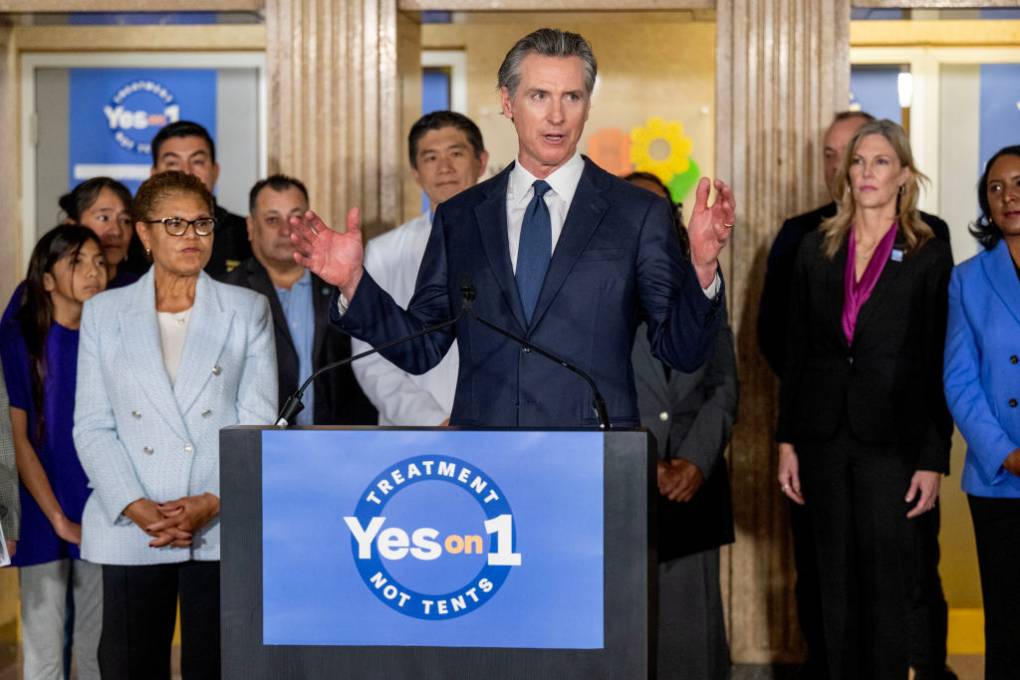
"caption": "Gov. Gavin Newsom speaks during a press conference on Jan. 3, 2024, at the Los Angeles General Medical Center to urge support for Proposition 1.",
"description": null,
"title": "Gov Gavin Newsom press conference for Proposition 1 that would would overhaul California's mental health funding system",
"credit": "Hans Gutknecht/MediaNews Group/Los Angeles Daily News via Getty Images",
"status": "inherit",
"altTag": "A white man in a blue suit and blue tie raises his hands in gesture as he speaks from behind a lectern with \"Treatment, Not Tents, Yes on 1\" written on it and people standing behind him listening.",
"isLoading": false,
"fetchFailed": false
},
"news_11979844": {
"type": "attachments",
"id": "news_11979844",
"meta": {
"index": "attachments_1716263798",
"site": "news",
"id": "11979844",
"found": true
},
"parent": 11979838,
"imgSizes": {
"twentyfourteen-full-width": {
"file": "https://cdn.kqed.org/wp-content/uploads/sites/10/2024/03/GettyImages-1971232263-1-1038x576.jpg",
"width": 1038,
"mimeType": "image/jpeg",
"height": 576
},
"thumbnail": {
"file": "https://cdn.kqed.org/wp-content/uploads/sites/10/2024/03/GettyImages-1971232263-1-160x107.jpg",
"width": 160,
"mimeType": "image/jpeg",
"height": 107
},
"post-thumbnail": {
"file": "https://cdn.kqed.org/wp-content/uploads/sites/10/2024/03/GettyImages-1971232263-1-672x372.jpg",
"width": 672,
"mimeType": "image/jpeg",
"height": 372
},
"kqedFullSize": {
"file": "https://cdn.kqed.org/wp-content/uploads/sites/10/2024/03/GettyImages-1971232263-1-scaled.jpg",
"width": 2560,
"height": 1707
},
"2048x2048": {
"file": "https://cdn.kqed.org/wp-content/uploads/sites/10/2024/03/GettyImages-1971232263-1-2048x1365.jpg",
"width": 2048,
"mimeType": "image/jpeg",
"height": 1365
},
"large": {
"file": "https://cdn.kqed.org/wp-content/uploads/sites/10/2024/03/GettyImages-1971232263-1-1020x680.jpg",
"width": 1020,
"mimeType": "image/jpeg",
"height": 680
},
"1536x1536": {
"file": "https://cdn.kqed.org/wp-content/uploads/sites/10/2024/03/GettyImages-1971232263-1-1536x1024.jpg",
"width": 1536,
"mimeType": "image/jpeg",
"height": 1024
},
"full-width": {
"file": "https://cdn.kqed.org/wp-content/uploads/sites/10/2024/03/GettyImages-1971232263-1-1920x1280.jpg",
"width": 1920,
"mimeType": "image/jpeg",
"height": 1280
},
"medium": {
"file": "https://cdn.kqed.org/wp-content/uploads/sites/10/2024/03/GettyImages-1971232263-1-800x533.jpg",
"width": 800,
"mimeType": "image/jpeg",
"height": 533
}
},
"publishDate": 1710794032,
"modified": 1710794082,
"caption": "A syringe drop box stands on the street as a Portland Police officer conducts an investigation into drug dealing and issues a citation for drug possession during a patrol in downtown Portland, Oregon on January 25, 2024. In February 2021, possession and use of all drugs -- including cocaine, heroin, ecstasy and fentanyl -- was decriminalised in the western state. Sale and production remains punishable. (Photo by Patrick T. Fallon / AFP) (Photo by PATRICK T. FALLON/AFP via Getty Images)",
"description": null,
"title": "US-HEALTH-DRUGS-OREGON",
"credit": null,
"status": "inherit",
"altTag": null,
"isLoading": false,
"fetchFailed": false
},
"news_11979824": {
"type": "attachments",
"id": "news_11979824",
"meta": {
"index": "attachments_1716263798",
"site": "news",
"id": "11979824",
"found": true
},
"parent": 11979822,
"imgSizes": {
"twentyfourteen-full-width": {
"file": "https://cdn.kqed.org/wp-content/uploads/sites/10/2024/03/020124_Prop_1_Protest_FG_CM_20964-1038x576.jpg",
"width": 1038,
"mimeType": "image/jpeg",
"height": 576
},
"thumbnail": {
"file": "https://cdn.kqed.org/wp-content/uploads/sites/10/2024/03/020124_Prop_1_Protest_FG_CM_20964-160x107.jpg",
"width": 160,
"mimeType": "image/jpeg",
"height": 107
},
"post-thumbnail": {
"file": "https://cdn.kqed.org/wp-content/uploads/sites/10/2024/03/020124_Prop_1_Protest_FG_CM_20964-672x372.jpg",
"width": 672,
"mimeType": "image/jpeg",
"height": 372
},
"kqedFullSize": {
"file": "https://cdn.kqed.org/wp-content/uploads/sites/10/2024/03/020124_Prop_1_Protest_FG_CM_20964.jpg",
"width": 2000,
"height": 1333
},
"large": {
"file": "https://cdn.kqed.org/wp-content/uploads/sites/10/2024/03/020124_Prop_1_Protest_FG_CM_20964-1020x680.jpg",
"width": 1020,
"mimeType": "image/jpeg",
"height": 680
},
"1536x1536": {
"file": "https://cdn.kqed.org/wp-content/uploads/sites/10/2024/03/020124_Prop_1_Protest_FG_CM_20964-1536x1024.jpg",
"width": 1536,
"mimeType": "image/jpeg",
"height": 1024
},
"full-width": {
"file": "https://cdn.kqed.org/wp-content/uploads/sites/10/2024/03/020124_Prop_1_Protest_FG_CM_20964-1920x1280.jpg",
"width": 1920,
"mimeType": "image/jpeg",
"height": 1280
},
"medium": {
"file": "https://cdn.kqed.org/wp-content/uploads/sites/10/2024/03/020124_Prop_1_Protest_FG_CM_20964-800x533.jpg",
"width": 800,
"mimeType": "image/jpeg",
"height": 533
}
},
"publishDate": 1710789980,
"modified": 1710790021,
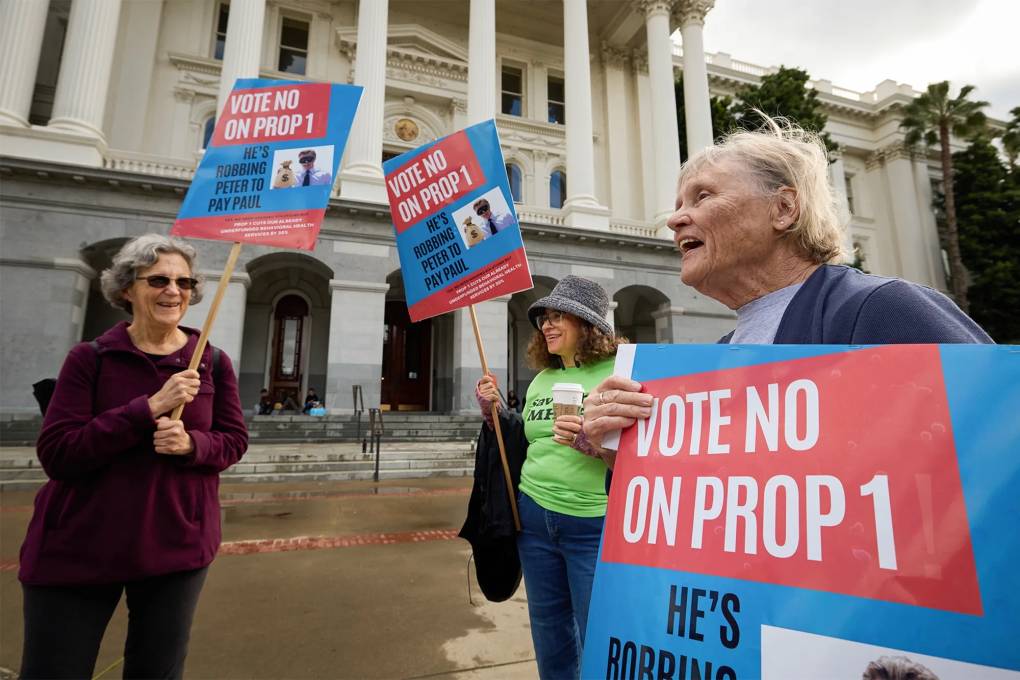
"caption": "From left, protestors Carol Patterson, Natalie Conrad and Debi Davis try to engage with people during a “Vote No on Prop. 1” event at the state Capitol on Feb. 1, 2024. ",
"description": null,
"title": "020124_Prop_1_Protest_FG_CM_20964",
"credit": " Fred Greaves for CalMatters",
"status": "inherit",
"altTag": "three woman stand outside a capitol building holding signs that say 'Vote No on Prop 1\"",
"isLoading": false,
"fetchFailed": false
},
"news_11978931": {
"type": "attachments",
"id": "news_11978931",
"meta": {
"index": "attachments_1716263798",
"site": "news",
"id": "11978931",
"found": true
},
"parent": 11978919,
"imgSizes": {
"twentyfourteen-full-width": {
"file": "https://cdn.kqed.org/wp-content/uploads/sites/10/2024/03/030524-Election-Primary-MG-CM-10-1038x576.jpg",
"width": 1038,
"mimeType": "image/jpeg",
"height": 576
},
"thumbnail": {
"file": "https://cdn.kqed.org/wp-content/uploads/sites/10/2024/03/030524-Election-Primary-MG-CM-10-160x107.jpg",
"width": 160,
"mimeType": "image/jpeg",
"height": 107
},
"post-thumbnail": {
"file": "https://cdn.kqed.org/wp-content/uploads/sites/10/2024/03/030524-Election-Primary-MG-CM-10-672x372.jpg",
"width": 672,
"mimeType": "image/jpeg",
"height": 372
},
"kqedFullSize": {
"file": "https://cdn.kqed.org/wp-content/uploads/sites/10/2024/03/030524-Election-Primary-MG-CM-10.jpg",
"width": 2000,
"height": 1333
},
"large": {
"file": "https://cdn.kqed.org/wp-content/uploads/sites/10/2024/03/030524-Election-Primary-MG-CM-10-1020x680.jpg",
"width": 1020,
"mimeType": "image/jpeg",
"height": 680
},
"1536x1536": {
"file": "https://cdn.kqed.org/wp-content/uploads/sites/10/2024/03/030524-Election-Primary-MG-CM-10-1536x1024.jpg",
"width": 1536,
"mimeType": "image/jpeg",
"height": 1024
},
"full-width": {
"file": "https://cdn.kqed.org/wp-content/uploads/sites/10/2024/03/030524-Election-Primary-MG-CM-10-1920x1280.jpg",
"width": 1920,
"mimeType": "image/jpeg",
"height": 1280
},
"medium": {
"file": "https://cdn.kqed.org/wp-content/uploads/sites/10/2024/03/030524-Election-Primary-MG-CM-10-800x533.jpg",
"width": 800,
"mimeType": "image/jpeg",
"height": 533
}
},
"publishDate": 1710187641,
"modified": 1710187752,
"caption": "Gov. Gavin Newsom casts his ballot at a polling site at the California Museum in Sacramento on March 5, 2024. ",
"description": null,
"title": "030524-Election-Primary-MG-CM-10",
"credit": "Miguel Gutierrez Jr./CalMatters",
"status": "inherit",
"altTag": "A man wearing a suit stands hands a woman in a t shirt that says \"I Voted\" a piece of paper.",
"isLoading": false,
"fetchFailed": false
},
"news_11978494": {
"type": "attachments",
"id": "news_11978494",
"meta": {
"index": "attachments_1716263798",
"site": "news",
"id": "11978494",
"found": true
},
"parent": 11978492,
"imgSizes": {
"twentyfourteen-full-width": {
"file": "https://cdn.kqed.org/wp-content/uploads/sites/10/2024/03/GettyImages-1706879532-1024x576.jpg",
"width": 1024,
"mimeType": "image/jpeg",
"height": 576
},
"thumbnail": {
"file": "https://cdn.kqed.org/wp-content/uploads/sites/10/2024/03/GettyImages-1706879532-160x107.jpg",
"width": 160,
"mimeType": "image/jpeg",
"height": 107
},
"post-thumbnail": {
"file": "https://cdn.kqed.org/wp-content/uploads/sites/10/2024/03/GettyImages-1706879532-672x372.jpg",
"width": 672,
"mimeType": "image/jpeg",
"height": 372
},
"kqedFullSize": {
"file": "https://cdn.kqed.org/wp-content/uploads/sites/10/2024/03/GettyImages-1706879532.jpg",
"width": 1024,
"height": 683
},
"large": {
"file": "https://cdn.kqed.org/wp-content/uploads/sites/10/2024/03/GettyImages-1706879532-1020x680.jpg",
"width": 1020,
"mimeType": "image/jpeg",
"height": 680
},
"medium": {
"file": "https://cdn.kqed.org/wp-content/uploads/sites/10/2024/03/GettyImages-1706879532-800x534.jpg",
"width": 800,
"mimeType": "image/jpeg",
"height": 534
}
},
"publishDate": 1709768859,
"modified": 1709768901,
"caption": "Gov. Gavin Newsom signs legislation raising California fast food workers minimum wage to $20 an hour at SEIU Local 721 in Los Angeles on Thursday, Sept. 28, 2023.",
"description": null,
"title": "Gov. Newsom Signs Bill Raising Fast Food Workers Minimum Wage To $20",
"credit": "Sarah Reingewirtz/MediaNews Group/Los Angeles Daily News via Getty Images",
"status": "inherit",
"altTag": null,
"isLoading": false,
"fetchFailed": false
},
"news_11978011": {
"type": "attachments",
"id": "news_11978011",
"meta": {
"index": "attachments_1716263798",
"site": "news",
"id": "11978011",
"found": true
},
"parent": 11977956,
"imgSizes": {
"twentyfourteen-full-width": {
"file": "https://cdn.kqed.org/wp-content/uploads/sites/10/2024/03/092823-Newsom-Fast-Food-Bill-AJ-CM-011-ezgif.com-webp-to-jpg-converter-1038x576.jpg",
"width": 1038,
"mimeType": "image/jpeg",
"height": 576
},
"thumbnail": {
"file": "https://cdn.kqed.org/wp-content/uploads/sites/10/2024/03/092823-Newsom-Fast-Food-Bill-AJ-CM-011-ezgif.com-webp-to-jpg-converter-160x107.jpg",
"width": 160,
"mimeType": "image/jpeg",
"height": 107
},
"post-thumbnail": {
"file": "https://cdn.kqed.org/wp-content/uploads/sites/10/2024/03/092823-Newsom-Fast-Food-Bill-AJ-CM-011-ezgif.com-webp-to-jpg-converter-672x372.jpg",
"width": 672,
"mimeType": "image/jpeg",
"height": 372
},
"kqedFullSize": {
"file": "https://cdn.kqed.org/wp-content/uploads/sites/10/2024/03/092823-Newsom-Fast-Food-Bill-AJ-CM-011-ezgif.com-webp-to-jpg-converter.jpg",
"width": 2000,
"height": 1333
},
"large": {
"file": "https://cdn.kqed.org/wp-content/uploads/sites/10/2024/03/092823-Newsom-Fast-Food-Bill-AJ-CM-011-ezgif.com-webp-to-jpg-converter-1020x680.jpg",
"width": 1020,
"mimeType": "image/jpeg",
"height": 680
},
"1536x1536": {
"file": "https://cdn.kqed.org/wp-content/uploads/sites/10/2024/03/092823-Newsom-Fast-Food-Bill-AJ-CM-011-ezgif.com-webp-to-jpg-converter-1536x1024.jpg",
"width": 1536,
"mimeType": "image/jpeg",
"height": 1024
},
"full-width": {
"file": "https://cdn.kqed.org/wp-content/uploads/sites/10/2024/03/092823-Newsom-Fast-Food-Bill-AJ-CM-011-ezgif.com-webp-to-jpg-converter-1920x1280.jpg",
"width": 1920,
"mimeType": "image/jpeg",
"height": 1280
},
"medium": {
"file": "https://cdn.kqed.org/wp-content/uploads/sites/10/2024/03/092823-Newsom-Fast-Food-Bill-AJ-CM-011-ezgif.com-webp-to-jpg-converter-800x533.jpg",
"width": 800,
"mimeType": "image/jpeg",
"height": 533
}
},
"publishDate": 1709588113,
"modified": 1709588160,
"caption": "Fast food workers rally at the state Capitol in Sacramento on Aug. 31, 2023.\n",
"description": null,
"title": "092823-Newsom-Fast-Food-Bill-AJ-CM-011-ezgif.com-webp-to-jpg-converter",
"credit": "Rahul Lal/CalMatters",
"status": "inherit",
"altTag": "Workers stand in front of a sign that reads, \"Si se pudo.\"",
"isLoading": false,
"fetchFailed": false
},
"news_11977666": {
"type": "attachments",
"id": "news_11977666",
"meta": {
"index": "attachments_1716263798",
"site": "news",
"id": "11977666",
"found": true
},
"parent": 11977451,
"imgSizes": {
"twentyfourteen-full-width": {
"file": "https://cdn.kqed.org/wp-content/uploads/sites/10/2024/02/240228-NewsomPoliticalBreakdown-15-BL-1038x576.jpg",
"width": 1038,
"mimeType": "image/jpeg",
"height": 576
},
"thumbnail": {
"file": "https://cdn.kqed.org/wp-content/uploads/sites/10/2024/02/240228-NewsomPoliticalBreakdown-15-BL-160x107.jpg",
"width": 160,
"mimeType": "image/jpeg",
"height": 107
},
"post-thumbnail": {
"file": "https://cdn.kqed.org/wp-content/uploads/sites/10/2024/02/240228-NewsomPoliticalBreakdown-15-BL-672x372.jpg",
"width": 672,
"mimeType": "image/jpeg",
"height": 372
},
"kqedFullSize": {
"file": "https://cdn.kqed.org/wp-content/uploads/sites/10/2024/02/240228-NewsomPoliticalBreakdown-15-BL-scaled.jpg",
"width": 2560,
"height": 1707
},
"2048x2048": {
"file": "https://cdn.kqed.org/wp-content/uploads/sites/10/2024/02/240228-NewsomPoliticalBreakdown-15-BL-2048x1365.jpg",
"width": 2048,
"mimeType": "image/jpeg",
"height": 1365
},
"large": {
"file": "https://cdn.kqed.org/wp-content/uploads/sites/10/2024/02/240228-NewsomPoliticalBreakdown-15-BL-1020x680.jpg",
"width": 1020,
"mimeType": "image/jpeg",
"height": 680
},
"1536x1536": {
"file": "https://cdn.kqed.org/wp-content/uploads/sites/10/2024/02/240228-NewsomPoliticalBreakdown-15-BL-1536x1024.jpg",
"width": 1536,
"mimeType": "image/jpeg",
"height": 1024
},
"full-width": {
"file": "https://cdn.kqed.org/wp-content/uploads/sites/10/2024/02/240228-NewsomPoliticalBreakdown-15-BL-1920x1280.jpg",
"width": 1920,
"mimeType": "image/jpeg",
"height": 1280
},
"medium": {
"file": "https://cdn.kqed.org/wp-content/uploads/sites/10/2024/02/240228-NewsomPoliticalBreakdown-15-BL-800x533.jpg",
"width": 800,
"mimeType": "image/jpeg",
"height": 533
}
},
"publishDate": 1709245811,
"modified": 1709327539,
"caption": "Gov. Gavin Newsom poses with KQED reporters Marisa Lagos and Scott Shafer in the Sacramento KQED offices on Feb. 28, 2024 (Beth LaBerge/KQED)",
"description": "Gov. Gavin Newsom poses with KQED reporters Marisa Lagos and Scott Shafer in the Sacramento KQED offices on Feb. 28, 2024 (Beth LaBerge/KQED)",
"title": "240228-NewsomPoliticalBreakdown-15-BL",
"credit": null,
"status": "inherit",
"altTag": null,
"isLoading": false,
"fetchFailed": false
},
"news_11977545": {
"type": "attachments",
"id": "news_11977545",
"meta": {
"index": "attachments_1716263798",
"site": "news",
"id": "11977545",
"found": true
},
"parent": 11977536,
"imgSizes": {
"twentyfourteen-full-width": {
"file": "https://cdn.kqed.org/wp-content/uploads/sites/10/2024/02/240228-NewsomPoliticalBreakdown-08-BL_qut-1038x576.jpg",
"width": 1038,
"mimeType": "image/jpeg",
"height": 576
},
"thumbnail": {
"file": "https://cdn.kqed.org/wp-content/uploads/sites/10/2024/02/240228-NewsomPoliticalBreakdown-08-BL_qut-160x107.jpg",
"width": 160,
"mimeType": "image/jpeg",
"height": 107
},
"post-thumbnail": {
"file": "https://cdn.kqed.org/wp-content/uploads/sites/10/2024/02/240228-NewsomPoliticalBreakdown-08-BL_qut-672x372.jpg",
"width": 672,
"mimeType": "image/jpeg",
"height": 372
},
"kqedFullSize": {
"file": "https://cdn.kqed.org/wp-content/uploads/sites/10/2024/02/240228-NewsomPoliticalBreakdown-08-BL_qut.jpg",
"width": 1920,
"height": 1280
},
"large": {
"file": "https://cdn.kqed.org/wp-content/uploads/sites/10/2024/02/240228-NewsomPoliticalBreakdown-08-BL_qut-1020x680.jpg",
"width": 1020,
"mimeType": "image/jpeg",
"height": 680
},
"1536x1536": {
"file": "https://cdn.kqed.org/wp-content/uploads/sites/10/2024/02/240228-NewsomPoliticalBreakdown-08-BL_qut-1536x1024.jpg",
"width": 1536,
"mimeType": "image/jpeg",
"height": 1024
},
"medium": {
"file": "https://cdn.kqed.org/wp-content/uploads/sites/10/2024/02/240228-NewsomPoliticalBreakdown-08-BL_qut-800x533.jpg",
"width": 800,
"mimeType": "image/jpeg",
"height": 533
}
},
"publishDate": 1709171676,
"modified": 1709171783,
"caption": "Gov. Gavin Newsom in an interview with KQED reporters Marisa Lagos and Scott Shafer in the Sacramento KQED offices on Feb. 28, 2024",
"description": null,
"title": "240228-NewsomPoliticalBreakdown-08-BL_qut",
"credit": "Beth LaBerge/KQED",
"status": "inherit",
"altTag": null,
"isLoading": false,
"fetchFailed": false
},
"news_11975333": {
"type": "attachments",
"id": "news_11975333",
"meta": {
"index": "attachments_1716263798",
"site": "news",
"id": "11975333",
"found": true
},
"parent": 11975319,
"imgSizes": {
"twentyfourteen-full-width": {
"file": "https://cdn.kqed.org/wp-content/uploads/sites/10/2024/02/image-1-1038x576.png",
"width": 1038,
"mimeType": "image/png",
"height": 576
},
"thumbnail": {
"file": "https://cdn.kqed.org/wp-content/uploads/sites/10/2024/02/image-1-160x107.png",
"width": 160,
"mimeType": "image/png",
"height": 107
},
"post-thumbnail": {
"file": "https://cdn.kqed.org/wp-content/uploads/sites/10/2024/02/image-1-672x372.png",
"width": 672,
"mimeType": "image/png",
"height": 372
},
"kqedFullSize": {
"file": "https://cdn.kqed.org/wp-content/uploads/sites/10/2024/02/image-1.png",
"width": 1280,
"height": 853
},
"large": {
"file": "https://cdn.kqed.org/wp-content/uploads/sites/10/2024/02/image-1-1020x680.png",
"width": 1020,
"mimeType": "image/png",
"height": 680
},
"medium": {
"file": "https://cdn.kqed.org/wp-content/uploads/sites/10/2024/02/image-1-800x533.png",
"width": 800,
"mimeType": "image/png",
"height": 533
}
},
"publishDate": 1707528792,
"modified": 1707530102,
"caption": "San José Mayor Matt Mahan (left) joined Governor Gavin Newsom at Cal Expo in Sacramento on March 16, 2023, for the announcement of a program gifting small homes to California jurisdictions to house people experiencing homelessness.",
"description": null,
"title": "image (1)",
"credit": "Courtesy of the Governor's Office",
"status": "inherit",
"altTag": "Two men in suits, including Gov. Newsom, consult with a group of people in a tent.",
"isLoading": false,
"fetchFailed": false
},
"news_11975288": {
"type": "attachments",
"id": "news_11975288",
"meta": {
"index": "attachments_1716263798",
"site": "news",
"id": "11975288",
"found": true
},
"parent": 11975284,
"imgSizes": {
"twentyfourteen-full-width": {
"file": "https://cdn.kqed.org/wp-content/uploads/sites/10/2024/02/07262022_MLK-Hospital_PU_CM_29-copy-1038x576.jpg",
"width": 1038,
"mimeType": "image/jpeg",
"height": 576
},
"thumbnail": {
"file": "https://cdn.kqed.org/wp-content/uploads/sites/10/2024/02/07262022_MLK-Hospital_PU_CM_29-copy-160x107.jpg",
"width": 160,
"mimeType": "image/jpeg",
"height": 107
},
"post-thumbnail": {
"file": "https://cdn.kqed.org/wp-content/uploads/sites/10/2024/02/07262022_MLK-Hospital_PU_CM_29-copy-672x372.jpg",
"width": 672,
"mimeType": "image/jpeg",
"height": 372
},
"kqedFullSize": {
"file": "https://cdn.kqed.org/wp-content/uploads/sites/10/2024/02/07262022_MLK-Hospital_PU_CM_29-copy.jpg",
"width": 2000,
"height": 1333
},
"large": {
"file": "https://cdn.kqed.org/wp-content/uploads/sites/10/2024/02/07262022_MLK-Hospital_PU_CM_29-copy-1020x680.jpg",
"width": 1020,
"mimeType": "image/jpeg",
"height": 680
},
"1536x1536": {
"file": "https://cdn.kqed.org/wp-content/uploads/sites/10/2024/02/07262022_MLK-Hospital_PU_CM_29-copy-1536x1024.jpg",
"width": 1536,
"mimeType": "image/jpeg",
"height": 1024
},
"full-width": {
"file": "https://cdn.kqed.org/wp-content/uploads/sites/10/2024/02/07262022_MLK-Hospital_PU_CM_29-copy-1920x1280.jpg",
"width": 1920,
"mimeType": "image/jpeg",
"height": 1280
},
"medium": {
"file": "https://cdn.kqed.org/wp-content/uploads/sites/10/2024/02/07262022_MLK-Hospital_PU_CM_29-copy-800x533.jpg",
"width": 800,
"mimeType": "image/jpeg",
"height": 533
}
},
"publishDate": 1707514728,
"modified": 1707514813,
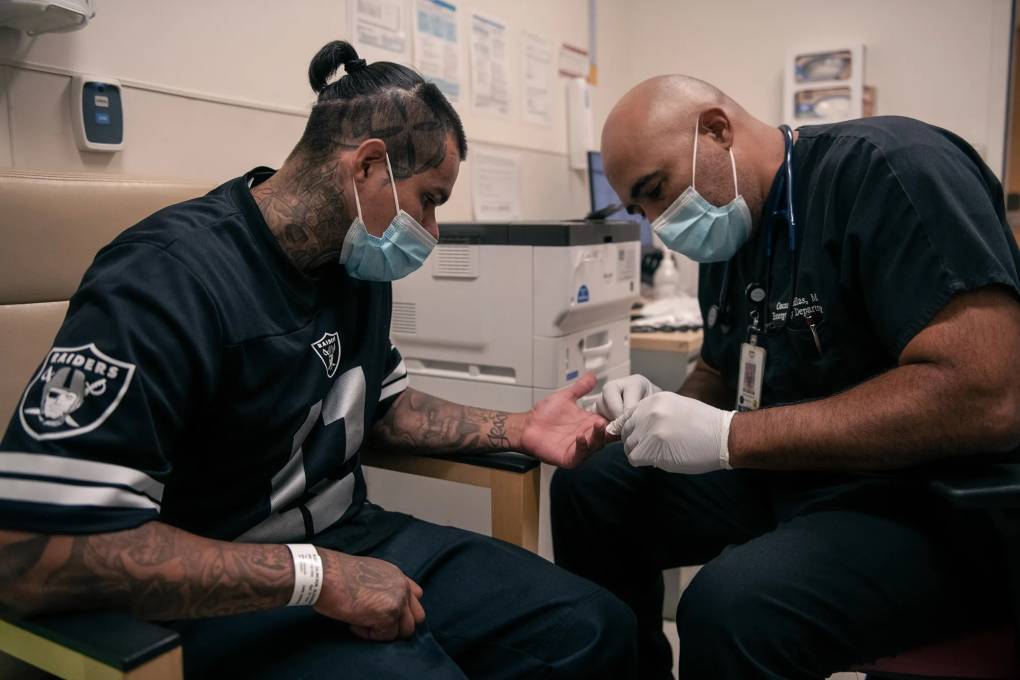
"caption": "California's new Office of Health Care Affordability is charged with capping price increases for consumers. It set a preliminary goal of limiting increases to 3% a year. Here, Dr. Oscar Casillas removes a pair of stitches from Alex’s hand at Martin Luther King Jr. Community Hospital on July 26, 2022.",
"description": null,
"title": "07262022_MLK-Hospital_PU_CM_29 copy",
"credit": "Pablo Unzueta for CalMatters",
"status": "inherit",
"altTag": "A doctor tends to a patient, both Latino males and wearing masks, in a doctor's office.",
"isLoading": false,
"fetchFailed": false
},
"news_11975274": {
"type": "attachments",
"id": "news_11975274",
"meta": {
"index": "attachments_1716263798",
"site": "news",
"id": "11975274",
"found": true
},
"parent": 11975256,
"imgSizes": {
"twentyfourteen-full-width": {
"file": "https://cdn.kqed.org/wp-content/uploads/sites/10/2024/02/070523-Street-Medicine-Project-LV-CM_09-copy-1038x576.jpg",
"width": 1038,
"mimeType": "image/jpeg",
"height": 576
},
"thumbnail": {
"file": "https://cdn.kqed.org/wp-content/uploads/sites/10/2024/02/070523-Street-Medicine-Project-LV-CM_09-copy-160x107.jpg",
"width": 160,
"mimeType": "image/jpeg",
"height": 107
},
"post-thumbnail": {
"file": "https://cdn.kqed.org/wp-content/uploads/sites/10/2024/02/070523-Street-Medicine-Project-LV-CM_09-copy-672x372.jpg",
"width": 672,
"mimeType": "image/jpeg",
"height": 372
},
"kqedFullSize": {
"file": "https://cdn.kqed.org/wp-content/uploads/sites/10/2024/02/070523-Street-Medicine-Project-LV-CM_09-copy.jpg",
"width": 2000,
"height": 1333
},
"large": {
"file": "https://cdn.kqed.org/wp-content/uploads/sites/10/2024/02/070523-Street-Medicine-Project-LV-CM_09-copy-1020x680.jpg",
"width": 1020,
"mimeType": "image/jpeg",
"height": 680
},
"1536x1536": {
"file": "https://cdn.kqed.org/wp-content/uploads/sites/10/2024/02/070523-Street-Medicine-Project-LV-CM_09-copy-1536x1024.jpg",
"width": 1536,
"mimeType": "image/jpeg",
"height": 1024
},
"full-width": {
"file": "https://cdn.kqed.org/wp-content/uploads/sites/10/2024/02/070523-Street-Medicine-Project-LV-CM_09-copy-1920x1280.jpg",
"width": 1920,
"mimeType": "image/jpeg",
"height": 1280
},
"medium": {
"file": "https://cdn.kqed.org/wp-content/uploads/sites/10/2024/02/070523-Street-Medicine-Project-LV-CM_09-copy-800x533.jpg",
"width": 800,
"mimeType": "image/jpeg",
"height": 533
}
},
"publishDate": 1707510203,
"modified": 1707518158,
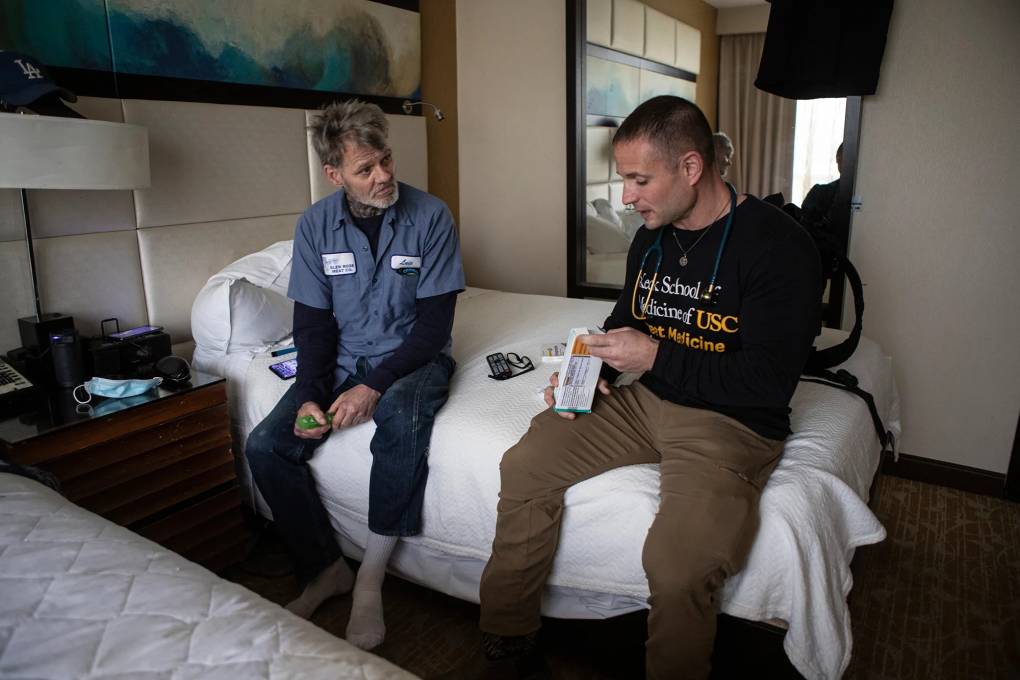
"caption": "Patient Steven Dombrowski, 'Cowboy,' speaking with physician assistant Brett Feldman in his hotel room at the LA Grand Hotel on Feb. 13, 2023. The hotel was turned into an emergency shelter for unhoused people through Project Roomkey.",
"description": null,
"title": "070523-Street-Medicine-Project-LV-CM_09 copy",
"credit": "Larry Valenzuela/CalMatters/CatchLight Local",
"status": "inherit",
"altTag": "Two men sit on a bed in a hotel room — one with a doctor's stethoscope.",
"isLoading": false,
"fetchFailed": false
}
},
"audioPlayerReducer": {
"postId": "stream_live",
"isPaused": true,
"isPlaying": false,
"pfsActive": false,
"pledgeModalIsOpen": true,
"playerDrawerIsOpen": false,
"liveAudioPlayStartedAt": 0,
"liveAudioPlayContext": ""
},
"authorsReducer": {
"byline_news_11980236": {
"type": "authors",
"id": "byline_news_11980236",
"meta": {
"override": true
},
"slug": "byline_news_11980236",
"name": "Trân Nguyẽn\u003cbr>Associated Press",
"isLoading": false
},
"byline_news_11979822": {
"type": "authors",
"id": "byline_news_11979822",
"meta": {
"override": true
},
"slug": "byline_news_11979822",
"name": "\u003ca href=\"https://calmatters.org/politics/2024/03/proposition-1-opponents-campaign/\">CalMatters Staff\u003c/a>",
"isLoading": false
},
"byline_news_11978919": {
"type": "authors",
"id": "byline_news_11978919",
"meta": {
"override": true
},
"slug": "byline_news_11978919",
"name": "Kristen Hwang and Jeanne Kuang",
"isLoading": false
},
"byline_news_11978492": {
"type": "authors",
"id": "byline_news_11978492",
"meta": {
"override": true
},
"slug": "byline_news_11978492",
"name": "Adam Beam\u003cbr>The Associated Press",
"isLoading": false
},
"byline_news_11977956": {
"type": "authors",
"id": "byline_news_11977956",
"meta": {
"override": true
},
"slug": "byline_news_11977956",
"name": "Jeanne Kuang ",
"isLoading": false
},
"byline_news_11975284": {
"type": "authors",
"id": "byline_news_11975284",
"meta": {
"override": true
},
"slug": "byline_news_11975284",
"name": "\u003ca href=\"https://calmatters.org/author/anaibarra/\">Ana B. Ibarra\u003c/a>",
"isLoading": false
},
"byline_news_11975256": {
"type": "authors",
"id": "byline_news_11975256",
"meta": {
"override": true
},
"slug": "byline_news_11975256",
"name": "\u003ca href=\"https://calmatters.org/author/marisa-kendall/\">Marisa Kendall\u003c/a>",
"isLoading": false
},
"gmarzorati": {
"type": "authors",
"id": "227",
"meta": {
"index": "authors_1716337520",
"id": "227",
"found": true
},
"name": "Guy Marzorati",
"firstName": "Guy",
"lastName": "Marzorati",
"slug": "gmarzorati",
"email": "gmarzorati@KQED.org",
"display_author_email": true,
"staff_mastheads": [
"news"
],
"title": "Correspondent",
"bio": "Guy Marzorati is a correspondent on KQED's California Politics and Government Desk, based in San Jose. A graduate of Santa Clara University, Guy joined KQED in 2013. He reports on state and local politics and produces KQED's digital voter guide.",
"avatar": "https://secure.gravatar.com/avatar/e7038b8dbfd55b104369b76b1cd0b9de?s=600&d=blank&r=g",
"twitter": "guymarzorati",
"facebook": null,
"instagram": null,
"linkedin": null,
"sites": [
{
"site": "",
"roles": [
"editor"
]
},
{
"site": "news",
"roles": [
"editor"
]
},
{
"site": "science",
"roles": [
"editor"
]
},
{
"site": "forum",
"roles": [
"editor"
]
},
{
"site": "elections",
"roles": [
"editor"
]
},
{
"site": "liveblog",
"roles": [
"editor"
]
}
],
"headData": {
"title": "Guy Marzorati | KQED",
"description": "Correspondent",
"ogImgSrc": "https://secure.gravatar.com/avatar/e7038b8dbfd55b104369b76b1cd0b9de?s=600&d=blank&r=g",
"twImgSrc": "https://secure.gravatar.com/avatar/e7038b8dbfd55b104369b76b1cd0b9de?s=600&d=blank&r=g"
},
"isLoading": false,
"link": "/author/gmarzorati"
},
"scottshafer": {
"type": "authors",
"id": "255",
"meta": {
"index": "authors_1716337520",
"id": "255",
"found": true
},
"name": "Scott Shafer",
"firstName": "Scott",
"lastName": "Shafer",
"slug": "scottshafer",
"email": "sshafer@kqed.org",
"display_author_email": false,
"staff_mastheads": [
"news"
],
"title": "KQED Contributor",
"bio": "Scott Shafer is a senior editor with the KQED Politics and Government desk. He is co-host of Political Breakdown, the award-winning radio show and podcast with a personal take on the world of politics. Scott came to KQED in 1998 to host the statewide\u003cem> California Report\u003c/em>. Prior to that he had extended stints in politics and government\u003cem>.\u003c/em> He uses that inside experience at KQED in his, reporting, hosting and analysis for the politics desk. Scott collaborated \u003cem>Political Breakdown a\u003c/em>nd on \u003cem>The Political Mind of Jerry Brown, \u003c/em>an eight-part series about the life and extraordinary political career of the former governor. For fun, he plays water polo with the San Francisco Tsunami.",
"avatar": "https://secure.gravatar.com/avatar/a62ebae45b79d7aed1a39a0e3bf68104?s=600&d=blank&r=g",
"twitter": "scottshafer",
"bluesky": null,
"facebook": null,
"instagram": null,
"linkedin": null,
"sites": [
{
"site": "news",
"roles": [
"editor"
]
},
{
"site": "stateofhealth",
"roles": [
"author"
]
},
{
"site": "science",
"roles": [
"author"
]
},
{
"site": "forum",
"roles": [
"subscriber"
]
},
{
"site": "liveblog",
"roles": [
"author"
]
}
],
"headData": {
"title": "Scott Shafer | KQED",
"description": "KQED Contributor",
"ogImgSrc": "https://secure.gravatar.com/avatar/a62ebae45b79d7aed1a39a0e3bf68104?s=600&d=blank&r=g",
"twImgSrc": "https://secure.gravatar.com/avatar/a62ebae45b79d7aed1a39a0e3bf68104?s=600&d=blank&r=g"
},
"isLoading": false,
"link": "/author/scottshafer"
},
"mlagos": {
"type": "authors",
"id": "3239",
"meta": {
"index": "authors_1716337520",
"id": "3239",
"found": true
},
"name": "Marisa Lagos",
"firstName": "Marisa",
"lastName": "Lagos",
"slug": "mlagos",
"email": "mlagos@kqed.org",
"display_author_email": false,
"staff_mastheads": [
"news"
],
"title": "KQED Contributor",
"bio": "Marisa Lagos is a correspondent for KQED’s California Politics and Government Desk and co-hosts the award-winning show and podcast, Political Breakdown. At KQED, Lagos also conducts reporting, analysis and investigations into state, local and national politics for radio, TV, online and onstage. In 2022, she and co-host, Scott Shafer, moderated the only gubernatorial debate in California. In 2020, the \u003ci>Washington Post\u003c/i> named her one of the top political journalists in California; she was nominated for a Peabody and won several other awards for her work investigating the 2017 California wildfires. She has worked at the \u003ci>San Francisco Chronicle\u003c/i>, \u003ci>San Francisco Examiner\u003c/i> and \u003ci>Los Angeles Times\u003c/i>. A UC Santa Barbara graduate, she lives in San Francisco with her two sons and husband.",
"avatar": "https://secure.gravatar.com/avatar/a261a0d3696fc066871ef96b85b5e7d2?s=600&d=blank&r=g",
"twitter": "@mlagos",
"facebook": null,
"instagram": null,
"linkedin": null,
"sites": [
{
"site": "arts",
"roles": [
"author"
]
},
{
"site": "news",
"roles": [
"editor"
]
},
{
"site": "science",
"roles": [
"editor"
]
},
{
"site": "forum",
"roles": [
"author"
]
},
{
"site": "liveblog",
"roles": [
"author"
]
}
],
"headData": {
"title": "Marisa Lagos | KQED",
"description": "KQED Contributor",
"ogImgSrc": "https://secure.gravatar.com/avatar/a261a0d3696fc066871ef96b85b5e7d2?s=600&d=blank&r=g",
"twImgSrc": "https://secure.gravatar.com/avatar/a261a0d3696fc066871ef96b85b5e7d2?s=600&d=blank&r=g"
},
"isLoading": false,
"link": "/author/mlagos"
}
},
"pagesReducer": {
"news_tag_gavin-newsom": {
"type": "terms",
"id": "news_16",
"meta": {
"index": "terms_1716263798",
"site": "news",
"id": "16",
"score": 8.936892
},
"featImg": null,
"name": "Gavin Newsom",
"description": null,
"taxonomy": "tag",
"headData": {
"twImgId": null,
"twTitle": null,
"ogTitle": null,
"ogImgId": null,
"twDescription": null,
"description": null,
"title": "Gavin Newsom Archives | KQED News",
"ogDescription": null
},
"ttid": 16,
"slug": "gavin-newsom",
"isLoading": false,
"title": "Gavin Newsom",
"pageMeta": {
"site": "news",
"WpPageTemplate": "page-topic-editorial",
"currentPage": 33
},
"blocks": [
{
"blockName": "kqed/post-list",
"attrs": {
"layout": "cardArticle2",
"query": "posts/news?tag=gavin-newsom",
"seeMore": false,
"paginated": true,
"page": 33
}
},
{
"blockName": "kqed/ad"
}
]
}
},
"pfsSessionReducer": {},
"postsReducer": {
"stream_live": {
"type": "live",
"id": "stream_live",
"audioUrl": "https://streams.kqed.org/kqedradio",
"title": "Live Stream",
"excerpt": "Live Stream information currently unavailable.",
"link": "/radio",
"featImg": "",
"label": {
"name": "KQED Live",
"link": "/"
}
},
"stream_kqedNewscast": {
"type": "posts",
"id": "stream_kqedNewscast",
"audioUrl": "https://www.kqed.org/.stream/anon/radio/RDnews/newscast.mp3?_=1",
"title": "KQED Newscast",
"featImg": "",
"label": {
"name": "88.5 FM",
"link": "/"
}
},
"news_11980236": {
"type": "posts",
"id": "news_11980236",
"meta": {
"index": "posts_1716263798",
"site": "news",
"id": "11980236",
"score": null,
"sort": [
1710985704000
]
},
"guestAuthors": [],
"slug": "california-voters-pass-proposition-1-requiring-counties-to-fund-programs-tackling-homelessness",
"title": "California Voters Narrowly Pass Proposition 1, Requiring Counties to Fund Programs Tackling Homelessness",
"publishDate": 1710985704,
"format": "standard",
"headTitle": "California Voters Narrowly Pass Proposition 1, Requiring Counties to Fund Programs Tackling Homelessness | KQED",
"labelTerm": {
"site": "news"
},
"content": "\u003cp>California voters have approved a measure that will impose strict requirements on counties to spend on housing and drug treatment programs to tackle the \u003ca href=\"https://apnews.com/article/homeless-california-study-poverty-high-rent-a2a4bfc9b386cb70fdd14d593f31b68c\">state’s homelessness crisis\u003c/a>, in a tissue-thin win for Gov. Gavin Newsom, who personally campaigned for the measure’s passage.\u003c/p>\n\u003cp>Democrats outnumber Republicans by a staggering 2–to–1 in California, and the borderline vote — coming more than two weeks after Election Day — signaled unease with the state’s homeless policies after Newsom’s administration invested billions of dollars in getting people off the street. However, no dramatic change has been seen in Los Angeles and other large cities.\u003c/p>\n\u003cp>The state accounts for nearly a third of the homeless population in the United States; roughly 181,000 Californians are in need of housing.\u003c/p>\n\u003cp>Newsom, who made the measure a signature proposal, spent significant time and money campaigning on its behalf. He raised more than $13 million to promote it with the support of law enforcement, first responders, hospitals and mayors of major cities. Opponents raised just $1,000.\u003c/p>\n\u003cp>Proposition 1 marks the first update to the state’s mental health system in 20 years.\u003c/p>\n\u003cp>[ad fullwidth]\u003c/p>\n\u003cp>“This is the biggest change in decades in how California tackles homelessness and a victory for doing things radically different,” Newsom said in a statement after the measure’s razor-thin victory was announced. “Now, counties and local officials must match the ambition of California voters. This historic reform will only succeed if we all kick into action immediately — state government and local leaders, together.”\u003c/p>\n\u003cp>Counties will now be required to spend about two-thirds of the money from a voter-approved tax on millionaires, enacted in 2004, for mental health services on housing and programs for homeless people with serious mental illnesses or substance-abuse problems.\u003c/p>\n\u003cp>Revenue from that tax, now between $2 billion and $3 billion a year, provides about one-third of the state’s total mental health budget.\u003c/p>\n\u003cp>[aside label=\"more on homelessness\" tag=\"homelessness\"]The state, with a current inventory of 5,500 beds, needs some 8,000 more units to treat mental health and addiction issues.\u003c/p>\n\u003cp>The initiative also allows the state to borrow $6.38 billion to build 4,350 housing units, half of which will be reserved for veterans, and add 6,800 mental health and addiction-treatment beds.\u003c/p>\n\u003cp>Opponents, including many social service providers and county officials, said the change would \u003ca href=\"https://apnews.com/article/california-homelessness-initiative-mental-health-3e6765a30343f7cc0147efd40f5a2f2f\">threaten programs\u003c/a> that are not solely focused on housing or drug treatment but keep people from losing their homes in the first place.\u003c/p>\n\u003cp>Critics said the single formula could mean rural counties such as Butte, with a homeless population of fewer than 1,300 people, would be required to divert the same percentage of funds to housing as urban counties such as San Francisco, which has a homeless population of six times bigger.\u003c/p>\n\u003cp>With makeshift tents lining streets and disrupting businesses in communities across the state, homelessness has become one of the most frustrating issues in California and one sure to dog Newsom should he ever mount a presidential campaign.\u003c/p>\n\u003cp>Newsom touted the proposition as the final piece in his plan to reform California’s mental health system. He has already pushed for laws that \u003ca href=\"https://apnews.com/article/california-newsom-mental-health-conservatorship-baef68d08e1f8fd57869f40db2f2adce\">make it easier to force people\u003c/a> with behavioral health issues into treatment.\u003c/p>\n\u003cp>William Elias, a television producer in Sacramento, said he “was on the fence” about Proposition 1 but decided to vote in favor of it because of the pervasive homelessness problem.\u003c/p>\n\u003cp>“That’s something that’s all around us right now,” he said. “We got all these tents out here in front of City Hall.”\u003c/p>\n\u003cp>Estrellita Vivirito, a Palm Springs resident, also voted for the measure.\u003c/p>\n\u003cp>“It’s only logical, you know, we have to do something,” she said.\u003c/p>\n\u003cp>Katherine Wolf, a doctoral student at the University of California, Berkeley, said she voted against the measure out of concern that it would result in more people being locked up against their will.\u003c/p>\n\u003cp>“I was appalled of the system of laws that he has been building to kind of erode the rights of people with mental disabilities,” Wolf said of Newsom.\u003c/p>\n\u003cp>Griffin Bovee, a Republican state worker in Sacramento, also voted against the proposition and said the state has been wasting taxpayer money.\u003c/p>\n\u003cp>“Sacramento really shouldn’t get another dime until they actually figure out why what they’re doing is not working,” he said of the state’s handling of the homelessness crisis. “They spent $20 billion over the past few years trying to fix that problem, and it got worse.”\u003c/p>\n\u003cp>Many opponents also said the ballot measure would cut funding from cultural centers, peer-support programs and vocational services and would pit those programs against services for unhoused people.\u003c/p>\n\u003cp>\u003c/p>\n\u003cp>Newsom’s administration has already spent at least $22 billion on various programs to address the crisis, including $3.5 billion to \u003ca href=\"https://apnews.com/article/lifestyle-business-health-california-coronavirus-pandemic-835c2091c63c199d397346a497e7ae49\">convert rundown motels into homeless housing\u003c/a>. California is also giving out $2 billion in grants to build more treatment facilities.\u003c/p>\n\n",
"blocks": [],
"excerpt": "The first update to the state’s mental health system in 20 years, the measure marks a big win for Gov. Gavin Newsom, who spent significant time and money campaigning on its behalf.",
"status": "publish",
"parent": 0,
"modified": 1725923714,
"stats": {
"hasAudio": false,
"hasVideo": false,
"hasChartOrMap": false,
"iframeSrcs": [],
"hasGoogleForm": false,
"hasGallery": false,
"hasHearkenModule": false,
"hasPolis": false,
"paragraphCount": 26,
"wordCount": 871
},
"headData": {
"title": "California Voters Narrowly Pass Proposition 1, Requiring Counties to Fund Programs Tackling Homelessness | KQED",
"description": "The first update to the state’s mental health system in 20 years, the measure marks a big win for Gov. Gavin Newsom, who spent significant time and money campaigning on its behalf.",
"ogTitle": "",
"ogDescription": "",
"ogImgId": "",
"twTitle": "",
"twDescription": "",
"twImgId": "",
"schema": {
"@context": "https://schema.org",
"@type": "NewsArticle",
"headline": "California Voters Narrowly Pass Proposition 1, Requiring Counties to Fund Programs Tackling Homelessness",
"datePublished": "2024-03-20T18:48:24-07:00",
"dateModified": "2024-09-09T16:15:14-07:00",
"image": "https://cdn.kqed.org/wp-content/uploads/2020/02/KQED-OG-Image@1x.png",
"isAccessibleForFree": "True",
"publisher": {
"@type": "NewsMediaOrganization",
"@id": "https://www.kqed.org/#organization",
"name": "KQED",
"logo": "https://cdn.kqed.org/wp-content/uploads/2020/02/KQED-OG-Image@1x.png",
"url": "https://www.kqed.org",
"sameAs": [
"https://www.facebook.com/KQED",
"https://twitter.com/KQED",
"https://www.instagram.com/kqed/",
"https://www.tiktok.com/@kqedofficial",
"https://www.linkedin.com/company/kqed",
"https://www.youtube.com/channel/UCeC0IOo7i1P_61zVUWbJ4nw"
]
}
}
},
"sticky": false,
"nprByline": "Trân Nguyẽn\u003cbr>Associated Press",
"excludeFromSiteSearch": "Include",
"showOnAuthorArchivePages": "No",
"articleAge": "0",
"path": "/news/11980236/california-voters-pass-proposition-1-requiring-counties-to-fund-programs-tackling-homelessness",
"audioTrackLength": null,
"parsedContent": [
{
"type": "contentString",
"content": "\u003cdiv class=\"post-body\">\u003cp>\u003cp>California voters have approved a measure that will impose strict requirements on counties to spend on housing and drug treatment programs to tackle the \u003ca href=\"https://apnews.com/article/homeless-california-study-poverty-high-rent-a2a4bfc9b386cb70fdd14d593f31b68c\">state’s homelessness crisis\u003c/a>, in a tissue-thin win for Gov. Gavin Newsom, who personally campaigned for the measure’s passage.\u003c/p>\n\u003cp>Democrats outnumber Republicans by a staggering 2–to–1 in California, and the borderline vote — coming more than two weeks after Election Day — signaled unease with the state’s homeless policies after Newsom’s administration invested billions of dollars in getting people off the street. However, no dramatic change has been seen in Los Angeles and other large cities.\u003c/p>\n\u003cp>The state accounts for nearly a third of the homeless population in the United States; roughly 181,000 Californians are in need of housing.\u003c/p>\n\u003cp>Newsom, who made the measure a signature proposal, spent significant time and money campaigning on its behalf. He raised more than $13 million to promote it with the support of law enforcement, first responders, hospitals and mayors of major cities. Opponents raised just $1,000.\u003c/p>\n\u003cp>Proposition 1 marks the first update to the state’s mental health system in 20 years.\u003c/p>\n\u003cp>\u003c/p>\u003c/div>",
"attributes": {
"named": {},
"numeric": []
}
},
{
"type": "component",
"content": "",
"name": "ad",
"attributes": {
"named": {
"label": "fullwidth"
},
"numeric": [
"fullwidth"
]
}
},
{
"type": "contentString",
"content": "\u003cdiv class=\"post-body\">\u003cp>\u003c/p>\n\u003cp>“This is the biggest change in decades in how California tackles homelessness and a victory for doing things radically different,” Newsom said in a statement after the measure’s razor-thin victory was announced. “Now, counties and local officials must match the ambition of California voters. This historic reform will only succeed if we all kick into action immediately — state government and local leaders, together.”\u003c/p>\n\u003cp>Counties will now be required to spend about two-thirds of the money from a voter-approved tax on millionaires, enacted in 2004, for mental health services on housing and programs for homeless people with serious mental illnesses or substance-abuse problems.\u003c/p>\n\u003cp>Revenue from that tax, now between $2 billion and $3 billion a year, provides about one-third of the state’s total mental health budget.\u003c/p>\n\u003cp>\u003c/p>\u003c/div>",
"attributes": {
"named": {},
"numeric": []
}
},
{
"type": "component",
"content": "",
"name": "aside",
"attributes": {
"named": {
"label": "more on homelessness ",
"tag": "homelessness"
},
"numeric": []
}
},
{
"type": "contentString",
"content": "\u003cdiv class=\"post-body\">\u003cp>The state, with a current inventory of 5,500 beds, needs some 8,000 more units to treat mental health and addiction issues.\u003c/p>\n\u003cp>The initiative also allows the state to borrow $6.38 billion to build 4,350 housing units, half of which will be reserved for veterans, and add 6,800 mental health and addiction-treatment beds.\u003c/p>\n\u003cp>Opponents, including many social service providers and county officials, said the change would \u003ca href=\"https://apnews.com/article/california-homelessness-initiative-mental-health-3e6765a30343f7cc0147efd40f5a2f2f\">threaten programs\u003c/a> that are not solely focused on housing or drug treatment but keep people from losing their homes in the first place.\u003c/p>\n\u003cp>Critics said the single formula could mean rural counties such as Butte, with a homeless population of fewer than 1,300 people, would be required to divert the same percentage of funds to housing as urban counties such as San Francisco, which has a homeless population of six times bigger.\u003c/p>\n\u003cp>With makeshift tents lining streets and disrupting businesses in communities across the state, homelessness has become one of the most frustrating issues in California and one sure to dog Newsom should he ever mount a presidential campaign.\u003c/p>\n\u003cp>Newsom touted the proposition as the final piece in his plan to reform California’s mental health system. He has already pushed for laws that \u003ca href=\"https://apnews.com/article/california-newsom-mental-health-conservatorship-baef68d08e1f8fd57869f40db2f2adce\">make it easier to force people\u003c/a> with behavioral health issues into treatment.\u003c/p>\n\u003cp>William Elias, a television producer in Sacramento, said he “was on the fence” about Proposition 1 but decided to vote in favor of it because of the pervasive homelessness problem.\u003c/p>\n\u003cp>“That’s something that’s all around us right now,” he said. “We got all these tents out here in front of City Hall.”\u003c/p>\n\u003cp>Estrellita Vivirito, a Palm Springs resident, also voted for the measure.\u003c/p>\n\u003cp>“It’s only logical, you know, we have to do something,” she said.\u003c/p>\n\u003cp>Katherine Wolf, a doctoral student at the University of California, Berkeley, said she voted against the measure out of concern that it would result in more people being locked up against their will.\u003c/p>\n\u003cp>“I was appalled of the system of laws that he has been building to kind of erode the rights of people with mental disabilities,” Wolf said of Newsom.\u003c/p>\n\u003cp>Griffin Bovee, a Republican state worker in Sacramento, also voted against the proposition and said the state has been wasting taxpayer money.\u003c/p>\n\u003cp>“Sacramento really shouldn’t get another dime until they actually figure out why what they’re doing is not working,” he said of the state’s handling of the homelessness crisis. “They spent $20 billion over the past few years trying to fix that problem, and it got worse.”\u003c/p>\n\u003cp>Many opponents also said the ballot measure would cut funding from cultural centers, peer-support programs and vocational services and would pit those programs against services for unhoused people.\u003c/p>\n\u003cp>\u003c/p>\n\u003cp>Newsom’s administration has already spent at least $22 billion on various programs to address the crisis, including $3.5 billion to \u003ca href=\"https://apnews.com/article/lifestyle-business-health-california-coronavirus-pandemic-835c2091c63c199d397346a497e7ae49\">convert rundown motels into homeless housing\u003c/a>. California is also giving out $2 billion in grants to build more treatment facilities.\u003c/p>\n\n\u003c/div>\u003c/p>",
"attributes": {
"named": {},
"numeric": []
}
}
],
"link": "/news/11980236/california-voters-pass-proposition-1-requiring-counties-to-fund-programs-tackling-homelessness",
"authors": [
"byline_news_11980236"
],
"categories": [
"news_6266",
"news_8"
],
"tags": [
"news_32839",
"news_27626",
"news_16",
"news_4020",
"news_17968",
"news_17101"
],
"featImg": "news_11979100",
"label": "news"
},
"news_11979838": {
"type": "posts",
"id": "news_11979838",
"meta": {
"index": "posts_1716263798",
"site": "news",
"id": "11979838",
"score": null,
"sort": [
1710808230000
]
},
"guestAuthors": [],
"slug": "oregon-decriminalized-drug-possession-now-its-reversing-course",
"title": "Oregon Decriminalized Drug Possession. Now It’s Reversing Course",
"publishDate": 1710808230,
"format": "audio",
"headTitle": "Oregon Decriminalized Drug Possession. Now It’s Reversing Course | KQED",
"labelTerm": {},
"content": "\u003cp>\u003cspan style=\"font-weight: 400\">In 2020, Oregon voters passed a first-in-the-nation law to decriminalize the possession of small amounts of drugs, including heroin and fentanyl. \u003c/span>\u003cspan style=\"font-weight: 400\">The idea behind Measure 110 was that the criminal justice system was not the place to steer people away from drugs and deal with a user’s addiction. \u003c/span>\u003cspan style=\"font-weight: 400\">But now, Measure 110 is widely blamed for the spike in overdose deaths in Oregon and a worsening homeless crisis. Earlier this month, the legislature sent a bill to the governor to recriminalize drug possession. \u003c/span>\u003c/p>\n\u003cp>Scott is joined by Oregon Public Broadcasting reporter Conrad Wilson to talk about Oregon’s U-turn on decriminalizing drugs and what it might say about California’s efforts to fight fentanyl use and overdose deaths.\u003c/p>\n\u003cp>[ad fullwidth]\u003c/p>\u003cp>\u003c/p>\n",
"blocks": [],
"excerpt": null,
"status": "publish",
"parent": 0,
"modified": 1723236171,
"stats": {
"hasAudio": false,
"hasVideo": false,
"hasChartOrMap": false,
"iframeSrcs": [],
"hasGoogleForm": false,
"hasGallery": false,
"hasHearkenModule": false,
"hasPolis": false,
"paragraphCount": 4,
"wordCount": 130
},
"headData": {
"title": "Oregon Decriminalized Drug Possession. Now It’s Reversing Course | KQED",
"description": "In 2020, Oregon voters passed a first-in-the-nation law to decriminalize the possession of small amounts of drugs, including heroin and fentanyl. The idea behind Measure 110 was that the criminal justice system was not the place to steer people away from drugs and deal with a user's addiction. But now, Measure 110 is widely blamed for the spike in overdose deaths in Oregon and a worsening homeless crisis. Earlier this month, the legislature sent a bill to the governor to recriminalize drug possession. Scott is joined by Oregon Public Broadcasting reporter Conrad Wilson to talk about Oregon's U-turn on decriminalizing drugs",
"ogTitle": "",
"ogDescription": "",
"ogImgId": "",
"twTitle": "",
"twDescription": "",
"twImgId": "",
"schema": {
"@context": "https://schema.org",
"@type": "NewsArticle",
"headline": "Oregon Decriminalized Drug Possession. Now It’s Reversing Course",
"datePublished": "2024-03-18T17:30:30-07:00",
"dateModified": "2024-08-09T13:42:51-07:00",
"image": "https://cdn.kqed.org/wp-content/uploads/2020/02/KQED-OG-Image@1x.png",
"isAccessibleForFree": "True",
"publisher": {
"@type": "NewsMediaOrganization",
"@id": "https://www.kqed.org/#organization",
"name": "KQED",
"logo": "https://cdn.kqed.org/wp-content/uploads/2020/02/KQED-OG-Image@1x.png",
"url": "https://www.kqed.org",
"sameAs": [
"https://www.facebook.com/KQED",
"https://twitter.com/KQED",
"https://www.instagram.com/kqed/",
"https://www.tiktok.com/@kqedofficial",
"https://www.linkedin.com/company/kqed",
"https://www.youtube.com/channel/UCeC0IOo7i1P_61zVUWbJ4nw"
]
}
}
},
"source": "Political Breakdown",
"audioUrl": "https://www.podtrac.com/pts/redirect.mp3/chrt.fm/track/G6C7C3/traffic.megaphone.fm/KQINC7985106850.mp3?updated=1710802099",
"sticky": false,
"excludeFromSiteSearch": "Include",
"articleAge": "0",
"path": "/news/11979838/oregon-decriminalized-drug-possession-now-its-reversing-course",
"audioTrackLength": null,
"parsedContent": [
{
"type": "contentString",
"content": "\u003cdiv class=\"post-body\">\u003cp>\u003cp>\u003cspan style=\"font-weight: 400\">In 2020, Oregon voters passed a first-in-the-nation law to decriminalize the possession of small amounts of drugs, including heroin and fentanyl. \u003c/span>\u003cspan style=\"font-weight: 400\">The idea behind Measure 110 was that the criminal justice system was not the place to steer people away from drugs and deal with a user’s addiction. \u003c/span>\u003cspan style=\"font-weight: 400\">But now, Measure 110 is widely blamed for the spike in overdose deaths in Oregon and a worsening homeless crisis. Earlier this month, the legislature sent a bill to the governor to recriminalize drug possession. \u003c/span>\u003c/p>\n\u003cp>Scott is joined by Oregon Public Broadcasting reporter Conrad Wilson to talk about Oregon’s U-turn on decriminalizing drugs and what it might say about California’s efforts to fight fentanyl use and overdose deaths.\u003c/p>\n\u003cp>\u003c/p>\u003c/div>",
"attributes": {
"named": {},
"numeric": []
}
},
{
"type": "component",
"content": "",
"name": "ad",
"attributes": {
"named": {
"label": "fullwidth"
},
"numeric": [
"fullwidth"
]
}
},
{
"type": "contentString",
"content": "\u003cdiv class=\"post-body\">\u003cp>\u003c/p>\u003cp>\u003c/p>\n\u003c/div>\u003c/p>",
"attributes": {
"named": {},
"numeric": []
}
}
],
"link": "/news/11979838/oregon-decriminalized-drug-possession-now-its-reversing-course",
"authors": [
"255"
],
"programs": [
"news_33544"
],
"categories": [
"news_8"
],
"tags": [
"news_756",
"news_32839",
"news_16",
"news_22235",
"news_17968"
],
"featImg": "news_11979844",
"label": "source_news_11979838"
},
"news_11979822": {
"type": "posts",
"id": "news_11979822",
"meta": {
"index": "posts_1716263798",
"site": "news",
"id": "11979822",
"score": null,
"sort": [
1710790309000
]
},
"parent": 0,
"labelTerm": {},
"blocks": [],
"publishDate": 1710790309,
"format": "standard",
"title": "Why Proposition 1 Opponents Are Taking Back Their Election Concession",
"headTitle": "Why Proposition 1 Opponents Are Taking Back Their Election Concession | KQED",
"content": "\u003cp>On March 12 — a week after primary day — opponents of Proposition 1 \u003ca href=\"https://www.kqed.org/news/11979193/proposition-1-will-likely-succeed-opponents-say\">waved the white flag\u003c/a>, conceding that Gov. Gavin Newsom’s mental health ballot measure would likely pass.\u003c/p>\n\u003cp>The anti-Proposition 1 campaign, on Monday, instead \u003ca href=\"https://www.prop1no.com/press_release_3_18_24\">withdrew its concession and revived its efforts\u003c/a>. What changed?\u003c/p>\n\u003cp>For one thing, the vote count tightened: As of late Saturday, Proposition 1 was leading by about 20,000 votes, with 7.5 million ballots counted and some 287,000 left to be tallied, according to the Secretary of State.\u003c/p>\n\u003cp>[aside label='More on Prop. 1' link1='https://www.kqed.org/elections/results/california/proposition-1, Election 2024 Results' link2='https://www.kqed.org/news/11975170/bay-curious-breaks-down-prop-1,Bay Curious Breaks Down Proposition 1' link3='https://www.kqed.org/news/11978919/prop-1-update-gavin-newsoms-mental-health-plan-maintains-slim-lead,Prop. 1 Update: Maintains Slim Lead']And for another, Newsom’s political action committee put out an appeal for volunteers to reach out to Democrats who had their ballots rejected — for mismatched signatures or other reasons — to fix them and get them counted. The training was on Sunday.\u003c/p>\n\u003cp>“Gov. Newsom needs you…. The votes are being counted and it is CLOSE. Like, just a couple thousand votes close,” the appeal said.\u003c/p>\n\u003cp>Proposition 1 opponents called that strategy “sleazy” and “an attempt to manipulate the final vote count by harvesting the votes of only some partisans in certain areas.”\u003c/p>\n\u003cp>But the foes said they’re now launching a similar effort and \u003ca href=\"https://www.prop1no.com/\">refocusing their website\u003c/a> to help voters confirm their ballots were counted and to assist voters whose ballots were rejected.\u003c/p>\n\u003cp>“We believe all ballots should be counted,” Paul Simmons, a director of Californians Against Proposition 1, said in a statement. “We know that many Democrats voted against Prop. 1, so the governor’s effort is no slam dunk. If you’re a Republican or independent, we want you to know that your ballot might make the difference in this election. But the governor won’t help you. We will.”\u003c/p>\n\u003cp>“We don’t know if reviving rejected ballots will change the outcome of this election,” Simmons added, “but if the governor thinks it might, we for damn sure aren’t going to let him have the field to himself.”\u003c/p>\n\u003cp>However, the Proposition 1 results would have to get even closer for a recount.\u003c/p>\n\u003cp>There are \u003ca href=\"https://www.sos.ca.gov/elections/statewide-recounts/statewide-recounts-faq\">no automatic recounts for statewide ballot measures\u003c/a>. But a campaign can request one in specific counties — if the campaign is willing to pay for it. That could be a hurdle for the cash-strapped Proposition 1 opponents if the measure narrowly passes.\u003c/p>\n\u003cp>There’s another provision in state law that could also come into play: The governor can order a state-funded hand recount of all votes statewide if the official results show a difference between “yes” and “no” votes on a ballot measure of 1,000 votes or less, or 0.00015 percentage points or less. As of the latest vote count, the second percentage point threshold would be 1,055 votes for Proposition 1.\u003c/p>\n\u003cp>So if Proposition 1 fails that narrowly, it wouldn’t be a surprise if Newsom uses this provision. Such a recount request would have to come within 36 days of the primary or mid-April.\u003c/p>\n\u003cp>[ad fullwidth]\u003c/p>\n\u003cp>\u003c/p>\n",
"stats": {
"hasVideo": false,
"hasChartOrMap": false,
"hasAudio": false,
"hasPolis": false,
"wordCount": 581,
"hasGoogleForm": false,
"hasGallery": false,
"hasHearkenModule": false,
"iframeSrcs": [],
"paragraphCount": 15
},
"modified": 1710791472,
"excerpt": "Opponents of Proposition 1 have withdrawn their concession, as Gov. Gavin Newsom’s mental health ballot measure barely leads. The foes are launching a campaign, similar to one from Newsom’s political action committee, to find and fix rejected ballots.",
"headData": {
"twImgId": "",
"twTitle": "",
"ogTitle": "",
"ogImgId": "",
"twDescription": "",
"description": "Opponents of Proposition 1 have withdrawn their concession, as Gov. Gavin Newsom’s mental health ballot measure barely leads. The foes are launching a campaign, similar to one from Newsom’s political action committee, to find and fix rejected ballots.",
"title": "Why Proposition 1 Opponents Are Taking Back Their Election Concession | KQED",
"ogDescription": "",
"schema": {
"@context": "https://schema.org",
"@type": "NewsArticle",
"headline": "Why Proposition 1 Opponents Are Taking Back Their Election Concession",
"datePublished": "2024-03-18T12:31:49-07:00",
"dateModified": "2024-03-18T12:51:12-07:00",
"image": "https://cdn.kqed.org/wp-content/uploads/2020/02/KQED-OG-Image@1x.png",
"isAccessibleForFree": "True",
"publisher": {
"@type": "NewsMediaOrganization",
"@id": "https://www.kqed.org/#organization",
"name": "KQED",
"logo": "https://cdn.kqed.org/wp-content/uploads/2020/02/KQED-OG-Image@1x.png",
"url": "https://www.kqed.org",
"sameAs": [
"https://www.facebook.com/KQED",
"https://twitter.com/KQED",
"https://www.instagram.com/kqed/",
"https://www.tiktok.com/@kqedofficial",
"https://www.linkedin.com/company/kqed",
"https://www.youtube.com/channel/UCeC0IOo7i1P_61zVUWbJ4nw"
]
}
}
},
"guestAuthors": [],
"slug": "why-prop-1-opponents-are-taking-back-their-election-concession",
"status": "publish",
"sourceUrl": "https://calmatters.org/politics/2024/03/proposition-1-opponents-campaign/",
"nprByline": "\u003ca href=\"https://calmatters.org/politics/2024/03/proposition-1-opponents-campaign/\">CalMatters Staff\u003c/a>",
"excludeFromSiteSearch": "Include",
"sticky": false,
"source": "CalMatters",
"showOnAuthorArchivePages": "No",
"articleAge": "0",
"path": "/news/11979822/why-prop-1-opponents-are-taking-back-their-election-concession",
"audioTrackLength": null,
"parsedContent": [
{
"type": "contentString",
"content": "\u003cdiv class=\"post-body\">\u003cp>\u003cp>On March 12 — a week after primary day — opponents of Proposition 1 \u003ca href=\"https://www.kqed.org/news/11979193/proposition-1-will-likely-succeed-opponents-say\">waved the white flag\u003c/a>, conceding that Gov. Gavin Newsom’s mental health ballot measure would likely pass.\u003c/p>\n\u003cp>The anti-Proposition 1 campaign, on Monday, instead \u003ca href=\"https://www.prop1no.com/press_release_3_18_24\">withdrew its concession and revived its efforts\u003c/a>. What changed?\u003c/p>\n\u003cp>For one thing, the vote count tightened: As of late Saturday, Proposition 1 was leading by about 20,000 votes, with 7.5 million ballots counted and some 287,000 left to be tallied, according to the Secretary of State.\u003c/p>\n\u003cp>\u003c/p>\u003c/div>",
"attributes": {
"named": {},
"numeric": []
}
},
{
"type": "component",
"content": "",
"name": "aside",
"attributes": {
"named": {
"label": "More on Prop. 1 ",
"link1": "https://www.kqed.org/elections/results/california/proposition-1, Election 2024 Results",
"link2": "https://www.kqed.org/news/11975170/bay-curious-breaks-down-prop-1,Bay Curious Breaks Down Proposition 1",
"link3": "https://www.kqed.org/news/11978919/prop-1-update-gavin-newsoms-mental-health-plan-maintains-slim-lead,Prop. 1 Update: Maintains Slim Lead"
},
"numeric": []
}
},
{
"type": "contentString",
"content": "\u003cdiv class=\"post-body\">\u003cp>And for another, Newsom’s political action committee put out an appeal for volunteers to reach out to Democrats who had their ballots rejected — for mismatched signatures or other reasons — to fix them and get them counted. The training was on Sunday.\u003c/p>\n\u003cp>“Gov. Newsom needs you…. The votes are being counted and it is CLOSE. Like, just a couple thousand votes close,” the appeal said.\u003c/p>\n\u003cp>Proposition 1 opponents called that strategy “sleazy” and “an attempt to manipulate the final vote count by harvesting the votes of only some partisans in certain areas.”\u003c/p>\n\u003cp>But the foes said they’re now launching a similar effort and \u003ca href=\"https://www.prop1no.com/\">refocusing their website\u003c/a> to help voters confirm their ballots were counted and to assist voters whose ballots were rejected.\u003c/p>\n\u003cp>“We believe all ballots should be counted,” Paul Simmons, a director of Californians Against Proposition 1, said in a statement. “We know that many Democrats voted against Prop. 1, so the governor’s effort is no slam dunk. If you’re a Republican or independent, we want you to know that your ballot might make the difference in this election. But the governor won’t help you. We will.”\u003c/p>\n\u003cp>“We don’t know if reviving rejected ballots will change the outcome of this election,” Simmons added, “but if the governor thinks it might, we for damn sure aren’t going to let him have the field to himself.”\u003c/p>\n\u003cp>However, the Proposition 1 results would have to get even closer for a recount.\u003c/p>\n\u003cp>There are \u003ca href=\"https://www.sos.ca.gov/elections/statewide-recounts/statewide-recounts-faq\">no automatic recounts for statewide ballot measures\u003c/a>. But a campaign can request one in specific counties — if the campaign is willing to pay for it. That could be a hurdle for the cash-strapped Proposition 1 opponents if the measure narrowly passes.\u003c/p>\n\u003cp>There’s another provision in state law that could also come into play: The governor can order a state-funded hand recount of all votes statewide if the official results show a difference between “yes” and “no” votes on a ballot measure of 1,000 votes or less, or 0.00015 percentage points or less. As of the latest vote count, the second percentage point threshold would be 1,055 votes for Proposition 1.\u003c/p>\n\u003cp>So if Proposition 1 fails that narrowly, it wouldn’t be a surprise if Newsom uses this provision. Such a recount request would have to come within 36 days of the primary or mid-April.\u003c/p>\n\u003cp>\u003c/p>\u003c/div>",
"attributes": {
"named": {},
"numeric": []
}
},
{
"type": "component",
"content": "",
"name": "ad",
"attributes": {
"named": {
"label": "fullwidth"
},
"numeric": [
"fullwidth"
]
}
},
{
"type": "contentString",
"content": "\u003cdiv class=\"post-body\">\u003cp>\u003c/p>\n\u003cp>\u003c/p>\n\u003c/div>\u003c/p>",
"attributes": {
"named": {},
"numeric": []
}
}
],
"link": "/news/11979822/why-prop-1-opponents-are-taking-back-their-election-concession",
"authors": [
"byline_news_11979822"
],
"categories": [
"news_8",
"news_13"
],
"tags": [
"news_32839",
"news_16",
"news_17101"
],
"affiliates": [
"news_18481"
],
"featImg": "news_11979824",
"label": "source_news_11979822"
},
"news_11979095": {
"type": "posts",
"id": "news_11979095",
"meta": {
"index": "posts_1716263798",
"site": "news",
"id": "11979095",
"score": null,
"sort": [
1710273382000
]
},
"guestAuthors": [],
"slug": "proposition-1-opponents-concede-mental-health-ballot-measure-is-likely-to-pass",
"title": "Newsom's Proposition 1 Mental Health Measure Likely to Pass, Opponents Concede",
"publishDate": 1710273382,
"format": "standard",
"headTitle": "Newsom’s Proposition 1 Mental Health Measure Likely to Pass, Opponents Concede | KQED",
"labelTerm": {
"site": "news"
},
"content": "\u003cp>Opponents of Proposition 1 conceded Tuesday that the state ballot measure aimed at housing Californians with severe behavioral health challenges is likely to pass — \u003ca href=\"https://www.kqed.org/elections/results/california/proposition-1\">though the result remained too close to officially call\u003c/a> after a week of vote counting.\u003c/p>\n\u003cp>The latest returns from California’s Secretary of State’s office show that the measure is currently passing with 50.3% of the vote. A victory for Proposition 1 \u003ca href=\"https://www.kqed.org/news/11977998/prop-1-edges-toward-approval-but-too-close-to-call\">would mark a major political win for Gov. Gavin Newsom\u003c/a>, who authored the measure in an attempt to move more Californians suffering from mental illness and substance abuse off of the streets and into housing or treatment.\u003c/p>\n\u003cp>[pullquote align=\"right\" size=\"medium\" citation=\"Californians Against Proposition 1\"]‘We almost took down the bear, but it looks like we will fall short. … Prop. 1 could be a humanitarian disaster if it is not well managed. The incredibly narrow approval of Prop. 1 is the voters saying ‘do not let that happen.”[/pullquote]The measure’s opponents ranged from fiscal conservatives concerned with Proposition 1’s borrowing costs to mental health service providers worried about the proposal’s impact on existing programs.\u003c/p>\n\u003cp>“We almost took down the bear, but it looks like we will fall short,” said Californians Against Proposition 1 in a statement. “Today, as the principal opponents of Proposition 1, we concede that it is almost certain to pass.”\u003c/p>\n\u003cp>The \u003cem>Associated Press\u003c/em> has not called the result of the measure and estimates that a quarter of ballots are still left to be counted. Supporters of Proposition 1 have not declared victory but are encouraged that many of the uncounted ballots appeared to be in counties where the measure is fairing well.\u003c/p>\n\u003cp>If the result holds, California will issue $6.38 billion in bonds to construct new residential treatment facilities and housing with supportive services, with a portion of that revenue set aside for constructing units for veterans. The decades-old Mental Health Services Act would also be changed to redirect more of the tax (levied on income over $1 million) toward building housing.\u003c/p>\n\u003cp>[ad fullwidth]\u003c/p>\n\u003cp>Newsom \u003ca href=\"https://www.kqed.org/news/11977451/newsom-sees-prop-1-as-a-chance-to-finally-meet-the-needs-of-mentally-ill-californians\">described the measure as a key step in his efforts to combat the compounding crises\u003c/a> of homelessness, drug addiction and mental illness.\u003c/p>\n\u003cp>Citing the need for urgent action, Newsom pushed the Legislature to place the bond and reforms on the March ballot, where it was the only state measure considered by voters. But the move carried political risk: Votes in last week’s primary skewed more conservative than the likely November electorate, and the measure has teetered on the brink of failure for days.\u003c/p>\n\u003cp>[aside postID=news_11978919 hero='https://cdn.kqed.org/wp-content/uploads/sites/10/2024/03/030524-Election-Primary-MG-CM-10-1020x680.jpg']Though the proposals in Proposition 1 received support from many Republicans in the state Legislature, the measure was not supported by the state Republican Party, which took a neutral position. Fiscal conservatives likely balked at the size of the bond, which could cost over $9 billion for the state to repay over three decades, according to estimates from the Legislative Analyst’s Office.\u003c/p>\n\u003cp>Some civil libertarians opposed the bond because it can fund locked treatment facilities. And mental health service providers worried that programs such as peer support networks, anger management classes and drop-in counseling could face cuts as more money was redirected toward housing.\u003c/p>\n\u003cp>“Prop. 1 could be a humanitarian disaster if it is not well managed,” opponents added in their statement. “The incredibly narrow approval of Prop. 1 is the voters saying ‘do not let that happen.’”\u003c/p>\n\u003cp>Election returns from county election offices will continue to trickle this week. Ballots received by Tuesday can still be counted as long as they were postmarked by Election Day.\u003c/p>\n\u003cp>\u003c/p>\n",
"blocks": [],
"excerpt": "The latest returns show that the measure backed by Gov. Gavin Newsom is still too close to call. ",
"status": "publish",
"parent": 0,
"modified": 1722644108,
"stats": {
"hasAudio": false,
"hasVideo": false,
"hasChartOrMap": false,
"iframeSrcs": [],
"hasGoogleForm": false,
"hasGallery": false,
"hasHearkenModule": false,
"hasPolis": false,
"paragraphCount": 14,
"wordCount": 642
},
"headData": {
"title": "Newsom's Proposition 1 Mental Health Measure Likely to Pass, Opponents Concede | KQED",
"description": "The latest returns show that the measure backed by Gov. Gavin Newsom is still too close to call. ",
"ogTitle": "",
"ogDescription": "",
"ogImgId": "",
"twTitle": "",
"twDescription": "",
"twImgId": "",
"schema": {
"@context": "https://schema.org",
"@type": "NewsArticle",
"headline": "Newsom's Proposition 1 Mental Health Measure Likely to Pass, Opponents Concede",
"datePublished": "2024-03-12T12:56:22-07:00",
"dateModified": "2024-08-02T17:15:08-07:00",
"image": "https://cdn.kqed.org/wp-content/uploads/2020/02/KQED-OG-Image@1x.png",
"isAccessibleForFree": "True",
"publisher": {
"@type": "NewsMediaOrganization",
"@id": "https://www.kqed.org/#organization",
"name": "KQED",
"logo": "https://cdn.kqed.org/wp-content/uploads/2020/02/KQED-OG-Image@1x.png",
"url": "https://www.kqed.org",
"sameAs": [
"https://www.facebook.com/KQED",
"https://twitter.com/KQED",
"https://www.instagram.com/kqed/",
"https://www.tiktok.com/@kqedofficial",
"https://www.linkedin.com/company/kqed",
"https://www.youtube.com/channel/UCeC0IOo7i1P_61zVUWbJ4nw"
]
}
}
},
"audioUrl": "https://traffic.omny.fm/d/clips/0af137ef-751e-4b19-a055-aaef00d2d578/ffca7e9f-6831-4[…]f-aaef00f5a073/cdcf63a7-384a-4c7d-ba22-b13201010f97/audio.mp3",
"sticky": false,
"excludeFromSiteSearch": "Include",
"articleAge": "0",
"path": "/news/11979095/proposition-1-opponents-concede-mental-health-ballot-measure-is-likely-to-pass",
"audioTrackLength": null,
"parsedContent": [
{
"type": "contentString",
"content": "\u003cdiv class=\"post-body\">\u003cp>\u003cp>Opponents of Proposition 1 conceded Tuesday that the state ballot measure aimed at housing Californians with severe behavioral health challenges is likely to pass — \u003ca href=\"https://www.kqed.org/elections/results/california/proposition-1\">though the result remained too close to officially call\u003c/a> after a week of vote counting.\u003c/p>\n\u003cp>The latest returns from California’s Secretary of State’s office show that the measure is currently passing with 50.3% of the vote. A victory for Proposition 1 \u003ca href=\"https://www.kqed.org/news/11977998/prop-1-edges-toward-approval-but-too-close-to-call\">would mark a major political win for Gov. Gavin Newsom\u003c/a>, who authored the measure in an attempt to move more Californians suffering from mental illness and substance abuse off of the streets and into housing or treatment.\u003c/p>\n\u003cp>\u003c/p>\u003c/div>",
"attributes": {
"named": {},
"numeric": []
}
},
{
"type": "component",
"content": "‘We almost took down the bear, but it looks like we will fall short. … Prop. 1 could be a humanitarian disaster if it is not well managed. The incredibly narrow approval of Prop. 1 is the voters saying ‘do not let that happen.”",
"name": "pullquote",
"attributes": {
"named": {
"align": "right",
"size": "medium",
"citation": "Californians Against Proposition 1",
"label": ""
},
"numeric": []
}
},
{
"type": "contentString",
"content": "\u003cdiv class=\"post-body\">\u003cp>The measure’s opponents ranged from fiscal conservatives concerned with Proposition 1’s borrowing costs to mental health service providers worried about the proposal’s impact on existing programs.\u003c/p>\n\u003cp>“We almost took down the bear, but it looks like we will fall short,” said Californians Against Proposition 1 in a statement. “Today, as the principal opponents of Proposition 1, we concede that it is almost certain to pass.”\u003c/p>\n\u003cp>The \u003cem>Associated Press\u003c/em> has not called the result of the measure and estimates that a quarter of ballots are still left to be counted. Supporters of Proposition 1 have not declared victory but are encouraged that many of the uncounted ballots appeared to be in counties where the measure is fairing well.\u003c/p>\n\u003cp>If the result holds, California will issue $6.38 billion in bonds to construct new residential treatment facilities and housing with supportive services, with a portion of that revenue set aside for constructing units for veterans. The decades-old Mental Health Services Act would also be changed to redirect more of the tax (levied on income over $1 million) toward building housing.\u003c/p>\n\u003cp>\u003c/p>\u003c/div>",
"attributes": {
"named": {},
"numeric": []
}
},
{
"type": "component",
"content": "",
"name": "ad",
"attributes": {
"named": {
"label": "fullwidth"
},
"numeric": [
"fullwidth"
]
}
},
{
"type": "contentString",
"content": "\u003cdiv class=\"post-body\">\u003cp>\u003c/p>\n\u003cp>Newsom \u003ca href=\"https://www.kqed.org/news/11977451/newsom-sees-prop-1-as-a-chance-to-finally-meet-the-needs-of-mentally-ill-californians\">described the measure as a key step in his efforts to combat the compounding crises\u003c/a> of homelessness, drug addiction and mental illness.\u003c/p>\n\u003cp>Citing the need for urgent action, Newsom pushed the Legislature to place the bond and reforms on the March ballot, where it was the only state measure considered by voters. But the move carried political risk: Votes in last week’s primary skewed more conservative than the likely November electorate, and the measure has teetered on the brink of failure for days.\u003c/p>\n\u003cp>\u003c/p>\u003c/div>",
"attributes": {
"named": {},
"numeric": []
}
},
{
"type": "component",
"content": "",
"name": "aside",
"attributes": {
"named": {
"postid": "news_11978919",
"hero": "https://cdn.kqed.org/wp-content/uploads/sites/10/2024/03/030524-Election-Primary-MG-CM-10-1020x680.jpg",
"label": ""
},
"numeric": []
}
},
{
"type": "contentString",
"content": "\u003cdiv class=\"post-body\">\u003cp>Though the proposals in Proposition 1 received support from many Republicans in the state Legislature, the measure was not supported by the state Republican Party, which took a neutral position. Fiscal conservatives likely balked at the size of the bond, which could cost over $9 billion for the state to repay over three decades, according to estimates from the Legislative Analyst’s Office.\u003c/p>\n\u003cp>Some civil libertarians opposed the bond because it can fund locked treatment facilities. And mental health service providers worried that programs such as peer support networks, anger management classes and drop-in counseling could face cuts as more money was redirected toward housing.\u003c/p>\n\u003cp>“Prop. 1 could be a humanitarian disaster if it is not well managed,” opponents added in their statement. “The incredibly narrow approval of Prop. 1 is the voters saying ‘do not let that happen.’”\u003c/p>\n\u003cp>Election returns from county election offices will continue to trickle this week. Ballots received by Tuesday can still be counted as long as they were postmarked by Election Day.\u003c/p>\n\u003cp>\u003c/p>\n\u003c/div>\u003c/p>",
"attributes": {
"named": {},
"numeric": []
}
}
],
"link": "/news/11979095/proposition-1-opponents-concede-mental-health-ballot-measure-is-likely-to-pass",
"authors": [
"227"
],
"categories": [
"news_6266",
"news_8",
"news_13"
],
"tags": [
"news_33874",
"news_27626",
"news_16",
"news_17996",
"news_17101"
],
"featImg": "news_11979100",
"label": "news"
},
"news_11978919": {
"type": "posts",
"id": "news_11978919",
"meta": {
"index": "posts_1716263798",
"site": "news",
"id": "11978919",
"score": null,
"sort": [
1710191366000
]
},
"guestAuthors": [],
"slug": "prop-1-update-gavin-newsoms-mental-health-plan-maintains-slim-lead",
"title": "Proposition 1 Update: Gavin Newsom’s Mental Health Plan Maintains Slim Lead",
"publishDate": 1710191366,
"format": "standard",
"headTitle": "Proposition 1 Update: Gavin Newsom’s Mental Health Plan Maintains Slim Lead | KQED",
"labelTerm": {
"term": 18481,
"site": "news"
},
"content": "\u003cp>California voters, by a thin margin, are favoring Gov. Gavin Newsom’s $6.4 billion plan to build mental health treatment beds and housing through a ballot measure that he characterizes as critical to addressing the state’s homelessness crisis.\u003c/p>\n\u003cp>\u003ca href=\"https://calmatters.org/health/mental-health/2023/09/gavin-newsom-mental-health-2024-election/\" target=\"_blank\" rel=\"noreferrer noopener\">Proposition 1 is a two-part ballot initiative\u003c/a>. It includes a bond to build treatment facilities and \u003ca href=\"https://calmatters.org/health/mental-health/2023/09/gavin-newsom-mental-health-2024-election/\" target=\"_blank\" rel=\"noreferrer noopener\">permanent supportive housing for people with mental health\u003c/a> and addiction challenges. It also proposes changes to a longstanding tax on personal incomes over $1 million, known as the Mental Health Services Act, by requiring counties to spend 30% of that revenue on housing instead of other services.\u003c/p>\n\u003cp>\u003ca href=\"https://cdn.kqed.org/wp-content/uploads/sites/10/2024/03/Screenshot-2024-03-11-at-12.59.16-PM.png\">\u003cimg loading=\"lazy\" decoding=\"async\" class=\"aligncenter size-full wp-image-11978927\" src=\"https://cdn.kqed.org/wp-content/uploads/sites/10/2024/03/Screenshot-2024-03-11-at-12.59.16-PM.png\" alt=\"\" width=\"1576\" height=\"382\" srcset=\"https://cdn.kqed.org/wp-content/uploads/sites/10/2024/03/Screenshot-2024-03-11-at-12.59.16-PM.png 1576w, https://cdn.kqed.org/wp-content/uploads/sites/10/2024/03/Screenshot-2024-03-11-at-12.59.16-PM-800x194.png 800w, https://cdn.kqed.org/wp-content/uploads/sites/10/2024/03/Screenshot-2024-03-11-at-12.59.16-PM-1020x247.png 1020w, https://cdn.kqed.org/wp-content/uploads/sites/10/2024/03/Screenshot-2024-03-11-at-12.59.16-PM-160x39.png 160w, https://cdn.kqed.org/wp-content/uploads/sites/10/2024/03/Screenshot-2024-03-11-at-12.59.16-PM-1536x372.png 1536w\" sizes=\"(max-width: 1576px) 100vw, 1576px\">\u003c/a>\u003cbr>\nAs of 9:15 a.m., Monday, with about 5.4 million votes counted, the measure is leading by 50.3% to 49.7%.\u003c/p>\n\u003cp>Newsom has previously said Proposition 1 will help California fulfill a decadeslong promise to get “people off the streets, out of tents and into treatment.”\u003c/p>\n\u003cp>\u003ca href=\"https://calmatters.org/health/mental-health/2024/03/proposition-1-gavin-newsom/\" target=\"_blank\" rel=\"noreferrer noopener\">The Yes on Proposition 1 campaign\u003c/a> amassed a nearly $21 million war chest for the ballot measure, drawing support from law enforcement groups, major health care organizations and the mental health advocacy group NAMI California.\u003c/p>\n\u003cp>[ad fullwidth]\u003c/p>\n\u003cp>[aside postID=\"news_11977998,news_11975170\" label=\"Related Stories\"]“This is exactly where we thought we’d be,” Anthony York, a spokesman for the Yes on Proposition 1 campaign, said on Wednesday. “There are 2 to 3 million ballots outstanding. I’d say we’re cautiously optimistic.”\u003c/p>\n\u003cp>In contrast, the opposition campaign raised very little money. Opponents are led by clients of mental health services and some small mental health agencies who worry their programs could lose funding if the measure passes. Others, including the Howard Jarvis Taxpayers Association, opposed the measure because of its cost.\u003c/p>\n\u003cp>Paul Simmons, executive director of the opposition campaign, struck a hopeful tone as early votes started rolling in Tuesday night.\u003c/p>\n\u003cp>“We expected to be further behind in the early voting,” Simmons said. “This being at 51% or 50% is very encouraging to me.”\u003c/p>\n\u003cp>Recent polling casts uncertainty over what many initially considered an easy win for the governor. Fifty percent of likely voters supported the measure a week ago, according to the latest poll by \u003ca href=\"https://escholarship.org/content/qt9qm0g9w3/qt9qm0g9w3.pdf?t=s9mlwp\" target=\"_blank\" rel=\"noreferrer noopener\">UC Berkeley’s Institute of Governmental Studies\u003c/a>. The poll tallied opposition at 34% and undecided at 16%.\u003c/p>\n\u003cp>Proposition 1 needs a simple majority of the vote to pass.\u003c/p>\n\u003cp>Jon Coupal, executive director of the Howard Jarvis Taxpayer Association, said the results so far show that Californians are concerned about government spending.\u003c/p>\n\u003cp>“This has two strikes. No. 1, it was a bond measure. People are sensitive right now to government debt. A lot of people had the reaction of, ‘I’m all for helping the homeless, but do we really need a bond to do this?’\u003c/p>\n\u003cp>“Then secondly, I think people are well aware of the billions of dollars we have thrown at \u003ca href=\"https://calmatters.org/housing/2023/02/california-homelessness-spending-report/\" target=\"_blank\" rel=\"noreferrer noopener\">homelessness and mental health\u003c/a> and the problem just seems to get worse, so I think people may look at that and say, you’re asking for more money, and you’re not demonstrating any results,” he said.\u003c/p>\n\u003cp>Here’s a look at what the measure would do.\u003c/p>\n\u003ch2>What does Proposition 1 promise?\u003c/h2>\n\u003cp>The dual bond measure and change to California’s so-called “millionaire’s tax” are Newsom’s attempt to increase the state’s mental health and addiction treatment capacity and get people living in encampments into stable housing.\u003c/p>\n\u003cp>The number of unhoused Californians had ballooned to 181,000 people in 2022 during the most recent point-in-time count, a 60% increase over the past decade. \u003ca href=\"https://calmatters.org/housing/2023/06/california-homeless-growth-report/\" target=\"_blank\" rel=\"noreferrer noopener\">New research from UCSF\u003c/a> estimated that more than 21,000 homeless people currently experience hallucinations. Meanwhile, the number of \u003ca href=\"https://calmatters.org/wp-content/uploads/2019/04/CHA-Psych-Bed-Data-Report-Sept.-2018.pdf\" target=\"_blank\" rel=\"noreferrer noopener\">acute care mental health hospital beds\u003c/a> decreased by at least 30% between 1995 and 2016, according to the California Hospital Association.\u003c/p>\n\u003cp>The bond measure is supposed to build a combined 11,150 treatment beds and housing units, with some set aside for veterans.\u003c/p>\n\u003ch2>Where will the money go?\u003c/h2>\n\u003cp>Money raised by the bond would be funneled into two existing state programs: the Behavioral Health Continuum Infrastructure Program and Project Homekey.\u003c/p>\n\u003cp>The behavioral health program would get a $4.4 billion infusion to build 6,800 in-patient mental health and substance use disorder treatment beds. The Department of Health Care Services will award grants to counties and local organizations to construct, acquire and expand treatment capacity. To date, the department has awarded more than $1.6 billion to a variety of programs, including \u003ca href=\"https://www.infrastructure.buildingcalhhs.com/\" target=\"_blank\" rel=\"noreferrer noopener\">crisis care and children’s facilities,\u003c/a> as part of a pre-existing budget investment.\u003c/p>\n\u003cp>Project Homekey would get $2 billion to build 4,350 units of supportive housing for people with mental health and addiction challenges. A little more than half of the units will be reserved for homeless veterans. Project Homekey is an \u003ca href=\"https://calmatters.org/housing/2020/11/newsom-pandemic-beat-homelessness/\" target=\"_blank\" rel=\"noreferrer noopener\">extension of Newsom’s pandemic-era efforts to house people\u003c/a> living in encampments during the height of the COVID-19 pandemic. The state budget previously gave the Department of Housing and Community Services $736 million to convert hotels, motels and other buildings into housing.\u003c/p>\n\u003ch2>How much will it cost?\u003c/h2>\n\u003cp>Bonds allow government agencies to borrow money and repay debt over time. Proposition 1 is estimated to cost $310 million annually over 30 years, totaling $9.3 billion, according to the nonpartisan \u003ca href=\"https://lao.ca.gov/BallotAnalysis/Proposition?number=1&year=2024\">Legislative Analyst’s Office\u003c/a>. Payments would be made from the state general fund.\u003c/p>\n\u003cp>\u003ca href=\"https://calmatters.org/politics/capitol/2024/02/california-budget-deficit-balloons/\">California faces state budget cuts\u003c/a> for the second consecutive year, with some estimates projecting a $73 billion shortfall.\u003c/p>\n\u003ch2>What other changes have happened recently?\u003c/h2>\n\u003cp>Newsom has made mental health a signature issue. If Proposition 1 passes, it would represent another milestone in his \u003ca href=\"https://calmatters.org/health/mental-health/2024/02/california-mental-health-history/\" target=\"_blank\" rel=\"noreferrer noopener\">overhaul of California’s behavioral health system\u003c/a>.\u003c/p>\n\u003cp>Last year, Newsom signed a law easing restrictions on California’s decades-old conservatorship law, which limits who can be placed in \u003ca href=\"https://calmatters.org/health/2023/10/california-mental-health-involuntary-treatment-law/\" target=\"_blank\" rel=\"noreferrer noopener\">involuntary treatment programs\u003c/a>.\u003c/p>\n\u003cp>In 2022, his signature mental health push established a special \u003ca href=\"https://calmatters.org/housing/2023/08/care-court-california-start/\" target=\"_blank\" rel=\"noreferrer noopener\">court system to compel people with untreated mental health\u003c/a> and addiction challenges into treatment programs.\u003c/p>\n\u003cp>And in 2021, Newsom poured more than $4 billion in one-time funds into children’s programs to address \u003ca href=\"https://calmatters.org/health/2022/03/california-children-mental-health-crisis/\" target=\"_blank\" rel=\"noreferrer noopener\">rising suicide rates and overdoses among youth\u003c/a>.\u003c/p>\n\u003ch2>Who opposed it and why?\u003c/h2>\n\u003cp>[ad floatright]\u003c/p>\n\u003cp>A coalition of small mental health organizations, disability advocates and current clients of county mental health programs opposed Proposition 1. They argued that the measure would increase the amount of involuntary treatment and divert money from local organizations that serve hard-to-reach populations, such as LGBTQ people and communities of color.\u003c/p>\n\n",
"blocks": [],
"excerpt": "Recent polls show many Californians were undecided heading into Election Day on Gov. Newsom’s Proposition 1, which would fund new mental health treatment facilities.",
"status": "publish",
"parent": 0,
"modified": 1722644114,
"stats": {
"hasAudio": false,
"hasVideo": false,
"hasChartOrMap": false,
"iframeSrcs": [],
"hasGoogleForm": false,
"hasGallery": false,
"hasHearkenModule": false,
"hasPolis": false,
"paragraphCount": 30,
"wordCount": 1111
},
"headData": {
"title": "Proposition 1 Update: Gavin Newsom’s Mental Health Plan Maintains Slim Lead | KQED",
"description": "Recent polls show many Californians were undecided heading into Election Day on Gov. Newsom’s Proposition 1, which would fund new mental health treatment facilities.",
"ogTitle": "",
"ogDescription": "",
"ogImgId": "",
"twTitle": "",
"twDescription": "",
"twImgId": "",
"schema": {
"@context": "https://schema.org",
"@type": "NewsArticle",
"headline": "Proposition 1 Update: Gavin Newsom’s Mental Health Plan Maintains Slim Lead",
"datePublished": "2024-03-11T14:09:26-07:00",
"dateModified": "2024-08-02T17:15:14-07:00",
"image": "https://cdn.kqed.org/wp-content/uploads/2020/02/KQED-OG-Image@1x.png",
"isAccessibleForFree": "True",
"publisher": {
"@type": "NewsMediaOrganization",
"@id": "https://www.kqed.org/#organization",
"name": "KQED",
"logo": "https://cdn.kqed.org/wp-content/uploads/2020/02/KQED-OG-Image@1x.png",
"url": "https://www.kqed.org",
"sameAs": [
"https://www.facebook.com/KQED",
"https://twitter.com/KQED",
"https://www.instagram.com/kqed/",
"https://www.tiktok.com/@kqedofficial",
"https://www.linkedin.com/company/kqed",
"https://www.youtube.com/channel/UCeC0IOo7i1P_61zVUWbJ4nw"
]
}
}
},
"sticky": false,
"nprByline": "Kristen Hwang and Jeanne Kuang",
"excludeFromSiteSearch": "Include",
"showOnAuthorArchivePages": "No",
"articleAge": "0",
"path": "/news/11978919/prop-1-update-gavin-newsoms-mental-health-plan-maintains-slim-lead",
"audioTrackLength": null,
"parsedContent": [
{
"type": "contentString",
"content": "\u003cdiv class=\"post-body\">\u003cp>\u003cp>California voters, by a thin margin, are favoring Gov. Gavin Newsom’s $6.4 billion plan to build mental health treatment beds and housing through a ballot measure that he characterizes as critical to addressing the state’s homelessness crisis.\u003c/p>\n\u003cp>\u003ca href=\"https://calmatters.org/health/mental-health/2023/09/gavin-newsom-mental-health-2024-election/\" target=\"_blank\" rel=\"noreferrer noopener\">Proposition 1 is a two-part ballot initiative\u003c/a>. It includes a bond to build treatment facilities and \u003ca href=\"https://calmatters.org/health/mental-health/2023/09/gavin-newsom-mental-health-2024-election/\" target=\"_blank\" rel=\"noreferrer noopener\">permanent supportive housing for people with mental health\u003c/a> and addiction challenges. It also proposes changes to a longstanding tax on personal incomes over $1 million, known as the Mental Health Services Act, by requiring counties to spend 30% of that revenue on housing instead of other services.\u003c/p>\n\u003cp>\u003ca href=\"https://cdn.kqed.org/wp-content/uploads/sites/10/2024/03/Screenshot-2024-03-11-at-12.59.16-PM.png\">\u003cimg loading=\"lazy\" decoding=\"async\" class=\"aligncenter size-full wp-image-11978927\" src=\"https://cdn.kqed.org/wp-content/uploads/sites/10/2024/03/Screenshot-2024-03-11-at-12.59.16-PM.png\" alt=\"\" width=\"1576\" height=\"382\" srcset=\"https://cdn.kqed.org/wp-content/uploads/sites/10/2024/03/Screenshot-2024-03-11-at-12.59.16-PM.png 1576w, https://cdn.kqed.org/wp-content/uploads/sites/10/2024/03/Screenshot-2024-03-11-at-12.59.16-PM-800x194.png 800w, https://cdn.kqed.org/wp-content/uploads/sites/10/2024/03/Screenshot-2024-03-11-at-12.59.16-PM-1020x247.png 1020w, https://cdn.kqed.org/wp-content/uploads/sites/10/2024/03/Screenshot-2024-03-11-at-12.59.16-PM-160x39.png 160w, https://cdn.kqed.org/wp-content/uploads/sites/10/2024/03/Screenshot-2024-03-11-at-12.59.16-PM-1536x372.png 1536w\" sizes=\"(max-width: 1576px) 100vw, 1576px\">\u003c/a>\u003cbr>\nAs of 9:15 a.m., Monday, with about 5.4 million votes counted, the measure is leading by 50.3% to 49.7%.\u003c/p>\n\u003cp>Newsom has previously said Proposition 1 will help California fulfill a decadeslong promise to get “people off the streets, out of tents and into treatment.”\u003c/p>\n\u003cp>\u003ca href=\"https://calmatters.org/health/mental-health/2024/03/proposition-1-gavin-newsom/\" target=\"_blank\" rel=\"noreferrer noopener\">The Yes on Proposition 1 campaign\u003c/a> amassed a nearly $21 million war chest for the ballot measure, drawing support from law enforcement groups, major health care organizations and the mental health advocacy group NAMI California.\u003c/p>\n\u003cp>\u003c/p>\u003c/div>",
"attributes": {
"named": {},
"numeric": []
}
},
{
"type": "component",
"content": "",
"name": "ad",
"attributes": {
"named": {
"label": "fullwidth"
},
"numeric": [
"fullwidth"
]
}
},
{
"type": "contentString",
"content": "\u003cdiv class=\"post-body\">\u003cp>\u003c/p>\n\u003cp>\u003c/p>\u003c/div>",
"attributes": {
"named": {},
"numeric": []
}
},
{
"type": "component",
"content": "",
"name": "aside",
"attributes": {
"named": {
"postid": "news_11977998,news_11975170",
"label": "Related Stories "
},
"numeric": []
}
},
{
"type": "contentString",
"content": "\u003cdiv class=\"post-body\">\u003cp>“This is exactly where we thought we’d be,” Anthony York, a spokesman for the Yes on Proposition 1 campaign, said on Wednesday. “There are 2 to 3 million ballots outstanding. I’d say we’re cautiously optimistic.”\u003c/p>\n\u003cp>In contrast, the opposition campaign raised very little money. Opponents are led by clients of mental health services and some small mental health agencies who worry their programs could lose funding if the measure passes. Others, including the Howard Jarvis Taxpayers Association, opposed the measure because of its cost.\u003c/p>\n\u003cp>Paul Simmons, executive director of the opposition campaign, struck a hopeful tone as early votes started rolling in Tuesday night.\u003c/p>\n\u003cp>“We expected to be further behind in the early voting,” Simmons said. “This being at 51% or 50% is very encouraging to me.”\u003c/p>\n\u003cp>Recent polling casts uncertainty over what many initially considered an easy win for the governor. Fifty percent of likely voters supported the measure a week ago, according to the latest poll by \u003ca href=\"https://escholarship.org/content/qt9qm0g9w3/qt9qm0g9w3.pdf?t=s9mlwp\" target=\"_blank\" rel=\"noreferrer noopener\">UC Berkeley’s Institute of Governmental Studies\u003c/a>. The poll tallied opposition at 34% and undecided at 16%.\u003c/p>\n\u003cp>Proposition 1 needs a simple majority of the vote to pass.\u003c/p>\n\u003cp>Jon Coupal, executive director of the Howard Jarvis Taxpayer Association, said the results so far show that Californians are concerned about government spending.\u003c/p>\n\u003cp>“This has two strikes. No. 1, it was a bond measure. People are sensitive right now to government debt. A lot of people had the reaction of, ‘I’m all for helping the homeless, but do we really need a bond to do this?’\u003c/p>\n\u003cp>“Then secondly, I think people are well aware of the billions of dollars we have thrown at \u003ca href=\"https://calmatters.org/housing/2023/02/california-homelessness-spending-report/\" target=\"_blank\" rel=\"noreferrer noopener\">homelessness and mental health\u003c/a> and the problem just seems to get worse, so I think people may look at that and say, you’re asking for more money, and you’re not demonstrating any results,” he said.\u003c/p>\n\u003cp>Here’s a look at what the measure would do.\u003c/p>\n\u003ch2>What does Proposition 1 promise?\u003c/h2>\n\u003cp>The dual bond measure and change to California’s so-called “millionaire’s tax” are Newsom’s attempt to increase the state’s mental health and addiction treatment capacity and get people living in encampments into stable housing.\u003c/p>\n\u003cp>The number of unhoused Californians had ballooned to 181,000 people in 2022 during the most recent point-in-time count, a 60% increase over the past decade. \u003ca href=\"https://calmatters.org/housing/2023/06/california-homeless-growth-report/\" target=\"_blank\" rel=\"noreferrer noopener\">New research from UCSF\u003c/a> estimated that more than 21,000 homeless people currently experience hallucinations. Meanwhile, the number of \u003ca href=\"https://calmatters.org/wp-content/uploads/2019/04/CHA-Psych-Bed-Data-Report-Sept.-2018.pdf\" target=\"_blank\" rel=\"noreferrer noopener\">acute care mental health hospital beds\u003c/a> decreased by at least 30% between 1995 and 2016, according to the California Hospital Association.\u003c/p>\n\u003cp>The bond measure is supposed to build a combined 11,150 treatment beds and housing units, with some set aside for veterans.\u003c/p>\n\u003ch2>Where will the money go?\u003c/h2>\n\u003cp>Money raised by the bond would be funneled into two existing state programs: the Behavioral Health Continuum Infrastructure Program and Project Homekey.\u003c/p>\n\u003cp>The behavioral health program would get a $4.4 billion infusion to build 6,800 in-patient mental health and substance use disorder treatment beds. The Department of Health Care Services will award grants to counties and local organizations to construct, acquire and expand treatment capacity. To date, the department has awarded more than $1.6 billion to a variety of programs, including \u003ca href=\"https://www.infrastructure.buildingcalhhs.com/\" target=\"_blank\" rel=\"noreferrer noopener\">crisis care and children’s facilities,\u003c/a> as part of a pre-existing budget investment.\u003c/p>\n\u003cp>Project Homekey would get $2 billion to build 4,350 units of supportive housing for people with mental health and addiction challenges. A little more than half of the units will be reserved for homeless veterans. Project Homekey is an \u003ca href=\"https://calmatters.org/housing/2020/11/newsom-pandemic-beat-homelessness/\" target=\"_blank\" rel=\"noreferrer noopener\">extension of Newsom’s pandemic-era efforts to house people\u003c/a> living in encampments during the height of the COVID-19 pandemic. The state budget previously gave the Department of Housing and Community Services $736 million to convert hotels, motels and other buildings into housing.\u003c/p>\n\u003ch2>How much will it cost?\u003c/h2>\n\u003cp>Bonds allow government agencies to borrow money and repay debt over time. Proposition 1 is estimated to cost $310 million annually over 30 years, totaling $9.3 billion, according to the nonpartisan \u003ca href=\"https://lao.ca.gov/BallotAnalysis/Proposition?number=1&year=2024\">Legislative Analyst’s Office\u003c/a>. Payments would be made from the state general fund.\u003c/p>\n\u003cp>\u003ca href=\"https://calmatters.org/politics/capitol/2024/02/california-budget-deficit-balloons/\">California faces state budget cuts\u003c/a> for the second consecutive year, with some estimates projecting a $73 billion shortfall.\u003c/p>\n\u003ch2>What other changes have happened recently?\u003c/h2>\n\u003cp>Newsom has made mental health a signature issue. If Proposition 1 passes, it would represent another milestone in his \u003ca href=\"https://calmatters.org/health/mental-health/2024/02/california-mental-health-history/\" target=\"_blank\" rel=\"noreferrer noopener\">overhaul of California’s behavioral health system\u003c/a>.\u003c/p>\n\u003cp>Last year, Newsom signed a law easing restrictions on California’s decades-old conservatorship law, which limits who can be placed in \u003ca href=\"https://calmatters.org/health/2023/10/california-mental-health-involuntary-treatment-law/\" target=\"_blank\" rel=\"noreferrer noopener\">involuntary treatment programs\u003c/a>.\u003c/p>\n\u003cp>In 2022, his signature mental health push established a special \u003ca href=\"https://calmatters.org/housing/2023/08/care-court-california-start/\" target=\"_blank\" rel=\"noreferrer noopener\">court system to compel people with untreated mental health\u003c/a> and addiction challenges into treatment programs.\u003c/p>\n\u003cp>And in 2021, Newsom poured more than $4 billion in one-time funds into children’s programs to address \u003ca href=\"https://calmatters.org/health/2022/03/california-children-mental-health-crisis/\" target=\"_blank\" rel=\"noreferrer noopener\">rising suicide rates and overdoses among youth\u003c/a>.\u003c/p>\n\u003ch2>Who opposed it and why?\u003c/h2>\n\u003cp>\u003c/p>\u003c/div>",
"attributes": {
"named": {},
"numeric": []
}
},
{
"type": "component",
"content": "",
"name": "ad",
"attributes": {
"named": {
"label": "floatright"
},
"numeric": [
"floatright"
]
}
},
{
"type": "contentString",
"content": "\u003cdiv class=\"post-body\">\u003cp>\u003c/p>\n\u003cp>A coalition of small mental health organizations, disability advocates and current clients of county mental health programs opposed Proposition 1. They argued that the measure would increase the amount of involuntary treatment and divert money from local organizations that serve hard-to-reach populations, such as LGBTQ people and communities of color.\u003c/p>\n\n\u003c/div>\u003c/p>",
"attributes": {
"named": {},
"numeric": []
}
}
],
"link": "/news/11978919/prop-1-update-gavin-newsoms-mental-health-plan-maintains-slim-lead",
"authors": [
"byline_news_11978919"
],
"categories": [
"news_8"
],
"tags": [
"news_16",
"news_2109",
"news_31304"
],
"affiliates": [
"news_18481"
],
"featImg": "news_11978931",
"label": "news_18481"
},
"news_11978492": {
"type": "posts",
"id": "news_11978492",
"meta": {
"index": "posts_1716263798",
"site": "news",
"id": "11978492",
"score": null,
"sort": [
1709776205000
]
},
"guestAuthors": [],
"slug": "newsom-campaign-donor-to-follow-minimum-wage-law-at-his-panera-bread-restaurants-after-allegations-of-favoritism",
"title": "Newsom Campaign Donor Says His Panera Bread Restaurants Will Follow New Minimum Wage Law",
"publishDate": 1709776205,
"format": "standard",
"headTitle": "Newsom Campaign Donor Says His Panera Bread Restaurants Will Follow New Minimum Wage Law | KQED",
"labelTerm": {
"site": "news"
},
"content": "\u003cp>A wealthy campaign donor of California Gov. Gavin Newsom said the Panera Bread restaurants he owns will start paying workers at least $20 an hour on April 1 after controversy over whether a new state minimum wage law for fast-food workers applies to his businesses.\u003c/p>\n\u003cp>California’s statewide minimum wage is $16 per hour. Newsom \u003ca href=\"https://apnews.com/article/california-minimum-wage-increase-fast-food-newsom-69c26b7f07f2647149c37677446cea30\">signed a law last year\u003c/a> that said fast-food restaurants that are part of a chain with at least 60 locations nationally must pay their workers at least $20 per hour beginning April 1. However, the law does not apply to restaurants that have their own bakeries to make and sell bread as a stand-alone menu item.\u003c/p>\n\u003cp>That exception appeared to apply to restaurants like Panera Bread. Last week, \u003cem>Bloomberg News\u003c/em> reported that Newsom had pushed for such a carve-out to benefit donor Greg Flynn, whose company owns and operates 24 Panera Bread restaurants in California.\u003c/p>\n\u003cp>[aside label=\"Related Stories\" postID=\"news_11977956,news_11975340,news_11962737\"]The Democratic governor and Flynn denied the report, with Newsom calling it “absurd.” Newsom spokesperson Alex Stack said the administration’s legal team analyzed the law “in response to recent news articles” and concluded Panera Bread restaurants are likely, not exempt because the dough they use to make bread is mixed off-site.\u003c/p>\n\u003cp>Flynn has not said whether he agrees with the Newsom administration’s interpretation. But on Tuesday, he announced that all of the Panera Bread restaurants his company owns and operates will pay all hourly workers pre-tip wages of “$20 per hour or higher.”\u003c/p>\n\u003cp>“At Flynn Group, we are in the people business and believe our people are our most valuable assets,” Flynn said. “Our goal is to attract and retain the best team members to deliver the restaurant experience our guests know and love.”\u003c/p>\n\u003cp>Flynn had previously said the exemption has “very little practical value” because — even if Panera Bread restaurants were exempt — its competitors in the fast-food world were not exempt, and Panera would have to pay similar wages in order to attract and retain workers.\u003c/p>\n\u003cp>He declined an interview request through a spokesperson.\u003c/p>\n\u003cp>There are 188 Panera Bread restaurants in California. Panera Bread representatives did not comment on Wednesday as to whether they believe the minimum wage law applies to all of their restaurants.\u003c/p>\n\u003cp>[ad fullwidth]\u003c/p>\n\u003cp>Chris Micheli, a California lobbyist and adjunct professor of law at McGeorge School of Law, said Flynn likely would have had a good case had he chosen to challenge the Newsom administration’s interpretation of the law. The law defines what a fast-food restaurant is saying it is not an establishment that “operates a bakery that produces for sale on the establishment’s premises bread.”\u003c/p>\n\u003cp>The law goes on to say the exemption only applies “where the establishment produces for sale bread as a stand-alone menu item, and does not apply if the bread is available for sale solely as part of another menu item.”\u003c/p>\n\u003cp>“On its face, it appears that it would be applicable. However, a court might have to determine what is included in the word ‘produce’ in order for the exemption to apply,” Micheli said.\u003c/p>\n\u003cp>As for which businesses would be exempt from the law, Newsom’s office said the newly created Fast Food Council “may develop regulations, and the Labor Commissioner has enforcement authority over individual claims based on the facts of individual cases.”\u003c/p>\n\u003cp>“Ultimately, the courts may have to make the final ruling,” said Alex Stack, Newsom’s spokesperson.\u003c/p>\n\u003cp>[pullquote align=\"right\" size=\"medium\" citation=\"Kevin Liao, Democratic political consultant\"]‘Anyone who wants to take a shot at Newsom will use this. That’s just politics. When you have someone who many think has national aspirations, they are going to pick at any scab that exists and try to exploit it.’[/pullquote]Last week, Flynn denied asking for an exemption or “special considerations.” He said he did participate in a group meeting with some of Newsom’s staff and other restaurant owners. He said that if the bill intended to address labor code violations in the fast-food industry, it should make a distinction between fast-food restaurants and “fast-casual restaurants.”\u003c/p>\n\u003cp>In an interview with KNBC in Los Angeles earlier this week, Newsom said negotiations about the law included “some discussions around bakeries and this and that,” but he said those talks were only “as it relates to the carve-outs and the details that were done with this deep coalition” that included labor unions and fast-food industry representatives.\u003c/p>\n\u003cp>The political effects of the issue could linger. Republicans in the state Legislature have called for an investigation. While Flynn now won’t benefit from the exemption in the law, that likely won’t deter Newsom’s opponents from using the allegations against him.\u003c/p>\n\u003cp>“Anyone who wants to take a shot at Newsom will use this. That’s just politics,” said Kevin Liao, a California-based Democratic political consultant. “When you have someone who many think has national aspirations, they are going to pick at any scab that exists and try to exploit it.”\u003c/p>\n\u003cp>\u003c/p>\n",
"blocks": [],
"excerpt": "The move comes after allegations that Newsom made a carve-out in the law to benefit his campaign donor, a suggestion the governor called 'absurd.'",
"status": "publish",
"parent": 0,
"modified": 1722644121,
"stats": {
"hasAudio": false,
"hasVideo": false,
"hasChartOrMap": false,
"iframeSrcs": [],
"hasGoogleForm": false,
"hasGallery": false,
"hasHearkenModule": false,
"hasPolis": false,
"paragraphCount": 20,
"wordCount": 901
},
"headData": {
"title": "Newsom Campaign Donor Says His Panera Bread Restaurants Will Follow New Minimum Wage Law | KQED",
"description": "The move comes after allegations that Newsom made a carve-out in the law to benefit his campaign donor, a suggestion the governor called 'absurd.'",
"ogTitle": "",
"ogDescription": "",
"ogImgId": "",
"twTitle": "",
"twDescription": "",
"twImgId": "",
"schema": {
"@context": "https://schema.org",
"@type": "NewsArticle",
"headline": "Newsom Campaign Donor Says His Panera Bread Restaurants Will Follow New Minimum Wage Law",
"datePublished": "2024-03-06T17:50:05-08:00",
"dateModified": "2024-08-02T17:15:21-07:00",
"image": "https://cdn.kqed.org/wp-content/uploads/2020/02/KQED-OG-Image@1x.png",
"isAccessibleForFree": "True",
"publisher": {
"@type": "NewsMediaOrganization",
"@id": "https://www.kqed.org/#organization",
"name": "KQED",
"logo": "https://cdn.kqed.org/wp-content/uploads/2020/02/KQED-OG-Image@1x.png",
"url": "https://www.kqed.org",
"sameAs": [
"https://www.facebook.com/KQED",
"https://twitter.com/KQED",
"https://www.instagram.com/kqed/",
"https://www.tiktok.com/@kqedofficial",
"https://www.linkedin.com/company/kqed",
"https://www.youtube.com/channel/UCeC0IOo7i1P_61zVUWbJ4nw"
]
}
}
},
"sticky": false,
"nprByline": "Adam Beam\u003cbr>The Associated Press",
"excludeFromSiteSearch": "Include",
"showOnAuthorArchivePages": "No",
"articleAge": "0",
"path": "/news/11978492/newsom-campaign-donor-to-follow-minimum-wage-law-at-his-panera-bread-restaurants-after-allegations-of-favoritism",
"audioTrackLength": null,
"parsedContent": [
{
"type": "contentString",
"content": "\u003cdiv class=\"post-body\">\u003cp>\u003cp>A wealthy campaign donor of California Gov. Gavin Newsom said the Panera Bread restaurants he owns will start paying workers at least $20 an hour on April 1 after controversy over whether a new state minimum wage law for fast-food workers applies to his businesses.\u003c/p>\n\u003cp>California’s statewide minimum wage is $16 per hour. Newsom \u003ca href=\"https://apnews.com/article/california-minimum-wage-increase-fast-food-newsom-69c26b7f07f2647149c37677446cea30\">signed a law last year\u003c/a> that said fast-food restaurants that are part of a chain with at least 60 locations nationally must pay their workers at least $20 per hour beginning April 1. However, the law does not apply to restaurants that have their own bakeries to make and sell bread as a stand-alone menu item.\u003c/p>\n\u003cp>That exception appeared to apply to restaurants like Panera Bread. Last week, \u003cem>Bloomberg News\u003c/em> reported that Newsom had pushed for such a carve-out to benefit donor Greg Flynn, whose company owns and operates 24 Panera Bread restaurants in California.\u003c/p>\n\u003cp>\u003c/p>\u003c/div>",
"attributes": {
"named": {},
"numeric": []
}
},
{
"type": "component",
"content": "",
"name": "aside",
"attributes": {
"named": {
"label": "Related Stories ",
"postid": "news_11977956,news_11975340,news_11962737"
},
"numeric": []
}
},
{
"type": "contentString",
"content": "\u003cdiv class=\"post-body\">\u003cp>The Democratic governor and Flynn denied the report, with Newsom calling it “absurd.” Newsom spokesperson Alex Stack said the administration’s legal team analyzed the law “in response to recent news articles” and concluded Panera Bread restaurants are likely, not exempt because the dough they use to make bread is mixed off-site.\u003c/p>\n\u003cp>Flynn has not said whether he agrees with the Newsom administration’s interpretation. But on Tuesday, he announced that all of the Panera Bread restaurants his company owns and operates will pay all hourly workers pre-tip wages of “$20 per hour or higher.”\u003c/p>\n\u003cp>“At Flynn Group, we are in the people business and believe our people are our most valuable assets,” Flynn said. “Our goal is to attract and retain the best team members to deliver the restaurant experience our guests know and love.”\u003c/p>\n\u003cp>Flynn had previously said the exemption has “very little practical value” because — even if Panera Bread restaurants were exempt — its competitors in the fast-food world were not exempt, and Panera would have to pay similar wages in order to attract and retain workers.\u003c/p>\n\u003cp>He declined an interview request through a spokesperson.\u003c/p>\n\u003cp>There are 188 Panera Bread restaurants in California. Panera Bread representatives did not comment on Wednesday as to whether they believe the minimum wage law applies to all of their restaurants.\u003c/p>\n\u003cp>\u003c/p>\u003c/div>",
"attributes": {
"named": {},
"numeric": []
}
},
{
"type": "component",
"content": "",
"name": "ad",
"attributes": {
"named": {
"label": "fullwidth"
},
"numeric": [
"fullwidth"
]
}
},
{
"type": "contentString",
"content": "\u003cdiv class=\"post-body\">\u003cp>\u003c/p>\n\u003cp>Chris Micheli, a California lobbyist and adjunct professor of law at McGeorge School of Law, said Flynn likely would have had a good case had he chosen to challenge the Newsom administration’s interpretation of the law. The law defines what a fast-food restaurant is saying it is not an establishment that “operates a bakery that produces for sale on the establishment’s premises bread.”\u003c/p>\n\u003cp>The law goes on to say the exemption only applies “where the establishment produces for sale bread as a stand-alone menu item, and does not apply if the bread is available for sale solely as part of another menu item.”\u003c/p>\n\u003cp>“On its face, it appears that it would be applicable. However, a court might have to determine what is included in the word ‘produce’ in order for the exemption to apply,” Micheli said.\u003c/p>\n\u003cp>As for which businesses would be exempt from the law, Newsom’s office said the newly created Fast Food Council “may develop regulations, and the Labor Commissioner has enforcement authority over individual claims based on the facts of individual cases.”\u003c/p>\n\u003cp>“Ultimately, the courts may have to make the final ruling,” said Alex Stack, Newsom’s spokesperson.\u003c/p>\n\u003cp>\u003c/p>\u003c/div>",
"attributes": {
"named": {},
"numeric": []
}
},
{
"type": "component",
"content": "‘Anyone who wants to take a shot at Newsom will use this. That’s just politics. When you have someone who many think has national aspirations, they are going to pick at any scab that exists and try to exploit it.’",
"name": "pullquote",
"attributes": {
"named": {
"align": "right",
"size": "medium",
"citation": "Kevin Liao, Democratic political consultant",
"label": ""
},
"numeric": []
}
},
{
"type": "contentString",
"content": "\u003cdiv class=\"post-body\">\u003cp>Last week, Flynn denied asking for an exemption or “special considerations.” He said he did participate in a group meeting with some of Newsom’s staff and other restaurant owners. He said that if the bill intended to address labor code violations in the fast-food industry, it should make a distinction between fast-food restaurants and “fast-casual restaurants.”\u003c/p>\n\u003cp>In an interview with KNBC in Los Angeles earlier this week, Newsom said negotiations about the law included “some discussions around bakeries and this and that,” but he said those talks were only “as it relates to the carve-outs and the details that were done with this deep coalition” that included labor unions and fast-food industry representatives.\u003c/p>\n\u003cp>The political effects of the issue could linger. Republicans in the state Legislature have called for an investigation. While Flynn now won’t benefit from the exemption in the law, that likely won’t deter Newsom’s opponents from using the allegations against him.\u003c/p>\n\u003cp>“Anyone who wants to take a shot at Newsom will use this. That’s just politics,” said Kevin Liao, a California-based Democratic political consultant. “When you have someone who many think has national aspirations, they are going to pick at any scab that exists and try to exploit it.”\u003c/p>\n\u003cp>\u003c/p>\n\u003c/div>\u003c/p>",
"attributes": {
"named": {},
"numeric": []
}
}
],
"link": "/news/11978492/newsom-campaign-donor-to-follow-minimum-wage-law-at-his-panera-bread-restaurants-after-allegations-of-favoritism",
"authors": [
"byline_news_11978492"
],
"categories": [
"news_8"
],
"tags": [
"news_31573",
"news_16",
"news_2141"
],
"featImg": "news_11978494",
"label": "news"
},
"news_11977956": {
"type": "posts",
"id": "news_11977956",
"meta": {
"index": "posts_1716263798",
"site": "news",
"id": "11977956",
"score": null,
"sort": [
1709652607000
]
},
"parent": 0,
"labelTerm": {},
"blocks": [],
"publishDate": 1709652607,
"format": "standard",
"title": "The Deal That Led to a Wage Bump for California's Fast Food Workers May Be Unraveling",
"headTitle": "The Deal That Led to a Wage Bump for California’s Fast Food Workers May Be Unraveling | KQED",
"content": "\u003cp>Both sides billed the high-profile California fast food deal last year as a resolution to two years of\u003cstrong> \u003c/strong>escalating political tensions.\u003c/p>\n\u003cp>One of the \u003ca href=\"https://calmatters.org/politics/2023/09/california-labor-legislature/\">workers’ biggest wins in the Legislature\u003c/a> during “hot labor summer,” the \u003ca href=\"https://calmatters.org/politics/2023/09/california-fast-food-deal/\">agreement in the session’s final week resulted\u003c/a> in a minimum wage hike for employees and some guarantees for companies. In exchange, the industry agreed to stop fighting the issue at the ballot box, and lawmakers backed off on even stricter regulations.\u003c/p>\n\u003cp>But a month before the new wage — $20 an hour for workers at fast food chains with 60 or more locations nationally — goes into effect, the temporary truce is unraveling.\u003c/p>\n\u003cp>As the Legislature \u003ca href=\"https://leginfo.legislature.ca.gov/faces/billNavClient.xhtml?bill_id=202320240AB610\" target=\"_blank\" rel=\"noreferrer noopener\">pushes through a bill\u003c/a> exempting fast food restaurants in airports, hotels and convention centers, Republican lawmakers who had vehemently pushed back on the wage hike \u003ca href=\"https://calmatters.org/newsletter/proposition-1-newsom-voters/#wm-story-1\">are calling for the deal to be investigated\u003c/a> after Bloomberg reported that Gov. Gavin Newsom pushed for a bakery exemption that benefited a donor who owns two dozen Panera locations in California.\u003c/p>\n\u003cp>On Thursday, Newsom’s office denied the story and said their lawyers believe Panera and other chain bakeries aren’t actually exempt — a decision that could lead numerous additional businesses to scramble to prepare for a wage hike. In a Bloomberg story Friday, \u003ca href=\"https://www.msn.com/en-us/money/other/billionaire-flynn-says-he-met-newsom-staff-in-lobbying-effort-against-wage-bill/ar-BB1jbt8c\" target=\"_blank\" rel=\"noreferrer noopener\">billionaire Greg Flynn says\u003c/a> he did not seek a special exemption, though he met with the governor’s staff along with other restaurant owners to suggest a carve-out for “fast casual” restaurants. On Saturday, the California Restaurant Association weighed in, saying there was \u003ca href=\"https://x.com/CalRestaurants/status/1764009596455407826?s=20\" target=\"_blank\" rel=\"noreferrer noopener\">never any discussion of any brand seeking an exemption\u003c/a>, including Panera. And in an \u003ca href=\"https://x.com/JWheelertv/status/1764113769737896371?s=20\" target=\"_blank\" rel=\"noreferrer noopener\">interview with KNBC aired Sunday\u003c/a>, Newsom, himself, called the report “absurd.”\u003c/p>\n\u003cp>[ad fullwidth]\u003c/p>\n\u003cp>The Service Employees International Union, which pushed for the legislation, said it agreed with Newsom’s reasoning. Senate Republican leader \u003ca href=\"https://calmatters.org/legislator-tracker/brian-jones-1968/\">Brian Jones\u003c/a> called for scrapping the fast food agreement altogether.\u003c/p>\n\u003cp>The renewed fights have moved to the local level, too.\u003c/p>\n\u003cp>Some franchise owners \u003ca href=\"https://www.sfchronicle.com/politics/article/california-fast-act-18678650.php\" target=\"_blank\" rel=\"noreferrer noopener\">are cutting jobs\u003c/a> in advance of the minimum wage increase, while workers have begun pushing for additional benefits in San Jose and Los Angeles, prompting businesses to gear up to lobby back.\u003c/p>\n\u003cp>Worker advocates are also pledging to push for job security measures once a \u003ca href=\"https://calmatters.org/california-divide/2024/01/california-fast-food-council-2/\">first-in-the-nation fast food regulatory council\u003c/a> (another part of the deal) is in place. On Friday, Newsom \u003ca href=\"https://www.gov.ca.gov/2024/03/01/governor-newsom-announces-appointments-3-1-24/\">announced his seven appointees\u003c/a> to the council, including Chairperson Nicholas Hardeman, chief of staff to state Senate leader emeritus Toni Atkins. The governor’s other picks are a mix of franchisees, workers and others. Legislative leaders picked the final two members, both union leaders.\u003c/p>\n\u003cp>And some McDonald’s franchise owners, who have complained they were frozen out from last year’s deal-making, are retaliating against state lawmakers who supported it as they seek other public offices in Tuesday’s primary. The new \u003ca href=\"https://www.caafob.org/\" target=\"_blank\" rel=\"noreferrer noopener\">California Alliance of Family Owned Businesses\u003c/a> PAC formed earlier this year as an offshoot of prior lobbying by owners of local McDonald’s restaurants.[aside label=\"Related Stories\" tag=\"fast-food-workers\"]Its opening salvo: \u003ca href=\"https://www.sacbee.com/news/politics-government/capitol-alert/article285712731.html\" target=\"_blank\" rel=\"noreferrer noopener\">attack mailers\u003c/a> against Assemblymembers \u003ca href=\"https://calmatters.org/legislator-tracker/chris-holden-1960/\">Chris Holden\u003c/a>, a Pasadena Democrat running for the Los Angeles County Board of Supervisors, and \u003ca href=\"https://calmatters.org/legislator-tracker/kevin-mccarty-1972/\">Kevin McCarty\u003c/a>, a Sacramento Democrat running in a crowded primary for mayor.\u003c/p>\n\u003cp>“In order to protect our family businesses in California now and into the future, it has become clear that we must more actively engage in politics across the state,” Kerri Harper-Howie, an alliance board member and a McDonald’s owner in Los Angeles County, said in a statement. “Politicians should know that if they agree to carry water for those who threaten our businesses, they will be opposed.”\u003c/p>\n\u003cp>Holden authored the bill forming a fast food council and mandating the wage hike, while McCarty was one of many Democrats who voted for it. The PAC has spent more than $300,000 against each. McCarty’s campaign manager, Andrew Acosta, said business owners are “trying to punish him for standing up for workers’ rights and higher wages.”\u003c/p>\n\u003cp>The PAC is also spending in an Inland Empire Assembly primary and in favor of Assemblymember \u003ca href=\"https://calmatters.org/legislator-tracker/tim-grayson-1967/\">Tim Grayson\u003c/a>‘s bid for the state Senate. Grayson, a Concord Democrat, voted in favor of the fast food deal last year.\u003c/p>\n\u003cp>The franchisee committee has spent more than $1.8 million so far this year. That’s not much compared to the tens of millions of dollars fast food giants such as McDonald’s and national industry groups poured into a \u003ca href=\"https://calmatters.org/politics/2022/12/california-elections-industries-laws/\">campaign account for the effort to repeal\u003c/a> the 2022 fast food law. The referendum was ultimately\u003cstrong> \u003c/strong>pulled from the ballot in last year’s deal. However, it indicates the increasing activity of franchise owners in state and local politics.\u003c/p>\n\u003cp>Marisol Sanchez, who owns 14 McDonald’s restaurants in the High Desert north of San Bernardino and helps run her family’s larger franchise business, said she never got involved in politics before last year. But when SEIU pushed a bill forcing fast food corporations to share liability for labor violations with franchise owners, Sanchez saw “the destruction of the franchise model, and basically … the destruction of my livelihood.”\u003c/p>\n\u003cp>“It was a quick jumping into action,” she said, which involved meeting with lawmakers and now, contributing to the PAC.[pullquote size='medium' align='right' citation=\"McDonald's Franchise Owner Marisol Sanchez\"]‘I think we took for granted that the community understood that we were not all corporate-owned restaurants.’[/pullquote]The joint liability bill ultimately became a bargaining chip to force a deal on the $20 wage. Sanchez said franchise owners were the “collateral damage.” She attributes that in part to a prior lack of political organizing by franchise owners.\u003c/p>\n\u003cp>“We weren’t communicating and organizing,” she said. “I think we took for granted that the community understood that we were not all corporate-owned restaurants.”\u003c/p>\n\u003cp>She said she’s always tried to offer starting wages of $1 more than the minimum wage and had been in the middle of an expansion in recent years, buoyed in part by more Californians moving inland during the COVID-19 pandemic. But she’s cutting back in advance of the wage hike, putting off a drive-thru remodel and slowing down hiring.\u003c/p>\n\u003cp>The union that pushed for the deal criticized the new PAC but said it would be unsuccessful.\u003c/p>\n\u003cp>“It’s shameful for these multibillion-dollar corporations to attack these pro-worker champions — and voters are going to see right through it,” Arnulfo De La Cruz, president of SEIU Local 2015, said in a statement.\u003c/p>\n\u003cp>Restaurant giants and a handful of local franchise owners have also registered this year to lobby in San Jose, where the new \u003ca href=\"https://californiafastfoodworkersunion.org/\" target=\"_blank\" rel=\"noreferrer noopener\">Fast Food Workers Union\u003c/a> is pursuing a city ordinance mandating employers provide paid time off, predictable scheduling and “know your rights” training.\u003c/p>\n\u003cfigure id=\"attachment_11978010\" class=\"wp-caption aligncenter\" style=\"max-width: 1568px\">\u003cimg loading=\"lazy\" decoding=\"async\" class=\"size-full wp-image-11978010\" src=\"https://cdn.kqed.org/wp-content/uploads/sites/10/2024/03/08312023_Fast-Food-Worker-Convention-Rally_RL_CM_051-ezgif.com-webp-to-jpg-converter.jpg\" alt=\"Workers hold up signs during a rally.\" width=\"1568\" height=\"1045\" srcset=\"https://cdn.kqed.org/wp-content/uploads/sites/10/2024/03/08312023_Fast-Food-Worker-Convention-Rally_RL_CM_051-ezgif.com-webp-to-jpg-converter.jpg 1568w, https://cdn.kqed.org/wp-content/uploads/sites/10/2024/03/08312023_Fast-Food-Worker-Convention-Rally_RL_CM_051-ezgif.com-webp-to-jpg-converter-800x533.jpg 800w, https://cdn.kqed.org/wp-content/uploads/sites/10/2024/03/08312023_Fast-Food-Worker-Convention-Rally_RL_CM_051-ezgif.com-webp-to-jpg-converter-1020x680.jpg 1020w, https://cdn.kqed.org/wp-content/uploads/sites/10/2024/03/08312023_Fast-Food-Worker-Convention-Rally_RL_CM_051-ezgif.com-webp-to-jpg-converter-160x107.jpg 160w, https://cdn.kqed.org/wp-content/uploads/sites/10/2024/03/08312023_Fast-Food-Worker-Convention-Rally_RL_CM_051-ezgif.com-webp-to-jpg-converter-1536x1024.jpg 1536w\" sizes=\"(max-width: 1568px) 100vw, 1568px\">\u003cfigcaption class=\"wp-caption-text\">Fast food workers rally at the state Capitol in Sacramento on Aug. 31, 2023. \u003ccite>(Rahul Lal/CalMatters)\u003c/cite>\u003c/figcaption>\u003c/figure>\n\u003cp>In recent weeks, the union has accused one city council member, David Cohen, of reconsidering his support in response to industry influence. Several franchise owners this month contributed to a new PAC whose main spending so far has been sending $18,000 to another political action committee that has bought ads against Cohen’s opponent in his re-election bid.\u003c/p>\n\u003cp>The contributions were \u003ca href=\"https://sanjosespotlight.com/san-jose-fast-food-restaurant-union-workers-question-city-council-officials-david-cohen-support/\" target=\"_blank\" rel=\"noreferrer noopener\">first reported\u003c/a> by \u003cem>San Jose Spotlight\u003c/em>. Cohen’s office did not respond to a request for comment, but he told Spotlight he hadn’t withdrawn any support and was only considering if the proposed ordinance would work.\u003c/p>\n\u003cp>Celeste Perez, a Burger King shift leader in San Jose who has been advocating for the ordinance, said she wants a firm commitment from council members and accused Cohen of shutting workers like her out after meeting with industry lobbyists.\u003c/p>\n\u003cp>Perez, 43, makes $17.75 an hour and said the wage hike to $20 in April was supposed to \u003ca href=\"https://calmatters.org/california-divide/2023/09/minimum-wage-california/\">help her keep up with inflation\u003c/a>. This year, the restaurant cut her hours by five a week due to the upcoming wage increase and slow sales at the beginning of the year, she said, but she still has the same amount of work to do and often deals with threatening customers.[pullquote size='medium' align='right' citation=\"Burger King Shift Leader Celeste Perez\"]‘It’s really important for us to keep (moving) forward, not backward. I think $20 is only one step.’[/pullquote]She wants to afford to take a family vacation for the first time in seven or eight years, or at least attend her son’s soccer games, she said.”It’s really important for us to keep (moving) forward, not backward,” she said. “I think $20 is only one step.”\u003c/p>\n\u003cp>On Friday, the union called for a similar proposal in Los Angeles. Neither ordinance has been formally introduced yet.\u003c/p>\n\u003cp>As part of last year’s deal, the state’s new fast food council is prohibited from enacting new policies on time off and scheduling — and the deal also prohibited cities from raising fast food wages beyond the new statewide minimum. But there’s nothing to stop local governments from pursuing other regulations, which would further\u003cstrong> \u003c/strong>raise costs for operators.\u003c/p>\n\u003cp>The proposals and the bakery exemption controversy are likely to be more fuel for franchise owners to fight back.\u003c/p>\n\u003cp>Brian Hom, the owner of two Vitality Bowls health food restaurants in San Jose, said he’s begun using his relationships with city council members to oppose the local proposal. He said he already sets employee schedules two weeks in advance but is wary that a predictable scheduling requirement may prevent him from asking workers to come in last minute if someone calls out sick.\u003c/p>\n\u003cp>Hom said he has the option to open a third store but has declined to do so due to the prospect of new requirements. He and other franchise owners are discussing with the company how much to raise prices in April and hope that’s enough to cover the wage increase without cutting staff or their hours.\u003c/p>\n\u003cp>[ad floatright]\u003c/p>\n\u003cp>“Businesses are going to speak up,” he said. “The $20 is already going to cause restaurants to close.”\u003c/p>\n\n",
"stats": {
"hasVideo": false,
"hasChartOrMap": false,
"hasAudio": false,
"hasPolis": false,
"wordCount": 1792,
"hasGoogleForm": false,
"hasGallery": false,
"hasHearkenModule": false,
"iframeSrcs": [],
"paragraphCount": 33
},
"modified": 1709665525,
"excerpt": "Republicans want to scrap a raise for some fast food workers, and McDonald’s franchisees are funding a committee that is attacking Democrats who supported the law and are seeking local office in the primary.",
"headData": {
"twImgId": "",
"twTitle": "",
"ogTitle": "",
"ogImgId": "",
"twDescription": "",
"description": "Republicans want to scrap a raise for some fast food workers, and McDonald’s franchisees are funding a committee that is attacking Democrats who supported the law and are seeking local office in the primary.",
"title": "The Deal That Led to a Wage Bump for California's Fast Food Workers May Be Unraveling | KQED",
"ogDescription": "",
"schema": {
"@context": "https://schema.org",
"@type": "NewsArticle",
"headline": "The Deal That Led to a Wage Bump for California's Fast Food Workers May Be Unraveling",
"datePublished": "2024-03-05T07:30:07-08:00",
"dateModified": "2024-03-05T11:05:25-08:00",
"image": "https://cdn.kqed.org/wp-content/uploads/2020/02/KQED-OG-Image@1x.png",
"isAccessibleForFree": "True",
"publisher": {
"@type": "NewsMediaOrganization",
"@id": "https://www.kqed.org/#organization",
"name": "KQED",
"logo": "https://cdn.kqed.org/wp-content/uploads/2020/02/KQED-OG-Image@1x.png",
"url": "https://www.kqed.org",
"sameAs": [
"https://www.facebook.com/KQED",
"https://twitter.com/KQED",
"https://www.instagram.com/kqed/",
"https://www.tiktok.com/@kqedofficial",
"https://www.linkedin.com/company/kqed",
"https://www.youtube.com/channel/UCeC0IOo7i1P_61zVUWbJ4nw"
]
}
}
},
"guestAuthors": [],
"slug": "the-deal-that-led-to-californias-fast-food-minimum-wage-bump-may-be-unraveling",
"status": "publish",
"sourceUrl": "https://calmatters.org/",
"nprByline": "Jeanne Kuang ",
"excludeFromSiteSearch": "Include",
"sticky": false,
"source": "CalMatters",
"showOnAuthorArchivePages": "No",
"articleAge": "0",
"path": "/news/11977956/the-deal-that-led-to-californias-fast-food-minimum-wage-bump-may-be-unraveling",
"audioTrackLength": null,
"parsedContent": [
{
"type": "contentString",
"content": "\u003cdiv class=\"post-body\">\u003cp>\u003cp>Both sides billed the high-profile California fast food deal last year as a resolution to two years of\u003cstrong> \u003c/strong>escalating political tensions.\u003c/p>\n\u003cp>One of the \u003ca href=\"https://calmatters.org/politics/2023/09/california-labor-legislature/\">workers’ biggest wins in the Legislature\u003c/a> during “hot labor summer,” the \u003ca href=\"https://calmatters.org/politics/2023/09/california-fast-food-deal/\">agreement in the session’s final week resulted\u003c/a> in a minimum wage hike for employees and some guarantees for companies. In exchange, the industry agreed to stop fighting the issue at the ballot box, and lawmakers backed off on even stricter regulations.\u003c/p>\n\u003cp>But a month before the new wage — $20 an hour for workers at fast food chains with 60 or more locations nationally — goes into effect, the temporary truce is unraveling.\u003c/p>\n\u003cp>As the Legislature \u003ca href=\"https://leginfo.legislature.ca.gov/faces/billNavClient.xhtml?bill_id=202320240AB610\" target=\"_blank\" rel=\"noreferrer noopener\">pushes through a bill\u003c/a> exempting fast food restaurants in airports, hotels and convention centers, Republican lawmakers who had vehemently pushed back on the wage hike \u003ca href=\"https://calmatters.org/newsletter/proposition-1-newsom-voters/#wm-story-1\">are calling for the deal to be investigated\u003c/a> after Bloomberg reported that Gov. Gavin Newsom pushed for a bakery exemption that benefited a donor who owns two dozen Panera locations in California.\u003c/p>\n\u003cp>On Thursday, Newsom’s office denied the story and said their lawyers believe Panera and other chain bakeries aren’t actually exempt — a decision that could lead numerous additional businesses to scramble to prepare for a wage hike. In a Bloomberg story Friday, \u003ca href=\"https://www.msn.com/en-us/money/other/billionaire-flynn-says-he-met-newsom-staff-in-lobbying-effort-against-wage-bill/ar-BB1jbt8c\" target=\"_blank\" rel=\"noreferrer noopener\">billionaire Greg Flynn says\u003c/a> he did not seek a special exemption, though he met with the governor’s staff along with other restaurant owners to suggest a carve-out for “fast casual” restaurants. On Saturday, the California Restaurant Association weighed in, saying there was \u003ca href=\"https://x.com/CalRestaurants/status/1764009596455407826?s=20\" target=\"_blank\" rel=\"noreferrer noopener\">never any discussion of any brand seeking an exemption\u003c/a>, including Panera. And in an \u003ca href=\"https://x.com/JWheelertv/status/1764113769737896371?s=20\" target=\"_blank\" rel=\"noreferrer noopener\">interview with KNBC aired Sunday\u003c/a>, Newsom, himself, called the report “absurd.”\u003c/p>\n\u003cp>\u003c/p>\u003c/div>",
"attributes": {
"named": {},
"numeric": []
}
},
{
"type": "component",
"content": "",
"name": "ad",
"attributes": {
"named": {
"label": "fullwidth"
},
"numeric": [
"fullwidth"
]
}
},
{
"type": "contentString",
"content": "\u003cdiv class=\"post-body\">\u003cp>\u003c/p>\n\u003cp>The Service Employees International Union, which pushed for the legislation, said it agreed with Newsom’s reasoning. Senate Republican leader \u003ca href=\"https://calmatters.org/legislator-tracker/brian-jones-1968/\">Brian Jones\u003c/a> called for scrapping the fast food agreement altogether.\u003c/p>\n\u003cp>The renewed fights have moved to the local level, too.\u003c/p>\n\u003cp>Some franchise owners \u003ca href=\"https://www.sfchronicle.com/politics/article/california-fast-act-18678650.php\" target=\"_blank\" rel=\"noreferrer noopener\">are cutting jobs\u003c/a> in advance of the minimum wage increase, while workers have begun pushing for additional benefits in San Jose and Los Angeles, prompting businesses to gear up to lobby back.\u003c/p>\n\u003cp>Worker advocates are also pledging to push for job security measures once a \u003ca href=\"https://calmatters.org/california-divide/2024/01/california-fast-food-council-2/\">first-in-the-nation fast food regulatory council\u003c/a> (another part of the deal) is in place. On Friday, Newsom \u003ca href=\"https://www.gov.ca.gov/2024/03/01/governor-newsom-announces-appointments-3-1-24/\">announced his seven appointees\u003c/a> to the council, including Chairperson Nicholas Hardeman, chief of staff to state Senate leader emeritus Toni Atkins. The governor’s other picks are a mix of franchisees, workers and others. Legislative leaders picked the final two members, both union leaders.\u003c/p>\n\u003cp>And some McDonald’s franchise owners, who have complained they were frozen out from last year’s deal-making, are retaliating against state lawmakers who supported it as they seek other public offices in Tuesday’s primary. The new \u003ca href=\"https://www.caafob.org/\" target=\"_blank\" rel=\"noreferrer noopener\">California Alliance of Family Owned Businesses\u003c/a> PAC formed earlier this year as an offshoot of prior lobbying by owners of local McDonald’s restaurants.\u003c/p>\u003c/div>",
"attributes": {
"named": {},
"numeric": []
}
},
{
"type": "component",
"content": "",
"name": "aside",
"attributes": {
"named": {
"label": "Related Stories ",
"tag": "fast-food-workers"
},
"numeric": []
}
},
{
"type": "contentString",
"content": "\u003cdiv class=\"post-body\">\u003cp>Its opening salvo: \u003ca href=\"https://www.sacbee.com/news/politics-government/capitol-alert/article285712731.html\" target=\"_blank\" rel=\"noreferrer noopener\">attack mailers\u003c/a> against Assemblymembers \u003ca href=\"https://calmatters.org/legislator-tracker/chris-holden-1960/\">Chris Holden\u003c/a>, a Pasadena Democrat running for the Los Angeles County Board of Supervisors, and \u003ca href=\"https://calmatters.org/legislator-tracker/kevin-mccarty-1972/\">Kevin McCarty\u003c/a>, a Sacramento Democrat running in a crowded primary for mayor.\u003c/p>\n\u003cp>“In order to protect our family businesses in California now and into the future, it has become clear that we must more actively engage in politics across the state,” Kerri Harper-Howie, an alliance board member and a McDonald’s owner in Los Angeles County, said in a statement. “Politicians should know that if they agree to carry water for those who threaten our businesses, they will be opposed.”\u003c/p>\n\u003cp>Holden authored the bill forming a fast food council and mandating the wage hike, while McCarty was one of many Democrats who voted for it. The PAC has spent more than $300,000 against each. McCarty’s campaign manager, Andrew Acosta, said business owners are “trying to punish him for standing up for workers’ rights and higher wages.”\u003c/p>\n\u003cp>The PAC is also spending in an Inland Empire Assembly primary and in favor of Assemblymember \u003ca href=\"https://calmatters.org/legislator-tracker/tim-grayson-1967/\">Tim Grayson\u003c/a>‘s bid for the state Senate. Grayson, a Concord Democrat, voted in favor of the fast food deal last year.\u003c/p>\n\u003cp>The franchisee committee has spent more than $1.8 million so far this year. That’s not much compared to the tens of millions of dollars fast food giants such as McDonald’s and national industry groups poured into a \u003ca href=\"https://calmatters.org/politics/2022/12/california-elections-industries-laws/\">campaign account for the effort to repeal\u003c/a> the 2022 fast food law. The referendum was ultimately\u003cstrong> \u003c/strong>pulled from the ballot in last year’s deal. However, it indicates the increasing activity of franchise owners in state and local politics.\u003c/p>\n\u003cp>Marisol Sanchez, who owns 14 McDonald’s restaurants in the High Desert north of San Bernardino and helps run her family’s larger franchise business, said she never got involved in politics before last year. But when SEIU pushed a bill forcing fast food corporations to share liability for labor violations with franchise owners, Sanchez saw “the destruction of the franchise model, and basically … the destruction of my livelihood.”\u003c/p>\n\u003cp>“It was a quick jumping into action,” she said, which involved meeting with lawmakers and now, contributing to the PAC.\u003c/p>\u003c/div>",
"attributes": {
"named": {},
"numeric": []
}
},
{
"type": "component",
"content": "‘I think we took for granted that the community understood that we were not all corporate-owned restaurants.’",
"name": "pullquote",
"attributes": {
"named": {
"size": "medium",
"align": "right",
"citation": "McDonald's Franchise Owner Marisol Sanchez",
"label": ""
},
"numeric": []
}
},
{
"type": "contentString",
"content": "\u003cdiv class=\"post-body\">\u003cp>The joint liability bill ultimately became a bargaining chip to force a deal on the $20 wage. Sanchez said franchise owners were the “collateral damage.” She attributes that in part to a prior lack of political organizing by franchise owners.\u003c/p>\n\u003cp>“We weren’t communicating and organizing,” she said. “I think we took for granted that the community understood that we were not all corporate-owned restaurants.”\u003c/p>\n\u003cp>She said she’s always tried to offer starting wages of $1 more than the minimum wage and had been in the middle of an expansion in recent years, buoyed in part by more Californians moving inland during the COVID-19 pandemic. But she’s cutting back in advance of the wage hike, putting off a drive-thru remodel and slowing down hiring.\u003c/p>\n\u003cp>The union that pushed for the deal criticized the new PAC but said it would be unsuccessful.\u003c/p>\n\u003cp>“It’s shameful for these multibillion-dollar corporations to attack these pro-worker champions — and voters are going to see right through it,” Arnulfo De La Cruz, president of SEIU Local 2015, said in a statement.\u003c/p>\n\u003cp>Restaurant giants and a handful of local franchise owners have also registered this year to lobby in San Jose, where the new \u003ca href=\"https://californiafastfoodworkersunion.org/\" target=\"_blank\" rel=\"noreferrer noopener\">Fast Food Workers Union\u003c/a> is pursuing a city ordinance mandating employers provide paid time off, predictable scheduling and “know your rights” training.\u003c/p>\n\u003cfigure id=\"attachment_11978010\" class=\"wp-caption aligncenter\" style=\"max-width: 1568px\">\u003cimg loading=\"lazy\" decoding=\"async\" class=\"size-full wp-image-11978010\" src=\"https://cdn.kqed.org/wp-content/uploads/sites/10/2024/03/08312023_Fast-Food-Worker-Convention-Rally_RL_CM_051-ezgif.com-webp-to-jpg-converter.jpg\" alt=\"Workers hold up signs during a rally.\" width=\"1568\" height=\"1045\" srcset=\"https://cdn.kqed.org/wp-content/uploads/sites/10/2024/03/08312023_Fast-Food-Worker-Convention-Rally_RL_CM_051-ezgif.com-webp-to-jpg-converter.jpg 1568w, https://cdn.kqed.org/wp-content/uploads/sites/10/2024/03/08312023_Fast-Food-Worker-Convention-Rally_RL_CM_051-ezgif.com-webp-to-jpg-converter-800x533.jpg 800w, https://cdn.kqed.org/wp-content/uploads/sites/10/2024/03/08312023_Fast-Food-Worker-Convention-Rally_RL_CM_051-ezgif.com-webp-to-jpg-converter-1020x680.jpg 1020w, https://cdn.kqed.org/wp-content/uploads/sites/10/2024/03/08312023_Fast-Food-Worker-Convention-Rally_RL_CM_051-ezgif.com-webp-to-jpg-converter-160x107.jpg 160w, https://cdn.kqed.org/wp-content/uploads/sites/10/2024/03/08312023_Fast-Food-Worker-Convention-Rally_RL_CM_051-ezgif.com-webp-to-jpg-converter-1536x1024.jpg 1536w\" sizes=\"(max-width: 1568px) 100vw, 1568px\">\u003cfigcaption class=\"wp-caption-text\">Fast food workers rally at the state Capitol in Sacramento on Aug. 31, 2023. \u003ccite>(Rahul Lal/CalMatters)\u003c/cite>\u003c/figcaption>\u003c/figure>\n\u003cp>In recent weeks, the union has accused one city council member, David Cohen, of reconsidering his support in response to industry influence. Several franchise owners this month contributed to a new PAC whose main spending so far has been sending $18,000 to another political action committee that has bought ads against Cohen’s opponent in his re-election bid.\u003c/p>\n\u003cp>The contributions were \u003ca href=\"https://sanjosespotlight.com/san-jose-fast-food-restaurant-union-workers-question-city-council-officials-david-cohen-support/\" target=\"_blank\" rel=\"noreferrer noopener\">first reported\u003c/a> by \u003cem>San Jose Spotlight\u003c/em>. Cohen’s office did not respond to a request for comment, but he told Spotlight he hadn’t withdrawn any support and was only considering if the proposed ordinance would work.\u003c/p>\n\u003cp>Celeste Perez, a Burger King shift leader in San Jose who has been advocating for the ordinance, said she wants a firm commitment from council members and accused Cohen of shutting workers like her out after meeting with industry lobbyists.\u003c/p>\n\u003cp>Perez, 43, makes $17.75 an hour and said the wage hike to $20 in April was supposed to \u003ca href=\"https://calmatters.org/california-divide/2023/09/minimum-wage-california/\">help her keep up with inflation\u003c/a>. This year, the restaurant cut her hours by five a week due to the upcoming wage increase and slow sales at the beginning of the year, she said, but she still has the same amount of work to do and often deals with threatening customers.\u003c/p>\u003c/div>",
"attributes": {
"named": {},
"numeric": []
}
},
{
"type": "component",
"content": "‘It’s really important for us to keep (moving) forward, not backward. I think $20 is only one step.’",
"name": "pullquote",
"attributes": {
"named": {
"size": "medium",
"align": "right",
"citation": "Burger King Shift Leader Celeste Perez",
"label": ""
},
"numeric": []
}
},
{
"type": "contentString",
"content": "\u003cdiv class=\"post-body\">\u003cp>She wants to afford to take a family vacation for the first time in seven or eight years, or at least attend her son’s soccer games, she said.”It’s really important for us to keep (moving) forward, not backward,” she said. “I think $20 is only one step.”\u003c/p>\n\u003cp>On Friday, the union called for a similar proposal in Los Angeles. Neither ordinance has been formally introduced yet.\u003c/p>\n\u003cp>As part of last year’s deal, the state’s new fast food council is prohibited from enacting new policies on time off and scheduling — and the deal also prohibited cities from raising fast food wages beyond the new statewide minimum. But there’s nothing to stop local governments from pursuing other regulations, which would further\u003cstrong> \u003c/strong>raise costs for operators.\u003c/p>\n\u003cp>The proposals and the bakery exemption controversy are likely to be more fuel for franchise owners to fight back.\u003c/p>\n\u003cp>Brian Hom, the owner of two Vitality Bowls health food restaurants in San Jose, said he’s begun using his relationships with city council members to oppose the local proposal. He said he already sets employee schedules two weeks in advance but is wary that a predictable scheduling requirement may prevent him from asking workers to come in last minute if someone calls out sick.\u003c/p>\n\u003cp>Hom said he has the option to open a third store but has declined to do so due to the prospect of new requirements. He and other franchise owners are discussing with the company how much to raise prices in April and hope that’s enough to cover the wage increase without cutting staff or their hours.\u003c/p>\n\u003cp>\u003c/p>\u003c/div>",
"attributes": {
"named": {},
"numeric": []
}
},
{
"type": "component",
"content": "",
"name": "ad",
"attributes": {
"named": {
"label": "floatright"
},
"numeric": [
"floatright"
]
}
},
{
"type": "contentString",
"content": "\u003cdiv class=\"post-body\">\u003cp>\u003c/p>\n\u003cp>“Businesses are going to speak up,” he said. “The $20 is already going to cause restaurants to close.”\u003c/p>\n\n\u003c/div>\u003c/p>",
"attributes": {
"named": {},
"numeric": []
}
}
],
"link": "/news/11977956/the-deal-that-led-to-californias-fast-food-minimum-wage-bump-may-be-unraveling",
"authors": [
"byline_news_11977956"
],
"categories": [
"news_1758",
"news_8"
],
"tags": [
"news_31475",
"news_32236",
"news_29044",
"news_16",
"news_2141"
],
"featImg": "news_11978011",
"label": "source_news_11977956"
},
"news_11977451": {
"type": "posts",
"id": "news_11977451",
"meta": {
"index": "posts_1716263798",
"site": "news",
"id": "11977451",
"score": null,
"sort": [
1709256614000
]
},
"parent": 0,
"labelTerm": {},
"blocks": [],
"publishDate": 1709256614,
"format": "audio",
"title": "Newsom Sees Prop. 1 As A Chance to Finally Meet the Needs of Mentally Ill Californians",
"headTitle": "Newsom Sees Prop. 1 As A Chance to Finally Meet the Needs of Mentally Ill Californians | KQED",
"content": "\u003cp>Days before the Super Tuesday primary, Governor Gavin Newsom joins Marisa Lagos and Scott Shafer to talk about his ballot measure to build mental health treatment facilities and how he thinks the state should be handling retail theft.\u003c/p>\n\u003cp>Read also: \u003ca href=\"https://www.kqed.org/news/11977536/newsom-vows-to-take-latest-recall-effort-very-very-seriously\">Newsom Vows to Take Latest Recall Effort ‘Very, Very Seriously’\u003c/a>\u003c/p>\n\u003cp>[ad fullwidth]\u003c/p>\u003cp>\u003c/p>\n",
"stats": {
"hasVideo": false,
"hasChartOrMap": false,
"hasAudio": false,
"hasPolis": false,
"wordCount": 54,
"hasGoogleForm": false,
"hasGallery": false,
"hasHearkenModule": false,
"iframeSrcs": [],
"paragraphCount": 4
},
"modified": 1709327578,
"excerpt": null,
"headData": {
"twImgId": "",
"twTitle": "",
"ogTitle": "",
"ogImgId": "",
"twDescription": "",
"description": "Days before the Super Tuesday primary, Governor Gavin Newsom joins Marisa Lagos and Scott Shafer to talk about his ballot measure to build mental health treatment facilities and how he thinks the state should be handling retail theft. Read also: Newsom Vows to Take Latest Recall Effort 'Very, Very Seriously'",
"title": "Newsom Sees Prop. 1 As A Chance to Finally Meet the Needs of Mentally Ill Californians | KQED",
"ogDescription": "",
"schema": {
"@context": "https://schema.org",
"@type": "NewsArticle",
"headline": "Newsom Sees Prop. 1 As A Chance to Finally Meet the Needs of Mentally Ill Californians",
"datePublished": "2024-02-29T17:30:14-08:00",
"dateModified": "2024-03-01T13:12:58-08:00",
"image": "https://cdn.kqed.org/wp-content/uploads/2020/02/KQED-OG-Image@1x.png",
"isAccessibleForFree": "True",
"publisher": {
"@type": "NewsMediaOrganization",
"@id": "https://www.kqed.org/#organization",
"name": "KQED",
"logo": "https://cdn.kqed.org/wp-content/uploads/2020/02/KQED-OG-Image@1x.png",
"url": "https://www.kqed.org",
"sameAs": [
"https://www.facebook.com/KQED",
"https://twitter.com/KQED",
"https://www.instagram.com/kqed/",
"https://www.tiktok.com/@kqedofficial",
"https://www.linkedin.com/company/kqed",
"https://www.youtube.com/channel/UCeC0IOo7i1P_61zVUWbJ4nw"
]
}
}
},
"guestAuthors": [],
"slug": "newsom-sees-prop-1-as-a-chance-to-finally-meet-the-needs-of-mentally-ill-californians",
"status": "publish",
"audioUrl": "https://www.podtrac.com/pts/redirect.mp3/chrt.fm/track/G6C7C3/traffic.megaphone.fm/KQINC5369497333.mp3?updated=1709247503",
"excludeFromSiteSearch": "Include",
"sticky": false,
"source": "Political Breakdown",
"articleAge": "0",
"path": "/news/11977451/newsom-sees-prop-1-as-a-chance-to-finally-meet-the-needs-of-mentally-ill-californians",
"audioTrackLength": null,
"parsedContent": [
{
"type": "contentString",
"content": "\u003cdiv class=\"post-body\">\u003cp>\u003cp>Days before the Super Tuesday primary, Governor Gavin Newsom joins Marisa Lagos and Scott Shafer to talk about his ballot measure to build mental health treatment facilities and how he thinks the state should be handling retail theft.\u003c/p>\n\u003cp>Read also: \u003ca href=\"https://www.kqed.org/news/11977536/newsom-vows-to-take-latest-recall-effort-very-very-seriously\">Newsom Vows to Take Latest Recall Effort ‘Very, Very Seriously’\u003c/a>\u003c/p>\n\u003cp>\u003c/p>\u003c/div>",
"attributes": {
"named": {},
"numeric": []
}
},
{
"type": "component",
"content": "",
"name": "ad",
"attributes": {
"named": {
"label": "fullwidth"
},
"numeric": [
"fullwidth"
]
}
},
{
"type": "contentString",
"content": "\u003cdiv class=\"post-body\">\u003cp>\u003c/p>\u003cp>\u003c/p>\n\u003c/div>\u003c/p>",
"attributes": {
"named": {},
"numeric": []
}
}
],
"link": "/news/11977451/newsom-sees-prop-1-as-a-chance-to-finally-meet-the-needs-of-mentally-ill-californians",
"authors": [
"3239",
"255"
],
"categories": [
"news_8"
],
"tags": [
"news_32839",
"news_16",
"news_2109",
"news_22235",
"news_17968",
"news_31304",
"news_17101"
],
"featImg": "news_11977666",
"label": "source_news_11977451"
},
"news_11977536": {
"type": "posts",
"id": "news_11977536",
"meta": {
"index": "posts_1716263798",
"site": "news",
"id": "11977536",
"score": null,
"sort": [
1709218840000
]
},
"guestAuthors": [],
"slug": "newsom-vows-to-take-latest-recall-effort-very-very-seriously",
"title": "Newsom Vows to Take Latest Recall Effort 'Very, Very Seriously'",
"publishDate": 1709218840,
"format": "standard",
"headTitle": "Newsom Vows to Take Latest Recall Effort ‘Very, Very Seriously’ | KQED",
"labelTerm": {
"site": "news"
},
"content": "\u003cp>Gov. Gavin Newsom vowed on Wednesday to take a new recall attempt seriously during a taping of KQED’s Political Breakdown. Conservative activists, who forced a recall election in 2021, announced earlier this week that they are launching a new effort to remove him from office.\u003c/p>\n\u003cp>Though the 2021 recall was ultimately rejected by nearly 62% of voters, the campaign caught many Democrats by surprise. This time around, Newsom wanted to sound the alarm bells early.\u003c/p>\n\u003cp>[pullquote align=\"right\" size=\"medium\" citation=\"California Gov. Gavin Newsom\"]‘I don’t dismiss these things lightly at all. I take this one very, very seriously.’[/pullquote]“If it happens, we’ll take it on with a furiousness of purpose, meaning [and] mission that we took on the last one,” he told hosts Scott Shafer and Marisa Lagos, who recorded the interview in Sacramento. “I don’t dismiss these things lightly at all. I take this one very, very seriously.”\u003c/p>\n\u003cp>\u003cstrong>Catch up fast: \u003c/strong>Leaders of Rescue California, one of the leading political committees behind the 2021 recall, announced Monday that they served Newsom with official recall papers, the first step toward putting the recall question on the ballot. “Gavin Newsom has abandoned the state to advance his Presidential ambitions, leaving behind a $73 Billion budget deficit and a public safety, immigration and education crisis,” Anne Dunsmore, Rescue California’s campaign director, said in a statement.\u003c/p>\n\u003cp>\u003cstrong>The context: \u003c/strong>Rescue California could soon begin collecting signatures from voters to qualify the recall on a future ballot. The group would need signatures from roughly 1.3 million registered voters, one of the lowest thresholds in America but still a tall order. The fact remains that \u003ca href=\"https://www.sos.ca.gov/elections/recalls/complete-list-recall-attempts\">most recall attempts fail to qualify for the ballot\u003c/a>. And the last Newsom recall campaign hit a straight flush when a judge granted the campaign an extension to gather voter signatures, just weeks after Newsom violated his own COVID guidance to \u003ca href=\"https://www.kqed.org/news/11847570/gov-newsom-went-to-party-violated-own-virus-rules\">attend a birthday party at The French Laundry\u003c/a>, a posh restaurant in Napa County, in 2020. The lapse in judgment galvanized his opponents and spurred support for the recall.\u003c/p>\n\u003cp>\u003cstrong>Zoom in:\u003c/strong> Newsom was candid in his assessment of right-wing efforts to kick him out of office, showing why he is a frontline surrogate for President Joe Biden. “They want to roll back to a pre-1960s world — on voting rights, on civil rights, on LGBTQ rights, on women’s rights,” he said. “This is the same group that’s out there promoting the IVF-type legislation. These are the same groups that want to criminalize doctors and women that try to leave the state to access reproductive care. These are the same Trump-backed people that tried to light democracy on fire and vandalize this country and are still in denial that he lost the last election. So these are serious forces, and this is the exact same group that successfully got it on the ballot before, and it doesn’t take a lot to do so.”\u003c/p>\n\u003cp>[ad fullwidth]\u003c/p>\n\u003cp>\u003cstrong>Zoom out: \u003c/strong>Newsom acknowledged that the last attempt to remove him was widely shrugged off — at least initially. After all, four previous attempts had failed to qualify for the ballot. The 2021 recall ended up being a bruising campaign that Newsom said was particularly challenging for his four children. “I will say, no B.S., that recall for them was hard,” he said. “That’s when it gets personal, and they felt that. They felt it at school, people mocking their dad. They see recall signs and people when you walk into a grocery store or something. They’re going to likely see that again.”\u003c/p>\n\u003cp>\u003cstrong>What we’re watching:\u003c/strong> The 2021 campaign prompted Democrats in the state Legislature to weigh changes to California’s recall laws. One proposal could come before voters in November: \u003ca href=\"https://leginfo.legislature.ca.gov/faces/billNavClient.xhtml?bill_id=202320240SCA1\">Senate Constitutional Amendment 1\u003c/a> would eliminate successor elections in statewide recalls. Instead, the recall question would appear alone on the ballot with no replacement candidates. Under the proposal, the current rules for replacing elected officials would apply, meaning the lieutenant governor would likely take over if the governor were to be recalled. The measure still needs to win supermajority approval in the Assembly to qualify for the November ballot.\u003c/p>\n\u003cp>\u003cstrong>Listen up:\u003c/strong> The Political Breakdown episode featuring Newsom drops today. Find it wherever you get your podcasts.\u003c/p>\n\u003cp>\u003c/p>\n",
"blocks": [],
"excerpt": "Gov. Gavin Newsom discussed the recall attempt in a wide-ranging interview with KQED’s Political Breakdown. The episode will drop into podcast feeds today.",
"status": "publish",
"parent": 0,
"modified": 1722644126,
"stats": {
"hasAudio": false,
"hasVideo": false,
"hasChartOrMap": false,
"iframeSrcs": [],
"hasGoogleForm": false,
"hasGallery": false,
"hasHearkenModule": false,
"hasPolis": false,
"paragraphCount": 11,
"wordCount": 749
},
"headData": {
"title": "Newsom Vows to Take Latest Recall Effort 'Very, Very Seriously' | KQED",
"description": "Gov. Gavin Newsom discussed the recall attempt in a wide-ranging interview with KQED’s Political Breakdown. The episode will drop into podcast feeds today.",
"ogTitle": "",
"ogDescription": "",
"ogImgId": "",
"twTitle": "",
"twDescription": "",
"twImgId": "",
"schema": {
"@context": "https://schema.org",
"@type": "NewsArticle",
"headline": "Newsom Vows to Take Latest Recall Effort 'Very, Very Seriously'",
"datePublished": "2024-02-29T07:00:40-08:00",
"dateModified": "2024-08-02T17:15:26-07:00",
"image": "https://cdn.kqed.org/wp-content/uploads/2020/02/KQED-OG-Image@1x.png",
"isAccessibleForFree": "True",
"publisher": {
"@type": "NewsMediaOrganization",
"@id": "https://www.kqed.org/#organization",
"name": "KQED",
"logo": "https://cdn.kqed.org/wp-content/uploads/2020/02/KQED-OG-Image@1x.png",
"url": "https://www.kqed.org",
"sameAs": [
"https://www.facebook.com/KQED",
"https://twitter.com/KQED",
"https://www.instagram.com/kqed/",
"https://www.tiktok.com/@kqedofficial",
"https://www.linkedin.com/company/kqed",
"https://www.youtube.com/channel/UCeC0IOo7i1P_61zVUWbJ4nw"
]
}
}
},
"sticky": false,
"excludeFromSiteSearch": "Include",
"articleAge": "0",
"path": "/news/11977536/newsom-vows-to-take-latest-recall-effort-very-very-seriously",
"audioTrackLength": null,
"parsedContent": [
{
"type": "contentString",
"content": "\u003cdiv class=\"post-body\">\u003cp>\u003cp>Gov. Gavin Newsom vowed on Wednesday to take a new recall attempt seriously during a taping of KQED’s Political Breakdown. Conservative activists, who forced a recall election in 2021, announced earlier this week that they are launching a new effort to remove him from office.\u003c/p>\n\u003cp>Though the 2021 recall was ultimately rejected by nearly 62% of voters, the campaign caught many Democrats by surprise. This time around, Newsom wanted to sound the alarm bells early.\u003c/p>\n\u003cp>\u003c/p>\u003c/div>",
"attributes": {
"named": {},
"numeric": []
}
},
{
"type": "component",
"content": "‘I don’t dismiss these things lightly at all. I take this one very, very seriously.’",
"name": "pullquote",
"attributes": {
"named": {
"align": "right",
"size": "medium",
"citation": "California Gov. Gavin Newsom",
"label": ""
},
"numeric": []
}
},
{
"type": "contentString",
"content": "\u003cdiv class=\"post-body\">\u003cp>“If it happens, we’ll take it on with a furiousness of purpose, meaning [and] mission that we took on the last one,” he told hosts Scott Shafer and Marisa Lagos, who recorded the interview in Sacramento. “I don’t dismiss these things lightly at all. I take this one very, very seriously.”\u003c/p>\n\u003cp>\u003cstrong>Catch up fast: \u003c/strong>Leaders of Rescue California, one of the leading political committees behind the 2021 recall, announced Monday that they served Newsom with official recall papers, the first step toward putting the recall question on the ballot. “Gavin Newsom has abandoned the state to advance his Presidential ambitions, leaving behind a $73 Billion budget deficit and a public safety, immigration and education crisis,” Anne Dunsmore, Rescue California’s campaign director, said in a statement.\u003c/p>\n\u003cp>\u003cstrong>The context: \u003c/strong>Rescue California could soon begin collecting signatures from voters to qualify the recall on a future ballot. The group would need signatures from roughly 1.3 million registered voters, one of the lowest thresholds in America but still a tall order. The fact remains that \u003ca href=\"https://www.sos.ca.gov/elections/recalls/complete-list-recall-attempts\">most recall attempts fail to qualify for the ballot\u003c/a>. And the last Newsom recall campaign hit a straight flush when a judge granted the campaign an extension to gather voter signatures, just weeks after Newsom violated his own COVID guidance to \u003ca href=\"https://www.kqed.org/news/11847570/gov-newsom-went-to-party-violated-own-virus-rules\">attend a birthday party at The French Laundry\u003c/a>, a posh restaurant in Napa County, in 2020. The lapse in judgment galvanized his opponents and spurred support for the recall.\u003c/p>\n\u003cp>\u003cstrong>Zoom in:\u003c/strong> Newsom was candid in his assessment of right-wing efforts to kick him out of office, showing why he is a frontline surrogate for President Joe Biden. “They want to roll back to a pre-1960s world — on voting rights, on civil rights, on LGBTQ rights, on women’s rights,” he said. “This is the same group that’s out there promoting the IVF-type legislation. These are the same groups that want to criminalize doctors and women that try to leave the state to access reproductive care. These are the same Trump-backed people that tried to light democracy on fire and vandalize this country and are still in denial that he lost the last election. So these are serious forces, and this is the exact same group that successfully got it on the ballot before, and it doesn’t take a lot to do so.”\u003c/p>\n\u003cp>\u003c/p>\u003c/div>",
"attributes": {
"named": {},
"numeric": []
}
},
{
"type": "component",
"content": "",
"name": "ad",
"attributes": {
"named": {
"label": "fullwidth"
},
"numeric": [
"fullwidth"
]
}
},
{
"type": "contentString",
"content": "\u003cdiv class=\"post-body\">\u003cp>\u003c/p>\n\u003cp>\u003cstrong>Zoom out: \u003c/strong>Newsom acknowledged that the last attempt to remove him was widely shrugged off — at least initially. After all, four previous attempts had failed to qualify for the ballot. The 2021 recall ended up being a bruising campaign that Newsom said was particularly challenging for his four children. “I will say, no B.S., that recall for them was hard,” he said. “That’s when it gets personal, and they felt that. They felt it at school, people mocking their dad. They see recall signs and people when you walk into a grocery store or something. They’re going to likely see that again.”\u003c/p>\n\u003cp>\u003cstrong>What we’re watching:\u003c/strong> The 2021 campaign prompted Democrats in the state Legislature to weigh changes to California’s recall laws. One proposal could come before voters in November: \u003ca href=\"https://leginfo.legislature.ca.gov/faces/billNavClient.xhtml?bill_id=202320240SCA1\">Senate Constitutional Amendment 1\u003c/a> would eliminate successor elections in statewide recalls. Instead, the recall question would appear alone on the ballot with no replacement candidates. Under the proposal, the current rules for replacing elected officials would apply, meaning the lieutenant governor would likely take over if the governor were to be recalled. The measure still needs to win supermajority approval in the Assembly to qualify for the November ballot.\u003c/p>\n\u003cp>\u003cstrong>Listen up:\u003c/strong> The Political Breakdown episode featuring Newsom drops today. Find it wherever you get your podcasts.\u003c/p>\n\u003cp>\u003c/p>\n\u003c/div>\u003c/p>",
"attributes": {
"named": {},
"numeric": []
}
}
],
"link": "/news/11977536/newsom-vows-to-take-latest-recall-effort-very-very-seriously",
"authors": [
"227"
],
"categories": [
"news_8",
"news_13"
],
"tags": [
"news_18538",
"news_27626",
"news_16",
"news_28988",
"news_22235",
"news_17968"
],
"featImg": "news_11977545",
"label": "news"
},
"news_11975319": {
"type": "posts",
"id": "news_11975319",
"meta": {
"index": "posts_1716263798",
"site": "news",
"id": "11975319",
"score": null,
"sort": [
1707739204000
]
},
"parent": 0,
"labelTerm": {
"site": "news"
},
"blocks": [],
"publishDate": 1707739204,
"format": "standard",
"title": "Newsom Reneges on Sending San José Free Tiny Homes for the Unhoused",
"headTitle": "Newsom Reneges on Sending San José Free Tiny Homes for the Unhoused | KQED",
"content": "\u003cp>In March 2023, Gov. Gavin Newsom gathered with the mayors of San José and Sacramento at Cal Expo, home of the state fair, to announce a generous gift \u003ca href=\"https://www.kqed.org/news/11943746/newsom-will-mobilize-national-guard-to-deliver-1200-tiny-homes-to-address-homelessness-crisis\">to alleviate homelessness\u003c/a> in the state’s largest cities. The Newsom administration would send four jurisdictions a total of 1,200 tiny homes — pre-modular sheds that could serve as a stepping stone for unhoused individuals on the path from tents to permanent housing.\u003c/p>\n\u003cp>Perhaps the best part of the deal for cities like San José: the homes would arrive already built, free of charge.\u003c/p>\n\u003cp>“The California National Guard will assist in the preparation and delivery of 1,200 small homes to Los Angeles, San Diego County, San José and Sacramento, free of charge and ready for occupancy,” \u003ca href=\"https://www.gov.ca.gov/2023/03/16/governor-newsom-announces-1-billion-in-homelessness-funding-launches-states-largest-mobilization-of-small-homes/\">read a press release from Newsom’s office\u003c/a>.\u003c/p>\n\u003cp>But nearly a year later, the governor’s promise is coming with new costs for San José taxpayers.\u003c/p>\n\u003cp>A memo reviewed by the city council last week revealed that the governor’s office no longer plans to construct or deliver the 200 prefabricated homes to San José. Instead, the administration will send the city a fixed payment of $12.7 million that city officials estimate won’t cover the full cost of constructing the interim housing. The change in plans leaves the city on the hook for new costs and could further stretch the timeline of opening a long-delayed homeless housing site in north San José.\u003c/p>\n\u003cp>[aside postID=news_11964985 hero='https://cdn.kqed.org/wp-content/uploads/sites/10/2023/10/100323-DignityMoves-Tiny-Homes-LE-CM-08-1020x680.jpg']“We’re going to roll with the punches,” San José Mayor Matt Mahan said in an interview. “We need the interim units, and I’m grateful to the state for kicking in most of the cost, and we’re going to fill that gap.”\u003c/p>\n\u003cp>The city planned to put the units at the Santa Clara Valley Transportation Authority’s Cerone Yard, near Highway 237 and Zanker Road. Mahan has \u003ca href=\"https://www.kqed.org/news/11953155/california-mayors-increasingly-turn-to-temporary-housing-solutions\">championed the interim housing program as a way to provide shelter\u003c/a> for people experiencing unsheltered homelessness in the city — a population last tallied at 4,411, according to the city’s 2023 point-in-time count.\u003c/p>\n\u003cp>The governor’s office did not respond directly to questions of why the state was sending San José a payment instead of the 200 homes.\u003c/p>\n\u003cp>A spokesperson for the governor’s office said \u003ca href=\"https://www.kqed.org/news/11972474/newsom-administration-makes-progress-on-tiny-home-promise\">the Department of General Services reached agreements with several small home vendors\u003c/a>, which will allow cities like San José to purchase the homes at the state-negotiated rate.\u003c/p>\n\u003cp>“The state has supplied the framework, leverage, and financial support for our local partners to deliver their share of small homes for people experiencing homelessness,” the spokesperson said in a statement.\u003c/p>\n\u003cp>San José officials said they first learned in December that the state was changing its plan. Now, the city will need to source the units for the Cerone site as it works to build a handful of other short-term housing sites approved by the city council.\u003c/p>\n\u003cp>“The $12.7 million from the state will not be sufficient to construct units for 200 people at Cerone,” said the memo from city staff. “While staff continues to evaluate building and design options, additional financial contributions likely ranging from $5 to $10 million from the city or other funding sources will be necessary.”\u003c/p>\n\u003cp>The need for new funds to build short-term housing at the Cerone site comes as the city is confronting the rising costs of providing temporary housing and shelter to people experiencing homelessness. Recent city estimates put the cost of San Jose’s Emergency Interim Housing program at $38 million in the upcoming budget year, rising to $70 million by 2028–29.\u003c/p>\n\u003cp>In north San José, efforts to build interim housing have hit repeated speed bumps. After an earlier proposal was squashed due to neighborhood opposition, the city council signed off on the Cerone site in November 2022.\u003c/p>\n\u003cp>Months of negotiations with the VTA ensued as transit employee unions voiced concerns about hosting formerly unhoused individuals at their work site.\u003c/p>\n\u003cp>Finally, in October, \u003ca href=\"https://omny.fm/shows/kqed-segmented-audio/kqed-newscast-f0f0921e-c32d-4b74-a5a8-254f0339113e?t=47s\">the VTA board of directors signed off on the housing plan\u003c/a>, and on Tuesday, the San José council voted to move ahead with a lease agreement.\u003c/p>\n\u003cp>“The Cerone site is really important in our long-term plans to address street homelessness,” District 4 City Councilmember David Cohen said. “We need a site in north San José in order to offer places to people that are living in our part of the city to move away from creeks and neighborhoods and off of our roads and into something better.”\u003c/p>\n\u003cp>Cohen said it’s unclear whether the Newsom administration’s pivot away from direct delivery of the housing could lengthen the timeline to opening the Cerone site — or whether the city will save time by handling the design and construction of the site without state involvement.\u003c/p>\n\u003cp>“I was just slightly concerned that given that the city public works department is engineering three different [interim housing] sites all at the same time, that if the state wasn’t there to help with the engineering at the site, then there may be a slippage in timeline,” Cohen added. “But that remains to be seen.”\u003c/p>\n\u003cp>In Sacramento, the Newsom administration \u003ca href=\"https://apnews.com/article/california-governor-gavin-newsom-tiny-homes-4ff201e339631cfb6190c78a5014774e\">announced late last year that 175 tiny homes will be placed in an abandoned office park\u003c/a> — the first batch of units to be delivered through the Small Homes Initiative.\u003c/p>\n\u003cp>[ad fullwidth]\u003c/p>\n\u003cp>\u003c/p>\n",
"stats": {
"hasVideo": false,
"hasChartOrMap": false,
"hasAudio": false,
"hasPolis": false,
"wordCount": 966,
"hasGoogleForm": false,
"hasGallery": false,
"hasHearkenModule": false,
"iframeSrcs": [],
"paragraphCount": 22
},
"modified": 1709166737,
"excerpt": "After promising 200 units “already built, free of charge,” the administration is instead sending the city partial payment that won’t cover the project's full cost.",
"headData": {
"twImgId": "",
"twTitle": "",
"ogTitle": "",
"ogImgId": "",
"twDescription": "",
"description": "After promising 200 units “already built, free of charge,” the administration is instead sending the city partial payment that won’t cover the project's full cost.",
"title": "Newsom Reneges on Sending San José Free Tiny Homes for the Unhoused | KQED",
"ogDescription": "",
"schema": {
"@context": "https://schema.org",
"@type": "NewsArticle",
"headline": "Newsom Reneges on Sending San José Free Tiny Homes for the Unhoused",
"datePublished": "2024-02-12T04:00:04-08:00",
"dateModified": "2024-02-28T16:32:17-08:00",
"image": "https://cdn.kqed.org/wp-content/uploads/2020/02/KQED-OG-Image@1x.png",
"isAccessibleForFree": "True",
"publisher": {
"@type": "NewsMediaOrganization",
"@id": "https://www.kqed.org/#organization",
"name": "KQED",
"logo": "https://cdn.kqed.org/wp-content/uploads/2020/02/KQED-OG-Image@1x.png",
"url": "https://www.kqed.org",
"sameAs": [
"https://www.facebook.com/KQED",
"https://twitter.com/KQED",
"https://www.instagram.com/kqed/",
"https://www.tiktok.com/@kqedofficial",
"https://www.linkedin.com/company/kqed",
"https://www.youtube.com/channel/UCeC0IOo7i1P_61zVUWbJ4nw"
]
}
}
},
"guestAuthors": [],
"slug": "newsom-reneges-on-sending-san-jose-tiny-homes-for-the-unhoused",
"status": "publish",
"excludeFromSiteSearch": "Include",
"sticky": false,
"articleAge": "0",
"path": "/news/11975319/newsom-reneges-on-sending-san-jose-tiny-homes-for-the-unhoused",
"audioTrackLength": null,
"parsedContent": [
{
"type": "contentString",
"content": "\u003cdiv class=\"post-body\">\u003cp>\u003cp>In March 2023, Gov. Gavin Newsom gathered with the mayors of San José and Sacramento at Cal Expo, home of the state fair, to announce a generous gift \u003ca href=\"https://www.kqed.org/news/11943746/newsom-will-mobilize-national-guard-to-deliver-1200-tiny-homes-to-address-homelessness-crisis\">to alleviate homelessness\u003c/a> in the state’s largest cities. The Newsom administration would send four jurisdictions a total of 1,200 tiny homes — pre-modular sheds that could serve as a stepping stone for unhoused individuals on the path from tents to permanent housing.\u003c/p>\n\u003cp>Perhaps the best part of the deal for cities like San José: the homes would arrive already built, free of charge.\u003c/p>\n\u003cp>“The California National Guard will assist in the preparation and delivery of 1,200 small homes to Los Angeles, San Diego County, San José and Sacramento, free of charge and ready for occupancy,” \u003ca href=\"https://www.gov.ca.gov/2023/03/16/governor-newsom-announces-1-billion-in-homelessness-funding-launches-states-largest-mobilization-of-small-homes/\">read a press release from Newsom’s office\u003c/a>.\u003c/p>\n\u003cp>But nearly a year later, the governor’s promise is coming with new costs for San José taxpayers.\u003c/p>\n\u003cp>A memo reviewed by the city council last week revealed that the governor’s office no longer plans to construct or deliver the 200 prefabricated homes to San José. Instead, the administration will send the city a fixed payment of $12.7 million that city officials estimate won’t cover the full cost of constructing the interim housing. The change in plans leaves the city on the hook for new costs and could further stretch the timeline of opening a long-delayed homeless housing site in north San José.\u003c/p>\n\u003cp>\u003c/p>\u003c/div>",
"attributes": {
"named": {},
"numeric": []
}
},
{
"type": "component",
"content": "",
"name": "aside",
"attributes": {
"named": {
"postid": "news_11964985",
"hero": "https://cdn.kqed.org/wp-content/uploads/sites/10/2023/10/100323-DignityMoves-Tiny-Homes-LE-CM-08-1020x680.jpg",
"label": ""
},
"numeric": []
}
},
{
"type": "contentString",
"content": "\u003cdiv class=\"post-body\">\u003cp>“We’re going to roll with the punches,” San José Mayor Matt Mahan said in an interview. “We need the interim units, and I’m grateful to the state for kicking in most of the cost, and we’re going to fill that gap.”\u003c/p>\n\u003cp>The city planned to put the units at the Santa Clara Valley Transportation Authority’s Cerone Yard, near Highway 237 and Zanker Road. Mahan has \u003ca href=\"https://www.kqed.org/news/11953155/california-mayors-increasingly-turn-to-temporary-housing-solutions\">championed the interim housing program as a way to provide shelter\u003c/a> for people experiencing unsheltered homelessness in the city — a population last tallied at 4,411, according to the city’s 2023 point-in-time count.\u003c/p>\n\u003cp>The governor’s office did not respond directly to questions of why the state was sending San José a payment instead of the 200 homes.\u003c/p>\n\u003cp>A spokesperson for the governor’s office said \u003ca href=\"https://www.kqed.org/news/11972474/newsom-administration-makes-progress-on-tiny-home-promise\">the Department of General Services reached agreements with several small home vendors\u003c/a>, which will allow cities like San José to purchase the homes at the state-negotiated rate.\u003c/p>\n\u003cp>“The state has supplied the framework, leverage, and financial support for our local partners to deliver their share of small homes for people experiencing homelessness,” the spokesperson said in a statement.\u003c/p>\n\u003cp>San José officials said they first learned in December that the state was changing its plan. Now, the city will need to source the units for the Cerone site as it works to build a handful of other short-term housing sites approved by the city council.\u003c/p>\n\u003cp>“The $12.7 million from the state will not be sufficient to construct units for 200 people at Cerone,” said the memo from city staff. “While staff continues to evaluate building and design options, additional financial contributions likely ranging from $5 to $10 million from the city or other funding sources will be necessary.”\u003c/p>\n\u003cp>The need for new funds to build short-term housing at the Cerone site comes as the city is confronting the rising costs of providing temporary housing and shelter to people experiencing homelessness. Recent city estimates put the cost of San Jose’s Emergency Interim Housing program at $38 million in the upcoming budget year, rising to $70 million by 2028–29.\u003c/p>\n\u003cp>In north San José, efforts to build interim housing have hit repeated speed bumps. After an earlier proposal was squashed due to neighborhood opposition, the city council signed off on the Cerone site in November 2022.\u003c/p>\n\u003cp>Months of negotiations with the VTA ensued as transit employee unions voiced concerns about hosting formerly unhoused individuals at their work site.\u003c/p>\n\u003cp>Finally, in October, \u003ca href=\"https://omny.fm/shows/kqed-segmented-audio/kqed-newscast-f0f0921e-c32d-4b74-a5a8-254f0339113e?t=47s\">the VTA board of directors signed off on the housing plan\u003c/a>, and on Tuesday, the San José council voted to move ahead with a lease agreement.\u003c/p>\n\u003cp>“The Cerone site is really important in our long-term plans to address street homelessness,” District 4 City Councilmember David Cohen said. “We need a site in north San José in order to offer places to people that are living in our part of the city to move away from creeks and neighborhoods and off of our roads and into something better.”\u003c/p>\n\u003cp>Cohen said it’s unclear whether the Newsom administration’s pivot away from direct delivery of the housing could lengthen the timeline to opening the Cerone site — or whether the city will save time by handling the design and construction of the site without state involvement.\u003c/p>\n\u003cp>“I was just slightly concerned that given that the city public works department is engineering three different [interim housing] sites all at the same time, that if the state wasn’t there to help with the engineering at the site, then there may be a slippage in timeline,” Cohen added. “But that remains to be seen.”\u003c/p>\n\u003cp>In Sacramento, the Newsom administration \u003ca href=\"https://apnews.com/article/california-governor-gavin-newsom-tiny-homes-4ff201e339631cfb6190c78a5014774e\">announced late last year that 175 tiny homes will be placed in an abandoned office park\u003c/a> — the first batch of units to be delivered through the Small Homes Initiative.\u003c/p>\n\u003cp>\u003c/p>\u003c/div>",
"attributes": {
"named": {},
"numeric": []
}
},
{
"type": "component",
"content": "",
"name": "ad",
"attributes": {
"named": {
"label": "fullwidth"
},
"numeric": [
"fullwidth"
]
}
},
{
"type": "contentString",
"content": "\u003cdiv class=\"post-body\">\u003cp>\u003c/p>\n\u003cp>\u003c/p>\n\u003c/div>\u003c/p>",
"attributes": {
"named": {},
"numeric": []
}
}
],
"link": "/news/11975319/newsom-reneges-on-sending-san-jose-tiny-homes-for-the-unhoused",
"authors": [
"227"
],
"categories": [
"news_6266",
"news_8"
],
"tags": [
"news_27626",
"news_16",
"news_4020",
"news_1775",
"news_17968",
"news_18541",
"news_22864"
],
"featImg": "news_11975333",
"label": "news"
},
"news_11975284": {
"type": "posts",
"id": "news_11975284",
"meta": {
"index": "posts_1716263798",
"site": "news",
"id": "11975284",
"score": null,
"sort": [
1707588014000
]
},
"guestAuthors": [],
"slug": "california-sets-ambitious-goal-to-cap-medical-bills-but-the-health-care-industry-is-pushing-back",
"title": "California Wants to Cap Medical Bills, but the Health Care Industry Pushes Back",
"publishDate": 1707588014,
"format": "standard",
"headTitle": "California Wants to Cap Medical Bills, but the Health Care Industry Pushes Back | KQED",
"labelTerm": {
"term": 18481,
"site": "news"
},
"content": "\u003cp>A new state office charged with controlling the rising cost of health care in California is moving toward one of the most aggressive goals in the nation, aiming to cap cost increases to 3% a year.\u003c/p>\n\u003cp>You might not notice immediately if the Office of Health Care Affordability commits to the tentative goal it released last month and takes steps to enforce it. But, over time, experts say the cap on price increases could make a difference in how much Californians pay for health care.\u003c/p>\n\u003cp>“A 3.0% target places California on the path of a more sustainable, affordable and equitable health care system, slowing the trajectory of growth and improving affordability for all,” the office wrote in its recommendation.\u003c/p>\n\u003cp>[pullquote align=\"right\" size=\"medium\" citation=\"Office of Health Care Affordability\"]‘A 3.0% target places California on the path of a more sustainable, affordable and equitable health care system, slowing the trajectory of growth and improving affordability for all.’[/pullquote]The agency’s announcement immediately drew criticism from health care industry representatives who called it “unrealistic” and “arbitrary.” They contend it could harm patients by reducing access to care if health providers are watching their spending reduce services.\u003c/p>\n\u003cp>Meanwhile, consumer advocates and health economists characterized it as a good first step in the state’s effort to control costs.\u003c/p>\n\u003cp>\u003ca href=\"https://calmatters.org/health/2022/07/rising-health-care-costs/\">Gov. Gavin Newsom established the office\u003c/a> through a provision in the 2022 state budget. Its job is to collect health expenditure data from providers and insurers, analyze it and set limits on spending for the industry.\u003c/p>\n\u003cp>\u003ca href=\"https://www.chcf.org/publication/cost-commissions-eight-states-address-cost-growth/\">Eight other states\u003c/a> have cost benchmarks. At 3%, California’s would be one of the more stringent caps — third only to Connecticut and Nevada.\u003c/p>\n\u003cp>California’s proposed target would allow health care prices and spending to increase but slower than in recent years. Between 2015 and 2020, per capita health spending grew each year by an average of 5.2%, outpacing wages, according to the Office of Health Care Affordability.\u003c/p>\n\u003cp>Health spending in California reached $405 billion in 2020 — that’s $10,299 per person, according to federal data. This includes what private insurers, public programs and individuals pay for direct services and goods, such as hospital and physician care, prescription drugs and medical devices. It does not include the administrative costs of insurance or public health funding.\u003c/p>\n\u003cp>[ad fullwidth]\u003c/p>\n\u003cp>The office plans to roll out one statewide cap but may eventually create regional and sector-specific targets. Officials said they came up with the 3% figure because that is how much the annual median household income has changed over the last 20 years.\u003c/p>\n\u003cp>“Most importantly, tying to historical median household income growth signals that health care spending should not grow faster than the income of California families,” Vishaal Pegany, deputy director of the Office of Health Care Affordability, said during the most recent board meeting.\u003c/p>\n\u003cp>Providers and entities that fail to meet the proposed benchmark could have to make improvements or face financial penalties. They would not be punished in the program’s first year.\u003c/p>\n\u003cp>The \u003ca href=\"https://hcai.ca.gov/public-meetings/february-health-care-affordability-board-meeting/\">state’s health care affordability board\u003c/a> is scheduled to continue discussions this month and has until June 1 to approve a cost target that would go into effect in 2025 and last through 2029.\u003c/p>\n\u003cp>\u003c!-- iframe plugin v.4.3 wordpress.org/plugins/iframe/ -->\u003cbr>\n\u003ciframe loading=\"lazy\" src=\"https://e.infogram.com/d62c39a9-a90d-491d-a17f-680523ba32ad?parent_url=https%3A%2F%2Fcalmatters.org%2Fhealth%2F2024%2F02%2Fhealth-care-costs-cap%2F&src=embed#async_embed\" width=\"800\" height=\"730\" scrolling=\"yes\" class=\"iframe-class\" frameborder=\"0\">\u003c/iframe>\u003c/p>\n\u003ch2>No instant savings on health care costs\u003c/h2>\n\u003cp>Many Californians are struggling with health care costs. \u003ca href=\"https://www.chcf.org/blog/top-takeaways-california-health-policy-poll/#:~:text=Meanwhile%2C%20close%20to%204%20in,racial%20equity%20in%20health%20care.\">Four in 10 Californians have medical debt\u003c/a>, according to the California Health Care Foundation.\u003c/p>\n\u003cp>Data show that people are spending more of their income on health care. A recently published \u003ca href=\"https://laborcenter.berkeley.edu/wp-content/uploads/2024/01/Measuring-Consumer-Affordability-final.pdf\">study by the UC Berkeley Labor Center (PDF)\u003c/a> found that costs like deductibles are becoming more common. In 2002, 33% of private sector workers enrolled in coverage through their jobs had a deductible. By 2022, 77% of workers did.\u003c/p>\n\u003cp>[aside label=\"Related Stories\" postID=\"news_11974310,news_11970414,news_11949192\"]The size of those deductibles has grown exponentially. Between 2002 and 2022, deductibles for a single-person plan grew 380% or an average of 8.7% every year, researchers found. Deductibles for family plans grew 332% or 7.8% annually.\u003c/p>\n\u003cp>Consumers will probably not feel a difference immediately because the state’s plan is to slow the growth of health spending and not necessarily reduce it.\u003c/p>\n\u003cp>But over time, it could make a difference. Glenn Melnick, a health economist at the University of Southern California, gives this example: “If I have to pay 25% of my (health insurance) premium, let’s say I get it from work, if my premium goes up more slowly, my contribution will be less.”\u003c/p>\n\u003cp>“What if this target had been in place for the last 10 years?” he said.\u003c/p>\n\u003ch2>California providers criticize cap\u003c/h2>\n\u003cp>Representatives for hospitals and doctors caution that basing the spending cap solely on household income rather than taking into account what it costs them to provide care could result in less access and poorer quality of care for patients.\u003c/p>\n\u003cp>They argue the proposed cap doesn’t take into account things providers have no control over, such as general inflation, rising pharmaceutical costs and natural increases in spending driven by the state’s aging population.\u003c/p>\n\u003cp>“[The office’s] proposed target entirely ignores the drivers of health care spending. In doing so, it would force health care providers to significantly cut back on the care they provide or face penalties,” wrote Ben Johnson, vice president of policy at the California Hospital Association, in a letter to the board.\u003c/p>\n\u003cp>[pullquote align=\"right\" size=\"medium\" citation=\"Ben Johnson, vice president of policy, California Hospital Association\"]‘[The office’s] proposed target entirely ignores the drivers of health care spending. In doing so, it would force health care providers to significantly cut back on the care they provide or face penalties.’[/pullquote]Some industry representatives noted specific access issues, such as narrow provider networks and long wait times, are already a top concern for the public. “A 3% target put in place for five years seems likely to result in wait times increasing,” Janice Rocco, chief of staff at the California Medical Association, said during the board’s recent meeting.\u003c/p>\n\u003cp>Dr. Richard Pan, a Sacramento pediatrician and former state senator who sits on the health care affordability board, said that for the state’s plan to truly work, the office and board would have to nail down the methodology behind the spending target so that the industry groups have confidence in it.\u003c/p>\n\u003cp>“We still have some time; these things need to be thought out,” Pan said. “Not everyone has to agree, but it has to be credible to the people that have to implement it.”\u003c/p>\n\u003cp>Melnick of USC said the industry’s argument that a cost-growth target would harm health access and quality is already an issue with today’s spending levels.\u003c/p>\n\u003cp>“A lot of people put off care because they can’t afford it,” he said. “That’s an access and quality impact.”\u003c/p>\n\u003cp>\u003cem>Supported by the California Health Care Foundation (CHCF), which works to ensure that\u003c/em> \u003cem>people have access to the care they need, when they need it, at a price they can afford. Visit \u003c/em>\u003ca href=\"http://www.chcf.org/\">\u003cem>www.chcf.org\u003c/em>\u003c/a>\u003cem> to learn more.\u003c/em>\u003c/p>\n\u003cp>[ad floatright]\u003c/p>\n",
"blocks": [],
"excerpt": "California’s new Office of Health Care Affordability has a mandate to control price increases and is proposing a 3% cost-increase target that’s among the most aggressive in America. ",
"status": "publish",
"parent": 0,
"modified": 1738186260,
"stats": {
"hasAudio": false,
"hasVideo": false,
"hasChartOrMap": true,
"iframeSrcs": [
"https://e.infogram.com/d62c39a9-a90d-491d-a17f-680523ba32ad"
],
"hasGoogleForm": false,
"hasGallery": false,
"hasHearkenModule": false,
"hasPolis": false,
"paragraphCount": 31,
"wordCount": 1231
},
"headData": {
"title": "California Wants to Cap Medical Bills, but the Health Care Industry Pushes Back | KQED",
"description": "California’s new Office of Health Care Affordability has a mandate to control price increases and is proposing a 3% cost-increase target that’s among the most aggressive in America. ",
"ogTitle": "",
"ogDescription": "",
"ogImgId": "",
"twTitle": "",
"twDescription": "",
"twImgId": "",
"schema": {
"@context": "https://schema.org",
"@type": "NewsArticle",
"headline": "California Wants to Cap Medical Bills, but the Health Care Industry Pushes Back",
"datePublished": "2024-02-10T10:00:14-08:00",
"dateModified": "2025-01-29T13:31:00-08:00",
"image": "https://cdn.kqed.org/wp-content/uploads/2020/02/KQED-OG-Image@1x.png",
"isAccessibleForFree": "True",
"publisher": {
"@type": "NewsMediaOrganization",
"@id": "https://www.kqed.org/#organization",
"name": "KQED",
"logo": "https://cdn.kqed.org/wp-content/uploads/2020/02/KQED-OG-Image@1x.png",
"url": "https://www.kqed.org",
"sameAs": [
"https://www.facebook.com/KQED",
"https://twitter.com/KQED",
"https://www.instagram.com/kqed/",
"https://www.tiktok.com/@kqedofficial",
"https://www.linkedin.com/company/kqed",
"https://www.youtube.com/channel/UCeC0IOo7i1P_61zVUWbJ4nw"
]
}
}
},
"sticky": false,
"nprByline": "\u003ca href=\"https://calmatters.org/author/anaibarra/\">Ana B. Ibarra\u003c/a>",
"excludeFromSiteSearch": "Include",
"showOnAuthorArchivePages": "No",
"articleAge": "0",
"path": "/news/11975284/california-sets-ambitious-goal-to-cap-medical-bills-but-the-health-care-industry-is-pushing-back",
"audioTrackLength": null,
"parsedContent": [
{
"type": "contentString",
"content": "\u003cdiv class=\"post-body\">\u003cp>\u003cp>A new state office charged with controlling the rising cost of health care in California is moving toward one of the most aggressive goals in the nation, aiming to cap cost increases to 3% a year.\u003c/p>\n\u003cp>You might not notice immediately if the Office of Health Care Affordability commits to the tentative goal it released last month and takes steps to enforce it. But, over time, experts say the cap on price increases could make a difference in how much Californians pay for health care.\u003c/p>\n\u003cp>“A 3.0% target places California on the path of a more sustainable, affordable and equitable health care system, slowing the trajectory of growth and improving affordability for all,” the office wrote in its recommendation.\u003c/p>\n\u003cp>\u003c/p>\u003c/div>",
"attributes": {
"named": {},
"numeric": []
}
},
{
"type": "component",
"content": "‘A 3.0% target places California on the path of a more sustainable, affordable and equitable health care system, slowing the trajectory of growth and improving affordability for all.’",
"name": "pullquote",
"attributes": {
"named": {
"align": "right",
"size": "medium",
"citation": "Office of Health Care Affordability",
"label": ""
},
"numeric": []
}
},
{
"type": "contentString",
"content": "\u003cdiv class=\"post-body\">\u003cp>The agency’s announcement immediately drew criticism from health care industry representatives who called it “unrealistic” and “arbitrary.” They contend it could harm patients by reducing access to care if health providers are watching their spending reduce services.\u003c/p>\n\u003cp>Meanwhile, consumer advocates and health economists characterized it as a good first step in the state’s effort to control costs.\u003c/p>\n\u003cp>\u003ca href=\"https://calmatters.org/health/2022/07/rising-health-care-costs/\">Gov. Gavin Newsom established the office\u003c/a> through a provision in the 2022 state budget. Its job is to collect health expenditure data from providers and insurers, analyze it and set limits on spending for the industry.\u003c/p>\n\u003cp>\u003ca href=\"https://www.chcf.org/publication/cost-commissions-eight-states-address-cost-growth/\">Eight other states\u003c/a> have cost benchmarks. At 3%, California’s would be one of the more stringent caps — third only to Connecticut and Nevada.\u003c/p>\n\u003cp>California’s proposed target would allow health care prices and spending to increase but slower than in recent years. Between 2015 and 2020, per capita health spending grew each year by an average of 5.2%, outpacing wages, according to the Office of Health Care Affordability.\u003c/p>\n\u003cp>Health spending in California reached $405 billion in 2020 — that’s $10,299 per person, according to federal data. This includes what private insurers, public programs and individuals pay for direct services and goods, such as hospital and physician care, prescription drugs and medical devices. It does not include the administrative costs of insurance or public health funding.\u003c/p>\n\u003cp>\u003c/p>\u003c/div>",
"attributes": {
"named": {},
"numeric": []
}
},
{
"type": "component",
"content": "",
"name": "ad",
"attributes": {
"named": {
"label": "fullwidth"
},
"numeric": [
"fullwidth"
]
}
},
{
"type": "contentString",
"content": "\u003cdiv class=\"post-body\">\u003cp>\u003c/p>\n\u003cp>The office plans to roll out one statewide cap but may eventually create regional and sector-specific targets. Officials said they came up with the 3% figure because that is how much the annual median household income has changed over the last 20 years.\u003c/p>\n\u003cp>“Most importantly, tying to historical median household income growth signals that health care spending should not grow faster than the income of California families,” Vishaal Pegany, deputy director of the Office of Health Care Affordability, said during the most recent board meeting.\u003c/p>\n\u003cp>Providers and entities that fail to meet the proposed benchmark could have to make improvements or face financial penalties. They would not be punished in the program’s first year.\u003c/p>\n\u003cp>The \u003ca href=\"https://hcai.ca.gov/public-meetings/february-health-care-affordability-board-meeting/\">state’s health care affordability board\u003c/a> is scheduled to continue discussions this month and has until June 1 to approve a cost target that would go into effect in 2025 and last through 2029.\u003c/p>\n\u003cp>\u003c!-- iframe plugin v.4.3 wordpress.org/plugins/iframe/ -->\u003cbr>\n\u003ciframe loading=\"lazy\" src=\"https://e.infogram.com/d62c39a9-a90d-491d-a17f-680523ba32ad?parent_url=https%3A%2F%2Fcalmatters.org%2Fhealth%2F2024%2F02%2Fhealth-care-costs-cap%2F&src=embed#async_embed\" width=\"800\" height=\"730\" scrolling=\"yes\" class=\"iframe-class\" frameborder=\"0\">\u003c/iframe>\u003c/p>\n\u003ch2>No instant savings on health care costs\u003c/h2>\n\u003cp>Many Californians are struggling with health care costs. \u003ca href=\"https://www.chcf.org/blog/top-takeaways-california-health-policy-poll/#:~:text=Meanwhile%2C%20close%20to%204%20in,racial%20equity%20in%20health%20care.\">Four in 10 Californians have medical debt\u003c/a>, according to the California Health Care Foundation.\u003c/p>\n\u003cp>Data show that people are spending more of their income on health care. A recently published \u003ca href=\"https://laborcenter.berkeley.edu/wp-content/uploads/2024/01/Measuring-Consumer-Affordability-final.pdf\">study by the UC Berkeley Labor Center (PDF)\u003c/a> found that costs like deductibles are becoming more common. In 2002, 33% of private sector workers enrolled in coverage through their jobs had a deductible. By 2022, 77% of workers did.\u003c/p>\n\u003cp>\u003c/p>\u003c/div>",
"attributes": {
"named": {},
"numeric": []
}
},
{
"type": "component",
"content": "",
"name": "aside",
"attributes": {
"named": {
"label": "Related Stories ",
"postid": "news_11974310,news_11970414,news_11949192"
},
"numeric": []
}
},
{
"type": "contentString",
"content": "\u003cdiv class=\"post-body\">\u003cp>The size of those deductibles has grown exponentially. Between 2002 and 2022, deductibles for a single-person plan grew 380% or an average of 8.7% every year, researchers found. Deductibles for family plans grew 332% or 7.8% annually.\u003c/p>\n\u003cp>Consumers will probably not feel a difference immediately because the state’s plan is to slow the growth of health spending and not necessarily reduce it.\u003c/p>\n\u003cp>But over time, it could make a difference. Glenn Melnick, a health economist at the University of Southern California, gives this example: “If I have to pay 25% of my (health insurance) premium, let’s say I get it from work, if my premium goes up more slowly, my contribution will be less.”\u003c/p>\n\u003cp>“What if this target had been in place for the last 10 years?” he said.\u003c/p>\n\u003ch2>California providers criticize cap\u003c/h2>\n\u003cp>Representatives for hospitals and doctors caution that basing the spending cap solely on household income rather than taking into account what it costs them to provide care could result in less access and poorer quality of care for patients.\u003c/p>\n\u003cp>They argue the proposed cap doesn’t take into account things providers have no control over, such as general inflation, rising pharmaceutical costs and natural increases in spending driven by the state’s aging population.\u003c/p>\n\u003cp>“[The office’s] proposed target entirely ignores the drivers of health care spending. In doing so, it would force health care providers to significantly cut back on the care they provide or face penalties,” wrote Ben Johnson, vice president of policy at the California Hospital Association, in a letter to the board.\u003c/p>\n\u003cp>\u003c/p>\u003c/div>",
"attributes": {
"named": {},
"numeric": []
}
},
{
"type": "component",
"content": "‘[The office’s] proposed target entirely ignores the drivers of health care spending. In doing so, it would force health care providers to significantly cut back on the care they provide or face penalties.’",
"name": "pullquote",
"attributes": {
"named": {
"align": "right",
"size": "medium",
"citation": "Ben Johnson, vice president of policy, California Hospital Association",
"label": ""
},
"numeric": []
}
},
{
"type": "contentString",
"content": "\u003cdiv class=\"post-body\">\u003cp>Some industry representatives noted specific access issues, such as narrow provider networks and long wait times, are already a top concern for the public. “A 3% target put in place for five years seems likely to result in wait times increasing,” Janice Rocco, chief of staff at the California Medical Association, said during the board’s recent meeting.\u003c/p>\n\u003cp>Dr. Richard Pan, a Sacramento pediatrician and former state senator who sits on the health care affordability board, said that for the state’s plan to truly work, the office and board would have to nail down the methodology behind the spending target so that the industry groups have confidence in it.\u003c/p>\n\u003cp>“We still have some time; these things need to be thought out,” Pan said. “Not everyone has to agree, but it has to be credible to the people that have to implement it.”\u003c/p>\n\u003cp>Melnick of USC said the industry’s argument that a cost-growth target would harm health access and quality is already an issue with today’s spending levels.\u003c/p>\n\u003cp>“A lot of people put off care because they can’t afford it,” he said. “That’s an access and quality impact.”\u003c/p>\n\u003cp>\u003cem>Supported by the California Health Care Foundation (CHCF), which works to ensure that\u003c/em> \u003cem>people have access to the care they need, when they need it, at a price they can afford. Visit \u003c/em>\u003ca href=\"http://www.chcf.org/\">\u003cem>www.chcf.org\u003c/em>\u003c/a>\u003cem> to learn more.\u003c/em>\u003c/p>\n\u003cp>\u003c/p>\u003c/div>",
"attributes": {
"named": {},
"numeric": []
}
},
{
"type": "component",
"content": "",
"name": "ad",
"attributes": {
"named": {
"label": "floatright"
},
"numeric": [
"floatright"
]
}
},
{
"type": "contentString",
"content": "\u003cdiv class=\"post-body\">\u003cp>\u003c/p>\n\u003c/div>\u003c/p>",
"attributes": {
"named": {},
"numeric": []
}
}
],
"link": "/news/11975284/california-sets-ambitious-goal-to-cap-medical-bills-but-the-health-care-industry-is-pushing-back",
"authors": [
"byline_news_11975284"
],
"categories": [
"news_457",
"news_8"
],
"tags": [
"news_27626",
"news_16",
"news_18543",
"news_1054"
],
"affiliates": [
"news_18481"
],
"featImg": "news_11975288",
"label": "news_18481"
},
"news_11975256": {
"type": "posts",
"id": "news_11975256",
"meta": {
"index": "posts_1716263798",
"site": "news",
"id": "11975256",
"score": null,
"sort": [
1707516010000
]
},
"parent": 0,
"labelTerm": {},
"blocks": [],
"publishDate": 1707516010,
"format": "standard",
"title": "California Stuck With $300 Million Tab as FEMA Denies COVID Housing Program Expenses",
"headTitle": "California Stuck With $300 Million Tab as FEMA Denies COVID Housing Program Expenses | KQED",
"content": "\u003cp>When California took the unprecedented step in the spring of 2020 to move thousands of homeless residents into hotels to protect them from the ravages of COVID-19, it did so believing the federal government would foot a large chunk of the bill.\u003c/p>\n\u003cp>Now, following what California officials say is an abrupt about-face from the Federal Emergency Management Agency, cities and counties suddenly are on the hook for hundreds of millions of dollars they expected FEMA to cover. At a time when budgets already are tight, it’s left local governments scrambling.\u003c/p>\n\u003cp>“It’s going to be quite a problem in the next few years if something doesn’t change to fix it,” said Wendy Huff Ellard, a disaster recovery lawyer with Baker Donelson who represents several California counties seeking compensation from FEMA.\u003c/p>\n\u003cp>At issue is a \u003ca href=\"https://calmatters.org/wp-content/uploads/2024/02/FEMA-Oct.-16-2023-reimbursement-letter.pdf\">letter (PDF)\u003c/a> FEMA sent the state in October, saying it would not pay for hotel stays of longer than 20 days between June 11, 2021 and May 11, 2023.\u003c/p>\n\u003cp>That will cost California state and local governments more than $300 million collectively, according to an estimate from the Governor’s Office of Emergency Services.\u003c/p>\n\u003cp>That means individual cities and counties throughout the state could be out tens of millions (Sonoma County has $32 million at risk, while San Diego County has up to $28 million) or even more (San Francisco estimates the change will cost it $114 million).\u003c/p>\n\u003ch2>Limiting hotel stays\u003c/h2>\n\u003cp>Gov. Gavin Newsom \u003ca href=\"https://www.gov.ca.gov/2020/04/03/at-newly-converted-motel-governor-newsom-launches-project-roomkey-a-first-in-the-nation-initiative-to-secure-hotel-motel-rooms-to-protect-homeless-individuals-from-covid-19/\">launched the hotel shelter program\u003c/a> — dubbed Project Roomkey — in April 2020, just a month after the COVID-19 pandemic prompted him to \u003ca href=\"https://www.gov.ca.gov/wp-content/uploads/2020/03/3.4.20-Coronavirus-SOE-Proclamation.pdf\">declare a state of emergency (PDF)\u003c/a>. Health experts were terrified that California, with its massive homeless population, would see the virus wreak havoc in crowded shelters and unsanitary encampments. The state rolled out a plan to move unhoused people with COVID-19, as well as those particularly vulnerable to the virus — people who were over 65 or had pre-existing respiratory, immune or other chronic diseases — into empty hotel rooms.\u003c/p>\n\u003cp>[aside postID=news_11847782,news_11914346,news_11927968 label='Homelessness During COVID']Individual cities and counties leased and paid for those hotel rooms with the expectation that FEMA would reimburse them. At first, the federal agency agreed to cover 75% of the cost for eligible expenses, including the rooms and services such as meals, security and cleaning. By January 2021, FEMA agreed to reimburse 100% of those costs.\u003c/p>\n\u003cp>In all, \u003ca href=\"https://www.kqed.org/news/11825653/california-found-hotels-for-10000-homeless-residents-what-next\">Roomkey served about 62,000 people throughout the pandemic\u003c/a>.\u003c/p>\n\u003cp>When Roomkey launched, FEMA had no rules governing how long someone could stay in a hotel room, according to the Governor’s Office of Emergency Services. Officials there claim FEMA didn’t set the 20-day limit until October 2023, long after the unhoused residents had moved out.\u003c/p>\n\u003cp>In its letter, FEMA said it capped stays between June 2021 and May 2023 because by that time, transmission rates were down, and 20 days were the Centers for Disease Control and Prevention’s maximum recommended period of quarantine. Newsom \u003ca href=\"https://www.gov.ca.gov/2021/06/11/as-california-fully-reopens-governor-newsom-announces-plans-to-lift-pandemic-executive-orders/\">lifted the state’s stay-at-home order in June 2021\u003c/a>.\u003c/p>\n\u003cp>“Things had changed,” said Robert Fenton, regional administrator for FEMA Region 9, in a phone call with CalMatters. “The vaccine was readily available. Testing was readily available.”\u003c/p>\n\u003cp>Fenton, who wrote the October letter, insisted FEMA’s policy has not changed — despite the assertions of state officials and multiple cities and counties. Fenton said that from the beginning, the federal agency said it would pay for shelter stays that were based on “health guidance” and limited to what was needed to address immediate threats to health and safety. State and local officials should have known that referred to the CDC guideline of quarantining for up to 20 days — because that’s the policy Newsom and local health departments followed themselves, Fenton said. But there is no evidence FEMA made that 20-day rule explicit prior to October.\u003c/p>\n\u003cp>The CDC’s 20-day quarantine recommendation was for people who had or were exposed to COVID-19. But the state, and California cities and counties, interpreted FEMA’s rules to mean the federal agency would pay for hotel rooms for unhoused people who were unusually susceptible to the virus — but had not been infected or exposed.\u003c/p>\n\u003cp>[pullquote size=\"medium\" align=\"right\" citation=\"Randy Scott\"]‘[Project Roomkey] changed my life, really.’[/pullquote]Fenton said he sent the October letter spelling out the 20-day cap after seeing the reimbursement requests submitted by California cities and counties.\u003c/p>\n\u003cp>“It’s not new,” he said. “What I’m doing is clarifying the original guidance of the original policy and providing that back to them.”\u003c/p>\n\u003cp>California officials disagree.\u003c/p>\n\u003cp>The state sent FEMA a letter last month asking the federal agency to reconsider the 20-day cap.\u003c/p>\n\u003cp>“California is committed to maximizing federal aid to local communities and intends to aggressively advocate for FEMA to rescind the decision to deny public assistance to local governments,” Brian Ferguson, a spokesman for the Governor’s Office of Emergency Services, said in an email to CalMatters.\u003c/p>\n\u003cp>The governor’s office looks forward to the federal government “honoring its commitments,” spokesman Daniel Lopez added in an email.\u003c/p>\n\u003cp>But while the state, which serves as an intermediary between local officials and FEMA, can put pressure on FEMA, it has no authority to force the federal agency to change its mind, Ellard said.\u003c/p>\n\u003cp>“When everything was really bad, and it was top of mind for everyone, FEMA was advising a lot of the applicants that it would provide the necessary support, that the federal government would be there to support the need,” Ellard said. “And now that things have calmed down a bit, the story has changed. I think FEMA and the federal government generally has seen the size and scale of the recovery and the expenses and now is walking back some of the earlier approvals.”\u003c/p>\n\u003cp>The October letter also clarified that FEMA would not reimburse cities and counties for unoccupied rooms leased through Roomkey. That’s a tough pill to swallow for local officials, who sometimes had empty quarantine rooms as virus transmission rates fluctuated.\u003c/p>\n\u003cp>[ad fullwidth]\u003c/p>\n\u003ch2>‘Blindsided’ by FEMA’s letter\u003c/h2>\n\u003cp>Sacramento County didn’t limit how long people could stay in its Roomkey hotel rooms, said Kyle Hammon with the Sacramento County Department of Human Assistance. Until the program ended, people generally were allowed to stay until they got permanent housing or wanted to leave for other reasons.\u003c/p>\n\u003cp>“Our county, for sure, and other counties, I’m sure we all were pretty blindsided by this,” he said of FEMA’s letter.\u003c/p>\n\u003cp>The 20-day cap could force Sacramento County to forfeit nearly $9 million in FEMA reimbursements officials there had been counting on.\u003c/p>\n\u003cp>That’s about 1% of the county’s annual discretionary revenue.\u003c/p>\n\u003cp>“It is difficult to say where exactly the impacts would be felt, but there would be either cuts or, at the very least, missed opportunities,” Patrick Kennedy, chair of the county Board of Supervisors, said in an email.\u003c/p>\n\u003cp>In all, the county spent more than $50 million on Project Roomkey — $8.8 million of which FEMA already reimbursed.\u003c/p>\n\u003cp>FEMA’s choice to introduce a new rule years after counties spent the Roomkey money is “indefensible,” said Susan Ellenberg, president of the Santa Clara County Board of Supervisors. Her county could lose nearly $16 million thanks to the 20-day rule and FEMA’s refusal to reimburse for vacant rooms. To make matters worse, the county anticipates a $250 million budget deficit in the next fiscal year, \u003ca href=\"https://www.mercurynews.com/2024/02/06/labor-health-costs-lead-santa-clara-county-to-project-250-million-deficit-in-upcoming-fiscal-year\">according to The Mercury News\u003c/a>.\u003c/p>\n\u003cp>“Unfortunately, the message is that we can’t count on our federal government to be accountable for promises that have been made and money that was spent in reliance on those promises,” Ellenberg said.\u003c/p>\n\u003cp>Using hotel rooms as shelter is not cheap: \u003ca href=\"https://homelessness.acgov.org/homelessness-assets/img/reports/Final%20PRK%20Report%20Summary.pdf\">Alameda County estimated Project Roomkey costs about $260 per participant per night (PDF)\u003c/a>.\u003c/p>\n\u003cp>There were other options to help pay. The state kicked in over $260 million, and counties also used federal CARES Act and American Rescue Plan funding. Some counties, including San Benito, Sutter and Calaveras, ran hotel programs without applying for FEMA funds.\u003c/p>\n\u003cp>[pullquote size=\"medium\" align=\"right\" citation=\"Scott Murray, California Department of Social Services\"]‘The success of the program in keeping people safe outside of hospital settings is well documented.’[/pullquote]But for most local governments, especially those with the largest homeless populations, FEMA was intended to be a big part of their Roomkey strategy.\u003c/p>\n\u003cp>Now that the federal agency is poised to deny California governments hundreds of millions of dollars, local officials have limited options. If FEMA denies their claims, they can appeal and even go to arbitration at an administrative court in Washington, D.C.\u003c/p>\n\u003cp>The process could take a year or more, Ellard said.\u003c/p>\n\u003cp>She worries FEMA might even use the 20-day cap to claw back money already paid to counties. If a county can’t pay, it could mean they get less funding during the next disaster, she said.\u003c/p>\n\u003ch2>What would local governments have done differently?\u003c/h2>\n\u003cp>When Roomkey launched in 2020, it was meant as an emergency health measure to prevent homeless Californians from dying on the street or in crowded shelters — not as an ongoing housing program. Throughout all of 2020, state officials had to ask FEMA every month to extend the program another 30 days.\u003c/p>\n\u003cp>But as the pandemic dragged on, cities and counties saw the federally funded hotel rooms as a unique opportunity to stabilize their vulnerable homeless populations. They brought in social workers to help residents get their identification and other paperwork in order and tried to find them permanent housing.\u003c/p>\n\u003cp>“We were more successful at engaging individuals because we had a set location and because they had access to food and shelter,” said Wendy Osikafo, director of the Kings County Human Services Agency.\u003c/p>\n\u003cp>While the county’s “primary objective” was providing temporary shelter for 386 people at high risk of COVID-19 complications, Osikafo said the continuity provided by motel rooms helped 95 people move on to long-term housing.\u003c/p>\n\u003cp>Kings County is still waiting for more than $8 million from FEMA — the vast majority of the $9.9 million that the Central Valley county spent to shelter people. Changes to the federal agency’s funding rules could “drastically reduce” how much is reimbursed, Osikafo said.\u003c/p>\n\u003cp>Attempts to move people from Roomkey hotels into long-term housing were far from perfect. In Sacramento County, just 25% of people who left the hotels ended up in permanent homes, compared to 32% who went into other temporary shelters and 41% who landed back on the streets or weren’t tracked.\u003c/p>\n\u003cp>But the program made a major difference for some people. Randy Scott, 59, lived off and on inside a drainage culvert along a San Pablo creek for 10 years. When he wasn’t sleeping there, he was usually in jail — picked up for parole violations stemming from past offenses, including a 2017 assault case.\u003c/p>\n\u003cp>In 2020, he landed a motel room in the East Bay suburb of Pittsburg through Project Roomkey. Scott lived there for about a year. Having a stable place to live allowed him to hold down a job and buy a car.\u003c/p>\n\u003cp>“It changed my life, really,” Scott said.\u003c/p>\n\u003cp>Now, he works nights as a security guard at a storage facility in Richmond, where he lives in a trailer on the property. During the day, he works for a nonprofit doing outreach at homeless encampments. He has health insurance and paid vacation time, he’s filing taxes, and for the first time in about three decades, he’s no longer under any kind of court supervision.\u003c/p>\n\u003cp>There’s no way any of that would have happened if he’d been kicked out of his motel room after 20 days, Scott said.\u003c/p>\n\u003cp>[aside postID=news_11953216 hero='https://cdn.kqed.org/wp-content/uploads/sites/10/2023/06/061623-UNHOUSED-LOS-ANGELES-AP-DD-KQED-1020x680.jpg']“I needed that time to get a job and help me with my mental health and to get me in contact with services,” he said. “Nothing happens in 20 days in government. Nothing.”\u003c/p>\n\u003cp>Would state and local officials in California have acted differently if they knew FEMA wouldn’t reimburse lengthy Project Roomkey stays? That’s a tough question, say those involved.\u003c/p>\n\u003cp>“The success of the program in keeping people safe outside of hospital settings is well documented,” Scott Murray, deputy director of public affairs and outreach programs for the California Department of Social Services, said in an email.\u003c/p>\n\u003cp>California did not see widespread COVID-19 deaths among its unhoused communities, as experts initially feared. Roomkey also helped set a new standard of care in the state. After seeing how homeless occupants benefited from having a private space with a door that locked — instead of sleeping on a cot in a traditional, crowded shelter — many California homeless service providers are opting to use similar models. Newsom’s latest plan is to \u003ca href=\"https://www.kqed.org/news/11972474/newsom-administration-makes-progress-on-tiny-home-promise\">deploy 1,200 tiny homes\u003c/a> throughout the state as another way to give homeless occupants a private place to shelter.\u003c/p>\n\u003cp>Ellenberg said she’s sure Roomkey saved lives in Santa Clara County. If they had known from the beginning FEMA wouldn’t pay for longer stays, they might have imposed limits. But it’s hard to imagine a blanket 20-day cap, she said.\u003c/p>\n\u003cp>“When we think about what the impact would have been on people with health vulnerabilities, older adults, people with underlying conditions, if we had told them we can help and support you but only for three weeks,” Ellenberg said, “that would have been disastrous.”\u003c/p>\n\u003cp>\u003cem>Lauren Hepler contributed to this article.\u003c/em>\u003c/p>\n\u003cp>[ad floatright]\u003c/p>\n",
"stats": {
"hasVideo": false,
"hasChartOrMap": false,
"hasAudio": false,
"hasPolis": false,
"wordCount": 2379,
"hasGoogleForm": false,
"hasGallery": false,
"hasHearkenModule": false,
"iframeSrcs": [],
"paragraphCount": 57
},
"modified": 1709166764,
"excerpt": "When Gov. Newsom launched a plan in 2020 to move unhoused residents into empty hotel rooms to prevent the spread of COVID-19, cities and counties were counting on federal government reimbursements. Now, FEMA says it won't be paying for long-term stays from mid-2021 to 2023.",
"headData": {
"twImgId": "",
"twTitle": "",
"ogTitle": "",
"ogImgId": "",
"twDescription": "",
"description": "When Gov. Newsom launched a plan in 2020 to move unhoused residents into empty hotel rooms to prevent the spread of COVID-19, cities and counties were counting on federal government reimbursements. Now, FEMA says it won't be paying for long-term stays from mid-2021 to 2023.",
"title": "California Stuck With $300 Million Tab as FEMA Denies COVID Housing Program Expenses | KQED",
"ogDescription": "",
"schema": {
"@context": "https://schema.org",
"@type": "NewsArticle",
"headline": "California Stuck With $300 Million Tab as FEMA Denies COVID Housing Program Expenses",
"datePublished": "2024-02-09T14:00:10-08:00",
"dateModified": "2024-02-28T16:32:44-08:00",
"image": "https://cdn.kqed.org/wp-content/uploads/2020/02/KQED-OG-Image@1x.png",
"isAccessibleForFree": "True",
"publisher": {
"@type": "NewsMediaOrganization",
"@id": "https://www.kqed.org/#organization",
"name": "KQED",
"logo": "https://cdn.kqed.org/wp-content/uploads/2020/02/KQED-OG-Image@1x.png",
"url": "https://www.kqed.org",
"sameAs": [
"https://www.facebook.com/KQED",
"https://twitter.com/KQED",
"https://www.instagram.com/kqed/",
"https://www.tiktok.com/@kqedofficial",
"https://www.linkedin.com/company/kqed",
"https://www.youtube.com/channel/UCeC0IOo7i1P_61zVUWbJ4nw"
]
}
}
},
"guestAuthors": [],
"slug": "california-stuck-with-300-million-tab-as-fema-denies-covid-housing-program-expenses",
"status": "publish",
"sourceUrl": "https://calmatters.org/housing/homelessness/2024/02/fema-roomkey-october-letter/",
"nprByline": "\u003ca href=\"https://calmatters.org/author/marisa-kendall/\">Marisa Kendall\u003c/a>",
"excludeFromSiteSearch": "Include",
"sticky": false,
"source": "CalMatters",
"showOnAuthorArchivePages": "No",
"articleAge": "0",
"path": "/news/11975256/california-stuck-with-300-million-tab-as-fema-denies-covid-housing-program-expenses",
"audioTrackLength": null,
"parsedContent": [
{
"type": "contentString",
"content": "\u003cdiv class=\"post-body\">\u003cp>\u003cp>When California took the unprecedented step in the spring of 2020 to move thousands of homeless residents into hotels to protect them from the ravages of COVID-19, it did so believing the federal government would foot a large chunk of the bill.\u003c/p>\n\u003cp>Now, following what California officials say is an abrupt about-face from the Federal Emergency Management Agency, cities and counties suddenly are on the hook for hundreds of millions of dollars they expected FEMA to cover. At a time when budgets already are tight, it’s left local governments scrambling.\u003c/p>\n\u003cp>“It’s going to be quite a problem in the next few years if something doesn’t change to fix it,” said Wendy Huff Ellard, a disaster recovery lawyer with Baker Donelson who represents several California counties seeking compensation from FEMA.\u003c/p>\n\u003cp>At issue is a \u003ca href=\"https://calmatters.org/wp-content/uploads/2024/02/FEMA-Oct.-16-2023-reimbursement-letter.pdf\">letter (PDF)\u003c/a> FEMA sent the state in October, saying it would not pay for hotel stays of longer than 20 days between June 11, 2021 and May 11, 2023.\u003c/p>\n\u003cp>That will cost California state and local governments more than $300 million collectively, according to an estimate from the Governor’s Office of Emergency Services.\u003c/p>\n\u003cp>That means individual cities and counties throughout the state could be out tens of millions (Sonoma County has $32 million at risk, while San Diego County has up to $28 million) or even more (San Francisco estimates the change will cost it $114 million).\u003c/p>\n\u003ch2>Limiting hotel stays\u003c/h2>\n\u003cp>Gov. Gavin Newsom \u003ca href=\"https://www.gov.ca.gov/2020/04/03/at-newly-converted-motel-governor-newsom-launches-project-roomkey-a-first-in-the-nation-initiative-to-secure-hotel-motel-rooms-to-protect-homeless-individuals-from-covid-19/\">launched the hotel shelter program\u003c/a> — dubbed Project Roomkey — in April 2020, just a month after the COVID-19 pandemic prompted him to \u003ca href=\"https://www.gov.ca.gov/wp-content/uploads/2020/03/3.4.20-Coronavirus-SOE-Proclamation.pdf\">declare a state of emergency (PDF)\u003c/a>. Health experts were terrified that California, with its massive homeless population, would see the virus wreak havoc in crowded shelters and unsanitary encampments. The state rolled out a plan to move unhoused people with COVID-19, as well as those particularly vulnerable to the virus — people who were over 65 or had pre-existing respiratory, immune or other chronic diseases — into empty hotel rooms.\u003c/p>\n\u003cp>\u003c/p>\u003c/div>",
"attributes": {
"named": {},
"numeric": []
}
},
{
"type": "component",
"content": "",
"name": "aside",
"attributes": {
"named": {
"postid": "news_11847782,news_11914346,news_11927968",
"label": "Homelessness During COVID "
},
"numeric": []
}
},
{
"type": "contentString",
"content": "\u003cdiv class=\"post-body\">\u003cp>Individual cities and counties leased and paid for those hotel rooms with the expectation that FEMA would reimburse them. At first, the federal agency agreed to cover 75% of the cost for eligible expenses, including the rooms and services such as meals, security and cleaning. By January 2021, FEMA agreed to reimburse 100% of those costs.\u003c/p>\n\u003cp>In all, \u003ca href=\"https://www.kqed.org/news/11825653/california-found-hotels-for-10000-homeless-residents-what-next\">Roomkey served about 62,000 people throughout the pandemic\u003c/a>.\u003c/p>\n\u003cp>When Roomkey launched, FEMA had no rules governing how long someone could stay in a hotel room, according to the Governor’s Office of Emergency Services. Officials there claim FEMA didn’t set the 20-day limit until October 2023, long after the unhoused residents had moved out.\u003c/p>\n\u003cp>In its letter, FEMA said it capped stays between June 2021 and May 2023 because by that time, transmission rates were down, and 20 days were the Centers for Disease Control and Prevention’s maximum recommended period of quarantine. Newsom \u003ca href=\"https://www.gov.ca.gov/2021/06/11/as-california-fully-reopens-governor-newsom-announces-plans-to-lift-pandemic-executive-orders/\">lifted the state’s stay-at-home order in June 2021\u003c/a>.\u003c/p>\n\u003cp>“Things had changed,” said Robert Fenton, regional administrator for FEMA Region 9, in a phone call with CalMatters. “The vaccine was readily available. Testing was readily available.”\u003c/p>\n\u003cp>Fenton, who wrote the October letter, insisted FEMA’s policy has not changed — despite the assertions of state officials and multiple cities and counties. Fenton said that from the beginning, the federal agency said it would pay for shelter stays that were based on “health guidance” and limited to what was needed to address immediate threats to health and safety. State and local officials should have known that referred to the CDC guideline of quarantining for up to 20 days — because that’s the policy Newsom and local health departments followed themselves, Fenton said. But there is no evidence FEMA made that 20-day rule explicit prior to October.\u003c/p>\n\u003cp>The CDC’s 20-day quarantine recommendation was for people who had or were exposed to COVID-19. But the state, and California cities and counties, interpreted FEMA’s rules to mean the federal agency would pay for hotel rooms for unhoused people who were unusually susceptible to the virus — but had not been infected or exposed.\u003c/p>\n\u003cp>\u003c/p>\u003c/div>",
"attributes": {
"named": {},
"numeric": []
}
},
{
"type": "component",
"content": "‘[Project Roomkey] changed my life, really.’",
"name": "pullquote",
"attributes": {
"named": {
"size": "medium",
"align": "right",
"citation": "Randy Scott",
"label": ""
},
"numeric": []
}
},
{
"type": "contentString",
"content": "\u003cdiv class=\"post-body\">\u003cp>Fenton said he sent the October letter spelling out the 20-day cap after seeing the reimbursement requests submitted by California cities and counties.\u003c/p>\n\u003cp>“It’s not new,” he said. “What I’m doing is clarifying the original guidance of the original policy and providing that back to them.”\u003c/p>\n\u003cp>California officials disagree.\u003c/p>\n\u003cp>The state sent FEMA a letter last month asking the federal agency to reconsider the 20-day cap.\u003c/p>\n\u003cp>“California is committed to maximizing federal aid to local communities and intends to aggressively advocate for FEMA to rescind the decision to deny public assistance to local governments,” Brian Ferguson, a spokesman for the Governor’s Office of Emergency Services, said in an email to CalMatters.\u003c/p>\n\u003cp>The governor’s office looks forward to the federal government “honoring its commitments,” spokesman Daniel Lopez added in an email.\u003c/p>\n\u003cp>But while the state, which serves as an intermediary between local officials and FEMA, can put pressure on FEMA, it has no authority to force the federal agency to change its mind, Ellard said.\u003c/p>\n\u003cp>“When everything was really bad, and it was top of mind for everyone, FEMA was advising a lot of the applicants that it would provide the necessary support, that the federal government would be there to support the need,” Ellard said. “And now that things have calmed down a bit, the story has changed. I think FEMA and the federal government generally has seen the size and scale of the recovery and the expenses and now is walking back some of the earlier approvals.”\u003c/p>\n\u003cp>The October letter also clarified that FEMA would not reimburse cities and counties for unoccupied rooms leased through Roomkey. That’s a tough pill to swallow for local officials, who sometimes had empty quarantine rooms as virus transmission rates fluctuated.\u003c/p>\n\u003cp>\u003c/p>\u003c/div>",
"attributes": {
"named": {},
"numeric": []
}
},
{
"type": "component",
"content": "",
"name": "ad",
"attributes": {
"named": {
"label": "fullwidth"
},
"numeric": [
"fullwidth"
]
}
},
{
"type": "contentString",
"content": "\u003cdiv class=\"post-body\">\u003cp>\u003c/p>\n\u003ch2>‘Blindsided’ by FEMA’s letter\u003c/h2>\n\u003cp>Sacramento County didn’t limit how long people could stay in its Roomkey hotel rooms, said Kyle Hammon with the Sacramento County Department of Human Assistance. Until the program ended, people generally were allowed to stay until they got permanent housing or wanted to leave for other reasons.\u003c/p>\n\u003cp>“Our county, for sure, and other counties, I’m sure we all were pretty blindsided by this,” he said of FEMA’s letter.\u003c/p>\n\u003cp>The 20-day cap could force Sacramento County to forfeit nearly $9 million in FEMA reimbursements officials there had been counting on.\u003c/p>\n\u003cp>That’s about 1% of the county’s annual discretionary revenue.\u003c/p>\n\u003cp>“It is difficult to say where exactly the impacts would be felt, but there would be either cuts or, at the very least, missed opportunities,” Patrick Kennedy, chair of the county Board of Supervisors, said in an email.\u003c/p>\n\u003cp>In all, the county spent more than $50 million on Project Roomkey — $8.8 million of which FEMA already reimbursed.\u003c/p>\n\u003cp>FEMA’s choice to introduce a new rule years after counties spent the Roomkey money is “indefensible,” said Susan Ellenberg, president of the Santa Clara County Board of Supervisors. Her county could lose nearly $16 million thanks to the 20-day rule and FEMA’s refusal to reimburse for vacant rooms. To make matters worse, the county anticipates a $250 million budget deficit in the next fiscal year, \u003ca href=\"https://www.mercurynews.com/2024/02/06/labor-health-costs-lead-santa-clara-county-to-project-250-million-deficit-in-upcoming-fiscal-year\">according to The Mercury News\u003c/a>.\u003c/p>\n\u003cp>“Unfortunately, the message is that we can’t count on our federal government to be accountable for promises that have been made and money that was spent in reliance on those promises,” Ellenberg said.\u003c/p>\n\u003cp>Using hotel rooms as shelter is not cheap: \u003ca href=\"https://homelessness.acgov.org/homelessness-assets/img/reports/Final%20PRK%20Report%20Summary.pdf\">Alameda County estimated Project Roomkey costs about $260 per participant per night (PDF)\u003c/a>.\u003c/p>\n\u003cp>There were other options to help pay. The state kicked in over $260 million, and counties also used federal CARES Act and American Rescue Plan funding. Some counties, including San Benito, Sutter and Calaveras, ran hotel programs without applying for FEMA funds.\u003c/p>\n\u003cp>\u003c/p>\u003c/div>",
"attributes": {
"named": {},
"numeric": []
}
},
{
"type": "component",
"content": "‘The success of the program in keeping people safe outside of hospital settings is well documented.’",
"name": "pullquote",
"attributes": {
"named": {
"size": "medium",
"align": "right",
"citation": "Scott Murray, California Department of Social Services",
"label": ""
},
"numeric": []
}
},
{
"type": "contentString",
"content": "\u003cdiv class=\"post-body\">\u003cp>But for most local governments, especially those with the largest homeless populations, FEMA was intended to be a big part of their Roomkey strategy.\u003c/p>\n\u003cp>Now that the federal agency is poised to deny California governments hundreds of millions of dollars, local officials have limited options. If FEMA denies their claims, they can appeal and even go to arbitration at an administrative court in Washington, D.C.\u003c/p>\n\u003cp>The process could take a year or more, Ellard said.\u003c/p>\n\u003cp>She worries FEMA might even use the 20-day cap to claw back money already paid to counties. If a county can’t pay, it could mean they get less funding during the next disaster, she said.\u003c/p>\n\u003ch2>What would local governments have done differently?\u003c/h2>\n\u003cp>When Roomkey launched in 2020, it was meant as an emergency health measure to prevent homeless Californians from dying on the street or in crowded shelters — not as an ongoing housing program. Throughout all of 2020, state officials had to ask FEMA every month to extend the program another 30 days.\u003c/p>\n\u003cp>But as the pandemic dragged on, cities and counties saw the federally funded hotel rooms as a unique opportunity to stabilize their vulnerable homeless populations. They brought in social workers to help residents get their identification and other paperwork in order and tried to find them permanent housing.\u003c/p>\n\u003cp>“We were more successful at engaging individuals because we had a set location and because they had access to food and shelter,” said Wendy Osikafo, director of the Kings County Human Services Agency.\u003c/p>\n\u003cp>While the county’s “primary objective” was providing temporary shelter for 386 people at high risk of COVID-19 complications, Osikafo said the continuity provided by motel rooms helped 95 people move on to long-term housing.\u003c/p>\n\u003cp>Kings County is still waiting for more than $8 million from FEMA — the vast majority of the $9.9 million that the Central Valley county spent to shelter people. Changes to the federal agency’s funding rules could “drastically reduce” how much is reimbursed, Osikafo said.\u003c/p>\n\u003cp>Attempts to move people from Roomkey hotels into long-term housing were far from perfect. In Sacramento County, just 25% of people who left the hotels ended up in permanent homes, compared to 32% who went into other temporary shelters and 41% who landed back on the streets or weren’t tracked.\u003c/p>\n\u003cp>But the program made a major difference for some people. Randy Scott, 59, lived off and on inside a drainage culvert along a San Pablo creek for 10 years. When he wasn’t sleeping there, he was usually in jail — picked up for parole violations stemming from past offenses, including a 2017 assault case.\u003c/p>\n\u003cp>In 2020, he landed a motel room in the East Bay suburb of Pittsburg through Project Roomkey. Scott lived there for about a year. Having a stable place to live allowed him to hold down a job and buy a car.\u003c/p>\n\u003cp>“It changed my life, really,” Scott said.\u003c/p>\n\u003cp>Now, he works nights as a security guard at a storage facility in Richmond, where he lives in a trailer on the property. During the day, he works for a nonprofit doing outreach at homeless encampments. He has health insurance and paid vacation time, he’s filing taxes, and for the first time in about three decades, he’s no longer under any kind of court supervision.\u003c/p>\n\u003cp>There’s no way any of that would have happened if he’d been kicked out of his motel room after 20 days, Scott said.\u003c/p>\n\u003cp>\u003c/p>\u003c/div>",
"attributes": {
"named": {},
"numeric": []
}
},
{
"type": "component",
"content": "",
"name": "aside",
"attributes": {
"named": {
"postid": "news_11953216",
"hero": "https://cdn.kqed.org/wp-content/uploads/sites/10/2023/06/061623-UNHOUSED-LOS-ANGELES-AP-DD-KQED-1020x680.jpg",
"label": ""
},
"numeric": []
}
},
{
"type": "contentString",
"content": "\u003cdiv class=\"post-body\">\u003cp>“I needed that time to get a job and help me with my mental health and to get me in contact with services,” he said. “Nothing happens in 20 days in government. Nothing.”\u003c/p>\n\u003cp>Would state and local officials in California have acted differently if they knew FEMA wouldn’t reimburse lengthy Project Roomkey stays? That’s a tough question, say those involved.\u003c/p>\n\u003cp>“The success of the program in keeping people safe outside of hospital settings is well documented,” Scott Murray, deputy director of public affairs and outreach programs for the California Department of Social Services, said in an email.\u003c/p>\n\u003cp>California did not see widespread COVID-19 deaths among its unhoused communities, as experts initially feared. Roomkey also helped set a new standard of care in the state. After seeing how homeless occupants benefited from having a private space with a door that locked — instead of sleeping on a cot in a traditional, crowded shelter — many California homeless service providers are opting to use similar models. Newsom’s latest plan is to \u003ca href=\"https://www.kqed.org/news/11972474/newsom-administration-makes-progress-on-tiny-home-promise\">deploy 1,200 tiny homes\u003c/a> throughout the state as another way to give homeless occupants a private place to shelter.\u003c/p>\n\u003cp>Ellenberg said she’s sure Roomkey saved lives in Santa Clara County. If they had known from the beginning FEMA wouldn’t pay for longer stays, they might have imposed limits. But it’s hard to imagine a blanket 20-day cap, she said.\u003c/p>\n\u003cp>“When we think about what the impact would have been on people with health vulnerabilities, older adults, people with underlying conditions, if we had told them we can help and support you but only for three weeks,” Ellenberg said, “that would have been disastrous.”\u003c/p>\n\u003cp>\u003cem>Lauren Hepler contributed to this article.\u003c/em>\u003c/p>\n\u003cp>\u003c/p>\u003c/div>",
"attributes": {
"named": {},
"numeric": []
}
},
{
"type": "component",
"content": "",
"name": "ad",
"attributes": {
"named": {
"label": "floatright"
},
"numeric": [
"floatright"
]
}
},
{
"type": "contentString",
"content": "\u003cdiv class=\"post-body\">\u003cp>\u003c/p>\n\u003c/div>\u003c/p>",
"attributes": {
"named": {},
"numeric": []
}
}
],
"link": "/news/11975256/california-stuck-with-300-million-tab-as-fema-denies-covid-housing-program-expenses",
"authors": [
"byline_news_11975256"
],
"categories": [
"news_6266",
"news_8"
],
"tags": [
"news_27989",
"news_29546",
"news_27626",
"news_21917",
"news_16",
"news_4020",
"news_1775"
],
"affiliates": [
"news_18481"
],
"featImg": "news_11975274",
"label": "source_news_11975256"
}
},
"podcastsReducer": {
"isFetching": false,
"fetchFailed": false,
"hasFetched": false,
"podcasts": {}
},
"radioProgramsReducer": {
"isFetching": false,
"fetchFailed": false,
"hasFetched": false,
"radioPrograms": {}
},
"radioSearchSegmentsReducer": {},
"programsReducer": {
"all-things-considered": {
"id": "all-things-considered",
"title": "All Things Considered",
"info": "Every weekday, \u003cem>All Things Considered\u003c/em> hosts Robert Siegel, Audie Cornish, Ari Shapiro, and Kelly McEvers present the program's trademark mix of news, interviews, commentaries, reviews, and offbeat features. Michel Martin hosts on the weekends.",
"airtime": "MON-FRI 1pm-2pm, 4:30pm-6:30pm\u003cbr />SAT-SUN 5pm-6pm",
"imageSrc": "https://cdn.kqed.org/wp-content/uploads/2024/04/All-Things-Considered-Podcast-Tile-360x360-1.jpg",
"officialWebsiteLink": "https://www.npr.org/programs/all-things-considered/",
"meta": {
"site": "news",
"source": "npr"
},
"link": "/radio/program/all-things-considered"
},
"american-suburb-podcast": {
"id": "american-suburb-podcast",
"title": "American Suburb: The Podcast",
"tagline": "The flip side of gentrification, told through one town",
"info": "Gentrification is changing cities across America, forcing people from neighborhoods they have long called home. Call them the displaced. Now those priced out of the Bay Area are looking for a better life in an unlikely place. American Suburb follows this migration to one California town along the Delta, 45 miles from San Francisco. But is this once sleepy suburb ready for them?",
"imageSrc": "https://cdn.kqed.org/wp-content/uploads/2024/04/American-Suburb-Podcast-Tile-703x703-1.jpg",
"officialWebsiteLink": "/news/series/american-suburb-podcast",
"meta": {
"site": "news",
"source": "kqed",
"order": 19
},
"link": "/news/series/american-suburb-podcast/",
"subscribe": {
"npr": "https://rpb3r.app.goo.gl/RBrW",
"apple": "https://itunes.apple.com/WebObjects/MZStore.woa/wa/viewPodcast?mt=2&id=1287748328",
"tuneIn": "https://tunein.com/radio/American-Suburb-p1086805/",
"rss": "https://ww2.kqed.org/news/series/american-suburb-podcast/feed/podcast",
"google": "https://podcasts.google.com/feed/aHR0cHM6Ly9mZWVkcy5tZWdhcGhvbmUuZm0vS1FJTkMzMDExODgxNjA5"
}
},
"baycurious": {
"id": "baycurious",
"title": "Bay Curious",
"tagline": "Exploring the Bay Area, one question at a time",
"info": "KQED’s new podcast, Bay Curious, gets to the bottom of the mysteries — both profound and peculiar — that give the Bay Area its unique identity. And we’ll do it with your help! You ask the questions. You decide what Bay Curious investigates. And you join us on the journey to find the answers.",
"imageSrc": "https://cdn.kqed.org/wp-content/uploads/2024/04/Bay-Curious-Podcast-Tile-703x703-1.jpg",
"imageAlt": "KQED Bay Curious",
"officialWebsiteLink": "/news/series/baycurious",
"meta": {
"site": "news",
"source": "kqed",
"order": 3
},
"link": "/podcasts/baycurious",
"subscribe": {
"apple": "https://podcasts.apple.com/us/podcast/bay-curious/id1172473406",
"npr": "https://www.npr.org/podcasts/500557090/bay-curious",
"rss": "https://ww2.kqed.org/news/category/bay-curious-podcast/feed/podcast",
"amazon": "https://music.amazon.com/podcasts/9a90d476-aa04-455d-9a4c-0871ed6216d4/bay-curious",
"stitcher": "https://www.stitcher.com/podcast/kqed/bay-curious",
"spotify": "https://open.spotify.com/show/6O76IdmhixfijmhTZLIJ8k"
}
},
"bbc-world-service": {
"id": "bbc-world-service",
"title": "BBC World Service",
"info": "The day's top stories from BBC News compiled twice daily in the week, once at weekends.",
"airtime": "MON-FRI 9pm-10pm, TUE-FRI 1am-2am",
"imageSrc": "https://cdn.kqed.org/wp-content/uploads/2024/04/BBC-World-Service-Podcast-Tile-360x360-1.jpg",
"officialWebsiteLink": "https://www.bbc.co.uk/sounds/play/live:bbc_world_service",
"meta": {
"site": "news",
"source": "BBC World Service"
},
"link": "/radio/program/bbc-world-service",
"subscribe": {
"apple": "https://itunes.apple.com/us/podcast/global-news-podcast/id135067274?mt=2",
"tuneIn": "https://tunein.com/radio/BBC-World-Service-p455581/",
"rss": "https://podcasts.files.bbci.co.uk/p02nq0gn.rss"
}
},
"californiareport": {
"id": "californiareport",
"title": "The California Report",
"tagline": "California, day by day",
"info": "KQED’s statewide radio news program providing daily coverage of issues, trends and public policy decisions.",
"imageSrc": "https://cdn.kqed.org/wp-content/uploads/2024/04/The-California-Report-Podcast-Tile-703x703-1.jpg",
"imageAlt": "KQED The California Report",
"officialWebsiteLink": "/californiareport",
"meta": {
"site": "news",
"source": "kqed",
"order": 8
},
"link": "/californiareport",
"subscribe": {
"apple": "https://podcasts.apple.com/us/podcast/kqeds-the-california-report/id79681292",
"amazon": "https://music.amazon.com/podcasts/26099305-72af-4542-9dde-ac1807fe36d5/kqed-s-the-california-report",
"npr": "https://www.npr.org/podcasts/432285393/the-california-report",
"stitcher": "https://www.stitcher.com/podcast/kqedfm-kqeds-the-california-report-podcast-8838",
"rss": "https://ww2.kqed.org/news/tag/tcram/feed/podcast"
}
},
"californiareportmagazine": {
"id": "californiareportmagazine",
"title": "The California Report Magazine",
"tagline": "Your state, your stories",
"info": "Every week, The California Report Magazine takes you on a road trip for the ears: to visit the places and meet the people who make California unique. The in-depth storytelling podcast from the California Report.",
"airtime": "FRI 4:30pm-5pm, 6:30pm-7pm, 11pm-11:30pm",
"imageSrc": "https://cdn.kqed.org/wp-content/uploads/2024/04/The-California-Report-Magazine-Podcast-Tile-703x703-1.jpg",
"imageAlt": "KQED The California Report Magazine",
"officialWebsiteLink": "/californiareportmagazine",
"meta": {
"site": "news",
"source": "kqed",
"order": 10
},
"link": "/californiareportmagazine",
"subscribe": {
"apple": "https://podcasts.apple.com/us/podcast/the-california-report-magazine/id1314750545",
"google": "https://podcasts.google.com/feed/aHR0cHM6Ly9mZWVkcy5tZWdhcGhvbmUuZm0vS1FJTkM3NjkwNjk1OTAz",
"npr": "https://www.npr.org/podcasts/564733126/the-california-report-magazine",
"stitcher": "https://www.stitcher.com/podcast/kqed/the-california-report-magazine",
"rss": "https://ww2.kqed.org/news/tag/tcrmag/feed/podcast"
}
},
"city-arts": {
"id": "city-arts",
"title": "City Arts & Lectures",
"info": "A one-hour radio program to hear celebrated writers, artists and thinkers address contemporary ideas and values, often discussing the creative process. Please note: tapes or transcripts are not available",
"imageSrc": "https://ww2.kqed.org/radio/wp-content/uploads/sites/50/2018/05/cityartsandlecture-300x300.jpg",
"officialWebsiteLink": "https://www.cityarts.net/",
"airtime": "SUN 1pm-2pm, TUE 10pm, WED 1am",
"meta": {
"site": "news",
"source": "City Arts & Lectures"
},
"link": "https://www.cityarts.net",
"subscribe": {
"tuneIn": "https://tunein.com/radio/City-Arts-and-Lectures-p692/",
"rss": "https://www.cityarts.net/feed/"
}
},
"closealltabs": {
"id": "closealltabs",
"title": "Close All Tabs",
"tagline": "Your irreverent guide to the trends redefining our world",
"info": "Close All Tabs breaks down how digital culture shapes our world through thoughtful insights and irreverent humor.",
"imageSrc": "https://cdn.kqed.org/wp-content/uploads/2025/02/CAT_2_Tile-scaled.jpg",
"imageAlt": "KQED Close All Tabs",
"officialWebsiteLink": "/podcasts/closealltabs",
"meta": {
"site": "news",
"source": "kqed",
"order": 1
},
"link": "/podcasts/closealltabs",
"subscribe": {
"apple": "https://podcasts.apple.com/us/podcast/close-all-tabs/id214663465",
"rss": "https://feeds.megaphone.fm/KQINC6993880386",
"amazon": "https://music.amazon.com/podcasts/92d9d4ac-67a3-4eed-b10a-fb45d45b1ef2/close-all-tabs",
"spotify": "https://open.spotify.com/show/6LAJFHnGK1pYXYzv6SIol6?si=deb0cae19813417c"
}
},
"code-switch-life-kit": {
"id": "code-switch-life-kit",
"title": "Code Switch / Life Kit",
"info": "\u003cem>Code Switch\u003c/em>, which listeners will hear in the first part of the hour, has fearless and much-needed conversations about race. Hosted by journalists of color, the show tackles the subject of race head-on, exploring how it impacts every part of society — from politics and pop culture to history, sports and more.\u003cbr />\u003cbr />\u003cem>Life Kit\u003c/em>, which will be in the second part of the hour, guides you through spaces and feelings no one prepares you for — from finances to mental health, from workplace microaggressions to imposter syndrome, from relationships to parenting. The show features experts with real world experience and shares their knowledge. Because everyone needs a little help being human.\u003cbr />\u003cbr />\u003ca href=\"https://www.npr.org/podcasts/510312/codeswitch\">\u003cem>Code Switch\u003c/em> offical site and podcast\u003c/a>\u003cbr />\u003ca href=\"https://www.npr.org/lifekit\">\u003cem>Life Kit\u003c/em> offical site and podcast\u003c/a>\u003cbr />",
"airtime": "SUN 9pm-10pm",
"imageSrc": "https://cdn.kqed.org/wp-content/uploads/2024/04/Code-Switch-Life-Kit-Podcast-Tile-360x360-1.jpg",
"meta": {
"site": "radio",
"source": "npr"
},
"link": "/radio/program/code-switch-life-kit",
"subscribe": {
"apple": "https://podcasts.apple.com/podcast/1112190608?mt=2&at=11l79Y&ct=nprdirectory",
"google": "https://podcasts.google.com/feed/aHR0cHM6Ly93d3cubnByLm9yZy9yc3MvcG9kY2FzdC5waHA_aWQ9NTEwMzEy",
"spotify": "https://open.spotify.com/show/3bExJ9JQpkwNhoHvaIIuyV",
"rss": "https://feeds.npr.org/510312/podcast.xml"
}
},
"commonwealth-club": {
"id": "commonwealth-club",
"title": "Commonwealth Club of California Podcast",
"info": "The Commonwealth Club of California is the nation's oldest and largest public affairs forum. As a non-partisan forum, The Club brings to the public airwaves diverse viewpoints on important topics. The Club's weekly radio broadcast - the oldest in the U.S., dating back to 1924 - is carried across the nation on public radio stations and is now podcasting. Our website archive features audio of our recent programs, as well as selected speeches from our long and distinguished history. This podcast feed is usually updated twice a week and is always un-edited.",
"airtime": "THU 10pm, FRI 1am",
"imageSrc": "https://cdn.kqed.org/wp-content/uploads/2024/04/Commonwealth-Club-Podcast-Tile-360x360-1.jpg",
"officialWebsiteLink": "https://www.commonwealthclub.org/podcasts",
"meta": {
"site": "news",
"source": "Commonwealth Club of California"
},
"link": "/radio/program/commonwealth-club",
"subscribe": {
"apple": "https://itunes.apple.com/us/podcast/commonwealth-club-of-california-podcast/id976334034?mt=2",
"google": "https://podcasts.google.com/feed/aHR0cDovL3d3dy5jb21tb253ZWFsdGhjbHViLm9yZy9hdWRpby9wb2RjYXN0L3dlZWtseS54bWw",
"tuneIn": "https://tunein.com/radio/Commonwealth-Club-of-California-p1060/"
}
},
"forum": {
"id": "forum",
"title": "Forum",
"tagline": "The conversation starts here",
"info": "KQED’s live call-in program discussing local, state, national and international issues, as well as in-depth interviews.",
"airtime": "MON-FRI 9am-11am, 10pm-11pm",
"imageSrc": "https://cdn.kqed.org/wp-content/uploads/2024/04/Forum-Podcast-Tile-703x703-1.jpg",
"imageAlt": "KQED Forum with Mina Kim and Alexis Madrigal",
"officialWebsiteLink": "/forum",
"meta": {
"site": "news",
"source": "kqed",
"order": 9
},
"link": "/forum",
"subscribe": {
"apple": "https://podcasts.apple.com/us/podcast/kqeds-forum/id73329719",
"google": "https://podcasts.google.com/feed/aHR0cHM6Ly9mZWVkcy5tZWdhcGhvbmUuZm0vS1FJTkM5NTU3MzgxNjMz",
"npr": "https://www.npr.org/podcasts/432307980/forum",
"stitcher": "https://www.stitcher.com/podcast/kqedfm-kqeds-forum-podcast",
"rss": "https://feeds.megaphone.fm/KQINC9557381633"
}
},
"freakonomics-radio": {
"id": "freakonomics-radio",
"title": "Freakonomics Radio",
"info": "Freakonomics Radio is a one-hour award-winning podcast and public-radio project hosted by Stephen Dubner, with co-author Steve Levitt as a regular guest. It is produced in partnership with WNYC.",
"imageSrc": "https://ww2.kqed.org/news/wp-content/uploads/sites/10/2018/05/freakonomicsRadio.png",
"officialWebsiteLink": "http://freakonomics.com/",
"airtime": "SUN 1am-2am, SAT 3pm-4pm",
"meta": {
"site": "radio",
"source": "WNYC"
},
"link": "/radio/program/freakonomics-radio",
"subscribe": {
"npr": "https://rpb3r.app.goo.gl/4s8b",
"apple": "https://itunes.apple.com/us/podcast/freakonomics-radio/id354668519",
"tuneIn": "https://tunein.com/podcasts/WNYC-Podcasts/Freakonomics-Radio-p272293/",
"rss": "https://feeds.feedburner.com/freakonomicsradio"
}
},
"fresh-air": {
"id": "fresh-air",
"title": "Fresh Air",
"info": "Hosted by Terry Gross, \u003cem>Fresh Air from WHYY\u003c/em> is the Peabody Award-winning weekday magazine of contemporary arts and issues. One of public radio's most popular programs, Fresh Air features intimate conversations with today's biggest luminaries.",
"airtime": "MON-FRI 7pm-8pm",
"imageSrc": "https://cdn.kqed.org/wp-content/uploads/2024/04/Fresh-Air-Podcast-Tile-360x360-1.jpg",
"officialWebsiteLink": "https://www.npr.org/programs/fresh-air/",
"meta": {
"site": "radio",
"source": "npr"
},
"link": "/radio/program/fresh-air",
"subscribe": {
"npr": "https://rpb3r.app.goo.gl/4s8b",
"apple": "https://itunes.apple.com/WebObjects/MZStore.woa/wa/viewPodcast?s=143441&mt=2&id=214089682&at=11l79Y&ct=nprdirectory",
"tuneIn": "https://tunein.com/radio/Fresh-Air-p17/",
"rss": "https://feeds.npr.org/381444908/podcast.xml"
}
},
"here-and-now": {
"id": "here-and-now",
"title": "Here & Now",
"info": "A live production of NPR and WBUR Boston, in collaboration with stations across the country, Here & Now reflects the fluid world of news as it's happening in the middle of the day, with timely, in-depth news, interviews and conversation. Hosted by Robin Young, Jeremy Hobson and Tonya Mosley.",
"airtime": "MON-THU 11am-12pm",
"imageSrc": "https://cdn.kqed.org/wp-content/uploads/2024/04/Here-And-Now-Podcast-Tile-360x360-1.jpg",
"officialWebsiteLink": "http://www.wbur.org/hereandnow",
"meta": {
"site": "news",
"source": "npr"
},
"link": "/radio/program/here-and-now",
"subsdcribe": {
"apple": "https://itunes.apple.com/WebObjects/MZStore.woa/wa/viewPodcast?mt=2&id=426698661",
"tuneIn": "https://tunein.com/radio/Here--Now-p211/",
"rss": "https://feeds.npr.org/510051/podcast.xml"
}
},
"hidden-brain": {
"id": "hidden-brain",
"title": "Hidden Brain",
"info": "Shankar Vedantam uses science and storytelling to reveal the unconscious patterns that drive human behavior, shape our choices and direct our relationships.",
"imageSrc": "https://ww2.kqed.org/radio/wp-content/uploads/sites/50/2018/05/hiddenbrain.jpg",
"officialWebsiteLink": "https://www.npr.org/series/423302056/hidden-brain",
"airtime": "SUN 7pm-8pm",
"meta": {
"site": "news",
"source": "NPR"
},
"link": "/radio/program/hidden-brain",
"subscribe": {
"apple": "https://itunes.apple.com/us/podcast/hidden-brain/id1028908750?mt=2",
"tuneIn": "https://tunein.com/podcasts/Science-Podcasts/Hidden-Brain-p787503/",
"rss": "https://feeds.npr.org/510308/podcast.xml"
}
},
"how-i-built-this": {
"id": "how-i-built-this",
"title": "How I Built This with Guy Raz",
"info": "Guy Raz dives into the stories behind some of the world's best known companies. How I Built This weaves a narrative journey about innovators, entrepreneurs and idealists—and the movements they built.",
"imageSrc": "https://ww2.kqed.org/news/wp-content/uploads/sites/10/2018/05/howIBuiltThis.png",
"officialWebsiteLink": "https://www.npr.org/podcasts/510313/how-i-built-this",
"airtime": "SUN 7:30pm-8pm",
"meta": {
"site": "news",
"source": "npr"
},
"link": "/radio/program/how-i-built-this",
"subscribe": {
"npr": "https://rpb3r.app.goo.gl/3zxy",
"apple": "https://itunes.apple.com/us/podcast/how-i-built-this-with-guy-raz/id1150510297?mt=2",
"tuneIn": "https://tunein.com/podcasts/Arts--Culture-Podcasts/How-I-Built-This-p910896/",
"rss": "https://feeds.npr.org/510313/podcast.xml"
}
},
"hyphenacion": {
"id": "hyphenacion",
"title": "Hyphenación",
"tagline": "Where conversation and cultura meet",
"info": "What kind of no sabo word is Hyphenación? For us, it’s about living within a hyphenation. Like being a third-gen Mexican-American from the Texas border now living that Bay Area Chicano life. Like Xorje! Each week we bring together a couple of hyphenated Latinos to talk all about personal life choices: family, careers, relationships, belonging … everything is on the table. ",
"imageSrc": "https://cdn.kqed.org/wp-content/uploads/2025/03/Hyphenacion_FinalAssets_PodcastTile.png",
"imageAlt": "KQED Hyphenación",
"officialWebsiteLink": "/podcasts/hyphenacion",
"meta": {
"site": "news",
"source": "kqed",
"order": 15
},
"link": "/podcasts/hyphenacion",
"subscribe": {
"apple": "https://podcasts.apple.com/us/podcast/hyphenaci%C3%B3n/id1191591838",
"spotify": "https://open.spotify.com/show/2p3Fifq96nw9BPcmFdIq0o?si=39209f7b25774f38",
"youtube": "https://www.youtube.com/c/kqedarts",
"amazon": "https://music.amazon.com/podcasts/6c3dd23c-93fb-4aab-97ba-1725fa6315f1/hyphenaci%C3%B3n",
"rss": "https://feeds.megaphone.fm/KQINC2275451163"
}
},
"jerrybrown": {
"id": "jerrybrown",
"title": "The Political Mind of Jerry Brown",
"tagline": "Lessons from a lifetime in politics",
"info": "The Political Mind of Jerry Brown brings listeners the wisdom of the former Governor, Mayor, and presidential candidate. Scott Shafer interviewed Brown for more than 40 hours, covering the former governor's life and half-century in the political game – and Brown has some lessons he'd like to share. ",
"imageSrc": "https://cdn.kqed.org/wp-content/uploads/2024/04/The-Political-Mind-of-Jerry-Brown-Podcast-Tile-703x703-1.jpg",
"imageAlt": "KQED The Political Mind of Jerry Brown",
"officialWebsiteLink": "/podcasts/jerrybrown",
"meta": {
"site": "news",
"source": "kqed",
"order": 18
},
"link": "/podcasts/jerrybrown",
"subscribe": {
"npr": "https://www.npr.org/podcasts/790253322/the-political-mind-of-jerry-brown",
"apple": "https://itunes.apple.com/us/podcast/id1492194549",
"rss": "https://ww2.kqed.org/news/series/jerrybrown/feed/podcast/",
"tuneIn": "http://tun.in/pjGcK",
"stitcher": "https://www.stitcher.com/podcast/kqed/the-political-mind-of-jerry-brown",
"spotify": "https://open.spotify.com/show/54C1dmuyFyKMFttY6X2j6r?si=K8SgRCoISNK6ZbjpXrX5-w",
"amazon": "https://music.amazon.com/podcasts/44420f75-3b0e-4301-ab3b-16da6b09e543/the-political-mind-of-jerry-brown"
}
},
"latino-usa": {
"id": "latino-usa",
"title": "Latino USA",
"airtime": "MON 1am-2am, SUN 6pm-7pm",
"info": "Latino USA, the radio journal of news and culture, is the only national, English-language radio program produced from a Latino perspective.",
"imageSrc": "https://ww2.kqed.org/radio/wp-content/uploads/sites/50/2018/04/latinoUsa.jpg",
"officialWebsiteLink": "http://latinousa.org/",
"meta": {
"site": "news",
"source": "npr"
},
"link": "/radio/program/latino-usa",
"subscribe": {
"npr": "https://rpb3r.app.goo.gl/xtTd",
"apple": "https://itunes.apple.com/WebObjects/MZStore.woa/wa/viewPodcast?s=143441&mt=2&id=79681317&at=11l79Y&ct=nprdirectory",
"tuneIn": "https://tunein.com/radio/Latino-USA-p621/",
"rss": "https://feeds.npr.org/510016/podcast.xml"
}
},
"marketplace": {
"id": "marketplace",
"title": "Marketplace",
"info": "Our flagship program, helmed by Kai Ryssdal, examines what the day in money delivered, through stories, conversations, newsworthy numbers and more. Updated Monday through Friday at about 3:30 p.m. PT.",
"airtime": "MON-FRI 4pm-4:30pm, MON-WED 6:30pm-7pm",
"imageSrc": "https://cdn.kqed.org/wp-content/uploads/2024/04/Marketplace-Podcast-Tile-360x360-1.jpg",
"officialWebsiteLink": "https://www.marketplace.org/",
"meta": {
"site": "news",
"source": "American Public Media"
},
"link": "/radio/program/marketplace",
"subscribe": {
"apple": "https://itunes.apple.com/WebObjects/MZStore.woa/wa/viewPodcast?s=143441&mt=2&id=201853034&at=11l79Y&ct=nprdirectory",
"tuneIn": "https://tunein.com/radio/APM-Marketplace-p88/",
"rss": "https://feeds.publicradio.org/public_feeds/marketplace-pm/rss/rss"
}
},
"masters-of-scale": {
"id": "masters-of-scale",
"title": "Masters of Scale",
"info": "Masters of Scale is an original podcast in which LinkedIn co-founder and Greylock Partner Reid Hoffman sets out to describe and prove theories that explain how great entrepreneurs take their companies from zero to a gazillion in ingenious fashion.",
"airtime": "Every other Wednesday June 12 through October 16 at 8pm (repeats Thursdays at 2am)",
"imageSrc": "https://cdn.kqed.org/wp-content/uploads/2024/04/Masters-of-Scale-Podcast-Tile-360x360-1.jpg",
"officialWebsiteLink": "https://mastersofscale.com/",
"meta": {
"site": "radio",
"source": "WaitWhat"
},
"link": "/radio/program/masters-of-scale",
"subscribe": {
"apple": "http://mastersofscale.app.link/",
"rss": "https://rss.art19.com/masters-of-scale"
}
},
"mindshift": {
"id": "mindshift",
"title": "MindShift",
"tagline": "A podcast about the future of learning and how we raise our kids",
"info": "The MindShift podcast explores the innovations in education that are shaping how kids learn. Hosts Ki Sung and Katrina Schwartz introduce listeners to educators, researchers, parents and students who are developing effective ways to improve how kids learn. We cover topics like how fed-up administrators are developing surprising tactics to deal with classroom disruptions; how listening to podcasts are helping kids develop reading skills; the consequences of overparenting; and why interdisciplinary learning can engage students on all ends of the traditional achievement spectrum. This podcast is part of the MindShift education site, a division of KQED News. KQED is an NPR/PBS member station based in San Francisco. You can also visit the MindShift website for episodes and supplemental blog posts or tweet us \u003ca href=\"https://twitter.com/MindShiftKQED\">@MindShiftKQED\u003c/a> or visit us at \u003ca href=\"/mindshift\">MindShift.KQED.org\u003c/a>",
"imageSrc": "https://cdn.kqed.org/wp-content/uploads/2024/04/Mindshift-Podcast-Tile-703x703-1.jpg",
"imageAlt": "KQED MindShift: How We Will Learn",
"officialWebsiteLink": "/mindshift/",
"meta": {
"site": "news",
"source": "kqed",
"order": 12
},
"link": "/podcasts/mindshift",
"subscribe": {
"apple": "https://podcasts.apple.com/us/podcast/mindshift-podcast/id1078765985",
"google": "https://podcasts.google.com/feed/aHR0cHM6Ly9mZWVkcy5tZWdhcGhvbmUuZm0vS1FJTkM1NzY0NjAwNDI5",
"npr": "https://www.npr.org/podcasts/464615685/mind-shift-podcast",
"stitcher": "https://www.stitcher.com/podcast/kqed/stories-teachers-share",
"spotify": "https://open.spotify.com/show/0MxSpNYZKNprFLCl7eEtyx"
}
},
"morning-edition": {
"id": "morning-edition",
"title": "Morning Edition",
"info": "\u003cem>Morning Edition\u003c/em> takes listeners around the country and the world with multi-faceted stories and commentaries every weekday. Hosts Steve Inskeep, David Greene and Rachel Martin bring you the latest breaking news and features to prepare you for the day.",
"airtime": "MON-FRI 3am-9am",
"imageSrc": "https://cdn.kqed.org/wp-content/uploads/2024/04/Morning-Edition-Podcast-Tile-360x360-1.jpg",
"officialWebsiteLink": "https://www.npr.org/programs/morning-edition/",
"meta": {
"site": "news",
"source": "npr"
},
"link": "/radio/program/morning-edition"
},
"onourwatch": {
"id": "onourwatch",
"title": "On Our Watch",
"tagline": "Deeply-reported investigative journalism",
"info": "For decades, the process for how police police themselves has been inconsistent – if not opaque. In some states, like California, these proceedings were completely hidden. After a new police transparency law unsealed scores of internal affairs files, our reporters set out to examine these cases and the shadow world of police discipline. On Our Watch brings listeners into the rooms where officers are questioned and witnesses are interrogated to find out who this system is really protecting. Is it the officers, or the public they've sworn to serve?",
"imageSrc": "https://cdn.kqed.org/wp-content/uploads/2024/04/On-Our-Watch-Podcast-Tile-703x703-1.jpg",
"imageAlt": "On Our Watch from NPR and KQED",
"officialWebsiteLink": "/podcasts/onourwatch",
"meta": {
"site": "news",
"source": "kqed",
"order": 11
},
"link": "/podcasts/onourwatch",
"subscribe": {
"apple": "https://podcasts.apple.com/podcast/id1567098962",
"google": "https://podcasts.google.com/feed/aHR0cHM6Ly9mZWVkcy5ucHIub3JnLzUxMDM2MC9wb2RjYXN0LnhtbD9zYz1nb29nbGVwb2RjYXN0cw",
"npr": "https://rpb3r.app.goo.gl/onourwatch",
"spotify": "https://open.spotify.com/show/0OLWoyizopu6tY1XiuX70x",
"tuneIn": "https://tunein.com/radio/On-Our-Watch-p1436229/",
"stitcher": "https://www.stitcher.com/show/on-our-watch",
"rss": "https://feeds.npr.org/510360/podcast.xml"
}
},
"on-the-media": {
"id": "on-the-media",
"title": "On The Media",
"info": "Our weekly podcast explores how the media 'sausage' is made, casts an incisive eye on fluctuations in the marketplace of ideas, and examines threats to the freedom of information and expression in America and abroad. For one hour a week, the show tries to lift the veil from the process of \"making media,\" especially news media, because it's through that lens that we see the world and the world sees us",
"airtime": "SUN 2pm-3pm, MON 12am-1am",
"imageSrc": "https://ww2.kqed.org/radio/wp-content/uploads/sites/50/2018/04/onTheMedia.png",
"officialWebsiteLink": "https://www.wnycstudios.org/shows/otm",
"meta": {
"site": "news",
"source": "wnyc"
},
"link": "/radio/program/on-the-media",
"subscribe": {
"apple": "https://itunes.apple.com/us/podcast/on-the-media/id73330715?mt=2",
"tuneIn": "https://tunein.com/radio/On-the-Media-p69/",
"rss": "http://feeds.wnyc.org/onthemedia"
}
},
"pbs-newshour": {
"id": "pbs-newshour",
"title": "PBS NewsHour",
"info": "Analysis, background reports and updates from the PBS NewsHour putting today's news in context.",
"airtime": "MON-FRI 3pm-4pm",
"imageSrc": "https://cdn.kqed.org/wp-content/uploads/2024/04/PBS-News-Hour-Podcast-Tile-360x360-1.jpg",
"officialWebsiteLink": "https://www.pbs.org/newshour/",
"meta": {
"site": "news",
"source": "pbs"
},
"link": "/radio/program/pbs-newshour",
"subscribe": {
"apple": "https://itunes.apple.com/us/podcast/pbs-newshour-full-show/id394432287?mt=2",
"tuneIn": "https://tunein.com/radio/PBS-NewsHour---Full-Show-p425698/",
"rss": "https://www.pbs.org/newshour/feeds/rss/podcasts/show"
}
},
"perspectives": {
"id": "perspectives",
"title": "Perspectives",
"tagline": "KQED's series of daily listener commentaries since 1991",
"info": "KQED's series of daily listener commentaries since 1991.",
"imageSrc": "https://cdn.kqed.org/wp-content/uploads/2025/01/Perspectives_Tile_Final.jpg",
"imageAlt": "KQED Perspectives",
"officialWebsiteLink": "/perspectives/",
"meta": {
"site": "radio",
"source": "kqed",
"order": 14
},
"link": "/perspectives",
"subscribe": {
"apple": "https://podcasts.apple.com/us/podcast/id73801135",
"npr": "https://www.npr.org/podcasts/432309616/perspectives",
"rss": "https://ww2.kqed.org/perspectives/category/perspectives/feed/",
"google": "https://podcasts.google.com/feed/aHR0cHM6Ly93dzIua3FlZC5vcmcvcGVyc3BlY3RpdmVzL2NhdGVnb3J5L3BlcnNwZWN0aXZlcy9mZWVkLw"
}
},
"planet-money": {
"id": "planet-money",
"title": "Planet Money",
"info": "The economy explained. Imagine you could call up a friend and say, Meet me at the bar and tell me what's going on with the economy. Now imagine that's actually a fun evening.",
"airtime": "SUN 3pm-4pm",
"imageSrc": "https://ww2.kqed.org/radio/wp-content/uploads/sites/50/2018/04/planetmoney.jpg",
"officialWebsiteLink": "https://www.npr.org/sections/money/",
"meta": {
"site": "news",
"source": "npr"
},
"link": "/radio/program/planet-money",
"subscribe": {
"npr": "https://rpb3r.app.goo.gl/M4f5",
"apple": "https://itunes.apple.com/us/podcast/planet-money/id290783428?mt=2",
"tuneIn": "https://tunein.com/podcasts/Business--Economics-Podcasts/Planet-Money-p164680/",
"rss": "https://feeds.npr.org/510289/podcast.xml"
}
},
"politicalbreakdown": {
"id": "politicalbreakdown",
"title": "Political Breakdown",
"tagline": "Politics from a personal perspective",
"info": "Political Breakdown is a new series that explores the political intersection of California and the nation. Each week hosts Scott Shafer and Marisa Lagos are joined with a new special guest to unpack politics -- with personality — and offer an insider’s glimpse at how politics happens.",
"airtime": "THU 6:30pm-7pm",
"imageSrc": "https://cdn.kqed.org/wp-content/uploads/2024/04/Political-Breakdown-2024-Podcast-Tile-703x703-1.jpg",
"imageAlt": "KQED Political Breakdown",
"officialWebsiteLink": "/podcasts/politicalbreakdown",
"meta": {
"site": "radio",
"source": "kqed",
"order": 5
},
"link": "/podcasts/politicalbreakdown",
"subscribe": {
"apple": "https://podcasts.apple.com/us/podcast/political-breakdown/id1327641087",
"amazon": "https://music.amazon.com/podcasts/e0c2d153-ad36-4c8d-901d-f1da6a724824/political-breakdown",
"npr": "https://www.npr.org/podcasts/572155894/political-breakdown",
"stitcher": "https://www.stitcher.com/podcast/kqed/political-breakdown",
"spotify": "https://open.spotify.com/show/07RVyIjIdk2WDuVehvBMoN",
"rss": "https://ww2.kqed.org/news/tag/political-breakdown/feed/podcast"
}
},
"possible": {
"id": "possible",
"title": "Possible",
"info": "Possible is hosted by entrepreneur Reid Hoffman and writer Aria Finger. Together in Possible, Hoffman and Finger lead enlightening discussions about building a brighter collective future. The show features interviews with visionary guests like Trevor Noah, Sam Altman and Janette Sadik-Khan. Possible paints an optimistic portrait of the world we can create through science, policy, business, art and our shared humanity. It asks: What if everything goes right for once? How can we get there? Each episode also includes a short fiction story generated by advanced AI GPT-4, serving as a thought-provoking springboard to speculate how humanity could leverage technology for good.",
"airtime": "SUN 2pm",
"imageSrc": "https://cdn.kqed.org/wp-content/uploads/2024/04/Possible-Podcast-Tile-360x360-1.jpg",
"officialWebsiteLink": "https://www.possible.fm/",
"meta": {
"site": "news",
"source": "Possible"
},
"link": "/radio/program/possible",
"subscribe": {
"apple": "https://podcasts.apple.com/us/podcast/possible/id1677184070",
"spotify": "https://open.spotify.com/show/730YpdUSNlMyPQwNnyjp4k"
}
},
"pri-the-world": {
"id": "pri-the-world",
"title": "PRI's The World: Latest Edition",
"info": "Each weekday, host Marco Werman and his team of producers bring you the world's most interesting stories in an hour of radio that reminds us just how small our planet really is.",
"airtime": "MON-FRI 2pm-3pm",
"imageSrc": "https://cdn.kqed.org/wp-content/uploads/2024/04/The-World-Podcast-Tile-360x360-1.jpg",
"officialWebsiteLink": "https://www.pri.org/programs/the-world",
"meta": {
"site": "news",
"source": "PRI"
},
"link": "/radio/program/pri-the-world",
"subscribe": {
"apple": "https://itunes.apple.com/us/podcast/pris-the-world-latest-edition/id278196007?mt=2",
"tuneIn": "https://tunein.com/podcasts/News--Politics-Podcasts/PRIs-The-World-p24/",
"rss": "http://feeds.feedburner.com/pri/theworld"
}
},
"radiolab": {
"id": "radiolab",
"title": "Radiolab",
"info": "A two-time Peabody Award-winner, Radiolab is an investigation told through sounds and stories, and centered around one big idea. In the Radiolab world, information sounds like music and science and culture collide. Hosted by Jad Abumrad and Robert Krulwich, the show is designed for listeners who demand skepticism, but appreciate wonder. WNYC Studios is the producer of other leading podcasts including Freakonomics Radio, Death, Sex & Money, On the Media and many more.",
"airtime": "SUN 12am-1am, SAT 2pm-3pm",
"imageSrc": "https://ww2.kqed.org/radio/wp-content/uploads/sites/50/2018/04/radiolab1400.png",
"officialWebsiteLink": "https://www.wnycstudios.org/shows/radiolab/",
"meta": {
"site": "science",
"source": "WNYC"
},
"link": "/radio/program/radiolab",
"subscribe": {
"apple": "https://itunes.apple.com/us/podcast/radiolab/id152249110?mt=2",
"tuneIn": "https://tunein.com/radio/RadioLab-p68032/",
"rss": "https://feeds.wnyc.org/radiolab"
}
},
"reveal": {
"id": "reveal",
"title": "Reveal",
"info": "Created by The Center for Investigative Reporting and PRX, Reveal is public radios first one-hour weekly radio show and podcast dedicated to investigative reporting. Credible, fact based and without a partisan agenda, Reveal combines the power and artistry of driveway moment storytelling with data-rich reporting on critically important issues. The result is stories that inform and inspire, arming our listeners with information to right injustices, hold the powerful accountable and improve lives.Reveal is hosted by Al Letson and showcases the award-winning work of CIR and newsrooms large and small across the nation. In a radio and podcast market crowded with choices, Reveal focuses on important and often surprising stories that illuminate the world for our listeners.",
"airtime": "SAT 4pm-5pm",
"imageSrc": "https://ww2.kqed.org/radio/wp-content/uploads/sites/50/2018/04/reveal300px.png",
"officialWebsiteLink": "https://www.revealnews.org/episodes/",
"meta": {
"site": "news",
"source": "npr"
},
"link": "/radio/program/reveal",
"subscribe": {
"apple": "https://itunes.apple.com/us/podcast/reveal/id886009669",
"tuneIn": "https://tunein.com/radio/Reveal-p679597/",
"rss": "http://feeds.revealradio.org/revealpodcast"
}
},
"rightnowish": {
"id": "rightnowish",
"title": "Rightnowish",
"tagline": "Art is where you find it",
"info": "Rightnowish digs into life in the Bay Area right now… ish. Journalist Pendarvis Harshaw takes us to galleries painted on the sides of liquor stores in West Oakland. We'll dance in warehouses in the Bayview, make smoothies with kids in South Berkeley, and listen to classical music in a 1984 Cutlass Supreme in Richmond. Every week, Pen talks to movers and shakers about how the Bay Area shapes what they create, and how they shape the place we call home.",
"imageSrc": "https://cdn.kqed.org/wp-content/uploads/2024/04/Rightnowish-Podcast-Tile-500x500-1.jpg",
"imageAlt": "KQED Rightnowish with Pendarvis Harshaw",
"officialWebsiteLink": "/podcasts/rightnowish",
"meta": {
"site": "arts",
"source": "kqed",
"order": 16
},
"link": "/podcasts/rightnowish",
"subscribe": {
"npr": "https://www.npr.org/podcasts/721590300/rightnowish",
"rss": "https://ww2.kqed.org/arts/programs/rightnowish/feed/podcast",
"apple": "https://podcasts.apple.com/us/podcast/rightnowish/id1482187648",
"stitcher": "https://www.stitcher.com/podcast/kqed/rightnowish",
"google": "https://podcasts.google.com/feed/aHR0cHM6Ly9mZWVkcy5tZWdhcGhvbmUuZm0vS1FJTkMxMjU5MTY3NDc4",
"spotify": "https://open.spotify.com/show/7kEJuafTzTVan7B78ttz1I"
}
},
"science-friday": {
"id": "science-friday",
"title": "Science Friday",
"info": "Science Friday is a weekly science talk show, broadcast live over public radio stations nationwide. Each week, the show focuses on science topics that are in the news and tries to bring an educated, balanced discussion to bear on the scientific issues at hand. Panels of expert guests join host Ira Flatow, a veteran science journalist, to discuss science and to take questions from listeners during the call-in portion of the program.",
"airtime": "FRI 11am-1pm",
"imageSrc": "https://cdn.kqed.org/wp-content/uploads/2024/04/Science-Friday-Podcast-Tile-360x360-1.jpg",
"officialWebsiteLink": "https://www.wnycstudios.org/shows/science-friday",
"meta": {
"site": "news",
"source": "npr"
},
"link": "/radio/program/science-friday",
"subscribe": {
"apple": "https://itunes.apple.com/WebObjects/MZStore.woa/wa/viewPodcast?s=143441&mt=2&id=73329284&at=11l79Y&ct=nprdirectory",
"tuneIn": "https://tunein.com/radio/Science-Friday-p394/",
"rss": "http://feeds.wnyc.org/science-friday"
}
},
"snap-judgment": {
"id": "snap-judgment",
"title": "Snap Judgment",
"tagline": "Real stories with killer beats",
"info": "The Snap Judgment radio show and podcast mixes real stories with killer beats to produce cinematic, dramatic radio. Snap's musical brand of storytelling dares listeners to see the world through the eyes of another. This is storytelling... with a BEAT!! Snap first aired on public radio stations nationwide in July 2010. Today, Snap Judgment airs on over 450 public radio stations and is brought to the airwaves by KQED & PRX.",
"airtime": "SAT 1pm-2pm, 9pm-10pm",
"imageSrc": "https://cdn.kqed.org/wp-content/uploads/2024/05/Snap-Judgment-Podcast-Tile-703x703-1.jpg",
"imageAlt": "KQED Snap Judgment",
"officialWebsiteLink": "https://snapjudgment.org",
"meta": {
"site": "arts",
"source": "kqed",
"order": 4
},
"link": "https://snapjudgment.org",
"subscribe": {
"apple": "https://podcasts.apple.com/us/podcast/snap-judgment/id283657561",
"npr": "https://www.npr.org/podcasts/449018144/snap-judgment",
"stitcher": "https://www.pandora.com/podcast/snap-judgment/PC:241?source=stitcher-sunset",
"spotify": "https://open.spotify.com/show/3Cct7ZWmxHNAtLgBTqjC5v",
"rss": "https://snap.feed.snapjudgment.org/"
}
},
"soldout": {
"id": "soldout",
"title": "SOLD OUT: Rethinking Housing in America",
"tagline": "A new future for housing",
"info": "Sold Out: Rethinking Housing in America",
"imageSrc": "https://cdn.kqed.org/wp-content/uploads/2024/04/Sold-Out-Podcast-Tile-703x703-1.jpg",
"imageAlt": "KQED Sold Out: Rethinking Housing in America",
"officialWebsiteLink": "/podcasts/soldout",
"meta": {
"site": "news",
"source": "kqed",
"order": 13
},
"link": "/podcasts/soldout",
"subscribe": {
"npr": "https://www.npr.org/podcasts/911586047/s-o-l-d-o-u-t-a-new-future-for-housing",
"apple": "https://podcasts.apple.com/us/podcast/introducing-sold-out-rethinking-housing-in-america/id1531354937",
"rss": "https://feeds.megaphone.fm/soldout",
"spotify": "https://open.spotify.com/show/38dTBSk2ISFoPiyYNoKn1X",
"stitcher": "https://www.stitcher.com/podcast/kqed/sold-out-rethinking-housing-in-america",
"tunein": "https://tunein.com/radio/SOLD-OUT-Rethinking-Housing-in-America-p1365871/"
}
},
"spooked": {
"id": "spooked",
"title": "Spooked",
"tagline": "True-life supernatural stories",
"info": "",
"imageSrc": "https://cdn.kqed.org/wp-content/uploads/2024/10/Spooked-Podcast-Tile-703x703-1.jpg",
"imageAlt": "KQED Spooked",
"officialWebsiteLink": "https://spookedpodcast.org/",
"meta": {
"site": "news",
"source": "kqed",
"order": 7
},
"link": "https://spookedpodcast.org/",
"subscribe": {
"apple": "https://podcasts.apple.com/us/podcast/spooked/id1279361017",
"npr": "https://www.npr.org/podcasts/549547848/snap-judgment-presents-spooked",
"spotify": "https://open.spotify.com/show/76571Rfl3m7PLJQZKQIGCT",
"rss": "https://feeds.simplecast.com/TBotaapn"
}
},
"tech-nation": {
"id": "tech-nation",
"title": "Tech Nation Radio Podcast",
"info": "Tech Nation is a weekly public radio program, hosted by Dr. Moira Gunn. Founded in 1993, it has grown from a simple interview show to a multi-faceted production, featuring conversations with noted technology and science leaders, and a weekly science and technology-related commentary.",
"airtime": "FRI 10pm",
"imageSrc": "https://cdn.kqed.org/wp-content/uploads/2024/04/Tech-Nation-Radio-Podcast-Tile-360x360-1.jpg",
"officialWebsiteLink": "http://technation.podomatic.com/",
"meta": {
"site": "science",
"source": "Tech Nation Media"
},
"link": "/radio/program/tech-nation",
"subscribe": {
"rss": "https://technation.podomatic.com/rss2.xml"
}
},
"ted-radio-hour": {
"id": "ted-radio-hour",
"title": "TED Radio Hour",
"info": "The TED Radio Hour is a journey through fascinating ideas, astonishing inventions, fresh approaches to old problems, and new ways to think and create.",
"airtime": "SUN 3pm-4pm, SAT 10pm-11pm",
"imageSrc": "https://ww2.kqed.org/radio/wp-content/uploads/sites/50/2018/04/tedRadioHour.jpg",
"officialWebsiteLink": "https://www.npr.org/programs/ted-radio-hour/?showDate=2018-06-22",
"meta": {
"site": "news",
"source": "npr"
},
"link": "/radio/program/ted-radio-hour",
"subscribe": {
"npr": "https://rpb3r.app.goo.gl/8vsS",
"apple": "https://itunes.apple.com/WebObjects/MZStore.woa/wa/viewPodcast?s=143441&mt=2&id=523121474&at=11l79Y&ct=nprdirectory",
"tuneIn": "https://tunein.com/radio/TED-Radio-Hour-p418021/",
"rss": "https://feeds.npr.org/510298/podcast.xml"
}
},
"thebay": {
"id": "thebay",
"title": "The Bay",
"tagline": "Local news to keep you rooted",
"info": "Host Devin Katayama walks you through the biggest story of the day with reporters and newsmakers.",
"imageSrc": "https://cdn.kqed.org/wp-content/uploads/2024/04/The-Bay-Podcast-Tile-703x703-1.jpg",
"imageAlt": "KQED The Bay",
"officialWebsiteLink": "/podcasts/thebay",
"meta": {
"site": "radio",
"source": "kqed",
"order": 2
},
"link": "/podcasts/thebay",
"subscribe": {
"apple": "https://podcasts.apple.com/us/podcast/the-bay/id1350043452",
"amazon": "https://music.amazon.com/podcasts/d800ea4c-7a2c-42f2-b861-edaf78a5db0b/the-bay",
"npr": "https://www.npr.org/podcasts/586725995/the-bay",
"stitcher": "https://www.stitcher.com/podcast/kqed/the-bay",
"spotify": "https://open.spotify.com/show/4BIKBKIujizLHlIlBNaAqQ",
"rss": "https://feeds.megaphone.fm/KQINC8259786327"
}
},
"thelatest": {
"id": "thelatest",
"title": "The Latest",
"tagline": "Trusted local news in real time",
"info": "",
"imageSrc": "https://cdn.kqed.org/wp-content/uploads/2025/05/The-Latest-2025-Podcast-Tile-703x703-1.jpg",
"imageAlt": "KQED The Latest",
"officialWebsiteLink": "/thelatest",
"meta": {
"site": "news",
"source": "kqed",
"order": 6
},
"link": "/thelatest",
"subscribe": {
"apple": "https://podcasts.apple.com/us/podcast/the-latest-from-kqed/id1197721799",
"npr": "https://www.npr.org/podcasts/1257949365/the-latest-from-k-q-e-d",
"spotify": "https://open.spotify.com/show/5KIIXMgM9GTi5AepwOYvIZ?si=bd3053fec7244dba",
"rss": "https://feeds.megaphone.fm/KQINC9137121918"
}
},
"theleap": {
"id": "theleap",
"title": "The Leap",
"tagline": "What if you closed your eyes, and jumped?",
"info": "Stories about people making dramatic, risky changes, told by award-winning public radio reporter Judy Campbell.",
"imageSrc": "https://cdn.kqed.org/wp-content/uploads/2024/04/The-Leap-Podcast-Tile-703x703-1.jpg",
"imageAlt": "KQED The Leap",
"officialWebsiteLink": "/podcasts/theleap",
"meta": {
"site": "news",
"source": "kqed",
"order": 17
},
"link": "/podcasts/theleap",
"subscribe": {
"apple": "https://podcasts.apple.com/us/podcast/the-leap/id1046668171",
"npr": "https://www.npr.org/podcasts/447248267/the-leap",
"stitcher": "https://www.stitcher.com/podcast/kqed/the-leap",
"spotify": "https://open.spotify.com/show/3sSlVHHzU0ytLwuGs1SD1U",
"rss": "https://ww2.kqed.org/news/programs/the-leap/feed/podcast"
}
},
"the-moth-radio-hour": {
"id": "the-moth-radio-hour",
"title": "The Moth Radio Hour",
"info": "Since its launch in 1997, The Moth has presented thousands of true stories, told live and without notes, to standing-room-only crowds worldwide. Moth storytellers stand alone, under a spotlight, with only a microphone and a roomful of strangers. The storyteller and the audience embark on a high-wire act of shared experience which is both terrifying and exhilarating. Since 2008, The Moth podcast has featured many of our favorite stories told live on Moth stages around the country. For information on all of our programs and live events, visit themoth.org.",
"airtime": "SAT 8pm-9pm and SUN 11am-12pm",
"imageSrc": "https://ww2.kqed.org/radio/wp-content/uploads/sites/50/2018/04/theMoth.jpg",
"officialWebsiteLink": "https://themoth.org/",
"meta": {
"site": "arts",
"source": "prx"
},
"link": "/radio/program/the-moth-radio-hour",
"subscribe": {
"apple": "https://itunes.apple.com/us/podcast/the-moth-podcast/id275699983?mt=2",
"tuneIn": "https://tunein.com/radio/The-Moth-p273888/",
"rss": "http://feeds.themoth.org/themothpodcast"
}
},
"the-new-yorker-radio-hour": {
"id": "the-new-yorker-radio-hour",
"title": "The New Yorker Radio Hour",
"info": "The New Yorker Radio Hour is a weekly program presented by the magazine's editor, David Remnick, and produced by WNYC Studios and The New Yorker. Each episode features a diverse mix of interviews, profiles, storytelling, and an occasional burst of humor inspired by the magazine, and shaped by its writers, artists, and editors. This isn't a radio version of a magazine, but something all its own, reflecting the rich possibilities of audio storytelling and conversation. Theme music for the show was composed and performed by Merrill Garbus of tUnE-YArDs.",
"airtime": "SAT 10am-11am",
"imageSrc": "https://cdn.kqed.org/wp-content/uploads/2024/04/The-New-Yorker-Podcast-Tile-360x360-1.jpg",
"officialWebsiteLink": "https://www.wnycstudios.org/shows/tnyradiohour",
"meta": {
"site": "arts",
"source": "WNYC"
},
"link": "/radio/program/the-new-yorker-radio-hour",
"subscribe": {
"apple": "https://itunes.apple.com/us/podcast/id1050430296",
"tuneIn": "https://tunein.com/podcasts/WNYC-Podcasts/New-Yorker-Radio-Hour-p803804/",
"rss": "https://feeds.feedburner.com/newyorkerradiohour"
}
},
"the-sam-sanders-show": {
"id": "the-sam-sanders-show",
"title": "The Sam Sanders Show",
"info": "One of public radio's most dynamic voices, Sam Sanders helped launch The NPR Politics Podcast and hosted NPR's hit show It's Been A Minute. Now, the award-winning host returns with something brand new, The Sam Sanders Show. Every week, Sam Sanders and friends dig into the culture that shapes our lives: what's driving the biggest trends, how artists really think, and even the memes you can't stop scrolling past. Sam is beloved for his way of unpacking the world and bringing you up close to fresh currents and engaging conversations. The Sam Sanders Show is smart, funny and always a good time.",
"airtime": "FRI 12-1pm AND SAT 11am-12pm",
"imageSrc": "https://cdn.kqed.org/wp-content/uploads/2025/11/The-Sam-Sanders-Show-Podcast-Tile-400x400-1.jpg",
"officialWebsiteLink": "https://www.kcrw.com/shows/the-sam-sanders-show/latest",
"meta": {
"site": "arts",
"source": "KCRW"
},
"link": "https://www.kcrw.com/shows/the-sam-sanders-show/latest",
"subscribe": {
"rss": "https://feed.cdnstream1.com/zjb/feed/download/ac/28/59/ac28594c-e1d0-4231-8728-61865cdc80e8.xml"
}
},
"the-splendid-table": {
"id": "the-splendid-table",
"title": "The Splendid Table",
"info": "\u003cem>The Splendid Table\u003c/em> hosts our nation's conversations about cooking, sustainability and food culture.",
"imageSrc": "https://cdn.kqed.org/wp-content/uploads/2024/04/The-Splendid-Table-Podcast-Tile-360x360-1.jpg",
"officialWebsiteLink": "https://www.splendidtable.org/",
"airtime": "SUN 10-11 pm",
"meta": {
"site": "radio",
"source": "npr"
},
"link": "/radio/program/the-splendid-table"
},
"this-american-life": {
"id": "this-american-life",
"title": "This American Life",
"info": "This American Life is a weekly public radio show, heard by 2.2 million people on more than 500 stations. Another 2.5 million people download the weekly podcast. It is hosted by Ira Glass, produced in collaboration with Chicago Public Media, delivered to stations by PRX The Public Radio Exchange, and has won all of the major broadcasting awards.",
"airtime": "SAT 12pm-1pm, 7pm-8pm",
"imageSrc": "https://ww2.kqed.org/radio/wp-content/uploads/sites/50/2018/04/thisAmericanLife.png",
"officialWebsiteLink": "https://www.thisamericanlife.org/",
"meta": {
"site": "news",
"source": "wbez"
},
"link": "/radio/program/this-american-life",
"subscribe": {
"apple": "https://itunes.apple.com/WebObjects/MZStore.woa/wa/viewPodcast?s=143441&mt=2&id=201671138&at=11l79Y&ct=nprdirectory",
"rss": "https://www.thisamericanlife.org/podcast/rss.xml"
}
},
"tinydeskradio": {
"id": "tinydeskradio",
"title": "Tiny Desk Radio",
"info": "We're bringing the best of Tiny Desk to the airwaves, only on public radio.",
"airtime": "SUN 8pm and SAT 9pm",
"imageSrc": "https://cdn.kqed.org/wp-content/uploads/2025/04/300x300-For-Member-Station-Logo-Tiny-Desk-Radio-@2x.png",
"officialWebsiteLink": "https://www.npr.org/series/g-s1-52030/tiny-desk-radio",
"meta": {
"site": "news",
"source": "npr"
},
"link": "/radio/program/tinydeskradio",
"subscribe": {
"rss": "https://feeds.npr.org/g-s1-52030/rss.xml"
}
},
"wait-wait-dont-tell-me": {
"id": "wait-wait-dont-tell-me",
"title": "Wait Wait... Don't Tell Me!",
"info": "Peter Sagal and Bill Kurtis host the weekly NPR News quiz show alongside some of the best and brightest news and entertainment personalities.",
"airtime": "SUN 10am-11am, SAT 11am-12pm, SAT 6pm-7pm",
"imageSrc": "https://cdn.kqed.org/wp-content/uploads/2024/04/Wait-Wait-Podcast-Tile-300x300-1.jpg",
"officialWebsiteLink": "https://www.npr.org/programs/wait-wait-dont-tell-me/",
"meta": {
"site": "news",
"source": "npr"
},
"link": "/radio/program/wait-wait-dont-tell-me",
"subscribe": {
"npr": "https://rpb3r.app.goo.gl/Xogv",
"apple": "https://itunes.apple.com/WebObjects/MZStore.woa/wa/viewPodcast?s=143441&mt=2&id=121493804&at=11l79Y&ct=nprdirectory",
"tuneIn": "https://tunein.com/radio/Wait-Wait-Dont-Tell-Me-p46/",
"rss": "https://feeds.npr.org/344098539/podcast.xml"
}
},
"weekend-edition-saturday": {
"id": "weekend-edition-saturday",
"title": "Weekend Edition Saturday",
"info": "Weekend Edition Saturday wraps up the week's news and offers a mix of analysis and features on a wide range of topics, including arts, sports, entertainment, and human interest stories. The two-hour program is hosted by NPR's Peabody Award-winning Scott Simon.",
"airtime": "SAT 5am-10am",
"imageSrc": "https://cdn.kqed.org/wp-content/uploads/2024/04/Weekend-Edition-Podcast-Tile-360x360-1.jpg",
"officialWebsiteLink": "https://www.npr.org/programs/weekend-edition-saturday/",
"meta": {
"site": "news",
"source": "npr"
},
"link": "/radio/program/weekend-edition-saturday"
},
"weekend-edition-sunday": {
"id": "weekend-edition-sunday",
"title": "Weekend Edition Sunday",
"info": "Weekend Edition Sunday features interviews with newsmakers, artists, scientists, politicians, musicians, writers, theologians and historians. The program has covered news events from Nelson Mandela's 1990 release from a South African prison to the capture of Saddam Hussein.",
"airtime": "SUN 5am-10am",
"imageSrc": "https://cdn.kqed.org/wp-content/uploads/2024/04/Weekend-Edition-Podcast-Tile-360x360-1.jpg",
"officialWebsiteLink": "https://www.npr.org/programs/weekend-edition-sunday/",
"meta": {
"site": "news",
"source": "npr"
},
"link": "/radio/program/weekend-edition-sunday"
}
},
"racesReducer": {},
"racesGenElectionReducer": {},
"racesGenElection2026Reducer": {},
"radioSchedulesReducer": {},
"listsReducer": {
"posts/news?tag=gavin-newsom": {
"isFetching": false,
"latestQuery": {
"from": 384,
"size": 12
},
"vitalsOnly": false,
"totalRequested": 12,
"isLoading": false,
"isLoadingMore": true,
"total": {
"value": 1221,
"relation": "eq"
},
"items": [
"news_11980236",
"news_11979838",
"news_11979822",
"news_11979095",
"news_11978919",
"news_11978492",
"news_11977956",
"news_11977451",
"news_11977536",
"news_11975319",
"news_11975284",
"news_11975256"
],
"complete": true
}
},
"recallGuideReducer": {
"intros": {},
"policy": {},
"candidates": {}
},
"savedArticleReducer": {
"articles": [],
"status": {}
},
"newslettersReducer": {
"isFetching": false,
"fetchFailed": false,
"hasFetched": false,
"newsletters": {},
"isSubscribing": false,
"isUnsubscribing": false,
"subscribedNewsletters": {}
},
"termsReducer": {
"about": {
"name": "About",
"type": "terms",
"id": "about",
"slug": "about",
"link": "/about",
"taxonomy": "site"
},
"arts": {
"name": "Arts & Culture",
"grouping": [
"arts",
"pop",
"trulyca"
],
"description": "KQED Arts provides daily in-depth coverage of the Bay Area's music, art, film, performing arts, literature and arts news, as well as cultural commentary and criticism.",
"type": "terms",
"id": "arts",
"slug": "arts",
"link": "/arts",
"taxonomy": "site"
},
"artschool": {
"name": "Art School",
"parent": "arts",
"type": "terms",
"id": "artschool",
"slug": "artschool",
"link": "/artschool",
"taxonomy": "site"
},
"bayareabites": {
"name": "KQED food",
"grouping": [
"food",
"bayareabites",
"checkplease"
],
"parent": "food",
"type": "terms",
"id": "bayareabites",
"slug": "bayareabites",
"link": "/food",
"taxonomy": "site"
},
"bayareahiphop": {
"name": "Bay Area Hiphop",
"type": "terms",
"id": "bayareahiphop",
"slug": "bayareahiphop",
"link": "/bayareahiphop",
"taxonomy": "site"
},
"campaign21": {
"name": "Campaign 21",
"type": "terms",
"id": "campaign21",
"slug": "campaign21",
"link": "/campaign21",
"taxonomy": "site"
},
"careers": {
"name": "Careers",
"type": "terms",
"id": "careers",
"slug": "careers",
"link": "/careers",
"taxonomy": "site"
},
"checkplease": {
"name": "KQED food",
"grouping": [
"food",
"bayareabites",
"checkplease"
],
"parent": "food",
"type": "terms",
"id": "checkplease",
"slug": "checkplease",
"link": "/food",
"taxonomy": "site"
},
"education": {
"name": "Education",
"grouping": [
"education"
],
"type": "terms",
"id": "education",
"slug": "education",
"link": "/education",
"taxonomy": "site"
},
"elections": {
"name": "Elections",
"type": "terms",
"id": "elections",
"slug": "elections",
"link": "/elections",
"taxonomy": "site"
},
"events": {
"name": "Events",
"type": "terms",
"id": "events",
"slug": "events",
"link": "/events",
"taxonomy": "site"
},
"event": {
"name": "Event",
"alias": "events",
"type": "terms",
"id": "event",
"slug": "event",
"link": "/event",
"taxonomy": "site"
},
"filmschoolshorts": {
"name": "Film School Shorts",
"type": "terms",
"id": "filmschoolshorts",
"slug": "filmschoolshorts",
"link": "/filmschoolshorts",
"taxonomy": "site"
},
"food": {
"name": "KQED food",
"grouping": [
"food",
"bayareabites",
"checkplease"
],
"type": "terms",
"id": "food",
"slug": "food",
"link": "/food",
"taxonomy": "site"
},
"forum": {
"name": "Forum",
"relatedContentQuery": "posts/forum?",
"parent": "news",
"type": "terms",
"id": "forum",
"slug": "forum",
"link": "/forum",
"taxonomy": "site"
},
"futureofyou": {
"name": "Future of You",
"grouping": [
"science",
"futureofyou"
],
"parent": "science",
"type": "terms",
"id": "futureofyou",
"slug": "futureofyou",
"link": "/futureofyou",
"taxonomy": "site"
},
"jpepinheart": {
"name": "KQED food",
"relatedContentQuery": "posts/food,bayareabites,checkplease",
"parent": "food",
"type": "terms",
"id": "jpepinheart",
"slug": "jpepinheart",
"link": "/food",
"taxonomy": "site"
},
"liveblog": {
"name": "Live Blog",
"type": "terms",
"id": "liveblog",
"slug": "liveblog",
"link": "/liveblog",
"taxonomy": "site"
},
"livetv": {
"name": "Live TV",
"parent": "tv",
"type": "terms",
"id": "livetv",
"slug": "livetv",
"link": "/livetv",
"taxonomy": "site"
},
"lowdown": {
"name": "The Lowdown",
"relatedContentQuery": "posts/lowdown?",
"parent": "news",
"type": "terms",
"id": "lowdown",
"slug": "lowdown",
"link": "/lowdown",
"taxonomy": "site"
},
"mindshift": {
"name": "Mindshift",
"parent": "news",
"description": "MindShift explores the future of education by highlighting the innovative – and sometimes counterintuitive – ways educators and parents are helping all children succeed.",
"type": "terms",
"id": "mindshift",
"slug": "mindshift",
"link": "/mindshift",
"taxonomy": "site"
},
"news": {
"name": "News",
"grouping": [
"news",
"forum"
],
"type": "terms",
"id": "news",
"slug": "news",
"link": "/news",
"taxonomy": "site"
},
"newsletters": {
"name": "newsletters",
"type": "terms",
"id": "newsletters",
"slug": "newsletters",
"link": "/newsletters",
"taxonomy": "site"
},
"perspectives": {
"name": "Perspectives",
"parent": "radio",
"type": "terms",
"id": "perspectives",
"slug": "perspectives",
"link": "/perspectives",
"taxonomy": "site"
},
"podcasts": {
"name": "Podcasts",
"type": "terms",
"id": "podcasts",
"slug": "podcasts",
"link": "/podcasts",
"taxonomy": "site"
},
"pop": {
"name": "Pop",
"parent": "arts",
"type": "terms",
"id": "pop",
"slug": "pop",
"link": "/pop",
"taxonomy": "site"
},
"pressroom": {
"name": "Pressroom",
"type": "terms",
"id": "pressroom",
"slug": "pressroom",
"link": "/pressroom",
"taxonomy": "site"
},
"quest": {
"name": "Quest",
"parent": "science",
"type": "terms",
"id": "quest",
"slug": "quest",
"link": "/quest",
"taxonomy": "site"
},
"radio": {
"name": "Radio",
"grouping": [
"forum",
"perspectives"
],
"description": "Listen to KQED Public Radio – home of Forum and The California Report – on 88.5 FM in San Francisco, 89.3 FM in Sacramento, 88.3 FM in Santa Rosa and 88.1 FM in Martinez.",
"type": "terms",
"id": "radio",
"slug": "radio",
"link": "/radio",
"taxonomy": "site"
},
"root": {
"name": "KQED",
"image": "https://ww2.kqed.org/app/uploads/2020/02/KQED-OG-Image@1x.png",
"imageWidth": 1200,
"imageHeight": 630,
"headData": {
"title": "KQED | News, Radio, Podcasts, TV | Public Media for Northern California",
"description": "KQED provides public radio, television, and independent reporting on issues that matter to the Bay Area. We’re the NPR and PBS member station for Northern California."
},
"type": "terms",
"id": "root",
"slug": "root",
"link": "/root",
"taxonomy": "site"
},
"science": {
"name": "Science",
"grouping": [
"science",
"futureofyou"
],
"description": "KQED Science brings you award-winning science and environment coverage from the Bay Area and beyond.",
"type": "terms",
"id": "science",
"slug": "science",
"link": "/science",
"taxonomy": "site"
},
"stateofhealth": {
"name": "State of Health",
"parent": "science",
"type": "terms",
"id": "stateofhealth",
"slug": "stateofhealth",
"link": "/stateofhealth",
"taxonomy": "site"
},
"support": {
"name": "Support",
"type": "terms",
"id": "support",
"slug": "support",
"link": "/support",
"taxonomy": "site"
},
"thedolist": {
"name": "The Do List",
"parent": "arts",
"type": "terms",
"id": "thedolist",
"slug": "thedolist",
"link": "/thedolist",
"taxonomy": "site"
},
"trulyca": {
"name": "Truly CA",
"grouping": [
"arts",
"pop",
"trulyca"
],
"parent": "arts",
"type": "terms",
"id": "trulyca",
"slug": "trulyca",
"link": "/trulyca",
"taxonomy": "site"
},
"tv": {
"name": "TV",
"type": "terms",
"id": "tv",
"slug": "tv",
"link": "/tv",
"taxonomy": "site"
},
"voterguide": {
"name": "Voter Guide",
"parent": "elections",
"alias": "elections",
"type": "terms",
"id": "voterguide",
"slug": "voterguide",
"link": "/voterguide",
"taxonomy": "site"
},
"guiaelectoral": {
"name": "Guia Electoral",
"parent": "elections",
"alias": "elections",
"type": "terms",
"id": "guiaelectoral",
"slug": "guiaelectoral",
"link": "/guiaelectoral",
"taxonomy": "site"
},
"news_tag_gavin-newsom": {
"isLoading": true
},
"news_16": {
"type": "terms",
"id": "news_16",
"meta": {
"index": "terms_1716263798",
"site": "news",
"id": "16",
"found": true
},
"relationships": {},
"featImg": null,
"name": "Gavin Newsom",
"description": null,
"taxonomy": "tag",
"headData": {
"twImgId": null,
"twTitle": null,
"ogTitle": null,
"ogImgId": null,
"twDescription": null,
"description": null,
"title": "Gavin Newsom Archives | KQED News",
"ogDescription": null
},
"ttid": 16,
"slug": "gavin-newsom",
"isLoading": false,
"link": "/news/tag/gavin-newsom"
},
"source_news_11979838": {
"type": "terms",
"id": "source_news_11979838",
"meta": {
"override": true
},
"name": "Political Breakdown",
"isLoading": false
},
"source_news_11979822": {
"type": "terms",
"id": "source_news_11979822",
"meta": {
"override": true
},
"name": "CalMatters",
"link": "https://calmatters.org/politics/2024/03/proposition-1-opponents-campaign/",
"isLoading": false
},
"source_news_11977956": {
"type": "terms",
"id": "source_news_11977956",
"meta": {
"override": true
},
"name": "CalMatters",
"link": "https://calmatters.org/",
"isLoading": false
},
"source_news_11977451": {
"type": "terms",
"id": "source_news_11977451",
"meta": {
"override": true
},
"name": "Political Breakdown",
"isLoading": false
},
"source_news_11975256": {
"type": "terms",
"id": "source_news_11975256",
"meta": {
"override": true
},
"name": "CalMatters",
"link": "https://calmatters.org/housing/homelessness/2024/02/fema-roomkey-october-letter/",
"isLoading": false
},
"news_6266": {
"type": "terms",
"id": "news_6266",
"meta": {
"index": "terms_1716263798",
"site": "news",
"id": "6266",
"found": true
},
"relationships": {},
"featImg": null,
"name": "Housing",
"description": null,
"taxonomy": "category",
"headData": {
"twImgId": null,
"twTitle": null,
"ogTitle": null,
"ogImgId": null,
"twDescription": null,
"description": null,
"title": "Housing Archives | KQED News",
"ogDescription": null
},
"ttid": 6290,
"slug": "housing",
"isLoading": false,
"link": "/news/category/housing"
},
"news_8": {
"type": "terms",
"id": "news_8",
"meta": {
"index": "terms_1716263798",
"site": "news",
"id": "8",
"found": true
},
"relationships": {},
"featImg": null,
"name": "News",
"description": null,
"taxonomy": "category",
"headData": {
"twImgId": null,
"twTitle": null,
"ogTitle": null,
"ogImgId": null,
"twDescription": null,
"description": null,
"title": "News Archives | KQED News",
"ogDescription": null
},
"ttid": 8,
"slug": "news",
"isLoading": false,
"link": "/news/category/news"
},
"news_32839": {
"type": "terms",
"id": "news_32839",
"meta": {
"index": "terms_1716263798",
"site": "news",
"id": "32839",
"found": true
},
"relationships": {},
"featImg": null,
"name": "Election 2024",
"description": null,
"taxonomy": "tag",
"headData": {
"twImgId": null,
"twTitle": null,
"ogTitle": null,
"ogImgId": null,
"twDescription": null,
"description": null,
"title": "Election 2024 Archives | KQED News",
"ogDescription": null
},
"ttid": 32856,
"slug": "election-2024",
"isLoading": false,
"link": "/news/tag/election-2024"
},
"news_27626": {
"type": "terms",
"id": "news_27626",
"meta": {
"index": "terms_1716263798",
"site": "news",
"id": "27626",
"found": true
},
"relationships": {},
"featImg": null,
"name": "featured-news",
"description": null,
"taxonomy": "tag",
"headData": {
"twImgId": null,
"twTitle": null,
"ogTitle": null,
"ogImgId": null,
"twDescription": null,
"description": null,
"title": "featured-news Archives | KQED News",
"ogDescription": null
},
"ttid": 27643,
"slug": "featured-news",
"isLoading": false,
"link": "/news/tag/featured-news"
},
"news_4020": {
"type": "terms",
"id": "news_4020",
"meta": {
"index": "terms_1716263798",
"site": "news",
"id": "4020",
"found": true
},
"relationships": {},
"name": "Homelessness",
"slug": "homelessness",
"taxonomy": "tag",
"description": null,
"featImg": null,
"headData": {
"title": "Homelessness | KQED News",
"description": null,
"ogTitle": null,
"ogDescription": null,
"ogImgId": null,
"twTitle": null,
"twDescription": null,
"twImgId": null,
"metaRobotsNoIndex": "index"
},
"ttid": 4039,
"isLoading": false,
"link": "/news/tag/homelessness"
},
"news_17968": {
"type": "terms",
"id": "news_17968",
"meta": {
"index": "terms_1716263798",
"site": "news",
"id": "17968",
"found": true
},
"relationships": {},
"name": "Politics",
"slug": "politics",
"taxonomy": "tag",
"description": null,
"featImg": null,
"headData": {
"title": "Politics | KQED News",
"description": null,
"ogTitle": null,
"ogDescription": null,
"ogImgId": null,
"twTitle": null,
"twDescription": null,
"twImgId": null
},
"ttid": 18002,
"isLoading": false,
"link": "/news/tag/politics"
},
"news_17101": {
"type": "terms",
"id": "news_17101",
"meta": {
"index": "terms_1716263798",
"site": "news",
"id": "17101",
"found": true
},
"relationships": {},
"featImg": null,
"name": "Proposition 1",
"description": null,
"taxonomy": "tag",
"headData": {
"twImgId": null,
"twTitle": null,
"ogTitle": null,
"ogImgId": null,
"twDescription": null,
"description": null,
"title": "Proposition 1 Archives | KQED News",
"ogDescription": null
},
"ttid": 17130,
"slug": "proposition-1",
"isLoading": false,
"link": "/news/tag/proposition-1"
},
"news_33544": {
"type": "terms",
"id": "news_33544",
"meta": {
"index": "terms_1716263798",
"site": "news",
"id": "33544",
"found": true
},
"relationships": {},
"featImg": null,
"name": "Political Breakdown",
"description": null,
"taxonomy": "program",
"headData": {
"twImgId": null,
"twTitle": null,
"ogTitle": null,
"ogImgId": null,
"twDescription": null,
"description": null,
"title": "Political Breakdown Archives | KQED News",
"ogDescription": null
},
"ttid": 33561,
"slug": "political-breakdown",
"isLoading": false,
"link": "/news/program/political-breakdown"
},
"news_756": {
"type": "terms",
"id": "news_756",
"meta": {
"index": "terms_1716263798",
"site": "news",
"id": "756",
"found": true
},
"relationships": {},
"featImg": null,
"name": "California State of the State",
"description": null,
"taxonomy": "tag",
"headData": {
"twImgId": null,
"twTitle": null,
"ogTitle": null,
"ogImgId": null,
"twDescription": null,
"description": null,
"title": "California State of the State Archives | KQED News",
"ogDescription": null
},
"ttid": 765,
"slug": "california-state-of-the-state",
"isLoading": false,
"link": "/news/tag/california-state-of-the-state"
},
"news_22235": {
"type": "terms",
"id": "news_22235",
"meta": {
"index": "terms_1716263798",
"site": "news",
"id": "22235",
"found": true
},
"relationships": {},
"featImg": null,
"name": "Political Breakdown",
"description": "\u003cimg class=\"alignnone size-medium wp-image-11638190\" src=\"https://ww2.kqed.org/news/wp-content/uploads/sites/10/2018/01/PB-for-FB-links.png\" alt=\"\" />\r\n\r\nJoin hosts\u003cstrong> Scott Shafer\u003c/strong> and \u003cstrong>Marisa Lagos\u003c/strong> as they unpack the week in politics with a California perspective. Featuring interviews with reporters and other insiders involved in the craft of politics—including elected officials, candidates, pollsters, campaign managers, fundraisers, and other political players—\u003ci>Political Breakdown \u003c/i>pulls back the curtain to offer an insider’s glimpse at how politics works today.\r\n\r\n\u003ca href=\"https://itunes.apple.com/us/podcast/political-breakdown/id1327641087?mt=2\">\u003cimg src=\"https://ww2.kqed.org/news/wp-content/uploads/sites/10/2018/01/Listen_on_Apple_Podcasts_sRGB_US-e1515635079510.png\" />\u003c/a>",
"taxonomy": "tag",
"headData": {
"twImgId": null,
"twTitle": null,
"ogTitle": null,
"ogImgId": null,
"twDescription": null,
"description": "Join hosts Scott Shafer and Marisa Lagos as they unpack the week in politics with a California perspective. Featuring interviews with reporters and other insiders involved in the craft of politics—including elected officials, candidates, pollsters, campaign managers, fundraisers, and other political players—Political Breakdown pulls back the curtain to offer an insider’s glimpse at how politics works today.",
"title": "Political Breakdown Archives | KQED News",
"ogDescription": null
},
"ttid": 22252,
"slug": "political-breakdown",
"isLoading": false,
"link": "/news/tag/political-breakdown"
},
"news_13": {
"type": "terms",
"id": "news_13",
"meta": {
"index": "terms_1716263798",
"site": "news",
"id": "13",
"found": true
},
"relationships": {},
"name": "Politics",
"slug": "politics",
"taxonomy": "category",
"description": null,
"featImg": null,
"headData": {
"title": "Politics | KQED News",
"description": null,
"ogTitle": null,
"ogDescription": null,
"ogImgId": null,
"twTitle": null,
"twDescription": null,
"twImgId": null
},
"ttid": 13,
"isLoading": false,
"link": "/news/category/politics"
},
"news_18481": {
"type": "terms",
"id": "news_18481",
"meta": {
"index": "terms_1716263798",
"site": "news",
"id": "18481",
"found": true
},
"relationships": {},
"featImg": null,
"name": "CALmatters",
"description": null,
"taxonomy": "affiliate",
"headData": {
"twImgId": null,
"twTitle": null,
"ogTitle": null,
"ogImgId": null,
"twDescription": null,
"description": null,
"title": "CALmatters Archives | KQED Arts",
"ogDescription": null
},
"ttid": 18515,
"slug": "calmatters",
"isLoading": false,
"link": "/news/affiliate/calmatters"
},
"news_33874": {
"type": "terms",
"id": "news_33874",
"meta": {
"index": "terms_1716263798",
"site": "news",
"id": "33874",
"found": true
},
"relationships": {},
"name": "2024 primary",
"slug": "2024-primary",
"taxonomy": "tag",
"description": null,
"featImg": null,
"headData": {
"title": "2024 primary | KQED News",
"description": null,
"ogTitle": null,
"ogDescription": null,
"ogImgId": null,
"twTitle": null,
"twDescription": null,
"twImgId": null,
"metaRobotsNoIndex": "noindex"
},
"ttid": 33891,
"isLoading": false,
"link": "/news/tag/2024-primary"
},
"news_17996": {
"type": "terms",
"id": "news_17996",
"meta": {
"index": "terms_1716263798",
"site": "news",
"id": "17996",
"found": true
},
"relationships": {},
"featImg": null,
"name": "News",
"description": null,
"taxonomy": "tag",
"headData": {
"twImgId": null,
"twTitle": null,
"ogTitle": null,
"ogImgId": null,
"twDescription": null,
"description": null,
"title": "News Archives | KQED News",
"ogDescription": null
},
"ttid": 18030,
"slug": "news",
"isLoading": false,
"link": "/news/tag/news"
},
"news_33738": {
"type": "terms",
"id": "news_33738",
"meta": {
"index": "terms_1716263798",
"site": "news",
"id": "33738",
"found": true
},
"relationships": {},
"featImg": null,
"name": "California",
"description": null,
"taxonomy": "interest",
"headData": {
"twImgId": null,
"twTitle": null,
"ogTitle": null,
"ogImgId": null,
"twDescription": null,
"description": null,
"title": "California Archives | KQED News",
"ogDescription": null
},
"ttid": 33755,
"slug": "california",
"isLoading": false,
"link": "/news/interest/california"
},
"news_33739": {
"type": "terms",
"id": "news_33739",
"meta": {
"index": "terms_1716263798",
"site": "news",
"id": "33739",
"found": true
},
"relationships": {},
"featImg": null,
"name": "Housing",
"description": null,
"taxonomy": "interest",
"headData": {
"twImgId": null,
"twTitle": null,
"ogTitle": null,
"ogImgId": null,
"twDescription": null,
"description": null,
"title": "Housing Archives | KQED News",
"ogDescription": null
},
"ttid": 33756,
"slug": "housing",
"isLoading": false,
"link": "/news/interest/housing"
},
"news_33733": {
"type": "terms",
"id": "news_33733",
"meta": {
"index": "terms_1716263798",
"site": "news",
"id": "33733",
"found": true
},
"relationships": {},
"featImg": null,
"name": "News",
"description": null,
"taxonomy": "interest",
"headData": {
"twImgId": null,
"twTitle": null,
"ogTitle": null,
"ogImgId": null,
"twDescription": null,
"description": null,
"title": "News Archives | KQED News",
"ogDescription": null
},
"ttid": 33750,
"slug": "news",
"isLoading": false,
"link": "/news/interest/news"
},
"news_2109": {
"type": "terms",
"id": "news_2109",
"meta": {
"index": "terms_1716263798",
"site": "news",
"id": "2109",
"found": true
},
"relationships": {},
"featImg": null,
"name": "mental health",
"description": null,
"taxonomy": "tag",
"headData": {
"twImgId": null,
"twTitle": null,
"ogTitle": null,
"ogImgId": null,
"twDescription": null,
"description": null,
"title": "mental health Archives | KQED News",
"ogDescription": null
},
"ttid": 2124,
"slug": "mental-health",
"isLoading": false,
"link": "/news/tag/mental-health"
},
"news_31304": {
"type": "terms",
"id": "news_31304",
"meta": {
"index": "terms_1716263798",
"site": "news",
"id": "31304",
"found": true
},
"relationships": {},
"name": "prop 1",
"slug": "prop-1",
"taxonomy": "tag",
"description": null,
"featImg": null,
"headData": {
"title": "prop 1 | KQED News",
"description": null,
"ogTitle": null,
"ogDescription": null,
"ogImgId": null,
"twTitle": null,
"twDescription": null,
"twImgId": null,
"metaRobotsNoIndex": "noindex"
},
"ttid": 31321,
"isLoading": false,
"link": "/news/tag/prop-1"
},
"news_33734": {
"type": "terms",
"id": "news_33734",
"meta": {
"index": "terms_1716263798",
"site": "news",
"id": "33734",
"found": true
},
"relationships": {},
"featImg": null,
"name": "Local Politics",
"description": null,
"taxonomy": "interest",
"headData": {
"twImgId": null,
"twTitle": null,
"ogTitle": null,
"ogImgId": null,
"twDescription": null,
"description": null,
"title": "Local Politics Archives | KQED News",
"ogDescription": null
},
"ttid": 33751,
"slug": "local-politics",
"isLoading": false,
"link": "/news/interest/local-politics"
},
"news_31573": {
"type": "terms",
"id": "news_31573",
"meta": {
"index": "terms_1716263798",
"site": "news",
"id": "31573",
"found": true
},
"relationships": {},
"featImg": null,
"name": "fast food",
"description": null,
"taxonomy": "tag",
"headData": {
"twImgId": null,
"twTitle": null,
"ogTitle": null,
"ogImgId": null,
"twDescription": null,
"description": null,
"title": "fast food Archives | KQED News",
"ogDescription": null
},
"ttid": 31590,
"slug": "fast-food",
"isLoading": false,
"link": "/news/tag/fast-food"
},
"news_2141": {
"type": "terms",
"id": "news_2141",
"meta": {
"index": "terms_1716263798",
"site": "news",
"id": "2141",
"found": true
},
"relationships": {},
"featImg": null,
"name": "minimum wage",
"description": null,
"taxonomy": "tag",
"headData": {
"twImgId": null,
"twTitle": null,
"ogTitle": null,
"ogImgId": null,
"twDescription": null,
"description": null,
"title": "minimum wage Archives | KQED News",
"ogDescription": null
},
"ttid": 2156,
"slug": "minimum-wage",
"isLoading": false,
"link": "/news/tag/minimum-wage"
},
"news_33735": {
"type": "terms",
"id": "news_33735",
"meta": {
"index": "terms_1716263798",
"site": "news",
"id": "33735",
"found": true
},
"relationships": {},
"featImg": null,
"name": "Food and Drink",
"description": null,
"taxonomy": "interest",
"headData": {
"twImgId": null,
"twTitle": null,
"ogTitle": null,
"ogImgId": null,
"twDescription": null,
"description": null,
"title": "Food and Drink Archives | KQED News",
"ogDescription": null
},
"ttid": 33752,
"slug": "food-and-drink",
"isLoading": false,
"link": "/news/interest/food-and-drink"
},
"news_1758": {
"type": "terms",
"id": "news_1758",
"meta": {
"index": "terms_1716263798",
"site": "news",
"id": "1758",
"found": true
},
"relationships": {},
"featImg": null,
"name": "Economy",
"description": null,
"taxonomy": "category",
"headData": {
"twImgId": null,
"twTitle": null,
"ogTitle": null,
"ogImgId": null,
"twDescription": null,
"description": "Full coverage of the economy",
"title": "Economy Archives | KQED News",
"ogDescription": null
},
"ttid": 2648,
"slug": "economy",
"isLoading": false,
"link": "/news/category/economy"
},
"news_31475": {
"type": "terms",
"id": "news_31475",
"meta": {
"index": "terms_1716263798",
"site": "news",
"id": "31475",
"found": true
},
"relationships": {},
"name": "fast food corporations",
"slug": "fast-food-corporations",
"taxonomy": "tag",
"description": null,
"featImg": null,
"headData": {
"title": "fast food corporations | KQED News",
"description": null,
"ogTitle": null,
"ogDescription": null,
"ogImgId": null,
"twTitle": null,
"twDescription": null,
"twImgId": null,
"metaRobotsNoIndex": "noindex"
},
"ttid": 31492,
"isLoading": false,
"link": "/news/tag/fast-food-corporations"
},
"news_32236": {
"type": "terms",
"id": "news_32236",
"meta": {
"index": "terms_1716263798",
"site": "news",
"id": "32236",
"found": true
},
"relationships": {},
"featImg": null,
"name": "fast food wages",
"description": null,
"taxonomy": "tag",
"headData": {
"twImgId": null,
"twTitle": null,
"ogTitle": null,
"ogImgId": null,
"twDescription": null,
"description": null,
"title": "fast food wages Archives | KQED News",
"ogDescription": null
},
"ttid": 32253,
"slug": "fast-food-wages",
"isLoading": false,
"link": "/news/tag/fast-food-wages"
},
"news_29044": {
"type": "terms",
"id": "news_29044",
"meta": {
"index": "terms_1716263798",
"site": "news",
"id": "29044",
"found": true
},
"relationships": {},
"featImg": null,
"name": "fast food workers",
"description": null,
"taxonomy": "tag",
"headData": {
"twImgId": null,
"twTitle": null,
"ogTitle": null,
"ogImgId": null,
"twDescription": null,
"description": null,
"title": "fast food workers Archives | KQED News",
"ogDescription": null
},
"ttid": 29061,
"slug": "fast-food-workers",
"isLoading": false,
"link": "/news/tag/fast-food-workers"
},
"news_18538": {
"type": "terms",
"id": "news_18538",
"meta": {
"index": "terms_1716263798",
"site": "news",
"id": "18538",
"found": true
},
"relationships": {},
"featImg": null,
"name": "California",
"description": null,
"taxonomy": "tag",
"headData": {
"twImgId": null,
"twTitle": null,
"ogTitle": null,
"ogImgId": null,
"twDescription": null,
"description": null,
"title": "California Archives | KQED News",
"ogDescription": null
},
"ttid": 31,
"slug": "california",
"isLoading": false,
"link": "/news/tag/california"
},
"news_28988": {
"type": "terms",
"id": "news_28988",
"meta": {
"index": "terms_1716263798",
"site": "news",
"id": "28988",
"found": true
},
"relationships": {},
"featImg": null,
"name": "Newsom Recall",
"description": "KQED's coverage of the 2021 recall election.",
"taxonomy": "tag",
"headData": {
"twImgId": null,
"twTitle": null,
"ogTitle": null,
"ogImgId": null,
"twDescription": null,
"description": "KQED's coverage of the 2021 recall election.",
"title": "Newsom Recall Archives | KQED News",
"ogDescription": null
},
"ttid": 29005,
"slug": "newsom-recall",
"isLoading": false,
"link": "/news/tag/newsom-recall"
},
"news_1775": {
"type": "terms",
"id": "news_1775",
"meta": {
"index": "terms_1716263798",
"site": "news",
"id": "1775",
"found": true
},
"relationships": {},
"featImg": null,
"name": "housing",
"description": null,
"taxonomy": "tag",
"headData": {
"twImgId": null,
"twTitle": null,
"ogTitle": null,
"ogImgId": null,
"twDescription": null,
"description": null,
"title": "housing Archives | KQED News",
"ogDescription": null
},
"ttid": 1790,
"slug": "housing",
"isLoading": false,
"link": "/news/tag/housing"
},
"news_18541": {
"type": "terms",
"id": "news_18541",
"meta": {
"index": "terms_1716263798",
"site": "news",
"id": "18541",
"found": true
},
"relationships": {},
"featImg": null,
"name": "San Jose",
"description": null,
"taxonomy": "tag",
"headData": {
"twImgId": null,
"twTitle": null,
"ogTitle": null,
"ogImgId": null,
"twDescription": null,
"description": null,
"title": "San Jose Archives | KQED News",
"ogDescription": null
},
"ttid": 91,
"slug": "san-jose",
"isLoading": false,
"link": "/news/tag/san-jose"
},
"news_22864": {
"type": "terms",
"id": "news_22864",
"meta": {
"index": "terms_1716263798",
"site": "news",
"id": "22864",
"found": true
},
"relationships": {},
"featImg": null,
"name": "Tiny Homes",
"description": null,
"taxonomy": "tag",
"headData": {
"twImgId": null,
"twTitle": null,
"ogTitle": null,
"ogImgId": null,
"twDescription": null,
"description": null,
"title": "Tiny Homes Archives | KQED News",
"ogDescription": null
},
"ttid": 22881,
"slug": "tiny-homes",
"isLoading": false,
"link": "/news/tag/tiny-homes"
},
"news_457": {
"type": "terms",
"id": "news_457",
"meta": {
"index": "terms_1716263798",
"site": "news",
"id": "457",
"found": true
},
"relationships": {},
"featImg": null,
"name": "Health",
"description": null,
"taxonomy": "category",
"headData": {
"twImgId": null,
"twTitle": null,
"ogTitle": null,
"ogImgId": null,
"twDescription": null,
"description": null,
"title": "Health Archives | KQED News",
"ogDescription": null
},
"ttid": 16998,
"slug": "health",
"isLoading": false,
"link": "/news/category/health"
},
"news_18543": {
"type": "terms",
"id": "news_18543",
"meta": {
"index": "terms_1716263798",
"site": "news",
"id": "18543",
"found": true
},
"relationships": {},
"featImg": null,
"name": "Health",
"description": null,
"taxonomy": "tag",
"headData": {
"twImgId": null,
"twTitle": null,
"ogTitle": null,
"ogImgId": null,
"twDescription": null,
"description": null,
"title": "Health Archives | KQED News",
"ogDescription": null
},
"ttid": 466,
"slug": "health",
"isLoading": false,
"link": "/news/tag/health"
},
"news_1054": {
"type": "terms",
"id": "news_1054",
"meta": {
"index": "terms_1716263798",
"site": "news",
"id": "1054",
"found": true
},
"relationships": {},
"featImg": null,
"name": "health insurance",
"description": null,
"taxonomy": "tag",
"headData": {
"twImgId": null,
"twTitle": null,
"ogTitle": null,
"ogImgId": null,
"twDescription": null,
"description": null,
"title": "health insurance Archives | KQED News",
"ogDescription": null
},
"ttid": 1065,
"slug": "health-insurance",
"isLoading": false,
"link": "/news/tag/health-insurance"
},
"news_27989": {
"type": "terms",
"id": "news_27989",
"meta": {
"index": "terms_1716263798",
"site": "news",
"id": "27989",
"found": true
},
"relationships": {},
"featImg": null,
"name": "covid",
"description": null,
"taxonomy": "tag",
"headData": {
"twImgId": null,
"twTitle": null,
"ogTitle": null,
"ogImgId": null,
"twDescription": null,
"description": null,
"title": "covid Archives | KQED News",
"ogDescription": null
},
"ttid": 28006,
"slug": "covid",
"isLoading": false,
"link": "/news/tag/covid"
},
"news_29546": {
"type": "terms",
"id": "news_29546",
"meta": {
"index": "terms_1716263798",
"site": "news",
"id": "29546",
"found": true
},
"relationships": {},
"featImg": null,
"name": "Covid 19 Pandemic",
"description": null,
"taxonomy": "tag",
"headData": {
"twImgId": null,
"twTitle": null,
"ogTitle": null,
"ogImgId": null,
"twDescription": null,
"description": null,
"title": "Covid 19 Pandemic Archives | KQED News",
"ogDescription": null
},
"ttid": 29563,
"slug": "covid-19-pandemic",
"isLoading": false,
"link": "/news/tag/covid-19-pandemic"
},
"news_21917": {
"type": "terms",
"id": "news_21917",
"meta": {
"index": "terms_1716263798",
"site": "news",
"id": "21917",
"found": true
},
"relationships": {},
"featImg": null,
"name": "FEMA",
"description": null,
"taxonomy": "tag",
"headData": {
"twImgId": null,
"twTitle": null,
"ogTitle": null,
"ogImgId": null,
"twDescription": null,
"description": null,
"title": "FEMA Archives | KQED News",
"ogDescription": null
},
"ttid": 21934,
"slug": "fema",
"isLoading": false,
"link": "/news/tag/fema"
}
},
"userPermissionsReducer": {
"wpLoggedIn": false
},
"eventsReducer": {},
"fssReducer": {},
"tvDailyScheduleReducer": {},
"tvWeeklyScheduleReducer": {},
"tvPrimetimeScheduleReducer": {},
"tvMonthlyScheduleReducer": {},
"userAccountReducer": {
"user": {
"email": null,
"emailStatus": "EMAIL_UNVALIDATED",
"loggedStatus": "LOGGED_OUT",
"loggingChecked": false,
"articles": [],
"firstName": null,
"lastName": null,
"phoneNumber": null,
"fetchingMembership": false,
"membershipError": false,
"memberships": [
{
"id": null,
"startDate": null,
"firstName": null,
"lastName": null,
"familyNumber": null,
"memberNumber": null,
"memberSince": null,
"expirationDate": null,
"pfsEligible": false,
"isSustaining": false,
"membershipLevel": "Prospect",
"membershipStatus": "Non Member",
"lastGiftDate": null,
"renewalDate": null,
"lastDonationAmount": null
}
]
},
"authModal": {
"isOpen": false,
"view": "LANDING_VIEW"
},
"error": null
},
"youthMediaReducer": {},
"checkPleaseReducer": {
"filterData": {
"region": {
"key": "Restaurant Region",
"filters": [
"Any Region"
]
},
"cuisine": {
"key": "Restaurant Cuisine",
"filters": [
"Any Cuisine"
]
}
},
"restaurantDataById": {},
"restaurantIdsSorted": [],
"error": null
},
"userAgentReducer": {
"userAgent": "Mozilla/5.0 AppleWebKit/537.36 (KHTML, like Gecko; compatible; ClaudeBot/1.0; +claudebot@anthropic.com)",
"isBot": true
},
"requestOutcomesReducer": {
"notFound": []
}
}