window.__IS_SSR__=true
window.__INITIAL_STATE__={
"attachmentsReducer": {
"audio_0": {
"type": "attachments",
"id": "audio_0",
"imgSizes": {
"kqedFullSize": {
"file": "https://ww2.kqed.org/news/wp-content/themes/KQED-unified/img/audio_bgs/background0.jpg"
}
}
},
"audio_1": {
"type": "attachments",
"id": "audio_1",
"imgSizes": {
"kqedFullSize": {
"file": "https://ww2.kqed.org/news/wp-content/themes/KQED-unified/img/audio_bgs/background1.jpg"
}
}
},
"audio_2": {
"type": "attachments",
"id": "audio_2",
"imgSizes": {
"kqedFullSize": {
"file": "https://ww2.kqed.org/news/wp-content/themes/KQED-unified/img/audio_bgs/background2.jpg"
}
}
},
"audio_3": {
"type": "attachments",
"id": "audio_3",
"imgSizes": {
"kqedFullSize": {
"file": "https://ww2.kqed.org/news/wp-content/themes/KQED-unified/img/audio_bgs/background3.jpg"
}
}
},
"audio_4": {
"type": "attachments",
"id": "audio_4",
"imgSizes": {
"kqedFullSize": {
"file": "https://ww2.kqed.org/news/wp-content/themes/KQED-unified/img/audio_bgs/background4.jpg"
}
}
},
"placeholder": {
"type": "attachments",
"id": "placeholder",
"imgSizes": {
"thumbnail": {
"file": "https://cdn.kqed.org/wp-content/uploads/2024/12/KQED-Default-Image-816638274-2000x1333-1-160x107.jpg",
"width": 160,
"height": 107,
"mimeType": "image/jpeg"
},
"medium": {
"file": "https://cdn.kqed.org/wp-content/uploads/2024/12/KQED-Default-Image-816638274-2000x1333-1-800x533.jpg",
"width": 800,
"height": 533,
"mimeType": "image/jpeg"
},
"medium_large": {
"file": "https://cdn.kqed.org/wp-content/uploads/2024/12/KQED-Default-Image-816638274-2000x1333-1-768x512.jpg",
"width": 768,
"height": 512,
"mimeType": "image/jpeg"
},
"large": {
"file": "https://cdn.kqed.org/wp-content/uploads/2024/12/KQED-Default-Image-816638274-2000x1333-1-1020x680.jpg",
"width": 1020,
"height": 680,
"mimeType": "image/jpeg"
},
"1536x1536": {
"file": "https://cdn.kqed.org/wp-content/uploads/2024/12/KQED-Default-Image-816638274-2000x1333-1-1536x1024.jpg",
"width": 1536,
"height": 1024,
"mimeType": "image/jpeg"
},
"fd-lrg": {
"file": "https://cdn.kqed.org/wp-content/uploads/2024/12/KQED-Default-Image-816638274-2000x1333-1-1536x1024.jpg",
"width": 1536,
"height": 1024,
"mimeType": "image/jpeg"
},
"fd-med": {
"file": "https://cdn.kqed.org/wp-content/uploads/2024/12/KQED-Default-Image-816638274-2000x1333-1-1020x680.jpg",
"width": 1020,
"height": 680,
"mimeType": "image/jpeg"
},
"fd-sm": {
"file": "https://cdn.kqed.org/wp-content/uploads/2024/12/KQED-Default-Image-816638274-2000x1333-1-800x533.jpg",
"width": 800,
"height": 533,
"mimeType": "image/jpeg"
},
"post-thumbnail": {
"file": "https://cdn.kqed.org/wp-content/uploads/2024/12/KQED-Default-Image-816638274-2000x1333-1-672x372.jpg",
"width": 672,
"height": 372,
"mimeType": "image/jpeg"
},
"twentyfourteen-full-width": {
"file": "https://cdn.kqed.org/wp-content/uploads/2024/12/KQED-Default-Image-816638274-2000x1333-1-1038x576.jpg",
"width": 1038,
"height": 576,
"mimeType": "image/jpeg"
},
"xxsmall": {
"file": "https://cdn.kqed.org/wp-content/uploads/2024/12/KQED-Default-Image-816638274-2000x1333-1-160x107.jpg",
"width": 160,
"height": 107,
"mimeType": "image/jpeg"
},
"xsmall": {
"file": "https://cdn.kqed.org/wp-content/uploads/2024/12/KQED-Default-Image-816638274-2000x1333-1-672x372.jpg",
"width": 672,
"height": 372,
"mimeType": "image/jpeg"
},
"small": {
"file": "https://cdn.kqed.org/wp-content/uploads/2024/12/KQED-Default-Image-816638274-2000x1333-1-672x372.jpg",
"width": 672,
"height": 372,
"mimeType": "image/jpeg"
},
"xlarge": {
"file": "https://cdn.kqed.org/wp-content/uploads/2024/12/KQED-Default-Image-816638274-2000x1333-1-1020x680.jpg",
"width": 1020,
"height": 680,
"mimeType": "image/jpeg"
},
"full-width": {
"file": "https://cdn.kqed.org/wp-content/uploads/2024/12/KQED-Default-Image-816638274-2000x1333-1-1920x1280.jpg",
"width": 1920,
"height": 1280,
"mimeType": "image/jpeg"
},
"guest-author-32": {
"file": "https://cdn.kqed.org/wp-content/uploads/2025/01/KQED-Default-Image-816638274-1333x1333-1-160x160.jpg",
"width": 32,
"height": 32,
"mimeType": "image/jpeg"
},
"guest-author-50": {
"file": "https://cdn.kqed.org/wp-content/uploads/2025/01/KQED-Default-Image-816638274-1333x1333-1-160x160.jpg",
"width": 50,
"height": 50,
"mimeType": "image/jpeg"
},
"guest-author-64": {
"file": "https://cdn.kqed.org/wp-content/uploads/2025/01/KQED-Default-Image-816638274-1333x1333-1-160x160.jpg",
"width": 64,
"height": 64,
"mimeType": "image/jpeg"
},
"guest-author-96": {
"file": "https://cdn.kqed.org/wp-content/uploads/2025/01/KQED-Default-Image-816638274-1333x1333-1-160x160.jpg",
"width": 96,
"height": 96,
"mimeType": "image/jpeg"
},
"guest-author-128": {
"file": "https://cdn.kqed.org/wp-content/uploads/2025/01/KQED-Default-Image-816638274-1333x1333-1-160x160.jpg",
"width": 128,
"height": 128,
"mimeType": "image/jpeg"
},
"detail": {
"file": "https://cdn.kqed.org/wp-content/uploads/2025/01/KQED-Default-Image-816638274-1333x1333-1-160x160.jpg",
"width": 160,
"height": 160,
"mimeType": "image/jpeg"
},
"kqedFullSize": {
"file": "https://cdn.kqed.org/wp-content/uploads/2024/12/KQED-Default-Image-816638274-2000x1333-1.jpg",
"width": 2000,
"height": 1333
}
}
},
"news_11683967": {
"type": "attachments",
"id": "news_11683967",
"meta": {
"index": "attachments_1716263798",
"site": "news",
"id": "11683967",
"found": true
},
"parent": 11683957,
"imgSizes": {
"small": {
"file": "https://ww2.kqed.org/app/uploads/sites/10/2018/07/GettyImages-1004835018-520x347.jpg",
"width": 520,
"mimeType": "image/jpeg",
"height": 347
},
"twentyfourteen-full-width": {
"file": "https://ww2.kqed.org/app/uploads/sites/10/2018/07/GettyImages-1004835018-1038x576.jpg",
"width": 1038,
"mimeType": "image/jpeg",
"height": 576
},
"thumbnail": {
"file": "https://ww2.kqed.org/app/uploads/sites/10/2018/07/GettyImages-1004835018-160x107.jpg",
"width": 160,
"mimeType": "image/jpeg",
"height": 107
},
"fd-sm": {
"file": "https://ww2.kqed.org/app/uploads/sites/10/2018/07/GettyImages-1004835018-960x640.jpg",
"width": 960,
"mimeType": "image/jpeg",
"height": 640
},
"post-thumbnail": {
"file": "https://ww2.kqed.org/app/uploads/sites/10/2018/07/GettyImages-1004835018-672x372.jpg",
"width": 672,
"mimeType": "image/jpeg",
"height": 372
},
"xsmall": {
"file": "https://ww2.kqed.org/app/uploads/sites/10/2018/07/GettyImages-1004835018-375x250.jpg",
"width": 375,
"mimeType": "image/jpeg",
"height": 250
},
"kqedFullSize": {
"file": "https://ww2.kqed.org/app/uploads/sites/10/2018/07/GettyImages-1004835018-e1533063948692.jpg",
"width": 1920,
"height": 1280
},
"large": {
"file": "https://ww2.kqed.org/app/uploads/sites/10/2018/07/GettyImages-1004835018-1020x680.jpg",
"width": 1020,
"mimeType": "image/jpeg",
"height": 680
},
"xlarge": {
"file": "https://ww2.kqed.org/app/uploads/sites/10/2018/07/GettyImages-1004835018-1180x787.jpg",
"width": 1180,
"mimeType": "image/jpeg",
"height": 787
},
"complete_open_graph": {
"file": "https://ww2.kqed.org/app/uploads/sites/10/2018/07/GettyImages-1004835018-1200x800.jpg",
"width": 1200,
"mimeType": "image/jpeg",
"height": 800
},
"guest-author-50": {
"file": "https://ww2.kqed.org/app/uploads/sites/10/2018/07/GettyImages-1004835018-50x50.jpg",
"width": 50,
"mimeType": "image/jpeg",
"height": 50
},
"guest-author-96": {
"file": "https://ww2.kqed.org/app/uploads/sites/10/2018/07/GettyImages-1004835018-96x96.jpg",
"width": 96,
"mimeType": "image/jpeg",
"height": 96
},
"medium": {
"file": "https://ww2.kqed.org/app/uploads/sites/10/2018/07/GettyImages-1004835018-800x533.jpg",
"width": 800,
"mimeType": "image/jpeg",
"height": 533
},
"guest-author-64": {
"file": "https://ww2.kqed.org/app/uploads/sites/10/2018/07/GettyImages-1004835018-64x64.jpg",
"width": 64,
"mimeType": "image/jpeg",
"height": 64
},
"guest-author-32": {
"file": "https://ww2.kqed.org/app/uploads/sites/10/2018/07/GettyImages-1004835018-32x32.jpg",
"width": 32,
"mimeType": "image/jpeg",
"height": 32
},
"fd-lrg": {
"file": "https://ww2.kqed.org/app/uploads/sites/10/2018/07/GettyImages-1004835018-1920x1280.jpg",
"width": 1920,
"mimeType": "image/jpeg",
"height": 1280
},
"fd-med": {
"file": "https://ww2.kqed.org/app/uploads/sites/10/2018/07/GettyImages-1004835018-1180x787.jpg",
"width": 1180,
"mimeType": "image/jpeg",
"height": 787
},
"full-width": {
"file": "https://ww2.kqed.org/app/uploads/sites/10/2018/07/GettyImages-1004835018-1920x1280.jpg",
"width": 1920,
"mimeType": "image/jpeg",
"height": 1280
},
"detail": {
"file": "https://ww2.kqed.org/app/uploads/sites/10/2018/07/GettyImages-1004835018-150x150.jpg",
"width": 150,
"mimeType": "image/jpeg",
"height": 150
},
"guest-author-128": {
"file": "https://ww2.kqed.org/app/uploads/sites/10/2018/07/GettyImages-1004835018-128x128.jpg",
"width": 128,
"mimeType": "image/jpeg",
"height": 128
},
"xxsmall": {
"file": "https://ww2.kqed.org/app/uploads/sites/10/2018/07/GettyImages-1004835018-240x160.jpg",
"width": 240,
"mimeType": "image/jpeg",
"height": 160
}
},
"publishDate": 1533063620,
"modified": 1533063939,
"caption": "U.S. Sen. Dianne Feinstein (D-CA) and Sen. Chuck Grassley (R-IA) are asking for investigations into conditions and alleged abuse at immigrant detention facilities. ",
"description": "U.S. Sen. Dianne Feinstein (D-CA) and Sen. Chuck Grassley (R-IA) are asking for investigations into conditions and alleged abuse at immigrant detention facilities. ",
"title": "Senate Commerce Committee Holds Hearing On Protecting And Empowering U.S. Amateur Athletes",
"credit": "Alex Wong/Getty Images",
"status": "inherit",
"isLoading": false,
"fetchFailed": false
},
"news_11686774": {
"type": "attachments",
"id": "news_11686774",
"meta": {
"index": "attachments_1716263798",
"site": "news",
"id": "11686774",
"found": true
},
"parent": 11683780,
"imgSizes": {
"small": {
"file": "https://ww2.kqed.org/app/uploads/sites/10/2018/07/filomena_still_revised_073018_final-520x350.jpg",
"width": 520,
"mimeType": "image/jpeg",
"height": 350
},
"twentyfourteen-full-width": {
"file": "https://ww2.kqed.org/app/uploads/sites/10/2018/07/filomena_still_revised_073018_final-1038x576.jpg",
"width": 1038,
"mimeType": "image/jpeg",
"height": 576
},
"thumbnail": {
"file": "https://ww2.kqed.org/app/uploads/sites/10/2018/07/filomena_still_revised_073018_final-160x108.jpg",
"width": 160,
"mimeType": "image/jpeg",
"height": 108
},
"fd-sm": {
"file": "https://ww2.kqed.org/app/uploads/sites/10/2018/07/filomena_still_revised_073018_final-960x646.jpg",
"width": 960,
"mimeType": "image/jpeg",
"height": 646
},
"post-thumbnail": {
"file": "https://ww2.kqed.org/app/uploads/sites/10/2018/07/filomena_still_revised_073018_final-672x372.jpg",
"width": 672,
"mimeType": "image/jpeg",
"height": 372
},
"xsmall": {
"file": "https://ww2.kqed.org/app/uploads/sites/10/2018/07/filomena_still_revised_073018_final-375x252.jpg",
"width": 375,
"mimeType": "image/jpeg",
"height": 252
},
"kqedFullSize": {
"file": "https://ww2.kqed.org/app/uploads/sites/10/2018/07/filomena_still_revised_073018_final.jpg",
"width": 1920,
"height": 1291
},
"large": {
"file": "https://ww2.kqed.org/app/uploads/sites/10/2018/07/filomena_still_revised_073018_final-1020x686.jpg",
"width": 1020,
"mimeType": "image/jpeg",
"height": 686
},
"xlarge": {
"file": "https://ww2.kqed.org/app/uploads/sites/10/2018/07/filomena_still_revised_073018_final-1180x793.jpg",
"width": 1180,
"mimeType": "image/jpeg",
"height": 793
},
"complete_open_graph": {
"file": "https://ww2.kqed.org/app/uploads/sites/10/2018/07/filomena_still_revised_073018_final-1200x807.jpg",
"width": 1200,
"mimeType": "image/jpeg",
"height": 807
},
"guest-author-50": {
"file": "https://ww2.kqed.org/app/uploads/sites/10/2018/07/filomena_still_revised_073018_final-50x50.jpg",
"width": 50,
"mimeType": "image/jpeg",
"height": 50
},
"guest-author-96": {
"file": "https://ww2.kqed.org/app/uploads/sites/10/2018/07/filomena_still_revised_073018_final-96x96.jpg",
"width": 96,
"mimeType": "image/jpeg",
"height": 96
},
"medium": {
"file": "https://ww2.kqed.org/app/uploads/sites/10/2018/07/filomena_still_revised_073018_final-800x538.jpg",
"width": 800,
"mimeType": "image/jpeg",
"height": 538
},
"guest-author-64": {
"file": "https://ww2.kqed.org/app/uploads/sites/10/2018/07/filomena_still_revised_073018_final-64x64.jpg",
"width": 64,
"mimeType": "image/jpeg",
"height": 64
},
"guest-author-32": {
"file": "https://ww2.kqed.org/app/uploads/sites/10/2018/07/filomena_still_revised_073018_final-32x32.jpg",
"width": 32,
"mimeType": "image/jpeg",
"height": 32
},
"fd-lrg": {
"file": "https://ww2.kqed.org/app/uploads/sites/10/2018/07/filomena_still_revised_073018_final-1920x1291.jpg",
"width": 1920,
"mimeType": "image/jpeg",
"height": 1291
},
"fd-med": {
"file": "https://ww2.kqed.org/app/uploads/sites/10/2018/07/filomena_still_revised_073018_final-1180x793.jpg",
"width": 1180,
"mimeType": "image/jpeg",
"height": 793
},
"full-width": {
"file": "https://ww2.kqed.org/app/uploads/sites/10/2018/07/filomena_still_revised_073018_final-1920x1291.jpg",
"width": 1920,
"mimeType": "image/jpeg",
"height": 1291
},
"detail": {
"file": "https://ww2.kqed.org/app/uploads/sites/10/2018/07/filomena_still_revised_073018_final-150x150.jpg",
"width": 150,
"mimeType": "image/jpeg",
"height": 150
},
"guest-author-128": {
"file": "https://ww2.kqed.org/app/uploads/sites/10/2018/07/filomena_still_revised_073018_final-128x128.jpg",
"width": 128,
"mimeType": "image/jpeg",
"height": 128
},
"xxsmall": {
"file": "https://ww2.kqed.org/app/uploads/sites/10/2018/07/filomena_still_revised_073018_final-240x161.jpg",
"width": 240,
"mimeType": "image/jpeg",
"height": 161
}
},
"publishDate": 1534200858,
"modified": 1534200880,
"caption": null,
"description": null,
"title": "filomena_still_revised_073018_final",
"credit": null,
"status": "inherit",
"isLoading": false,
"fetchFailed": false
},
"news_11683869": {
"type": "attachments",
"id": "news_11683869",
"meta": {
"index": "attachments_1716263798",
"site": "news",
"id": "11683869",
"found": true
},
"parent": 11683623,
"imgSizes": {
"small": {
"file": "https://ww2.kqed.org/app/uploads/sites/10/2018/07/FilemonaMain-520x300.jpg",
"width": 520,
"mimeType": "image/jpeg",
"height": 300
},
"twentyfourteen-full-width": {
"file": "https://ww2.kqed.org/app/uploads/sites/10/2018/07/FilemonaMain-1038x576.jpg",
"width": 1038,
"mimeType": "image/jpeg",
"height": 576
},
"thumbnail": {
"file": "https://ww2.kqed.org/app/uploads/sites/10/2018/07/FilemonaMain-160x92.jpg",
"width": 160,
"mimeType": "image/jpeg",
"height": 92
},
"fd-sm": {
"file": "https://ww2.kqed.org/app/uploads/sites/10/2018/07/FilemonaMain-960x554.jpg",
"width": 960,
"mimeType": "image/jpeg",
"height": 554
},
"post-thumbnail": {
"file": "https://ww2.kqed.org/app/uploads/sites/10/2018/07/FilemonaMain-672x372.jpg",
"width": 672,
"mimeType": "image/jpeg",
"height": 372
},
"xsmall": {
"file": "https://ww2.kqed.org/app/uploads/sites/10/2018/07/FilemonaMain-375x216.jpg",
"width": 375,
"mimeType": "image/jpeg",
"height": 216
},
"kqedFullSize": {
"file": "https://ww2.kqed.org/app/uploads/sites/10/2018/07/FilemonaMain.jpg",
"width": 1920,
"height": 1108
},
"large": {
"file": "https://ww2.kqed.org/app/uploads/sites/10/2018/07/FilemonaMain-1020x589.jpg",
"width": 1020,
"mimeType": "image/jpeg",
"height": 589
},
"xlarge": {
"file": "https://ww2.kqed.org/app/uploads/sites/10/2018/07/FilemonaMain-1180x681.jpg",
"width": 1180,
"mimeType": "image/jpeg",
"height": 681
},
"complete_open_graph": {
"file": "https://ww2.kqed.org/app/uploads/sites/10/2018/07/FilemonaMain-1200x693.jpg",
"width": 1200,
"mimeType": "image/jpeg",
"height": 693
},
"guest-author-50": {
"file": "https://ww2.kqed.org/app/uploads/sites/10/2018/07/FilemonaMain-50x50.jpg",
"width": 50,
"mimeType": "image/jpeg",
"height": 50
},
"guest-author-96": {
"file": "https://ww2.kqed.org/app/uploads/sites/10/2018/07/FilemonaMain-96x96.jpg",
"width": 96,
"mimeType": "image/jpeg",
"height": 96
},
"medium": {
"file": "https://ww2.kqed.org/app/uploads/sites/10/2018/07/FilemonaMain-800x462.jpg",
"width": 800,
"mimeType": "image/jpeg",
"height": 462
},
"guest-author-64": {
"file": "https://ww2.kqed.org/app/uploads/sites/10/2018/07/FilemonaMain-64x64.jpg",
"width": 64,
"mimeType": "image/jpeg",
"height": 64
},
"guest-author-32": {
"file": "https://ww2.kqed.org/app/uploads/sites/10/2018/07/FilemonaMain-32x32.jpg",
"width": 32,
"mimeType": "image/jpeg",
"height": 32
},
"fd-lrg": {
"file": "https://ww2.kqed.org/app/uploads/sites/10/2018/07/FilemonaMain-1920x1108.jpg",
"width": 1920,
"mimeType": "image/jpeg",
"height": 1108
},
"fd-med": {
"file": "https://ww2.kqed.org/app/uploads/sites/10/2018/07/FilemonaMain-1180x681.jpg",
"width": 1180,
"mimeType": "image/jpeg",
"height": 681
},
"full-width": {
"file": "https://ww2.kqed.org/app/uploads/sites/10/2018/07/FilemonaMain-1920x1108.jpg",
"width": 1920,
"mimeType": "image/jpeg",
"height": 1108
},
"detail": {
"file": "https://ww2.kqed.org/app/uploads/sites/10/2018/07/FilemonaMain-150x150.jpg",
"width": 150,
"mimeType": "image/jpeg",
"height": 150
},
"guest-author-128": {
"file": "https://ww2.kqed.org/app/uploads/sites/10/2018/07/FilemonaMain-128x128.jpg",
"width": 128,
"mimeType": "image/jpeg",
"height": 128
},
"xxsmall": {
"file": "https://ww2.kqed.org/app/uploads/sites/10/2018/07/FilemonaMain-240x139.jpg",
"width": 240,
"mimeType": "image/jpeg",
"height": 139
}
},
"publishDate": 1532995749,
"modified": 1533833074,
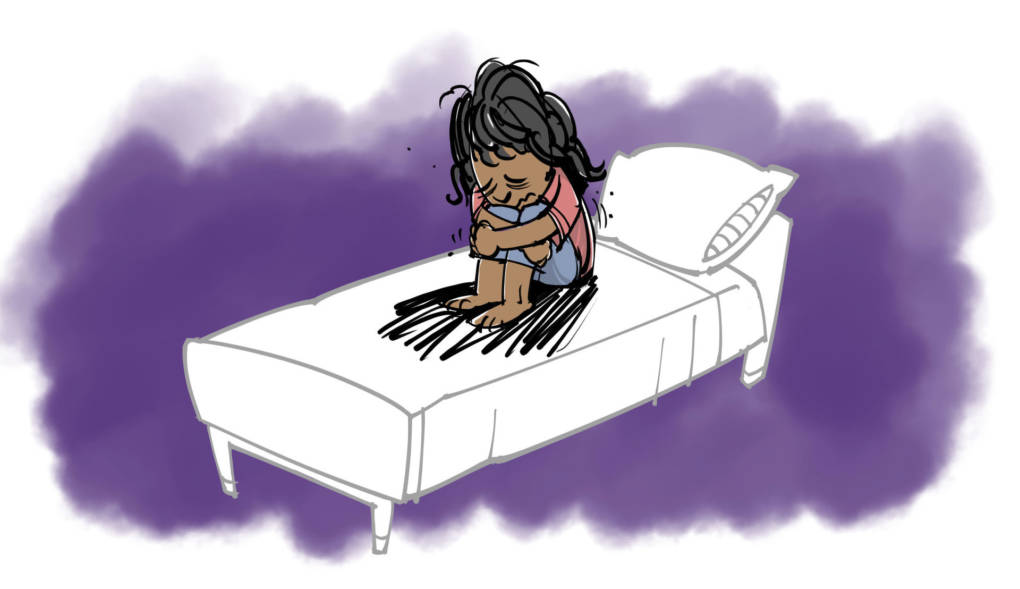
"caption": "Filomena -- a 5-year-old Guatemalan girl -- is one of 431 migrant children who remain in U.S. government custody but whose parents have been removed from the country.",
"description": "Filomena -- a 5-year-old Guatemalan girl -- is one of 431 migrant children who remain in U.S. government custody but whose parents have been removed from the country.",
"title": "FilemonaMain",
"credit": "Illustration by Mark Fiore",
"status": "inherit",
"isLoading": false,
"fetchFailed": false
},
"news_11683702": {
"type": "attachments",
"id": "news_11683702",
"meta": {
"index": "attachments_1716263798",
"site": "news",
"id": "11683702",
"found": true
},
"parent": 11683618,
"imgSizes": {
"small": {
"file": "https://ww2.kqed.org/app/uploads/sites/10/2018/07/GettyImages-1005223924-520x347.jpg",
"width": 520,
"mimeType": "image/jpeg",
"height": 347
},
"twentyfourteen-full-width": {
"file": "https://ww2.kqed.org/app/uploads/sites/10/2018/07/GettyImages-1005223924-1038x576.jpg",
"width": 1038,
"mimeType": "image/jpeg",
"height": 576
},
"thumbnail": {
"file": "https://ww2.kqed.org/app/uploads/sites/10/2018/07/GettyImages-1005223924-160x107.jpg",
"width": 160,
"mimeType": "image/jpeg",
"height": 107
},
"fd-sm": {
"file": "https://ww2.kqed.org/app/uploads/sites/10/2018/07/GettyImages-1005223924-960x640.jpg",
"width": 960,
"mimeType": "image/jpeg",
"height": 640
},
"post-thumbnail": {
"file": "https://ww2.kqed.org/app/uploads/sites/10/2018/07/GettyImages-1005223924-672x372.jpg",
"width": 672,
"mimeType": "image/jpeg",
"height": 372
},
"xsmall": {
"file": "https://ww2.kqed.org/app/uploads/sites/10/2018/07/GettyImages-1005223924-375x250.jpg",
"width": 375,
"mimeType": "image/jpeg",
"height": 250
},
"kqedFullSize": {
"file": "https://ww2.kqed.org/app/uploads/sites/10/2018/07/GettyImages-1005223924-e1532974960641.jpg",
"width": 1920,
"height": 1280
},
"large": {
"file": "https://ww2.kqed.org/app/uploads/sites/10/2018/07/GettyImages-1005223924-1020x680.jpg",
"width": 1020,
"mimeType": "image/jpeg",
"height": 680
},
"xlarge": {
"file": "https://ww2.kqed.org/app/uploads/sites/10/2018/07/GettyImages-1005223924-1180x787.jpg",
"width": 1180,
"mimeType": "image/jpeg",
"height": 787
},
"complete_open_graph": {
"file": "https://ww2.kqed.org/app/uploads/sites/10/2018/07/GettyImages-1005223924-1200x800.jpg",
"width": 1200,
"mimeType": "image/jpeg",
"height": 800
},
"guest-author-50": {
"file": "https://ww2.kqed.org/app/uploads/sites/10/2018/07/GettyImages-1005223924-50x50.jpg",
"width": 50,
"mimeType": "image/jpeg",
"height": 50
},
"guest-author-96": {
"file": "https://ww2.kqed.org/app/uploads/sites/10/2018/07/GettyImages-1005223924-96x96.jpg",
"width": 96,
"mimeType": "image/jpeg",
"height": 96
},
"medium": {
"file": "https://ww2.kqed.org/app/uploads/sites/10/2018/07/GettyImages-1005223924-800x533.jpg",
"width": 800,
"mimeType": "image/jpeg",
"height": 533
},
"guest-author-64": {
"file": "https://ww2.kqed.org/app/uploads/sites/10/2018/07/GettyImages-1005223924-64x64.jpg",
"width": 64,
"mimeType": "image/jpeg",
"height": 64
},
"guest-author-32": {
"file": "https://ww2.kqed.org/app/uploads/sites/10/2018/07/GettyImages-1005223924-32x32.jpg",
"width": 32,
"mimeType": "image/jpeg",
"height": 32
},
"fd-lrg": {
"file": "https://ww2.kqed.org/app/uploads/sites/10/2018/07/GettyImages-1005223924-1920x1280.jpg",
"width": 1920,
"mimeType": "image/jpeg",
"height": 1280
},
"fd-med": {
"file": "https://ww2.kqed.org/app/uploads/sites/10/2018/07/GettyImages-1005223924-1180x787.jpg",
"width": 1180,
"mimeType": "image/jpeg",
"height": 787
},
"full-width": {
"file": "https://ww2.kqed.org/app/uploads/sites/10/2018/07/GettyImages-1005223924-1920x1280.jpg",
"width": 1920,
"mimeType": "image/jpeg",
"height": 1280
},
"detail": {
"file": "https://ww2.kqed.org/app/uploads/sites/10/2018/07/GettyImages-1005223924-150x150.jpg",
"width": 150,
"mimeType": "image/jpeg",
"height": 150
},
"guest-author-128": {
"file": "https://ww2.kqed.org/app/uploads/sites/10/2018/07/GettyImages-1005223924-128x128.jpg",
"width": 128,
"mimeType": "image/jpeg",
"height": 128
},
"xxsmall": {
"file": "https://ww2.kqed.org/app/uploads/sites/10/2018/07/GettyImages-1005223924-240x160.jpg",
"width": 240,
"mimeType": "image/jpeg",
"height": 160
}
},
"publishDate": 1532974807,
"modified": 1532993723,
"caption": "A man, identified only as Renan, has a quiet moment as he spends time with his son, Nathan, 11, as they are cared for in an Annunciation House facility after they were reunited on July 25, 2018, in El Paso, Texas. Renan and Nathan, originally from Honduras, were reunited at an ICE processing center about two months after the two were separated when they tried to cross into the United States.",
"description": "A man, identified only as Renan, has a quiet moment as he spends time with his son, Nathan, 11, as they are cared for in an Annunciation House facility after they were reunited with each other on July 25, 2018 in El Paso, Texas. Renan and Nathan, originally from Honduras, were reunited at an I.C.E processing center about two months after the two were separated when they tried to cross into the United States.",
"title": "Immigrants Reunited With Their Children After Release From Detention In TX",
"credit": "Joe Raedle/Getty Images",
"status": "inherit",
"isLoading": false,
"fetchFailed": false
},
"news_11683364": {
"type": "attachments",
"id": "news_11683364",
"meta": {
"index": "attachments_1716263798",
"site": "news",
"id": "11683364",
"found": true
},
"parent": 11683358,
"imgSizes": {
"small": {
"file": "https://ww2.kqed.org/app/uploads/sites/10/2018/07/MariaReunified-520x480.jpg",
"width": 520,
"mimeType": "image/jpeg",
"height": 480
},
"twentyfourteen-full-width": {
"file": "https://ww2.kqed.org/app/uploads/sites/10/2018/07/MariaReunified-1038x576.jpg",
"width": 1038,
"mimeType": "image/jpeg",
"height": 576
},
"thumbnail": {
"file": "https://ww2.kqed.org/app/uploads/sites/10/2018/07/MariaReunified-160x148.jpg",
"width": 160,
"mimeType": "image/jpeg",
"height": 148
},
"fd-sm": {
"file": "https://ww2.kqed.org/app/uploads/sites/10/2018/07/MariaReunified-960x886.jpg",
"width": 960,
"mimeType": "image/jpeg",
"height": 886
},
"post-thumbnail": {
"file": "https://ww2.kqed.org/app/uploads/sites/10/2018/07/MariaReunified-672x372.jpg",
"width": 672,
"mimeType": "image/jpeg",
"height": 372
},
"xsmall": {
"file": "https://ww2.kqed.org/app/uploads/sites/10/2018/07/MariaReunified-375x346.jpg",
"width": 375,
"mimeType": "image/jpeg",
"height": 346
},
"kqedFullSize": {
"file": "https://ww2.kqed.org/app/uploads/sites/10/2018/07/MariaReunified.jpg",
"width": 1920,
"height": 1772
},
"large": {
"file": "https://ww2.kqed.org/app/uploads/sites/10/2018/07/MariaReunified-1020x941.jpg",
"width": 1020,
"mimeType": "image/jpeg",
"height": 941
},
"xlarge": {
"file": "https://ww2.kqed.org/app/uploads/sites/10/2018/07/MariaReunified-1180x1089.jpg",
"width": 1180,
"mimeType": "image/jpeg",
"height": 1089
},
"complete_open_graph": {
"file": "https://ww2.kqed.org/app/uploads/sites/10/2018/07/MariaReunified-1200x1108.jpg",
"width": 1200,
"mimeType": "image/jpeg",
"height": 1108
},
"guest-author-50": {
"file": "https://ww2.kqed.org/app/uploads/sites/10/2018/07/MariaReunified-50x50.jpg",
"width": 50,
"mimeType": "image/jpeg",
"height": 50
},
"guest-author-96": {
"file": "https://ww2.kqed.org/app/uploads/sites/10/2018/07/MariaReunified-96x96.jpg",
"width": 96,
"mimeType": "image/jpeg",
"height": 96
},
"medium": {
"file": "https://ww2.kqed.org/app/uploads/sites/10/2018/07/MariaReunified-800x738.jpg",
"width": 800,
"mimeType": "image/jpeg",
"height": 738
},
"guest-author-64": {
"file": "https://ww2.kqed.org/app/uploads/sites/10/2018/07/MariaReunified-64x64.jpg",
"width": 64,
"mimeType": "image/jpeg",
"height": 64
},
"guest-author-32": {
"file": "https://ww2.kqed.org/app/uploads/sites/10/2018/07/MariaReunified-32x32.jpg",
"width": 32,
"mimeType": "image/jpeg",
"height": 32
},
"fd-lrg": {
"file": "https://ww2.kqed.org/app/uploads/sites/10/2018/07/MariaReunified-1920x1772.jpg",
"width": 1920,
"mimeType": "image/jpeg",
"height": 1772
},
"fd-med": {
"file": "https://ww2.kqed.org/app/uploads/sites/10/2018/07/MariaReunified-1180x1089.jpg",
"width": 1180,
"mimeType": "image/jpeg",
"height": 1089
},
"full-width": {
"file": "https://ww2.kqed.org/app/uploads/sites/10/2018/07/MariaReunified-1920x1772.jpg",
"width": 1920,
"mimeType": "image/jpeg",
"height": 1772
},
"detail": {
"file": "https://ww2.kqed.org/app/uploads/sites/10/2018/07/MariaReunified-150x150.jpg",
"width": 150,
"mimeType": "image/jpeg",
"height": 150
},
"guest-author-128": {
"file": "https://ww2.kqed.org/app/uploads/sites/10/2018/07/MariaReunified-128x128.jpg",
"width": 128,
"mimeType": "image/jpeg",
"height": 128
},
"xxsmall": {
"file": "https://ww2.kqed.org/app/uploads/sites/10/2018/07/MariaReunified-240x222.jpg",
"width": 240,
"mimeType": "image/jpeg",
"height": 222
}
},
"publishDate": 1532736876,
"modified": 1532738970,
"caption": "A woman, identified only as Maria, is reunited with her son, Franco, 4, at the El Paso International Airport on July 26, 2018, in El Paso, Texas.",
"description": "A woman, identified only as Maria, is reunited with her son Franco, 4, at the El Paso International Airport on July 26, 2018 in El Paso, Texas.",
"title": "MariaReunified",
"credit": "Joe Raedle/Getty Images",
"status": "inherit",
"isLoading": false,
"fetchFailed": false
},
"news_11682627": {
"type": "attachments",
"id": "news_11682627",
"meta": {
"index": "attachments_1716263798",
"site": "news",
"id": "11682627",
"found": true
},
"parent": 11682620,
"imgSizes": {
"small": {
"file": "https://ww2.kqed.org/app/uploads/sites/10/2018/07/IMG_0240-520x347.jpg",
"width": 520,
"mimeType": "image/jpeg",
"height": 347
},
"twentyfourteen-full-width": {
"file": "https://ww2.kqed.org/app/uploads/sites/10/2018/07/IMG_0240-1038x576.jpg",
"width": 1038,
"mimeType": "image/jpeg",
"height": 576
},
"thumbnail": {
"file": "https://ww2.kqed.org/app/uploads/sites/10/2018/07/IMG_0240-160x107.jpg",
"width": 160,
"mimeType": "image/jpeg",
"height": 107
},
"fd-sm": {
"file": "https://ww2.kqed.org/app/uploads/sites/10/2018/07/IMG_0240-960x640.jpg",
"width": 960,
"mimeType": "image/jpeg",
"height": 640
},
"post-thumbnail": {
"file": "https://ww2.kqed.org/app/uploads/sites/10/2018/07/IMG_0240-672x372.jpg",
"width": 672,
"mimeType": "image/jpeg",
"height": 372
},
"xsmall": {
"file": "https://ww2.kqed.org/app/uploads/sites/10/2018/07/IMG_0240-375x250.jpg",
"width": 375,
"mimeType": "image/jpeg",
"height": 250
},
"kqedFullSize": {
"file": "https://ww2.kqed.org/app/uploads/sites/10/2018/07/IMG_0240.jpg",
"width": 1334,
"height": 890
},
"large": {
"file": "https://ww2.kqed.org/app/uploads/sites/10/2018/07/IMG_0240-1020x681.jpg",
"width": 1020,
"mimeType": "image/jpeg",
"height": 681
},
"xlarge": {
"file": "https://ww2.kqed.org/app/uploads/sites/10/2018/07/IMG_0240-1180x787.jpg",
"width": 1180,
"mimeType": "image/jpeg",
"height": 787
},
"complete_open_graph": {
"file": "https://ww2.kqed.org/app/uploads/sites/10/2018/07/IMG_0240-1200x801.jpg",
"width": 1200,
"mimeType": "image/jpeg",
"height": 801
},
"guest-author-50": {
"file": "https://ww2.kqed.org/app/uploads/sites/10/2018/07/IMG_0240-50x50.jpg",
"width": 50,
"mimeType": "image/jpeg",
"height": 50
},
"guest-author-96": {
"file": "https://ww2.kqed.org/app/uploads/sites/10/2018/07/IMG_0240-96x96.jpg",
"width": 96,
"mimeType": "image/jpeg",
"height": 96
},
"medium": {
"file": "https://ww2.kqed.org/app/uploads/sites/10/2018/07/IMG_0240-800x534.jpg",
"width": 800,
"mimeType": "image/jpeg",
"height": 534
},
"guest-author-64": {
"file": "https://ww2.kqed.org/app/uploads/sites/10/2018/07/IMG_0240-64x64.jpg",
"width": 64,
"mimeType": "image/jpeg",
"height": 64
},
"guest-author-32": {
"file": "https://ww2.kqed.org/app/uploads/sites/10/2018/07/IMG_0240-32x32.jpg",
"width": 32,
"mimeType": "image/jpeg",
"height": 32
},
"fd-med": {
"file": "https://ww2.kqed.org/app/uploads/sites/10/2018/07/IMG_0240-1180x787.jpg",
"width": 1180,
"mimeType": "image/jpeg",
"height": 787
},
"detail": {
"file": "https://ww2.kqed.org/app/uploads/sites/10/2018/07/IMG_0240-150x150.jpg",
"width": 150,
"mimeType": "image/jpeg",
"height": 150
},
"guest-author-128": {
"file": "https://ww2.kqed.org/app/uploads/sites/10/2018/07/IMG_0240-128x128.jpg",
"width": 128,
"mimeType": "image/jpeg",
"height": 128
},
"xxsmall": {
"file": "https://ww2.kqed.org/app/uploads/sites/10/2018/07/IMG_0240-240x160.jpg",
"width": 240,
"mimeType": "image/jpeg",
"height": 160
}
},
"publishDate": 1532556344,
"modified": 1532641375,
"caption": "Arvaughn Williams speaks to an audience in San Francisco about the impacts of having an incarcerated parent, and how this disproportionately affects young black men.",
"description": "Arvaughn Williams speaks to an audience in San Francisco about the impacts of having an incarcerated parent, and how this disproportionately affects young black men.",
"title": "IMG_0240",
"credit": "Courtesy of Thai Chu of Listen for Change",
"status": "inherit",
"isLoading": false,
"fetchFailed": false
},
"news_11682931": {
"type": "attachments",
"id": "news_11682931",
"meta": {
"index": "attachments_1716263798",
"site": "news",
"id": "11682931",
"found": true
},
"parent": 11682929,
"imgSizes": {
"small": {
"file": "https://ww2.kqed.org/app/uploads/sites/10/2018/07/RS32060_GettyImages-1005586590-qut-520x362.jpg",
"width": 520,
"mimeType": "image/jpeg",
"height": 362
},
"twentyfourteen-full-width": {
"file": "https://ww2.kqed.org/app/uploads/sites/10/2018/07/RS32060_GettyImages-1005586590-qut-1038x576.jpg",
"width": 1038,
"mimeType": "image/jpeg",
"height": 576
},
"thumbnail": {
"file": "https://ww2.kqed.org/app/uploads/sites/10/2018/07/RS32060_GettyImages-1005586590-qut-160x111.jpg",
"width": 160,
"mimeType": "image/jpeg",
"height": 111
},
"fd-sm": {
"file": "https://ww2.kqed.org/app/uploads/sites/10/2018/07/RS32060_GettyImages-1005586590-qut-960x668.jpg",
"width": 960,
"mimeType": "image/jpeg",
"height": 668
},
"post-thumbnail": {
"file": "https://ww2.kqed.org/app/uploads/sites/10/2018/07/RS32060_GettyImages-1005586590-qut-672x372.jpg",
"width": 672,
"mimeType": "image/jpeg",
"height": 372
},
"xsmall": {
"file": "https://ww2.kqed.org/app/uploads/sites/10/2018/07/RS32060_GettyImages-1005586590-qut-375x261.jpg",
"width": 375,
"mimeType": "image/jpeg",
"height": 261
},
"kqedFullSize": {
"file": "https://ww2.kqed.org/app/uploads/sites/10/2018/07/RS32060_GettyImages-1005586590-qut.jpg",
"width": 1920,
"height": 1335
},
"large": {
"file": "https://ww2.kqed.org/app/uploads/sites/10/2018/07/RS32060_GettyImages-1005586590-qut-1020x709.jpg",
"width": 1020,
"mimeType": "image/jpeg",
"height": 709
},
"xlarge": {
"file": "https://ww2.kqed.org/app/uploads/sites/10/2018/07/RS32060_GettyImages-1005586590-qut-1180x820.jpg",
"width": 1180,
"mimeType": "image/jpeg",
"height": 820
},
"complete_open_graph": {
"file": "https://ww2.kqed.org/app/uploads/sites/10/2018/07/RS32060_GettyImages-1005586590-qut-1200x834.jpg",
"width": 1200,
"mimeType": "image/jpeg",
"height": 834
},
"guest-author-50": {
"file": "https://ww2.kqed.org/app/uploads/sites/10/2018/07/RS32060_GettyImages-1005586590-qut-50x50.jpg",
"width": 50,
"mimeType": "image/jpeg",
"height": 50
},
"guest-author-96": {
"file": "https://ww2.kqed.org/app/uploads/sites/10/2018/07/RS32060_GettyImages-1005586590-qut-96x96.jpg",
"width": 96,
"mimeType": "image/jpeg",
"height": 96
},
"medium": {
"file": "https://ww2.kqed.org/app/uploads/sites/10/2018/07/RS32060_GettyImages-1005586590-qut-800x556.jpg",
"width": 800,
"mimeType": "image/jpeg",
"height": 556
},
"guest-author-64": {
"file": "https://ww2.kqed.org/app/uploads/sites/10/2018/07/RS32060_GettyImages-1005586590-qut-64x64.jpg",
"width": 64,
"mimeType": "image/jpeg",
"height": 64
},
"guest-author-32": {
"file": "https://ww2.kqed.org/app/uploads/sites/10/2018/07/RS32060_GettyImages-1005586590-qut-32x32.jpg",
"width": 32,
"mimeType": "image/jpeg",
"height": 32
},
"fd-lrg": {
"file": "https://ww2.kqed.org/app/uploads/sites/10/2018/07/RS32060_GettyImages-1005586590-qut-1920x1335.jpg",
"width": 1920,
"mimeType": "image/jpeg",
"height": 1335
},
"fd-med": {
"file": "https://ww2.kqed.org/app/uploads/sites/10/2018/07/RS32060_GettyImages-1005586590-qut-1180x820.jpg",
"width": 1180,
"mimeType": "image/jpeg",
"height": 820
},
"full-width": {
"file": "https://ww2.kqed.org/app/uploads/sites/10/2018/07/RS32060_GettyImages-1005586590-qut-1920x1335.jpg",
"width": 1920,
"mimeType": "image/jpeg",
"height": 1335
},
"detail": {
"file": "https://ww2.kqed.org/app/uploads/sites/10/2018/07/RS32060_GettyImages-1005586590-qut-150x150.jpg",
"width": 150,
"mimeType": "image/jpeg",
"height": 150
},
"guest-author-128": {
"file": "https://ww2.kqed.org/app/uploads/sites/10/2018/07/RS32060_GettyImages-1005586590-qut-128x128.jpg",
"width": 128,
"mimeType": "image/jpeg",
"height": 128
},
"xxsmall": {
"file": "https://ww2.kqed.org/app/uploads/sites/10/2018/07/RS32060_GettyImages-1005586590-qut-240x167.jpg",
"width": 240,
"mimeType": "image/jpeg",
"height": 167
}
},
"publishDate": 1532643596,
"modified": 1532736572,
"caption": "Protesters and their children participate in a sit-in in the Hart Senate Office Building in Washington, D.C., on Thursday to mark the court-ordered deadline for the Trump administration to reunify thousands of families separated at the border.",
"description": "Protesters and their children participate in a sit-in in the Hart Senate Office Building in Washington D.C. on Thursday to mark the court-ordered deadline for the Trump Administration to reunify thousands of families separated at the border.",
"title": "Activists Protest In Washington DC For Immigrant Family Reunification",
"credit": "Win McNamee/Getty Images",
"status": "inherit",
"isLoading": false,
"fetchFailed": false
},
"news_11682964": {
"type": "attachments",
"id": "news_11682964",
"meta": {
"index": "attachments_1716263798",
"site": "news",
"id": "11682964",
"found": true
},
"parent": 11682958,
"imgSizes": {
"small": {
"file": "https://ww2.kqed.org/app/uploads/sites/10/2018/07/reunification_072618_final_tall-520x586.jpg",
"width": 520,
"mimeType": "image/jpeg",
"height": 586
},
"twentyfourteen-full-width": {
"file": "https://ww2.kqed.org/app/uploads/sites/10/2018/07/reunification_072618_final_tall-1038x576.jpg",
"width": 1038,
"mimeType": "image/jpeg",
"height": 576
},
"thumbnail": {
"file": "https://ww2.kqed.org/app/uploads/sites/10/2018/07/reunification_072618_final_tall-160x180.jpg",
"width": 160,
"mimeType": "image/jpeg",
"height": 180
},
"fd-sm": {
"file": "https://ww2.kqed.org/app/uploads/sites/10/2018/07/reunification_072618_final_tall-960x1082.jpg",
"width": 960,
"mimeType": "image/jpeg",
"height": 1082
},
"post-thumbnail": {
"file": "https://ww2.kqed.org/app/uploads/sites/10/2018/07/reunification_072618_final_tall-672x372.jpg",
"width": 672,
"mimeType": "image/jpeg",
"height": 372
},
"xsmall": {
"file": "https://ww2.kqed.org/app/uploads/sites/10/2018/07/reunification_072618_final_tall-375x422.jpg",
"width": 375,
"mimeType": "image/jpeg",
"height": 422
},
"kqedFullSize": {
"file": "https://ww2.kqed.org/app/uploads/sites/10/2018/07/reunification_072618_final_tall.jpg",
"width": 1920,
"height": 2163
},
"large": {
"file": "https://ww2.kqed.org/app/uploads/sites/10/2018/07/reunification_072618_final_tall-1020x1149.jpg",
"width": 1020,
"mimeType": "image/jpeg",
"height": 1149
},
"xlarge": {
"file": "https://ww2.kqed.org/app/uploads/sites/10/2018/07/reunification_072618_final_tall-1180x1329.jpg",
"width": 1180,
"mimeType": "image/jpeg",
"height": 1329
},
"complete_open_graph": {
"file": "https://ww2.kqed.org/app/uploads/sites/10/2018/07/reunification_072618_final_tall-1065x1200.jpg",
"width": 1065,
"mimeType": "image/jpeg",
"height": 1200
},
"guest-author-50": {
"file": "https://ww2.kqed.org/app/uploads/sites/10/2018/07/reunification_072618_final_tall-50x50.jpg",
"width": 50,
"mimeType": "image/jpeg",
"height": 50
},
"guest-author-96": {
"file": "https://ww2.kqed.org/app/uploads/sites/10/2018/07/reunification_072618_final_tall-96x96.jpg",
"width": 96,
"mimeType": "image/jpeg",
"height": 96
},
"medium": {
"file": "https://ww2.kqed.org/app/uploads/sites/10/2018/07/reunification_072618_final_tall-800x901.jpg",
"width": 800,
"mimeType": "image/jpeg",
"height": 901
},
"guest-author-64": {
"file": "https://ww2.kqed.org/app/uploads/sites/10/2018/07/reunification_072618_final_tall-64x64.jpg",
"width": 64,
"mimeType": "image/jpeg",
"height": 64
},
"guest-author-32": {
"file": "https://ww2.kqed.org/app/uploads/sites/10/2018/07/reunification_072618_final_tall-32x32.jpg",
"width": 32,
"mimeType": "image/jpeg",
"height": 32
},
"fd-lrg": {
"file": "https://ww2.kqed.org/app/uploads/sites/10/2018/07/reunification_072618_final_tall-1920x2163.jpg",
"width": 1920,
"mimeType": "image/jpeg",
"height": 2163
},
"fd-med": {
"file": "https://ww2.kqed.org/app/uploads/sites/10/2018/07/reunification_072618_final_tall-1180x1329.jpg",
"width": 1180,
"mimeType": "image/jpeg",
"height": 1329
},
"full-width": {
"file": "https://ww2.kqed.org/app/uploads/sites/10/2018/07/reunification_072618_final_tall-1920x2163.jpg",
"width": 1920,
"mimeType": "image/jpeg",
"height": 2163
},
"detail": {
"file": "https://ww2.kqed.org/app/uploads/sites/10/2018/07/reunification_072618_final_tall-150x150.jpg",
"width": 150,
"mimeType": "image/jpeg",
"height": 150
},
"guest-author-128": {
"file": "https://ww2.kqed.org/app/uploads/sites/10/2018/07/reunification_072618_final_tall-128x128.jpg",
"width": 128,
"mimeType": "image/jpeg",
"height": 128
},
"xxsmall": {
"file": "https://ww2.kqed.org/app/uploads/sites/10/2018/07/reunification_072618_final_tall-240x270.jpg",
"width": 240,
"mimeType": "image/jpeg",
"height": 270
}
},
"publishDate": 1532646003,
"modified": 1532646027,
"caption": null,
"description": null,
"title": "reunification_072618_final_tall",
"credit": null,
"status": "inherit",
"isLoading": false,
"fetchFailed": false
},
"news_11682898": {
"type": "attachments",
"id": "news_11682898",
"meta": {
"index": "attachments_1716263798",
"site": "news",
"id": "11682898",
"found": true
},
"parent": 11682838,
"imgSizes": {
"small": {
"file": "https://ww2.kqed.org/app/uploads/sites/10/2018/07/SWKey-520x390.jpg",
"width": 520,
"mimeType": "image/jpeg",
"height": 390
},
"twentyfourteen-full-width": {
"file": "https://ww2.kqed.org/app/uploads/sites/10/2018/07/SWKey-1020x576.jpg",
"width": 1020,
"mimeType": "image/jpeg",
"height": 576
},
"thumbnail": {
"file": "https://ww2.kqed.org/app/uploads/sites/10/2018/07/SWKey-160x120.jpg",
"width": 160,
"mimeType": "image/jpeg",
"height": 120
},
"fd-sm": {
"file": "https://ww2.kqed.org/app/uploads/sites/10/2018/07/SWKey-960x720.jpg",
"width": 960,
"mimeType": "image/jpeg",
"height": 720
},
"post-thumbnail": {
"file": "https://ww2.kqed.org/app/uploads/sites/10/2018/07/SWKey-672x372.jpg",
"width": 672,
"mimeType": "image/jpeg",
"height": 372
},
"xsmall": {
"file": "https://ww2.kqed.org/app/uploads/sites/10/2018/07/SWKey-375x281.jpg",
"width": 375,
"mimeType": "image/jpeg",
"height": 281
},
"kqedFullSize": {
"file": "https://ww2.kqed.org/app/uploads/sites/10/2018/07/SWKey.jpg",
"width": 1020,
"height": 765
},
"large": {
"file": "https://ww2.kqed.org/app/uploads/sites/10/2018/07/SWKey-1020x765.jpg",
"width": 1020,
"mimeType": "image/jpeg",
"height": 765
},
"guest-author-50": {
"file": "https://ww2.kqed.org/app/uploads/sites/10/2018/07/SWKey-50x50.jpg",
"width": 50,
"mimeType": "image/jpeg",
"height": 50
},
"guest-author-96": {
"file": "https://ww2.kqed.org/app/uploads/sites/10/2018/07/SWKey-96x96.jpg",
"width": 96,
"mimeType": "image/jpeg",
"height": 96
},
"medium": {
"file": "https://ww2.kqed.org/app/uploads/sites/10/2018/07/SWKey-800x600.jpg",
"width": 800,
"mimeType": "image/jpeg",
"height": 600
},
"guest-author-64": {
"file": "https://ww2.kqed.org/app/uploads/sites/10/2018/07/SWKey-64x64.jpg",
"width": 64,
"mimeType": "image/jpeg",
"height": 64
},
"guest-author-32": {
"file": "https://ww2.kqed.org/app/uploads/sites/10/2018/07/SWKey-32x32.jpg",
"width": 32,
"mimeType": "image/jpeg",
"height": 32
},
"detail": {
"file": "https://ww2.kqed.org/app/uploads/sites/10/2018/07/SWKey-150x150.jpg",
"width": 150,
"mimeType": "image/jpeg",
"height": 150
},
"guest-author-128": {
"file": "https://ww2.kqed.org/app/uploads/sites/10/2018/07/SWKey-128x128.jpg",
"width": 128,
"mimeType": "image/jpeg",
"height": 128
},
"xxsmall": {
"file": "https://ww2.kqed.org/app/uploads/sites/10/2018/07/SWKey-240x180.jpg",
"width": 240,
"mimeType": "image/jpeg",
"height": 180
}
},
"publishDate": 1532636419,
"modified": 1532640672,
"caption": "At one point, the Southwest Key facility in Pleasant Hill held two migrant children separated from their parents at the border.",
"description": "At one point, the Southwest Key facility in Pleasant Hill held two migrant children separated from their parents at the border.",
"title": "SWKey",
"credit": "Guy Marzorati/KQED",
"status": "inherit",
"isLoading": false,
"fetchFailed": false
},
"news_11682732": {
"type": "attachments",
"id": "news_11682732",
"meta": {
"index": "attachments_1716263798",
"site": "news",
"id": "11682732",
"found": true
},
"parent": 11682633,
"imgSizes": {
"small": {
"file": "https://ww2.kqed.org/app/uploads/sites/10/2018/07/RS31986_GettyImages-982169256-qut-520x440.jpg",
"width": 520,
"mimeType": "image/jpeg",
"height": 440
},
"twentyfourteen-full-width": {
"file": "https://ww2.kqed.org/app/uploads/sites/10/2018/07/RS31986_GettyImages-982169256-qut-1038x576.jpg",
"width": 1038,
"mimeType": "image/jpeg",
"height": 576
},
"thumbnail": {
"file": "https://ww2.kqed.org/app/uploads/sites/10/2018/07/RS31986_GettyImages-982169256-qut-160x136.jpg",
"width": 160,
"mimeType": "image/jpeg",
"height": 136
},
"fd-sm": {
"file": "https://ww2.kqed.org/app/uploads/sites/10/2018/07/RS31986_GettyImages-982169256-qut-960x813.jpg",
"width": 960,
"mimeType": "image/jpeg",
"height": 813
},
"post-thumbnail": {
"file": "https://ww2.kqed.org/app/uploads/sites/10/2018/07/RS31986_GettyImages-982169256-qut-672x372.jpg",
"width": 672,
"mimeType": "image/jpeg",
"height": 372
},
"xsmall": {
"file": "https://ww2.kqed.org/app/uploads/sites/10/2018/07/RS31986_GettyImages-982169256-qut-375x318.jpg",
"width": 375,
"mimeType": "image/jpeg",
"height": 318
},
"kqedFullSize": {
"file": "https://ww2.kqed.org/app/uploads/sites/10/2018/07/RS31986_GettyImages-982169256-qut.jpg",
"width": 1920,
"height": 1626
},
"large": {
"file": "https://ww2.kqed.org/app/uploads/sites/10/2018/07/RS31986_GettyImages-982169256-qut-1020x864.jpg",
"width": 1020,
"mimeType": "image/jpeg",
"height": 864
},
"xlarge": {
"file": "https://ww2.kqed.org/app/uploads/sites/10/2018/07/RS31986_GettyImages-982169256-qut-1180x999.jpg",
"width": 1180,
"mimeType": "image/jpeg",
"height": 999
},
"complete_open_graph": {
"file": "https://ww2.kqed.org/app/uploads/sites/10/2018/07/RS31986_GettyImages-982169256-qut-1200x1016.jpg",
"width": 1200,
"mimeType": "image/jpeg",
"height": 1016
},
"guest-author-50": {
"file": "https://ww2.kqed.org/app/uploads/sites/10/2018/07/RS31986_GettyImages-982169256-qut-50x50.jpg",
"width": 50,
"mimeType": "image/jpeg",
"height": 50
},
"guest-author-96": {
"file": "https://ww2.kqed.org/app/uploads/sites/10/2018/07/RS31986_GettyImages-982169256-qut-96x96.jpg",
"width": 96,
"mimeType": "image/jpeg",
"height": 96
},
"medium": {
"file": "https://ww2.kqed.org/app/uploads/sites/10/2018/07/RS31986_GettyImages-982169256-qut-800x678.jpg",
"width": 800,
"mimeType": "image/jpeg",
"height": 678
},
"guest-author-64": {
"file": "https://ww2.kqed.org/app/uploads/sites/10/2018/07/RS31986_GettyImages-982169256-qut-64x64.jpg",
"width": 64,
"mimeType": "image/jpeg",
"height": 64
},
"guest-author-32": {
"file": "https://ww2.kqed.org/app/uploads/sites/10/2018/07/RS31986_GettyImages-982169256-qut-32x32.jpg",
"width": 32,
"mimeType": "image/jpeg",
"height": 32
},
"fd-lrg": {
"file": "https://ww2.kqed.org/app/uploads/sites/10/2018/07/RS31986_GettyImages-982169256-qut-1920x1626.jpg",
"width": 1920,
"mimeType": "image/jpeg",
"height": 1626
},
"fd-med": {
"file": "https://ww2.kqed.org/app/uploads/sites/10/2018/07/RS31986_GettyImages-982169256-qut-1180x999.jpg",
"width": 1180,
"mimeType": "image/jpeg",
"height": 999
},
"full-width": {
"file": "https://ww2.kqed.org/app/uploads/sites/10/2018/07/RS31986_GettyImages-982169256-qut-1920x1626.jpg",
"width": 1920,
"mimeType": "image/jpeg",
"height": 1626
},
"detail": {
"file": "https://ww2.kqed.org/app/uploads/sites/10/2018/07/RS31986_GettyImages-982169256-qut-150x150.jpg",
"width": 150,
"mimeType": "image/jpeg",
"height": 150
},
"guest-author-128": {
"file": "https://ww2.kqed.org/app/uploads/sites/10/2018/07/RS31986_GettyImages-982169256-qut-128x128.jpg",
"width": 128,
"mimeType": "image/jpeg",
"height": 128
},
"xxsmall": {
"file": "https://ww2.kqed.org/app/uploads/sites/10/2018/07/RS31986_GettyImages-982169256-qut-240x203.jpg",
"width": 240,
"mimeType": "image/jpeg",
"height": 203
}
},
"publishDate": 1532566942,
"modified": 1532640410,
"caption": "A migrant child looks out the window of a bus as protesters try to block a bus carrying migrant children out of a U.S. Customs and Border Protection Detention Center on June 23, 2018, in McAllen, Texas.",
"description": "A migrant child looks out the window of a bus as protesters try to block a bus carrying migrant children out of a U.S. Customs and Border Protection Detention Center on June 23, 2018 in McAllen, Texas.",
"title": "Despite Trump Executive Order, Over 2300 Migrant Children Still Held In Camps",
"credit": "Spencer Platt/Getty Images",
"status": "inherit",
"isLoading": false,
"fetchFailed": false
},
"news_11682818": {
"type": "attachments",
"id": "news_11682818",
"meta": {
"index": "attachments_1716263798",
"site": "news",
"id": "11682818",
"found": true
},
"parent": 11682814,
"imgSizes": {
"small": {
"file": "https://ww2.kqed.org/app/uploads/sites/10/2018/07/GettyImages-1004311102-520x360.jpg",
"width": 520,
"mimeType": "image/jpeg",
"height": 360
},
"twentyfourteen-full-width": {
"file": "https://ww2.kqed.org/app/uploads/sites/10/2018/07/GettyImages-1004311102-1038x576.jpg",
"width": 1038,
"mimeType": "image/jpeg",
"height": 576
},
"thumbnail": {
"file": "https://ww2.kqed.org/app/uploads/sites/10/2018/07/GettyImages-1004311102-160x111.jpg",
"width": 160,
"mimeType": "image/jpeg",
"height": 111
},
"fd-sm": {
"file": "https://ww2.kqed.org/app/uploads/sites/10/2018/07/GettyImages-1004311102-960x665.jpg",
"width": 960,
"mimeType": "image/jpeg",
"height": 665
},
"post-thumbnail": {
"file": "https://ww2.kqed.org/app/uploads/sites/10/2018/07/GettyImages-1004311102-672x372.jpg",
"width": 672,
"mimeType": "image/jpeg",
"height": 372
},
"xsmall": {
"file": "https://ww2.kqed.org/app/uploads/sites/10/2018/07/GettyImages-1004311102-375x260.jpg",
"width": 375,
"mimeType": "image/jpeg",
"height": 260
},
"kqedFullSize": {
"file": "https://ww2.kqed.org/app/uploads/sites/10/2018/07/GettyImages-1004311102-e1532626185142.jpg",
"width": 1920,
"height": 1330
},
"large": {
"file": "https://ww2.kqed.org/app/uploads/sites/10/2018/07/GettyImages-1004311102-1020x707.jpg",
"width": 1020,
"mimeType": "image/jpeg",
"height": 707
},
"xlarge": {
"file": "https://ww2.kqed.org/app/uploads/sites/10/2018/07/GettyImages-1004311102-1180x817.jpg",
"width": 1180,
"mimeType": "image/jpeg",
"height": 817
},
"complete_open_graph": {
"file": "https://ww2.kqed.org/app/uploads/sites/10/2018/07/GettyImages-1004311102-1200x831.jpg",
"width": 1200,
"mimeType": "image/jpeg",
"height": 831
},
"guest-author-50": {
"file": "https://ww2.kqed.org/app/uploads/sites/10/2018/07/GettyImages-1004311102-50x50.jpg",
"width": 50,
"mimeType": "image/jpeg",
"height": 50
},
"guest-author-96": {
"file": "https://ww2.kqed.org/app/uploads/sites/10/2018/07/GettyImages-1004311102-96x96.jpg",
"width": 96,
"mimeType": "image/jpeg",
"height": 96
},
"medium": {
"file": "https://ww2.kqed.org/app/uploads/sites/10/2018/07/GettyImages-1004311102-800x554.jpg",
"width": 800,
"mimeType": "image/jpeg",
"height": 554
},
"guest-author-64": {
"file": "https://ww2.kqed.org/app/uploads/sites/10/2018/07/GettyImages-1004311102-64x64.jpg",
"width": 64,
"mimeType": "image/jpeg",
"height": 64
},
"guest-author-32": {
"file": "https://ww2.kqed.org/app/uploads/sites/10/2018/07/GettyImages-1004311102-32x32.jpg",
"width": 32,
"mimeType": "image/jpeg",
"height": 32
},
"fd-lrg": {
"file": "https://ww2.kqed.org/app/uploads/sites/10/2018/07/GettyImages-1004311102-1920x1330.jpg",
"width": 1920,
"mimeType": "image/jpeg",
"height": 1330
},
"fd-med": {
"file": "https://ww2.kqed.org/app/uploads/sites/10/2018/07/GettyImages-1004311102-1180x817.jpg",
"width": 1180,
"mimeType": "image/jpeg",
"height": 817
},
"full-width": {
"file": "https://ww2.kqed.org/app/uploads/sites/10/2018/07/GettyImages-1004311102-1920x1330.jpg",
"width": 1920,
"mimeType": "image/jpeg",
"height": 1330
},
"detail": {
"file": "https://ww2.kqed.org/app/uploads/sites/10/2018/07/GettyImages-1004311102-150x150.jpg",
"width": 150,
"mimeType": "image/jpeg",
"height": 150
},
"guest-author-128": {
"file": "https://ww2.kqed.org/app/uploads/sites/10/2018/07/GettyImages-1004311102-128x128.jpg",
"width": 128,
"mimeType": "image/jpeg",
"height": 128
},
"xxsmall": {
"file": "https://ww2.kqed.org/app/uploads/sites/10/2018/07/GettyImages-1004311102-240x166.jpg",
"width": 240,
"mimeType": "image/jpeg",
"height": 166
}
},
"publishDate": 1532626127,
"modified": 1532626634,
"caption": "Seven-year-old Andy is reunited with his mother, Arely, at Baltimore-Washington International Airport July 23, 2018 in Linthicum, Maryland. Originally from El Salvador, the mother and son were separated upon entering the United States on June 13 with Arely being detained at the Port Isabel Detention Center in south Texas, and Andy being detained in New York.",
"description": "Seven-year-old Andy is reunited with his mother, Arely, at Baltimore-Washington International Airport July 23, 2018 in Linthicum, Maryland. Originally from El Salvador, the mother and son were separated upon entering the United States on June 13 with Arely being detained at the Port Isabel Detention Center in south Texas, and Andy being detained in New York.",
"title": "El Salvadoran Mother And Son Separated Since June 13 At US Border Reunited At BWI",
"credit": "Win McNamee/Getty Images",
"status": "inherit",
"isLoading": false,
"fetchFailed": false
},
"news_11682269": {
"type": "attachments",
"id": "news_11682269",
"meta": {
"index": "attachments_1716263798",
"site": "news",
"id": "11682269",
"found": true
},
"parent": 11682247,
"imgSizes": {
"small": {
"file": "https://ww2.kqed.org/app/uploads/sites/10/2018/07/NapolitanoMain-520x347.jpg",
"width": 520,
"mimeType": "image/jpeg",
"height": 347
},
"twentyfourteen-full-width": {
"file": "https://ww2.kqed.org/app/uploads/sites/10/2018/07/NapolitanoMain-1038x576.jpg",
"width": 1038,
"mimeType": "image/jpeg",
"height": 576
},
"thumbnail": {
"file": "https://ww2.kqed.org/app/uploads/sites/10/2018/07/NapolitanoMain-160x107.jpg",
"width": 160,
"mimeType": "image/jpeg",
"height": 107
},
"fd-sm": {
"file": "https://ww2.kqed.org/app/uploads/sites/10/2018/07/NapolitanoMain-960x640.jpg",
"width": 960,
"mimeType": "image/jpeg",
"height": 640
},
"post-thumbnail": {
"file": "https://ww2.kqed.org/app/uploads/sites/10/2018/07/NapolitanoMain-672x372.jpg",
"width": 672,
"mimeType": "image/jpeg",
"height": 372
},
"xsmall": {
"file": "https://ww2.kqed.org/app/uploads/sites/10/2018/07/NapolitanoMain-375x250.jpg",
"width": 375,
"mimeType": "image/jpeg",
"height": 250
},
"kqedFullSize": {
"file": "https://ww2.kqed.org/app/uploads/sites/10/2018/07/NapolitanoMain.jpg",
"width": 1920,
"height": 1280
},
"large": {
"file": "https://ww2.kqed.org/app/uploads/sites/10/2018/07/NapolitanoMain-1020x680.jpg",
"width": 1020,
"mimeType": "image/jpeg",
"height": 680
},
"xlarge": {
"file": "https://ww2.kqed.org/app/uploads/sites/10/2018/07/NapolitanoMain-1180x787.jpg",
"width": 1180,
"mimeType": "image/jpeg",
"height": 787
},
"complete_open_graph": {
"file": "https://ww2.kqed.org/app/uploads/sites/10/2018/07/NapolitanoMain-1200x800.jpg",
"width": 1200,
"mimeType": "image/jpeg",
"height": 800
},
"guest-author-50": {
"file": "https://ww2.kqed.org/app/uploads/sites/10/2018/07/NapolitanoMain-50x50.jpg",
"width": 50,
"mimeType": "image/jpeg",
"height": 50
},
"guest-author-96": {
"file": "https://ww2.kqed.org/app/uploads/sites/10/2018/07/NapolitanoMain-96x96.jpg",
"width": 96,
"mimeType": "image/jpeg",
"height": 96
},
"medium": {
"file": "https://ww2.kqed.org/app/uploads/sites/10/2018/07/NapolitanoMain-800x533.jpg",
"width": 800,
"mimeType": "image/jpeg",
"height": 533
},
"guest-author-64": {
"file": "https://ww2.kqed.org/app/uploads/sites/10/2018/07/NapolitanoMain-64x64.jpg",
"width": 64,
"mimeType": "image/jpeg",
"height": 64
},
"guest-author-32": {
"file": "https://ww2.kqed.org/app/uploads/sites/10/2018/07/NapolitanoMain-32x32.jpg",
"width": 32,
"mimeType": "image/jpeg",
"height": 32
},
"fd-lrg": {
"file": "https://ww2.kqed.org/app/uploads/sites/10/2018/07/NapolitanoMain-1920x1280.jpg",
"width": 1920,
"mimeType": "image/jpeg",
"height": 1280
},
"fd-med": {
"file": "https://ww2.kqed.org/app/uploads/sites/10/2018/07/NapolitanoMain-1180x787.jpg",
"width": 1180,
"mimeType": "image/jpeg",
"height": 787
},
"full-width": {
"file": "https://ww2.kqed.org/app/uploads/sites/10/2018/07/NapolitanoMain-1920x1280.jpg",
"width": 1920,
"mimeType": "image/jpeg",
"height": 1280
},
"detail": {
"file": "https://ww2.kqed.org/app/uploads/sites/10/2018/07/NapolitanoMain-150x150.jpg",
"width": 150,
"mimeType": "image/jpeg",
"height": 150
},
"guest-author-128": {
"file": "https://ww2.kqed.org/app/uploads/sites/10/2018/07/NapolitanoMain-128x128.jpg",
"width": 128,
"mimeType": "image/jpeg",
"height": 128
},
"xxsmall": {
"file": "https://ww2.kqed.org/app/uploads/sites/10/2018/07/NapolitanoMain-240x160.jpg",
"width": 240,
"mimeType": "image/jpeg",
"height": 160
}
},
"publishDate": 1532458617,
"modified": 1589261409,
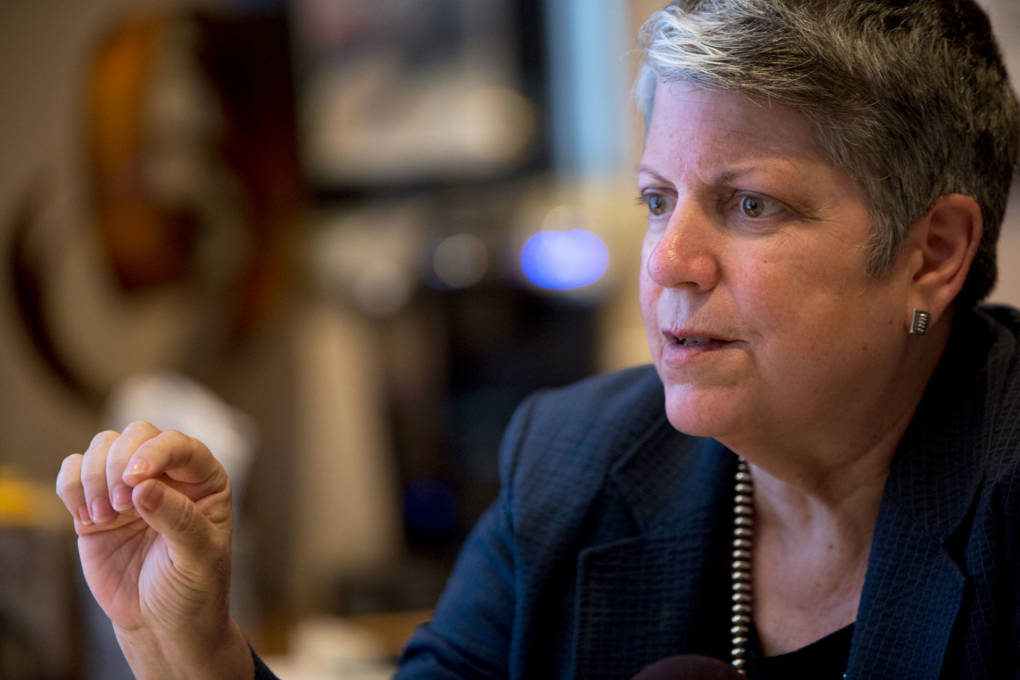
"caption": "UC President Janet Napolitano in her office in Oakland on July 17, 2018.",
"description": "UC President and former Secretary of Homeland Security Janet Napolitano talked with The California Report in her office in Oakland on July 17, 2018.",
"title": "NapolitanoMain",
"credit": "Anne Wernikoff/KQED",
"status": "inherit",
"isLoading": false,
"fetchFailed": false
}
},
"audioPlayerReducer": {
"postId": "stream_live",
"isPaused": true,
"isPlaying": false,
"pfsActive": false,
"pledgeModalIsOpen": true,
"playerDrawerIsOpen": false,
"liveAudioPlayStartedAt": 0,
"liveAudioPlayContext": ""
},
"authorsReducer": {
"byline_news_11683358": {
"type": "authors",
"id": "byline_news_11683358",
"meta": {
"override": true
},
"slug": "byline_news_11683358",
"name": "The Associated Press",
"isLoading": false
},
"byline_news_11682814": {
"type": "authors",
"id": "byline_news_11682814",
"meta": {
"override": true
},
"slug": "byline_news_11682814",
"name": "\u003cstrong>\u003ca href=\"https://www.npr.org/people/1936301/john-burnett\">John Burnett\u003c/a>\u003c/strong>",
"isLoading": false
},
"dmarks": {
"type": "authors",
"id": "182",
"meta": {
"index": "authors_1716337520",
"id": "182",
"found": true
},
"name": "David Marks",
"firstName": "David",
"lastName": "Marks",
"slug": "dmarks",
"email": "dmarks@kqed.org",
"display_author_email": false,
"staff_mastheads": [],
"title": "KQED Editor",
"bio": "David Marks is a senior digital editor for KQED News. \u003c/a>Reach him at dmarks@kqed.org.",
"avatar": "https://secure.gravatar.com/avatar/b88bd6227ce6cb96ae33fefaf42b2a29?s=600&d=mm&r=g",
"twitter": "divadskram",
"facebook": null,
"instagram": null,
"linkedin": null,
"sites": [
{
"site": "news",
"roles": []
},
{
"site": "science",
"roles": []
},
{
"site": "perspectives",
"roles": []
},
{
"site": "liveblog",
"roles": []
}
],
"headData": {
"title": "David Marks | KQED",
"description": "KQED Editor",
"ogImgSrc": "https://secure.gravatar.com/avatar/b88bd6227ce6cb96ae33fefaf42b2a29?s=600&d=mm&r=g",
"twImgSrc": "https://secure.gravatar.com/avatar/b88bd6227ce6cb96ae33fefaf42b2a29?s=600&d=mm&r=g"
},
"isLoading": false,
"link": "/author/dmarks"
},
"tgoldberg": {
"type": "authors",
"id": "258",
"meta": {
"index": "authors_1716337520",
"id": "258",
"found": true
},
"name": "Ted Goldberg",
"firstName": "Ted",
"lastName": "Goldberg",
"slug": "tgoldberg",
"email": "tgoldberg@kqed.org",
"display_author_email": true,
"staff_mastheads": [
"news"
],
"title": "KQED Managing Editor, News and Newscasts",
"bio": "Ted Goldberg is Managing Editor of News and Newscasts at KQED. His main reporting beat is the Bay Area's oil refining industry.\r\n\r\nPrior to joining KQED in 2014, Ted worked at CBS News and WCBS AM in New York and Bay City News and KCBS Radio in San Francisco. He graduated from Oberlin College in Ohio in 1998.",
"avatar": "https://secure.gravatar.com/avatar/30ce2e4fe89135e104f89be2394d16225b9d36c121b5b3cb7651ce642978b96f?s=600&d=blank&r=g",
"twitter": "TedrickG",
"bluesky": null,
"facebook": null,
"instagram": null,
"linkedin": null,
"sites": [
{
"site": "news",
"roles": [
"editor"
]
},
{
"site": "science",
"roles": [
"editor"
]
}
],
"headData": {
"title": "Ted Goldberg | KQED",
"description": "KQED Managing Editor, News and Newscasts",
"ogImgSrc": "https://secure.gravatar.com/avatar/30ce2e4fe89135e104f89be2394d16225b9d36c121b5b3cb7651ce642978b96f?s=600&d=blank&r=g",
"twImgSrc": "https://secure.gravatar.com/avatar/30ce2e4fe89135e104f89be2394d16225b9d36c121b5b3cb7651ce642978b96f?s=600&d=blank&r=g"
},
"isLoading": false,
"link": "/author/tgoldberg"
},
"aemslie": {
"type": "authors",
"id": "3206",
"meta": {
"index": "authors_1716337520",
"id": "3206",
"found": true
},
"name": "Alex Emslie",
"firstName": "Alex",
"lastName": "Emslie",
"slug": "aemslie",
"email": "aemslie@kqed.org",
"display_author_email": true,
"staff_mastheads": [
"news"
],
"title": "KQED Senior Editor",
"bio": "Alex Emslie is senior editor of talent and development at KQED, where he manages dozens of early career journalists and oversees news department internships.\r\n\r\nHe is a former carpenter and proud graduate of City College of San Francisco and San Francisco State University, where he studied journalism and criminal justice before joining KQED in 2013.\r\n\r\nAlex produced investigative journalism focused on \u003ca href=\"https://www.kqed.org/news/11667594/the-trials-of-marvin-mutch-video\">criminal justice\u003c/a> and policing for most of a decade. He has broken major stories about \u003ca href=\"https://www.kqed.org/news/135682/amid-a-series-of-vallejo-police-shootings-one-officers-name-stands-out\">police use of deadly force\u003c/a>, \u003ca href=\"https://www.kqed.org/news/10454955/racist-texts-prompt-sfpd-internal-investigation\">officer misconduct\u003c/a> and \u003ca href=\"https://www.kqed.org/news/11712239/terrorist-or-troll-judge-to-weigh-whether-oakland-man-really-intended-to-attack-bay-area\">other\u003c/a> \u003ca href=\"https://www.kqed.org/news/11221414/hayward-paid-159000-to-husband-of-retired-police-chief-documents-show\">high\u003c/a>-\u003ca href=\"https://www.kqed.org/news/10622762/the-forgotten-tracking-two-homicides-in-san-francisco-public-housing\">profile\u003c/a> \u003ca href=\"https://www.kqed.org/news/11624516/federal-agency-promoted-ranger-just-months-after-his-gun-was-stolen-and-used-in-steinle-killing\">cases\u003c/a>. He co-founded the \u003ca href=\"https://projects.scpr.org/california-reporting-project/\">California Reporting Project\u003c/a> in 2019 to obtain and report on previously confidential police internal investigations. The effort produced well over 100 original stories and changed the course of multiple criminal cases.\r\n\r\nHis work has been recognized with numerous journalism awards, including a national Edward R. Murrow award for several years of \u003ca href=\"https://www.kqed.org/news/11688481/sfpd-officers-in-mario-woods-case-recount-shooting-in-newly-filed-depositions\">reporting\u003c/a> on the San Francisco Police shooting of Mario Woods. His \u003ca href=\"https://www.kqed.org/news/147854/half-of-those-killed-by-san-francisco-police-are-mentally-ill\">reporting\u003c/a> on police killings of people in psychiatric crisis was cited in amicus briefs before the U.S. Supreme Court.\r\n\r\nAlex now enjoys mentoring the next generation of journalists at KQED.",
"avatar": "https://secure.gravatar.com/avatar/e691e65209f20e9da202bd730ead5663?s=600&d=blank&r=g",
"twitter": "SFNewsReporter",
"facebook": null,
"instagram": null,
"linkedin": null,
"sites": [
{
"site": "arts",
"roles": [
"editor"
]
},
{
"site": "news",
"roles": [
"editor"
]
},
{
"site": "mindshift",
"roles": [
"editor"
]
},
{
"site": "stateofhealth",
"roles": [
"editor"
]
},
{
"site": "science",
"roles": [
"administrator"
]
}
],
"headData": {
"title": "Alex Emslie | KQED",
"description": "KQED Senior Editor",
"ogImgSrc": "https://secure.gravatar.com/avatar/e691e65209f20e9da202bd730ead5663?s=600&d=blank&r=g",
"twImgSrc": "https://secure.gravatar.com/avatar/e691e65209f20e9da202bd730ead5663?s=600&d=blank&r=g"
},
"isLoading": false,
"link": "/author/aemslie"
},
"markfiore": {
"type": "authors",
"id": "3236",
"meta": {
"index": "authors_1716337520",
"id": "3236",
"found": true
},
"name": "Mark Fiore",
"firstName": "Mark",
"lastName": "Fiore",
"slug": "markfiore",
"email": "mark@markfiore.com",
"display_author_email": false,
"staff_mastheads": [
"news"
],
"title": "KQED News Cartoonist",
"bio": "\u003ca href=\"http://www.MarkFiore.com\">MarkFiore.com\u003c/a> | \u003ca href=\"https://twitter.com/markfiore\">Follow on Twitter\u003c/a> | \u003ca href=\"https://www.facebook.com/pages/Mark-Fiore-Animated-Political-Cartoons/94451707396?ref=bookmarks\">Facebook\u003c/a> | \u003ca href=\"mailto:mark@markfiore.com\">email\u003c/a>\r\n\r\nPulitzer Prize-winner, Mark Fiore, who the Wall Street Journal has called “the undisputed guru of the form,” creates animated political cartoons in San Francisco, where his work has been featured regularly on the San Francisco Chronicle’s web site, SFGate.com. His work has appeared on Newsweek.com, Slate.com, CBSNews.com, MotherJones.com, DailyKos.com and NPR’s web site. Fiore’s political animation has appeared on CNN, Frontline, Bill Moyers Journal, Salon.com and cable and broadcast outlets across the globe.\r\n\r\nBeginning his professional life by drawing traditional political cartoons for newspapers, Fiore’s work appeared in publications ranging from the Washington Post to the Los Angeles Times. In the late 1990s, he began to experiment with animating political cartoons and, after a short stint at the San Jose Mercury News as their staff cartoonist, Fiore devoted all his energies to animation.\r\nGrowing up in California, Fiore also spent a good portion of his life in the backwoods of Idaho. It was this combination that shaped him politically. Mark majored in political science at Colorado College, where, in a perfect send-off for a cartoonist, he received his diploma in 1991 as commencement speaker Dick Cheney smiled approvingly.\r\nMark Fiore was awarded the Pulitzer Prize for political cartooning in 2010, a Robert F. Kennedy Journalism Award in 2004 and has twice received an Online Journalism Award for commentary from the Online News Association (2002, 2008). Fiore has received two awards for his work in new media from the National Cartoonists Society (2001, 2002), and in 2006 received The James Madison Freedom of Information Award from The Society of Professional Journalists.",
"avatar": "https://secure.gravatar.com/avatar/fc4e2a612b15b67bad0c6f0e1db4ca9b?s=600&d=blank&r=g",
"twitter": "MarkFiore",
"facebook": null,
"instagram": "https://www.instagram.com/markfiore/?hl=en",
"linkedin": null,
"sites": [
{
"site": "arts",
"roles": [
"contributor"
]
},
{
"site": "news",
"roles": [
"editor"
]
},
{
"site": "futureofyou",
"roles": [
"editor"
]
},
{
"site": "science",
"roles": [
"editor"
]
}
],
"headData": {
"title": "Mark Fiore | KQED",
"description": "KQED News Cartoonist",
"ogImgSrc": "https://secure.gravatar.com/avatar/fc4e2a612b15b67bad0c6f0e1db4ca9b?s=600&d=blank&r=g",
"twImgSrc": "https://secure.gravatar.com/avatar/fc4e2a612b15b67bad0c6f0e1db4ca9b?s=600&d=blank&r=g"
},
"isLoading": false,
"link": "/author/markfiore"
},
"mlagos": {
"type": "authors",
"id": "3239",
"meta": {
"index": "authors_1716337520",
"id": "3239",
"found": true
},
"name": "Marisa Lagos",
"firstName": "Marisa",
"lastName": "Lagos",
"slug": "mlagos",
"email": "mlagos@kqed.org",
"display_author_email": false,
"staff_mastheads": [
"news"
],
"title": "KQED Contributor",
"bio": "Marisa Lagos is a correspondent for KQED’s California Politics and Government Desk and co-hosts the award-winning show and podcast, Political Breakdown. At KQED, Lagos also conducts reporting, analysis and investigations into state, local and national politics for radio, TV, online and onstage. In 2022, she and co-host, Scott Shafer, moderated the only gubernatorial debate in California. In 2020, the \u003ci>Washington Post\u003c/i> named her one of the top political journalists in California; she was nominated for a Peabody and won several other awards for her work investigating the 2017 California wildfires. She has worked at the \u003ci>San Francisco Chronicle\u003c/i>, \u003ci>San Francisco Examiner\u003c/i> and \u003ci>Los Angeles Times\u003c/i>. A UC Santa Barbara graduate, she lives in San Francisco with her two sons and husband.",
"avatar": "https://secure.gravatar.com/avatar/a261a0d3696fc066871ef96b85b5e7d2?s=600&d=blank&r=g",
"twitter": "@mlagos",
"facebook": null,
"instagram": null,
"linkedin": null,
"sites": [
{
"site": "arts",
"roles": [
"author"
]
},
{
"site": "news",
"roles": [
"editor"
]
},
{
"site": "science",
"roles": [
"editor"
]
},
{
"site": "forum",
"roles": [
"author"
]
},
{
"site": "liveblog",
"roles": [
"author"
]
}
],
"headData": {
"title": "Marisa Lagos | KQED",
"description": "KQED Contributor",
"ogImgSrc": "https://secure.gravatar.com/avatar/a261a0d3696fc066871ef96b85b5e7d2?s=600&d=blank&r=g",
"twImgSrc": "https://secure.gravatar.com/avatar/a261a0d3696fc066871ef96b85b5e7d2?s=600&d=blank&r=g"
},
"isLoading": false,
"link": "/author/mlagos"
},
"lklivans": {
"type": "authors",
"id": "8648",
"meta": {
"index": "authors_1716337520",
"id": "8648",
"found": true
},
"name": "Laura Klivans",
"firstName": "Laura",
"lastName": "Klivans",
"slug": "lklivans",
"email": "lklivans@kqed.org",
"display_author_email": true,
"staff_mastheads": [
"news",
"science"
],
"title": "Reporter",
"bio": "Laura Klivans is an award-winning science reporter for KQED News, where she covers climate change with an eye on both groundbreaking progress and gaps in action. She is the former host of KQED's blockbuster video series about tiny, amazing animals, \u003cem>Deep Look\u003c/em>. Her work reaches national audiences through NPR, \u003cem>Here & Now, \u003c/em>PRI, and other major outlets. \r\n\r\nLaura’s won five Northern California Area Emmy Awards for Deep Look and First Place in the Greater Bay Area Journalism Awards for a podcast exploring how one Oakland neighborhood teamed up to reduce planet-heating pollution.\r\n\r\nBeyond her reporting, she hosts and moderates events. In the past, she taught audio storytelling at the UC Berkeley Graduate School of Journalism, led international education programs, worked with immigrants and refugees along the Thai-Burmese border, taught high schoolers sex ed, and was an actress. \r\n\r\nShe's a former UC Berkeley Human Rights Fellow, USC Center for Health Journalism's California Fellow and Coro Fellow in Public Affairs. Laura has a master’s in journalism from UC Berkeley, a master’s in education from Harvard, and an undergraduate degree from Northwestern University.\r\n\r\nShe loves trying to riddle the meaning out of vanity license plates.",
"avatar": "https://secure.gravatar.com/avatar/2d2ecd1550a494cc10ad4a503406965585902124739e775a9b3817eebf1d88be?s=600&d=blank&r=g",
"twitter": "lauraklivans",
"bluesky": null,
"facebook": null,
"instagram": null,
"linkedin": null,
"sites": [
{
"site": "news",
"roles": [
"editor"
]
},
{
"site": "stateofhealth",
"roles": [
"contributor",
"editor"
]
},
{
"site": "science",
"roles": [
"editor"
]
},
{
"site": "forum",
"roles": [
"editor"
]
}
],
"headData": {
"title": "Laura Klivans | KQED",
"description": "Reporter",
"ogImgSrc": "https://secure.gravatar.com/avatar/2d2ecd1550a494cc10ad4a503406965585902124739e775a9b3817eebf1d88be?s=600&d=blank&r=g",
"twImgSrc": "https://secure.gravatar.com/avatar/2d2ecd1550a494cc10ad4a503406965585902124739e775a9b3817eebf1d88be?s=600&d=blank&r=g"
},
"isLoading": false,
"link": "/author/lklivans"
},
"fjhabvala": {
"type": "authors",
"id": "8659",
"meta": {
"index": "authors_1716337520",
"id": "8659",
"found": true
},
"name": "Farida Jhabvala Romero",
"firstName": "Farida",
"lastName": "Jhabvala Romero",
"slug": "fjhabvala",
"email": "fjhabvala@kqed.org",
"display_author_email": true,
"staff_mastheads": [
"news"
],
"title": "KQED Contributor",
"bio": "Farida Jhabvala Romero is a Labor Correspondent for KQED. She previously covered immigration. Farida was \u003ca href=\"https://www.ccnma.org/2022-most-influential-latina-journalists\">named\u003c/a> one of the 10 Most Influential Latina Journalists in California in 2022 by the California Chicano News Media Association. Her work has won awards from the Society of Professional Journalists (Northern California), as well as a national and regional Edward M. Murrow Award for the collaborative reporting projects “Dangerous Air” and “Graying California.” Before joining KQED, Farida worked as a producer at Radio Bilingüe, a national public radio network. Farida earned her master’s degree in journalism from Stanford University.",
"avatar": "https://secure.gravatar.com/avatar/f9f022d4e2609741874222a1e9d41f48fea74011aa7c615eef91d9a50c944ebe?s=600&d=blank&r=g",
"twitter": "FaridaJhabvala",
"bluesky": null,
"facebook": null,
"instagram": null,
"linkedin": "https://www.linkedin.com/in/faridajhabvala/",
"sites": [
{
"site": "news",
"roles": [
"editor"
]
},
{
"site": "stateofhealth",
"roles": [
"author"
]
},
{
"site": "liveblog",
"roles": [
"author"
]
}
],
"headData": {
"title": "Farida Jhabvala Romero | KQED",
"description": "KQED Contributor",
"ogImgSrc": "https://secure.gravatar.com/avatar/f9f022d4e2609741874222a1e9d41f48fea74011aa7c615eef91d9a50c944ebe?s=600&d=blank&r=g",
"twImgSrc": "https://secure.gravatar.com/avatar/f9f022d4e2609741874222a1e9d41f48fea74011aa7c615eef91d9a50c944ebe?s=600&d=blank&r=g"
},
"isLoading": false,
"link": "/author/fjhabvala"
},
"jsepulvado": {
"type": "authors",
"id": "11298",
"meta": {
"index": "authors_1716337520",
"id": "11298",
"found": true
},
"name": "John Sepulvado",
"firstName": "John",
"lastName": "Sepulvado",
"slug": "jsepulvado",
"email": "jsepulvado@KQED.org",
"display_author_email": false,
"staff_mastheads": [],
"title": null,
"bio": "John Sepulvado is a former morning host of \u003cem>The California Report\u003c/em>. Prior to joining KQED in September 2016, John was the local host of NPR’s \u003cem>Weekend Edition\u003c/em> at Oregon Public Broadcasting (OPB). He has also served as a producer for America Public Media’s \u003cem>Marketplace Weekend\u003c/em> and worked as a national correspondent for CNN and as news director at WUSF in Tampa, Florida. John has earned prestigious RTDNA Murrow and PRNDI awards for investigative reporting, and helped CNN take home a Peabody Award for coverage of the 2010 Gulf oil spill. John attended Florida A&M in Tallahassee and is also a member of Phi Theta Kappa. He left KQED in 2019.",
"avatar": "https://secure.gravatar.com/avatar/b976d3c4cf11750a793b670e5acb7a1c?s=600&d=blank&r=g",
"twitter": null,
"facebook": null,
"instagram": null,
"linkedin": null,
"sites": [
{
"site": "news",
"roles": [
"author",
"edit_others_posts"
]
}
],
"headData": {
"title": "John Sepulvado | KQED",
"description": null,
"ogImgSrc": "https://secure.gravatar.com/avatar/b976d3c4cf11750a793b670e5acb7a1c?s=600&d=blank&r=g",
"twImgSrc": "https://secure.gravatar.com/avatar/b976d3c4cf11750a793b670e5acb7a1c?s=600&d=blank&r=g"
},
"isLoading": false,
"link": "/author/jsepulvado"
}
},
"pagesReducer": {
"news_tag_family-separation": {
"type": "terms",
"id": "news_23456",
"meta": {
"index": "terms_1716263798",
"site": "news",
"id": "23456",
"score": 9.305105
},
"featImg": null,
"name": "family separation",
"description": null,
"taxonomy": "tag",
"headData": {
"twImgId": null,
"twTitle": null,
"ogTitle": null,
"ogImgId": null,
"twDescription": null,
"description": null,
"title": "family separation Archives | KQED News",
"ogDescription": null
},
"ttid": 23473,
"slug": "family-separation",
"isLoading": false,
"title": "family separation",
"pageMeta": {
"site": "news",
"WpPageTemplate": "page-topic-editorial",
"currentPage": 9
},
"blocks": [
{
"blockName": "kqed/post-list",
"attrs": {
"layout": "cardArticle2",
"query": "posts/news?tag=family-separation",
"seeMore": false,
"paginated": true,
"page": 9
}
},
{
"blockName": "kqed/ad"
}
]
}
},
"pfsSessionReducer": {},
"postsReducer": {
"stream_live": {
"type": "live",
"id": "stream_live",
"audioUrl": "https://streams.kqed.org/kqedradio",
"title": "Live Stream",
"excerpt": "Live Stream information currently unavailable.",
"link": "/radio",
"featImg": "",
"label": {
"name": "KQED Live",
"link": "/"
}
},
"stream_kqedNewscast": {
"type": "posts",
"id": "stream_kqedNewscast",
"audioUrl": "https://www.kqed.org/.stream/anon/radio/RDnews/newscast.mp3?_=1",
"title": "KQED Newscast",
"featImg": "",
"label": {
"name": "88.5 FM",
"link": "/"
}
},
"news_11683957": {
"type": "posts",
"id": "news_11683957",
"meta": {
"index": "posts_1716263798",
"site": "news",
"id": "11683957",
"score": null,
"sort": [
1533066012000
]
},
"guestAuthors": [],
"slug": "senators-feinstein-grassley-want-investigation-into-alleged-immigrant-detention-abuses",
"title": "Senators Feinstein, Grassley Want Investigation Into Alleged Immigrant Detention Abuses",
"publishDate": 1533066012,
"format": "audio",
"headTitle": "Senators Feinstein, Grassley Want Investigation Into Alleged Immigrant Detention Abuses | KQED",
"labelTerm": {
"term": 72,
"site": "news"
},
"content": "\u003cp>California’s senior U.S. senator joined with her Republican counterpart on the Senate Judiciary Committee on Monday to call for an investigation into years of alleged abuses at immigration detention facilities overseen by U.S. Immigration and Customs Enforcement (ICE) and the Department of Health and Human Services (HHS).\u003c/p>\n\u003cp>In a \u003ca href=\"https://www.judiciary.senate.gov/imo/media/doc/2018-07-30%20CEG%20+%20DF%20to%20DHS%20OIG%20+%20HHS%20OIG%20(migrant%20facilities).pdf\">letter\u003c/a> to the inspectors general of both offices, California Democrat Dianne Feinstein and Iowa Republican Charles Grassley wrote that the “serious and disturbing allegations of physical and sexual abuse of detainees by guards and other staff” at ICE and HHS facilities “demonstrate a long-term pattern of abuse warranting a thorough investigation into the claims, including the process and procedure by which any guards or contracted staff are hired, trained, and vetted.”\u003c/p>\n\u003cp>They cited a recent New York Times \u003ca href=\"https://www.nytimes.com/2018/07/17/us/sexual-assault-ice-detention-survivor-stories.html\">story,\u003c/a> as well as several other recent media reports. And the senators — chairman Grassley and ranking member Feinstein on the Senate Judiciary Committee — wrote that the issue should not be viewed as partisan because some of the allegations date back to the Obama administration.\u003c/p>\n\u003cp>[documentcloud url=\"https://www.documentcloud.org/documents/4623436-Feinstein-Grassley-Letter.html\" responsive=true]\u003c/p>\n\u003cp>The letter details a number of disturbing allegations, including a 19-year-old woman who was seeking asylum and said she felt compelled to engage in sexual acts with a guard because he threatened her with deportation; and a caseworker for a migrant facility who was convicted of felony sexual abuse after inappropriately touching a 15-year-old boy.\u003c/p>\n\u003cp>[ad fullwidth]\u003c/p>\n\u003cp>The senators also noted ICE has reported 1,310 claims of sexual abuse against detainees from 2013 to 2017.\u003c/p>\n\u003cp>“Similarly, recent press reports have also revealed allegations of abuse of children in HHS-contracted facilities. One report describes a Virginia juvenile detention center where immigrant children were routinely handcuffed, placed in solitary confinement, and left ‘nude and shivering’ in concrete cells,” the letter states.\u003c/p>\n\u003cp>“Worse still, lawsuits filed by immigrant children indicate that at least some forms of abuse at this facility had been occurring since 2016, with no clear action taken by either the grantee or HHS to end these practices. These allegations of abuse are extremely disturbing and must be addressed. … Immigrant families and children kept in federal custody deserve to be treated with basic human dignity and respect and should never be subjected to these forms of abuse.”\u003c/p>\n\u003cp>\u003c/p>\n\u003cp>The call for an investigation came one day before Grassley and Feinstein \u003ca href=\"http://www.wsaz.com/content/news/ICE-Border-Patrol-at-Senate-hearing-on-family-separations-489627821.html\">presided over a hearing\u003c/a> examining the government’s efforts to reunite more than 2,500 children who were separated from their families earlier this year under President Trump’s zero tolerance immigration policy.\u003c/p>\n\n",
"blocks": [],
"excerpt": "California's senior U.S. senator and her Republican counterpart on the Senate Judiciary Committee cited 'serious and disturbing allegations of physical and sexual abuse of detainees by guards and other staff.'",
"status": "publish",
"parent": 0,
"modified": 1721110809,
"stats": {
"hasAudio": false,
"hasVideo": false,
"hasChartOrMap": false,
"iframeSrcs": [],
"hasGoogleForm": false,
"hasGallery": false,
"hasHearkenModule": false,
"hasPolis": false,
"paragraphCount": 11,
"wordCount": 464
},
"headData": {
"title": "Senators Feinstein, Grassley Want Investigation Into Alleged Immigrant Detention Abuses | KQED",
"description": "California's senior U.S. senator and her Republican counterpart on the Senate Judiciary Committee cited 'serious and disturbing allegations of physical and sexual abuse of detainees by guards and other staff.'",
"ogTitle": "",
"ogDescription": "",
"ogImgId": "",
"twTitle": "",
"twDescription": "",
"twImgId": "",
"schema": {
"@context": "https://schema.org",
"@type": "NewsArticle",
"headline": "Senators Feinstein, Grassley Want Investigation Into Alleged Immigrant Detention Abuses",
"datePublished": "2018-07-31T12:40:12-07:00",
"dateModified": "2024-07-15T23:20:09-07:00",
"image": "https://cdn.kqed.org/wp-content/uploads/2020/02/KQED-OG-Image@1x.png",
"isAccessibleForFree": "True",
"publisher": {
"@type": "NewsMediaOrganization",
"@id": "https://www.kqed.org/#organization",
"name": "KQED",
"logo": "https://cdn.kqed.org/wp-content/uploads/2020/02/KQED-OG-Image@1x.png",
"url": "https://www.kqed.org",
"sameAs": [
"https://www.facebook.com/KQED",
"https://twitter.com/KQED",
"https://www.instagram.com/kqed/",
"https://www.tiktok.com/@kqedofficial",
"https://www.linkedin.com/company/kqed",
"https://www.youtube.com/channel/UCeC0IOo7i1P_61zVUWbJ4nw"
]
}
}
},
"audioUrl": "https://www.kqed.org/.stream/anon/radio/tcr/2018/07/TCRAM20180731LagosFeinstein.mp3",
"sticky": false,
"audioTrackLength": 66,
"path": "/news/11683957/senators-feinstein-grassley-want-investigation-into-alleged-immigrant-detention-abuses",
"audioDuration": 67000,
"parsedContent": [
{
"type": "contentString",
"content": "\u003cdiv class=\"post-body\">\u003cp>\u003cp>California’s senior U.S. senator joined with her Republican counterpart on the Senate Judiciary Committee on Monday to call for an investigation into years of alleged abuses at immigration detention facilities overseen by U.S. Immigration and Customs Enforcement (ICE) and the Department of Health and Human Services (HHS).\u003c/p>\n\u003cp>In a \u003ca href=\"https://www.judiciary.senate.gov/imo/media/doc/2018-07-30%20CEG%20+%20DF%20to%20DHS%20OIG%20+%20HHS%20OIG%20(migrant%20facilities).pdf\">letter\u003c/a> to the inspectors general of both offices, California Democrat Dianne Feinstein and Iowa Republican Charles Grassley wrote that the “serious and disturbing allegations of physical and sexual abuse of detainees by guards and other staff” at ICE and HHS facilities “demonstrate a long-term pattern of abuse warranting a thorough investigation into the claims, including the process and procedure by which any guards or contracted staff are hired, trained, and vetted.”\u003c/p>\n\u003cp>They cited a recent New York Times \u003ca href=\"https://www.nytimes.com/2018/07/17/us/sexual-assault-ice-detention-survivor-stories.html\">story,\u003c/a> as well as several other recent media reports. And the senators — chairman Grassley and ranking member Feinstein on the Senate Judiciary Committee — wrote that the issue should not be viewed as partisan because some of the allegations date back to the Obama administration.\u003c/p>\n\u003cp>\u003c/p>\u003c/div>",
"attributes": {
"named": {},
"numeric": []
}
},
{
"type": "component",
"content": "",
"name": "documentcloud",
"attributes": {
"named": {
"url": "https://www.documentcloud.org/documents/4623436-Feinstein-Grassley-Letter.html",
"responsive": "true",
"label": ""
},
"numeric": []
}
},
{
"type": "contentString",
"content": "\u003cdiv class=\"post-body\">\u003cp>\u003c/p>\n\u003cp>The letter details a number of disturbing allegations, including a 19-year-old woman who was seeking asylum and said she felt compelled to engage in sexual acts with a guard because he threatened her with deportation; and a caseworker for a migrant facility who was convicted of felony sexual abuse after inappropriately touching a 15-year-old boy.\u003c/p>\n\u003cp>\u003c/p>\u003c/div>",
"attributes": {
"named": {},
"numeric": []
}
},
{
"type": "component",
"content": "",
"name": "ad",
"attributes": {
"named": {
"label": "fullwidth"
},
"numeric": [
"fullwidth"
]
}
},
{
"type": "contentString",
"content": "\u003cdiv class=\"post-body\">\u003cp>\u003c/p>\n\u003cp>The senators also noted ICE has reported 1,310 claims of sexual abuse against detainees from 2013 to 2017.\u003c/p>\n\u003cp>“Similarly, recent press reports have also revealed allegations of abuse of children in HHS-contracted facilities. One report describes a Virginia juvenile detention center where immigrant children were routinely handcuffed, placed in solitary confinement, and left ‘nude and shivering’ in concrete cells,” the letter states.\u003c/p>\n\u003cp>“Worse still, lawsuits filed by immigrant children indicate that at least some forms of abuse at this facility had been occurring since 2016, with no clear action taken by either the grantee or HHS to end these practices. These allegations of abuse are extremely disturbing and must be addressed. … Immigrant families and children kept in federal custody deserve to be treated with basic human dignity and respect and should never be subjected to these forms of abuse.”\u003c/p>\n\u003cp>\u003c/p>\n\u003cp>The call for an investigation came one day before Grassley and Feinstein \u003ca href=\"http://www.wsaz.com/content/news/ICE-Border-Patrol-at-Senate-hearing-on-family-separations-489627821.html\">presided over a hearing\u003c/a> examining the government’s efforts to reunite more than 2,500 children who were separated from their families earlier this year under President Trump’s zero tolerance immigration policy.\u003c/p>\n\n\u003c/div>\u003c/p>",
"attributes": {
"named": {},
"numeric": []
}
}
],
"link": "/news/11683957/senators-feinstein-grassley-want-investigation-into-alleged-immigrant-detention-abuses",
"authors": [
"3239"
],
"programs": [
"news_72"
],
"categories": [
"news_1169",
"news_6188",
"news_8",
"news_13"
],
"tags": [
"news_5559",
"news_274",
"news_1323",
"news_23456",
"news_21027",
"news_23524",
"news_17968",
"news_20529"
],
"featImg": "news_11683967",
"label": "news_72"
},
"news_11683780": {
"type": "posts",
"id": "news_11683780",
"meta": {
"index": "posts_1716263798",
"site": "news",
"id": "11683780",
"score": null,
"sort": [
1532997233000
]
},
"guestAuthors": [],
"slug": "months-of-family-separation-not-over",
"title": "Months of Family Separation Not Over",
"publishDate": 1532997233,
"format": "standard",
"headTitle": "Months of Family Separation Not Over | KQED",
"labelTerm": {
"term": 18515,
"site": "news"
},
"content": "\u003cp>“It’s been nearly three months, why don’t they want to return my daughter?” said Nazario, a potato farmer from Guatemala who was \u003ca href=\"https://www.kqed.org/news/11683623/months-after-her-dad-was-deported-young-girl-still-alone-in-u-s-shelter\" target=\"_blank\" rel=\"noopener\">deported without his daughter\u003c/a>.\u003c/p>\n\u003cp>U.S. Border Patrol agents \u003ca href=\"https://www.kqed.org/news/11677196/one-migrant-familys-story-of-separation-at-the-border\" target=\"_blank\" rel=\"noopener\">separated Nazario from his daughter\u003c/a>, who was 5-years-old at the time.\u003c/p>\n\u003cp>Filomena is among the 431 migrant children still in U.S. government custody after their parents or guardians were deported.\u003c/p>\n\u003cp>\u003cem>NOTE: KQED originally spelled Filomena’s name Filemona, as it appeared on a U.S. court document filed by her father. In fact, her name is spelled Filomena and appears that way on her Guatemalan birth certificate.\u003c/em>\u003c/p>\n\u003cp>[ad fullwidth]\u003c/p>\u003cp>\u003c/p>\n",
"blocks": [],
"excerpt": "\"It's been nearly three months, why don't they want to return my daughter?\" said Nazario, a potato farmer from Guatemala who was deported without his daughter.",
"status": "publish",
"parent": 0,
"modified": 1738716030,
"stats": {
"hasAudio": false,
"hasVideo": false,
"hasChartOrMap": false,
"iframeSrcs": [],
"hasGoogleForm": false,
"hasGallery": false,
"hasHearkenModule": false,
"hasPolis": false,
"paragraphCount": 6,
"wordCount": 111
},
"headData": {
"title": "Months of Family Separation Not Over | KQED",
"description": ""It's been nearly three months, why don't they want to return my daughter?" said Nazario, a potato farmer from Guatemala who was deported without his daughter.",
"ogTitle": "",
"ogDescription": "",
"ogImgId": "",
"twTitle": "",
"twDescription": "",
"twImgId": "",
"schema": {
"@context": "https://schema.org",
"@type": "NewsArticle",
"headline": "Months of Family Separation Not Over",
"datePublished": "2018-07-30T17:33:53-07:00",
"dateModified": "2025-02-04T16:40:30-08:00",
"image": "https://cdn.kqed.org/wp-content/uploads/2020/02/KQED-OG-Image@1x.png",
"isAccessibleForFree": "True",
"publisher": {
"@type": "NewsMediaOrganization",
"@id": "https://www.kqed.org/#organization",
"name": "KQED",
"logo": "https://cdn.kqed.org/wp-content/uploads/2020/02/KQED-OG-Image@1x.png",
"url": "https://www.kqed.org",
"sameAs": [
"https://www.facebook.com/KQED",
"https://twitter.com/KQED",
"https://www.instagram.com/kqed/",
"https://www.tiktok.com/@kqedofficial",
"https://www.linkedin.com/company/kqed",
"https://www.youtube.com/channel/UCeC0IOo7i1P_61zVUWbJ4nw"
]
}
}
},
"sticky": false,
"path": "/news/11683780/months-of-family-separation-not-over",
"audioTrackLength": null,
"parsedContent": [
{
"type": "contentString",
"content": "\u003cdiv class=\"post-body\">\u003cp>\u003cp>“It’s been nearly three months, why don’t they want to return my daughter?” said Nazario, a potato farmer from Guatemala who was \u003ca href=\"https://www.kqed.org/news/11683623/months-after-her-dad-was-deported-young-girl-still-alone-in-u-s-shelter\" target=\"_blank\" rel=\"noopener\">deported without his daughter\u003c/a>.\u003c/p>\n\u003cp>U.S. Border Patrol agents \u003ca href=\"https://www.kqed.org/news/11677196/one-migrant-familys-story-of-separation-at-the-border\" target=\"_blank\" rel=\"noopener\">separated Nazario from his daughter\u003c/a>, who was 5-years-old at the time.\u003c/p>\n\u003cp>Filomena is among the 431 migrant children still in U.S. government custody after their parents or guardians were deported.\u003c/p>\n\u003cp>\u003cem>NOTE: KQED originally spelled Filomena’s name Filemona, as it appeared on a U.S. court document filed by her father. In fact, her name is spelled Filomena and appears that way on her Guatemalan birth certificate.\u003c/em>\u003c/p>\n\u003cp>\u003c/p>\u003c/div>",
"attributes": {
"named": {},
"numeric": []
}
},
{
"type": "component",
"content": "",
"name": "ad",
"attributes": {
"named": {
"label": "fullwidth"
},
"numeric": [
"fullwidth"
]
}
},
{
"type": "contentString",
"content": "\u003cdiv class=\"post-body\">\u003cp>\u003c/p>\u003cp>\u003c/p>\n\u003c/div>\u003c/p>",
"attributes": {
"named": {},
"numeric": []
}
}
],
"link": "/news/11683780/months-of-family-separation-not-over",
"authors": [
"3236"
],
"series": [
"news_18515"
],
"categories": [
"news_1169",
"news_6188",
"news_13"
],
"tags": [
"news_21200",
"news_23456",
"news_21027",
"news_20949",
"news_23457"
],
"featImg": "news_11686774",
"label": "news_18515"
},
"news_11683623": {
"type": "posts",
"id": "news_11683623",
"meta": {
"index": "posts_1716263798",
"site": "news",
"id": "11683623",
"score": null,
"sort": [
1532997114000
]
},
"parent": 0,
"labelTerm": {
"site": "news",
"term": 72
},
"blocks": [],
"publishDate": 1532997114,
"format": "audio",
"disqusTitle": "Months After Her Dad Was Deported, Young Girl Still Alone in U.S. Shelter",
"title": "Months After Her Dad Was Deported, Young Girl Still Alone in U.S. Shelter",
"headTitle": "The California Report | KQED News",
"content": "\u003cp>Since Border Patrol agents took 5-year-old Filomena away from her father on May 16, she cries often and sometimes even vomits from distress, according to a lawyer for the family. Filomena's father, Nazario, told KQED that when he tried to talk to her by phone last week at the New York shelter where she is staying, she was sobbing so hard she couldn't speak.\u003c/p>\n\u003cp>Nazario said he is desperate to recover his little girl. But after the pair were separated at a Border Patrol station in California, he was prosecuted under the Trump administration's \"zero tolerance\" policy for the misdemeanor of illegal entry, and deported to Guatemala on June 20. (KQED is not disclosing their last names because Nazario and his wife are concerned for the family's safety).\u003c/p>\n\u003cp>\"It's been nearly three months,\" he said by phone. \"Why don't they want to return my daughter?\"\u003c/p>\n\u003cp>Filomena is one of 431 migrant children who remain in U.S. government custody but whose parents have been removed from the country, according to court \u003ca href=\"https://www.documentcloud.org/documents/4620803-180726-Status-Report-Family-Reunification-Case.html\" target=\"_blank\" rel=\"noopener\">filings\u003c/a>. The family's story shows the monumental challenges the government faces to comply with a \u003ca href=\"https://www.kqed.org/news/11683618/judge-orders-reunification-plan-for-deported-parents-aclu-presents-evidence-of-ice-coercion\" rel=\"noopener\" target=\"_blank\">federal judge's order\u003c/a> to reunify all eligible families it separated as a result of the zero tolerance policy.\u003c/p>\n\u003cp>For Nazario, a 32-year-old peasant farmer, navigating the bureaucratic maze of U.S. agencies and courts to get his child back was never going to be easy. Now that he's thousands of miles away, back in his village in Guatemala's western highlands, it's much harder.\u003c/p>\n\u003cp>[ad fullwidth]\u003c/p>\n\u003cp>Nazario said he and Filomena trekked across Mexico to the U.S. border to seek asylum after his life was threatened by gang members in Guatemala. After being locked up for two weeks, he gave up his asylum claim because he said he was told it was the swiftest way to be reunited with his little girl. Instead, he was flown back to Guatemala without Filomena.\u003c/p>\n\u003cp>Nazario's case should actually be simpler than that of other deported parents, according to immigration experts. Unlike many detained immigrants, Nazario had help from \u003cem>pro bono\u003c/em> attorneys and officials with the Guatemalan consulate who located Filomena in New York, and helped Nazario submit all the documents the government required to bring them back together.\u003c/p>\n\u003cp>The U.S. Department of Homeland Security, which oversees immigration authorities, did not return KQED's requests for comment on Filomena's case.\u003c/p>\n\u003caside class=\"pullquote alignright\">'I definitely am afraid that parents who’ve been deported will never see their children again.'\u003ccite>Erika Pinheiro, attorney with L.A.-based non-profit Al Otro Lado\u003c/cite>\u003c/aside>\n\u003cp>But a high-ranking official with U.S. Immigration and Customs Enforcement (ICE) told reporters on a recent call that, although the agency plans to continue its reunification efforts, it may not know the location of every parent whose kids were taken.\u003c/p>\n\u003cp>\"We don't keep track of individuals once they've been deported to foreign countries,\" said Matthew Albence, who oversees deportations for ICE.\u003c/p>\n\u003cp>He added: \"We will work with the court and look at the process to how we could potentially facilitate reunification of these individuals, should these individuals want reunification.\"\u003c/p>\n\u003cp>In a report last week to U.S. District Judge Dana Sabraw in San Diego, lawyers for ICE said parents for 120 children in federal custody \"waived reunification.\" But \u003ca href=\"https://www.kqed.org/news/11683618/judge-orders-reunification-plan-for-deported-parents-aclu-presents-evidence-of-ice-coercion\" rel=\"noopener\" target=\"_blank\">filings by the ACLU\u003c/a> question whether the parents understood the documents they were signing.\u003c/p>\n\u003cp>Nazario says he has always wanted to be reunited with his daughter.\u003c/p>\n\u003cp>Erika Pinheiro, an attorney who is helping the family, said the process should be straightforward and she is baffled by the delays. But for separated families who lack legal help, the obstacles could prove insurmountable.\u003c/p>\n\u003cp>\"I definitely am afraid that parents who’ve been deported will never see their children again,\" said Pinheiro, with the Los Angeles-based non-profit group Al Otro Lado.\u003c/p>\n\u003caside class=\"alignright\">\n\u003ch3>\u003ca href=\"https://www.kqed.org/news/11683618/judge-orders-reunification-plan-for-deported-parents-aclu-presents-evidence-of-ice-coercion\">Judge Orders Reunification Plan for Deported Parents, ACLU Presents Evidence of ICE Coercion\u003c/a>\u003c/h3>\n\u003cfigure>\u003ca href=\"https://www.kqed.org/news/11683618/judge-orders-reunification-plan-for-deported-parents-aclu-presents-evidence-of-ice-coercion\">\u003cimg src=\"https://ww2.kqed.org/news/wp-content/uploads/sites/10/2018/07/GettyImages-1005223924-1180x787.jpg\" alt=\"\">\u003c/a>\u003c/figure>\n\u003c/aside>\n\u003cp>Many of the deported parents are from hard-to-reach, rural areas in Guatemala, Honduras and El Salvador. Pinheiro said it may be difficult to find them if they are still fleeing persecution. \u003c/p>\n\u003cp>\"Sometimes they can't stay at home, you know, they're facing immediate danger or death. And so by definition they're going to be on the move to try to find a safe place,\" she said.\u003c/p>\n\u003cp>Many child development and health experts say kids like Filomena who languish in government custody without their parents could suffer lasting trauma.\u003c/p>\n\u003cp>\"Forced separation disrupts the parent-child relationship and puts children at increased risk for both physical and mental illness,\" reads a \u003ca href=\"http://www.childrensdefense.org/library/data/child-welfare-juvenile.pdf\" target=\"_blank\" rel=\"noopener\">letter\u003c/a> to DHS Secretary Kirstjen Nielsen from leaders with 540 organizations with expertise in child health and welfare.\u003c/p>\n\u003cp>That's why reuniting these families is urgent, said Michelle Brané, with the Women’s Refugee Commission in New York City. Her group and other U.S. non-profits have reached out to organizations in Central America to locate deported parents and get them legal assistance. But she says those \u003cem>ad hoc\u003c/em> efforts should not be a substitute for official action.\u003c/p>\n\u003cp>\"It is the government's responsibility, who separated them wrongly, to reunify them. So they need to find them,\" she said.\u003c/p>\n\u003cp>In Guatemala, Nazario said he and his wife Marcela are debating whether to give up the small parcel of mountainous land where he grows potatoes -- to avoid the gang violence. First, though, he must get Filomena back.\u003c/p>\n\u003cp>\"Once I have my daughter, I'll see if we leave or if we stay home,\" he said.\u003c/p>\n\u003cp>\u003c/p>\n\u003cp>\u003cem>NOTE: KQED originally spelled Filomena's name Filemona, as it appeared on a U.S. court document filed by her father. In fact, her name is spelled Filomena and appears that way on her Guatemalan birth certificate.\u003c/em>\u003c/p>\n\n",
"disqusIdentifier": "11683623 https://ww2.kqed.org/news/?p=11683623",
"disqusUrl": "https://ww2.kqed.org/news/2018/07/30/months-after-her-dad-was-deported-young-girl-still-alone-in-u-s-shelter/",
"stats": {
"hasVideo": false,
"hasChartOrMap": false,
"hasAudio": false,
"hasPolis": false,
"wordCount": 979,
"hasGoogleForm": false,
"hasGallery": false,
"hasHearkenModule": false,
"iframeSrcs": [],
"paragraphCount": 26
},
"modified": 1536607680,
"excerpt": "ICE doesn't track parents after deportation, complicating reunification for more than 400 children left behind.",
"headData": {
"twImgId": "",
"twTitle": "",
"ogTitle": "",
"ogImgId": "",
"twDescription": "",
"description": "ICE doesn't track parents after deportation, complicating reunification for more than 400 children left behind.",
"title": "Months After Her Dad Was Deported, Young Girl Still Alone in U.S. Shelter | KQED",
"ogDescription": "",
"schema": {
"@context": "https://schema.org",
"@type": "NewsArticle",
"headline": "Months After Her Dad Was Deported, Young Girl Still Alone in U.S. Shelter",
"datePublished": "2018-07-30T17:31:54-07:00",
"dateModified": "2018-09-10T12:28:00-07:00",
"image": "https://cdn.kqed.org/wp-content/uploads/2020/02/KQED-OG-Image@1x.png",
"isAccessibleForFree": "True",
"publisher": {
"@type": "NewsMediaOrganization",
"@id": "https://www.kqed.org/#organization",
"name": "KQED",
"logo": "https://cdn.kqed.org/wp-content/uploads/2020/02/KQED-OG-Image@1x.png",
"url": "https://www.kqed.org",
"sameAs": [
"https://www.facebook.com/KQED",
"https://twitter.com/KQED",
"https://www.instagram.com/kqed/",
"https://www.tiktok.com/@kqedofficial",
"https://www.linkedin.com/company/kqed",
"https://www.youtube.com/channel/UCeC0IOo7i1P_61zVUWbJ4nw"
]
}
}
},
"guestAuthors": [],
"slug": "months-after-her-dad-was-deported-young-girl-still-alone-in-u-s-shelter",
"status": "publish",
"audioUrl": "https://www.kqed.org/.stream/anon/radio/tcr/2018/07/TCRAM20180730JhabvalaRomeroDeportedParentsandKids.mp3",
"audioTrackLength": 240,
"path": "/news/11683623/months-after-her-dad-was-deported-young-girl-still-alone-in-u-s-shelter",
"audioDuration": 240000,
"parsedContent": [
{
"type": "contentString",
"content": "\u003cdiv class=\"post-body\">\u003cp>\u003cp>Since Border Patrol agents took 5-year-old Filomena away from her father on May 16, she cries often and sometimes even vomits from distress, according to a lawyer for the family. Filomena's father, Nazario, told KQED that when he tried to talk to her by phone last week at the New York shelter where she is staying, she was sobbing so hard she couldn't speak.\u003c/p>\n\u003cp>Nazario said he is desperate to recover his little girl. But after the pair were separated at a Border Patrol station in California, he was prosecuted under the Trump administration's \"zero tolerance\" policy for the misdemeanor of illegal entry, and deported to Guatemala on June 20. (KQED is not disclosing their last names because Nazario and his wife are concerned for the family's safety).\u003c/p>\n\u003cp>\"It's been nearly three months,\" he said by phone. \"Why don't they want to return my daughter?\"\u003c/p>\n\u003cp>Filomena is one of 431 migrant children who remain in U.S. government custody but whose parents have been removed from the country, according to court \u003ca href=\"https://www.documentcloud.org/documents/4620803-180726-Status-Report-Family-Reunification-Case.html\" target=\"_blank\" rel=\"noopener\">filings\u003c/a>. The family's story shows the monumental challenges the government faces to comply with a \u003ca href=\"https://www.kqed.org/news/11683618/judge-orders-reunification-plan-for-deported-parents-aclu-presents-evidence-of-ice-coercion\" rel=\"noopener\" target=\"_blank\">federal judge's order\u003c/a> to reunify all eligible families it separated as a result of the zero tolerance policy.\u003c/p>\n\u003cp>For Nazario, a 32-year-old peasant farmer, navigating the bureaucratic maze of U.S. agencies and courts to get his child back was never going to be easy. Now that he's thousands of miles away, back in his village in Guatemala's western highlands, it's much harder.\u003c/p>\n\u003cp>\u003c/p>\u003c/div>",
"attributes": {
"named": {},
"numeric": []
}
},
{
"type": "component",
"content": "",
"name": "ad",
"attributes": {
"named": {
"label": "fullwidth"
},
"numeric": [
"fullwidth"
]
}
},
{
"type": "contentString",
"content": "\u003cdiv class=\"post-body\">\u003cp>\u003c/p>\n\u003cp>Nazario said he and Filomena trekked across Mexico to the U.S. border to seek asylum after his life was threatened by gang members in Guatemala. After being locked up for two weeks, he gave up his asylum claim because he said he was told it was the swiftest way to be reunited with his little girl. Instead, he was flown back to Guatemala without Filomena.\u003c/p>\n\u003cp>Nazario's case should actually be simpler than that of other deported parents, according to immigration experts. Unlike many detained immigrants, Nazario had help from \u003cem>pro bono\u003c/em> attorneys and officials with the Guatemalan consulate who located Filomena in New York, and helped Nazario submit all the documents the government required to bring them back together.\u003c/p>\n\u003cp>The U.S. Department of Homeland Security, which oversees immigration authorities, did not return KQED's requests for comment on Filomena's case.\u003c/p>\n\u003caside class=\"pullquote alignright\">'I definitely am afraid that parents who’ve been deported will never see their children again.'\u003ccite>Erika Pinheiro, attorney with L.A.-based non-profit Al Otro Lado\u003c/cite>\u003c/aside>\n\u003cp>But a high-ranking official with U.S. Immigration and Customs Enforcement (ICE) told reporters on a recent call that, although the agency plans to continue its reunification efforts, it may not know the location of every parent whose kids were taken.\u003c/p>\n\u003cp>\"We don't keep track of individuals once they've been deported to foreign countries,\" said Matthew Albence, who oversees deportations for ICE.\u003c/p>\n\u003cp>He added: \"We will work with the court and look at the process to how we could potentially facilitate reunification of these individuals, should these individuals want reunification.\"\u003c/p>\n\u003cp>In a report last week to U.S. District Judge Dana Sabraw in San Diego, lawyers for ICE said parents for 120 children in federal custody \"waived reunification.\" But \u003ca href=\"https://www.kqed.org/news/11683618/judge-orders-reunification-plan-for-deported-parents-aclu-presents-evidence-of-ice-coercion\" rel=\"noopener\" target=\"_blank\">filings by the ACLU\u003c/a> question whether the parents understood the documents they were signing.\u003c/p>\n\u003cp>Nazario says he has always wanted to be reunited with his daughter.\u003c/p>\n\u003cp>Erika Pinheiro, an attorney who is helping the family, said the process should be straightforward and she is baffled by the delays. But for separated families who lack legal help, the obstacles could prove insurmountable.\u003c/p>\n\u003cp>\"I definitely am afraid that parents who’ve been deported will never see their children again,\" said Pinheiro, with the Los Angeles-based non-profit group Al Otro Lado.\u003c/p>\n\u003caside class=\"alignright\">\n\u003ch3>\u003ca href=\"https://www.kqed.org/news/11683618/judge-orders-reunification-plan-for-deported-parents-aclu-presents-evidence-of-ice-coercion\">Judge Orders Reunification Plan for Deported Parents, ACLU Presents Evidence of ICE Coercion\u003c/a>\u003c/h3>\n\u003cfigure>\u003ca href=\"https://www.kqed.org/news/11683618/judge-orders-reunification-plan-for-deported-parents-aclu-presents-evidence-of-ice-coercion\">\u003cimg src=\"https://ww2.kqed.org/news/wp-content/uploads/sites/10/2018/07/GettyImages-1005223924-1180x787.jpg\" alt=\"\">\u003c/a>\u003c/figure>\n\u003c/aside>\n\u003cp>Many of the deported parents are from hard-to-reach, rural areas in Guatemala, Honduras and El Salvador. Pinheiro said it may be difficult to find them if they are still fleeing persecution. \u003c/p>\n\u003cp>\"Sometimes they can't stay at home, you know, they're facing immediate danger or death. And so by definition they're going to be on the move to try to find a safe place,\" she said.\u003c/p>\n\u003cp>Many child development and health experts say kids like Filomena who languish in government custody without their parents could suffer lasting trauma.\u003c/p>\n\u003cp>\"Forced separation disrupts the parent-child relationship and puts children at increased risk for both physical and mental illness,\" reads a \u003ca href=\"http://www.childrensdefense.org/library/data/child-welfare-juvenile.pdf\" target=\"_blank\" rel=\"noopener\">letter\u003c/a> to DHS Secretary Kirstjen Nielsen from leaders with 540 organizations with expertise in child health and welfare.\u003c/p>\n\u003cp>That's why reuniting these families is urgent, said Michelle Brané, with the Women’s Refugee Commission in New York City. Her group and other U.S. non-profits have reached out to organizations in Central America to locate deported parents and get them legal assistance. But she says those \u003cem>ad hoc\u003c/em> efforts should not be a substitute for official action.\u003c/p>\n\u003cp>\"It is the government's responsibility, who separated them wrongly, to reunify them. So they need to find them,\" she said.\u003c/p>\n\u003cp>In Guatemala, Nazario said he and his wife Marcela are debating whether to give up the small parcel of mountainous land where he grows potatoes -- to avoid the gang violence. First, though, he must get Filomena back.\u003c/p>\n\u003cp>\"Once I have my daughter, I'll see if we leave or if we stay home,\" he said.\u003c/p>\n\u003cp>\u003c/p>\n\u003cp>\u003cem>NOTE: KQED originally spelled Filomena's name Filemona, as it appeared on a U.S. court document filed by her father. In fact, her name is spelled Filomena and appears that way on her Guatemalan birth certificate.\u003c/em>\u003c/p>\n\n\u003c/div>\u003c/p>",
"attributes": {
"named": {},
"numeric": []
}
}
],
"link": "/news/11683623/months-after-her-dad-was-deported-young-girl-still-alone-in-u-s-shelter",
"authors": [
"8659"
],
"programs": [
"news_72"
],
"categories": [
"news_1169",
"news_6188",
"news_8",
"news_13"
],
"tags": [
"news_21143",
"news_23456",
"news_21691",
"news_23524",
"news_23792",
"news_20529"
],
"featImg": "news_11683869",
"label": "news_72"
},
"news_11683618": {
"type": "posts",
"id": "news_11683618",
"meta": {
"index": "posts_1716263798",
"site": "news",
"id": "11683618",
"score": null,
"sort": [
1532991893000
]
},
"parent": 0,
"labelTerm": {
"site": "news",
"term": 72
},
"blocks": [],
"publishDate": 1532991893,
"format": "standard",
"disqusTitle": "Judge Orders Reunification Plan for Deported Parents, ACLU Presents Evidence of ICE Coercion",
"title": "Judge Orders Reunification Plan for Deported Parents, ACLU Presents Evidence of ICE Coercion",
"headTitle": "The California Report | KQED News",
"content": "\u003cp>On Monday, U.S. District Judge Dana Sabraw ordered the federal government to produce a plan that reunifies migrant children in the United States with their deported parents. The order is the latest development in the ongoing family separation case prompted by President Trump's zero tolerance immigration policy.\u003c/p>\n\u003cp>The American Civil Liberties Union (ACLU) will also have to produce a plan that would reunify the 431 migrant children still in the U.S. with their parents, who have already been deported.\u003c/p>\n\u003cp>The ruling effectively continues a moratorium on deportations of separated and reunited families, which Sabraw implemented as he waits to get updates on the progress of family separations. The government has agreed to halt deportations for the time being as another case involving family separation works its way through a federal court in Washington, D.C. Sabraw’s ruling came despite arguments from government officials that the San Diego-based judge did not have the authority to halt deportations.\u003c/p>\n\u003cp>Sabraw’s ruling follows two affidavits filed by the ACLU alleging U.S. Immigration and Customs Enforcement (ICE) officers are \u003ca href=\"https://www.kqed.org/news/11682633/chaos-coercion-alleged-as-u-s-government-prepares-to-deport-many-separated-migrant-families\" target=\"_blank\" rel=\"noopener\">purposely misleading migrant parents\u003c/a> separated from their children into agreeing to deportation.\u003c/p>\n\u003cp>According to an affidavit provided by attorney Laila Arand under penalty of perjury, four parents separated in Texas were handed forms by ICE agents with three options: parents could either choose to be deported immediately with their children, to be deported without their children -- should they lose their immigration case -- or to talk to an attorney before deciding what to do.\u003c/p>\n\u003cp>[ad fullwidth]\u003c/p>\n\u003cp>The forms were put in front of the parents on a bus. According to the affidavit, ICE loaded the parents on the bus with promises of reunification, before stopping it 10 minutes into the journey and turning around to the El Paso deportation center. Then, as parents wondered whether the reunifications with their children had been canceled, ICE agents handed out the forms to the worried parents.\u003c/p>\n\u003cp>The affidavit states that ICE officers pressured the parents to agree to deportation. Arand reports that ICE officers told one parent if he did not sign the forms agreeing to deportation, he would “never see his child again.”\u003c/p>\n\u003cp>Meanwhile, the forms were already filled out before the parents received them, with the first option -- deportation -- selected. All four parents Arand spoke with refused to sign the forms, and none of the parents were given a copy of the form ICE required them to sign.\u003c/p>\n\u003cp>In another affidavit, Oregon-based attorney Stephen Manning stated that children should have their own “credible fear” interviews for asylum independent of their parents. He stated that this has been the practice conducted by ICE in the past for families held in detention together and facing expedited removal.\u003c/p>\n\u003cp>As in the past, if any member of the family -- parent or child -- passes a credible fear interview, the whole family goes into regular immigration proceedings, instead of the fast-tracked expedited removal process. Manning said that had the families not been separated, both the parents and the kids would have had a chance to pass these credible fear interviews, and parents would not have been forced to choose between staying with their child or letting their child pursue asylum on their own.\u003c/p>\n\u003cp>\u003c/p>\n\u003cp>These new claims come after a federal attorney argued on Friday that such coercive tactics were not happening, and that halting deportations was unnecessary and would lead to burdensome logistical problems for government officers.\u003c/p>\n\n",
"disqusIdentifier": "11683618 https://ww2.kqed.org/news/?p=11683618",
"disqusUrl": "https://ww2.kqed.org/news/2018/07/30/judge-orders-reunification-plan-for-deported-parents-aclu-presents-evidence-of-ice-coercion/",
"stats": {
"hasVideo": false,
"hasChartOrMap": false,
"hasAudio": false,
"hasPolis": false,
"wordCount": 578,
"hasGoogleForm": false,
"hasGallery": false,
"hasHearkenModule": false,
"iframeSrcs": [],
"paragraphCount": 13
},
"modified": 1532993851,
"excerpt": "On Monday, federal judge Dana Sabraw ordered the government to produce a plan to reunify migrant children in the U.S. with their deported parents. The ruling follows two ACLU affidavits alleging ICE officers are purposely misleading migrant parents into agreeing to deportation.",
"headData": {
"twImgId": "",
"twTitle": "",
"ogTitle": "",
"ogImgId": "",
"twDescription": "",
"description": "On Monday, federal judge Dana Sabraw ordered the government to produce a plan to reunify migrant children in the U.S. with their deported parents. The ruling follows two ACLU affidavits alleging ICE officers are purposely misleading migrant parents into agreeing to deportation.",
"title": "Judge Orders Reunification Plan for Deported Parents, ACLU Presents Evidence of ICE Coercion | KQED",
"ogDescription": "",
"schema": {
"@context": "https://schema.org",
"@type": "NewsArticle",
"headline": "Judge Orders Reunification Plan for Deported Parents, ACLU Presents Evidence of ICE Coercion",
"datePublished": "2018-07-30T16:04:53-07:00",
"dateModified": "2018-07-30T16:37:31-07:00",
"image": "https://cdn.kqed.org/wp-content/uploads/2020/02/KQED-OG-Image@1x.png",
"isAccessibleForFree": "True",
"publisher": {
"@type": "NewsMediaOrganization",
"@id": "https://www.kqed.org/#organization",
"name": "KQED",
"logo": "https://cdn.kqed.org/wp-content/uploads/2020/02/KQED-OG-Image@1x.png",
"url": "https://www.kqed.org",
"sameAs": [
"https://www.facebook.com/KQED",
"https://twitter.com/KQED",
"https://www.instagram.com/kqed/",
"https://www.tiktok.com/@kqedofficial",
"https://www.linkedin.com/company/kqed",
"https://www.youtube.com/channel/UCeC0IOo7i1P_61zVUWbJ4nw"
]
}
}
},
"guestAuthors": [],
"slug": "judge-orders-reunification-plan-for-deported-parents-aclu-presents-evidence-of-ice-coercion",
"status": "publish",
"path": "/news/11683618/judge-orders-reunification-plan-for-deported-parents-aclu-presents-evidence-of-ice-coercion",
"audioTrackLength": null,
"parsedContent": [
{
"type": "contentString",
"content": "\u003cdiv class=\"post-body\">\u003cp>\u003cp>On Monday, U.S. District Judge Dana Sabraw ordered the federal government to produce a plan that reunifies migrant children in the United States with their deported parents. The order is the latest development in the ongoing family separation case prompted by President Trump's zero tolerance immigration policy.\u003c/p>\n\u003cp>The American Civil Liberties Union (ACLU) will also have to produce a plan that would reunify the 431 migrant children still in the U.S. with their parents, who have already been deported.\u003c/p>\n\u003cp>The ruling effectively continues a moratorium on deportations of separated and reunited families, which Sabraw implemented as he waits to get updates on the progress of family separations. The government has agreed to halt deportations for the time being as another case involving family separation works its way through a federal court in Washington, D.C. Sabraw’s ruling came despite arguments from government officials that the San Diego-based judge did not have the authority to halt deportations.\u003c/p>\n\u003cp>Sabraw’s ruling follows two affidavits filed by the ACLU alleging U.S. Immigration and Customs Enforcement (ICE) officers are \u003ca href=\"https://www.kqed.org/news/11682633/chaos-coercion-alleged-as-u-s-government-prepares-to-deport-many-separated-migrant-families\" target=\"_blank\" rel=\"noopener\">purposely misleading migrant parents\u003c/a> separated from their children into agreeing to deportation.\u003c/p>\n\u003cp>According to an affidavit provided by attorney Laila Arand under penalty of perjury, four parents separated in Texas were handed forms by ICE agents with three options: parents could either choose to be deported immediately with their children, to be deported without their children -- should they lose their immigration case -- or to talk to an attorney before deciding what to do.\u003c/p>\n\u003cp>\u003c/p>\u003c/div>",
"attributes": {
"named": {},
"numeric": []
}
},
{
"type": "component",
"content": "",
"name": "ad",
"attributes": {
"named": {
"label": "fullwidth"
},
"numeric": [
"fullwidth"
]
}
},
{
"type": "contentString",
"content": "\u003cdiv class=\"post-body\">\u003cp>\u003c/p>\n\u003cp>The forms were put in front of the parents on a bus. According to the affidavit, ICE loaded the parents on the bus with promises of reunification, before stopping it 10 minutes into the journey and turning around to the El Paso deportation center. Then, as parents wondered whether the reunifications with their children had been canceled, ICE agents handed out the forms to the worried parents.\u003c/p>\n\u003cp>The affidavit states that ICE officers pressured the parents to agree to deportation. Arand reports that ICE officers told one parent if he did not sign the forms agreeing to deportation, he would “never see his child again.”\u003c/p>\n\u003cp>Meanwhile, the forms were already filled out before the parents received them, with the first option -- deportation -- selected. All four parents Arand spoke with refused to sign the forms, and none of the parents were given a copy of the form ICE required them to sign.\u003c/p>\n\u003cp>In another affidavit, Oregon-based attorney Stephen Manning stated that children should have their own “credible fear” interviews for asylum independent of their parents. He stated that this has been the practice conducted by ICE in the past for families held in detention together and facing expedited removal.\u003c/p>\n\u003cp>As in the past, if any member of the family -- parent or child -- passes a credible fear interview, the whole family goes into regular immigration proceedings, instead of the fast-tracked expedited removal process. Manning said that had the families not been separated, both the parents and the kids would have had a chance to pass these credible fear interviews, and parents would not have been forced to choose between staying with their child or letting their child pursue asylum on their own.\u003c/p>\n\u003cp>\u003c/p>\n\u003cp>These new claims come after a federal attorney argued on Friday that such coercive tactics were not happening, and that halting deportations was unnecessary and would lead to burdensome logistical problems for government officers.\u003c/p>\n\n\u003c/div>\u003c/p>",
"attributes": {
"named": {},
"numeric": []
}
}
],
"link": "/news/11683618/judge-orders-reunification-plan-for-deported-parents-aclu-presents-evidence-of-ice-coercion",
"authors": [
"11298"
],
"programs": [
"news_72"
],
"categories": [
"news_1169",
"news_6188",
"news_8",
"news_13"
],
"tags": [
"news_350",
"news_23087",
"news_23725",
"news_18123",
"news_23456",
"news_23744",
"news_20529",
"news_244",
"news_23457"
],
"featImg": "news_11683702",
"label": "news_72"
},
"news_11683358": {
"type": "posts",
"id": "news_11683358",
"meta": {
"index": "posts_1716263798",
"site": "news",
"id": "11683358",
"score": null,
"sort": [
1532737645000
]
},
"parent": 0,
"labelTerm": {
"site": "news",
"term": 72
},
"blocks": [],
"publishDate": 1532737645,
"format": "standard",
"disqusTitle": "Judge Credits, Faults Government on Reunifications; Monitor OK'd for Border Facilities",
"title": "Judge Credits, Faults Government on Reunifications; Monitor OK'd for Border Facilities",
"headTitle": "The California Report | KQED News",
"content": "\u003cp>SAN DIEGO — A federal judge commended the Trump administration on Friday for reunifying parents with their children after they were separated at the Mexico border, but also warned that a better system must be put in place because hundreds of families have yet to be reunited.\u003c/p>\n\u003cp>U.S. District Judge Dana Sabraw said the government gets \"great credit\" after reunifying more than 1,800 children ages 5 and over with parents or sponsors by \u003ca href=\"https://www.kqed.org/news/11682929/on-deadline-day-more-than-700-migrant-children-still-separated-from-parents\" target=\"_blank\" rel=\"noopener\">Thursday's court-imposed deadline\u003c/a>.\u003c/p>\n\u003cp>He pointed out that many of the families were reunited while in custody -- and then turned his attention to 431 children whose parents have been deported.\u003c/p>\n\u003cp>\"The government is at fault for losing several hundred parents in the process and that's where we go next,\" the judge said.\u003c/p>\n\u003cp>Sabraw ordered the government and the American Civil Liberties Union, which represents the parents, to submit written updates every Thursday on still-separated families.\u003c/p>\n\u003cp>[ad fullwidth]\u003c/p>\n\u003cp>The order signaled slightly looser oversight than Sabraw imposed last month with frequent hearings to make sure his deadline was met.\u003c/p>\n\u003cp>In late June, the judge gave the government 14 days to reunify children under 5 and 30 days to reunite children 5 and older with their families.\u003c/p>\n\u003cp>Sabraw said the \"problem\" could not be repeated, describing how Homeland Security, Health and Human Services and Justice departments didn't have a system to keep track of the families that were separated when the administration introduced a zero tolerance policy toward illegal entry.\u003c/p>\n\u003cp>\"Each (department) was like its own stovepipe, each had its own boss, and they did not communicate,\" he said. \"What was lost in the process was the family.\"\u003c/p>\n\u003cp>Sabraw didn't rule immediately on a request by the ACLU to give parents a week to decide whether to seek asylum after the group is notified that the family is reunited. As a result, a temporary halt on deportations remained in place.\u003c/p>\n\u003cp>Earlier Friday, Homeland Security officials said they had reunified all eligible parents with children — but noted many others were not eligible because they had been released from immigration custody, are in their home countries or chose not to be reunited.\u003c/p>\n\u003cp>More than 1,800 children 5 and older had been reunited with parents or sponsors as of Thursday. That included 1,442 children who were returned to parents who were in U.S. Immigration and Customs Enforcement custody, and another 378 who were released under a variety of other circumstances.\u003c/p>\n\u003ch2>Independent Monitor to Evaluate Border Facilities\u003c/h2>\n\u003cp>On a parallel legal front, a federal judge in Los Angeles said Friday that she will appoint an independent monitor to evaluate conditions for immigrant children in U.S. border facilities in Texas following a spate of reports of spoiled food, insufficient water and frigid conditions faced by the youngsters and their parents.\u003c/p>\n\u003cp>Judge Dolly M. Gee said she reached her decision after seeing a \"disconnect\" between U.S. government monitors' assessment of conditions in facilities in Texas' Rio Grande Valley and the accounts of more than 200 immigrant children and their parents detailing numerous problems.\u003c/p>\n\u003cp>\"It seems like there continue to be persistent problems,\" she said during a hearing on a long-standing settlement in a case focusing on the care of children in government custody. \"I need to appoint an independent monitor to give me an objective viewpoint about what is going on at the facilities.\"\u003c/p>\n\u003cp>Peter Schey, an attorney who represents immigrant children detained by the U.S government, said problems have worsened with children now spending three to six days in U.S. Customs and Border Protection facilities, where they were previously held one to three days.\u003c/p>\n\u003cp>\"We've seen an intensification with all the chaos the administration has caused,\" said Schey, who has long requested an independent monitor.\u003c/p>\n\u003cp>Sarah Fabian, a Justice Department attorney, opposed the appointment without having an opportunity to respond to the accounts of children and parents collected by immigrant advocates at facilities in June and July. She said border authorities, for example, provide water fountains and jugs in cells and that facility conditions must comply with agency policies.\u003c/p>\n\u003cp>\u003c/p>\n\u003cp>Both sides have until Aug. 10 to agree on a proposed monitor. If they can't, each will make suggestions to the judge and she will choose one.\u003c/p>\n\n",
"disqusIdentifier": "11683358 https://ww2.kqed.org/news/?p=11683358",
"disqusUrl": "https://ww2.kqed.org/news/2018/07/27/judges-credit-and-fault-administration-on-family-reunifications-appoint-monitor-to-inspect-border-facilities/",
"stats": {
"hasVideo": false,
"hasChartOrMap": false,
"hasAudio": false,
"hasPolis": false,
"wordCount": 710,
"hasGoogleForm": false,
"hasGallery": false,
"hasHearkenModule": false,
"iframeSrcs": [],
"paragraphCount": 21
},
"modified": 1532738977,
"excerpt": "Judge in San Diego warns that better system must be put in place because hundreds of families have yet to be reunited, while another judge in L.A. will appoint independent monitor to evaluate conditions for migrant children at U.S. border facilities.",
"headData": {
"twImgId": "",
"twTitle": "",
"ogTitle": "",
"ogImgId": "",
"twDescription": "",
"description": "Judge in San Diego warns that better system must be put in place because hundreds of families have yet to be reunited, while another judge in L.A. will appoint independent monitor to evaluate conditions for migrant children at U.S. border facilities.",
"title": "Judge Credits, Faults Government on Reunifications; Monitor OK'd for Border Facilities | KQED",
"ogDescription": "",
"schema": {
"@context": "https://schema.org",
"@type": "NewsArticle",
"headline": "Judge Credits, Faults Government on Reunifications; Monitor OK'd for Border Facilities",
"datePublished": "2018-07-27T17:27:25-07:00",
"dateModified": "2018-07-27T17:49:37-07:00",
"image": "https://cdn.kqed.org/wp-content/uploads/2020/02/KQED-OG-Image@1x.png",
"isAccessibleForFree": "True",
"publisher": {
"@type": "NewsMediaOrganization",
"@id": "https://www.kqed.org/#organization",
"name": "KQED",
"logo": "https://cdn.kqed.org/wp-content/uploads/2020/02/KQED-OG-Image@1x.png",
"url": "https://www.kqed.org",
"sameAs": [
"https://www.facebook.com/KQED",
"https://twitter.com/KQED",
"https://www.instagram.com/kqed/",
"https://www.tiktok.com/@kqedofficial",
"https://www.linkedin.com/company/kqed",
"https://www.youtube.com/channel/UCeC0IOo7i1P_61zVUWbJ4nw"
]
}
}
},
"guestAuthors": [],
"slug": "judges-credit-and-fault-administration-on-family-reunifications-appoint-monitor-to-inspect-border-facilities",
"status": "publish",
"nprByline": "The Associated Press",
"path": "/news/11683358/judges-credit-and-fault-administration-on-family-reunifications-appoint-monitor-to-inspect-border-facilities",
"audioTrackLength": null,
"parsedContent": [
{
"type": "contentString",
"content": "\u003cdiv class=\"post-body\">\u003cp>\u003cp>SAN DIEGO — A federal judge commended the Trump administration on Friday for reunifying parents with their children after they were separated at the Mexico border, but also warned that a better system must be put in place because hundreds of families have yet to be reunited.\u003c/p>\n\u003cp>U.S. District Judge Dana Sabraw said the government gets \"great credit\" after reunifying more than 1,800 children ages 5 and over with parents or sponsors by \u003ca href=\"https://www.kqed.org/news/11682929/on-deadline-day-more-than-700-migrant-children-still-separated-from-parents\" target=\"_blank\" rel=\"noopener\">Thursday's court-imposed deadline\u003c/a>.\u003c/p>\n\u003cp>He pointed out that many of the families were reunited while in custody -- and then turned his attention to 431 children whose parents have been deported.\u003c/p>\n\u003cp>\"The government is at fault for losing several hundred parents in the process and that's where we go next,\" the judge said.\u003c/p>\n\u003cp>Sabraw ordered the government and the American Civil Liberties Union, which represents the parents, to submit written updates every Thursday on still-separated families.\u003c/p>\n\u003cp>\u003c/p>\u003c/div>",
"attributes": {
"named": {},
"numeric": []
}
},
{
"type": "component",
"content": "",
"name": "ad",
"attributes": {
"named": {
"label": "fullwidth"
},
"numeric": [
"fullwidth"
]
}
},
{
"type": "contentString",
"content": "\u003cdiv class=\"post-body\">\u003cp>\u003c/p>\n\u003cp>The order signaled slightly looser oversight than Sabraw imposed last month with frequent hearings to make sure his deadline was met.\u003c/p>\n\u003cp>In late June, the judge gave the government 14 days to reunify children under 5 and 30 days to reunite children 5 and older with their families.\u003c/p>\n\u003cp>Sabraw said the \"problem\" could not be repeated, describing how Homeland Security, Health and Human Services and Justice departments didn't have a system to keep track of the families that were separated when the administration introduced a zero tolerance policy toward illegal entry.\u003c/p>\n\u003cp>\"Each (department) was like its own stovepipe, each had its own boss, and they did not communicate,\" he said. \"What was lost in the process was the family.\"\u003c/p>\n\u003cp>Sabraw didn't rule immediately on a request by the ACLU to give parents a week to decide whether to seek asylum after the group is notified that the family is reunited. As a result, a temporary halt on deportations remained in place.\u003c/p>\n\u003cp>Earlier Friday, Homeland Security officials said they had reunified all eligible parents with children — but noted many others were not eligible because they had been released from immigration custody, are in their home countries or chose not to be reunited.\u003c/p>\n\u003cp>More than 1,800 children 5 and older had been reunited with parents or sponsors as of Thursday. That included 1,442 children who were returned to parents who were in U.S. Immigration and Customs Enforcement custody, and another 378 who were released under a variety of other circumstances.\u003c/p>\n\u003ch2>Independent Monitor to Evaluate Border Facilities\u003c/h2>\n\u003cp>On a parallel legal front, a federal judge in Los Angeles said Friday that she will appoint an independent monitor to evaluate conditions for immigrant children in U.S. border facilities in Texas following a spate of reports of spoiled food, insufficient water and frigid conditions faced by the youngsters and their parents.\u003c/p>\n\u003cp>Judge Dolly M. Gee said she reached her decision after seeing a \"disconnect\" between U.S. government monitors' assessment of conditions in facilities in Texas' Rio Grande Valley and the accounts of more than 200 immigrant children and their parents detailing numerous problems.\u003c/p>\n\u003cp>\"It seems like there continue to be persistent problems,\" she said during a hearing on a long-standing settlement in a case focusing on the care of children in government custody. \"I need to appoint an independent monitor to give me an objective viewpoint about what is going on at the facilities.\"\u003c/p>\n\u003cp>Peter Schey, an attorney who represents immigrant children detained by the U.S government, said problems have worsened with children now spending three to six days in U.S. Customs and Border Protection facilities, where they were previously held one to three days.\u003c/p>\n\u003cp>\"We've seen an intensification with all the chaos the administration has caused,\" said Schey, who has long requested an independent monitor.\u003c/p>\n\u003cp>Sarah Fabian, a Justice Department attorney, opposed the appointment without having an opportunity to respond to the accounts of children and parents collected by immigrant advocates at facilities in June and July. She said border authorities, for example, provide water fountains and jugs in cells and that facility conditions must comply with agency policies.\u003c/p>\n\u003cp>\u003c/p>\n\u003cp>Both sides have until Aug. 10 to agree on a proposed monitor. If they can't, each will make suggestions to the judge and she will choose one.\u003c/p>\n\n\u003c/div>\u003c/p>",
"attributes": {
"named": {},
"numeric": []
}
}
],
"link": "/news/11683358/judges-credit-and-fault-administration-on-family-reunifications-appoint-monitor-to-inspect-border-facilities",
"authors": [
"byline_news_11683358"
],
"programs": [
"news_72"
],
"categories": [
"news_1169",
"news_6188",
"news_8",
"news_13"
],
"tags": [
"news_1323",
"news_23456",
"news_21038",
"news_244"
],
"featImg": "news_11683364",
"label": "news_72"
},
"news_11682620": {
"type": "posts",
"id": "news_11682620",
"meta": {
"index": "posts_1716263798",
"site": "news",
"id": "11682620",
"score": null,
"sort": [
1532734838000
]
},
"parent": 0,
"labelTerm": {
"site": "news",
"term": 72
},
"blocks": [],
"publishDate": 1532734838,
"format": "audio",
"disqusTitle": "After Growing Up With a Dad in Prison, Teen Feels a Kinship With Separated Migrant Kids",
"title": "After Growing Up With a Dad in Prison, Teen Feels a Kinship With Separated Migrant Kids",
"headTitle": "The California Report | KQED News",
"content": "\u003cp>\u003cem>\u003ca href=\"http://itunes.apple.com/us/podcast/the-california-report-magazine/id1314750545?mt=2\" target=\"_blank\" rel=\"noopener\">Listen to this and more in-depth storytelling by subscribing to The California Report Magazine podcast.\u003c/a>\u003c/em>\u003c/p>\n\u003cp>[dropcap]W[/dropcap]hen Arvaughn Williams thinks of his father, Aaron, he is overcome with emotion. On the one hand, his eyes sparkle when he talks about his dad. It’s like Aaron Williams was a celebrity — a charming, good-looking guy everyone wanted to be around.\u003c/p>\n\u003cp>\"Every moment with him was surreal,\" Arvaughn says, reflecting on his childhood. \"I don’t mean to overhype that. So whenever I would see him, we would go on these overzealous experiences: lavish trips to the mall; trips to the amusement parks.\"\u003c/p>\n\u003cp>But there were bleak stretches during Arvaughn's childhood when he wouldn't see his dad, who was incarcerated intermittently.\u003c/p>\n\u003cp>While recent news has centered on the family separations along the U.S.-Mexico border, another way parents and children are divided is through incarceration. \u003ca href=\"https://www.childtrends.org/wp-content/uploads/2015/10/2015-42ParentsBehindBars.pdf\" target=\"_blank\" rel=\"noopener\">More than 5 million children in the United States\u003c/a> have a parent who has been locked up.\u003c/p>\n\u003cp>[ad fullwidth]\u003c/p>\n\u003cp>For Arvaughn, that meant sometimes Aaron would be gone for months. Once he was away for three years. Adults were careful to shelter Arvaughn, who was never told why his father was incarcerated.\u003c/p>\n\u003cp>Throughout his teenage years, Arvaughn found solace in writing songs and spoken word poetry. His writing blossomed through the support of his teachers and \u003ca href=\"http://communityworkswest.org/program/project-what/\" target=\"_blank\" rel=\"noopener\">a program for children with incarcerated parents\u003c/a>. Many of Arvaughn's deepest memories are represented in the stanzas of his work.\u003c/p>\n\u003cp>Although Arvaughn is 19 now, he said the experience of being separated from his father left him with a pain that colors his world today.\u003c/p>\n\u003cp>\"It’s like being high constantly, and then crashing when they’re away,\" Arvaughn recalls. \"And not being able to recuperate or function when they’re not around, because you’re always looking for them. You’re wondering where they are, what they’re doing, are they thinking about you?\"\u003c/p>\n\u003cp>Arvaughn’s parents split up when he was a toddler. He spent his childhood living with his mother in San Francisco.\u003c/p>\n\u003cp>His father had kids with other women, and this made Arvaughn feel he could never get enough attention from his dad, even when he was out of prison or jail. It made those few moments with him feel like fireworks.\u003c/p>\n\u003cp>Once, Aaron showed up at Arvaughn’s elementary school after he’d just been released. Arvaughn looked up from his work and saw his father standing inside the classroom doorway. Arvaughn still remembers his dad's outfit: baggy jeans, a leather jacket and a black beanie. Arvaughn ran to him.\u003c/p>\n\u003cp>\"He stopped class for me, which I’ve never seen done,\" Arvaughn remembers. \"No one had really stopped a whole room for me. He made me feel that special.\"\u003c/p>\n\u003cp>But after they'd say goodbye, there would be long gaps in communication again. Arvaughn would leave messages on his dad's phone and get no reply.\u003c/p>\n\u003caside class=\"pullquote alignright\">'Part of me feels empty, simply because I don't have a forecast of what life can look like for me. Some people look at their parents and see their future. I don’t have that.'\u003ccite>Arvaughn Williams\u003c/cite>\u003c/aside>\n\u003cp>This cycle — the separations and reunions — continued for years, until one December morning in 2012 when Arvaughn was 14. He remembers waking up and feeling strange.\u003c/p>\n\u003cp>When his mom came into his room with tears running down her face, he was not surprised by what she said: \"I'm so sorry.\"\u003c/p>\n\u003cp>Arvaughn said it felt like the floor fell from beneath his feet as she continued: \"Your father is dead.\"\u003c/p>\n\u003cp>Arvaughn and his mother never got the full story of what happened to Aaron Williams. What they did learn was that he was shot and killed at a gas station, but they don't know who the perpetrator was, nor the motive.\u003c/p>\n\u003cp>All the dreams Arvaughn had for a future with his dad were destroyed.\u003c/p>\n\u003cp>\"You'll never, ever have the option to grow with this man,\" he says. \"You'll never enjoy a beer with this man. This man will never teach you how to shave.\"\u003c/p>\n\u003cp>Arvaughn says losing his dad made him wrap a thick coat around his heart to prevent people from getting too close.\u003c/p>\n\u003cp>\"It teaches me to keep my distance, even though that’s not the healthiest choice,\" Arvaughn says. \"It’s the safest choice for me and my emotions.\"\u003c/p>\n\u003cp>Even when well-meaning people reach out to Arvaughn, he says he refuses their offers to open doors or to mentor him. \"It looks like me shutting them down,\" he explains. \"It looks like me cussing them out. It looks like me telling them my mind, simply because they try to act like my Daddy.\"\u003c/p>\n\u003cp>But his father is gone.\u003c/p>\n\u003cp>\"Part of me feels empty, simply because I don't have a forecast of what life can look like for me,\" Arvaughn says. \"Some people look at their parents and see their future. I don’t have that.\"\u003c/p>\n\u003cp>Still, Arvaughn is making his way. At his young age, he works full time at a nonprofit for people with disabilities. He’s a student at San Francisco State University, majoring in communications, and he's won awards for his spoken word.\u003c/p>\n\u003ch2>'Circumstances may be different but the story is the same'\u003c/h2>\n\u003cp>Arvaughn still has mixed emotions about his father. He doesn't know what landed him behind bars so many times. But he's starting to see his dad as someone who was just trying to provide for his kids through any means he knew.\u003c/p>\n\u003cp>He sees similarities between this aspect of his dad's behavior and what's happening on the U.S.-Mexico border: parents going to any extreme to make a better life for their kids, but then winding up apart from them.\u003c/p>\n\u003cp>\"Circumstances may be different but the story is the same,\" he says. \"The outcome is no different until someone decides to say enough is enough.\"\u003c/p>\n\u003cp>In both cases, Arvaughn said he sees a larger system that keeps parents and kids apart.\u003c/p>\n\u003cp>He says some young men fill in the gap left by their incarcerated fathers by hanging out on the streets, and some of them are dead because of it. Arvaughn hopes the choices he’s made can model a different path forward.\u003c/p>\n\u003cp>Ultimately, Arvaughn’s relationship with his dad was joyous, painful and confusing. But along the way, it helped him discover a powerful tool: his own voice.\u003c/p>\n\u003cp>\u003cem>The following is a piece of polyphonic poetry by Arvaughn Williams. It is a combination of song and spoken word.\u003c/em>\u003c/p>\n\u003cp>[audio src=\"https://ww2.kqed.org/news/wp-content/uploads/sites/10/2018/07/Unspoken-Sorrow-2.mp3\" Image=\"https://ww2.kqed.org/news/wp-content/uploads/sites/10/2018/07/IMG_0251-1-e1532562404258.jpg\" Title=\"Unspoken Sorrow, by Arvaughn Williams\" program=\"The California Report\"]\u003c/p>\n\u003cp>\u003cem>\u003cstrong>Unspoken Sorrow\u003c/strong>\u003c/em>\u003cbr>\n\u003cem>\u003cstrong>By Arvaughn Williams\u003c/strong>\u003c/em>\u003c/p>\n\u003cp>\u003cem>There’s one thing in his life that I can’t seem to comprehend.\u003c/em>\u003c/p>\n\u003cp>\u003cem>And it’s the amount of courage that it takes to be a man.\u003c/em>\u003c/p>\n\u003cp>\u003cem>And Mom, you know I love you and I’m doing the best I can.\u003c/em>\u003c/p>\n\u003cp>\u003cem>But sometimes I want to cry, I'm so grateful to be alive.\u003c/em>\u003c/p>\n\u003cp>\u003cem>‘Cause even when the sky turns black and the ocean runs warm, and cancer finds its cure, there will always be one thing about me that will always be for sure.\u003c/em>\u003c/p>\n\u003cp>\u003cem>And that is just how much I love you even when we fight and go to war.\u003c/em>\u003c/p>\n\u003cp>\u003cem>Sometimes I want to cry, I'm so grateful to be alive.\u003c/em>\u003c/p>\n\u003cp>\u003cem>And I am yours. Yours, yours, yours, yours. Yeah I am yours. Yours, yours, yours, yours.\u003c/em>\u003c/p>\n\u003cp> \u003c/p>\n\u003cp>\u003cem>Listen.\u003c/em>\u003c/p>\n\u003cp>\u003cem>I used to dream and sing about the man that I once knew, or how my favorite color was something he never knew, or how I found warmth in the solstice, or how I sat back and read text messages where he did me the coldest.\u003c/em>\u003c/p>\n\u003cp>\u003cem>I used to dream about the man that put me on his shoulders while we dipped off in the mountains and catch fish on boulders.\u003c/em>\u003c/p>\n\u003cp>\u003cem>I never thought my words would relieve you.\u003c/em>\u003c/p>\n\u003cp>\u003cem>I never thought that you loved me, but in a stupid sense I almost believed you.\u003c/em>\u003c/p>\n\u003cp>\u003cem>I never thought that losing you would bring me and her closer, or you wouldn't live to see my face immortal on the poster.\u003c/em>\u003c/p>\n\u003cp>\u003cem>Wouldn't believe you hurt me the worst way, or the simple fact that when I unlock my phone I remember your birthday.\u003c/em>\u003c/p>\n\u003cp>\u003cem>Or how about the 10th of August, yet minus the pauses, when I blew my candles and my wish was that you would call us.\u003c/em>\u003c/p>\n\u003cp>\u003cem>You never lived to see when the peace came.\u003c/em>\u003c/p>\n\u003cp>\u003cem>As I reframe, I guess my name on your arm was an unbearable ink stain, huh?\u003c/em>\u003c/p>\n\u003cp>\u003cem>It's funny how I major in English, but you were left with the sentence.\u003c/em>\u003c/p>\n\u003cp>\u003cem>You were subject to the prejudice, a predicate instance.\u003c/em>\u003c/p>\n\u003cp>\u003cem>Like you’re here and you be gone in an instant.\u003c/em>\u003c/p>\n\u003cp>\u003cem>Be consistent.\u003c/em>\u003c/p>\n\u003cp> \u003c/p>\n\u003cp>\u003cem>I write because I loved you the most, now it’s resentment.\u003c/em>\u003c/p>\n\u003cp>\u003cem>Wouldn't believe the time that you had showed up in my class, and told me to get the lotion so that I reduce the ash.\u003c/em>\u003c/p>\n\u003cp>\u003cem>Slapped me the five and then I'm like five more minutes, I know I'm in the middle class, but let me finish this sentence.\u003c/em>\u003c/p>\n\u003cp>\u003cem>When I saw you I had hopped out my seat in I ran to you. Couldn't believe my eyes had deceived and expand to you.\u003c/em>\u003c/p>\n\u003cp>\u003cem>You own my heart and you is the man, I’m brand to you and I speak now knowing that I’ll be a man to you.\u003c/em>\u003c/p>\n\u003cp>\u003cem>My only wish is that I latch you. You hold me across your tattoos and when I go to kiss you, your beard kissed me back too.\u003c/em>\u003c/p>\n\u003cp> \u003c/p>\n\u003cp>\u003cem>I hate the fact that I'm 19 and without you.\u003c/em>\u003c/p>\n\u003cp>\u003cem>I hate the fact that when I got ready for prom that it was nothing without you.\u003c/em>\u003c/p>\n\u003cp>\u003cem>I hate the fact that there is no unity, like when I enter puberty I was going through some changes and neglect from you was new to me.\u003c/em>\u003c/p>\n\u003cp>\u003cem>I hate the fact you didn't teach me to shave.\u003c/em>\u003c/p>\n\u003cp>\u003cem>I hate the fact that I had to find out on my own what’s the meaning of brave.\u003c/em>\u003c/p>\n\u003cp>\u003cem>I hate the fact that this love wasn't saved, and normally I don't write to you because missing you is what makes me afraid.\u003c/em>\u003c/p>\n\u003cp> \u003c/p>\n\u003cp>\u003cem>Being alone, I autodidact the way of the trade, and you provide light that cast down rays, still no shade.\u003c/em>\u003c/p>\n\u003cp>\u003cem>I hope that at the end of this, you feel no shame.\u003c/em>\u003c/p>\n\u003cp>\u003cem>I'm commending you for neglect.\u003c/em>\u003c/p>\n\u003cp>\u003cem>It may seem so strange, but I doubt you.\u003c/em>\u003c/p>\n\u003cp>\u003cem>I had to figure it out too.\u003c/em>\u003c/p>\n\u003cp>[ad floatright]\u003c/p>\n\u003cp>\u003cem>In the next life I'll be twice as bold, ready for round two.\u003c/em>\u003c/p>\n\n",
"disqusIdentifier": "11682620 https://ww2.kqed.org/news/?p=11682620",
"disqusUrl": "https://ww2.kqed.org/news/2018/07/27/after-growing-up-with-a-dad-in-prison-teen-feels-a-kinship-with-separated-migrant-kids/",
"stats": {
"hasVideo": false,
"hasChartOrMap": false,
"hasAudio": true,
"hasPolis": false,
"wordCount": 1874,
"hasGoogleForm": false,
"hasGallery": false,
"hasHearkenModule": false,
"iframeSrcs": [],
"paragraphCount": 76
},
"modified": 1532819425,
"excerpt": "Arvaughn Williams hopes he can model a different path forward for kids with incarcerated parents.",
"headData": {
"twImgId": "",
"twTitle": "",
"ogTitle": "",
"ogImgId": "",
"twDescription": "",
"description": "Arvaughn Williams hopes he can model a different path forward for kids with incarcerated parents.",
"title": "After Growing Up With a Dad in Prison, Teen Feels a Kinship With Separated Migrant Kids | KQED",
"ogDescription": "",
"schema": {
"@context": "https://schema.org",
"@type": "NewsArticle",
"headline": "After Growing Up With a Dad in Prison, Teen Feels a Kinship With Separated Migrant Kids",
"datePublished": "2018-07-27T16:40:38-07:00",
"dateModified": "2018-07-28T16:10:25-07:00",
"image": "https://cdn.kqed.org/wp-content/uploads/2020/02/KQED-OG-Image@1x.png",
"isAccessibleForFree": "True",
"publisher": {
"@type": "NewsMediaOrganization",
"@id": "https://www.kqed.org/#organization",
"name": "KQED",
"logo": "https://cdn.kqed.org/wp-content/uploads/2020/02/KQED-OG-Image@1x.png",
"url": "https://www.kqed.org",
"sameAs": [
"https://www.facebook.com/KQED",
"https://twitter.com/KQED",
"https://www.instagram.com/kqed/",
"https://www.tiktok.com/@kqedofficial",
"https://www.linkedin.com/company/kqed",
"https://www.youtube.com/channel/UCeC0IOo7i1P_61zVUWbJ4nw"
]
}
}
},
"guestAuthors": [],
"slug": "after-growing-up-with-a-dad-in-prison-teen-feels-a-kinship-with-separated-migrant-kids",
"status": "publish",
"audioUrl": "https://www.kqed.org/.stream/anon/radio/tcrmag/2018/07/KlivansFamSep.mp3",
"audioTrackLength": 429,
"path": "/news/11682620/after-growing-up-with-a-dad-in-prison-teen-feels-a-kinship-with-separated-migrant-kids",
"audioDuration": 453000,
"parsedContent": [
{
"type": "contentString",
"content": "\u003cdiv class=\"post-body\">\u003cp>\u003cp>\u003cem>\u003ca href=\"http://itunes.apple.com/us/podcast/the-california-report-magazine/id1314750545?mt=2\" target=\"_blank\" rel=\"noopener\">Listen to this and more in-depth storytelling by subscribing to The California Report Magazine podcast.\u003c/a>\u003c/em>\u003c/p>\n\u003cp>\u003c/p>\u003cp>\u003cspan class=\"utils-parseShortcode-shortcodes-__dropcapShortcode__dropcap\">W\u003c/span>\u003c/p>\u003cp>hen Arvaughn Williams thinks of his father, Aaron, he is overcome with emotion. On the one hand, his eyes sparkle when he talks about his dad. It’s like Aaron Williams was a celebrity — a charming, good-looking guy everyone wanted to be around.\u003c/p>\n\u003cp>\"Every moment with him was surreal,\" Arvaughn says, reflecting on his childhood. \"I don’t mean to overhype that. So whenever I would see him, we would go on these overzealous experiences: lavish trips to the mall; trips to the amusement parks.\"\u003c/p>\n\u003cp>But there were bleak stretches during Arvaughn's childhood when he wouldn't see his dad, who was incarcerated intermittently.\u003c/p>\n\u003cp>While recent news has centered on the family separations along the U.S.-Mexico border, another way parents and children are divided is through incarceration. \u003ca href=\"https://www.childtrends.org/wp-content/uploads/2015/10/2015-42ParentsBehindBars.pdf\" target=\"_blank\" rel=\"noopener\">More than 5 million children in the United States\u003c/a> have a parent who has been locked up.\u003c/p>\n\u003cp>\u003c/p>\u003c/div>",
"attributes": {
"named": {},
"numeric": []
}
},
{
"type": "component",
"content": "",
"name": "ad",
"attributes": {
"named": {
"label": "fullwidth"
},
"numeric": [
"fullwidth"
]
}
},
{
"type": "contentString",
"content": "\u003cdiv class=\"post-body\">\u003cp>\u003c/p>\n\u003cp>For Arvaughn, that meant sometimes Aaron would be gone for months. Once he was away for three years. Adults were careful to shelter Arvaughn, who was never told why his father was incarcerated.\u003c/p>\n\u003cp>Throughout his teenage years, Arvaughn found solace in writing songs and spoken word poetry. His writing blossomed through the support of his teachers and \u003ca href=\"http://communityworkswest.org/program/project-what/\" target=\"_blank\" rel=\"noopener\">a program for children with incarcerated parents\u003c/a>. Many of Arvaughn's deepest memories are represented in the stanzas of his work.\u003c/p>\n\u003cp>Although Arvaughn is 19 now, he said the experience of being separated from his father left him with a pain that colors his world today.\u003c/p>\n\u003cp>\"It’s like being high constantly, and then crashing when they’re away,\" Arvaughn recalls. \"And not being able to recuperate or function when they’re not around, because you’re always looking for them. You’re wondering where they are, what they’re doing, are they thinking about you?\"\u003c/p>\n\u003cp>Arvaughn’s parents split up when he was a toddler. He spent his childhood living with his mother in San Francisco.\u003c/p>\n\u003cp>His father had kids with other women, and this made Arvaughn feel he could never get enough attention from his dad, even when he was out of prison or jail. It made those few moments with him feel like fireworks.\u003c/p>\n\u003cp>Once, Aaron showed up at Arvaughn’s elementary school after he’d just been released. Arvaughn looked up from his work and saw his father standing inside the classroom doorway. Arvaughn still remembers his dad's outfit: baggy jeans, a leather jacket and a black beanie. Arvaughn ran to him.\u003c/p>\n\u003cp>\"He stopped class for me, which I’ve never seen done,\" Arvaughn remembers. \"No one had really stopped a whole room for me. He made me feel that special.\"\u003c/p>\n\u003cp>But after they'd say goodbye, there would be long gaps in communication again. Arvaughn would leave messages on his dad's phone and get no reply.\u003c/p>\n\u003caside class=\"pullquote alignright\">'Part of me feels empty, simply because I don't have a forecast of what life can look like for me. Some people look at their parents and see their future. I don’t have that.'\u003ccite>Arvaughn Williams\u003c/cite>\u003c/aside>\n\u003cp>This cycle — the separations and reunions — continued for years, until one December morning in 2012 when Arvaughn was 14. He remembers waking up and feeling strange.\u003c/p>\n\u003cp>When his mom came into his room with tears running down her face, he was not surprised by what she said: \"I'm so sorry.\"\u003c/p>\n\u003cp>Arvaughn said it felt like the floor fell from beneath his feet as she continued: \"Your father is dead.\"\u003c/p>\n\u003cp>Arvaughn and his mother never got the full story of what happened to Aaron Williams. What they did learn was that he was shot and killed at a gas station, but they don't know who the perpetrator was, nor the motive.\u003c/p>\n\u003cp>All the dreams Arvaughn had for a future with his dad were destroyed.\u003c/p>\n\u003cp>\"You'll never, ever have the option to grow with this man,\" he says. \"You'll never enjoy a beer with this man. This man will never teach you how to shave.\"\u003c/p>\n\u003cp>Arvaughn says losing his dad made him wrap a thick coat around his heart to prevent people from getting too close.\u003c/p>\n\u003cp>\"It teaches me to keep my distance, even though that’s not the healthiest choice,\" Arvaughn says. \"It’s the safest choice for me and my emotions.\"\u003c/p>\n\u003cp>Even when well-meaning people reach out to Arvaughn, he says he refuses their offers to open doors or to mentor him. \"It looks like me shutting them down,\" he explains. \"It looks like me cussing them out. It looks like me telling them my mind, simply because they try to act like my Daddy.\"\u003c/p>\n\u003cp>But his father is gone.\u003c/p>\n\u003cp>\"Part of me feels empty, simply because I don't have a forecast of what life can look like for me,\" Arvaughn says. \"Some people look at their parents and see their future. I don’t have that.\"\u003c/p>\n\u003cp>Still, Arvaughn is making his way. At his young age, he works full time at a nonprofit for people with disabilities. He’s a student at San Francisco State University, majoring in communications, and he's won awards for his spoken word.\u003c/p>\n\u003ch2>'Circumstances may be different but the story is the same'\u003c/h2>\n\u003cp>Arvaughn still has mixed emotions about his father. He doesn't know what landed him behind bars so many times. But he's starting to see his dad as someone who was just trying to provide for his kids through any means he knew.\u003c/p>\n\u003cp>He sees similarities between this aspect of his dad's behavior and what's happening on the U.S.-Mexico border: parents going to any extreme to make a better life for their kids, but then winding up apart from them.\u003c/p>\n\u003cp>\"Circumstances may be different but the story is the same,\" he says. \"The outcome is no different until someone decides to say enough is enough.\"\u003c/p>\n\u003cp>In both cases, Arvaughn said he sees a larger system that keeps parents and kids apart.\u003c/p>\n\u003cp>He says some young men fill in the gap left by their incarcerated fathers by hanging out on the streets, and some of them are dead because of it. Arvaughn hopes the choices he’s made can model a different path forward.\u003c/p>\n\u003cp>Ultimately, Arvaughn’s relationship with his dad was joyous, painful and confusing. But along the way, it helped him discover a powerful tool: his own voice.\u003c/p>\n\u003cp>\u003cem>The following is a piece of polyphonic poetry by Arvaughn Williams. It is a combination of song and spoken word.\u003c/em>\u003c/p>\n\u003cp>\u003c/p>\u003c/div>",
"attributes": {
"named": {},
"numeric": []
}
},
{
"type": "component",
"content": "",
"name": "audio",
"attributes": {
"named": {
"src": "https://ww2.kqed.org/news/wp-content/uploads/sites/10/2018/07/Unspoken-Sorrow-2.mp3",
"image": "https://ww2.kqed.org/news/wp-content/uploads/sites/10/2018/07/IMG_0251-1-e1532562404258.jpg",
"title": "Unspoken Sorrow, by Arvaughn Williams",
"program": "The California Report",
"label": ""
},
"numeric": []
}
},
{
"type": "contentString",
"content": "\u003cdiv class=\"post-body\">\u003cp>\u003c/p>\n\u003cp>\u003cem>\u003cstrong>Unspoken Sorrow\u003c/strong>\u003c/em>\u003cbr>\n\u003cem>\u003cstrong>By Arvaughn Williams\u003c/strong>\u003c/em>\u003c/p>\n\u003cp>\u003cem>There’s one thing in his life that I can’t seem to comprehend.\u003c/em>\u003c/p>\n\u003cp>\u003cem>And it’s the amount of courage that it takes to be a man.\u003c/em>\u003c/p>\n\u003cp>\u003cem>And Mom, you know I love you and I’m doing the best I can.\u003c/em>\u003c/p>\n\u003cp>\u003cem>But sometimes I want to cry, I'm so grateful to be alive.\u003c/em>\u003c/p>\n\u003cp>\u003cem>‘Cause even when the sky turns black and the ocean runs warm, and cancer finds its cure, there will always be one thing about me that will always be for sure.\u003c/em>\u003c/p>\n\u003cp>\u003cem>And that is just how much I love you even when we fight and go to war.\u003c/em>\u003c/p>\n\u003cp>\u003cem>Sometimes I want to cry, I'm so grateful to be alive.\u003c/em>\u003c/p>\n\u003cp>\u003cem>And I am yours. Yours, yours, yours, yours. Yeah I am yours. Yours, yours, yours, yours.\u003c/em>\u003c/p>\n\u003cp> \u003c/p>\n\u003cp>\u003cem>Listen.\u003c/em>\u003c/p>\n\u003cp>\u003cem>I used to dream and sing about the man that I once knew, or how my favorite color was something he never knew, or how I found warmth in the solstice, or how I sat back and read text messages where he did me the coldest.\u003c/em>\u003c/p>\n\u003cp>\u003cem>I used to dream about the man that put me on his shoulders while we dipped off in the mountains and catch fish on boulders.\u003c/em>\u003c/p>\n\u003cp>\u003cem>I never thought my words would relieve you.\u003c/em>\u003c/p>\n\u003cp>\u003cem>I never thought that you loved me, but in a stupid sense I almost believed you.\u003c/em>\u003c/p>\n\u003cp>\u003cem>I never thought that losing you would bring me and her closer, or you wouldn't live to see my face immortal on the poster.\u003c/em>\u003c/p>\n\u003cp>\u003cem>Wouldn't believe you hurt me the worst way, or the simple fact that when I unlock my phone I remember your birthday.\u003c/em>\u003c/p>\n\u003cp>\u003cem>Or how about the 10th of August, yet minus the pauses, when I blew my candles and my wish was that you would call us.\u003c/em>\u003c/p>\n\u003cp>\u003cem>You never lived to see when the peace came.\u003c/em>\u003c/p>\n\u003cp>\u003cem>As I reframe, I guess my name on your arm was an unbearable ink stain, huh?\u003c/em>\u003c/p>\n\u003cp>\u003cem>It's funny how I major in English, but you were left with the sentence.\u003c/em>\u003c/p>\n\u003cp>\u003cem>You were subject to the prejudice, a predicate instance.\u003c/em>\u003c/p>\n\u003cp>\u003cem>Like you’re here and you be gone in an instant.\u003c/em>\u003c/p>\n\u003cp>\u003cem>Be consistent.\u003c/em>\u003c/p>\n\u003cp> \u003c/p>\n\u003cp>\u003cem>I write because I loved you the most, now it’s resentment.\u003c/em>\u003c/p>\n\u003cp>\u003cem>Wouldn't believe the time that you had showed up in my class, and told me to get the lotion so that I reduce the ash.\u003c/em>\u003c/p>\n\u003cp>\u003cem>Slapped me the five and then I'm like five more minutes, I know I'm in the middle class, but let me finish this sentence.\u003c/em>\u003c/p>\n\u003cp>\u003cem>When I saw you I had hopped out my seat in I ran to you. Couldn't believe my eyes had deceived and expand to you.\u003c/em>\u003c/p>\n\u003cp>\u003cem>You own my heart and you is the man, I’m brand to you and I speak now knowing that I’ll be a man to you.\u003c/em>\u003c/p>\n\u003cp>\u003cem>My only wish is that I latch you. You hold me across your tattoos and when I go to kiss you, your beard kissed me back too.\u003c/em>\u003c/p>\n\u003cp> \u003c/p>\n\u003cp>\u003cem>I hate the fact that I'm 19 and without you.\u003c/em>\u003c/p>\n\u003cp>\u003cem>I hate the fact that when I got ready for prom that it was nothing without you.\u003c/em>\u003c/p>\n\u003cp>\u003cem>I hate the fact that there is no unity, like when I enter puberty I was going through some changes and neglect from you was new to me.\u003c/em>\u003c/p>\n\u003cp>\u003cem>I hate the fact you didn't teach me to shave.\u003c/em>\u003c/p>\n\u003cp>\u003cem>I hate the fact that I had to find out on my own what’s the meaning of brave.\u003c/em>\u003c/p>\n\u003cp>\u003cem>I hate the fact that this love wasn't saved, and normally I don't write to you because missing you is what makes me afraid.\u003c/em>\u003c/p>\n\u003cp> \u003c/p>\n\u003cp>\u003cem>Being alone, I autodidact the way of the trade, and you provide light that cast down rays, still no shade.\u003c/em>\u003c/p>\n\u003cp>\u003cem>I hope that at the end of this, you feel no shame.\u003c/em>\u003c/p>\n\u003cp>\u003cem>I'm commending you for neglect.\u003c/em>\u003c/p>\n\u003cp>\u003cem>It may seem so strange, but I doubt you.\u003c/em>\u003c/p>\n\u003cp>\u003cem>I had to figure it out too.\u003c/em>\u003c/p>\n\u003cp>\u003c/p>\u003c/div>",
"attributes": {
"named": {},
"numeric": []
}
},
{
"type": "component",
"content": "",
"name": "ad",
"attributes": {
"named": {
"label": "floatright"
},
"numeric": [
"floatright"
]
}
},
{
"type": "contentString",
"content": "\u003cdiv class=\"post-body\">\u003cp>\u003c/p>\n\u003cp>\u003cem>In the next life I'll be twice as bold, ready for round two.\u003c/em>\u003c/p>\n\n\u003c/div>\u003c/p>",
"attributes": {
"named": {},
"numeric": []
}
}
],
"link": "/news/11682620/after-growing-up-with-a-dad-in-prison-teen-feels-a-kinship-with-separated-migrant-kids",
"authors": [
"8648"
],
"programs": [
"news_72"
],
"categories": [
"news_457",
"news_1169",
"news_6188",
"news_8"
],
"tags": [
"news_23456",
"news_2842"
],
"featImg": "news_11682627",
"label": "news_72"
},
"news_11682929": {
"type": "posts",
"id": "news_11682929",
"meta": {
"index": "posts_1716263798",
"site": "news",
"id": "11682929",
"score": null,
"sort": [
1532648143000
]
},
"parent": 0,
"labelTerm": {
"site": "news",
"term": 72
},
"blocks": [],
"publishDate": 1532648143,
"format": "standard",
"disqusTitle": "On Deadline Day, More than 700 Migrant Children Still Separated From Parents",
"title": "On Deadline Day, More than 700 Migrant Children Still Separated From Parents",
"headTitle": "The California Report | KQED News",
"content": "\u003cp>\u003cem>Updated Thursday, 6:30 p.m. \u003c/em>\u003c/p>\n\u003cp>The U.S. government has yet to reunite at least 711 migrant children forcibly separated from their parents at the U.S.-Mexico border, according to a \u003ca href=\"https://www.documentcloud.org/documents/4619213-180726-Status-Report-Ms-L-Fam-Sep.html\" target=\"_blank\" rel=\"noopener\">status report\u003c/a> filed Thursday to a San Diego-based federal judge. Judge Dana Sabraw ordered that all the families broken apart by a Trump administration policy be reunified by the end of the day.\u003c/p>\n\u003caside class=\"pullquote alignright\">'The only deadline they met is their self-defined deadline.'\u003ccite>Lee Gelernt,\u003cbr>\nACLU Attorney\u003c/cite>\u003c/aside>\n\u003cp>Whether the government met or did not meet the court's deadline is somewhat complicated. Sabraw's June 26 order is clear that \"[d]efendants must reunify all class members ... within thirty (30) days.\" But exactly who is a member of the class-action lawsuit brought by the ACLU continues to be disputed, and the government has distinguished between families \"eligible\" and \"ineligible\" for reunification by Thursday's deadline.\u003c/p>\n\u003cp>\"The numbers really are dynamic,\" Chris Meekins, head of the office of the assistant secretary for preparedness and response for Health and Human Services, said in a conference call Thursday afternoon. \"But by this evening we believe we will meet the court deadline to reunite all children with parents who are eligible in ICE [U.S. Immigration and Customs Enforcement] custody.\"\u003c/p>\n\u003cp>Lee Gelernt, the ACLU's lead attorney on the case, said on a separate conference call that the government would not, in reality, meet the court's deadline.\u003c/p>\n\u003cp>[ad fullwidth]\u003c/p>\n\u003cp>\"The only deadline they met is their self-defined deadline,\" he said. \"They unilaterally declared who was eligible for reunification by this deadline. There's going to be a lot of work going forward.\"\u003c/p>\n\u003cp>Of the total 2,551 children identified as separated in the case, 1,820 had been discharged from the custody of the Department of Health and Human Services Office of Refugee Resettlement as of 9 a.m. Thursday:\u003c/p>\n\u003cul>\n\u003cli>\u003cstrong>1,442\u003c/strong> were reunified with parents in immigration custody.\u003c/li>\n\u003cli>\u003cstrong>378\u003c/strong> were otherwise released, including reunifications with parents out of custody, release to another family member or sponsor, previous reunifications in immigration custody or children who turned 18.\u003c/li>\n\u003c/ul>\n\u003cp>An additional 20 children were found after further review to have not been separated from their parents by immigration officials, according to the government's filing.\u003c/p>\n\u003cp>\"ICE and especially ERO [Enforcement and Removal Operations] has made a concerted effort and dedicated an inordinate amount of resources to ensure that these reunifications did occur,\" said Matthew Albence, executive associate director with U.S. Immigration and Customs Enforcement.\u003c/p>\n\u003cp>Of the 711 children who were not reunified with family or otherwise discharged by Thursday morning, the government provided the following list (in which some categories overlap and therefore add up to a larger total):\u003c/p>\n\u003cul>\n\u003cli>\u003cstrong>431\u003c/strong> children whose related adults were \u003ca href=\"https://www.kqed.org/news/11682240/deportation-detention-of-separated-migrant-families-at-center-of-legal-battle\" target=\"_blank\" rel=\"noopener\">deported without their children\u003c/a>. The filing did not explain why the number was reduced by 32 children since the government's last status report earlier this week.\u003c/li>\n\u003cli>\u003cstrong>120\u003c/strong> children's parents allegedly waived reunification. The ACLU is contesting these waivers, arguing that many parents were \u003ca href=\"https://www.kqed.org/news/11682633/chaos-coercion-alleged-as-u-s-government-prepares-to-deport-many-separated-migrant-families\" target=\"_blank\" rel=\"noopener\">confused about their rights and coerced\u003c/a> into signing them away. It's unclear why that number was reduced by approximately 87 since the government's last report.\u003c/li>\n\u003cli>\u003cstrong>94\u003c/strong> children whose related adults' locations are \"under review.\"\u003c/li>\n\u003cli>\u003cstrong>79\u003c/strong> children whose related adults were released into the interior of the United States. Attorneys with the U.S. Department of Justice said at a status hearing Tuesday that agencies had been unable to contact some released adults.\u003c/li>\n\u003cli>\u003cstrong>67\u003c/strong> children whose related adults were \"red-flagged\" during a case file review or background check. These adults may have criminal history or other reasons, such as no familial relation, that preclude them from reunification with the children.\u003c/li>\n\u003c/ul>\n\u003cp>Exactly how the parties will proceed with the largest group of still-separated families — those with deported parents — was unclear as of Thursday evening.\u003c/p>\n\u003caside class=\"alignright\">\n\u003ch4 style=\"text-align: center\">\u003ca href=\"https://www.kqed.org/news/11682633/chaos-coercion-alleged-as-u-s-government-prepares-to-deport-many-separated-migrant-families\" target=\"_blank\" rel=\"noopener\">\u003cspan style=\"color: #000000\">Chaos, Coercion Alleged as U.S. Government Prepares to Deport Many Separated Migrant Families\u003c/span>\u003c/a>\u003c/h4>\n\u003cfigure>\u003ca href=\"https://www.kqed.org/news/11682633/chaos-coercion-alleged-as-u-s-government-prepares-to-deport-many-separated-migrant-families\" target=\"_blank\" rel=\"noopener\">\u003cimg src=\"https://ww2.kqed.org/news/wp-content/uploads/sites/10/2018/07/RS31986_GettyImages-982169256-qut-1180x999.jpg\" alt=\"\">\u003c/a>\u003c/figure>\n\u003cp style=\"text-align: left\">ACLU attorneys representing parents say families need a week after being reunified to consider their legal options.\u003c/p>\n\u003c/aside>\n\u003cp>\"The reason these parents are coming here in the first place and paying smugglers $5,000, $6,000, $10,000 to make that dangerous journey across Central America and Mexico is because they want to get their children here,\" Albence said, adding that all parents were given the option to be deported with their child. \"Once their children are here, they're generally not going to want to give up the opportunity to have that child remain here in the country, which is why they frequently decline to have that child removed with them.\"\u003c/p>\n\u003cp>But Gelernt said many of those parents have likely not been informed about their rights as class members in this case. He chastised U.S. officials for creating a \"cruel, unconstitutional, inhumane policy.\"\u003c/p>\n\u003cp>He said the government's attitude should not be, \" 'We're proud we're doing the reunifications,' as if they're showing up to fix some natural disaster. This is a disaster that they created.\"\u003c/p>\n\u003cp>\u003c/p>\n\u003cp>The government is expected to provide updated numbers at a hearing Friday afternoon, and the parties are expected to argue about the ACLU's request that deportations of reunited parents be delayed until one week after their attorneys have been notified.\u003c/p>\n\n",
"disqusIdentifier": "11682929 https://ww2.kqed.org/news/?p=11682929",
"disqusUrl": "https://ww2.kqed.org/news/2018/07/26/on-deadline-day-more-than-700-migrant-children-still-separated-from-parents/",
"stats": {
"hasVideo": false,
"hasChartOrMap": false,
"hasAudio": false,
"hasPolis": false,
"wordCount": 876,
"hasGoogleForm": false,
"hasGallery": false,
"hasHearkenModule": false,
"iframeSrcs": [],
"paragraphCount": 17
},
"modified": 1532736922,
"excerpt": "The U.S. government has distinguished between parents 'eligible' and those 'ineligible' to be reunified.",
"headData": {
"twImgId": "",
"twTitle": "",
"ogTitle": "",
"ogImgId": "",
"twDescription": "",
"description": "The U.S. government has distinguished between parents 'eligible' and those 'ineligible' to be reunified.",
"title": "On Deadline Day, More than 700 Migrant Children Still Separated From Parents | KQED",
"ogDescription": "",
"schema": {
"@context": "https://schema.org",
"@type": "NewsArticle",
"headline": "On Deadline Day, More than 700 Migrant Children Still Separated From Parents",
"datePublished": "2018-07-26T16:35:43-07:00",
"dateModified": "2018-07-27T17:15:22-07:00",
"image": "https://cdn.kqed.org/wp-content/uploads/2020/02/KQED-OG-Image@1x.png",
"isAccessibleForFree": "True",
"publisher": {
"@type": "NewsMediaOrganization",
"@id": "https://www.kqed.org/#organization",
"name": "KQED",
"logo": "https://cdn.kqed.org/wp-content/uploads/2020/02/KQED-OG-Image@1x.png",
"url": "https://www.kqed.org",
"sameAs": [
"https://www.facebook.com/KQED",
"https://twitter.com/KQED",
"https://www.instagram.com/kqed/",
"https://www.tiktok.com/@kqedofficial",
"https://www.linkedin.com/company/kqed",
"https://www.youtube.com/channel/UCeC0IOo7i1P_61zVUWbJ4nw"
]
}
}
},
"guestAuthors": [],
"slug": "on-deadline-day-more-than-700-migrant-children-still-separated-from-parents",
"status": "publish",
"path": "/news/11682929/on-deadline-day-more-than-700-migrant-children-still-separated-from-parents",
"audioTrackLength": null,
"parsedContent": [
{
"type": "contentString",
"content": "\u003cdiv class=\"post-body\">\u003cp>\u003cp>\u003cem>Updated Thursday, 6:30 p.m. \u003c/em>\u003c/p>\n\u003cp>The U.S. government has yet to reunite at least 711 migrant children forcibly separated from their parents at the U.S.-Mexico border, according to a \u003ca href=\"https://www.documentcloud.org/documents/4619213-180726-Status-Report-Ms-L-Fam-Sep.html\" target=\"_blank\" rel=\"noopener\">status report\u003c/a> filed Thursday to a San Diego-based federal judge. Judge Dana Sabraw ordered that all the families broken apart by a Trump administration policy be reunified by the end of the day.\u003c/p>\n\u003caside class=\"pullquote alignright\">'The only deadline they met is their self-defined deadline.'\u003ccite>Lee Gelernt,\u003cbr>\nACLU Attorney\u003c/cite>\u003c/aside>\n\u003cp>Whether the government met or did not meet the court's deadline is somewhat complicated. Sabraw's June 26 order is clear that \"[d]efendants must reunify all class members ... within thirty (30) days.\" But exactly who is a member of the class-action lawsuit brought by the ACLU continues to be disputed, and the government has distinguished between families \"eligible\" and \"ineligible\" for reunification by Thursday's deadline.\u003c/p>\n\u003cp>\"The numbers really are dynamic,\" Chris Meekins, head of the office of the assistant secretary for preparedness and response for Health and Human Services, said in a conference call Thursday afternoon. \"But by this evening we believe we will meet the court deadline to reunite all children with parents who are eligible in ICE [U.S. Immigration and Customs Enforcement] custody.\"\u003c/p>\n\u003cp>Lee Gelernt, the ACLU's lead attorney on the case, said on a separate conference call that the government would not, in reality, meet the court's deadline.\u003c/p>\n\u003cp>\u003c/p>\u003c/div>",
"attributes": {
"named": {},
"numeric": []
}
},
{
"type": "component",
"content": "",
"name": "ad",
"attributes": {
"named": {
"label": "fullwidth"
},
"numeric": [
"fullwidth"
]
}
},
{
"type": "contentString",
"content": "\u003cdiv class=\"post-body\">\u003cp>\u003c/p>\n\u003cp>\"The only deadline they met is their self-defined deadline,\" he said. \"They unilaterally declared who was eligible for reunification by this deadline. There's going to be a lot of work going forward.\"\u003c/p>\n\u003cp>Of the total 2,551 children identified as separated in the case, 1,820 had been discharged from the custody of the Department of Health and Human Services Office of Refugee Resettlement as of 9 a.m. Thursday:\u003c/p>\n\u003cul>\n\u003cli>\u003cstrong>1,442\u003c/strong> were reunified with parents in immigration custody.\u003c/li>\n\u003cli>\u003cstrong>378\u003c/strong> were otherwise released, including reunifications with parents out of custody, release to another family member or sponsor, previous reunifications in immigration custody or children who turned 18.\u003c/li>\n\u003c/ul>\n\u003cp>An additional 20 children were found after further review to have not been separated from their parents by immigration officials, according to the government's filing.\u003c/p>\n\u003cp>\"ICE and especially ERO [Enforcement and Removal Operations] has made a concerted effort and dedicated an inordinate amount of resources to ensure that these reunifications did occur,\" said Matthew Albence, executive associate director with U.S. Immigration and Customs Enforcement.\u003c/p>\n\u003cp>Of the 711 children who were not reunified with family or otherwise discharged by Thursday morning, the government provided the following list (in which some categories overlap and therefore add up to a larger total):\u003c/p>\n\u003cul>\n\u003cli>\u003cstrong>431\u003c/strong> children whose related adults were \u003ca href=\"https://www.kqed.org/news/11682240/deportation-detention-of-separated-migrant-families-at-center-of-legal-battle\" target=\"_blank\" rel=\"noopener\">deported without their children\u003c/a>. The filing did not explain why the number was reduced by 32 children since the government's last status report earlier this week.\u003c/li>\n\u003cli>\u003cstrong>120\u003c/strong> children's parents allegedly waived reunification. The ACLU is contesting these waivers, arguing that many parents were \u003ca href=\"https://www.kqed.org/news/11682633/chaos-coercion-alleged-as-u-s-government-prepares-to-deport-many-separated-migrant-families\" target=\"_blank\" rel=\"noopener\">confused about their rights and coerced\u003c/a> into signing them away. It's unclear why that number was reduced by approximately 87 since the government's last report.\u003c/li>\n\u003cli>\u003cstrong>94\u003c/strong> children whose related adults' locations are \"under review.\"\u003c/li>\n\u003cli>\u003cstrong>79\u003c/strong> children whose related adults were released into the interior of the United States. Attorneys with the U.S. Department of Justice said at a status hearing Tuesday that agencies had been unable to contact some released adults.\u003c/li>\n\u003cli>\u003cstrong>67\u003c/strong> children whose related adults were \"red-flagged\" during a case file review or background check. These adults may have criminal history or other reasons, such as no familial relation, that preclude them from reunification with the children.\u003c/li>\n\u003c/ul>\n\u003cp>Exactly how the parties will proceed with the largest group of still-separated families — those with deported parents — was unclear as of Thursday evening.\u003c/p>\n\u003caside class=\"alignright\">\n\u003ch4 style=\"text-align: center\">\u003ca href=\"https://www.kqed.org/news/11682633/chaos-coercion-alleged-as-u-s-government-prepares-to-deport-many-separated-migrant-families\" target=\"_blank\" rel=\"noopener\">\u003cspan style=\"color: #000000\">Chaos, Coercion Alleged as U.S. Government Prepares to Deport Many Separated Migrant Families\u003c/span>\u003c/a>\u003c/h4>\n\u003cfigure>\u003ca href=\"https://www.kqed.org/news/11682633/chaos-coercion-alleged-as-u-s-government-prepares-to-deport-many-separated-migrant-families\" target=\"_blank\" rel=\"noopener\">\u003cimg src=\"https://ww2.kqed.org/news/wp-content/uploads/sites/10/2018/07/RS31986_GettyImages-982169256-qut-1180x999.jpg\" alt=\"\">\u003c/a>\u003c/figure>\n\u003cp style=\"text-align: left\">ACLU attorneys representing parents say families need a week after being reunified to consider their legal options.\u003c/p>\n\u003c/aside>\n\u003cp>\"The reason these parents are coming here in the first place and paying smugglers $5,000, $6,000, $10,000 to make that dangerous journey across Central America and Mexico is because they want to get their children here,\" Albence said, adding that all parents were given the option to be deported with their child. \"Once their children are here, they're generally not going to want to give up the opportunity to have that child remain here in the country, which is why they frequently decline to have that child removed with them.\"\u003c/p>\n\u003cp>But Gelernt said many of those parents have likely not been informed about their rights as class members in this case. He chastised U.S. officials for creating a \"cruel, unconstitutional, inhumane policy.\"\u003c/p>\n\u003cp>He said the government's attitude should not be, \" 'We're proud we're doing the reunifications,' as if they're showing up to fix some natural disaster. This is a disaster that they created.\"\u003c/p>\n\u003cp>\u003c/p>\n\u003cp>The government is expected to provide updated numbers at a hearing Friday afternoon, and the parties are expected to argue about the ACLU's request that deportations of reunited parents be delayed until one week after their attorneys have been notified.\u003c/p>\n\n\u003c/div>\u003c/p>",
"attributes": {
"named": {},
"numeric": []
}
}
],
"link": "/news/11682929/on-deadline-day-more-than-700-migrant-children-still-separated-from-parents",
"authors": [
"3206"
],
"programs": [
"news_72"
],
"categories": [
"news_1169",
"news_6188",
"news_8"
],
"tags": [
"news_23456",
"news_19542"
],
"featImg": "news_11682931",
"label": "news_72"
},
"news_11682958": {
"type": "posts",
"id": "news_11682958",
"meta": {
"index": "posts_1716263798",
"site": "news",
"id": "11682958",
"score": null,
"sort": [
1532647034000
]
},
"guestAuthors": [],
"slug": "not-quite-reunited",
"title": "Not Quite Reunited...",
"publishDate": 1532647034,
"format": "standard",
"headTitle": "Not Quite Reunited… | KQED",
"labelTerm": {
"term": 18515,
"site": "news"
},
"content": "\u003cp>Amid chaos and confusion, hundreds of migrant parents separated from their children under the Trump administration’s zero tolerance policy will \u003ca href=\"https://www.kqed.org/news/11682929/on-deadline-day-more-than-700-migrant-children-still-separated-from-parents\" target=\"_blank\" rel=\"noopener\">not be reunited\u003c/a> by Thursday’s court-ordered deadline.\u003c/p>\n\u003cp>Federal lawyers said that over 700 parents were “ineligible” to be reunited with their children for a variety of reasons.\u003c/p>\n\u003cp>Those reasons range from the fact that hundreds of parents have already been deported, to parents waiving their right to rejoin their children.\u003c/p>\n\u003cp>The American Civil Liberties Union argued in court that deportations must be delayed a week once families are reunited to give them time to discuss their case with legal counsel.\u003c/p>\n\u003cp>[ad fullwidth]\u003c/p>\u003cp>\u003c/p>\n",
"blocks": [],
"excerpt": "Amid chaos and confusion, hundreds of families will not be reunited by Thursday's court-ordered deadline.",
"status": "publish",
"parent": 0,
"modified": 1738716035,
"stats": {
"hasAudio": false,
"hasVideo": false,
"hasChartOrMap": false,
"iframeSrcs": [],
"hasGoogleForm": false,
"hasGallery": false,
"hasHearkenModule": false,
"hasPolis": false,
"paragraphCount": 6,
"wordCount": 109
},
"headData": {
"title": "Not Quite Reunited... | KQED",
"description": "Amid chaos and confusion, hundreds of families will not be reunited by Thursday's court-ordered deadline.",
"ogTitle": "",
"ogDescription": "",
"ogImgId": "",
"twTitle": "",
"twDescription": "",
"twImgId": "",
"schema": {
"@context": "https://schema.org",
"@type": "NewsArticle",
"headline": "Not Quite Reunited...",
"datePublished": "2018-07-26T16:17:14-07:00",
"dateModified": "2025-02-04T16:40:35-08:00",
"image": "https://cdn.kqed.org/wp-content/uploads/2020/02/KQED-OG-Image@1x.png",
"isAccessibleForFree": "True",
"publisher": {
"@type": "NewsMediaOrganization",
"@id": "https://www.kqed.org/#organization",
"name": "KQED",
"logo": "https://cdn.kqed.org/wp-content/uploads/2020/02/KQED-OG-Image@1x.png",
"url": "https://www.kqed.org",
"sameAs": [
"https://www.facebook.com/KQED",
"https://twitter.com/KQED",
"https://www.instagram.com/kqed/",
"https://www.tiktok.com/@kqedofficial",
"https://www.linkedin.com/company/kqed",
"https://www.youtube.com/channel/UCeC0IOo7i1P_61zVUWbJ4nw"
]
}
}
},
"sticky": false,
"path": "/news/11682958/not-quite-reunited",
"audioTrackLength": null,
"parsedContent": [
{
"type": "contentString",
"content": "\u003cdiv class=\"post-body\">\u003cp>\u003cp>Amid chaos and confusion, hundreds of migrant parents separated from their children under the Trump administration’s zero tolerance policy will \u003ca href=\"https://www.kqed.org/news/11682929/on-deadline-day-more-than-700-migrant-children-still-separated-from-parents\" target=\"_blank\" rel=\"noopener\">not be reunited\u003c/a> by Thursday’s court-ordered deadline.\u003c/p>\n\u003cp>Federal lawyers said that over 700 parents were “ineligible” to be reunited with their children for a variety of reasons.\u003c/p>\n\u003cp>Those reasons range from the fact that hundreds of parents have already been deported, to parents waiving their right to rejoin their children.\u003c/p>\n\u003cp>The American Civil Liberties Union argued in court that deportations must be delayed a week once families are reunited to give them time to discuss their case with legal counsel.\u003c/p>\n\u003cp>\u003c/p>\u003c/div>",
"attributes": {
"named": {},
"numeric": []
}
},
{
"type": "component",
"content": "",
"name": "ad",
"attributes": {
"named": {
"label": "fullwidth"
},
"numeric": [
"fullwidth"
]
}
},
{
"type": "contentString",
"content": "\u003cdiv class=\"post-body\">\u003cp>\u003c/p>\u003cp>\u003c/p>\n\u003c/div>\u003c/p>",
"attributes": {
"named": {},
"numeric": []
}
}
],
"link": "/news/11682958/not-quite-reunited",
"authors": [
"3236"
],
"series": [
"news_18515"
],
"categories": [
"news_1169",
"news_6188",
"news_8",
"news_13"
],
"tags": [
"news_23720",
"news_23456",
"news_21027",
"news_20949",
"news_23744"
],
"featImg": "news_11682964",
"label": "news_18515"
},
"news_11682838": {
"type": "posts",
"id": "news_11682838",
"meta": {
"index": "posts_1716263798",
"site": "news",
"id": "11682838",
"score": null,
"sort": [
1532635917000
]
},
"parent": 0,
"labelTerm": {
"site": "news",
"term": 72
},
"blocks": [],
"publishDate": 1532635917,
"format": "standard",
"disqusTitle": "Two Girls, Separated at Border and Held at Pleasant Hill Shelter, Reunite With Families",
"title": "Two Girls, Separated at Border and Held at Pleasant Hill Shelter, Reunite With Families",
"headTitle": "The California Report | KQED News",
"content": "\u003cp>Two adolescent girls -- one from Honduras and one from Guatemala -- who had been taken from their parents at the U.S.-Mexico border and held at a facility in Contra Costa County for around a month have been reunited with their families.\u003c/p>\n\u003cp>The girls, ages 13 and 17, were reunited with one parent each last Sunday and Monday, according to Pleasant Hill spokesman Martin Nelis.\u003c/p>\n\u003cp>In late June, city officials confirmed that the two children were being held at a shelter in the city run by federal contractor Southwest Key, a nonprofit agency that runs shelters for migrant children.\u003c/p>\n\u003cp>The facility was holding 25 minors at that time, with ages ranging from 12 to 17 years old, Southwest Key officials said.\u003c/p>\n\u003cp>The girls held there were among around 50 separated children who, at one point, were living in 17 state-licensed shelter facilities in California, according to the state Department of Social Services.\u003c/p>\n\u003cp>[ad fullwidth]\u003c/p>\n\u003cp>Families opposed to the Trump administration's zero tolerance immigration policy that led to the separation of migrant children from their parents held a protest in front of the Pleasant Hill facility several weeks ago.\u003c/p>\n\u003cp>Rep. Mark DeSaulnier (D-Concord) took a \u003ca href=\"https://www.mercurynews.com/2018/07/09/congressman-tours-east-bay-facility-housing-migrant-children-separated-from-parents-describes-what-he-saw/\" target=\"_blank\" rel=\"noopener\">tour\u003c/a> of the shelter, recently visited the border, and was told by the U.S. Department of Health and Human Services (HHS) that the girls were reunited with their families in the last week.\u003c/p>\n\u003cp>\"I'm relieved,\" DeSaulnier said in an interview Thursday afternoon.\u003c/p>\n\u003cp>\"But it's hard not to be troubled after visiting with them and then going down to the border and seeing what can only be described as a politically created humanitarian crisis that is done in the name of Americans by this administration,\" DeSaulnier said.\u003c/p>\n\u003caside class=\"alignright\">\n\u003ch3>\u003ca href=\"https://www.kqed.org/news/11682633/chaos-coercion-alleged-as-u-s-government-prepares-to-deport-many-separated-migrant-families\">Chaos, Coercion Alleged as U.S. Government Prepares to Deport Many Separated Migrant Families\u003c/a>\u003c/h3>\n\u003cfigure>\u003ca href=\"https://www.kqed.org/news/11682633/chaos-coercion-alleged-as-u-s-government-prepares-to-deport-many-separated-migrant-families\">\u003cimg src=\"https://ww2.kqed.org/news/wp-content/uploads/sites/10/2018/07/RS31986_GettyImages-982169256-qut-1180x999.jpg\" alt=\"\">\u003c/a>\u003c/figure>\n\u003c/aside>\n\u003cp>A Southwest Key official said the federal government prohibits the company from talking about individual children.\u003c/p>\n\u003cp>\"At the direction of the Office of Refugee Resettlement, Southwest Key has fulfilled every request to bring children under our care to designated locations for reunification. Our staff have worked hard to provide for the children's comfort and safety throughout the entire process,\" company spokesman Jeff Eller said in an emailed statement.\u003c/p>\n\u003cp>Kenneth Wolfe, a spokesman for HHS, did not respond to specific questions about the Southwest Key facility in Pleasant Hill. Instead, Wolfe pointed toward an agency \u003ca href=\"https://www.hhs.gov/programs/social-services/unaccompanied-alien-children/index.html\" target=\"_blank\" rel=\"noopener\">website\u003c/a> that includes updates on the department's plan for reunifying migrant children.\u003c/p>\n\u003cp>DeSaulnier said the two girls were most likely taken to a facility near the border, but federal officials did not brief him on their whereabouts.\u003c/p>\n\u003cp>\"I don't know why they tell us some things and hold things from us,\" DeSaulnier said. \"It's just part of this administration.\"\u003c/p>\n\u003cp>The Trump administration is facing a \u003ca href=\"https://www.kqed.org/news/11682814/under-deadline-government-scrambles-to-reunite-migrant-families\" target=\"_blank\" rel=\"noopener\">court-ordered deadline\u003c/a> Thursday to reunite migrant families separated at the border.\u003c/p>\n\u003cp>The government has identified 2,551 kids, ages 5 to 17, who were taken from their parents by immigration authorities.\u003c/p>\n\u003cp>\u003c/p>\n\u003cp>\u003cem>Correction: This post has been updated to reflect that one of the girls is from Honduras, and one from Guatemala. A previous version of this story stated that both girls were from Guatemala.\u003c/em>\u003c/p>\n\n",
"disqusIdentifier": "11682838 https://ww2.kqed.org/news/?p=11682838",
"disqusUrl": "https://ww2.kqed.org/news/2018/07/26/two-girls-separated-at-border-and-held-at-pleasant-hill-shelter-reunite-with-families/",
"stats": {
"hasVideo": false,
"hasChartOrMap": false,
"hasAudio": false,
"hasPolis": false,
"wordCount": 530,
"hasGoogleForm": false,
"hasGallery": false,
"hasHearkenModule": false,
"iframeSrcs": [],
"paragraphCount": 19
},
"modified": 1532653216,
"excerpt": "The girls were among around 50 separated children who, at one point, were living in 17 state-licensed shelter facilities in California.",
"headData": {
"twImgId": "",
"twTitle": "",
"ogTitle": "",
"ogImgId": "",
"twDescription": "",
"description": "The girls were among around 50 separated children who, at one point, were living in 17 state-licensed shelter facilities in California.",
"title": "Two Girls, Separated at Border and Held at Pleasant Hill Shelter, Reunite With Families | KQED",
"ogDescription": "",
"schema": {
"@context": "https://schema.org",
"@type": "NewsArticle",
"headline": "Two Girls, Separated at Border and Held at Pleasant Hill Shelter, Reunite With Families",
"datePublished": "2018-07-26T13:11:57-07:00",
"dateModified": "2018-07-26T18:00:16-07:00",
"image": "https://cdn.kqed.org/wp-content/uploads/2020/02/KQED-OG-Image@1x.png",
"isAccessibleForFree": "True",
"publisher": {
"@type": "NewsMediaOrganization",
"@id": "https://www.kqed.org/#organization",
"name": "KQED",
"logo": "https://cdn.kqed.org/wp-content/uploads/2020/02/KQED-OG-Image@1x.png",
"url": "https://www.kqed.org",
"sameAs": [
"https://www.facebook.com/KQED",
"https://twitter.com/KQED",
"https://www.instagram.com/kqed/",
"https://www.tiktok.com/@kqedofficial",
"https://www.linkedin.com/company/kqed",
"https://www.youtube.com/channel/UCeC0IOo7i1P_61zVUWbJ4nw"
]
}
}
},
"guestAuthors": [],
"slug": "two-girls-separated-at-border-and-held-at-pleasant-hill-shelter-reunite-with-families",
"status": "publish",
"path": "/news/11682838/two-girls-separated-at-border-and-held-at-pleasant-hill-shelter-reunite-with-families",
"audioTrackLength": null,
"parsedContent": [
{
"type": "contentString",
"content": "\u003cdiv class=\"post-body\">\u003cp>\u003cp>Two adolescent girls -- one from Honduras and one from Guatemala -- who had been taken from their parents at the U.S.-Mexico border and held at a facility in Contra Costa County for around a month have been reunited with their families.\u003c/p>\n\u003cp>The girls, ages 13 and 17, were reunited with one parent each last Sunday and Monday, according to Pleasant Hill spokesman Martin Nelis.\u003c/p>\n\u003cp>In late June, city officials confirmed that the two children were being held at a shelter in the city run by federal contractor Southwest Key, a nonprofit agency that runs shelters for migrant children.\u003c/p>\n\u003cp>The facility was holding 25 minors at that time, with ages ranging from 12 to 17 years old, Southwest Key officials said.\u003c/p>\n\u003cp>The girls held there were among around 50 separated children who, at one point, were living in 17 state-licensed shelter facilities in California, according to the state Department of Social Services.\u003c/p>\n\u003cp>\u003c/p>\u003c/div>",
"attributes": {
"named": {},
"numeric": []
}
},
{
"type": "component",
"content": "",
"name": "ad",
"attributes": {
"named": {
"label": "fullwidth"
},
"numeric": [
"fullwidth"
]
}
},
{
"type": "contentString",
"content": "\u003cdiv class=\"post-body\">\u003cp>\u003c/p>\n\u003cp>Families opposed to the Trump administration's zero tolerance immigration policy that led to the separation of migrant children from their parents held a protest in front of the Pleasant Hill facility several weeks ago.\u003c/p>\n\u003cp>Rep. Mark DeSaulnier (D-Concord) took a \u003ca href=\"https://www.mercurynews.com/2018/07/09/congressman-tours-east-bay-facility-housing-migrant-children-separated-from-parents-describes-what-he-saw/\" target=\"_blank\" rel=\"noopener\">tour\u003c/a> of the shelter, recently visited the border, and was told by the U.S. Department of Health and Human Services (HHS) that the girls were reunited with their families in the last week.\u003c/p>\n\u003cp>\"I'm relieved,\" DeSaulnier said in an interview Thursday afternoon.\u003c/p>\n\u003cp>\"But it's hard not to be troubled after visiting with them and then going down to the border and seeing what can only be described as a politically created humanitarian crisis that is done in the name of Americans by this administration,\" DeSaulnier said.\u003c/p>\n\u003caside class=\"alignright\">\n\u003ch3>\u003ca href=\"https://www.kqed.org/news/11682633/chaos-coercion-alleged-as-u-s-government-prepares-to-deport-many-separated-migrant-families\">Chaos, Coercion Alleged as U.S. Government Prepares to Deport Many Separated Migrant Families\u003c/a>\u003c/h3>\n\u003cfigure>\u003ca href=\"https://www.kqed.org/news/11682633/chaos-coercion-alleged-as-u-s-government-prepares-to-deport-many-separated-migrant-families\">\u003cimg src=\"https://ww2.kqed.org/news/wp-content/uploads/sites/10/2018/07/RS31986_GettyImages-982169256-qut-1180x999.jpg\" alt=\"\">\u003c/a>\u003c/figure>\n\u003c/aside>\n\u003cp>A Southwest Key official said the federal government prohibits the company from talking about individual children.\u003c/p>\n\u003cp>\"At the direction of the Office of Refugee Resettlement, Southwest Key has fulfilled every request to bring children under our care to designated locations for reunification. Our staff have worked hard to provide for the children's comfort and safety throughout the entire process,\" company spokesman Jeff Eller said in an emailed statement.\u003c/p>\n\u003cp>Kenneth Wolfe, a spokesman for HHS, did not respond to specific questions about the Southwest Key facility in Pleasant Hill. Instead, Wolfe pointed toward an agency \u003ca href=\"https://www.hhs.gov/programs/social-services/unaccompanied-alien-children/index.html\" target=\"_blank\" rel=\"noopener\">website\u003c/a> that includes updates on the department's plan for reunifying migrant children.\u003c/p>\n\u003cp>DeSaulnier said the two girls were most likely taken to a facility near the border, but federal officials did not brief him on their whereabouts.\u003c/p>\n\u003cp>\"I don't know why they tell us some things and hold things from us,\" DeSaulnier said. \"It's just part of this administration.\"\u003c/p>\n\u003cp>The Trump administration is facing a \u003ca href=\"https://www.kqed.org/news/11682814/under-deadline-government-scrambles-to-reunite-migrant-families\" target=\"_blank\" rel=\"noopener\">court-ordered deadline\u003c/a> Thursday to reunite migrant families separated at the border.\u003c/p>\n\u003cp>The government has identified 2,551 kids, ages 5 to 17, who were taken from their parents by immigration authorities.\u003c/p>\n\u003cp>\u003c/p>\n\u003cp>\u003cem>Correction: This post has been updated to reflect that one of the girls is from Honduras, and one from Guatemala. A previous version of this story stated that both girls were from Guatemala.\u003c/em>\u003c/p>\n\n\u003c/div>\u003c/p>",
"attributes": {
"named": {},
"numeric": []
}
}
],
"link": "/news/11682838/two-girls-separated-at-border-and-held-at-pleasant-hill-shelter-reunite-with-families",
"authors": [
"258"
],
"programs": [
"news_72"
],
"categories": [
"news_457",
"news_6266",
"news_1169",
"news_6188",
"news_8",
"news_13"
],
"tags": [
"news_1323",
"news_23456",
"news_21729",
"news_23524",
"news_23794",
"news_244"
],
"featImg": "news_11682898",
"label": "news_72"
},
"news_11682633": {
"type": "posts",
"id": "news_11682633",
"meta": {
"index": "posts_1716263798",
"site": "news",
"id": "11682633",
"score": null,
"sort": [
1532631622000
]
},
"parent": 0,
"labelTerm": {
"site": "news",
"term": 72
},
"blocks": [],
"publishDate": 1532631622,
"format": "standard",
"disqusTitle": "Chaos, Coercion Alleged as U.S. Government Prepares to Deport Many Separated Migrant Families",
"title": "Chaos, Coercion Alleged as U.S. Government Prepares to Deport Many Separated Migrant Families",
"headTitle": "The California Report | KQED News",
"content": "\u003cp>Many migrant parents \u003ca href=\"https://www.kqed.org/news/tag/family-separation\" target=\"_blank\" rel=\"noopener\">separated\u003c/a> from their children under the Trump administration's zero tolerance policy are scheduled to be deported with little or no time to discuss their cases with their families and attorneys.\u003c/p>\n\u003cp>That's according to the \u003ca href=\"https://www.documentcloud.org/documents/4618435-180725-Plaintiff-Reply-Re-Stay-of-Removal.html\" target=\"_blank\" rel=\"noopener\">latest filing\u003c/a> in the San Diego-based federal case that set a Thursday deadline for the U.S. government to reunite the bulk of 2,551 children taken from their parents.\u003c/p>\n\u003cp>To bolster their argument that deportations should be delayed for a week after families are reunited, the ACLU filed more than a dozen declarations Wednesday from lawyers working with parents in immigration custody.\u003c/p>\n\u003cp>The declarations describe the confusion of dozens of parents who say they unwittingly signed away their rights under the case, sometimes under pressure and sometimes in mass groups with no opportunity to ask questions about their options.\u003c/p>\n\u003cp>Immigration attorney Aaron Reichlin-Melnick wrote that he and other volunteer attorneys spoke to 52 parents who the government says waived reunification with their children.\u003c/p>\n\u003cp>[ad fullwidth]\u003c/p>\n\u003cp>\"Many of these individuals indicated that they felt coerced into relinquishing their rights,\" Reichlin-Melnick's declaration says. \"Still others appeared totally unaware that they had done so.\"\u003c/p>\n\u003cp>The declaration goes on to describe several cases, including that of a Guatemalan father who signed a form agreeing to have his son sent to live with other family members in the U.S.:\u003c/p>\n\u003cblockquote>\u003cp>However, he said that he signed the form under enormous amounts of stress and confusion. He is extremely worried for his son's wellbeing and burst into sobs repeatedly throughout our interview when he expressed how horrible the separation has made him feel. He wishes to be reunited with his son but indicated that he does not know his son's wishes or what options he has. Because the last time he had spoken with his son was a month ago, he is extremely afraid that he might have made the wrong decision because of lack of information.\u003c/p>\u003c/blockquote>\n\u003cp>Attorneys with the U.S. Department of Justice said in court earlier this week that parents and children have had access to phone calls with each other and with attorneys for about a month. They argue in court filings that the \u003ca href=\"https://www.documentcloud.org/documents/4617537-180724-Attached-Notice-Re-Opposition-to-Motion.html\" target=\"_blank\" rel=\"noopener\">forms\u003c/a> describing the parents' options and rights in the case are clear, and parents should not be subjected to making a difficult choice more than once. The form is written in English but must be read to the parent in their native language.\u003c/p>\n\u003cp>But the dozens of parents described in the ACLU's latest filing say they've had limited communication with their children and no contact with attorneys. Many say the form was not translated for them.\u003c/p>\n\u003cp>\"People have at some point been given a few minutes on the phone with their kid,\" ACLU attorney Spencer Amdur said in an interview. \"This is after being separated for weeks or months. All of a sudden they get a 20-minute phone call, and everybody’s crying the whole time.\"\u003c/p>\n\u003cp>The Trump administration policy that led to family separation began in early May. Judge Dana Sabraw ordered it to stop in late June. Most parents and children have been held separately for at least a month, many for two or three months.\u003c/p>\n\u003caside class=\"alignright\">\n\u003ch3>Read More of KQED's Coverage\u003c/h3>\n\u003cp> \u003c/p>\n\u003cul>\n\u003cli>\u003ca href=\"https://www.kqed.org/news/11682814/under-deadline-government-scrambles-to-reunite-migrant-families\" target=\"_blank\" rel=\"noopener\">Under Deadline, Government Scrambles to Reunite Migrant Families\u003c/a>\u003c/li>\n\u003c/ul>\n\u003c/aside>\n\u003cp>Deportations are temporarily on hold while Sabraw considers arguments for and against the ACLU's request that each parent be given a week after being reunited to get legal advice and consider the best options for themselves and their children. Many families came seeking asylum from violence in their home countries in Central America.\u003c/p>\n\u003cp>Of the 2,551 children separated from their parents as of the government's \u003ca href=\"https://www.documentcloud.org/documents/4617524-180723-Status-Report.html\" target=\"_blank\" rel=\"noopener\">latest tally\u003c/a>, more than 1,600 were eligible to be reunited with their parents by the court's Thursday deadline. Federal lawyers said slightly more than 900 parents were \"ineligible\" for the following reasons:\u003c/p>\n\u003caside class=\"alignleft\">\n\u003ch4 style=\"text-align: center\">\u003ca href=\"https://www.kqed.org/news/11682240/deportation-detention-of-separated-migrant-families-at-center-of-legal-battle\" target=\"_blank\" rel=\"noopener\">\u003cspan style=\"color: #000000\">Judge: Large Number of Migrant Parents Separated From Their Children Are Unaccounted For\u003c/span>\u003c/a>\u003c/h4>\n\u003cfigure>\u003ca href=\"https://www.kqed.org/news/11682240/deportation-detention-of-separated-migrant-families-at-center-of-legal-battle\" target=\"_blank\" rel=\"noopener\">\u003cimg src=\"https://ww2.kqed.org/news/wp-content/uploads/sites/10/2018/07/RS31977_GettyImages-988419450-qut-1180x787.jpg\" alt=\"\">\u003c/a>\u003c/figure>\n\u003c/aside>\n\u003cul>\n\u003cli>\u003cstrong>130\u003c/strong> Because the parent waived their right to rejoin their children;\u003c/li>\n\u003cli>\u003cstrong>64\u003c/strong> Because of the adult's criminal history or other red flags in their background;\u003c/li>\n\u003cli>\u003cstrong>463\u003c/strong> Because the parent is no longer in the U.S. and appears to have been deported without their child;\u003c/li>\n\u003cli>\u003cstrong>260\u003c/strong> Because the cases are still under evaluation, including parents released into the U.S. who the government has been unable to locate.\u003c/li>\n\u003c/ul>\n\u003cp>Parents of more than half of the children who are being reunified have been ordered deported.\u003c/p>\n\u003cp>\"The government’s proposal would be to give them no time at all,\" Amdur said. \"So these families would see each other for the first time and then immediately be sent to the airport and deported with no time to decide what’s the best option.\"\u003c/p>\n\u003cp>\u003c/p>\n\u003cp>The next hearing in the case is scheduled for Friday. The judge will determine whether the government has met the deadline to reunify families and also hear arguments about whether to continue blocking deportations.\u003c/p>\n\n",
"disqusIdentifier": "11682633 https://ww2.kqed.org/news/?p=11682633",
"disqusUrl": "https://ww2.kqed.org/news/2018/07/26/chaos-coercion-alleged-as-u-s-government-prepares-to-deport-many-separated-migrant-families/",
"stats": {
"hasVideo": false,
"hasChartOrMap": false,
"hasAudio": false,
"hasPolis": false,
"wordCount": 841,
"hasGoogleForm": false,
"hasGallery": false,
"hasHearkenModule": false,
"iframeSrcs": [],
"paragraphCount": 19
},
"modified": 1532640477,
"excerpt": "ACLU attorneys representing parents say families need a week after being reunified to consider their legal options.",
"headData": {
"twImgId": "",
"twTitle": "",
"ogTitle": "",
"ogImgId": "",
"twDescription": "",
"description": "ACLU attorneys representing parents say families need a week after being reunified to consider their legal options.",
"title": "Chaos, Coercion Alleged as U.S. Government Prepares to Deport Many Separated Migrant Families | KQED",
"ogDescription": "",
"schema": {
"@context": "https://schema.org",
"@type": "NewsArticle",
"headline": "Chaos, Coercion Alleged as U.S. Government Prepares to Deport Many Separated Migrant Families",
"datePublished": "2018-07-26T12:00:22-07:00",
"dateModified": "2018-07-26T14:27:57-07:00",
"image": "https://cdn.kqed.org/wp-content/uploads/2020/02/KQED-OG-Image@1x.png",
"isAccessibleForFree": "True",
"publisher": {
"@type": "NewsMediaOrganization",
"@id": "https://www.kqed.org/#organization",
"name": "KQED",
"logo": "https://cdn.kqed.org/wp-content/uploads/2020/02/KQED-OG-Image@1x.png",
"url": "https://www.kqed.org",
"sameAs": [
"https://www.facebook.com/KQED",
"https://twitter.com/KQED",
"https://www.instagram.com/kqed/",
"https://www.tiktok.com/@kqedofficial",
"https://www.linkedin.com/company/kqed",
"https://www.youtube.com/channel/UCeC0IOo7i1P_61zVUWbJ4nw"
]
}
}
},
"guestAuthors": [],
"slug": "chaos-coercion-alleged-as-u-s-government-prepares-to-deport-many-separated-migrant-families",
"status": "publish",
"path": "/news/11682633/chaos-coercion-alleged-as-u-s-government-prepares-to-deport-many-separated-migrant-families",
"audioTrackLength": null,
"parsedContent": [
{
"type": "contentString",
"content": "\u003cdiv class=\"post-body\">\u003cp>\u003cp>Many migrant parents \u003ca href=\"https://www.kqed.org/news/tag/family-separation\" target=\"_blank\" rel=\"noopener\">separated\u003c/a> from their children under the Trump administration's zero tolerance policy are scheduled to be deported with little or no time to discuss their cases with their families and attorneys.\u003c/p>\n\u003cp>That's according to the \u003ca href=\"https://www.documentcloud.org/documents/4618435-180725-Plaintiff-Reply-Re-Stay-of-Removal.html\" target=\"_blank\" rel=\"noopener\">latest filing\u003c/a> in the San Diego-based federal case that set a Thursday deadline for the U.S. government to reunite the bulk of 2,551 children taken from their parents.\u003c/p>\n\u003cp>To bolster their argument that deportations should be delayed for a week after families are reunited, the ACLU filed more than a dozen declarations Wednesday from lawyers working with parents in immigration custody.\u003c/p>\n\u003cp>The declarations describe the confusion of dozens of parents who say they unwittingly signed away their rights under the case, sometimes under pressure and sometimes in mass groups with no opportunity to ask questions about their options.\u003c/p>\n\u003cp>Immigration attorney Aaron Reichlin-Melnick wrote that he and other volunteer attorneys spoke to 52 parents who the government says waived reunification with their children.\u003c/p>\n\u003cp>\u003c/p>\u003c/div>",
"attributes": {
"named": {},
"numeric": []
}
},
{
"type": "component",
"content": "",
"name": "ad",
"attributes": {
"named": {
"label": "fullwidth"
},
"numeric": [
"fullwidth"
]
}
},
{
"type": "contentString",
"content": "\u003cdiv class=\"post-body\">\u003cp>\u003c/p>\n\u003cp>\"Many of these individuals indicated that they felt coerced into relinquishing their rights,\" Reichlin-Melnick's declaration says. \"Still others appeared totally unaware that they had done so.\"\u003c/p>\n\u003cp>The declaration goes on to describe several cases, including that of a Guatemalan father who signed a form agreeing to have his son sent to live with other family members in the U.S.:\u003c/p>\n\u003cblockquote>\u003cp>However, he said that he signed the form under enormous amounts of stress and confusion. He is extremely worried for his son's wellbeing and burst into sobs repeatedly throughout our interview when he expressed how horrible the separation has made him feel. He wishes to be reunited with his son but indicated that he does not know his son's wishes or what options he has. Because the last time he had spoken with his son was a month ago, he is extremely afraid that he might have made the wrong decision because of lack of information.\u003c/p>\u003c/blockquote>\n\u003cp>Attorneys with the U.S. Department of Justice said in court earlier this week that parents and children have had access to phone calls with each other and with attorneys for about a month. They argue in court filings that the \u003ca href=\"https://www.documentcloud.org/documents/4617537-180724-Attached-Notice-Re-Opposition-to-Motion.html\" target=\"_blank\" rel=\"noopener\">forms\u003c/a> describing the parents' options and rights in the case are clear, and parents should not be subjected to making a difficult choice more than once. The form is written in English but must be read to the parent in their native language.\u003c/p>\n\u003cp>But the dozens of parents described in the ACLU's latest filing say they've had limited communication with their children and no contact with attorneys. Many say the form was not translated for them.\u003c/p>\n\u003cp>\"People have at some point been given a few minutes on the phone with their kid,\" ACLU attorney Spencer Amdur said in an interview. \"This is after being separated for weeks or months. All of a sudden they get a 20-minute phone call, and everybody’s crying the whole time.\"\u003c/p>\n\u003cp>The Trump administration policy that led to family separation began in early May. Judge Dana Sabraw ordered it to stop in late June. Most parents and children have been held separately for at least a month, many for two or three months.\u003c/p>\n\u003caside class=\"alignright\">\n\u003ch3>Read More of KQED's Coverage\u003c/h3>\n\u003cp> \u003c/p>\n\u003cul>\n\u003cli>\u003ca href=\"https://www.kqed.org/news/11682814/under-deadline-government-scrambles-to-reunite-migrant-families\" target=\"_blank\" rel=\"noopener\">Under Deadline, Government Scrambles to Reunite Migrant Families\u003c/a>\u003c/li>\n\u003c/ul>\n\u003c/aside>\n\u003cp>Deportations are temporarily on hold while Sabraw considers arguments for and against the ACLU's request that each parent be given a week after being reunited to get legal advice and consider the best options for themselves and their children. Many families came seeking asylum from violence in their home countries in Central America.\u003c/p>\n\u003cp>Of the 2,551 children separated from their parents as of the government's \u003ca href=\"https://www.documentcloud.org/documents/4617524-180723-Status-Report.html\" target=\"_blank\" rel=\"noopener\">latest tally\u003c/a>, more than 1,600 were eligible to be reunited with their parents by the court's Thursday deadline. Federal lawyers said slightly more than 900 parents were \"ineligible\" for the following reasons:\u003c/p>\n\u003caside class=\"alignleft\">\n\u003ch4 style=\"text-align: center\">\u003ca href=\"https://www.kqed.org/news/11682240/deportation-detention-of-separated-migrant-families-at-center-of-legal-battle\" target=\"_blank\" rel=\"noopener\">\u003cspan style=\"color: #000000\">Judge: Large Number of Migrant Parents Separated From Their Children Are Unaccounted For\u003c/span>\u003c/a>\u003c/h4>\n\u003cfigure>\u003ca href=\"https://www.kqed.org/news/11682240/deportation-detention-of-separated-migrant-families-at-center-of-legal-battle\" target=\"_blank\" rel=\"noopener\">\u003cimg src=\"https://ww2.kqed.org/news/wp-content/uploads/sites/10/2018/07/RS31977_GettyImages-988419450-qut-1180x787.jpg\" alt=\"\">\u003c/a>\u003c/figure>\n\u003c/aside>\n\u003cul>\n\u003cli>\u003cstrong>130\u003c/strong> Because the parent waived their right to rejoin their children;\u003c/li>\n\u003cli>\u003cstrong>64\u003c/strong> Because of the adult's criminal history or other red flags in their background;\u003c/li>\n\u003cli>\u003cstrong>463\u003c/strong> Because the parent is no longer in the U.S. and appears to have been deported without their child;\u003c/li>\n\u003cli>\u003cstrong>260\u003c/strong> Because the cases are still under evaluation, including parents released into the U.S. who the government has been unable to locate.\u003c/li>\n\u003c/ul>\n\u003cp>Parents of more than half of the children who are being reunified have been ordered deported.\u003c/p>\n\u003cp>\"The government’s proposal would be to give them no time at all,\" Amdur said. \"So these families would see each other for the first time and then immediately be sent to the airport and deported with no time to decide what’s the best option.\"\u003c/p>\n\u003cp>\u003c/p>\n\u003cp>The next hearing in the case is scheduled for Friday. The judge will determine whether the government has met the deadline to reunify families and also hear arguments about whether to continue blocking deportations.\u003c/p>\n\n\u003c/div>\u003c/p>",
"attributes": {
"named": {},
"numeric": []
}
}
],
"link": "/news/11682633/chaos-coercion-alleged-as-u-s-government-prepares-to-deport-many-separated-migrant-families",
"authors": [
"3206"
],
"programs": [
"news_72"
],
"categories": [
"news_1169",
"news_6188",
"news_8"
],
"tags": [
"news_23456",
"news_19542",
"news_17041"
],
"featImg": "news_11682732",
"label": "news_72"
},
"news_11682814": {
"type": "posts",
"id": "news_11682814",
"meta": {
"index": "posts_1716263798",
"site": "news",
"id": "11682814",
"score": null,
"sort": [
1532626687000
]
},
"parent": 0,
"labelTerm": {},
"blocks": [],
"publishDate": 1532626687,
"format": "standard",
"disqusTitle": "Under Deadline, Government Scrambles to Reunite Migrant Families",
"title": "Under Deadline, Government Scrambles to Reunite Migrant Families",
"headTitle": "The California Report | KQED News",
"content": "\u003cp>The U.S. government is racing to meet Thursday's court-ordered deadline to reunite migrant families who were separated at the border to discourage other illegal crossings. But the government has acknowledged many parents won't be able to rejoin their children. And for those parents who do get to be with their children again, the future is uncertain.\u003c/p>\n\u003cp>The immigration bureaucracy on the border is a world of courtrooms and jail cells, asylum officers and gray-suited guards, and rarely, disorder. But no one has seen anything quite like this: immigration officials scrambling to reassemble the same families they broke up only two months ago.\u003c/p>\n\u003cp>\"It's a new set of rules, so the child advocates, the caseworkers, the immigration attorneys, we're all sort of figuring this out,\" says veteran immigration attorney Ruby Powers over a cup of coffee on her way to a detention center to see a client.\u003c/p>\n\u003cp>\"It's like we're building a plane while we're taking off. I feel like that this whole time.\"\u003c/p>\n\u003cp>All day, unmarked white vans and chartered buses carrying the migrant children released from shelters across the country roll into the parking lot of the Port Isabel Detention Center in south Texas. It's a heavily-guarded compound on the South Texas gulf coast — just across the lagoon from tourists frolicking on Padre Island.\u003c/p>\n\u003cp>[ad fullwidth]\u003c/p>\n\u003cp>Immigration and Customs Enforcement says, in a statement, these \"large-scale transfers of minors\" present \"logistical challenges.\" But the agency says it's working \"tirelessly\" to reunite eligible families by Thursday's deadline.\u003c/p>\n\u003cp>After they are reunited, some families are then taken together to be locked up in another detention center. Many are released on bonds. It's all happening so fast, some of their lawyers can't keep track of them.\u003c/p>\n\u003cp>McAllen, Texas attorney Carlos Garcia says the government deserves some credit for the hustle. On Tuesday, he called a deportation officer at Port Isabel to find out when a client from Guatemala will be reunited with her daughter, who's en route from a shelter in Arizona.\u003c/p>\n\u003cp>He was told officials were trying to make the reunification happen within the hour. \"I mean, that's awesome. Good for them,\" he said, \"The government sure is hauling trying to get these kids back with their parents. Now, it shouldn't be occurring. The government should've never have created this chaos and we wouldn't be in this situation, but I will give them credit.\"\u003c/p>\n\u003caside class=\"alignright\">\n\u003ch3>Read More of KQED's Coverage\u003c/h3>\n\u003cp>\u003c/p>\n\u003cul>\n\u003cli>\n\u003ca href=\"https://www.kqed.org/news/11682633/chaos-coercion-alleged-as-u-s-government-prepares-to-deport-many-separated-migrant-families\" target=\"_blank\">Chaos, Coercion Alleged as U.S. Government Prepares to Deport Many Separated Migrant Families\u003c/a>\n\u003c/li>\n\u003cli>\n\u003ca href=\"https://www.kqed.org/news/11682240/deportation-detention-of-separated-migrant-families-at-center-of-legal-battle\" target=\"_blank\">Judge: Large Number of Migrant Parents Separated From Their Children Are Unaccounted For\u003c/a>\n\u003c/li>\n\u003c/ul>\n\u003c/aside>\n\u003cp>A California federal judge set today as the deadline for the Trump Administration to reunite more than 2,500 children — ages five to 17. The government said in a court filing earlier this week that as many as 1,600 parents should be back together with their children by today.\u003c/p>\n\u003cp>\u003ca href=\"https://www.npr.org/2018/07/24/632146079/government-unable-to-track-hundreds-of-parents-who-were-separated-from-their-chi\" target=\"_blank\" rel=\"noopener\">But hundreds of parents won't be\u003c/a> — 463 parents are no longer in the U.S. Many were deported.\u003c/p>\n\u003cp>Lucy, a young mother from Honduras, was one of the lucky ones. Her lawyer declined to give her full name, saying she fears for her family's safety. She's back with her 6-year-old, Rudy. She's calling from her relative's house in Dallas.\u003c/p>\n\u003cp>\"I started to cry when I saw my son,\" she said in Spanish. \"We hugged. He gave me a big kiss and said, 'Mommy, I missed you! And I love you so much! Let's go, mommy!' He wanted us to get out of there fast.\"\u003c/p>\n\u003cp>Reunited families are housed on the shady campus of a religious shrine in the Rio Grande Valley owned by the local Catholic diocese before continuing their journey into the U.S. interior, with an ankle monitor and a promise to show up for their asylum hearings.\u003c/p>\n\u003cp>\u003cstrong>Unlikely to win asylum\u003c/strong>\u003c/p>\n\u003cp>While the family reunions are joyous, the harsh reality is that very few of these immigrants will be granted asylum, and be allowed to stay.\u003c/p>\n\u003cp>Under new rules adopted by the Justice Department, which runs the immigration courts, most of victims of domestic abuse and criminal gangs no longer qualify for asylum. Many Central Americans are seeking protection because they say their own governments won't help them.\u003c/p>\n\u003cp>At an immigration court inside Port Isabel Detention Center, Judge Robert Powell makes the final decision on asylum claims. He rejects eight out of 10 asylum claims.\u003c/p>\n\u003cp>In courtroom audio from earlier this month \u003ca href=\"http://www.cnn.com/TRANSCRIPTS/1807/25/nday.04.html\" target=\"_blank\" rel=\"noopener\">obtained by CNN\u003c/a>, Powell said what he often says in denying an asylum claim: \"the decision of the asylum officer is affirmed and your case is returned to the Department of Homeland Security for you to be removed from the United States.\"\u003c/p>\n\u003cp>On Tuesday, the last case of the day involved a man who says he fled Honduras after his mother was murdered in front of him by village thugs who had a vendetta against his family, and who vowed he was next.\u003c/p>\n\u003cp>\u003c/p>\n\u003cp>Powell told the man the same thing he tells other immigrants about to be deported: \"I do wish you good luck in your home country.\" The Honduran man laid his head in his arms, and sobbed loudly as a security guard cleared the courtroom.\u003c/p>\n\u003cdiv class=\"fullattribution\">Copyright 2018 NPR. To see more, visit http://www.npr.org/.\u003cimg src=\"https://www.google-analytics.com/__utm.gif?utmac=UA-5828686-4&utmdt=Under+Deadline%2C+Government+Scrambles+To+Reunite+Migrant+Families&utme=8(APIKey)9(MDAxOTAwOTE4MDEyMTkxMDAzNjczZDljZA004)\">\u003c/div>\n\n",
"disqusIdentifier": "11682814 https://ww2.kqed.org/news/?p=11682814",
"disqusUrl": "https://ww2.kqed.org/news/2018/07/26/under-deadline-government-scrambles-to-reunite-migrant-families/",
"stats": {
"hasVideo": false,
"hasChartOrMap": false,
"hasAudio": false,
"hasPolis": false,
"wordCount": 903,
"hasGoogleForm": false,
"hasGallery": false,
"hasHearkenModule": false,
"iframeSrcs": [],
"paragraphCount": 24
},
"modified": 1532632662,
"excerpt": "The immigration bureaucracy on the border is a world of courtrooms and jail cells, officers and gray-suited guards. But no one has seen anything quite like the current effort to reunite families.",
"headData": {
"twImgId": "",
"twTitle": "",
"ogTitle": "",
"ogImgId": "",
"twDescription": "",
"description": "The immigration bureaucracy on the border is a world of courtrooms and jail cells, officers and gray-suited guards. But no one has seen anything quite like the current effort to reunite families.",
"title": "Under Deadline, Government Scrambles to Reunite Migrant Families | KQED",
"ogDescription": "",
"schema": {
"@context": "https://schema.org",
"@type": "NewsArticle",
"headline": "Under Deadline, Government Scrambles to Reunite Migrant Families",
"datePublished": "2018-07-26T10:38:07-07:00",
"dateModified": "2018-07-26T12:17:42-07:00",
"image": "https://cdn.kqed.org/wp-content/uploads/2020/02/KQED-OG-Image@1x.png",
"isAccessibleForFree": "True",
"publisher": {
"@type": "NewsMediaOrganization",
"@id": "https://www.kqed.org/#organization",
"name": "KQED",
"logo": "https://cdn.kqed.org/wp-content/uploads/2020/02/KQED-OG-Image@1x.png",
"url": "https://www.kqed.org",
"sameAs": [
"https://www.facebook.com/KQED",
"https://twitter.com/KQED",
"https://www.instagram.com/kqed/",
"https://www.tiktok.com/@kqedofficial",
"https://www.linkedin.com/company/kqed",
"https://www.youtube.com/channel/UCeC0IOo7i1P_61zVUWbJ4nw"
]
}
}
},
"guestAuthors": [],
"slug": "under-deadline-government-scrambles-to-reunite-migrant-families",
"status": "publish",
"nprApiLink": "http://api.npr.org/query?id=632584180&apiKey=MDAxOTAwOTE4MDEyMTkxMDAzNjczZDljZA004",
"nprStoryDate": "Thu, 26 Jul 2018 07:22:00 -0400",
"nprLastModifiedDate": "Thu, 26 Jul 2018 10:31:23 -0400",
"nprHtmlLink": "https://www.npr.org/2018/07/26/632584180/government-officials-under-deadline-scramble-to-reunite-migrant-families?ft=nprml&f=632584180",
"nprAudio": "https://ondemand.npr.org/anon.npr-mp3/npr/me/2018/07/20180726_me_family_reunification_deadline.mp3?orgId=1&topicId=1003&d=308&p=3&story=632584180&ft=nprml&f=632584180",
"nprImageAgency": "AP",
"source": "NPR",
"nprAudioM3u": "http://api.npr.org/m3u/1632587457-690671.m3u?orgId=1&topicId=1003&d=308&p=3&story=632584180&ft=nprml&f=632584180",
"nprStoryId": "632584180",
"sourceUrl": "www.npr.org",
"nprByline": "\u003cstrong>\u003ca href=\"https://www.npr.org/people/1936301/john-burnett\">John Burnett\u003c/a>\u003c/strong>",
"audioTrackLength": 308,
"nprImageCredit": "David J. Phillip",
"nprRetrievedStory": "1",
"nprPubDate": "Thu, 26 Jul 2018 10:31:00 -0400",
"path": "/news/11682814/under-deadline-government-scrambles-to-reunite-migrant-families",
"audioUrl": "https://ondemand.npr.org/anon.npr-mp3/npr/me/2018/07/20180726_me_family_reunification_deadline.mp3?orgId=1&topicId=1003&d=308&p=3&story=632584180&ft=nprml&f=632584180",
"parsedContent": [
{
"type": "contentString",
"content": "\u003cdiv class=\"post-body\">\u003cp>\u003cp>The U.S. government is racing to meet Thursday's court-ordered deadline to reunite migrant families who were separated at the border to discourage other illegal crossings. But the government has acknowledged many parents won't be able to rejoin their children. And for those parents who do get to be with their children again, the future is uncertain.\u003c/p>\n\u003cp>The immigration bureaucracy on the border is a world of courtrooms and jail cells, asylum officers and gray-suited guards, and rarely, disorder. But no one has seen anything quite like this: immigration officials scrambling to reassemble the same families they broke up only two months ago.\u003c/p>\n\u003cp>\"It's a new set of rules, so the child advocates, the caseworkers, the immigration attorneys, we're all sort of figuring this out,\" says veteran immigration attorney Ruby Powers over a cup of coffee on her way to a detention center to see a client.\u003c/p>\n\u003cp>\"It's like we're building a plane while we're taking off. I feel like that this whole time.\"\u003c/p>\n\u003cp>All day, unmarked white vans and chartered buses carrying the migrant children released from shelters across the country roll into the parking lot of the Port Isabel Detention Center in south Texas. It's a heavily-guarded compound on the South Texas gulf coast — just across the lagoon from tourists frolicking on Padre Island.\u003c/p>\n\u003cp>\u003c/p>\u003c/div>",
"attributes": {
"named": {},
"numeric": []
}
},
{
"type": "component",
"content": "",
"name": "ad",
"attributes": {
"named": {
"label": "fullwidth"
},
"numeric": [
"fullwidth"
]
}
},
{
"type": "contentString",
"content": "\u003cdiv class=\"post-body\">\u003cp>\u003c/p>\n\u003cp>Immigration and Customs Enforcement says, in a statement, these \"large-scale transfers of minors\" present \"logistical challenges.\" But the agency says it's working \"tirelessly\" to reunite eligible families by Thursday's deadline.\u003c/p>\n\u003cp>After they are reunited, some families are then taken together to be locked up in another detention center. Many are released on bonds. It's all happening so fast, some of their lawyers can't keep track of them.\u003c/p>\n\u003cp>McAllen, Texas attorney Carlos Garcia says the government deserves some credit for the hustle. On Tuesday, he called a deportation officer at Port Isabel to find out when a client from Guatemala will be reunited with her daughter, who's en route from a shelter in Arizona.\u003c/p>\n\u003cp>He was told officials were trying to make the reunification happen within the hour. \"I mean, that's awesome. Good for them,\" he said, \"The government sure is hauling trying to get these kids back with their parents. Now, it shouldn't be occurring. The government should've never have created this chaos and we wouldn't be in this situation, but I will give them credit.\"\u003c/p>\n\u003caside class=\"alignright\">\n\u003ch3>Read More of KQED's Coverage\u003c/h3>\n\u003cp>\u003c/p>\n\u003cul>\n\u003cli>\n\u003ca href=\"https://www.kqed.org/news/11682633/chaos-coercion-alleged-as-u-s-government-prepares-to-deport-many-separated-migrant-families\" target=\"_blank\">Chaos, Coercion Alleged as U.S. Government Prepares to Deport Many Separated Migrant Families\u003c/a>\n\u003c/li>\n\u003cli>\n\u003ca href=\"https://www.kqed.org/news/11682240/deportation-detention-of-separated-migrant-families-at-center-of-legal-battle\" target=\"_blank\">Judge: Large Number of Migrant Parents Separated From Their Children Are Unaccounted For\u003c/a>\n\u003c/li>\n\u003c/ul>\n\u003c/aside>\n\u003cp>A California federal judge set today as the deadline for the Trump Administration to reunite more than 2,500 children — ages five to 17. The government said in a court filing earlier this week that as many as 1,600 parents should be back together with their children by today.\u003c/p>\n\u003cp>\u003ca href=\"https://www.npr.org/2018/07/24/632146079/government-unable-to-track-hundreds-of-parents-who-were-separated-from-their-chi\" target=\"_blank\" rel=\"noopener\">But hundreds of parents won't be\u003c/a> — 463 parents are no longer in the U.S. Many were deported.\u003c/p>\n\u003cp>Lucy, a young mother from Honduras, was one of the lucky ones. Her lawyer declined to give her full name, saying she fears for her family's safety. She's back with her 6-year-old, Rudy. She's calling from her relative's house in Dallas.\u003c/p>\n\u003cp>\"I started to cry when I saw my son,\" she said in Spanish. \"We hugged. He gave me a big kiss and said, 'Mommy, I missed you! And I love you so much! Let's go, mommy!' He wanted us to get out of there fast.\"\u003c/p>\n\u003cp>Reunited families are housed on the shady campus of a religious shrine in the Rio Grande Valley owned by the local Catholic diocese before continuing their journey into the U.S. interior, with an ankle monitor and a promise to show up for their asylum hearings.\u003c/p>\n\u003cp>\u003cstrong>Unlikely to win asylum\u003c/strong>\u003c/p>\n\u003cp>While the family reunions are joyous, the harsh reality is that very few of these immigrants will be granted asylum, and be allowed to stay.\u003c/p>\n\u003cp>Under new rules adopted by the Justice Department, which runs the immigration courts, most of victims of domestic abuse and criminal gangs no longer qualify for asylum. Many Central Americans are seeking protection because they say their own governments won't help them.\u003c/p>\n\u003cp>At an immigration court inside Port Isabel Detention Center, Judge Robert Powell makes the final decision on asylum claims. He rejects eight out of 10 asylum claims.\u003c/p>\n\u003cp>In courtroom audio from earlier this month \u003ca href=\"http://www.cnn.com/TRANSCRIPTS/1807/25/nday.04.html\" target=\"_blank\" rel=\"noopener\">obtained by CNN\u003c/a>, Powell said what he often says in denying an asylum claim: \"the decision of the asylum officer is affirmed and your case is returned to the Department of Homeland Security for you to be removed from the United States.\"\u003c/p>\n\u003cp>On Tuesday, the last case of the day involved a man who says he fled Honduras after his mother was murdered in front of him by village thugs who had a vendetta against his family, and who vowed he was next.\u003c/p>\n\u003cp>\u003c/p>\n\u003cp>Powell told the man the same thing he tells other immigrants about to be deported: \"I do wish you good luck in your home country.\" The Honduran man laid his head in his arms, and sobbed loudly as a security guard cleared the courtroom.\u003c/p>\n\u003cdiv class=\"fullattribution\">Copyright 2018 NPR. To see more, visit http://www.npr.org/.\u003cimg src=\"https://www.google-analytics.com/__utm.gif?utmac=UA-5828686-4&utmdt=Under+Deadline%2C+Government+Scrambles+To+Reunite+Migrant+Families&utme=8(APIKey)9(MDAxOTAwOTE4MDEyMTkxMDAzNjczZDljZA004)\">\u003c/div>\n\n\u003c/div>\u003c/p>",
"attributes": {
"named": {},
"numeric": []
}
}
],
"link": "/news/11682814/under-deadline-government-scrambles-to-reunite-migrant-families",
"authors": [
"byline_news_11682814"
],
"programs": [
"news_72"
],
"categories": [
"news_1169",
"news_6188",
"news_8",
"news_13"
],
"tags": [
"news_23456",
"news_23792",
"news_20529"
],
"featImg": "news_11682818",
"label": "source_news_11682814"
},
"news_11682247": {
"type": "posts",
"id": "news_11682247",
"meta": {
"index": "posts_1716263798",
"site": "news",
"id": "11682247",
"score": null,
"sort": [
1532476550000
]
},
"parent": 0,
"labelTerm": {
"site": "news",
"term": 72
},
"blocks": [],
"publishDate": 1532476550,
"format": "audio",
"disqusTitle": "Janet Napolitano on Family Separations, Border Security and DACA",
"title": "Janet Napolitano on Family Separations, Border Security and DACA",
"headTitle": "The California Report | KQED News",
"content": "\u003cp>Janet Napolitano knows a few things about immigration and border security.\u003c/p>\n\u003cp>Before she became president of the University of California in 2013, Napolitano served as secretary of the Department of Homeland Security under President Barack Obama. Before that, she governed Arizona.\u003c/p>\n\u003cp>\u003cem>The California Report\u003c/em> sat down with Napolitano in her Oakland office last week for a wide-ranging conversation, from the Trump administration's zero-tolerance migration policy to border walls and DACA.\u003c/p>\n\u003ch2>Family Separations Indicate 'No Preplanning'\u003c/h2>\n\u003cp>Napolitano confirmed that, like the Trump administration, the Obama administration also had considered separating migrant families to deter parents from crossing into the United States illegally with their children.\u003c/p>\n\u003cp>But, she said, under Obama the idea was a nonstarter.\u003c/p>\n\u003cp>[ad fullwidth]\u003c/p>\n\u003cp>\"It was quickly discarded,\" she said. \"It's just not consistent with what we thought wise immigration actions would be. And also with our values.\"\u003c/p>\n\u003cp>Napolitano admitted to being angered upon witnessing family separations taking place under the Trump administration's zero tolerance policy. But as the former head of a Cabinet department, she also noticed something else: a total lack of planning.\u003c/p>\n\u003cp>\"You could just tell that the three agencies that were involved -- the Department of Justice, the Department of Homeland Security and the Department of Health and Human Services -- had done no preplanning for this,\" Napolitano said.\u003c/p>\n\u003cp>\"[They] had no system in place for how they were going to keep families and children ... parents and children ... in touch with each other, even if they were to be separated, which they shouldn't have been separated to begin with, or how to bring them together,\" she said.\u003c/p>\n\u003cp>\"And so now they're trying frantically because the courts are making them, and the court of public opinion is making them, to knit together a system [that] at the very least should have been thought through ahead of time.\"\u003c/p>\n\u003cp>What tipped Napolitano off to the Trump administration's lack of planning?\u003c/p>\n\u003cp>\"Well, first of all the announcement by the attorney general that we're going to do zero tolerance, and the effect on law enforcement ... [was] that you've got to pull federal prosecutors off of doing serious drug smuggling, human trafficking, gunrunning cases to do what are at most federal misdemeanors.\u003c/p>\n\u003cp>\"The other thing that tipped me off was the fact that once you put the adults into the criminal justice system, the children can't go there. So that must have required separation. And yet there seemed to be no appreciation in Washington about how the one thing -- the zero tolerance policy -- led necessarily to the other.\u003c/p>\n\u003cp>\"And then the third thing was the obvious scramble to find safe, child-amenable housing for the children who were separated. So you had horrible pictures on TV of these places that were never designed to keep large numbers of children for an extended period,\" Napolitano said.\u003c/p>\n\u003cfigure id=\"attachment_11682413\" class=\"wp-caption aligncenter\" style=\"max-width: 800px\">\u003cimg class=\"size-medium wp-image-11682413\" src=\"https://ww2.kqed.org/news/wp-content/uploads/sites/10/2018/07/Napolitano2-800x533.jpg\" alt=\"UC President and former Secretary of Homeland Security Janet Napolitano talked with The California Report in her office in Oakland on July 17, 2018.\" width=\"800\" height=\"533\" srcset=\"https://ww2.kqed.org/app/uploads/sites/10/2018/07/Napolitano2-800x533.jpg 800w, https://ww2.kqed.org/app/uploads/sites/10/2018/07/Napolitano2-160x107.jpg 160w, https://ww2.kqed.org/app/uploads/sites/10/2018/07/Napolitano2-1020x680.jpg 1020w, https://ww2.kqed.org/app/uploads/sites/10/2018/07/Napolitano2-1200x800.jpg 1200w, https://ww2.kqed.org/app/uploads/sites/10/2018/07/Napolitano2.jpg 1920w, https://ww2.kqed.org/app/uploads/sites/10/2018/07/Napolitano2-1180x787.jpg 1180w, https://ww2.kqed.org/app/uploads/sites/10/2018/07/Napolitano2-960x640.jpg 960w, https://ww2.kqed.org/app/uploads/sites/10/2018/07/Napolitano2-240x160.jpg 240w, https://ww2.kqed.org/app/uploads/sites/10/2018/07/Napolitano2-375x250.jpg 375w, https://ww2.kqed.org/app/uploads/sites/10/2018/07/Napolitano2-520x347.jpg 520w\" sizes=\"(max-width: 800px) 100vw, 800px\">\u003cfigcaption class=\"wp-caption-text\">UC President and former Secretary of Homeland Security Janet Napolitano talked with The California Report in her office in Oakland on July 17, 2018. \u003ccite>(Anne Wernikoff/KQED)\u003c/cite>\u003c/figcaption>\u003c/figure>\n\u003cp>One of the goals of the Trump administration's zero tolerance policy is to deter people trying to cross into the U.S. illegally. Napolitano doesn't see that as a reasonable strategy.\u003c/p>\n\u003cp>\"I think a deterrence-based strategy when people are migrating out of desperation doesn't really work,\" Napolitano said. \"It may deter a few people at the margins, but when the factors contributing to the migration are widespread and serious, I don't think justifying a zero tolerance policy as a deterrent actually works.\"\u003c/p>\n\u003ch2>On Building a Border Wall\u003c/h2>\n\u003cp>Meanwhile, the Trump administration \u003ca href=\"https://www.usatoday.com/story/opinion/2017/08/22/homeland-security-secretary-border-walls-work-yuma-sector-proves-it-elaine-duke-column/586853001/\">has pointed to an Arizona policy\u003c/a> implemented while Napolitano was governor as a reason to build a border wall.\u003c/p>\n\u003cp>In 2005, more than 800 people were arrested crossing into Yuma, Arizona, from Mexico. Congress approved a 20-foot-high, reinforced metal fence that stretches the length of Yuma. Crime immediately fell by double-digit rates \u003ca href=\"http://www.city-data.com/crime/crime-Yuma-Arizona.html\">in the area\u003c/a>.\u003c/p>\n\u003cp>Napolitano appeared with then-President George W. Bush and \u003ca href=\"http://www.nbcnews.com/id/12851381/ns/politics/t/bush-visits-ground-zero-immigration-debate/#.W1X6kdVKjIU\">spoke in support of tough security measures\u003c/a>.\u003c/p>\n\u003cp>Since then, Napolitano has said that building a similar structure along the entire border \u003ca href=\"https://www.cnn.com/videos/world/2016/02/22/intv-amanpour-janet-napolitano-trump-wall.cnn\">would not work\u003c/a>, a position she reiterated in her conversation with us.\u003c/p>\n\u003cp>“The Yuma sector is a very small sector along the southwest border,” Napolitano said.\u003c/p>\n\u003cp>“It's much smaller than say, for example, even the Tucson sector in Arizona. And when you think in terms of just actual cost ... as I said and have said for years ... show me a 50-foot wall and I’ll show you a 51-foot ladder.”\u003c/p>\n\u003cp>Napolitano emphasized a more holistic approach to border security as one with the best chance for success.\u003c/p>\n\u003cp>\"We need to stop thinking about [border security] as simply a literal space, but really as a strategy that begins outside the borders of the United States, that includes the right level of manpower, the right kind of technology.\"\u003c/p>\n\u003ch2>On Rescinding DACA\u003c/h2>\n\u003cp>Napolitano -- who helped implement the Deferred Action for Childhood Arrivals (DACA) program as DHS secretary -- \u003ca href=\"https://www.nytimes.com/2017/09/08/us/politics/napolitano-sues-trump-to-save-daca-program-she-helped-create.html\" target=\"_blank\" rel=\"noopener\">sued President Trump\u003c/a> last year to preserve the program.\u003c/p>\n\u003cp>“I began DACA when I was secretary ... I take it personally,” she said.\u003c/p>\n\u003cp>Napolitano said she took issue with Attorney General Jeff Sessions’ announcement rescinding DACA. While Sessions said that the rescission should not be seen as meaning DACA recipients are “bad people,” he also described DACA as a failure to enforce the laws.\u003c/p>\n\u003cp>“Failure to enforce the laws in the past has put our nation at risk of crime, violence and even terrorism,” Sessions said.\u003c/p>\n\u003cp>Yet, studies of DACA and DACA-age recipients show this group commits crime at a lower rate than native-born United States citizens. These findings have held even in surveys conducted by \u003ca href=\"https://www.cato.org/publications/immigration-research-policy-brief/dreamer-incarceration-rate#full\">conservative think tanks\u003c/a>.\u003c/p>\n\u003cp>”I thought the attorney general's announcement of the decision was just over the top also because he made comments about the qualities of DACA recipients, not recognizing that they are students, that they are in the military,” Napolitano said. “They have started and owned small businesses. They can't be a known gang member or a security threat or anything of that sort.”\u003c/p>\n\u003cp>Napolitano also pushed back on Sessions' and Trump’s claim that DACA was an overreach of the Obama administration that violated the lawmaking process.\u003c/p>\n\u003cp>[ad floatright]\u003c/p>\n\u003cp>“To simply say we're going to end it and then in kind of one line say because the program is illegal. ... It's not illegal,” Napolitano said. “It was done and created very carefully with lots of input from lawyers at the Department of Justice and at the White House.”\u003c/p>\n\n",
"disqusIdentifier": "11682247 https://ww2.kqed.org/news/?p=11682247",
"disqusUrl": "https://ww2.kqed.org/news/2018/07/24/janet-napolitano-on-family-separations-border-security-and-daca/",
"stats": {
"hasVideo": false,
"hasChartOrMap": false,
"hasAudio": false,
"hasPolis": false,
"wordCount": 1114,
"hasGoogleForm": false,
"hasGallery": false,
"hasHearkenModule": false,
"iframeSrcs": [],
"paragraphCount": 34
},
"modified": 1532476550,
"excerpt": "The UC president is no stranger to immigration issues, having served as Homeland Security secretary and Arizona governor. She told us why she thinks the Trump administration did no preplanning in regard to migrant family separations.",
"headData": {
"twImgId": "",
"twTitle": "",
"ogTitle": "",
"ogImgId": "",
"twDescription": "",
"description": "The UC president is no stranger to immigration issues, having served as Homeland Security secretary and Arizona governor. She told us why she thinks the Trump administration did no preplanning in regard to migrant family separations.",
"title": "Janet Napolitano on Family Separations, Border Security and DACA | KQED",
"ogDescription": "",
"schema": {
"@context": "https://schema.org",
"@type": "NewsArticle",
"headline": "Janet Napolitano on Family Separations, Border Security and DACA",
"datePublished": "2018-07-24T16:55:50-07:00",
"dateModified": "2018-07-24T16:55:50-07:00",
"image": "https://cdn.kqed.org/wp-content/uploads/2020/02/KQED-OG-Image@1x.png",
"isAccessibleForFree": "True",
"publisher": {
"@type": "NewsMediaOrganization",
"@id": "https://www.kqed.org/#organization",
"name": "KQED",
"logo": "https://cdn.kqed.org/wp-content/uploads/2020/02/KQED-OG-Image@1x.png",
"url": "https://www.kqed.org",
"sameAs": [
"https://www.facebook.com/KQED",
"https://twitter.com/KQED",
"https://www.instagram.com/kqed/",
"https://www.tiktok.com/@kqedofficial",
"https://www.linkedin.com/company/kqed",
"https://www.youtube.com/channel/UCeC0IOo7i1P_61zVUWbJ4nw"
]
}
}
},
"guestAuthors": [],
"slug": "janet-napolitano-on-family-separations-border-security-and-daca",
"status": "publish",
"audioUrl": "https://www.kqed.org/.stream/anon/radio/tcr/2018/07/SepulvadoNapolitano2wayFULL.mp3",
"path": "/news/11682247/janet-napolitano-on-family-separations-border-security-and-daca",
"audioDuration": 579000,
"audioTrackLength": null,
"parsedContent": [
{
"type": "contentString",
"content": "\u003cdiv class=\"post-body\">\u003cp>\u003cp>Janet Napolitano knows a few things about immigration and border security.\u003c/p>\n\u003cp>Before she became president of the University of California in 2013, Napolitano served as secretary of the Department of Homeland Security under President Barack Obama. Before that, she governed Arizona.\u003c/p>\n\u003cp>\u003cem>The California Report\u003c/em> sat down with Napolitano in her Oakland office last week for a wide-ranging conversation, from the Trump administration's zero-tolerance migration policy to border walls and DACA.\u003c/p>\n\u003ch2>Family Separations Indicate 'No Preplanning'\u003c/h2>\n\u003cp>Napolitano confirmed that, like the Trump administration, the Obama administration also had considered separating migrant families to deter parents from crossing into the United States illegally with their children.\u003c/p>\n\u003cp>But, she said, under Obama the idea was a nonstarter.\u003c/p>\n\u003cp>\u003c/p>\u003c/div>",
"attributes": {
"named": {},
"numeric": []
}
},
{
"type": "component",
"content": "",
"name": "ad",
"attributes": {
"named": {
"label": "fullwidth"
},
"numeric": [
"fullwidth"
]
}
},
{
"type": "contentString",
"content": "\u003cdiv class=\"post-body\">\u003cp>\u003c/p>\n\u003cp>\"It was quickly discarded,\" she said. \"It's just not consistent with what we thought wise immigration actions would be. And also with our values.\"\u003c/p>\n\u003cp>Napolitano admitted to being angered upon witnessing family separations taking place under the Trump administration's zero tolerance policy. But as the former head of a Cabinet department, she also noticed something else: a total lack of planning.\u003c/p>\n\u003cp>\"You could just tell that the three agencies that were involved -- the Department of Justice, the Department of Homeland Security and the Department of Health and Human Services -- had done no preplanning for this,\" Napolitano said.\u003c/p>\n\u003cp>\"[They] had no system in place for how they were going to keep families and children ... parents and children ... in touch with each other, even if they were to be separated, which they shouldn't have been separated to begin with, or how to bring them together,\" she said.\u003c/p>\n\u003cp>\"And so now they're trying frantically because the courts are making them, and the court of public opinion is making them, to knit together a system [that] at the very least should have been thought through ahead of time.\"\u003c/p>\n\u003cp>What tipped Napolitano off to the Trump administration's lack of planning?\u003c/p>\n\u003cp>\"Well, first of all the announcement by the attorney general that we're going to do zero tolerance, and the effect on law enforcement ... [was] that you've got to pull federal prosecutors off of doing serious drug smuggling, human trafficking, gunrunning cases to do what are at most federal misdemeanors.\u003c/p>\n\u003cp>\"The other thing that tipped me off was the fact that once you put the adults into the criminal justice system, the children can't go there. So that must have required separation. And yet there seemed to be no appreciation in Washington about how the one thing -- the zero tolerance policy -- led necessarily to the other.\u003c/p>\n\u003cp>\"And then the third thing was the obvious scramble to find safe, child-amenable housing for the children who were separated. So you had horrible pictures on TV of these places that were never designed to keep large numbers of children for an extended period,\" Napolitano said.\u003c/p>\n\u003cfigure id=\"attachment_11682413\" class=\"wp-caption aligncenter\" style=\"max-width: 800px\">\u003cimg class=\"size-medium wp-image-11682413\" src=\"https://ww2.kqed.org/news/wp-content/uploads/sites/10/2018/07/Napolitano2-800x533.jpg\" alt=\"UC President and former Secretary of Homeland Security Janet Napolitano talked with The California Report in her office in Oakland on July 17, 2018.\" width=\"800\" height=\"533\" srcset=\"https://ww2.kqed.org/app/uploads/sites/10/2018/07/Napolitano2-800x533.jpg 800w, https://ww2.kqed.org/app/uploads/sites/10/2018/07/Napolitano2-160x107.jpg 160w, https://ww2.kqed.org/app/uploads/sites/10/2018/07/Napolitano2-1020x680.jpg 1020w, https://ww2.kqed.org/app/uploads/sites/10/2018/07/Napolitano2-1200x800.jpg 1200w, https://ww2.kqed.org/app/uploads/sites/10/2018/07/Napolitano2.jpg 1920w, https://ww2.kqed.org/app/uploads/sites/10/2018/07/Napolitano2-1180x787.jpg 1180w, https://ww2.kqed.org/app/uploads/sites/10/2018/07/Napolitano2-960x640.jpg 960w, https://ww2.kqed.org/app/uploads/sites/10/2018/07/Napolitano2-240x160.jpg 240w, https://ww2.kqed.org/app/uploads/sites/10/2018/07/Napolitano2-375x250.jpg 375w, https://ww2.kqed.org/app/uploads/sites/10/2018/07/Napolitano2-520x347.jpg 520w\" sizes=\"(max-width: 800px) 100vw, 800px\">\u003cfigcaption class=\"wp-caption-text\">UC President and former Secretary of Homeland Security Janet Napolitano talked with The California Report in her office in Oakland on July 17, 2018. \u003ccite>(Anne Wernikoff/KQED)\u003c/cite>\u003c/figcaption>\u003c/figure>\n\u003cp>One of the goals of the Trump administration's zero tolerance policy is to deter people trying to cross into the U.S. illegally. Napolitano doesn't see that as a reasonable strategy.\u003c/p>\n\u003cp>\"I think a deterrence-based strategy when people are migrating out of desperation doesn't really work,\" Napolitano said. \"It may deter a few people at the margins, but when the factors contributing to the migration are widespread and serious, I don't think justifying a zero tolerance policy as a deterrent actually works.\"\u003c/p>\n\u003ch2>On Building a Border Wall\u003c/h2>\n\u003cp>Meanwhile, the Trump administration \u003ca href=\"https://www.usatoday.com/story/opinion/2017/08/22/homeland-security-secretary-border-walls-work-yuma-sector-proves-it-elaine-duke-column/586853001/\">has pointed to an Arizona policy\u003c/a> implemented while Napolitano was governor as a reason to build a border wall.\u003c/p>\n\u003cp>In 2005, more than 800 people were arrested crossing into Yuma, Arizona, from Mexico. Congress approved a 20-foot-high, reinforced metal fence that stretches the length of Yuma. Crime immediately fell by double-digit rates \u003ca href=\"http://www.city-data.com/crime/crime-Yuma-Arizona.html\">in the area\u003c/a>.\u003c/p>\n\u003cp>Napolitano appeared with then-President George W. Bush and \u003ca href=\"http://www.nbcnews.com/id/12851381/ns/politics/t/bush-visits-ground-zero-immigration-debate/#.W1X6kdVKjIU\">spoke in support of tough security measures\u003c/a>.\u003c/p>\n\u003cp>Since then, Napolitano has said that building a similar structure along the entire border \u003ca href=\"https://www.cnn.com/videos/world/2016/02/22/intv-amanpour-janet-napolitano-trump-wall.cnn\">would not work\u003c/a>, a position she reiterated in her conversation with us.\u003c/p>\n\u003cp>“The Yuma sector is a very small sector along the southwest border,” Napolitano said.\u003c/p>\n\u003cp>“It's much smaller than say, for example, even the Tucson sector in Arizona. And when you think in terms of just actual cost ... as I said and have said for years ... show me a 50-foot wall and I’ll show you a 51-foot ladder.”\u003c/p>\n\u003cp>Napolitano emphasized a more holistic approach to border security as one with the best chance for success.\u003c/p>\n\u003cp>\"We need to stop thinking about [border security] as simply a literal space, but really as a strategy that begins outside the borders of the United States, that includes the right level of manpower, the right kind of technology.\"\u003c/p>\n\u003ch2>On Rescinding DACA\u003c/h2>\n\u003cp>Napolitano -- who helped implement the Deferred Action for Childhood Arrivals (DACA) program as DHS secretary -- \u003ca href=\"https://www.nytimes.com/2017/09/08/us/politics/napolitano-sues-trump-to-save-daca-program-she-helped-create.html\" target=\"_blank\" rel=\"noopener\">sued President Trump\u003c/a> last year to preserve the program.\u003c/p>\n\u003cp>“I began DACA when I was secretary ... I take it personally,” she said.\u003c/p>\n\u003cp>Napolitano said she took issue with Attorney General Jeff Sessions’ announcement rescinding DACA. While Sessions said that the rescission should not be seen as meaning DACA recipients are “bad people,” he also described DACA as a failure to enforce the laws.\u003c/p>\n\u003cp>“Failure to enforce the laws in the past has put our nation at risk of crime, violence and even terrorism,” Sessions said.\u003c/p>\n\u003cp>Yet, studies of DACA and DACA-age recipients show this group commits crime at a lower rate than native-born United States citizens. These findings have held even in surveys conducted by \u003ca href=\"https://www.cato.org/publications/immigration-research-policy-brief/dreamer-incarceration-rate#full\">conservative think tanks\u003c/a>.\u003c/p>\n\u003cp>”I thought the attorney general's announcement of the decision was just over the top also because he made comments about the qualities of DACA recipients, not recognizing that they are students, that they are in the military,” Napolitano said. “They have started and owned small businesses. They can't be a known gang member or a security threat or anything of that sort.”\u003c/p>\n\u003cp>Napolitano also pushed back on Sessions' and Trump’s claim that DACA was an overreach of the Obama administration that violated the lawmaking process.\u003c/p>\n\u003cp>\u003c/p>\u003c/div>",
"attributes": {
"named": {},
"numeric": []
}
},
{
"type": "component",
"content": "",
"name": "ad",
"attributes": {
"named": {
"label": "floatright"
},
"numeric": [
"floatright"
]
}
},
{
"type": "contentString",
"content": "\u003cdiv class=\"post-body\">\u003cp>\u003c/p>\n\u003cp>“To simply say we're going to end it and then in kind of one line say because the program is illegal. ... It's not illegal,” Napolitano said. “It was done and created very carefully with lots of input from lawyers at the Department of Justice and at the White House.”\u003c/p>\n\n\u003c/div>\u003c/p>",
"attributes": {
"named": {},
"numeric": []
}
}
],
"link": "/news/11682247/janet-napolitano-on-family-separations-border-security-and-daca",
"authors": [
"11298",
"182"
],
"programs": [
"news_72"
],
"categories": [
"news_1169",
"news_6188",
"news_8",
"news_13"
],
"tags": [
"news_20446",
"news_21200",
"news_20226",
"news_3716",
"news_23456",
"news_1790",
"news_21038",
"news_244",
"news_206"
],
"featImg": "news_11682269",
"label": "news_72"
}
},
"podcastsReducer": {
"isFetching": false,
"fetchFailed": false,
"hasFetched": false,
"podcasts": {}
},
"radioProgramsReducer": {
"isFetching": false,
"fetchFailed": false,
"hasFetched": false,
"radioPrograms": {}
},
"radioSearchSegmentsReducer": {},
"programsReducer": {
"all-things-considered": {
"id": "all-things-considered",
"title": "All Things Considered",
"info": "Every weekday, \u003cem>All Things Considered\u003c/em> hosts Robert Siegel, Audie Cornish, Ari Shapiro, and Kelly McEvers present the program's trademark mix of news, interviews, commentaries, reviews, and offbeat features. Michel Martin hosts on the weekends.",
"airtime": "MON-FRI 1pm-2pm, 4:30pm-6:30pm\u003cbr />SAT-SUN 5pm-6pm",
"imageSrc": "https://cdn.kqed.org/wp-content/uploads/2024/04/All-Things-Considered-Podcast-Tile-360x360-1.jpg",
"officialWebsiteLink": "https://www.npr.org/programs/all-things-considered/",
"meta": {
"site": "news",
"source": "npr"
},
"link": "/radio/program/all-things-considered"
},
"american-suburb-podcast": {
"id": "american-suburb-podcast",
"title": "American Suburb: The Podcast",
"tagline": "The flip side of gentrification, told through one town",
"info": "Gentrification is changing cities across America, forcing people from neighborhoods they have long called home. Call them the displaced. Now those priced out of the Bay Area are looking for a better life in an unlikely place. American Suburb follows this migration to one California town along the Delta, 45 miles from San Francisco. But is this once sleepy suburb ready for them?",
"imageSrc": "https://cdn.kqed.org/wp-content/uploads/2024/04/American-Suburb-Podcast-Tile-703x703-1.jpg",
"officialWebsiteLink": "/news/series/american-suburb-podcast",
"meta": {
"site": "news",
"source": "kqed",
"order": 19
},
"link": "/news/series/american-suburb-podcast/",
"subscribe": {
"npr": "https://rpb3r.app.goo.gl/RBrW",
"apple": "https://itunes.apple.com/WebObjects/MZStore.woa/wa/viewPodcast?mt=2&id=1287748328",
"tuneIn": "https://tunein.com/radio/American-Suburb-p1086805/",
"rss": "https://ww2.kqed.org/news/series/american-suburb-podcast/feed/podcast",
"google": "https://podcasts.google.com/feed/aHR0cHM6Ly9mZWVkcy5tZWdhcGhvbmUuZm0vS1FJTkMzMDExODgxNjA5"
}
},
"baycurious": {
"id": "baycurious",
"title": "Bay Curious",
"tagline": "Exploring the Bay Area, one question at a time",
"info": "KQED’s new podcast, Bay Curious, gets to the bottom of the mysteries — both profound and peculiar — that give the Bay Area its unique identity. And we’ll do it with your help! You ask the questions. You decide what Bay Curious investigates. And you join us on the journey to find the answers.",
"imageSrc": "https://cdn.kqed.org/wp-content/uploads/2024/04/Bay-Curious-Podcast-Tile-703x703-1.jpg",
"imageAlt": "KQED Bay Curious",
"officialWebsiteLink": "/news/series/baycurious",
"meta": {
"site": "news",
"source": "kqed",
"order": 3
},
"link": "/podcasts/baycurious",
"subscribe": {
"apple": "https://podcasts.apple.com/us/podcast/bay-curious/id1172473406",
"npr": "https://www.npr.org/podcasts/500557090/bay-curious",
"rss": "https://ww2.kqed.org/news/category/bay-curious-podcast/feed/podcast",
"amazon": "https://music.amazon.com/podcasts/9a90d476-aa04-455d-9a4c-0871ed6216d4/bay-curious",
"stitcher": "https://www.stitcher.com/podcast/kqed/bay-curious",
"spotify": "https://open.spotify.com/show/6O76IdmhixfijmhTZLIJ8k"
}
},
"bbc-world-service": {
"id": "bbc-world-service",
"title": "BBC World Service",
"info": "The day's top stories from BBC News compiled twice daily in the week, once at weekends.",
"airtime": "MON-FRI 9pm-10pm, TUE-FRI 1am-2am",
"imageSrc": "https://cdn.kqed.org/wp-content/uploads/2024/04/BBC-World-Service-Podcast-Tile-360x360-1.jpg",
"officialWebsiteLink": "https://www.bbc.co.uk/sounds/play/live:bbc_world_service",
"meta": {
"site": "news",
"source": "BBC World Service"
},
"link": "/radio/program/bbc-world-service",
"subscribe": {
"apple": "https://itunes.apple.com/us/podcast/global-news-podcast/id135067274?mt=2",
"tuneIn": "https://tunein.com/radio/BBC-World-Service-p455581/",
"rss": "https://podcasts.files.bbci.co.uk/p02nq0gn.rss"
}
},
"californiareport": {
"id": "californiareport",
"title": "The California Report",
"tagline": "California, day by day",
"info": "KQED’s statewide radio news program providing daily coverage of issues, trends and public policy decisions.",
"imageSrc": "https://cdn.kqed.org/wp-content/uploads/2024/04/The-California-Report-Podcast-Tile-703x703-1.jpg",
"imageAlt": "KQED The California Report",
"officialWebsiteLink": "/californiareport",
"meta": {
"site": "news",
"source": "kqed",
"order": 8
},
"link": "/californiareport",
"subscribe": {
"apple": "https://podcasts.apple.com/us/podcast/kqeds-the-california-report/id79681292",
"amazon": "https://music.amazon.com/podcasts/26099305-72af-4542-9dde-ac1807fe36d5/kqed-s-the-california-report",
"npr": "https://www.npr.org/podcasts/432285393/the-california-report",
"stitcher": "https://www.stitcher.com/podcast/kqedfm-kqeds-the-california-report-podcast-8838",
"rss": "https://ww2.kqed.org/news/tag/tcram/feed/podcast"
}
},
"californiareportmagazine": {
"id": "californiareportmagazine",
"title": "The California Report Magazine",
"tagline": "Your state, your stories",
"info": "Every week, The California Report Magazine takes you on a road trip for the ears: to visit the places and meet the people who make California unique. The in-depth storytelling podcast from the California Report.",
"airtime": "FRI 4:30pm-5pm, 6:30pm-7pm, 11pm-11:30pm",
"imageSrc": "https://cdn.kqed.org/wp-content/uploads/2024/04/The-California-Report-Magazine-Podcast-Tile-703x703-1.jpg",
"imageAlt": "KQED The California Report Magazine",
"officialWebsiteLink": "/californiareportmagazine",
"meta": {
"site": "news",
"source": "kqed",
"order": 10
},
"link": "/californiareportmagazine",
"subscribe": {
"apple": "https://podcasts.apple.com/us/podcast/the-california-report-magazine/id1314750545",
"google": "https://podcasts.google.com/feed/aHR0cHM6Ly9mZWVkcy5tZWdhcGhvbmUuZm0vS1FJTkM3NjkwNjk1OTAz",
"npr": "https://www.npr.org/podcasts/564733126/the-california-report-magazine",
"stitcher": "https://www.stitcher.com/podcast/kqed/the-california-report-magazine",
"rss": "https://ww2.kqed.org/news/tag/tcrmag/feed/podcast"
}
},
"city-arts": {
"id": "city-arts",
"title": "City Arts & Lectures",
"info": "A one-hour radio program to hear celebrated writers, artists and thinkers address contemporary ideas and values, often discussing the creative process. Please note: tapes or transcripts are not available",
"imageSrc": "https://ww2.kqed.org/radio/wp-content/uploads/sites/50/2018/05/cityartsandlecture-300x300.jpg",
"officialWebsiteLink": "https://www.cityarts.net/",
"airtime": "SUN 1pm-2pm, TUE 10pm, WED 1am",
"meta": {
"site": "news",
"source": "City Arts & Lectures"
},
"link": "https://www.cityarts.net",
"subscribe": {
"tuneIn": "https://tunein.com/radio/City-Arts-and-Lectures-p692/",
"rss": "https://www.cityarts.net/feed/"
}
},
"closealltabs": {
"id": "closealltabs",
"title": "Close All Tabs",
"tagline": "Your irreverent guide to the trends redefining our world",
"info": "Close All Tabs breaks down how digital culture shapes our world through thoughtful insights and irreverent humor.",
"imageSrc": "https://cdn.kqed.org/wp-content/uploads/2025/02/CAT_2_Tile-scaled.jpg",
"imageAlt": "KQED Close All Tabs",
"officialWebsiteLink": "/podcasts/closealltabs",
"meta": {
"site": "news",
"source": "kqed",
"order": 1
},
"link": "/podcasts/closealltabs",
"subscribe": {
"apple": "https://podcasts.apple.com/us/podcast/close-all-tabs/id214663465",
"rss": "https://feeds.megaphone.fm/KQINC6993880386",
"amazon": "https://music.amazon.com/podcasts/92d9d4ac-67a3-4eed-b10a-fb45d45b1ef2/close-all-tabs",
"spotify": "https://open.spotify.com/show/6LAJFHnGK1pYXYzv6SIol6?si=deb0cae19813417c"
}
},
"code-switch-life-kit": {
"id": "code-switch-life-kit",
"title": "Code Switch / Life Kit",
"info": "\u003cem>Code Switch\u003c/em>, which listeners will hear in the first part of the hour, has fearless and much-needed conversations about race. Hosted by journalists of color, the show tackles the subject of race head-on, exploring how it impacts every part of society — from politics and pop culture to history, sports and more.\u003cbr />\u003cbr />\u003cem>Life Kit\u003c/em>, which will be in the second part of the hour, guides you through spaces and feelings no one prepares you for — from finances to mental health, from workplace microaggressions to imposter syndrome, from relationships to parenting. The show features experts with real world experience and shares their knowledge. Because everyone needs a little help being human.\u003cbr />\u003cbr />\u003ca href=\"https://www.npr.org/podcasts/510312/codeswitch\">\u003cem>Code Switch\u003c/em> offical site and podcast\u003c/a>\u003cbr />\u003ca href=\"https://www.npr.org/lifekit\">\u003cem>Life Kit\u003c/em> offical site and podcast\u003c/a>\u003cbr />",
"airtime": "SUN 9pm-10pm",
"imageSrc": "https://cdn.kqed.org/wp-content/uploads/2024/04/Code-Switch-Life-Kit-Podcast-Tile-360x360-1.jpg",
"meta": {
"site": "radio",
"source": "npr"
},
"link": "/radio/program/code-switch-life-kit",
"subscribe": {
"apple": "https://podcasts.apple.com/podcast/1112190608?mt=2&at=11l79Y&ct=nprdirectory",
"google": "https://podcasts.google.com/feed/aHR0cHM6Ly93d3cubnByLm9yZy9yc3MvcG9kY2FzdC5waHA_aWQ9NTEwMzEy",
"spotify": "https://open.spotify.com/show/3bExJ9JQpkwNhoHvaIIuyV",
"rss": "https://feeds.npr.org/510312/podcast.xml"
}
},
"commonwealth-club": {
"id": "commonwealth-club",
"title": "Commonwealth Club of California Podcast",
"info": "The Commonwealth Club of California is the nation's oldest and largest public affairs forum. As a non-partisan forum, The Club brings to the public airwaves diverse viewpoints on important topics. The Club's weekly radio broadcast - the oldest in the U.S., dating back to 1924 - is carried across the nation on public radio stations and is now podcasting. Our website archive features audio of our recent programs, as well as selected speeches from our long and distinguished history. This podcast feed is usually updated twice a week and is always un-edited.",
"airtime": "THU 10pm, FRI 1am",
"imageSrc": "https://cdn.kqed.org/wp-content/uploads/2024/04/Commonwealth-Club-Podcast-Tile-360x360-1.jpg",
"officialWebsiteLink": "https://www.commonwealthclub.org/podcasts",
"meta": {
"site": "news",
"source": "Commonwealth Club of California"
},
"link": "/radio/program/commonwealth-club",
"subscribe": {
"apple": "https://itunes.apple.com/us/podcast/commonwealth-club-of-california-podcast/id976334034?mt=2",
"google": "https://podcasts.google.com/feed/aHR0cDovL3d3dy5jb21tb253ZWFsdGhjbHViLm9yZy9hdWRpby9wb2RjYXN0L3dlZWtseS54bWw",
"tuneIn": "https://tunein.com/radio/Commonwealth-Club-of-California-p1060/"
}
},
"forum": {
"id": "forum",
"title": "Forum",
"tagline": "The conversation starts here",
"info": "KQED’s live call-in program discussing local, state, national and international issues, as well as in-depth interviews.",
"airtime": "MON-FRI 9am-11am, 10pm-11pm",
"imageSrc": "https://cdn.kqed.org/wp-content/uploads/2024/04/Forum-Podcast-Tile-703x703-1.jpg",
"imageAlt": "KQED Forum with Mina Kim and Alexis Madrigal",
"officialWebsiteLink": "/forum",
"meta": {
"site": "news",
"source": "kqed",
"order": 9
},
"link": "/forum",
"subscribe": {
"apple": "https://podcasts.apple.com/us/podcast/kqeds-forum/id73329719",
"google": "https://podcasts.google.com/feed/aHR0cHM6Ly9mZWVkcy5tZWdhcGhvbmUuZm0vS1FJTkM5NTU3MzgxNjMz",
"npr": "https://www.npr.org/podcasts/432307980/forum",
"stitcher": "https://www.stitcher.com/podcast/kqedfm-kqeds-forum-podcast",
"rss": "https://feeds.megaphone.fm/KQINC9557381633"
}
},
"freakonomics-radio": {
"id": "freakonomics-radio",
"title": "Freakonomics Radio",
"info": "Freakonomics Radio is a one-hour award-winning podcast and public-radio project hosted by Stephen Dubner, with co-author Steve Levitt as a regular guest. It is produced in partnership with WNYC.",
"imageSrc": "https://ww2.kqed.org/news/wp-content/uploads/sites/10/2018/05/freakonomicsRadio.png",
"officialWebsiteLink": "http://freakonomics.com/",
"airtime": "SUN 1am-2am, SAT 3pm-4pm",
"meta": {
"site": "radio",
"source": "WNYC"
},
"link": "/radio/program/freakonomics-radio",
"subscribe": {
"npr": "https://rpb3r.app.goo.gl/4s8b",
"apple": "https://itunes.apple.com/us/podcast/freakonomics-radio/id354668519",
"tuneIn": "https://tunein.com/podcasts/WNYC-Podcasts/Freakonomics-Radio-p272293/",
"rss": "https://feeds.feedburner.com/freakonomicsradio"
}
},
"fresh-air": {
"id": "fresh-air",
"title": "Fresh Air",
"info": "Hosted by Terry Gross, \u003cem>Fresh Air from WHYY\u003c/em> is the Peabody Award-winning weekday magazine of contemporary arts and issues. One of public radio's most popular programs, Fresh Air features intimate conversations with today's biggest luminaries.",
"airtime": "MON-FRI 7pm-8pm",
"imageSrc": "https://cdn.kqed.org/wp-content/uploads/2024/04/Fresh-Air-Podcast-Tile-360x360-1.jpg",
"officialWebsiteLink": "https://www.npr.org/programs/fresh-air/",
"meta": {
"site": "radio",
"source": "npr"
},
"link": "/radio/program/fresh-air",
"subscribe": {
"npr": "https://rpb3r.app.goo.gl/4s8b",
"apple": "https://itunes.apple.com/WebObjects/MZStore.woa/wa/viewPodcast?s=143441&mt=2&id=214089682&at=11l79Y&ct=nprdirectory",
"tuneIn": "https://tunein.com/radio/Fresh-Air-p17/",
"rss": "https://feeds.npr.org/381444908/podcast.xml"
}
},
"here-and-now": {
"id": "here-and-now",
"title": "Here & Now",
"info": "A live production of NPR and WBUR Boston, in collaboration with stations across the country, Here & Now reflects the fluid world of news as it's happening in the middle of the day, with timely, in-depth news, interviews and conversation. Hosted by Robin Young, Jeremy Hobson and Tonya Mosley.",
"airtime": "MON-THU 11am-12pm",
"imageSrc": "https://cdn.kqed.org/wp-content/uploads/2024/04/Here-And-Now-Podcast-Tile-360x360-1.jpg",
"officialWebsiteLink": "http://www.wbur.org/hereandnow",
"meta": {
"site": "news",
"source": "npr"
},
"link": "/radio/program/here-and-now",
"subsdcribe": {
"apple": "https://itunes.apple.com/WebObjects/MZStore.woa/wa/viewPodcast?mt=2&id=426698661",
"tuneIn": "https://tunein.com/radio/Here--Now-p211/",
"rss": "https://feeds.npr.org/510051/podcast.xml"
}
},
"hidden-brain": {
"id": "hidden-brain",
"title": "Hidden Brain",
"info": "Shankar Vedantam uses science and storytelling to reveal the unconscious patterns that drive human behavior, shape our choices and direct our relationships.",
"imageSrc": "https://ww2.kqed.org/radio/wp-content/uploads/sites/50/2018/05/hiddenbrain.jpg",
"officialWebsiteLink": "https://www.npr.org/series/423302056/hidden-brain",
"airtime": "SUN 7pm-8pm",
"meta": {
"site": "news",
"source": "NPR"
},
"link": "/radio/program/hidden-brain",
"subscribe": {
"apple": "https://itunes.apple.com/us/podcast/hidden-brain/id1028908750?mt=2",
"tuneIn": "https://tunein.com/podcasts/Science-Podcasts/Hidden-Brain-p787503/",
"rss": "https://feeds.npr.org/510308/podcast.xml"
}
},
"how-i-built-this": {
"id": "how-i-built-this",
"title": "How I Built This with Guy Raz",
"info": "Guy Raz dives into the stories behind some of the world's best known companies. How I Built This weaves a narrative journey about innovators, entrepreneurs and idealists—and the movements they built.",
"imageSrc": "https://ww2.kqed.org/news/wp-content/uploads/sites/10/2018/05/howIBuiltThis.png",
"officialWebsiteLink": "https://www.npr.org/podcasts/510313/how-i-built-this",
"airtime": "SUN 7:30pm-8pm",
"meta": {
"site": "news",
"source": "npr"
},
"link": "/radio/program/how-i-built-this",
"subscribe": {
"npr": "https://rpb3r.app.goo.gl/3zxy",
"apple": "https://itunes.apple.com/us/podcast/how-i-built-this-with-guy-raz/id1150510297?mt=2",
"tuneIn": "https://tunein.com/podcasts/Arts--Culture-Podcasts/How-I-Built-This-p910896/",
"rss": "https://feeds.npr.org/510313/podcast.xml"
}
},
"hyphenacion": {
"id": "hyphenacion",
"title": "Hyphenación",
"tagline": "Where conversation and cultura meet",
"info": "What kind of no sabo word is Hyphenación? For us, it’s about living within a hyphenation. Like being a third-gen Mexican-American from the Texas border now living that Bay Area Chicano life. Like Xorje! Each week we bring together a couple of hyphenated Latinos to talk all about personal life choices: family, careers, relationships, belonging … everything is on the table. ",
"imageSrc": "https://cdn.kqed.org/wp-content/uploads/2025/03/Hyphenacion_FinalAssets_PodcastTile.png",
"imageAlt": "KQED Hyphenación",
"officialWebsiteLink": "/podcasts/hyphenacion",
"meta": {
"site": "news",
"source": "kqed",
"order": 15
},
"link": "/podcasts/hyphenacion",
"subscribe": {
"apple": "https://podcasts.apple.com/us/podcast/hyphenaci%C3%B3n/id1191591838",
"spotify": "https://open.spotify.com/show/2p3Fifq96nw9BPcmFdIq0o?si=39209f7b25774f38",
"youtube": "https://www.youtube.com/c/kqedarts",
"amazon": "https://music.amazon.com/podcasts/6c3dd23c-93fb-4aab-97ba-1725fa6315f1/hyphenaci%C3%B3n",
"rss": "https://feeds.megaphone.fm/KQINC2275451163"
}
},
"jerrybrown": {
"id": "jerrybrown",
"title": "The Political Mind of Jerry Brown",
"tagline": "Lessons from a lifetime in politics",
"info": "The Political Mind of Jerry Brown brings listeners the wisdom of the former Governor, Mayor, and presidential candidate. Scott Shafer interviewed Brown for more than 40 hours, covering the former governor's life and half-century in the political game – and Brown has some lessons he'd like to share. ",
"imageSrc": "https://cdn.kqed.org/wp-content/uploads/2024/04/The-Political-Mind-of-Jerry-Brown-Podcast-Tile-703x703-1.jpg",
"imageAlt": "KQED The Political Mind of Jerry Brown",
"officialWebsiteLink": "/podcasts/jerrybrown",
"meta": {
"site": "news",
"source": "kqed",
"order": 18
},
"link": "/podcasts/jerrybrown",
"subscribe": {
"npr": "https://www.npr.org/podcasts/790253322/the-political-mind-of-jerry-brown",
"apple": "https://itunes.apple.com/us/podcast/id1492194549",
"rss": "https://ww2.kqed.org/news/series/jerrybrown/feed/podcast/",
"tuneIn": "http://tun.in/pjGcK",
"stitcher": "https://www.stitcher.com/podcast/kqed/the-political-mind-of-jerry-brown",
"spotify": "https://open.spotify.com/show/54C1dmuyFyKMFttY6X2j6r?si=K8SgRCoISNK6ZbjpXrX5-w",
"amazon": "https://music.amazon.com/podcasts/44420f75-3b0e-4301-ab3b-16da6b09e543/the-political-mind-of-jerry-brown"
}
},
"latino-usa": {
"id": "latino-usa",
"title": "Latino USA",
"airtime": "MON 1am-2am, SUN 6pm-7pm",
"info": "Latino USA, the radio journal of news and culture, is the only national, English-language radio program produced from a Latino perspective.",
"imageSrc": "https://ww2.kqed.org/radio/wp-content/uploads/sites/50/2018/04/latinoUsa.jpg",
"officialWebsiteLink": "http://latinousa.org/",
"meta": {
"site": "news",
"source": "npr"
},
"link": "/radio/program/latino-usa",
"subscribe": {
"npr": "https://rpb3r.app.goo.gl/xtTd",
"apple": "https://itunes.apple.com/WebObjects/MZStore.woa/wa/viewPodcast?s=143441&mt=2&id=79681317&at=11l79Y&ct=nprdirectory",
"tuneIn": "https://tunein.com/radio/Latino-USA-p621/",
"rss": "https://feeds.npr.org/510016/podcast.xml"
}
},
"marketplace": {
"id": "marketplace",
"title": "Marketplace",
"info": "Our flagship program, helmed by Kai Ryssdal, examines what the day in money delivered, through stories, conversations, newsworthy numbers and more. Updated Monday through Friday at about 3:30 p.m. PT.",
"airtime": "MON-FRI 4pm-4:30pm, MON-WED 6:30pm-7pm",
"imageSrc": "https://cdn.kqed.org/wp-content/uploads/2024/04/Marketplace-Podcast-Tile-360x360-1.jpg",
"officialWebsiteLink": "https://www.marketplace.org/",
"meta": {
"site": "news",
"source": "American Public Media"
},
"link": "/radio/program/marketplace",
"subscribe": {
"apple": "https://itunes.apple.com/WebObjects/MZStore.woa/wa/viewPodcast?s=143441&mt=2&id=201853034&at=11l79Y&ct=nprdirectory",
"tuneIn": "https://tunein.com/radio/APM-Marketplace-p88/",
"rss": "https://feeds.publicradio.org/public_feeds/marketplace-pm/rss/rss"
}
},
"masters-of-scale": {
"id": "masters-of-scale",
"title": "Masters of Scale",
"info": "Masters of Scale is an original podcast in which LinkedIn co-founder and Greylock Partner Reid Hoffman sets out to describe and prove theories that explain how great entrepreneurs take their companies from zero to a gazillion in ingenious fashion.",
"airtime": "Every other Wednesday June 12 through October 16 at 8pm (repeats Thursdays at 2am)",
"imageSrc": "https://cdn.kqed.org/wp-content/uploads/2024/04/Masters-of-Scale-Podcast-Tile-360x360-1.jpg",
"officialWebsiteLink": "https://mastersofscale.com/",
"meta": {
"site": "radio",
"source": "WaitWhat"
},
"link": "/radio/program/masters-of-scale",
"subscribe": {
"apple": "http://mastersofscale.app.link/",
"rss": "https://rss.art19.com/masters-of-scale"
}
},
"mindshift": {
"id": "mindshift",
"title": "MindShift",
"tagline": "A podcast about the future of learning and how we raise our kids",
"info": "The MindShift podcast explores the innovations in education that are shaping how kids learn. Hosts Ki Sung and Katrina Schwartz introduce listeners to educators, researchers, parents and students who are developing effective ways to improve how kids learn. We cover topics like how fed-up administrators are developing surprising tactics to deal with classroom disruptions; how listening to podcasts are helping kids develop reading skills; the consequences of overparenting; and why interdisciplinary learning can engage students on all ends of the traditional achievement spectrum. This podcast is part of the MindShift education site, a division of KQED News. KQED is an NPR/PBS member station based in San Francisco. You can also visit the MindShift website for episodes and supplemental blog posts or tweet us \u003ca href=\"https://twitter.com/MindShiftKQED\">@MindShiftKQED\u003c/a> or visit us at \u003ca href=\"/mindshift\">MindShift.KQED.org\u003c/a>",
"imageSrc": "https://cdn.kqed.org/wp-content/uploads/2024/04/Mindshift-Podcast-Tile-703x703-1.jpg",
"imageAlt": "KQED MindShift: How We Will Learn",
"officialWebsiteLink": "/mindshift/",
"meta": {
"site": "news",
"source": "kqed",
"order": 12
},
"link": "/podcasts/mindshift",
"subscribe": {
"apple": "https://podcasts.apple.com/us/podcast/mindshift-podcast/id1078765985",
"google": "https://podcasts.google.com/feed/aHR0cHM6Ly9mZWVkcy5tZWdhcGhvbmUuZm0vS1FJTkM1NzY0NjAwNDI5",
"npr": "https://www.npr.org/podcasts/464615685/mind-shift-podcast",
"stitcher": "https://www.stitcher.com/podcast/kqed/stories-teachers-share",
"spotify": "https://open.spotify.com/show/0MxSpNYZKNprFLCl7eEtyx"
}
},
"morning-edition": {
"id": "morning-edition",
"title": "Morning Edition",
"info": "\u003cem>Morning Edition\u003c/em> takes listeners around the country and the world with multi-faceted stories and commentaries every weekday. Hosts Steve Inskeep, David Greene and Rachel Martin bring you the latest breaking news and features to prepare you for the day.",
"airtime": "MON-FRI 3am-9am",
"imageSrc": "https://cdn.kqed.org/wp-content/uploads/2024/04/Morning-Edition-Podcast-Tile-360x360-1.jpg",
"officialWebsiteLink": "https://www.npr.org/programs/morning-edition/",
"meta": {
"site": "news",
"source": "npr"
},
"link": "/radio/program/morning-edition"
},
"onourwatch": {
"id": "onourwatch",
"title": "On Our Watch",
"tagline": "Deeply-reported investigative journalism",
"info": "For decades, the process for how police police themselves has been inconsistent – if not opaque. In some states, like California, these proceedings were completely hidden. After a new police transparency law unsealed scores of internal affairs files, our reporters set out to examine these cases and the shadow world of police discipline. On Our Watch brings listeners into the rooms where officers are questioned and witnesses are interrogated to find out who this system is really protecting. Is it the officers, or the public they've sworn to serve?",
"imageSrc": "https://cdn.kqed.org/wp-content/uploads/2024/04/On-Our-Watch-Podcast-Tile-703x703-1.jpg",
"imageAlt": "On Our Watch from NPR and KQED",
"officialWebsiteLink": "/podcasts/onourwatch",
"meta": {
"site": "news",
"source": "kqed",
"order": 11
},
"link": "/podcasts/onourwatch",
"subscribe": {
"apple": "https://podcasts.apple.com/podcast/id1567098962",
"google": "https://podcasts.google.com/feed/aHR0cHM6Ly9mZWVkcy5ucHIub3JnLzUxMDM2MC9wb2RjYXN0LnhtbD9zYz1nb29nbGVwb2RjYXN0cw",
"npr": "https://rpb3r.app.goo.gl/onourwatch",
"spotify": "https://open.spotify.com/show/0OLWoyizopu6tY1XiuX70x",
"tuneIn": "https://tunein.com/radio/On-Our-Watch-p1436229/",
"stitcher": "https://www.stitcher.com/show/on-our-watch",
"rss": "https://feeds.npr.org/510360/podcast.xml"
}
},
"on-the-media": {
"id": "on-the-media",
"title": "On The Media",
"info": "Our weekly podcast explores how the media 'sausage' is made, casts an incisive eye on fluctuations in the marketplace of ideas, and examines threats to the freedom of information and expression in America and abroad. For one hour a week, the show tries to lift the veil from the process of \"making media,\" especially news media, because it's through that lens that we see the world and the world sees us",
"airtime": "SUN 2pm-3pm, MON 12am-1am",
"imageSrc": "https://ww2.kqed.org/radio/wp-content/uploads/sites/50/2018/04/onTheMedia.png",
"officialWebsiteLink": "https://www.wnycstudios.org/shows/otm",
"meta": {
"site": "news",
"source": "wnyc"
},
"link": "/radio/program/on-the-media",
"subscribe": {
"apple": "https://itunes.apple.com/us/podcast/on-the-media/id73330715?mt=2",
"tuneIn": "https://tunein.com/radio/On-the-Media-p69/",
"rss": "http://feeds.wnyc.org/onthemedia"
}
},
"pbs-newshour": {
"id": "pbs-newshour",
"title": "PBS NewsHour",
"info": "Analysis, background reports and updates from the PBS NewsHour putting today's news in context.",
"airtime": "MON-FRI 3pm-4pm",
"imageSrc": "https://cdn.kqed.org/wp-content/uploads/2024/04/PBS-News-Hour-Podcast-Tile-360x360-1.jpg",
"officialWebsiteLink": "https://www.pbs.org/newshour/",
"meta": {
"site": "news",
"source": "pbs"
},
"link": "/radio/program/pbs-newshour",
"subscribe": {
"apple": "https://itunes.apple.com/us/podcast/pbs-newshour-full-show/id394432287?mt=2",
"tuneIn": "https://tunein.com/radio/PBS-NewsHour---Full-Show-p425698/",
"rss": "https://www.pbs.org/newshour/feeds/rss/podcasts/show"
}
},
"perspectives": {
"id": "perspectives",
"title": "Perspectives",
"tagline": "KQED's series of daily listener commentaries since 1991",
"info": "KQED's series of daily listener commentaries since 1991.",
"imageSrc": "https://cdn.kqed.org/wp-content/uploads/2025/01/Perspectives_Tile_Final.jpg",
"imageAlt": "KQED Perspectives",
"officialWebsiteLink": "/perspectives/",
"meta": {
"site": "radio",
"source": "kqed",
"order": 14
},
"link": "/perspectives",
"subscribe": {
"apple": "https://podcasts.apple.com/us/podcast/id73801135",
"npr": "https://www.npr.org/podcasts/432309616/perspectives",
"rss": "https://ww2.kqed.org/perspectives/category/perspectives/feed/",
"google": "https://podcasts.google.com/feed/aHR0cHM6Ly93dzIua3FlZC5vcmcvcGVyc3BlY3RpdmVzL2NhdGVnb3J5L3BlcnNwZWN0aXZlcy9mZWVkLw"
}
},
"planet-money": {
"id": "planet-money",
"title": "Planet Money",
"info": "The economy explained. Imagine you could call up a friend and say, Meet me at the bar and tell me what's going on with the economy. Now imagine that's actually a fun evening.",
"airtime": "SUN 3pm-4pm",
"imageSrc": "https://ww2.kqed.org/radio/wp-content/uploads/sites/50/2018/04/planetmoney.jpg",
"officialWebsiteLink": "https://www.npr.org/sections/money/",
"meta": {
"site": "news",
"source": "npr"
},
"link": "/radio/program/planet-money",
"subscribe": {
"npr": "https://rpb3r.app.goo.gl/M4f5",
"apple": "https://itunes.apple.com/us/podcast/planet-money/id290783428?mt=2",
"tuneIn": "https://tunein.com/podcasts/Business--Economics-Podcasts/Planet-Money-p164680/",
"rss": "https://feeds.npr.org/510289/podcast.xml"
}
},
"politicalbreakdown": {
"id": "politicalbreakdown",
"title": "Political Breakdown",
"tagline": "Politics from a personal perspective",
"info": "Political Breakdown is a new series that explores the political intersection of California and the nation. Each week hosts Scott Shafer and Marisa Lagos are joined with a new special guest to unpack politics -- with personality — and offer an insider’s glimpse at how politics happens.",
"airtime": "THU 6:30pm-7pm",
"imageSrc": "https://cdn.kqed.org/wp-content/uploads/2024/04/Political-Breakdown-2024-Podcast-Tile-703x703-1.jpg",
"imageAlt": "KQED Political Breakdown",
"officialWebsiteLink": "/podcasts/politicalbreakdown",
"meta": {
"site": "radio",
"source": "kqed",
"order": 5
},
"link": "/podcasts/politicalbreakdown",
"subscribe": {
"apple": "https://podcasts.apple.com/us/podcast/political-breakdown/id1327641087",
"amazon": "https://music.amazon.com/podcasts/e0c2d153-ad36-4c8d-901d-f1da6a724824/political-breakdown",
"npr": "https://www.npr.org/podcasts/572155894/political-breakdown",
"stitcher": "https://www.stitcher.com/podcast/kqed/political-breakdown",
"spotify": "https://open.spotify.com/show/07RVyIjIdk2WDuVehvBMoN",
"rss": "https://ww2.kqed.org/news/tag/political-breakdown/feed/podcast"
}
},
"possible": {
"id": "possible",
"title": "Possible",
"info": "Possible is hosted by entrepreneur Reid Hoffman and writer Aria Finger. Together in Possible, Hoffman and Finger lead enlightening discussions about building a brighter collective future. The show features interviews with visionary guests like Trevor Noah, Sam Altman and Janette Sadik-Khan. Possible paints an optimistic portrait of the world we can create through science, policy, business, art and our shared humanity. It asks: What if everything goes right for once? How can we get there? Each episode also includes a short fiction story generated by advanced AI GPT-4, serving as a thought-provoking springboard to speculate how humanity could leverage technology for good.",
"airtime": "SUN 2pm",
"imageSrc": "https://cdn.kqed.org/wp-content/uploads/2024/04/Possible-Podcast-Tile-360x360-1.jpg",
"officialWebsiteLink": "https://www.possible.fm/",
"meta": {
"site": "news",
"source": "Possible"
},
"link": "/radio/program/possible",
"subscribe": {
"apple": "https://podcasts.apple.com/us/podcast/possible/id1677184070",
"spotify": "https://open.spotify.com/show/730YpdUSNlMyPQwNnyjp4k"
}
},
"pri-the-world": {
"id": "pri-the-world",
"title": "PRI's The World: Latest Edition",
"info": "Each weekday, host Marco Werman and his team of producers bring you the world's most interesting stories in an hour of radio that reminds us just how small our planet really is.",
"airtime": "MON-FRI 2pm-3pm",
"imageSrc": "https://cdn.kqed.org/wp-content/uploads/2024/04/The-World-Podcast-Tile-360x360-1.jpg",
"officialWebsiteLink": "https://www.pri.org/programs/the-world",
"meta": {
"site": "news",
"source": "PRI"
},
"link": "/radio/program/pri-the-world",
"subscribe": {
"apple": "https://itunes.apple.com/us/podcast/pris-the-world-latest-edition/id278196007?mt=2",
"tuneIn": "https://tunein.com/podcasts/News--Politics-Podcasts/PRIs-The-World-p24/",
"rss": "http://feeds.feedburner.com/pri/theworld"
}
},
"radiolab": {
"id": "radiolab",
"title": "Radiolab",
"info": "A two-time Peabody Award-winner, Radiolab is an investigation told through sounds and stories, and centered around one big idea. In the Radiolab world, information sounds like music and science and culture collide. Hosted by Jad Abumrad and Robert Krulwich, the show is designed for listeners who demand skepticism, but appreciate wonder. WNYC Studios is the producer of other leading podcasts including Freakonomics Radio, Death, Sex & Money, On the Media and many more.",
"airtime": "SUN 12am-1am, SAT 2pm-3pm",
"imageSrc": "https://ww2.kqed.org/radio/wp-content/uploads/sites/50/2018/04/radiolab1400.png",
"officialWebsiteLink": "https://www.wnycstudios.org/shows/radiolab/",
"meta": {
"site": "science",
"source": "WNYC"
},
"link": "/radio/program/radiolab",
"subscribe": {
"apple": "https://itunes.apple.com/us/podcast/radiolab/id152249110?mt=2",
"tuneIn": "https://tunein.com/radio/RadioLab-p68032/",
"rss": "https://feeds.wnyc.org/radiolab"
}
},
"reveal": {
"id": "reveal",
"title": "Reveal",
"info": "Created by The Center for Investigative Reporting and PRX, Reveal is public radios first one-hour weekly radio show and podcast dedicated to investigative reporting. Credible, fact based and without a partisan agenda, Reveal combines the power and artistry of driveway moment storytelling with data-rich reporting on critically important issues. The result is stories that inform and inspire, arming our listeners with information to right injustices, hold the powerful accountable and improve lives.Reveal is hosted by Al Letson and showcases the award-winning work of CIR and newsrooms large and small across the nation. In a radio and podcast market crowded with choices, Reveal focuses on important and often surprising stories that illuminate the world for our listeners.",
"airtime": "SAT 4pm-5pm",
"imageSrc": "https://ww2.kqed.org/radio/wp-content/uploads/sites/50/2018/04/reveal300px.png",
"officialWebsiteLink": "https://www.revealnews.org/episodes/",
"meta": {
"site": "news",
"source": "npr"
},
"link": "/radio/program/reveal",
"subscribe": {
"apple": "https://itunes.apple.com/us/podcast/reveal/id886009669",
"tuneIn": "https://tunein.com/radio/Reveal-p679597/",
"rss": "http://feeds.revealradio.org/revealpodcast"
}
},
"rightnowish": {
"id": "rightnowish",
"title": "Rightnowish",
"tagline": "Art is where you find it",
"info": "Rightnowish digs into life in the Bay Area right now… ish. Journalist Pendarvis Harshaw takes us to galleries painted on the sides of liquor stores in West Oakland. We'll dance in warehouses in the Bayview, make smoothies with kids in South Berkeley, and listen to classical music in a 1984 Cutlass Supreme in Richmond. Every week, Pen talks to movers and shakers about how the Bay Area shapes what they create, and how they shape the place we call home.",
"imageSrc": "https://cdn.kqed.org/wp-content/uploads/2024/04/Rightnowish-Podcast-Tile-500x500-1.jpg",
"imageAlt": "KQED Rightnowish with Pendarvis Harshaw",
"officialWebsiteLink": "/podcasts/rightnowish",
"meta": {
"site": "arts",
"source": "kqed",
"order": 16
},
"link": "/podcasts/rightnowish",
"subscribe": {
"npr": "https://www.npr.org/podcasts/721590300/rightnowish",
"rss": "https://ww2.kqed.org/arts/programs/rightnowish/feed/podcast",
"apple": "https://podcasts.apple.com/us/podcast/rightnowish/id1482187648",
"stitcher": "https://www.stitcher.com/podcast/kqed/rightnowish",
"google": "https://podcasts.google.com/feed/aHR0cHM6Ly9mZWVkcy5tZWdhcGhvbmUuZm0vS1FJTkMxMjU5MTY3NDc4",
"spotify": "https://open.spotify.com/show/7kEJuafTzTVan7B78ttz1I"
}
},
"science-friday": {
"id": "science-friday",
"title": "Science Friday",
"info": "Science Friday is a weekly science talk show, broadcast live over public radio stations nationwide. Each week, the show focuses on science topics that are in the news and tries to bring an educated, balanced discussion to bear on the scientific issues at hand. Panels of expert guests join host Ira Flatow, a veteran science journalist, to discuss science and to take questions from listeners during the call-in portion of the program.",
"airtime": "FRI 11am-1pm",
"imageSrc": "https://cdn.kqed.org/wp-content/uploads/2024/04/Science-Friday-Podcast-Tile-360x360-1.jpg",
"officialWebsiteLink": "https://www.wnycstudios.org/shows/science-friday",
"meta": {
"site": "news",
"source": "npr"
},
"link": "/radio/program/science-friday",
"subscribe": {
"apple": "https://itunes.apple.com/WebObjects/MZStore.woa/wa/viewPodcast?s=143441&mt=2&id=73329284&at=11l79Y&ct=nprdirectory",
"tuneIn": "https://tunein.com/radio/Science-Friday-p394/",
"rss": "http://feeds.wnyc.org/science-friday"
}
},
"snap-judgment": {
"id": "snap-judgment",
"title": "Snap Judgment",
"tagline": "Real stories with killer beats",
"info": "The Snap Judgment radio show and podcast mixes real stories with killer beats to produce cinematic, dramatic radio. Snap's musical brand of storytelling dares listeners to see the world through the eyes of another. This is storytelling... with a BEAT!! Snap first aired on public radio stations nationwide in July 2010. Today, Snap Judgment airs on over 450 public radio stations and is brought to the airwaves by KQED & PRX.",
"airtime": "SAT 1pm-2pm, 9pm-10pm",
"imageSrc": "https://cdn.kqed.org/wp-content/uploads/2024/05/Snap-Judgment-Podcast-Tile-703x703-1.jpg",
"imageAlt": "KQED Snap Judgment",
"officialWebsiteLink": "https://snapjudgment.org",
"meta": {
"site": "arts",
"source": "kqed",
"order": 4
},
"link": "https://snapjudgment.org",
"subscribe": {
"apple": "https://podcasts.apple.com/us/podcast/snap-judgment/id283657561",
"npr": "https://www.npr.org/podcasts/449018144/snap-judgment",
"stitcher": "https://www.pandora.com/podcast/snap-judgment/PC:241?source=stitcher-sunset",
"spotify": "https://open.spotify.com/show/3Cct7ZWmxHNAtLgBTqjC5v",
"rss": "https://snap.feed.snapjudgment.org/"
}
},
"soldout": {
"id": "soldout",
"title": "SOLD OUT: Rethinking Housing in America",
"tagline": "A new future for housing",
"info": "Sold Out: Rethinking Housing in America",
"imageSrc": "https://cdn.kqed.org/wp-content/uploads/2024/04/Sold-Out-Podcast-Tile-703x703-1.jpg",
"imageAlt": "KQED Sold Out: Rethinking Housing in America",
"officialWebsiteLink": "/podcasts/soldout",
"meta": {
"site": "news",
"source": "kqed",
"order": 13
},
"link": "/podcasts/soldout",
"subscribe": {
"npr": "https://www.npr.org/podcasts/911586047/s-o-l-d-o-u-t-a-new-future-for-housing",
"apple": "https://podcasts.apple.com/us/podcast/introducing-sold-out-rethinking-housing-in-america/id1531354937",
"rss": "https://feeds.megaphone.fm/soldout",
"spotify": "https://open.spotify.com/show/38dTBSk2ISFoPiyYNoKn1X",
"stitcher": "https://www.stitcher.com/podcast/kqed/sold-out-rethinking-housing-in-america",
"tunein": "https://tunein.com/radio/SOLD-OUT-Rethinking-Housing-in-America-p1365871/"
}
},
"spooked": {
"id": "spooked",
"title": "Spooked",
"tagline": "True-life supernatural stories",
"info": "",
"imageSrc": "https://cdn.kqed.org/wp-content/uploads/2024/10/Spooked-Podcast-Tile-703x703-1.jpg",
"imageAlt": "KQED Spooked",
"officialWebsiteLink": "https://spookedpodcast.org/",
"meta": {
"site": "news",
"source": "kqed",
"order": 7
},
"link": "https://spookedpodcast.org/",
"subscribe": {
"apple": "https://podcasts.apple.com/us/podcast/spooked/id1279361017",
"npr": "https://www.npr.org/podcasts/549547848/snap-judgment-presents-spooked",
"spotify": "https://open.spotify.com/show/76571Rfl3m7PLJQZKQIGCT",
"rss": "https://feeds.simplecast.com/TBotaapn"
}
},
"tech-nation": {
"id": "tech-nation",
"title": "Tech Nation Radio Podcast",
"info": "Tech Nation is a weekly public radio program, hosted by Dr. Moira Gunn. Founded in 1993, it has grown from a simple interview show to a multi-faceted production, featuring conversations with noted technology and science leaders, and a weekly science and technology-related commentary.",
"airtime": "FRI 10pm",
"imageSrc": "https://cdn.kqed.org/wp-content/uploads/2024/04/Tech-Nation-Radio-Podcast-Tile-360x360-1.jpg",
"officialWebsiteLink": "http://technation.podomatic.com/",
"meta": {
"site": "science",
"source": "Tech Nation Media"
},
"link": "/radio/program/tech-nation",
"subscribe": {
"rss": "https://technation.podomatic.com/rss2.xml"
}
},
"ted-radio-hour": {
"id": "ted-radio-hour",
"title": "TED Radio Hour",
"info": "The TED Radio Hour is a journey through fascinating ideas, astonishing inventions, fresh approaches to old problems, and new ways to think and create.",
"airtime": "SUN 3pm-4pm, SAT 10pm-11pm",
"imageSrc": "https://ww2.kqed.org/radio/wp-content/uploads/sites/50/2018/04/tedRadioHour.jpg",
"officialWebsiteLink": "https://www.npr.org/programs/ted-radio-hour/?showDate=2018-06-22",
"meta": {
"site": "news",
"source": "npr"
},
"link": "/radio/program/ted-radio-hour",
"subscribe": {
"npr": "https://rpb3r.app.goo.gl/8vsS",
"apple": "https://itunes.apple.com/WebObjects/MZStore.woa/wa/viewPodcast?s=143441&mt=2&id=523121474&at=11l79Y&ct=nprdirectory",
"tuneIn": "https://tunein.com/radio/TED-Radio-Hour-p418021/",
"rss": "https://feeds.npr.org/510298/podcast.xml"
}
},
"thebay": {
"id": "thebay",
"title": "The Bay",
"tagline": "Local news to keep you rooted",
"info": "Host Devin Katayama walks you through the biggest story of the day with reporters and newsmakers.",
"imageSrc": "https://cdn.kqed.org/wp-content/uploads/2024/04/The-Bay-Podcast-Tile-703x703-1.jpg",
"imageAlt": "KQED The Bay",
"officialWebsiteLink": "/podcasts/thebay",
"meta": {
"site": "radio",
"source": "kqed",
"order": 2
},
"link": "/podcasts/thebay",
"subscribe": {
"apple": "https://podcasts.apple.com/us/podcast/the-bay/id1350043452",
"amazon": "https://music.amazon.com/podcasts/d800ea4c-7a2c-42f2-b861-edaf78a5db0b/the-bay",
"npr": "https://www.npr.org/podcasts/586725995/the-bay",
"stitcher": "https://www.stitcher.com/podcast/kqed/the-bay",
"spotify": "https://open.spotify.com/show/4BIKBKIujizLHlIlBNaAqQ",
"rss": "https://feeds.megaphone.fm/KQINC8259786327"
}
},
"thelatest": {
"id": "thelatest",
"title": "The Latest",
"tagline": "Trusted local news in real time",
"info": "",
"imageSrc": "https://cdn.kqed.org/wp-content/uploads/2025/05/The-Latest-2025-Podcast-Tile-703x703-1.jpg",
"imageAlt": "KQED The Latest",
"officialWebsiteLink": "/thelatest",
"meta": {
"site": "news",
"source": "kqed",
"order": 6
},
"link": "/thelatest",
"subscribe": {
"apple": "https://podcasts.apple.com/us/podcast/the-latest-from-kqed/id1197721799",
"npr": "https://www.npr.org/podcasts/1257949365/the-latest-from-k-q-e-d",
"spotify": "https://open.spotify.com/show/5KIIXMgM9GTi5AepwOYvIZ?si=bd3053fec7244dba",
"rss": "https://feeds.megaphone.fm/KQINC9137121918"
}
},
"theleap": {
"id": "theleap",
"title": "The Leap",
"tagline": "What if you closed your eyes, and jumped?",
"info": "Stories about people making dramatic, risky changes, told by award-winning public radio reporter Judy Campbell.",
"imageSrc": "https://cdn.kqed.org/wp-content/uploads/2024/04/The-Leap-Podcast-Tile-703x703-1.jpg",
"imageAlt": "KQED The Leap",
"officialWebsiteLink": "/podcasts/theleap",
"meta": {
"site": "news",
"source": "kqed",
"order": 17
},
"link": "/podcasts/theleap",
"subscribe": {
"apple": "https://podcasts.apple.com/us/podcast/the-leap/id1046668171",
"npr": "https://www.npr.org/podcasts/447248267/the-leap",
"stitcher": "https://www.stitcher.com/podcast/kqed/the-leap",
"spotify": "https://open.spotify.com/show/3sSlVHHzU0ytLwuGs1SD1U",
"rss": "https://ww2.kqed.org/news/programs/the-leap/feed/podcast"
}
},
"the-moth-radio-hour": {
"id": "the-moth-radio-hour",
"title": "The Moth Radio Hour",
"info": "Since its launch in 1997, The Moth has presented thousands of true stories, told live and without notes, to standing-room-only crowds worldwide. Moth storytellers stand alone, under a spotlight, with only a microphone and a roomful of strangers. The storyteller and the audience embark on a high-wire act of shared experience which is both terrifying and exhilarating. Since 2008, The Moth podcast has featured many of our favorite stories told live on Moth stages around the country. For information on all of our programs and live events, visit themoth.org.",
"airtime": "SAT 8pm-9pm and SUN 11am-12pm",
"imageSrc": "https://ww2.kqed.org/radio/wp-content/uploads/sites/50/2018/04/theMoth.jpg",
"officialWebsiteLink": "https://themoth.org/",
"meta": {
"site": "arts",
"source": "prx"
},
"link": "/radio/program/the-moth-radio-hour",
"subscribe": {
"apple": "https://itunes.apple.com/us/podcast/the-moth-podcast/id275699983?mt=2",
"tuneIn": "https://tunein.com/radio/The-Moth-p273888/",
"rss": "http://feeds.themoth.org/themothpodcast"
}
},
"the-new-yorker-radio-hour": {
"id": "the-new-yorker-radio-hour",
"title": "The New Yorker Radio Hour",
"info": "The New Yorker Radio Hour is a weekly program presented by the magazine's editor, David Remnick, and produced by WNYC Studios and The New Yorker. Each episode features a diverse mix of interviews, profiles, storytelling, and an occasional burst of humor inspired by the magazine, and shaped by its writers, artists, and editors. This isn't a radio version of a magazine, but something all its own, reflecting the rich possibilities of audio storytelling and conversation. Theme music for the show was composed and performed by Merrill Garbus of tUnE-YArDs.",
"airtime": "SAT 10am-11am",
"imageSrc": "https://cdn.kqed.org/wp-content/uploads/2024/04/The-New-Yorker-Podcast-Tile-360x360-1.jpg",
"officialWebsiteLink": "https://www.wnycstudios.org/shows/tnyradiohour",
"meta": {
"site": "arts",
"source": "WNYC"
},
"link": "/radio/program/the-new-yorker-radio-hour",
"subscribe": {
"apple": "https://itunes.apple.com/us/podcast/id1050430296",
"tuneIn": "https://tunein.com/podcasts/WNYC-Podcasts/New-Yorker-Radio-Hour-p803804/",
"rss": "https://feeds.feedburner.com/newyorkerradiohour"
}
},
"the-sam-sanders-show": {
"id": "the-sam-sanders-show",
"title": "The Sam Sanders Show",
"info": "One of public radio's most dynamic voices, Sam Sanders helped launch The NPR Politics Podcast and hosted NPR's hit show It's Been A Minute. Now, the award-winning host returns with something brand new, The Sam Sanders Show. Every week, Sam Sanders and friends dig into the culture that shapes our lives: what's driving the biggest trends, how artists really think, and even the memes you can't stop scrolling past. Sam is beloved for his way of unpacking the world and bringing you up close to fresh currents and engaging conversations. The Sam Sanders Show is smart, funny and always a good time.",
"airtime": "FRI 12-1pm AND SAT 11am-12pm",
"imageSrc": "https://cdn.kqed.org/wp-content/uploads/2025/11/The-Sam-Sanders-Show-Podcast-Tile-400x400-1.jpg",
"officialWebsiteLink": "https://www.kcrw.com/shows/the-sam-sanders-show/latest",
"meta": {
"site": "arts",
"source": "KCRW"
},
"link": "https://www.kcrw.com/shows/the-sam-sanders-show/latest",
"subscribe": {
"rss": "https://feed.cdnstream1.com/zjb/feed/download/ac/28/59/ac28594c-e1d0-4231-8728-61865cdc80e8.xml"
}
},
"the-splendid-table": {
"id": "the-splendid-table",
"title": "The Splendid Table",
"info": "\u003cem>The Splendid Table\u003c/em> hosts our nation's conversations about cooking, sustainability and food culture.",
"imageSrc": "https://cdn.kqed.org/wp-content/uploads/2024/04/The-Splendid-Table-Podcast-Tile-360x360-1.jpg",
"officialWebsiteLink": "https://www.splendidtable.org/",
"airtime": "SUN 10-11 pm",
"meta": {
"site": "radio",
"source": "npr"
},
"link": "/radio/program/the-splendid-table"
},
"this-american-life": {
"id": "this-american-life",
"title": "This American Life",
"info": "This American Life is a weekly public radio show, heard by 2.2 million people on more than 500 stations. Another 2.5 million people download the weekly podcast. It is hosted by Ira Glass, produced in collaboration with Chicago Public Media, delivered to stations by PRX The Public Radio Exchange, and has won all of the major broadcasting awards.",
"airtime": "SAT 12pm-1pm, 7pm-8pm",
"imageSrc": "https://ww2.kqed.org/radio/wp-content/uploads/sites/50/2018/04/thisAmericanLife.png",
"officialWebsiteLink": "https://www.thisamericanlife.org/",
"meta": {
"site": "news",
"source": "wbez"
},
"link": "/radio/program/this-american-life",
"subscribe": {
"apple": "https://itunes.apple.com/WebObjects/MZStore.woa/wa/viewPodcast?s=143441&mt=2&id=201671138&at=11l79Y&ct=nprdirectory",
"rss": "https://www.thisamericanlife.org/podcast/rss.xml"
}
},
"tinydeskradio": {
"id": "tinydeskradio",
"title": "Tiny Desk Radio",
"info": "We're bringing the best of Tiny Desk to the airwaves, only on public radio.",
"airtime": "SUN 8pm and SAT 9pm",
"imageSrc": "https://cdn.kqed.org/wp-content/uploads/2025/04/300x300-For-Member-Station-Logo-Tiny-Desk-Radio-@2x.png",
"officialWebsiteLink": "https://www.npr.org/series/g-s1-52030/tiny-desk-radio",
"meta": {
"site": "news",
"source": "npr"
},
"link": "/radio/program/tinydeskradio",
"subscribe": {
"rss": "https://feeds.npr.org/g-s1-52030/rss.xml"
}
},
"wait-wait-dont-tell-me": {
"id": "wait-wait-dont-tell-me",
"title": "Wait Wait... Don't Tell Me!",
"info": "Peter Sagal and Bill Kurtis host the weekly NPR News quiz show alongside some of the best and brightest news and entertainment personalities.",
"airtime": "SUN 10am-11am, SAT 11am-12pm, SAT 6pm-7pm",
"imageSrc": "https://cdn.kqed.org/wp-content/uploads/2024/04/Wait-Wait-Podcast-Tile-300x300-1.jpg",
"officialWebsiteLink": "https://www.npr.org/programs/wait-wait-dont-tell-me/",
"meta": {
"site": "news",
"source": "npr"
},
"link": "/radio/program/wait-wait-dont-tell-me",
"subscribe": {
"npr": "https://rpb3r.app.goo.gl/Xogv",
"apple": "https://itunes.apple.com/WebObjects/MZStore.woa/wa/viewPodcast?s=143441&mt=2&id=121493804&at=11l79Y&ct=nprdirectory",
"tuneIn": "https://tunein.com/radio/Wait-Wait-Dont-Tell-Me-p46/",
"rss": "https://feeds.npr.org/344098539/podcast.xml"
}
},
"weekend-edition-saturday": {
"id": "weekend-edition-saturday",
"title": "Weekend Edition Saturday",
"info": "Weekend Edition Saturday wraps up the week's news and offers a mix of analysis and features on a wide range of topics, including arts, sports, entertainment, and human interest stories. The two-hour program is hosted by NPR's Peabody Award-winning Scott Simon.",
"airtime": "SAT 5am-10am",
"imageSrc": "https://cdn.kqed.org/wp-content/uploads/2024/04/Weekend-Edition-Podcast-Tile-360x360-1.jpg",
"officialWebsiteLink": "https://www.npr.org/programs/weekend-edition-saturday/",
"meta": {
"site": "news",
"source": "npr"
},
"link": "/radio/program/weekend-edition-saturday"
},
"weekend-edition-sunday": {
"id": "weekend-edition-sunday",
"title": "Weekend Edition Sunday",
"info": "Weekend Edition Sunday features interviews with newsmakers, artists, scientists, politicians, musicians, writers, theologians and historians. The program has covered news events from Nelson Mandela's 1990 release from a South African prison to the capture of Saddam Hussein.",
"airtime": "SUN 5am-10am",
"imageSrc": "https://cdn.kqed.org/wp-content/uploads/2024/04/Weekend-Edition-Podcast-Tile-360x360-1.jpg",
"officialWebsiteLink": "https://www.npr.org/programs/weekend-edition-sunday/",
"meta": {
"site": "news",
"source": "npr"
},
"link": "/radio/program/weekend-edition-sunday"
}
},
"racesReducer": {},
"racesGenElectionReducer": {},
"racesGenElection2026Reducer": {},
"radioSchedulesReducer": {},
"listsReducer": {
"posts/news?tag=family-separation": {
"isFetching": false,
"latestQuery": {
"from": 96,
"size": 12
},
"vitalsOnly": false,
"totalRequested": 12,
"isLoading": false,
"isLoadingMore": true,
"total": {
"value": 160,
"relation": "eq"
},
"items": [
"news_11683957",
"news_11683780",
"news_11683623",
"news_11683618",
"news_11683358",
"news_11682620",
"news_11682929",
"news_11682958",
"news_11682838",
"news_11682633",
"news_11682814",
"news_11682247"
],
"complete": true
}
},
"recallGuideReducer": {
"intros": {},
"policy": {},
"candidates": {}
},
"savedArticleReducer": {
"articles": [],
"status": {}
},
"newslettersReducer": {
"isFetching": false,
"fetchFailed": false,
"hasFetched": false,
"newsletters": {},
"isSubscribing": false,
"isUnsubscribing": false,
"subscribedNewsletters": {}
},
"termsReducer": {
"about": {
"name": "About",
"type": "terms",
"id": "about",
"slug": "about",
"link": "/about",
"taxonomy": "site"
},
"arts": {
"name": "Arts & Culture",
"grouping": [
"arts",
"pop",
"trulyca"
],
"description": "KQED Arts provides daily in-depth coverage of the Bay Area's music, art, film, performing arts, literature and arts news, as well as cultural commentary and criticism.",
"type": "terms",
"id": "arts",
"slug": "arts",
"link": "/arts",
"taxonomy": "site"
},
"artschool": {
"name": "Art School",
"parent": "arts",
"type": "terms",
"id": "artschool",
"slug": "artschool",
"link": "/artschool",
"taxonomy": "site"
},
"bayareabites": {
"name": "KQED food",
"grouping": [
"food",
"bayareabites",
"checkplease"
],
"parent": "food",
"type": "terms",
"id": "bayareabites",
"slug": "bayareabites",
"link": "/food",
"taxonomy": "site"
},
"bayareahiphop": {
"name": "Bay Area Hiphop",
"type": "terms",
"id": "bayareahiphop",
"slug": "bayareahiphop",
"link": "/bayareahiphop",
"taxonomy": "site"
},
"campaign21": {
"name": "Campaign 21",
"type": "terms",
"id": "campaign21",
"slug": "campaign21",
"link": "/campaign21",
"taxonomy": "site"
},
"careers": {
"name": "Careers",
"type": "terms",
"id": "careers",
"slug": "careers",
"link": "/careers",
"taxonomy": "site"
},
"checkplease": {
"name": "KQED food",
"grouping": [
"food",
"bayareabites",
"checkplease"
],
"parent": "food",
"type": "terms",
"id": "checkplease",
"slug": "checkplease",
"link": "/food",
"taxonomy": "site"
},
"education": {
"name": "Education",
"grouping": [
"education"
],
"type": "terms",
"id": "education",
"slug": "education",
"link": "/education",
"taxonomy": "site"
},
"elections": {
"name": "Elections",
"type": "terms",
"id": "elections",
"slug": "elections",
"link": "/elections",
"taxonomy": "site"
},
"events": {
"name": "Events",
"type": "terms",
"id": "events",
"slug": "events",
"link": "/events",
"taxonomy": "site"
},
"event": {
"name": "Event",
"alias": "events",
"type": "terms",
"id": "event",
"slug": "event",
"link": "/event",
"taxonomy": "site"
},
"filmschoolshorts": {
"name": "Film School Shorts",
"type": "terms",
"id": "filmschoolshorts",
"slug": "filmschoolshorts",
"link": "/filmschoolshorts",
"taxonomy": "site"
},
"food": {
"name": "KQED food",
"grouping": [
"food",
"bayareabites",
"checkplease"
],
"type": "terms",
"id": "food",
"slug": "food",
"link": "/food",
"taxonomy": "site"
},
"forum": {
"name": "Forum",
"relatedContentQuery": "posts/forum?",
"parent": "news",
"type": "terms",
"id": "forum",
"slug": "forum",
"link": "/forum",
"taxonomy": "site"
},
"futureofyou": {
"name": "Future of You",
"grouping": [
"science",
"futureofyou"
],
"parent": "science",
"type": "terms",
"id": "futureofyou",
"slug": "futureofyou",
"link": "/futureofyou",
"taxonomy": "site"
},
"jpepinheart": {
"name": "KQED food",
"relatedContentQuery": "posts/food,bayareabites,checkplease",
"parent": "food",
"type": "terms",
"id": "jpepinheart",
"slug": "jpepinheart",
"link": "/food",
"taxonomy": "site"
},
"liveblog": {
"name": "Live Blog",
"type": "terms",
"id": "liveblog",
"slug": "liveblog",
"link": "/liveblog",
"taxonomy": "site"
},
"livetv": {
"name": "Live TV",
"parent": "tv",
"type": "terms",
"id": "livetv",
"slug": "livetv",
"link": "/livetv",
"taxonomy": "site"
},
"lowdown": {
"name": "The Lowdown",
"relatedContentQuery": "posts/lowdown?",
"parent": "news",
"type": "terms",
"id": "lowdown",
"slug": "lowdown",
"link": "/lowdown",
"taxonomy": "site"
},
"mindshift": {
"name": "Mindshift",
"parent": "news",
"description": "MindShift explores the future of education by highlighting the innovative – and sometimes counterintuitive – ways educators and parents are helping all children succeed.",
"type": "terms",
"id": "mindshift",
"slug": "mindshift",
"link": "/mindshift",
"taxonomy": "site"
},
"news": {
"name": "News",
"grouping": [
"news",
"forum"
],
"type": "terms",
"id": "news",
"slug": "news",
"link": "/news",
"taxonomy": "site"
},
"newsletters": {
"name": "newsletters",
"type": "terms",
"id": "newsletters",
"slug": "newsletters",
"link": "/newsletters",
"taxonomy": "site"
},
"perspectives": {
"name": "Perspectives",
"parent": "radio",
"type": "terms",
"id": "perspectives",
"slug": "perspectives",
"link": "/perspectives",
"taxonomy": "site"
},
"podcasts": {
"name": "Podcasts",
"type": "terms",
"id": "podcasts",
"slug": "podcasts",
"link": "/podcasts",
"taxonomy": "site"
},
"pop": {
"name": "Pop",
"parent": "arts",
"type": "terms",
"id": "pop",
"slug": "pop",
"link": "/pop",
"taxonomy": "site"
},
"pressroom": {
"name": "Pressroom",
"type": "terms",
"id": "pressroom",
"slug": "pressroom",
"link": "/pressroom",
"taxonomy": "site"
},
"quest": {
"name": "Quest",
"parent": "science",
"type": "terms",
"id": "quest",
"slug": "quest",
"link": "/quest",
"taxonomy": "site"
},
"radio": {
"name": "Radio",
"grouping": [
"forum",
"perspectives"
],
"description": "Listen to KQED Public Radio – home of Forum and The California Report – on 88.5 FM in San Francisco, 89.3 FM in Sacramento, 88.3 FM in Santa Rosa and 88.1 FM in Martinez.",
"type": "terms",
"id": "radio",
"slug": "radio",
"link": "/radio",
"taxonomy": "site"
},
"root": {
"name": "KQED",
"image": "https://ww2.kqed.org/app/uploads/2020/02/KQED-OG-Image@1x.png",
"imageWidth": 1200,
"imageHeight": 630,
"headData": {
"title": "KQED | News, Radio, Podcasts, TV | Public Media for Northern California",
"description": "KQED provides public radio, television, and independent reporting on issues that matter to the Bay Area. We’re the NPR and PBS member station for Northern California."
},
"type": "terms",
"id": "root",
"slug": "root",
"link": "/root",
"taxonomy": "site"
},
"science": {
"name": "Science",
"grouping": [
"science",
"futureofyou"
],
"description": "KQED Science brings you award-winning science and environment coverage from the Bay Area and beyond.",
"type": "terms",
"id": "science",
"slug": "science",
"link": "/science",
"taxonomy": "site"
},
"stateofhealth": {
"name": "State of Health",
"parent": "science",
"type": "terms",
"id": "stateofhealth",
"slug": "stateofhealth",
"link": "/stateofhealth",
"taxonomy": "site"
},
"support": {
"name": "Support",
"type": "terms",
"id": "support",
"slug": "support",
"link": "/support",
"taxonomy": "site"
},
"thedolist": {
"name": "The Do List",
"parent": "arts",
"type": "terms",
"id": "thedolist",
"slug": "thedolist",
"link": "/thedolist",
"taxonomy": "site"
},
"trulyca": {
"name": "Truly CA",
"grouping": [
"arts",
"pop",
"trulyca"
],
"parent": "arts",
"type": "terms",
"id": "trulyca",
"slug": "trulyca",
"link": "/trulyca",
"taxonomy": "site"
},
"tv": {
"name": "TV",
"type": "terms",
"id": "tv",
"slug": "tv",
"link": "/tv",
"taxonomy": "site"
},
"voterguide": {
"name": "Voter Guide",
"parent": "elections",
"alias": "elections",
"type": "terms",
"id": "voterguide",
"slug": "voterguide",
"link": "/voterguide",
"taxonomy": "site"
},
"guiaelectoral": {
"name": "Guia Electoral",
"parent": "elections",
"alias": "elections",
"type": "terms",
"id": "guiaelectoral",
"slug": "guiaelectoral",
"link": "/guiaelectoral",
"taxonomy": "site"
},
"news_tag_family-separation": {
"isLoading": true
},
"news_23456": {
"type": "terms",
"id": "news_23456",
"meta": {
"index": "terms_1716263798",
"site": "news",
"id": "23456",
"found": true
},
"relationships": {},
"featImg": null,
"name": "family separation",
"description": null,
"taxonomy": "tag",
"headData": {
"twImgId": null,
"twTitle": null,
"ogTitle": null,
"ogImgId": null,
"twDescription": null,
"description": null,
"title": "family separation Archives | KQED News",
"ogDescription": null
},
"ttid": 23473,
"slug": "family-separation",
"isLoading": false,
"link": "/news/tag/family-separation"
},
"source_news_11682814": {
"type": "terms",
"id": "source_news_11682814",
"meta": {
"override": true
},
"name": "NPR",
"link": "www.npr.org",
"isLoading": false
},
"news_72": {
"type": "terms",
"id": "news_72",
"meta": {
"index": "terms_1716263798",
"site": "news",
"id": "72",
"found": true
},
"relationships": {},
"featImg": "https://ww2.kqed.org/app/uploads/sites/10/2014/10/TCR-2-Logo-Web-Banners-03.png",
"name": "The California Report",
"description": null,
"taxonomy": "program",
"headData": {
"twImgId": null,
"twTitle": null,
"ogTitle": null,
"ogImgId": null,
"twDescription": null,
"description": null,
"title": "The California Report Archives | KQED News",
"ogDescription": null
},
"ttid": 6969,
"slug": "the-california-report",
"isLoading": false,
"link": "/news/program/the-california-report"
},
"news_1169": {
"type": "terms",
"id": "news_1169",
"meta": {
"index": "terms_1716263798",
"site": "news",
"id": "1169",
"found": true
},
"relationships": {},
"featImg": null,
"name": "Immigration",
"description": null,
"taxonomy": "category",
"headData": {
"twImgId": null,
"twTitle": null,
"ogTitle": null,
"ogImgId": null,
"twDescription": null,
"description": null,
"title": "Immigration Archives | KQED News",
"ogDescription": null
},
"ttid": 1180,
"slug": "immigration",
"isLoading": false,
"link": "/news/category/immigration"
},
"news_6188": {
"type": "terms",
"id": "news_6188",
"meta": {
"index": "terms_1716263798",
"site": "news",
"id": "6188",
"found": true
},
"relationships": {},
"featImg": null,
"name": "Law and Justice",
"description": null,
"taxonomy": "category",
"headData": {
"twImgId": null,
"twTitle": null,
"ogTitle": null,
"ogImgId": null,
"twDescription": null,
"description": null,
"title": "Law and Justice Archives | KQED News",
"ogDescription": null
},
"ttid": 6212,
"slug": "law-and-justice",
"isLoading": false,
"link": "/news/category/law-and-justice"
},
"news_8": {
"type": "terms",
"id": "news_8",
"meta": {
"index": "terms_1716263798",
"site": "news",
"id": "8",
"found": true
},
"relationships": {},
"featImg": null,
"name": "News",
"description": null,
"taxonomy": "category",
"headData": {
"twImgId": null,
"twTitle": null,
"ogTitle": null,
"ogImgId": null,
"twDescription": null,
"description": null,
"title": "News Archives | KQED News",
"ogDescription": null
},
"ttid": 8,
"slug": "news",
"isLoading": false,
"link": "/news/category/news"
},
"news_13": {
"type": "terms",
"id": "news_13",
"meta": {
"index": "terms_1716263798",
"site": "news",
"id": "13",
"found": true
},
"relationships": {},
"name": "Politics",
"slug": "politics",
"taxonomy": "category",
"description": null,
"featImg": null,
"headData": {
"title": "Politics | KQED News",
"description": null,
"ogTitle": null,
"ogDescription": null,
"ogImgId": null,
"twTitle": null,
"twDescription": null,
"twImgId": null
},
"ttid": 13,
"isLoading": false,
"link": "/news/category/politics"
},
"news_5559": {
"type": "terms",
"id": "news_5559",
"meta": {
"index": "terms_1716263798",
"site": "news",
"id": "5559",
"found": true
},
"relationships": {},
"featImg": null,
"name": "child abuse",
"description": null,
"taxonomy": "tag",
"headData": {
"twImgId": null,
"twTitle": null,
"ogTitle": null,
"ogImgId": null,
"twDescription": null,
"description": null,
"title": "child abuse Archives | KQED News",
"ogDescription": null
},
"ttid": 5582,
"slug": "child-abuse",
"isLoading": false,
"link": "/news/tag/child-abuse"
},
"news_274": {
"type": "terms",
"id": "news_274",
"meta": {
"index": "terms_1716263798",
"site": "news",
"id": "274",
"found": true
},
"relationships": {},
"featImg": null,
"name": "Dianne Feinstein",
"description": null,
"taxonomy": "tag",
"headData": {
"twImgId": null,
"twTitle": null,
"ogTitle": null,
"ogImgId": null,
"twDescription": null,
"description": null,
"title": "Dianne Feinstein Archives | KQED News",
"ogDescription": null
},
"ttid": 282,
"slug": "dianne-feinstein",
"isLoading": false,
"link": "/news/tag/dianne-feinstein"
},
"news_1323": {
"type": "terms",
"id": "news_1323",
"meta": {
"index": "terms_1716263798",
"site": "news",
"id": "1323",
"found": true
},
"relationships": {},
"featImg": null,
"name": "Donald Trump",
"description": null,
"taxonomy": "tag",
"headData": {
"twImgId": null,
"twTitle": null,
"ogTitle": null,
"ogImgId": null,
"twDescription": null,
"description": null,
"title": "Donald Trump Archives | KQED News",
"ogDescription": null
},
"ttid": 1335,
"slug": "donald-trump",
"isLoading": false,
"link": "/news/tag/donald-trump"
},
"news_21027": {
"type": "terms",
"id": "news_21027",
"meta": {
"index": "terms_1716263798",
"site": "news",
"id": "21027",
"found": true
},
"relationships": {},
"featImg": null,
"name": "ICE",
"description": null,
"taxonomy": "tag",
"headData": {
"twImgId": null,
"twTitle": null,
"ogTitle": null,
"ogImgId": null,
"twDescription": null,
"description": null,
"title": "ICE Archives | KQED News",
"ogDescription": null
},
"ttid": 21044,
"slug": "ice",
"isLoading": false,
"link": "/news/tag/ice"
},
"news_23524": {
"type": "terms",
"id": "news_23524",
"meta": {
"index": "terms_1716263798",
"site": "news",
"id": "23524",
"found": true
},
"relationships": {},
"featImg": null,
"name": "migrant children",
"description": null,
"taxonomy": "tag",
"headData": {
"twImgId": null,
"twTitle": null,
"ogTitle": null,
"ogImgId": null,
"twDescription": null,
"description": null,
"title": "migrant children Archives | KQED News",
"ogDescription": null
},
"ttid": 23541,
"slug": "migrant-children",
"isLoading": false,
"link": "/news/tag/migrant-children"
},
"news_17968": {
"type": "terms",
"id": "news_17968",
"meta": {
"index": "terms_1716263798",
"site": "news",
"id": "17968",
"found": true
},
"relationships": {},
"name": "Politics",
"slug": "politics",
"taxonomy": "tag",
"description": null,
"featImg": null,
"headData": {
"title": "Politics | KQED News",
"description": null,
"ogTitle": null,
"ogDescription": null,
"ogImgId": null,
"twTitle": null,
"twDescription": null,
"twImgId": null
},
"ttid": 18002,
"isLoading": false,
"link": "/news/tag/politics"
},
"news_20529": {
"type": "terms",
"id": "news_20529",
"meta": {
"index": "terms_1716263798",
"site": "news",
"id": "20529",
"found": true
},
"relationships": {},
"featImg": null,
"name": "U.S. Immigration and Customs Enforcement",
"description": null,
"taxonomy": "tag",
"headData": {
"twImgId": null,
"twTitle": null,
"ogTitle": null,
"ogImgId": null,
"twDescription": null,
"description": null,
"title": "U.S. Immigration and Customs Enforcement Archives | KQED News",
"ogDescription": null
},
"ttid": 20546,
"slug": "u-s-immigration-and-customs-enforcement",
"isLoading": false,
"link": "/news/tag/u-s-immigration-and-customs-enforcement"
},
"news_18515": {
"type": "terms",
"id": "news_18515",
"meta": {
"index": "terms_1716263798",
"site": "news",
"id": "18515",
"found": true
},
"relationships": {},
"featImg": "https://ww2.kqed.org/app/uploads/sites/10/2015/09/DrawnBayHeader.jpg",
"name": "Mark Fiore: Drawn to the Bay",
"description": "\"Mark Fiore: Drawn to the Bay\" is a look at the Bay Area through the eyes of a longtime local cartoonist. Sometimes current, sometimes quirky, always interesting and engaging, you can find Drawn to the Bay here and on KQED’s Facebook, Twitter and Instagram feeds Monday through Friday. Mark Fiore is a Pulitzer Prize-winning political animator and cartoonist who hatched in California before the Intertubes were even invented.\r\n",
"taxonomy": "series",
"headData": {
"twImgId": null,
"twTitle": null,
"ogTitle": null,
"ogImgId": null,
"twDescription": null,
"description": "\"Mark Fiore: Drawn to the Bay\" is a look at the Bay Area through the eyes of a longtime local cartoonist. Sometimes current, sometimes quirky, always interesting and engaging, you can find Drawn to the Bay here and on KQED’s Facebook, Twitter and Instagram feeds Monday through Friday. Mark Fiore is a Pulitzer Prize-winning political animator and cartoonist who hatched in California before the Intertubes were even invented.",
"title": "Mark Fiore: Drawn to the Bay Archives | KQED News",
"ogDescription": null
},
"ttid": 18549,
"slug": "mark-fiore-drawn-to-the-bay",
"isLoading": false,
"link": "/news/series/mark-fiore-drawn-to-the-bay"
},
"news_21200": {
"type": "terms",
"id": "news_21200",
"meta": {
"index": "terms_1716263798",
"site": "news",
"id": "21200",
"found": true
},
"relationships": {},
"featImg": null,
"name": "Customs and Border Protection",
"description": null,
"taxonomy": "tag",
"headData": {
"twImgId": null,
"twTitle": null,
"ogTitle": null,
"ogImgId": null,
"twDescription": null,
"description": null,
"title": "Customs and Border Protection Archives | KQED News",
"ogDescription": null
},
"ttid": 21217,
"slug": "customs-and-border-protection",
"isLoading": false,
"link": "/news/tag/customs-and-border-protection"
},
"news_20949": {
"type": "terms",
"id": "news_20949",
"meta": {
"index": "terms_1716263798",
"site": "news",
"id": "20949",
"found": true
},
"relationships": {},
"featImg": null,
"name": "mark-fiore-drawn-to-the-bay-featured",
"description": null,
"taxonomy": "tag",
"headData": {
"twImgId": null,
"twTitle": null,
"ogTitle": null,
"ogImgId": null,
"twDescription": null,
"description": null,
"title": "mark-fiore-drawn-to-the-bay-featured Archives | KQED News",
"ogDescription": null
},
"ttid": 20966,
"slug": "mark-fiore-drawn-to-the-bay-featured",
"isLoading": false,
"link": "/news/tag/mark-fiore-drawn-to-the-bay-featured"
},
"news_23457": {
"type": "terms",
"id": "news_23457",
"meta": {
"index": "terms_1716263798",
"site": "news",
"id": "23457",
"found": true
},
"relationships": {},
"featImg": null,
"name": "zero tolerance",
"description": null,
"taxonomy": "tag",
"headData": {
"twImgId": null,
"twTitle": null,
"ogTitle": null,
"ogImgId": null,
"twDescription": null,
"description": null,
"title": "zero tolerance Archives | KQED News",
"ogDescription": null
},
"ttid": 23474,
"slug": "zero-tolerance",
"isLoading": false,
"link": "/news/tag/zero-tolerance"
},
"news_21143": {
"type": "terms",
"id": "news_21143",
"meta": {
"index": "terms_1716263798",
"site": "news",
"id": "21143",
"found": true
},
"relationships": {},
"featImg": null,
"name": "Deportees",
"description": null,
"taxonomy": "tag",
"headData": {
"twImgId": null,
"twTitle": null,
"ogTitle": null,
"ogImgId": null,
"twDescription": null,
"description": null,
"title": "Deportees Archives | KQED News",
"ogDescription": null
},
"ttid": 21160,
"slug": "deportees",
"isLoading": false,
"link": "/news/tag/deportees"
},
"news_21691": {
"type": "terms",
"id": "news_21691",
"meta": {
"index": "terms_1716263798",
"site": "news",
"id": "21691",
"found": true
},
"relationships": {},
"featImg": null,
"name": "Guatemala",
"description": null,
"taxonomy": "tag",
"headData": {
"twImgId": null,
"twTitle": null,
"ogTitle": null,
"ogImgId": null,
"twDescription": null,
"description": null,
"title": "Guatemala Archives | KQED News",
"ogDescription": null
},
"ttid": 21708,
"slug": "guatemala",
"isLoading": false,
"link": "/news/tag/guatemala"
},
"news_23792": {
"type": "terms",
"id": "news_23792",
"meta": {
"index": "terms_1716263798",
"site": "news",
"id": "23792",
"found": true
},
"relationships": {},
"featImg": null,
"name": "migrant families",
"description": null,
"taxonomy": "tag",
"headData": {
"twImgId": null,
"twTitle": null,
"ogTitle": null,
"ogImgId": null,
"twDescription": null,
"description": null,
"title": "migrant families Archives | KQED News",
"ogDescription": null
},
"ttid": 23809,
"slug": "migrant-families",
"isLoading": false,
"link": "/news/tag/migrant-families"
},
"news_350": {
"type": "terms",
"id": "news_350",
"meta": {
"index": "terms_1716263798",
"site": "news",
"id": "350",
"found": true
},
"relationships": {},
"featImg": null,
"name": "ACLU",
"description": null,
"taxonomy": "tag",
"headData": {
"twImgId": null,
"twTitle": null,
"ogTitle": null,
"ogImgId": null,
"twDescription": null,
"description": null,
"title": "ACLU Archives | KQED News",
"ogDescription": null
},
"ttid": 358,
"slug": "aclu",
"isLoading": false,
"link": "/news/tag/aclu"
},
"news_23087": {
"type": "terms",
"id": "news_23087",
"meta": {
"index": "terms_1716263798",
"site": "news",
"id": "23087",
"found": true
},
"relationships": {},
"featImg": null,
"name": "Asylum",
"description": null,
"taxonomy": "tag",
"headData": {
"twImgId": null,
"twTitle": null,
"ogTitle": null,
"ogImgId": null,
"twDescription": null,
"description": null,
"title": "Asylum Archives | KQED News",
"ogDescription": null
},
"ttid": 23104,
"slug": "asylum",
"isLoading": false,
"link": "/news/tag/asylum"
},
"news_23725": {
"type": "terms",
"id": "news_23725",
"meta": {
"index": "terms_1716263798",
"site": "news",
"id": "23725",
"found": true
},
"relationships": {},
"featImg": null,
"name": "Dana Sabraw",
"description": null,
"taxonomy": "tag",
"headData": {
"twImgId": null,
"twTitle": null,
"ogTitle": null,
"ogImgId": null,
"twDescription": null,
"description": null,
"title": "Dana Sabraw Archives | KQED News",
"ogDescription": null
},
"ttid": 23742,
"slug": "dana-sabraw",
"isLoading": false,
"link": "/news/tag/dana-sabraw"
},
"news_18123": {
"type": "terms",
"id": "news_18123",
"meta": {
"index": "terms_1716263798",
"site": "news",
"id": "18123",
"found": true
},
"relationships": {},
"featImg": null,
"name": "deportation",
"description": null,
"taxonomy": "tag",
"headData": {
"twImgId": null,
"twTitle": null,
"ogTitle": null,
"ogImgId": null,
"twDescription": null,
"description": null,
"title": "deportation Archives | KQED News",
"ogDescription": null
},
"ttid": 18157,
"slug": "deportation",
"isLoading": false,
"link": "/news/tag/deportation"
},
"news_23744": {
"type": "terms",
"id": "news_23744",
"meta": {
"index": "terms_1716263798",
"site": "news",
"id": "23744",
"found": true
},
"relationships": {},
"featImg": null,
"name": "U.S. Customs and Border Enforcement",
"description": null,
"taxonomy": "tag",
"headData": {
"twImgId": null,
"twTitle": null,
"ogTitle": null,
"ogImgId": null,
"twDescription": null,
"description": null,
"title": "U.S. Customs and Border Enforcement Archives | KQED News",
"ogDescription": null
},
"ttid": 23761,
"slug": "u-s-customs-and-border-enforcement",
"isLoading": false,
"link": "/news/tag/u-s-customs-and-border-enforcement"
},
"news_244": {
"type": "terms",
"id": "news_244",
"meta": {
"index": "terms_1716263798",
"site": "news",
"id": "244",
"found": true
},
"relationships": {},
"featImg": null,
"name": "undocumented immigrants",
"description": null,
"taxonomy": "tag",
"headData": {
"twImgId": null,
"twTitle": null,
"ogTitle": null,
"ogImgId": null,
"twDescription": null,
"description": null,
"title": "undocumented immigrants Archives | KQED News",
"ogDescription": null
},
"ttid": 252,
"slug": "undocumented-immigrants",
"isLoading": false,
"link": "/news/tag/undocumented-immigrants"
},
"news_21038": {
"type": "terms",
"id": "news_21038",
"meta": {
"index": "terms_1716263798",
"site": "news",
"id": "21038",
"found": true
},
"relationships": {},
"featImg": null,
"name": "U.S. Mexico border",
"description": null,
"taxonomy": "tag",
"headData": {
"twImgId": null,
"twTitle": null,
"ogTitle": null,
"ogImgId": null,
"twDescription": null,
"description": null,
"title": "U.S. Mexico border Archives | KQED News",
"ogDescription": null
},
"ttid": 21055,
"slug": "u-s-mexico-border",
"isLoading": false,
"link": "/news/tag/u-s-mexico-border"
},
"news_457": {
"type": "terms",
"id": "news_457",
"meta": {
"index": "terms_1716263798",
"site": "news",
"id": "457",
"found": true
},
"relationships": {},
"featImg": null,
"name": "Health",
"description": null,
"taxonomy": "category",
"headData": {
"twImgId": null,
"twTitle": null,
"ogTitle": null,
"ogImgId": null,
"twDescription": null,
"description": null,
"title": "Health Archives | KQED News",
"ogDescription": null
},
"ttid": 16998,
"slug": "health",
"isLoading": false,
"link": "/news/category/health"
},
"news_2842": {
"type": "terms",
"id": "news_2842",
"meta": {
"index": "terms_1716263798",
"site": "news",
"id": "2842",
"found": true
},
"relationships": {},
"featImg": null,
"name": "incarceration",
"description": null,
"taxonomy": "tag",
"headData": {
"twImgId": null,
"twTitle": null,
"ogTitle": null,
"ogImgId": null,
"twDescription": null,
"description": null,
"title": "incarceration Archives | KQED News",
"ogDescription": null
},
"ttid": 2860,
"slug": "incarceration",
"isLoading": false,
"link": "/news/tag/incarceration"
},
"news_19542": {
"type": "terms",
"id": "news_19542",
"meta": {
"index": "terms_1716263798",
"site": "news",
"id": "19542",
"found": true
},
"relationships": {},
"featImg": null,
"name": "featured",
"description": null,
"taxonomy": "tag",
"headData": {
"twImgId": null,
"twTitle": null,
"ogTitle": null,
"ogImgId": null,
"twDescription": null,
"description": null,
"title": "featured Archives | KQED News",
"ogDescription": null
},
"ttid": 19559,
"slug": "featured",
"isLoading": false,
"link": "/news/tag/featured"
},
"news_23720": {
"type": "terms",
"id": "news_23720",
"meta": {
"index": "terms_1716263798",
"site": "news",
"id": "23720",
"found": true
},
"relationships": {},
"featImg": null,
"name": "family reunification",
"description": null,
"taxonomy": "tag",
"headData": {
"twImgId": null,
"twTitle": null,
"ogTitle": null,
"ogImgId": null,
"twDescription": null,
"description": null,
"title": "family reunification Archives | KQED News",
"ogDescription": null
},
"ttid": 23737,
"slug": "family-reunification",
"isLoading": false,
"link": "/news/tag/family-reunification"
},
"news_6266": {
"type": "terms",
"id": "news_6266",
"meta": {
"index": "terms_1716263798",
"site": "news",
"id": "6266",
"found": true
},
"relationships": {},
"featImg": null,
"name": "Housing",
"description": null,
"taxonomy": "category",
"headData": {
"twImgId": null,
"twTitle": null,
"ogTitle": null,
"ogImgId": null,
"twDescription": null,
"description": null,
"title": "Housing Archives | KQED News",
"ogDescription": null
},
"ttid": 6290,
"slug": "housing",
"isLoading": false,
"link": "/news/category/housing"
},
"news_21729": {
"type": "terms",
"id": "news_21729",
"meta": {
"index": "terms_1716263798",
"site": "news",
"id": "21729",
"found": true
},
"relationships": {},
"featImg": null,
"name": "Mark DeSaulnier",
"description": null,
"taxonomy": "tag",
"headData": {
"twImgId": null,
"twTitle": null,
"ogTitle": null,
"ogImgId": null,
"twDescription": null,
"description": null,
"title": "Mark DeSaulnier Archives | KQED News",
"ogDescription": null
},
"ttid": 21746,
"slug": "mark-desaulnier",
"isLoading": false,
"link": "/news/tag/mark-desaulnier"
},
"news_23794": {
"type": "terms",
"id": "news_23794",
"meta": {
"index": "terms_1716263798",
"site": "news",
"id": "23794",
"found": true
},
"relationships": {},
"featImg": null,
"name": "pleasant hill",
"description": null,
"taxonomy": "tag",
"headData": {
"twImgId": null,
"twTitle": null,
"ogTitle": null,
"ogImgId": null,
"twDescription": null,
"description": null,
"title": "pleasant hill Archives | KQED News",
"ogDescription": null
},
"ttid": 23811,
"slug": "pleasant-hill",
"isLoading": false,
"link": "/news/tag/pleasant-hill"
},
"news_17041": {
"type": "terms",
"id": "news_17041",
"meta": {
"index": "terms_1716263798",
"site": "news",
"id": "17041",
"found": true
},
"relationships": {},
"featImg": null,
"name": "the-california-report-featured",
"description": null,
"taxonomy": "tag",
"headData": {
"twImgId": null,
"twTitle": null,
"ogTitle": null,
"ogImgId": null,
"twDescription": null,
"description": null,
"title": "the-california-report-featured Archives | KQED News",
"ogDescription": null
},
"ttid": 17067,
"slug": "the-california-report-featured",
"isLoading": false,
"link": "/news/tag/the-california-report-featured"
},
"news_20446": {
"type": "terms",
"id": "news_20446",
"meta": {
"index": "terms_1716263798",
"site": "news",
"id": "20446",
"found": true
},
"relationships": {},
"featImg": null,
"name": "Border Wall",
"description": null,
"taxonomy": "tag",
"headData": {
"twImgId": null,
"twTitle": null,
"ogTitle": null,
"ogImgId": null,
"twDescription": null,
"description": null,
"title": "Border Wall Archives | KQED News",
"ogDescription": null
},
"ttid": 20463,
"slug": "border-wall",
"isLoading": false,
"link": "/news/tag/border-wall"
},
"news_20226": {
"type": "terms",
"id": "news_20226",
"meta": {
"index": "terms_1716263798",
"site": "news",
"id": "20226",
"found": true
},
"relationships": {},
"featImg": null,
"name": "DACA",
"description": null,
"taxonomy": "tag",
"headData": {
"twImgId": null,
"twTitle": null,
"ogTitle": null,
"ogImgId": null,
"twDescription": null,
"description": null,
"title": "DACA Archives | KQED News",
"ogDescription": null
},
"ttid": 20243,
"slug": "daca",
"isLoading": false,
"link": "/news/tag/daca"
},
"news_3716": {
"type": "terms",
"id": "news_3716",
"meta": {
"index": "terms_1716263798",
"site": "news",
"id": "3716",
"found": true
},
"relationships": {},
"featImg": null,
"name": "Department of Homeland Security",
"description": null,
"taxonomy": "tag",
"headData": {
"twImgId": null,
"twTitle": null,
"ogTitle": null,
"ogImgId": null,
"twDescription": null,
"description": null,
"title": "Department of Homeland Security Archives | KQED News",
"ogDescription": null
},
"ttid": 3734,
"slug": "department-of-homeland-security",
"isLoading": false,
"link": "/news/tag/department-of-homeland-security"
},
"news_1790": {
"type": "terms",
"id": "news_1790",
"meta": {
"index": "terms_1716263798",
"site": "news",
"id": "1790",
"found": true
},
"relationships": {},
"featImg": null,
"name": "Janet Napolitano",
"description": null,
"taxonomy": "tag",
"headData": {
"twImgId": null,
"twTitle": null,
"ogTitle": null,
"ogImgId": null,
"twDescription": null,
"description": null,
"title": "Janet Napolitano Archives | KQED News",
"ogDescription": null
},
"ttid": 1805,
"slug": "janet-napolitano",
"isLoading": false,
"link": "/news/tag/janet-napolitano"
},
"news_206": {
"type": "terms",
"id": "news_206",
"meta": {
"index": "terms_1716263798",
"site": "news",
"id": "206",
"found": true
},
"relationships": {},
"featImg": null,
"name": "University of California",
"description": null,
"taxonomy": "tag",
"headData": {
"twImgId": null,
"twTitle": null,
"ogTitle": null,
"ogImgId": null,
"twDescription": null,
"description": null,
"title": "University of California Archives | KQED News",
"ogDescription": null
},
"ttid": 214,
"slug": "university-of-california",
"isLoading": false,
"link": "/news/tag/university-of-california"
}
},
"userPermissionsReducer": {
"wpLoggedIn": false
},
"eventsReducer": {},
"fssReducer": {},
"tvDailyScheduleReducer": {},
"tvWeeklyScheduleReducer": {},
"tvPrimetimeScheduleReducer": {},
"tvMonthlyScheduleReducer": {},
"userAccountReducer": {
"user": {
"email": null,
"emailStatus": "EMAIL_UNVALIDATED",
"loggedStatus": "LOGGED_OUT",
"loggingChecked": false,
"articles": [],
"firstName": null,
"lastName": null,
"phoneNumber": null,
"fetchingMembership": false,
"membershipError": false,
"memberships": [
{
"id": null,
"startDate": null,
"firstName": null,
"lastName": null,
"familyNumber": null,
"memberNumber": null,
"memberSince": null,
"expirationDate": null,
"pfsEligible": false,
"isSustaining": false,
"membershipLevel": "Prospect",
"membershipStatus": "Non Member",
"lastGiftDate": null,
"renewalDate": null,
"lastDonationAmount": null
}
]
},
"authModal": {
"isOpen": false,
"view": "LANDING_VIEW"
},
"error": null
},
"youthMediaReducer": {},
"checkPleaseReducer": {
"filterData": {
"region": {
"key": "Restaurant Region",
"filters": [
"Any Region"
]
},
"cuisine": {
"key": "Restaurant Cuisine",
"filters": [
"Any Cuisine"
]
}
},
"restaurantDataById": {},
"restaurantIdsSorted": [],
"error": null
},
"userAgentReducer": {
"userAgent": "Mozilla/5.0 AppleWebKit/537.36 (KHTML, like Gecko; compatible; ClaudeBot/1.0; +claudebot@anthropic.com)",
"isBot": true
},
"requestOutcomesReducer": {
"notFound": []
}
}