window.__IS_SSR__=true
window.__INITIAL_STATE__={
"attachmentsReducer": {
"audio_0": {
"type": "attachments",
"id": "audio_0",
"imgSizes": {
"kqedFullSize": {
"file": "https://ww2.kqed.org/news/wp-content/themes/KQED-unified/img/audio_bgs/background0.jpg"
}
}
},
"audio_1": {
"type": "attachments",
"id": "audio_1",
"imgSizes": {
"kqedFullSize": {
"file": "https://ww2.kqed.org/news/wp-content/themes/KQED-unified/img/audio_bgs/background1.jpg"
}
}
},
"audio_2": {
"type": "attachments",
"id": "audio_2",
"imgSizes": {
"kqedFullSize": {
"file": "https://ww2.kqed.org/news/wp-content/themes/KQED-unified/img/audio_bgs/background2.jpg"
}
}
},
"audio_3": {
"type": "attachments",
"id": "audio_3",
"imgSizes": {
"kqedFullSize": {
"file": "https://ww2.kqed.org/news/wp-content/themes/KQED-unified/img/audio_bgs/background3.jpg"
}
}
},
"audio_4": {
"type": "attachments",
"id": "audio_4",
"imgSizes": {
"kqedFullSize": {
"file": "https://ww2.kqed.org/news/wp-content/themes/KQED-unified/img/audio_bgs/background4.jpg"
}
}
},
"placeholder": {
"type": "attachments",
"id": "placeholder",
"imgSizes": {
"thumbnail": {
"file": "https://cdn.kqed.org/wp-content/uploads/2024/12/KQED-Default-Image-816638274-2000x1333-1-160x107.jpg",
"width": 160,
"height": 107,
"mimeType": "image/jpeg"
},
"medium": {
"file": "https://cdn.kqed.org/wp-content/uploads/2024/12/KQED-Default-Image-816638274-2000x1333-1-800x533.jpg",
"width": 800,
"height": 533,
"mimeType": "image/jpeg"
},
"medium_large": {
"file": "https://cdn.kqed.org/wp-content/uploads/2024/12/KQED-Default-Image-816638274-2000x1333-1-768x512.jpg",
"width": 768,
"height": 512,
"mimeType": "image/jpeg"
},
"large": {
"file": "https://cdn.kqed.org/wp-content/uploads/2024/12/KQED-Default-Image-816638274-2000x1333-1-1020x680.jpg",
"width": 1020,
"height": 680,
"mimeType": "image/jpeg"
},
"1536x1536": {
"file": "https://cdn.kqed.org/wp-content/uploads/2024/12/KQED-Default-Image-816638274-2000x1333-1-1536x1024.jpg",
"width": 1536,
"height": 1024,
"mimeType": "image/jpeg"
},
"fd-lrg": {
"file": "https://cdn.kqed.org/wp-content/uploads/2024/12/KQED-Default-Image-816638274-2000x1333-1-1536x1024.jpg",
"width": 1536,
"height": 1024,
"mimeType": "image/jpeg"
},
"fd-med": {
"file": "https://cdn.kqed.org/wp-content/uploads/2024/12/KQED-Default-Image-816638274-2000x1333-1-1020x680.jpg",
"width": 1020,
"height": 680,
"mimeType": "image/jpeg"
},
"fd-sm": {
"file": "https://cdn.kqed.org/wp-content/uploads/2024/12/KQED-Default-Image-816638274-2000x1333-1-800x533.jpg",
"width": 800,
"height": 533,
"mimeType": "image/jpeg"
},
"post-thumbnail": {
"file": "https://cdn.kqed.org/wp-content/uploads/2024/12/KQED-Default-Image-816638274-2000x1333-1-672x372.jpg",
"width": 672,
"height": 372,
"mimeType": "image/jpeg"
},
"twentyfourteen-full-width": {
"file": "https://cdn.kqed.org/wp-content/uploads/2024/12/KQED-Default-Image-816638274-2000x1333-1-1038x576.jpg",
"width": 1038,
"height": 576,
"mimeType": "image/jpeg"
},
"xxsmall": {
"file": "https://cdn.kqed.org/wp-content/uploads/2024/12/KQED-Default-Image-816638274-2000x1333-1-160x107.jpg",
"width": 160,
"height": 107,
"mimeType": "image/jpeg"
},
"xsmall": {
"file": "https://cdn.kqed.org/wp-content/uploads/2024/12/KQED-Default-Image-816638274-2000x1333-1-672x372.jpg",
"width": 672,
"height": 372,
"mimeType": "image/jpeg"
},
"small": {
"file": "https://cdn.kqed.org/wp-content/uploads/2024/12/KQED-Default-Image-816638274-2000x1333-1-672x372.jpg",
"width": 672,
"height": 372,
"mimeType": "image/jpeg"
},
"xlarge": {
"file": "https://cdn.kqed.org/wp-content/uploads/2024/12/KQED-Default-Image-816638274-2000x1333-1-1020x680.jpg",
"width": 1020,
"height": 680,
"mimeType": "image/jpeg"
},
"full-width": {
"file": "https://cdn.kqed.org/wp-content/uploads/2024/12/KQED-Default-Image-816638274-2000x1333-1-1920x1280.jpg",
"width": 1920,
"height": 1280,
"mimeType": "image/jpeg"
},
"guest-author-32": {
"file": "https://cdn.kqed.org/wp-content/uploads/2025/01/KQED-Default-Image-816638274-1333x1333-1-160x160.jpg",
"width": 32,
"height": 32,
"mimeType": "image/jpeg"
},
"guest-author-50": {
"file": "https://cdn.kqed.org/wp-content/uploads/2025/01/KQED-Default-Image-816638274-1333x1333-1-160x160.jpg",
"width": 50,
"height": 50,
"mimeType": "image/jpeg"
},
"guest-author-64": {
"file": "https://cdn.kqed.org/wp-content/uploads/2025/01/KQED-Default-Image-816638274-1333x1333-1-160x160.jpg",
"width": 64,
"height": 64,
"mimeType": "image/jpeg"
},
"guest-author-96": {
"file": "https://cdn.kqed.org/wp-content/uploads/2025/01/KQED-Default-Image-816638274-1333x1333-1-160x160.jpg",
"width": 96,
"height": 96,
"mimeType": "image/jpeg"
},
"guest-author-128": {
"file": "https://cdn.kqed.org/wp-content/uploads/2025/01/KQED-Default-Image-816638274-1333x1333-1-160x160.jpg",
"width": 128,
"height": 128,
"mimeType": "image/jpeg"
},
"detail": {
"file": "https://cdn.kqed.org/wp-content/uploads/2025/01/KQED-Default-Image-816638274-1333x1333-1-160x160.jpg",
"width": 160,
"height": 160,
"mimeType": "image/jpeg"
},
"kqedFullSize": {
"file": "https://cdn.kqed.org/wp-content/uploads/2024/12/KQED-Default-Image-816638274-2000x1333-1.jpg",
"width": 2000,
"height": 1333
}
}
},
"news_11661473": {
"type": "attachments",
"id": "news_11661473",
"meta": {
"index": "attachments_1716263798",
"site": "news",
"id": "11661473",
"found": true
},
"parent": 11661467,
"imgSizes": {
"small": {
"file": "https://ww2.kqed.org/app/uploads/sites/10/2018/04/RS17635_sandberg-qut-520x293.jpg",
"width": 520,
"mimeType": "image/jpeg",
"height": 293
},
"thumbnail": {
"file": "https://ww2.kqed.org/app/uploads/sites/10/2018/04/RS17635_sandberg-qut-160x90.jpg",
"width": 160,
"mimeType": "image/jpeg",
"height": 90
},
"post-thumbnail": {
"file": "https://ww2.kqed.org/app/uploads/sites/10/2018/04/RS17635_sandberg-qut-672x372.jpg",
"width": 672,
"mimeType": "image/jpeg",
"height": 372
},
"xsmall": {
"file": "https://ww2.kqed.org/app/uploads/sites/10/2018/04/RS17635_sandberg-qut-375x211.jpg",
"width": 375,
"mimeType": "image/jpeg",
"height": 211
},
"kqedFullSize": {
"file": "https://ww2.kqed.org/app/uploads/sites/10/2018/04/RS17635_sandberg-qut.jpg",
"width": 800,
"height": 450
},
"guest-author-50": {
"file": "https://ww2.kqed.org/app/uploads/sites/10/2018/04/RS17635_sandberg-qut-50x50.jpg",
"width": 50,
"mimeType": "image/jpeg",
"height": 50
},
"guest-author-96": {
"file": "https://ww2.kqed.org/app/uploads/sites/10/2018/04/RS17635_sandberg-qut-96x96.jpg",
"width": 96,
"mimeType": "image/jpeg",
"height": 96
},
"medium": {
"file": "https://ww2.kqed.org/app/uploads/sites/10/2018/04/RS17635_sandberg-qut-800x450.jpg",
"width": 800,
"mimeType": "image/jpeg",
"height": 450
},
"guest-author-64": {
"file": "https://ww2.kqed.org/app/uploads/sites/10/2018/04/RS17635_sandberg-qut-64x64.jpg",
"width": 64,
"mimeType": "image/jpeg",
"height": 64
},
"guest-author-32": {
"file": "https://ww2.kqed.org/app/uploads/sites/10/2018/04/RS17635_sandberg-qut-32x32.jpg",
"width": 32,
"mimeType": "image/jpeg",
"height": 32
},
"detail": {
"file": "https://ww2.kqed.org/app/uploads/sites/10/2018/04/RS17635_sandberg-qut-150x150.jpg",
"width": 150,
"mimeType": "image/jpeg",
"height": 150
},
"guest-author-128": {
"file": "https://ww2.kqed.org/app/uploads/sites/10/2018/04/RS17635_sandberg-qut-128x128.jpg",
"width": 128,
"mimeType": "image/jpeg",
"height": 128
},
"xxsmall": {
"file": "https://ww2.kqed.org/app/uploads/sites/10/2018/04/RS17635_sandberg-qut-240x135.jpg",
"width": 240,
"mimeType": "image/jpeg",
"height": 135
}
},
"publishDate": 1523485615,
"modified": 1594179818,
"caption": "In a Facebook post Tuesday morning, COO Sheryl Sandberg said the company would release on Wednesday the final report in a two-year-long civil rights audit of the company.",
"description": "In a Facebook post Tuesday morning, COO Sheryl Sandberg said the company would release on Wednesday the final report in a two-year-long civil rights audit of the company.",
"title": "RS17635_sandberg-qut",
"credit": "Getty Images",
"status": "inherit",
"isLoading": false,
"fetchFailed": false
},
"news_11661394": {
"type": "attachments",
"id": "news_11661394",
"meta": {
"index": "attachments_1716263798",
"site": "news",
"id": "11661394",
"found": true
},
"parent": 11661387,
"imgSizes": {
"small": {
"file": "https://ww2.kqed.org/app/uploads/sites/10/2018/04/RS2408_facebook20120516-520x347.jpg",
"width": 520,
"mimeType": "image/jpeg",
"height": 347
},
"twentyfourteen-full-width": {
"file": "https://ww2.kqed.org/app/uploads/sites/10/2018/04/RS2408_facebook20120516-1038x576.jpg",
"width": 1038,
"mimeType": "image/jpeg",
"height": 576
},
"thumbnail": {
"file": "https://ww2.kqed.org/app/uploads/sites/10/2018/04/RS2408_facebook20120516-160x107.jpg",
"width": 160,
"mimeType": "image/jpeg",
"height": 107
},
"fd-sm": {
"file": "https://ww2.kqed.org/app/uploads/sites/10/2018/04/RS2408_facebook20120516-960x640.jpg",
"width": 960,
"mimeType": "image/jpeg",
"height": 640
},
"post-thumbnail": {
"file": "https://ww2.kqed.org/app/uploads/sites/10/2018/04/RS2408_facebook20120516-672x372.jpg",
"width": 672,
"mimeType": "image/jpeg",
"height": 372
},
"xsmall": {
"file": "https://ww2.kqed.org/app/uploads/sites/10/2018/04/RS2408_facebook20120516-375x250.jpg",
"width": 375,
"mimeType": "image/jpeg",
"height": 250
},
"kqedFullSize": {
"file": "https://ww2.kqed.org/app/uploads/sites/10/2018/04/RS2408_facebook20120516.jpg",
"width": 6144,
"height": 4096
},
"large": {
"file": "https://ww2.kqed.org/app/uploads/sites/10/2018/04/RS2408_facebook20120516-1020x680.jpg",
"width": 1020,
"mimeType": "image/jpeg",
"height": 680
},
"xlarge": {
"file": "https://ww2.kqed.org/app/uploads/sites/10/2018/04/RS2408_facebook20120516-1180x787.jpg",
"width": 1180,
"mimeType": "image/jpeg",
"height": 787
},
"guest-author-50": {
"file": "https://ww2.kqed.org/app/uploads/sites/10/2018/04/RS2408_facebook20120516-50x50.jpg",
"width": 50,
"mimeType": "image/jpeg",
"height": 50
},
"guest-author-96": {
"file": "https://ww2.kqed.org/app/uploads/sites/10/2018/04/RS2408_facebook20120516-96x96.jpg",
"width": 96,
"mimeType": "image/jpeg",
"height": 96
},
"medium": {
"file": "https://ww2.kqed.org/app/uploads/sites/10/2018/04/RS2408_facebook20120516-800x533.jpg",
"width": 800,
"mimeType": "image/jpeg",
"height": 533
},
"guest-author-64": {
"file": "https://ww2.kqed.org/app/uploads/sites/10/2018/04/RS2408_facebook20120516-64x64.jpg",
"width": 64,
"mimeType": "image/jpeg",
"height": 64
},
"guest-author-32": {
"file": "https://ww2.kqed.org/app/uploads/sites/10/2018/04/RS2408_facebook20120516-32x32.jpg",
"width": 32,
"mimeType": "image/jpeg",
"height": 32
},
"fd-lrg": {
"file": "https://ww2.kqed.org/app/uploads/sites/10/2018/04/RS2408_facebook20120516-1920x1280.jpg",
"width": 1920,
"mimeType": "image/jpeg",
"height": 1280
},
"fd-med": {
"file": "https://ww2.kqed.org/app/uploads/sites/10/2018/04/RS2408_facebook20120516-1180x787.jpg",
"width": 1180,
"mimeType": "image/jpeg",
"height": 787
},
"full-width": {
"file": "https://ww2.kqed.org/app/uploads/sites/10/2018/04/RS2408_facebook20120516-1920x1280.jpg",
"width": 1920,
"mimeType": "image/jpeg",
"height": 1280
},
"detail": {
"file": "https://ww2.kqed.org/app/uploads/sites/10/2018/04/RS2408_facebook20120516-150x150.jpg",
"width": 150,
"mimeType": "image/jpeg",
"height": 150
},
"guest-author-128": {
"file": "https://ww2.kqed.org/app/uploads/sites/10/2018/04/RS2408_facebook20120516-128x128.jpg",
"width": 128,
"mimeType": "image/jpeg",
"height": 128
},
"xxsmall": {
"file": "https://ww2.kqed.org/app/uploads/sites/10/2018/04/RS2408_facebook20120516-240x160.jpg",
"width": 240,
"mimeType": "image/jpeg",
"height": 160
}
},
"publishDate": 1523477793,
"modified": 1526312708,
"caption": null,
"description": null,
"title": "A picture taken on May 14, 2012 in Paris",
"credit": "Joel Saget/AFP/GettyImages",
"status": "inherit",
"isLoading": false,
"fetchFailed": false
},
"news_11661409": {
"type": "attachments",
"id": "news_11661409",
"meta": {
"index": "attachments_1716263798",
"site": "news",
"id": "11661409",
"found": true
},
"parent": 11660958,
"imgSizes": {
"small": {
"file": "https://ww2.kqed.org/app/uploads/sites/10/2018/04/ezgif.com-resize-520x390.gif",
"width": 520,
"mimeType": "image/gif",
"height": 390
},
"thumbnail": {
"file": "https://ww2.kqed.org/app/uploads/sites/10/2018/04/ezgif.com-resize-160x120.gif",
"width": 160,
"mimeType": "image/gif",
"height": 120
},
"post-thumbnail": {
"file": "https://ww2.kqed.org/app/uploads/sites/10/2018/04/ezgif.com-resize-672x372.gif",
"width": 672,
"mimeType": "image/gif",
"height": 372
},
"xsmall": {
"file": "https://ww2.kqed.org/app/uploads/sites/10/2018/04/ezgif.com-resize-375x281.gif",
"width": 375,
"mimeType": "image/gif",
"height": 281
},
"kqedFullSize": {
"file": "https://ww2.kqed.org/app/uploads/sites/10/2018/04/ezgif.com-resize.gif",
"width": 720,
"height": 540
},
"guest-author-50": {
"file": "https://ww2.kqed.org/app/uploads/sites/10/2018/04/ezgif.com-resize-50x50.gif",
"width": 50,
"mimeType": "image/gif",
"height": 50
},
"guest-author-96": {
"file": "https://ww2.kqed.org/app/uploads/sites/10/2018/04/ezgif.com-resize-96x96.gif",
"width": 96,
"mimeType": "image/gif",
"height": 96
},
"guest-author-64": {
"file": "https://ww2.kqed.org/app/uploads/sites/10/2018/04/ezgif.com-resize-64x64.gif",
"width": 64,
"mimeType": "image/gif",
"height": 64
},
"detail": {
"file": "https://ww2.kqed.org/app/uploads/sites/10/2018/04/ezgif.com-resize-150x150.gif",
"width": 150,
"mimeType": "image/gif",
"height": 150
},
"guest-author-32": {
"file": "https://ww2.kqed.org/app/uploads/sites/10/2018/04/ezgif.com-resize-32x32.gif",
"width": 32,
"mimeType": "image/gif",
"height": 32
},
"guest-author-128": {
"file": "https://ww2.kqed.org/app/uploads/sites/10/2018/04/ezgif.com-resize-128x128.gif",
"width": 128,
"mimeType": "image/gif",
"height": 128
},
"xxsmall": {
"file": "https://ww2.kqed.org/app/uploads/sites/10/2018/04/ezgif.com-resize-240x180.gif",
"width": 240,
"mimeType": "image/gif",
"height": 180
}
},
"publishDate": 1523480135,
"modified": 1523480135,
"caption": null,
"description": null,
"title": "ezgif.com-resize",
"credit": null,
"status": "inherit",
"isLoading": false,
"fetchFailed": false
},
"news_11672873": {
"type": "attachments",
"id": "news_11672873",
"meta": {
"index": "attachments_1716263798",
"site": "news",
"id": "11672873",
"found": true
},
"parent": 11661654,
"imgSizes": {
"small": {
"file": "https://ww2.kqed.org/app/uploads/sites/10/2018/04/944448798-520x347.jpg",
"width": 520,
"mimeType": "image/jpeg",
"height": 347
},
"thumbnail": {
"file": "https://ww2.kqed.org/app/uploads/sites/10/2018/04/944448798-160x107.jpg",
"width": 160,
"mimeType": "image/jpeg",
"height": 107
},
"post-thumbnail": {
"file": "https://ww2.kqed.org/app/uploads/sites/10/2018/04/944448798-594x372.jpg",
"width": 594,
"mimeType": "image/jpeg",
"height": 372
},
"xsmall": {
"file": "https://ww2.kqed.org/app/uploads/sites/10/2018/04/944448798-375x250.jpg",
"width": 375,
"mimeType": "image/jpeg",
"height": 250
},
"kqedFullSize": {
"file": "https://ww2.kqed.org/app/uploads/sites/10/2018/04/944448798.jpg",
"width": 594,
"height": 396
},
"guest-author-50": {
"file": "https://ww2.kqed.org/app/uploads/sites/10/2018/04/944448798-50x50.jpg",
"width": 50,
"mimeType": "image/jpeg",
"height": 50
},
"guest-author-96": {
"file": "https://ww2.kqed.org/app/uploads/sites/10/2018/04/944448798-96x96.jpg",
"width": 96,
"mimeType": "image/jpeg",
"height": 96
},
"guest-author-64": {
"file": "https://ww2.kqed.org/app/uploads/sites/10/2018/04/944448798-64x64.jpg",
"width": 64,
"mimeType": "image/jpeg",
"height": 64
},
"detail": {
"file": "https://ww2.kqed.org/app/uploads/sites/10/2018/04/944448798-150x150.jpg",
"width": 150,
"mimeType": "image/jpeg",
"height": 150
},
"guest-author-32": {
"file": "https://ww2.kqed.org/app/uploads/sites/10/2018/04/944448798-32x32.jpg",
"width": 32,
"mimeType": "image/jpeg",
"height": 32
},
"guest-author-128": {
"file": "https://ww2.kqed.org/app/uploads/sites/10/2018/04/944448798-128x128.jpg",
"width": 128,
"mimeType": "image/jpeg",
"height": 128
},
"xxsmall": {
"file": "https://ww2.kqed.org/app/uploads/sites/10/2018/04/944448798-240x160.jpg",
"width": 240,
"mimeType": "image/jpeg",
"height": 160
}
},
"publishDate": 1528264975,
"modified": 1528265043,
"caption": "U.S. Sen. Cory Gardner (R-CO) speaks as Shelly Moore Capito (R-WV) looks on during testimony by Facebook co-founder, Chairman and CEO Mark Zuckerberg before a combined Senate Judiciary and Commerce committee hearing on April 10, 2018.",
"description": null,
"title": "Facebook CEO Mark Zuckerberg Testifies At Joint Senate Commerce/Judiciary Hearing",
"credit": "Zach Gibson/Getty Images",
"status": "inherit",
"isLoading": false,
"fetchFailed": false
},
"news_11661296": {
"type": "attachments",
"id": "news_11661296",
"meta": {
"index": "attachments_1716263798",
"site": "news",
"id": "11661296",
"found": true
},
"parent": 11661295,
"imgSizes": {
"small": {
"file": "https://ww2.kqed.org/app/uploads/sites/10/2018/04/gettyimages-944410300_wide-ba1ec8bf1c903df916713ce47a712d5f2c435e1c-520x293.jpg",
"width": 520,
"mimeType": "image/jpeg",
"height": 293
},
"twentyfourteen-full-width": {
"file": "https://ww2.kqed.org/app/uploads/sites/10/2018/04/gettyimages-944410300_wide-ba1ec8bf1c903df916713ce47a712d5f2c435e1c-1038x576.jpg",
"width": 1038,
"mimeType": "image/jpeg",
"height": 576
},
"thumbnail": {
"file": "https://ww2.kqed.org/app/uploads/sites/10/2018/04/gettyimages-944410300_wide-ba1ec8bf1c903df916713ce47a712d5f2c435e1c-160x90.jpg",
"width": 160,
"mimeType": "image/jpeg",
"height": 90
},
"fd-sm": {
"file": "https://ww2.kqed.org/app/uploads/sites/10/2018/04/gettyimages-944410300_wide-ba1ec8bf1c903df916713ce47a712d5f2c435e1c-960x540.jpg",
"width": 960,
"mimeType": "image/jpeg",
"height": 540
},
"post-thumbnail": {
"file": "https://ww2.kqed.org/app/uploads/sites/10/2018/04/gettyimages-944410300_wide-ba1ec8bf1c903df916713ce47a712d5f2c435e1c-672x372.jpg",
"width": 672,
"mimeType": "image/jpeg",
"height": 372
},
"xsmall": {
"file": "https://ww2.kqed.org/app/uploads/sites/10/2018/04/gettyimages-944410300_wide-ba1ec8bf1c903df916713ce47a712d5f2c435e1c-375x211.jpg",
"width": 375,
"mimeType": "image/jpeg",
"height": 211
},
"kqedFullSize": {
"file": "https://ww2.kqed.org/app/uploads/sites/10/2018/04/gettyimages-944410300_wide-ba1ec8bf1c903df916713ce47a712d5f2c435e1c.jpg",
"width": 2608,
"height": 1467
},
"large": {
"file": "https://ww2.kqed.org/app/uploads/sites/10/2018/04/gettyimages-944410300_wide-ba1ec8bf1c903df916713ce47a712d5f2c435e1c-1020x574.jpg",
"width": 1020,
"mimeType": "image/jpeg",
"height": 574
},
"xlarge": {
"file": "https://ww2.kqed.org/app/uploads/sites/10/2018/04/gettyimages-944410300_wide-ba1ec8bf1c903df916713ce47a712d5f2c435e1c-1180x664.jpg",
"width": 1180,
"mimeType": "image/jpeg",
"height": 664
},
"guest-author-50": {
"file": "https://ww2.kqed.org/app/uploads/sites/10/2018/04/gettyimages-944410300_wide-ba1ec8bf1c903df916713ce47a712d5f2c435e1c-50x50.jpg",
"width": 50,
"mimeType": "image/jpeg",
"height": 50
},
"guest-author-96": {
"file": "https://ww2.kqed.org/app/uploads/sites/10/2018/04/gettyimages-944410300_wide-ba1ec8bf1c903df916713ce47a712d5f2c435e1c-96x96.jpg",
"width": 96,
"mimeType": "image/jpeg",
"height": 96
},
"medium": {
"file": "https://ww2.kqed.org/app/uploads/sites/10/2018/04/gettyimages-944410300_wide-ba1ec8bf1c903df916713ce47a712d5f2c435e1c-800x450.jpg",
"width": 800,
"mimeType": "image/jpeg",
"height": 450
},
"guest-author-64": {
"file": "https://ww2.kqed.org/app/uploads/sites/10/2018/04/gettyimages-944410300_wide-ba1ec8bf1c903df916713ce47a712d5f2c435e1c-64x64.jpg",
"width": 64,
"mimeType": "image/jpeg",
"height": 64
},
"guest-author-32": {
"file": "https://ww2.kqed.org/app/uploads/sites/10/2018/04/gettyimages-944410300_wide-ba1ec8bf1c903df916713ce47a712d5f2c435e1c-32x32.jpg",
"width": 32,
"mimeType": "image/jpeg",
"height": 32
},
"fd-lrg": {
"file": "https://ww2.kqed.org/app/uploads/sites/10/2018/04/gettyimages-944410300_wide-ba1ec8bf1c903df916713ce47a712d5f2c435e1c-1920x1080.jpg",
"width": 1920,
"mimeType": "image/jpeg",
"height": 1080
},
"fd-med": {
"file": "https://ww2.kqed.org/app/uploads/sites/10/2018/04/gettyimages-944410300_wide-ba1ec8bf1c903df916713ce47a712d5f2c435e1c-1180x664.jpg",
"width": 1180,
"mimeType": "image/jpeg",
"height": 664
},
"full-width": {
"file": "https://ww2.kqed.org/app/uploads/sites/10/2018/04/gettyimages-944410300_wide-ba1ec8bf1c903df916713ce47a712d5f2c435e1c-1920x1080.jpg",
"width": 1920,
"mimeType": "image/jpeg",
"height": 1080
},
"detail": {
"file": "https://ww2.kqed.org/app/uploads/sites/10/2018/04/gettyimages-944410300_wide-ba1ec8bf1c903df916713ce47a712d5f2c435e1c-150x150.jpg",
"width": 150,
"mimeType": "image/jpeg",
"height": 150
},
"guest-author-128": {
"file": "https://ww2.kqed.org/app/uploads/sites/10/2018/04/gettyimages-944410300_wide-ba1ec8bf1c903df916713ce47a712d5f2c435e1c-128x128.jpg",
"width": 128,
"mimeType": "image/jpeg",
"height": 128
},
"xxsmall": {
"file": "https://ww2.kqed.org/app/uploads/sites/10/2018/04/gettyimages-944410300_wide-ba1ec8bf1c903df916713ce47a712d5f2c435e1c-240x135.jpg",
"width": 240,
"mimeType": "image/jpeg",
"height": 135
}
},
"publishDate": 1523460368,
"modified": 1523460607,
"caption": "Facebook co-founder and CEO Mark Zuckerberg arrives to testify following a break during a Senate Commerce, Science and Transportation Committee and Senate Judiciary Committee joint hearing on Capitol Hill on Tuesday.",
"description": "Facebook co-founder and CEO Mark Zuckerberg arrives to testify following a break during a Senate Commerce, Science and Transportation Committee and Senate Judiciary Committee joint hearing on Capitol Hill on Tuesday.",
"title": "Facebook co-founder and CEO Mark Zuckerberg arrives to testify following a break during a Senate Commerce, Science and Transportation Committee and Senate Judiciary Committee joint hearing on Capitol Hill on Tuesday.",
"credit": "SAUL LOEB / AFP/GETTY IMAGES",
"status": "inherit",
"isLoading": false,
"fetchFailed": false
},
"news_11661283": {
"type": "attachments",
"id": "news_11661283",
"meta": {
"index": "attachments_1716263798",
"site": "news",
"id": "11661283",
"found": true
},
"parent": 11661184,
"imgSizes": {
"small": {
"file": "https://ww2.kqed.org/app/uploads/sites/10/2018/04/RS17828_GettyImages-483403155-qut-520x342.jpg",
"width": 520,
"mimeType": "image/jpeg",
"height": 342
},
"twentyfourteen-full-width": {
"file": "https://ww2.kqed.org/app/uploads/sites/10/2018/04/RS17828_GettyImages-483403155-qut-1038x576.jpg",
"width": 1038,
"mimeType": "image/jpeg",
"height": 576
},
"thumbnail": {
"file": "https://ww2.kqed.org/app/uploads/sites/10/2018/04/RS17828_GettyImages-483403155-qut-160x105.jpg",
"width": 160,
"mimeType": "image/jpeg",
"height": 105
},
"fd-sm": {
"file": "https://ww2.kqed.org/app/uploads/sites/10/2018/04/RS17828_GettyImages-483403155-qut-960x632.jpg",
"width": 960,
"mimeType": "image/jpeg",
"height": 632
},
"post-thumbnail": {
"file": "https://ww2.kqed.org/app/uploads/sites/10/2018/04/RS17828_GettyImages-483403155-qut-672x372.jpg",
"width": 672,
"mimeType": "image/jpeg",
"height": 372
},
"xsmall": {
"file": "https://ww2.kqed.org/app/uploads/sites/10/2018/04/RS17828_GettyImages-483403155-qut-375x247.jpg",
"width": 375,
"mimeType": "image/jpeg",
"height": 247
},
"kqedFullSize": {
"file": "https://ww2.kqed.org/app/uploads/sites/10/2018/04/RS17828_GettyImages-483403155-qut.jpg",
"width": 1920,
"height": 1264
},
"large": {
"file": "https://ww2.kqed.org/app/uploads/sites/10/2018/04/RS17828_GettyImages-483403155-qut-1020x672.jpg",
"width": 1020,
"mimeType": "image/jpeg",
"height": 672
},
"xlarge": {
"file": "https://ww2.kqed.org/app/uploads/sites/10/2018/04/RS17828_GettyImages-483403155-qut-1180x777.jpg",
"width": 1180,
"mimeType": "image/jpeg",
"height": 777
},
"guest-author-50": {
"file": "https://ww2.kqed.org/app/uploads/sites/10/2018/04/RS17828_GettyImages-483403155-qut-50x50.jpg",
"width": 50,
"mimeType": "image/jpeg",
"height": 50
},
"guest-author-96": {
"file": "https://ww2.kqed.org/app/uploads/sites/10/2018/04/RS17828_GettyImages-483403155-qut-96x96.jpg",
"width": 96,
"mimeType": "image/jpeg",
"height": 96
},
"medium": {
"file": "https://ww2.kqed.org/app/uploads/sites/10/2018/04/RS17828_GettyImages-483403155-qut-800x527.jpg",
"width": 800,
"mimeType": "image/jpeg",
"height": 527
},
"guest-author-64": {
"file": "https://ww2.kqed.org/app/uploads/sites/10/2018/04/RS17828_GettyImages-483403155-qut-64x64.jpg",
"width": 64,
"mimeType": "image/jpeg",
"height": 64
},
"guest-author-32": {
"file": "https://ww2.kqed.org/app/uploads/sites/10/2018/04/RS17828_GettyImages-483403155-qut-32x32.jpg",
"width": 32,
"mimeType": "image/jpeg",
"height": 32
},
"fd-lrg": {
"file": "https://ww2.kqed.org/app/uploads/sites/10/2018/04/RS17828_GettyImages-483403155-qut-1920x1264.jpg",
"width": 1920,
"mimeType": "image/jpeg",
"height": 1264
},
"fd-med": {
"file": "https://ww2.kqed.org/app/uploads/sites/10/2018/04/RS17828_GettyImages-483403155-qut-1180x777.jpg",
"width": 1180,
"mimeType": "image/jpeg",
"height": 777
},
"full-width": {
"file": "https://ww2.kqed.org/app/uploads/sites/10/2018/04/RS17828_GettyImages-483403155-qut-1920x1264.jpg",
"width": 1920,
"mimeType": "image/jpeg",
"height": 1264
},
"detail": {
"file": "https://ww2.kqed.org/app/uploads/sites/10/2018/04/RS17828_GettyImages-483403155-qut-150x150.jpg",
"width": 150,
"mimeType": "image/jpeg",
"height": 150
},
"guest-author-128": {
"file": "https://ww2.kqed.org/app/uploads/sites/10/2018/04/RS17828_GettyImages-483403155-qut-128x128.jpg",
"width": 128,
"mimeType": "image/jpeg",
"height": 128
},
"xxsmall": {
"file": "https://ww2.kqed.org/app/uploads/sites/10/2018/04/RS17828_GettyImages-483403155-qut-240x158.jpg",
"width": 240,
"mimeType": "image/jpeg",
"height": 158
}
},
"publishDate": 1523423230,
"modified": 1523423286,
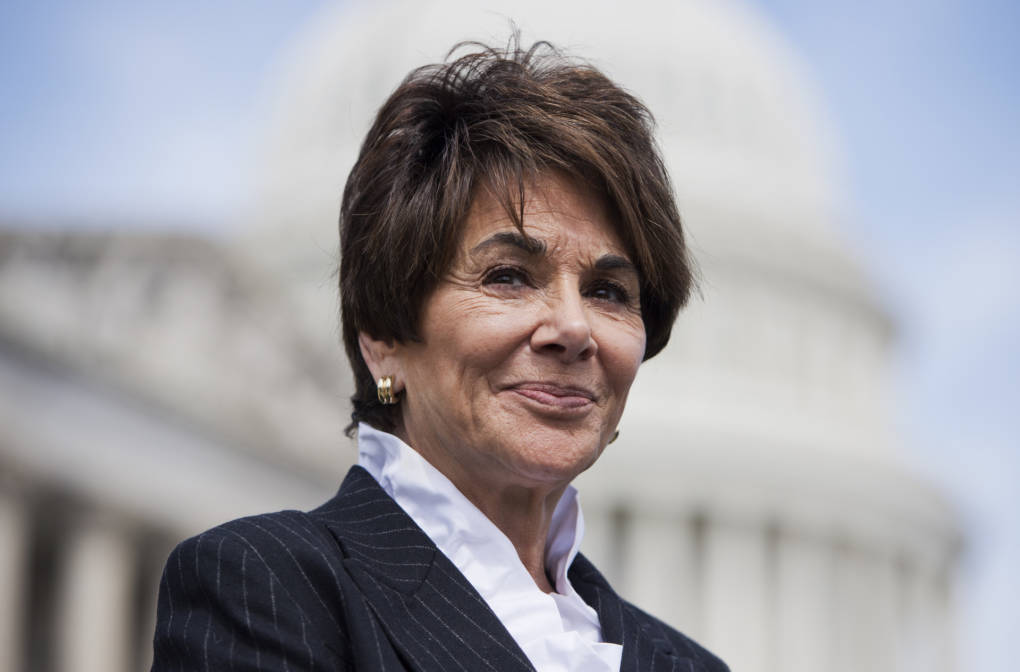
"caption": "Rep. Anna Eshoo, D-Palo Alto, counts Facebook among her top donors in recent years. ",
"description": null,
"title": "RS17828_GettyImages-483403155-qut",
"credit": "Tom Williams/CQ Roll Call",
"status": "inherit",
"isLoading": false,
"fetchFailed": false
},
"news_11661230": {
"type": "attachments",
"id": "news_11661230",
"meta": {
"index": "attachments_1716263798",
"site": "news",
"id": "11661230",
"found": true
},
"parent": 11661063,
"imgSizes": {
"small": {
"file": "https://ww2.kqed.org/app/uploads/sites/10/2018/04/ZuckSenate-520x363.jpg",
"width": 520,
"mimeType": "image/jpeg",
"height": 363
},
"twentyfourteen-full-width": {
"file": "https://ww2.kqed.org/app/uploads/sites/10/2018/04/ZuckSenate-1038x576.jpg",
"width": 1038,
"mimeType": "image/jpeg",
"height": 576
},
"thumbnail": {
"file": "https://ww2.kqed.org/app/uploads/sites/10/2018/04/ZuckSenate-160x112.jpg",
"width": 160,
"mimeType": "image/jpeg",
"height": 112
},
"fd-sm": {
"file": "https://ww2.kqed.org/app/uploads/sites/10/2018/04/ZuckSenate-960x671.jpg",
"width": 960,
"mimeType": "image/jpeg",
"height": 671
},
"post-thumbnail": {
"file": "https://ww2.kqed.org/app/uploads/sites/10/2018/04/ZuckSenate-672x372.jpg",
"width": 672,
"mimeType": "image/jpeg",
"height": 372
},
"xsmall": {
"file": "https://ww2.kqed.org/app/uploads/sites/10/2018/04/ZuckSenate-375x262.jpg",
"width": 375,
"mimeType": "image/jpeg",
"height": 262
},
"kqedFullSize": {
"file": "https://ww2.kqed.org/app/uploads/sites/10/2018/04/ZuckSenate.jpg",
"width": 1920,
"height": 1342
},
"large": {
"file": "https://ww2.kqed.org/app/uploads/sites/10/2018/04/ZuckSenate-1020x713.jpg",
"width": 1020,
"mimeType": "image/jpeg",
"height": 713
},
"xlarge": {
"file": "https://ww2.kqed.org/app/uploads/sites/10/2018/04/ZuckSenate-1180x825.jpg",
"width": 1180,
"mimeType": "image/jpeg",
"height": 825
},
"guest-author-50": {
"file": "https://ww2.kqed.org/app/uploads/sites/10/2018/04/ZuckSenate-50x50.jpg",
"width": 50,
"mimeType": "image/jpeg",
"height": 50
},
"guest-author-96": {
"file": "https://ww2.kqed.org/app/uploads/sites/10/2018/04/ZuckSenate-96x96.jpg",
"width": 96,
"mimeType": "image/jpeg",
"height": 96
},
"medium": {
"file": "https://ww2.kqed.org/app/uploads/sites/10/2018/04/ZuckSenate-800x559.jpg",
"width": 800,
"mimeType": "image/jpeg",
"height": 559
},
"guest-author-64": {
"file": "https://ww2.kqed.org/app/uploads/sites/10/2018/04/ZuckSenate-64x64.jpg",
"width": 64,
"mimeType": "image/jpeg",
"height": 64
},
"guest-author-32": {
"file": "https://ww2.kqed.org/app/uploads/sites/10/2018/04/ZuckSenate-32x32.jpg",
"width": 32,
"mimeType": "image/jpeg",
"height": 32
},
"fd-lrg": {
"file": "https://ww2.kqed.org/app/uploads/sites/10/2018/04/ZuckSenate-1920x1342.jpg",
"width": 1920,
"mimeType": "image/jpeg",
"height": 1342
},
"fd-med": {
"file": "https://ww2.kqed.org/app/uploads/sites/10/2018/04/ZuckSenate-1180x825.jpg",
"width": 1180,
"mimeType": "image/jpeg",
"height": 825
},
"full-width": {
"file": "https://ww2.kqed.org/app/uploads/sites/10/2018/04/ZuckSenate-1920x1342.jpg",
"width": 1920,
"mimeType": "image/jpeg",
"height": 1342
},
"detail": {
"file": "https://ww2.kqed.org/app/uploads/sites/10/2018/04/ZuckSenate-150x150.jpg",
"width": 150,
"mimeType": "image/jpeg",
"height": 150
},
"guest-author-128": {
"file": "https://ww2.kqed.org/app/uploads/sites/10/2018/04/ZuckSenate-128x128.jpg",
"width": 128,
"mimeType": "image/jpeg",
"height": 128
},
"xxsmall": {
"file": "https://ww2.kqed.org/app/uploads/sites/10/2018/04/ZuckSenate-240x168.jpg",
"width": 240,
"mimeType": "image/jpeg",
"height": 168
}
},
"publishDate": 1523404534,
"modified": 1523404566,
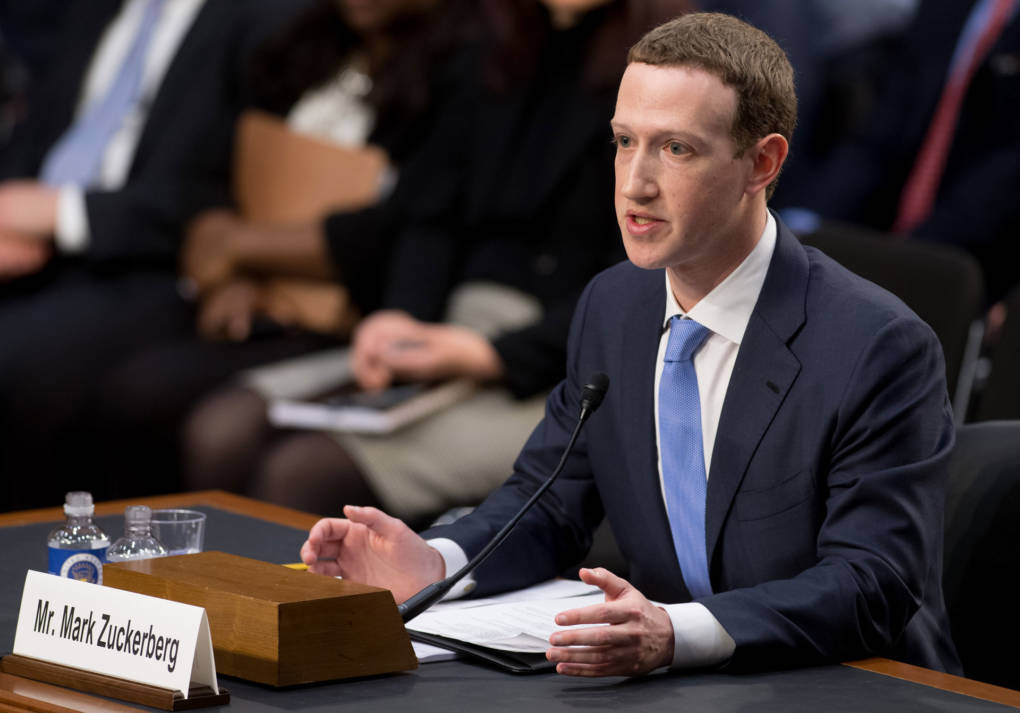
"caption": "Facebook CEO Mark Zuckerberg speaks during a joint hearing of the Senate Commerce, Science and Transportation Committee and Senate Judiciary Committee on Capitol Hill April 10, 2018.",
"description": "Facebook CEO Mark Zuckerberg speaks during a joint hearing of the Senate Commerce, Science and Transportation Committee and Senate Judiciary Committee on Capitol Hill April 10, 2018.",
"title": "ZuckSenate",
"credit": "SAUL LOEB/AFP/Getty Images",
"status": "inherit",
"isLoading": false,
"fetchFailed": false
},
"news_11661221": {
"type": "attachments",
"id": "news_11661221",
"meta": {
"index": "attachments_1716263798",
"site": "news",
"id": "11661221",
"found": true
},
"parent": 11661220,
"imgSizes": {
"small": {
"file": "https://ww2.kqed.org/app/uploads/sites/10/2018/04/gettyimages-942733706_wide-4a29904ac0e9d68c7340f2f73e121135087f7da1-520x292.jpg",
"width": 520,
"mimeType": "image/jpeg",
"height": 292
},
"twentyfourteen-full-width": {
"file": "https://ww2.kqed.org/app/uploads/sites/10/2018/04/gettyimages-942733706_wide-4a29904ac0e9d68c7340f2f73e121135087f7da1-1038x576.jpg",
"width": 1038,
"mimeType": "image/jpeg",
"height": 576
},
"thumbnail": {
"file": "https://ww2.kqed.org/app/uploads/sites/10/2018/04/gettyimages-942733706_wide-4a29904ac0e9d68c7340f2f73e121135087f7da1-160x90.jpg",
"width": 160,
"mimeType": "image/jpeg",
"height": 90
},
"fd-sm": {
"file": "https://ww2.kqed.org/app/uploads/sites/10/2018/04/gettyimages-942733706_wide-4a29904ac0e9d68c7340f2f73e121135087f7da1-960x540.jpg",
"width": 960,
"mimeType": "image/jpeg",
"height": 540
},
"post-thumbnail": {
"file": "https://ww2.kqed.org/app/uploads/sites/10/2018/04/gettyimages-942733706_wide-4a29904ac0e9d68c7340f2f73e121135087f7da1-672x372.jpg",
"width": 672,
"mimeType": "image/jpeg",
"height": 372
},
"xsmall": {
"file": "https://ww2.kqed.org/app/uploads/sites/10/2018/04/gettyimages-942733706_wide-4a29904ac0e9d68c7340f2f73e121135087f7da1-375x211.jpg",
"width": 375,
"mimeType": "image/jpeg",
"height": 211
},
"kqedFullSize": {
"file": "https://ww2.kqed.org/app/uploads/sites/10/2018/04/gettyimages-942733706_wide-4a29904ac0e9d68c7340f2f73e121135087f7da1.jpg",
"width": 7034,
"height": 3956
},
"large": {
"file": "https://ww2.kqed.org/app/uploads/sites/10/2018/04/gettyimages-942733706_wide-4a29904ac0e9d68c7340f2f73e121135087f7da1-1020x574.jpg",
"width": 1020,
"mimeType": "image/jpeg",
"height": 574
},
"xlarge": {
"file": "https://ww2.kqed.org/app/uploads/sites/10/2018/04/gettyimages-942733706_wide-4a29904ac0e9d68c7340f2f73e121135087f7da1-1180x664.jpg",
"width": 1180,
"mimeType": "image/jpeg",
"height": 664
},
"guest-author-50": {
"file": "https://ww2.kqed.org/app/uploads/sites/10/2018/04/gettyimages-942733706_wide-4a29904ac0e9d68c7340f2f73e121135087f7da1-50x50.jpg",
"width": 50,
"mimeType": "image/jpeg",
"height": 50
},
"guest-author-96": {
"file": "https://ww2.kqed.org/app/uploads/sites/10/2018/04/gettyimages-942733706_wide-4a29904ac0e9d68c7340f2f73e121135087f7da1-96x96.jpg",
"width": 96,
"mimeType": "image/jpeg",
"height": 96
},
"medium": {
"file": "https://ww2.kqed.org/app/uploads/sites/10/2018/04/gettyimages-942733706_wide-4a29904ac0e9d68c7340f2f73e121135087f7da1-800x450.jpg",
"width": 800,
"mimeType": "image/jpeg",
"height": 450
},
"guest-author-64": {
"file": "https://ww2.kqed.org/app/uploads/sites/10/2018/04/gettyimages-942733706_wide-4a29904ac0e9d68c7340f2f73e121135087f7da1-64x64.jpg",
"width": 64,
"mimeType": "image/jpeg",
"height": 64
},
"guest-author-32": {
"file": "https://ww2.kqed.org/app/uploads/sites/10/2018/04/gettyimages-942733706_wide-4a29904ac0e9d68c7340f2f73e121135087f7da1-32x32.jpg",
"width": 32,
"mimeType": "image/jpeg",
"height": 32
},
"fd-lrg": {
"file": "https://ww2.kqed.org/app/uploads/sites/10/2018/04/gettyimages-942733706_wide-4a29904ac0e9d68c7340f2f73e121135087f7da1-1920x1080.jpg",
"width": 1920,
"mimeType": "image/jpeg",
"height": 1080
},
"fd-med": {
"file": "https://ww2.kqed.org/app/uploads/sites/10/2018/04/gettyimages-942733706_wide-4a29904ac0e9d68c7340f2f73e121135087f7da1-1180x664.jpg",
"width": 1180,
"mimeType": "image/jpeg",
"height": 664
},
"full-width": {
"file": "https://ww2.kqed.org/app/uploads/sites/10/2018/04/gettyimages-942733706_wide-4a29904ac0e9d68c7340f2f73e121135087f7da1-1920x1080.jpg",
"width": 1920,
"mimeType": "image/jpeg",
"height": 1080
},
"detail": {
"file": "https://ww2.kqed.org/app/uploads/sites/10/2018/04/gettyimages-942733706_wide-4a29904ac0e9d68c7340f2f73e121135087f7da1-150x150.jpg",
"width": 150,
"mimeType": "image/jpeg",
"height": 150
},
"guest-author-128": {
"file": "https://ww2.kqed.org/app/uploads/sites/10/2018/04/gettyimages-942733706_wide-4a29904ac0e9d68c7340f2f73e121135087f7da1-128x128.jpg",
"width": 128,
"mimeType": "image/jpeg",
"height": 128
},
"xxsmall": {
"file": "https://ww2.kqed.org/app/uploads/sites/10/2018/04/gettyimages-942733706_wide-4a29904ac0e9d68c7340f2f73e121135087f7da1-240x135.jpg",
"width": 240,
"mimeType": "image/jpeg",
"height": 135
}
},
"publishDate": 1523402967,
"modified": 1523405224,
"caption": "This week, Facebook began notifying people whether they had ever logged in to the \"This Is Your Digital Life\" app — which has been linked to the exposure of tens of millions of records for political researc",
"description": "This week, Facebook began notifying people whether they had ever logged in to the \"This Is Your Digital Life\" app — which has been linked to the exposure of tens of millions of records for political researc",
"title": "This week, Facebook began notifying people whether they had ever logged in to the \"This Is Your Digital Life\" app — which has been linked to the exposure of tens of millions of records for political research.",
"credit": "NurPhoto via Getty Images THE TWO-WAY - NEWS BLOG How To Check If Your Facebook Data Was Used By Cambridge Analytica For some, the news is good: \"It doesn't appear your Facebook information was shared with Cambridge Analytica.\" For others, it's not so clear.",
"status": "inherit",
"isLoading": false,
"fetchFailed": false
},
"news_11661173": {
"type": "attachments",
"id": "news_11661173",
"meta": {
"index": "attachments_1716263798",
"site": "news",
"id": "11661173",
"found": true
},
"parent": 11660905,
"imgSizes": {
"small": {
"file": "https://ww2.kqed.org/app/uploads/sites/10/2018/04/mary-ross-520x390.jpg",
"width": 520,
"mimeType": "image/jpeg",
"height": 390
},
"twentyfourteen-full-width": {
"file": "https://ww2.kqed.org/app/uploads/sites/10/2018/04/mary-ross-1038x576.jpg",
"width": 1038,
"mimeType": "image/jpeg",
"height": 576
},
"thumbnail": {
"file": "https://ww2.kqed.org/app/uploads/sites/10/2018/04/mary-ross-160x120.jpg",
"width": 160,
"mimeType": "image/jpeg",
"height": 120
},
"fd-sm": {
"file": "https://ww2.kqed.org/app/uploads/sites/10/2018/04/mary-ross-960x720.jpg",
"width": 960,
"mimeType": "image/jpeg",
"height": 720
},
"post-thumbnail": {
"file": "https://ww2.kqed.org/app/uploads/sites/10/2018/04/mary-ross-672x372.jpg",
"width": 672,
"mimeType": "image/jpeg",
"height": 372
},
"xsmall": {
"file": "https://ww2.kqed.org/app/uploads/sites/10/2018/04/mary-ross-375x281.jpg",
"width": 375,
"mimeType": "image/jpeg",
"height": 281
},
"kqedFullSize": {
"file": "https://ww2.kqed.org/app/uploads/sites/10/2018/04/mary-ross-e1523396219586.jpg",
"width": 1920,
"height": 1440
},
"large": {
"file": "https://ww2.kqed.org/app/uploads/sites/10/2018/04/mary-ross-1020x765.jpg",
"width": 1020,
"mimeType": "image/jpeg",
"height": 765
},
"xlarge": {
"file": "https://ww2.kqed.org/app/uploads/sites/10/2018/04/mary-ross-1180x885.jpg",
"width": 1180,
"mimeType": "image/jpeg",
"height": 885
},
"guest-author-50": {
"file": "https://ww2.kqed.org/app/uploads/sites/10/2018/04/mary-ross-50x50.jpg",
"width": 50,
"mimeType": "image/jpeg",
"height": 50
},
"guest-author-96": {
"file": "https://ww2.kqed.org/app/uploads/sites/10/2018/04/mary-ross-96x96.jpg",
"width": 96,
"mimeType": "image/jpeg",
"height": 96
},
"medium": {
"file": "https://ww2.kqed.org/app/uploads/sites/10/2018/04/mary-ross-800x600.jpg",
"width": 800,
"mimeType": "image/jpeg",
"height": 600
},
"guest-author-64": {
"file": "https://ww2.kqed.org/app/uploads/sites/10/2018/04/mary-ross-64x64.jpg",
"width": 64,
"mimeType": "image/jpeg",
"height": 64
},
"guest-author-32": {
"file": "https://ww2.kqed.org/app/uploads/sites/10/2018/04/mary-ross-32x32.jpg",
"width": 32,
"mimeType": "image/jpeg",
"height": 32
},
"fd-lrg": {
"file": "https://ww2.kqed.org/app/uploads/sites/10/2018/04/mary-ross-1920x1440.jpg",
"width": 1920,
"mimeType": "image/jpeg",
"height": 1440
},
"fd-med": {
"file": "https://ww2.kqed.org/app/uploads/sites/10/2018/04/mary-ross-1180x885.jpg",
"width": 1180,
"mimeType": "image/jpeg",
"height": 885
},
"full-width": {
"file": "https://ww2.kqed.org/app/uploads/sites/10/2018/04/mary-ross-1920x1440.jpg",
"width": 1920,
"mimeType": "image/jpeg",
"height": 1440
},
"detail": {
"file": "https://ww2.kqed.org/app/uploads/sites/10/2018/04/mary-ross-150x150.jpg",
"width": 150,
"mimeType": "image/jpeg",
"height": 150
},
"guest-author-128": {
"file": "https://ww2.kqed.org/app/uploads/sites/10/2018/04/mary-ross-128x128.jpg",
"width": 128,
"mimeType": "image/jpeg",
"height": 128
},
"xxsmall": {
"file": "https://ww2.kqed.org/app/uploads/sites/10/2018/04/mary-ross-240x180.jpg",
"width": 240,
"mimeType": "image/jpeg",
"height": 180
}
},
"publishDate": 1523396193,
"modified": 1523400579,
"caption": "Mary Ross, president of Californians for Consumer Privacy, holds a letter she attempted to deliver on April 9, 2018, to Facebook COO Sheryl Sandberg asking her to support a privacy ballot measure.",
"description": "Mary Ross, president of Californians for Consumer Privacy, holds a letter she attempted to deliver on April 9, 2018 to Facebook COO Sheryl Sandberg asking her to support a privacy ballot measure.",
"title": "mary-ross",
"credit": "Marisa Lagos/KQED",
"status": "inherit",
"isLoading": false,
"fetchFailed": false
},
"news_11661166": {
"type": "attachments",
"id": "news_11661166",
"meta": {
"index": "attachments_1716263798",
"site": "news",
"id": "11661166",
"found": true
},
"parent": 11661144,
"imgSizes": {
"small": {
"file": "https://ww2.kqed.org/app/uploads/sites/10/2018/04/zuck-520x292.jpg",
"width": 520,
"mimeType": "image/jpeg",
"height": 292
},
"thumbnail": {
"file": "https://ww2.kqed.org/app/uploads/sites/10/2018/04/zuck-160x90.jpg",
"width": 160,
"mimeType": "image/jpeg",
"height": 90
},
"post-thumbnail": {
"file": "https://ww2.kqed.org/app/uploads/sites/10/2018/04/zuck-672x372.jpg",
"width": 672,
"mimeType": "image/jpeg",
"height": 372
},
"xsmall": {
"file": "https://ww2.kqed.org/app/uploads/sites/10/2018/04/zuck-375x210.jpg",
"width": 375,
"mimeType": "image/jpeg",
"height": 210
},
"kqedFullSize": {
"file": "https://ww2.kqed.org/app/uploads/sites/10/2018/04/zuck.jpg",
"width": 800,
"height": 449
},
"guest-author-50": {
"file": "https://ww2.kqed.org/app/uploads/sites/10/2018/04/zuck-50x50.jpg",
"width": 50,
"mimeType": "image/jpeg",
"height": 50
},
"guest-author-96": {
"file": "https://ww2.kqed.org/app/uploads/sites/10/2018/04/zuck-96x96.jpg",
"width": 96,
"mimeType": "image/jpeg",
"height": 96
},
"medium": {
"file": "https://ww2.kqed.org/app/uploads/sites/10/2018/04/zuck-800x449.jpg",
"width": 800,
"mimeType": "image/jpeg",
"height": 449
},
"guest-author-64": {
"file": "https://ww2.kqed.org/app/uploads/sites/10/2018/04/zuck-64x64.jpg",
"width": 64,
"mimeType": "image/jpeg",
"height": 64
},
"guest-author-32": {
"file": "https://ww2.kqed.org/app/uploads/sites/10/2018/04/zuck-32x32.jpg",
"width": 32,
"mimeType": "image/jpeg",
"height": 32
},
"detail": {
"file": "https://ww2.kqed.org/app/uploads/sites/10/2018/04/zuck-150x150.jpg",
"width": 150,
"mimeType": "image/jpeg",
"height": 150
},
"guest-author-128": {
"file": "https://ww2.kqed.org/app/uploads/sites/10/2018/04/zuck-128x128.jpg",
"width": 128,
"mimeType": "image/jpeg",
"height": 128
},
"xxsmall": {
"file": "https://ww2.kqed.org/app/uploads/sites/10/2018/04/zuck-240x135.jpg",
"width": 240,
"mimeType": "image/jpeg",
"height": 135
}
},
"publishDate": 1523395230,
"modified": 1523395546,
"caption": "Facebook CEO Mark Zuckerberg testifies before a joint hearing of the U.S. Senate Commerce, Science and Transportation Committee and Senate Judiciary Committee on Capitol Hill in Washington, D.C., on Tuesday.",
"description": "Facebook CEO Mark Zuckerberg testifies before a joint hearing of the U.S. Senate Commerce, Science and Transportation Committee and Senate Judiciary Committee on Capitol Hill in Washington, D.C., on Tuesday.",
"title": "zuck",
"credit": "Jim Watson/AFP/Getty Images",
"status": "inherit",
"isLoading": false,
"fetchFailed": false
},
"news_11661104": {
"type": "attachments",
"id": "news_11661104",
"meta": {
"index": "attachments_1716263798",
"site": "news",
"id": "11661104",
"found": true
},
"parent": 11661101,
"imgSizes": {
"small": {
"file": "https://ww2.kqed.org/app/uploads/sites/10/2018/04/zuck_testifies02_revise-520x329.jpg",
"width": 520,
"mimeType": "image/jpeg",
"height": 329
},
"twentyfourteen-full-width": {
"file": "https://ww2.kqed.org/app/uploads/sites/10/2018/04/zuck_testifies02_revise-1038x576.jpg",
"width": 1038,
"mimeType": "image/jpeg",
"height": 576
},
"thumbnail": {
"file": "https://ww2.kqed.org/app/uploads/sites/10/2018/04/zuck_testifies02_revise-160x101.jpg",
"width": 160,
"mimeType": "image/jpeg",
"height": 101
},
"fd-sm": {
"file": "https://ww2.kqed.org/app/uploads/sites/10/2018/04/zuck_testifies02_revise-960x607.jpg",
"width": 960,
"mimeType": "image/jpeg",
"height": 607
},
"post-thumbnail": {
"file": "https://ww2.kqed.org/app/uploads/sites/10/2018/04/zuck_testifies02_revise-672x372.jpg",
"width": 672,
"mimeType": "image/jpeg",
"height": 372
},
"xsmall": {
"file": "https://ww2.kqed.org/app/uploads/sites/10/2018/04/zuck_testifies02_revise-375x237.jpg",
"width": 375,
"mimeType": "image/jpeg",
"height": 237
},
"kqedFullSize": {
"file": "https://ww2.kqed.org/app/uploads/sites/10/2018/04/zuck_testifies02_revise.jpg",
"width": 3088,
"height": 1951
},
"large": {
"file": "https://ww2.kqed.org/app/uploads/sites/10/2018/04/zuck_testifies02_revise-1020x644.jpg",
"width": 1020,
"mimeType": "image/jpeg",
"height": 644
},
"xlarge": {
"file": "https://ww2.kqed.org/app/uploads/sites/10/2018/04/zuck_testifies02_revise-1180x746.jpg",
"width": 1180,
"mimeType": "image/jpeg",
"height": 746
},
"guest-author-50": {
"file": "https://ww2.kqed.org/app/uploads/sites/10/2018/04/zuck_testifies02_revise-50x50.jpg",
"width": 50,
"mimeType": "image/jpeg",
"height": 50
},
"guest-author-96": {
"file": "https://ww2.kqed.org/app/uploads/sites/10/2018/04/zuck_testifies02_revise-96x96.jpg",
"width": 96,
"mimeType": "image/jpeg",
"height": 96
},
"medium": {
"file": "https://ww2.kqed.org/app/uploads/sites/10/2018/04/zuck_testifies02_revise-800x505.jpg",
"width": 800,
"mimeType": "image/jpeg",
"height": 505
},
"guest-author-64": {
"file": "https://ww2.kqed.org/app/uploads/sites/10/2018/04/zuck_testifies02_revise-64x64.jpg",
"width": 64,
"mimeType": "image/jpeg",
"height": 64
},
"guest-author-32": {
"file": "https://ww2.kqed.org/app/uploads/sites/10/2018/04/zuck_testifies02_revise-32x32.jpg",
"width": 32,
"mimeType": "image/jpeg",
"height": 32
},
"fd-lrg": {
"file": "https://ww2.kqed.org/app/uploads/sites/10/2018/04/zuck_testifies02_revise-1920x1213.jpg",
"width": 1920,
"mimeType": "image/jpeg",
"height": 1213
},
"fd-med": {
"file": "https://ww2.kqed.org/app/uploads/sites/10/2018/04/zuck_testifies02_revise-1180x746.jpg",
"width": 1180,
"mimeType": "image/jpeg",
"height": 746
},
"full-width": {
"file": "https://ww2.kqed.org/app/uploads/sites/10/2018/04/zuck_testifies02_revise-1920x1213.jpg",
"width": 1920,
"mimeType": "image/jpeg",
"height": 1213
},
"detail": {
"file": "https://ww2.kqed.org/app/uploads/sites/10/2018/04/zuck_testifies02_revise-150x150.jpg",
"width": 150,
"mimeType": "image/jpeg",
"height": 150
},
"guest-author-128": {
"file": "https://ww2.kqed.org/app/uploads/sites/10/2018/04/zuck_testifies02_revise-128x128.jpg",
"width": 128,
"mimeType": "image/jpeg",
"height": 128
},
"xxsmall": {
"file": "https://ww2.kqed.org/app/uploads/sites/10/2018/04/zuck_testifies02_revise-240x152.jpg",
"width": 240,
"mimeType": "image/jpeg",
"height": 152
}
},
"publishDate": 1523388297,
"modified": 1523388315,
"caption": null,
"description": null,
"title": "zuck_testifies02_revise",
"credit": null,
"status": "inherit",
"isLoading": false,
"fetchFailed": false
},
"news_11661038": {
"type": "attachments",
"id": "news_11661038",
"meta": {
"index": "attachments_1716263798",
"site": "news",
"id": "11661038",
"found": true
},
"parent": 11661037,
"imgSizes": {
"small": {
"file": "https://ww2.kqed.org/app/uploads/sites/10/2018/04/gettyimages-943912424_wide-184c1d83b9ef52acd071a37036fea946c1e22ef9-520x292.jpg",
"width": 520,
"mimeType": "image/jpeg",
"height": 292
},
"twentyfourteen-full-width": {
"file": "https://ww2.kqed.org/app/uploads/sites/10/2018/04/gettyimages-943912424_wide-184c1d83b9ef52acd071a37036fea946c1e22ef9-1038x576.jpg",
"width": 1038,
"mimeType": "image/jpeg",
"height": 576
},
"thumbnail": {
"file": "https://ww2.kqed.org/app/uploads/sites/10/2018/04/gettyimages-943912424_wide-184c1d83b9ef52acd071a37036fea946c1e22ef9-160x90.jpg",
"width": 160,
"mimeType": "image/jpeg",
"height": 90
},
"fd-sm": {
"file": "https://ww2.kqed.org/app/uploads/sites/10/2018/04/gettyimages-943912424_wide-184c1d83b9ef52acd071a37036fea946c1e22ef9-960x540.jpg",
"width": 960,
"mimeType": "image/jpeg",
"height": 540
},
"post-thumbnail": {
"file": "https://ww2.kqed.org/app/uploads/sites/10/2018/04/gettyimages-943912424_wide-184c1d83b9ef52acd071a37036fea946c1e22ef9-672x372.jpg",
"width": 672,
"mimeType": "image/jpeg",
"height": 372
},
"xsmall": {
"file": "https://ww2.kqed.org/app/uploads/sites/10/2018/04/gettyimages-943912424_wide-184c1d83b9ef52acd071a37036fea946c1e22ef9-375x211.jpg",
"width": 375,
"mimeType": "image/jpeg",
"height": 211
},
"kqedFullSize": {
"file": "https://ww2.kqed.org/app/uploads/sites/10/2018/04/gettyimages-943912424_wide-184c1d83b9ef52acd071a37036fea946c1e22ef9-e1523376140111.jpg",
"width": 1920,
"height": 1079
},
"large": {
"file": "https://ww2.kqed.org/app/uploads/sites/10/2018/04/gettyimages-943912424_wide-184c1d83b9ef52acd071a37036fea946c1e22ef9-1020x573.jpg",
"width": 1020,
"mimeType": "image/jpeg",
"height": 573
},
"xlarge": {
"file": "https://ww2.kqed.org/app/uploads/sites/10/2018/04/gettyimages-943912424_wide-184c1d83b9ef52acd071a37036fea946c1e22ef9-1180x663.jpg",
"width": 1180,
"mimeType": "image/jpeg",
"height": 663
},
"guest-author-50": {
"file": "https://ww2.kqed.org/app/uploads/sites/10/2018/04/gettyimages-943912424_wide-184c1d83b9ef52acd071a37036fea946c1e22ef9-50x50.jpg",
"width": 50,
"mimeType": "image/jpeg",
"height": 50
},
"guest-author-96": {
"file": "https://ww2.kqed.org/app/uploads/sites/10/2018/04/gettyimages-943912424_wide-184c1d83b9ef52acd071a37036fea946c1e22ef9-96x96.jpg",
"width": 96,
"mimeType": "image/jpeg",
"height": 96
},
"medium": {
"file": "https://ww2.kqed.org/app/uploads/sites/10/2018/04/gettyimages-943912424_wide-184c1d83b9ef52acd071a37036fea946c1e22ef9-800x450.jpg",
"width": 800,
"mimeType": "image/jpeg",
"height": 450
},
"guest-author-64": {
"file": "https://ww2.kqed.org/app/uploads/sites/10/2018/04/gettyimages-943912424_wide-184c1d83b9ef52acd071a37036fea946c1e22ef9-64x64.jpg",
"width": 64,
"mimeType": "image/jpeg",
"height": 64
},
"guest-author-32": {
"file": "https://ww2.kqed.org/app/uploads/sites/10/2018/04/gettyimages-943912424_wide-184c1d83b9ef52acd071a37036fea946c1e22ef9-32x32.jpg",
"width": 32,
"mimeType": "image/jpeg",
"height": 32
},
"fd-lrg": {
"file": "https://ww2.kqed.org/app/uploads/sites/10/2018/04/gettyimages-943912424_wide-184c1d83b9ef52acd071a37036fea946c1e22ef9-1920x1079.jpg",
"width": 1920,
"mimeType": "image/jpeg",
"height": 1079
},
"fd-med": {
"file": "https://ww2.kqed.org/app/uploads/sites/10/2018/04/gettyimages-943912424_wide-184c1d83b9ef52acd071a37036fea946c1e22ef9-1180x663.jpg",
"width": 1180,
"mimeType": "image/jpeg",
"height": 663
},
"full-width": {
"file": "https://ww2.kqed.org/app/uploads/sites/10/2018/04/gettyimages-943912424_wide-184c1d83b9ef52acd071a37036fea946c1e22ef9-1920x1079.jpg",
"width": 1920,
"mimeType": "image/jpeg",
"height": 1079
},
"detail": {
"file": "https://ww2.kqed.org/app/uploads/sites/10/2018/04/gettyimages-943912424_wide-184c1d83b9ef52acd071a37036fea946c1e22ef9-150x150.jpg",
"width": 150,
"mimeType": "image/jpeg",
"height": 150
},
"guest-author-128": {
"file": "https://ww2.kqed.org/app/uploads/sites/10/2018/04/gettyimages-943912424_wide-184c1d83b9ef52acd071a37036fea946c1e22ef9-128x128.jpg",
"width": 128,
"mimeType": "image/jpeg",
"height": 128
},
"xxsmall": {
"file": "https://ww2.kqed.org/app/uploads/sites/10/2018/04/gettyimages-943912424_wide-184c1d83b9ef52acd071a37036fea946c1e22ef9-240x135.jpg",
"width": 240,
"mimeType": "image/jpeg",
"height": 135
}
},
"publishDate": 1523374632,
"modified": 1523376171,
"caption": "Facebook CEO Mark Zuckerberg leaves the office of Sen. Dianne Feinstein, D-Calif., after meeting with her on Capitol Hill on Monday.",
"description": "Facebook CEO Mark Zuckerberg leaves the office of Sen. Dianne Feinstein, D-Calif., after meeting with her on Capitol Hill on Monday.",
"title": "Facebook CEO Mark Zuckerberg leaves the office of Sen. Dianne Feinstein, D-Calif., after meeting with her on Capitol Hill on Monday.",
"credit": "Win McNamee/Getty Images",
"status": "inherit",
"isLoading": false,
"fetchFailed": false
}
},
"audioPlayerReducer": {
"postId": "stream_live",
"isPaused": true,
"isPlaying": false,
"pfsActive": false,
"pledgeModalIsOpen": true,
"playerDrawerIsOpen": false,
"liveAudioPlayStartedAt": 0,
"liveAudioPlayContext": ""
},
"authorsReducer": {
"byline_news_11661295": {
"type": "authors",
"id": "byline_news_11661295",
"meta": {
"override": true
},
"slug": "byline_news_11661295",
"name": "Camila Domonoske",
"isLoading": false
},
"byline_news_11661063": {
"type": "authors",
"id": "byline_news_11661063",
"meta": {
"override": true
},
"slug": "byline_news_11661063",
"name": "\u003cstrong>\u003ca href=\"https://www.npr.org/people/348744968/camila-domonoske\">Camila Domonoske\u003c/a>\u003c/strong>",
"isLoading": false
},
"byline_news_11661220": {
"type": "authors",
"id": "byline_news_11661220",
"meta": {
"override": true
},
"slug": "byline_news_11661220",
"name": "Bill Chappell\u003cbr />NPR",
"isLoading": false
},
"byline_news_11661037": {
"type": "authors",
"id": "byline_news_11661037",
"meta": {
"override": true
},
"slug": "byline_news_11661037",
"name": "\u003cstrong>\u003ca href=\"https://www.npr.org/people/567313683/kelsey-snell\">Kelsey Snell\u003c/a>\u003c/strong> and\u003cstrong>\u003ca href=\"https://www.npr.org/people/447244385/alina-selyukh\"> Alina Selyukh\u003c/a>\u003c/strong>",
"isLoading": false
},
"lisapickoffwhite-2": {
"type": "authors",
"id": "199",
"meta": {
"index": "authors_1716337520",
"id": "199",
"found": true
},
"name": "Lisa Pickoff-White",
"firstName": "Lisa",
"lastName": "Pickoff-White",
"slug": "lisapickoffwhite-2",
"email": "lpickoffwhite@kqed.org",
"display_author_email": false,
"staff_mastheads": [
"news"
],
"title": "Data Journalist, Senior Producer",
"bio": "Lisa Pickoff-White is KQED's data reporter. Lisa specializes in simplifying complex topics and bringing them to life through compelling visuals, including photography and data visualizations. She previously has worked at the Center for Investigative Reporting and other national outlets. Her work has been honored with awards from the Online News Association, Investigative Reporters and Editors, the Society of Professional Journalists and SXSW Interactive. \u003cstrong> \u003c/strong>",
"avatar": "https://secure.gravatar.com/avatar/5513c5f3967df792aa65bee2501e84d6?s=600&d=blank&r=g",
"twitter": "pickoffwhite",
"facebook": null,
"instagram": null,
"linkedin": null,
"sites": [
{
"site": "",
"roles": [
"editor"
]
},
{
"site": "arts",
"roles": []
},
{
"site": "news",
"roles": [
"administrator"
]
},
{
"site": "about",
"roles": [
"editor"
]
},
{
"site": "stateofhealth",
"roles": [
"administrator"
]
},
{
"site": "science",
"roles": [
"editor"
]
},
{
"site": "quest",
"roles": [
"editor"
]
},
{
"site": "forum",
"roles": [
"editor"
]
}
],
"headData": {
"title": "Lisa Pickoff-White | KQED",
"description": "Data Journalist, Senior Producer",
"ogImgSrc": "https://secure.gravatar.com/avatar/5513c5f3967df792aa65bee2501e84d6?s=600&d=blank&r=g",
"twImgSrc": "https://secure.gravatar.com/avatar/5513c5f3967df792aa65bee2501e84d6?s=600&d=blank&r=g"
},
"isLoading": false,
"link": "/author/lisapickoffwhite-2"
},
"gmarzorati": {
"type": "authors",
"id": "227",
"meta": {
"index": "authors_1716337520",
"id": "227",
"found": true
},
"name": "Guy Marzorati",
"firstName": "Guy",
"lastName": "Marzorati",
"slug": "gmarzorati",
"email": "gmarzorati@KQED.org",
"display_author_email": true,
"staff_mastheads": [
"news"
],
"title": "Correspondent",
"bio": "Guy Marzorati is a correspondent on KQED's California Politics and Government Desk, based in San Jose. A graduate of Santa Clara University, Guy joined KQED in 2013. He reports on state and local politics and produces KQED's digital voter guide.",
"avatar": "https://secure.gravatar.com/avatar/e7038b8dbfd55b104369b76b1cd0b9de?s=600&d=blank&r=g",
"twitter": "guymarzorati",
"facebook": null,
"instagram": null,
"linkedin": null,
"sites": [
{
"site": "",
"roles": [
"editor"
]
},
{
"site": "news",
"roles": [
"editor"
]
},
{
"site": "science",
"roles": [
"editor"
]
},
{
"site": "forum",
"roles": [
"editor"
]
},
{
"site": "elections",
"roles": [
"editor"
]
},
{
"site": "liveblog",
"roles": [
"editor"
]
}
],
"headData": {
"title": "Guy Marzorati | KQED",
"description": "Correspondent",
"ogImgSrc": "https://secure.gravatar.com/avatar/e7038b8dbfd55b104369b76b1cd0b9de?s=600&d=blank&r=g",
"twImgSrc": "https://secure.gravatar.com/avatar/e7038b8dbfd55b104369b76b1cd0b9de?s=600&d=blank&r=g"
},
"isLoading": false,
"link": "/author/gmarzorati"
},
"samharnett": {
"type": "authors",
"id": "253",
"meta": {
"index": "authors_1716337520",
"id": "253",
"found": true
},
"name": "Sam Harnett",
"firstName": "Sam",
"lastName": "Harnett",
"slug": "samharnett",
"email": "samharnett@gmail.com",
"display_author_email": false,
"staff_mastheads": [],
"title": "KQED Contributor",
"bio": "Sam Harnett covered tech and work at KQED. He is the co-creator of \u003cem>\u003ca href=\"http://www.theworldaccordingtosound.org\">The World According to Sound\u003c/a>,\u003c/em> a 90-second podcast that features different sounds and the stories behind them.\r\n\r\nBefore coming to KQED, Sam worked as an independent reporter who contributed regularly to \u003cem>The California Report, Marketplace,\u003c/em> \u003cem>The World \u003c/em>and NPR.",
"avatar": "https://secure.gravatar.com/avatar/2538b972ac02f2b9546c7a6c59a0f3d0?s=600&d=blank&r=g",
"twitter": "Samwharnett",
"facebook": null,
"instagram": null,
"linkedin": null,
"sites": [
{
"site": "news",
"roles": [
"edit_others_posts",
"subscriber"
]
},
{
"site": "stateofhealth",
"roles": [
"author"
]
},
{
"site": "science",
"roles": [
"editor"
]
},
{
"site": "quest",
"roles": [
"subscriber"
]
}
],
"headData": {
"title": "Sam Harnett | KQED",
"description": "KQED Contributor",
"ogImgSrc": "https://secure.gravatar.com/avatar/2538b972ac02f2b9546c7a6c59a0f3d0?s=600&d=blank&r=g",
"twImgSrc": "https://secure.gravatar.com/avatar/2538b972ac02f2b9546c7a6c59a0f3d0?s=600&d=blank&r=g"
},
"isLoading": false,
"link": "/author/samharnett"
},
"scottshafer": {
"type": "authors",
"id": "255",
"meta": {
"index": "authors_1716337520",
"id": "255",
"found": true
},
"name": "Scott Shafer",
"firstName": "Scott",
"lastName": "Shafer",
"slug": "scottshafer",
"email": "sshafer@kqed.org",
"display_author_email": false,
"staff_mastheads": [
"news"
],
"title": "KQED Contributor",
"bio": "Scott Shafer is a senior editor with the KQED Politics and Government desk. He is co-host of Political Breakdown, the award-winning radio show and podcast with a personal take on the world of politics. Scott came to KQED in 1998 to host the statewide\u003cem> California Report\u003c/em>. Prior to that he had extended stints in politics and government\u003cem>.\u003c/em> He uses that inside experience at KQED in his, reporting, hosting and analysis for the politics desk. Scott collaborated \u003cem>Political Breakdown a\u003c/em>nd on \u003cem>The Political Mind of Jerry Brown, \u003c/em>an eight-part series about the life and extraordinary political career of the former governor. For fun, he plays water polo with the San Francisco Tsunami.",
"avatar": "https://secure.gravatar.com/avatar/a62ebae45b79d7aed1a39a0e3bf68104?s=600&d=blank&r=g",
"twitter": "scottshafer",
"bluesky": null,
"facebook": null,
"instagram": null,
"linkedin": null,
"sites": [
{
"site": "news",
"roles": [
"editor"
]
},
{
"site": "stateofhealth",
"roles": [
"author"
]
},
{
"site": "science",
"roles": [
"author"
]
},
{
"site": "forum",
"roles": [
"subscriber"
]
},
{
"site": "liveblog",
"roles": [
"author"
]
}
],
"headData": {
"title": "Scott Shafer | KQED",
"description": "KQED Contributor",
"ogImgSrc": "https://secure.gravatar.com/avatar/a62ebae45b79d7aed1a39a0e3bf68104?s=600&d=blank&r=g",
"twImgSrc": "https://secure.gravatar.com/avatar/a62ebae45b79d7aed1a39a0e3bf68104?s=600&d=blank&r=g"
},
"isLoading": false,
"link": "/author/scottshafer"
},
"markfiore": {
"type": "authors",
"id": "3236",
"meta": {
"index": "authors_1716337520",
"id": "3236",
"found": true
},
"name": "Mark Fiore",
"firstName": "Mark",
"lastName": "Fiore",
"slug": "markfiore",
"email": "mark@markfiore.com",
"display_author_email": false,
"staff_mastheads": [
"news"
],
"title": "KQED News Cartoonist",
"bio": "\u003ca href=\"http://www.MarkFiore.com\">MarkFiore.com\u003c/a> | \u003ca href=\"https://twitter.com/markfiore\">Follow on Twitter\u003c/a> | \u003ca href=\"https://www.facebook.com/pages/Mark-Fiore-Animated-Political-Cartoons/94451707396?ref=bookmarks\">Facebook\u003c/a> | \u003ca href=\"mailto:mark@markfiore.com\">email\u003c/a>\r\n\r\nPulitzer Prize-winner, Mark Fiore, who the Wall Street Journal has called “the undisputed guru of the form,” creates animated political cartoons in San Francisco, where his work has been featured regularly on the San Francisco Chronicle’s web site, SFGate.com. His work has appeared on Newsweek.com, Slate.com, CBSNews.com, MotherJones.com, DailyKos.com and NPR’s web site. Fiore’s political animation has appeared on CNN, Frontline, Bill Moyers Journal, Salon.com and cable and broadcast outlets across the globe.\r\n\r\nBeginning his professional life by drawing traditional political cartoons for newspapers, Fiore’s work appeared in publications ranging from the Washington Post to the Los Angeles Times. In the late 1990s, he began to experiment with animating political cartoons and, after a short stint at the San Jose Mercury News as their staff cartoonist, Fiore devoted all his energies to animation.\r\nGrowing up in California, Fiore also spent a good portion of his life in the backwoods of Idaho. It was this combination that shaped him politically. Mark majored in political science at Colorado College, where, in a perfect send-off for a cartoonist, he received his diploma in 1991 as commencement speaker Dick Cheney smiled approvingly.\r\nMark Fiore was awarded the Pulitzer Prize for political cartooning in 2010, a Robert F. Kennedy Journalism Award in 2004 and has twice received an Online Journalism Award for commentary from the Online News Association (2002, 2008). Fiore has received two awards for his work in new media from the National Cartoonists Society (2001, 2002), and in 2006 received The James Madison Freedom of Information Award from The Society of Professional Journalists.",
"avatar": "https://secure.gravatar.com/avatar/fc4e2a612b15b67bad0c6f0e1db4ca9b?s=600&d=blank&r=g",
"twitter": "MarkFiore",
"facebook": null,
"instagram": "https://www.instagram.com/markfiore/?hl=en",
"linkedin": null,
"sites": [
{
"site": "arts",
"roles": [
"contributor"
]
},
{
"site": "news",
"roles": [
"editor"
]
},
{
"site": "futureofyou",
"roles": [
"editor"
]
},
{
"site": "science",
"roles": [
"editor"
]
}
],
"headData": {
"title": "Mark Fiore | KQED",
"description": "KQED News Cartoonist",
"ogImgSrc": "https://secure.gravatar.com/avatar/fc4e2a612b15b67bad0c6f0e1db4ca9b?s=600&d=blank&r=g",
"twImgSrc": "https://secure.gravatar.com/avatar/fc4e2a612b15b67bad0c6f0e1db4ca9b?s=600&d=blank&r=g"
},
"isLoading": false,
"link": "/author/markfiore"
},
"mlagos": {
"type": "authors",
"id": "3239",
"meta": {
"index": "authors_1716337520",
"id": "3239",
"found": true
},
"name": "Marisa Lagos",
"firstName": "Marisa",
"lastName": "Lagos",
"slug": "mlagos",
"email": "mlagos@kqed.org",
"display_author_email": false,
"staff_mastheads": [
"news"
],
"title": "KQED Contributor",
"bio": "Marisa Lagos is a correspondent for KQED’s California Politics and Government Desk and co-hosts the award-winning show and podcast, Political Breakdown. At KQED, Lagos also conducts reporting, analysis and investigations into state, local and national politics for radio, TV, online and onstage. In 2022, she and co-host, Scott Shafer, moderated the only gubernatorial debate in California. In 2020, the \u003ci>Washington Post\u003c/i> named her one of the top political journalists in California; she was nominated for a Peabody and won several other awards for her work investigating the 2017 California wildfires. She has worked at the \u003ci>San Francisco Chronicle\u003c/i>, \u003ci>San Francisco Examiner\u003c/i> and \u003ci>Los Angeles Times\u003c/i>. A UC Santa Barbara graduate, she lives in San Francisco with her two sons and husband.",
"avatar": "https://secure.gravatar.com/avatar/a261a0d3696fc066871ef96b85b5e7d2?s=600&d=blank&r=g",
"twitter": "@mlagos",
"facebook": null,
"instagram": null,
"linkedin": null,
"sites": [
{
"site": "arts",
"roles": [
"author"
]
},
{
"site": "news",
"roles": [
"editor"
]
},
{
"site": "science",
"roles": [
"editor"
]
},
{
"site": "forum",
"roles": [
"author"
]
},
{
"site": "liveblog",
"roles": [
"author"
]
}
],
"headData": {
"title": "Marisa Lagos | KQED",
"description": "KQED Contributor",
"ogImgSrc": "https://secure.gravatar.com/avatar/a261a0d3696fc066871ef96b85b5e7d2?s=600&d=blank&r=g",
"twImgSrc": "https://secure.gravatar.com/avatar/a261a0d3696fc066871ef96b85b5e7d2?s=600&d=blank&r=g"
},
"isLoading": false,
"link": "/author/mlagos"
},
"tmosley": {
"type": "authors",
"id": "11373",
"meta": {
"index": "authors_1716337520",
"id": "11373",
"found": true
},
"name": "Tonya Mosley",
"firstName": "Tonya",
"lastName": "Mosley",
"slug": "tmosley",
"email": "tmosley@kqed.org",
"display_author_email": false,
"staff_mastheads": [],
"title": "KQED Contributor",
"bio": "Tonya Mosley is a former Silicon Valley bureau chief for KQED. She served as the senior editor, leading a team of journalists covering the impacts of technology companies on the South Bay and society. Tonya is also a former host and reporter for KQED.\r\n\r\nPrior to KQED, Tonya served as a television reporter & anchor for several media outlets, including Al Jazeera America.\r\n\r\nIn 2015, Tonya was awarded a John S. Knight Journalism Fellowship at Stanford University where she co-created a workshop for journalists on the impacts of implicit bias, and co-wrote a Belgian/American experimental study on the effects of protest coverage.\r\n\r\nTonya has won several national awards for her work, most recently an Emmy Award in 2016 for her televised piece \"Beyond Ferguson,\" and a national Edward R. Murrow award for her public radio series \"Black in Seattle.\"\r\n\r\nYou can reach Tonya at: tmosley@kqed.org.",
"avatar": "https://secure.gravatar.com/avatar/0b2ea2bbfed6bafaacd21e9398c68e5e?s=600&d=blank&r=g",
"twitter": "tonyamosley",
"facebook": null,
"instagram": null,
"linkedin": null,
"sites": [
{
"site": "arts",
"roles": [
"editor"
]
},
{
"site": "news",
"roles": [
"subscriber"
]
},
{
"site": "about",
"roles": [
"author"
]
},
{
"site": "forum",
"roles": [
"author"
]
}
],
"headData": {
"title": "Tonya Mosley | KQED",
"description": "KQED Contributor",
"ogImgSrc": "https://secure.gravatar.com/avatar/0b2ea2bbfed6bafaacd21e9398c68e5e?s=600&d=blank&r=g",
"twImgSrc": "https://secure.gravatar.com/avatar/0b2ea2bbfed6bafaacd21e9398c68e5e?s=600&d=blank&r=g"
},
"isLoading": false,
"link": "/author/tmosley"
}
},
"pagesReducer": {
"news_tag_facebook": {
"type": "terms",
"id": "news_249",
"meta": {
"index": "terms_1716263798",
"site": "news",
"id": "249",
"score": 8.457257
},
"featImg": null,
"name": "Facebook",
"description": null,
"taxonomy": "tag",
"headData": {
"twImgId": null,
"twTitle": null,
"ogTitle": null,
"ogImgId": null,
"twDescription": null,
"description": null,
"title": "Facebook Archives | KQED News",
"ogDescription": null
},
"ttid": 257,
"slug": "facebook",
"isLoading": false,
"title": "Facebook",
"pageMeta": {
"site": "news",
"WpPageTemplate": "page-topic-editorial",
"currentPage": 14
},
"blocks": [
{
"blockName": "kqed/post-list",
"attrs": {
"layout": "cardArticle2",
"query": "posts/news?tag=facebook",
"seeMore": false,
"paginated": true,
"page": 14
}
},
{
"blockName": "kqed/ad"
}
]
}
},
"pfsSessionReducer": {},
"postsReducer": {
"stream_live": {
"type": "live",
"id": "stream_live",
"audioUrl": "https://streams.kqed.org/kqedradio",
"title": "Live Stream",
"excerpt": "Live Stream information currently unavailable.",
"link": "/radio",
"featImg": "",
"label": {
"name": "KQED Live",
"link": "/"
}
},
"stream_kqedNewscast": {
"type": "posts",
"id": "stream_kqedNewscast",
"audioUrl": "https://www.kqed.org/.stream/anon/radio/RDnews/newscast.mp3?_=1",
"title": "KQED Newscast",
"featImg": "",
"label": {
"name": "88.5 FM",
"link": "/"
}
},
"news_11661467": {
"type": "posts",
"id": "news_11661467",
"meta": {
"index": "posts_1716263798",
"site": "news",
"id": "11661467",
"score": null,
"sort": [
1523541658000
]
},
"parent": 0,
"labelTerm": {
"site": "news",
"term": 72
},
"blocks": [],
"publishDate": 1523541658,
"format": "audio",
"disqusTitle": "Facebook Says It Won't Put More Money Into Fighting California Privacy Measure",
"title": "Facebook Says It Won't Put More Money Into Fighting California Privacy Measure",
"headTitle": "The California Report | KQED News",
"content": "\u003cp>\u003cstrong>Updated Wednesday April 11, 6:30 p.m. PST\u003c/strong>\u003c/p>\n\u003cp>After contributing $200,000 to help defeat an expected California ballot measure on privacy, Facebook officials said Wednesday that they won't put in any more money. The proposed November measure aims to give consumers more control over the personal data collected about them by large California companies.\u003c/p>\n\u003cp>The decision comes as Facebook faces an increasing number of questions about how it handles users' personal information. \u003ca href=\"https://www.kqed.org/news/11661063/watch-live-testimony-by-zuckerberg-about-use-and-abuse-of-data\">CEO Mark Zuckerberg was on Capitol Hill Tuesday and Wednesday\u003c/a>, testifying before Congress, and backers of the ballot measure \u003ca href=\"https://www.kqed.org/news/11660905/backers-of-california-privacy-ballot-measure-hand-deliver-letter-to-facebook\">took KQED along with them Monday\u003c/a> as they attempted to hand-deliver a letter to Facebook COO Sheryl Sandberg asking her and the company to stop funding opponents of the initiative.\u003c/p>\n\u003cp>On Wednesday, Facebook said it would no longer put money behind the opposition.\u003c/p>\n\u003cp>“We took this step in order to focus our efforts on supporting reasonable privacy measures in California,\" Facebook officials said in a written statement.\u003c/p>\n\u003cp>[ad fullwidth]\u003c/p>\n\u003cp>In an email to backers of the initiative, the company made clear it still has problems with the ballot measure.\u003c/p>\n\u003cp class=\"p1\">\u003cspan class=\"s1\">\"We do think the initiative is flawed and hope the Legislature will work out a strong solution to provide consumers the right to know what information is being collected and the ability to decide whether their information may be sold.\"\u003c/span>\u003c/p>\n\u003cp>Facebook had previously donated $200,000 to the Committee to Protect California Jobs, a campaign committee organized by the California Chamber of Commerce to oppose the measure. AT&T, Google, Verizon and Comcast also each donated $200,000 to the campaign committee.\u003c/p>\n\u003cp>The ballot measure would let consumers request information from companies about what categories of personal information they have collected and to whom they sold it. And it would allow consumers to request that companies not share or sell that information.\u003c/p>\n\u003cp>It would bar companies from discriminating against consumers who opt out of having their information shared, and it would let them sue the company if it sold the information anyway.\u003c/p>\n\u003cp>The initiative is the work of Alastair Mactaggart, a San Francisco real estate developer. In a written statement, Mactaggart expressed gratitude for Facebook's decision.\u003c/p>\n\u003cp>\"Now that they have seen the error of their ways, we hope they will work with us proactively to protect the personal information of all Californians, and support us publicly and financially,” he stated.\u003c/p>\n\u003cp>“We believe that all consumers deserve the basic rights outlined in our initiative. We call on the remaining corporations who have contributed to the Super PAC opposing this common sense measure to drop their opposition. Google, AT&T, Verizon & Comcast: If you are not selling our personal information, why are you spending a million dollars to oppose us? Voters overwhelmingly support this measure, and protecting consumers is not only a good business decision, but the right thing to do. It’s time to stop business as usual and to step up and do the right thing.”\u003c/p>\n\u003cp>Along with the Chamber of Commerce, the opposition campaign is being spearheaded by the Internet Association, a trade industry lobbying group. In a written statement, spokesman Steve Maviglio said Facebook isn't withdrawing its opposition of the measure, but just won't put any money behind that.\u003c/p>\n\u003cp>\"It is unsurprising that proponents of the so-called ‘California Consumer Privacy Act’ are looking to distract from their deeply flawed initiative that will do enormous harm to the California economy while not protecting anyone's privacy,\" said Maviglio.\u003c/p>\n\u003cp>\u003c/p>\n\u003cp>\"The proposed measure simply disconnects California. It is unworkable and requires the internet in California to operate differently — limiting our choices, hurting our businesses, and cutting our connection to the global. That is why we will continue to proceed with an aggressive campaign, including major announcements of new opposition in the next few weeks.\"\u003c/p>\n\n",
"disqusIdentifier": "11661467 https://ww2.kqed.org/news/?p=11661467",
"disqusUrl": "https://ww2.kqed.org/news/2018/04/12/facebook-says-it-wont-put-more-money-into-fighting-california-privacy-measure/",
"stats": {
"hasVideo": false,
"hasChartOrMap": false,
"hasAudio": false,
"hasPolis": false,
"wordCount": 648,
"hasGoogleForm": false,
"hasGallery": false,
"hasHearkenModule": false,
"iframeSrcs": [],
"paragraphCount": 17
},
"modified": 1526154859,
"excerpt": "The tech company had previously donated $200,000 to the Committee to Protect California Jobs, a campaign committee organized to oppose the measure.",
"headData": {
"twImgId": "",
"twTitle": "",
"ogTitle": "",
"ogImgId": "",
"twDescription": "",
"description": "The tech company had previously donated $200,000 to the Committee to Protect California Jobs, a campaign committee organized to oppose the measure.",
"title": "Facebook Says It Won't Put More Money Into Fighting California Privacy Measure | KQED",
"ogDescription": "",
"schema": {
"@context": "https://schema.org",
"@type": "NewsArticle",
"headline": "Facebook Says It Won't Put More Money Into Fighting California Privacy Measure",
"datePublished": "2018-04-12T07:00:58-07:00",
"dateModified": "2018-05-12T12:54:19-07:00",
"image": "https://cdn.kqed.org/wp-content/uploads/2020/02/KQED-OG-Image@1x.png",
"isAccessibleForFree": "True",
"publisher": {
"@type": "NewsMediaOrganization",
"@id": "https://www.kqed.org/#organization",
"name": "KQED",
"logo": "https://cdn.kqed.org/wp-content/uploads/2020/02/KQED-OG-Image@1x.png",
"url": "https://www.kqed.org",
"sameAs": [
"https://www.facebook.com/KQED",
"https://twitter.com/KQED",
"https://www.instagram.com/kqed/",
"https://www.tiktok.com/@kqedofficial",
"https://www.linkedin.com/company/kqed",
"https://www.youtube.com/channel/UCeC0IOo7i1P_61zVUWbJ4nw"
]
}
}
},
"guestAuthors": [],
"slug": "facebook-says-it-wont-put-more-money-into-fighting-california-privacy-measure",
"status": "publish",
"audioUrl": "https://www.kqed.org/.stream/anon/radio/tcr/2018/04/FacebookHearingsLagos180412.mp3",
"path": "/news/11661467/facebook-says-it-wont-put-more-money-into-fighting-california-privacy-measure",
"audioDuration": 63000,
"audioTrackLength": null,
"parsedContent": [
{
"type": "contentString",
"content": "\u003cdiv class=\"post-body\">\u003cp>\u003cp>\u003cstrong>Updated Wednesday April 11, 6:30 p.m. PST\u003c/strong>\u003c/p>\n\u003cp>After contributing $200,000 to help defeat an expected California ballot measure on privacy, Facebook officials said Wednesday that they won't put in any more money. The proposed November measure aims to give consumers more control over the personal data collected about them by large California companies.\u003c/p>\n\u003cp>The decision comes as Facebook faces an increasing number of questions about how it handles users' personal information. \u003ca href=\"https://www.kqed.org/news/11661063/watch-live-testimony-by-zuckerberg-about-use-and-abuse-of-data\">CEO Mark Zuckerberg was on Capitol Hill Tuesday and Wednesday\u003c/a>, testifying before Congress, and backers of the ballot measure \u003ca href=\"https://www.kqed.org/news/11660905/backers-of-california-privacy-ballot-measure-hand-deliver-letter-to-facebook\">took KQED along with them Monday\u003c/a> as they attempted to hand-deliver a letter to Facebook COO Sheryl Sandberg asking her and the company to stop funding opponents of the initiative.\u003c/p>\n\u003cp>On Wednesday, Facebook said it would no longer put money behind the opposition.\u003c/p>\n\u003cp>“We took this step in order to focus our efforts on supporting reasonable privacy measures in California,\" Facebook officials said in a written statement.\u003c/p>\n\u003cp>\u003c/p>\u003c/div>",
"attributes": {
"named": {},
"numeric": []
}
},
{
"type": "component",
"content": "",
"name": "ad",
"attributes": {
"named": {
"label": "fullwidth"
},
"numeric": [
"fullwidth"
]
}
},
{
"type": "contentString",
"content": "\u003cdiv class=\"post-body\">\u003cp>\u003c/p>\n\u003cp>In an email to backers of the initiative, the company made clear it still has problems with the ballot measure.\u003c/p>\n\u003cp class=\"p1\">\u003cspan class=\"s1\">\"We do think the initiative is flawed and hope the Legislature will work out a strong solution to provide consumers the right to know what information is being collected and the ability to decide whether their information may be sold.\"\u003c/span>\u003c/p>\n\u003cp>Facebook had previously donated $200,000 to the Committee to Protect California Jobs, a campaign committee organized by the California Chamber of Commerce to oppose the measure. AT&T, Google, Verizon and Comcast also each donated $200,000 to the campaign committee.\u003c/p>\n\u003cp>The ballot measure would let consumers request information from companies about what categories of personal information they have collected and to whom they sold it. And it would allow consumers to request that companies not share or sell that information.\u003c/p>\n\u003cp>It would bar companies from discriminating against consumers who opt out of having their information shared, and it would let them sue the company if it sold the information anyway.\u003c/p>\n\u003cp>The initiative is the work of Alastair Mactaggart, a San Francisco real estate developer. In a written statement, Mactaggart expressed gratitude for Facebook's decision.\u003c/p>\n\u003cp>\"Now that they have seen the error of their ways, we hope they will work with us proactively to protect the personal information of all Californians, and support us publicly and financially,” he stated.\u003c/p>\n\u003cp>“We believe that all consumers deserve the basic rights outlined in our initiative. We call on the remaining corporations who have contributed to the Super PAC opposing this common sense measure to drop their opposition. Google, AT&T, Verizon & Comcast: If you are not selling our personal information, why are you spending a million dollars to oppose us? Voters overwhelmingly support this measure, and protecting consumers is not only a good business decision, but the right thing to do. It’s time to stop business as usual and to step up and do the right thing.”\u003c/p>\n\u003cp>Along with the Chamber of Commerce, the opposition campaign is being spearheaded by the Internet Association, a trade industry lobbying group. In a written statement, spokesman Steve Maviglio said Facebook isn't withdrawing its opposition of the measure, but just won't put any money behind that.\u003c/p>\n\u003cp>\"It is unsurprising that proponents of the so-called ‘California Consumer Privacy Act’ are looking to distract from their deeply flawed initiative that will do enormous harm to the California economy while not protecting anyone's privacy,\" said Maviglio.\u003c/p>\n\u003cp>\u003c/p>\n\u003cp>\"The proposed measure simply disconnects California. It is unworkable and requires the internet in California to operate differently — limiting our choices, hurting our businesses, and cutting our connection to the global. That is why we will continue to proceed with an aggressive campaign, including major announcements of new opposition in the next few weeks.\"\u003c/p>\n\n\u003c/div>\u003c/p>",
"attributes": {
"named": {},
"numeric": []
}
}
],
"link": "/news/11661467/facebook-says-it-wont-put-more-money-into-fighting-california-privacy-measure",
"authors": [
"3239"
],
"programs": [
"news_6944",
"news_72"
],
"categories": [
"news_6188",
"news_8",
"news_13",
"news_248"
],
"tags": [
"news_20191",
"news_249",
"news_2414"
],
"featImg": "news_11661473",
"label": "news_72"
},
"news_11661387": {
"type": "posts",
"id": "news_11661387",
"meta": {
"index": "posts_1716263798",
"site": "news",
"id": "11661387",
"score": null,
"sort": [
1523491550000
]
},
"guestAuthors": [],
"slug": "heres-how-much-you-are-worth-to-facebook-in-dollars-and-cents",
"title": "Here’s How Much You Are Worth to Facebook in Dollars and Cents",
"publishDate": 1523491550,
"format": "audio",
"headTitle": "Here’s How Much You Are Worth to Facebook in Dollars and Cents | KQED",
"labelTerm": {
"term": 72,
"site": "news"
},
"content": "\u003cp>It shouldn’t be a surprise to anyone now that Facebook, like most other free services on the internet, makes money off our data. We get to use the website for free, while it gathers information about us and shows us ads.\u003c/p>\n\u003cp>This begs a truly 21st century existential question. What is our digital self worth? Can we put a dollar value on it? Here’s an attempt.\u003c/p>\n\u003cp>Find out how much stuff you’ve uploaded on the Facebook website. The company will send you a file with all your data. \u003ca href=\"https://www.facebook.com/help/302796099745838\">Here’s how to get it.\u003c/a>\u003c/p>\n\u003caside class=\"pullquote alignright\">American Facebook profiles are about five times as valuable as the average Facebook profile.\u003ccite>Matt Hogan, CEO of Datacoup\u003c/cite>\u003c/aside>\n\u003cp>My file is 135 megabytes and it’s all there. All 13½ years I have been on Facebook. Every message sent, friend friended, photo uploaded. The events I registered for, attended or missed. When I entered my relationship after college and when that relationship ended many years later. There is even a record of every ad I’ve clicked on, mostly by accident. And ads that made some rather personal assumptions, like for engagement rings (which I did not click on).\u003c/p>\n\u003cp>The file is chock-full of goodies: all the selfies with the ex-girlfriend, the self-promotional posts, and the inane comments I decided to share with the world. I can see every little action on my timeline. Apparently at 1:22 p.m. on March 6, 2008, I was “making cute little profile changes.” Cute.\u003c/p>\n\u003cp>[ad fullwidth]\u003c/p>\n\u003cp>Matt Hogan is the CEO of Datacoup, a site where you can actually sell your own data directly to advertisers. I asked Hogan if we could break down how much money we make for Facebook with each piece of information we post. What’s the value of, say, uploading a photo or liking someone’s post?\u003c/p>\n\u003cp>Not much individually, Hogan said.\u003c/p>\n\u003cp>“Any one of the things that are providing value without the other makes the whole set not nearly as valuable,” he said. \u003ca href=\"https://www.kqed.org/news/11657315\">Facebook ties a whole bunch of data points to my identity\u003c/a> in a way that no one else has done, Hogan said.\u003c/p>\n\u003cp>“It’s data that really doesn’t exist as an amalgam anywhere else,” Hogan said.\u003c/p>\n\u003cp>So what’s this “amalgam” worth? Well, Hogan says one way to look at it is to break down how much money Facebook makes per user.\u003c/p>\n\u003caside class=\"alignright\">\n\u003cul>\n\u003cli>\u003ca href=\"https://www.kqed.org/news/11660958/protecting-your-privacy-beyond-facebook\" target=\"_blank\" rel=\"noopener\">Protecting Your Privacy Beyond Facebook\u003c/a>\u003c/li>\n\u003cli>\u003ca href=\"https://www.kqed.org/news/11661220/how-to-check-if-your-facebook-data-was-used-by-cambridge-analytica\" target=\"_blank\" rel=\"noopener\">How to Check If Your Facebook Data Was Used by Cambridge Analytica\u003c/a>\u003c/li>\n\u003cli>\u003ca href=\"https://www.kqed.org/news/tag/facebook\" target=\"_blank\" rel=\"noopener\">More Facebook Coverage\u003c/a>\u003c/li>\n\u003c/ul>\n\u003c/aside>\n\u003cp>Hogan says to first take Facebook’s total revenue, about $40 billion last year, and divide it by the number of active users. Then give extra weight to our accounts because we’re Americans — he said advertisers want our data because we’re wealthier than average and have more buying power. Hogan figures American profiles to be about five times as valuable as the average Facebook profile.\u003c/p>\n\u003cp>When you crunch the numbers, Hogan said, the average American Facebook user is worth about $200 a year.\u003c/p>\n\u003cp>Two hundred dollars … and to think of all those hours I spent uploading stuff onto Facebook. If the company paid me for that work, I’d make only a couple of cents an hour. But of course Facebook doesn’t pay us for what we put on our pages. It makes money on our data, just like Google, Twitter and most other free internet services. One notable exception out of the big internet services is Wikipedia, which is why they ask you for donations.\u003c/p>\n\u003cp>Christian Lange is CEO of Opiria, another company where you can sell your personal data directly. “If you don’t pay for it,” he said, “then you are the product, and this is exactly what’s happening on Facebook.”\u003c/p>\n\u003cp>\u003c/p>\n\u003cp>Lange thinks we should at least make some money off our private information. Right now, most of us are giving it away for free every single day.\u003c/p>\n\n",
"blocks": [],
"excerpt": "See how much stuff you've uploaded to Facebook, and get a rough idea of what you're worth to the company.",
"status": "publish",
"parent": 0,
"modified": 1729029264,
"stats": {
"hasAudio": false,
"hasVideo": false,
"hasChartOrMap": false,
"iframeSrcs": [],
"hasGoogleForm": false,
"hasGallery": false,
"hasHearkenModule": false,
"hasPolis": false,
"paragraphCount": 17,
"wordCount": 689
},
"headData": {
"title": "Here’s How Much You Are Worth to Facebook in Dollars and Cents | KQED",
"description": "See how much stuff you've uploaded to Facebook, and get a rough idea of what you're worth to the company.",
"ogTitle": "",
"ogDescription": "",
"ogImgId": "",
"twTitle": "",
"twDescription": "",
"twImgId": "",
"schema": {
"@context": "https://schema.org",
"@type": "NewsArticle",
"headline": "Here’s How Much You Are Worth to Facebook in Dollars and Cents",
"datePublished": "2018-04-11T17:05:50-07:00",
"dateModified": "2024-10-15T14:54:24-07:00",
"image": "https://cdn.kqed.org/wp-content/uploads/2020/02/KQED-OG-Image@1x.png",
"isAccessibleForFree": "True",
"publisher": {
"@type": "NewsMediaOrganization",
"@id": "https://www.kqed.org/#organization",
"name": "KQED",
"logo": "https://cdn.kqed.org/wp-content/uploads/2020/02/KQED-OG-Image@1x.png",
"url": "https://www.kqed.org",
"sameAs": [
"https://www.facebook.com/KQED",
"https://twitter.com/KQED",
"https://www.instagram.com/kqed/",
"https://www.tiktok.com/@kqedofficial",
"https://www.linkedin.com/company/kqed",
"https://www.youtube.com/channel/UCeC0IOo7i1P_61zVUWbJ4nw"
]
}
}
},
"audioUrl": "https://www.kqed.org/.stream/anon/radio/tcr/2018/04/HarnettValueofFacebookData.mp3",
"sticky": false,
"path": "/news/11661387/heres-how-much-you-are-worth-to-facebook-in-dollars-and-cents",
"audioTrackLength": null,
"parsedContent": [
{
"type": "contentString",
"content": "\u003cdiv class=\"post-body\">\u003cp>\u003cp>It shouldn’t be a surprise to anyone now that Facebook, like most other free services on the internet, makes money off our data. We get to use the website for free, while it gathers information about us and shows us ads.\u003c/p>\n\u003cp>This begs a truly 21st century existential question. What is our digital self worth? Can we put a dollar value on it? Here’s an attempt.\u003c/p>\n\u003cp>Find out how much stuff you’ve uploaded on the Facebook website. The company will send you a file with all your data. \u003ca href=\"https://www.facebook.com/help/302796099745838\">Here’s how to get it.\u003c/a>\u003c/p>\n\u003caside class=\"pullquote alignright\">American Facebook profiles are about five times as valuable as the average Facebook profile.\u003ccite>Matt Hogan, CEO of Datacoup\u003c/cite>\u003c/aside>\n\u003cp>My file is 135 megabytes and it’s all there. All 13½ years I have been on Facebook. Every message sent, friend friended, photo uploaded. The events I registered for, attended or missed. When I entered my relationship after college and when that relationship ended many years later. There is even a record of every ad I’ve clicked on, mostly by accident. And ads that made some rather personal assumptions, like for engagement rings (which I did not click on).\u003c/p>\n\u003cp>The file is chock-full of goodies: all the selfies with the ex-girlfriend, the self-promotional posts, and the inane comments I decided to share with the world. I can see every little action on my timeline. Apparently at 1:22 p.m. on March 6, 2008, I was “making cute little profile changes.” Cute.\u003c/p>\n\u003cp>\u003c/p>\u003c/div>",
"attributes": {
"named": {},
"numeric": []
}
},
{
"type": "component",
"content": "",
"name": "ad",
"attributes": {
"named": {
"label": "fullwidth"
},
"numeric": [
"fullwidth"
]
}
},
{
"type": "contentString",
"content": "\u003cdiv class=\"post-body\">\u003cp>\u003c/p>\n\u003cp>Matt Hogan is the CEO of Datacoup, a site where you can actually sell your own data directly to advertisers. I asked Hogan if we could break down how much money we make for Facebook with each piece of information we post. What’s the value of, say, uploading a photo or liking someone’s post?\u003c/p>\n\u003cp>Not much individually, Hogan said.\u003c/p>\n\u003cp>“Any one of the things that are providing value without the other makes the whole set not nearly as valuable,” he said. \u003ca href=\"https://www.kqed.org/news/11657315\">Facebook ties a whole bunch of data points to my identity\u003c/a> in a way that no one else has done, Hogan said.\u003c/p>\n\u003cp>“It’s data that really doesn’t exist as an amalgam anywhere else,” Hogan said.\u003c/p>\n\u003cp>So what’s this “amalgam” worth? Well, Hogan says one way to look at it is to break down how much money Facebook makes per user.\u003c/p>\n\u003caside class=\"alignright\">\n\u003cul>\n\u003cli>\u003ca href=\"https://www.kqed.org/news/11660958/protecting-your-privacy-beyond-facebook\" target=\"_blank\" rel=\"noopener\">Protecting Your Privacy Beyond Facebook\u003c/a>\u003c/li>\n\u003cli>\u003ca href=\"https://www.kqed.org/news/11661220/how-to-check-if-your-facebook-data-was-used-by-cambridge-analytica\" target=\"_blank\" rel=\"noopener\">How to Check If Your Facebook Data Was Used by Cambridge Analytica\u003c/a>\u003c/li>\n\u003cli>\u003ca href=\"https://www.kqed.org/news/tag/facebook\" target=\"_blank\" rel=\"noopener\">More Facebook Coverage\u003c/a>\u003c/li>\n\u003c/ul>\n\u003c/aside>\n\u003cp>Hogan says to first take Facebook’s total revenue, about $40 billion last year, and divide it by the number of active users. Then give extra weight to our accounts because we’re Americans — he said advertisers want our data because we’re wealthier than average and have more buying power. Hogan figures American profiles to be about five times as valuable as the average Facebook profile.\u003c/p>\n\u003cp>When you crunch the numbers, Hogan said, the average American Facebook user is worth about $200 a year.\u003c/p>\n\u003cp>Two hundred dollars … and to think of all those hours I spent uploading stuff onto Facebook. If the company paid me for that work, I’d make only a couple of cents an hour. But of course Facebook doesn’t pay us for what we put on our pages. It makes money on our data, just like Google, Twitter and most other free internet services. One notable exception out of the big internet services is Wikipedia, which is why they ask you for donations.\u003c/p>\n\u003cp>Christian Lange is CEO of Opiria, another company where you can sell your personal data directly. “If you don’t pay for it,” he said, “then you are the product, and this is exactly what’s happening on Facebook.”\u003c/p>\n\u003cp>\u003c/p>\n\u003cp>Lange thinks we should at least make some money off our private information. Right now, most of us are giving it away for free every single day.\u003c/p>\n\n\u003c/div>\u003c/p>",
"attributes": {
"named": {},
"numeric": []
}
}
],
"link": "/news/11661387/heres-how-much-you-are-worth-to-facebook-in-dollars-and-cents",
"authors": [
"253"
],
"programs": [
"news_72"
],
"categories": [
"news_8",
"news_33520",
"news_248"
],
"tags": [
"news_21593",
"news_249",
"news_22800",
"news_1089",
"news_1631",
"news_17041"
],
"featImg": "news_11661394",
"label": "news_72"
},
"news_11660958": {
"type": "posts",
"id": "news_11660958",
"meta": {
"index": "posts_1716263798",
"site": "news",
"id": "11660958",
"score": null,
"sort": [
1523480194000
]
},
"parent": 0,
"labelTerm": {
"site": "news",
"term": 72
},
"blocks": [],
"publishDate": 1523480194,
"format": "standard",
"disqusTitle": "Protecting Your Privacy Beyond Facebook",
"title": "Protecting Your Privacy Beyond Facebook",
"headTitle": "The California Report | KQED News",
"content": "\u003cp>[dropcap]L[/dropcap]egally, you are largely responsible for your own online privacy in the United States. Last year, for instance, a federal judge in San Jose \u003ca href=\"https://www.theguardian.com/technology/2017/jul/03/facebook-track-browsing-history-california-lawsuit\" target=\"_blank\" rel=\"noopener\">dismissed a lawsuit\u003c/a> accusing Facebook of tracking users' web browsing.\u003c/p>\n\u003cp>U.S. District Judge Edward Davila dismissed the case because he said the plaintiffs failed to show they had a reasonable expectation of privacy and couldn't prove that they suffered from any harm or loss. The plaintiffs could have taken steps to keep their browsing histories private, he said.\u003c/p>\n\u003cp>Although the most recent Facebook scandal has been described as a \"breach\" or \"hack,\" it's important to note that University of Cambridge professor Aleksandr Kogan was not gaining unauthorized access when he gathered user data and sold it to Cambridge Analytica. At the time it was totally legal and within Facebook's terms of service for Kogan to gather such data.\u003c/p>\n\u003cp>\u003ca href=\"https://www.theverge.com/2018/3/20/17142806/how-to-delete-facebook-page-account-data-privacy\" target=\"_blank\" rel=\"noopener\">Deleting Facebook\u003c/a> or \u003ca href=\"https://techcrunch.com/2018/03/27/mozillas-new-extension-keeps-your-facebook-data-isolated-to-the-social-network-itself/\" target=\"_blank\" rel=\"noopener\">walling off\u003c/a> some of its trackers could certainly protect you from their data collection. But the truth is almost every click and scroll we make is tracked. And it's not just on your computer. \u003ca href=\"https://theconversation.com/7-in-10-smartphone-apps-share-your-data-with-third-party-services-72404\" target=\"_blank\" rel=\"noopener\">A study\u003c/a> from last year concluded that 70 percent of smartphone apps send personal data to third-party tracking companies.\u003c/p>\n\u003cp>So here are a few ways to protect your data (and your friends') online.\u003c/p>\n\u003ch4>Step 1: Know when you're agreeing to give your data away\u003c/h4>\n\u003cp>The first place you usually give away the rights to your data is in the terms of service of a site or app. The services and apps you sign up for often ask permission before accessing your personal information. Sometimes, this makes a lot of sense. For instance, you can't talk to Siri unless you give her access to your microphone, and Google Maps doesn't work nearly as well without access to your GPS.\u003c/p>\n\u003cp>[ad fullwidth]\u003c/p>\n\u003cp>But often, you are also agreeing for those sites and apps to pass on your data to brokers, marketers, etc. And it's not just Facebook. The terms of service for \u003ca href=\"https://theoutline.com/post/3820/make-sure-you-delete-these-profiles-too?zd=2&zi=3ndpcio2\" target=\"_blank\" rel=\"noopener\">Google, Amazon and Twitter\u003c/a> all contain clauses allowing them to collect your data and pass it on to third parties.\u003c/p>\n\u003cp>Your phone also provides a huge amount of data. A \u003ca href=\"https://theoutline.com/post/3820/make-sure-you-delete-these-profiles-too?zd=2&zi=3ndpcio2\" target=\"_blank\" rel=\"noopener\">recent study\u003c/a> estimated that 70 percent of smartphone apps pass on your information to third parties.\u003c/p>\n\u003cp>Of course, you could just \u003ca href=\"https://www.nytimes.com/2017/05/03/technology/personaltech/how-to-protect-your-privacy-as-more-apps-harvest-your-data.html\" target=\"_blank\" rel=\"noopener\">opt out\u003c/a> of services that suggest your data could be shared with a third party. But it's hard when many of us need to use certain apps to do our jobs or even do something basic like \u003ca href=\"https://slate.com/technology/2018/03/dont-deletefacebook-thats-not-good-enough.html\" target=\"_blank\" rel=\"noopener\">access the internet\u003c/a>.\u003c/p>\n\u003ch4>Step 2: Manage who has your data\u003c/h4>\n\u003cp>What is possible, and important, is to know how apps are using your data.\u003c/p>\n\u003cp>On Facebook, for instance, you can go to Settings > Apps > Logged in. You can delete apps that you don't use, and then Facebook will no longer provide them with information about your activities on the site. But if you want the app developers to delete the data they've already gathered, you'll need to ask each of them individually to do so. If you use your Facebook account on a lot of other websites and want to disconnect, you can do that by going to Settings > Apps > Apps, Website and Plugins, then click Edit and disable it. Some apps use your Facebook login as a way of proving who you are, so be aware that fully disabling this kind of connection, called API sharing, can stop you from using certain dating apps, for instance. Also, you can check out what data Facebook has on you \u003ca href=\"https://www.facebook.com/help/131112897028467\" target=\"_blank\" rel=\"noopener\">here\u003c/a>.\u003c/p>\n\u003cp>WhatsApp users can just turn their data sharing off. Go into your Account and uncheck the \"Share my account info\" button. There's currently no way to turn off data sharing on Instagram.\u003c/p>\n\u003cp>You can see what third-party apps are using your Google data \u003ca href=\"https://myaccount.google.com/permissions?pli=1\" target=\"_blank\" rel=\"noopener\">here\u003c/a>. If you're logged into Google, go to My Account > Personal info & privacy > \u003ca href=\"https://myaccount.google.com/privacy#activity\" target=\"_blank\" rel=\"noopener\">Manage your Google\u003c/a> activity to see what data are saved to your account, your location history, voice activity and more. If you've used Google to log in to other websites you can manage that \u003ca href=\"https://profiles.google.com/connectedaccounts\" target=\"_blank\" rel=\"noopener\">here\u003c/a>. And you can see what data Google has already collected on you \u003ca href=\"https://takeout.google.com/settings/takeout\" target=\"_blank\" rel=\"noopener\">here\u003c/a>.\u003c/p>\n\u003cp>If you're using an iPhone you can go to Settings > Privacy to see what services apps are accessing. If you're using an Android phone, you can manage most preferences using Google's \u003ca href=\"https://myaccount.google.com/privacy#activity\" target=\"_blank\" rel=\"noopener\">activity manager\u003c/a>.\u003c/p>\n\u003ch4>Step 3: Tracking (and blocking) the trackers\u003c/h4>\n\u003cp>But apps are far from the only things tracking you and collecting your data online.\u003c/p>\n\u003cp>Let's consider that lawsuit again, where plaintiffs sued Facebook for tracking which websites they went to on their browsers. Many websites, including KQED's, track your browsing history by placing cookies on your computer, which store little bits of information about how you use the website. They often store information like your browser type, preferences, location, etc. Often, cookies are an essential part of what makes a website easily usable.\u003c/p>\n\u003cp>But cookies can also be used to track all of your actions on a certain website, which allows companies to build a profile of you. Those companies can \u003ca href=\"https://www.npr.org/sections/alltechconsidered/2016/07/11/485571291/firms-are-buying-sharing-your-online-info-what-can-you-do-about-it\" target=\"_blank\" rel=\"noopener\">sell that data\u003c/a> to advertising agencies. Have you ever looked at a pair of shoes and then had ads for those shoes follow you all over the internet? That's because of cookies and data brokers.\u003c/p>\n\u003cp>However, there are a lot of ways to track cookies or other tracking scripts. That's one reason the judge ruled in favor of Facebook, saying that the plaintiffs could have taken steps to block their browsing history.\u003c/p>\n\u003cp>Two popular tools that you can add to your browser to view or disable trackers are \u003ca href=\"https://www.eff.org/privacybadger\" target=\"_blank\" rel=\"noopener\">PrivacyBadger\u003c/a> and UBlock Origin.\u003c/p>\n\u003cp>PrivacyBadger uses a series of color-coded sliders to let you manage what types of trackers a site can use. It was built by the Electronic Frontier Foundation, a digital civil liberties organization. It works on Chrome, Firefox and Opera.\u003c/p>\n\u003cp>uBlock Origin comes with a set of script-blocking lists. It works on \u003ca href=\"https://chrome.google.com/webstore/detail/ublock-origin/cjpalhdlnbpafiamejdnhcphjbkeiagm?hl=en\" target=\"_blank\" rel=\"noopener\">Chrome\u003c/a>, \u003ca href=\"https://addons.mozilla.org/en-US/firefox/addon/ublock-origin/\" target=\"_blank\" rel=\"noopener\">Firefox\u003c/a>, \u003ca href=\"https://github.com/el1t/uBlock-Safari\" target=\"_blank\" rel=\"noopener\">Safari\u003c/a> and \u003ca href=\"https://addons.opera.com/en-gb/extensions/details/ublock/\" target=\"_blank\" rel=\"noopener\">Opera\u003c/a>.\u003c/p>\n\u003cp>\u003ca href=\"https://adblockplus.org/\" target=\"_blank\" rel=\"noopener\">AdBlock Plus\u003c/a> and \u003ca href=\"http://noscript.net/\" target=\"_blank\" rel=\"noopener\">NoScript\u003c/a> are also popular.\u003c/p>\n\u003cp>You can also opt out of cookies. People in the U.S. can use this service by the \u003ca href=\"http://optout.aboutads.info/?c=2#!/\" target=\"_blank\" rel=\"noopener\">Digital Advertising Alliance\u003c/a>. Most browsers also let you disable third-party cookies in the Settings menu.\u003c/p>\n\u003cp>Academics have also built \u003ca href=\"https://www.fastcompany.com/40407424/smartphone-apps-are-tracking-you-and-heres-how-to-monitor-what-they-know\" target=\"_blank\" rel=\"noopener\">two apps\u003c/a> that you can use on your phone to examine and manage what data are being sent out into the world. \u003ca href=\"https://recon.meddle.mobi/\" target=\"_blank\" rel=\"noopener\">ReCon\u003c/a> works on iOS and Android. \u003ca href=\"https://play.google.com/store/apps/details?id=edu.berkeley.icsi.haystack\" target=\"_blank\" rel=\"noopener\">Lumen Privacy Monitor\u003c/a> only works on Android.\u003c/p>\n\u003ch4>Some of this could change\u003c/h4>\n\u003cp>In the end the only way to ensure total online privacy is to swear off the internet. But that could change through strict regulation of how companies harvest and handle user data. The European Union is moving in this direction.\u003c/p>\n\u003cp>In May, the EU's \u003ca href=\"https://www.eugdpr.org/the-regulation.html\" target=\"_blank\" rel=\"noopener\">General Data Protection Regulation\u003c/a> will go into effect, \u003ca href=\"https://www.cnet.com/how-to/gdpr-eu-general-data-protection-regulation-explained/\" target=\"_blank\" rel=\"noopener\">changing\u003c/a> how companies can collect, store and process user data. Because the law applies to any organization that collects or manages the information of European Union citizens, companies like Facebook, Apple, Amazon and Google all need to comply. Some companies are \u003ca href=\"https://www.cnet.com/how-to/gdpr-eu-general-data-protection-regulation-explained/\" target=\"_blank\" rel=\"noopener\">already rolling out new privacy management tools\u003c/a> in response to the law, like Apple.\u003c/p>\n\u003cp>Mark Zuckerberg also faced \u003ca href=\"https://www.washingtonpost.com/news/worldviews/wp/2018/04/10/could-european-privacy-rules-save-facebooks-zuckerberg-from-a-senate-grilling/?utm_term=.a9781cae23c9\" target=\"_blank\" rel=\"noopener\">a lot of questions\u003c/a> about possible regulations during his testimony before the congressional committees. Last fall, Sens. Amy Klobuchar, D-Minnesota, Mark Warner, D-Virginia, and John McCain, R-Arizona, introduced the Honest Ads Act, which would regulate online political advertising.\u003c/p>\n\u003cp>Meanwhile, the Federal Trade Commission is also looking into the Cambridge Analytica scandal and whether Facebook violated a 2011 agreement to give consumers a “clear and prominent notice” before sharing user data. If the FTC finds that Facebook violated that agreement, the company could be fined $40,000 per day per user.\u003c/p>\n\u003cp>[ad floatright]\u003c/p>\n\u003cp>And in November, California voters can weigh in on the \u003ca href=\"http://www.sacbee.com/news/politics-government/capitol-alert/article206394929.html\" target=\"_blank\" rel=\"noopener\">California Consumer Privacy Act\u003c/a>, a measure that would require companies to disclose what data they collect and how they share or sell it.\u003c/p>\n\n",
"disqusIdentifier": "11660958 https://ww2.kqed.org/news/?p=11660958",
"disqusUrl": "https://ww2.kqed.org/news/2018/04/11/protecting-your-privacy-beyond-facebook/",
"stats": {
"hasVideo": false,
"hasChartOrMap": false,
"hasAudio": false,
"hasPolis": false,
"wordCount": 1356,
"hasGoogleForm": false,
"hasGallery": false,
"hasHearkenModule": false,
"iframeSrcs": [],
"paragraphCount": 31
},
"modified": 1523483153,
"excerpt": "Safeguarding information about what you do online goes far beyond trying to lower your profile on one internet service.",
"headData": {
"twImgId": "",
"twTitle": "",
"ogTitle": "",
"ogImgId": "",
"twDescription": "",
"description": "Safeguarding information about what you do online goes far beyond trying to lower your profile on one internet service.",
"title": "Protecting Your Privacy Beyond Facebook | KQED",
"ogDescription": "",
"schema": {
"@context": "https://schema.org",
"@type": "NewsArticle",
"headline": "Protecting Your Privacy Beyond Facebook",
"datePublished": "2018-04-11T13:56:34-07:00",
"dateModified": "2018-04-11T14:45:53-07:00",
"image": "https://cdn.kqed.org/wp-content/uploads/2020/02/KQED-OG-Image@1x.png",
"isAccessibleForFree": "True",
"publisher": {
"@type": "NewsMediaOrganization",
"@id": "https://www.kqed.org/#organization",
"name": "KQED",
"logo": "https://cdn.kqed.org/wp-content/uploads/2020/02/KQED-OG-Image@1x.png",
"url": "https://www.kqed.org",
"sameAs": [
"https://www.facebook.com/KQED",
"https://twitter.com/KQED",
"https://www.instagram.com/kqed/",
"https://www.tiktok.com/@kqedofficial",
"https://www.linkedin.com/company/kqed",
"https://www.youtube.com/channel/UCeC0IOo7i1P_61zVUWbJ4nw"
]
}
}
},
"guestAuthors": [],
"slug": "protecting-your-privacy-beyond-facebook",
"status": "publish",
"path": "/news/11660958/protecting-your-privacy-beyond-facebook",
"audioTrackLength": null,
"parsedContent": [
{
"type": "contentString",
"content": "\u003cdiv class=\"post-body\">\u003cp>\u003cp>\u003c/p>\u003cp>\u003cspan class=\"utils-parseShortcode-shortcodes-__dropcapShortcode__dropcap\">L\u003c/span>\u003c/p>\u003cp>egally, you are largely responsible for your own online privacy in the United States. Last year, for instance, a federal judge in San Jose \u003ca href=\"https://www.theguardian.com/technology/2017/jul/03/facebook-track-browsing-history-california-lawsuit\" target=\"_blank\" rel=\"noopener\">dismissed a lawsuit\u003c/a> accusing Facebook of tracking users' web browsing.\u003c/p>\n\u003cp>U.S. District Judge Edward Davila dismissed the case because he said the plaintiffs failed to show they had a reasonable expectation of privacy and couldn't prove that they suffered from any harm or loss. The plaintiffs could have taken steps to keep their browsing histories private, he said.\u003c/p>\n\u003cp>Although the most recent Facebook scandal has been described as a \"breach\" or \"hack,\" it's important to note that University of Cambridge professor Aleksandr Kogan was not gaining unauthorized access when he gathered user data and sold it to Cambridge Analytica. At the time it was totally legal and within Facebook's terms of service for Kogan to gather such data.\u003c/p>\n\u003cp>\u003ca href=\"https://www.theverge.com/2018/3/20/17142806/how-to-delete-facebook-page-account-data-privacy\" target=\"_blank\" rel=\"noopener\">Deleting Facebook\u003c/a> or \u003ca href=\"https://techcrunch.com/2018/03/27/mozillas-new-extension-keeps-your-facebook-data-isolated-to-the-social-network-itself/\" target=\"_blank\" rel=\"noopener\">walling off\u003c/a> some of its trackers could certainly protect you from their data collection. But the truth is almost every click and scroll we make is tracked. And it's not just on your computer. \u003ca href=\"https://theconversation.com/7-in-10-smartphone-apps-share-your-data-with-third-party-services-72404\" target=\"_blank\" rel=\"noopener\">A study\u003c/a> from last year concluded that 70 percent of smartphone apps send personal data to third-party tracking companies.\u003c/p>\n\u003cp>So here are a few ways to protect your data (and your friends') online.\u003c/p>\n\u003ch4>Step 1: Know when you're agreeing to give your data away\u003c/h4>\n\u003cp>The first place you usually give away the rights to your data is in the terms of service of a site or app. The services and apps you sign up for often ask permission before accessing your personal information. Sometimes, this makes a lot of sense. For instance, you can't talk to Siri unless you give her access to your microphone, and Google Maps doesn't work nearly as well without access to your GPS.\u003c/p>\n\u003cp>\u003c/p>\u003c/div>",
"attributes": {
"named": {},
"numeric": []
}
},
{
"type": "component",
"content": "",
"name": "ad",
"attributes": {
"named": {
"label": "fullwidth"
},
"numeric": [
"fullwidth"
]
}
},
{
"type": "contentString",
"content": "\u003cdiv class=\"post-body\">\u003cp>\u003c/p>\n\u003cp>But often, you are also agreeing for those sites and apps to pass on your data to brokers, marketers, etc. And it's not just Facebook. The terms of service for \u003ca href=\"https://theoutline.com/post/3820/make-sure-you-delete-these-profiles-too?zd=2&zi=3ndpcio2\" target=\"_blank\" rel=\"noopener\">Google, Amazon and Twitter\u003c/a> all contain clauses allowing them to collect your data and pass it on to third parties.\u003c/p>\n\u003cp>Your phone also provides a huge amount of data. A \u003ca href=\"https://theoutline.com/post/3820/make-sure-you-delete-these-profiles-too?zd=2&zi=3ndpcio2\" target=\"_blank\" rel=\"noopener\">recent study\u003c/a> estimated that 70 percent of smartphone apps pass on your information to third parties.\u003c/p>\n\u003cp>Of course, you could just \u003ca href=\"https://www.nytimes.com/2017/05/03/technology/personaltech/how-to-protect-your-privacy-as-more-apps-harvest-your-data.html\" target=\"_blank\" rel=\"noopener\">opt out\u003c/a> of services that suggest your data could be shared with a third party. But it's hard when many of us need to use certain apps to do our jobs or even do something basic like \u003ca href=\"https://slate.com/technology/2018/03/dont-deletefacebook-thats-not-good-enough.html\" target=\"_blank\" rel=\"noopener\">access the internet\u003c/a>.\u003c/p>\n\u003ch4>Step 2: Manage who has your data\u003c/h4>\n\u003cp>What is possible, and important, is to know how apps are using your data.\u003c/p>\n\u003cp>On Facebook, for instance, you can go to Settings > Apps > Logged in. You can delete apps that you don't use, and then Facebook will no longer provide them with information about your activities on the site. But if you want the app developers to delete the data they've already gathered, you'll need to ask each of them individually to do so. If you use your Facebook account on a lot of other websites and want to disconnect, you can do that by going to Settings > Apps > Apps, Website and Plugins, then click Edit and disable it. Some apps use your Facebook login as a way of proving who you are, so be aware that fully disabling this kind of connection, called API sharing, can stop you from using certain dating apps, for instance. Also, you can check out what data Facebook has on you \u003ca href=\"https://www.facebook.com/help/131112897028467\" target=\"_blank\" rel=\"noopener\">here\u003c/a>.\u003c/p>\n\u003cp>WhatsApp users can just turn their data sharing off. Go into your Account and uncheck the \"Share my account info\" button. There's currently no way to turn off data sharing on Instagram.\u003c/p>\n\u003cp>You can see what third-party apps are using your Google data \u003ca href=\"https://myaccount.google.com/permissions?pli=1\" target=\"_blank\" rel=\"noopener\">here\u003c/a>. If you're logged into Google, go to My Account > Personal info & privacy > \u003ca href=\"https://myaccount.google.com/privacy#activity\" target=\"_blank\" rel=\"noopener\">Manage your Google\u003c/a> activity to see what data are saved to your account, your location history, voice activity and more. If you've used Google to log in to other websites you can manage that \u003ca href=\"https://profiles.google.com/connectedaccounts\" target=\"_blank\" rel=\"noopener\">here\u003c/a>. And you can see what data Google has already collected on you \u003ca href=\"https://takeout.google.com/settings/takeout\" target=\"_blank\" rel=\"noopener\">here\u003c/a>.\u003c/p>\n\u003cp>If you're using an iPhone you can go to Settings > Privacy to see what services apps are accessing. If you're using an Android phone, you can manage most preferences using Google's \u003ca href=\"https://myaccount.google.com/privacy#activity\" target=\"_blank\" rel=\"noopener\">activity manager\u003c/a>.\u003c/p>\n\u003ch4>Step 3: Tracking (and blocking) the trackers\u003c/h4>\n\u003cp>But apps are far from the only things tracking you and collecting your data online.\u003c/p>\n\u003cp>Let's consider that lawsuit again, where plaintiffs sued Facebook for tracking which websites they went to on their browsers. Many websites, including KQED's, track your browsing history by placing cookies on your computer, which store little bits of information about how you use the website. They often store information like your browser type, preferences, location, etc. Often, cookies are an essential part of what makes a website easily usable.\u003c/p>\n\u003cp>But cookies can also be used to track all of your actions on a certain website, which allows companies to build a profile of you. Those companies can \u003ca href=\"https://www.npr.org/sections/alltechconsidered/2016/07/11/485571291/firms-are-buying-sharing-your-online-info-what-can-you-do-about-it\" target=\"_blank\" rel=\"noopener\">sell that data\u003c/a> to advertising agencies. Have you ever looked at a pair of shoes and then had ads for those shoes follow you all over the internet? That's because of cookies and data brokers.\u003c/p>\n\u003cp>However, there are a lot of ways to track cookies or other tracking scripts. That's one reason the judge ruled in favor of Facebook, saying that the plaintiffs could have taken steps to block their browsing history.\u003c/p>\n\u003cp>Two popular tools that you can add to your browser to view or disable trackers are \u003ca href=\"https://www.eff.org/privacybadger\" target=\"_blank\" rel=\"noopener\">PrivacyBadger\u003c/a> and UBlock Origin.\u003c/p>\n\u003cp>PrivacyBadger uses a series of color-coded sliders to let you manage what types of trackers a site can use. It was built by the Electronic Frontier Foundation, a digital civil liberties organization. It works on Chrome, Firefox and Opera.\u003c/p>\n\u003cp>uBlock Origin comes with a set of script-blocking lists. It works on \u003ca href=\"https://chrome.google.com/webstore/detail/ublock-origin/cjpalhdlnbpafiamejdnhcphjbkeiagm?hl=en\" target=\"_blank\" rel=\"noopener\">Chrome\u003c/a>, \u003ca href=\"https://addons.mozilla.org/en-US/firefox/addon/ublock-origin/\" target=\"_blank\" rel=\"noopener\">Firefox\u003c/a>, \u003ca href=\"https://github.com/el1t/uBlock-Safari\" target=\"_blank\" rel=\"noopener\">Safari\u003c/a> and \u003ca href=\"https://addons.opera.com/en-gb/extensions/details/ublock/\" target=\"_blank\" rel=\"noopener\">Opera\u003c/a>.\u003c/p>\n\u003cp>\u003ca href=\"https://adblockplus.org/\" target=\"_blank\" rel=\"noopener\">AdBlock Plus\u003c/a> and \u003ca href=\"http://noscript.net/\" target=\"_blank\" rel=\"noopener\">NoScript\u003c/a> are also popular.\u003c/p>\n\u003cp>You can also opt out of cookies. People in the U.S. can use this service by the \u003ca href=\"http://optout.aboutads.info/?c=2#!/\" target=\"_blank\" rel=\"noopener\">Digital Advertising Alliance\u003c/a>. Most browsers also let you disable third-party cookies in the Settings menu.\u003c/p>\n\u003cp>Academics have also built \u003ca href=\"https://www.fastcompany.com/40407424/smartphone-apps-are-tracking-you-and-heres-how-to-monitor-what-they-know\" target=\"_blank\" rel=\"noopener\">two apps\u003c/a> that you can use on your phone to examine and manage what data are being sent out into the world. \u003ca href=\"https://recon.meddle.mobi/\" target=\"_blank\" rel=\"noopener\">ReCon\u003c/a> works on iOS and Android. \u003ca href=\"https://play.google.com/store/apps/details?id=edu.berkeley.icsi.haystack\" target=\"_blank\" rel=\"noopener\">Lumen Privacy Monitor\u003c/a> only works on Android.\u003c/p>\n\u003ch4>Some of this could change\u003c/h4>\n\u003cp>In the end the only way to ensure total online privacy is to swear off the internet. But that could change through strict regulation of how companies harvest and handle user data. The European Union is moving in this direction.\u003c/p>\n\u003cp>In May, the EU's \u003ca href=\"https://www.eugdpr.org/the-regulation.html\" target=\"_blank\" rel=\"noopener\">General Data Protection Regulation\u003c/a> will go into effect, \u003ca href=\"https://www.cnet.com/how-to/gdpr-eu-general-data-protection-regulation-explained/\" target=\"_blank\" rel=\"noopener\">changing\u003c/a> how companies can collect, store and process user data. Because the law applies to any organization that collects or manages the information of European Union citizens, companies like Facebook, Apple, Amazon and Google all need to comply. Some companies are \u003ca href=\"https://www.cnet.com/how-to/gdpr-eu-general-data-protection-regulation-explained/\" target=\"_blank\" rel=\"noopener\">already rolling out new privacy management tools\u003c/a> in response to the law, like Apple.\u003c/p>\n\u003cp>Mark Zuckerberg also faced \u003ca href=\"https://www.washingtonpost.com/news/worldviews/wp/2018/04/10/could-european-privacy-rules-save-facebooks-zuckerberg-from-a-senate-grilling/?utm_term=.a9781cae23c9\" target=\"_blank\" rel=\"noopener\">a lot of questions\u003c/a> about possible regulations during his testimony before the congressional committees. Last fall, Sens. Amy Klobuchar, D-Minnesota, Mark Warner, D-Virginia, and John McCain, R-Arizona, introduced the Honest Ads Act, which would regulate online political advertising.\u003c/p>\n\u003cp>Meanwhile, the Federal Trade Commission is also looking into the Cambridge Analytica scandal and whether Facebook violated a 2011 agreement to give consumers a “clear and prominent notice” before sharing user data. If the FTC finds that Facebook violated that agreement, the company could be fined $40,000 per day per user.\u003c/p>\n\u003cp>\u003c/p>\u003c/div>",
"attributes": {
"named": {},
"numeric": []
}
},
{
"type": "component",
"content": "",
"name": "ad",
"attributes": {
"named": {
"label": "floatright"
},
"numeric": [
"floatright"
]
}
},
{
"type": "contentString",
"content": "\u003cdiv class=\"post-body\">\u003cp>\u003c/p>\n\u003cp>And in November, California voters can weigh in on the \u003ca href=\"http://www.sacbee.com/news/politics-government/capitol-alert/article206394929.html\" target=\"_blank\" rel=\"noopener\">California Consumer Privacy Act\u003c/a>, a measure that would require companies to disclose what data they collect and how they share or sell it.\u003c/p>\n\n\u003c/div>\u003c/p>",
"attributes": {
"named": {},
"numeric": []
}
}
],
"link": "/news/11660958/protecting-your-privacy-beyond-facebook",
"authors": [
"199"
],
"programs": [
"news_72"
],
"categories": [
"news_6188",
"news_8",
"news_13",
"news_248"
],
"tags": [
"news_249",
"news_1859"
],
"featImg": "news_11661409",
"label": "news_72"
},
"news_11661654": {
"type": "posts",
"id": "news_11661654",
"meta": {
"index": "posts_1716263798",
"site": "news",
"id": "11661654",
"score": null,
"sort": [
1523475362000
]
},
"guestAuthors": [],
"slug": "the-politics-of-privacy-zuckerbergs-testimony-before-congress",
"title": "The Politics of Privacy: Zuckerberg's Testimony Before Congress",
"publishDate": 1523475362,
"format": "audio",
"headTitle": "The Politics of Privacy: Zuckerberg’s Testimony Before Congress | KQED",
"labelTerm": {
"term": 72,
"site": "news"
},
"content": "\u003cp>KQED’s Senior Politics Editor Scott Shafer and Silicon Valley Editor Tonya Mosley hosted a special live show on Tuesday, April 10, analyzing Facebook CEO Mark Zuckerberg’s \u003ca href=\"https://www.kqed.org/news/11661063/watch-live-testimony-by-zuckerberg-about-use-and-abuse-of-data\" target=\"_blank\" rel=\"noopener\">appearance in front of the Senate Judiciary and Commerce committees\u003c/a>.\u003c/p>\n\u003cp>Joining the broadcast were NPR Congressional Correspondent Scott Detrow, Palo Alto Congresswoman Anna Eshoo, ACLU Technology & Civil Liberties Director Nicole Ozer, and University of Michigan Professor of Information Clifford Lampe.\u003c/p>\n\u003cp>[ad fullwidth]\u003c/p>\u003cp>\u003c/p>\n",
"blocks": [],
"excerpt": "Mark Zuckerberg appeared in front of the Senate Judiciary and Commerce committees to talk about how Facebook has handled issues of digital privacy. ",
"status": "publish",
"parent": 0,
"modified": 1729029267,
"stats": {
"hasAudio": false,
"hasVideo": false,
"hasChartOrMap": false,
"iframeSrcs": [],
"hasGoogleForm": false,
"hasGallery": false,
"hasHearkenModule": false,
"hasPolis": false,
"paragraphCount": 4,
"wordCount": 73
},
"headData": {
"title": "The Politics of Privacy: Zuckerberg's Testimony Before Congress | KQED",
"description": "Mark Zuckerberg appeared in front of the Senate Judiciary and Commerce committees to talk about how Facebook has handled issues of digital privacy. ",
"ogTitle": "",
"ogDescription": "",
"ogImgId": "",
"twTitle": "",
"twDescription": "",
"twImgId": "",
"schema": {
"@context": "https://schema.org",
"@type": "NewsArticle",
"headline": "The Politics of Privacy: Zuckerberg's Testimony Before Congress",
"datePublished": "2018-04-11T12:36:02-07:00",
"dateModified": "2024-10-15T14:54:27-07:00",
"image": "https://cdn.kqed.org/wp-content/uploads/2020/02/KQED-OG-Image@1x.png",
"isAccessibleForFree": "True",
"publisher": {
"@type": "NewsMediaOrganization",
"@id": "https://www.kqed.org/#organization",
"name": "KQED",
"logo": "https://cdn.kqed.org/wp-content/uploads/2020/02/KQED-OG-Image@1x.png",
"url": "https://www.kqed.org",
"sameAs": [
"https://www.facebook.com/KQED",
"https://twitter.com/KQED",
"https://www.instagram.com/kqed/",
"https://www.tiktok.com/@kqedofficial",
"https://www.linkedin.com/company/kqed",
"https://www.youtube.com/channel/UCeC0IOo7i1P_61zVUWbJ4nw"
]
}
}
},
"audioUrl": "https://www.kqed.org/.stream/anon/radio/RDnews/2018/04/PoliticsOfPrivacyLiveSpecial.mp3",
"sticky": false,
"path": "/news/11661654/the-politics-of-privacy-zuckerbergs-testimony-before-congress",
"audioTrackLength": null,
"parsedContent": [
{
"type": "contentString",
"content": "\u003cdiv class=\"post-body\">\u003cp>\u003cp>KQED’s Senior Politics Editor Scott Shafer and Silicon Valley Editor Tonya Mosley hosted a special live show on Tuesday, April 10, analyzing Facebook CEO Mark Zuckerberg’s \u003ca href=\"https://www.kqed.org/news/11661063/watch-live-testimony-by-zuckerberg-about-use-and-abuse-of-data\" target=\"_blank\" rel=\"noopener\">appearance in front of the Senate Judiciary and Commerce committees\u003c/a>.\u003c/p>\n\u003cp>Joining the broadcast were NPR Congressional Correspondent Scott Detrow, Palo Alto Congresswoman Anna Eshoo, ACLU Technology & Civil Liberties Director Nicole Ozer, and University of Michigan Professor of Information Clifford Lampe.\u003c/p>\n\u003cp>\u003c/p>\u003c/div>",
"attributes": {
"named": {},
"numeric": []
}
},
{
"type": "component",
"content": "",
"name": "ad",
"attributes": {
"named": {
"label": "fullwidth"
},
"numeric": [
"fullwidth"
]
}
},
{
"type": "contentString",
"content": "\u003cdiv class=\"post-body\">\u003cp>\u003c/p>\u003cp>\u003c/p>\n\u003c/div>\u003c/p>",
"attributes": {
"named": {},
"numeric": []
}
}
],
"link": "/news/11661654/the-politics-of-privacy-zuckerbergs-testimony-before-congress",
"authors": [
"255",
"11373"
],
"programs": [
"news_72"
],
"categories": [
"news_8",
"news_33520",
"news_248"
],
"tags": [
"news_249",
"news_250",
"news_23372",
"news_1631",
"news_22396"
],
"featImg": "news_11672873",
"label": "news_72"
},
"news_11661295": {
"type": "posts",
"id": "news_11661295",
"meta": {
"index": "posts_1716263798",
"site": "news",
"id": "11661295",
"score": null,
"sort": [
1523465937000
]
},
"parent": 0,
"labelTerm": {},
"blocks": [],
"publishDate": 1523465937,
"format": "aside",
"disqusTitle": "Lawmakers Push Zuckerberg on Security, Diversity, Drug Sales on Facebook",
"title": "Lawmakers Push Zuckerberg on Security, Diversity, Drug Sales on Facebook",
"headTitle": "The California Report | KQED News",
"content": "\u003cp>\u003c!-- iframe plugin v.4.3 wordpress.org/plugins/iframe/ -->\u003cbr>\n\u003ciframe width=\"600\" height=\"338\" src=\"https://www.npr.org/templates/event/embeddedVideo.php?storyId=599590470&mediaId=599595502\" frameborder=\"0\" scrolling=\"no\" class=\"iframe-class\">\u003c/iframe>\u003c/p>\n\u003cp>\u003cstrong>Updated at 3:08 p.m. ET\u003c/strong>\u003c/p>\n\u003cp>After \u003ca href=\"https://www.npr.org/sections/thetwo-way/2018/04/10/599808766/i-m-responsible-for-what-happens-at-facebook-mark-zuckerberg-will-tell-senate\">five hours of testimony\u003c/a> before a joint session of two Senate committees on Tuesday, Facebook CEO Mark Zuckerberg returned to the Capitol for a second straight day of grilling — this time before the House.\u003c/p>\n\u003cp>For another five hours, Zuckerberg took questions from the House Energy and Commerce Committee. Representatives took a generally sharp tone, pushing Zuckerberg to commit to yes or no answers and occasionally exclaiming with mock surprise when he protested that he couldn't answer.\u003c/p>\n\u003cp>And the questions extended far beyond security, privacy and data sharing, to address diversity at Facebook headquarters and whether the company is tacitly allowing illegal drug sales on the platform.\u003c/p>\n\u003cp>[ad fullwidth]\u003c/p>\n\u003cp>You can watch video of the proceedings above, or \u003ca href=\"https://www.youtube.com/watch?v=QmA3TsQ_ULo\">on YouTube via PBS\u003c/a>. Or, of course, read on for highlights.\u003c/p>\n\u003caside class=\"alignright\">\n\u003cul>\n\u003cli>\u003ca href=\"https://www.kqed.org/news/11661063/watch-live-testimony-by-zuckerberg-about-use-and-abuse-of-data\">Mark Zuckerberg Tells Senate: Election Security Is an 'Arms Race'\u003c/a>\u003c/li>\n\u003c/ul>\n\u003c/aside>\n\u003cp>The congressional hearings, Zuckerberg's first, come in the wake of a scandal in which Facebook user data was sold to Cambridge Analytica, a third-party group that assisted the Trump campaign. (Cambridge Analytica \u003ca href=\"https://twitter.com/CamAnalytica/status/983783500405977089\">says\u003c/a> it did not use the Facebook data in its 2016 election work.)\u003c/p>\n\u003cp>Zuckerberg has repeatedly apologized for the Cambridge Analytica scandal, while blaming the information sharing on a researcher who, according to Facebook, violated the platform's terms of service.\u003c/p>\n\u003cp>Zuckerberg says he found out that the data were sold to Cambridge Analytica after \u003cem>The Guardian \u003c/em>reported on the issue.\u003c/p>\n\u003cp>\"Do you routinely learn about these violations through the press?\" Rep. Mike Doyle, D-Pa., asked on Wednesday.\u003c/p>\n\u003cp>\"Sometimes we do,\" Zuckerberg said.\u003c/p>\n\u003cp>He told members of the House that his own data were included in the privacy breach.\u003c/p>\n\u003cfigure id=\"attachment_11661418\" class=\"wp-caption aligncenter\" style=\"max-width: 1600px\">\u003ca href=\"https://ww2.kqed.org/news/wp-content/uploads/sites/10/2018/04/gettyimages-944724840_wide-efe825aca5130c082689eaa3634e375d7917057b-s1600-c85.jpg\">\u003cimg class=\"size-full wp-image-11661418\" src=\"https://ww2.kqed.org/news/wp-content/uploads/sites/10/2018/04/gettyimages-944724840_wide-efe825aca5130c082689eaa3634e375d7917057b-s1600-c85.jpg\" alt=\"\" width=\"1600\" height=\"899\" srcset=\"https://ww2.kqed.org/app/uploads/sites/10/2018/04/gettyimages-944724840_wide-efe825aca5130c082689eaa3634e375d7917057b-s1600-c85.jpg 1600w, https://ww2.kqed.org/app/uploads/sites/10/2018/04/gettyimages-944724840_wide-efe825aca5130c082689eaa3634e375d7917057b-s1600-c85-160x90.jpg 160w, https://ww2.kqed.org/app/uploads/sites/10/2018/04/gettyimages-944724840_wide-efe825aca5130c082689eaa3634e375d7917057b-s1600-c85-800x450.jpg 800w, https://ww2.kqed.org/app/uploads/sites/10/2018/04/gettyimages-944724840_wide-efe825aca5130c082689eaa3634e375d7917057b-s1600-c85-1020x573.jpg 1020w, https://ww2.kqed.org/app/uploads/sites/10/2018/04/gettyimages-944724840_wide-efe825aca5130c082689eaa3634e375d7917057b-s1600-c85-1180x663.jpg 1180w, https://ww2.kqed.org/app/uploads/sites/10/2018/04/gettyimages-944724840_wide-efe825aca5130c082689eaa3634e375d7917057b-s1600-c85-960x539.jpg 960w, https://ww2.kqed.org/app/uploads/sites/10/2018/04/gettyimages-944724840_wide-efe825aca5130c082689eaa3634e375d7917057b-s1600-c85-240x135.jpg 240w, https://ww2.kqed.org/app/uploads/sites/10/2018/04/gettyimages-944724840_wide-efe825aca5130c082689eaa3634e375d7917057b-s1600-c85-375x211.jpg 375w, https://ww2.kqed.org/app/uploads/sites/10/2018/04/gettyimages-944724840_wide-efe825aca5130c082689eaa3634e375d7917057b-s1600-c85-520x292.jpg 520w\" sizes=\"(max-width: 1600px) 100vw, 1600px\">\u003c/a>\u003cfigcaption class=\"wp-caption-text\">Facebook co-founder and CEO Mark Zuckerberg prepares to testify before the House Energy and Commerce Committee in the Rayburn House Office Building on Capitol Hill on Wednesday. This is the second day of testimony before Congress by Zuckerberg, 33. \u003ccite>(Chip Somodevilla/Getty Images)\u003c/cite>\u003c/figcaption>\u003c/figure>\n\u003cp>A few of the other topics discussed in the hearing:\u003c/p>\n\u003cp>\u003cstrong>What \u003c/strong>\u003cstrong>\u003cem>is\u003c/em>\u003c/strong>\u003cstrong> Facebook? \u003c/strong>\u003c/p>\n\u003cp>Rep. Greg Walden, R-Ore., committee chairman, noted that Facebook has exclusive broadcasting deals as well as tools that allow people to transfer money.\u003c/p>\n\u003cp>\"Is Facebook a media company?\" he asked. \"Is Facebook a financial institution?\"\u003c/p>\n\u003cp>Zuckerberg replied: \"I consider us to be a technology company because the primary thing that we do is have engineers that write code and build products and services for other people. There are certainly other things that we do. ... We build planes to help connect people, and I don't consider us to be an aerospace company.\"\u003c/p>\n\u003cp>Facebook has been testing planes that \u003ca href=\"https://www.npr.org/sections/thetwo-way/2016/07/22/487021786/watch-facebook-tests-internet-beaming-plane\">broadcast internet signals \u003c/a>to the ground.\u003c/p>\n\u003cp>\u003cstrong>Does Facebook's data collection amount to surveillance of users? \u003c/strong>\u003c/p>\n\u003cp>Rep. Bobby Rush, D-Ill., accused Facebook of \"the wholesale invasion and manipulation of users' right to privacy.\"\u003c/p>\n\u003cp>\"What is the difference between Facebook's methodology and the methodology of the American political pariah J. Edgar Hoover?\" he asked.\u003c/p>\n\u003cp>\"The difference is extremely clear, which is that on Facebook you have control over your information,\" Zuckerberg said. \"The content that you share, you put there. ... The information that we collect, you can choose to have us not collect. You can delete any of it, and of course, you can leave Facebook if you want.\u003c/p>\n\u003cp>\"I know of no surveillance organization that gives people the option to delete the data that they have or even know what they're collecting,\" Zuckerberg said.\u003c/p>\n\u003cp>\u003cstrong>Do consumers understand what they've agreed to as they use Facebook? \u003c/strong>\u003c/p>\n\u003cp>Walden asked Zuckerberg, \"Did it ever cross your mind that you should be communicating more clearly with users about how Facebook is monetizing their data?\"\u003c/p>\n\u003cp>\"I would say that we do try to explain what we do as time goes on,\" Zuckerberg said. Every time someone adds content to Facebook, he said, there is \"a control right there about who you want to share it with. ... I think that in the product that's quite clear. I do think that we can do a better job of explaining how our advertising works.\"\u003c/p>\n\u003cp>Rep. Michael Burgess, R-Texas, approached the same question from a different angle. \"Can the average layperson look at the terms and conditions and make the evaluation: Is this strong enough protection for me to enter into this arrangement?\" he asked.\u003c/p>\n\u003cp>Zuckerberg said, \"I think if someone wanted to know that they could, but a lot of people probably just accept terms of service without taking the time to read through it. I view our responsibility not as just legally complying with laying it out, getting that consent, but actually trying to make sure that people understand what's happening throughout the product.\"\u003c/p>\n\u003cp>He repeatedly said he believes users do understand how their data will be used. Multiple lawmakers expressed skepticism on that point.\u003c/p>\n\u003cp>\u003cstrong>The question of financial penalties\u003c/strong>\u003c/p>\n\u003cp>In an occasionally tense exchange, Rep. Diana DeGette, D-Colo., challenged Zuckerberg over his company's billions of dollars in profit and what she described as the lack of financial penalty over prior privacy breaches.\u003c/p>\n\u003cp>She cited two settled class-action lawsuits — \u003cem>Lane v. Facebook\u003c/em>, in which users received no compensation, and \u003cem>Fraley v. Facebook\u003c/em>, in which users received $15 each. DeGette expressed surprise when Zuckerberg said he was not familiar with the details of the cases.\u003c/p>\n\u003caside class=\"alignright\">\n\u003cul>\n\u003cli>\u003ca href=\"https://www.kqed.org/news/11661220/how-to-check-if-your-facebook-data-was-used-by-cambridge-analytica\">How to Check If Your Facebook Data Was Used by Cambridge Analytica\u003c/a>\u003c/li>\n\u003c/ul>\n\u003c/aside>\n\u003cp>She also asked whether there was a financial penalty involved after a Federal Trade Commission investigation ended in a 2011 consent decree. Zuckerberg said he couldn't remember, which prompted more skepticism from DeGette.\u003c/p>\n\u003cp>\"The reason you probably don't remember is because the FTC doesn't have the authority to issue penalties for first-time violations,\" she said.\u003c/p>\n\u003cp>\"We continue to have these abuses and these data breaches, but at the same time, it doesn't seem like future activities are prevented,\" DeGette said. \"I think one of the things that we need to look at in the future ... is putting really robust penalties in place in case of improper actions.\"\u003c/p>\n\u003cp>\u003cstrong>On racial diversity within Facebook's staff and leadership\u003c/strong>\u003c/p>\n\u003cp>Congressional Black Caucus member Rep. G.K. Butterfield, D-N.C., said that Facebook lists five leaders on its website, none of whom are black. \"This does not reflect America,\" he said.\u003c/p>\n\u003cp>\"We have a broader leadership than just five people,\" Zuckerberg said.\u003c/p>\n\u003cp>\"Do you plan to add an African-American to your leadership team in the foreseeable future and will you commit that you will continue to work with us, the Congressional Black Caucus, to increase diversity within your company?\u003c/p>\n\u003cp>\"Congressman, we will certainly work with you,\" Zuckerberg said. \"This is an important issue.\"\u003c/p>\n\u003cp>Butterfield asked for data on the retention of employees by race; Zuckerberg said he would discuss it with his team.\u003c/p>\n\u003cp>Rep. Yvette Clarke, D-N.Y., also pushed Zuckerberg hard on the question of diversity, tying the \"monolithic\" makeup of the company to Facebook's failures to anticipate and prevent disinformation campaigns.\u003c/p>\n\u003cp>\u003cstrong>Is Facebook doing enough to stop opioid sales?\u003c/strong>\u003c/p>\n\u003cp>Rep. David McKinley, R-W.Va., brought up America's opioid crisis and posted a photo of drugs available for sale on Facebook, no prescription necessary.\u003c/p>\n\u003cp>\"Your platform is still being used to circumvent the law and allow people to buy highly addictive drugs without a prescription,\" he said. \"Facebook is actually enabling an illegal activity and in so doing, you are hurting people.\"\u003c/p>\n\u003cp>Zuckerberg replied that \"there are a number of areas of content that we need to do a better job policing on our service.\"\u003c/p>\n\u003cp>\"You've said before you were going to take down those ads but you didn't do it,\" McKinley said. \"When are you going to take them down? ... Where is your accountability to allow this to be occurring?\"\u003c/p>\n\u003cp>Zuckerberg said Facebook relies on users flagging inappropriate content to be taken down. He said with billions of pieces of content shared daily, it was not feasible for the company to examine all those posts. But he said the company hopes to use artificial intelligence tools to help flag inappropriate content.\u003c/p>\n\u003cp>\u003cstrong>On Facebook's collection of data on non-Facebook users \u003c/strong>\u003c/p>\n\u003cp>Zuckerberg's congressional testimony has focused on how Facebook handles user data. But Rep. Ben Luján, D-N.M., pushed Zuckerberg on how exactly Facebook uses the data of people who are \u003ca href=\"https://www.aclu.org/blog/privacy-technology/internet-privacy/facebook-tracking-me-even-though-im-not-facebook\">not users of the service.\u003c/a>\u003c/p>\n\u003cp>Their conversation went like this:\u003c/p>\n\u003cblockquote>\u003cp>Luján: \"Facebook has detailed profiles on people who have never signed up for Facebook, yes or no?\"\u003c/p>\n\u003cp>Zuckerberg: \"In general, we collect data from people who have not signed up from Facebook for security purposes.\"\u003c/p>\n\u003cp>Luján: \"... On average, how many data points does Facebook have on each Facebook user?\"\u003c/p>\n\u003cp>Zuckerberg: \"I do not know off the top of my head.\"\u003c/p>\n\u003cp>Luján: \"The average for non-Facebook platforms is 1,500. It's been reported that Facebook has as many as 29,000 data points for an average Facebook user. Do you know how many points of data Facebook has on the average non-Facebook user?\"\u003c/p>\n\u003cp>Zuckerberg: \"Congressman, I do not off the top off my head, but I can have our team get back to you afterwards.\"\u003c/p>\n\u003cp>Luján: \"I'd appreciate that. It's been admitted by Facebook that you do collect data points on non-Facebook users, so my question is, can someone who does not have a Facebook account opt out of Facebook's involuntary data collection?\"\u003c/p>\n\u003cp>Zuckerberg: \"Congressman, anyone can turn off and opt out of any data collection for ads, whether they use our services or not, but in order to prevent people from scraping public information ... we need to know when someone is trying to repeatedly access our services ... \"\u003c/p>\n\u003cp>Luján: \"You've said everyone controls their data but you are collecting data on people who are not even Facebook users, that have never signed a consent, a privacy agreement, and you're collecting their data. And it may surprise you that on Facebook's page, when you go to '\u003ca href=\"https://www.facebook.com/help/103846099705922?helpref=search&sr=1&query=I+don%27t+have+a+facebook+account\">I don't have a Facebook account and would like to request all my personal data stored by Facebook\u003c/a>,' it takes you to a \u003ca href=\"https://www.facebook.com/help/contact/180237885820953\">form\u003c/a> that says, 'Go to your Facebook page and then on your account settings you can download your data.' ... You're directing people who don't even have a Facebook page to have to sign up for a page to reach their data. We've got to fix that.\"\u003c/p>\u003c/blockquote>\n\u003cp>\u003cstrong>How does Facebook use information it collects\u003c/strong>\u003cstrong>\u003cem>, \u003c/em>\u003c/strong>\u003cstrong>as opposed to what users provide?\u003c/strong>\u003c/p>\n\u003cp>In his testimony, Zuckerberg has consistently emphasized the information people voluntarily supply to Facebook — photos they upload, status updates they write, pages they click \"like\" on. He says people own that data and can delete it at any time. He also stresses that Facebook, while it uses that data to power its ad business, does not sell the data itself to advertisers.\u003c/p>\n\u003cp>Rep. Joe Kennedy, D-Mass., pressed Zuckerberg on something different — the \"metadata\" about users that Facebook gathers without users uploading it themselves. That includes things like when and how users access Facebook, and what they click on or look at, including on sites other than Facebook. (\u003cem>The Wall Street Journal\u003c/em> recently published a \u003ca href=\"http://www.wsj.com/graphics/how-pizza-night-can-cost-more-in-data-than-dollars/\">visual breakdown\u003c/a> of data provided vs. data collected by various platforms.)\u003c/p>\n\u003cp>\"There's an awful lot of information that is generated that people don't think that they're generating, and that advertisers are being able to target because Facebook collects it,\" Kennedy said.\u003c/p>\n\u003cp>\"Yes,\" Zuckerberg said. \"My understanding is that the targeting options that are available for advertisers are generally things that are based on what people share. Now, once an advertiser chooses how they want to target something, Facebook also does its own work to rank and determine which ads are going to be interesting to which people. So we may use metadata or other behaviors of what you've shown that you're interested in in news feeds or other places in order to make our systems more relevant to you, but that's a little bit different from giving that as an option to an advertiser.\"\u003c/p>\n\u003cp>\"I don't understand how users then own that data,\" Kennedy said. He then ran out of time for questions.\u003c/p>\n\u003cp>On its \u003ca href=\"https://www.facebook.com/business/help/182371508761821?helpref=search&sr=2&query=ad%20interests\">business help pages\u003c/a>, Facebook tells advertisers it can target ads based on, among other things, users' purchase behaviors and \"activities people engage in on and off Facebook.\"\u003c/p>\n\u003cp>Members of Congress also asked pointed questions about how Facebook will defend civil rights — by preventing \u003ca href=\"https://www.propublica.org/article/facebook-fair-housing-lawsuit-ad-discrimination\">housing discrimination\u003c/a> in advertising, for instance — whether the platform suppresses conservative speech or might in the future, and the degree of responsibility Facebook has over content on its platform, including \u003ca href=\"https://www.npr.org/2018/04/11/601323233/6-facts-we-know-about-fake-news-in-the-2016-election\">disinformation\u003c/a>.\u003c/p>\n\u003cp>On Tuesday, the hearing before the Senate covered many of the same topics as well.\u003c/p>\n\u003cp>[ad floatright]\u003c/p>\n\u003cp>As NPR's Peter Overby \u003ca href=\"https://www.npr.org/2018/04/09/600233409/lobbyists-campaign-cash-and-think-tanks-how-silicon-valley-tackled-politics\">reported earlier this week\u003c/a>, Facebook — like Silicon Valley in general — has grown more involved in Washington politics over the years:\u003c/p>\n\u003cblockquote>\u003cp>\"Facebook opened its D.C. office when it was five years old — and already worth billions. It routinely hires lots of top-tier, veteran lobbyists, as does Google.\u003c/p>\n\u003cp>\"The current lobbying environment is ideal. Many lawmakers still don't fully grasp the technology. Congress long ago defunded its in-house technology office, which could have taught them.\u003c/p>\n\u003cp>\"Facebook reported its 2017 lobbying cost at nearly $12 million. Google spent even more: $18 million. ... Some of the money goes to think tanks, where experts can shape policy debates on Capitol Hill. ... Then there's campaign money. ...\u003c/p>\n\u003cp>\"Facebook's PAC and employees made political contributions totaling $4.5 million in the 2016 cycle, according to the nonpartisan Center for Responsive Politics. For Google's parent company, Alphabet, the total was nearly $8 million.\"\u003c/p>\u003c/blockquote>\n\u003cdiv class=\"fullattribution\">Copyright 2018 NPR. To see more, visit http://www.npr.org/.\u003cimg src=\"https://www.google-analytics.com/__utm.gif?utmac=UA-5828686-4&utmdt=Lawmakers+Push+Zuckerberg+On+Security%2C+Diversity%2C+Drug+Sales+On+Facebook&utme=8(APIKey)9(MDAxOTAwOTE4MDEyMTkxMDAzNjczZDljZA004)\">\u003c/div>\n\n",
"disqusIdentifier": "11661295 https://ww2.kqed.org/news/?p=11661295",
"disqusUrl": "https://ww2.kqed.org/news/2018/04/11/mark-zuckerberg-is-back-before-congress-for-a-second-day-of-testimony/",
"stats": {
"hasVideo": false,
"hasChartOrMap": false,
"hasAudio": false,
"hasPolis": false,
"wordCount": 2318,
"hasGoogleForm": false,
"hasGallery": false,
"hasHearkenModule": false,
"iframeSrcs": [],
"paragraphCount": 76
},
"modified": 1523494099,
"excerpt": "The Facebook CEO was grilled by members of the House of Representatives on Russian disinformation campaigns, third-party access to user data, abuses of Facebook's platform and other topics.",
"headData": {
"twImgId": "",
"twTitle": "",
"ogTitle": "",
"ogImgId": "",
"twDescription": "",
"description": "The Facebook CEO was grilled by members of the House of Representatives on Russian disinformation campaigns, third-party access to user data, abuses of Facebook's platform and other topics.",
"title": "Lawmakers Push Zuckerberg on Security, Diversity, Drug Sales on Facebook | KQED",
"ogDescription": "",
"schema": {
"@context": "https://schema.org",
"@type": "NewsArticle",
"headline": "Lawmakers Push Zuckerberg on Security, Diversity, Drug Sales on Facebook",
"datePublished": "2018-04-11T09:58:57-07:00",
"dateModified": "2018-04-11T17:48:19-07:00",
"image": "https://cdn.kqed.org/wp-content/uploads/2020/02/KQED-OG-Image@1x.png",
"isAccessibleForFree": "True",
"publisher": {
"@type": "NewsMediaOrganization",
"@id": "https://www.kqed.org/#organization",
"name": "KQED",
"logo": "https://cdn.kqed.org/wp-content/uploads/2020/02/KQED-OG-Image@1x.png",
"url": "https://www.kqed.org",
"sameAs": [
"https://www.facebook.com/KQED",
"https://twitter.com/KQED",
"https://www.instagram.com/kqed/",
"https://www.tiktok.com/@kqedofficial",
"https://www.linkedin.com/company/kqed",
"https://www.youtube.com/channel/UCeC0IOo7i1P_61zVUWbJ4nw"
]
}
}
},
"guestAuthors": [],
"slug": "mark-zuckerberg-is-back-before-congress-for-a-second-day-of-testimony",
"status": "publish",
"sourceUrl": "https://www.npr.org/sections/thetwo-way/2018/04/11/599590470/mark-zuckerberg-is-back-before-congress-for-a-second-day-of-testimony",
"nprApiLink": "http://api.npr.org/query?id=599590470&apiKey=MDAxOTAwOTE4MDEyMTkxMDAzNjczZDljZA004",
"nprByline": "Camila Domonoske",
"nprStoryDate": "Wed, 11 Apr 2018 09:58:57 -0400",
"nprLastModifiedDate": "Wed, 11 Apr 2018 15:47:37 -0400",
"nprHtmlLink": "https://www.npr.org/sections/thetwo-way/2018/04/11/599590470/mark-zuckerberg-is-back-before-congress-for-a-second-day-of-testimony?ft=nprml&f=599590470",
"nprImageAgency": "AFP/Getty Images",
"nprImageCredit": "Saul Loeb",
"source": "NPR",
"nprStoryId": "599590470",
"nprRetrievedStory": "1",
"nprPubDate": "Wed, 11 Apr 2018 15:47:00 -0400",
"path": "/news/11661295/mark-zuckerberg-is-back-before-congress-for-a-second-day-of-testimony",
"audioTrackLength": null,
"parsedContent": [
{
"type": "contentString",
"content": "\u003cdiv class=\"post-body\">\u003cp>\u003cp>\u003c!-- iframe plugin v.4.3 wordpress.org/plugins/iframe/ -->\u003cbr>\n\u003ciframe width=\"600\" height=\"338\" src=\"https://www.npr.org/templates/event/embeddedVideo.php?storyId=599590470&mediaId=599595502\" frameborder=\"0\" scrolling=\"no\" class=\"iframe-class\">\u003c/iframe>\u003c/p>\n\u003cp>\u003cstrong>Updated at 3:08 p.m. ET\u003c/strong>\u003c/p>\n\u003cp>After \u003ca href=\"https://www.npr.org/sections/thetwo-way/2018/04/10/599808766/i-m-responsible-for-what-happens-at-facebook-mark-zuckerberg-will-tell-senate\">five hours of testimony\u003c/a> before a joint session of two Senate committees on Tuesday, Facebook CEO Mark Zuckerberg returned to the Capitol for a second straight day of grilling — this time before the House.\u003c/p>\n\u003cp>For another five hours, Zuckerberg took questions from the House Energy and Commerce Committee. Representatives took a generally sharp tone, pushing Zuckerberg to commit to yes or no answers and occasionally exclaiming with mock surprise when he protested that he couldn't answer.\u003c/p>\n\u003cp>And the questions extended far beyond security, privacy and data sharing, to address diversity at Facebook headquarters and whether the company is tacitly allowing illegal drug sales on the platform.\u003c/p>\n\u003cp>\u003c/p>\u003c/div>",
"attributes": {
"named": {},
"numeric": []
}
},
{
"type": "component",
"content": "",
"name": "ad",
"attributes": {
"named": {
"label": "fullwidth"
},
"numeric": [
"fullwidth"
]
}
},
{
"type": "contentString",
"content": "\u003cdiv class=\"post-body\">\u003cp>\u003c/p>\n\u003cp>You can watch video of the proceedings above, or \u003ca href=\"https://www.youtube.com/watch?v=QmA3TsQ_ULo\">on YouTube via PBS\u003c/a>. Or, of course, read on for highlights.\u003c/p>\n\u003caside class=\"alignright\">\n\u003cul>\n\u003cli>\u003ca href=\"https://www.kqed.org/news/11661063/watch-live-testimony-by-zuckerberg-about-use-and-abuse-of-data\">Mark Zuckerberg Tells Senate: Election Security Is an 'Arms Race'\u003c/a>\u003c/li>\n\u003c/ul>\n\u003c/aside>\n\u003cp>The congressional hearings, Zuckerberg's first, come in the wake of a scandal in which Facebook user data was sold to Cambridge Analytica, a third-party group that assisted the Trump campaign. (Cambridge Analytica \u003ca href=\"https://twitter.com/CamAnalytica/status/983783500405977089\">says\u003c/a> it did not use the Facebook data in its 2016 election work.)\u003c/p>\n\u003cp>Zuckerberg has repeatedly apologized for the Cambridge Analytica scandal, while blaming the information sharing on a researcher who, according to Facebook, violated the platform's terms of service.\u003c/p>\n\u003cp>Zuckerberg says he found out that the data were sold to Cambridge Analytica after \u003cem>The Guardian \u003c/em>reported on the issue.\u003c/p>\n\u003cp>\"Do you routinely learn about these violations through the press?\" Rep. Mike Doyle, D-Pa., asked on Wednesday.\u003c/p>\n\u003cp>\"Sometimes we do,\" Zuckerberg said.\u003c/p>\n\u003cp>He told members of the House that his own data were included in the privacy breach.\u003c/p>\n\u003cfigure id=\"attachment_11661418\" class=\"wp-caption aligncenter\" style=\"max-width: 1600px\">\u003ca href=\"https://ww2.kqed.org/news/wp-content/uploads/sites/10/2018/04/gettyimages-944724840_wide-efe825aca5130c082689eaa3634e375d7917057b-s1600-c85.jpg\">\u003cimg class=\"size-full wp-image-11661418\" src=\"https://ww2.kqed.org/news/wp-content/uploads/sites/10/2018/04/gettyimages-944724840_wide-efe825aca5130c082689eaa3634e375d7917057b-s1600-c85.jpg\" alt=\"\" width=\"1600\" height=\"899\" srcset=\"https://ww2.kqed.org/app/uploads/sites/10/2018/04/gettyimages-944724840_wide-efe825aca5130c082689eaa3634e375d7917057b-s1600-c85.jpg 1600w, https://ww2.kqed.org/app/uploads/sites/10/2018/04/gettyimages-944724840_wide-efe825aca5130c082689eaa3634e375d7917057b-s1600-c85-160x90.jpg 160w, https://ww2.kqed.org/app/uploads/sites/10/2018/04/gettyimages-944724840_wide-efe825aca5130c082689eaa3634e375d7917057b-s1600-c85-800x450.jpg 800w, https://ww2.kqed.org/app/uploads/sites/10/2018/04/gettyimages-944724840_wide-efe825aca5130c082689eaa3634e375d7917057b-s1600-c85-1020x573.jpg 1020w, https://ww2.kqed.org/app/uploads/sites/10/2018/04/gettyimages-944724840_wide-efe825aca5130c082689eaa3634e375d7917057b-s1600-c85-1180x663.jpg 1180w, https://ww2.kqed.org/app/uploads/sites/10/2018/04/gettyimages-944724840_wide-efe825aca5130c082689eaa3634e375d7917057b-s1600-c85-960x539.jpg 960w, https://ww2.kqed.org/app/uploads/sites/10/2018/04/gettyimages-944724840_wide-efe825aca5130c082689eaa3634e375d7917057b-s1600-c85-240x135.jpg 240w, https://ww2.kqed.org/app/uploads/sites/10/2018/04/gettyimages-944724840_wide-efe825aca5130c082689eaa3634e375d7917057b-s1600-c85-375x211.jpg 375w, https://ww2.kqed.org/app/uploads/sites/10/2018/04/gettyimages-944724840_wide-efe825aca5130c082689eaa3634e375d7917057b-s1600-c85-520x292.jpg 520w\" sizes=\"(max-width: 1600px) 100vw, 1600px\">\u003c/a>\u003cfigcaption class=\"wp-caption-text\">Facebook co-founder and CEO Mark Zuckerberg prepares to testify before the House Energy and Commerce Committee in the Rayburn House Office Building on Capitol Hill on Wednesday. This is the second day of testimony before Congress by Zuckerberg, 33. \u003ccite>(Chip Somodevilla/Getty Images)\u003c/cite>\u003c/figcaption>\u003c/figure>\n\u003cp>A few of the other topics discussed in the hearing:\u003c/p>\n\u003cp>\u003cstrong>What \u003c/strong>\u003cstrong>\u003cem>is\u003c/em>\u003c/strong>\u003cstrong> Facebook? \u003c/strong>\u003c/p>\n\u003cp>Rep. Greg Walden, R-Ore., committee chairman, noted that Facebook has exclusive broadcasting deals as well as tools that allow people to transfer money.\u003c/p>\n\u003cp>\"Is Facebook a media company?\" he asked. \"Is Facebook a financial institution?\"\u003c/p>\n\u003cp>Zuckerberg replied: \"I consider us to be a technology company because the primary thing that we do is have engineers that write code and build products and services for other people. There are certainly other things that we do. ... We build planes to help connect people, and I don't consider us to be an aerospace company.\"\u003c/p>\n\u003cp>Facebook has been testing planes that \u003ca href=\"https://www.npr.org/sections/thetwo-way/2016/07/22/487021786/watch-facebook-tests-internet-beaming-plane\">broadcast internet signals \u003c/a>to the ground.\u003c/p>\n\u003cp>\u003cstrong>Does Facebook's data collection amount to surveillance of users? \u003c/strong>\u003c/p>\n\u003cp>Rep. Bobby Rush, D-Ill., accused Facebook of \"the wholesale invasion and manipulation of users' right to privacy.\"\u003c/p>\n\u003cp>\"What is the difference between Facebook's methodology and the methodology of the American political pariah J. Edgar Hoover?\" he asked.\u003c/p>\n\u003cp>\"The difference is extremely clear, which is that on Facebook you have control over your information,\" Zuckerberg said. \"The content that you share, you put there. ... The information that we collect, you can choose to have us not collect. You can delete any of it, and of course, you can leave Facebook if you want.\u003c/p>\n\u003cp>\"I know of no surveillance organization that gives people the option to delete the data that they have or even know what they're collecting,\" Zuckerberg said.\u003c/p>\n\u003cp>\u003cstrong>Do consumers understand what they've agreed to as they use Facebook? \u003c/strong>\u003c/p>\n\u003cp>Walden asked Zuckerberg, \"Did it ever cross your mind that you should be communicating more clearly with users about how Facebook is monetizing their data?\"\u003c/p>\n\u003cp>\"I would say that we do try to explain what we do as time goes on,\" Zuckerberg said. Every time someone adds content to Facebook, he said, there is \"a control right there about who you want to share it with. ... I think that in the product that's quite clear. I do think that we can do a better job of explaining how our advertising works.\"\u003c/p>\n\u003cp>Rep. Michael Burgess, R-Texas, approached the same question from a different angle. \"Can the average layperson look at the terms and conditions and make the evaluation: Is this strong enough protection for me to enter into this arrangement?\" he asked.\u003c/p>\n\u003cp>Zuckerberg said, \"I think if someone wanted to know that they could, but a lot of people probably just accept terms of service without taking the time to read through it. I view our responsibility not as just legally complying with laying it out, getting that consent, but actually trying to make sure that people understand what's happening throughout the product.\"\u003c/p>\n\u003cp>He repeatedly said he believes users do understand how their data will be used. Multiple lawmakers expressed skepticism on that point.\u003c/p>\n\u003cp>\u003cstrong>The question of financial penalties\u003c/strong>\u003c/p>\n\u003cp>In an occasionally tense exchange, Rep. Diana DeGette, D-Colo., challenged Zuckerberg over his company's billions of dollars in profit and what she described as the lack of financial penalty over prior privacy breaches.\u003c/p>\n\u003cp>She cited two settled class-action lawsuits — \u003cem>Lane v. Facebook\u003c/em>, in which users received no compensation, and \u003cem>Fraley v. Facebook\u003c/em>, in which users received $15 each. DeGette expressed surprise when Zuckerberg said he was not familiar with the details of the cases.\u003c/p>\n\u003caside class=\"alignright\">\n\u003cul>\n\u003cli>\u003ca href=\"https://www.kqed.org/news/11661220/how-to-check-if-your-facebook-data-was-used-by-cambridge-analytica\">How to Check If Your Facebook Data Was Used by Cambridge Analytica\u003c/a>\u003c/li>\n\u003c/ul>\n\u003c/aside>\n\u003cp>She also asked whether there was a financial penalty involved after a Federal Trade Commission investigation ended in a 2011 consent decree. Zuckerberg said he couldn't remember, which prompted more skepticism from DeGette.\u003c/p>\n\u003cp>\"The reason you probably don't remember is because the FTC doesn't have the authority to issue penalties for first-time violations,\" she said.\u003c/p>\n\u003cp>\"We continue to have these abuses and these data breaches, but at the same time, it doesn't seem like future activities are prevented,\" DeGette said. \"I think one of the things that we need to look at in the future ... is putting really robust penalties in place in case of improper actions.\"\u003c/p>\n\u003cp>\u003cstrong>On racial diversity within Facebook's staff and leadership\u003c/strong>\u003c/p>\n\u003cp>Congressional Black Caucus member Rep. G.K. Butterfield, D-N.C., said that Facebook lists five leaders on its website, none of whom are black. \"This does not reflect America,\" he said.\u003c/p>\n\u003cp>\"We have a broader leadership than just five people,\" Zuckerberg said.\u003c/p>\n\u003cp>\"Do you plan to add an African-American to your leadership team in the foreseeable future and will you commit that you will continue to work with us, the Congressional Black Caucus, to increase diversity within your company?\u003c/p>\n\u003cp>\"Congressman, we will certainly work with you,\" Zuckerberg said. \"This is an important issue.\"\u003c/p>\n\u003cp>Butterfield asked for data on the retention of employees by race; Zuckerberg said he would discuss it with his team.\u003c/p>\n\u003cp>Rep. Yvette Clarke, D-N.Y., also pushed Zuckerberg hard on the question of diversity, tying the \"monolithic\" makeup of the company to Facebook's failures to anticipate and prevent disinformation campaigns.\u003c/p>\n\u003cp>\u003cstrong>Is Facebook doing enough to stop opioid sales?\u003c/strong>\u003c/p>\n\u003cp>Rep. David McKinley, R-W.Va., brought up America's opioid crisis and posted a photo of drugs available for sale on Facebook, no prescription necessary.\u003c/p>\n\u003cp>\"Your platform is still being used to circumvent the law and allow people to buy highly addictive drugs without a prescription,\" he said. \"Facebook is actually enabling an illegal activity and in so doing, you are hurting people.\"\u003c/p>\n\u003cp>Zuckerberg replied that \"there are a number of areas of content that we need to do a better job policing on our service.\"\u003c/p>\n\u003cp>\"You've said before you were going to take down those ads but you didn't do it,\" McKinley said. \"When are you going to take them down? ... Where is your accountability to allow this to be occurring?\"\u003c/p>\n\u003cp>Zuckerberg said Facebook relies on users flagging inappropriate content to be taken down. He said with billions of pieces of content shared daily, it was not feasible for the company to examine all those posts. But he said the company hopes to use artificial intelligence tools to help flag inappropriate content.\u003c/p>\n\u003cp>\u003cstrong>On Facebook's collection of data on non-Facebook users \u003c/strong>\u003c/p>\n\u003cp>Zuckerberg's congressional testimony has focused on how Facebook handles user data. But Rep. Ben Luján, D-N.M., pushed Zuckerberg on how exactly Facebook uses the data of people who are \u003ca href=\"https://www.aclu.org/blog/privacy-technology/internet-privacy/facebook-tracking-me-even-though-im-not-facebook\">not users of the service.\u003c/a>\u003c/p>\n\u003cp>Their conversation went like this:\u003c/p>\n\u003cblockquote>\u003cp>Luján: \"Facebook has detailed profiles on people who have never signed up for Facebook, yes or no?\"\u003c/p>\n\u003cp>Zuckerberg: \"In general, we collect data from people who have not signed up from Facebook for security purposes.\"\u003c/p>\n\u003cp>Luján: \"... On average, how many data points does Facebook have on each Facebook user?\"\u003c/p>\n\u003cp>Zuckerberg: \"I do not know off the top of my head.\"\u003c/p>\n\u003cp>Luján: \"The average for non-Facebook platforms is 1,500. It's been reported that Facebook has as many as 29,000 data points for an average Facebook user. Do you know how many points of data Facebook has on the average non-Facebook user?\"\u003c/p>\n\u003cp>Zuckerberg: \"Congressman, I do not off the top off my head, but I can have our team get back to you afterwards.\"\u003c/p>\n\u003cp>Luján: \"I'd appreciate that. It's been admitted by Facebook that you do collect data points on non-Facebook users, so my question is, can someone who does not have a Facebook account opt out of Facebook's involuntary data collection?\"\u003c/p>\n\u003cp>Zuckerberg: \"Congressman, anyone can turn off and opt out of any data collection for ads, whether they use our services or not, but in order to prevent people from scraping public information ... we need to know when someone is trying to repeatedly access our services ... \"\u003c/p>\n\u003cp>Luján: \"You've said everyone controls their data but you are collecting data on people who are not even Facebook users, that have never signed a consent, a privacy agreement, and you're collecting their data. And it may surprise you that on Facebook's page, when you go to '\u003ca href=\"https://www.facebook.com/help/103846099705922?helpref=search&sr=1&query=I+don%27t+have+a+facebook+account\">I don't have a Facebook account and would like to request all my personal data stored by Facebook\u003c/a>,' it takes you to a \u003ca href=\"https://www.facebook.com/help/contact/180237885820953\">form\u003c/a> that says, 'Go to your Facebook page and then on your account settings you can download your data.' ... You're directing people who don't even have a Facebook page to have to sign up for a page to reach their data. We've got to fix that.\"\u003c/p>\u003c/blockquote>\n\u003cp>\u003cstrong>How does Facebook use information it collects\u003c/strong>\u003cstrong>\u003cem>, \u003c/em>\u003c/strong>\u003cstrong>as opposed to what users provide?\u003c/strong>\u003c/p>\n\u003cp>In his testimony, Zuckerberg has consistently emphasized the information people voluntarily supply to Facebook — photos they upload, status updates they write, pages they click \"like\" on. He says people own that data and can delete it at any time. He also stresses that Facebook, while it uses that data to power its ad business, does not sell the data itself to advertisers.\u003c/p>\n\u003cp>Rep. Joe Kennedy, D-Mass., pressed Zuckerberg on something different — the \"metadata\" about users that Facebook gathers without users uploading it themselves. That includes things like when and how users access Facebook, and what they click on or look at, including on sites other than Facebook. (\u003cem>The Wall Street Journal\u003c/em> recently published a \u003ca href=\"http://www.wsj.com/graphics/how-pizza-night-can-cost-more-in-data-than-dollars/\">visual breakdown\u003c/a> of data provided vs. data collected by various platforms.)\u003c/p>\n\u003cp>\"There's an awful lot of information that is generated that people don't think that they're generating, and that advertisers are being able to target because Facebook collects it,\" Kennedy said.\u003c/p>\n\u003cp>\"Yes,\" Zuckerberg said. \"My understanding is that the targeting options that are available for advertisers are generally things that are based on what people share. Now, once an advertiser chooses how they want to target something, Facebook also does its own work to rank and determine which ads are going to be interesting to which people. So we may use metadata or other behaviors of what you've shown that you're interested in in news feeds or other places in order to make our systems more relevant to you, but that's a little bit different from giving that as an option to an advertiser.\"\u003c/p>\n\u003cp>\"I don't understand how users then own that data,\" Kennedy said. He then ran out of time for questions.\u003c/p>\n\u003cp>On its \u003ca href=\"https://www.facebook.com/business/help/182371508761821?helpref=search&sr=2&query=ad%20interests\">business help pages\u003c/a>, Facebook tells advertisers it can target ads based on, among other things, users' purchase behaviors and \"activities people engage in on and off Facebook.\"\u003c/p>\n\u003cp>Members of Congress also asked pointed questions about how Facebook will defend civil rights — by preventing \u003ca href=\"https://www.propublica.org/article/facebook-fair-housing-lawsuit-ad-discrimination\">housing discrimination\u003c/a> in advertising, for instance — whether the platform suppresses conservative speech or might in the future, and the degree of responsibility Facebook has over content on its platform, including \u003ca href=\"https://www.npr.org/2018/04/11/601323233/6-facts-we-know-about-fake-news-in-the-2016-election\">disinformation\u003c/a>.\u003c/p>\n\u003cp>On Tuesday, the hearing before the Senate covered many of the same topics as well.\u003c/p>\n\u003cp>\u003c/p>\u003c/div>",
"attributes": {
"named": {},
"numeric": []
}
},
{
"type": "component",
"content": "",
"name": "ad",
"attributes": {
"named": {
"label": "floatright"
},
"numeric": [
"floatright"
]
}
},
{
"type": "contentString",
"content": "\u003cdiv class=\"post-body\">\u003cp>\u003c/p>\n\u003cp>As NPR's Peter Overby \u003ca href=\"https://www.npr.org/2018/04/09/600233409/lobbyists-campaign-cash-and-think-tanks-how-silicon-valley-tackled-politics\">reported earlier this week\u003c/a>, Facebook — like Silicon Valley in general — has grown more involved in Washington politics over the years:\u003c/p>\n\u003cblockquote>\u003cp>\"Facebook opened its D.C. office when it was five years old — and already worth billions. It routinely hires lots of top-tier, veteran lobbyists, as does Google.\u003c/p>\n\u003cp>\"The current lobbying environment is ideal. Many lawmakers still don't fully grasp the technology. Congress long ago defunded its in-house technology office, which could have taught them.\u003c/p>\n\u003cp>\"Facebook reported its 2017 lobbying cost at nearly $12 million. Google spent even more: $18 million. ... Some of the money goes to think tanks, where experts can shape policy debates on Capitol Hill. ... Then there's campaign money. ...\u003c/p>\n\u003cp>\"Facebook's PAC and employees made political contributions totaling $4.5 million in the 2016 cycle, according to the nonpartisan Center for Responsive Politics. For Google's parent company, Alphabet, the total was nearly $8 million.\"\u003c/p>\u003c/blockquote>\n\u003cdiv class=\"fullattribution\">Copyright 2018 NPR. To see more, visit http://www.npr.org/.\u003cimg src=\"https://www.google-analytics.com/__utm.gif?utmac=UA-5828686-4&utmdt=Lawmakers+Push+Zuckerberg+On+Security%2C+Diversity%2C+Drug+Sales+On+Facebook&utme=8(APIKey)9(MDAxOTAwOTE4MDEyMTkxMDAzNjczZDljZA004)\">\u003c/div>\n\n\u003c/div>\u003c/p>",
"attributes": {
"named": {},
"numeric": []
}
}
],
"link": "/news/11661295/mark-zuckerberg-is-back-before-congress-for-a-second-day-of-testimony",
"authors": [
"byline_news_11661295"
],
"programs": [
"news_72"
],
"categories": [
"news_8",
"news_13",
"news_248"
],
"tags": [
"news_20149",
"news_249",
"news_19542",
"news_2414",
"news_250",
"news_17041"
],
"affiliates": [
"news_253"
],
"featImg": "news_11661296",
"label": "source_news_11661295"
},
"news_11661184": {
"type": "posts",
"id": "news_11661184",
"meta": {
"index": "posts_1716263798",
"site": "news",
"id": "11661184",
"score": null,
"sort": [
1523430114000
]
},
"parent": 0,
"labelTerm": {
"site": "news",
"term": 72
},
"blocks": [],
"publishDate": 1523430114,
"format": "audio",
"disqusTitle": "How Facebook Friendly Are the 7 California Congressmembers Set to Question Zuckerberg?",
"title": "How Facebook Friendly Are the 7 California Congressmembers Set to Question Zuckerberg?",
"headTitle": "The California Report | KQED News",
"content": "\u003cp>After nearly five hours of questioning in front of Senate committees on Tuesday, Facebook CEO Mark Zuckerberg will be back in front of lawmakers on Wednesday to talk about how his company is working to protect user's data.\u003c/p>\n\u003cp>He'll be greeted by a handful of members from Facebook's home state of California.\u003c/p>\n\u003cp>The House Committee on Energy and Commerce includes seven Californians: Democrats Anna Eshoo, Doris Matsui, Jerry McNerney, Tony Cardenas, Scott Peters and Raul Ruiz, and Republican Mimi Walters.\u003c/p>\n\u003cp>Zuckerberg's testimony will be his first in front of the House, but the members of the panel are no strangers to Facebook. Campaign finance data show that Facebook has given more to representatives on Energy and Commerce than any other committee, a total of $380,900 since 2008, according to the \u003ca href=\"https://www.opensecrets.org\" target=\"_blank\" rel=\"noopener\">Center for Responsive Politics.\u003c/a>\u003c/p>\n\u003cp>The committee's purview includes many of the issues affecting the nation's marketplaces, telecommunications and health.\u003c/p>\n\u003cp>[ad fullwidth]\u003c/p>\n\u003cp>\"It's not uncommon for companies to contribute more to members of a committee that can regulate that business,\" said Laura Curlin, Data Director for MapLight, a non-profit that researches money in politics.\u003c/p>\n\u003cp>But a deeper look at how these California committee members have dealt with Facebook shows that those campaign contributions haven't necessarily translated into a rubber stamp for legislation that the social media giant supports or opposes.\u003c/p>\n\u003cp>Facebook has lobbied Congress on dozens of bills, dealing with issues ranging from immigration and tax cuts to patent reform and data privacy.\u003c/p>\n\u003cp>According to the Center for Responsive Politics, the company spent $1.3 million on the lobbying efforts since 2009.\u003c/p>\n\u003cp>\"You have a lot of lobbyists,\" Republican Senator Dan Sullivan of Alaska told Zuckerberg at Tuesday's joint hearing of the Senate Judiciary and Commerce committees. \"I think every lobbyist in town is involved in this hearing in some way or another.\"\u003c/p>\n\u003cp>A KQED analysis of the bills that Facebook has lobbied on in the last 10 years shows that while the seven California congressmembers on the committee have aligned themselves with Facebook more often than not, they have opposed the company on some of its top legislative priorities.\u003c/p>\n\u003cp>Support or opposition was measured in floor votes and sponsorship of legislation.\u003c/p>\n\u003cp>Take Democrat Anna Eshoo, whose district includes Facebook's Menlo Park headquarters. Since 2009 she's received $51,050 in campaign donations from the company, second in the entire Congress only to Democratic Leader Nancy Pelosi from San Francisco.\u003c/p>\n\u003cp>Eshoo has stood with Facebook to oppose President Trump's \u003ca href=\"https://www.google.com/search?q=HR+920+Protecting+Our+Border+Communities+Act&oq=HR+920+Protecting+Our+Border+Communities+Act&aqs=chrome..69i57.445j0j4&sourceid=chrome&ie=UTF-8\" target=\"_blank\" rel=\"noopener\">border wall\u003c/a>, and strengthen digital privacy laws.\u003c/p>\n\u003cp>But she's also voted against Facebook-backed bills on trade and patent reform, and efforts to \u003ca href=\"http://clerk.house.gov/evs/2012/roll192.xml\" target=\"_blank\" rel=\"noopener\">ease communication\u003c/a> between tech companies and law enforcement.\u003c/p>\n\u003cp>\"When I think a company is right I will work with them,\" Eshoo said. \"If I don't agree with them, I'm up front with them.\"\u003c/p>\n\u003cp>For Eshoo, that means weighing support for her districts' tech giants (which also includes Google) with the interests of smaller startups.\u003c/p>\n\u003cp>She remembers a recent presentation that Google made to her about a piece of their legislative agenda, to which she told the company \"If that's in place, Google would never have been born.\"\u003c/p>\n\u003cp>The split in votes also reflects the ideological diversity of Facebook's own platform: the company has aligned with Democrats on immigration bills, and with Republicans on issues like taxation.\u003c/p>\n\u003cp>Rep. Doris Matsui, a fellow veteran of the Energy and Commerce Committee has voted in line with Eshoo on Facebook-backed bills.\u003c/p>\n\u003cp>Rep. Jerry McNerney, also a long-time member of the Energy and Commerce Committee, has gone even further in his opposition to patent reforms that Facebook has sought in Congress, including a \u003ca href=\"https://www.congress.gov/bill/113th-congress/house-bill/3309\" target=\"_blank\" rel=\"noopener\">2013 effort\u003c/a> to weed out lawsuits from so-called 'patent trolls.'\u003c/p>\n\u003cp>The lone California Republican on the committee, Mimi Walters, has not voted against any Facebook-backed bills since joining Congress in 2015. Unlike most of her Democratic colleagues on the committee, she has supported tax cuts and free-trade bills that Facebook lobbied for, and hasn't had to vote yet on more liberal immigration legislation typically favored by the company.\u003c/p>\n\u003cp>Comments from the members before Wednesday's hearing indicate that while Facebook's contributions to California's booming economy are appreciated, it's political contributions won't let it off the hook from questioning.\u003c/p>\n\u003cp>\"I think that they need to be questioned about what it means to be a corporate citizen,\" Eshoo said. \"What kind of responsibilities do innovators have? Should every user of Facebook be monetized?\"\u003c/p>\n\u003cp>\u003c/p>\n\u003cp>Zuckerberg may have to answer that question during today's House hearing.\u003c/p>\n\n",
"disqusIdentifier": "11661184 https://ww2.kqed.org/news/?p=11661184",
"disqusUrl": "https://ww2.kqed.org/news/2018/04/11/how-facebook-friendly-are-the-seven-california-congressmembers-set-to-question-zuckerberg/",
"stats": {
"hasVideo": false,
"hasChartOrMap": false,
"hasAudio": false,
"hasPolis": false,
"wordCount": 771,
"hasGoogleForm": false,
"hasGallery": false,
"hasHearkenModule": false,
"iframeSrcs": [],
"paragraphCount": 27
},
"modified": 1523474461,
"excerpt": "An analysis of the Energy and Commerce members from California shows that Facebook's contributions haven't bought a rubber stamp on legislation. ",
"headData": {
"twImgId": "",
"twTitle": "",
"ogTitle": "",
"ogImgId": "",
"twDescription": "",
"description": "An analysis of the Energy and Commerce members from California shows that Facebook's contributions haven't bought a rubber stamp on legislation. ",
"title": "How Facebook Friendly Are the 7 California Congressmembers Set to Question Zuckerberg? | KQED",
"ogDescription": "",
"schema": {
"@context": "https://schema.org",
"@type": "NewsArticle",
"headline": "How Facebook Friendly Are the 7 California Congressmembers Set to Question Zuckerberg?",
"datePublished": "2018-04-11T00:01:54-07:00",
"dateModified": "2018-04-11T12:21:01-07:00",
"image": "https://cdn.kqed.org/wp-content/uploads/2020/02/KQED-OG-Image@1x.png",
"isAccessibleForFree": "True",
"publisher": {
"@type": "NewsMediaOrganization",
"@id": "https://www.kqed.org/#organization",
"name": "KQED",
"logo": "https://cdn.kqed.org/wp-content/uploads/2020/02/KQED-OG-Image@1x.png",
"url": "https://www.kqed.org",
"sameAs": [
"https://www.facebook.com/KQED",
"https://twitter.com/KQED",
"https://www.instagram.com/kqed/",
"https://www.tiktok.com/@kqedofficial",
"https://www.linkedin.com/company/kqed",
"https://www.youtube.com/channel/UCeC0IOo7i1P_61zVUWbJ4nw"
]
}
}
},
"guestAuthors": [],
"slug": "how-facebook-friendly-are-the-seven-california-congressmembers-set-to-question-zuckerberg",
"status": "publish",
"audioUrl": "https://www.kqed.org/.stream/anon/radio/tcr/2018/04/MarzoratiZuckerbergTestimony.mp3",
"path": "/news/11661184/how-facebook-friendly-are-the-seven-california-congressmembers-set-to-question-zuckerberg",
"audioDuration": 81000,
"audioTrackLength": null,
"parsedContent": [
{
"type": "contentString",
"content": "\u003cdiv class=\"post-body\">\u003cp>\u003cp>After nearly five hours of questioning in front of Senate committees on Tuesday, Facebook CEO Mark Zuckerberg will be back in front of lawmakers on Wednesday to talk about how his company is working to protect user's data.\u003c/p>\n\u003cp>He'll be greeted by a handful of members from Facebook's home state of California.\u003c/p>\n\u003cp>The House Committee on Energy and Commerce includes seven Californians: Democrats Anna Eshoo, Doris Matsui, Jerry McNerney, Tony Cardenas, Scott Peters and Raul Ruiz, and Republican Mimi Walters.\u003c/p>\n\u003cp>Zuckerberg's testimony will be his first in front of the House, but the members of the panel are no strangers to Facebook. Campaign finance data show that Facebook has given more to representatives on Energy and Commerce than any other committee, a total of $380,900 since 2008, according to the \u003ca href=\"https://www.opensecrets.org\" target=\"_blank\" rel=\"noopener\">Center for Responsive Politics.\u003c/a>\u003c/p>\n\u003cp>The committee's purview includes many of the issues affecting the nation's marketplaces, telecommunications and health.\u003c/p>\n\u003cp>\u003c/p>\u003c/div>",
"attributes": {
"named": {},
"numeric": []
}
},
{
"type": "component",
"content": "",
"name": "ad",
"attributes": {
"named": {
"label": "fullwidth"
},
"numeric": [
"fullwidth"
]
}
},
{
"type": "contentString",
"content": "\u003cdiv class=\"post-body\">\u003cp>\u003c/p>\n\u003cp>\"It's not uncommon for companies to contribute more to members of a committee that can regulate that business,\" said Laura Curlin, Data Director for MapLight, a non-profit that researches money in politics.\u003c/p>\n\u003cp>But a deeper look at how these California committee members have dealt with Facebook shows that those campaign contributions haven't necessarily translated into a rubber stamp for legislation that the social media giant supports or opposes.\u003c/p>\n\u003cp>Facebook has lobbied Congress on dozens of bills, dealing with issues ranging from immigration and tax cuts to patent reform and data privacy.\u003c/p>\n\u003cp>According to the Center for Responsive Politics, the company spent $1.3 million on the lobbying efforts since 2009.\u003c/p>\n\u003cp>\"You have a lot of lobbyists,\" Republican Senator Dan Sullivan of Alaska told Zuckerberg at Tuesday's joint hearing of the Senate Judiciary and Commerce committees. \"I think every lobbyist in town is involved in this hearing in some way or another.\"\u003c/p>\n\u003cp>A KQED analysis of the bills that Facebook has lobbied on in the last 10 years shows that while the seven California congressmembers on the committee have aligned themselves with Facebook more often than not, they have opposed the company on some of its top legislative priorities.\u003c/p>\n\u003cp>Support or opposition was measured in floor votes and sponsorship of legislation.\u003c/p>\n\u003cp>Take Democrat Anna Eshoo, whose district includes Facebook's Menlo Park headquarters. Since 2009 she's received $51,050 in campaign donations from the company, second in the entire Congress only to Democratic Leader Nancy Pelosi from San Francisco.\u003c/p>\n\u003cp>Eshoo has stood with Facebook to oppose President Trump's \u003ca href=\"https://www.google.com/search?q=HR+920+Protecting+Our+Border+Communities+Act&oq=HR+920+Protecting+Our+Border+Communities+Act&aqs=chrome..69i57.445j0j4&sourceid=chrome&ie=UTF-8\" target=\"_blank\" rel=\"noopener\">border wall\u003c/a>, and strengthen digital privacy laws.\u003c/p>\n\u003cp>But she's also voted against Facebook-backed bills on trade and patent reform, and efforts to \u003ca href=\"http://clerk.house.gov/evs/2012/roll192.xml\" target=\"_blank\" rel=\"noopener\">ease communication\u003c/a> between tech companies and law enforcement.\u003c/p>\n\u003cp>\"When I think a company is right I will work with them,\" Eshoo said. \"If I don't agree with them, I'm up front with them.\"\u003c/p>\n\u003cp>For Eshoo, that means weighing support for her districts' tech giants (which also includes Google) with the interests of smaller startups.\u003c/p>\n\u003cp>She remembers a recent presentation that Google made to her about a piece of their legislative agenda, to which she told the company \"If that's in place, Google would never have been born.\"\u003c/p>\n\u003cp>The split in votes also reflects the ideological diversity of Facebook's own platform: the company has aligned with Democrats on immigration bills, and with Republicans on issues like taxation.\u003c/p>\n\u003cp>Rep. Doris Matsui, a fellow veteran of the Energy and Commerce Committee has voted in line with Eshoo on Facebook-backed bills.\u003c/p>\n\u003cp>Rep. Jerry McNerney, also a long-time member of the Energy and Commerce Committee, has gone even further in his opposition to patent reforms that Facebook has sought in Congress, including a \u003ca href=\"https://www.congress.gov/bill/113th-congress/house-bill/3309\" target=\"_blank\" rel=\"noopener\">2013 effort\u003c/a> to weed out lawsuits from so-called 'patent trolls.'\u003c/p>\n\u003cp>The lone California Republican on the committee, Mimi Walters, has not voted against any Facebook-backed bills since joining Congress in 2015. Unlike most of her Democratic colleagues on the committee, she has supported tax cuts and free-trade bills that Facebook lobbied for, and hasn't had to vote yet on more liberal immigration legislation typically favored by the company.\u003c/p>\n\u003cp>Comments from the members before Wednesday's hearing indicate that while Facebook's contributions to California's booming economy are appreciated, it's political contributions won't let it off the hook from questioning.\u003c/p>\n\u003cp>\"I think that they need to be questioned about what it means to be a corporate citizen,\" Eshoo said. \"What kind of responsibilities do innovators have? Should every user of Facebook be monetized?\"\u003c/p>\n\u003cp>\u003c/p>\n\u003cp>Zuckerberg may have to answer that question during today's House hearing.\u003c/p>\n\n\u003c/div>\u003c/p>",
"attributes": {
"named": {},
"numeric": []
}
}
],
"link": "/news/11661184/how-facebook-friendly-are-the-seven-california-congressmembers-set-to-question-zuckerberg",
"authors": [
"227"
],
"programs": [
"news_6944",
"news_72"
],
"categories": [
"news_8"
],
"tags": [
"news_21275",
"news_249",
"news_190",
"news_250"
],
"featImg": "news_11661283",
"label": "news_72"
},
"news_11661063": {
"type": "posts",
"id": "news_11661063",
"meta": {
"index": "posts_1716263798",
"site": "news",
"id": "11661063",
"score": null,
"sort": [
1523403937000
]
},
"parent": 0,
"labelTerm": {},
"blocks": [],
"publishDate": 1523403937,
"format": "standard",
"disqusTitle": "Mark Zuckerberg Tells Senate: Election Security Is an 'Arms Race'",
"title": "Mark Zuckerberg Tells Senate: Election Security Is an 'Arms Race'",
"headTitle": "The California Report | KQED News",
"content": "\u003cp>Mark Zuckerberg faced dozens of senators — and the American television audience — to take \"hard questions\" on how Facebook has handled user data and faced efforts to subvert democracy.\u003c/p>\n\u003cp>\"We didn't take a broad enough view of our responsibility, and that was a big mistake. It was my mistake, and I'm sorry,\" the co-founder and CEO of Facebook, uncharacteristically wearing a suit, said in his opening remarks.\u003c/p>\n\u003cp>\"I started Facebook, I run it, and I'm responsible for what happens here.\"\u003c/p>\n\u003cp>Zuckerberg testified Tuesday before a joint session of the Senate Commerce and Judiciary committees. He spoke for more than four hours.\u003c/p>\n\u003cp>You can watch the archived video here:\u003c/p>\n\u003cp>[ad fullwidth]\u003c/p>\n\u003cp>\u003c!-- iframe plugin v.4.3 wordpress.org/plugins/iframe/ -->\u003cbr>\n\u003ciframe width=\"800\" height=\"420\" src=\"https://www.npr.org/templates/event/embeddedVideo.php?storyId=599808766&mediaId=599809673\" frameborder=\"0\" scrolling=\"no\" class=\"iframe-class\">\u003c/iframe>\u003c/p>\n\u003cp>We've updated this post with highlights from the proceedings.\u003c/p>\n\u003cp>https://twitter.com/scottshafer/status/983797072900993024\u003c/p>\n\u003cp>The leaders of the committees, in their opening remarks, signaled that the status quo was not satisfactory and called for changes — voluntary or mandatory — to promote transparency and prevent abuse.\u003c/p>\n\u003cp>Sen. John Thune, chairman of the Commerce committee, said the days of deferring to tech companies on questions of regulation may be ending — and that in his testimony, Zuckerberg has the opportunity to speak to supporters and to skeptics.\u003c/p>\n\u003cp>https://twitter.com/TonyaMosley/status/983776543980666880\u003c/p>\n\u003cp>\"We are listening,\" Commerce chairman John Thune told Zuckerberg in his opening statement. \"America is listening. And, quite possibly, the world is listening, too.\"\u003c/p>\n\u003cp>\"If you and other social media companies do not get your act in order, none of us are going to have any privacy anymore,\" Sen. Bill Nelson, ranking member of the commerce committee, said bluntly.\u003c/p>\n\u003cp>The remarkable hearing was a bit of a spectacle, at least by Senate committee hearing standards. It was also Zuckerberg's first appearance before Congress. He will also be testifying before \u003ca href=\"http://docs.house.gov/meetings/IF/IF00/20180411/108090/HHRG-115-IF00-Wstate-ZuckerbergM-20180411.pdf\" target=\"_blank\" rel=\"noopener\">the House Energy and Commerce committee\u003c/a> on Wednesday.\u003c/p>\n\u003cp>https://twitter.com/scottshafer/status/983789665177096192\u003c/p>\n\u003cp>Facebook is reeling from the Cambridge Analytica scandal, after news publicly broke that millions of Facebook users' data had been improperly shared with a data analytics firm that worked with the Trump campaign. The Federal Trade Commission has confirmed it is \u003ca href=\"https://www.npr.org/2018/03/27/597390569/ftc-investigating-whether-facebook-violated-consent-decree\">investigating\u003c/a> how user privacy has been handled at Facebook.\u003c/p>\n\u003cp>On Tuesday, the company began \u003ca href=\"https://www.npr.org/sections/thetwo-way/2018/04/10/601163176/how-to-check-if-your-facebook-data-was-used-by-cambridge-analytica\" target=\"_blank\" rel=\"noopener\">informing users\u003c/a> who were affected. You can check \u003ca href=\"https://www.facebook.com/help/1873665312923476\" target=\"_blank\" rel=\"noopener\">this page\u003c/a> on Facebook's help site to see if you're among that number.\u003c/p>\n\u003cp>https://twitter.com/TonyaMosley/status/983786947574288385\u003c/p>\n\u003cp>Nelson, a Florida Democrat, asked Zuckerberg why Facebook didn't inform users back in 2015, when it first discovered that data had been sold to Cambridge Analytica.\u003c/p>\n\u003cp>\"When we heard back from Cambridge Analytica that they had told us that they weren't using the data and deleted it, we considered it a closed case,\" Zuckerberg said. \"In retrospect, that was clearly a mistake. We shouldn't have taken their word for it.\"\u003c/p>\n\u003cp>Facebook did not inform the FTC of the improper data sharing, Zuckerberg said.\u003c/p>\n\u003cp>Facebook has blamed Aleksandr Kogan, the researcher who gathered user data and sold it to Cambridge Analytica, for violating Facebook's terms of service. But Richard Blumenthal, D-Conn., showed Zuckerberg the text of an agreement he said Kogan sent to Facebook when he set up his app. It claimed the right to \"edit, copy, disseminate, publish, transfer, append or merge with other databases, sell, license ... and archive\" data. Zuckerberg said he had not seen that text. He said that Facebook's app review team would have been responsible for that agreement and that nobody from that team has been fired over this scandal.\u003c/p>\n\u003cp>Zuckerberg agreed that \"victims\" was an appropriate word for the millions of users whose data was shared. \"They did not want their information to be sold to Cambridge Analytica by a developer, and that happened, and it happened on our watch,\" he said. \"Even though we didn't do it, I think we do have a responsibility to be able to prevent it.\"\u003c/p>\n\u003cp>But he denied that the data sharing violated Facebook's\u003ca href=\"https://www.npr.org/sections/thetwo-way/2011/11/29/142898301/facebook-settles-with-ftc-on-charges-it-deceived-users-on-privacy\" target=\"_blank\" rel=\"noopener\"> 2011 consent decree\u003c/a> with the FTC.\u003c/p>\n\u003cp>Under the terms of that decree, Facebook is required to \"obtain users' affirmative consent\" before sharing their data. Most of the people affected by the Cambridge Analytica scandal did not opt in to Kogan's app, which collected that data; their data was scraped after a friend\u003cem> \u003c/em>opted in. But Zuckerberg argued that the decree was not violated because the \"Facebook Platform,\" which was set up to allow third-party developers to use Facebook data, allowed that practice.\u003c/p>\n\u003cp>\"I believe that we rolled out this developer platform and that we explained to people how it worked and that they did consent to it,\" he said.\u003c/p>\n\u003cp>https://twitter.com/TonyaMosley/status/983786256269111296\u003c/p>\n\u003cp> \u003c/p>\n\u003cp>Zuckerberg is also being grilled on a wide range of other topics. Lawmakers are keenly interested in how Facebook handled — or mishandled — Russian election interference during the 2016 campaigns, how the platform plans to monitor and disclose who is responsible for ads, and how Facebook plans to prevent hate speech or discriminatory ads.\u003c/p>\n\u003cp>Topics Zuckerberg has addressed so far include:\u003c/p>\n\u003cul class=\"edTag\">\n\u003cli>\u003cstrong>Informing users about how their data is used:\u003c/strong> \"Long privacy policies are very confusing,\" Zuckerberg said. \"If you make it long and spell out all the detail, then you're probably going to reduce the percent of people who read it.\"\u003c/li>\n\u003cli>\u003cstrong>Why this apology is different from \u003c/strong>\u003ca href=\"https://www.wired.com/story/why-zuckerberg-15-year-apology-tour-hasnt-fixed-facebook/\" target=\"_blank\" rel=\"noopener\">\u003cstrong>previous apologies from Facebook\u003c/strong>\u003c/a>\u003cstrong>: \u003c/strong>\"Overall I would say that we're going through a broader philosophical shift in how we approach our responsibility as a company,\" he said. \"We need to take a more proactive role and a broader view of our responsibilities. It's not enough to just build tools. We need to make sure they're used for good. That means we need to now take a more active view in policing the ecosystem.\"\u003c/li>\n\u003cli>\u003cstrong>Policing harmful language:\u003c/strong> Zuckerberg noted that Facebook has had success using artificial intelligence tools to police and enforce communication by blocking terrorist propaganda, but he said it's more difficult to identify hate speech. \"Determining if something is hate speech is very linguistically nuanced,\" he said, and the error rate is high. But he said repeatedly that better AI tools are being developed.\u003c/li>\n\u003cli>\u003cstrong>Election security:\u003c/strong> \"There are people in Russia whose job it is to try to exploit our systems and other internet systems,\" he said. \"So this is an arms race. They're going to keep getting better at this, and we need to invest in keeping on getting better at this, too.\" He repeated the point again hours later. \"As long as there are people sitting in Russia whose job it is to try to interfere with elections around the world, this is going to be an ongoing conflict,\" he said.\u003c/li>\n\u003cli>\u003cstrong>Working with Justice Department special counsel Robert Mueller on the Russia investigation:\u003c/strong> \"I want to be careful here because that, our work with the special counsel, is confidential and I want to make sure that in an open session I'm not revealing something that's confidential,\" he said. \" ... I am not aware of a subpoena, I believe there may be [a subpoena], but I know we are working with them.\"\u003c/li>\n\u003cli>\u003cstrong>Whether Facebook is a monopoly: \u003c/strong>Sen. Lindsey Graham, R-S.C., pushed Zuckerberg on whether the platform has any true competition, asking whether there is \"an alternative to Facebook in the private sector.\" Zuckerberg maintained that Facebook offers a variety of services and has competition within different \"categories,\" to which Graham asked, \"You don't think you have a monopoly?\" \"It certainly doesn't feel like that to me,\" Zuckerberg said, to chuckles from the audience.\u003c/li>\n\u003cli>\u003cstrong>On whether Facebook is a \"neutral public forum\":\u003c/strong> Sen. Ted Cruz, R-Texas, pushed Zuckerberg on this. \"The predicate for Section 230 immunity is that you are a neutral public forum,\" he said. \"Do you consider yourself a neutral public forum or are you engaged in political speech?\" (\u003ca href=\"https://www.npr.org/sections/alltechconsidered/2018/03/21/591622450/section-230-a-key-legal-shield-for-facebook-google-is-about-to-change\" target=\"_blank\" rel=\"noopener\">Under Section 230\u003c/a>, online platforms can't be sued for something posted by a user.) Cruz cited allegations of censorship and suppression of conservative speech on the platform. In response, Zuckerberg said, \"We consider ourselves to be a platform for all ideas ... Our goal is certainly not to engage in political speech.\" But, he said, there are \"a number of things that we would all agree are clearly bad,\" which should be removed from the platform.\u003c/li>\n\u003cli>\u003cstrong>Transparency in political ads: \u003c/strong>Facebook recently began requiring \u003ca href=\"https://www.npr.org/sections/thetwo-way/2018/02/20/587070994/facebook-is-counting-on-postcards-to-prevent-future-election-interference\" target=\"_blank\" rel=\"noopener\">location verification\u003c/a> for groups purchasing political or \u003ca href=\"https://www.reuters.com/article/us-facebook-privacy/facebook-backs-political-ad-bill-sets-limits-on-issue-ads-idUSKCN1HD2JH\" target=\"_blank\" rel=\"noopener\">issue ads\u003c/a> on Facebook. Sen Sheldon Whitehouse, D-R.I., asked whether shell corporations could be used to get around that system. \"If they were running through a corporation domiciled in Delaware, you wouldn't know that they were actually a Russian owner,\" Whitehouse said. \"Senator, that's — that's correct,\" Zuckerberg said.\u003c/li>\n\u003cli>\u003cstrong>Who's responsible for identifying violations: \u003c/strong>Sen. Chris Coons, D-Del., asked why Facebook puts the burden on users to flag content that needs to be taken down. Zuckerberg cited the \"sheer volume\" of material on Facebook and said new hires and AI tools will help improve the process over time. \"We can't wait five years for Facebook to get rid of \u003ca href=\"https://www.propublica.org/article/facebook-fair-housing-lawsuit-ad-discrimination\" target=\"_blank\" rel=\"noopener\">housing discrimination content\u003c/a>,\" Coons said, referring to allegations that the site lets housing and rental companies restrict who can see their ads, by excluding, for example, certain races.\u003c/li>\n\u003c/ul>\n\u003cp>Zuckerberg said he didn't know the answer to several questions or that he'd have to check with his team, including whether Facebook employees worked directly with Cambridge Analytica and whether Facebook tracks users' activity across devices while they are offline.\u003c/p>\n\u003cp>Facebook has lost about $100 billion in value since February. As Zuckerberg testified on Tuesday, Facebook stock was up about 4 percent for the day.\u003c/p>\n\u003cp>In Zuckerberg's \u003ca href=\"https://apps.npr.org/documents/document.html?id=4435458-Zuckerberg-Opening-Statement-Senate-Testimony\">prepared testimony\u003c/a> — a longer version of his opening comments — he embraced a wider responsibility for user content than Facebook has claimed in the past. He also laid out efforts that he said will help protect users' information and defend against \"bad actors\" on the platform.\u003c/p>\n\u003cp>https://twitter.com/TonyaMosley/status/983784948753580032\u003c/p>\n\u003cp>Regulation came up repeatedly in this hearing. Some lawmakers are pushing to establish rules for how internet companies handle ads or user data. And Facebook has signaled that it might be open to some regulation, although the company also argues it is not waiting for laws to be passed to change its own behavior.\u003c/p>\n\u003cp>But, of course, lawmakers are divided on the question of regulation. Some senators from both sides of the aisle warned that Congress would step in if Facebook can't improve security. But Sens. Orrin Hatch, R-Utah, and Roger Wicker, R-Miss., cautioned against overregulation in response to the scandal.\u003c/p>\n\u003cp>https://twitter.com/TonyaMosley/status/983779642577371136\u003c/p>\n\u003cp>In addition to a split over regulation, senators were divided in their responses to Facebook's new, broader understanding of its responsibility for user content.\u003c/p>\n\u003cp>Here's what Zuckerberg said in his testimony:\u003c/p>\n\u003cblockquote>\u003cp>\"It's not enough to just connect people, we have to make sure those connections are positive. It's not enough to just give people a voice, we have to make sure people aren't using it to hurt people or spread misinformation. It's not enough to give people control of their information, we have to make sure developers they've given it to are protecting it too. Across the board, we have a responsibility to not just build tools, but to make sure those tools are used for good.\"\u003c/p>\u003c/blockquote>\n\u003cp>Some senators asked questions about how, exactly, Facebook plans to be more proactive on this issue, while embracing the idea that Facebook will be accountable for harmful content.\u003c/p>\n\u003cp>But others — like Sen. Ben Sasse, R-Neb. — sounded a note of caution about the idea of Facebook deciding what's \"positive\" and what's not.\u003c/p>\n\u003cp>Sasse asked Zuckerberg to define hate speech and asked about a hypothetical future where \"pro-lifers are prohibited about voicing their views\" on Facebook.\u003c/p>\n\u003cp>\"I wouldn't want you to leave here and think there's a unified view of the Congress that you should be moving toward policing more speech,\" he said.\u003c/p>\n\u003cp>https://twitter.com/KQEDnews/status/983778960151461888\u003c/p>\n\u003cdiv class=\"fullattribution\">Copyright 2018 NPR. To see more, visit http://www.npr.org/.\u003cimg src=\"https://www.google-analytics.com/__utm.gif?utmac=UA-5828686-4&utmdt=WATCH+LIVE%3A+Zuckerberg+Testifies+Before+Senate&utme=8(APIKey)9(MDAxOTAwOTE4MDEyMTkxMDAzNjczZDljZA004)\">\u003c/div>\n\u003cp>[ad floatright]\u003c/p>\n\u003cp>\u003cem>This post has been updated.\u003c/em>\u003c/p>\n\n",
"disqusIdentifier": "11661063 https://ww2.kqed.org/news/?p=11661063",
"disqusUrl": "https://ww2.kqed.org/news/2018/04/10/watch-live-testimony-by-zuckerberg-about-use-and-abuse-of-data/",
"stats": {
"hasVideo": false,
"hasChartOrMap": false,
"hasAudio": false,
"hasPolis": false,
"wordCount": 2065,
"hasGoogleForm": false,
"hasGallery": false,
"hasHearkenModule": false,
"iframeSrcs": [],
"paragraphCount": 39
},
"modified": 1523406428,
"excerpt": "Mark Zuckerberg faced dozens of senators, and the American television audience, on how Facebook has handled user data and faced efforts to subvert democracy.",
"headData": {
"twImgId": "",
"twTitle": "",
"ogTitle": "",
"ogImgId": "",
"twDescription": "",
"description": "Mark Zuckerberg faced dozens of senators, and the American television audience, on how Facebook has handled user data and faced efforts to subvert democracy.",
"title": "Mark Zuckerberg Tells Senate: Election Security Is an 'Arms Race' | KQED",
"ogDescription": "",
"schema": {
"@context": "https://schema.org",
"@type": "NewsArticle",
"headline": "Mark Zuckerberg Tells Senate: Election Security Is an 'Arms Race'",
"datePublished": "2018-04-10T16:45:37-07:00",
"dateModified": "2018-04-10T17:27:08-07:00",
"image": "https://cdn.kqed.org/wp-content/uploads/2020/02/KQED-OG-Image@1x.png",
"isAccessibleForFree": "True",
"publisher": {
"@type": "NewsMediaOrganization",
"@id": "https://www.kqed.org/#organization",
"name": "KQED",
"logo": "https://cdn.kqed.org/wp-content/uploads/2020/02/KQED-OG-Image@1x.png",
"url": "https://www.kqed.org",
"sameAs": [
"https://www.facebook.com/KQED",
"https://twitter.com/KQED",
"https://www.instagram.com/kqed/",
"https://www.tiktok.com/@kqedofficial",
"https://www.linkedin.com/company/kqed",
"https://www.youtube.com/channel/UCeC0IOo7i1P_61zVUWbJ4nw"
]
}
}
},
"guestAuthors": [],
"slug": "watch-live-testimony-by-zuckerberg-about-use-and-abuse-of-data",
"status": "publish",
"sourceUrl": "www.npr.org",
"nprByline": "\u003cstrong>\u003ca href=\"https://www.npr.org/people/348744968/camila-domonoske\">Camila Domonoske\u003c/a>\u003c/strong>",
"source": "NPR",
"path": "/news/11661063/watch-live-testimony-by-zuckerberg-about-use-and-abuse-of-data",
"audioTrackLength": null,
"parsedContent": [
{
"type": "contentString",
"content": "\u003cdiv class=\"post-body\">\u003cp>\u003cp>Mark Zuckerberg faced dozens of senators — and the American television audience — to take \"hard questions\" on how Facebook has handled user data and faced efforts to subvert democracy.\u003c/p>\n\u003cp>\"We didn't take a broad enough view of our responsibility, and that was a big mistake. It was my mistake, and I'm sorry,\" the co-founder and CEO of Facebook, uncharacteristically wearing a suit, said in his opening remarks.\u003c/p>\n\u003cp>\"I started Facebook, I run it, and I'm responsible for what happens here.\"\u003c/p>\n\u003cp>Zuckerberg testified Tuesday before a joint session of the Senate Commerce and Judiciary committees. He spoke for more than four hours.\u003c/p>\n\u003cp>You can watch the archived video here:\u003c/p>\n\u003cp>\u003c/p>\u003c/div>",
"attributes": {
"named": {},
"numeric": []
}
},
{
"type": "component",
"content": "",
"name": "ad",
"attributes": {
"named": {
"label": "fullwidth"
},
"numeric": [
"fullwidth"
]
}
},
{
"type": "contentString",
"content": "\u003cdiv class=\"post-body\">\u003cp>\u003c/p>\n\u003cp>\u003c!-- iframe plugin v.4.3 wordpress.org/plugins/iframe/ -->\u003cbr>\n\u003ciframe width=\"800\" height=\"420\" src=\"https://www.npr.org/templates/event/embeddedVideo.php?storyId=599808766&mediaId=599809673\" frameborder=\"0\" scrolling=\"no\" class=\"iframe-class\">\u003c/iframe>\u003c/p>\n\u003cp>We've updated this post with highlights from the proceedings.\u003c/p>\u003c/p>\u003c/div>",
"attributes": {
"named": {},
"numeric": []
}
},
{
"type": "component",
"content": "",
"name": "singleTwitterStatus",
"attributes": {
"named": {
"id": "983797072900993024"
},
"numeric": []
}
},
{
"type": "contentString",
"content": "\u003cdiv class=\"post-body\">\u003cp>\n\u003cp>The leaders of the committees, in their opening remarks, signaled that the status quo was not satisfactory and called for changes — voluntary or mandatory — to promote transparency and prevent abuse.\u003c/p>\n\u003cp>Sen. John Thune, chairman of the Commerce committee, said the days of deferring to tech companies on questions of regulation may be ending — and that in his testimony, Zuckerberg has the opportunity to speak to supporters and to skeptics.\u003c/p>\u003c/p>\u003c/div>",
"attributes": {
"named": {},
"numeric": []
}
},
{
"type": "component",
"content": "",
"name": "singleTwitterStatus",
"attributes": {
"named": {
"id": "983776543980666880"
},
"numeric": []
}
},
{
"type": "contentString",
"content": "\u003cdiv class=\"post-body\">\u003cp>\n\u003cp>\"We are listening,\" Commerce chairman John Thune told Zuckerberg in his opening statement. \"America is listening. And, quite possibly, the world is listening, too.\"\u003c/p>\n\u003cp>\"If you and other social media companies do not get your act in order, none of us are going to have any privacy anymore,\" Sen. Bill Nelson, ranking member of the commerce committee, said bluntly.\u003c/p>\n\u003cp>The remarkable hearing was a bit of a spectacle, at least by Senate committee hearing standards. It was also Zuckerberg's first appearance before Congress. He will also be testifying before \u003ca href=\"http://docs.house.gov/meetings/IF/IF00/20180411/108090/HHRG-115-IF00-Wstate-ZuckerbergM-20180411.pdf\" target=\"_blank\" rel=\"noopener\">the House Energy and Commerce committee\u003c/a> on Wednesday.\u003c/p>\u003c/p>\u003c/div>",
"attributes": {
"named": {},
"numeric": []
}
},
{
"type": "component",
"content": "",
"name": "singleTwitterStatus",
"attributes": {
"named": {
"id": "983789665177096192"
},
"numeric": []
}
},
{
"type": "contentString",
"content": "\u003cdiv class=\"post-body\">\u003cp>\n\u003cp>Facebook is reeling from the Cambridge Analytica scandal, after news publicly broke that millions of Facebook users' data had been improperly shared with a data analytics firm that worked with the Trump campaign. The Federal Trade Commission has confirmed it is \u003ca href=\"https://www.npr.org/2018/03/27/597390569/ftc-investigating-whether-facebook-violated-consent-decree\">investigating\u003c/a> how user privacy has been handled at Facebook.\u003c/p>\n\u003cp>On Tuesday, the company began \u003ca href=\"https://www.npr.org/sections/thetwo-way/2018/04/10/601163176/how-to-check-if-your-facebook-data-was-used-by-cambridge-analytica\" target=\"_blank\" rel=\"noopener\">informing users\u003c/a> who were affected. You can check \u003ca href=\"https://www.facebook.com/help/1873665312923476\" target=\"_blank\" rel=\"noopener\">this page\u003c/a> on Facebook's help site to see if you're among that number.\u003c/p>\u003c/p>\u003c/div>",
"attributes": {
"named": {},
"numeric": []
}
},
{
"type": "component",
"content": "",
"name": "singleTwitterStatus",
"attributes": {
"named": {
"id": "983786947574288385"
},
"numeric": []
}
},
{
"type": "contentString",
"content": "\u003cdiv class=\"post-body\">\u003cp>\n\u003cp>Nelson, a Florida Democrat, asked Zuckerberg why Facebook didn't inform users back in 2015, when it first discovered that data had been sold to Cambridge Analytica.\u003c/p>\n\u003cp>\"When we heard back from Cambridge Analytica that they had told us that they weren't using the data and deleted it, we considered it a closed case,\" Zuckerberg said. \"In retrospect, that was clearly a mistake. We shouldn't have taken their word for it.\"\u003c/p>\n\u003cp>Facebook did not inform the FTC of the improper data sharing, Zuckerberg said.\u003c/p>\n\u003cp>Facebook has blamed Aleksandr Kogan, the researcher who gathered user data and sold it to Cambridge Analytica, for violating Facebook's terms of service. But Richard Blumenthal, D-Conn., showed Zuckerberg the text of an agreement he said Kogan sent to Facebook when he set up his app. It claimed the right to \"edit, copy, disseminate, publish, transfer, append or merge with other databases, sell, license ... and archive\" data. Zuckerberg said he had not seen that text. He said that Facebook's app review team would have been responsible for that agreement and that nobody from that team has been fired over this scandal.\u003c/p>\n\u003cp>Zuckerberg agreed that \"victims\" was an appropriate word for the millions of users whose data was shared. \"They did not want their information to be sold to Cambridge Analytica by a developer, and that happened, and it happened on our watch,\" he said. \"Even though we didn't do it, I think we do have a responsibility to be able to prevent it.\"\u003c/p>\n\u003cp>But he denied that the data sharing violated Facebook's\u003ca href=\"https://www.npr.org/sections/thetwo-way/2011/11/29/142898301/facebook-settles-with-ftc-on-charges-it-deceived-users-on-privacy\" target=\"_blank\" rel=\"noopener\"> 2011 consent decree\u003c/a> with the FTC.\u003c/p>\n\u003cp>Under the terms of that decree, Facebook is required to \"obtain users' affirmative consent\" before sharing their data. Most of the people affected by the Cambridge Analytica scandal did not opt in to Kogan's app, which collected that data; their data was scraped after a friend\u003cem> \u003c/em>opted in. But Zuckerberg argued that the decree was not violated because the \"Facebook Platform,\" which was set up to allow third-party developers to use Facebook data, allowed that practice.\u003c/p>\n\u003cp>\"I believe that we rolled out this developer platform and that we explained to people how it worked and that they did consent to it,\" he said.\u003c/p>\u003c/p>\u003c/div>",
"attributes": {
"named": {},
"numeric": []
}
},
{
"type": "component",
"content": "",
"name": "singleTwitterStatus",
"attributes": {
"named": {
"id": "983786256269111296"
},
"numeric": []
}
},
{
"type": "contentString",
"content": "\u003cdiv class=\"post-body\">\u003cp>\n\u003cp> \u003c/p>\n\u003cp>Zuckerberg is also being grilled on a wide range of other topics. Lawmakers are keenly interested in how Facebook handled — or mishandled — Russian election interference during the 2016 campaigns, how the platform plans to monitor and disclose who is responsible for ads, and how Facebook plans to prevent hate speech or discriminatory ads.\u003c/p>\n\u003cp>Topics Zuckerberg has addressed so far include:\u003c/p>\n\u003cul class=\"edTag\">\n\u003cli>\u003cstrong>Informing users about how their data is used:\u003c/strong> \"Long privacy policies are very confusing,\" Zuckerberg said. \"If you make it long and spell out all the detail, then you're probably going to reduce the percent of people who read it.\"\u003c/li>\n\u003cli>\u003cstrong>Why this apology is different from \u003c/strong>\u003ca href=\"https://www.wired.com/story/why-zuckerberg-15-year-apology-tour-hasnt-fixed-facebook/\" target=\"_blank\" rel=\"noopener\">\u003cstrong>previous apologies from Facebook\u003c/strong>\u003c/a>\u003cstrong>: \u003c/strong>\"Overall I would say that we're going through a broader philosophical shift in how we approach our responsibility as a company,\" he said. \"We need to take a more proactive role and a broader view of our responsibilities. It's not enough to just build tools. We need to make sure they're used for good. That means we need to now take a more active view in policing the ecosystem.\"\u003c/li>\n\u003cli>\u003cstrong>Policing harmful language:\u003c/strong> Zuckerberg noted that Facebook has had success using artificial intelligence tools to police and enforce communication by blocking terrorist propaganda, but he said it's more difficult to identify hate speech. \"Determining if something is hate speech is very linguistically nuanced,\" he said, and the error rate is high. But he said repeatedly that better AI tools are being developed.\u003c/li>\n\u003cli>\u003cstrong>Election security:\u003c/strong> \"There are people in Russia whose job it is to try to exploit our systems and other internet systems,\" he said. \"So this is an arms race. They're going to keep getting better at this, and we need to invest in keeping on getting better at this, too.\" He repeated the point again hours later. \"As long as there are people sitting in Russia whose job it is to try to interfere with elections around the world, this is going to be an ongoing conflict,\" he said.\u003c/li>\n\u003cli>\u003cstrong>Working with Justice Department special counsel Robert Mueller on the Russia investigation:\u003c/strong> \"I want to be careful here because that, our work with the special counsel, is confidential and I want to make sure that in an open session I'm not revealing something that's confidential,\" he said. \" ... I am not aware of a subpoena, I believe there may be [a subpoena], but I know we are working with them.\"\u003c/li>\n\u003cli>\u003cstrong>Whether Facebook is a monopoly: \u003c/strong>Sen. Lindsey Graham, R-S.C., pushed Zuckerberg on whether the platform has any true competition, asking whether there is \"an alternative to Facebook in the private sector.\" Zuckerberg maintained that Facebook offers a variety of services and has competition within different \"categories,\" to which Graham asked, \"You don't think you have a monopoly?\" \"It certainly doesn't feel like that to me,\" Zuckerberg said, to chuckles from the audience.\u003c/li>\n\u003cli>\u003cstrong>On whether Facebook is a \"neutral public forum\":\u003c/strong> Sen. Ted Cruz, R-Texas, pushed Zuckerberg on this. \"The predicate for Section 230 immunity is that you are a neutral public forum,\" he said. \"Do you consider yourself a neutral public forum or are you engaged in political speech?\" (\u003ca href=\"https://www.npr.org/sections/alltechconsidered/2018/03/21/591622450/section-230-a-key-legal-shield-for-facebook-google-is-about-to-change\" target=\"_blank\" rel=\"noopener\">Under Section 230\u003c/a>, online platforms can't be sued for something posted by a user.) Cruz cited allegations of censorship and suppression of conservative speech on the platform. In response, Zuckerberg said, \"We consider ourselves to be a platform for all ideas ... Our goal is certainly not to engage in political speech.\" But, he said, there are \"a number of things that we would all agree are clearly bad,\" which should be removed from the platform.\u003c/li>\n\u003cli>\u003cstrong>Transparency in political ads: \u003c/strong>Facebook recently began requiring \u003ca href=\"https://www.npr.org/sections/thetwo-way/2018/02/20/587070994/facebook-is-counting-on-postcards-to-prevent-future-election-interference\" target=\"_blank\" rel=\"noopener\">location verification\u003c/a> for groups purchasing political or \u003ca href=\"https://www.reuters.com/article/us-facebook-privacy/facebook-backs-political-ad-bill-sets-limits-on-issue-ads-idUSKCN1HD2JH\" target=\"_blank\" rel=\"noopener\">issue ads\u003c/a> on Facebook. Sen Sheldon Whitehouse, D-R.I., asked whether shell corporations could be used to get around that system. \"If they were running through a corporation domiciled in Delaware, you wouldn't know that they were actually a Russian owner,\" Whitehouse said. \"Senator, that's — that's correct,\" Zuckerberg said.\u003c/li>\n\u003cli>\u003cstrong>Who's responsible for identifying violations: \u003c/strong>Sen. Chris Coons, D-Del., asked why Facebook puts the burden on users to flag content that needs to be taken down. Zuckerberg cited the \"sheer volume\" of material on Facebook and said new hires and AI tools will help improve the process over time. \"We can't wait five years for Facebook to get rid of \u003ca href=\"https://www.propublica.org/article/facebook-fair-housing-lawsuit-ad-discrimination\" target=\"_blank\" rel=\"noopener\">housing discrimination content\u003c/a>,\" Coons said, referring to allegations that the site lets housing and rental companies restrict who can see their ads, by excluding, for example, certain races.\u003c/li>\n\u003c/ul>\n\u003cp>Zuckerberg said he didn't know the answer to several questions or that he'd have to check with his team, including whether Facebook employees worked directly with Cambridge Analytica and whether Facebook tracks users' activity across devices while they are offline.\u003c/p>\n\u003cp>Facebook has lost about $100 billion in value since February. As Zuckerberg testified on Tuesday, Facebook stock was up about 4 percent for the day.\u003c/p>\n\u003cp>In Zuckerberg's \u003ca href=\"https://apps.npr.org/documents/document.html?id=4435458-Zuckerberg-Opening-Statement-Senate-Testimony\">prepared testimony\u003c/a> — a longer version of his opening comments — he embraced a wider responsibility for user content than Facebook has claimed in the past. He also laid out efforts that he said will help protect users' information and defend against \"bad actors\" on the platform.\u003c/p>\u003c/p>\u003c/div>",
"attributes": {
"named": {},
"numeric": []
}
},
{
"type": "component",
"content": "",
"name": "singleTwitterStatus",
"attributes": {
"named": {
"id": "983784948753580032"
},
"numeric": []
}
},
{
"type": "contentString",
"content": "\u003cdiv class=\"post-body\">\u003cp>\n\u003cp>Regulation came up repeatedly in this hearing. Some lawmakers are pushing to establish rules for how internet companies handle ads or user data. And Facebook has signaled that it might be open to some regulation, although the company also argues it is not waiting for laws to be passed to change its own behavior.\u003c/p>\n\u003cp>But, of course, lawmakers are divided on the question of regulation. Some senators from both sides of the aisle warned that Congress would step in if Facebook can't improve security. But Sens. Orrin Hatch, R-Utah, and Roger Wicker, R-Miss., cautioned against overregulation in response to the scandal.\u003c/p>\u003c/p>\u003c/div>",
"attributes": {
"named": {},
"numeric": []
}
},
{
"type": "component",
"content": "",
"name": "singleTwitterStatus",
"attributes": {
"named": {
"id": "983779642577371136"
},
"numeric": []
}
},
{
"type": "contentString",
"content": "\u003cdiv class=\"post-body\">\u003cp>\n\u003cp>In addition to a split over regulation, senators were divided in their responses to Facebook's new, broader understanding of its responsibility for user content.\u003c/p>\n\u003cp>Here's what Zuckerberg said in his testimony:\u003c/p>\n\u003cblockquote>\u003cp>\"It's not enough to just connect people, we have to make sure those connections are positive. It's not enough to just give people a voice, we have to make sure people aren't using it to hurt people or spread misinformation. It's not enough to give people control of their information, we have to make sure developers they've given it to are protecting it too. Across the board, we have a responsibility to not just build tools, but to make sure those tools are used for good.\"\u003c/p>\u003c/blockquote>\n\u003cp>Some senators asked questions about how, exactly, Facebook plans to be more proactive on this issue, while embracing the idea that Facebook will be accountable for harmful content.\u003c/p>\n\u003cp>But others — like Sen. Ben Sasse, R-Neb. — sounded a note of caution about the idea of Facebook deciding what's \"positive\" and what's not.\u003c/p>\n\u003cp>Sasse asked Zuckerberg to define hate speech and asked about a hypothetical future where \"pro-lifers are prohibited about voicing their views\" on Facebook.\u003c/p>\n\u003cp>\"I wouldn't want you to leave here and think there's a unified view of the Congress that you should be moving toward policing more speech,\" he said.\u003c/p>\u003c/p>\u003c/div>",
"attributes": {
"named": {},
"numeric": []
}
},
{
"type": "component",
"content": "",
"name": "singleTwitterStatus",
"attributes": {
"named": {
"id": "983778960151461888"
},
"numeric": []
}
},
{
"type": "contentString",
"content": "\u003cdiv class=\"post-body\">\u003cp>\n\u003cdiv class=\"fullattribution\">Copyright 2018 NPR. To see more, visit http://www.npr.org/.\u003cimg src=\"https://www.google-analytics.com/__utm.gif?utmac=UA-5828686-4&utmdt=WATCH+LIVE%3A+Zuckerberg+Testifies+Before+Senate&utme=8(APIKey)9(MDAxOTAwOTE4MDEyMTkxMDAzNjczZDljZA004)\">\u003c/div>\n\u003cp>\u003c/p>\u003c/div>",
"attributes": {
"named": {},
"numeric": []
}
},
{
"type": "component",
"content": "",
"name": "ad",
"attributes": {
"named": {
"label": "floatright"
},
"numeric": [
"floatright"
]
}
},
{
"type": "contentString",
"content": "\u003cdiv class=\"post-body\">\u003cp>\u003c/p>\n\u003cp>\u003cem>This post has been updated.\u003c/em>\u003c/p>\n\n\u003c/div>\u003c/p>",
"attributes": {
"named": {},
"numeric": []
}
}
],
"link": "/news/11661063/watch-live-testimony-by-zuckerberg-about-use-and-abuse-of-data",
"authors": [
"byline_news_11661063"
],
"programs": [
"news_72"
],
"categories": [
"news_6188",
"news_8",
"news_13",
"news_248"
],
"tags": [
"news_22790",
"news_249",
"news_19542",
"news_250",
"news_21246",
"news_17041",
"news_17628"
],
"featImg": "news_11661230",
"label": "source_news_11661063"
},
"news_11661220": {
"type": "posts",
"id": "news_11661220",
"meta": {
"index": "posts_1716263798",
"site": "news",
"id": "11661220",
"score": null,
"sort": [
1523403122000
]
},
"parent": 0,
"labelTerm": {},
"blocks": [],
"publishDate": 1523403122,
"format": "standard",
"disqusTitle": "How to Check If Your Facebook Data Was Used by Cambridge Analytica",
"title": "How to Check If Your Facebook Data Was Used by Cambridge Analytica",
"headTitle": "The California Report | KQED News",
"content": "\u003cp>Facebook users have begun to see whether they're among the 87 million people whose information may have been compromised for use by a political research firm. For some, the news is good: \"It doesn't appear your Facebook information was shared with Cambridge Analytica.\"\u003c/p>\n\u003cp>The notifications are appearing on \u003ca href=\"https://m.facebook.com/help/1873665312923476?helpref=search&sr=1&query=cambridge+analytica\">Facebook's page about users' exposed data\u003c/a>. The company had also said it would put the information at the top of users' news feed.\u003c/p>\n\u003cp>Since Facebook began notifying people this week whether they had ever logged in to the \"This Is Your Digital Life\" app, which has been linked to the exposure of tens of millions of records for political research, people have been sharing the news of whether their data was put at risk.\u003c/p>\n\u003cp>Facebook is making the information available as its co-founder and CEO, Mark Zuckerberg, \u003ca href=\"https://www.npr.org/2018/04/10/600917264/facebook-in-congress-what-to-expect-when-zuckerberg-goes-to-capitol-hill\">testifies before Congress\u003c/a> this week about his company's privacy practices — and how the practices may have been used by Cambridge Analytica, a data mining firm that worked for President Trump's campaign.\u003c/p>\n\u003cp>For some, the news about their Facebook data is complicated. While the worst-case scenario may be the realization that one had logged themselves in — perhaps at the goading of a well-meaning friend or relative — for others, the verdict is less clear.\u003c/p>\n\u003cp>[ad fullwidth]\u003c/p>\n\u003cp>\"Based on our investigation, you don't appear to have\" logged in to the app before it was removed in 2015, one notice reads — before continuing, \"However, a friend of yours did log in.\"\u003c/p>\n\u003cp>The message goes on to say that information from the user's public profile, in addition to their page \"likes,\" their birthday and current city, were \"likely shared with 'This Is Your Digital Life.' \"\u003c/p>\n\u003cp>The notice adds that a \"small number of people\" who logged into the app also shared their own news feed, posts and messages — meaning that the affected user's posts and messages may also have been included, along with their hometown.\u003c/p>\n\u003cp>In addition to the \u003ca href=\"https://www.facebook.com/help/1873665312923476?helpref=search&sr=1&query=cambridge+analytica\">Cambridge Analytica data results page\u003c/a>, here are some other ways to check settings and access on Facebook:\u003c/p>\n\u003cp>\u003ca href=\"https://www.facebook.com/settings?tab=applications\">Review Apps and Sites\u003c/a>\u003c/p>\n\u003cp>On that page, users can see and/or edit the type of information that is shared from their account. They can also remove any apps or websites they no longer want to have access to their information.\u003c/p>\n\u003cp>Note: Even for many apps and sites that have either expired or been removed, Facebook says they \"may still have access to info you previously shared, but can't make additional requests for private info.\"\u003c/p>\n\u003cp>\u003ca href=\"https://www.facebook.com/ads/preferences/?entry_product=ad_settings_screen\">Ad Preferences\u003c/a>\u003c/p>\n\u003cp>In sections from \"Your interests\" to \"Your information\" and the broad \"Ad settings,\" users can adjust which types of ads they see — and, by hovering over an advertiser's logo, they can remove that company.\u003c/p>\n\u003cp>Users can also decide which information Facebook can use to show ads that are intended to reach certain audiences — from relationship status to profession, education and employer.\u003c/p>\n\u003cp>The listings of \"Advertisers you've interacted with\" names the companies, promotional campaigns and other entities that are \"running ads using a contact list they uploaded that includes contact info you shared with them or with one of their data partners.\"\u003c/p>\n\u003cp>Clicking \"Remove\" on one of those advertisers merely hides their ads — it doesn't remove a user from the contact list that initially generated the connection via Facebook.\u003c/p>\n\u003cp>\u003ca href=\"https://www.facebook.com/help/1297502253597210/?helpref=hc_fnav\">Account Privacy Settings\u003c/a>\u003c/p>\n\u003cp>\u003c/p>\n\u003cp>Here, users can tailor who can see their profile, photos and posts. Based on privacy settings, Facebook also allows users to control what gets posted to their timeline — and to see what others can see when they look at their profile, by using the \u003ca href=\"https://www.facebook.com/help/288066747875915?helpref=faq_content\">\"View As\" tool\u003c/a>.\u003c/p>\n\u003cdiv class=\"fullattribution\">Copyright 2018 NPR. To see more, visit http://www.npr.org/.\u003cimg src=\"https://www.google-analytics.com/__utm.gif?utmac=UA-5828686-4&utmdt=How+To+Check+If+Your+Facebook+Data+Was+Used+By+Cambridge+Analytica&utme=8(APIKey)9(MDAxOTAwOTE4MDEyMTkxMDAzNjczZDljZA004)\">\u003c/div>\n\n",
"disqusIdentifier": "11661220 https://ww2.kqed.org/news/?p=11661220",
"disqusUrl": "https://ww2.kqed.org/news/2018/04/10/how-to-check-if-your-facebook-data-was-used-by-cambridge-analytica/",
"stats": {
"hasVideo": false,
"hasChartOrMap": false,
"hasAudio": false,
"hasPolis": false,
"wordCount": 626,
"hasGoogleForm": false,
"hasGallery": false,
"hasHearkenModule": false,
"iframeSrcs": [],
"paragraphCount": 21
},
"modified": 1523405269,
"excerpt": "For some, the news is good: \"It doesn't appear your Facebook information was shared with Cambridge Analytica.\" For others, it's not so clear.",
"headData": {
"twImgId": "",
"twTitle": "",
"ogTitle": "",
"ogImgId": "",
"twDescription": "",
"description": "For some, the news is good: "It doesn't appear your Facebook information was shared with Cambridge Analytica." For others, it's not so clear.",
"title": "How to Check If Your Facebook Data Was Used by Cambridge Analytica | KQED",
"ogDescription": "",
"schema": {
"@context": "https://schema.org",
"@type": "NewsArticle",
"headline": "How to Check If Your Facebook Data Was Used by Cambridge Analytica",
"datePublished": "2018-04-10T16:32:02-07:00",
"dateModified": "2018-04-10T17:07:49-07:00",
"image": "https://cdn.kqed.org/wp-content/uploads/2020/02/KQED-OG-Image@1x.png",
"isAccessibleForFree": "True",
"publisher": {
"@type": "NewsMediaOrganization",
"@id": "https://www.kqed.org/#organization",
"name": "KQED",
"logo": "https://cdn.kqed.org/wp-content/uploads/2020/02/KQED-OG-Image@1x.png",
"url": "https://www.kqed.org",
"sameAs": [
"https://www.facebook.com/KQED",
"https://twitter.com/KQED",
"https://www.instagram.com/kqed/",
"https://www.tiktok.com/@kqedofficial",
"https://www.linkedin.com/company/kqed",
"https://www.youtube.com/channel/UCeC0IOo7i1P_61zVUWbJ4nw"
]
}
}
},
"guestAuthors": [],
"slug": "how-to-check-if-your-facebook-data-was-used-by-cambridge-analytica",
"status": "publish",
"nprApiLink": "http://api.npr.org/query?id=601163176&apiKey=MDAxOTAwOTE4MDEyMTkxMDAzNjczZDljZA004",
"nprByline": "Bill Chappell\u003cbr />NPR",
"nprStoryDate": "Tue, 10 Apr 2018 13:59:00 -0400",
"nprLastModifiedDate": "Tue, 10 Apr 2018 15:47:01 -0400",
"nprHtmlLink": "https://www.npr.org/sections/thetwo-way/2018/04/10/601163176/how-to-check-if-your-facebook-data-was-used-by-cambridge-analytica?ft=nprml&f=601163176",
"nprImageAgency": "NurPhoto via Getty Images",
"source": "NPR",
"nprStoryId": "601163176",
"nprRetrievedStory": "1",
"nprPubDate": "Tue, 10 Apr 2018 15:47:00 -0400",
"path": "/news/11661220/how-to-check-if-your-facebook-data-was-used-by-cambridge-analytica",
"audioTrackLength": null,
"parsedContent": [
{
"type": "contentString",
"content": "\u003cdiv class=\"post-body\">\u003cp>\u003cp>Facebook users have begun to see whether they're among the 87 million people whose information may have been compromised for use by a political research firm. For some, the news is good: \"It doesn't appear your Facebook information was shared with Cambridge Analytica.\"\u003c/p>\n\u003cp>The notifications are appearing on \u003ca href=\"https://m.facebook.com/help/1873665312923476?helpref=search&sr=1&query=cambridge+analytica\">Facebook's page about users' exposed data\u003c/a>. The company had also said it would put the information at the top of users' news feed.\u003c/p>\n\u003cp>Since Facebook began notifying people this week whether they had ever logged in to the \"This Is Your Digital Life\" app, which has been linked to the exposure of tens of millions of records for political research, people have been sharing the news of whether their data was put at risk.\u003c/p>\n\u003cp>Facebook is making the information available as its co-founder and CEO, Mark Zuckerberg, \u003ca href=\"https://www.npr.org/2018/04/10/600917264/facebook-in-congress-what-to-expect-when-zuckerberg-goes-to-capitol-hill\">testifies before Congress\u003c/a> this week about his company's privacy practices — and how the practices may have been used by Cambridge Analytica, a data mining firm that worked for President Trump's campaign.\u003c/p>\n\u003cp>For some, the news about their Facebook data is complicated. While the worst-case scenario may be the realization that one had logged themselves in — perhaps at the goading of a well-meaning friend or relative — for others, the verdict is less clear.\u003c/p>\n\u003cp>\u003c/p>\u003c/div>",
"attributes": {
"named": {},
"numeric": []
}
},
{
"type": "component",
"content": "",
"name": "ad",
"attributes": {
"named": {
"label": "fullwidth"
},
"numeric": [
"fullwidth"
]
}
},
{
"type": "contentString",
"content": "\u003cdiv class=\"post-body\">\u003cp>\u003c/p>\n\u003cp>\"Based on our investigation, you don't appear to have\" logged in to the app before it was removed in 2015, one notice reads — before continuing, \"However, a friend of yours did log in.\"\u003c/p>\n\u003cp>The message goes on to say that information from the user's public profile, in addition to their page \"likes,\" their birthday and current city, were \"likely shared with 'This Is Your Digital Life.' \"\u003c/p>\n\u003cp>The notice adds that a \"small number of people\" who logged into the app also shared their own news feed, posts and messages — meaning that the affected user's posts and messages may also have been included, along with their hometown.\u003c/p>\n\u003cp>In addition to the \u003ca href=\"https://www.facebook.com/help/1873665312923476?helpref=search&sr=1&query=cambridge+analytica\">Cambridge Analytica data results page\u003c/a>, here are some other ways to check settings and access on Facebook:\u003c/p>\n\u003cp>\u003ca href=\"https://www.facebook.com/settings?tab=applications\">Review Apps and Sites\u003c/a>\u003c/p>\n\u003cp>On that page, users can see and/or edit the type of information that is shared from their account. They can also remove any apps or websites they no longer want to have access to their information.\u003c/p>\n\u003cp>Note: Even for many apps and sites that have either expired or been removed, Facebook says they \"may still have access to info you previously shared, but can't make additional requests for private info.\"\u003c/p>\n\u003cp>\u003ca href=\"https://www.facebook.com/ads/preferences/?entry_product=ad_settings_screen\">Ad Preferences\u003c/a>\u003c/p>\n\u003cp>In sections from \"Your interests\" to \"Your information\" and the broad \"Ad settings,\" users can adjust which types of ads they see — and, by hovering over an advertiser's logo, they can remove that company.\u003c/p>\n\u003cp>Users can also decide which information Facebook can use to show ads that are intended to reach certain audiences — from relationship status to profession, education and employer.\u003c/p>\n\u003cp>The listings of \"Advertisers you've interacted with\" names the companies, promotional campaigns and other entities that are \"running ads using a contact list they uploaded that includes contact info you shared with them or with one of their data partners.\"\u003c/p>\n\u003cp>Clicking \"Remove\" on one of those advertisers merely hides their ads — it doesn't remove a user from the contact list that initially generated the connection via Facebook.\u003c/p>\n\u003cp>\u003ca href=\"https://www.facebook.com/help/1297502253597210/?helpref=hc_fnav\">Account Privacy Settings\u003c/a>\u003c/p>\n\u003cp>\u003c/p>\n\u003cp>Here, users can tailor who can see their profile, photos and posts. Based on privacy settings, Facebook also allows users to control what gets posted to their timeline — and to see what others can see when they look at their profile, by using the \u003ca href=\"https://www.facebook.com/help/288066747875915?helpref=faq_content\">\"View As\" tool\u003c/a>.\u003c/p>\n\u003cdiv class=\"fullattribution\">Copyright 2018 NPR. To see more, visit http://www.npr.org/.\u003cimg src=\"https://www.google-analytics.com/__utm.gif?utmac=UA-5828686-4&utmdt=How+To+Check+If+Your+Facebook+Data+Was+Used+By+Cambridge+Analytica&utme=8(APIKey)9(MDAxOTAwOTE4MDEyMTkxMDAzNjczZDljZA004)\">\u003c/div>\n\n\u003c/div>\u003c/p>",
"attributes": {
"named": {},
"numeric": []
}
}
],
"link": "/news/11661220/how-to-check-if-your-facebook-data-was-used-by-cambridge-analytica",
"authors": [
"byline_news_11661220"
],
"programs": [
"news_72"
],
"categories": [
"news_8",
"news_13",
"news_248"
],
"tags": [
"news_22790",
"news_249",
"news_250"
],
"featImg": "news_11661221",
"label": "source_news_11661220"
},
"news_11660905": {
"type": "posts",
"id": "news_11660905",
"meta": {
"index": "posts_1716263798",
"site": "news",
"id": "11660905",
"score": null,
"sort": [
1523398410000
]
},
"parent": 0,
"labelTerm": {
"site": "news",
"term": 72
},
"blocks": [],
"publishDate": 1523398410,
"format": "standard",
"disqusTitle": "Backers of California Privacy Ballot Measure Hand-Deliver Letter to Facebook",
"title": "Backers of California Privacy Ballot Measure Hand-Deliver Letter to Facebook",
"headTitle": "The California Report | KQED News",
"content": "\u003cp>Mary Stone Ross left her Oakland home Monday morning and drove to Menlo Park in search of Facebook's chief operating officer, Sheryl Sandberg.\u003c/p>\n\u003cp>After 10 minutes of driving around the tech giant's campus, Ross found a place to park near Building 20. She marched inside, and asked if she could hand-deliver a letter to Sandberg.\u003c/p>\n\u003cp>About five minutes later, a man at the front desk apologized, saying Sandberg and her staff were in and out of meetings. He told her that for security reasons, they couldn't accept the letter and to use snail mail instead.\u003c/p>\n\u003cp>Ross had actually already emailed the letter to Facebook's government affairs unit. But as president of a group called Californians for Consumer Privacy, who are working on a ballot measure that Facebook, Google and other well-funded California businesses vehemently oppose, Ross is assuming she's going to need a bit of dramatic flair to get her message out.\u003c/p>\n\u003cp>Ross is a former counterintelligence official at the CIA and former staffer at the House Intelligence Committee, who said she fell into the privacy fight after a friend, Bay Area real estate developer Alastair Mactaggart, told her about a measure he was aiming to put on the California ballot.\u003c/p>\n\u003cp>[ad fullwidth]\u003c/p>\n\u003cp>\"I started digging, and the more I started looking into what was happening, it astounded me how much information these corporations are collecting about you and about your children. I have three little kids. And that was something that really concerned me. And then what was even worse is that there is no regulation and no oversight,\" she said.\u003c/p>\n\u003cp>\"We've seen how powerful this information is. I've seen it both from a government perspective but also from a corporate perspective as well. It's being used to manipulate us. And yet nobody is watching what's going on.\u003ci>\"\u003c/i>\u003c/p>\n\u003caside class=\"alignright\">\n\u003ch3>Read More of KQED's Coverage About Facebook's Use and Abuse of Data\u003c/h3>\n\u003cp> \u003c/p>\n\u003cul>\n\u003cli>\u003ca href=\"https://www.kqed.org/news/11661063/watch-live-testimony-by-zuckerberg-about-use-and-abuse-of-data\" target=\"_blank\" rel=\"noopener\">WATCH LIVE: Zuckerberg Testifies Before Senate About Use and Abuse of Data\u003c/a>\u003c/li>\n\u003cli>\u003ca href=\"https://www.kqed.org/news/11661144/3-silicon-valley-insider-questions-posed-to-mark-zuckerberg\" target=\"_blank\" rel=\"noopener\">3 Silicon Valley Insider Questions Posed To Mark Zuckerberg\u003c/a>\u003c/li>\n\u003c/ul>\n\u003c/aside>\n\u003cp>Backers say they have enough signatures for their\u003ca href=\"https://oag.ca.gov/system/files/initiatives/pdfs/17-0039%20%28Consumer%20Privacy%20V2%29.pdf\" target=\"_blank\" rel=\"noopener\"> measure\u003c/a> to appear on the November ballot. That's months away, but Ross was seizing on Facebook's apology tour of recent weeks, and \u003ca href=\"https://www.kqed.org/news/11661063/watch-live-testimony-by-zuckerberg-about-use-and-abuse-of-data\" target=\"_blank\" rel=\"noopener\">CEO Mark Zuckerberg's testimony to Congress this week\u003c/a>, to point out the company's opposition to the ballot measure.\u003c/p>\n\u003cp>The measure would let consumers request information from companies about what categories of personal information they have collected, and who they sold it to. And, it would allow consumers to request that companies not share or sell that information.\u003c/p>\n\u003cp>It would bar companies from discriminating against consumers who \"opt out\" of having their information shared and it would let them sue the company if they sold the information anyway.\u003c/p>\n\u003cp>Facebook is among four companies that have donated $200,000 to the Committee to Protect California Jobs, a campaign committee organized by the California Chamber of Commerce to oppose the measure.\u003c/p>\n\u003cp>The Internet Association is heading up opposition to the initiative. Robert Callahan, vice president of state government affairs for the Internet Association, said the proposed law would not do what proponents promise and would stifle innovation across industry in California.\u003c/p>\n\u003cp>\"The ballot measure defines things very broadly so that it sort of loses meaning,\" he said. \"It treats every piece of personal information the same, whether it's a random, anonymous person in San Francisco looking for Warriors tickets (or) somebody's Social Security number. And so if you're treating all information the same, then it loses all meaning in terms of how you are required to protect that information.\"\u003c/p>\n\u003cp>Callahan added that the proposal would be incredibly onerous and it would open up companies to huge legal liabilities by allowing consumers to sue.\u003c/p>\n\u003cp>\"The amount of paper pushing and bureaucratic requirements that the initiative creates for them, with no real value or benefit for the consumer, is really, really out of balance.\"\u003c/p>\n\u003cp>Ross agrees with Callahan on one thing: The measure would affect many large California businesses, not just the tech giants. The opposition's donor list reflects that: In addition to Facebook and Google, Comcast and Verizon have each provided $200,000. Ross notes that many companies buy and sell information -- including Evite and Tivo.\u003c/p>\n\u003cp>Ross admitted that she didn't actually expect to get an audience with Sandberg Monday.\u003c/p>\n\u003cp>\"Hopefully, she will read my letter and take it to heart,\" she said after leaving Building 20. \"I just would hope that if Facebook is sincere, that they are committed to protecting users' privacy and they're not selling personal information, that they would be open to a candid dialogue.\"\u003c/p>\n\u003cp>\u003c/p>\n\u003cp>[documentcloud url=\"https://www.documentcloud.org/documents/4435430-Privacy-Sandberg-Letter.html\" responsive=true sidebar=false text=false pdf=false]\u003c/p>\n\n",
"disqusIdentifier": "11660905 https://ww2.kqed.org/news/?p=11660905",
"disqusUrl": "https://ww2.kqed.org/news/2018/04/10/backers-of-california-privacy-ballot-measure-hand-deliver-letter-to-facebook/",
"stats": {
"hasVideo": false,
"hasChartOrMap": false,
"hasAudio": false,
"hasPolis": false,
"wordCount": 807,
"hasGoogleForm": false,
"hasGallery": false,
"hasHearkenModule": false,
"iframeSrcs": [],
"paragraphCount": 21
},
"modified": 1526154809,
"excerpt": "With Facebook's privacy problems in the news, the backers of a privacy ballot measure ask the company to stop fighting their initiative. ",
"headData": {
"twImgId": "",
"twTitle": "",
"ogTitle": "",
"ogImgId": "",
"twDescription": "",
"description": "With Facebook's privacy problems in the news, the backers of a privacy ballot measure ask the company to stop fighting their initiative. ",
"title": "Backers of California Privacy Ballot Measure Hand-Deliver Letter to Facebook | KQED",
"ogDescription": "",
"schema": {
"@context": "https://schema.org",
"@type": "NewsArticle",
"headline": "Backers of California Privacy Ballot Measure Hand-Deliver Letter to Facebook",
"datePublished": "2018-04-10T15:13:30-07:00",
"dateModified": "2018-05-12T12:53:29-07:00",
"image": "https://cdn.kqed.org/wp-content/uploads/2020/02/KQED-OG-Image@1x.png",
"isAccessibleForFree": "True",
"publisher": {
"@type": "NewsMediaOrganization",
"@id": "https://www.kqed.org/#organization",
"name": "KQED",
"logo": "https://cdn.kqed.org/wp-content/uploads/2020/02/KQED-OG-Image@1x.png",
"url": "https://www.kqed.org",
"sameAs": [
"https://www.facebook.com/KQED",
"https://twitter.com/KQED",
"https://www.instagram.com/kqed/",
"https://www.tiktok.com/@kqedofficial",
"https://www.linkedin.com/company/kqed",
"https://www.youtube.com/channel/UCeC0IOo7i1P_61zVUWbJ4nw"
]
}
}
},
"guestAuthors": [],
"slug": "backers-of-california-privacy-ballot-measure-hand-deliver-letter-to-facebook",
"status": "publish",
"path": "/news/11660905/backers-of-california-privacy-ballot-measure-hand-deliver-letter-to-facebook",
"audioTrackLength": null,
"parsedContent": [
{
"type": "contentString",
"content": "\u003cdiv class=\"post-body\">\u003cp>\u003cp>Mary Stone Ross left her Oakland home Monday morning and drove to Menlo Park in search of Facebook's chief operating officer, Sheryl Sandberg.\u003c/p>\n\u003cp>After 10 minutes of driving around the tech giant's campus, Ross found a place to park near Building 20. She marched inside, and asked if she could hand-deliver a letter to Sandberg.\u003c/p>\n\u003cp>About five minutes later, a man at the front desk apologized, saying Sandberg and her staff were in and out of meetings. He told her that for security reasons, they couldn't accept the letter and to use snail mail instead.\u003c/p>\n\u003cp>Ross had actually already emailed the letter to Facebook's government affairs unit. But as president of a group called Californians for Consumer Privacy, who are working on a ballot measure that Facebook, Google and other well-funded California businesses vehemently oppose, Ross is assuming she's going to need a bit of dramatic flair to get her message out.\u003c/p>\n\u003cp>Ross is a former counterintelligence official at the CIA and former staffer at the House Intelligence Committee, who said she fell into the privacy fight after a friend, Bay Area real estate developer Alastair Mactaggart, told her about a measure he was aiming to put on the California ballot.\u003c/p>\n\u003cp>\u003c/p>\u003c/div>",
"attributes": {
"named": {},
"numeric": []
}
},
{
"type": "component",
"content": "",
"name": "ad",
"attributes": {
"named": {
"label": "fullwidth"
},
"numeric": [
"fullwidth"
]
}
},
{
"type": "contentString",
"content": "\u003cdiv class=\"post-body\">\u003cp>\u003c/p>\n\u003cp>\"I started digging, and the more I started looking into what was happening, it astounded me how much information these corporations are collecting about you and about your children. I have three little kids. And that was something that really concerned me. And then what was even worse is that there is no regulation and no oversight,\" she said.\u003c/p>\n\u003cp>\"We've seen how powerful this information is. I've seen it both from a government perspective but also from a corporate perspective as well. It's being used to manipulate us. And yet nobody is watching what's going on.\u003ci>\"\u003c/i>\u003c/p>\n\u003caside class=\"alignright\">\n\u003ch3>Read More of KQED's Coverage About Facebook's Use and Abuse of Data\u003c/h3>\n\u003cp> \u003c/p>\n\u003cul>\n\u003cli>\u003ca href=\"https://www.kqed.org/news/11661063/watch-live-testimony-by-zuckerberg-about-use-and-abuse-of-data\" target=\"_blank\" rel=\"noopener\">WATCH LIVE: Zuckerberg Testifies Before Senate About Use and Abuse of Data\u003c/a>\u003c/li>\n\u003cli>\u003ca href=\"https://www.kqed.org/news/11661144/3-silicon-valley-insider-questions-posed-to-mark-zuckerberg\" target=\"_blank\" rel=\"noopener\">3 Silicon Valley Insider Questions Posed To Mark Zuckerberg\u003c/a>\u003c/li>\n\u003c/ul>\n\u003c/aside>\n\u003cp>Backers say they have enough signatures for their\u003ca href=\"https://oag.ca.gov/system/files/initiatives/pdfs/17-0039%20%28Consumer%20Privacy%20V2%29.pdf\" target=\"_blank\" rel=\"noopener\"> measure\u003c/a> to appear on the November ballot. That's months away, but Ross was seizing on Facebook's apology tour of recent weeks, and \u003ca href=\"https://www.kqed.org/news/11661063/watch-live-testimony-by-zuckerberg-about-use-and-abuse-of-data\" target=\"_blank\" rel=\"noopener\">CEO Mark Zuckerberg's testimony to Congress this week\u003c/a>, to point out the company's opposition to the ballot measure.\u003c/p>\n\u003cp>The measure would let consumers request information from companies about what categories of personal information they have collected, and who they sold it to. And, it would allow consumers to request that companies not share or sell that information.\u003c/p>\n\u003cp>It would bar companies from discriminating against consumers who \"opt out\" of having their information shared and it would let them sue the company if they sold the information anyway.\u003c/p>\n\u003cp>Facebook is among four companies that have donated $200,000 to the Committee to Protect California Jobs, a campaign committee organized by the California Chamber of Commerce to oppose the measure.\u003c/p>\n\u003cp>The Internet Association is heading up opposition to the initiative. Robert Callahan, vice president of state government affairs for the Internet Association, said the proposed law would not do what proponents promise and would stifle innovation across industry in California.\u003c/p>\n\u003cp>\"The ballot measure defines things very broadly so that it sort of loses meaning,\" he said. \"It treats every piece of personal information the same, whether it's a random, anonymous person in San Francisco looking for Warriors tickets (or) somebody's Social Security number. And so if you're treating all information the same, then it loses all meaning in terms of how you are required to protect that information.\"\u003c/p>\n\u003cp>Callahan added that the proposal would be incredibly onerous and it would open up companies to huge legal liabilities by allowing consumers to sue.\u003c/p>\n\u003cp>\"The amount of paper pushing and bureaucratic requirements that the initiative creates for them, with no real value or benefit for the consumer, is really, really out of balance.\"\u003c/p>\n\u003cp>Ross agrees with Callahan on one thing: The measure would affect many large California businesses, not just the tech giants. The opposition's donor list reflects that: In addition to Facebook and Google, Comcast and Verizon have each provided $200,000. Ross notes that many companies buy and sell information -- including Evite and Tivo.\u003c/p>\n\u003cp>Ross admitted that she didn't actually expect to get an audience with Sandberg Monday.\u003c/p>\n\u003cp>\"Hopefully, she will read my letter and take it to heart,\" she said after leaving Building 20. \"I just would hope that if Facebook is sincere, that they are committed to protecting users' privacy and they're not selling personal information, that they would be open to a candid dialogue.\"\u003c/p>\n\u003cp>\u003c/p>\n\u003cp>\u003c/p>\u003c/div>",
"attributes": {
"named": {},
"numeric": []
}
},
{
"type": "component",
"content": "",
"name": "documentcloud",
"attributes": {
"named": {
"url": "https://www.documentcloud.org/documents/4435430-Privacy-Sandberg-Letter.html",
"responsive": "true",
"sidebar": "false",
"text": "false",
"pdf": "false",
"label": ""
},
"numeric": []
}
},
{
"type": "contentString",
"content": "\u003cdiv class=\"post-body\">\u003cp>\u003c/p>\n\n\u003c/div>\u003c/p>",
"attributes": {
"named": {},
"numeric": []
}
}
],
"link": "/news/11660905/backers-of-california-privacy-ballot-measure-hand-deliver-letter-to-facebook",
"authors": [
"3239"
],
"programs": [
"news_72"
],
"categories": [
"news_6188",
"news_8",
"news_13",
"news_248"
],
"tags": [
"news_22845",
"news_20191",
"news_249",
"news_250"
],
"featImg": "news_11661173",
"label": "news_72"
},
"news_11661144": {
"type": "posts",
"id": "news_11661144",
"meta": {
"index": "posts_1716263798",
"site": "news",
"id": "11661144",
"score": null,
"sort": [
1523396839000
]
},
"guestAuthors": [],
"slug": "3-silicon-valley-insider-questions-posed-to-mark-zuckerberg",
"title": "3 Silicon Valley Insider Questions Posed to Mark Zuckerberg",
"publishDate": 1523396839,
"format": "standard",
"headTitle": "3 Silicon Valley Insider Questions Posed to Mark Zuckerberg | KQED",
"labelTerm": {
"term": 72,
"site": "news"
},
"content": "\u003cp>During Facebook CEO Mark Zuckerberg’s congressional testimony on Tuesday, several lawmakers asked questions specific to people, places or companies well known in Silicon Valley, but perhaps less so in other places.\u003c/p>\n\u003cp>Here are a few details explaining those questions:\u003c/p>\n\u003ch2>1. Who is Palmer Luckey?\u003c/h2>\n\u003cp>Sen. Ted Cruz (R- Texas) asked Mark Zuckerberg if Facebook hired or fired people based on their political leanings. Cruz then asked about someone named Palmer Luckey.\u003c/p>\n\u003cp>Luckey is the co-founder of Oculus, a VR company. According to the Daily Beast, while at Facebook, Luckey \u003ca href=\"https://www.thedailybeast.com/palmer-luckey-the-facebook-near-billionaire-secretly-funding-trumps-meme-machine\" target=\"_blank\" rel=\"noopener\">funded \u003c/a>a Trump group that circulated dirty memes about Hillary Clinton during the presidential election. Luckey is also accused of financially backing a pro-Trump political organization called Nimble America, a self-described “social welfare 501(c)4 non-profit” in support of then Republican Donald Trump. Zuckerberg said he had no knowledge of Luckey being fired because of political leanings.\u003c/p>\n\u003ch2>2. What is Palantir?\u003c/h2>\n\u003cp>Sen. Maria Cantwell (D-Washington) asked Zuckerberg about the role the data mining company Palantir Technologies may have played in the Facebook/Cambridge Analytica scandal.\u003c/p>\n\u003cp>[ad fullwidth]\u003c/p>\n\u003cp>“Do you think Palantir ever scraped data from Facebook?” Cantwell asked.\u003c/p>\n\u003cp>Zuckerberg replied, “I am not familiar with what Palantir does.”\u003c/p>\n\u003cp>Cantwell then made this comment: “Some people have referred to them as Stanford Analytica,” alluding to the company’s proximity and connections to Stanford University.\u003c/p>\n\u003cp>Palantir is a company that was founded by Peter Thiel. Most of the company is housed in nondescript buildings in downtown Palo Alto. Palantir’s original clients were federal agencies of the Underground Utility Location and Damage Prevention (USIC). It has since expanded its customer base to serve state and local governments, as well as private companies in the financial and health care industries.\u003c/p>\n\u003cp>Last month the New York Times \u003ca href=\"https://www.nytimes.com/2018/03/27/us/cambridge-analytica-palantir.html\" target=\"_blank\" rel=\"noopener\">reported\u003c/a> that in 2014, Cambridge Analytica sought to harvest the Facebook data of tens of millions of Americans and received help from at least one employee at Palantir.\u003c/p>\n\u003ch2>3. What is the IRA?\u003c/h2>\n\u003cp>Not to be confused with the Irish Republican Army or an individual retirement account — the IRA that lawmakers keep talking about is the Internet Research Agency. The IRA is a Russian company, based in St. Petersburg, Russia.\u003c/p>\n\u003cp>\u003c/p>\n\u003cp>The United States government describes the IRA as a troll farm. It’s believed the IRA employed fake accounts registered on major social networks like Facebook, discussion boards and online newspaper sites to influence the 2016 presidential election.\u003c/p>\n\n",
"blocks": [],
"excerpt": "What you should know about questions posed to Zuckerberg referring to specific people, places or companies well known in Silicon Valley.",
"status": "publish",
"parent": 0,
"modified": 1729029270,
"stats": {
"hasAudio": false,
"hasVideo": false,
"hasChartOrMap": false,
"iframeSrcs": [],
"hasGoogleForm": false,
"hasGallery": false,
"hasHearkenModule": false,
"hasPolis": false,
"paragraphCount": 14,
"wordCount": 426
},
"headData": {
"title": "3 Silicon Valley Insider Questions Posed to Mark Zuckerberg | KQED",
"description": "What you should know about questions posed to Zuckerberg referring to specific people, places or companies well known in Silicon Valley.",
"ogTitle": "",
"ogDescription": "",
"ogImgId": "",
"twTitle": "",
"twDescription": "",
"twImgId": "",
"schema": {
"@context": "https://schema.org",
"@type": "NewsArticle",
"headline": "3 Silicon Valley Insider Questions Posed to Mark Zuckerberg",
"datePublished": "2018-04-10T14:47:19-07:00",
"dateModified": "2024-10-15T14:54:30-07:00",
"image": "https://cdn.kqed.org/wp-content/uploads/2020/02/KQED-OG-Image@1x.png",
"isAccessibleForFree": "True",
"publisher": {
"@type": "NewsMediaOrganization",
"@id": "https://www.kqed.org/#organization",
"name": "KQED",
"logo": "https://cdn.kqed.org/wp-content/uploads/2020/02/KQED-OG-Image@1x.png",
"url": "https://www.kqed.org",
"sameAs": [
"https://www.facebook.com/KQED",
"https://twitter.com/KQED",
"https://www.instagram.com/kqed/",
"https://www.tiktok.com/@kqedofficial",
"https://www.linkedin.com/company/kqed",
"https://www.youtube.com/channel/UCeC0IOo7i1P_61zVUWbJ4nw"
]
}
}
},
"sticky": false,
"path": "/news/11661144/3-silicon-valley-insider-questions-posed-to-mark-zuckerberg",
"audioTrackLength": null,
"parsedContent": [
{
"type": "contentString",
"content": "\u003cdiv class=\"post-body\">\u003cp>\u003cp>During Facebook CEO Mark Zuckerberg’s congressional testimony on Tuesday, several lawmakers asked questions specific to people, places or companies well known in Silicon Valley, but perhaps less so in other places.\u003c/p>\n\u003cp>Here are a few details explaining those questions:\u003c/p>\n\u003ch2>1. Who is Palmer Luckey?\u003c/h2>\n\u003cp>Sen. Ted Cruz (R- Texas) asked Mark Zuckerberg if Facebook hired or fired people based on their political leanings. Cruz then asked about someone named Palmer Luckey.\u003c/p>\n\u003cp>Luckey is the co-founder of Oculus, a VR company. According to the Daily Beast, while at Facebook, Luckey \u003ca href=\"https://www.thedailybeast.com/palmer-luckey-the-facebook-near-billionaire-secretly-funding-trumps-meme-machine\" target=\"_blank\" rel=\"noopener\">funded \u003c/a>a Trump group that circulated dirty memes about Hillary Clinton during the presidential election. Luckey is also accused of financially backing a pro-Trump political organization called Nimble America, a self-described “social welfare 501(c)4 non-profit” in support of then Republican Donald Trump. Zuckerberg said he had no knowledge of Luckey being fired because of political leanings.\u003c/p>\n\u003ch2>2. What is Palantir?\u003c/h2>\n\u003cp>Sen. Maria Cantwell (D-Washington) asked Zuckerberg about the role the data mining company Palantir Technologies may have played in the Facebook/Cambridge Analytica scandal.\u003c/p>\n\u003cp>\u003c/p>\u003c/div>",
"attributes": {
"named": {},
"numeric": []
}
},
{
"type": "component",
"content": "",
"name": "ad",
"attributes": {
"named": {
"label": "fullwidth"
},
"numeric": [
"fullwidth"
]
}
},
{
"type": "contentString",
"content": "\u003cdiv class=\"post-body\">\u003cp>\u003c/p>\n\u003cp>“Do you think Palantir ever scraped data from Facebook?” Cantwell asked.\u003c/p>\n\u003cp>Zuckerberg replied, “I am not familiar with what Palantir does.”\u003c/p>\n\u003cp>Cantwell then made this comment: “Some people have referred to them as Stanford Analytica,” alluding to the company’s proximity and connections to Stanford University.\u003c/p>\n\u003cp>Palantir is a company that was founded by Peter Thiel. Most of the company is housed in nondescript buildings in downtown Palo Alto. Palantir’s original clients were federal agencies of the Underground Utility Location and Damage Prevention (USIC). It has since expanded its customer base to serve state and local governments, as well as private companies in the financial and health care industries.\u003c/p>\n\u003cp>Last month the New York Times \u003ca href=\"https://www.nytimes.com/2018/03/27/us/cambridge-analytica-palantir.html\" target=\"_blank\" rel=\"noopener\">reported\u003c/a> that in 2014, Cambridge Analytica sought to harvest the Facebook data of tens of millions of Americans and received help from at least one employee at Palantir.\u003c/p>\n\u003ch2>3. What is the IRA?\u003c/h2>\n\u003cp>Not to be confused with the Irish Republican Army or an individual retirement account — the IRA that lawmakers keep talking about is the Internet Research Agency. The IRA is a Russian company, based in St. Petersburg, Russia.\u003c/p>\n\u003cp>\u003c/p>\n\u003cp>The United States government describes the IRA as a troll farm. It’s believed the IRA employed fake accounts registered on major social networks like Facebook, discussion boards and online newspaper sites to influence the 2016 presidential election.\u003c/p>\n\n\u003c/div>\u003c/p>",
"attributes": {
"named": {},
"numeric": []
}
}
],
"link": "/news/11661144/3-silicon-valley-insider-questions-posed-to-mark-zuckerberg",
"authors": [
"11373"
],
"programs": [
"news_72"
],
"categories": [
"news_6188",
"news_8",
"news_33520",
"news_13",
"news_248"
],
"tags": [
"news_22790",
"news_249",
"news_250",
"news_21246",
"news_23372",
"news_1631",
"news_17628"
],
"featImg": "news_11661166",
"label": "news_72"
},
"news_11661101": {
"type": "posts",
"id": "news_11661101",
"meta": {
"index": "posts_1716263798",
"site": "news",
"id": "11661101",
"score": null,
"sort": [
1523389926000
]
},
"guestAuthors": [],
"slug": "live-drawing-mark-zuckerberg-testifies-before-congress",
"title": "Live Drawing: Mark Zuckerberg Testifies Before Congress",
"publishDate": 1523389926,
"format": "standard",
"headTitle": "Live Drawing: Mark Zuckerberg Testifies Before Congress | KQED",
"labelTerm": {
"term": 72,
"site": "news"
},
"content": "\u003cp>Facebook CEO Mark Zuckerberg \u003ca href=\"https://www.kqed.org/news/11661063/watch-live-testimony-by-zuckerberg-about-use-and-abuse-of-data\" rel=\"noopener\" target=\"_blank\">testified Tuesday\u003c/a> before a joint hearing of the Senate Judiciary and Commerce committees.\u003c/p>\n\u003cp>The social media company that made Zuckerberg a billionaire many times over is under the microscope for issues relating to data privacy, hate speech, Russian interference in the 2016 presidential election and other security issues.\u003c/p>\n\u003cp>Here are some sketches of the hearing:\u003c/p>\n\u003cp>\u003cimg loading=\"lazy\" decoding=\"async\" class=\"alignnone size-medium wp-image-11661112\" src=\"https://ww2.kqed.org/news/wp-content/uploads/sites/10/2018/04/zuck_testifies03-800x505.jpg\" alt=\"Optimistic by Mark Fiore\" width=\"800\" height=\"505\" srcset=\"https://cdn.kqed.org/wp-content/uploads/sites/10/2018/04/zuck_testifies03-800x505.jpg 800w, https://cdn.kqed.org/wp-content/uploads/sites/10/2018/04/zuck_testifies03-160x101.jpg 160w, https://cdn.kqed.org/wp-content/uploads/sites/10/2018/04/zuck_testifies03-1020x644.jpg 1020w, https://cdn.kqed.org/wp-content/uploads/sites/10/2018/04/zuck_testifies03-1920x1213.jpg 1920w, https://cdn.kqed.org/wp-content/uploads/sites/10/2018/04/zuck_testifies03-1180x746.jpg 1180w, https://cdn.kqed.org/wp-content/uploads/sites/10/2018/04/zuck_testifies03-960x607.jpg 960w, https://cdn.kqed.org/wp-content/uploads/sites/10/2018/04/zuck_testifies03-240x152.jpg 240w, https://cdn.kqed.org/wp-content/uploads/sites/10/2018/04/zuck_testifies03-375x237.jpg 375w, https://cdn.kqed.org/wp-content/uploads/sites/10/2018/04/zuck_testifies03-520x329.jpg 520w\" sizes=\"(max-width: 800px) 100vw, 800px\">\u003c/p>\n\u003cp>California Sen. Dianne Feinstein seemed to direct her questioning more towards Cambridge Analytica than Facebook.\u003c/p>\n\u003cp>[ad fullwidth]\u003c/p>\n\u003cp>\u003cimg loading=\"lazy\" decoding=\"async\" class=\"alignnone size-medium wp-image-11661114\" src=\"https://ww2.kqed.org/news/wp-content/uploads/sites/10/2018/04/zuck_testifies04-800x505.jpg\" alt=\"Ban Cambridge Analytica by Mark Fiore\" width=\"800\" height=\"505\" srcset=\"https://cdn.kqed.org/wp-content/uploads/sites/10/2018/04/zuck_testifies04-800x505.jpg 800w, https://cdn.kqed.org/wp-content/uploads/sites/10/2018/04/zuck_testifies04-160x101.jpg 160w, https://cdn.kqed.org/wp-content/uploads/sites/10/2018/04/zuck_testifies04-1020x644.jpg 1020w, https://cdn.kqed.org/wp-content/uploads/sites/10/2018/04/zuck_testifies04-1920x1213.jpg 1920w, https://cdn.kqed.org/wp-content/uploads/sites/10/2018/04/zuck_testifies04-1180x746.jpg 1180w, https://cdn.kqed.org/wp-content/uploads/sites/10/2018/04/zuck_testifies04-960x607.jpg 960w, https://cdn.kqed.org/wp-content/uploads/sites/10/2018/04/zuck_testifies04-240x152.jpg 240w, https://cdn.kqed.org/wp-content/uploads/sites/10/2018/04/zuck_testifies04-375x237.jpg 375w, https://cdn.kqed.org/wp-content/uploads/sites/10/2018/04/zuck_testifies04-520x329.jpg 520w\" sizes=\"(max-width: 800px) 100vw, 800px\">\u003c/p>\n\u003cp>There have been several times when Zuckerberg has deflected questions that seemed to make him particularly uncomfortable.\u003c/p>\n\u003cp>Sen. Maria Cantwell (D-Washington) pushed the Facebook CEO on the similarity of the so called “Stanford Analytica,” Palantir, to Cambridge Analytica.\u003c/p>\n\u003cp>Sen. Patrick Leahy (D-Vermont) asked Zuckerberg about the company’s responsibility to protect people in Myanmar and about any interaction with special counsel Robert Mueller.\u003c/p>\n\u003cp>\u003cimg loading=\"lazy\" decoding=\"async\" class=\"alignnone size-medium wp-image-11661145\" src=\"https://ww2.kqed.org/news/wp-content/uploads/sites/10/2018/04/zuck_testifies05-800x505.jpg\" alt=\"Squirming by Mark Fiore\" width=\"800\" height=\"505\" srcset=\"https://cdn.kqed.org/wp-content/uploads/sites/10/2018/04/zuck_testifies05-800x505.jpg 800w, https://cdn.kqed.org/wp-content/uploads/sites/10/2018/04/zuck_testifies05-160x101.jpg 160w, https://cdn.kqed.org/wp-content/uploads/sites/10/2018/04/zuck_testifies05-1020x644.jpg 1020w, https://cdn.kqed.org/wp-content/uploads/sites/10/2018/04/zuck_testifies05-1920x1213.jpg 1920w, https://cdn.kqed.org/wp-content/uploads/sites/10/2018/04/zuck_testifies05-1180x746.jpg 1180w, https://cdn.kqed.org/wp-content/uploads/sites/10/2018/04/zuck_testifies05-960x607.jpg 960w, https://cdn.kqed.org/wp-content/uploads/sites/10/2018/04/zuck_testifies05-240x152.jpg 240w, https://cdn.kqed.org/wp-content/uploads/sites/10/2018/04/zuck_testifies05-375x237.jpg 375w, https://cdn.kqed.org/wp-content/uploads/sites/10/2018/04/zuck_testifies05-520x329.jpg 520w\" sizes=\"(max-width: 800px) 100vw, 800px\">\u003c/p>\n\u003cp>In what started as a moment of levity but quickly drove a point home, Sen. Dick Durbin (D-Illinois) asked Zuckerberg whether he would publicly reveal where he was staying while he was in Washington, D.C.\u003c/p>\n\u003cp>\u003cimg loading=\"lazy\" decoding=\"async\" class=\"alignnone size-medium wp-image-11661147\" src=\"https://ww2.kqed.org/news/wp-content/uploads/sites/10/2018/04/zuck_testifies06-800x505.jpg\" alt=\"Um No by Mark Fiore\" width=\"800\" height=\"505\" srcset=\"https://cdn.kqed.org/wp-content/uploads/sites/10/2018/04/zuck_testifies06-800x505.jpg 800w, https://cdn.kqed.org/wp-content/uploads/sites/10/2018/04/zuck_testifies06-160x101.jpg 160w, https://cdn.kqed.org/wp-content/uploads/sites/10/2018/04/zuck_testifies06-1020x644.jpg 1020w, https://cdn.kqed.org/wp-content/uploads/sites/10/2018/04/zuck_testifies06-1920x1213.jpg 1920w, https://cdn.kqed.org/wp-content/uploads/sites/10/2018/04/zuck_testifies06-1180x746.jpg 1180w, https://cdn.kqed.org/wp-content/uploads/sites/10/2018/04/zuck_testifies06-960x607.jpg 960w, https://cdn.kqed.org/wp-content/uploads/sites/10/2018/04/zuck_testifies06-240x152.jpg 240w, https://cdn.kqed.org/wp-content/uploads/sites/10/2018/04/zuck_testifies06-375x237.jpg 375w, https://cdn.kqed.org/wp-content/uploads/sites/10/2018/04/zuck_testifies06-520x329.jpg 520w\" sizes=\"(max-width: 800px) 100vw, 800px\">\u003c/p>\n\u003cp>One surprising moment in the joint Senate and Commerce committee hearing came when Mark Zuckerberg revealed that Facebook has been cooperating with special counsel Robert Mueller’s investigation.\u003c/p>\n\u003cp>\u003cimg loading=\"lazy\" decoding=\"async\" class=\"alignnone size-medium wp-image-11661203\" src=\"https://ww2.kqed.org/news/wp-content/uploads/sites/10/2018/04/zuck_testifies07-800x505.jpg\" alt=\"Mueller Surprise by Mark Fiore\" width=\"800\" height=\"505\" srcset=\"https://cdn.kqed.org/wp-content/uploads/sites/10/2018/04/zuck_testifies07-800x505.jpg 800w, https://cdn.kqed.org/wp-content/uploads/sites/10/2018/04/zuck_testifies07-160x101.jpg 160w, https://cdn.kqed.org/wp-content/uploads/sites/10/2018/04/zuck_testifies07-1020x644.jpg 1020w, https://cdn.kqed.org/wp-content/uploads/sites/10/2018/04/zuck_testifies07-1920x1213.jpg 1920w, https://cdn.kqed.org/wp-content/uploads/sites/10/2018/04/zuck_testifies07-1180x746.jpg 1180w, https://cdn.kqed.org/wp-content/uploads/sites/10/2018/04/zuck_testifies07-960x607.jpg 960w, https://cdn.kqed.org/wp-content/uploads/sites/10/2018/04/zuck_testifies07-240x152.jpg 240w, https://cdn.kqed.org/wp-content/uploads/sites/10/2018/04/zuck_testifies07-375x237.jpg 375w, https://cdn.kqed.org/wp-content/uploads/sites/10/2018/04/zuck_testifies07-520x329.jpg 520w\" sizes=\"(max-width: 800px) 100vw, 800px\">\u003c/p>\n\u003cp>Louisiana Senator John Kennedy was very concise in summing up a recurring theme among Senators on both sides of the aisle.\u003c/p>\n\u003cp>\u003cimg loading=\"lazy\" decoding=\"async\" class=\"alignnone size-medium wp-image-11661214\" src=\"https://ww2.kqed.org/news/wp-content/uploads/sites/10/2018/04/zuck_testifies08-800x505.jpg\" alt=\"Agreement Sucks by Mark Fiore\" width=\"800\" height=\"505\" srcset=\"https://cdn.kqed.org/wp-content/uploads/sites/10/2018/04/zuck_testifies08-800x505.jpg 800w, https://cdn.kqed.org/wp-content/uploads/sites/10/2018/04/zuck_testifies08-160x101.jpg 160w, https://cdn.kqed.org/wp-content/uploads/sites/10/2018/04/zuck_testifies08-1020x644.jpg 1020w, https://cdn.kqed.org/wp-content/uploads/sites/10/2018/04/zuck_testifies08-1920x1213.jpg 1920w, https://cdn.kqed.org/wp-content/uploads/sites/10/2018/04/zuck_testifies08-1180x746.jpg 1180w, https://cdn.kqed.org/wp-content/uploads/sites/10/2018/04/zuck_testifies08-960x607.jpg 960w, https://cdn.kqed.org/wp-content/uploads/sites/10/2018/04/zuck_testifies08-240x152.jpg 240w, https://cdn.kqed.org/wp-content/uploads/sites/10/2018/04/zuck_testifies08-375x237.jpg 375w, https://cdn.kqed.org/wp-content/uploads/sites/10/2018/04/zuck_testifies08-520x329.jpg 520w\" sizes=\"(max-width: 800px) 100vw, 800px\">\u003c/p>\n\u003cp>Mark Zuckerberg is scheduled to testify again Wednesday before the House Energy and Commerce Committee.\u003c/p>\n\u003cp>\u003c/p>\n\u003cp> \u003c/p>\n\n",
"blocks": [],
"excerpt": "Facebook CEO Mark Zuckerberg is testifying before a joint hearing of the Senate Judiciary and Commerce committees. Here are some sketches from the hearing.",
"status": "publish",
"parent": 0,
"modified": 1721115523,
"stats": {
"hasAudio": false,
"hasVideo": false,
"hasChartOrMap": false,
"iframeSrcs": [],
"hasGoogleForm": false,
"hasGallery": false,
"hasHearkenModule": false,
"hasPolis": false,
"paragraphCount": 19,
"wordCount": 247
},
"headData": {
"title": "Live Drawing: Mark Zuckerberg Testifies Before Congress | KQED",
"description": "Facebook CEO Mark Zuckerberg is testifying before a joint hearing of the Senate Judiciary and Commerce committees. Here are some sketches from the hearing.",
"ogTitle": "",
"ogDescription": "",
"ogImgId": "",
"twTitle": "",
"twDescription": "",
"twImgId": "",
"schema": {
"@context": "https://schema.org",
"@type": "NewsArticle",
"headline": "Live Drawing: Mark Zuckerberg Testifies Before Congress",
"datePublished": "2018-04-10T12:52:06-07:00",
"dateModified": "2024-07-16T00:38:43-07:00",
"image": "https://cdn.kqed.org/wp-content/uploads/2020/02/KQED-OG-Image@1x.png",
"isAccessibleForFree": "True",
"publisher": {
"@type": "NewsMediaOrganization",
"@id": "https://www.kqed.org/#organization",
"name": "KQED",
"logo": "https://cdn.kqed.org/wp-content/uploads/2020/02/KQED-OG-Image@1x.png",
"url": "https://www.kqed.org",
"sameAs": [
"https://www.facebook.com/KQED",
"https://twitter.com/KQED",
"https://www.instagram.com/kqed/",
"https://www.tiktok.com/@kqedofficial",
"https://www.linkedin.com/company/kqed",
"https://www.youtube.com/channel/UCeC0IOo7i1P_61zVUWbJ4nw"
]
}
}
},
"sticky": false,
"path": "/news/11661101/live-drawing-mark-zuckerberg-testifies-before-congress",
"audioTrackLength": null,
"parsedContent": [
{
"type": "contentString",
"content": "\u003cdiv class=\"post-body\">\u003cp>\u003cp>Facebook CEO Mark Zuckerberg \u003ca href=\"https://www.kqed.org/news/11661063/watch-live-testimony-by-zuckerberg-about-use-and-abuse-of-data\" rel=\"noopener\" target=\"_blank\">testified Tuesday\u003c/a> before a joint hearing of the Senate Judiciary and Commerce committees.\u003c/p>\n\u003cp>The social media company that made Zuckerberg a billionaire many times over is under the microscope for issues relating to data privacy, hate speech, Russian interference in the 2016 presidential election and other security issues.\u003c/p>\n\u003cp>Here are some sketches of the hearing:\u003c/p>\n\u003cp>\u003cimg loading=\"lazy\" decoding=\"async\" class=\"alignnone size-medium wp-image-11661112\" src=\"https://ww2.kqed.org/news/wp-content/uploads/sites/10/2018/04/zuck_testifies03-800x505.jpg\" alt=\"Optimistic by Mark Fiore\" width=\"800\" height=\"505\" srcset=\"https://cdn.kqed.org/wp-content/uploads/sites/10/2018/04/zuck_testifies03-800x505.jpg 800w, https://cdn.kqed.org/wp-content/uploads/sites/10/2018/04/zuck_testifies03-160x101.jpg 160w, https://cdn.kqed.org/wp-content/uploads/sites/10/2018/04/zuck_testifies03-1020x644.jpg 1020w, https://cdn.kqed.org/wp-content/uploads/sites/10/2018/04/zuck_testifies03-1920x1213.jpg 1920w, https://cdn.kqed.org/wp-content/uploads/sites/10/2018/04/zuck_testifies03-1180x746.jpg 1180w, https://cdn.kqed.org/wp-content/uploads/sites/10/2018/04/zuck_testifies03-960x607.jpg 960w, https://cdn.kqed.org/wp-content/uploads/sites/10/2018/04/zuck_testifies03-240x152.jpg 240w, https://cdn.kqed.org/wp-content/uploads/sites/10/2018/04/zuck_testifies03-375x237.jpg 375w, https://cdn.kqed.org/wp-content/uploads/sites/10/2018/04/zuck_testifies03-520x329.jpg 520w\" sizes=\"(max-width: 800px) 100vw, 800px\">\u003c/p>\n\u003cp>California Sen. Dianne Feinstein seemed to direct her questioning more towards Cambridge Analytica than Facebook.\u003c/p>\n\u003cp>\u003c/p>\u003c/div>",
"attributes": {
"named": {},
"numeric": []
}
},
{
"type": "component",
"content": "",
"name": "ad",
"attributes": {
"named": {
"label": "fullwidth"
},
"numeric": [
"fullwidth"
]
}
},
{
"type": "contentString",
"content": "\u003cdiv class=\"post-body\">\u003cp>\u003c/p>\n\u003cp>\u003cimg loading=\"lazy\" decoding=\"async\" class=\"alignnone size-medium wp-image-11661114\" src=\"https://ww2.kqed.org/news/wp-content/uploads/sites/10/2018/04/zuck_testifies04-800x505.jpg\" alt=\"Ban Cambridge Analytica by Mark Fiore\" width=\"800\" height=\"505\" srcset=\"https://cdn.kqed.org/wp-content/uploads/sites/10/2018/04/zuck_testifies04-800x505.jpg 800w, https://cdn.kqed.org/wp-content/uploads/sites/10/2018/04/zuck_testifies04-160x101.jpg 160w, https://cdn.kqed.org/wp-content/uploads/sites/10/2018/04/zuck_testifies04-1020x644.jpg 1020w, https://cdn.kqed.org/wp-content/uploads/sites/10/2018/04/zuck_testifies04-1920x1213.jpg 1920w, https://cdn.kqed.org/wp-content/uploads/sites/10/2018/04/zuck_testifies04-1180x746.jpg 1180w, https://cdn.kqed.org/wp-content/uploads/sites/10/2018/04/zuck_testifies04-960x607.jpg 960w, https://cdn.kqed.org/wp-content/uploads/sites/10/2018/04/zuck_testifies04-240x152.jpg 240w, https://cdn.kqed.org/wp-content/uploads/sites/10/2018/04/zuck_testifies04-375x237.jpg 375w, https://cdn.kqed.org/wp-content/uploads/sites/10/2018/04/zuck_testifies04-520x329.jpg 520w\" sizes=\"(max-width: 800px) 100vw, 800px\">\u003c/p>\n\u003cp>There have been several times when Zuckerberg has deflected questions that seemed to make him particularly uncomfortable.\u003c/p>\n\u003cp>Sen. Maria Cantwell (D-Washington) pushed the Facebook CEO on the similarity of the so called “Stanford Analytica,” Palantir, to Cambridge Analytica.\u003c/p>\n\u003cp>Sen. Patrick Leahy (D-Vermont) asked Zuckerberg about the company’s responsibility to protect people in Myanmar and about any interaction with special counsel Robert Mueller.\u003c/p>\n\u003cp>\u003cimg loading=\"lazy\" decoding=\"async\" class=\"alignnone size-medium wp-image-11661145\" src=\"https://ww2.kqed.org/news/wp-content/uploads/sites/10/2018/04/zuck_testifies05-800x505.jpg\" alt=\"Squirming by Mark Fiore\" width=\"800\" height=\"505\" srcset=\"https://cdn.kqed.org/wp-content/uploads/sites/10/2018/04/zuck_testifies05-800x505.jpg 800w, https://cdn.kqed.org/wp-content/uploads/sites/10/2018/04/zuck_testifies05-160x101.jpg 160w, https://cdn.kqed.org/wp-content/uploads/sites/10/2018/04/zuck_testifies05-1020x644.jpg 1020w, https://cdn.kqed.org/wp-content/uploads/sites/10/2018/04/zuck_testifies05-1920x1213.jpg 1920w, https://cdn.kqed.org/wp-content/uploads/sites/10/2018/04/zuck_testifies05-1180x746.jpg 1180w, https://cdn.kqed.org/wp-content/uploads/sites/10/2018/04/zuck_testifies05-960x607.jpg 960w, https://cdn.kqed.org/wp-content/uploads/sites/10/2018/04/zuck_testifies05-240x152.jpg 240w, https://cdn.kqed.org/wp-content/uploads/sites/10/2018/04/zuck_testifies05-375x237.jpg 375w, https://cdn.kqed.org/wp-content/uploads/sites/10/2018/04/zuck_testifies05-520x329.jpg 520w\" sizes=\"(max-width: 800px) 100vw, 800px\">\u003c/p>\n\u003cp>In what started as a moment of levity but quickly drove a point home, Sen. Dick Durbin (D-Illinois) asked Zuckerberg whether he would publicly reveal where he was staying while he was in Washington, D.C.\u003c/p>\n\u003cp>\u003cimg loading=\"lazy\" decoding=\"async\" class=\"alignnone size-medium wp-image-11661147\" src=\"https://ww2.kqed.org/news/wp-content/uploads/sites/10/2018/04/zuck_testifies06-800x505.jpg\" alt=\"Um No by Mark Fiore\" width=\"800\" height=\"505\" srcset=\"https://cdn.kqed.org/wp-content/uploads/sites/10/2018/04/zuck_testifies06-800x505.jpg 800w, https://cdn.kqed.org/wp-content/uploads/sites/10/2018/04/zuck_testifies06-160x101.jpg 160w, https://cdn.kqed.org/wp-content/uploads/sites/10/2018/04/zuck_testifies06-1020x644.jpg 1020w, https://cdn.kqed.org/wp-content/uploads/sites/10/2018/04/zuck_testifies06-1920x1213.jpg 1920w, https://cdn.kqed.org/wp-content/uploads/sites/10/2018/04/zuck_testifies06-1180x746.jpg 1180w, https://cdn.kqed.org/wp-content/uploads/sites/10/2018/04/zuck_testifies06-960x607.jpg 960w, https://cdn.kqed.org/wp-content/uploads/sites/10/2018/04/zuck_testifies06-240x152.jpg 240w, https://cdn.kqed.org/wp-content/uploads/sites/10/2018/04/zuck_testifies06-375x237.jpg 375w, https://cdn.kqed.org/wp-content/uploads/sites/10/2018/04/zuck_testifies06-520x329.jpg 520w\" sizes=\"(max-width: 800px) 100vw, 800px\">\u003c/p>\n\u003cp>One surprising moment in the joint Senate and Commerce committee hearing came when Mark Zuckerberg revealed that Facebook has been cooperating with special counsel Robert Mueller’s investigation.\u003c/p>\n\u003cp>\u003cimg loading=\"lazy\" decoding=\"async\" class=\"alignnone size-medium wp-image-11661203\" src=\"https://ww2.kqed.org/news/wp-content/uploads/sites/10/2018/04/zuck_testifies07-800x505.jpg\" alt=\"Mueller Surprise by Mark Fiore\" width=\"800\" height=\"505\" srcset=\"https://cdn.kqed.org/wp-content/uploads/sites/10/2018/04/zuck_testifies07-800x505.jpg 800w, https://cdn.kqed.org/wp-content/uploads/sites/10/2018/04/zuck_testifies07-160x101.jpg 160w, https://cdn.kqed.org/wp-content/uploads/sites/10/2018/04/zuck_testifies07-1020x644.jpg 1020w, https://cdn.kqed.org/wp-content/uploads/sites/10/2018/04/zuck_testifies07-1920x1213.jpg 1920w, https://cdn.kqed.org/wp-content/uploads/sites/10/2018/04/zuck_testifies07-1180x746.jpg 1180w, https://cdn.kqed.org/wp-content/uploads/sites/10/2018/04/zuck_testifies07-960x607.jpg 960w, https://cdn.kqed.org/wp-content/uploads/sites/10/2018/04/zuck_testifies07-240x152.jpg 240w, https://cdn.kqed.org/wp-content/uploads/sites/10/2018/04/zuck_testifies07-375x237.jpg 375w, https://cdn.kqed.org/wp-content/uploads/sites/10/2018/04/zuck_testifies07-520x329.jpg 520w\" sizes=\"(max-width: 800px) 100vw, 800px\">\u003c/p>\n\u003cp>Louisiana Senator John Kennedy was very concise in summing up a recurring theme among Senators on both sides of the aisle.\u003c/p>\n\u003cp>\u003cimg loading=\"lazy\" decoding=\"async\" class=\"alignnone size-medium wp-image-11661214\" src=\"https://ww2.kqed.org/news/wp-content/uploads/sites/10/2018/04/zuck_testifies08-800x505.jpg\" alt=\"Agreement Sucks by Mark Fiore\" width=\"800\" height=\"505\" srcset=\"https://cdn.kqed.org/wp-content/uploads/sites/10/2018/04/zuck_testifies08-800x505.jpg 800w, https://cdn.kqed.org/wp-content/uploads/sites/10/2018/04/zuck_testifies08-160x101.jpg 160w, https://cdn.kqed.org/wp-content/uploads/sites/10/2018/04/zuck_testifies08-1020x644.jpg 1020w, https://cdn.kqed.org/wp-content/uploads/sites/10/2018/04/zuck_testifies08-1920x1213.jpg 1920w, https://cdn.kqed.org/wp-content/uploads/sites/10/2018/04/zuck_testifies08-1180x746.jpg 1180w, https://cdn.kqed.org/wp-content/uploads/sites/10/2018/04/zuck_testifies08-960x607.jpg 960w, https://cdn.kqed.org/wp-content/uploads/sites/10/2018/04/zuck_testifies08-240x152.jpg 240w, https://cdn.kqed.org/wp-content/uploads/sites/10/2018/04/zuck_testifies08-375x237.jpg 375w, https://cdn.kqed.org/wp-content/uploads/sites/10/2018/04/zuck_testifies08-520x329.jpg 520w\" sizes=\"(max-width: 800px) 100vw, 800px\">\u003c/p>\n\u003cp>Mark Zuckerberg is scheduled to testify again Wednesday before the House Energy and Commerce Committee.\u003c/p>\n\u003cp>\u003c/p>\n\u003cp> \u003c/p>\n\n\u003c/div>\u003c/p>",
"attributes": {
"named": {},
"numeric": []
}
}
],
"link": "/news/11661101/live-drawing-mark-zuckerberg-testifies-before-congress",
"authors": [
"3236"
],
"programs": [
"news_72"
],
"series": [
"news_18515"
],
"categories": [
"news_1758",
"news_6188",
"news_8",
"news_13",
"news_248"
],
"tags": [
"news_249",
"news_21719",
"news_250",
"news_17628"
],
"featImg": "news_11661104",
"label": "news_72"
},
"news_11661037": {
"type": "posts",
"id": "news_11661037",
"meta": {
"index": "posts_1716263798",
"site": "news",
"id": "11661037",
"score": null,
"sort": [
1523376218000
]
},
"parent": 0,
"labelTerm": {},
"blocks": [],
"publishDate": 1523376218,
"format": "standard",
"disqusTitle": "Facebook In Congress: What to Expect When Zuckerberg Goes to Capitol Hill",
"title": "Facebook In Congress: What to Expect When Zuckerberg Goes to Capitol Hill",
"headTitle": "The California Report | KQED News",
"content": "\u003cp>Facebook CEO Mark Zuckerberg will face Congress in two separate hearings this week, as his company grapples with intense scrutiny over privacy and security on the social media site. It will be Zuckerberg's first appearance on Capitol Hill.\u003c/p>\n\u003cp>On Tuesday afternoon, more than 40 senators will crowd into a hearing room, where members of the Senate Judiciary and Commerce committees will have four minutes each to question Zuckerberg. A similar scene will play out Wednesday, when he is set to appear before members of the House Energy and Commerce Committee.\u003c/p>\n\u003cp>Both hearings are expected to be lengthy spectacles following in the long tradition of widely televised congressional inquisitions into corporate scandals — like the 1994 testimony of tobacco CEOs, the probe into steroids in baseball in 2005 and the interrogation of banking executives after the 2008 economic crash.\u003c/p>\n\u003cp>Here are five points to know to before the Facebook hearings get underway.\u003c/p>\n\u003cp>\u003cstrong>1. Congress wants answers on what Facebook really knew about Cambridge Analytica\u003c/strong>\u003c/p>\n\u003cp>[ad fullwidth]\u003c/p>\n\u003cp>The high-profile hearing was announced in response to widespread public outcry over the news that the private information of \u003ca href=\"https://www.npr.org/sections/thetwo-way/2018/04/04/599542151/facebook-says-cambridge-analytica-data-grab-may-be-much-bigger-than-first-report\" target=\"_blank\" rel=\"noopener\">some 87 million users\u003c/a> was shared with a political data firm, Cambridge Analytica, in violation of Facebook's policies. The information was gathered though an app created in 2013 that invited people to take a personality quiz, while also collecting some data from friends of the quiz takers.\u003c/p>\n\u003cp>The improper data sharing took a political turn because Cambridge Analytica, a British firm, has ties to former White House adviser Steve Bannon and Republican megadonor Robert Mercer. The firm \u003ca href=\"https://www.npr.org/595338116\" target=\"_blank\" rel=\"noopener\">played a role in the 2016 presidential election\u003c/a>, first working with Sen. Ted Cruz, R-Texas, and then with the Trump campaign. A source close to the Trump operation says psychological profiling was not part of that effort. Cambridge Analytica released a statement on its website on Monday denying the company provided any \"polling, data analytics and digital marketing for the Trump campaign.\"\u003c/p>\n\u003cp>Democrats in particular want to know whether the firm exploited users' private information to influence the outcome of the presidential election.\u003c/p>\n\u003caside class=\"alignright\">\n\u003ch3>Read More About KQED's Coverage of Facebook\u003c/h3>\n\u003cp> \u003c/p>\n\u003cul>\n\u003cli>\u003ca href=\"https://www.kqed.org/news/11660778/changes-coming-to-facebook-ahead-of-zuckerbergs-testimony-to-congress\" target=\"_blank\" rel=\"noopener\">Changes Coming to Facebook Ahead of Zuckerberg's Testimony to Congress\u003c/a>\u003c/li>\n\u003cli>\u003ca href=\"https://www.kqed.org/news/11660768/zuckerberg-to-tell-congress-facebooks-dark-underbelly-is-his-mistake\" target=\"_blank\" rel=\"noopener\">Zuckerberg to Tell Congress Facebook's Dark Underbelly Is His Mistake\u003c/a>\u003c/li>\n\u003cli>\u003ca href=\"https://www.kqed.org/news/11660291/facebooks-sheryl-sandberg-on-data-privacy-fail-we-were-way-too-idealistic\" target=\"_blank\" rel=\"noopener\">Facebook's Sheryl Sandberg on Data Privacy Fail: 'We Were Way Too Idealistic'\u003c/a>\u003c/li>\n\u003c/ul>\n\u003c/aside>\n\u003cp>Facebook now says \u003ca href=\"https://www.facebook.com/zuck/posts/10104712037900071\" target=\"_blank\" rel=\"noopener\">it had stopped these kinds of data grabs\u003c/a> back in 2014, but news reports suggest Cambridge Analytica did not destroy the data as it had certified to Facebook.\u003c/p>\n\u003cp>Some lawmakers, including Virginia Sen. Mark Warner, the top Democrat on the Select Committee on Intelligence, raised questions about Cambridge Analytica in the past and say they are frustrated that Facebook dismissed their concerns.\u003c/p>\n\u003cp>\"I don't think Facebook has been fully forthcoming,\" Warner said on NBC's \u003cem>Meet The Press\u003c/em>. \"I called out Facebook back in December of '16. In the spring of '17, I questioned microtargeting and the use of this really sketchy firm Cambridge Analytica. Early on, for most of 2017, they blew that off.\"\u003c/p>\n\u003cp>Now lawmakers want answers directly from Zuckerberg about what he knew and did not know about how firms like Cambridge were using and accessing user data.\u003c/p>\n\u003cp>\u003cstrong> 2. Congress wants to make a public show of grilling Zuckerberg\u003c/strong>\u003c/p>\n\u003cp>The hearings on Tuesday and Wednesday are expected to be a massive spectacle with TV cameras lining the staid chamber. The room will be jampacked with lawmakers angling for their sliver of airtime.\u003c/p>\n\u003cp>The hearings are a chance for each lawmaker to show voters that they care about the public outrage surrounding the Cambridge Analytica scandal, even if Congress fails to pass any laws in response to the outcry.\u003c/p>\n\u003cp>Congress has grown increasingly worried about the role of social media sites in politics since it was revealed that Russia used platforms like Facebook and Twitter to interfere in the 2016 presidential election. Lawmakers have repeatedly questioned Facebook, Twitter and Google on issues like online security, online extremism and privacy, but Zuckerberg himself has not yet appeared for questioning. That has lots of lawmakers fuming.\u003c/p>\n\u003cp>Sen. Richard Blumenthal, D-Conn., a member of both the Judiciary and Commerce committees, said in an interview with NPR's \u003cem>Morning Edition\u003c/em> that he wants to know how many other firms could be violating Facebook policies and accessing sensitive user data.\u003c/p>\n\u003cp>\"The company really is in a moment of reckoning,\" \u003ca href=\"https://www.npr.org/2018/04/09/600777575/sen-blumenthal-on-syria-chemical-attack-zuckerbergs-testimony\" target=\"_blank\" rel=\"noopener\">Blumenthal said\u003c/a>. \"The question is one of responsibility for individual data, and it goes well beyond Cambridge Analytica.\"\u003c/p>\n\u003cp>Zuckerberg got a first taste of the congressional hearing circus on Monday when he met privately with individual senators ahead of the hearing. While he faced questioning inside the offices, a sprawling crowd of reporters, tourists and onlookers gathered in the office building halls.\u003c/p>\n\u003cp>Viewers can expect a similar scene, complete with protesters, outside the hearing room as the cameras roll on Zuckerberg's testimony.\u003c/p>\n\u003cp>\u003cstrong>3. And Congress wants to know about far more than just Cambridge Analytica \u003c/strong>\u003c/p>\n\u003cp>Lawmakers are also concerned about how Facebook regulates its massive online ad platform and what the company is doing to keep bad actors out of users' daily feeds.\u003c/p>\n\u003cp>Louisiana Republican Sen. John Kennedy, who is on the Judiciary Committee, said Sunday that the first question Zuckerberg should answer is: \"Does he really know who is running ads on his platform?\"\u003c/p>\n\u003cp>\"Facebook's lawyers say they have 500,000 unique advertisers a month,\" \u003ca href=\"https://www.cbsnews.com/news/transcript-sen-john-kennedy-on-face-the-nation-april-8-2018/\" target=\"_blank\" rel=\"noopener\">Kennedy said in an interview\u003c/a> on CBS' \u003cem>Face The Nation\u003c/em>. \"I don't think they know who is running ads and issue campaigns. We need to talk about how we're going to find out.\"\u003c/p>\n\u003cp>When it comes to digital advertising, Facebook and Google completely dominate the field, sometimes even being criticized as a duopoly on digital ad sales. This has prompted calls for an antitrust investigation of the industry.\u003c/p>\n\u003cp>Cable and telecom companies, for example, have \u003ca href=\"https://www.npr.org/sections/alltechconsidered/2017/03/28/521813464/as-congress-repeals-internet-privacy-rules-putting-your-options-in-perspective\" target=\"_blank\" rel=\"noopener\">historically pointed\u003c/a> to the vast reach of Facebook and Google to present them as direct competitors, though competitors who don't face the same amount of regulatory oversight. In recent days, \u003ca href=\"https://www.axios.com/charter-ceo-calls-for-privacy-law-apply-to-all-e2938a49-360e-4dba-a638-5fa4c492d9ff.html?utm_source=sidebar\" target=\"_blank\" rel=\"noopener\">some broadband companies\u003c/a> have been publicly calling for Congress to regulate privacy and the Silicon Valley giants.\u003c/p>\n\u003cp>\u003cstrong>4. Zuckerberg may not have the kind of answers they're looking for\u003c/strong>\u003c/p>\n\u003cp>Most lawmakers say they want clear and specific answers from Zuckerberg about what the company knew, when they knew it and what they're going to do to prevent privacy violations in the future.\u003c/p>\n\u003cp>But Zuckerberg may not be willing to go there.\u003c/p>\n\u003cp>In prepared remarks, Zuckerberg indicates he is grappling with the bigger identity of Facebook. For years, he has presented the social network as a neutral platform. Zuckerberg argues the company is not a media arbiter, but a tech firm firmly rooted \u003ca href=\"https://www.npr.org/sections/alltechconsidered/2018/03/21/591622450/section-230-a-key-legal-shield-for-facebook-google-is-about-to-change\" target=\"_blank\" rel=\"noopener\">in a law that shields\u003c/a> internet companies from legal responsibility for what people say and do online.\u003c/p>\n\u003cp>But now, Zuckerberg is expected to tell lawmakers that Facebook made a \"big mistake\" in taking such a narrow view of its responsibility.\u003c/p>\n\u003cp>\"It's not enough to just connect people, we have to make sure those connections are positive,\" he says in \u003ca href=\"http://docs.house.gov/meetings/IF/IF00/20180411/108090/HHRG-115-IF00-Wstate-ZuckerbergM-20180411.pdf\" target=\"_blank\" rel=\"noopener\">prepared testimony\u003c/a>. \"We have a responsibility to not just build tools, but to make sure those tools are used for good.\"\u003c/p>\n\u003cp>\u003cstrong>5. Some lawmakers say it's time to regulate how social media companies handle personal data. Facebook agrees — sort of \u003c/strong>\u003c/p>\n\u003cp>There isn't much Congress can do right now to change the way Facebook — or other social media companies — handle user data or who can buy ads on their platforms. Facebook is a private company and is not subject to existing rules about political advertising or user data — at least not in the United States.\u003c/p>\n\u003cp>Some lawmakers, like Florida Sen. Bill Nelson, the top Democrat on the Commerce committee, told reporters on Monday that Congress has to think seriously about changing that, and Zuckerberg knows it.\u003c/p>\n\u003cp>\"I believe that he understands that regulation could be right around the corner,\" Nelson said.\u003c/p>\n\u003cp>Internet companies' privacy practices are reviewed by the Federal Trade Commission, which investigates violations rather than sets pre-emptive regulations.\u003c/p>\n\u003cp>The FTC in 2011 had reached \u003ca href=\"https://www.ftc.gov/news-events/press-releases/2011/11/facebook-settles-ftc-charges-it-deceived-consumers-failing-keep\" target=\"_blank\" rel=\"noopener\">a settlement with Facebook\u003c/a> after federal investigators alleged that Facebook did not warn people about changes to their privacy settings. The commission also alleged that Facebook allowed far more of users' data to be shared with advertisers and apps than it represented to users. The settlement did not include a fine, but it did set a number of new privacy requirements for Facebook.\u003c/p>\n\u003cp>Following the news of Cambridge Analytica's unauthorized data grab, the FTC — in a rare public acknowledgement — has confirmed it's once again investigating Facebook's privacy practices.\u003c/p>\n\u003cp>Outside of the U.S., regulations are on the way. The European Union has recently adopted landmark privacy standards that go into effect on May 25. Known as the General Data Protection Regulation, the rules require websites to get explicit consent from users before collecting any data. The new EU law also requires companies to disclose data breaches within 72 hours and to get parents' approval to carry personal data of children younger than 16. Violations would incur massive fines.\u003c/p>\n\u003cp>Zuckerberg has said that Facebook would roll out \"the same controls and settings\" in the United States as it does in Europe in May, although the rules may not have the same format. Privacy advocates in the United States have been urging lawmakers not only to press Zuckerberg on what exactly that means — but also to discuss writing privacy rules into U.S. laws as well.\u003c/p>\n\u003cp>But that may not be enough for some lawmakers like Sen. Ed Markey, D-Mass., who say Congress needs to act to ensure all companies follow the same rules.\u003c/p>\n\u003cp>[ad floatright]\u003c/p>\n\u003cp>\"If there's a law, then there are penalties,\" said Markey, who is on the Commerce committee. \"If there's a law, then every other company would have to follow it.\"\u003c/p>\n\u003cdiv class=\"fullattribution\">Copyright 2018 NPR. To see more, visit http://www.npr.org/.\u003cimg src=\"https://www.google-analytics.com/__utm.gif?utmac=UA-5828686-4&utmdt=Facebook+In+Congress%3A+What+To+Expect+When+Zuckerberg+Goes+To+Capitol+Hill&utme=8(APIKey)9(MDAxOTAwOTE4MDEyMTkxMDAzNjczZDljZA004)\">\u003c/div>\n\n",
"disqusIdentifier": "11661037 https://ww2.kqed.org/news/?p=11661037",
"disqusUrl": "https://ww2.kqed.org/news/2018/04/10/facebook-in-congress-what-to-expect-when-zuckerberg-goes-to-capitol-hill/",
"stats": {
"hasVideo": false,
"hasChartOrMap": false,
"hasAudio": false,
"hasPolis": false,
"wordCount": 1669,
"hasGoogleForm": false,
"hasGallery": false,
"hasHearkenModule": false,
"iframeSrcs": [],
"paragraphCount": 45
},
"modified": 1523402041,
"excerpt": "Facebook CEO Mark Zuckerberg will testify before the Senate Judiciary and Commerce committees today and the House Energy and Commerce Committee on Wednesday.",
"headData": {
"twImgId": "",
"twTitle": "",
"ogTitle": "",
"ogImgId": "",
"twDescription": "",
"description": "Facebook CEO Mark Zuckerberg will testify before the Senate Judiciary and Commerce committees today and the House Energy and Commerce Committee on Wednesday.",
"title": "Facebook In Congress: What to Expect When Zuckerberg Goes to Capitol Hill | KQED",
"ogDescription": "",
"schema": {
"@context": "https://schema.org",
"@type": "NewsArticle",
"headline": "Facebook In Congress: What to Expect When Zuckerberg Goes to Capitol Hill",
"datePublished": "2018-04-10T09:03:38-07:00",
"dateModified": "2018-04-10T16:14:01-07:00",
"image": "https://cdn.kqed.org/wp-content/uploads/2020/02/KQED-OG-Image@1x.png",
"isAccessibleForFree": "True",
"publisher": {
"@type": "NewsMediaOrganization",
"@id": "https://www.kqed.org/#organization",
"name": "KQED",
"logo": "https://cdn.kqed.org/wp-content/uploads/2020/02/KQED-OG-Image@1x.png",
"url": "https://www.kqed.org",
"sameAs": [
"https://www.facebook.com/KQED",
"https://twitter.com/KQED",
"https://www.instagram.com/kqed/",
"https://www.tiktok.com/@kqedofficial",
"https://www.linkedin.com/company/kqed",
"https://www.youtube.com/channel/UCeC0IOo7i1P_61zVUWbJ4nw"
]
}
}
},
"guestAuthors": [],
"slug": "facebook-in-congress-what-to-expect-when-zuckerberg-goes-to-capitol-hill",
"status": "publish",
"sourceUrl": "www.npr.org",
"nprApiLink": "http://api.npr.org/query?id=600917264&apiKey=MDAxOTAwOTE4MDEyMTkxMDAzNjczZDljZA004",
"nprByline": "\u003cstrong>\u003ca href=\"https://www.npr.org/people/567313683/kelsey-snell\">Kelsey Snell\u003c/a>\u003c/strong> and\u003cstrong>\u003ca href=\"https://www.npr.org/people/447244385/alina-selyukh\"> Alina Selyukh\u003c/a>\u003c/strong>",
"nprStoryDate": "Tue, 10 Apr 2018 08:00:00 -0400",
"nprLastModifiedDate": "Tue, 10 Apr 2018 11:35:33 -0400",
"nprHtmlLink": "https://www.npr.org/2018/04/10/600917264/facebook-in-congress-what-to-expect-when-zuckerberg-goes-to-capitol-hill?ft=nprml&f=600917264",
"nprImageAgency": "Getty Images",
"nprImageCredit": "Win McNamee",
"source": "NPR",
"nprStoryId": "600917264",
"nprRetrievedStory": "1",
"nprPubDate": "Tue, 10 Apr 2018 11:35:00 -0400",
"path": "/news/11661037/facebook-in-congress-what-to-expect-when-zuckerberg-goes-to-capitol-hill",
"audioTrackLength": null,
"parsedContent": [
{
"type": "contentString",
"content": "\u003cdiv class=\"post-body\">\u003cp>\u003cp>Facebook CEO Mark Zuckerberg will face Congress in two separate hearings this week, as his company grapples with intense scrutiny over privacy and security on the social media site. It will be Zuckerberg's first appearance on Capitol Hill.\u003c/p>\n\u003cp>On Tuesday afternoon, more than 40 senators will crowd into a hearing room, where members of the Senate Judiciary and Commerce committees will have four minutes each to question Zuckerberg. A similar scene will play out Wednesday, when he is set to appear before members of the House Energy and Commerce Committee.\u003c/p>\n\u003cp>Both hearings are expected to be lengthy spectacles following in the long tradition of widely televised congressional inquisitions into corporate scandals — like the 1994 testimony of tobacco CEOs, the probe into steroids in baseball in 2005 and the interrogation of banking executives after the 2008 economic crash.\u003c/p>\n\u003cp>Here are five points to know to before the Facebook hearings get underway.\u003c/p>\n\u003cp>\u003cstrong>1. Congress wants answers on what Facebook really knew about Cambridge Analytica\u003c/strong>\u003c/p>\n\u003cp>\u003c/p>\u003c/div>",
"attributes": {
"named": {},
"numeric": []
}
},
{
"type": "component",
"content": "",
"name": "ad",
"attributes": {
"named": {
"label": "fullwidth"
},
"numeric": [
"fullwidth"
]
}
},
{
"type": "contentString",
"content": "\u003cdiv class=\"post-body\">\u003cp>\u003c/p>\n\u003cp>The high-profile hearing was announced in response to widespread public outcry over the news that the private information of \u003ca href=\"https://www.npr.org/sections/thetwo-way/2018/04/04/599542151/facebook-says-cambridge-analytica-data-grab-may-be-much-bigger-than-first-report\" target=\"_blank\" rel=\"noopener\">some 87 million users\u003c/a> was shared with a political data firm, Cambridge Analytica, in violation of Facebook's policies. The information was gathered though an app created in 2013 that invited people to take a personality quiz, while also collecting some data from friends of the quiz takers.\u003c/p>\n\u003cp>The improper data sharing took a political turn because Cambridge Analytica, a British firm, has ties to former White House adviser Steve Bannon and Republican megadonor Robert Mercer. The firm \u003ca href=\"https://www.npr.org/595338116\" target=\"_blank\" rel=\"noopener\">played a role in the 2016 presidential election\u003c/a>, first working with Sen. Ted Cruz, R-Texas, and then with the Trump campaign. A source close to the Trump operation says psychological profiling was not part of that effort. Cambridge Analytica released a statement on its website on Monday denying the company provided any \"polling, data analytics and digital marketing for the Trump campaign.\"\u003c/p>\n\u003cp>Democrats in particular want to know whether the firm exploited users' private information to influence the outcome of the presidential election.\u003c/p>\n\u003caside class=\"alignright\">\n\u003ch3>Read More About KQED's Coverage of Facebook\u003c/h3>\n\u003cp> \u003c/p>\n\u003cul>\n\u003cli>\u003ca href=\"https://www.kqed.org/news/11660778/changes-coming-to-facebook-ahead-of-zuckerbergs-testimony-to-congress\" target=\"_blank\" rel=\"noopener\">Changes Coming to Facebook Ahead of Zuckerberg's Testimony to Congress\u003c/a>\u003c/li>\n\u003cli>\u003ca href=\"https://www.kqed.org/news/11660768/zuckerberg-to-tell-congress-facebooks-dark-underbelly-is-his-mistake\" target=\"_blank\" rel=\"noopener\">Zuckerberg to Tell Congress Facebook's Dark Underbelly Is His Mistake\u003c/a>\u003c/li>\n\u003cli>\u003ca href=\"https://www.kqed.org/news/11660291/facebooks-sheryl-sandberg-on-data-privacy-fail-we-were-way-too-idealistic\" target=\"_blank\" rel=\"noopener\">Facebook's Sheryl Sandberg on Data Privacy Fail: 'We Were Way Too Idealistic'\u003c/a>\u003c/li>\n\u003c/ul>\n\u003c/aside>\n\u003cp>Facebook now says \u003ca href=\"https://www.facebook.com/zuck/posts/10104712037900071\" target=\"_blank\" rel=\"noopener\">it had stopped these kinds of data grabs\u003c/a> back in 2014, but news reports suggest Cambridge Analytica did not destroy the data as it had certified to Facebook.\u003c/p>\n\u003cp>Some lawmakers, including Virginia Sen. Mark Warner, the top Democrat on the Select Committee on Intelligence, raised questions about Cambridge Analytica in the past and say they are frustrated that Facebook dismissed their concerns.\u003c/p>\n\u003cp>\"I don't think Facebook has been fully forthcoming,\" Warner said on NBC's \u003cem>Meet The Press\u003c/em>. \"I called out Facebook back in December of '16. In the spring of '17, I questioned microtargeting and the use of this really sketchy firm Cambridge Analytica. Early on, for most of 2017, they blew that off.\"\u003c/p>\n\u003cp>Now lawmakers want answers directly from Zuckerberg about what he knew and did not know about how firms like Cambridge were using and accessing user data.\u003c/p>\n\u003cp>\u003cstrong> 2. Congress wants to make a public show of grilling Zuckerberg\u003c/strong>\u003c/p>\n\u003cp>The hearings on Tuesday and Wednesday are expected to be a massive spectacle with TV cameras lining the staid chamber. The room will be jampacked with lawmakers angling for their sliver of airtime.\u003c/p>\n\u003cp>The hearings are a chance for each lawmaker to show voters that they care about the public outrage surrounding the Cambridge Analytica scandal, even if Congress fails to pass any laws in response to the outcry.\u003c/p>\n\u003cp>Congress has grown increasingly worried about the role of social media sites in politics since it was revealed that Russia used platforms like Facebook and Twitter to interfere in the 2016 presidential election. Lawmakers have repeatedly questioned Facebook, Twitter and Google on issues like online security, online extremism and privacy, but Zuckerberg himself has not yet appeared for questioning. That has lots of lawmakers fuming.\u003c/p>\n\u003cp>Sen. Richard Blumenthal, D-Conn., a member of both the Judiciary and Commerce committees, said in an interview with NPR's \u003cem>Morning Edition\u003c/em> that he wants to know how many other firms could be violating Facebook policies and accessing sensitive user data.\u003c/p>\n\u003cp>\"The company really is in a moment of reckoning,\" \u003ca href=\"https://www.npr.org/2018/04/09/600777575/sen-blumenthal-on-syria-chemical-attack-zuckerbergs-testimony\" target=\"_blank\" rel=\"noopener\">Blumenthal said\u003c/a>. \"The question is one of responsibility for individual data, and it goes well beyond Cambridge Analytica.\"\u003c/p>\n\u003cp>Zuckerberg got a first taste of the congressional hearing circus on Monday when he met privately with individual senators ahead of the hearing. While he faced questioning inside the offices, a sprawling crowd of reporters, tourists and onlookers gathered in the office building halls.\u003c/p>\n\u003cp>Viewers can expect a similar scene, complete with protesters, outside the hearing room as the cameras roll on Zuckerberg's testimony.\u003c/p>\n\u003cp>\u003cstrong>3. And Congress wants to know about far more than just Cambridge Analytica \u003c/strong>\u003c/p>\n\u003cp>Lawmakers are also concerned about how Facebook regulates its massive online ad platform and what the company is doing to keep bad actors out of users' daily feeds.\u003c/p>\n\u003cp>Louisiana Republican Sen. John Kennedy, who is on the Judiciary Committee, said Sunday that the first question Zuckerberg should answer is: \"Does he really know who is running ads on his platform?\"\u003c/p>\n\u003cp>\"Facebook's lawyers say they have 500,000 unique advertisers a month,\" \u003ca href=\"https://www.cbsnews.com/news/transcript-sen-john-kennedy-on-face-the-nation-april-8-2018/\" target=\"_blank\" rel=\"noopener\">Kennedy said in an interview\u003c/a> on CBS' \u003cem>Face The Nation\u003c/em>. \"I don't think they know who is running ads and issue campaigns. We need to talk about how we're going to find out.\"\u003c/p>\n\u003cp>When it comes to digital advertising, Facebook and Google completely dominate the field, sometimes even being criticized as a duopoly on digital ad sales. This has prompted calls for an antitrust investigation of the industry.\u003c/p>\n\u003cp>Cable and telecom companies, for example, have \u003ca href=\"https://www.npr.org/sections/alltechconsidered/2017/03/28/521813464/as-congress-repeals-internet-privacy-rules-putting-your-options-in-perspective\" target=\"_blank\" rel=\"noopener\">historically pointed\u003c/a> to the vast reach of Facebook and Google to present them as direct competitors, though competitors who don't face the same amount of regulatory oversight. In recent days, \u003ca href=\"https://www.axios.com/charter-ceo-calls-for-privacy-law-apply-to-all-e2938a49-360e-4dba-a638-5fa4c492d9ff.html?utm_source=sidebar\" target=\"_blank\" rel=\"noopener\">some broadband companies\u003c/a> have been publicly calling for Congress to regulate privacy and the Silicon Valley giants.\u003c/p>\n\u003cp>\u003cstrong>4. Zuckerberg may not have the kind of answers they're looking for\u003c/strong>\u003c/p>\n\u003cp>Most lawmakers say they want clear and specific answers from Zuckerberg about what the company knew, when they knew it and what they're going to do to prevent privacy violations in the future.\u003c/p>\n\u003cp>But Zuckerberg may not be willing to go there.\u003c/p>\n\u003cp>In prepared remarks, Zuckerberg indicates he is grappling with the bigger identity of Facebook. For years, he has presented the social network as a neutral platform. Zuckerberg argues the company is not a media arbiter, but a tech firm firmly rooted \u003ca href=\"https://www.npr.org/sections/alltechconsidered/2018/03/21/591622450/section-230-a-key-legal-shield-for-facebook-google-is-about-to-change\" target=\"_blank\" rel=\"noopener\">in a law that shields\u003c/a> internet companies from legal responsibility for what people say and do online.\u003c/p>\n\u003cp>But now, Zuckerberg is expected to tell lawmakers that Facebook made a \"big mistake\" in taking such a narrow view of its responsibility.\u003c/p>\n\u003cp>\"It's not enough to just connect people, we have to make sure those connections are positive,\" he says in \u003ca href=\"http://docs.house.gov/meetings/IF/IF00/20180411/108090/HHRG-115-IF00-Wstate-ZuckerbergM-20180411.pdf\" target=\"_blank\" rel=\"noopener\">prepared testimony\u003c/a>. \"We have a responsibility to not just build tools, but to make sure those tools are used for good.\"\u003c/p>\n\u003cp>\u003cstrong>5. Some lawmakers say it's time to regulate how social media companies handle personal data. Facebook agrees — sort of \u003c/strong>\u003c/p>\n\u003cp>There isn't much Congress can do right now to change the way Facebook — or other social media companies — handle user data or who can buy ads on their platforms. Facebook is a private company and is not subject to existing rules about political advertising or user data — at least not in the United States.\u003c/p>\n\u003cp>Some lawmakers, like Florida Sen. Bill Nelson, the top Democrat on the Commerce committee, told reporters on Monday that Congress has to think seriously about changing that, and Zuckerberg knows it.\u003c/p>\n\u003cp>\"I believe that he understands that regulation could be right around the corner,\" Nelson said.\u003c/p>\n\u003cp>Internet companies' privacy practices are reviewed by the Federal Trade Commission, which investigates violations rather than sets pre-emptive regulations.\u003c/p>\n\u003cp>The FTC in 2011 had reached \u003ca href=\"https://www.ftc.gov/news-events/press-releases/2011/11/facebook-settles-ftc-charges-it-deceived-consumers-failing-keep\" target=\"_blank\" rel=\"noopener\">a settlement with Facebook\u003c/a> after federal investigators alleged that Facebook did not warn people about changes to their privacy settings. The commission also alleged that Facebook allowed far more of users' data to be shared with advertisers and apps than it represented to users. The settlement did not include a fine, but it did set a number of new privacy requirements for Facebook.\u003c/p>\n\u003cp>Following the news of Cambridge Analytica's unauthorized data grab, the FTC — in a rare public acknowledgement — has confirmed it's once again investigating Facebook's privacy practices.\u003c/p>\n\u003cp>Outside of the U.S., regulations are on the way. The European Union has recently adopted landmark privacy standards that go into effect on May 25. Known as the General Data Protection Regulation, the rules require websites to get explicit consent from users before collecting any data. The new EU law also requires companies to disclose data breaches within 72 hours and to get parents' approval to carry personal data of children younger than 16. Violations would incur massive fines.\u003c/p>\n\u003cp>Zuckerberg has said that Facebook would roll out \"the same controls and settings\" in the United States as it does in Europe in May, although the rules may not have the same format. Privacy advocates in the United States have been urging lawmakers not only to press Zuckerberg on what exactly that means — but also to discuss writing privacy rules into U.S. laws as well.\u003c/p>\n\u003cp>But that may not be enough for some lawmakers like Sen. Ed Markey, D-Mass., who say Congress needs to act to ensure all companies follow the same rules.\u003c/p>\n\u003cp>\u003c/p>\u003c/div>",
"attributes": {
"named": {},
"numeric": []
}
},
{
"type": "component",
"content": "",
"name": "ad",
"attributes": {
"named": {
"label": "floatright"
},
"numeric": [
"floatright"
]
}
},
{
"type": "contentString",
"content": "\u003cdiv class=\"post-body\">\u003cp>\u003c/p>\n\u003cp>\"If there's a law, then there are penalties,\" said Markey, who is on the Commerce committee. \"If there's a law, then every other company would have to follow it.\"\u003c/p>\n\u003cdiv class=\"fullattribution\">Copyright 2018 NPR. To see more, visit http://www.npr.org/.\u003cimg src=\"https://www.google-analytics.com/__utm.gif?utmac=UA-5828686-4&utmdt=Facebook+In+Congress%3A+What+To+Expect+When+Zuckerberg+Goes+To+Capitol+Hill&utme=8(APIKey)9(MDAxOTAwOTE4MDEyMTkxMDAzNjczZDljZA004)\">\u003c/div>\n\n\u003c/div>\u003c/p>",
"attributes": {
"named": {},
"numeric": []
}
}
],
"link": "/news/11661037/facebook-in-congress-what-to-expect-when-zuckerberg-goes-to-capitol-hill",
"authors": [
"byline_news_11661037"
],
"programs": [
"news_72"
],
"categories": [
"news_8",
"news_13",
"news_248"
],
"tags": [
"news_20149",
"news_249",
"news_250",
"news_21246"
],
"featImg": "news_11661038",
"label": "source_news_11661037"
}
},
"podcastsReducer": {
"isFetching": false,
"fetchFailed": false,
"hasFetched": false,
"podcasts": {}
},
"radioProgramsReducer": {
"isFetching": false,
"fetchFailed": false,
"hasFetched": false,
"radioPrograms": {}
},
"radioSearchSegmentsReducer": {},
"programsReducer": {
"all-things-considered": {
"id": "all-things-considered",
"title": "All Things Considered",
"info": "Every weekday, \u003cem>All Things Considered\u003c/em> hosts Robert Siegel, Audie Cornish, Ari Shapiro, and Kelly McEvers present the program's trademark mix of news, interviews, commentaries, reviews, and offbeat features. Michel Martin hosts on the weekends.",
"airtime": "MON-FRI 1pm-2pm, 4:30pm-6:30pm\u003cbr />SAT-SUN 5pm-6pm",
"imageSrc": "https://cdn.kqed.org/wp-content/uploads/2024/04/All-Things-Considered-Podcast-Tile-360x360-1.jpg",
"officialWebsiteLink": "https://www.npr.org/programs/all-things-considered/",
"meta": {
"site": "news",
"source": "npr"
},
"link": "/radio/program/all-things-considered"
},
"american-suburb-podcast": {
"id": "american-suburb-podcast",
"title": "American Suburb: The Podcast",
"tagline": "The flip side of gentrification, told through one town",
"info": "Gentrification is changing cities across America, forcing people from neighborhoods they have long called home. Call them the displaced. Now those priced out of the Bay Area are looking for a better life in an unlikely place. American Suburb follows this migration to one California town along the Delta, 45 miles from San Francisco. But is this once sleepy suburb ready for them?",
"imageSrc": "https://cdn.kqed.org/wp-content/uploads/2024/04/American-Suburb-Podcast-Tile-703x703-1.jpg",
"officialWebsiteLink": "/news/series/american-suburb-podcast",
"meta": {
"site": "news",
"source": "kqed",
"order": 19
},
"link": "/news/series/american-suburb-podcast/",
"subscribe": {
"npr": "https://rpb3r.app.goo.gl/RBrW",
"apple": "https://itunes.apple.com/WebObjects/MZStore.woa/wa/viewPodcast?mt=2&id=1287748328",
"tuneIn": "https://tunein.com/radio/American-Suburb-p1086805/",
"rss": "https://ww2.kqed.org/news/series/american-suburb-podcast/feed/podcast",
"google": "https://podcasts.google.com/feed/aHR0cHM6Ly9mZWVkcy5tZWdhcGhvbmUuZm0vS1FJTkMzMDExODgxNjA5"
}
},
"baycurious": {
"id": "baycurious",
"title": "Bay Curious",
"tagline": "Exploring the Bay Area, one question at a time",
"info": "KQED’s new podcast, Bay Curious, gets to the bottom of the mysteries — both profound and peculiar — that give the Bay Area its unique identity. And we’ll do it with your help! You ask the questions. You decide what Bay Curious investigates. And you join us on the journey to find the answers.",
"imageSrc": "https://cdn.kqed.org/wp-content/uploads/2024/04/Bay-Curious-Podcast-Tile-703x703-1.jpg",
"imageAlt": "KQED Bay Curious",
"officialWebsiteLink": "/news/series/baycurious",
"meta": {
"site": "news",
"source": "kqed",
"order": 3
},
"link": "/podcasts/baycurious",
"subscribe": {
"apple": "https://podcasts.apple.com/us/podcast/bay-curious/id1172473406",
"npr": "https://www.npr.org/podcasts/500557090/bay-curious",
"rss": "https://ww2.kqed.org/news/category/bay-curious-podcast/feed/podcast",
"amazon": "https://music.amazon.com/podcasts/9a90d476-aa04-455d-9a4c-0871ed6216d4/bay-curious",
"stitcher": "https://www.stitcher.com/podcast/kqed/bay-curious",
"spotify": "https://open.spotify.com/show/6O76IdmhixfijmhTZLIJ8k"
}
},
"bbc-world-service": {
"id": "bbc-world-service",
"title": "BBC World Service",
"info": "The day's top stories from BBC News compiled twice daily in the week, once at weekends.",
"airtime": "MON-FRI 9pm-10pm, TUE-FRI 1am-2am",
"imageSrc": "https://cdn.kqed.org/wp-content/uploads/2024/04/BBC-World-Service-Podcast-Tile-360x360-1.jpg",
"officialWebsiteLink": "https://www.bbc.co.uk/sounds/play/live:bbc_world_service",
"meta": {
"site": "news",
"source": "BBC World Service"
},
"link": "/radio/program/bbc-world-service",
"subscribe": {
"apple": "https://itunes.apple.com/us/podcast/global-news-podcast/id135067274?mt=2",
"tuneIn": "https://tunein.com/radio/BBC-World-Service-p455581/",
"rss": "https://podcasts.files.bbci.co.uk/p02nq0gn.rss"
}
},
"californiareport": {
"id": "californiareport",
"title": "The California Report",
"tagline": "California, day by day",
"info": "KQED’s statewide radio news program providing daily coverage of issues, trends and public policy decisions.",
"imageSrc": "https://cdn.kqed.org/wp-content/uploads/2024/04/The-California-Report-Podcast-Tile-703x703-1.jpg",
"imageAlt": "KQED The California Report",
"officialWebsiteLink": "/californiareport",
"meta": {
"site": "news",
"source": "kqed",
"order": 8
},
"link": "/californiareport",
"subscribe": {
"apple": "https://podcasts.apple.com/us/podcast/kqeds-the-california-report/id79681292",
"amazon": "https://music.amazon.com/podcasts/26099305-72af-4542-9dde-ac1807fe36d5/kqed-s-the-california-report",
"npr": "https://www.npr.org/podcasts/432285393/the-california-report",
"stitcher": "https://www.stitcher.com/podcast/kqedfm-kqeds-the-california-report-podcast-8838",
"rss": "https://ww2.kqed.org/news/tag/tcram/feed/podcast"
}
},
"californiareportmagazine": {
"id": "californiareportmagazine",
"title": "The California Report Magazine",
"tagline": "Your state, your stories",
"info": "Every week, The California Report Magazine takes you on a road trip for the ears: to visit the places and meet the people who make California unique. The in-depth storytelling podcast from the California Report.",
"airtime": "FRI 4:30pm-5pm, 6:30pm-7pm, 11pm-11:30pm",
"imageSrc": "https://cdn.kqed.org/wp-content/uploads/2024/04/The-California-Report-Magazine-Podcast-Tile-703x703-1.jpg",
"imageAlt": "KQED The California Report Magazine",
"officialWebsiteLink": "/californiareportmagazine",
"meta": {
"site": "news",
"source": "kqed",
"order": 10
},
"link": "/californiareportmagazine",
"subscribe": {
"apple": "https://podcasts.apple.com/us/podcast/the-california-report-magazine/id1314750545",
"google": "https://podcasts.google.com/feed/aHR0cHM6Ly9mZWVkcy5tZWdhcGhvbmUuZm0vS1FJTkM3NjkwNjk1OTAz",
"npr": "https://www.npr.org/podcasts/564733126/the-california-report-magazine",
"stitcher": "https://www.stitcher.com/podcast/kqed/the-california-report-magazine",
"rss": "https://ww2.kqed.org/news/tag/tcrmag/feed/podcast"
}
},
"city-arts": {
"id": "city-arts",
"title": "City Arts & Lectures",
"info": "A one-hour radio program to hear celebrated writers, artists and thinkers address contemporary ideas and values, often discussing the creative process. Please note: tapes or transcripts are not available",
"imageSrc": "https://ww2.kqed.org/radio/wp-content/uploads/sites/50/2018/05/cityartsandlecture-300x300.jpg",
"officialWebsiteLink": "https://www.cityarts.net/",
"airtime": "SUN 1pm-2pm, TUE 10pm, WED 1am",
"meta": {
"site": "news",
"source": "City Arts & Lectures"
},
"link": "https://www.cityarts.net",
"subscribe": {
"tuneIn": "https://tunein.com/radio/City-Arts-and-Lectures-p692/",
"rss": "https://www.cityarts.net/feed/"
}
},
"closealltabs": {
"id": "closealltabs",
"title": "Close All Tabs",
"tagline": "Your irreverent guide to the trends redefining our world",
"info": "Close All Tabs breaks down how digital culture shapes our world through thoughtful insights and irreverent humor.",
"imageSrc": "https://cdn.kqed.org/wp-content/uploads/2025/02/CAT_2_Tile-scaled.jpg",
"imageAlt": "KQED Close All Tabs",
"officialWebsiteLink": "/podcasts/closealltabs",
"meta": {
"site": "news",
"source": "kqed",
"order": 1
},
"link": "/podcasts/closealltabs",
"subscribe": {
"apple": "https://podcasts.apple.com/us/podcast/close-all-tabs/id214663465",
"rss": "https://feeds.megaphone.fm/KQINC6993880386",
"amazon": "https://music.amazon.com/podcasts/92d9d4ac-67a3-4eed-b10a-fb45d45b1ef2/close-all-tabs",
"spotify": "https://open.spotify.com/show/6LAJFHnGK1pYXYzv6SIol6?si=deb0cae19813417c"
}
},
"code-switch-life-kit": {
"id": "code-switch-life-kit",
"title": "Code Switch / Life Kit",
"info": "\u003cem>Code Switch\u003c/em>, which listeners will hear in the first part of the hour, has fearless and much-needed conversations about race. Hosted by journalists of color, the show tackles the subject of race head-on, exploring how it impacts every part of society — from politics and pop culture to history, sports and more.\u003cbr />\u003cbr />\u003cem>Life Kit\u003c/em>, which will be in the second part of the hour, guides you through spaces and feelings no one prepares you for — from finances to mental health, from workplace microaggressions to imposter syndrome, from relationships to parenting. The show features experts with real world experience and shares their knowledge. Because everyone needs a little help being human.\u003cbr />\u003cbr />\u003ca href=\"https://www.npr.org/podcasts/510312/codeswitch\">\u003cem>Code Switch\u003c/em> offical site and podcast\u003c/a>\u003cbr />\u003ca href=\"https://www.npr.org/lifekit\">\u003cem>Life Kit\u003c/em> offical site and podcast\u003c/a>\u003cbr />",
"airtime": "SUN 9pm-10pm",
"imageSrc": "https://cdn.kqed.org/wp-content/uploads/2024/04/Code-Switch-Life-Kit-Podcast-Tile-360x360-1.jpg",
"meta": {
"site": "radio",
"source": "npr"
},
"link": "/radio/program/code-switch-life-kit",
"subscribe": {
"apple": "https://podcasts.apple.com/podcast/1112190608?mt=2&at=11l79Y&ct=nprdirectory",
"google": "https://podcasts.google.com/feed/aHR0cHM6Ly93d3cubnByLm9yZy9yc3MvcG9kY2FzdC5waHA_aWQ9NTEwMzEy",
"spotify": "https://open.spotify.com/show/3bExJ9JQpkwNhoHvaIIuyV",
"rss": "https://feeds.npr.org/510312/podcast.xml"
}
},
"commonwealth-club": {
"id": "commonwealth-club",
"title": "Commonwealth Club of California Podcast",
"info": "The Commonwealth Club of California is the nation's oldest and largest public affairs forum. As a non-partisan forum, The Club brings to the public airwaves diverse viewpoints on important topics. The Club's weekly radio broadcast - the oldest in the U.S., dating back to 1924 - is carried across the nation on public radio stations and is now podcasting. Our website archive features audio of our recent programs, as well as selected speeches from our long and distinguished history. This podcast feed is usually updated twice a week and is always un-edited.",
"airtime": "THU 10pm, FRI 1am",
"imageSrc": "https://cdn.kqed.org/wp-content/uploads/2024/04/Commonwealth-Club-Podcast-Tile-360x360-1.jpg",
"officialWebsiteLink": "https://www.commonwealthclub.org/podcasts",
"meta": {
"site": "news",
"source": "Commonwealth Club of California"
},
"link": "/radio/program/commonwealth-club",
"subscribe": {
"apple": "https://itunes.apple.com/us/podcast/commonwealth-club-of-california-podcast/id976334034?mt=2",
"google": "https://podcasts.google.com/feed/aHR0cDovL3d3dy5jb21tb253ZWFsdGhjbHViLm9yZy9hdWRpby9wb2RjYXN0L3dlZWtseS54bWw",
"tuneIn": "https://tunein.com/radio/Commonwealth-Club-of-California-p1060/"
}
},
"forum": {
"id": "forum",
"title": "Forum",
"tagline": "The conversation starts here",
"info": "KQED’s live call-in program discussing local, state, national and international issues, as well as in-depth interviews.",
"airtime": "MON-FRI 9am-11am, 10pm-11pm",
"imageSrc": "https://cdn.kqed.org/wp-content/uploads/2024/04/Forum-Podcast-Tile-703x703-1.jpg",
"imageAlt": "KQED Forum with Mina Kim and Alexis Madrigal",
"officialWebsiteLink": "/forum",
"meta": {
"site": "news",
"source": "kqed",
"order": 9
},
"link": "/forum",
"subscribe": {
"apple": "https://podcasts.apple.com/us/podcast/kqeds-forum/id73329719",
"google": "https://podcasts.google.com/feed/aHR0cHM6Ly9mZWVkcy5tZWdhcGhvbmUuZm0vS1FJTkM5NTU3MzgxNjMz",
"npr": "https://www.npr.org/podcasts/432307980/forum",
"stitcher": "https://www.stitcher.com/podcast/kqedfm-kqeds-forum-podcast",
"rss": "https://feeds.megaphone.fm/KQINC9557381633"
}
},
"freakonomics-radio": {
"id": "freakonomics-radio",
"title": "Freakonomics Radio",
"info": "Freakonomics Radio is a one-hour award-winning podcast and public-radio project hosted by Stephen Dubner, with co-author Steve Levitt as a regular guest. It is produced in partnership with WNYC.",
"imageSrc": "https://ww2.kqed.org/news/wp-content/uploads/sites/10/2018/05/freakonomicsRadio.png",
"officialWebsiteLink": "http://freakonomics.com/",
"airtime": "SUN 1am-2am, SAT 3pm-4pm",
"meta": {
"site": "radio",
"source": "WNYC"
},
"link": "/radio/program/freakonomics-radio",
"subscribe": {
"npr": "https://rpb3r.app.goo.gl/4s8b",
"apple": "https://itunes.apple.com/us/podcast/freakonomics-radio/id354668519",
"tuneIn": "https://tunein.com/podcasts/WNYC-Podcasts/Freakonomics-Radio-p272293/",
"rss": "https://feeds.feedburner.com/freakonomicsradio"
}
},
"fresh-air": {
"id": "fresh-air",
"title": "Fresh Air",
"info": "Hosted by Terry Gross, \u003cem>Fresh Air from WHYY\u003c/em> is the Peabody Award-winning weekday magazine of contemporary arts and issues. One of public radio's most popular programs, Fresh Air features intimate conversations with today's biggest luminaries.",
"airtime": "MON-FRI 7pm-8pm",
"imageSrc": "https://cdn.kqed.org/wp-content/uploads/2024/04/Fresh-Air-Podcast-Tile-360x360-1.jpg",
"officialWebsiteLink": "https://www.npr.org/programs/fresh-air/",
"meta": {
"site": "radio",
"source": "npr"
},
"link": "/radio/program/fresh-air",
"subscribe": {
"npr": "https://rpb3r.app.goo.gl/4s8b",
"apple": "https://itunes.apple.com/WebObjects/MZStore.woa/wa/viewPodcast?s=143441&mt=2&id=214089682&at=11l79Y&ct=nprdirectory",
"tuneIn": "https://tunein.com/radio/Fresh-Air-p17/",
"rss": "https://feeds.npr.org/381444908/podcast.xml"
}
},
"here-and-now": {
"id": "here-and-now",
"title": "Here & Now",
"info": "A live production of NPR and WBUR Boston, in collaboration with stations across the country, Here & Now reflects the fluid world of news as it's happening in the middle of the day, with timely, in-depth news, interviews and conversation. Hosted by Robin Young, Jeremy Hobson and Tonya Mosley.",
"airtime": "MON-THU 11am-12pm",
"imageSrc": "https://cdn.kqed.org/wp-content/uploads/2024/04/Here-And-Now-Podcast-Tile-360x360-1.jpg",
"officialWebsiteLink": "http://www.wbur.org/hereandnow",
"meta": {
"site": "news",
"source": "npr"
},
"link": "/radio/program/here-and-now",
"subsdcribe": {
"apple": "https://itunes.apple.com/WebObjects/MZStore.woa/wa/viewPodcast?mt=2&id=426698661",
"tuneIn": "https://tunein.com/radio/Here--Now-p211/",
"rss": "https://feeds.npr.org/510051/podcast.xml"
}
},
"hidden-brain": {
"id": "hidden-brain",
"title": "Hidden Brain",
"info": "Shankar Vedantam uses science and storytelling to reveal the unconscious patterns that drive human behavior, shape our choices and direct our relationships.",
"imageSrc": "https://ww2.kqed.org/radio/wp-content/uploads/sites/50/2018/05/hiddenbrain.jpg",
"officialWebsiteLink": "https://www.npr.org/series/423302056/hidden-brain",
"airtime": "SUN 7pm-8pm",
"meta": {
"site": "news",
"source": "NPR"
},
"link": "/radio/program/hidden-brain",
"subscribe": {
"apple": "https://itunes.apple.com/us/podcast/hidden-brain/id1028908750?mt=2",
"tuneIn": "https://tunein.com/podcasts/Science-Podcasts/Hidden-Brain-p787503/",
"rss": "https://feeds.npr.org/510308/podcast.xml"
}
},
"how-i-built-this": {
"id": "how-i-built-this",
"title": "How I Built This with Guy Raz",
"info": "Guy Raz dives into the stories behind some of the world's best known companies. How I Built This weaves a narrative journey about innovators, entrepreneurs and idealists—and the movements they built.",
"imageSrc": "https://ww2.kqed.org/news/wp-content/uploads/sites/10/2018/05/howIBuiltThis.png",
"officialWebsiteLink": "https://www.npr.org/podcasts/510313/how-i-built-this",
"airtime": "SUN 7:30pm-8pm",
"meta": {
"site": "news",
"source": "npr"
},
"link": "/radio/program/how-i-built-this",
"subscribe": {
"npr": "https://rpb3r.app.goo.gl/3zxy",
"apple": "https://itunes.apple.com/us/podcast/how-i-built-this-with-guy-raz/id1150510297?mt=2",
"tuneIn": "https://tunein.com/podcasts/Arts--Culture-Podcasts/How-I-Built-This-p910896/",
"rss": "https://feeds.npr.org/510313/podcast.xml"
}
},
"hyphenacion": {
"id": "hyphenacion",
"title": "Hyphenación",
"tagline": "Where conversation and cultura meet",
"info": "What kind of no sabo word is Hyphenación? For us, it’s about living within a hyphenation. Like being a third-gen Mexican-American from the Texas border now living that Bay Area Chicano life. Like Xorje! Each week we bring together a couple of hyphenated Latinos to talk all about personal life choices: family, careers, relationships, belonging … everything is on the table. ",
"imageSrc": "https://cdn.kqed.org/wp-content/uploads/2025/03/Hyphenacion_FinalAssets_PodcastTile.png",
"imageAlt": "KQED Hyphenación",
"officialWebsiteLink": "/podcasts/hyphenacion",
"meta": {
"site": "news",
"source": "kqed",
"order": 15
},
"link": "/podcasts/hyphenacion",
"subscribe": {
"apple": "https://podcasts.apple.com/us/podcast/hyphenaci%C3%B3n/id1191591838",
"spotify": "https://open.spotify.com/show/2p3Fifq96nw9BPcmFdIq0o?si=39209f7b25774f38",
"youtube": "https://www.youtube.com/c/kqedarts",
"amazon": "https://music.amazon.com/podcasts/6c3dd23c-93fb-4aab-97ba-1725fa6315f1/hyphenaci%C3%B3n",
"rss": "https://feeds.megaphone.fm/KQINC2275451163"
}
},
"jerrybrown": {
"id": "jerrybrown",
"title": "The Political Mind of Jerry Brown",
"tagline": "Lessons from a lifetime in politics",
"info": "The Political Mind of Jerry Brown brings listeners the wisdom of the former Governor, Mayor, and presidential candidate. Scott Shafer interviewed Brown for more than 40 hours, covering the former governor's life and half-century in the political game – and Brown has some lessons he'd like to share. ",
"imageSrc": "https://cdn.kqed.org/wp-content/uploads/2024/04/The-Political-Mind-of-Jerry-Brown-Podcast-Tile-703x703-1.jpg",
"imageAlt": "KQED The Political Mind of Jerry Brown",
"officialWebsiteLink": "/podcasts/jerrybrown",
"meta": {
"site": "news",
"source": "kqed",
"order": 18
},
"link": "/podcasts/jerrybrown",
"subscribe": {
"npr": "https://www.npr.org/podcasts/790253322/the-political-mind-of-jerry-brown",
"apple": "https://itunes.apple.com/us/podcast/id1492194549",
"rss": "https://ww2.kqed.org/news/series/jerrybrown/feed/podcast/",
"tuneIn": "http://tun.in/pjGcK",
"stitcher": "https://www.stitcher.com/podcast/kqed/the-political-mind-of-jerry-brown",
"spotify": "https://open.spotify.com/show/54C1dmuyFyKMFttY6X2j6r?si=K8SgRCoISNK6ZbjpXrX5-w",
"amazon": "https://music.amazon.com/podcasts/44420f75-3b0e-4301-ab3b-16da6b09e543/the-political-mind-of-jerry-brown"
}
},
"latino-usa": {
"id": "latino-usa",
"title": "Latino USA",
"airtime": "MON 1am-2am, SUN 6pm-7pm",
"info": "Latino USA, the radio journal of news and culture, is the only national, English-language radio program produced from a Latino perspective.",
"imageSrc": "https://ww2.kqed.org/radio/wp-content/uploads/sites/50/2018/04/latinoUsa.jpg",
"officialWebsiteLink": "http://latinousa.org/",
"meta": {
"site": "news",
"source": "npr"
},
"link": "/radio/program/latino-usa",
"subscribe": {
"npr": "https://rpb3r.app.goo.gl/xtTd",
"apple": "https://itunes.apple.com/WebObjects/MZStore.woa/wa/viewPodcast?s=143441&mt=2&id=79681317&at=11l79Y&ct=nprdirectory",
"tuneIn": "https://tunein.com/radio/Latino-USA-p621/",
"rss": "https://feeds.npr.org/510016/podcast.xml"
}
},
"marketplace": {
"id": "marketplace",
"title": "Marketplace",
"info": "Our flagship program, helmed by Kai Ryssdal, examines what the day in money delivered, through stories, conversations, newsworthy numbers and more. Updated Monday through Friday at about 3:30 p.m. PT.",
"airtime": "MON-FRI 4pm-4:30pm, MON-WED 6:30pm-7pm",
"imageSrc": "https://cdn.kqed.org/wp-content/uploads/2024/04/Marketplace-Podcast-Tile-360x360-1.jpg",
"officialWebsiteLink": "https://www.marketplace.org/",
"meta": {
"site": "news",
"source": "American Public Media"
},
"link": "/radio/program/marketplace",
"subscribe": {
"apple": "https://itunes.apple.com/WebObjects/MZStore.woa/wa/viewPodcast?s=143441&mt=2&id=201853034&at=11l79Y&ct=nprdirectory",
"tuneIn": "https://tunein.com/radio/APM-Marketplace-p88/",
"rss": "https://feeds.publicradio.org/public_feeds/marketplace-pm/rss/rss"
}
},
"masters-of-scale": {
"id": "masters-of-scale",
"title": "Masters of Scale",
"info": "Masters of Scale is an original podcast in which LinkedIn co-founder and Greylock Partner Reid Hoffman sets out to describe and prove theories that explain how great entrepreneurs take their companies from zero to a gazillion in ingenious fashion.",
"airtime": "Every other Wednesday June 12 through October 16 at 8pm (repeats Thursdays at 2am)",
"imageSrc": "https://cdn.kqed.org/wp-content/uploads/2024/04/Masters-of-Scale-Podcast-Tile-360x360-1.jpg",
"officialWebsiteLink": "https://mastersofscale.com/",
"meta": {
"site": "radio",
"source": "WaitWhat"
},
"link": "/radio/program/masters-of-scale",
"subscribe": {
"apple": "http://mastersofscale.app.link/",
"rss": "https://rss.art19.com/masters-of-scale"
}
},
"mindshift": {
"id": "mindshift",
"title": "MindShift",
"tagline": "A podcast about the future of learning and how we raise our kids",
"info": "The MindShift podcast explores the innovations in education that are shaping how kids learn. Hosts Ki Sung and Katrina Schwartz introduce listeners to educators, researchers, parents and students who are developing effective ways to improve how kids learn. We cover topics like how fed-up administrators are developing surprising tactics to deal with classroom disruptions; how listening to podcasts are helping kids develop reading skills; the consequences of overparenting; and why interdisciplinary learning can engage students on all ends of the traditional achievement spectrum. This podcast is part of the MindShift education site, a division of KQED News. KQED is an NPR/PBS member station based in San Francisco. You can also visit the MindShift website for episodes and supplemental blog posts or tweet us \u003ca href=\"https://twitter.com/MindShiftKQED\">@MindShiftKQED\u003c/a> or visit us at \u003ca href=\"/mindshift\">MindShift.KQED.org\u003c/a>",
"imageSrc": "https://cdn.kqed.org/wp-content/uploads/2024/04/Mindshift-Podcast-Tile-703x703-1.jpg",
"imageAlt": "KQED MindShift: How We Will Learn",
"officialWebsiteLink": "/mindshift/",
"meta": {
"site": "news",
"source": "kqed",
"order": 12
},
"link": "/podcasts/mindshift",
"subscribe": {
"apple": "https://podcasts.apple.com/us/podcast/mindshift-podcast/id1078765985",
"google": "https://podcasts.google.com/feed/aHR0cHM6Ly9mZWVkcy5tZWdhcGhvbmUuZm0vS1FJTkM1NzY0NjAwNDI5",
"npr": "https://www.npr.org/podcasts/464615685/mind-shift-podcast",
"stitcher": "https://www.stitcher.com/podcast/kqed/stories-teachers-share",
"spotify": "https://open.spotify.com/show/0MxSpNYZKNprFLCl7eEtyx"
}
},
"morning-edition": {
"id": "morning-edition",
"title": "Morning Edition",
"info": "\u003cem>Morning Edition\u003c/em> takes listeners around the country and the world with multi-faceted stories and commentaries every weekday. Hosts Steve Inskeep, David Greene and Rachel Martin bring you the latest breaking news and features to prepare you for the day.",
"airtime": "MON-FRI 3am-9am",
"imageSrc": "https://cdn.kqed.org/wp-content/uploads/2024/04/Morning-Edition-Podcast-Tile-360x360-1.jpg",
"officialWebsiteLink": "https://www.npr.org/programs/morning-edition/",
"meta": {
"site": "news",
"source": "npr"
},
"link": "/radio/program/morning-edition"
},
"onourwatch": {
"id": "onourwatch",
"title": "On Our Watch",
"tagline": "Deeply-reported investigative journalism",
"info": "For decades, the process for how police police themselves has been inconsistent – if not opaque. In some states, like California, these proceedings were completely hidden. After a new police transparency law unsealed scores of internal affairs files, our reporters set out to examine these cases and the shadow world of police discipline. On Our Watch brings listeners into the rooms where officers are questioned and witnesses are interrogated to find out who this system is really protecting. Is it the officers, or the public they've sworn to serve?",
"imageSrc": "https://cdn.kqed.org/wp-content/uploads/2024/04/On-Our-Watch-Podcast-Tile-703x703-1.jpg",
"imageAlt": "On Our Watch from NPR and KQED",
"officialWebsiteLink": "/podcasts/onourwatch",
"meta": {
"site": "news",
"source": "kqed",
"order": 11
},
"link": "/podcasts/onourwatch",
"subscribe": {
"apple": "https://podcasts.apple.com/podcast/id1567098962",
"google": "https://podcasts.google.com/feed/aHR0cHM6Ly9mZWVkcy5ucHIub3JnLzUxMDM2MC9wb2RjYXN0LnhtbD9zYz1nb29nbGVwb2RjYXN0cw",
"npr": "https://rpb3r.app.goo.gl/onourwatch",
"spotify": "https://open.spotify.com/show/0OLWoyizopu6tY1XiuX70x",
"tuneIn": "https://tunein.com/radio/On-Our-Watch-p1436229/",
"stitcher": "https://www.stitcher.com/show/on-our-watch",
"rss": "https://feeds.npr.org/510360/podcast.xml"
}
},
"on-the-media": {
"id": "on-the-media",
"title": "On The Media",
"info": "Our weekly podcast explores how the media 'sausage' is made, casts an incisive eye on fluctuations in the marketplace of ideas, and examines threats to the freedom of information and expression in America and abroad. For one hour a week, the show tries to lift the veil from the process of \"making media,\" especially news media, because it's through that lens that we see the world and the world sees us",
"airtime": "SUN 2pm-3pm, MON 12am-1am",
"imageSrc": "https://ww2.kqed.org/radio/wp-content/uploads/sites/50/2018/04/onTheMedia.png",
"officialWebsiteLink": "https://www.wnycstudios.org/shows/otm",
"meta": {
"site": "news",
"source": "wnyc"
},
"link": "/radio/program/on-the-media",
"subscribe": {
"apple": "https://itunes.apple.com/us/podcast/on-the-media/id73330715?mt=2",
"tuneIn": "https://tunein.com/radio/On-the-Media-p69/",
"rss": "http://feeds.wnyc.org/onthemedia"
}
},
"pbs-newshour": {
"id": "pbs-newshour",
"title": "PBS NewsHour",
"info": "Analysis, background reports and updates from the PBS NewsHour putting today's news in context.",
"airtime": "MON-FRI 3pm-4pm",
"imageSrc": "https://cdn.kqed.org/wp-content/uploads/2024/04/PBS-News-Hour-Podcast-Tile-360x360-1.jpg",
"officialWebsiteLink": "https://www.pbs.org/newshour/",
"meta": {
"site": "news",
"source": "pbs"
},
"link": "/radio/program/pbs-newshour",
"subscribe": {
"apple": "https://itunes.apple.com/us/podcast/pbs-newshour-full-show/id394432287?mt=2",
"tuneIn": "https://tunein.com/radio/PBS-NewsHour---Full-Show-p425698/",
"rss": "https://www.pbs.org/newshour/feeds/rss/podcasts/show"
}
},
"perspectives": {
"id": "perspectives",
"title": "Perspectives",
"tagline": "KQED's series of daily listener commentaries since 1991",
"info": "KQED's series of daily listener commentaries since 1991.",
"imageSrc": "https://cdn.kqed.org/wp-content/uploads/2025/01/Perspectives_Tile_Final.jpg",
"imageAlt": "KQED Perspectives",
"officialWebsiteLink": "/perspectives/",
"meta": {
"site": "radio",
"source": "kqed",
"order": 14
},
"link": "/perspectives",
"subscribe": {
"apple": "https://podcasts.apple.com/us/podcast/id73801135",
"npr": "https://www.npr.org/podcasts/432309616/perspectives",
"rss": "https://ww2.kqed.org/perspectives/category/perspectives/feed/",
"google": "https://podcasts.google.com/feed/aHR0cHM6Ly93dzIua3FlZC5vcmcvcGVyc3BlY3RpdmVzL2NhdGVnb3J5L3BlcnNwZWN0aXZlcy9mZWVkLw"
}
},
"planet-money": {
"id": "planet-money",
"title": "Planet Money",
"info": "The economy explained. Imagine you could call up a friend and say, Meet me at the bar and tell me what's going on with the economy. Now imagine that's actually a fun evening.",
"airtime": "SUN 3pm-4pm",
"imageSrc": "https://ww2.kqed.org/radio/wp-content/uploads/sites/50/2018/04/planetmoney.jpg",
"officialWebsiteLink": "https://www.npr.org/sections/money/",
"meta": {
"site": "news",
"source": "npr"
},
"link": "/radio/program/planet-money",
"subscribe": {
"npr": "https://rpb3r.app.goo.gl/M4f5",
"apple": "https://itunes.apple.com/us/podcast/planet-money/id290783428?mt=2",
"tuneIn": "https://tunein.com/podcasts/Business--Economics-Podcasts/Planet-Money-p164680/",
"rss": "https://feeds.npr.org/510289/podcast.xml"
}
},
"politicalbreakdown": {
"id": "politicalbreakdown",
"title": "Political Breakdown",
"tagline": "Politics from a personal perspective",
"info": "Political Breakdown is a new series that explores the political intersection of California and the nation. Each week hosts Scott Shafer and Marisa Lagos are joined with a new special guest to unpack politics -- with personality — and offer an insider’s glimpse at how politics happens.",
"airtime": "THU 6:30pm-7pm",
"imageSrc": "https://cdn.kqed.org/wp-content/uploads/2024/04/Political-Breakdown-2024-Podcast-Tile-703x703-1.jpg",
"imageAlt": "KQED Political Breakdown",
"officialWebsiteLink": "/podcasts/politicalbreakdown",
"meta": {
"site": "radio",
"source": "kqed",
"order": 5
},
"link": "/podcasts/politicalbreakdown",
"subscribe": {
"apple": "https://podcasts.apple.com/us/podcast/political-breakdown/id1327641087",
"amazon": "https://music.amazon.com/podcasts/e0c2d153-ad36-4c8d-901d-f1da6a724824/political-breakdown",
"npr": "https://www.npr.org/podcasts/572155894/political-breakdown",
"stitcher": "https://www.stitcher.com/podcast/kqed/political-breakdown",
"spotify": "https://open.spotify.com/show/07RVyIjIdk2WDuVehvBMoN",
"rss": "https://ww2.kqed.org/news/tag/political-breakdown/feed/podcast"
}
},
"possible": {
"id": "possible",
"title": "Possible",
"info": "Possible is hosted by entrepreneur Reid Hoffman and writer Aria Finger. Together in Possible, Hoffman and Finger lead enlightening discussions about building a brighter collective future. The show features interviews with visionary guests like Trevor Noah, Sam Altman and Janette Sadik-Khan. Possible paints an optimistic portrait of the world we can create through science, policy, business, art and our shared humanity. It asks: What if everything goes right for once? How can we get there? Each episode also includes a short fiction story generated by advanced AI GPT-4, serving as a thought-provoking springboard to speculate how humanity could leverage technology for good.",
"airtime": "SUN 2pm",
"imageSrc": "https://cdn.kqed.org/wp-content/uploads/2024/04/Possible-Podcast-Tile-360x360-1.jpg",
"officialWebsiteLink": "https://www.possible.fm/",
"meta": {
"site": "news",
"source": "Possible"
},
"link": "/radio/program/possible",
"subscribe": {
"apple": "https://podcasts.apple.com/us/podcast/possible/id1677184070",
"spotify": "https://open.spotify.com/show/730YpdUSNlMyPQwNnyjp4k"
}
},
"pri-the-world": {
"id": "pri-the-world",
"title": "PRI's The World: Latest Edition",
"info": "Each weekday, host Marco Werman and his team of producers bring you the world's most interesting stories in an hour of radio that reminds us just how small our planet really is.",
"airtime": "MON-FRI 2pm-3pm",
"imageSrc": "https://cdn.kqed.org/wp-content/uploads/2024/04/The-World-Podcast-Tile-360x360-1.jpg",
"officialWebsiteLink": "https://www.pri.org/programs/the-world",
"meta": {
"site": "news",
"source": "PRI"
},
"link": "/radio/program/pri-the-world",
"subscribe": {
"apple": "https://itunes.apple.com/us/podcast/pris-the-world-latest-edition/id278196007?mt=2",
"tuneIn": "https://tunein.com/podcasts/News--Politics-Podcasts/PRIs-The-World-p24/",
"rss": "http://feeds.feedburner.com/pri/theworld"
}
},
"radiolab": {
"id": "radiolab",
"title": "Radiolab",
"info": "A two-time Peabody Award-winner, Radiolab is an investigation told through sounds and stories, and centered around one big idea. In the Radiolab world, information sounds like music and science and culture collide. Hosted by Jad Abumrad and Robert Krulwich, the show is designed for listeners who demand skepticism, but appreciate wonder. WNYC Studios is the producer of other leading podcasts including Freakonomics Radio, Death, Sex & Money, On the Media and many more.",
"airtime": "SUN 12am-1am, SAT 2pm-3pm",
"imageSrc": "https://ww2.kqed.org/radio/wp-content/uploads/sites/50/2018/04/radiolab1400.png",
"officialWebsiteLink": "https://www.wnycstudios.org/shows/radiolab/",
"meta": {
"site": "science",
"source": "WNYC"
},
"link": "/radio/program/radiolab",
"subscribe": {
"apple": "https://itunes.apple.com/us/podcast/radiolab/id152249110?mt=2",
"tuneIn": "https://tunein.com/radio/RadioLab-p68032/",
"rss": "https://feeds.wnyc.org/radiolab"
}
},
"reveal": {
"id": "reveal",
"title": "Reveal",
"info": "Created by The Center for Investigative Reporting and PRX, Reveal is public radios first one-hour weekly radio show and podcast dedicated to investigative reporting. Credible, fact based and without a partisan agenda, Reveal combines the power and artistry of driveway moment storytelling with data-rich reporting on critically important issues. The result is stories that inform and inspire, arming our listeners with information to right injustices, hold the powerful accountable and improve lives.Reveal is hosted by Al Letson and showcases the award-winning work of CIR and newsrooms large and small across the nation. In a radio and podcast market crowded with choices, Reveal focuses on important and often surprising stories that illuminate the world for our listeners.",
"airtime": "SAT 4pm-5pm",
"imageSrc": "https://ww2.kqed.org/radio/wp-content/uploads/sites/50/2018/04/reveal300px.png",
"officialWebsiteLink": "https://www.revealnews.org/episodes/",
"meta": {
"site": "news",
"source": "npr"
},
"link": "/radio/program/reveal",
"subscribe": {
"apple": "https://itunes.apple.com/us/podcast/reveal/id886009669",
"tuneIn": "https://tunein.com/radio/Reveal-p679597/",
"rss": "http://feeds.revealradio.org/revealpodcast"
}
},
"rightnowish": {
"id": "rightnowish",
"title": "Rightnowish",
"tagline": "Art is where you find it",
"info": "Rightnowish digs into life in the Bay Area right now… ish. Journalist Pendarvis Harshaw takes us to galleries painted on the sides of liquor stores in West Oakland. We'll dance in warehouses in the Bayview, make smoothies with kids in South Berkeley, and listen to classical music in a 1984 Cutlass Supreme in Richmond. Every week, Pen talks to movers and shakers about how the Bay Area shapes what they create, and how they shape the place we call home.",
"imageSrc": "https://cdn.kqed.org/wp-content/uploads/2024/04/Rightnowish-Podcast-Tile-500x500-1.jpg",
"imageAlt": "KQED Rightnowish with Pendarvis Harshaw",
"officialWebsiteLink": "/podcasts/rightnowish",
"meta": {
"site": "arts",
"source": "kqed",
"order": 16
},
"link": "/podcasts/rightnowish",
"subscribe": {
"npr": "https://www.npr.org/podcasts/721590300/rightnowish",
"rss": "https://ww2.kqed.org/arts/programs/rightnowish/feed/podcast",
"apple": "https://podcasts.apple.com/us/podcast/rightnowish/id1482187648",
"stitcher": "https://www.stitcher.com/podcast/kqed/rightnowish",
"google": "https://podcasts.google.com/feed/aHR0cHM6Ly9mZWVkcy5tZWdhcGhvbmUuZm0vS1FJTkMxMjU5MTY3NDc4",
"spotify": "https://open.spotify.com/show/7kEJuafTzTVan7B78ttz1I"
}
},
"science-friday": {
"id": "science-friday",
"title": "Science Friday",
"info": "Science Friday is a weekly science talk show, broadcast live over public radio stations nationwide. Each week, the show focuses on science topics that are in the news and tries to bring an educated, balanced discussion to bear on the scientific issues at hand. Panels of expert guests join host Ira Flatow, a veteran science journalist, to discuss science and to take questions from listeners during the call-in portion of the program.",
"airtime": "FRI 11am-1pm",
"imageSrc": "https://cdn.kqed.org/wp-content/uploads/2024/04/Science-Friday-Podcast-Tile-360x360-1.jpg",
"officialWebsiteLink": "https://www.wnycstudios.org/shows/science-friday",
"meta": {
"site": "news",
"source": "npr"
},
"link": "/radio/program/science-friday",
"subscribe": {
"apple": "https://itunes.apple.com/WebObjects/MZStore.woa/wa/viewPodcast?s=143441&mt=2&id=73329284&at=11l79Y&ct=nprdirectory",
"tuneIn": "https://tunein.com/radio/Science-Friday-p394/",
"rss": "http://feeds.wnyc.org/science-friday"
}
},
"snap-judgment": {
"id": "snap-judgment",
"title": "Snap Judgment",
"tagline": "Real stories with killer beats",
"info": "The Snap Judgment radio show and podcast mixes real stories with killer beats to produce cinematic, dramatic radio. Snap's musical brand of storytelling dares listeners to see the world through the eyes of another. This is storytelling... with a BEAT!! Snap first aired on public radio stations nationwide in July 2010. Today, Snap Judgment airs on over 450 public radio stations and is brought to the airwaves by KQED & PRX.",
"airtime": "SAT 1pm-2pm, 9pm-10pm",
"imageSrc": "https://cdn.kqed.org/wp-content/uploads/2024/05/Snap-Judgment-Podcast-Tile-703x703-1.jpg",
"imageAlt": "KQED Snap Judgment",
"officialWebsiteLink": "https://snapjudgment.org",
"meta": {
"site": "arts",
"source": "kqed",
"order": 4
},
"link": "https://snapjudgment.org",
"subscribe": {
"apple": "https://podcasts.apple.com/us/podcast/snap-judgment/id283657561",
"npr": "https://www.npr.org/podcasts/449018144/snap-judgment",
"stitcher": "https://www.pandora.com/podcast/snap-judgment/PC:241?source=stitcher-sunset",
"spotify": "https://open.spotify.com/show/3Cct7ZWmxHNAtLgBTqjC5v",
"rss": "https://snap.feed.snapjudgment.org/"
}
},
"soldout": {
"id": "soldout",
"title": "SOLD OUT: Rethinking Housing in America",
"tagline": "A new future for housing",
"info": "Sold Out: Rethinking Housing in America",
"imageSrc": "https://cdn.kqed.org/wp-content/uploads/2024/04/Sold-Out-Podcast-Tile-703x703-1.jpg",
"imageAlt": "KQED Sold Out: Rethinking Housing in America",
"officialWebsiteLink": "/podcasts/soldout",
"meta": {
"site": "news",
"source": "kqed",
"order": 13
},
"link": "/podcasts/soldout",
"subscribe": {
"npr": "https://www.npr.org/podcasts/911586047/s-o-l-d-o-u-t-a-new-future-for-housing",
"apple": "https://podcasts.apple.com/us/podcast/introducing-sold-out-rethinking-housing-in-america/id1531354937",
"rss": "https://feeds.megaphone.fm/soldout",
"spotify": "https://open.spotify.com/show/38dTBSk2ISFoPiyYNoKn1X",
"stitcher": "https://www.stitcher.com/podcast/kqed/sold-out-rethinking-housing-in-america",
"tunein": "https://tunein.com/radio/SOLD-OUT-Rethinking-Housing-in-America-p1365871/"
}
},
"spooked": {
"id": "spooked",
"title": "Spooked",
"tagline": "True-life supernatural stories",
"info": "",
"imageSrc": "https://cdn.kqed.org/wp-content/uploads/2024/10/Spooked-Podcast-Tile-703x703-1.jpg",
"imageAlt": "KQED Spooked",
"officialWebsiteLink": "https://spookedpodcast.org/",
"meta": {
"site": "news",
"source": "kqed",
"order": 7
},
"link": "https://spookedpodcast.org/",
"subscribe": {
"apple": "https://podcasts.apple.com/us/podcast/spooked/id1279361017",
"npr": "https://www.npr.org/podcasts/549547848/snap-judgment-presents-spooked",
"spotify": "https://open.spotify.com/show/76571Rfl3m7PLJQZKQIGCT",
"rss": "https://feeds.simplecast.com/TBotaapn"
}
},
"tech-nation": {
"id": "tech-nation",
"title": "Tech Nation Radio Podcast",
"info": "Tech Nation is a weekly public radio program, hosted by Dr. Moira Gunn. Founded in 1993, it has grown from a simple interview show to a multi-faceted production, featuring conversations with noted technology and science leaders, and a weekly science and technology-related commentary.",
"airtime": "FRI 10pm",
"imageSrc": "https://cdn.kqed.org/wp-content/uploads/2024/04/Tech-Nation-Radio-Podcast-Tile-360x360-1.jpg",
"officialWebsiteLink": "http://technation.podomatic.com/",
"meta": {
"site": "science",
"source": "Tech Nation Media"
},
"link": "/radio/program/tech-nation",
"subscribe": {
"rss": "https://technation.podomatic.com/rss2.xml"
}
},
"ted-radio-hour": {
"id": "ted-radio-hour",
"title": "TED Radio Hour",
"info": "The TED Radio Hour is a journey through fascinating ideas, astonishing inventions, fresh approaches to old problems, and new ways to think and create.",
"airtime": "SUN 3pm-4pm, SAT 10pm-11pm",
"imageSrc": "https://ww2.kqed.org/radio/wp-content/uploads/sites/50/2018/04/tedRadioHour.jpg",
"officialWebsiteLink": "https://www.npr.org/programs/ted-radio-hour/?showDate=2018-06-22",
"meta": {
"site": "news",
"source": "npr"
},
"link": "/radio/program/ted-radio-hour",
"subscribe": {
"npr": "https://rpb3r.app.goo.gl/8vsS",
"apple": "https://itunes.apple.com/WebObjects/MZStore.woa/wa/viewPodcast?s=143441&mt=2&id=523121474&at=11l79Y&ct=nprdirectory",
"tuneIn": "https://tunein.com/radio/TED-Radio-Hour-p418021/",
"rss": "https://feeds.npr.org/510298/podcast.xml"
}
},
"thebay": {
"id": "thebay",
"title": "The Bay",
"tagline": "Local news to keep you rooted",
"info": "Host Devin Katayama walks you through the biggest story of the day with reporters and newsmakers.",
"imageSrc": "https://cdn.kqed.org/wp-content/uploads/2024/04/The-Bay-Podcast-Tile-703x703-1.jpg",
"imageAlt": "KQED The Bay",
"officialWebsiteLink": "/podcasts/thebay",
"meta": {
"site": "radio",
"source": "kqed",
"order": 2
},
"link": "/podcasts/thebay",
"subscribe": {
"apple": "https://podcasts.apple.com/us/podcast/the-bay/id1350043452",
"amazon": "https://music.amazon.com/podcasts/d800ea4c-7a2c-42f2-b861-edaf78a5db0b/the-bay",
"npr": "https://www.npr.org/podcasts/586725995/the-bay",
"stitcher": "https://www.stitcher.com/podcast/kqed/the-bay",
"spotify": "https://open.spotify.com/show/4BIKBKIujizLHlIlBNaAqQ",
"rss": "https://feeds.megaphone.fm/KQINC8259786327"
}
},
"thelatest": {
"id": "thelatest",
"title": "The Latest",
"tagline": "Trusted local news in real time",
"info": "",
"imageSrc": "https://cdn.kqed.org/wp-content/uploads/2025/05/The-Latest-2025-Podcast-Tile-703x703-1.jpg",
"imageAlt": "KQED The Latest",
"officialWebsiteLink": "/thelatest",
"meta": {
"site": "news",
"source": "kqed",
"order": 6
},
"link": "/thelatest",
"subscribe": {
"apple": "https://podcasts.apple.com/us/podcast/the-latest-from-kqed/id1197721799",
"npr": "https://www.npr.org/podcasts/1257949365/the-latest-from-k-q-e-d",
"spotify": "https://open.spotify.com/show/5KIIXMgM9GTi5AepwOYvIZ?si=bd3053fec7244dba",
"rss": "https://feeds.megaphone.fm/KQINC9137121918"
}
},
"theleap": {
"id": "theleap",
"title": "The Leap",
"tagline": "What if you closed your eyes, and jumped?",
"info": "Stories about people making dramatic, risky changes, told by award-winning public radio reporter Judy Campbell.",
"imageSrc": "https://cdn.kqed.org/wp-content/uploads/2024/04/The-Leap-Podcast-Tile-703x703-1.jpg",
"imageAlt": "KQED The Leap",
"officialWebsiteLink": "/podcasts/theleap",
"meta": {
"site": "news",
"source": "kqed",
"order": 17
},
"link": "/podcasts/theleap",
"subscribe": {
"apple": "https://podcasts.apple.com/us/podcast/the-leap/id1046668171",
"npr": "https://www.npr.org/podcasts/447248267/the-leap",
"stitcher": "https://www.stitcher.com/podcast/kqed/the-leap",
"spotify": "https://open.spotify.com/show/3sSlVHHzU0ytLwuGs1SD1U",
"rss": "https://ww2.kqed.org/news/programs/the-leap/feed/podcast"
}
},
"the-moth-radio-hour": {
"id": "the-moth-radio-hour",
"title": "The Moth Radio Hour",
"info": "Since its launch in 1997, The Moth has presented thousands of true stories, told live and without notes, to standing-room-only crowds worldwide. Moth storytellers stand alone, under a spotlight, with only a microphone and a roomful of strangers. The storyteller and the audience embark on a high-wire act of shared experience which is both terrifying and exhilarating. Since 2008, The Moth podcast has featured many of our favorite stories told live on Moth stages around the country. For information on all of our programs and live events, visit themoth.org.",
"airtime": "SAT 8pm-9pm and SUN 11am-12pm",
"imageSrc": "https://ww2.kqed.org/radio/wp-content/uploads/sites/50/2018/04/theMoth.jpg",
"officialWebsiteLink": "https://themoth.org/",
"meta": {
"site": "arts",
"source": "prx"
},
"link": "/radio/program/the-moth-radio-hour",
"subscribe": {
"apple": "https://itunes.apple.com/us/podcast/the-moth-podcast/id275699983?mt=2",
"tuneIn": "https://tunein.com/radio/The-Moth-p273888/",
"rss": "http://feeds.themoth.org/themothpodcast"
}
},
"the-new-yorker-radio-hour": {
"id": "the-new-yorker-radio-hour",
"title": "The New Yorker Radio Hour",
"info": "The New Yorker Radio Hour is a weekly program presented by the magazine's editor, David Remnick, and produced by WNYC Studios and The New Yorker. Each episode features a diverse mix of interviews, profiles, storytelling, and an occasional burst of humor inspired by the magazine, and shaped by its writers, artists, and editors. This isn't a radio version of a magazine, but something all its own, reflecting the rich possibilities of audio storytelling and conversation. Theme music for the show was composed and performed by Merrill Garbus of tUnE-YArDs.",
"airtime": "SAT 10am-11am",
"imageSrc": "https://cdn.kqed.org/wp-content/uploads/2024/04/The-New-Yorker-Podcast-Tile-360x360-1.jpg",
"officialWebsiteLink": "https://www.wnycstudios.org/shows/tnyradiohour",
"meta": {
"site": "arts",
"source": "WNYC"
},
"link": "/radio/program/the-new-yorker-radio-hour",
"subscribe": {
"apple": "https://itunes.apple.com/us/podcast/id1050430296",
"tuneIn": "https://tunein.com/podcasts/WNYC-Podcasts/New-Yorker-Radio-Hour-p803804/",
"rss": "https://feeds.feedburner.com/newyorkerradiohour"
}
},
"the-sam-sanders-show": {
"id": "the-sam-sanders-show",
"title": "The Sam Sanders Show",
"info": "One of public radio's most dynamic voices, Sam Sanders helped launch The NPR Politics Podcast and hosted NPR's hit show It's Been A Minute. Now, the award-winning host returns with something brand new, The Sam Sanders Show. Every week, Sam Sanders and friends dig into the culture that shapes our lives: what's driving the biggest trends, how artists really think, and even the memes you can't stop scrolling past. Sam is beloved for his way of unpacking the world and bringing you up close to fresh currents and engaging conversations. The Sam Sanders Show is smart, funny and always a good time.",
"airtime": "FRI 12-1pm AND SAT 11am-12pm",
"imageSrc": "https://cdn.kqed.org/wp-content/uploads/2025/11/The-Sam-Sanders-Show-Podcast-Tile-400x400-1.jpg",
"officialWebsiteLink": "https://www.kcrw.com/shows/the-sam-sanders-show/latest",
"meta": {
"site": "arts",
"source": "KCRW"
},
"link": "https://www.kcrw.com/shows/the-sam-sanders-show/latest",
"subscribe": {
"rss": "https://feed.cdnstream1.com/zjb/feed/download/ac/28/59/ac28594c-e1d0-4231-8728-61865cdc80e8.xml"
}
},
"the-splendid-table": {
"id": "the-splendid-table",
"title": "The Splendid Table",
"info": "\u003cem>The Splendid Table\u003c/em> hosts our nation's conversations about cooking, sustainability and food culture.",
"imageSrc": "https://cdn.kqed.org/wp-content/uploads/2024/04/The-Splendid-Table-Podcast-Tile-360x360-1.jpg",
"officialWebsiteLink": "https://www.splendidtable.org/",
"airtime": "SUN 10-11 pm",
"meta": {
"site": "radio",
"source": "npr"
},
"link": "/radio/program/the-splendid-table"
},
"this-american-life": {
"id": "this-american-life",
"title": "This American Life",
"info": "This American Life is a weekly public radio show, heard by 2.2 million people on more than 500 stations. Another 2.5 million people download the weekly podcast. It is hosted by Ira Glass, produced in collaboration with Chicago Public Media, delivered to stations by PRX The Public Radio Exchange, and has won all of the major broadcasting awards.",
"airtime": "SAT 12pm-1pm, 7pm-8pm",
"imageSrc": "https://ww2.kqed.org/radio/wp-content/uploads/sites/50/2018/04/thisAmericanLife.png",
"officialWebsiteLink": "https://www.thisamericanlife.org/",
"meta": {
"site": "news",
"source": "wbez"
},
"link": "/radio/program/this-american-life",
"subscribe": {
"apple": "https://itunes.apple.com/WebObjects/MZStore.woa/wa/viewPodcast?s=143441&mt=2&id=201671138&at=11l79Y&ct=nprdirectory",
"rss": "https://www.thisamericanlife.org/podcast/rss.xml"
}
},
"tinydeskradio": {
"id": "tinydeskradio",
"title": "Tiny Desk Radio",
"info": "We're bringing the best of Tiny Desk to the airwaves, only on public radio.",
"airtime": "SUN 8pm and SAT 9pm",
"imageSrc": "https://cdn.kqed.org/wp-content/uploads/2025/04/300x300-For-Member-Station-Logo-Tiny-Desk-Radio-@2x.png",
"officialWebsiteLink": "https://www.npr.org/series/g-s1-52030/tiny-desk-radio",
"meta": {
"site": "news",
"source": "npr"
},
"link": "/radio/program/tinydeskradio",
"subscribe": {
"rss": "https://feeds.npr.org/g-s1-52030/rss.xml"
}
},
"wait-wait-dont-tell-me": {
"id": "wait-wait-dont-tell-me",
"title": "Wait Wait... Don't Tell Me!",
"info": "Peter Sagal and Bill Kurtis host the weekly NPR News quiz show alongside some of the best and brightest news and entertainment personalities.",
"airtime": "SUN 10am-11am, SAT 11am-12pm, SAT 6pm-7pm",
"imageSrc": "https://cdn.kqed.org/wp-content/uploads/2024/04/Wait-Wait-Podcast-Tile-300x300-1.jpg",
"officialWebsiteLink": "https://www.npr.org/programs/wait-wait-dont-tell-me/",
"meta": {
"site": "news",
"source": "npr"
},
"link": "/radio/program/wait-wait-dont-tell-me",
"subscribe": {
"npr": "https://rpb3r.app.goo.gl/Xogv",
"apple": "https://itunes.apple.com/WebObjects/MZStore.woa/wa/viewPodcast?s=143441&mt=2&id=121493804&at=11l79Y&ct=nprdirectory",
"tuneIn": "https://tunein.com/radio/Wait-Wait-Dont-Tell-Me-p46/",
"rss": "https://feeds.npr.org/344098539/podcast.xml"
}
},
"weekend-edition-saturday": {
"id": "weekend-edition-saturday",
"title": "Weekend Edition Saturday",
"info": "Weekend Edition Saturday wraps up the week's news and offers a mix of analysis and features on a wide range of topics, including arts, sports, entertainment, and human interest stories. The two-hour program is hosted by NPR's Peabody Award-winning Scott Simon.",
"airtime": "SAT 5am-10am",
"imageSrc": "https://cdn.kqed.org/wp-content/uploads/2024/04/Weekend-Edition-Podcast-Tile-360x360-1.jpg",
"officialWebsiteLink": "https://www.npr.org/programs/weekend-edition-saturday/",
"meta": {
"site": "news",
"source": "npr"
},
"link": "/radio/program/weekend-edition-saturday"
},
"weekend-edition-sunday": {
"id": "weekend-edition-sunday",
"title": "Weekend Edition Sunday",
"info": "Weekend Edition Sunday features interviews with newsmakers, artists, scientists, politicians, musicians, writers, theologians and historians. The program has covered news events from Nelson Mandela's 1990 release from a South African prison to the capture of Saddam Hussein.",
"airtime": "SUN 5am-10am",
"imageSrc": "https://cdn.kqed.org/wp-content/uploads/2024/04/Weekend-Edition-Podcast-Tile-360x360-1.jpg",
"officialWebsiteLink": "https://www.npr.org/programs/weekend-edition-sunday/",
"meta": {
"site": "news",
"source": "npr"
},
"link": "/radio/program/weekend-edition-sunday"
}
},
"racesReducer": {},
"racesGenElectionReducer": {},
"racesGenElection2026Reducer": {},
"radioSchedulesReducer": {},
"listsReducer": {
"posts/news?tag=facebook": {
"isFetching": false,
"latestQuery": {
"from": 156,
"size": 12
},
"vitalsOnly": false,
"totalRequested": 12,
"isLoading": false,
"isLoadingMore": true,
"total": {
"value": 358,
"relation": "eq"
},
"items": [
"news_11661467",
"news_11661387",
"news_11660958",
"news_11661654",
"news_11661295",
"news_11661184",
"news_11661063",
"news_11661220",
"news_11660905",
"news_11661144",
"news_11661101",
"news_11661037"
],
"complete": true
}
},
"recallGuideReducer": {
"intros": {},
"policy": {},
"candidates": {}
},
"savedArticleReducer": {
"articles": [],
"status": {}
},
"newslettersReducer": {
"isFetching": false,
"fetchFailed": false,
"hasFetched": false,
"newsletters": {},
"isSubscribing": false,
"isUnsubscribing": false,
"subscribedNewsletters": {}
},
"termsReducer": {
"about": {
"name": "About",
"type": "terms",
"id": "about",
"slug": "about",
"link": "/about",
"taxonomy": "site"
},
"arts": {
"name": "Arts & Culture",
"grouping": [
"arts",
"pop",
"trulyca"
],
"description": "KQED Arts provides daily in-depth coverage of the Bay Area's music, art, film, performing arts, literature and arts news, as well as cultural commentary and criticism.",
"type": "terms",
"id": "arts",
"slug": "arts",
"link": "/arts",
"taxonomy": "site"
},
"artschool": {
"name": "Art School",
"parent": "arts",
"type": "terms",
"id": "artschool",
"slug": "artschool",
"link": "/artschool",
"taxonomy": "site"
},
"bayareabites": {
"name": "KQED food",
"grouping": [
"food",
"bayareabites",
"checkplease"
],
"parent": "food",
"type": "terms",
"id": "bayareabites",
"slug": "bayareabites",
"link": "/food",
"taxonomy": "site"
},
"bayareahiphop": {
"name": "Bay Area Hiphop",
"type": "terms",
"id": "bayareahiphop",
"slug": "bayareahiphop",
"link": "/bayareahiphop",
"taxonomy": "site"
},
"campaign21": {
"name": "Campaign 21",
"type": "terms",
"id": "campaign21",
"slug": "campaign21",
"link": "/campaign21",
"taxonomy": "site"
},
"careers": {
"name": "Careers",
"type": "terms",
"id": "careers",
"slug": "careers",
"link": "/careers",
"taxonomy": "site"
},
"checkplease": {
"name": "KQED food",
"grouping": [
"food",
"bayareabites",
"checkplease"
],
"parent": "food",
"type": "terms",
"id": "checkplease",
"slug": "checkplease",
"link": "/food",
"taxonomy": "site"
},
"education": {
"name": "Education",
"grouping": [
"education"
],
"type": "terms",
"id": "education",
"slug": "education",
"link": "/education",
"taxonomy": "site"
},
"elections": {
"name": "Elections",
"type": "terms",
"id": "elections",
"slug": "elections",
"link": "/elections",
"taxonomy": "site"
},
"events": {
"name": "Events",
"type": "terms",
"id": "events",
"slug": "events",
"link": "/events",
"taxonomy": "site"
},
"event": {
"name": "Event",
"alias": "events",
"type": "terms",
"id": "event",
"slug": "event",
"link": "/event",
"taxonomy": "site"
},
"filmschoolshorts": {
"name": "Film School Shorts",
"type": "terms",
"id": "filmschoolshorts",
"slug": "filmschoolshorts",
"link": "/filmschoolshorts",
"taxonomy": "site"
},
"food": {
"name": "KQED food",
"grouping": [
"food",
"bayareabites",
"checkplease"
],
"type": "terms",
"id": "food",
"slug": "food",
"link": "/food",
"taxonomy": "site"
},
"forum": {
"name": "Forum",
"relatedContentQuery": "posts/forum?",
"parent": "news",
"type": "terms",
"id": "forum",
"slug": "forum",
"link": "/forum",
"taxonomy": "site"
},
"futureofyou": {
"name": "Future of You",
"grouping": [
"science",
"futureofyou"
],
"parent": "science",
"type": "terms",
"id": "futureofyou",
"slug": "futureofyou",
"link": "/futureofyou",
"taxonomy": "site"
},
"jpepinheart": {
"name": "KQED food",
"relatedContentQuery": "posts/food,bayareabites,checkplease",
"parent": "food",
"type": "terms",
"id": "jpepinheart",
"slug": "jpepinheart",
"link": "/food",
"taxonomy": "site"
},
"liveblog": {
"name": "Live Blog",
"type": "terms",
"id": "liveblog",
"slug": "liveblog",
"link": "/liveblog",
"taxonomy": "site"
},
"livetv": {
"name": "Live TV",
"parent": "tv",
"type": "terms",
"id": "livetv",
"slug": "livetv",
"link": "/livetv",
"taxonomy": "site"
},
"lowdown": {
"name": "The Lowdown",
"relatedContentQuery": "posts/lowdown?",
"parent": "news",
"type": "terms",
"id": "lowdown",
"slug": "lowdown",
"link": "/lowdown",
"taxonomy": "site"
},
"mindshift": {
"name": "Mindshift",
"parent": "news",
"description": "MindShift explores the future of education by highlighting the innovative – and sometimes counterintuitive – ways educators and parents are helping all children succeed.",
"type": "terms",
"id": "mindshift",
"slug": "mindshift",
"link": "/mindshift",
"taxonomy": "site"
},
"news": {
"name": "News",
"grouping": [
"news",
"forum"
],
"type": "terms",
"id": "news",
"slug": "news",
"link": "/news",
"taxonomy": "site"
},
"newsletters": {
"name": "newsletters",
"type": "terms",
"id": "newsletters",
"slug": "newsletters",
"link": "/newsletters",
"taxonomy": "site"
},
"perspectives": {
"name": "Perspectives",
"parent": "radio",
"type": "terms",
"id": "perspectives",
"slug": "perspectives",
"link": "/perspectives",
"taxonomy": "site"
},
"podcasts": {
"name": "Podcasts",
"type": "terms",
"id": "podcasts",
"slug": "podcasts",
"link": "/podcasts",
"taxonomy": "site"
},
"pop": {
"name": "Pop",
"parent": "arts",
"type": "terms",
"id": "pop",
"slug": "pop",
"link": "/pop",
"taxonomy": "site"
},
"pressroom": {
"name": "Pressroom",
"type": "terms",
"id": "pressroom",
"slug": "pressroom",
"link": "/pressroom",
"taxonomy": "site"
},
"quest": {
"name": "Quest",
"parent": "science",
"type": "terms",
"id": "quest",
"slug": "quest",
"link": "/quest",
"taxonomy": "site"
},
"radio": {
"name": "Radio",
"grouping": [
"forum",
"perspectives"
],
"description": "Listen to KQED Public Radio – home of Forum and The California Report – on 88.5 FM in San Francisco, 89.3 FM in Sacramento, 88.3 FM in Santa Rosa and 88.1 FM in Martinez.",
"type": "terms",
"id": "radio",
"slug": "radio",
"link": "/radio",
"taxonomy": "site"
},
"root": {
"name": "KQED",
"image": "https://ww2.kqed.org/app/uploads/2020/02/KQED-OG-Image@1x.png",
"imageWidth": 1200,
"imageHeight": 630,
"headData": {
"title": "KQED | News, Radio, Podcasts, TV | Public Media for Northern California",
"description": "KQED provides public radio, television, and independent reporting on issues that matter to the Bay Area. We’re the NPR and PBS member station for Northern California."
},
"type": "terms",
"id": "root",
"slug": "root",
"link": "/root",
"taxonomy": "site"
},
"science": {
"name": "Science",
"grouping": [
"science",
"futureofyou"
],
"description": "KQED Science brings you award-winning science and environment coverage from the Bay Area and beyond.",
"type": "terms",
"id": "science",
"slug": "science",
"link": "/science",
"taxonomy": "site"
},
"stateofhealth": {
"name": "State of Health",
"parent": "science",
"type": "terms",
"id": "stateofhealth",
"slug": "stateofhealth",
"link": "/stateofhealth",
"taxonomy": "site"
},
"support": {
"name": "Support",
"type": "terms",
"id": "support",
"slug": "support",
"link": "/support",
"taxonomy": "site"
},
"thedolist": {
"name": "The Do List",
"parent": "arts",
"type": "terms",
"id": "thedolist",
"slug": "thedolist",
"link": "/thedolist",
"taxonomy": "site"
},
"trulyca": {
"name": "Truly CA",
"grouping": [
"arts",
"pop",
"trulyca"
],
"parent": "arts",
"type": "terms",
"id": "trulyca",
"slug": "trulyca",
"link": "/trulyca",
"taxonomy": "site"
},
"tv": {
"name": "TV",
"type": "terms",
"id": "tv",
"slug": "tv",
"link": "/tv",
"taxonomy": "site"
},
"voterguide": {
"name": "Voter Guide",
"parent": "elections",
"alias": "elections",
"type": "terms",
"id": "voterguide",
"slug": "voterguide",
"link": "/voterguide",
"taxonomy": "site"
},
"guiaelectoral": {
"name": "Guia Electoral",
"parent": "elections",
"alias": "elections",
"type": "terms",
"id": "guiaelectoral",
"slug": "guiaelectoral",
"link": "/guiaelectoral",
"taxonomy": "site"
},
"news_tag_facebook": {
"isLoading": true
},
"news_249": {
"type": "terms",
"id": "news_249",
"meta": {
"index": "terms_1716263798",
"site": "news",
"id": "249",
"found": true
},
"relationships": {},
"featImg": null,
"name": "Facebook",
"description": null,
"taxonomy": "tag",
"headData": {
"twImgId": null,
"twTitle": null,
"ogTitle": null,
"ogImgId": null,
"twDescription": null,
"description": null,
"title": "Facebook Archives | KQED News",
"ogDescription": null
},
"ttid": 257,
"slug": "facebook",
"isLoading": false,
"link": "/news/tag/facebook"
},
"source_news_11661295": {
"type": "terms",
"id": "source_news_11661295",
"meta": {
"override": true
},
"name": "NPR",
"link": "https://www.npr.org/sections/thetwo-way/2018/04/11/599590470/mark-zuckerberg-is-back-before-congress-for-a-second-day-of-testimony",
"isLoading": false
},
"source_news_11661063": {
"type": "terms",
"id": "source_news_11661063",
"meta": {
"override": true
},
"name": "NPR",
"link": "www.npr.org",
"isLoading": false
},
"source_news_11661220": {
"type": "terms",
"id": "source_news_11661220",
"meta": {
"override": true
},
"name": "NPR",
"isLoading": false
},
"source_news_11661037": {
"type": "terms",
"id": "source_news_11661037",
"meta": {
"override": true
},
"name": "NPR",
"link": "www.npr.org",
"isLoading": false
},
"news_6944": {
"type": "terms",
"id": "news_6944",
"meta": {
"index": "terms_1716263798",
"site": "news",
"id": "6944",
"found": true
},
"relationships": {},
"featImg": "https://ww2.kqed.org/app/uploads/sites/10/2014/10/News-Fix-Logo-Web-Banners-04.png",
"name": "News Fix",
"description": null,
"taxonomy": "program",
"headData": {
"twImgId": null,
"twTitle": null,
"ogTitle": null,
"ogImgId": null,
"twDescription": null,
"description": "The News Fix is a daily news podcast from KQED that breaks down the latest headlines and provides in-depth analysis of the stories that matter to the Bay Area.",
"title": "News Fix - Daily Dose of Bay Area News | KQED",
"ogDescription": null
},
"ttid": 6968,
"slug": "news-fix",
"isLoading": false,
"link": "/news/program/news-fix"
},
"news_72": {
"type": "terms",
"id": "news_72",
"meta": {
"index": "terms_1716263798",
"site": "news",
"id": "72",
"found": true
},
"relationships": {},
"featImg": "https://ww2.kqed.org/app/uploads/sites/10/2014/10/TCR-2-Logo-Web-Banners-03.png",
"name": "The California Report",
"description": null,
"taxonomy": "program",
"headData": {
"twImgId": null,
"twTitle": null,
"ogTitle": null,
"ogImgId": null,
"twDescription": null,
"description": null,
"title": "The California Report Archives | KQED News",
"ogDescription": null
},
"ttid": 6969,
"slug": "the-california-report",
"isLoading": false,
"link": "/news/program/the-california-report"
},
"news_6188": {
"type": "terms",
"id": "news_6188",
"meta": {
"index": "terms_1716263798",
"site": "news",
"id": "6188",
"found": true
},
"relationships": {},
"featImg": null,
"name": "Law and Justice",
"description": null,
"taxonomy": "category",
"headData": {
"twImgId": null,
"twTitle": null,
"ogTitle": null,
"ogImgId": null,
"twDescription": null,
"description": null,
"title": "Law and Justice Archives | KQED News",
"ogDescription": null
},
"ttid": 6212,
"slug": "law-and-justice",
"isLoading": false,
"link": "/news/category/law-and-justice"
},
"news_8": {
"type": "terms",
"id": "news_8",
"meta": {
"index": "terms_1716263798",
"site": "news",
"id": "8",
"found": true
},
"relationships": {},
"featImg": null,
"name": "News",
"description": null,
"taxonomy": "category",
"headData": {
"twImgId": null,
"twTitle": null,
"ogTitle": null,
"ogImgId": null,
"twDescription": null,
"description": null,
"title": "News Archives | KQED News",
"ogDescription": null
},
"ttid": 8,
"slug": "news",
"isLoading": false,
"link": "/news/category/news"
},
"news_13": {
"type": "terms",
"id": "news_13",
"meta": {
"index": "terms_1716263798",
"site": "news",
"id": "13",
"found": true
},
"relationships": {},
"name": "Politics",
"slug": "politics",
"taxonomy": "category",
"description": null,
"featImg": null,
"headData": {
"title": "Politics | KQED News",
"description": null,
"ogTitle": null,
"ogDescription": null,
"ogImgId": null,
"twTitle": null,
"twDescription": null,
"twImgId": null
},
"ttid": 13,
"isLoading": false,
"link": "/news/category/politics"
},
"news_248": {
"type": "terms",
"id": "news_248",
"meta": {
"index": "terms_1716263798",
"site": "news",
"id": "248",
"found": true
},
"relationships": {},
"featImg": null,
"name": "Technology",
"description": null,
"taxonomy": "category",
"headData": {
"twImgId": null,
"twTitle": null,
"ogTitle": null,
"ogImgId": null,
"twDescription": null,
"description": null,
"title": "Technology Archives | KQED News",
"ogDescription": null
},
"ttid": 256,
"slug": "technology",
"isLoading": false,
"link": "/news/category/technology"
},
"news_20191": {
"type": "terms",
"id": "news_20191",
"meta": {
"index": "terms_1716263798",
"site": "news",
"id": "20191",
"found": true
},
"relationships": {},
"featImg": null,
"name": "election 2018",
"description": null,
"taxonomy": "tag",
"headData": {
"twImgId": null,
"twTitle": null,
"ogTitle": null,
"ogImgId": null,
"twDescription": null,
"description": null,
"title": "election 2018 Archives | KQED News",
"ogDescription": null
},
"ttid": 20208,
"slug": "election-2018",
"isLoading": false,
"link": "/news/tag/election-2018"
},
"news_2414": {
"type": "terms",
"id": "news_2414",
"meta": {
"index": "terms_1716263798",
"site": "news",
"id": "2414",
"found": true
},
"relationships": {},
"featImg": null,
"name": "Internet Privacy",
"description": null,
"taxonomy": "tag",
"headData": {
"twImgId": null,
"twTitle": null,
"ogTitle": null,
"ogImgId": null,
"twDescription": null,
"description": null,
"title": "Internet Privacy Archives | KQED News",
"ogDescription": null
},
"ttid": 2429,
"slug": "internet-privacy",
"isLoading": false,
"link": "/news/tag/internet-privacy"
},
"news_33520": {
"type": "terms",
"id": "news_33520",
"meta": {
"index": "terms_1716263798",
"site": "news",
"id": "33520",
"found": true
},
"relationships": {},
"featImg": null,
"name": "Podcast",
"description": null,
"taxonomy": "category",
"headData": {
"twImgId": null,
"twTitle": null,
"ogTitle": null,
"ogImgId": null,
"twDescription": null,
"description": null,
"title": "Podcast Archives | KQED News",
"ogDescription": null
},
"ttid": 33537,
"slug": "podcast",
"isLoading": false,
"link": "/news/category/podcast"
},
"news_21593": {
"type": "terms",
"id": "news_21593",
"meta": {
"index": "terms_1716263798",
"site": "news",
"id": "21593",
"found": true
},
"relationships": {},
"featImg": null,
"name": "data",
"description": null,
"taxonomy": "tag",
"headData": {
"twImgId": null,
"twTitle": null,
"ogTitle": null,
"ogImgId": null,
"twDescription": null,
"description": null,
"title": "data Archives | KQED News",
"ogDescription": null
},
"ttid": 21610,
"slug": "data",
"isLoading": false,
"link": "/news/tag/data"
},
"news_22800": {
"type": "terms",
"id": "news_22800",
"meta": {
"index": "terms_1716263798",
"site": "news",
"id": "22800",
"found": true
},
"relationships": {},
"featImg": null,
"name": "Sam Harnett",
"description": null,
"taxonomy": "tag",
"headData": {
"twImgId": null,
"twTitle": null,
"ogTitle": null,
"ogImgId": null,
"twDescription": null,
"description": null,
"title": "Sam Harnett Archives | KQED News",
"ogDescription": null
},
"ttid": 22817,
"slug": "sam-harnett",
"isLoading": false,
"link": "/news/tag/sam-harnett"
},
"news_1089": {
"type": "terms",
"id": "news_1089",
"meta": {
"index": "terms_1716263798",
"site": "news",
"id": "1089",
"found": true
},
"relationships": {},
"featImg": null,
"name": "social media",
"description": null,
"taxonomy": "tag",
"headData": {
"twImgId": null,
"twTitle": null,
"ogTitle": null,
"ogImgId": null,
"twDescription": null,
"description": null,
"title": "social media Archives | KQED News",
"ogDescription": null
},
"ttid": 1100,
"slug": "social-media",
"isLoading": false,
"link": "/news/tag/social-media"
},
"news_1631": {
"type": "terms",
"id": "news_1631",
"meta": {
"index": "terms_1716263798",
"site": "news",
"id": "1631",
"found": true
},
"relationships": {},
"name": "Technology",
"slug": "technology",
"taxonomy": "tag",
"description": null,
"featImg": null,
"headData": {
"title": "Technology | KQED News",
"description": null,
"ogTitle": null,
"ogDescription": null,
"ogImgId": null,
"twTitle": null,
"twDescription": null,
"twImgId": null
},
"ttid": 1643,
"isLoading": false,
"link": "/news/tag/technology"
},
"news_17041": {
"type": "terms",
"id": "news_17041",
"meta": {
"index": "terms_1716263798",
"site": "news",
"id": "17041",
"found": true
},
"relationships": {},
"featImg": null,
"name": "the-california-report-featured",
"description": null,
"taxonomy": "tag",
"headData": {
"twImgId": null,
"twTitle": null,
"ogTitle": null,
"ogImgId": null,
"twDescription": null,
"description": null,
"title": "the-california-report-featured Archives | KQED News",
"ogDescription": null
},
"ttid": 17067,
"slug": "the-california-report-featured",
"isLoading": false,
"link": "/news/tag/the-california-report-featured"
},
"news_1859": {
"type": "terms",
"id": "news_1859",
"meta": {
"index": "terms_1716263798",
"site": "news",
"id": "1859",
"found": true
},
"relationships": {},
"featImg": null,
"name": "privacy",
"description": null,
"taxonomy": "tag",
"headData": {
"twImgId": null,
"twTitle": null,
"ogTitle": null,
"ogImgId": null,
"twDescription": null,
"description": null,
"title": "privacy Archives | KQED News",
"ogDescription": null
},
"ttid": 1874,
"slug": "privacy",
"isLoading": false,
"link": "/news/tag/privacy"
},
"news_250": {
"type": "terms",
"id": "news_250",
"meta": {
"index": "terms_1716263798",
"site": "news",
"id": "250",
"found": true
},
"relationships": {},
"featImg": null,
"name": "Mark Zuckerberg",
"description": null,
"taxonomy": "tag",
"headData": {
"twImgId": null,
"twTitle": null,
"ogTitle": null,
"ogImgId": null,
"twDescription": null,
"description": null,
"title": "Mark Zuckerberg Archives | KQED News",
"ogDescription": null
},
"ttid": 258,
"slug": "mark-zuckerberg",
"isLoading": false,
"link": "/news/tag/mark-zuckerberg"
},
"news_23372": {
"type": "terms",
"id": "news_23372",
"meta": {
"index": "terms_1716263798",
"site": "news",
"id": "23372",
"found": true
},
"relationships": {},
"featImg": null,
"name": "SVaccountability",
"description": null,
"taxonomy": "tag",
"headData": {
"twImgId": null,
"twTitle": null,
"ogTitle": null,
"ogImgId": null,
"twDescription": null,
"description": null,
"title": "SVaccountability Archives | KQED News",
"ogDescription": null
},
"ttid": 23389,
"slug": "svaccountability",
"isLoading": false,
"link": "/news/tag/svaccountability"
},
"news_22396": {
"type": "terms",
"id": "news_22396",
"meta": {
"index": "terms_1716263798",
"site": "news",
"id": "22396",
"found": true
},
"relationships": {},
"featImg": null,
"name": "Tonya Mosley",
"description": null,
"taxonomy": "tag",
"headData": {
"twImgId": null,
"twTitle": null,
"ogTitle": null,
"ogImgId": null,
"twDescription": null,
"description": null,
"title": "Tonya Mosley Archives | KQED News",
"ogDescription": null
},
"ttid": 22413,
"slug": "tonya-mosley",
"isLoading": false,
"link": "/news/tag/tonya-mosley"
},
"news_20149": {
"type": "terms",
"id": "news_20149",
"meta": {
"index": "terms_1716263798",
"site": "news",
"id": "20149",
"found": true
},
"relationships": {},
"featImg": null,
"name": "Congress",
"description": null,
"taxonomy": "tag",
"headData": {
"twImgId": null,
"twTitle": null,
"ogTitle": null,
"ogImgId": null,
"twDescription": null,
"description": null,
"title": "Congress Archives | KQED News",
"ogDescription": null
},
"ttid": 20166,
"slug": "congress",
"isLoading": false,
"link": "/news/tag/congress"
},
"news_19542": {
"type": "terms",
"id": "news_19542",
"meta": {
"index": "terms_1716263798",
"site": "news",
"id": "19542",
"found": true
},
"relationships": {},
"featImg": null,
"name": "featured",
"description": null,
"taxonomy": "tag",
"headData": {
"twImgId": null,
"twTitle": null,
"ogTitle": null,
"ogImgId": null,
"twDescription": null,
"description": null,
"title": "featured Archives | KQED News",
"ogDescription": null
},
"ttid": 19559,
"slug": "featured",
"isLoading": false,
"link": "/news/tag/featured"
},
"news_253": {
"type": "terms",
"id": "news_253",
"meta": {
"index": "terms_1716263798",
"site": "news",
"id": "253",
"found": true
},
"relationships": {},
"featImg": null,
"name": "NPR",
"description": null,
"taxonomy": "affiliate",
"headData": {
"twImgId": null,
"twTitle": null,
"ogTitle": null,
"ogImgId": null,
"twDescription": null,
"description": "KQED is the NPR station for the Bay Area, providing award-winning news, programming, and community engagement.",
"title": "NPR Archives - Get the Latest News and Reports from California | KQED",
"ogDescription": null
},
"ttid": 7083,
"slug": "npr",
"isLoading": false,
"link": "/news/affiliate/npr"
},
"news_21275": {
"type": "terms",
"id": "news_21275",
"meta": {
"index": "terms_1716263798",
"site": "news",
"id": "21275",
"found": true
},
"relationships": {},
"featImg": null,
"name": "anna eshoo",
"description": null,
"taxonomy": "tag",
"headData": {
"twImgId": null,
"twTitle": null,
"ogTitle": null,
"ogImgId": null,
"twDescription": null,
"description": null,
"title": "anna eshoo Archives | KQED News",
"ogDescription": null
},
"ttid": 21292,
"slug": "anna-eshoo",
"isLoading": false,
"link": "/news/tag/anna-eshoo"
},
"news_190": {
"type": "terms",
"id": "news_190",
"meta": {
"index": "terms_1716263798",
"site": "news",
"id": "190",
"found": true
},
"relationships": {},
"name": "Jerry McNerney",
"slug": "jerry-mcnerney",
"taxonomy": "tag",
"description": null,
"featImg": null,
"headData": {
"title": "Jerry McNerney | KQED News",
"description": null,
"ogTitle": null,
"ogDescription": null,
"ogImgId": null,
"twTitle": null,
"twDescription": null,
"twImgId": null,
"metaRobotsNoIndex": "noindex"
},
"ttid": 197,
"isLoading": false,
"link": "/news/tag/jerry-mcnerney"
},
"news_22790": {
"type": "terms",
"id": "news_22790",
"meta": {
"index": "terms_1716263798",
"site": "news",
"id": "22790",
"found": true
},
"relationships": {},
"featImg": null,
"name": "cambridge analytica",
"description": null,
"taxonomy": "tag",
"headData": {
"twImgId": null,
"twTitle": null,
"ogTitle": null,
"ogImgId": null,
"twDescription": null,
"description": null,
"title": "cambridge analytica Archives | KQED News",
"ogDescription": null
},
"ttid": 22807,
"slug": "cambridge-analytica",
"isLoading": false,
"link": "/news/tag/cambridge-analytica"
},
"news_21246": {
"type": "terms",
"id": "news_21246",
"meta": {
"index": "terms_1716263798",
"site": "news",
"id": "21246",
"found": true
},
"relationships": {},
"featImg": null,
"name": "Senate Judiciary Committee",
"description": null,
"taxonomy": "tag",
"headData": {
"twImgId": null,
"twTitle": null,
"ogTitle": null,
"ogImgId": null,
"twDescription": null,
"description": null,
"title": "Senate Judiciary Committee Archives | KQED News",
"ogDescription": null
},
"ttid": 21263,
"slug": "senate-judiciary-committee",
"isLoading": false,
"link": "/news/tag/senate-judiciary-committee"
},
"news_17628": {
"type": "terms",
"id": "news_17628",
"meta": {
"index": "terms_1716263798",
"site": "news",
"id": "17628",
"found": true
},
"relationships": {},
"featImg": null,
"name": "U.S. Senate",
"description": null,
"taxonomy": "tag",
"headData": {
"twImgId": null,
"twTitle": null,
"ogTitle": null,
"ogImgId": null,
"twDescription": null,
"description": null,
"title": "U.S. Senate Archives | KQED News",
"ogDescription": null
},
"ttid": 17662,
"slug": "u-s-senate",
"isLoading": false,
"link": "/news/tag/u-s-senate"
},
"news_22845": {
"type": "terms",
"id": "news_22845",
"meta": {
"index": "terms_1716263798",
"site": "news",
"id": "22845",
"found": true
},
"relationships": {},
"featImg": null,
"name": "California Consumer Privacy Act",
"description": null,
"taxonomy": "tag",
"headData": {
"twImgId": null,
"twTitle": null,
"ogTitle": null,
"ogImgId": null,
"twDescription": null,
"description": null,
"title": "California Consumer Privacy Act Archives | KQED News",
"ogDescription": null
},
"ttid": 22862,
"slug": "california-consumer-privacy-act",
"isLoading": false,
"link": "/news/tag/california-consumer-privacy-act"
},
"news_18515": {
"type": "terms",
"id": "news_18515",
"meta": {
"index": "terms_1716263798",
"site": "news",
"id": "18515",
"found": true
},
"relationships": {},
"featImg": "https://ww2.kqed.org/app/uploads/sites/10/2015/09/DrawnBayHeader.jpg",
"name": "Mark Fiore: Drawn to the Bay",
"description": "\"Mark Fiore: Drawn to the Bay\" is a look at the Bay Area through the eyes of a longtime local cartoonist. Sometimes current, sometimes quirky, always interesting and engaging, you can find Drawn to the Bay here and on KQED’s Facebook, Twitter and Instagram feeds Monday through Friday. Mark Fiore is a Pulitzer Prize-winning political animator and cartoonist who hatched in California before the Intertubes were even invented.\r\n",
"taxonomy": "series",
"headData": {
"twImgId": null,
"twTitle": null,
"ogTitle": null,
"ogImgId": null,
"twDescription": null,
"description": "\"Mark Fiore: Drawn to the Bay\" is a look at the Bay Area through the eyes of a longtime local cartoonist. Sometimes current, sometimes quirky, always interesting and engaging, you can find Drawn to the Bay here and on KQED’s Facebook, Twitter and Instagram feeds Monday through Friday. Mark Fiore is a Pulitzer Prize-winning political animator and cartoonist who hatched in California before the Intertubes were even invented.",
"title": "Mark Fiore: Drawn to the Bay Archives | KQED News",
"ogDescription": null
},
"ttid": 18549,
"slug": "mark-fiore-drawn-to-the-bay",
"isLoading": false,
"link": "/news/series/mark-fiore-drawn-to-the-bay"
},
"news_1758": {
"type": "terms",
"id": "news_1758",
"meta": {
"index": "terms_1716263798",
"site": "news",
"id": "1758",
"found": true
},
"relationships": {},
"featImg": null,
"name": "Economy",
"description": null,
"taxonomy": "category",
"headData": {
"twImgId": null,
"twTitle": null,
"ogTitle": null,
"ogImgId": null,
"twDescription": null,
"description": "Full coverage of the economy",
"title": "Economy Archives | KQED News",
"ogDescription": null
},
"ttid": 2648,
"slug": "economy",
"isLoading": false,
"link": "/news/category/economy"
},
"news_21719": {
"type": "terms",
"id": "news_21719",
"meta": {
"index": "terms_1716263798",
"site": "news",
"id": "21719",
"found": true
},
"relationships": {},
"featImg": null,
"name": "Facebook ads",
"description": null,
"taxonomy": "tag",
"headData": {
"twImgId": null,
"twTitle": null,
"ogTitle": null,
"ogImgId": null,
"twDescription": null,
"description": null,
"title": "Facebook ads Archives | KQED News",
"ogDescription": null
},
"ttid": 21736,
"slug": "facebook-ads",
"isLoading": false,
"link": "/news/tag/facebook-ads"
}
},
"userPermissionsReducer": {
"wpLoggedIn": false
},
"eventsReducer": {},
"fssReducer": {},
"tvDailyScheduleReducer": {},
"tvWeeklyScheduleReducer": {},
"tvPrimetimeScheduleReducer": {},
"tvMonthlyScheduleReducer": {},
"userAccountReducer": {
"user": {
"email": null,
"emailStatus": "EMAIL_UNVALIDATED",
"loggedStatus": "LOGGED_OUT",
"loggingChecked": false,
"articles": [],
"firstName": null,
"lastName": null,
"phoneNumber": null,
"fetchingMembership": false,
"membershipError": false,
"memberships": [
{
"id": null,
"startDate": null,
"firstName": null,
"lastName": null,
"familyNumber": null,
"memberNumber": null,
"memberSince": null,
"expirationDate": null,
"pfsEligible": false,
"isSustaining": false,
"membershipLevel": "Prospect",
"membershipStatus": "Non Member",
"lastGiftDate": null,
"renewalDate": null,
"lastDonationAmount": null
}
]
},
"authModal": {
"isOpen": false,
"view": "LANDING_VIEW"
},
"error": null
},
"youthMediaReducer": {},
"checkPleaseReducer": {
"filterData": {
"region": {
"key": "Restaurant Region",
"filters": [
"Any Region"
]
},
"cuisine": {
"key": "Restaurant Cuisine",
"filters": [
"Any Cuisine"
]
}
},
"restaurantDataById": {},
"restaurantIdsSorted": [],
"error": null
},
"userAgentReducer": {
"userAgent": "Mozilla/5.0 AppleWebKit/537.36 (KHTML, like Gecko; compatible; ClaudeBot/1.0; +claudebot@anthropic.com)",
"isBot": true
},
"requestOutcomesReducer": {
"notFound": []
}
}