window.__IS_SSR__=true
window.__INITIAL_STATE__={
"attachmentsReducer": {
"audio_0": {
"type": "attachments",
"id": "audio_0",
"imgSizes": {
"kqedFullSize": {
"file": "https://ww2.kqed.org/news/wp-content/themes/KQED-unified/img/audio_bgs/background0.jpg"
}
}
},
"audio_1": {
"type": "attachments",
"id": "audio_1",
"imgSizes": {
"kqedFullSize": {
"file": "https://ww2.kqed.org/news/wp-content/themes/KQED-unified/img/audio_bgs/background1.jpg"
}
}
},
"audio_2": {
"type": "attachments",
"id": "audio_2",
"imgSizes": {
"kqedFullSize": {
"file": "https://ww2.kqed.org/news/wp-content/themes/KQED-unified/img/audio_bgs/background2.jpg"
}
}
},
"audio_3": {
"type": "attachments",
"id": "audio_3",
"imgSizes": {
"kqedFullSize": {
"file": "https://ww2.kqed.org/news/wp-content/themes/KQED-unified/img/audio_bgs/background3.jpg"
}
}
},
"audio_4": {
"type": "attachments",
"id": "audio_4",
"imgSizes": {
"kqedFullSize": {
"file": "https://ww2.kqed.org/news/wp-content/themes/KQED-unified/img/audio_bgs/background4.jpg"
}
}
},
"placeholder": {
"type": "attachments",
"id": "placeholder",
"imgSizes": {
"thumbnail": {
"file": "https://cdn.kqed.org/wp-content/uploads/2024/12/KQED-Default-Image-816638274-2000x1333-1-160x107.jpg",
"width": 160,
"height": 107,
"mimeType": "image/jpeg"
},
"medium": {
"file": "https://cdn.kqed.org/wp-content/uploads/2024/12/KQED-Default-Image-816638274-2000x1333-1-800x533.jpg",
"width": 800,
"height": 533,
"mimeType": "image/jpeg"
},
"medium_large": {
"file": "https://cdn.kqed.org/wp-content/uploads/2024/12/KQED-Default-Image-816638274-2000x1333-1-768x512.jpg",
"width": 768,
"height": 512,
"mimeType": "image/jpeg"
},
"large": {
"file": "https://cdn.kqed.org/wp-content/uploads/2024/12/KQED-Default-Image-816638274-2000x1333-1-1020x680.jpg",
"width": 1020,
"height": 680,
"mimeType": "image/jpeg"
},
"1536x1536": {
"file": "https://cdn.kqed.org/wp-content/uploads/2024/12/KQED-Default-Image-816638274-2000x1333-1-1536x1024.jpg",
"width": 1536,
"height": 1024,
"mimeType": "image/jpeg"
},
"fd-lrg": {
"file": "https://cdn.kqed.org/wp-content/uploads/2024/12/KQED-Default-Image-816638274-2000x1333-1-1536x1024.jpg",
"width": 1536,
"height": 1024,
"mimeType": "image/jpeg"
},
"fd-med": {
"file": "https://cdn.kqed.org/wp-content/uploads/2024/12/KQED-Default-Image-816638274-2000x1333-1-1020x680.jpg",
"width": 1020,
"height": 680,
"mimeType": "image/jpeg"
},
"fd-sm": {
"file": "https://cdn.kqed.org/wp-content/uploads/2024/12/KQED-Default-Image-816638274-2000x1333-1-800x533.jpg",
"width": 800,
"height": 533,
"mimeType": "image/jpeg"
},
"post-thumbnail": {
"file": "https://cdn.kqed.org/wp-content/uploads/2024/12/KQED-Default-Image-816638274-2000x1333-1-672x372.jpg",
"width": 672,
"height": 372,
"mimeType": "image/jpeg"
},
"twentyfourteen-full-width": {
"file": "https://cdn.kqed.org/wp-content/uploads/2024/12/KQED-Default-Image-816638274-2000x1333-1-1038x576.jpg",
"width": 1038,
"height": 576,
"mimeType": "image/jpeg"
},
"xxsmall": {
"file": "https://cdn.kqed.org/wp-content/uploads/2024/12/KQED-Default-Image-816638274-2000x1333-1-160x107.jpg",
"width": 160,
"height": 107,
"mimeType": "image/jpeg"
},
"xsmall": {
"file": "https://cdn.kqed.org/wp-content/uploads/2024/12/KQED-Default-Image-816638274-2000x1333-1-672x372.jpg",
"width": 672,
"height": 372,
"mimeType": "image/jpeg"
},
"small": {
"file": "https://cdn.kqed.org/wp-content/uploads/2024/12/KQED-Default-Image-816638274-2000x1333-1-672x372.jpg",
"width": 672,
"height": 372,
"mimeType": "image/jpeg"
},
"xlarge": {
"file": "https://cdn.kqed.org/wp-content/uploads/2024/12/KQED-Default-Image-816638274-2000x1333-1-1020x680.jpg",
"width": 1020,
"height": 680,
"mimeType": "image/jpeg"
},
"full-width": {
"file": "https://cdn.kqed.org/wp-content/uploads/2024/12/KQED-Default-Image-816638274-2000x1333-1-1920x1280.jpg",
"width": 1920,
"height": 1280,
"mimeType": "image/jpeg"
},
"guest-author-32": {
"file": "https://cdn.kqed.org/wp-content/uploads/2025/01/KQED-Default-Image-816638274-1333x1333-1-160x160.jpg",
"width": 32,
"height": 32,
"mimeType": "image/jpeg"
},
"guest-author-50": {
"file": "https://cdn.kqed.org/wp-content/uploads/2025/01/KQED-Default-Image-816638274-1333x1333-1-160x160.jpg",
"width": 50,
"height": 50,
"mimeType": "image/jpeg"
},
"guest-author-64": {
"file": "https://cdn.kqed.org/wp-content/uploads/2025/01/KQED-Default-Image-816638274-1333x1333-1-160x160.jpg",
"width": 64,
"height": 64,
"mimeType": "image/jpeg"
},
"guest-author-96": {
"file": "https://cdn.kqed.org/wp-content/uploads/2025/01/KQED-Default-Image-816638274-1333x1333-1-160x160.jpg",
"width": 96,
"height": 96,
"mimeType": "image/jpeg"
},
"guest-author-128": {
"file": "https://cdn.kqed.org/wp-content/uploads/2025/01/KQED-Default-Image-816638274-1333x1333-1-160x160.jpg",
"width": 128,
"height": 128,
"mimeType": "image/jpeg"
},
"detail": {
"file": "https://cdn.kqed.org/wp-content/uploads/2025/01/KQED-Default-Image-816638274-1333x1333-1-160x160.jpg",
"width": 160,
"height": 160,
"mimeType": "image/jpeg"
},
"kqedFullSize": {
"file": "https://cdn.kqed.org/wp-content/uploads/2024/12/KQED-Default-Image-816638274-2000x1333-1.jpg",
"width": 2000,
"height": 1333
}
}
},
"news_11688434": {
"type": "attachments",
"id": "news_11688434",
"meta": {
"index": "attachments_1716263798",
"site": "news",
"id": "11688434",
"found": true
},
"parent": 11688419,
"imgSizes": {
"small": {
"file": "https://ww2.kqed.org/app/uploads/sites/10/2018/08/twitter-292994_1920-520x347.jpg",
"width": 520,
"mimeType": "image/jpeg",
"height": 347
},
"twentyfourteen-full-width": {
"file": "https://ww2.kqed.org/app/uploads/sites/10/2018/08/twitter-292994_1920-1038x576.jpg",
"width": 1038,
"mimeType": "image/jpeg",
"height": 576
},
"thumbnail": {
"file": "https://ww2.kqed.org/app/uploads/sites/10/2018/08/twitter-292994_1920-160x107.jpg",
"width": 160,
"mimeType": "image/jpeg",
"height": 107
},
"fd-sm": {
"file": "https://ww2.kqed.org/app/uploads/sites/10/2018/08/twitter-292994_1920-960x640.jpg",
"width": 960,
"mimeType": "image/jpeg",
"height": 640
},
"post-thumbnail": {
"file": "https://ww2.kqed.org/app/uploads/sites/10/2018/08/twitter-292994_1920-672x372.jpg",
"width": 672,
"mimeType": "image/jpeg",
"height": 372
},
"xsmall": {
"file": "https://ww2.kqed.org/app/uploads/sites/10/2018/08/twitter-292994_1920-375x250.jpg",
"width": 375,
"mimeType": "image/jpeg",
"height": 250
},
"kqedFullSize": {
"file": "https://ww2.kqed.org/app/uploads/sites/10/2018/08/twitter-292994_1920.jpg",
"width": 1920,
"height": 1280
},
"large": {
"file": "https://ww2.kqed.org/app/uploads/sites/10/2018/08/twitter-292994_1920-1020x680.jpg",
"width": 1020,
"mimeType": "image/jpeg",
"height": 680
},
"xlarge": {
"file": "https://ww2.kqed.org/app/uploads/sites/10/2018/08/twitter-292994_1920-1180x787.jpg",
"width": 1180,
"mimeType": "image/jpeg",
"height": 787
},
"complete_open_graph": {
"file": "https://ww2.kqed.org/app/uploads/sites/10/2018/08/twitter-292994_1920-1200x800.jpg",
"width": 1200,
"mimeType": "image/jpeg",
"height": 800
},
"guest-author-50": {
"file": "https://ww2.kqed.org/app/uploads/sites/10/2018/08/twitter-292994_1920-50x50.jpg",
"width": 50,
"mimeType": "image/jpeg",
"height": 50
},
"guest-author-96": {
"file": "https://ww2.kqed.org/app/uploads/sites/10/2018/08/twitter-292994_1920-96x96.jpg",
"width": 96,
"mimeType": "image/jpeg",
"height": 96
},
"medium": {
"file": "https://ww2.kqed.org/app/uploads/sites/10/2018/08/twitter-292994_1920-800x533.jpg",
"width": 800,
"mimeType": "image/jpeg",
"height": 533
},
"guest-author-64": {
"file": "https://ww2.kqed.org/app/uploads/sites/10/2018/08/twitter-292994_1920-64x64.jpg",
"width": 64,
"mimeType": "image/jpeg",
"height": 64
},
"guest-author-32": {
"file": "https://ww2.kqed.org/app/uploads/sites/10/2018/08/twitter-292994_1920-32x32.jpg",
"width": 32,
"mimeType": "image/jpeg",
"height": 32
},
"fd-lrg": {
"file": "https://ww2.kqed.org/app/uploads/sites/10/2018/08/twitter-292994_1920-1920x1280.jpg",
"width": 1920,
"mimeType": "image/jpeg",
"height": 1280
},
"fd-med": {
"file": "https://ww2.kqed.org/app/uploads/sites/10/2018/08/twitter-292994_1920-1180x787.jpg",
"width": 1180,
"mimeType": "image/jpeg",
"height": 787
},
"full-width": {
"file": "https://ww2.kqed.org/app/uploads/sites/10/2018/08/twitter-292994_1920-1920x1280.jpg",
"width": 1920,
"mimeType": "image/jpeg",
"height": 1280
},
"detail": {
"file": "https://ww2.kqed.org/app/uploads/sites/10/2018/08/twitter-292994_1920-150x150.jpg",
"width": 150,
"mimeType": "image/jpeg",
"height": 150
},
"guest-author-128": {
"file": "https://ww2.kqed.org/app/uploads/sites/10/2018/08/twitter-292994_1920-128x128.jpg",
"width": 128,
"mimeType": "image/jpeg",
"height": 128
},
"xxsmall": {
"file": "https://ww2.kqed.org/app/uploads/sites/10/2018/08/twitter-292994_1920-240x160.jpg",
"width": 240,
"mimeType": "image/jpeg",
"height": 160
}
},
"publishDate": 1535046991,
"modified": 1535047711,
"caption": "The myPersonality app maker denies allegations it may have misused Facebook data.",
"description": null,
"title": "twitter-292994_1920",
"credit": "Creative Commons",
"status": "inherit",
"isLoading": false,
"fetchFailed": false
},
"news_11687666": {
"type": "attachments",
"id": "news_11687666",
"meta": {
"index": "attachments_1716263798",
"site": "news",
"id": "11687666",
"found": true
},
"parent": 11687665,
"imgSizes": {
"small": {
"file": "https://ww2.kqed.org/app/uploads/sites/10/2018/08/facebook-6d9375d6b3dd68a34adb3899456f4f56d6faf069-520x390.jpg",
"width": 520,
"mimeType": "image/jpeg",
"height": 390
},
"twentyfourteen-full-width": {
"file": "https://ww2.kqed.org/app/uploads/sites/10/2018/08/facebook-6d9375d6b3dd68a34adb3899456f4f56d6faf069-1038x576.jpg",
"width": 1038,
"mimeType": "image/jpeg",
"height": 576
},
"thumbnail": {
"file": "https://ww2.kqed.org/app/uploads/sites/10/2018/08/facebook-6d9375d6b3dd68a34adb3899456f4f56d6faf069-160x120.jpg",
"width": 160,
"mimeType": "image/jpeg",
"height": 120
},
"fd-sm": {
"file": "https://ww2.kqed.org/app/uploads/sites/10/2018/08/facebook-6d9375d6b3dd68a34adb3899456f4f56d6faf069-960x720.jpg",
"width": 960,
"mimeType": "image/jpeg",
"height": 720
},
"post-thumbnail": {
"file": "https://ww2.kqed.org/app/uploads/sites/10/2018/08/facebook-6d9375d6b3dd68a34adb3899456f4f56d6faf069-672x372.jpg",
"width": 672,
"mimeType": "image/jpeg",
"height": 372
},
"xsmall": {
"file": "https://ww2.kqed.org/app/uploads/sites/10/2018/08/facebook-6d9375d6b3dd68a34adb3899456f4f56d6faf069-375x281.jpg",
"width": 375,
"mimeType": "image/jpeg",
"height": 281
},
"kqedFullSize": {
"file": "https://ww2.kqed.org/app/uploads/sites/10/2018/08/facebook-6d9375d6b3dd68a34adb3899456f4f56d6faf069-e1534693704280.jpg",
"width": 1920,
"height": 1440
},
"large": {
"file": "https://ww2.kqed.org/app/uploads/sites/10/2018/08/facebook-6d9375d6b3dd68a34adb3899456f4f56d6faf069-1020x765.jpg",
"width": 1020,
"mimeType": "image/jpeg",
"height": 765
},
"xlarge": {
"file": "https://ww2.kqed.org/app/uploads/sites/10/2018/08/facebook-6d9375d6b3dd68a34adb3899456f4f56d6faf069-1180x885.jpg",
"width": 1180,
"mimeType": "image/jpeg",
"height": 885
},
"complete_open_graph": {
"file": "https://ww2.kqed.org/app/uploads/sites/10/2018/08/facebook-6d9375d6b3dd68a34adb3899456f4f56d6faf069-1200x900.jpg",
"width": 1200,
"mimeType": "image/jpeg",
"height": 900
},
"guest-author-50": {
"file": "https://ww2.kqed.org/app/uploads/sites/10/2018/08/facebook-6d9375d6b3dd68a34adb3899456f4f56d6faf069-50x50.jpg",
"width": 50,
"mimeType": "image/jpeg",
"height": 50
},
"guest-author-96": {
"file": "https://ww2.kqed.org/app/uploads/sites/10/2018/08/facebook-6d9375d6b3dd68a34adb3899456f4f56d6faf069-96x96.jpg",
"width": 96,
"mimeType": "image/jpeg",
"height": 96
},
"medium": {
"file": "https://ww2.kqed.org/app/uploads/sites/10/2018/08/facebook-6d9375d6b3dd68a34adb3899456f4f56d6faf069-800x600.jpg",
"width": 800,
"mimeType": "image/jpeg",
"height": 600
},
"guest-author-64": {
"file": "https://ww2.kqed.org/app/uploads/sites/10/2018/08/facebook-6d9375d6b3dd68a34adb3899456f4f56d6faf069-64x64.jpg",
"width": 64,
"mimeType": "image/jpeg",
"height": 64
},
"guest-author-32": {
"file": "https://ww2.kqed.org/app/uploads/sites/10/2018/08/facebook-6d9375d6b3dd68a34adb3899456f4f56d6faf069-32x32.jpg",
"width": 32,
"mimeType": "image/jpeg",
"height": 32
},
"fd-lrg": {
"file": "https://ww2.kqed.org/app/uploads/sites/10/2018/08/facebook-6d9375d6b3dd68a34adb3899456f4f56d6faf069-1920x1440.jpg",
"width": 1920,
"mimeType": "image/jpeg",
"height": 1440
},
"fd-med": {
"file": "https://ww2.kqed.org/app/uploads/sites/10/2018/08/facebook-6d9375d6b3dd68a34adb3899456f4f56d6faf069-1180x885.jpg",
"width": 1180,
"mimeType": "image/jpeg",
"height": 885
},
"full-width": {
"file": "https://ww2.kqed.org/app/uploads/sites/10/2018/08/facebook-6d9375d6b3dd68a34adb3899456f4f56d6faf069-1920x1440.jpg",
"width": 1920,
"mimeType": "image/jpeg",
"height": 1440
},
"detail": {
"file": "https://ww2.kqed.org/app/uploads/sites/10/2018/08/facebook-6d9375d6b3dd68a34adb3899456f4f56d6faf069-150x150.jpg",
"width": 150,
"mimeType": "image/jpeg",
"height": 150
},
"guest-author-128": {
"file": "https://ww2.kqed.org/app/uploads/sites/10/2018/08/facebook-6d9375d6b3dd68a34adb3899456f4f56d6faf069-128x128.jpg",
"width": 128,
"mimeType": "image/jpeg",
"height": 128
},
"xxsmall": {
"file": "https://ww2.kqed.org/app/uploads/sites/10/2018/08/facebook-6d9375d6b3dd68a34adb3899456f4f56d6faf069-240x180.jpg",
"width": 240,
"mimeType": "image/jpeg",
"height": 180
}
},
"publishDate": 1534693622,
"modified": 1534693698,
"caption": "The Department of Housing and Urban Development is looking into whether Facebook violated fair housing laws.",
"description": "The Department of Housing and Urban Development is looking into whether Facebook violated fair housing laws.",
"title": "The Department of Housing and Urban Development is looking into whether Facebook violated fair housing laws.",
"credit": "Marcio Jose Sanchez/AP",
"status": "inherit",
"isLoading": false,
"fetchFailed": false
},
"news_11686254": {
"type": "attachments",
"id": "news_11686254",
"meta": {
"index": "attachments_1716263798",
"site": "news",
"id": "11686254",
"found": true
},
"parent": 11686240,
"imgSizes": {
"small": {
"file": "https://ww2.kqed.org/app/uploads/sites/10/2018/08/FacebookAcademy_Aug2018_jenniferleahyphotography-46-520x347.jpg",
"width": 520,
"mimeType": "image/jpeg",
"height": 347
},
"twentyfourteen-full-width": {
"file": "https://ww2.kqed.org/app/uploads/sites/10/2018/08/FacebookAcademy_Aug2018_jenniferleahyphotography-46-1038x576.jpg",
"width": 1038,
"mimeType": "image/jpeg",
"height": 576
},
"thumbnail": {
"file": "https://ww2.kqed.org/app/uploads/sites/10/2018/08/FacebookAcademy_Aug2018_jenniferleahyphotography-46-160x107.jpg",
"width": 160,
"mimeType": "image/jpeg",
"height": 107
},
"fd-sm": {
"file": "https://ww2.kqed.org/app/uploads/sites/10/2018/08/FacebookAcademy_Aug2018_jenniferleahyphotography-46-960x640.jpg",
"width": 960,
"mimeType": "image/jpeg",
"height": 640
},
"post-thumbnail": {
"file": "https://ww2.kqed.org/app/uploads/sites/10/2018/08/FacebookAcademy_Aug2018_jenniferleahyphotography-46-672x372.jpg",
"width": 672,
"mimeType": "image/jpeg",
"height": 372
},
"xsmall": {
"file": "https://ww2.kqed.org/app/uploads/sites/10/2018/08/FacebookAcademy_Aug2018_jenniferleahyphotography-46-375x250.jpg",
"width": 375,
"mimeType": "image/jpeg",
"height": 250
},
"kqedFullSize": {
"file": "https://ww2.kqed.org/app/uploads/sites/10/2018/08/FacebookAcademy_Aug2018_jenniferleahyphotography-46-e1534029050693.jpg",
"width": 1920,
"height": 1280
},
"large": {
"file": "https://ww2.kqed.org/app/uploads/sites/10/2018/08/FacebookAcademy_Aug2018_jenniferleahyphotography-46-1020x680.jpg",
"width": 1020,
"mimeType": "image/jpeg",
"height": 680
},
"xlarge": {
"file": "https://ww2.kqed.org/app/uploads/sites/10/2018/08/FacebookAcademy_Aug2018_jenniferleahyphotography-46-1180x787.jpg",
"width": 1180,
"mimeType": "image/jpeg",
"height": 787
},
"complete_open_graph": {
"file": "https://ww2.kqed.org/app/uploads/sites/10/2018/08/FacebookAcademy_Aug2018_jenniferleahyphotography-46-1200x800.jpg",
"width": 1200,
"mimeType": "image/jpeg",
"height": 800
},
"guest-author-50": {
"file": "https://ww2.kqed.org/app/uploads/sites/10/2018/08/FacebookAcademy_Aug2018_jenniferleahyphotography-46-50x50.jpg",
"width": 50,
"mimeType": "image/jpeg",
"height": 50
},
"guest-author-96": {
"file": "https://ww2.kqed.org/app/uploads/sites/10/2018/08/FacebookAcademy_Aug2018_jenniferleahyphotography-46-96x96.jpg",
"width": 96,
"mimeType": "image/jpeg",
"height": 96
},
"medium": {
"file": "https://ww2.kqed.org/app/uploads/sites/10/2018/08/FacebookAcademy_Aug2018_jenniferleahyphotography-46-800x533.jpg",
"width": 800,
"mimeType": "image/jpeg",
"height": 533
},
"guest-author-64": {
"file": "https://ww2.kqed.org/app/uploads/sites/10/2018/08/FacebookAcademy_Aug2018_jenniferleahyphotography-46-64x64.jpg",
"width": 64,
"mimeType": "image/jpeg",
"height": 64
},
"guest-author-32": {
"file": "https://ww2.kqed.org/app/uploads/sites/10/2018/08/FacebookAcademy_Aug2018_jenniferleahyphotography-46-32x32.jpg",
"width": 32,
"mimeType": "image/jpeg",
"height": 32
},
"fd-lrg": {
"file": "https://ww2.kqed.org/app/uploads/sites/10/2018/08/FacebookAcademy_Aug2018_jenniferleahyphotography-46-1920x1280.jpg",
"width": 1920,
"mimeType": "image/jpeg",
"height": 1280
},
"fd-med": {
"file": "https://ww2.kqed.org/app/uploads/sites/10/2018/08/FacebookAcademy_Aug2018_jenniferleahyphotography-46-1180x787.jpg",
"width": 1180,
"mimeType": "image/jpeg",
"height": 787
},
"full-width": {
"file": "https://ww2.kqed.org/app/uploads/sites/10/2018/08/FacebookAcademy_Aug2018_jenniferleahyphotography-46-1920x1280.jpg",
"width": 1920,
"mimeType": "image/jpeg",
"height": 1280
},
"detail": {
"file": "https://ww2.kqed.org/app/uploads/sites/10/2018/08/FacebookAcademy_Aug2018_jenniferleahyphotography-46-150x150.jpg",
"width": 150,
"mimeType": "image/jpeg",
"height": 150
},
"guest-author-128": {
"file": "https://ww2.kqed.org/app/uploads/sites/10/2018/08/FacebookAcademy_Aug2018_jenniferleahyphotography-46-128x128.jpg",
"width": 128,
"mimeType": "image/jpeg",
"height": 128
},
"xxsmall": {
"file": "https://ww2.kqed.org/app/uploads/sites/10/2018/08/FacebookAcademy_Aug2018_jenniferleahyphotography-46-240x160.jpg",
"width": 240,
"mimeType": "image/jpeg",
"height": 160
}
},
"publishDate": 1533933508,
"modified": 1534029081,
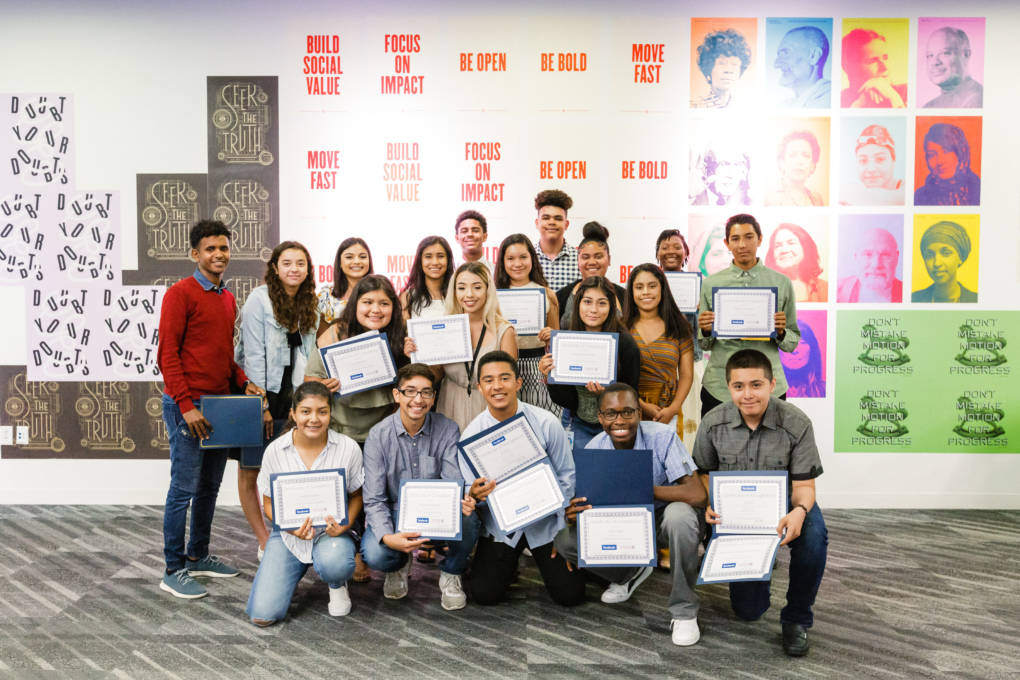
"caption": "All 19 students in Facebook Academy's 7th graduating class receive a stipend of $1,500 for completing their six-week internship. ",
"description": "All 19 students in Facebook Academy's 7th graduating class receive a stipend of $1,500 for completing their six-week internship.",
"title": "FacebookAcademy_Aug2018_jenniferleahyphotography-46",
"credit": "Jennifer Leahy for Facebook",
"status": "inherit",
"isLoading": false,
"fetchFailed": false
},
"news_11685074": {
"type": "attachments",
"id": "news_11685074",
"meta": {
"index": "attachments_1716263798",
"site": "news",
"id": "11685074",
"found": true
},
"parent": 11685073,
"imgSizes": {
"small": {
"file": "https://ww2.kqed.org/app/uploads/sites/10/2018/08/gettyimages-578048116_wide-99625f2aa2e8f6f29672fd8d989f7f8a055c0462-520x292.jpg",
"width": 520,
"mimeType": "image/jpeg",
"height": 292
},
"twentyfourteen-full-width": {
"file": "https://ww2.kqed.org/app/uploads/sites/10/2018/08/gettyimages-578048116_wide-99625f2aa2e8f6f29672fd8d989f7f8a055c0462-1038x576.jpg",
"width": 1038,
"mimeType": "image/jpeg",
"height": 576
},
"thumbnail": {
"file": "https://ww2.kqed.org/app/uploads/sites/10/2018/08/gettyimages-578048116_wide-99625f2aa2e8f6f29672fd8d989f7f8a055c0462-160x90.jpg",
"width": 160,
"mimeType": "image/jpeg",
"height": 90
},
"fd-sm": {
"file": "https://ww2.kqed.org/app/uploads/sites/10/2018/08/gettyimages-578048116_wide-99625f2aa2e8f6f29672fd8d989f7f8a055c0462-960x540.jpg",
"width": 960,
"mimeType": "image/jpeg",
"height": 540
},
"post-thumbnail": {
"file": "https://ww2.kqed.org/app/uploads/sites/10/2018/08/gettyimages-578048116_wide-99625f2aa2e8f6f29672fd8d989f7f8a055c0462-672x372.jpg",
"width": 672,
"mimeType": "image/jpeg",
"height": 372
},
"xsmall": {
"file": "https://ww2.kqed.org/app/uploads/sites/10/2018/08/gettyimages-578048116_wide-99625f2aa2e8f6f29672fd8d989f7f8a055c0462-375x211.jpg",
"width": 375,
"mimeType": "image/jpeg",
"height": 211
},
"kqedFullSize": {
"file": "https://ww2.kqed.org/app/uploads/sites/10/2018/08/gettyimages-578048116_wide-99625f2aa2e8f6f29672fd8d989f7f8a055c0462.jpg",
"width": 1704,
"height": 958
},
"large": {
"file": "https://ww2.kqed.org/app/uploads/sites/10/2018/08/gettyimages-578048116_wide-99625f2aa2e8f6f29672fd8d989f7f8a055c0462-1020x573.jpg",
"width": 1020,
"mimeType": "image/jpeg",
"height": 573
},
"xlarge": {
"file": "https://ww2.kqed.org/app/uploads/sites/10/2018/08/gettyimages-578048116_wide-99625f2aa2e8f6f29672fd8d989f7f8a055c0462-1180x663.jpg",
"width": 1180,
"mimeType": "image/jpeg",
"height": 663
},
"complete_open_graph": {
"file": "https://ww2.kqed.org/app/uploads/sites/10/2018/08/gettyimages-578048116_wide-99625f2aa2e8f6f29672fd8d989f7f8a055c0462-1200x675.jpg",
"width": 1200,
"mimeType": "image/jpeg",
"height": 675
},
"guest-author-50": {
"file": "https://ww2.kqed.org/app/uploads/sites/10/2018/08/gettyimages-578048116_wide-99625f2aa2e8f6f29672fd8d989f7f8a055c0462-50x50.jpg",
"width": 50,
"mimeType": "image/jpeg",
"height": 50
},
"guest-author-96": {
"file": "https://ww2.kqed.org/app/uploads/sites/10/2018/08/gettyimages-578048116_wide-99625f2aa2e8f6f29672fd8d989f7f8a055c0462-96x96.jpg",
"width": 96,
"mimeType": "image/jpeg",
"height": 96
},
"medium": {
"file": "https://ww2.kqed.org/app/uploads/sites/10/2018/08/gettyimages-578048116_wide-99625f2aa2e8f6f29672fd8d989f7f8a055c0462-800x450.jpg",
"width": 800,
"mimeType": "image/jpeg",
"height": 450
},
"guest-author-64": {
"file": "https://ww2.kqed.org/app/uploads/sites/10/2018/08/gettyimages-578048116_wide-99625f2aa2e8f6f29672fd8d989f7f8a055c0462-64x64.jpg",
"width": 64,
"mimeType": "image/jpeg",
"height": 64
},
"guest-author-32": {
"file": "https://ww2.kqed.org/app/uploads/sites/10/2018/08/gettyimages-578048116_wide-99625f2aa2e8f6f29672fd8d989f7f8a055c0462-32x32.jpg",
"width": 32,
"mimeType": "image/jpeg",
"height": 32
},
"fd-med": {
"file": "https://ww2.kqed.org/app/uploads/sites/10/2018/08/gettyimages-578048116_wide-99625f2aa2e8f6f29672fd8d989f7f8a055c0462-1180x663.jpg",
"width": 1180,
"mimeType": "image/jpeg",
"height": 663
},
"detail": {
"file": "https://ww2.kqed.org/app/uploads/sites/10/2018/08/gettyimages-578048116_wide-99625f2aa2e8f6f29672fd8d989f7f8a055c0462-150x150.jpg",
"width": 150,
"mimeType": "image/jpeg",
"height": 150
},
"guest-author-128": {
"file": "https://ww2.kqed.org/app/uploads/sites/10/2018/08/gettyimages-578048116_wide-99625f2aa2e8f6f29672fd8d989f7f8a055c0462-128x128.jpg",
"width": 128,
"mimeType": "image/jpeg",
"height": 128
},
"xxsmall": {
"file": "https://ww2.kqed.org/app/uploads/sites/10/2018/08/gettyimages-578048116_wide-99625f2aa2e8f6f29672fd8d989f7f8a055c0462-240x135.jpg",
"width": 240,
"mimeType": "image/jpeg",
"height": 135
}
},
"publishDate": 1533582919,
"modified": 1533583020,
"caption": "Alex Jones and his Infowars channels have been removed from YouTube; Facebook and Apple's iTunes have also deleted most or all of his outlets on their services. He's seen here being escorted from a rally near the 2016 Republican National Convention.",
"description": "Alex Jones and his Infowars channels have been removed from YouTube; Facebook and Apple's iTunes have also deleted most or all of his outlets on their services. He's seen here being escorted from a rally near the 2016 Republican National Convention.",
"title": "Alex Jones and his Infowars channels have been removed from YouTube; Facebook and Apple's iTunes have also deleted most or all of his outlets on their services. He's seen here being escorted from a rally near the 2016 Republican National Convention.",
"credit": "Tom Williams/CQ-Roll Call Inc.",
"status": "inherit",
"isLoading": false,
"fetchFailed": false
},
"news_11682969": {
"type": "attachments",
"id": "news_11682969",
"meta": {
"index": "attachments_1716263798",
"site": "news",
"id": "11682969",
"found": true
},
"parent": 11682901,
"imgSizes": {
"small": {
"file": "https://ww2.kqed.org/app/uploads/sites/10/2018/07/RS32022_IMG_1307-520x347.jpg",
"width": 520,
"mimeType": "image/jpeg",
"height": 347
},
"twentyfourteen-full-width": {
"file": "https://ww2.kqed.org/app/uploads/sites/10/2018/07/RS32022_IMG_1307-1038x576.jpg",
"width": 1038,
"mimeType": "image/jpeg",
"height": 576
},
"thumbnail": {
"file": "https://ww2.kqed.org/app/uploads/sites/10/2018/07/RS32022_IMG_1307-160x107.jpg",
"width": 160,
"mimeType": "image/jpeg",
"height": 107
},
"fd-sm": {
"file": "https://ww2.kqed.org/app/uploads/sites/10/2018/07/RS32022_IMG_1307-960x640.jpg",
"width": 960,
"mimeType": "image/jpeg",
"height": 640
},
"post-thumbnail": {
"file": "https://ww2.kqed.org/app/uploads/sites/10/2018/07/RS32022_IMG_1307-672x372.jpg",
"width": 672,
"mimeType": "image/jpeg",
"height": 372
},
"xsmall": {
"file": "https://ww2.kqed.org/app/uploads/sites/10/2018/07/RS32022_IMG_1307-375x250.jpg",
"width": 375,
"mimeType": "image/jpeg",
"height": 250
},
"kqedFullSize": {
"file": "https://ww2.kqed.org/app/uploads/sites/10/2018/07/RS32022_IMG_1307-e1532646453849.jpg",
"width": 1920,
"height": 1280
},
"large": {
"file": "https://ww2.kqed.org/app/uploads/sites/10/2018/07/RS32022_IMG_1307-1020x680.jpg",
"width": 1020,
"mimeType": "image/jpeg",
"height": 680
},
"xlarge": {
"file": "https://ww2.kqed.org/app/uploads/sites/10/2018/07/RS32022_IMG_1307-1180x787.jpg",
"width": 1180,
"mimeType": "image/jpeg",
"height": 787
},
"complete_open_graph": {
"file": "https://ww2.kqed.org/app/uploads/sites/10/2018/07/RS32022_IMG_1307-1200x800.jpg",
"width": 1200,
"mimeType": "image/jpeg",
"height": 800
},
"guest-author-50": {
"file": "https://ww2.kqed.org/app/uploads/sites/10/2018/07/RS32022_IMG_1307-50x50.jpg",
"width": 50,
"mimeType": "image/jpeg",
"height": 50
},
"guest-author-96": {
"file": "https://ww2.kqed.org/app/uploads/sites/10/2018/07/RS32022_IMG_1307-96x96.jpg",
"width": 96,
"mimeType": "image/jpeg",
"height": 96
},
"medium": {
"file": "https://ww2.kqed.org/app/uploads/sites/10/2018/07/RS32022_IMG_1307-800x533.jpg",
"width": 800,
"mimeType": "image/jpeg",
"height": 533
},
"guest-author-64": {
"file": "https://ww2.kqed.org/app/uploads/sites/10/2018/07/RS32022_IMG_1307-64x64.jpg",
"width": 64,
"mimeType": "image/jpeg",
"height": 64
},
"guest-author-32": {
"file": "https://ww2.kqed.org/app/uploads/sites/10/2018/07/RS32022_IMG_1307-32x32.jpg",
"width": 32,
"mimeType": "image/jpeg",
"height": 32
},
"fd-lrg": {
"file": "https://ww2.kqed.org/app/uploads/sites/10/2018/07/RS32022_IMG_1307-1920x1280.jpg",
"width": 1920,
"mimeType": "image/jpeg",
"height": 1280
},
"fd-med": {
"file": "https://ww2.kqed.org/app/uploads/sites/10/2018/07/RS32022_IMG_1307-1180x787.jpg",
"width": 1180,
"mimeType": "image/jpeg",
"height": 787
},
"full-width": {
"file": "https://ww2.kqed.org/app/uploads/sites/10/2018/07/RS32022_IMG_1307-1920x1280.jpg",
"width": 1920,
"mimeType": "image/jpeg",
"height": 1280
},
"detail": {
"file": "https://ww2.kqed.org/app/uploads/sites/10/2018/07/RS32022_IMG_1307-150x150.jpg",
"width": 150,
"mimeType": "image/jpeg",
"height": 150
},
"guest-author-128": {
"file": "https://ww2.kqed.org/app/uploads/sites/10/2018/07/RS32022_IMG_1307-128x128.jpg",
"width": 128,
"mimeType": "image/jpeg",
"height": 128
},
"xxsmall": {
"file": "https://ww2.kqed.org/app/uploads/sites/10/2018/07/RS32022_IMG_1307-240x160.jpg",
"width": 240,
"mimeType": "image/jpeg",
"height": 160
}
},
"publishDate": 1532646422,
"modified": 1533343063,
"caption": "Theron Francisco, the Public Affairs Officer with the U.S. Border Patrol, stands in front of the border wall prototypes in Otay Mesa, Calif. Before joining the U.S. Border Patrol, Theron worked in construction. He said his grandmother came to the United States from Tijuana when she was very young.",
"description": "Theron Francisco, the Public Affairs Officer with the U.S. Border Patrol, stands in front of the border wall prototypes in Otay Mesa, Calif. Before joining the U.S. Border Patrol, Theron worked in construction. He said his grandmother came to the United States from Tijuana when she was very young.",
"title": "RS32022_IMG_1307",
"credit": "Ariana Drehsler/KQED",
"status": "inherit",
"isLoading": false,
"fetchFailed": false
},
"news_11683963": {
"type": "attachments",
"id": "news_11683963",
"meta": {
"index": "attachments_1716263798",
"site": "news",
"id": "11683963",
"found": true
},
"parent": 11683962,
"imgSizes": {
"small": {
"file": "https://ww2.kqed.org/app/uploads/sites/10/2018/07/ap_17286700318855_custom-667b9940620bd0b8f81f3a910097597c039da882-520x346.jpg",
"width": 520,
"mimeType": "image/jpeg",
"height": 346
},
"twentyfourteen-full-width": {
"file": "https://ww2.kqed.org/app/uploads/sites/10/2018/07/ap_17286700318855_custom-667b9940620bd0b8f81f3a910097597c039da882-1038x576.jpg",
"width": 1038,
"mimeType": "image/jpeg",
"height": 576
},
"thumbnail": {
"file": "https://ww2.kqed.org/app/uploads/sites/10/2018/07/ap_17286700318855_custom-667b9940620bd0b8f81f3a910097597c039da882-160x107.jpg",
"width": 160,
"mimeType": "image/jpeg",
"height": 107
},
"fd-sm": {
"file": "https://ww2.kqed.org/app/uploads/sites/10/2018/07/ap_17286700318855_custom-667b9940620bd0b8f81f3a910097597c039da882-960x639.jpg",
"width": 960,
"mimeType": "image/jpeg",
"height": 639
},
"post-thumbnail": {
"file": "https://ww2.kqed.org/app/uploads/sites/10/2018/07/ap_17286700318855_custom-667b9940620bd0b8f81f3a910097597c039da882-672x372.jpg",
"width": 672,
"mimeType": "image/jpeg",
"height": 372
},
"xsmall": {
"file": "https://ww2.kqed.org/app/uploads/sites/10/2018/07/ap_17286700318855_custom-667b9940620bd0b8f81f3a910097597c039da882-375x250.jpg",
"width": 375,
"mimeType": "image/jpeg",
"height": 250
},
"kqedFullSize": {
"file": "https://ww2.kqed.org/app/uploads/sites/10/2018/07/ap_17286700318855_custom-667b9940620bd0b8f81f3a910097597c039da882-e1533063509469.jpg",
"width": 1920,
"height": 1279
},
"large": {
"file": "https://ww2.kqed.org/app/uploads/sites/10/2018/07/ap_17286700318855_custom-667b9940620bd0b8f81f3a910097597c039da882-1020x679.jpg",
"width": 1020,
"mimeType": "image/jpeg",
"height": 679
},
"xlarge": {
"file": "https://ww2.kqed.org/app/uploads/sites/10/2018/07/ap_17286700318855_custom-667b9940620bd0b8f81f3a910097597c039da882-1180x786.jpg",
"width": 1180,
"mimeType": "image/jpeg",
"height": 786
},
"complete_open_graph": {
"file": "https://ww2.kqed.org/app/uploads/sites/10/2018/07/ap_17286700318855_custom-667b9940620bd0b8f81f3a910097597c039da882-1200x799.jpg",
"width": 1200,
"mimeType": "image/jpeg",
"height": 799
},
"guest-author-50": {
"file": "https://ww2.kqed.org/app/uploads/sites/10/2018/07/ap_17286700318855_custom-667b9940620bd0b8f81f3a910097597c039da882-50x50.jpg",
"width": 50,
"mimeType": "image/jpeg",
"height": 50
},
"guest-author-96": {
"file": "https://ww2.kqed.org/app/uploads/sites/10/2018/07/ap_17286700318855_custom-667b9940620bd0b8f81f3a910097597c039da882-96x96.jpg",
"width": 96,
"mimeType": "image/jpeg",
"height": 96
},
"medium": {
"file": "https://ww2.kqed.org/app/uploads/sites/10/2018/07/ap_17286700318855_custom-667b9940620bd0b8f81f3a910097597c039da882-800x533.jpg",
"width": 800,
"mimeType": "image/jpeg",
"height": 533
},
"guest-author-64": {
"file": "https://ww2.kqed.org/app/uploads/sites/10/2018/07/ap_17286700318855_custom-667b9940620bd0b8f81f3a910097597c039da882-64x64.jpg",
"width": 64,
"mimeType": "image/jpeg",
"height": 64
},
"guest-author-32": {
"file": "https://ww2.kqed.org/app/uploads/sites/10/2018/07/ap_17286700318855_custom-667b9940620bd0b8f81f3a910097597c039da882-32x32.jpg",
"width": 32,
"mimeType": "image/jpeg",
"height": 32
},
"fd-lrg": {
"file": "https://ww2.kqed.org/app/uploads/sites/10/2018/07/ap_17286700318855_custom-667b9940620bd0b8f81f3a910097597c039da882-1920x1279.jpg",
"width": 1920,
"mimeType": "image/jpeg",
"height": 1279
},
"fd-med": {
"file": "https://ww2.kqed.org/app/uploads/sites/10/2018/07/ap_17286700318855_custom-667b9940620bd0b8f81f3a910097597c039da882-1180x786.jpg",
"width": 1180,
"mimeType": "image/jpeg",
"height": 786
},
"full-width": {
"file": "https://ww2.kqed.org/app/uploads/sites/10/2018/07/ap_17286700318855_custom-667b9940620bd0b8f81f3a910097597c039da882-1920x1279.jpg",
"width": 1920,
"mimeType": "image/jpeg",
"height": 1279
},
"detail": {
"file": "https://ww2.kqed.org/app/uploads/sites/10/2018/07/ap_17286700318855_custom-667b9940620bd0b8f81f3a910097597c039da882-150x150.jpg",
"width": 150,
"mimeType": "image/jpeg",
"height": 150
},
"guest-author-128": {
"file": "https://ww2.kqed.org/app/uploads/sites/10/2018/07/ap_17286700318855_custom-667b9940620bd0b8f81f3a910097597c039da882-128x128.jpg",
"width": 128,
"mimeType": "image/jpeg",
"height": 128
},
"xxsmall": {
"file": "https://ww2.kqed.org/app/uploads/sites/10/2018/07/ap_17286700318855_custom-667b9940620bd0b8f81f3a910097597c039da882-240x160.jpg",
"width": 240,
"mimeType": "image/jpeg",
"height": 160
}
},
"publishDate": 1533063353,
"modified": 1533063532,
"caption": "A Facebook logo is displayed in a start-up companies gathering at Paris' Station F in 2017. On Tuesday, Facebook announced it had shut down accounts using deceptive behavior to stir political division in the U.S., with evidence they are linked to Russia.",
"description": "A Facebook logo is displayed in a start-up companies gathering at Paris' Station F in 2017. On Tuesday, Facebook announced it had shut down accounts using deceptive behavior to stir political division in the U.S., with evidence they are linked to Russi",
"title": "A Facebook logo is displayed in a start-up companies gathering at Paris' Station F in 2017. On Tuesday, Facebook announced it had shut down accounts using deceptive behavior to stir political division in the U.S., with evidence they are linked to Russia.",
"credit": "Thibault Camus/AP",
"status": "inherit",
"isLoading": false,
"fetchFailed": false
},
"news_11681226": {
"type": "attachments",
"id": "news_11681226",
"meta": {
"index": "attachments_1716263798",
"site": "news",
"id": "11681226",
"found": true
},
"parent": 11681225,
"imgSizes": {
"small": {
"file": "https://ww2.kqed.org/app/uploads/sites/10/2018/07/20180709_133010-0-_custom-232f6858743035a4ef2c2603cb96dfa6002af8e2-520x390.jpg",
"width": 520,
"mimeType": "image/jpeg",
"height": 390
},
"twentyfourteen-full-width": {
"file": "https://ww2.kqed.org/app/uploads/sites/10/2018/07/20180709_133010-0-_custom-232f6858743035a4ef2c2603cb96dfa6002af8e2-1038x576.jpg",
"width": 1038,
"mimeType": "image/jpeg",
"height": 576
},
"thumbnail": {
"file": "https://ww2.kqed.org/app/uploads/sites/10/2018/07/20180709_133010-0-_custom-232f6858743035a4ef2c2603cb96dfa6002af8e2-160x120.jpg",
"width": 160,
"mimeType": "image/jpeg",
"height": 120
},
"fd-sm": {
"file": "https://ww2.kqed.org/app/uploads/sites/10/2018/07/20180709_133010-0-_custom-232f6858743035a4ef2c2603cb96dfa6002af8e2-960x720.jpg",
"width": 960,
"mimeType": "image/jpeg",
"height": 720
},
"post-thumbnail": {
"file": "https://ww2.kqed.org/app/uploads/sites/10/2018/07/20180709_133010-0-_custom-232f6858743035a4ef2c2603cb96dfa6002af8e2-672x372.jpg",
"width": 672,
"mimeType": "image/jpeg",
"height": 372
},
"xsmall": {
"file": "https://ww2.kqed.org/app/uploads/sites/10/2018/07/20180709_133010-0-_custom-232f6858743035a4ef2c2603cb96dfa6002af8e2-375x281.jpg",
"width": 375,
"mimeType": "image/jpeg",
"height": 281
},
"kqedFullSize": {
"file": "https://ww2.kqed.org/app/uploads/sites/10/2018/07/20180709_133010-0-_custom-232f6858743035a4ef2c2603cb96dfa6002af8e2-e1531942884485.jpg",
"width": 1920,
"height": 1439
},
"large": {
"file": "https://ww2.kqed.org/app/uploads/sites/10/2018/07/20180709_133010-0-_custom-232f6858743035a4ef2c2603cb96dfa6002af8e2-1020x764.jpg",
"width": 1020,
"mimeType": "image/jpeg",
"height": 764
},
"xlarge": {
"file": "https://ww2.kqed.org/app/uploads/sites/10/2018/07/20180709_133010-0-_custom-232f6858743035a4ef2c2603cb96dfa6002af8e2-1180x884.jpg",
"width": 1180,
"mimeType": "image/jpeg",
"height": 884
},
"complete_open_graph": {
"file": "https://ww2.kqed.org/app/uploads/sites/10/2018/07/20180709_133010-0-_custom-232f6858743035a4ef2c2603cb96dfa6002af8e2-1200x899.jpg",
"width": 1200,
"mimeType": "image/jpeg",
"height": 899
},
"guest-author-50": {
"file": "https://ww2.kqed.org/app/uploads/sites/10/2018/07/20180709_133010-0-_custom-232f6858743035a4ef2c2603cb96dfa6002af8e2-50x50.jpg",
"width": 50,
"mimeType": "image/jpeg",
"height": 50
},
"guest-author-96": {
"file": "https://ww2.kqed.org/app/uploads/sites/10/2018/07/20180709_133010-0-_custom-232f6858743035a4ef2c2603cb96dfa6002af8e2-96x96.jpg",
"width": 96,
"mimeType": "image/jpeg",
"height": 96
},
"medium": {
"file": "https://ww2.kqed.org/app/uploads/sites/10/2018/07/20180709_133010-0-_custom-232f6858743035a4ef2c2603cb96dfa6002af8e2-800x600.jpg",
"width": 800,
"mimeType": "image/jpeg",
"height": 600
},
"guest-author-64": {
"file": "https://ww2.kqed.org/app/uploads/sites/10/2018/07/20180709_133010-0-_custom-232f6858743035a4ef2c2603cb96dfa6002af8e2-64x64.jpg",
"width": 64,
"mimeType": "image/jpeg",
"height": 64
},
"guest-author-32": {
"file": "https://ww2.kqed.org/app/uploads/sites/10/2018/07/20180709_133010-0-_custom-232f6858743035a4ef2c2603cb96dfa6002af8e2-32x32.jpg",
"width": 32,
"mimeType": "image/jpeg",
"height": 32
},
"fd-lrg": {
"file": "https://ww2.kqed.org/app/uploads/sites/10/2018/07/20180709_133010-0-_custom-232f6858743035a4ef2c2603cb96dfa6002af8e2-1920x1439.jpg",
"width": 1920,
"mimeType": "image/jpeg",
"height": 1439
},
"fd-med": {
"file": "https://ww2.kqed.org/app/uploads/sites/10/2018/07/20180709_133010-0-_custom-232f6858743035a4ef2c2603cb96dfa6002af8e2-1180x884.jpg",
"width": 1180,
"mimeType": "image/jpeg",
"height": 884
},
"full-width": {
"file": "https://ww2.kqed.org/app/uploads/sites/10/2018/07/20180709_133010-0-_custom-232f6858743035a4ef2c2603cb96dfa6002af8e2-1920x1439.jpg",
"width": 1920,
"mimeType": "image/jpeg",
"height": 1439
},
"detail": {
"file": "https://ww2.kqed.org/app/uploads/sites/10/2018/07/20180709_133010-0-_custom-232f6858743035a4ef2c2603cb96dfa6002af8e2-150x150.jpg",
"width": 150,
"mimeType": "image/jpeg",
"height": 150
},
"guest-author-128": {
"file": "https://ww2.kqed.org/app/uploads/sites/10/2018/07/20180709_133010-0-_custom-232f6858743035a4ef2c2603cb96dfa6002af8e2-128x128.jpg",
"width": 128,
"mimeType": "image/jpeg",
"height": 128
},
"xxsmall": {
"file": "https://ww2.kqed.org/app/uploads/sites/10/2018/07/20180709_133010-0-_custom-232f6858743035a4ef2c2603cb96dfa6002af8e2-240x180.jpg",
"width": 240,
"mimeType": "image/jpeg",
"height": 180
}
},
"publishDate": 1531942694,
"modified": 1531942906,
"caption": "Harssh Poddar, a senior police official, addresses a village meeting at a rural school near Malegaon, in northern Maharashtra state. He warns families to be skeptical of what they read online. Earlier this month, Poddar helped rescue five people from being killed by a mob in his constituency.",
"description": "Harssh Poddar, a senior police official, addresses a village meeting at a rural school near Malegaon, in northern Maharashtra state. He warns families to be skeptical of what they read online. Earlier this month, Poddar helped rescue five people from being killed by a mob in his constituency.",
"title": "Harssh Poddar, a senior police official, addresses a village meeting at a rural school near Malegaon, in northern Maharashtra state. He warns families to be skeptical of what they read online. Earlier this month, Poddar helped rescue five people from being killed by a mob in his constituency.",
"credit": "Lauren Frayer/NPR",
"status": "inherit",
"isLoading": false,
"fetchFailed": false
},
"news_11681123": {
"type": "attachments",
"id": "news_11681123",
"meta": {
"index": "attachments_1716263798",
"site": "news",
"id": "11681123",
"found": true
},
"parent": 11680985,
"imgSizes": {
"small": {
"file": "https://ww2.kqed.org/app/uploads/sites/10/2018/07/TechHearing2-520x300.jpg",
"width": 520,
"mimeType": "image/jpeg",
"height": 300
},
"twentyfourteen-full-width": {
"file": "https://ww2.kqed.org/app/uploads/sites/10/2018/07/TechHearing2-1038x576.jpg",
"width": 1038,
"mimeType": "image/jpeg",
"height": 576
},
"thumbnail": {
"file": "https://ww2.kqed.org/app/uploads/sites/10/2018/07/TechHearing2-160x92.jpg",
"width": 160,
"mimeType": "image/jpeg",
"height": 92
},
"fd-sm": {
"file": "https://ww2.kqed.org/app/uploads/sites/10/2018/07/TechHearing2-960x554.jpg",
"width": 960,
"mimeType": "image/jpeg",
"height": 554
},
"post-thumbnail": {
"file": "https://ww2.kqed.org/app/uploads/sites/10/2018/07/TechHearing2-672x372.jpg",
"width": 672,
"mimeType": "image/jpeg",
"height": 372
},
"xsmall": {
"file": "https://ww2.kqed.org/app/uploads/sites/10/2018/07/TechHearing2-375x216.jpg",
"width": 375,
"mimeType": "image/jpeg",
"height": 216
},
"kqedFullSize": {
"file": "https://ww2.kqed.org/app/uploads/sites/10/2018/07/TechHearing2.jpg",
"width": 1920,
"height": 1107
},
"large": {
"file": "https://ww2.kqed.org/app/uploads/sites/10/2018/07/TechHearing2-1020x588.jpg",
"width": 1020,
"mimeType": "image/jpeg",
"height": 588
},
"xlarge": {
"file": "https://ww2.kqed.org/app/uploads/sites/10/2018/07/TechHearing2-1180x680.jpg",
"width": 1180,
"mimeType": "image/jpeg",
"height": 680
},
"complete_open_graph": {
"file": "https://ww2.kqed.org/app/uploads/sites/10/2018/07/TechHearing2-1200x692.jpg",
"width": 1200,
"mimeType": "image/jpeg",
"height": 692
},
"guest-author-50": {
"file": "https://ww2.kqed.org/app/uploads/sites/10/2018/07/TechHearing2-50x50.jpg",
"width": 50,
"mimeType": "image/jpeg",
"height": 50
},
"guest-author-96": {
"file": "https://ww2.kqed.org/app/uploads/sites/10/2018/07/TechHearing2-96x96.jpg",
"width": 96,
"mimeType": "image/jpeg",
"height": 96
},
"medium": {
"file": "https://ww2.kqed.org/app/uploads/sites/10/2018/07/TechHearing2-800x461.jpg",
"width": 800,
"mimeType": "image/jpeg",
"height": 461
},
"guest-author-64": {
"file": "https://ww2.kqed.org/app/uploads/sites/10/2018/07/TechHearing2-64x64.jpg",
"width": 64,
"mimeType": "image/jpeg",
"height": 64
},
"guest-author-32": {
"file": "https://ww2.kqed.org/app/uploads/sites/10/2018/07/TechHearing2-32x32.jpg",
"width": 32,
"mimeType": "image/jpeg",
"height": 32
},
"fd-lrg": {
"file": "https://ww2.kqed.org/app/uploads/sites/10/2018/07/TechHearing2-1920x1107.jpg",
"width": 1920,
"mimeType": "image/jpeg",
"height": 1107
},
"fd-med": {
"file": "https://ww2.kqed.org/app/uploads/sites/10/2018/07/TechHearing2-1180x680.jpg",
"width": 1180,
"mimeType": "image/jpeg",
"height": 680
},
"full-width": {
"file": "https://ww2.kqed.org/app/uploads/sites/10/2018/07/TechHearing2-1920x1107.jpg",
"width": 1920,
"mimeType": "image/jpeg",
"height": 1107
},
"detail": {
"file": "https://ww2.kqed.org/app/uploads/sites/10/2018/07/TechHearing2-150x150.jpg",
"width": 150,
"mimeType": "image/jpeg",
"height": 150
},
"guest-author-128": {
"file": "https://ww2.kqed.org/app/uploads/sites/10/2018/07/TechHearing2-128x128.jpg",
"width": 128,
"mimeType": "image/jpeg",
"height": 128
},
"xxsmall": {
"file": "https://ww2.kqed.org/app/uploads/sites/10/2018/07/TechHearing2-240x138.jpg",
"width": 240,
"mimeType": "image/jpeg",
"height": 138
}
},
"publishDate": 1531876856,
"modified": 1531876915,
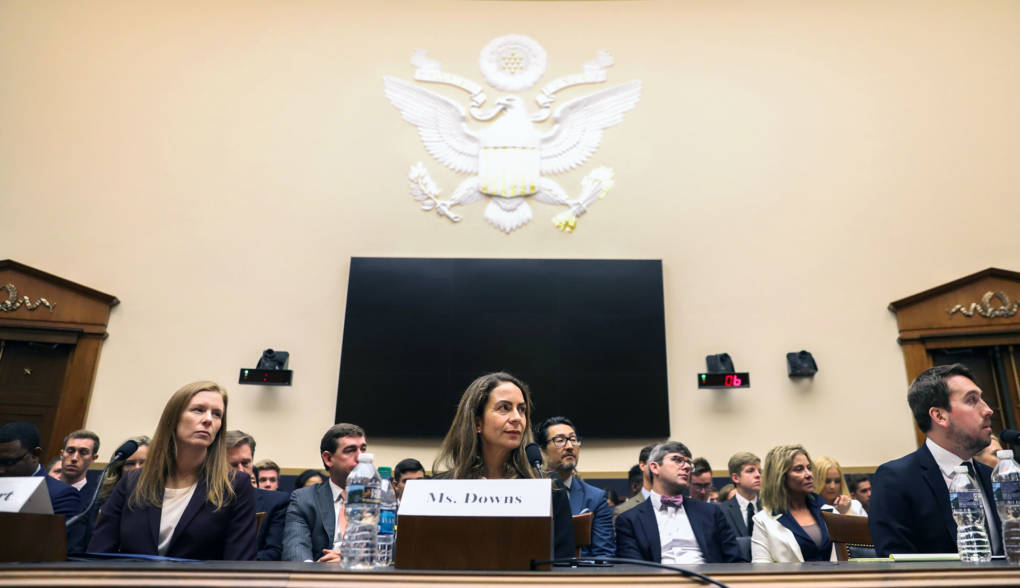
"caption": "Monika Bickert, the head of global policy management at Facebook, Juniper Downs, global head of public policy and government relations at YouTube, and Nick Pickles, the senior strategist at Twitter, testify to the House Judiciary Committee on July 17, 2018.",
"description": "Monika Bickert, the head of global policy management at Facebook, Juniper Downs, global head of public policy and government relations at YouTube, and Nick Pickles, the senior strategist at Twitter, testify to the House Judiciary Committee on July 17, 2018.",
"title": "TechHearing2",
"credit": "Alex Wroblewski/Getty Images",
"status": "inherit",
"isLoading": false,
"fetchFailed": false
},
"news_11680187": {
"type": "attachments",
"id": "news_11680187",
"meta": {
"index": "attachments_1716263798",
"site": "news",
"id": "11680187",
"found": true
},
"parent": 11679941,
"imgSizes": {
"small": {
"file": "https://ww2.kqed.org/app/uploads/sites/10/2018/07/MaxineW-520x401.jpg",
"width": 520,
"mimeType": "image/jpeg",
"height": 401
},
"twentyfourteen-full-width": {
"file": "https://ww2.kqed.org/app/uploads/sites/10/2018/07/MaxineW-1038x576.jpg",
"width": 1038,
"mimeType": "image/jpeg",
"height": 576
},
"thumbnail": {
"file": "https://ww2.kqed.org/app/uploads/sites/10/2018/07/MaxineW-160x123.jpg",
"width": 160,
"mimeType": "image/jpeg",
"height": 123
},
"fd-sm": {
"file": "https://ww2.kqed.org/app/uploads/sites/10/2018/07/MaxineW-960x740.jpg",
"width": 960,
"mimeType": "image/jpeg",
"height": 740
},
"post-thumbnail": {
"file": "https://ww2.kqed.org/app/uploads/sites/10/2018/07/MaxineW-672x372.jpg",
"width": 672,
"mimeType": "image/jpeg",
"height": 372
},
"xsmall": {
"file": "https://ww2.kqed.org/app/uploads/sites/10/2018/07/MaxineW-375x289.jpg",
"width": 375,
"mimeType": "image/jpeg",
"height": 289
},
"kqedFullSize": {
"file": "https://ww2.kqed.org/app/uploads/sites/10/2018/07/MaxineW.jpg",
"width": 1920,
"height": 1479
},
"large": {
"file": "https://ww2.kqed.org/app/uploads/sites/10/2018/07/MaxineW-1020x786.jpg",
"width": 1020,
"mimeType": "image/jpeg",
"height": 786
},
"xlarge": {
"file": "https://ww2.kqed.org/app/uploads/sites/10/2018/07/MaxineW-1180x909.jpg",
"width": 1180,
"mimeType": "image/jpeg",
"height": 909
},
"complete_open_graph": {
"file": "https://ww2.kqed.org/app/uploads/sites/10/2018/07/MaxineW-1200x924.jpg",
"width": 1200,
"mimeType": "image/jpeg",
"height": 924
},
"guest-author-50": {
"file": "https://ww2.kqed.org/app/uploads/sites/10/2018/07/MaxineW-50x50.jpg",
"width": 50,
"mimeType": "image/jpeg",
"height": 50
},
"guest-author-96": {
"file": "https://ww2.kqed.org/app/uploads/sites/10/2018/07/MaxineW-96x96.jpg",
"width": 96,
"mimeType": "image/jpeg",
"height": 96
},
"medium": {
"file": "https://ww2.kqed.org/app/uploads/sites/10/2018/07/MaxineW-800x616.jpg",
"width": 800,
"mimeType": "image/jpeg",
"height": 616
},
"guest-author-64": {
"file": "https://ww2.kqed.org/app/uploads/sites/10/2018/07/MaxineW-64x64.jpg",
"width": 64,
"mimeType": "image/jpeg",
"height": 64
},
"guest-author-32": {
"file": "https://ww2.kqed.org/app/uploads/sites/10/2018/07/MaxineW-32x32.jpg",
"width": 32,
"mimeType": "image/jpeg",
"height": 32
},
"fd-lrg": {
"file": "https://ww2.kqed.org/app/uploads/sites/10/2018/07/MaxineW-1920x1479.jpg",
"width": 1920,
"mimeType": "image/jpeg",
"height": 1479
},
"fd-med": {
"file": "https://ww2.kqed.org/app/uploads/sites/10/2018/07/MaxineW-1180x909.jpg",
"width": 1180,
"mimeType": "image/jpeg",
"height": 909
},
"full-width": {
"file": "https://ww2.kqed.org/app/uploads/sites/10/2018/07/MaxineW-1920x1479.jpg",
"width": 1920,
"mimeType": "image/jpeg",
"height": 1479
},
"detail": {
"file": "https://ww2.kqed.org/app/uploads/sites/10/2018/07/MaxineW-150x150.jpg",
"width": 150,
"mimeType": "image/jpeg",
"height": 150
},
"guest-author-128": {
"file": "https://ww2.kqed.org/app/uploads/sites/10/2018/07/MaxineW-128x128.jpg",
"width": 128,
"mimeType": "image/jpeg",
"height": 128
},
"xxsmall": {
"file": "https://ww2.kqed.org/app/uploads/sites/10/2018/07/MaxineW-240x185.jpg",
"width": 240,
"mimeType": "image/jpeg",
"height": 185
}
},
"publishDate": 1531359224,
"modified": 1531359286,
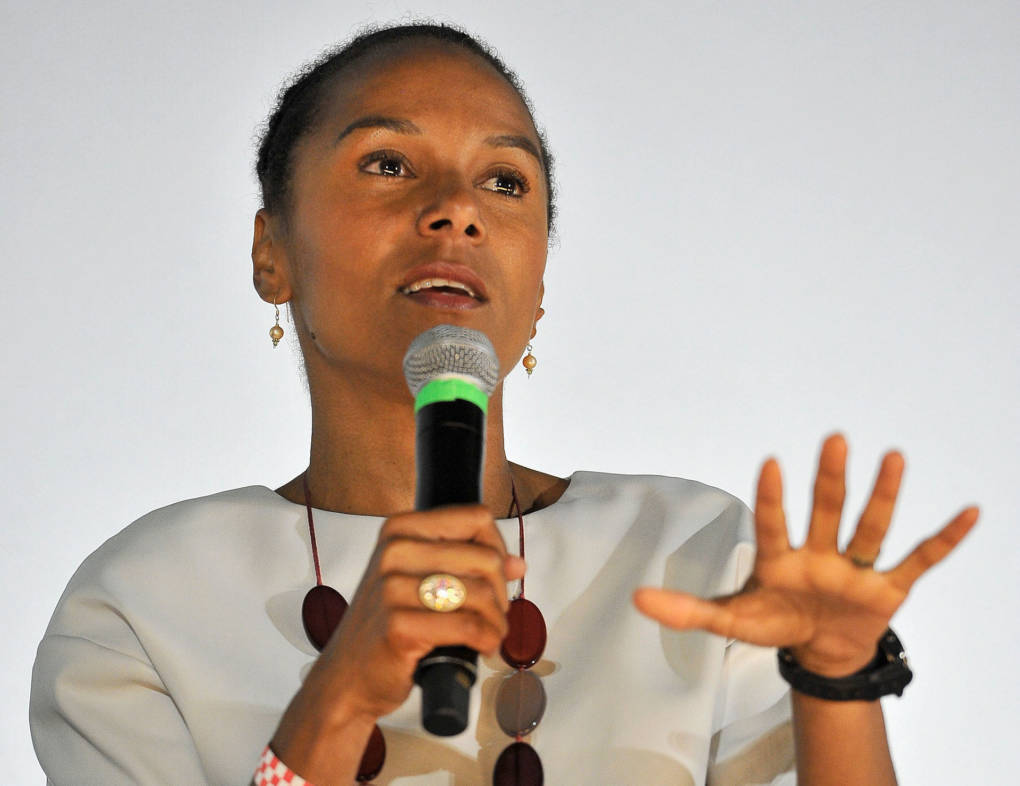
"caption": "Facebook Global Head of Diversity Maxine Williams.",
"description": "Facebook Global Head of Diversity Maxine Williams.",
"title": "MaxineW",
"credit": "Steve Jennings/Getty Images",
"status": "inherit",
"isLoading": false,
"fetchFailed": false
},
"news_11676508": {
"type": "attachments",
"id": "news_11676508",
"meta": {
"index": "attachments_1716263798",
"site": "news",
"id": "11676508",
"found": true
},
"parent": 11676475,
"imgSizes": {
"small": {
"file": "https://ww2.kqed.org/app/uploads/sites/10/2018/06/RS30395_GettyImages-944387228-qut-520x363.jpg",
"width": 520,
"mimeType": "image/jpeg",
"height": 363
},
"twentyfourteen-full-width": {
"file": "https://ww2.kqed.org/app/uploads/sites/10/2018/06/RS30395_GettyImages-944387228-qut-1038x576.jpg",
"width": 1038,
"mimeType": "image/jpeg",
"height": 576
},
"thumbnail": {
"file": "https://ww2.kqed.org/app/uploads/sites/10/2018/06/RS30395_GettyImages-944387228-qut-160x112.jpg",
"width": 160,
"mimeType": "image/jpeg",
"height": 112
},
"fd-sm": {
"file": "https://ww2.kqed.org/app/uploads/sites/10/2018/06/RS30395_GettyImages-944387228-qut-960x671.jpg",
"width": 960,
"mimeType": "image/jpeg",
"height": 671
},
"post-thumbnail": {
"file": "https://ww2.kqed.org/app/uploads/sites/10/2018/06/RS30395_GettyImages-944387228-qut-672x372.jpg",
"width": 672,
"mimeType": "image/jpeg",
"height": 372
},
"xsmall": {
"file": "https://ww2.kqed.org/app/uploads/sites/10/2018/06/RS30395_GettyImages-944387228-qut-375x262.jpg",
"width": 375,
"mimeType": "image/jpeg",
"height": 262
},
"kqedFullSize": {
"file": "https://ww2.kqed.org/app/uploads/sites/10/2018/06/RS30395_GettyImages-944387228-qut.jpg",
"width": 1920,
"height": 1342
},
"large": {
"file": "https://ww2.kqed.org/app/uploads/sites/10/2018/06/RS30395_GettyImages-944387228-qut-1020x713.jpg",
"width": 1020,
"mimeType": "image/jpeg",
"height": 713
},
"xlarge": {
"file": "https://ww2.kqed.org/app/uploads/sites/10/2018/06/RS30395_GettyImages-944387228-qut-1180x825.jpg",
"width": 1180,
"mimeType": "image/jpeg",
"height": 825
},
"complete_open_graph": {
"file": "https://ww2.kqed.org/app/uploads/sites/10/2018/06/RS30395_GettyImages-944387228-qut-1200x839.jpg",
"width": 1200,
"mimeType": "image/jpeg",
"height": 839
},
"guest-author-50": {
"file": "https://ww2.kqed.org/app/uploads/sites/10/2018/06/RS30395_GettyImages-944387228-qut-50x50.jpg",
"width": 50,
"mimeType": "image/jpeg",
"height": 50
},
"guest-author-96": {
"file": "https://ww2.kqed.org/app/uploads/sites/10/2018/06/RS30395_GettyImages-944387228-qut-96x96.jpg",
"width": 96,
"mimeType": "image/jpeg",
"height": 96
},
"medium": {
"file": "https://ww2.kqed.org/app/uploads/sites/10/2018/06/RS30395_GettyImages-944387228-qut-800x559.jpg",
"width": 800,
"mimeType": "image/jpeg",
"height": 559
},
"guest-author-64": {
"file": "https://ww2.kqed.org/app/uploads/sites/10/2018/06/RS30395_GettyImages-944387228-qut-64x64.jpg",
"width": 64,
"mimeType": "image/jpeg",
"height": 64
},
"guest-author-32": {
"file": "https://ww2.kqed.org/app/uploads/sites/10/2018/06/RS30395_GettyImages-944387228-qut-32x32.jpg",
"width": 32,
"mimeType": "image/jpeg",
"height": 32
},
"fd-lrg": {
"file": "https://ww2.kqed.org/app/uploads/sites/10/2018/06/RS30395_GettyImages-944387228-qut-1920x1342.jpg",
"width": 1920,
"mimeType": "image/jpeg",
"height": 1342
},
"fd-med": {
"file": "https://ww2.kqed.org/app/uploads/sites/10/2018/06/RS30395_GettyImages-944387228-qut-1180x825.jpg",
"width": 1180,
"mimeType": "image/jpeg",
"height": 825
},
"full-width": {
"file": "https://ww2.kqed.org/app/uploads/sites/10/2018/06/RS30395_GettyImages-944387228-qut-1920x1342.jpg",
"width": 1920,
"mimeType": "image/jpeg",
"height": 1342
},
"detail": {
"file": "https://ww2.kqed.org/app/uploads/sites/10/2018/06/RS30395_GettyImages-944387228-qut-150x150.jpg",
"width": 150,
"mimeType": "image/jpeg",
"height": 150
},
"guest-author-128": {
"file": "https://ww2.kqed.org/app/uploads/sites/10/2018/06/RS30395_GettyImages-944387228-qut-128x128.jpg",
"width": 128,
"mimeType": "image/jpeg",
"height": 128
},
"xxsmall": {
"file": "https://ww2.kqed.org/app/uploads/sites/10/2018/06/RS30395_GettyImages-944387228-qut-240x168.jpg",
"width": 240,
"mimeType": "image/jpeg",
"height": 168
}
},
"publishDate": 1529690926,
"modified": 1529963803,
"caption": "Facebook CEO Mark Zuckerberg apologized to U.S. lawmakers for the leak of personal data in April. The leak helped fuel interest in ballot measure to protect consumer privacy.",
"description": "Facebook CEO Mark Zuckerberg apologized to US lawmakers for the leak of personal data in April. The leak helped fuel interest in ballot measure to protect consumer privacy.",
"title": "US-internet-Facebook",
"credit": "SAUL LOEB/AFP/Getty Images",
"status": "inherit",
"isLoading": false,
"fetchFailed": false
},
"news_11673609": {
"type": "attachments",
"id": "news_11673609",
"meta": {
"index": "attachments_1716263798",
"site": "news",
"id": "11673609",
"found": true
},
"parent": 11673608,
"imgSizes": {
"small": {
"file": "https://ww2.kqed.org/app/uploads/sites/10/2018/06/ap_18157680042772-fe636b117db9f85cfee61e0300ff7acb47abfdbd-520x390.jpg",
"width": 520,
"mimeType": "image/jpeg",
"height": 390
},
"twentyfourteen-full-width": {
"file": "https://ww2.kqed.org/app/uploads/sites/10/2018/06/ap_18157680042772-fe636b117db9f85cfee61e0300ff7acb47abfdbd-1038x576.jpg",
"width": 1038,
"mimeType": "image/jpeg",
"height": 576
},
"thumbnail": {
"file": "https://ww2.kqed.org/app/uploads/sites/10/2018/06/ap_18157680042772-fe636b117db9f85cfee61e0300ff7acb47abfdbd-160x120.jpg",
"width": 160,
"mimeType": "image/jpeg",
"height": 120
},
"fd-sm": {
"file": "https://ww2.kqed.org/app/uploads/sites/10/2018/06/ap_18157680042772-fe636b117db9f85cfee61e0300ff7acb47abfdbd-960x720.jpg",
"width": 960,
"mimeType": "image/jpeg",
"height": 720
},
"post-thumbnail": {
"file": "https://ww2.kqed.org/app/uploads/sites/10/2018/06/ap_18157680042772-fe636b117db9f85cfee61e0300ff7acb47abfdbd-672x372.jpg",
"width": 672,
"mimeType": "image/jpeg",
"height": 372
},
"xsmall": {
"file": "https://ww2.kqed.org/app/uploads/sites/10/2018/06/ap_18157680042772-fe636b117db9f85cfee61e0300ff7acb47abfdbd-375x281.jpg",
"width": 375,
"mimeType": "image/jpeg",
"height": 281
},
"kqedFullSize": {
"file": "https://ww2.kqed.org/app/uploads/sites/10/2018/06/ap_18157680042772-fe636b117db9f85cfee61e0300ff7acb47abfdbd.jpg",
"width": 3417,
"height": 2563
},
"large": {
"file": "https://ww2.kqed.org/app/uploads/sites/10/2018/06/ap_18157680042772-fe636b117db9f85cfee61e0300ff7acb47abfdbd-1020x765.jpg",
"width": 1020,
"mimeType": "image/jpeg",
"height": 765
},
"xlarge": {
"file": "https://ww2.kqed.org/app/uploads/sites/10/2018/06/ap_18157680042772-fe636b117db9f85cfee61e0300ff7acb47abfdbd-1180x885.jpg",
"width": 1180,
"mimeType": "image/jpeg",
"height": 885
},
"complete_open_graph": {
"file": "https://ww2.kqed.org/app/uploads/sites/10/2018/06/ap_18157680042772-fe636b117db9f85cfee61e0300ff7acb47abfdbd-1200x900.jpg",
"width": 1200,
"mimeType": "image/jpeg",
"height": 900
},
"guest-author-50": {
"file": "https://ww2.kqed.org/app/uploads/sites/10/2018/06/ap_18157680042772-fe636b117db9f85cfee61e0300ff7acb47abfdbd-50x50.jpg",
"width": 50,
"mimeType": "image/jpeg",
"height": 50
},
"guest-author-96": {
"file": "https://ww2.kqed.org/app/uploads/sites/10/2018/06/ap_18157680042772-fe636b117db9f85cfee61e0300ff7acb47abfdbd-96x96.jpg",
"width": 96,
"mimeType": "image/jpeg",
"height": 96
},
"medium": {
"file": "https://ww2.kqed.org/app/uploads/sites/10/2018/06/ap_18157680042772-fe636b117db9f85cfee61e0300ff7acb47abfdbd-800x600.jpg",
"width": 800,
"mimeType": "image/jpeg",
"height": 600
},
"guest-author-64": {
"file": "https://ww2.kqed.org/app/uploads/sites/10/2018/06/ap_18157680042772-fe636b117db9f85cfee61e0300ff7acb47abfdbd-64x64.jpg",
"width": 64,
"mimeType": "image/jpeg",
"height": 64
},
"guest-author-32": {
"file": "https://ww2.kqed.org/app/uploads/sites/10/2018/06/ap_18157680042772-fe636b117db9f85cfee61e0300ff7acb47abfdbd-32x32.jpg",
"width": 32,
"mimeType": "image/jpeg",
"height": 32
},
"fd-lrg": {
"file": "https://ww2.kqed.org/app/uploads/sites/10/2018/06/ap_18157680042772-fe636b117db9f85cfee61e0300ff7acb47abfdbd-1920x1440.jpg",
"width": 1920,
"mimeType": "image/jpeg",
"height": 1440
},
"fd-med": {
"file": "https://ww2.kqed.org/app/uploads/sites/10/2018/06/ap_18157680042772-fe636b117db9f85cfee61e0300ff7acb47abfdbd-1180x885.jpg",
"width": 1180,
"mimeType": "image/jpeg",
"height": 885
},
"full-width": {
"file": "https://ww2.kqed.org/app/uploads/sites/10/2018/06/ap_18157680042772-fe636b117db9f85cfee61e0300ff7acb47abfdbd-1920x1440.jpg",
"width": 1920,
"mimeType": "image/jpeg",
"height": 1440
},
"detail": {
"file": "https://ww2.kqed.org/app/uploads/sites/10/2018/06/ap_18157680042772-fe636b117db9f85cfee61e0300ff7acb47abfdbd-150x150.jpg",
"width": 150,
"mimeType": "image/jpeg",
"height": 150
},
"guest-author-128": {
"file": "https://ww2.kqed.org/app/uploads/sites/10/2018/06/ap_18157680042772-fe636b117db9f85cfee61e0300ff7acb47abfdbd-128x128.jpg",
"width": 128,
"mimeType": "image/jpeg",
"height": 128
},
"xxsmall": {
"file": "https://ww2.kqed.org/app/uploads/sites/10/2018/06/ap_18157680042772-fe636b117db9f85cfee61e0300ff7acb47abfdbd-240x180.jpg",
"width": 240,
"mimeType": "image/jpeg",
"height": 180
}
},
"publishDate": 1528481231,
"modified": 1528481231,
"caption": null,
"description": "Facebook CEO Mark Zuckerberg is pictured at F8, Facebook's developer conference last month. On Thursday, the company announced a new test feature had changed users' privacy settings without their consent.",
"title": "Facebook CEO Mark Zuckerberg is pictured at F8, Facebook's developer conference last month. On Thursday, the company announced a new test feature had changed users' privacy settings without their consent.",
"credit": null,
"status": "inherit",
"isLoading": false,
"fetchFailed": false
},
"news_11673106": {
"type": "attachments",
"id": "news_11673106",
"meta": {
"index": "attachments_1716263798",
"site": "news",
"id": "11673106",
"found": true
},
"parent": 11673105,
"imgSizes": {
"small": {
"file": "https://ww2.kqed.org/app/uploads/sites/10/2018/06/gettyimages-961625848_wide-267cc35bd128a30f751b9fc0fa15fe39d6595792-520x292.jpg",
"width": 520,
"mimeType": "image/jpeg",
"height": 292
},
"twentyfourteen-full-width": {
"file": "https://ww2.kqed.org/app/uploads/sites/10/2018/06/gettyimages-961625848_wide-267cc35bd128a30f751b9fc0fa15fe39d6595792-1038x576.jpg",
"width": 1038,
"mimeType": "image/jpeg",
"height": 576
},
"thumbnail": {
"file": "https://ww2.kqed.org/app/uploads/sites/10/2018/06/gettyimages-961625848_wide-267cc35bd128a30f751b9fc0fa15fe39d6595792-160x90.jpg",
"width": 160,
"mimeType": "image/jpeg",
"height": 90
},
"fd-sm": {
"file": "https://ww2.kqed.org/app/uploads/sites/10/2018/06/gettyimages-961625848_wide-267cc35bd128a30f751b9fc0fa15fe39d6595792-960x540.jpg",
"width": 960,
"mimeType": "image/jpeg",
"height": 540
},
"post-thumbnail": {
"file": "https://ww2.kqed.org/app/uploads/sites/10/2018/06/gettyimages-961625848_wide-267cc35bd128a30f751b9fc0fa15fe39d6595792-672x372.jpg",
"width": 672,
"mimeType": "image/jpeg",
"height": 372
},
"xsmall": {
"file": "https://ww2.kqed.org/app/uploads/sites/10/2018/06/gettyimages-961625848_wide-267cc35bd128a30f751b9fc0fa15fe39d6595792-375x211.jpg",
"width": 375,
"mimeType": "image/jpeg",
"height": 211
},
"kqedFullSize": {
"file": "https://ww2.kqed.org/app/uploads/sites/10/2018/06/gettyimages-961625848_wide-267cc35bd128a30f751b9fc0fa15fe39d6595792-e1528315434144.jpg",
"width": 1920,
"height": 1080
},
"large": {
"file": "https://ww2.kqed.org/app/uploads/sites/10/2018/06/gettyimages-961625848_wide-267cc35bd128a30f751b9fc0fa15fe39d6595792-1020x574.jpg",
"width": 1020,
"mimeType": "image/jpeg",
"height": 574
},
"xlarge": {
"file": "https://ww2.kqed.org/app/uploads/sites/10/2018/06/gettyimages-961625848_wide-267cc35bd128a30f751b9fc0fa15fe39d6595792-1180x664.jpg",
"width": 1180,
"mimeType": "image/jpeg",
"height": 664
},
"complete_open_graph": {
"file": "https://ww2.kqed.org/app/uploads/sites/10/2018/06/gettyimages-961625848_wide-267cc35bd128a30f751b9fc0fa15fe39d6595792-1200x675.jpg",
"width": 1200,
"mimeType": "image/jpeg",
"height": 675
},
"guest-author-50": {
"file": "https://ww2.kqed.org/app/uploads/sites/10/2018/06/gettyimages-961625848_wide-267cc35bd128a30f751b9fc0fa15fe39d6595792-50x50.jpg",
"width": 50,
"mimeType": "image/jpeg",
"height": 50
},
"guest-author-96": {
"file": "https://ww2.kqed.org/app/uploads/sites/10/2018/06/gettyimages-961625848_wide-267cc35bd128a30f751b9fc0fa15fe39d6595792-96x96.jpg",
"width": 96,
"mimeType": "image/jpeg",
"height": 96
},
"medium": {
"file": "https://ww2.kqed.org/app/uploads/sites/10/2018/06/gettyimages-961625848_wide-267cc35bd128a30f751b9fc0fa15fe39d6595792-800x450.jpg",
"width": 800,
"mimeType": "image/jpeg",
"height": 450
},
"guest-author-64": {
"file": "https://ww2.kqed.org/app/uploads/sites/10/2018/06/gettyimages-961625848_wide-267cc35bd128a30f751b9fc0fa15fe39d6595792-64x64.jpg",
"width": 64,
"mimeType": "image/jpeg",
"height": 64
},
"guest-author-32": {
"file": "https://ww2.kqed.org/app/uploads/sites/10/2018/06/gettyimages-961625848_wide-267cc35bd128a30f751b9fc0fa15fe39d6595792-32x32.jpg",
"width": 32,
"mimeType": "image/jpeg",
"height": 32
},
"fd-lrg": {
"file": "https://ww2.kqed.org/app/uploads/sites/10/2018/06/gettyimages-961625848_wide-267cc35bd128a30f751b9fc0fa15fe39d6595792-1920x1080.jpg",
"width": 1920,
"mimeType": "image/jpeg",
"height": 1080
},
"fd-med": {
"file": "https://ww2.kqed.org/app/uploads/sites/10/2018/06/gettyimages-961625848_wide-267cc35bd128a30f751b9fc0fa15fe39d6595792-1180x664.jpg",
"width": 1180,
"mimeType": "image/jpeg",
"height": 664
},
"full-width": {
"file": "https://ww2.kqed.org/app/uploads/sites/10/2018/06/gettyimages-961625848_wide-267cc35bd128a30f751b9fc0fa15fe39d6595792-1920x1080.jpg",
"width": 1920,
"mimeType": "image/jpeg",
"height": 1080
},
"detail": {
"file": "https://ww2.kqed.org/app/uploads/sites/10/2018/06/gettyimages-961625848_wide-267cc35bd128a30f751b9fc0fa15fe39d6595792-150x150.jpg",
"width": 150,
"mimeType": "image/jpeg",
"height": 150
},
"guest-author-128": {
"file": "https://ww2.kqed.org/app/uploads/sites/10/2018/06/gettyimages-961625848_wide-267cc35bd128a30f751b9fc0fa15fe39d6595792-128x128.jpg",
"width": 128,
"mimeType": "image/jpeg",
"height": 128
},
"xxsmall": {
"file": "https://ww2.kqed.org/app/uploads/sites/10/2018/06/gettyimages-961625848_wide-267cc35bd128a30f751b9fc0fa15fe39d6595792-240x135.jpg",
"width": 240,
"mimeType": "image/jpeg",
"height": 135
}
},
"publishDate": 1528315299,
"modified": 1528315414,
"caption": "Facebook's data-sharing deals with device-makers included China's Huawei — a company viewed with suspicion by U.S. intelligence agencies. Here, an ad for the Huawei P20 smartphone is seen in China last month.",
"description": "Facebook's data-sharing deals with device-makers included China's Huawei — a company viewed with suspicion by U.S. intelligence agencies. Here, an ad for the Huawei P20 smartphone is seen in China last mont",
"title": "Facebook's data-sharing deals with device-makers included China's Huawei — a company viewed with suspicion by U.S. intelligence agencies. Here, an ad for the Huawei P20 smartphone is seen in China last month.",
"credit": "Zhang Peng/LightRocket via Getty Images",
"status": "inherit",
"isLoading": false,
"fetchFailed": false
}
},
"audioPlayerReducer": {
"postId": "stream_live",
"isPaused": true,
"isPlaying": false,
"pfsActive": false,
"pledgeModalIsOpen": true,
"playerDrawerIsOpen": false,
"liveAudioPlayStartedAt": 0,
"liveAudioPlayContext": ""
},
"authorsReducer": {
"byline_news_11687665": {
"type": "authors",
"id": "byline_news_11687665",
"meta": {
"override": true
},
"slug": "byline_news_11687665",
"name": "\u003cstrong>Brakkton Booker\u003c/strong>",
"isLoading": false
},
"byline_news_11685073": {
"type": "authors",
"id": "byline_news_11685073",
"meta": {
"override": true
},
"slug": "byline_news_11685073",
"name": "Anastasia Tsioulcas",
"isLoading": false
},
"byline_news_11683962": {
"type": "authors",
"id": "byline_news_11683962",
"meta": {
"override": true
},
"slug": "byline_news_11683962",
"name": "Tim Mak",
"isLoading": false
},
"byline_news_11681225": {
"type": "authors",
"id": "byline_news_11681225",
"meta": {
"override": true
},
"slug": "byline_news_11681225",
"name": "Lauren Frayer",
"isLoading": false
},
"byline_news_11673608": {
"type": "authors",
"id": "byline_news_11673608",
"meta": {
"override": true
},
"slug": "byline_news_11673608",
"name": "\u003cstrong>Vanessa Romo\u003c/strong>",
"isLoading": false
},
"byline_news_11673105": {
"type": "authors",
"id": "byline_news_11673105",
"meta": {
"override": true
},
"slug": "byline_news_11673105",
"name": "Bill Chappell",
"isLoading": false
},
"kqed": {
"type": "authors",
"id": "236",
"meta": {
"index": "authors_1716337520",
"id": "236",
"found": true
},
"name": "KQED News Staff",
"firstName": "KQED News Staff",
"lastName": null,
"slug": "kqed",
"email": "faq@kqed.org",
"display_author_email": false,
"staff_mastheads": [],
"title": null,
"bio": null,
"avatar": "https://secure.gravatar.com/avatar/ef0e801a68c4c54afa9180db14084167?s=600&d=blank&r=g",
"twitter": null,
"facebook": null,
"instagram": null,
"linkedin": null,
"sites": [
{
"site": "arts",
"roles": [
"contributor"
]
},
{
"site": "news",
"roles": [
"editor"
]
},
{
"site": "futureofyou",
"roles": [
"author"
]
}
],
"headData": {
"title": "KQED News Staff | KQED",
"description": null,
"ogImgSrc": "https://secure.gravatar.com/avatar/ef0e801a68c4c54afa9180db14084167?s=600&d=blank&r=g",
"twImgSrc": "https://secure.gravatar.com/avatar/ef0e801a68c4c54afa9180db14084167?s=600&d=blank&r=g"
},
"isLoading": false,
"link": "/author/kqed"
},
"mlagos": {
"type": "authors",
"id": "3239",
"meta": {
"index": "authors_1716337520",
"id": "3239",
"found": true
},
"name": "Marisa Lagos",
"firstName": "Marisa",
"lastName": "Lagos",
"slug": "mlagos",
"email": "mlagos@kqed.org",
"display_author_email": false,
"staff_mastheads": [
"news"
],
"title": "KQED Contributor",
"bio": "Marisa Lagos is a correspondent for KQED’s California Politics and Government Desk and co-hosts the award-winning show and podcast, Political Breakdown. At KQED, Lagos also conducts reporting, analysis and investigations into state, local and national politics for radio, TV, online and onstage. In 2022, she and co-host, Scott Shafer, moderated the only gubernatorial debate in California. In 2020, the \u003ci>Washington Post\u003c/i> named her one of the top political journalists in California; she was nominated for a Peabody and won several other awards for her work investigating the 2017 California wildfires. She has worked at the \u003ci>San Francisco Chronicle\u003c/i>, \u003ci>San Francisco Examiner\u003c/i> and \u003ci>Los Angeles Times\u003c/i>. A UC Santa Barbara graduate, she lives in San Francisco with her two sons and husband.",
"avatar": "https://secure.gravatar.com/avatar/a261a0d3696fc066871ef96b85b5e7d2?s=600&d=blank&r=g",
"twitter": "@mlagos",
"facebook": null,
"instagram": null,
"linkedin": null,
"sites": [
{
"site": "arts",
"roles": [
"author"
]
},
{
"site": "news",
"roles": [
"editor"
]
},
{
"site": "science",
"roles": [
"editor"
]
},
{
"site": "forum",
"roles": [
"author"
]
},
{
"site": "liveblog",
"roles": [
"author"
]
}
],
"headData": {
"title": "Marisa Lagos | KQED",
"description": "KQED Contributor",
"ogImgSrc": "https://secure.gravatar.com/avatar/a261a0d3696fc066871ef96b85b5e7d2?s=600&d=blank&r=g",
"twImgSrc": "https://secure.gravatar.com/avatar/a261a0d3696fc066871ef96b85b5e7d2?s=600&d=blank&r=g"
},
"isLoading": false,
"link": "/author/mlagos"
},
"tmosley": {
"type": "authors",
"id": "11373",
"meta": {
"index": "authors_1716337520",
"id": "11373",
"found": true
},
"name": "Tonya Mosley",
"firstName": "Tonya",
"lastName": "Mosley",
"slug": "tmosley",
"email": "tmosley@kqed.org",
"display_author_email": false,
"staff_mastheads": [],
"title": "KQED Contributor",
"bio": "Tonya Mosley is a former Silicon Valley bureau chief for KQED. She served as the senior editor, leading a team of journalists covering the impacts of technology companies on the South Bay and society. Tonya is also a former host and reporter for KQED.\r\n\r\nPrior to KQED, Tonya served as a television reporter & anchor for several media outlets, including Al Jazeera America.\r\n\r\nIn 2015, Tonya was awarded a John S. Knight Journalism Fellowship at Stanford University where she co-created a workshop for journalists on the impacts of implicit bias, and co-wrote a Belgian/American experimental study on the effects of protest coverage.\r\n\r\nTonya has won several national awards for her work, most recently an Emmy Award in 2016 for her televised piece \"Beyond Ferguson,\" and a national Edward R. Murrow award for her public radio series \"Black in Seattle.\"\r\n\r\nYou can reach Tonya at: tmosley@kqed.org.",
"avatar": "https://secure.gravatar.com/avatar/0b2ea2bbfed6bafaacd21e9398c68e5e?s=600&d=blank&r=g",
"twitter": "tonyamosley",
"facebook": null,
"instagram": null,
"linkedin": null,
"sites": [
{
"site": "arts",
"roles": [
"editor"
]
},
{
"site": "news",
"roles": [
"subscriber"
]
},
{
"site": "about",
"roles": [
"author"
]
},
{
"site": "forum",
"roles": [
"author"
]
}
],
"headData": {
"title": "Tonya Mosley | KQED",
"description": "KQED Contributor",
"ogImgSrc": "https://secure.gravatar.com/avatar/0b2ea2bbfed6bafaacd21e9398c68e5e?s=600&d=blank&r=g",
"twImgSrc": "https://secure.gravatar.com/avatar/0b2ea2bbfed6bafaacd21e9398c68e5e?s=600&d=blank&r=g"
},
"isLoading": false,
"link": "/author/tmosley"
},
"msamayoa": {
"type": "authors",
"id": "11512",
"meta": {
"index": "authors_1716337520",
"id": "11512",
"found": true
},
"name": "Monica Samayoa",
"firstName": "Monica",
"lastName": "Samayoa",
"slug": "msamayoa",
"email": "msamayoa@kqed.org",
"display_author_email": false,
"staff_mastheads": [],
"title": "KQED Contributor",
"bio": "Monica Samayoa is a former reporter for KQED News and on-call Producer for The California Report. Before joining KQED, Monica worked at 2SER, an educational radio station in Sydney Australia, where she was a Producer, Host and a Reporter. She graduated with a BA in Broadcast Electronic Communication Arts from San Francisco State University.",
"avatar": "https://secure.gravatar.com/avatar/23e498e43c7614b6c17d430c4859d114?s=600&d=blank&r=g",
"twitter": "@M0NICA10",
"facebook": null,
"instagram": null,
"linkedin": null,
"sites": [
{
"site": "news",
"roles": [
"subscriber"
]
}
],
"headData": {
"title": "Monica Samayoa | KQED",
"description": "KQED Contributor",
"ogImgSrc": "https://secure.gravatar.com/avatar/23e498e43c7614b6c17d430c4859d114?s=600&d=blank&r=g",
"twImgSrc": "https://secure.gravatar.com/avatar/23e498e43c7614b6c17d430c4859d114?s=600&d=blank&r=g"
},
"isLoading": false,
"link": "/author/msamayoa"
}
},
"pagesReducer": {
"news_tag_facebook": {
"type": "terms",
"id": "news_249",
"meta": {
"index": "terms_1716263798",
"site": "news",
"id": "249",
"score": 8.457257
},
"featImg": null,
"name": "Facebook",
"description": null,
"taxonomy": "tag",
"headData": {
"twImgId": null,
"twTitle": null,
"ogTitle": null,
"ogImgId": null,
"twDescription": null,
"description": null,
"title": "Facebook Archives | KQED News",
"ogDescription": null
},
"ttid": 257,
"slug": "facebook",
"isLoading": false,
"title": "Facebook",
"pageMeta": {
"site": "news",
"WpPageTemplate": "page-topic-editorial",
"currentPage": 12
},
"blocks": [
{
"blockName": "kqed/post-list",
"attrs": {
"layout": "cardArticle2",
"query": "posts/news?tag=facebook",
"seeMore": false,
"paginated": true,
"page": 12
}
},
{
"blockName": "kqed/ad"
}
]
}
},
"pfsSessionReducer": {},
"postsReducer": {
"stream_live": {
"type": "live",
"id": "stream_live",
"audioUrl": "https://streams.kqed.org/kqedradio",
"title": "Live Stream",
"excerpt": "Live Stream information currently unavailable.",
"link": "/radio",
"featImg": "",
"label": {
"name": "KQED Live",
"link": "/"
}
},
"stream_kqedNewscast": {
"type": "posts",
"id": "stream_kqedNewscast",
"audioUrl": "https://www.kqed.org/.stream/anon/radio/RDnews/newscast.mp3?_=1",
"title": "KQED Newscast",
"featImg": "",
"label": {
"name": "88.5 FM",
"link": "/"
}
},
"news_11688419": {
"type": "posts",
"id": "news_11688419",
"meta": {
"index": "posts_1716263798",
"site": "news",
"id": "11688419",
"score": null,
"sort": [
1535066041000
]
},
"parent": 0,
"labelTerm": {
"site": "news",
"term": 72
},
"blocks": [],
"publishDate": 1535066041,
"format": "standard",
"disqusTitle": "Developer of myPersonality App Fires Back Against Facebook's Allegations",
"title": "Developer of myPersonality App Fires Back Against Facebook's Allegations",
"headTitle": "The California Report | KQED News",
"content": "\u003cp>The developer of an app banned from Facebook is refuting the company’s allegations that the app might have misused user data.\u003c/p>\n\u003cp>This week, Facebook announced that myPersonality app makers refused an audit -- and shared information with researchers and companies with very few protections in place. Facebook is now notifying about 4 million people who shared their information with myPersonality that their data might have been misused.\u003c/p>\n\u003cp>MyPersonality was a Facebook app that allowed its users to participate in psychological research by filling in a personality questionnaire. It also offered them feedback on their scores.\u003c/p>\n\u003cp>But the creator of myPersonality, \u003ca href=\"https://www.psychometrics.cam.ac.uk/about-us/directory/david-stillwell\">David Stillwell\u003c/a>, a deputy director at the Psychometrics Centre at the University of Cambridge, issued a statement to KQED denying Facebook’s claims. Stillwell says that, as part of his agreement with Facebook, the data were used for research purposes only. Stillwell also argues the app hasn’t been in use since 2012. The ban, he says, is purely cosmetic.\u003c/p>\n\u003cp>\"Facebook has long been aware of the app’s use of data for research,\" Stillwell wrote in a statement to KQED.\u003c/p>\n\u003cp>[ad fullwidth]\u003c/p>\n\u003cp>\"In 2009 Facebook certified the app as compliant with their terms by making it one of their first 'verified applications,' \" Stillwell wrote. \"In 2011 Facebook invited me to a meeting in Silicon Valley (and paid my travel expenses) for a workshop organized by Facebook precisely because it wanted more academics to use its data, and in 2015 Facebook invited my then colleague Dr. Kosinski to present our research at their headquarters. It is therefore odd that Facebook should suddenly now profess itself to have been unaware of the myPersonality research and to believe that the data may have been 'misused.' \"\u003c/p>\n\u003cp>Stillwell says important research papers have been published from myPersonality users who opted to share their data for anonymised research. \"Research published with myPersonality data warning about the privacy risks of Facebook data (such as Facebook Likes) has had major policy impact through citations in UK, EU, Australian and Dutch government data policy reports.\"\u003c/p>\n\u003cp>Facebook began an investigation of third-party apps in March after Cambridge Analytica misused data for nearly 87 million users through the \"This Is Your Digital Life\" app.\u003c/p>\n\u003cp>\u003c/p>\n\u003cp>Since then, Facebook says it has suspended more than 400 apps because of concerns over use of data. The social media company says it has also expanded its \"app review\" policy, which stipulates that no information from your Facebook profile will be shared with apps if you haven’t used them in 90 days.\u003c/p>\n\n",
"disqusIdentifier": "11688419 https://ww2.kqed.org/news/?p=11688419",
"disqusUrl": "https://ww2.kqed.org/news/2018/08/23/developer-of-mypersonality-app-fires-back-against-facebooks-allegations/",
"stats": {
"hasVideo": false,
"hasChartOrMap": false,
"hasAudio": false,
"hasPolis": false,
"wordCount": 425,
"hasGoogleForm": false,
"hasGallery": false,
"hasHearkenModule": false,
"iframeSrcs": [],
"paragraphCount": 11
},
"modified": 1535066041,
"excerpt": "Creator of app banned by Facebook is refuting the social media company’s contention that the app might have misused user data.\r\n",
"headData": {
"twImgId": "",
"twTitle": "",
"ogTitle": "",
"ogImgId": "",
"twDescription": "",
"description": "Creator of app banned by Facebook is refuting the social media company’s contention that the app might have misused user data.\r\n",
"title": "Developer of myPersonality App Fires Back Against Facebook's Allegations | KQED",
"ogDescription": "",
"schema": {
"@context": "https://schema.org",
"@type": "NewsArticle",
"headline": "Developer of myPersonality App Fires Back Against Facebook's Allegations",
"datePublished": "2018-08-23T16:14:01-07:00",
"dateModified": "2018-08-23T16:14:01-07:00",
"image": "https://cdn.kqed.org/wp-content/uploads/2020/02/KQED-OG-Image@1x.png",
"isAccessibleForFree": "True",
"publisher": {
"@type": "NewsMediaOrganization",
"@id": "https://www.kqed.org/#organization",
"name": "KQED",
"logo": "https://cdn.kqed.org/wp-content/uploads/2020/02/KQED-OG-Image@1x.png",
"url": "https://www.kqed.org",
"sameAs": [
"https://www.facebook.com/KQED",
"https://twitter.com/KQED",
"https://www.instagram.com/kqed/",
"https://www.tiktok.com/@kqedofficial",
"https://www.linkedin.com/company/kqed",
"https://www.youtube.com/channel/UCeC0IOo7i1P_61zVUWbJ4nw"
]
}
}
},
"guestAuthors": [],
"slug": "developer-of-mypersonality-app-fires-back-against-facebooks-allegations",
"status": "publish",
"path": "/news/11688419/developer-of-mypersonality-app-fires-back-against-facebooks-allegations",
"audioTrackLength": null,
"parsedContent": [
{
"type": "contentString",
"content": "\u003cdiv class=\"post-body\">\u003cp>\u003cp>The developer of an app banned from Facebook is refuting the company’s allegations that the app might have misused user data.\u003c/p>\n\u003cp>This week, Facebook announced that myPersonality app makers refused an audit -- and shared information with researchers and companies with very few protections in place. Facebook is now notifying about 4 million people who shared their information with myPersonality that their data might have been misused.\u003c/p>\n\u003cp>MyPersonality was a Facebook app that allowed its users to participate in psychological research by filling in a personality questionnaire. It also offered them feedback on their scores.\u003c/p>\n\u003cp>But the creator of myPersonality, \u003ca href=\"https://www.psychometrics.cam.ac.uk/about-us/directory/david-stillwell\">David Stillwell\u003c/a>, a deputy director at the Psychometrics Centre at the University of Cambridge, issued a statement to KQED denying Facebook’s claims. Stillwell says that, as part of his agreement with Facebook, the data were used for research purposes only. Stillwell also argues the app hasn’t been in use since 2012. The ban, he says, is purely cosmetic.\u003c/p>\n\u003cp>\"Facebook has long been aware of the app’s use of data for research,\" Stillwell wrote in a statement to KQED.\u003c/p>\n\u003cp>\u003c/p>\u003c/div>",
"attributes": {
"named": {},
"numeric": []
}
},
{
"type": "component",
"content": "",
"name": "ad",
"attributes": {
"named": {
"label": "fullwidth"
},
"numeric": [
"fullwidth"
]
}
},
{
"type": "contentString",
"content": "\u003cdiv class=\"post-body\">\u003cp>\u003c/p>\n\u003cp>\"In 2009 Facebook certified the app as compliant with their terms by making it one of their first 'verified applications,' \" Stillwell wrote. \"In 2011 Facebook invited me to a meeting in Silicon Valley (and paid my travel expenses) for a workshop organized by Facebook precisely because it wanted more academics to use its data, and in 2015 Facebook invited my then colleague Dr. Kosinski to present our research at their headquarters. It is therefore odd that Facebook should suddenly now profess itself to have been unaware of the myPersonality research and to believe that the data may have been 'misused.' \"\u003c/p>\n\u003cp>Stillwell says important research papers have been published from myPersonality users who opted to share their data for anonymised research. \"Research published with myPersonality data warning about the privacy risks of Facebook data (such as Facebook Likes) has had major policy impact through citations in UK, EU, Australian and Dutch government data policy reports.\"\u003c/p>\n\u003cp>Facebook began an investigation of third-party apps in March after Cambridge Analytica misused data for nearly 87 million users through the \"This Is Your Digital Life\" app.\u003c/p>\n\u003cp>\u003c/p>\n\u003cp>Since then, Facebook says it has suspended more than 400 apps because of concerns over use of data. The social media company says it has also expanded its \"app review\" policy, which stipulates that no information from your Facebook profile will be shared with apps if you haven’t used them in 90 days.\u003c/p>\n\n\u003c/div>\u003c/p>",
"attributes": {
"named": {},
"numeric": []
}
}
],
"link": "/news/11688419/developer-of-mypersonality-app-fires-back-against-facebooks-allegations",
"authors": [
"11373"
],
"programs": [
"news_72"
],
"categories": [
"news_8",
"news_248"
],
"tags": [
"news_249",
"news_23369",
"news_23372"
],
"featImg": "news_11688434",
"label": "news_72"
},
"news_11687665": {
"type": "posts",
"id": "news_11687665",
"meta": {
"index": "posts_1716263798",
"site": "news",
"id": "11687665",
"score": null,
"sort": [
1534696221000
]
},
"parent": 0,
"labelTerm": {},
"blocks": [],
"publishDate": 1534696221,
"format": "image",
"disqusTitle": "HUD Hits Facebook For Allowing Housing Discrimination",
"title": "HUD Hits Facebook For Allowing Housing Discrimination",
"headTitle": "The California Report | KQED News",
"content": "\u003cp>Housing and Urban Development Secretary Ben Carson is accusing tech behemoth Facebook of engaging in housing discrimination, according to a \u003ca href=\"https://www.hud.gov/sites/dfiles/PIH/documents/HUD_01-18-0323_Complaint.pdf\" rel=\"noopener\" target=\"_blank\">complaint\u003c/a> filed on Friday. \u003c/p>\n\u003cp>In it, HUD says the social media giant allows landlords and home sellers access to advertising tools that limit which prospective buyers or tenants can view certain online ads based on race, religion, sex, disability and other characteristics. \u003c/p>\n\u003cp>\"The Fair Housing Act prohibits housing discrimination including those who might limit or deny housing options with a click of a mouse,\" Anna María Farías, HUD's assistant secretary for fair housing and equal opportunity said in a \u003ca href=\"https://www.hud.gov/press/press_releases_media_advisories/HUD_No_18_085\" rel=\"noopener\" target=\"_blank\">statement\u003c/a>. \u003c/p>\n\u003cp>\"When Facebook uses the vast amount of personal data it collects to help advertisers to discriminate, it's the same as slamming the door in someone's face,\" she said.\u003c/p>\n\u003cp>According to the complaint, Facebook permitted advertisers to discriminate based on disability by blocking ads to users the company categorized as having interests in \"mobility scooter\" or \"deaf culture.\" It similarly discriminates based on familial status by not showing ads to users that were labeled as being interested in \"child care\" or \"parenting,\" according to the complaint. \u003c/p>\n\u003cp>[ad fullwidth]\u003c/p>\n\u003cp>Facebook could also modify or block ads depending on ZIP code, the complaint adds. \u003c/p>\n\u003cp>A spokesperson for Facebook said it would respond to the HUD complaint in court and that the company will work with the department about concerns raised. \u003c/p>\n\u003cp>In a separate action from the HUD complaint, the Justice Department filed a statement of interest Friday, joining housing advocates in alleging that Facebook's advertising platform of violating fair housing laws. \u003c/p>\n\u003cp>The move allows the lawsuit, filed in March by the \u003ca href=\"https://nationalfairhousing.org/2018/03/27/facebook-sued-by-civil-rights-groups-for-discrimination-in-online-housing-advertisements/\" rel=\"noopener\" target=\"_blank\">National Fair Housing Alliance\u003c/a> and three other housing advocacy groups, to continue. \u003c/p>\n\u003cp>Facebook had sought to have that lawsuit dismissed on the grounds that it is simply an interactive computer service. \u003c/p>\n\u003cp>\u003c/p>\n\u003cp>In the filing, Geoffrey Berman, the U.S. attorney for the Southern District of New York, called that a \"faulty premise,\" adding, \"The categorizing of Facebook users based on protected characteristics, and the mechanism that Facebook offers advertisers to target those segments of the potential audience, violate the FHA [Fair Housing Act]. Facebook's motion should therefore be denied.\" \u003c/p>\n\u003cdiv class=\"fullattribution\">Copyright 2018 NPR. To see more, visit http://www.npr.org/.\u003cimg src=\"https://www.google-analytics.com/__utm.gif?utmac=UA-5828686-4&utmdt=HUD+Hits+Facebook+For+Allowing+Housing+Discrimination+&utme=8(APIKey)9(MDAxOTAwOTE4MDEyMTkxMDAzNjczZDljZA004)\">\u003c/div>\n\n",
"disqusIdentifier": "11687665 https://ww2.kqed.org/news/?p=11687665",
"disqusUrl": "https://ww2.kqed.org/news/2018/08/19/hud-hits-facebook-for-allowing-housing-discrimination/",
"stats": {
"hasVideo": false,
"hasChartOrMap": false,
"hasAudio": false,
"hasPolis": false,
"wordCount": 377,
"hasGoogleForm": false,
"hasGallery": false,
"hasHearkenModule": false,
"iframeSrcs": [],
"paragraphCount": 13
},
"modified": 1534693989,
"excerpt": "In a formal complaint, HUD says Facebook allows landlords and home sellers to use targeted ads to discriminate based upon the recipient's race, religion, sex, familial status and national origin. ",
"headData": {
"twImgId": "",
"twTitle": "",
"ogTitle": "",
"ogImgId": "",
"twDescription": "",
"description": "In a formal complaint, HUD says Facebook allows landlords and home sellers to use targeted ads to discriminate based upon the recipient's race, religion, sex, familial status and national origin. ",
"title": "HUD Hits Facebook For Allowing Housing Discrimination | KQED",
"ogDescription": "",
"schema": {
"@context": "https://schema.org",
"@type": "NewsArticle",
"headline": "HUD Hits Facebook For Allowing Housing Discrimination",
"datePublished": "2018-08-19T09:30:21-07:00",
"dateModified": "2018-08-19T08:53:09-07:00",
"image": "https://cdn.kqed.org/wp-content/uploads/2020/02/KQED-OG-Image@1x.png",
"isAccessibleForFree": "True",
"publisher": {
"@type": "NewsMediaOrganization",
"@id": "https://www.kqed.org/#organization",
"name": "KQED",
"logo": "https://cdn.kqed.org/wp-content/uploads/2020/02/KQED-OG-Image@1x.png",
"url": "https://www.kqed.org",
"sameAs": [
"https://www.facebook.com/KQED",
"https://twitter.com/KQED",
"https://www.instagram.com/kqed/",
"https://www.tiktok.com/@kqedofficial",
"https://www.linkedin.com/company/kqed",
"https://www.youtube.com/channel/UCeC0IOo7i1P_61zVUWbJ4nw"
]
}
}
},
"guestAuthors": [],
"slug": "hud-hits-facebook-for-allowing-housing-discrimination",
"status": "publish",
"sourceUrl": "https://www.npr.org/",
"nprApiLink": "http://api.npr.org/query?id=640002304&apiKey=MDAxOTAwOTE4MDEyMTkxMDAzNjczZDljZA004",
"nprByline": "\u003cstrong>Brakkton Booker\u003c/strong>",
"nprStoryDate": "Sun, 19 Aug 2018 07:42:03 -0400",
"nprLastModifiedDate": "Sun, 19 Aug 2018 08:04:07 -0400",
"nprHtmlLink": "https://www.npr.org/2018/08/19/640002304/hud-hits-facebook-for-allowing-housing-discrimination?ft=nprml&f=640002304",
"nprImageAgency": "AP",
"nprImageCredit": "Marcio Jose Sanchez",
"source": "NPR",
"nprStoryId": "640002304",
"nprRetrievedStory": "1",
"nprPubDate": "Sun, 19 Aug 2018 08:04:00 -0400",
"path": "/news/11687665/hud-hits-facebook-for-allowing-housing-discrimination",
"audioTrackLength": null,
"parsedContent": [
{
"type": "contentString",
"content": "\u003cdiv class=\"post-body\">\u003cp>\u003cp>Housing and Urban Development Secretary Ben Carson is accusing tech behemoth Facebook of engaging in housing discrimination, according to a \u003ca href=\"https://www.hud.gov/sites/dfiles/PIH/documents/HUD_01-18-0323_Complaint.pdf\" rel=\"noopener\" target=\"_blank\">complaint\u003c/a> filed on Friday. \u003c/p>\n\u003cp>In it, HUD says the social media giant allows landlords and home sellers access to advertising tools that limit which prospective buyers or tenants can view certain online ads based on race, religion, sex, disability and other characteristics. \u003c/p>\n\u003cp>\"The Fair Housing Act prohibits housing discrimination including those who might limit or deny housing options with a click of a mouse,\" Anna María Farías, HUD's assistant secretary for fair housing and equal opportunity said in a \u003ca href=\"https://www.hud.gov/press/press_releases_media_advisories/HUD_No_18_085\" rel=\"noopener\" target=\"_blank\">statement\u003c/a>. \u003c/p>\n\u003cp>\"When Facebook uses the vast amount of personal data it collects to help advertisers to discriminate, it's the same as slamming the door in someone's face,\" she said.\u003c/p>\n\u003cp>According to the complaint, Facebook permitted advertisers to discriminate based on disability by blocking ads to users the company categorized as having interests in \"mobility scooter\" or \"deaf culture.\" It similarly discriminates based on familial status by not showing ads to users that were labeled as being interested in \"child care\" or \"parenting,\" according to the complaint. \u003c/p>\n\u003cp>\u003c/p>\u003c/div>",
"attributes": {
"named": {},
"numeric": []
}
},
{
"type": "component",
"content": "",
"name": "ad",
"attributes": {
"named": {
"label": "fullwidth"
},
"numeric": [
"fullwidth"
]
}
},
{
"type": "contentString",
"content": "\u003cdiv class=\"post-body\">\u003cp>\u003c/p>\n\u003cp>Facebook could also modify or block ads depending on ZIP code, the complaint adds. \u003c/p>\n\u003cp>A spokesperson for Facebook said it would respond to the HUD complaint in court and that the company will work with the department about concerns raised. \u003c/p>\n\u003cp>In a separate action from the HUD complaint, the Justice Department filed a statement of interest Friday, joining housing advocates in alleging that Facebook's advertising platform of violating fair housing laws. \u003c/p>\n\u003cp>The move allows the lawsuit, filed in March by the \u003ca href=\"https://nationalfairhousing.org/2018/03/27/facebook-sued-by-civil-rights-groups-for-discrimination-in-online-housing-advertisements/\" rel=\"noopener\" target=\"_blank\">National Fair Housing Alliance\u003c/a> and three other housing advocacy groups, to continue. \u003c/p>\n\u003cp>Facebook had sought to have that lawsuit dismissed on the grounds that it is simply an interactive computer service. \u003c/p>\n\u003cp>\u003c/p>\n\u003cp>In the filing, Geoffrey Berman, the U.S. attorney for the Southern District of New York, called that a \"faulty premise,\" adding, \"The categorizing of Facebook users based on protected characteristics, and the mechanism that Facebook offers advertisers to target those segments of the potential audience, violate the FHA [Fair Housing Act]. Facebook's motion should therefore be denied.\" \u003c/p>\n\u003cdiv class=\"fullattribution\">Copyright 2018 NPR. To see more, visit http://www.npr.org/.\u003cimg src=\"https://www.google-analytics.com/__utm.gif?utmac=UA-5828686-4&utmdt=HUD+Hits+Facebook+For+Allowing+Housing+Discrimination+&utme=8(APIKey)9(MDAxOTAwOTE4MDEyMTkxMDAzNjczZDljZA004)\">\u003c/div>\n\n\u003c/div>\u003c/p>",
"attributes": {
"named": {},
"numeric": []
}
}
],
"link": "/news/11687665/hud-hits-facebook-for-allowing-housing-discrimination",
"authors": [
"byline_news_11687665"
],
"programs": [
"news_72"
],
"categories": [
"news_6266",
"news_8",
"news_248"
],
"tags": [
"news_249",
"news_829"
],
"featImg": "news_11687666",
"label": "source_news_11687665"
},
"news_11686240": {
"type": "posts",
"id": "news_11686240",
"meta": {
"index": "posts_1716263798",
"site": "news",
"id": "11686240",
"score": null,
"sort": [
1534029096000
]
},
"guestAuthors": [],
"slug": "facebook-celebrates-its-7th-facebook-academy-internship",
"title": "Facebook Celebrates its 7th Facebook Academy Internship",
"publishDate": 1534029096,
"format": "audio",
"headTitle": "Facebook Celebrates its 7th Facebook Academy Internship | KQED",
"labelTerm": {
"site": "news"
},
"content": "\u003cp>For the 7th year in a row, Facebook has opened its doors to high schoolers from neighboring communities for a six-week summer internship. The purpose is to expose students to the tech industry.\u003c/p>\n\u003cp>At the graduation ceremony held at Facebook headquarters earlier this month, 16-year-old Alan Kagiri never thought being a Facebook intern was possible.\u003c/p>\n\u003cp>“Growing up in Kenya I never thought, first, if I would be able to come to the United States, and then, [if] I would be able to intern at Facebook,” said Kagiri.\u003c/p>\n\u003cp>Facebook Academy chose Kagiri out of more than 150 applicants. And it’s easy to see why. He’s full of personality, charisma and drive.\u003c/p>\n\u003cp>Kagiri is a student at Sacred Heart Prep and lives in East Palo Alto with his mother. He is the youngest of 9 brothers and sisters.\u003c/p>\n\u003cfigure id=\"attachment_11686256\" class=\"wp-caption alignnone\" style=\"max-width: 800px\">\u003cimg loading=\"lazy\" decoding=\"async\" class=\"size-medium wp-image-11686256\" src=\"https://ww2.kqed.org/news/wp-content/uploads/sites/10/2018/08/FacebookAcademy_Aug2018_jenniferleahyphotography-49-800x533.jpg\" alt=\"\" width=\"800\" height=\"533\" srcset=\"https://cdn.kqed.org/wp-content/uploads/sites/10/2018/08/FacebookAcademy_Aug2018_jenniferleahyphotography-49-800x533.jpg 800w, https://cdn.kqed.org/wp-content/uploads/sites/10/2018/08/FacebookAcademy_Aug2018_jenniferleahyphotography-49-160x107.jpg 160w, https://cdn.kqed.org/wp-content/uploads/sites/10/2018/08/FacebookAcademy_Aug2018_jenniferleahyphotography-49-1020x680.jpg 1020w, https://cdn.kqed.org/wp-content/uploads/sites/10/2018/08/FacebookAcademy_Aug2018_jenniferleahyphotography-49-1200x800.jpg 1200w, https://cdn.kqed.org/wp-content/uploads/sites/10/2018/08/FacebookAcademy_Aug2018_jenniferleahyphotography-49-1920x1280.jpg 1920w, https://cdn.kqed.org/wp-content/uploads/sites/10/2018/08/FacebookAcademy_Aug2018_jenniferleahyphotography-49-1180x787.jpg 1180w, https://cdn.kqed.org/wp-content/uploads/sites/10/2018/08/FacebookAcademy_Aug2018_jenniferleahyphotography-49-960x640.jpg 960w, https://cdn.kqed.org/wp-content/uploads/sites/10/2018/08/FacebookAcademy_Aug2018_jenniferleahyphotography-49-240x160.jpg 240w, https://cdn.kqed.org/wp-content/uploads/sites/10/2018/08/FacebookAcademy_Aug2018_jenniferleahyphotography-49-375x250.jpg 375w, https://cdn.kqed.org/wp-content/uploads/sites/10/2018/08/FacebookAcademy_Aug2018_jenniferleahyphotography-49-520x347.jpg 520w\" sizes=\"auto, (max-width: 800px) 100vw, 800px\">\u003cfigcaption class=\"wp-caption-text\">Alan Kagiri, 16, poses for a photo outside Facebook’s courtyard. He will be attending Sacred Heart Prep as a Junior this Fall. \u003ccite>(Jennifer Leahy for Facebook)\u003c/cite>\u003c/figcaption>\u003c/figure>\n\u003cp>He wants to be a Software Engineer but he wasn’t always sure it would be a good fit because there aren’t many people in the tech industry who look like him.\u003c/p>\n\u003cp>[ad fullwidth]\u003c/p>\n\u003cp>“Prior to coming here, I just thought [a Facebook employee] was a stereotypical young male who just codes all the time,” said Kagiri.\u003c/p>\n\u003cp>But his thoughts changed once he got to Facebook, networked with people from different departments and saw how diverse the company is.\u003c/p>\n\u003cp>And he learned a new skill.\u003c/p>\n\u003cp>“You have to advocate for yourself, you have to have that self-advocacy and say this is what I need, this is what I want,” said Kagiri.\u003c/p>\n\u003cp>\u003cspan style=\"font-weight: 400\">Kagiri said he learned that qualities such as friendliness, integrity and having a good work ethic are characteristics everyone will always want to work with. \u003c/span>\u003c/p>\n\u003cp>Facebook Academy’s Program Manager Agustin Torres said since the start of the program, some alum have been accepted to Ivy League Universities and three have been hired by Google and Uber, but none have been hired at Facebook yet.\u003c/p>\n\u003cp>Torres said the confidence level has improved in all 19 students since the start of the program. His goal is to keep in contact with all Facebook Academy Alum and to make sure they are on top of important school deadlines, like applying for college.\u003c/p>\n\u003cp>“You guys deserve to work in tech and now you know that there’s a variety of careers that exists at Facebook, in the tech industry,” said Torres.\u003c/p>\n\u003cp>Kagiri hopes to possibly come back as an employee for Facebook for himself and to honor his mother’s sacrifice, who has worked extra shifts to pay for her children’s education and to have healthy food at home.\u003c/p>\n\u003cp>\u003c/p>\n\u003cp>“If there’s anything that I can do to be able to give back to her, then I will take every opportunity possible,” said Kagiri.\u003c/p>\n\n",
"blocks": [],
"excerpt": "For the 7th year in a row, Facebook has opened its doors to high schoolers from neighboring communities to expose them to the tech industry.",
"status": "publish",
"parent": 0,
"modified": 1740180643,
"stats": {
"hasAudio": false,
"hasVideo": false,
"hasChartOrMap": false,
"iframeSrcs": [],
"hasGoogleForm": false,
"hasGallery": false,
"hasHearkenModule": false,
"hasPolis": false,
"paragraphCount": 18,
"wordCount": 503
},
"headData": {
"title": "Facebook Celebrates its 7th Facebook Academy Internship | KQED",
"description": "For the 7th year in a row, Facebook has opened its doors to high schoolers from neighboring communities to expose them to the tech industry.",
"ogTitle": "",
"ogDescription": "",
"ogImgId": "",
"twTitle": "",
"twDescription": "",
"twImgId": "",
"schema": {
"@context": "https://schema.org",
"@type": "NewsArticle",
"headline": "Facebook Celebrates its 7th Facebook Academy Internship",
"datePublished": "2018-08-11T16:11:36-07:00",
"dateModified": "2025-02-21T15:30:43-08:00",
"image": "https://cdn.kqed.org/wp-content/uploads/2020/02/KQED-OG-Image@1x.png",
"isAccessibleForFree": "True",
"publisher": {
"@type": "NewsMediaOrganization",
"@id": "https://www.kqed.org/#organization",
"name": "KQED",
"logo": "https://cdn.kqed.org/wp-content/uploads/2020/02/KQED-OG-Image@1x.png",
"url": "https://www.kqed.org",
"sameAs": [
"https://www.facebook.com/KQED",
"https://twitter.com/KQED",
"https://www.instagram.com/kqed/",
"https://www.tiktok.com/@kqedofficial",
"https://www.linkedin.com/company/kqed",
"https://www.youtube.com/channel/UCeC0IOo7i1P_61zVUWbJ4nw"
]
}
}
},
"audioUrl": "https://www.kqed.org/.stream/anon/radio/RDnews/2018/08/FBAcademySamayoaSuperspot180911.mp3",
"sticky": false,
"audioTrackLength": 88,
"path": "/news/11686240/facebook-celebrates-its-7th-facebook-academy-internship",
"parsedContent": [
{
"type": "contentString",
"content": "\u003cdiv class=\"post-body\">\u003cp>\u003cp>For the 7th year in a row, Facebook has opened its doors to high schoolers from neighboring communities for a six-week summer internship. The purpose is to expose students to the tech industry.\u003c/p>\n\u003cp>At the graduation ceremony held at Facebook headquarters earlier this month, 16-year-old Alan Kagiri never thought being a Facebook intern was possible.\u003c/p>\n\u003cp>“Growing up in Kenya I never thought, first, if I would be able to come to the United States, and then, [if] I would be able to intern at Facebook,” said Kagiri.\u003c/p>\n\u003cp>Facebook Academy chose Kagiri out of more than 150 applicants. And it’s easy to see why. He’s full of personality, charisma and drive.\u003c/p>\n\u003cp>Kagiri is a student at Sacred Heart Prep and lives in East Palo Alto with his mother. He is the youngest of 9 brothers and sisters.\u003c/p>\n\u003cfigure id=\"attachment_11686256\" class=\"wp-caption alignnone\" style=\"max-width: 800px\">\u003cimg loading=\"lazy\" decoding=\"async\" class=\"size-medium wp-image-11686256\" src=\"https://ww2.kqed.org/news/wp-content/uploads/sites/10/2018/08/FacebookAcademy_Aug2018_jenniferleahyphotography-49-800x533.jpg\" alt=\"\" width=\"800\" height=\"533\" srcset=\"https://cdn.kqed.org/wp-content/uploads/sites/10/2018/08/FacebookAcademy_Aug2018_jenniferleahyphotography-49-800x533.jpg 800w, https://cdn.kqed.org/wp-content/uploads/sites/10/2018/08/FacebookAcademy_Aug2018_jenniferleahyphotography-49-160x107.jpg 160w, https://cdn.kqed.org/wp-content/uploads/sites/10/2018/08/FacebookAcademy_Aug2018_jenniferleahyphotography-49-1020x680.jpg 1020w, https://cdn.kqed.org/wp-content/uploads/sites/10/2018/08/FacebookAcademy_Aug2018_jenniferleahyphotography-49-1200x800.jpg 1200w, https://cdn.kqed.org/wp-content/uploads/sites/10/2018/08/FacebookAcademy_Aug2018_jenniferleahyphotography-49-1920x1280.jpg 1920w, https://cdn.kqed.org/wp-content/uploads/sites/10/2018/08/FacebookAcademy_Aug2018_jenniferleahyphotography-49-1180x787.jpg 1180w, https://cdn.kqed.org/wp-content/uploads/sites/10/2018/08/FacebookAcademy_Aug2018_jenniferleahyphotography-49-960x640.jpg 960w, https://cdn.kqed.org/wp-content/uploads/sites/10/2018/08/FacebookAcademy_Aug2018_jenniferleahyphotography-49-240x160.jpg 240w, https://cdn.kqed.org/wp-content/uploads/sites/10/2018/08/FacebookAcademy_Aug2018_jenniferleahyphotography-49-375x250.jpg 375w, https://cdn.kqed.org/wp-content/uploads/sites/10/2018/08/FacebookAcademy_Aug2018_jenniferleahyphotography-49-520x347.jpg 520w\" sizes=\"auto, (max-width: 800px) 100vw, 800px\">\u003cfigcaption class=\"wp-caption-text\">Alan Kagiri, 16, poses for a photo outside Facebook’s courtyard. He will be attending Sacred Heart Prep as a Junior this Fall. \u003ccite>(Jennifer Leahy for Facebook)\u003c/cite>\u003c/figcaption>\u003c/figure>\n\u003cp>He wants to be a Software Engineer but he wasn’t always sure it would be a good fit because there aren’t many people in the tech industry who look like him.\u003c/p>\n\u003cp>\u003c/p>\u003c/div>",
"attributes": {
"named": {},
"numeric": []
}
},
{
"type": "component",
"content": "",
"name": "ad",
"attributes": {
"named": {
"label": "fullwidth"
},
"numeric": [
"fullwidth"
]
}
},
{
"type": "contentString",
"content": "\u003cdiv class=\"post-body\">\u003cp>\u003c/p>\n\u003cp>“Prior to coming here, I just thought [a Facebook employee] was a stereotypical young male who just codes all the time,” said Kagiri.\u003c/p>\n\u003cp>But his thoughts changed once he got to Facebook, networked with people from different departments and saw how diverse the company is.\u003c/p>\n\u003cp>And he learned a new skill.\u003c/p>\n\u003cp>“You have to advocate for yourself, you have to have that self-advocacy and say this is what I need, this is what I want,” said Kagiri.\u003c/p>\n\u003cp>\u003cspan style=\"font-weight: 400\">Kagiri said he learned that qualities such as friendliness, integrity and having a good work ethic are characteristics everyone will always want to work with. \u003c/span>\u003c/p>\n\u003cp>Facebook Academy’s Program Manager Agustin Torres said since the start of the program, some alum have been accepted to Ivy League Universities and three have been hired by Google and Uber, but none have been hired at Facebook yet.\u003c/p>\n\u003cp>Torres said the confidence level has improved in all 19 students since the start of the program. His goal is to keep in contact with all Facebook Academy Alum and to make sure they are on top of important school deadlines, like applying for college.\u003c/p>\n\u003cp>“You guys deserve to work in tech and now you know that there’s a variety of careers that exists at Facebook, in the tech industry,” said Torres.\u003c/p>\n\u003cp>Kagiri hopes to possibly come back as an employee for Facebook for himself and to honor his mother’s sacrifice, who has worked extra shifts to pay for her children’s education and to have healthy food at home.\u003c/p>\n\u003cp>\u003c/p>\n\u003cp>“If there’s anything that I can do to be able to give back to her, then I will take every opportunity possible,” said Kagiri.\u003c/p>\n\n\u003c/div>\u003c/p>",
"attributes": {
"named": {},
"numeric": []
}
}
],
"link": "/news/11686240/facebook-celebrates-its-7th-facebook-academy-internship",
"authors": [
"11512"
],
"categories": [
"news_18540",
"news_8",
"news_248"
],
"tags": [
"news_4612",
"news_249",
"news_480",
"news_1631"
],
"featImg": "news_11686254",
"label": "news"
},
"news_11685073": {
"type": "posts",
"id": "news_11685073",
"meta": {
"index": "posts_1716263798",
"site": "news",
"id": "11685073",
"score": null,
"sort": [
1533583496000
]
},
"parent": 0,
"labelTerm": {},
"blocks": [],
"publishDate": 1533583496,
"format": "standard",
"disqusTitle": "YouTube, Apple and Facebook Ban Infowars, Which Decries 'Mega Purge'",
"title": "YouTube, Apple and Facebook Ban Infowars, Which Decries 'Mega Purge'",
"headTitle": "The California Report | KQED News",
"content": "\u003cp>YouTube, Apple and Facebook have removed main outlets for conspiracy theorist Alex Jones and his Infowars website, citing repeated violations of policies against hate speech and glorifying violence. Infowars responded by accusing the companies of censorship.\u003c/p>\n\u003cp>The streaming service Spotify also expanded a ban imposed last week on some of Jones' content, saying Monday that \"The Alex Jones Show has lost access to the Spotify platform.\"\u003c/p>\n\u003cp>On Sunday, Apple and iTunes deleted five podcasts related to Infowars and Jones. The other bans then piled up in quick succession.\u003c/p>\n\u003cp>\"Apple does not tolerate hate speech,\" the company said in a statement. \"We believe in representing a wide range of views, so long as people are respectful to those with differing opinions.\"\u003c/p>\n\u003cp>YouTube and Facebook had previously warned Jones and Infowars that they were accumulating \"strikes\" by violating the services' community standards.\u003c/p>\n\u003cp>[ad fullwidth]\u003c/p>\n\u003cp>Early Monday, Facebook \u003ca href=\"https://newsroom.fb.com/news/2018/08/enforcing-our-community-standards/\">announced\u003c/a> that it had permanently removed four Alex Jones-related pages — the Alex Jones Channel Page, the Alex Jones Page, the InfoWars Page and the Infowars Nightly News Page.\u003c/p>\n\u003cp>\"We believe in giving people a voice, but we also want everyone using Facebook to feel safe,\" the company said in a statement. \"It's why we have community standards and remove anything that violates them, including hate speech that attacks or dehumanizes others.\"\u003c/p>\n\u003cp>Last month, Facebook \u003ca href=\"https://variety.com/2018/digital/news/facebook-bans-infowars-alex-jones-hate-speech-1202887980/\">removed\u003c/a> four specific videos from Alex Jones and Infowars-related pages for violating its hate speech and bullying policies, while Jones himself received a 30-day suspension from Facebook. (YouTube also took down the four videos and \u003ca href=\"https://variety.com/2018/digital/news/youtube-deletes-alex-jones-infowars-videos-1202886565/\">banned\u003c/a> Infowars from live streaming for 90 days.)\u003c/p>\n\u003cp>\"Since then,\" Facebook said in its Monday statement, \"more content from the same pages has been reported to us — upon review, we have taken it down for glorifying violence, which violates our graphic violence policy, and using dehumanizing language to describe people who are transgender, Muslims and immigrants, which violates our hate speech policies.\"\u003c/p>\n\u003cp>\u003ca href=\"https://newsroom.fb.com/news/2018/08/enforcing-our-community-standards/\">Facebook says\u003c/a> the pushing of \"fake news\" had nothing to do with Jones' removal.\u003c/p>\n\u003cp>Not long after Facebook's move, YouTube said that it, too, had taken action.\u003c/p>\n\u003caside class=\"alignright\">\n\u003ch3>\u003ca href=\"https://www.kqed.org/news/11683962/facebook-says-it-removed-pages-involved-in-deceptive-political-influence-campaign\">Facebook Says It Removed Pages Involved in Deceptive Political Influence Campaign\u003c/a>\u003c/h3>\n\u003cfigure>\u003ca href=\"https://www.kqed.org/news/11683962/facebook-says-it-removed-pages-involved-in-deceptive-political-influence-campaign\">\u003cimg src=\"https://ww2.kqed.org/news/wp-content/uploads/sites/10/2018/07/ap_17286700318855_custom-667b9940620bd0b8f81f3a910097597c039da882-1180x786.jpg\" alt=\"\">\u003c/a>\u003c/figure>\n\u003c/aside>\n\u003cp>Jones apparently also fell afoul of the outlet because despite a July 24 ban against him — for child endangerment and hate speech — Jones' channel tried to send viewers to live video streams on other YouTube channels.\u003c/p>\n\u003cp>\"When users violate these policies repeatedly, like our policies against hate speech and harassment or our terms prohibiting circumvention of our enforcement measures, we terminate their accounts,\" a YouTube spokesperson told NPR.\u003c/p>\n\u003cp>Last Thursday, Spotify said it had removed \u003ca href=\"https://www.npr.org/2018/08/02/634998447/spotify-pulls-some-alex-jones-podcast-episodes\">some\u003c/a> episodes of \u003cem>The Alex Jones Show\u003c/em> but did not specify which ones, or how many in total.\u003c/p>\n\u003cp>In announcing Monday's total ban, a Spotify spokesperson said in a statement to NPR, \"We take reports of hate content seriously and review any podcast episode or song that is flagged by our community.\"\u003c/p>\n\u003cp>The bans and deletions come as big tech companies have faced intense scrutiny and criticism over their role in the spread of bogus news stories and the incitement of hatred — and their potential use as tools to manipulate voters and public opinion.\u003c/p>\n\u003cp>Monday marks exactly three months before the Nov. 6 midterm elections, timing that had Jones and Infowars crying foul.\u003c/p>\n\u003cp>\"Mega Purge!\" RealNews tweeted on Monday morning. Paul Joseph Watson, Infowars' editor at large, wrote, \"Spotify has now completely banned Infowars too. Apple, Facebook, Spotify all within 12 hours of each other. This isn't enforcement of [terms of service], it's coordinated big tech censorship. This is real election meddling.\"\u003c/p>\n\u003cp>Jones is currently facing five separate defamation suits. He has been accused of knowingly spreading false information about the Marjory Stoneman Douglas High School shooting this year, the violence in Charlottesville, Va., last year and the Sandy Hook Elementary School shooting in 2012. \u003ca href=\"http://www.wbur.org/hereandnow/2018/08/02/hearings-conspiracy-theorist-alex-jones\">Three\u003c/a> of the defamation cases have been filed by families of Sandy Hook victims.\u003c/p>\n\u003cp>When the tech companies recently started pushing back on Infowars, Jones, a syndicated radio host, released a video in which he encouraged his audience to go directly to his website and sign up for its newsletter.\u003c/p>\n\u003cp>\"So there's no way the censors can get between us,\" he said.\u003c/p>\n\u003cp>On Monday, Jones stated that \"America has been sold out\" and the Infowars Twitter feed declared that the moves against his company were \"communist style censorship.\"\u003c/p>\n\u003cp>\u003c/p>\n\u003cp>Jones also urged people to go to his online store and buy a T-shirt, with slogans that back his site and President Trump's re-election campaign. \u003c/p>\n\u003cdiv class=\"fullattribution\">Copyright 2018 NPR. To see more, visit http://www.npr.org/.\u003cimg src=\"https://www.google-analytics.com/__utm.gif?utmac=UA-5828686-4&utmdt=YouTube%2C+Apple+and+Facebook+Ban+Infowars%2C+Which+Decries+%27Mega+Purge%27&utme=8(APIKey)9(MDAxOTAwOTE4MDEyMTkxMDAzNjczZDljZA004)\">\u003c/div>\n\n",
"disqusIdentifier": "11685073 https://ww2.kqed.org/news/?p=11685073",
"disqusUrl": "https://ww2.kqed.org/news/2018/08/06/youtube-apple-and-facebook-ban-infowars-which-decries-mega-purge/",
"stats": {
"hasVideo": false,
"hasChartOrMap": false,
"hasAudio": false,
"hasPolis": false,
"wordCount": 775,
"hasGoogleForm": false,
"hasGallery": false,
"hasHearkenModule": false,
"iframeSrcs": [],
"paragraphCount": 25
},
"modified": 1533583496,
"excerpt": "Alex Jones' Infowars site accused the companies of censorship. Apple said, \"We believe in representing a wide range of views, so long as people are respectful to those with differing opinions.\"",
"headData": {
"twImgId": "",
"twTitle": "",
"ogTitle": "",
"ogImgId": "",
"twDescription": "",
"description": "Alex Jones' Infowars site accused the companies of censorship. Apple said, "We believe in representing a wide range of views, so long as people are respectful to those with differing opinions."",
"title": "YouTube, Apple and Facebook Ban Infowars, Which Decries 'Mega Purge' | KQED",
"ogDescription": "",
"schema": {
"@context": "https://schema.org",
"@type": "NewsArticle",
"headline": "YouTube, Apple and Facebook Ban Infowars, Which Decries 'Mega Purge'",
"datePublished": "2018-08-06T12:24:56-07:00",
"dateModified": "2018-08-06T12:24:56-07:00",
"image": "https://cdn.kqed.org/wp-content/uploads/2020/02/KQED-OG-Image@1x.png",
"isAccessibleForFree": "True",
"publisher": {
"@type": "NewsMediaOrganization",
"@id": "https://www.kqed.org/#organization",
"name": "KQED",
"logo": "https://cdn.kqed.org/wp-content/uploads/2020/02/KQED-OG-Image@1x.png",
"url": "https://www.kqed.org",
"sameAs": [
"https://www.facebook.com/KQED",
"https://twitter.com/KQED",
"https://www.instagram.com/kqed/",
"https://www.tiktok.com/@kqedofficial",
"https://www.linkedin.com/company/kqed",
"https://www.youtube.com/channel/UCeC0IOo7i1P_61zVUWbJ4nw"
]
}
}
},
"guestAuthors": [],
"slug": "youtube-apple-and-facebook-ban-infowars-which-decries-mega-purge",
"status": "publish",
"sourceUrl": "https://www.npr.org/",
"nprApiLink": "http://api.npr.org/query?id=636030043&apiKey=MDAxOTAwOTE4MDEyMTkxMDAzNjczZDljZA004",
"nprByline": "Anastasia Tsioulcas",
"nprStoryDate": "Mon, 06 Aug 2018 14:19:00 -0400",
"nprLastModifiedDate": "Mon, 06 Aug 2018 14:42:27 -0400",
"nprHtmlLink": "https://www.npr.org/2018/08/06/636030043/youtube-apple-and-facebook-ban-infowars-which-decries-mega-purge?ft=nprml&f=636030043",
"nprImageAgency": "CQ-Roll Call Inc.",
"nprImageCredit": "Tom Williams",
"source": "NPR",
"nprStoryId": "636030043",
"nprRetrievedStory": "1",
"nprPubDate": "Mon, 06 Aug 2018 14:42:00 -0400",
"path": "/news/11685073/youtube-apple-and-facebook-ban-infowars-which-decries-mega-purge",
"audioTrackLength": null,
"parsedContent": [
{
"type": "contentString",
"content": "\u003cdiv class=\"post-body\">\u003cp>\u003cp>YouTube, Apple and Facebook have removed main outlets for conspiracy theorist Alex Jones and his Infowars website, citing repeated violations of policies against hate speech and glorifying violence. Infowars responded by accusing the companies of censorship.\u003c/p>\n\u003cp>The streaming service Spotify also expanded a ban imposed last week on some of Jones' content, saying Monday that \"The Alex Jones Show has lost access to the Spotify platform.\"\u003c/p>\n\u003cp>On Sunday, Apple and iTunes deleted five podcasts related to Infowars and Jones. The other bans then piled up in quick succession.\u003c/p>\n\u003cp>\"Apple does not tolerate hate speech,\" the company said in a statement. \"We believe in representing a wide range of views, so long as people are respectful to those with differing opinions.\"\u003c/p>\n\u003cp>YouTube and Facebook had previously warned Jones and Infowars that they were accumulating \"strikes\" by violating the services' community standards.\u003c/p>\n\u003cp>\u003c/p>\u003c/div>",
"attributes": {
"named": {},
"numeric": []
}
},
{
"type": "component",
"content": "",
"name": "ad",
"attributes": {
"named": {
"label": "fullwidth"
},
"numeric": [
"fullwidth"
]
}
},
{
"type": "contentString",
"content": "\u003cdiv class=\"post-body\">\u003cp>\u003c/p>\n\u003cp>Early Monday, Facebook \u003ca href=\"https://newsroom.fb.com/news/2018/08/enforcing-our-community-standards/\">announced\u003c/a> that it had permanently removed four Alex Jones-related pages — the Alex Jones Channel Page, the Alex Jones Page, the InfoWars Page and the Infowars Nightly News Page.\u003c/p>\n\u003cp>\"We believe in giving people a voice, but we also want everyone using Facebook to feel safe,\" the company said in a statement. \"It's why we have community standards and remove anything that violates them, including hate speech that attacks or dehumanizes others.\"\u003c/p>\n\u003cp>Last month, Facebook \u003ca href=\"https://variety.com/2018/digital/news/facebook-bans-infowars-alex-jones-hate-speech-1202887980/\">removed\u003c/a> four specific videos from Alex Jones and Infowars-related pages for violating its hate speech and bullying policies, while Jones himself received a 30-day suspension from Facebook. (YouTube also took down the four videos and \u003ca href=\"https://variety.com/2018/digital/news/youtube-deletes-alex-jones-infowars-videos-1202886565/\">banned\u003c/a> Infowars from live streaming for 90 days.)\u003c/p>\n\u003cp>\"Since then,\" Facebook said in its Monday statement, \"more content from the same pages has been reported to us — upon review, we have taken it down for glorifying violence, which violates our graphic violence policy, and using dehumanizing language to describe people who are transgender, Muslims and immigrants, which violates our hate speech policies.\"\u003c/p>\n\u003cp>\u003ca href=\"https://newsroom.fb.com/news/2018/08/enforcing-our-community-standards/\">Facebook says\u003c/a> the pushing of \"fake news\" had nothing to do with Jones' removal.\u003c/p>\n\u003cp>Not long after Facebook's move, YouTube said that it, too, had taken action.\u003c/p>\n\u003caside class=\"alignright\">\n\u003ch3>\u003ca href=\"https://www.kqed.org/news/11683962/facebook-says-it-removed-pages-involved-in-deceptive-political-influence-campaign\">Facebook Says It Removed Pages Involved in Deceptive Political Influence Campaign\u003c/a>\u003c/h3>\n\u003cfigure>\u003ca href=\"https://www.kqed.org/news/11683962/facebook-says-it-removed-pages-involved-in-deceptive-political-influence-campaign\">\u003cimg src=\"https://ww2.kqed.org/news/wp-content/uploads/sites/10/2018/07/ap_17286700318855_custom-667b9940620bd0b8f81f3a910097597c039da882-1180x786.jpg\" alt=\"\">\u003c/a>\u003c/figure>\n\u003c/aside>\n\u003cp>Jones apparently also fell afoul of the outlet because despite a July 24 ban against him — for child endangerment and hate speech — Jones' channel tried to send viewers to live video streams on other YouTube channels.\u003c/p>\n\u003cp>\"When users violate these policies repeatedly, like our policies against hate speech and harassment or our terms prohibiting circumvention of our enforcement measures, we terminate their accounts,\" a YouTube spokesperson told NPR.\u003c/p>\n\u003cp>Last Thursday, Spotify said it had removed \u003ca href=\"https://www.npr.org/2018/08/02/634998447/spotify-pulls-some-alex-jones-podcast-episodes\">some\u003c/a> episodes of \u003cem>The Alex Jones Show\u003c/em> but did not specify which ones, or how many in total.\u003c/p>\n\u003cp>In announcing Monday's total ban, a Spotify spokesperson said in a statement to NPR, \"We take reports of hate content seriously and review any podcast episode or song that is flagged by our community.\"\u003c/p>\n\u003cp>The bans and deletions come as big tech companies have faced intense scrutiny and criticism over their role in the spread of bogus news stories and the incitement of hatred — and their potential use as tools to manipulate voters and public opinion.\u003c/p>\n\u003cp>Monday marks exactly three months before the Nov. 6 midterm elections, timing that had Jones and Infowars crying foul.\u003c/p>\n\u003cp>\"Mega Purge!\" RealNews tweeted on Monday morning. Paul Joseph Watson, Infowars' editor at large, wrote, \"Spotify has now completely banned Infowars too. Apple, Facebook, Spotify all within 12 hours of each other. This isn't enforcement of [terms of service], it's coordinated big tech censorship. This is real election meddling.\"\u003c/p>\n\u003cp>Jones is currently facing five separate defamation suits. He has been accused of knowingly spreading false information about the Marjory Stoneman Douglas High School shooting this year, the violence in Charlottesville, Va., last year and the Sandy Hook Elementary School shooting in 2012. \u003ca href=\"http://www.wbur.org/hereandnow/2018/08/02/hearings-conspiracy-theorist-alex-jones\">Three\u003c/a> of the defamation cases have been filed by families of Sandy Hook victims.\u003c/p>\n\u003cp>When the tech companies recently started pushing back on Infowars, Jones, a syndicated radio host, released a video in which he encouraged his audience to go directly to his website and sign up for its newsletter.\u003c/p>\n\u003cp>\"So there's no way the censors can get between us,\" he said.\u003c/p>\n\u003cp>On Monday, Jones stated that \"America has been sold out\" and the Infowars Twitter feed declared that the moves against his company were \"communist style censorship.\"\u003c/p>\n\u003cp>\u003c/p>\n\u003cp>Jones also urged people to go to his online store and buy a T-shirt, with slogans that back his site and President Trump's re-election campaign. \u003c/p>\n\u003cdiv class=\"fullattribution\">Copyright 2018 NPR. To see more, visit http://www.npr.org/.\u003cimg src=\"https://www.google-analytics.com/__utm.gif?utmac=UA-5828686-4&utmdt=YouTube%2C+Apple+and+Facebook+Ban+Infowars%2C+Which+Decries+%27Mega+Purge%27&utme=8(APIKey)9(MDAxOTAwOTE4MDEyMTkxMDAzNjczZDljZA004)\">\u003c/div>\n\n\u003c/div>\u003c/p>",
"attributes": {
"named": {},
"numeric": []
}
}
],
"link": "/news/11685073/youtube-apple-and-facebook-ban-infowars-which-decries-mega-purge",
"authors": [
"byline_news_11685073"
],
"programs": [
"news_72"
],
"categories": [
"news_8",
"news_13",
"news_248"
],
"tags": [
"news_23879",
"news_19182",
"news_249",
"news_22585"
],
"affiliates": [
"news_253"
],
"featImg": "news_11685074",
"label": "source_news_11685073"
},
"news_11684795": {
"type": "posts",
"id": "news_11684795",
"meta": {
"index": "posts_1716263798",
"site": "news",
"id": "11684795",
"score": null,
"sort": [
1533343186000
]
},
"guestAuthors": [],
"slug": "john-garamendi-week-in-politics-border-wall-prototypes",
"title": "John Garamendi, Border Wall Prototypes, Week in Politics",
"publishDate": 1533343186,
"format": "video",
"headTitle": "John Garamendi, Border Wall Prototypes, Week in Politics | KQED",
"labelTerm": {
"term": 7052,
"site": "news"
},
"content": "\u003cp>\u003cb>U.S. Rep. John Garamendi\u003cbr>\n\u003c/b>\u003cspan style=\"font-weight: 400\">This week, the Trump administration announced its plan to slash regulations planned under President Barack Obama to fight air pollution from cars. The plan would roll back requirements that automakers roughly double the fuel economy of cars to about 54 miles per gallon by 2025. The administration is also targeting the right of states like California to set their own stricter pollution standards. We interview Sacramento Valley \u003c/span>\u003cb>\u003ci>Rep. John Garamendi\u003c/i>\u003c/b>\u003cspan style=\"font-weight: 400\">.\u003c/span>\u003c/p>\n\u003cp>\u003cb>The Week in Politics\u003cbr>\n\u003c/b>\u003cspan style=\"font-weight: 400\">Our expert panel discusses the week’s political news, including concerns about the security and integrity of U.S. elections, Facebook’s announcement that it removed 32 fake accounts being used to influence American politics, and the sold-out fundraisers headlined by democratic socialist Alexandria Ocasio-Cortez in the Bay Area. \u003c/span>\u003c/p>\n\u003cp>\u003cspan style=\"font-weight: 400\">Guests:\u003c/span>\u003c/p>\n\u003cul>\n\u003cli style=\"font-weight: 400\">\u003cb>\u003ci>Jeremy Owens\u003c/i>\u003c/b>\u003cspan style=\"font-weight: 400\">, tech editor, MarketWatch.com\u003c/span>\u003c/li>\n\u003cli style=\"font-weight: 400\">\u003cb>\u003ci>Sean Walsh\u003c/i>\u003c/b>\u003cspan style=\"font-weight: 400\">, Wilson Walsh Consulting\u003c/span>\u003c/li>\n\u003cli style=\"font-weight: 400\">\u003cb>\u003ci>Carla Marinucci\u003c/i>\u003c/b>\u003cspan style=\"font-weight: 400\">, Politico’s California Playbook reporter\u003c/span>\u003c/li>\n\u003c/ul>\n\u003cp>\u003cb>Border Wall Prototypes\u003cbr>\n\u003c/b>\u003cspan style=\"font-weight: 400\">President Trump has threatened to shut down the government if Democrats don’t approve funding for a new wall along the U.S.-Mexico border. \u003c/span>\u003cb>\u003ci>KQED immigration reporter Julie Small \u003c/i>\u003c/b>\u003cspan style=\"font-weight: 400\">went to see the concrete and steel prototypes for Trump’s proposed border wall. Small also talked to a U.S. Customs and Border Protection agent about what it’s like to apprehend migrants in the desert.\u003c/span>\u003c/p>\n\u003cp>[ad fullwidth]\u003c/p>\u003cp>\u003c/p>\n",
"blocks": [],
"excerpt": "Host Thuy Vu interviews U.S Rep. John Garamendi and KQED reporter Julie Small tours the border.",
"status": "publish",
"parent": 0,
"modified": 1728425684,
"stats": {
"hasAudio": false,
"hasVideo": false,
"hasChartOrMap": false,
"iframeSrcs": [],
"hasGoogleForm": false,
"hasGallery": false,
"hasHearkenModule": false,
"hasPolis": false,
"paragraphCount": 6,
"wordCount": 227
},
"headData": {
"title": "John Garamendi, Border Wall Prototypes, Week in Politics | KQED",
"description": "Host Thuy Vu interviews U.S Rep. John Garamendi and KQED reporter Julie Small tours the border.",
"ogTitle": "",
"ogDescription": "",
"ogImgId": "",
"twTitle": "",
"twDescription": "",
"twImgId": "",
"schema": {
"@context": "https://schema.org",
"@type": "NewsArticle",
"headline": "John Garamendi, Border Wall Prototypes, Week in Politics",
"datePublished": "2018-08-03T17:39:46-07:00",
"dateModified": "2024-10-08T15:14:44-07:00",
"image": "https://cdn.kqed.org/wp-content/uploads/2020/02/KQED-OG-Image@1x.png",
"isAccessibleForFree": "True",
"publisher": {
"@type": "NewsMediaOrganization",
"@id": "https://www.kqed.org/#organization",
"name": "KQED",
"logo": "https://cdn.kqed.org/wp-content/uploads/2020/02/KQED-OG-Image@1x.png",
"url": "https://www.kqed.org",
"sameAs": [
"https://www.facebook.com/KQED",
"https://twitter.com/KQED",
"https://www.instagram.com/kqed/",
"https://www.tiktok.com/@kqedofficial",
"https://www.linkedin.com/company/kqed",
"https://www.youtube.com/channel/UCeC0IOo7i1P_61zVUWbJ4nw"
]
}
}
},
"videoEmbed": "https://youtu.be/OGWN1vog_Mg",
"sticky": false,
"path": "/news/11684795/john-garamendi-week-in-politics-border-wall-prototypes",
"audioTrackLength": null,
"parsedContent": [
{
"type": "contentString",
"content": "\u003cdiv class=\"post-body\">\u003cp>\u003cp>\u003cb>U.S. Rep. John Garamendi\u003cbr>\n\u003c/b>\u003cspan style=\"font-weight: 400\">This week, the Trump administration announced its plan to slash regulations planned under President Barack Obama to fight air pollution from cars. The plan would roll back requirements that automakers roughly double the fuel economy of cars to about 54 miles per gallon by 2025. The administration is also targeting the right of states like California to set their own stricter pollution standards. We interview Sacramento Valley \u003c/span>\u003cb>\u003ci>Rep. John Garamendi\u003c/i>\u003c/b>\u003cspan style=\"font-weight: 400\">.\u003c/span>\u003c/p>\n\u003cp>\u003cb>The Week in Politics\u003cbr>\n\u003c/b>\u003cspan style=\"font-weight: 400\">Our expert panel discusses the week’s political news, including concerns about the security and integrity of U.S. elections, Facebook’s announcement that it removed 32 fake accounts being used to influence American politics, and the sold-out fundraisers headlined by democratic socialist Alexandria Ocasio-Cortez in the Bay Area. \u003c/span>\u003c/p>\n\u003cp>\u003cspan style=\"font-weight: 400\">Guests:\u003c/span>\u003c/p>\n\u003cul>\n\u003cli style=\"font-weight: 400\">\u003cb>\u003ci>Jeremy Owens\u003c/i>\u003c/b>\u003cspan style=\"font-weight: 400\">, tech editor, MarketWatch.com\u003c/span>\u003c/li>\n\u003cli style=\"font-weight: 400\">\u003cb>\u003ci>Sean Walsh\u003c/i>\u003c/b>\u003cspan style=\"font-weight: 400\">, Wilson Walsh Consulting\u003c/span>\u003c/li>\n\u003cli style=\"font-weight: 400\">\u003cb>\u003ci>Carla Marinucci\u003c/i>\u003c/b>\u003cspan style=\"font-weight: 400\">, Politico’s California Playbook reporter\u003c/span>\u003c/li>\n\u003c/ul>\n\u003cp>\u003cb>Border Wall Prototypes\u003cbr>\n\u003c/b>\u003cspan style=\"font-weight: 400\">President Trump has threatened to shut down the government if Democrats don’t approve funding for a new wall along the U.S.-Mexico border. \u003c/span>\u003cb>\u003ci>KQED immigration reporter Julie Small \u003c/i>\u003c/b>\u003cspan style=\"font-weight: 400\">went to see the concrete and steel prototypes for Trump’s proposed border wall. Small also talked to a U.S. Customs and Border Protection agent about what it’s like to apprehend migrants in the desert.\u003c/span>\u003c/p>\n\u003cp>\u003c/p>\u003c/div>",
"attributes": {
"named": {},
"numeric": []
}
},
{
"type": "component",
"content": "",
"name": "ad",
"attributes": {
"named": {
"label": "fullwidth"
},
"numeric": [
"fullwidth"
]
}
},
{
"type": "contentString",
"content": "\u003cdiv class=\"post-body\">\u003cp>\u003c/p>\u003cp>\u003c/p>\n\u003c/div>\u003c/p>",
"attributes": {
"named": {},
"numeric": []
}
}
],
"link": "/news/11684795/john-garamendi-week-in-politics-border-wall-prototypes",
"authors": [
"236"
],
"programs": [
"news_7052"
],
"categories": [
"news_19906",
"news_1169",
"news_8",
"news_13",
"news_1397"
],
"tags": [
"news_2036",
"news_20458",
"news_21693",
"news_20023",
"news_249",
"news_1537",
"news_20297",
"news_19177",
"news_17968",
"news_20279",
"news_20517",
"news_4463"
],
"featImg": "news_11682969",
"label": "news_7052"
},
"news_11683962": {
"type": "posts",
"id": "news_11683962",
"meta": {
"index": "posts_1716263798",
"site": "news",
"id": "11683962",
"score": null,
"sort": [
1533063809000
]
},
"parent": 0,
"labelTerm": {},
"blocks": [],
"publishDate": 1533063809,
"format": "standard",
"disqusTitle": "Facebook Says It Removed Pages Involved in Deceptive Political Influence Campaign",
"title": "Facebook Says It Removed Pages Involved in Deceptive Political Influence Campaign",
"headTitle": "The California Report | KQED News",
"content": "\u003cp>Facebook \u003ca href=\"https://newsroom.fb.com/news/2018/07/removing-bad-actors-on-facebook/\">announced Tuesday afternoon\u003c/a> that it has removed 32 Facebook and Instagram accounts or pages involved in a political influence campaign with links to the Russian government.\u003c/p>\n\u003cp>The company says this included efforts to organize counter-protests August 10-12 for the white nationalist Unite The Right 2 rally planned in Washington that weekend.\u003c/p>\n\u003cp>Counterfeit administrators from a fake page called 'Resisters' connected with five legitimate Facebook pages to build interest and share logistical information for counter-protests, Facebook said. The imminence of that event was what prompted Facebook to go public with this information.\u003c/p>\n\u003cp>In a blog post from the head of Facebook's cybersecurity policy, the company says those accounts were \"involved in coordinated inauthentic behavior,\" but that their investigation had not yielded definitive information about who was behind the effort. \u003c/p>\n\u003cp>However, Facebook's top security officials said that the campaign involved similar \"tools, techniques and procedures\" employed by the Russian Internet Research Agency during the 2016 campaign.\u003c/p>\n\u003cp>[ad fullwidth]\u003c/p>\n\u003cp>There are not many details presented about the origin of these pages, but there is a link established between a page involved in organizing Unite The Right counter-protests and an IRA account.\u003c/p>\n\u003cp>Facebook noticed that a known Internet Research Agency account had been made a co-administrator on a fake page for a period of seven minutes — something a top Facebook official called \"interesting but not determinative.\"\u003c/p>\n\u003cp>The actors behind the accounts were more careful to conceal their true identities than the Internet Research Agency has in the past, Facebook said. \u003c/p>\n\u003cp>\u003c!-- iframe plugin v.4.3 wordpress.org/plugins/iframe/ -->\u003cbr>\n\u003ciframe src=\"https://www.npr.org/player/embed/634319520/634369365\" width=\"100%\" height=\"290\" frameborder=\"0\" scrolling=\"no\" title=\"NPR embedded audio player\" class=\"iframe-class\">\u003c/iframe>\u003c/p>\n\u003cp>While Internet Research Agency accounts had occasionally used Russian IP addresses in the past, the actors behind this effort never did.\u003c/p>\n\u003cp>\"These bad actors have been more careful to cover their tracks, in part due to the actions we've taken to prevent abuse over the past year,\" wrote Nathaniel Gleicher, head of cybersecurity policy at Facebook. \"For example they used VPNs and internet phone services, and paid third parties to run ads on their behalf.\"\u003c/p>\n\u003cp>Both the Republican and Democratic leaders of the Senate Intelligence Committee were less reserved about placing the blame for this campaign on the Russian government. \u003c/p>\n\u003cp>\"The goal of these operations is to sow discord, distrust, and division in an attempt to undermine public faith in our institutions and our political system. The Russians want a weak America,\" said Sen. Richard Burr, the chairman of that committee. \u003c/p>\n\u003cp>Added Sen. Mark Warner, the top Democrat on the panel, \"today's disclosure is further evidence that the Kremlin continues to exploit platforms like Facebook to sow division and spread disinformation.\"\u003c/p>\n\u003cp>This most recent political influence campaign consisted of pages with names like \"Aztlan Warriors,\" \"Black Elevation,\" \"Mindful Being,\" and \"Resisters.\"\u003c/p>\n\u003cp>The pages were created between March 2017 and May 2018 and had a total of 290,000 followers. Over this time period they generated 9,500 posts and ran 150 ads for approximately $11,000. They also organized approximately 30 events, only two of which were slated for the future. \u003c/p>\n\u003cp>Facebook says it is still in early stages of an investigation and is sharing information with U.S. law enforcement and Congress.\u003c/p>\n\u003cp>Lawmakers and Trump administration officials have been continuously warning that Russian continues to interfere with the American elections process. \u003c/p>\n\u003cp>\u003c/p>\n\u003cp>\"We expect to find activities focused on the [2018 Congressional] midterms as our investigations continue,\" Gleicher said on a conference call with reporters Tuesday afternoon. \u003c/p>\n\u003cdiv class=\"fullattribution\">Copyright 2018 NPR. To see more, visit http://www.npr.org/.\u003cimg src=\"https://www.google-analytics.com/__utm.gif?utmac=UA-5828686-4&utmdt=Facebook+Says+It+Removed+Pages+Involved+In+Deceptive+Political+Influence+Campaign&utme=8(APIKey)9(MDAxOTAwOTE4MDEyMTkxMDAzNjczZDljZA004)\">\u003c/div>\n\n",
"disqusIdentifier": "11683962 https://ww2.kqed.org/news/?p=11683962",
"disqusUrl": "https://ww2.kqed.org/news/2018/07/31/facebook-says-it-removed-pages-involved-in-deceptive-political-influence-campaign/",
"stats": {
"hasVideo": false,
"hasChartOrMap": false,
"hasAudio": false,
"hasPolis": false,
"wordCount": 575,
"hasGoogleForm": false,
"hasGallery": false,
"hasHearkenModule": false,
"iframeSrcs": [],
"paragraphCount": 21
},
"modified": 1533077644,
"excerpt": "The activity on Facebook and Instagram included organizing counter-protests for a white nationalist rally in Washington. There's evidence of links to previous Russian disinformation efforts.",
"headData": {
"twImgId": "",
"twTitle": "",
"ogTitle": "",
"ogImgId": "",
"twDescription": "",
"description": "The activity on Facebook and Instagram included organizing counter-protests for a white nationalist rally in Washington. There's evidence of links to previous Russian disinformation efforts.",
"title": "Facebook Says It Removed Pages Involved in Deceptive Political Influence Campaign | KQED",
"ogDescription": "",
"schema": {
"@context": "https://schema.org",
"@type": "NewsArticle",
"headline": "Facebook Says It Removed Pages Involved in Deceptive Political Influence Campaign",
"datePublished": "2018-07-31T12:03:29-07:00",
"dateModified": "2018-07-31T15:54:04-07:00",
"image": "https://cdn.kqed.org/wp-content/uploads/2020/02/KQED-OG-Image@1x.png",
"isAccessibleForFree": "True",
"publisher": {
"@type": "NewsMediaOrganization",
"@id": "https://www.kqed.org/#organization",
"name": "KQED",
"logo": "https://cdn.kqed.org/wp-content/uploads/2020/02/KQED-OG-Image@1x.png",
"url": "https://www.kqed.org",
"sameAs": [
"https://www.facebook.com/KQED",
"https://twitter.com/KQED",
"https://www.instagram.com/kqed/",
"https://www.tiktok.com/@kqedofficial",
"https://www.linkedin.com/company/kqed",
"https://www.youtube.com/channel/UCeC0IOo7i1P_61zVUWbJ4nw"
]
}
}
},
"guestAuthors": [],
"slug": "facebook-says-it-removed-pages-involved-in-deceptive-political-influence-campaign",
"status": "publish",
"sourceUrl": "https://www.npr.org/",
"nprApiLink": "http://api.npr.org/query?id=634319520&apiKey=MDAxOTAwOTE4MDEyMTkxMDAzNjczZDljZA004",
"nprByline": "Tim Mak",
"nprStoryDate": "Tue, 31 Jul 2018 13:06:00 -0400",
"nprLastModifiedDate": "Tue, 31 Jul 2018 14:27:22 -0400",
"nprHtmlLink": "https://www.npr.org/2018/07/31/634319520/facebook-says-it-removed-pages-involved-in-deceptive-political-influence-campaig?ft=nprml&f=634319520",
"nprImageAgency": "AP",
"nprImageCredit": "Thibault Camus",
"source": "NPR",
"nprStoryId": "634319520",
"nprRetrievedStory": "1",
"nprPubDate": "Tue, 31 Jul 2018 14:27:00 -0400",
"path": "/news/11683962/facebook-says-it-removed-pages-involved-in-deceptive-political-influence-campaign",
"audioTrackLength": null,
"parsedContent": [
{
"type": "contentString",
"content": "\u003cdiv class=\"post-body\">\u003cp>\u003cp>Facebook \u003ca href=\"https://newsroom.fb.com/news/2018/07/removing-bad-actors-on-facebook/\">announced Tuesday afternoon\u003c/a> that it has removed 32 Facebook and Instagram accounts or pages involved in a political influence campaign with links to the Russian government.\u003c/p>\n\u003cp>The company says this included efforts to organize counter-protests August 10-12 for the white nationalist Unite The Right 2 rally planned in Washington that weekend.\u003c/p>\n\u003cp>Counterfeit administrators from a fake page called 'Resisters' connected with five legitimate Facebook pages to build interest and share logistical information for counter-protests, Facebook said. The imminence of that event was what prompted Facebook to go public with this information.\u003c/p>\n\u003cp>In a blog post from the head of Facebook's cybersecurity policy, the company says those accounts were \"involved in coordinated inauthentic behavior,\" but that their investigation had not yielded definitive information about who was behind the effort. \u003c/p>\n\u003cp>However, Facebook's top security officials said that the campaign involved similar \"tools, techniques and procedures\" employed by the Russian Internet Research Agency during the 2016 campaign.\u003c/p>\n\u003cp>\u003c/p>\u003c/div>",
"attributes": {
"named": {},
"numeric": []
}
},
{
"type": "component",
"content": "",
"name": "ad",
"attributes": {
"named": {
"label": "fullwidth"
},
"numeric": [
"fullwidth"
]
}
},
{
"type": "contentString",
"content": "\u003cdiv class=\"post-body\">\u003cp>\u003c/p>\n\u003cp>There are not many details presented about the origin of these pages, but there is a link established between a page involved in organizing Unite The Right counter-protests and an IRA account.\u003c/p>\n\u003cp>Facebook noticed that a known Internet Research Agency account had been made a co-administrator on a fake page for a period of seven minutes — something a top Facebook official called \"interesting but not determinative.\"\u003c/p>\n\u003cp>The actors behind the accounts were more careful to conceal their true identities than the Internet Research Agency has in the past, Facebook said. \u003c/p>\n\u003cp>\u003c!-- iframe plugin v.4.3 wordpress.org/plugins/iframe/ -->\u003cbr>\n\u003ciframe src=\"https://www.npr.org/player/embed/634319520/634369365\" width=\"100%\" height=\"290\" frameborder=\"0\" scrolling=\"no\" title=\"NPR embedded audio player\" class=\"iframe-class\">\u003c/iframe>\u003c/p>\n\u003cp>While Internet Research Agency accounts had occasionally used Russian IP addresses in the past, the actors behind this effort never did.\u003c/p>\n\u003cp>\"These bad actors have been more careful to cover their tracks, in part due to the actions we've taken to prevent abuse over the past year,\" wrote Nathaniel Gleicher, head of cybersecurity policy at Facebook. \"For example they used VPNs and internet phone services, and paid third parties to run ads on their behalf.\"\u003c/p>\n\u003cp>Both the Republican and Democratic leaders of the Senate Intelligence Committee were less reserved about placing the blame for this campaign on the Russian government. \u003c/p>\n\u003cp>\"The goal of these operations is to sow discord, distrust, and division in an attempt to undermine public faith in our institutions and our political system. The Russians want a weak America,\" said Sen. Richard Burr, the chairman of that committee. \u003c/p>\n\u003cp>Added Sen. Mark Warner, the top Democrat on the panel, \"today's disclosure is further evidence that the Kremlin continues to exploit platforms like Facebook to sow division and spread disinformation.\"\u003c/p>\n\u003cp>This most recent political influence campaign consisted of pages with names like \"Aztlan Warriors,\" \"Black Elevation,\" \"Mindful Being,\" and \"Resisters.\"\u003c/p>\n\u003cp>The pages were created between March 2017 and May 2018 and had a total of 290,000 followers. Over this time period they generated 9,500 posts and ran 150 ads for approximately $11,000. They also organized approximately 30 events, only two of which were slated for the future. \u003c/p>\n\u003cp>Facebook says it is still in early stages of an investigation and is sharing information with U.S. law enforcement and Congress.\u003c/p>\n\u003cp>Lawmakers and Trump administration officials have been continuously warning that Russian continues to interfere with the American elections process. \u003c/p>\n\u003cp>\u003c/p>\n\u003cp>\"We expect to find activities focused on the [2018 Congressional] midterms as our investigations continue,\" Gleicher said on a conference call with reporters Tuesday afternoon. \u003c/p>\n\u003cdiv class=\"fullattribution\">Copyright 2018 NPR. To see more, visit http://www.npr.org/.\u003cimg src=\"https://www.google-analytics.com/__utm.gif?utmac=UA-5828686-4&utmdt=Facebook+Says+It+Removed+Pages+Involved+In+Deceptive+Political+Influence+Campaign&utme=8(APIKey)9(MDAxOTAwOTE4MDEyMTkxMDAzNjczZDljZA004)\">\u003c/div>\n\n\u003c/div>\u003c/p>",
"attributes": {
"named": {},
"numeric": []
}
}
],
"link": "/news/11683962/facebook-says-it-removed-pages-involved-in-deceptive-political-influence-campaign",
"authors": [
"byline_news_11683962"
],
"programs": [
"news_72"
],
"categories": [
"news_6188",
"news_8",
"news_13",
"news_248"
],
"tags": [
"news_17619",
"news_1323",
"news_249",
"news_2414",
"news_20279",
"news_21254",
"news_20964"
],
"affiliates": [
"news_253"
],
"featImg": "news_11683963",
"label": "source_news_11683962"
},
"news_11681225": {
"type": "posts",
"id": "news_11681225",
"meta": {
"index": "posts_1716263798",
"site": "news",
"id": "11681225",
"score": null,
"sort": [
1531948171000
]
},
"parent": 0,
"labelTerm": {},
"blocks": [],
"publishDate": 1531948171,
"format": "standard",
"disqusTitle": "Viral WhatsApp Messages Are Triggering Mob Killings in India",
"title": "Viral WhatsApp Messages Are Triggering Mob Killings in India",
"headTitle": "The California Report | KQED News",
"content": "\u003cp>Iram Sabah, mother of two, is terrified by messages her family has been receiving on their smartphones.\u003c/p>\n\u003cp>Her husband recently was forwarded a video that shows a child's mutilated body. It's unclear where or when the video is from, or whether it has been doctored. A voice implores people to forward it to others, and to stay vigilant — that kidnappers are on the loose.\u003c/p>\n\u003cp>Sabah, 27, doesn't know if the video is fake or real. But she's not taking any chances.\u003c/p>\n\u003cp>\"When my children go outside to play, I'm really scared,\" she says in an interview at her home in western India. \"These rumors have been spreading. I don't let them walk to school alone anymore.\"\u003c/p>\n\u003cp>Such videos and messages — many of them fake or photoshopped — have gone viral across India, spread mostly on WhatsApp, a messaging tool owned by Facebook. India is its largest market, with more than 200 million users.\u003c/p>\n\u003cp>[ad fullwidth]\u003c/p>\n\u003cp>The messages have driven parents like Sabah to keep their children indoors. Teachers report reduced attendance at schools. The texts have even driven some Indians to murder.\u003c/p>\n\u003cp>In recent months, about two dozen people across India have been lynched — beaten to death — by mobs driven to violence by what they've read on social media.\u003c/p>\n\u003cp>Fake news is blamed for misleading voters and possibly influencing elections in the West. But in India, it's killing people.\u003c/p>\n\u003cp>\u003c!-- iframe plugin v.4.3 wordpress.org/plugins/iframe/ -->\u003cbr>\n\u003ciframe src=\"https://www.npr.org/player/embed/629731693/630053086\" width=\"100%\" height=\"290\" frameborder=\"0\" scrolling=\"no\" title=\"NPR embedded audio player\" class=\"iframe-class\">\u003c/iframe>\u003c/p>\n\u003cp>One night this month, around 11 p.m., Sabah heard a commotion outside her home. She lives in a midsize town, Malegaon, in northern Maharashtra state — an area famous for its textile looms, about 170 miles northeast and inland from India's largest city, Mumbai.\u003c/p>\n\u003cp>She was inside, having put her children, ages 4 and 6, to bed. Her husband was outside tinkering with his motorcycle.\u003c/p>\n\u003cp>\"I saw a mob beating five people. The crowd was getting bigger and bigger. They filled up the road in front of my house,\" says Sabah's husband, Shaikh Wasim Shaikh Karim, 32. \"They even attacked police vehicles.\"\u003c/p>\n\u003cp>The five victims at the center of the mob were a couple, their toddler and two relatives. They'd wandered into town to beg, police and witnesses said. Locals feared they were the kidnappers all these WhatsApp messages had warned of — and attacked them.\u003c/p>\n\u003cp>Shaikh Karim pulled the victims to safety inside his home, as the mob shattered his windows with stones. Police finally intervened and extracted them. But they're still in hiding, shaken.\u003c/p>\n\u003cp>Not everyone has been as lucky. In the neighboring district of Dhule, \u003ca href=\"https://www.ndtv.com/india-news/whatsapp-rumours-updates-over-whatsapp-rumours-5-men-killed-in-maharashtra-men-beaten-in-chennai-1876287\">five other people were beaten to death\u003c/a> under similar circumstances on July 1, the same day Shaikh Karim rescued people from the mob in front of his house in Malegaon.\u003c/p>\n\u003cfigure id=\"attachment_11681227\" class=\"wp-caption aligncenter\" style=\"max-width: 800px\">\u003cimg class=\"size-medium wp-image-11681227\" src=\"https://ww2.kqed.org/news/wp-content/uploads/sites/10/2018/07/11_custom-ac34e888c79ba032a2fa015fe4427cb3f5e714c8-800x598.jpg\" alt=\"Shaikh Wasim Shaikh Karim, 32, rescued five people from an angry mob in front of his home earlier this month. He pulled the victims — a couple, their toddler and two relatives — to safety behind this gate, as the mob shattered his windows with stones.\" width=\"800\" height=\"598\">\u003cfigcaption class=\"wp-caption-text\">Shaikh Wasim Shaikh Karim, 32, rescued five people from an angry mob in front of his home earlier this month. He pulled the victims — a couple, their toddler and two relatives — to safety behind this gate, as the mob shattered his windows with stones. \u003ccite>(Lauren Frayer/NPR)\u003c/cite>\u003c/figcaption>\u003c/figure>\n\u003cp>Nationwide, Indian police have launched an \u003ca href=\"https://scroll.in/article/885082/child-lifting-rumours-as-social-media-provokes-mobs-indian-police-struggle-to-dispel-fake-news\">anti-fake news campaign\u003c/a>. Traffic cops hand out flyers at intersections, with information dispelling the latest smartphone rumors to go viral. Town hall meetings are being convened across the country.\u003c/p>\n\u003cp>At a rural school near Malegaon, police officers huddle in a humid cinderblock classroom, showing students one such misleading video on a tablet computer. Hundreds of villagers have gathered outside to hear the local police chief speak to the crowd. He urges them to be skeptical of what they read online.\u003c/p>\n\u003cp>\"We made an appeal to the families, that they should not be fooled by false rumors and false pieces of news on the internet,\" says Harssh Poddar, additional superintendent of the Malegaon police. \"They must use their own minds. They must use their own sense of discretion — and in any case, it is not legitimate to attack someone on the belief of any rumor, fake or true.\"\u003c/p>\n\u003cp>The problem of mob justice in India isn't confined to poor people, or rural dwellers, or first-time smartphone users. One of the latest victims was an \u003ca href=\"https://www.dw.com/en/india-google-engineer-latest-victim-of-mob-lynchings-fueled-by-whatsapp-rumors/a-44679902\">engineer for Google\u003c/a>. In May, another man was \u003ca href=\"https://www.bbc.com/news/av/world-asia-india-44532224/the-india-whatsapp-video-driving-people-to-murder\">killed under a highway flyover in Bangalore\u003c/a>, a city of 12 million that has become India's high-tech hub — the local equivalent of Silicon Valley.\u003c/p>\n\u003cp>Many of the rumors circulating in India prey on people's deepest fears, like having your child stolen. Some of the messages blame a rival religious, ethnic or tribal group — stirring a mistrust that already exists deep down in certain communities, Poddar says.\u003c/p>\n\u003cp>\"I wouldn't say that when a mob behaves like this, that it is an incident of collective losing of mind. It isn't,\" he says. \"It is an instance of knowing that you are shielded behind a crowd, that you may not be identified, and therefore you can indulge in behavior that is otherwise unacceptable in any civilized society.\"\u003c/p>\n\u003cp>In that way, mobs on the street could be acting similarly to trolls on the internet — taking advantage of anonymity.\u003c/p>\n\u003cp>Poddar is trying to change that. He's used closed-circuit TV to identify attackers. He's threatening jail time to anyone who even forwards incendiary messages.\u003c/p>\n\u003cp>The Indian government has \u003ca href=\"http://pib.nic.in/newsite/PrintRelease.aspx?relid=180364\">demanded that WhatsApp\u003c/a> block such messages. The company has \u003ca href=\"https://inc42.com/buzz/fake-new-alert-whatsapp-launches-forwards-label/\">responded with a new feature\u003c/a>, which labels content that has been forwarded.\u003c/p>\n\u003cp>\"Right now the most important point is to tell people that WhatsApp is not your news source,\" says Pankaj Jain, who runs the \u003ca href=\"http://smhoaxslayer.com/\">Hoax Slayer website\u003c/a>, devoted to debunking fake news online. \"It's not a newspaper, it's not a news channel.\"\u003c/p>\n\u003cp>Jain says he receives 20 to 30 queries a day from the public, urging him to investigate rumors or suspicious videos online. He has debunked mermaid sightings, \u003ca href=\"http://smhoaxslayer.com/?s=ghost+car\">ghost cars\u003c/a> and, increasingly in India, kidnapping videos. He traced some of the most incendiary footage to an unrelated \u003ca href=\"http://smhoaxslayer.com/?s=guatemala\">incident in Guatemala\u003c/a>, not India.\u003c/p>\n\u003cp>With smartphones and web service getting cheaper and more ubiquitous in India, Jain says online rumors are multiplying. He predicts it'll grow even more next year.\u003c/p>\n\u003cp>\"Whenever an election comes, the fake news starts spreading a lot,\" Jain says. \"So obviously it's going to increase by 2019.\"\u003c/p>\n\u003cp>2019 — next year – is when India holds its general elections.\u003c/p>\n\u003chr>\n\u003cp>[ad floatright]\u003c/p>\n\u003cp>\u003cem>NPR Mumbai producer Sushmita Pathak contributed to this report.\u003c/em>\u003c/p>\n\u003cdiv class=\"fullattribution\">Copyright 2018 NPR. To see more, visit http://www.npr.org/.\u003cimg src=\"https://www.google-analytics.com/__utm.gif?utmac=UA-5828686-4&utmdt=Viral+WhatsApp+Messages+Are+Triggering+Mob+Killings+In+India&utme=8(APIKey)9(MDAxOTAwOTE4MDEyMTkxMDAzNjczZDljZA004)\">\u003c/div>\n\n",
"disqusIdentifier": "11681225 https://ww2.kqed.org/news/?p=11681225",
"disqusUrl": "https://ww2.kqed.org/news/2018/07/18/viral-whatsapp-messages-are-triggering-mob-killings-in-india/",
"stats": {
"hasVideo": false,
"hasChartOrMap": false,
"hasAudio": false,
"hasPolis": false,
"wordCount": 1085,
"hasGoogleForm": false,
"hasGallery": false,
"hasHearkenModule": false,
"iframeSrcs": [],
"paragraphCount": 32
},
"modified": 1531949995,
"excerpt": "In recent months, about two dozen people across India have been beaten to death by mobs driven to violence by what they've read on social media and messaging apps.",
"headData": {
"twImgId": "",
"twTitle": "",
"ogTitle": "",
"ogImgId": "",
"twDescription": "",
"description": "In recent months, about two dozen people across India have been beaten to death by mobs driven to violence by what they've read on social media and messaging apps.",
"title": "Viral WhatsApp Messages Are Triggering Mob Killings in India | KQED",
"ogDescription": "",
"schema": {
"@context": "https://schema.org",
"@type": "NewsArticle",
"headline": "Viral WhatsApp Messages Are Triggering Mob Killings in India",
"datePublished": "2018-07-18T14:09:31-07:00",
"dateModified": "2018-07-18T14:39:55-07:00",
"image": "https://cdn.kqed.org/wp-content/uploads/2020/02/KQED-OG-Image@1x.png",
"isAccessibleForFree": "True",
"publisher": {
"@type": "NewsMediaOrganization",
"@id": "https://www.kqed.org/#organization",
"name": "KQED",
"logo": "https://cdn.kqed.org/wp-content/uploads/2020/02/KQED-OG-Image@1x.png",
"url": "https://www.kqed.org",
"sameAs": [
"https://www.facebook.com/KQED",
"https://twitter.com/KQED",
"https://www.instagram.com/kqed/",
"https://www.tiktok.com/@kqedofficial",
"https://www.linkedin.com/company/kqed",
"https://www.youtube.com/channel/UCeC0IOo7i1P_61zVUWbJ4nw"
]
}
}
},
"guestAuthors": [],
"slug": "viral-whatsapp-messages-are-triggering-mob-killings-in-india",
"status": "publish",
"nprApiLink": "http://api.npr.org/query?id=629731693&apiKey=MDAxOTAwOTE4MDEyMTkxMDAzNjczZDljZA004",
"nprStoryDate": "Wed, 18 Jul 2018 09:12:00 -0400",
"nprLastModifiedDate": "Wed, 18 Jul 2018 14:19:23 -0400",
"nprHtmlLink": "https://www.npr.org/2018/07/18/629731693/fake-news-turns-deadly-in-india?ft=nprml&f=629731693",
"nprAudio": "https://ondemand.npr.org/anon.npr-mp3/npr/atc/2018/07/20180717_atc_india-fake_news.mp3?orgId=1&topicId=1004&d=253&story=629731693&ft=nprml&f=629731693",
"nprImageAgency": "Lauren Frayer/NPR",
"source": "NPR",
"nprAudioM3u": "http://api.npr.org/m3u/1630053086-5cc68d.m3u?orgId=1&topicId=1004&d=253&story=629731693&ft=nprml&f=629731693",
"nprStoryId": "629731693",
"sourceUrl": "https://www.npr.org/",
"nprByline": "Lauren Frayer",
"nprRetrievedStory": "1",
"nprPubDate": "Wed, 18 Jul 2018 14:17:00 -0400",
"path": "/news/11681225/viral-whatsapp-messages-are-triggering-mob-killings-in-india",
"audioUrl": "https://ondemand.npr.org/anon.npr-mp3/npr/atc/2018/07/20180717_atc_india-fake_news.mp3?orgId=1&topicId=1004&d=253&story=629731693&ft=nprml&f=629731693",
"audioTrackLength": null,
"parsedContent": [
{
"type": "contentString",
"content": "\u003cdiv class=\"post-body\">\u003cp>\u003cp>Iram Sabah, mother of two, is terrified by messages her family has been receiving on their smartphones.\u003c/p>\n\u003cp>Her husband recently was forwarded a video that shows a child's mutilated body. It's unclear where or when the video is from, or whether it has been doctored. A voice implores people to forward it to others, and to stay vigilant — that kidnappers are on the loose.\u003c/p>\n\u003cp>Sabah, 27, doesn't know if the video is fake or real. But she's not taking any chances.\u003c/p>\n\u003cp>\"When my children go outside to play, I'm really scared,\" she says in an interview at her home in western India. \"These rumors have been spreading. I don't let them walk to school alone anymore.\"\u003c/p>\n\u003cp>Such videos and messages — many of them fake or photoshopped — have gone viral across India, spread mostly on WhatsApp, a messaging tool owned by Facebook. India is its largest market, with more than 200 million users.\u003c/p>\n\u003cp>\u003c/p>\u003c/div>",
"attributes": {
"named": {},
"numeric": []
}
},
{
"type": "component",
"content": "",
"name": "ad",
"attributes": {
"named": {
"label": "fullwidth"
},
"numeric": [
"fullwidth"
]
}
},
{
"type": "contentString",
"content": "\u003cdiv class=\"post-body\">\u003cp>\u003c/p>\n\u003cp>The messages have driven parents like Sabah to keep their children indoors. Teachers report reduced attendance at schools. The texts have even driven some Indians to murder.\u003c/p>\n\u003cp>In recent months, about two dozen people across India have been lynched — beaten to death — by mobs driven to violence by what they've read on social media.\u003c/p>\n\u003cp>Fake news is blamed for misleading voters and possibly influencing elections in the West. But in India, it's killing people.\u003c/p>\n\u003cp>\u003c!-- iframe plugin v.4.3 wordpress.org/plugins/iframe/ -->\u003cbr>\n\u003ciframe src=\"https://www.npr.org/player/embed/629731693/630053086\" width=\"100%\" height=\"290\" frameborder=\"0\" scrolling=\"no\" title=\"NPR embedded audio player\" class=\"iframe-class\">\u003c/iframe>\u003c/p>\n\u003cp>One night this month, around 11 p.m., Sabah heard a commotion outside her home. She lives in a midsize town, Malegaon, in northern Maharashtra state — an area famous for its textile looms, about 170 miles northeast and inland from India's largest city, Mumbai.\u003c/p>\n\u003cp>She was inside, having put her children, ages 4 and 6, to bed. Her husband was outside tinkering with his motorcycle.\u003c/p>\n\u003cp>\"I saw a mob beating five people. The crowd was getting bigger and bigger. They filled up the road in front of my house,\" says Sabah's husband, Shaikh Wasim Shaikh Karim, 32. \"They even attacked police vehicles.\"\u003c/p>\n\u003cp>The five victims at the center of the mob were a couple, their toddler and two relatives. They'd wandered into town to beg, police and witnesses said. Locals feared they were the kidnappers all these WhatsApp messages had warned of — and attacked them.\u003c/p>\n\u003cp>Shaikh Karim pulled the victims to safety inside his home, as the mob shattered his windows with stones. Police finally intervened and extracted them. But they're still in hiding, shaken.\u003c/p>\n\u003cp>Not everyone has been as lucky. In the neighboring district of Dhule, \u003ca href=\"https://www.ndtv.com/india-news/whatsapp-rumours-updates-over-whatsapp-rumours-5-men-killed-in-maharashtra-men-beaten-in-chennai-1876287\">five other people were beaten to death\u003c/a> under similar circumstances on July 1, the same day Shaikh Karim rescued people from the mob in front of his house in Malegaon.\u003c/p>\n\u003cfigure id=\"attachment_11681227\" class=\"wp-caption aligncenter\" style=\"max-width: 800px\">\u003cimg class=\"size-medium wp-image-11681227\" src=\"https://ww2.kqed.org/news/wp-content/uploads/sites/10/2018/07/11_custom-ac34e888c79ba032a2fa015fe4427cb3f5e714c8-800x598.jpg\" alt=\"Shaikh Wasim Shaikh Karim, 32, rescued five people from an angry mob in front of his home earlier this month. He pulled the victims — a couple, their toddler and two relatives — to safety behind this gate, as the mob shattered his windows with stones.\" width=\"800\" height=\"598\">\u003cfigcaption class=\"wp-caption-text\">Shaikh Wasim Shaikh Karim, 32, rescued five people from an angry mob in front of his home earlier this month. He pulled the victims — a couple, their toddler and two relatives — to safety behind this gate, as the mob shattered his windows with stones. \u003ccite>(Lauren Frayer/NPR)\u003c/cite>\u003c/figcaption>\u003c/figure>\n\u003cp>Nationwide, Indian police have launched an \u003ca href=\"https://scroll.in/article/885082/child-lifting-rumours-as-social-media-provokes-mobs-indian-police-struggle-to-dispel-fake-news\">anti-fake news campaign\u003c/a>. Traffic cops hand out flyers at intersections, with information dispelling the latest smartphone rumors to go viral. Town hall meetings are being convened across the country.\u003c/p>\n\u003cp>At a rural school near Malegaon, police officers huddle in a humid cinderblock classroom, showing students one such misleading video on a tablet computer. Hundreds of villagers have gathered outside to hear the local police chief speak to the crowd. He urges them to be skeptical of what they read online.\u003c/p>\n\u003cp>\"We made an appeal to the families, that they should not be fooled by false rumors and false pieces of news on the internet,\" says Harssh Poddar, additional superintendent of the Malegaon police. \"They must use their own minds. They must use their own sense of discretion — and in any case, it is not legitimate to attack someone on the belief of any rumor, fake or true.\"\u003c/p>\n\u003cp>The problem of mob justice in India isn't confined to poor people, or rural dwellers, or first-time smartphone users. One of the latest victims was an \u003ca href=\"https://www.dw.com/en/india-google-engineer-latest-victim-of-mob-lynchings-fueled-by-whatsapp-rumors/a-44679902\">engineer for Google\u003c/a>. In May, another man was \u003ca href=\"https://www.bbc.com/news/av/world-asia-india-44532224/the-india-whatsapp-video-driving-people-to-murder\">killed under a highway flyover in Bangalore\u003c/a>, a city of 12 million that has become India's high-tech hub — the local equivalent of Silicon Valley.\u003c/p>\n\u003cp>Many of the rumors circulating in India prey on people's deepest fears, like having your child stolen. Some of the messages blame a rival religious, ethnic or tribal group — stirring a mistrust that already exists deep down in certain communities, Poddar says.\u003c/p>\n\u003cp>\"I wouldn't say that when a mob behaves like this, that it is an incident of collective losing of mind. It isn't,\" he says. \"It is an instance of knowing that you are shielded behind a crowd, that you may not be identified, and therefore you can indulge in behavior that is otherwise unacceptable in any civilized society.\"\u003c/p>\n\u003cp>In that way, mobs on the street could be acting similarly to trolls on the internet — taking advantage of anonymity.\u003c/p>\n\u003cp>Poddar is trying to change that. He's used closed-circuit TV to identify attackers. He's threatening jail time to anyone who even forwards incendiary messages.\u003c/p>\n\u003cp>The Indian government has \u003ca href=\"http://pib.nic.in/newsite/PrintRelease.aspx?relid=180364\">demanded that WhatsApp\u003c/a> block such messages. The company has \u003ca href=\"https://inc42.com/buzz/fake-new-alert-whatsapp-launches-forwards-label/\">responded with a new feature\u003c/a>, which labels content that has been forwarded.\u003c/p>\n\u003cp>\"Right now the most important point is to tell people that WhatsApp is not your news source,\" says Pankaj Jain, who runs the \u003ca href=\"http://smhoaxslayer.com/\">Hoax Slayer website\u003c/a>, devoted to debunking fake news online. \"It's not a newspaper, it's not a news channel.\"\u003c/p>\n\u003cp>Jain says he receives 20 to 30 queries a day from the public, urging him to investigate rumors or suspicious videos online. He has debunked mermaid sightings, \u003ca href=\"http://smhoaxslayer.com/?s=ghost+car\">ghost cars\u003c/a> and, increasingly in India, kidnapping videos. He traced some of the most incendiary footage to an unrelated \u003ca href=\"http://smhoaxslayer.com/?s=guatemala\">incident in Guatemala\u003c/a>, not India.\u003c/p>\n\u003cp>With smartphones and web service getting cheaper and more ubiquitous in India, Jain says online rumors are multiplying. He predicts it'll grow even more next year.\u003c/p>\n\u003cp>\"Whenever an election comes, the fake news starts spreading a lot,\" Jain says. \"So obviously it's going to increase by 2019.\"\u003c/p>\n\u003cp>2019 — next year – is when India holds its general elections.\u003c/p>\n\u003chr>\n\u003cp>\u003c/p>\u003c/div>",
"attributes": {
"named": {},
"numeric": []
}
},
{
"type": "component",
"content": "",
"name": "ad",
"attributes": {
"named": {
"label": "floatright"
},
"numeric": [
"floatright"
]
}
},
{
"type": "contentString",
"content": "\u003cdiv class=\"post-body\">\u003cp>\u003c/p>\n\u003cp>\u003cem>NPR Mumbai producer Sushmita Pathak contributed to this report.\u003c/em>\u003c/p>\n\u003cdiv class=\"fullattribution\">Copyright 2018 NPR. To see more, visit http://www.npr.org/.\u003cimg src=\"https://www.google-analytics.com/__utm.gif?utmac=UA-5828686-4&utmdt=Viral+WhatsApp+Messages+Are+Triggering+Mob+Killings+In+India&utme=8(APIKey)9(MDAxOTAwOTE4MDEyMTkxMDAzNjczZDljZA004)\">\u003c/div>\n\n\u003c/div>\u003c/p>",
"attributes": {
"named": {},
"numeric": []
}
}
],
"link": "/news/11681225/viral-whatsapp-messages-are-triggering-mob-killings-in-india",
"authors": [
"byline_news_11681225"
],
"programs": [
"news_72"
],
"categories": [
"news_6188",
"news_8",
"news_248"
],
"tags": [
"news_249",
"news_18436",
"news_5800"
],
"affiliates": [
"news_253"
],
"featImg": "news_11681226",
"label": "source_news_11681225"
},
"news_11680985": {
"type": "posts",
"id": "news_11680985",
"meta": {
"index": "posts_1716263798",
"site": "news",
"id": "11680985",
"score": null,
"sort": [
1531877421000
]
},
"guestAuthors": [],
"slug": "social-media-tech-giants-defend-approaches-to-policing-content",
"title": "Social Media Tech Giants Defend Approaches to Policing Content",
"publishDate": 1531877421,
"format": "audio",
"headTitle": "Social Media Tech Giants Defend Approaches to Policing Content | KQED",
"labelTerm": {
"term": 72,
"site": "news"
},
"content": "\u003cp>A House Judiciary Committee hearing on social media content moderation quickly turned into partisan bickering Tuesday morning in Washington, D.C.\u003c/p>\n\u003cp>Democrats blasted Republicans for holding a second hearing on whether conservative voices are being silenced on social media sites.\u003c/p>\n\u003cp>“Clearly the majority would prefer to focus on made-up threats, fabricated, phony and conflated threats, that are facing America,” said Maryland Democratic Rep. Jamie Raskin at the start of the hearing.\u003c/p>\n\u003cp>Representatives from Facebook, Twitter and Google apologized about some decisions to filter content. \u003c/p>\n\u003cp>However, in response to Facebook’s decision to allow InfoWars, a conspiracy theory site, to remain on Facebook, head of global policy management Monika Bickert doubled down on the decision to delete InfoWars posts while choosing to keep the source page up in the name of free expression.\u003c/p>\n\u003cp>[ad fullwidth]\u003c/p>\n\u003cp>“If they posted sufficient content that violated our threshold, that page would come down,” said Bickert. “That threshold varies, depending on the severity of different types of violations.” \u003c/p>\n\u003cp>Bickert apologized to right-wing personalities Diamond and Silk for deeming them “dangerous.” Bickert also acknowledged Facebook may have made other mistakes, like deleting content from groups like Black Lives Matter.\u003c/p>\n\u003cp>The bigger issue, said San Jose congresswoman Zoe Lofgren, is that algorithms are playing into what users want to see. \u003c/p>\n\u003cp>“The net result is that Americans have been isolated into bubbles. The next effect is that we’ve ended up in echo chambers. That has allowed the American public to be exploited by our enemies,” said Lofgren.\u003c/p>\n\u003cp>Critics have argued the hearings are a waste of time. Eric Goldman, law professor at Santa Clara University, said that decisions by social media companies on whether to filter content are fundamentally a First Amendment protected activity.\u003c/p>\n\u003cp>“There’s substantial limits on the House Judiciary Committee or any other regulator to tell the social media companies what they should be filtering or can’t be filtering,” said Goldman. “That’s not really the purview of the legislature.”\u003c/p>\n\u003cp>Goldman points to \u003ca href=\"https://www.eff.org/issues/cda230\">Section 230 of the Communications Decency Act\u003c/a>, which protects tech companies from content posted on their platforms.\u003c/p>\n\u003cp>Facebook, Twitter and Google declined an invite to the first hearing in April. This time around, Bickert, Juniper Downs, head of public policy and government relations for Google-owned YouTube, and Nick Pickles, Twitter’s senior strategist on public policy, attended.\u003c/p>\n\u003cp>Pickles’ testimony echoed Bickert’s remarks, telling the committee that Twitter doesn’t censor political views but that the social media site has made mistakes — for instance, blocking a Senate campaign announcement ad for Tennessee Republican Rep. Marsha Blackburn. \u003c/p>\n\u003cp>“Every day we have to make tough calls. We do not always get them right,” said Pickles. “When we make a mistake, we acknowledge them, and we strive to learn from them.”\u003c/p>\n\u003cp>Berin Szoka, president of policy think tank TechFreedom, testified at the first hearing and said he hopes that this time around legislators gain an understanding of the complexities of policing content, so that ultimately the conversation can steer in the direction of solutions.\u003c/p>\n\u003cp>\u003c/p>\n\u003cp>“It’s about educating the members as to how their content moderation works and how hard it is to hit moving targets. How much they have to constantly adjust what they do to stay ahead of people who are trying to manipulate and game their systems.”\u003c/p>\n\n",
"blocks": [],
"excerpt": "A House Judiciary Committee hearing on social media content moderation quickly turned into partisan bickering on Tuesday in Washington, D.C.",
"status": "publish",
"parent": 0,
"modified": 1729029172,
"stats": {
"hasAudio": false,
"hasVideo": false,
"hasChartOrMap": false,
"iframeSrcs": [],
"hasGoogleForm": false,
"hasGallery": false,
"hasHearkenModule": false,
"hasPolis": false,
"paragraphCount": 19,
"wordCount": 582
},
"headData": {
"title": "Social Media Tech Giants Defend Approaches to Policing Content | KQED",
"description": "A House Judiciary Committee hearing on social media content moderation quickly turned into partisan bickering on Tuesday in Washington, D.C.",
"ogTitle": "",
"ogDescription": "",
"ogImgId": "",
"twTitle": "",
"twDescription": "",
"twImgId": "",
"schema": {
"@context": "https://schema.org",
"@type": "NewsArticle",
"headline": "Social Media Tech Giants Defend Approaches to Policing Content",
"datePublished": "2018-07-17T18:30:21-07:00",
"dateModified": "2024-10-15T14:52:52-07:00",
"image": "https://cdn.kqed.org/wp-content/uploads/2020/02/KQED-OG-Image@1x.png",
"isAccessibleForFree": "True",
"publisher": {
"@type": "NewsMediaOrganization",
"@id": "https://www.kqed.org/#organization",
"name": "KQED",
"logo": "https://cdn.kqed.org/wp-content/uploads/2020/02/KQED-OG-Image@1x.png",
"url": "https://www.kqed.org",
"sameAs": [
"https://www.facebook.com/KQED",
"https://twitter.com/KQED",
"https://www.instagram.com/kqed/",
"https://www.tiktok.com/@kqedofficial",
"https://www.linkedin.com/company/kqed",
"https://www.youtube.com/channel/UCeC0IOo7i1P_61zVUWbJ4nw"
]
}
}
},
"audioUrl": "https://www.kqed.org/.stream/anon/radio/RDnews/2018/07/MosleySocialMediaPolicingHearing.mp3",
"sticky": false,
"path": "/news/11680985/social-media-tech-giants-defend-approaches-to-policing-content",
"audioTrackLength": null,
"parsedContent": [
{
"type": "contentString",
"content": "\u003cdiv class=\"post-body\">\u003cp>\u003cp>A House Judiciary Committee hearing on social media content moderation quickly turned into partisan bickering Tuesday morning in Washington, D.C.\u003c/p>\n\u003cp>Democrats blasted Republicans for holding a second hearing on whether conservative voices are being silenced on social media sites.\u003c/p>\n\u003cp>“Clearly the majority would prefer to focus on made-up threats, fabricated, phony and conflated threats, that are facing America,” said Maryland Democratic Rep. Jamie Raskin at the start of the hearing.\u003c/p>\n\u003cp>Representatives from Facebook, Twitter and Google apologized about some decisions to filter content. \u003c/p>\n\u003cp>However, in response to Facebook’s decision to allow InfoWars, a conspiracy theory site, to remain on Facebook, head of global policy management Monika Bickert doubled down on the decision to delete InfoWars posts while choosing to keep the source page up in the name of free expression.\u003c/p>\n\u003cp>\u003c/p>\u003c/div>",
"attributes": {
"named": {},
"numeric": []
}
},
{
"type": "component",
"content": "",
"name": "ad",
"attributes": {
"named": {
"label": "fullwidth"
},
"numeric": [
"fullwidth"
]
}
},
{
"type": "contentString",
"content": "\u003cdiv class=\"post-body\">\u003cp>\u003c/p>\n\u003cp>“If they posted sufficient content that violated our threshold, that page would come down,” said Bickert. “That threshold varies, depending on the severity of different types of violations.” \u003c/p>\n\u003cp>Bickert apologized to right-wing personalities Diamond and Silk for deeming them “dangerous.” Bickert also acknowledged Facebook may have made other mistakes, like deleting content from groups like Black Lives Matter.\u003c/p>\n\u003cp>The bigger issue, said San Jose congresswoman Zoe Lofgren, is that algorithms are playing into what users want to see. \u003c/p>\n\u003cp>“The net result is that Americans have been isolated into bubbles. The next effect is that we’ve ended up in echo chambers. That has allowed the American public to be exploited by our enemies,” said Lofgren.\u003c/p>\n\u003cp>Critics have argued the hearings are a waste of time. Eric Goldman, law professor at Santa Clara University, said that decisions by social media companies on whether to filter content are fundamentally a First Amendment protected activity.\u003c/p>\n\u003cp>“There’s substantial limits on the House Judiciary Committee or any other regulator to tell the social media companies what they should be filtering or can’t be filtering,” said Goldman. “That’s not really the purview of the legislature.”\u003c/p>\n\u003cp>Goldman points to \u003ca href=\"https://www.eff.org/issues/cda230\">Section 230 of the Communications Decency Act\u003c/a>, which protects tech companies from content posted on their platforms.\u003c/p>\n\u003cp>Facebook, Twitter and Google declined an invite to the first hearing in April. This time around, Bickert, Juniper Downs, head of public policy and government relations for Google-owned YouTube, and Nick Pickles, Twitter’s senior strategist on public policy, attended.\u003c/p>\n\u003cp>Pickles’ testimony echoed Bickert’s remarks, telling the committee that Twitter doesn’t censor political views but that the social media site has made mistakes — for instance, blocking a Senate campaign announcement ad for Tennessee Republican Rep. Marsha Blackburn. \u003c/p>\n\u003cp>“Every day we have to make tough calls. We do not always get them right,” said Pickles. “When we make a mistake, we acknowledge them, and we strive to learn from them.”\u003c/p>\n\u003cp>Berin Szoka, president of policy think tank TechFreedom, testified at the first hearing and said he hopes that this time around legislators gain an understanding of the complexities of policing content, so that ultimately the conversation can steer in the direction of solutions.\u003c/p>\n\u003cp>\u003c/p>\n\u003cp>“It’s about educating the members as to how their content moderation works and how hard it is to hit moving targets. How much they have to constantly adjust what they do to stay ahead of people who are trying to manipulate and game their systems.”\u003c/p>\n\n\u003c/div>\u003c/p>",
"attributes": {
"named": {},
"numeric": []
}
}
],
"link": "/news/11680985/social-media-tech-giants-defend-approaches-to-policing-content",
"authors": [
"11373"
],
"programs": [
"news_72"
],
"categories": [
"news_6188",
"news_8",
"news_33520",
"news_13",
"news_248"
],
"tags": [
"news_249",
"news_93",
"news_23369",
"news_23372",
"news_1631",
"news_22396",
"news_346"
],
"featImg": "news_11681123",
"label": "news_72"
},
"news_11679941": {
"type": "posts",
"id": "news_11679941",
"meta": {
"index": "posts_1716263798",
"site": "news",
"id": "11679941",
"score": null,
"sort": [
1531409494000
]
},
"guestAuthors": [],
"slug": "facebook-diversity-chief-we-still-have-more-work-to-do",
"title": "Facebook Diversity Chief: 'We Still Have More Work To Do'",
"publishDate": 1531409494,
"format": "audio",
"headTitle": "Facebook Diversity Chief: ‘We Still Have More Work To Do’ | KQED",
"labelTerm": {
"term": 72,
"site": "news"
},
"content": "\u003cp>Facebook has released its fifth annual diversity report.\u003c/p>\n\u003cp>The upshot? Since 2014, there have been slight gains in the number of women in technical roles, up from 15 to 22 percent. During the same time period, the number of women in leadership roles has grown from 23 to 30 percent. Facebook also reports that within the last five years, the company has nearly doubled the number of women graduates hired in software engineering, from 16 to 30 percent.\u003c/p>\n\u003cp>However, when it comes to recruiting black and Hispanic talent in technical roles and leadership, Facebook remains flat.\u003c/p>\n\u003cp>“It’s a question of exposure and it’s a question of training. We know there is no deficit in ability,” says Maxine Williams, head of global diversity for Facebook.\u003c/p>\n\u003cfigure id=\"attachment_11679943\" class=\"wp-caption alignnone\" style=\"max-width: 800px\">\u003cimg loading=\"lazy\" decoding=\"async\" class=\"size-medium wp-image-11679943\" src=\"https://ww2.kqed.org/news/wp-content/uploads/sites/10/2018/07/FullSizeRender-2-800x599.jpg\" alt=\"Tonya Mosley of KQED, left, chats with Maxine Williams, head of global diversity at Facebook. The company's 2018 Diversity Report shows gains for women, but the workforce is still very white.\" width=\"800\" height=\"599\" srcset=\"https://cdn.kqed.org/wp-content/uploads/sites/10/2018/07/FullSizeRender-2-800x599.jpg 800w, https://cdn.kqed.org/wp-content/uploads/sites/10/2018/07/FullSizeRender-2-160x120.jpg 160w, https://cdn.kqed.org/wp-content/uploads/sites/10/2018/07/FullSizeRender-2-1020x764.jpg 1020w, https://cdn.kqed.org/wp-content/uploads/sites/10/2018/07/FullSizeRender-2-1200x899.jpg 1200w, https://cdn.kqed.org/wp-content/uploads/sites/10/2018/07/FullSizeRender-2-1920x1438.jpg 1920w, https://cdn.kqed.org/wp-content/uploads/sites/10/2018/07/FullSizeRender-2-1180x884.jpg 1180w, https://cdn.kqed.org/wp-content/uploads/sites/10/2018/07/FullSizeRender-2-960x719.jpg 960w, https://cdn.kqed.org/wp-content/uploads/sites/10/2018/07/FullSizeRender-2-240x180.jpg 240w, https://cdn.kqed.org/wp-content/uploads/sites/10/2018/07/FullSizeRender-2-375x281.jpg 375w, https://cdn.kqed.org/wp-content/uploads/sites/10/2018/07/FullSizeRender-2-520x389.jpg 520w\" sizes=\"(max-width: 800px) 100vw, 800px\">\u003cfigcaption class=\"wp-caption-text\">Tonya Mosley of KQED, left, chats with Maxine Williams, head of global diversity at Facebook. The company’s 2018 Diversity Report shows gains for women, but the workforce is still very white. \u003ccite>(Anthony Harrison)\u003c/cite>\u003c/figcaption>\u003c/figure>\n\u003cp>Williams says many colleges and universities, particularly historically black colleges, focus heavily on aspects of computer engineering that are not priorities for the company.\u003c/p>\n\u003cp>[ad fullwidth]\u003c/p>\n\u003cp>“What we look for are people who are very good in two specific subjects: data structures and algorithms,” says Williams. “I’ve been to many schools where they’re graduating 100 percent of people in their STEM subjects or even in computer science, but they they’re not teaching those subjects.”\u003c/p>\n\u003cp>Williams says Facebook has created several initiatives to combat this problem, including working with computer science professors as well as sending Facebook engineers to teach at historically black schools and historically Hispanic schools.\u003c/p>\n\u003cp>But critics like civil rights leader Jesse Jackson believe that what companies like Facebook need to do is change its diversity metrics.\u003c/p>\n\u003cp>“It’s time to take stock of what has been done; what has worked and what hasn’t,” wrote Jackson in a letter obtained by \u003ca href=\"https://www.usatoday.com/story/tech/2018/04/02/jesse-jackson-apple-amazon-facebook-google-redouble-diversity-efforts/474543002/\">USA Today\u003c/a> in April.\u003c/p>\n\u003cp>“Companies must set specific, quantifiable diversity and inclusion goals, targets and timetables. Without them, the ability to measure and be accountable for progress will be difficult,” Jackson wrote in the letter, which was addressed to Facebook, Amazon, Google and Apple.\u003c/p>\n\u003cp>Williams says Facebook is trying different ways to bring in and retain minority employees. One approach it’s using is making certain the company interviews candidates from diverse backgrounds for every opening.\u003c/p>\n\u003cp>“When you do something like that it creates a whole different muscle in your organization, where this becomes embedded as part of what we do.”\u003c/p>\n\u003cp>Williams says there is no magic number when it comes to determining if Facebook is diverse enough.\u003c/p>\n\u003cp>“We still have more work to do. We are so far away from the world’s representation — 87 percent or so of the people who use Facebook are not in North America,” Williams says. “Think about what the world looks like. It is such an incredibly diverse space. But what we have a responsibility to be is more diverse, more perspectives, more people who can reflect that diversity in the world.”\u003c/p>\n\u003cp>\u003c/p>\n\u003cp>Click \u003ca href=\"https://www.facebook.com/careers/diversity-report\">here \u003c/a>for a full look at Facebook’s 2018 Diversity Report.\u003c/p>\n\n",
"blocks": [],
"excerpt": "The company's latest diversity report finds slight gains in the number of women in technical roles. But when it comes to hiring black and Hispanic people in technical roles and leadership, Facebook continues to struggle.",
"status": "publish",
"parent": 0,
"modified": 1729029180,
"stats": {
"hasAudio": false,
"hasVideo": false,
"hasChartOrMap": false,
"iframeSrcs": [],
"hasGoogleForm": false,
"hasGallery": false,
"hasHearkenModule": false,
"hasPolis": false,
"paragraphCount": 17,
"wordCount": 548
},
"headData": {
"title": "Facebook Diversity Chief: 'We Still Have More Work To Do' | KQED",
"description": "The company's latest diversity report finds slight gains in the number of women in technical roles. But when it comes to hiring black and Hispanic people in technical roles and leadership, Facebook continues to struggle.",
"ogTitle": "",
"ogDescription": "",
"ogImgId": "",
"twTitle": "",
"twDescription": "",
"twImgId": "",
"schema": {
"@context": "https://schema.org",
"@type": "NewsArticle",
"headline": "Facebook Diversity Chief: 'We Still Have More Work To Do'",
"datePublished": "2018-07-12T08:31:34-07:00",
"dateModified": "2024-10-15T14:53:00-07:00",
"image": "https://cdn.kqed.org/wp-content/uploads/2020/02/KQED-OG-Image@1x.png",
"isAccessibleForFree": "True",
"publisher": {
"@type": "NewsMediaOrganization",
"@id": "https://www.kqed.org/#organization",
"name": "KQED",
"logo": "https://cdn.kqed.org/wp-content/uploads/2020/02/KQED-OG-Image@1x.png",
"url": "https://www.kqed.org",
"sameAs": [
"https://www.facebook.com/KQED",
"https://twitter.com/KQED",
"https://www.instagram.com/kqed/",
"https://www.tiktok.com/@kqedofficial",
"https://www.linkedin.com/company/kqed",
"https://www.youtube.com/channel/UCeC0IOo7i1P_61zVUWbJ4nw"
]
}
}
},
"audioUrl": "https://www.kqed.org/.stream/anon/radio/RDnews/2018/07/MosleyFacebookDiversity.mp3",
"sticky": false,
"path": "/news/11679941/facebook-diversity-chief-we-still-have-more-work-to-do",
"audioTrackLength": null,
"parsedContent": [
{
"type": "contentString",
"content": "\u003cdiv class=\"post-body\">\u003cp>\u003cp>Facebook has released its fifth annual diversity report.\u003c/p>\n\u003cp>The upshot? Since 2014, there have been slight gains in the number of women in technical roles, up from 15 to 22 percent. During the same time period, the number of women in leadership roles has grown from 23 to 30 percent. Facebook also reports that within the last five years, the company has nearly doubled the number of women graduates hired in software engineering, from 16 to 30 percent.\u003c/p>\n\u003cp>However, when it comes to recruiting black and Hispanic talent in technical roles and leadership, Facebook remains flat.\u003c/p>\n\u003cp>“It’s a question of exposure and it’s a question of training. We know there is no deficit in ability,” says Maxine Williams, head of global diversity for Facebook.\u003c/p>\n\u003cfigure id=\"attachment_11679943\" class=\"wp-caption alignnone\" style=\"max-width: 800px\">\u003cimg loading=\"lazy\" decoding=\"async\" class=\"size-medium wp-image-11679943\" src=\"https://ww2.kqed.org/news/wp-content/uploads/sites/10/2018/07/FullSizeRender-2-800x599.jpg\" alt=\"Tonya Mosley of KQED, left, chats with Maxine Williams, head of global diversity at Facebook. The company's 2018 Diversity Report shows gains for women, but the workforce is still very white.\" width=\"800\" height=\"599\" srcset=\"https://cdn.kqed.org/wp-content/uploads/sites/10/2018/07/FullSizeRender-2-800x599.jpg 800w, https://cdn.kqed.org/wp-content/uploads/sites/10/2018/07/FullSizeRender-2-160x120.jpg 160w, https://cdn.kqed.org/wp-content/uploads/sites/10/2018/07/FullSizeRender-2-1020x764.jpg 1020w, https://cdn.kqed.org/wp-content/uploads/sites/10/2018/07/FullSizeRender-2-1200x899.jpg 1200w, https://cdn.kqed.org/wp-content/uploads/sites/10/2018/07/FullSizeRender-2-1920x1438.jpg 1920w, https://cdn.kqed.org/wp-content/uploads/sites/10/2018/07/FullSizeRender-2-1180x884.jpg 1180w, https://cdn.kqed.org/wp-content/uploads/sites/10/2018/07/FullSizeRender-2-960x719.jpg 960w, https://cdn.kqed.org/wp-content/uploads/sites/10/2018/07/FullSizeRender-2-240x180.jpg 240w, https://cdn.kqed.org/wp-content/uploads/sites/10/2018/07/FullSizeRender-2-375x281.jpg 375w, https://cdn.kqed.org/wp-content/uploads/sites/10/2018/07/FullSizeRender-2-520x389.jpg 520w\" sizes=\"(max-width: 800px) 100vw, 800px\">\u003cfigcaption class=\"wp-caption-text\">Tonya Mosley of KQED, left, chats with Maxine Williams, head of global diversity at Facebook. The company’s 2018 Diversity Report shows gains for women, but the workforce is still very white. \u003ccite>(Anthony Harrison)\u003c/cite>\u003c/figcaption>\u003c/figure>\n\u003cp>Williams says many colleges and universities, particularly historically black colleges, focus heavily on aspects of computer engineering that are not priorities for the company.\u003c/p>\n\u003cp>\u003c/p>\u003c/div>",
"attributes": {
"named": {},
"numeric": []
}
},
{
"type": "component",
"content": "",
"name": "ad",
"attributes": {
"named": {
"label": "fullwidth"
},
"numeric": [
"fullwidth"
]
}
},
{
"type": "contentString",
"content": "\u003cdiv class=\"post-body\">\u003cp>\u003c/p>\n\u003cp>“What we look for are people who are very good in two specific subjects: data structures and algorithms,” says Williams. “I’ve been to many schools where they’re graduating 100 percent of people in their STEM subjects or even in computer science, but they they’re not teaching those subjects.”\u003c/p>\n\u003cp>Williams says Facebook has created several initiatives to combat this problem, including working with computer science professors as well as sending Facebook engineers to teach at historically black schools and historically Hispanic schools.\u003c/p>\n\u003cp>But critics like civil rights leader Jesse Jackson believe that what companies like Facebook need to do is change its diversity metrics.\u003c/p>\n\u003cp>“It’s time to take stock of what has been done; what has worked and what hasn’t,” wrote Jackson in a letter obtained by \u003ca href=\"https://www.usatoday.com/story/tech/2018/04/02/jesse-jackson-apple-amazon-facebook-google-redouble-diversity-efforts/474543002/\">USA Today\u003c/a> in April.\u003c/p>\n\u003cp>“Companies must set specific, quantifiable diversity and inclusion goals, targets and timetables. Without them, the ability to measure and be accountable for progress will be difficult,” Jackson wrote in the letter, which was addressed to Facebook, Amazon, Google and Apple.\u003c/p>\n\u003cp>Williams says Facebook is trying different ways to bring in and retain minority employees. One approach it’s using is making certain the company interviews candidates from diverse backgrounds for every opening.\u003c/p>\n\u003cp>“When you do something like that it creates a whole different muscle in your organization, where this becomes embedded as part of what we do.”\u003c/p>\n\u003cp>Williams says there is no magic number when it comes to determining if Facebook is diverse enough.\u003c/p>\n\u003cp>“We still have more work to do. We are so far away from the world’s representation — 87 percent or so of the people who use Facebook are not in North America,” Williams says. “Think about what the world looks like. It is such an incredibly diverse space. But what we have a responsibility to be is more diverse, more perspectives, more people who can reflect that diversity in the world.”\u003c/p>\n\u003cp>\u003c/p>\n\u003cp>Click \u003ca href=\"https://www.facebook.com/careers/diversity-report\">here \u003c/a>for a full look at Facebook’s 2018 Diversity Report.\u003c/p>\n\n\u003c/div>\u003c/p>",
"attributes": {
"named": {},
"numeric": []
}
}
],
"link": "/news/11679941/facebook-diversity-chief-we-still-have-more-work-to-do",
"authors": [
"11373"
],
"programs": [
"news_72"
],
"categories": [
"news_1758",
"news_34551",
"news_8",
"news_33520",
"news_248"
],
"tags": [
"news_17687",
"news_249",
"news_19542",
"news_19904",
"news_23369",
"news_1631",
"news_22396"
],
"featImg": "news_11680187",
"label": "news_72"
},
"news_11676475": {
"type": "posts",
"id": "news_11676475",
"meta": {
"index": "posts_1716263798",
"site": "news",
"id": "11676475",
"score": null,
"sort": [
1529946315000
]
},
"parent": 0,
"labelTerm": {
"site": "news",
"term": 72
},
"blocks": [],
"publishDate": 1529946315,
"format": "standard",
"disqusTitle": "Compromise May Keep Privacy Initiative Off November Ballot",
"title": "Compromise May Keep Privacy Initiative Off November Ballot",
"headTitle": "The California Report | KQED News",
"content": "\u003cp>A \u003ca href=\"https://www.kqed.org/news/11660905/backers-of-california-privacy-ballot-measure-hand-deliver-letter-to-facebook\">high-profile ballot measure\u003c/a> that would impose stringent privacy laws on companies like Facebook and Google may not be put before voters, after backers and lawmakers\u003ca href=\"http://leginfo.legislature.ca.gov/faces/billNavClient.xhtml?bill_id=201720180AB375\"> reached a deal\u003c/a> late last week.\u003c/p>\n\u003cp>Under the agreement, lawmakers have until Thursday to pass legislation similar to the \u003ca href=\"https://oag.ca.gov/system/files/initiatives/pdfs/17-0039%20%28Consumer%20Privacy%20V2%29.pdf\">ballot measure\u003c/a> and get Gov. Jerry Brown to sign it. The proposed law, like the ballot measure, would let consumers ask California companies what personal information they collect and tell those companies not to share it.\u003c/p>\n\u003cp>The legislation would also prohibit companies from discriminating against consumers who opt out of sharing their privacy by charging them higher prices, \"except if the difference is reasonably related to value provided ... by the consumer's data.\"\u003c/p>\n\u003cp>One big difference between the proposed legislation and the ballot measure? The law would be much easier to change. Backers wrote the proposed ballot initiative so that future changes to it would have to be passed by 70 percent of lawmakers, a very high bar for any law. The legislation, though, could be amended by a simple majority vote of lawmakers.\u003c/p>\n\u003cp>Alastair Mactaggart, a Bay Area developer who wrote the ballot measure and has put $1.5 million of his own money behind it, said in a written statement that he's pleased with the legislation but remains ready to keep the initiative on the ballot if the bill is not signed into law by Thursday.\u003c/p>\n\u003cp>[ad fullwidth]\u003c/p>\n\u003cp>Thursday is the deadline for ballot measures to qualify for or be pulled from the November ballot.\u003c/p>\n\u003cp>\"This legislation, like the initiative, would provide simple, powerful rights to Californians: tell me what you know about me. Stop selling it. Keep it safe,\" Mactaggart said, adding that the initiative came out of a conversation with a close friend who has also been instrumental in pushing the measure.\u003c/p>\n\u003cp>\u003ca href=\"http://cal-access.sos.ca.gov/Campaign/Committees/Detail.aspx?id=1401518&view=received\">Opponents of the ballot measure\u003c/a> — including Google, Comcast and AT&T — haven't yet weighed in on the legislation. But in the past they've argued that privacy laws should be addressed by Congress, not on a state-by-state basis, because online companies serve the entire world, not just California.\u003c/p>\n\u003cp>Opponents also objected to legislating the issue at the ballot box, a problem the legislation does away with.\u003c/p>\n\u003cp>Backers of the ballot measure\u003ca href=\"https://www.kqed.org/news/11660905/backers-of-california-privacy-ballot-measure-hand-deliver-letter-to-facebook\"> got a lot of attention when they rolled it out\u003c/a> in the wake of revelations that a data mining firm that worked with President Trump's 2016 presidential campaign acquired data from 87 million Facebook users.\u003c/p>\n\u003cp>The political pressure led Facebook — which had contributed $200,00 to a political committee fighting the measure — \u003ca href=\"https://www.kqed.org/news/11661467/facebook-says-it-wont-put-more-money-into-fighting-california-privacy-measure\">to step away from the opposition\u003c/a>.\u003c/p>\n\u003cp>\u003c/p>\n\u003cp> \u003c/p>\n\n",
"disqusIdentifier": "11676475 https://ww2.kqed.org/news/?p=11676475",
"disqusUrl": "https://ww2.kqed.org/news/2018/06/25/compromise-may-keep-privacy-initiative-off-november-ballot/",
"stats": {
"hasVideo": false,
"hasChartOrMap": false,
"hasAudio": false,
"hasPolis": false,
"wordCount": 448,
"hasGoogleForm": false,
"hasGallery": false,
"hasHearkenModule": false,
"iframeSrcs": [],
"paragraphCount": 13
},
"modified": 1529964093,
"excerpt": "A privacy ballot measure may not need to go before voters after lawmakers and backers reached a deal to tackle the issue at the Capitol. ",
"headData": {
"twImgId": "",
"twTitle": "",
"ogTitle": "",
"ogImgId": "",
"twDescription": "",
"description": "A privacy ballot measure may not need to go before voters after lawmakers and backers reached a deal to tackle the issue at the Capitol. ",
"title": "Compromise May Keep Privacy Initiative Off November Ballot | KQED",
"ogDescription": "",
"schema": {
"@context": "https://schema.org",
"@type": "NewsArticle",
"headline": "Compromise May Keep Privacy Initiative Off November Ballot",
"datePublished": "2018-06-25T10:05:15-07:00",
"dateModified": "2018-06-25T15:01:33-07:00",
"image": "https://cdn.kqed.org/wp-content/uploads/2020/02/KQED-OG-Image@1x.png",
"isAccessibleForFree": "True",
"publisher": {
"@type": "NewsMediaOrganization",
"@id": "https://www.kqed.org/#organization",
"name": "KQED",
"logo": "https://cdn.kqed.org/wp-content/uploads/2020/02/KQED-OG-Image@1x.png",
"url": "https://www.kqed.org",
"sameAs": [
"https://www.facebook.com/KQED",
"https://twitter.com/KQED",
"https://www.instagram.com/kqed/",
"https://www.tiktok.com/@kqedofficial",
"https://www.linkedin.com/company/kqed",
"https://www.youtube.com/channel/UCeC0IOo7i1P_61zVUWbJ4nw"
]
}
}
},
"guestAuthors": [],
"slug": "compromise-may-keep-privacy-initiative-off-november-ballot",
"status": "publish",
"path": "/news/11676475/compromise-may-keep-privacy-initiative-off-november-ballot",
"audioTrackLength": null,
"parsedContent": [
{
"type": "contentString",
"content": "\u003cdiv class=\"post-body\">\u003cp>\u003cp>A \u003ca href=\"https://www.kqed.org/news/11660905/backers-of-california-privacy-ballot-measure-hand-deliver-letter-to-facebook\">high-profile ballot measure\u003c/a> that would impose stringent privacy laws on companies like Facebook and Google may not be put before voters, after backers and lawmakers\u003ca href=\"http://leginfo.legislature.ca.gov/faces/billNavClient.xhtml?bill_id=201720180AB375\"> reached a deal\u003c/a> late last week.\u003c/p>\n\u003cp>Under the agreement, lawmakers have until Thursday to pass legislation similar to the \u003ca href=\"https://oag.ca.gov/system/files/initiatives/pdfs/17-0039%20%28Consumer%20Privacy%20V2%29.pdf\">ballot measure\u003c/a> and get Gov. Jerry Brown to sign it. The proposed law, like the ballot measure, would let consumers ask California companies what personal information they collect and tell those companies not to share it.\u003c/p>\n\u003cp>The legislation would also prohibit companies from discriminating against consumers who opt out of sharing their privacy by charging them higher prices, \"except if the difference is reasonably related to value provided ... by the consumer's data.\"\u003c/p>\n\u003cp>One big difference between the proposed legislation and the ballot measure? The law would be much easier to change. Backers wrote the proposed ballot initiative so that future changes to it would have to be passed by 70 percent of lawmakers, a very high bar for any law. The legislation, though, could be amended by a simple majority vote of lawmakers.\u003c/p>\n\u003cp>Alastair Mactaggart, a Bay Area developer who wrote the ballot measure and has put $1.5 million of his own money behind it, said in a written statement that he's pleased with the legislation but remains ready to keep the initiative on the ballot if the bill is not signed into law by Thursday.\u003c/p>\n\u003cp>\u003c/p>\u003c/div>",
"attributes": {
"named": {},
"numeric": []
}
},
{
"type": "component",
"content": "",
"name": "ad",
"attributes": {
"named": {
"label": "fullwidth"
},
"numeric": [
"fullwidth"
]
}
},
{
"type": "contentString",
"content": "\u003cdiv class=\"post-body\">\u003cp>\u003c/p>\n\u003cp>Thursday is the deadline for ballot measures to qualify for or be pulled from the November ballot.\u003c/p>\n\u003cp>\"This legislation, like the initiative, would provide simple, powerful rights to Californians: tell me what you know about me. Stop selling it. Keep it safe,\" Mactaggart said, adding that the initiative came out of a conversation with a close friend who has also been instrumental in pushing the measure.\u003c/p>\n\u003cp>\u003ca href=\"http://cal-access.sos.ca.gov/Campaign/Committees/Detail.aspx?id=1401518&view=received\">Opponents of the ballot measure\u003c/a> — including Google, Comcast and AT&T — haven't yet weighed in on the legislation. But in the past they've argued that privacy laws should be addressed by Congress, not on a state-by-state basis, because online companies serve the entire world, not just California.\u003c/p>\n\u003cp>Opponents also objected to legislating the issue at the ballot box, a problem the legislation does away with.\u003c/p>\n\u003cp>Backers of the ballot measure\u003ca href=\"https://www.kqed.org/news/11660905/backers-of-california-privacy-ballot-measure-hand-deliver-letter-to-facebook\"> got a lot of attention when they rolled it out\u003c/a> in the wake of revelations that a data mining firm that worked with President Trump's 2016 presidential campaign acquired data from 87 million Facebook users.\u003c/p>\n\u003cp>The political pressure led Facebook — which had contributed $200,00 to a political committee fighting the measure — \u003ca href=\"https://www.kqed.org/news/11661467/facebook-says-it-wont-put-more-money-into-fighting-california-privacy-measure\">to step away from the opposition\u003c/a>.\u003c/p>\n\u003cp>\u003c/p>\n\u003cp> \u003c/p>\n\n\u003c/div>\u003c/p>",
"attributes": {
"named": {},
"numeric": []
}
}
],
"link": "/news/11676475/compromise-may-keep-privacy-initiative-off-november-ballot",
"authors": [
"3239"
],
"programs": [
"news_72"
],
"categories": [
"news_8",
"news_13",
"news_248"
],
"tags": [
"news_22845",
"news_2704",
"news_22844",
"news_20191",
"news_249",
"news_2414",
"news_2960"
],
"featImg": "news_11676508",
"label": "news_72"
},
"news_11673608": {
"type": "posts",
"id": "news_11673608",
"meta": {
"index": "posts_1716263798",
"site": "news",
"id": "11673608",
"score": null,
"sort": [
1528482189000
]
},
"parent": 0,
"labelTerm": {},
"blocks": [],
"publishDate": 1528482189,
"format": "standard",
"disqusTitle": "Facebook to Users: You May Want to Update Your Privacy Settings Again",
"title": "Facebook to Users: You May Want to Update Your Privacy Settings Again",
"headTitle": "The California Report | KQED News",
"content": "\u003cp>It. Just. Doesn't. Stop. \u003c/p>\n\u003cp>Facebook is embroiled in a snafu that exposed users' private postings and made them public, the company admitted Thursday. \u003c/p>\n\u003cp>For four days, between May 18 to 22, Facebook tested a new feature that inadvertently switched the default settings for 14 million users from private to public allowing anyone on the Internet view status updates that were intended only for private audiences. \u003c/p>\n\u003cp>\"We recently found a bug that automatically suggested posting publicly when some people were creating their Facebook posts,\" Chief Privacy Officer Erin Egan, said in a \u003ca href=\"https://newsroom.fb.com/news/2018/06/audience-selector-error/\" rel=\"noopener\" target=\"_blank\">statement\u003c/a>. \u003c/p>\n\u003cp>Normally, a new post will default to whichever setting was selected for the previous one, but in this case all new messages automatically went to public. \u003c/p>\n\u003cp>[ad fullwidth]\u003c/p>\n\u003cp>Probably not so mortifying for the extroverts out there, but it is terrible news for anyone who is try to block ex-boyfriends or frenemies from seeing their latest updates — or more seriously, share valuable private information intended for a specific recipient.\u003c/p>\n\u003cp>Here's how Egan explained the glitch:\u003c/p>\n\u003cblockquote>\n\u003cp>\"This bug occurred as we were building a new way to share featured items on your profile, like a photo. Since these featured items are public, the suggested audience for all new posts – not just these items – was set to 'public.' The problem has been fixed, and for anyone affected, we changed the audience back to what they'd been using before.\" \u003c/p>\n\u003c/blockquote>\n\u003cp>To correct the error, Facebook said it has since changed all of the affected users' settings back to private — even for those aforementioned extroverts who freely keep the public apprised of all their comings and goings. \u003c/p>\n\u003cp>Facebook \u003ca href=\"http://money.cnn.com/2018/06/07/technology/facebook-public-post-error/index.html\" rel=\"noopener\" target=\"_blank\">told\u003c/a> CNN it took five days to implement the fix and users will be notified if they were among those impacted. They'll receive a notification on the app or the website and a link to a list of anything they shared during the 'oopsies' window. \u003c/p>\n\u003cp>Matt Navarra, who describes himself as a social and digital media consultant, \u003ca href=\"https://twitter.com/MattNavarra/status/1004814537210695680\" rel=\"noopener\" target=\"_blank\">tweeted\u003c/a> a screen grab of the alert to users. \u003c/p>\n\u003cp>https://twitter.com/MattNavarra/status/1004814537210695680\u003c/p>\n\u003cp>\"To be clear, this bug did not impact anything people had posted before — and they could still choose their audience just as they always have,\" Egan said. \u003c/p>\n\u003cp>The software blunder comes at a time when Facebook is facing a deep mistrust from users over its practices of sharing user data with third parties without their consent. \u003c/p>\n\u003cp>Just this week \u003cem>The New York Times\u003c/em> \u003ca href=\"https://www.nytimes.com/interactive/2018/06/03/technology/facebook-device-partners-users-friends-data.html\" rel=\"noopener\" target=\"_blank\">reported\u003c/a> the company had granted dozens of hardware manufacturers access to a trove of personal data, potentially violating a 2011 consent decree with the Federal Trade Commission, in which Facebook agreed it would only share users' data with their express permission. \u003c/p>\n\u003cp>In an interview with NPR, CEO Tim Cook of Apple, one of those hardware companies, \u003ca href=\"https://www.npr.org/2018/06/05/616980803/transcript-apple-ceo-tim-cook-on-screen-time-controls-working-with-china\" rel=\"noopener\" target=\"_blank\">denied that it sought or received that personal data\u003c/a>.\u003c/p>\n\u003cp>The \u003cem>Times\u003c/em> story has triggered a new backlash on the heels of the Cambridge Analytica scandal. In that case, the company was allowed to harvest users' information to develop psychological profiles of U.S. voters with the aim of targeting messages in the 2016 presidential election, according to a \u003ca href=\"https://www.npr.org/2018/05/16/611412562/whistleblower-cambridge-analytica-aimed-to-trigger-paranoia-and-racial-biases\" rel=\"noopener\" target=\"_blank\">whistleblower\u003c/a>. \u003c/p>\n\u003cp>\u003c/p>\n\u003cp>In an attempt to address that very issue, Egan wrote, \"We've heard loud and clear that we need to be more transparent about how we build our products and how those products use your data – including when things go wrong. And that is what we are doing here.\" \u003c/p>\n\u003cdiv class=\"fullattribution\">Copyright 2018 NPR. To see more, visit http://www.npr.org/.\u003cimg src=\"https://www.google-analytics.com/__utm.gif?utmac=UA-5828686-4&utmdt=Facebook+To+Users%3A+You+May+Want+To+Update+Your+Privacy+Settings+Again.+&utme=8(APIKey)9(MDAxOTAwOTE4MDEyMTkxMDAzNjczZDljZA004)\">\u003c/div>\n\n",
"disqusIdentifier": "11673608 https://ww2.kqed.org/news/?p=11673608",
"disqusUrl": "https://ww2.kqed.org/news/2018/06/08/facebook-to-users-you-may-want-to-update-your-privacy-settings-again/",
"stats": {
"hasVideo": false,
"hasChartOrMap": false,
"hasAudio": false,
"hasPolis": false,
"wordCount": 586,
"hasGoogleForm": false,
"hasGallery": false,
"hasHearkenModule": false,
"iframeSrcs": [],
"paragraphCount": 19
},
"modified": 1528482189,
"excerpt": "For four days, between May 18 to 22, Facebook tested a new feature that inadvertently switched the default settings for 14 million users from private to public. ",
"headData": {
"twImgId": "",
"twTitle": "",
"ogTitle": "",
"ogImgId": "",
"twDescription": "",
"description": "For four days, between May 18 to 22, Facebook tested a new feature that inadvertently switched the default settings for 14 million users from private to public. ",
"title": "Facebook to Users: You May Want to Update Your Privacy Settings Again | KQED",
"ogDescription": "",
"schema": {
"@context": "https://schema.org",
"@type": "NewsArticle",
"headline": "Facebook to Users: You May Want to Update Your Privacy Settings Again",
"datePublished": "2018-06-08T11:23:09-07:00",
"dateModified": "2018-06-08T11:23:09-07:00",
"image": "https://cdn.kqed.org/wp-content/uploads/2020/02/KQED-OG-Image@1x.png",
"isAccessibleForFree": "True",
"publisher": {
"@type": "NewsMediaOrganization",
"@id": "https://www.kqed.org/#organization",
"name": "KQED",
"logo": "https://cdn.kqed.org/wp-content/uploads/2020/02/KQED-OG-Image@1x.png",
"url": "https://www.kqed.org",
"sameAs": [
"https://www.facebook.com/KQED",
"https://twitter.com/KQED",
"https://www.instagram.com/kqed/",
"https://www.tiktok.com/@kqedofficial",
"https://www.linkedin.com/company/kqed",
"https://www.youtube.com/channel/UCeC0IOo7i1P_61zVUWbJ4nw"
]
}
}
},
"guestAuthors": [],
"slug": "facebook-to-users-you-may-want-to-update-your-privacy-settings-again",
"status": "publish",
"sourceUrl": "http://www.npr.org/",
"nprApiLink": "http://api.npr.org/query?id=618076844&apiKey=MDAxOTAwOTE4MDEyMTkxMDAzNjczZDljZA004",
"nprByline": "\u003cstrong>Vanessa Romo\u003c/strong>",
"nprStoryDate": "Thu, 07 Jun 2018 20:04:08 -0400",
"nprLastModifiedDate": "Thu, 07 Jun 2018 20:04:20 -0400",
"nprHtmlLink": "https://www.npr.org/2018/06/07/618076844/facebook-to-users-you-may-want-to-update-your-privacy-settings-again?ft=nprml&f=618076844",
"nprImageAgency": "AP",
"nprImageCredit": "Marcio Jose Sanchez",
"source": "NPR",
"nprStoryId": "618076844",
"nprRetrievedStory": "1",
"nprPubDate": "Thu, 07 Jun 2018 20:04:00 -0400",
"path": "/news/11673608/facebook-to-users-you-may-want-to-update-your-privacy-settings-again",
"audioTrackLength": null,
"parsedContent": [
{
"type": "contentString",
"content": "\u003cdiv class=\"post-body\">\u003cp>\u003cp>It. Just. Doesn't. Stop. \u003c/p>\n\u003cp>Facebook is embroiled in a snafu that exposed users' private postings and made them public, the company admitted Thursday. \u003c/p>\n\u003cp>For four days, between May 18 to 22, Facebook tested a new feature that inadvertently switched the default settings for 14 million users from private to public allowing anyone on the Internet view status updates that were intended only for private audiences. \u003c/p>\n\u003cp>\"We recently found a bug that automatically suggested posting publicly when some people were creating their Facebook posts,\" Chief Privacy Officer Erin Egan, said in a \u003ca href=\"https://newsroom.fb.com/news/2018/06/audience-selector-error/\" rel=\"noopener\" target=\"_blank\">statement\u003c/a>. \u003c/p>\n\u003cp>Normally, a new post will default to whichever setting was selected for the previous one, but in this case all new messages automatically went to public. \u003c/p>\n\u003cp>\u003c/p>\u003c/div>",
"attributes": {
"named": {},
"numeric": []
}
},
{
"type": "component",
"content": "",
"name": "ad",
"attributes": {
"named": {
"label": "fullwidth"
},
"numeric": [
"fullwidth"
]
}
},
{
"type": "contentString",
"content": "\u003cdiv class=\"post-body\">\u003cp>\u003c/p>\n\u003cp>Probably not so mortifying for the extroverts out there, but it is terrible news for anyone who is try to block ex-boyfriends or frenemies from seeing their latest updates — or more seriously, share valuable private information intended for a specific recipient.\u003c/p>\n\u003cp>Here's how Egan explained the glitch:\u003c/p>\n\u003cblockquote>\n\u003cp>\"This bug occurred as we were building a new way to share featured items on your profile, like a photo. Since these featured items are public, the suggested audience for all new posts – not just these items – was set to 'public.' The problem has been fixed, and for anyone affected, we changed the audience back to what they'd been using before.\" \u003c/p>\n\u003c/blockquote>\n\u003cp>To correct the error, Facebook said it has since changed all of the affected users' settings back to private — even for those aforementioned extroverts who freely keep the public apprised of all their comings and goings. \u003c/p>\n\u003cp>Facebook \u003ca href=\"http://money.cnn.com/2018/06/07/technology/facebook-public-post-error/index.html\" rel=\"noopener\" target=\"_blank\">told\u003c/a> CNN it took five days to implement the fix and users will be notified if they were among those impacted. They'll receive a notification on the app or the website and a link to a list of anything they shared during the 'oopsies' window. \u003c/p>\n\u003cp>Matt Navarra, who describes himself as a social and digital media consultant, \u003ca href=\"https://twitter.com/MattNavarra/status/1004814537210695680\" rel=\"noopener\" target=\"_blank\">tweeted\u003c/a> a screen grab of the alert to users. \u003c/p>\u003c/p>\u003c/div>",
"attributes": {
"named": {},
"numeric": []
}
},
{
"type": "component",
"content": "",
"name": "singleTwitterStatus",
"attributes": {
"named": {
"id": "1004814537210695680"
},
"numeric": []
}
},
{
"type": "contentString",
"content": "\u003cdiv class=\"post-body\">\u003cp>\n\u003cp>\"To be clear, this bug did not impact anything people had posted before — and they could still choose their audience just as they always have,\" Egan said. \u003c/p>\n\u003cp>The software blunder comes at a time when Facebook is facing a deep mistrust from users over its practices of sharing user data with third parties without their consent. \u003c/p>\n\u003cp>Just this week \u003cem>The New York Times\u003c/em> \u003ca href=\"https://www.nytimes.com/interactive/2018/06/03/technology/facebook-device-partners-users-friends-data.html\" rel=\"noopener\" target=\"_blank\">reported\u003c/a> the company had granted dozens of hardware manufacturers access to a trove of personal data, potentially violating a 2011 consent decree with the Federal Trade Commission, in which Facebook agreed it would only share users' data with their express permission. \u003c/p>\n\u003cp>In an interview with NPR, CEO Tim Cook of Apple, one of those hardware companies, \u003ca href=\"https://www.npr.org/2018/06/05/616980803/transcript-apple-ceo-tim-cook-on-screen-time-controls-working-with-china\" rel=\"noopener\" target=\"_blank\">denied that it sought or received that personal data\u003c/a>.\u003c/p>\n\u003cp>The \u003cem>Times\u003c/em> story has triggered a new backlash on the heels of the Cambridge Analytica scandal. In that case, the company was allowed to harvest users' information to develop psychological profiles of U.S. voters with the aim of targeting messages in the 2016 presidential election, according to a \u003ca href=\"https://www.npr.org/2018/05/16/611412562/whistleblower-cambridge-analytica-aimed-to-trigger-paranoia-and-racial-biases\" rel=\"noopener\" target=\"_blank\">whistleblower\u003c/a>. \u003c/p>\n\u003cp>\u003c/p>\n\u003cp>In an attempt to address that very issue, Egan wrote, \"We've heard loud and clear that we need to be more transparent about how we build our products and how those products use your data – including when things go wrong. And that is what we are doing here.\" \u003c/p>\n\u003cdiv class=\"fullattribution\">Copyright 2018 NPR. To see more, visit http://www.npr.org/.\u003cimg src=\"https://www.google-analytics.com/__utm.gif?utmac=UA-5828686-4&utmdt=Facebook+To+Users%3A+You+May+Want+To+Update+Your+Privacy+Settings+Again.+&utme=8(APIKey)9(MDAxOTAwOTE4MDEyMTkxMDAzNjczZDljZA004)\">\u003c/div>\n\n\u003c/div>\u003c/p>",
"attributes": {
"named": {},
"numeric": []
}
}
],
"link": "/news/11673608/facebook-to-users-you-may-want-to-update-your-privacy-settings-again",
"authors": [
"byline_news_11673608"
],
"programs": [
"news_72"
],
"categories": [
"news_8",
"news_248"
],
"tags": [
"news_22790",
"news_249",
"news_1859"
],
"featImg": "news_11673609",
"label": "source_news_11673608"
},
"news_11673105": {
"type": "posts",
"id": "news_11673105",
"meta": {
"index": "posts_1716263798",
"site": "news",
"id": "11673105",
"score": null,
"sort": [
1528331405000
]
},
"guestAuthors": [],
"slug": "facebook-data-sharing-deals-include-chinas-huawei-under-u-s-suspicion-since-2012",
"title": "Facebook Data-Sharing Deals Include China's Huawei — Under U.S. Suspicion Since 2012",
"publishDate": 1528331405,
"format": "standard",
"headTitle": "Facebook Data-Sharing Deals Include China’s Huawei — Under U.S. Suspicion Since 2012 | KQED",
"labelTerm": {},
"content": "\u003cp>Facebook’s long-standing agreements, which led it to share users’ data with device makers, included Chinese phone-maker Huawei — a company the U.S. government has long been suspicious of, and which intelligence officials view as a security threat.\u003c/p>\n\u003cp>The social media company also made data-sharing deals with other Chinese companies, including Lenovo, Oppo and TCL, \u003ca href=\"https://www.nytimes.com/2018/06/05/technology/facebook-device-partnerships-china.html\">the New York Times reports\u003c/a>. They’re among the roughly 60 companies for which Facebook says it built private software — giving them special access to users’ data so that their devices could mimic Facebook’s online tools.\u003c/p>\n\u003cp>Huawei says it hasn’t misused the access, sending NPR a statement on Wednesday saying, “Like all leading smartphone providers, Huawei worked with Facebook to make Facebook’s services more convenient for users. Huawei has never collected or stored any Facebook user data.”\u003c/p>\n\u003cp>In all of the data-sharing deals, Facebook built private APIs — application programming interfaces — to link the devices to user profiles and other personal information. Earlier this week, a Facebook executive said the company had “controlled them tightly.”\u003c/p>\n\u003cp>Defending itself from accusations that its data-sharing had gone too far, Facebook \u003ca href=\"https://newsroom.fb.com/news/2018/06/why-we-disagree-with-the-nyt/\">on Monday said\u003c/a>, “We are not aware of any abuse by these companies.” It also noted that some of the arrangements dated from more than 10 years ago, when smartphones were just emerging and the market for apps was still small and fragmented.\u003c/p>\n\u003cp>[ad fullwidth]\u003c/p>\n\u003cp>Addressing the public revelation that the Chinese companies were included in the arrangements, Francisco Varela, a Facebook vice president, told the \u003cem>Times\u003c/em>, “Given the interest from Congress, we wanted to make clear that all the information from these integrations with Huawei was stored on the device, not on Huawei’s servers.”\u003c/p>\n\u003cp>Serious claims against Huawei date back to at least 2012, when the House Intelligence Committee \u003ca href=\"https://intelligence.house.gov/sites/intelligence.house.gov/files/documents/huawei-zte%20investigative%20report%20(final).pdf\">issued a report\u003c/a> that criticized the tech company over its ties to China’s communist government (and possibly the military) and a lack of transparency.\u003c/p>\n\u003cp>That 2012 report urged U.S. government agencies and contractors to avoid using equipment made by both Huawei and ZTE — another company that remains under a cloud in the U.S., but which has only now reportedly reached a preliminary deal to lift a U.S. Commerce Department ban on it buying from American suppliers.\u003c/p>\n\u003cp>As news about Facebook’s relationships with Chinese companies broke, Sen. Mark R. Warner, the leading Democrat on the Senate Intelligence Committee, issued a statement saying in part, “The news that Facebook provided privileged access to Facebook’s API to Chinese device makers like Huawei and TCL raises legitimate concerns, and I look forward to learning more about how Facebook ensured that information about their users was not sent to Chinese servers.”\u003c/p>\n\u003cp>Facebook has long been banned by China’s powerful central government — meaning that nearly all of the data involved would pertain to people outside of China.\u003c/p>\n\u003cp>Huawei is among the top three smartphone makers in the world, along with Samsung and Apple. The company also runs telecom enterprises, and it makes servers that power part of the Internet.\u003c/p>\n\u003cp>\u003c/p>\n\u003cp>In 2014, it was reported that the National Security Agency had penetrated Huawei’s networks, an exploit that was seen as a bid to gather information about both the burgeoning Chinese company and some of its customers, particularly those in “high-priority targets — Iran, Afghanistan, Pakistan, Kenya and Cuba,” as the \u003cem>Times’\u003c/em> David Sanger \u003ca href=\"https://www.npr.org/sections/alltechconsidered/2014/04/02/298335286/while-warning-of-chinese-cyberthreat-u-s-launches-its-own-attack\">told NPR at the time\u003c/a>.\u003c/p>\n\u003cdiv class=\"fullattribution\">Copyright 2018 NPR. To see more, visit http://www.npr.org/.\u003cimg decoding=\"async\" src=\"https://www.google-analytics.com/__utm.gif?utmac=UA-5828686-4&utmdt=Facebook+Data-Sharing+Deals+Include+China%27s+Huawei+%E2%80%94+Under+U.S.+Suspicion+Since+2012&utme=8(APIKey)9(MDAxOTAwOTE4MDEyMTkxMDAzNjczZDljZA004)\">\u003c/div>\n\n",
"blocks": [],
"excerpt": "\"Huawei worked with Facebook to make Facebook's services more convenient for users,\" the smartphone-maker tells NPR. \"Huawei has never collected or stored any Facebook user data.\"",
"status": "publish",
"parent": 0,
"modified": 1721116791,
"stats": {
"hasAudio": false,
"hasVideo": false,
"hasChartOrMap": false,
"iframeSrcs": [],
"hasGoogleForm": false,
"hasGallery": false,
"hasHearkenModule": false,
"hasPolis": false,
"paragraphCount": 14,
"wordCount": 613
},
"headData": {
"title": "Facebook Data-Sharing Deals Include China's Huawei — Under U.S. Suspicion Since 2012 | KQED",
"description": ""Huawei worked with Facebook to make Facebook's services more convenient for users," the smartphone-maker tells NPR. "Huawei has never collected or stored any Facebook user data."",
"ogTitle": "",
"ogDescription": "",
"ogImgId": "",
"twTitle": "",
"twDescription": "",
"twImgId": "",
"schema": {
"@context": "https://schema.org",
"@type": "NewsArticle",
"headline": "Facebook Data-Sharing Deals Include China's Huawei — Under U.S. Suspicion Since 2012",
"datePublished": "2018-06-06T17:30:05-07:00",
"dateModified": "2024-07-16T00:59:51-07:00",
"image": "https://cdn.kqed.org/wp-content/uploads/2020/02/KQED-OG-Image@1x.png",
"isAccessibleForFree": "True",
"publisher": {
"@type": "NewsMediaOrganization",
"@id": "https://www.kqed.org/#organization",
"name": "KQED",
"logo": "https://cdn.kqed.org/wp-content/uploads/2020/02/KQED-OG-Image@1x.png",
"url": "https://www.kqed.org",
"sameAs": [
"https://www.facebook.com/KQED",
"https://twitter.com/KQED",
"https://www.instagram.com/kqed/",
"https://www.tiktok.com/@kqedofficial",
"https://www.linkedin.com/company/kqed",
"https://www.youtube.com/channel/UCeC0IOo7i1P_61zVUWbJ4nw"
]
}
}
},
"source": "NPR",
"sourceUrl": "https://www.npr.org/",
"sticky": false,
"nprImageCredit": "Zhang Peng",
"nprByline": "Bill Chappell",
"nprImageAgency": "LightRocket via Getty Images",
"nprStoryId": "617530138",
"nprApiLink": "http://api.npr.org/query?id=617530138&apiKey=MDAxOTAwOTE4MDEyMTkxMDAzNjczZDljZA004",
"nprHtmlLink": "https://www.npr.org/2018/06/06/617530138/facebooks-data-sharing-deals-included-huawei-under-u-s-suspicion-since-2012?ft=nprml&f=617530138",
"nprRetrievedStory": "1",
"nprPubDate": "Wed, 06 Jun 2018 13:27:00 -0400",
"nprStoryDate": "Wed, 06 Jun 2018 12:28:44 -0400",
"nprLastModifiedDate": "Wed, 06 Jun 2018 13:27:38 -0400",
"path": "/news/11673105/facebook-data-sharing-deals-include-chinas-huawei-under-u-s-suspicion-since-2012",
"audioTrackLength": null,
"parsedContent": [
{
"type": "contentString",
"content": "\u003cdiv class=\"post-body\">\u003cp>\u003cp>Facebook’s long-standing agreements, which led it to share users’ data with device makers, included Chinese phone-maker Huawei — a company the U.S. government has long been suspicious of, and which intelligence officials view as a security threat.\u003c/p>\n\u003cp>The social media company also made data-sharing deals with other Chinese companies, including Lenovo, Oppo and TCL, \u003ca href=\"https://www.nytimes.com/2018/06/05/technology/facebook-device-partnerships-china.html\">the New York Times reports\u003c/a>. They’re among the roughly 60 companies for which Facebook says it built private software — giving them special access to users’ data so that their devices could mimic Facebook’s online tools.\u003c/p>\n\u003cp>Huawei says it hasn’t misused the access, sending NPR a statement on Wednesday saying, “Like all leading smartphone providers, Huawei worked with Facebook to make Facebook’s services more convenient for users. Huawei has never collected or stored any Facebook user data.”\u003c/p>\n\u003cp>In all of the data-sharing deals, Facebook built private APIs — application programming interfaces — to link the devices to user profiles and other personal information. Earlier this week, a Facebook executive said the company had “controlled them tightly.”\u003c/p>\n\u003cp>Defending itself from accusations that its data-sharing had gone too far, Facebook \u003ca href=\"https://newsroom.fb.com/news/2018/06/why-we-disagree-with-the-nyt/\">on Monday said\u003c/a>, “We are not aware of any abuse by these companies.” It also noted that some of the arrangements dated from more than 10 years ago, when smartphones were just emerging and the market for apps was still small and fragmented.\u003c/p>\n\u003cp>\u003c/p>\u003c/div>",
"attributes": {
"named": {},
"numeric": []
}
},
{
"type": "component",
"content": "",
"name": "ad",
"attributes": {
"named": {
"label": "fullwidth"
},
"numeric": [
"fullwidth"
]
}
},
{
"type": "contentString",
"content": "\u003cdiv class=\"post-body\">\u003cp>\u003c/p>\n\u003cp>Addressing the public revelation that the Chinese companies were included in the arrangements, Francisco Varela, a Facebook vice president, told the \u003cem>Times\u003c/em>, “Given the interest from Congress, we wanted to make clear that all the information from these integrations with Huawei was stored on the device, not on Huawei’s servers.”\u003c/p>\n\u003cp>Serious claims against Huawei date back to at least 2012, when the House Intelligence Committee \u003ca href=\"https://intelligence.house.gov/sites/intelligence.house.gov/files/documents/huawei-zte%20investigative%20report%20(final).pdf\">issued a report\u003c/a> that criticized the tech company over its ties to China’s communist government (and possibly the military) and a lack of transparency.\u003c/p>\n\u003cp>That 2012 report urged U.S. government agencies and contractors to avoid using equipment made by both Huawei and ZTE — another company that remains under a cloud in the U.S., but which has only now reportedly reached a preliminary deal to lift a U.S. Commerce Department ban on it buying from American suppliers.\u003c/p>\n\u003cp>As news about Facebook’s relationships with Chinese companies broke, Sen. Mark R. Warner, the leading Democrat on the Senate Intelligence Committee, issued a statement saying in part, “The news that Facebook provided privileged access to Facebook’s API to Chinese device makers like Huawei and TCL raises legitimate concerns, and I look forward to learning more about how Facebook ensured that information about their users was not sent to Chinese servers.”\u003c/p>\n\u003cp>Facebook has long been banned by China’s powerful central government — meaning that nearly all of the data involved would pertain to people outside of China.\u003c/p>\n\u003cp>Huawei is among the top three smartphone makers in the world, along with Samsung and Apple. The company also runs telecom enterprises, and it makes servers that power part of the Internet.\u003c/p>\n\u003cp>\u003c/p>\n\u003cp>In 2014, it was reported that the National Security Agency had penetrated Huawei’s networks, an exploit that was seen as a bid to gather information about both the burgeoning Chinese company and some of its customers, particularly those in “high-priority targets — Iran, Afghanistan, Pakistan, Kenya and Cuba,” as the \u003cem>Times’\u003c/em> David Sanger \u003ca href=\"https://www.npr.org/sections/alltechconsidered/2014/04/02/298335286/while-warning-of-chinese-cyberthreat-u-s-launches-its-own-attack\">told NPR at the time\u003c/a>.\u003c/p>\n\u003cdiv class=\"fullattribution\">Copyright 2018 NPR. To see more, visit http://www.npr.org/.\u003cimg decoding=\"async\" src=\"https://www.google-analytics.com/__utm.gif?utmac=UA-5828686-4&utmdt=Facebook+Data-Sharing+Deals+Include+China%27s+Huawei+%E2%80%94+Under+U.S.+Suspicion+Since+2012&utme=8(APIKey)9(MDAxOTAwOTE4MDEyMTkxMDAzNjczZDljZA004)\">\u003c/div>\n\n\u003c/div>\u003c/p>",
"attributes": {
"named": {},
"numeric": []
}
}
],
"link": "/news/11673105/facebook-data-sharing-deals-include-chinas-huawei-under-u-s-suspicion-since-2012",
"authors": [
"byline_news_11673105"
],
"programs": [
"news_72"
],
"categories": [
"news_6188",
"news_8",
"news_13",
"news_248"
],
"tags": [
"news_17619",
"news_22844",
"news_249",
"news_2125",
"news_1631"
],
"affiliates": [
"news_253"
],
"featImg": "news_11673106",
"label": "source_news_11673105"
}
},
"podcastsReducer": {
"isFetching": false,
"fetchFailed": false,
"hasFetched": false,
"podcasts": {}
},
"radioProgramsReducer": {
"isFetching": false,
"fetchFailed": false,
"hasFetched": false,
"radioPrograms": {}
},
"radioSearchSegmentsReducer": {},
"programsReducer": {
"all-things-considered": {
"id": "all-things-considered",
"title": "All Things Considered",
"info": "Every weekday, \u003cem>All Things Considered\u003c/em> hosts Robert Siegel, Audie Cornish, Ari Shapiro, and Kelly McEvers present the program's trademark mix of news, interviews, commentaries, reviews, and offbeat features. Michel Martin hosts on the weekends.",
"airtime": "MON-FRI 1pm-2pm, 4:30pm-6:30pm\u003cbr />SAT-SUN 5pm-6pm",
"imageSrc": "https://cdn.kqed.org/wp-content/uploads/2024/04/All-Things-Considered-Podcast-Tile-360x360-1.jpg",
"officialWebsiteLink": "https://www.npr.org/programs/all-things-considered/",
"meta": {
"site": "news",
"source": "npr"
},
"link": "/radio/program/all-things-considered"
},
"american-suburb-podcast": {
"id": "american-suburb-podcast",
"title": "American Suburb: The Podcast",
"tagline": "The flip side of gentrification, told through one town",
"info": "Gentrification is changing cities across America, forcing people from neighborhoods they have long called home. Call them the displaced. Now those priced out of the Bay Area are looking for a better life in an unlikely place. American Suburb follows this migration to one California town along the Delta, 45 miles from San Francisco. But is this once sleepy suburb ready for them?",
"imageSrc": "https://cdn.kqed.org/wp-content/uploads/2024/04/American-Suburb-Podcast-Tile-703x703-1.jpg",
"officialWebsiteLink": "/news/series/american-suburb-podcast",
"meta": {
"site": "news",
"source": "kqed",
"order": 19
},
"link": "/news/series/american-suburb-podcast/",
"subscribe": {
"npr": "https://rpb3r.app.goo.gl/RBrW",
"apple": "https://itunes.apple.com/WebObjects/MZStore.woa/wa/viewPodcast?mt=2&id=1287748328",
"tuneIn": "https://tunein.com/radio/American-Suburb-p1086805/",
"rss": "https://ww2.kqed.org/news/series/american-suburb-podcast/feed/podcast",
"google": "https://podcasts.google.com/feed/aHR0cHM6Ly9mZWVkcy5tZWdhcGhvbmUuZm0vS1FJTkMzMDExODgxNjA5"
}
},
"baycurious": {
"id": "baycurious",
"title": "Bay Curious",
"tagline": "Exploring the Bay Area, one question at a time",
"info": "KQED’s new podcast, Bay Curious, gets to the bottom of the mysteries — both profound and peculiar — that give the Bay Area its unique identity. And we’ll do it with your help! You ask the questions. You decide what Bay Curious investigates. And you join us on the journey to find the answers.",
"imageSrc": "https://cdn.kqed.org/wp-content/uploads/2024/04/Bay-Curious-Podcast-Tile-703x703-1.jpg",
"imageAlt": "KQED Bay Curious",
"officialWebsiteLink": "/news/series/baycurious",
"meta": {
"site": "news",
"source": "kqed",
"order": 3
},
"link": "/podcasts/baycurious",
"subscribe": {
"apple": "https://podcasts.apple.com/us/podcast/bay-curious/id1172473406",
"npr": "https://www.npr.org/podcasts/500557090/bay-curious",
"rss": "https://ww2.kqed.org/news/category/bay-curious-podcast/feed/podcast",
"amazon": "https://music.amazon.com/podcasts/9a90d476-aa04-455d-9a4c-0871ed6216d4/bay-curious",
"stitcher": "https://www.stitcher.com/podcast/kqed/bay-curious",
"spotify": "https://open.spotify.com/show/6O76IdmhixfijmhTZLIJ8k"
}
},
"bbc-world-service": {
"id": "bbc-world-service",
"title": "BBC World Service",
"info": "The day's top stories from BBC News compiled twice daily in the week, once at weekends.",
"airtime": "MON-FRI 9pm-10pm, TUE-FRI 1am-2am",
"imageSrc": "https://cdn.kqed.org/wp-content/uploads/2024/04/BBC-World-Service-Podcast-Tile-360x360-1.jpg",
"officialWebsiteLink": "https://www.bbc.co.uk/sounds/play/live:bbc_world_service",
"meta": {
"site": "news",
"source": "BBC World Service"
},
"link": "/radio/program/bbc-world-service",
"subscribe": {
"apple": "https://itunes.apple.com/us/podcast/global-news-podcast/id135067274?mt=2",
"tuneIn": "https://tunein.com/radio/BBC-World-Service-p455581/",
"rss": "https://podcasts.files.bbci.co.uk/p02nq0gn.rss"
}
},
"californiareport": {
"id": "californiareport",
"title": "The California Report",
"tagline": "California, day by day",
"info": "KQED’s statewide radio news program providing daily coverage of issues, trends and public policy decisions.",
"imageSrc": "https://cdn.kqed.org/wp-content/uploads/2024/04/The-California-Report-Podcast-Tile-703x703-1.jpg",
"imageAlt": "KQED The California Report",
"officialWebsiteLink": "/californiareport",
"meta": {
"site": "news",
"source": "kqed",
"order": 8
},
"link": "/californiareport",
"subscribe": {
"apple": "https://podcasts.apple.com/us/podcast/kqeds-the-california-report/id79681292",
"amazon": "https://music.amazon.com/podcasts/26099305-72af-4542-9dde-ac1807fe36d5/kqed-s-the-california-report",
"npr": "https://www.npr.org/podcasts/432285393/the-california-report",
"stitcher": "https://www.stitcher.com/podcast/kqedfm-kqeds-the-california-report-podcast-8838",
"rss": "https://ww2.kqed.org/news/tag/tcram/feed/podcast"
}
},
"californiareportmagazine": {
"id": "californiareportmagazine",
"title": "The California Report Magazine",
"tagline": "Your state, your stories",
"info": "Every week, The California Report Magazine takes you on a road trip for the ears: to visit the places and meet the people who make California unique. The in-depth storytelling podcast from the California Report.",
"airtime": "FRI 4:30pm-5pm, 6:30pm-7pm, 11pm-11:30pm",
"imageSrc": "https://cdn.kqed.org/wp-content/uploads/2024/04/The-California-Report-Magazine-Podcast-Tile-703x703-1.jpg",
"imageAlt": "KQED The California Report Magazine",
"officialWebsiteLink": "/californiareportmagazine",
"meta": {
"site": "news",
"source": "kqed",
"order": 10
},
"link": "/californiareportmagazine",
"subscribe": {
"apple": "https://podcasts.apple.com/us/podcast/the-california-report-magazine/id1314750545",
"google": "https://podcasts.google.com/feed/aHR0cHM6Ly9mZWVkcy5tZWdhcGhvbmUuZm0vS1FJTkM3NjkwNjk1OTAz",
"npr": "https://www.npr.org/podcasts/564733126/the-california-report-magazine",
"stitcher": "https://www.stitcher.com/podcast/kqed/the-california-report-magazine",
"rss": "https://ww2.kqed.org/news/tag/tcrmag/feed/podcast"
}
},
"city-arts": {
"id": "city-arts",
"title": "City Arts & Lectures",
"info": "A one-hour radio program to hear celebrated writers, artists and thinkers address contemporary ideas and values, often discussing the creative process. Please note: tapes or transcripts are not available",
"imageSrc": "https://ww2.kqed.org/radio/wp-content/uploads/sites/50/2018/05/cityartsandlecture-300x300.jpg",
"officialWebsiteLink": "https://www.cityarts.net/",
"airtime": "SUN 1pm-2pm, TUE 10pm, WED 1am",
"meta": {
"site": "news",
"source": "City Arts & Lectures"
},
"link": "https://www.cityarts.net",
"subscribe": {
"tuneIn": "https://tunein.com/radio/City-Arts-and-Lectures-p692/",
"rss": "https://www.cityarts.net/feed/"
}
},
"closealltabs": {
"id": "closealltabs",
"title": "Close All Tabs",
"tagline": "Your irreverent guide to the trends redefining our world",
"info": "Close All Tabs breaks down how digital culture shapes our world through thoughtful insights and irreverent humor.",
"imageSrc": "https://cdn.kqed.org/wp-content/uploads/2025/02/CAT_2_Tile-scaled.jpg",
"imageAlt": "KQED Close All Tabs",
"officialWebsiteLink": "/podcasts/closealltabs",
"meta": {
"site": "news",
"source": "kqed",
"order": 1
},
"link": "/podcasts/closealltabs",
"subscribe": {
"apple": "https://podcasts.apple.com/us/podcast/close-all-tabs/id214663465",
"rss": "https://feeds.megaphone.fm/KQINC6993880386",
"amazon": "https://music.amazon.com/podcasts/92d9d4ac-67a3-4eed-b10a-fb45d45b1ef2/close-all-tabs",
"spotify": "https://open.spotify.com/show/6LAJFHnGK1pYXYzv6SIol6?si=deb0cae19813417c"
}
},
"code-switch-life-kit": {
"id": "code-switch-life-kit",
"title": "Code Switch / Life Kit",
"info": "\u003cem>Code Switch\u003c/em>, which listeners will hear in the first part of the hour, has fearless and much-needed conversations about race. Hosted by journalists of color, the show tackles the subject of race head-on, exploring how it impacts every part of society — from politics and pop culture to history, sports and more.\u003cbr />\u003cbr />\u003cem>Life Kit\u003c/em>, which will be in the second part of the hour, guides you through spaces and feelings no one prepares you for — from finances to mental health, from workplace microaggressions to imposter syndrome, from relationships to parenting. The show features experts with real world experience and shares their knowledge. Because everyone needs a little help being human.\u003cbr />\u003cbr />\u003ca href=\"https://www.npr.org/podcasts/510312/codeswitch\">\u003cem>Code Switch\u003c/em> offical site and podcast\u003c/a>\u003cbr />\u003ca href=\"https://www.npr.org/lifekit\">\u003cem>Life Kit\u003c/em> offical site and podcast\u003c/a>\u003cbr />",
"airtime": "SUN 9pm-10pm",
"imageSrc": "https://cdn.kqed.org/wp-content/uploads/2024/04/Code-Switch-Life-Kit-Podcast-Tile-360x360-1.jpg",
"meta": {
"site": "radio",
"source": "npr"
},
"link": "/radio/program/code-switch-life-kit",
"subscribe": {
"apple": "https://podcasts.apple.com/podcast/1112190608?mt=2&at=11l79Y&ct=nprdirectory",
"google": "https://podcasts.google.com/feed/aHR0cHM6Ly93d3cubnByLm9yZy9yc3MvcG9kY2FzdC5waHA_aWQ9NTEwMzEy",
"spotify": "https://open.spotify.com/show/3bExJ9JQpkwNhoHvaIIuyV",
"rss": "https://feeds.npr.org/510312/podcast.xml"
}
},
"commonwealth-club": {
"id": "commonwealth-club",
"title": "Commonwealth Club of California Podcast",
"info": "The Commonwealth Club of California is the nation's oldest and largest public affairs forum. As a non-partisan forum, The Club brings to the public airwaves diverse viewpoints on important topics. The Club's weekly radio broadcast - the oldest in the U.S., dating back to 1924 - is carried across the nation on public radio stations and is now podcasting. Our website archive features audio of our recent programs, as well as selected speeches from our long and distinguished history. This podcast feed is usually updated twice a week and is always un-edited.",
"airtime": "THU 10pm, FRI 1am",
"imageSrc": "https://cdn.kqed.org/wp-content/uploads/2024/04/Commonwealth-Club-Podcast-Tile-360x360-1.jpg",
"officialWebsiteLink": "https://www.commonwealthclub.org/podcasts",
"meta": {
"site": "news",
"source": "Commonwealth Club of California"
},
"link": "/radio/program/commonwealth-club",
"subscribe": {
"apple": "https://itunes.apple.com/us/podcast/commonwealth-club-of-california-podcast/id976334034?mt=2",
"google": "https://podcasts.google.com/feed/aHR0cDovL3d3dy5jb21tb253ZWFsdGhjbHViLm9yZy9hdWRpby9wb2RjYXN0L3dlZWtseS54bWw",
"tuneIn": "https://tunein.com/radio/Commonwealth-Club-of-California-p1060/"
}
},
"forum": {
"id": "forum",
"title": "Forum",
"tagline": "The conversation starts here",
"info": "KQED’s live call-in program discussing local, state, national and international issues, as well as in-depth interviews.",
"airtime": "MON-FRI 9am-11am, 10pm-11pm",
"imageSrc": "https://cdn.kqed.org/wp-content/uploads/2024/04/Forum-Podcast-Tile-703x703-1.jpg",
"imageAlt": "KQED Forum with Mina Kim and Alexis Madrigal",
"officialWebsiteLink": "/forum",
"meta": {
"site": "news",
"source": "kqed",
"order": 9
},
"link": "/forum",
"subscribe": {
"apple": "https://podcasts.apple.com/us/podcast/kqeds-forum/id73329719",
"google": "https://podcasts.google.com/feed/aHR0cHM6Ly9mZWVkcy5tZWdhcGhvbmUuZm0vS1FJTkM5NTU3MzgxNjMz",
"npr": "https://www.npr.org/podcasts/432307980/forum",
"stitcher": "https://www.stitcher.com/podcast/kqedfm-kqeds-forum-podcast",
"rss": "https://feeds.megaphone.fm/KQINC9557381633"
}
},
"freakonomics-radio": {
"id": "freakonomics-radio",
"title": "Freakonomics Radio",
"info": "Freakonomics Radio is a one-hour award-winning podcast and public-radio project hosted by Stephen Dubner, with co-author Steve Levitt as a regular guest. It is produced in partnership with WNYC.",
"imageSrc": "https://ww2.kqed.org/news/wp-content/uploads/sites/10/2018/05/freakonomicsRadio.png",
"officialWebsiteLink": "http://freakonomics.com/",
"airtime": "SUN 1am-2am, SAT 3pm-4pm",
"meta": {
"site": "radio",
"source": "WNYC"
},
"link": "/radio/program/freakonomics-radio",
"subscribe": {
"npr": "https://rpb3r.app.goo.gl/4s8b",
"apple": "https://itunes.apple.com/us/podcast/freakonomics-radio/id354668519",
"tuneIn": "https://tunein.com/podcasts/WNYC-Podcasts/Freakonomics-Radio-p272293/",
"rss": "https://feeds.feedburner.com/freakonomicsradio"
}
},
"fresh-air": {
"id": "fresh-air",
"title": "Fresh Air",
"info": "Hosted by Terry Gross, \u003cem>Fresh Air from WHYY\u003c/em> is the Peabody Award-winning weekday magazine of contemporary arts and issues. One of public radio's most popular programs, Fresh Air features intimate conversations with today's biggest luminaries.",
"airtime": "MON-FRI 7pm-8pm",
"imageSrc": "https://cdn.kqed.org/wp-content/uploads/2024/04/Fresh-Air-Podcast-Tile-360x360-1.jpg",
"officialWebsiteLink": "https://www.npr.org/programs/fresh-air/",
"meta": {
"site": "radio",
"source": "npr"
},
"link": "/radio/program/fresh-air",
"subscribe": {
"npr": "https://rpb3r.app.goo.gl/4s8b",
"apple": "https://itunes.apple.com/WebObjects/MZStore.woa/wa/viewPodcast?s=143441&mt=2&id=214089682&at=11l79Y&ct=nprdirectory",
"tuneIn": "https://tunein.com/radio/Fresh-Air-p17/",
"rss": "https://feeds.npr.org/381444908/podcast.xml"
}
},
"here-and-now": {
"id": "here-and-now",
"title": "Here & Now",
"info": "A live production of NPR and WBUR Boston, in collaboration with stations across the country, Here & Now reflects the fluid world of news as it's happening in the middle of the day, with timely, in-depth news, interviews and conversation. Hosted by Robin Young, Jeremy Hobson and Tonya Mosley.",
"airtime": "MON-THU 11am-12pm",
"imageSrc": "https://cdn.kqed.org/wp-content/uploads/2024/04/Here-And-Now-Podcast-Tile-360x360-1.jpg",
"officialWebsiteLink": "http://www.wbur.org/hereandnow",
"meta": {
"site": "news",
"source": "npr"
},
"link": "/radio/program/here-and-now",
"subsdcribe": {
"apple": "https://itunes.apple.com/WebObjects/MZStore.woa/wa/viewPodcast?mt=2&id=426698661",
"tuneIn": "https://tunein.com/radio/Here--Now-p211/",
"rss": "https://feeds.npr.org/510051/podcast.xml"
}
},
"hidden-brain": {
"id": "hidden-brain",
"title": "Hidden Brain",
"info": "Shankar Vedantam uses science and storytelling to reveal the unconscious patterns that drive human behavior, shape our choices and direct our relationships.",
"imageSrc": "https://ww2.kqed.org/radio/wp-content/uploads/sites/50/2018/05/hiddenbrain.jpg",
"officialWebsiteLink": "https://www.npr.org/series/423302056/hidden-brain",
"airtime": "SUN 7pm-8pm",
"meta": {
"site": "news",
"source": "NPR"
},
"link": "/radio/program/hidden-brain",
"subscribe": {
"apple": "https://itunes.apple.com/us/podcast/hidden-brain/id1028908750?mt=2",
"tuneIn": "https://tunein.com/podcasts/Science-Podcasts/Hidden-Brain-p787503/",
"rss": "https://feeds.npr.org/510308/podcast.xml"
}
},
"how-i-built-this": {
"id": "how-i-built-this",
"title": "How I Built This with Guy Raz",
"info": "Guy Raz dives into the stories behind some of the world's best known companies. How I Built This weaves a narrative journey about innovators, entrepreneurs and idealists—and the movements they built.",
"imageSrc": "https://ww2.kqed.org/news/wp-content/uploads/sites/10/2018/05/howIBuiltThis.png",
"officialWebsiteLink": "https://www.npr.org/podcasts/510313/how-i-built-this",
"airtime": "SUN 7:30pm-8pm",
"meta": {
"site": "news",
"source": "npr"
},
"link": "/radio/program/how-i-built-this",
"subscribe": {
"npr": "https://rpb3r.app.goo.gl/3zxy",
"apple": "https://itunes.apple.com/us/podcast/how-i-built-this-with-guy-raz/id1150510297?mt=2",
"tuneIn": "https://tunein.com/podcasts/Arts--Culture-Podcasts/How-I-Built-This-p910896/",
"rss": "https://feeds.npr.org/510313/podcast.xml"
}
},
"hyphenacion": {
"id": "hyphenacion",
"title": "Hyphenación",
"tagline": "Where conversation and cultura meet",
"info": "What kind of no sabo word is Hyphenación? For us, it’s about living within a hyphenation. Like being a third-gen Mexican-American from the Texas border now living that Bay Area Chicano life. Like Xorje! Each week we bring together a couple of hyphenated Latinos to talk all about personal life choices: family, careers, relationships, belonging … everything is on the table. ",
"imageSrc": "https://cdn.kqed.org/wp-content/uploads/2025/03/Hyphenacion_FinalAssets_PodcastTile.png",
"imageAlt": "KQED Hyphenación",
"officialWebsiteLink": "/podcasts/hyphenacion",
"meta": {
"site": "news",
"source": "kqed",
"order": 15
},
"link": "/podcasts/hyphenacion",
"subscribe": {
"apple": "https://podcasts.apple.com/us/podcast/hyphenaci%C3%B3n/id1191591838",
"spotify": "https://open.spotify.com/show/2p3Fifq96nw9BPcmFdIq0o?si=39209f7b25774f38",
"youtube": "https://www.youtube.com/c/kqedarts",
"amazon": "https://music.amazon.com/podcasts/6c3dd23c-93fb-4aab-97ba-1725fa6315f1/hyphenaci%C3%B3n",
"rss": "https://feeds.megaphone.fm/KQINC2275451163"
}
},
"jerrybrown": {
"id": "jerrybrown",
"title": "The Political Mind of Jerry Brown",
"tagline": "Lessons from a lifetime in politics",
"info": "The Political Mind of Jerry Brown brings listeners the wisdom of the former Governor, Mayor, and presidential candidate. Scott Shafer interviewed Brown for more than 40 hours, covering the former governor's life and half-century in the political game – and Brown has some lessons he'd like to share. ",
"imageSrc": "https://cdn.kqed.org/wp-content/uploads/2024/04/The-Political-Mind-of-Jerry-Brown-Podcast-Tile-703x703-1.jpg",
"imageAlt": "KQED The Political Mind of Jerry Brown",
"officialWebsiteLink": "/podcasts/jerrybrown",
"meta": {
"site": "news",
"source": "kqed",
"order": 18
},
"link": "/podcasts/jerrybrown",
"subscribe": {
"npr": "https://www.npr.org/podcasts/790253322/the-political-mind-of-jerry-brown",
"apple": "https://itunes.apple.com/us/podcast/id1492194549",
"rss": "https://ww2.kqed.org/news/series/jerrybrown/feed/podcast/",
"tuneIn": "http://tun.in/pjGcK",
"stitcher": "https://www.stitcher.com/podcast/kqed/the-political-mind-of-jerry-brown",
"spotify": "https://open.spotify.com/show/54C1dmuyFyKMFttY6X2j6r?si=K8SgRCoISNK6ZbjpXrX5-w",
"amazon": "https://music.amazon.com/podcasts/44420f75-3b0e-4301-ab3b-16da6b09e543/the-political-mind-of-jerry-brown"
}
},
"latino-usa": {
"id": "latino-usa",
"title": "Latino USA",
"airtime": "MON 1am-2am, SUN 6pm-7pm",
"info": "Latino USA, the radio journal of news and culture, is the only national, English-language radio program produced from a Latino perspective.",
"imageSrc": "https://ww2.kqed.org/radio/wp-content/uploads/sites/50/2018/04/latinoUsa.jpg",
"officialWebsiteLink": "http://latinousa.org/",
"meta": {
"site": "news",
"source": "npr"
},
"link": "/radio/program/latino-usa",
"subscribe": {
"npr": "https://rpb3r.app.goo.gl/xtTd",
"apple": "https://itunes.apple.com/WebObjects/MZStore.woa/wa/viewPodcast?s=143441&mt=2&id=79681317&at=11l79Y&ct=nprdirectory",
"tuneIn": "https://tunein.com/radio/Latino-USA-p621/",
"rss": "https://feeds.npr.org/510016/podcast.xml"
}
},
"marketplace": {
"id": "marketplace",
"title": "Marketplace",
"info": "Our flagship program, helmed by Kai Ryssdal, examines what the day in money delivered, through stories, conversations, newsworthy numbers and more. Updated Monday through Friday at about 3:30 p.m. PT.",
"airtime": "MON-FRI 4pm-4:30pm, MON-WED 6:30pm-7pm",
"imageSrc": "https://cdn.kqed.org/wp-content/uploads/2024/04/Marketplace-Podcast-Tile-360x360-1.jpg",
"officialWebsiteLink": "https://www.marketplace.org/",
"meta": {
"site": "news",
"source": "American Public Media"
},
"link": "/radio/program/marketplace",
"subscribe": {
"apple": "https://itunes.apple.com/WebObjects/MZStore.woa/wa/viewPodcast?s=143441&mt=2&id=201853034&at=11l79Y&ct=nprdirectory",
"tuneIn": "https://tunein.com/radio/APM-Marketplace-p88/",
"rss": "https://feeds.publicradio.org/public_feeds/marketplace-pm/rss/rss"
}
},
"masters-of-scale": {
"id": "masters-of-scale",
"title": "Masters of Scale",
"info": "Masters of Scale is an original podcast in which LinkedIn co-founder and Greylock Partner Reid Hoffman sets out to describe and prove theories that explain how great entrepreneurs take their companies from zero to a gazillion in ingenious fashion.",
"airtime": "Every other Wednesday June 12 through October 16 at 8pm (repeats Thursdays at 2am)",
"imageSrc": "https://cdn.kqed.org/wp-content/uploads/2024/04/Masters-of-Scale-Podcast-Tile-360x360-1.jpg",
"officialWebsiteLink": "https://mastersofscale.com/",
"meta": {
"site": "radio",
"source": "WaitWhat"
},
"link": "/radio/program/masters-of-scale",
"subscribe": {
"apple": "http://mastersofscale.app.link/",
"rss": "https://rss.art19.com/masters-of-scale"
}
},
"mindshift": {
"id": "mindshift",
"title": "MindShift",
"tagline": "A podcast about the future of learning and how we raise our kids",
"info": "The MindShift podcast explores the innovations in education that are shaping how kids learn. Hosts Ki Sung and Katrina Schwartz introduce listeners to educators, researchers, parents and students who are developing effective ways to improve how kids learn. We cover topics like how fed-up administrators are developing surprising tactics to deal with classroom disruptions; how listening to podcasts are helping kids develop reading skills; the consequences of overparenting; and why interdisciplinary learning can engage students on all ends of the traditional achievement spectrum. This podcast is part of the MindShift education site, a division of KQED News. KQED is an NPR/PBS member station based in San Francisco. You can also visit the MindShift website for episodes and supplemental blog posts or tweet us \u003ca href=\"https://twitter.com/MindShiftKQED\">@MindShiftKQED\u003c/a> or visit us at \u003ca href=\"/mindshift\">MindShift.KQED.org\u003c/a>",
"imageSrc": "https://cdn.kqed.org/wp-content/uploads/2024/04/Mindshift-Podcast-Tile-703x703-1.jpg",
"imageAlt": "KQED MindShift: How We Will Learn",
"officialWebsiteLink": "/mindshift/",
"meta": {
"site": "news",
"source": "kqed",
"order": 12
},
"link": "/podcasts/mindshift",
"subscribe": {
"apple": "https://podcasts.apple.com/us/podcast/mindshift-podcast/id1078765985",
"google": "https://podcasts.google.com/feed/aHR0cHM6Ly9mZWVkcy5tZWdhcGhvbmUuZm0vS1FJTkM1NzY0NjAwNDI5",
"npr": "https://www.npr.org/podcasts/464615685/mind-shift-podcast",
"stitcher": "https://www.stitcher.com/podcast/kqed/stories-teachers-share",
"spotify": "https://open.spotify.com/show/0MxSpNYZKNprFLCl7eEtyx"
}
},
"morning-edition": {
"id": "morning-edition",
"title": "Morning Edition",
"info": "\u003cem>Morning Edition\u003c/em> takes listeners around the country and the world with multi-faceted stories and commentaries every weekday. Hosts Steve Inskeep, David Greene and Rachel Martin bring you the latest breaking news and features to prepare you for the day.",
"airtime": "MON-FRI 3am-9am",
"imageSrc": "https://cdn.kqed.org/wp-content/uploads/2024/04/Morning-Edition-Podcast-Tile-360x360-1.jpg",
"officialWebsiteLink": "https://www.npr.org/programs/morning-edition/",
"meta": {
"site": "news",
"source": "npr"
},
"link": "/radio/program/morning-edition"
},
"onourwatch": {
"id": "onourwatch",
"title": "On Our Watch",
"tagline": "Deeply-reported investigative journalism",
"info": "For decades, the process for how police police themselves has been inconsistent – if not opaque. In some states, like California, these proceedings were completely hidden. After a new police transparency law unsealed scores of internal affairs files, our reporters set out to examine these cases and the shadow world of police discipline. On Our Watch brings listeners into the rooms where officers are questioned and witnesses are interrogated to find out who this system is really protecting. Is it the officers, or the public they've sworn to serve?",
"imageSrc": "https://cdn.kqed.org/wp-content/uploads/2024/04/On-Our-Watch-Podcast-Tile-703x703-1.jpg",
"imageAlt": "On Our Watch from NPR and KQED",
"officialWebsiteLink": "/podcasts/onourwatch",
"meta": {
"site": "news",
"source": "kqed",
"order": 11
},
"link": "/podcasts/onourwatch",
"subscribe": {
"apple": "https://podcasts.apple.com/podcast/id1567098962",
"google": "https://podcasts.google.com/feed/aHR0cHM6Ly9mZWVkcy5ucHIub3JnLzUxMDM2MC9wb2RjYXN0LnhtbD9zYz1nb29nbGVwb2RjYXN0cw",
"npr": "https://rpb3r.app.goo.gl/onourwatch",
"spotify": "https://open.spotify.com/show/0OLWoyizopu6tY1XiuX70x",
"tuneIn": "https://tunein.com/radio/On-Our-Watch-p1436229/",
"stitcher": "https://www.stitcher.com/show/on-our-watch",
"rss": "https://feeds.npr.org/510360/podcast.xml"
}
},
"on-the-media": {
"id": "on-the-media",
"title": "On The Media",
"info": "Our weekly podcast explores how the media 'sausage' is made, casts an incisive eye on fluctuations in the marketplace of ideas, and examines threats to the freedom of information and expression in America and abroad. For one hour a week, the show tries to lift the veil from the process of \"making media,\" especially news media, because it's through that lens that we see the world and the world sees us",
"airtime": "SUN 2pm-3pm, MON 12am-1am",
"imageSrc": "https://ww2.kqed.org/radio/wp-content/uploads/sites/50/2018/04/onTheMedia.png",
"officialWebsiteLink": "https://www.wnycstudios.org/shows/otm",
"meta": {
"site": "news",
"source": "wnyc"
},
"link": "/radio/program/on-the-media",
"subscribe": {
"apple": "https://itunes.apple.com/us/podcast/on-the-media/id73330715?mt=2",
"tuneIn": "https://tunein.com/radio/On-the-Media-p69/",
"rss": "http://feeds.wnyc.org/onthemedia"
}
},
"pbs-newshour": {
"id": "pbs-newshour",
"title": "PBS NewsHour",
"info": "Analysis, background reports and updates from the PBS NewsHour putting today's news in context.",
"airtime": "MON-FRI 3pm-4pm",
"imageSrc": "https://cdn.kqed.org/wp-content/uploads/2024/04/PBS-News-Hour-Podcast-Tile-360x360-1.jpg",
"officialWebsiteLink": "https://www.pbs.org/newshour/",
"meta": {
"site": "news",
"source": "pbs"
},
"link": "/radio/program/pbs-newshour",
"subscribe": {
"apple": "https://itunes.apple.com/us/podcast/pbs-newshour-full-show/id394432287?mt=2",
"tuneIn": "https://tunein.com/radio/PBS-NewsHour---Full-Show-p425698/",
"rss": "https://www.pbs.org/newshour/feeds/rss/podcasts/show"
}
},
"perspectives": {
"id": "perspectives",
"title": "Perspectives",
"tagline": "KQED's series of daily listener commentaries since 1991",
"info": "KQED's series of daily listener commentaries since 1991.",
"imageSrc": "https://cdn.kqed.org/wp-content/uploads/2025/01/Perspectives_Tile_Final.jpg",
"imageAlt": "KQED Perspectives",
"officialWebsiteLink": "/perspectives/",
"meta": {
"site": "radio",
"source": "kqed",
"order": 14
},
"link": "/perspectives",
"subscribe": {
"apple": "https://podcasts.apple.com/us/podcast/id73801135",
"npr": "https://www.npr.org/podcasts/432309616/perspectives",
"rss": "https://ww2.kqed.org/perspectives/category/perspectives/feed/",
"google": "https://podcasts.google.com/feed/aHR0cHM6Ly93dzIua3FlZC5vcmcvcGVyc3BlY3RpdmVzL2NhdGVnb3J5L3BlcnNwZWN0aXZlcy9mZWVkLw"
}
},
"planet-money": {
"id": "planet-money",
"title": "Planet Money",
"info": "The economy explained. Imagine you could call up a friend and say, Meet me at the bar and tell me what's going on with the economy. Now imagine that's actually a fun evening.",
"airtime": "SUN 3pm-4pm",
"imageSrc": "https://ww2.kqed.org/radio/wp-content/uploads/sites/50/2018/04/planetmoney.jpg",
"officialWebsiteLink": "https://www.npr.org/sections/money/",
"meta": {
"site": "news",
"source": "npr"
},
"link": "/radio/program/planet-money",
"subscribe": {
"npr": "https://rpb3r.app.goo.gl/M4f5",
"apple": "https://itunes.apple.com/us/podcast/planet-money/id290783428?mt=2",
"tuneIn": "https://tunein.com/podcasts/Business--Economics-Podcasts/Planet-Money-p164680/",
"rss": "https://feeds.npr.org/510289/podcast.xml"
}
},
"politicalbreakdown": {
"id": "politicalbreakdown",
"title": "Political Breakdown",
"tagline": "Politics from a personal perspective",
"info": "Political Breakdown is a new series that explores the political intersection of California and the nation. Each week hosts Scott Shafer and Marisa Lagos are joined with a new special guest to unpack politics -- with personality — and offer an insider’s glimpse at how politics happens.",
"airtime": "THU 6:30pm-7pm",
"imageSrc": "https://cdn.kqed.org/wp-content/uploads/2024/04/Political-Breakdown-2024-Podcast-Tile-703x703-1.jpg",
"imageAlt": "KQED Political Breakdown",
"officialWebsiteLink": "/podcasts/politicalbreakdown",
"meta": {
"site": "radio",
"source": "kqed",
"order": 5
},
"link": "/podcasts/politicalbreakdown",
"subscribe": {
"apple": "https://podcasts.apple.com/us/podcast/political-breakdown/id1327641087",
"amazon": "https://music.amazon.com/podcasts/e0c2d153-ad36-4c8d-901d-f1da6a724824/political-breakdown",
"npr": "https://www.npr.org/podcasts/572155894/political-breakdown",
"stitcher": "https://www.stitcher.com/podcast/kqed/political-breakdown",
"spotify": "https://open.spotify.com/show/07RVyIjIdk2WDuVehvBMoN",
"rss": "https://ww2.kqed.org/news/tag/political-breakdown/feed/podcast"
}
},
"possible": {
"id": "possible",
"title": "Possible",
"info": "Possible is hosted by entrepreneur Reid Hoffman and writer Aria Finger. Together in Possible, Hoffman and Finger lead enlightening discussions about building a brighter collective future. The show features interviews with visionary guests like Trevor Noah, Sam Altman and Janette Sadik-Khan. Possible paints an optimistic portrait of the world we can create through science, policy, business, art and our shared humanity. It asks: What if everything goes right for once? How can we get there? Each episode also includes a short fiction story generated by advanced AI GPT-4, serving as a thought-provoking springboard to speculate how humanity could leverage technology for good.",
"airtime": "SUN 2pm",
"imageSrc": "https://cdn.kqed.org/wp-content/uploads/2024/04/Possible-Podcast-Tile-360x360-1.jpg",
"officialWebsiteLink": "https://www.possible.fm/",
"meta": {
"site": "news",
"source": "Possible"
},
"link": "/radio/program/possible",
"subscribe": {
"apple": "https://podcasts.apple.com/us/podcast/possible/id1677184070",
"spotify": "https://open.spotify.com/show/730YpdUSNlMyPQwNnyjp4k"
}
},
"pri-the-world": {
"id": "pri-the-world",
"title": "PRI's The World: Latest Edition",
"info": "Each weekday, host Marco Werman and his team of producers bring you the world's most interesting stories in an hour of radio that reminds us just how small our planet really is.",
"airtime": "MON-FRI 2pm-3pm",
"imageSrc": "https://cdn.kqed.org/wp-content/uploads/2024/04/The-World-Podcast-Tile-360x360-1.jpg",
"officialWebsiteLink": "https://www.pri.org/programs/the-world",
"meta": {
"site": "news",
"source": "PRI"
},
"link": "/radio/program/pri-the-world",
"subscribe": {
"apple": "https://itunes.apple.com/us/podcast/pris-the-world-latest-edition/id278196007?mt=2",
"tuneIn": "https://tunein.com/podcasts/News--Politics-Podcasts/PRIs-The-World-p24/",
"rss": "http://feeds.feedburner.com/pri/theworld"
}
},
"radiolab": {
"id": "radiolab",
"title": "Radiolab",
"info": "A two-time Peabody Award-winner, Radiolab is an investigation told through sounds and stories, and centered around one big idea. In the Radiolab world, information sounds like music and science and culture collide. Hosted by Jad Abumrad and Robert Krulwich, the show is designed for listeners who demand skepticism, but appreciate wonder. WNYC Studios is the producer of other leading podcasts including Freakonomics Radio, Death, Sex & Money, On the Media and many more.",
"airtime": "SUN 12am-1am, SAT 2pm-3pm",
"imageSrc": "https://ww2.kqed.org/radio/wp-content/uploads/sites/50/2018/04/radiolab1400.png",
"officialWebsiteLink": "https://www.wnycstudios.org/shows/radiolab/",
"meta": {
"site": "science",
"source": "WNYC"
},
"link": "/radio/program/radiolab",
"subscribe": {
"apple": "https://itunes.apple.com/us/podcast/radiolab/id152249110?mt=2",
"tuneIn": "https://tunein.com/radio/RadioLab-p68032/",
"rss": "https://feeds.wnyc.org/radiolab"
}
},
"reveal": {
"id": "reveal",
"title": "Reveal",
"info": "Created by The Center for Investigative Reporting and PRX, Reveal is public radios first one-hour weekly radio show and podcast dedicated to investigative reporting. Credible, fact based and without a partisan agenda, Reveal combines the power and artistry of driveway moment storytelling with data-rich reporting on critically important issues. The result is stories that inform and inspire, arming our listeners with information to right injustices, hold the powerful accountable and improve lives.Reveal is hosted by Al Letson and showcases the award-winning work of CIR and newsrooms large and small across the nation. In a radio and podcast market crowded with choices, Reveal focuses on important and often surprising stories that illuminate the world for our listeners.",
"airtime": "SAT 4pm-5pm",
"imageSrc": "https://ww2.kqed.org/radio/wp-content/uploads/sites/50/2018/04/reveal300px.png",
"officialWebsiteLink": "https://www.revealnews.org/episodes/",
"meta": {
"site": "news",
"source": "npr"
},
"link": "/radio/program/reveal",
"subscribe": {
"apple": "https://itunes.apple.com/us/podcast/reveal/id886009669",
"tuneIn": "https://tunein.com/radio/Reveal-p679597/",
"rss": "http://feeds.revealradio.org/revealpodcast"
}
},
"rightnowish": {
"id": "rightnowish",
"title": "Rightnowish",
"tagline": "Art is where you find it",
"info": "Rightnowish digs into life in the Bay Area right now… ish. Journalist Pendarvis Harshaw takes us to galleries painted on the sides of liquor stores in West Oakland. We'll dance in warehouses in the Bayview, make smoothies with kids in South Berkeley, and listen to classical music in a 1984 Cutlass Supreme in Richmond. Every week, Pen talks to movers and shakers about how the Bay Area shapes what they create, and how they shape the place we call home.",
"imageSrc": "https://cdn.kqed.org/wp-content/uploads/2024/04/Rightnowish-Podcast-Tile-500x500-1.jpg",
"imageAlt": "KQED Rightnowish with Pendarvis Harshaw",
"officialWebsiteLink": "/podcasts/rightnowish",
"meta": {
"site": "arts",
"source": "kqed",
"order": 16
},
"link": "/podcasts/rightnowish",
"subscribe": {
"npr": "https://www.npr.org/podcasts/721590300/rightnowish",
"rss": "https://ww2.kqed.org/arts/programs/rightnowish/feed/podcast",
"apple": "https://podcasts.apple.com/us/podcast/rightnowish/id1482187648",
"stitcher": "https://www.stitcher.com/podcast/kqed/rightnowish",
"google": "https://podcasts.google.com/feed/aHR0cHM6Ly9mZWVkcy5tZWdhcGhvbmUuZm0vS1FJTkMxMjU5MTY3NDc4",
"spotify": "https://open.spotify.com/show/7kEJuafTzTVan7B78ttz1I"
}
},
"science-friday": {
"id": "science-friday",
"title": "Science Friday",
"info": "Science Friday is a weekly science talk show, broadcast live over public radio stations nationwide. Each week, the show focuses on science topics that are in the news and tries to bring an educated, balanced discussion to bear on the scientific issues at hand. Panels of expert guests join host Ira Flatow, a veteran science journalist, to discuss science and to take questions from listeners during the call-in portion of the program.",
"airtime": "FRI 11am-1pm",
"imageSrc": "https://cdn.kqed.org/wp-content/uploads/2024/04/Science-Friday-Podcast-Tile-360x360-1.jpg",
"officialWebsiteLink": "https://www.wnycstudios.org/shows/science-friday",
"meta": {
"site": "news",
"source": "npr"
},
"link": "/radio/program/science-friday",
"subscribe": {
"apple": "https://itunes.apple.com/WebObjects/MZStore.woa/wa/viewPodcast?s=143441&mt=2&id=73329284&at=11l79Y&ct=nprdirectory",
"tuneIn": "https://tunein.com/radio/Science-Friday-p394/",
"rss": "http://feeds.wnyc.org/science-friday"
}
},
"snap-judgment": {
"id": "snap-judgment",
"title": "Snap Judgment",
"tagline": "Real stories with killer beats",
"info": "The Snap Judgment radio show and podcast mixes real stories with killer beats to produce cinematic, dramatic radio. Snap's musical brand of storytelling dares listeners to see the world through the eyes of another. This is storytelling... with a BEAT!! Snap first aired on public radio stations nationwide in July 2010. Today, Snap Judgment airs on over 450 public radio stations and is brought to the airwaves by KQED & PRX.",
"airtime": "SAT 1pm-2pm, 9pm-10pm",
"imageSrc": "https://cdn.kqed.org/wp-content/uploads/2024/05/Snap-Judgment-Podcast-Tile-703x703-1.jpg",
"imageAlt": "KQED Snap Judgment",
"officialWebsiteLink": "https://snapjudgment.org",
"meta": {
"site": "arts",
"source": "kqed",
"order": 4
},
"link": "https://snapjudgment.org",
"subscribe": {
"apple": "https://podcasts.apple.com/us/podcast/snap-judgment/id283657561",
"npr": "https://www.npr.org/podcasts/449018144/snap-judgment",
"stitcher": "https://www.pandora.com/podcast/snap-judgment/PC:241?source=stitcher-sunset",
"spotify": "https://open.spotify.com/show/3Cct7ZWmxHNAtLgBTqjC5v",
"rss": "https://snap.feed.snapjudgment.org/"
}
},
"soldout": {
"id": "soldout",
"title": "SOLD OUT: Rethinking Housing in America",
"tagline": "A new future for housing",
"info": "Sold Out: Rethinking Housing in America",
"imageSrc": "https://cdn.kqed.org/wp-content/uploads/2024/04/Sold-Out-Podcast-Tile-703x703-1.jpg",
"imageAlt": "KQED Sold Out: Rethinking Housing in America",
"officialWebsiteLink": "/podcasts/soldout",
"meta": {
"site": "news",
"source": "kqed",
"order": 13
},
"link": "/podcasts/soldout",
"subscribe": {
"npr": "https://www.npr.org/podcasts/911586047/s-o-l-d-o-u-t-a-new-future-for-housing",
"apple": "https://podcasts.apple.com/us/podcast/introducing-sold-out-rethinking-housing-in-america/id1531354937",
"rss": "https://feeds.megaphone.fm/soldout",
"spotify": "https://open.spotify.com/show/38dTBSk2ISFoPiyYNoKn1X",
"stitcher": "https://www.stitcher.com/podcast/kqed/sold-out-rethinking-housing-in-america",
"tunein": "https://tunein.com/radio/SOLD-OUT-Rethinking-Housing-in-America-p1365871/"
}
},
"spooked": {
"id": "spooked",
"title": "Spooked",
"tagline": "True-life supernatural stories",
"info": "",
"imageSrc": "https://cdn.kqed.org/wp-content/uploads/2024/10/Spooked-Podcast-Tile-703x703-1.jpg",
"imageAlt": "KQED Spooked",
"officialWebsiteLink": "https://spookedpodcast.org/",
"meta": {
"site": "news",
"source": "kqed",
"order": 7
},
"link": "https://spookedpodcast.org/",
"subscribe": {
"apple": "https://podcasts.apple.com/us/podcast/spooked/id1279361017",
"npr": "https://www.npr.org/podcasts/549547848/snap-judgment-presents-spooked",
"spotify": "https://open.spotify.com/show/76571Rfl3m7PLJQZKQIGCT",
"rss": "https://feeds.simplecast.com/TBotaapn"
}
},
"tech-nation": {
"id": "tech-nation",
"title": "Tech Nation Radio Podcast",
"info": "Tech Nation is a weekly public radio program, hosted by Dr. Moira Gunn. Founded in 1993, it has grown from a simple interview show to a multi-faceted production, featuring conversations with noted technology and science leaders, and a weekly science and technology-related commentary.",
"airtime": "FRI 10pm",
"imageSrc": "https://cdn.kqed.org/wp-content/uploads/2024/04/Tech-Nation-Radio-Podcast-Tile-360x360-1.jpg",
"officialWebsiteLink": "http://technation.podomatic.com/",
"meta": {
"site": "science",
"source": "Tech Nation Media"
},
"link": "/radio/program/tech-nation",
"subscribe": {
"rss": "https://technation.podomatic.com/rss2.xml"
}
},
"ted-radio-hour": {
"id": "ted-radio-hour",
"title": "TED Radio Hour",
"info": "The TED Radio Hour is a journey through fascinating ideas, astonishing inventions, fresh approaches to old problems, and new ways to think and create.",
"airtime": "SUN 3pm-4pm, SAT 10pm-11pm",
"imageSrc": "https://ww2.kqed.org/radio/wp-content/uploads/sites/50/2018/04/tedRadioHour.jpg",
"officialWebsiteLink": "https://www.npr.org/programs/ted-radio-hour/?showDate=2018-06-22",
"meta": {
"site": "news",
"source": "npr"
},
"link": "/radio/program/ted-radio-hour",
"subscribe": {
"npr": "https://rpb3r.app.goo.gl/8vsS",
"apple": "https://itunes.apple.com/WebObjects/MZStore.woa/wa/viewPodcast?s=143441&mt=2&id=523121474&at=11l79Y&ct=nprdirectory",
"tuneIn": "https://tunein.com/radio/TED-Radio-Hour-p418021/",
"rss": "https://feeds.npr.org/510298/podcast.xml"
}
},
"thebay": {
"id": "thebay",
"title": "The Bay",
"tagline": "Local news to keep you rooted",
"info": "Host Devin Katayama walks you through the biggest story of the day with reporters and newsmakers.",
"imageSrc": "https://cdn.kqed.org/wp-content/uploads/2024/04/The-Bay-Podcast-Tile-703x703-1.jpg",
"imageAlt": "KQED The Bay",
"officialWebsiteLink": "/podcasts/thebay",
"meta": {
"site": "radio",
"source": "kqed",
"order": 2
},
"link": "/podcasts/thebay",
"subscribe": {
"apple": "https://podcasts.apple.com/us/podcast/the-bay/id1350043452",
"amazon": "https://music.amazon.com/podcasts/d800ea4c-7a2c-42f2-b861-edaf78a5db0b/the-bay",
"npr": "https://www.npr.org/podcasts/586725995/the-bay",
"stitcher": "https://www.stitcher.com/podcast/kqed/the-bay",
"spotify": "https://open.spotify.com/show/4BIKBKIujizLHlIlBNaAqQ",
"rss": "https://feeds.megaphone.fm/KQINC8259786327"
}
},
"thelatest": {
"id": "thelatest",
"title": "The Latest",
"tagline": "Trusted local news in real time",
"info": "",
"imageSrc": "https://cdn.kqed.org/wp-content/uploads/2025/05/The-Latest-2025-Podcast-Tile-703x703-1.jpg",
"imageAlt": "KQED The Latest",
"officialWebsiteLink": "/thelatest",
"meta": {
"site": "news",
"source": "kqed",
"order": 6
},
"link": "/thelatest",
"subscribe": {
"apple": "https://podcasts.apple.com/us/podcast/the-latest-from-kqed/id1197721799",
"npr": "https://www.npr.org/podcasts/1257949365/the-latest-from-k-q-e-d",
"spotify": "https://open.spotify.com/show/5KIIXMgM9GTi5AepwOYvIZ?si=bd3053fec7244dba",
"rss": "https://feeds.megaphone.fm/KQINC9137121918"
}
},
"theleap": {
"id": "theleap",
"title": "The Leap",
"tagline": "What if you closed your eyes, and jumped?",
"info": "Stories about people making dramatic, risky changes, told by award-winning public radio reporter Judy Campbell.",
"imageSrc": "https://cdn.kqed.org/wp-content/uploads/2024/04/The-Leap-Podcast-Tile-703x703-1.jpg",
"imageAlt": "KQED The Leap",
"officialWebsiteLink": "/podcasts/theleap",
"meta": {
"site": "news",
"source": "kqed",
"order": 17
},
"link": "/podcasts/theleap",
"subscribe": {
"apple": "https://podcasts.apple.com/us/podcast/the-leap/id1046668171",
"npr": "https://www.npr.org/podcasts/447248267/the-leap",
"stitcher": "https://www.stitcher.com/podcast/kqed/the-leap",
"spotify": "https://open.spotify.com/show/3sSlVHHzU0ytLwuGs1SD1U",
"rss": "https://ww2.kqed.org/news/programs/the-leap/feed/podcast"
}
},
"the-moth-radio-hour": {
"id": "the-moth-radio-hour",
"title": "The Moth Radio Hour",
"info": "Since its launch in 1997, The Moth has presented thousands of true stories, told live and without notes, to standing-room-only crowds worldwide. Moth storytellers stand alone, under a spotlight, with only a microphone and a roomful of strangers. The storyteller and the audience embark on a high-wire act of shared experience which is both terrifying and exhilarating. Since 2008, The Moth podcast has featured many of our favorite stories told live on Moth stages around the country. For information on all of our programs and live events, visit themoth.org.",
"airtime": "SAT 8pm-9pm and SUN 11am-12pm",
"imageSrc": "https://ww2.kqed.org/radio/wp-content/uploads/sites/50/2018/04/theMoth.jpg",
"officialWebsiteLink": "https://themoth.org/",
"meta": {
"site": "arts",
"source": "prx"
},
"link": "/radio/program/the-moth-radio-hour",
"subscribe": {
"apple": "https://itunes.apple.com/us/podcast/the-moth-podcast/id275699983?mt=2",
"tuneIn": "https://tunein.com/radio/The-Moth-p273888/",
"rss": "http://feeds.themoth.org/themothpodcast"
}
},
"the-new-yorker-radio-hour": {
"id": "the-new-yorker-radio-hour",
"title": "The New Yorker Radio Hour",
"info": "The New Yorker Radio Hour is a weekly program presented by the magazine's editor, David Remnick, and produced by WNYC Studios and The New Yorker. Each episode features a diverse mix of interviews, profiles, storytelling, and an occasional burst of humor inspired by the magazine, and shaped by its writers, artists, and editors. This isn't a radio version of a magazine, but something all its own, reflecting the rich possibilities of audio storytelling and conversation. Theme music for the show was composed and performed by Merrill Garbus of tUnE-YArDs.",
"airtime": "SAT 10am-11am",
"imageSrc": "https://cdn.kqed.org/wp-content/uploads/2024/04/The-New-Yorker-Podcast-Tile-360x360-1.jpg",
"officialWebsiteLink": "https://www.wnycstudios.org/shows/tnyradiohour",
"meta": {
"site": "arts",
"source": "WNYC"
},
"link": "/radio/program/the-new-yorker-radio-hour",
"subscribe": {
"apple": "https://itunes.apple.com/us/podcast/id1050430296",
"tuneIn": "https://tunein.com/podcasts/WNYC-Podcasts/New-Yorker-Radio-Hour-p803804/",
"rss": "https://feeds.feedburner.com/newyorkerradiohour"
}
},
"the-sam-sanders-show": {
"id": "the-sam-sanders-show",
"title": "The Sam Sanders Show",
"info": "One of public radio's most dynamic voices, Sam Sanders helped launch The NPR Politics Podcast and hosted NPR's hit show It's Been A Minute. Now, the award-winning host returns with something brand new, The Sam Sanders Show. Every week, Sam Sanders and friends dig into the culture that shapes our lives: what's driving the biggest trends, how artists really think, and even the memes you can't stop scrolling past. Sam is beloved for his way of unpacking the world and bringing you up close to fresh currents and engaging conversations. The Sam Sanders Show is smart, funny and always a good time.",
"airtime": "FRI 12-1pm AND SAT 11am-12pm",
"imageSrc": "https://cdn.kqed.org/wp-content/uploads/2025/11/The-Sam-Sanders-Show-Podcast-Tile-400x400-1.jpg",
"officialWebsiteLink": "https://www.kcrw.com/shows/the-sam-sanders-show/latest",
"meta": {
"site": "arts",
"source": "KCRW"
},
"link": "https://www.kcrw.com/shows/the-sam-sanders-show/latest",
"subscribe": {
"rss": "https://feed.cdnstream1.com/zjb/feed/download/ac/28/59/ac28594c-e1d0-4231-8728-61865cdc80e8.xml"
}
},
"the-splendid-table": {
"id": "the-splendid-table",
"title": "The Splendid Table",
"info": "\u003cem>The Splendid Table\u003c/em> hosts our nation's conversations about cooking, sustainability and food culture.",
"imageSrc": "https://cdn.kqed.org/wp-content/uploads/2024/04/The-Splendid-Table-Podcast-Tile-360x360-1.jpg",
"officialWebsiteLink": "https://www.splendidtable.org/",
"airtime": "SUN 10-11 pm",
"meta": {
"site": "radio",
"source": "npr"
},
"link": "/radio/program/the-splendid-table"
},
"this-american-life": {
"id": "this-american-life",
"title": "This American Life",
"info": "This American Life is a weekly public radio show, heard by 2.2 million people on more than 500 stations. Another 2.5 million people download the weekly podcast. It is hosted by Ira Glass, produced in collaboration with Chicago Public Media, delivered to stations by PRX The Public Radio Exchange, and has won all of the major broadcasting awards.",
"airtime": "SAT 12pm-1pm, 7pm-8pm",
"imageSrc": "https://ww2.kqed.org/radio/wp-content/uploads/sites/50/2018/04/thisAmericanLife.png",
"officialWebsiteLink": "https://www.thisamericanlife.org/",
"meta": {
"site": "news",
"source": "wbez"
},
"link": "/radio/program/this-american-life",
"subscribe": {
"apple": "https://itunes.apple.com/WebObjects/MZStore.woa/wa/viewPodcast?s=143441&mt=2&id=201671138&at=11l79Y&ct=nprdirectory",
"rss": "https://www.thisamericanlife.org/podcast/rss.xml"
}
},
"tinydeskradio": {
"id": "tinydeskradio",
"title": "Tiny Desk Radio",
"info": "We're bringing the best of Tiny Desk to the airwaves, only on public radio.",
"airtime": "SUN 8pm and SAT 9pm",
"imageSrc": "https://cdn.kqed.org/wp-content/uploads/2025/04/300x300-For-Member-Station-Logo-Tiny-Desk-Radio-@2x.png",
"officialWebsiteLink": "https://www.npr.org/series/g-s1-52030/tiny-desk-radio",
"meta": {
"site": "news",
"source": "npr"
},
"link": "/radio/program/tinydeskradio",
"subscribe": {
"rss": "https://feeds.npr.org/g-s1-52030/rss.xml"
}
},
"wait-wait-dont-tell-me": {
"id": "wait-wait-dont-tell-me",
"title": "Wait Wait... Don't Tell Me!",
"info": "Peter Sagal and Bill Kurtis host the weekly NPR News quiz show alongside some of the best and brightest news and entertainment personalities.",
"airtime": "SUN 10am-11am, SAT 11am-12pm, SAT 6pm-7pm",
"imageSrc": "https://cdn.kqed.org/wp-content/uploads/2024/04/Wait-Wait-Podcast-Tile-300x300-1.jpg",
"officialWebsiteLink": "https://www.npr.org/programs/wait-wait-dont-tell-me/",
"meta": {
"site": "news",
"source": "npr"
},
"link": "/radio/program/wait-wait-dont-tell-me",
"subscribe": {
"npr": "https://rpb3r.app.goo.gl/Xogv",
"apple": "https://itunes.apple.com/WebObjects/MZStore.woa/wa/viewPodcast?s=143441&mt=2&id=121493804&at=11l79Y&ct=nprdirectory",
"tuneIn": "https://tunein.com/radio/Wait-Wait-Dont-Tell-Me-p46/",
"rss": "https://feeds.npr.org/344098539/podcast.xml"
}
},
"weekend-edition-saturday": {
"id": "weekend-edition-saturday",
"title": "Weekend Edition Saturday",
"info": "Weekend Edition Saturday wraps up the week's news and offers a mix of analysis and features on a wide range of topics, including arts, sports, entertainment, and human interest stories. The two-hour program is hosted by NPR's Peabody Award-winning Scott Simon.",
"airtime": "SAT 5am-10am",
"imageSrc": "https://cdn.kqed.org/wp-content/uploads/2024/04/Weekend-Edition-Podcast-Tile-360x360-1.jpg",
"officialWebsiteLink": "https://www.npr.org/programs/weekend-edition-saturday/",
"meta": {
"site": "news",
"source": "npr"
},
"link": "/radio/program/weekend-edition-saturday"
},
"weekend-edition-sunday": {
"id": "weekend-edition-sunday",
"title": "Weekend Edition Sunday",
"info": "Weekend Edition Sunday features interviews with newsmakers, artists, scientists, politicians, musicians, writers, theologians and historians. The program has covered news events from Nelson Mandela's 1990 release from a South African prison to the capture of Saddam Hussein.",
"airtime": "SUN 5am-10am",
"imageSrc": "https://cdn.kqed.org/wp-content/uploads/2024/04/Weekend-Edition-Podcast-Tile-360x360-1.jpg",
"officialWebsiteLink": "https://www.npr.org/programs/weekend-edition-sunday/",
"meta": {
"site": "news",
"source": "npr"
},
"link": "/radio/program/weekend-edition-sunday"
}
},
"racesReducer": {},
"racesGenElectionReducer": {},
"racesGenElection2026Reducer": {},
"radioSchedulesReducer": {},
"listsReducer": {
"posts/news?tag=facebook": {
"isFetching": false,
"latestQuery": {
"from": 132,
"size": 12
},
"vitalsOnly": false,
"totalRequested": 12,
"isLoading": false,
"isLoadingMore": true,
"total": {
"value": 358,
"relation": "eq"
},
"items": [
"news_11688419",
"news_11687665",
"news_11686240",
"news_11685073",
"news_11684795",
"news_11683962",
"news_11681225",
"news_11680985",
"news_11679941",
"news_11676475",
"news_11673608",
"news_11673105"
],
"complete": true
}
},
"recallGuideReducer": {
"intros": {},
"policy": {},
"candidates": {}
},
"savedArticleReducer": {
"articles": [],
"status": {}
},
"newslettersReducer": {
"isFetching": false,
"fetchFailed": false,
"hasFetched": false,
"newsletters": {},
"isSubscribing": false,
"isUnsubscribing": false,
"subscribedNewsletters": {}
},
"termsReducer": {
"about": {
"name": "About",
"type": "terms",
"id": "about",
"slug": "about",
"link": "/about",
"taxonomy": "site"
},
"arts": {
"name": "Arts & Culture",
"grouping": [
"arts",
"pop",
"trulyca"
],
"description": "KQED Arts provides daily in-depth coverage of the Bay Area's music, art, film, performing arts, literature and arts news, as well as cultural commentary and criticism.",
"type": "terms",
"id": "arts",
"slug": "arts",
"link": "/arts",
"taxonomy": "site"
},
"artschool": {
"name": "Art School",
"parent": "arts",
"type": "terms",
"id": "artschool",
"slug": "artschool",
"link": "/artschool",
"taxonomy": "site"
},
"bayareabites": {
"name": "KQED food",
"grouping": [
"food",
"bayareabites",
"checkplease"
],
"parent": "food",
"type": "terms",
"id": "bayareabites",
"slug": "bayareabites",
"link": "/food",
"taxonomy": "site"
},
"bayareahiphop": {
"name": "Bay Area Hiphop",
"type": "terms",
"id": "bayareahiphop",
"slug": "bayareahiphop",
"link": "/bayareahiphop",
"taxonomy": "site"
},
"campaign21": {
"name": "Campaign 21",
"type": "terms",
"id": "campaign21",
"slug": "campaign21",
"link": "/campaign21",
"taxonomy": "site"
},
"careers": {
"name": "Careers",
"type": "terms",
"id": "careers",
"slug": "careers",
"link": "/careers",
"taxonomy": "site"
},
"checkplease": {
"name": "KQED food",
"grouping": [
"food",
"bayareabites",
"checkplease"
],
"parent": "food",
"type": "terms",
"id": "checkplease",
"slug": "checkplease",
"link": "/food",
"taxonomy": "site"
},
"education": {
"name": "Education",
"grouping": [
"education"
],
"type": "terms",
"id": "education",
"slug": "education",
"link": "/education",
"taxonomy": "site"
},
"elections": {
"name": "Elections",
"type": "terms",
"id": "elections",
"slug": "elections",
"link": "/elections",
"taxonomy": "site"
},
"events": {
"name": "Events",
"type": "terms",
"id": "events",
"slug": "events",
"link": "/events",
"taxonomy": "site"
},
"event": {
"name": "Event",
"alias": "events",
"type": "terms",
"id": "event",
"slug": "event",
"link": "/event",
"taxonomy": "site"
},
"filmschoolshorts": {
"name": "Film School Shorts",
"type": "terms",
"id": "filmschoolshorts",
"slug": "filmschoolshorts",
"link": "/filmschoolshorts",
"taxonomy": "site"
},
"food": {
"name": "KQED food",
"grouping": [
"food",
"bayareabites",
"checkplease"
],
"type": "terms",
"id": "food",
"slug": "food",
"link": "/food",
"taxonomy": "site"
},
"forum": {
"name": "Forum",
"relatedContentQuery": "posts/forum?",
"parent": "news",
"type": "terms",
"id": "forum",
"slug": "forum",
"link": "/forum",
"taxonomy": "site"
},
"futureofyou": {
"name": "Future of You",
"grouping": [
"science",
"futureofyou"
],
"parent": "science",
"type": "terms",
"id": "futureofyou",
"slug": "futureofyou",
"link": "/futureofyou",
"taxonomy": "site"
},
"jpepinheart": {
"name": "KQED food",
"relatedContentQuery": "posts/food,bayareabites,checkplease",
"parent": "food",
"type": "terms",
"id": "jpepinheart",
"slug": "jpepinheart",
"link": "/food",
"taxonomy": "site"
},
"liveblog": {
"name": "Live Blog",
"type": "terms",
"id": "liveblog",
"slug": "liveblog",
"link": "/liveblog",
"taxonomy": "site"
},
"livetv": {
"name": "Live TV",
"parent": "tv",
"type": "terms",
"id": "livetv",
"slug": "livetv",
"link": "/livetv",
"taxonomy": "site"
},
"lowdown": {
"name": "The Lowdown",
"relatedContentQuery": "posts/lowdown?",
"parent": "news",
"type": "terms",
"id": "lowdown",
"slug": "lowdown",
"link": "/lowdown",
"taxonomy": "site"
},
"mindshift": {
"name": "Mindshift",
"parent": "news",
"description": "MindShift explores the future of education by highlighting the innovative – and sometimes counterintuitive – ways educators and parents are helping all children succeed.",
"type": "terms",
"id": "mindshift",
"slug": "mindshift",
"link": "/mindshift",
"taxonomy": "site"
},
"news": {
"name": "News",
"grouping": [
"news",
"forum"
],
"type": "terms",
"id": "news",
"slug": "news",
"link": "/news",
"taxonomy": "site"
},
"newsletters": {
"name": "newsletters",
"type": "terms",
"id": "newsletters",
"slug": "newsletters",
"link": "/newsletters",
"taxonomy": "site"
},
"perspectives": {
"name": "Perspectives",
"parent": "radio",
"type": "terms",
"id": "perspectives",
"slug": "perspectives",
"link": "/perspectives",
"taxonomy": "site"
},
"podcasts": {
"name": "Podcasts",
"type": "terms",
"id": "podcasts",
"slug": "podcasts",
"link": "/podcasts",
"taxonomy": "site"
},
"pop": {
"name": "Pop",
"parent": "arts",
"type": "terms",
"id": "pop",
"slug": "pop",
"link": "/pop",
"taxonomy": "site"
},
"pressroom": {
"name": "Pressroom",
"type": "terms",
"id": "pressroom",
"slug": "pressroom",
"link": "/pressroom",
"taxonomy": "site"
},
"quest": {
"name": "Quest",
"parent": "science",
"type": "terms",
"id": "quest",
"slug": "quest",
"link": "/quest",
"taxonomy": "site"
},
"radio": {
"name": "Radio",
"grouping": [
"forum",
"perspectives"
],
"description": "Listen to KQED Public Radio – home of Forum and The California Report – on 88.5 FM in San Francisco, 89.3 FM in Sacramento, 88.3 FM in Santa Rosa and 88.1 FM in Martinez.",
"type": "terms",
"id": "radio",
"slug": "radio",
"link": "/radio",
"taxonomy": "site"
},
"root": {
"name": "KQED",
"image": "https://ww2.kqed.org/app/uploads/2020/02/KQED-OG-Image@1x.png",
"imageWidth": 1200,
"imageHeight": 630,
"headData": {
"title": "KQED | News, Radio, Podcasts, TV | Public Media for Northern California",
"description": "KQED provides public radio, television, and independent reporting on issues that matter to the Bay Area. We’re the NPR and PBS member station for Northern California."
},
"type": "terms",
"id": "root",
"slug": "root",
"link": "/root",
"taxonomy": "site"
},
"science": {
"name": "Science",
"grouping": [
"science",
"futureofyou"
],
"description": "KQED Science brings you award-winning science and environment coverage from the Bay Area and beyond.",
"type": "terms",
"id": "science",
"slug": "science",
"link": "/science",
"taxonomy": "site"
},
"stateofhealth": {
"name": "State of Health",
"parent": "science",
"type": "terms",
"id": "stateofhealth",
"slug": "stateofhealth",
"link": "/stateofhealth",
"taxonomy": "site"
},
"support": {
"name": "Support",
"type": "terms",
"id": "support",
"slug": "support",
"link": "/support",
"taxonomy": "site"
},
"thedolist": {
"name": "The Do List",
"parent": "arts",
"type": "terms",
"id": "thedolist",
"slug": "thedolist",
"link": "/thedolist",
"taxonomy": "site"
},
"trulyca": {
"name": "Truly CA",
"grouping": [
"arts",
"pop",
"trulyca"
],
"parent": "arts",
"type": "terms",
"id": "trulyca",
"slug": "trulyca",
"link": "/trulyca",
"taxonomy": "site"
},
"tv": {
"name": "TV",
"type": "terms",
"id": "tv",
"slug": "tv",
"link": "/tv",
"taxonomy": "site"
},
"voterguide": {
"name": "Voter Guide",
"parent": "elections",
"alias": "elections",
"type": "terms",
"id": "voterguide",
"slug": "voterguide",
"link": "/voterguide",
"taxonomy": "site"
},
"guiaelectoral": {
"name": "Guia Electoral",
"parent": "elections",
"alias": "elections",
"type": "terms",
"id": "guiaelectoral",
"slug": "guiaelectoral",
"link": "/guiaelectoral",
"taxonomy": "site"
},
"news_tag_facebook": {
"isLoading": true
},
"news_249": {
"type": "terms",
"id": "news_249",
"meta": {
"index": "terms_1716263798",
"site": "news",
"id": "249",
"found": true
},
"relationships": {},
"featImg": null,
"name": "Facebook",
"description": null,
"taxonomy": "tag",
"headData": {
"twImgId": null,
"twTitle": null,
"ogTitle": null,
"ogImgId": null,
"twDescription": null,
"description": null,
"title": "Facebook Archives | KQED News",
"ogDescription": null
},
"ttid": 257,
"slug": "facebook",
"isLoading": false,
"link": "/news/tag/facebook"
},
"source_news_11687665": {
"type": "terms",
"id": "source_news_11687665",
"meta": {
"override": true
},
"name": "NPR",
"link": "https://www.npr.org/",
"isLoading": false
},
"source_news_11685073": {
"type": "terms",
"id": "source_news_11685073",
"meta": {
"override": true
},
"name": "NPR",
"link": "https://www.npr.org/",
"isLoading": false
},
"source_news_11683962": {
"type": "terms",
"id": "source_news_11683962",
"meta": {
"override": true
},
"name": "NPR",
"link": "https://www.npr.org/",
"isLoading": false
},
"source_news_11681225": {
"type": "terms",
"id": "source_news_11681225",
"meta": {
"override": true
},
"name": "NPR",
"link": "https://www.npr.org/",
"isLoading": false
},
"source_news_11673608": {
"type": "terms",
"id": "source_news_11673608",
"meta": {
"override": true
},
"name": "NPR",
"link": "http://www.npr.org/",
"isLoading": false
},
"source_news_11673105": {
"type": "terms",
"id": "source_news_11673105",
"meta": {
"override": true
},
"name": "NPR",
"link": "https://www.npr.org/",
"isLoading": false
},
"news_72": {
"type": "terms",
"id": "news_72",
"meta": {
"index": "terms_1716263798",
"site": "news",
"id": "72",
"found": true
},
"relationships": {},
"featImg": "https://ww2.kqed.org/app/uploads/sites/10/2014/10/TCR-2-Logo-Web-Banners-03.png",
"name": "The California Report",
"description": null,
"taxonomy": "program",
"headData": {
"twImgId": null,
"twTitle": null,
"ogTitle": null,
"ogImgId": null,
"twDescription": null,
"description": null,
"title": "The California Report Archives | KQED News",
"ogDescription": null
},
"ttid": 6969,
"slug": "the-california-report",
"isLoading": false,
"link": "/news/program/the-california-report"
},
"news_8": {
"type": "terms",
"id": "news_8",
"meta": {
"index": "terms_1716263798",
"site": "news",
"id": "8",
"found": true
},
"relationships": {},
"featImg": null,
"name": "News",
"description": null,
"taxonomy": "category",
"headData": {
"twImgId": null,
"twTitle": null,
"ogTitle": null,
"ogImgId": null,
"twDescription": null,
"description": null,
"title": "News Archives | KQED News",
"ogDescription": null
},
"ttid": 8,
"slug": "news",
"isLoading": false,
"link": "/news/category/news"
},
"news_248": {
"type": "terms",
"id": "news_248",
"meta": {
"index": "terms_1716263798",
"site": "news",
"id": "248",
"found": true
},
"relationships": {},
"featImg": null,
"name": "Technology",
"description": null,
"taxonomy": "category",
"headData": {
"twImgId": null,
"twTitle": null,
"ogTitle": null,
"ogImgId": null,
"twDescription": null,
"description": null,
"title": "Technology Archives | KQED News",
"ogDescription": null
},
"ttid": 256,
"slug": "technology",
"isLoading": false,
"link": "/news/category/technology"
},
"news_23369": {
"type": "terms",
"id": "news_23369",
"meta": {
"index": "terms_1716263798",
"site": "news",
"id": "23369",
"found": true
},
"relationships": {},
"featImg": null,
"name": "SV feature",
"description": null,
"taxonomy": "tag",
"headData": {
"twImgId": null,
"twTitle": null,
"ogTitle": null,
"ogImgId": null,
"twDescription": null,
"description": null,
"title": "SV feature Archives | KQED News",
"ogDescription": null
},
"ttid": 23386,
"slug": "sv-feature",
"isLoading": false,
"link": "/news/tag/sv-feature"
},
"news_23372": {
"type": "terms",
"id": "news_23372",
"meta": {
"index": "terms_1716263798",
"site": "news",
"id": "23372",
"found": true
},
"relationships": {},
"featImg": null,
"name": "SVaccountability",
"description": null,
"taxonomy": "tag",
"headData": {
"twImgId": null,
"twTitle": null,
"ogTitle": null,
"ogImgId": null,
"twDescription": null,
"description": null,
"title": "SVaccountability Archives | KQED News",
"ogDescription": null
},
"ttid": 23389,
"slug": "svaccountability",
"isLoading": false,
"link": "/news/tag/svaccountability"
},
"news_6266": {
"type": "terms",
"id": "news_6266",
"meta": {
"index": "terms_1716263798",
"site": "news",
"id": "6266",
"found": true
},
"relationships": {},
"featImg": null,
"name": "Housing",
"description": null,
"taxonomy": "category",
"headData": {
"twImgId": null,
"twTitle": null,
"ogTitle": null,
"ogImgId": null,
"twDescription": null,
"description": null,
"title": "Housing Archives | KQED News",
"ogDescription": null
},
"ttid": 6290,
"slug": "housing",
"isLoading": false,
"link": "/news/category/housing"
},
"news_829": {
"type": "terms",
"id": "news_829",
"meta": {
"index": "terms_1716263798",
"site": "news",
"id": "829",
"found": true
},
"relationships": {},
"featImg": null,
"name": "hud",
"description": null,
"taxonomy": "tag",
"headData": {
"twImgId": null,
"twTitle": null,
"ogTitle": null,
"ogImgId": null,
"twDescription": null,
"description": null,
"title": "hud Archives | KQED News",
"ogDescription": null
},
"ttid": 839,
"slug": "hud",
"isLoading": false,
"link": "/news/tag/hud"
},
"news_18540": {
"type": "terms",
"id": "news_18540",
"meta": {
"index": "terms_1716263798",
"site": "news",
"id": "18540",
"found": true
},
"relationships": {},
"featImg": null,
"name": "Education",
"description": null,
"taxonomy": "category",
"headData": {
"twImgId": null,
"twTitle": null,
"ogTitle": null,
"ogImgId": null,
"twDescription": null,
"description": null,
"title": "Education Archives | KQED News",
"ogDescription": null
},
"ttid": 2595,
"slug": "education",
"isLoading": false,
"link": "/news/category/education"
},
"news_4612": {
"type": "terms",
"id": "news_4612",
"meta": {
"index": "terms_1716263798",
"site": "news",
"id": "4612",
"found": true
},
"relationships": {},
"featImg": null,
"name": "East Palo Alto",
"description": null,
"taxonomy": "tag",
"headData": {
"twImgId": null,
"twTitle": null,
"ogTitle": null,
"ogImgId": null,
"twDescription": null,
"description": null,
"title": "East Palo Alto Archives | KQED News",
"ogDescription": null
},
"ttid": 4631,
"slug": "east-palo-alto",
"isLoading": false,
"link": "/news/tag/east-palo-alto"
},
"news_480": {
"type": "terms",
"id": "news_480",
"meta": {
"index": "terms_1716263798",
"site": "news",
"id": "480",
"found": true
},
"relationships": {},
"featImg": null,
"name": "Menlo Park",
"description": null,
"taxonomy": "tag",
"headData": {
"twImgId": null,
"twTitle": null,
"ogTitle": null,
"ogImgId": null,
"twDescription": null,
"description": null,
"title": "Menlo Park Archives | KQED News",
"ogDescription": null
},
"ttid": 489,
"slug": "menlo-park",
"isLoading": false,
"link": "/news/tag/menlo-park"
},
"news_1631": {
"type": "terms",
"id": "news_1631",
"meta": {
"index": "terms_1716263798",
"site": "news",
"id": "1631",
"found": true
},
"relationships": {},
"name": "Technology",
"slug": "technology",
"taxonomy": "tag",
"description": null,
"featImg": null,
"headData": {
"title": "Technology | KQED News",
"description": null,
"ogTitle": null,
"ogDescription": null,
"ogImgId": null,
"twTitle": null,
"twDescription": null,
"twImgId": null
},
"ttid": 1643,
"isLoading": false,
"link": "/news/tag/technology"
},
"news_13": {
"type": "terms",
"id": "news_13",
"meta": {
"index": "terms_1716263798",
"site": "news",
"id": "13",
"found": true
},
"relationships": {},
"name": "Politics",
"slug": "politics",
"taxonomy": "category",
"description": null,
"featImg": null,
"headData": {
"title": "Politics | KQED News",
"description": null,
"ogTitle": null,
"ogDescription": null,
"ogImgId": null,
"twTitle": null,
"twDescription": null,
"twImgId": null
},
"ttid": 13,
"isLoading": false,
"link": "/news/category/politics"
},
"news_23879": {
"type": "terms",
"id": "news_23879",
"meta": {
"index": "terms_1716263798",
"site": "news",
"id": "23879",
"found": true
},
"relationships": {},
"name": "alex jones",
"slug": "alex-jones",
"taxonomy": "tag",
"description": null,
"featImg": null,
"headData": {
"title": "alex jones | KQED News",
"description": null,
"ogTitle": null,
"ogDescription": null,
"ogImgId": null,
"twTitle": null,
"twDescription": null,
"twImgId": null,
"metaRobotsNoIndex": "noindex"
},
"ttid": 23896,
"isLoading": false,
"link": "/news/tag/alex-jones"
},
"news_19182": {
"type": "terms",
"id": "news_19182",
"meta": {
"index": "terms_1716263798",
"site": "news",
"id": "19182",
"found": true
},
"relationships": {},
"featImg": null,
"name": "Apple",
"description": null,
"taxonomy": "tag",
"headData": {
"twImgId": null,
"twTitle": null,
"ogTitle": null,
"ogImgId": null,
"twDescription": null,
"description": null,
"title": "Apple Archives | KQED News",
"ogDescription": null
},
"ttid": 19199,
"slug": "apple",
"isLoading": false,
"link": "/news/tag/apple"
},
"news_22585": {
"type": "terms",
"id": "news_22585",
"meta": {
"index": "terms_1716263798",
"site": "news",
"id": "22585",
"found": true
},
"relationships": {},
"featImg": null,
"name": "YouTube",
"description": null,
"taxonomy": "tag",
"headData": {
"twImgId": null,
"twTitle": null,
"ogTitle": null,
"ogImgId": null,
"twDescription": null,
"description": null,
"title": "YouTube Archives | KQED News",
"ogDescription": null
},
"ttid": 22602,
"slug": "youtube",
"isLoading": false,
"link": "/news/tag/youtube"
},
"news_253": {
"type": "terms",
"id": "news_253",
"meta": {
"index": "terms_1716263798",
"site": "news",
"id": "253",
"found": true
},
"relationships": {},
"featImg": null,
"name": "NPR",
"description": null,
"taxonomy": "affiliate",
"headData": {
"twImgId": null,
"twTitle": null,
"ogTitle": null,
"ogImgId": null,
"twDescription": null,
"description": "KQED is the NPR station for the Bay Area, providing award-winning news, programming, and community engagement.",
"title": "NPR Archives - Get the Latest News and Reports from California | KQED",
"ogDescription": null
},
"ttid": 7083,
"slug": "npr",
"isLoading": false,
"link": "/news/affiliate/npr"
},
"news_7052": {
"type": "terms",
"id": "news_7052",
"meta": {
"index": "terms_1716263798",
"site": "news",
"id": "7052",
"found": true
},
"relationships": {
"ogImgId": {
"data": {
"type": "attachments",
"id": "news_117396"
}
}
},
"featImg": "https://ww2.kqed.org/app/uploads/sites/10/2014/10/KQED-Newsroom-Logo-Web-Banners-051.png",
"name": "KQED Newsroom",
"description": null,
"taxonomy": "program",
"headData": {
"twImgId": null,
"twTitle": null,
"ogTitle": "KQED Newsroom",
"ogImgId": "news_117396",
"twDescription": null,
"description": "KQED Newsroom airs every Friday on KQED-9",
"title": "KQED Newsroom | KQED Arts",
"ogDescription": "KQED Newsroom is our weekly show highlighting the issues that matter most to the people of Northern California."
},
"ttid": 7078,
"slug": "kqed-newsroom",
"isLoading": false,
"link": "/news/program/kqed-newsroom"
},
"news_19906": {
"type": "terms",
"id": "news_19906",
"meta": {
"index": "terms_1716263798",
"site": "news",
"id": "19906",
"found": true
},
"relationships": {},
"featImg": null,
"name": "Environment",
"description": null,
"taxonomy": "category",
"headData": {
"twImgId": null,
"twTitle": null,
"ogTitle": null,
"ogImgId": null,
"twDescription": null,
"description": null,
"title": "Environment Archives | KQED News",
"ogDescription": null
},
"ttid": 19923,
"slug": "environment",
"isLoading": false,
"link": "/news/category/environment"
},
"news_1169": {
"type": "terms",
"id": "news_1169",
"meta": {
"index": "terms_1716263798",
"site": "news",
"id": "1169",
"found": true
},
"relationships": {},
"featImg": null,
"name": "Immigration",
"description": null,
"taxonomy": "category",
"headData": {
"twImgId": null,
"twTitle": null,
"ogTitle": null,
"ogImgId": null,
"twDescription": null,
"description": null,
"title": "Immigration Archives | KQED News",
"ogDescription": null
},
"ttid": 1180,
"slug": "immigration",
"isLoading": false,
"link": "/news/category/immigration"
},
"news_1397": {
"type": "terms",
"id": "news_1397",
"meta": {
"index": "terms_1716263798",
"site": "news",
"id": "1397",
"found": true
},
"relationships": {},
"featImg": null,
"name": "Transportation",
"description": null,
"taxonomy": "category",
"headData": {
"twImgId": null,
"twTitle": null,
"ogTitle": null,
"ogImgId": null,
"twDescription": null,
"description": null,
"title": "Transportation Archives | KQED News",
"ogDescription": null
},
"ttid": 1409,
"slug": "transportation",
"isLoading": false,
"link": "/news/category/transportation"
},
"news_2036": {
"type": "terms",
"id": "news_2036",
"meta": {
"index": "terms_1716263798",
"site": "news",
"id": "2036",
"found": true
},
"relationships": {},
"featImg": null,
"name": "air pollution",
"description": null,
"taxonomy": "tag",
"headData": {
"twImgId": null,
"twTitle": null,
"ogTitle": null,
"ogImgId": null,
"twDescription": null,
"description": null,
"title": "air pollution Archives | KQED News",
"ogDescription": null
},
"ttid": 2051,
"slug": "air-pollution",
"isLoading": false,
"link": "/news/tag/air-pollution"
},
"news_20458": {
"type": "terms",
"id": "news_20458",
"meta": {
"index": "terms_1716263798",
"site": "news",
"id": "20458",
"found": true
},
"relationships": {},
"featImg": null,
"name": "border",
"description": null,
"taxonomy": "tag",
"headData": {
"twImgId": null,
"twTitle": null,
"ogTitle": null,
"ogImgId": null,
"twDescription": null,
"description": null,
"title": "border Archives | KQED News",
"ogDescription": null
},
"ttid": 20475,
"slug": "border",
"isLoading": false,
"link": "/news/tag/border"
},
"news_21693": {
"type": "terms",
"id": "news_21693",
"meta": {
"index": "terms_1716263798",
"site": "news",
"id": "21693",
"found": true
},
"relationships": {},
"featImg": null,
"name": "Car emissions",
"description": null,
"taxonomy": "tag",
"headData": {
"twImgId": null,
"twTitle": null,
"ogTitle": null,
"ogImgId": null,
"twDescription": null,
"description": null,
"title": "Car emissions Archives | KQED News",
"ogDescription": null
},
"ttid": 21710,
"slug": "car-emissions",
"isLoading": false,
"link": "/news/tag/car-emissions"
},
"news_20023": {
"type": "terms",
"id": "news_20023",
"meta": {
"index": "terms_1716263798",
"site": "news",
"id": "20023",
"found": true
},
"relationships": {},
"featImg": null,
"name": "environment",
"description": null,
"taxonomy": "tag",
"headData": {
"twImgId": null,
"twTitle": null,
"ogTitle": null,
"ogImgId": null,
"twDescription": null,
"description": null,
"title": "environment Archives | KQED News",
"ogDescription": null
},
"ttid": 20040,
"slug": "environment",
"isLoading": false,
"link": "/news/tag/environment"
},
"news_1537": {
"type": "terms",
"id": "news_1537",
"meta": {
"index": "terms_1716263798",
"site": "news",
"id": "1537",
"found": true
},
"relationships": {},
"featImg": null,
"name": "John Garamendi",
"description": null,
"taxonomy": "tag",
"headData": {
"twImgId": null,
"twTitle": null,
"ogTitle": null,
"ogImgId": null,
"twDescription": null,
"description": null,
"title": "John Garamendi Archives | KQED News",
"ogDescription": null
},
"ttid": 1549,
"slug": "john-garamendi",
"isLoading": false,
"link": "/news/tag/john-garamendi"
},
"news_20297": {
"type": "terms",
"id": "news_20297",
"meta": {
"index": "terms_1716263798",
"site": "news",
"id": "20297",
"found": true
},
"relationships": {},
"featImg": "https://ww2.kqed.org/app/uploads/sites/10/2014/10/KQED-Newsroom-Logo-Web-Banners-051.png",
"name": "KQED Newsroom Full Episodes",
"description": null,
"taxonomy": "tag",
"headData": {
"twImgId": null,
"twTitle": null,
"ogTitle": null,
"ogImgId": null,
"twDescription": null,
"description": null,
"title": "KQED Newsroom Full Episodes Archives | KQED News",
"ogDescription": null
},
"ttid": 20314,
"slug": "kqed-newsroom-episode",
"isLoading": false,
"link": "/news/tag/kqed-newsroom-episode"
},
"news_19177": {
"type": "terms",
"id": "news_19177",
"meta": {
"index": "terms_1716263798",
"site": "news",
"id": "19177",
"found": true
},
"relationships": {},
"featImg": null,
"name": "kqed-newsroom-featured",
"description": null,
"taxonomy": "tag",
"headData": {
"twImgId": null,
"twTitle": null,
"ogTitle": null,
"ogImgId": null,
"twDescription": null,
"description": null,
"title": "kqed-newsroom-featured Archives | KQED News",
"ogDescription": null
},
"ttid": 19194,
"slug": "kqed-newsroom-featured",
"isLoading": false,
"link": "/news/tag/kqed-newsroom-featured"
},
"news_17968": {
"type": "terms",
"id": "news_17968",
"meta": {
"index": "terms_1716263798",
"site": "news",
"id": "17968",
"found": true
},
"relationships": {},
"name": "Politics",
"slug": "politics",
"taxonomy": "tag",
"description": null,
"featImg": null,
"headData": {
"title": "Politics | KQED News",
"description": null,
"ogTitle": null,
"ogDescription": null,
"ogImgId": null,
"twTitle": null,
"twDescription": null,
"twImgId": null
},
"ttid": 18002,
"isLoading": false,
"link": "/news/tag/politics"
},
"news_20279": {
"type": "terms",
"id": "news_20279",
"meta": {
"index": "terms_1716263798",
"site": "news",
"id": "20279",
"found": true
},
"relationships": {},
"featImg": null,
"name": "Russia",
"description": null,
"taxonomy": "tag",
"headData": {
"twImgId": null,
"twTitle": null,
"ogTitle": null,
"ogImgId": null,
"twDescription": null,
"description": null,
"title": "Russia Archives | KQED News",
"ogDescription": null
},
"ttid": 20296,
"slug": "russia",
"isLoading": false,
"link": "/news/tag/russia"
},
"news_20517": {
"type": "terms",
"id": "news_20517",
"meta": {
"index": "terms_1716263798",
"site": "news",
"id": "20517",
"found": true
},
"relationships": {},
"featImg": null,
"name": "transportation",
"description": null,
"taxonomy": "tag",
"headData": {
"twImgId": null,
"twTitle": null,
"ogTitle": null,
"ogImgId": null,
"twDescription": null,
"description": null,
"title": "transportation Archives | KQED News",
"ogDescription": null
},
"ttid": 20534,
"slug": "transportation",
"isLoading": false,
"link": "/news/tag/transportation"
},
"news_4463": {
"type": "terms",
"id": "news_4463",
"meta": {
"index": "terms_1716263798",
"site": "news",
"id": "4463",
"found": true
},
"relationships": {},
"featImg": null,
"name": "wildfires",
"description": null,
"taxonomy": "tag",
"headData": {
"twImgId": null,
"twTitle": null,
"ogTitle": null,
"ogImgId": null,
"twDescription": null,
"description": null,
"title": "wildfires Archives | KQED News",
"ogDescription": null
},
"ttid": 4482,
"slug": "wildfires",
"isLoading": false,
"link": "/news/tag/wildfires"
},
"news_6188": {
"type": "terms",
"id": "news_6188",
"meta": {
"index": "terms_1716263798",
"site": "news",
"id": "6188",
"found": true
},
"relationships": {},
"featImg": null,
"name": "Law and Justice",
"description": null,
"taxonomy": "category",
"headData": {
"twImgId": null,
"twTitle": null,
"ogTitle": null,
"ogImgId": null,
"twDescription": null,
"description": null,
"title": "Law and Justice Archives | KQED News",
"ogDescription": null
},
"ttid": 6212,
"slug": "law-and-justice",
"isLoading": false,
"link": "/news/category/law-and-justice"
},
"news_17619": {
"type": "terms",
"id": "news_17619",
"meta": {
"index": "terms_1716263798",
"site": "news",
"id": "17619",
"found": true
},
"relationships": {},
"featImg": null,
"name": "cybersecurity",
"description": null,
"taxonomy": "tag",
"headData": {
"twImgId": null,
"twTitle": null,
"ogTitle": null,
"ogImgId": null,
"twDescription": null,
"description": null,
"title": "cybersecurity Archives | KQED News",
"ogDescription": null
},
"ttid": 17653,
"slug": "cybersecurity",
"isLoading": false,
"link": "/news/tag/cybersecurity"
},
"news_1323": {
"type": "terms",
"id": "news_1323",
"meta": {
"index": "terms_1716263798",
"site": "news",
"id": "1323",
"found": true
},
"relationships": {},
"featImg": null,
"name": "Donald Trump",
"description": null,
"taxonomy": "tag",
"headData": {
"twImgId": null,
"twTitle": null,
"ogTitle": null,
"ogImgId": null,
"twDescription": null,
"description": null,
"title": "Donald Trump Archives | KQED News",
"ogDescription": null
},
"ttid": 1335,
"slug": "donald-trump",
"isLoading": false,
"link": "/news/tag/donald-trump"
},
"news_2414": {
"type": "terms",
"id": "news_2414",
"meta": {
"index": "terms_1716263798",
"site": "news",
"id": "2414",
"found": true
},
"relationships": {},
"featImg": null,
"name": "Internet Privacy",
"description": null,
"taxonomy": "tag",
"headData": {
"twImgId": null,
"twTitle": null,
"ogTitle": null,
"ogImgId": null,
"twDescription": null,
"description": null,
"title": "Internet Privacy Archives | KQED News",
"ogDescription": null
},
"ttid": 2429,
"slug": "internet-privacy",
"isLoading": false,
"link": "/news/tag/internet-privacy"
},
"news_21254": {
"type": "terms",
"id": "news_21254",
"meta": {
"index": "terms_1716263798",
"site": "news",
"id": "21254",
"found": true
},
"relationships": {},
"featImg": null,
"name": "Russian meddling",
"description": null,
"taxonomy": "tag",
"headData": {
"twImgId": null,
"twTitle": null,
"ogTitle": null,
"ogImgId": null,
"twDescription": null,
"description": null,
"title": "Russian meddling Archives | KQED News",
"ogDescription": null
},
"ttid": 21271,
"slug": "russian-meddling",
"isLoading": false,
"link": "/news/tag/russian-meddling"
},
"news_20964": {
"type": "terms",
"id": "news_20964",
"meta": {
"index": "terms_1716263798",
"site": "news",
"id": "20964",
"found": true
},
"relationships": {},
"featImg": null,
"name": "Vladimir Putin",
"description": null,
"taxonomy": "tag",
"headData": {
"twImgId": null,
"twTitle": null,
"ogTitle": null,
"ogImgId": null,
"twDescription": null,
"description": null,
"title": "Vladimir Putin Archives | KQED News",
"ogDescription": null
},
"ttid": 20981,
"slug": "vladimir-putin",
"isLoading": false,
"link": "/news/tag/vladimir-putin"
},
"news_18436": {
"type": "terms",
"id": "news_18436",
"meta": {
"index": "terms_1716263798",
"site": "news",
"id": "18436",
"found": true
},
"relationships": {},
"featImg": null,
"name": "India",
"description": null,
"taxonomy": "tag",
"headData": {
"twImgId": null,
"twTitle": null,
"ogTitle": null,
"ogImgId": null,
"twDescription": null,
"description": null,
"title": "India Archives | KQED News",
"ogDescription": null
},
"ttid": 18470,
"slug": "india",
"isLoading": false,
"link": "/news/tag/india"
},
"news_5800": {
"type": "terms",
"id": "news_5800",
"meta": {
"index": "terms_1716263798",
"site": "news",
"id": "5800",
"found": true
},
"relationships": {},
"featImg": null,
"name": "Whatsapp",
"description": null,
"taxonomy": "tag",
"headData": {
"twImgId": null,
"twTitle": null,
"ogTitle": null,
"ogImgId": null,
"twDescription": null,
"description": null,
"title": "Whatsapp Archives | KQED News",
"ogDescription": null
},
"ttid": 5824,
"slug": "whatsapp",
"isLoading": false,
"link": "/news/tag/whatsapp"
},
"news_33520": {
"type": "terms",
"id": "news_33520",
"meta": {
"index": "terms_1716263798",
"site": "news",
"id": "33520",
"found": true
},
"relationships": {},
"featImg": null,
"name": "Podcast",
"description": null,
"taxonomy": "category",
"headData": {
"twImgId": null,
"twTitle": null,
"ogTitle": null,
"ogImgId": null,
"twDescription": null,
"description": null,
"title": "Podcast Archives | KQED News",
"ogDescription": null
},
"ttid": 33537,
"slug": "podcast",
"isLoading": false,
"link": "/news/category/podcast"
},
"news_93": {
"type": "terms",
"id": "news_93",
"meta": {
"index": "terms_1716263798",
"site": "news",
"id": "93",
"found": true
},
"relationships": {},
"featImg": null,
"name": "Google",
"description": null,
"taxonomy": "tag",
"headData": {
"twImgId": null,
"twTitle": null,
"ogTitle": null,
"ogImgId": null,
"twDescription": null,
"description": null,
"title": "Google Archives | KQED News",
"ogDescription": null
},
"ttid": 96,
"slug": "google",
"isLoading": false,
"link": "/news/tag/google"
},
"news_22396": {
"type": "terms",
"id": "news_22396",
"meta": {
"index": "terms_1716263798",
"site": "news",
"id": "22396",
"found": true
},
"relationships": {},
"featImg": null,
"name": "Tonya Mosley",
"description": null,
"taxonomy": "tag",
"headData": {
"twImgId": null,
"twTitle": null,
"ogTitle": null,
"ogImgId": null,
"twDescription": null,
"description": null,
"title": "Tonya Mosley Archives | KQED News",
"ogDescription": null
},
"ttid": 22413,
"slug": "tonya-mosley",
"isLoading": false,
"link": "/news/tag/tonya-mosley"
},
"news_346": {
"type": "terms",
"id": "news_346",
"meta": {
"index": "terms_1716263798",
"site": "news",
"id": "346",
"found": true
},
"relationships": {},
"featImg": null,
"name": "Twitter",
"description": null,
"taxonomy": "tag",
"headData": {
"twImgId": null,
"twTitle": null,
"ogTitle": null,
"ogImgId": null,
"twDescription": null,
"description": null,
"title": "Twitter Archives | KQED News",
"ogDescription": null
},
"ttid": 354,
"slug": "twitter",
"isLoading": false,
"link": "/news/tag/twitter"
},
"news_1758": {
"type": "terms",
"id": "news_1758",
"meta": {
"index": "terms_1716263798",
"site": "news",
"id": "1758",
"found": true
},
"relationships": {},
"featImg": null,
"name": "Economy",
"description": null,
"taxonomy": "category",
"headData": {
"twImgId": null,
"twTitle": null,
"ogTitle": null,
"ogImgId": null,
"twDescription": null,
"description": "Full coverage of the economy",
"title": "Economy Archives | KQED News",
"ogDescription": null
},
"ttid": 2648,
"slug": "economy",
"isLoading": false,
"link": "/news/category/economy"
},
"news_34551": {
"type": "terms",
"id": "news_34551",
"meta": {
"index": "terms_1716263798",
"site": "news",
"id": "34551",
"found": true
},
"relationships": {},
"name": "Labor",
"slug": "labor",
"taxonomy": "category",
"description": "We examine worker safety, workplace regulation, employment trends and union organizing.",
"featImg": null,
"headData": {
"title": "Labor | KQED News",
"description": "We examine worker safety, workplace regulation, employment trends and union organizing.",
"ogTitle": null,
"ogDescription": null,
"ogImgId": null,
"twTitle": null,
"twDescription": null,
"twImgId": null
},
"ttid": 34568,
"isLoading": false,
"link": "/news/category/labor"
},
"news_17687": {
"type": "terms",
"id": "news_17687",
"meta": {
"index": "terms_1716263798",
"site": "news",
"id": "17687",
"found": true
},
"relationships": {},
"featImg": null,
"name": "diversity",
"description": null,
"taxonomy": "tag",
"headData": {
"twImgId": null,
"twTitle": null,
"ogTitle": null,
"ogImgId": null,
"twDescription": null,
"description": null,
"title": "diversity Archives | KQED News",
"ogDescription": null
},
"ttid": 17721,
"slug": "diversity",
"isLoading": false,
"link": "/news/tag/diversity"
},
"news_19542": {
"type": "terms",
"id": "news_19542",
"meta": {
"index": "terms_1716263798",
"site": "news",
"id": "19542",
"found": true
},
"relationships": {},
"featImg": null,
"name": "featured",
"description": null,
"taxonomy": "tag",
"headData": {
"twImgId": null,
"twTitle": null,
"ogTitle": null,
"ogImgId": null,
"twDescription": null,
"description": null,
"title": "featured Archives | KQED News",
"ogDescription": null
},
"ttid": 19559,
"slug": "featured",
"isLoading": false,
"link": "/news/tag/featured"
},
"news_19904": {
"type": "terms",
"id": "news_19904",
"meta": {
"index": "terms_1716263798",
"site": "news",
"id": "19904",
"found": true
},
"relationships": {},
"name": "Labor",
"slug": "labor",
"taxonomy": "tag",
"description": null,
"featImg": null,
"headData": {
"title": "Labor | KQED News",
"description": null,
"ogTitle": null,
"ogDescription": null,
"ogImgId": null,
"twTitle": null,
"twDescription": null,
"twImgId": null
},
"ttid": 19921,
"isLoading": false,
"link": "/news/tag/labor"
},
"news_22845": {
"type": "terms",
"id": "news_22845",
"meta": {
"index": "terms_1716263798",
"site": "news",
"id": "22845",
"found": true
},
"relationships": {},
"featImg": null,
"name": "California Consumer Privacy Act",
"description": null,
"taxonomy": "tag",
"headData": {
"twImgId": null,
"twTitle": null,
"ogTitle": null,
"ogImgId": null,
"twDescription": null,
"description": null,
"title": "California Consumer Privacy Act Archives | KQED News",
"ogDescription": null
},
"ttid": 22862,
"slug": "california-consumer-privacy-act",
"isLoading": false,
"link": "/news/tag/california-consumer-privacy-act"
},
"news_2704": {
"type": "terms",
"id": "news_2704",
"meta": {
"index": "terms_1716263798",
"site": "news",
"id": "2704",
"found": true
},
"relationships": {},
"featImg": null,
"name": "California Legislature",
"description": null,
"taxonomy": "tag",
"headData": {
"twImgId": null,
"twTitle": null,
"ogTitle": null,
"ogImgId": null,
"twDescription": null,
"description": null,
"title": "California Legislature Archives | KQED News",
"ogDescription": null
},
"ttid": 2722,
"slug": "california-legislature",
"isLoading": false,
"link": "/news/tag/california-legislature"
},
"news_22844": {
"type": "terms",
"id": "news_22844",
"meta": {
"index": "terms_1716263798",
"site": "news",
"id": "22844",
"found": true
},
"relationships": {},
"featImg": null,
"name": "Data Privacy",
"description": null,
"taxonomy": "tag",
"headData": {
"twImgId": null,
"twTitle": null,
"ogTitle": null,
"ogImgId": null,
"twDescription": null,
"description": null,
"title": "Data Privacy Archives | KQED News",
"ogDescription": null
},
"ttid": 22861,
"slug": "data-privacy",
"isLoading": false,
"link": "/news/tag/data-privacy"
},
"news_20191": {
"type": "terms",
"id": "news_20191",
"meta": {
"index": "terms_1716263798",
"site": "news",
"id": "20191",
"found": true
},
"relationships": {},
"featImg": null,
"name": "election 2018",
"description": null,
"taxonomy": "tag",
"headData": {
"twImgId": null,
"twTitle": null,
"ogTitle": null,
"ogImgId": null,
"twDescription": null,
"description": null,
"title": "election 2018 Archives | KQED News",
"ogDescription": null
},
"ttid": 20208,
"slug": "election-2018",
"isLoading": false,
"link": "/news/tag/election-2018"
},
"news_2960": {
"type": "terms",
"id": "news_2960",
"meta": {
"index": "terms_1716263798",
"site": "news",
"id": "2960",
"found": true
},
"relationships": {},
"featImg": null,
"name": "legislation",
"description": null,
"taxonomy": "tag",
"headData": {
"twImgId": null,
"twTitle": null,
"ogTitle": null,
"ogImgId": null,
"twDescription": null,
"description": null,
"title": "legislation Archives | KQED News",
"ogDescription": null
},
"ttid": 2978,
"slug": "legislation",
"isLoading": false,
"link": "/news/tag/legislation"
},
"news_22790": {
"type": "terms",
"id": "news_22790",
"meta": {
"index": "terms_1716263798",
"site": "news",
"id": "22790",
"found": true
},
"relationships": {},
"featImg": null,
"name": "cambridge analytica",
"description": null,
"taxonomy": "tag",
"headData": {
"twImgId": null,
"twTitle": null,
"ogTitle": null,
"ogImgId": null,
"twDescription": null,
"description": null,
"title": "cambridge analytica Archives | KQED News",
"ogDescription": null
},
"ttid": 22807,
"slug": "cambridge-analytica",
"isLoading": false,
"link": "/news/tag/cambridge-analytica"
},
"news_1859": {
"type": "terms",
"id": "news_1859",
"meta": {
"index": "terms_1716263798",
"site": "news",
"id": "1859",
"found": true
},
"relationships": {},
"featImg": null,
"name": "privacy",
"description": null,
"taxonomy": "tag",
"headData": {
"twImgId": null,
"twTitle": null,
"ogTitle": null,
"ogImgId": null,
"twDescription": null,
"description": null,
"title": "privacy Archives | KQED News",
"ogDescription": null
},
"ttid": 1874,
"slug": "privacy",
"isLoading": false,
"link": "/news/tag/privacy"
},
"news_2125": {
"type": "terms",
"id": "news_2125",
"meta": {
"index": "terms_1716263798",
"site": "news",
"id": "2125",
"found": true
},
"relationships": {},
"featImg": null,
"name": "online privacy",
"description": null,
"taxonomy": "tag",
"headData": {
"twImgId": null,
"twTitle": null,
"ogTitle": null,
"ogImgId": null,
"twDescription": null,
"description": null,
"title": "online privacy Archives | KQED News",
"ogDescription": null
},
"ttid": 2140,
"slug": "online-privacy",
"isLoading": false,
"link": "/news/tag/online-privacy"
}
},
"userPermissionsReducer": {
"wpLoggedIn": false
},
"eventsReducer": {},
"fssReducer": {},
"tvDailyScheduleReducer": {},
"tvWeeklyScheduleReducer": {},
"tvPrimetimeScheduleReducer": {},
"tvMonthlyScheduleReducer": {},
"userAccountReducer": {
"user": {
"email": null,
"emailStatus": "EMAIL_UNVALIDATED",
"loggedStatus": "LOGGED_OUT",
"loggingChecked": false,
"articles": [],
"firstName": null,
"lastName": null,
"phoneNumber": null,
"fetchingMembership": false,
"membershipError": false,
"memberships": [
{
"id": null,
"startDate": null,
"firstName": null,
"lastName": null,
"familyNumber": null,
"memberNumber": null,
"memberSince": null,
"expirationDate": null,
"pfsEligible": false,
"isSustaining": false,
"membershipLevel": "Prospect",
"membershipStatus": "Non Member",
"lastGiftDate": null,
"renewalDate": null,
"lastDonationAmount": null
}
]
},
"authModal": {
"isOpen": false,
"view": "LANDING_VIEW"
},
"error": null
},
"youthMediaReducer": {},
"checkPleaseReducer": {
"filterData": {
"region": {
"key": "Restaurant Region",
"filters": [
"Any Region"
]
},
"cuisine": {
"key": "Restaurant Cuisine",
"filters": [
"Any Cuisine"
]
}
},
"restaurantDataById": {},
"restaurantIdsSorted": [],
"error": null
},
"userAgentReducer": {
"userAgent": "Mozilla/5.0 AppleWebKit/537.36 (KHTML, like Gecko; compatible; ClaudeBot/1.0; +claudebot@anthropic.com)",
"isBot": true
},
"requestOutcomesReducer": {
"notFound": []
}
}