window.__IS_SSR__=true
window.__INITIAL_STATE__={
"attachmentsReducer": {
"audio_0": {
"type": "attachments",
"id": "audio_0",
"imgSizes": {
"kqedFullSize": {
"file": "https://ww2.kqed.org/news/wp-content/themes/KQED-unified/img/audio_bgs/background0.jpg"
}
}
},
"audio_1": {
"type": "attachments",
"id": "audio_1",
"imgSizes": {
"kqedFullSize": {
"file": "https://ww2.kqed.org/news/wp-content/themes/KQED-unified/img/audio_bgs/background1.jpg"
}
}
},
"audio_2": {
"type": "attachments",
"id": "audio_2",
"imgSizes": {
"kqedFullSize": {
"file": "https://ww2.kqed.org/news/wp-content/themes/KQED-unified/img/audio_bgs/background2.jpg"
}
}
},
"audio_3": {
"type": "attachments",
"id": "audio_3",
"imgSizes": {
"kqedFullSize": {
"file": "https://ww2.kqed.org/news/wp-content/themes/KQED-unified/img/audio_bgs/background3.jpg"
}
}
},
"audio_4": {
"type": "attachments",
"id": "audio_4",
"imgSizes": {
"kqedFullSize": {
"file": "https://ww2.kqed.org/news/wp-content/themes/KQED-unified/img/audio_bgs/background4.jpg"
}
}
},
"placeholder": {
"type": "attachments",
"id": "placeholder",
"imgSizes": {
"thumbnail": {
"file": "https://cdn.kqed.org/wp-content/uploads/2024/12/KQED-Default-Image-816638274-2000x1333-1-160x107.jpg",
"width": 160,
"height": 107,
"mimeType": "image/jpeg"
},
"medium": {
"file": "https://cdn.kqed.org/wp-content/uploads/2024/12/KQED-Default-Image-816638274-2000x1333-1-800x533.jpg",
"width": 800,
"height": 533,
"mimeType": "image/jpeg"
},
"medium_large": {
"file": "https://cdn.kqed.org/wp-content/uploads/2024/12/KQED-Default-Image-816638274-2000x1333-1-768x512.jpg",
"width": 768,
"height": 512,
"mimeType": "image/jpeg"
},
"large": {
"file": "https://cdn.kqed.org/wp-content/uploads/2024/12/KQED-Default-Image-816638274-2000x1333-1-1020x680.jpg",
"width": 1020,
"height": 680,
"mimeType": "image/jpeg"
},
"1536x1536": {
"file": "https://cdn.kqed.org/wp-content/uploads/2024/12/KQED-Default-Image-816638274-2000x1333-1-1536x1024.jpg",
"width": 1536,
"height": 1024,
"mimeType": "image/jpeg"
},
"fd-lrg": {
"file": "https://cdn.kqed.org/wp-content/uploads/2024/12/KQED-Default-Image-816638274-2000x1333-1-1536x1024.jpg",
"width": 1536,
"height": 1024,
"mimeType": "image/jpeg"
},
"fd-med": {
"file": "https://cdn.kqed.org/wp-content/uploads/2024/12/KQED-Default-Image-816638274-2000x1333-1-1020x680.jpg",
"width": 1020,
"height": 680,
"mimeType": "image/jpeg"
},
"fd-sm": {
"file": "https://cdn.kqed.org/wp-content/uploads/2024/12/KQED-Default-Image-816638274-2000x1333-1-800x533.jpg",
"width": 800,
"height": 533,
"mimeType": "image/jpeg"
},
"post-thumbnail": {
"file": "https://cdn.kqed.org/wp-content/uploads/2024/12/KQED-Default-Image-816638274-2000x1333-1-672x372.jpg",
"width": 672,
"height": 372,
"mimeType": "image/jpeg"
},
"twentyfourteen-full-width": {
"file": "https://cdn.kqed.org/wp-content/uploads/2024/12/KQED-Default-Image-816638274-2000x1333-1-1038x576.jpg",
"width": 1038,
"height": 576,
"mimeType": "image/jpeg"
},
"xxsmall": {
"file": "https://cdn.kqed.org/wp-content/uploads/2024/12/KQED-Default-Image-816638274-2000x1333-1-160x107.jpg",
"width": 160,
"height": 107,
"mimeType": "image/jpeg"
},
"xsmall": {
"file": "https://cdn.kqed.org/wp-content/uploads/2024/12/KQED-Default-Image-816638274-2000x1333-1-672x372.jpg",
"width": 672,
"height": 372,
"mimeType": "image/jpeg"
},
"small": {
"file": "https://cdn.kqed.org/wp-content/uploads/2024/12/KQED-Default-Image-816638274-2000x1333-1-672x372.jpg",
"width": 672,
"height": 372,
"mimeType": "image/jpeg"
},
"xlarge": {
"file": "https://cdn.kqed.org/wp-content/uploads/2024/12/KQED-Default-Image-816638274-2000x1333-1-1020x680.jpg",
"width": 1020,
"height": 680,
"mimeType": "image/jpeg"
},
"full-width": {
"file": "https://cdn.kqed.org/wp-content/uploads/2024/12/KQED-Default-Image-816638274-2000x1333-1-1920x1280.jpg",
"width": 1920,
"height": 1280,
"mimeType": "image/jpeg"
},
"guest-author-32": {
"file": "https://cdn.kqed.org/wp-content/uploads/2025/01/KQED-Default-Image-816638274-1333x1333-1-160x160.jpg",
"width": 32,
"height": 32,
"mimeType": "image/jpeg"
},
"guest-author-50": {
"file": "https://cdn.kqed.org/wp-content/uploads/2025/01/KQED-Default-Image-816638274-1333x1333-1-160x160.jpg",
"width": 50,
"height": 50,
"mimeType": "image/jpeg"
},
"guest-author-64": {
"file": "https://cdn.kqed.org/wp-content/uploads/2025/01/KQED-Default-Image-816638274-1333x1333-1-160x160.jpg",
"width": 64,
"height": 64,
"mimeType": "image/jpeg"
},
"guest-author-96": {
"file": "https://cdn.kqed.org/wp-content/uploads/2025/01/KQED-Default-Image-816638274-1333x1333-1-160x160.jpg",
"width": 96,
"height": 96,
"mimeType": "image/jpeg"
},
"guest-author-128": {
"file": "https://cdn.kqed.org/wp-content/uploads/2025/01/KQED-Default-Image-816638274-1333x1333-1-160x160.jpg",
"width": 128,
"height": 128,
"mimeType": "image/jpeg"
},
"detail": {
"file": "https://cdn.kqed.org/wp-content/uploads/2025/01/KQED-Default-Image-816638274-1333x1333-1-160x160.jpg",
"width": 160,
"height": 160,
"mimeType": "image/jpeg"
},
"kqedFullSize": {
"file": "https://cdn.kqed.org/wp-content/uploads/2024/12/KQED-Default-Image-816638274-2000x1333-1.jpg",
"width": 2000,
"height": 1333
}
}
},
"news_11974384": {
"type": "attachments",
"id": "news_11974384",
"meta": {
"index": "attachments_1716263798",
"site": "news",
"id": "11974384",
"found": true
},
"parent": 11974383,
"imgSizes": {
"twentyfourteen-full-width": {
"file": "https://cdn.kqed.org/wp-content/uploads/sites/10/2024/01/GettyImages-1925048308-1038x576.jpg",
"width": 1038,
"mimeType": "image/jpeg",
"height": 576
},
"thumbnail": {
"file": "https://cdn.kqed.org/wp-content/uploads/sites/10/2024/01/GettyImages-1925048308-160x107.jpg",
"width": 160,
"mimeType": "image/jpeg",
"height": 107
},
"post-thumbnail": {
"file": "https://cdn.kqed.org/wp-content/uploads/sites/10/2024/01/GettyImages-1925048308-672x372.jpg",
"width": 672,
"mimeType": "image/jpeg",
"height": 372
},
"kqedFullSize": {
"file": "https://cdn.kqed.org/wp-content/uploads/sites/10/2024/01/GettyImages-1925048308-scaled.jpg",
"width": 2560,
"height": 1707
},
"2048x2048": {
"file": "https://cdn.kqed.org/wp-content/uploads/sites/10/2024/01/GettyImages-1925048308-2048x1365.jpg",
"width": 2048,
"mimeType": "image/jpeg",
"height": 1365
},
"large": {
"file": "https://cdn.kqed.org/wp-content/uploads/sites/10/2024/01/GettyImages-1925048308-1020x680.jpg",
"width": 1020,
"mimeType": "image/jpeg",
"height": 680
},
"1536x1536": {
"file": "https://cdn.kqed.org/wp-content/uploads/sites/10/2024/01/GettyImages-1925048308-1536x1024.jpg",
"width": 1536,
"mimeType": "image/jpeg",
"height": 1024
},
"full-width": {
"file": "https://cdn.kqed.org/wp-content/uploads/sites/10/2024/01/GettyImages-1925048308-1920x1280.jpg",
"width": 1920,
"mimeType": "image/jpeg",
"height": 1280
},
"medium": {
"file": "https://cdn.kqed.org/wp-content/uploads/sites/10/2024/01/GettyImages-1925048308-800x533.jpg",
"width": 800,
"mimeType": "image/jpeg",
"height": 533
}
},
"publishDate": 1706740556,
"modified": 1706749452,
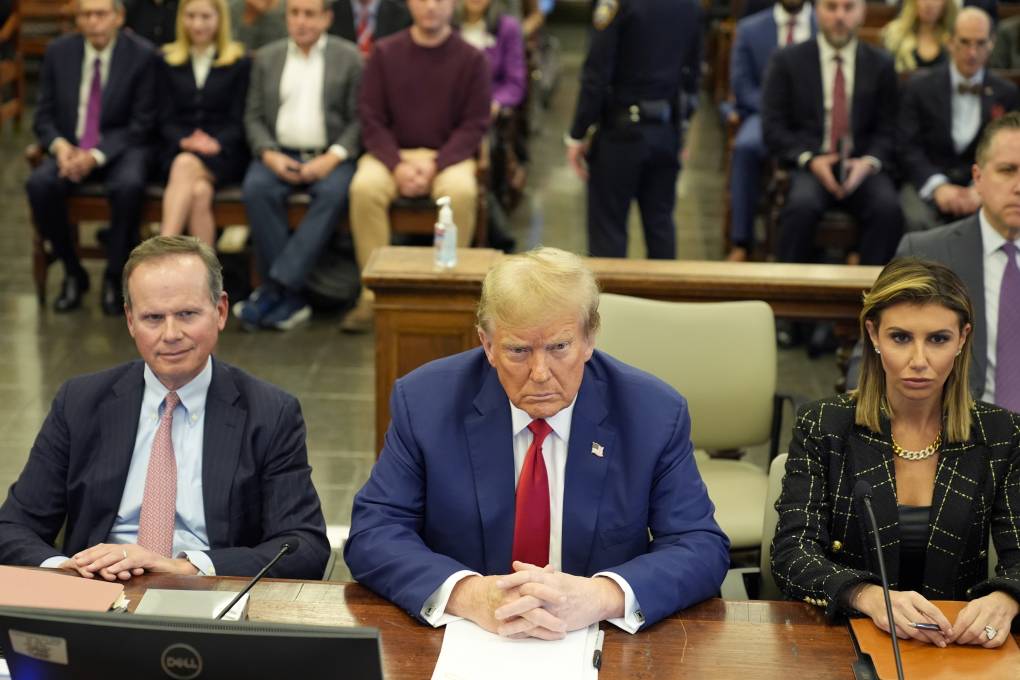
"caption": "Former US President Donald Trump and his lawyers Christopher Kise and Alina Habba attend the closing arguments in the Trump Organization civil fraud trial at New York State Supreme Court on Jan. 11, 2024 in New York City. ",
"description": null,
"title": "Closing Arguments Delivered In Trump's Civil Fraud Trial In NYC",
"credit": "Seth Wenig-Pool/Getty Images",
"status": "inherit",
"altTag": null,
"isLoading": false,
"fetchFailed": false
},
"news_11974107": {
"type": "attachments",
"id": "news_11974107",
"meta": {
"index": "attachments_1716263798",
"site": "news",
"id": "11974107",
"found": true
},
"parent": 11974101,
"imgSizes": {
"twentyfourteen-full-width": {
"file": "https://cdn.kqed.org/wp-content/uploads/sites/10/2024/01/GettyImages-1232582143-1038x576.jpg",
"width": 1038,
"mimeType": "image/jpeg",
"height": 576
},
"thumbnail": {
"file": "https://cdn.kqed.org/wp-content/uploads/sites/10/2024/01/GettyImages-1232582143-160x107.jpg",
"width": 160,
"mimeType": "image/jpeg",
"height": 107
},
"post-thumbnail": {
"file": "https://cdn.kqed.org/wp-content/uploads/sites/10/2024/01/GettyImages-1232582143-672x372.jpg",
"width": 672,
"mimeType": "image/jpeg",
"height": 372
},
"kqedFullSize": {
"file": "https://cdn.kqed.org/wp-content/uploads/sites/10/2024/01/GettyImages-1232582143-scaled.jpg",
"width": 2560,
"height": 1707
},
"2048x2048": {
"file": "https://cdn.kqed.org/wp-content/uploads/sites/10/2024/01/GettyImages-1232582143-2048x1365.jpg",
"width": 2048,
"mimeType": "image/jpeg",
"height": 1365
},
"large": {
"file": "https://cdn.kqed.org/wp-content/uploads/sites/10/2024/01/GettyImages-1232582143-1020x680.jpg",
"width": 1020,
"mimeType": "image/jpeg",
"height": 680
},
"1536x1536": {
"file": "https://cdn.kqed.org/wp-content/uploads/sites/10/2024/01/GettyImages-1232582143-1536x1024.jpg",
"width": 1536,
"mimeType": "image/jpeg",
"height": 1024
},
"full-width": {
"file": "https://cdn.kqed.org/wp-content/uploads/sites/10/2024/01/GettyImages-1232582143-1920x1280.jpg",
"width": 1920,
"mimeType": "image/jpeg",
"height": 1280
},
"medium": {
"file": "https://cdn.kqed.org/wp-content/uploads/sites/10/2024/01/GettyImages-1232582143-800x533.jpg",
"width": 800,
"mimeType": "image/jpeg",
"height": 533
}
},
"publishDate": 1706560483,
"modified": 1709836994,
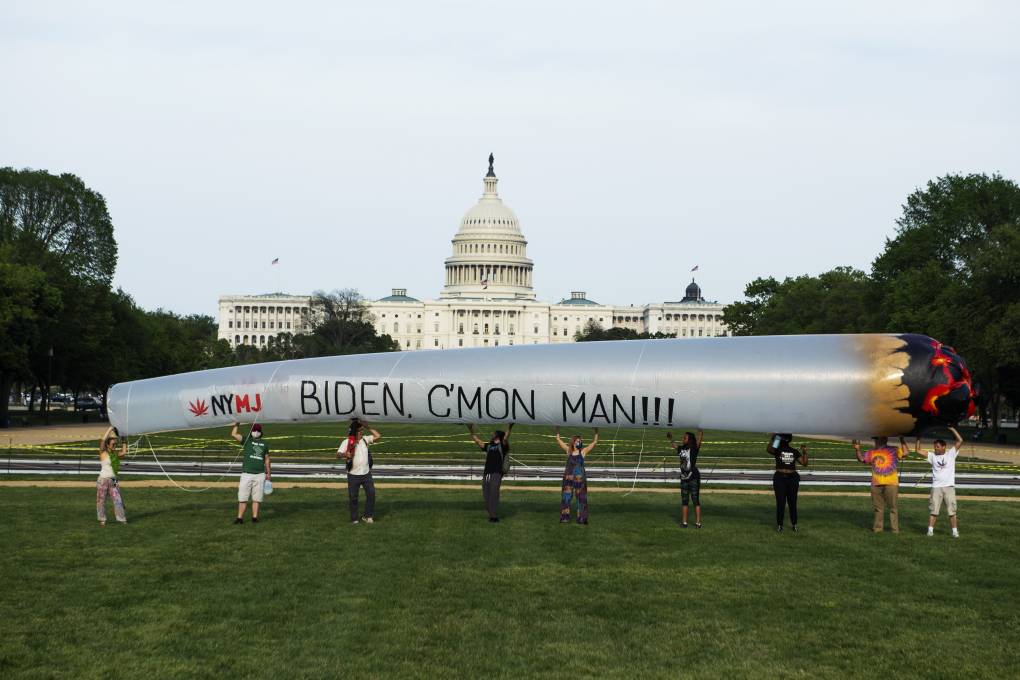
"caption": "Members of the DC Marijuana Justice community hold a 51 blow-up joint on the National Mall ahead of President Joe Bidens address to a joint session of Congress to call on the administration to take action on legalization and expungement of criminal records on April 28, 2021.",
"description": null,
"title": "DC Marijuana Justice",
"credit": "Tom Williams/CQ-Roll Call, Inc via Getty Images",
"status": "inherit",
"altTag": null,
"isLoading": false,
"fetchFailed": false
},
"news_11974187": {
"type": "attachments",
"id": "news_11974187",
"meta": {
"index": "attachments_1716263798",
"site": "news",
"id": "11974187",
"found": true
},
"parent": 11974081,
"imgSizes": {
"twentyfourteen-full-width": {
"file": "https://cdn.kqed.org/wp-content/uploads/sites/10/2024/01/240129-KAMALA-HARRIS-SAN-JOSE-MD-13-KQED-1038x576.jpg",
"width": 1038,
"mimeType": "image/jpeg",
"height": 576
},
"thumbnail": {
"file": "https://cdn.kqed.org/wp-content/uploads/sites/10/2024/01/240129-KAMALA-HARRIS-SAN-JOSE-MD-13-KQED-160x107.jpg",
"width": 160,
"mimeType": "image/jpeg",
"height": 107
},
"post-thumbnail": {
"file": "https://cdn.kqed.org/wp-content/uploads/sites/10/2024/01/240129-KAMALA-HARRIS-SAN-JOSE-MD-13-KQED-672x372.jpg",
"width": 672,
"mimeType": "image/jpeg",
"height": 372
},
"kqedFullSize": {
"file": "https://cdn.kqed.org/wp-content/uploads/sites/10/2024/01/240129-KAMALA-HARRIS-SAN-JOSE-MD-13-KQED.jpg",
"width": 2000,
"height": 1333
},
"large": {
"file": "https://cdn.kqed.org/wp-content/uploads/sites/10/2024/01/240129-KAMALA-HARRIS-SAN-JOSE-MD-13-KQED-1020x680.jpg",
"width": 1020,
"mimeType": "image/jpeg",
"height": 680
},
"1536x1536": {
"file": "https://cdn.kqed.org/wp-content/uploads/sites/10/2024/01/240129-KAMALA-HARRIS-SAN-JOSE-MD-13-KQED-1536x1024.jpg",
"width": 1536,
"mimeType": "image/jpeg",
"height": 1024
},
"full-width": {
"file": "https://cdn.kqed.org/wp-content/uploads/sites/10/2024/01/240129-KAMALA-HARRIS-SAN-JOSE-MD-13-KQED-1920x1280.jpg",
"width": 1920,
"mimeType": "image/jpeg",
"height": 1280
},
"medium": {
"file": "https://cdn.kqed.org/wp-content/uploads/sites/10/2024/01/240129-KAMALA-HARRIS-SAN-JOSE-MD-13-KQED-800x533.jpg",
"width": 800,
"mimeType": "image/jpeg",
"height": 533
}
},
"publishDate": 1706576508,
"modified": 1706576530,
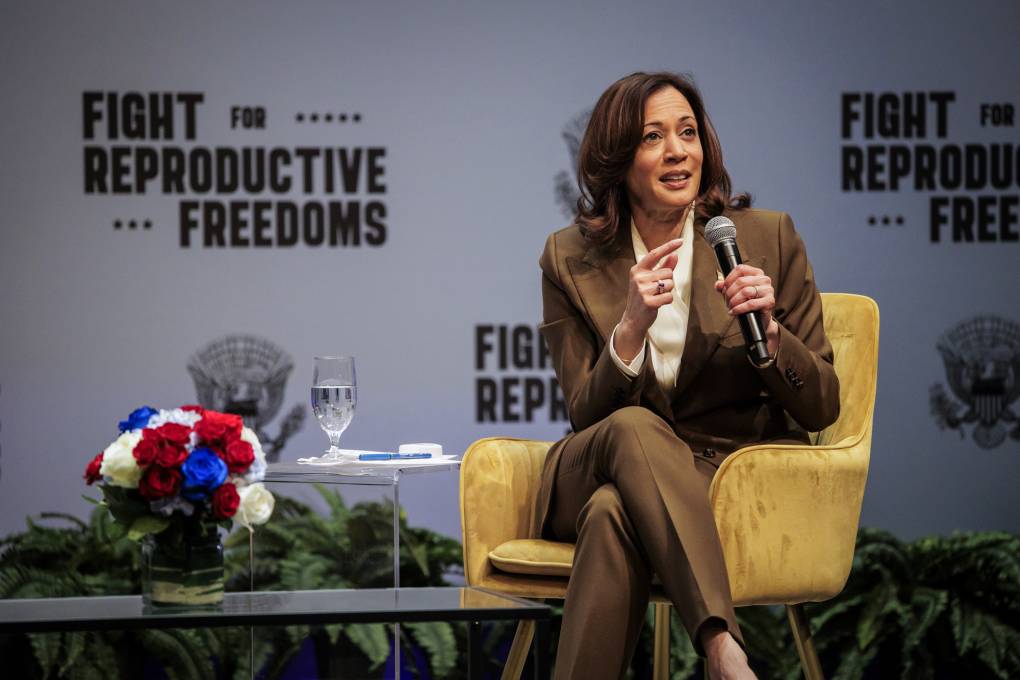
"caption": "Vice President Kamala Harris speaks during the 'Fight for Reproductive Freedoms' tour at Mexican Heritage Plaza in San José on Jan. 29, 2024.",
"description": null,
"title": "240129-KAMALA HARRIS SAN JOSE-MD-13-KQED",
"credit": "Martin do Nascimento/KQED",
"status": "inherit",
"altTag": "Vice President Kamala Harris is pictured sitting in a yellow seat on a stage.",
"isLoading": false,
"fetchFailed": false
},
"news_11973867": {
"type": "attachments",
"id": "news_11973867",
"meta": {
"index": "attachments_1716263798",
"site": "news",
"id": "11973867",
"found": true
},
"title": "Students And Loan Activists Rally For The Cancellation Of Student Debt",
"publishDate": 1706300221,
"status": "inherit",
"parent": 11973847,
"modified": 1730942319,
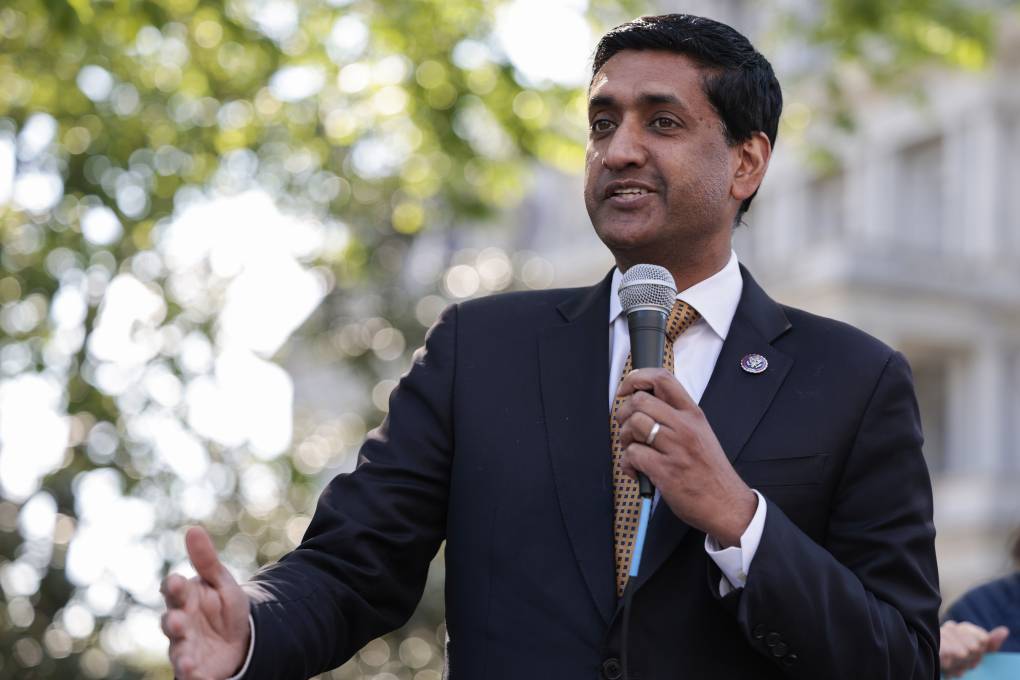
"caption": "Rep. Ro Khanna (D-Fremont) speaks at a Student Loan Forgiveness rally on Pennsylvania Avenue and 17th Street near the White House on April 27, 2022, in Washington, D.C. ",
"credit": "Anna Moneymaker/Getty Images",
"altTag": null,
"description": null,
"imgSizes": {
"medium": {
"file": "https://cdn.kqed.org/wp-content/uploads/sites/10/2024/01/GettyImages-1394023104-800x533.jpg",
"width": 800,
"height": 533,
"mimeType": "image/jpeg"
},
"large": {
"file": "https://cdn.kqed.org/wp-content/uploads/sites/10/2024/01/GettyImages-1394023104-1020x680.jpg",
"width": 1020,
"height": 680,
"mimeType": "image/jpeg"
},
"thumbnail": {
"file": "https://cdn.kqed.org/wp-content/uploads/sites/10/2024/01/GettyImages-1394023104-160x107.jpg",
"width": 160,
"height": 107,
"mimeType": "image/jpeg"
},
"1536x1536": {
"file": "https://cdn.kqed.org/wp-content/uploads/sites/10/2024/01/GettyImages-1394023104-1536x1024.jpg",
"width": 1536,
"height": 1024,
"mimeType": "image/jpeg"
},
"2048x2048": {
"file": "https://cdn.kqed.org/wp-content/uploads/sites/10/2024/01/GettyImages-1394023104-2048x1365.jpg",
"width": 2048,
"height": 1365,
"mimeType": "image/jpeg"
},
"post-thumbnail": {
"file": "https://cdn.kqed.org/wp-content/uploads/sites/10/2024/01/GettyImages-1394023104-672x372.jpg",
"width": 672,
"height": 372,
"mimeType": "image/jpeg"
},
"twentyfourteen-full-width": {
"file": "https://cdn.kqed.org/wp-content/uploads/sites/10/2024/01/GettyImages-1394023104-1038x576.jpg",
"width": 1038,
"height": 576,
"mimeType": "image/jpeg"
},
"full-width": {
"file": "https://cdn.kqed.org/wp-content/uploads/sites/10/2024/01/GettyImages-1394023104-1920x1280.jpg",
"width": 1920,
"height": 1280,
"mimeType": "image/jpeg"
},
"kqedFullSize": {
"file": "https://cdn.kqed.org/wp-content/uploads/sites/10/2024/01/GettyImages-1394023104-scaled.jpg",
"width": 2560,
"height": 1707
}
},
"isLoading": false,
"fetchFailed": false
},
"news_11973712": {
"type": "attachments",
"id": "news_11973712",
"meta": {
"index": "attachments_1716263798",
"site": "news",
"id": "11973712",
"found": true
},
"parent": 11973684,
"imgSizes": {
"twentyfourteen-full-width": {
"file": "https://cdn.kqed.org/wp-content/uploads/sites/10/2024/01/IMG_7659-1038x576.jpg",
"width": 1038,
"mimeType": "image/jpeg",
"height": 576
},
"thumbnail": {
"file": "https://cdn.kqed.org/wp-content/uploads/sites/10/2024/01/IMG_7659-160x107.jpg",
"width": 160,
"mimeType": "image/jpeg",
"height": 107
},
"post-thumbnail": {
"file": "https://cdn.kqed.org/wp-content/uploads/sites/10/2024/01/IMG_7659-672x372.jpg",
"width": 672,
"mimeType": "image/jpeg",
"height": 372
},
"kqedFullSize": {
"file": "https://cdn.kqed.org/wp-content/uploads/sites/10/2024/01/IMG_7659-scaled.jpg",
"width": 2560,
"height": 1707
},
"2048x2048": {
"file": "https://cdn.kqed.org/wp-content/uploads/sites/10/2024/01/IMG_7659-2048x1365.jpg",
"width": 2048,
"mimeType": "image/jpeg",
"height": 1365
},
"large": {
"file": "https://cdn.kqed.org/wp-content/uploads/sites/10/2024/01/IMG_7659-1020x680.jpg",
"width": 1020,
"mimeType": "image/jpeg",
"height": 680
},
"1536x1536": {
"file": "https://cdn.kqed.org/wp-content/uploads/sites/10/2024/01/IMG_7659-1536x1024.jpg",
"width": 1536,
"mimeType": "image/jpeg",
"height": 1024
},
"full-width": {
"file": "https://cdn.kqed.org/wp-content/uploads/sites/10/2024/01/IMG_7659-1920x1280.jpg",
"width": 1920,
"mimeType": "image/jpeg",
"height": 1280
},
"medium": {
"file": "https://cdn.kqed.org/wp-content/uploads/sites/10/2024/01/IMG_7659-800x533.jpg",
"width": 800,
"mimeType": "image/jpeg",
"height": 533
}
},
"publishDate": 1706220099,
"modified": 1706247313,
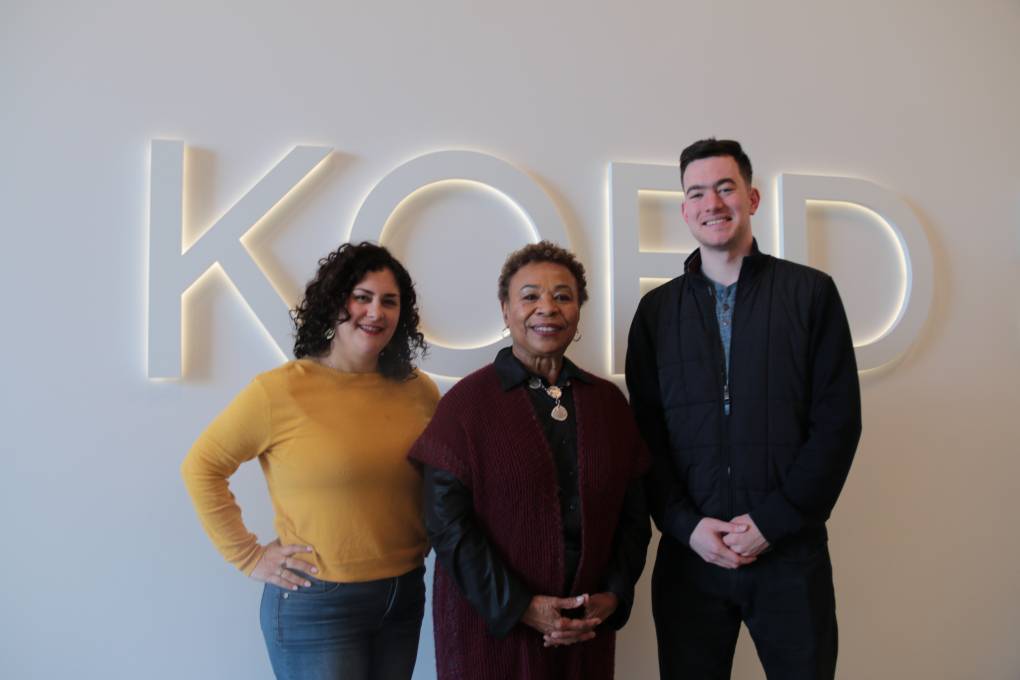
"caption": "Marisa Lagos and Guy Marzorati pose with Oakland Congresswoman Barbara Lee, who's running for the US Senate seat held for more than 30 years by the late Dianne Feinstein.",
"description": "Marisa Lagos and Guy Marzorati pose with Oakland Congresswoman Barbara Lee, who's running for the U.S. Senate seat held for more than 30 years by the late Dianne Feinstein. (Izzy Bloom/KQED)",
"title": null,
"credit": "Izzy Bloom/KQED",
"status": "inherit",
"altTag": null,
"isLoading": false,
"fetchFailed": false
},
"news_11973594": {
"type": "attachments",
"id": "news_11973594",
"meta": {
"index": "attachments_1716263798",
"site": "news",
"id": "11973594",
"found": true
},
"parent": 11973593,
"imgSizes": {
"twentyfourteen-full-width": {
"file": "https://cdn.kqed.org/wp-content/uploads/sites/10/2024/01/GettyImages-1938433789-1038x576.jpg",
"width": 1038,
"mimeType": "image/jpeg",
"height": 576
},
"thumbnail": {
"file": "https://cdn.kqed.org/wp-content/uploads/sites/10/2024/01/GettyImages-1938433789-160x107.jpg",
"width": 160,
"mimeType": "image/jpeg",
"height": 107
},
"post-thumbnail": {
"file": "https://cdn.kqed.org/wp-content/uploads/sites/10/2024/01/GettyImages-1938433789-672x372.jpg",
"width": 672,
"mimeType": "image/jpeg",
"height": 372
},
"kqedFullSize": {
"file": "https://cdn.kqed.org/wp-content/uploads/sites/10/2024/01/GettyImages-1938433789-scaled.jpg",
"width": 2560,
"height": 1707
},
"2048x2048": {
"file": "https://cdn.kqed.org/wp-content/uploads/sites/10/2024/01/GettyImages-1938433789-2048x1365.jpg",
"width": 2048,
"mimeType": "image/jpeg",
"height": 1365
},
"large": {
"file": "https://cdn.kqed.org/wp-content/uploads/sites/10/2024/01/GettyImages-1938433789-1020x680.jpg",
"width": 1020,
"mimeType": "image/jpeg",
"height": 680
},
"1536x1536": {
"file": "https://cdn.kqed.org/wp-content/uploads/sites/10/2024/01/GettyImages-1938433789-1536x1024.jpg",
"width": 1536,
"mimeType": "image/jpeg",
"height": 1024
},
"full-width": {
"file": "https://cdn.kqed.org/wp-content/uploads/sites/10/2024/01/GettyImages-1938433789-1920x1280.jpg",
"width": 1920,
"mimeType": "image/jpeg",
"height": 1280
},
"medium": {
"file": "https://cdn.kqed.org/wp-content/uploads/sites/10/2024/01/GettyImages-1938433789-800x533.jpg",
"width": 800,
"mimeType": "image/jpeg",
"height": 533
}
},
"publishDate": 1706137536,
"modified": 1706146541,
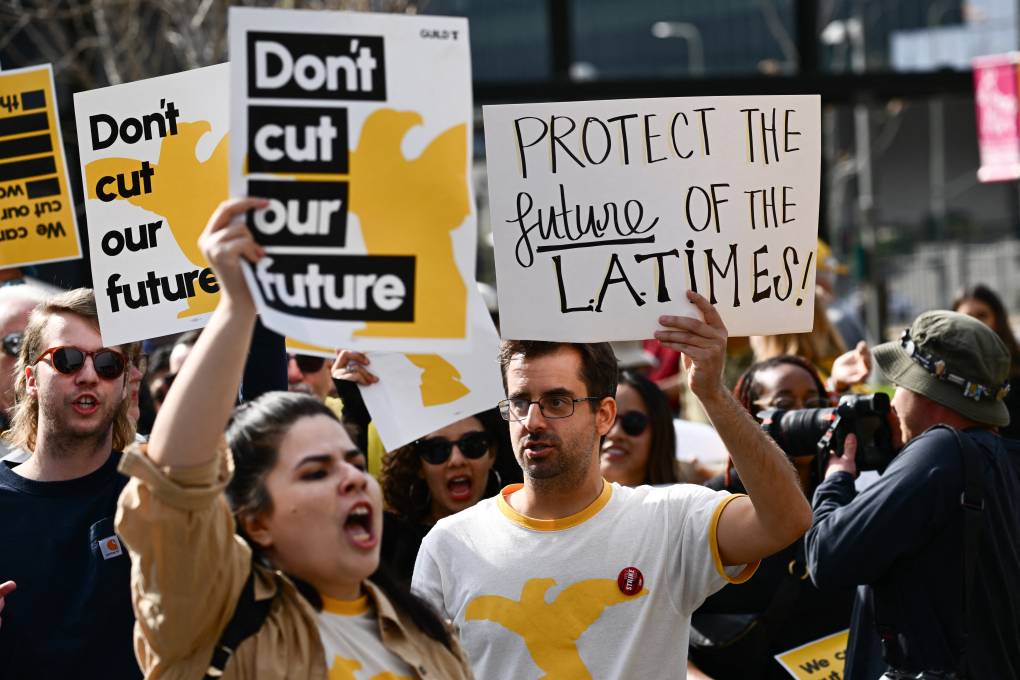
"caption": "LA Times Guild journalists rally in front of City Hall to protest against layoffs and changes to job seniority protections during a walkout of the Los Angeles Times newspaper at Grand Park in downtown Los Angeles, Jan. 19, 2024. The newspaper said Jan. 18 that it planned layoffs because of an increasing budget deficit. The 1-day strike is the newsroom's first in the paper's 142-year history. ",
"description": null,
"title": "TOPSHOT-US-ECONOMY-JOURNALISM-UNIONS-STRIKE-LATIMES",
"credit": "Patrick T. Fallon/AFP via Getty Images",
"status": "inherit",
"altTag": null,
"isLoading": false,
"fetchFailed": false
},
"news_11972004": {
"type": "attachments",
"id": "news_11972004",
"meta": {
"index": "attachments_1716263798",
"site": "news",
"id": "11972004",
"found": true
},
"parent": 11972002,
"imgSizes": {
"twentyfourteen-full-width": {
"file": "https://cdn.kqed.org/wp-content/uploads/sites/10/2024/01/GettyImages-1910714981-1038x576.jpg",
"width": 1038,
"mimeType": "image/jpeg",
"height": 576
},
"thumbnail": {
"file": "https://cdn.kqed.org/wp-content/uploads/sites/10/2024/01/GettyImages-1910714981-160x107.jpg",
"width": 160,
"mimeType": "image/jpeg",
"height": 107
},
"post-thumbnail": {
"file": "https://cdn.kqed.org/wp-content/uploads/sites/10/2024/01/GettyImages-1910714981-672x372.jpg",
"width": 672,
"mimeType": "image/jpeg",
"height": 372
},
"kqedFullSize": {
"file": "https://cdn.kqed.org/wp-content/uploads/sites/10/2024/01/GettyImages-1910714981-scaled-e1704764346173.jpg",
"width": 1920,
"height": 1280
},
"2048x2048": {
"file": "https://cdn.kqed.org/wp-content/uploads/sites/10/2024/01/GettyImages-1910714981-2048x1365.jpg",
"width": 2048,
"mimeType": "image/jpeg",
"height": 1365
},
"large": {
"file": "https://cdn.kqed.org/wp-content/uploads/sites/10/2024/01/GettyImages-1910714981-1020x680.jpg",
"width": 1020,
"mimeType": "image/jpeg",
"height": 680
},
"1536x1536": {
"file": "https://cdn.kqed.org/wp-content/uploads/sites/10/2024/01/GettyImages-1910714981-1536x1024.jpg",
"width": 1536,
"mimeType": "image/jpeg",
"height": 1024
},
"full-width": {
"file": "https://cdn.kqed.org/wp-content/uploads/sites/10/2024/01/GettyImages-1910714981-1920x1280.jpg",
"width": 1920,
"mimeType": "image/jpeg",
"height": 1280
},
"medium": {
"file": "https://cdn.kqed.org/wp-content/uploads/sites/10/2024/01/GettyImages-1910714981-800x533.jpg",
"width": 800,
"mimeType": "image/jpeg",
"height": 533
}
},
"publishDate": 1704764289,
"modified": 1704764410,
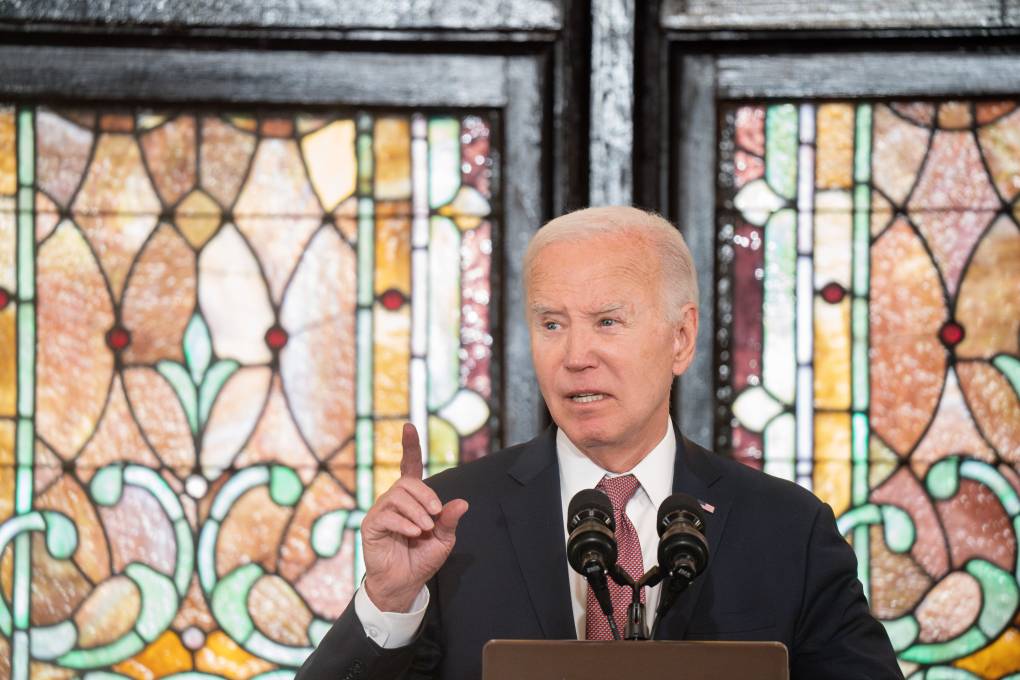
"caption": "U.S. President Joe Biden speaks during a campaign event at Emanuel AME Church on January 8, 2024 in Charleston, South Carolina. The church was the site of a 2015 shooting massacre perpetrated by a white supremacist. (Sean Rayford/Getty Images)",
"description": null,
"title": "President Biden Delivers Remarks Emanuel AME Church In South Carolina As He Campaigns For Re-Election",
"credit": null,
"status": "inherit",
"altTag": null,
"isLoading": false,
"fetchFailed": false
},
"news_11967804": {
"type": "attachments",
"id": "news_11967804",
"meta": {
"index": "attachments_1716263798",
"site": "news",
"id": "11967804",
"found": true
},
"parent": 0,
"imgSizes": {
"twentyfourteen-full-width": {
"file": "https://ww2.kqed.org/app/uploads/sites/10/2023/11/231116-PamelaPrice-04-1038x576.jpg",
"width": 1038,
"mimeType": "image/jpeg",
"height": 576
},
"thumbnail": {
"file": "https://ww2.kqed.org/app/uploads/sites/10/2023/11/231116-PamelaPrice-04-160x107.jpg",
"width": 160,
"mimeType": "image/jpeg",
"height": 107
},
"post-thumbnail": {
"file": "https://ww2.kqed.org/app/uploads/sites/10/2023/11/231116-PamelaPrice-04-672x372.jpg",
"width": 672,
"mimeType": "image/jpeg",
"height": 372
},
"kqedFullSize": {
"file": "https://ww2.kqed.org/app/uploads/sites/10/2023/11/231116-PamelaPrice-04.jpg",
"width": 1920,
"height": 1280
},
"large": {
"file": "https://ww2.kqed.org/app/uploads/sites/10/2023/11/231116-PamelaPrice-04-1020x680.jpg",
"width": 1020,
"mimeType": "image/jpeg",
"height": 680
},
"1536x1536": {
"file": "https://ww2.kqed.org/app/uploads/sites/10/2023/11/231116-PamelaPrice-04-1536x1024.jpg",
"width": 1536,
"mimeType": "image/jpeg",
"height": 1024
},
"medium": {
"file": "https://ww2.kqed.org/app/uploads/sites/10/2023/11/231116-PamelaPrice-04-800x533.jpg",
"width": 800,
"mimeType": "image/jpeg",
"height": 533
}
},
"publishDate": 1700263573,
"modified": 1700337686,
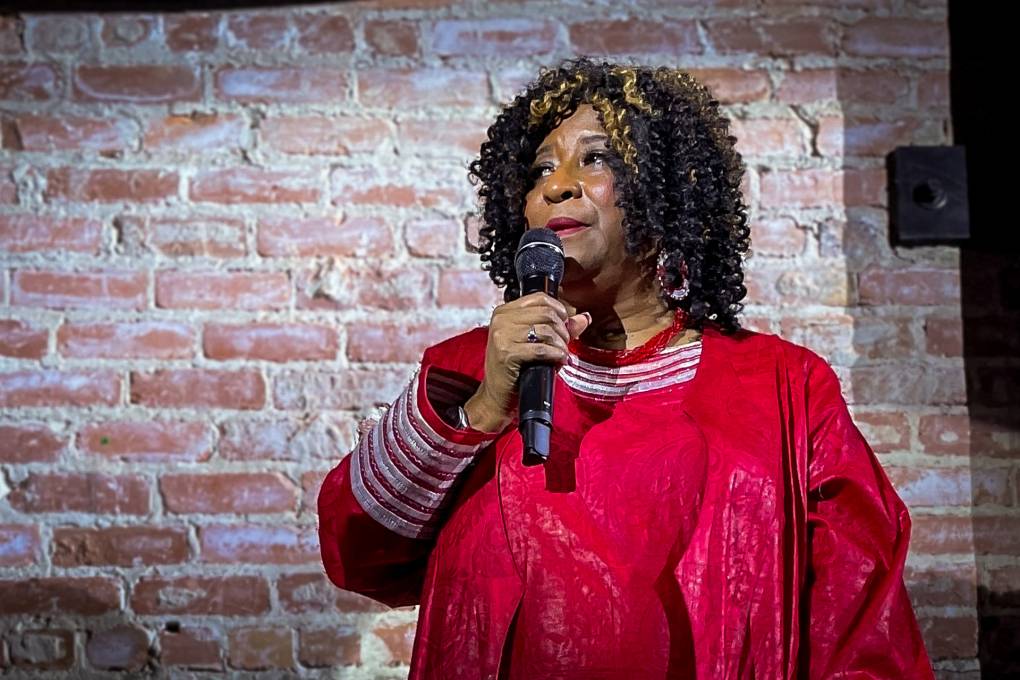
"caption": "Alameda County District Attorney Pamela Price addresses attendees at the launch of her 'Protect the Win' campaign in Oakland on Nov. 16, 2023, to fight back against her recall.",
"description": null,
"title": "231116-PamelaPrice-04",
"credit": "Annelise Finney/KQED",
"status": "inherit",
"altTag": "A woman wearing a red dress speaks into a microphone.",
"isLoading": false,
"fetchFailed": false
},
"news_11970111": {
"type": "attachments",
"id": "news_11970111",
"meta": {
"index": "attachments_1716263798",
"site": "news",
"id": "11970111",
"found": true
},
"parent": 0,
"imgSizes": {
"twentyfourteen-full-width": {
"file": "https://cdn.kqed.org/wp-content/uploads/sites/10/2023/12/231215-Liccardo-Low-Simitian-KQED-1038x576.jpg",
"width": 1038,
"mimeType": "image/jpeg",
"height": 576
},
"thumbnail": {
"file": "https://cdn.kqed.org/wp-content/uploads/sites/10/2023/12/231215-Liccardo-Low-Simitian-KQED-160x107.jpg",
"width": 160,
"mimeType": "image/jpeg",
"height": 107
},
"post-thumbnail": {
"file": "https://cdn.kqed.org/wp-content/uploads/sites/10/2023/12/231215-Liccardo-Low-Simitian-KQED-672x372.jpg",
"width": 672,
"mimeType": "image/jpeg",
"height": 372
},
"kqedFullSize": {
"file": "https://cdn.kqed.org/wp-content/uploads/sites/10/2023/12/231215-Liccardo-Low-Simitian-KQED.jpg",
"width": 2000,
"height": 1333
},
"large": {
"file": "https://cdn.kqed.org/wp-content/uploads/sites/10/2023/12/231215-Liccardo-Low-Simitian-KQED-1020x680.jpg",
"width": 1020,
"mimeType": "image/jpeg",
"height": 680
},
"1536x1536": {
"file": "https://cdn.kqed.org/wp-content/uploads/sites/10/2023/12/231215-Liccardo-Low-Simitian-KQED-1536x1024.jpg",
"width": 1536,
"mimeType": "image/jpeg",
"height": 1024
},
"full-width": {
"file": "https://cdn.kqed.org/wp-content/uploads/sites/10/2023/12/231215-Liccardo-Low-Simitian-KQED-1920x1280.jpg",
"width": 1920,
"mimeType": "image/jpeg",
"height": 1280
},
"medium": {
"file": "https://cdn.kqed.org/wp-content/uploads/sites/10/2023/12/231215-Liccardo-Low-Simitian-KQED-800x533.jpg",
"width": 800,
"mimeType": "image/jpeg",
"height": 533
}
},
"publishDate": 1702673081,
"modified": 1712366091,
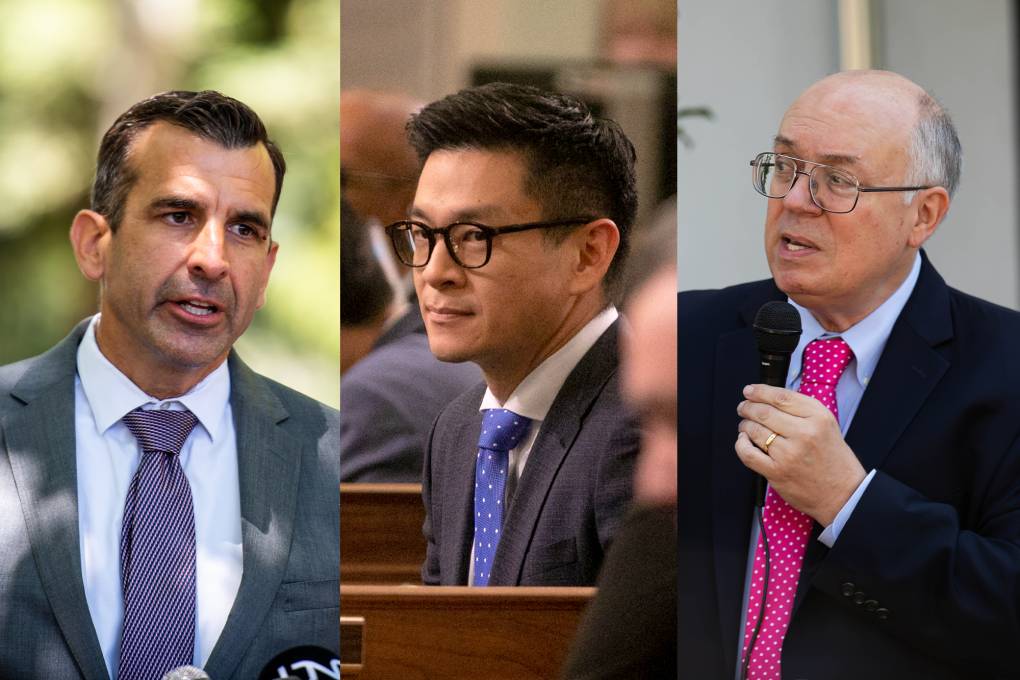
"caption": "San José Mayor Sam Liccardo, California Assemblymember Evan Low, and Santa Clara Board of Supervisors President Joe Simitian.",
"description": null,
"title": "231215-Liccardo Low Simitian-KQED",
"credit": "Beth LaBerge/KQED; Jason Armond/Los Angeles Times via Getty Images; Randy Vazquez/Bay Area News Group",
"status": "inherit",
"altTag": "Three photos of people wearing suits.",
"isLoading": false,
"fetchFailed": false
},
"news_11970120": {
"type": "attachments",
"id": "news_11970120",
"meta": {
"index": "attachments_1716263798",
"site": "news",
"id": "11970120",
"found": true
},
"title": "Aerial view of Redwood City, Silicon Valley, San Francisco bay, California",
"publishDate": 1702674463,
"status": "inherit",
"parent": 11970062,
"modified": 1783630584,
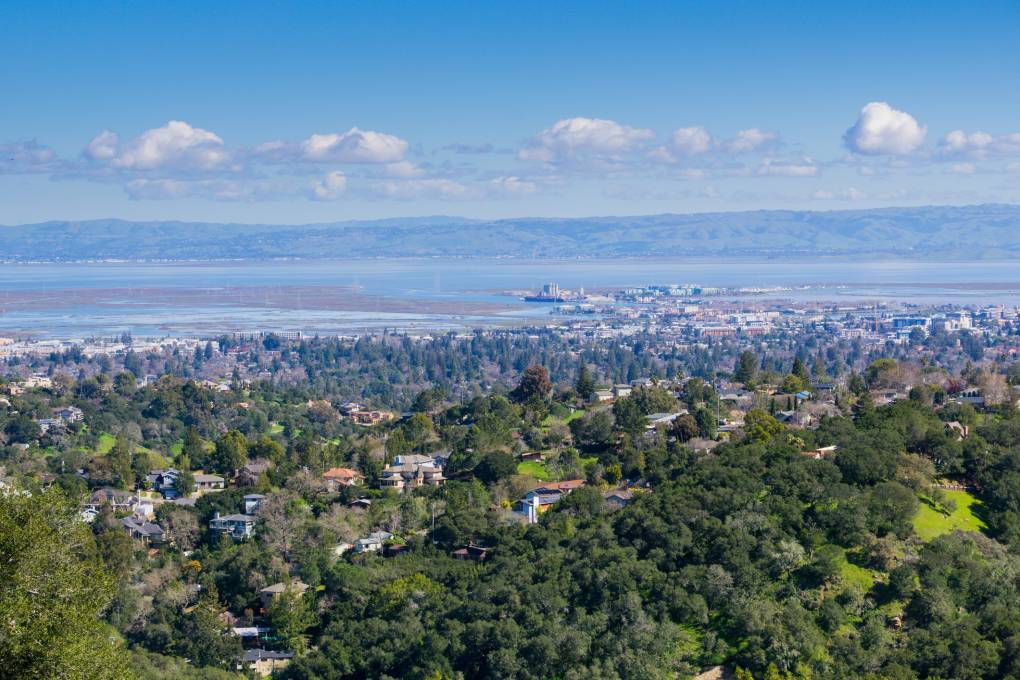
"caption": "An aerial view of Redwood City.",
"credit": "Sundry Photography via Getty Images",
"altTag": "An aerial view of a city, with a large body of water in the background.",
"description": null,
"imgSizes": {
"medium": {
"file": "https://cdn.kqed.org/wp-content/uploads/sites/10/2023/12/GettyImages-1092771432-800x533.jpg",
"width": 800,
"height": 533,
"mimeType": "image/jpeg"
},
"large": {
"file": "https://cdn.kqed.org/wp-content/uploads/sites/10/2023/12/GettyImages-1092771432-1020x680.jpg",
"width": 1020,
"height": 680,
"mimeType": "image/jpeg"
},
"thumbnail": {
"file": "https://cdn.kqed.org/wp-content/uploads/sites/10/2023/12/GettyImages-1092771432-160x107.jpg",
"width": 160,
"height": 107,
"mimeType": "image/jpeg"
},
"1536x1536": {
"file": "https://cdn.kqed.org/wp-content/uploads/sites/10/2023/12/GettyImages-1092771432-1536x1024.jpg",
"width": 1536,
"height": 1024,
"mimeType": "image/jpeg"
},
"2048x2048": {
"file": "https://cdn.kqed.org/wp-content/uploads/sites/10/2023/12/GettyImages-1092771432-2048x1365.jpg",
"width": 2048,
"height": 1365,
"mimeType": "image/jpeg"
},
"post-thumbnail": {
"file": "https://cdn.kqed.org/wp-content/uploads/sites/10/2023/12/GettyImages-1092771432-672x372.jpg",
"width": 672,
"height": 372,
"mimeType": "image/jpeg"
},
"twentyfourteen-full-width": {
"file": "https://cdn.kqed.org/wp-content/uploads/sites/10/2023/12/GettyImages-1092771432-1038x576.jpg",
"width": 1038,
"height": 576,
"mimeType": "image/jpeg"
},
"full-width": {
"file": "https://cdn.kqed.org/wp-content/uploads/sites/10/2023/12/GettyImages-1092771432-1920x1280.jpg",
"width": 1920,
"height": 1280,
"mimeType": "image/jpeg"
},
"kqedFullSize": {
"file": "https://cdn.kqed.org/wp-content/uploads/sites/10/2023/12/GettyImages-1092771432.jpg",
"width": 2121,
"height": 1414
}
},
"isLoading": false,
"fetchFailed": false
},
"news_11968798": {
"type": "attachments",
"id": "news_11968798",
"meta": {
"index": "attachments_1716263798",
"site": "news",
"id": "11968798",
"found": true
},
"parent": 11968796,
"imgSizes": {
"twentyfourteen-full-width": {
"file": "https://ww2.kqed.org/app/uploads/sites/10/2023/12/GettyImages-1823723071-1024x576.jpg",
"width": 1024,
"mimeType": "image/jpeg",
"height": 576
},
"thumbnail": {
"file": "https://ww2.kqed.org/app/uploads/sites/10/2023/12/GettyImages-1823723071-160x110.jpg",
"width": 160,
"mimeType": "image/jpeg",
"height": 110
},
"post-thumbnail": {
"file": "https://ww2.kqed.org/app/uploads/sites/10/2023/12/GettyImages-1823723071-672x372.jpg",
"width": 672,
"mimeType": "image/jpeg",
"height": 372
},
"kqedFullSize": {
"file": "https://ww2.kqed.org/app/uploads/sites/10/2023/12/GettyImages-1823723071.jpg",
"width": 1024,
"height": 704
},
"large": {
"file": "https://ww2.kqed.org/app/uploads/sites/10/2023/12/GettyImages-1823723071-1020x701.jpg",
"width": 1020,
"mimeType": "image/jpeg",
"height": 701
},
"medium": {
"file": "https://ww2.kqed.org/app/uploads/sites/10/2023/12/GettyImages-1823723071-800x550.jpg",
"width": 800,
"mimeType": "image/jpeg",
"height": 550
}
},
"publishDate": 1701460386,
"modified": 1701460474,
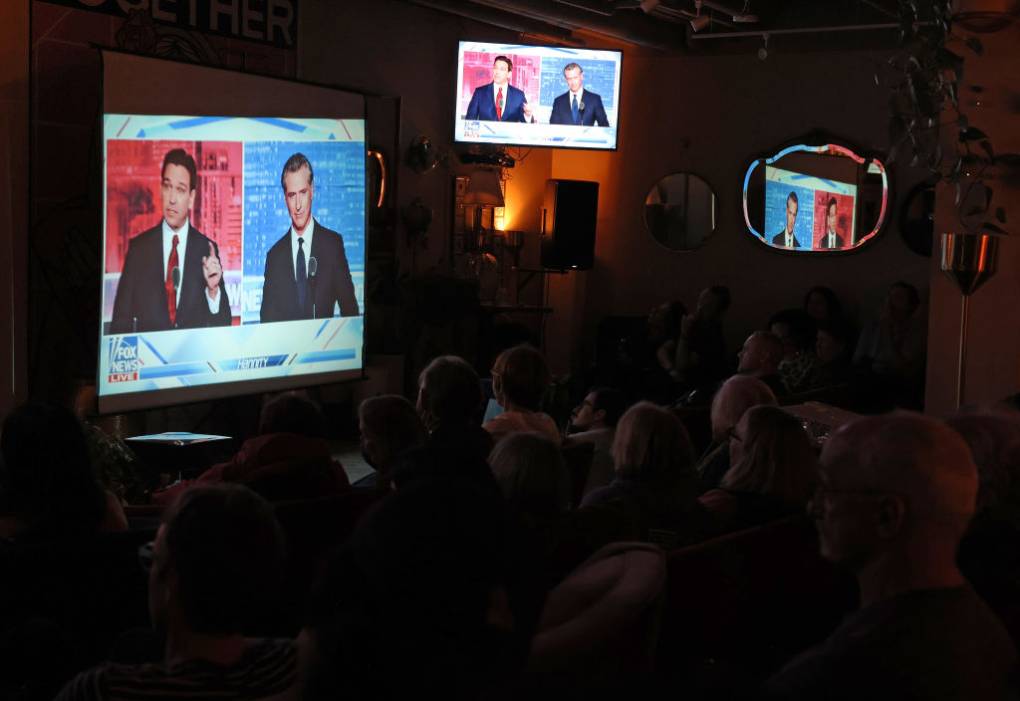
"caption": "People watch a debate between California Gov. Gavin Newsom and Florida Gov. Ron DeSantis during a watch party at Manny's on Nov. 30, 2023 in San Francisco. Newsom and DeSantis were hosted by Sean Hannity on Fox.",
"description": null,
"title": "Watch Party Held For Debate Between California Governor Newsom And Florida Gov. DeSantis",
"credit": "Justin Sullivan/Getty Images",
"status": "inherit",
"altTag": "A dim-lit room full of people watching a TV screen with two men.",
"isLoading": false,
"fetchFailed": false
},
"news_11967975": {
"type": "attachments",
"id": "news_11967975",
"meta": {
"index": "attachments_1716263798",
"site": "news",
"id": "11967975",
"found": true
},
"parent": 11967974,
"imgSizes": {
"twentyfourteen-full-width": {
"file": "https://ww2.kqed.org/app/uploads/sites/10/2023/11/gettyimages-1743393609_slide-2a5b5157225afc746be8ab3332df733afcceead3-1038x576.jpg",
"width": 1038,
"mimeType": "image/jpeg",
"height": 576
},
"thumbnail": {
"file": "https://ww2.kqed.org/app/uploads/sites/10/2023/11/gettyimages-1743393609_slide-2a5b5157225afc746be8ab3332df733afcceead3-160x107.jpg",
"width": 160,
"mimeType": "image/jpeg",
"height": 107
},
"post-thumbnail": {
"file": "https://ww2.kqed.org/app/uploads/sites/10/2023/11/gettyimages-1743393609_slide-2a5b5157225afc746be8ab3332df733afcceead3-672x372.jpg",
"width": 672,
"mimeType": "image/jpeg",
"height": 372
},
"kqedFullSize": {
"file": "https://ww2.kqed.org/app/uploads/sites/10/2023/11/gettyimages-1743393609_slide-2a5b5157225afc746be8ab3332df733afcceead3-scaled.jpg",
"width": 2560,
"height": 1706
},
"2048x2048": {
"file": "https://ww2.kqed.org/app/uploads/sites/10/2023/11/gettyimages-1743393609_slide-2a5b5157225afc746be8ab3332df733afcceead3-2048x1365.jpg",
"width": 2048,
"mimeType": "image/jpeg",
"height": 1365
},
"large": {
"file": "https://ww2.kqed.org/app/uploads/sites/10/2023/11/gettyimages-1743393609_slide-2a5b5157225afc746be8ab3332df733afcceead3-1020x680.jpg",
"width": 1020,
"mimeType": "image/jpeg",
"height": 680
},
"1536x1536": {
"file": "https://ww2.kqed.org/app/uploads/sites/10/2023/11/gettyimages-1743393609_slide-2a5b5157225afc746be8ab3332df733afcceead3-1536x1024.jpg",
"width": 1536,
"mimeType": "image/jpeg",
"height": 1024
},
"full-width": {
"file": "https://ww2.kqed.org/app/uploads/sites/10/2023/11/gettyimages-1743393609_slide-2a5b5157225afc746be8ab3332df733afcceead3-1920x1280.jpg",
"width": 1920,
"mimeType": "image/jpeg",
"height": 1280
},
"medium": {
"file": "https://ww2.kqed.org/app/uploads/sites/10/2023/11/gettyimages-1743393609_slide-2a5b5157225afc746be8ab3332df733afcceead3-800x533.jpg",
"width": 800,
"mimeType": "image/jpeg",
"height": 533
}
},
"publishDate": 1700522640,
"modified": 1700685697,
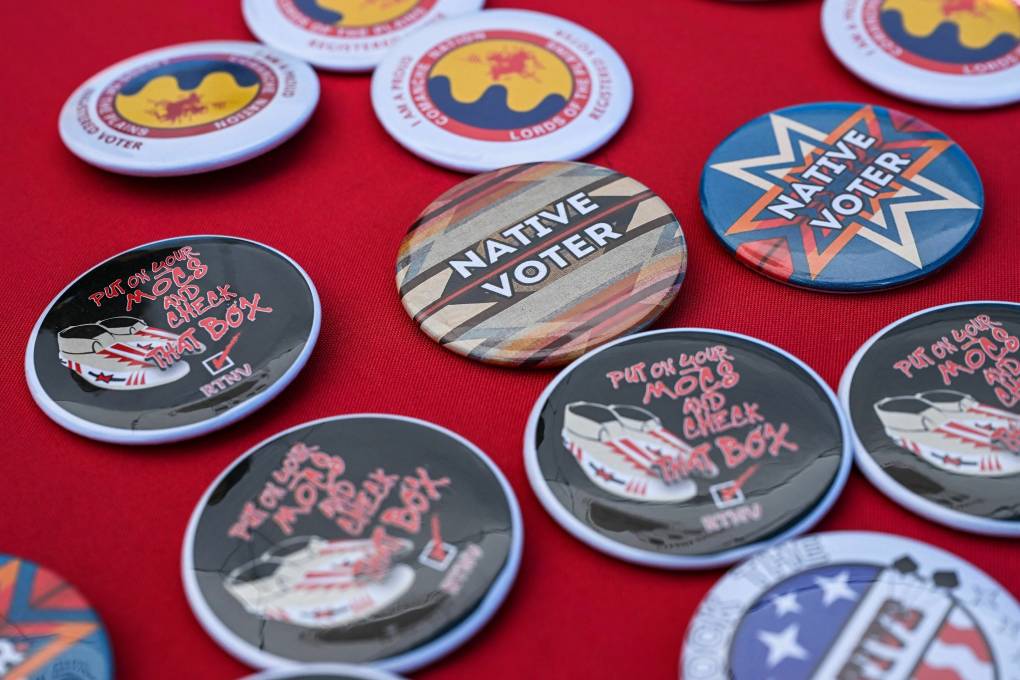
"caption": "Pins at a display counter during a cultural meeting at the Comanche Nation fairgrounds in Lawton, Oklahoma on Sept. 30, 2023. After Alaska, Oklahoma is the state with the most Native Americans of voting age — 12% of the population, according to census statistics.",
"description": null,
"title": "Pins are pictured at a display counter during a cultural meeting at the Comanche Nation fairgrounds in Lawton, Okla., on Sept. 30.",
"credit": "Chandan Khanna/AFP via Getty Images",
"status": "inherit",
"altTag": "Several pins scatted on a red tablecloth.",
"isLoading": false,
"fetchFailed": false
}
},
"audioPlayerReducer": {
"postId": "stream_live",
"isPaused": true,
"isPlaying": false,
"pfsActive": false,
"pledgeModalIsOpen": true,
"playerDrawerIsOpen": false,
"liveAudioPlayStartedAt": 0,
"liveAudioPlayContext": ""
},
"authorsReducer": {
"byline_news_11968796": {
"type": "authors",
"id": "byline_news_11968796",
"meta": {
"override": true
},
"slug": "byline_news_11968796",
"name": "\u003ca href=\"https://www.npr.org/people/392602474/domenico-montanaro\">Domenico Montanaro\u003c/a>",
"isLoading": false
},
"byline_news_11967974": {
"type": "authors",
"id": "byline_news_11967974",
"meta": {
"override": true
},
"slug": "byline_news_11967974",
"name": "\u003ca href=\"https://www.npr.org/people/1101057193/ximena-bustillo\">Ximena Bustillo\u003c/a>",
"isLoading": false
},
"gmarzorati": {
"type": "authors",
"id": "227",
"meta": {
"index": "authors_1716337520",
"id": "227",
"found": true
},
"name": "Guy Marzorati",
"firstName": "Guy",
"lastName": "Marzorati",
"slug": "gmarzorati",
"email": "gmarzorati@KQED.org",
"display_author_email": true,
"staff_mastheads": [
"news"
],
"title": "Correspondent",
"bio": "Guy Marzorati is a correspondent on KQED's California Politics and Government Desk, based in San Jose. A graduate of Santa Clara University, Guy joined KQED in 2013. He reports on state and local politics and produces KQED's digital voter guide.",
"avatar": "https://secure.gravatar.com/avatar/e7038b8dbfd55b104369b76b1cd0b9de?s=600&d=blank&r=g",
"twitter": "guymarzorati",
"facebook": null,
"instagram": null,
"linkedin": null,
"sites": [
{
"site": "",
"roles": [
"editor"
]
},
{
"site": "news",
"roles": [
"editor"
]
},
{
"site": "science",
"roles": [
"editor"
]
},
{
"site": "forum",
"roles": [
"editor"
]
},
{
"site": "elections",
"roles": [
"editor"
]
},
{
"site": "liveblog",
"roles": [
"editor"
]
}
],
"headData": {
"title": "Guy Marzorati | KQED",
"description": "Correspondent",
"ogImgSrc": "https://secure.gravatar.com/avatar/e7038b8dbfd55b104369b76b1cd0b9de?s=600&d=blank&r=g",
"twImgSrc": "https://secure.gravatar.com/avatar/e7038b8dbfd55b104369b76b1cd0b9de?s=600&d=blank&r=g"
},
"isLoading": false,
"link": "/author/gmarzorati"
},
"scottshafer": {
"type": "authors",
"id": "255",
"meta": {
"index": "authors_1716337520",
"id": "255",
"found": true
},
"name": "Scott Shafer",
"firstName": "Scott",
"lastName": "Shafer",
"slug": "scottshafer",
"email": "sshafer@kqed.org",
"display_author_email": false,
"staff_mastheads": [
"news"
],
"title": "KQED Contributor",
"bio": "Scott Shafer is a senior editor with the KQED Politics and Government desk. He is co-host of Political Breakdown, the award-winning radio show and podcast with a personal take on the world of politics. Scott came to KQED in 1998 to host the statewide\u003cem> California Report\u003c/em>. Prior to that he had extended stints in politics and government\u003cem>.\u003c/em> He uses that inside experience at KQED in his, reporting, hosting and analysis for the politics desk. Scott collaborated \u003cem>Political Breakdown a\u003c/em>nd on \u003cem>The Political Mind of Jerry Brown, \u003c/em>an eight-part series about the life and extraordinary political career of the former governor. For fun, he plays water polo with the San Francisco Tsunami.",
"avatar": "https://secure.gravatar.com/avatar/a62ebae45b79d7aed1a39a0e3bf68104?s=600&d=blank&r=g",
"twitter": "scottshafer",
"bluesky": null,
"facebook": null,
"instagram": null,
"linkedin": null,
"sites": [
{
"site": "news",
"roles": [
"editor"
]
},
{
"site": "stateofhealth",
"roles": [
"author"
]
},
{
"site": "science",
"roles": [
"author"
]
},
{
"site": "forum",
"roles": [
"subscriber"
]
},
{
"site": "liveblog",
"roles": [
"author"
]
}
],
"headData": {
"title": "Scott Shafer | KQED",
"description": "KQED Contributor",
"ogImgSrc": "https://secure.gravatar.com/avatar/a62ebae45b79d7aed1a39a0e3bf68104?s=600&d=blank&r=g",
"twImgSrc": "https://secure.gravatar.com/avatar/a62ebae45b79d7aed1a39a0e3bf68104?s=600&d=blank&r=g"
},
"isLoading": false,
"link": "/author/scottshafer"
},
"mlagos": {
"type": "authors",
"id": "3239",
"meta": {
"index": "authors_1716337520",
"id": "3239",
"found": true
},
"name": "Marisa Lagos",
"firstName": "Marisa",
"lastName": "Lagos",
"slug": "mlagos",
"email": "mlagos@kqed.org",
"display_author_email": false,
"staff_mastheads": [
"news"
],
"title": "KQED Contributor",
"bio": "Marisa Lagos is a correspondent for KQED’s California Politics and Government Desk and co-hosts the award-winning show and podcast, Political Breakdown. At KQED, Lagos also conducts reporting, analysis and investigations into state, local and national politics for radio, TV, online and onstage. In 2022, she and co-host, Scott Shafer, moderated the only gubernatorial debate in California. In 2020, the \u003ci>Washington Post\u003c/i> named her one of the top political journalists in California; she was nominated for a Peabody and won several other awards for her work investigating the 2017 California wildfires. She has worked at the \u003ci>San Francisco Chronicle\u003c/i>, \u003ci>San Francisco Examiner\u003c/i> and \u003ci>Los Angeles Times\u003c/i>. A UC Santa Barbara graduate, she lives in San Francisco with her two sons and husband.",
"avatar": "https://secure.gravatar.com/avatar/a261a0d3696fc066871ef96b85b5e7d2?s=600&d=blank&r=g",
"twitter": "@mlagos",
"facebook": null,
"instagram": null,
"linkedin": null,
"sites": [
{
"site": "arts",
"roles": [
"author"
]
},
{
"site": "news",
"roles": [
"editor"
]
},
{
"site": "science",
"roles": [
"editor"
]
},
{
"site": "forum",
"roles": [
"author"
]
},
{
"site": "liveblog",
"roles": [
"author"
]
}
],
"headData": {
"title": "Marisa Lagos | KQED",
"description": "KQED Contributor",
"ogImgSrc": "https://secure.gravatar.com/avatar/a261a0d3696fc066871ef96b85b5e7d2?s=600&d=blank&r=g",
"twImgSrc": "https://secure.gravatar.com/avatar/a261a0d3696fc066871ef96b85b5e7d2?s=600&d=blank&r=g"
},
"isLoading": false,
"link": "/author/mlagos"
},
"ecruzguevarra": {
"type": "authors",
"id": "8654",
"meta": {
"index": "authors_1716337520",
"id": "8654",
"found": true
},
"name": "Ericka Cruz Guevarra",
"firstName": "Ericka",
"lastName": "Cruz Guevarra",
"slug": "ecruzguevarra",
"email": "ecruzguevarra@kqed.org",
"display_author_email": true,
"staff_mastheads": [
"news"
],
"title": "Producer, The Bay Podcast",
"bio": "Ericka Cruz Guevarra is host of \u003ca href=\"https://www.kqed.org/podcasts/thebay\">\u003cem>The Bay\u003c/em>\u003c/a> podcast at KQED. Before host, she was the show’s producer. Her work in that capacity includes a three-part reported series on policing in Vallejo, which won a 2020 excellence in journalism award from the Society of Professional Journalists. Ericka has worked as a breaking news reporter at Oregon Public Broadcasting, helped produce the Code Switch podcast, and was KQED’s inaugural Raul Ramirez Diversity Fund intern. She’s also an alumna of NPR’s Next Generation Radio program. Send her an email if you have strong feelings about whether Fairfield and Suisun City are the Bay. Ericka is represented by SAG-AFTRA.",
"avatar": "https://secure.gravatar.com/avatar/accefc1de4bafc7e234b69bcb9b6f6536c130fd84709bc3069ef11a78787e1bb?s=600&d=blank&r=g",
"twitter": "NotoriousECG",
"bluesky": null,
"facebook": null,
"instagram": null,
"linkedin": null,
"sites": [
{
"site": "arts",
"roles": [
"subscriber"
]
},
{
"site": "news",
"roles": [
"editor",
"manage_categories"
]
},
{
"site": "futureofyou",
"roles": [
"subscriber"
]
},
{
"site": "stateofhealth",
"roles": [
"subscriber"
]
},
{
"site": "science",
"roles": [
"editor"
]
},
{
"site": "forum",
"roles": [
"subscriber"
]
}
],
"headData": {
"title": "Ericka Cruz Guevarra | KQED",
"description": "Producer, The Bay Podcast",
"ogImgSrc": "https://secure.gravatar.com/avatar/accefc1de4bafc7e234b69bcb9b6f6536c130fd84709bc3069ef11a78787e1bb?s=600&d=blank&r=g",
"twImgSrc": "https://secure.gravatar.com/avatar/accefc1de4bafc7e234b69bcb9b6f6536c130fd84709bc3069ef11a78787e1bb?s=600&d=blank&r=g"
},
"isLoading": false,
"link": "/author/ecruzguevarra"
},
"ebaldassari": {
"type": "authors",
"id": "11652",
"meta": {
"index": "authors_1716337520",
"id": "11652",
"found": true
},
"name": "Erin Baldassari",
"firstName": "Erin",
"lastName": "Baldassari",
"slug": "ebaldassari",
"email": "ebaldassari@KQED.org",
"display_author_email": true,
"staff_mastheads": [
"news"
],
"title": "Staff Writer",
"bio": "Erin Baldassari covers housing for KQED. She's a former print journalist and most recently worked as the transportation reporter for the \u003cem>Mercury News\u003c/em> and \u003cem>East Bay Times. \u003c/em>There, she focused on how the Bay Area’s housing shortage has changed the way people move around the region. She also served on the \u003cem>East Bay Times\u003c/em>’ 2017 Pulitzer Prize-winning team for coverage of the Ghost Ship Fire in Oakland. Prior to that, Erin worked as a breaking news and general assignment reporter for a variety of outlets in the Bay Area and the greater Boston area. A Tufts University alumna, Erin grew up in the foothills of the Sierra Nevada mountains and in Sonoma County. She is a life-long KQED listener.",
"avatar": "https://secure.gravatar.com/avatar/5e95cad64a8ca08288082212e199d2b0cbeb4fd8e8ef5339395f361032bbe005?s=600&d=blank&r=g",
"twitter": "e_baldi",
"bluesky": null,
"facebook": null,
"instagram": null,
"linkedin": null,
"sites": [
{
"site": "news",
"roles": [
"edit_others_posts",
"editor"
]
},
{
"site": "science",
"roles": [
"editor"
]
},
{
"site": "liveblog",
"roles": [
"editor"
]
}
],
"headData": {
"title": "Erin Baldassari | KQED",
"description": "Staff Writer",
"ogImgSrc": "https://secure.gravatar.com/avatar/5e95cad64a8ca08288082212e199d2b0cbeb4fd8e8ef5339395f361032bbe005?s=600&d=blank&r=g",
"twImgSrc": "https://secure.gravatar.com/avatar/5e95cad64a8ca08288082212e199d2b0cbeb4fd8e8ef5339395f361032bbe005?s=600&d=blank&r=g"
},
"isLoading": false,
"link": "/author/ebaldassari"
},
"afinney": {
"type": "authors",
"id": "11772",
"meta": {
"index": "authors_1716337520",
"id": "11772",
"found": true
},
"name": "Annelise Finney",
"firstName": "Annelise",
"lastName": "Finney",
"slug": "afinney",
"email": "afinney@kqed.org",
"display_author_email": true,
"staff_mastheads": [
"news"
],
"title": "Reporter",
"bio": "Annelise reports on reparations in California and East Bay politics. She co-produced the Sunday Music Drop, a limited-term radio series featuring Bay Area musicians that aired between Sept 2022 and Oct 2024. She joined KQED in 2021 as a general assignment reporter and is an alumna of KALW's Audio Academy. She was born and raised in the East Bay. She is currently away from KQED completing a year-long reporting project in Berlin, Germany as a Alexander Von Humboldt German Chancellor Fellow.",
"avatar": "https://secure.gravatar.com/avatar/5fded66cae47704cdfc5021cde0f3aa4?s=600&d=blank&r=g",
"twitter": null,
"facebook": null,
"instagram": null,
"linkedin": null,
"sites": [
{
"site": "news",
"roles": [
"editor"
]
},
{
"site": "liveblog",
"roles": [
"author"
]
}
],
"headData": {
"title": "Annelise Finney | KQED",
"description": "Reporter",
"ogImgSrc": "https://secure.gravatar.com/avatar/5fded66cae47704cdfc5021cde0f3aa4?s=600&d=blank&r=g",
"twImgSrc": "https://secure.gravatar.com/avatar/5fded66cae47704cdfc5021cde0f3aa4?s=600&d=blank&r=g"
},
"isLoading": false,
"link": "/author/afinney"
},
"mesquinca": {
"type": "authors",
"id": "11802",
"meta": {
"index": "authors_1716337520",
"id": "11802",
"found": true
},
"name": "Maria Esquinca",
"firstName": "Maria",
"lastName": "Esquinca",
"slug": "mesquinca",
"email": "mesquinca@kqed.org",
"display_author_email": false,
"staff_mastheads": [],
"title": "Producer, The Bay",
"bio": "María Esquinca is a producer of The Bay. Before that, she was a New York Women’s Foundation IGNITE Fellow at Latino USA. She worked at Radio Bilingue where she covered the San Joaquin Valley. Maria has interned at WLRN, News 21, The New York Times Student Journalism Institute and at Crain’s Detroit Business as a Dow Jones News Fund Business Reporting Intern. She is an MFA graduate from the University of Miami. In 2017, she graduated from the Walter Cronkite School of Journalism and Mass Communication with a Master of Mass Communication. A fronteriza, she was born in Ciudad Juárez, Chihuahua, Mexico and grew up in El Paso, Texas.",
"avatar": "https://secure.gravatar.com/avatar/77cedba18aae91da775038ba06dcd8d0?s=600&d=blank&r=g",
"twitter": "@m_esquinca",
"facebook": null,
"instagram": null,
"linkedin": null,
"sites": [
{
"site": "news",
"roles": []
}
],
"headData": {
"title": "Maria Esquinca | KQED",
"description": "Producer, The Bay",
"ogImgSrc": "https://secure.gravatar.com/avatar/77cedba18aae91da775038ba06dcd8d0?s=600&d=blank&r=g",
"twImgSrc": "https://secure.gravatar.com/avatar/77cedba18aae91da775038ba06dcd8d0?s=600&d=blank&r=g"
},
"isLoading": false,
"link": "/author/mesquinca"
}
},
"pagesReducer": {
"news_tag_election-2024": {
"type": "terms",
"id": "news_32839",
"meta": {
"index": "terms_1716263798",
"site": "news",
"id": "32839",
"score": 8.937076
},
"featImg": null,
"name": "Election 2024",
"description": null,
"taxonomy": "tag",
"headData": {
"twImgId": null,
"twTitle": null,
"ogTitle": null,
"ogImgId": null,
"twDescription": null,
"description": null,
"title": "Election 2024 Archives | KQED News",
"ogDescription": null
},
"ttid": 32856,
"slug": "election-2024",
"isLoading": false,
"title": "Election 2024",
"pageMeta": {
"site": "news",
"WpPageTemplate": "page-topic-editorial",
"currentPage": 36
},
"blocks": [
{
"blockName": "kqed/post-list",
"attrs": {
"layout": "cardArticle2",
"query": "posts/news?tag=election-2024",
"seeMore": false,
"paginated": true,
"page": 36
}
},
{
"blockName": "kqed/ad"
}
]
}
},
"pfsSessionReducer": {},
"postsReducer": {
"stream_live": {
"type": "live",
"id": "stream_live",
"audioUrl": "https://streams.kqed.org/kqedradio",
"title": "Live Stream",
"excerpt": "Live Stream information currently unavailable.",
"link": "/radio",
"featImg": "",
"label": {
"name": "KQED Live",
"link": "/"
}
},
"stream_kqedNewscast": {
"type": "posts",
"id": "stream_kqedNewscast",
"audioUrl": "https://www.kqed.org/.stream/anon/radio/RDnews/newscast.mp3?_=1",
"title": "KQED Newscast",
"featImg": "",
"label": {
"name": "88.5 FM",
"link": "/"
}
},
"news_11974383": {
"type": "posts",
"id": "news_11974383",
"meta": {
"index": "posts_1716263798",
"site": "news",
"id": "11974383",
"score": null,
"sort": [
1706751003000
]
},
"parent": 0,
"labelTerm": {},
"blocks": [],
"publishDate": 1706751003,
"format": "audio",
"title": "Cal's Law School Dean Joins SCOTUS Brief Saying Trump's 'Violent, Incendiary Speech' Should Ban Him From the Ballot",
"headTitle": "Cal’s Law School Dean Joins SCOTUS Brief Saying Trump’s ‘Violent, Incendiary Speech’ Should Ban Him From the Ballot | KQED",
"content": "\u003cp>\u003cspan style=\"font-weight: 400\">The dean of UC Berkeley’s Law School has signed onto an amicus brief urging the U.S. Supreme Court to rule that Donald Trump is ineligible to be president due to his participation in the January 6 insurrection. Scott talks with Dean Erwin Chemerinsky about that issue and all the other legal perils Trump is facing.\u003c/span>\u003c/p>\n\u003cp>[ad fullwidth]\u003c/p>\u003cp>\u003c/p>\n",
"stats": {
"hasVideo": false,
"hasChartOrMap": false,
"hasAudio": false,
"hasPolis": false,
"wordCount": 60,
"hasGoogleForm": false,
"hasGallery": false,
"hasHearkenModule": false,
"iframeSrcs": [],
"paragraphCount": 3
},
"modified": 1706749455,
"excerpt": null,
"headData": {
"twImgId": "",
"twTitle": "",
"ogTitle": "",
"ogImgId": "",
"twDescription": "",
"description": "The dean of UC Berkeley’s Law School has signed onto an amicus brief urging the U.S. Supreme Court to rule that Donald Trump is ineligible to be president due to his participation in the January 6 insurrection. Scott talks with Dean Erwin Chemerinsky about that issue and all the other legal perils Trump is facing.",
"title": "Cal's Law School Dean Joins SCOTUS Brief Saying Trump's 'Violent, Incendiary Speech' Should Ban Him From the Ballot | KQED",
"ogDescription": "",
"schema": {
"@context": "https://schema.org",
"@type": "NewsArticle",
"headline": "Cal's Law School Dean Joins SCOTUS Brief Saying Trump's 'Violent, Incendiary Speech' Should Ban Him From the Ballot",
"datePublished": "2024-01-31T17:30:03-08:00",
"dateModified": "2024-01-31T17:04:15-08:00",
"image": "https://cdn.kqed.org/wp-content/uploads/2020/02/KQED-OG-Image@1x.png",
"isAccessibleForFree": "True",
"publisher": {
"@type": "NewsMediaOrganization",
"@id": "https://www.kqed.org/#organization",
"name": "KQED",
"logo": "https://cdn.kqed.org/wp-content/uploads/2020/02/KQED-OG-Image@1x.png",
"url": "https://www.kqed.org",
"sameAs": [
"https://www.facebook.com/KQED",
"https://twitter.com/KQED",
"https://www.instagram.com/kqed/",
"https://www.tiktok.com/@kqedofficial",
"https://www.linkedin.com/company/kqed",
"https://www.youtube.com/channel/UCeC0IOo7i1P_61zVUWbJ4nw"
]
}
}
},
"guestAuthors": [],
"slug": "cals-law-school-dean-joins-scotus-brief-saying-trumps-violent-incendiary-speech-should-ban-him-from-the-ballot",
"status": "publish",
"audioUrl": "https://www.podtrac.com/pts/redirect.mp3/chrt.fm/track/G6C7C3/traffic.megaphone.fm/KQINC6368146039.mp3?updated=1706743598",
"excludeFromSiteSearch": "Include",
"sticky": false,
"source": "Political Breakdown",
"articleAge": "0",
"path": "/news/11974383/cals-law-school-dean-joins-scotus-brief-saying-trumps-violent-incendiary-speech-should-ban-him-from-the-ballot",
"audioTrackLength": null,
"parsedContent": [
{
"type": "contentString",
"content": "\u003cdiv class=\"post-body\">\u003cp>\u003cp>\u003cspan style=\"font-weight: 400\">The dean of UC Berkeley’s Law School has signed onto an amicus brief urging the U.S. Supreme Court to rule that Donald Trump is ineligible to be president due to his participation in the January 6 insurrection. Scott talks with Dean Erwin Chemerinsky about that issue and all the other legal perils Trump is facing.\u003c/span>\u003c/p>\n\u003cp>\u003c/p>\u003c/div>",
"attributes": {
"named": {},
"numeric": []
}
},
{
"type": "component",
"content": "",
"name": "ad",
"attributes": {
"named": {
"label": "fullwidth"
},
"numeric": [
"fullwidth"
]
}
},
{
"type": "contentString",
"content": "\u003cdiv class=\"post-body\">\u003cp>\u003c/p>\u003cp>\u003c/p>\n\u003c/div>\u003c/p>",
"attributes": {
"named": {},
"numeric": []
}
}
],
"link": "/news/11974383/cals-law-school-dean-joins-scotus-brief-saying-trumps-violent-incendiary-speech-should-ban-him-from-the-ballot",
"authors": [
"255"
],
"programs": [
"news_33544"
],
"categories": [
"news_8"
],
"tags": [
"news_1323",
"news_32839",
"news_22235",
"news_17968"
],
"featImg": "news_11974384",
"label": "source_news_11974383"
},
"news_11974101": {
"type": "posts",
"id": "news_11974101",
"meta": {
"index": "posts_1716263798",
"site": "news",
"id": "11974101",
"score": null,
"sort": [
1706578852000
]
},
"parent": 0,
"labelTerm": {},
"blocks": [],
"publishDate": 1706578852,
"format": "audio",
"title": "Could Pot Policy Light Up Younger Voters' Support for Biden?",
"headTitle": "Could Pot Policy Light Up Younger Voters’ Support for Biden? | KQED",
"content": "\u003cp>Vice President Kamala Harris’ push to rally voters in San José around support for reproductive rights ran headlong into protests on Monday, demanding an immediate cease-fire in the Israel-Hamas War in Gaza. Scott talks about that with Guy Marzorati, who was there before and during Harris’ appearance.\u003c/p>\n\u003cp>Plus, President Joe Biden is facing major problems with younger voters. They’re upset his climate change policies haven’t gone further, and they’re disaffected by his unwavering support for Israel in its war with Hamas. Some think a push for decriminalizing marijuana use could help Biden win back voters under 30. Scott talks to David Downs, senior editor and reporter with Leafly.com, an online publication that covers marijuana policy.\u003c/p>\n\u003cp>[ad fullwidth]\u003c/p>\u003cp>\u003c/p>\n",
"stats": {
"hasVideo": false,
"hasChartOrMap": false,
"hasAudio": false,
"hasPolis": false,
"wordCount": 130,
"hasGoogleForm": false,
"hasGallery": false,
"hasHearkenModule": false,
"iframeSrcs": [],
"paragraphCount": 4
},
"modified": 1709837002,
"excerpt": null,
"headData": {
"twImgId": "",
"twTitle": "",
"ogTitle": "",
"ogImgId": "",
"twDescription": "",
"description": "Vice President Kamala Harris’ push to rally voters in San José around support for reproductive rights ran headlong into protests on Monday, demanding an immediate cease-fire in the Israel-Hamas War in Gaza. Scott talks about that with Guy Marzorati, who was there before and during Harris' appearance. Plus, President Joe Biden is facing major problems with younger voters. They’re upset his climate change policies haven’t gone further, and they're disaffected by his unwavering support for Israel in its war with Hamas. Some think a push for decriminalizing marijuana use could help Biden win back voters under 30. Scott talks to David",
"title": "Could Pot Policy Light Up Younger Voters' Support for Biden? | KQED",
"ogDescription": "",
"schema": {
"@context": "https://schema.org",
"@type": "NewsArticle",
"headline": "Could Pot Policy Light Up Younger Voters' Support for Biden?",
"datePublished": "2024-01-29T17:40:52-08:00",
"dateModified": "2024-03-07T10:43:22-08:00",
"image": "https://cdn.kqed.org/wp-content/uploads/2020/02/KQED-OG-Image@1x.png",
"isAccessibleForFree": "True",
"publisher": {
"@type": "NewsMediaOrganization",
"@id": "https://www.kqed.org/#organization",
"name": "KQED",
"logo": "https://cdn.kqed.org/wp-content/uploads/2020/02/KQED-OG-Image@1x.png",
"url": "https://www.kqed.org",
"sameAs": [
"https://www.facebook.com/KQED",
"https://twitter.com/KQED",
"https://www.instagram.com/kqed/",
"https://www.tiktok.com/@kqedofficial",
"https://www.linkedin.com/company/kqed",
"https://www.youtube.com/channel/UCeC0IOo7i1P_61zVUWbJ4nw"
]
}
}
},
"guestAuthors": [],
"slug": "could-pot-policy-light-up-younger-voters-support-for-biden",
"status": "publish",
"audioUrl": "https://www.podtrac.com/pts/redirect.mp3/chrt.fm/track/G6C7C3/traffic.megaphone.fm/KQINC6888613514.mp3?updated=1706578434",
"excludeFromSiteSearch": "Include",
"sticky": false,
"source": "Political Breakdown",
"articleAge": "0",
"path": "/news/11974101/could-pot-policy-light-up-younger-voters-support-for-biden",
"audioTrackLength": null,
"parsedContent": [
{
"type": "contentString",
"content": "\u003cdiv class=\"post-body\">\u003cp>\u003cp>Vice President Kamala Harris’ push to rally voters in San José around support for reproductive rights ran headlong into protests on Monday, demanding an immediate cease-fire in the Israel-Hamas War in Gaza. Scott talks about that with Guy Marzorati, who was there before and during Harris’ appearance.\u003c/p>\n\u003cp>Plus, President Joe Biden is facing major problems with younger voters. They’re upset his climate change policies haven’t gone further, and they’re disaffected by his unwavering support for Israel in its war with Hamas. Some think a push for decriminalizing marijuana use could help Biden win back voters under 30. Scott talks to David Downs, senior editor and reporter with Leafly.com, an online publication that covers marijuana policy.\u003c/p>\n\u003cp>\u003c/p>\u003c/div>",
"attributes": {
"named": {},
"numeric": []
}
},
{
"type": "component",
"content": "",
"name": "ad",
"attributes": {
"named": {
"label": "fullwidth"
},
"numeric": [
"fullwidth"
]
}
},
{
"type": "contentString",
"content": "\u003cdiv class=\"post-body\">\u003cp>\u003c/p>\u003cp>\u003c/p>\n\u003c/div>\u003c/p>",
"attributes": {
"named": {},
"numeric": []
}
}
],
"link": "/news/11974101/could-pot-policy-light-up-younger-voters-support-for-biden",
"authors": [
"255",
"227"
],
"programs": [
"news_33544"
],
"categories": [
"news_21291"
],
"tags": [
"news_32839",
"news_61",
"news_102",
"news_22235",
"news_17968",
"news_33775"
],
"featImg": "news_11974107",
"label": "source_news_11974101"
},
"news_11974081": {
"type": "posts",
"id": "news_11974081",
"meta": {
"index": "posts_1716263798",
"site": "news",
"id": "11974081",
"score": null,
"sort": [
1706565839000
]
},
"parent": 0,
"labelTerm": {
"site": "news"
},
"blocks": [],
"publishDate": 1706565839,
"format": "standard",
"title": "Protesters Demand Permanent Cease-Fire, Interrupting VP Harris' Stop in San José",
"headTitle": "Protesters Demand Permanent Cease-Fire, Interrupting VP Harris’ Stop in San José | KQED",
"content": "\u003cp>Vice President Kamala Harris’ push to rally voters in San José around support for reproductive rights ran headlong into protests Monday, demanding an immediate cease-fire in the Israel-Hamas War in Gaza. [pullquote size=\"medium\" align=\"right\" citation=\"U.S. Vice President Kamala Harris\"]‘Let me say, in a real democracy, everyone has a right to have their voice heard. The President and I are working on that every single day.’[/pullquote]At times, protest chants of “cease-fire now” broke out during the rally, interrupting Harris’ speech at least four times. Outside, dozens of protesters lined up along King Road and Alum Rock Avenue, waving signs outside Mexican Heritage Plaza.\u003c/p>\n\u003cp>“Let me say, in a real democracy, everyone has a right to have their voice heard,” Harris told the crowd after protests broke out inside, adding “We all want this conflict to end as soon as possible and the president and I are working on that every single day.”\u003c/p>\n\u003cp>The colliding forces at the Harris rally exposed a key election year challenge for Democrats: many of the younger, progressive voters who the party hopes to win over with a platform of protecting abortion rights are deeply dissatisfied with the Biden administration’s support of Israel.\u003c/p>\n\u003cfigure id=\"attachment_11974090\" class=\"wp-caption aligncenter\" style=\"max-width: 2000px\">\u003cimg loading=\"lazy\" decoding=\"async\" class=\"size-full wp-image-11974090\" src=\"https://ww2.kqed.org/app/uploads/sites/10/2024/01/240129-KAMALA-HARRIS-SAN-JOSE-MD-01-KQED.jpg\" alt='Dozens of protesters with signs calling for a \"cease-fire.\"' width=\"2000\" height=\"1333\" srcset=\"https://cdn.kqed.org/wp-content/uploads/sites/10/2024/01/240129-KAMALA-HARRIS-SAN-JOSE-MD-01-KQED.jpg 2000w, https://cdn.kqed.org/wp-content/uploads/sites/10/2024/01/240129-KAMALA-HARRIS-SAN-JOSE-MD-01-KQED-800x533.jpg 800w, https://cdn.kqed.org/wp-content/uploads/sites/10/2024/01/240129-KAMALA-HARRIS-SAN-JOSE-MD-01-KQED-1020x680.jpg 1020w, https://cdn.kqed.org/wp-content/uploads/sites/10/2024/01/240129-KAMALA-HARRIS-SAN-JOSE-MD-01-KQED-160x107.jpg 160w, https://cdn.kqed.org/wp-content/uploads/sites/10/2024/01/240129-KAMALA-HARRIS-SAN-JOSE-MD-01-KQED-1536x1024.jpg 1536w, https://cdn.kqed.org/wp-content/uploads/sites/10/2024/01/240129-KAMALA-HARRIS-SAN-JOSE-MD-01-KQED-1920x1280.jpg 1920w\" sizes=\"(max-width: 2000px) 100vw, 2000px\">\u003cfigcaption class=\"wp-caption-text\">Seema Badar (center) and others chant ‘cease-fire now’ outside of Mexican Heritage Plaza in San José, where Vice President Kamala Harris is scheduled to speak on Jan. 29, 2024. \u003ccite>(Martin do Nascimento/KQED)\u003c/cite>\u003c/figcaption>\u003c/figure>\n\u003cp>Holding signs and banners bearing “Free Palestine” and “End U.S. Aid to Israel,” members from the Council on American-Islamic Relations joined a coalition of multi-faith, multiracial organizations with other supporters to demand a permanent cease-fire in Gaza.\u003c/p>\n\u003cp>Allie Felker said she was invited to the Harris event for her work advocating for prenatal care to prevent stillbirths.\u003cbr>\n[pullquote size=\"medium\" align=\"right\" citation=\"Allie Felker, advocate who attended the event\"]‘I can’t come here and advocate for reproductive justice without also standing with Palestine, standing with the women and children of Gaza …’[/pullquote]But less than three minutes into Harris’ on-stage conversation with actress and activist Sophia Bush, Felker stood up and joined in calls for a cease-fire. Felker told KQED she was motivated by the risks to pregnant women caused by the Israeli invasion.\u003c/p>\n\u003cp>“I can’t come here and advocate for reproductive justice without also standing with Palestine, standing with the women and children of Gaza and saying that the reproductive justice we’re seeking in this country needs to also be equated with what’s happening in Gaza,” Felker told KQED.\u003c/p>\n\u003cp>Harris’ stop in San José was a part of her nationwide “Fight for Reproductive Freedoms” tour. Democrats are hoping to continue their run of electoral success on the issue of reproductive rights after the 2022 Supreme Court ruling that overturned a constitutional right to an abortion.\u003c/p>\n\u003cfigure id=\"attachment_11974147\" class=\"wp-caption aligncenter\" style=\"max-width: 2000px\">\u003cimg loading=\"lazy\" decoding=\"async\" class=\"size-full wp-image-11974147\" src=\"https://cdn.kqed.org/wp-content/uploads/sites/10/2024/01/240129-KAMALA-HARRIS-SAN-JOSE-MD-04-KQED.jpg\" alt=\"A protestor holds up a Palestinian flag in red, black, white and green colors inside an event where the Vice President was speaking in San Jose.\" width=\"2000\" height=\"1333\" srcset=\"https://cdn.kqed.org/wp-content/uploads/sites/10/2024/01/240129-KAMALA-HARRIS-SAN-JOSE-MD-04-KQED.jpg 2000w, https://cdn.kqed.org/wp-content/uploads/sites/10/2024/01/240129-KAMALA-HARRIS-SAN-JOSE-MD-04-KQED-800x533.jpg 800w, https://cdn.kqed.org/wp-content/uploads/sites/10/2024/01/240129-KAMALA-HARRIS-SAN-JOSE-MD-04-KQED-1020x680.jpg 1020w, https://cdn.kqed.org/wp-content/uploads/sites/10/2024/01/240129-KAMALA-HARRIS-SAN-JOSE-MD-04-KQED-160x107.jpg 160w, https://cdn.kqed.org/wp-content/uploads/sites/10/2024/01/240129-KAMALA-HARRIS-SAN-JOSE-MD-04-KQED-1536x1024.jpg 1536w, https://cdn.kqed.org/wp-content/uploads/sites/10/2024/01/240129-KAMALA-HARRIS-SAN-JOSE-MD-04-KQED-1920x1280.jpg 1920w\" sizes=\"(max-width: 2000px) 100vw, 2000px\">\u003cfigcaption class=\"wp-caption-text\">Protesters interrupted Vice President Kamala Harris during an event at Mexican Heritage Plaza in San José to demand a cease-fire in Gaza on Jan. 29, 2024. \u003ccite>(Martin do Nascimento/KQED)\u003c/cite>\u003c/figcaption>\u003c/figure>\n\u003cp>More than 500 people lined up around the plaza for a chance to hear from the vice president. Dozens more were turned away at the door after the theater was filled to capacity. Supporters of the vice president chanted “M-V-P” (Madam Vice President) and “Four more years!” to drown out the pro-cease-fire protests. [aside postID=news_11973881 hero='https://cdn.kqed.org/wp-content/uploads/sites/10/2024/01/240126-GazaLawsuit-13-BL-1020x680.jpg'] “She’s a woman, specifically, who can speak to this,” said Vanessa Grijalva, a board member with the Latina Coalition of Silicon Valley. “We’ve had so many men speak on women’s health and our bodies and things like that, so I think it’s just important for her to come out here … and it’s so important for us people of color to come out and to rock the vote this year and for her doing that in our community, it just highlights the importance of that.”\u003c/p>\n\u003cp>After the court overturned Roe v. Wade, ballot measures to protect abortion rights have passed in states from California to Kansas, and Democrats were able to use the issue to blunt Republican gains in the 2022 midterm elections.\u003c/p>\n\u003cp>The issue has also galvanized the young voters Biden and Harris will need to keep the White House. \u003ca href=\"https://news.gallup.com/poll/246206/abortion-trends-age.aspx\">Polling by Gallup shows\u003c/a> that the share of voters under age 30 who identify as “pro-choice” has risen to 64%, while the share of those young voters identifying as “pro-life” has fallen to 29%.\u003c/p>\n\u003cp>On Monday, Harris warned that state protections in liberal areas of the country might not withstand Republican victories at the ballot box. [pullquote size=\"medium\" align=\"right\" citation=\"Zahra Billoo, executive director, CAIR’s San Francisco Bay Area office\"]‘So long as President Biden and Vice President Harris ignore that call [for a cease-fire] they are complicit in genocide, but they are also demonstrating their disconnect with the electorate.’[/pullquote]“If these folks have their way and they’ve already articulated as part of their agenda, they’ll get a national ban,” she said. “So let’s understand, none of us can afford to sit back and say, ‘Thank God we’re in California.’”\u003c/p>\n\u003cp>However, the ongoing war in Gaza has proven costly to the Biden administration among young voters. A Gallup poll from December found that 50% of Americans under 35 believe the U.S. is giving “too much” support to Israel — compared to 21% who believe the country is lending “too little” support to Israel.\u003c/p>\n\u003cp>“So long as President Biden and Vice President Harris ignore that call [for a cease-fire], they are complicit in genocide, but they are also demonstrating their disconnect with the electorate,” said Zahra Billoo, executive director of CAIR’s San Francisco Bay Area office.\u003c/p>\n\u003cp>\u003cem>KQED’s \u003ca href=\"https://www.kqed.org/author/msolomon\">Molly Solomon\u003c/a> contributed to this report.\u003c/em>\u003c/p>\n\u003cp>[ad fullwidth]\u003c/p>\n\u003cp>\u003c/p>\n",
"stats": {
"hasVideo": false,
"hasChartOrMap": false,
"hasAudio": false,
"hasPolis": false,
"wordCount": 1064,
"hasGoogleForm": false,
"hasGallery": false,
"hasHearkenModule": false,
"iframeSrcs": [],
"paragraphCount": 16
},
"modified": 1706637764,
"excerpt": "Vice President Kamala Harris stopped at Mexican Heritage Plaza in San José as a part of her nationwide 'Fight for Reproductive Freedoms' tour. The event is expected to highlight what states like California have done to protect abortion access since the U.S. Supreme Court decision to overturn Roe v. Wade.",
"headData": {
"twImgId": "",
"twTitle": "",
"ogTitle": "",
"ogImgId": "",
"twDescription": "",
"description": "Vice President Kamala Harris stopped at Mexican Heritage Plaza in San José as a part of her nationwide 'Fight for Reproductive Freedoms' tour. The event is expected to highlight what states like California have done to protect abortion access since the U.S. Supreme Court decision to overturn Roe v. Wade.",
"title": "Protesters Demand Permanent Cease-Fire, Interrupting VP Harris' Stop in San José | KQED",
"ogDescription": "",
"schema": {
"@context": "https://schema.org",
"@type": "NewsArticle",
"headline": "Protesters Demand Permanent Cease-Fire, Interrupting VP Harris' Stop in San José",
"datePublished": "2024-01-29T14:03:59-08:00",
"dateModified": "2024-01-30T10:02:44-08:00",
"image": "https://cdn.kqed.org/wp-content/uploads/2020/02/KQED-OG-Image@1x.png",
"isAccessibleForFree": "True",
"publisher": {
"@type": "NewsMediaOrganization",
"@id": "https://www.kqed.org/#organization",
"name": "KQED",
"logo": "https://cdn.kqed.org/wp-content/uploads/2020/02/KQED-OG-Image@1x.png",
"url": "https://www.kqed.org",
"sameAs": [
"https://www.facebook.com/KQED",
"https://twitter.com/KQED",
"https://www.instagram.com/kqed/",
"https://www.tiktok.com/@kqedofficial",
"https://www.linkedin.com/company/kqed",
"https://www.youtube.com/channel/UCeC0IOo7i1P_61zVUWbJ4nw"
]
}
}
},
"guestAuthors": [],
"slug": "protesters-demand-permanent-cease-fire-interrupting-vp-harris-stop-in-san-jose",
"status": "publish",
"excludeFromSiteSearch": "Include",
"sticky": false,
"articleAge": "0",
"path": "/news/11974081/protesters-demand-permanent-cease-fire-interrupting-vp-harris-stop-in-san-jose",
"audioTrackLength": null,
"parsedContent": [
{
"type": "contentString",
"content": "\u003cdiv class=\"post-body\">\u003cp>\u003cp>Vice President Kamala Harris’ push to rally voters in San José around support for reproductive rights ran headlong into protests Monday, demanding an immediate cease-fire in the Israel-Hamas War in Gaza. \u003c/p>\u003c/div>",
"attributes": {
"named": {},
"numeric": []
}
},
{
"type": "component",
"content": "‘Let me say, in a real democracy, everyone has a right to have their voice heard. The President and I are working on that every single day.’",
"name": "pullquote",
"attributes": {
"named": {
"size": "medium",
"align": "right",
"citation": "U.S. Vice President Kamala Harris",
"label": ""
},
"numeric": []
}
},
{
"type": "contentString",
"content": "\u003cdiv class=\"post-body\">\u003cp>At times, protest chants of “cease-fire now” broke out during the rally, interrupting Harris’ speech at least four times. Outside, dozens of protesters lined up along King Road and Alum Rock Avenue, waving signs outside Mexican Heritage Plaza.\u003c/p>\n\u003cp>“Let me say, in a real democracy, everyone has a right to have their voice heard,” Harris told the crowd after protests broke out inside, adding “We all want this conflict to end as soon as possible and the president and I are working on that every single day.”\u003c/p>\n\u003cp>The colliding forces at the Harris rally exposed a key election year challenge for Democrats: many of the younger, progressive voters who the party hopes to win over with a platform of protecting abortion rights are deeply dissatisfied with the Biden administration’s support of Israel.\u003c/p>\n\u003cfigure id=\"attachment_11974090\" class=\"wp-caption aligncenter\" style=\"max-width: 2000px\">\u003cimg loading=\"lazy\" decoding=\"async\" class=\"size-full wp-image-11974090\" src=\"https://ww2.kqed.org/app/uploads/sites/10/2024/01/240129-KAMALA-HARRIS-SAN-JOSE-MD-01-KQED.jpg\" alt='Dozens of protesters with signs calling for a \"cease-fire.\"' width=\"2000\" height=\"1333\" srcset=\"https://cdn.kqed.org/wp-content/uploads/sites/10/2024/01/240129-KAMALA-HARRIS-SAN-JOSE-MD-01-KQED.jpg 2000w, https://cdn.kqed.org/wp-content/uploads/sites/10/2024/01/240129-KAMALA-HARRIS-SAN-JOSE-MD-01-KQED-800x533.jpg 800w, https://cdn.kqed.org/wp-content/uploads/sites/10/2024/01/240129-KAMALA-HARRIS-SAN-JOSE-MD-01-KQED-1020x680.jpg 1020w, https://cdn.kqed.org/wp-content/uploads/sites/10/2024/01/240129-KAMALA-HARRIS-SAN-JOSE-MD-01-KQED-160x107.jpg 160w, https://cdn.kqed.org/wp-content/uploads/sites/10/2024/01/240129-KAMALA-HARRIS-SAN-JOSE-MD-01-KQED-1536x1024.jpg 1536w, https://cdn.kqed.org/wp-content/uploads/sites/10/2024/01/240129-KAMALA-HARRIS-SAN-JOSE-MD-01-KQED-1920x1280.jpg 1920w\" sizes=\"(max-width: 2000px) 100vw, 2000px\">\u003cfigcaption class=\"wp-caption-text\">Seema Badar (center) and others chant ‘cease-fire now’ outside of Mexican Heritage Plaza in San José, where Vice President Kamala Harris is scheduled to speak on Jan. 29, 2024. \u003ccite>(Martin do Nascimento/KQED)\u003c/cite>\u003c/figcaption>\u003c/figure>\n\u003cp>Holding signs and banners bearing “Free Palestine” and “End U.S. Aid to Israel,” members from the Council on American-Islamic Relations joined a coalition of multi-faith, multiracial organizations with other supporters to demand a permanent cease-fire in Gaza.\u003c/p>\n\u003cp>Allie Felker said she was invited to the Harris event for her work advocating for prenatal care to prevent stillbirths.\u003cbr>\n\u003c/p>\u003c/div>",
"attributes": {
"named": {},
"numeric": []
}
},
{
"type": "component",
"content": "‘I can’t come here and advocate for reproductive justice without also standing with Palestine, standing with the women and children of Gaza …’",
"name": "pullquote",
"attributes": {
"named": {
"size": "medium",
"align": "right",
"citation": "Allie Felker, advocate who attended the event",
"label": ""
},
"numeric": []
}
},
{
"type": "contentString",
"content": "\u003cdiv class=\"post-body\">\u003cp>But less than three minutes into Harris’ on-stage conversation with actress and activist Sophia Bush, Felker stood up and joined in calls for a cease-fire. Felker told KQED she was motivated by the risks to pregnant women caused by the Israeli invasion.\u003c/p>\n\u003cp>“I can’t come here and advocate for reproductive justice without also standing with Palestine, standing with the women and children of Gaza and saying that the reproductive justice we’re seeking in this country needs to also be equated with what’s happening in Gaza,” Felker told KQED.\u003c/p>\n\u003cp>Harris’ stop in San José was a part of her nationwide “Fight for Reproductive Freedoms” tour. Democrats are hoping to continue their run of electoral success on the issue of reproductive rights after the 2022 Supreme Court ruling that overturned a constitutional right to an abortion.\u003c/p>\n\u003cfigure id=\"attachment_11974147\" class=\"wp-caption aligncenter\" style=\"max-width: 2000px\">\u003cimg loading=\"lazy\" decoding=\"async\" class=\"size-full wp-image-11974147\" src=\"https://cdn.kqed.org/wp-content/uploads/sites/10/2024/01/240129-KAMALA-HARRIS-SAN-JOSE-MD-04-KQED.jpg\" alt=\"A protestor holds up a Palestinian flag in red, black, white and green colors inside an event where the Vice President was speaking in San Jose.\" width=\"2000\" height=\"1333\" srcset=\"https://cdn.kqed.org/wp-content/uploads/sites/10/2024/01/240129-KAMALA-HARRIS-SAN-JOSE-MD-04-KQED.jpg 2000w, https://cdn.kqed.org/wp-content/uploads/sites/10/2024/01/240129-KAMALA-HARRIS-SAN-JOSE-MD-04-KQED-800x533.jpg 800w, https://cdn.kqed.org/wp-content/uploads/sites/10/2024/01/240129-KAMALA-HARRIS-SAN-JOSE-MD-04-KQED-1020x680.jpg 1020w, https://cdn.kqed.org/wp-content/uploads/sites/10/2024/01/240129-KAMALA-HARRIS-SAN-JOSE-MD-04-KQED-160x107.jpg 160w, https://cdn.kqed.org/wp-content/uploads/sites/10/2024/01/240129-KAMALA-HARRIS-SAN-JOSE-MD-04-KQED-1536x1024.jpg 1536w, https://cdn.kqed.org/wp-content/uploads/sites/10/2024/01/240129-KAMALA-HARRIS-SAN-JOSE-MD-04-KQED-1920x1280.jpg 1920w\" sizes=\"(max-width: 2000px) 100vw, 2000px\">\u003cfigcaption class=\"wp-caption-text\">Protesters interrupted Vice President Kamala Harris during an event at Mexican Heritage Plaza in San José to demand a cease-fire in Gaza on Jan. 29, 2024. \u003ccite>(Martin do Nascimento/KQED)\u003c/cite>\u003c/figcaption>\u003c/figure>\n\u003cp>More than 500 people lined up around the plaza for a chance to hear from the vice president. Dozens more were turned away at the door after the theater was filled to capacity. Supporters of the vice president chanted “M-V-P” (Madam Vice President) and “Four more years!” to drown out the pro-cease-fire protests. \u003c/p>\u003c/div>",
"attributes": {
"named": {},
"numeric": []
}
},
{
"type": "component",
"content": "",
"name": "aside",
"attributes": {
"named": {
"postid": "news_11973881",
"hero": "https://cdn.kqed.org/wp-content/uploads/sites/10/2024/01/240126-GazaLawsuit-13-BL-1020x680.jpg",
"label": ""
},
"numeric": []
}
},
{
"type": "contentString",
"content": "\u003cdiv class=\"post-body\">\u003cp> “She’s a woman, specifically, who can speak to this,” said Vanessa Grijalva, a board member with the Latina Coalition of Silicon Valley. “We’ve had so many men speak on women’s health and our bodies and things like that, so I think it’s just important for her to come out here … and it’s so important for us people of color to come out and to rock the vote this year and for her doing that in our community, it just highlights the importance of that.”\u003c/p>\n\u003cp>After the court overturned Roe v. Wade, ballot measures to protect abortion rights have passed in states from California to Kansas, and Democrats were able to use the issue to blunt Republican gains in the 2022 midterm elections.\u003c/p>\n\u003cp>The issue has also galvanized the young voters Biden and Harris will need to keep the White House. \u003ca href=\"https://news.gallup.com/poll/246206/abortion-trends-age.aspx\">Polling by Gallup shows\u003c/a> that the share of voters under age 30 who identify as “pro-choice” has risen to 64%, while the share of those young voters identifying as “pro-life” has fallen to 29%.\u003c/p>\n\u003cp>On Monday, Harris warned that state protections in liberal areas of the country might not withstand Republican victories at the ballot box. \u003c/p>\u003c/div>",
"attributes": {
"named": {},
"numeric": []
}
},
{
"type": "component",
"content": "‘So long as President Biden and Vice President Harris ignore that call [for a cease-fire] they are complicit in genocide, but they are also demonstrating their disconnect with the electorate.’",
"name": "pullquote",
"attributes": {
"named": {
"size": "medium",
"align": "right",
"citation": "Zahra Billoo, executive director, CAIR’s San Francisco Bay Area office",
"label": ""
},
"numeric": []
}
},
{
"type": "contentString",
"content": "\u003cdiv class=\"post-body\">\u003cp>“If these folks have their way and they’ve already articulated as part of their agenda, they’ll get a national ban,” she said. “So let’s understand, none of us can afford to sit back and say, ‘Thank God we’re in California.’”\u003c/p>\n\u003cp>However, the ongoing war in Gaza has proven costly to the Biden administration among young voters. A Gallup poll from December found that 50% of Americans under 35 believe the U.S. is giving “too much” support to Israel — compared to 21% who believe the country is lending “too little” support to Israel.\u003c/p>\n\u003cp>“So long as President Biden and Vice President Harris ignore that call [for a cease-fire], they are complicit in genocide, but they are also demonstrating their disconnect with the electorate,” said Zahra Billoo, executive director of CAIR’s San Francisco Bay Area office.\u003c/p>\n\u003cp>\u003cem>KQED’s \u003ca href=\"https://www.kqed.org/author/msolomon\">Molly Solomon\u003c/a> contributed to this report.\u003c/em>\u003c/p>\n\u003cp>\u003c/p>\u003c/div>",
"attributes": {
"named": {},
"numeric": []
}
},
{
"type": "component",
"content": "",
"name": "ad",
"attributes": {
"named": {
"label": "fullwidth"
},
"numeric": [
"fullwidth"
]
}
},
{
"type": "contentString",
"content": "\u003cdiv class=\"post-body\">\u003cp>\u003c/p>\n\u003cp>\u003c/p>\n\u003c/div>\u003c/p>",
"attributes": {
"named": {},
"numeric": []
}
}
],
"link": "/news/11974081/protesters-demand-permanent-cease-fire-interrupting-vp-harris-stop-in-san-jose",
"authors": [
"227"
],
"categories": [
"news_8",
"news_13"
],
"tags": [
"news_30251",
"news_18538",
"news_33706",
"news_32839",
"news_27626",
"news_6631",
"news_61",
"news_17968",
"news_23688",
"news_18541"
],
"featImg": "news_11974187",
"label": "news"
},
"news_11973847": {
"type": "posts",
"id": "news_11973847",
"meta": {
"index": "posts_1716263798",
"site": "news",
"id": "11973847",
"score": null,
"sort": [
1706319034000
]
},
"parent": 0,
"labelTerm": {},
"blocks": [],
"publishDate": 1706319034,
"format": "audio",
"title": "What Are California Politicians Doing in New Hampshire and South Carolina?",
"headTitle": "What Are California Politicians Doing in New Hampshire and South Carolina? | KQED",
"content": "\u003cp>With the New Hampshire primary in the rearview mirror, the presidential race is heating up. Next up? South Carolina.\u003c/p>\n\u003cp>Plus, Vice President Kamala Harris stumps in California, keeping abortion rights at the top of Democrats’ agenda. And, how California politicians are stepping up to help President Joe Biden. Scott, Marisa and Guy chat about the week’s news in politics.\u003c/p>\n\u003cp>[ad fullwidth]\u003c/p>\u003cp>\u003c/p>\n",
"stats": {
"hasVideo": false,
"hasChartOrMap": false,
"hasAudio": false,
"hasPolis": false,
"wordCount": 65,
"hasGoogleForm": false,
"hasGallery": false,
"hasHearkenModule": false,
"iframeSrcs": [],
"paragraphCount": 4
},
"modified": 1706323919,
"excerpt": null,
"headData": {
"twImgId": "",
"twTitle": "",
"ogTitle": "",
"ogImgId": "",
"twDescription": "",
"description": "With the New Hampshire primary in the rearview mirror, the presidential race is heating up. Next up? South Carolina. Plus, Vice President Kamala Harris stumps in California, keeping abortion rights at the top of Democrats' agenda. And, how California politicians are stepping up to help President Joe Biden. Scott, Marisa and Guy chat about the week's news in politics.",
"title": "What Are California Politicians Doing in New Hampshire and South Carolina? | KQED",
"ogDescription": "",
"schema": {
"@context": "https://schema.org",
"@type": "NewsArticle",
"headline": "What Are California Politicians Doing in New Hampshire and South Carolina?",
"datePublished": "2024-01-26T17:30:34-08:00",
"dateModified": "2024-01-26T18:51:59-08:00",
"image": "https://cdn.kqed.org/wp-content/uploads/2020/02/KQED-OG-Image@1x.png",
"isAccessibleForFree": "True",
"publisher": {
"@type": "NewsMediaOrganization",
"@id": "https://www.kqed.org/#organization",
"name": "KQED",
"logo": "https://cdn.kqed.org/wp-content/uploads/2020/02/KQED-OG-Image@1x.png",
"url": "https://www.kqed.org",
"sameAs": [
"https://www.facebook.com/KQED",
"https://twitter.com/KQED",
"https://www.instagram.com/kqed/",
"https://www.tiktok.com/@kqedofficial",
"https://www.linkedin.com/company/kqed",
"https://www.youtube.com/channel/UCeC0IOo7i1P_61zVUWbJ4nw"
]
}
}
},
"guestAuthors": [],
"slug": "what-are-california-politicians-doing-in-new-hampshire-and-south-carolina",
"status": "publish",
"audioUrl": "https://www.podtrac.com/pts/redirect.mp3/chrt.fm/track/G6C7C3/traffic.megaphone.fm/KQINC1229505736.mp3?updated=1706301467",
"excludeFromSiteSearch": "Include",
"sticky": false,
"source": "Political Breakdown",
"articleAge": "0",
"path": "/news/11973847/what-are-california-politicians-doing-in-new-hampshire-and-south-carolina",
"audioTrackLength": null,
"parsedContent": [
{
"type": "contentString",
"content": "\u003cdiv class=\"post-body\">\u003cp>\u003cp>With the New Hampshire primary in the rearview mirror, the presidential race is heating up. Next up? South Carolina.\u003c/p>\n\u003cp>Plus, Vice President Kamala Harris stumps in California, keeping abortion rights at the top of Democrats’ agenda. And, how California politicians are stepping up to help President Joe Biden. Scott, Marisa and Guy chat about the week’s news in politics.\u003c/p>\n\u003cp>\u003c/p>\u003c/div>",
"attributes": {
"named": {},
"numeric": []
}
},
{
"type": "component",
"content": "",
"name": "ad",
"attributes": {
"named": {
"label": "fullwidth"
},
"numeric": [
"fullwidth"
]
}
},
{
"type": "contentString",
"content": "\u003cdiv class=\"post-body\">\u003cp>\u003c/p>\u003cp>\u003c/p>\n\u003c/div>\u003c/p>",
"attributes": {
"named": {},
"numeric": []
}
}
],
"link": "/news/11973847/what-are-california-politicians-doing-in-new-hampshire-and-south-carolina",
"authors": [
"255",
"3239",
"227"
],
"programs": [
"news_33544"
],
"categories": [
"news_8"
],
"tags": [
"news_32839",
"news_22235",
"news_17968"
],
"featImg": "news_11973867",
"label": "source_news_11973847"
},
"news_11973684": {
"type": "posts",
"id": "news_11973684",
"meta": {
"index": "posts_1716263798",
"site": "news",
"id": "11973684",
"score": null,
"sort": [
1706235649000
]
},
"guestAuthors": [],
"slug": "heres-what-you-should-know-about-barbara",
"title": "Here's What You Should Know About Barbara Lee",
"publishDate": 1706235649,
"format": "audio",
"headTitle": "Here’s What You Should Know About Barbara Lee | KQED",
"labelTerm": {},
"content": "\u003cp>Barbara Lee is the only woman of color and the most progressive candidate running for U.S. Senate in California. If elected, it would be the cap to a long career that started with Shirley Chisholm’s groundbreaking 1972 presidential campaign. Marisa and Guy chat with Oakland Congresswoman Barbara Lee in the first of Political Breakdown’s interviews with the candidates hoping to claim the seat held for more than 30 years by the late Dianne Feinstein.\u003c/p>\n\u003cp>[ad fullwidth]\u003c/p>\u003cp>\u003c/p>\n",
"blocks": [],
"excerpt": null,
"status": "publish",
"parent": 0,
"modified": 1727474427,
"stats": {
"hasAudio": false,
"hasVideo": false,
"hasChartOrMap": false,
"iframeSrcs": [],
"hasGoogleForm": false,
"hasGallery": false,
"hasHearkenModule": false,
"hasPolis": false,
"paragraphCount": 3,
"wordCount": 81
},
"headData": {
"title": "Here's What You Should Know About Barbara Lee | KQED",
"description": "Barbara Lee is the only woman of color and the most progressive candidate running for U.S. Senate in California. If elected, it would be the cap to a long career that started with Shirley Chisholm's groundbreaking 1972 presidential campaign. Marisa and Guy chat with Oakland Congresswoman Barbara Lee in the first of Political Breakdown's interviews with the candidates hoping to claim the seat held for more than 30 years by the late Dianne Feinstein.",
"ogTitle": "",
"ogDescription": "",
"ogImgId": "",
"twTitle": "",
"twDescription": "",
"twImgId": "",
"schema": {
"@context": "https://schema.org",
"@type": "NewsArticle",
"headline": "Here's What You Should Know About Barbara Lee",
"datePublished": "2024-01-25T18:20:49-08:00",
"dateModified": "2024-09-27T15:00:27-07:00",
"image": "https://cdn.kqed.org/wp-content/uploads/2020/02/KQED-OG-Image@1x.png",
"isAccessibleForFree": "True",
"publisher": {
"@type": "NewsMediaOrganization",
"@id": "https://www.kqed.org/#organization",
"name": "KQED",
"logo": "https://cdn.kqed.org/wp-content/uploads/2020/02/KQED-OG-Image@1x.png",
"url": "https://www.kqed.org",
"sameAs": [
"https://www.facebook.com/KQED",
"https://twitter.com/KQED",
"https://www.instagram.com/kqed/",
"https://www.tiktok.com/@kqedofficial",
"https://www.linkedin.com/company/kqed",
"https://www.youtube.com/channel/UCeC0IOo7i1P_61zVUWbJ4nw"
]
}
}
},
"source": "Political Breakdown",
"audioUrl": "https://www.podtrac.com/pts/redirect.mp3/chrt.fm/track/G6C7C3/traffic.megaphone.fm/KQINC2608362817.mp3?updated=1706223103",
"sticky": false,
"excludeFromSiteSearch": "Include",
"articleAge": "0",
"path": "/news/11973684/heres-what-you-should-know-about-barbara",
"audioTrackLength": null,
"parsedContent": [
{
"type": "contentString",
"content": "\u003cdiv class=\"post-body\">\u003cp>\u003cp>Barbara Lee is the only woman of color and the most progressive candidate running for U.S. Senate in California. If elected, it would be the cap to a long career that started with Shirley Chisholm’s groundbreaking 1972 presidential campaign. Marisa and Guy chat with Oakland Congresswoman Barbara Lee in the first of Political Breakdown’s interviews with the candidates hoping to claim the seat held for more than 30 years by the late Dianne Feinstein.\u003c/p>\n\u003cp>\u003c/p>\u003c/div>",
"attributes": {
"named": {},
"numeric": []
}
},
{
"type": "component",
"content": "",
"name": "ad",
"attributes": {
"named": {
"label": "fullwidth"
},
"numeric": [
"fullwidth"
]
}
},
{
"type": "contentString",
"content": "\u003cdiv class=\"post-body\">\u003cp>\u003c/p>\u003cp>\u003c/p>\n\u003c/div>\u003c/p>",
"attributes": {
"named": {},
"numeric": []
}
}
],
"link": "/news/11973684/heres-what-you-should-know-about-barbara",
"authors": [
"3239",
"227"
],
"programs": [
"news_33544"
],
"categories": [
"news_8",
"news_33520"
],
"tags": [
"news_22185",
"news_32839",
"news_22235",
"news_17968",
"news_19379"
],
"featImg": "news_11973712",
"label": "source_news_11973684"
},
"news_11973593": {
"type": "posts",
"id": "news_11973593",
"meta": {
"index": "posts_1716263798",
"site": "news",
"id": "11973593",
"score": null,
"sort": [
1706145922000
]
},
"parent": 0,
"labelTerm": {},
"blocks": [],
"publishDate": 1706145922,
"format": "audio",
"title": "L.A. Times Layoffs Decimate Journalists of Color",
"headTitle": "L.A. Times Layoffs Decimate Journalists of Color | KQED",
"content": "\u003cp>A wave of layoffs decimates the \u003cem>Los Angeles Times\u003c/em> newsroom, with cuts hitting younger journalists of color especially hard and upending the billionaire owner’s promise to expand the paper’s coverage of L.A.’s diverse communities.\u003c/p>\n\u003cp>Scott talks with Geeta Anand, the dean of the UC Berkeley Graduate School of Journalism, and \u003cem>L.A. Times\u003c/em> columnist Gustavo Arellano about the threat to local journalism and how sweeping media layoffs will affect coverage of a high-stakes election year.\u003c/p>\n\u003cp>[ad fullwidth]\u003c/p>\u003cp>\u003c/p>\n",
"stats": {
"hasVideo": false,
"hasChartOrMap": false,
"hasAudio": false,
"hasPolis": false,
"wordCount": 85,
"hasGoogleForm": false,
"hasGallery": false,
"hasHearkenModule": false,
"iframeSrcs": [],
"paragraphCount": 4
},
"modified": 1706146569,
"excerpt": null,
"headData": {
"twImgId": "",
"twTitle": "",
"ogTitle": "",
"ogImgId": "",
"twDescription": "",
"description": "A wave of layoffs decimates the Los Angeles Times newsroom, with cuts hitting younger journalists of color especially hard and upending the billionaire owner's promise to expand the paper's coverage of L.A.'s diverse communities. Scott talks with Geeta Anand, the dean of the UC Berkeley Graduate School of Journalism, and L.A. Times columnist Gustavo Arellano about the threat to local journalism and how sweeping media layoffs will affect coverage of a high-stakes election year.",
"title": "L.A. Times Layoffs Decimate Journalists of Color | KQED",
"ogDescription": "",
"schema": {
"@context": "https://schema.org",
"@type": "NewsArticle",
"headline": "L.A. Times Layoffs Decimate Journalists of Color",
"datePublished": "2024-01-24T17:25:22-08:00",
"dateModified": "2024-01-24T17:36:09-08:00",
"image": "https://cdn.kqed.org/wp-content/uploads/2020/02/KQED-OG-Image@1x.png",
"isAccessibleForFree": "True",
"publisher": {
"@type": "NewsMediaOrganization",
"@id": "https://www.kqed.org/#organization",
"name": "KQED",
"logo": "https://cdn.kqed.org/wp-content/uploads/2020/02/KQED-OG-Image@1x.png",
"url": "https://www.kqed.org",
"sameAs": [
"https://www.facebook.com/KQED",
"https://twitter.com/KQED",
"https://www.instagram.com/kqed/",
"https://www.tiktok.com/@kqedofficial",
"https://www.linkedin.com/company/kqed",
"https://www.youtube.com/channel/UCeC0IOo7i1P_61zVUWbJ4nw"
]
}
}
},
"guestAuthors": [],
"slug": "l-a-times-layoffs-decimate-journalists-of-color",
"status": "publish",
"audioUrl": "https://www.podtrac.com/pts/redirect.mp3/chrt.fm/track/G6C7C3/traffic.megaphone.fm/KQINC6937403359.mp3?updated=1706140949",
"excludeFromSiteSearch": "Include",
"sticky": false,
"source": "Political Breakdown",
"articleAge": "0",
"path": "/news/11973593/l-a-times-layoffs-decimate-journalists-of-color",
"audioTrackLength": null,
"parsedContent": [
{
"type": "contentString",
"content": "\u003cdiv class=\"post-body\">\u003cp>\u003cp>A wave of layoffs decimates the \u003cem>Los Angeles Times\u003c/em> newsroom, with cuts hitting younger journalists of color especially hard and upending the billionaire owner’s promise to expand the paper’s coverage of L.A.’s diverse communities.\u003c/p>\n\u003cp>Scott talks with Geeta Anand, the dean of the UC Berkeley Graduate School of Journalism, and \u003cem>L.A. Times\u003c/em> columnist Gustavo Arellano about the threat to local journalism and how sweeping media layoffs will affect coverage of a high-stakes election year.\u003c/p>\n\u003cp>\u003c/p>\u003c/div>",
"attributes": {
"named": {},
"numeric": []
}
},
{
"type": "component",
"content": "",
"name": "ad",
"attributes": {
"named": {
"label": "fullwidth"
},
"numeric": [
"fullwidth"
]
}
},
{
"type": "contentString",
"content": "\u003cdiv class=\"post-body\">\u003cp>\u003c/p>\u003cp>\u003c/p>\n\u003c/div>\u003c/p>",
"attributes": {
"named": {},
"numeric": []
}
}
],
"link": "/news/11973593/l-a-times-layoffs-decimate-journalists-of-color",
"authors": [
"255"
],
"programs": [
"news_33544"
],
"categories": [
"news_8"
],
"tags": [
"news_32839",
"news_33760",
"news_352",
"news_22235",
"news_17968"
],
"featImg": "news_11973594",
"label": "source_news_11973593"
},
"news_11972002": {
"type": "posts",
"id": "news_11972002",
"meta": {
"index": "posts_1716263798",
"site": "news",
"id": "11972002",
"score": null,
"sort": [
1704764682000
]
},
"guestAuthors": [],
"slug": "2024-year-of-the-rematch",
"title": "2024: Year of the Rematch",
"publishDate": 1704764682,
"format": "audio",
"headTitle": "2024: Year of the Rematch | KQED",
"labelTerm": {
"term": 33544,
"site": "news"
},
"content": "\u003cp>KQED is launching a new daily version of Political Breakdown today! So what should you expect and why now? Co-hosts Scott Shafer and Marisa Lagos sat down to talk about it. Then the rest of the KQED politics team joins them to chat through the big political news of the day.\u003c/p>\n\u003cp>[ad fullwidth]\u003c/p>\u003cp>\u003c/p>\n",
"blocks": [],
"excerpt": null,
"status": "publish",
"parent": 0,
"modified": 1722881393,
"stats": {
"hasAudio": false,
"hasVideo": false,
"hasChartOrMap": false,
"iframeSrcs": [],
"hasGoogleForm": false,
"hasGallery": false,
"hasHearkenModule": false,
"hasPolis": false,
"paragraphCount": 3,
"wordCount": 54
},
"headData": {
"title": "2024: Year of the Rematch | KQED",
"description": "KQED is launching a new daily version of Political Breakdown today! So what should you expect and why now? Co-hosts Scott Shafer and Marisa Lagos sat down to talk about it. Then the rest of the KQED politics team joins them to chat through the big political news of the day.",
"ogTitle": "",
"ogDescription": "",
"ogImgId": "",
"twTitle": "",
"twDescription": "",
"twImgId": "",
"schema": {
"@context": "https://schema.org",
"@type": "NewsArticle",
"headline": "2024: Year of the Rematch",
"datePublished": "2024-01-08T17:44:42-08:00",
"dateModified": "2024-08-05T11:09:53-07:00",
"image": "https://cdn.kqed.org/wp-content/uploads/2020/02/KQED-OG-Image@1x.png",
"isAccessibleForFree": "True",
"publisher": {
"@type": "NewsMediaOrganization",
"@id": "https://www.kqed.org/#organization",
"name": "KQED",
"logo": "https://cdn.kqed.org/wp-content/uploads/2020/02/KQED-OG-Image@1x.png",
"url": "https://www.kqed.org",
"sameAs": [
"https://www.facebook.com/KQED",
"https://twitter.com/KQED",
"https://www.instagram.com/kqed/",
"https://www.tiktok.com/@kqedofficial",
"https://www.linkedin.com/company/kqed",
"https://www.youtube.com/channel/UCeC0IOo7i1P_61zVUWbJ4nw"
]
}
}
},
"audioUrl": "https://www.podtrac.com/pts/redirect.mp3/chrt.fm/track/G6C7C3/traffic.megaphone.fm/KQINC9675241634.mp3?updated=1704764262",
"sticky": false,
"excludeFromSiteSearch": "Include",
"articleAge": "0",
"path": "/news/11972002/2024-year-of-the-rematch",
"audioTrackLength": null,
"parsedContent": [
{
"type": "contentString",
"content": "\u003cdiv class=\"post-body\">\u003cp>\u003cp>KQED is launching a new daily version of Political Breakdown today! So what should you expect and why now? Co-hosts Scott Shafer and Marisa Lagos sat down to talk about it. Then the rest of the KQED politics team joins them to chat through the big political news of the day.\u003c/p>\n\u003cp>\u003c/p>\u003c/div>",
"attributes": {
"named": {},
"numeric": []
}
},
{
"type": "component",
"content": "",
"name": "ad",
"attributes": {
"named": {
"label": "fullwidth"
},
"numeric": [
"fullwidth"
]
}
},
{
"type": "contentString",
"content": "\u003cdiv class=\"post-body\">\u003cp>\u003c/p>\u003cp>\u003c/p>\n\u003c/div>\u003c/p>",
"attributes": {
"named": {},
"numeric": []
}
}
],
"link": "/news/11972002/2024-year-of-the-rematch",
"authors": [
"255"
],
"programs": [
"news_33544"
],
"categories": [
"news_21291"
],
"tags": [
"news_1323",
"news_32839",
"news_717",
"news_1891",
"news_22235"
],
"featImg": "news_11972004",
"label": "news_33544"
},
"news_11971783": {
"type": "posts",
"id": "news_11971783",
"meta": {
"index": "posts_1716263798",
"site": "news",
"id": "11971783",
"score": null,
"sort": [
1704711631000
]
},
"guestAuthors": [],
"slug": "whats-next-in-the-recall-of-progressive-da-pamela-price",
"title": "What’s Next in the Recall of Progressive DA Pamela Price",
"publishDate": 1704711631,
"format": "audio",
"headTitle": "What’s Next in the Recall of Progressive DA Pamela Price | KQED",
"labelTerm": {},
"content": "\u003cp class=\"p1\">\u003ca href=\"#episode-transcript\">\u003ci>\u003cspan style=\"font-weight: 400\">View the full episode transcript.\u003c/span>\u003c/i>\u003c/a>\u003c/p>\n\u003cp>\u003cspan style=\"font-weight: 400\">A recall effort to remove Alameda County District Attorney Pamela Price from office is well underway, but when voters will actually be asked this question is still up in the air. A lot needs to happen before we get to that point, including one consequential decision voters will have to make in March that will have a big impact on how recalls work in Alameda County. \u003c/span>\u003c/p>\n\u003cp id=\"embed-code\" class=\"inconsolata\">\n\u003c!-- iframe plugin v.4.3 wordpress.org/plugins/iframe/ -->\u003cbr>\n\u003ciframe loading=\"lazy\" frameborder=\"0\" height=\"200\" scrolling=\"no\" src=\"https://playlist.megaphone.fm/?e=KQINC8187241115\" width=\"100%\" class=\"iframe-class\">\u003c/iframe>\n\u003c/p>\n\u003ch2 id=\"episode-transcript\">Episode Transcript\u003c/h2>\n\u003cp>\u003ci>\u003cspan style=\"font-weight: 400\">This is a computer-generated transcript. While our team has reviewed it, there may be errors.\u003c/span>\u003c/i>\u003c/p>\n\u003cp>\u003cstrong>Ericka Cruz Guevarra: \u003c/strong>I’m Ericka Cruz Guevarra, and welcome to the Bay. Local news to keep you rooted.\u003c/p>\n\u003cp>[ad fullwidth]\u003c/p>\n\u003cp>\u003cstrong>\u003cem> \u003c/em>\u003c/strong>\u003cem>[townhall audio]\u003c/em>\u003c/p>\n\u003cp>\u003cstrong>Ericka Cruz Guevarra: \u003c/strong>Welp, it’s an election year, y’all. And tensions are high in the campaign to recall Alameda County District Attorney Pamela Price from office.\u003c/p>\n\u003cp>\u003cstrong> \u003c/strong>\u003cem>[townhall audio]\u003c/em>\u003c/p>\n\u003cp>\u003cstrong>Ericka Cruz Guevarra: \u003c/strong>Price faces a recall effort less than a year into her role as the county’s first black district attorney. Price, who promised to focus on the roots of crime, has been criticized for not doing enough. And nowhere were the tensions over her recall more evident than at a pro recall. Town hall in Emeryville crashed by opponents.\u003c/p>\n\u003cp>\u003cstrong>\u003cem> \u003c/em>\u003c/strong>\u003cem>[townhall audio]\u003c/em>\u003c/p>\n\u003cp>\u003cstrong>Ericka Cruz Guevarra: \u003c/strong>As much as the recall feels very much in full swing. There’s still a lot that needs to happen before voters in Alameda County are even asked to decide whether they want to remove price from office, including one huge decision voters will have to make in just two months about how recalls in Alameda County are run at all. Today, KQED Annalise Finney explains what we know about how the recall campaign is going so far, and the consequential decisions that still need to be made before voters decide on what to do with their DA. Stay with us.\u003c/p>\n\u003cp>\u003cstrong>Ericka Cruz Guevarra: \u003c/strong>So, Annelise, remind us who was behind this recall and why do they want Pamela, price recalled.\u003c/p>\n\u003cp>\u003cstrong>Annelise Finney: \u003c/strong>The recall is being led by an organization known as SAFE, which stands for Saving Alameda for everyone. Its two principal officers are Karl Chan and Brenda Grisham. Brenda Grisham is a black woman from East Oakland whose son, Christopher, was killed in a shooting in Oakland in 2010. So since then, she’s become a strong victims rights advocate.\u003c/p>\n\u003cp>\u003cstrong>Annelise Finney: \u003c/strong>Karl Chan was previously the president of Oakland’s Chinatown Chamber of Commerce. He’s also a realtor. Karl Chan himself was allegedly the victim of an anti-Asian hate crime a while ago. He is often advocating for increased police presence in Chinatown, and very critical of the DA’s treatment of people who are accused of crimes. These two people have really become the face, um, at least within the media, of who the recall campaign represents.\u003c/p>\n\u003cp>\u003cstrong>Ericka Cruz Guevarra: \u003c/strong>Yeah, you’re getting into this a little bit, Annelise. But, I mean, these are two folks who are very rooted in the community in Oakland, at least. What are some of the specific policies of Pamela Price that they’re criticizing?\u003c/p>\n\u003cp>\u003cstrong>Annelise Finney: \u003c/strong>Yeah. So generally, they’ve been talking a lot about what they see as Pamela Price being, quote, soft on crime. One particular policy they point to are sentencing enhancements. There’s gun enhancements. There’s gang enhancements. The three strikes rule, which some people have heard of, was also an enhancement. In California, there are over 100 different types of enhancements, and a lot of people are critical of them, not only D.A. price, because studies have shown that enhancements are applied in an often racially biased way.\u003c/p>\n\u003cp>\u003cstrong>Annelise Finney: \u003c/strong>Pamela Price, back at the beginning of her term, issued a directive that asked her deputies to only charge enhancements in very specific circumstances. And the reason she asked for that is because historically, young people who may be involved in gangs who are black and Latino are more likely 72% more likely to be charged with gang enhancements, which can really bump up the length of a prison sentence.\u003c/p>\n\u003cp>\u003cstrong>Ericka Cruz Guevarra: \u003c/strong>And I mean, that policy of hers are not really surprising, right? Because this is exactly what Pamela Price ran on. She ran as a super progressive district attorney who really wanted to focus more on how do we address the root of crime, as opposed to throwing more folks in jail. Can you remind folks, analise, that this recall effort actually started well before her first year of office even finished? Right?\u003c/p>\n\u003cp>\u003cstrong>Annelise Finney: \u003c/strong>Right. So Pamela Price completed her first year in office this month. But Brenda Grisham says that she really began talks with people about starting a recall effort back in April. And even before that, there was an online petition asking people to sign if they were in favor of a recall. So since her first months in office, there have been whisperings of people trying to remove her from office.\u003c/p>\n\u003cp>\u003cstrong>Ericka Cruz Guevarra: \u003c/strong>Well, what new information have we learned in most recent months and a about who is actually supporting this recall campaign? Beyond these two faces of the effort that we’ve just been talking about.\u003c/p>\n\u003cp>\u003cstrong>Annelise Finney: \u003c/strong>So recently, a number of documents from the recall were released by the anti recall campaign, which is Pamela Price’s supporters known as Protect the Win. And it showed that there’s a lot more there beyond Brenda Grisham and Carl Chan. One of those groups is called reviving the Bay area. It’s a political action committee, in other words, a fundraising committee that previously we knew about, but we didn’t know how closely connected they are to the recall campaign. And what we learned is that they’re working in close coordination.\u003c/p>\n\u003cp>\u003cstrong>Annelise Finney: \u003c/strong>So reviving the Bay area is responsible for raising money from affluent individuals in the Bay area and other large businesses is run by two investors. Those are Isaac Abed, who’s a real estate investor in Oakland, and Philip Dreyfuss, who manages the money of affluent people at an investment company in San Francisco. Beyond those two, we also learned about a number of campaign consultants, one of which is Richard Lachman. He is a pretty well known campaign consultant, and one of his major wins in the last few years was running the campaign to recall San Francisco Progressive District Attorney Chesa Boudin.\u003c/p>\n\u003cp>\u003cstrong>Ericka Cruz Guevarra: \u003c/strong>Hmm. Why does this matter Annelise?\u003c/p>\n\u003cp>\u003cstrong>Annelise Finney: \u003c/strong>Well, what’s interesting about this information is it reveals the sort of political machine that’s behind this recall. When we look more closely at these other folks, we see the other interests at play here. A lot of the money that has so far been raised by safe, we know, has come from a lot of tech and real estate interests. And when you add in reviving the Bay area, we know that’s may be a major player here.\u003c/p>\n\u003cp>\u003cstrong>Annelise Finney: \u003c/strong>Now, an interesting fact here is that reviving the Bay area hasn’t yet disclosed who any of its donors are, but they’ve donated more than half $1 million to the recall. Supposedly, at the end of this month, they’re supposed to release the information about who some of their donors are. But until we know that, it’s really hard to know exactly who is funding this. But we know they’re pretty well resourced because they’ve hired some pretty high brass political consultants to support their efforts.\u003c/p>\n\u003cp>\u003cstrong>Ericka Cruz Guevarra: \u003c/strong>So at least that’s what we know right now about who is behind this effort. Where are we at right now in the recall campaign?\u003c/p>\n\u003cp>\u003cstrong>Annelise Finney: \u003c/strong>And so we’re still sort of at the beginning of a recall. They haven’t qualified this yet for the ballot, which means that nobody’s voting yet. On whether or not to keep Pamela Price in office.\u003c/p>\n\u003cp>\u003cstrong>Ericka Cruz Guevarra: \u003c/strong>It sounds like there are still a few things that need to be ironed out before voters in Alameda County are even going to be asked this question about the recall, right? What are those things exactly Annelise?\u003c/p>\n\u003cp>\u003cstrong>Annelise Finney: \u003c/strong>Yeah, there are definitely a few things that need to be ironed out. First, the recall has to qualify for the ballot, which means they have to submit the correct number of signatures and their signatures have to be validated. After that, there’s the question of when would an election take place? And there’s been a lot of debate in the county about what type of rules would apply to deciding when a recall election would happen.\u003c/p>\n\u003cp>\u003cstrong>Ericka Cruz Guevarra: \u003c/strong>Before we get into them, Annelise is this normal?\u003c/p>\n\u003cp>\u003cstrong>Annelise Finney: \u003c/strong>This is not normal. Alameda County hasn’t had a recall election in more than 30 years. So as the county looks back at their rules, they have realized that some things are very outdated and may in fact be unlawful. So the is having to figure out a lot about how to do this as they’re doing it.\u003c/p>\n\u003cp>\u003cstrong>Ericka Cruz Guevarra: \u003c/strong>Okay. So let’s start with the first piece there. The signature submissions that the recall campaign needs to gather in order to get this question on the ballot for voters. Remind us what needs to happen exactly as it relates to these signatures.\u003c/p>\n\u003cp>\u003cstrong>Annelise Finney: \u003c/strong>Right. So here’s what happens. The recall campaign will submit pages and pages and pages and pages of signatures that they’ve gathered from around Alameda County. Then the registrar takes a look at those. They verify them. Then they tally the number of validated signatures to get a grand total. That grand total has to be over 73,195 signatures in order to qualify for the ballot. And the deadline for them to do that is March 5th. If you talk to the recall, they say they’re getting pretty close.\u003c/p>\n\u003cp>\u003cstrong>Annelise Finney: \u003c/strong>And according to members of the recall, around 80% of the signatures they’ve gathered so far have come from this third party signature. Gather, called PCI consultants, in order to collect signatures. And that’s actually really normal for a campaign to pay people to help get signatures. It’s a lot of work, but this is where things get really complicated. The Alameda County rules about how recalls can work. Currently require that signatures be collected by people who are registered voters.\u003c/p>\n\u003cp>\u003cstrong>Annelise Finney: \u003c/strong>That might invalidate some of the signatures collected by this third party, because, at least anecdotally, we’ve heard that some of the signature gatherers are from out of state, or at least out of the county. The recall says they didn’t know about that rule, and they don’t think it’s lawful. It’s likely that there’ll be a court battle around what signatures will be counted as valid, and what ones will be invalidated.\u003c/p>\n\u003cp>\u003cstrong>Ericka Cruz Guevarra: \u003c/strong>Well, if they do get the signatures and if the recall campaign actually does have the signatures that it says it has, and this question goes before voters of whether to recall Pamela Price. This will actually be the first recall Alameda County has had in 30 years. What does that mean, exactly?\u003c/p>\n\u003cp>\u003cstrong>Annelise Finney: \u003c/strong>Well, it means a few different things. Essentially, the most important part is that the Alameda County rules about recalls are pretty outdated. The Alameda County Council recommended that the county update its charter, so its rules for recall to match the state rules.\u003c/p>\n\u003cp>\u003cstrong>Annelise Finney: \u003c/strong>The Board of Supervisors voted at the end of last year to actually put this question to voters in March. So on March 5th, there will be a question on the ballot about whether Alameda County should adopt its state recall rules or stick with the county rules. And the reason why this matters is because those rules may impact parts of this potential recall of District Attorney Pamela Price.\u003c/p>\n\u003cp>\u003cstrong>Ericka Cruz Guevarra: \u003c/strong>Yeah. How exactly could this decision in March ultimately affect everything?\u003c/p>\n\u003cp>\u003cstrong>Annelise Finney: \u003c/strong>County rules lay out a different timeline for when that election would happen and the state rules. The county rules make it more likely that an election would be held separate as a special election. So an election that would happen on its own, on its own ballot, and the state rules make it more likely that the election would be paired with a regularly scheduled election. So, like our election, this coming March is a primary election. It includes national, state and local issues. It’s more likely that a recall would then end up on a ballot like that, as opposed to being its own item that voters would vote on on its own, perhaps sometime in April or May.\u003c/p>\n\u003cp>\u003cstrong>Ericka Cruz Guevarra: \u003c/strong>Hmm. So you’re talking about one of those elections that we do randomly in the middle of the year. We’re asked one question. Aren’t those elections usually elections that people pay less attention to? Like, what do supporters and opponents think about this question of the timing here? That seems like a big deal.\u003c/p>\n\u003cp>\u003cstrong>Annelise Finney: \u003c/strong>Yeah. I mean, election experts say that special elections, where it’s just the one issue on the ballot, tend to have a way lower turnout. And the people who turn out to special elections tend to be more conservative voters. In generally scheduled elections. There’s a way bigger turnout. It’s a much more diverse body of voters, and the results tend to be a little bit more progressive. So what this means for the recall is that folks who support the recall are really wanting to have a special election.\u003c/p>\n\u003cp>\u003cstrong>Annelise Finney: \u003c/strong>They think it would favor the chances that Pamela Price would be recalled. The anti recall campaign want it to be scheduled with a general election for the exact opposite reason, essentially because of the same logic, they think a general election will skew more progressive and make it more likely that D.A. price would be allowed to stay in office.\u003c/p>\n\u003cp>\u003cstrong>Ericka Cruz Guevarra: \u003c/strong>Okay, so that is a lot to remember. Annelise. So how would you maybe just summarize what voters should keep at the top of their minds for now?\u003c/p>\n\u003cp>\u003cstrong>Annelise Finney: \u003c/strong>So this March, there won’t be a recall on the ballot. We’re not quite there yet, but this question of whether the county should adopt state rules on how to run a recall or stick with county rules will be on the ballot. And this is honestly just sort of a kind of technocratic how government works question. It’s unfortunately become very politicized because there’s a recall effort underway right now. One supervisor said that, you know, there’s never the wrong time to do the right thing. But if there was, maybe this is it.\u003c/p>\n\u003cp>\u003cstrong>Annelise Finney: \u003c/strong>It’s become this big question of like, oh, will you vote for the county rules because you support the recall? Or will you vote for the state rules because you support price? If the rules do end up changing, there may be more court battles about whether or not this applies to Pamela Price’s recall. But in the meantime, the question before voters is just this basic question should the county follow state rules for a recall, or should they stick with county rules?\u003c/p>\n\u003cp>\u003cstrong>Ericka Cruz Guevarra: \u003c/strong>Right. And I guess just for voters to remember that, that this question may seem boring and procedural, but that it could affect the outcome of the recall campaign. Well, Annalise, what are you going to be watching moving forward?\u003c/p>\n\u003cp>\u003cstrong>Annelise Finney: \u003c/strong>So I’m really keeping a close eye on two things. The first is whether reviving the Bay area. That’s the pact that’s in part behind the recall. Whether they disclose who their donors are, they’re supposed to at the end of the month. And that will give us an interesting insight into who’s funding this effort. The other thing I’m keeping an eye on are the signatures the recall is gathering, and whether they produce enough signatures to qualify a recall for the ballot.\u003c/p>\n\u003cp>\u003cstrong>Ericka Cruz Guevarra: \u003c/strong>Annelise. Thank you so much for helping us wade through all of this. I really appreciate it.\u003c/p>\n\u003cp>\u003cstrong>Annelise Finney: \u003c/strong>No problem. Thanks for having me, Ericka.\u003c/p>\n\u003cp>[ad floatright]\u003c/p>\n\u003cp>\u003cstrong>Ericka Cruz Guevarra: \u003c/strong>That was Annelise Finney, a reporter for KQED. This 40 minute conversation with Annelise was cut down and edited by producer Maria Esquinca. I produced this episode, scored it, and added all the tape. The Bay is a production of member supported people powered KQED in San Francisco. I’m Ericka Cruz Guevarra. Thanks for listening. Talk to you next time.\u003c/p>\n\n",
"blocks": [],
"excerpt": "A recall effort to remove Alameda County District Attorney Pamela Price from office is well underway, but when voters will actually be asked this question is still up in the air. ",
"status": "publish",
"parent": 0,
"modified": 1723145323,
"stats": {
"hasAudio": true,
"hasVideo": false,
"hasChartOrMap": false,
"iframeSrcs": [],
"hasGoogleForm": false,
"hasGallery": false,
"hasHearkenModule": false,
"hasPolis": false,
"paragraphCount": 48,
"wordCount": 2894
},
"headData": {
"title": "What’s Next in the Recall of Progressive DA Pamela Price | KQED",
"description": "A recall effort to remove Alameda County District Attorney Pamela Price from office is well underway, but when voters will actually be asked this question is still up in the air. ",
"ogTitle": "",
"ogDescription": "",
"ogImgId": "",
"twTitle": "",
"twDescription": "",
"twImgId": "",
"schema": {
"@context": "https://schema.org",
"@type": "NewsArticle",
"headline": "What’s Next in the Recall of Progressive DA Pamela Price",
"datePublished": "2024-01-08T03:00:31-08:00",
"dateModified": "2024-08-08T12:28:43-07:00",
"image": "https://cdn.kqed.org/wp-content/uploads/2020/02/KQED-OG-Image@1x.png",
"isAccessibleForFree": "True",
"publisher": {
"@type": "NewsMediaOrganization",
"@id": "https://www.kqed.org/#organization",
"name": "KQED",
"logo": "https://cdn.kqed.org/wp-content/uploads/2020/02/KQED-OG-Image@1x.png",
"url": "https://www.kqed.org",
"sameAs": [
"https://www.facebook.com/KQED",
"https://twitter.com/KQED",
"https://www.instagram.com/kqed/",
"https://www.tiktok.com/@kqedofficial",
"https://www.linkedin.com/company/kqed",
"https://www.youtube.com/channel/UCeC0IOo7i1P_61zVUWbJ4nw"
]
}
}
},
"source": "The Bay",
"sourceUrl": "https://www.kqed.org/podcasts/thebay",
"audioUrl": "https://www.podtrac.com/pts/redirect.mp3/chrt.fm/track/G6C7C3/traffic.megaphone.fm/KQINC8187241115.mp3?updated=1704489916",
"sticky": false,
"excludeFromSiteSearch": "Include",
"articleAge": "0",
"path": "/news/11971783/whats-next-in-the-recall-of-progressive-da-pamela-price",
"audioTrackLength": null,
"parsedContent": [
{
"type": "contentString",
"content": "\u003cdiv class=\"post-body\">\u003cp>\u003cp class=\"p1\">\u003ca href=\"#episode-transcript\">\u003ci>\u003cspan style=\"font-weight: 400\">View the full episode transcript.\u003c/span>\u003c/i>\u003c/a>\u003c/p>\n\u003cp>\u003cspan style=\"font-weight: 400\">A recall effort to remove Alameda County District Attorney Pamela Price from office is well underway, but when voters will actually be asked this question is still up in the air. A lot needs to happen before we get to that point, including one consequential decision voters will have to make in March that will have a big impact on how recalls work in Alameda County. \u003c/span>\u003c/p>\n\u003cp id=\"embed-code\" class=\"inconsolata\">\n\u003c!-- iframe plugin v.4.3 wordpress.org/plugins/iframe/ -->\u003cbr>\n\u003ciframe loading=\"lazy\" frameborder=\"0\" height=\"200\" scrolling=\"no\" src=\"https://playlist.megaphone.fm/?e=KQINC8187241115\" width=\"100%\" class=\"iframe-class\">\u003c/iframe>\u003c/div>",
"attributes": {
"named": {},
"numeric": []
}
},
{
"type": "contentString",
"content": "\u003cdiv class=\"post-content post-body\">\u003ch2 id=\"episode-transcript\">Episode Transcript\u003c/h2>\n\u003cp>\u003ci>\u003cspan style=\"font-weight: 400\">This is a computer-generated transcript. While our team has reviewed it, there may be errors.\u003c/span>\u003c/i>\u003c/p>\n\u003cp>\u003cstrong>Ericka Cruz Guevarra: \u003c/strong>I’m Ericka Cruz Guevarra, and welcome to the Bay. Local news to keep you rooted.\u003c/p>\n\u003cp>\u003c/p>\n\u003cp>\u003cstrong>\u003cem> \u003c/em>\u003c/strong>\u003cem>[townhall audio]\u003c/em>\u003c/p>\n\u003cp>\u003cstrong>Ericka Cruz Guevarra: \u003c/strong>Welp, it’s an election year, y’all. And tensions are high in the campaign to recall Alameda County District Attorney Pamela Price from office.\u003c/p>\n\u003cp>\u003cstrong> \u003c/strong>\u003cem>[townhall audio]\u003c/em>\u003c/p>\n\u003cp>\u003cstrong>Ericka Cruz Guevarra: \u003c/strong>Price faces a recall effort less than a year into her role as the county’s first black district attorney. Price, who promised to focus on the roots of crime, has been criticized for not doing enough. And nowhere were the tensions over her recall more evident than at a pro recall. Town hall in Emeryville crashed by opponents.\u003c/p>\n\u003cp>\u003cstrong>\u003cem> \u003c/em>\u003c/strong>\u003cem>[townhall audio]\u003c/em>\u003c/p>\n\u003cp>\u003cstrong>Ericka Cruz Guevarra: \u003c/strong>As much as the recall feels very much in full swing. There’s still a lot that needs to happen before voters in Alameda County are even asked to decide whether they want to remove price from office, including one huge decision voters will have to make in just two months about how recalls in Alameda County are run at all. Today, KQED Annalise Finney explains what we know about how the recall campaign is going so far, and the consequential decisions that still need to be made before voters decide on what to do with their DA. Stay with us.\u003c/p>\n\u003cp>\u003cstrong>Ericka Cruz Guevarra: \u003c/strong>So, Annelise, remind us who was behind this recall and why do they want Pamela, price recalled.\u003c/p>\n\u003cp>\u003cstrong>Annelise Finney: \u003c/strong>The recall is being led by an organization known as SAFE, which stands for Saving Alameda for everyone. Its two principal officers are Karl Chan and Brenda Grisham. Brenda Grisham is a black woman from East Oakland whose son, Christopher, was killed in a shooting in Oakland in 2010. So since then, she’s become a strong victims rights advocate.\u003c/p>\n\u003cp>\u003cstrong>Annelise Finney: \u003c/strong>Karl Chan was previously the president of Oakland’s Chinatown Chamber of Commerce. He’s also a realtor. Karl Chan himself was allegedly the victim of an anti-Asian hate crime a while ago. He is often advocating for increased police presence in Chinatown, and very critical of the DA’s treatment of people who are accused of crimes. These two people have really become the face, um, at least within the media, of who the recall campaign represents.\u003c/p>\n\u003cp>\u003cstrong>Ericka Cruz Guevarra: \u003c/strong>Yeah, you’re getting into this a little bit, Annelise. But, I mean, these are two folks who are very rooted in the community in Oakland, at least. What are some of the specific policies of Pamela Price that they’re criticizing?\u003c/p>\n\u003cp>\u003cstrong>Annelise Finney: \u003c/strong>Yeah. So generally, they’ve been talking a lot about what they see as Pamela Price being, quote, soft on crime. One particular policy they point to are sentencing enhancements. There’s gun enhancements. There’s gang enhancements. The three strikes rule, which some people have heard of, was also an enhancement. In California, there are over 100 different types of enhancements, and a lot of people are critical of them, not only D.A. price, because studies have shown that enhancements are applied in an often racially biased way.\u003c/p>\n\u003cp>\u003cstrong>Annelise Finney: \u003c/strong>Pamela Price, back at the beginning of her term, issued a directive that asked her deputies to only charge enhancements in very specific circumstances. And the reason she asked for that is because historically, young people who may be involved in gangs who are black and Latino are more likely 72% more likely to be charged with gang enhancements, which can really bump up the length of a prison sentence.\u003c/p>\n\u003cp>\u003cstrong>Ericka Cruz Guevarra: \u003c/strong>And I mean, that policy of hers are not really surprising, right? Because this is exactly what Pamela Price ran on. She ran as a super progressive district attorney who really wanted to focus more on how do we address the root of crime, as opposed to throwing more folks in jail. Can you remind folks, analise, that this recall effort actually started well before her first year of office even finished? Right?\u003c/p>\n\u003cp>\u003cstrong>Annelise Finney: \u003c/strong>Right. So Pamela Price completed her first year in office this month. But Brenda Grisham says that she really began talks with people about starting a recall effort back in April. And even before that, there was an online petition asking people to sign if they were in favor of a recall. So since her first months in office, there have been whisperings of people trying to remove her from office.\u003c/p>\n\u003cp>\u003cstrong>Ericka Cruz Guevarra: \u003c/strong>Well, what new information have we learned in most recent months and a about who is actually supporting this recall campaign? Beyond these two faces of the effort that we’ve just been talking about.\u003c/p>\n\u003cp>\u003cstrong>Annelise Finney: \u003c/strong>So recently, a number of documents from the recall were released by the anti recall campaign, which is Pamela Price’s supporters known as Protect the Win. And it showed that there’s a lot more there beyond Brenda Grisham and Carl Chan. One of those groups is called reviving the Bay area. It’s a political action committee, in other words, a fundraising committee that previously we knew about, but we didn’t know how closely connected they are to the recall campaign. And what we learned is that they’re working in close coordination.\u003c/p>\n\u003cp>\u003cstrong>Annelise Finney: \u003c/strong>So reviving the Bay area is responsible for raising money from affluent individuals in the Bay area and other large businesses is run by two investors. Those are Isaac Abed, who’s a real estate investor in Oakland, and Philip Dreyfuss, who manages the money of affluent people at an investment company in San Francisco. Beyond those two, we also learned about a number of campaign consultants, one of which is Richard Lachman. He is a pretty well known campaign consultant, and one of his major wins in the last few years was running the campaign to recall San Francisco Progressive District Attorney Chesa Boudin.\u003c/p>\n\u003cp>\u003cstrong>Ericka Cruz Guevarra: \u003c/strong>Hmm. Why does this matter Annelise?\u003c/p>\n\u003cp>\u003cstrong>Annelise Finney: \u003c/strong>Well, what’s interesting about this information is it reveals the sort of political machine that’s behind this recall. When we look more closely at these other folks, we see the other interests at play here. A lot of the money that has so far been raised by safe, we know, has come from a lot of tech and real estate interests. And when you add in reviving the Bay area, we know that’s may be a major player here.\u003c/p>\n\u003cp>\u003cstrong>Annelise Finney: \u003c/strong>Now, an interesting fact here is that reviving the Bay area hasn’t yet disclosed who any of its donors are, but they’ve donated more than half $1 million to the recall. Supposedly, at the end of this month, they’re supposed to release the information about who some of their donors are. But until we know that, it’s really hard to know exactly who is funding this. But we know they’re pretty well resourced because they’ve hired some pretty high brass political consultants to support their efforts.\u003c/p>\n\u003cp>\u003cstrong>Ericka Cruz Guevarra: \u003c/strong>So at least that’s what we know right now about who is behind this effort. Where are we at right now in the recall campaign?\u003c/p>\n\u003cp>\u003cstrong>Annelise Finney: \u003c/strong>And so we’re still sort of at the beginning of a recall. They haven’t qualified this yet for the ballot, which means that nobody’s voting yet. On whether or not to keep Pamela Price in office.\u003c/p>\n\u003cp>\u003cstrong>Ericka Cruz Guevarra: \u003c/strong>It sounds like there are still a few things that need to be ironed out before voters in Alameda County are even going to be asked this question about the recall, right? What are those things exactly Annelise?\u003c/p>\n\u003cp>\u003cstrong>Annelise Finney: \u003c/strong>Yeah, there are definitely a few things that need to be ironed out. First, the recall has to qualify for the ballot, which means they have to submit the correct number of signatures and their signatures have to be validated. After that, there’s the question of when would an election take place? And there’s been a lot of debate in the county about what type of rules would apply to deciding when a recall election would happen.\u003c/p>\n\u003cp>\u003cstrong>Ericka Cruz Guevarra: \u003c/strong>Before we get into them, Annelise is this normal?\u003c/p>\n\u003cp>\u003cstrong>Annelise Finney: \u003c/strong>This is not normal. Alameda County hasn’t had a recall election in more than 30 years. So as the county looks back at their rules, they have realized that some things are very outdated and may in fact be unlawful. So the is having to figure out a lot about how to do this as they’re doing it.\u003c/p>\n\u003cp>\u003cstrong>Ericka Cruz Guevarra: \u003c/strong>Okay. So let’s start with the first piece there. The signature submissions that the recall campaign needs to gather in order to get this question on the ballot for voters. Remind us what needs to happen exactly as it relates to these signatures.\u003c/p>\n\u003cp>\u003cstrong>Annelise Finney: \u003c/strong>Right. So here’s what happens. The recall campaign will submit pages and pages and pages and pages of signatures that they’ve gathered from around Alameda County. Then the registrar takes a look at those. They verify them. Then they tally the number of validated signatures to get a grand total. That grand total has to be over 73,195 signatures in order to qualify for the ballot. And the deadline for them to do that is March 5th. If you talk to the recall, they say they’re getting pretty close.\u003c/p>\n\u003cp>\u003cstrong>Annelise Finney: \u003c/strong>And according to members of the recall, around 80% of the signatures they’ve gathered so far have come from this third party signature. Gather, called PCI consultants, in order to collect signatures. And that’s actually really normal for a campaign to pay people to help get signatures. It’s a lot of work, but this is where things get really complicated. The Alameda County rules about how recalls can work. Currently require that signatures be collected by people who are registered voters.\u003c/p>\n\u003cp>\u003cstrong>Annelise Finney: \u003c/strong>That might invalidate some of the signatures collected by this third party, because, at least anecdotally, we’ve heard that some of the signature gatherers are from out of state, or at least out of the county. The recall says they didn’t know about that rule, and they don’t think it’s lawful. It’s likely that there’ll be a court battle around what signatures will be counted as valid, and what ones will be invalidated.\u003c/p>\n\u003cp>\u003cstrong>Ericka Cruz Guevarra: \u003c/strong>Well, if they do get the signatures and if the recall campaign actually does have the signatures that it says it has, and this question goes before voters of whether to recall Pamela Price. This will actually be the first recall Alameda County has had in 30 years. What does that mean, exactly?\u003c/p>\n\u003cp>\u003cstrong>Annelise Finney: \u003c/strong>Well, it means a few different things. Essentially, the most important part is that the Alameda County rules about recalls are pretty outdated. The Alameda County Council recommended that the county update its charter, so its rules for recall to match the state rules.\u003c/p>\n\u003cp>\u003cstrong>Annelise Finney: \u003c/strong>The Board of Supervisors voted at the end of last year to actually put this question to voters in March. So on March 5th, there will be a question on the ballot about whether Alameda County should adopt its state recall rules or stick with the county rules. And the reason why this matters is because those rules may impact parts of this potential recall of District Attorney Pamela Price.\u003c/p>\n\u003cp>\u003cstrong>Ericka Cruz Guevarra: \u003c/strong>Yeah. How exactly could this decision in March ultimately affect everything?\u003c/p>\n\u003cp>\u003cstrong>Annelise Finney: \u003c/strong>County rules lay out a different timeline for when that election would happen and the state rules. The county rules make it more likely that an election would be held separate as a special election. So an election that would happen on its own, on its own ballot, and the state rules make it more likely that the election would be paired with a regularly scheduled election. So, like our election, this coming March is a primary election. It includes national, state and local issues. It’s more likely that a recall would then end up on a ballot like that, as opposed to being its own item that voters would vote on on its own, perhaps sometime in April or May.\u003c/p>\n\u003cp>\u003cstrong>Ericka Cruz Guevarra: \u003c/strong>Hmm. So you’re talking about one of those elections that we do randomly in the middle of the year. We’re asked one question. Aren’t those elections usually elections that people pay less attention to? Like, what do supporters and opponents think about this question of the timing here? That seems like a big deal.\u003c/p>\n\u003cp>\u003cstrong>Annelise Finney: \u003c/strong>Yeah. I mean, election experts say that special elections, where it’s just the one issue on the ballot, tend to have a way lower turnout. And the people who turn out to special elections tend to be more conservative voters. In generally scheduled elections. There’s a way bigger turnout. It’s a much more diverse body of voters, and the results tend to be a little bit more progressive. So what this means for the recall is that folks who support the recall are really wanting to have a special election.\u003c/p>\n\u003cp>\u003cstrong>Annelise Finney: \u003c/strong>They think it would favor the chances that Pamela Price would be recalled. The anti recall campaign want it to be scheduled with a general election for the exact opposite reason, essentially because of the same logic, they think a general election will skew more progressive and make it more likely that D.A. price would be allowed to stay in office.\u003c/p>\n\u003cp>\u003cstrong>Ericka Cruz Guevarra: \u003c/strong>Okay, so that is a lot to remember. Annelise. So how would you maybe just summarize what voters should keep at the top of their minds for now?\u003c/p>\n\u003cp>\u003cstrong>Annelise Finney: \u003c/strong>So this March, there won’t be a recall on the ballot. We’re not quite there yet, but this question of whether the county should adopt state rules on how to run a recall or stick with county rules will be on the ballot. And this is honestly just sort of a kind of technocratic how government works question. It’s unfortunately become very politicized because there’s a recall effort underway right now. One supervisor said that, you know, there’s never the wrong time to do the right thing. But if there was, maybe this is it.\u003c/p>\n\u003cp>\u003cstrong>Annelise Finney: \u003c/strong>It’s become this big question of like, oh, will you vote for the county rules because you support the recall? Or will you vote for the state rules because you support price? If the rules do end up changing, there may be more court battles about whether or not this applies to Pamela Price’s recall. But in the meantime, the question before voters is just this basic question should the county follow state rules for a recall, or should they stick with county rules?\u003c/p>\n\u003cp>\u003cstrong>Ericka Cruz Guevarra: \u003c/strong>Right. And I guess just for voters to remember that, that this question may seem boring and procedural, but that it could affect the outcome of the recall campaign. Well, Annalise, what are you going to be watching moving forward?\u003c/p>\n\u003cp>\u003cstrong>Annelise Finney: \u003c/strong>So I’m really keeping a close eye on two things. The first is whether reviving the Bay area. That’s the pact that’s in part behind the recall. Whether they disclose who their donors are, they’re supposed to at the end of the month. And that will give us an interesting insight into who’s funding this effort. The other thing I’m keeping an eye on are the signatures the recall is gathering, and whether they produce enough signatures to qualify a recall for the ballot.\u003c/p>\n\u003cp>\u003cstrong>Ericka Cruz Guevarra: \u003c/strong>Annelise. Thank you so much for helping us wade through all of this. I really appreciate it.\u003c/p>\n\u003cp>\u003cstrong>Annelise Finney: \u003c/strong>No problem. Thanks for having me, Ericka.\u003c/p>\n\u003cp>\u003c/p>\n\u003cp>\u003cstrong>Ericka Cruz Guevarra: \u003c/strong>That was Annelise Finney, a reporter for KQED. This 40 minute conversation with Annelise was cut down and edited by producer Maria Esquinca. I produced this episode, scored it, and added all the tape. The Bay is a production of member supported people powered KQED in San Francisco. I’m Ericka Cruz Guevarra. Thanks for listening. Talk to you next time.\u003c/p>\n\n\u003c/div>"
}
],
"link": "/news/11971783/whats-next-in-the-recall-of-progressive-da-pamela-price",
"authors": [
"8654",
"11772",
"11802"
],
"categories": [
"news_8"
],
"tags": [
"news_260",
"news_23318",
"news_32839",
"news_24461",
"news_17968",
"news_22598"
],
"featImg": "news_11967804",
"label": "source_news_11971783"
},
"news_11970076": {
"type": "posts",
"id": "news_11970076",
"meta": {
"index": "posts_1716263798",
"site": "news",
"id": "11970076",
"score": null,
"sort": [
1702677618000
]
},
"guestAuthors": [],
"slug": "crowded-field-of-south-bay-candidates-in-house-race-to-succeed-anna-eshoo",
"title": "Crowded Field of South Bay Candidates in House Race to Succeed Anna Eshoo",
"publishDate": 1702677618,
"format": "standard",
"headTitle": "Crowded Field of South Bay Candidates in House Race to Succeed Anna Eshoo | KQED",
"labelTerm": {
"site": "news"
},
"content": "\u003cp>A historically crowded field of candidates will compete for a South Bay congressional seat in San Mateo and Santa Clara counties next year after Democratic Rep. Anna Eshoo announced in late November that she would not seek another term after a long career in Congress that began with her election in 1992. Thirteen contenders threw their hat in the ring before the close of the candidate filing period on Wednesday evening.\u003c/p>\n\u003cp>With less than seven weeks before voting begins, candidates will have to quickly raise money and gain endorsements before the March primary. Regardless of party, two candidates will advance to the general election in November. Here’s an early look at the baker’s dozen House hopefuls who filed to represent a district that stretches from Pacifica to San José.\u003c/p>\n\u003ch2>\u003cstrong>The Frontrunners \u003c/strong>\u003c/h2>\n\u003cp>The truncated campaign is advantageous to candidates who voters already know. Three Democrats currently (or recently) have represented considerable swaths of the district in elected office and have the fundraising and political networks to amplify their message.\u003c/p>\n\u003cp>\u003cstrong>Sam Liccardo\u003c/strong>: Nearly 36% of the registered voters in the 16th congressional district live in San José and will likely be familiar with Liccardo from \u003ca href=\"https://www.kqed.org/news/11936268/were-finally-paving-our-streets-exit-interview-with-san-jose-mayor-sam-liccardo\">his recent tenure as the city’s mayor\u003c/a>. During his two terms from 2015 to 2023, Liccardo helped engineer a fiscal turnaround in San José — lifting the city from a pension crisis to a budget surplus. Liccardo could face criticism for rising homelessness during his time in office, \u003ca href=\"https://www.kqed.org/news/11936268/were-finally-paving-our-streets-exit-interview-with-san-jose-mayor-sam-liccardo\">a trend that Liccardo took responsibility for \u003c/a>toward the end of his tenure.\u003c/p>\n\u003cp>\u003cstrong>Evan Low\u003c/strong>: Low \u003ca href=\"https://www.kqed.org/news/11957927/evan-low-on-barriers-to-democracy-and-californias-travel-ban\">is looking to make history (again)\u003c/a> as the Bay Area’s first openly LGBTQ member of Congress. When he was elected mayor of Campbell in 2009, Low was the youngest Asian and openly gay mayor in America. Since 2014, he’s represented parts of this congressional district in the state Assembly and has won plaudits from progressives for his pro-LGBTQ legislation, and he recently scored an endorsement from Rep. Ro Khanna. Unlike other progressives, Low has maintained close ties to law enforcement — touting his brother’s service in the San José Police Department and voting in 2018 against a closely-watched bill to open up police misconduct records.\u003c/p>\n\u003cp>\u003cstrong>Joe Simitian:\u003c/strong> A Santa Clara County supervisor and former state legislator, Simitian seemed the best prepared for Eshoo’s abrupt retirement announcement. Simitian has been raising money to run for the seat since 2009, stockpiling $681,003 in his campaign account. Simitian, who is 70, enters the race with the most experience on issues like housing and transportation but will undoubtedly face questions about his age and whether Bay Area voters are ready to send another septuagenarian to Washington.\u003c/p>\n\u003cp>[ad fullwidth]\u003c/p>\n\u003ch2>\u003cstrong>The Sleepers \u003c/strong>\u003c/h2>\n\u003cp>These three Democrats bring unique backgrounds and experiences into the race that could capture the attention of voters. In a crowded field, it may take less than 20% of the vote to advance to the general election.\u003c/p>\n\u003cp>\u003cstrong>Peter Dixon:\u003c/strong> Dixon turned heads with an AI-assisted campaign launch video that offered a computer-generated tour through his service in the Marines and later in the State Department during the Obama administration. After returning home to the Bay Area, Dixon started a national security software company. He’s also the co-founder of the nonprofit With Honor Action, which works to elect more veterans to Congress across party lines.\u003c/p>\n\u003cp>\u003cstrong>Rishi Kumar: \u003c/strong>Eshoo defeated Kumar in the last two general elections, but last year, Kumar grabbed 42% of the vote, a sizable number for an underfunded candidate challenging a longtime incumbent. Kumar is a former member of the Saratoga City Council and a Democratic Party activist.\u003c/p>\n\u003cp>\u003cstrong>Julie Lythcott-Haims: \u003c/strong>As the only woman in the race, Lythcott-Haims will stress the importance of maintaining female leadership in the district. A former Stanford dean, Lythcott-Haims serves on the Palo Alto City Council and is also a \u003cem>New York Times\u003c/em> bestselling author of \u003cem>How to Raise an Adult\u003c/em>.\u003c/p>\n\u003ch2>\u003cstrong>The Republicans \u003c/strong>\u003c/h2>\n\u003cp>In what feels like a political lifetime ago, Republican Tom Campbell represented much of the current 16th District in Congress between 1989 and 2001. A Republican has little chance of winning this seat in 2024, but if GOP voters, who represent 16% of voters in the district, consolidate behind a single candidate, it’s possible that a Republican can sneak into the general election. Having two Republicans in the field makes even getting out of the primary a challenge for the GOP, however.\u003c/p>\n\u003cp>\u003cstrong>Peter Ohtaki:\u003c/strong> Ohtaki served on the Menlo Park City Council from 2010 until 2018 and has made runs for state Assembly and this House seat in the past. Currently, he is a crisis management executive at Wells Fargo.\u003c/p>\n\u003cp>\u003cstrong>Karl Ryan: \u003c/strong>Ryan is a member of the Santa Clara County Republican Party Central Committee, the board of local officials who work to elect Republicans in the county.\u003c/p>\n\u003ch2>\u003cstrong>The Rest of the Field\u003c/strong>\u003c/h2>\n\u003cp>Five more candidates round out the field.\u003c/p>\n\u003cp>\u003cstrong>Joby Bernstein: \u003c/strong>A Stanford graduate student working on a joint MBA and master’s degree in climate science.\u003c/p>\n\u003cp>\u003cstrong>Richard Fox:\u003c/strong> A retired pediatrician and attorney, Fox ran for this seat in 2014, 2016, 2020 and 2022 as a Republican. This time, he did not list a party preference.\u003c/p>\n\u003cp>\u003cstrong>Ahmed Mostafa\u003c/strong>: A former policy strategist at Google, Mostafa has also worked as a pro bono attorney focused on women’s rights and Title IX cases.\u003c/p>\n\u003cp>\u003cstrong>Greg Tanaka:\u003c/strong> Tanaka serves on the Palo Alto City Council, where he has established a reputation as a pro-business, pro-housing council member with an eye on fiscal prudence. He ran for this House seat in 2022 and finished sixth out of eight candidates in the primary.\u003c/p>\n\u003cp>\u003cstrong>Gabriel Warshauer-Baker: \u003c/strong>Co-founder of a tech company focused on machine learning and robotics.\u003c/p>\n\u003cp>\u003c/p>\n",
"blocks": [],
"excerpt": "Evan Low, Sam Liccardo and Joe Simitian are among the South Bay candidates running for Congress in the 16th district.",
"status": "publish",
"parent": 0,
"modified": 1721156848,
"stats": {
"hasAudio": false,
"hasVideo": false,
"hasChartOrMap": false,
"iframeSrcs": [],
"hasGoogleForm": false,
"hasGallery": false,
"hasHearkenModule": false,
"hasPolis": false,
"paragraphCount": 21,
"wordCount": 976
},
"headData": {
"title": "Crowded Field of South Bay Candidates in House Race to Succeed Anna Eshoo | KQED",
"description": "Evan Low, Sam Liccardo and Joe Simitian are among the South Bay candidates running for Congress in the 16th district.",
"ogTitle": "",
"ogDescription": "",
"ogImgId": "",
"twTitle": "",
"twDescription": "",
"twImgId": "",
"schema": {
"@context": "https://schema.org",
"@type": "NewsArticle",
"headline": "Crowded Field of South Bay Candidates in House Race to Succeed Anna Eshoo",
"datePublished": "2023-12-15T14:00:18-08:00",
"dateModified": "2024-07-16T12:07:28-07:00",
"image": "https://cdn.kqed.org/wp-content/uploads/2020/02/KQED-OG-Image@1x.png",
"isAccessibleForFree": "True",
"publisher": {
"@type": "NewsMediaOrganization",
"@id": "https://www.kqed.org/#organization",
"name": "KQED",
"logo": "https://cdn.kqed.org/wp-content/uploads/2020/02/KQED-OG-Image@1x.png",
"url": "https://www.kqed.org",
"sameAs": [
"https://www.facebook.com/KQED",
"https://twitter.com/KQED",
"https://www.instagram.com/kqed/",
"https://www.tiktok.com/@kqedofficial",
"https://www.linkedin.com/company/kqed",
"https://www.youtube.com/channel/UCeC0IOo7i1P_61zVUWbJ4nw"
]
}
}
},
"sticky": false,
"excludeFromSiteSearch": "Include",
"articleAge": "0",
"path": "/news/11970076/crowded-field-of-south-bay-candidates-in-house-race-to-succeed-anna-eshoo",
"audioTrackLength": null,
"parsedContent": [
{
"type": "contentString",
"content": "\u003cdiv class=\"post-body\">\u003cp>\u003cp>A historically crowded field of candidates will compete for a South Bay congressional seat in San Mateo and Santa Clara counties next year after Democratic Rep. Anna Eshoo announced in late November that she would not seek another term after a long career in Congress that began with her election in 1992. Thirteen contenders threw their hat in the ring before the close of the candidate filing period on Wednesday evening.\u003c/p>\n\u003cp>With less than seven weeks before voting begins, candidates will have to quickly raise money and gain endorsements before the March primary. Regardless of party, two candidates will advance to the general election in November. Here’s an early look at the baker’s dozen House hopefuls who filed to represent a district that stretches from Pacifica to San José.\u003c/p>\n\u003ch2>\u003cstrong>The Frontrunners \u003c/strong>\u003c/h2>\n\u003cp>The truncated campaign is advantageous to candidates who voters already know. Three Democrats currently (or recently) have represented considerable swaths of the district in elected office and have the fundraising and political networks to amplify their message.\u003c/p>\n\u003cp>\u003cstrong>Sam Liccardo\u003c/strong>: Nearly 36% of the registered voters in the 16th congressional district live in San José and will likely be familiar with Liccardo from \u003ca href=\"https://www.kqed.org/news/11936268/were-finally-paving-our-streets-exit-interview-with-san-jose-mayor-sam-liccardo\">his recent tenure as the city’s mayor\u003c/a>. During his two terms from 2015 to 2023, Liccardo helped engineer a fiscal turnaround in San José — lifting the city from a pension crisis to a budget surplus. Liccardo could face criticism for rising homelessness during his time in office, \u003ca href=\"https://www.kqed.org/news/11936268/were-finally-paving-our-streets-exit-interview-with-san-jose-mayor-sam-liccardo\">a trend that Liccardo took responsibility for \u003c/a>toward the end of his tenure.\u003c/p>\n\u003cp>\u003cstrong>Evan Low\u003c/strong>: Low \u003ca href=\"https://www.kqed.org/news/11957927/evan-low-on-barriers-to-democracy-and-californias-travel-ban\">is looking to make history (again)\u003c/a> as the Bay Area’s first openly LGBTQ member of Congress. When he was elected mayor of Campbell in 2009, Low was the youngest Asian and openly gay mayor in America. Since 2014, he’s represented parts of this congressional district in the state Assembly and has won plaudits from progressives for his pro-LGBTQ legislation, and he recently scored an endorsement from Rep. Ro Khanna. Unlike other progressives, Low has maintained close ties to law enforcement — touting his brother’s service in the San José Police Department and voting in 2018 against a closely-watched bill to open up police misconduct records.\u003c/p>\n\u003cp>\u003cstrong>Joe Simitian:\u003c/strong> A Santa Clara County supervisor and former state legislator, Simitian seemed the best prepared for Eshoo’s abrupt retirement announcement. Simitian has been raising money to run for the seat since 2009, stockpiling $681,003 in his campaign account. Simitian, who is 70, enters the race with the most experience on issues like housing and transportation but will undoubtedly face questions about his age and whether Bay Area voters are ready to send another septuagenarian to Washington.\u003c/p>\n\u003cp>\u003c/p>\u003c/div>",
"attributes": {
"named": {},
"numeric": []
}
},
{
"type": "component",
"content": "",
"name": "ad",
"attributes": {
"named": {
"label": "fullwidth"
},
"numeric": [
"fullwidth"
]
}
},
{
"type": "contentString",
"content": "\u003cdiv class=\"post-body\">\u003cp>\u003c/p>\n\u003ch2>\u003cstrong>The Sleepers \u003c/strong>\u003c/h2>\n\u003cp>These three Democrats bring unique backgrounds and experiences into the race that could capture the attention of voters. In a crowded field, it may take less than 20% of the vote to advance to the general election.\u003c/p>\n\u003cp>\u003cstrong>Peter Dixon:\u003c/strong> Dixon turned heads with an AI-assisted campaign launch video that offered a computer-generated tour through his service in the Marines and later in the State Department during the Obama administration. After returning home to the Bay Area, Dixon started a national security software company. He’s also the co-founder of the nonprofit With Honor Action, which works to elect more veterans to Congress across party lines.\u003c/p>\n\u003cp>\u003cstrong>Rishi Kumar: \u003c/strong>Eshoo defeated Kumar in the last two general elections, but last year, Kumar grabbed 42% of the vote, a sizable number for an underfunded candidate challenging a longtime incumbent. Kumar is a former member of the Saratoga City Council and a Democratic Party activist.\u003c/p>\n\u003cp>\u003cstrong>Julie Lythcott-Haims: \u003c/strong>As the only woman in the race, Lythcott-Haims will stress the importance of maintaining female leadership in the district. A former Stanford dean, Lythcott-Haims serves on the Palo Alto City Council and is also a \u003cem>New York Times\u003c/em> bestselling author of \u003cem>How to Raise an Adult\u003c/em>.\u003c/p>\n\u003ch2>\u003cstrong>The Republicans \u003c/strong>\u003c/h2>\n\u003cp>In what feels like a political lifetime ago, Republican Tom Campbell represented much of the current 16th District in Congress between 1989 and 2001. A Republican has little chance of winning this seat in 2024, but if GOP voters, who represent 16% of voters in the district, consolidate behind a single candidate, it’s possible that a Republican can sneak into the general election. Having two Republicans in the field makes even getting out of the primary a challenge for the GOP, however.\u003c/p>\n\u003cp>\u003cstrong>Peter Ohtaki:\u003c/strong> Ohtaki served on the Menlo Park City Council from 2010 until 2018 and has made runs for state Assembly and this House seat in the past. Currently, he is a crisis management executive at Wells Fargo.\u003c/p>\n\u003cp>\u003cstrong>Karl Ryan: \u003c/strong>Ryan is a member of the Santa Clara County Republican Party Central Committee, the board of local officials who work to elect Republicans in the county.\u003c/p>\n\u003ch2>\u003cstrong>The Rest of the Field\u003c/strong>\u003c/h2>\n\u003cp>Five more candidates round out the field.\u003c/p>\n\u003cp>\u003cstrong>Joby Bernstein: \u003c/strong>A Stanford graduate student working on a joint MBA and master’s degree in climate science.\u003c/p>\n\u003cp>\u003cstrong>Richard Fox:\u003c/strong> A retired pediatrician and attorney, Fox ran for this seat in 2014, 2016, 2020 and 2022 as a Republican. This time, he did not list a party preference.\u003c/p>\n\u003cp>\u003cstrong>Ahmed Mostafa\u003c/strong>: A former policy strategist at Google, Mostafa has also worked as a pro bono attorney focused on women’s rights and Title IX cases.\u003c/p>\n\u003cp>\u003cstrong>Greg Tanaka:\u003c/strong> Tanaka serves on the Palo Alto City Council, where he has established a reputation as a pro-business, pro-housing council member with an eye on fiscal prudence. He ran for this House seat in 2022 and finished sixth out of eight candidates in the primary.\u003c/p>\n\u003cp>\u003cstrong>Gabriel Warshauer-Baker: \u003c/strong>Co-founder of a tech company focused on machine learning and robotics.\u003c/p>\n\u003cp>\u003c/p>\n\u003c/div>\u003c/p>",
"attributes": {
"named": {},
"numeric": []
}
}
],
"link": "/news/11970076/crowded-field-of-south-bay-candidates-in-house-race-to-succeed-anna-eshoo",
"authors": [
"227"
],
"categories": [
"news_8",
"news_13"
],
"tags": [
"news_21275",
"news_32839",
"news_29808",
"news_17968",
"news_6413"
],
"featImg": "news_11970111",
"label": "news"
},
"news_11970062": {
"type": "posts",
"id": "news_11970062",
"meta": {
"index": "posts_1716263798",
"site": "news",
"id": "11970062",
"score": null,
"sort": [
1702674568000
]
},
"guestAuthors": [],
"slug": "these-4-bay-area-cities-could-see-rent-control-measures-on-2024-ballot",
"title": "These 4 Bay Area Cities Could See Rent Control Measures on the 2024 Ballot",
"publishDate": 1702674568,
"format": "standard",
"headTitle": "These 4 Bay Area Cities Could See Rent Control Measures on the 2024 Ballot | KQED",
"labelTerm": {
"site": "news"
},
"content": "\u003cp>In a coordinated effort, tenants in four Bay Area cities have submitted the initial filings to place local rent control and tenant protection measures on the November 2024 ballot.\u003c/p>\n\u003cp>The measures that could come before voters in Larkspur, Pittsburg, San Pablo and Redwood City would limit annual rent increases (5% or 3%, depending on the city), prohibit “\u003ca href=\"https://www.kqed.org/news/11945257/california-landlords-can-evict-renters-for-repairs-a-new-bill-could-limit-that\">renovictions\u003c/a>,” and limit owner move-in evictions, among other protections. Advocates have also proposed a similar ballot initiative in the Kern County city of Delano.\u003c/p>\n\u003cp>Trinidad Villagomez, a 22-year resident of Redwood City, said the proposed city ordinances would help stabilize renters amid continually rising housing prices. The average rent for a 1-bedroom apartment in Redwood City is \u003ca href=\"https://www.zillow.com/rental-manager/market-trends/redwood-city-ca/?bedrooms=1\">$2,500\u003c/a>, according to Zillow, and ranges from more than \u003ca href=\"https://www.zillow.com/rental-manager/market-trends/larkspur-ca/\">$2,800\u003c/a> per month in Larkspur to nearly \u003ca href=\"https://www.zillow.com/rental-manager/market-trends/san-pablo-ca/?bedrooms=1\">$1,700\u003c/a> in San Pablo.\u003c/p>\n\u003cp>“This law will help stabilize families, particularly low-income families,” Villagomez said.\u003c/p>\n\u003cp>But Joshua Howard, the executive vice president of local public affairs for the California Apartment Association, blasted the efforts as “the same failed policies from overzealous actors seeking to undermine our state’s housing laws.”\u003c/p>\n\u003cp>[aside label=\"more on rent control\" tag=\"rent-control\"]He pointed to California’s \u003ca href=\"https://leginfo.legislature.ca.gov/faces/billTextClient.xhtml?bill_id=201920200AB1482\">2019 Tenant Protection Act\u003c/a>, which capped rent increases at 10% for most properties built at least 15 years ago. It also imposes “just cause” eviction protections, limiting the reasons landlords can evict tenants to “at fault” evictions, such as failing to pay rent or breaking the lease.\u003c/p>\n\u003cp>“If passed, the measures will only worsen our housing crisis, prompting housing providers to take units off the market,” Howard said in an email. “Additionally, they could cost cities millions each year to administer new bureaucracies that lack oversight and accountability.”\u003c/p>\n\u003cp>Villagomez, of Redwood City, said she got involved in efforts to organize tenants roughly seven years ago after she received a notice from her landlord that her rent would increase by $400. She took on an extra job and now works during the day cleaning houses and office buildings at night. She also takes on occasional child care jobs.\u003c/p>\n\u003cp>“I was worried I was going to be homeless,” Villagomez said.\u003c/p>\n\u003cp>But she’s also worried about future rent increases and what will happen if the Tenant Protection Act is allowed to expire in 2030.\u003c/p>\n\u003cp>“Even a 10% increase annually is a lot,” she said. “And we know the state law is not permanent. I would feel more secure knowing we have something to protect us that is permanent.”\u003c/p>\n\u003cp>In the Bay Area, at least 11 other cities have some form of rent control or tenant protections in place that exceed the safeguards of the Tenant Protection Act. \u003ca href=\"https://www.sfchronicle.com/business/networth/article/Rent-control-spreading-to-Bay-Area-suburbs-to-9215216.php\">The last major push\u003c/a> to implement rent control in Bay Area cities was in 2016 when tenants in five cities — San Mateo, Burlingame, Mountain View, Alameda and Richmond — put new rent control and tenant protection measures on the ballot. Oakland also had a measure on the ballot that same year to strengthen existing tenant protections.\u003c/p>\n\u003cp>[ad fullwidth]\u003c/p>\n\u003cp>The 2016 election results \u003ca href=\"https://www.eastbaytimes.com/2016/11/03/bay-area-rent-control-measures/\">were a mixed bag\u003c/a>, with rent control and tenant protections passing in Richmond, Oakland and Mountain View but failing or resulting in only more moderate protections in Alameda, San Mateo and Burlingame.\u003c/p>\n\u003cp>Since then, voters across the state have twice had the opportunity to weigh in on whether to repeal the Costa Hawkins Rental Housing Act, a 1995 law that restricts local rent control laws to buildings constructed before 1995. Both measures failed, but \u003ca href=\"https://calmatters.org/newsletters/whatmatters/2023/07/rent-control-ballot/\">a third attempt\u003c/a> will come before California voters in 2024.\u003c/p>\n\u003cp>In order to qualify for the new tenant protections for local ballots in 2024, the petitioners must first collect and submit the requisite signatures.\u003c/p>\n\u003cp>\u003c/p>\n",
"blocks": [],
"excerpt": "Tenants in Larkspur, Redwood City, Pittsburg and San Pablo are pushing to get rent control measures on the November 2024 ballot. ",
"status": "publish",
"parent": 0,
"modified": 1738785051,
"stats": {
"hasAudio": false,
"hasVideo": false,
"hasChartOrMap": false,
"iframeSrcs": [],
"hasGoogleForm": false,
"hasGallery": false,
"hasHearkenModule": false,
"hasPolis": false,
"paragraphCount": 17,
"wordCount": 640
},
"headData": {
"title": "These 4 Bay Area Cities Could See Rent Control Measures on the 2024 Ballot | KQED",
"description": "Tenants in Larkspur, Redwood City, Pittsburg and San Pablo are pushing to get rent control measures on the November 2024 ballot. ",
"ogTitle": "",
"ogDescription": "",
"ogImgId": "",
"twTitle": "",
"twDescription": "",
"twImgId": "",
"schema": {
"@context": "https://schema.org",
"@type": "NewsArticle",
"headline": "These 4 Bay Area Cities Could See Rent Control Measures on the 2024 Ballot",
"datePublished": "2023-12-15T13:09:28-08:00",
"dateModified": "2025-02-05T11:50:51-08:00",
"image": "https://cdn.kqed.org/wp-content/uploads/2020/02/KQED-OG-Image@1x.png",
"isAccessibleForFree": "True",
"publisher": {
"@type": "NewsMediaOrganization",
"@id": "https://www.kqed.org/#organization",
"name": "KQED",
"logo": "https://cdn.kqed.org/wp-content/uploads/2020/02/KQED-OG-Image@1x.png",
"url": "https://www.kqed.org",
"sameAs": [
"https://www.facebook.com/KQED",
"https://twitter.com/KQED",
"https://www.instagram.com/kqed/",
"https://www.tiktok.com/@kqedofficial",
"https://www.linkedin.com/company/kqed",
"https://www.youtube.com/channel/UCeC0IOo7i1P_61zVUWbJ4nw"
]
}
}
},
"sticky": false,
"excludeFromSiteSearch": "Include",
"articleAge": "0",
"path": "/news/11970062/these-4-bay-area-cities-could-see-rent-control-measures-on-2024-ballot",
"audioTrackLength": null,
"parsedContent": [
{
"type": "contentString",
"content": "\u003cdiv class=\"post-body\">\u003cp>\u003cp>In a coordinated effort, tenants in four Bay Area cities have submitted the initial filings to place local rent control and tenant protection measures on the November 2024 ballot.\u003c/p>\n\u003cp>The measures that could come before voters in Larkspur, Pittsburg, San Pablo and Redwood City would limit annual rent increases (5% or 3%, depending on the city), prohibit “\u003ca href=\"https://www.kqed.org/news/11945257/california-landlords-can-evict-renters-for-repairs-a-new-bill-could-limit-that\">renovictions\u003c/a>,” and limit owner move-in evictions, among other protections. Advocates have also proposed a similar ballot initiative in the Kern County city of Delano.\u003c/p>\n\u003cp>Trinidad Villagomez, a 22-year resident of Redwood City, said the proposed city ordinances would help stabilize renters amid continually rising housing prices. The average rent for a 1-bedroom apartment in Redwood City is \u003ca href=\"https://www.zillow.com/rental-manager/market-trends/redwood-city-ca/?bedrooms=1\">$2,500\u003c/a>, according to Zillow, and ranges from more than \u003ca href=\"https://www.zillow.com/rental-manager/market-trends/larkspur-ca/\">$2,800\u003c/a> per month in Larkspur to nearly \u003ca href=\"https://www.zillow.com/rental-manager/market-trends/san-pablo-ca/?bedrooms=1\">$1,700\u003c/a> in San Pablo.\u003c/p>\n\u003cp>“This law will help stabilize families, particularly low-income families,” Villagomez said.\u003c/p>\n\u003cp>But Joshua Howard, the executive vice president of local public affairs for the California Apartment Association, blasted the efforts as “the same failed policies from overzealous actors seeking to undermine our state’s housing laws.”\u003c/p>\n\u003cp>\u003c/p>\u003c/div>",
"attributes": {
"named": {},
"numeric": []
}
},
{
"type": "component",
"content": "",
"name": "aside",
"attributes": {
"named": {
"label": "more on rent control ",
"tag": "rent-control"
},
"numeric": []
}
},
{
"type": "contentString",
"content": "\u003cdiv class=\"post-body\">\u003cp>He pointed to California’s \u003ca href=\"https://leginfo.legislature.ca.gov/faces/billTextClient.xhtml?bill_id=201920200AB1482\">2019 Tenant Protection Act\u003c/a>, which capped rent increases at 10% for most properties built at least 15 years ago. It also imposes “just cause” eviction protections, limiting the reasons landlords can evict tenants to “at fault” evictions, such as failing to pay rent or breaking the lease.\u003c/p>\n\u003cp>“If passed, the measures will only worsen our housing crisis, prompting housing providers to take units off the market,” Howard said in an email. “Additionally, they could cost cities millions each year to administer new bureaucracies that lack oversight and accountability.”\u003c/p>\n\u003cp>Villagomez, of Redwood City, said she got involved in efforts to organize tenants roughly seven years ago after she received a notice from her landlord that her rent would increase by $400. She took on an extra job and now works during the day cleaning houses and office buildings at night. She also takes on occasional child care jobs.\u003c/p>\n\u003cp>“I was worried I was going to be homeless,” Villagomez said.\u003c/p>\n\u003cp>But she’s also worried about future rent increases and what will happen if the Tenant Protection Act is allowed to expire in 2030.\u003c/p>\n\u003cp>“Even a 10% increase annually is a lot,” she said. “And we know the state law is not permanent. I would feel more secure knowing we have something to protect us that is permanent.”\u003c/p>\n\u003cp>In the Bay Area, at least 11 other cities have some form of rent control or tenant protections in place that exceed the safeguards of the Tenant Protection Act. \u003ca href=\"https://www.sfchronicle.com/business/networth/article/Rent-control-spreading-to-Bay-Area-suburbs-to-9215216.php\">The last major push\u003c/a> to implement rent control in Bay Area cities was in 2016 when tenants in five cities — San Mateo, Burlingame, Mountain View, Alameda and Richmond — put new rent control and tenant protection measures on the ballot. Oakland also had a measure on the ballot that same year to strengthen existing tenant protections.\u003c/p>\n\u003cp>\u003c/p>\u003c/div>",
"attributes": {
"named": {},
"numeric": []
}
},
{
"type": "component",
"content": "",
"name": "ad",
"attributes": {
"named": {
"label": "fullwidth"
},
"numeric": [
"fullwidth"
]
}
},
{
"type": "contentString",
"content": "\u003cdiv class=\"post-body\">\u003cp>\u003c/p>\n\u003cp>The 2016 election results \u003ca href=\"https://www.eastbaytimes.com/2016/11/03/bay-area-rent-control-measures/\">were a mixed bag\u003c/a>, with rent control and tenant protections passing in Richmond, Oakland and Mountain View but failing or resulting in only more moderate protections in Alameda, San Mateo and Burlingame.\u003c/p>\n\u003cp>Since then, voters across the state have twice had the opportunity to weigh in on whether to repeal the Costa Hawkins Rental Housing Act, a 1995 law that restricts local rent control laws to buildings constructed before 1995. Both measures failed, but \u003ca href=\"https://calmatters.org/newsletters/whatmatters/2023/07/rent-control-ballot/\">a third attempt\u003c/a> will come before California voters in 2024.\u003c/p>\n\u003cp>In order to qualify for the new tenant protections for local ballots in 2024, the petitioners must first collect and submit the requisite signatures.\u003c/p>\n\u003cp>\u003c/p>\n\u003c/div>\u003c/p>",
"attributes": {
"named": {},
"numeric": []
}
}
],
"link": "/news/11970062/these-4-bay-area-cities-could-see-rent-control-measures-on-2024-ballot",
"authors": [
"11652"
],
"categories": [
"news_6266",
"news_8"
],
"tags": [
"news_32839",
"news_27626",
"news_1775",
"news_3463",
"news_23449",
"news_17867",
"news_3924",
"news_23011",
"news_27707"
],
"featImg": "news_11970120",
"label": "news"
},
"news_11968796": {
"type": "posts",
"id": "news_11968796",
"meta": {
"index": "posts_1716263798",
"site": "news",
"id": "11968796",
"score": null,
"sort": [
1701475243000
]
},
"guestAuthors": [],
"slug": "desantis-newsom-spar-in-debate-offering-different-visions-of-america",
"title": "DeSantis and Newsom Spar in 'Debate,' Offering Different Visions of America",
"publishDate": 1701475243,
"format": "standard",
"headTitle": "DeSantis and Newsom Spar in ‘Debate,’ Offering Different Visions of America | KQED",
"labelTerm": {
"term": 253,
"site": "news"
},
"content": "\u003cp>Lincoln-Douglas this was not — though either man would likely eagerly embrace even being mentioned in the same sentence.\u003c/p>\n\u003cp>There was a political debate Thursday night in Georgia, but not between two presidential candidates. Instead, it was between one governor and presidential candidate and another governor, who some think might be one.\u003c/p>\n\u003cp>On the one side, there was Florida Gov. Ron DeSantis, who is of course running for the 2024 Republican presidential nomination, and California Democratic Gov. Gavin Newsom.\u003c/p>\n\u003cp>[ad fullwidth]\u003c/p>\n\u003cp>It sure looked like a presidential debate. There were two politicians at lecterns, a moderator and even a whole set made to look like one.\u003c/p>\n\u003cp>But this was a product of TV, specifically of Fox News and host Sean Hannity. Newsom gained attention some months ago for a peppy interview with Hannity.\u003c/p>\n\u003cp>Hannity seemed to enjoy the back and forth, and the duo formed an unlikely \u003ca href=\"https://www.latimes.com/entertainment-arts/business/story/2023-11-26/fox-news-host-sean-hannity-newsom-desantis-debate\">cable bromance\u003c/a>. Soon after, when DeSantis looked like the principal alternative to former President Trump, Hannity invited DeSantis to take part in a “debate” with Newsom — and he agreed.\u003c/p>\n\u003cp>And so this event was birthed. What did we learn?\u003c/p>\n\u003ch2 class=\"edTag\">Newsom again stressed he’s not running — at least right now anyway\u003c/h2>\n\u003cp>The California governor hasn’t been shy about making a case for a left-of-center vision for the country. His pearly whites and Pat Riley hair haven’t seemed to meet a camera they haven’t liked.\u003c/p>\n\u003cp>It has led to speculation that Newsom is really running a shadow campaign, waiting in the wings in case President Biden doesn’t actually run for reelection — despite the fact that Biden is already doing exactly that.\u003c/p>\n\u003cp>[pullquote align=\"right\" size=\"medium\" citation=\"California Gov. Gavin Newsom\"]‘There are profound differences tonight, and I’m happy to engage them. … but one thing we do have in common is neither of us will be the nominee of our party in 2024.’[/pullquote]Newsom tried to dismiss — again — that notion early and often in Thursday night’s debate.\u003c/p>\n\u003cp>“There are profound differences tonight, and I’m happy to engage them,” Newsom said, “but one thing we do have in common is neither of us will be the nominee of our party in 2024.”\u003c/p>\n\u003cp>As he’s done in all of his other public events and interviews this year, Newsom defended Biden, but some — even in his own party — still don’t buy the loyal surrogate act.\u003c/p>\n\u003cp>“There are two additional Democrats running for … president right now,” Pennsylvania Sen. John Fetterman, a Democrat, said earlier this month — ironically from the early caucus state of Iowa. “One is a congressman from Minnesota, the other one is the governor of California, but only one has the guts to announce it.”\u003c/p>\n\u003cp>The congressman from Minnesota being Rep. Dean Phillips.\u003c/p>\n\u003cp>“I appreciate and respect the work the president is doing,” Newsom said during the debate, adding, “I don’t know how many times I can say it. They’re just making this stuff up about a shadow campaign.”\u003c/p>\n\u003cp>The reality is that Newsom has thrust himself into the conversation for the presidency. If he’s not angling to run this cycle, as he says, he certainly appears to be doing so for 2028 — when the country is set to be clear of Trump and Biden.\u003c/p>\n\u003ch2 class=\"edTag\">Because DeSantis is actually running, the stakes were higher for him\u003c/h2>\n\u003cp>Time is running out for DeSantis.\u003c/p>\n\u003cp>He’s \u003ca href=\"https://projects.fivethirtyeight.com/polls/president-primary-r/2024/iowa/\">trailing Trump by a lot\u003c/a>, there are just 44 days until the Iowa caucuses, and DeSantis needs a strong showing there.\u003c/p>\n\u003cp>It’s not clear he did enough with this appearance to help himself close the gap, though his team was happy with his performance and cited dozens of conservative commentators who praised him.\u003c/p>\n\u003cp>[aside postID=news_11968684 hero='https://ww2.kqed.org/app/uploads/sites/10/2023/11/ap23323001633086_slide-510bf50146135186a44d36dc714b53c53b7906f2-1020x680.jpg']DeSantis’ task was made tougher, though, because Newsom didn’t just want to have a debate on which of theirs is a better-governing philosophy, but also seemed intent on trying to tank DeSantis’ campaign.\u003c/p>\n\u003cp>“Joe Biden will be our nominee in a matter of weeks,” Newsom said, “and in a matter of weeks, Sean, he’ll be endorsing Donald Trump as the nominee for the Republican Party.”\u003c/p>\n\u003cp>At another point, this: “When are you going to drop out and at least give Nikki Haley a shot to take down Donald Trump in his nomination? She laid you out.”\u003c/p>\n\u003cp>Newsom clearly seemed to be trying to get under DeSantis’ skin — and he appeared to do so at times.\u003c/p>\n\u003cp>At one point, as both men were talking over each other and the volume got louder, Newsom played his best Joe Cool, threw his hands open, turned to DeSantis and said with a smile, “Hey, Ron, relax.”\u003c/p>\n\u003ch3 class=\"edTag\">It’s tough to debate a man with nothing to lose, but DeSantis tried.\u003c/h3>\n\u003cp>Aside from the jabs, DeSantis went after Newsom on his record as California governor.\u003c/p>\n\u003cp>And it was a friendly environment for DeSantis to do so. The topics seemed to benefit his point of view, not unexpectedly, considering the platform. They ranged from:\u003c/p>\n\u003cul class=\"edTag\">\n\u003cli>why people are moving out of California,\u003c/li>\n\u003cli>taxes,\u003c/li>\n\u003cli>immigration,\u003c/li>\n\u003cli>violent crime,\u003c/li>\n\u003cli>parental rights in schools,\u003c/li>\n\u003cli>whether Newsom believed in any restrictions on abortion,\u003c/li>\n\u003cli>whether Biden is in “cognitive decline,”\u003c/li>\n\u003cli>if Newsom would step in as the nominee if asked at the Democratic convention next year,\u003c/li>\n\u003cli>why gas prices are so high in California and\u003c/li>\n\u003cli>homelessness.\u003c/li>\n\u003c/ul>\n\u003cp>You get the idea.\u003c/p>\n\u003cp>With that wind at his back and on a conservative platform, DeSantis was more than happy to contrast his state with Newsom’s.\u003c/p>\n\u003cp>The “California liberal” reputation is going to be a hurdle for Newsom if he does decide to run at some point. And DeSantis got in a dig — with some family ties.\u003c/p>\n\u003cp>[pullquote align=\"right\" size=\"medium\" citation=\"Florida Gov. Ron DeSantis\"]‘He’s lying to you about all these facts and figures. … throwing stuff out to see what sticks to the wall. This is a slippery, slick politician.’[/pullquote]“I was talking to a fella who had made the move from California to Florida,” DeSantis said before setting up his punch line. “He was telling me that Florida’s much better governed, safer, better budget, lower taxes, then he paused and said, ‘By the way, I’m Gavin Newsom’s father-in-law.'”\u003c/p>\n\u003cp>Zing.\u003c/p>\n\u003cp>Newsom’s father-in-law, Kenneth F. Siebel Jr., is an investment manager and longtime GOP donor, according to a \u003ca href=\"https://www.foxnews.com/politics/gavin-newsoms-in-laws-fled-california-florida-during-pandemic-records-show\">Fox News report\u003c/a>. A family trust \u003ca href=\"https://www.sfgate.com/politics/article/Newsoms-in-laws-gave-money-to-Ron-DeSantis-17413294.php\">gave money\u003c/a> to a pro-DeSantis PAC last year.\u003c/p>\n\u003cp>DeSantis stressed that Biden, whom he wants to take on in next year’s general election, wants to replicate the California model for the nation.\u003c/p>\n\u003cdiv>\n\u003cp>Newsom was quick to counter, charging that Florida’s tax system hurts working people, that DeSantis bullies the marginalized and that women’s reproductive rights are under assault because of Florida’s six-week abortion ban.\u003c/p>\n\u003cp>“He’s lying to you about all these facts and figures,” DeSantis charged, “throwing stuff out to see what sticks to the wall. This is a slippery, slick politician.”\u003c/p>\n\u003cp>DeSantis also provocatively went after Newsom on the debate about books in schools and, as he called it, the uncleanliness of California’s cities. He brought on stage with him and displayed for the cameras, what appeared to be a page from a graphic novel — with partially blacked-out images showing sexual acts — that he claimed is in California schools, as well as a map of, well, poop that he said is from an app depicting parts of San Francisco.\u003c/p>\n\u003ch2 class=\"edTag\">If you liked one or the other coming in — or didn’t like one or the other — you probably didn’t have your mind changed\u003c/h2>\n\u003cp>There couldn’t be two more ideologically opposite philosophies on how to govern than DeSantis’ Florida and Newsom’s California.\u003c/p>\n\u003cp>If you’re a conservative, you likely hold up California as everything that’s wrong with America — as outlined in the topics presented.\u003c/p>\n\u003cp>But if you’re left of center, you likely see DeSantis and his governance as abhorrent.\u003c/p>\n\u003cp>That probably didn’t change if you watched this debate.\u003c/p>\n\u003cp>In the end, neither man may be elected president in 2024, but this could be a preview of the next presidential cycle when the country is past Trump and Biden, and there is the chance for an American political rebirth when candidates will have to debate — on an actual presidential debate stage — their starkly different for their visions of America in a clash of governing ideologies.\u003c/p>\n\u003c/div>\n\u003cp>[ad floatright]\u003c/p>\n",
"blocks": [],
"excerpt": "Florida Gov. Ron DeSantis went after Gov. Newsom’s record as California governor, and Newsom stressed he would not be a presidential nominee in 2024.",
"status": "publish",
"parent": 0,
"modified": 1722881398,
"stats": {
"hasAudio": false,
"hasVideo": false,
"hasChartOrMap": false,
"iframeSrcs": [],
"hasGoogleForm": false,
"hasGallery": false,
"hasHearkenModule": false,
"hasPolis": false,
"paragraphCount": 43,
"wordCount": 1527
},
"headData": {
"title": "DeSantis and Newsom Spar in 'Debate,' Offering Different Visions of America | KQED",
"description": "Florida Gov. Ron DeSantis went after Gov. Newsom’s record as California governor, and Newsom stressed he would not be a presidential nominee in 2024.",
"ogTitle": "",
"ogDescription": "",
"ogImgId": "",
"twTitle": "",
"twDescription": "",
"twImgId": "",
"schema": {
"@context": "https://schema.org",
"@type": "NewsArticle",
"headline": "DeSantis and Newsom Spar in 'Debate,' Offering Different Visions of America",
"datePublished": "2023-12-01T16:00:43-08:00",
"dateModified": "2024-08-05T11:09:58-07:00",
"image": "https://cdn.kqed.org/wp-content/uploads/2020/02/KQED-OG-Image@1x.png",
"isAccessibleForFree": "True",
"publisher": {
"@type": "NewsMediaOrganization",
"@id": "https://www.kqed.org/#organization",
"name": "KQED",
"logo": "https://cdn.kqed.org/wp-content/uploads/2020/02/KQED-OG-Image@1x.png",
"url": "https://www.kqed.org",
"sameAs": [
"https://www.facebook.com/KQED",
"https://twitter.com/KQED",
"https://www.instagram.com/kqed/",
"https://www.tiktok.com/@kqedofficial",
"https://www.linkedin.com/company/kqed",
"https://www.youtube.com/channel/UCeC0IOo7i1P_61zVUWbJ4nw"
]
}
}
},
"sticky": false,
"nprByline": "\u003ca href=\"https://www.npr.org/people/392602474/domenico-montanaro\">Domenico Montanaro\u003c/a>",
"excludeFromSiteSearch": "Include",
"showOnAuthorArchivePages": "No",
"articleAge": "0",
"path": "/news/11968796/desantis-newsom-spar-in-debate-offering-different-visions-of-america",
"audioTrackLength": null,
"parsedContent": [
{
"type": "contentString",
"content": "\u003cdiv class=\"post-body\">\u003cp>\u003cp>Lincoln-Douglas this was not — though either man would likely eagerly embrace even being mentioned in the same sentence.\u003c/p>\n\u003cp>There was a political debate Thursday night in Georgia, but not between two presidential candidates. Instead, it was between one governor and presidential candidate and another governor, who some think might be one.\u003c/p>\n\u003cp>On the one side, there was Florida Gov. Ron DeSantis, who is of course running for the 2024 Republican presidential nomination, and California Democratic Gov. Gavin Newsom.\u003c/p>\n\u003cp>\u003c/p>\u003c/div>",
"attributes": {
"named": {},
"numeric": []
}
},
{
"type": "component",
"content": "",
"name": "ad",
"attributes": {
"named": {
"label": "fullwidth"
},
"numeric": [
"fullwidth"
]
}
},
{
"type": "contentString",
"content": "\u003cdiv class=\"post-body\">\u003cp>\u003c/p>\n\u003cp>It sure looked like a presidential debate. There were two politicians at lecterns, a moderator and even a whole set made to look like one.\u003c/p>\n\u003cp>But this was a product of TV, specifically of Fox News and host Sean Hannity. Newsom gained attention some months ago for a peppy interview with Hannity.\u003c/p>\n\u003cp>Hannity seemed to enjoy the back and forth, and the duo formed an unlikely \u003ca href=\"https://www.latimes.com/entertainment-arts/business/story/2023-11-26/fox-news-host-sean-hannity-newsom-desantis-debate\">cable bromance\u003c/a>. Soon after, when DeSantis looked like the principal alternative to former President Trump, Hannity invited DeSantis to take part in a “debate” with Newsom — and he agreed.\u003c/p>\n\u003cp>And so this event was birthed. What did we learn?\u003c/p>\n\u003ch2 class=\"edTag\">Newsom again stressed he’s not running — at least right now anyway\u003c/h2>\n\u003cp>The California governor hasn’t been shy about making a case for a left-of-center vision for the country. His pearly whites and Pat Riley hair haven’t seemed to meet a camera they haven’t liked.\u003c/p>\n\u003cp>It has led to speculation that Newsom is really running a shadow campaign, waiting in the wings in case President Biden doesn’t actually run for reelection — despite the fact that Biden is already doing exactly that.\u003c/p>\n\u003cp>\u003c/p>\u003c/div>",
"attributes": {
"named": {},
"numeric": []
}
},
{
"type": "component",
"content": "‘There are profound differences tonight, and I’m happy to engage them. … but one thing we do have in common is neither of us will be the nominee of our party in 2024.’",
"name": "pullquote",
"attributes": {
"named": {
"align": "right",
"size": "medium",
"citation": "California Gov. Gavin Newsom",
"label": ""
},
"numeric": []
}
},
{
"type": "contentString",
"content": "\u003cdiv class=\"post-body\">\u003cp>Newsom tried to dismiss — again — that notion early and often in Thursday night’s debate.\u003c/p>\n\u003cp>“There are profound differences tonight, and I’m happy to engage them,” Newsom said, “but one thing we do have in common is neither of us will be the nominee of our party in 2024.”\u003c/p>\n\u003cp>As he’s done in all of his other public events and interviews this year, Newsom defended Biden, but some — even in his own party — still don’t buy the loyal surrogate act.\u003c/p>\n\u003cp>“There are two additional Democrats running for … president right now,” Pennsylvania Sen. John Fetterman, a Democrat, said earlier this month — ironically from the early caucus state of Iowa. “One is a congressman from Minnesota, the other one is the governor of California, but only one has the guts to announce it.”\u003c/p>\n\u003cp>The congressman from Minnesota being Rep. Dean Phillips.\u003c/p>\n\u003cp>“I appreciate and respect the work the president is doing,” Newsom said during the debate, adding, “I don’t know how many times I can say it. They’re just making this stuff up about a shadow campaign.”\u003c/p>\n\u003cp>The reality is that Newsom has thrust himself into the conversation for the presidency. If he’s not angling to run this cycle, as he says, he certainly appears to be doing so for 2028 — when the country is set to be clear of Trump and Biden.\u003c/p>\n\u003ch2 class=\"edTag\">Because DeSantis is actually running, the stakes were higher for him\u003c/h2>\n\u003cp>Time is running out for DeSantis.\u003c/p>\n\u003cp>He’s \u003ca href=\"https://projects.fivethirtyeight.com/polls/president-primary-r/2024/iowa/\">trailing Trump by a lot\u003c/a>, there are just 44 days until the Iowa caucuses, and DeSantis needs a strong showing there.\u003c/p>\n\u003cp>It’s not clear he did enough with this appearance to help himself close the gap, though his team was happy with his performance and cited dozens of conservative commentators who praised him.\u003c/p>\n\u003cp>\u003c/p>\u003c/div>",
"attributes": {
"named": {},
"numeric": []
}
},
{
"type": "component",
"content": "",
"name": "aside",
"attributes": {
"named": {
"postid": "news_11968684",
"hero": "https://ww2.kqed.org/app/uploads/sites/10/2023/11/ap23323001633086_slide-510bf50146135186a44d36dc714b53c53b7906f2-1020x680.jpg",
"label": ""
},
"numeric": []
}
},
{
"type": "contentString",
"content": "\u003cdiv class=\"post-body\">\u003cp>DeSantis’ task was made tougher, though, because Newsom didn’t just want to have a debate on which of theirs is a better-governing philosophy, but also seemed intent on trying to tank DeSantis’ campaign.\u003c/p>\n\u003cp>“Joe Biden will be our nominee in a matter of weeks,” Newsom said, “and in a matter of weeks, Sean, he’ll be endorsing Donald Trump as the nominee for the Republican Party.”\u003c/p>\n\u003cp>At another point, this: “When are you going to drop out and at least give Nikki Haley a shot to take down Donald Trump in his nomination? She laid you out.”\u003c/p>\n\u003cp>Newsom clearly seemed to be trying to get under DeSantis’ skin — and he appeared to do so at times.\u003c/p>\n\u003cp>At one point, as both men were talking over each other and the volume got louder, Newsom played his best Joe Cool, threw his hands open, turned to DeSantis and said with a smile, “Hey, Ron, relax.”\u003c/p>\n\u003ch3 class=\"edTag\">It’s tough to debate a man with nothing to lose, but DeSantis tried.\u003c/h3>\n\u003cp>Aside from the jabs, DeSantis went after Newsom on his record as California governor.\u003c/p>\n\u003cp>And it was a friendly environment for DeSantis to do so. The topics seemed to benefit his point of view, not unexpectedly, considering the platform. They ranged from:\u003c/p>\n\u003cul class=\"edTag\">\n\u003cli>why people are moving out of California,\u003c/li>\n\u003cli>taxes,\u003c/li>\n\u003cli>immigration,\u003c/li>\n\u003cli>violent crime,\u003c/li>\n\u003cli>parental rights in schools,\u003c/li>\n\u003cli>whether Newsom believed in any restrictions on abortion,\u003c/li>\n\u003cli>whether Biden is in “cognitive decline,”\u003c/li>\n\u003cli>if Newsom would step in as the nominee if asked at the Democratic convention next year,\u003c/li>\n\u003cli>why gas prices are so high in California and\u003c/li>\n\u003cli>homelessness.\u003c/li>\n\u003c/ul>\n\u003cp>You get the idea.\u003c/p>\n\u003cp>With that wind at his back and on a conservative platform, DeSantis was more than happy to contrast his state with Newsom’s.\u003c/p>\n\u003cp>The “California liberal” reputation is going to be a hurdle for Newsom if he does decide to run at some point. And DeSantis got in a dig — with some family ties.\u003c/p>\n\u003cp>\u003c/p>\u003c/div>",
"attributes": {
"named": {},
"numeric": []
}
},
{
"type": "component",
"content": "‘He’s lying to you about all these facts and figures. … throwing stuff out to see what sticks to the wall. This is a slippery, slick politician.’",
"name": "pullquote",
"attributes": {
"named": {
"align": "right",
"size": "medium",
"citation": "Florida Gov. Ron DeSantis",
"label": ""
},
"numeric": []
}
},
{
"type": "contentString",
"content": "\u003cdiv class=\"post-body\">\u003cp>“I was talking to a fella who had made the move from California to Florida,” DeSantis said before setting up his punch line. “He was telling me that Florida’s much better governed, safer, better budget, lower taxes, then he paused and said, ‘By the way, I’m Gavin Newsom’s father-in-law.'”\u003c/p>\n\u003cp>Zing.\u003c/p>\n\u003cp>Newsom’s father-in-law, Kenneth F. Siebel Jr., is an investment manager and longtime GOP donor, according to a \u003ca href=\"https://www.foxnews.com/politics/gavin-newsoms-in-laws-fled-california-florida-during-pandemic-records-show\">Fox News report\u003c/a>. A family trust \u003ca href=\"https://www.sfgate.com/politics/article/Newsoms-in-laws-gave-money-to-Ron-DeSantis-17413294.php\">gave money\u003c/a> to a pro-DeSantis PAC last year.\u003c/p>\n\u003cp>DeSantis stressed that Biden, whom he wants to take on in next year’s general election, wants to replicate the California model for the nation.\u003c/p>\n\u003cdiv>\n\u003cp>Newsom was quick to counter, charging that Florida’s tax system hurts working people, that DeSantis bullies the marginalized and that women’s reproductive rights are under assault because of Florida’s six-week abortion ban.\u003c/p>\n\u003cp>“He’s lying to you about all these facts and figures,” DeSantis charged, “throwing stuff out to see what sticks to the wall. This is a slippery, slick politician.”\u003c/p>\n\u003cp>DeSantis also provocatively went after Newsom on the debate about books in schools and, as he called it, the uncleanliness of California’s cities. He brought on stage with him and displayed for the cameras, what appeared to be a page from a graphic novel — with partially blacked-out images showing sexual acts — that he claimed is in California schools, as well as a map of, well, poop that he said is from an app depicting parts of San Francisco.\u003c/p>\n\u003ch2 class=\"edTag\">If you liked one or the other coming in — or didn’t like one or the other — you probably didn’t have your mind changed\u003c/h2>\n\u003cp>There couldn’t be two more ideologically opposite philosophies on how to govern than DeSantis’ Florida and Newsom’s California.\u003c/p>\n\u003cp>If you’re a conservative, you likely hold up California as everything that’s wrong with America — as outlined in the topics presented.\u003c/p>\n\u003cp>But if you’re left of center, you likely see DeSantis and his governance as abhorrent.\u003c/p>\n\u003cp>That probably didn’t change if you watched this debate.\u003c/p>\n\u003cp>In the end, neither man may be elected president in 2024, but this could be a preview of the next presidential cycle when the country is past Trump and Biden, and there is the chance for an American political rebirth when candidates will have to debate — on an actual presidential debate stage — their starkly different for their visions of America in a clash of governing ideologies.\u003c/p>\n\u003c/div>\n\u003cp>\u003c/p>\u003c/div>",
"attributes": {
"named": {},
"numeric": []
}
},
{
"type": "component",
"content": "",
"name": "ad",
"attributes": {
"named": {
"label": "floatright"
},
"numeric": [
"floatright"
]
}
},
{
"type": "contentString",
"content": "\u003cdiv class=\"post-body\">\u003cp>\u003c/p>\n\u003c/div>\u003c/p>",
"attributes": {
"named": {},
"numeric": []
}
}
],
"link": "/news/11968796/desantis-newsom-spar-in-debate-offering-different-visions-of-america",
"authors": [
"byline_news_11968796"
],
"categories": [
"news_8",
"news_13"
],
"tags": [
"news_23095",
"news_32839",
"news_27626",
"news_16",
"news_29586"
],
"affiliates": [
"news_253"
],
"featImg": "news_11968798",
"label": "news_253"
},
"news_11967974": {
"type": "posts",
"id": "news_11967974",
"meta": {
"index": "posts_1716263798",
"site": "news",
"id": "11967974",
"score": null,
"sort": [
1700753415000
]
},
"parent": 0,
"labelTerm": {
"site": "news",
"term": 253
},
"blocks": [],
"publishDate": 1700753415,
"format": "standard",
"title": "Native Voters, Sometimes Overlooked by Campaigns, Could Decide Major Contests in 2024",
"headTitle": "Native Voters, Sometimes Overlooked by Campaigns, Could Decide Major Contests in 2024 | KQED",
"content": "\u003cp>Grassroots efforts to get Native American voters to turn in their ballots for the 2024 election are in motion across swing states as Democrats and Republicans are both vying for power.\u003c/p>\n\u003cp>There are predicted to be at least \u003ca href=\"https://www.ncai.org/about-tribes/demographics\">5 million Native and Alaska Native-identifying\u003c/a> voters in the U.S. in both rural and urban communities, according to the U.S. Census Bureau — although those estimates are expected to be an undercount.\u003c/p>\n\u003cp>“Native Americans are incredibly influential and have the ability to really swing those elections on the margins,” said Jacqueline De León, a senior staff attorney at the Native American Rights Fund, adding that she sees the potential for Native voters to decide elections where the population of Native Americans is bigger than the vote differentials that decide those races.[pullquote align=\"right\" size=\"medium\" citation=\"Jacqueline De León, senior staff attorney at the Native American Rights Fund\"]‘Native Americans are incredibly influential and have the ability to really swing those elections on the margins.’[/pullquote]There are some challenges ahead. Native voting activists have filed several lawsuits aimed at challenging laws and efforts that would limit access to voting for Indigenous people, De León said. These include laws that limit poll availability, identification card barriers and issues with mail-in ballots on reservations.\u003c/p>\n\u003cp>Hanging in the balance is control of the House, Senate and the Oval Office in 2024. In a country in which turnout can make or break campaigns, organizers said courting Native voters can dictate a candidate’s success.\u003c/p>\n\u003cp>Organizers argue Native voters are increasingly a coalition to watch, even if parties have not fully recognized them yet.\u003c/p>\n\u003cp>“Both political parties have been really negligent when it comes to the Native American vote,” De León said. “Often there is an unfamiliarity. There’s a fear of approaching Native communities that may seem unapproachable or there’s uncertainty over how to approach Native communities. And so there just hasn’t been an investment.”\u003c/p>\n\u003cp>Those who have been successful, advocates said, are those who use traditional organizing and voter mobilization tactics, especially among the rural Native coalitions.\u003c/p>\n\u003cp>“Rural America broadly, but especially rural Indian country, still operates very importantly, on relationships, on handshakes. … And that’s how voters gain confidence, either in an individual running or a ballot initiative or any sort of change to policy or election requires that kind of investment in it,” said Ta’jin Perez, deputy director for Western Native Voice. “It takes energy, it takes time, it takes funding resources. But it’s worth it, frankly.”\u003c/p>\n\u003cp>Here are some states where Native voters could significantly impact the 2024 races for Congress, the Senate and the presidency.\u003c/p>\n\u003ch2>Alaska\u003c/h2>\n\u003cp>Alaska is home to over 200 federally and non-federally recognized tribes, with American Indian and Alaskan Natives making up at least 22% of the state’s population. The communities have been credited with helping Republican Sen. Lisa Murkowski and Democrat Rep. Mary Peltola\u003ca href=\"https://www.nytimes.com/2022/11/06/us/politics/indigenous-voters-influence.html\"> win their respective elections\u003c/a>, according to the Native American Rights Fund’s De León.\u003c/p>\n\u003cp>“The Native vote is expected to continue to be critically important to Alaska,” De León said, noting that the vote margins for both candidates showed turnout among these communities made a difference.\u003c/p>\n\u003cp>The Native American Rights Fund has pending litigation in Alaska, however, that alleges ballots coming from Alaska Native communities are rejected at \u003ca href=\"https://www.ktoo.org/2022/08/25/civil-rights-groups-sue-state-over-ballots-rejected-in-alaskas-mail-in-primary/\">much higher rates than other communities\u003c/a>.\u003c/p>\n\u003cp>“When you have a flux of political power, we usually also see a corresponding backlash that makes attempts to make it more difficult to vote as well,” she explained of the legal action.\u003c/p>\n\u003ch2>Arizona\u003c/h2>\n\u003cp>There are \u003ca href=\"https://statemuseum.arizona.edu/native-nations-arizona\">22 federally recognized \u003c/a>Native nations within Arizona’s state borders. The \u003ca href=\"https://www.census.gov/quickfacts/fact/table/AZ/PST045222\">U.S. Census estimates\u003c/a> that more than 6% of the state’s population identifies as American Indian or Alaska Native.\u003c/p>\n\u003cp>In a swing state like Arizona, where only a few thousand votes can make the difference, voting advocates say political parties need to recognize Native voters’ power.[aside label=\"more 2024 election coverage\" tag=\"election-2024\"]“American Indian voters have arguably been the deciding factor in recent elections,” said Alexander Castillo-Nunez, civic engagement coordinator at the Inter Tribal Council of Arizona. But he said some challenges still persist.\u003c/p>\n\u003cp>Voter turnout on tribal lands in Arizona \u003ca href=\"https://apnews.com/article/election-2020-joe-biden-flagstaff-arizona-voting-rights-fa452fbd546fa00535679d78ac40b890\">helped President Biden\u003c/a> secure a win in 2020, the first Democrat to win the state in more than two decades. Native Americans also turned out in large numbers during the 2022 midterms, according to Castillo-Nunez, helping Democratic Gov. Katie Hobbs secure a win.\u003c/p>\n\u003cp>Polling locations can be up to 100 miles round trip for some voters, there are language barriers to overcome and organizers want to ensure poll workers are trained to recognize tribal identification cards. While he said some Native voters in Arizona tend to lean Democrat, many register later as independent and most want to see follow-through from elected officials beyond the campaign trail.\u003c/p>\n\u003ch2>Michigan\u003c/h2>\n\u003cp>Michigan flipped from Donald Trump to Biden in 2020. Native voting advocates said that Indigenous turnout is what \u003ca href=\"https://www.michiganradio.org/politics-government/2020-11-11/often-overlooked-native-american-voters-poised-to-become-powerful-voting-bloc-in-michigan\">helped strengthen Democratic strongholds\u003c/a>. The \u003ca href=\"https://vote.narf.org/wp-content/uploads/2020/06/obstacles_voter_impact_summary.pdf\">Native American Rights Fund argues\u003c/a> that with more than 100,000 Native people eligible to vote in the state, the population is four times the size of the margin of victory for Trump in the 2016 election.\u003c/p>\n\u003cp>Tori McGeshick, the first Indigenous organizer for We the People Michigan Action Fund, has been working to connect Indigenous communities with politics. She sees outreach to Native communities as a continual work in progress, even for her organization.\u003c/p>\n\u003cp>“A lot of times Indigenous peoples just don’t have the means to get out and vote, whether it be transportation or being able to get an ID, and then not to mention we’re also in a very rural area. So when people are expected to travel, it’s not like it’s just down the road,” McGeshick said, adding that she has done a lot of tabling at powwows and local grocery stores.\u003c/p>\n\u003cp>[ad fullwidth]\u003c/p>\n\u003cp>“People are now starting to understand who their local representatives are, who their representatives are for the district or their congressional representatives. And it’s starting to engage more leaders in the community to be active,” she added.\u003c/p>\n\u003ch2>Montana\u003c/h2>\n\u003cp>The 2020 Census estimated that Montana’s Native population is more than\u003ca href=\"https://www.census.gov/library/stories/state-by-state/montana-population-change-between-census-decade.html\"> 1 million people\u003c/a>. Just over 9% of the state identifies as American Indian or Alaska Native. While Montana is considered a Republican stronghold for the presidential race, voters in the state will be facing a potential swing election in the race for the Senate.\u003c/p>\n\u003cp>Incumbent Democratic \u003ca href=\"https://www.charkoosta.com/news/native-american-voters-heavily-influence-election-results/article_4d66ccc8-e852-11e8-8b79-5bac5470260c.html#:~:text=Native%20voter%20turnout%20was%20high%20and%20I%20am%20humbled%20by%20the%20support%20I%20received%20from%20Montana%E2%80%99s%20Native%20people%2C\">Sen. Jon Tester thanked Native voters\u003c/a> for helping him win in 2018.\u003c/p>\n\u003cp>“Last time Sen. Tester ran for the Senate, his election was secure because of the Native vote,” said Perez of Western Native Voice out of Billings, Montana. “On election night, before I went to bed and before all of the Native precincts started reporting fully, it looked like a loss for Tester. But by morning, after the Native precincts reported completely, the victory was Tester’s.”[pullquote align=\"right\" size=\"medium\" citation=\"Ta'jin Perez, deputy director of Western Native Voice\"]‘If any of the parties, if any candidate wants to reach out to Indian Country and wants to energize voters to go out to the polls, they need to go there in person. They can’t rely on surrogates. They can’t rely on influencers.’[/pullquote]“Western Native Voice, according to Perez, is already working on voter registration efforts — initiatives they usually don’t begin this far ahead of an election.\u003c/p>\n\u003cp>“[Native voters in Montana] have the ability to really determine the balance of power in the Senate,” Perez said, adding that it is particularly impactful for those living on reservations where federal funding directly impacts the services available. But it is still not quite a shoo-in for Democrats.\u003c/p>\n\u003cp>“I would go as far as to say that the Democratic Party assumed that there would be just robust automatic turnout for them. But there were some races [in 2022] that were closer than what was expected,” Perez said.\u003c/p>\n\u003cp>He said the key here is turnout and ensuring that candidates and parties make a direct connection with voters and inform them of upcoming elections.\u003c/p>\n\u003cp>“If any of the parties, if any candidate wants to reach out to Indian Country and wants to energize voters to go out to the polls, they need to go there in person,” Perez said. “They can’t rely on surrogates. They can’t rely on influencers.”\u003c/p>\n\u003ch2>Nevada\u003c/h2>\n\u003cp>The more than 62,000 Indigenous people living in Nevada, who generally account for 3.5% of the state’s population, have been credited with helping Democrats secure wins in recent elections.\u003c/p>\n\u003cp>“We know that Native American voters in what is now the state of Nevada are voting in bigger numbers,” said Stacey Montooth, executive director of the Nevada Indian Commission, a state agency. “There are thousands and thousands of Native Americans who want to be involved in the process.”\u003c/p>\n\u003cp>Montooth said that \u003ca href=\"https://apnews.com/c8455877e48f464abf9f8d85e6885065/US-judge-sides-with-Nevada-tribes-in-voting-rights-case\">as a result of lawsuits\u003c/a>, there are services in the state that make it easier for Indigenous voters to vote including laws requiring any voting services available to Nevadans generally be available on tribal land as well.\u003c/p>\n\u003cp>“It makes such a huge difference when our elders don’t have to drive 90 miles to cast their ballot,” Montooth said. “They can go to their senior center or give their completed ballot to a tribal health care worker.”\u003c/p>\n\u003cp>All Voting is Local, a voting rights group with a Nevada chapter, pointed to an increase in Native American turnout rates in 2020 compared to 2016 as a reason why mail-in ballot efforts from the pandemic should be expanded and made permanent. The\u003ca href=\"https://lasvegassun.com/news/2022/jan/01/expanded-mail-in-voting-laws-taking-effect-nevada/\"> measure was passed\u003c/a> ahead of the 2022 midterm elections.\u003c/p>\n\u003cp>“We know that we have more eligible voters than all but two counties in the state. … But when Indian Country in the Great Basin, when we galvanize, we have a lot of political clout,” Montooth said. “I always love to hear that Nevada is influential when it comes to national politics. But my heart is warmed because I know the original caretakers of this land — we have something to do with that, too.”\u003c/p>\n\u003ch2>North Carolina\u003c/h2>\n\u003cp>Around\u003ca href=\"https://www.osbm.nc.gov/blog/2021/11/10/native-american-population-sees-notable-increase-2020-census#:~:text=Statewide%2C%203%25%20of%20the%20population,state%20and%20county%20population%20data.\"> 3% of North Carolina’s population\u003c/a> identifies as Native American or Alaska Native.\u003c/p>\n\u003cp>That includes the Lumbee Tribe, which is state-recognized but,\u003ca href=\"https://ncadmin.nc.gov/divisions/american-indian-affairs/nc-tribes#:~:text=Lumbee%20Tribe%20of%20North%20Carolina,ninth%20largest%20in%20the%20nation.\"> unlike 574 tribes across the country, is not fully federally recognized\u003c/a>. The tribe, concentrated in the southeast portion of the North Carolina around Robeson County, has notably grown more conservative in recent presidential elections, voting Democrat until 2016, when it flipped for Trump, \u003ca href=\"https://www.politico.com/newsletters/the-recast/2022/08/23/american-indian-recognition-chinook-lumbee-00053331\">who supported its federal recognition\u003c/a>.\u003c/p>\n\u003cp>“North Carolina has a very active Native caucus that’s a very large Native electorate,” said Judith LeBlanc, executive director of the Native Organizers Alliance, adding that while Indigenous voters could trend Democrat, they also will vote Republican.\u003c/p>\n\u003cp>Biden’s campaign is already \u003ca href=\"https://www.npr.org/2023/05/28/1178452256/biden-north-carolina-2024\">investing in the state\u003c/a> generally, three years after he lost it by just \u003ca href=\"https://www.npr.org/2020/11/03/929743730/north-carolina-live-election-results-2020\">under 75,000 votes\u003c/a>. Some say that the Democratic party took the Native vote for \u003ca href=\"https://www.npr.org/2023/07/14/1185826401/rural-voters-lean-red-young-voters-lean-blue-so-whats-a-young-rural-voter-to-do\">granted in the last election\u003c/a>.\u003c/p>\n\u003cp>The Eastern Band of Cherokees is the only federally recognized tribe within North Carolina. It has about 16,000 members. Although the district where the tribe is located is primarily Republican, tribal members have also been known to vote for Democrats.\u003c/p>\n\u003cp>“Don’t ignore the Cherokee vote,” warned Wilson Pipestem, counsel to the Eastern Band of Cherokee Indians. “Both parties need to reach out to the Eastern Band of Cherokee Indians and let us know what you stand for. And we want to hear from you.”\u003c/p>\n\u003ch2>Wisconsin\u003c/h2>\n\u003cp>Wisconsin is another key state that helped deliver Biden a win after voting for Trump in 2016. There, 2.5% of the population identifies as American Indian or Alaska Native.\u003c/p>\n\u003cp>Wisconsin Native voters, like in other aforementioned states, \u003ca href=\"https://www.hcn.org/articles/indigenous-affairs-how-indigenous-voters-swung-the-2020-election#:~:text=Wisconsin%2C%20a%20closely%20watched%20swing%20state%2C%20went%20narrowly%20for%20Biden%20by%C2%A0around%2020%2C500%20votes.\">are credited with helping deliver Biden a win in 2020 along tight margins\u003c/a>.\u003c/p>\n\u003cp>Dee Sweet, manager for Wisconsin Native Vote, boasts increasing voter turnout across the 11 federally recognized tribes in the state and said she noticed an increased interest in the electoral process.[pullquote align=\"right\" size=\"medium\" citation=\"Dee Sweet, manager for Wisconsin Native Vote\"]‘There is a sense of pride, a sense of ownership, a sense of responsibility now being felt in the community that I hadn’t seen before.’[/pullquote]“There is a sense of pride, a sense of ownership, a sense of responsibility now being felt in the community that I hadn’t seen before,” Sweet said. The pandemic, which overlapped with the 2020 presidential election, also offered new opportunities to connect with communities and get people involved with mask-making, phone banks and general check-ins while promoting voting.\u003c/p>\n\u003cp>Organizers point to Wisconsin, as well as other Midwestern swing states like Michigan, as a place where political parties need to recognize urban Native voters in addition to rural voters.\u003c/p>\n\u003cp>Sweet noted most \u003ca href=\"https://minorityhealth.hhs.gov/american-indianalaska-native-health#:~:text=60%20percent%20of%20American%20Indians%20and%20Alaska%20Natives%20live%20in%20metropolitan%20areas%2C\">Natives live in urban communities nationally\u003c/a>. In Wisconsin, the majority are in Milwaukee. Historic barriers to voting, Sweet said, can keep Native voters out of the process regardless of where they live.\u003c/p>\n\u003cp>“We can always improve when we’re looking at a population of folks who have a historic sense of indifference or reject the process of voting in the United States,” Sweet said. “So it’s really important for us to recognize the contemporary barriers to voting and to do something about it.”\u003c/p>\n\u003cdiv class=\"fullattribution\">\u003cem>Copyright 2023 NPR. To see more, visit https://www.npr.org.\u003cimg decoding=\"async\" src=\"https://www.google-analytics.com/__utm.gif?utmac=UA-5828686-4&utmdt=Sometimes+overlooked+by+campaigns%2C+Native+voters+could+decide+major+elections+in+2024&utme=8(APIKey)9(MDAxOTAwOTE4MDEyMTkxMDAzNjczZDljZA004)\">\u003c/em>\u003c/div>\n\u003cp>[ad floatright]\u003c/p>\n",
"stats": {
"hasVideo": false,
"hasChartOrMap": false,
"hasAudio": false,
"hasPolis": false,
"wordCount": 2361,
"hasGoogleForm": false,
"hasGallery": false,
"hasHearkenModule": false,
"iframeSrcs": [],
"paragraphCount": 48
},
"modified": 1700685712,
"excerpt": " A voting bloc that hasn't gotten as much national attention, Native voters are an influential constituency in multiple swing states, making them a group to watch in 2024.",
"headData": {
"twImgId": "",
"twTitle": "",
"ogTitle": "",
"ogImgId": "",
"twDescription": "",
"description": " A voting bloc that hasn't gotten as much national attention, Native voters are an influential constituency in multiple swing states, making them a group to watch in 2024.",
"title": "Native Voters, Sometimes Overlooked by Campaigns, Could Decide Major Contests in 2024 | KQED",
"ogDescription": "",
"schema": {
"@context": "https://schema.org",
"@type": "NewsArticle",
"headline": "Native Voters, Sometimes Overlooked by Campaigns, Could Decide Major Contests in 2024",
"datePublished": "2023-11-23T07:30:15-08:00",
"dateModified": "2023-11-22T12:41:52-08:00",
"image": "https://cdn.kqed.org/wp-content/uploads/2020/02/KQED-OG-Image@1x.png",
"isAccessibleForFree": "True",
"publisher": {
"@type": "NewsMediaOrganization",
"@id": "https://www.kqed.org/#organization",
"name": "KQED",
"logo": "https://cdn.kqed.org/wp-content/uploads/2020/02/KQED-OG-Image@1x.png",
"url": "https://www.kqed.org",
"sameAs": [
"https://www.facebook.com/KQED",
"https://twitter.com/KQED",
"https://www.instagram.com/kqed/",
"https://www.tiktok.com/@kqedofficial",
"https://www.linkedin.com/company/kqed",
"https://www.youtube.com/channel/UCeC0IOo7i1P_61zVUWbJ4nw"
]
}
}
},
"guestAuthors": [],
"slug": "native-american-voters-sometimes-overlooked-by-campaigns-could-decide-major-contests-in-2024",
"status": "publish",
"nprApiLink": "http://api.npr.org/query?id=1213525361&apiKey=MDAxOTAwOTE4MDEyMTkxMDAzNjczZDljZA004",
"nprStoryDate": "Mon, 20 Nov 2023 05:00:44 -0500",
"excludeFromSiteSearch": "Include",
"nprLastModifiedDate": "Mon, 20 Nov 2023 10:43:04 -0500",
"nprHtmlLink": "https://www.npr.org/2023/11/20/1213525361/native-voters-influence-2024-elections-arizona-montana-wisconsin?ft=nprml&f=1213525361",
"nprImageAgency": "AFP via Getty Images",
"nprStoryId": "1213525361",
"nprByline": "\u003ca href=\"https://www.npr.org/people/1101057193/ximena-bustillo\">Ximena Bustillo\u003c/a>",
"nprImageCredit": "Chandan Khanna",
"showOnAuthorArchivePages": "No",
"articleAge": "0",
"nprRetrievedStory": "1",
"nprPubDate": "Mon, 20 Nov 2023 10:43:00 -0500",
"path": "/news/11967974/native-american-voters-sometimes-overlooked-by-campaigns-could-decide-major-contests-in-2024",
"audioTrackLength": null,
"parsedContent": [
{
"type": "contentString",
"content": "\u003cdiv class=\"post-body\">\u003cp>\u003cp>Grassroots efforts to get Native American voters to turn in their ballots for the 2024 election are in motion across swing states as Democrats and Republicans are both vying for power.\u003c/p>\n\u003cp>There are predicted to be at least \u003ca href=\"https://www.ncai.org/about-tribes/demographics\">5 million Native and Alaska Native-identifying\u003c/a> voters in the U.S. in both rural and urban communities, according to the U.S. Census Bureau — although those estimates are expected to be an undercount.\u003c/p>\n\u003cp>“Native Americans are incredibly influential and have the ability to really swing those elections on the margins,” said Jacqueline De León, a senior staff attorney at the Native American Rights Fund, adding that she sees the potential for Native voters to decide elections where the population of Native Americans is bigger than the vote differentials that decide those races.\u003c/p>\u003c/div>",
"attributes": {
"named": {},
"numeric": []
}
},
{
"type": "component",
"content": "‘Native Americans are incredibly influential and have the ability to really swing those elections on the margins.’",
"name": "pullquote",
"attributes": {
"named": {
"align": "right",
"size": "medium",
"citation": "Jacqueline De León, senior staff attorney at the Native American Rights Fund",
"label": ""
},
"numeric": []
}
},
{
"type": "contentString",
"content": "\u003cdiv class=\"post-body\">\u003cp>There are some challenges ahead. Native voting activists have filed several lawsuits aimed at challenging laws and efforts that would limit access to voting for Indigenous people, De León said. These include laws that limit poll availability, identification card barriers and issues with mail-in ballots on reservations.\u003c/p>\n\u003cp>Hanging in the balance is control of the House, Senate and the Oval Office in 2024. In a country in which turnout can make or break campaigns, organizers said courting Native voters can dictate a candidate’s success.\u003c/p>\n\u003cp>Organizers argue Native voters are increasingly a coalition to watch, even if parties have not fully recognized them yet.\u003c/p>\n\u003cp>“Both political parties have been really negligent when it comes to the Native American vote,” De León said. “Often there is an unfamiliarity. There’s a fear of approaching Native communities that may seem unapproachable or there’s uncertainty over how to approach Native communities. And so there just hasn’t been an investment.”\u003c/p>\n\u003cp>Those who have been successful, advocates said, are those who use traditional organizing and voter mobilization tactics, especially among the rural Native coalitions.\u003c/p>\n\u003cp>“Rural America broadly, but especially rural Indian country, still operates very importantly, on relationships, on handshakes. … And that’s how voters gain confidence, either in an individual running or a ballot initiative or any sort of change to policy or election requires that kind of investment in it,” said Ta’jin Perez, deputy director for Western Native Voice. “It takes energy, it takes time, it takes funding resources. But it’s worth it, frankly.”\u003c/p>\n\u003cp>Here are some states where Native voters could significantly impact the 2024 races for Congress, the Senate and the presidency.\u003c/p>\n\u003ch2>Alaska\u003c/h2>\n\u003cp>Alaska is home to over 200 federally and non-federally recognized tribes, with American Indian and Alaskan Natives making up at least 22% of the state’s population. The communities have been credited with helping Republican Sen. Lisa Murkowski and Democrat Rep. Mary Peltola\u003ca href=\"https://www.nytimes.com/2022/11/06/us/politics/indigenous-voters-influence.html\"> win their respective elections\u003c/a>, according to the Native American Rights Fund’s De León.\u003c/p>\n\u003cp>“The Native vote is expected to continue to be critically important to Alaska,” De León said, noting that the vote margins for both candidates showed turnout among these communities made a difference.\u003c/p>\n\u003cp>The Native American Rights Fund has pending litigation in Alaska, however, that alleges ballots coming from Alaska Native communities are rejected at \u003ca href=\"https://www.ktoo.org/2022/08/25/civil-rights-groups-sue-state-over-ballots-rejected-in-alaskas-mail-in-primary/\">much higher rates than other communities\u003c/a>.\u003c/p>\n\u003cp>“When you have a flux of political power, we usually also see a corresponding backlash that makes attempts to make it more difficult to vote as well,” she explained of the legal action.\u003c/p>\n\u003ch2>Arizona\u003c/h2>\n\u003cp>There are \u003ca href=\"https://statemuseum.arizona.edu/native-nations-arizona\">22 federally recognized \u003c/a>Native nations within Arizona’s state borders. The \u003ca href=\"https://www.census.gov/quickfacts/fact/table/AZ/PST045222\">U.S. Census estimates\u003c/a> that more than 6% of the state’s population identifies as American Indian or Alaska Native.\u003c/p>\n\u003cp>In a swing state like Arizona, where only a few thousand votes can make the difference, voting advocates say political parties need to recognize Native voters’ power.\u003c/p>\u003c/div>",
"attributes": {
"named": {},
"numeric": []
}
},
{
"type": "component",
"content": "",
"name": "aside",
"attributes": {
"named": {
"label": "more 2024 election coverage ",
"tag": "election-2024"
},
"numeric": []
}
},
{
"type": "contentString",
"content": "\u003cdiv class=\"post-body\">\u003cp>“American Indian voters have arguably been the deciding factor in recent elections,” said Alexander Castillo-Nunez, civic engagement coordinator at the Inter Tribal Council of Arizona. But he said some challenges still persist.\u003c/p>\n\u003cp>Voter turnout on tribal lands in Arizona \u003ca href=\"https://apnews.com/article/election-2020-joe-biden-flagstaff-arizona-voting-rights-fa452fbd546fa00535679d78ac40b890\">helped President Biden\u003c/a> secure a win in 2020, the first Democrat to win the state in more than two decades. Native Americans also turned out in large numbers during the 2022 midterms, according to Castillo-Nunez, helping Democratic Gov. Katie Hobbs secure a win.\u003c/p>\n\u003cp>Polling locations can be up to 100 miles round trip for some voters, there are language barriers to overcome and organizers want to ensure poll workers are trained to recognize tribal identification cards. While he said some Native voters in Arizona tend to lean Democrat, many register later as independent and most want to see follow-through from elected officials beyond the campaign trail.\u003c/p>\n\u003ch2>Michigan\u003c/h2>\n\u003cp>Michigan flipped from Donald Trump to Biden in 2020. Native voting advocates said that Indigenous turnout is what \u003ca href=\"https://www.michiganradio.org/politics-government/2020-11-11/often-overlooked-native-american-voters-poised-to-become-powerful-voting-bloc-in-michigan\">helped strengthen Democratic strongholds\u003c/a>. The \u003ca href=\"https://vote.narf.org/wp-content/uploads/2020/06/obstacles_voter_impact_summary.pdf\">Native American Rights Fund argues\u003c/a> that with more than 100,000 Native people eligible to vote in the state, the population is four times the size of the margin of victory for Trump in the 2016 election.\u003c/p>\n\u003cp>Tori McGeshick, the first Indigenous organizer for We the People Michigan Action Fund, has been working to connect Indigenous communities with politics. She sees outreach to Native communities as a continual work in progress, even for her organization.\u003c/p>\n\u003cp>“A lot of times Indigenous peoples just don’t have the means to get out and vote, whether it be transportation or being able to get an ID, and then not to mention we’re also in a very rural area. So when people are expected to travel, it’s not like it’s just down the road,” McGeshick said, adding that she has done a lot of tabling at powwows and local grocery stores.\u003c/p>\n\u003cp>\u003c/p>\u003c/div>",
"attributes": {
"named": {},
"numeric": []
}
},
{
"type": "component",
"content": "",
"name": "ad",
"attributes": {
"named": {
"label": "fullwidth"
},
"numeric": [
"fullwidth"
]
}
},
{
"type": "contentString",
"content": "\u003cdiv class=\"post-body\">\u003cp>\u003c/p>\n\u003cp>“People are now starting to understand who their local representatives are, who their representatives are for the district or their congressional representatives. And it’s starting to engage more leaders in the community to be active,” she added.\u003c/p>\n\u003ch2>Montana\u003c/h2>\n\u003cp>The 2020 Census estimated that Montana’s Native population is more than\u003ca href=\"https://www.census.gov/library/stories/state-by-state/montana-population-change-between-census-decade.html\"> 1 million people\u003c/a>. Just over 9% of the state identifies as American Indian or Alaska Native. While Montana is considered a Republican stronghold for the presidential race, voters in the state will be facing a potential swing election in the race for the Senate.\u003c/p>\n\u003cp>Incumbent Democratic \u003ca href=\"https://www.charkoosta.com/news/native-american-voters-heavily-influence-election-results/article_4d66ccc8-e852-11e8-8b79-5bac5470260c.html#:~:text=Native%20voter%20turnout%20was%20high%20and%20I%20am%20humbled%20by%20the%20support%20I%20received%20from%20Montana%E2%80%99s%20Native%20people%2C\">Sen. Jon Tester thanked Native voters\u003c/a> for helping him win in 2018.\u003c/p>\n\u003cp>“Last time Sen. Tester ran for the Senate, his election was secure because of the Native vote,” said Perez of Western Native Voice out of Billings, Montana. “On election night, before I went to bed and before all of the Native precincts started reporting fully, it looked like a loss for Tester. But by morning, after the Native precincts reported completely, the victory was Tester’s.”\u003c/p>\u003c/div>",
"attributes": {
"named": {},
"numeric": []
}
},
{
"type": "component",
"content": "‘If any of the parties, if any candidate wants to reach out to Indian Country and wants to energize voters to go out to the polls, they need to go there in person. They can’t rely on surrogates. They can’t rely on influencers.’",
"name": "pullquote",
"attributes": {
"named": {
"align": "right",
"size": "medium",
"citation": "Ta'jin Perez, deputy director of Western Native Voice",
"label": ""
},
"numeric": []
}
},
{
"type": "contentString",
"content": "\u003cdiv class=\"post-body\">\u003cp>“Western Native Voice, according to Perez, is already working on voter registration efforts — initiatives they usually don’t begin this far ahead of an election.\u003c/p>\n\u003cp>“[Native voters in Montana] have the ability to really determine the balance of power in the Senate,” Perez said, adding that it is particularly impactful for those living on reservations where federal funding directly impacts the services available. But it is still not quite a shoo-in for Democrats.\u003c/p>\n\u003cp>“I would go as far as to say that the Democratic Party assumed that there would be just robust automatic turnout for them. But there were some races [in 2022] that were closer than what was expected,” Perez said.\u003c/p>\n\u003cp>He said the key here is turnout and ensuring that candidates and parties make a direct connection with voters and inform them of upcoming elections.\u003c/p>\n\u003cp>“If any of the parties, if any candidate wants to reach out to Indian Country and wants to energize voters to go out to the polls, they need to go there in person,” Perez said. “They can’t rely on surrogates. They can’t rely on influencers.”\u003c/p>\n\u003ch2>Nevada\u003c/h2>\n\u003cp>The more than 62,000 Indigenous people living in Nevada, who generally account for 3.5% of the state’s population, have been credited with helping Democrats secure wins in recent elections.\u003c/p>\n\u003cp>“We know that Native American voters in what is now the state of Nevada are voting in bigger numbers,” said Stacey Montooth, executive director of the Nevada Indian Commission, a state agency. “There are thousands and thousands of Native Americans who want to be involved in the process.”\u003c/p>\n\u003cp>Montooth said that \u003ca href=\"https://apnews.com/c8455877e48f464abf9f8d85e6885065/US-judge-sides-with-Nevada-tribes-in-voting-rights-case\">as a result of lawsuits\u003c/a>, there are services in the state that make it easier for Indigenous voters to vote including laws requiring any voting services available to Nevadans generally be available on tribal land as well.\u003c/p>\n\u003cp>“It makes such a huge difference when our elders don’t have to drive 90 miles to cast their ballot,” Montooth said. “They can go to their senior center or give their completed ballot to a tribal health care worker.”\u003c/p>\n\u003cp>All Voting is Local, a voting rights group with a Nevada chapter, pointed to an increase in Native American turnout rates in 2020 compared to 2016 as a reason why mail-in ballot efforts from the pandemic should be expanded and made permanent. The\u003ca href=\"https://lasvegassun.com/news/2022/jan/01/expanded-mail-in-voting-laws-taking-effect-nevada/\"> measure was passed\u003c/a> ahead of the 2022 midterm elections.\u003c/p>\n\u003cp>“We know that we have more eligible voters than all but two counties in the state. … But when Indian Country in the Great Basin, when we galvanize, we have a lot of political clout,” Montooth said. “I always love to hear that Nevada is influential when it comes to national politics. But my heart is warmed because I know the original caretakers of this land — we have something to do with that, too.”\u003c/p>\n\u003ch2>North Carolina\u003c/h2>\n\u003cp>Around\u003ca href=\"https://www.osbm.nc.gov/blog/2021/11/10/native-american-population-sees-notable-increase-2020-census#:~:text=Statewide%2C%203%25%20of%20the%20population,state%20and%20county%20population%20data.\"> 3% of North Carolina’s population\u003c/a> identifies as Native American or Alaska Native.\u003c/p>\n\u003cp>That includes the Lumbee Tribe, which is state-recognized but,\u003ca href=\"https://ncadmin.nc.gov/divisions/american-indian-affairs/nc-tribes#:~:text=Lumbee%20Tribe%20of%20North%20Carolina,ninth%20largest%20in%20the%20nation.\"> unlike 574 tribes across the country, is not fully federally recognized\u003c/a>. The tribe, concentrated in the southeast portion of the North Carolina around Robeson County, has notably grown more conservative in recent presidential elections, voting Democrat until 2016, when it flipped for Trump, \u003ca href=\"https://www.politico.com/newsletters/the-recast/2022/08/23/american-indian-recognition-chinook-lumbee-00053331\">who supported its federal recognition\u003c/a>.\u003c/p>\n\u003cp>“North Carolina has a very active Native caucus that’s a very large Native electorate,” said Judith LeBlanc, executive director of the Native Organizers Alliance, adding that while Indigenous voters could trend Democrat, they also will vote Republican.\u003c/p>\n\u003cp>Biden’s campaign is already \u003ca href=\"https://www.npr.org/2023/05/28/1178452256/biden-north-carolina-2024\">investing in the state\u003c/a> generally, three years after he lost it by just \u003ca href=\"https://www.npr.org/2020/11/03/929743730/north-carolina-live-election-results-2020\">under 75,000 votes\u003c/a>. Some say that the Democratic party took the Native vote for \u003ca href=\"https://www.npr.org/2023/07/14/1185826401/rural-voters-lean-red-young-voters-lean-blue-so-whats-a-young-rural-voter-to-do\">granted in the last election\u003c/a>.\u003c/p>\n\u003cp>The Eastern Band of Cherokees is the only federally recognized tribe within North Carolina. It has about 16,000 members. Although the district where the tribe is located is primarily Republican, tribal members have also been known to vote for Democrats.\u003c/p>\n\u003cp>“Don’t ignore the Cherokee vote,” warned Wilson Pipestem, counsel to the Eastern Band of Cherokee Indians. “Both parties need to reach out to the Eastern Band of Cherokee Indians and let us know what you stand for. And we want to hear from you.”\u003c/p>\n\u003ch2>Wisconsin\u003c/h2>\n\u003cp>Wisconsin is another key state that helped deliver Biden a win after voting for Trump in 2016. There, 2.5% of the population identifies as American Indian or Alaska Native.\u003c/p>\n\u003cp>Wisconsin Native voters, like in other aforementioned states, \u003ca href=\"https://www.hcn.org/articles/indigenous-affairs-how-indigenous-voters-swung-the-2020-election#:~:text=Wisconsin%2C%20a%20closely%20watched%20swing%20state%2C%20went%20narrowly%20for%20Biden%20by%C2%A0around%2020%2C500%20votes.\">are credited with helping deliver Biden a win in 2020 along tight margins\u003c/a>.\u003c/p>\n\u003cp>Dee Sweet, manager for Wisconsin Native Vote, boasts increasing voter turnout across the 11 federally recognized tribes in the state and said she noticed an increased interest in the electoral process.\u003c/p>\u003c/div>",
"attributes": {
"named": {},
"numeric": []
}
},
{
"type": "component",
"content": "‘There is a sense of pride, a sense of ownership, a sense of responsibility now being felt in the community that I hadn’t seen before.’",
"name": "pullquote",
"attributes": {
"named": {
"align": "right",
"size": "medium",
"citation": "Dee Sweet, manager for Wisconsin Native Vote",
"label": ""
},
"numeric": []
}
},
{
"type": "contentString",
"content": "\u003cdiv class=\"post-body\">\u003cp>“There is a sense of pride, a sense of ownership, a sense of responsibility now being felt in the community that I hadn’t seen before,” Sweet said. The pandemic, which overlapped with the 2020 presidential election, also offered new opportunities to connect with communities and get people involved with mask-making, phone banks and general check-ins while promoting voting.\u003c/p>\n\u003cp>Organizers point to Wisconsin, as well as other Midwestern swing states like Michigan, as a place where political parties need to recognize urban Native voters in addition to rural voters.\u003c/p>\n\u003cp>Sweet noted most \u003ca href=\"https://minorityhealth.hhs.gov/american-indianalaska-native-health#:~:text=60%20percent%20of%20American%20Indians%20and%20Alaska%20Natives%20live%20in%20metropolitan%20areas%2C\">Natives live in urban communities nationally\u003c/a>. In Wisconsin, the majority are in Milwaukee. Historic barriers to voting, Sweet said, can keep Native voters out of the process regardless of where they live.\u003c/p>\n\u003cp>“We can always improve when we’re looking at a population of folks who have a historic sense of indifference or reject the process of voting in the United States,” Sweet said. “So it’s really important for us to recognize the contemporary barriers to voting and to do something about it.”\u003c/p>\n\u003cdiv class=\"fullattribution\">\u003cem>Copyright 2023 NPR. To see more, visit https://www.npr.org.\u003cimg decoding=\"async\" src=\"https://www.google-analytics.com/__utm.gif?utmac=UA-5828686-4&utmdt=Sometimes+overlooked+by+campaigns%2C+Native+voters+could+decide+major+elections+in+2024&utme=8(APIKey)9(MDAxOTAwOTE4MDEyMTkxMDAzNjczZDljZA004)\">\u003c/em>\u003c/div>\n\u003cp>\u003c/p>\u003c/div>",
"attributes": {
"named": {},
"numeric": []
}
},
{
"type": "component",
"content": "",
"name": "ad",
"attributes": {
"named": {
"label": "floatright"
},
"numeric": [
"floatright"
]
}
},
{
"type": "contentString",
"content": "\u003cdiv class=\"post-body\">\u003cp>\u003c/p>\n\u003c/div>\u003c/p>",
"attributes": {
"named": {},
"numeric": []
}
}
],
"link": "/news/11967974/native-american-voters-sometimes-overlooked-by-campaigns-could-decide-major-contests-in-2024",
"authors": [
"byline_news_11967974"
],
"categories": [
"news_8"
],
"tags": [
"news_33526",
"news_29755",
"news_32839",
"news_27626",
"news_33529",
"news_33525",
"news_1262",
"news_33527"
],
"affiliates": [
"news_253"
],
"featImg": "news_11967975",
"label": "news_253"
}
},
"podcastsReducer": {
"isFetching": false,
"fetchFailed": false,
"hasFetched": false,
"podcasts": {}
},
"radioProgramsReducer": {
"isFetching": false,
"fetchFailed": false,
"hasFetched": false,
"radioPrograms": {}
},
"radioSearchSegmentsReducer": {},
"programsReducer": {
"all-things-considered": {
"id": "all-things-considered",
"title": "All Things Considered",
"info": "Every weekday, \u003cem>All Things Considered\u003c/em> hosts Robert Siegel, Audie Cornish, Ari Shapiro, and Kelly McEvers present the program's trademark mix of news, interviews, commentaries, reviews, and offbeat features. Michel Martin hosts on the weekends.",
"airtime": "MON-FRI 1pm-2pm, 4:30pm-6:30pm\u003cbr />SAT-SUN 5pm-6pm",
"imageSrc": "https://cdn.kqed.org/wp-content/uploads/2024/04/All-Things-Considered-Podcast-Tile-360x360-1.jpg",
"officialWebsiteLink": "https://www.npr.org/programs/all-things-considered/",
"meta": {
"site": "news",
"source": "npr"
},
"link": "/radio/program/all-things-considered"
},
"american-suburb-podcast": {
"id": "american-suburb-podcast",
"title": "American Suburb: The Podcast",
"tagline": "The flip side of gentrification, told through one town",
"info": "Gentrification is changing cities across America, forcing people from neighborhoods they have long called home. Call them the displaced. Now those priced out of the Bay Area are looking for a better life in an unlikely place. American Suburb follows this migration to one California town along the Delta, 45 miles from San Francisco. But is this once sleepy suburb ready for them?",
"imageSrc": "https://cdn.kqed.org/wp-content/uploads/2024/04/American-Suburb-Podcast-Tile-703x703-1.jpg",
"officialWebsiteLink": "/news/series/american-suburb-podcast",
"meta": {
"site": "news",
"source": "kqed",
"order": 19
},
"link": "/news/series/american-suburb-podcast/",
"subscribe": {
"npr": "https://rpb3r.app.goo.gl/RBrW",
"apple": "https://itunes.apple.com/WebObjects/MZStore.woa/wa/viewPodcast?mt=2&id=1287748328",
"tuneIn": "https://tunein.com/radio/American-Suburb-p1086805/",
"rss": "https://ww2.kqed.org/news/series/american-suburb-podcast/feed/podcast",
"google": "https://podcasts.google.com/feed/aHR0cHM6Ly9mZWVkcy5tZWdhcGhvbmUuZm0vS1FJTkMzMDExODgxNjA5"
}
},
"baycurious": {
"id": "baycurious",
"title": "Bay Curious",
"tagline": "Exploring the Bay Area, one question at a time",
"info": "KQED’s new podcast, Bay Curious, gets to the bottom of the mysteries — both profound and peculiar — that give the Bay Area its unique identity. And we’ll do it with your help! You ask the questions. You decide what Bay Curious investigates. And you join us on the journey to find the answers.",
"imageSrc": "https://cdn.kqed.org/wp-content/uploads/2024/04/Bay-Curious-Podcast-Tile-703x703-1.jpg",
"imageAlt": "KQED Bay Curious",
"officialWebsiteLink": "/news/series/baycurious",
"meta": {
"site": "news",
"source": "kqed",
"order": 3
},
"link": "/podcasts/baycurious",
"subscribe": {
"apple": "https://podcasts.apple.com/us/podcast/bay-curious/id1172473406",
"npr": "https://www.npr.org/podcasts/500557090/bay-curious",
"rss": "https://ww2.kqed.org/news/category/bay-curious-podcast/feed/podcast",
"amazon": "https://music.amazon.com/podcasts/9a90d476-aa04-455d-9a4c-0871ed6216d4/bay-curious",
"stitcher": "https://www.stitcher.com/podcast/kqed/bay-curious",
"spotify": "https://open.spotify.com/show/6O76IdmhixfijmhTZLIJ8k"
}
},
"bbc-world-service": {
"id": "bbc-world-service",
"title": "BBC World Service",
"info": "The day's top stories from BBC News compiled twice daily in the week, once at weekends.",
"airtime": "MON-FRI 9pm-10pm, TUE-FRI 1am-2am",
"imageSrc": "https://cdn.kqed.org/wp-content/uploads/2024/04/BBC-World-Service-Podcast-Tile-360x360-1.jpg",
"officialWebsiteLink": "https://www.bbc.co.uk/sounds/play/live:bbc_world_service",
"meta": {
"site": "news",
"source": "BBC World Service"
},
"link": "/radio/program/bbc-world-service",
"subscribe": {
"apple": "https://itunes.apple.com/us/podcast/global-news-podcast/id135067274?mt=2",
"tuneIn": "https://tunein.com/radio/BBC-World-Service-p455581/",
"rss": "https://podcasts.files.bbci.co.uk/p02nq0gn.rss"
}
},
"californiareport": {
"id": "californiareport",
"title": "The California Report",
"tagline": "California, day by day",
"info": "KQED’s statewide radio news program providing daily coverage of issues, trends and public policy decisions.",
"imageSrc": "https://cdn.kqed.org/wp-content/uploads/2024/04/The-California-Report-Podcast-Tile-703x703-1.jpg",
"imageAlt": "KQED The California Report",
"officialWebsiteLink": "/californiareport",
"meta": {
"site": "news",
"source": "kqed",
"order": 8
},
"link": "/californiareport",
"subscribe": {
"apple": "https://podcasts.apple.com/us/podcast/kqeds-the-california-report/id79681292",
"amazon": "https://music.amazon.com/podcasts/26099305-72af-4542-9dde-ac1807fe36d5/kqed-s-the-california-report",
"npr": "https://www.npr.org/podcasts/432285393/the-california-report",
"stitcher": "https://www.stitcher.com/podcast/kqedfm-kqeds-the-california-report-podcast-8838",
"rss": "https://ww2.kqed.org/news/tag/tcram/feed/podcast"
}
},
"californiareportmagazine": {
"id": "californiareportmagazine",
"title": "The California Report Magazine",
"tagline": "Your state, your stories",
"info": "Every week, The California Report Magazine takes you on a road trip for the ears: to visit the places and meet the people who make California unique. The in-depth storytelling podcast from the California Report.",
"airtime": "FRI 4:30pm-5pm, 6:30pm-7pm, 11pm-11:30pm",
"imageSrc": "https://cdn.kqed.org/wp-content/uploads/2024/04/The-California-Report-Magazine-Podcast-Tile-703x703-1.jpg",
"imageAlt": "KQED The California Report Magazine",
"officialWebsiteLink": "/californiareportmagazine",
"meta": {
"site": "news",
"source": "kqed",
"order": 10
},
"link": "/californiareportmagazine",
"subscribe": {
"apple": "https://podcasts.apple.com/us/podcast/the-california-report-magazine/id1314750545",
"google": "https://podcasts.google.com/feed/aHR0cHM6Ly9mZWVkcy5tZWdhcGhvbmUuZm0vS1FJTkM3NjkwNjk1OTAz",
"npr": "https://www.npr.org/podcasts/564733126/the-california-report-magazine",
"stitcher": "https://www.stitcher.com/podcast/kqed/the-california-report-magazine",
"rss": "https://ww2.kqed.org/news/tag/tcrmag/feed/podcast"
}
},
"city-arts": {
"id": "city-arts",
"title": "City Arts & Lectures",
"info": "A one-hour radio program to hear celebrated writers, artists and thinkers address contemporary ideas and values, often discussing the creative process. Please note: tapes or transcripts are not available",
"imageSrc": "https://ww2.kqed.org/radio/wp-content/uploads/sites/50/2018/05/cityartsandlecture-300x300.jpg",
"officialWebsiteLink": "https://www.cityarts.net/",
"airtime": "SUN 1pm-2pm, TUE 10pm, WED 1am",
"meta": {
"site": "news",
"source": "City Arts & Lectures"
},
"link": "https://www.cityarts.net",
"subscribe": {
"tuneIn": "https://tunein.com/radio/City-Arts-and-Lectures-p692/",
"rss": "https://www.cityarts.net/feed/"
}
},
"closealltabs": {
"id": "closealltabs",
"title": "Close All Tabs",
"tagline": "Your irreverent guide to the trends redefining our world",
"info": "Close All Tabs breaks down how digital culture shapes our world through thoughtful insights and irreverent humor.",
"imageSrc": "https://cdn.kqed.org/wp-content/uploads/2025/02/CAT_2_Tile-scaled.jpg",
"imageAlt": "KQED Close All Tabs",
"officialWebsiteLink": "/podcasts/closealltabs",
"meta": {
"site": "news",
"source": "kqed",
"order": 1
},
"link": "/podcasts/closealltabs",
"subscribe": {
"apple": "https://podcasts.apple.com/us/podcast/close-all-tabs/id214663465",
"rss": "https://feeds.megaphone.fm/KQINC6993880386",
"amazon": "https://music.amazon.com/podcasts/92d9d4ac-67a3-4eed-b10a-fb45d45b1ef2/close-all-tabs",
"spotify": "https://open.spotify.com/show/6LAJFHnGK1pYXYzv6SIol6?si=deb0cae19813417c"
}
},
"code-switch-life-kit": {
"id": "code-switch-life-kit",
"title": "Code Switch / Life Kit",
"info": "\u003cem>Code Switch\u003c/em>, which listeners will hear in the first part of the hour, has fearless and much-needed conversations about race. Hosted by journalists of color, the show tackles the subject of race head-on, exploring how it impacts every part of society — from politics and pop culture to history, sports and more.\u003cbr />\u003cbr />\u003cem>Life Kit\u003c/em>, which will be in the second part of the hour, guides you through spaces and feelings no one prepares you for — from finances to mental health, from workplace microaggressions to imposter syndrome, from relationships to parenting. The show features experts with real world experience and shares their knowledge. Because everyone needs a little help being human.\u003cbr />\u003cbr />\u003ca href=\"https://www.npr.org/podcasts/510312/codeswitch\">\u003cem>Code Switch\u003c/em> offical site and podcast\u003c/a>\u003cbr />\u003ca href=\"https://www.npr.org/lifekit\">\u003cem>Life Kit\u003c/em> offical site and podcast\u003c/a>\u003cbr />",
"airtime": "SUN 9pm-10pm",
"imageSrc": "https://cdn.kqed.org/wp-content/uploads/2024/04/Code-Switch-Life-Kit-Podcast-Tile-360x360-1.jpg",
"meta": {
"site": "radio",
"source": "npr"
},
"link": "/radio/program/code-switch-life-kit",
"subscribe": {
"apple": "https://podcasts.apple.com/podcast/1112190608?mt=2&at=11l79Y&ct=nprdirectory",
"google": "https://podcasts.google.com/feed/aHR0cHM6Ly93d3cubnByLm9yZy9yc3MvcG9kY2FzdC5waHA_aWQ9NTEwMzEy",
"spotify": "https://open.spotify.com/show/3bExJ9JQpkwNhoHvaIIuyV",
"rss": "https://feeds.npr.org/510312/podcast.xml"
}
},
"commonwealth-club": {
"id": "commonwealth-club",
"title": "Commonwealth Club of California Podcast",
"info": "The Commonwealth Club of California is the nation's oldest and largest public affairs forum. As a non-partisan forum, The Club brings to the public airwaves diverse viewpoints on important topics. The Club's weekly radio broadcast - the oldest in the U.S., dating back to 1924 - is carried across the nation on public radio stations and is now podcasting. Our website archive features audio of our recent programs, as well as selected speeches from our long and distinguished history. This podcast feed is usually updated twice a week and is always un-edited.",
"airtime": "THU 10pm, FRI 1am",
"imageSrc": "https://cdn.kqed.org/wp-content/uploads/2024/04/Commonwealth-Club-Podcast-Tile-360x360-1.jpg",
"officialWebsiteLink": "https://www.commonwealthclub.org/podcasts",
"meta": {
"site": "news",
"source": "Commonwealth Club of California"
},
"link": "/radio/program/commonwealth-club",
"subscribe": {
"apple": "https://itunes.apple.com/us/podcast/commonwealth-club-of-california-podcast/id976334034?mt=2",
"google": "https://podcasts.google.com/feed/aHR0cDovL3d3dy5jb21tb253ZWFsdGhjbHViLm9yZy9hdWRpby9wb2RjYXN0L3dlZWtseS54bWw",
"tuneIn": "https://tunein.com/radio/Commonwealth-Club-of-California-p1060/"
}
},
"forum": {
"id": "forum",
"title": "Forum",
"tagline": "The conversation starts here",
"info": "KQED’s live call-in program discussing local, state, national and international issues, as well as in-depth interviews.",
"airtime": "MON-FRI 9am-11am, 10pm-11pm",
"imageSrc": "https://cdn.kqed.org/wp-content/uploads/2024/04/Forum-Podcast-Tile-703x703-1.jpg",
"imageAlt": "KQED Forum with Mina Kim and Alexis Madrigal",
"officialWebsiteLink": "/forum",
"meta": {
"site": "news",
"source": "kqed",
"order": 9
},
"link": "/forum",
"subscribe": {
"apple": "https://podcasts.apple.com/us/podcast/kqeds-forum/id73329719",
"google": "https://podcasts.google.com/feed/aHR0cHM6Ly9mZWVkcy5tZWdhcGhvbmUuZm0vS1FJTkM5NTU3MzgxNjMz",
"npr": "https://www.npr.org/podcasts/432307980/forum",
"stitcher": "https://www.stitcher.com/podcast/kqedfm-kqeds-forum-podcast",
"rss": "https://feeds.megaphone.fm/KQINC9557381633"
}
},
"freakonomics-radio": {
"id": "freakonomics-radio",
"title": "Freakonomics Radio",
"info": "Freakonomics Radio is a one-hour award-winning podcast and public-radio project hosted by Stephen Dubner, with co-author Steve Levitt as a regular guest. It is produced in partnership with WNYC.",
"imageSrc": "https://ww2.kqed.org/news/wp-content/uploads/sites/10/2018/05/freakonomicsRadio.png",
"officialWebsiteLink": "http://freakonomics.com/",
"airtime": "SUN 1am-2am, SAT 3pm-4pm",
"meta": {
"site": "radio",
"source": "WNYC"
},
"link": "/radio/program/freakonomics-radio",
"subscribe": {
"npr": "https://rpb3r.app.goo.gl/4s8b",
"apple": "https://itunes.apple.com/us/podcast/freakonomics-radio/id354668519",
"tuneIn": "https://tunein.com/podcasts/WNYC-Podcasts/Freakonomics-Radio-p272293/",
"rss": "https://feeds.feedburner.com/freakonomicsradio"
}
},
"fresh-air": {
"id": "fresh-air",
"title": "Fresh Air",
"info": "Hosted by Terry Gross, \u003cem>Fresh Air from WHYY\u003c/em> is the Peabody Award-winning weekday magazine of contemporary arts and issues. One of public radio's most popular programs, Fresh Air features intimate conversations with today's biggest luminaries.",
"airtime": "MON-FRI 7pm-8pm",
"imageSrc": "https://cdn.kqed.org/wp-content/uploads/2024/04/Fresh-Air-Podcast-Tile-360x360-1.jpg",
"officialWebsiteLink": "https://www.npr.org/programs/fresh-air/",
"meta": {
"site": "radio",
"source": "npr"
},
"link": "/radio/program/fresh-air",
"subscribe": {
"npr": "https://rpb3r.app.goo.gl/4s8b",
"apple": "https://itunes.apple.com/WebObjects/MZStore.woa/wa/viewPodcast?s=143441&mt=2&id=214089682&at=11l79Y&ct=nprdirectory",
"tuneIn": "https://tunein.com/radio/Fresh-Air-p17/",
"rss": "https://feeds.npr.org/381444908/podcast.xml"
}
},
"here-and-now": {
"id": "here-and-now",
"title": "Here & Now",
"info": "A live production of NPR and WBUR Boston, in collaboration with stations across the country, Here & Now reflects the fluid world of news as it's happening in the middle of the day, with timely, in-depth news, interviews and conversation. Hosted by Robin Young, Jeremy Hobson and Tonya Mosley.",
"airtime": "MON-THU 11am-12pm",
"imageSrc": "https://cdn.kqed.org/wp-content/uploads/2024/04/Here-And-Now-Podcast-Tile-360x360-1.jpg",
"officialWebsiteLink": "http://www.wbur.org/hereandnow",
"meta": {
"site": "news",
"source": "npr"
},
"link": "/radio/program/here-and-now",
"subsdcribe": {
"apple": "https://itunes.apple.com/WebObjects/MZStore.woa/wa/viewPodcast?mt=2&id=426698661",
"tuneIn": "https://tunein.com/radio/Here--Now-p211/",
"rss": "https://feeds.npr.org/510051/podcast.xml"
}
},
"hidden-brain": {
"id": "hidden-brain",
"title": "Hidden Brain",
"info": "Shankar Vedantam uses science and storytelling to reveal the unconscious patterns that drive human behavior, shape our choices and direct our relationships.",
"imageSrc": "https://ww2.kqed.org/radio/wp-content/uploads/sites/50/2018/05/hiddenbrain.jpg",
"officialWebsiteLink": "https://www.npr.org/series/423302056/hidden-brain",
"airtime": "SUN 7pm-8pm",
"meta": {
"site": "news",
"source": "NPR"
},
"link": "/radio/program/hidden-brain",
"subscribe": {
"apple": "https://itunes.apple.com/us/podcast/hidden-brain/id1028908750?mt=2",
"tuneIn": "https://tunein.com/podcasts/Science-Podcasts/Hidden-Brain-p787503/",
"rss": "https://feeds.npr.org/510308/podcast.xml"
}
},
"how-i-built-this": {
"id": "how-i-built-this",
"title": "How I Built This with Guy Raz",
"info": "Guy Raz dives into the stories behind some of the world's best known companies. How I Built This weaves a narrative journey about innovators, entrepreneurs and idealists—and the movements they built.",
"imageSrc": "https://ww2.kqed.org/news/wp-content/uploads/sites/10/2018/05/howIBuiltThis.png",
"officialWebsiteLink": "https://www.npr.org/podcasts/510313/how-i-built-this",
"airtime": "SUN 7:30pm-8pm",
"meta": {
"site": "news",
"source": "npr"
},
"link": "/radio/program/how-i-built-this",
"subscribe": {
"npr": "https://rpb3r.app.goo.gl/3zxy",
"apple": "https://itunes.apple.com/us/podcast/how-i-built-this-with-guy-raz/id1150510297?mt=2",
"tuneIn": "https://tunein.com/podcasts/Arts--Culture-Podcasts/How-I-Built-This-p910896/",
"rss": "https://feeds.npr.org/510313/podcast.xml"
}
},
"hyphenacion": {
"id": "hyphenacion",
"title": "Hyphenación",
"tagline": "Where conversation and cultura meet",
"info": "What kind of no sabo word is Hyphenación? For us, it’s about living within a hyphenation. Like being a third-gen Mexican-American from the Texas border now living that Bay Area Chicano life. Like Xorje! Each week we bring together a couple of hyphenated Latinos to talk all about personal life choices: family, careers, relationships, belonging … everything is on the table. ",
"imageSrc": "https://cdn.kqed.org/wp-content/uploads/2025/03/Hyphenacion_FinalAssets_PodcastTile.png",
"imageAlt": "KQED Hyphenación",
"officialWebsiteLink": "/podcasts/hyphenacion",
"meta": {
"site": "news",
"source": "kqed",
"order": 15
},
"link": "/podcasts/hyphenacion",
"subscribe": {
"apple": "https://podcasts.apple.com/us/podcast/hyphenaci%C3%B3n/id1191591838",
"spotify": "https://open.spotify.com/show/2p3Fifq96nw9BPcmFdIq0o?si=39209f7b25774f38",
"youtube": "https://www.youtube.com/c/kqedarts",
"amazon": "https://music.amazon.com/podcasts/6c3dd23c-93fb-4aab-97ba-1725fa6315f1/hyphenaci%C3%B3n",
"rss": "https://feeds.megaphone.fm/KQINC2275451163"
}
},
"jerrybrown": {
"id": "jerrybrown",
"title": "The Political Mind of Jerry Brown",
"tagline": "Lessons from a lifetime in politics",
"info": "The Political Mind of Jerry Brown brings listeners the wisdom of the former Governor, Mayor, and presidential candidate. Scott Shafer interviewed Brown for more than 40 hours, covering the former governor's life and half-century in the political game – and Brown has some lessons he'd like to share. ",
"imageSrc": "https://cdn.kqed.org/wp-content/uploads/2024/04/The-Political-Mind-of-Jerry-Brown-Podcast-Tile-703x703-1.jpg",
"imageAlt": "KQED The Political Mind of Jerry Brown",
"officialWebsiteLink": "/podcasts/jerrybrown",
"meta": {
"site": "news",
"source": "kqed",
"order": 18
},
"link": "/podcasts/jerrybrown",
"subscribe": {
"npr": "https://www.npr.org/podcasts/790253322/the-political-mind-of-jerry-brown",
"apple": "https://itunes.apple.com/us/podcast/id1492194549",
"rss": "https://ww2.kqed.org/news/series/jerrybrown/feed/podcast/",
"tuneIn": "http://tun.in/pjGcK",
"stitcher": "https://www.stitcher.com/podcast/kqed/the-political-mind-of-jerry-brown",
"spotify": "https://open.spotify.com/show/54C1dmuyFyKMFttY6X2j6r?si=K8SgRCoISNK6ZbjpXrX5-w",
"amazon": "https://music.amazon.com/podcasts/44420f75-3b0e-4301-ab3b-16da6b09e543/the-political-mind-of-jerry-brown"
}
},
"latino-usa": {
"id": "latino-usa",
"title": "Latino USA",
"airtime": "MON 1am-2am, SUN 6pm-7pm",
"info": "Latino USA, the radio journal of news and culture, is the only national, English-language radio program produced from a Latino perspective.",
"imageSrc": "https://ww2.kqed.org/radio/wp-content/uploads/sites/50/2018/04/latinoUsa.jpg",
"officialWebsiteLink": "http://latinousa.org/",
"meta": {
"site": "news",
"source": "npr"
},
"link": "/radio/program/latino-usa",
"subscribe": {
"npr": "https://rpb3r.app.goo.gl/xtTd",
"apple": "https://itunes.apple.com/WebObjects/MZStore.woa/wa/viewPodcast?s=143441&mt=2&id=79681317&at=11l79Y&ct=nprdirectory",
"tuneIn": "https://tunein.com/radio/Latino-USA-p621/",
"rss": "https://feeds.npr.org/510016/podcast.xml"
}
},
"marketplace": {
"id": "marketplace",
"title": "Marketplace",
"info": "Our flagship program, helmed by Kai Ryssdal, examines what the day in money delivered, through stories, conversations, newsworthy numbers and more. Updated Monday through Friday at about 3:30 p.m. PT.",
"airtime": "MON-FRI 4pm-4:30pm, MON-WED 6:30pm-7pm",
"imageSrc": "https://cdn.kqed.org/wp-content/uploads/2024/04/Marketplace-Podcast-Tile-360x360-1.jpg",
"officialWebsiteLink": "https://www.marketplace.org/",
"meta": {
"site": "news",
"source": "American Public Media"
},
"link": "/radio/program/marketplace",
"subscribe": {
"apple": "https://itunes.apple.com/WebObjects/MZStore.woa/wa/viewPodcast?s=143441&mt=2&id=201853034&at=11l79Y&ct=nprdirectory",
"tuneIn": "https://tunein.com/radio/APM-Marketplace-p88/",
"rss": "https://feeds.publicradio.org/public_feeds/marketplace-pm/rss/rss"
}
},
"masters-of-scale": {
"id": "masters-of-scale",
"title": "Masters of Scale",
"info": "Masters of Scale is an original podcast in which LinkedIn co-founder and Greylock Partner Reid Hoffman sets out to describe and prove theories that explain how great entrepreneurs take their companies from zero to a gazillion in ingenious fashion.",
"airtime": "Every other Wednesday June 12 through October 16 at 8pm (repeats Thursdays at 2am)",
"imageSrc": "https://cdn.kqed.org/wp-content/uploads/2024/04/Masters-of-Scale-Podcast-Tile-360x360-1.jpg",
"officialWebsiteLink": "https://mastersofscale.com/",
"meta": {
"site": "radio",
"source": "WaitWhat"
},
"link": "/radio/program/masters-of-scale",
"subscribe": {
"apple": "http://mastersofscale.app.link/",
"rss": "https://rss.art19.com/masters-of-scale"
}
},
"mindshift": {
"id": "mindshift",
"title": "MindShift",
"tagline": "A podcast about the future of learning and how we raise our kids",
"info": "The MindShift podcast explores the innovations in education that are shaping how kids learn. Hosts Ki Sung and Katrina Schwartz introduce listeners to educators, researchers, parents and students who are developing effective ways to improve how kids learn. We cover topics like how fed-up administrators are developing surprising tactics to deal with classroom disruptions; how listening to podcasts are helping kids develop reading skills; the consequences of overparenting; and why interdisciplinary learning can engage students on all ends of the traditional achievement spectrum. This podcast is part of the MindShift education site, a division of KQED News. KQED is an NPR/PBS member station based in San Francisco. You can also visit the MindShift website for episodes and supplemental blog posts or tweet us \u003ca href=\"https://twitter.com/MindShiftKQED\">@MindShiftKQED\u003c/a> or visit us at \u003ca href=\"/mindshift\">MindShift.KQED.org\u003c/a>",
"imageSrc": "https://cdn.kqed.org/wp-content/uploads/2024/04/Mindshift-Podcast-Tile-703x703-1.jpg",
"imageAlt": "KQED MindShift: How We Will Learn",
"officialWebsiteLink": "/mindshift/",
"meta": {
"site": "news",
"source": "kqed",
"order": 12
},
"link": "/podcasts/mindshift",
"subscribe": {
"apple": "https://podcasts.apple.com/us/podcast/mindshift-podcast/id1078765985",
"google": "https://podcasts.google.com/feed/aHR0cHM6Ly9mZWVkcy5tZWdhcGhvbmUuZm0vS1FJTkM1NzY0NjAwNDI5",
"npr": "https://www.npr.org/podcasts/464615685/mind-shift-podcast",
"stitcher": "https://www.stitcher.com/podcast/kqed/stories-teachers-share",
"spotify": "https://open.spotify.com/show/0MxSpNYZKNprFLCl7eEtyx"
}
},
"morning-edition": {
"id": "morning-edition",
"title": "Morning Edition",
"info": "\u003cem>Morning Edition\u003c/em> takes listeners around the country and the world with multi-faceted stories and commentaries every weekday. Hosts Steve Inskeep, David Greene and Rachel Martin bring you the latest breaking news and features to prepare you for the day.",
"airtime": "MON-FRI 3am-9am",
"imageSrc": "https://cdn.kqed.org/wp-content/uploads/2024/04/Morning-Edition-Podcast-Tile-360x360-1.jpg",
"officialWebsiteLink": "https://www.npr.org/programs/morning-edition/",
"meta": {
"site": "news",
"source": "npr"
},
"link": "/radio/program/morning-edition"
},
"onourwatch": {
"id": "onourwatch",
"title": "On Our Watch",
"tagline": "Deeply-reported investigative journalism",
"info": "For decades, the process for how police police themselves has been inconsistent – if not opaque. In some states, like California, these proceedings were completely hidden. After a new police transparency law unsealed scores of internal affairs files, our reporters set out to examine these cases and the shadow world of police discipline. On Our Watch brings listeners into the rooms where officers are questioned and witnesses are interrogated to find out who this system is really protecting. Is it the officers, or the public they've sworn to serve?",
"imageSrc": "https://cdn.kqed.org/wp-content/uploads/2024/04/On-Our-Watch-Podcast-Tile-703x703-1.jpg",
"imageAlt": "On Our Watch from NPR and KQED",
"officialWebsiteLink": "/podcasts/onourwatch",
"meta": {
"site": "news",
"source": "kqed",
"order": 11
},
"link": "/podcasts/onourwatch",
"subscribe": {
"apple": "https://podcasts.apple.com/podcast/id1567098962",
"google": "https://podcasts.google.com/feed/aHR0cHM6Ly9mZWVkcy5ucHIub3JnLzUxMDM2MC9wb2RjYXN0LnhtbD9zYz1nb29nbGVwb2RjYXN0cw",
"npr": "https://rpb3r.app.goo.gl/onourwatch",
"spotify": "https://open.spotify.com/show/0OLWoyizopu6tY1XiuX70x",
"tuneIn": "https://tunein.com/radio/On-Our-Watch-p1436229/",
"stitcher": "https://www.stitcher.com/show/on-our-watch",
"rss": "https://feeds.npr.org/510360/podcast.xml"
}
},
"on-the-media": {
"id": "on-the-media",
"title": "On The Media",
"info": "Our weekly podcast explores how the media 'sausage' is made, casts an incisive eye on fluctuations in the marketplace of ideas, and examines threats to the freedom of information and expression in America and abroad. For one hour a week, the show tries to lift the veil from the process of \"making media,\" especially news media, because it's through that lens that we see the world and the world sees us",
"airtime": "SUN 2pm-3pm, MON 12am-1am",
"imageSrc": "https://ww2.kqed.org/radio/wp-content/uploads/sites/50/2018/04/onTheMedia.png",
"officialWebsiteLink": "https://www.wnycstudios.org/shows/otm",
"meta": {
"site": "news",
"source": "wnyc"
},
"link": "/radio/program/on-the-media",
"subscribe": {
"apple": "https://itunes.apple.com/us/podcast/on-the-media/id73330715?mt=2",
"tuneIn": "https://tunein.com/radio/On-the-Media-p69/",
"rss": "http://feeds.wnyc.org/onthemedia"
}
},
"pbs-newshour": {
"id": "pbs-newshour",
"title": "PBS NewsHour",
"info": "Analysis, background reports and updates from the PBS NewsHour putting today's news in context.",
"airtime": "MON-FRI 3pm-4pm",
"imageSrc": "https://cdn.kqed.org/wp-content/uploads/2024/04/PBS-News-Hour-Podcast-Tile-360x360-1.jpg",
"officialWebsiteLink": "https://www.pbs.org/newshour/",
"meta": {
"site": "news",
"source": "pbs"
},
"link": "/radio/program/pbs-newshour",
"subscribe": {
"apple": "https://itunes.apple.com/us/podcast/pbs-newshour-full-show/id394432287?mt=2",
"tuneIn": "https://tunein.com/radio/PBS-NewsHour---Full-Show-p425698/",
"rss": "https://www.pbs.org/newshour/feeds/rss/podcasts/show"
}
},
"perspectives": {
"id": "perspectives",
"title": "Perspectives",
"tagline": "KQED's series of daily listener commentaries since 1991",
"info": "KQED's series of daily listener commentaries since 1991.",
"imageSrc": "https://cdn.kqed.org/wp-content/uploads/2025/01/Perspectives_Tile_Final.jpg",
"imageAlt": "KQED Perspectives",
"officialWebsiteLink": "/perspectives/",
"meta": {
"site": "radio",
"source": "kqed",
"order": 14
},
"link": "/perspectives",
"subscribe": {
"apple": "https://podcasts.apple.com/us/podcast/id73801135",
"npr": "https://www.npr.org/podcasts/432309616/perspectives",
"rss": "https://ww2.kqed.org/perspectives/category/perspectives/feed/",
"google": "https://podcasts.google.com/feed/aHR0cHM6Ly93dzIua3FlZC5vcmcvcGVyc3BlY3RpdmVzL2NhdGVnb3J5L3BlcnNwZWN0aXZlcy9mZWVkLw"
}
},
"planet-money": {
"id": "planet-money",
"title": "Planet Money",
"info": "The economy explained. Imagine you could call up a friend and say, Meet me at the bar and tell me what's going on with the economy. Now imagine that's actually a fun evening.",
"airtime": "SUN 3pm-4pm",
"imageSrc": "https://ww2.kqed.org/radio/wp-content/uploads/sites/50/2018/04/planetmoney.jpg",
"officialWebsiteLink": "https://www.npr.org/sections/money/",
"meta": {
"site": "news",
"source": "npr"
},
"link": "/radio/program/planet-money",
"subscribe": {
"npr": "https://rpb3r.app.goo.gl/M4f5",
"apple": "https://itunes.apple.com/us/podcast/planet-money/id290783428?mt=2",
"tuneIn": "https://tunein.com/podcasts/Business--Economics-Podcasts/Planet-Money-p164680/",
"rss": "https://feeds.npr.org/510289/podcast.xml"
}
},
"politicalbreakdown": {
"id": "politicalbreakdown",
"title": "Political Breakdown",
"tagline": "Politics from a personal perspective",
"info": "Political Breakdown is a new series that explores the political intersection of California and the nation. Each week hosts Scott Shafer and Marisa Lagos are joined with a new special guest to unpack politics -- with personality — and offer an insider’s glimpse at how politics happens.",
"airtime": "THU 6:30pm-7pm",
"imageSrc": "https://cdn.kqed.org/wp-content/uploads/2024/04/Political-Breakdown-2024-Podcast-Tile-703x703-1.jpg",
"imageAlt": "KQED Political Breakdown",
"officialWebsiteLink": "/podcasts/politicalbreakdown",
"meta": {
"site": "radio",
"source": "kqed",
"order": 5
},
"link": "/podcasts/politicalbreakdown",
"subscribe": {
"apple": "https://podcasts.apple.com/us/podcast/political-breakdown/id1327641087",
"amazon": "https://music.amazon.com/podcasts/e0c2d153-ad36-4c8d-901d-f1da6a724824/political-breakdown",
"npr": "https://www.npr.org/podcasts/572155894/political-breakdown",
"stitcher": "https://www.stitcher.com/podcast/kqed/political-breakdown",
"spotify": "https://open.spotify.com/show/07RVyIjIdk2WDuVehvBMoN",
"rss": "https://ww2.kqed.org/news/tag/political-breakdown/feed/podcast"
}
},
"possible": {
"id": "possible",
"title": "Possible",
"info": "Possible is hosted by entrepreneur Reid Hoffman and writer Aria Finger. Together in Possible, Hoffman and Finger lead enlightening discussions about building a brighter collective future. The show features interviews with visionary guests like Trevor Noah, Sam Altman and Janette Sadik-Khan. Possible paints an optimistic portrait of the world we can create through science, policy, business, art and our shared humanity. It asks: What if everything goes right for once? How can we get there? Each episode also includes a short fiction story generated by advanced AI GPT-4, serving as a thought-provoking springboard to speculate how humanity could leverage technology for good.",
"airtime": "SUN 2pm",
"imageSrc": "https://cdn.kqed.org/wp-content/uploads/2024/04/Possible-Podcast-Tile-360x360-1.jpg",
"officialWebsiteLink": "https://www.possible.fm/",
"meta": {
"site": "news",
"source": "Possible"
},
"link": "/radio/program/possible",
"subscribe": {
"apple": "https://podcasts.apple.com/us/podcast/possible/id1677184070",
"spotify": "https://open.spotify.com/show/730YpdUSNlMyPQwNnyjp4k"
}
},
"pri-the-world": {
"id": "pri-the-world",
"title": "PRI's The World: Latest Edition",
"info": "Each weekday, host Marco Werman and his team of producers bring you the world's most interesting stories in an hour of radio that reminds us just how small our planet really is.",
"airtime": "MON-FRI 2pm-3pm",
"imageSrc": "https://cdn.kqed.org/wp-content/uploads/2024/04/The-World-Podcast-Tile-360x360-1.jpg",
"officialWebsiteLink": "https://www.pri.org/programs/the-world",
"meta": {
"site": "news",
"source": "PRI"
},
"link": "/radio/program/pri-the-world",
"subscribe": {
"apple": "https://itunes.apple.com/us/podcast/pris-the-world-latest-edition/id278196007?mt=2",
"tuneIn": "https://tunein.com/podcasts/News--Politics-Podcasts/PRIs-The-World-p24/",
"rss": "http://feeds.feedburner.com/pri/theworld"
}
},
"radiolab": {
"id": "radiolab",
"title": "Radiolab",
"info": "A two-time Peabody Award-winner, Radiolab is an investigation told through sounds and stories, and centered around one big idea. In the Radiolab world, information sounds like music and science and culture collide. Hosted by Jad Abumrad and Robert Krulwich, the show is designed for listeners who demand skepticism, but appreciate wonder. WNYC Studios is the producer of other leading podcasts including Freakonomics Radio, Death, Sex & Money, On the Media and many more.",
"airtime": "SUN 12am-1am, SAT 2pm-3pm",
"imageSrc": "https://ww2.kqed.org/radio/wp-content/uploads/sites/50/2018/04/radiolab1400.png",
"officialWebsiteLink": "https://www.wnycstudios.org/shows/radiolab/",
"meta": {
"site": "science",
"source": "WNYC"
},
"link": "/radio/program/radiolab",
"subscribe": {
"apple": "https://itunes.apple.com/us/podcast/radiolab/id152249110?mt=2",
"tuneIn": "https://tunein.com/radio/RadioLab-p68032/",
"rss": "https://feeds.wnyc.org/radiolab"
}
},
"reveal": {
"id": "reveal",
"title": "Reveal",
"info": "Created by The Center for Investigative Reporting and PRX, Reveal is public radios first one-hour weekly radio show and podcast dedicated to investigative reporting. Credible, fact based and without a partisan agenda, Reveal combines the power and artistry of driveway moment storytelling with data-rich reporting on critically important issues. The result is stories that inform and inspire, arming our listeners with information to right injustices, hold the powerful accountable and improve lives.Reveal is hosted by Al Letson and showcases the award-winning work of CIR and newsrooms large and small across the nation. In a radio and podcast market crowded with choices, Reveal focuses on important and often surprising stories that illuminate the world for our listeners.",
"airtime": "SAT 4pm-5pm",
"imageSrc": "https://ww2.kqed.org/radio/wp-content/uploads/sites/50/2018/04/reveal300px.png",
"officialWebsiteLink": "https://www.revealnews.org/episodes/",
"meta": {
"site": "news",
"source": "npr"
},
"link": "/radio/program/reveal",
"subscribe": {
"apple": "https://itunes.apple.com/us/podcast/reveal/id886009669",
"tuneIn": "https://tunein.com/radio/Reveal-p679597/",
"rss": "http://feeds.revealradio.org/revealpodcast"
}
},
"rightnowish": {
"id": "rightnowish",
"title": "Rightnowish",
"tagline": "Art is where you find it",
"info": "Rightnowish digs into life in the Bay Area right now… ish. Journalist Pendarvis Harshaw takes us to galleries painted on the sides of liquor stores in West Oakland. We'll dance in warehouses in the Bayview, make smoothies with kids in South Berkeley, and listen to classical music in a 1984 Cutlass Supreme in Richmond. Every week, Pen talks to movers and shakers about how the Bay Area shapes what they create, and how they shape the place we call home.",
"imageSrc": "https://cdn.kqed.org/wp-content/uploads/2024/04/Rightnowish-Podcast-Tile-500x500-1.jpg",
"imageAlt": "KQED Rightnowish with Pendarvis Harshaw",
"officialWebsiteLink": "/podcasts/rightnowish",
"meta": {
"site": "arts",
"source": "kqed",
"order": 16
},
"link": "/podcasts/rightnowish",
"subscribe": {
"npr": "https://www.npr.org/podcasts/721590300/rightnowish",
"rss": "https://ww2.kqed.org/arts/programs/rightnowish/feed/podcast",
"apple": "https://podcasts.apple.com/us/podcast/rightnowish/id1482187648",
"stitcher": "https://www.stitcher.com/podcast/kqed/rightnowish",
"google": "https://podcasts.google.com/feed/aHR0cHM6Ly9mZWVkcy5tZWdhcGhvbmUuZm0vS1FJTkMxMjU5MTY3NDc4",
"spotify": "https://open.spotify.com/show/7kEJuafTzTVan7B78ttz1I"
}
},
"science-friday": {
"id": "science-friday",
"title": "Science Friday",
"info": "Science Friday is a weekly science talk show, broadcast live over public radio stations nationwide. Each week, the show focuses on science topics that are in the news and tries to bring an educated, balanced discussion to bear on the scientific issues at hand. Panels of expert guests join host Ira Flatow, a veteran science journalist, to discuss science and to take questions from listeners during the call-in portion of the program.",
"airtime": "FRI 11am-1pm",
"imageSrc": "https://cdn.kqed.org/wp-content/uploads/2024/04/Science-Friday-Podcast-Tile-360x360-1.jpg",
"officialWebsiteLink": "https://www.wnycstudios.org/shows/science-friday",
"meta": {
"site": "news",
"source": "npr"
},
"link": "/radio/program/science-friday",
"subscribe": {
"apple": "https://itunes.apple.com/WebObjects/MZStore.woa/wa/viewPodcast?s=143441&mt=2&id=73329284&at=11l79Y&ct=nprdirectory",
"tuneIn": "https://tunein.com/radio/Science-Friday-p394/",
"rss": "http://feeds.wnyc.org/science-friday"
}
},
"snap-judgment": {
"id": "snap-judgment",
"title": "Snap Judgment",
"tagline": "Real stories with killer beats",
"info": "The Snap Judgment radio show and podcast mixes real stories with killer beats to produce cinematic, dramatic radio. Snap's musical brand of storytelling dares listeners to see the world through the eyes of another. This is storytelling... with a BEAT!! Snap first aired on public radio stations nationwide in July 2010. Today, Snap Judgment airs on over 450 public radio stations and is brought to the airwaves by KQED & PRX.",
"airtime": "SAT 1pm-2pm, 9pm-10pm",
"imageSrc": "https://cdn.kqed.org/wp-content/uploads/2024/05/Snap-Judgment-Podcast-Tile-703x703-1.jpg",
"imageAlt": "KQED Snap Judgment",
"officialWebsiteLink": "https://snapjudgment.org",
"meta": {
"site": "arts",
"source": "kqed",
"order": 4
},
"link": "https://snapjudgment.org",
"subscribe": {
"apple": "https://podcasts.apple.com/us/podcast/snap-judgment/id283657561",
"npr": "https://www.npr.org/podcasts/449018144/snap-judgment",
"stitcher": "https://www.pandora.com/podcast/snap-judgment/PC:241?source=stitcher-sunset",
"spotify": "https://open.spotify.com/show/3Cct7ZWmxHNAtLgBTqjC5v",
"rss": "https://snap.feed.snapjudgment.org/"
}
},
"soldout": {
"id": "soldout",
"title": "SOLD OUT: Rethinking Housing in America",
"tagline": "A new future for housing",
"info": "Sold Out: Rethinking Housing in America",
"imageSrc": "https://cdn.kqed.org/wp-content/uploads/2024/04/Sold-Out-Podcast-Tile-703x703-1.jpg",
"imageAlt": "KQED Sold Out: Rethinking Housing in America",
"officialWebsiteLink": "/podcasts/soldout",
"meta": {
"site": "news",
"source": "kqed",
"order": 13
},
"link": "/podcasts/soldout",
"subscribe": {
"npr": "https://www.npr.org/podcasts/911586047/s-o-l-d-o-u-t-a-new-future-for-housing",
"apple": "https://podcasts.apple.com/us/podcast/introducing-sold-out-rethinking-housing-in-america/id1531354937",
"rss": "https://feeds.megaphone.fm/soldout",
"spotify": "https://open.spotify.com/show/38dTBSk2ISFoPiyYNoKn1X",
"stitcher": "https://www.stitcher.com/podcast/kqed/sold-out-rethinking-housing-in-america",
"tunein": "https://tunein.com/radio/SOLD-OUT-Rethinking-Housing-in-America-p1365871/"
}
},
"spooked": {
"id": "spooked",
"title": "Spooked",
"tagline": "True-life supernatural stories",
"info": "",
"imageSrc": "https://cdn.kqed.org/wp-content/uploads/2024/10/Spooked-Podcast-Tile-703x703-1.jpg",
"imageAlt": "KQED Spooked",
"officialWebsiteLink": "https://spookedpodcast.org/",
"meta": {
"site": "news",
"source": "kqed",
"order": 7
},
"link": "https://spookedpodcast.org/",
"subscribe": {
"apple": "https://podcasts.apple.com/us/podcast/spooked/id1279361017",
"npr": "https://www.npr.org/podcasts/549547848/snap-judgment-presents-spooked",
"spotify": "https://open.spotify.com/show/76571Rfl3m7PLJQZKQIGCT",
"rss": "https://feeds.simplecast.com/TBotaapn"
}
},
"tech-nation": {
"id": "tech-nation",
"title": "Tech Nation Radio Podcast",
"info": "Tech Nation is a weekly public radio program, hosted by Dr. Moira Gunn. Founded in 1993, it has grown from a simple interview show to a multi-faceted production, featuring conversations with noted technology and science leaders, and a weekly science and technology-related commentary.",
"airtime": "FRI 10pm",
"imageSrc": "https://cdn.kqed.org/wp-content/uploads/2024/04/Tech-Nation-Radio-Podcast-Tile-360x360-1.jpg",
"officialWebsiteLink": "http://technation.podomatic.com/",
"meta": {
"site": "science",
"source": "Tech Nation Media"
},
"link": "/radio/program/tech-nation",
"subscribe": {
"rss": "https://technation.podomatic.com/rss2.xml"
}
},
"ted-radio-hour": {
"id": "ted-radio-hour",
"title": "TED Radio Hour",
"info": "The TED Radio Hour is a journey through fascinating ideas, astonishing inventions, fresh approaches to old problems, and new ways to think and create.",
"airtime": "SUN 3pm-4pm, SAT 10pm-11pm",
"imageSrc": "https://ww2.kqed.org/radio/wp-content/uploads/sites/50/2018/04/tedRadioHour.jpg",
"officialWebsiteLink": "https://www.npr.org/programs/ted-radio-hour/?showDate=2018-06-22",
"meta": {
"site": "news",
"source": "npr"
},
"link": "/radio/program/ted-radio-hour",
"subscribe": {
"npr": "https://rpb3r.app.goo.gl/8vsS",
"apple": "https://itunes.apple.com/WebObjects/MZStore.woa/wa/viewPodcast?s=143441&mt=2&id=523121474&at=11l79Y&ct=nprdirectory",
"tuneIn": "https://tunein.com/radio/TED-Radio-Hour-p418021/",
"rss": "https://feeds.npr.org/510298/podcast.xml"
}
},
"thebay": {
"id": "thebay",
"title": "The Bay",
"tagline": "Local news to keep you rooted",
"info": "Host Devin Katayama walks you through the biggest story of the day with reporters and newsmakers.",
"imageSrc": "https://cdn.kqed.org/wp-content/uploads/2024/04/The-Bay-Podcast-Tile-703x703-1.jpg",
"imageAlt": "KQED The Bay",
"officialWebsiteLink": "/podcasts/thebay",
"meta": {
"site": "radio",
"source": "kqed",
"order": 2
},
"link": "/podcasts/thebay",
"subscribe": {
"apple": "https://podcasts.apple.com/us/podcast/the-bay/id1350043452",
"amazon": "https://music.amazon.com/podcasts/d800ea4c-7a2c-42f2-b861-edaf78a5db0b/the-bay",
"npr": "https://www.npr.org/podcasts/586725995/the-bay",
"stitcher": "https://www.stitcher.com/podcast/kqed/the-bay",
"spotify": "https://open.spotify.com/show/4BIKBKIujizLHlIlBNaAqQ",
"rss": "https://feeds.megaphone.fm/KQINC8259786327"
}
},
"thelatest": {
"id": "thelatest",
"title": "The Latest",
"tagline": "Trusted local news in real time",
"info": "",
"imageSrc": "https://cdn.kqed.org/wp-content/uploads/2025/05/The-Latest-2025-Podcast-Tile-703x703-1.jpg",
"imageAlt": "KQED The Latest",
"officialWebsiteLink": "/thelatest",
"meta": {
"site": "news",
"source": "kqed",
"order": 6
},
"link": "/thelatest",
"subscribe": {
"apple": "https://podcasts.apple.com/us/podcast/the-latest-from-kqed/id1197721799",
"npr": "https://www.npr.org/podcasts/1257949365/the-latest-from-k-q-e-d",
"spotify": "https://open.spotify.com/show/5KIIXMgM9GTi5AepwOYvIZ?si=bd3053fec7244dba",
"rss": "https://feeds.megaphone.fm/KQINC9137121918"
}
},
"theleap": {
"id": "theleap",
"title": "The Leap",
"tagline": "What if you closed your eyes, and jumped?",
"info": "Stories about people making dramatic, risky changes, told by award-winning public radio reporter Judy Campbell.",
"imageSrc": "https://cdn.kqed.org/wp-content/uploads/2024/04/The-Leap-Podcast-Tile-703x703-1.jpg",
"imageAlt": "KQED The Leap",
"officialWebsiteLink": "/podcasts/theleap",
"meta": {
"site": "news",
"source": "kqed",
"order": 17
},
"link": "/podcasts/theleap",
"subscribe": {
"apple": "https://podcasts.apple.com/us/podcast/the-leap/id1046668171",
"npr": "https://www.npr.org/podcasts/447248267/the-leap",
"stitcher": "https://www.stitcher.com/podcast/kqed/the-leap",
"spotify": "https://open.spotify.com/show/3sSlVHHzU0ytLwuGs1SD1U",
"rss": "https://ww2.kqed.org/news/programs/the-leap/feed/podcast"
}
},
"the-moth-radio-hour": {
"id": "the-moth-radio-hour",
"title": "The Moth Radio Hour",
"info": "Since its launch in 1997, The Moth has presented thousands of true stories, told live and without notes, to standing-room-only crowds worldwide. Moth storytellers stand alone, under a spotlight, with only a microphone and a roomful of strangers. The storyteller and the audience embark on a high-wire act of shared experience which is both terrifying and exhilarating. Since 2008, The Moth podcast has featured many of our favorite stories told live on Moth stages around the country. For information on all of our programs and live events, visit themoth.org.",
"airtime": "SAT 8pm-9pm and SUN 11am-12pm",
"imageSrc": "https://ww2.kqed.org/radio/wp-content/uploads/sites/50/2018/04/theMoth.jpg",
"officialWebsiteLink": "https://themoth.org/",
"meta": {
"site": "arts",
"source": "prx"
},
"link": "/radio/program/the-moth-radio-hour",
"subscribe": {
"apple": "https://itunes.apple.com/us/podcast/the-moth-podcast/id275699983?mt=2",
"tuneIn": "https://tunein.com/radio/The-Moth-p273888/",
"rss": "http://feeds.themoth.org/themothpodcast"
}
},
"the-new-yorker-radio-hour": {
"id": "the-new-yorker-radio-hour",
"title": "The New Yorker Radio Hour",
"info": "The New Yorker Radio Hour is a weekly program presented by the magazine's editor, David Remnick, and produced by WNYC Studios and The New Yorker. Each episode features a diverse mix of interviews, profiles, storytelling, and an occasional burst of humor inspired by the magazine, and shaped by its writers, artists, and editors. This isn't a radio version of a magazine, but something all its own, reflecting the rich possibilities of audio storytelling and conversation. Theme music for the show was composed and performed by Merrill Garbus of tUnE-YArDs.",
"airtime": "SAT 10am-11am",
"imageSrc": "https://cdn.kqed.org/wp-content/uploads/2024/04/The-New-Yorker-Podcast-Tile-360x360-1.jpg",
"officialWebsiteLink": "https://www.wnycstudios.org/shows/tnyradiohour",
"meta": {
"site": "arts",
"source": "WNYC"
},
"link": "/radio/program/the-new-yorker-radio-hour",
"subscribe": {
"apple": "https://itunes.apple.com/us/podcast/id1050430296",
"tuneIn": "https://tunein.com/podcasts/WNYC-Podcasts/New-Yorker-Radio-Hour-p803804/",
"rss": "https://feeds.feedburner.com/newyorkerradiohour"
}
},
"the-sam-sanders-show": {
"id": "the-sam-sanders-show",
"title": "The Sam Sanders Show",
"info": "One of public radio's most dynamic voices, Sam Sanders helped launch The NPR Politics Podcast and hosted NPR's hit show It's Been A Minute. Now, the award-winning host returns with something brand new, The Sam Sanders Show. Every week, Sam Sanders and friends dig into the culture that shapes our lives: what's driving the biggest trends, how artists really think, and even the memes you can't stop scrolling past. Sam is beloved for his way of unpacking the world and bringing you up close to fresh currents and engaging conversations. The Sam Sanders Show is smart, funny and always a good time.",
"airtime": "FRI 12-1pm AND SAT 11am-12pm",
"imageSrc": "https://cdn.kqed.org/wp-content/uploads/2025/11/The-Sam-Sanders-Show-Podcast-Tile-400x400-1.jpg",
"officialWebsiteLink": "https://www.kcrw.com/shows/the-sam-sanders-show/latest",
"meta": {
"site": "arts",
"source": "KCRW"
},
"link": "https://www.kcrw.com/shows/the-sam-sanders-show/latest",
"subscribe": {
"rss": "https://feed.cdnstream1.com/zjb/feed/download/ac/28/59/ac28594c-e1d0-4231-8728-61865cdc80e8.xml"
}
},
"the-splendid-table": {
"id": "the-splendid-table",
"title": "The Splendid Table",
"info": "\u003cem>The Splendid Table\u003c/em> hosts our nation's conversations about cooking, sustainability and food culture.",
"imageSrc": "https://cdn.kqed.org/wp-content/uploads/2024/04/The-Splendid-Table-Podcast-Tile-360x360-1.jpg",
"officialWebsiteLink": "https://www.splendidtable.org/",
"airtime": "SUN 10-11 pm",
"meta": {
"site": "radio",
"source": "npr"
},
"link": "/radio/program/the-splendid-table"
},
"this-american-life": {
"id": "this-american-life",
"title": "This American Life",
"info": "This American Life is a weekly public radio show, heard by 2.2 million people on more than 500 stations. Another 2.5 million people download the weekly podcast. It is hosted by Ira Glass, produced in collaboration with Chicago Public Media, delivered to stations by PRX The Public Radio Exchange, and has won all of the major broadcasting awards.",
"airtime": "SAT 12pm-1pm, 7pm-8pm",
"imageSrc": "https://ww2.kqed.org/radio/wp-content/uploads/sites/50/2018/04/thisAmericanLife.png",
"officialWebsiteLink": "https://www.thisamericanlife.org/",
"meta": {
"site": "news",
"source": "wbez"
},
"link": "/radio/program/this-american-life",
"subscribe": {
"apple": "https://itunes.apple.com/WebObjects/MZStore.woa/wa/viewPodcast?s=143441&mt=2&id=201671138&at=11l79Y&ct=nprdirectory",
"rss": "https://www.thisamericanlife.org/podcast/rss.xml"
}
},
"tinydeskradio": {
"id": "tinydeskradio",
"title": "Tiny Desk Radio",
"info": "We're bringing the best of Tiny Desk to the airwaves, only on public radio.",
"airtime": "SUN 8pm and SAT 9pm",
"imageSrc": "https://cdn.kqed.org/wp-content/uploads/2025/04/300x300-For-Member-Station-Logo-Tiny-Desk-Radio-@2x.png",
"officialWebsiteLink": "https://www.npr.org/series/g-s1-52030/tiny-desk-radio",
"meta": {
"site": "news",
"source": "npr"
},
"link": "/radio/program/tinydeskradio",
"subscribe": {
"rss": "https://feeds.npr.org/g-s1-52030/rss.xml"
}
},
"wait-wait-dont-tell-me": {
"id": "wait-wait-dont-tell-me",
"title": "Wait Wait... Don't Tell Me!",
"info": "Peter Sagal and Bill Kurtis host the weekly NPR News quiz show alongside some of the best and brightest news and entertainment personalities.",
"airtime": "SUN 10am-11am, SAT 11am-12pm, SAT 6pm-7pm",
"imageSrc": "https://cdn.kqed.org/wp-content/uploads/2024/04/Wait-Wait-Podcast-Tile-300x300-1.jpg",
"officialWebsiteLink": "https://www.npr.org/programs/wait-wait-dont-tell-me/",
"meta": {
"site": "news",
"source": "npr"
},
"link": "/radio/program/wait-wait-dont-tell-me",
"subscribe": {
"npr": "https://rpb3r.app.goo.gl/Xogv",
"apple": "https://itunes.apple.com/WebObjects/MZStore.woa/wa/viewPodcast?s=143441&mt=2&id=121493804&at=11l79Y&ct=nprdirectory",
"tuneIn": "https://tunein.com/radio/Wait-Wait-Dont-Tell-Me-p46/",
"rss": "https://feeds.npr.org/344098539/podcast.xml"
}
},
"weekend-edition-saturday": {
"id": "weekend-edition-saturday",
"title": "Weekend Edition Saturday",
"info": "Weekend Edition Saturday wraps up the week's news and offers a mix of analysis and features on a wide range of topics, including arts, sports, entertainment, and human interest stories. The two-hour program is hosted by NPR's Peabody Award-winning Scott Simon.",
"airtime": "SAT 5am-10am",
"imageSrc": "https://cdn.kqed.org/wp-content/uploads/2024/04/Weekend-Edition-Podcast-Tile-360x360-1.jpg",
"officialWebsiteLink": "https://www.npr.org/programs/weekend-edition-saturday/",
"meta": {
"site": "news",
"source": "npr"
},
"link": "/radio/program/weekend-edition-saturday"
},
"weekend-edition-sunday": {
"id": "weekend-edition-sunday",
"title": "Weekend Edition Sunday",
"info": "Weekend Edition Sunday features interviews with newsmakers, artists, scientists, politicians, musicians, writers, theologians and historians. The program has covered news events from Nelson Mandela's 1990 release from a South African prison to the capture of Saddam Hussein.",
"airtime": "SUN 5am-10am",
"imageSrc": "https://cdn.kqed.org/wp-content/uploads/2024/04/Weekend-Edition-Podcast-Tile-360x360-1.jpg",
"officialWebsiteLink": "https://www.npr.org/programs/weekend-edition-sunday/",
"meta": {
"site": "news",
"source": "npr"
},
"link": "/radio/program/weekend-edition-sunday"
}
},
"racesReducer": {},
"racesGenElectionReducer": {},
"racesGenElection2026Reducer": {},
"radioSchedulesReducer": {},
"listsReducer": {
"posts/news?tag=election-2024": {
"isFetching": false,
"latestQuery": {
"from": 420,
"size": 12
},
"vitalsOnly": false,
"totalRequested": 12,
"isLoading": false,
"isLoadingMore": true,
"total": {
"value": 442,
"relation": "eq"
},
"items": [
"news_11974383",
"news_11974101",
"news_11974081",
"news_11973847",
"news_11973684",
"news_11973593",
"news_11972002",
"news_11971783",
"news_11970076",
"news_11970062",
"news_11968796",
"news_11967974"
],
"complete": true
}
},
"recallGuideReducer": {
"intros": {},
"policy": {},
"candidates": {}
},
"savedArticleReducer": {
"articles": [],
"status": {}
},
"newslettersReducer": {
"isFetching": false,
"fetchFailed": false,
"hasFetched": false,
"newsletters": {},
"isSubscribing": false,
"isUnsubscribing": false,
"subscribedNewsletters": {}
},
"termsReducer": {
"about": {
"name": "About",
"type": "terms",
"id": "about",
"slug": "about",
"link": "/about",
"taxonomy": "site"
},
"arts": {
"name": "Arts & Culture",
"grouping": [
"arts",
"pop",
"trulyca"
],
"description": "KQED Arts provides daily in-depth coverage of the Bay Area's music, art, film, performing arts, literature and arts news, as well as cultural commentary and criticism.",
"type": "terms",
"id": "arts",
"slug": "arts",
"link": "/arts",
"taxonomy": "site"
},
"artschool": {
"name": "Art School",
"parent": "arts",
"type": "terms",
"id": "artschool",
"slug": "artschool",
"link": "/artschool",
"taxonomy": "site"
},
"bayareabites": {
"name": "KQED food",
"grouping": [
"food",
"bayareabites",
"checkplease"
],
"parent": "food",
"type": "terms",
"id": "bayareabites",
"slug": "bayareabites",
"link": "/food",
"taxonomy": "site"
},
"bayareahiphop": {
"name": "Bay Area Hiphop",
"type": "terms",
"id": "bayareahiphop",
"slug": "bayareahiphop",
"link": "/bayareahiphop",
"taxonomy": "site"
},
"campaign21": {
"name": "Campaign 21",
"type": "terms",
"id": "campaign21",
"slug": "campaign21",
"link": "/campaign21",
"taxonomy": "site"
},
"careers": {
"name": "Careers",
"type": "terms",
"id": "careers",
"slug": "careers",
"link": "/careers",
"taxonomy": "site"
},
"checkplease": {
"name": "KQED food",
"grouping": [
"food",
"bayareabites",
"checkplease"
],
"parent": "food",
"type": "terms",
"id": "checkplease",
"slug": "checkplease",
"link": "/food",
"taxonomy": "site"
},
"education": {
"name": "Education",
"grouping": [
"education"
],
"type": "terms",
"id": "education",
"slug": "education",
"link": "/education",
"taxonomy": "site"
},
"elections": {
"name": "Elections",
"type": "terms",
"id": "elections",
"slug": "elections",
"link": "/elections",
"taxonomy": "site"
},
"events": {
"name": "Events",
"type": "terms",
"id": "events",
"slug": "events",
"link": "/events",
"taxonomy": "site"
},
"event": {
"name": "Event",
"alias": "events",
"type": "terms",
"id": "event",
"slug": "event",
"link": "/event",
"taxonomy": "site"
},
"filmschoolshorts": {
"name": "Film School Shorts",
"type": "terms",
"id": "filmschoolshorts",
"slug": "filmschoolshorts",
"link": "/filmschoolshorts",
"taxonomy": "site"
},
"food": {
"name": "KQED food",
"grouping": [
"food",
"bayareabites",
"checkplease"
],
"type": "terms",
"id": "food",
"slug": "food",
"link": "/food",
"taxonomy": "site"
},
"forum": {
"name": "Forum",
"relatedContentQuery": "posts/forum?",
"parent": "news",
"type": "terms",
"id": "forum",
"slug": "forum",
"link": "/forum",
"taxonomy": "site"
},
"futureofyou": {
"name": "Future of You",
"grouping": [
"science",
"futureofyou"
],
"parent": "science",
"type": "terms",
"id": "futureofyou",
"slug": "futureofyou",
"link": "/futureofyou",
"taxonomy": "site"
},
"jpepinheart": {
"name": "KQED food",
"relatedContentQuery": "posts/food,bayareabites,checkplease",
"parent": "food",
"type": "terms",
"id": "jpepinheart",
"slug": "jpepinheart",
"link": "/food",
"taxonomy": "site"
},
"liveblog": {
"name": "Live Blog",
"type": "terms",
"id": "liveblog",
"slug": "liveblog",
"link": "/liveblog",
"taxonomy": "site"
},
"livetv": {
"name": "Live TV",
"parent": "tv",
"type": "terms",
"id": "livetv",
"slug": "livetv",
"link": "/livetv",
"taxonomy": "site"
},
"lowdown": {
"name": "The Lowdown",
"relatedContentQuery": "posts/lowdown?",
"parent": "news",
"type": "terms",
"id": "lowdown",
"slug": "lowdown",
"link": "/lowdown",
"taxonomy": "site"
},
"mindshift": {
"name": "Mindshift",
"parent": "news",
"description": "MindShift explores the future of education by highlighting the innovative – and sometimes counterintuitive – ways educators and parents are helping all children succeed.",
"type": "terms",
"id": "mindshift",
"slug": "mindshift",
"link": "/mindshift",
"taxonomy": "site"
},
"news": {
"name": "News",
"grouping": [
"news",
"forum"
],
"type": "terms",
"id": "news",
"slug": "news",
"link": "/news",
"taxonomy": "site"
},
"newsletters": {
"name": "newsletters",
"type": "terms",
"id": "newsletters",
"slug": "newsletters",
"link": "/newsletters",
"taxonomy": "site"
},
"perspectives": {
"name": "Perspectives",
"parent": "radio",
"type": "terms",
"id": "perspectives",
"slug": "perspectives",
"link": "/perspectives",
"taxonomy": "site"
},
"podcasts": {
"name": "Podcasts",
"type": "terms",
"id": "podcasts",
"slug": "podcasts",
"link": "/podcasts",
"taxonomy": "site"
},
"pop": {
"name": "Pop",
"parent": "arts",
"type": "terms",
"id": "pop",
"slug": "pop",
"link": "/pop",
"taxonomy": "site"
},
"pressroom": {
"name": "Pressroom",
"type": "terms",
"id": "pressroom",
"slug": "pressroom",
"link": "/pressroom",
"taxonomy": "site"
},
"quest": {
"name": "Quest",
"parent": "science",
"type": "terms",
"id": "quest",
"slug": "quest",
"link": "/quest",
"taxonomy": "site"
},
"radio": {
"name": "Radio",
"grouping": [
"forum",
"perspectives"
],
"description": "Listen to KQED Public Radio – home of Forum and The California Report – on 88.5 FM in San Francisco, 89.3 FM in Sacramento, 88.3 FM in Santa Rosa and 88.1 FM in Martinez.",
"type": "terms",
"id": "radio",
"slug": "radio",
"link": "/radio",
"taxonomy": "site"
},
"root": {
"name": "KQED",
"image": "https://ww2.kqed.org/app/uploads/2020/02/KQED-OG-Image@1x.png",
"imageWidth": 1200,
"imageHeight": 630,
"headData": {
"title": "KQED | News, Radio, Podcasts, TV | Public Media for Northern California",
"description": "KQED provides public radio, television, and independent reporting on issues that matter to the Bay Area. We’re the NPR and PBS member station for Northern California."
},
"type": "terms",
"id": "root",
"slug": "root",
"link": "/root",
"taxonomy": "site"
},
"science": {
"name": "Science",
"grouping": [
"science",
"futureofyou"
],
"description": "KQED Science brings you award-winning science and environment coverage from the Bay Area and beyond.",
"type": "terms",
"id": "science",
"slug": "science",
"link": "/science",
"taxonomy": "site"
},
"stateofhealth": {
"name": "State of Health",
"parent": "science",
"type": "terms",
"id": "stateofhealth",
"slug": "stateofhealth",
"link": "/stateofhealth",
"taxonomy": "site"
},
"support": {
"name": "Support",
"type": "terms",
"id": "support",
"slug": "support",
"link": "/support",
"taxonomy": "site"
},
"thedolist": {
"name": "The Do List",
"parent": "arts",
"type": "terms",
"id": "thedolist",
"slug": "thedolist",
"link": "/thedolist",
"taxonomy": "site"
},
"trulyca": {
"name": "Truly CA",
"grouping": [
"arts",
"pop",
"trulyca"
],
"parent": "arts",
"type": "terms",
"id": "trulyca",
"slug": "trulyca",
"link": "/trulyca",
"taxonomy": "site"
},
"tv": {
"name": "TV",
"type": "terms",
"id": "tv",
"slug": "tv",
"link": "/tv",
"taxonomy": "site"
},
"voterguide": {
"name": "Voter Guide",
"parent": "elections",
"alias": "elections",
"type": "terms",
"id": "voterguide",
"slug": "voterguide",
"link": "/voterguide",
"taxonomy": "site"
},
"guiaelectoral": {
"name": "Guia Electoral",
"parent": "elections",
"alias": "elections",
"type": "terms",
"id": "guiaelectoral",
"slug": "guiaelectoral",
"link": "/guiaelectoral",
"taxonomy": "site"
},
"news_tag_election-2024": {
"isLoading": true
},
"news_32839": {
"type": "terms",
"id": "news_32839",
"meta": {
"index": "terms_1716263798",
"site": "news",
"id": "32839",
"found": true
},
"relationships": {},
"featImg": null,
"name": "Election 2024",
"description": null,
"taxonomy": "tag",
"headData": {
"twImgId": null,
"twTitle": null,
"ogTitle": null,
"ogImgId": null,
"twDescription": null,
"description": null,
"title": "Election 2024 Archives | KQED News",
"ogDescription": null
},
"ttid": 32856,
"slug": "election-2024",
"isLoading": false,
"link": "/news/tag/election-2024"
},
"source_news_11974383": {
"type": "terms",
"id": "source_news_11974383",
"meta": {
"override": true
},
"name": "Political Breakdown",
"isLoading": false
},
"source_news_11974101": {
"type": "terms",
"id": "source_news_11974101",
"meta": {
"override": true
},
"name": "Political Breakdown",
"isLoading": false
},
"source_news_11973847": {
"type": "terms",
"id": "source_news_11973847",
"meta": {
"override": true
},
"name": "Political Breakdown",
"isLoading": false
},
"source_news_11973684": {
"type": "terms",
"id": "source_news_11973684",
"meta": {
"override": true
},
"name": "Political Breakdown",
"isLoading": false
},
"source_news_11973593": {
"type": "terms",
"id": "source_news_11973593",
"meta": {
"override": true
},
"name": "Political Breakdown",
"isLoading": false
},
"source_news_11971783": {
"type": "terms",
"id": "source_news_11971783",
"meta": {
"override": true
},
"name": "The Bay",
"link": "https://www.kqed.org/podcasts/thebay",
"isLoading": false
},
"news_33544": {
"type": "terms",
"id": "news_33544",
"meta": {
"index": "terms_1716263798",
"site": "news",
"id": "33544",
"found": true
},
"relationships": {},
"featImg": null,
"name": "Political Breakdown",
"description": null,
"taxonomy": "program",
"headData": {
"twImgId": null,
"twTitle": null,
"ogTitle": null,
"ogImgId": null,
"twDescription": null,
"description": null,
"title": "Political Breakdown Archives | KQED News",
"ogDescription": null
},
"ttid": 33561,
"slug": "political-breakdown",
"isLoading": false,
"link": "/news/program/political-breakdown"
},
"news_8": {
"type": "terms",
"id": "news_8",
"meta": {
"index": "terms_1716263798",
"site": "news",
"id": "8",
"found": true
},
"relationships": {},
"featImg": null,
"name": "News",
"description": null,
"taxonomy": "category",
"headData": {
"twImgId": null,
"twTitle": null,
"ogTitle": null,
"ogImgId": null,
"twDescription": null,
"description": null,
"title": "News Archives | KQED News",
"ogDescription": null
},
"ttid": 8,
"slug": "news",
"isLoading": false,
"link": "/news/category/news"
},
"news_1323": {
"type": "terms",
"id": "news_1323",
"meta": {
"index": "terms_1716263798",
"site": "news",
"id": "1323",
"found": true
},
"relationships": {},
"featImg": null,
"name": "Donald Trump",
"description": null,
"taxonomy": "tag",
"headData": {
"twImgId": null,
"twTitle": null,
"ogTitle": null,
"ogImgId": null,
"twDescription": null,
"description": null,
"title": "Donald Trump Archives | KQED News",
"ogDescription": null
},
"ttid": 1335,
"slug": "donald-trump",
"isLoading": false,
"link": "/news/tag/donald-trump"
},
"news_22235": {
"type": "terms",
"id": "news_22235",
"meta": {
"index": "terms_1716263798",
"site": "news",
"id": "22235",
"found": true
},
"relationships": {},
"featImg": null,
"name": "Political Breakdown",
"description": "\u003cimg class=\"alignnone size-medium wp-image-11638190\" src=\"https://ww2.kqed.org/news/wp-content/uploads/sites/10/2018/01/PB-for-FB-links.png\" alt=\"\" />\r\n\r\nJoin hosts\u003cstrong> Scott Shafer\u003c/strong> and \u003cstrong>Marisa Lagos\u003c/strong> as they unpack the week in politics with a California perspective. Featuring interviews with reporters and other insiders involved in the craft of politics—including elected officials, candidates, pollsters, campaign managers, fundraisers, and other political players—\u003ci>Political Breakdown \u003c/i>pulls back the curtain to offer an insider’s glimpse at how politics works today.\r\n\r\n\u003ca href=\"https://itunes.apple.com/us/podcast/political-breakdown/id1327641087?mt=2\">\u003cimg src=\"https://ww2.kqed.org/news/wp-content/uploads/sites/10/2018/01/Listen_on_Apple_Podcasts_sRGB_US-e1515635079510.png\" />\u003c/a>",
"taxonomy": "tag",
"headData": {
"twImgId": null,
"twTitle": null,
"ogTitle": null,
"ogImgId": null,
"twDescription": null,
"description": "Join hosts Scott Shafer and Marisa Lagos as they unpack the week in politics with a California perspective. Featuring interviews with reporters and other insiders involved in the craft of politics—including elected officials, candidates, pollsters, campaign managers, fundraisers, and other political players—Political Breakdown pulls back the curtain to offer an insider’s glimpse at how politics works today.",
"title": "Political Breakdown Archives | KQED News",
"ogDescription": null
},
"ttid": 22252,
"slug": "political-breakdown",
"isLoading": false,
"link": "/news/tag/political-breakdown"
},
"news_17968": {
"type": "terms",
"id": "news_17968",
"meta": {
"index": "terms_1716263798",
"site": "news",
"id": "17968",
"found": true
},
"relationships": {},
"name": "Politics",
"slug": "politics",
"taxonomy": "tag",
"description": null,
"featImg": null,
"headData": {
"title": "Politics | KQED News",
"description": null,
"ogTitle": null,
"ogDescription": null,
"ogImgId": null,
"twTitle": null,
"twDescription": null,
"twImgId": null
},
"ttid": 18002,
"isLoading": false,
"link": "/news/tag/politics"
},
"news_21291": {
"type": "terms",
"id": "news_21291",
"meta": {
"index": "terms_1716263798",
"site": "news",
"id": "21291",
"found": true
},
"relationships": {},
"featImg": null,
"name": "Uncategorized",
"description": null,
"taxonomy": "category",
"headData": {
"twImgId": null,
"twTitle": null,
"ogTitle": null,
"ogImgId": null,
"twDescription": null,
"description": null,
"title": "Uncategorized Archives | KQED News",
"ogDescription": null
},
"ttid": 21308,
"slug": "uncategorized",
"isLoading": false,
"link": "/news/category/uncategorized"
},
"news_61": {
"type": "terms",
"id": "news_61",
"meta": {
"index": "terms_1716263798",
"site": "news",
"id": "61",
"found": true
},
"relationships": {},
"name": "Kamala Harris",
"slug": "kamala-harris",
"taxonomy": "tag",
"description": "Browse all our stories on Vice President Kamala Harris, including archive coverage of her accomplishments — and controversies — during her time in Bay Area and California politics before 2020.\r\n\r\nThe Oakland-born, Berkeley-raised Harris was San Francisco district attorney from 2004–10, California attorney general from 2011–17 and United States senator for California from 2017–21. In 2020, she became the first woman, the first Black woman and the first South Asian woman to be elected to vice president.",
"featImg": null,
"headData": {
"title": "Kamala Harris Archives | KQED News",
"description": "Browse all our stories on Vice President Kamala Harris, including archive coverage of her accomplishments — and controversies — during her time in Bay Area and California politics before 2020. The Oakland-born, Berkeley-raised Harris was San Francisco district attorney from 2004–10, California attorney general from 2011–17 and United States senator for California from 2017–21. In 2020, she became the first woman, the first Black woman and the first South Asian woman to be elected to vice president.",
"ogTitle": null,
"ogDescription": null,
"ogImgId": null,
"twTitle": null,
"twDescription": null,
"twImgId": null
},
"ttid": 62,
"isLoading": false,
"link": "/news/tag/kamala-harris"
},
"news_102": {
"type": "terms",
"id": "news_102",
"meta": {
"index": "terms_1716263798",
"site": "news",
"id": "102",
"found": true
},
"relationships": {},
"featImg": null,
"name": "marijuana",
"description": null,
"taxonomy": "tag",
"headData": {
"twImgId": null,
"twTitle": null,
"ogTitle": null,
"ogImgId": null,
"twDescription": null,
"description": null,
"title": "marijuana Archives | KQED News",
"ogDescription": null
},
"ttid": 106,
"slug": "marijuana",
"isLoading": false,
"link": "/news/tag/marijuana"
},
"news_13": {
"type": "terms",
"id": "news_13",
"meta": {
"index": "terms_1716263798",
"site": "news",
"id": "13",
"found": true
},
"relationships": {},
"name": "Politics",
"slug": "politics",
"taxonomy": "category",
"description": null,
"featImg": null,
"headData": {
"title": "Politics | KQED News",
"description": null,
"ogTitle": null,
"ogDescription": null,
"ogImgId": null,
"twTitle": null,
"twDescription": null,
"twImgId": null
},
"ttid": 13,
"isLoading": false,
"link": "/news/category/politics"
},
"news_30251": {
"type": "terms",
"id": "news_30251",
"meta": {
"index": "terms_1716263798",
"site": "news",
"id": "30251",
"found": true
},
"relationships": {},
"featImg": null,
"name": "abortion access",
"description": null,
"taxonomy": "tag",
"headData": {
"twImgId": null,
"twTitle": null,
"ogTitle": null,
"ogImgId": null,
"twDescription": null,
"description": null,
"title": "abortion access Archives | KQED News",
"ogDescription": null
},
"ttid": 30268,
"slug": "abortion-access",
"isLoading": false,
"link": "/news/tag/abortion-access"
},
"news_18538": {
"type": "terms",
"id": "news_18538",
"meta": {
"index": "terms_1716263798",
"site": "news",
"id": "18538",
"found": true
},
"relationships": {},
"featImg": null,
"name": "California",
"description": null,
"taxonomy": "tag",
"headData": {
"twImgId": null,
"twTitle": null,
"ogTitle": null,
"ogImgId": null,
"twDescription": null,
"description": null,
"title": "California Archives | KQED News",
"ogDescription": null
},
"ttid": 31,
"slug": "california",
"isLoading": false,
"link": "/news/tag/california"
},
"news_33706": {
"type": "terms",
"id": "news_33706",
"meta": {
"index": "terms_1716263798",
"site": "news",
"id": "33706",
"found": true
},
"relationships": {},
"featImg": null,
"name": "ceasefire",
"description": null,
"taxonomy": "tag",
"headData": {
"twImgId": null,
"twTitle": null,
"ogTitle": null,
"ogImgId": null,
"twDescription": null,
"description": null,
"title": "ceasefire Archives | KQED News",
"ogDescription": null
},
"ttid": 33723,
"slug": "ceasefire",
"isLoading": false,
"link": "/news/tag/ceasefire"
},
"news_27626": {
"type": "terms",
"id": "news_27626",
"meta": {
"index": "terms_1716263798",
"site": "news",
"id": "27626",
"found": true
},
"relationships": {},
"featImg": null,
"name": "featured-news",
"description": null,
"taxonomy": "tag",
"headData": {
"twImgId": null,
"twTitle": null,
"ogTitle": null,
"ogImgId": null,
"twDescription": null,
"description": null,
"title": "featured-news Archives | KQED News",
"ogDescription": null
},
"ttid": 27643,
"slug": "featured-news",
"isLoading": false,
"link": "/news/tag/featured-news"
},
"news_6631": {
"type": "terms",
"id": "news_6631",
"meta": {
"index": "terms_1716263798",
"site": "news",
"id": "6631",
"found": true
},
"relationships": {},
"featImg": null,
"name": "Gaza",
"description": null,
"taxonomy": "tag",
"headData": {
"twImgId": null,
"twTitle": null,
"ogTitle": null,
"ogImgId": null,
"twDescription": null,
"description": null,
"title": "Gaza Archives | KQED News",
"ogDescription": null
},
"ttid": 6655,
"slug": "gaza",
"isLoading": false,
"link": "/news/tag/gaza"
},
"news_23688": {
"type": "terms",
"id": "news_23688",
"meta": {
"index": "terms_1716263798",
"site": "news",
"id": "23688",
"found": true
},
"relationships": {},
"featImg": null,
"name": "roe v. wade",
"description": null,
"taxonomy": "tag",
"headData": {
"twImgId": null,
"twTitle": null,
"ogTitle": null,
"ogImgId": null,
"twDescription": null,
"description": null,
"title": "roe v. wade Archives | KQED News",
"ogDescription": null
},
"ttid": 23705,
"slug": "roe-v-wade",
"isLoading": false,
"link": "/news/tag/roe-v-wade"
},
"news_18541": {
"type": "terms",
"id": "news_18541",
"meta": {
"index": "terms_1716263798",
"site": "news",
"id": "18541",
"found": true
},
"relationships": {},
"featImg": null,
"name": "San Jose",
"description": null,
"taxonomy": "tag",
"headData": {
"twImgId": null,
"twTitle": null,
"ogTitle": null,
"ogImgId": null,
"twDescription": null,
"description": null,
"title": "San Jose Archives | KQED News",
"ogDescription": null
},
"ttid": 91,
"slug": "san-jose",
"isLoading": false,
"link": "/news/tag/san-jose"
},
"news_33520": {
"type": "terms",
"id": "news_33520",
"meta": {
"index": "terms_1716263798",
"site": "news",
"id": "33520",
"found": true
},
"relationships": {},
"featImg": null,
"name": "Podcast",
"description": null,
"taxonomy": "category",
"headData": {
"twImgId": null,
"twTitle": null,
"ogTitle": null,
"ogImgId": null,
"twDescription": null,
"description": null,
"title": "Podcast Archives | KQED News",
"ogDescription": null
},
"ttid": 33537,
"slug": "podcast",
"isLoading": false,
"link": "/news/category/podcast"
},
"news_22185": {
"type": "terms",
"id": "news_22185",
"meta": {
"index": "terms_1716263798",
"site": "news",
"id": "22185",
"found": true
},
"relationships": {},
"featImg": null,
"name": "Barbara Lee",
"description": null,
"taxonomy": "tag",
"headData": {
"twImgId": null,
"twTitle": null,
"ogTitle": null,
"ogImgId": null,
"twDescription": null,
"description": null,
"title": "Barbara Lee Archives | KQED News",
"ogDescription": null
},
"ttid": 22202,
"slug": "barbara-lee",
"isLoading": false,
"link": "/news/tag/barbara-lee"
},
"news_19379": {
"type": "terms",
"id": "news_19379",
"meta": {
"index": "terms_1716263798",
"site": "news",
"id": "19379",
"found": true
},
"relationships": {},
"featImg": null,
"name": "U.S. Senate race",
"description": null,
"taxonomy": "tag",
"headData": {
"twImgId": null,
"twTitle": null,
"ogTitle": null,
"ogImgId": null,
"twDescription": null,
"description": null,
"title": "U.S. Senate race Archives | KQED News",
"ogDescription": null
},
"ttid": 19396,
"slug": "u-s-senate-race",
"isLoading": false,
"link": "/news/tag/u-s-senate-race"
},
"news_352": {
"type": "terms",
"id": "news_352",
"meta": {
"index": "terms_1716263798",
"site": "news",
"id": "352",
"found": true
},
"relationships": {},
"featImg": null,
"name": "layoffs",
"description": null,
"taxonomy": "tag",
"headData": {
"twImgId": null,
"twTitle": null,
"ogTitle": null,
"ogImgId": null,
"twDescription": null,
"description": null,
"title": "layoffs Archives | KQED News",
"ogDescription": null
},
"ttid": 360,
"slug": "layoffs",
"isLoading": false,
"link": "/news/tag/layoffs"
},
"news_717": {
"type": "terms",
"id": "news_717",
"meta": {
"index": "terms_1716263798",
"site": "news",
"id": "717",
"found": true
},
"relationships": {},
"featImg": null,
"name": "Joe Biden",
"description": null,
"taxonomy": "tag",
"headData": {
"twImgId": null,
"twTitle": null,
"ogTitle": null,
"ogImgId": null,
"twDescription": null,
"description": null,
"title": "Joe Biden Archives | KQED News",
"ogDescription": null
},
"ttid": 726,
"slug": "joe-biden",
"isLoading": false,
"link": "/news/tag/joe-biden"
},
"news_1891": {
"type": "terms",
"id": "news_1891",
"meta": {
"index": "terms_1716263798",
"site": "news",
"id": "1891",
"found": true
},
"relationships": {},
"featImg": null,
"name": "Kevin McCarthy",
"description": null,
"taxonomy": "tag",
"headData": {
"twImgId": null,
"twTitle": null,
"ogTitle": null,
"ogImgId": null,
"twDescription": null,
"description": null,
"title": "Kevin McCarthy Archives | KQED News",
"ogDescription": null
},
"ttid": 1906,
"slug": "kevin-mccarthy",
"isLoading": false,
"link": "/news/tag/kevin-mccarthy"
},
"news_260": {
"type": "terms",
"id": "news_260",
"meta": {
"index": "terms_1716263798",
"site": "news",
"id": "260",
"found": true
},
"relationships": {},
"featImg": null,
"name": "Alameda County",
"description": null,
"taxonomy": "tag",
"headData": {
"twImgId": null,
"twTitle": null,
"ogTitle": null,
"ogImgId": null,
"twDescription": null,
"description": null,
"title": "Alameda County Archives | KQED News",
"ogDescription": null
},
"ttid": 268,
"slug": "alameda-county",
"isLoading": false,
"link": "/news/tag/alameda-county"
},
"news_23318": {
"type": "terms",
"id": "news_23318",
"meta": {
"index": "terms_1716263798",
"site": "news",
"id": "23318",
"found": true
},
"relationships": {},
"featImg": null,
"name": "Alameda County District Attorney's Office",
"description": null,
"taxonomy": "tag",
"headData": {
"twImgId": null,
"twTitle": null,
"ogTitle": null,
"ogImgId": null,
"twDescription": null,
"description": null,
"title": "Alameda County District Attorney's Office Archives | KQED News",
"ogDescription": null
},
"ttid": 23335,
"slug": "alameda-county-district-attorneys-office",
"isLoading": false,
"link": "/news/tag/alameda-county-district-attorneys-office"
},
"news_24461": {
"type": "terms",
"id": "news_24461",
"meta": {
"index": "terms_1716263798",
"site": "news",
"id": "24461",
"found": true
},
"relationships": {},
"name": "Pamela Price",
"slug": "pamela-price",
"taxonomy": "tag",
"description": null,
"featImg": null,
"headData": {
"title": "Pamela Price | KQED News",
"description": null,
"ogTitle": null,
"ogDescription": null,
"ogImgId": null,
"twTitle": null,
"twDescription": null,
"twImgId": null
},
"ttid": 24478,
"isLoading": false,
"link": "/news/tag/pamela-price"
},
"news_22598": {
"type": "terms",
"id": "news_22598",
"meta": {
"index": "terms_1716263798",
"site": "news",
"id": "22598",
"found": true
},
"relationships": {},
"featImg": null,
"name": "The Bay",
"description": "\u003cimg class=\"alignnone size-medium wp-image-11638190\" src=\"https://ww2.kqed.org/news/wp-content/uploads/sites/10/2018/02/TheBay_1200x6301.png\" alt=\"\" />\r\n\u003cbr/>\r\n\r\nEvery good story starts local. So that’s where we start. \u003ci>The Bay\u003c/i> is storytelling for daily news. KQED host Devin Katayama talks with reporters to help us make sense of what’s happening in the Bay Area. One story. One conversation. One idea.\r\n\r\n\u003cstrong>Subscribe to The Bay:\u003c/strong>\r\n\r\n\u003ca href=\"https://itunes.apple.com/us/podcast/the-bay/id1350043452?mt=2\">\u003cimg src=\"https://ww2.kqed.org/news/wp-content/uploads/sites/10/2018/01/Listen_on_Apple_Podcasts_sRGB_US-e1515635079510.png\" />\u003c/a>",
"taxonomy": "tag",
"headData": {
"twImgId": null,
"twTitle": null,
"ogTitle": null,
"ogImgId": null,
"twDescription": null,
"description": "Every good story starts local. So that’s where we start. The Bay is storytelling for daily news. KQED host Devin Katayama talks with reporters to help us make sense of what’s happening in the Bay Area. One story. One conversation. One idea. Subscribe to The Bay:",
"title": "The Bay Archives | KQED News",
"ogDescription": null
},
"ttid": 22615,
"slug": "the-bay",
"isLoading": false,
"link": "/news/tag/the-bay"
},
"news_21275": {
"type": "terms",
"id": "news_21275",
"meta": {
"index": "terms_1716263798",
"site": "news",
"id": "21275",
"found": true
},
"relationships": {},
"featImg": null,
"name": "anna eshoo",
"description": null,
"taxonomy": "tag",
"headData": {
"twImgId": null,
"twTitle": null,
"ogTitle": null,
"ogImgId": null,
"twDescription": null,
"description": null,
"title": "anna eshoo Archives | KQED News",
"ogDescription": null
},
"ttid": 21292,
"slug": "anna-eshoo",
"isLoading": false,
"link": "/news/tag/anna-eshoo"
},
"news_29808": {
"type": "terms",
"id": "news_29808",
"meta": {
"index": "terms_1716263798",
"site": "news",
"id": "29808",
"found": true
},
"relationships": {},
"featImg": null,
"name": "Joe Simitian",
"description": null,
"taxonomy": "tag",
"headData": {
"twImgId": null,
"twTitle": null,
"ogTitle": null,
"ogImgId": null,
"twDescription": null,
"description": null,
"title": "Joe Simitian Archives | KQED News",
"ogDescription": null
},
"ttid": 29825,
"slug": "joe-simitian",
"isLoading": false,
"link": "/news/tag/joe-simitian"
},
"news_6413": {
"type": "terms",
"id": "news_6413",
"meta": {
"index": "terms_1716263798",
"site": "news",
"id": "6413",
"found": true
},
"relationships": {},
"featImg": null,
"name": "Sam Liccardo",
"description": null,
"taxonomy": "tag",
"headData": {
"twImgId": null,
"twTitle": null,
"ogTitle": null,
"ogImgId": null,
"twDescription": null,
"description": null,
"title": "Sam Liccardo Archives | KQED News",
"ogDescription": null
},
"ttid": 6437,
"slug": "sam-liccardo",
"isLoading": false,
"link": "/news/tag/sam-liccardo"
},
"news_6266": {
"type": "terms",
"id": "news_6266",
"meta": {
"index": "terms_1716263798",
"site": "news",
"id": "6266",
"found": true
},
"relationships": {},
"featImg": null,
"name": "Housing",
"description": null,
"taxonomy": "category",
"headData": {
"twImgId": null,
"twTitle": null,
"ogTitle": null,
"ogImgId": null,
"twDescription": null,
"description": null,
"title": "Housing Archives | KQED News",
"ogDescription": null
},
"ttid": 6290,
"slug": "housing",
"isLoading": false,
"link": "/news/category/housing"
},
"news_1775": {
"type": "terms",
"id": "news_1775",
"meta": {
"index": "terms_1716263798",
"site": "news",
"id": "1775",
"found": true
},
"relationships": {},
"featImg": null,
"name": "housing",
"description": null,
"taxonomy": "tag",
"headData": {
"twImgId": null,
"twTitle": null,
"ogTitle": null,
"ogImgId": null,
"twDescription": null,
"description": null,
"title": "housing Archives | KQED News",
"ogDescription": null
},
"ttid": 1790,
"slug": "housing",
"isLoading": false,
"link": "/news/tag/housing"
},
"news_3463": {
"type": "terms",
"id": "news_3463",
"meta": {
"index": "terms_1716263798",
"site": "news",
"id": "3463",
"found": true
},
"relationships": {},
"name": "Larkspur",
"slug": "larkspur",
"taxonomy": "tag",
"description": null,
"featImg": null,
"headData": {
"title": "Larkspur | KQED News",
"description": null,
"ogTitle": null,
"ogDescription": null,
"ogImgId": null,
"twTitle": null,
"twDescription": null,
"twImgId": null,
"metaRobotsNoIndex": "noindex"
},
"ttid": 3481,
"isLoading": false,
"link": "/news/tag/larkspur"
},
"news_23449": {
"type": "terms",
"id": "news_23449",
"meta": {
"index": "terms_1716263798",
"site": "news",
"id": "23449",
"found": true
},
"relationships": {},
"featImg": null,
"name": "Pittsburg",
"description": null,
"taxonomy": "tag",
"headData": {
"twImgId": null,
"twTitle": null,
"ogTitle": null,
"ogImgId": null,
"twDescription": null,
"description": null,
"title": "Pittsburg Archives | KQED News",
"ogDescription": null
},
"ttid": 23466,
"slug": "pittsburg",
"isLoading": false,
"link": "/news/tag/pittsburg"
},
"news_17867": {
"type": "terms",
"id": "news_17867",
"meta": {
"index": "terms_1716263798",
"site": "news",
"id": "17867",
"found": true
},
"relationships": {},
"featImg": null,
"name": "Redwood City",
"description": null,
"taxonomy": "tag",
"headData": {
"twImgId": null,
"twTitle": null,
"ogTitle": null,
"ogImgId": null,
"twDescription": null,
"description": null,
"title": "Redwood City Archives | KQED News",
"ogDescription": null
},
"ttid": 17901,
"slug": "redwood-city",
"isLoading": false,
"link": "/news/tag/redwood-city"
},
"news_3924": {
"type": "terms",
"id": "news_3924",
"meta": {
"index": "terms_1716263798",
"site": "news",
"id": "3924",
"found": true
},
"relationships": {},
"name": "Rent Control",
"slug": "rent-control",
"taxonomy": "tag",
"description": null,
"featImg": null,
"headData": {
"title": "Rent Control | KQED News",
"description": null,
"ogTitle": null,
"ogDescription": null,
"ogImgId": null,
"twTitle": null,
"twDescription": null,
"twImgId": null
},
"ttid": 3943,
"isLoading": false,
"link": "/news/tag/rent-control"
},
"news_23011": {
"type": "terms",
"id": "news_23011",
"meta": {
"index": "terms_1716263798",
"site": "news",
"id": "23011",
"found": true
},
"relationships": {},
"featImg": null,
"name": "San Pablo",
"description": null,
"taxonomy": "tag",
"headData": {
"twImgId": null,
"twTitle": null,
"ogTitle": null,
"ogImgId": null,
"twDescription": null,
"description": null,
"title": "San Pablo Archives | KQED News",
"ogDescription": null
},
"ttid": 23028,
"slug": "san-pablo",
"isLoading": false,
"link": "/news/tag/san-pablo"
},
"news_27707": {
"type": "terms",
"id": "news_27707",
"meta": {
"index": "terms_1716263798",
"site": "news",
"id": "27707",
"found": true
},
"relationships": {},
"featImg": null,
"name": "tenants",
"description": null,
"taxonomy": "tag",
"headData": {
"twImgId": null,
"twTitle": null,
"ogTitle": null,
"ogImgId": null,
"twDescription": null,
"description": null,
"title": "tenants Archives | KQED News",
"ogDescription": null
},
"ttid": 27724,
"slug": "tenants",
"isLoading": false,
"link": "/news/tag/tenants"
},
"news_23095": {
"type": "terms",
"id": "news_23095",
"meta": {
"index": "terms_1716263798",
"site": "news",
"id": "23095",
"found": true
},
"relationships": {},
"featImg": null,
"name": "debate",
"description": null,
"taxonomy": "tag",
"headData": {
"twImgId": null,
"twTitle": null,
"ogTitle": null,
"ogImgId": null,
"twDescription": null,
"description": null,
"title": "debate Archives | KQED News",
"ogDescription": null
},
"ttid": 23112,
"slug": "debate",
"isLoading": false,
"link": "/news/tag/debate"
},
"news_16": {
"type": "terms",
"id": "news_16",
"meta": {
"index": "terms_1716263798",
"site": "news",
"id": "16",
"found": true
},
"relationships": {},
"featImg": null,
"name": "Gavin Newsom",
"description": null,
"taxonomy": "tag",
"headData": {
"twImgId": null,
"twTitle": null,
"ogTitle": null,
"ogImgId": null,
"twDescription": null,
"description": null,
"title": "Gavin Newsom Archives | KQED News",
"ogDescription": null
},
"ttid": 16,
"slug": "gavin-newsom",
"isLoading": false,
"link": "/news/tag/gavin-newsom"
},
"news_29586": {
"type": "terms",
"id": "news_29586",
"meta": {
"index": "terms_1716263798",
"site": "news",
"id": "29586",
"found": true
},
"relationships": {},
"featImg": null,
"name": "ron desantis",
"description": null,
"taxonomy": "tag",
"headData": {
"twImgId": null,
"twTitle": null,
"ogTitle": null,
"ogImgId": null,
"twDescription": null,
"description": null,
"title": "ron desantis Archives | KQED News",
"ogDescription": null
},
"ttid": 29603,
"slug": "ron-desantis",
"isLoading": false,
"link": "/news/tag/ron-desantis"
},
"news_253": {
"type": "terms",
"id": "news_253",
"meta": {
"index": "terms_1716263798",
"site": "news",
"id": "253",
"found": true
},
"relationships": {},
"featImg": null,
"name": "NPR",
"description": null,
"taxonomy": "affiliate",
"headData": {
"twImgId": null,
"twTitle": null,
"ogTitle": null,
"ogImgId": null,
"twDescription": null,
"description": "KQED is the NPR station for the Bay Area, providing award-winning news, programming, and community engagement.",
"title": "NPR Archives - Get the Latest News and Reports from California | KQED",
"ogDescription": null
},
"ttid": 7083,
"slug": "npr",
"isLoading": false,
"link": "/news/affiliate/npr"
},
"news_29755": {
"type": "terms",
"id": "news_29755",
"meta": {
"index": "terms_1716263798",
"site": "news",
"id": "29755",
"found": true
},
"relationships": {},
"featImg": null,
"name": "American indian",
"description": null,
"taxonomy": "tag",
"headData": {
"twImgId": null,
"twTitle": null,
"ogTitle": null,
"ogImgId": null,
"twDescription": null,
"description": null,
"title": "American indian Archives | KQED News",
"ogDescription": null
},
"ttid": 29772,
"slug": "american-indian",
"isLoading": false,
"link": "/news/tag/american-indian"
},
"news_1262": {
"type": "terms",
"id": "news_1262",
"meta": {
"index": "terms_1716263798",
"site": "news",
"id": "1262",
"found": true
},
"relationships": {},
"featImg": null,
"name": "native americans",
"description": null,
"taxonomy": "tag",
"headData": {
"twImgId": null,
"twTitle": null,
"ogTitle": null,
"ogImgId": null,
"twDescription": null,
"description": null,
"title": "native americans Archives | KQED News",
"ogDescription": null
},
"ttid": 1274,
"slug": "native-americans",
"isLoading": false,
"link": "/news/tag/native-americans"
}
},
"userPermissionsReducer": {
"wpLoggedIn": false
},
"eventsReducer": {},
"fssReducer": {},
"tvDailyScheduleReducer": {},
"tvWeeklyScheduleReducer": {},
"tvPrimetimeScheduleReducer": {},
"tvMonthlyScheduleReducer": {},
"userAccountReducer": {
"user": {
"email": null,
"emailStatus": "EMAIL_UNVALIDATED",
"loggedStatus": "LOGGED_OUT",
"loggingChecked": false,
"articles": [],
"firstName": null,
"lastName": null,
"phoneNumber": null,
"fetchingMembership": false,
"membershipError": false,
"memberships": [
{
"id": null,
"startDate": null,
"firstName": null,
"lastName": null,
"familyNumber": null,
"memberNumber": null,
"memberSince": null,
"expirationDate": null,
"pfsEligible": false,
"isSustaining": false,
"membershipLevel": "Prospect",
"membershipStatus": "Non Member",
"lastGiftDate": null,
"renewalDate": null,
"lastDonationAmount": null
}
]
},
"authModal": {
"isOpen": false,
"view": "LANDING_VIEW"
},
"error": null
},
"youthMediaReducer": {},
"checkPleaseReducer": {
"filterData": {
"region": {
"key": "Restaurant Region",
"filters": [
"Any Region"
]
},
"cuisine": {
"key": "Restaurant Cuisine",
"filters": [
"Any Cuisine"
]
}
},
"restaurantDataById": {},
"restaurantIdsSorted": [],
"error": null
},
"userAgentReducer": {
"userAgent": "Mozilla/5.0 AppleWebKit/537.36 (KHTML, like Gecko; compatible; ClaudeBot/1.0; +claudebot@anthropic.com)",
"isBot": true
},
"requestOutcomesReducer": {
"notFound": []
}
}