window.__IS_SSR__=true
window.__INITIAL_STATE__={
"attachmentsReducer": {
"audio_0": {
"type": "attachments",
"id": "audio_0",
"imgSizes": {
"kqedFullSize": {
"file": "https://ww2.kqed.org/news/wp-content/themes/KQED-unified/img/audio_bgs/background0.jpg"
}
}
},
"audio_1": {
"type": "attachments",
"id": "audio_1",
"imgSizes": {
"kqedFullSize": {
"file": "https://ww2.kqed.org/news/wp-content/themes/KQED-unified/img/audio_bgs/background1.jpg"
}
}
},
"audio_2": {
"type": "attachments",
"id": "audio_2",
"imgSizes": {
"kqedFullSize": {
"file": "https://ww2.kqed.org/news/wp-content/themes/KQED-unified/img/audio_bgs/background2.jpg"
}
}
},
"audio_3": {
"type": "attachments",
"id": "audio_3",
"imgSizes": {
"kqedFullSize": {
"file": "https://ww2.kqed.org/news/wp-content/themes/KQED-unified/img/audio_bgs/background3.jpg"
}
}
},
"audio_4": {
"type": "attachments",
"id": "audio_4",
"imgSizes": {
"kqedFullSize": {
"file": "https://ww2.kqed.org/news/wp-content/themes/KQED-unified/img/audio_bgs/background4.jpg"
}
}
},
"placeholder": {
"type": "attachments",
"id": "placeholder",
"imgSizes": {
"thumbnail": {
"file": "https://cdn.kqed.org/wp-content/uploads/2024/12/KQED-Default-Image-816638274-2000x1333-1-160x107.jpg",
"width": 160,
"height": 107,
"mimeType": "image/jpeg"
},
"medium": {
"file": "https://cdn.kqed.org/wp-content/uploads/2024/12/KQED-Default-Image-816638274-2000x1333-1-800x533.jpg",
"width": 800,
"height": 533,
"mimeType": "image/jpeg"
},
"medium_large": {
"file": "https://cdn.kqed.org/wp-content/uploads/2024/12/KQED-Default-Image-816638274-2000x1333-1-768x512.jpg",
"width": 768,
"height": 512,
"mimeType": "image/jpeg"
},
"large": {
"file": "https://cdn.kqed.org/wp-content/uploads/2024/12/KQED-Default-Image-816638274-2000x1333-1-1020x680.jpg",
"width": 1020,
"height": 680,
"mimeType": "image/jpeg"
},
"1536x1536": {
"file": "https://cdn.kqed.org/wp-content/uploads/2024/12/KQED-Default-Image-816638274-2000x1333-1-1536x1024.jpg",
"width": 1536,
"height": 1024,
"mimeType": "image/jpeg"
},
"fd-lrg": {
"file": "https://cdn.kqed.org/wp-content/uploads/2024/12/KQED-Default-Image-816638274-2000x1333-1-1536x1024.jpg",
"width": 1536,
"height": 1024,
"mimeType": "image/jpeg"
},
"fd-med": {
"file": "https://cdn.kqed.org/wp-content/uploads/2024/12/KQED-Default-Image-816638274-2000x1333-1-1020x680.jpg",
"width": 1020,
"height": 680,
"mimeType": "image/jpeg"
},
"fd-sm": {
"file": "https://cdn.kqed.org/wp-content/uploads/2024/12/KQED-Default-Image-816638274-2000x1333-1-800x533.jpg",
"width": 800,
"height": 533,
"mimeType": "image/jpeg"
},
"post-thumbnail": {
"file": "https://cdn.kqed.org/wp-content/uploads/2024/12/KQED-Default-Image-816638274-2000x1333-1-672x372.jpg",
"width": 672,
"height": 372,
"mimeType": "image/jpeg"
},
"twentyfourteen-full-width": {
"file": "https://cdn.kqed.org/wp-content/uploads/2024/12/KQED-Default-Image-816638274-2000x1333-1-1038x576.jpg",
"width": 1038,
"height": 576,
"mimeType": "image/jpeg"
},
"xxsmall": {
"file": "https://cdn.kqed.org/wp-content/uploads/2024/12/KQED-Default-Image-816638274-2000x1333-1-160x107.jpg",
"width": 160,
"height": 107,
"mimeType": "image/jpeg"
},
"xsmall": {
"file": "https://cdn.kqed.org/wp-content/uploads/2024/12/KQED-Default-Image-816638274-2000x1333-1-672x372.jpg",
"width": 672,
"height": 372,
"mimeType": "image/jpeg"
},
"small": {
"file": "https://cdn.kqed.org/wp-content/uploads/2024/12/KQED-Default-Image-816638274-2000x1333-1-672x372.jpg",
"width": 672,
"height": 372,
"mimeType": "image/jpeg"
},
"xlarge": {
"file": "https://cdn.kqed.org/wp-content/uploads/2024/12/KQED-Default-Image-816638274-2000x1333-1-1020x680.jpg",
"width": 1020,
"height": 680,
"mimeType": "image/jpeg"
},
"full-width": {
"file": "https://cdn.kqed.org/wp-content/uploads/2024/12/KQED-Default-Image-816638274-2000x1333-1-1920x1280.jpg",
"width": 1920,
"height": 1280,
"mimeType": "image/jpeg"
},
"guest-author-32": {
"file": "https://cdn.kqed.org/wp-content/uploads/2025/01/KQED-Default-Image-816638274-1333x1333-1-160x160.jpg",
"width": 32,
"height": 32,
"mimeType": "image/jpeg"
},
"guest-author-50": {
"file": "https://cdn.kqed.org/wp-content/uploads/2025/01/KQED-Default-Image-816638274-1333x1333-1-160x160.jpg",
"width": 50,
"height": 50,
"mimeType": "image/jpeg"
},
"guest-author-64": {
"file": "https://cdn.kqed.org/wp-content/uploads/2025/01/KQED-Default-Image-816638274-1333x1333-1-160x160.jpg",
"width": 64,
"height": 64,
"mimeType": "image/jpeg"
},
"guest-author-96": {
"file": "https://cdn.kqed.org/wp-content/uploads/2025/01/KQED-Default-Image-816638274-1333x1333-1-160x160.jpg",
"width": 96,
"height": 96,
"mimeType": "image/jpeg"
},
"guest-author-128": {
"file": "https://cdn.kqed.org/wp-content/uploads/2025/01/KQED-Default-Image-816638274-1333x1333-1-160x160.jpg",
"width": 128,
"height": 128,
"mimeType": "image/jpeg"
},
"detail": {
"file": "https://cdn.kqed.org/wp-content/uploads/2025/01/KQED-Default-Image-816638274-1333x1333-1-160x160.jpg",
"width": 160,
"height": 160,
"mimeType": "image/jpeg"
},
"kqedFullSize": {
"file": "https://cdn.kqed.org/wp-content/uploads/2024/12/KQED-Default-Image-816638274-2000x1333-1.jpg",
"width": 2000,
"height": 1333
}
}
},
"news_11988399": {
"type": "attachments",
"id": "news_11988399",
"meta": {
"index": "attachments_1716263798",
"site": "news",
"id": "11988399",
"found": true
},
"title": "UC Santa Cruz Workers Strike Over Treatment Of Pro-Palestinian Protesters",
"publishDate": 1717177359,
"status": "inherit",
"parent": 11988397,
"modified": 1717177435,
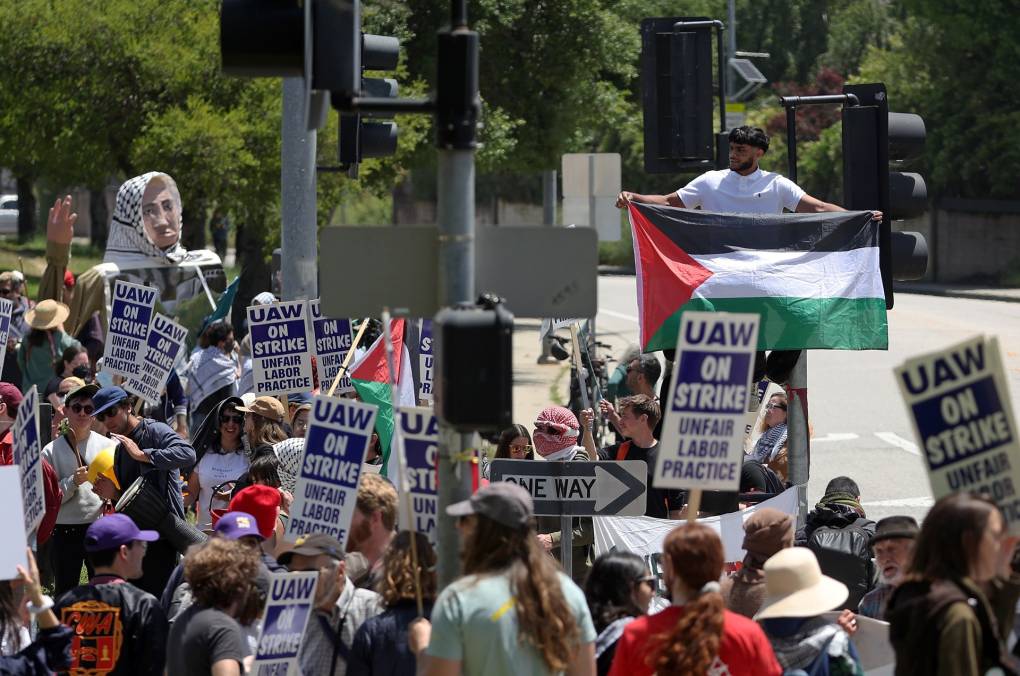
"caption": "UC Santa Cruz academic workers and pro-Palestinian protesters carry signs as they demonstrate in front of the campus on May 20, 2024, the first day of the academic workers' strike.",
"credit": "Justin Sullivan/Getty Images",
"altTag": null,
"description": null,
"imgSizes": {
"medium": {
"file": "https://cdn.kqed.org/wp-content/uploads/sites/10/2024/05/GettyImages-2153876789-800x530.jpg",
"width": 800,
"height": 530,
"mimeType": "image/jpeg"
},
"large": {
"file": "https://cdn.kqed.org/wp-content/uploads/sites/10/2024/05/GettyImages-2153876789-1020x676.jpg",
"width": 1020,
"height": 676,
"mimeType": "image/jpeg"
},
"thumbnail": {
"file": "https://cdn.kqed.org/wp-content/uploads/sites/10/2024/05/GettyImages-2153876789-160x106.jpg",
"width": 160,
"height": 106,
"mimeType": "image/jpeg"
},
"1536x1536": {
"file": "https://cdn.kqed.org/wp-content/uploads/sites/10/2024/05/GettyImages-2153876789-1536x1018.jpg",
"width": 1536,
"height": 1018,
"mimeType": "image/jpeg"
},
"post-thumbnail": {
"file": "https://cdn.kqed.org/wp-content/uploads/sites/10/2024/05/GettyImages-2153876789-672x372.jpg",
"width": 672,
"height": 372,
"mimeType": "image/jpeg"
},
"twentyfourteen-full-width": {
"file": "https://cdn.kqed.org/wp-content/uploads/sites/10/2024/05/GettyImages-2153876789-1038x576.jpg",
"width": 1038,
"height": 576,
"mimeType": "image/jpeg"
},
"kqedFullSize": {
"file": "https://cdn.kqed.org/wp-content/uploads/sites/10/2024/05/GettyImages-2153876789.jpg",
"width": 1920,
"height": 1273
}
},
"isLoading": false,
"fetchFailed": false
},
"news_11988271": {
"type": "attachments",
"id": "news_11988271",
"meta": {
"index": "attachments_1716263798",
"site": "news",
"id": "11988271",
"found": true
},
"title": "SanBrunoJail",
"publishDate": 1717102517,
"status": "inherit",
"parent": 0,
"modified": 1717104845,
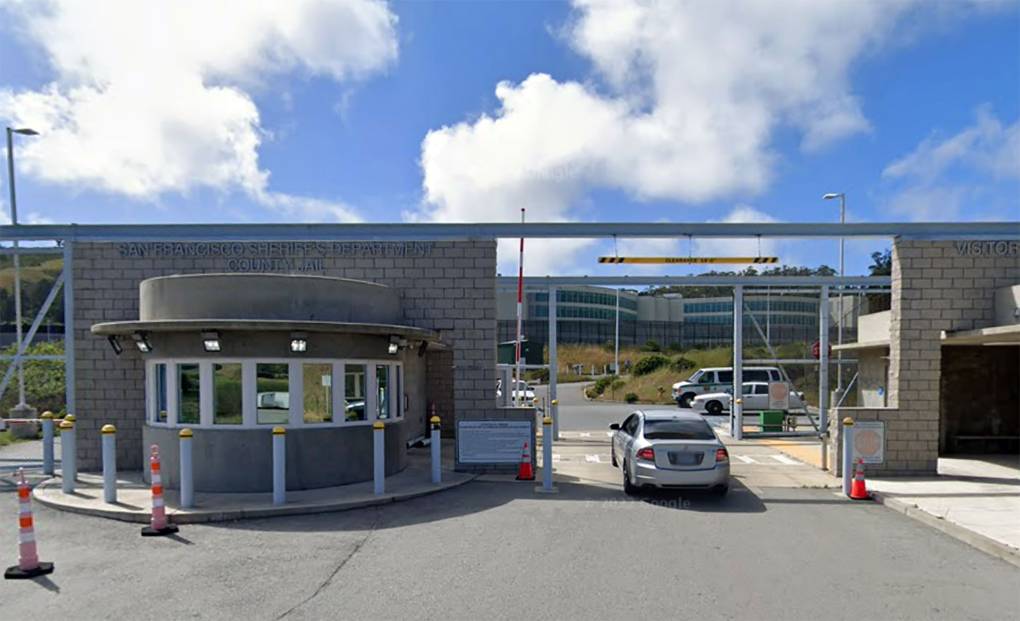
"caption": "The entrance to San Bruno Jail, the San Francisco County facility where chemical agents that affected Portola Elementary School students were released during a crowd control and intervention training exercise on May 21.",
"credit": "Google Street View",
"altTag": null,
"description": null,
"imgSizes": {
"medium": {
"file": "https://cdn.kqed.org/wp-content/uploads/sites/10/2024/05/SanBrunoJail-800x487.jpg",
"width": 800,
"height": 487,
"mimeType": "image/jpeg"
},
"large": {
"file": "https://cdn.kqed.org/wp-content/uploads/sites/10/2024/05/SanBrunoJail-1020x621.jpg",
"width": 1020,
"height": 621,
"mimeType": "image/jpeg"
},
"thumbnail": {
"file": "https://cdn.kqed.org/wp-content/uploads/sites/10/2024/05/SanBrunoJail-160x97.jpg",
"width": 160,
"height": 97,
"mimeType": "image/jpeg"
},
"1536x1536": {
"file": "https://cdn.kqed.org/wp-content/uploads/sites/10/2024/05/SanBrunoJail-1536x935.jpg",
"width": 1536,
"height": 935,
"mimeType": "image/jpeg"
},
"post-thumbnail": {
"file": "https://cdn.kqed.org/wp-content/uploads/sites/10/2024/05/SanBrunoJail-672x372.jpg",
"width": 672,
"height": 372,
"mimeType": "image/jpeg"
},
"twentyfourteen-full-width": {
"file": "https://cdn.kqed.org/wp-content/uploads/sites/10/2024/05/SanBrunoJail-1038x576.jpg",
"width": 1038,
"height": 576,
"mimeType": "image/jpeg"
},
"kqedFullSize": {
"file": "https://cdn.kqed.org/wp-content/uploads/sites/10/2024/05/SanBrunoJail.jpg",
"width": 1920,
"height": 1169
}
},
"isLoading": false,
"fetchFailed": false
},
"news_11988163": {
"type": "attachments",
"id": "news_11988163",
"meta": {
"index": "attachments_1716263798",
"site": "news",
"id": "11988163",
"found": true
},
"title": "240125-SFSUStrike-08-BL_qut",
"publishDate": 1717023045,
"status": "inherit",
"parent": 11988162,
"modified": 1782173886,
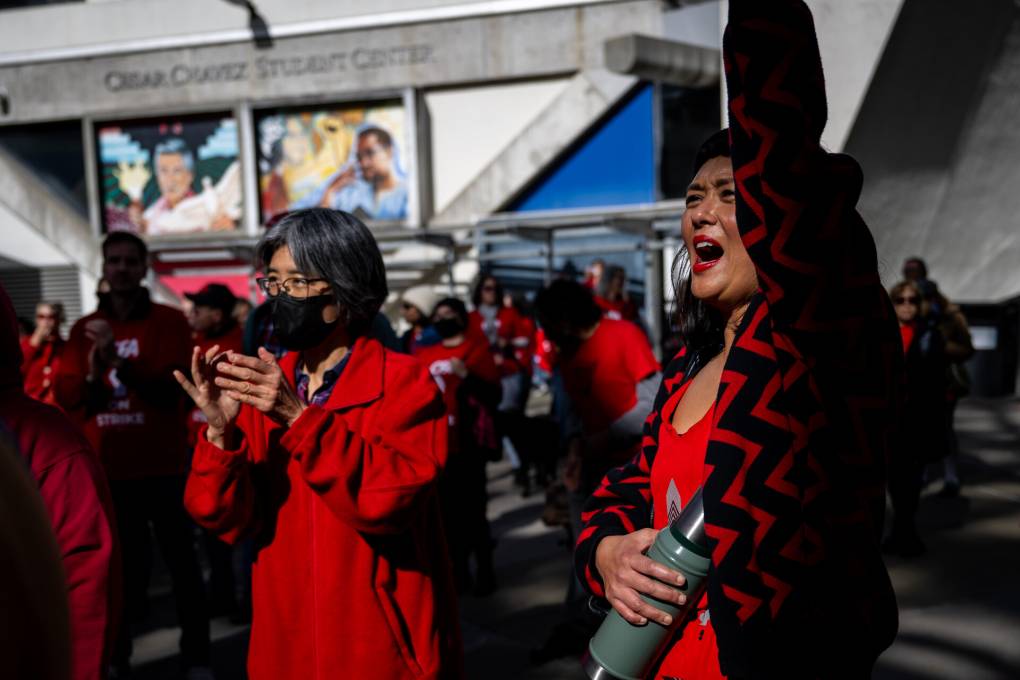
"caption": "Sang Hea Kil, San José State University professor and co-chair of the California Faculty Association's Palestine, Arab and Muslim Caucus, cheers during a rally at SFSU in San Francisco on Jan. 25, 2024, urging a no vote on the tentative deal that ended the California State University faculty strike.",
"credit": "Beth LaBerge/KQED",
"altTag": null,
"description": null,
"imgSizes": {
"medium": {
"file": "https://cdn.kqed.org/wp-content/uploads/sites/10/2024/05/240125-SFSUStrike-08-BL_qut-800x533.jpg",
"width": 800,
"height": 533,
"mimeType": "image/jpeg"
},
"large": {
"file": "https://cdn.kqed.org/wp-content/uploads/sites/10/2024/05/240125-SFSUStrike-08-BL_qut-1020x680.jpg",
"width": 1020,
"height": 680,
"mimeType": "image/jpeg"
},
"thumbnail": {
"file": "https://cdn.kqed.org/wp-content/uploads/sites/10/2024/05/240125-SFSUStrike-08-BL_qut-160x107.jpg",
"width": 160,
"height": 107,
"mimeType": "image/jpeg"
},
"1536x1536": {
"file": "https://cdn.kqed.org/wp-content/uploads/sites/10/2024/05/240125-SFSUStrike-08-BL_qut-1536x1024.jpg",
"width": 1536,
"height": 1024,
"mimeType": "image/jpeg"
},
"post-thumbnail": {
"file": "https://cdn.kqed.org/wp-content/uploads/sites/10/2024/05/240125-SFSUStrike-08-BL_qut-672x372.jpg",
"width": 672,
"height": 372,
"mimeType": "image/jpeg"
},
"twentyfourteen-full-width": {
"file": "https://cdn.kqed.org/wp-content/uploads/sites/10/2024/05/240125-SFSUStrike-08-BL_qut-1038x576.jpg",
"width": 1038,
"height": 576,
"mimeType": "image/jpeg"
},
"kqedFullSize": {
"file": "https://cdn.kqed.org/wp-content/uploads/sites/10/2024/05/240125-SFSUStrike-08-BL_qut.jpg",
"width": 1920,
"height": 1280
}
},
"isLoading": false,
"fetchFailed": false
},
"news_11988048": {
"type": "attachments",
"id": "news_11988048",
"meta": {
"index": "attachments_1716263798",
"site": "news",
"id": "11988048",
"found": true
},
"title": "UC Santa Cruz Workers Strike Over Treatment Of Pro-Palestinian Protesters",
"publishDate": 1717006217,
"status": "inherit",
"parent": 11988039,
"modified": 1717006276,
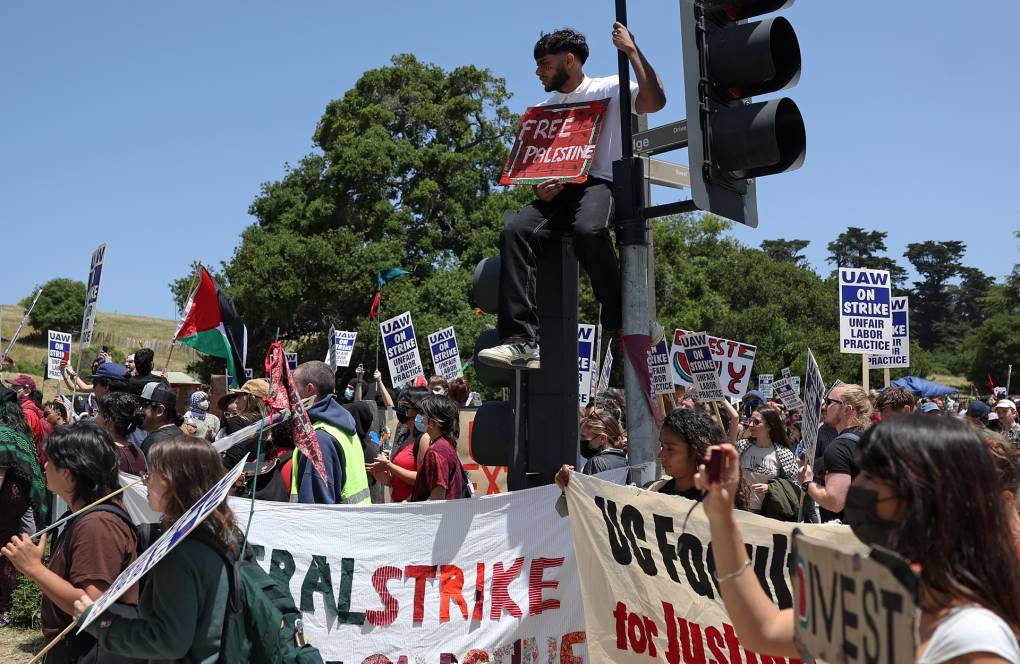
"caption": "UC Santa Cruz academic workers represented by UAW 4811 and pro-Palestinian protesters carry signs as they demonstrate in front of the campus on May 20, 2024.",
"credit": "Justin Sullivan/Getty Images",
"altTag": null,
"description": null,
"imgSizes": {
"medium": {
"file": "https://cdn.kqed.org/wp-content/uploads/sites/10/2024/05/GettyImages-2153876794-800x521.jpg",
"width": 800,
"height": 521,
"mimeType": "image/jpeg"
},
"large": {
"file": "https://cdn.kqed.org/wp-content/uploads/sites/10/2024/05/GettyImages-2153876794-1020x664.jpg",
"width": 1020,
"height": 664,
"mimeType": "image/jpeg"
},
"thumbnail": {
"file": "https://cdn.kqed.org/wp-content/uploads/sites/10/2024/05/GettyImages-2153876794-160x104.jpg",
"width": 160,
"height": 104,
"mimeType": "image/jpeg"
},
"1536x1536": {
"file": "https://cdn.kqed.org/wp-content/uploads/sites/10/2024/05/GettyImages-2153876794-1536x1000.jpg",
"width": 1536,
"height": 1000,
"mimeType": "image/jpeg"
},
"post-thumbnail": {
"file": "https://cdn.kqed.org/wp-content/uploads/sites/10/2024/05/GettyImages-2153876794-672x372.jpg",
"width": 672,
"height": 372,
"mimeType": "image/jpeg"
},
"twentyfourteen-full-width": {
"file": "https://cdn.kqed.org/wp-content/uploads/sites/10/2024/05/GettyImages-2153876794-1038x576.jpg",
"width": 1038,
"height": 576,
"mimeType": "image/jpeg"
},
"kqedFullSize": {
"file": "https://cdn.kqed.org/wp-content/uploads/sites/10/2024/05/GettyImages-2153876794.jpg",
"width": 1920,
"height": 1250
}
},
"isLoading": false,
"fetchFailed": false
},
"news_11987883": {
"type": "attachments",
"id": "news_11987883",
"meta": {
"index": "attachments_1716263798",
"site": "news",
"id": "11987883",
"found": true
},
"title": "CMEducation01",
"publishDate": 1716917670,
"status": "inherit",
"parent": 11987878,
"modified": 1716917693,
"caption": "The CSU Long Beach campus on in Long Beach April 24, 2024.",
"credit": "Jules Hotz/CalMatters",
"altTag": null,
"description": null,
"imgSizes": {
"medium": {
"file": "https://cdn.kqed.org/wp-content/uploads/sites/10/2024/05/CMEducation01-800x533.jpg",
"width": 800,
"height": 533,
"mimeType": "image/jpeg"
},
"large": {
"file": "https://cdn.kqed.org/wp-content/uploads/sites/10/2024/05/CMEducation01-1020x680.jpg",
"width": 1020,
"height": 680,
"mimeType": "image/jpeg"
},
"thumbnail": {
"file": "https://cdn.kqed.org/wp-content/uploads/sites/10/2024/05/CMEducation01-160x107.jpg",
"width": 160,
"height": 107,
"mimeType": "image/jpeg"
},
"1536x1536": {
"file": "https://cdn.kqed.org/wp-content/uploads/sites/10/2024/05/CMEducation01-1536x1024.jpg",
"width": 1536,
"height": 1024,
"mimeType": "image/jpeg"
},
"post-thumbnail": {
"file": "https://cdn.kqed.org/wp-content/uploads/sites/10/2024/05/CMEducation01-672x372.jpg",
"width": 672,
"height": 372,
"mimeType": "image/jpeg"
},
"twentyfourteen-full-width": {
"file": "https://cdn.kqed.org/wp-content/uploads/sites/10/2024/05/CMEducation01-1038x576.jpg",
"width": 1038,
"height": 576,
"mimeType": "image/jpeg"
},
"full-width": {
"file": "https://cdn.kqed.org/wp-content/uploads/sites/10/2024/05/CMEducation01-1920x1280.jpg",
"width": 1920,
"height": 1280,
"mimeType": "image/jpeg"
},
"kqedFullSize": {
"file": "https://cdn.kqed.org/wp-content/uploads/sites/10/2024/05/CMEducation01.jpg",
"width": 2000,
"height": 1333
}
},
"isLoading": false,
"fetchFailed": false
},
"news_11987913": {
"type": "attachments",
"id": "news_11987913",
"meta": {
"index": "attachments_1716263798",
"site": "news",
"id": "11987913",
"found": true
},
"title": "The UCLA campus with a pro-Palistinian solidarity encampment",
"publishDate": 1716921911,
"status": "inherit",
"parent": 11987905,
"modified": 1716928025,
"caption": "A pro-Palestinian encampment at UCLA on May 1, 2024. The encampment was attacked during the night by counter-protesters. Protesters placed new plywood and metal gates around the encampment. ",
"credit": "Ted Soqui/CalMatters",
"altTag": "An encampment with tents and fencing on a college campus.",
"description": null,
"imgSizes": {
"medium": {
"file": "https://cdn.kqed.org/wp-content/uploads/sites/10/2024/05/050124-UCLA-Gaza-Camp-TS-CM-01-800x534.jpg",
"width": 800,
"height": 534,
"mimeType": "image/jpeg"
},
"large": {
"file": "https://cdn.kqed.org/wp-content/uploads/sites/10/2024/05/050124-UCLA-Gaza-Camp-TS-CM-01-1020x680.jpg",
"width": 1020,
"height": 680,
"mimeType": "image/jpeg"
},
"thumbnail": {
"file": "https://cdn.kqed.org/wp-content/uploads/sites/10/2024/05/050124-UCLA-Gaza-Camp-TS-CM-01-160x107.jpg",
"width": 160,
"height": 107,
"mimeType": "image/jpeg"
},
"1536x1536": {
"file": "https://cdn.kqed.org/wp-content/uploads/sites/10/2024/05/050124-UCLA-Gaza-Camp-TS-CM-01-1536x1025.jpg",
"width": 1536,
"height": 1025,
"mimeType": "image/jpeg"
},
"post-thumbnail": {
"file": "https://cdn.kqed.org/wp-content/uploads/sites/10/2024/05/050124-UCLA-Gaza-Camp-TS-CM-01-672x372.jpg",
"width": 672,
"height": 372,
"mimeType": "image/jpeg"
},
"twentyfourteen-full-width": {
"file": "https://cdn.kqed.org/wp-content/uploads/sites/10/2024/05/050124-UCLA-Gaza-Camp-TS-CM-01-1038x576.jpg",
"width": 1038,
"height": 576,
"mimeType": "image/jpeg"
},
"full-width": {
"file": "https://cdn.kqed.org/wp-content/uploads/sites/10/2024/05/050124-UCLA-Gaza-Camp-TS-CM-01-1920x1281.jpg",
"width": 1920,
"height": 1281,
"mimeType": "image/jpeg"
},
"kqedFullSize": {
"file": "https://cdn.kqed.org/wp-content/uploads/sites/10/2024/05/050124-UCLA-Gaza-Camp-TS-CM-01.jpg",
"width": 2000,
"height": 1334
}
},
"isLoading": false,
"fetchFailed": false
},
"news_11987761": {
"type": "attachments",
"id": "news_11987761",
"meta": {
"index": "attachments_1716263798",
"site": "news",
"id": "11987761",
"found": true
},
"title": "image (6)",
"publishDate": 1716592874,
"status": "inherit",
"parent": 11987754,
"modified": 1779124642,
"caption": "Less than half of California high school seniors completed the Free Application for Federal Student Aid — or FAFSA — form in 2024.",
"credit": "Anna Vignet/KQED",
"altTag": null,
"description": null,
"imgSizes": {
"medium": {
"file": "https://cdn.kqed.org/wp-content/uploads/sites/10/2024/05/image-6-800x517.png",
"width": 800,
"height": 517,
"mimeType": "image/png"
},
"large": {
"file": "https://cdn.kqed.org/wp-content/uploads/sites/10/2024/05/image-6-1020x659.png",
"width": 1020,
"height": 659,
"mimeType": "image/png"
},
"thumbnail": {
"file": "https://cdn.kqed.org/wp-content/uploads/sites/10/2024/05/image-6-160x103.png",
"width": 160,
"height": 103,
"mimeType": "image/png"
},
"1536x1536": {
"file": "https://cdn.kqed.org/wp-content/uploads/sites/10/2024/05/image-6-1536x993.png",
"width": 1536,
"height": 993,
"mimeType": "image/png"
},
"post-thumbnail": {
"file": "https://cdn.kqed.org/wp-content/uploads/sites/10/2024/05/image-6-672x372.png",
"width": 672,
"height": 372,
"mimeType": "image/png"
},
"twentyfourteen-full-width": {
"file": "https://cdn.kqed.org/wp-content/uploads/sites/10/2024/05/image-6-1038x576.png",
"width": 1038,
"height": 576,
"mimeType": "image/png"
},
"kqedFullSize": {
"file": "https://cdn.kqed.org/wp-content/uploads/sites/10/2024/05/image-6.png",
"width": 1920,
"height": 1241
}
},
"isLoading": false,
"fetchFailed": false
},
"news_11987738": {
"type": "attachments",
"id": "news_11987738",
"meta": {
"index": "attachments_1716263798",
"site": "news",
"id": "11987738",
"found": true
},
"title": "UC Santa Cruz Workers Strike Over Treatment Of Pro-Palestinian Protesters",
"publishDate": 1716587632,
"status": "inherit",
"parent": 11987737,
"modified": 1716587703,
"caption": "UC Santa Cruz academic workers who are union members of UAW 4811 and pro-Palestinian protesters carry signs as they demonstrate in front of the campus on May 20, 2024.",
"credit": "Justin Sullivan/Getty Images",
"altTag": null,
"description": null,
"imgSizes": {
"medium": {
"file": "https://cdn.kqed.org/wp-content/uploads/sites/10/2024/05/GettyImages-2153876773-800x532.jpg",
"width": 800,
"height": 532,
"mimeType": "image/jpeg"
},
"large": {
"file": "https://cdn.kqed.org/wp-content/uploads/sites/10/2024/05/GettyImages-2153876773-1020x678.jpg",
"width": 1020,
"height": 678,
"mimeType": "image/jpeg"
},
"thumbnail": {
"file": "https://cdn.kqed.org/wp-content/uploads/sites/10/2024/05/GettyImages-2153876773-160x106.jpg",
"width": 160,
"height": 106,
"mimeType": "image/jpeg"
},
"1536x1536": {
"file": "https://cdn.kqed.org/wp-content/uploads/sites/10/2024/05/GettyImages-2153876773-1536x1021.jpg",
"width": 1536,
"height": 1021,
"mimeType": "image/jpeg"
},
"post-thumbnail": {
"file": "https://cdn.kqed.org/wp-content/uploads/sites/10/2024/05/GettyImages-2153876773-672x372.jpg",
"width": 672,
"height": 372,
"mimeType": "image/jpeg"
},
"twentyfourteen-full-width": {
"file": "https://cdn.kqed.org/wp-content/uploads/sites/10/2024/05/GettyImages-2153876773-1038x576.jpg",
"width": 1038,
"height": 576,
"mimeType": "image/jpeg"
},
"kqedFullSize": {
"file": "https://cdn.kqed.org/wp-content/uploads/sites/10/2024/05/GettyImages-2153876773.jpg",
"width": 1920,
"height": 1276
}
},
"isLoading": false,
"fetchFailed": false
},
"news_11987500": {
"type": "attachments",
"id": "news_11987500",
"meta": {
"index": "attachments_1716263798",
"site": "news",
"id": "11987500",
"found": true
},
"title": "UC Santa Cruz Workers Strike Over Treatment Of Pro-Palestinian Protesters",
"publishDate": 1716485938,
"status": "inherit",
"parent": 0,
"modified": 1727465280,
"caption": "UC Santa Cruz workers who are union members of UAW 4811 set up a sign in front of the university's campus on May 20. Academic workers at UCSC walked off the job to strike in protest of the UC system’s handling of pro-Palestinian demonstrations. ",
"credit": "Justin Sullivan/Getty Images",
"altTag": "Two people affix a large brown sign with red text reading 'Do UCLA next' to a school sign outdoors near a busy street.",
"description": null,
"imgSizes": {
"medium": {
"file": "https://cdn.kqed.org/wp-content/uploads/sites/10/2024/05/GettyImages-2153861315_qut-800x554.jpg",
"width": 800,
"height": 554,
"mimeType": "image/jpeg"
},
"large": {
"file": "https://cdn.kqed.org/wp-content/uploads/sites/10/2024/05/GettyImages-2153861315_qut-1020x707.jpg",
"width": 1020,
"height": 707,
"mimeType": "image/jpeg"
},
"thumbnail": {
"file": "https://cdn.kqed.org/wp-content/uploads/sites/10/2024/05/GettyImages-2153861315_qut-160x111.jpg",
"width": 160,
"height": 111,
"mimeType": "image/jpeg"
},
"1536x1536": {
"file": "https://cdn.kqed.org/wp-content/uploads/sites/10/2024/05/GettyImages-2153861315_qut-1536x1064.jpg",
"width": 1536,
"height": 1064,
"mimeType": "image/jpeg"
},
"post-thumbnail": {
"file": "https://cdn.kqed.org/wp-content/uploads/sites/10/2024/05/GettyImages-2153861315_qut-672x372.jpg",
"width": 672,
"height": 372,
"mimeType": "image/jpeg"
},
"twentyfourteen-full-width": {
"file": "https://cdn.kqed.org/wp-content/uploads/sites/10/2024/05/GettyImages-2153861315_qut-1038x576.jpg",
"width": 1038,
"height": 576,
"mimeType": "image/jpeg"
},
"kqedFullSize": {
"file": "https://cdn.kqed.org/wp-content/uploads/sites/10/2024/05/GettyImages-2153861315_qut.jpg",
"width": 1920,
"height": 1330
}
},
"isLoading": false,
"fetchFailed": false
},
"news_11987186": {
"type": "attachments",
"id": "news_11987186",
"meta": {
"index": "attachments_1716263798",
"site": "news",
"id": "11987186",
"found": true
},
"title": "UAW_UCSC_May2024",
"publishDate": 1716326839,
"status": "inherit",
"parent": 11987173,
"modified": 1716326921,
"caption": "The rolling walkout, in which campuses will be called on to join the picket line at times unbeknownst to the UC, is part of what the UAW 4811 union is calling a 'stand-up strike,' which the United Auto Workers rolled out against the Big Three automakers last year. ",
"credit": "Courtesy of UAW 4811",
"altTag": null,
"description": null,
"imgSizes": {
"medium": {
"file": "https://cdn.kqed.org/wp-content/uploads/sites/10/2024/05/UAW_UCSC_May2024-800x450.jpeg",
"width": 800,
"height": 450,
"mimeType": "image/jpeg"
},
"large": {
"file": "https://cdn.kqed.org/wp-content/uploads/sites/10/2024/05/UAW_UCSC_May2024-1020x574.jpeg",
"width": 1020,
"height": 574,
"mimeType": "image/jpeg"
},
"thumbnail": {
"file": "https://cdn.kqed.org/wp-content/uploads/sites/10/2024/05/UAW_UCSC_May2024-160x90.jpeg",
"width": 160,
"height": 90,
"mimeType": "image/jpeg"
},
"1536x1536": {
"file": "https://cdn.kqed.org/wp-content/uploads/sites/10/2024/05/UAW_UCSC_May2024-1536x864.jpeg",
"width": 1536,
"height": 864,
"mimeType": "image/jpeg"
},
"post-thumbnail": {
"file": "https://cdn.kqed.org/wp-content/uploads/sites/10/2024/05/UAW_UCSC_May2024-672x372.jpeg",
"width": 672,
"height": 372,
"mimeType": "image/jpeg"
},
"twentyfourteen-full-width": {
"file": "https://cdn.kqed.org/wp-content/uploads/sites/10/2024/05/UAW_UCSC_May2024-1038x576.jpeg",
"width": 1038,
"height": 576,
"mimeType": "image/jpeg"
},
"kqedFullSize": {
"file": "https://cdn.kqed.org/wp-content/uploads/sites/10/2024/05/UAW_UCSC_May2024.jpeg",
"width": 1920,
"height": 1080
}
},
"isLoading": false,
"fetchFailed": false
},
"news_11986924": {
"type": "attachments",
"id": "news_11986924",
"meta": {
"index": "attachments_1716263798",
"site": "news",
"id": "11986924",
"found": true
},
"parent": 0,
"imgSizes": {
"twentyfourteen-full-width": {
"file": "https://cdn.kqed.org/wp-content/uploads/sites/10/2024/05/240517-CCSFProfileMadelineMueller-26-BL-1038x576.jpg",
"width": 1038,
"mimeType": "image/jpeg",
"height": 576
},
"thumbnail": {
"file": "https://cdn.kqed.org/wp-content/uploads/sites/10/2024/05/240517-CCSFProfileMadelineMueller-26-BL-160x107.jpg",
"width": 160,
"mimeType": "image/jpeg",
"height": 107
},
"post-thumbnail": {
"file": "https://cdn.kqed.org/wp-content/uploads/sites/10/2024/05/240517-CCSFProfileMadelineMueller-26-BL-672x372.jpg",
"width": 672,
"mimeType": "image/jpeg",
"height": 372
},
"kqedFullSize": {
"file": "https://cdn.kqed.org/wp-content/uploads/sites/10/2024/05/240517-CCSFProfileMadelineMueller-26-BL.jpg",
"width": 2000,
"height": 1333
},
"large": {
"file": "https://cdn.kqed.org/wp-content/uploads/sites/10/2024/05/240517-CCSFProfileMadelineMueller-26-BL-1020x680.jpg",
"width": 1020,
"mimeType": "image/jpeg",
"height": 680
},
"1536x1536": {
"file": "https://cdn.kqed.org/wp-content/uploads/sites/10/2024/05/240517-CCSFProfileMadelineMueller-26-BL-1536x1024.jpg",
"width": 1536,
"mimeType": "image/jpeg",
"height": 1024
},
"full-width": {
"file": "https://cdn.kqed.org/wp-content/uploads/sites/10/2024/05/240517-CCSFProfileMadelineMueller-26-BL-1920x1280.jpg",
"width": 1920,
"mimeType": "image/jpeg",
"height": 1280
},
"medium": {
"file": "https://cdn.kqed.org/wp-content/uploads/sites/10/2024/05/240517-CCSFProfileMadelineMueller-26-BL-800x533.jpg",
"width": 800,
"mimeType": "image/jpeg",
"height": 533
}
},
"publishDate": 1716227052,
"modified": 1716233292,
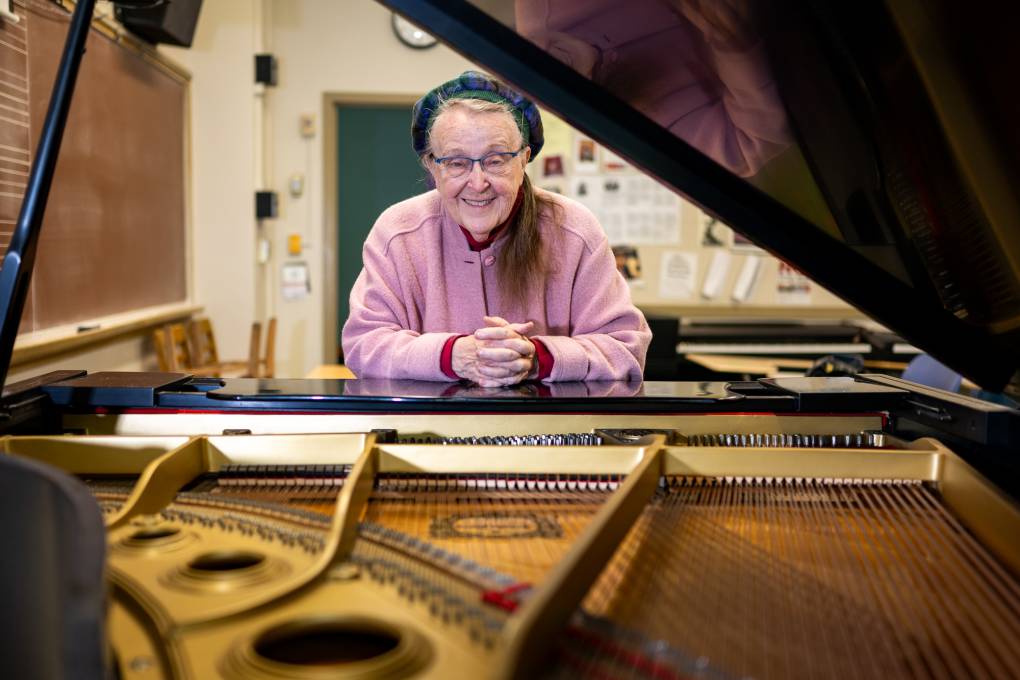
"caption": "Music department chair Madeline Mueller poses for a portrait at City College of San Francisco on May 17, 2024. Mueller has taught at the college for 58 years and is the college’s longest-tenured employee.",
"description": null,
"title": "240517-CCSFProfileMadelineMueller-26-BL",
"credit": "Beth LaBerge/KQED",
"status": "inherit",
"altTag": "An older woman wearing glasses and a pink coat smiles as she leans on a grand piano",
"isLoading": false,
"fetchFailed": false
},
"news_11986140": {
"type": "attachments",
"id": "news_11986140",
"meta": {
"index": "attachments_1716263798",
"site": "news",
"id": "11986140",
"found": true
},
"parent": 0,
"imgSizes": {
"twentyfourteen-full-width": {
"file": "https://cdn.kqed.org/wp-content/uploads/sites/10/2024/05/20240514_OAKGROVEUNIONDISTRICTPARENTS-3-KQED-1038x576.jpg",
"width": 1038,
"mimeType": "image/jpeg",
"height": 576
},
"thumbnail": {
"file": "https://cdn.kqed.org/wp-content/uploads/sites/10/2024/05/20240514_OAKGROVEUNIONDISTRICTPARENTS-3-KQED-160x107.jpg",
"width": 160,
"mimeType": "image/jpeg",
"height": 107
},
"post-thumbnail": {
"file": "https://cdn.kqed.org/wp-content/uploads/sites/10/2024/05/20240514_OAKGROVEUNIONDISTRICTPARENTS-3-KQED-672x372.jpg",
"width": 672,
"mimeType": "image/jpeg",
"height": 372
},
"kqedFullSize": {
"file": "https://cdn.kqed.org/wp-content/uploads/sites/10/2024/05/20240514_OAKGROVEUNIONDISTRICTPARENTS-3-KQED.jpg",
"width": 2000,
"height": 1333
},
"large": {
"file": "https://cdn.kqed.org/wp-content/uploads/sites/10/2024/05/20240514_OAKGROVEUNIONDISTRICTPARENTS-3-KQED-1020x680.jpg",
"width": 1020,
"mimeType": "image/jpeg",
"height": 680
},
"1536x1536": {
"file": "https://cdn.kqed.org/wp-content/uploads/sites/10/2024/05/20240514_OAKGROVEUNIONDISTRICTPARENTS-3-KQED-1536x1024.jpg",
"width": 1536,
"mimeType": "image/jpeg",
"height": 1024
},
"full-width": {
"file": "https://cdn.kqed.org/wp-content/uploads/sites/10/2024/05/20240514_OAKGROVEUNIONDISTRICTPARENTS-3-KQED-1920x1280.jpg",
"width": 1920,
"mimeType": "image/jpeg",
"height": 1280
},
"medium": {
"file": "https://cdn.kqed.org/wp-content/uploads/sites/10/2024/05/20240514_OAKGROVEUNIONDISTRICTPARENTS-3-KQED-800x533.jpg",
"width": 800,
"mimeType": "image/jpeg",
"height": 533
}
},
"publishDate": 1715716565,
"modified": 1715991077,
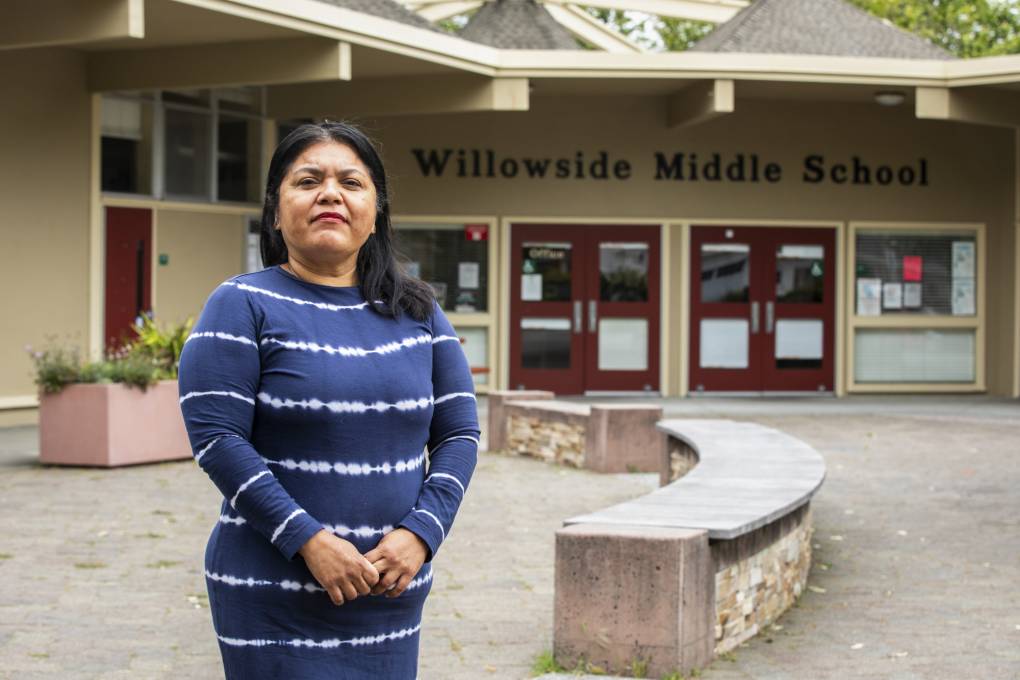
"caption": "Sandra Cruz, a parent of a student at Oak Grove Elementary School, poses for a portrait in Santa Rosa on Tuesday, May 14, 2024. Oak Grove Union School District voted to lay off its only bilingual translator by the end of the school year, and many Latino parents have mobilized to demand that the school revert its decision. A third of the students at Oak Grove Union School District come from Spanish-speaking homes.",
"description": null,
"title": "20240514_OAKGROVEUNIONDISTRICTPARENTS-3-KQED",
"credit": "Gina Castro/KQED",
"status": "inherit",
"altTag": null,
"isLoading": false,
"fetchFailed": false
}
},
"audioPlayerReducer": {
"postId": "stream_live",
"isPaused": true,
"isPlaying": false,
"pfsActive": false,
"pledgeModalIsOpen": true,
"playerDrawerIsOpen": false,
"liveAudioPlayStartedAt": 0,
"liveAudioPlayContext": ""
},
"authorsReducer": {
"byline_news_11988293": {
"type": "authors",
"id": "byline_news_11988293",
"meta": {
"override": true
},
"slug": "byline_news_11988293",
"name": "\u003ca href=\"https://twitter.com/katie_debe?lang=en\">Katie DeBenedetti\u003c/a>",
"isLoading": false
},
"byline_news_11987878": {
"type": "authors",
"id": "byline_news_11987878",
"meta": {
"override": true
},
"slug": "byline_news_11987878",
"name": "Mikhail Zinshteyn, CalMatters",
"isLoading": false
},
"byline_news_11987905": {
"type": "authors",
"id": "byline_news_11987905",
"meta": {
"override": true
},
"slug": "byline_news_11987905",
"name": "Mikhail Zinshteyn, CalMatters",
"isLoading": false
},
"byline_news_11987173": {
"type": "authors",
"id": "byline_news_11987173",
"meta": {
"override": true
},
"slug": "byline_news_11987173",
"name": "\u003ca href=\"https://twitter.com/katie_debe?lang=en\">Katie DeBenedetti\u003c/a>",
"isLoading": false
},
"byline_news_11986950": {
"type": "authors",
"id": "byline_news_11986950",
"meta": {
"override": true
},
"slug": "byline_news_11986950",
"name": "Jakob Hofso",
"isLoading": false
},
"kdomara": {
"type": "authors",
"id": "1459",
"meta": {
"index": "authors_1716337520",
"id": "1459",
"found": true
},
"name": "Kelly O'Mara",
"firstName": "Kelly",
"lastName": "O'Mara",
"slug": "kdomara",
"email": "komara@kqed.org",
"display_author_email": false,
"staff_mastheads": [
"news"
],
"title": "KQED Contributor",
"bio": "Kelly O'Mara is a writer and reporter in the San Francisco Bay Area. She writes about food, health, sports, travel, business and California news. Her work has appeared on KQED, online for Outside Magazine, epsnW, VICE and in Competitor Magazine, among others. Follow Kelly on Twitter \u003ca href=\"https://twitter.com/kellydomara\">@kellydomara\u003c/a>.",
"avatar": "https://secure.gravatar.com/avatar/768fec7412028b72f13bdd0f5f9d8186?s=600&d=blank&r=g",
"twitter": null,
"facebook": null,
"instagram": null,
"linkedin": null,
"sites": [
{
"site": "arts",
"roles": []
},
{
"site": "news",
"roles": []
},
{
"site": "bayareabites",
"roles": []
},
{
"site": "stateofhealth",
"roles": []
},
{
"site": "science",
"roles": []
},
{
"site": "checkplease",
"roles": [
"editor"
]
},
{
"site": "food",
"roles": []
},
{
"site": "forum",
"roles": [
"editor"
]
},
{
"site": "liveblog",
"roles": [
"editor"
]
}
],
"headData": {
"title": "Kelly O'Mara | KQED",
"description": "KQED Contributor",
"ogImgSrc": "https://secure.gravatar.com/avatar/768fec7412028b72f13bdd0f5f9d8186?s=600&d=blank&r=g",
"twImgSrc": "https://secure.gravatar.com/avatar/768fec7412028b72f13bdd0f5f9d8186?s=600&d=blank&r=g"
},
"isLoading": false,
"link": "/author/kdomara"
},
"jrodriguez": {
"type": "authors",
"id": "11690",
"meta": {
"index": "authors_1716337520",
"id": "11690",
"found": true
},
"name": "Joe Fitzgerald Rodriguez",
"firstName": "Joe",
"lastName": "Fitzgerald Rodriguez",
"slug": "jrodriguez",
"email": "jrodriguez@kqed.org",
"display_author_email": true,
"staff_mastheads": [
"news"
],
"title": "Reporter and Producer",
"bio": "Joe Fitzgerald Rodriguez is a reporter and digital producer for KQED covering politics. Joe most recently wrote for the \u003cem>San Francisco Examiner\u003c/em> as a political columnist covering The City. He was raised in San Francisco and has spent his reporting career in his beloved, foggy, city by the bay. Joe was 12-years-old when he conducted his first interview in journalism, grilling former San Francisco Mayor Willie Brown for the Marina Middle School newspaper, \u003cem>The Penguin Press, \u003c/em>and he continues to report on the San Francisco Bay Area to this day.",
"avatar": "https://secure.gravatar.com/avatar/2247beb0564c1e9c62228d5649d2edac?s=600&d=blank&r=g",
"twitter": "FitztheReporter",
"facebook": null,
"instagram": "https://www.instagram.com/fitzthereporter/",
"linkedin": null,
"sites": [
{
"site": "",
"roles": [
"editor"
]
},
{
"site": "arts",
"roles": [
"editor"
]
},
{
"site": "news",
"roles": [
"editor"
]
},
{
"site": "science",
"roles": [
"editor"
]
},
{
"site": "elections",
"roles": [
"editor"
]
},
{
"site": "liveblog",
"roles": [
"editor"
]
}
],
"headData": {
"title": "Joe Fitzgerald Rodriguez | KQED",
"description": "Reporter and Producer",
"ogImgSrc": "https://secure.gravatar.com/avatar/2247beb0564c1e9c62228d5649d2edac?s=600&d=blank&r=g",
"twImgSrc": "https://secure.gravatar.com/avatar/2247beb0564c1e9c62228d5649d2edac?s=600&d=blank&r=g"
},
"isLoading": false,
"link": "/author/jrodriguez"
},
"ccabreralomeli": {
"type": "authors",
"id": "11708",
"meta": {
"index": "authors_1716337520",
"id": "11708",
"found": true
},
"name": "Carlos Cabrera-Lomelí",
"firstName": "Carlos",
"lastName": "Cabrera-Lomelí",
"slug": "ccabreralomeli",
"email": "ccabreralomeli@KQED.org",
"display_author_email": true,
"staff_mastheads": [
"news"
],
"title": "Community Reporter",
"bio": "Carlos Cabrera-Lomelí is a community reporter with KQED's digital engagement team. He also reports and co-produces for KQED's bilingual news hub KQED en Español. He grew up in San Francisco's Mission District and has previously worked with Univision, 48 Hills and REFORMA in Mexico City.",
"avatar": "https://secure.gravatar.com/avatar/c309be9665e484f887b818c89e273ecc673004f426f36b24d00a4d813a2e0518?s=600&d=blank&r=g",
"twitter": "@LomeliCabrera",
"bluesky": null,
"facebook": null,
"instagram": null,
"linkedin": null,
"sites": [
{
"site": "arts",
"roles": [
"editor"
]
},
{
"site": "news",
"roles": [
"editor"
]
},
{
"site": "about",
"roles": [
"editor"
]
},
{
"site": "science",
"roles": [
"editor"
]
},
{
"site": "perspectives",
"roles": [
"editor"
]
},
{
"site": "elections",
"roles": [
"editor"
]
},
{
"site": "liveblog",
"roles": [
"contributor"
]
}
],
"headData": {
"title": "Carlos Cabrera-Lomelí | KQED",
"description": "Community Reporter",
"ogImgSrc": "https://secure.gravatar.com/avatar/c309be9665e484f887b818c89e273ecc673004f426f36b24d00a4d813a2e0518?s=600&d=blank&r=g",
"twImgSrc": "https://secure.gravatar.com/avatar/c309be9665e484f887b818c89e273ecc673004f426f36b24d00a4d813a2e0518?s=600&d=blank&r=g"
},
"isLoading": false,
"link": "/author/ccabreralomeli"
},
"nkhan": {
"type": "authors",
"id": "11867",
"meta": {
"index": "authors_1716337520",
"id": "11867",
"found": true
},
"name": "Nisa Khan",
"firstName": "Nisa",
"lastName": "Khan",
"slug": "nkhan",
"email": "nkhan@kqed.org",
"display_author_email": false,
"staff_mastheads": [],
"title": "KQED Contributor",
"bio": "Nisa Khan is a reporter for KQED's Audience News Desk. She was formerly a data reporter at Michigan Radio. She earned a Bachelor of Science in Information from the University of Michigan and a Master of Arts in Communication from Stanford University.",
"avatar": "https://secure.gravatar.com/avatar/8720459eef081ff64582b3506b124d58523e80e120704a0cbd9892533c914991?s=600&d=blank&r=g",
"twitter": "mnisakhan",
"bluesky": null,
"facebook": null,
"instagram": null,
"linkedin": null,
"sites": [
{
"site": "arts",
"roles": [
"editor"
]
},
{
"site": "news",
"roles": [
"editor"
]
},
{
"site": "science",
"roles": [
"editor",
"author"
]
},
{
"site": "forum",
"roles": [
"editor"
]
},
{
"site": "liveblog",
"roles": [
"contributor"
]
}
],
"headData": {
"title": "Nisa Khan | KQED",
"description": "KQED Contributor",
"ogImgSrc": "https://secure.gravatar.com/avatar/8720459eef081ff64582b3506b124d58523e80e120704a0cbd9892533c914991?s=600&d=blank&r=g",
"twImgSrc": "https://secure.gravatar.com/avatar/8720459eef081ff64582b3506b124d58523e80e120704a0cbd9892533c914991?s=600&d=blank&r=g"
},
"isLoading": false,
"link": "/author/nkhan"
},
"kdebenedetti": {
"type": "authors",
"id": "11913",
"meta": {
"index": "authors_1716337520",
"id": "11913",
"found": true
},
"name": "Katie DeBenedetti",
"firstName": "Katie",
"lastName": "DeBenedetti",
"slug": "kdebenedetti",
"email": "kdebenedetti@kqed.org",
"display_author_email": false,
"staff_mastheads": [
"news",
"science"
],
"title": "KQED Contributor",
"bio": "Katie DeBenedetti is a digital reporter covering daily news for the Express Desk. Prior to joining KQED as a culture reporting intern in January 2024, she covered education and city government for the Napa Valley Register.",
"avatar": "https://secure.gravatar.com/avatar/6e31073cb8f7e4214ab03f42771d0f45?s=600&d=blank&r=g",
"twitter": null,
"facebook": null,
"instagram": null,
"linkedin": null,
"sites": [
{
"site": "news",
"roles": [
"author"
]
},
{
"site": "science",
"roles": [
"author"
]
},
{
"site": "liveblog",
"roles": [
"author"
]
}
],
"headData": {
"title": "Katie DeBenedetti | KQED",
"description": "KQED Contributor",
"ogImgSrc": "https://secure.gravatar.com/avatar/6e31073cb8f7e4214ab03f42771d0f45?s=600&d=blank&r=g",
"twImgSrc": "https://secure.gravatar.com/avatar/6e31073cb8f7e4214ab03f42771d0f45?s=600&d=blank&r=g"
},
"isLoading": false,
"link": "/author/kdebenedetti"
}
},
"pagesReducer": {
"news_tag_education": {
"type": "terms",
"id": "news_20013",
"meta": {
"index": "terms_1716263798",
"site": "news",
"id": "20013",
"score": 6.9701543
},
"featImg": null,
"name": "education",
"description": null,
"taxonomy": "tag",
"headData": {
"twImgId": null,
"twTitle": null,
"ogTitle": null,
"ogImgId": null,
"twDescription": null,
"description": null,
"title": "education Archives | KQED News",
"ogDescription": null
},
"ttid": 20030,
"slug": "education",
"isLoading": false,
"title": "education",
"pageMeta": {
"site": "news",
"WpPageTemplate": "page-topic-editorial",
"currentPage": 44
},
"blocks": [
{
"blockName": "kqed/post-list",
"attrs": {
"layout": "cardArticle2",
"query": "posts/news?tag=education",
"seeMore": false,
"paginated": true,
"page": 44
}
},
{
"blockName": "kqed/ad"
}
]
}
},
"pfsSessionReducer": {},
"postsReducer": {
"stream_live": {
"type": "live",
"id": "stream_live",
"audioUrl": "https://streams.kqed.org/kqedradio",
"title": "Live Stream",
"excerpt": "Live Stream information currently unavailable.",
"link": "/radio",
"featImg": "",
"label": {
"name": "KQED Live",
"link": "/"
}
},
"stream_kqedNewscast": {
"type": "posts",
"id": "stream_kqedNewscast",
"audioUrl": "https://www.kqed.org/.stream/anon/radio/RDnews/newscast.mp3?_=1",
"title": "KQED Newscast",
"featImg": "",
"label": {
"name": "88.5 FM",
"link": "/"
}
},
"news_11988397": {
"type": "posts",
"id": "news_11988397",
"meta": {
"index": "posts_1716263798",
"site": "news",
"id": "11988397",
"score": null,
"sort": [
1717177777000
]
},
"guestAuthors": [],
"slug": "many-protesters-arrested-at-uc-santa-cruz-pro-palestinian-encampment",
"title": "About 80 Protesters Arrested at UC Santa Cruz Pro-Palestinian Encampment",
"publishDate": 1717177777,
"format": "standard",
"headTitle": "About 80 Protesters Arrested at UC Santa Cruz Pro-Palestinian Encampment | KQED",
"labelTerm": {
"site": "news"
},
"content": "\u003cp>\u003cem>Updated 2:35 p.m. Friday\u003c/em>\u003c/p>\n\u003cp>Police in riot gear arrested about 80 protesters at a pro-Palestinian encampment at UC Santa Cruz early Friday after the demonstrators had \u003ca href=\"https://www.kqed.org/news/11988039/pro-palestinian-protests-block-uc-santa-cruz-entrances-pushing-classes-back-online\">blocked campus entrances\u003c/a>, according to the university.\u003c/p>\n\u003cp>At about 11 p.m. Thursday, officers gathered near the encampment. Video \u003ca href=\"https://www.nbcbayarea.com/news/local/police-israel-hamas-war-protesters-uc-santa-cruz/3553482/\">shot by NBC Bay Area\u003c/a> shows the protesters standing in line, linking arms across the campus and facing a line of police.\u003c/p>\n\u003cp>Jamie Hindery, a student negotiator for the UC Santa Cruz Palestine Solidarity Encampment, estimated there were hundreds of protesters outnumbering the police. Within the first few hours, officers started arresting protesters, Hindery included.\u003c/p>\n\u003cp>“We felt unheard by our administration; our demands are still unmet,” Hindery said. “We see all of the attacks in Rafah over the last week, and we felt a need to make our voices a little louder in calling for divestment, boycott and disclosure.”\u003c/p>\n\u003cp>[ad fullwidth]\u003c/p>\n\u003cp>The arrests capped a chaotic few weeks for UC Santa Cruz, which was the first University of California campus to see its \u003ca href=\"https://www.kqed.org/news/11987173/uc-academic-workers-strike-is-limited-to-santa-cruz-so-far-heres-why\">unionized academic workers go on strike\u003c/a> May 20. That pushed the university to pause in-person instruction, which it had just resumed Tuesday when protesters blocked the campus’ entrances, forcing another switch to online classes.\u003c/p>\n\u003cp>The protests also come as Israel faces mounting international condemnation over its offensive in the southern Gaza Strip city of Rafah, with airstrikes Sunday killing as many as 45 people sheltering in tents for displaced Palestinians, \u003ca href=\"https://apnews.com/article/bomb-rafah-civilians-israel-us-ada219d17926a14ca8c179338d53d109\">according to the Associated Press\u003c/a>.\u003c/p>\n\u003cp>At UC Santa Cruz, encampment participants had been warned repeatedly to stop blocking access to the campus and its resources using chained barricades made of pallets and other materials, Chancellor Cynthia Larive said in a statement to the community.\u003c/p>\n\u003cp>After those warnings continued Friday morning, police cleared the barricades and the encampment, but some demonstrators remained at the campus’ main entrance, Larive said.\u003c/p>\n\u003cp>Larive said the protesters were “well-intentioned” but ultimately disrupted campus operations.\u003c/p>\n\u003cp>“Unfortunately, the disruptions we experienced these weeks were harmful to others in our community,” Larive wrote. “This decision was not made because individuals demonstrated; it was because they have chosen to do so through unlawful actions.”\u003c/p>\n\u003cp>[aside postID=news_11988039,news_11987905,news_11987737 label=\"related coverage\"]Community members were unable to leave campus to pick up their children, access medical care off campus, show up to off-campus jobs, leave campus after an early morning shift or come onto campus for an afternoon or evening shift, Larive said in an earlier statement Tuesday evening.\u003c/p>\n\u003cp>Hindery pushed back on those claims.\u003c/p>\n\u003cp>“We understand that blocking the road might be seen as not peaceful, but we had a plan to allow emergency access,” he said. “We were allowing families that lived on campus to get their kids. We were dealing with these issues.”\u003c/p>\n\u003cp>Larive also wrote that the university could not meet protesters’ demands to end its ties to organizations that “support our Jewish students” and to funders that support “important student success work and happen to be Jewish organizations,” nor to condemn the use of funding from certain federal agencies.\u003c/p>\n\u003cp>“Functionally, the encampment wanted to prevent our researchers from pursuing research related to topics with which they disagree,” Larive said, calling it a “dangerous precedent and to give in to it would undermine academic freedom.”\u003c/p>\n\u003cp>Meanwhile, the executive board of the United Auto Workers Local 4811, representing 48,000 academic workers across the UC system, called on UC Santa Barbara, UC San Diego and UC Irvine to join in solidarity strikes next week. Graduate teaching assistants, researchers and others will walk out at Santa Barbara and San Diego on Monday and Irvine on Wednesday, joining those at UC Santa Cruz, UCLA and UC Davis.\u003c/p>\n\u003cp>UAW 4811 has staged rolling strikes across the UC system since mid-May, protesting the use of police against what the union said were largely peaceful pro-Palestinian protests at UCLA, UC Irvine, and UC San Diego while also threatening the free speech rights and academic freedom of UC employees.\u003c/p>\n\u003cp>“For the last month, UC has used and condoned violence against workers and students peacefully protesting on campus for peace and freedom in Palestine,” UAW 4811 President Rafael Jaime said in a statement. “Rather than put their energies into resolution, UC is attempting to halt the strike through legal procedures. They have not been successful, and this strike will roll on.”\u003c/p>\n\u003cp>\u003c/p>\n\u003cp>The state labor board is now reviewing a complaint by the UC system alleging that UAW 4811’s strikes violate a no-strike clause in its contract. The California Public Employment Relations Board is expected to make a decision next week, according to a spokesperson.\u003c/p>\n\n",
"blocks": [],
"excerpt": "Police in riot gear arrested protesters at UC Santa Cruz early Friday after the demonstrators had blocked campus entrances, according to the university.",
"status": "publish",
"parent": 0,
"modified": 1717191459,
"stats": {
"hasAudio": false,
"hasVideo": false,
"hasChartOrMap": false,
"iframeSrcs": [],
"hasGoogleForm": false,
"hasGallery": false,
"hasHearkenModule": false,
"hasPolis": false,
"paragraphCount": 22,
"wordCount": 799
},
"headData": {
"title": "About 80 Protesters Arrested at UC Santa Cruz Pro-Palestinian Encampment | KQED",
"description": "Police in riot gear arrested protesters at UC Santa Cruz early Friday after the demonstrators had blocked campus entrances, according to the university.",
"ogTitle": "",
"ogDescription": "",
"ogImgId": "",
"twTitle": "",
"twDescription": "",
"twImgId": "",
"schema": {
"@context": "https://schema.org",
"@type": "NewsArticle",
"headline": "About 80 Protesters Arrested at UC Santa Cruz Pro-Palestinian Encampment",
"datePublished": "2024-05-31T10:49:37-07:00",
"dateModified": "2024-05-31T14:37:39-07:00",
"image": "https://cdn.kqed.org/wp-content/uploads/2020/02/KQED-OG-Image@1x.png",
"isAccessibleForFree": "True",
"publisher": {
"@type": "NewsMediaOrganization",
"@id": "https://www.kqed.org/#organization",
"name": "KQED",
"logo": "https://cdn.kqed.org/wp-content/uploads/2020/02/KQED-OG-Image@1x.png",
"url": "https://www.kqed.org",
"sameAs": [
"https://www.facebook.com/KQED",
"https://twitter.com/KQED",
"https://www.instagram.com/kqed/",
"https://www.tiktok.com/@kqedofficial",
"https://www.linkedin.com/company/kqed",
"https://www.youtube.com/channel/UCeC0IOo7i1P_61zVUWbJ4nw"
]
}
}
},
"sticky": false,
"nprStoryId": "kqed-11988397",
"excludeFromSiteSearch": "Include",
"articleAge": "0",
"path": "/news/11988397/many-protesters-arrested-at-uc-santa-cruz-pro-palestinian-encampment",
"audioTrackLength": null,
"parsedContent": [
{
"type": "contentString",
"content": "\u003cdiv class=\"post-body\">\u003cp>\u003cp>\u003cem>Updated 2:35 p.m. Friday\u003c/em>\u003c/p>\n\u003cp>Police in riot gear arrested about 80 protesters at a pro-Palestinian encampment at UC Santa Cruz early Friday after the demonstrators had \u003ca href=\"https://www.kqed.org/news/11988039/pro-palestinian-protests-block-uc-santa-cruz-entrances-pushing-classes-back-online\">blocked campus entrances\u003c/a>, according to the university.\u003c/p>\n\u003cp>At about 11 p.m. Thursday, officers gathered near the encampment. Video \u003ca href=\"https://www.nbcbayarea.com/news/local/police-israel-hamas-war-protesters-uc-santa-cruz/3553482/\">shot by NBC Bay Area\u003c/a> shows the protesters standing in line, linking arms across the campus and facing a line of police.\u003c/p>\n\u003cp>Jamie Hindery, a student negotiator for the UC Santa Cruz Palestine Solidarity Encampment, estimated there were hundreds of protesters outnumbering the police. Within the first few hours, officers started arresting protesters, Hindery included.\u003c/p>\n\u003cp>“We felt unheard by our administration; our demands are still unmet,” Hindery said. “We see all of the attacks in Rafah over the last week, and we felt a need to make our voices a little louder in calling for divestment, boycott and disclosure.”\u003c/p>\n\u003cp>\u003c/p>\u003c/div>",
"attributes": {
"named": {},
"numeric": []
}
},
{
"type": "component",
"content": "",
"name": "ad",
"attributes": {
"named": {
"label": "fullwidth"
},
"numeric": [
"fullwidth"
]
}
},
{
"type": "contentString",
"content": "\u003cdiv class=\"post-body\">\u003cp>\u003c/p>\n\u003cp>The arrests capped a chaotic few weeks for UC Santa Cruz, which was the first University of California campus to see its \u003ca href=\"https://www.kqed.org/news/11987173/uc-academic-workers-strike-is-limited-to-santa-cruz-so-far-heres-why\">unionized academic workers go on strike\u003c/a> May 20. That pushed the university to pause in-person instruction, which it had just resumed Tuesday when protesters blocked the campus’ entrances, forcing another switch to online classes.\u003c/p>\n\u003cp>The protests also come as Israel faces mounting international condemnation over its offensive in the southern Gaza Strip city of Rafah, with airstrikes Sunday killing as many as 45 people sheltering in tents for displaced Palestinians, \u003ca href=\"https://apnews.com/article/bomb-rafah-civilians-israel-us-ada219d17926a14ca8c179338d53d109\">according to the Associated Press\u003c/a>.\u003c/p>\n\u003cp>At UC Santa Cruz, encampment participants had been warned repeatedly to stop blocking access to the campus and its resources using chained barricades made of pallets and other materials, Chancellor Cynthia Larive said in a statement to the community.\u003c/p>\n\u003cp>After those warnings continued Friday morning, police cleared the barricades and the encampment, but some demonstrators remained at the campus’ main entrance, Larive said.\u003c/p>\n\u003cp>Larive said the protesters were “well-intentioned” but ultimately disrupted campus operations.\u003c/p>\n\u003cp>“Unfortunately, the disruptions we experienced these weeks were harmful to others in our community,” Larive wrote. “This decision was not made because individuals demonstrated; it was because they have chosen to do so through unlawful actions.”\u003c/p>\n\u003cp>\u003c/p>\u003c/div>",
"attributes": {
"named": {},
"numeric": []
}
},
{
"type": "component",
"content": "",
"name": "aside",
"attributes": {
"named": {
"postid": "news_11988039,news_11987905,news_11987737",
"label": "related coverage "
},
"numeric": []
}
},
{
"type": "contentString",
"content": "\u003cdiv class=\"post-body\">\u003cp>Community members were unable to leave campus to pick up their children, access medical care off campus, show up to off-campus jobs, leave campus after an early morning shift or come onto campus for an afternoon or evening shift, Larive said in an earlier statement Tuesday evening.\u003c/p>\n\u003cp>Hindery pushed back on those claims.\u003c/p>\n\u003cp>“We understand that blocking the road might be seen as not peaceful, but we had a plan to allow emergency access,” he said. “We were allowing families that lived on campus to get their kids. We were dealing with these issues.”\u003c/p>\n\u003cp>Larive also wrote that the university could not meet protesters’ demands to end its ties to organizations that “support our Jewish students” and to funders that support “important student success work and happen to be Jewish organizations,” nor to condemn the use of funding from certain federal agencies.\u003c/p>\n\u003cp>“Functionally, the encampment wanted to prevent our researchers from pursuing research related to topics with which they disagree,” Larive said, calling it a “dangerous precedent and to give in to it would undermine academic freedom.”\u003c/p>\n\u003cp>Meanwhile, the executive board of the United Auto Workers Local 4811, representing 48,000 academic workers across the UC system, called on UC Santa Barbara, UC San Diego and UC Irvine to join in solidarity strikes next week. Graduate teaching assistants, researchers and others will walk out at Santa Barbara and San Diego on Monday and Irvine on Wednesday, joining those at UC Santa Cruz, UCLA and UC Davis.\u003c/p>\n\u003cp>UAW 4811 has staged rolling strikes across the UC system since mid-May, protesting the use of police against what the union said were largely peaceful pro-Palestinian protests at UCLA, UC Irvine, and UC San Diego while also threatening the free speech rights and academic freedom of UC employees.\u003c/p>\n\u003cp>“For the last month, UC has used and condoned violence against workers and students peacefully protesting on campus for peace and freedom in Palestine,” UAW 4811 President Rafael Jaime said in a statement. “Rather than put their energies into resolution, UC is attempting to halt the strike through legal procedures. They have not been successful, and this strike will roll on.”\u003c/p>\n\u003cp>\u003c/p>\n\u003cp>The state labor board is now reviewing a complaint by the UC system alleging that UAW 4811’s strikes violate a no-strike clause in its contract. The California Public Employment Relations Board is expected to make a decision next week, according to a spokesperson.\u003c/p>\n\n\u003c/div>\u003c/p>",
"attributes": {
"named": {},
"numeric": []
}
}
],
"link": "/news/11988397/many-protesters-arrested-at-uc-santa-cruz-pro-palestinian-encampment",
"authors": [
"11690"
],
"categories": [
"news_18540",
"news_8"
],
"tags": [
"news_34008",
"news_20013",
"news_27626",
"news_33333",
"news_33647",
"news_34090",
"news_34114",
"news_25682"
],
"featImg": "news_11988399",
"label": "news"
},
"news_11988293": {
"type": "posts",
"id": "news_11988293",
"meta": {
"index": "posts_1716263798",
"site": "news",
"id": "11988293",
"score": null,
"sort": [
1717105392000
]
},
"guestAuthors": [],
"slug": "chemicals-released-from-sf-jail-left-nearby-children-sicker-than-first-reported",
"title": "Chemicals Released From SF Jail Left Nearby Children Sicker Than First Reported",
"publishDate": 1717105392,
"format": "standard",
"headTitle": "Chemicals Released From SF Jail Left Nearby Children Sicker Than First Reported | KQED",
"labelTerm": {
"site": "news"
},
"content": "\u003cp>Portola Elementary School students sickened by chemicals released during a training exercise at a nearby San Bruno jail last week experienced more severe symptoms than were initially reported, with some even requiring emergency medical care, according to the school district superintendent.\u003c/p>\n\u003cp>The chemical agents, including pepper spray and 2-chlorobenzylidene malononitrile, a common form of tear gas, were released during a crowd control and intervention training exercise on May 21 at the San Francisco County Jail in San Bruno, according to the San Francisco Sheriff’s Office. They reached Portola Elementary School, about half a mile away.\u003c/p>\n\u003cp>Officials initially reported that 20 students and one teacher were sickened. However, nearly 30 students reported symptoms such as watery eyes, coughing, wheezing and trouble breathing at the time of the incident, San Bruno Park School District Superintendent Matthew Duffy said in a statement on Thursday. The school later determined that over the following days, students experienced more severe symptoms, including upset stomach, vomiting and rashes.\u003c/p>\n\u003cp>“More than a week later, we still have some students who are suffering adverse effects from the exposure to the tear gas and pepper spray dispersed into the air that day,” Duffy said in a statement to KQED.\u003c/p>\n\u003cp>During a two-hour town hall meeting with school officials and the sheriff’s office on Tuesday night, parents criticized a lack of communication after the chemical exposure, saying they pieced together what had happened only after multiple wrote in an online forum that their children were experiencing similar symptoms, \u003ca href=\"https://www.sfchronicle.com/crime/article/chemical-exposure-school-children-san-bruno-19484750.php\">the \u003cem>San Francisco Chronicle\u003c/em> reported\u003c/a>.\u003c/p>\n\u003cp>[ad fullwidth]\u003c/p>\n\u003cp>Parents also reported that the school did not take steps to clean surfaces on the exterior of the campus for two days and only did so after parents demanded it, according to the \u003cem>Chronicle\u003c/em>.\u003c/p>\n\u003cp>Duffy said that after conversations with local law enforcement and environmental and academic agencies, the school washed down outside campus areas.\u003c/p>\n\u003cp>San Mateo County Supervisor David Canepa told KQED on Wednesday that the chemical agents released may have been expired.\u003c/p>\n\u003cp>[aside postID=news_11981516,news_11980987,news_11967985 label='related coverage']“The chemical agent we used for the training does not have an expiration date, though we do use our oldest canisters for training purposes,” Christian Kropff, acting director of communications for the San Francisco Sheriff’s Office, said in a statement.\u003c/p>\n\u003cp>Canepa is considering calling a hearing over the incident and the larger practice of gas-related training.\u003c/p>\n\u003cp>“This requires transparency. This requires acknowledging that a mistake was made, but most importantly, making sure that it doesn’t happen again by putting in the correct protocols,” he told KQED.\u003c/p>\n\u003cp>The school district plans to write a letter to the San Francisco Sheriff’s Office asking that all gas-related training at the jail stop immediately, Duffy said.\u003c/p>\n\u003cp>\u003c/p>\n\u003cp>“We appreciate the time the SF Sheriff’s department has dedicated to understanding the events of that day, and we look forward to a partnership that sheds light on any inappropriate actions taken as well as needed steps to remedy the situation,” Duffy said in his statement.\u003c/p>\n\n",
"blocks": [],
"excerpt": "After a training exercise with pepper spray and tear gas at the San Bruno jail, some students at nearby Portola Elementary School needed emergency medical care.",
"status": "publish",
"parent": 0,
"modified": 1717106588,
"stats": {
"hasAudio": false,
"hasVideo": false,
"hasChartOrMap": false,
"iframeSrcs": [],
"hasGoogleForm": false,
"hasGallery": false,
"hasHearkenModule": false,
"hasPolis": false,
"paragraphCount": 15,
"wordCount": 518
},
"headData": {
"title": "Chemicals Released From SF Jail Left Nearby Children Sicker Than First Reported | KQED",
"description": "After a training exercise with pepper spray and tear gas at the San Bruno jail, some students at nearby Portola Elementary School needed emergency medical care.",
"ogTitle": "",
"ogDescription": "",
"ogImgId": "",
"twTitle": "",
"twDescription": "",
"twImgId": "",
"schema": {
"@context": "https://schema.org",
"@type": "NewsArticle",
"headline": "Chemicals Released From SF Jail Left Nearby Children Sicker Than First Reported",
"datePublished": "2024-05-30T14:43:12-07:00",
"dateModified": "2024-05-30T15:03:08-07:00",
"image": "https://cdn.kqed.org/wp-content/uploads/2020/02/KQED-OG-Image@1x.png",
"isAccessibleForFree": "True",
"publisher": {
"@type": "NewsMediaOrganization",
"@id": "https://www.kqed.org/#organization",
"name": "KQED",
"logo": "https://cdn.kqed.org/wp-content/uploads/2020/02/KQED-OG-Image@1x.png",
"url": "https://www.kqed.org",
"sameAs": [
"https://www.facebook.com/KQED",
"https://twitter.com/KQED",
"https://www.instagram.com/kqed/",
"https://www.tiktok.com/@kqedofficial",
"https://www.linkedin.com/company/kqed",
"https://www.youtube.com/channel/UCeC0IOo7i1P_61zVUWbJ4nw"
]
}
}
},
"sticky": false,
"nprByline": "\u003ca href=\"https://twitter.com/katie_debe?lang=en\">Katie DeBenedetti\u003c/a>",
"nprStoryId": "kqed-11988293",
"excludeFromSiteSearch": "Include",
"showOnAuthorArchivePages": "No",
"articleAge": "0",
"path": "/news/11988293/chemicals-released-from-sf-jail-left-nearby-children-sicker-than-first-reported",
"audioTrackLength": null,
"parsedContent": [
{
"type": "contentString",
"content": "\u003cdiv class=\"post-body\">\u003cp>\u003cp>Portola Elementary School students sickened by chemicals released during a training exercise at a nearby San Bruno jail last week experienced more severe symptoms than were initially reported, with some even requiring emergency medical care, according to the school district superintendent.\u003c/p>\n\u003cp>The chemical agents, including pepper spray and 2-chlorobenzylidene malononitrile, a common form of tear gas, were released during a crowd control and intervention training exercise on May 21 at the San Francisco County Jail in San Bruno, according to the San Francisco Sheriff’s Office. They reached Portola Elementary School, about half a mile away.\u003c/p>\n\u003cp>Officials initially reported that 20 students and one teacher were sickened. However, nearly 30 students reported symptoms such as watery eyes, coughing, wheezing and trouble breathing at the time of the incident, San Bruno Park School District Superintendent Matthew Duffy said in a statement on Thursday. The school later determined that over the following days, students experienced more severe symptoms, including upset stomach, vomiting and rashes.\u003c/p>\n\u003cp>“More than a week later, we still have some students who are suffering adverse effects from the exposure to the tear gas and pepper spray dispersed into the air that day,” Duffy said in a statement to KQED.\u003c/p>\n\u003cp>During a two-hour town hall meeting with school officials and the sheriff’s office on Tuesday night, parents criticized a lack of communication after the chemical exposure, saying they pieced together what had happened only after multiple wrote in an online forum that their children were experiencing similar symptoms, \u003ca href=\"https://www.sfchronicle.com/crime/article/chemical-exposure-school-children-san-bruno-19484750.php\">the \u003cem>San Francisco Chronicle\u003c/em> reported\u003c/a>.\u003c/p>\n\u003cp>\u003c/p>\u003c/div>",
"attributes": {
"named": {},
"numeric": []
}
},
{
"type": "component",
"content": "",
"name": "ad",
"attributes": {
"named": {
"label": "fullwidth"
},
"numeric": [
"fullwidth"
]
}
},
{
"type": "contentString",
"content": "\u003cdiv class=\"post-body\">\u003cp>\u003c/p>\n\u003cp>Parents also reported that the school did not take steps to clean surfaces on the exterior of the campus for two days and only did so after parents demanded it, according to the \u003cem>Chronicle\u003c/em>.\u003c/p>\n\u003cp>Duffy said that after conversations with local law enforcement and environmental and academic agencies, the school washed down outside campus areas.\u003c/p>\n\u003cp>San Mateo County Supervisor David Canepa told KQED on Wednesday that the chemical agents released may have been expired.\u003c/p>\n\u003cp>\u003c/p>\u003c/div>",
"attributes": {
"named": {},
"numeric": []
}
},
{
"type": "component",
"content": "",
"name": "aside",
"attributes": {
"named": {
"postid": "news_11981516,news_11980987,news_11967985",
"label": "related coverage "
},
"numeric": []
}
},
{
"type": "contentString",
"content": "\u003cdiv class=\"post-body\">\u003cp>“The chemical agent we used for the training does not have an expiration date, though we do use our oldest canisters for training purposes,” Christian Kropff, acting director of communications for the San Francisco Sheriff’s Office, said in a statement.\u003c/p>\n\u003cp>Canepa is considering calling a hearing over the incident and the larger practice of gas-related training.\u003c/p>\n\u003cp>“This requires transparency. This requires acknowledging that a mistake was made, but most importantly, making sure that it doesn’t happen again by putting in the correct protocols,” he told KQED.\u003c/p>\n\u003cp>The school district plans to write a letter to the San Francisco Sheriff’s Office asking that all gas-related training at the jail stop immediately, Duffy said.\u003c/p>\n\u003cp>\u003c/p>\n\u003cp>“We appreciate the time the SF Sheriff’s department has dedicated to understanding the events of that day, and we look forward to a partnership that sheds light on any inappropriate actions taken as well as needed steps to remedy the situation,” Duffy said in his statement.\u003c/p>\n\n\u003c/div>\u003c/p>",
"attributes": {
"named": {},
"numeric": []
}
}
],
"link": "/news/11988293/chemicals-released-from-sf-jail-left-nearby-children-sicker-than-first-reported",
"authors": [
"byline_news_11988293"
],
"categories": [
"news_18540",
"news_6188",
"news_8"
],
"tags": [
"news_20013",
"news_2069",
"news_930",
"news_1973",
"news_2998"
],
"featImg": "news_11988271",
"label": "news"
},
"news_11988162": {
"type": "posts",
"id": "news_11988162",
"meta": {
"index": "posts_1716263798",
"site": "news",
"id": "11988162",
"score": null,
"sort": [
1717023640000
]
},
"guestAuthors": [],
"slug": "sjsu-professor-who-was-suspended-over-pro-palestinian-protests-speaks-out",
"title": "SJSU Professor Who Was Suspended Over Pro-Palestinian Protests Speaks Out",
"publishDate": 1717023640,
"format": "standard",
"headTitle": "SJSU Professor Who Was Suspended Over Pro-Palestinian Protests Speaks Out | KQED",
"labelTerm": {
"site": "news"
},
"content": "\u003cp>San Jose State University has suspended a professor who acted as a liaison between pro-Palestinian student protesters and campus administration, accusing her of harassing school officials and encouraging students to set up an encampment.\u003c/p>\n\u003cp>Sang Hea Kil was placed on administrative leave with pay and accused of “directing and encouraging” students to violate university policies as well as “harassing and offensive conduct” toward her colleagues, according to a letter administrators sent to Kil on Friday.\u003c/p>\n\u003cp>Kil, a professor of 17 years who \u003ca href=\"https://www.sjsu.edu/people/sang.kil/\">teaches in SJSU’s Justice Studies Department\u003c/a>, cannot speak to SJSU students or engage in work activities. She denied the allegations.\u003c/p>\n\u003cp>“They think that these students are some kind of empty vessel, and I’m some radical leftist professor filling them with dangerous ideas,” Kil told KQED. “I’m following the students’ lead here. The students are the ones who have the moral compass. They’re the ones who are pushing back against San Jose State University’s silence on genocide.”\u003c/p>\n\u003cp>SJSU student protesters opposing the war in Gaza dismantled their encampment last Wednesday, \u003ca href=\"https://www.mercurynews.com/2024/05/23/student-encampments-end-at-san-jose-state-university-and-university-of-san-francisco/\">according to the Bay Area News Group. However, \u003c/a>\u003ca href=\"https://www.instagram.com/p/C7S03TbRa9k/?img_index=6\">the SJSU People’s University for Gaza\u003c/a> said, “This is not the end” of the protests.\u003c/p>\n\u003cp>[ad fullwidth]\u003c/p>\n\u003cp>Kil alleges she’s being targeted for giving a May 8 speech to student protesters where she encouraged them to “follow their conscience.”\u003c/p>\n\u003cp>In an email to Kil shared with KQED, Mari Fuentes-Martin, the interim vice president for student affairs, accused Kil of instructing student protesters to march through a campus recreation center and establish an encampment on the lawn.\u003c/p>\n\u003cp>“Your role as an advisor is not to act as the group’s leader and direct specific actions,” Fuentes-Martin wrote. “Rather than encouraging violation of policies, you have the responsibility to ensure that the student organization understands university policies.”\u003c/p>\n\u003cp>Kil denies this allegation.\u003c/p>\n\u003cp>“When I gave my rally speech, there were students, there were faculty, there were community members that all heard what I said,” Kil said. “And none of the accusations they have in that email happened.”\u003c/p>\n\u003cp>[aside postID=news_11988039,news_11987905,news_11987737,news_11986812 label=\"related coverage\"]At least twice, Kil shared the public contact information of university administrators on Instagram, which she believes is the basis for the university’s allegation of “harassing and offensive conduct.” One she \u003ca href=\"https://www.instagram.com/p/C681KaRRI6M/\">accused of turning on sprinklers\u003c/a> to shower the protest encampment with water, and \u003ca href=\"https://www.instagram.com/p/C69M4d2pzG4/\">the second\u003c/a> she said told her to “order the students to take down the encampment.”\u003c/p>\n\u003cp>An SJSU spokesperson declined to comment on personnel matters but said in a statement that the university warned students about the sprinklers but could not shut them off in time.\u003c/p>\n\u003cp>Dozens of students, faculty and organizations have reached out in support after Kil’s suspension, she said. The Cal State Fullerton chapter of the Young Democratic Socialists of America is “appalled” by Kil’s suspension, \u003ca href=\"https://www.instagram.com/p/C7aaPLqxjdp/?img_index=2\">the group said in a statement\u003c/a>.\u003c/p>\n\u003cp>“We see this as direct retaliation for Dr. Kil exposing unethical and potentially illegal actions by SJSU administrators,” the group wrote, referring to Kil’s Instagram posts.\u003c/p>\n\u003cp>The SJSU student encampment also demanded “the end of SJSU’s investigative proceedings and repression campaign against Professor Sang Hea Kil for exercising her free speech in speaking out for Palestine” in an email sent to administrators earlier this month.\u003c/p>\n\u003cp>Kil said she’s concerned for her job. Even the paid suspension hurts her economically because it stops her from teaching additional summer courses for extra pay this year, she said. But the outpouring of support – especially from her students – has helped ease the sting of her suspension.\u003c/p>\n\u003cp>\u003c/p>\n\u003cp>“I really want them to know that I love and care for them very deeply,” she said. “I deeply appreciate the solidarity that they’ve given me. It means so much of the world to me.”\u003c/p>\n\n",
"blocks": [],
"excerpt": "San Jose State University accused Sang Hea Kil of directing student protesters and harassing colleagues. She denies the allegations.",
"status": "publish",
"parent": 0,
"modified": 1717027656,
"stats": {
"hasAudio": false,
"hasVideo": false,
"hasChartOrMap": false,
"iframeSrcs": [],
"hasGoogleForm": false,
"hasGallery": false,
"hasHearkenModule": false,
"hasPolis": false,
"paragraphCount": 19,
"wordCount": 686
},
"headData": {
"title": "SJSU Professor Who Was Suspended Over Pro-Palestinian Protests Speaks Out | KQED",
"description": "San Jose State University accused Sang Hea Kil of directing student protesters and harassing colleagues. She denies the allegations.",
"ogTitle": "",
"ogDescription": "",
"ogImgId": "",
"twTitle": "",
"twDescription": "",
"twImgId": "",
"schema": {
"@context": "https://schema.org",
"@type": "NewsArticle",
"headline": "SJSU Professor Who Was Suspended Over Pro-Palestinian Protests Speaks Out",
"datePublished": "2024-05-29T16:00:40-07:00",
"dateModified": "2024-05-29T17:07:36-07:00",
"image": "https://cdn.kqed.org/wp-content/uploads/2020/02/KQED-OG-Image@1x.png",
"isAccessibleForFree": "True",
"publisher": {
"@type": "NewsMediaOrganization",
"@id": "https://www.kqed.org/#organization",
"name": "KQED",
"logo": "https://cdn.kqed.org/wp-content/uploads/2020/02/KQED-OG-Image@1x.png",
"url": "https://www.kqed.org",
"sameAs": [
"https://www.facebook.com/KQED",
"https://twitter.com/KQED",
"https://www.instagram.com/kqed/",
"https://www.tiktok.com/@kqedofficial",
"https://www.linkedin.com/company/kqed",
"https://www.youtube.com/channel/UCeC0IOo7i1P_61zVUWbJ4nw"
]
}
}
},
"sticky": false,
"nprStoryId": "kqed-11988162",
"excludeFromSiteSearch": "Include",
"articleAge": "0",
"path": "/news/11988162/sjsu-professor-who-was-suspended-over-pro-palestinian-protests-speaks-out",
"audioTrackLength": null,
"parsedContent": [
{
"type": "contentString",
"content": "\u003cdiv class=\"post-body\">\u003cp>\u003cp>San Jose State University has suspended a professor who acted as a liaison between pro-Palestinian student protesters and campus administration, accusing her of harassing school officials and encouraging students to set up an encampment.\u003c/p>\n\u003cp>Sang Hea Kil was placed on administrative leave with pay and accused of “directing and encouraging” students to violate university policies as well as “harassing and offensive conduct” toward her colleagues, according to a letter administrators sent to Kil on Friday.\u003c/p>\n\u003cp>Kil, a professor of 17 years who \u003ca href=\"https://www.sjsu.edu/people/sang.kil/\">teaches in SJSU’s Justice Studies Department\u003c/a>, cannot speak to SJSU students or engage in work activities. She denied the allegations.\u003c/p>\n\u003cp>“They think that these students are some kind of empty vessel, and I’m some radical leftist professor filling them with dangerous ideas,” Kil told KQED. “I’m following the students’ lead here. The students are the ones who have the moral compass. They’re the ones who are pushing back against San Jose State University’s silence on genocide.”\u003c/p>\n\u003cp>SJSU student protesters opposing the war in Gaza dismantled their encampment last Wednesday, \u003ca href=\"https://www.mercurynews.com/2024/05/23/student-encampments-end-at-san-jose-state-university-and-university-of-san-francisco/\">according to the Bay Area News Group. However, \u003c/a>\u003ca href=\"https://www.instagram.com/p/C7S03TbRa9k/?img_index=6\">the SJSU People’s University for Gaza\u003c/a> said, “This is not the end” of the protests.\u003c/p>\n\u003cp>\u003c/p>\u003c/div>",
"attributes": {
"named": {},
"numeric": []
}
},
{
"type": "component",
"content": "",
"name": "ad",
"attributes": {
"named": {
"label": "fullwidth"
},
"numeric": [
"fullwidth"
]
}
},
{
"type": "contentString",
"content": "\u003cdiv class=\"post-body\">\u003cp>\u003c/p>\n\u003cp>Kil alleges she’s being targeted for giving a May 8 speech to student protesters where she encouraged them to “follow their conscience.”\u003c/p>\n\u003cp>In an email to Kil shared with KQED, Mari Fuentes-Martin, the interim vice president for student affairs, accused Kil of instructing student protesters to march through a campus recreation center and establish an encampment on the lawn.\u003c/p>\n\u003cp>“Your role as an advisor is not to act as the group’s leader and direct specific actions,” Fuentes-Martin wrote. “Rather than encouraging violation of policies, you have the responsibility to ensure that the student organization understands university policies.”\u003c/p>\n\u003cp>Kil denies this allegation.\u003c/p>\n\u003cp>“When I gave my rally speech, there were students, there were faculty, there were community members that all heard what I said,” Kil said. “And none of the accusations they have in that email happened.”\u003c/p>\n\u003cp>\u003c/p>\u003c/div>",
"attributes": {
"named": {},
"numeric": []
}
},
{
"type": "component",
"content": "",
"name": "aside",
"attributes": {
"named": {
"postid": "news_11988039,news_11987905,news_11987737,news_11986812",
"label": "related coverage "
},
"numeric": []
}
},
{
"type": "contentString",
"content": "\u003cdiv class=\"post-body\">\u003cp>At least twice, Kil shared the public contact information of university administrators on Instagram, which she believes is the basis for the university’s allegation of “harassing and offensive conduct.” One she \u003ca href=\"https://www.instagram.com/p/C681KaRRI6M/\">accused of turning on sprinklers\u003c/a> to shower the protest encampment with water, and \u003ca href=\"https://www.instagram.com/p/C69M4d2pzG4/\">the second\u003c/a> she said told her to “order the students to take down the encampment.”\u003c/p>\n\u003cp>An SJSU spokesperson declined to comment on personnel matters but said in a statement that the university warned students about the sprinklers but could not shut them off in time.\u003c/p>\n\u003cp>Dozens of students, faculty and organizations have reached out in support after Kil’s suspension, she said. The Cal State Fullerton chapter of the Young Democratic Socialists of America is “appalled” by Kil’s suspension, \u003ca href=\"https://www.instagram.com/p/C7aaPLqxjdp/?img_index=2\">the group said in a statement\u003c/a>.\u003c/p>\n\u003cp>“We see this as direct retaliation for Dr. Kil exposing unethical and potentially illegal actions by SJSU administrators,” the group wrote, referring to Kil’s Instagram posts.\u003c/p>\n\u003cp>The SJSU student encampment also demanded “the end of SJSU’s investigative proceedings and repression campaign against Professor Sang Hea Kil for exercising her free speech in speaking out for Palestine” in an email sent to administrators earlier this month.\u003c/p>\n\u003cp>Kil said she’s concerned for her job. Even the paid suspension hurts her economically because it stops her from teaching additional summer courses for extra pay this year, she said. But the outpouring of support – especially from her students – has helped ease the sting of her suspension.\u003c/p>\n\u003cp>\u003c/p>\n\u003cp>“I really want them to know that I love and care for them very deeply,” she said. “I deeply appreciate the solidarity that they’ve given me. It means so much of the world to me.”\u003c/p>\n\n\u003c/div>\u003c/p>",
"attributes": {
"named": {},
"numeric": []
}
}
],
"link": "/news/11988162/sjsu-professor-who-was-suspended-over-pro-palestinian-protests-speaks-out",
"authors": [
"11690"
],
"categories": [
"news_18540",
"news_8"
],
"tags": [
"news_34008",
"news_20013",
"news_33647",
"news_5711"
],
"featImg": "news_11988163",
"label": "news"
},
"news_11988039": {
"type": "posts",
"id": "news_11988039",
"meta": {
"index": "posts_1716263798",
"site": "news",
"id": "11988039",
"score": null,
"sort": [
1717006316000
]
},
"guestAuthors": [],
"slug": "pro-palestinian-protests-block-uc-santa-cruz-entrances-pushing-classes-back-online",
"title": "Pro-Palestinian Protests Block UC Santa Cruz Entrances, Pushing Classes Back Online",
"publishDate": 1717006316,
"format": "standard",
"headTitle": "Pro-Palestinian Protests Block UC Santa Cruz Entrances, Pushing Classes Back Online | KQED",
"labelTerm": {
"site": "news"
},
"content": "\u003cp>\u003cem>Updated 3:35 p.m. Wednesday\u003c/em>\u003c/p>\n\u003cp>UC Santa Cruz moved classes online through Thursday after pro-Palestinian protesters blocked the campus’ two entrances, according to campus officials.\u003c/p>\n\u003cp>The Tuesday protests came the same day the university resumed in-person instruction after a week of remote instruction prompted by \u003ca href=\"https://www.kqed.org/news/11987173/uc-academic-workers-strike-is-limited-to-santa-cruz-so-far-heres-why\">the academic workers’ strike\u003c/a> that began May 20.\u003c/p>\n\u003cp>At about 1 p.m., access to the campus via its two entrances was blocked by several hundred pro-Palestinian protesters. The blockades prevented some people from coming and going until about 5 p.m., according to \u003ca href=\"https://news.ucsc.edu/2024/05/on-blocking-access.html\">a statement\u003c/a> from Chancellor Cynthia Larive sent to the campus community on Tuesday evening.\u003c/p>\n\u003cp>Larive called the blockades “an extremely dangerous effort to cause intentional harm.”\u003c/p>\n\u003cp>[ad fullwidth]\u003c/p>\n\u003cp>“Members of our community were unable to leave campus to pick up their children, to access medical care off campus, to show up to off-campus jobs, to leave campus after an early morning shift or to come onto campus for an afternoon or evening shift,” Larive continued in the statement.\u003c/p>\n\u003cp>Some people trying to get off campus attempted to drive around the protesters, which Larive said underscored the danger of the situation. Although the university defends free speech, Larive said blocking road access is not protected, and those who take part could face consequences.\u003c/p>\n\u003cp>[aside postID=news_11987905,news_11987737,news_11987499 label=\"related coverage\"]Jess Fournier, the recording secretary for UAW 4811 at UC Santa Cruz, said the protesters blocking campus entrances were independent of the United Auto Workers Local 4811, the union representing University of California academic workers.\u003c/p>\n\u003cp>The campus’ 1,500 graduate teaching assistants, researchers and other academic workers were the first to walk off the job as part of \u003ca href=\"https://www.kqed.org/news/11987737/academic-workers-strike-will-roll-on-as-ucs-request-for-court-order-is-denied\">the union’s rolling strike\u003c/a> over the UC’s response to pro-Palestinian protests across its campuses. UCLA and UC Davis \u003ca href=\"https://www.kqed.org/news/11987905/following-uc-santa-cruzs-lead-academic-workers-at-uc-davis-and-ucla-join-strike-over-response-to-pro-palestinian-protests\">followed on Tuesday\u003c/a>.\u003c/p>\n\u003cp>UC Santa Cruz will continue to hold classes remotely at least through Thursday.\u003c/p>\n\u003cp>“We were again required to make the decision of switching to remote instruction for [Wednesday] and Thursday so that we can provide our students, faculty and staff with as much clarity and predictability as possible,” Scott Hernandez-Jason, UC Santa Cruz’s assistant vice chancellor of communications and marketing, told KQED on Wednesday.\u003c/p>\n\u003cp>\u003c/p>\n",
"blocks": [],
"excerpt": "UC Santa Cruz will hold classes remotely at least through Thursday and could discipline students who took part in the demonstration.",
"status": "publish",
"parent": 0,
"modified": 1719343298,
"stats": {
"hasAudio": false,
"hasVideo": false,
"hasChartOrMap": false,
"iframeSrcs": [],
"hasGoogleForm": false,
"hasGallery": false,
"hasHearkenModule": false,
"hasPolis": false,
"paragraphCount": 13,
"wordCount": 384
},
"headData": {
"title": "Pro-Palestinian Protests Block UC Santa Cruz Entrances, Pushing Classes Back Online | KQED",
"description": "UC Santa Cruz will hold classes remotely at least through Thursday and could discipline students who took part in the demonstration.",
"ogTitle": "",
"ogDescription": "",
"ogImgId": "",
"twTitle": "",
"twDescription": "",
"twImgId": "",
"schema": {
"@context": "https://schema.org",
"@type": "NewsArticle",
"headline": "Pro-Palestinian Protests Block UC Santa Cruz Entrances, Pushing Classes Back Online",
"datePublished": "2024-05-29T11:11:56-07:00",
"dateModified": "2024-06-25T12:21:38-07:00",
"image": "https://cdn.kqed.org/wp-content/uploads/2020/02/KQED-OG-Image@1x.png",
"isAccessibleForFree": "True",
"publisher": {
"@type": "NewsMediaOrganization",
"@id": "https://www.kqed.org/#organization",
"name": "KQED",
"logo": "https://cdn.kqed.org/wp-content/uploads/2020/02/KQED-OG-Image@1x.png",
"url": "https://www.kqed.org",
"sameAs": [
"https://www.facebook.com/KQED",
"https://twitter.com/KQED",
"https://www.instagram.com/kqed/",
"https://www.tiktok.com/@kqedofficial",
"https://www.linkedin.com/company/kqed",
"https://www.youtube.com/channel/UCeC0IOo7i1P_61zVUWbJ4nw"
]
}
}
},
"sticky": false,
"nprStoryId": "kqed-11988039",
"excludeFromSiteSearch": "Include",
"showOnAuthorArchivePages": "No",
"articleAge": "0",
"path": "/news/11988039/pro-palestinian-protests-block-uc-santa-cruz-entrances-pushing-classes-back-online",
"audioTrackLength": null,
"parsedContent": [
{
"type": "contentString",
"content": "\u003cdiv class=\"post-body\">\u003cp>\u003cp>\u003cem>Updated 3:35 p.m. Wednesday\u003c/em>\u003c/p>\n\u003cp>UC Santa Cruz moved classes online through Thursday after pro-Palestinian protesters blocked the campus’ two entrances, according to campus officials.\u003c/p>\n\u003cp>The Tuesday protests came the same day the university resumed in-person instruction after a week of remote instruction prompted by \u003ca href=\"https://www.kqed.org/news/11987173/uc-academic-workers-strike-is-limited-to-santa-cruz-so-far-heres-why\">the academic workers’ strike\u003c/a> that began May 20.\u003c/p>\n\u003cp>At about 1 p.m., access to the campus via its two entrances was blocked by several hundred pro-Palestinian protesters. The blockades prevented some people from coming and going until about 5 p.m., according to \u003ca href=\"https://news.ucsc.edu/2024/05/on-blocking-access.html\">a statement\u003c/a> from Chancellor Cynthia Larive sent to the campus community on Tuesday evening.\u003c/p>\n\u003cp>Larive called the blockades “an extremely dangerous effort to cause intentional harm.”\u003c/p>\n\u003cp>\u003c/p>\u003c/div>",
"attributes": {
"named": {},
"numeric": []
}
},
{
"type": "component",
"content": "",
"name": "ad",
"attributes": {
"named": {
"label": "fullwidth"
},
"numeric": [
"fullwidth"
]
}
},
{
"type": "contentString",
"content": "\u003cdiv class=\"post-body\">\u003cp>\u003c/p>\n\u003cp>“Members of our community were unable to leave campus to pick up their children, to access medical care off campus, to show up to off-campus jobs, to leave campus after an early morning shift or to come onto campus for an afternoon or evening shift,” Larive continued in the statement.\u003c/p>\n\u003cp>Some people trying to get off campus attempted to drive around the protesters, which Larive said underscored the danger of the situation. Although the university defends free speech, Larive said blocking road access is not protected, and those who take part could face consequences.\u003c/p>\n\u003cp>\u003c/p>\u003c/div>",
"attributes": {
"named": {},
"numeric": []
}
},
{
"type": "component",
"content": "",
"name": "aside",
"attributes": {
"named": {
"postid": "news_11987905,news_11987737,news_11987499",
"label": "related coverage "
},
"numeric": []
}
},
{
"type": "contentString",
"content": "\u003cdiv class=\"post-body\">\u003cp>Jess Fournier, the recording secretary for UAW 4811 at UC Santa Cruz, said the protesters blocking campus entrances were independent of the United Auto Workers Local 4811, the union representing University of California academic workers.\u003c/p>\n\u003cp>The campus’ 1,500 graduate teaching assistants, researchers and other academic workers were the first to walk off the job as part of \u003ca href=\"https://www.kqed.org/news/11987737/academic-workers-strike-will-roll-on-as-ucs-request-for-court-order-is-denied\">the union’s rolling strike\u003c/a> over the UC’s response to pro-Palestinian protests across its campuses. UCLA and UC Davis \u003ca href=\"https://www.kqed.org/news/11987905/following-uc-santa-cruzs-lead-academic-workers-at-uc-davis-and-ucla-join-strike-over-response-to-pro-palestinian-protests\">followed on Tuesday\u003c/a>.\u003c/p>\n\u003cp>UC Santa Cruz will continue to hold classes remotely at least through Thursday.\u003c/p>\n\u003cp>“We were again required to make the decision of switching to remote instruction for [Wednesday] and Thursday so that we can provide our students, faculty and staff with as much clarity and predictability as possible,” Scott Hernandez-Jason, UC Santa Cruz’s assistant vice chancellor of communications and marketing, told KQED on Wednesday.\u003c/p>\n\u003cp>\u003c/p>\n\u003c/div>\u003c/p>",
"attributes": {
"named": {},
"numeric": []
}
}
],
"link": "/news/11988039/pro-palestinian-protests-block-uc-santa-cruz-entrances-pushing-classes-back-online",
"authors": [
"11913"
],
"categories": [
"news_18540",
"news_8"
],
"tags": [
"news_34008",
"news_20013",
"news_27626",
"news_33647",
"news_34090",
"news_34114",
"news_697",
"news_25682",
"news_2792"
],
"featImg": "news_11988048",
"label": "news"
},
"news_11987878": {
"type": "posts",
"id": "news_11987878",
"meta": {
"index": "posts_1716263798",
"site": "news",
"id": "11987878",
"score": null,
"sort": [
1716930003000
]
},
"guestAuthors": [],
"slug": "cal-state-system-could-face-additional-500-million-deficit-amid-scaled-back-state-aid-and-salary-increases",
"title": "Cal State System Could Face Additional $500 Million Deficit Amid Scaled-Back State Aid and Salary Increases",
"publishDate": 1716930003,
"format": "standard",
"headTitle": "Cal State System Could Face Additional $500 Million Deficit Amid Scaled-Back State Aid and Salary Increases | KQED",
"labelTerm": {},
"content": "\u003cp>Half a billion dollars.\u003c/p>\n\u003cp>That’s how much more California State University’s budget gap will grow in two years under Gov. Gavin Newsom’s \u003ca href=\"https://calmatters.org/politics/2024/05/california-budget-deficit-newsom-may-proposal/\">proposed spending plan\u003c/a> for next year. This fiscal chasm may prompt hiring freezes, raid precious reserves and bring larger class sizes and fewer courses.\u003c/p>\n\u003cp>“We have to do less with less,” Cal State trustee member Christopher J. Steinhauser said. “We are going to have fewer programs, fewer positions. And anyone listening to this meeting, if they think that we can do this without doing that, they’re really kidding themselves.”\u003c/p>\n\u003cp>Senior finance officers from Cal State’s chancellor’s office debuted the sobering figures at last week’s board of trustees meeting. The forecasted deficit could change — legislators and \u003ca href=\"https://calmatters.org/tag/gavin-newsom/\">Newsom\u003c/a> have until late June to finalize a \u003ca href=\"https://calmatters.org/tag/california-budget/\">state budget\u003c/a> that could include more money for the university.\u003c/p>\n\u003cp>[ad fullwidth]\u003c/p>\n\u003cp>Protecting Cal State, community college and University of California ongoing funding from cuts \u003ca href=\"https://www.assembly.ca.gov/media/assembly-budget-subcommittee-no-3-education-finance-20240522?time%5bmedia-element-3548%5d=2205.027925\">“wherever possible” is a priority\u003c/a>, said \u003ca href=\"https://digitaldemocracy.calmatters.org/legislators/david-alvarez-112993\">David Alvarez\u003c/a>, a Democratic assembly member from Chula Vista and chair of the Assembly’s budget subcommittee on education, last week.\u003c/p>\n\u003cp>“We got to stick with the commitments we’re making to the students of California \u003ca href=\"https://digitaldemocracy.calmatters.org/hearings/257992?t=932&f=4e3a5b720eefa3f44944e5f34b23a31c\">in the budget\u003c/a>,” said \u003ca href=\"https://digitaldemocracy.calmatters.org/legislators/greg-wallis-165439\">Greg Wallis\u003c/a>, a Republican assembly member from Rancho Mirage, at the same hearing.\u003c/p>\n\u003cp>But if Newsom’s May budget update becomes law, Cal State would face a three-year operating deficit of $831 million through 2025–26 — more than $500 million greater than what was estimated last September, said Ryan Storm, an assistant vice chancellor at Cal State overseeing the system’s finances, at a trustees meeting last week.\u003c/p>\n\u003ch2>Budget math\u003c/h2>\n\u003cp>The yawning gap is the result of two forces: Newsom \u003ca href=\"https://calmatters.org/education/higher-education/2024/05/california-budget/\">heavily scaling back his promises of growing financial support\u003c/a> for Cal State due to the state’s multibillion-dollar deficit and ever-increasing labor costs fueled by \u003ca href=\"https://calmatters.org/education/higher-education/2024/02/cal-state-faculty-contract/\">recent 5% pay hikes\u003c/a> to much of the system’s roughly 60,000 unionized workers.\u003c/p>\n\u003cp>Other expenses include nearly $80 million in higher health care premiums to provide insurance to its employees in 2024–25.\u003c/p>\n\u003cp>Newsom’s May spending plans for Cal State, the UC and other state agencies are complex, prompting the Legislative Analyst’s Office\u003ca href=\"https://abgt.assembly.ca.gov/system/files/2024-05/may-22-sub-3-agenda-and-memo.pdf#page=14\"> to call them\u003c/a> “opaque and unnecessarily complicated.”\u003c/p>\n\u003cp>After a mix of cuts in 2024–25 and far less new spending in 2025–26 than initially promised, Cal State would see new state revenues that are $470 million less than they anticipated last fall, according to \u003ca href=\"https://youtu.be/US5QqNnXhac?si=IzY2Y7gLmiTmGRW8&t=2257\">summary tables Storm showed the trustees\u003c/a>. A promise to backfill faculty raises to \u003ca href=\"https://calmatters.org/education/2024/01/cal-state-strike/\">end a strike\u003c/a> earlier this year added roughly $30 million to the system’s budget gap.\u003c/p>\n\u003cp>Cal State was already projecting a three-year budget gap of more than $300 million last September. That was even with the assumption of nearly $500 million more in state support through 2026 and roughly $200 million more in new tuition revenue after the board approved tuition hikes of 34% across five years starting this fall.\u003c/p>\n\u003cp>Half a billion dollars is equivalent to the entire operating budget of San Diego State University, among the system’s largest campuses.\u003c/p>\n\u003ch2>Campus strategies\u003c/h2>\n\u003cp>Presidents of the 23 campuses at Cal State gathered in April to quantify what the budget shortfall of more than $800 million would mean for student learning and hiring decisions. It was more of a thought exercise than an implementation plan. The presidents and \u003ca href=\"https://youtu.be/US5QqNnXhac?si=Yel-gg1AimqvN0Zg&t=2491\">system leadership assumed\u003c/a> no new state spending in the next two years — despite Newsom’s May plans. It also assumed workers would get raises in 2024–25 but not in 2025–26.\u003c/p>\n\u003cp>Campuses\u003ca href=\"https://youtu.be/US5QqNnXhac?si=4rNELs6nduiwNJlr&t=2655\"> are considering\u003c/a> increasing class sizes, reducing the number of available courses to reflect student demand and bringing down the number of part-time faculty and lecturers — actions that \u003ca href=\"https://youtu.be/SK22GFX2Kkk?si=fXw8wXV-Q0LO7mol&t=3041\">some campuses undertook\u003c/a> this spring to close a combined $138 million budget gap. Other potential cost-cutting measures include leaving various positions unfilled, not replacing staff and faculty who retire and early-retirement programs at some campuses.\u003c/p>\n\u003cp>So far, the system is not recommending layoffs, but it expects the various hiring freezes and unfilled vacancies will lead to “a reduction of about 450 faculty and staff positions through 25–26,” Storm said last week.\u003c/p>\n\u003cp>The campuses also intend to use more than $500 million in reserves through 2025–26, depleting 22% of the system’s one-time funds intended for emergencies.\u003c/p>\n\u003cp>The April meeting also calculated a projected 2026–27 systemwide deficit of more than $200 million — the cost equivalent of 12,500 classes taught, 1,500 faculty or 1,100 managers, representing a quarter of all the managers at Cal State.\u003c/p>\n\u003ch2>Effect on classes\u003c/h2>\n\u003cp>Cal State trustees in March learned that campuses cut or suspended 137 academic programs and other areas of study in 2024 — a huge jump compared to 2023 and 2022, \u003ca href=\"https://www.calstate.edu/csu-system/board-of-trustees/past-meetings/2024/Documents/EDPOL-binder-Mar-24-27-2024.pdf#page=28\">when only a combined 47 were cut or put on pause\u003c/a>. This occurred “in light of changing enrollment patterns, workforce trends, and resource constraints,” staff wrote to the trustees. The number of new programs is also down. Campuses regularly create additional academic offerings in response to new industries and business trends. In 2024, central office staff projected 30 new programs — below the average of about 60 in the past two years.\u003c/p>\n\u003cp>Assembly budget staff \u003ca href=\"https://abgt.assembly.ca.gov/system/files/2024-05/may-22-sub-3-agenda-and-memo.pdf#page=15\">reported last week that Cal State officials warn\u003c/a> “that timely services for students could lessen and class sizes could grow in the next two years” if the system receives less funding than anticipated.\u003c/p>\n\u003cp>In January, when campuses were planning for a smaller budget gap in 2024–25, Long Beach State’s president, Jane Close Conoley, told CalMatters that it was planning to address its then-projected roughly $10 million deficit in various ways:\u003c/p>\n\u003cul>\n\u003cli>Not replacing its usual churn of 30 to 35 faculty retirements a year, savings of roughly $5 million\u003c/li>\n\u003cli>Not filling open staff positions — savings of roughly $2 million to $2.5 million.\u003c/li>\n\u003cli>Travel freezes, putting off purchases of equipment and pulling from reserves were other options.[aside label='Related Coverage' tag='education']In other instances, professors who’ve been running labs or research projects may be asked to drop those efforts and teach classes.\u003c/li>\n\u003c/ul>\n\u003cp>“So, another way we save money is to say, ‘It’s a great idea, but no, you have to teach,’” Conoley said.\u003c/p>\n\u003cp>A small glimmer of hope is that enrollment seems to be rebounding systemwide, which will generate more revenue for the system and help stanch the projected fiscal bleeding. The system enrolled the equivalent of 7,500 more full-time students this college year. By 2025–26, the system projects to grow its full-time enrollment by 4%, or nearly 14,000 — a change of fortune after Cal State experienced student declines the previous two years.\u003c/p>\n\u003cp>The system is also expecting one-time state money of $240 million to ride out the next few years, Storm said, part of a promise that Newsom made in January and affirmed in May.\u003c/p>\n\u003cp>But some campuses may see even less funding next year when administrators begin rerouting millions of dollars from campuses with declining enrollment to those that are growing — \u003ca href=\"https://calmatters.org/education/higher-education/2023/01/college-enrollment-decline-csu-funding-penalty/#:~:text=So%2C%20a%20new%20plan%3A%20Any,to%20plug%20their%20enrollment%20gaps.\">a plan conceived early last year\u003c/a>. Less money could further impair the ability of campuses to attract new students, some in the system fear.\u003c/p>\n\u003cp>[ad floatright]\u003c/p>\n",
"blocks": [],
"excerpt": "Under Gov. Gavin Newsom’s proposed spending plan, which scales back previously promised financial support, the university system would find itself a half a billion dollars deeper in the hole over the next two years.",
"status": "publish",
"parent": 0,
"modified": 1721151933,
"stats": {
"hasAudio": false,
"hasVideo": false,
"hasChartOrMap": false,
"iframeSrcs": [],
"hasGoogleForm": false,
"hasGallery": false,
"hasHearkenModule": false,
"hasPolis": false,
"paragraphCount": 27,
"wordCount": 1292
},
"headData": {
"title": "Cal State System Could Face Additional $500 Million Deficit Amid Scaled-Back State Aid and Salary Increases | KQED",
"description": "Under Gov. Gavin Newsom’s proposed spending plan, which scales back previously promised financial support, the university system would find itself a half a billion dollars deeper in the hole over the next two years.",
"ogTitle": "",
"ogDescription": "",
"ogImgId": "",
"twTitle": "",
"twDescription": "",
"twImgId": "",
"schema": {
"@context": "https://schema.org",
"@type": "NewsArticle",
"headline": "Cal State System Could Face Additional $500 Million Deficit Amid Scaled-Back State Aid and Salary Increases",
"datePublished": "2024-05-28T14:00:03-07:00",
"dateModified": "2024-07-16T10:45:33-07:00",
"image": "https://cdn.kqed.org/wp-content/uploads/2020/02/KQED-OG-Image@1x.png",
"isAccessibleForFree": "True",
"publisher": {
"@type": "NewsMediaOrganization",
"@id": "https://www.kqed.org/#organization",
"name": "KQED",
"logo": "https://cdn.kqed.org/wp-content/uploads/2020/02/KQED-OG-Image@1x.png",
"url": "https://www.kqed.org",
"sameAs": [
"https://www.facebook.com/KQED",
"https://twitter.com/KQED",
"https://www.instagram.com/kqed/",
"https://www.tiktok.com/@kqedofficial",
"https://www.linkedin.com/company/kqed",
"https://www.youtube.com/channel/UCeC0IOo7i1P_61zVUWbJ4nw"
]
}
}
},
"source": "CalMatters",
"sourceUrl": "https://calmatters.org/",
"sticky": false,
"nprByline": "Mikhail Zinshteyn, CalMatters",
"excludeFromSiteSearch": "Include",
"showOnAuthorArchivePages": "No",
"articleAge": "0",
"path": "/news/11987878/cal-state-system-could-face-additional-500-million-deficit-amid-scaled-back-state-aid-and-salary-increases",
"audioTrackLength": null,
"parsedContent": [
{
"type": "contentString",
"content": "\u003cdiv class=\"post-body\">\u003cp>\u003cp>Half a billion dollars.\u003c/p>\n\u003cp>That’s how much more California State University’s budget gap will grow in two years under Gov. Gavin Newsom’s \u003ca href=\"https://calmatters.org/politics/2024/05/california-budget-deficit-newsom-may-proposal/\">proposed spending plan\u003c/a> for next year. This fiscal chasm may prompt hiring freezes, raid precious reserves and bring larger class sizes and fewer courses.\u003c/p>\n\u003cp>“We have to do less with less,” Cal State trustee member Christopher J. Steinhauser said. “We are going to have fewer programs, fewer positions. And anyone listening to this meeting, if they think that we can do this without doing that, they’re really kidding themselves.”\u003c/p>\n\u003cp>Senior finance officers from Cal State’s chancellor’s office debuted the sobering figures at last week’s board of trustees meeting. The forecasted deficit could change — legislators and \u003ca href=\"https://calmatters.org/tag/gavin-newsom/\">Newsom\u003c/a> have until late June to finalize a \u003ca href=\"https://calmatters.org/tag/california-budget/\">state budget\u003c/a> that could include more money for the university.\u003c/p>\n\u003cp>\u003c/p>\u003c/div>",
"attributes": {
"named": {},
"numeric": []
}
},
{
"type": "component",
"content": "",
"name": "ad",
"attributes": {
"named": {
"label": "fullwidth"
},
"numeric": [
"fullwidth"
]
}
},
{
"type": "contentString",
"content": "\u003cdiv class=\"post-body\">\u003cp>\u003c/p>\n\u003cp>Protecting Cal State, community college and University of California ongoing funding from cuts \u003ca href=\"https://www.assembly.ca.gov/media/assembly-budget-subcommittee-no-3-education-finance-20240522?time%5bmedia-element-3548%5d=2205.027925\">“wherever possible” is a priority\u003c/a>, said \u003ca href=\"https://digitaldemocracy.calmatters.org/legislators/david-alvarez-112993\">David Alvarez\u003c/a>, a Democratic assembly member from Chula Vista and chair of the Assembly’s budget subcommittee on education, last week.\u003c/p>\n\u003cp>“We got to stick with the commitments we’re making to the students of California \u003ca href=\"https://digitaldemocracy.calmatters.org/hearings/257992?t=932&f=4e3a5b720eefa3f44944e5f34b23a31c\">in the budget\u003c/a>,” said \u003ca href=\"https://digitaldemocracy.calmatters.org/legislators/greg-wallis-165439\">Greg Wallis\u003c/a>, a Republican assembly member from Rancho Mirage, at the same hearing.\u003c/p>\n\u003cp>But if Newsom’s May budget update becomes law, Cal State would face a three-year operating deficit of $831 million through 2025–26 — more than $500 million greater than what was estimated last September, said Ryan Storm, an assistant vice chancellor at Cal State overseeing the system’s finances, at a trustees meeting last week.\u003c/p>\n\u003ch2>Budget math\u003c/h2>\n\u003cp>The yawning gap is the result of two forces: Newsom \u003ca href=\"https://calmatters.org/education/higher-education/2024/05/california-budget/\">heavily scaling back his promises of growing financial support\u003c/a> for Cal State due to the state’s multibillion-dollar deficit and ever-increasing labor costs fueled by \u003ca href=\"https://calmatters.org/education/higher-education/2024/02/cal-state-faculty-contract/\">recent 5% pay hikes\u003c/a> to much of the system’s roughly 60,000 unionized workers.\u003c/p>\n\u003cp>Other expenses include nearly $80 million in higher health care premiums to provide insurance to its employees in 2024–25.\u003c/p>\n\u003cp>Newsom’s May spending plans for Cal State, the UC and other state agencies are complex, prompting the Legislative Analyst’s Office\u003ca href=\"https://abgt.assembly.ca.gov/system/files/2024-05/may-22-sub-3-agenda-and-memo.pdf#page=14\"> to call them\u003c/a> “opaque and unnecessarily complicated.”\u003c/p>\n\u003cp>After a mix of cuts in 2024–25 and far less new spending in 2025–26 than initially promised, Cal State would see new state revenues that are $470 million less than they anticipated last fall, according to \u003ca href=\"https://youtu.be/US5QqNnXhac?si=IzY2Y7gLmiTmGRW8&t=2257\">summary tables Storm showed the trustees\u003c/a>. A promise to backfill faculty raises to \u003ca href=\"https://calmatters.org/education/2024/01/cal-state-strike/\">end a strike\u003c/a> earlier this year added roughly $30 million to the system’s budget gap.\u003c/p>\n\u003cp>Cal State was already projecting a three-year budget gap of more than $300 million last September. That was even with the assumption of nearly $500 million more in state support through 2026 and roughly $200 million more in new tuition revenue after the board approved tuition hikes of 34% across five years starting this fall.\u003c/p>\n\u003cp>Half a billion dollars is equivalent to the entire operating budget of San Diego State University, among the system’s largest campuses.\u003c/p>\n\u003ch2>Campus strategies\u003c/h2>\n\u003cp>Presidents of the 23 campuses at Cal State gathered in April to quantify what the budget shortfall of more than $800 million would mean for student learning and hiring decisions. It was more of a thought exercise than an implementation plan. The presidents and \u003ca href=\"https://youtu.be/US5QqNnXhac?si=Yel-gg1AimqvN0Zg&t=2491\">system leadership assumed\u003c/a> no new state spending in the next two years — despite Newsom’s May plans. It also assumed workers would get raises in 2024–25 but not in 2025–26.\u003c/p>\n\u003cp>Campuses\u003ca href=\"https://youtu.be/US5QqNnXhac?si=4rNELs6nduiwNJlr&t=2655\"> are considering\u003c/a> increasing class sizes, reducing the number of available courses to reflect student demand and bringing down the number of part-time faculty and lecturers — actions that \u003ca href=\"https://youtu.be/SK22GFX2Kkk?si=fXw8wXV-Q0LO7mol&t=3041\">some campuses undertook\u003c/a> this spring to close a combined $138 million budget gap. Other potential cost-cutting measures include leaving various positions unfilled, not replacing staff and faculty who retire and early-retirement programs at some campuses.\u003c/p>\n\u003cp>So far, the system is not recommending layoffs, but it expects the various hiring freezes and unfilled vacancies will lead to “a reduction of about 450 faculty and staff positions through 25–26,” Storm said last week.\u003c/p>\n\u003cp>The campuses also intend to use more than $500 million in reserves through 2025–26, depleting 22% of the system’s one-time funds intended for emergencies.\u003c/p>\n\u003cp>The April meeting also calculated a projected 2026–27 systemwide deficit of more than $200 million — the cost equivalent of 12,500 classes taught, 1,500 faculty or 1,100 managers, representing a quarter of all the managers at Cal State.\u003c/p>\n\u003ch2>Effect on classes\u003c/h2>\n\u003cp>Cal State trustees in March learned that campuses cut or suspended 137 academic programs and other areas of study in 2024 — a huge jump compared to 2023 and 2022, \u003ca href=\"https://www.calstate.edu/csu-system/board-of-trustees/past-meetings/2024/Documents/EDPOL-binder-Mar-24-27-2024.pdf#page=28\">when only a combined 47 were cut or put on pause\u003c/a>. This occurred “in light of changing enrollment patterns, workforce trends, and resource constraints,” staff wrote to the trustees. The number of new programs is also down. Campuses regularly create additional academic offerings in response to new industries and business trends. In 2024, central office staff projected 30 new programs — below the average of about 60 in the past two years.\u003c/p>\n\u003cp>Assembly budget staff \u003ca href=\"https://abgt.assembly.ca.gov/system/files/2024-05/may-22-sub-3-agenda-and-memo.pdf#page=15\">reported last week that Cal State officials warn\u003c/a> “that timely services for students could lessen and class sizes could grow in the next two years” if the system receives less funding than anticipated.\u003c/p>\n\u003cp>In January, when campuses were planning for a smaller budget gap in 2024–25, Long Beach State’s president, Jane Close Conoley, told CalMatters that it was planning to address its then-projected roughly $10 million deficit in various ways:\u003c/p>\n\u003cul>\n\u003cli>Not replacing its usual churn of 30 to 35 faculty retirements a year, savings of roughly $5 million\u003c/li>\n\u003cli>Not filling open staff positions — savings of roughly $2 million to $2.5 million.\u003c/li>\n\u003cli>Travel freezes, putting off purchases of equipment and pulling from reserves were other options.\u003c/p>\u003c/div>",
"attributes": {
"named": {},
"numeric": []
}
},
{
"type": "component",
"content": "",
"name": "aside",
"attributes": {
"named": {
"label": "Related Coverage ",
"tag": "education"
},
"numeric": []
}
},
{
"type": "contentString",
"content": "\u003cdiv class=\"post-body\">\u003cp>In other instances, professors who’ve been running labs or research projects may be asked to drop those efforts and teach classes.\u003c/li>\n\u003c/ul>\n\u003cp>“So, another way we save money is to say, ‘It’s a great idea, but no, you have to teach,’” Conoley said.\u003c/p>\n\u003cp>A small glimmer of hope is that enrollment seems to be rebounding systemwide, which will generate more revenue for the system and help stanch the projected fiscal bleeding. The system enrolled the equivalent of 7,500 more full-time students this college year. By 2025–26, the system projects to grow its full-time enrollment by 4%, or nearly 14,000 — a change of fortune after Cal State experienced student declines the previous two years.\u003c/p>\n\u003cp>The system is also expecting one-time state money of $240 million to ride out the next few years, Storm said, part of a promise that Newsom made in January and affirmed in May.\u003c/p>\n\u003cp>But some campuses may see even less funding next year when administrators begin rerouting millions of dollars from campuses with declining enrollment to those that are growing — \u003ca href=\"https://calmatters.org/education/higher-education/2023/01/college-enrollment-decline-csu-funding-penalty/#:~:text=So%2C%20a%20new%20plan%3A%20Any,to%20plug%20their%20enrollment%20gaps.\">a plan conceived early last year\u003c/a>. Less money could further impair the ability of campuses to attract new students, some in the system fear.\u003c/p>\n\u003cp>\u003c/p>\u003c/div>",
"attributes": {
"named": {},
"numeric": []
}
},
{
"type": "component",
"content": "",
"name": "ad",
"attributes": {
"named": {
"label": "floatright"
},
"numeric": [
"floatright"
]
}
},
{
"type": "contentString",
"content": "\u003cdiv class=\"post-body\">\u003cp>\u003c/p>\n\u003c/div>\u003c/p>",
"attributes": {
"named": {},
"numeric": []
}
}
],
"link": "/news/11987878/cal-state-system-could-face-additional-500-million-deficit-amid-scaled-back-state-aid-and-salary-increases",
"authors": [
"byline_news_11987878"
],
"categories": [
"news_31795",
"news_18540",
"news_8"
],
"tags": [
"news_2776",
"news_18538",
"news_20013",
"news_16",
"news_20436"
],
"affiliates": [
"news_18481"
],
"featImg": "news_11987883",
"label": "source_news_11987878"
},
"news_11987905": {
"type": "posts",
"id": "news_11987905",
"meta": {
"index": "posts_1716263798",
"site": "news",
"id": "11987905",
"score": null,
"sort": [
1716922818000
]
},
"guestAuthors": [],
"slug": "following-uc-santa-cruzs-lead-academic-workers-at-uc-davis-and-ucla-join-strike-over-response-to-pro-palestinian-protests",
"title": "Following UC Santa Cruz's Lead, Academic Workers at UC Davis and UCLA Join Strike Over Response to Pro-Palestinian Protests",
"publishDate": 1716922818,
"format": "standard",
"headTitle": "Following UC Santa Cruz’s Lead, Academic Workers at UC Davis and UCLA Join Strike Over Response to Pro-Palestinian Protests | KQED",
"labelTerm": {
"term": 18481,
"site": "news"
},
"content": "\u003cp>Nearly a third of the academic and graduate student workers of the University of California are on strike after the union of 48,000 members escalated its labor standoff by walking off the job at UCLA and UC Davis this morning.\u003c/p>\n\u003cp>With as many as 2,000 UC Santa Cruz graduate students and academic workers picketing since last Monday, Tuesday’s job action brings 12,000 more out of classrooms and laboratories, potentially crippling the university’s mission of educating the roughly 80,000 undergraduates at the three campuses, just two weeks before students begin to take their end-of-quarter finals.\u003c/p>\n\u003cp>Workers, including teaching assistants, academic researchers and graders, are striking not over pay and benefits \u003ca href=\"https://calmatters.org/education/higher-education/2024/05/uc-strike-protests/\">but instead over the UC’s response\u003c/a> to pro-Palestinian protesters who were arrested by police or suspended from their campuses. Some union members were arrested or suspended for their role in the protests. Core to the union’s demands is that the UC offer “amnesty for those who experienced arrest or are facing University discipline,” the union’s public writings state.\u003c/p>\n\u003cp>Some 60 academic workers began picketing at Royce Quad at UCLA by 9 a.m., where just weeks ago, students at a large pro-Palestinian encampment were attacked by counterprotesters.\u003c/p>\n\u003cp>“UC, UC you’re no good, treat your workers like you should,” the picketing academic workers chanted, their ranks gradually growing as more striking workers arrived under a gray sky. “When free speech is under attack, what do we do? Stand up, fight back,” went another chant, the rhythmic pulses of a snare drum accompanying the picketers, who grew to more than 200 by 10:30 a.m.\u003c/p>\n\u003ch2>Origins of strike\u003c/h2>\n\u003cp>UC’s Office of the President \u003ca href=\"https://www.universityofcalifornia.edu/press-room/uc-statement-uaw-vote-conduct-unlawful-strike\">calls the strike illegal\u003c/a>, saying that its contract with the union — itself the result of \u003ca href=\"https://calmatters.org/education/higher-education/2023/01/six-takeaways-for-californians-after-the-uc-graduate-student-worker-strike/\">a six-week-long strike in late 2022\u003c/a> — includes a no-strike provision. The union, UAW 4811, vehemently disagrees with that analysis, \u003ca href=\"https://calmatters.org/wp-content/uploads/2024/05/Copy-of-20240517135607SecondAmendedUnfairPracticeCharge_v2-1.pdf#page=20\">citing legal precedent\u003c/a> that a union can strike over unfair labor practices that fall outside the scope of a union contract. It’s a view shared \u003ca href=\"https://dailybruin.com/2024/05/16/op-ed-uc-offers-deceptive-claims-about-illegality-of-strike-in-letter-to-union-members\">by at least one UCLA law professor\u003c/a>.\u003c/p>\n\u003cp>[ad fullwidth]\u003c/p>\n\u003cp>Both sides have leaned heavily on the state’s Public Employment Relations Board to adjudicate their disputes.\u003c/p>\n\u003cp>[aside postID=\"news_11987737,news_11987499,news_11986910\" label=\"Related Stories\"]Two days after police \u003ca href=\"https://calmatters.org/justice/2024/05/ucla-protest-palestine-police/\">swept the encampments at UCLA\u003c/a> and \u003ca href=\"https://calmatters.org/education/higher-education/2024/05/uc-campus-protests/\">arrested scores of protesters\u003c/a>, the union \u003ca href=\"https://www.uaw4811.org/2024-ulp-charges\">filed an unfair labor practice violation\u003c/a> with the labor relations board. The union then filed similar violations after police cleared encampments at \u003ca href=\"https://www.kpbs.org/news/education/2024/05/06/chp-raids-ucsd-gaza-solidarity-encampment\">UC San Diego\u003c/a> and \u003ca href=\"https://www.latimes.com/california/story/2024-05-15/police-converge-on-pro-palestinian-protest-at-uc-irvine-students-are-told-to-shelter-in-place\">UC Irvine, which \u003c/a>also led to \u003ca href=\"https://calmatters.org/education/higher-education/2024/05/campus-protest-arrests-suspensions/\">arrests of protesters\u003c/a> — and \u003ca href=\"https://drive.google.com/file/d/1ccDronvAQSWJlm1unuqCjACupKmRkkWb/view\">another alleging\u003c/a> that the UC changed its disciplinary rules unilaterally to punish academic workers.\u003c/p>\n\u003cp>“By summoning the police to forcibly arrest and/or issuing interim suspensions to these employees, the University has violated their employee rights,“ the union wrote in one of its submissions to the labor relations board. \u003ca href=\"https://calmatters.org/wp-content/uploads/2024/05/Copy-of-20240517135607SecondAmendedUnfairPracticeCharge_v2-1.pdf#page=3\">The union said\u003c/a> its workers were not only rallying against the war in Gaza but also seeking ways to remove academic research funding sources \u003ca href=\"https://www.labornotes.org/blogs/2024/05/how-uc-researchers-began-saying-no-military-work\">tied to the U.S. military\u003c/a>. Workers also oppose “the discrimination and hostile work environment directed towards Palestinian, Muslim, and pro-Palestine Jewish employees and students.”\u003c/p>\n\u003cp>Unlike a systemwide strike, this “stand up” strike will pursue labor stoppages at certain campuses, a strategy employed by Detroit autoworkers in their \u003ca href=\"https://labornotes.org/2023/10/big-3-buckled-stand-strike-spread\">successful campaign for higher compensation last year\u003c/a>. The approach is meant to apply gradual pressure to management.\u003c/p>\n\u003cp>While the strike is technically distinct from the larger protest movement against the war, the two movements are related. Last Thursday, several hundred UCLA members of the UAW 4811 held a rally in support of their impending strike. Moments later, they joined a student-led protest demanding that the UC call for a cease-fire and divest from weapons manufacturers and the Israeli economy. That same day, protesters erected a short-lived encampment and temporarily took \u003ca href=\"https://calmatters.org/education/higher-education/2024/05/campus-protest-arrests-suspensions/#:~:text=Meanwhile%2C%20also%20in,class%C2%A0%20from%20entering.\">over a campus building before being pushed out by police\u003c/a>.\u003c/p>\n\u003cp>It was a clear sign that, despite hundreds of arrests in May, thousands of students, union members and some faculty remain passionate about their pro-Palestinian advocacy.\u003c/p>\n\u003ch2>Legality of strike debated\u003c/h2>\n\u003cp>Almost 20,000 of the union’s 48,000 members voted on whether to strike two weeks ago and nearly 80% of those who did vote approved the strike authorization.\u003c/p>\n\u003cp>The UC sought an injunction to legally halt the strike, \u003ca href=\"https://calmatters.org/wp-content/uploads/2024/05/SFCO246H_IR_Denial.pdf\">but the labor relations board wrote\u003c/a> last week that UC hadn’t established that an injunction is “just and proper.” The union hailed the ruling. However, the board wrote that it was leaving UC’s request open in the event the university provided better evidence.\u003c/p>\n\u003cp>In a partial victory for the university, \u003ca href=\"https://ucnet.universityofcalifornia.edu/wp-content/uploads/2024/05/SFCO246H_CC1.pdf\">the board issued a complaint that the union\u003c/a> “failed to provide adequate advance notice of its work stoppage, and failed and refused to meet and confer in good faith.” The UC press office, in announcing the board’s response, \u003ca href=\"https://ucnet.universityofcalifornia.edu/labor-news/uaw-news-and-updates-2/#:~:text=PERB%20issues%20complaint%20against%20UAW%C2%A0\">wrote that the labor board\u003c/a> “found enough evidence to suggest that a violation may have occurred, and further examination is warranted.”\u003c/p>\n\u003cp>The union argues in its latest unfair labor practice violation that the UC unilaterally implemented a disciplinary policy that affects UAW 4811 workers. The union \u003ca href=\"https://drive.google.com/file/d/1ccDronvAQSWJlm1unuqCjACupKmRkkWb/view\">seeks an order\u003c/a> telling the UC to “cease and desist from unilaterally changing the terms and conditions of employment related to discipline.”\u003c/p>\n\u003cp>A spokesperson for the UC Office of the President disputes that characterization, writing that these policies aren’t new and reaffirm existing rules. The spokesperson, Heather Hansen, sought to invalidate the central thrust of the union’s demands, writing to CalMatters last week: “By requesting amnesty, UAW is asking the University not to follow its processes but rather to make an exception for its members so that they are not subject to the same accountability measures applicable to all other members of the UC community.”\u003c/p>\n\u003ch2>Effect on student learning\u003c/h2>\n\u003cp>Not all unionized workers have jobs with labor to withhold. Some are paid with fellowships to advance their own research. But most perform a job duty that’s integral to the academic mission of the university. Systemwide, about 20,000 workers are graduate student teaching assistants, tutors or other instructional assistants.\u003c/p>\n\u003cp>Graduate students teach classes, especially introductory courses, run discussion sections and grade student work.\u003c/p>\n\u003cp>Last week, about 60% to 70% of UC Santa Cruz workers who could withhold their labor did, estimated Rebecca Gross, the unit chair of the union at the campus.\u003c/p>\n\u003cp>On the social media platform Reddit, individuals identifying themselves as UCLA students wrote that some of their discussion sessions are \u003ca href=\"https://www.reddit.com/r/ucla/comments/1d1g2rq/classes_affected_by_the_strike/\">being canceled\u003c/a> and that some of their courses are moving online. It “is tragic for me bc I learn 80% of the material from discussion and problem-solving sessions,” wrote one poster.\u003c/p>\n\u003cp>Who’ll pick up the work that the striking workers won’t do is an open question. The governing body of UCLA faculty \u003ca href=\"https://senate.ucla.edu/news/academic-senate-guidance-uaw-strike\">sent a message to professors that\u003c/a> “faculty members cannot be required to take on additional responsibilities for teaching related to a work stoppage.”\u003c/p>\n\u003ch2>Graduate worker anger\u003c/h2>\n\u003cp>Most protesters, including UAW 4811 members, who were arrested, were cited for \u003ca href=\"https://www.nbclosangeles.com/news/local/210-people-arrested-from-ucla-police-chief-confirms/3403435/#:~:text=LAPD%20Interim%20Chief%20Dominic%20Choi,in%20a%20social%20media%20posting.\">failing to follow police orders to disperse\u003c/a>. At UCLA, administrators sent a notice to students and protesters on April 30, a day before police cleared the encampment, that “the established encampment is unlawful and violates university policy” and asked the participants to leave the area or face sanctions. The notice also said that “law enforcement is prepared to arrest individuals, in accordance with applicable law.”\u003c/p>\n\u003cp>The notice added that “for students, those sanctions could include disciplinary measures such as interim suspension that, after proper due process through the student conduct process, could lead to dismissal.”\u003c/p>\n\u003cp>Members of the encampment replied the same day, writing in part, “We will continue to remain here steadfast in our demands.”\u003c/p>\n\u003cp>That night, counterprotesters attacked those in the encampment with pepper spray, wooden sticks and at least one firework as police \u003ca href=\"https://calmatters.org/education/higher-education/2024/05/uc-campus-protests/#:~:text=Counterprotesters%20had%20set%20off%20fireworks%20around%2010%3A30%20p.m.%20Tuesday%2C%20and%20later%2C%20armed%20with%20pepper%20and%20bear%20spray%2C%20physically%20attacked%20those%20residing%20in%20the%20pro%2DPalestinian%20encampment.\">stood by for hours\u003c/a> and made no arrests. Local and national news outlets brought around-the-clock coverage of the violence.\u003c/p>\n\u003cp>The next afternoon, police ordered members of the encampment to disperse. Hours after those orders, police arrested more than 200 people.\u003c/p>\n\u003cp>“In contrast to the lack of police response to the violent attack by anti-Palestine counterprotesters on April 30, 2024, the University summoned a massive number of police officers on the evening of May 1, 2024, for the purpose of ejecting and arresting the employees engaged in peaceful protest in the UCLA Palestine Solidarity Encampment,” union lawyers wrote in one of the unfair labor practice violations \u003ca href=\"https://calmatters.org/wp-content/uploads/2024/05/Copy-of-20240517135607SecondAmendedUnfairPracticeCharge_v2-1.pdf#page=5\">submitted to the state labor relations board\u003c/a>.\u003c/p>\n\u003cp>Kye Shi, a mathematics doctoral student at UCLA, pushed back on the reason to call the police in the first place. “Just because the police say it’s unlawful doesn’t mean that they’re right,” he said.\u003c/p>\n\u003cp>“The unlawful assembly is an excuse by the university to shut us down,” Shi said.\u003c/p>\n\u003cp>UC San Diego issued at least 40 suspensions in the middle of May related to the pro-Palestinian protests, the union wrote in one of its unfair labor practice violations. “Such extreme disciplinary measures in response to peaceful protest activity suppress free expression of ideas and violate the First Amendment,” \u003ca href=\"https://calmatters.org/wp-content/uploads/2024/05/Copy-of-20240517135607SecondAmendedUnfairPracticeCharge_v2-1.pdf#page=11\">it read\u003c/a>.\u003c/p>\n\u003cp>“We are standing up for justice in the workplace, in a way that directly affects not just us, but our students,” said Anny Viloria Winnett, the unit chair of the local UCLA union chapter.\u003c/p>\n\u003cp>[ad floatright]\u003c/p>\n\u003cp>She said the union is taking on a “fight for our ability to be safe on campus, our ability to have free speech and protest on our campus, but it’s also a fight that our students led … and we’re just a continuation of that.”\u003c/p>\n\n",
"blocks": [],
"excerpt": "The expanded walkout comes after student workers were arrested or suspended for participating in protests at several UC campuses. The Office of the President says the strike violates the union contract.",
"status": "publish",
"parent": 0,
"modified": 1716928108,
"stats": {
"hasAudio": false,
"hasVideo": false,
"hasChartOrMap": false,
"iframeSrcs": [],
"hasGoogleForm": false,
"hasGallery": false,
"hasHearkenModule": false,
"hasPolis": false,
"paragraphCount": 35,
"wordCount": 1697
},
"headData": {
"title": "Following UC Santa Cruz's Lead, Academic Workers at UC Davis and UCLA Join Strike Over Response to Pro-Palestinian Protests | KQED",
"description": "The expanded walkout comes after student workers were arrested or suspended for participating in protests at several UC campuses. The Office of the President says the strike violates the union contract.",
"ogTitle": "",
"ogDescription": "",
"ogImgId": "",
"twTitle": "",
"twDescription": "",
"twImgId": "",
"schema": {
"@context": "https://schema.org",
"@type": "NewsArticle",
"headline": "Following UC Santa Cruz's Lead, Academic Workers at UC Davis and UCLA Join Strike Over Response to Pro-Palestinian Protests",
"datePublished": "2024-05-28T12:00:18-07:00",
"dateModified": "2024-05-28T13:28:28-07:00",
"image": "https://cdn.kqed.org/wp-content/uploads/2020/02/KQED-OG-Image@1x.png",
"isAccessibleForFree": "True",
"publisher": {
"@type": "NewsMediaOrganization",
"@id": "https://www.kqed.org/#organization",
"name": "KQED",
"logo": "https://cdn.kqed.org/wp-content/uploads/2020/02/KQED-OG-Image@1x.png",
"url": "https://www.kqed.org",
"sameAs": [
"https://www.facebook.com/KQED",
"https://twitter.com/KQED",
"https://www.instagram.com/kqed/",
"https://www.tiktok.com/@kqedofficial",
"https://www.linkedin.com/company/kqed",
"https://www.youtube.com/channel/UCeC0IOo7i1P_61zVUWbJ4nw"
]
}
}
},
"sticky": false,
"WpOldSlug": "uc-student-workers-expand-strike-to-three-campuses-seeking-amnesty-for-protestors",
"nprByline": "Mikhail Zinshteyn, CalMatters",
"nprStoryId": "kqed-11987905",
"excludeFromSiteSearch": "Include",
"showOnAuthorArchivePages": "No",
"articleAge": "0",
"path": "/news/11987905/following-uc-santa-cruzs-lead-academic-workers-at-uc-davis-and-ucla-join-strike-over-response-to-pro-palestinian-protests",
"audioTrackLength": null,
"parsedContent": [
{
"type": "contentString",
"content": "\u003cdiv class=\"post-body\">\u003cp>\u003cp>Nearly a third of the academic and graduate student workers of the University of California are on strike after the union of 48,000 members escalated its labor standoff by walking off the job at UCLA and UC Davis this morning.\u003c/p>\n\u003cp>With as many as 2,000 UC Santa Cruz graduate students and academic workers picketing since last Monday, Tuesday’s job action brings 12,000 more out of classrooms and laboratories, potentially crippling the university’s mission of educating the roughly 80,000 undergraduates at the three campuses, just two weeks before students begin to take their end-of-quarter finals.\u003c/p>\n\u003cp>Workers, including teaching assistants, academic researchers and graders, are striking not over pay and benefits \u003ca href=\"https://calmatters.org/education/higher-education/2024/05/uc-strike-protests/\">but instead over the UC’s response\u003c/a> to pro-Palestinian protesters who were arrested by police or suspended from their campuses. Some union members were arrested or suspended for their role in the protests. Core to the union’s demands is that the UC offer “amnesty for those who experienced arrest or are facing University discipline,” the union’s public writings state.\u003c/p>\n\u003cp>Some 60 academic workers began picketing at Royce Quad at UCLA by 9 a.m., where just weeks ago, students at a large pro-Palestinian encampment were attacked by counterprotesters.\u003c/p>\n\u003cp>“UC, UC you’re no good, treat your workers like you should,” the picketing academic workers chanted, their ranks gradually growing as more striking workers arrived under a gray sky. “When free speech is under attack, what do we do? Stand up, fight back,” went another chant, the rhythmic pulses of a snare drum accompanying the picketers, who grew to more than 200 by 10:30 a.m.\u003c/p>\n\u003ch2>Origins of strike\u003c/h2>\n\u003cp>UC’s Office of the President \u003ca href=\"https://www.universityofcalifornia.edu/press-room/uc-statement-uaw-vote-conduct-unlawful-strike\">calls the strike illegal\u003c/a>, saying that its contract with the union — itself the result of \u003ca href=\"https://calmatters.org/education/higher-education/2023/01/six-takeaways-for-californians-after-the-uc-graduate-student-worker-strike/\">a six-week-long strike in late 2022\u003c/a> — includes a no-strike provision. The union, UAW 4811, vehemently disagrees with that analysis, \u003ca href=\"https://calmatters.org/wp-content/uploads/2024/05/Copy-of-20240517135607SecondAmendedUnfairPracticeCharge_v2-1.pdf#page=20\">citing legal precedent\u003c/a> that a union can strike over unfair labor practices that fall outside the scope of a union contract. It’s a view shared \u003ca href=\"https://dailybruin.com/2024/05/16/op-ed-uc-offers-deceptive-claims-about-illegality-of-strike-in-letter-to-union-members\">by at least one UCLA law professor\u003c/a>.\u003c/p>\n\u003cp>\u003c/p>\u003c/div>",
"attributes": {
"named": {},
"numeric": []
}
},
{
"type": "component",
"content": "",
"name": "ad",
"attributes": {
"named": {
"label": "fullwidth"
},
"numeric": [
"fullwidth"
]
}
},
{
"type": "contentString",
"content": "\u003cdiv class=\"post-body\">\u003cp>\u003c/p>\n\u003cp>Both sides have leaned heavily on the state’s Public Employment Relations Board to adjudicate their disputes.\u003c/p>\n\u003cp>\u003c/p>\u003c/div>",
"attributes": {
"named": {},
"numeric": []
}
},
{
"type": "component",
"content": "",
"name": "aside",
"attributes": {
"named": {
"postid": "news_11987737,news_11987499,news_11986910",
"label": "Related Stories "
},
"numeric": []
}
},
{
"type": "contentString",
"content": "\u003cdiv class=\"post-body\">\u003cp>Two days after police \u003ca href=\"https://calmatters.org/justice/2024/05/ucla-protest-palestine-police/\">swept the encampments at UCLA\u003c/a> and \u003ca href=\"https://calmatters.org/education/higher-education/2024/05/uc-campus-protests/\">arrested scores of protesters\u003c/a>, the union \u003ca href=\"https://www.uaw4811.org/2024-ulp-charges\">filed an unfair labor practice violation\u003c/a> with the labor relations board. The union then filed similar violations after police cleared encampments at \u003ca href=\"https://www.kpbs.org/news/education/2024/05/06/chp-raids-ucsd-gaza-solidarity-encampment\">UC San Diego\u003c/a> and \u003ca href=\"https://www.latimes.com/california/story/2024-05-15/police-converge-on-pro-palestinian-protest-at-uc-irvine-students-are-told-to-shelter-in-place\">UC Irvine, which \u003c/a>also led to \u003ca href=\"https://calmatters.org/education/higher-education/2024/05/campus-protest-arrests-suspensions/\">arrests of protesters\u003c/a> — and \u003ca href=\"https://drive.google.com/file/d/1ccDronvAQSWJlm1unuqCjACupKmRkkWb/view\">another alleging\u003c/a> that the UC changed its disciplinary rules unilaterally to punish academic workers.\u003c/p>\n\u003cp>“By summoning the police to forcibly arrest and/or issuing interim suspensions to these employees, the University has violated their employee rights,“ the union wrote in one of its submissions to the labor relations board. \u003ca href=\"https://calmatters.org/wp-content/uploads/2024/05/Copy-of-20240517135607SecondAmendedUnfairPracticeCharge_v2-1.pdf#page=3\">The union said\u003c/a> its workers were not only rallying against the war in Gaza but also seeking ways to remove academic research funding sources \u003ca href=\"https://www.labornotes.org/blogs/2024/05/how-uc-researchers-began-saying-no-military-work\">tied to the U.S. military\u003c/a>. Workers also oppose “the discrimination and hostile work environment directed towards Palestinian, Muslim, and pro-Palestine Jewish employees and students.”\u003c/p>\n\u003cp>Unlike a systemwide strike, this “stand up” strike will pursue labor stoppages at certain campuses, a strategy employed by Detroit autoworkers in their \u003ca href=\"https://labornotes.org/2023/10/big-3-buckled-stand-strike-spread\">successful campaign for higher compensation last year\u003c/a>. The approach is meant to apply gradual pressure to management.\u003c/p>\n\u003cp>While the strike is technically distinct from the larger protest movement against the war, the two movements are related. Last Thursday, several hundred UCLA members of the UAW 4811 held a rally in support of their impending strike. Moments later, they joined a student-led protest demanding that the UC call for a cease-fire and divest from weapons manufacturers and the Israeli economy. That same day, protesters erected a short-lived encampment and temporarily took \u003ca href=\"https://calmatters.org/education/higher-education/2024/05/campus-protest-arrests-suspensions/#:~:text=Meanwhile%2C%20also%20in,class%C2%A0%20from%20entering.\">over a campus building before being pushed out by police\u003c/a>.\u003c/p>\n\u003cp>It was a clear sign that, despite hundreds of arrests in May, thousands of students, union members and some faculty remain passionate about their pro-Palestinian advocacy.\u003c/p>\n\u003ch2>Legality of strike debated\u003c/h2>\n\u003cp>Almost 20,000 of the union’s 48,000 members voted on whether to strike two weeks ago and nearly 80% of those who did vote approved the strike authorization.\u003c/p>\n\u003cp>The UC sought an injunction to legally halt the strike, \u003ca href=\"https://calmatters.org/wp-content/uploads/2024/05/SFCO246H_IR_Denial.pdf\">but the labor relations board wrote\u003c/a> last week that UC hadn’t established that an injunction is “just and proper.” The union hailed the ruling. However, the board wrote that it was leaving UC’s request open in the event the university provided better evidence.\u003c/p>\n\u003cp>In a partial victory for the university, \u003ca href=\"https://ucnet.universityofcalifornia.edu/wp-content/uploads/2024/05/SFCO246H_CC1.pdf\">the board issued a complaint that the union\u003c/a> “failed to provide adequate advance notice of its work stoppage, and failed and refused to meet and confer in good faith.” The UC press office, in announcing the board’s response, \u003ca href=\"https://ucnet.universityofcalifornia.edu/labor-news/uaw-news-and-updates-2/#:~:text=PERB%20issues%20complaint%20against%20UAW%C2%A0\">wrote that the labor board\u003c/a> “found enough evidence to suggest that a violation may have occurred, and further examination is warranted.”\u003c/p>\n\u003cp>The union argues in its latest unfair labor practice violation that the UC unilaterally implemented a disciplinary policy that affects UAW 4811 workers. The union \u003ca href=\"https://drive.google.com/file/d/1ccDronvAQSWJlm1unuqCjACupKmRkkWb/view\">seeks an order\u003c/a> telling the UC to “cease and desist from unilaterally changing the terms and conditions of employment related to discipline.”\u003c/p>\n\u003cp>A spokesperson for the UC Office of the President disputes that characterization, writing that these policies aren’t new and reaffirm existing rules. The spokesperson, Heather Hansen, sought to invalidate the central thrust of the union’s demands, writing to CalMatters last week: “By requesting amnesty, UAW is asking the University not to follow its processes but rather to make an exception for its members so that they are not subject to the same accountability measures applicable to all other members of the UC community.”\u003c/p>\n\u003ch2>Effect on student learning\u003c/h2>\n\u003cp>Not all unionized workers have jobs with labor to withhold. Some are paid with fellowships to advance their own research. But most perform a job duty that’s integral to the academic mission of the university. Systemwide, about 20,000 workers are graduate student teaching assistants, tutors or other instructional assistants.\u003c/p>\n\u003cp>Graduate students teach classes, especially introductory courses, run discussion sections and grade student work.\u003c/p>\n\u003cp>Last week, about 60% to 70% of UC Santa Cruz workers who could withhold their labor did, estimated Rebecca Gross, the unit chair of the union at the campus.\u003c/p>\n\u003cp>On the social media platform Reddit, individuals identifying themselves as UCLA students wrote that some of their discussion sessions are \u003ca href=\"https://www.reddit.com/r/ucla/comments/1d1g2rq/classes_affected_by_the_strike/\">being canceled\u003c/a> and that some of their courses are moving online. It “is tragic for me bc I learn 80% of the material from discussion and problem-solving sessions,” wrote one poster.\u003c/p>\n\u003cp>Who’ll pick up the work that the striking workers won’t do is an open question. The governing body of UCLA faculty \u003ca href=\"https://senate.ucla.edu/news/academic-senate-guidance-uaw-strike\">sent a message to professors that\u003c/a> “faculty members cannot be required to take on additional responsibilities for teaching related to a work stoppage.”\u003c/p>\n\u003ch2>Graduate worker anger\u003c/h2>\n\u003cp>Most protesters, including UAW 4811 members, who were arrested, were cited for \u003ca href=\"https://www.nbclosangeles.com/news/local/210-people-arrested-from-ucla-police-chief-confirms/3403435/#:~:text=LAPD%20Interim%20Chief%20Dominic%20Choi,in%20a%20social%20media%20posting.\">failing to follow police orders to disperse\u003c/a>. At UCLA, administrators sent a notice to students and protesters on April 30, a day before police cleared the encampment, that “the established encampment is unlawful and violates university policy” and asked the participants to leave the area or face sanctions. The notice also said that “law enforcement is prepared to arrest individuals, in accordance with applicable law.”\u003c/p>\n\u003cp>The notice added that “for students, those sanctions could include disciplinary measures such as interim suspension that, after proper due process through the student conduct process, could lead to dismissal.”\u003c/p>\n\u003cp>Members of the encampment replied the same day, writing in part, “We will continue to remain here steadfast in our demands.”\u003c/p>\n\u003cp>That night, counterprotesters attacked those in the encampment with pepper spray, wooden sticks and at least one firework as police \u003ca href=\"https://calmatters.org/education/higher-education/2024/05/uc-campus-protests/#:~:text=Counterprotesters%20had%20set%20off%20fireworks%20around%2010%3A30%20p.m.%20Tuesday%2C%20and%20later%2C%20armed%20with%20pepper%20and%20bear%20spray%2C%20physically%20attacked%20those%20residing%20in%20the%20pro%2DPalestinian%20encampment.\">stood by for hours\u003c/a> and made no arrests. Local and national news outlets brought around-the-clock coverage of the violence.\u003c/p>\n\u003cp>The next afternoon, police ordered members of the encampment to disperse. Hours after those orders, police arrested more than 200 people.\u003c/p>\n\u003cp>“In contrast to the lack of police response to the violent attack by anti-Palestine counterprotesters on April 30, 2024, the University summoned a massive number of police officers on the evening of May 1, 2024, for the purpose of ejecting and arresting the employees engaged in peaceful protest in the UCLA Palestine Solidarity Encampment,” union lawyers wrote in one of the unfair labor practice violations \u003ca href=\"https://calmatters.org/wp-content/uploads/2024/05/Copy-of-20240517135607SecondAmendedUnfairPracticeCharge_v2-1.pdf#page=5\">submitted to the state labor relations board\u003c/a>.\u003c/p>\n\u003cp>Kye Shi, a mathematics doctoral student at UCLA, pushed back on the reason to call the police in the first place. “Just because the police say it’s unlawful doesn’t mean that they’re right,” he said.\u003c/p>\n\u003cp>“The unlawful assembly is an excuse by the university to shut us down,” Shi said.\u003c/p>\n\u003cp>UC San Diego issued at least 40 suspensions in the middle of May related to the pro-Palestinian protests, the union wrote in one of its unfair labor practice violations. “Such extreme disciplinary measures in response to peaceful protest activity suppress free expression of ideas and violate the First Amendment,” \u003ca href=\"https://calmatters.org/wp-content/uploads/2024/05/Copy-of-20240517135607SecondAmendedUnfairPracticeCharge_v2-1.pdf#page=11\">it read\u003c/a>.\u003c/p>\n\u003cp>“We are standing up for justice in the workplace, in a way that directly affects not just us, but our students,” said Anny Viloria Winnett, the unit chair of the local UCLA union chapter.\u003c/p>\n\u003cp>\u003c/p>\u003c/div>",
"attributes": {
"named": {},
"numeric": []
}
},
{
"type": "component",
"content": "",
"name": "ad",
"attributes": {
"named": {
"label": "floatright"
},
"numeric": [
"floatright"
]
}
},
{
"type": "contentString",
"content": "\u003cdiv class=\"post-body\">\u003cp>\u003c/p>\n\u003cp>She said the union is taking on a “fight for our ability to be safe on campus, our ability to have free speech and protest on our campus, but it’s also a fight that our students led … and we’re just a continuation of that.”\u003c/p>\n\n\u003c/div>\u003c/p>",
"attributes": {
"named": {},
"numeric": []
}
}
],
"link": "/news/11987905/following-uc-santa-cruzs-lead-academic-workers-at-uc-davis-and-ucla-join-strike-over-response-to-pro-palestinian-protests",
"authors": [
"byline_news_11987905"
],
"categories": [
"news_18540",
"news_8"
],
"tags": [
"news_34008",
"news_20013",
"news_33647",
"news_23180"
],
"affiliates": [
"news_18481"
],
"featImg": "news_11987913",
"label": "news_18481"
},
"news_11987754": {
"type": "posts",
"id": "news_11987754",
"meta": {
"index": "posts_1716263798",
"site": "news",
"id": "11987754",
"score": null,
"sort": [
1716894050000
]
},
"guestAuthors": [],
"slug": "californias-class-of-2024-lags-in-student-aid-applications-data-shows",
"title": "California's Class of 2024 Lags in Student Aid Applications, Data Shows",
"publishDate": 1716894050,
"format": "standard",
"headTitle": "California’s Class of 2024 Lags in Student Aid Applications, Data Shows | KQED",
"labelTerm": {
"site": "news"
},
"content": "\u003cp>\u003cem>This story has been updated.\u003c/em>\u003c/p>\n\u003cp>Over 42,000 fewer students in California applied for federal student aid in 2024 than last year after a major overhaul of the application process resulted in serious technical problems for would-be college applicants.\u003c/p>\n\u003cp>Less than half of California high school seniors completed the Free Application for Federal Student Aid — or FAFSA — form this year, according to \u003ca href=\"https://www.ncan.org/page/FAFSAtracker\">May 17 data from the National College Attainment Network\u003c/a> (NCAN), a nonprofit that aims to increase postsecondary degree access.\u003c/p>\n\u003cp>According to NCAN’s latest available figures, which are still being updated as more forms are processed, the California class of 2024 saw a 14% decrease in FAFSA completions compared to the same time last year. (Due to the delayed launch of the 2024-25 FAFSA the data for that year starts in January, as shown in the graph below, rather than in October as in previous years.)\u003c/p>\n\u003cp>The extended deadline for California \u003ca href=\"https://www.kqed.org/news/11957693/applying-for-fafsa-in-2023-will-be-different-what-to-know-including-deadlines\">state aid was May 2\u003c/a>, although \u003ca href=\"https://studentaid.gov/apply-for-aid/fafsa/fafsa-deadlines#fafsa-deadlines-2024-25\">students can still apply to FAFSA to assess their potential eligibility\u003c/a> for other types of aid.\u003c/p>\n\u003cp>\u003c!-- iframe plugin v.4.3 wordpress.org/plugins/iframe/ -->\u003cbr>\n\u003ciframe loading=\"lazy\" title=\"California's total FAFSA Completions since 2017\" aria-label=\"Table\" id=\"datawrapper-chart-Uon0q\" src=\"https://datawrapper.dwcdn.net/Zp4Bd/4\" scrolling=\"no\" frameborder=\"0\" style=\"border: none;\" width=\"800\" height=\"500\" data-external=\"1\" class=\"iframe-class\">\u003c/iframe>\u003c/p>\n\u003cp>Nationally, the drop in FAFSA applications was even higher: A 16% decrease compared to the class of 2023. California was ranked ninth in highest among U.S. states and territories for FAFSA completion, a position that has nonetheless improved in the past two weeks.\u003c/p>\n\u003cp>\u003c!-- iframe plugin v.4.3 wordpress.org/plugins/iframe/ -->\u003cbr>\n\u003ciframe loading=\"lazy\" title=\"High school seniors' FAFSA completions in 2024\" aria-label=\"Table\" id=\"datawrapper-chart-Uon0q\" src=\"https://datawrapper.dwcdn.net/vX50o/6/\" scrolling=\"no\" frameborder=\"0\" style=\"border: none;\" width=\"800\" height=\"475\" data-external=\"1\" class=\"iframe-class\">\u003c/iframe>\u003c/p>\n\u003cp>NCAN measured FAFSA completion data rather than just submissions, meaning the application has been submitted \u003cem>and \u003c/em>not sent back to the student for any corrections. The nonprofit’s data comes from the U.S. Department of Education’s Federal Student Aid office and includes both public and private high schools. As it continues to report the submission numbers that are still coming in, NCAN also mounted \u003ca href=\"https://www.ncan.org/page/DoTheFAFSA\">a social campaign to highlight the national FAFSA statistics lagging\u003c/a>.\u003c/p>\n\u003cp>Bill DeBaun, NCAN’s senior director, said the submission data “really raises the question about how many students actually started the application but didn’t finish, because of the glitches in the application — or because of whatever complication.”\u003c/p>\n\u003cp>[ad fullwidth]\u003c/p>\n\u003ch2>Who’s applying for financial aid — and who’s not?\u003c/h2>\n\u003cp>NCAN’s data also reveals demographic disparities in who’s applying for financial aid in California.\u003c/p>\n\u003cp>Low-income schools, defined as schools where at least half of the students are qualified for free or reduced-priced lunch, saw a FAFSA completion rate of 47%. This means, over 165,000 lower-income students did not complete the FAFSA this year compared to 2023 — a 15% decrease. By comparison, higher-income schools saw a 56% completion rate among their students and a 13% decrease from last year.\u003c/p>\n\u003cp>The data is similar when examining completions among students of color in California.\u003c/p>\n\u003cp>Less than half of seniors in “high-minority” schools (which NCAN defines as enrolling 40% or more Black and/or Hispanic students) completed the FAFSA for 2024 — a 15% drop in this same group from last year.\u003c/p>\n\u003cp>By contrast, a higher percentage of seniors in “low-minority schools” — 56% — completed the FAFSA this year, with a smaller decrease of 12% in 2023.\u003c/p>\n\u003cp>Monitoring the relative levels of FAFSA completion matters, DeBaun said, because the numbers give an idea of how many young people intend to enroll in college in the fall.\u003c/p>\n\u003cp>“When we see FAFSA completion go up, we see immediate college enrollment also go up,” he said.\u003c/p>\n\u003ch2>For mixed-status students, a particular burden\u003c/h2>\n\u003cp>As school counselors like Piedmont Hills’ Jill Shoopman can attest, applying to the FAFSA is already a dreaded process for most high school seniors who aim to attend postsecondary institutions.\u003c/p>\n\u003cp>But \u003ca href=\"https://www.kqed.org/news/11979367/fafsa-2024-the-big-error-affecting-mixed-status-families-and-what-to-do-if-youre-an-affected-student\">the bungled rollout\u003c/a> had Shoopman fearing that many high school students would give up trying to complete the form entirely and miss out on aid they could be qualified for, especially those who need it most.\u003c/p>\n\u003cp>Like many in similar positions, Shoopman saw the particular impact on students from California’s mixed-status families. Mixed-status students \u003ca href=\"https://www.kqed.org/news/11979367/fafsa-2024-the-big-error-affecting-mixed-status-families-and-what-to-do-if-youre-an-affected-student\">found themselves blocked from completing the FAFSA application\u003c/a> if one of their parents didn’t have a Social Security number due to their immigration status. Shoopman recalled how one of her favorite students, a senior from a mixed-status family, would stop by her office each week to anxiously ask, “Is there a fix? Is there a fix?”\u003c/p>\n\u003cp>“She understands, even at her young age, how important this is,” Shoopman said.\u003c/p>\n\u003cp>Counselors, high schools and college-prep organizations say \u003ca href=\"https://www.kqed.org/news/11957693/applying-for-fafsa-in-2023-will-be-different-what-to-know-including-deadlines\">the delayed rollout of the relaunched FAFSA\u003c/a> — a revamp intended to streamline and simplify the process for students — was no big surprise. Further complicating the process were \u003ca href=\"https://www.kqed.org/mindshift/63005/exclusive-the-education-department-says-it-will-fix-its-1-8-billion-fafsa-mistake\">glitches \u003c/a>with Social Security numbers and instances where students could not create accounts entirely, which created real panic.\u003c/p>\n\u003cp>The application launched on Dec. 30, 2023, but students from mixed-status families could only complete the application starting March 12.\u003c/p>\n\u003cp>“I just don’t know how they didn’t anticipate that [mixed-status families not being able to apply] was going to be a concern,” Shoopman said — especially in a state like California, where \u003ca href=\"https://immigrantdataca.org/indicators/mixed-status-families?breakdown=by-age-group\">20% of Californians under 18 are either undocumented or living with undocumented family members\u003c/a>.\u003c/p>\n\u003ch2>Families, support staff and schools under pressure\u003c/h2>\n\u003cp>For David Alvarez, the director of college readiness and success at Alpha Public Schools in San José, it was “the worst financial aid application season that I’ve ever experienced” in his 15 years in education.\u003c/p>\n\u003cp>“I know that us as a team, as well as fellow educators, tried our absolute best to improve completion rates from years to the next,” Alvarez said. “But the system [this year] didn’t really allow for it.”\u003c/p>\n\u003cp>Alvarez’s school has a large number of first-generation and Latino students, he explained. In preparation for the application season, the school prepared FAFSA workshops and early morning hours for seniors to work on their application to provide specialized attention to students — trying to work around the complications of the form.[aside postID=news_11984551 hero='https://cdn.kqed.org/wp-content/uploads/sites/10/2024/04/240423-SAT-III-MD-06-KQED-1020x680.jpg']During those workshops, Alvarez managed the growing frustrations of students and their parents. He said some had taken time off work to attend a workshop and faced unanswered questions exacerbated by FAFSA glitches.\u003c/p>\n\u003cp>“The experience has become a nightmare when you realize that applications weren’t working properly, that you didn’t always have the answers when you were troubleshooting things … and that created a lot of distrust from students and parents,” he said.\u003c/p>\n\u003cp>“Sometimes, they might see it as, ‘Hey, you don’t have the answers. You might be incompetent. You don’t know what you’re talking about,’” Alvarez said. “And the reality is: It’s so much bigger than us.”\u003c/p>\n\u003cp>“Our community is losing out on both the time and the money that, let’s be real, we didn’t really have in the first place to begin with,” he said.\u003c/p>\n\u003cp>Oftentimes, students would question the purpose of even doing the application, Alvarez said. Some four-year eligible students instead planned to go to community college, potentially overloading the community college system, which is unsure who will be attending in the fall.\u003c/p>\n\u003cp>“With a delay in FAFSA, it delayed the ability for schools to present financial aid award letters,” Alvarez said. The FAFSA delays also delayed schools’ ability to present financial aid award letters, Alvarez said — meaning that “ultimately, students and parents can’t confidently select the institution that they want to go to — because they’re just unaware of how much money they will receive.”\u003c/p>\n\u003cp>While many states extended their college application deadlines, this led to institutions not knowing who would attend their school in the fall. According to DeBaun, this impacts course schedules, staffing and residential halls.\u003c/p>\n\u003cp>“There is a limit to how far back institutions can push these deadlines and still be prepared to receive students for the fall semester,” he said. Shoopman also said it can keep students on college waitlists in limbo as others consider if they can afford to enroll.\u003c/p>\n\u003cp>“For students in California, or anywhere in America right now, we should be concerned about what full enrollment would look like based on the FAFSA completion declines that we’re seeing,” DeBaun said.\u003c/p>\n\u003ch2>Examining the reasons behind FAFSA declines\u003c/h2>\n\u003cp>One factor to consider in this year’s sharp fall in FAFSA submissions is the record number of applications the state saw last year, according to California State Aid Commission (CSAC) spokesperson Shelveen Ratnam.\u003c/p>\n\u003cp>In 2023, the agency’s widespread \u003ca href=\"https://campussuite-storage.s3.amazonaws.com/prod/1558523/0672826e-a84b-11e7-9779-0ae3e1d9783c/2627890/325d1d6e-1cfb-11ee-b757-02b0137163b1/file/all_in_for_fafsa_ca_dream_act_fact_sheet.pdf\">“All in for FAFSA/CA Dream” campaign\u003c/a> promoted awareness of FAFSA, encouraging California high schools to have all students fill out an application or actively opt out.\u003c/p>\n\u003cp>Like every state that also implemented this policy, California saw a large jump in FAFSA completion numbers last year, DeBaun said. By September 2023, 62% of the class of 2023 had completed the FAFSA — compared to 58% of the class of 2022 in the same period that year.[aside postID=news_11982354 hero='https://cdn.kqed.org/wp-content/uploads/sites/10/2024/04/240408-UCLAWSF-014-BL-KQED-1020x680.jpg']States that have traditionally done well with FAFSA completion, like California and Texas, are also seeing major drops this year, DeBaun said. However, for him, \u003ca href=\"https://www.kqed.org/news/tag/fafsa\">the delay in this year’s FAFSA application\u003c/a> is at least partly responsible for these marked decreases.\u003c/p>\n\u003cp>“Think about it this way: Every day, [successful states] are relatively more effective at getting more students to complete a FAFSA than their peers,” DeBaun said. “So when you take 90 days out of the FAFSA cycle … every single one of those days, relatively speaking, costs that state more in terms of FAFSA completion.”\u003c/p>\n\u003cp>“The class of 2024 [has] just had a much smaller window in which to complete the FAFSA,” DeBaun said — and all the while — “the fall semester isn’t getting pushed back.”\u003c/p>\n\u003cp>Ratnam described the trend in data — and the technical difficulties that students faced — as “definitely alarming.”\u003c/p>\n\u003cp>“[Financial aid is] one of the most important things that students or families think about when it comes to deciding if they want to pursue higher education,” Ratnam said.\u003c/p>\n\u003cp>While Alvarez noted that FAFSA submission numbers have increased in the last weeks, likely helped by the fact that the previous glitches with the form had been fixed, he said that distrust of the process among students and their families is still noticeable.\u003c/p>\n\u003cp>As this winter’s initial FAFSA errors might have been resolved, “tell that to someone who’s come to the high school five, six, seven, eight times already,” Alvarez said. “And that’s really what we’re facing: Just re-energizing the students and the parents.\u003c/p>\n\u003cp>“As difficult as it is, it has long-term impacts, and we want to see the light at the end of the tunnel.”\u003c/p>\n\u003ch2>Do students still have time to apply?\u003c/h2>\n\u003cp>While the May 2 deadline for in-state aid has passed, CSAC is encouraging students to still apply to the FAFSA to see if they qualify for other types of financial aid.\u003c/p>\n\u003cp>The \u003ca href=\"https://www.csac.ca.gov/post/cal-grant-community-college-entitlement-award\">Cal Grant Community College Entitlement Award FAFSA application\u003c/a> is due on Sept. 2\u003c/p>\n\u003cp>Alvarez said the FAFSA is often the first college-related struggle students face. But he tells his students to apply for financial aid to keep the door open to college enrollment.\u003c/p>\n\u003cp>And to parents, Alvarez said his message on the importance of financial aid’s role in getting a student to college often comes when their children are graduating: “They’re literally transcending their circumstances; they’re narrowing that achievement gap,” he said.\u003c/p>\n\u003cp>“They’re breaking barriers for their families.”\u003c/p>\n\u003cp>[ad floatright]\u003c/p>\n",
"blocks": [],
"excerpt": "Over 42,000 fewer students in California applied for federal student aid in 2024 compared to last year. What happened?",
"status": "publish",
"parent": 0,
"modified": 1726011892,
"stats": {
"hasAudio": false,
"hasVideo": false,
"hasChartOrMap": true,
"iframeSrcs": [
"https://datawrapper.dwcdn.net/Zp4Bd/4",
"https://datawrapper.dwcdn.net/vX50o/6/"
],
"hasGoogleForm": false,
"hasGallery": false,
"hasHearkenModule": false,
"hasPolis": false,
"paragraphCount": 52,
"wordCount": 2049
},
"headData": {
"title": "California's Class of 2024 Lags in Student Aid Applications, Data Shows | KQED",
"description": "Over 42,000 fewer students in California applied for federal student aid in 2024 compared to last year. What happened?",
"ogTitle": "",
"ogDescription": "",
"ogImgId": "",
"twTitle": "",
"twDescription": "",
"twImgId": "",
"schema": {
"@context": "https://schema.org",
"@type": "NewsArticle",
"headline": "California's Class of 2024 Lags in Student Aid Applications, Data Shows",
"datePublished": "2024-05-28T04:00:50-07:00",
"dateModified": "2024-09-10T16:44:52-07:00",
"image": "https://cdn.kqed.org/wp-content/uploads/2020/02/KQED-OG-Image@1x.png",
"isAccessibleForFree": "True",
"publisher": {
"@type": "NewsMediaOrganization",
"@id": "https://www.kqed.org/#organization",
"name": "KQED",
"logo": "https://cdn.kqed.org/wp-content/uploads/2020/02/KQED-OG-Image@1x.png",
"url": "https://www.kqed.org",
"sameAs": [
"https://www.facebook.com/KQED",
"https://twitter.com/KQED",
"https://www.instagram.com/kqed/",
"https://www.tiktok.com/@kqedofficial",
"https://www.linkedin.com/company/kqed",
"https://www.youtube.com/channel/UCeC0IOo7i1P_61zVUWbJ4nw"
]
}
}
},
"sticky": false,
"nprStoryId": "kqed-11987754",
"excludeFromSiteSearch": "Include",
"articleAge": "0",
"path": "/news/11987754/californias-class-of-2024-lags-in-student-aid-applications-data-shows",
"audioTrackLength": null,
"parsedContent": [
{
"type": "contentString",
"content": "\u003cdiv class=\"post-body\">\u003cp>\u003cp>\u003cem>This story has been updated.\u003c/em>\u003c/p>\n\u003cp>Over 42,000 fewer students in California applied for federal student aid in 2024 than last year after a major overhaul of the application process resulted in serious technical problems for would-be college applicants.\u003c/p>\n\u003cp>Less than half of California high school seniors completed the Free Application for Federal Student Aid — or FAFSA — form this year, according to \u003ca href=\"https://www.ncan.org/page/FAFSAtracker\">May 17 data from the National College Attainment Network\u003c/a> (NCAN), a nonprofit that aims to increase postsecondary degree access.\u003c/p>\n\u003cp>According to NCAN’s latest available figures, which are still being updated as more forms are processed, the California class of 2024 saw a 14% decrease in FAFSA completions compared to the same time last year. (Due to the delayed launch of the 2024-25 FAFSA the data for that year starts in January, as shown in the graph below, rather than in October as in previous years.)\u003c/p>\n\u003cp>The extended deadline for California \u003ca href=\"https://www.kqed.org/news/11957693/applying-for-fafsa-in-2023-will-be-different-what-to-know-including-deadlines\">state aid was May 2\u003c/a>, although \u003ca href=\"https://studentaid.gov/apply-for-aid/fafsa/fafsa-deadlines#fafsa-deadlines-2024-25\">students can still apply to FAFSA to assess their potential eligibility\u003c/a> for other types of aid.\u003c/p>\n\u003cp>\u003c!-- iframe plugin v.4.3 wordpress.org/plugins/iframe/ -->\u003cbr>\n\u003ciframe loading=\"lazy\" title=\"California's total FAFSA Completions since 2017\" aria-label=\"Table\" id=\"datawrapper-chart-Uon0q\" src=\"https://datawrapper.dwcdn.net/Zp4Bd/4\" scrolling=\"no\" frameborder=\"0\" style=\"border: none;\" width=\"800\" height=\"500\" data-external=\"1\" class=\"iframe-class\">\u003c/iframe>\u003c/p>\n\u003cp>Nationally, the drop in FAFSA applications was even higher: A 16% decrease compared to the class of 2023. California was ranked ninth in highest among U.S. states and territories for FAFSA completion, a position that has nonetheless improved in the past two weeks.\u003c/p>\n\u003cp>\u003c!-- iframe plugin v.4.3 wordpress.org/plugins/iframe/ -->\u003cbr>\n\u003ciframe loading=\"lazy\" title=\"High school seniors' FAFSA completions in 2024\" aria-label=\"Table\" id=\"datawrapper-chart-Uon0q\" src=\"https://datawrapper.dwcdn.net/vX50o/6/\" scrolling=\"no\" frameborder=\"0\" style=\"border: none;\" width=\"800\" height=\"475\" data-external=\"1\" class=\"iframe-class\">\u003c/iframe>\u003c/p>\n\u003cp>NCAN measured FAFSA completion data rather than just submissions, meaning the application has been submitted \u003cem>and \u003c/em>not sent back to the student for any corrections. The nonprofit’s data comes from the U.S. Department of Education’s Federal Student Aid office and includes both public and private high schools. As it continues to report the submission numbers that are still coming in, NCAN also mounted \u003ca href=\"https://www.ncan.org/page/DoTheFAFSA\">a social campaign to highlight the national FAFSA statistics lagging\u003c/a>.\u003c/p>\n\u003cp>Bill DeBaun, NCAN’s senior director, said the submission data “really raises the question about how many students actually started the application but didn’t finish, because of the glitches in the application — or because of whatever complication.”\u003c/p>\n\u003cp>\u003c/p>\u003c/div>",
"attributes": {
"named": {},
"numeric": []
}
},
{
"type": "component",
"content": "",
"name": "ad",
"attributes": {
"named": {
"label": "fullwidth"
},
"numeric": [
"fullwidth"
]
}
},
{
"type": "contentString",
"content": "\u003cdiv class=\"post-body\">\u003cp>\u003c/p>\n\u003ch2>Who’s applying for financial aid — and who’s not?\u003c/h2>\n\u003cp>NCAN’s data also reveals demographic disparities in who’s applying for financial aid in California.\u003c/p>\n\u003cp>Low-income schools, defined as schools where at least half of the students are qualified for free or reduced-priced lunch, saw a FAFSA completion rate of 47%. This means, over 165,000 lower-income students did not complete the FAFSA this year compared to 2023 — a 15% decrease. By comparison, higher-income schools saw a 56% completion rate among their students and a 13% decrease from last year.\u003c/p>\n\u003cp>The data is similar when examining completions among students of color in California.\u003c/p>\n\u003cp>Less than half of seniors in “high-minority” schools (which NCAN defines as enrolling 40% or more Black and/or Hispanic students) completed the FAFSA for 2024 — a 15% drop in this same group from last year.\u003c/p>\n\u003cp>By contrast, a higher percentage of seniors in “low-minority schools” — 56% — completed the FAFSA this year, with a smaller decrease of 12% in 2023.\u003c/p>\n\u003cp>Monitoring the relative levels of FAFSA completion matters, DeBaun said, because the numbers give an idea of how many young people intend to enroll in college in the fall.\u003c/p>\n\u003cp>“When we see FAFSA completion go up, we see immediate college enrollment also go up,” he said.\u003c/p>\n\u003ch2>For mixed-status students, a particular burden\u003c/h2>\n\u003cp>As school counselors like Piedmont Hills’ Jill Shoopman can attest, applying to the FAFSA is already a dreaded process for most high school seniors who aim to attend postsecondary institutions.\u003c/p>\n\u003cp>But \u003ca href=\"https://www.kqed.org/news/11979367/fafsa-2024-the-big-error-affecting-mixed-status-families-and-what-to-do-if-youre-an-affected-student\">the bungled rollout\u003c/a> had Shoopman fearing that many high school students would give up trying to complete the form entirely and miss out on aid they could be qualified for, especially those who need it most.\u003c/p>\n\u003cp>Like many in similar positions, Shoopman saw the particular impact on students from California’s mixed-status families. Mixed-status students \u003ca href=\"https://www.kqed.org/news/11979367/fafsa-2024-the-big-error-affecting-mixed-status-families-and-what-to-do-if-youre-an-affected-student\">found themselves blocked from completing the FAFSA application\u003c/a> if one of their parents didn’t have a Social Security number due to their immigration status. Shoopman recalled how one of her favorite students, a senior from a mixed-status family, would stop by her office each week to anxiously ask, “Is there a fix? Is there a fix?”\u003c/p>\n\u003cp>“She understands, even at her young age, how important this is,” Shoopman said.\u003c/p>\n\u003cp>Counselors, high schools and college-prep organizations say \u003ca href=\"https://www.kqed.org/news/11957693/applying-for-fafsa-in-2023-will-be-different-what-to-know-including-deadlines\">the delayed rollout of the relaunched FAFSA\u003c/a> — a revamp intended to streamline and simplify the process for students — was no big surprise. Further complicating the process were \u003ca href=\"https://www.kqed.org/mindshift/63005/exclusive-the-education-department-says-it-will-fix-its-1-8-billion-fafsa-mistake\">glitches \u003c/a>with Social Security numbers and instances where students could not create accounts entirely, which created real panic.\u003c/p>\n\u003cp>The application launched on Dec. 30, 2023, but students from mixed-status families could only complete the application starting March 12.\u003c/p>\n\u003cp>“I just don’t know how they didn’t anticipate that [mixed-status families not being able to apply] was going to be a concern,” Shoopman said — especially in a state like California, where \u003ca href=\"https://immigrantdataca.org/indicators/mixed-status-families?breakdown=by-age-group\">20% of Californians under 18 are either undocumented or living with undocumented family members\u003c/a>.\u003c/p>\n\u003ch2>Families, support staff and schools under pressure\u003c/h2>\n\u003cp>For David Alvarez, the director of college readiness and success at Alpha Public Schools in San José, it was “the worst financial aid application season that I’ve ever experienced” in his 15 years in education.\u003c/p>\n\u003cp>“I know that us as a team, as well as fellow educators, tried our absolute best to improve completion rates from years to the next,” Alvarez said. “But the system [this year] didn’t really allow for it.”\u003c/p>\n\u003cp>Alvarez’s school has a large number of first-generation and Latino students, he explained. In preparation for the application season, the school prepared FAFSA workshops and early morning hours for seniors to work on their application to provide specialized attention to students — trying to work around the complications of the form.\u003c/p>\u003c/div>",
"attributes": {
"named": {},
"numeric": []
}
},
{
"type": "component",
"content": "",
"name": "aside",
"attributes": {
"named": {
"postid": "news_11984551",
"hero": "https://cdn.kqed.org/wp-content/uploads/sites/10/2024/04/240423-SAT-III-MD-06-KQED-1020x680.jpg",
"label": ""
},
"numeric": []
}
},
{
"type": "contentString",
"content": "\u003cdiv class=\"post-body\">\u003cp>During those workshops, Alvarez managed the growing frustrations of students and their parents. He said some had taken time off work to attend a workshop and faced unanswered questions exacerbated by FAFSA glitches.\u003c/p>\n\u003cp>“The experience has become a nightmare when you realize that applications weren’t working properly, that you didn’t always have the answers when you were troubleshooting things … and that created a lot of distrust from students and parents,” he said.\u003c/p>\n\u003cp>“Sometimes, they might see it as, ‘Hey, you don’t have the answers. You might be incompetent. You don’t know what you’re talking about,’” Alvarez said. “And the reality is: It’s so much bigger than us.”\u003c/p>\n\u003cp>“Our community is losing out on both the time and the money that, let’s be real, we didn’t really have in the first place to begin with,” he said.\u003c/p>\n\u003cp>Oftentimes, students would question the purpose of even doing the application, Alvarez said. Some four-year eligible students instead planned to go to community college, potentially overloading the community college system, which is unsure who will be attending in the fall.\u003c/p>\n\u003cp>“With a delay in FAFSA, it delayed the ability for schools to present financial aid award letters,” Alvarez said. The FAFSA delays also delayed schools’ ability to present financial aid award letters, Alvarez said — meaning that “ultimately, students and parents can’t confidently select the institution that they want to go to — because they’re just unaware of how much money they will receive.”\u003c/p>\n\u003cp>While many states extended their college application deadlines, this led to institutions not knowing who would attend their school in the fall. According to DeBaun, this impacts course schedules, staffing and residential halls.\u003c/p>\n\u003cp>“There is a limit to how far back institutions can push these deadlines and still be prepared to receive students for the fall semester,” he said. Shoopman also said it can keep students on college waitlists in limbo as others consider if they can afford to enroll.\u003c/p>\n\u003cp>“For students in California, or anywhere in America right now, we should be concerned about what full enrollment would look like based on the FAFSA completion declines that we’re seeing,” DeBaun said.\u003c/p>\n\u003ch2>Examining the reasons behind FAFSA declines\u003c/h2>\n\u003cp>One factor to consider in this year’s sharp fall in FAFSA submissions is the record number of applications the state saw last year, according to California State Aid Commission (CSAC) spokesperson Shelveen Ratnam.\u003c/p>\n\u003cp>In 2023, the agency’s widespread \u003ca href=\"https://campussuite-storage.s3.amazonaws.com/prod/1558523/0672826e-a84b-11e7-9779-0ae3e1d9783c/2627890/325d1d6e-1cfb-11ee-b757-02b0137163b1/file/all_in_for_fafsa_ca_dream_act_fact_sheet.pdf\">“All in for FAFSA/CA Dream” campaign\u003c/a> promoted awareness of FAFSA, encouraging California high schools to have all students fill out an application or actively opt out.\u003c/p>\n\u003cp>Like every state that also implemented this policy, California saw a large jump in FAFSA completion numbers last year, DeBaun said. By September 2023, 62% of the class of 2023 had completed the FAFSA — compared to 58% of the class of 2022 in the same period that year.\u003c/p>\u003c/div>",
"attributes": {
"named": {},
"numeric": []
}
},
{
"type": "component",
"content": "",
"name": "aside",
"attributes": {
"named": {
"postid": "news_11982354",
"hero": "https://cdn.kqed.org/wp-content/uploads/sites/10/2024/04/240408-UCLAWSF-014-BL-KQED-1020x680.jpg",
"label": ""
},
"numeric": []
}
},
{
"type": "contentString",
"content": "\u003cdiv class=\"post-body\">\u003cp>States that have traditionally done well with FAFSA completion, like California and Texas, are also seeing major drops this year, DeBaun said. However, for him, \u003ca href=\"https://www.kqed.org/news/tag/fafsa\">the delay in this year’s FAFSA application\u003c/a> is at least partly responsible for these marked decreases.\u003c/p>\n\u003cp>“Think about it this way: Every day, [successful states] are relatively more effective at getting more students to complete a FAFSA than their peers,” DeBaun said. “So when you take 90 days out of the FAFSA cycle … every single one of those days, relatively speaking, costs that state more in terms of FAFSA completion.”\u003c/p>\n\u003cp>“The class of 2024 [has] just had a much smaller window in which to complete the FAFSA,” DeBaun said — and all the while — “the fall semester isn’t getting pushed back.”\u003c/p>\n\u003cp>Ratnam described the trend in data — and the technical difficulties that students faced — as “definitely alarming.”\u003c/p>\n\u003cp>“[Financial aid is] one of the most important things that students or families think about when it comes to deciding if they want to pursue higher education,” Ratnam said.\u003c/p>\n\u003cp>While Alvarez noted that FAFSA submission numbers have increased in the last weeks, likely helped by the fact that the previous glitches with the form had been fixed, he said that distrust of the process among students and their families is still noticeable.\u003c/p>\n\u003cp>As this winter’s initial FAFSA errors might have been resolved, “tell that to someone who’s come to the high school five, six, seven, eight times already,” Alvarez said. “And that’s really what we’re facing: Just re-energizing the students and the parents.\u003c/p>\n\u003cp>“As difficult as it is, it has long-term impacts, and we want to see the light at the end of the tunnel.”\u003c/p>\n\u003ch2>Do students still have time to apply?\u003c/h2>\n\u003cp>While the May 2 deadline for in-state aid has passed, CSAC is encouraging students to still apply to the FAFSA to see if they qualify for other types of financial aid.\u003c/p>\n\u003cp>The \u003ca href=\"https://www.csac.ca.gov/post/cal-grant-community-college-entitlement-award\">Cal Grant Community College Entitlement Award FAFSA application\u003c/a> is due on Sept. 2\u003c/p>\n\u003cp>Alvarez said the FAFSA is often the first college-related struggle students face. But he tells his students to apply for financial aid to keep the door open to college enrollment.\u003c/p>\n\u003cp>And to parents, Alvarez said his message on the importance of financial aid’s role in getting a student to college often comes when their children are graduating: “They’re literally transcending their circumstances; they’re narrowing that achievement gap,” he said.\u003c/p>\n\u003cp>“They’re breaking barriers for their families.”\u003c/p>\n\u003cp>\u003c/p>\u003c/div>",
"attributes": {
"named": {},
"numeric": []
}
},
{
"type": "component",
"content": "",
"name": "ad",
"attributes": {
"named": {
"label": "floatright"
},
"numeric": [
"floatright"
]
}
},
{
"type": "contentString",
"content": "\u003cdiv class=\"post-body\">\u003cp>\u003c/p>\n\u003c/div>\u003c/p>",
"attributes": {
"named": {},
"numeric": []
}
}
],
"link": "/news/11987754/californias-class-of-2024-lags-in-student-aid-applications-data-shows",
"authors": [
"11867"
],
"categories": [
"news_18540",
"news_34168",
"news_8"
],
"tags": [
"news_32707",
"news_18177",
"news_18538",
"news_22810",
"news_20013",
"news_31715",
"news_27626",
"news_27924",
"news_20202",
"news_31420",
"news_21308",
"news_23524",
"news_23792"
],
"featImg": "news_11987761",
"label": "news"
},
"news_11987737": {
"type": "posts",
"id": "news_11987737",
"meta": {
"index": "posts_1716263798",
"site": "news",
"id": "11987737",
"score": null,
"sort": [
1716587972000
]
},
"guestAuthors": [],
"slug": "academic-workers-strike-will-roll-on-as-ucs-request-for-court-order-is-denied",
"title": "Academic Workers' Strike Will Roll On as UC's Request for Court Order Is Denied",
"publishDate": 1716587972,
"format": "standard",
"headTitle": "Academic Workers’ Strike Will Roll On as UC’s Request for Court Order Is Denied | KQED",
"labelTerm": {
"site": "news"
},
"content": "\u003cp>After the state’s labor board rejected a request from the University of California system for a court order to halt its academic workers’ strike, the walkout is set to continue as both sides spar over its legality.\u003c/p>\n\u003cp>United Auto Workers Local 4811, which represents 48,000 graduate teaching assistants, researchers and others at 10 UC campuses, started its rolling strike on \u003ca href=\"https://www.kqed.org/news/11987173/uc-academic-workers-strike-is-limited-to-santa-cruz-so-far-heres-why\">Monday at UC Santa Cruz\u003c/a>. Academic workers at UCLA and UC Davis are expected to \u003ca href=\"https://www.kqed.org/news/11987499/academic-workers-at-ucla-davis-are-next-to-strike-over-response-to-protests\">walk off the job on Tuesday\u003c/a>, ratcheting up the labor action over university leaders’ response to pro-Palestinian protests across the UC system.\u003c/p>\n\u003cp>UC officials have said the walkouts violate a no-strike clause in UAW 4811’s contract and sought an injunction to force their immediate end, \u003ca href=\"https://www.universityofcalifornia.edu/press-room/university-california-files-injunction-end-uaw-strike\">citing “irreparable harm”\u003c/a> to the university and its students if the strike continues.\u003c/p>\n\u003cp>In its ruling late Thursday, the California Public Employment Relations Board did not declare the strike unlawful and cited a lack of legal basis for an injunction, but it left the UC system’s complaint open in case other evidence or facts emerged to support such an order.\u003c/p>\n\u003cp>[ad fullwidth]\u003c/p>\n\u003cp>The university’s claims also triggered a complaint from PERB, which was issued based on the assumption that the UC’s allegations are true but now must be backed up by evidence.\u003c/p>\n\u003cp>“We are pleased that PERB has issued a complaint against UAW for engaging in a strike that is contrary to the no-strike clauses in their collective bargaining agreements and without providing adequate notice to the university,” the office of UC President Michael Drake \u003ca href=\"https://www.universityofcalifornia.edu/press-room/perb-issues-complaint-against-uaw\">wrote in a statement\u003c/a>.\u003c/p>\n\u003cp>Rafael Jaime, president of UAW 4811, pushed back on the UC’s interpretation of the ruling.\u003c/p>\n\u003cp>[aside postID=news_11987499,news_11987173,news_11986910,news_11986812 label=\"more coverage\"]“That’s misleading — PERB has only made one definitive finding, and that was to reject UC’s request for an injunction,” Jaime said in a statement. “If UC is serious about wanting a quick and just resolution of the strike, they should drop all criminal and disciplinary charges against all our colleagues and address the unfair labor practices they committed, which PERB is currently processing.”\u003c/p>\n\u003cp>UAW 4811 alleges the UC system engaged in “egregious unfair labor practices,” including changing workplace speech policies, summoning police officers \u003ca href=\"https://www.kqed.org/news/11987499/academic-workers-at-ucla-davis-are-next-to-strike-over-response-to-protests\">to eject and arrest peaceful protesters\u003c/a> at UCLA, UC San Diego and UC Irvine, and disciplining and suspending employees engaged in peaceful protest.\u003c/p>\n\u003cp>The complaint from PERB, which oversees labor relations for California’s public employees, stems from the UC system’s claims that the no-strike clause was violated. It will stand until an evidentiary hearing determines whether the UC was correct and UAW 4811 violated state law. The process could take 90 to 120 days, PERB General Counsel J. Felix De La Torre said.\u003c/p>\n\u003cp>“If the (administrative law judge) finds the strike was unlawful, the judge will order the appropriate remedies. It is difficult to predict what those will be, as the ALJ has broad discretion,” De La Torre told KQED.\u003c/p>\n\u003cp>University of California and UAW representatives began mediation on Friday.\u003c/p>\n\u003cp>\u003c/p>\n",
"blocks": [],
"excerpt": "The California labor board for public employees will not order an end to the UC strike, but the question of its legality is not fully settled.",
"status": "publish",
"parent": 0,
"modified": 1716596120,
"stats": {
"hasAudio": false,
"hasVideo": false,
"hasChartOrMap": false,
"iframeSrcs": [],
"hasGoogleForm": false,
"hasGallery": false,
"hasHearkenModule": false,
"hasPolis": false,
"paragraphCount": 14,
"wordCount": 536
},
"headData": {
"title": "Academic Workers' Strike Will Roll On as UC's Request for Court Order Is Denied | KQED",
"description": "The California labor board for public employees will not order an end to the UC strike, but the question of its legality is not fully settled.",
"ogTitle": "",
"ogDescription": "",
"ogImgId": "",
"twTitle": "",
"twDescription": "",
"twImgId": "",
"schema": {
"@context": "https://schema.org",
"@type": "NewsArticle",
"headline": "Academic Workers' Strike Will Roll On as UC's Request for Court Order Is Denied",
"datePublished": "2024-05-24T14:59:32-07:00",
"dateModified": "2024-05-24T17:15:20-07:00",
"image": "https://cdn.kqed.org/wp-content/uploads/2020/02/KQED-OG-Image@1x.png",
"isAccessibleForFree": "True",
"publisher": {
"@type": "NewsMediaOrganization",
"@id": "https://www.kqed.org/#organization",
"name": "KQED",
"logo": "https://cdn.kqed.org/wp-content/uploads/2020/02/KQED-OG-Image@1x.png",
"url": "https://www.kqed.org",
"sameAs": [
"https://www.facebook.com/KQED",
"https://twitter.com/KQED",
"https://www.instagram.com/kqed/",
"https://www.tiktok.com/@kqedofficial",
"https://www.linkedin.com/company/kqed",
"https://www.youtube.com/channel/UCeC0IOo7i1P_61zVUWbJ4nw"
]
}
}
},
"sticky": false,
"nprStoryId": "kqed-11987737",
"excludeFromSiteSearch": "Include",
"articleAge": "0",
"path": "/news/11987737/academic-workers-strike-will-roll-on-as-ucs-request-for-court-order-is-denied",
"audioTrackLength": null,
"parsedContent": [
{
"type": "contentString",
"content": "\u003cdiv class=\"post-body\">\u003cp>\u003cp>After the state’s labor board rejected a request from the University of California system for a court order to halt its academic workers’ strike, the walkout is set to continue as both sides spar over its legality.\u003c/p>\n\u003cp>United Auto Workers Local 4811, which represents 48,000 graduate teaching assistants, researchers and others at 10 UC campuses, started its rolling strike on \u003ca href=\"https://www.kqed.org/news/11987173/uc-academic-workers-strike-is-limited-to-santa-cruz-so-far-heres-why\">Monday at UC Santa Cruz\u003c/a>. Academic workers at UCLA and UC Davis are expected to \u003ca href=\"https://www.kqed.org/news/11987499/academic-workers-at-ucla-davis-are-next-to-strike-over-response-to-protests\">walk off the job on Tuesday\u003c/a>, ratcheting up the labor action over university leaders’ response to pro-Palestinian protests across the UC system.\u003c/p>\n\u003cp>UC officials have said the walkouts violate a no-strike clause in UAW 4811’s contract and sought an injunction to force their immediate end, \u003ca href=\"https://www.universityofcalifornia.edu/press-room/university-california-files-injunction-end-uaw-strike\">citing “irreparable harm”\u003c/a> to the university and its students if the strike continues.\u003c/p>\n\u003cp>In its ruling late Thursday, the California Public Employment Relations Board did not declare the strike unlawful and cited a lack of legal basis for an injunction, but it left the UC system’s complaint open in case other evidence or facts emerged to support such an order.\u003c/p>\n\u003cp>\u003c/p>\u003c/div>",
"attributes": {
"named": {},
"numeric": []
}
},
{
"type": "component",
"content": "",
"name": "ad",
"attributes": {
"named": {
"label": "fullwidth"
},
"numeric": [
"fullwidth"
]
}
},
{
"type": "contentString",
"content": "\u003cdiv class=\"post-body\">\u003cp>\u003c/p>\n\u003cp>The university’s claims also triggered a complaint from PERB, which was issued based on the assumption that the UC’s allegations are true but now must be backed up by evidence.\u003c/p>\n\u003cp>“We are pleased that PERB has issued a complaint against UAW for engaging in a strike that is contrary to the no-strike clauses in their collective bargaining agreements and without providing adequate notice to the university,” the office of UC President Michael Drake \u003ca href=\"https://www.universityofcalifornia.edu/press-room/perb-issues-complaint-against-uaw\">wrote in a statement\u003c/a>.\u003c/p>\n\u003cp>Rafael Jaime, president of UAW 4811, pushed back on the UC’s interpretation of the ruling.\u003c/p>\n\u003cp>\u003c/p>\u003c/div>",
"attributes": {
"named": {},
"numeric": []
}
},
{
"type": "component",
"content": "",
"name": "aside",
"attributes": {
"named": {
"postid": "news_11987499,news_11987173,news_11986910,news_11986812",
"label": "more coverage "
},
"numeric": []
}
},
{
"type": "contentString",
"content": "\u003cdiv class=\"post-body\">\u003cp>“That’s misleading — PERB has only made one definitive finding, and that was to reject UC’s request for an injunction,” Jaime said in a statement. “If UC is serious about wanting a quick and just resolution of the strike, they should drop all criminal and disciplinary charges against all our colleagues and address the unfair labor practices they committed, which PERB is currently processing.”\u003c/p>\n\u003cp>UAW 4811 alleges the UC system engaged in “egregious unfair labor practices,” including changing workplace speech policies, summoning police officers \u003ca href=\"https://www.kqed.org/news/11987499/academic-workers-at-ucla-davis-are-next-to-strike-over-response-to-protests\">to eject and arrest peaceful protesters\u003c/a> at UCLA, UC San Diego and UC Irvine, and disciplining and suspending employees engaged in peaceful protest.\u003c/p>\n\u003cp>The complaint from PERB, which oversees labor relations for California’s public employees, stems from the UC system’s claims that the no-strike clause was violated. It will stand until an evidentiary hearing determines whether the UC was correct and UAW 4811 violated state law. The process could take 90 to 120 days, PERB General Counsel J. Felix De La Torre said.\u003c/p>\n\u003cp>“If the (administrative law judge) finds the strike was unlawful, the judge will order the appropriate remedies. It is difficult to predict what those will be, as the ALJ has broad discretion,” De La Torre told KQED.\u003c/p>\n\u003cp>University of California and UAW representatives began mediation on Friday.\u003c/p>\n\u003cp>\u003c/p>\n\u003c/div>\u003c/p>",
"attributes": {
"named": {},
"numeric": []
}
}
],
"link": "/news/11987737/academic-workers-strike-will-roll-on-as-ucs-request-for-court-order-is-denied",
"authors": [
"11690"
],
"categories": [
"news_18540",
"news_8"
],
"tags": [
"news_34008",
"news_20013",
"news_33647",
"news_34090",
"news_697",
"news_25682",
"news_2792"
],
"featImg": "news_11987738",
"label": "news"
},
"news_11987499": {
"type": "posts",
"id": "news_11987499",
"meta": {
"index": "posts_1716263798",
"site": "news",
"id": "11987499",
"score": null,
"sort": [
1716488611000
]
},
"guestAuthors": [],
"slug": "academic-workers-at-ucla-davis-are-next-to-strike-over-response-to-protests",
"title": "Police Respond to New UCLA Protest Camp as Academic Workers Expand Strike",
"publishDate": 1716488611,
"format": "standard",
"headTitle": "Police Respond to New UCLA Protest Camp as Academic Workers Expand Strike | KQED",
"labelTerm": {
"site": "news"
},
"content": "\u003cp>\u003cem>Updated 2:55 p.m. Thursday\u003c/em>\u003c/p>\n\u003cp>Leaders of the union representing University of California academic workers on Thursday called on members at UCLA and UC Davis to walk off the job next week — the second round of campuses to join a rolling strike protesting the university system’s handling of pro-Palestinian demonstrations.\u003c/p>\n\u003cp>The call came Thursday morning as protesters built a second encampment at UCLA.\u003c/p>\n\u003cp>Wooden barricades were erected on the campus’ Kerckhoff Patio, a communal student space that was redeveloped in 2021. Administrators issued \u003ca href=\"https://x.com/jeremotographs/status/1793709441705230381/photo/1\">an order to leave the area\u003c/a>, with a threat of arrest, sanctions and disciplinary measures should they remain, the university confirmed.\u003c/p>\n\u003cp>By afternoon, hundreds of people joined a protest outside Kerckhoff Patio and were met by a line of police, according to multiple \u003ca href=\"https://x.com/jeremotographs/status/1793735562224140434\">reports on the scene\u003c/a>. Banners and Palestinian flags were draped from the top of a campus building.\u003c/p>\n\u003cp>[ad fullwidth]\u003c/p>\n\u003cp>Police wielding batons can be seen pushing back protesters, some of whom are carrying UAW signs, in videos posted to social media by independent journalist Jeremy Lindenfeld, who also documented pro-Palestinian protesters \u003ca href=\"https://x.com/jeremotographs/status/1793749488496193873\">marching through UCLA’s Dodd Hall\u003c/a> shortly after.\u003c/p>\n\u003cp>In a statement, UCLA Administrative Vice Chancellor Michael Beck and Associate Vice Chancellor for Campus Safety Rick Braziel said the demonstrators were told they would face arrest and possible disciplinary action if they didn’t disperse.\u003c/p>\n\u003cp>“There is reasonable cause to find that demonstrators’ activities — including erecting barricades, establishing fortifications and blocking access to parts of the campus and buildings — are disrupting campus operations,” the administrators wrote.\u003c/p>\n\u003cp>Meanwhile, union leaders at UAW 4811, which represents about 48,000 academic workers across the UC system, said \u003ca href=\"https://x.com/uaw_4811/status/1793695269659525481\">the expansion of the strike\u003c/a> to UCLA and UC Davis reflects the administration failing to address their concerns.\u003c/p>\n\u003cp>[aside postID=news_11987173,news_11986910,news_11986812,news_11986708 label=\"more coverage\"]“Rather than put their energies into resolution, UC is attempting to halt the strike through legal procedures,” UAW 4811 President Rafael Jaime said in a statement.\u003c/p>\n\u003cp>University officials have called the strike illegal, filing an unfair labor practice suit against the union in response.\u003c/p>\n\u003cp>“UAW’s decision to strike over nonlabor issues violates the no-strike clause of their contracts with UC and sets a dangerous and far-reaching precedent,” Melissa Matella, associate vice president of systemwide labor relations, said in a statement last week.\u003c/p>\n\u003cp>About 1,500 graduate teaching assistants, researchers and other academic workers at UC Santa Cruz walked off the job on Monday, \u003ca href=\"https://www.kqed.org/news/11986910/uc-santa-cruz-academic-workers-strike-in-support-of-pro-palestinian-protesters\">the first campus\u003c/a> to go on strike after an authorization vote by union members last week. With a number of entrances blocked by picketing on Tuesday and Wednesday, UCSC temporarily transitioned to \u003ca href=\"https://news.ucsc.edu/2024/05/slug-safe-instructional-update.html\">all virtual classes\u003c/a>.\u003c/p>\n\u003cp>The union argues that the university has engaged in unfair labor practices, created unsafe working conditions and violated members’ rights in its response to pro-Palestinian protests on several campuses. That includes at UCLA, where police earlier this month took hours to intervene when counter-demonstrators attacked pro-Palestinian protesters at the campus’ original encampment but then proceeded to \u003ca href=\"https://www.kqed.org/news/11984636/violence-erupts-at-ucla-as-protests-over-israels-war-in-gaza-escalate-across-the-u-s\">violently break up the same encampment\u003c/a> and arrest more than 200 activists the next night. There were also crackdowns at UC Irvine, where 47 protesters were arrested last week, and UC San Diego, where 64 people were arrested in early May.\u003c/p>\n\u003cp>Emily Weintraut, the UAW 4811 academic student employee unit chair at UC Davis, said she was disappointed that the university administration didn’t resolve the strike amicably. The group represents 5,700 workers at UC Davis.\u003c/p>\n\u003cp>“I’d say that we only called the strike because there were such severe health and safety violations, such severe, unfair labor practices,” she said. “And it’s disappointing that the university, rather than when we asked multiple times to talk with us and de-escalate the situations, decided to file the injunction.”\u003c/p>\n\u003cp>The strike authorization passed with 79% of the vote, according to the union — but voter turnout was low — only 19,780 of UAW 4811’s approximately 48,000 members cast ballots. The decision to utilize what are known \u003ca href=\"https://www.kqed.org/news/11987173/uc-academic-workers-strike-is-limited-to-santa-cruz-so-far-heres-why\">as rolling strikes\u003c/a>, where individual campuses are called on to strike at different times, was made to have a greater impact and “maximize chaos,” union leaders said at the time.\u003c/p>\n\u003cp>\u003c/p>\n\u003cp>It’s not yet known how long the strike will last or if it will extend to other campuses, but it could go until the end of June. Most campuses finish classes in the next few weeks.\u003c/p>\n\n",
"blocks": [],
"excerpt": "Union leaders called on UCLA and UC Davis to strike starting Tuesday, following UC Santa Cruz in a rolling strike over campuses' response to pro-Palestinian student protests.",
"status": "publish",
"parent": 0,
"modified": 1716504198,
"stats": {
"hasAudio": false,
"hasVideo": false,
"hasChartOrMap": false,
"iframeSrcs": [],
"hasGoogleForm": false,
"hasGallery": false,
"hasHearkenModule": false,
"hasPolis": false,
"paragraphCount": 20,
"wordCount": 767
},
"headData": {
"title": "Police Respond to New UCLA Protest Camp as Academic Workers Expand Strike | KQED",
"description": "Union leaders called on UCLA and UC Davis to strike starting Tuesday, following UC Santa Cruz in a rolling strike over campuses' response to pro-Palestinian student protests.",
"ogTitle": "",
"ogDescription": "",
"ogImgId": "",
"twTitle": "",
"twDescription": "",
"twImgId": "",
"schema": {
"@context": "https://schema.org",
"@type": "NewsArticle",
"headline": "Police Respond to New UCLA Protest Camp as Academic Workers Expand Strike",
"datePublished": "2024-05-23T11:23:31-07:00",
"dateModified": "2024-05-23T15:43:18-07:00",
"image": "https://cdn.kqed.org/wp-content/uploads/2020/02/KQED-OG-Image@1x.png",
"isAccessibleForFree": "True",
"publisher": {
"@type": "NewsMediaOrganization",
"@id": "https://www.kqed.org/#organization",
"name": "KQED",
"logo": "https://cdn.kqed.org/wp-content/uploads/2020/02/KQED-OG-Image@1x.png",
"url": "https://www.kqed.org",
"sameAs": [
"https://www.facebook.com/KQED",
"https://twitter.com/KQED",
"https://www.instagram.com/kqed/",
"https://www.tiktok.com/@kqedofficial",
"https://www.linkedin.com/company/kqed",
"https://www.youtube.com/channel/UCeC0IOo7i1P_61zVUWbJ4nw"
]
}
}
},
"sticky": false,
"nprStoryId": "kqed-11987499",
"excludeFromSiteSearch": "Include",
"articleAge": "0",
"path": "/news/11987499/academic-workers-at-ucla-davis-are-next-to-strike-over-response-to-protests",
"audioTrackLength": null,
"parsedContent": [
{
"type": "contentString",
"content": "\u003cdiv class=\"post-body\">\u003cp>\u003cp>\u003cem>Updated 2:55 p.m. Thursday\u003c/em>\u003c/p>\n\u003cp>Leaders of the union representing University of California academic workers on Thursday called on members at UCLA and UC Davis to walk off the job next week — the second round of campuses to join a rolling strike protesting the university system’s handling of pro-Palestinian demonstrations.\u003c/p>\n\u003cp>The call came Thursday morning as protesters built a second encampment at UCLA.\u003c/p>\n\u003cp>Wooden barricades were erected on the campus’ Kerckhoff Patio, a communal student space that was redeveloped in 2021. Administrators issued \u003ca href=\"https://x.com/jeremotographs/status/1793709441705230381/photo/1\">an order to leave the area\u003c/a>, with a threat of arrest, sanctions and disciplinary measures should they remain, the university confirmed.\u003c/p>\n\u003cp>By afternoon, hundreds of people joined a protest outside Kerckhoff Patio and were met by a line of police, according to multiple \u003ca href=\"https://x.com/jeremotographs/status/1793735562224140434\">reports on the scene\u003c/a>. Banners and Palestinian flags were draped from the top of a campus building.\u003c/p>\n\u003cp>\u003c/p>\u003c/div>",
"attributes": {
"named": {},
"numeric": []
}
},
{
"type": "component",
"content": "",
"name": "ad",
"attributes": {
"named": {
"label": "fullwidth"
},
"numeric": [
"fullwidth"
]
}
},
{
"type": "contentString",
"content": "\u003cdiv class=\"post-body\">\u003cp>\u003c/p>\n\u003cp>Police wielding batons can be seen pushing back protesters, some of whom are carrying UAW signs, in videos posted to social media by independent journalist Jeremy Lindenfeld, who also documented pro-Palestinian protesters \u003ca href=\"https://x.com/jeremotographs/status/1793749488496193873\">marching through UCLA’s Dodd Hall\u003c/a> shortly after.\u003c/p>\n\u003cp>In a statement, UCLA Administrative Vice Chancellor Michael Beck and Associate Vice Chancellor for Campus Safety Rick Braziel said the demonstrators were told they would face arrest and possible disciplinary action if they didn’t disperse.\u003c/p>\n\u003cp>“There is reasonable cause to find that demonstrators’ activities — including erecting barricades, establishing fortifications and blocking access to parts of the campus and buildings — are disrupting campus operations,” the administrators wrote.\u003c/p>\n\u003cp>Meanwhile, union leaders at UAW 4811, which represents about 48,000 academic workers across the UC system, said \u003ca href=\"https://x.com/uaw_4811/status/1793695269659525481\">the expansion of the strike\u003c/a> to UCLA and UC Davis reflects the administration failing to address their concerns.\u003c/p>\n\u003cp>\u003c/p>\u003c/div>",
"attributes": {
"named": {},
"numeric": []
}
},
{
"type": "component",
"content": "",
"name": "aside",
"attributes": {
"named": {
"postid": "news_11987173,news_11986910,news_11986812,news_11986708",
"label": "more coverage "
},
"numeric": []
}
},
{
"type": "contentString",
"content": "\u003cdiv class=\"post-body\">\u003cp>“Rather than put their energies into resolution, UC is attempting to halt the strike through legal procedures,” UAW 4811 President Rafael Jaime said in a statement.\u003c/p>\n\u003cp>University officials have called the strike illegal, filing an unfair labor practice suit against the union in response.\u003c/p>\n\u003cp>“UAW’s decision to strike over nonlabor issues violates the no-strike clause of their contracts with UC and sets a dangerous and far-reaching precedent,” Melissa Matella, associate vice president of systemwide labor relations, said in a statement last week.\u003c/p>\n\u003cp>About 1,500 graduate teaching assistants, researchers and other academic workers at UC Santa Cruz walked off the job on Monday, \u003ca href=\"https://www.kqed.org/news/11986910/uc-santa-cruz-academic-workers-strike-in-support-of-pro-palestinian-protesters\">the first campus\u003c/a> to go on strike after an authorization vote by union members last week. With a number of entrances blocked by picketing on Tuesday and Wednesday, UCSC temporarily transitioned to \u003ca href=\"https://news.ucsc.edu/2024/05/slug-safe-instructional-update.html\">all virtual classes\u003c/a>.\u003c/p>\n\u003cp>The union argues that the university has engaged in unfair labor practices, created unsafe working conditions and violated members’ rights in its response to pro-Palestinian protests on several campuses. That includes at UCLA, where police earlier this month took hours to intervene when counter-demonstrators attacked pro-Palestinian protesters at the campus’ original encampment but then proceeded to \u003ca href=\"https://www.kqed.org/news/11984636/violence-erupts-at-ucla-as-protests-over-israels-war-in-gaza-escalate-across-the-u-s\">violently break up the same encampment\u003c/a> and arrest more than 200 activists the next night. There were also crackdowns at UC Irvine, where 47 protesters were arrested last week, and UC San Diego, where 64 people were arrested in early May.\u003c/p>\n\u003cp>Emily Weintraut, the UAW 4811 academic student employee unit chair at UC Davis, said she was disappointed that the university administration didn’t resolve the strike amicably. The group represents 5,700 workers at UC Davis.\u003c/p>\n\u003cp>“I’d say that we only called the strike because there were such severe health and safety violations, such severe, unfair labor practices,” she said. “And it’s disappointing that the university, rather than when we asked multiple times to talk with us and de-escalate the situations, decided to file the injunction.”\u003c/p>\n\u003cp>The strike authorization passed with 79% of the vote, according to the union — but voter turnout was low — only 19,780 of UAW 4811’s approximately 48,000 members cast ballots. The decision to utilize what are known \u003ca href=\"https://www.kqed.org/news/11987173/uc-academic-workers-strike-is-limited-to-santa-cruz-so-far-heres-why\">as rolling strikes\u003c/a>, where individual campuses are called on to strike at different times, was made to have a greater impact and “maximize chaos,” union leaders said at the time.\u003c/p>\n\u003cp>\u003c/p>\n\u003cp>It’s not yet known how long the strike will last or if it will extend to other campuses, but it could go until the end of June. Most campuses finish classes in the next few weeks.\u003c/p>\n\n\u003c/div>\u003c/p>",
"attributes": {
"named": {},
"numeric": []
}
}
],
"link": "/news/11987499/academic-workers-at-ucla-davis-are-next-to-strike-over-response-to-protests",
"authors": [
"1459",
"11690"
],
"categories": [
"news_18540",
"news_8"
],
"tags": [
"news_34008",
"news_20013",
"news_33647",
"news_34090",
"news_697",
"news_25682",
"news_2792"
],
"featImg": "news_11987500",
"label": "news"
},
"news_11987173": {
"type": "posts",
"id": "news_11987173",
"meta": {
"index": "posts_1716263798",
"site": "news",
"id": "11987173",
"score": null,
"sort": [
1716329058000
]
},
"guestAuthors": [],
"slug": "uc-academic-workers-strike-is-limited-to-santa-cruz-so-far-heres-why",
"title": "UC Academic Workers’ Strike is Limited to Santa Cruz So Far. Here’s Why",
"publishDate": 1716329058,
"format": "standard",
"headTitle": "UC Academic Workers’ Strike is Limited to Santa Cruz So Far. Here’s Why | KQED",
"labelTerm": {
"site": "news"
},
"content": "\u003cp>About 1,500 graduate teaching assistants, researchers and others at UC Santa Cruz have \u003ca href=\"https://www.kqed.org/news/11986910/uc-santa-cruz-academic-workers-strike-in-support-of-pro-palestinian-protesters\">walked off the job\u003c/a>, the first and so far only campus to take action after the union representing academic workers across the University of California authorized a strike over the recent handling of pro-Palestinian protests on its campuses.\u003c/p>\n\u003cp>The rolling walkout, in which campuses will be called on to join the picket line at times unbeknownst to the UC, is part of what the UAW 4811 union representing the academic workers is calling a “stand-up strike.” It’s a tactic that the local’s parent United Auto Workers union — which has roughly 100,000 members working for universities — \u003ca href=\"https://www.npr.org/2023/11/12/1211602392/uaw-auto-strike-deals-ratified-big-three-shawn-fain\">rolled out against the Big Three automakers\u003c/a> last year.[aside postID=news_11986910,news_11986812,news_11986708,news_11985856 label=\"more coverage\"]\u003c/p>\n\u003cp>It’s not clear how long it will last or when other campuses will be called on, but in \u003ca href=\"https://twitter.com/uaw_4811/status/1791512207563583777\">a video last week\u003c/a> calling on UC Santa Cruz student workers \u003ca href=\"https://www.kqed.org/news/11986767/uc-santa-cruz-academic-workers-to-strike-over-universitys-treatment-of-pro-palestinian-protesters\">to pause all teaching and research work\u003c/a> starting Monday, UAW 4811 President Rafael Jaime told others across the UC system to “stand by and prepare to stand up if your campus is called.”\u003c/p>\n\u003cp>Jess Fournier, the recording secretary for UAW 4811 at UC Santa Cruz, called the rolling strike a strategic move on the part of the union.\u003c/p>\n\u003cp>“This is very highly effective in the auto industry, and I think that one of the things that makes a strike in higher education unique is that often walking off the job for a single day does not create the kind of immediate stoppage in work [as in other industries],” they said.\u003c/p>\n\u003cp>Some campus groups, however, have called on the union to enact a much wider strike immediately. Rank and File for a Democratic Union, a group of UAW 4811 members at UCLA, released a \u003ca href=\"https://x.com/uclarnf/status/1792648027120803938\">statement on Monday\u003c/a> urging the union to be “serious about causing ‘maximum disruption and chaos’” by calling a strike at their campus, which has the largest student population in the UC system.\u003c/p>\n\u003cp>“Our actions must not be delayed, tempered, or symbolic. We affirm our strike readiness by taking action NOW,” the group said in a statement on X, formerly Twitter.\u003c/p>\n\u003cp>The University of California Students for Justice in Palestine also urged the union to “immediately call a strike at all University of California Campuses” in a \u003ca href=\"https://x.com/NationalSJP/status/1792670620494315630\">social media post\u003c/a>.\u003c/p>\n\u003cp>“UAW 4811 leadership must support the demands of their rank-and-file workers and the broader grassroots movement for liberation,” the group said.\u003c/p>\n\u003cp>However, questions remain about wider support for the strike among the union representing UC academic workers. Although 79% of voting members supported authorizing a strike, voter turnout was low. Only about 19,780 of UAW 4811’s approximately 48,000 members cast ballots, compared with more than 36,000 academic workers \u003ca href=\"https://www.fairucnow.org/2022/11/02/press-release-nov-2-2022/\">participating\u003c/a> in the union’s 2022 strike authorization vote \u003ca href=\"https://www.kqed.org/news/11935671/university-of-california-workers-reach-deal-to-end-monthlong-strike\">during its collective bargaining process\u003c/a> with the university system.\u003c/p>\n\u003cp>The University of California has also filed an unfair labor practice suit against the union, calling the strike illegal.\u003c/p>\n\u003cp>“UAW’s decision to strike over nonlabor issues violates the no-strike clause of their contracts with UC and sets a dangerous and far-reaching precedent that social, political and cultural issues — no matter how valid — that are not labor-related can support a labor strike,” Melissa Matella, associate vice president of systemwide labor relations, said in a statement on May 16.[ad fullwidth]\u003c/p>\n\u003cp>UAW 4811 alleges that union members’ rights were violated by university leadership’s response to pro-Palestinian protest encampments, pointing to UCLA — where police did not intervene when \u003ca href=\"https://www.kqed.org/news/11984762/ucs-campus-safety-plan-under-fire-as-violence-breaks-out-at-ucla-protest\">counter-protesters attacked overnight\u003c/a>, then violently broke up the encampment the following day, arresting more than 200 people — and to campus crackdowns at UC Irvine, where 47 protesters were arrested last week, and UC San Diego, where 64 people were arrested in early May.\u003c/p>\n\u003cp>“These are workplace issues in the sense that the University of California is bringing in police, allowing other people in the community to beat and mace workers in their place of work,” Fournier said.\u003c/p>\n\u003cp>“If they’re making threats about suspending or terminating workers without using the process that’s outlined in our contract, if they’re unilaterally locking workers out of their place of work on some of these campuses, all of these things are violations of our working conditions and the agreements we have with the university.”\u003c/p>\n\u003cp>“People are very fired up about this,” Fournier told KQED. “We’re prepared to stay out and do this for the long haul, as long as it takes for the UC to resolve these unfair labor practices.”\u003c/p>\n\u003cp>Scott Hernandez-Jason, UC Santa Cruz’s assistant vice chancellor of communications and marketing, said in a statement on Monday that the campus’ goal throughout the strike will be to “minimize the disruptive impact, especially given the many educational and research challenges that have affected students and researchers in recent years.”\u003c/p>\n\u003cp>He added that multiple campus entrances were obstructed on Monday. The university transitioned to remote instruction \u003ca href=\"https://news.ucsc.edu/2024/05/slug-safe-instructional-update.html\">at least through Wednesday\u003c/a>. Many UC campuses, including Santa Cruz, have about a month left until the current academic term wraps up in mid-June.\u003c/p>\n\u003cp>Fournier told KQED that workers at Santa Cruz are prepared to picket at the campus’ two entrances daily from 8 a.m. to 5 p.m. and continue a complete work stoppage until their demands are met.\u003c/p>\n\u003cp>“We’re ready to keep going for the long haul,” Fournier said. “We can imagine that if this does keep going, and the UC continues to be intransigent, more and more campuses are going to be out there with us.”\u003c/p>\n\u003cp>\u003c/p>\n",
"blocks": [],
"excerpt": "About 1,500 unionized graduate students, researchers and others at UC Santa Cruz are striking over universities’ handling of pro-Palestinian protests. More campuses may follow.",
"status": "publish",
"parent": 0,
"modified": 1716349959,
"stats": {
"hasAudio": false,
"hasVideo": false,
"hasChartOrMap": false,
"iframeSrcs": [],
"hasGoogleForm": false,
"hasGallery": false,
"hasHearkenModule": false,
"hasPolis": false,
"paragraphCount": 21,
"wordCount": 991
},
"headData": {
"title": "UC Academic Workers’ Strike is Limited to Santa Cruz So Far. Here’s Why | KQED",
"description": "About 1,500 unionized graduate students, researchers and others at UC Santa Cruz are striking over universities’ handling of pro-Palestinian protests. More campuses may follow.",
"ogTitle": "",
"ogDescription": "",
"ogImgId": "",
"twTitle": "",
"twDescription": "",
"twImgId": "",
"schema": {
"@context": "https://schema.org",
"@type": "NewsArticle",
"headline": "UC Academic Workers’ Strike is Limited to Santa Cruz So Far. Here’s Why",
"datePublished": "2024-05-21T15:04:18-07:00",
"dateModified": "2024-05-21T20:52:39-07:00",
"image": "https://cdn.kqed.org/wp-content/uploads/2020/02/KQED-OG-Image@1x.png",
"isAccessibleForFree": "True",
"publisher": {
"@type": "NewsMediaOrganization",
"@id": "https://www.kqed.org/#organization",
"name": "KQED",
"logo": "https://cdn.kqed.org/wp-content/uploads/2020/02/KQED-OG-Image@1x.png",
"url": "https://www.kqed.org",
"sameAs": [
"https://www.facebook.com/KQED",
"https://twitter.com/KQED",
"https://www.instagram.com/kqed/",
"https://www.tiktok.com/@kqedofficial",
"https://www.linkedin.com/company/kqed",
"https://www.youtube.com/channel/UCeC0IOo7i1P_61zVUWbJ4nw"
]
}
}
},
"sticky": false,
"nprByline": "\u003ca href=\"https://twitter.com/katie_debe?lang=en\">Katie DeBenedetti\u003c/a>",
"nprStoryId": "kqed-11987173",
"excludeFromSiteSearch": "Include",
"showOnAuthorArchivePages": "No",
"articleAge": "0",
"path": "/news/11987173/uc-academic-workers-strike-is-limited-to-santa-cruz-so-far-heres-why",
"audioTrackLength": null,
"parsedContent": [
{
"type": "contentString",
"content": "\u003cdiv class=\"post-body\">\u003cp>\u003cp>About 1,500 graduate teaching assistants, researchers and others at UC Santa Cruz have \u003ca href=\"https://www.kqed.org/news/11986910/uc-santa-cruz-academic-workers-strike-in-support-of-pro-palestinian-protesters\">walked off the job\u003c/a>, the first and so far only campus to take action after the union representing academic workers across the University of California authorized a strike over the recent handling of pro-Palestinian protests on its campuses.\u003c/p>\n\u003cp>The rolling walkout, in which campuses will be called on to join the picket line at times unbeknownst to the UC, is part of what the UAW 4811 union representing the academic workers is calling a “stand-up strike.” It’s a tactic that the local’s parent United Auto Workers union — which has roughly 100,000 members working for universities — \u003ca href=\"https://www.npr.org/2023/11/12/1211602392/uaw-auto-strike-deals-ratified-big-three-shawn-fain\">rolled out against the Big Three automakers\u003c/a> last year.\u003c/p>\u003c/div>",
"attributes": {
"named": {},
"numeric": []
}
},
{
"type": "component",
"content": "",
"name": "aside",
"attributes": {
"named": {
"postid": "news_11986910,news_11986812,news_11986708,news_11985856",
"label": "more coverage "
},
"numeric": []
}
},
{
"type": "contentString",
"content": "\u003cdiv class=\"post-body\">\u003cp>\u003c/p>\n\u003cp>It’s not clear how long it will last or when other campuses will be called on, but in \u003ca href=\"https://twitter.com/uaw_4811/status/1791512207563583777\">a video last week\u003c/a> calling on UC Santa Cruz student workers \u003ca href=\"https://www.kqed.org/news/11986767/uc-santa-cruz-academic-workers-to-strike-over-universitys-treatment-of-pro-palestinian-protesters\">to pause all teaching and research work\u003c/a> starting Monday, UAW 4811 President Rafael Jaime told others across the UC system to “stand by and prepare to stand up if your campus is called.”\u003c/p>\n\u003cp>Jess Fournier, the recording secretary for UAW 4811 at UC Santa Cruz, called the rolling strike a strategic move on the part of the union.\u003c/p>\n\u003cp>“This is very highly effective in the auto industry, and I think that one of the things that makes a strike in higher education unique is that often walking off the job for a single day does not create the kind of immediate stoppage in work [as in other industries],” they said.\u003c/p>\n\u003cp>Some campus groups, however, have called on the union to enact a much wider strike immediately. Rank and File for a Democratic Union, a group of UAW 4811 members at UCLA, released a \u003ca href=\"https://x.com/uclarnf/status/1792648027120803938\">statement on Monday\u003c/a> urging the union to be “serious about causing ‘maximum disruption and chaos’” by calling a strike at their campus, which has the largest student population in the UC system.\u003c/p>\n\u003cp>“Our actions must not be delayed, tempered, or symbolic. We affirm our strike readiness by taking action NOW,” the group said in a statement on X, formerly Twitter.\u003c/p>\n\u003cp>The University of California Students for Justice in Palestine also urged the union to “immediately call a strike at all University of California Campuses” in a \u003ca href=\"https://x.com/NationalSJP/status/1792670620494315630\">social media post\u003c/a>.\u003c/p>\n\u003cp>“UAW 4811 leadership must support the demands of their rank-and-file workers and the broader grassroots movement for liberation,” the group said.\u003c/p>\n\u003cp>However, questions remain about wider support for the strike among the union representing UC academic workers. Although 79% of voting members supported authorizing a strike, voter turnout was low. Only about 19,780 of UAW 4811’s approximately 48,000 members cast ballots, compared with more than 36,000 academic workers \u003ca href=\"https://www.fairucnow.org/2022/11/02/press-release-nov-2-2022/\">participating\u003c/a> in the union’s 2022 strike authorization vote \u003ca href=\"https://www.kqed.org/news/11935671/university-of-california-workers-reach-deal-to-end-monthlong-strike\">during its collective bargaining process\u003c/a> with the university system.\u003c/p>\n\u003cp>The University of California has also filed an unfair labor practice suit against the union, calling the strike illegal.\u003c/p>\n\u003cp>“UAW’s decision to strike over nonlabor issues violates the no-strike clause of their contracts with UC and sets a dangerous and far-reaching precedent that social, political and cultural issues — no matter how valid — that are not labor-related can support a labor strike,” Melissa Matella, associate vice president of systemwide labor relations, said in a statement on May 16.\u003c/p>\u003c/div>",
"attributes": {
"named": {},
"numeric": []
}
},
{
"type": "component",
"content": "",
"name": "ad",
"attributes": {
"named": {
"label": "fullwidth"
},
"numeric": [
"fullwidth"
]
}
},
{
"type": "contentString",
"content": "\u003cdiv class=\"post-body\">\u003cp>\u003c/p>\n\u003cp>UAW 4811 alleges that union members’ rights were violated by university leadership’s response to pro-Palestinian protest encampments, pointing to UCLA — where police did not intervene when \u003ca href=\"https://www.kqed.org/news/11984762/ucs-campus-safety-plan-under-fire-as-violence-breaks-out-at-ucla-protest\">counter-protesters attacked overnight\u003c/a>, then violently broke up the encampment the following day, arresting more than 200 people — and to campus crackdowns at UC Irvine, where 47 protesters were arrested last week, and UC San Diego, where 64 people were arrested in early May.\u003c/p>\n\u003cp>“These are workplace issues in the sense that the University of California is bringing in police, allowing other people in the community to beat and mace workers in their place of work,” Fournier said.\u003c/p>\n\u003cp>“If they’re making threats about suspending or terminating workers without using the process that’s outlined in our contract, if they’re unilaterally locking workers out of their place of work on some of these campuses, all of these things are violations of our working conditions and the agreements we have with the university.”\u003c/p>\n\u003cp>“People are very fired up about this,” Fournier told KQED. “We’re prepared to stay out and do this for the long haul, as long as it takes for the UC to resolve these unfair labor practices.”\u003c/p>\n\u003cp>Scott Hernandez-Jason, UC Santa Cruz’s assistant vice chancellor of communications and marketing, said in a statement on Monday that the campus’ goal throughout the strike will be to “minimize the disruptive impact, especially given the many educational and research challenges that have affected students and researchers in recent years.”\u003c/p>\n\u003cp>He added that multiple campus entrances were obstructed on Monday. The university transitioned to remote instruction \u003ca href=\"https://news.ucsc.edu/2024/05/slug-safe-instructional-update.html\">at least through Wednesday\u003c/a>. Many UC campuses, including Santa Cruz, have about a month left until the current academic term wraps up in mid-June.\u003c/p>\n\u003cp>Fournier told KQED that workers at Santa Cruz are prepared to picket at the campus’ two entrances daily from 8 a.m. to 5 p.m. and continue a complete work stoppage until their demands are met.\u003c/p>\n\u003cp>“We’re ready to keep going for the long haul,” Fournier said. “We can imagine that if this does keep going, and the UC continues to be intransigent, more and more campuses are going to be out there with us.”\u003c/p>\n\u003cp>\u003c/p>\n\u003c/div>\u003c/p>",
"attributes": {
"named": {},
"numeric": []
}
}
],
"link": "/news/11987173/uc-academic-workers-strike-is-limited-to-santa-cruz-so-far-heres-why",
"authors": [
"byline_news_11987173"
],
"categories": [
"news_31795",
"news_18540",
"news_28250",
"news_8"
],
"tags": [
"news_34008",
"news_20013",
"news_33647",
"news_34090",
"news_25682",
"news_4606"
],
"featImg": "news_11987186",
"label": "news"
},
"news_11986950": {
"type": "posts",
"id": "news_11986950",
"meta": {
"index": "posts_1716263798",
"site": "news",
"id": "11986950",
"score": null,
"sort": [
1716289224000
]
},
"guestAuthors": [],
"slug": "after-58-years-ccsfs-longest-tenured-professor-nears-landmark-achievement",
"title": "After 58 Years, CCSF Music Chair Closer Than Ever to Realizing Her Dream",
"publishDate": 1716289224,
"format": "standard",
"headTitle": "After 58 Years, CCSF Music Chair Closer Than Ever to Realizing Her Dream | KQED",
"labelTerm": {},
"content": "\u003cp>After 58 years of sharing her passion for music and the arts with City College of San Francisco students, music department chair Madeline Mueller may finally get what she’s always wanted.\u003c/p>\n\u003cp>As the college’s longest-tenured employee, Mueller is just as committed to advocating for a much overdue performing arts auditorium as she is to using her vast musical knowledge, sharp eye for detail and willingness to do any job to keep the music department running.\u003c/p>\n\u003cp>Only then, Mueller said, will she consider retirement.\u003c/p>\n\u003cp>“I could have retired years ago,” Mueller said. “But I made a promise to myself and to the administration that I wouldn’t retire — I used to say until they built the auditorium.”\u003c/p>\n\u003cp>[ad fullwidth]\u003c/p>\n\u003cp>For Mueller, the issue is simple: City College is an incomplete campus without a proper auditorium to support its performing arts majors, including music and theater.\u003c/p>\n\u003cp>The college has been discussing the project for years and even came close to breaking ground in 2012. However, after budget cuts and state roadblocks, Mueller said she was left feeling more like Charlie Brown from the \u003cem>Peanuts\u003c/em> comic strips.\u003c/p>\n\u003cp>“It’s like Lucy and the football,” Mueller said.\u003c/p>\n\u003cp>Lucy is the state, the administration and budget cuts — everything that has stopped the theater from being built. Mueller is Charlie Brown.\u003c/p>\n\u003cp>However, with renewed plans for the theater to go to the state for approval, City College seems closer than ever to building the performing arts auditorium of Mueller’s dreams. The project has an architect, design plans and a contractor.\u003c/p>\n\u003cfigure id=\"attachment_11986926\" class=\"wp-caption aligncenter\" style=\"max-width: 2000px\">\u003cimg loading=\"lazy\" decoding=\"async\" class=\"size-full wp-image-11986926\" src=\"https://cdn.kqed.org/wp-content/uploads/sites/10/2024/05/240517-CCSFProfileMadelineMueller-28-BL.jpg\" alt=\"What appear to be detailed architectural renderings, including mock-up illustrations of an interior space, are displayed in a glass case\" width=\"2000\" height=\"1333\" srcset=\"https://cdn.kqed.org/wp-content/uploads/sites/10/2024/05/240517-CCSFProfileMadelineMueller-28-BL.jpg 2000w, https://cdn.kqed.org/wp-content/uploads/sites/10/2024/05/240517-CCSFProfileMadelineMueller-28-BL-800x533.jpg 800w, https://cdn.kqed.org/wp-content/uploads/sites/10/2024/05/240517-CCSFProfileMadelineMueller-28-BL-1020x680.jpg 1020w, https://cdn.kqed.org/wp-content/uploads/sites/10/2024/05/240517-CCSFProfileMadelineMueller-28-BL-160x107.jpg 160w, https://cdn.kqed.org/wp-content/uploads/sites/10/2024/05/240517-CCSFProfileMadelineMueller-28-BL-1536x1024.jpg 1536w, https://cdn.kqed.org/wp-content/uploads/sites/10/2024/05/240517-CCSFProfileMadelineMueller-28-BL-1920x1280.jpg 1920w\" sizes=\"(max-width: 2000px) 100vw, 2000px\">\u003cfigcaption class=\"wp-caption-text\">Plans for a new performing arts center hang in the City College of San Francisco music department on May 17, 2024. \u003ccite>(Beth LaBerge/KQED)\u003c/cite>\u003c/figcaption>\u003c/figure>\n\u003cp>City College is hopeful the state will approve the plans before the end of 2024, and media reports have the auditorium tentatively \u003ca href=\"https://www.theartnewspaper.com/2023/06/21/new-theatre-building-will-house-famous-diego-rivera-mural-in-san-francisco\">scheduled to open in 2027\u003c/a>.\u003c/p>\n\u003cp>“She’s been working for over 40 years to get our performing arts center designed,” said Steven Brown, horticulture department chair, who sits on the facilities committee with Mueller.\u003c/p>\n\u003cp>But before Mueller started her quest for a major auditorium at City College, she was an aspiring concert pianist, following in Beethoven’s footsteps.\u003c/p>\n\u003ch2>‘She’s a brilliant pianist’\u003c/h2>\n\u003cp>As a girl in Bakersfield, Mueller studied under Ethel McManus Shaver, her link to an illustrious chain of five pianists that stretches back to Beethoven. But like many aspiring performers, Mueller needed a backup plan, and hers was a community college teaching credential.\u003c/p>\n\u003cp>In 1965, two weeks into its fall semester, City College’s band director departed for a new position at San Francisco State, leaving his old post vacant. The music department suddenly needed a full-time substitute teacher.\u003c/p>\n\u003cfigure id=\"attachment_11986922\" class=\"wp-caption aligncenter\" style=\"max-width: 2000px\">\u003cimg loading=\"lazy\" decoding=\"async\" class=\"size-full wp-image-11986922\" src=\"https://cdn.kqed.org/wp-content/uploads/sites/10/2024/05/240517-CCSFProfileMadelineMueller-23-BL.jpg\" alt=\"A detailed close-up photograph of hands playing a piano\" width=\"2000\" height=\"1333\" srcset=\"https://cdn.kqed.org/wp-content/uploads/sites/10/2024/05/240517-CCSFProfileMadelineMueller-23-BL.jpg 2000w, https://cdn.kqed.org/wp-content/uploads/sites/10/2024/05/240517-CCSFProfileMadelineMueller-23-BL-800x533.jpg 800w, https://cdn.kqed.org/wp-content/uploads/sites/10/2024/05/240517-CCSFProfileMadelineMueller-23-BL-1020x680.jpg 1020w, https://cdn.kqed.org/wp-content/uploads/sites/10/2024/05/240517-CCSFProfileMadelineMueller-23-BL-160x107.jpg 160w, https://cdn.kqed.org/wp-content/uploads/sites/10/2024/05/240517-CCSFProfileMadelineMueller-23-BL-1536x1024.jpg 1536w, https://cdn.kqed.org/wp-content/uploads/sites/10/2024/05/240517-CCSFProfileMadelineMueller-23-BL-1920x1280.jpg 1920w\" sizes=\"(max-width: 2000px) 100vw, 2000px\">\u003cfigcaption class=\"wp-caption-text\">Music department chair Madeline Mueller plays piano at the City College of San Francisco on May 17, 2024. \u003ccite>(Beth LaBerge/KQED)\u003c/cite>\u003c/figcaption>\u003c/figure>\n\u003cp>Mueller stepped into her new teaching role that year. She fell in love with the college immediately.\u003c/p>\n\u003cp>“I was enchanted,” she said. “The school had such diversity. And the students were so smart and appreciative.”\u003c/p>\n\u003cp>Even after she began teaching, Mueller continued to perform — and not just at faculty recitals — at concerts throughout the Bay Area.\u003c/p>\n\u003cp>“She could have gone on to a career as an accompanist,” said Lenny Carlson, a retired City College music professor and jazz musician. “She’s a brilliant pianist.”\u003c/p>\n\u003cp>Carlson often chose Mueller, who’s premiered a lot of modern music as a soloist and as a part of an ensemble, to debut his compositions.\u003c/p>\n\u003cp>“I really enjoy writing music that has humor in it because I know that she will get it, however subtle it is,” Carlson said, who’s an accomplished jazz guitarist and composer.\u003c/p>\n\u003cp>Many of Mueller’s colleagues agree she has been the primary force in shaping the college’s music department over the decades. Her influence, whether teaching music or championing the department’s auditorium, is significant.\u003c/p>\n\u003cp>“This department wouldn’t exist without Madeline,” said Lynette Warfield, the former music department secretary. “And if it did, it would be an empty shell.”\u003c/p>\n\u003cfigure id=\"attachment_11986920\" class=\"wp-caption aligncenter\" style=\"max-width: 2000px\">\u003cimg loading=\"lazy\" decoding=\"async\" class=\"size-full wp-image-11986920\" src=\"https://cdn.kqed.org/wp-content/uploads/sites/10/2024/05/240517-CCSFProfileMadelineMueller-10-BL.jpg\" alt=\"An older woman wearing glasses and a pink coat speaks to a younger student as he plays a grand piano\" width=\"2000\" height=\"1333\" srcset=\"https://cdn.kqed.org/wp-content/uploads/sites/10/2024/05/240517-CCSFProfileMadelineMueller-10-BL.jpg 2000w, https://cdn.kqed.org/wp-content/uploads/sites/10/2024/05/240517-CCSFProfileMadelineMueller-10-BL-800x533.jpg 800w, https://cdn.kqed.org/wp-content/uploads/sites/10/2024/05/240517-CCSFProfileMadelineMueller-10-BL-1020x680.jpg 1020w, https://cdn.kqed.org/wp-content/uploads/sites/10/2024/05/240517-CCSFProfileMadelineMueller-10-BL-160x107.jpg 160w, https://cdn.kqed.org/wp-content/uploads/sites/10/2024/05/240517-CCSFProfileMadelineMueller-10-BL-1536x1024.jpg 1536w, https://cdn.kqed.org/wp-content/uploads/sites/10/2024/05/240517-CCSFProfileMadelineMueller-10-BL-1920x1280.jpg 1920w\" sizes=\"(max-width: 2000px) 100vw, 2000px\">\u003cfigcaption class=\"wp-caption-text\">Music department chair Madeline Mueller works with piano student Francisco Guijarro at the City College of San Francisco on May 17, 2024. \u003ccite>(Beth LaBerge/KQED)\u003c/cite>\u003c/figcaption>\u003c/figure>\n\u003cp>Once, Warfield said she witnessed an intradepartmental argument reach what she described as the point of no return — one person accused the other of having a terrible voice.\u003c/p>\n\u003cp>“After they talked to Madeline, the two were singing together,” Warfield said. “When Madeline is in the office, there’s harmony.”\u003c/p>\n\u003cp>For nearly 60 years, Mueller’s advocacy for the performing arts department at City College was witnessed at local gatherings with City College’s Board of Trustees, the Academic Senate and the Facilities Committee. Without fail, Mueller always made it a point to be present, often remaining until she was the sole occupant in the room.\u003c/p>\n\u003cp>“She’s always been an advocate,” Carlson said. “She was one of the founders of the Academic Senate and the Department Chairs’ Council.”\u003c/p>\n\u003cp>Mueller also serves on the Facilities Committee, which has overseen the planning of the new performing arts theater. Now, the project is the top priority on the Facilities Committee’s latest five-year plan and has a $185 million budget. Plans for the new theater are currently in front of the Division of the State Architect — and the committee hopes to have approval by December 2024.\u003c/p>\n\u003ch2>‘We’re clawing back’\u003c/h2>\n\u003cp>As plans slowly inch forward, City College’s lack of an auditorium to support its performing arts majors continues to be a goal Mueller and other faculty members rally around.\u003c/p>\n\u003cp>“We’re the only school in the whole system that doesn’t have an auditorium,” Mueller said. “It’s embarrassing.”\u003c/p>\n\u003cfigure id=\"attachment_11986925\" class=\"wp-caption aligncenter\" style=\"max-width: 2000px\">\u003cimg loading=\"lazy\" decoding=\"async\" class=\"size-full wp-image-11986925\" src=\"https://cdn.kqed.org/wp-content/uploads/sites/10/2024/05/240517-CCSFProfileMadelineMueller-33-BL.jpg\" alt=\"\" width=\"2000\" height=\"1333\" srcset=\"https://cdn.kqed.org/wp-content/uploads/sites/10/2024/05/240517-CCSFProfileMadelineMueller-33-BL.jpg 2000w, https://cdn.kqed.org/wp-content/uploads/sites/10/2024/05/240517-CCSFProfileMadelineMueller-33-BL-800x533.jpg 800w, https://cdn.kqed.org/wp-content/uploads/sites/10/2024/05/240517-CCSFProfileMadelineMueller-33-BL-1020x680.jpg 1020w, https://cdn.kqed.org/wp-content/uploads/sites/10/2024/05/240517-CCSFProfileMadelineMueller-33-BL-160x107.jpg 160w, https://cdn.kqed.org/wp-content/uploads/sites/10/2024/05/240517-CCSFProfileMadelineMueller-33-BL-1536x1024.jpg 1536w, https://cdn.kqed.org/wp-content/uploads/sites/10/2024/05/240517-CCSFProfileMadelineMueller-33-BL-1920x1280.jpg 1920w\" sizes=\"(max-width: 2000px) 100vw, 2000px\">\u003cfigcaption class=\"wp-caption-text\">Students walk down steps leading to the planned site for a new performing arts center at the City College of San Francisco on May 17, 2024. \u003ccite>(Beth LaBerge/KQED)\u003c/cite>\u003c/figcaption>\u003c/figure>\n\u003cp>The music department is not alone.\u003c/p>\n\u003cp>Brown, of the City College horticulture department, recalled a faculty meeting from early in his tenure with such a large number of participants that it couldn’t be hosted at the school’s Diego Rivera Theater.\u003c/p>\n\u003cp>“We had to rent the Riordan auditorium,” Brown said. “The private Catholic high school across the street has a bigger auditorium than City College, even though City College’s student body is 10 times bigger.”\u003c/p>\n\u003cp>During her tenure, Mueller said she’s watched CCSF prioritize other department buildings over the proposed performing arts center.\u003c/p>\n\u003cp>In 2000, Mueller said planning for a new auditorium began in earnest. Yet, after the performing arts and PE departments expressed a need for new facilities in 2001, an internal agreement stipulated that the PE department would prioritize the first portion of the construction.\u003c/p>\n\u003cp>The Wellness Center, which contains new gym facilities, was completed in 2008.\u003c/p>\n\u003cfigure id=\"attachment_11986919\" class=\"wp-caption aligncenter\" style=\"max-width: 2000px\">\u003cimg loading=\"lazy\" decoding=\"async\" class=\"size-full wp-image-11986919\" src=\"https://cdn.kqed.org/wp-content/uploads/sites/10/2024/05/240517-CCSFProfileMadelineMueller-02-BL.jpg\" alt=\"\" width=\"2000\" height=\"1333\" srcset=\"https://cdn.kqed.org/wp-content/uploads/sites/10/2024/05/240517-CCSFProfileMadelineMueller-02-BL.jpg 2000w, https://cdn.kqed.org/wp-content/uploads/sites/10/2024/05/240517-CCSFProfileMadelineMueller-02-BL-800x533.jpg 800w, https://cdn.kqed.org/wp-content/uploads/sites/10/2024/05/240517-CCSFProfileMadelineMueller-02-BL-1020x680.jpg 1020w, https://cdn.kqed.org/wp-content/uploads/sites/10/2024/05/240517-CCSFProfileMadelineMueller-02-BL-160x107.jpg 160w, https://cdn.kqed.org/wp-content/uploads/sites/10/2024/05/240517-CCSFProfileMadelineMueller-02-BL-1536x1024.jpg 1536w, https://cdn.kqed.org/wp-content/uploads/sites/10/2024/05/240517-CCSFProfileMadelineMueller-02-BL-1920x1280.jpg 1920w\" sizes=\"(max-width: 2000px) 100vw, 2000px\">\u003cfigcaption class=\"wp-caption-text\">Music department chair Madeline Mueller looks through a 2016 issue of Etc Magazine, which features photos of herself at the City College of San Francisco on May 17, 2024. \u003ccite>(Beth LaBerge/KQED)\u003c/cite>\u003c/figcaption>\u003c/figure>\n\u003cp>In the following years, the college hired an architecture firm, TEF Design, to draw up plans for the new performing arts center, but it was unable to obtain state-matching funds for several years. Instead, City College prioritized the construction of the new Multi-Use Building (MUB).\u003c/p>\n\u003cp>The MUB was finished in 2012 and cost $77 million.\u003c/p>\n\u003cp>Since 2000, when the initial planning for the performing arts center began, San Francisco voters have passed three propositions to fund new CCSF construction. These propositions in 2000, 2005 and 2020, all called Proposition A, authorized nearly $1.3 billion combined in bond funds for City College.[aside postID=news_11966741 hero='https://ww2.kqed.org/app/uploads/sites/10/2023/11/231101-MusicTherapyHMBFarmworkers-24-BL-KQED-1020x680.jpg']Still, Mueller points to the delays her department has endured over the last 20 years as tantamount to ignoring the will of the voters.\u003c/p>\n\u003cp>“Three times the voters of San Francisco have put up major funding for this project,” Mueller said. “They said: Do it.”\u003c/p>\n\u003cp>But City College hindered its progress, Mueller claims.\u003c/p>\n\u003cp>In 2012, the Accrediting Commission for Community and Junior College (ACCJC) produced a “show-cause” order against CCSF, accusing the college of poor financial management. A show-cause order is a warning that a college is in danger of losing its accreditation unless it changes its practices. City College had to make immediate budget cuts.\u003c/p>\n\u003cp>In a February 2013 interview with \u003cem>The Guardsman\u003c/em>, interim chancellor Thelma Scott-Skillman announced that she asked the board not to move forward with constructing the new performing arts center.\u003c/p>\n\u003cp>Then, in September 2013, special trustee Robert Agrella officially announced that the project would not break ground.\u003c/p>\n\u003cp>“The college has no means to fund this excess cost,” Agrella said in an open letter to the college.\u003c/p>\n\u003cfigure id=\"attachment_11986923\" class=\"wp-caption aligncenter\" style=\"max-width: 2000px\">\u003cimg loading=\"lazy\" decoding=\"async\" class=\"size-full wp-image-11986923\" src=\"https://cdn.kqed.org/wp-content/uploads/sites/10/2024/05/240517-CCSFProfileMadelineMueller-24-BL.jpg\" alt=\"An older woman wearing glasses and a pink coat smiles as she leans on a grand piano\" width=\"2000\" height=\"1333\" srcset=\"https://cdn.kqed.org/wp-content/uploads/sites/10/2024/05/240517-CCSFProfileMadelineMueller-24-BL.jpg 2000w, https://cdn.kqed.org/wp-content/uploads/sites/10/2024/05/240517-CCSFProfileMadelineMueller-24-BL-800x533.jpg 800w, https://cdn.kqed.org/wp-content/uploads/sites/10/2024/05/240517-CCSFProfileMadelineMueller-24-BL-1020x680.jpg 1020w, https://cdn.kqed.org/wp-content/uploads/sites/10/2024/05/240517-CCSFProfileMadelineMueller-24-BL-160x107.jpg 160w, https://cdn.kqed.org/wp-content/uploads/sites/10/2024/05/240517-CCSFProfileMadelineMueller-24-BL-1536x1024.jpg 1536w, https://cdn.kqed.org/wp-content/uploads/sites/10/2024/05/240517-CCSFProfileMadelineMueller-24-BL-1920x1280.jpg 1920w\" sizes=\"(max-width: 2000px) 100vw, 2000px\">\u003cfigcaption class=\"wp-caption-text\">Music department chair Madeline Mueller poses for a portrait at the City College of San Francisco on May 17, 2024. \u003ccite>(Beth LaBerge/KQED)\u003c/cite>\u003c/figcaption>\u003c/figure>\n\u003cp>Mueller felt like Charlie Brown once again.\u003c/p>\n\u003cp>“Madeline wasn’t happy about it, but there was nothing she could do,” said Brown, who is also the co-chair of the Facilities Committee.\u003c/p>\n\u003cp>Adding to the frustration, Folsom Lake College, another California community college campus, received what Carlson deemed as “an exact replica of the design” that was meant for CCSF. Folsom’s performing arts theater was completed in 2011 before Agrella announced that CCSF’s project would be delayed.\u003c/p>\n\u003cp>“This was personal,” Carlson said. “This was a thumb in Madeline’s eye by administrators at the state level.”\u003c/p>\n\u003cp>The delay had a financial cost, too.\u003c/p>\n\u003cp>City College had to forfeit $22 million in matching funds from the state that it had planned to use in the construction of the performing arts theater.[aside postID=news_11966749 hero='https://ww2.kqed.org/app/uploads/sites/10/2023/11/230928-ArleneOwseichik-024-BL-qut-1020x680.jpg']In 2017, the ACCJC reaffirmed City College’s accreditation status, restoring some stability to the struggling school. Mueller, who had spent the last four years fighting against budget cuts in the music department, once again started to think about a new performing arts theater.\u003c/p>\n\u003cp>“We’re clawing back,” she said. “We’ve got our band back, we’ve got our choir back, and we’re desperately nagging them to get my orchestra back.”\u003c/p>\n\u003cp>For the first time in years, she’s cautiously optimistic about the future of the performing arts center. In late December, plans for it went before California’s Division of the State Architect, a key part of the approval process.\u003c/p>\n\u003cp>“It’s the first time we’ve had all our ducks in a row,” Mueller said.\u003c/p>\n\u003cp>Talks to build the new theater were restarted in 2020, according to Mueller, the same year San Francisco voters approved \u003ca href=\"https://www.spur.org/voter-guide/2020-03/sf-prop-a-city-college-facilities-bond#:~:text=What%20the%20Measure%20Would%20Do,major%20renovations%20since%20the%201970s.\">Proposition A, an $845 million bond measure for City College\u003c/a>. In 2021, the City College board approved a new design for the Performing Arts Center. Two years later, the architects for the new building, LMN Architects and TEF Design, were officially announced.\u003c/p>\n\u003cp>There was one change to the design: a large glass lobby to hold Diego Rivera’s \u003cem>Pan American Unity\u003c/em> mural, one of City College’s crown jewels.\u003c/p>\n\u003cp>“That was the component we never thought of,” Mueller said. “It did raise the cost, but it will preserve the iconic mural.”\u003c/p>\n\u003cp>With so many projects on her plate, it’s hard to imagine Mueller retiring any time soon.\u003c/p>\n\u003cp>For most of her career, her promise to bow out once the performing arts center was complete was an empty threat. Now, that time may come, after all.\u003c/p>\n\u003cp>“I’ll play it by ear,” she said.\u003c/p>\n\u003cp>[ad floatright]\u003c/p>\n",
"blocks": [],
"excerpt": "After nearly six decades of teaching at City College of San Francisco, music department chair Madeline Mueller may finally get what she's always wanted: a performing arts auditorium on campus.",
"status": "publish",
"parent": 0,
"modified": 1716309990,
"stats": {
"hasAudio": false,
"hasVideo": false,
"hasChartOrMap": false,
"iframeSrcs": [],
"hasGoogleForm": false,
"hasGallery": false,
"hasHearkenModule": false,
"hasPolis": false,
"paragraphCount": 61,
"wordCount": 2050
},
"headData": {
"title": "After 58 Years, CCSF Music Chair Closer Than Ever to Realizing Her Dream | KQED",
"description": "After nearly six decades of teaching at City College of San Francisco, music department chair Madeline Mueller may finally get what she's always wanted: a performing arts auditorium on campus.",
"ogTitle": "",
"ogDescription": "",
"ogImgId": "",
"twTitle": "",
"twDescription": "",
"twImgId": "",
"schema": {
"@context": "https://schema.org",
"@type": "NewsArticle",
"headline": "After 58 Years, CCSF Music Chair Closer Than Ever to Realizing Her Dream",
"datePublished": "2024-05-21T04:00:24-07:00",
"dateModified": "2024-05-21T09:46:30-07:00",
"image": "https://cdn.kqed.org/wp-content/uploads/2020/02/KQED-OG-Image@1x.png",
"isAccessibleForFree": "True",
"publisher": {
"@type": "NewsMediaOrganization",
"@id": "https://www.kqed.org/#organization",
"name": "KQED",
"logo": "https://cdn.kqed.org/wp-content/uploads/2020/02/KQED-OG-Image@1x.png",
"url": "https://www.kqed.org",
"sameAs": [
"https://www.facebook.com/KQED",
"https://twitter.com/KQED",
"https://www.instagram.com/kqed/",
"https://www.tiktok.com/@kqedofficial",
"https://www.linkedin.com/company/kqed",
"https://www.youtube.com/channel/UCeC0IOo7i1P_61zVUWbJ4nw"
]
}
}
},
"source": "City College of San Francisco Journalism Department",
"sourceUrl": "https://www.ccsf.edu/degrees-certificates/journalism",
"sticky": false,
"nprByline": "Jakob Hofso",
"nprStoryId": "kqed-11986950",
"excludeFromSiteSearch": "Include",
"showOnAuthorArchivePages": "No",
"articleAge": "0",
"path": "/news/11986950/after-58-years-ccsfs-longest-tenured-professor-nears-landmark-achievement",
"audioTrackLength": null,
"parsedContent": [
{
"type": "contentString",
"content": "\u003cdiv class=\"post-body\">\u003cp>\u003cp>After 58 years of sharing her passion for music and the arts with City College of San Francisco students, music department chair Madeline Mueller may finally get what she’s always wanted.\u003c/p>\n\u003cp>As the college’s longest-tenured employee, Mueller is just as committed to advocating for a much overdue performing arts auditorium as she is to using her vast musical knowledge, sharp eye for detail and willingness to do any job to keep the music department running.\u003c/p>\n\u003cp>Only then, Mueller said, will she consider retirement.\u003c/p>\n\u003cp>“I could have retired years ago,” Mueller said. “But I made a promise to myself and to the administration that I wouldn’t retire — I used to say until they built the auditorium.”\u003c/p>\n\u003cp>\u003c/p>\u003c/div>",
"attributes": {
"named": {},
"numeric": []
}
},
{
"type": "component",
"content": "",
"name": "ad",
"attributes": {
"named": {
"label": "fullwidth"
},
"numeric": [
"fullwidth"
]
}
},
{
"type": "contentString",
"content": "\u003cdiv class=\"post-body\">\u003cp>\u003c/p>\n\u003cp>For Mueller, the issue is simple: City College is an incomplete campus without a proper auditorium to support its performing arts majors, including music and theater.\u003c/p>\n\u003cp>The college has been discussing the project for years and even came close to breaking ground in 2012. However, after budget cuts and state roadblocks, Mueller said she was left feeling more like Charlie Brown from the \u003cem>Peanuts\u003c/em> comic strips.\u003c/p>\n\u003cp>“It’s like Lucy and the football,” Mueller said.\u003c/p>\n\u003cp>Lucy is the state, the administration and budget cuts — everything that has stopped the theater from being built. Mueller is Charlie Brown.\u003c/p>\n\u003cp>However, with renewed plans for the theater to go to the state for approval, City College seems closer than ever to building the performing arts auditorium of Mueller’s dreams. The project has an architect, design plans and a contractor.\u003c/p>\n\u003cfigure id=\"attachment_11986926\" class=\"wp-caption aligncenter\" style=\"max-width: 2000px\">\u003cimg loading=\"lazy\" decoding=\"async\" class=\"size-full wp-image-11986926\" src=\"https://cdn.kqed.org/wp-content/uploads/sites/10/2024/05/240517-CCSFProfileMadelineMueller-28-BL.jpg\" alt=\"What appear to be detailed architectural renderings, including mock-up illustrations of an interior space, are displayed in a glass case\" width=\"2000\" height=\"1333\" srcset=\"https://cdn.kqed.org/wp-content/uploads/sites/10/2024/05/240517-CCSFProfileMadelineMueller-28-BL.jpg 2000w, https://cdn.kqed.org/wp-content/uploads/sites/10/2024/05/240517-CCSFProfileMadelineMueller-28-BL-800x533.jpg 800w, https://cdn.kqed.org/wp-content/uploads/sites/10/2024/05/240517-CCSFProfileMadelineMueller-28-BL-1020x680.jpg 1020w, https://cdn.kqed.org/wp-content/uploads/sites/10/2024/05/240517-CCSFProfileMadelineMueller-28-BL-160x107.jpg 160w, https://cdn.kqed.org/wp-content/uploads/sites/10/2024/05/240517-CCSFProfileMadelineMueller-28-BL-1536x1024.jpg 1536w, https://cdn.kqed.org/wp-content/uploads/sites/10/2024/05/240517-CCSFProfileMadelineMueller-28-BL-1920x1280.jpg 1920w\" sizes=\"(max-width: 2000px) 100vw, 2000px\">\u003cfigcaption class=\"wp-caption-text\">Plans for a new performing arts center hang in the City College of San Francisco music department on May 17, 2024. \u003ccite>(Beth LaBerge/KQED)\u003c/cite>\u003c/figcaption>\u003c/figure>\n\u003cp>City College is hopeful the state will approve the plans before the end of 2024, and media reports have the auditorium tentatively \u003ca href=\"https://www.theartnewspaper.com/2023/06/21/new-theatre-building-will-house-famous-diego-rivera-mural-in-san-francisco\">scheduled to open in 2027\u003c/a>.\u003c/p>\n\u003cp>“She’s been working for over 40 years to get our performing arts center designed,” said Steven Brown, horticulture department chair, who sits on the facilities committee with Mueller.\u003c/p>\n\u003cp>But before Mueller started her quest for a major auditorium at City College, she was an aspiring concert pianist, following in Beethoven’s footsteps.\u003c/p>\n\u003ch2>‘She’s a brilliant pianist’\u003c/h2>\n\u003cp>As a girl in Bakersfield, Mueller studied under Ethel McManus Shaver, her link to an illustrious chain of five pianists that stretches back to Beethoven. But like many aspiring performers, Mueller needed a backup plan, and hers was a community college teaching credential.\u003c/p>\n\u003cp>In 1965, two weeks into its fall semester, City College’s band director departed for a new position at San Francisco State, leaving his old post vacant. The music department suddenly needed a full-time substitute teacher.\u003c/p>\n\u003cfigure id=\"attachment_11986922\" class=\"wp-caption aligncenter\" style=\"max-width: 2000px\">\u003cimg loading=\"lazy\" decoding=\"async\" class=\"size-full wp-image-11986922\" src=\"https://cdn.kqed.org/wp-content/uploads/sites/10/2024/05/240517-CCSFProfileMadelineMueller-23-BL.jpg\" alt=\"A detailed close-up photograph of hands playing a piano\" width=\"2000\" height=\"1333\" srcset=\"https://cdn.kqed.org/wp-content/uploads/sites/10/2024/05/240517-CCSFProfileMadelineMueller-23-BL.jpg 2000w, https://cdn.kqed.org/wp-content/uploads/sites/10/2024/05/240517-CCSFProfileMadelineMueller-23-BL-800x533.jpg 800w, https://cdn.kqed.org/wp-content/uploads/sites/10/2024/05/240517-CCSFProfileMadelineMueller-23-BL-1020x680.jpg 1020w, https://cdn.kqed.org/wp-content/uploads/sites/10/2024/05/240517-CCSFProfileMadelineMueller-23-BL-160x107.jpg 160w, https://cdn.kqed.org/wp-content/uploads/sites/10/2024/05/240517-CCSFProfileMadelineMueller-23-BL-1536x1024.jpg 1536w, https://cdn.kqed.org/wp-content/uploads/sites/10/2024/05/240517-CCSFProfileMadelineMueller-23-BL-1920x1280.jpg 1920w\" sizes=\"(max-width: 2000px) 100vw, 2000px\">\u003cfigcaption class=\"wp-caption-text\">Music department chair Madeline Mueller plays piano at the City College of San Francisco on May 17, 2024. \u003ccite>(Beth LaBerge/KQED)\u003c/cite>\u003c/figcaption>\u003c/figure>\n\u003cp>Mueller stepped into her new teaching role that year. She fell in love with the college immediately.\u003c/p>\n\u003cp>“I was enchanted,” she said. “The school had such diversity. And the students were so smart and appreciative.”\u003c/p>\n\u003cp>Even after she began teaching, Mueller continued to perform — and not just at faculty recitals — at concerts throughout the Bay Area.\u003c/p>\n\u003cp>“She could have gone on to a career as an accompanist,” said Lenny Carlson, a retired City College music professor and jazz musician. “She’s a brilliant pianist.”\u003c/p>\n\u003cp>Carlson often chose Mueller, who’s premiered a lot of modern music as a soloist and as a part of an ensemble, to debut his compositions.\u003c/p>\n\u003cp>“I really enjoy writing music that has humor in it because I know that she will get it, however subtle it is,” Carlson said, who’s an accomplished jazz guitarist and composer.\u003c/p>\n\u003cp>Many of Mueller’s colleagues agree she has been the primary force in shaping the college’s music department over the decades. Her influence, whether teaching music or championing the department’s auditorium, is significant.\u003c/p>\n\u003cp>“This department wouldn’t exist without Madeline,” said Lynette Warfield, the former music department secretary. “And if it did, it would be an empty shell.”\u003c/p>\n\u003cfigure id=\"attachment_11986920\" class=\"wp-caption aligncenter\" style=\"max-width: 2000px\">\u003cimg loading=\"lazy\" decoding=\"async\" class=\"size-full wp-image-11986920\" src=\"https://cdn.kqed.org/wp-content/uploads/sites/10/2024/05/240517-CCSFProfileMadelineMueller-10-BL.jpg\" alt=\"An older woman wearing glasses and a pink coat speaks to a younger student as he plays a grand piano\" width=\"2000\" height=\"1333\" srcset=\"https://cdn.kqed.org/wp-content/uploads/sites/10/2024/05/240517-CCSFProfileMadelineMueller-10-BL.jpg 2000w, https://cdn.kqed.org/wp-content/uploads/sites/10/2024/05/240517-CCSFProfileMadelineMueller-10-BL-800x533.jpg 800w, https://cdn.kqed.org/wp-content/uploads/sites/10/2024/05/240517-CCSFProfileMadelineMueller-10-BL-1020x680.jpg 1020w, https://cdn.kqed.org/wp-content/uploads/sites/10/2024/05/240517-CCSFProfileMadelineMueller-10-BL-160x107.jpg 160w, https://cdn.kqed.org/wp-content/uploads/sites/10/2024/05/240517-CCSFProfileMadelineMueller-10-BL-1536x1024.jpg 1536w, https://cdn.kqed.org/wp-content/uploads/sites/10/2024/05/240517-CCSFProfileMadelineMueller-10-BL-1920x1280.jpg 1920w\" sizes=\"(max-width: 2000px) 100vw, 2000px\">\u003cfigcaption class=\"wp-caption-text\">Music department chair Madeline Mueller works with piano student Francisco Guijarro at the City College of San Francisco on May 17, 2024. \u003ccite>(Beth LaBerge/KQED)\u003c/cite>\u003c/figcaption>\u003c/figure>\n\u003cp>Once, Warfield said she witnessed an intradepartmental argument reach what she described as the point of no return — one person accused the other of having a terrible voice.\u003c/p>\n\u003cp>“After they talked to Madeline, the two were singing together,” Warfield said. “When Madeline is in the office, there’s harmony.”\u003c/p>\n\u003cp>For nearly 60 years, Mueller’s advocacy for the performing arts department at City College was witnessed at local gatherings with City College’s Board of Trustees, the Academic Senate and the Facilities Committee. Without fail, Mueller always made it a point to be present, often remaining until she was the sole occupant in the room.\u003c/p>\n\u003cp>“She’s always been an advocate,” Carlson said. “She was one of the founders of the Academic Senate and the Department Chairs’ Council.”\u003c/p>\n\u003cp>Mueller also serves on the Facilities Committee, which has overseen the planning of the new performing arts theater. Now, the project is the top priority on the Facilities Committee’s latest five-year plan and has a $185 million budget. Plans for the new theater are currently in front of the Division of the State Architect — and the committee hopes to have approval by December 2024.\u003c/p>\n\u003ch2>‘We’re clawing back’\u003c/h2>\n\u003cp>As plans slowly inch forward, City College’s lack of an auditorium to support its performing arts majors continues to be a goal Mueller and other faculty members rally around.\u003c/p>\n\u003cp>“We’re the only school in the whole system that doesn’t have an auditorium,” Mueller said. “It’s embarrassing.”\u003c/p>\n\u003cfigure id=\"attachment_11986925\" class=\"wp-caption aligncenter\" style=\"max-width: 2000px\">\u003cimg loading=\"lazy\" decoding=\"async\" class=\"size-full wp-image-11986925\" src=\"https://cdn.kqed.org/wp-content/uploads/sites/10/2024/05/240517-CCSFProfileMadelineMueller-33-BL.jpg\" alt=\"\" width=\"2000\" height=\"1333\" srcset=\"https://cdn.kqed.org/wp-content/uploads/sites/10/2024/05/240517-CCSFProfileMadelineMueller-33-BL.jpg 2000w, https://cdn.kqed.org/wp-content/uploads/sites/10/2024/05/240517-CCSFProfileMadelineMueller-33-BL-800x533.jpg 800w, https://cdn.kqed.org/wp-content/uploads/sites/10/2024/05/240517-CCSFProfileMadelineMueller-33-BL-1020x680.jpg 1020w, https://cdn.kqed.org/wp-content/uploads/sites/10/2024/05/240517-CCSFProfileMadelineMueller-33-BL-160x107.jpg 160w, https://cdn.kqed.org/wp-content/uploads/sites/10/2024/05/240517-CCSFProfileMadelineMueller-33-BL-1536x1024.jpg 1536w, https://cdn.kqed.org/wp-content/uploads/sites/10/2024/05/240517-CCSFProfileMadelineMueller-33-BL-1920x1280.jpg 1920w\" sizes=\"(max-width: 2000px) 100vw, 2000px\">\u003cfigcaption class=\"wp-caption-text\">Students walk down steps leading to the planned site for a new performing arts center at the City College of San Francisco on May 17, 2024. \u003ccite>(Beth LaBerge/KQED)\u003c/cite>\u003c/figcaption>\u003c/figure>\n\u003cp>The music department is not alone.\u003c/p>\n\u003cp>Brown, of the City College horticulture department, recalled a faculty meeting from early in his tenure with such a large number of participants that it couldn’t be hosted at the school’s Diego Rivera Theater.\u003c/p>\n\u003cp>“We had to rent the Riordan auditorium,” Brown said. “The private Catholic high school across the street has a bigger auditorium than City College, even though City College’s student body is 10 times bigger.”\u003c/p>\n\u003cp>During her tenure, Mueller said she’s watched CCSF prioritize other department buildings over the proposed performing arts center.\u003c/p>\n\u003cp>In 2000, Mueller said planning for a new auditorium began in earnest. Yet, after the performing arts and PE departments expressed a need for new facilities in 2001, an internal agreement stipulated that the PE department would prioritize the first portion of the construction.\u003c/p>\n\u003cp>The Wellness Center, which contains new gym facilities, was completed in 2008.\u003c/p>\n\u003cfigure id=\"attachment_11986919\" class=\"wp-caption aligncenter\" style=\"max-width: 2000px\">\u003cimg loading=\"lazy\" decoding=\"async\" class=\"size-full wp-image-11986919\" src=\"https://cdn.kqed.org/wp-content/uploads/sites/10/2024/05/240517-CCSFProfileMadelineMueller-02-BL.jpg\" alt=\"\" width=\"2000\" height=\"1333\" srcset=\"https://cdn.kqed.org/wp-content/uploads/sites/10/2024/05/240517-CCSFProfileMadelineMueller-02-BL.jpg 2000w, https://cdn.kqed.org/wp-content/uploads/sites/10/2024/05/240517-CCSFProfileMadelineMueller-02-BL-800x533.jpg 800w, https://cdn.kqed.org/wp-content/uploads/sites/10/2024/05/240517-CCSFProfileMadelineMueller-02-BL-1020x680.jpg 1020w, https://cdn.kqed.org/wp-content/uploads/sites/10/2024/05/240517-CCSFProfileMadelineMueller-02-BL-160x107.jpg 160w, https://cdn.kqed.org/wp-content/uploads/sites/10/2024/05/240517-CCSFProfileMadelineMueller-02-BL-1536x1024.jpg 1536w, https://cdn.kqed.org/wp-content/uploads/sites/10/2024/05/240517-CCSFProfileMadelineMueller-02-BL-1920x1280.jpg 1920w\" sizes=\"(max-width: 2000px) 100vw, 2000px\">\u003cfigcaption class=\"wp-caption-text\">Music department chair Madeline Mueller looks through a 2016 issue of Etc Magazine, which features photos of herself at the City College of San Francisco on May 17, 2024. \u003ccite>(Beth LaBerge/KQED)\u003c/cite>\u003c/figcaption>\u003c/figure>\n\u003cp>In the following years, the college hired an architecture firm, TEF Design, to draw up plans for the new performing arts center, but it was unable to obtain state-matching funds for several years. Instead, City College prioritized the construction of the new Multi-Use Building (MUB).\u003c/p>\n\u003cp>The MUB was finished in 2012 and cost $77 million.\u003c/p>\n\u003cp>Since 2000, when the initial planning for the performing arts center began, San Francisco voters have passed three propositions to fund new CCSF construction. These propositions in 2000, 2005 and 2020, all called Proposition A, authorized nearly $1.3 billion combined in bond funds for City College.\u003c/p>\u003c/div>",
"attributes": {
"named": {},
"numeric": []
}
},
{
"type": "component",
"content": "",
"name": "aside",
"attributes": {
"named": {
"postid": "news_11966741",
"hero": "https://ww2.kqed.org/app/uploads/sites/10/2023/11/231101-MusicTherapyHMBFarmworkers-24-BL-KQED-1020x680.jpg",
"label": ""
},
"numeric": []
}
},
{
"type": "contentString",
"content": "\u003cdiv class=\"post-body\">\u003cp>Still, Mueller points to the delays her department has endured over the last 20 years as tantamount to ignoring the will of the voters.\u003c/p>\n\u003cp>“Three times the voters of San Francisco have put up major funding for this project,” Mueller said. “They said: Do it.”\u003c/p>\n\u003cp>But City College hindered its progress, Mueller claims.\u003c/p>\n\u003cp>In 2012, the Accrediting Commission for Community and Junior College (ACCJC) produced a “show-cause” order against CCSF, accusing the college of poor financial management. A show-cause order is a warning that a college is in danger of losing its accreditation unless it changes its practices. City College had to make immediate budget cuts.\u003c/p>\n\u003cp>In a February 2013 interview with \u003cem>The Guardsman\u003c/em>, interim chancellor Thelma Scott-Skillman announced that she asked the board not to move forward with constructing the new performing arts center.\u003c/p>\n\u003cp>Then, in September 2013, special trustee Robert Agrella officially announced that the project would not break ground.\u003c/p>\n\u003cp>“The college has no means to fund this excess cost,” Agrella said in an open letter to the college.\u003c/p>\n\u003cfigure id=\"attachment_11986923\" class=\"wp-caption aligncenter\" style=\"max-width: 2000px\">\u003cimg loading=\"lazy\" decoding=\"async\" class=\"size-full wp-image-11986923\" src=\"https://cdn.kqed.org/wp-content/uploads/sites/10/2024/05/240517-CCSFProfileMadelineMueller-24-BL.jpg\" alt=\"An older woman wearing glasses and a pink coat smiles as she leans on a grand piano\" width=\"2000\" height=\"1333\" srcset=\"https://cdn.kqed.org/wp-content/uploads/sites/10/2024/05/240517-CCSFProfileMadelineMueller-24-BL.jpg 2000w, https://cdn.kqed.org/wp-content/uploads/sites/10/2024/05/240517-CCSFProfileMadelineMueller-24-BL-800x533.jpg 800w, https://cdn.kqed.org/wp-content/uploads/sites/10/2024/05/240517-CCSFProfileMadelineMueller-24-BL-1020x680.jpg 1020w, https://cdn.kqed.org/wp-content/uploads/sites/10/2024/05/240517-CCSFProfileMadelineMueller-24-BL-160x107.jpg 160w, https://cdn.kqed.org/wp-content/uploads/sites/10/2024/05/240517-CCSFProfileMadelineMueller-24-BL-1536x1024.jpg 1536w, https://cdn.kqed.org/wp-content/uploads/sites/10/2024/05/240517-CCSFProfileMadelineMueller-24-BL-1920x1280.jpg 1920w\" sizes=\"(max-width: 2000px) 100vw, 2000px\">\u003cfigcaption class=\"wp-caption-text\">Music department chair Madeline Mueller poses for a portrait at the City College of San Francisco on May 17, 2024. \u003ccite>(Beth LaBerge/KQED)\u003c/cite>\u003c/figcaption>\u003c/figure>\n\u003cp>Mueller felt like Charlie Brown once again.\u003c/p>\n\u003cp>“Madeline wasn’t happy about it, but there was nothing she could do,” said Brown, who is also the co-chair of the Facilities Committee.\u003c/p>\n\u003cp>Adding to the frustration, Folsom Lake College, another California community college campus, received what Carlson deemed as “an exact replica of the design” that was meant for CCSF. Folsom’s performing arts theater was completed in 2011 before Agrella announced that CCSF’s project would be delayed.\u003c/p>\n\u003cp>“This was personal,” Carlson said. “This was a thumb in Madeline’s eye by administrators at the state level.”\u003c/p>\n\u003cp>The delay had a financial cost, too.\u003c/p>\n\u003cp>City College had to forfeit $22 million in matching funds from the state that it had planned to use in the construction of the performing arts theater.\u003c/p>\u003c/div>",
"attributes": {
"named": {},
"numeric": []
}
},
{
"type": "component",
"content": "",
"name": "aside",
"attributes": {
"named": {
"postid": "news_11966749",
"hero": "https://ww2.kqed.org/app/uploads/sites/10/2023/11/230928-ArleneOwseichik-024-BL-qut-1020x680.jpg",
"label": ""
},
"numeric": []
}
},
{
"type": "contentString",
"content": "\u003cdiv class=\"post-body\">\u003cp>In 2017, the ACCJC reaffirmed City College’s accreditation status, restoring some stability to the struggling school. Mueller, who had spent the last four years fighting against budget cuts in the music department, once again started to think about a new performing arts theater.\u003c/p>\n\u003cp>“We’re clawing back,” she said. “We’ve got our band back, we’ve got our choir back, and we’re desperately nagging them to get my orchestra back.”\u003c/p>\n\u003cp>For the first time in years, she’s cautiously optimistic about the future of the performing arts center. In late December, plans for it went before California’s Division of the State Architect, a key part of the approval process.\u003c/p>\n\u003cp>“It’s the first time we’ve had all our ducks in a row,” Mueller said.\u003c/p>\n\u003cp>Talks to build the new theater were restarted in 2020, according to Mueller, the same year San Francisco voters approved \u003ca href=\"https://www.spur.org/voter-guide/2020-03/sf-prop-a-city-college-facilities-bond#:~:text=What%20the%20Measure%20Would%20Do,major%20renovations%20since%20the%201970s.\">Proposition A, an $845 million bond measure for City College\u003c/a>. In 2021, the City College board approved a new design for the Performing Arts Center. Two years later, the architects for the new building, LMN Architects and TEF Design, were officially announced.\u003c/p>\n\u003cp>There was one change to the design: a large glass lobby to hold Diego Rivera’s \u003cem>Pan American Unity\u003c/em> mural, one of City College’s crown jewels.\u003c/p>\n\u003cp>“That was the component we never thought of,” Mueller said. “It did raise the cost, but it will preserve the iconic mural.”\u003c/p>\n\u003cp>With so many projects on her plate, it’s hard to imagine Mueller retiring any time soon.\u003c/p>\n\u003cp>For most of her career, her promise to bow out once the performing arts center was complete was an empty threat. Now, that time may come, after all.\u003c/p>\n\u003cp>“I’ll play it by ear,” she said.\u003c/p>\n\u003cp>\u003c/p>\u003c/div>",
"attributes": {
"named": {},
"numeric": []
}
},
{
"type": "component",
"content": "",
"name": "ad",
"attributes": {
"named": {
"label": "floatright"
},
"numeric": [
"floatright"
]
}
},
{
"type": "contentString",
"content": "\u003cdiv class=\"post-body\">\u003cp>\u003c/p>\n\u003c/div>\u003c/p>",
"attributes": {
"named": {},
"numeric": []
}
}
],
"link": "/news/11986950/after-58-years-ccsfs-longest-tenured-professor-nears-landmark-achievement",
"authors": [
"byline_news_11986950"
],
"categories": [
"news_223",
"news_18540",
"news_8"
],
"tags": [
"news_19133",
"news_32662",
"news_18538",
"news_20652",
"news_20013",
"news_27626",
"news_1425",
"news_38"
],
"featImg": "news_11986924",
"label": "source_news_11986950"
},
"news_11986750": {
"type": "posts",
"id": "news_11986750",
"meta": {
"index": "posts_1716263798",
"site": "news",
"id": "11986750",
"score": null,
"sort": [
1716202851000
]
},
"guestAuthors": [],
"slug": "sonoma-school-district-cuts-bilingual-liaison-immigrant-families-are-fighting-back",
"title": "Sonoma School District Cuts Bilingual Liaison. Immigrant Families Are Fighting Back",
"publishDate": 1716202851,
"format": "standard",
"headTitle": "Sonoma School District Cuts Bilingual Liaison. Immigrant Families Are Fighting Back | KQED",
"labelTerm": {
"site": "news"
},
"content": "\u003cp>\u003ca href=\"https://www.kqed.org/news/11990145/en-el-condado-de-sonoma-padres-inmigrantes-luchan-para-recuperar-el-enlace-bilingue-de-las-escuelas\">\u003cem>Leer en español\u003c/em>\u003c/a>\u003c/p>\n\u003cp>“My only goal in this country is that my children go to college,” Sandra Cruz said.\u003c/p>\n\u003cp>Cruz first arrived in Santa Rosa in 2006 with her husband and two children. Originally from Puerto Vallarta in Mexico, they had left everything behind to start all over again in the North Bay — where she enrolled her two kids in the Oak Grove Union School District, which serves families in west Santa Rosa and nearby communities.\u003c/p>\n\u003cp>Despite not speaking English and working as a housecleaner, Cruz wanted to be a part of her children’s education and began volunteering at school events and field trips. “It was like finding a family,” she said, “even though we didn’t speak the language, folks opened doors for us at every school event.”\u003c/p>\n\u003cp>Out of the roughly 800 students enrolled in Oak Grove’s two school sites, about a third are Latino, and many of them are also learning English as a second language. As her children grew up and moved on to a different district for high school, Cruz kept many of the friendships she made with parents and teachers. When she and her husband had a third child, a girl, she knew she wanted to go back to Oak Grove.\u003c/p>\n\u003cp>Her youngest is now 9 years old, a third-grader in Oak Grove Elementary. This time around, Cruz said that Spanish-speaking students are even more integrated into the classrooms, thanks to Ana Castillo-Williams, the district’s part-time bilingual liaison. Castillo-Williams makes sure all communication to parents is available in both English and Spanish, translates in parent-teacher meetings and helps organize the district’s multicultural events like the Día de los Niños celebration.\u003c/p>\n\u003cp>[ad fullwidth]\u003c/p>\n\u003cp>“She’s earned the trust of families as many parents don’t feel comfortable coming to the schools because they don’t know the language,” Cruz said. “But she works with them so they have the courage to show up, and she also makes sure that their voices are heard even when they don’t speak English.”\u003c/p>\n\u003cp>However, on March 13, the Oak Grove Board of Trustees \u003ca href=\"https://drive.google.com/file/d/13QfcRaf_zQFgwVCBQvkgyvNvZlgrCzh7/view\">voted to cut the hours of 10 positions\u003c/a> — eliminating the bilingual liaison — as the district seeks to close budget gaps.\u003c/p>\n\u003cp>Since the district’s announcement, Cruz and dozens of other parents \u003ca href=\"https://www.pressdemocrat.com/article/news/oak-grove-union-spanish-speaking-parents-protest-district-firing-its-only-t/\">have been leading weekly protests demanding the district revert its decision\u003c/a>. They’ve garnered the support of the community at large, including the teachers’ union and groups like the North Bay Organizing Project.\u003c/p>\n\u003cp>All over Bay Area school districts, immigrant parents have shown their organizing power — with or without English. In Oakland, Mam-speaking parents \u003ca href=\"https://www.kqed.org/news/11855640/how-native-speakers-are-helping-1300-mam-students-in-oakland-through-remote-learning\">mobilized to help out Indigenous families struggling with remote learning during the pandemic\u003c/a>. Over in San Francisco, Cantonese-speaking parents led the efforts to pass Proposition N in 2016, \u003ca href=\"https://www.cbsnews.com/sanfrancisco/news/sf-school-board-non-citizen-voting-upheld-proposition-n-california-court-of-appeal/\">allowing noncitizen parents and guardians to vote in school board elections\u003c/a>.\u003c/p>\n\u003cp>At Oak Grove, families argue that without the bilingual liaison position, the gap between Latino students and their peers will continue to grow. And parents said they’re not planning to step back on their demands.\u003c/p>\n\u003ch2>A fight for ‘language justice’\u003c/h2>\n\u003cp>On March 8, Oak Grove trustees were scheduled to have their first meeting since approving the staff layoffs. Even before the meeting began, dozens of parents were already protesting outside the gym of Willowside Middle School, where the board meets.\u003c/p>\n\u003cp>With signs that read, “Keep our bilingual liaison” and “Language justice,” parents and community members chanted: “¡Amber, escucha, estamos en la lucha!” — “Amber, listen to us, we’re in this fight!” referring to district Superintendent Amber Stringfellow.\u003c/p>\n\u003cfigure id=\"attachment_11986141\" class=\"wp-caption aligncenter\" style=\"max-width: 2000px\">\u003cimg loading=\"lazy\" decoding=\"async\" class=\"size-full wp-image-11986141\" src=\"https://cdn.kqed.org/wp-content/uploads/sites/10/2024/05/20240514_OAKGROVEUNIONDISTRICTPARENTS-10-KQED.jpg\" alt=\"\" width=\"2000\" height=\"1312\" srcset=\"https://cdn.kqed.org/wp-content/uploads/sites/10/2024/05/20240514_OAKGROVEUNIONDISTRICTPARENTS-10-KQED.jpg 2000w, https://cdn.kqed.org/wp-content/uploads/sites/10/2024/05/20240514_OAKGROVEUNIONDISTRICTPARENTS-10-KQED-800x525.jpg 800w, https://cdn.kqed.org/wp-content/uploads/sites/10/2024/05/20240514_OAKGROVEUNIONDISTRICTPARENTS-10-KQED-1020x669.jpg 1020w, https://cdn.kqed.org/wp-content/uploads/sites/10/2024/05/20240514_OAKGROVEUNIONDISTRICTPARENTS-10-KQED-160x105.jpg 160w, https://cdn.kqed.org/wp-content/uploads/sites/10/2024/05/20240514_OAKGROVEUNIONDISTRICTPARENTS-10-KQED-1536x1008.jpg 1536w, https://cdn.kqed.org/wp-content/uploads/sites/10/2024/05/20240514_OAKGROVEUNIONDISTRICTPARENTS-10-KQED-1920x1260.jpg 1920w\" sizes=\"(max-width: 2000px) 100vw, 2000px\">\u003cfigcaption class=\"wp-caption-text\">Willowside Middle School in Santa Rosa on Tuesday, May 14, 2024. \u003ccite>(Gina Castro/KQED)\u003c/cite>\u003c/figcaption>\u003c/figure>\n\u003cp>In a statement, Stringfellow told KQED that the Sonoma County Office of Education has directed the district to cut back on spending to match projected state funding. The \u003cem>Press Democrat\u003c/em> first reported in February \u003ca href=\"https://www.pressdemocrat.com/article/news/state-budget-better-than-expected-but-sonoma-county-school-districts-still/\">that Oak Grove is one of three districts in the county facing the most financial stress\u003c/a>, with cash reserves running below state requirements. With all the staff cuts announced in March, the district hopes to save $237,242, but officials are still looking for more ways to rein in spending.\u003c/p>\n\u003cp>“The district understands and is committed to providing avenues of communication for our community, including our parents and guardians who are not fluent in English,” Stringfellow said. She added that the district provides stipends to other bilingual staff who pitch in with translation services.\u003c/p>\n\u003cp>However, for some teachers, getting other district employees to fill the shoes of the bilingual liaison isn’t a solution.\u003c/p>\n\u003cp>“We have 13 people getting a stipend for bilingualism,” said sixth-grade teacher Cari Cardle, who is also the co-president of the Oak Grove Union Elementary Educators Association. “But you know what? Those 13 people have a job. And it’s not to be the bilingual liaison. It’s not to be an interpreter.”\u003c/p>\n\u003cp>Cardle has taught at Oak Grove for 25 years. Whatever the topic is, she can teach it, she said — but adds that over time, what teachers are responsible for has grown considerably. “The mental health, physical health, the social media aspect, all of those things combined have changed this job so dramatically,” she said, “and that’s the part that’s hard.”\u003c/p>\n\u003cp>But all of this goes into forming relationships with students and their families, she said. This is especially important for students learning English as a second language, who have to learn material twice as fast to catch up with their peers.\u003c/p>\n\u003cp>“The only thing that matters in a school system for student success is relationships,” Cardle said. “If you don’t have a relationship, you’re not going to get the best out of the kid.”\u003c/p>\n\u003cp>That’s where Castillo-Williams would play a key role as bilingual liaison, she explains. When something was going on at home, Spanish-speaking parents would call the bilingual liaison — not teachers or school administrators. Parents told KQED that Castillo-Williams felt like the only staff member they could comfortably talk about delicate family issues. (Castillo-Williams herself was not available to talk to KQED for this story.)\u003c/p>\n\u003cp>“And it’s not just the families that are benefiting. It’s also the teachers who can then help the kids because we have an avenue to find out what’s going on,” Cardle said. In its March meeting, over 90% of the Educators Association voted in favor of supporting parents’ demand to bring back the bilingual liaison.\u003c/p>\n\u003cp>“How do you reach that kid who doesn’t have what they need?” Cardle said. “If they’re hungry, they can’t learn.”\u003c/p>\n\u003ch2>‘We cannot stay quiet’\u003c/h2>\n\u003cp>School districts up and down California are struggling with widening deficits. San Francisco Unified \u003ca href=\"https://www.kqed.org/news/11978035/sfusd-considers-school-closures-and-mergers-amid-declining-enrollment\">could see a $100 million budget shortfall next year,\u003c/a> and the district projects student enrollment will continue to shrink for the rest of the decade. Over in Los Angeles, \u003ca href=\"https://www.latimes.com/california/story/2024-05-08/thousands-rally-over-expected-cuts-to-l-a-schools-a-rebuke-to-lausds-no-layoff-claims\">LAUSD could see a deficit of roughly $1.75 billion next year.\u003c/a>\u003c/p>\n\u003cp>And despite recent promises from Gov. Gavin Newsom \u003ca href=\"https://edsource.org/2024/newsom-again-pledges-to-spare-cuts-for-schools-and-community-colleges-but-not-for-csu-and-uc/711722\">to protect K–12 funding at the state level\u003c/a>, federal grants that helped buoy up school districts during the pandemic \u003ca href=\"https://www.npr.org/2024/03/20/1239609135/the-190-billion-in-emergency-funds-given-to-schools-during-the-pandemic-is-endin\">have essentially run out\u003c/a>. “What to cut?” is the top question at many school board meetings.\u003c/p>\n\u003cp>However, cutting the bilingual liaison could specifically make it harder for Latino students to make up lost learning, parents said.[aside label='Related Coverage' tag='education']According to \u003ca href=\"https://caaspp-elpac.ets.org/caaspp/DashViewReportSB?ps=true&lstTestYear=2023&lstTestType=B&lstGroup=1&lstSubGroup=1&lstGrade=13&lstSchoolType=A&lstCounty=49&lstDistrict=70839-000&lstSchool=0000000&lstFocus=a\">state testing data\u003c/a>, approximately 52% of all students in Oak Grove schools met or exceeded English Language Arts (ELA) standards at the end of the 2022–23 school year. In math, that number was 42%. Among students who identify as Latino or Hispanic, the numbers were lower: 42% in ELA and 28% in math. While research has confirmed that testing results \u003ca href=\"https://www.forbes.com/sites/petergreene/2024/02/10/research-shows-what-state-standardized-tests-actually-measure/?sh=352fad7375e5\">are rarely good indicators of student success\u003c/a>, this data can be used to identify student needs.\u003c/p>\n\u003cp>“We cannot stay quiet while we see the needs of our Hispanic community ignored,” said parent María Gayosso at the district’s March 8 meeting.\u003c/p>\n\u003cp>And if one group of students is struggling, that could also affect other students, said Rhianna Casesa, associate professor at Sonoma State University. She focuses on bilingual education and works with many young educators who want to teach in Sonoma schools.\u003c/p>\n\u003cp>“Since 2017, Sonoma County has gone through one trauma after another, with fires, COVID-19, flooding,” she said. “If you don’t know what it’s like from a child’s perspective or from a parent’s perspective, it’s really hard to appropriately teach that child in that classroom.”\u003c/p>\n\u003cp>And that is why it’s so important for parents to speak up, she adds.\u003c/p>\n\u003cp>“Something that I’ve seen happening more and more is that parents are demanding what they deserve,” she said. “Parents now feel that they have the agency to make these demands because, ultimately, it’s their tax money.”\u003c/p>\n\u003cp>In Oak Grove, the school board is considering a process for reinstating positions once next year’s budget is finalized in June.\u003c/p>\n\u003cp>Sandra Cruz says she and other parents will keep protesting every week until they get the bilingual liaison back.\u003c/p>\n\u003cp>“I think the most important thing is the seed we plant in our children,” she said. “The courage we show them.”\u003c/p>\n\u003cp>[ad floatright]\u003c/p>\n",
"blocks": [],
"excerpt": "Latino families in Santa Rosa's Oak Grove Union School District heavily depend on a bilingual liaison, but budget cuts eliminated the position. Since then, parents have held weekly protests against the decision.",
"status": "publish",
"parent": 0,
"modified": 1726011908,
"stats": {
"hasAudio": false,
"hasVideo": false,
"hasChartOrMap": false,
"iframeSrcs": [],
"hasGoogleForm": false,
"hasGallery": false,
"hasHearkenModule": false,
"hasPolis": false,
"paragraphCount": 36,
"wordCount": 1659
},
"headData": {
"title": "Sonoma School District Cuts Bilingual Liaison. Immigrant Families Are Fighting Back | KQED",
"description": "Latino families in Santa Rosa's Oak Grove Union School District heavily depend on a bilingual liaison, but budget cuts eliminated the position. Since then, parents have held weekly protests against the decision.",
"ogTitle": "",
"ogDescription": "",
"ogImgId": "",
"twTitle": "",
"twDescription": "",
"twImgId": "",
"schema": {
"@context": "https://schema.org",
"@type": "NewsArticle",
"headline": "Sonoma School District Cuts Bilingual Liaison. Immigrant Families Are Fighting Back",
"datePublished": "2024-05-20T04:00:51-07:00",
"dateModified": "2024-09-10T16:45:08-07:00",
"image": "https://cdn.kqed.org/wp-content/uploads/2020/02/KQED-OG-Image@1x.png",
"isAccessibleForFree": "True",
"publisher": {
"@type": "NewsMediaOrganization",
"@id": "https://www.kqed.org/#organization",
"name": "KQED",
"logo": "https://cdn.kqed.org/wp-content/uploads/2020/02/KQED-OG-Image@1x.png",
"url": "https://www.kqed.org",
"sameAs": [
"https://www.facebook.com/KQED",
"https://twitter.com/KQED",
"https://www.instagram.com/kqed/",
"https://www.tiktok.com/@kqedofficial",
"https://www.linkedin.com/company/kqed",
"https://www.youtube.com/channel/UCeC0IOo7i1P_61zVUWbJ4nw"
]
}
}
},
"sticky": false,
"nprStoryId": "kqed-11986750",
"excludeFromSiteSearch": "Include",
"articleAge": "0",
"path": "/news/11986750/sonoma-school-district-cuts-bilingual-liaison-immigrant-families-are-fighting-back",
"audioTrackLength": null,
"parsedContent": [
{
"type": "contentString",
"content": "\u003cdiv class=\"post-body\">\u003cp>\u003cp>\u003ca href=\"https://www.kqed.org/news/11990145/en-el-condado-de-sonoma-padres-inmigrantes-luchan-para-recuperar-el-enlace-bilingue-de-las-escuelas\">\u003cem>Leer en español\u003c/em>\u003c/a>\u003c/p>\n\u003cp>“My only goal in this country is that my children go to college,” Sandra Cruz said.\u003c/p>\n\u003cp>Cruz first arrived in Santa Rosa in 2006 with her husband and two children. Originally from Puerto Vallarta in Mexico, they had left everything behind to start all over again in the North Bay — where she enrolled her two kids in the Oak Grove Union School District, which serves families in west Santa Rosa and nearby communities.\u003c/p>\n\u003cp>Despite not speaking English and working as a housecleaner, Cruz wanted to be a part of her children’s education and began volunteering at school events and field trips. “It was like finding a family,” she said, “even though we didn’t speak the language, folks opened doors for us at every school event.”\u003c/p>\n\u003cp>Out of the roughly 800 students enrolled in Oak Grove’s two school sites, about a third are Latino, and many of them are also learning English as a second language. As her children grew up and moved on to a different district for high school, Cruz kept many of the friendships she made with parents and teachers. When she and her husband had a third child, a girl, she knew she wanted to go back to Oak Grove.\u003c/p>\n\u003cp>Her youngest is now 9 years old, a third-grader in Oak Grove Elementary. This time around, Cruz said that Spanish-speaking students are even more integrated into the classrooms, thanks to Ana Castillo-Williams, the district’s part-time bilingual liaison. Castillo-Williams makes sure all communication to parents is available in both English and Spanish, translates in parent-teacher meetings and helps organize the district’s multicultural events like the Día de los Niños celebration.\u003c/p>\n\u003cp>\u003c/p>\u003c/div>",
"attributes": {
"named": {},
"numeric": []
}
},
{
"type": "component",
"content": "",
"name": "ad",
"attributes": {
"named": {
"label": "fullwidth"
},
"numeric": [
"fullwidth"
]
}
},
{
"type": "contentString",
"content": "\u003cdiv class=\"post-body\">\u003cp>\u003c/p>\n\u003cp>“She’s earned the trust of families as many parents don’t feel comfortable coming to the schools because they don’t know the language,” Cruz said. “But she works with them so they have the courage to show up, and she also makes sure that their voices are heard even when they don’t speak English.”\u003c/p>\n\u003cp>However, on March 13, the Oak Grove Board of Trustees \u003ca href=\"https://drive.google.com/file/d/13QfcRaf_zQFgwVCBQvkgyvNvZlgrCzh7/view\">voted to cut the hours of 10 positions\u003c/a> — eliminating the bilingual liaison — as the district seeks to close budget gaps.\u003c/p>\n\u003cp>Since the district’s announcement, Cruz and dozens of other parents \u003ca href=\"https://www.pressdemocrat.com/article/news/oak-grove-union-spanish-speaking-parents-protest-district-firing-its-only-t/\">have been leading weekly protests demanding the district revert its decision\u003c/a>. They’ve garnered the support of the community at large, including the teachers’ union and groups like the North Bay Organizing Project.\u003c/p>\n\u003cp>All over Bay Area school districts, immigrant parents have shown their organizing power — with or without English. In Oakland, Mam-speaking parents \u003ca href=\"https://www.kqed.org/news/11855640/how-native-speakers-are-helping-1300-mam-students-in-oakland-through-remote-learning\">mobilized to help out Indigenous families struggling with remote learning during the pandemic\u003c/a>. Over in San Francisco, Cantonese-speaking parents led the efforts to pass Proposition N in 2016, \u003ca href=\"https://www.cbsnews.com/sanfrancisco/news/sf-school-board-non-citizen-voting-upheld-proposition-n-california-court-of-appeal/\">allowing noncitizen parents and guardians to vote in school board elections\u003c/a>.\u003c/p>\n\u003cp>At Oak Grove, families argue that without the bilingual liaison position, the gap between Latino students and their peers will continue to grow. And parents said they’re not planning to step back on their demands.\u003c/p>\n\u003ch2>A fight for ‘language justice’\u003c/h2>\n\u003cp>On March 8, Oak Grove trustees were scheduled to have their first meeting since approving the staff layoffs. Even before the meeting began, dozens of parents were already protesting outside the gym of Willowside Middle School, where the board meets.\u003c/p>\n\u003cp>With signs that read, “Keep our bilingual liaison” and “Language justice,” parents and community members chanted: “¡Amber, escucha, estamos en la lucha!” — “Amber, listen to us, we’re in this fight!” referring to district Superintendent Amber Stringfellow.\u003c/p>\n\u003cfigure id=\"attachment_11986141\" class=\"wp-caption aligncenter\" style=\"max-width: 2000px\">\u003cimg loading=\"lazy\" decoding=\"async\" class=\"size-full wp-image-11986141\" src=\"https://cdn.kqed.org/wp-content/uploads/sites/10/2024/05/20240514_OAKGROVEUNIONDISTRICTPARENTS-10-KQED.jpg\" alt=\"\" width=\"2000\" height=\"1312\" srcset=\"https://cdn.kqed.org/wp-content/uploads/sites/10/2024/05/20240514_OAKGROVEUNIONDISTRICTPARENTS-10-KQED.jpg 2000w, https://cdn.kqed.org/wp-content/uploads/sites/10/2024/05/20240514_OAKGROVEUNIONDISTRICTPARENTS-10-KQED-800x525.jpg 800w, https://cdn.kqed.org/wp-content/uploads/sites/10/2024/05/20240514_OAKGROVEUNIONDISTRICTPARENTS-10-KQED-1020x669.jpg 1020w, https://cdn.kqed.org/wp-content/uploads/sites/10/2024/05/20240514_OAKGROVEUNIONDISTRICTPARENTS-10-KQED-160x105.jpg 160w, https://cdn.kqed.org/wp-content/uploads/sites/10/2024/05/20240514_OAKGROVEUNIONDISTRICTPARENTS-10-KQED-1536x1008.jpg 1536w, https://cdn.kqed.org/wp-content/uploads/sites/10/2024/05/20240514_OAKGROVEUNIONDISTRICTPARENTS-10-KQED-1920x1260.jpg 1920w\" sizes=\"(max-width: 2000px) 100vw, 2000px\">\u003cfigcaption class=\"wp-caption-text\">Willowside Middle School in Santa Rosa on Tuesday, May 14, 2024. \u003ccite>(Gina Castro/KQED)\u003c/cite>\u003c/figcaption>\u003c/figure>\n\u003cp>In a statement, Stringfellow told KQED that the Sonoma County Office of Education has directed the district to cut back on spending to match projected state funding. The \u003cem>Press Democrat\u003c/em> first reported in February \u003ca href=\"https://www.pressdemocrat.com/article/news/state-budget-better-than-expected-but-sonoma-county-school-districts-still/\">that Oak Grove is one of three districts in the county facing the most financial stress\u003c/a>, with cash reserves running below state requirements. With all the staff cuts announced in March, the district hopes to save $237,242, but officials are still looking for more ways to rein in spending.\u003c/p>\n\u003cp>“The district understands and is committed to providing avenues of communication for our community, including our parents and guardians who are not fluent in English,” Stringfellow said. She added that the district provides stipends to other bilingual staff who pitch in with translation services.\u003c/p>\n\u003cp>However, for some teachers, getting other district employees to fill the shoes of the bilingual liaison isn’t a solution.\u003c/p>\n\u003cp>“We have 13 people getting a stipend for bilingualism,” said sixth-grade teacher Cari Cardle, who is also the co-president of the Oak Grove Union Elementary Educators Association. “But you know what? Those 13 people have a job. And it’s not to be the bilingual liaison. It’s not to be an interpreter.”\u003c/p>\n\u003cp>Cardle has taught at Oak Grove for 25 years. Whatever the topic is, she can teach it, she said — but adds that over time, what teachers are responsible for has grown considerably. “The mental health, physical health, the social media aspect, all of those things combined have changed this job so dramatically,” she said, “and that’s the part that’s hard.”\u003c/p>\n\u003cp>But all of this goes into forming relationships with students and their families, she said. This is especially important for students learning English as a second language, who have to learn material twice as fast to catch up with their peers.\u003c/p>\n\u003cp>“The only thing that matters in a school system for student success is relationships,” Cardle said. “If you don’t have a relationship, you’re not going to get the best out of the kid.”\u003c/p>\n\u003cp>That’s where Castillo-Williams would play a key role as bilingual liaison, she explains. When something was going on at home, Spanish-speaking parents would call the bilingual liaison — not teachers or school administrators. Parents told KQED that Castillo-Williams felt like the only staff member they could comfortably talk about delicate family issues. (Castillo-Williams herself was not available to talk to KQED for this story.)\u003c/p>\n\u003cp>“And it’s not just the families that are benefiting. It’s also the teachers who can then help the kids because we have an avenue to find out what’s going on,” Cardle said. In its March meeting, over 90% of the Educators Association voted in favor of supporting parents’ demand to bring back the bilingual liaison.\u003c/p>\n\u003cp>“How do you reach that kid who doesn’t have what they need?” Cardle said. “If they’re hungry, they can’t learn.”\u003c/p>\n\u003ch2>‘We cannot stay quiet’\u003c/h2>\n\u003cp>School districts up and down California are struggling with widening deficits. San Francisco Unified \u003ca href=\"https://www.kqed.org/news/11978035/sfusd-considers-school-closures-and-mergers-amid-declining-enrollment\">could see a $100 million budget shortfall next year,\u003c/a> and the district projects student enrollment will continue to shrink for the rest of the decade. Over in Los Angeles, \u003ca href=\"https://www.latimes.com/california/story/2024-05-08/thousands-rally-over-expected-cuts-to-l-a-schools-a-rebuke-to-lausds-no-layoff-claims\">LAUSD could see a deficit of roughly $1.75 billion next year.\u003c/a>\u003c/p>\n\u003cp>And despite recent promises from Gov. Gavin Newsom \u003ca href=\"https://edsource.org/2024/newsom-again-pledges-to-spare-cuts-for-schools-and-community-colleges-but-not-for-csu-and-uc/711722\">to protect K–12 funding at the state level\u003c/a>, federal grants that helped buoy up school districts during the pandemic \u003ca href=\"https://www.npr.org/2024/03/20/1239609135/the-190-billion-in-emergency-funds-given-to-schools-during-the-pandemic-is-endin\">have essentially run out\u003c/a>. “What to cut?” is the top question at many school board meetings.\u003c/p>\n\u003cp>However, cutting the bilingual liaison could specifically make it harder for Latino students to make up lost learning, parents said.\u003c/p>\u003c/div>",
"attributes": {
"named": {},
"numeric": []
}
},
{
"type": "component",
"content": "",
"name": "aside",
"attributes": {
"named": {
"label": "Related Coverage ",
"tag": "education"
},
"numeric": []
}
},
{
"type": "contentString",
"content": "\u003cdiv class=\"post-body\">\u003cp>According to \u003ca href=\"https://caaspp-elpac.ets.org/caaspp/DashViewReportSB?ps=true&lstTestYear=2023&lstTestType=B&lstGroup=1&lstSubGroup=1&lstGrade=13&lstSchoolType=A&lstCounty=49&lstDistrict=70839-000&lstSchool=0000000&lstFocus=a\">state testing data\u003c/a>, approximately 52% of all students in Oak Grove schools met or exceeded English Language Arts (ELA) standards at the end of the 2022–23 school year. In math, that number was 42%. Among students who identify as Latino or Hispanic, the numbers were lower: 42% in ELA and 28% in math. While research has confirmed that testing results \u003ca href=\"https://www.forbes.com/sites/petergreene/2024/02/10/research-shows-what-state-standardized-tests-actually-measure/?sh=352fad7375e5\">are rarely good indicators of student success\u003c/a>, this data can be used to identify student needs.\u003c/p>\n\u003cp>“We cannot stay quiet while we see the needs of our Hispanic community ignored,” said parent María Gayosso at the district’s March 8 meeting.\u003c/p>\n\u003cp>And if one group of students is struggling, that could also affect other students, said Rhianna Casesa, associate professor at Sonoma State University. She focuses on bilingual education and works with many young educators who want to teach in Sonoma schools.\u003c/p>\n\u003cp>“Since 2017, Sonoma County has gone through one trauma after another, with fires, COVID-19, flooding,” she said. “If you don’t know what it’s like from a child’s perspective or from a parent’s perspective, it’s really hard to appropriately teach that child in that classroom.”\u003c/p>\n\u003cp>And that is why it’s so important for parents to speak up, she adds.\u003c/p>\n\u003cp>“Something that I’ve seen happening more and more is that parents are demanding what they deserve,” she said. “Parents now feel that they have the agency to make these demands because, ultimately, it’s their tax money.”\u003c/p>\n\u003cp>In Oak Grove, the school board is considering a process for reinstating positions once next year’s budget is finalized in June.\u003c/p>\n\u003cp>Sandra Cruz says she and other parents will keep protesting every week until they get the bilingual liaison back.\u003c/p>\n\u003cp>“I think the most important thing is the seed we plant in our children,” she said. “The courage we show them.”\u003c/p>\n\u003cp>\u003c/p>\u003c/div>",
"attributes": {
"named": {},
"numeric": []
}
},
{
"type": "component",
"content": "",
"name": "ad",
"attributes": {
"named": {
"label": "floatright"
},
"numeric": [
"floatright"
]
}
},
{
"type": "contentString",
"content": "\u003cdiv class=\"post-body\">\u003cp>\u003c/p>\n\u003c/div>\u003c/p>",
"attributes": {
"named": {},
"numeric": []
}
}
],
"link": "/news/11986750/sonoma-school-district-cuts-bilingual-liaison-immigrant-families-are-fighting-back",
"authors": [
"11708"
],
"categories": [
"news_18540",
"news_34168",
"news_8"
],
"tags": [
"news_32707",
"news_20013",
"news_27626",
"news_16",
"news_474",
"news_4981"
],
"featImg": "news_11986140",
"label": "news"
}
},
"podcastsReducer": {
"isFetching": false,
"fetchFailed": false,
"hasFetched": false,
"podcasts": {}
},
"radioProgramsReducer": {
"isFetching": false,
"fetchFailed": false,
"hasFetched": false,
"radioPrograms": {}
},
"radioSearchSegmentsReducer": {},
"programsReducer": {
"all-things-considered": {
"id": "all-things-considered",
"title": "All Things Considered",
"info": "Every weekday, \u003cem>All Things Considered\u003c/em> hosts Robert Siegel, Audie Cornish, Ari Shapiro, and Kelly McEvers present the program's trademark mix of news, interviews, commentaries, reviews, and offbeat features. Michel Martin hosts on the weekends.",
"airtime": "MON-FRI 1pm-2pm, 4:30pm-6:30pm\u003cbr />SAT-SUN 5pm-6pm",
"imageSrc": "https://cdn.kqed.org/wp-content/uploads/2024/04/All-Things-Considered-Podcast-Tile-360x360-1.jpg",
"officialWebsiteLink": "https://www.npr.org/programs/all-things-considered/",
"meta": {
"site": "news",
"source": "npr"
},
"link": "/radio/program/all-things-considered"
},
"american-suburb-podcast": {
"id": "american-suburb-podcast",
"title": "American Suburb: The Podcast",
"tagline": "The flip side of gentrification, told through one town",
"info": "Gentrification is changing cities across America, forcing people from neighborhoods they have long called home. Call them the displaced. Now those priced out of the Bay Area are looking for a better life in an unlikely place. American Suburb follows this migration to one California town along the Delta, 45 miles from San Francisco. But is this once sleepy suburb ready for them?",
"imageSrc": "https://cdn.kqed.org/wp-content/uploads/2024/04/American-Suburb-Podcast-Tile-703x703-1.jpg",
"officialWebsiteLink": "/news/series/american-suburb-podcast",
"meta": {
"site": "news",
"source": "kqed",
"order": 19
},
"link": "/news/series/american-suburb-podcast/",
"subscribe": {
"npr": "https://rpb3r.app.goo.gl/RBrW",
"apple": "https://itunes.apple.com/WebObjects/MZStore.woa/wa/viewPodcast?mt=2&id=1287748328",
"tuneIn": "https://tunein.com/radio/American-Suburb-p1086805/",
"rss": "https://ww2.kqed.org/news/series/american-suburb-podcast/feed/podcast",
"google": "https://podcasts.google.com/feed/aHR0cHM6Ly9mZWVkcy5tZWdhcGhvbmUuZm0vS1FJTkMzMDExODgxNjA5"
}
},
"baycurious": {
"id": "baycurious",
"title": "Bay Curious",
"tagline": "Exploring the Bay Area, one question at a time",
"info": "KQED’s new podcast, Bay Curious, gets to the bottom of the mysteries — both profound and peculiar — that give the Bay Area its unique identity. And we’ll do it with your help! You ask the questions. You decide what Bay Curious investigates. And you join us on the journey to find the answers.",
"imageSrc": "https://cdn.kqed.org/wp-content/uploads/2024/04/Bay-Curious-Podcast-Tile-703x703-1.jpg",
"imageAlt": "KQED Bay Curious",
"officialWebsiteLink": "/news/series/baycurious",
"meta": {
"site": "news",
"source": "kqed",
"order": 3
},
"link": "/podcasts/baycurious",
"subscribe": {
"apple": "https://podcasts.apple.com/us/podcast/bay-curious/id1172473406",
"npr": "https://www.npr.org/podcasts/500557090/bay-curious",
"rss": "https://ww2.kqed.org/news/category/bay-curious-podcast/feed/podcast",
"amazon": "https://music.amazon.com/podcasts/9a90d476-aa04-455d-9a4c-0871ed6216d4/bay-curious",
"stitcher": "https://www.stitcher.com/podcast/kqed/bay-curious",
"spotify": "https://open.spotify.com/show/6O76IdmhixfijmhTZLIJ8k"
}
},
"bbc-world-service": {
"id": "bbc-world-service",
"title": "BBC World Service",
"info": "The day's top stories from BBC News compiled twice daily in the week, once at weekends.",
"airtime": "MON-FRI 9pm-10pm, TUE-FRI 1am-2am",
"imageSrc": "https://cdn.kqed.org/wp-content/uploads/2024/04/BBC-World-Service-Podcast-Tile-360x360-1.jpg",
"officialWebsiteLink": "https://www.bbc.co.uk/sounds/play/live:bbc_world_service",
"meta": {
"site": "news",
"source": "BBC World Service"
},
"link": "/radio/program/bbc-world-service",
"subscribe": {
"apple": "https://itunes.apple.com/us/podcast/global-news-podcast/id135067274?mt=2",
"tuneIn": "https://tunein.com/radio/BBC-World-Service-p455581/",
"rss": "https://podcasts.files.bbci.co.uk/p02nq0gn.rss"
}
},
"californiareport": {
"id": "californiareport",
"title": "The California Report",
"tagline": "California, day by day",
"info": "KQED’s statewide radio news program providing daily coverage of issues, trends and public policy decisions.",
"imageSrc": "https://cdn.kqed.org/wp-content/uploads/2024/04/The-California-Report-Podcast-Tile-703x703-1.jpg",
"imageAlt": "KQED The California Report",
"officialWebsiteLink": "/californiareport",
"meta": {
"site": "news",
"source": "kqed",
"order": 8
},
"link": "/californiareport",
"subscribe": {
"apple": "https://podcasts.apple.com/us/podcast/kqeds-the-california-report/id79681292",
"amazon": "https://music.amazon.com/podcasts/26099305-72af-4542-9dde-ac1807fe36d5/kqed-s-the-california-report",
"npr": "https://www.npr.org/podcasts/432285393/the-california-report",
"stitcher": "https://www.stitcher.com/podcast/kqedfm-kqeds-the-california-report-podcast-8838",
"rss": "https://ww2.kqed.org/news/tag/tcram/feed/podcast"
}
},
"californiareportmagazine": {
"id": "californiareportmagazine",
"title": "The California Report Magazine",
"tagline": "Your state, your stories",
"info": "Every week, The California Report Magazine takes you on a road trip for the ears: to visit the places and meet the people who make California unique. The in-depth storytelling podcast from the California Report.",
"airtime": "FRI 4:30pm-5pm, 6:30pm-7pm, 11pm-11:30pm",
"imageSrc": "https://cdn.kqed.org/wp-content/uploads/2024/04/The-California-Report-Magazine-Podcast-Tile-703x703-1.jpg",
"imageAlt": "KQED The California Report Magazine",
"officialWebsiteLink": "/californiareportmagazine",
"meta": {
"site": "news",
"source": "kqed",
"order": 10
},
"link": "/californiareportmagazine",
"subscribe": {
"apple": "https://podcasts.apple.com/us/podcast/the-california-report-magazine/id1314750545",
"google": "https://podcasts.google.com/feed/aHR0cHM6Ly9mZWVkcy5tZWdhcGhvbmUuZm0vS1FJTkM3NjkwNjk1OTAz",
"npr": "https://www.npr.org/podcasts/564733126/the-california-report-magazine",
"stitcher": "https://www.stitcher.com/podcast/kqed/the-california-report-magazine",
"rss": "https://ww2.kqed.org/news/tag/tcrmag/feed/podcast"
}
},
"city-arts": {
"id": "city-arts",
"title": "City Arts & Lectures",
"info": "A one-hour radio program to hear celebrated writers, artists and thinkers address contemporary ideas and values, often discussing the creative process. Please note: tapes or transcripts are not available",
"imageSrc": "https://ww2.kqed.org/radio/wp-content/uploads/sites/50/2018/05/cityartsandlecture-300x300.jpg",
"officialWebsiteLink": "https://www.cityarts.net/",
"airtime": "SUN 1pm-2pm, TUE 10pm, WED 1am",
"meta": {
"site": "news",
"source": "City Arts & Lectures"
},
"link": "https://www.cityarts.net",
"subscribe": {
"tuneIn": "https://tunein.com/radio/City-Arts-and-Lectures-p692/",
"rss": "https://www.cityarts.net/feed/"
}
},
"closealltabs": {
"id": "closealltabs",
"title": "Close All Tabs",
"tagline": "Your irreverent guide to the trends redefining our world",
"info": "Close All Tabs breaks down how digital culture shapes our world through thoughtful insights and irreverent humor.",
"imageSrc": "https://cdn.kqed.org/wp-content/uploads/2025/02/CAT_2_Tile-scaled.jpg",
"imageAlt": "KQED Close All Tabs",
"officialWebsiteLink": "/podcasts/closealltabs",
"meta": {
"site": "news",
"source": "kqed",
"order": 1
},
"link": "/podcasts/closealltabs",
"subscribe": {
"apple": "https://podcasts.apple.com/us/podcast/close-all-tabs/id214663465",
"rss": "https://feeds.megaphone.fm/KQINC6993880386",
"amazon": "https://music.amazon.com/podcasts/92d9d4ac-67a3-4eed-b10a-fb45d45b1ef2/close-all-tabs",
"spotify": "https://open.spotify.com/show/6LAJFHnGK1pYXYzv6SIol6?si=deb0cae19813417c"
}
},
"code-switch-life-kit": {
"id": "code-switch-life-kit",
"title": "Code Switch / Life Kit",
"info": "\u003cem>Code Switch\u003c/em>, which listeners will hear in the first part of the hour, has fearless and much-needed conversations about race. Hosted by journalists of color, the show tackles the subject of race head-on, exploring how it impacts every part of society — from politics and pop culture to history, sports and more.\u003cbr />\u003cbr />\u003cem>Life Kit\u003c/em>, which will be in the second part of the hour, guides you through spaces and feelings no one prepares you for — from finances to mental health, from workplace microaggressions to imposter syndrome, from relationships to parenting. The show features experts with real world experience and shares their knowledge. Because everyone needs a little help being human.\u003cbr />\u003cbr />\u003ca href=\"https://www.npr.org/podcasts/510312/codeswitch\">\u003cem>Code Switch\u003c/em> offical site and podcast\u003c/a>\u003cbr />\u003ca href=\"https://www.npr.org/lifekit\">\u003cem>Life Kit\u003c/em> offical site and podcast\u003c/a>\u003cbr />",
"airtime": "SUN 9pm-10pm",
"imageSrc": "https://cdn.kqed.org/wp-content/uploads/2024/04/Code-Switch-Life-Kit-Podcast-Tile-360x360-1.jpg",
"meta": {
"site": "radio",
"source": "npr"
},
"link": "/radio/program/code-switch-life-kit",
"subscribe": {
"apple": "https://podcasts.apple.com/podcast/1112190608?mt=2&at=11l79Y&ct=nprdirectory",
"google": "https://podcasts.google.com/feed/aHR0cHM6Ly93d3cubnByLm9yZy9yc3MvcG9kY2FzdC5waHA_aWQ9NTEwMzEy",
"spotify": "https://open.spotify.com/show/3bExJ9JQpkwNhoHvaIIuyV",
"rss": "https://feeds.npr.org/510312/podcast.xml"
}
},
"commonwealth-club": {
"id": "commonwealth-club",
"title": "Commonwealth Club of California Podcast",
"info": "The Commonwealth Club of California is the nation's oldest and largest public affairs forum. As a non-partisan forum, The Club brings to the public airwaves diverse viewpoints on important topics. The Club's weekly radio broadcast - the oldest in the U.S., dating back to 1924 - is carried across the nation on public radio stations and is now podcasting. Our website archive features audio of our recent programs, as well as selected speeches from our long and distinguished history. This podcast feed is usually updated twice a week and is always un-edited.",
"airtime": "THU 10pm, FRI 1am",
"imageSrc": "https://cdn.kqed.org/wp-content/uploads/2024/04/Commonwealth-Club-Podcast-Tile-360x360-1.jpg",
"officialWebsiteLink": "https://www.commonwealthclub.org/podcasts",
"meta": {
"site": "news",
"source": "Commonwealth Club of California"
},
"link": "/radio/program/commonwealth-club",
"subscribe": {
"apple": "https://itunes.apple.com/us/podcast/commonwealth-club-of-california-podcast/id976334034?mt=2",
"google": "https://podcasts.google.com/feed/aHR0cDovL3d3dy5jb21tb253ZWFsdGhjbHViLm9yZy9hdWRpby9wb2RjYXN0L3dlZWtseS54bWw",
"tuneIn": "https://tunein.com/radio/Commonwealth-Club-of-California-p1060/"
}
},
"forum": {
"id": "forum",
"title": "Forum",
"tagline": "The conversation starts here",
"info": "KQED’s live call-in program discussing local, state, national and international issues, as well as in-depth interviews.",
"airtime": "MON-FRI 9am-11am, 10pm-11pm",
"imageSrc": "https://cdn.kqed.org/wp-content/uploads/2024/04/Forum-Podcast-Tile-703x703-1.jpg",
"imageAlt": "KQED Forum with Mina Kim and Alexis Madrigal",
"officialWebsiteLink": "/forum",
"meta": {
"site": "news",
"source": "kqed",
"order": 9
},
"link": "/forum",
"subscribe": {
"apple": "https://podcasts.apple.com/us/podcast/kqeds-forum/id73329719",
"google": "https://podcasts.google.com/feed/aHR0cHM6Ly9mZWVkcy5tZWdhcGhvbmUuZm0vS1FJTkM5NTU3MzgxNjMz",
"npr": "https://www.npr.org/podcasts/432307980/forum",
"stitcher": "https://www.stitcher.com/podcast/kqedfm-kqeds-forum-podcast",
"rss": "https://feeds.megaphone.fm/KQINC9557381633"
}
},
"freakonomics-radio": {
"id": "freakonomics-radio",
"title": "Freakonomics Radio",
"info": "Freakonomics Radio is a one-hour award-winning podcast and public-radio project hosted by Stephen Dubner, with co-author Steve Levitt as a regular guest. It is produced in partnership with WNYC.",
"imageSrc": "https://ww2.kqed.org/news/wp-content/uploads/sites/10/2018/05/freakonomicsRadio.png",
"officialWebsiteLink": "http://freakonomics.com/",
"airtime": "SUN 1am-2am, SAT 3pm-4pm",
"meta": {
"site": "radio",
"source": "WNYC"
},
"link": "/radio/program/freakonomics-radio",
"subscribe": {
"npr": "https://rpb3r.app.goo.gl/4s8b",
"apple": "https://itunes.apple.com/us/podcast/freakonomics-radio/id354668519",
"tuneIn": "https://tunein.com/podcasts/WNYC-Podcasts/Freakonomics-Radio-p272293/",
"rss": "https://feeds.feedburner.com/freakonomicsradio"
}
},
"fresh-air": {
"id": "fresh-air",
"title": "Fresh Air",
"info": "Hosted by Terry Gross, \u003cem>Fresh Air from WHYY\u003c/em> is the Peabody Award-winning weekday magazine of contemporary arts and issues. One of public radio's most popular programs, Fresh Air features intimate conversations with today's biggest luminaries.",
"airtime": "MON-FRI 7pm-8pm",
"imageSrc": "https://cdn.kqed.org/wp-content/uploads/2024/04/Fresh-Air-Podcast-Tile-360x360-1.jpg",
"officialWebsiteLink": "https://www.npr.org/programs/fresh-air/",
"meta": {
"site": "radio",
"source": "npr"
},
"link": "/radio/program/fresh-air",
"subscribe": {
"npr": "https://rpb3r.app.goo.gl/4s8b",
"apple": "https://itunes.apple.com/WebObjects/MZStore.woa/wa/viewPodcast?s=143441&mt=2&id=214089682&at=11l79Y&ct=nprdirectory",
"tuneIn": "https://tunein.com/radio/Fresh-Air-p17/",
"rss": "https://feeds.npr.org/381444908/podcast.xml"
}
},
"here-and-now": {
"id": "here-and-now",
"title": "Here & Now",
"info": "A live production of NPR and WBUR Boston, in collaboration with stations across the country, Here & Now reflects the fluid world of news as it's happening in the middle of the day, with timely, in-depth news, interviews and conversation. Hosted by Robin Young, Jeremy Hobson and Tonya Mosley.",
"airtime": "MON-THU 11am-12pm",
"imageSrc": "https://cdn.kqed.org/wp-content/uploads/2024/04/Here-And-Now-Podcast-Tile-360x360-1.jpg",
"officialWebsiteLink": "http://www.wbur.org/hereandnow",
"meta": {
"site": "news",
"source": "npr"
},
"link": "/radio/program/here-and-now",
"subsdcribe": {
"apple": "https://itunes.apple.com/WebObjects/MZStore.woa/wa/viewPodcast?mt=2&id=426698661",
"tuneIn": "https://tunein.com/radio/Here--Now-p211/",
"rss": "https://feeds.npr.org/510051/podcast.xml"
}
},
"hidden-brain": {
"id": "hidden-brain",
"title": "Hidden Brain",
"info": "Shankar Vedantam uses science and storytelling to reveal the unconscious patterns that drive human behavior, shape our choices and direct our relationships.",
"imageSrc": "https://ww2.kqed.org/radio/wp-content/uploads/sites/50/2018/05/hiddenbrain.jpg",
"officialWebsiteLink": "https://www.npr.org/series/423302056/hidden-brain",
"airtime": "SUN 7pm-8pm",
"meta": {
"site": "news",
"source": "NPR"
},
"link": "/radio/program/hidden-brain",
"subscribe": {
"apple": "https://itunes.apple.com/us/podcast/hidden-brain/id1028908750?mt=2",
"tuneIn": "https://tunein.com/podcasts/Science-Podcasts/Hidden-Brain-p787503/",
"rss": "https://feeds.npr.org/510308/podcast.xml"
}
},
"how-i-built-this": {
"id": "how-i-built-this",
"title": "How I Built This with Guy Raz",
"info": "Guy Raz dives into the stories behind some of the world's best known companies. How I Built This weaves a narrative journey about innovators, entrepreneurs and idealists—and the movements they built.",
"imageSrc": "https://ww2.kqed.org/news/wp-content/uploads/sites/10/2018/05/howIBuiltThis.png",
"officialWebsiteLink": "https://www.npr.org/podcasts/510313/how-i-built-this",
"airtime": "SUN 7:30pm-8pm",
"meta": {
"site": "news",
"source": "npr"
},
"link": "/radio/program/how-i-built-this",
"subscribe": {
"npr": "https://rpb3r.app.goo.gl/3zxy",
"apple": "https://itunes.apple.com/us/podcast/how-i-built-this-with-guy-raz/id1150510297?mt=2",
"tuneIn": "https://tunein.com/podcasts/Arts--Culture-Podcasts/How-I-Built-This-p910896/",
"rss": "https://feeds.npr.org/510313/podcast.xml"
}
},
"hyphenacion": {
"id": "hyphenacion",
"title": "Hyphenación",
"tagline": "Where conversation and cultura meet",
"info": "What kind of no sabo word is Hyphenación? For us, it’s about living within a hyphenation. Like being a third-gen Mexican-American from the Texas border now living that Bay Area Chicano life. Like Xorje! Each week we bring together a couple of hyphenated Latinos to talk all about personal life choices: family, careers, relationships, belonging … everything is on the table. ",
"imageSrc": "https://cdn.kqed.org/wp-content/uploads/2025/03/Hyphenacion_FinalAssets_PodcastTile.png",
"imageAlt": "KQED Hyphenación",
"officialWebsiteLink": "/podcasts/hyphenacion",
"meta": {
"site": "news",
"source": "kqed",
"order": 15
},
"link": "/podcasts/hyphenacion",
"subscribe": {
"apple": "https://podcasts.apple.com/us/podcast/hyphenaci%C3%B3n/id1191591838",
"spotify": "https://open.spotify.com/show/2p3Fifq96nw9BPcmFdIq0o?si=39209f7b25774f38",
"youtube": "https://www.youtube.com/c/kqedarts",
"amazon": "https://music.amazon.com/podcasts/6c3dd23c-93fb-4aab-97ba-1725fa6315f1/hyphenaci%C3%B3n",
"rss": "https://feeds.megaphone.fm/KQINC2275451163"
}
},
"jerrybrown": {
"id": "jerrybrown",
"title": "The Political Mind of Jerry Brown",
"tagline": "Lessons from a lifetime in politics",
"info": "The Political Mind of Jerry Brown brings listeners the wisdom of the former Governor, Mayor, and presidential candidate. Scott Shafer interviewed Brown for more than 40 hours, covering the former governor's life and half-century in the political game – and Brown has some lessons he'd like to share. ",
"imageSrc": "https://cdn.kqed.org/wp-content/uploads/2024/04/The-Political-Mind-of-Jerry-Brown-Podcast-Tile-703x703-1.jpg",
"imageAlt": "KQED The Political Mind of Jerry Brown",
"officialWebsiteLink": "/podcasts/jerrybrown",
"meta": {
"site": "news",
"source": "kqed",
"order": 18
},
"link": "/podcasts/jerrybrown",
"subscribe": {
"npr": "https://www.npr.org/podcasts/790253322/the-political-mind-of-jerry-brown",
"apple": "https://itunes.apple.com/us/podcast/id1492194549",
"rss": "https://ww2.kqed.org/news/series/jerrybrown/feed/podcast/",
"tuneIn": "http://tun.in/pjGcK",
"stitcher": "https://www.stitcher.com/podcast/kqed/the-political-mind-of-jerry-brown",
"spotify": "https://open.spotify.com/show/54C1dmuyFyKMFttY6X2j6r?si=K8SgRCoISNK6ZbjpXrX5-w",
"amazon": "https://music.amazon.com/podcasts/44420f75-3b0e-4301-ab3b-16da6b09e543/the-political-mind-of-jerry-brown"
}
},
"latino-usa": {
"id": "latino-usa",
"title": "Latino USA",
"airtime": "MON 1am-2am, SUN 6pm-7pm",
"info": "Latino USA, the radio journal of news and culture, is the only national, English-language radio program produced from a Latino perspective.",
"imageSrc": "https://ww2.kqed.org/radio/wp-content/uploads/sites/50/2018/04/latinoUsa.jpg",
"officialWebsiteLink": "http://latinousa.org/",
"meta": {
"site": "news",
"source": "npr"
},
"link": "/radio/program/latino-usa",
"subscribe": {
"npr": "https://rpb3r.app.goo.gl/xtTd",
"apple": "https://itunes.apple.com/WebObjects/MZStore.woa/wa/viewPodcast?s=143441&mt=2&id=79681317&at=11l79Y&ct=nprdirectory",
"tuneIn": "https://tunein.com/radio/Latino-USA-p621/",
"rss": "https://feeds.npr.org/510016/podcast.xml"
}
},
"marketplace": {
"id": "marketplace",
"title": "Marketplace",
"info": "Our flagship program, helmed by Kai Ryssdal, examines what the day in money delivered, through stories, conversations, newsworthy numbers and more. Updated Monday through Friday at about 3:30 p.m. PT.",
"airtime": "MON-FRI 4pm-4:30pm, MON-WED 6:30pm-7pm",
"imageSrc": "https://cdn.kqed.org/wp-content/uploads/2024/04/Marketplace-Podcast-Tile-360x360-1.jpg",
"officialWebsiteLink": "https://www.marketplace.org/",
"meta": {
"site": "news",
"source": "American Public Media"
},
"link": "/radio/program/marketplace",
"subscribe": {
"apple": "https://itunes.apple.com/WebObjects/MZStore.woa/wa/viewPodcast?s=143441&mt=2&id=201853034&at=11l79Y&ct=nprdirectory",
"tuneIn": "https://tunein.com/radio/APM-Marketplace-p88/",
"rss": "https://feeds.publicradio.org/public_feeds/marketplace-pm/rss/rss"
}
},
"masters-of-scale": {
"id": "masters-of-scale",
"title": "Masters of Scale",
"info": "Masters of Scale is an original podcast in which LinkedIn co-founder and Greylock Partner Reid Hoffman sets out to describe and prove theories that explain how great entrepreneurs take their companies from zero to a gazillion in ingenious fashion.",
"airtime": "Every other Wednesday June 12 through October 16 at 8pm (repeats Thursdays at 2am)",
"imageSrc": "https://cdn.kqed.org/wp-content/uploads/2024/04/Masters-of-Scale-Podcast-Tile-360x360-1.jpg",
"officialWebsiteLink": "https://mastersofscale.com/",
"meta": {
"site": "radio",
"source": "WaitWhat"
},
"link": "/radio/program/masters-of-scale",
"subscribe": {
"apple": "http://mastersofscale.app.link/",
"rss": "https://rss.art19.com/masters-of-scale"
}
},
"mindshift": {
"id": "mindshift",
"title": "MindShift",
"tagline": "A podcast about the future of learning and how we raise our kids",
"info": "The MindShift podcast explores the innovations in education that are shaping how kids learn. Hosts Ki Sung and Katrina Schwartz introduce listeners to educators, researchers, parents and students who are developing effective ways to improve how kids learn. We cover topics like how fed-up administrators are developing surprising tactics to deal with classroom disruptions; how listening to podcasts are helping kids develop reading skills; the consequences of overparenting; and why interdisciplinary learning can engage students on all ends of the traditional achievement spectrum. This podcast is part of the MindShift education site, a division of KQED News. KQED is an NPR/PBS member station based in San Francisco. You can also visit the MindShift website for episodes and supplemental blog posts or tweet us \u003ca href=\"https://twitter.com/MindShiftKQED\">@MindShiftKQED\u003c/a> or visit us at \u003ca href=\"/mindshift\">MindShift.KQED.org\u003c/a>",
"imageSrc": "https://cdn.kqed.org/wp-content/uploads/2024/04/Mindshift-Podcast-Tile-703x703-1.jpg",
"imageAlt": "KQED MindShift: How We Will Learn",
"officialWebsiteLink": "/mindshift/",
"meta": {
"site": "news",
"source": "kqed",
"order": 12
},
"link": "/podcasts/mindshift",
"subscribe": {
"apple": "https://podcasts.apple.com/us/podcast/mindshift-podcast/id1078765985",
"google": "https://podcasts.google.com/feed/aHR0cHM6Ly9mZWVkcy5tZWdhcGhvbmUuZm0vS1FJTkM1NzY0NjAwNDI5",
"npr": "https://www.npr.org/podcasts/464615685/mind-shift-podcast",
"stitcher": "https://www.stitcher.com/podcast/kqed/stories-teachers-share",
"spotify": "https://open.spotify.com/show/0MxSpNYZKNprFLCl7eEtyx"
}
},
"morning-edition": {
"id": "morning-edition",
"title": "Morning Edition",
"info": "\u003cem>Morning Edition\u003c/em> takes listeners around the country and the world with multi-faceted stories and commentaries every weekday. Hosts Steve Inskeep, David Greene and Rachel Martin bring you the latest breaking news and features to prepare you for the day.",
"airtime": "MON-FRI 3am-9am",
"imageSrc": "https://cdn.kqed.org/wp-content/uploads/2024/04/Morning-Edition-Podcast-Tile-360x360-1.jpg",
"officialWebsiteLink": "https://www.npr.org/programs/morning-edition/",
"meta": {
"site": "news",
"source": "npr"
},
"link": "/radio/program/morning-edition"
},
"onourwatch": {
"id": "onourwatch",
"title": "On Our Watch",
"tagline": "Deeply-reported investigative journalism",
"info": "For decades, the process for how police police themselves has been inconsistent – if not opaque. In some states, like California, these proceedings were completely hidden. After a new police transparency law unsealed scores of internal affairs files, our reporters set out to examine these cases and the shadow world of police discipline. On Our Watch brings listeners into the rooms where officers are questioned and witnesses are interrogated to find out who this system is really protecting. Is it the officers, or the public they've sworn to serve?",
"imageSrc": "https://cdn.kqed.org/wp-content/uploads/2024/04/On-Our-Watch-Podcast-Tile-703x703-1.jpg",
"imageAlt": "On Our Watch from NPR and KQED",
"officialWebsiteLink": "/podcasts/onourwatch",
"meta": {
"site": "news",
"source": "kqed",
"order": 11
},
"link": "/podcasts/onourwatch",
"subscribe": {
"apple": "https://podcasts.apple.com/podcast/id1567098962",
"google": "https://podcasts.google.com/feed/aHR0cHM6Ly9mZWVkcy5ucHIub3JnLzUxMDM2MC9wb2RjYXN0LnhtbD9zYz1nb29nbGVwb2RjYXN0cw",
"npr": "https://rpb3r.app.goo.gl/onourwatch",
"spotify": "https://open.spotify.com/show/0OLWoyizopu6tY1XiuX70x",
"tuneIn": "https://tunein.com/radio/On-Our-Watch-p1436229/",
"stitcher": "https://www.stitcher.com/show/on-our-watch",
"rss": "https://feeds.npr.org/510360/podcast.xml"
}
},
"on-the-media": {
"id": "on-the-media",
"title": "On The Media",
"info": "Our weekly podcast explores how the media 'sausage' is made, casts an incisive eye on fluctuations in the marketplace of ideas, and examines threats to the freedom of information and expression in America and abroad. For one hour a week, the show tries to lift the veil from the process of \"making media,\" especially news media, because it's through that lens that we see the world and the world sees us",
"airtime": "SUN 2pm-3pm, MON 12am-1am",
"imageSrc": "https://ww2.kqed.org/radio/wp-content/uploads/sites/50/2018/04/onTheMedia.png",
"officialWebsiteLink": "https://www.wnycstudios.org/shows/otm",
"meta": {
"site": "news",
"source": "wnyc"
},
"link": "/radio/program/on-the-media",
"subscribe": {
"apple": "https://itunes.apple.com/us/podcast/on-the-media/id73330715?mt=2",
"tuneIn": "https://tunein.com/radio/On-the-Media-p69/",
"rss": "http://feeds.wnyc.org/onthemedia"
}
},
"pbs-newshour": {
"id": "pbs-newshour",
"title": "PBS NewsHour",
"info": "Analysis, background reports and updates from the PBS NewsHour putting today's news in context.",
"airtime": "MON-FRI 3pm-4pm",
"imageSrc": "https://cdn.kqed.org/wp-content/uploads/2024/04/PBS-News-Hour-Podcast-Tile-360x360-1.jpg",
"officialWebsiteLink": "https://www.pbs.org/newshour/",
"meta": {
"site": "news",
"source": "pbs"
},
"link": "/radio/program/pbs-newshour",
"subscribe": {
"apple": "https://itunes.apple.com/us/podcast/pbs-newshour-full-show/id394432287?mt=2",
"tuneIn": "https://tunein.com/radio/PBS-NewsHour---Full-Show-p425698/",
"rss": "https://www.pbs.org/newshour/feeds/rss/podcasts/show"
}
},
"perspectives": {
"id": "perspectives",
"title": "Perspectives",
"tagline": "KQED's series of daily listener commentaries since 1991",
"info": "KQED's series of daily listener commentaries since 1991.",
"imageSrc": "https://cdn.kqed.org/wp-content/uploads/2025/01/Perspectives_Tile_Final.jpg",
"imageAlt": "KQED Perspectives",
"officialWebsiteLink": "/perspectives/",
"meta": {
"site": "radio",
"source": "kqed",
"order": 14
},
"link": "/perspectives",
"subscribe": {
"apple": "https://podcasts.apple.com/us/podcast/id73801135",
"npr": "https://www.npr.org/podcasts/432309616/perspectives",
"rss": "https://ww2.kqed.org/perspectives/category/perspectives/feed/",
"google": "https://podcasts.google.com/feed/aHR0cHM6Ly93dzIua3FlZC5vcmcvcGVyc3BlY3RpdmVzL2NhdGVnb3J5L3BlcnNwZWN0aXZlcy9mZWVkLw"
}
},
"planet-money": {
"id": "planet-money",
"title": "Planet Money",
"info": "The economy explained. Imagine you could call up a friend and say, Meet me at the bar and tell me what's going on with the economy. Now imagine that's actually a fun evening.",
"airtime": "SUN 3pm-4pm",
"imageSrc": "https://ww2.kqed.org/radio/wp-content/uploads/sites/50/2018/04/planetmoney.jpg",
"officialWebsiteLink": "https://www.npr.org/sections/money/",
"meta": {
"site": "news",
"source": "npr"
},
"link": "/radio/program/planet-money",
"subscribe": {
"npr": "https://rpb3r.app.goo.gl/M4f5",
"apple": "https://itunes.apple.com/us/podcast/planet-money/id290783428?mt=2",
"tuneIn": "https://tunein.com/podcasts/Business--Economics-Podcasts/Planet-Money-p164680/",
"rss": "https://feeds.npr.org/510289/podcast.xml"
}
},
"politicalbreakdown": {
"id": "politicalbreakdown",
"title": "Political Breakdown",
"tagline": "Politics from a personal perspective",
"info": "Political Breakdown is a new series that explores the political intersection of California and the nation. Each week hosts Scott Shafer and Marisa Lagos are joined with a new special guest to unpack politics -- with personality — and offer an insider’s glimpse at how politics happens.",
"airtime": "THU 6:30pm-7pm",
"imageSrc": "https://cdn.kqed.org/wp-content/uploads/2024/04/Political-Breakdown-2024-Podcast-Tile-703x703-1.jpg",
"imageAlt": "KQED Political Breakdown",
"officialWebsiteLink": "/podcasts/politicalbreakdown",
"meta": {
"site": "radio",
"source": "kqed",
"order": 5
},
"link": "/podcasts/politicalbreakdown",
"subscribe": {
"apple": "https://podcasts.apple.com/us/podcast/political-breakdown/id1327641087",
"amazon": "https://music.amazon.com/podcasts/e0c2d153-ad36-4c8d-901d-f1da6a724824/political-breakdown",
"npr": "https://www.npr.org/podcasts/572155894/political-breakdown",
"stitcher": "https://www.stitcher.com/podcast/kqed/political-breakdown",
"spotify": "https://open.spotify.com/show/07RVyIjIdk2WDuVehvBMoN",
"rss": "https://ww2.kqed.org/news/tag/political-breakdown/feed/podcast"
}
},
"possible": {
"id": "possible",
"title": "Possible",
"info": "Possible is hosted by entrepreneur Reid Hoffman and writer Aria Finger. Together in Possible, Hoffman and Finger lead enlightening discussions about building a brighter collective future. The show features interviews with visionary guests like Trevor Noah, Sam Altman and Janette Sadik-Khan. Possible paints an optimistic portrait of the world we can create through science, policy, business, art and our shared humanity. It asks: What if everything goes right for once? How can we get there? Each episode also includes a short fiction story generated by advanced AI GPT-4, serving as a thought-provoking springboard to speculate how humanity could leverage technology for good.",
"airtime": "SUN 2pm",
"imageSrc": "https://cdn.kqed.org/wp-content/uploads/2024/04/Possible-Podcast-Tile-360x360-1.jpg",
"officialWebsiteLink": "https://www.possible.fm/",
"meta": {
"site": "news",
"source": "Possible"
},
"link": "/radio/program/possible",
"subscribe": {
"apple": "https://podcasts.apple.com/us/podcast/possible/id1677184070",
"spotify": "https://open.spotify.com/show/730YpdUSNlMyPQwNnyjp4k"
}
},
"pri-the-world": {
"id": "pri-the-world",
"title": "PRI's The World: Latest Edition",
"info": "Each weekday, host Marco Werman and his team of producers bring you the world's most interesting stories in an hour of radio that reminds us just how small our planet really is.",
"airtime": "MON-FRI 2pm-3pm",
"imageSrc": "https://cdn.kqed.org/wp-content/uploads/2024/04/The-World-Podcast-Tile-360x360-1.jpg",
"officialWebsiteLink": "https://www.pri.org/programs/the-world",
"meta": {
"site": "news",
"source": "PRI"
},
"link": "/radio/program/pri-the-world",
"subscribe": {
"apple": "https://itunes.apple.com/us/podcast/pris-the-world-latest-edition/id278196007?mt=2",
"tuneIn": "https://tunein.com/podcasts/News--Politics-Podcasts/PRIs-The-World-p24/",
"rss": "http://feeds.feedburner.com/pri/theworld"
}
},
"radiolab": {
"id": "radiolab",
"title": "Radiolab",
"info": "A two-time Peabody Award-winner, Radiolab is an investigation told through sounds and stories, and centered around one big idea. In the Radiolab world, information sounds like music and science and culture collide. Hosted by Jad Abumrad and Robert Krulwich, the show is designed for listeners who demand skepticism, but appreciate wonder. WNYC Studios is the producer of other leading podcasts including Freakonomics Radio, Death, Sex & Money, On the Media and many more.",
"airtime": "SUN 12am-1am, SAT 2pm-3pm",
"imageSrc": "https://ww2.kqed.org/radio/wp-content/uploads/sites/50/2018/04/radiolab1400.png",
"officialWebsiteLink": "https://www.wnycstudios.org/shows/radiolab/",
"meta": {
"site": "science",
"source": "WNYC"
},
"link": "/radio/program/radiolab",
"subscribe": {
"apple": "https://itunes.apple.com/us/podcast/radiolab/id152249110?mt=2",
"tuneIn": "https://tunein.com/radio/RadioLab-p68032/",
"rss": "https://feeds.wnyc.org/radiolab"
}
},
"reveal": {
"id": "reveal",
"title": "Reveal",
"info": "Created by The Center for Investigative Reporting and PRX, Reveal is public radios first one-hour weekly radio show and podcast dedicated to investigative reporting. Credible, fact based and without a partisan agenda, Reveal combines the power and artistry of driveway moment storytelling with data-rich reporting on critically important issues. The result is stories that inform and inspire, arming our listeners with information to right injustices, hold the powerful accountable and improve lives.Reveal is hosted by Al Letson and showcases the award-winning work of CIR and newsrooms large and small across the nation. In a radio and podcast market crowded with choices, Reveal focuses on important and often surprising stories that illuminate the world for our listeners.",
"airtime": "SAT 4pm-5pm",
"imageSrc": "https://ww2.kqed.org/radio/wp-content/uploads/sites/50/2018/04/reveal300px.png",
"officialWebsiteLink": "https://www.revealnews.org/episodes/",
"meta": {
"site": "news",
"source": "npr"
},
"link": "/radio/program/reveal",
"subscribe": {
"apple": "https://itunes.apple.com/us/podcast/reveal/id886009669",
"tuneIn": "https://tunein.com/radio/Reveal-p679597/",
"rss": "http://feeds.revealradio.org/revealpodcast"
}
},
"rightnowish": {
"id": "rightnowish",
"title": "Rightnowish",
"tagline": "Art is where you find it",
"info": "Rightnowish digs into life in the Bay Area right now… ish. Journalist Pendarvis Harshaw takes us to galleries painted on the sides of liquor stores in West Oakland. We'll dance in warehouses in the Bayview, make smoothies with kids in South Berkeley, and listen to classical music in a 1984 Cutlass Supreme in Richmond. Every week, Pen talks to movers and shakers about how the Bay Area shapes what they create, and how they shape the place we call home.",
"imageSrc": "https://cdn.kqed.org/wp-content/uploads/2024/04/Rightnowish-Podcast-Tile-500x500-1.jpg",
"imageAlt": "KQED Rightnowish with Pendarvis Harshaw",
"officialWebsiteLink": "/podcasts/rightnowish",
"meta": {
"site": "arts",
"source": "kqed",
"order": 16
},
"link": "/podcasts/rightnowish",
"subscribe": {
"npr": "https://www.npr.org/podcasts/721590300/rightnowish",
"rss": "https://ww2.kqed.org/arts/programs/rightnowish/feed/podcast",
"apple": "https://podcasts.apple.com/us/podcast/rightnowish/id1482187648",
"stitcher": "https://www.stitcher.com/podcast/kqed/rightnowish",
"google": "https://podcasts.google.com/feed/aHR0cHM6Ly9mZWVkcy5tZWdhcGhvbmUuZm0vS1FJTkMxMjU5MTY3NDc4",
"spotify": "https://open.spotify.com/show/7kEJuafTzTVan7B78ttz1I"
}
},
"science-friday": {
"id": "science-friday",
"title": "Science Friday",
"info": "Science Friday is a weekly science talk show, broadcast live over public radio stations nationwide. Each week, the show focuses on science topics that are in the news and tries to bring an educated, balanced discussion to bear on the scientific issues at hand. Panels of expert guests join host Ira Flatow, a veteran science journalist, to discuss science and to take questions from listeners during the call-in portion of the program.",
"airtime": "FRI 11am-1pm",
"imageSrc": "https://cdn.kqed.org/wp-content/uploads/2024/04/Science-Friday-Podcast-Tile-360x360-1.jpg",
"officialWebsiteLink": "https://www.wnycstudios.org/shows/science-friday",
"meta": {
"site": "news",
"source": "npr"
},
"link": "/radio/program/science-friday",
"subscribe": {
"apple": "https://itunes.apple.com/WebObjects/MZStore.woa/wa/viewPodcast?s=143441&mt=2&id=73329284&at=11l79Y&ct=nprdirectory",
"tuneIn": "https://tunein.com/radio/Science-Friday-p394/",
"rss": "http://feeds.wnyc.org/science-friday"
}
},
"snap-judgment": {
"id": "snap-judgment",
"title": "Snap Judgment",
"tagline": "Real stories with killer beats",
"info": "The Snap Judgment radio show and podcast mixes real stories with killer beats to produce cinematic, dramatic radio. Snap's musical brand of storytelling dares listeners to see the world through the eyes of another. This is storytelling... with a BEAT!! Snap first aired on public radio stations nationwide in July 2010. Today, Snap Judgment airs on over 450 public radio stations and is brought to the airwaves by KQED & PRX.",
"airtime": "SAT 1pm-2pm, 9pm-10pm",
"imageSrc": "https://cdn.kqed.org/wp-content/uploads/2024/05/Snap-Judgment-Podcast-Tile-703x703-1.jpg",
"imageAlt": "KQED Snap Judgment",
"officialWebsiteLink": "https://snapjudgment.org",
"meta": {
"site": "arts",
"source": "kqed",
"order": 4
},
"link": "https://snapjudgment.org",
"subscribe": {
"apple": "https://podcasts.apple.com/us/podcast/snap-judgment/id283657561",
"npr": "https://www.npr.org/podcasts/449018144/snap-judgment",
"stitcher": "https://www.pandora.com/podcast/snap-judgment/PC:241?source=stitcher-sunset",
"spotify": "https://open.spotify.com/show/3Cct7ZWmxHNAtLgBTqjC5v",
"rss": "https://snap.feed.snapjudgment.org/"
}
},
"soldout": {
"id": "soldout",
"title": "SOLD OUT: Rethinking Housing in America",
"tagline": "A new future for housing",
"info": "Sold Out: Rethinking Housing in America",
"imageSrc": "https://cdn.kqed.org/wp-content/uploads/2024/04/Sold-Out-Podcast-Tile-703x703-1.jpg",
"imageAlt": "KQED Sold Out: Rethinking Housing in America",
"officialWebsiteLink": "/podcasts/soldout",
"meta": {
"site": "news",
"source": "kqed",
"order": 13
},
"link": "/podcasts/soldout",
"subscribe": {
"npr": "https://www.npr.org/podcasts/911586047/s-o-l-d-o-u-t-a-new-future-for-housing",
"apple": "https://podcasts.apple.com/us/podcast/introducing-sold-out-rethinking-housing-in-america/id1531354937",
"rss": "https://feeds.megaphone.fm/soldout",
"spotify": "https://open.spotify.com/show/38dTBSk2ISFoPiyYNoKn1X",
"stitcher": "https://www.stitcher.com/podcast/kqed/sold-out-rethinking-housing-in-america",
"tunein": "https://tunein.com/radio/SOLD-OUT-Rethinking-Housing-in-America-p1365871/"
}
},
"spooked": {
"id": "spooked",
"title": "Spooked",
"tagline": "True-life supernatural stories",
"info": "",
"imageSrc": "https://cdn.kqed.org/wp-content/uploads/2024/10/Spooked-Podcast-Tile-703x703-1.jpg",
"imageAlt": "KQED Spooked",
"officialWebsiteLink": "https://spookedpodcast.org/",
"meta": {
"site": "news",
"source": "kqed",
"order": 7
},
"link": "https://spookedpodcast.org/",
"subscribe": {
"apple": "https://podcasts.apple.com/us/podcast/spooked/id1279361017",
"npr": "https://www.npr.org/podcasts/549547848/snap-judgment-presents-spooked",
"spotify": "https://open.spotify.com/show/76571Rfl3m7PLJQZKQIGCT",
"rss": "https://feeds.simplecast.com/TBotaapn"
}
},
"tech-nation": {
"id": "tech-nation",
"title": "Tech Nation Radio Podcast",
"info": "Tech Nation is a weekly public radio program, hosted by Dr. Moira Gunn. Founded in 1993, it has grown from a simple interview show to a multi-faceted production, featuring conversations with noted technology and science leaders, and a weekly science and technology-related commentary.",
"airtime": "FRI 10pm",
"imageSrc": "https://cdn.kqed.org/wp-content/uploads/2024/04/Tech-Nation-Radio-Podcast-Tile-360x360-1.jpg",
"officialWebsiteLink": "http://technation.podomatic.com/",
"meta": {
"site": "science",
"source": "Tech Nation Media"
},
"link": "/radio/program/tech-nation",
"subscribe": {
"rss": "https://technation.podomatic.com/rss2.xml"
}
},
"ted-radio-hour": {
"id": "ted-radio-hour",
"title": "TED Radio Hour",
"info": "The TED Radio Hour is a journey through fascinating ideas, astonishing inventions, fresh approaches to old problems, and new ways to think and create.",
"airtime": "SUN 3pm-4pm, SAT 10pm-11pm",
"imageSrc": "https://ww2.kqed.org/radio/wp-content/uploads/sites/50/2018/04/tedRadioHour.jpg",
"officialWebsiteLink": "https://www.npr.org/programs/ted-radio-hour/?showDate=2018-06-22",
"meta": {
"site": "news",
"source": "npr"
},
"link": "/radio/program/ted-radio-hour",
"subscribe": {
"npr": "https://rpb3r.app.goo.gl/8vsS",
"apple": "https://itunes.apple.com/WebObjects/MZStore.woa/wa/viewPodcast?s=143441&mt=2&id=523121474&at=11l79Y&ct=nprdirectory",
"tuneIn": "https://tunein.com/radio/TED-Radio-Hour-p418021/",
"rss": "https://feeds.npr.org/510298/podcast.xml"
}
},
"thebay": {
"id": "thebay",
"title": "The Bay",
"tagline": "Local news to keep you rooted",
"info": "Host Devin Katayama walks you through the biggest story of the day with reporters and newsmakers.",
"imageSrc": "https://cdn.kqed.org/wp-content/uploads/2024/04/The-Bay-Podcast-Tile-703x703-1.jpg",
"imageAlt": "KQED The Bay",
"officialWebsiteLink": "/podcasts/thebay",
"meta": {
"site": "radio",
"source": "kqed",
"order": 2
},
"link": "/podcasts/thebay",
"subscribe": {
"apple": "https://podcasts.apple.com/us/podcast/the-bay/id1350043452",
"amazon": "https://music.amazon.com/podcasts/d800ea4c-7a2c-42f2-b861-edaf78a5db0b/the-bay",
"npr": "https://www.npr.org/podcasts/586725995/the-bay",
"stitcher": "https://www.stitcher.com/podcast/kqed/the-bay",
"spotify": "https://open.spotify.com/show/4BIKBKIujizLHlIlBNaAqQ",
"rss": "https://feeds.megaphone.fm/KQINC8259786327"
}
},
"thelatest": {
"id": "thelatest",
"title": "The Latest",
"tagline": "Trusted local news in real time",
"info": "",
"imageSrc": "https://cdn.kqed.org/wp-content/uploads/2025/05/The-Latest-2025-Podcast-Tile-703x703-1.jpg",
"imageAlt": "KQED The Latest",
"officialWebsiteLink": "/thelatest",
"meta": {
"site": "news",
"source": "kqed",
"order": 6
},
"link": "/thelatest",
"subscribe": {
"apple": "https://podcasts.apple.com/us/podcast/the-latest-from-kqed/id1197721799",
"npr": "https://www.npr.org/podcasts/1257949365/the-latest-from-k-q-e-d",
"spotify": "https://open.spotify.com/show/5KIIXMgM9GTi5AepwOYvIZ?si=bd3053fec7244dba",
"rss": "https://feeds.megaphone.fm/KQINC9137121918"
}
},
"theleap": {
"id": "theleap",
"title": "The Leap",
"tagline": "What if you closed your eyes, and jumped?",
"info": "Stories about people making dramatic, risky changes, told by award-winning public radio reporter Judy Campbell.",
"imageSrc": "https://cdn.kqed.org/wp-content/uploads/2024/04/The-Leap-Podcast-Tile-703x703-1.jpg",
"imageAlt": "KQED The Leap",
"officialWebsiteLink": "/podcasts/theleap",
"meta": {
"site": "news",
"source": "kqed",
"order": 17
},
"link": "/podcasts/theleap",
"subscribe": {
"apple": "https://podcasts.apple.com/us/podcast/the-leap/id1046668171",
"npr": "https://www.npr.org/podcasts/447248267/the-leap",
"stitcher": "https://www.stitcher.com/podcast/kqed/the-leap",
"spotify": "https://open.spotify.com/show/3sSlVHHzU0ytLwuGs1SD1U",
"rss": "https://ww2.kqed.org/news/programs/the-leap/feed/podcast"
}
},
"the-moth-radio-hour": {
"id": "the-moth-radio-hour",
"title": "The Moth Radio Hour",
"info": "Since its launch in 1997, The Moth has presented thousands of true stories, told live and without notes, to standing-room-only crowds worldwide. Moth storytellers stand alone, under a spotlight, with only a microphone and a roomful of strangers. The storyteller and the audience embark on a high-wire act of shared experience which is both terrifying and exhilarating. Since 2008, The Moth podcast has featured many of our favorite stories told live on Moth stages around the country. For information on all of our programs and live events, visit themoth.org.",
"airtime": "SAT 8pm-9pm and SUN 11am-12pm",
"imageSrc": "https://ww2.kqed.org/radio/wp-content/uploads/sites/50/2018/04/theMoth.jpg",
"officialWebsiteLink": "https://themoth.org/",
"meta": {
"site": "arts",
"source": "prx"
},
"link": "/radio/program/the-moth-radio-hour",
"subscribe": {
"apple": "https://itunes.apple.com/us/podcast/the-moth-podcast/id275699983?mt=2",
"tuneIn": "https://tunein.com/radio/The-Moth-p273888/",
"rss": "http://feeds.themoth.org/themothpodcast"
}
},
"the-new-yorker-radio-hour": {
"id": "the-new-yorker-radio-hour",
"title": "The New Yorker Radio Hour",
"info": "The New Yorker Radio Hour is a weekly program presented by the magazine's editor, David Remnick, and produced by WNYC Studios and The New Yorker. Each episode features a diverse mix of interviews, profiles, storytelling, and an occasional burst of humor inspired by the magazine, and shaped by its writers, artists, and editors. This isn't a radio version of a magazine, but something all its own, reflecting the rich possibilities of audio storytelling and conversation. Theme music for the show was composed and performed by Merrill Garbus of tUnE-YArDs.",
"airtime": "SAT 10am-11am",
"imageSrc": "https://cdn.kqed.org/wp-content/uploads/2024/04/The-New-Yorker-Podcast-Tile-360x360-1.jpg",
"officialWebsiteLink": "https://www.wnycstudios.org/shows/tnyradiohour",
"meta": {
"site": "arts",
"source": "WNYC"
},
"link": "/radio/program/the-new-yorker-radio-hour",
"subscribe": {
"apple": "https://itunes.apple.com/us/podcast/id1050430296",
"tuneIn": "https://tunein.com/podcasts/WNYC-Podcasts/New-Yorker-Radio-Hour-p803804/",
"rss": "https://feeds.feedburner.com/newyorkerradiohour"
}
},
"the-sam-sanders-show": {
"id": "the-sam-sanders-show",
"title": "The Sam Sanders Show",
"info": "One of public radio's most dynamic voices, Sam Sanders helped launch The NPR Politics Podcast and hosted NPR's hit show It's Been A Minute. Now, the award-winning host returns with something brand new, The Sam Sanders Show. Every week, Sam Sanders and friends dig into the culture that shapes our lives: what's driving the biggest trends, how artists really think, and even the memes you can't stop scrolling past. Sam is beloved for his way of unpacking the world and bringing you up close to fresh currents and engaging conversations. The Sam Sanders Show is smart, funny and always a good time.",
"airtime": "FRI 12-1pm AND SAT 11am-12pm",
"imageSrc": "https://cdn.kqed.org/wp-content/uploads/2025/11/The-Sam-Sanders-Show-Podcast-Tile-400x400-1.jpg",
"officialWebsiteLink": "https://www.kcrw.com/shows/the-sam-sanders-show/latest",
"meta": {
"site": "arts",
"source": "KCRW"
},
"link": "https://www.kcrw.com/shows/the-sam-sanders-show/latest",
"subscribe": {
"rss": "https://feed.cdnstream1.com/zjb/feed/download/ac/28/59/ac28594c-e1d0-4231-8728-61865cdc80e8.xml"
}
},
"the-splendid-table": {
"id": "the-splendid-table",
"title": "The Splendid Table",
"info": "\u003cem>The Splendid Table\u003c/em> hosts our nation's conversations about cooking, sustainability and food culture.",
"imageSrc": "https://cdn.kqed.org/wp-content/uploads/2024/04/The-Splendid-Table-Podcast-Tile-360x360-1.jpg",
"officialWebsiteLink": "https://www.splendidtable.org/",
"airtime": "SUN 10-11 pm",
"meta": {
"site": "radio",
"source": "npr"
},
"link": "/radio/program/the-splendid-table"
},
"this-american-life": {
"id": "this-american-life",
"title": "This American Life",
"info": "This American Life is a weekly public radio show, heard by 2.2 million people on more than 500 stations. Another 2.5 million people download the weekly podcast. It is hosted by Ira Glass, produced in collaboration with Chicago Public Media, delivered to stations by PRX The Public Radio Exchange, and has won all of the major broadcasting awards.",
"airtime": "SAT 12pm-1pm, 7pm-8pm",
"imageSrc": "https://ww2.kqed.org/radio/wp-content/uploads/sites/50/2018/04/thisAmericanLife.png",
"officialWebsiteLink": "https://www.thisamericanlife.org/",
"meta": {
"site": "news",
"source": "wbez"
},
"link": "/radio/program/this-american-life",
"subscribe": {
"apple": "https://itunes.apple.com/WebObjects/MZStore.woa/wa/viewPodcast?s=143441&mt=2&id=201671138&at=11l79Y&ct=nprdirectory",
"rss": "https://www.thisamericanlife.org/podcast/rss.xml"
}
},
"tinydeskradio": {
"id": "tinydeskradio",
"title": "Tiny Desk Radio",
"info": "We're bringing the best of Tiny Desk to the airwaves, only on public radio.",
"airtime": "SUN 8pm and SAT 9pm",
"imageSrc": "https://cdn.kqed.org/wp-content/uploads/2025/04/300x300-For-Member-Station-Logo-Tiny-Desk-Radio-@2x.png",
"officialWebsiteLink": "https://www.npr.org/series/g-s1-52030/tiny-desk-radio",
"meta": {
"site": "news",
"source": "npr"
},
"link": "/radio/program/tinydeskradio",
"subscribe": {
"rss": "https://feeds.npr.org/g-s1-52030/rss.xml"
}
},
"wait-wait-dont-tell-me": {
"id": "wait-wait-dont-tell-me",
"title": "Wait Wait... Don't Tell Me!",
"info": "Peter Sagal and Bill Kurtis host the weekly NPR News quiz show alongside some of the best and brightest news and entertainment personalities.",
"airtime": "SUN 10am-11am, SAT 11am-12pm, SAT 6pm-7pm",
"imageSrc": "https://cdn.kqed.org/wp-content/uploads/2024/04/Wait-Wait-Podcast-Tile-300x300-1.jpg",
"officialWebsiteLink": "https://www.npr.org/programs/wait-wait-dont-tell-me/",
"meta": {
"site": "news",
"source": "npr"
},
"link": "/radio/program/wait-wait-dont-tell-me",
"subscribe": {
"npr": "https://rpb3r.app.goo.gl/Xogv",
"apple": "https://itunes.apple.com/WebObjects/MZStore.woa/wa/viewPodcast?s=143441&mt=2&id=121493804&at=11l79Y&ct=nprdirectory",
"tuneIn": "https://tunein.com/radio/Wait-Wait-Dont-Tell-Me-p46/",
"rss": "https://feeds.npr.org/344098539/podcast.xml"
}
},
"weekend-edition-saturday": {
"id": "weekend-edition-saturday",
"title": "Weekend Edition Saturday",
"info": "Weekend Edition Saturday wraps up the week's news and offers a mix of analysis and features on a wide range of topics, including arts, sports, entertainment, and human interest stories. The two-hour program is hosted by NPR's Peabody Award-winning Scott Simon.",
"airtime": "SAT 5am-10am",
"imageSrc": "https://cdn.kqed.org/wp-content/uploads/2024/04/Weekend-Edition-Podcast-Tile-360x360-1.jpg",
"officialWebsiteLink": "https://www.npr.org/programs/weekend-edition-saturday/",
"meta": {
"site": "news",
"source": "npr"
},
"link": "/radio/program/weekend-edition-saturday"
},
"weekend-edition-sunday": {
"id": "weekend-edition-sunday",
"title": "Weekend Edition Sunday",
"info": "Weekend Edition Sunday features interviews with newsmakers, artists, scientists, politicians, musicians, writers, theologians and historians. The program has covered news events from Nelson Mandela's 1990 release from a South African prison to the capture of Saddam Hussein.",
"airtime": "SUN 5am-10am",
"imageSrc": "https://cdn.kqed.org/wp-content/uploads/2024/04/Weekend-Edition-Podcast-Tile-360x360-1.jpg",
"officialWebsiteLink": "https://www.npr.org/programs/weekend-edition-sunday/",
"meta": {
"site": "news",
"source": "npr"
},
"link": "/radio/program/weekend-edition-sunday"
}
},
"racesReducer": {},
"racesGenElectionReducer": {},
"racesGenElection2026Reducer": {},
"racesGenElection2026PresidentialReducer": {},
"radioSchedulesReducer": {},
"listsReducer": {
"posts/news?tag=education": {
"isFetching": false,
"latestQuery": {
"from": 516,
"size": 12
},
"vitalsOnly": false,
"totalRequested": 12,
"isLoading": false,
"isLoadingMore": true,
"total": {
"value": 1523,
"relation": "eq"
},
"items": [
"news_11988397",
"news_11988293",
"news_11988162",
"news_11988039",
"news_11987878",
"news_11987905",
"news_11987754",
"news_11987737",
"news_11987499",
"news_11987173",
"news_11986950",
"news_11986750"
],
"complete": true
}
},
"recallGuideReducer": {
"intros": {},
"policy": {},
"candidates": {}
},
"savedArticleReducer": {
"articles": [],
"status": {}
},
"newslettersReducer": {
"isFetching": false,
"fetchFailed": false,
"hasFetched": false,
"newsletters": {},
"isSubscribing": false,
"isUnsubscribing": false,
"subscribedNewsletters": {}
},
"termsReducer": {
"about": {
"name": "About",
"type": "terms",
"id": "about",
"slug": "about",
"link": "/about",
"taxonomy": "site"
},
"arts": {
"name": "Arts & Culture",
"grouping": [
"arts",
"pop",
"trulyca"
],
"description": "KQED Arts provides daily in-depth coverage of the Bay Area's music, art, film, performing arts, literature and arts news, as well as cultural commentary and criticism.",
"type": "terms",
"id": "arts",
"slug": "arts",
"link": "/arts",
"taxonomy": "site"
},
"artschool": {
"name": "Art School",
"parent": "arts",
"type": "terms",
"id": "artschool",
"slug": "artschool",
"link": "/artschool",
"taxonomy": "site"
},
"bayareabites": {
"name": "KQED food",
"grouping": [
"food",
"bayareabites",
"checkplease"
],
"parent": "food",
"type": "terms",
"id": "bayareabites",
"slug": "bayareabites",
"link": "/food",
"taxonomy": "site"
},
"bayareahiphop": {
"name": "Bay Area Hiphop",
"type": "terms",
"id": "bayareahiphop",
"slug": "bayareahiphop",
"link": "/bayareahiphop",
"taxonomy": "site"
},
"campaign21": {
"name": "Campaign 21",
"type": "terms",
"id": "campaign21",
"slug": "campaign21",
"link": "/campaign21",
"taxonomy": "site"
},
"careers": {
"name": "Careers",
"type": "terms",
"id": "careers",
"slug": "careers",
"link": "/careers",
"taxonomy": "site"
},
"checkplease": {
"name": "KQED food",
"grouping": [
"food",
"bayareabites",
"checkplease"
],
"parent": "food",
"type": "terms",
"id": "checkplease",
"slug": "checkplease",
"link": "/food",
"taxonomy": "site"
},
"education": {
"name": "Education",
"grouping": [
"education"
],
"type": "terms",
"id": "education",
"slug": "education",
"link": "/education",
"taxonomy": "site"
},
"elections": {
"name": "Elections",
"type": "terms",
"id": "elections",
"slug": "elections",
"link": "/elections",
"taxonomy": "site"
},
"events": {
"name": "Events",
"type": "terms",
"id": "events",
"slug": "events",
"link": "/events",
"taxonomy": "site"
},
"event": {
"name": "Event",
"alias": "events",
"type": "terms",
"id": "event",
"slug": "event",
"link": "/event",
"taxonomy": "site"
},
"filmschoolshorts": {
"name": "Film School Shorts",
"type": "terms",
"id": "filmschoolshorts",
"slug": "filmschoolshorts",
"link": "/filmschoolshorts",
"taxonomy": "site"
},
"food": {
"name": "KQED food",
"grouping": [
"food",
"bayareabites",
"checkplease"
],
"type": "terms",
"id": "food",
"slug": "food",
"link": "/food",
"taxonomy": "site"
},
"forum": {
"name": "Forum",
"relatedContentQuery": "posts/forum?",
"parent": "news",
"type": "terms",
"id": "forum",
"slug": "forum",
"link": "/forum",
"taxonomy": "site"
},
"futureofyou": {
"name": "Future of You",
"grouping": [
"science",
"futureofyou"
],
"parent": "science",
"type": "terms",
"id": "futureofyou",
"slug": "futureofyou",
"link": "/futureofyou",
"taxonomy": "site"
},
"jpepinheart": {
"name": "KQED food",
"relatedContentQuery": "posts/food,bayareabites,checkplease",
"parent": "food",
"type": "terms",
"id": "jpepinheart",
"slug": "jpepinheart",
"link": "/food",
"taxonomy": "site"
},
"liveblog": {
"name": "Live Blog",
"type": "terms",
"id": "liveblog",
"slug": "liveblog",
"link": "/liveblog",
"taxonomy": "site"
},
"livetv": {
"name": "Live TV",
"parent": "tv",
"type": "terms",
"id": "livetv",
"slug": "livetv",
"link": "/livetv",
"taxonomy": "site"
},
"lowdown": {
"name": "The Lowdown",
"relatedContentQuery": "posts/lowdown?",
"parent": "news",
"type": "terms",
"id": "lowdown",
"slug": "lowdown",
"link": "/lowdown",
"taxonomy": "site"
},
"mindshift": {
"name": "Mindshift",
"parent": "news",
"description": "MindShift explores the future of education by highlighting the innovative – and sometimes counterintuitive – ways educators and parents are helping all children succeed.",
"type": "terms",
"id": "mindshift",
"slug": "mindshift",
"link": "/mindshift",
"taxonomy": "site"
},
"news": {
"name": "News",
"grouping": [
"news",
"forum"
],
"type": "terms",
"id": "news",
"slug": "news",
"link": "/news",
"taxonomy": "site"
},
"newsletters": {
"name": "newsletters",
"type": "terms",
"id": "newsletters",
"slug": "newsletters",
"link": "/newsletters",
"taxonomy": "site"
},
"perspectives": {
"name": "Perspectives",
"parent": "radio",
"type": "terms",
"id": "perspectives",
"slug": "perspectives",
"link": "/perspectives",
"taxonomy": "site"
},
"podcasts": {
"name": "Podcasts",
"type": "terms",
"id": "podcasts",
"slug": "podcasts",
"link": "/podcasts",
"taxonomy": "site"
},
"pop": {
"name": "Pop",
"parent": "arts",
"type": "terms",
"id": "pop",
"slug": "pop",
"link": "/pop",
"taxonomy": "site"
},
"pressroom": {
"name": "Pressroom",
"type": "terms",
"id": "pressroom",
"slug": "pressroom",
"link": "/pressroom",
"taxonomy": "site"
},
"quest": {
"name": "Quest",
"parent": "science",
"type": "terms",
"id": "quest",
"slug": "quest",
"link": "/quest",
"taxonomy": "site"
},
"radio": {
"name": "Radio",
"grouping": [
"forum",
"perspectives"
],
"description": "Listen to KQED Public Radio – home of Forum and The California Report – on 88.5 FM in San Francisco, 89.3 FM in Sacramento, 88.3 FM in Santa Rosa and 88.1 FM in Martinez.",
"type": "terms",
"id": "radio",
"slug": "radio",
"link": "/radio",
"taxonomy": "site"
},
"root": {
"name": "KQED",
"image": "https://ww2.kqed.org/app/uploads/2020/02/KQED-OG-Image@1x.png",
"imageWidth": 1200,
"imageHeight": 630,
"headData": {
"title": "KQED | News, Radio, Podcasts, TV | Public Media for Northern California",
"description": "KQED provides public radio, television, and independent reporting on issues that matter to the Bay Area. We’re the NPR and PBS member station for Northern California."
},
"type": "terms",
"id": "root",
"slug": "root",
"link": "/root",
"taxonomy": "site"
},
"science": {
"name": "Science",
"grouping": [
"science",
"futureofyou"
],
"description": "KQED Science brings you award-winning science and environment coverage from the Bay Area and beyond.",
"type": "terms",
"id": "science",
"slug": "science",
"link": "/science",
"taxonomy": "site"
},
"stateofhealth": {
"name": "State of Health",
"parent": "science",
"type": "terms",
"id": "stateofhealth",
"slug": "stateofhealth",
"link": "/stateofhealth",
"taxonomy": "site"
},
"support": {
"name": "Support",
"type": "terms",
"id": "support",
"slug": "support",
"link": "/support",
"taxonomy": "site"
},
"thedolist": {
"name": "The Do List",
"parent": "arts",
"type": "terms",
"id": "thedolist",
"slug": "thedolist",
"link": "/thedolist",
"taxonomy": "site"
},
"trulyca": {
"name": "Truly CA",
"grouping": [
"arts",
"pop",
"trulyca"
],
"parent": "arts",
"type": "terms",
"id": "trulyca",
"slug": "trulyca",
"link": "/trulyca",
"taxonomy": "site"
},
"tv": {
"name": "TV",
"type": "terms",
"id": "tv",
"slug": "tv",
"link": "/tv",
"taxonomy": "site"
},
"voterguide": {
"name": "Voter Guide",
"parent": "elections",
"alias": "elections",
"type": "terms",
"id": "voterguide",
"slug": "voterguide",
"link": "/voterguide",
"taxonomy": "site"
},
"guiaelectoral": {
"name": "Guia Electoral",
"parent": "elections",
"alias": "elections",
"type": "terms",
"id": "guiaelectoral",
"slug": "guiaelectoral",
"link": "/guiaelectoral",
"taxonomy": "site"
},
"news_tag_education": {
"isLoading": true
},
"news_20013": {
"type": "terms",
"id": "news_20013",
"meta": {
"index": "terms_1716263798",
"site": "news",
"id": "20013",
"found": true
},
"relationships": {},
"featImg": null,
"name": "education",
"description": null,
"taxonomy": "tag",
"headData": {
"twImgId": null,
"twTitle": null,
"ogTitle": null,
"ogImgId": null,
"twDescription": null,
"description": null,
"title": "education Archives | KQED News",
"ogDescription": null
},
"ttid": 20030,
"slug": "education",
"isLoading": false,
"link": "/news/tag/education"
},
"source_news_11987878": {
"type": "terms",
"id": "source_news_11987878",
"meta": {
"override": true
},
"name": "CalMatters",
"link": "https://calmatters.org/",
"isLoading": false
},
"source_news_11986950": {
"type": "terms",
"id": "source_news_11986950",
"meta": {
"override": true
},
"name": "City College of San Francisco Journalism Department",
"link": "https://www.ccsf.edu/degrees-certificates/journalism",
"isLoading": false
},
"news_18540": {
"type": "terms",
"id": "news_18540",
"meta": {
"index": "terms_1716263798",
"site": "news",
"id": "18540",
"found": true
},
"relationships": {},
"featImg": null,
"name": "Education",
"description": null,
"taxonomy": "category",
"headData": {
"twImgId": null,
"twTitle": null,
"ogTitle": null,
"ogImgId": null,
"twDescription": null,
"description": null,
"title": "Education Archives | KQED News",
"ogDescription": null
},
"ttid": 2595,
"slug": "education",
"isLoading": false,
"link": "/news/category/education"
},
"news_8": {
"type": "terms",
"id": "news_8",
"meta": {
"index": "terms_1716263798",
"site": "news",
"id": "8",
"found": true
},
"relationships": {},
"featImg": null,
"name": "News",
"description": null,
"taxonomy": "category",
"headData": {
"twImgId": null,
"twTitle": null,
"ogTitle": null,
"ogImgId": null,
"twDescription": null,
"description": null,
"title": "News Archives | KQED News",
"ogDescription": null
},
"ttid": 8,
"slug": "news",
"isLoading": false,
"link": "/news/category/news"
},
"news_34008": {
"type": "terms",
"id": "news_34008",
"meta": {
"index": "terms_1716263798",
"site": "news",
"id": "34008",
"found": true
},
"relationships": {},
"featImg": null,
"name": "campus protests",
"description": null,
"taxonomy": "tag",
"headData": {
"twImgId": null,
"twTitle": null,
"ogTitle": null,
"ogImgId": null,
"twDescription": null,
"description": null,
"title": "campus protests Archives | KQED News",
"ogDescription": null
},
"ttid": 34025,
"slug": "campus-protests",
"isLoading": false,
"link": "/news/tag/campus-protests"
},
"news_27626": {
"type": "terms",
"id": "news_27626",
"meta": {
"index": "terms_1716263798",
"site": "news",
"id": "27626",
"found": true
},
"relationships": {},
"featImg": null,
"name": "featured-news",
"description": null,
"taxonomy": "tag",
"headData": {
"twImgId": null,
"twTitle": null,
"ogTitle": null,
"ogImgId": null,
"twDescription": null,
"description": null,
"title": "featured-news Archives | KQED News",
"ogDescription": null
},
"ttid": 27643,
"slug": "featured-news",
"isLoading": false,
"link": "/news/tag/featured-news"
},
"news_33333": {
"type": "terms",
"id": "news_33333",
"meta": {
"index": "terms_1716263798",
"site": "news",
"id": "33333",
"found": true
},
"relationships": {},
"featImg": null,
"name": "Israel-Hamas War",
"description": null,
"taxonomy": "tag",
"headData": {
"twImgId": null,
"twTitle": null,
"ogTitle": null,
"ogImgId": null,
"twDescription": null,
"description": null,
"title": "Israel-Hamas War Archives | KQED News",
"ogDescription": null
},
"ttid": 33350,
"slug": "israel-hamas-war",
"isLoading": false,
"link": "/news/tag/israel-hamas-war"
},
"news_33647": {
"type": "terms",
"id": "news_33647",
"meta": {
"index": "terms_1716263798",
"site": "news",
"id": "33647",
"found": true
},
"relationships": {},
"featImg": null,
"name": "pro-palestinian protest",
"description": null,
"taxonomy": "tag",
"headData": {
"twImgId": null,
"twTitle": null,
"ogTitle": null,
"ogImgId": null,
"twDescription": null,
"description": null,
"title": "pro-palestinian protest Archives | KQED News",
"ogDescription": null
},
"ttid": 33664,
"slug": "pro-palestinian-protest",
"isLoading": false,
"link": "/news/tag/pro-palestinian-protest"
},
"news_34090": {
"type": "terms",
"id": "news_34090",
"meta": {
"index": "terms_1716263798",
"site": "news",
"id": "34090",
"found": true
},
"relationships": {},
"name": "UAW",
"slug": "uaw",
"taxonomy": "tag",
"description": null,
"featImg": null,
"headData": {
"title": "UAW | KQED News",
"description": null,
"ogTitle": null,
"ogDescription": null,
"ogImgId": null,
"twTitle": null,
"twDescription": null,
"twImgId": null,
"metaRobotsNoIndex": "noindex"
},
"ttid": 34107,
"isLoading": false,
"link": "/news/tag/uaw"
},
"news_34114": {
"type": "terms",
"id": "news_34114",
"meta": {
"index": "terms_1716263798",
"site": "news",
"id": "34114",
"found": true
},
"relationships": {},
"name": "UAW 4811",
"slug": "uaw-4811",
"taxonomy": "tag",
"description": null,
"featImg": null,
"headData": {
"title": "UAW 4811 | KQED News",
"description": null,
"ogTitle": null,
"ogDescription": null,
"ogImgId": null,
"twTitle": null,
"twDescription": null,
"twImgId": null,
"metaRobotsNoIndex": "noindex"
},
"ttid": 34131,
"isLoading": false,
"link": "/news/tag/uaw-4811"
},
"news_25682": {
"type": "terms",
"id": "news_25682",
"meta": {
"index": "terms_1716263798",
"site": "news",
"id": "25682",
"found": true
},
"relationships": {},
"featImg": null,
"name": "UC Santa Cruz",
"description": null,
"taxonomy": "tag",
"headData": {
"twImgId": null,
"twTitle": null,
"ogTitle": null,
"ogImgId": null,
"twDescription": null,
"description": null,
"title": "UC Santa Cruz Archives | KQED News",
"ogDescription": null
},
"ttid": 25699,
"slug": "uc-santa-cruz",
"isLoading": false,
"link": "/news/tag/uc-santa-cruz"
},
"news_33738": {
"type": "terms",
"id": "news_33738",
"meta": {
"index": "terms_1716263798",
"site": "news",
"id": "33738",
"found": true
},
"relationships": {},
"featImg": null,
"name": "California",
"description": null,
"taxonomy": "interest",
"headData": {
"twImgId": null,
"twTitle": null,
"ogTitle": null,
"ogImgId": null,
"twDescription": null,
"description": null,
"title": "California Archives | KQED News",
"ogDescription": null
},
"ttid": 33755,
"slug": "california",
"isLoading": false,
"link": "/news/interest/california"
},
"news_33746": {
"type": "terms",
"id": "news_33746",
"meta": {
"index": "terms_1716263798",
"site": "news",
"id": "33746",
"found": true
},
"relationships": {},
"featImg": null,
"name": "Education",
"description": null,
"taxonomy": "interest",
"headData": {
"twImgId": null,
"twTitle": null,
"ogTitle": null,
"ogImgId": null,
"twDescription": null,
"description": null,
"title": "Education Archives | KQED News",
"ogDescription": null
},
"ttid": 33763,
"slug": "education",
"isLoading": false,
"link": "/news/interest/education"
},
"news_33733": {
"type": "terms",
"id": "news_33733",
"meta": {
"index": "terms_1716263798",
"site": "news",
"id": "33733",
"found": true
},
"relationships": {},
"featImg": null,
"name": "News",
"description": null,
"taxonomy": "interest",
"headData": {
"twImgId": null,
"twTitle": null,
"ogTitle": null,
"ogImgId": null,
"twDescription": null,
"description": null,
"title": "News Archives | KQED News",
"ogDescription": null
},
"ttid": 33750,
"slug": "news",
"isLoading": false,
"link": "/news/interest/news"
},
"news_6188": {
"type": "terms",
"id": "news_6188",
"meta": {
"index": "terms_1716263798",
"site": "news",
"id": "6188",
"found": true
},
"relationships": {},
"featImg": null,
"name": "Law and Justice",
"description": null,
"taxonomy": "category",
"headData": {
"twImgId": null,
"twTitle": null,
"ogTitle": null,
"ogImgId": null,
"twDescription": null,
"description": null,
"title": "Law and Justice Archives | KQED News",
"ogDescription": null
},
"ttid": 6212,
"slug": "law-and-justice",
"isLoading": false,
"link": "/news/category/law-and-justice"
},
"news_2069": {
"type": "terms",
"id": "news_2069",
"meta": {
"index": "terms_1716263798",
"site": "news",
"id": "2069",
"found": true
},
"relationships": {},
"featImg": null,
"name": "Jails",
"description": null,
"taxonomy": "tag",
"headData": {
"twImgId": null,
"twTitle": null,
"ogTitle": null,
"ogImgId": null,
"twDescription": null,
"description": null,
"title": "Jails Archives | KQED News",
"ogDescription": null
},
"ttid": 2084,
"slug": "jails",
"isLoading": false,
"link": "/news/tag/jails"
},
"news_930": {
"type": "terms",
"id": "news_930",
"meta": {
"index": "terms_1716263798",
"site": "news",
"id": "930",
"found": true
},
"relationships": {},
"featImg": null,
"name": "san bruno",
"description": null,
"taxonomy": "tag",
"headData": {
"twImgId": null,
"twTitle": null,
"ogTitle": null,
"ogImgId": null,
"twDescription": null,
"description": null,
"title": "san bruno Archives | KQED News",
"ogDescription": null
},
"ttid": 940,
"slug": "san-bruno",
"isLoading": false,
"link": "/news/tag/san-bruno"
},
"news_1973": {
"type": "terms",
"id": "news_1973",
"meta": {
"index": "terms_1716263798",
"site": "news",
"id": "1973",
"found": true
},
"relationships": {},
"featImg": null,
"name": "San Francisco Sheriff",
"description": null,
"taxonomy": "tag",
"headData": {
"twImgId": null,
"twTitle": null,
"ogTitle": null,
"ogImgId": null,
"twDescription": null,
"description": null,
"title": "San Francisco Sheriff Archives | KQED News",
"ogDescription": null
},
"ttid": 1988,
"slug": "san-francisco-sheriff",
"isLoading": false,
"link": "/news/tag/san-francisco-sheriff"
},
"news_2998": {
"type": "terms",
"id": "news_2998",
"meta": {
"index": "terms_1716263798",
"site": "news",
"id": "2998",
"found": true
},
"relationships": {},
"featImg": null,
"name": "schools",
"description": null,
"taxonomy": "tag",
"headData": {
"twImgId": null,
"twTitle": null,
"ogTitle": null,
"ogImgId": null,
"twDescription": null,
"description": null,
"title": "schools Archives | KQED News",
"ogDescription": null
},
"ttid": 3016,
"slug": "schools",
"isLoading": false,
"link": "/news/tag/schools"
},
"news_33745": {
"type": "terms",
"id": "news_33745",
"meta": {
"index": "terms_1716263798",
"site": "news",
"id": "33745",
"found": true
},
"relationships": {},
"featImg": null,
"name": "Criminal Justice",
"description": null,
"taxonomy": "interest",
"headData": {
"twImgId": null,
"twTitle": null,
"ogTitle": null,
"ogImgId": null,
"twDescription": null,
"description": null,
"title": "Criminal Justice Archives | KQED News",
"ogDescription": null
},
"ttid": 33762,
"slug": "criminal-justice",
"isLoading": false,
"link": "/news/interest/criminal-justice"
},
"news_33744": {
"type": "terms",
"id": "news_33744",
"meta": {
"index": "terms_1716263798",
"site": "news",
"id": "33744",
"found": true
},
"relationships": {},
"featImg": null,
"name": "Peninsula",
"description": null,
"taxonomy": "interest",
"headData": {
"twImgId": null,
"twTitle": null,
"ogTitle": null,
"ogImgId": null,
"twDescription": null,
"description": null,
"title": "Peninsula Archives | KQED News",
"ogDescription": null
},
"ttid": 33761,
"slug": "peninsula",
"isLoading": false,
"link": "/news/interest/peninsula"
},
"news_33729": {
"type": "terms",
"id": "news_33729",
"meta": {
"index": "terms_1716263798",
"site": "news",
"id": "33729",
"found": true
},
"relationships": {},
"featImg": null,
"name": "San Francisco",
"description": null,
"taxonomy": "interest",
"headData": {
"twImgId": null,
"twTitle": null,
"ogTitle": null,
"ogImgId": null,
"twDescription": null,
"description": null,
"title": "San Francisco Archives | KQED News",
"ogDescription": null
},
"ttid": 33746,
"slug": "san-francisco",
"isLoading": false,
"link": "/news/interest/san-francisco"
},
"news_5711": {
"type": "terms",
"id": "news_5711",
"meta": {
"index": "terms_1716263798",
"site": "news",
"id": "5711",
"found": true
},
"relationships": {},
"featImg": null,
"name": "San Jose State University",
"description": null,
"taxonomy": "tag",
"headData": {
"twImgId": null,
"twTitle": null,
"ogTitle": null,
"ogImgId": null,
"twDescription": null,
"description": null,
"title": "San Jose State University Archives | KQED News",
"ogDescription": null
},
"ttid": 5735,
"slug": "san-jose-state-university",
"isLoading": false,
"link": "/news/tag/san-jose-state-university"
},
"news_33731": {
"type": "terms",
"id": "news_33731",
"meta": {
"index": "terms_1716263798",
"site": "news",
"id": "33731",
"found": true
},
"relationships": {},
"featImg": null,
"name": "South Bay",
"description": null,
"taxonomy": "interest",
"headData": {
"twImgId": null,
"twTitle": null,
"ogTitle": null,
"ogImgId": null,
"twDescription": null,
"description": null,
"title": "South Bay Archives | KQED News",
"ogDescription": null
},
"ttid": 33748,
"slug": "south-bay",
"isLoading": false,
"link": "/news/interest/south-bay"
},
"news_697": {
"type": "terms",
"id": "news_697",
"meta": {
"index": "terms_1716263798",
"site": "news",
"id": "697",
"found": true
},
"relationships": {},
"featImg": null,
"name": "UC Davis",
"description": null,
"taxonomy": "tag",
"headData": {
"twImgId": null,
"twTitle": null,
"ogTitle": null,
"ogImgId": null,
"twDescription": null,
"description": null,
"title": "UC Davis Archives | KQED News",
"ogDescription": null
},
"ttid": 706,
"slug": "uc-davis",
"isLoading": false,
"link": "/news/tag/uc-davis"
},
"news_2792": {
"type": "terms",
"id": "news_2792",
"meta": {
"index": "terms_1716263798",
"site": "news",
"id": "2792",
"found": true
},
"relationships": {},
"featImg": null,
"name": "UCLA",
"description": null,
"taxonomy": "tag",
"headData": {
"twImgId": null,
"twTitle": null,
"ogTitle": null,
"ogImgId": null,
"twDescription": null,
"description": null,
"title": "UCLA Archives | KQED News",
"ogDescription": null
},
"ttid": 2810,
"slug": "ucla",
"isLoading": false,
"link": "/news/tag/ucla"
},
"news_31795": {
"type": "terms",
"id": "news_31795",
"meta": {
"index": "terms_1716263798",
"site": "news",
"id": "31795",
"found": true
},
"relationships": {},
"featImg": null,
"name": "California",
"description": null,
"taxonomy": "category",
"headData": {
"twImgId": null,
"twTitle": null,
"ogTitle": null,
"ogImgId": null,
"twDescription": null,
"description": null,
"title": "California Archives | KQED News",
"ogDescription": null
},
"ttid": 31812,
"slug": "california",
"isLoading": false,
"link": "/news/category/california"
},
"news_2776": {
"type": "terms",
"id": "news_2776",
"meta": {
"index": "terms_1716263798",
"site": "news",
"id": "2776",
"found": true
},
"relationships": {},
"featImg": null,
"name": "Cal State",
"description": null,
"taxonomy": "tag",
"headData": {
"twImgId": null,
"twTitle": null,
"ogTitle": null,
"ogImgId": null,
"twDescription": null,
"description": null,
"title": "Cal State Archives | KQED News",
"ogDescription": null
},
"ttid": 2794,
"slug": "cal-state",
"isLoading": false,
"link": "/news/tag/cal-state"
},
"news_18538": {
"type": "terms",
"id": "news_18538",
"meta": {
"index": "terms_1716263798",
"site": "news",
"id": "18538",
"found": true
},
"relationships": {},
"featImg": null,
"name": "California",
"description": null,
"taxonomy": "tag",
"headData": {
"twImgId": null,
"twTitle": null,
"ogTitle": null,
"ogImgId": null,
"twDescription": null,
"description": null,
"title": "California Archives | KQED News",
"ogDescription": null
},
"ttid": 31,
"slug": "california",
"isLoading": false,
"link": "/news/tag/california"
},
"news_16": {
"type": "terms",
"id": "news_16",
"meta": {
"index": "terms_1716263798",
"site": "news",
"id": "16",
"found": true
},
"relationships": {},
"featImg": null,
"name": "Gavin Newsom",
"description": null,
"taxonomy": "tag",
"headData": {
"twImgId": null,
"twTitle": null,
"ogTitle": null,
"ogImgId": null,
"twDescription": null,
"description": null,
"title": "Gavin Newsom Archives | KQED News",
"ogDescription": null
},
"ttid": 16,
"slug": "gavin-newsom",
"isLoading": false,
"link": "/news/tag/gavin-newsom"
},
"news_20436": {
"type": "terms",
"id": "news_20436",
"meta": {
"index": "terms_1716263798",
"site": "news",
"id": "20436",
"found": true
},
"relationships": {},
"name": "long beach",
"slug": "long-beach",
"taxonomy": "tag",
"description": null,
"featImg": null,
"headData": {
"title": "long beach | KQED News",
"description": null,
"ogTitle": null,
"ogDescription": null,
"ogImgId": null,
"twTitle": null,
"twDescription": null,
"twImgId": null,
"metaRobotsNoIndex": "noindex"
},
"ttid": 20453,
"isLoading": false,
"link": "/news/tag/long-beach"
},
"news_18481": {
"type": "terms",
"id": "news_18481",
"meta": {
"index": "terms_1716263798",
"site": "news",
"id": "18481",
"found": true
},
"relationships": {},
"featImg": null,
"name": "CALmatters",
"description": null,
"taxonomy": "affiliate",
"headData": {
"twImgId": null,
"twTitle": null,
"ogTitle": null,
"ogImgId": null,
"twDescription": null,
"description": null,
"title": "CALmatters Archives | KQED Arts",
"ogDescription": null
},
"ttid": 18515,
"slug": "calmatters",
"isLoading": false,
"link": "/news/affiliate/calmatters"
},
"news_23180": {
"type": "terms",
"id": "news_23180",
"meta": {
"index": "terms_1716263798",
"site": "news",
"id": "23180",
"found": true
},
"relationships": {},
"featImg": null,
"name": "UC strike",
"description": null,
"taxonomy": "tag",
"headData": {
"twImgId": null,
"twTitle": null,
"ogTitle": null,
"ogImgId": null,
"twDescription": null,
"description": null,
"title": "UC strike Archives | KQED News",
"ogDescription": null
},
"ttid": 23197,
"slug": "uc-strike",
"isLoading": false,
"link": "/news/tag/uc-strike"
},
"news_34168": {
"type": "terms",
"id": "news_34168",
"meta": {
"index": "terms_1716263798",
"site": "news",
"id": "34168",
"found": true
},
"relationships": {},
"name": "Guides and Explainers",
"slug": "guides-and-explainers",
"taxonomy": "category",
"description": null,
"featImg": null,
"headData": {
"title": "Guides and Explainers Archives | KQED News",
"description": null,
"ogTitle": null,
"ogDescription": null,
"ogImgId": null,
"twTitle": null,
"twDescription": null,
"twImgId": null
},
"ttid": 34185,
"isLoading": false,
"link": "/news/category/guides-and-explainers"
},
"news_32707": {
"type": "terms",
"id": "news_32707",
"meta": {
"index": "terms_1716263798",
"site": "news",
"id": "32707",
"found": true
},
"relationships": {},
"featImg": null,
"name": "audience-news",
"description": null,
"taxonomy": "tag",
"headData": {
"twImgId": null,
"twTitle": null,
"ogTitle": null,
"ogImgId": null,
"twDescription": null,
"description": null,
"title": "audience-news Archives | KQED News",
"ogDescription": null
},
"ttid": 32724,
"slug": "audience-news",
"isLoading": false,
"link": "/news/tag/audience-news"
},
"news_18177": {
"type": "terms",
"id": "news_18177",
"meta": {
"index": "terms_1716263798",
"site": "news",
"id": "18177",
"found": true
},
"relationships": {},
"featImg": null,
"name": "bilingual",
"description": null,
"taxonomy": "tag",
"headData": {
"twImgId": null,
"twTitle": null,
"ogTitle": null,
"ogImgId": null,
"twDescription": null,
"description": null,
"title": "bilingual Archives | KQED News",
"ogDescription": null
},
"ttid": 18211,
"slug": "bilingual",
"isLoading": false,
"link": "/news/tag/bilingual"
},
"news_22810": {
"type": "terms",
"id": "news_22810",
"meta": {
"index": "terms_1716263798",
"site": "news",
"id": "22810",
"found": true
},
"relationships": {},
"featImg": null,
"name": "college access",
"description": null,
"taxonomy": "tag",
"headData": {
"twImgId": null,
"twTitle": null,
"ogTitle": null,
"ogImgId": null,
"twDescription": null,
"description": null,
"title": "college access Archives | KQED News",
"ogDescription": null
},
"ttid": 22827,
"slug": "college-access",
"isLoading": false,
"link": "/news/tag/college-access"
},
"news_31715": {
"type": "terms",
"id": "news_31715",
"meta": {
"index": "terms_1716263798",
"site": "news",
"id": "31715",
"found": true
},
"relationships": {},
"featImg": null,
"name": "FAFSA",
"description": null,
"taxonomy": "tag",
"headData": {
"twImgId": null,
"twTitle": null,
"ogTitle": null,
"ogImgId": null,
"twDescription": null,
"description": null,
"title": "FAFSA Archives | KQED News",
"ogDescription": null
},
"ttid": 31732,
"slug": "fafsa",
"isLoading": false,
"link": "/news/tag/fafsa"
},
"news_27924": {
"type": "terms",
"id": "news_27924",
"meta": {
"index": "terms_1716263798",
"site": "news",
"id": "27924",
"found": true
},
"relationships": {},
"featImg": null,
"name": "immigrant students",
"description": null,
"taxonomy": "tag",
"headData": {
"twImgId": null,
"twTitle": null,
"ogTitle": null,
"ogImgId": null,
"twDescription": null,
"description": null,
"title": "immigrant students Archives | KQED News",
"ogDescription": null
},
"ttid": 27941,
"slug": "immigrant-students",
"isLoading": false,
"link": "/news/tag/immigrant-students"
},
"news_20202": {
"type": "terms",
"id": "news_20202",
"meta": {
"index": "terms_1716263798",
"site": "news",
"id": "20202",
"found": true
},
"relationships": {},
"featImg": null,
"name": "immigration",
"description": null,
"taxonomy": "tag",
"headData": {
"twImgId": null,
"twTitle": null,
"ogTitle": null,
"ogImgId": null,
"twDescription": null,
"description": null,
"title": "immigration Archives | KQED News",
"ogDescription": null
},
"ttid": 20219,
"slug": "immigration",
"isLoading": false,
"link": "/news/tag/immigration"
},
"news_31420": {
"type": "terms",
"id": "news_31420",
"meta": {
"index": "terms_1716263798",
"site": "news",
"id": "31420",
"found": true
},
"relationships": {},
"featImg": null,
"name": "latino community",
"description": null,
"taxonomy": "tag",
"headData": {
"twImgId": null,
"twTitle": null,
"ogTitle": null,
"ogImgId": null,
"twDescription": null,
"description": null,
"title": "latino community Archives | KQED News",
"ogDescription": null
},
"ttid": 31437,
"slug": "latino-community",
"isLoading": false,
"link": "/news/tag/latino-community"
},
"news_21308": {
"type": "terms",
"id": "news_21308",
"meta": {
"index": "terms_1716263798",
"site": "news",
"id": "21308",
"found": true
},
"relationships": {},
"featImg": null,
"name": "low-income",
"description": null,
"taxonomy": "tag",
"headData": {
"twImgId": null,
"twTitle": null,
"ogTitle": null,
"ogImgId": null,
"twDescription": null,
"description": null,
"title": "low-income Archives | KQED News",
"ogDescription": null
},
"ttid": 21325,
"slug": "low-income",
"isLoading": false,
"link": "/news/tag/low-income"
},
"news_23524": {
"type": "terms",
"id": "news_23524",
"meta": {
"index": "terms_1716263798",
"site": "news",
"id": "23524",
"found": true
},
"relationships": {},
"featImg": null,
"name": "migrant children",
"description": null,
"taxonomy": "tag",
"headData": {
"twImgId": null,
"twTitle": null,
"ogTitle": null,
"ogImgId": null,
"twDescription": null,
"description": null,
"title": "migrant children Archives | KQED News",
"ogDescription": null
},
"ttid": 23541,
"slug": "migrant-children",
"isLoading": false,
"link": "/news/tag/migrant-children"
},
"news_23792": {
"type": "terms",
"id": "news_23792",
"meta": {
"index": "terms_1716263798",
"site": "news",
"id": "23792",
"found": true
},
"relationships": {},
"featImg": null,
"name": "migrant families",
"description": null,
"taxonomy": "tag",
"headData": {
"twImgId": null,
"twTitle": null,
"ogTitle": null,
"ogImgId": null,
"twDescription": null,
"description": null,
"title": "migrant families Archives | KQED News",
"ogDescription": null
},
"ttid": 23809,
"slug": "migrant-families",
"isLoading": false,
"link": "/news/tag/migrant-families"
},
"news_28250": {
"type": "terms",
"id": "news_28250",
"meta": {
"index": "terms_1716263798",
"site": "news",
"id": "28250",
"found": true
},
"relationships": {},
"featImg": null,
"name": "Local",
"description": null,
"taxonomy": "category",
"headData": {
"twImgId": null,
"twTitle": null,
"ogTitle": null,
"ogImgId": null,
"twDescription": null,
"description": null,
"title": "Local Archives | KQED News",
"ogDescription": null
},
"ttid": 28267,
"slug": "local",
"isLoading": false,
"link": "/news/category/local"
},
"news_4606": {
"type": "terms",
"id": "news_4606",
"meta": {
"index": "terms_1716263798",
"site": "news",
"id": "4606",
"found": true
},
"relationships": {},
"featImg": null,
"name": "UC system",
"description": null,
"taxonomy": "tag",
"headData": {
"twImgId": null,
"twTitle": null,
"ogTitle": null,
"ogImgId": null,
"twDescription": null,
"description": null,
"title": "UC system Archives | KQED News",
"ogDescription": null
},
"ttid": 4625,
"slug": "uc-system",
"isLoading": false,
"link": "/news/tag/uc-system"
},
"news_223": {
"type": "terms",
"id": "news_223",
"meta": {
"index": "terms_1716263798",
"site": "news",
"id": "223",
"found": true
},
"relationships": {},
"featImg": null,
"name": "Arts and Culture",
"description": null,
"taxonomy": "category",
"headData": {
"twImgId": null,
"twTitle": null,
"ogTitle": null,
"ogImgId": null,
"twDescription": null,
"description": null,
"title": "Arts and Culture Archives | KQED News",
"ogDescription": null
},
"ttid": 231,
"slug": "arts-and-culture",
"isLoading": false,
"link": "/news/category/arts-and-culture"
},
"news_19133": {
"type": "terms",
"id": "news_19133",
"meta": {
"index": "terms_1716263798",
"site": "news",
"id": "19133",
"found": true
},
"relationships": {},
"featImg": null,
"name": "Arts",
"description": null,
"taxonomy": "tag",
"headData": {
"twImgId": null,
"twTitle": null,
"ogTitle": null,
"ogImgId": null,
"twDescription": null,
"description": null,
"title": "Arts Archives | KQED News",
"ogDescription": null
},
"ttid": 19150,
"slug": "arts",
"isLoading": false,
"link": "/news/tag/arts"
},
"news_32662": {
"type": "terms",
"id": "news_32662",
"meta": {
"index": "terms_1716263798",
"site": "news",
"id": "32662",
"found": true
},
"relationships": {},
"featImg": null,
"name": "arts and culture",
"description": null,
"taxonomy": "tag",
"headData": {
"twImgId": null,
"twTitle": null,
"ogTitle": null,
"ogImgId": null,
"twDescription": null,
"description": null,
"title": "arts and culture Archives | KQED News",
"ogDescription": null
},
"ttid": 32679,
"slug": "arts-and-culture",
"isLoading": false,
"link": "/news/tag/arts-and-culture"
},
"news_20652": {
"type": "terms",
"id": "news_20652",
"meta": {
"index": "terms_1716263798",
"site": "news",
"id": "20652",
"found": true
},
"relationships": {},
"featImg": null,
"name": "community college",
"description": null,
"taxonomy": "tag",
"headData": {
"twImgId": null,
"twTitle": null,
"ogTitle": null,
"ogImgId": null,
"twDescription": null,
"description": null,
"title": "community college Archives | KQED News",
"ogDescription": null
},
"ttid": 20669,
"slug": "community-college",
"isLoading": false,
"link": "/news/tag/community-college"
},
"news_1425": {
"type": "terms",
"id": "news_1425",
"meta": {
"index": "terms_1716263798",
"site": "news",
"id": "1425",
"found": true
},
"relationships": {},
"featImg": null,
"name": "music",
"description": null,
"taxonomy": "tag",
"headData": {
"twImgId": null,
"twTitle": null,
"ogTitle": null,
"ogImgId": null,
"twDescription": null,
"description": null,
"title": "music Archives | KQED News",
"ogDescription": null
},
"ttid": 1437,
"slug": "music",
"isLoading": false,
"link": "/news/tag/music"
},
"news_38": {
"type": "terms",
"id": "news_38",
"meta": {
"index": "terms_1716263798",
"site": "news",
"id": "38",
"found": true
},
"relationships": {},
"featImg": null,
"name": "San Francisco",
"description": null,
"taxonomy": "tag",
"headData": {
"twImgId": null,
"twTitle": null,
"ogTitle": null,
"ogImgId": null,
"twDescription": null,
"description": null,
"title": "San Francisco Archives | KQED News",
"ogDescription": null
},
"ttid": 58,
"slug": "san-francisco",
"isLoading": false,
"link": "/news/tag/san-francisco"
},
"news_474": {
"type": "terms",
"id": "news_474",
"meta": {
"index": "terms_1716263798",
"site": "news",
"id": "474",
"found": true
},
"relationships": {},
"featImg": null,
"name": "Santa Rosa",
"description": null,
"taxonomy": "tag",
"headData": {
"twImgId": null,
"twTitle": null,
"ogTitle": null,
"ogImgId": null,
"twDescription": null,
"description": null,
"title": "Santa Rosa Archives | KQED News",
"ogDescription": null
},
"ttid": 483,
"slug": "santa-rosa",
"isLoading": false,
"link": "/news/tag/santa-rosa"
},
"news_4981": {
"type": "terms",
"id": "news_4981",
"meta": {
"index": "terms_1716263798",
"site": "news",
"id": "4981",
"found": true
},
"relationships": {},
"featImg": null,
"name": "Sonoma County",
"description": null,
"taxonomy": "tag",
"headData": {
"twImgId": null,
"twTitle": null,
"ogTitle": null,
"ogImgId": null,
"twDescription": null,
"description": null,
"title": "Sonoma County Archives | KQED News",
"ogDescription": null
},
"ttid": 5000,
"slug": "sonoma-county",
"isLoading": false,
"link": "/news/tag/sonoma-county"
},
"news_33743": {
"type": "terms",
"id": "news_33743",
"meta": {
"index": "terms_1716263798",
"site": "news",
"id": "33743",
"found": true
},
"relationships": {},
"featImg": null,
"name": "North Bay",
"description": null,
"taxonomy": "interest",
"headData": {
"twImgId": null,
"twTitle": null,
"ogTitle": null,
"ogImgId": null,
"twDescription": null,
"description": null,
"title": "North Bay Archives | KQED News",
"ogDescription": null
},
"ttid": 33760,
"slug": "north-bay",
"isLoading": false,
"link": "/news/interest/north-bay"
}
},
"userPermissionsReducer": {
"wpLoggedIn": false
},
"eventsReducer": {},
"fssReducer": {},
"tvDailyScheduleReducer": {},
"tvWeeklyScheduleReducer": {},
"tvPrimetimeScheduleReducer": {},
"tvMonthlyScheduleReducer": {},
"userAccountReducer": {
"user": {
"email": null,
"emailStatus": "EMAIL_UNVALIDATED",
"loggedStatus": "LOGGED_OUT",
"loggingChecked": false,
"articles": [],
"firstName": null,
"lastName": null,
"phoneNumber": null,
"fetchingMembership": false,
"membershipError": false,
"memberships": [
{
"id": null,
"startDate": null,
"firstName": null,
"lastName": null,
"familyNumber": null,
"memberNumber": null,
"memberSince": null,
"expirationDate": null,
"pfsEligible": false,
"isSustaining": false,
"membershipLevel": "Prospect",
"membershipStatus": "Non Member",
"lastGiftDate": null,
"renewalDate": null,
"lastDonationAmount": null
}
]
},
"authModal": {
"isOpen": false,
"view": "LANDING_VIEW"
},
"error": null
},
"youthMediaReducer": {},
"checkPleaseReducer": {
"filterData": {
"region": {
"key": "Restaurant Region",
"filters": [
"Any Region"
]
},
"cuisine": {
"key": "Restaurant Cuisine",
"filters": [
"Any Cuisine"
]
}
},
"restaurantDataById": {},
"restaurantIdsSorted": [],
"error": null
},
"userAgentReducer": {
"userAgent": "Mozilla/5.0 AppleWebKit/537.36 (KHTML, like Gecko; compatible; ClaudeBot/1.0; +claudebot@anthropic.com)",
"isBot": true
},
"requestOutcomesReducer": {
"notFound": []
}
}