window.__IS_SSR__=true
window.__INITIAL_STATE__={
"attachmentsReducer": {
"audio_0": {
"type": "attachments",
"id": "audio_0",
"imgSizes": {
"kqedFullSize": {
"file": "https://ww2.kqed.org/news/wp-content/themes/KQED-unified/img/audio_bgs/background0.jpg"
}
}
},
"audio_1": {
"type": "attachments",
"id": "audio_1",
"imgSizes": {
"kqedFullSize": {
"file": "https://ww2.kqed.org/news/wp-content/themes/KQED-unified/img/audio_bgs/background1.jpg"
}
}
},
"audio_2": {
"type": "attachments",
"id": "audio_2",
"imgSizes": {
"kqedFullSize": {
"file": "https://ww2.kqed.org/news/wp-content/themes/KQED-unified/img/audio_bgs/background2.jpg"
}
}
},
"audio_3": {
"type": "attachments",
"id": "audio_3",
"imgSizes": {
"kqedFullSize": {
"file": "https://ww2.kqed.org/news/wp-content/themes/KQED-unified/img/audio_bgs/background3.jpg"
}
}
},
"audio_4": {
"type": "attachments",
"id": "audio_4",
"imgSizes": {
"kqedFullSize": {
"file": "https://ww2.kqed.org/news/wp-content/themes/KQED-unified/img/audio_bgs/background4.jpg"
}
}
},
"placeholder": {
"type": "attachments",
"id": "placeholder",
"imgSizes": {
"thumbnail": {
"file": "https://cdn.kqed.org/wp-content/uploads/2024/12/KQED-Default-Image-816638274-2000x1333-1-160x107.jpg",
"width": 160,
"height": 107,
"mimeType": "image/jpeg"
},
"medium": {
"file": "https://cdn.kqed.org/wp-content/uploads/2024/12/KQED-Default-Image-816638274-2000x1333-1-800x533.jpg",
"width": 800,
"height": 533,
"mimeType": "image/jpeg"
},
"medium_large": {
"file": "https://cdn.kqed.org/wp-content/uploads/2024/12/KQED-Default-Image-816638274-2000x1333-1-768x512.jpg",
"width": 768,
"height": 512,
"mimeType": "image/jpeg"
},
"large": {
"file": "https://cdn.kqed.org/wp-content/uploads/2024/12/KQED-Default-Image-816638274-2000x1333-1-1020x680.jpg",
"width": 1020,
"height": 680,
"mimeType": "image/jpeg"
},
"1536x1536": {
"file": "https://cdn.kqed.org/wp-content/uploads/2024/12/KQED-Default-Image-816638274-2000x1333-1-1536x1024.jpg",
"width": 1536,
"height": 1024,
"mimeType": "image/jpeg"
},
"fd-lrg": {
"file": "https://cdn.kqed.org/wp-content/uploads/2024/12/KQED-Default-Image-816638274-2000x1333-1-1536x1024.jpg",
"width": 1536,
"height": 1024,
"mimeType": "image/jpeg"
},
"fd-med": {
"file": "https://cdn.kqed.org/wp-content/uploads/2024/12/KQED-Default-Image-816638274-2000x1333-1-1020x680.jpg",
"width": 1020,
"height": 680,
"mimeType": "image/jpeg"
},
"fd-sm": {
"file": "https://cdn.kqed.org/wp-content/uploads/2024/12/KQED-Default-Image-816638274-2000x1333-1-800x533.jpg",
"width": 800,
"height": 533,
"mimeType": "image/jpeg"
},
"post-thumbnail": {
"file": "https://cdn.kqed.org/wp-content/uploads/2024/12/KQED-Default-Image-816638274-2000x1333-1-672x372.jpg",
"width": 672,
"height": 372,
"mimeType": "image/jpeg"
},
"twentyfourteen-full-width": {
"file": "https://cdn.kqed.org/wp-content/uploads/2024/12/KQED-Default-Image-816638274-2000x1333-1-1038x576.jpg",
"width": 1038,
"height": 576,
"mimeType": "image/jpeg"
},
"xxsmall": {
"file": "https://cdn.kqed.org/wp-content/uploads/2024/12/KQED-Default-Image-816638274-2000x1333-1-160x107.jpg",
"width": 160,
"height": 107,
"mimeType": "image/jpeg"
},
"xsmall": {
"file": "https://cdn.kqed.org/wp-content/uploads/2024/12/KQED-Default-Image-816638274-2000x1333-1-672x372.jpg",
"width": 672,
"height": 372,
"mimeType": "image/jpeg"
},
"small": {
"file": "https://cdn.kqed.org/wp-content/uploads/2024/12/KQED-Default-Image-816638274-2000x1333-1-672x372.jpg",
"width": 672,
"height": 372,
"mimeType": "image/jpeg"
},
"xlarge": {
"file": "https://cdn.kqed.org/wp-content/uploads/2024/12/KQED-Default-Image-816638274-2000x1333-1-1020x680.jpg",
"width": 1020,
"height": 680,
"mimeType": "image/jpeg"
},
"full-width": {
"file": "https://cdn.kqed.org/wp-content/uploads/2024/12/KQED-Default-Image-816638274-2000x1333-1-1920x1280.jpg",
"width": 1920,
"height": 1280,
"mimeType": "image/jpeg"
},
"guest-author-32": {
"file": "https://cdn.kqed.org/wp-content/uploads/2025/01/KQED-Default-Image-816638274-1333x1333-1-160x160.jpg",
"width": 32,
"height": 32,
"mimeType": "image/jpeg"
},
"guest-author-50": {
"file": "https://cdn.kqed.org/wp-content/uploads/2025/01/KQED-Default-Image-816638274-1333x1333-1-160x160.jpg",
"width": 50,
"height": 50,
"mimeType": "image/jpeg"
},
"guest-author-64": {
"file": "https://cdn.kqed.org/wp-content/uploads/2025/01/KQED-Default-Image-816638274-1333x1333-1-160x160.jpg",
"width": 64,
"height": 64,
"mimeType": "image/jpeg"
},
"guest-author-96": {
"file": "https://cdn.kqed.org/wp-content/uploads/2025/01/KQED-Default-Image-816638274-1333x1333-1-160x160.jpg",
"width": 96,
"height": 96,
"mimeType": "image/jpeg"
},
"guest-author-128": {
"file": "https://cdn.kqed.org/wp-content/uploads/2025/01/KQED-Default-Image-816638274-1333x1333-1-160x160.jpg",
"width": 128,
"height": 128,
"mimeType": "image/jpeg"
},
"detail": {
"file": "https://cdn.kqed.org/wp-content/uploads/2025/01/KQED-Default-Image-816638274-1333x1333-1-160x160.jpg",
"width": 160,
"height": 160,
"mimeType": "image/jpeg"
},
"kqedFullSize": {
"file": "https://cdn.kqed.org/wp-content/uploads/2024/12/KQED-Default-Image-816638274-2000x1333-1.jpg",
"width": 2000,
"height": 1333
}
}
},
"news_12030155": {
"type": "attachments",
"id": "news_12030155",
"meta": {
"index": "attachments_1716263798",
"site": "news",
"id": "12030155",
"found": true
},
"title": "Rally To Stop Elon Musk's Closing Of The CFPB",
"publishDate": 1741296565,
"status": "inherit",
"parent": 12030116,
"modified": 1741373303,
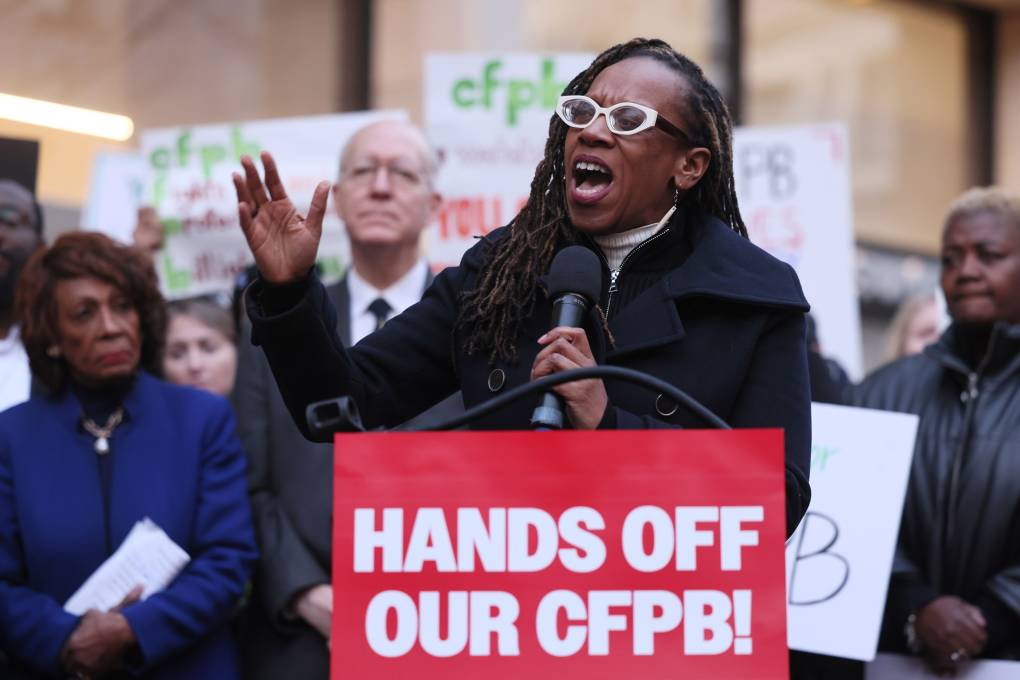
"caption": "Rep. Lateefah Simon speaks as congressional Democrats and Consumer Financial Protection Bureau (CFPB) workers hold a rally on Feb. 10, 2025, in Washington, DC, to protest the closure of the agency's headquarters and the work-from-home order issued by CFPB Director Russell Vought. Simon, who filled Barbara Lee’s East Bay congressional seat, spoke to KQED one day after delivering a defense of progressive values in response to the Trump administration. ",
"credit": "Jemal Countess/Getty Images for MoveOn",
"altTag": "A Black woman in glasses speak into a microphone at a rally, with people standing behind her. In front of her is a sign that says 'Hands off our CFPB!'",
"description": null,
"imgSizes": {
"medium": {
"file": "https://cdn.kqed.org/wp-content/uploads/sites/10/2025/03/LateefahSimonGetty2-800x533.jpg",
"width": 800,
"height": 533,
"mimeType": "image/jpeg"
},
"large": {
"file": "https://cdn.kqed.org/wp-content/uploads/sites/10/2025/03/LateefahSimonGetty2-1020x680.jpg",
"width": 1020,
"height": 680,
"mimeType": "image/jpeg"
},
"thumbnail": {
"file": "https://cdn.kqed.org/wp-content/uploads/sites/10/2025/03/LateefahSimonGetty2-160x107.jpg",
"width": 160,
"height": 107,
"mimeType": "image/jpeg"
},
"1536x1536": {
"file": "https://cdn.kqed.org/wp-content/uploads/sites/10/2025/03/LateefahSimonGetty2-1536x1024.jpg",
"width": 1536,
"height": 1024,
"mimeType": "image/jpeg"
},
"post-thumbnail": {
"file": "https://cdn.kqed.org/wp-content/uploads/sites/10/2025/03/LateefahSimonGetty2-672x372.jpg",
"width": 672,
"height": 372,
"mimeType": "image/jpeg"
},
"twentyfourteen-full-width": {
"file": "https://cdn.kqed.org/wp-content/uploads/sites/10/2025/03/LateefahSimonGetty2-1038x576.jpg",
"width": 1038,
"height": 576,
"mimeType": "image/jpeg"
},
"full-width": {
"file": "https://cdn.kqed.org/wp-content/uploads/sites/10/2025/03/LateefahSimonGetty2-1920x1280.jpg",
"width": 1920,
"height": 1280,
"mimeType": "image/jpeg"
},
"kqedFullSize": {
"file": "https://cdn.kqed.org/wp-content/uploads/sites/10/2025/03/LateefahSimonGetty2.jpg",
"width": 2000,
"height": 1333
}
},
"isLoading": false,
"fetchFailed": false
},
"news_11959336": {
"type": "attachments",
"id": "news_11959336",
"meta": {
"index": "attachments_1716263798",
"site": "news",
"id": "11959336",
"found": true
},
"title": "California Schools-LGBTQ Policies",
"publishDate": 1693249568,
"status": "inherit",
"parent": 12032768,
"modified": 1747169937,
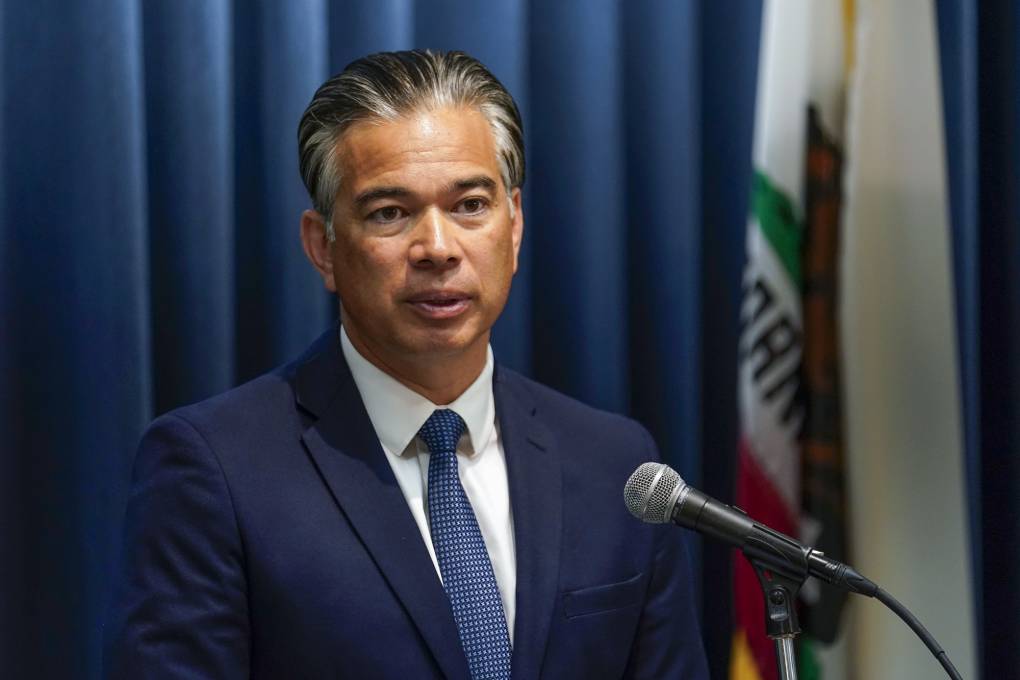
"caption": "California Attorney General Rob Bonta fields questions during a press conference on Monday, Aug. 28, 2023, in Los Angeles. ",
"credit": "Marcio Jose Sanchez/AP Photo",
"altTag": "A man wearing a navy blue suit, white shirt and blue foulard tie speaks into a microphone.",
"description": null,
"imgSizes": {
"medium": {
"file": "https://cdn.kqed.org/wp-content/uploads/sites/10/2023/08/230828-ROB-BONTA-AP-MJS-KQED-800x533.jpg",
"width": 800,
"height": 533,
"mimeType": "image/jpeg"
},
"large": {
"file": "https://cdn.kqed.org/wp-content/uploads/sites/10/2023/08/230828-ROB-BONTA-AP-MJS-KQED-1020x680.jpg",
"width": 1020,
"height": 680,
"mimeType": "image/jpeg"
},
"thumbnail": {
"file": "https://cdn.kqed.org/wp-content/uploads/sites/10/2023/08/230828-ROB-BONTA-AP-MJS-KQED-160x107.jpg",
"width": 160,
"height": 107,
"mimeType": "image/jpeg"
},
"1536x1536": {
"file": "https://cdn.kqed.org/wp-content/uploads/sites/10/2023/08/230828-ROB-BONTA-AP-MJS-KQED-1536x1024.jpg",
"width": 1536,
"height": 1024,
"mimeType": "image/jpeg"
},
"post-thumbnail": {
"file": "https://cdn.kqed.org/wp-content/uploads/sites/10/2023/08/230828-ROB-BONTA-AP-MJS-KQED-672x372.jpg",
"width": 672,
"height": 372,
"mimeType": "image/jpeg"
},
"twentyfourteen-full-width": {
"file": "https://cdn.kqed.org/wp-content/uploads/sites/10/2023/08/230828-ROB-BONTA-AP-MJS-KQED-1038x576.jpg",
"width": 1038,
"height": 576,
"mimeType": "image/jpeg"
},
"full-width": {
"file": "https://cdn.kqed.org/wp-content/uploads/sites/10/2023/08/230828-ROB-BONTA-AP-MJS-KQED-1920x1280.jpg",
"width": 1920,
"height": 1280,
"mimeType": "image/jpeg"
},
"kqedFullSize": {
"file": "https://cdn.kqed.org/wp-content/uploads/sites/10/2023/08/230828-ROB-BONTA-AP-MJS-KQED.jpg",
"width": 2000,
"height": 1333
}
},
"isLoading": false,
"fetchFailed": false
},
"news_12029901": {
"type": "attachments",
"id": "news_12029901",
"meta": {
"index": "attachments_1716263798",
"site": "news",
"id": "12029901",
"found": true
},
"title": "20250305_TARIFFSIMPACT_GC-6-KQED",
"publishDate": 1741216483,
"status": "inherit",
"parent": 0,
"modified": 1741288968,
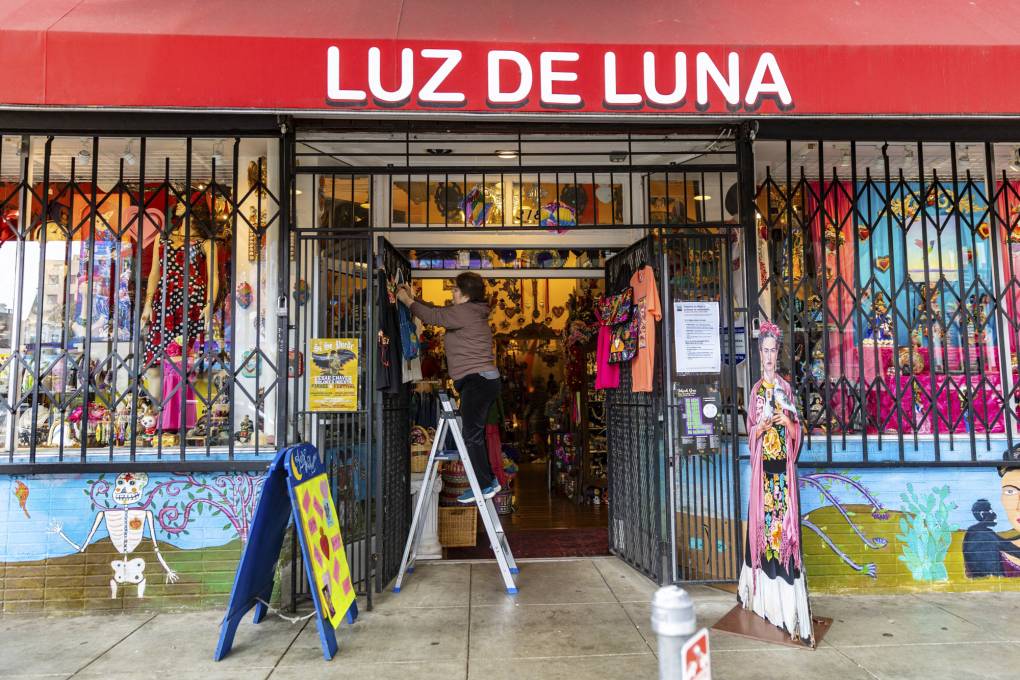
"caption": "An employee, who did not want to be named, hangs up bags for sale at Luz de Luna, a gift store on 24th Street in San Francisco, on March 5, 2025. Owner Denise Gonzales says about 70% of the products sold in her store are imported from Mexico.",
"credit": "Gina Castro/KQED",
"altTag": null,
"description": null,
"imgSizes": {
"medium": {
"file": "https://cdn.kqed.org/wp-content/uploads/sites/10/2025/03/20250305_TARIFFSIMPACT_GC-6-KQED-800x533.jpg",
"width": 800,
"height": 533,
"mimeType": "image/jpeg"
},
"large": {
"file": "https://cdn.kqed.org/wp-content/uploads/sites/10/2025/03/20250305_TARIFFSIMPACT_GC-6-KQED-1020x680.jpg",
"width": 1020,
"height": 680,
"mimeType": "image/jpeg"
},
"thumbnail": {
"file": "https://cdn.kqed.org/wp-content/uploads/sites/10/2025/03/20250305_TARIFFSIMPACT_GC-6-KQED-160x107.jpg",
"width": 160,
"height": 107,
"mimeType": "image/jpeg"
},
"1536x1536": {
"file": "https://cdn.kqed.org/wp-content/uploads/sites/10/2025/03/20250305_TARIFFSIMPACT_GC-6-KQED-1536x1024.jpg",
"width": 1536,
"height": 1024,
"mimeType": "image/jpeg"
},
"post-thumbnail": {
"file": "https://cdn.kqed.org/wp-content/uploads/sites/10/2025/03/20250305_TARIFFSIMPACT_GC-6-KQED-672x372.jpg",
"width": 672,
"height": 372,
"mimeType": "image/jpeg"
},
"twentyfourteen-full-width": {
"file": "https://cdn.kqed.org/wp-content/uploads/sites/10/2025/03/20250305_TARIFFSIMPACT_GC-6-KQED-1038x576.jpg",
"width": 1038,
"height": 576,
"mimeType": "image/jpeg"
},
"full-width": {
"file": "https://cdn.kqed.org/wp-content/uploads/sites/10/2025/03/20250305_TARIFFSIMPACT_GC-6-KQED-1920x1280.jpg",
"width": 1920,
"height": 1280,
"mimeType": "image/jpeg"
},
"kqedFullSize": {
"file": "https://cdn.kqed.org/wp-content/uploads/sites/10/2025/03/20250305_TARIFFSIMPACT_GC-6-KQED.jpg",
"width": 2000,
"height": 1333
}
},
"isLoading": false,
"fetchFailed": false
},
"news_12029800": {
"type": "attachments",
"id": "news_12029800",
"meta": {
"index": "attachments_1716263798",
"site": "news",
"id": "12029800",
"found": true
},
"title": "NOAA1",
"publishDate": 1741197504,
"status": "inherit",
"parent": 12029795,
"modified": 1741197698,
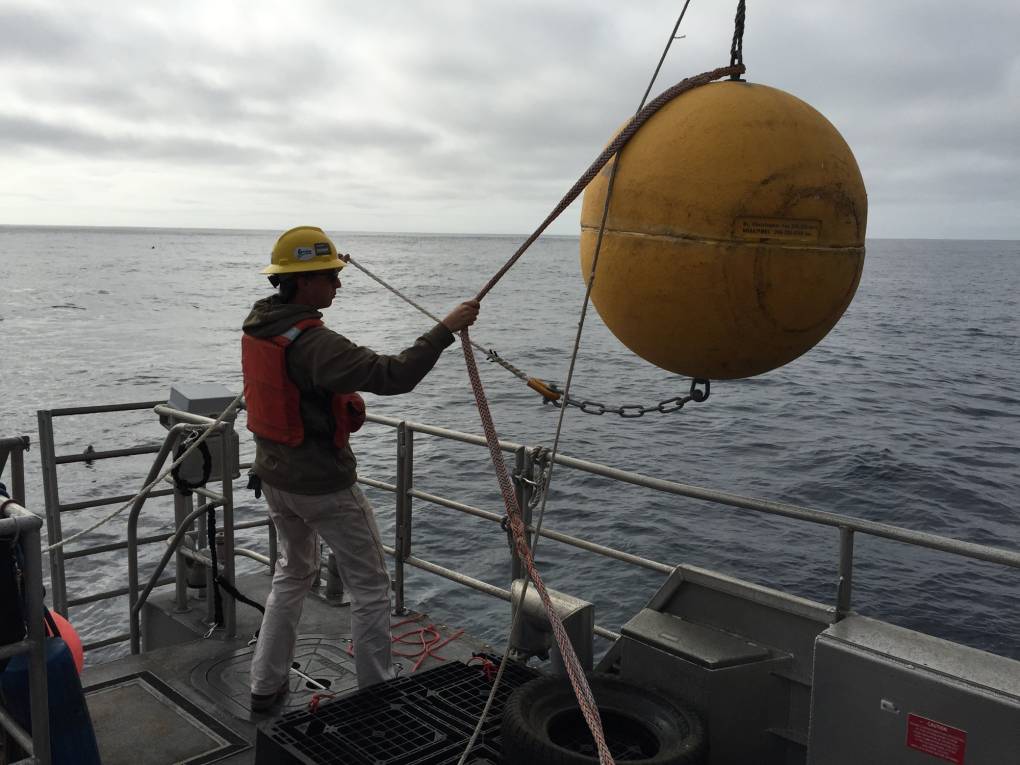
"caption": "A technician with NOAA scientists aboard the R/V Fulmar on Oct. 15, 2015, prepares to deploy an undersea sound-recording station 20 miles off of Pt. Reyes, in the Cordell Bank National Marine Sanctuary",
"credit": "Craig Miller/KQED",
"altTag": null,
"description": null,
"imgSizes": {
"medium": {
"file": "https://cdn.kqed.org/wp-content/uploads/sites/10/2025/03/NOAA1-800x600.jpg",
"width": 800,
"height": 600,
"mimeType": "image/jpeg"
},
"large": {
"file": "https://cdn.kqed.org/wp-content/uploads/sites/10/2025/03/NOAA1-1020x765.jpg",
"width": 1020,
"height": 765,
"mimeType": "image/jpeg"
},
"thumbnail": {
"file": "https://cdn.kqed.org/wp-content/uploads/sites/10/2025/03/NOAA1-160x120.jpg",
"width": 160,
"height": 120,
"mimeType": "image/jpeg"
},
"1536x1536": {
"file": "https://cdn.kqed.org/wp-content/uploads/sites/10/2025/03/NOAA1-1536x1152.jpg",
"width": 1536,
"height": 1152,
"mimeType": "image/jpeg"
},
"post-thumbnail": {
"file": "https://cdn.kqed.org/wp-content/uploads/sites/10/2025/03/NOAA1-672x372.jpg",
"width": 672,
"height": 372,
"mimeType": "image/jpeg"
},
"twentyfourteen-full-width": {
"file": "https://cdn.kqed.org/wp-content/uploads/sites/10/2025/03/NOAA1-1038x576.jpg",
"width": 1038,
"height": 576,
"mimeType": "image/jpeg"
},
"full-width": {
"file": "https://cdn.kqed.org/wp-content/uploads/sites/10/2025/03/NOAA1-1920x1440.jpg",
"width": 1920,
"height": 1440,
"mimeType": "image/jpeg"
},
"kqedFullSize": {
"file": "https://cdn.kqed.org/wp-content/uploads/sites/10/2025/03/NOAA1.jpg",
"width": 2000,
"height": 1500
}
},
"isLoading": false,
"fetchFailed": false
},
"news_12008663": {
"type": "attachments",
"id": "news_12008663",
"meta": {
"index": "attachments_1716263798",
"site": "news",
"id": "12008663",
"found": true
},
"title": "241008-UCB CAMPUS WALKOUT-MD-09-KQED",
"publishDate": 1728431201,
"status": "inherit",
"parent": 12032046,
"modified": 1742415507,
"caption": "A walkout and rally for Gaza and Lebanon at the University of California, Berkeley, on Oct. 8, 2024.",
"credit": "Martin do Nascimento/KQED",
"altTag": null,
"description": null,
"imgSizes": {
"medium": {
"file": "https://cdn.kqed.org/wp-content/uploads/sites/10/2024/10/241008-UCB-CAMPUS-WALKOUT-MD-09-KQED-800x533.jpg",
"width": 800,
"height": 533,
"mimeType": "image/jpeg"
},
"large": {
"file": "https://cdn.kqed.org/wp-content/uploads/sites/10/2024/10/241008-UCB-CAMPUS-WALKOUT-MD-09-KQED-1020x680.jpg",
"width": 1020,
"height": 680,
"mimeType": "image/jpeg"
},
"thumbnail": {
"file": "https://cdn.kqed.org/wp-content/uploads/sites/10/2024/10/241008-UCB-CAMPUS-WALKOUT-MD-09-KQED-160x107.jpg",
"width": 160,
"height": 107,
"mimeType": "image/jpeg"
},
"1536x1536": {
"file": "https://cdn.kqed.org/wp-content/uploads/sites/10/2024/10/241008-UCB-CAMPUS-WALKOUT-MD-09-KQED-1536x1024.jpg",
"width": 1536,
"height": 1024,
"mimeType": "image/jpeg"
},
"post-thumbnail": {
"file": "https://cdn.kqed.org/wp-content/uploads/sites/10/2024/10/241008-UCB-CAMPUS-WALKOUT-MD-09-KQED-672x372.jpg",
"width": 672,
"height": 372,
"mimeType": "image/jpeg"
},
"twentyfourteen-full-width": {
"file": "https://cdn.kqed.org/wp-content/uploads/sites/10/2024/10/241008-UCB-CAMPUS-WALKOUT-MD-09-KQED-1038x576.jpg",
"width": 1038,
"height": 576,
"mimeType": "image/jpeg"
},
"full-width": {
"file": "https://cdn.kqed.org/wp-content/uploads/sites/10/2024/10/241008-UCB-CAMPUS-WALKOUT-MD-09-KQED-1920x1280.jpg",
"width": 1920,
"height": 1280,
"mimeType": "image/jpeg"
},
"kqedFullSize": {
"file": "https://cdn.kqed.org/wp-content/uploads/sites/10/2024/10/241008-UCB-CAMPUS-WALKOUT-MD-09-KQED.jpg",
"width": 2000,
"height": 1333
}
},
"isLoading": false,
"fetchFailed": false
},
"news_12029842": {
"type": "attachments",
"id": "news_12029842",
"meta": {
"index": "attachments_1716263798",
"site": "news",
"id": "12029842",
"found": true
},
"title": "250224-Presidio-20-BL_qed",
"publishDate": 1741203587,
"status": "inherit",
"parent": 12029839,
"modified": 1741203597,
"caption": "A view of Crissy Field in the Presidio, a park and former military outpost, in San Francisco on Feb. 25, 2025.",
"credit": "Beth LaBerge/KQED",
"altTag": null,
"description": null,
"imgSizes": {
"medium": {
"file": "https://cdn.kqed.org/wp-content/uploads/sites/10/2025/03/250224-Presidio-20-BL_qed-800x533.jpg",
"width": 800,
"height": 533,
"mimeType": "image/jpeg"
},
"large": {
"file": "https://cdn.kqed.org/wp-content/uploads/sites/10/2025/03/250224-Presidio-20-BL_qed-1020x680.jpg",
"width": 1020,
"height": 680,
"mimeType": "image/jpeg"
},
"thumbnail": {
"file": "https://cdn.kqed.org/wp-content/uploads/sites/10/2025/03/250224-Presidio-20-BL_qed-160x107.jpg",
"width": 160,
"height": 107,
"mimeType": "image/jpeg"
},
"1536x1536": {
"file": "https://cdn.kqed.org/wp-content/uploads/sites/10/2025/03/250224-Presidio-20-BL_qed-1536x1024.jpg",
"width": 1536,
"height": 1024,
"mimeType": "image/jpeg"
},
"post-thumbnail": {
"file": "https://cdn.kqed.org/wp-content/uploads/sites/10/2025/03/250224-Presidio-20-BL_qed-672x372.jpg",
"width": 672,
"height": 372,
"mimeType": "image/jpeg"
},
"twentyfourteen-full-width": {
"file": "https://cdn.kqed.org/wp-content/uploads/sites/10/2025/03/250224-Presidio-20-BL_qed-1038x576.jpg",
"width": 1038,
"height": 576,
"mimeType": "image/jpeg"
},
"full-width": {
"file": "https://cdn.kqed.org/wp-content/uploads/sites/10/2025/03/250224-Presidio-20-BL_qed-1920x1280.jpg",
"width": 1920,
"height": 1280,
"mimeType": "image/jpeg"
},
"kqedFullSize": {
"file": "https://cdn.kqed.org/wp-content/uploads/sites/10/2025/03/250224-Presidio-20-BL_qed.jpg",
"width": 2000,
"height": 1333
}
},
"isLoading": false,
"fetchFailed": false
},
"news_12019091": {
"type": "attachments",
"id": "news_12019091",
"meta": {
"index": "attachments_1716263798",
"site": "news",
"id": "12019091",
"found": true
},
"title": "The Park Fire burns along Route 32 northeast of Chico on July 26, 2024.",
"publishDate": 1734641171,
"status": "inherit",
"parent": 0,
"modified": 1734661036,
"caption": "The Park Fire burns along Highway 32 northeast of Chico on July 26, 2024.",
"credit": "Beth LaBerge/KQED",
"altTag": null,
"description": null,
"imgSizes": {
"medium": {
"file": "https://cdn.kqed.org/wp-content/uploads/sites/10/2024/12/15_240726-ParkFire-137-BL-800x533.jpg",
"width": 800,
"height": 533,
"mimeType": "image/jpeg"
},
"large": {
"file": "https://cdn.kqed.org/wp-content/uploads/sites/10/2024/12/15_240726-ParkFire-137-BL-1020x680.jpg",
"width": 1020,
"height": 680,
"mimeType": "image/jpeg"
},
"thumbnail": {
"file": "https://cdn.kqed.org/wp-content/uploads/sites/10/2024/12/15_240726-ParkFire-137-BL-160x107.jpg",
"width": 160,
"height": 107,
"mimeType": "image/jpeg"
},
"1536x1536": {
"file": "https://cdn.kqed.org/wp-content/uploads/sites/10/2024/12/15_240726-ParkFire-137-BL-1536x1024.jpg",
"width": 1536,
"height": 1024,
"mimeType": "image/jpeg"
},
"2048x2048": {
"file": "https://cdn.kqed.org/wp-content/uploads/sites/10/2024/12/15_240726-ParkFire-137-BL-2048x1365.jpg",
"width": 2048,
"height": 1365,
"mimeType": "image/jpeg"
},
"post-thumbnail": {
"file": "https://cdn.kqed.org/wp-content/uploads/sites/10/2024/12/15_240726-ParkFire-137-BL-672x372.jpg",
"width": 672,
"height": 372,
"mimeType": "image/jpeg"
},
"twentyfourteen-full-width": {
"file": "https://cdn.kqed.org/wp-content/uploads/sites/10/2024/12/15_240726-ParkFire-137-BL-1038x576.jpg",
"width": 1038,
"height": 576,
"mimeType": "image/jpeg"
},
"full-width": {
"file": "https://cdn.kqed.org/wp-content/uploads/sites/10/2024/12/15_240726-ParkFire-137-BL-1920x1280.jpg",
"width": 1920,
"height": 1280,
"mimeType": "image/jpeg"
},
"kqedFullSize": {
"file": "https://cdn.kqed.org/wp-content/uploads/sites/10/2024/12/15_240726-ParkFire-137-BL-scaled-e1741107952778.jpg",
"width": 2000,
"height": 1334
}
},
"isLoading": false,
"fetchFailed": false
},
"news_12029225": {
"type": "attachments",
"id": "news_12029225",
"meta": {
"index": "attachments_1716263798",
"site": "news",
"id": "12029225",
"found": true
},
"title": "Trump Consumer Financial Protection Bureau",
"publishDate": 1740771717,
"status": "inherit",
"parent": 12028122,
"modified": 1740774381,
"caption": "A security officer works inside the Consumer Financial Protection Bureau (CFPB) building headquarters on Monday, Feb. 10, 2025.",
"credit": "Jacquelyn Martin/AP Photo",
"altTag": null,
"description": null,
"imgSizes": {
"medium": {
"file": "https://cdn.kqed.org/wp-content/uploads/sites/10/2025/02/CFPBAP-800x533.jpg",
"width": 800,
"height": 533,
"mimeType": "image/jpeg"
},
"large": {
"file": "https://cdn.kqed.org/wp-content/uploads/sites/10/2025/02/CFPBAP-1020x680.jpg",
"width": 1020,
"height": 680,
"mimeType": "image/jpeg"
},
"thumbnail": {
"file": "https://cdn.kqed.org/wp-content/uploads/sites/10/2025/02/CFPBAP-160x107.jpg",
"width": 160,
"height": 107,
"mimeType": "image/jpeg"
},
"1536x1536": {
"file": "https://cdn.kqed.org/wp-content/uploads/sites/10/2025/02/CFPBAP-1536x1024.jpg",
"width": 1536,
"height": 1024,
"mimeType": "image/jpeg"
},
"post-thumbnail": {
"file": "https://cdn.kqed.org/wp-content/uploads/sites/10/2025/02/CFPBAP-672x372.jpg",
"width": 672,
"height": 372,
"mimeType": "image/jpeg"
},
"twentyfourteen-full-width": {
"file": "https://cdn.kqed.org/wp-content/uploads/sites/10/2025/02/CFPBAP-1038x576.jpg",
"width": 1038,
"height": 576,
"mimeType": "image/jpeg"
},
"full-width": {
"file": "https://cdn.kqed.org/wp-content/uploads/sites/10/2025/02/CFPBAP-1920x1280.jpg",
"width": 1920,
"height": 1280,
"mimeType": "image/jpeg"
},
"kqedFullSize": {
"file": "https://cdn.kqed.org/wp-content/uploads/sites/10/2025/02/CFPBAP.jpg",
"width": 2000,
"height": 1333
}
},
"isLoading": false,
"fetchFailed": false
},
"news_12029302": {
"type": "attachments",
"id": "news_12029302",
"meta": {
"index": "attachments_1716263798",
"site": "news",
"id": "12029302",
"found": true
},
"title": "072820-Doctor-Pediatrician-Kid-GETTY-CM-01 copy",
"publishDate": 1740777322,
"status": "inherit",
"parent": 12029294,
"modified": 1752270887,
"caption": "A doctor examines a child at Southern Orange County Pediatric Associates in Ladera Ranch on July 28, 2020.",
"credit": "Paul Bersebach/Orange County Register via Getty Images",
"altTag": null,
"description": null,
"imgSizes": {
"medium": {
"file": "https://cdn.kqed.org/wp-content/uploads/sites/10/2025/03/072820-Doctor-Pediatrician-Kid-GETTY-CM-01-copy-800x533.jpg",
"width": 800,
"height": 533,
"mimeType": "image/jpeg"
},
"large": {
"file": "https://cdn.kqed.org/wp-content/uploads/sites/10/2025/03/072820-Doctor-Pediatrician-Kid-GETTY-CM-01-copy-1020x680.jpg",
"width": 1020,
"height": 680,
"mimeType": "image/jpeg"
},
"thumbnail": {
"file": "https://cdn.kqed.org/wp-content/uploads/sites/10/2025/03/072820-Doctor-Pediatrician-Kid-GETTY-CM-01-copy-160x107.jpg",
"width": 160,
"height": 107,
"mimeType": "image/jpeg"
},
"1536x1536": {
"file": "https://cdn.kqed.org/wp-content/uploads/sites/10/2025/03/072820-Doctor-Pediatrician-Kid-GETTY-CM-01-copy-1536x1024.jpg",
"width": 1536,
"height": 1024,
"mimeType": "image/jpeg"
},
"post-thumbnail": {
"file": "https://cdn.kqed.org/wp-content/uploads/sites/10/2025/03/072820-Doctor-Pediatrician-Kid-GETTY-CM-01-copy-672x372.jpg",
"width": 672,
"height": 372,
"mimeType": "image/jpeg"
},
"twentyfourteen-full-width": {
"file": "https://cdn.kqed.org/wp-content/uploads/sites/10/2025/03/072820-Doctor-Pediatrician-Kid-GETTY-CM-01-copy-1038x576.jpg",
"width": 1038,
"height": 576,
"mimeType": "image/jpeg"
},
"full-width": {
"file": "https://cdn.kqed.org/wp-content/uploads/sites/10/2025/03/072820-Doctor-Pediatrician-Kid-GETTY-CM-01-copy-1920x1280.jpg",
"width": 1920,
"height": 1280,
"mimeType": "image/jpeg"
},
"kqedFullSize": {
"file": "https://cdn.kqed.org/wp-content/uploads/sites/10/2025/03/072820-Doctor-Pediatrician-Kid-GETTY-CM-01-copy.jpg",
"width": 2000,
"height": 1333
}
},
"isLoading": false,
"fetchFailed": false
},
"news_12029287": {
"type": "attachments",
"id": "news_12029287",
"meta": {
"index": "attachments_1716263798",
"site": "news",
"id": "12029287",
"found": true
},
"title": "2025 Conservative Political Action Conference (CPAC)",
"publishDate": 1740776243,
"status": "inherit",
"parent": 12029281,
"modified": 1740791078,
"caption": "Elon Musk speaks at the Conservative Political Action Conference (CPAC) at the National Harbor in Oxon Hill, Maryland, on Feb. 20, 2025. ",
"credit": "Valerie Plesch/The Washington Post via Getty Images",
"altTag": null,
"description": null,
"imgSizes": {
"medium": {
"file": "https://cdn.kqed.org/wp-content/uploads/sites/10/2025/02/ElonMuskGetty-800x533.jpg",
"width": 800,
"height": 533,
"mimeType": "image/jpeg"
},
"large": {
"file": "https://cdn.kqed.org/wp-content/uploads/sites/10/2025/02/ElonMuskGetty-1020x680.jpg",
"width": 1020,
"height": 680,
"mimeType": "image/jpeg"
},
"thumbnail": {
"file": "https://cdn.kqed.org/wp-content/uploads/sites/10/2025/02/ElonMuskGetty-160x107.jpg",
"width": 160,
"height": 107,
"mimeType": "image/jpeg"
},
"1536x1536": {
"file": "https://cdn.kqed.org/wp-content/uploads/sites/10/2025/02/ElonMuskGetty-1536x1024.jpg",
"width": 1536,
"height": 1024,
"mimeType": "image/jpeg"
},
"post-thumbnail": {
"file": "https://cdn.kqed.org/wp-content/uploads/sites/10/2025/02/ElonMuskGetty-672x372.jpg",
"width": 672,
"height": 372,
"mimeType": "image/jpeg"
},
"twentyfourteen-full-width": {
"file": "https://cdn.kqed.org/wp-content/uploads/sites/10/2025/02/ElonMuskGetty-1038x576.jpg",
"width": 1038,
"height": 576,
"mimeType": "image/jpeg"
},
"full-width": {
"file": "https://cdn.kqed.org/wp-content/uploads/sites/10/2025/02/ElonMuskGetty-1920x1280.jpg",
"width": 1920,
"height": 1280,
"mimeType": "image/jpeg"
},
"kqedFullSize": {
"file": "https://cdn.kqed.org/wp-content/uploads/sites/10/2025/02/ElonMuskGetty.jpg",
"width": 2000,
"height": 1333
}
},
"isLoading": false,
"fetchFailed": false
},
"news_12029297": {
"type": "attachments",
"id": "news_12029297",
"meta": {
"index": "attachments_1716263798",
"site": "news",
"id": "12029297",
"found": true
},
"title": "COLLEGE BASKETBALL: DEC 03 Utah Valley at Stanford",
"publishDate": 1740777003,
"status": "inherit",
"parent": 12029289,
"modified": 1740790790,
"caption": "A Stanford Cardinal basketball sits on the court before a game between the Utah Valley Wolverines and Stanford Cardinals on Dec. 3, 2024, at Maples Pavilion in Palo Alto, California.",
"credit": "Trinity Machan/Icon Sportswire via Getty Images",
"altTag": null,
"description": null,
"imgSizes": {
"medium": {
"file": "https://cdn.kqed.org/wp-content/uploads/sites/10/2025/02/StanfordAthleticsGetty-800x533.jpg",
"width": 800,
"height": 533,
"mimeType": "image/jpeg"
},
"large": {
"file": "https://cdn.kqed.org/wp-content/uploads/sites/10/2025/02/StanfordAthleticsGetty-1020x680.jpg",
"width": 1020,
"height": 680,
"mimeType": "image/jpeg"
},
"thumbnail": {
"file": "https://cdn.kqed.org/wp-content/uploads/sites/10/2025/02/StanfordAthleticsGetty-160x107.jpg",
"width": 160,
"height": 107,
"mimeType": "image/jpeg"
},
"1536x1536": {
"file": "https://cdn.kqed.org/wp-content/uploads/sites/10/2025/02/StanfordAthleticsGetty-1536x1024.jpg",
"width": 1536,
"height": 1024,
"mimeType": "image/jpeg"
},
"post-thumbnail": {
"file": "https://cdn.kqed.org/wp-content/uploads/sites/10/2025/02/StanfordAthleticsGetty-672x372.jpg",
"width": 672,
"height": 372,
"mimeType": "image/jpeg"
},
"twentyfourteen-full-width": {
"file": "https://cdn.kqed.org/wp-content/uploads/sites/10/2025/02/StanfordAthleticsGetty-1038x576.jpg",
"width": 1038,
"height": 576,
"mimeType": "image/jpeg"
},
"full-width": {
"file": "https://cdn.kqed.org/wp-content/uploads/sites/10/2025/02/StanfordAthleticsGetty-1920x1280.jpg",
"width": 1920,
"height": 1280,
"mimeType": "image/jpeg"
},
"kqedFullSize": {
"file": "https://cdn.kqed.org/wp-content/uploads/sites/10/2025/02/StanfordAthleticsGetty.jpg",
"width": 2000,
"height": 1333
}
},
"isLoading": false,
"fetchFailed": false
},
"news_12029189": {
"type": "attachments",
"id": "news_12029189",
"meta": {
"index": "attachments_1716263798",
"site": "news",
"id": "12029189",
"found": true
},
"title": "NOAA Earth System Research Laboratory",
"publishDate": 1740766106,
"status": "inherit",
"parent": 12029178,
"modified": 1740766133,
"caption": "National Oceanic & Atmospheric Administration Earth System Research Laboratory in Boulder, Colorado.",
"credit": "Byunghwan Lim/Getty Images",
"altTag": null,
"description": null,
"imgSizes": {
"medium": {
"file": "https://cdn.kqed.org/wp-content/uploads/sites/10/2025/02/NOAAGetty-800x533.jpg",
"width": 800,
"height": 533,
"mimeType": "image/jpeg"
},
"large": {
"file": "https://cdn.kqed.org/wp-content/uploads/sites/10/2025/02/NOAAGetty-1020x680.jpg",
"width": 1020,
"height": 680,
"mimeType": "image/jpeg"
},
"thumbnail": {
"file": "https://cdn.kqed.org/wp-content/uploads/sites/10/2025/02/NOAAGetty-160x107.jpg",
"width": 160,
"height": 107,
"mimeType": "image/jpeg"
},
"1536x1536": {
"file": "https://cdn.kqed.org/wp-content/uploads/sites/10/2025/02/NOAAGetty-1536x1024.jpg",
"width": 1536,
"height": 1024,
"mimeType": "image/jpeg"
},
"post-thumbnail": {
"file": "https://cdn.kqed.org/wp-content/uploads/sites/10/2025/02/NOAAGetty-672x372.jpg",
"width": 672,
"height": 372,
"mimeType": "image/jpeg"
},
"twentyfourteen-full-width": {
"file": "https://cdn.kqed.org/wp-content/uploads/sites/10/2025/02/NOAAGetty-1038x576.jpg",
"width": 1038,
"height": 576,
"mimeType": "image/jpeg"
},
"full-width": {
"file": "https://cdn.kqed.org/wp-content/uploads/sites/10/2025/02/NOAAGetty-1920x1280.jpg",
"width": 1920,
"height": 1280,
"mimeType": "image/jpeg"
},
"kqedFullSize": {
"file": "https://cdn.kqed.org/wp-content/uploads/sites/10/2025/02/NOAAGetty.jpg",
"width": 2000,
"height": 1333
}
},
"isLoading": false,
"fetchFailed": false
}
},
"audioPlayerReducer": {
"postId": "stream_live",
"isPaused": true,
"isPlaying": false,
"pfsActive": false,
"pledgeModalIsOpen": true,
"playerDrawerIsOpen": false,
"liveAudioPlayStartedAt": 0,
"liveAudioPlayContext": ""
},
"authorsReducer": {
"byline_news_12029294": {
"type": "authors",
"id": "byline_news_12029294",
"meta": {
"override": true
},
"slug": "byline_news_12029294",
"name": "\u003ca href=\"https://calmatters.org/author/anaibarra/\">Ana B. Ibarra\u003c/a>, CalMatters",
"isLoading": false
},
"rachael-myrow": {
"type": "authors",
"id": "251",
"meta": {
"index": "authors_1716337520",
"id": "251",
"found": true
},
"name": "Rachael Myrow",
"firstName": "Rachael",
"lastName": "Myrow",
"slug": "rachael-myrow",
"email": "rmyrow@kqed.org",
"display_author_email": true,
"staff_mastheads": [
"news"
],
"title": "Senior Editor of KQED's Silicon Valley News Desk",
"bio": "• I write and edit stories about how Silicon Valley power and policies shape everyday life in California. I’m also passionate about making Bay Area history and culture more accessible to a broad public. • I’ve been a journalist for most of my life, starting in high school with The Franklin Press in Los Angeles, where I grew up. While earning my first degree in English at UC Berkeley, I got my start in public radio at KALX-FM. After completing a second degree in journalism at Cal, I landed my first professional job at Marketplace, then moved on to KPCC (now LAist), and then KQED, where I hosted The California Report for more than seven years. • My reporting has appeared on NPR, The World, WBUR’s \u003ci>Here & Now\u003c/i>, and the BBC. I also guest host for KQED’s \u003ci>Forum\u003c/i>, as well as the Commonwealth Club in San Francisco. • I speak periodically on media, democracy and technology issues, and do voiceover work for documentaries and educational video projects. • Outside of the studio, you'll find me hiking Bay Area trails and whipping up Insta-ready meals in my kitchen. • I do not accept gifts, money, or favors from anyone connected to my reporting, I don't pay people for information, and I do not support or donate to political causes. • I strive to treat the people I report on with fairness, honesty, and respect. I also recognize there are often multiple sides to a story and work to verify information through multiple sources and documentation. If I get something wrong, I correct it.",
"avatar": "https://secure.gravatar.com/avatar/87bf8cb5874e045cdff430523a6d48b1?s=600&d=blank&r=g",
"twitter": "rachaelmyrow",
"facebook": null,
"instagram": null,
"linkedin": "https://www.linkedin.com/in/rachaelmyrow/",
"sites": [
{
"site": "arts",
"roles": [
"administrator"
]
},
{
"site": "news",
"roles": [
"edit_others_posts",
"editor"
]
},
{
"site": "futureofyou",
"roles": [
"editor"
]
},
{
"site": "bayareabites",
"roles": [
"editor"
]
},
{
"site": "stateofhealth",
"roles": [
"editor"
]
},
{
"site": "science",
"roles": [
"editor"
]
},
{
"site": "food",
"roles": [
"editor"
]
},
{
"site": "forum",
"roles": [
"editor"
]
},
{
"site": "liveblog",
"roles": [
"author"
]
}
],
"headData": {
"title": "Rachael Myrow | KQED",
"description": "Senior Editor of KQED's Silicon Valley News Desk",
"ogImgSrc": "https://secure.gravatar.com/avatar/87bf8cb5874e045cdff430523a6d48b1?s=600&d=blank&r=g",
"twImgSrc": "https://secure.gravatar.com/avatar/87bf8cb5874e045cdff430523a6d48b1?s=600&d=blank&r=g"
},
"isLoading": false,
"link": "/author/rachael-myrow"
},
"matthewgreen": {
"type": "authors",
"id": "1263",
"meta": {
"index": "authors_1716337520",
"id": "1263",
"found": true
},
"name": "Matthew Green",
"firstName": "Matthew",
"lastName": "Green",
"slug": "matthewgreen",
"email": "mgreen@kqed.org",
"display_author_email": false,
"staff_mastheads": [],
"title": "KQED Editor/Reporter",
"bio": "Matthew Green is a digital media producer for KQED News. He previously produced \u003ca href=\"http://www.kqed.org/lowdown\">The Lowdown\u003c/a>, KQED’s multimedia news education blog. Matthew's written for numerous Bay Area publications, including the Oakland Tribune and San Francisco Chronicle. He also taught journalism classes at Fremont High School in East Oakland.\r\n\r\nEmail: mgreen@kqed.org; Twitter: @MGreenKQED",
"avatar": "https://secure.gravatar.com/avatar/3bf498d1267ca02c8494f33d8cfc575e?s=600&d=blank&r=g",
"twitter": "MGreenKQED",
"facebook": null,
"instagram": null,
"linkedin": null,
"sites": [
{
"site": "news",
"roles": []
},
{
"site": "lowdown",
"roles": []
},
{
"site": "science",
"roles": []
},
{
"site": "education",
"roles": []
},
{
"site": "quest",
"roles": []
},
{
"site": "liveblog",
"roles": []
}
],
"headData": {
"title": "Matthew Green | KQED",
"description": "KQED Editor/Reporter",
"ogImgSrc": "https://secure.gravatar.com/avatar/3bf498d1267ca02c8494f33d8cfc575e?s=600&d=blank&r=g",
"twImgSrc": "https://secure.gravatar.com/avatar/3bf498d1267ca02c8494f33d8cfc575e?s=600&d=blank&r=g"
},
"isLoading": false,
"link": "/author/matthewgreen"
},
"fjhabvala": {
"type": "authors",
"id": "8659",
"meta": {
"index": "authors_1716337520",
"id": "8659",
"found": true
},
"name": "Farida Jhabvala Romero",
"firstName": "Farida",
"lastName": "Jhabvala Romero",
"slug": "fjhabvala",
"email": "fjhabvala@kqed.org",
"display_author_email": true,
"staff_mastheads": [
"news"
],
"title": "KQED Contributor",
"bio": "\u003cspan style=\"font-weight: 400;\">Farida Jhabvala Romero is a Labor Correspondent for KQED. She previously covered immigration. Farida was \u003ca href=\"https://www.ccnma.org/2022-most-influential-latina-journalists\">named\u003c/a> one of the 10 Most Influential Latina Journalists in California in 2022 by the California Chicano News Media Association. Her work has won awards from the Society of Professional Journalists (Northern California), as well as a national and regional Edward M. Murrow Award for the collaborative reporting projects “Dangerous Air” and “Graying California.” \u003c/span>\u003cspan style=\"font-weight: 400;\">Before joining KQED, Farida worked as a producer at Radio Bilingüe, a national public radio network. Farida earned her master’s degree in journalism from Stanford University.\u003c/span>",
"avatar": "https://secure.gravatar.com/avatar/c3ab27c5554b67b478f80971e515aa02?s=600&d=blank&r=g",
"twitter": "FaridaJhabvala",
"facebook": null,
"instagram": null,
"linkedin": "https://www.linkedin.com/in/faridajhabvala/",
"sites": [
{
"site": "news",
"roles": [
"editor"
]
},
{
"site": "stateofhealth",
"roles": [
"author"
]
}
],
"headData": {
"title": "Farida Jhabvala Romero | KQED",
"description": "KQED Contributor",
"ogImgSrc": "https://secure.gravatar.com/avatar/c3ab27c5554b67b478f80971e515aa02?s=600&d=blank&r=g",
"twImgSrc": "https://secure.gravatar.com/avatar/c3ab27c5554b67b478f80971e515aa02?s=600&d=blank&r=g"
},
"isLoading": false,
"link": "/author/fjhabvala"
},
"dventon": {
"type": "authors",
"id": "11088",
"meta": {
"index": "authors_1716337520",
"id": "11088",
"found": true
},
"name": "Danielle Venton",
"firstName": "Danielle",
"lastName": "Venton",
"slug": "dventon",
"email": "dventon@kqed.org",
"display_author_email": true,
"staff_mastheads": [
"science"
],
"title": "Science reporter",
"bio": "Danielle Venton is a reporter for KQED Science. She covers wildfires, space and oceans (though she is prone to sea sickness).\r\n\r\nBefore joining KQED in 2015, Danielle was a staff reporter at KRCB in Sonoma County and a freelancer. She studied science communication at UC Santa Cruz and formerly worked at CERN in Geneva, Switzerland where she wrote about computing. She lives in Sonoma County and enjoys backpacking.",
"avatar": "https://secure.gravatar.com/avatar/ebaf11ee6cfb7bb40329a143d463829e?s=600&d=blank&r=g",
"twitter": "DanielleVenton",
"facebook": null,
"instagram": null,
"linkedin": null,
"sites": [
{
"site": "arts",
"roles": [
"contributor"
]
},
{
"site": "news",
"roles": [
"editor"
]
},
{
"site": "futureofyou",
"roles": [
"editor"
]
},
{
"site": "science",
"roles": [
"editor"
]
},
{
"site": "liveblog",
"roles": [
"contributor"
]
}
],
"headData": {
"title": "Danielle Venton | KQED",
"description": "Science reporter",
"ogImgSrc": "https://secure.gravatar.com/avatar/ebaf11ee6cfb7bb40329a143d463829e?s=600&d=blank&r=g",
"twImgSrc": "https://secure.gravatar.com/avatar/ebaf11ee6cfb7bb40329a143d463829e?s=600&d=blank&r=g"
},
"isLoading": false,
"link": "/author/dventon"
},
"eromero": {
"type": "authors",
"id": "11746",
"meta": {
"index": "authors_1716337520",
"id": "11746",
"found": true
},
"name": "Ezra David Romero",
"firstName": "Ezra David",
"lastName": "Romero",
"slug": "eromero",
"email": "eromero@kqed.org",
"display_author_email": true,
"staff_mastheads": [
"news",
"science"
],
"title": "Climate Reporter",
"bio": "Ezra David Romero is a climate reporter for KQED News. He covers the absence and excess of water in the Bay Area — think sea level rise, flooding and drought. For nearly a decade he’s covered how warming temperatures are altering the lives of Californians. He’s reported on farmers worried their pistachio trees aren’t getting enough sleep, families desperate for water, scientists studying dying giant sequoias, and alongside firefighters containing wildfires. His work has appeared on local stations across California and nationally on public radio shows like Morning Edition, Here and Now, All Things Considered and Science Friday. ",
"avatar": "https://secure.gravatar.com/avatar/9c15bb8bab267e058708a9eeaeef16bf?s=600&d=blank&r=g",
"twitter": "ezraromero",
"bluesky": null,
"facebook": null,
"instagram": null,
"linkedin": null,
"sites": [
{
"site": "arts",
"roles": [
"editor"
]
},
{
"site": "news",
"roles": [
"editor"
]
},
{
"site": "science",
"roles": [
"editor"
]
},
{
"site": "liveblog",
"roles": [
"author"
]
}
],
"headData": {
"title": "Ezra David Romero | KQED",
"description": "Climate Reporter",
"ogImgSrc": "https://secure.gravatar.com/avatar/9c15bb8bab267e058708a9eeaeef16bf?s=600&d=blank&r=g",
"twImgSrc": "https://secure.gravatar.com/avatar/9c15bb8bab267e058708a9eeaeef16bf?s=600&d=blank&r=g"
},
"isLoading": false,
"link": "/author/eromero"
},
"nnavarro": {
"type": "authors",
"id": "11756",
"meta": {
"index": "authors_1716337520",
"id": "11756",
"found": true
},
"name": "Natalia Navarro",
"firstName": "Natalia",
"lastName": "Navarro",
"slug": "nnavarro",
"email": "nnavarro@kqed.org",
"display_author_email": true,
"staff_mastheads": [
"news"
],
"title": "Afternoon News Anchor",
"bio": "Natalia Navarro is KQED's afternoon radio news anchor. She came to KQED in 2021 from Colorado Public Radio, where she was a reporter and host. She has received several awards for her work covering daily and breaking news from professional organizations such as the San Francisco Press Club, Society of Professional Journalists and the Colorado Broadcasters Association. Natalia is originally from Tucson, Arizona, where she got her start in journalism writing for the Arizona Daily Star, Arizona Public Media and the Tucson Weekly. Natalia earned her bachelor's degree in journalism and economics, and her master's degree in journalism from the University of Arizona.",
"avatar": "https://secure.gravatar.com/avatar/45f866ea8b5c52bf1fa4c236dd0c03c2?s=600&d=blank&r=g",
"twitter": "@NataliaVNavarro",
"facebook": null,
"instagram": null,
"linkedin": null,
"sites": [
{
"site": "news",
"roles": [
"editor"
]
}
],
"headData": {
"title": "Natalia Navarro | KQED",
"description": "Afternoon News Anchor",
"ogImgSrc": "https://secure.gravatar.com/avatar/45f866ea8b5c52bf1fa4c236dd0c03c2?s=600&d=blank&r=g",
"twImgSrc": "https://secure.gravatar.com/avatar/45f866ea8b5c52bf1fa4c236dd0c03c2?s=600&d=blank&r=g"
},
"isLoading": false,
"link": "/author/nnavarro"
},
"jlara": {
"type": "authors",
"id": "11761",
"meta": {
"index": "authors_1716337520",
"id": "11761",
"found": true
},
"name": "Juan Carlos Lara",
"firstName": "Juan Carlos",
"lastName": "Lara",
"slug": "jlara",
"email": "jlara@kqed.org",
"display_author_email": false,
"staff_mastheads": [],
"title": "KQED Contributor",
"bio": null,
"avatar": "https://secure.gravatar.com/avatar/19e2052b9b05657c5ff2af2121846e9c?s=600&d=blank&r=g",
"twitter": null,
"facebook": null,
"instagram": null,
"linkedin": null,
"sites": [
{
"site": "arts",
"roles": [
"editor"
]
},
{
"site": "news",
"roles": [
"editor"
]
},
{
"site": "forum",
"roles": [
"editor"
]
},
{
"site": "liveblog",
"roles": [
"contributor"
]
}
],
"headData": {
"title": "Juan Carlos Lara | KQED",
"description": "KQED Contributor",
"ogImgSrc": "https://secure.gravatar.com/avatar/19e2052b9b05657c5ff2af2121846e9c?s=600&d=blank&r=g",
"twImgSrc": "https://secure.gravatar.com/avatar/19e2052b9b05657c5ff2af2121846e9c?s=600&d=blank&r=g"
},
"isLoading": false,
"link": "/author/jlara"
},
"kdebenedetti": {
"type": "authors",
"id": "11913",
"meta": {
"index": "authors_1716337520",
"id": "11913",
"found": true
},
"name": "Katie DeBenedetti",
"firstName": "Katie",
"lastName": "DeBenedetti",
"slug": "kdebenedetti",
"email": "kdebenedetti@kqed.org",
"display_author_email": false,
"staff_mastheads": [
"news",
"science"
],
"title": "KQED Contributor",
"bio": "Katie DeBenedetti is a digital reporter covering daily news for the Express Desk. Prior to joining KQED as a culture reporting intern in January 2024, she covered education and city government for the Napa Valley Register.",
"avatar": "https://secure.gravatar.com/avatar/6e31073cb8f7e4214ab03f42771d0f45?s=600&d=blank&r=g",
"twitter": null,
"facebook": null,
"instagram": null,
"linkedin": null,
"sites": [
{
"site": "news",
"roles": [
"author"
]
},
{
"site": "science",
"roles": [
"author"
]
},
{
"site": "liveblog",
"roles": [
"author"
]
}
],
"headData": {
"title": "Katie DeBenedetti | KQED",
"description": "KQED Contributor",
"ogImgSrc": "https://secure.gravatar.com/avatar/6e31073cb8f7e4214ab03f42771d0f45?s=600&d=blank&r=g",
"twImgSrc": "https://secure.gravatar.com/avatar/6e31073cb8f7e4214ab03f42771d0f45?s=600&d=blank&r=g"
},
"isLoading": false,
"link": "/author/kdebenedetti"
},
"rcooke": {
"type": "authors",
"id": "11921",
"meta": {
"index": "authors_1716337520",
"id": "11921",
"found": true
},
"name": "Riley Cooke",
"firstName": "Riley",
"lastName": "Cooke",
"slug": "rcooke",
"email": "rcooke@kqed.org",
"display_author_email": true,
"staff_mastheads": [
"news"
],
"title": "KQED Contributor",
"bio": "Riley is a senior at UC Berkeley, where she studies political science and journalism. Her work has appeared in SFGate, NBC Bay Area, Local News Matters and more. She enjoys reporting on politics, housing and homelessness — and using as many em dashes as her editors will allow.",
"avatar": "https://secure.gravatar.com/avatar/792f98c126cc5e270a8a96f77f7224ea?s=600&d=blank&r=g",
"twitter": "rrileycooke",
"facebook": null,
"instagram": null,
"linkedin": null,
"sites": [
{
"site": "arts",
"roles": [
"author"
]
},
{
"site": "news",
"roles": [
"author"
]
}
],
"headData": {
"title": "Riley Cooke | KQED",
"description": "KQED Contributor",
"ogImgSrc": "https://secure.gravatar.com/avatar/792f98c126cc5e270a8a96f77f7224ea?s=600&d=blank&r=g",
"twImgSrc": "https://secure.gravatar.com/avatar/792f98c126cc5e270a8a96f77f7224ea?s=600&d=blank&r=g"
},
"isLoading": false,
"link": "/author/rcooke"
}
},
"pagesReducer": {
"news_tag_donald-trump": {
"type": "terms",
"id": "news_1323",
"meta": {
"index": "terms_1716263798",
"site": "news",
"id": "1323",
"score": 8.555192
},
"featImg": null,
"name": "Donald Trump",
"description": null,
"taxonomy": "tag",
"headData": {
"twImgId": null,
"twTitle": null,
"ogTitle": null,
"ogImgId": null,
"twDescription": null,
"description": null,
"title": "Donald Trump Archives | KQED News",
"ogDescription": null
},
"ttid": 1335,
"slug": "donald-trump",
"isLoading": false,
"title": "Donald Trump",
"pageMeta": {
"site": "news",
"WpPageTemplate": "page-topic-editorial",
"currentPage": 49
},
"blocks": [
{
"blockName": "kqed/post-list",
"attrs": {
"layout": "cardArticle2",
"query": "posts/news?tag=donald-trump",
"seeMore": false,
"paginated": true,
"page": 49
}
},
{
"blockName": "kqed/ad"
}
]
}
},
"pfsSessionReducer": {},
"postsReducer": {
"stream_live": {
"type": "live",
"id": "stream_live",
"audioUrl": "https://streams.kqed.org/kqedradio",
"title": "Live Stream",
"excerpt": "Live Stream information currently unavailable.",
"link": "/radio",
"featImg": "",
"label": {
"name": "KQED Live",
"link": "/"
}
},
"stream_kqedNewscast": {
"type": "posts",
"id": "stream_kqedNewscast",
"audioUrl": "https://www.kqed.org/.stream/anon/radio/RDnews/newscast.mp3?_=1",
"title": "KQED Newscast",
"featImg": "",
"label": {
"name": "88.5 FM",
"link": "/"
}
},
"news_12030116": {
"type": "posts",
"id": "news_12030116",
"meta": {
"index": "posts_1716263798",
"site": "news",
"id": "12030116",
"score": null,
"sort": [
1741348857000
]
},
"guestAuthors": [],
"slug": "rep-lateefah-simon-rebukes-trump-in-fiery-speech-calls-for-bold-progressive-action",
"title": "Rep. Lateefah Simon Rebukes Trump in Fiery Speech, Calls for Bold Progressive Action",
"publishDate": 1741348857,
"format": "standard",
"headTitle": "Rep. Lateefah Simon Rebukes Trump in Fiery Speech, Calls for Bold Progressive Action | KQED",
"labelTerm": {
"site": "news"
},
"content": "\u003cp>About halfway through \u003ca href=\"https://www.kqed.org/news/tag/donald-trump\">President Donald Trump’s\u003c/a> contentious address to a joint session of Congress on Tuesday, \u003ca href=\"https://www.kqed.org/news/tag/lateefah-simon\">Lateefah Simon\u003c/a> decided she’d heard enough.\u003c/p>\n\u003cp>“I did decide to attend because my job as a new member of Congress is to deeply understand the institution,” the freshman Democratic representative from Oakland told KQED. “But you know, I was in there for about 45 minutes and there was only so much hatred that I could hear.”\u003c/p>\n\u003cp>Trump’s speech was a stew of lies and vitriol, a slap in the face to America’s working class, said Simon, who was among a group of progressive lawmakers who \u003ca href=\"https://www.eastbaytimes.com/2025/03/05/bay-area-rep-lateefah-simon-walks-out-of-trump-address-delivers-rebuttal/\">walked out of the chamber\u003c/a> in protest.\u003c/p>\n\u003cp>“The making fun of African countries … and transgender people, the assertion that the administration is not going to gut Social Security when they basically said that they were,” she said. “And at a certain point, you know, we can only be hoodwinked so much.”\u003c/p>\n\u003cp>[ad fullwidth]\u003c/p>\n\u003cp>Less than two months after filling the seat held for decades by progressive stalwart \u003ca href=\"https://www.kqed.org/news/tag/barbara-lee\">Barbara Lee\u003c/a>, Simon, a former BART board director, has already become a rising star on the left. On Tuesday, she \u003ca href=\"https://youtu.be/r8LdvXjKM2w\">delivered a rebuke\u003c/a> on behalf of the Working Family Party, a progressive group that seeks to elect candidates who will move the Democratic Party farther to the left.\u003c/p>\n\u003cp>In her pre-recorded address, broadcast while Trump was still speaking and before the official Democratic Party’s response, Simon argued that the power struggle in Washington wasn’t about blue state versus red but rather “a fight of regular folk against the ultra-wealthy.”\u003c/p>\n\u003cp>“Donald Trump and Elon Musk and others have never had to put groceries back at the grocery store,” she said. “They’ve never had to struggle to put food on the table or save up literally to make rent every month.”\u003c/p>\n\u003cp>In the speech, Simon leaned heavily into her own personal struggles, detailing her experience as a legally blind Black person who became a teenage mom living off food stamps. She later lost her husband, journalist and youth advocate \u003ca href=\"https://www.sfgate.com/bayarea/article/Kevin-Weston-journalist-who-gave-voice-to-5571320.php\">Kevin Weston\u003c/a>, to cancer. She said the challenges have helped her understand the crucial role safety net programs play in keeping working-class people from falling through “what we know are huge cracks in society” — the very safeguard Republicans are trying to destroy.\u003c/p>\n\u003cp>“They’ve gotten rich off of cutting corners and cheating workers and squeezing our communities for their own tax breaks,” she said. “Now they’re pulling the same scam on a higher level, on a bigger level. They are cheating Americans out of a functioning government and injecting real chaos in everyday people’s lives.”\u003c/p>\n\u003cp>That turmoil, Simon told KQED, is hitting her East Bay district particularly hard, where she said more than 40% of residents are on Medicaid or Medicare, and hundreds of thousands of people receive health care from clinics that depend on federal funding.\u003c/p>\n\u003cp>“We’re talking about the health and safety net of our folks, not just in my district, but around the country,” said Simon, while also noting the administration’s push to cut funding for groundbreaking medical research at UC Berkeley and other local universities.\u003c/p>\n\u003cp>But the purpose of delivering the “prebuttal” on Tuesday “wasn’t just about telling folks what’s wrong,” she added.[aside postID=forum_2010101908883 hero='https://cdn.kqed.org/wp-content/uploads/sites/43/2025/02/iStock-623265378-1-1020x574.jpg']“What I did do in that prebuttal was give a vision that I think that we can all come around on,” she said. “We need health care when we need it. Our schools should be great schools. We need to have clean air and clean water. That’s not radical thinking.”\u003c/p>\n\u003cp>Simon’s rise comes amid plenty of Democratic handwringing and finger-pointing following last year’s punishing election as the party scrambles to get back on its feet and oppose the Trump agenda, said Corey Cook, a politics professor at St. Mary’s College of California.\u003c/p>\n\u003cp>And as the representative of a very liberal district, Simon is well suited to be a strong voice of that resistance, he added.\u003c/p>\n\u003cp>“I’m interested to see how her career evolves over time,” Cook said. “How does she build her own voice representing a progressive district at a time when clearly Democrats are just struggling to figure out how to adapt to this administration?”\u003c/p>\n\u003cp>Simon said she sees herself in the “lineage” of generations of Black lawmakers who have protested outside the Capitol and on the floor of Congress in their fight for justice. She praised Rep. Al Green (D-Texas) for disrupting Trump’s speech on Tuesday, which led to the 77-year-old congressman being removed from the chamber.\u003c/p>\n\u003cp>“I was so proud of Rep. Green because he chanted down the lies of a president who is trying to take Medicaid and Medicare from our sick, from our disabled and from our elderly,” she said. “I was so proud that he called a spade a spade.”\u003c/p>\n\u003cp>Simon added that she is open to working with Republicans on meaningful legislation, but said that doing so may prove challenging.\u003c/p>\n\u003cp>“I plan to do as much as I can with my colleagues across the aisle. But there’s also an emerging group of folks who are very outright with their racism and their misogyny and their unwillingness to work with their Democratic colleagues,” she said, referring to MAGA loyalists in Congress. “It is shocking. I have not ever in my life seen this kind of hate.”\u003c/p>\n\u003cp>“I do find it hard to work with folks who don’t see me as human,” she added. “That said, my job is my job, and I’m gonna keep moving.”\u003c/p>\n\u003cp>\u003c/p>\n",
"blocks": [],
"excerpt": "Simon, who filled Barbara Lee’s East Bay congressional seat, spoke to KQED one day after delivering a defense of progressive values in response to the Trump administration. ",
"status": "publish",
"parent": 0,
"modified": 1741407128,
"stats": {
"hasAudio": false,
"hasVideo": false,
"hasChartOrMap": false,
"iframeSrcs": [],
"hasGoogleForm": false,
"hasGallery": false,
"hasHearkenModule": false,
"hasPolis": false,
"paragraphCount": 22,
"wordCount": 1025
},
"headData": {
"title": "Rep. Lateefah Simon Rebukes Trump in Fiery Speech, Calls for Bold Progressive Action | KQED",
"description": "Simon, who filled Barbara Lee’s East Bay congressional seat, spoke to KQED one day after delivering a defense of progressive values in response to the Trump administration. ",
"ogTitle": "",
"ogDescription": "",
"ogImgId": "",
"twTitle": "",
"twDescription": "",
"twImgId": "",
"schema": {
"@context": "https://schema.org",
"@type": "NewsArticle",
"headline": "Rep. Lateefah Simon Rebukes Trump in Fiery Speech, Calls for Bold Progressive Action",
"datePublished": "2025-03-07T04:00:57-08:00",
"dateModified": "2025-03-07T20:12:08-08:00",
"image": "https://cdn.kqed.org/wp-content/uploads/2020/02/KQED-OG-Image@1x.png",
"isAccessibleForFree": "True",
"publisher": {
"@type": "NewsMediaOrganization",
"@id": "https://www.kqed.org/#organization",
"name": "KQED",
"logo": "https://cdn.kqed.org/wp-content/uploads/2020/02/KQED-OG-Image@1x.png",
"url": "https://www.kqed.org",
"sameAs": [
"https://www.facebook.com/KQED",
"https://twitter.com/KQED",
"https://www.instagram.com/kqed/",
"https://www.tiktok.com/@kqedofficial",
"https://www.linkedin.com/company/kqed",
"https://www.youtube.com/channel/UCeC0IOo7i1P_61zVUWbJ4nw"
]
}
}
},
"sticky": false,
"nprStoryId": "kqed-12030116",
"templateType": "standard",
"featuredImageType": "standard",
"excludeFromSiteSearch": "Include",
"articleAge": "0",
"path": "/news/12030116/rep-lateefah-simon-rebukes-trump-in-fiery-speech-calls-for-bold-progressive-action",
"audioTrackLength": null,
"parsedContent": [
{
"type": "contentString",
"content": "\u003cdiv class=\"post-body\">\u003cp>\u003cp>About halfway through \u003ca href=\"https://www.kqed.org/news/tag/donald-trump\">President Donald Trump’s\u003c/a> contentious address to a joint session of Congress on Tuesday, \u003ca href=\"https://www.kqed.org/news/tag/lateefah-simon\">Lateefah Simon\u003c/a> decided she’d heard enough.\u003c/p>\n\u003cp>“I did decide to attend because my job as a new member of Congress is to deeply understand the institution,” the freshman Democratic representative from Oakland told KQED. “But you know, I was in there for about 45 minutes and there was only so much hatred that I could hear.”\u003c/p>\n\u003cp>Trump’s speech was a stew of lies and vitriol, a slap in the face to America’s working class, said Simon, who was among a group of progressive lawmakers who \u003ca href=\"https://www.eastbaytimes.com/2025/03/05/bay-area-rep-lateefah-simon-walks-out-of-trump-address-delivers-rebuttal/\">walked out of the chamber\u003c/a> in protest.\u003c/p>\n\u003cp>“The making fun of African countries … and transgender people, the assertion that the administration is not going to gut Social Security when they basically said that they were,” she said. “And at a certain point, you know, we can only be hoodwinked so much.”\u003c/p>\n\u003cp>\u003c/p>\u003c/div>",
"attributes": {
"named": {},
"numeric": []
}
},
{
"type": "component",
"content": "",
"name": "ad",
"attributes": {
"named": {
"label": "fullwidth"
},
"numeric": [
"fullwidth"
]
}
},
{
"type": "contentString",
"content": "\u003cdiv class=\"post-body\">\u003cp>\u003c/p>\n\u003cp>Less than two months after filling the seat held for decades by progressive stalwart \u003ca href=\"https://www.kqed.org/news/tag/barbara-lee\">Barbara Lee\u003c/a>, Simon, a former BART board director, has already become a rising star on the left. On Tuesday, she \u003ca href=\"https://youtu.be/r8LdvXjKM2w\">delivered a rebuke\u003c/a> on behalf of the Working Family Party, a progressive group that seeks to elect candidates who will move the Democratic Party farther to the left.\u003c/p>\n\u003cp>In her pre-recorded address, broadcast while Trump was still speaking and before the official Democratic Party’s response, Simon argued that the power struggle in Washington wasn’t about blue state versus red but rather “a fight of regular folk against the ultra-wealthy.”\u003c/p>\n\u003cp>“Donald Trump and Elon Musk and others have never had to put groceries back at the grocery store,” she said. “They’ve never had to struggle to put food on the table or save up literally to make rent every month.”\u003c/p>\n\u003cp>In the speech, Simon leaned heavily into her own personal struggles, detailing her experience as a legally blind Black person who became a teenage mom living off food stamps. She later lost her husband, journalist and youth advocate \u003ca href=\"https://www.sfgate.com/bayarea/article/Kevin-Weston-journalist-who-gave-voice-to-5571320.php\">Kevin Weston\u003c/a>, to cancer. She said the challenges have helped her understand the crucial role safety net programs play in keeping working-class people from falling through “what we know are huge cracks in society” — the very safeguard Republicans are trying to destroy.\u003c/p>\n\u003cp>“They’ve gotten rich off of cutting corners and cheating workers and squeezing our communities for their own tax breaks,” she said. “Now they’re pulling the same scam on a higher level, on a bigger level. They are cheating Americans out of a functioning government and injecting real chaos in everyday people’s lives.”\u003c/p>\n\u003cp>That turmoil, Simon told KQED, is hitting her East Bay district particularly hard, where she said more than 40% of residents are on Medicaid or Medicare, and hundreds of thousands of people receive health care from clinics that depend on federal funding.\u003c/p>\n\u003cp>“We’re talking about the health and safety net of our folks, not just in my district, but around the country,” said Simon, while also noting the administration’s push to cut funding for groundbreaking medical research at UC Berkeley and other local universities.\u003c/p>\n\u003cp>But the purpose of delivering the “prebuttal” on Tuesday “wasn’t just about telling folks what’s wrong,” she added.\u003c/p>\u003c/div>",
"attributes": {
"named": {},
"numeric": []
}
},
{
"type": "component",
"content": "",
"name": "aside",
"attributes": {
"named": {
"postid": "forum_2010101908883",
"hero": "https://cdn.kqed.org/wp-content/uploads/sites/43/2025/02/iStock-623265378-1-1020x574.jpg",
"label": ""
},
"numeric": []
}
},
{
"type": "contentString",
"content": "\u003cdiv class=\"post-body\">\u003cp>“What I did do in that prebuttal was give a vision that I think that we can all come around on,” she said. “We need health care when we need it. Our schools should be great schools. We need to have clean air and clean water. That’s not radical thinking.”\u003c/p>\n\u003cp>Simon’s rise comes amid plenty of Democratic handwringing and finger-pointing following last year’s punishing election as the party scrambles to get back on its feet and oppose the Trump agenda, said Corey Cook, a politics professor at St. Mary’s College of California.\u003c/p>\n\u003cp>And as the representative of a very liberal district, Simon is well suited to be a strong voice of that resistance, he added.\u003c/p>\n\u003cp>“I’m interested to see how her career evolves over time,” Cook said. “How does she build her own voice representing a progressive district at a time when clearly Democrats are just struggling to figure out how to adapt to this administration?”\u003c/p>\n\u003cp>Simon said she sees herself in the “lineage” of generations of Black lawmakers who have protested outside the Capitol and on the floor of Congress in their fight for justice. She praised Rep. Al Green (D-Texas) for disrupting Trump’s speech on Tuesday, which led to the 77-year-old congressman being removed from the chamber.\u003c/p>\n\u003cp>“I was so proud of Rep. Green because he chanted down the lies of a president who is trying to take Medicaid and Medicare from our sick, from our disabled and from our elderly,” she said. “I was so proud that he called a spade a spade.”\u003c/p>\n\u003cp>Simon added that she is open to working with Republicans on meaningful legislation, but said that doing so may prove challenging.\u003c/p>\n\u003cp>“I plan to do as much as I can with my colleagues across the aisle. But there’s also an emerging group of folks who are very outright with their racism and their misogyny and their unwillingness to work with their Democratic colleagues,” she said, referring to MAGA loyalists in Congress. “It is shocking. I have not ever in my life seen this kind of hate.”\u003c/p>\n\u003cp>“I do find it hard to work with folks who don’t see me as human,” she added. “That said, my job is my job, and I’m gonna keep moving.”\u003c/p>\n\u003cp>\u003c/p>\n\u003c/div>\u003c/p>",
"attributes": {
"named": {},
"numeric": []
}
}
],
"link": "/news/12030116/rep-lateefah-simon-rebukes-trump-in-fiery-speech-calls-for-bold-progressive-action",
"authors": [
"1263",
"11756"
],
"categories": [
"news_31795",
"news_8",
"news_13"
],
"tags": [
"news_20156",
"news_20251",
"news_1323",
"news_27626",
"news_34377",
"news_28057",
"news_17968"
],
"featImg": "news_12030155",
"label": "news"
},
"news_12030028": {
"type": "posts",
"id": "news_12030028",
"meta": {
"index": "posts_1716263798",
"site": "news",
"id": "12030028",
"score": null,
"sort": [
1741300636000
]
},
"guestAuthors": [],
"slug": "trump-cut-education-grants-over-dei-it-will-worsen-teacher-shortages-lawsuit-says",
"title": "Trump Cut Education Grants Over ‘DEI.’ It Will Worsen Teacher Shortages, Lawsuit Says",
"publishDate": 1741300636,
"format": "standard",
"headTitle": "Trump Cut Education Grants Over ‘DEI.’ It Will Worsen Teacher Shortages, Lawsuit Says | KQED",
"labelTerm": {
"site": "news"
},
"content": "\u003cp>\u003cstrong>Update, March 11:\u003c/strong> On Monday, U.S. District Judge Myong J. Joun granted a \u003ca href=\"https://oag.ca.gov/system/files/attachments/press-docs/41%20Order%20Granting%20TRO%20_%203.10.2025.pdf\">14-day temporary restraining order (PDF)\u003c/a> blocking the Trump administration from terminating the TQP and SEED grants in California and the other plaintiff states while the states seek a preliminary injunction.\u003c/p>\n\u003cp>“Today’s decision is a crucial early victory to ensure these grant dollars continue to flow and our kids get the passionate, qualified, good teachers they deserve,” California Attorney General Rob Bonta said in a statement. \u003c/p>\n\u003cp>\u003cstrong>Original story, March 6: \u003c/strong>California is suing the U.S. Department of Education over the termination of $600 million in grants used to train teachers and education nonprofits nationwide, Attorney General \u003ca href=\"https://www.kqed.org/news/tag/rob-bonta\">Rob Bonta\u003c/a> announced Thursday amid reports about President Trump’s efforts to \u003ca href=\"https://www.kqed.org/mindshift/65178/what-does-the-us-department-of-education-do-some-facts-about-its-role-in-schools\">unfurl the department\u003c/a>.\u003c/p>\n\u003cp>Bonta and seven other state attorneys general are asking the District Court in Massachusetts to immediately halt the funding cuts and ensure that money already approved by Congress continues flowing to teacher training programs, including at eight \u003ca href=\"https://www.kqed.org/news/tag/california-state-university\">California State\u003c/a> and \u003ca href=\"https://www.kqed.org/news/tag/university-of-california\">University of California\u003c/a> campuses.\u003c/p>\n\u003cp>“These are grants that our state is counting on to train and prepare qualified educators,” Bonta said during a press conference on Thursday. “Funds that are critical to addressing our state and nation’s teacher shortage crisis. Funds that are critical to getting teachers into rural schools, into urban schools, and into hard-to-fill positions. … Funds that improve the quality of education for our children.”\u003c/p>\n\u003cp>[ad fullwidth]\u003c/p>\n\u003cp>Bonta said the Trump administration canceled Teacher Quality Partnership (TQP) and Supporting Effective Educator Development (SEED) grants, which fund residency programs to train K–12 teachers in difficult-to-staff specialties and areas. The suit said the terminations have effectively eliminated the two programs, which are sorely needed as the country faces a teacher shortage.\u003c/p>\n\u003cp>The lawsuit alleges that the Education Department unlawfully terminated the grants without due process or a “transparent, internally consistent and reasonable explanation” and that it didn’t consider the impact that the cuts would have on teacher shortages, training programs and students. It follows another suit \u003ca href=\"https://www.k12dive.com/news/education-department-sued-cuts-teacher-training-grants/741560/\">seeking to overturn the terminations\u003c/a> filed Monday by three education nonprofits in the U.S District Court of Maryland.\u003c/p>\n\u003cfigure id=\"attachment_12025582\" class=\"wp-caption aligncenter\" style=\"max-width: 2000px\">\u003cimg loading=\"lazy\" decoding=\"async\" class=\"size-full wp-image-12025582\" src=\"https://cdn.kqed.org/wp-content/uploads/sites/10/2025/02/gettyimages-1298372564-scaled-e1741300214483.jpeg\" alt=\"A large gray building with the words 'U.S. Department of Education' on the front.'\" width=\"2000\" height=\"1391\">\u003cfigcaption class=\"wp-caption-text\">The U.S. Department of Education headquarters in Washington, D.C. \u003ccite>(Robert Knopes/Universal Images Group via Getty Images)\u003c/cite>\u003c/figcaption>\u003c/figure>\n\u003cp>A Department of Education spokesperson told KQED the department does not comment on pending litigation.\u003c/p>\n\u003cp>The eight states — California, Massachusetts, New Jersey, Colorado, Illinois, Maryland, New York and Wisconsin — would lose at least $250 million in grant funding, according to the lawsuit.\u003c/p>\n\u003cp>California’s terminated grants across universities and nonprofits total about $148 million. CSU and UC campuses awarded eight grants totaling about $56 million received termination letters in early February, according to the lawsuit. All of the letters included repetitive and “boilerplate” language related to diversity, equity and inclusion and “waste, fraud and abuse,” Bonta said.\u003c/p>\n\u003cp>Some of the funds have already been used, he said, and about $8 million is earmarked for programs between now and September to ensure that early-career teachers are prepared to enter the classroom next fall.\u003c/p>\n\u003cp>[aside postID=news_12029887 hero='https://cdn.kqed.org/wp-content/uploads/sites/10/2024/10/241008-UCB-CAMPUS-WALKOUT-MD-09-KQED-1020x680.jpg']\u003c/p>\n\u003cp>“The universities would have to look to layoffs, reduced hours for university staff and reduced or eliminated support and funding for aspiring teachers” without the money, Bonta said.\u003c/p>\n\u003cp>Cal Poly San Luis Obispo’s Innovative Support and Preparation of Inclusive and Resilient Educators program was supposed to receive a five-year, $2.2 million grant from the Department of Education. The money would help the campus provide living-wage stipends for training teachers in its program who agree to three-year jobs in 32 high-need schools in the surrounding Central Coast area, focusing on K–12 bilingual and special education.\u003c/p>\n\u003cp>Other multimillion-dollar grants would have funded programs at Cal State Los Angeles and Chico State that target these specialties, along with hard-to-staff subjects like math and science, and encourage teachers to work in their home communities.\u003c/p>\n\u003cp>“Sadly, the people Trump’s hurting most of all [are] kids in rural areas, kids in urban areas, kids in high-poverty communities and high-need schools, kids who need and deserve extra support and additional resources,” Bonta said.\u003c/p>\n\u003cp>Shireen Pavri, the CSU’s assistant vice chancellor for educator and leadership programs, said 1 in 25 teachers across the country studies at a CSU, including 50% of California teachers. Ahead of the 2024–25 school year, California had about 25,000 teaching position vacancies.\u003c/p>\n\u003cfigure id=\"attachment_12024922\" class=\"wp-caption aligncenter\" style=\"max-width: 2000px\">\u003cimg loading=\"lazy\" decoding=\"async\" class=\"size-full wp-image-12024922\" src=\"https://cdn.kqed.org/wp-content/uploads/sites/10/2025/01/GettyImages-2194989581.jpg\" alt=\"\" width=\"2000\" height=\"1333\" srcset=\"https://cdn.kqed.org/wp-content/uploads/sites/10/2025/01/GettyImages-2194989581.jpg 2000w, https://cdn.kqed.org/wp-content/uploads/sites/10/2025/01/GettyImages-2194989581-800x533.jpg 800w, https://cdn.kqed.org/wp-content/uploads/sites/10/2025/01/GettyImages-2194989581-1020x680.jpg 1020w, https://cdn.kqed.org/wp-content/uploads/sites/10/2025/01/GettyImages-2194989581-160x107.jpg 160w, https://cdn.kqed.org/wp-content/uploads/sites/10/2025/01/GettyImages-2194989581-1536x1024.jpg 1536w, https://cdn.kqed.org/wp-content/uploads/sites/10/2025/01/GettyImages-2194989581-1920x1280.jpg 1920w\" sizes=\"auto, (max-width: 2000px) 100vw, 2000px\">\u003cfigcaption class=\"wp-caption-text\">President Donald Trump signs executive orders in the Oval Office on Jan. 20, 2025, in Washington, D.C. \u003ccite>(Anna Monkeymaker/Getty)\u003c/cite>\u003c/figcaption>\u003c/figure>\n\u003cp>“These grants have greatly assisted our CSU campuses in recruiting teacher candidates, in funding their schooling, and in graduating highly prepared teachers to serve all young people in the state, especially in areas of particular teacher shortage,” she said.\u003c/p>\n\u003cp>The lawsuit comes as multiple news outlets report that the Trump administration is gearing up to issue an executive order that would direct Education Secretary Linda McMahon to take steps to dismantle the agency — a part of Project 2025. Trump \u003ca href=\"https://www.kqed.org/news/11998288/what-is-project-2025-donald-trump-heritage-foundation-director-steps-down\">attempted to distance himself\u003c/a> from the controversial Heritage Foundation playbook during his campaign, but he has \u003ca href=\"https://www.kqed.org/news/12028324/trumps-health-care-plans-are-straight-out-of-the-project-2025-blueprint\">followed it closely\u003c/a> in many of the policies he’s implemented since taking office.\u003c/p>\n\u003cp>White House press secretary Karoline Leavitt said on social media on Wednesday that no executive order related to the Education Department was expected Thursday.\u003c/p>\n\u003cp>Still, fears are swirling around public schools across the country, as Trump has made repeated threats to school districts that support DEI initiatives and LGBTQ-identifying students, doubling down in his address to a joint session of Congress on Tuesday night. Many are also already dealing with \u003ca href=\"https://www.kqed.org/news/12027158/how-oakland-and-sf-ended-up-among-7-ca-school-districts-who-cant-pay-their-bills\">budget crises\u003c/a> and staffing shortages as COVID-19 relief funds sunset and burnt-out teachers \u003ca href=\"https://www.kqed.org/mindshift/61179/teacher-turnover-hits-new-highs-across-the-u-s\">leave the field\u003c/a>.\u003c/p>\n\u003cp>In San Francisco, Superintendent Maria Su said the school district would continue to support vulnerable student populations with the help of City Attorney David Chiu and other city partners.\u003c/p>\n\u003cp>“We are fighting back, we are stating that the federal government does not have the ability to say what our values are In San Francisco,” Su told KQED in February. “We believe firmly that all students have the right to an education, regardless of how they identify themselves, how they want to show up in the classrooms, and we also firmly believe that all of our teachers have the right to identify how they choose to be and teach history, teach real history for our students. And we won’t change that.”\u003c/p>\n\u003cp>[ad floatright]\u003c/p>\n",
"blocks": [],
"excerpt": "California and seven other states are suing the Department of Education over the termination of $600 million in grants used to train teachers and nonprofits nationwide.",
"status": "publish",
"parent": 0,
"modified": 1741715180,
"stats": {
"hasAudio": false,
"hasVideo": false,
"hasChartOrMap": false,
"iframeSrcs": [],
"hasGoogleForm": false,
"hasGallery": false,
"hasHearkenModule": false,
"hasPolis": false,
"paragraphCount": 25,
"wordCount": 1140
},
"headData": {
"title": "Trump Cut Education Grants Over ‘DEI.’ It Will Worsen Teacher Shortages, Lawsuit Says | KQED",
"description": "California and seven other states are suing the Department of Education over the termination of $600 million in grants used to train teachers and nonprofits nationwide.",
"ogTitle": "",
"ogDescription": "",
"ogImgId": "",
"twTitle": "",
"twDescription": "",
"twImgId": "",
"schema": {
"@context": "https://schema.org",
"@type": "NewsArticle",
"headline": "Trump Cut Education Grants Over ‘DEI.’ It Will Worsen Teacher Shortages, Lawsuit Says",
"datePublished": "2025-03-06T14:37:16-08:00",
"dateModified": "2025-03-11T10:46:20-07:00",
"image": "https://cdn.kqed.org/wp-content/uploads/2020/02/KQED-OG-Image@1x.png",
"isAccessibleForFree": "True",
"publisher": {
"@type": "NewsMediaOrganization",
"@id": "https://www.kqed.org/#organization",
"name": "KQED",
"logo": "https://cdn.kqed.org/wp-content/uploads/2020/02/KQED-OG-Image@1x.png",
"url": "https://www.kqed.org",
"sameAs": [
"https://www.facebook.com/KQED",
"https://twitter.com/KQED",
"https://www.instagram.com/kqed/",
"https://www.tiktok.com/@kqedofficial",
"https://www.linkedin.com/company/kqed",
"https://www.youtube.com/channel/UCeC0IOo7i1P_61zVUWbJ4nw"
]
}
}
},
"sticky": false,
"nprStoryId": "kqed-12030028",
"templateType": "standard",
"featuredImageType": "standard",
"excludeFromSiteSearch": "Include",
"articleAge": "0",
"path": "/news/12030028/trump-cut-education-grants-over-dei-it-will-worsen-teacher-shortages-lawsuit-says",
"audioTrackLength": null,
"parsedContent": [
{
"type": "contentString",
"content": "\u003cdiv class=\"post-body\">\u003cp>\u003cp>\u003cstrong>Update, March 11:\u003c/strong> On Monday, U.S. District Judge Myong J. Joun granted a \u003ca href=\"https://oag.ca.gov/system/files/attachments/press-docs/41%20Order%20Granting%20TRO%20_%203.10.2025.pdf\">14-day temporary restraining order (PDF)\u003c/a> blocking the Trump administration from terminating the TQP and SEED grants in California and the other plaintiff states while the states seek a preliminary injunction.\u003c/p>\n\u003cp>“Today’s decision is a crucial early victory to ensure these grant dollars continue to flow and our kids get the passionate, qualified, good teachers they deserve,” California Attorney General Rob Bonta said in a statement. \u003c/p>\n\u003cp>\u003cstrong>Original story, March 6: \u003c/strong>California is suing the U.S. Department of Education over the termination of $600 million in grants used to train teachers and education nonprofits nationwide, Attorney General \u003ca href=\"https://www.kqed.org/news/tag/rob-bonta\">Rob Bonta\u003c/a> announced Thursday amid reports about President Trump’s efforts to \u003ca href=\"https://www.kqed.org/mindshift/65178/what-does-the-us-department-of-education-do-some-facts-about-its-role-in-schools\">unfurl the department\u003c/a>.\u003c/p>\n\u003cp>Bonta and seven other state attorneys general are asking the District Court in Massachusetts to immediately halt the funding cuts and ensure that money already approved by Congress continues flowing to teacher training programs, including at eight \u003ca href=\"https://www.kqed.org/news/tag/california-state-university\">California State\u003c/a> and \u003ca href=\"https://www.kqed.org/news/tag/university-of-california\">University of California\u003c/a> campuses.\u003c/p>\n\u003cp>“These are grants that our state is counting on to train and prepare qualified educators,” Bonta said during a press conference on Thursday. “Funds that are critical to addressing our state and nation’s teacher shortage crisis. Funds that are critical to getting teachers into rural schools, into urban schools, and into hard-to-fill positions. … Funds that improve the quality of education for our children.”\u003c/p>\n\u003cp>\u003c/p>\u003c/div>",
"attributes": {
"named": {},
"numeric": []
}
},
{
"type": "component",
"content": "",
"name": "ad",
"attributes": {
"named": {
"label": "fullwidth"
},
"numeric": [
"fullwidth"
]
}
},
{
"type": "contentString",
"content": "\u003cdiv class=\"post-body\">\u003cp>\u003c/p>\n\u003cp>Bonta said the Trump administration canceled Teacher Quality Partnership (TQP) and Supporting Effective Educator Development (SEED) grants, which fund residency programs to train K–12 teachers in difficult-to-staff specialties and areas. The suit said the terminations have effectively eliminated the two programs, which are sorely needed as the country faces a teacher shortage.\u003c/p>\n\u003cp>The lawsuit alleges that the Education Department unlawfully terminated the grants without due process or a “transparent, internally consistent and reasonable explanation” and that it didn’t consider the impact that the cuts would have on teacher shortages, training programs and students. It follows another suit \u003ca href=\"https://www.k12dive.com/news/education-department-sued-cuts-teacher-training-grants/741560/\">seeking to overturn the terminations\u003c/a> filed Monday by three education nonprofits in the U.S District Court of Maryland.\u003c/p>\n\u003cfigure id=\"attachment_12025582\" class=\"wp-caption aligncenter\" style=\"max-width: 2000px\">\u003cimg loading=\"lazy\" decoding=\"async\" class=\"size-full wp-image-12025582\" src=\"https://cdn.kqed.org/wp-content/uploads/sites/10/2025/02/gettyimages-1298372564-scaled-e1741300214483.jpeg\" alt=\"A large gray building with the words 'U.S. Department of Education' on the front.'\" width=\"2000\" height=\"1391\">\u003cfigcaption class=\"wp-caption-text\">The U.S. Department of Education headquarters in Washington, D.C. \u003ccite>(Robert Knopes/Universal Images Group via Getty Images)\u003c/cite>\u003c/figcaption>\u003c/figure>\n\u003cp>A Department of Education spokesperson told KQED the department does not comment on pending litigation.\u003c/p>\n\u003cp>The eight states — California, Massachusetts, New Jersey, Colorado, Illinois, Maryland, New York and Wisconsin — would lose at least $250 million in grant funding, according to the lawsuit.\u003c/p>\n\u003cp>California’s terminated grants across universities and nonprofits total about $148 million. CSU and UC campuses awarded eight grants totaling about $56 million received termination letters in early February, according to the lawsuit. All of the letters included repetitive and “boilerplate” language related to diversity, equity and inclusion and “waste, fraud and abuse,” Bonta said.\u003c/p>\n\u003cp>Some of the funds have already been used, he said, and about $8 million is earmarked for programs between now and September to ensure that early-career teachers are prepared to enter the classroom next fall.\u003c/p>\n\u003cp>\u003c/p>\u003c/div>",
"attributes": {
"named": {},
"numeric": []
}
},
{
"type": "component",
"content": "",
"name": "aside",
"attributes": {
"named": {
"postid": "news_12029887",
"hero": "https://cdn.kqed.org/wp-content/uploads/sites/10/2024/10/241008-UCB-CAMPUS-WALKOUT-MD-09-KQED-1020x680.jpg",
"label": ""
},
"numeric": []
}
},
{
"type": "contentString",
"content": "\u003cdiv class=\"post-body\">\u003cp>\u003c/p>\n\u003cp>“The universities would have to look to layoffs, reduced hours for university staff and reduced or eliminated support and funding for aspiring teachers” without the money, Bonta said.\u003c/p>\n\u003cp>Cal Poly San Luis Obispo’s Innovative Support and Preparation of Inclusive and Resilient Educators program was supposed to receive a five-year, $2.2 million grant from the Department of Education. The money would help the campus provide living-wage stipends for training teachers in its program who agree to three-year jobs in 32 high-need schools in the surrounding Central Coast area, focusing on K–12 bilingual and special education.\u003c/p>\n\u003cp>Other multimillion-dollar grants would have funded programs at Cal State Los Angeles and Chico State that target these specialties, along with hard-to-staff subjects like math and science, and encourage teachers to work in their home communities.\u003c/p>\n\u003cp>“Sadly, the people Trump’s hurting most of all [are] kids in rural areas, kids in urban areas, kids in high-poverty communities and high-need schools, kids who need and deserve extra support and additional resources,” Bonta said.\u003c/p>\n\u003cp>Shireen Pavri, the CSU’s assistant vice chancellor for educator and leadership programs, said 1 in 25 teachers across the country studies at a CSU, including 50% of California teachers. Ahead of the 2024–25 school year, California had about 25,000 teaching position vacancies.\u003c/p>\n\u003cfigure id=\"attachment_12024922\" class=\"wp-caption aligncenter\" style=\"max-width: 2000px\">\u003cimg loading=\"lazy\" decoding=\"async\" class=\"size-full wp-image-12024922\" src=\"https://cdn.kqed.org/wp-content/uploads/sites/10/2025/01/GettyImages-2194989581.jpg\" alt=\"\" width=\"2000\" height=\"1333\" srcset=\"https://cdn.kqed.org/wp-content/uploads/sites/10/2025/01/GettyImages-2194989581.jpg 2000w, https://cdn.kqed.org/wp-content/uploads/sites/10/2025/01/GettyImages-2194989581-800x533.jpg 800w, https://cdn.kqed.org/wp-content/uploads/sites/10/2025/01/GettyImages-2194989581-1020x680.jpg 1020w, https://cdn.kqed.org/wp-content/uploads/sites/10/2025/01/GettyImages-2194989581-160x107.jpg 160w, https://cdn.kqed.org/wp-content/uploads/sites/10/2025/01/GettyImages-2194989581-1536x1024.jpg 1536w, https://cdn.kqed.org/wp-content/uploads/sites/10/2025/01/GettyImages-2194989581-1920x1280.jpg 1920w\" sizes=\"auto, (max-width: 2000px) 100vw, 2000px\">\u003cfigcaption class=\"wp-caption-text\">President Donald Trump signs executive orders in the Oval Office on Jan. 20, 2025, in Washington, D.C. \u003ccite>(Anna Monkeymaker/Getty)\u003c/cite>\u003c/figcaption>\u003c/figure>\n\u003cp>“These grants have greatly assisted our CSU campuses in recruiting teacher candidates, in funding their schooling, and in graduating highly prepared teachers to serve all young people in the state, especially in areas of particular teacher shortage,” she said.\u003c/p>\n\u003cp>The lawsuit comes as multiple news outlets report that the Trump administration is gearing up to issue an executive order that would direct Education Secretary Linda McMahon to take steps to dismantle the agency — a part of Project 2025. Trump \u003ca href=\"https://www.kqed.org/news/11998288/what-is-project-2025-donald-trump-heritage-foundation-director-steps-down\">attempted to distance himself\u003c/a> from the controversial Heritage Foundation playbook during his campaign, but he has \u003ca href=\"https://www.kqed.org/news/12028324/trumps-health-care-plans-are-straight-out-of-the-project-2025-blueprint\">followed it closely\u003c/a> in many of the policies he’s implemented since taking office.\u003c/p>\n\u003cp>White House press secretary Karoline Leavitt said on social media on Wednesday that no executive order related to the Education Department was expected Thursday.\u003c/p>\n\u003cp>Still, fears are swirling around public schools across the country, as Trump has made repeated threats to school districts that support DEI initiatives and LGBTQ-identifying students, doubling down in his address to a joint session of Congress on Tuesday night. Many are also already dealing with \u003ca href=\"https://www.kqed.org/news/12027158/how-oakland-and-sf-ended-up-among-7-ca-school-districts-who-cant-pay-their-bills\">budget crises\u003c/a> and staffing shortages as COVID-19 relief funds sunset and burnt-out teachers \u003ca href=\"https://www.kqed.org/mindshift/61179/teacher-turnover-hits-new-highs-across-the-u-s\">leave the field\u003c/a>.\u003c/p>\n\u003cp>In San Francisco, Superintendent Maria Su said the school district would continue to support vulnerable student populations with the help of City Attorney David Chiu and other city partners.\u003c/p>\n\u003cp>“We are fighting back, we are stating that the federal government does not have the ability to say what our values are In San Francisco,” Su told KQED in February. “We believe firmly that all students have the right to an education, regardless of how they identify themselves, how they want to show up in the classrooms, and we also firmly believe that all of our teachers have the right to identify how they choose to be and teach history, teach real history for our students. And we won’t change that.”\u003c/p>\n\u003cp>\u003c/p>\u003c/div>",
"attributes": {
"named": {},
"numeric": []
}
},
{
"type": "component",
"content": "",
"name": "ad",
"attributes": {
"named": {
"label": "floatright"
},
"numeric": [
"floatright"
]
}
},
{
"type": "contentString",
"content": "\u003cdiv class=\"post-body\">\u003cp>\u003c/p>\n\u003c/div>\u003c/p>",
"attributes": {
"named": {},
"numeric": []
}
}
],
"link": "/news/12030028/trump-cut-education-grants-over-dei-it-will-worsen-teacher-shortages-lawsuit-says",
"authors": [
"11913"
],
"categories": [
"news_18540",
"news_8",
"news_13"
],
"tags": [
"news_18538",
"news_1323",
"news_20013",
"news_34377",
"news_17968",
"news_3674"
],
"featImg": "news_11959336",
"label": "news"
},
"news_12029791": {
"type": "posts",
"id": "news_12029791",
"meta": {
"index": "posts_1716263798",
"site": "news",
"id": "12029791",
"score": null,
"sort": [
1741288525000
]
},
"guestAuthors": [],
"slug": "sfs-mission-district-uncertainty-around-trumps-tariffs-shop-owners-edge",
"title": "Trump Suspends Mexico Tariffs, but Anxiety Reigns at SF Mission District Shops",
"publishDate": 1741288525,
"format": "standard",
"headTitle": "Trump Suspends Mexico Tariffs, but Anxiety Reigns at SF Mission District Shops | KQED",
"labelTerm": {
"site": "news"
},
"content": "\u003cp>\u003cem>Updated 12:36 p.m. Thursday\u003c/em>\u003c/p>\n\u003cp>Brightly colored Catrina and Lupita dolls, a mariachi band of skeleton figurines, and clay and wood calaveras and corazóns crowd the shelves at Luz de Luna on 24th Street in \u003ca href=\"https://www.kqed.org/news/tag/san-francisco\">San Francisco\u003c/a>.\u003c/p>\n\u003cp>The Mission District gift shop’s ceiling-length window displays are bursting with goodies for holidays, birthdays and special occasions — items that owner Denise Gonzales said many locals cherish but might not be able to afford if costs increase under \u003ca href=\"https://www.kqed.org/forum/2010101909121/trump-addresses-congress-after-imposing-sweeping-tariffs-halting-ukrainian-aid\">President Trump’s newly announced federal tariffs\u003c/a>. More than two-thirds of the store’s inventory is handmade and imported from Mexico, according to Gonzales.\u003c/p>\n\u003cp>“The items that we sell are not a necessity, they are not like bread and butter,” Gonzales told KQED. “This is a luxury or something that we buy once in a while, so if the prices are going to go up, people won’t be able to afford us anymore, [and] that makes me nervous.”\u003c/p>\n\u003cp>[ad fullwidth]\u003c/p>\n\u003cp>As Trump announced a new 25% tariff on imports from Mexico on Monday, she worried that she would have to raise prices on the woven falsa blankets, fabrics from San Miguel, little girls’ dresses and traditional blouses, and Día de los Muertos artwork that customers rely on her shop for. Then on Thursday, Trump reversed course and suspended the tariffs. Most goods imported from Mexico, including those Gonzales carries, will get \u003ca href=\"https://apnews.com/live/trump-presidency-updates-3-6-2025\">a month-long exemption\u003c/a> — compounding the uncertainty for many businesses.\u003c/p>\n\u003cp>Whether customers will be able to weather higher prices if Trump does instate a tariff in April is a question Gonzales has been asking herself a lot.\u003c/p>\n\u003cfigure id=\"attachment_12030084\" class=\"wp-caption aligncenter\" style=\"max-width: 2000px\">\u003cimg loading=\"lazy\" decoding=\"async\" class=\"wp-image-12030084 size-full\" src=\"https://cdn.kqed.org/wp-content/uploads/sites/10/2025/03/20250305_TariffsImpact_GC-10_qed.jpg\" alt=\"\" width=\"2000\" height=\"1333\" srcset=\"https://cdn.kqed.org/wp-content/uploads/sites/10/2025/03/20250305_TariffsImpact_GC-10_qed.jpg 2000w, https://cdn.kqed.org/wp-content/uploads/sites/10/2025/03/20250305_TariffsImpact_GC-10_qed-800x533.jpg 800w, https://cdn.kqed.org/wp-content/uploads/sites/10/2025/03/20250305_TariffsImpact_GC-10_qed-1020x680.jpg 1020w, https://cdn.kqed.org/wp-content/uploads/sites/10/2025/03/20250305_TariffsImpact_GC-10_qed-160x107.jpg 160w, https://cdn.kqed.org/wp-content/uploads/sites/10/2025/03/20250305_TariffsImpact_GC-10_qed-1536x1024.jpg 1536w, https://cdn.kqed.org/wp-content/uploads/sites/10/2025/03/20250305_TariffsImpact_GC-10_qed-1920x1280.jpg 1920w\" sizes=\"auto, (max-width: 2000px) 100vw, 2000px\">\u003cfigcaption class=\"wp-caption-text\">Dolls for sale at Luz de Luna, a gift store on 24th Street in San Francisco, on March 5, 2025. \u003ccite>(Gina Castro/KQED)\u003c/cite>\u003c/figcaption>\u003c/figure>\n\u003cp>“I have clients that work in restaurants, and they have to [wear] a Mexican shirt,” Gonzales said. “They used to pay $40, are they going to pay $60? Can they afford that?”\u003c/p>\n\u003cp>Tariffs are \u003ca href=\"https://www.pbs.org/newshour/economy/5-things-to-know-about-tariffs-and-how-they-work\">paid by the importer\u003c/a> bringing the goods into the U.S., not the country of origin, despite Trump’s assertions otherwise. Those higher costs are typically passed on to the consumer.\u003c/p>\n\u003cp>Gonzales is still navigating how, and when, she should adjust prices. Since she hadn’t placed any orders since the tariff was announced earlier this week, she didn’t want to raise costs preemptively or risk losing sales.\u003c/p>\n\u003cp>“I want items to keep selling,” she said. “I don’t want to just wait and add 25% because I haven’t paid that.”\u003c/p>\n\u003cp>But she knows that in the coming weeks, she’ll have to do so if the tariffs take effect since continuing to stock the store with authentic items is a priority that will cost her more.\u003c/p>\n\u003cfigure id=\"attachment_12029904\" class=\"wp-caption aligncenter\" style=\"max-width: 2000px\">\u003cimg loading=\"lazy\" decoding=\"async\" class=\"wp-image-12029904 size-full\" src=\"https://cdn.kqed.org/wp-content/uploads/sites/10/2025/03/20250305_TARIFFSIMPACT_GC-15-KQED.jpg\" alt=\"\" width=\"2000\" height=\"1333\" srcset=\"https://cdn.kqed.org/wp-content/uploads/sites/10/2025/03/20250305_TARIFFSIMPACT_GC-15-KQED.jpg 2000w, https://cdn.kqed.org/wp-content/uploads/sites/10/2025/03/20250305_TARIFFSIMPACT_GC-15-KQED-800x533.jpg 800w, https://cdn.kqed.org/wp-content/uploads/sites/10/2025/03/20250305_TARIFFSIMPACT_GC-15-KQED-1020x680.jpg 1020w, https://cdn.kqed.org/wp-content/uploads/sites/10/2025/03/20250305_TARIFFSIMPACT_GC-15-KQED-160x107.jpg 160w, https://cdn.kqed.org/wp-content/uploads/sites/10/2025/03/20250305_TARIFFSIMPACT_GC-15-KQED-1536x1024.jpg 1536w, https://cdn.kqed.org/wp-content/uploads/sites/10/2025/03/20250305_TARIFFSIMPACT_GC-15-KQED-1920x1280.jpg 1920w\" sizes=\"auto, (max-width: 2000px) 100vw, 2000px\">\u003cfigcaption class=\"wp-caption-text\">Denise Gonzales, owner of Luz de Luna, a gift store on 24th Street, poses for a photo at the entrance of the store in San Francisco on March 5, 2025. \u003ccite>(Gina Castro/KQED)\u003c/cite>\u003c/figcaption>\u003c/figure>\n\u003cp>“Everything is handcrafted and made in Mexico and is work by the people. They live out of that money that they create,” she told KQED. “Too many times I see things on the internet, I see things much cheaper in other shops, but they are made somewhere else. They are not authentic, they are just copies.”\u003c/p>\n\u003cp>Karla Dubon Castillo, who owns Tienda de Unica down the street, said many of her customers come to get canned goods, vitamins and supplements from Mexico.\u003c/p>\n\u003cp>“When you buy these things, it feels [like] you’re connected to home, to your family, to what you left behind,” she told KQED in Spanish. Tienda de Unica, which translates to Unique Store, carries items from Mexico, Honduras and Guatemala. “It’s what allows you to live and feel like you are not so far away from home.”\u003c/p>\n\u003cp>She’s also worried about raising prices. Castillo said that since Trump took office, her store has already been quieter. She believes some community members are staying home, worried about increased \u003ca href=\"https://www.kqed.org/news/12029195/border-patrol-slashed-tires-dragged-people-from-cars-bakersfield-raids-aclu-says\">immigration enforcement\u003c/a>.\u003c/p>\n\u003cp>“We don’t sell as we used to sell. It’s slower, and the sales are very low, and that worries us because we have to pay bills,” she told KQED.\u003c/p>\n\u003cfigure id=\"attachment_12029903\" class=\"wp-caption aligncenter\" style=\"max-width: 2000px\">\u003cimg loading=\"lazy\" decoding=\"async\" class=\"wp-image-12029903 size-full\" src=\"https://cdn.kqed.org/wp-content/uploads/sites/10/2025/03/20250305_TARIFFSIMPACT_GC-14-KQED.jpg\" alt=\"\" width=\"2000\" height=\"1333\" srcset=\"https://cdn.kqed.org/wp-content/uploads/sites/10/2025/03/20250305_TARIFFSIMPACT_GC-14-KQED.jpg 2000w, https://cdn.kqed.org/wp-content/uploads/sites/10/2025/03/20250305_TARIFFSIMPACT_GC-14-KQED-800x533.jpg 800w, https://cdn.kqed.org/wp-content/uploads/sites/10/2025/03/20250305_TARIFFSIMPACT_GC-14-KQED-1020x680.jpg 1020w, https://cdn.kqed.org/wp-content/uploads/sites/10/2025/03/20250305_TARIFFSIMPACT_GC-14-KQED-160x107.jpg 160w, https://cdn.kqed.org/wp-content/uploads/sites/10/2025/03/20250305_TARIFFSIMPACT_GC-14-KQED-1536x1024.jpg 1536w, https://cdn.kqed.org/wp-content/uploads/sites/10/2025/03/20250305_TARIFFSIMPACT_GC-14-KQED-1920x1280.jpg 1920w\" sizes=\"auto, (max-width: 2000px) 100vw, 2000px\">\u003cfigcaption class=\"wp-caption-text\">Products for sale at Luz de Luna, a gift store on 24th Street in San Francisco, on March 5, 2025. \u003ccite>(Gina Castro/KQED)\u003c/cite>\u003c/figcaption>\u003c/figure>\n\u003cp>After a month-long delay following widespread pushback from Democrats and economic leaders, Trump \u003ca href=\"https://www.whitehouse.gov/fact-sheets/2025/03/fact-sheet-president-donald-j-trump-proceeds-with-tariffs-on-imports-from-canada-and-mexico/\">levied new 25% tariffs\u003c/a> on goods imported from Mexico and Canada under the International Emergency Economic Powers Act on Monday, saying that the flow of fentanyl and other drugs from the countries “is a national emergency and public health crisis.” The administration also imposed a 20% tariff on goods imported from China and a 10% tariff on Canadian energy products.\u003c/p>\n\u003cp>Days later, he signed executive orders on Thursday to give both Canada and Mexico a temporary exemption for goods that are traded under the U.S.-Mexico-Canada Agreement, which he signed during his first term to replace the North American Free Trade Agreement and covers most imports. The pause will last until April 2; Canada and Mexico can avoid the tariffs longer if they show they have made more progress curbing fentanyl trafficking, a senior administration official told reporters on a conference call ahead of the signing, speaking on condition of anonymity.\u003c/p>\n\u003cp>The back-and-forth about where tariffs stand has been confusing for business owners like Arturo Felix, who manages Casa Lucas Market in the Mission.\u003c/p>\n\u003cfigure id=\"attachment_12029905\" class=\"wp-caption aligncenter\" style=\"max-width: 2000px\">\u003cimg loading=\"lazy\" decoding=\"async\" class=\"size-full wp-image-12029905\" src=\"https://cdn.kqed.org/wp-content/uploads/sites/10/2025/03/20250305_TARIFFSIMPACT_GC-18-KQED.jpg\" alt=\"\" width=\"2000\" height=\"1333\" srcset=\"https://cdn.kqed.org/wp-content/uploads/sites/10/2025/03/20250305_TARIFFSIMPACT_GC-18-KQED.jpg 2000w, https://cdn.kqed.org/wp-content/uploads/sites/10/2025/03/20250305_TARIFFSIMPACT_GC-18-KQED-800x533.jpg 800w, https://cdn.kqed.org/wp-content/uploads/sites/10/2025/03/20250305_TARIFFSIMPACT_GC-18-KQED-1020x680.jpg 1020w, https://cdn.kqed.org/wp-content/uploads/sites/10/2025/03/20250305_TARIFFSIMPACT_GC-18-KQED-160x107.jpg 160w, https://cdn.kqed.org/wp-content/uploads/sites/10/2025/03/20250305_TARIFFSIMPACT_GC-18-KQED-1536x1024.jpg 1536w, https://cdn.kqed.org/wp-content/uploads/sites/10/2025/03/20250305_TARIFFSIMPACT_GC-18-KQED-1920x1280.jpg 1920w\" sizes=\"auto, (max-width: 2000px) 100vw, 2000px\">\u003cfigcaption class=\"wp-caption-text\">Fruit for sale at Casa Lucas Market on 24th Street in San Francisco on March 5, 2025. President Trump recently implemented a 25% additional tariff on products imported from Mexico. \u003ccite>(Gina Castro/KQED)\u003c/cite>\u003c/figcaption>\u003c/figure>\n\u003cp>“Today, I did talk to a couple of shippers, and they did start quoting me higher prices,” he said. “I didn’t even think about that, but right now I’m going back to it — I talked to these guys early in the morning — and they all did quote me like a few more dollars. It probably did hit. But this is like brand new stuff, so it’s all green, and it’s not ready to use yet.”\u003c/p>\n\u003cp>Gov. Gavin Newsom called the tariffs “taxes on American families” that would drive up costs on everyday items like groceries, which Felix said is a daunting thought for customers already seeing sky-high prices.\u003c/p>\n\u003cp>[aside postID=news_12029157 hero='https://cdn.kqed.org/wp-content/uploads/sites/10/2025/02/IMG_1518-1020x765.jpeg']\u003c/p>\n\u003cp>“Tomatoes recently got up to like $3 a pound’ it was so crazy, and demand did go down,” said Felix, whose father has owned the popular Mexican grocery store for more than 40 years. “When it does get too expensive, people will buy less.”\u003c/p>\n\u003cp>Customers streaming through the market on 24th and Florida streets Wednesday afternoon were buying avocados, mangoes, limes and oranges that Felix sources from Mexico for most of the year. A lot of tomatoes also come into California from British Columbia and Vancouver, he said.\u003c/p>\n\u003cp>Felix said sometimes Casa Lucas can absorb price hikes from shippers — as it did when tomato prices rose — but eventually, it becomes unsustainable not to raise the store’s prices.\u003c/p>\n\u003cp>He’s remaining hopeful that the tariffs won’t have a huge impact on essentials like food.\u003c/p>\n\u003cp>“I would think that that would probably affect more high-priced items,” he said. “Food items are cheaper than like a car.\u003c/p>\n\u003cp>“I hope that everything gets settled, because food does get imported a lot from Mexico. You’d be surprised how much stuff comes from there and Canada, too,” Felix said. “Hopefully, everything gets settled up, and we can just work together.”\u003c/p>\n\u003cp>\u003cem>KQED’s \u003c/em>\u003ca href=\"https://www.kqed.org/author/ccabreralomeli\">\u003cem>Carlos Cabrera-Lomelí\u003c/em>\u003c/a>\u003cem> contributed to this report.\u003c/em>\u003c/p>\n\u003cp>[ad floatright]\u003c/p>\n",
"blocks": [],
"excerpt": "Amid a back-and-forth over tariffs on imports from Mexico and Canada, many San Francisco small businesses that sell handmade goods, clothes, food and other items are rattled.",
"status": "publish",
"parent": 0,
"modified": 1743709944,
"stats": {
"hasAudio": false,
"hasVideo": false,
"hasChartOrMap": false,
"iframeSrcs": [],
"hasGoogleForm": false,
"hasGallery": false,
"hasHearkenModule": false,
"hasPolis": false,
"paragraphCount": 31,
"wordCount": 1358
},
"headData": {
"title": "Trump Suspends Mexico Tariffs, but Anxiety Reigns at SF Mission District Shops | KQED",
"description": "Amid a back-and-forth over tariffs on imports from Mexico and Canada, many San Francisco small businesses that sell handmade goods, clothes, food and other items are rattled.",
"ogTitle": "",
"ogDescription": "",
"ogImgId": "",
"twTitle": "",
"twDescription": "",
"twImgId": "",
"schema": {
"@context": "https://schema.org",
"@type": "NewsArticle",
"headline": "Trump Suspends Mexico Tariffs, but Anxiety Reigns at SF Mission District Shops",
"datePublished": "2025-03-06T11:15:25-08:00",
"dateModified": "2025-04-03T12:52:24-07:00",
"image": "https://cdn.kqed.org/wp-content/uploads/2020/02/KQED-OG-Image@1x.png",
"isAccessibleForFree": "True",
"publisher": {
"@type": "NewsMediaOrganization",
"@id": "https://www.kqed.org/#organization",
"name": "KQED",
"logo": "https://cdn.kqed.org/wp-content/uploads/2020/02/KQED-OG-Image@1x.png",
"url": "https://www.kqed.org",
"sameAs": [
"https://www.facebook.com/KQED",
"https://twitter.com/KQED",
"https://www.instagram.com/kqed/",
"https://www.tiktok.com/@kqedofficial",
"https://www.linkedin.com/company/kqed",
"https://www.youtube.com/channel/UCeC0IOo7i1P_61zVUWbJ4nw"
]
}
}
},
"audioUrl": "https://traffic.omny.fm/d/clips/0af137ef-751e-4b19-a055-aaef00d2d578/ffca7e9f-6831-41c5-bcaf-aaef00f5a073/cde1514b-71c5-4cbe-a59e-b29d0108dd20/audio.mp3",
"sticky": false,
"nprStoryId": "kqed-12029791",
"templateType": "standard",
"featuredImageType": "standard",
"excludeFromSiteSearch": "Include",
"articleAge": "0",
"path": "/news/12029791/sfs-mission-district-uncertainty-around-trumps-tariffs-shop-owners-edge",
"audioTrackLength": null,
"parsedContent": [
{
"type": "contentString",
"content": "\u003cdiv class=\"post-body\">\u003cp>\u003cp>\u003cem>Updated 12:36 p.m. Thursday\u003c/em>\u003c/p>\n\u003cp>Brightly colored Catrina and Lupita dolls, a mariachi band of skeleton figurines, and clay and wood calaveras and corazóns crowd the shelves at Luz de Luna on 24th Street in \u003ca href=\"https://www.kqed.org/news/tag/san-francisco\">San Francisco\u003c/a>.\u003c/p>\n\u003cp>The Mission District gift shop’s ceiling-length window displays are bursting with goodies for holidays, birthdays and special occasions — items that owner Denise Gonzales said many locals cherish but might not be able to afford if costs increase under \u003ca href=\"https://www.kqed.org/forum/2010101909121/trump-addresses-congress-after-imposing-sweeping-tariffs-halting-ukrainian-aid\">President Trump’s newly announced federal tariffs\u003c/a>. More than two-thirds of the store’s inventory is handmade and imported from Mexico, according to Gonzales.\u003c/p>\n\u003cp>“The items that we sell are not a necessity, they are not like bread and butter,” Gonzales told KQED. “This is a luxury or something that we buy once in a while, so if the prices are going to go up, people won’t be able to afford us anymore, [and] that makes me nervous.”\u003c/p>\n\u003cp>\u003c/p>\u003c/div>",
"attributes": {
"named": {},
"numeric": []
}
},
{
"type": "component",
"content": "",
"name": "ad",
"attributes": {
"named": {
"label": "fullwidth"
},
"numeric": [
"fullwidth"
]
}
},
{
"type": "contentString",
"content": "\u003cdiv class=\"post-body\">\u003cp>\u003c/p>\n\u003cp>As Trump announced a new 25% tariff on imports from Mexico on Monday, she worried that she would have to raise prices on the woven falsa blankets, fabrics from San Miguel, little girls’ dresses and traditional blouses, and Día de los Muertos artwork that customers rely on her shop for. Then on Thursday, Trump reversed course and suspended the tariffs. Most goods imported from Mexico, including those Gonzales carries, will get \u003ca href=\"https://apnews.com/live/trump-presidency-updates-3-6-2025\">a month-long exemption\u003c/a> — compounding the uncertainty for many businesses.\u003c/p>\n\u003cp>Whether customers will be able to weather higher prices if Trump does instate a tariff in April is a question Gonzales has been asking herself a lot.\u003c/p>\n\u003cfigure id=\"attachment_12030084\" class=\"wp-caption aligncenter\" style=\"max-width: 2000px\">\u003cimg loading=\"lazy\" decoding=\"async\" class=\"wp-image-12030084 size-full\" src=\"https://cdn.kqed.org/wp-content/uploads/sites/10/2025/03/20250305_TariffsImpact_GC-10_qed.jpg\" alt=\"\" width=\"2000\" height=\"1333\" srcset=\"https://cdn.kqed.org/wp-content/uploads/sites/10/2025/03/20250305_TariffsImpact_GC-10_qed.jpg 2000w, https://cdn.kqed.org/wp-content/uploads/sites/10/2025/03/20250305_TariffsImpact_GC-10_qed-800x533.jpg 800w, https://cdn.kqed.org/wp-content/uploads/sites/10/2025/03/20250305_TariffsImpact_GC-10_qed-1020x680.jpg 1020w, https://cdn.kqed.org/wp-content/uploads/sites/10/2025/03/20250305_TariffsImpact_GC-10_qed-160x107.jpg 160w, https://cdn.kqed.org/wp-content/uploads/sites/10/2025/03/20250305_TariffsImpact_GC-10_qed-1536x1024.jpg 1536w, https://cdn.kqed.org/wp-content/uploads/sites/10/2025/03/20250305_TariffsImpact_GC-10_qed-1920x1280.jpg 1920w\" sizes=\"auto, (max-width: 2000px) 100vw, 2000px\">\u003cfigcaption class=\"wp-caption-text\">Dolls for sale at Luz de Luna, a gift store on 24th Street in San Francisco, on March 5, 2025. \u003ccite>(Gina Castro/KQED)\u003c/cite>\u003c/figcaption>\u003c/figure>\n\u003cp>“I have clients that work in restaurants, and they have to [wear] a Mexican shirt,” Gonzales said. “They used to pay $40, are they going to pay $60? Can they afford that?”\u003c/p>\n\u003cp>Tariffs are \u003ca href=\"https://www.pbs.org/newshour/economy/5-things-to-know-about-tariffs-and-how-they-work\">paid by the importer\u003c/a> bringing the goods into the U.S., not the country of origin, despite Trump’s assertions otherwise. Those higher costs are typically passed on to the consumer.\u003c/p>\n\u003cp>Gonzales is still navigating how, and when, she should adjust prices. Since she hadn’t placed any orders since the tariff was announced earlier this week, she didn’t want to raise costs preemptively or risk losing sales.\u003c/p>\n\u003cp>“I want items to keep selling,” she said. “I don’t want to just wait and add 25% because I haven’t paid that.”\u003c/p>\n\u003cp>But she knows that in the coming weeks, she’ll have to do so if the tariffs take effect since continuing to stock the store with authentic items is a priority that will cost her more.\u003c/p>\n\u003cfigure id=\"attachment_12029904\" class=\"wp-caption aligncenter\" style=\"max-width: 2000px\">\u003cimg loading=\"lazy\" decoding=\"async\" class=\"wp-image-12029904 size-full\" src=\"https://cdn.kqed.org/wp-content/uploads/sites/10/2025/03/20250305_TARIFFSIMPACT_GC-15-KQED.jpg\" alt=\"\" width=\"2000\" height=\"1333\" srcset=\"https://cdn.kqed.org/wp-content/uploads/sites/10/2025/03/20250305_TARIFFSIMPACT_GC-15-KQED.jpg 2000w, https://cdn.kqed.org/wp-content/uploads/sites/10/2025/03/20250305_TARIFFSIMPACT_GC-15-KQED-800x533.jpg 800w, https://cdn.kqed.org/wp-content/uploads/sites/10/2025/03/20250305_TARIFFSIMPACT_GC-15-KQED-1020x680.jpg 1020w, https://cdn.kqed.org/wp-content/uploads/sites/10/2025/03/20250305_TARIFFSIMPACT_GC-15-KQED-160x107.jpg 160w, https://cdn.kqed.org/wp-content/uploads/sites/10/2025/03/20250305_TARIFFSIMPACT_GC-15-KQED-1536x1024.jpg 1536w, https://cdn.kqed.org/wp-content/uploads/sites/10/2025/03/20250305_TARIFFSIMPACT_GC-15-KQED-1920x1280.jpg 1920w\" sizes=\"auto, (max-width: 2000px) 100vw, 2000px\">\u003cfigcaption class=\"wp-caption-text\">Denise Gonzales, owner of Luz de Luna, a gift store on 24th Street, poses for a photo at the entrance of the store in San Francisco on March 5, 2025. \u003ccite>(Gina Castro/KQED)\u003c/cite>\u003c/figcaption>\u003c/figure>\n\u003cp>“Everything is handcrafted and made in Mexico and is work by the people. They live out of that money that they create,” she told KQED. “Too many times I see things on the internet, I see things much cheaper in other shops, but they are made somewhere else. They are not authentic, they are just copies.”\u003c/p>\n\u003cp>Karla Dubon Castillo, who owns Tienda de Unica down the street, said many of her customers come to get canned goods, vitamins and supplements from Mexico.\u003c/p>\n\u003cp>“When you buy these things, it feels [like] you’re connected to home, to your family, to what you left behind,” she told KQED in Spanish. Tienda de Unica, which translates to Unique Store, carries items from Mexico, Honduras and Guatemala. “It’s what allows you to live and feel like you are not so far away from home.”\u003c/p>\n\u003cp>She’s also worried about raising prices. Castillo said that since Trump took office, her store has already been quieter. She believes some community members are staying home, worried about increased \u003ca href=\"https://www.kqed.org/news/12029195/border-patrol-slashed-tires-dragged-people-from-cars-bakersfield-raids-aclu-says\">immigration enforcement\u003c/a>.\u003c/p>\n\u003cp>“We don’t sell as we used to sell. It’s slower, and the sales are very low, and that worries us because we have to pay bills,” she told KQED.\u003c/p>\n\u003cfigure id=\"attachment_12029903\" class=\"wp-caption aligncenter\" style=\"max-width: 2000px\">\u003cimg loading=\"lazy\" decoding=\"async\" class=\"wp-image-12029903 size-full\" src=\"https://cdn.kqed.org/wp-content/uploads/sites/10/2025/03/20250305_TARIFFSIMPACT_GC-14-KQED.jpg\" alt=\"\" width=\"2000\" height=\"1333\" srcset=\"https://cdn.kqed.org/wp-content/uploads/sites/10/2025/03/20250305_TARIFFSIMPACT_GC-14-KQED.jpg 2000w, https://cdn.kqed.org/wp-content/uploads/sites/10/2025/03/20250305_TARIFFSIMPACT_GC-14-KQED-800x533.jpg 800w, https://cdn.kqed.org/wp-content/uploads/sites/10/2025/03/20250305_TARIFFSIMPACT_GC-14-KQED-1020x680.jpg 1020w, https://cdn.kqed.org/wp-content/uploads/sites/10/2025/03/20250305_TARIFFSIMPACT_GC-14-KQED-160x107.jpg 160w, https://cdn.kqed.org/wp-content/uploads/sites/10/2025/03/20250305_TARIFFSIMPACT_GC-14-KQED-1536x1024.jpg 1536w, https://cdn.kqed.org/wp-content/uploads/sites/10/2025/03/20250305_TARIFFSIMPACT_GC-14-KQED-1920x1280.jpg 1920w\" sizes=\"auto, (max-width: 2000px) 100vw, 2000px\">\u003cfigcaption class=\"wp-caption-text\">Products for sale at Luz de Luna, a gift store on 24th Street in San Francisco, on March 5, 2025. \u003ccite>(Gina Castro/KQED)\u003c/cite>\u003c/figcaption>\u003c/figure>\n\u003cp>After a month-long delay following widespread pushback from Democrats and economic leaders, Trump \u003ca href=\"https://www.whitehouse.gov/fact-sheets/2025/03/fact-sheet-president-donald-j-trump-proceeds-with-tariffs-on-imports-from-canada-and-mexico/\">levied new 25% tariffs\u003c/a> on goods imported from Mexico and Canada under the International Emergency Economic Powers Act on Monday, saying that the flow of fentanyl and other drugs from the countries “is a national emergency and public health crisis.” The administration also imposed a 20% tariff on goods imported from China and a 10% tariff on Canadian energy products.\u003c/p>\n\u003cp>Days later, he signed executive orders on Thursday to give both Canada and Mexico a temporary exemption for goods that are traded under the U.S.-Mexico-Canada Agreement, which he signed during his first term to replace the North American Free Trade Agreement and covers most imports. The pause will last until April 2; Canada and Mexico can avoid the tariffs longer if they show they have made more progress curbing fentanyl trafficking, a senior administration official told reporters on a conference call ahead of the signing, speaking on condition of anonymity.\u003c/p>\n\u003cp>The back-and-forth about where tariffs stand has been confusing for business owners like Arturo Felix, who manages Casa Lucas Market in the Mission.\u003c/p>\n\u003cfigure id=\"attachment_12029905\" class=\"wp-caption aligncenter\" style=\"max-width: 2000px\">\u003cimg loading=\"lazy\" decoding=\"async\" class=\"size-full wp-image-12029905\" src=\"https://cdn.kqed.org/wp-content/uploads/sites/10/2025/03/20250305_TARIFFSIMPACT_GC-18-KQED.jpg\" alt=\"\" width=\"2000\" height=\"1333\" srcset=\"https://cdn.kqed.org/wp-content/uploads/sites/10/2025/03/20250305_TARIFFSIMPACT_GC-18-KQED.jpg 2000w, https://cdn.kqed.org/wp-content/uploads/sites/10/2025/03/20250305_TARIFFSIMPACT_GC-18-KQED-800x533.jpg 800w, https://cdn.kqed.org/wp-content/uploads/sites/10/2025/03/20250305_TARIFFSIMPACT_GC-18-KQED-1020x680.jpg 1020w, https://cdn.kqed.org/wp-content/uploads/sites/10/2025/03/20250305_TARIFFSIMPACT_GC-18-KQED-160x107.jpg 160w, https://cdn.kqed.org/wp-content/uploads/sites/10/2025/03/20250305_TARIFFSIMPACT_GC-18-KQED-1536x1024.jpg 1536w, https://cdn.kqed.org/wp-content/uploads/sites/10/2025/03/20250305_TARIFFSIMPACT_GC-18-KQED-1920x1280.jpg 1920w\" sizes=\"auto, (max-width: 2000px) 100vw, 2000px\">\u003cfigcaption class=\"wp-caption-text\">Fruit for sale at Casa Lucas Market on 24th Street in San Francisco on March 5, 2025. President Trump recently implemented a 25% additional tariff on products imported from Mexico. \u003ccite>(Gina Castro/KQED)\u003c/cite>\u003c/figcaption>\u003c/figure>\n\u003cp>“Today, I did talk to a couple of shippers, and they did start quoting me higher prices,” he said. “I didn’t even think about that, but right now I’m going back to it — I talked to these guys early in the morning — and they all did quote me like a few more dollars. It probably did hit. But this is like brand new stuff, so it’s all green, and it’s not ready to use yet.”\u003c/p>\n\u003cp>Gov. Gavin Newsom called the tariffs “taxes on American families” that would drive up costs on everyday items like groceries, which Felix said is a daunting thought for customers already seeing sky-high prices.\u003c/p>\n\u003cp>\u003c/p>\u003c/div>",
"attributes": {
"named": {},
"numeric": []
}
},
{
"type": "component",
"content": "",
"name": "aside",
"attributes": {
"named": {
"postid": "news_12029157",
"hero": "https://cdn.kqed.org/wp-content/uploads/sites/10/2025/02/IMG_1518-1020x765.jpeg",
"label": ""
},
"numeric": []
}
},
{
"type": "contentString",
"content": "\u003cdiv class=\"post-body\">\u003cp>\u003c/p>\n\u003cp>“Tomatoes recently got up to like $3 a pound’ it was so crazy, and demand did go down,” said Felix, whose father has owned the popular Mexican grocery store for more than 40 years. “When it does get too expensive, people will buy less.”\u003c/p>\n\u003cp>Customers streaming through the market on 24th and Florida streets Wednesday afternoon were buying avocados, mangoes, limes and oranges that Felix sources from Mexico for most of the year. A lot of tomatoes also come into California from British Columbia and Vancouver, he said.\u003c/p>\n\u003cp>Felix said sometimes Casa Lucas can absorb price hikes from shippers — as it did when tomato prices rose — but eventually, it becomes unsustainable not to raise the store’s prices.\u003c/p>\n\u003cp>He’s remaining hopeful that the tariffs won’t have a huge impact on essentials like food.\u003c/p>\n\u003cp>“I would think that that would probably affect more high-priced items,” he said. “Food items are cheaper than like a car.\u003c/p>\n\u003cp>“I hope that everything gets settled, because food does get imported a lot from Mexico. You’d be surprised how much stuff comes from there and Canada, too,” Felix said. “Hopefully, everything gets settled up, and we can just work together.”\u003c/p>\n\u003cp>\u003cem>KQED’s \u003c/em>\u003ca href=\"https://www.kqed.org/author/ccabreralomeli\">\u003cem>Carlos Cabrera-Lomelí\u003c/em>\u003c/a>\u003cem> contributed to this report.\u003c/em>\u003c/p>\n\u003cp>\u003c/p>\u003c/div>",
"attributes": {
"named": {},
"numeric": []
}
},
{
"type": "component",
"content": "",
"name": "ad",
"attributes": {
"named": {
"label": "floatright"
},
"numeric": [
"floatright"
]
}
},
{
"type": "contentString",
"content": "\u003cdiv class=\"post-body\">\u003cp>\u003c/p>\n\u003c/div>\u003c/p>",
"attributes": {
"named": {},
"numeric": []
}
}
],
"link": "/news/12029791/sfs-mission-district-uncertainty-around-trumps-tariffs-shop-owners-edge",
"authors": [
"11913"
],
"categories": [
"news_31795",
"news_8",
"news_13"
],
"tags": [
"news_1323",
"news_27626",
"news_34377",
"news_20202",
"news_18142",
"news_23121",
"news_5270",
"news_17968",
"news_38",
"news_27734",
"news_23908"
],
"featImg": "news_12029901",
"label": "news"
},
"news_12029795": {
"type": "posts",
"id": "news_12029795",
"meta": {
"index": "posts_1716263798",
"site": "news",
"id": "12029795",
"score": null,
"sort": [
1741262421000
]
},
"guestAuthors": [],
"slug": "california-scientists-left-adrift-mass-federal-layoffs-noaa",
"title": "‘I’m Heartbroken’: California Scientists Left Adrift by Mass Federal Layoffs at NOAA",
"publishDate": 1741262421,
"format": "standard",
"headTitle": "‘I’m Heartbroken’: California Scientists Left Adrift by Mass Federal Layoffs at NOAA | KQED",
"labelTerm": {
"site": "news"
},
"content": "\u003cp>Many in California’s science community are reeling after last week’s \u003ca href=\"https://www.kqed.org/forum/2010101909033/trump-purge-hits-bay-area-federal-workers\">mass firings\u003c/a> within the National Oceanic and Atmospheric Administration upended workers’ lives and raised dire concerns for the climate agency’s work going forward.\u003c/p>\n\u003cp>At least seven people, including \u003ca href=\"https://www.kqed.org/news/12029178/trumps-mass-layoffs-noaa-cut-into-bay-area-weather-service\">National Weather Service employees\u003c/a> and staff at the National Marine Fisheries Service, or NOAA Fisheries, lost their jobs along the Central Coast.\u003c/p>\n\u003cp>Their stories are similar and heart-wrenching. The early-career federal workers are planning marriages, recently signed mortgages and were saving to buy their first homes. But last Thursday, they got an email saying they were “not fit for continued employment because your ability, knowledge, and/or skills do not fit the agency’s current needs” — many of them before their supervisors even knew.\u003c/p>\n\u003cp>With a 5 p.m. Eastern deadline before they were locked out of their emails and accounts, they scrambled, downloading health information, salary details, performance reports and hard copies of their termination letters.\u003c/p>\n\u003cp>[ad fullwidth]\u003c/p>\n\u003cp>Three employees were fired from NOAA Fisheries’ Monterey office, including a communications specialist and two scientists, according to the researchers. Another fisheries communication expert lost his job in Santa Cruz.\u003c/p>\n\u003cp>“I’m heartbroken,” said Heather Welch, a research biologist at NOAA Fisheries employed to work on the NOAA Climate, Ecosystems and Fisheries Initiative. “That was definitely the job I hoped to retire in.”\u003c/p>\n\u003cp>Welch and her boyfriend bought a house a few months after she started her job in April. Now, she must figure out her next steps and hopes a remote job will fill the financial void.\u003c/p>\n\u003cfigure id=\"attachment_12029803\" class=\"wp-caption aligncenter\" style=\"max-width: 1632px\">\u003cimg loading=\"lazy\" decoding=\"async\" class=\"size-full wp-image-12029803\" src=\"https://cdn.kqed.org/wp-content/uploads/sites/10/2025/03/E8590326-10CD-4544-8AC6-588BF362FDD5.jpg\" alt=\"\" width=\"1632\" height=\"1224\" srcset=\"https://cdn.kqed.org/wp-content/uploads/sites/10/2025/03/E8590326-10CD-4544-8AC6-588BF362FDD5.jpg 1632w, https://cdn.kqed.org/wp-content/uploads/sites/10/2025/03/E8590326-10CD-4544-8AC6-588BF362FDD5-800x600.jpg 800w, https://cdn.kqed.org/wp-content/uploads/sites/10/2025/03/E8590326-10CD-4544-8AC6-588BF362FDD5-1020x765.jpg 1020w, https://cdn.kqed.org/wp-content/uploads/sites/10/2025/03/E8590326-10CD-4544-8AC6-588BF362FDD5-160x120.jpg 160w, https://cdn.kqed.org/wp-content/uploads/sites/10/2025/03/E8590326-10CD-4544-8AC6-588BF362FDD5-1536x1152.jpg 1536w\" sizes=\"auto, (max-width: 1632px) 100vw, 1632px\">\u003cfigcaption class=\"wp-caption-text\">NOAA’s R/V Fulmar on Oct. 15, 2015. California’s science community is reeling after last week’s mass firings at the National Oceanic and Atmospheric Administration, which upended lives and cast a shadow over the agency’s critical climate work. \u003ccite>(Craig Miller/KQED)\u003c/cite>\u003c/figcaption>\u003c/figure>\n\u003cp>“All of a sudden, I’m a lot less mobile,” said Welch, who modeled the migration paths of species like endangered loggerhead turtles and whales with advanced tracking networks. “I can’t move to a different state and take a different job. It’s a tough time to have bought a house, both in terms of mobility and then financially.”\u003c/p>\n\u003cp>She told KQED that two others she works with also lost their jobs — communications specialist Matthew Koller and a physical scientist who could not be reached for comment.\u003c/p>\n\u003cp>“It feels like a breakup of a family, and so it was really sad to walk out that door,” Welch said.\u003c/p>\n\u003cp>[aside postID=news_12029178 hero='https://cdn.kqed.org/wp-content/uploads/sites/10/2025/02/NOAAGetty-1020x680.jpg']\u003c/p>\n\u003cp>Welch said their work flowed into each other. The physical scientist developed forecasts and ocean models for changing ocean temperatures. Welch applied that data, relating it to animals, and turned it into tools for fisheries managers. Koller summarized the work and presented it to the general public.\u003c/p>\n\u003cp>Koller was fired after only four months of service. It took him about a year to land the job.\u003c/p>\n\u003cp>“I was terminated from my position at the exact same time that the training wheels were coming off,” said the 36-year-old, who recently moved to Monterey after graduate school and a fellowship. “It’s very unfortunate to have a career in the federal service cut short after putting in so much time to get this opportunity.”\u003c/p>\n\u003cp>Like the three workers who were \u003ca href=\"https://www.kqed.org/news/12029178/trumps-mass-layoffs-noaa-cut-into-bay-area-weather-service\">fired from the National Weather Service’s Bay Area office\u003c/a> last week — a meteorologist, an administrative support assistant and a facilities technician — the other four NOAA staffers who lost their jobs were probationary employees.\u003c/p>\n\u003cp>Some of them are worried that the cuts are just the beginning of Trump’s attack on climate science, fearing that the decision could have larger ramifications for the California coastline and endangered species.\u003c/p>\n\u003cfigure id=\"attachment_12029854\" class=\"wp-caption alignleft\" style=\"max-width: 800px\">\u003cimg loading=\"lazy\" decoding=\"async\" class=\"size-medium wp-image-12029854\" src=\"https://cdn.kqed.org/wp-content/uploads/sites/10/2025/03/Matthew-Koller-scaled-e1741205337982-800x1067.jpg\" alt=\"\" width=\"800\" height=\"1067\" srcset=\"https://cdn.kqed.org/wp-content/uploads/sites/10/2025/03/Matthew-Koller-scaled-e1741205337982-800x1067.jpg 800w, https://cdn.kqed.org/wp-content/uploads/sites/10/2025/03/Matthew-Koller-scaled-e1741205337982-1020x1360.jpg 1020w, https://cdn.kqed.org/wp-content/uploads/sites/10/2025/03/Matthew-Koller-scaled-e1741205337982-160x213.jpg 160w, https://cdn.kqed.org/wp-content/uploads/sites/10/2025/03/Matthew-Koller-scaled-e1741205337982-1152x1536.jpg 1152w, https://cdn.kqed.org/wp-content/uploads/sites/10/2025/03/Matthew-Koller-scaled-e1741205337982-1536x2048.jpg 1536w, https://cdn.kqed.org/wp-content/uploads/sites/10/2025/03/Matthew-Koller-scaled-e1741205337982.jpg 1920w\" sizes=\"auto, (max-width: 800px) 100vw, 800px\">\u003cfigcaption class=\"wp-caption-text\">Matthew Koller. \u003ccite>(Courtesy of Matthew Koller)\u003c/cite>\u003c/figcaption>\u003c/figure>\n\u003cp>Since most of the workers who lost their jobs had them for short periods of time, Koller feels like the Trump administration is trying to stamp out the next generation of climate science leadership.\u003c/p>\n\u003cp>“The future leaders of NOAA were just cut,” he said. “The people that will eventually become senior scientists and project leads and help set the agency’s policy. It’s just very dispiriting.”\u003c/p>\n\u003cp>Koller also believes the layoffs cut into NOAA’s mission of trying to understand and predict changes in climate, weather, oceans and coast — as well as communicating its findings to the public.\u003c/p>\n\u003cp>“It really hamstrings NOAA’s ability to fulfill that mission,” he said. “We should be investing in those programs and not terminating them because the welfare of all Americans and Californians depend on understanding our environment — and NOAA helps provide that clarity.”\u003c/p>\n\u003cp>In addition to losing his job, Koller is getting married and is concerned that his firing might muddle his August nuptial plans.\u003c/p>\n\u003cp>“Ironically, earlier in the week, I had just put down a deposit for our wedding venue,” he said. “We put down the deposit on Wednesday, and I was unfortunately terminated on Thursday. How do we pay for a wedding without a job?”\u003c/p>\n\u003cp>The local losses are part of the Trump administration’s latest mass culling of the federal workforce, which has resulted in hundreds of firings within NOAA, one of the world’s preeminent climate research institutions. This effort is overseen by the \u003ca href=\"https://www.kqed.org/mindshift/65248/former-trump-commissioner-blasts-doge-education-data-cuts\">Department of Government Efficiency\u003c/a>, or DOGE, the newly formed entity led by billionaire Tesla CEO Elon Musk.\u003c/p>\n\u003cp>Rep. Jared Huffman, a Democrat representing communities from the Golden Gate Bridge to the Oregon border, has criticized the firings as a betrayal of the American people.\u003c/p>\n\u003cp>“If we were looking for a point at which this crazy DOGE exercise really backfired into people’s lives, I think you’ve found it with NOAA,” he said.\u003c/p>\n\u003cp>About 40 miles north of Monterey in Santa Cruz, another NOAA Fisheries science communications specialist is now on the hunt for a new job.\u003c/p>\n\u003cfigure id=\"attachment_12029853\" class=\"wp-caption aligncenter\" style=\"max-width: 1125px\">\u003cimg loading=\"lazy\" decoding=\"async\" class=\"size-full wp-image-12029853\" src=\"https://cdn.kqed.org/wp-content/uploads/sites/10/2025/03/Jerimiah-Oetting.jpg\" alt=\"\" width=\"1125\" height=\"842\" srcset=\"https://cdn.kqed.org/wp-content/uploads/sites/10/2025/03/Jerimiah-Oetting.jpg 1125w, https://cdn.kqed.org/wp-content/uploads/sites/10/2025/03/Jerimiah-Oetting-800x599.jpg 800w, https://cdn.kqed.org/wp-content/uploads/sites/10/2025/03/Jerimiah-Oetting-1020x763.jpg 1020w, https://cdn.kqed.org/wp-content/uploads/sites/10/2025/03/Jerimiah-Oetting-160x120.jpg 160w\" sizes=\"auto, (max-width: 1125px) 100vw, 1125px\">\u003cfigcaption class=\"wp-caption-text\">Jerimiah Oetting holding a Chinook salmon in August 2024, about a week before starting his job with NOAA. Oetting was fishing with family off the coast of Vancouver Island in B.C., where stock is healthy and sustains fishing. \u003ccite>(Courtesy of Jerimiah Oetting)\u003c/cite>\u003c/figcaption>\u003c/figure>\n\u003cp>After stints in public media and federal agencies like the National Park Service, Jerimiah Oetting landed a full-time gig with NOAA in Santa Cruz about six months ago. He wrote about science and fish populations, like salmon and steelhead, for the Southwest Fisheries Science Center, which he said is mandated to increase and keep species of salmon from going extinct.\u003c/p>\n\u003cp>He said he was the only person cut from his building.\u003c/p>\n\u003cp>“I believe in public service, and I think being able to support myself as a public servant and do work that I really care about and love was a dream come true,” he said.\u003c/p>\n\u003cp>Oetting is frustrated that the email he received said he doesn’t have the “skills, abilities, and knowledge” for the job “when clearly I possess those things.” He’s also worried about whether he and his wife can remain in Santa Cruz because the area is one of the most expensive rental markets in the country. His wife is a doctoral student and now the unit’s sole breadwinner.\u003c/p>\n\u003cp>“We’ve saved as much as we can, and that was hopefully eventually going to be a down payment on a house,” he said. “It’s turned into an emergency fund that honestly won’t last us very long.”\u003c/p>\n\u003cp>He’s also concerned that his colleagues still at NOAA could be on the chopping block if the Trump administration goes after climate-related programs and makes more cuts to its workforce.\u003c/p>\n\u003cp>“Now that there’s closure, I’m just focused on the future and righteously angry about what happened,” he said, “but I’m also trying to figure out a way to get involved in any way I can to stop this from happening more.”\u003c/p>\n\u003cp>[ad floatright]\u003c/p>\n",
"blocks": [],
"excerpt": "The Trump administration’s mass firings within the National Oceanic and Atmospheric Administration have hit the Bay Area’s National Weather Service office and fisheries in California.",
"status": "publish",
"parent": 0,
"modified": 1741285727,
"stats": {
"hasAudio": false,
"hasVideo": false,
"hasChartOrMap": false,
"iframeSrcs": [],
"hasGoogleForm": false,
"hasGallery": false,
"hasHearkenModule": false,
"hasPolis": false,
"paragraphCount": 35,
"wordCount": 1399
},
"headData": {
"title": "‘I’m Heartbroken’: California Scientists Left Adrift by Mass Federal Layoffs at NOAA | KQED",
"description": "The Trump administration’s mass firings within the National Oceanic and Atmospheric Administration have hit the Bay Area’s National Weather Service office and fisheries in California.",
"ogTitle": "",
"ogDescription": "",
"ogImgId": "",
"twTitle": "",
"twDescription": "",
"twImgId": "",
"schema": {
"@context": "https://schema.org",
"@type": "NewsArticle",
"headline": "‘I’m Heartbroken’: California Scientists Left Adrift by Mass Federal Layoffs at NOAA",
"datePublished": "2025-03-06T04:00:21-08:00",
"dateModified": "2025-03-06T10:28:47-08:00",
"image": "https://cdn.kqed.org/wp-content/uploads/2020/02/KQED-OG-Image@1x.png",
"isAccessibleForFree": "True",
"publisher": {
"@type": "NewsMediaOrganization",
"@id": "https://www.kqed.org/#organization",
"name": "KQED",
"logo": "https://cdn.kqed.org/wp-content/uploads/2020/02/KQED-OG-Image@1x.png",
"url": "https://www.kqed.org",
"sameAs": [
"https://www.facebook.com/KQED",
"https://twitter.com/KQED",
"https://www.instagram.com/kqed/",
"https://www.tiktok.com/@kqedofficial",
"https://www.linkedin.com/company/kqed",
"https://www.youtube.com/channel/UCeC0IOo7i1P_61zVUWbJ4nw"
]
}
}
},
"sticky": false,
"nprStoryId": "kqed-12029795",
"templateType": "standard",
"featuredImageType": "standard",
"excludeFromSiteSearch": "Include",
"articleAge": "0",
"path": "/news/12029795/california-scientists-left-adrift-mass-federal-layoffs-noaa",
"audioTrackLength": null,
"parsedContent": [
{
"type": "contentString",
"content": "\u003cdiv class=\"post-body\">\u003cp>\u003cp>Many in California’s science community are reeling after last week’s \u003ca href=\"https://www.kqed.org/forum/2010101909033/trump-purge-hits-bay-area-federal-workers\">mass firings\u003c/a> within the National Oceanic and Atmospheric Administration upended workers’ lives and raised dire concerns for the climate agency’s work going forward.\u003c/p>\n\u003cp>At least seven people, including \u003ca href=\"https://www.kqed.org/news/12029178/trumps-mass-layoffs-noaa-cut-into-bay-area-weather-service\">National Weather Service employees\u003c/a> and staff at the National Marine Fisheries Service, or NOAA Fisheries, lost their jobs along the Central Coast.\u003c/p>\n\u003cp>Their stories are similar and heart-wrenching. The early-career federal workers are planning marriages, recently signed mortgages and were saving to buy their first homes. But last Thursday, they got an email saying they were “not fit for continued employment because your ability, knowledge, and/or skills do not fit the agency’s current needs” — many of them before their supervisors even knew.\u003c/p>\n\u003cp>With a 5 p.m. Eastern deadline before they were locked out of their emails and accounts, they scrambled, downloading health information, salary details, performance reports and hard copies of their termination letters.\u003c/p>\n\u003cp>\u003c/p>\u003c/div>",
"attributes": {
"named": {},
"numeric": []
}
},
{
"type": "component",
"content": "",
"name": "ad",
"attributes": {
"named": {
"label": "fullwidth"
},
"numeric": [
"fullwidth"
]
}
},
{
"type": "contentString",
"content": "\u003cdiv class=\"post-body\">\u003cp>\u003c/p>\n\u003cp>Three employees were fired from NOAA Fisheries’ Monterey office, including a communications specialist and two scientists, according to the researchers. Another fisheries communication expert lost his job in Santa Cruz.\u003c/p>\n\u003cp>“I’m heartbroken,” said Heather Welch, a research biologist at NOAA Fisheries employed to work on the NOAA Climate, Ecosystems and Fisheries Initiative. “That was definitely the job I hoped to retire in.”\u003c/p>\n\u003cp>Welch and her boyfriend bought a house a few months after she started her job in April. Now, she must figure out her next steps and hopes a remote job will fill the financial void.\u003c/p>\n\u003cfigure id=\"attachment_12029803\" class=\"wp-caption aligncenter\" style=\"max-width: 1632px\">\u003cimg loading=\"lazy\" decoding=\"async\" class=\"size-full wp-image-12029803\" src=\"https://cdn.kqed.org/wp-content/uploads/sites/10/2025/03/E8590326-10CD-4544-8AC6-588BF362FDD5.jpg\" alt=\"\" width=\"1632\" height=\"1224\" srcset=\"https://cdn.kqed.org/wp-content/uploads/sites/10/2025/03/E8590326-10CD-4544-8AC6-588BF362FDD5.jpg 1632w, https://cdn.kqed.org/wp-content/uploads/sites/10/2025/03/E8590326-10CD-4544-8AC6-588BF362FDD5-800x600.jpg 800w, https://cdn.kqed.org/wp-content/uploads/sites/10/2025/03/E8590326-10CD-4544-8AC6-588BF362FDD5-1020x765.jpg 1020w, https://cdn.kqed.org/wp-content/uploads/sites/10/2025/03/E8590326-10CD-4544-8AC6-588BF362FDD5-160x120.jpg 160w, https://cdn.kqed.org/wp-content/uploads/sites/10/2025/03/E8590326-10CD-4544-8AC6-588BF362FDD5-1536x1152.jpg 1536w\" sizes=\"auto, (max-width: 1632px) 100vw, 1632px\">\u003cfigcaption class=\"wp-caption-text\">NOAA’s R/V Fulmar on Oct. 15, 2015. California’s science community is reeling after last week’s mass firings at the National Oceanic and Atmospheric Administration, which upended lives and cast a shadow over the agency’s critical climate work. \u003ccite>(Craig Miller/KQED)\u003c/cite>\u003c/figcaption>\u003c/figure>\n\u003cp>“All of a sudden, I’m a lot less mobile,” said Welch, who modeled the migration paths of species like endangered loggerhead turtles and whales with advanced tracking networks. “I can’t move to a different state and take a different job. It’s a tough time to have bought a house, both in terms of mobility and then financially.”\u003c/p>\n\u003cp>She told KQED that two others she works with also lost their jobs — communications specialist Matthew Koller and a physical scientist who could not be reached for comment.\u003c/p>\n\u003cp>“It feels like a breakup of a family, and so it was really sad to walk out that door,” Welch said.\u003c/p>\n\u003cp>\u003c/p>\u003c/div>",
"attributes": {
"named": {},
"numeric": []
}
},
{
"type": "component",
"content": "",
"name": "aside",
"attributes": {
"named": {
"postid": "news_12029178",
"hero": "https://cdn.kqed.org/wp-content/uploads/sites/10/2025/02/NOAAGetty-1020x680.jpg",
"label": ""
},
"numeric": []
}
},
{
"type": "contentString",
"content": "\u003cdiv class=\"post-body\">\u003cp>\u003c/p>\n\u003cp>Welch said their work flowed into each other. The physical scientist developed forecasts and ocean models for changing ocean temperatures. Welch applied that data, relating it to animals, and turned it into tools for fisheries managers. Koller summarized the work and presented it to the general public.\u003c/p>\n\u003cp>Koller was fired after only four months of service. It took him about a year to land the job.\u003c/p>\n\u003cp>“I was terminated from my position at the exact same time that the training wheels were coming off,” said the 36-year-old, who recently moved to Monterey after graduate school and a fellowship. “It’s very unfortunate to have a career in the federal service cut short after putting in so much time to get this opportunity.”\u003c/p>\n\u003cp>Like the three workers who were \u003ca href=\"https://www.kqed.org/news/12029178/trumps-mass-layoffs-noaa-cut-into-bay-area-weather-service\">fired from the National Weather Service’s Bay Area office\u003c/a> last week — a meteorologist, an administrative support assistant and a facilities technician — the other four NOAA staffers who lost their jobs were probationary employees.\u003c/p>\n\u003cp>Some of them are worried that the cuts are just the beginning of Trump’s attack on climate science, fearing that the decision could have larger ramifications for the California coastline and endangered species.\u003c/p>\n\u003cfigure id=\"attachment_12029854\" class=\"wp-caption alignleft\" style=\"max-width: 800px\">\u003cimg loading=\"lazy\" decoding=\"async\" class=\"size-medium wp-image-12029854\" src=\"https://cdn.kqed.org/wp-content/uploads/sites/10/2025/03/Matthew-Koller-scaled-e1741205337982-800x1067.jpg\" alt=\"\" width=\"800\" height=\"1067\" srcset=\"https://cdn.kqed.org/wp-content/uploads/sites/10/2025/03/Matthew-Koller-scaled-e1741205337982-800x1067.jpg 800w, https://cdn.kqed.org/wp-content/uploads/sites/10/2025/03/Matthew-Koller-scaled-e1741205337982-1020x1360.jpg 1020w, https://cdn.kqed.org/wp-content/uploads/sites/10/2025/03/Matthew-Koller-scaled-e1741205337982-160x213.jpg 160w, https://cdn.kqed.org/wp-content/uploads/sites/10/2025/03/Matthew-Koller-scaled-e1741205337982-1152x1536.jpg 1152w, https://cdn.kqed.org/wp-content/uploads/sites/10/2025/03/Matthew-Koller-scaled-e1741205337982-1536x2048.jpg 1536w, https://cdn.kqed.org/wp-content/uploads/sites/10/2025/03/Matthew-Koller-scaled-e1741205337982.jpg 1920w\" sizes=\"auto, (max-width: 800px) 100vw, 800px\">\u003cfigcaption class=\"wp-caption-text\">Matthew Koller. \u003ccite>(Courtesy of Matthew Koller)\u003c/cite>\u003c/figcaption>\u003c/figure>\n\u003cp>Since most of the workers who lost their jobs had them for short periods of time, Koller feels like the Trump administration is trying to stamp out the next generation of climate science leadership.\u003c/p>\n\u003cp>“The future leaders of NOAA were just cut,” he said. “The people that will eventually become senior scientists and project leads and help set the agency’s policy. It’s just very dispiriting.”\u003c/p>\n\u003cp>Koller also believes the layoffs cut into NOAA’s mission of trying to understand and predict changes in climate, weather, oceans and coast — as well as communicating its findings to the public.\u003c/p>\n\u003cp>“It really hamstrings NOAA’s ability to fulfill that mission,” he said. “We should be investing in those programs and not terminating them because the welfare of all Americans and Californians depend on understanding our environment — and NOAA helps provide that clarity.”\u003c/p>\n\u003cp>In addition to losing his job, Koller is getting married and is concerned that his firing might muddle his August nuptial plans.\u003c/p>\n\u003cp>“Ironically, earlier in the week, I had just put down a deposit for our wedding venue,” he said. “We put down the deposit on Wednesday, and I was unfortunately terminated on Thursday. How do we pay for a wedding without a job?”\u003c/p>\n\u003cp>The local losses are part of the Trump administration’s latest mass culling of the federal workforce, which has resulted in hundreds of firings within NOAA, one of the world’s preeminent climate research institutions. This effort is overseen by the \u003ca href=\"https://www.kqed.org/mindshift/65248/former-trump-commissioner-blasts-doge-education-data-cuts\">Department of Government Efficiency\u003c/a>, or DOGE, the newly formed entity led by billionaire Tesla CEO Elon Musk.\u003c/p>\n\u003cp>Rep. Jared Huffman, a Democrat representing communities from the Golden Gate Bridge to the Oregon border, has criticized the firings as a betrayal of the American people.\u003c/p>\n\u003cp>“If we were looking for a point at which this crazy DOGE exercise really backfired into people’s lives, I think you’ve found it with NOAA,” he said.\u003c/p>\n\u003cp>About 40 miles north of Monterey in Santa Cruz, another NOAA Fisheries science communications specialist is now on the hunt for a new job.\u003c/p>\n\u003cfigure id=\"attachment_12029853\" class=\"wp-caption aligncenter\" style=\"max-width: 1125px\">\u003cimg loading=\"lazy\" decoding=\"async\" class=\"size-full wp-image-12029853\" src=\"https://cdn.kqed.org/wp-content/uploads/sites/10/2025/03/Jerimiah-Oetting.jpg\" alt=\"\" width=\"1125\" height=\"842\" srcset=\"https://cdn.kqed.org/wp-content/uploads/sites/10/2025/03/Jerimiah-Oetting.jpg 1125w, https://cdn.kqed.org/wp-content/uploads/sites/10/2025/03/Jerimiah-Oetting-800x599.jpg 800w, https://cdn.kqed.org/wp-content/uploads/sites/10/2025/03/Jerimiah-Oetting-1020x763.jpg 1020w, https://cdn.kqed.org/wp-content/uploads/sites/10/2025/03/Jerimiah-Oetting-160x120.jpg 160w\" sizes=\"auto, (max-width: 1125px) 100vw, 1125px\">\u003cfigcaption class=\"wp-caption-text\">Jerimiah Oetting holding a Chinook salmon in August 2024, about a week before starting his job with NOAA. Oetting was fishing with family off the coast of Vancouver Island in B.C., where stock is healthy and sustains fishing. \u003ccite>(Courtesy of Jerimiah Oetting)\u003c/cite>\u003c/figcaption>\u003c/figure>\n\u003cp>After stints in public media and federal agencies like the National Park Service, Jerimiah Oetting landed a full-time gig with NOAA in Santa Cruz about six months ago. He wrote about science and fish populations, like salmon and steelhead, for the Southwest Fisheries Science Center, which he said is mandated to increase and keep species of salmon from going extinct.\u003c/p>\n\u003cp>He said he was the only person cut from his building.\u003c/p>\n\u003cp>“I believe in public service, and I think being able to support myself as a public servant and do work that I really care about and love was a dream come true,” he said.\u003c/p>\n\u003cp>Oetting is frustrated that the email he received said he doesn’t have the “skills, abilities, and knowledge” for the job “when clearly I possess those things.” He’s also worried about whether he and his wife can remain in Santa Cruz because the area is one of the most expensive rental markets in the country. His wife is a doctoral student and now the unit’s sole breadwinner.\u003c/p>\n\u003cp>“We’ve saved as much as we can, and that was hopefully eventually going to be a down payment on a house,” he said. “It’s turned into an emergency fund that honestly won’t last us very long.”\u003c/p>\n\u003cp>He’s also concerned that his colleagues still at NOAA could be on the chopping block if the Trump administration goes after climate-related programs and makes more cuts to its workforce.\u003c/p>\n\u003cp>“Now that there’s closure, I’m just focused on the future and righteously angry about what happened,” he said, “but I’m also trying to figure out a way to get involved in any way I can to stop this from happening more.”\u003c/p>\n\u003cp>\u003c/p>\u003c/div>",
"attributes": {
"named": {},
"numeric": []
}
},
{
"type": "component",
"content": "",
"name": "ad",
"attributes": {
"named": {
"label": "floatright"
},
"numeric": [
"floatright"
]
}
},
{
"type": "contentString",
"content": "\u003cdiv class=\"post-body\">\u003cp>\u003c/p>\n\u003c/div>\u003c/p>",
"attributes": {
"named": {},
"numeric": []
}
}
],
"link": "/news/12029795/california-scientists-left-adrift-mass-federal-layoffs-noaa",
"authors": [
"11746"
],
"categories": [
"news_34551",
"news_8",
"news_13"
],
"tags": [
"news_18538",
"news_34076",
"news_1323",
"news_20466",
"news_27626",
"news_34377",
"news_28199",
"news_19904",
"news_352",
"news_19092",
"news_17968",
"news_3187"
],
"featImg": "news_12029800",
"label": "news"
},
"news_12029887": {
"type": "posts",
"id": "news_12029887",
"meta": {
"index": "posts_1716263798",
"site": "news",
"id": "12029887",
"score": null,
"sort": [
1741219540000
]
},
"guestAuthors": [],
"slug": "trump-doj-investigate-university-california-over-antisemitism-allegations",
"title": "Trump DOJ to Investigate University of California Over Antisemitism Allegations",
"publishDate": 1741219540,
"format": "standard",
"headTitle": "Trump DOJ to Investigate University of California Over Antisemitism Allegations | KQED",
"labelTerm": {
"site": "news"
},
"content": "\u003cp>\u003cspan style=\"font-weight: 400\">The U.S. Department of Justice announced Wednesday that it is investigating whether the \u003c/span>\u003ca href=\"https://www.kqed.org/news/tag/university-of-california\">\u003cspan style=\"font-weight: 400\">University of California\u003c/span>\u003c/a>\u003cspan style=\"font-weight: 400\"> allowed antisemitism to create a hostile work environment for Jewish employees. \u003c/span>\u003c/p>\n\u003cp>\u003cspan style=\"font-weight: 400\">The civil investigation is being launched under Title VII of the Civil Rights Act of 1964, which prohibits employment discrimination on the basis of race, color, religion, sex or national origin, and it will assess whether the UC had a “pattern or practice” of such discrimination. \u003c/span>\u003c/p>\n\u003cp>\u003cspan style=\"font-weight: 400\">It comes after the university system, like many schools around the country, saw \u003c/span>\u003ca href=\"https://www.kqed.org/news/12019455/uc-campuses-resolve-discrimination-complaints-stemming-from-gaza-protests\">\u003cspan style=\"font-weight: 400\">widespread pro-Palestinian student protests\u003c/span>\u003c/a>\u003cspan style=\"font-weight: 400\"> last year that tested free speech policies and spurred some allegations of harassment.\u003c/span>\u003c/p>\n\u003cp>\u003cspan style=\"font-weight: 400\">[ad fullwidth] \u003c/span>\u003c/p>\n\u003cp>\u003cspan style=\"font-weight: 400\">“Following the October 7, 2023, Hamas terror attacks in Israel, there has been an outbreak of antisemitic incidents at leading institutions of higher education in America, including at my own alma mater at the UCLA campus of UC,” Leo Terrell, senior counsel to the assistant attorney general for civil rights, said in a statement from the DOJ. “These campuses are also workplaces, and the Jewish faculty and staff employed there deserve a working environment free of antisemitic hostility and hate.”\u003c/span>\u003c/p>\n\u003cp>\u003cspan style=\"font-weight: 400\">The UC said in a statement that it “is unwavering in its commitment to combating antisemitism and protecting everyone’s civil rights.”\u003c/span>\u003c/p>\n\u003cp>\u003cspan style=\"font-weight: 400\">“We continue to take specific steps to foster an environment free of harassment and discrimination for everyone in the university community,” it said.\u003c/span>\u003c/p>\n\u003cfigure id=\"attachment_12016604\" class=\"wp-caption aligncenter\" style=\"max-width: 2000px\">\u003cimg loading=\"lazy\" decoding=\"async\" class=\"size-full wp-image-12016604\" src=\"https://cdn.kqed.org/wp-content/uploads/sites/10/2024/12/230817-UC-BERKELEY-CAMPUS-MD-02_qed.jpg\" alt=\"\" width=\"2000\" height=\"1333\" srcset=\"https://cdn.kqed.org/wp-content/uploads/sites/10/2024/12/230817-UC-BERKELEY-CAMPUS-MD-02_qed.jpg 2000w, https://cdn.kqed.org/wp-content/uploads/sites/10/2024/12/230817-UC-BERKELEY-CAMPUS-MD-02_qed-800x533.jpg 800w, https://cdn.kqed.org/wp-content/uploads/sites/10/2024/12/230817-UC-BERKELEY-CAMPUS-MD-02_qed-1020x680.jpg 1020w, https://cdn.kqed.org/wp-content/uploads/sites/10/2024/12/230817-UC-BERKELEY-CAMPUS-MD-02_qed-160x107.jpg 160w, https://cdn.kqed.org/wp-content/uploads/sites/10/2024/12/230817-UC-BERKELEY-CAMPUS-MD-02_qed-1536x1024.jpg 1536w, https://cdn.kqed.org/wp-content/uploads/sites/10/2024/12/230817-UC-BERKELEY-CAMPUS-MD-02_qed-1920x1280.jpg 1920w\" sizes=\"auto, (max-width: 2000px) 100vw, 2000px\">\u003cfigcaption class=\"wp-caption-text\">The UC Berkeley Campus in Berkeley on Aug. 17, 2023. \u003ccite>(Martin do Nascimento/KQED)\u003c/cite>\u003c/figcaption>\u003c/figure>\n\u003cp>\u003cspan style=\"font-weight: 400\">Last year, a lawsuit filed by Jewish advocacy groups levied similar complaints against UC Berkeley leaders, accusing them of a “grossly inadequate response” to longstanding antisemitic harassment of Jewish students.\u003c/span>\u003c/p>\n\u003cp>\u003cspan style=\"font-weight: 400\">The lawsuit specifically pointed to an incident in which protesters disrupted a dinner at the home of a university dean, \u003c/span>\u003ca href=\"https://www.kqed.org/news/11985245/uc-berkeley-opens-civil-rights-investigation-into-confrontation-at-deans-home\">\u003cspan style=\"font-weight: 400\">leading to a confrontation between the dean and his wife\u003c/span>\u003c/a>\u003cspan style=\"font-weight: 400\"> that was caught on video. \u003c/span>\u003c/p>\n\u003cp>\u003cspan style=\"font-weight: 400\">Meanwhile, student and faculty demonstrators have expressed concern that universities, under pressure from state and federal leaders, will crack down on free speech rights \u003c/span>\u003ca href=\"https://www.kqed.org/news/12001778/students-suspended-over-pro-palestinian-protests-tread-a-fine-line-as-fall-semester-begins-at-bay-area-universities\">\u003cspan style=\"font-weight: 400\">under the guise of fighting antisemitism.\u003c/span>\u003c/a>\u003cspan style=\"font-weight: 400\"> Faculty members \u003c/span>\u003ca href=\"https://www.kqed.org/news/12005478/university-of-california-is-accused-of-trying-to-silence-faculty-speech-about-war-in-gaza\">\u003cspan style=\"font-weight: 400\">filed a labor complaint last year\u003c/span>\u003c/a>\u003cspan style=\"font-weight: 400\"> over allegations that they were being intimidated into silence.\u003c/span>\u003c/p>\n\u003cp>[aside postID=news_12028230 hero='https://cdn.kqed.org/wp-content/uploads/sites/10/2025/02/Panetta1-1020x765.jpeg']\u003c/p>\n\u003cp>\u003cspan style=\"font-weight: 400\">“In these actions, the language of inclusion and safety and civility is being used to justify repression,” Zoe Hamstead, co-chair of the Berkeley Faculty Association, told KQED last year. “It’s being used to militarize our campuses. It’s being used to discipline and criminalize forms of protest and free speech that have been on UC Berkeley campus since at least the free speech movement.”\u003c/span>\u003c/p>\n\u003cp>\u003cspan style=\"font-weight: 400\">State Sen. Scott Wiener (D–San Francisco), who co-chairs the state’s Legislative Jewish Caucus, has previously criticized protests against Israeli military actions in Gaza for, at times, engaging in antisemitism, including \u003c/span>\u003ca href=\"https://www.kqed.org/news/12006193/ucsf-campus-faces-uproar-after-doctor-allegedly-targets-israeli-student-on-social-media\">\u003cspan style=\"font-weight: 400\">calling out a UCSF professor for social media posts\u003c/span>\u003c/a>\u003cspan style=\"font-weight: 400\"> about an Israeli student. That incident led to the professor being placed on leave, and another university employee who spoke up for the professor was fired. \u003c/span>\u003c/p>\n\u003cp>\u003cspan style=\"font-weight: 400\">“There have absolutely been real pervasive issues of antisemitism directed at Jewish students and Jewish faculty at various UC campuses, and we are working very, very hard to try to reduce and eliminate that antisemitism,” Wiener said.\u003c/span>\u003c/p>\n\u003cp>\u003cspan style=\"font-weight: 400\">The state senator has also accused university administrators of not doing enough to address antisemitism concerns and has supported \u003c/span>\u003ca href=\"https://ahed.assembly.ca.gov/system/files/2024-06/sb-1287-analysis-2024-final.pdf\">\u003cspan style=\"font-weight: 400\">legislation meant to make campus leaders more strictly enforce restrictions on campus protests. \u003c/span>\u003c/a>\u003c/p>\n\u003cp>\u003cspan style=\"font-weight: 400\">But Wiener said the DOJ’s announcement rings hollow.\u003c/span>\u003c/p>\n\u003cp>\u003cspan style=\"font-weight: 400\">“The Trump administration has absolutely empowered and fostered antisemites, including some straight-up Nazis,” he said. “And so I don’t trust the Trump administration to protect Jews. This strikes me as grandstanding.”\u003c/span>\u003c/p>\n\u003cp>\u003c/p>\n",
"blocks": [],
"excerpt": "The Department of Justice said it would assess whether the UC had a “pattern or practice” of discrimination by allowing antisemitism to create a hostile work environment.",
"status": "publish",
"parent": 0,
"modified": 1741221903,
"stats": {
"hasAudio": false,
"hasVideo": false,
"hasChartOrMap": false,
"iframeSrcs": [],
"hasGoogleForm": false,
"hasGallery": false,
"hasHearkenModule": false,
"hasPolis": false,
"paragraphCount": 18,
"wordCount": 656
},
"headData": {
"title": "Trump DOJ to Investigate University of California Over Antisemitism Allegations | KQED",
"description": "The Department of Justice said it would assess whether the UC had a “pattern or practice” of discrimination by allowing antisemitism to create a hostile work environment.",
"ogTitle": "",
"ogDescription": "",
"ogImgId": "",
"twTitle": "",
"twDescription": "",
"twImgId": "",
"schema": {
"@context": "https://schema.org",
"@type": "NewsArticle",
"headline": "Trump DOJ to Investigate University of California Over Antisemitism Allegations",
"datePublished": "2025-03-05T16:05:40-08:00",
"dateModified": "2025-03-05T16:45:03-08:00",
"image": "https://cdn.kqed.org/wp-content/uploads/2020/02/KQED-OG-Image@1x.png",
"isAccessibleForFree": "True",
"publisher": {
"@type": "NewsMediaOrganization",
"@id": "https://www.kqed.org/#organization",
"name": "KQED",
"logo": "https://cdn.kqed.org/wp-content/uploads/2020/02/KQED-OG-Image@1x.png",
"url": "https://www.kqed.org",
"sameAs": [
"https://www.facebook.com/KQED",
"https://twitter.com/KQED",
"https://www.instagram.com/kqed/",
"https://www.tiktok.com/@kqedofficial",
"https://www.linkedin.com/company/kqed",
"https://www.youtube.com/channel/UCeC0IOo7i1P_61zVUWbJ4nw"
]
}
}
},
"sticky": false,
"nprStoryId": "kqed-12029887",
"templateType": "standard",
"featuredImageType": "standard",
"excludeFromSiteSearch": "Include",
"articleAge": "0",
"path": "/news/12029887/trump-doj-investigate-university-california-over-antisemitism-allegations",
"audioTrackLength": null,
"parsedContent": [
{
"type": "contentString",
"content": "\u003cdiv class=\"post-body\">\u003cp>\u003cp>\u003cspan style=\"font-weight: 400\">The U.S. Department of Justice announced Wednesday that it is investigating whether the \u003c/span>\u003ca href=\"https://www.kqed.org/news/tag/university-of-california\">\u003cspan style=\"font-weight: 400\">University of California\u003c/span>\u003c/a>\u003cspan style=\"font-weight: 400\"> allowed antisemitism to create a hostile work environment for Jewish employees. \u003c/span>\u003c/p>\n\u003cp>\u003cspan style=\"font-weight: 400\">The civil investigation is being launched under Title VII of the Civil Rights Act of 1964, which prohibits employment discrimination on the basis of race, color, religion, sex or national origin, and it will assess whether the UC had a “pattern or practice” of such discrimination. \u003c/span>\u003c/p>\n\u003cp>\u003cspan style=\"font-weight: 400\">It comes after the university system, like many schools around the country, saw \u003c/span>\u003ca href=\"https://www.kqed.org/news/12019455/uc-campuses-resolve-discrimination-complaints-stemming-from-gaza-protests\">\u003cspan style=\"font-weight: 400\">widespread pro-Palestinian student protests\u003c/span>\u003c/a>\u003cspan style=\"font-weight: 400\"> last year that tested free speech policies and spurred some allegations of harassment.\u003c/span>\u003c/p>\n\u003cp>\u003cspan style=\"font-weight: 400\">\u003c/p>\u003c/div>",
"attributes": {
"named": {},
"numeric": []
}
},
{
"type": "component",
"content": "",
"name": "ad",
"attributes": {
"named": {
"label": "fullwidth"
},
"numeric": [
"fullwidth"
]
}
},
{
"type": "contentString",
"content": "\u003cdiv class=\"post-body\">\u003cp> \u003c/span>\u003c/p>\n\u003cp>\u003cspan style=\"font-weight: 400\">“Following the October 7, 2023, Hamas terror attacks in Israel, there has been an outbreak of antisemitic incidents at leading institutions of higher education in America, including at my own alma mater at the UCLA campus of UC,” Leo Terrell, senior counsel to the assistant attorney general for civil rights, said in a statement from the DOJ. “These campuses are also workplaces, and the Jewish faculty and staff employed there deserve a working environment free of antisemitic hostility and hate.”\u003c/span>\u003c/p>\n\u003cp>\u003cspan style=\"font-weight: 400\">The UC said in a statement that it “is unwavering in its commitment to combating antisemitism and protecting everyone’s civil rights.”\u003c/span>\u003c/p>\n\u003cp>\u003cspan style=\"font-weight: 400\">“We continue to take specific steps to foster an environment free of harassment and discrimination for everyone in the university community,” it said.\u003c/span>\u003c/p>\n\u003cfigure id=\"attachment_12016604\" class=\"wp-caption aligncenter\" style=\"max-width: 2000px\">\u003cimg loading=\"lazy\" decoding=\"async\" class=\"size-full wp-image-12016604\" src=\"https://cdn.kqed.org/wp-content/uploads/sites/10/2024/12/230817-UC-BERKELEY-CAMPUS-MD-02_qed.jpg\" alt=\"\" width=\"2000\" height=\"1333\" srcset=\"https://cdn.kqed.org/wp-content/uploads/sites/10/2024/12/230817-UC-BERKELEY-CAMPUS-MD-02_qed.jpg 2000w, https://cdn.kqed.org/wp-content/uploads/sites/10/2024/12/230817-UC-BERKELEY-CAMPUS-MD-02_qed-800x533.jpg 800w, https://cdn.kqed.org/wp-content/uploads/sites/10/2024/12/230817-UC-BERKELEY-CAMPUS-MD-02_qed-1020x680.jpg 1020w, https://cdn.kqed.org/wp-content/uploads/sites/10/2024/12/230817-UC-BERKELEY-CAMPUS-MD-02_qed-160x107.jpg 160w, https://cdn.kqed.org/wp-content/uploads/sites/10/2024/12/230817-UC-BERKELEY-CAMPUS-MD-02_qed-1536x1024.jpg 1536w, https://cdn.kqed.org/wp-content/uploads/sites/10/2024/12/230817-UC-BERKELEY-CAMPUS-MD-02_qed-1920x1280.jpg 1920w\" sizes=\"auto, (max-width: 2000px) 100vw, 2000px\">\u003cfigcaption class=\"wp-caption-text\">The UC Berkeley Campus in Berkeley on Aug. 17, 2023. \u003ccite>(Martin do Nascimento/KQED)\u003c/cite>\u003c/figcaption>\u003c/figure>\n\u003cp>\u003cspan style=\"font-weight: 400\">Last year, a lawsuit filed by Jewish advocacy groups levied similar complaints against UC Berkeley leaders, accusing them of a “grossly inadequate response” to longstanding antisemitic harassment of Jewish students.\u003c/span>\u003c/p>\n\u003cp>\u003cspan style=\"font-weight: 400\">The lawsuit specifically pointed to an incident in which protesters disrupted a dinner at the home of a university dean, \u003c/span>\u003ca href=\"https://www.kqed.org/news/11985245/uc-berkeley-opens-civil-rights-investigation-into-confrontation-at-deans-home\">\u003cspan style=\"font-weight: 400\">leading to a confrontation between the dean and his wife\u003c/span>\u003c/a>\u003cspan style=\"font-weight: 400\"> that was caught on video. \u003c/span>\u003c/p>\n\u003cp>\u003cspan style=\"font-weight: 400\">Meanwhile, student and faculty demonstrators have expressed concern that universities, under pressure from state and federal leaders, will crack down on free speech rights \u003c/span>\u003ca href=\"https://www.kqed.org/news/12001778/students-suspended-over-pro-palestinian-protests-tread-a-fine-line-as-fall-semester-begins-at-bay-area-universities\">\u003cspan style=\"font-weight: 400\">under the guise of fighting antisemitism.\u003c/span>\u003c/a>\u003cspan style=\"font-weight: 400\"> Faculty members \u003c/span>\u003ca href=\"https://www.kqed.org/news/12005478/university-of-california-is-accused-of-trying-to-silence-faculty-speech-about-war-in-gaza\">\u003cspan style=\"font-weight: 400\">filed a labor complaint last year\u003c/span>\u003c/a>\u003cspan style=\"font-weight: 400\"> over allegations that they were being intimidated into silence.\u003c/span>\u003c/p>\n\u003cp>\u003c/p>\u003c/div>",
"attributes": {
"named": {},
"numeric": []
}
},
{
"type": "component",
"content": "",
"name": "aside",
"attributes": {
"named": {
"postid": "news_12028230",
"hero": "https://cdn.kqed.org/wp-content/uploads/sites/10/2025/02/Panetta1-1020x765.jpeg",
"label": ""
},
"numeric": []
}
},
{
"type": "contentString",
"content": "\u003cdiv class=\"post-body\">\u003cp>\u003c/p>\n\u003cp>\u003cspan style=\"font-weight: 400\">“In these actions, the language of inclusion and safety and civility is being used to justify repression,” Zoe Hamstead, co-chair of the Berkeley Faculty Association, told KQED last year. “It’s being used to militarize our campuses. It’s being used to discipline and criminalize forms of protest and free speech that have been on UC Berkeley campus since at least the free speech movement.”\u003c/span>\u003c/p>\n\u003cp>\u003cspan style=\"font-weight: 400\">State Sen. Scott Wiener (D–San Francisco), who co-chairs the state’s Legislative Jewish Caucus, has previously criticized protests against Israeli military actions in Gaza for, at times, engaging in antisemitism, including \u003c/span>\u003ca href=\"https://www.kqed.org/news/12006193/ucsf-campus-faces-uproar-after-doctor-allegedly-targets-israeli-student-on-social-media\">\u003cspan style=\"font-weight: 400\">calling out a UCSF professor for social media posts\u003c/span>\u003c/a>\u003cspan style=\"font-weight: 400\"> about an Israeli student. That incident led to the professor being placed on leave, and another university employee who spoke up for the professor was fired. \u003c/span>\u003c/p>\n\u003cp>\u003cspan style=\"font-weight: 400\">“There have absolutely been real pervasive issues of antisemitism directed at Jewish students and Jewish faculty at various UC campuses, and we are working very, very hard to try to reduce and eliminate that antisemitism,” Wiener said.\u003c/span>\u003c/p>\n\u003cp>\u003cspan style=\"font-weight: 400\">The state senator has also accused university administrators of not doing enough to address antisemitism concerns and has supported \u003c/span>\u003ca href=\"https://ahed.assembly.ca.gov/system/files/2024-06/sb-1287-analysis-2024-final.pdf\">\u003cspan style=\"font-weight: 400\">legislation meant to make campus leaders more strictly enforce restrictions on campus protests. \u003c/span>\u003c/a>\u003c/p>\n\u003cp>\u003cspan style=\"font-weight: 400\">But Wiener said the DOJ’s announcement rings hollow.\u003c/span>\u003c/p>\n\u003cp>\u003cspan style=\"font-weight: 400\">“The Trump administration has absolutely empowered and fostered antisemites, including some straight-up Nazis,” he said. “And so I don’t trust the Trump administration to protect Jews. This strikes me as grandstanding.”\u003c/span>\u003c/p>\n\u003cp>\u003c/p>\n\u003c/div>\u003c/p>",
"attributes": {
"named": {},
"numeric": []
}
}
],
"link": "/news/12029887/trump-doj-investigate-university-california-over-antisemitism-allegations",
"authors": [
"11761"
],
"categories": [
"news_31795",
"news_8",
"news_13"
],
"tags": [
"news_24276",
"news_18538",
"news_1323",
"news_20013",
"news_34377",
"news_6631",
"news_33333",
"news_17968",
"news_33647",
"news_20058",
"news_17597"
],
"featImg": "news_12008663",
"label": "news"
},
"news_12029839": {
"type": "posts",
"id": "news_12029839",
"meta": {
"index": "posts_1716263798",
"site": "news",
"id": "12029839",
"score": null,
"sort": [
1741217717000
]
},
"guestAuthors": [],
"slug": "san-franciscos-presidio-trust-defends-existence-response-trump-order",
"title": "San Francisco’s Presidio Trust Defends Its Existence in Response to Trump Order",
"publishDate": 1741217717,
"format": "standard",
"headTitle": "San Francisco’s Presidio Trust Defends Its Existence in Response to Trump Order | KQED",
"labelTerm": {
"site": "news"
},
"content": "\u003cp>The federal agency that operates San Francisco’s Presidio defended its existence and appeared to jab at President Trump in a report it was required to file Tuesday, \u003ca href=\"https://www.kqed.org/news/12027864/trump-moves-slash-presidio-trust-agency-runs-historic-sf-park\">two weeks after it was targeted\u003c/a> by a Trump order seeking to shrink the federal government.\u003c/p>\n\u003cp>The \u003ca href=\"https://wp.presidio.gov/wp-content/uploads/2025/03/Presidio-Trust-Submission-to-OMB-March-5-2025.pdf?_ga=2.254291468.52663699.1741197762-1103286321.1737736316\">report filed to the Office of Management and Budget (PDF)\u003c/a> lays out the broad powers and requirements given to the Presidio Trust when it was created by an act of Congress in 1996. In the trust’s defense, it also quotes four board members Trump appointed during his first term in office, and it highlights the public-private partnership’s financial self-sufficiency.\u003c/p>\n\u003cp>“The Presidio Trust is a national treasure, and the Presidio Trust Act is one of the most creative efforts I have seen in government,” said Thomas Fargo, who Trump appointed to the board in 2020.\u003c/p>\n\u003cp>[ad fullwidth]\u003c/p>\n\u003cp>The Presidio Trust’s report is in response to a Feb. 19 executive order from the Trump administration that aimed to all but eliminate four federal agencies. The “Reduction of the Federal Bureaucracy” order called for shrinking agencies that the administration deemed “unnecessary” to “minimize government waste and abuse.”\u003c/p>\n\u003cp>The trust — along with the Inter-American Foundation, the United States African Development Foundation, and the United States Institute of Peace — was ordered to report what its statutory operations were and eliminate its non-statutory functions “to the maximum extent” allowed by that law.\u003c/p>\n\u003cfigure id=\"attachment_12028302\" class=\"wp-caption aligncenter\" style=\"max-width: 2000px\">\u003cimg loading=\"lazy\" decoding=\"async\" class=\"size-full wp-image-12028302\" src=\"https://cdn.kqed.org/wp-content/uploads/sites/10/2025/02/PresidioSFGetty.jpg\" alt=\"\" width=\"2000\" height=\"1359\" srcset=\"https://cdn.kqed.org/wp-content/uploads/sites/10/2025/02/PresidioSFGetty.jpg 2000w, https://cdn.kqed.org/wp-content/uploads/sites/10/2025/02/PresidioSFGetty-800x544.jpg 800w, https://cdn.kqed.org/wp-content/uploads/sites/10/2025/02/PresidioSFGetty-1020x693.jpg 1020w, https://cdn.kqed.org/wp-content/uploads/sites/10/2025/02/PresidioSFGetty-160x109.jpg 160w, https://cdn.kqed.org/wp-content/uploads/sites/10/2025/02/PresidioSFGetty-1536x1044.jpg 1536w, https://cdn.kqed.org/wp-content/uploads/sites/10/2025/02/PresidioSFGetty-1920x1305.jpg 1920w\" sizes=\"auto, (max-width: 2000px) 100vw, 2000px\">\u003cfigcaption class=\"wp-caption-text\">A jogger runs on Crissy Field at Presidio of San Francisco on Feb. 20, 2025, in San Francisco, California. President Donald Trump signed an executive order on Wednesday to eliminate the Presidio Trust, the federal agency that runs and protects the Presidio of San Francisco, a national historic landmark since 1962. \u003ccite>(Justin Sullivan/Getty Images)\u003c/cite>\u003c/figcaption>\u003c/figure>\n\u003cp>The report lists the broad statutory powers written in the Presidio Trust Act, which Speaker Emerita Nancy Pelosi (D–San Francisco) said was written to withstand attacks, whether they came from the federal government or \u003ca href=\"https://www.kqed.org/news/12028300/trump-order-revives-fears-real-estate-push-san-franciscos-presidio\">private sector interests\u003c/a>.\u003c/p>\n\u003cp>“We knew we would be under assault because there were people who just didn’t want something new like that, so we had a strong statutory bill,” she said last month, adding that “statutory” simply means functions that are protected by law. “We knew we were breaking ground, and we were not going to leave it broken. So when [Trump] comes after this and says, ‘We want to review what a bill is,’ he’s going to find a model for the country on that.”\u003c/p>\n\u003cp>The Presidio Trust Act gives the federal agency broad powers over the former Army base, which was rehabilitated into a national park site under the trust’s stewardship. It says that a seven-member board, whose members are selected by the current president and the secretary of the interior when their four-year terms expire, will oversee the powers and management of the trust and that the trust is authorized to appoint and pay employees, including an executive director, as it sees fit.[aside postID=news_12027864 hero='https://cdn.kqed.org/wp-content/uploads/sites/10/2025/02/DSC_1576_qed-1-1020x676.jpg']It also gives the trust blanket power to manage properties within the Presidio.\u003c/p>\n\u003cp>“The Trust may adopt, amend, repeal, and enforce bylaws, rules and regulations governing the manner in which its business may be conducted and the powers vested in it may be exercised, including rules and regulations for the use and management of the property under the Trust’s jurisdiction,” the statute reads.\u003c/p>\n\u003cp>It also says the agency will retain any revenue — which its \u003ca href=\"https://wp.presidio.gov/wp-content/uploads/2024/12/Revised-Fiscal-Year-2025-Budget-November-15-2024-accessible.pdf?_ga=2.176228513.52663699.1741197762-1103286321.1737736316\">2025 interim budget (PDF)\u003c/a> estimates will be around $46 million — and use it to maintain and improve its properties.\u003c/p>\n\u003cp>The Presidio Trust had not received regular appropriations from Congress since 2013, when it was required to become financially independent. Instead, its $138 million budget comes from leasing revenue, donations and private investments.\u003c/p>\n\u003cp>The report says the trust has generated more than $1 billion since 2013. It currently leases 1,400 housing units to over 3,100 San Francisco residents, operates two hotels and a public golf course within its boundaries, and rents rehabilitated historic buildings to more than 300 businesses, like the Walt Disney Museum and Colibri and Dalida restaurants.\u003c/p>\n\u003cp>Trump appointees Carole McNeil and Lynne Benioff praised the way the agency is run, calling it a successful business and trustworthy project.\u003c/p>\n\u003cp>“The transformation of the Presidio from a derelict Army post into a marvelous national park has been remarkable,” Marie Hurabiell, who Trump appointed to the Trust in 2018, said in the report. “It was a pleasure to serve on the board of such a well-run entity.”\u003c/p>\n\u003cp>\u003c/p>\n",
"blocks": [],
"excerpt": "The federal agency that operates San Francisco’s Presidio was required to submit a report on its operations after being targeted by an executive order to shrink several agencies.",
"status": "publish",
"parent": 0,
"modified": 1741227812,
"stats": {
"hasAudio": false,
"hasVideo": false,
"hasChartOrMap": false,
"iframeSrcs": [],
"hasGoogleForm": false,
"hasGallery": false,
"hasHearkenModule": false,
"hasPolis": false,
"paragraphCount": 16,
"wordCount": 809
},
"headData": {
"title": "San Francisco’s Presidio Trust Defends Its Existence in Response to Trump Order | KQED",
"description": "The federal agency that operates San Francisco’s Presidio was required to submit a report on its operations after being targeted by an executive order to shrink several agencies.",
"ogTitle": "",
"ogDescription": "",
"ogImgId": "",
"twTitle": "",
"twDescription": "",
"twImgId": "",
"schema": {
"@context": "https://schema.org",
"@type": "NewsArticle",
"headline": "San Francisco’s Presidio Trust Defends Its Existence in Response to Trump Order",
"datePublished": "2025-03-05T15:35:17-08:00",
"dateModified": "2025-03-05T18:23:32-08:00",
"image": "https://cdn.kqed.org/wp-content/uploads/2020/02/KQED-OG-Image@1x.png",
"isAccessibleForFree": "True",
"publisher": {
"@type": "NewsMediaOrganization",
"@id": "https://www.kqed.org/#organization",
"name": "KQED",
"logo": "https://cdn.kqed.org/wp-content/uploads/2020/02/KQED-OG-Image@1x.png",
"url": "https://www.kqed.org",
"sameAs": [
"https://www.facebook.com/KQED",
"https://twitter.com/KQED",
"https://www.instagram.com/kqed/",
"https://www.tiktok.com/@kqedofficial",
"https://www.linkedin.com/company/kqed",
"https://www.youtube.com/channel/UCeC0IOo7i1P_61zVUWbJ4nw"
]
}
}
},
"sticky": false,
"nprStoryId": "kqed-12029839",
"templateType": "standard",
"featuredImageType": "standard",
"excludeFromSiteSearch": "Include",
"articleAge": "0",
"path": "/news/12029839/san-franciscos-presidio-trust-defends-existence-response-trump-order",
"audioTrackLength": null,
"parsedContent": [
{
"type": "contentString",
"content": "\u003cdiv class=\"post-body\">\u003cp>\u003cp>The federal agency that operates San Francisco’s Presidio defended its existence and appeared to jab at President Trump in a report it was required to file Tuesday, \u003ca href=\"https://www.kqed.org/news/12027864/trump-moves-slash-presidio-trust-agency-runs-historic-sf-park\">two weeks after it was targeted\u003c/a> by a Trump order seeking to shrink the federal government.\u003c/p>\n\u003cp>The \u003ca href=\"https://wp.presidio.gov/wp-content/uploads/2025/03/Presidio-Trust-Submission-to-OMB-March-5-2025.pdf?_ga=2.254291468.52663699.1741197762-1103286321.1737736316\">report filed to the Office of Management and Budget (PDF)\u003c/a> lays out the broad powers and requirements given to the Presidio Trust when it was created by an act of Congress in 1996. In the trust’s defense, it also quotes four board members Trump appointed during his first term in office, and it highlights the public-private partnership’s financial self-sufficiency.\u003c/p>\n\u003cp>“The Presidio Trust is a national treasure, and the Presidio Trust Act is one of the most creative efforts I have seen in government,” said Thomas Fargo, who Trump appointed to the board in 2020.\u003c/p>\n\u003cp>\u003c/p>\u003c/div>",
"attributes": {
"named": {},
"numeric": []
}
},
{
"type": "component",
"content": "",
"name": "ad",
"attributes": {
"named": {
"label": "fullwidth"
},
"numeric": [
"fullwidth"
]
}
},
{
"type": "contentString",
"content": "\u003cdiv class=\"post-body\">\u003cp>\u003c/p>\n\u003cp>The Presidio Trust’s report is in response to a Feb. 19 executive order from the Trump administration that aimed to all but eliminate four federal agencies. The “Reduction of the Federal Bureaucracy” order called for shrinking agencies that the administration deemed “unnecessary” to “minimize government waste and abuse.”\u003c/p>\n\u003cp>The trust — along with the Inter-American Foundation, the United States African Development Foundation, and the United States Institute of Peace — was ordered to report what its statutory operations were and eliminate its non-statutory functions “to the maximum extent” allowed by that law.\u003c/p>\n\u003cfigure id=\"attachment_12028302\" class=\"wp-caption aligncenter\" style=\"max-width: 2000px\">\u003cimg loading=\"lazy\" decoding=\"async\" class=\"size-full wp-image-12028302\" src=\"https://cdn.kqed.org/wp-content/uploads/sites/10/2025/02/PresidioSFGetty.jpg\" alt=\"\" width=\"2000\" height=\"1359\" srcset=\"https://cdn.kqed.org/wp-content/uploads/sites/10/2025/02/PresidioSFGetty.jpg 2000w, https://cdn.kqed.org/wp-content/uploads/sites/10/2025/02/PresidioSFGetty-800x544.jpg 800w, https://cdn.kqed.org/wp-content/uploads/sites/10/2025/02/PresidioSFGetty-1020x693.jpg 1020w, https://cdn.kqed.org/wp-content/uploads/sites/10/2025/02/PresidioSFGetty-160x109.jpg 160w, https://cdn.kqed.org/wp-content/uploads/sites/10/2025/02/PresidioSFGetty-1536x1044.jpg 1536w, https://cdn.kqed.org/wp-content/uploads/sites/10/2025/02/PresidioSFGetty-1920x1305.jpg 1920w\" sizes=\"auto, (max-width: 2000px) 100vw, 2000px\">\u003cfigcaption class=\"wp-caption-text\">A jogger runs on Crissy Field at Presidio of San Francisco on Feb. 20, 2025, in San Francisco, California. President Donald Trump signed an executive order on Wednesday to eliminate the Presidio Trust, the federal agency that runs and protects the Presidio of San Francisco, a national historic landmark since 1962. \u003ccite>(Justin Sullivan/Getty Images)\u003c/cite>\u003c/figcaption>\u003c/figure>\n\u003cp>The report lists the broad statutory powers written in the Presidio Trust Act, which Speaker Emerita Nancy Pelosi (D–San Francisco) said was written to withstand attacks, whether they came from the federal government or \u003ca href=\"https://www.kqed.org/news/12028300/trump-order-revives-fears-real-estate-push-san-franciscos-presidio\">private sector interests\u003c/a>.\u003c/p>\n\u003cp>“We knew we would be under assault because there were people who just didn’t want something new like that, so we had a strong statutory bill,” she said last month, adding that “statutory” simply means functions that are protected by law. “We knew we were breaking ground, and we were not going to leave it broken. So when [Trump] comes after this and says, ‘We want to review what a bill is,’ he’s going to find a model for the country on that.”\u003c/p>\n\u003cp>The Presidio Trust Act gives the federal agency broad powers over the former Army base, which was rehabilitated into a national park site under the trust’s stewardship. It says that a seven-member board, whose members are selected by the current president and the secretary of the interior when their four-year terms expire, will oversee the powers and management of the trust and that the trust is authorized to appoint and pay employees, including an executive director, as it sees fit.\u003c/p>\u003c/div>",
"attributes": {
"named": {},
"numeric": []
}
},
{
"type": "component",
"content": "",
"name": "aside",
"attributes": {
"named": {
"postid": "news_12027864",
"hero": "https://cdn.kqed.org/wp-content/uploads/sites/10/2025/02/DSC_1576_qed-1-1020x676.jpg",
"label": ""
},
"numeric": []
}
},
{
"type": "contentString",
"content": "\u003cdiv class=\"post-body\">\u003cp>It also gives the trust blanket power to manage properties within the Presidio.\u003c/p>\n\u003cp>“The Trust may adopt, amend, repeal, and enforce bylaws, rules and regulations governing the manner in which its business may be conducted and the powers vested in it may be exercised, including rules and regulations for the use and management of the property under the Trust’s jurisdiction,” the statute reads.\u003c/p>\n\u003cp>It also says the agency will retain any revenue — which its \u003ca href=\"https://wp.presidio.gov/wp-content/uploads/2024/12/Revised-Fiscal-Year-2025-Budget-November-15-2024-accessible.pdf?_ga=2.176228513.52663699.1741197762-1103286321.1737736316\">2025 interim budget (PDF)\u003c/a> estimates will be around $46 million — and use it to maintain and improve its properties.\u003c/p>\n\u003cp>The Presidio Trust had not received regular appropriations from Congress since 2013, when it was required to become financially independent. Instead, its $138 million budget comes from leasing revenue, donations and private investments.\u003c/p>\n\u003cp>The report says the trust has generated more than $1 billion since 2013. It currently leases 1,400 housing units to over 3,100 San Francisco residents, operates two hotels and a public golf course within its boundaries, and rents rehabilitated historic buildings to more than 300 businesses, like the Walt Disney Museum and Colibri and Dalida restaurants.\u003c/p>\n\u003cp>Trump appointees Carole McNeil and Lynne Benioff praised the way the agency is run, calling it a successful business and trustworthy project.\u003c/p>\n\u003cp>“The transformation of the Presidio from a derelict Army post into a marvelous national park has been remarkable,” Marie Hurabiell, who Trump appointed to the Trust in 2018, said in the report. “It was a pleasure to serve on the board of such a well-run entity.”\u003c/p>\n\u003cp>\u003c/p>\n\u003c/div>\u003c/p>",
"attributes": {
"named": {},
"numeric": []
}
}
],
"link": "/news/12029839/san-franciscos-presidio-trust-defends-existence-response-trump-order",
"authors": [
"11913"
],
"categories": [
"news_31795",
"news_8",
"news_13"
],
"tags": [
"news_18538",
"news_1323",
"news_20466",
"news_27626",
"news_34377",
"news_2715",
"news_17968",
"news_5663",
"news_38"
],
"featImg": "news_12029842",
"label": "news"
},
"news_12029182": {
"type": "posts",
"id": "news_12029182",
"meta": {
"index": "posts_1716263798",
"site": "news",
"id": "12029182",
"score": null,
"sort": [
1741089600000
]
},
"guestAuthors": [],
"slug": "federal-policy-turmoil-threatens-californias-wildfire-prevention-efforts",
"title": "Federal Policy Turmoil Threatens California's Wildfire Prevention Efforts",
"publishDate": 1741089600,
"format": "standard",
"headTitle": "Federal Policy Turmoil Threatens California’s Wildfire Prevention Efforts | KQED",
"labelTerm": {
"site": "news"
},
"content": "\u003cp>When the politics of Sacramento oppose the politics of Washington, \u003ca href=\"https://www.kqed.org/news/tag/california\">California\u003c/a> is able to insulate itself. The state’s environmental laws, agencies and funding streams allow it — to a certain extent — to set its own agenda.\u003c/p>\n\u003cp>For example, California can set its own clean car targets, clean water standards and goals for prescribed burning. In — or more literally on — about half of the state, that’s not the case because the federal government owns it.\u003c/p>\n\u003cp>Here, on this land, federal policies apply.\u003c/p>\n\u003cp>The U.S. Department of Agriculture’s Forest Service is the biggest landowner, holding 43% of all federal land within California’s borders. Next is the Bureau of Land Management, with 32%. The National Park Service controls 16%. The state of California, comparatively, holds just 3% of the state’s landmass, so those who care about California’s public lands and about limiting explosive wildfires also care about federal policy.\u003c/p>\n\u003cp>[ad fullwidth]\u003c/p>\n\u003cp>And yet policy on federal public lands is currently in chaos. \u003ca href=\"https://www.kqed.org/news/12029178/trumps-mass-layoffs-noaa-cut-into-bay-area-weather-service\">Firings\u003c/a>, \u003ca href=\"https://www.kqed.org/news/12026447/judge-blocks-trump-plan-cut-research-funding-after-california-other-states-sue\">funding freezes\u003c/a>, emails that demand employees list five things they accomplished during the week and high-profile resignations have caused \u003ca href=\"https://www.kqed.org/news/12027914/wide-us-forest-service-layoffs-leave-safety-projects-delayed-fire-crews-depleted\">upheaval and bewilderment \u003c/a>for the people entrusted to care for public lands.\u003c/p>\n\u003cp>Current and former federal and state employees told KQED they were concerned about delayed fire safety projects, canceled training for fire responders, slow response times to fires, and depleted ranks of firefighters and firefighting support staff. The trickle-down effects could mean communities are left at a higher fire risk of wildfire while public lands are neglected and ill-managed.\u003c/p>\n\u003cp>“When we manage large fires, about half the positions are actually suppression,” said Dan Munsey, San Bernardino County’s fire chief, referring to firefighters who directly engage with the fires.\u003c/p>\n\u003cfigure id=\"attachment_12029490\" class=\"wp-caption aligncenter\" style=\"max-width: 2000px\">\u003cimg loading=\"lazy\" decoding=\"async\" class=\"size-full wp-image-12029490\" src=\"https://cdn.kqed.org/wp-content/uploads/sites/10/2025/03/CaliforniaPublicLandGetty2.jpg\" alt=\"\" width=\"2000\" height=\"1335\" srcset=\"https://cdn.kqed.org/wp-content/uploads/sites/10/2025/03/CaliforniaPublicLandGetty2.jpg 2000w, https://cdn.kqed.org/wp-content/uploads/sites/10/2025/03/CaliforniaPublicLandGetty2-800x534.jpg 800w, https://cdn.kqed.org/wp-content/uploads/sites/10/2025/03/CaliforniaPublicLandGetty2-1020x681.jpg 1020w, https://cdn.kqed.org/wp-content/uploads/sites/10/2025/03/CaliforniaPublicLandGetty2-160x107.jpg 160w, https://cdn.kqed.org/wp-content/uploads/sites/10/2025/03/CaliforniaPublicLandGetty2-1536x1025.jpg 1536w, https://cdn.kqed.org/wp-content/uploads/sites/10/2025/03/CaliforniaPublicLandGetty2-1920x1282.jpg 1920w\" sizes=\"auto, (max-width: 2000px) 100vw, 2000px\">\u003cfigcaption class=\"wp-caption-text\">People demonstrate against federal employee layoffs at Yosemite National Park on March 1, 2025. \u003ccite>(Laure Andrillon/AFP via Getty)\u003c/cite>\u003c/figcaption>\u003c/figure>\n\u003cp>The other half, he said, are support positions — fire modelers, map makers, logistics. Many positions have been cut.\u003c/p>\n\u003cp>“When you reduce positions in the Forest Service and other federal agencies, it’ll very likely have a direct impact,” Munsey said.\u003c/p>\n\u003cp>Wildland firefighters are concerned about travel restrictions announced last week that could mean delays if a serious fire erupted and a call was issued for aid. The emailed guidance, reviewed by KQED, stipulated that even travel related to national security, public safety and immigration enforcement had to be approved by the Department of the Interior.\u003c/p>\n\u003cp>\u003c!-- iframe plugin v.4.3 wordpress.org/plugins/iframe/ -->\u003cbr>\n\u003ciframe loading=\"lazy\" src=\"https://kqedsf.maps.arcgis.com/apps/instant/media/index.html?appid=76a7a35148c4486bb2069a5ead8d421f\" width=\"1200\" height=\"750\" frameborder=\"0\" style=\"border:0\" scrolling=\"yes\" class=\"iframe-class\">\u003c/iframe>\u003c/p>\n\u003cp style=\"font-size: 14px\">\u003ci>Map by Matthew Green/KQED\u003c/i>\u003c/p>\n\u003cp>Riva Duncan, a longtime Forest Service employee who is now spokesperson for the nonprofit advocacy group Grassroots Wildland Firefighters, expressed doubt that agency heads would allow firefighter travel to be delayed but said the confusion was understandable and that direction from the federal government was not clear.\u003c/p>\n\u003cp>Some wildfire safety projects around the state have been put on hold. Sometimes, the projects, which already take so long that the community the project was meant to protect, \u003ca href=\"https://www.capradio.org/articles/2022/08/16/stalled-us-forest-service-project-could-have-protected-california-town-from-caldor-fire-destruction/\">get burned before it gets completed\u003c/a>, as did the town of Grizzly Flats in the 2021 Caldor Fire.\u003c/p>\n\u003cfigure id=\"attachment_11929377\" class=\"wp-caption aligncenter\" style=\"max-width: 1920px\">\u003cimg loading=\"lazy\" decoding=\"async\" class=\"size-full wp-image-11929377\" src=\"https://cdn.kqed.org/wp-content/uploads/sites/10/2022/10/RS51299_067_Meyers_CaldorFire_08312021-qut.jpg\" alt=\"A smoke-filled view of woods with a fire truck on one side of the road.\" width=\"1920\" height=\"1280\" srcset=\"https://cdn.kqed.org/wp-content/uploads/sites/10/2022/10/RS51299_067_Meyers_CaldorFire_08312021-qut.jpg 1920w, https://cdn.kqed.org/wp-content/uploads/sites/10/2022/10/RS51299_067_Meyers_CaldorFire_08312021-qut-800x533.jpg 800w, https://cdn.kqed.org/wp-content/uploads/sites/10/2022/10/RS51299_067_Meyers_CaldorFire_08312021-qut-1020x680.jpg 1020w, https://cdn.kqed.org/wp-content/uploads/sites/10/2022/10/RS51299_067_Meyers_CaldorFire_08312021-qut-160x107.jpg 160w, https://cdn.kqed.org/wp-content/uploads/sites/10/2022/10/RS51299_067_Meyers_CaldorFire_08312021-qut-1536x1024.jpg 1536w\" sizes=\"auto, (max-width: 1920px) 100vw, 1920px\">\u003cfigcaption class=\"wp-caption-text\">A Cal Fire truck drives on a smoke-filled Highway 50 between Pollock Pines and Strawberry on Tuesday, Aug. 31, 2021, as the Caldor Fire burns nearby. \u003ccite>(Beth LaBerge/KQED)\u003c/cite>\u003c/figcaption>\u003c/figure>\n\u003cp>Contractors working on a plan to prepare communities for wildfire in Shasta County, as well as a project assessing wildfire hazards in the wildland-urban interface in Plumas County, have been told to stop work until USDA Community Wildfire Defense grants are unfrozen.\u003c/p>\n\u003cp>Ben Vizzachero, who was fired from his job as a Los Padres National Forest biologist, was contributing work to wildfire protection plans for Ohai, Santa Barbara, Montecito and Monterey. He’s handed the work to a colleague, who already has a full plate.\u003c/p>\n\u003cp>Agencies such as the National Weather Service also assist in fire response. An annual training for incident meteorologists, who interpret how forecasted weather conditions will impact fire and responding crews, was canceled last week with short notice.\u003c/p>\n\u003cp>“[W]e have no choice but to cancel,” said the email from a director at the NWS, which KQED reviewed, owing to travel and spending restrictions and short staffing. “[We] understand and appreciate that many [incident meteorologists] were still willing to make it work, but we cannot ask them to do that given the risks and impacts to their home offices.”\u003c/p>\n\u003cp>Some wildfire prevention work is proceeding. Last week, a public-private partnership in the works for months that will bring 400 miles of fire breaks to the area between Oregon and California was announced. It’s funded by the American Relief Act, which passed in December. And several planned prescribed burns have gone forward. KQED spoke to one firefighter from the site of a pile burn in Yosemite.\u003c/p>\n\u003cfigure id=\"attachment_11955379\" class=\"wp-caption aligncenter\" style=\"max-width: 2000px\">\u003cimg loading=\"lazy\" decoding=\"async\" class=\"size-full wp-image-11955379\" src=\"https://cdn.kqed.org/wp-content/uploads/sites/10/2023/07/RS66691_230627-HousingNevadaCoWildfire-12-BL-KQED.jpg\" alt=\"Three people in fire fighter's clothing walk through a recently burned patch of forest.\" width=\"2000\" height=\"1333\" srcset=\"https://cdn.kqed.org/wp-content/uploads/sites/10/2023/07/RS66691_230627-HousingNevadaCoWildfire-12-BL-KQED.jpg 2000w, https://cdn.kqed.org/wp-content/uploads/sites/10/2023/07/RS66691_230627-HousingNevadaCoWildfire-12-BL-KQED-800x533.jpg 800w, https://cdn.kqed.org/wp-content/uploads/sites/10/2023/07/RS66691_230627-HousingNevadaCoWildfire-12-BL-KQED-1020x680.jpg 1020w, https://cdn.kqed.org/wp-content/uploads/sites/10/2023/07/RS66691_230627-HousingNevadaCoWildfire-12-BL-KQED-160x107.jpg 160w, https://cdn.kqed.org/wp-content/uploads/sites/10/2023/07/RS66691_230627-HousingNevadaCoWildfire-12-BL-KQED-1536x1024.jpg 1536w, https://cdn.kqed.org/wp-content/uploads/sites/10/2023/07/RS66691_230627-HousingNevadaCoWildfire-12-BL-KQED-1920x1280.jpg 1920w\" sizes=\"auto, (max-width: 2000px) 100vw, 2000px\">\u003cfigcaption class=\"wp-caption-text\">U.S. Forest Service firefighters walk through a prescribed burn area along the San Juan Ridge near Nevada City, California, on June 27, 2023, days after the fire to ensure the fire is completely out. The area is heavily forested and borders the Yuba River near historic towns that date to the 1849 California Gold Rush. \u003ccite>(Beth LaBerge/KQED)\u003c/cite>\u003c/figcaption>\u003c/figure>\n\u003cp>In a letter dated Feb. 26, Congressional representatives from California and Oregon wrote to Department of Agriculture Secretary Brooke Rollins and \u003ca href=\"https://www.kqed.org/news/tag/donald-trump\">President Donald Trump\u003c/a> expressing concern over the firings and funding freezes, noting the “loss of skilled employees, many of whom possess specialized training in modern wildfire prevention techniques, will have lasting effects on the U.S. Forest Service’s ability to respond to the growing threat of wildfires.”\u003c/p>\n\u003cp>“It is particularly concerning that many of those laid off were probationary employees who were actively involved in these critical projects,” the letter said. “Their departure, along with the broader staff reductions, leaves the agency dangerously understaffed as we head into another fire season.”\u003c/p>\n\u003cp>The ranks among federal firefighters were thin, even before the recent layoffs. Munsey \u003ca href=\"https://sbcsentinel.com/2024/03/munsey-asks-congress-for-federal-aid-to-fund-firefighting-efforts-in-desert-mountain-areas/\">testified before Congress\u003c/a> in 2024 that he does not feel the Forest Service has been a good public safety partner. Over 80% of land within county boundaries is federally owned, but his department responds to a majority of calls that occur.\u003c/p>\n\u003cp>“That represents 8,550 calls last year,” Munsey told KQED. “This is taking away from our local government and subsidizing the federal system.”\u003c/p>\n\u003cp>Last year, he decided not to sign the annual local mutual aid agreement with the Forest Service. He said he will continue to respond to emergency calls.\u003c/p>\n\u003cfigure id=\"attachment_11053456\" class=\"wp-caption aligncenter\" style=\"max-width: 1920px\">\u003cimg loading=\"lazy\" decoding=\"async\" class=\"size-full wp-image-11053456\" src=\"https://cdn.kqed.org/wp-content/uploads/sites/10/2016/08/RS20762_160816_ClaytonFire_bhs19.jpg\" alt=\"\" width=\"1920\" height=\"1280\" srcset=\"https://cdn.kqed.org/wp-content/uploads/sites/10/2016/08/RS20762_160816_ClaytonFire_bhs19.jpg 1920w, https://cdn.kqed.org/wp-content/uploads/sites/10/2016/08/RS20762_160816_ClaytonFire_bhs19-400x267.jpg 400w, https://cdn.kqed.org/wp-content/uploads/sites/10/2016/08/RS20762_160816_ClaytonFire_bhs19-800x533.jpg 800w, https://cdn.kqed.org/wp-content/uploads/sites/10/2016/08/RS20762_160816_ClaytonFire_bhs19-1180x787.jpg 1180w, https://cdn.kqed.org/wp-content/uploads/sites/10/2016/08/RS20762_160816_ClaytonFire_bhs19-960x640.jpg 960w\" sizes=\"auto, (max-width: 1920px) 100vw, 1920px\">\u003cfigcaption class=\"wp-caption-text\">Forest Service crews work to cut down hazard trees in Lower Lake, California, on Aug. 16, 2016, following the Clayton fire. \u003ccite>(Brittany Hosea-Small/KQED)\u003c/cite>\u003c/figcaption>\u003c/figure>\n\u003cp>“[When we sign], we’re saying we’re going to send you resources to support you on your land and, theoretically, they’re supposed to send us resources to support us on our land. But it’s been very imbalanced,” Munsey said. “Local government has given resources to the federal government at a much higher scale. That costs our local citizens over $14 million of local tax funds to mitigate these emergencies on federal land.”\u003c/p>\n\u003cp>Last year, 13 of the 25 Forest Service fire stations in the county were not staffed, he said. The Forest Service has lost almost \u003ca href=\"https://www.propublica.org/article/wildfires-forest-service-firefighters-preparedness-level-five\">half its permanent employees\u003c/a> since 2020.\u003c/p>\n\u003cp>“The message to [the federal government] is, ‘We’re not going to sign a reciprocal agreement until you staff all your fire stations,’” Munsey said. “When you staff your fire stations, then I’ll sign it.”\u003c/p>\n\u003cp>He’s worried fire response this season will be significantly impacted if some of the lost positions don’t return.\u003c/p>\n\u003cp>“Now, it’s really unbalanced because you won’t staff your positions that are required to keep our community safe,” Munsey said, adding that some representatives have told him they think the positions will return. “I’m hopeful this is just a reset, but it’s really hard to tell where it’s going.”\u003c/p>\n\u003cfigure id=\"attachment_12027921\" class=\"wp-caption aligncenter\" style=\"max-width: 2000px\">\u003cimg loading=\"lazy\" decoding=\"async\" class=\"size-full wp-image-12027921\" src=\"https://cdn.kqed.org/wp-content/uploads/sites/10/2025/02/230815-BlueForestInitiative-24-BL_qed.jpg\" alt=\"\" width=\"2000\" height=\"1333\" srcset=\"https://cdn.kqed.org/wp-content/uploads/sites/10/2025/02/230815-BlueForestInitiative-24-BL_qed.jpg 2000w, https://cdn.kqed.org/wp-content/uploads/sites/10/2025/02/230815-BlueForestInitiative-24-BL_qed-800x533.jpg 800w, https://cdn.kqed.org/wp-content/uploads/sites/10/2025/02/230815-BlueForestInitiative-24-BL_qed-1020x680.jpg 1020w, https://cdn.kqed.org/wp-content/uploads/sites/10/2025/02/230815-BlueForestInitiative-24-BL_qed-160x107.jpg 160w, https://cdn.kqed.org/wp-content/uploads/sites/10/2025/02/230815-BlueForestInitiative-24-BL_qed-1536x1024.jpg 1536w, https://cdn.kqed.org/wp-content/uploads/sites/10/2025/02/230815-BlueForestInitiative-24-BL_qed-1920x1280.jpg 1920w\" sizes=\"auto, (max-width: 2000px) 100vw, 2000px\">\u003cfigcaption class=\"wp-caption-text\">A view of New Bullards Bar Reservoir in the Tahoe National Forest near Camptonville, California, on Aug. 15, 2023. \u003ccite>(Beth LaBerge/KQED)\u003c/cite>\u003c/figcaption>\u003c/figure>\n\u003cp>For years, federal wildland firefighters have called for improved pay and working conditions. The Infrastructure Investment and Jobs Act, passed in 2021, boosted pay for wildland firefighters by about $20,000 a year, a bump that is still in effect. However, the raise will sunset on March 14 unless Congress extends it. Representatives have also introduced a flurry of legislation designed to fix forests and federal firefighter pay.\u003c/p>\n\u003cp>One proposed bill with bipartisan support is the creation of a \u003ca href=\"https://www.congress.gov/bill/119th-congress/senate-bill/441?q=%7B%22search%22%3A%22sheehy%22%7D&s=7&r=2\">single federal wildfire service\u003c/a>. This could be good, said Duncan of Grassroots Wildland Firefighters. But the bill doesn’t have a lot of substance. One thing it does specify is that the director of the service would be a political appointee.\u003c/p>\n\u003cp>“We strongly oppose that,” Duncan said. “We don’t think that those kinds of positions should be a political appointee. They should be an experienced fire manager coming from in the ranks, who is being put in the job for their skills and experience, not for their political party.”\u003c/p>\n\u003cp>[aside postID=news_12028548 hero='https://cdn.kqed.org/wp-content/uploads/sites/10/2025/02/ButteCountyFireGetty-1020x663.jpg']\u003c/p>\n\u003cp>However, Duncan thinks the time is right for a discussion about how things should be done differently. Land management agencies, she points out, are now nearly overwhelmed with fire.\u003c/p>\n\u003cp>“It’s become such a huge part of their budgets,” she said. “It was never supposed to be that way. And I believe other resource areas have suffered because of that.”\u003c/p>\n\u003cp>Amanda Monthei, a former hotshot wildland firefighter who is a writer and host of the \u003ca href=\"https://lifewithfirepodcast.com/\">Life with Fire\u003c/a> podcast, has mixed feelings about the proposal.\u003c/p>\n\u003cp>“My first instinct is that this is a great idea. Then my secondary instinct is, like, what are they trying to pull?” she said.\u003c/p>\n\u003cp>Monthei wondered if the creation of a new agency was an excuse to corral money for firefighters, who are always politically popular, and then cut money for managing trees, wildlife and water.\u003c/p>\n\u003cp>“There’s been talk for a long time about either turning over federal lands to states, and there are some states pushing for that because they feel like they can do it better,” Duncan said. “And then there’s also discussion about privatization. Not going to state agencies but to the highest bidder.”\u003c/p>\n\u003cp>The author of the chapter about the Department of the Interior in \u003ca href=\"https://static.project2025.org/2025_MandateForLeadership_CHAPTER-16.pdf\">Project 2025\u003c/a>, a document outlining a far-right vision for remaking the federal government, was William Perry Pendley. He was never confirmed but served as acting director of the Bureau of Land Management during Trump’s first administration. In past statements, he argued that the federal government \u003ca href=\"https://www.washingtonpost.com/climate-environment/trumps-pick-for-managing-federal-lands-doesnt-believe-the-government-should-have-any/2019/07/31/0bc1118c-b2cf-11e9-8949-5f36ff92706e_story.html\">shouldn’t even own land,\u003c/a> and instead, the resources on public land should be available to companies to extract for profit. Trump distanced himself from Project 2025 during the campaign but now is executing a lot of what the document outlined.\u003c/p>\n\u003cp>“There are some people worried that this firing of all these employees in the land management agencies is the first step to then cripple the agencies so they can go, ‘See? They can’t do it. We told you,’” Duncan said.\u003c/p>\n\u003cp>Hunters, anglers and conservation groups oppose public land privatization.\u003c/p>\n\u003cp>Last week, Randy Moore, the former Forest Service chief and an employee of the agency for 45 years, announced his resignation. The following day, Tom Shultz was announced as the new chief. At the Idaho Forest Group, Shultz was vice president of resources and government affairs, where he led timber procurement, and he previously served as director of the Idaho Department of Public Lands.\u003c/p>\n\u003cp>On March 1, Trump signed an \u003ca href=\"https://www.whitehouse.gov/presidential-actions/2025/03/immediate-expansion-of-american-timber-production/\">executive order\u003c/a> calling for the “immediate expansion of American timber production.”\u003c/p>\n\u003cp>[ad floatright]\u003c/p>\n",
"blocks": [],
"excerpt": "Federal land policies on California public lands affect wildfire prevention, forest management, and wildfire risk, with federal agencies controlling most of the state’s land.",
"status": "publish",
"parent": 0,
"modified": 1744749064,
"stats": {
"hasAudio": false,
"hasVideo": false,
"hasChartOrMap": true,
"iframeSrcs": [
"https://kqedsf.maps.arcgis.com/apps/instant/media/index.html"
],
"hasGoogleForm": false,
"hasGallery": false,
"hasHearkenModule": false,
"hasPolis": false,
"paragraphCount": 45,
"wordCount": 2024
},
"headData": {
"title": "Federal Policy Turmoil Threatens California's Wildfire Prevention Efforts | KQED",
"description": "Federal land policies on California public lands affect wildfire prevention, forest management, and wildfire risk, with federal agencies controlling most of the state’s land.",
"ogTitle": "",
"ogDescription": "",
"ogImgId": "",
"twTitle": "",
"twDescription": "",
"twImgId": "",
"schema": {
"@context": "https://schema.org",
"@type": "NewsArticle",
"headline": "Federal Policy Turmoil Threatens California's Wildfire Prevention Efforts",
"datePublished": "2025-03-04T04:00:00-08:00",
"dateModified": "2025-04-15T13:31:04-07:00",
"image": "https://cdn.kqed.org/wp-content/uploads/2020/02/KQED-OG-Image@1x.png",
"isAccessibleForFree": "True",
"publisher": {
"@type": "NewsMediaOrganization",
"@id": "https://www.kqed.org/#organization",
"name": "KQED",
"logo": "https://cdn.kqed.org/wp-content/uploads/2020/02/KQED-OG-Image@1x.png",
"url": "https://www.kqed.org",
"sameAs": [
"https://www.facebook.com/KQED",
"https://twitter.com/KQED",
"https://www.instagram.com/kqed/",
"https://www.tiktok.com/@kqedofficial",
"https://www.linkedin.com/company/kqed",
"https://www.youtube.com/channel/UCeC0IOo7i1P_61zVUWbJ4nw"
]
}
}
},
"sticky": false,
"nprStoryId": "kqed-12029182",
"templateType": "standard",
"featuredImageType": "standard",
"excludeFromSiteSearch": "Include",
"articleAge": "0",
"path": "/news/12029182/federal-policy-turmoil-threatens-californias-wildfire-prevention-efforts",
"audioTrackLength": null,
"parsedContent": [
{
"type": "contentString",
"content": "\u003cdiv class=\"post-body\">\u003cp>\u003cp>When the politics of Sacramento oppose the politics of Washington, \u003ca href=\"https://www.kqed.org/news/tag/california\">California\u003c/a> is able to insulate itself. The state’s environmental laws, agencies and funding streams allow it — to a certain extent — to set its own agenda.\u003c/p>\n\u003cp>For example, California can set its own clean car targets, clean water standards and goals for prescribed burning. In — or more literally on — about half of the state, that’s not the case because the federal government owns it.\u003c/p>\n\u003cp>Here, on this land, federal policies apply.\u003c/p>\n\u003cp>The U.S. Department of Agriculture’s Forest Service is the biggest landowner, holding 43% of all federal land within California’s borders. Next is the Bureau of Land Management, with 32%. The National Park Service controls 16%. The state of California, comparatively, holds just 3% of the state’s landmass, so those who care about California’s public lands and about limiting explosive wildfires also care about federal policy.\u003c/p>\n\u003cp>\u003c/p>\u003c/div>",
"attributes": {
"named": {},
"numeric": []
}
},
{
"type": "component",
"content": "",
"name": "ad",
"attributes": {
"named": {
"label": "fullwidth"
},
"numeric": [
"fullwidth"
]
}
},
{
"type": "contentString",
"content": "\u003cdiv class=\"post-body\">\u003cp>\u003c/p>\n\u003cp>And yet policy on federal public lands is currently in chaos. \u003ca href=\"https://www.kqed.org/news/12029178/trumps-mass-layoffs-noaa-cut-into-bay-area-weather-service\">Firings\u003c/a>, \u003ca href=\"https://www.kqed.org/news/12026447/judge-blocks-trump-plan-cut-research-funding-after-california-other-states-sue\">funding freezes\u003c/a>, emails that demand employees list five things they accomplished during the week and high-profile resignations have caused \u003ca href=\"https://www.kqed.org/news/12027914/wide-us-forest-service-layoffs-leave-safety-projects-delayed-fire-crews-depleted\">upheaval and bewilderment \u003c/a>for the people entrusted to care for public lands.\u003c/p>\n\u003cp>Current and former federal and state employees told KQED they were concerned about delayed fire safety projects, canceled training for fire responders, slow response times to fires, and depleted ranks of firefighters and firefighting support staff. The trickle-down effects could mean communities are left at a higher fire risk of wildfire while public lands are neglected and ill-managed.\u003c/p>\n\u003cp>“When we manage large fires, about half the positions are actually suppression,” said Dan Munsey, San Bernardino County’s fire chief, referring to firefighters who directly engage with the fires.\u003c/p>\n\u003cfigure id=\"attachment_12029490\" class=\"wp-caption aligncenter\" style=\"max-width: 2000px\">\u003cimg loading=\"lazy\" decoding=\"async\" class=\"size-full wp-image-12029490\" src=\"https://cdn.kqed.org/wp-content/uploads/sites/10/2025/03/CaliforniaPublicLandGetty2.jpg\" alt=\"\" width=\"2000\" height=\"1335\" srcset=\"https://cdn.kqed.org/wp-content/uploads/sites/10/2025/03/CaliforniaPublicLandGetty2.jpg 2000w, https://cdn.kqed.org/wp-content/uploads/sites/10/2025/03/CaliforniaPublicLandGetty2-800x534.jpg 800w, https://cdn.kqed.org/wp-content/uploads/sites/10/2025/03/CaliforniaPublicLandGetty2-1020x681.jpg 1020w, https://cdn.kqed.org/wp-content/uploads/sites/10/2025/03/CaliforniaPublicLandGetty2-160x107.jpg 160w, https://cdn.kqed.org/wp-content/uploads/sites/10/2025/03/CaliforniaPublicLandGetty2-1536x1025.jpg 1536w, https://cdn.kqed.org/wp-content/uploads/sites/10/2025/03/CaliforniaPublicLandGetty2-1920x1282.jpg 1920w\" sizes=\"auto, (max-width: 2000px) 100vw, 2000px\">\u003cfigcaption class=\"wp-caption-text\">People demonstrate against federal employee layoffs at Yosemite National Park on March 1, 2025. \u003ccite>(Laure Andrillon/AFP via Getty)\u003c/cite>\u003c/figcaption>\u003c/figure>\n\u003cp>The other half, he said, are support positions — fire modelers, map makers, logistics. Many positions have been cut.\u003c/p>\n\u003cp>“When you reduce positions in the Forest Service and other federal agencies, it’ll very likely have a direct impact,” Munsey said.\u003c/p>\n\u003cp>Wildland firefighters are concerned about travel restrictions announced last week that could mean delays if a serious fire erupted and a call was issued for aid. The emailed guidance, reviewed by KQED, stipulated that even travel related to national security, public safety and immigration enforcement had to be approved by the Department of the Interior.\u003c/p>\n\u003cp>\u003c!-- iframe plugin v.4.3 wordpress.org/plugins/iframe/ -->\u003cbr>\n\u003ciframe loading=\"lazy\" src=\"https://kqedsf.maps.arcgis.com/apps/instant/media/index.html?appid=76a7a35148c4486bb2069a5ead8d421f\" width=\"1200\" height=\"750\" frameborder=\"0\" style=\"border:0\" scrolling=\"yes\" class=\"iframe-class\">\u003c/iframe>\u003c/p>\n\u003cp style=\"font-size: 14px\">\u003ci>Map by Matthew Green/KQED\u003c/i>\u003c/p>\n\u003cp>Riva Duncan, a longtime Forest Service employee who is now spokesperson for the nonprofit advocacy group Grassroots Wildland Firefighters, expressed doubt that agency heads would allow firefighter travel to be delayed but said the confusion was understandable and that direction from the federal government was not clear.\u003c/p>\n\u003cp>Some wildfire safety projects around the state have been put on hold. Sometimes, the projects, which already take so long that the community the project was meant to protect, \u003ca href=\"https://www.capradio.org/articles/2022/08/16/stalled-us-forest-service-project-could-have-protected-california-town-from-caldor-fire-destruction/\">get burned before it gets completed\u003c/a>, as did the town of Grizzly Flats in the 2021 Caldor Fire.\u003c/p>\n\u003cfigure id=\"attachment_11929377\" class=\"wp-caption aligncenter\" style=\"max-width: 1920px\">\u003cimg loading=\"lazy\" decoding=\"async\" class=\"size-full wp-image-11929377\" src=\"https://cdn.kqed.org/wp-content/uploads/sites/10/2022/10/RS51299_067_Meyers_CaldorFire_08312021-qut.jpg\" alt=\"A smoke-filled view of woods with a fire truck on one side of the road.\" width=\"1920\" height=\"1280\" srcset=\"https://cdn.kqed.org/wp-content/uploads/sites/10/2022/10/RS51299_067_Meyers_CaldorFire_08312021-qut.jpg 1920w, https://cdn.kqed.org/wp-content/uploads/sites/10/2022/10/RS51299_067_Meyers_CaldorFire_08312021-qut-800x533.jpg 800w, https://cdn.kqed.org/wp-content/uploads/sites/10/2022/10/RS51299_067_Meyers_CaldorFire_08312021-qut-1020x680.jpg 1020w, https://cdn.kqed.org/wp-content/uploads/sites/10/2022/10/RS51299_067_Meyers_CaldorFire_08312021-qut-160x107.jpg 160w, https://cdn.kqed.org/wp-content/uploads/sites/10/2022/10/RS51299_067_Meyers_CaldorFire_08312021-qut-1536x1024.jpg 1536w\" sizes=\"auto, (max-width: 1920px) 100vw, 1920px\">\u003cfigcaption class=\"wp-caption-text\">A Cal Fire truck drives on a smoke-filled Highway 50 between Pollock Pines and Strawberry on Tuesday, Aug. 31, 2021, as the Caldor Fire burns nearby. \u003ccite>(Beth LaBerge/KQED)\u003c/cite>\u003c/figcaption>\u003c/figure>\n\u003cp>Contractors working on a plan to prepare communities for wildfire in Shasta County, as well as a project assessing wildfire hazards in the wildland-urban interface in Plumas County, have been told to stop work until USDA Community Wildfire Defense grants are unfrozen.\u003c/p>\n\u003cp>Ben Vizzachero, who was fired from his job as a Los Padres National Forest biologist, was contributing work to wildfire protection plans for Ohai, Santa Barbara, Montecito and Monterey. He’s handed the work to a colleague, who already has a full plate.\u003c/p>\n\u003cp>Agencies such as the National Weather Service also assist in fire response. An annual training for incident meteorologists, who interpret how forecasted weather conditions will impact fire and responding crews, was canceled last week with short notice.\u003c/p>\n\u003cp>“[W]e have no choice but to cancel,” said the email from a director at the NWS, which KQED reviewed, owing to travel and spending restrictions and short staffing. “[We] understand and appreciate that many [incident meteorologists] were still willing to make it work, but we cannot ask them to do that given the risks and impacts to their home offices.”\u003c/p>\n\u003cp>Some wildfire prevention work is proceeding. Last week, a public-private partnership in the works for months that will bring 400 miles of fire breaks to the area between Oregon and California was announced. It’s funded by the American Relief Act, which passed in December. And several planned prescribed burns have gone forward. KQED spoke to one firefighter from the site of a pile burn in Yosemite.\u003c/p>\n\u003cfigure id=\"attachment_11955379\" class=\"wp-caption aligncenter\" style=\"max-width: 2000px\">\u003cimg loading=\"lazy\" decoding=\"async\" class=\"size-full wp-image-11955379\" src=\"https://cdn.kqed.org/wp-content/uploads/sites/10/2023/07/RS66691_230627-HousingNevadaCoWildfire-12-BL-KQED.jpg\" alt=\"Three people in fire fighter's clothing walk through a recently burned patch of forest.\" width=\"2000\" height=\"1333\" srcset=\"https://cdn.kqed.org/wp-content/uploads/sites/10/2023/07/RS66691_230627-HousingNevadaCoWildfire-12-BL-KQED.jpg 2000w, https://cdn.kqed.org/wp-content/uploads/sites/10/2023/07/RS66691_230627-HousingNevadaCoWildfire-12-BL-KQED-800x533.jpg 800w, https://cdn.kqed.org/wp-content/uploads/sites/10/2023/07/RS66691_230627-HousingNevadaCoWildfire-12-BL-KQED-1020x680.jpg 1020w, https://cdn.kqed.org/wp-content/uploads/sites/10/2023/07/RS66691_230627-HousingNevadaCoWildfire-12-BL-KQED-160x107.jpg 160w, https://cdn.kqed.org/wp-content/uploads/sites/10/2023/07/RS66691_230627-HousingNevadaCoWildfire-12-BL-KQED-1536x1024.jpg 1536w, https://cdn.kqed.org/wp-content/uploads/sites/10/2023/07/RS66691_230627-HousingNevadaCoWildfire-12-BL-KQED-1920x1280.jpg 1920w\" sizes=\"auto, (max-width: 2000px) 100vw, 2000px\">\u003cfigcaption class=\"wp-caption-text\">U.S. Forest Service firefighters walk through a prescribed burn area along the San Juan Ridge near Nevada City, California, on June 27, 2023, days after the fire to ensure the fire is completely out. The area is heavily forested and borders the Yuba River near historic towns that date to the 1849 California Gold Rush. \u003ccite>(Beth LaBerge/KQED)\u003c/cite>\u003c/figcaption>\u003c/figure>\n\u003cp>In a letter dated Feb. 26, Congressional representatives from California and Oregon wrote to Department of Agriculture Secretary Brooke Rollins and \u003ca href=\"https://www.kqed.org/news/tag/donald-trump\">President Donald Trump\u003c/a> expressing concern over the firings and funding freezes, noting the “loss of skilled employees, many of whom possess specialized training in modern wildfire prevention techniques, will have lasting effects on the U.S. Forest Service’s ability to respond to the growing threat of wildfires.”\u003c/p>\n\u003cp>“It is particularly concerning that many of those laid off were probationary employees who were actively involved in these critical projects,” the letter said. “Their departure, along with the broader staff reductions, leaves the agency dangerously understaffed as we head into another fire season.”\u003c/p>\n\u003cp>The ranks among federal firefighters were thin, even before the recent layoffs. Munsey \u003ca href=\"https://sbcsentinel.com/2024/03/munsey-asks-congress-for-federal-aid-to-fund-firefighting-efforts-in-desert-mountain-areas/\">testified before Congress\u003c/a> in 2024 that he does not feel the Forest Service has been a good public safety partner. Over 80% of land within county boundaries is federally owned, but his department responds to a majority of calls that occur.\u003c/p>\n\u003cp>“That represents 8,550 calls last year,” Munsey told KQED. “This is taking away from our local government and subsidizing the federal system.”\u003c/p>\n\u003cp>Last year, he decided not to sign the annual local mutual aid agreement with the Forest Service. He said he will continue to respond to emergency calls.\u003c/p>\n\u003cfigure id=\"attachment_11053456\" class=\"wp-caption aligncenter\" style=\"max-width: 1920px\">\u003cimg loading=\"lazy\" decoding=\"async\" class=\"size-full wp-image-11053456\" src=\"https://cdn.kqed.org/wp-content/uploads/sites/10/2016/08/RS20762_160816_ClaytonFire_bhs19.jpg\" alt=\"\" width=\"1920\" height=\"1280\" srcset=\"https://cdn.kqed.org/wp-content/uploads/sites/10/2016/08/RS20762_160816_ClaytonFire_bhs19.jpg 1920w, https://cdn.kqed.org/wp-content/uploads/sites/10/2016/08/RS20762_160816_ClaytonFire_bhs19-400x267.jpg 400w, https://cdn.kqed.org/wp-content/uploads/sites/10/2016/08/RS20762_160816_ClaytonFire_bhs19-800x533.jpg 800w, https://cdn.kqed.org/wp-content/uploads/sites/10/2016/08/RS20762_160816_ClaytonFire_bhs19-1180x787.jpg 1180w, https://cdn.kqed.org/wp-content/uploads/sites/10/2016/08/RS20762_160816_ClaytonFire_bhs19-960x640.jpg 960w\" sizes=\"auto, (max-width: 1920px) 100vw, 1920px\">\u003cfigcaption class=\"wp-caption-text\">Forest Service crews work to cut down hazard trees in Lower Lake, California, on Aug. 16, 2016, following the Clayton fire. \u003ccite>(Brittany Hosea-Small/KQED)\u003c/cite>\u003c/figcaption>\u003c/figure>\n\u003cp>“[When we sign], we’re saying we’re going to send you resources to support you on your land and, theoretically, they’re supposed to send us resources to support us on our land. But it’s been very imbalanced,” Munsey said. “Local government has given resources to the federal government at a much higher scale. That costs our local citizens over $14 million of local tax funds to mitigate these emergencies on federal land.”\u003c/p>\n\u003cp>Last year, 13 of the 25 Forest Service fire stations in the county were not staffed, he said. The Forest Service has lost almost \u003ca href=\"https://www.propublica.org/article/wildfires-forest-service-firefighters-preparedness-level-five\">half its permanent employees\u003c/a> since 2020.\u003c/p>\n\u003cp>“The message to [the federal government] is, ‘We’re not going to sign a reciprocal agreement until you staff all your fire stations,’” Munsey said. “When you staff your fire stations, then I’ll sign it.”\u003c/p>\n\u003cp>He’s worried fire response this season will be significantly impacted if some of the lost positions don’t return.\u003c/p>\n\u003cp>“Now, it’s really unbalanced because you won’t staff your positions that are required to keep our community safe,” Munsey said, adding that some representatives have told him they think the positions will return. “I’m hopeful this is just a reset, but it’s really hard to tell where it’s going.”\u003c/p>\n\u003cfigure id=\"attachment_12027921\" class=\"wp-caption aligncenter\" style=\"max-width: 2000px\">\u003cimg loading=\"lazy\" decoding=\"async\" class=\"size-full wp-image-12027921\" src=\"https://cdn.kqed.org/wp-content/uploads/sites/10/2025/02/230815-BlueForestInitiative-24-BL_qed.jpg\" alt=\"\" width=\"2000\" height=\"1333\" srcset=\"https://cdn.kqed.org/wp-content/uploads/sites/10/2025/02/230815-BlueForestInitiative-24-BL_qed.jpg 2000w, https://cdn.kqed.org/wp-content/uploads/sites/10/2025/02/230815-BlueForestInitiative-24-BL_qed-800x533.jpg 800w, https://cdn.kqed.org/wp-content/uploads/sites/10/2025/02/230815-BlueForestInitiative-24-BL_qed-1020x680.jpg 1020w, https://cdn.kqed.org/wp-content/uploads/sites/10/2025/02/230815-BlueForestInitiative-24-BL_qed-160x107.jpg 160w, https://cdn.kqed.org/wp-content/uploads/sites/10/2025/02/230815-BlueForestInitiative-24-BL_qed-1536x1024.jpg 1536w, https://cdn.kqed.org/wp-content/uploads/sites/10/2025/02/230815-BlueForestInitiative-24-BL_qed-1920x1280.jpg 1920w\" sizes=\"auto, (max-width: 2000px) 100vw, 2000px\">\u003cfigcaption class=\"wp-caption-text\">A view of New Bullards Bar Reservoir in the Tahoe National Forest near Camptonville, California, on Aug. 15, 2023. \u003ccite>(Beth LaBerge/KQED)\u003c/cite>\u003c/figcaption>\u003c/figure>\n\u003cp>For years, federal wildland firefighters have called for improved pay and working conditions. The Infrastructure Investment and Jobs Act, passed in 2021, boosted pay for wildland firefighters by about $20,000 a year, a bump that is still in effect. However, the raise will sunset on March 14 unless Congress extends it. Representatives have also introduced a flurry of legislation designed to fix forests and federal firefighter pay.\u003c/p>\n\u003cp>One proposed bill with bipartisan support is the creation of a \u003ca href=\"https://www.congress.gov/bill/119th-congress/senate-bill/441?q=%7B%22search%22%3A%22sheehy%22%7D&s=7&r=2\">single federal wildfire service\u003c/a>. This could be good, said Duncan of Grassroots Wildland Firefighters. But the bill doesn’t have a lot of substance. One thing it does specify is that the director of the service would be a political appointee.\u003c/p>\n\u003cp>“We strongly oppose that,” Duncan said. “We don’t think that those kinds of positions should be a political appointee. They should be an experienced fire manager coming from in the ranks, who is being put in the job for their skills and experience, not for their political party.”\u003c/p>\n\u003cp>\u003c/p>\u003c/div>",
"attributes": {
"named": {},
"numeric": []
}
},
{
"type": "component",
"content": "",
"name": "aside",
"attributes": {
"named": {
"postid": "news_12028548",
"hero": "https://cdn.kqed.org/wp-content/uploads/sites/10/2025/02/ButteCountyFireGetty-1020x663.jpg",
"label": ""
},
"numeric": []
}
},
{
"type": "contentString",
"content": "\u003cdiv class=\"post-body\">\u003cp>\u003c/p>\n\u003cp>However, Duncan thinks the time is right for a discussion about how things should be done differently. Land management agencies, she points out, are now nearly overwhelmed with fire.\u003c/p>\n\u003cp>“It’s become such a huge part of their budgets,” she said. “It was never supposed to be that way. And I believe other resource areas have suffered because of that.”\u003c/p>\n\u003cp>Amanda Monthei, a former hotshot wildland firefighter who is a writer and host of the \u003ca href=\"https://lifewithfirepodcast.com/\">Life with Fire\u003c/a> podcast, has mixed feelings about the proposal.\u003c/p>\n\u003cp>“My first instinct is that this is a great idea. Then my secondary instinct is, like, what are they trying to pull?” she said.\u003c/p>\n\u003cp>Monthei wondered if the creation of a new agency was an excuse to corral money for firefighters, who are always politically popular, and then cut money for managing trees, wildlife and water.\u003c/p>\n\u003cp>“There’s been talk for a long time about either turning over federal lands to states, and there are some states pushing for that because they feel like they can do it better,” Duncan said. “And then there’s also discussion about privatization. Not going to state agencies but to the highest bidder.”\u003c/p>\n\u003cp>The author of the chapter about the Department of the Interior in \u003ca href=\"https://static.project2025.org/2025_MandateForLeadership_CHAPTER-16.pdf\">Project 2025\u003c/a>, a document outlining a far-right vision for remaking the federal government, was William Perry Pendley. He was never confirmed but served as acting director of the Bureau of Land Management during Trump’s first administration. In past statements, he argued that the federal government \u003ca href=\"https://www.washingtonpost.com/climate-environment/trumps-pick-for-managing-federal-lands-doesnt-believe-the-government-should-have-any/2019/07/31/0bc1118c-b2cf-11e9-8949-5f36ff92706e_story.html\">shouldn’t even own land,\u003c/a> and instead, the resources on public land should be available to companies to extract for profit. Trump distanced himself from Project 2025 during the campaign but now is executing a lot of what the document outlined.\u003c/p>\n\u003cp>“There are some people worried that this firing of all these employees in the land management agencies is the first step to then cripple the agencies so they can go, ‘See? They can’t do it. We told you,’” Duncan said.\u003c/p>\n\u003cp>Hunters, anglers and conservation groups oppose public land privatization.\u003c/p>\n\u003cp>Last week, Randy Moore, the former Forest Service chief and an employee of the agency for 45 years, announced his resignation. The following day, Tom Shultz was announced as the new chief. At the Idaho Forest Group, Shultz was vice president of resources and government affairs, where he led timber procurement, and he previously served as director of the Idaho Department of Public Lands.\u003c/p>\n\u003cp>On March 1, Trump signed an \u003ca href=\"https://www.whitehouse.gov/presidential-actions/2025/03/immediate-expansion-of-american-timber-production/\">executive order\u003c/a> calling for the “immediate expansion of American timber production.”\u003c/p>\n\u003cp>\u003c/p>\u003c/div>",
"attributes": {
"named": {},
"numeric": []
}
},
{
"type": "component",
"content": "",
"name": "ad",
"attributes": {
"named": {
"label": "floatright"
},
"numeric": [
"floatright"
]
}
},
{
"type": "contentString",
"content": "\u003cdiv class=\"post-body\">\u003cp>\u003c/p>\n\u003c/div>\u003c/p>",
"attributes": {
"named": {},
"numeric": []
}
}
],
"link": "/news/12029182/federal-policy-turmoil-threatens-californias-wildfire-prevention-efforts",
"authors": [
"11088"
],
"categories": [
"news_31795",
"news_8",
"news_13"
],
"tags": [
"news_18538",
"news_34076",
"news_1323",
"news_27626",
"news_34377",
"news_28199",
"news_23932",
"news_16",
"news_17968",
"news_20792",
"news_4463"
],
"featImg": "news_12019091",
"label": "news"
},
"news_12028122": {
"type": "posts",
"id": "news_12028122",
"meta": {
"index": "posts_1716263798",
"site": "news",
"id": "12028122",
"score": null,
"sort": [
1741003248000
]
},
"guestAuthors": [],
"slug": "trump-weakens-cfpb-watchdog-raising-fears-consumers",
"title": "Trump Weakens CFPB Watchdog, Raising Fears of ‘Open Season’ on Consumers",
"publishDate": 1741003248,
"format": "standard",
"headTitle": "Trump Weakens CFPB Watchdog, Raising Fears of ‘Open Season’ on Consumers | KQED",
"labelTerm": {
"site": "news"
},
"content": "\u003cp>The \u003ca href=\"https://www.kqed.org/news/tag/donald-trump\">Trump administration\u003c/a> claimed in court last week that it is not dismantling the sole federal agency tasked with protecting consumers from unfair financial practices, despite ordering its employees to stop working weeks ago and firing more than a hundred.\u003c/p>\n\u003cp>Consumer advocates worry that paralyzing the Consumer Financial Protection Bureau will leave millions of Americans with little recourse if they face fraud, credit report errors, predatory lending and other financial abuses. The CFPB has halted work on dozens of enforcement actions that sought relief for consumers.\u003c/p>\n\u003cp>The CFPB’s estimated 38 pending federal lawsuits included a filing against Capital One, alleging the bank cheated customers out of $2 billion in interest payments. Last week, the agency \u003ca href=\"https://www.npr.org/2025/02/27/nx-s1-5311561/cfpb-confirmation-mckernan-lawsuits-capital-one\">dropped cases\u003c/a> against Capital One and four other lenders.\u003c/p>\n\u003cp>[ad fullwidth]\u003c/p>\n\u003cp>“To me, it’s like open season on consumers. And apparently, this administration does not care,” said Dalié Jiménez, a former CFPB staffer who now teaches law at UC Irvine. “This completely incentivizes people who want to break the law.”\u003c/p>\n\u003cp>In December, the CFPB \u003ca href=\"https://www.consumerfinance.gov/about-us/newsroom/cfpb-sues-comerica-bank-for-systematically-failing-disabled-and-older-americans/\">filed a lawsuit\u003c/a> against Comerica Bank for “failing 3.4 million Direct Express cardholders, primarily unbanked Americans receiving federal benefits.”\u003c/p>\n\u003cp>The agency alleged the bank charged illegal ATM fees and mishandled fraud complaints, among other infractions. Millions of seniors and disabled Americans who receive their benefits on Comerica Bank’s prepaid debit cards were unable to access their funds or get timely assistance when trying to report unauthorized transactions, errors in their account or stolen cards.\u003c/p>\n\u003cfigure id=\"attachment_12029205\" class=\"wp-caption aligncenter\" style=\"max-width: 2000px\">\u003cimg loading=\"lazy\" decoding=\"async\" class=\"size-full wp-image-12029205\" src=\"https://cdn.kqed.org/wp-content/uploads/sites/10/2025/02/250227-ABUSED-BANK-CUSTOMERS-MD-01.jpg\" alt=\"\" width=\"2000\" height=\"1333\" srcset=\"https://cdn.kqed.org/wp-content/uploads/sites/10/2025/02/250227-ABUSED-BANK-CUSTOMERS-MD-01.jpg 2000w, https://cdn.kqed.org/wp-content/uploads/sites/10/2025/02/250227-ABUSED-BANK-CUSTOMERS-MD-01-800x533.jpg 800w, https://cdn.kqed.org/wp-content/uploads/sites/10/2025/02/250227-ABUSED-BANK-CUSTOMERS-MD-01-1020x680.jpg 1020w, https://cdn.kqed.org/wp-content/uploads/sites/10/2025/02/250227-ABUSED-BANK-CUSTOMERS-MD-01-160x107.jpg 160w, https://cdn.kqed.org/wp-content/uploads/sites/10/2025/02/250227-ABUSED-BANK-CUSTOMERS-MD-01-1536x1024.jpg 1536w, https://cdn.kqed.org/wp-content/uploads/sites/10/2025/02/250227-ABUSED-BANK-CUSTOMERS-MD-01-1920x1280.jpg 1920w\" sizes=\"auto, (max-width: 2000px) 100vw, 2000px\">\u003cfigcaption class=\"wp-caption-text\">Joan oustide her Comerica Bank location in San Leandro on Feb. 27, 2025. \u003ccite>(Martin do Nascimento/KQED)\u003c/cite>\u003c/figcaption>\u003c/figure>\n\u003cp>For Joan, an East Oakland resident, a yearslong ordeal to resolve similar issues with Comerica was so taxing that she became rail-thin and lost her hair. Even now, speaking about her experience brings her to tears.\u003c/p>\n\u003cp>“I was hysterical. I was trying to figure out how I’m going to pay for this, pay for that. Where is my money at?” said the former postal service worker who has received disability benefits for more than a decade. “It’s stressful. You get depressed — crying — and you don’t know what to do.”\u003c/p>\n\u003cp>On March 3, 2022, the 63-year-old woman couldn’t withdraw her disability benefits from an ATM near her home. The $1,600 she receives monthly from the federal government is her only income. She couldn’t get through to a representative on Comerica’s helpline. She had to borrow money from friends to pay rent and bills.[aside postID=forum_2010101908851 hero='https://cdn.kqed.org/wp-content/uploads/sites/43/2025/02/russelvought-1020x574.jpg']She later learned a person in San Jose had fraudulently taken $1,000 from her account. Comerica declined her fraud claim. KQED is withholding the woman’s full name because she fears becoming a fraud target again.\u003c/p>\n\u003cp>Comerica filed a lawsuit against the watchdog agency, arguing it overstepped its authority. Conservatives have long targeted the CFPB, claiming it lacks accountability. \u003ca href=\"https://www.kqed.org/news/11998288/what-is-project-2025-donald-trump-heritage-foundation-director-steps-down\">Project 2025\u003c/a>, a right-wing policy blueprint, called for the CFPB’s \u003ca href=\"https://static.project2025.org/2025_MandateForLeadership_CHAPTER-27.pdf#page=9\">dissolution\u003c/a>, referring to it as an unconstitutional and damaging agency.\u003c/p>\n\u003cp>Russell Vought, a Project 2025 co-author who was installed as the agency’s acting director on Feb. 7, ordered the bureau’s 1,700 full-time employees to cease investigations, litigation, enforcement actions, rulemaking and other work and closed the CFPB’s headquarters and regional offices.\u003c/p>\n\u003cp>The National Treasury Employees Union, which represents agency staffers, estimates 300 probationary and term employees were fired.\u003c/p>\n\u003cp>“Essentially, we’ve been told that the work we do every day to protect American consumers — no, we’re not allowed to do that,” said Solange Hilfinger-Pardo, a CFPB enforcement attorney in San Francisco for four years and an NTEU chapter 335 member. “And, of course, if we’re not there to do the work, then all of these cases just go away.”\u003c/p>\n\u003cfigure id=\"attachment_12029220\" class=\"wp-caption aligncenter\" style=\"max-width: 2000px\">\u003cimg loading=\"lazy\" decoding=\"async\" class=\"wp-image-12029220 size-full\" src=\"https://cdn.kqed.org/wp-content/uploads/sites/10/2025/02/250227-ABUSED-BANK-CUSTOMERS-MD-05.jpg\" alt=\"\" width=\"2000\" height=\"1333\" srcset=\"https://cdn.kqed.org/wp-content/uploads/sites/10/2025/02/250227-ABUSED-BANK-CUSTOMERS-MD-05.jpg 2000w, https://cdn.kqed.org/wp-content/uploads/sites/10/2025/02/250227-ABUSED-BANK-CUSTOMERS-MD-05-800x533.jpg 800w, https://cdn.kqed.org/wp-content/uploads/sites/10/2025/02/250227-ABUSED-BANK-CUSTOMERS-MD-05-1020x680.jpg 1020w, https://cdn.kqed.org/wp-content/uploads/sites/10/2025/02/250227-ABUSED-BANK-CUSTOMERS-MD-05-160x107.jpg 160w, https://cdn.kqed.org/wp-content/uploads/sites/10/2025/02/250227-ABUSED-BANK-CUSTOMERS-MD-05-1536x1024.jpg 1536w, https://cdn.kqed.org/wp-content/uploads/sites/10/2025/02/250227-ABUSED-BANK-CUSTOMERS-MD-05-1920x1280.jpg 1920w\" sizes=\"auto, (max-width: 2000px) 100vw, 2000px\">\u003cfigcaption class=\"wp-caption-text\">Joan outside her home in Oakland on Feb. 27, 2025. \u003ccite>(Martin do Nascimento/KQED)\u003c/cite>\u003c/figcaption>\u003c/figure>\n\u003cp>Congress created the CFPB in response to the 2008 financial crisis to stop the kind of predatory lending practices that fueled the worst economic downturn since the Great Depression. Since it began operating in 2010, the bureau has recovered \u003ca href=\"https://www.consumerfinance.gov/about-us/the-bureau/\">more than $21 billion\u003c/a> for Americans, including monetary compensation and canceled debts.\u003c/p>\n\u003cp>The agency has collected an additional $5 billion in civil penalties to reimburse consumers after businesses that broke the law went bankrupt, closed down or didn’t have enough funds for restitution. Nearly \u003ca href=\"https://www.consumerfinance.gov/enforcement/payments-harmed-consumers/civil-penalty-fund/\">$270 million\u003c/a> was distributed to California residents.\u003c/p>\n\u003cp>A federal judge in Washington, D.C., temporarily halted the administration from mass firing more agency employees, deleting CFPB records and defunding the agency after the NTEU and others sued. In court documents filed Feb. 24, the Trump administration said it intends to keep the agency operating, but on a “substantially more streamlined form.” A hearing in the case was set for today.[aside postID=news_12029178 hero='https://cdn.kqed.org/wp-content/uploads/sites/10/2025/02/NOAAGetty-1020x680.jpg']In its lawsuit against Comerica, the CFPB alleged the bank had subjected benefits recipients to excessive phone wait times, sometimes for hours, and dropped nearly 25 million customer-service calls.\u003c/p>\n\u003cp>From 2008 until last year, Comerica had an exclusive contract for the Direct Express program. The bank, a subsidiary of Comerica Incorporated, reported total assets of about $84 billion in 2022 and deposits of more than $71 billion.\u003c/p>\n\u003cp>“We will continue to vigorously defend our record as the financial agent for the Direct Express program and remain committed to serving our cardholders,” Nicole Idzi Hogan, a Comerica spokesperson, said in a statement, adding that the bank has worked hard to address issues in the program.\u003c/p>\n\u003cp>“Throughout the CFPB’s investigation, we have cooperated by sharing information and data to illustrate the unique nature of this program and the fact that we operate with the oversight of the Fiscal Service,” she continued. “Despite our good faith efforts to provide this critical context, the CFPB has consistently ignored our arguments and documentation.”\u003c/p>\n\u003cp>In November, the Bank of New York Mellon Corporation was selected as the new Direct Express manager. Comerica signed a three-year contract extension to transition the services to BNY.\u003c/p>\n\u003cfigure id=\"attachment_12029206\" class=\"wp-caption aligncenter\" style=\"max-width: 2000px\">\u003cimg loading=\"lazy\" decoding=\"async\" class=\"wp-image-12029206 size-full\" src=\"https://cdn.kqed.org/wp-content/uploads/sites/10/2025/02/250227-ABUSED-BANK-CUSTOMERS-MD-02.jpg\" alt=\"\" width=\"2000\" height=\"1333\" srcset=\"https://cdn.kqed.org/wp-content/uploads/sites/10/2025/02/250227-ABUSED-BANK-CUSTOMERS-MD-02.jpg 2000w, https://cdn.kqed.org/wp-content/uploads/sites/10/2025/02/250227-ABUSED-BANK-CUSTOMERS-MD-02-800x533.jpg 800w, https://cdn.kqed.org/wp-content/uploads/sites/10/2025/02/250227-ABUSED-BANK-CUSTOMERS-MD-02-1020x680.jpg 1020w, https://cdn.kqed.org/wp-content/uploads/sites/10/2025/02/250227-ABUSED-BANK-CUSTOMERS-MD-02-160x107.jpg 160w, https://cdn.kqed.org/wp-content/uploads/sites/10/2025/02/250227-ABUSED-BANK-CUSTOMERS-MD-02-1536x1024.jpg 1536w, https://cdn.kqed.org/wp-content/uploads/sites/10/2025/02/250227-ABUSED-BANK-CUSTOMERS-MD-02-1920x1280.jpg 1920w\" sizes=\"auto, (max-width: 2000px) 100vw, 2000px\">\u003cfigcaption class=\"wp-caption-text\">In December, the CFPB filed a lawsuit against Comerica Bank, alleging it failed 3.4 million Direct Express cardholders — primarily unbanked Americans relying on federal benefits. \u003ccite>(Martin do Nascimento/KQED)\u003c/cite>\u003c/figcaption>\u003c/figure>\n\u003cp>Joan said she tried for months to get Comerica to reimburse her. She was the fourth federal benefit recipient to seek help from the East Bay Community Law Center, according to Desiree Nguyen Orth, who directs the consumer justice unit at the Berkeley nonprofit.\u003c/p>\n\u003cp>Nguyen Orth was one of the lawyers who assisted her in filing a complaint with the CFPB, reaching a settlement last month after suing the bank. Nguyen Orth is concerned for consumers that small nonprofits like hers won’t be able to reach because they lack the kinds of resources, subpoena power and authority of the CFPB.\u003c/p>\n\u003cp>“We just cannot compete with banks who can afford to hire white-shoe law firms that have an endless supply of lawyers,” said Nguyen Orth, a lecturer at the UC Berkeley Law School. “There are millions of people who need this kind of help, and we are so far under-resourced.\u003c/p>\n\u003cp>“This is why the agency exists. This is why they are a watchdog. They are the resource that we pay for as taxpayers to hold companies accountable.”\u003c/p>\n\u003cp>California consumers can file complaints about financial products and services to local district attorneys’ offices, the Attorney General’s office and the California Department of Financial Protection and Innovation.\u003c/p>\n\u003cp>But, in general, national banks are primarily under the purview of federal regulators, though the state of California can pursue legal action in certain circumstances, Mark Leyes, a spokesperson with the DFPI, said in a statement.\u003c/p>\n\u003cp>“California has some of the most robust financial protections for consumers in the country. The Department of Financial Protection and Innovation (DFPI) is steadfast in its commitment to serve California communities using its broad authorities, regardless of potential changes in federal policy,” Leyes said.\u003c/p>\n\u003cp>[ad floatright]\u003c/p>\n",
"blocks": [],
"excerpt": "Denied access to her disability benefits, an East Oakland woman struggled to pay rent. Then, the East Bay Community Law Center and the Consumer Financial Protection Bureau stepped in. ",
"status": "publish",
"parent": 0,
"modified": 1741024362,
"stats": {
"hasAudio": false,
"hasVideo": false,
"hasChartOrMap": false,
"iframeSrcs": [],
"hasGoogleForm": false,
"hasGallery": false,
"hasHearkenModule": false,
"hasPolis": false,
"paragraphCount": 29,
"wordCount": 1408
},
"headData": {
"title": "Trump Weakens CFPB Watchdog, Raising Fears of ‘Open Season’ on Consumers | KQED",
"description": "Denied access to her disability benefits, an East Oakland woman struggled to pay rent. Then, the East Bay Community Law Center and the Consumer Financial Protection Bureau stepped in. ",
"ogTitle": "",
"ogDescription": "",
"ogImgId": "",
"twTitle": "",
"twDescription": "",
"twImgId": "",
"schema": {
"@context": "https://schema.org",
"@type": "NewsArticle",
"headline": "Trump Weakens CFPB Watchdog, Raising Fears of ‘Open Season’ on Consumers",
"datePublished": "2025-03-03T04:00:48-08:00",
"dateModified": "2025-03-03T09:52:42-08:00",
"image": "https://cdn.kqed.org/wp-content/uploads/2020/02/KQED-OG-Image@1x.png",
"isAccessibleForFree": "True",
"publisher": {
"@type": "NewsMediaOrganization",
"@id": "https://www.kqed.org/#organization",
"name": "KQED",
"logo": "https://cdn.kqed.org/wp-content/uploads/2020/02/KQED-OG-Image@1x.png",
"url": "https://www.kqed.org",
"sameAs": [
"https://www.facebook.com/KQED",
"https://twitter.com/KQED",
"https://www.instagram.com/kqed/",
"https://www.tiktok.com/@kqedofficial",
"https://www.linkedin.com/company/kqed",
"https://www.youtube.com/channel/UCeC0IOo7i1P_61zVUWbJ4nw"
]
}
}
},
"audioUrl": "https://traffic.omny.fm/d/clips/0af137ef-751e-4b19-a055-aaef00d2d578/ffca7e9f-6831-41c5-bcaf-aaef00f5a073/c73cf6b8-e616-46de-bec8-b2910141d20c/audio.mp3",
"sticky": false,
"nprStoryId": "kqed-12028122",
"templateType": "standard",
"featuredImageType": "standard",
"excludeFromSiteSearch": "Include",
"articleAge": "0",
"path": "/news/12028122/trump-weakens-cfpb-watchdog-raising-fears-consumers",
"audioTrackLength": null,
"parsedContent": [
{
"type": "contentString",
"content": "\u003cdiv class=\"post-body\">\u003cp>\u003cp>The \u003ca href=\"https://www.kqed.org/news/tag/donald-trump\">Trump administration\u003c/a> claimed in court last week that it is not dismantling the sole federal agency tasked with protecting consumers from unfair financial practices, despite ordering its employees to stop working weeks ago and firing more than a hundred.\u003c/p>\n\u003cp>Consumer advocates worry that paralyzing the Consumer Financial Protection Bureau will leave millions of Americans with little recourse if they face fraud, credit report errors, predatory lending and other financial abuses. The CFPB has halted work on dozens of enforcement actions that sought relief for consumers.\u003c/p>\n\u003cp>The CFPB’s estimated 38 pending federal lawsuits included a filing against Capital One, alleging the bank cheated customers out of $2 billion in interest payments. Last week, the agency \u003ca href=\"https://www.npr.org/2025/02/27/nx-s1-5311561/cfpb-confirmation-mckernan-lawsuits-capital-one\">dropped cases\u003c/a> against Capital One and four other lenders.\u003c/p>\n\u003cp>\u003c/p>\u003c/div>",
"attributes": {
"named": {},
"numeric": []
}
},
{
"type": "component",
"content": "",
"name": "ad",
"attributes": {
"named": {
"label": "fullwidth"
},
"numeric": [
"fullwidth"
]
}
},
{
"type": "contentString",
"content": "\u003cdiv class=\"post-body\">\u003cp>\u003c/p>\n\u003cp>“To me, it’s like open season on consumers. And apparently, this administration does not care,” said Dalié Jiménez, a former CFPB staffer who now teaches law at UC Irvine. “This completely incentivizes people who want to break the law.”\u003c/p>\n\u003cp>In December, the CFPB \u003ca href=\"https://www.consumerfinance.gov/about-us/newsroom/cfpb-sues-comerica-bank-for-systematically-failing-disabled-and-older-americans/\">filed a lawsuit\u003c/a> against Comerica Bank for “failing 3.4 million Direct Express cardholders, primarily unbanked Americans receiving federal benefits.”\u003c/p>\n\u003cp>The agency alleged the bank charged illegal ATM fees and mishandled fraud complaints, among other infractions. Millions of seniors and disabled Americans who receive their benefits on Comerica Bank’s prepaid debit cards were unable to access their funds or get timely assistance when trying to report unauthorized transactions, errors in their account or stolen cards.\u003c/p>\n\u003cfigure id=\"attachment_12029205\" class=\"wp-caption aligncenter\" style=\"max-width: 2000px\">\u003cimg loading=\"lazy\" decoding=\"async\" class=\"size-full wp-image-12029205\" src=\"https://cdn.kqed.org/wp-content/uploads/sites/10/2025/02/250227-ABUSED-BANK-CUSTOMERS-MD-01.jpg\" alt=\"\" width=\"2000\" height=\"1333\" srcset=\"https://cdn.kqed.org/wp-content/uploads/sites/10/2025/02/250227-ABUSED-BANK-CUSTOMERS-MD-01.jpg 2000w, https://cdn.kqed.org/wp-content/uploads/sites/10/2025/02/250227-ABUSED-BANK-CUSTOMERS-MD-01-800x533.jpg 800w, https://cdn.kqed.org/wp-content/uploads/sites/10/2025/02/250227-ABUSED-BANK-CUSTOMERS-MD-01-1020x680.jpg 1020w, https://cdn.kqed.org/wp-content/uploads/sites/10/2025/02/250227-ABUSED-BANK-CUSTOMERS-MD-01-160x107.jpg 160w, https://cdn.kqed.org/wp-content/uploads/sites/10/2025/02/250227-ABUSED-BANK-CUSTOMERS-MD-01-1536x1024.jpg 1536w, https://cdn.kqed.org/wp-content/uploads/sites/10/2025/02/250227-ABUSED-BANK-CUSTOMERS-MD-01-1920x1280.jpg 1920w\" sizes=\"auto, (max-width: 2000px) 100vw, 2000px\">\u003cfigcaption class=\"wp-caption-text\">Joan oustide her Comerica Bank location in San Leandro on Feb. 27, 2025. \u003ccite>(Martin do Nascimento/KQED)\u003c/cite>\u003c/figcaption>\u003c/figure>\n\u003cp>For Joan, an East Oakland resident, a yearslong ordeal to resolve similar issues with Comerica was so taxing that she became rail-thin and lost her hair. Even now, speaking about her experience brings her to tears.\u003c/p>\n\u003cp>“I was hysterical. I was trying to figure out how I’m going to pay for this, pay for that. Where is my money at?” said the former postal service worker who has received disability benefits for more than a decade. “It’s stressful. You get depressed — crying — and you don’t know what to do.”\u003c/p>\n\u003cp>On March 3, 2022, the 63-year-old woman couldn’t withdraw her disability benefits from an ATM near her home. The $1,600 she receives monthly from the federal government is her only income. She couldn’t get through to a representative on Comerica’s helpline. She had to borrow money from friends to pay rent and bills.\u003c/p>\u003c/div>",
"attributes": {
"named": {},
"numeric": []
}
},
{
"type": "component",
"content": "",
"name": "aside",
"attributes": {
"named": {
"postid": "forum_2010101908851",
"hero": "https://cdn.kqed.org/wp-content/uploads/sites/43/2025/02/russelvought-1020x574.jpg",
"label": ""
},
"numeric": []
}
},
{
"type": "contentString",
"content": "\u003cdiv class=\"post-body\">\u003cp>She later learned a person in San Jose had fraudulently taken $1,000 from her account. Comerica declined her fraud claim. KQED is withholding the woman’s full name because she fears becoming a fraud target again.\u003c/p>\n\u003cp>Comerica filed a lawsuit against the watchdog agency, arguing it overstepped its authority. Conservatives have long targeted the CFPB, claiming it lacks accountability. \u003ca href=\"https://www.kqed.org/news/11998288/what-is-project-2025-donald-trump-heritage-foundation-director-steps-down\">Project 2025\u003c/a>, a right-wing policy blueprint, called for the CFPB’s \u003ca href=\"https://static.project2025.org/2025_MandateForLeadership_CHAPTER-27.pdf#page=9\">dissolution\u003c/a>, referring to it as an unconstitutional and damaging agency.\u003c/p>\n\u003cp>Russell Vought, a Project 2025 co-author who was installed as the agency’s acting director on Feb. 7, ordered the bureau’s 1,700 full-time employees to cease investigations, litigation, enforcement actions, rulemaking and other work and closed the CFPB’s headquarters and regional offices.\u003c/p>\n\u003cp>The National Treasury Employees Union, which represents agency staffers, estimates 300 probationary and term employees were fired.\u003c/p>\n\u003cp>“Essentially, we’ve been told that the work we do every day to protect American consumers — no, we’re not allowed to do that,” said Solange Hilfinger-Pardo, a CFPB enforcement attorney in San Francisco for four years and an NTEU chapter 335 member. “And, of course, if we’re not there to do the work, then all of these cases just go away.”\u003c/p>\n\u003cfigure id=\"attachment_12029220\" class=\"wp-caption aligncenter\" style=\"max-width: 2000px\">\u003cimg loading=\"lazy\" decoding=\"async\" class=\"wp-image-12029220 size-full\" src=\"https://cdn.kqed.org/wp-content/uploads/sites/10/2025/02/250227-ABUSED-BANK-CUSTOMERS-MD-05.jpg\" alt=\"\" width=\"2000\" height=\"1333\" srcset=\"https://cdn.kqed.org/wp-content/uploads/sites/10/2025/02/250227-ABUSED-BANK-CUSTOMERS-MD-05.jpg 2000w, https://cdn.kqed.org/wp-content/uploads/sites/10/2025/02/250227-ABUSED-BANK-CUSTOMERS-MD-05-800x533.jpg 800w, https://cdn.kqed.org/wp-content/uploads/sites/10/2025/02/250227-ABUSED-BANK-CUSTOMERS-MD-05-1020x680.jpg 1020w, https://cdn.kqed.org/wp-content/uploads/sites/10/2025/02/250227-ABUSED-BANK-CUSTOMERS-MD-05-160x107.jpg 160w, https://cdn.kqed.org/wp-content/uploads/sites/10/2025/02/250227-ABUSED-BANK-CUSTOMERS-MD-05-1536x1024.jpg 1536w, https://cdn.kqed.org/wp-content/uploads/sites/10/2025/02/250227-ABUSED-BANK-CUSTOMERS-MD-05-1920x1280.jpg 1920w\" sizes=\"auto, (max-width: 2000px) 100vw, 2000px\">\u003cfigcaption class=\"wp-caption-text\">Joan outside her home in Oakland on Feb. 27, 2025. \u003ccite>(Martin do Nascimento/KQED)\u003c/cite>\u003c/figcaption>\u003c/figure>\n\u003cp>Congress created the CFPB in response to the 2008 financial crisis to stop the kind of predatory lending practices that fueled the worst economic downturn since the Great Depression. Since it began operating in 2010, the bureau has recovered \u003ca href=\"https://www.consumerfinance.gov/about-us/the-bureau/\">more than $21 billion\u003c/a> for Americans, including monetary compensation and canceled debts.\u003c/p>\n\u003cp>The agency has collected an additional $5 billion in civil penalties to reimburse consumers after businesses that broke the law went bankrupt, closed down or didn’t have enough funds for restitution. Nearly \u003ca href=\"https://www.consumerfinance.gov/enforcement/payments-harmed-consumers/civil-penalty-fund/\">$270 million\u003c/a> was distributed to California residents.\u003c/p>\n\u003cp>A federal judge in Washington, D.C., temporarily halted the administration from mass firing more agency employees, deleting CFPB records and defunding the agency after the NTEU and others sued. In court documents filed Feb. 24, the Trump administration said it intends to keep the agency operating, but on a “substantially more streamlined form.” A hearing in the case was set for today.\u003c/p>\u003c/div>",
"attributes": {
"named": {},
"numeric": []
}
},
{
"type": "component",
"content": "",
"name": "aside",
"attributes": {
"named": {
"postid": "news_12029178",
"hero": "https://cdn.kqed.org/wp-content/uploads/sites/10/2025/02/NOAAGetty-1020x680.jpg",
"label": ""
},
"numeric": []
}
},
{
"type": "contentString",
"content": "\u003cdiv class=\"post-body\">\u003cp>In its lawsuit against Comerica, the CFPB alleged the bank had subjected benefits recipients to excessive phone wait times, sometimes for hours, and dropped nearly 25 million customer-service calls.\u003c/p>\n\u003cp>From 2008 until last year, Comerica had an exclusive contract for the Direct Express program. The bank, a subsidiary of Comerica Incorporated, reported total assets of about $84 billion in 2022 and deposits of more than $71 billion.\u003c/p>\n\u003cp>“We will continue to vigorously defend our record as the financial agent for the Direct Express program and remain committed to serving our cardholders,” Nicole Idzi Hogan, a Comerica spokesperson, said in a statement, adding that the bank has worked hard to address issues in the program.\u003c/p>\n\u003cp>“Throughout the CFPB’s investigation, we have cooperated by sharing information and data to illustrate the unique nature of this program and the fact that we operate with the oversight of the Fiscal Service,” she continued. “Despite our good faith efforts to provide this critical context, the CFPB has consistently ignored our arguments and documentation.”\u003c/p>\n\u003cp>In November, the Bank of New York Mellon Corporation was selected as the new Direct Express manager. Comerica signed a three-year contract extension to transition the services to BNY.\u003c/p>\n\u003cfigure id=\"attachment_12029206\" class=\"wp-caption aligncenter\" style=\"max-width: 2000px\">\u003cimg loading=\"lazy\" decoding=\"async\" class=\"wp-image-12029206 size-full\" src=\"https://cdn.kqed.org/wp-content/uploads/sites/10/2025/02/250227-ABUSED-BANK-CUSTOMERS-MD-02.jpg\" alt=\"\" width=\"2000\" height=\"1333\" srcset=\"https://cdn.kqed.org/wp-content/uploads/sites/10/2025/02/250227-ABUSED-BANK-CUSTOMERS-MD-02.jpg 2000w, https://cdn.kqed.org/wp-content/uploads/sites/10/2025/02/250227-ABUSED-BANK-CUSTOMERS-MD-02-800x533.jpg 800w, https://cdn.kqed.org/wp-content/uploads/sites/10/2025/02/250227-ABUSED-BANK-CUSTOMERS-MD-02-1020x680.jpg 1020w, https://cdn.kqed.org/wp-content/uploads/sites/10/2025/02/250227-ABUSED-BANK-CUSTOMERS-MD-02-160x107.jpg 160w, https://cdn.kqed.org/wp-content/uploads/sites/10/2025/02/250227-ABUSED-BANK-CUSTOMERS-MD-02-1536x1024.jpg 1536w, https://cdn.kqed.org/wp-content/uploads/sites/10/2025/02/250227-ABUSED-BANK-CUSTOMERS-MD-02-1920x1280.jpg 1920w\" sizes=\"auto, (max-width: 2000px) 100vw, 2000px\">\u003cfigcaption class=\"wp-caption-text\">In December, the CFPB filed a lawsuit against Comerica Bank, alleging it failed 3.4 million Direct Express cardholders — primarily unbanked Americans relying on federal benefits. \u003ccite>(Martin do Nascimento/KQED)\u003c/cite>\u003c/figcaption>\u003c/figure>\n\u003cp>Joan said she tried for months to get Comerica to reimburse her. She was the fourth federal benefit recipient to seek help from the East Bay Community Law Center, according to Desiree Nguyen Orth, who directs the consumer justice unit at the Berkeley nonprofit.\u003c/p>\n\u003cp>Nguyen Orth was one of the lawyers who assisted her in filing a complaint with the CFPB, reaching a settlement last month after suing the bank. Nguyen Orth is concerned for consumers that small nonprofits like hers won’t be able to reach because they lack the kinds of resources, subpoena power and authority of the CFPB.\u003c/p>\n\u003cp>“We just cannot compete with banks who can afford to hire white-shoe law firms that have an endless supply of lawyers,” said Nguyen Orth, a lecturer at the UC Berkeley Law School. “There are millions of people who need this kind of help, and we are so far under-resourced.\u003c/p>\n\u003cp>“This is why the agency exists. This is why they are a watchdog. They are the resource that we pay for as taxpayers to hold companies accountable.”\u003c/p>\n\u003cp>California consumers can file complaints about financial products and services to local district attorneys’ offices, the Attorney General’s office and the California Department of Financial Protection and Innovation.\u003c/p>\n\u003cp>But, in general, national banks are primarily under the purview of federal regulators, though the state of California can pursue legal action in certain circumstances, Mark Leyes, a spokesperson with the DFPI, said in a statement.\u003c/p>\n\u003cp>“California has some of the most robust financial protections for consumers in the country. The Department of Financial Protection and Innovation (DFPI) is steadfast in its commitment to serve California communities using its broad authorities, regardless of potential changes in federal policy,” Leyes said.\u003c/p>\n\u003cp>\u003c/p>\u003c/div>",
"attributes": {
"named": {},
"numeric": []
}
},
{
"type": "component",
"content": "",
"name": "ad",
"attributes": {
"named": {
"label": "floatright"
},
"numeric": [
"floatright"
]
}
},
{
"type": "contentString",
"content": "\u003cdiv class=\"post-body\">\u003cp>\u003c/p>\n\u003c/div>\u003c/p>",
"attributes": {
"named": {},
"numeric": []
}
}
],
"link": "/news/12028122/trump-weakens-cfpb-watchdog-raising-fears-consumers",
"authors": [
"8659"
],
"categories": [
"news_31795",
"news_8",
"news_13"
],
"tags": [
"news_1386",
"news_18538",
"news_35068",
"news_1323",
"news_18545",
"news_27626",
"news_34377",
"news_34054",
"news_17968"
],
"featImg": "news_12029225",
"label": "news"
},
"news_12029294": {
"type": "posts",
"id": "news_12029294",
"meta": {
"index": "posts_1716263798",
"site": "news",
"id": "12029294",
"score": null,
"sort": [
1740929406000
]
},
"guestAuthors": [],
"slug": "california-has-a-lot-to-lose-if-trump-slashes-medicaid-seniors-kids-could-face-coverage-cuts",
"title": "California Has a Lot to Lose if Trump Slashes Medicaid. Seniors, Kids Could Face Coverage Cuts",
"publishDate": 1740929406,
"format": "standard",
"headTitle": "California Has a Lot to Lose if Trump Slashes Medicaid. Seniors, Kids Could Face Coverage Cuts | KQED",
"labelTerm": {
"term": 18481,
"site": "news"
},
"content": "\u003cp>Perhaps no state has more to lose than California in the federal budget proposal House Republicans passed this week.\u003c/p>\n\u003cp>That spending plan sets up significant cuts to Medicaid, the health insurance program for people with low income. California has taken just about every route and opportunity to expand the Medicaid program. Today, 14.9 million Californians are enrolled in it, and federal funding cuts would almost certainly roll back services and coverage for some of them.\u003c/p>\n\u003cp>Looking for a way to offset the cost of extending President Donald Trump’s 2017 tax cuts, the House advanced a bill Tuesday that directs the Energy and Commerce Committee to find $880 billion in spending cuts over the next 10 years. Those cuts, budget and health policy experts say, would largely have to come from Medicaid, also known as \u003ca href=\"https://calmatters.org/tag/medi-cal/\">Medi-Cal in California\u003c/a>.\u003c/p>\n\u003cp>The Senate voted for its own, narrower budget bill last week. Next, both chambers have to work out their differences and agree on one budget.\u003c/p>\n\u003cp>[ad fullwidth]\u003c/p>\n\u003cp>At this point, it’s not clear which Medicaid services would be cut or how many people exactly would lose coverage because lawmakers can hit the spending reductions in a number of ways.\u003c/p>\n\u003cp>Still, enrollees, health advocates and providers in California and across the country are now grappling with what the cuts would mean for them and the people they care for. In press conferences and online meetings, they’ve called the proposed cuts a “five-alarm fire” and Republicans’ vote “the ultimate betrayal” of their constituents.\u003c/p>\n\u003cp>Their outcries echo the first Trump administration, when in 2017 House Republicans voted to repeal the Affordable Care Act. The law ultimately survived, but that health care vote \u003ca href=\"https://calmatters.org/politics/2018/11/hidden-dem-shifts-beneath-blue-wave-california/\">helped stir up the “blue wave”\u003c/a> that flipped Republican House seats in the 2018 election.\u003c/p>\n\u003cp>“These cuts would rip care away from children, seniors, disabled Californians, and more while raising costs for everyone, all to give tax breaks to the ultra-wealthy,” Amanda McAllister-Wallner, interim executive director of Health Access California, a health consumer advocacy group, said in a statement following the House vote. “This is just the beginning — we will be pushing our California congress members at every turn to put the health of their constituents first.”\u003c/p>\n\u003cp>Medicaid is the backbone of California’s social safety net. It covers half of all children and 40% of all births. It \u003ca href=\"https://www.medicare.gov/coverage/long-term-care\">also covers long-term care\u003c/a> services for seniors and disabled people.\u003c/p>\n\u003cp>Since 2014, the state \u003ca href=\"https://calmatters.org/explainers/california-health-care-coverage/\">has expanded the program big time\u003c/a> — first to more adults allowed in the Medicaid expansion under the Affordable Care Act, and gradually to low-income immigrants, regardless of their legal status. Cuts to the scale that Republicans in Congress are proposing, advocates and providers say, would be harmful across the board.\u003c/p>\n\u003cp>Hospitals, doctors and \u003ca href=\"https://news.santaclaracounty.gov/statement-county-executive-james-r-williams-impact-proposed-federal-funding-cuts-santa-clara-county\">county officials\u003c/a> are also speaking out against the proposed cuts because Medicaid is a key payer, especially for those located in rural areas or communities with high poverty rates. If these facilities can’t keep their doors open, entire communities, not just people enrolled in Medicaid, could lose access.\u003c/p>\n\u003cp>House Speaker Mike Johnson, a Louisiana Republican, has said savings could be accomplished through eliminating Medicaid fraud and waste — although that would only get Republicans so far. \u003ca href=\"https://www.washingtonpost.com/politics/2025/02/26/republicans-could-be-touching-third-rail-medicaid/\">Johnson has cited about $50 billion in alleged fraud\u003c/a>, a small slice of the GOP’s goal total, the Washington Post reports.\u003c/p>\n\u003ch2>Cuts would leave big budget hole for state\u003c/h2>\n\u003cp>Medicaid accounts for a significant portion of states’ budgets. The program is jointly funded by the federal government and states, meaning federal cuts would leave major budget gaps that would force reductions in services and enrollment, and also could trigger cuts to other state programs. California’s budget includes \u003ca href=\"https://ebudget.ca.gov/2024-25/pdf/Enacted/BudgetSummary/HealthandHumanServices.pdf\">$161 billion for Medi-Cal (PDF)\u003c/a>, of which more than half is paid for with federal funds.\u003c/p>\n\u003cp>Based on proposals that Republicans in Congress are considering, \u003ca href=\"https://calbudgetcenter.org/resources/california-at-risk-proposed-federal-funding-cuts-jeopardize-key-services/\">California could lose $10 billion to $20 billion a year\u003c/a>, the California Budget Policy Center estimates.\u003c/p>\n\u003cfigure id=\"attachment_12029304\" class=\"wp-caption aligncenter\" style=\"max-width: 1568px\">\u003cimg loading=\"lazy\" decoding=\"async\" class=\"size-full wp-image-12029304\" src=\"https://cdn.kqed.org/wp-content/uploads/sites/10/2025/03/022625-Mike-Johnson-REUTERS-CM-01-copy.jpg\" alt=\"\" width=\"1568\" height=\"1045\" srcset=\"https://cdn.kqed.org/wp-content/uploads/sites/10/2025/03/022625-Mike-Johnson-REUTERS-CM-01-copy.jpg 1568w, https://cdn.kqed.org/wp-content/uploads/sites/10/2025/03/022625-Mike-Johnson-REUTERS-CM-01-copy-800x533.jpg 800w, https://cdn.kqed.org/wp-content/uploads/sites/10/2025/03/022625-Mike-Johnson-REUTERS-CM-01-copy-1020x680.jpg 1020w, https://cdn.kqed.org/wp-content/uploads/sites/10/2025/03/022625-Mike-Johnson-REUTERS-CM-01-copy-160x107.jpg 160w, https://cdn.kqed.org/wp-content/uploads/sites/10/2025/03/022625-Mike-Johnson-REUTERS-CM-01-copy-1536x1024.jpg 1536w\" sizes=\"auto, (max-width: 1568px) 100vw, 1568px\">\u003cfigcaption class=\"wp-caption-text\">Speaker of the House Mike Johnson speaks at the Conservative Political Action Conference (CPAC) at the Gaylord National Resort and Convention Center in National Harbor, Maryland on Feb. 20, 2025. \u003ccite>(Jack Gruber/USA TODAY via Reuters)\u003c/cite>\u003c/figcaption>\u003c/figure>\n\u003cp>A big question mark is how exactly Congress will meet its savings goal — Republican lawmakers have floated a number of proposals, but it’s unclear yet what could stick.\u003c/p>\n\u003cp>They’ve proposed imposing work requirements, for example. The idea behind that is enrollment would drop as people who don’t meet the requirements get kicked off the program. But the spending reductions from such a policy would not get Republicans all the way to their target, said Edwin Park, a research professor at the Georgetown University McCourt School of Public Policy.\u003c/p>\n\u003cp>A second proposal would require restructuring the program so that instead of the federal government paying states a fixed percentage of Medicaid costs, it could set a spending cap per enrollee.\u003c/p>\n\u003cp>Under the Affordable Care Act, California opened up its Medi-Cal roll to low-income adults who had previously not been covered. The federal government pays California 90% of the cost for this expansion group — \u003ca href=\"https://www.kff.org/medicaid/state-indicator/federal-matching-rate-and-multiplier/?currentTimeframe=2&sortModel=%7B%22colId%22:%22Location%22,%22sort%22:%22asc%22%7D\">that’s up from the state’s 50% regular match rate\u003c/a>. Republicans may also choose to eliminate the increased match rate for adults covered under this expansion.\u003c/p>\n\u003cp>“One reason that these types of cuts are popular among federal policy makers is because…it really allows the blame to be placed on governors and state legislatures,” Park said. “The federal government is cutting federal funding, making it harder for states to finance their share of the cost of Medicaid, but it’s not actually saying ‘You have to cut eligibility in this way or cut provider rates in this way.’”\u003c/p>\n\u003cp>“It’s really, ‘States, you figure it out, you have to balance your budget,’” Park added. “And you know, there’s only three choices: higher taxes, cutting the rest of the budget, which is primarily education in California, and then, most likely, really dramatically cutting Medi-Cal in the state.”\u003c/p>\n\u003ch2>Coverage for seniors and people with disabilities\u003c/h2>\n\u003cp>President Trump and Republicans have promised to not touch seniors’ Medicare, but millions of seniors also rely on Medicaid. In California, about 2.2 million seniors and people with disabilities are enrolled in Medi-Cal, according to data from the state’s Department of Health Care Services.\u003c/p>\n\u003cp>Traditional Medicare does not cover services including dental, vision and hearing benefits. Seniors typically have to buy into a Medicare Advantage plan to get that covered. Low-income seniors in California can access those services with no or at a low-cost through Medi-Cal.[aside label=\"Related Stories\" postID=\"news_12022068,forum_2010101908967,news_12028454\"]\u003cbr>\nNursing home stays and in-home care are also largely covered by Medicaid. Nationally, \u003ca href=\"https://www.kff.org/medicaid/issue-brief/a-look-at-nursing-facility-characteristics/\">about 6 in 10 nursing home residents\u003c/a> are covered by Medicaid, according to an analysis by KFF, a health polling and research organization.\u003c/p>\n\u003cp>“Medicare has huge gaps in coverage and Medicare is really expensive,” said Amber Christ, managing director of health advocacy at Justice in Aging, which advocates on behalf of older adults. “It is Medicaid, not Medicare, that is the primary payer of long-term care in this country.”\u003c/p>\n\u003cp>Because of their high needs, seniors and people with disabilities are the most costly population. In California, they make up about \u003ca href=\"https://www.dhcs.ca.gov/provgovpart/Documents/SPD-Final-Evaluation-Report.pdf\">15% of the people enrolled in Medi-Cal (PDF)\u003c/a>, but account for roughly half of all the program’s spending.\u003c/p>\n\u003cp>“So if the state wants to go where the money is, that’s seniors and people with disabilities. That’s long-term care, nursing home care, community-based services,” said Park. To protect the coverage of this population, he said, the state would have to consider potentially making larger cuts for other groups of people.\u003c/p>\n\u003ch2>A safety net for California kids\u003c/h2>\n\u003cp>More than 5 million kids in California are insured through Medi-Cal and the accompanying \u003ca href=\"https://www.medicaid.gov/chip/index.html\">Children’s Health Insurance Program\u003c/a>. It pays for their preventive care, such as immunizations and screenings, but it also covers support services, such as counseling and therapy. For about 160,000 children in the foster care system and who have been adopted, it also pays for an array of social services.\u003c/p>\n\u003cp>Getting kids insured has long been a priority for California. When the state began expanding Medi-Cal to undocumented people in 2016, children were first in line.\u003c/p>\n\u003cp>Perhaps less known is that Medi-Cal is also a big player in services provided at schools. It helps fund services and equipment for students with disabilities, such as hearing aids and specialty transportation. It reimburses school districts for certain providers, including psychologists and social workers, for example. Across the state, some districts also provide physical and mental health care to children and their families through school-based health centers that also draw down on Medi-Cal funding.\u003c/p>\n\u003cp>“The rates of depression and anxiety among youth are rising at alarming rates, and for many, Medi-Cal services are their only option for care,” said Michele Cantwell-Copher, the Fresno County Superintendent of Schools, on a media call with advocates and parents on Thursday. “Ensuring that children have access to the mental health support they need is critical to their well-being and their success in schools.”\u003c/p>\n\u003cp>Medi-Cal is a keystone program for many kids but also for their birthing parent — it pays for about 40% of the state’s births. California offers coverage for pregnant people at slightly higher income levels than the regular cut-off, allowing more to qualify. It provides coverage during their pregnancy and 12 months postpartum, paying for standard obstetric visits, prescriptions, laboratory services, doula services and hospital care.\u003c/p>\n\u003cp>“If we want kids to have a healthy start, that means making sure that their birthing parent has access to health care,” said Mike Odeh, health policy director at Children Now. “Those early years really are important for both babies and parents. There are a lot of services in that time period that really are critical, and any reduction in those services could have very bad effects.”\u003c/p>\n\u003cp>\u003cem>Supported by the California Health Care Foundation (CHCF), which works to ensure that people have access to the care they need, when they need it, at a price they can afford. Visit www.chcf.org to learn more.\u003c/em>\u003c/p>\n\u003cp>[ad floatright]\u003c/p>\n",
"blocks": [],
"excerpt": "Almost 15 million Californians have health care coverage through Medi-Cal, a program that stands to lose billions of dollars if Republicans follow through on proposed cuts.",
"status": "publish",
"parent": 0,
"modified": 1740934390,
"stats": {
"hasAudio": false,
"hasVideo": false,
"hasChartOrMap": false,
"iframeSrcs": [],
"hasGoogleForm": false,
"hasGallery": false,
"hasHearkenModule": false,
"hasPolis": false,
"paragraphCount": 34,
"wordCount": 1792
},
"headData": {
"title": "California Has a Lot to Lose if Trump Slashes Medicaid. Seniors, Kids Could Face Coverage Cuts | KQED",
"description": "Almost 15 million Californians have health care coverage through Medi-Cal, a program that stands to lose billions of dollars if Republicans follow through on proposed cuts.",
"ogTitle": "",
"ogDescription": "",
"ogImgId": "",
"twTitle": "",
"twDescription": "",
"twImgId": "",
"schema": {
"@context": "https://schema.org",
"@type": "NewsArticle",
"headline": "California Has a Lot to Lose if Trump Slashes Medicaid. Seniors, Kids Could Face Coverage Cuts",
"datePublished": "2025-03-02T07:30:06-08:00",
"dateModified": "2025-03-02T08:53:10-08:00",
"image": "https://cdn.kqed.org/wp-content/uploads/2020/02/KQED-OG-Image@1x.png",
"isAccessibleForFree": "True",
"publisher": {
"@type": "NewsMediaOrganization",
"@id": "https://www.kqed.org/#organization",
"name": "KQED",
"logo": "https://cdn.kqed.org/wp-content/uploads/2020/02/KQED-OG-Image@1x.png",
"url": "https://www.kqed.org",
"sameAs": [
"https://www.facebook.com/KQED",
"https://twitter.com/KQED",
"https://www.instagram.com/kqed/",
"https://www.tiktok.com/@kqedofficial",
"https://www.linkedin.com/company/kqed",
"https://www.youtube.com/channel/UCeC0IOo7i1P_61zVUWbJ4nw"
]
}
}
},
"sticky": false,
"nprByline": "\u003ca href=\"https://calmatters.org/author/anaibarra/\">Ana B. Ibarra\u003c/a>, CalMatters",
"nprStoryId": "kqed-12029294",
"templateType": "standard",
"featuredImageType": "standard",
"excludeFromSiteSearch": "Include",
"showOnAuthorArchivePages": "No",
"articleAge": "0",
"path": "/news/12029294/california-has-a-lot-to-lose-if-trump-slashes-medicaid-seniors-kids-could-face-coverage-cuts",
"audioTrackLength": null,
"parsedContent": [
{
"type": "contentString",
"content": "\u003cdiv class=\"post-body\">\u003cp>\u003cp>Perhaps no state has more to lose than California in the federal budget proposal House Republicans passed this week.\u003c/p>\n\u003cp>That spending plan sets up significant cuts to Medicaid, the health insurance program for people with low income. California has taken just about every route and opportunity to expand the Medicaid program. Today, 14.9 million Californians are enrolled in it, and federal funding cuts would almost certainly roll back services and coverage for some of them.\u003c/p>\n\u003cp>Looking for a way to offset the cost of extending President Donald Trump’s 2017 tax cuts, the House advanced a bill Tuesday that directs the Energy and Commerce Committee to find $880 billion in spending cuts over the next 10 years. Those cuts, budget and health policy experts say, would largely have to come from Medicaid, also known as \u003ca href=\"https://calmatters.org/tag/medi-cal/\">Medi-Cal in California\u003c/a>.\u003c/p>\n\u003cp>The Senate voted for its own, narrower budget bill last week. Next, both chambers have to work out their differences and agree on one budget.\u003c/p>\n\u003cp>\u003c/p>\u003c/div>",
"attributes": {
"named": {},
"numeric": []
}
},
{
"type": "component",
"content": "",
"name": "ad",
"attributes": {
"named": {
"label": "fullwidth"
},
"numeric": [
"fullwidth"
]
}
},
{
"type": "contentString",
"content": "\u003cdiv class=\"post-body\">\u003cp>\u003c/p>\n\u003cp>At this point, it’s not clear which Medicaid services would be cut or how many people exactly would lose coverage because lawmakers can hit the spending reductions in a number of ways.\u003c/p>\n\u003cp>Still, enrollees, health advocates and providers in California and across the country are now grappling with what the cuts would mean for them and the people they care for. In press conferences and online meetings, they’ve called the proposed cuts a “five-alarm fire” and Republicans’ vote “the ultimate betrayal” of their constituents.\u003c/p>\n\u003cp>Their outcries echo the first Trump administration, when in 2017 House Republicans voted to repeal the Affordable Care Act. The law ultimately survived, but that health care vote \u003ca href=\"https://calmatters.org/politics/2018/11/hidden-dem-shifts-beneath-blue-wave-california/\">helped stir up the “blue wave”\u003c/a> that flipped Republican House seats in the 2018 election.\u003c/p>\n\u003cp>“These cuts would rip care away from children, seniors, disabled Californians, and more while raising costs for everyone, all to give tax breaks to the ultra-wealthy,” Amanda McAllister-Wallner, interim executive director of Health Access California, a health consumer advocacy group, said in a statement following the House vote. “This is just the beginning — we will be pushing our California congress members at every turn to put the health of their constituents first.”\u003c/p>\n\u003cp>Medicaid is the backbone of California’s social safety net. It covers half of all children and 40% of all births. It \u003ca href=\"https://www.medicare.gov/coverage/long-term-care\">also covers long-term care\u003c/a> services for seniors and disabled people.\u003c/p>\n\u003cp>Since 2014, the state \u003ca href=\"https://calmatters.org/explainers/california-health-care-coverage/\">has expanded the program big time\u003c/a> — first to more adults allowed in the Medicaid expansion under the Affordable Care Act, and gradually to low-income immigrants, regardless of their legal status. Cuts to the scale that Republicans in Congress are proposing, advocates and providers say, would be harmful across the board.\u003c/p>\n\u003cp>Hospitals, doctors and \u003ca href=\"https://news.santaclaracounty.gov/statement-county-executive-james-r-williams-impact-proposed-federal-funding-cuts-santa-clara-county\">county officials\u003c/a> are also speaking out against the proposed cuts because Medicaid is a key payer, especially for those located in rural areas or communities with high poverty rates. If these facilities can’t keep their doors open, entire communities, not just people enrolled in Medicaid, could lose access.\u003c/p>\n\u003cp>House Speaker Mike Johnson, a Louisiana Republican, has said savings could be accomplished through eliminating Medicaid fraud and waste — although that would only get Republicans so far. \u003ca href=\"https://www.washingtonpost.com/politics/2025/02/26/republicans-could-be-touching-third-rail-medicaid/\">Johnson has cited about $50 billion in alleged fraud\u003c/a>, a small slice of the GOP’s goal total, the Washington Post reports.\u003c/p>\n\u003ch2>Cuts would leave big budget hole for state\u003c/h2>\n\u003cp>Medicaid accounts for a significant portion of states’ budgets. The program is jointly funded by the federal government and states, meaning federal cuts would leave major budget gaps that would force reductions in services and enrollment, and also could trigger cuts to other state programs. California’s budget includes \u003ca href=\"https://ebudget.ca.gov/2024-25/pdf/Enacted/BudgetSummary/HealthandHumanServices.pdf\">$161 billion for Medi-Cal (PDF)\u003c/a>, of which more than half is paid for with federal funds.\u003c/p>\n\u003cp>Based on proposals that Republicans in Congress are considering, \u003ca href=\"https://calbudgetcenter.org/resources/california-at-risk-proposed-federal-funding-cuts-jeopardize-key-services/\">California could lose $10 billion to $20 billion a year\u003c/a>, the California Budget Policy Center estimates.\u003c/p>\n\u003cfigure id=\"attachment_12029304\" class=\"wp-caption aligncenter\" style=\"max-width: 1568px\">\u003cimg loading=\"lazy\" decoding=\"async\" class=\"size-full wp-image-12029304\" src=\"https://cdn.kqed.org/wp-content/uploads/sites/10/2025/03/022625-Mike-Johnson-REUTERS-CM-01-copy.jpg\" alt=\"\" width=\"1568\" height=\"1045\" srcset=\"https://cdn.kqed.org/wp-content/uploads/sites/10/2025/03/022625-Mike-Johnson-REUTERS-CM-01-copy.jpg 1568w, https://cdn.kqed.org/wp-content/uploads/sites/10/2025/03/022625-Mike-Johnson-REUTERS-CM-01-copy-800x533.jpg 800w, https://cdn.kqed.org/wp-content/uploads/sites/10/2025/03/022625-Mike-Johnson-REUTERS-CM-01-copy-1020x680.jpg 1020w, https://cdn.kqed.org/wp-content/uploads/sites/10/2025/03/022625-Mike-Johnson-REUTERS-CM-01-copy-160x107.jpg 160w, https://cdn.kqed.org/wp-content/uploads/sites/10/2025/03/022625-Mike-Johnson-REUTERS-CM-01-copy-1536x1024.jpg 1536w\" sizes=\"auto, (max-width: 1568px) 100vw, 1568px\">\u003cfigcaption class=\"wp-caption-text\">Speaker of the House Mike Johnson speaks at the Conservative Political Action Conference (CPAC) at the Gaylord National Resort and Convention Center in National Harbor, Maryland on Feb. 20, 2025. \u003ccite>(Jack Gruber/USA TODAY via Reuters)\u003c/cite>\u003c/figcaption>\u003c/figure>\n\u003cp>A big question mark is how exactly Congress will meet its savings goal — Republican lawmakers have floated a number of proposals, but it’s unclear yet what could stick.\u003c/p>\n\u003cp>They’ve proposed imposing work requirements, for example. The idea behind that is enrollment would drop as people who don’t meet the requirements get kicked off the program. But the spending reductions from such a policy would not get Republicans all the way to their target, said Edwin Park, a research professor at the Georgetown University McCourt School of Public Policy.\u003c/p>\n\u003cp>A second proposal would require restructuring the program so that instead of the federal government paying states a fixed percentage of Medicaid costs, it could set a spending cap per enrollee.\u003c/p>\n\u003cp>Under the Affordable Care Act, California opened up its Medi-Cal roll to low-income adults who had previously not been covered. The federal government pays California 90% of the cost for this expansion group — \u003ca href=\"https://www.kff.org/medicaid/state-indicator/federal-matching-rate-and-multiplier/?currentTimeframe=2&sortModel=%7B%22colId%22:%22Location%22,%22sort%22:%22asc%22%7D\">that’s up from the state’s 50% regular match rate\u003c/a>. Republicans may also choose to eliminate the increased match rate for adults covered under this expansion.\u003c/p>\n\u003cp>“One reason that these types of cuts are popular among federal policy makers is because…it really allows the blame to be placed on governors and state legislatures,” Park said. “The federal government is cutting federal funding, making it harder for states to finance their share of the cost of Medicaid, but it’s not actually saying ‘You have to cut eligibility in this way or cut provider rates in this way.’”\u003c/p>\n\u003cp>“It’s really, ‘States, you figure it out, you have to balance your budget,’” Park added. “And you know, there’s only three choices: higher taxes, cutting the rest of the budget, which is primarily education in California, and then, most likely, really dramatically cutting Medi-Cal in the state.”\u003c/p>\n\u003ch2>Coverage for seniors and people with disabilities\u003c/h2>\n\u003cp>President Trump and Republicans have promised to not touch seniors’ Medicare, but millions of seniors also rely on Medicaid. In California, about 2.2 million seniors and people with disabilities are enrolled in Medi-Cal, according to data from the state’s Department of Health Care Services.\u003c/p>\n\u003cp>Traditional Medicare does not cover services including dental, vision and hearing benefits. Seniors typically have to buy into a Medicare Advantage plan to get that covered. Low-income seniors in California can access those services with no or at a low-cost through Medi-Cal.\u003c/p>\u003c/div>",
"attributes": {
"named": {},
"numeric": []
}
},
{
"type": "component",
"content": "",
"name": "aside",
"attributes": {
"named": {
"label": "Related Stories ",
"postid": "news_12022068,forum_2010101908967,news_12028454"
},
"numeric": []
}
},
{
"type": "contentString",
"content": "\u003cdiv class=\"post-body\">\u003cp>\u003cbr>\nNursing home stays and in-home care are also largely covered by Medicaid. Nationally, \u003ca href=\"https://www.kff.org/medicaid/issue-brief/a-look-at-nursing-facility-characteristics/\">about 6 in 10 nursing home residents\u003c/a> are covered by Medicaid, according to an analysis by KFF, a health polling and research organization.\u003c/p>\n\u003cp>“Medicare has huge gaps in coverage and Medicare is really expensive,” said Amber Christ, managing director of health advocacy at Justice in Aging, which advocates on behalf of older adults. “It is Medicaid, not Medicare, that is the primary payer of long-term care in this country.”\u003c/p>\n\u003cp>Because of their high needs, seniors and people with disabilities are the most costly population. In California, they make up about \u003ca href=\"https://www.dhcs.ca.gov/provgovpart/Documents/SPD-Final-Evaluation-Report.pdf\">15% of the people enrolled in Medi-Cal (PDF)\u003c/a>, but account for roughly half of all the program’s spending.\u003c/p>\n\u003cp>“So if the state wants to go where the money is, that’s seniors and people with disabilities. That’s long-term care, nursing home care, community-based services,” said Park. To protect the coverage of this population, he said, the state would have to consider potentially making larger cuts for other groups of people.\u003c/p>\n\u003ch2>A safety net for California kids\u003c/h2>\n\u003cp>More than 5 million kids in California are insured through Medi-Cal and the accompanying \u003ca href=\"https://www.medicaid.gov/chip/index.html\">Children’s Health Insurance Program\u003c/a>. It pays for their preventive care, such as immunizations and screenings, but it also covers support services, such as counseling and therapy. For about 160,000 children in the foster care system and who have been adopted, it also pays for an array of social services.\u003c/p>\n\u003cp>Getting kids insured has long been a priority for California. When the state began expanding Medi-Cal to undocumented people in 2016, children were first in line.\u003c/p>\n\u003cp>Perhaps less known is that Medi-Cal is also a big player in services provided at schools. It helps fund services and equipment for students with disabilities, such as hearing aids and specialty transportation. It reimburses school districts for certain providers, including psychologists and social workers, for example. Across the state, some districts also provide physical and mental health care to children and their families through school-based health centers that also draw down on Medi-Cal funding.\u003c/p>\n\u003cp>“The rates of depression and anxiety among youth are rising at alarming rates, and for many, Medi-Cal services are their only option for care,” said Michele Cantwell-Copher, the Fresno County Superintendent of Schools, on a media call with advocates and parents on Thursday. “Ensuring that children have access to the mental health support they need is critical to their well-being and their success in schools.”\u003c/p>\n\u003cp>Medi-Cal is a keystone program for many kids but also for their birthing parent — it pays for about 40% of the state’s births. California offers coverage for pregnant people at slightly higher income levels than the regular cut-off, allowing more to qualify. It provides coverage during their pregnancy and 12 months postpartum, paying for standard obstetric visits, prescriptions, laboratory services, doula services and hospital care.\u003c/p>\n\u003cp>“If we want kids to have a healthy start, that means making sure that their birthing parent has access to health care,” said Mike Odeh, health policy director at Children Now. “Those early years really are important for both babies and parents. There are a lot of services in that time period that really are critical, and any reduction in those services could have very bad effects.”\u003c/p>\n\u003cp>\u003cem>Supported by the California Health Care Foundation (CHCF), which works to ensure that people have access to the care they need, when they need it, at a price they can afford. Visit www.chcf.org to learn more.\u003c/em>\u003c/p>\n\u003cp>\u003c/p>\u003c/div>",
"attributes": {
"named": {},
"numeric": []
}
},
{
"type": "component",
"content": "",
"name": "ad",
"attributes": {
"named": {
"label": "floatright"
},
"numeric": [
"floatright"
]
}
},
{
"type": "contentString",
"content": "\u003cdiv class=\"post-body\">\u003cp>\u003c/p>\n\u003c/div>\u003c/p>",
"attributes": {
"named": {},
"numeric": []
}
}
],
"link": "/news/12029294/california-has-a-lot-to-lose-if-trump-slashes-medicaid-seniors-kids-could-face-coverage-cuts",
"authors": [
"byline_news_12029294"
],
"categories": [
"news_8"
],
"tags": [
"news_2409",
"news_1323",
"news_27626",
"news_3037",
"news_18543",
"news_35118",
"news_2605",
"news_20666",
"news_386"
],
"affiliates": [
"news_18481"
],
"featImg": "news_12029302",
"label": "news_18481"
},
"news_12029281": {
"type": "posts",
"id": "news_12029281",
"meta": {
"index": "posts_1716263798",
"site": "news",
"id": "12029281",
"score": null,
"sort": [
1740837612000
]
},
"guestAuthors": [],
"slug": "musks-costly-cuts-x-will-doge-trump-face-similar-fallout",
"title": "Musk’s Costly Cuts at X: Will DOGE and Trump Face Similar Fallout?",
"publishDate": 1740837612,
"format": "standard",
"headTitle": "Musk’s Costly Cuts at X: Will DOGE and Trump Face Similar Fallout? | KQED",
"labelTerm": {
"site": "news"
},
"content": "\u003cp>On Nov. 16, 2022, \u003ca href=\"https://www.kqed.org/news/tag/elon-musk\">Elon Musk\u003c/a> sent an email to roughly three thousand Twitter employees with the subject line “A Fork in the Road.” The email gave employees until close of business the following day to decide whether they wanted to commit to an \u003cem>“extremely hardcore”\u003c/em> work culture at the company Musk just purchased or resign and accept three months of severance pay, which never arrived.\u003c/p>\n\u003cp>Sound familiar? About a month ago, more than two million federal workers received \u003ca href=\"https://abcnews.go.com/US/opm-implementing-musks-doge-plans-sends-federal-workers/story?id=118401375\">an email with the same subject line\u003c/a> from the U.S. Office of Personnel Management (OPM)\u003cstrong>, \u003c/strong>implementing plans from Musk’s Department of Government Efficiency (DOGE), sent. Those emails are now the subject of several lawsuits.\u003c/p>\n\u003cp>This week, \u003ca href=\"https://www.bloomberg.com/news/articles/2025-02-26/musk-s-ex-twitter-workers-win-severance-over-layoff-after-email\">Bloomberg\u003c/a> reported that four former employees of Twitter, now X, recently prevailed in closed-door arbitration proceedings. The four workers argued successfully that, although they did not respond to the “Fork in the Road” emails, they did not resign but were terminated and were entitled to severance.\u003c/p>\n\u003cp>[ad fullwidth]\u003c/p>\n\u003cp>“Twitter claims that those employees weren’t laid off, they voluntarily resigned. And we say no, that was instigated by Twitter. So we contend that they were laid off,” said labor attorney Shannon Liss-Riordan, who is representing 2,000 former employees in arbitration cases against Twitter, now X. She told KQED she’s not at liberty to talk about the roughly 20 cases so far where a judge has reached a decision. “I can tell you I’m feeling very good about our case. Very good,” said Liss-Riordan. X did not respond to KQED with a comment in time for this report.\u003c/p>\n\u003cp>Liss-Riordan suggested the early wins for the four Twitter workers could presage what’s ahead for federal workers who fight back against Musk’s efforts to cut costs with mass firings and pressure tactics to prompt resignations. “The similarities are just uncanny,” she said, adding, “There are a lot more protections for federal workers than there are for private employees.”\u003c/p>\n\u003cfigure id=\"attachment_11965845\" class=\"wp-caption aligncenter\" style=\"max-width: 2000px\">\u003cimg loading=\"lazy\" decoding=\"async\" class=\"size-full wp-image-11965845\" src=\"https://cdn.kqed.org/wp-content/uploads/sites/10/2023/10/AP23299774246124-e1740789537911.jpg\" alt=\"A brightly lit letter X is seen above a building.\" width=\"2000\" height=\"1333\">\u003cfigcaption class=\"wp-caption-text\">Workers install lighting on an ‘X’ sign atop the company headquarters, formerly known as Twitter, in San Francisco, on July 28, 2023. Elon Musk began transforming Twitter into what is now known as X in July 2023. The social media platform’s domain name change was completed in May 2024. \u003ccite>(Noah Berger/AP Photo)\u003c/cite>\u003c/figcaption>\u003c/figure>\n\u003cp>Stanford professor Bill Gould, who chaired the National Labor Relations Board during the Clinton administration, concurred. He pointed out that arbitration judges who hear many of the disputes between workers and employers in the U.S. have a \u003ca href=\"https://www.epi.org/publication/the-arbitration-epidemic/\">reputation\u003c/a> for being less friendly to worker complaints than state and federal courts.\u003c/p>\n\u003cp>“The victory by Twitter employees in what appears to be an employer-controlled arbitration system is remarkable and could spell trouble for the similar Musk-promoted procedures in government,” Gould wrote KQED.\u003c/p>\n\u003cp>Gould’s prediction appeared to be bolstered on Thursday when U.S. District Judge William Alsup in San Francisco found the mass firings of probationary employees, who have less than one year on the job, were \u003ca href=\"https://www.kqed.org/news/12029015/us-judge-in-san-francisco-will-hear-union-request-to-halt-trump-mass-firings\">likely unlawful\u003c/a>. The judge ordered the Office of Personnel Management to inform certain federal agencies that it had no authority to order the firings.\u003c/p>\n\u003cp>“OPM does not have any authority whatsoever, under any statute in the history of the universe,” to hire or fire any employees but its own, Judge Alsop said.[aside postID=news_12029178 hero='https://cdn.kqed.org/wp-content/uploads/sites/10/2025/02/NOAAGetty-1020x680.jpg']However, given the\u003ca href=\"https://www.kqed.org/news/12008292/uber-and-lyfts-appeal-in-california-labor-case-wont-be-heard-by-supreme-court\"> conservative direction\u003c/a> of the U.S. Supreme Court, it remains unclear if Alsup’s decision will be upheld if appealed. Many legal experts worry that Trump administration officials will choose not to abide by court rulings, given the president’s \u003ca href=\"https://apnews.com/video/trump-praises-musk-and-his-doge-tech-support-effort-at-first-cabinet-meeting-of-2nd-term-c20203b79c8c490d8f7f9b9579257e31\">support for Musk’s efforts\u003c/a> to cut the headcount in the federal government. Many critics characterize Musk’s leadership at DOGE as capricious, cruel and \u003ca href=\"https://newrepublic.com/post/191552/trump-ag-pam-bondi-corrupt-eric-adams\">unconcerned with legality\u003c/a>.\u003c/p>\n\u003cp>“When employees have job rights, as most federal employees do, they cannot be summarily fired without cause.” Catherine Fisk of UC Berkeley’s Law School wrote KQED. “Most federal civilian employees are protected by civil service laws that require the government to have just cause and to follow fair procedure to terminate them. That is true even when the government seeks to lay off employees for reasons of cost.”\u003c/p>\n\u003cp>Fisk added, “The taxpayers may wind up paying more to the thousands of federal employees whose rights have been violated in the recent mass purges than if it paid salaries and benefits now.”\u003c/p>\n\u003cp>That appears to be proving true for the X arbitration cases, according to Liss-Riordan, who noted that Twitter/X has to pay for arbitration fees, plus attorneys’ fees for both sides of each case the company loses. “It’s incredibly, insanely expensive what he’s doing,” Liss-Riordan said. “So anything Elon thought he was doing to save money is getting thrown out the window by spending all this money defending our cases, 2,000 of them, one by one.”\u003c/p>\n\u003cp>Liss-Riordan said her office has been taking calls from federal employees in recent weeks who are assessing whether and how to sue over their dismissals. “They’re being told something different every day. I think that’s part of the, frankly, harassment that DOGE, Elon, Donald Trump himself are intending to inflict on federal employees to keep them in the dark and afraid. They seem to just really wanna be pushing more workers out the door through these tactics.”\u003c/p>\n\u003cp>But, she added, “Elon Musk doesn’t own this country. He doesn’t own the federal government. He’s not at liberty to break it or run roughshod over workers rights.”\u003c/p>\n\u003cp>\u003c/p>\n",
"blocks": [],
"excerpt": "Legal pushback against 'Fork in the Road' emails Elon Musk sent to employees of Twitter, now X, could hint at what’s ahead for similar emails sent to millions of federal workers.",
"status": "publish",
"parent": 0,
"modified": 1740843779,
"stats": {
"hasAudio": false,
"hasVideo": false,
"hasChartOrMap": false,
"iframeSrcs": [],
"hasGoogleForm": false,
"hasGallery": false,
"hasHearkenModule": false,
"hasPolis": false,
"paragraphCount": 16,
"wordCount": 994
},
"headData": {
"title": "Musk’s Costly Cuts at X: Will DOGE and Trump Face Similar Fallout? | KQED",
"description": "Legal pushback against 'Fork in the Road' emails Elon Musk sent to employees of Twitter, now X, could hint at what’s ahead for similar emails sent to millions of federal workers.",
"ogTitle": "",
"ogDescription": "",
"ogImgId": "",
"twTitle": "",
"twDescription": "",
"twImgId": "",
"schema": {
"@context": "https://schema.org",
"@type": "NewsArticle",
"headline": "Musk’s Costly Cuts at X: Will DOGE and Trump Face Similar Fallout?",
"datePublished": "2025-03-01T06:00:12-08:00",
"dateModified": "2025-03-01T07:42:59-08:00",
"image": "https://cdn.kqed.org/wp-content/uploads/2020/02/KQED-OG-Image@1x.png",
"isAccessibleForFree": "True",
"publisher": {
"@type": "NewsMediaOrganization",
"@id": "https://www.kqed.org/#organization",
"name": "KQED",
"logo": "https://cdn.kqed.org/wp-content/uploads/2020/02/KQED-OG-Image@1x.png",
"url": "https://www.kqed.org",
"sameAs": [
"https://www.facebook.com/KQED",
"https://twitter.com/KQED",
"https://www.instagram.com/kqed/",
"https://www.tiktok.com/@kqedofficial",
"https://www.linkedin.com/company/kqed",
"https://www.youtube.com/channel/UCeC0IOo7i1P_61zVUWbJ4nw"
]
}
}
},
"sticky": false,
"nprStoryId": "kqed-12029281",
"templateType": "standard",
"featuredImageType": "standard",
"excludeFromSiteSearch": "Include",
"articleAge": "0",
"path": "/news/12029281/musks-costly-cuts-x-will-doge-trump-face-similar-fallout",
"audioTrackLength": null,
"parsedContent": [
{
"type": "contentString",
"content": "\u003cdiv class=\"post-body\">\u003cp>\u003cp>On Nov. 16, 2022, \u003ca href=\"https://www.kqed.org/news/tag/elon-musk\">Elon Musk\u003c/a> sent an email to roughly three thousand Twitter employees with the subject line “A Fork in the Road.” The email gave employees until close of business the following day to decide whether they wanted to commit to an \u003cem>“extremely hardcore”\u003c/em> work culture at the company Musk just purchased or resign and accept three months of severance pay, which never arrived.\u003c/p>\n\u003cp>Sound familiar? About a month ago, more than two million federal workers received \u003ca href=\"https://abcnews.go.com/US/opm-implementing-musks-doge-plans-sends-federal-workers/story?id=118401375\">an email with the same subject line\u003c/a> from the U.S. Office of Personnel Management (OPM)\u003cstrong>, \u003c/strong>implementing plans from Musk’s Department of Government Efficiency (DOGE), sent. Those emails are now the subject of several lawsuits.\u003c/p>\n\u003cp>This week, \u003ca href=\"https://www.bloomberg.com/news/articles/2025-02-26/musk-s-ex-twitter-workers-win-severance-over-layoff-after-email\">Bloomberg\u003c/a> reported that four former employees of Twitter, now X, recently prevailed in closed-door arbitration proceedings. The four workers argued successfully that, although they did not respond to the “Fork in the Road” emails, they did not resign but were terminated and were entitled to severance.\u003c/p>\n\u003cp>\u003c/p>\u003c/div>",
"attributes": {
"named": {},
"numeric": []
}
},
{
"type": "component",
"content": "",
"name": "ad",
"attributes": {
"named": {
"label": "fullwidth"
},
"numeric": [
"fullwidth"
]
}
},
{
"type": "contentString",
"content": "\u003cdiv class=\"post-body\">\u003cp>\u003c/p>\n\u003cp>“Twitter claims that those employees weren’t laid off, they voluntarily resigned. And we say no, that was instigated by Twitter. So we contend that they were laid off,” said labor attorney Shannon Liss-Riordan, who is representing 2,000 former employees in arbitration cases against Twitter, now X. She told KQED she’s not at liberty to talk about the roughly 20 cases so far where a judge has reached a decision. “I can tell you I’m feeling very good about our case. Very good,” said Liss-Riordan. X did not respond to KQED with a comment in time for this report.\u003c/p>\n\u003cp>Liss-Riordan suggested the early wins for the four Twitter workers could presage what’s ahead for federal workers who fight back against Musk’s efforts to cut costs with mass firings and pressure tactics to prompt resignations. “The similarities are just uncanny,” she said, adding, “There are a lot more protections for federal workers than there are for private employees.”\u003c/p>\n\u003cfigure id=\"attachment_11965845\" class=\"wp-caption aligncenter\" style=\"max-width: 2000px\">\u003cimg loading=\"lazy\" decoding=\"async\" class=\"size-full wp-image-11965845\" src=\"https://cdn.kqed.org/wp-content/uploads/sites/10/2023/10/AP23299774246124-e1740789537911.jpg\" alt=\"A brightly lit letter X is seen above a building.\" width=\"2000\" height=\"1333\">\u003cfigcaption class=\"wp-caption-text\">Workers install lighting on an ‘X’ sign atop the company headquarters, formerly known as Twitter, in San Francisco, on July 28, 2023. Elon Musk began transforming Twitter into what is now known as X in July 2023. The social media platform’s domain name change was completed in May 2024. \u003ccite>(Noah Berger/AP Photo)\u003c/cite>\u003c/figcaption>\u003c/figure>\n\u003cp>Stanford professor Bill Gould, who chaired the National Labor Relations Board during the Clinton administration, concurred. He pointed out that arbitration judges who hear many of the disputes between workers and employers in the U.S. have a \u003ca href=\"https://www.epi.org/publication/the-arbitration-epidemic/\">reputation\u003c/a> for being less friendly to worker complaints than state and federal courts.\u003c/p>\n\u003cp>“The victory by Twitter employees in what appears to be an employer-controlled arbitration system is remarkable and could spell trouble for the similar Musk-promoted procedures in government,” Gould wrote KQED.\u003c/p>\n\u003cp>Gould’s prediction appeared to be bolstered on Thursday when U.S. District Judge William Alsup in San Francisco found the mass firings of probationary employees, who have less than one year on the job, were \u003ca href=\"https://www.kqed.org/news/12029015/us-judge-in-san-francisco-will-hear-union-request-to-halt-trump-mass-firings\">likely unlawful\u003c/a>. The judge ordered the Office of Personnel Management to inform certain federal agencies that it had no authority to order the firings.\u003c/p>\n\u003cp>“OPM does not have any authority whatsoever, under any statute in the history of the universe,” to hire or fire any employees but its own, Judge Alsop said.\u003c/p>\u003c/div>",
"attributes": {
"named": {},
"numeric": []
}
},
{
"type": "component",
"content": "",
"name": "aside",
"attributes": {
"named": {
"postid": "news_12029178",
"hero": "https://cdn.kqed.org/wp-content/uploads/sites/10/2025/02/NOAAGetty-1020x680.jpg",
"label": ""
},
"numeric": []
}
},
{
"type": "contentString",
"content": "\u003cdiv class=\"post-body\">\u003cp>However, given the\u003ca href=\"https://www.kqed.org/news/12008292/uber-and-lyfts-appeal-in-california-labor-case-wont-be-heard-by-supreme-court\"> conservative direction\u003c/a> of the U.S. Supreme Court, it remains unclear if Alsup’s decision will be upheld if appealed. Many legal experts worry that Trump administration officials will choose not to abide by court rulings, given the president’s \u003ca href=\"https://apnews.com/video/trump-praises-musk-and-his-doge-tech-support-effort-at-first-cabinet-meeting-of-2nd-term-c20203b79c8c490d8f7f9b9579257e31\">support for Musk’s efforts\u003c/a> to cut the headcount in the federal government. Many critics characterize Musk’s leadership at DOGE as capricious, cruel and \u003ca href=\"https://newrepublic.com/post/191552/trump-ag-pam-bondi-corrupt-eric-adams\">unconcerned with legality\u003c/a>.\u003c/p>\n\u003cp>“When employees have job rights, as most federal employees do, they cannot be summarily fired without cause.” Catherine Fisk of UC Berkeley’s Law School wrote KQED. “Most federal civilian employees are protected by civil service laws that require the government to have just cause and to follow fair procedure to terminate them. That is true even when the government seeks to lay off employees for reasons of cost.”\u003c/p>\n\u003cp>Fisk added, “The taxpayers may wind up paying more to the thousands of federal employees whose rights have been violated in the recent mass purges than if it paid salaries and benefits now.”\u003c/p>\n\u003cp>That appears to be proving true for the X arbitration cases, according to Liss-Riordan, who noted that Twitter/X has to pay for arbitration fees, plus attorneys’ fees for both sides of each case the company loses. “It’s incredibly, insanely expensive what he’s doing,” Liss-Riordan said. “So anything Elon thought he was doing to save money is getting thrown out the window by spending all this money defending our cases, 2,000 of them, one by one.”\u003c/p>\n\u003cp>Liss-Riordan said her office has been taking calls from federal employees in recent weeks who are assessing whether and how to sue over their dismissals. “They’re being told something different every day. I think that’s part of the, frankly, harassment that DOGE, Elon, Donald Trump himself are intending to inflict on federal employees to keep them in the dark and afraid. They seem to just really wanna be pushing more workers out the door through these tactics.”\u003c/p>\n\u003cp>But, she added, “Elon Musk doesn’t own this country. He doesn’t own the federal government. He’s not at liberty to break it or run roughshod over workers rights.”\u003c/p>\n\u003cp>\u003c/p>\n\u003c/div>\u003c/p>",
"attributes": {
"named": {},
"numeric": []
}
}
],
"link": "/news/12029281/musks-costly-cuts-x-will-doge-trump-face-similar-fallout",
"authors": [
"251"
],
"categories": [
"news_34551",
"news_8",
"news_13"
],
"tags": [
"news_34975",
"news_1323",
"news_3897",
"news_20466",
"news_27626",
"news_34377",
"news_34957",
"news_34974",
"news_19904",
"news_352",
"news_17968",
"news_346"
],
"featImg": "news_12029287",
"label": "news"
},
"news_12029289": {
"type": "posts",
"id": "news_12029289",
"meta": {
"index": "posts_1716263798",
"site": "news",
"id": "12029289",
"score": null,
"sort": [
1740788165000
]
},
"guestAuthors": [],
"slug": "stanford-appears-set-ban-trans-athletes-womens-sports-following-ncaa",
"title": "Stanford Appears Set to Ban Trans Athletes From Women’s Sports, Following NCAA",
"publishDate": 1740788165,
"format": "standard",
"headTitle": "Stanford Appears Set to Ban Trans Athletes From Women’s Sports, Following NCAA | KQED",
"labelTerm": {
"site": "news"
},
"content": "\u003cp>Stanford University intends to bar transgender athletes from \u003ca href=\"https://www.kqed.org/news/12026189/transgender-athletes-face-new-hurdles-as-ncaa-adopts-stricter-policy-citing-trump-order\">competing in women’s sports\u003c/a> in a move that appears to comply with policy changes from the NCAA and President Trump, \u003cem>The Stanford Daily\u003c/em> reported.\u003c/p>\n\u003cp>The changes apply to all athletes who were assigned male at birth, as well as any assigned female at birth who have begun hormone therapy, according to a policy document \u003ca href=\"https://stanforddaily.com/2025/02/28/university-to-comply-with-trump-administration-changes-rules-for-trans-athletes/\">obtained by the \u003cem>Daily\u003c/em>\u003c/a>. They can still practice with the women’s team but can no longer compete with them.\u003c/p>\n\u003cp>No similar bans apply to athletes competing on men’s teams, who can participate regardless of their assigned gender at birth, according to the document.\u003c/p>\n\u003cp>[ad fullwidth]\u003c/p>\n\u003cp>The Stanford policy appears to align with the NCAA, which announced Feb. 6 that it would \u003ca href=\"https://www.kqed.org/news/12025974/federal-officials-investigate-san-jose-state-under-trumps-order-trans-athletes\">prohibit transgender students from competing\u003c/a> in women’s sports in response to an executive order from Trump.\u003c/p>\n\u003cp>“You can see this chain of passing the buck and refusing to put any challenges forth to these decisions,” said Danya Lagos, an assistant professor of transgender studies at UC Berkeley.\u003c/p>\n\u003cp>It’s unclear whether Stanford has any transgender women on its NCAA sports teams. NCAA President Charlie Baker told a Senate committee in December that he was aware of “fewer than 10” transgender athletes among the association’s 500,000 student-athletes nationwide.\u003c/p>\n\u003cp>[aside postID=news_12025974 hero='https://cdn.kqed.org/wp-content/uploads/sites/10/2024/11/AP24306173842056_qed-1020x680.jpg']\u003c/p>\n\u003cp>Stanford’s athletics department did not respond to requests for comment.\u003c/p>\n\u003cp>“It does seem like a law that is applying to a very small number of people,” Lagos said. “But I mean, these are people’s lives, and it applies to many more people who might want to play college sports.”\u003c/p>\n\u003cp>The NCAA revised its policy on transgender athletes the day after Trump signed an executive order titled “Keeping Men out of Women’s Sports.” The order calls the participation of transgender women in sports “a matter of safety, fairness, dignity, and truth,” and it directs federal agencies to withhold funding from institutions that allow transgender students to participate in sports teams that do not align with their biological sex.\u003c/p>\n\u003cp>“These policies are unfair to female athletes and do not protect female safety,” the order reads.\u003c/p>\n\u003cp>Stanford and the NCAA will use the sex assigned on a birth certificate to determine an athlete’s ability to participate. But Lagos said the process is more complicated than officials realize.\u003c/p>\n\u003cp>“If you think about what it captures, it captures a doctor sitting and looking and saying, ‘OK, this is a boy; this is a girl,’ and taking no more than a few seconds,” Lagos said. “This one letter doesn’t really give us the full picture of what someone’s body is going to look like and how it’s going to work later on in life.”\u003c/p>\n\u003cp>The new policy from the NCAA also states that “schools are subject to local, state, and federal legislation and such legislation supersedes the rules of the NCAA.” But in California, state law protects the right of transgender athletes to compete on sports teams that match their gender identity — including at the collegiate level.\u003c/p>\n\u003cp>Public colleges in California — UC, Cal State and community colleges — also have systemwide protections for transgender athletes.\u003c/p>\n\u003cp>The attorney general’s office could not confirm or deny that Stanford’s compliance with the NCAA violates state law, but they said they are reviewing the policy.\u003c/p>\n\u003cp>“This will place the state of California in a position of whether it just continues to comply in advance or not,” Lagos said. “It’s going to be a chain from Trump to the NCAA to Stanford, and now the ball seems to be in California’s court about whether it will also comply or not.”\u003c/p>\n\u003cp>\u003c/p>\n",
"blocks": [],
"excerpt": "The move comes after the NCAA changed its rules in response to President Trump's executive order. It’s unclear whether Stanford has any transgender athletes on women’s teams.",
"status": "publish",
"parent": 0,
"modified": 1740792081,
"stats": {
"hasAudio": false,
"hasVideo": false,
"hasChartOrMap": false,
"iframeSrcs": [],
"hasGoogleForm": false,
"hasGallery": false,
"hasHearkenModule": false,
"hasPolis": false,
"paragraphCount": 19,
"wordCount": 670
},
"headData": {
"title": "Stanford Appears Set to Ban Trans Athletes From Women’s Sports, Following NCAA | KQED",
"description": "The move comes after the NCAA changed its rules in response to President Trump's executive order. It’s unclear whether Stanford has any transgender athletes on women’s teams.",
"ogTitle": "",
"ogDescription": "",
"ogImgId": "",
"twTitle": "",
"twDescription": "",
"twImgId": "",
"schema": {
"@context": "https://schema.org",
"@type": "NewsArticle",
"headline": "Stanford Appears Set to Ban Trans Athletes From Women’s Sports, Following NCAA",
"datePublished": "2025-02-28T16:16:05-08:00",
"dateModified": "2025-02-28T17:21:21-08:00",
"image": "https://cdn.kqed.org/wp-content/uploads/2020/02/KQED-OG-Image@1x.png",
"isAccessibleForFree": "True",
"publisher": {
"@type": "NewsMediaOrganization",
"@id": "https://www.kqed.org/#organization",
"name": "KQED",
"logo": "https://cdn.kqed.org/wp-content/uploads/2020/02/KQED-OG-Image@1x.png",
"url": "https://www.kqed.org",
"sameAs": [
"https://www.facebook.com/KQED",
"https://twitter.com/KQED",
"https://www.instagram.com/kqed/",
"https://www.tiktok.com/@kqedofficial",
"https://www.linkedin.com/company/kqed",
"https://www.youtube.com/channel/UCeC0IOo7i1P_61zVUWbJ4nw"
]
}
}
},
"sticky": false,
"nprStoryId": "kqed-12029289",
"templateType": "standard",
"featuredImageType": "standard",
"excludeFromSiteSearch": "Include",
"articleAge": "0",
"path": "/news/12029289/stanford-appears-set-ban-trans-athletes-womens-sports-following-ncaa",
"audioTrackLength": null,
"parsedContent": [
{
"type": "contentString",
"content": "\u003cdiv class=\"post-body\">\u003cp>\u003cp>Stanford University intends to bar transgender athletes from \u003ca href=\"https://www.kqed.org/news/12026189/transgender-athletes-face-new-hurdles-as-ncaa-adopts-stricter-policy-citing-trump-order\">competing in women’s sports\u003c/a> in a move that appears to comply with policy changes from the NCAA and President Trump, \u003cem>The Stanford Daily\u003c/em> reported.\u003c/p>\n\u003cp>The changes apply to all athletes who were assigned male at birth, as well as any assigned female at birth who have begun hormone therapy, according to a policy document \u003ca href=\"https://stanforddaily.com/2025/02/28/university-to-comply-with-trump-administration-changes-rules-for-trans-athletes/\">obtained by the \u003cem>Daily\u003c/em>\u003c/a>. They can still practice with the women’s team but can no longer compete with them.\u003c/p>\n\u003cp>No similar bans apply to athletes competing on men’s teams, who can participate regardless of their assigned gender at birth, according to the document.\u003c/p>\n\u003cp>\u003c/p>\u003c/div>",
"attributes": {
"named": {},
"numeric": []
}
},
{
"type": "component",
"content": "",
"name": "ad",
"attributes": {
"named": {
"label": "fullwidth"
},
"numeric": [
"fullwidth"
]
}
},
{
"type": "contentString",
"content": "\u003cdiv class=\"post-body\">\u003cp>\u003c/p>\n\u003cp>The Stanford policy appears to align with the NCAA, which announced Feb. 6 that it would \u003ca href=\"https://www.kqed.org/news/12025974/federal-officials-investigate-san-jose-state-under-trumps-order-trans-athletes\">prohibit transgender students from competing\u003c/a> in women’s sports in response to an executive order from Trump.\u003c/p>\n\u003cp>“You can see this chain of passing the buck and refusing to put any challenges forth to these decisions,” said Danya Lagos, an assistant professor of transgender studies at UC Berkeley.\u003c/p>\n\u003cp>It’s unclear whether Stanford has any transgender women on its NCAA sports teams. NCAA President Charlie Baker told a Senate committee in December that he was aware of “fewer than 10” transgender athletes among the association’s 500,000 student-athletes nationwide.\u003c/p>\n\u003cp>\u003c/p>\u003c/div>",
"attributes": {
"named": {},
"numeric": []
}
},
{
"type": "component",
"content": "",
"name": "aside",
"attributes": {
"named": {
"postid": "news_12025974",
"hero": "https://cdn.kqed.org/wp-content/uploads/sites/10/2024/11/AP24306173842056_qed-1020x680.jpg",
"label": ""
},
"numeric": []
}
},
{
"type": "contentString",
"content": "\u003cdiv class=\"post-body\">\u003cp>\u003c/p>\n\u003cp>Stanford’s athletics department did not respond to requests for comment.\u003c/p>\n\u003cp>“It does seem like a law that is applying to a very small number of people,” Lagos said. “But I mean, these are people’s lives, and it applies to many more people who might want to play college sports.”\u003c/p>\n\u003cp>The NCAA revised its policy on transgender athletes the day after Trump signed an executive order titled “Keeping Men out of Women’s Sports.” The order calls the participation of transgender women in sports “a matter of safety, fairness, dignity, and truth,” and it directs federal agencies to withhold funding from institutions that allow transgender students to participate in sports teams that do not align with their biological sex.\u003c/p>\n\u003cp>“These policies are unfair to female athletes and do not protect female safety,” the order reads.\u003c/p>\n\u003cp>Stanford and the NCAA will use the sex assigned on a birth certificate to determine an athlete’s ability to participate. But Lagos said the process is more complicated than officials realize.\u003c/p>\n\u003cp>“If you think about what it captures, it captures a doctor sitting and looking and saying, ‘OK, this is a boy; this is a girl,’ and taking no more than a few seconds,” Lagos said. “This one letter doesn’t really give us the full picture of what someone’s body is going to look like and how it’s going to work later on in life.”\u003c/p>\n\u003cp>The new policy from the NCAA also states that “schools are subject to local, state, and federal legislation and such legislation supersedes the rules of the NCAA.” But in California, state law protects the right of transgender athletes to compete on sports teams that match their gender identity — including at the collegiate level.\u003c/p>\n\u003cp>Public colleges in California — UC, Cal State and community colleges — also have systemwide protections for transgender athletes.\u003c/p>\n\u003cp>The attorney general’s office could not confirm or deny that Stanford’s compliance with the NCAA violates state law, but they said they are reviewing the policy.\u003c/p>\n\u003cp>“This will place the state of California in a position of whether it just continues to comply in advance or not,” Lagos said. “It’s going to be a chain from Trump to the NCAA to Stanford, and now the ball seems to be in California’s court about whether it will also comply or not.”\u003c/p>\n\u003cp>\u003c/p>\n\u003c/div>\u003c/p>",
"attributes": {
"named": {},
"numeric": []
}
}
],
"link": "/news/12029289/stanford-appears-set-ban-trans-athletes-womens-sports-following-ncaa",
"authors": [
"11921"
],
"categories": [
"news_18540",
"news_8",
"news_13"
],
"tags": [
"news_34950",
"news_34547",
"news_1323",
"news_20013",
"news_20466",
"news_34377",
"news_20004",
"news_20003",
"news_19345",
"news_17968",
"news_34078",
"news_178",
"news_1928",
"news_2486"
],
"featImg": "news_12029297",
"label": "news"
},
"news_12029178": {
"type": "posts",
"id": "news_12029178",
"meta": {
"index": "posts_1716263798",
"site": "news",
"id": "12029178",
"score": null,
"sort": [
1740766679000
]
},
"guestAuthors": [],
"slug": "trumps-mass-layoffs-noaa-cut-into-bay-area-weather-service",
"title": "Trump’s Mass Layoffs at NOAA Cut Into the Bay Area Weather Service",
"publishDate": 1740766679,
"format": "standard",
"headTitle": "Trump’s Mass Layoffs at NOAA Cut Into the Bay Area Weather Service | KQED",
"labelTerm": {
"site": "news"
},
"content": "\u003cp>\u003cem>Updated 12:20 p.m. Tuesday\u003c/em>\u003c/p>\n\u003cp>Hundreds of employees were believed to have been fired from the National Oceanic and Atmospheric Administration, one of the world’s preeminent climate research institutions, as part of the Trump administration’s latest \u003ca href=\"https://www.kqed.org/forum/2010101909033/trump-purge-hits-bay-area-federal-workers\">mass culling of the federal workforce\u003c/a>.\u003c/p>\n\u003cp>They include at least three people at the \u003ca href=\"https://www.kqed.org/news/tag/national-weather-service\">National Weather Service\u003c/a>’s Bay Area office — a meteorologist, an administrative support assistant and a facilities technician. The three employees were relatively new to their jobs and received emails notifying them of their termination before their supervisors were aware.\u003c/p>\n\u003cp>They were given until 5 p.m. Thursday before being locked out of their emails and accounts, according to Dalton Behringer, the Bay Area office’s union steward for the National Weather Service Employees Organization.\u003c/p>\n\u003cp>[ad fullwidth]\u003c/p>\n\u003cp>Across the country, around 800 probationary employees at NOAA were reportedly fired. The agency, which employs around 12,000 people, includes federal meteorologists who provide daily forecasts, issue \u003ca href=\"https://www.kqed.org/news/12022118/particularly-dangerous-situation-red-flag-warning-and-other-wildfire-terms-explained\">red flag warnings\u003c/a> for high fire danger, alert residents to \u003ca href=\"https://www.kqed.org/news/12026803/one-of-the-years-strongest-storms-is-about-to-hit-the-bay-area\">critical storm and weather threats\u003c/a>, and collect data on water, climate and river levels.\u003c/p>\n\u003cp>“This is very clearly not what you want to do if you want to remove the fat,” said Daniel Swain, a climate scientist with the University of California Agriculture and Natural Resources and UCLA. “This is what you would do if you want to purposefully kneecap a well-functioning public agency. It’s really impossible at this point to see it as anything other than that.”\u003c/p>\n\u003cp>Swain said the cuts would exacerbate staffing shortages and strain the weather service’s ability to provide critical information to the public.\u003c/p>\n\u003cp>[aside postID=news_12029016 hero='https://cdn.kqed.org/wp-content/uploads/sites/10/2024/11/005_KQED_StanfordGradUnion_05302023_qed-1020x680.jpg']\u003c/p>\n\u003cp>“It may mean that meteorologists are put in a really difficult position, where they’re trying their best, and they’re still not able to keep up,” he said. “They may still miss things. And that, first of all, will be a personally terrible feeling for those meteorologists who might miss a severe weather event, a tornado on the radar screen, or a flash flood warning.”\u003c/p>\n\u003cp>The Bay Area NWS office, which serves more than 8 million residents across 11 counties in the San Francisco and Monterey Bay regions, was already down one meteorologist, Behringer said. It will now operate with a staff of 22, with 20% of the remaining employees eligible for retirement.\u003c/p>\n\u003cp>Behringer, a meteorologist for the Bay Area office, spoke to KQED after hours in his union capacity.\u003c/p>\n\u003cp>The work of the fired employees “is going to get spread to those of us who are already overworked, and we’re understaffed,” he said.\u003c/p>\n\u003cp>Weather service offices from Eureka to Los Angeles may also have lost staff, Behringer said, but he could not confirm it.\u003c/p>\n\u003cfigure id=\"attachment_11647575\" class=\"wp-caption aligncenter\" style=\"max-width: 1920px\">\u003cimg loading=\"lazy\" decoding=\"async\" class=\"size-full wp-image-11647575\" src=\"https://cdn.kqed.org/wp-content/uploads/sites/10/2018/02/DK_Snow_Survey_8309_02_01_2018-e1517527035156.jpg\" alt=\"\" width=\"1920\" height=\"1280\">\u003cfigcaption class=\"wp-caption-text\">Warning Coordination Meteorologists with the National Weather Service and the General Forecaster National Weather Service help California’s chief of the Cooperative Snow Surveys Program with the second snow survey of the 2018 snow season at Phillips Station in the Sierra Nevada. \u003ccite>(Dale Kolke/California Department of Water Resources)\u003c/cite>\u003c/figcaption>\u003c/figure>\n\u003cp>The full impact of the layoffs will not be known for weeks. Behringer said weather service products such as those offered to schools and in multiple languages could disappear, and community engagement might be scaled back.\u003c/p>\n\u003cp>Some offices could be asked to expand their forecast areas to fill in gaps. The additional workload and loss of expertise could slow the dissemination of critical weather data.\u003c/p>\n\u003cp>“A big part of our work is aligned with emergency management so that we can work eye to eye with them,” Behringer said. “With reduced staffing levels, that hinders our ability to not only do outreach but also limits our ability to get in the field.\u003c/p>\n\u003cp>“If suddenly our office has to start covering areas we’re not as familiar with weather-wise, we could definitely see a degradation in our service,” he said.\u003c/p>\n\u003cp>The layoff emails stated that the employees were “not fit for continued employment because your ability, knowledge and/or skills do not fit the agency’s current needs,” Behringer said.[aside postID=news_12028300 hero='https://cdn.kqed.org/wp-content/uploads/sites/10/2025/02/PresidioSFGetty-1020x693.jpg']The cuts come after Howard Lutnick was sworn in as secretary of the Commerce Department, which oversees NOAA, last week.\u003c/p>\n\u003cp>Rep. Jared Huffman, a Democrat who represents communities from the Golden Gate Bridge to the Oregon border, called the firings a “betrayal of the American people, and it will not stand.”\u003c/p>\n\u003cp>“If we were looking for a point at which this crazy DOGE exercise really backfired into people’s lives, I think you’ve found it with NOAA and with many of these cuts,” said Huffman, the ranking member of the House Natural Resources Committee.\u003c/p>\n\u003cp>He took aim at the Department of Government Efficiency, the newly formed entity behind the Trump administration’s \u003ca href=\"https://www.kqed.org/news/12029015/us-judge-in-san-francisco-will-hear-union-request-to-halt-trump-mass-firings\">slashing of the federal workforce\u003c/a>, which is overseen by billionaire Tesla CEO Elon Musk.\u003c/p>\n\u003cp>“The tech bros at DOGE just have no concept of any of this,” said Huffman. “These layoffs will absolutely translate into direct impacts to people’s lives, to our economy, and to our way of life.”\u003c/p>\n\u003cp>He is particularly worried about how the loss of a meteorologist could affect local forecasting, especially during fire season.\u003c/p>\n\u003cp>“We’re going to head into fire season, for example, without the data and the science that we need to be safe,” he said.\u003c/p>\n\u003cp>Rep. Zoe Lofgren, a Democrat who represents communities in Monterey, San Benito, Santa Clara and Santa Cruz counties, told KQED she learned of the firings when her staff received a call from a NOAA employee who monitors tsunami threats.\u003c/p>\n\u003cp>“This is really heedless firing, and unfortunately, we don’t even know how many people have been fired,” said Lofgren, the ranking member of the House Science, Space and Technology Committee. “We need to know what’s coming at us so that we can prepare and have people safe to evacuate if they need to.”\u003c/p>\n\u003cp>Lofgren said she and other lawmakers plan to fight the firings and pursue litigation.\u003c/p>\n\u003cp>“This is not the way to run a government,” she said. “If they want to change the government, they should do it properly by going in, repealing the law if they don’t like it, and passing a new one.”\u003c/p>\n\u003cp>Behringer, the NWS Bay Area union steward, said he is reminded that he took the same oath as the president to defend the Constitution, which he takes seriously.\u003c/p>\n\u003cp>“We are sticking by that for now as long as we can, but as far as the union is concerned and what will happen with these appeals in the coming days or with pushing back against these illegal terminations, we will just have to wait and see,” he said.\u003c/p>\n\u003cp>\u003cem>March 4: This story was updated after the National Weather Service added that a third Bay Area employee was fired last week, after it had initially said two.\u003c/em>\u003c/p>\n\u003cp>[ad floatright]\u003c/p>\n",
"blocks": [],
"excerpt": "Hundreds of workers at the climate research agency are being fired, including at least three Bay Area weather service employees, raising concerns about NOAA’s ability to serve the public.",
"status": "publish",
"parent": 0,
"modified": 1741119860,
"stats": {
"hasAudio": false,
"hasVideo": false,
"hasChartOrMap": false,
"iframeSrcs": [],
"hasGoogleForm": false,
"hasGallery": false,
"hasHearkenModule": false,
"hasPolis": false,
"paragraphCount": 33,
"wordCount": 1219
},
"headData": {
"title": "Trump’s Mass Layoffs at NOAA Cut Into the Bay Area Weather Service | KQED",
"description": "Hundreds of workers at the climate research agency are being fired, including at least three Bay Area weather service employees, raising concerns about NOAA’s ability to serve the public.",
"ogTitle": "",
"ogDescription": "",
"ogImgId": "",
"twTitle": "",
"twDescription": "",
"twImgId": "",
"schema": {
"@context": "https://schema.org",
"@type": "NewsArticle",
"headline": "Trump’s Mass Layoffs at NOAA Cut Into the Bay Area Weather Service",
"datePublished": "2025-02-28T10:17:59-08:00",
"dateModified": "2025-03-04T12:24:20-08:00",
"image": "https://cdn.kqed.org/wp-content/uploads/2020/02/KQED-OG-Image@1x.png",
"isAccessibleForFree": "True",
"publisher": {
"@type": "NewsMediaOrganization",
"@id": "https://www.kqed.org/#organization",
"name": "KQED",
"logo": "https://cdn.kqed.org/wp-content/uploads/2020/02/KQED-OG-Image@1x.png",
"url": "https://www.kqed.org",
"sameAs": [
"https://www.facebook.com/KQED",
"https://twitter.com/KQED",
"https://www.instagram.com/kqed/",
"https://www.tiktok.com/@kqedofficial",
"https://www.linkedin.com/company/kqed",
"https://www.youtube.com/channel/UCeC0IOo7i1P_61zVUWbJ4nw"
]
}
}
},
"sticky": false,
"nprStoryId": "kqed-12029178",
"templateType": "standard",
"featuredImageType": "standard",
"excludeFromSiteSearch": "Include",
"articleAge": "0",
"path": "/news/12029178/trumps-mass-layoffs-noaa-cut-into-bay-area-weather-service",
"audioTrackLength": null,
"parsedContent": [
{
"type": "contentString",
"content": "\u003cdiv class=\"post-body\">\u003cp>\u003cp>\u003cem>Updated 12:20 p.m. Tuesday\u003c/em>\u003c/p>\n\u003cp>Hundreds of employees were believed to have been fired from the National Oceanic and Atmospheric Administration, one of the world’s preeminent climate research institutions, as part of the Trump administration’s latest \u003ca href=\"https://www.kqed.org/forum/2010101909033/trump-purge-hits-bay-area-federal-workers\">mass culling of the federal workforce\u003c/a>.\u003c/p>\n\u003cp>They include at least three people at the \u003ca href=\"https://www.kqed.org/news/tag/national-weather-service\">National Weather Service\u003c/a>’s Bay Area office — a meteorologist, an administrative support assistant and a facilities technician. The three employees were relatively new to their jobs and received emails notifying them of their termination before their supervisors were aware.\u003c/p>\n\u003cp>They were given until 5 p.m. Thursday before being locked out of their emails and accounts, according to Dalton Behringer, the Bay Area office’s union steward for the National Weather Service Employees Organization.\u003c/p>\n\u003cp>\u003c/p>\u003c/div>",
"attributes": {
"named": {},
"numeric": []
}
},
{
"type": "component",
"content": "",
"name": "ad",
"attributes": {
"named": {
"label": "fullwidth"
},
"numeric": [
"fullwidth"
]
}
},
{
"type": "contentString",
"content": "\u003cdiv class=\"post-body\">\u003cp>\u003c/p>\n\u003cp>Across the country, around 800 probationary employees at NOAA were reportedly fired. The agency, which employs around 12,000 people, includes federal meteorologists who provide daily forecasts, issue \u003ca href=\"https://www.kqed.org/news/12022118/particularly-dangerous-situation-red-flag-warning-and-other-wildfire-terms-explained\">red flag warnings\u003c/a> for high fire danger, alert residents to \u003ca href=\"https://www.kqed.org/news/12026803/one-of-the-years-strongest-storms-is-about-to-hit-the-bay-area\">critical storm and weather threats\u003c/a>, and collect data on water, climate and river levels.\u003c/p>\n\u003cp>“This is very clearly not what you want to do if you want to remove the fat,” said Daniel Swain, a climate scientist with the University of California Agriculture and Natural Resources and UCLA. “This is what you would do if you want to purposefully kneecap a well-functioning public agency. It’s really impossible at this point to see it as anything other than that.”\u003c/p>\n\u003cp>Swain said the cuts would exacerbate staffing shortages and strain the weather service’s ability to provide critical information to the public.\u003c/p>\n\u003cp>\u003c/p>\u003c/div>",
"attributes": {
"named": {},
"numeric": []
}
},
{
"type": "component",
"content": "",
"name": "aside",
"attributes": {
"named": {
"postid": "news_12029016",
"hero": "https://cdn.kqed.org/wp-content/uploads/sites/10/2024/11/005_KQED_StanfordGradUnion_05302023_qed-1020x680.jpg",
"label": ""
},
"numeric": []
}
},
{
"type": "contentString",
"content": "\u003cdiv class=\"post-body\">\u003cp>\u003c/p>\n\u003cp>“It may mean that meteorologists are put in a really difficult position, where they’re trying their best, and they’re still not able to keep up,” he said. “They may still miss things. And that, first of all, will be a personally terrible feeling for those meteorologists who might miss a severe weather event, a tornado on the radar screen, or a flash flood warning.”\u003c/p>\n\u003cp>The Bay Area NWS office, which serves more than 8 million residents across 11 counties in the San Francisco and Monterey Bay regions, was already down one meteorologist, Behringer said. It will now operate with a staff of 22, with 20% of the remaining employees eligible for retirement.\u003c/p>\n\u003cp>Behringer, a meteorologist for the Bay Area office, spoke to KQED after hours in his union capacity.\u003c/p>\n\u003cp>The work of the fired employees “is going to get spread to those of us who are already overworked, and we’re understaffed,” he said.\u003c/p>\n\u003cp>Weather service offices from Eureka to Los Angeles may also have lost staff, Behringer said, but he could not confirm it.\u003c/p>\n\u003cfigure id=\"attachment_11647575\" class=\"wp-caption aligncenter\" style=\"max-width: 1920px\">\u003cimg loading=\"lazy\" decoding=\"async\" class=\"size-full wp-image-11647575\" src=\"https://cdn.kqed.org/wp-content/uploads/sites/10/2018/02/DK_Snow_Survey_8309_02_01_2018-e1517527035156.jpg\" alt=\"\" width=\"1920\" height=\"1280\">\u003cfigcaption class=\"wp-caption-text\">Warning Coordination Meteorologists with the National Weather Service and the General Forecaster National Weather Service help California’s chief of the Cooperative Snow Surveys Program with the second snow survey of the 2018 snow season at Phillips Station in the Sierra Nevada. \u003ccite>(Dale Kolke/California Department of Water Resources)\u003c/cite>\u003c/figcaption>\u003c/figure>\n\u003cp>The full impact of the layoffs will not be known for weeks. Behringer said weather service products such as those offered to schools and in multiple languages could disappear, and community engagement might be scaled back.\u003c/p>\n\u003cp>Some offices could be asked to expand their forecast areas to fill in gaps. The additional workload and loss of expertise could slow the dissemination of critical weather data.\u003c/p>\n\u003cp>“A big part of our work is aligned with emergency management so that we can work eye to eye with them,” Behringer said. “With reduced staffing levels, that hinders our ability to not only do outreach but also limits our ability to get in the field.\u003c/p>\n\u003cp>“If suddenly our office has to start covering areas we’re not as familiar with weather-wise, we could definitely see a degradation in our service,” he said.\u003c/p>\n\u003cp>The layoff emails stated that the employees were “not fit for continued employment because your ability, knowledge and/or skills do not fit the agency’s current needs,” Behringer said.\u003c/p>\u003c/div>",
"attributes": {
"named": {},
"numeric": []
}
},
{
"type": "component",
"content": "",
"name": "aside",
"attributes": {
"named": {
"postid": "news_12028300",
"hero": "https://cdn.kqed.org/wp-content/uploads/sites/10/2025/02/PresidioSFGetty-1020x693.jpg",
"label": ""
},
"numeric": []
}
},
{
"type": "contentString",
"content": "\u003cdiv class=\"post-body\">\u003cp>The cuts come after Howard Lutnick was sworn in as secretary of the Commerce Department, which oversees NOAA, last week.\u003c/p>\n\u003cp>Rep. Jared Huffman, a Democrat who represents communities from the Golden Gate Bridge to the Oregon border, called the firings a “betrayal of the American people, and it will not stand.”\u003c/p>\n\u003cp>“If we were looking for a point at which this crazy DOGE exercise really backfired into people’s lives, I think you’ve found it with NOAA and with many of these cuts,” said Huffman, the ranking member of the House Natural Resources Committee.\u003c/p>\n\u003cp>He took aim at the Department of Government Efficiency, the newly formed entity behind the Trump administration’s \u003ca href=\"https://www.kqed.org/news/12029015/us-judge-in-san-francisco-will-hear-union-request-to-halt-trump-mass-firings\">slashing of the federal workforce\u003c/a>, which is overseen by billionaire Tesla CEO Elon Musk.\u003c/p>\n\u003cp>“The tech bros at DOGE just have no concept of any of this,” said Huffman. “These layoffs will absolutely translate into direct impacts to people’s lives, to our economy, and to our way of life.”\u003c/p>\n\u003cp>He is particularly worried about how the loss of a meteorologist could affect local forecasting, especially during fire season.\u003c/p>\n\u003cp>“We’re going to head into fire season, for example, without the data and the science that we need to be safe,” he said.\u003c/p>\n\u003cp>Rep. Zoe Lofgren, a Democrat who represents communities in Monterey, San Benito, Santa Clara and Santa Cruz counties, told KQED she learned of the firings when her staff received a call from a NOAA employee who monitors tsunami threats.\u003c/p>\n\u003cp>“This is really heedless firing, and unfortunately, we don’t even know how many people have been fired,” said Lofgren, the ranking member of the House Science, Space and Technology Committee. “We need to know what’s coming at us so that we can prepare and have people safe to evacuate if they need to.”\u003c/p>\n\u003cp>Lofgren said she and other lawmakers plan to fight the firings and pursue litigation.\u003c/p>\n\u003cp>“This is not the way to run a government,” she said. “If they want to change the government, they should do it properly by going in, repealing the law if they don’t like it, and passing a new one.”\u003c/p>\n\u003cp>Behringer, the NWS Bay Area union steward, said he is reminded that he took the same oath as the president to defend the Constitution, which he takes seriously.\u003c/p>\n\u003cp>“We are sticking by that for now as long as we can, but as far as the union is concerned and what will happen with these appeals in the coming days or with pushing back against these illegal terminations, we will just have to wait and see,” he said.\u003c/p>\n\u003cp>\u003cem>March 4: This story was updated after the National Weather Service added that a third Bay Area employee was fired last week, after it had initially said two.\u003c/em>\u003c/p>\n\u003cp>\u003c/p>\u003c/div>",
"attributes": {
"named": {},
"numeric": []
}
},
{
"type": "component",
"content": "",
"name": "ad",
"attributes": {
"named": {
"label": "floatright"
},
"numeric": [
"floatright"
]
}
},
{
"type": "contentString",
"content": "\u003cdiv class=\"post-body\">\u003cp>\u003c/p>\n\u003c/div>\u003c/p>",
"attributes": {
"named": {},
"numeric": []
}
}
],
"link": "/news/12029178/trumps-mass-layoffs-noaa-cut-into-bay-area-weather-service",
"authors": [
"11746"
],
"categories": [
"news_8",
"news_13",
"news_356"
],
"tags": [
"news_1386",
"news_19204",
"news_255",
"news_1323",
"news_27626",
"news_34377",
"news_461",
"news_19092",
"news_22531",
"news_17968"
],
"featImg": "news_12029189",
"label": "news"
}
},
"podcastsReducer": {
"isFetching": false,
"fetchFailed": false,
"hasFetched": false,
"podcasts": {}
},
"radioProgramsReducer": {
"isFetching": false,
"fetchFailed": false,
"hasFetched": false,
"radioPrograms": {}
},
"programsReducer": {
"all-things-considered": {
"id": "all-things-considered",
"title": "All Things Considered",
"info": "Every weekday, \u003cem>All Things Considered\u003c/em> hosts Robert Siegel, Audie Cornish, Ari Shapiro, and Kelly McEvers present the program's trademark mix of news, interviews, commentaries, reviews, and offbeat features. Michel Martin hosts on the weekends.",
"airtime": "MON-FRI 1pm-2pm, 4:30pm-6:30pm\u003cbr />SAT-SUN 5pm-6pm",
"imageSrc": "https://cdn.kqed.org/wp-content/uploads/2024/04/All-Things-Considered-Podcast-Tile-360x360-1.jpg",
"officialWebsiteLink": "https://www.npr.org/programs/all-things-considered/",
"meta": {
"site": "news",
"source": "npr"
},
"link": "/radio/program/all-things-considered"
},
"american-suburb-podcast": {
"id": "american-suburb-podcast",
"title": "American Suburb: The Podcast",
"tagline": "The flip side of gentrification, told through one town",
"info": "Gentrification is changing cities across America, forcing people from neighborhoods they have long called home. Call them the displaced. Now those priced out of the Bay Area are looking for a better life in an unlikely place. American Suburb follows this migration to one California town along the Delta, 45 miles from San Francisco. But is this once sleepy suburb ready for them?",
"imageSrc": "https://cdn.kqed.org/wp-content/uploads/2024/04/American-Suburb-Podcast-Tile-703x703-1.jpg",
"officialWebsiteLink": "/news/series/american-suburb-podcast",
"meta": {
"site": "news",
"source": "kqed",
"order": 19
},
"link": "/news/series/american-suburb-podcast/",
"subscribe": {
"npr": "https://rpb3r.app.goo.gl/RBrW",
"apple": "https://itunes.apple.com/WebObjects/MZStore.woa/wa/viewPodcast?mt=2&id=1287748328",
"tuneIn": "https://tunein.com/radio/American-Suburb-p1086805/",
"rss": "https://ww2.kqed.org/news/series/american-suburb-podcast/feed/podcast",
"google": "https://podcasts.google.com/feed/aHR0cHM6Ly9mZWVkcy5tZWdhcGhvbmUuZm0vS1FJTkMzMDExODgxNjA5"
}
},
"baycurious": {
"id": "baycurious",
"title": "Bay Curious",
"tagline": "Exploring the Bay Area, one question at a time",
"info": "KQED’s new podcast, Bay Curious, gets to the bottom of the mysteries — both profound and peculiar — that give the Bay Area its unique identity. And we’ll do it with your help! You ask the questions. You decide what Bay Curious investigates. And you join us on the journey to find the answers.",
"imageSrc": "https://cdn.kqed.org/wp-content/uploads/2024/04/Bay-Curious-Podcast-Tile-703x703-1.jpg",
"imageAlt": "KQED Bay Curious",
"officialWebsiteLink": "/news/series/baycurious",
"meta": {
"site": "news",
"source": "kqed",
"order": 3
},
"link": "/podcasts/baycurious",
"subscribe": {
"apple": "https://podcasts.apple.com/us/podcast/bay-curious/id1172473406",
"npr": "https://www.npr.org/podcasts/500557090/bay-curious",
"rss": "https://ww2.kqed.org/news/category/bay-curious-podcast/feed/podcast",
"amazon": "https://music.amazon.com/podcasts/9a90d476-aa04-455d-9a4c-0871ed6216d4/bay-curious",
"stitcher": "https://www.stitcher.com/podcast/kqed/bay-curious",
"spotify": "https://open.spotify.com/show/6O76IdmhixfijmhTZLIJ8k"
}
},
"bbc-world-service": {
"id": "bbc-world-service",
"title": "BBC World Service",
"info": "The day's top stories from BBC News compiled twice daily in the week, once at weekends.",
"airtime": "MON-FRI 9pm-10pm, TUE-FRI 1am-2am",
"imageSrc": "https://cdn.kqed.org/wp-content/uploads/2024/04/BBC-World-Service-Podcast-Tile-360x360-1.jpg",
"officialWebsiteLink": "https://www.bbc.co.uk/sounds/play/live:bbc_world_service",
"meta": {
"site": "news",
"source": "BBC World Service"
},
"link": "/radio/program/bbc-world-service",
"subscribe": {
"apple": "https://itunes.apple.com/us/podcast/global-news-podcast/id135067274?mt=2",
"tuneIn": "https://tunein.com/radio/BBC-World-Service-p455581/",
"rss": "https://podcasts.files.bbci.co.uk/p02nq0gn.rss"
}
},
"californiareport": {
"id": "californiareport",
"title": "The California Report",
"tagline": "California, day by day",
"info": "KQED’s statewide radio news program providing daily coverage of issues, trends and public policy decisions.",
"imageSrc": "https://cdn.kqed.org/wp-content/uploads/2024/04/The-California-Report-Podcast-Tile-703x703-1.jpg",
"imageAlt": "KQED The California Report",
"officialWebsiteLink": "/californiareport",
"meta": {
"site": "news",
"source": "kqed",
"order": 8
},
"link": "/californiareport",
"subscribe": {
"apple": "https://podcasts.apple.com/us/podcast/kqeds-the-california-report/id79681292",
"amazon": "https://music.amazon.com/podcasts/26099305-72af-4542-9dde-ac1807fe36d5/kqed-s-the-california-report",
"npr": "https://www.npr.org/podcasts/432285393/the-california-report",
"stitcher": "https://www.stitcher.com/podcast/kqedfm-kqeds-the-california-report-podcast-8838",
"rss": "https://ww2.kqed.org/news/tag/tcram/feed/podcast"
}
},
"californiareportmagazine": {
"id": "californiareportmagazine",
"title": "The California Report Magazine",
"tagline": "Your state, your stories",
"info": "Every week, The California Report Magazine takes you on a road trip for the ears: to visit the places and meet the people who make California unique. The in-depth storytelling podcast from the California Report.",
"airtime": "FRI 4:30pm-5pm, 6:30pm-7pm, 11pm-11:30pm",
"imageSrc": "https://cdn.kqed.org/wp-content/uploads/2024/04/The-California-Report-Magazine-Podcast-Tile-703x703-1.jpg",
"imageAlt": "KQED The California Report Magazine",
"officialWebsiteLink": "/californiareportmagazine",
"meta": {
"site": "news",
"source": "kqed",
"order": 10
},
"link": "/californiareportmagazine",
"subscribe": {
"apple": "https://podcasts.apple.com/us/podcast/the-california-report-magazine/id1314750545",
"google": "https://podcasts.google.com/feed/aHR0cHM6Ly9mZWVkcy5tZWdhcGhvbmUuZm0vS1FJTkM3NjkwNjk1OTAz",
"npr": "https://www.npr.org/podcasts/564733126/the-california-report-magazine",
"stitcher": "https://www.stitcher.com/podcast/kqed/the-california-report-magazine",
"rss": "https://ww2.kqed.org/news/tag/tcrmag/feed/podcast"
}
},
"city-arts": {
"id": "city-arts",
"title": "City Arts & Lectures",
"info": "A one-hour radio program to hear celebrated writers, artists and thinkers address contemporary ideas and values, often discussing the creative process. Please note: tapes or transcripts are not available",
"imageSrc": "https://ww2.kqed.org/radio/wp-content/uploads/sites/50/2018/05/cityartsandlecture-300x300.jpg",
"officialWebsiteLink": "https://www.cityarts.net/",
"airtime": "SUN 1pm-2pm, TUE 10pm, WED 1am",
"meta": {
"site": "news",
"source": "City Arts & Lectures"
},
"link": "https://www.cityarts.net",
"subscribe": {
"tuneIn": "https://tunein.com/radio/City-Arts-and-Lectures-p692/",
"rss": "https://www.cityarts.net/feed/"
}
},
"closealltabs": {
"id": "closealltabs",
"title": "Close All Tabs",
"tagline": "Your irreverent guide to the trends redefining our world",
"info": "Close All Tabs breaks down how digital culture shapes our world through thoughtful insights and irreverent humor.",
"imageSrc": "https://cdn.kqed.org/wp-content/uploads/2025/02/CAT_2_Tile-scaled.jpg",
"imageAlt": "KQED Close All Tabs",
"officialWebsiteLink": "/podcasts/closealltabs",
"meta": {
"site": "news",
"source": "kqed",
"order": 1
},
"link": "/podcasts/closealltabs",
"subscribe": {
"apple": "https://podcasts.apple.com/us/podcast/close-all-tabs/id214663465",
"rss": "https://feeds.megaphone.fm/KQINC6993880386",
"amazon": "https://music.amazon.com/podcasts/92d9d4ac-67a3-4eed-b10a-fb45d45b1ef2/close-all-tabs",
"spotify": "https://open.spotify.com/show/6LAJFHnGK1pYXYzv6SIol6?si=deb0cae19813417c"
}
},
"code-switch-life-kit": {
"id": "code-switch-life-kit",
"title": "Code Switch / Life Kit",
"info": "\u003cem>Code Switch\u003c/em>, which listeners will hear in the first part of the hour, has fearless and much-needed conversations about race. Hosted by journalists of color, the show tackles the subject of race head-on, exploring how it impacts every part of society — from politics and pop culture to history, sports and more.\u003cbr />\u003cbr />\u003cem>Life Kit\u003c/em>, which will be in the second part of the hour, guides you through spaces and feelings no one prepares you for — from finances to mental health, from workplace microaggressions to imposter syndrome, from relationships to parenting. The show features experts with real world experience and shares their knowledge. Because everyone needs a little help being human.\u003cbr />\u003cbr />\u003ca href=\"https://www.npr.org/podcasts/510312/codeswitch\">\u003cem>Code Switch\u003c/em> offical site and podcast\u003c/a>\u003cbr />\u003ca href=\"https://www.npr.org/lifekit\">\u003cem>Life Kit\u003c/em> offical site and podcast\u003c/a>\u003cbr />",
"airtime": "SUN 9pm-10pm",
"imageSrc": "https://cdn.kqed.org/wp-content/uploads/2024/04/Code-Switch-Life-Kit-Podcast-Tile-360x360-1.jpg",
"meta": {
"site": "radio",
"source": "npr"
},
"link": "/radio/program/code-switch-life-kit",
"subscribe": {
"apple": "https://podcasts.apple.com/podcast/1112190608?mt=2&at=11l79Y&ct=nprdirectory",
"google": "https://podcasts.google.com/feed/aHR0cHM6Ly93d3cubnByLm9yZy9yc3MvcG9kY2FzdC5waHA_aWQ9NTEwMzEy",
"spotify": "https://open.spotify.com/show/3bExJ9JQpkwNhoHvaIIuyV",
"rss": "https://feeds.npr.org/510312/podcast.xml"
}
},
"commonwealth-club": {
"id": "commonwealth-club",
"title": "Commonwealth Club of California Podcast",
"info": "The Commonwealth Club of California is the nation's oldest and largest public affairs forum. As a non-partisan forum, The Club brings to the public airwaves diverse viewpoints on important topics. The Club's weekly radio broadcast - the oldest in the U.S., dating back to 1924 - is carried across the nation on public radio stations and is now podcasting. Our website archive features audio of our recent programs, as well as selected speeches from our long and distinguished history. This podcast feed is usually updated twice a week and is always un-edited.",
"airtime": "THU 10pm, FRI 1am",
"imageSrc": "https://cdn.kqed.org/wp-content/uploads/2024/04/Commonwealth-Club-Podcast-Tile-360x360-1.jpg",
"officialWebsiteLink": "https://www.commonwealthclub.org/podcasts",
"meta": {
"site": "news",
"source": "Commonwealth Club of California"
},
"link": "/radio/program/commonwealth-club",
"subscribe": {
"apple": "https://itunes.apple.com/us/podcast/commonwealth-club-of-california-podcast/id976334034?mt=2",
"google": "https://podcasts.google.com/feed/aHR0cDovL3d3dy5jb21tb253ZWFsdGhjbHViLm9yZy9hdWRpby9wb2RjYXN0L3dlZWtseS54bWw",
"tuneIn": "https://tunein.com/radio/Commonwealth-Club-of-California-p1060/"
}
},
"forum": {
"id": "forum",
"title": "Forum",
"tagline": "The conversation starts here",
"info": "KQED’s live call-in program discussing local, state, national and international issues, as well as in-depth interviews.",
"airtime": "MON-FRI 9am-11am, 10pm-11pm",
"imageSrc": "https://cdn.kqed.org/wp-content/uploads/2024/04/Forum-Podcast-Tile-703x703-1.jpg",
"imageAlt": "KQED Forum with Mina Kim and Alexis Madrigal",
"officialWebsiteLink": "/forum",
"meta": {
"site": "news",
"source": "kqed",
"order": 9
},
"link": "/forum",
"subscribe": {
"apple": "https://podcasts.apple.com/us/podcast/kqeds-forum/id73329719",
"google": "https://podcasts.google.com/feed/aHR0cHM6Ly9mZWVkcy5tZWdhcGhvbmUuZm0vS1FJTkM5NTU3MzgxNjMz",
"npr": "https://www.npr.org/podcasts/432307980/forum",
"stitcher": "https://www.stitcher.com/podcast/kqedfm-kqeds-forum-podcast",
"rss": "https://feeds.megaphone.fm/KQINC9557381633"
}
},
"freakonomics-radio": {
"id": "freakonomics-radio",
"title": "Freakonomics Radio",
"info": "Freakonomics Radio is a one-hour award-winning podcast and public-radio project hosted by Stephen Dubner, with co-author Steve Levitt as a regular guest. It is produced in partnership with WNYC.",
"imageSrc": "https://ww2.kqed.org/news/wp-content/uploads/sites/10/2018/05/freakonomicsRadio.png",
"officialWebsiteLink": "http://freakonomics.com/",
"airtime": "SUN 1am-2am, SAT 3pm-4pm",
"meta": {
"site": "radio",
"source": "WNYC"
},
"link": "/radio/program/freakonomics-radio",
"subscribe": {
"npr": "https://rpb3r.app.goo.gl/4s8b",
"apple": "https://itunes.apple.com/us/podcast/freakonomics-radio/id354668519",
"tuneIn": "https://tunein.com/podcasts/WNYC-Podcasts/Freakonomics-Radio-p272293/",
"rss": "https://feeds.feedburner.com/freakonomicsradio"
}
},
"fresh-air": {
"id": "fresh-air",
"title": "Fresh Air",
"info": "Hosted by Terry Gross, \u003cem>Fresh Air from WHYY\u003c/em> is the Peabody Award-winning weekday magazine of contemporary arts and issues. One of public radio's most popular programs, Fresh Air features intimate conversations with today's biggest luminaries.",
"airtime": "MON-FRI 7pm-8pm",
"imageSrc": "https://cdn.kqed.org/wp-content/uploads/2024/04/Fresh-Air-Podcast-Tile-360x360-1.jpg",
"officialWebsiteLink": "https://www.npr.org/programs/fresh-air/",
"meta": {
"site": "radio",
"source": "npr"
},
"link": "/radio/program/fresh-air",
"subscribe": {
"npr": "https://rpb3r.app.goo.gl/4s8b",
"apple": "https://itunes.apple.com/WebObjects/MZStore.woa/wa/viewPodcast?s=143441&mt=2&id=214089682&at=11l79Y&ct=nprdirectory",
"tuneIn": "https://tunein.com/radio/Fresh-Air-p17/",
"rss": "https://feeds.npr.org/381444908/podcast.xml"
}
},
"here-and-now": {
"id": "here-and-now",
"title": "Here & Now",
"info": "A live production of NPR and WBUR Boston, in collaboration with stations across the country, Here & Now reflects the fluid world of news as it's happening in the middle of the day, with timely, in-depth news, interviews and conversation. Hosted by Robin Young, Jeremy Hobson and Tonya Mosley.",
"airtime": "MON-THU 11am-12pm",
"imageSrc": "https://cdn.kqed.org/wp-content/uploads/2024/04/Here-And-Now-Podcast-Tile-360x360-1.jpg",
"officialWebsiteLink": "http://www.wbur.org/hereandnow",
"meta": {
"site": "news",
"source": "npr"
},
"link": "/radio/program/here-and-now",
"subsdcribe": {
"apple": "https://itunes.apple.com/WebObjects/MZStore.woa/wa/viewPodcast?mt=2&id=426698661",
"tuneIn": "https://tunein.com/radio/Here--Now-p211/",
"rss": "https://feeds.npr.org/510051/podcast.xml"
}
},
"hidden-brain": {
"id": "hidden-brain",
"title": "Hidden Brain",
"info": "Shankar Vedantam uses science and storytelling to reveal the unconscious patterns that drive human behavior, shape our choices and direct our relationships.",
"imageSrc": "https://ww2.kqed.org/radio/wp-content/uploads/sites/50/2018/05/hiddenbrain.jpg",
"officialWebsiteLink": "https://www.npr.org/series/423302056/hidden-brain",
"airtime": "SUN 7pm-8pm",
"meta": {
"site": "news",
"source": "NPR"
},
"link": "/radio/program/hidden-brain",
"subscribe": {
"apple": "https://itunes.apple.com/us/podcast/hidden-brain/id1028908750?mt=2",
"tuneIn": "https://tunein.com/podcasts/Science-Podcasts/Hidden-Brain-p787503/",
"rss": "https://feeds.npr.org/510308/podcast.xml"
}
},
"how-i-built-this": {
"id": "how-i-built-this",
"title": "How I Built This with Guy Raz",
"info": "Guy Raz dives into the stories behind some of the world's best known companies. How I Built This weaves a narrative journey about innovators, entrepreneurs and idealists—and the movements they built.",
"imageSrc": "https://ww2.kqed.org/news/wp-content/uploads/sites/10/2018/05/howIBuiltThis.png",
"officialWebsiteLink": "https://www.npr.org/podcasts/510313/how-i-built-this",
"airtime": "SUN 7:30pm-8pm",
"meta": {
"site": "news",
"source": "npr"
},
"link": "/radio/program/how-i-built-this",
"subscribe": {
"npr": "https://rpb3r.app.goo.gl/3zxy",
"apple": "https://itunes.apple.com/us/podcast/how-i-built-this-with-guy-raz/id1150510297?mt=2",
"tuneIn": "https://tunein.com/podcasts/Arts--Culture-Podcasts/How-I-Built-This-p910896/",
"rss": "https://feeds.npr.org/510313/podcast.xml"
}
},
"hyphenacion": {
"id": "hyphenacion",
"title": "Hyphenación",
"tagline": "Where conversation and cultura meet",
"info": "What kind of no sabo word is Hyphenación? For us, it’s about living within a hyphenation. Like being a third-gen Mexican-American from the Texas border now living that Bay Area Chicano life. Like Xorje! Each week we bring together a couple of hyphenated Latinos to talk all about personal life choices: family, careers, relationships, belonging … everything is on the table. ",
"imageSrc": "https://cdn.kqed.org/wp-content/uploads/2025/03/Hyphenacion_FinalAssets_PodcastTile.png",
"imageAlt": "KQED Hyphenación",
"officialWebsiteLink": "/podcasts/hyphenacion",
"meta": {
"site": "news",
"source": "kqed",
"order": 15
},
"link": "/podcasts/hyphenacion",
"subscribe": {
"apple": "https://podcasts.apple.com/us/podcast/hyphenaci%C3%B3n/id1191591838",
"spotify": "https://open.spotify.com/show/2p3Fifq96nw9BPcmFdIq0o?si=39209f7b25774f38",
"youtube": "https://www.youtube.com/c/kqedarts",
"amazon": "https://music.amazon.com/podcasts/6c3dd23c-93fb-4aab-97ba-1725fa6315f1/hyphenaci%C3%B3n",
"rss": "https://feeds.megaphone.fm/KQINC2275451163"
}
},
"jerrybrown": {
"id": "jerrybrown",
"title": "The Political Mind of Jerry Brown",
"tagline": "Lessons from a lifetime in politics",
"info": "The Political Mind of Jerry Brown brings listeners the wisdom of the former Governor, Mayor, and presidential candidate. Scott Shafer interviewed Brown for more than 40 hours, covering the former governor's life and half-century in the political game – and Brown has some lessons he'd like to share. ",
"imageSrc": "https://cdn.kqed.org/wp-content/uploads/2024/04/The-Political-Mind-of-Jerry-Brown-Podcast-Tile-703x703-1.jpg",
"imageAlt": "KQED The Political Mind of Jerry Brown",
"officialWebsiteLink": "/podcasts/jerrybrown",
"meta": {
"site": "news",
"source": "kqed",
"order": 18
},
"link": "/podcasts/jerrybrown",
"subscribe": {
"npr": "https://www.npr.org/podcasts/790253322/the-political-mind-of-jerry-brown",
"apple": "https://itunes.apple.com/us/podcast/id1492194549",
"rss": "https://ww2.kqed.org/news/series/jerrybrown/feed/podcast/",
"tuneIn": "http://tun.in/pjGcK",
"stitcher": "https://www.stitcher.com/podcast/kqed/the-political-mind-of-jerry-brown",
"spotify": "https://open.spotify.com/show/54C1dmuyFyKMFttY6X2j6r?si=K8SgRCoISNK6ZbjpXrX5-w",
"amazon": "https://music.amazon.com/podcasts/44420f75-3b0e-4301-ab3b-16da6b09e543/the-political-mind-of-jerry-brown"
}
},
"latino-usa": {
"id": "latino-usa",
"title": "Latino USA",
"airtime": "MON 1am-2am, SUN 6pm-7pm",
"info": "Latino USA, the radio journal of news and culture, is the only national, English-language radio program produced from a Latino perspective.",
"imageSrc": "https://ww2.kqed.org/radio/wp-content/uploads/sites/50/2018/04/latinoUsa.jpg",
"officialWebsiteLink": "http://latinousa.org/",
"meta": {
"site": "news",
"source": "npr"
},
"link": "/radio/program/latino-usa",
"subscribe": {
"npr": "https://rpb3r.app.goo.gl/xtTd",
"apple": "https://itunes.apple.com/WebObjects/MZStore.woa/wa/viewPodcast?s=143441&mt=2&id=79681317&at=11l79Y&ct=nprdirectory",
"tuneIn": "https://tunein.com/radio/Latino-USA-p621/",
"rss": "https://feeds.npr.org/510016/podcast.xml"
}
},
"marketplace": {
"id": "marketplace",
"title": "Marketplace",
"info": "Our flagship program, helmed by Kai Ryssdal, examines what the day in money delivered, through stories, conversations, newsworthy numbers and more. Updated Monday through Friday at about 3:30 p.m. PT.",
"airtime": "MON-FRI 4pm-4:30pm, MON-WED 6:30pm-7pm",
"imageSrc": "https://cdn.kqed.org/wp-content/uploads/2024/04/Marketplace-Podcast-Tile-360x360-1.jpg",
"officialWebsiteLink": "https://www.marketplace.org/",
"meta": {
"site": "news",
"source": "American Public Media"
},
"link": "/radio/program/marketplace",
"subscribe": {
"apple": "https://itunes.apple.com/WebObjects/MZStore.woa/wa/viewPodcast?s=143441&mt=2&id=201853034&at=11l79Y&ct=nprdirectory",
"tuneIn": "https://tunein.com/radio/APM-Marketplace-p88/",
"rss": "https://feeds.publicradio.org/public_feeds/marketplace-pm/rss/rss"
}
},
"masters-of-scale": {
"id": "masters-of-scale",
"title": "Masters of Scale",
"info": "Masters of Scale is an original podcast in which LinkedIn co-founder and Greylock Partner Reid Hoffman sets out to describe and prove theories that explain how great entrepreneurs take their companies from zero to a gazillion in ingenious fashion.",
"airtime": "Every other Wednesday June 12 through October 16 at 8pm (repeats Thursdays at 2am)",
"imageSrc": "https://cdn.kqed.org/wp-content/uploads/2024/04/Masters-of-Scale-Podcast-Tile-360x360-1.jpg",
"officialWebsiteLink": "https://mastersofscale.com/",
"meta": {
"site": "radio",
"source": "WaitWhat"
},
"link": "/radio/program/masters-of-scale",
"subscribe": {
"apple": "http://mastersofscale.app.link/",
"rss": "https://rss.art19.com/masters-of-scale"
}
},
"mindshift": {
"id": "mindshift",
"title": "MindShift",
"tagline": "A podcast about the future of learning and how we raise our kids",
"info": "The MindShift podcast explores the innovations in education that are shaping how kids learn. Hosts Ki Sung and Katrina Schwartz introduce listeners to educators, researchers, parents and students who are developing effective ways to improve how kids learn. We cover topics like how fed-up administrators are developing surprising tactics to deal with classroom disruptions; how listening to podcasts are helping kids develop reading skills; the consequences of overparenting; and why interdisciplinary learning can engage students on all ends of the traditional achievement spectrum. This podcast is part of the MindShift education site, a division of KQED News. KQED is an NPR/PBS member station based in San Francisco. You can also visit the MindShift website for episodes and supplemental blog posts or tweet us \u003ca href=\"https://twitter.com/MindShiftKQED\">@MindShiftKQED\u003c/a> or visit us at \u003ca href=\"/mindshift\">MindShift.KQED.org\u003c/a>",
"imageSrc": "https://cdn.kqed.org/wp-content/uploads/2024/04/Mindshift-Podcast-Tile-703x703-1.jpg",
"imageAlt": "KQED MindShift: How We Will Learn",
"officialWebsiteLink": "/mindshift/",
"meta": {
"site": "news",
"source": "kqed",
"order": 12
},
"link": "/podcasts/mindshift",
"subscribe": {
"apple": "https://podcasts.apple.com/us/podcast/mindshift-podcast/id1078765985",
"google": "https://podcasts.google.com/feed/aHR0cHM6Ly9mZWVkcy5tZWdhcGhvbmUuZm0vS1FJTkM1NzY0NjAwNDI5",
"npr": "https://www.npr.org/podcasts/464615685/mind-shift-podcast",
"stitcher": "https://www.stitcher.com/podcast/kqed/stories-teachers-share",
"spotify": "https://open.spotify.com/show/0MxSpNYZKNprFLCl7eEtyx"
}
},
"morning-edition": {
"id": "morning-edition",
"title": "Morning Edition",
"info": "\u003cem>Morning Edition\u003c/em> takes listeners around the country and the world with multi-faceted stories and commentaries every weekday. Hosts Steve Inskeep, David Greene and Rachel Martin bring you the latest breaking news and features to prepare you for the day.",
"airtime": "MON-FRI 3am-9am",
"imageSrc": "https://cdn.kqed.org/wp-content/uploads/2024/04/Morning-Edition-Podcast-Tile-360x360-1.jpg",
"officialWebsiteLink": "https://www.npr.org/programs/morning-edition/",
"meta": {
"site": "news",
"source": "npr"
},
"link": "/radio/program/morning-edition"
},
"onourwatch": {
"id": "onourwatch",
"title": "On Our Watch",
"tagline": "Deeply-reported investigative journalism",
"info": "For decades, the process for how police police themselves has been inconsistent – if not opaque. In some states, like California, these proceedings were completely hidden. After a new police transparency law unsealed scores of internal affairs files, our reporters set out to examine these cases and the shadow world of police discipline. On Our Watch brings listeners into the rooms where officers are questioned and witnesses are interrogated to find out who this system is really protecting. Is it the officers, or the public they've sworn to serve?",
"imageSrc": "https://cdn.kqed.org/wp-content/uploads/2024/04/On-Our-Watch-Podcast-Tile-703x703-1.jpg",
"imageAlt": "On Our Watch from NPR and KQED",
"officialWebsiteLink": "/podcasts/onourwatch",
"meta": {
"site": "news",
"source": "kqed",
"order": 11
},
"link": "/podcasts/onourwatch",
"subscribe": {
"apple": "https://podcasts.apple.com/podcast/id1567098962",
"google": "https://podcasts.google.com/feed/aHR0cHM6Ly9mZWVkcy5ucHIub3JnLzUxMDM2MC9wb2RjYXN0LnhtbD9zYz1nb29nbGVwb2RjYXN0cw",
"npr": "https://rpb3r.app.goo.gl/onourwatch",
"spotify": "https://open.spotify.com/show/0OLWoyizopu6tY1XiuX70x",
"tuneIn": "https://tunein.com/radio/On-Our-Watch-p1436229/",
"stitcher": "https://www.stitcher.com/show/on-our-watch",
"rss": "https://feeds.npr.org/510360/podcast.xml"
}
},
"on-the-media": {
"id": "on-the-media",
"title": "On The Media",
"info": "Our weekly podcast explores how the media 'sausage' is made, casts an incisive eye on fluctuations in the marketplace of ideas, and examines threats to the freedom of information and expression in America and abroad. For one hour a week, the show tries to lift the veil from the process of \"making media,\" especially news media, because it's through that lens that we see the world and the world sees us",
"airtime": "SUN 2pm-3pm, MON 12am-1am",
"imageSrc": "https://ww2.kqed.org/radio/wp-content/uploads/sites/50/2018/04/onTheMedia.png",
"officialWebsiteLink": "https://www.wnycstudios.org/shows/otm",
"meta": {
"site": "news",
"source": "wnyc"
},
"link": "/radio/program/on-the-media",
"subscribe": {
"apple": "https://itunes.apple.com/us/podcast/on-the-media/id73330715?mt=2",
"tuneIn": "https://tunein.com/radio/On-the-Media-p69/",
"rss": "http://feeds.wnyc.org/onthemedia"
}
},
"pbs-newshour": {
"id": "pbs-newshour",
"title": "PBS NewsHour",
"info": "Analysis, background reports and updates from the PBS NewsHour putting today's news in context.",
"airtime": "MON-FRI 3pm-4pm",
"imageSrc": "https://cdn.kqed.org/wp-content/uploads/2024/04/PBS-News-Hour-Podcast-Tile-360x360-1.jpg",
"officialWebsiteLink": "https://www.pbs.org/newshour/",
"meta": {
"site": "news",
"source": "pbs"
},
"link": "/radio/program/pbs-newshour",
"subscribe": {
"apple": "https://itunes.apple.com/us/podcast/pbs-newshour-full-show/id394432287?mt=2",
"tuneIn": "https://tunein.com/radio/PBS-NewsHour---Full-Show-p425698/",
"rss": "https://www.pbs.org/newshour/feeds/rss/podcasts/show"
}
},
"perspectives": {
"id": "perspectives",
"title": "Perspectives",
"tagline": "KQED's series of daily listener commentaries since 1991",
"info": "KQED's series of daily listener commentaries since 1991.",
"imageSrc": "https://cdn.kqed.org/wp-content/uploads/2025/01/Perspectives_Tile_Final.jpg",
"imageAlt": "KQED Perspectives",
"officialWebsiteLink": "/perspectives/",
"meta": {
"site": "radio",
"source": "kqed",
"order": 14
},
"link": "/perspectives",
"subscribe": {
"apple": "https://podcasts.apple.com/us/podcast/id73801135",
"npr": "https://www.npr.org/podcasts/432309616/perspectives",
"rss": "https://ww2.kqed.org/perspectives/category/perspectives/feed/",
"google": "https://podcasts.google.com/feed/aHR0cHM6Ly93dzIua3FlZC5vcmcvcGVyc3BlY3RpdmVzL2NhdGVnb3J5L3BlcnNwZWN0aXZlcy9mZWVkLw"
}
},
"planet-money": {
"id": "planet-money",
"title": "Planet Money",
"info": "The economy explained. Imagine you could call up a friend and say, Meet me at the bar and tell me what's going on with the economy. Now imagine that's actually a fun evening.",
"airtime": "SUN 3pm-4pm",
"imageSrc": "https://ww2.kqed.org/radio/wp-content/uploads/sites/50/2018/04/planetmoney.jpg",
"officialWebsiteLink": "https://www.npr.org/sections/money/",
"meta": {
"site": "news",
"source": "npr"
},
"link": "/radio/program/planet-money",
"subscribe": {
"npr": "https://rpb3r.app.goo.gl/M4f5",
"apple": "https://itunes.apple.com/us/podcast/planet-money/id290783428?mt=2",
"tuneIn": "https://tunein.com/podcasts/Business--Economics-Podcasts/Planet-Money-p164680/",
"rss": "https://feeds.npr.org/510289/podcast.xml"
}
},
"politicalbreakdown": {
"id": "politicalbreakdown",
"title": "Political Breakdown",
"tagline": "Politics from a personal perspective",
"info": "Political Breakdown is a new series that explores the political intersection of California and the nation. Each week hosts Scott Shafer and Marisa Lagos are joined with a new special guest to unpack politics -- with personality — and offer an insider’s glimpse at how politics happens.",
"airtime": "THU 6:30pm-7pm",
"imageSrc": "https://cdn.kqed.org/wp-content/uploads/2024/04/Political-Breakdown-2024-Podcast-Tile-703x703-1.jpg",
"imageAlt": "KQED Political Breakdown",
"officialWebsiteLink": "/podcasts/politicalbreakdown",
"meta": {
"site": "radio",
"source": "kqed",
"order": 5
},
"link": "/podcasts/politicalbreakdown",
"subscribe": {
"apple": "https://podcasts.apple.com/us/podcast/political-breakdown/id1327641087",
"amazon": "https://music.amazon.com/podcasts/e0c2d153-ad36-4c8d-901d-f1da6a724824/political-breakdown",
"npr": "https://www.npr.org/podcasts/572155894/political-breakdown",
"stitcher": "https://www.stitcher.com/podcast/kqed/political-breakdown",
"spotify": "https://open.spotify.com/show/07RVyIjIdk2WDuVehvBMoN",
"rss": "https://ww2.kqed.org/news/tag/political-breakdown/feed/podcast"
}
},
"possible": {
"id": "possible",
"title": "Possible",
"info": "Possible is hosted by entrepreneur Reid Hoffman and writer Aria Finger. Together in Possible, Hoffman and Finger lead enlightening discussions about building a brighter collective future. The show features interviews with visionary guests like Trevor Noah, Sam Altman and Janette Sadik-Khan. Possible paints an optimistic portrait of the world we can create through science, policy, business, art and our shared humanity. It asks: What if everything goes right for once? How can we get there? Each episode also includes a short fiction story generated by advanced AI GPT-4, serving as a thought-provoking springboard to speculate how humanity could leverage technology for good.",
"airtime": "SUN 2pm",
"imageSrc": "https://cdn.kqed.org/wp-content/uploads/2024/04/Possible-Podcast-Tile-360x360-1.jpg",
"officialWebsiteLink": "https://www.possible.fm/",
"meta": {
"site": "news",
"source": "Possible"
},
"link": "/radio/program/possible",
"subscribe": {
"apple": "https://podcasts.apple.com/us/podcast/possible/id1677184070",
"spotify": "https://open.spotify.com/show/730YpdUSNlMyPQwNnyjp4k"
}
},
"pri-the-world": {
"id": "pri-the-world",
"title": "PRI's The World: Latest Edition",
"info": "Each weekday, host Marco Werman and his team of producers bring you the world's most interesting stories in an hour of radio that reminds us just how small our planet really is.",
"airtime": "MON-FRI 2pm-3pm",
"imageSrc": "https://cdn.kqed.org/wp-content/uploads/2024/04/The-World-Podcast-Tile-360x360-1.jpg",
"officialWebsiteLink": "https://www.pri.org/programs/the-world",
"meta": {
"site": "news",
"source": "PRI"
},
"link": "/radio/program/pri-the-world",
"subscribe": {
"apple": "https://itunes.apple.com/us/podcast/pris-the-world-latest-edition/id278196007?mt=2",
"tuneIn": "https://tunein.com/podcasts/News--Politics-Podcasts/PRIs-The-World-p24/",
"rss": "http://feeds.feedburner.com/pri/theworld"
}
},
"radiolab": {
"id": "radiolab",
"title": "Radiolab",
"info": "A two-time Peabody Award-winner, Radiolab is an investigation told through sounds and stories, and centered around one big idea. In the Radiolab world, information sounds like music and science and culture collide. Hosted by Jad Abumrad and Robert Krulwich, the show is designed for listeners who demand skepticism, but appreciate wonder. WNYC Studios is the producer of other leading podcasts including Freakonomics Radio, Death, Sex & Money, On the Media and many more.",
"airtime": "SUN 12am-1am, SAT 2pm-3pm",
"imageSrc": "https://ww2.kqed.org/radio/wp-content/uploads/sites/50/2018/04/radiolab1400.png",
"officialWebsiteLink": "https://www.wnycstudios.org/shows/radiolab/",
"meta": {
"site": "science",
"source": "WNYC"
},
"link": "/radio/program/radiolab",
"subscribe": {
"apple": "https://itunes.apple.com/us/podcast/radiolab/id152249110?mt=2",
"tuneIn": "https://tunein.com/radio/RadioLab-p68032/",
"rss": "https://feeds.wnyc.org/radiolab"
}
},
"reveal": {
"id": "reveal",
"title": "Reveal",
"info": "Created by The Center for Investigative Reporting and PRX, Reveal is public radios first one-hour weekly radio show and podcast dedicated to investigative reporting. Credible, fact based and without a partisan agenda, Reveal combines the power and artistry of driveway moment storytelling with data-rich reporting on critically important issues. The result is stories that inform and inspire, arming our listeners with information to right injustices, hold the powerful accountable and improve lives.Reveal is hosted by Al Letson and showcases the award-winning work of CIR and newsrooms large and small across the nation. In a radio and podcast market crowded with choices, Reveal focuses on important and often surprising stories that illuminate the world for our listeners.",
"airtime": "SAT 4pm-5pm",
"imageSrc": "https://ww2.kqed.org/radio/wp-content/uploads/sites/50/2018/04/reveal300px.png",
"officialWebsiteLink": "https://www.revealnews.org/episodes/",
"meta": {
"site": "news",
"source": "npr"
},
"link": "/radio/program/reveal",
"subscribe": {
"apple": "https://itunes.apple.com/us/podcast/reveal/id886009669",
"tuneIn": "https://tunein.com/radio/Reveal-p679597/",
"rss": "http://feeds.revealradio.org/revealpodcast"
}
},
"rightnowish": {
"id": "rightnowish",
"title": "Rightnowish",
"tagline": "Art is where you find it",
"info": "Rightnowish digs into life in the Bay Area right now… ish. Journalist Pendarvis Harshaw takes us to galleries painted on the sides of liquor stores in West Oakland. We'll dance in warehouses in the Bayview, make smoothies with kids in South Berkeley, and listen to classical music in a 1984 Cutlass Supreme in Richmond. Every week, Pen talks to movers and shakers about how the Bay Area shapes what they create, and how they shape the place we call home.",
"imageSrc": "https://cdn.kqed.org/wp-content/uploads/2024/04/Rightnowish-Podcast-Tile-500x500-1.jpg",
"imageAlt": "KQED Rightnowish with Pendarvis Harshaw",
"officialWebsiteLink": "/podcasts/rightnowish",
"meta": {
"site": "arts",
"source": "kqed",
"order": 16
},
"link": "/podcasts/rightnowish",
"subscribe": {
"npr": "https://www.npr.org/podcasts/721590300/rightnowish",
"rss": "https://ww2.kqed.org/arts/programs/rightnowish/feed/podcast",
"apple": "https://podcasts.apple.com/us/podcast/rightnowish/id1482187648",
"stitcher": "https://www.stitcher.com/podcast/kqed/rightnowish",
"google": "https://podcasts.google.com/feed/aHR0cHM6Ly9mZWVkcy5tZWdhcGhvbmUuZm0vS1FJTkMxMjU5MTY3NDc4",
"spotify": "https://open.spotify.com/show/7kEJuafTzTVan7B78ttz1I"
}
},
"science-friday": {
"id": "science-friday",
"title": "Science Friday",
"info": "Science Friday is a weekly science talk show, broadcast live over public radio stations nationwide. Each week, the show focuses on science topics that are in the news and tries to bring an educated, balanced discussion to bear on the scientific issues at hand. Panels of expert guests join host Ira Flatow, a veteran science journalist, to discuss science and to take questions from listeners during the call-in portion of the program.",
"airtime": "FRI 11am-1pm",
"imageSrc": "https://cdn.kqed.org/wp-content/uploads/2024/04/Science-Friday-Podcast-Tile-360x360-1.jpg",
"officialWebsiteLink": "https://www.wnycstudios.org/shows/science-friday",
"meta": {
"site": "news",
"source": "npr"
},
"link": "/radio/program/science-friday",
"subscribe": {
"apple": "https://itunes.apple.com/WebObjects/MZStore.woa/wa/viewPodcast?s=143441&mt=2&id=73329284&at=11l79Y&ct=nprdirectory",
"tuneIn": "https://tunein.com/radio/Science-Friday-p394/",
"rss": "http://feeds.wnyc.org/science-friday"
}
},
"snap-judgment": {
"id": "snap-judgment",
"title": "Snap Judgment",
"tagline": "Real stories with killer beats",
"info": "The Snap Judgment radio show and podcast mixes real stories with killer beats to produce cinematic, dramatic radio. Snap's musical brand of storytelling dares listeners to see the world through the eyes of another. This is storytelling... with a BEAT!! Snap first aired on public radio stations nationwide in July 2010. Today, Snap Judgment airs on over 450 public radio stations and is brought to the airwaves by KQED & PRX.",
"airtime": "SAT 1pm-2pm, 9pm-10pm",
"imageSrc": "https://cdn.kqed.org/wp-content/uploads/2024/05/Snap-Judgment-Podcast-Tile-703x703-1.jpg",
"imageAlt": "KQED Snap Judgment",
"officialWebsiteLink": "https://snapjudgment.org",
"meta": {
"site": "arts",
"source": "kqed",
"order": 4
},
"link": "https://snapjudgment.org",
"subscribe": {
"apple": "https://podcasts.apple.com/us/podcast/snap-judgment/id283657561",
"npr": "https://www.npr.org/podcasts/449018144/snap-judgment",
"stitcher": "https://www.pandora.com/podcast/snap-judgment/PC:241?source=stitcher-sunset",
"spotify": "https://open.spotify.com/show/3Cct7ZWmxHNAtLgBTqjC5v",
"rss": "https://snap.feed.snapjudgment.org/"
}
},
"soldout": {
"id": "soldout",
"title": "SOLD OUT: Rethinking Housing in America",
"tagline": "A new future for housing",
"info": "Sold Out: Rethinking Housing in America",
"imageSrc": "https://cdn.kqed.org/wp-content/uploads/2024/04/Sold-Out-Podcast-Tile-703x703-1.jpg",
"imageAlt": "KQED Sold Out: Rethinking Housing in America",
"officialWebsiteLink": "/podcasts/soldout",
"meta": {
"site": "news",
"source": "kqed",
"order": 13
},
"link": "/podcasts/soldout",
"subscribe": {
"npr": "https://www.npr.org/podcasts/911586047/s-o-l-d-o-u-t-a-new-future-for-housing",
"apple": "https://podcasts.apple.com/us/podcast/introducing-sold-out-rethinking-housing-in-america/id1531354937",
"rss": "https://feeds.megaphone.fm/soldout",
"spotify": "https://open.spotify.com/show/38dTBSk2ISFoPiyYNoKn1X",
"stitcher": "https://www.stitcher.com/podcast/kqed/sold-out-rethinking-housing-in-america",
"tunein": "https://tunein.com/radio/SOLD-OUT-Rethinking-Housing-in-America-p1365871/"
}
},
"spooked": {
"id": "spooked",
"title": "Spooked",
"tagline": "True-life supernatural stories",
"info": "",
"imageSrc": "https://cdn.kqed.org/wp-content/uploads/2024/10/Spooked-Podcast-Tile-703x703-1.jpg",
"imageAlt": "KQED Spooked",
"officialWebsiteLink": "https://spookedpodcast.org/",
"meta": {
"site": "news",
"source": "kqed",
"order": 7
},
"link": "https://spookedpodcast.org/",
"subscribe": {
"apple": "https://podcasts.apple.com/us/podcast/spooked/id1279361017",
"npr": "https://www.npr.org/podcasts/549547848/snap-judgment-presents-spooked",
"spotify": "https://open.spotify.com/show/76571Rfl3m7PLJQZKQIGCT",
"rss": "https://feeds.simplecast.com/TBotaapn"
}
},
"tech-nation": {
"id": "tech-nation",
"title": "Tech Nation Radio Podcast",
"info": "Tech Nation is a weekly public radio program, hosted by Dr. Moira Gunn. Founded in 1993, it has grown from a simple interview show to a multi-faceted production, featuring conversations with noted technology and science leaders, and a weekly science and technology-related commentary.",
"airtime": "FRI 10pm",
"imageSrc": "https://cdn.kqed.org/wp-content/uploads/2024/04/Tech-Nation-Radio-Podcast-Tile-360x360-1.jpg",
"officialWebsiteLink": "http://technation.podomatic.com/",
"meta": {
"site": "science",
"source": "Tech Nation Media"
},
"link": "/radio/program/tech-nation",
"subscribe": {
"rss": "https://technation.podomatic.com/rss2.xml"
}
},
"ted-radio-hour": {
"id": "ted-radio-hour",
"title": "TED Radio Hour",
"info": "The TED Radio Hour is a journey through fascinating ideas, astonishing inventions, fresh approaches to old problems, and new ways to think and create.",
"airtime": "SUN 3pm-4pm, SAT 10pm-11pm",
"imageSrc": "https://ww2.kqed.org/radio/wp-content/uploads/sites/50/2018/04/tedRadioHour.jpg",
"officialWebsiteLink": "https://www.npr.org/programs/ted-radio-hour/?showDate=2018-06-22",
"meta": {
"site": "news",
"source": "npr"
},
"link": "/radio/program/ted-radio-hour",
"subscribe": {
"npr": "https://rpb3r.app.goo.gl/8vsS",
"apple": "https://itunes.apple.com/WebObjects/MZStore.woa/wa/viewPodcast?s=143441&mt=2&id=523121474&at=11l79Y&ct=nprdirectory",
"tuneIn": "https://tunein.com/radio/TED-Radio-Hour-p418021/",
"rss": "https://feeds.npr.org/510298/podcast.xml"
}
},
"thebay": {
"id": "thebay",
"title": "The Bay",
"tagline": "Local news to keep you rooted",
"info": "Host Devin Katayama walks you through the biggest story of the day with reporters and newsmakers.",
"imageSrc": "https://cdn.kqed.org/wp-content/uploads/2024/04/The-Bay-Podcast-Tile-703x703-1.jpg",
"imageAlt": "KQED The Bay",
"officialWebsiteLink": "/podcasts/thebay",
"meta": {
"site": "radio",
"source": "kqed",
"order": 2
},
"link": "/podcasts/thebay",
"subscribe": {
"apple": "https://podcasts.apple.com/us/podcast/the-bay/id1350043452",
"amazon": "https://music.amazon.com/podcasts/d800ea4c-7a2c-42f2-b861-edaf78a5db0b/the-bay",
"npr": "https://www.npr.org/podcasts/586725995/the-bay",
"stitcher": "https://www.stitcher.com/podcast/kqed/the-bay",
"spotify": "https://open.spotify.com/show/4BIKBKIujizLHlIlBNaAqQ",
"rss": "https://feeds.megaphone.fm/KQINC8259786327"
}
},
"thelatest": {
"id": "thelatest",
"title": "The Latest",
"tagline": "Trusted local news in real time",
"info": "",
"imageSrc": "https://cdn.kqed.org/wp-content/uploads/2025/05/The-Latest-2025-Podcast-Tile-703x703-1.jpg",
"imageAlt": "KQED The Latest",
"officialWebsiteLink": "/thelatest",
"meta": {
"site": "news",
"source": "kqed",
"order": 6
},
"link": "/thelatest",
"subscribe": {
"apple": "https://podcasts.apple.com/us/podcast/the-latest-from-kqed/id1197721799",
"npr": "https://www.npr.org/podcasts/1257949365/the-latest-from-k-q-e-d",
"spotify": "https://open.spotify.com/show/5KIIXMgM9GTi5AepwOYvIZ?si=bd3053fec7244dba",
"rss": "https://feeds.megaphone.fm/KQINC9137121918"
}
},
"theleap": {
"id": "theleap",
"title": "The Leap",
"tagline": "What if you closed your eyes, and jumped?",
"info": "Stories about people making dramatic, risky changes, told by award-winning public radio reporter Judy Campbell.",
"imageSrc": "https://cdn.kqed.org/wp-content/uploads/2024/04/The-Leap-Podcast-Tile-703x703-1.jpg",
"imageAlt": "KQED The Leap",
"officialWebsiteLink": "/podcasts/theleap",
"meta": {
"site": "news",
"source": "kqed",
"order": 17
},
"link": "/podcasts/theleap",
"subscribe": {
"apple": "https://podcasts.apple.com/us/podcast/the-leap/id1046668171",
"npr": "https://www.npr.org/podcasts/447248267/the-leap",
"stitcher": "https://www.stitcher.com/podcast/kqed/the-leap",
"spotify": "https://open.spotify.com/show/3sSlVHHzU0ytLwuGs1SD1U",
"rss": "https://ww2.kqed.org/news/programs/the-leap/feed/podcast"
}
},
"the-moth-radio-hour": {
"id": "the-moth-radio-hour",
"title": "The Moth Radio Hour",
"info": "Since its launch in 1997, The Moth has presented thousands of true stories, told live and without notes, to standing-room-only crowds worldwide. Moth storytellers stand alone, under a spotlight, with only a microphone and a roomful of strangers. The storyteller and the audience embark on a high-wire act of shared experience which is both terrifying and exhilarating. Since 2008, The Moth podcast has featured many of our favorite stories told live on Moth stages around the country. For information on all of our programs and live events, visit themoth.org.",
"airtime": "SAT 8pm-9pm and SUN 11am-12pm",
"imageSrc": "https://ww2.kqed.org/radio/wp-content/uploads/sites/50/2018/04/theMoth.jpg",
"officialWebsiteLink": "https://themoth.org/",
"meta": {
"site": "arts",
"source": "prx"
},
"link": "/radio/program/the-moth-radio-hour",
"subscribe": {
"apple": "https://itunes.apple.com/us/podcast/the-moth-podcast/id275699983?mt=2",
"tuneIn": "https://tunein.com/radio/The-Moth-p273888/",
"rss": "http://feeds.themoth.org/themothpodcast"
}
},
"the-new-yorker-radio-hour": {
"id": "the-new-yorker-radio-hour",
"title": "The New Yorker Radio Hour",
"info": "The New Yorker Radio Hour is a weekly program presented by the magazine's editor, David Remnick, and produced by WNYC Studios and The New Yorker. Each episode features a diverse mix of interviews, profiles, storytelling, and an occasional burst of humor inspired by the magazine, and shaped by its writers, artists, and editors. This isn't a radio version of a magazine, but something all its own, reflecting the rich possibilities of audio storytelling and conversation. Theme music for the show was composed and performed by Merrill Garbus of tUnE-YArDs.",
"airtime": "SAT 10am-11am",
"imageSrc": "https://cdn.kqed.org/wp-content/uploads/2024/04/The-New-Yorker-Podcast-Tile-360x360-1.jpg",
"officialWebsiteLink": "https://www.wnycstudios.org/shows/tnyradiohour",
"meta": {
"site": "arts",
"source": "WNYC"
},
"link": "/radio/program/the-new-yorker-radio-hour",
"subscribe": {
"apple": "https://itunes.apple.com/us/podcast/id1050430296",
"tuneIn": "https://tunein.com/podcasts/WNYC-Podcasts/New-Yorker-Radio-Hour-p803804/",
"rss": "https://feeds.feedburner.com/newyorkerradiohour"
}
},
"the-sam-sanders-show": {
"id": "the-sam-sanders-show",
"title": "The Sam Sanders Show",
"info": "One of public radio's most dynamic voices, Sam Sanders helped launch The NPR Politics Podcast and hosted NPR's hit show It's Been A Minute. Now, the award-winning host returns with something brand new, The Sam Sanders Show. Every week, Sam Sanders and friends dig into the culture that shapes our lives: what's driving the biggest trends, how artists really think, and even the memes you can't stop scrolling past. Sam is beloved for his way of unpacking the world and bringing you up close to fresh currents and engaging conversations. The Sam Sanders Show is smart, funny and always a good time.",
"airtime": "FRI 12-1pm AND SAT 11am-12pm",
"imageSrc": "https://cdn.kqed.org/wp-content/uploads/2025/11/The-Sam-Sanders-Show-Podcast-Tile-400x400-1.jpg",
"officialWebsiteLink": "https://www.kcrw.com/shows/the-sam-sanders-show/latest",
"meta": {
"site": "arts",
"source": "KCRW"
},
"link": "https://www.kcrw.com/shows/the-sam-sanders-show/latest",
"subscribe": {
"rss": "https://feed.cdnstream1.com/zjb/feed/download/ac/28/59/ac28594c-e1d0-4231-8728-61865cdc80e8.xml"
}
},
"the-splendid-table": {
"id": "the-splendid-table",
"title": "The Splendid Table",
"info": "\u003cem>The Splendid Table\u003c/em> hosts our nation's conversations about cooking, sustainability and food culture.",
"imageSrc": "https://cdn.kqed.org/wp-content/uploads/2024/04/The-Splendid-Table-Podcast-Tile-360x360-1.jpg",
"officialWebsiteLink": "https://www.splendidtable.org/",
"airtime": "SUN 10-11 pm",
"meta": {
"site": "radio",
"source": "npr"
},
"link": "/radio/program/the-splendid-table"
},
"this-american-life": {
"id": "this-american-life",
"title": "This American Life",
"info": "This American Life is a weekly public radio show, heard by 2.2 million people on more than 500 stations. Another 2.5 million people download the weekly podcast. It is hosted by Ira Glass, produced in collaboration with Chicago Public Media, delivered to stations by PRX The Public Radio Exchange, and has won all of the major broadcasting awards.",
"airtime": "SAT 12pm-1pm, 7pm-8pm",
"imageSrc": "https://ww2.kqed.org/radio/wp-content/uploads/sites/50/2018/04/thisAmericanLife.png",
"officialWebsiteLink": "https://www.thisamericanlife.org/",
"meta": {
"site": "news",
"source": "wbez"
},
"link": "/radio/program/this-american-life",
"subscribe": {
"apple": "https://itunes.apple.com/WebObjects/MZStore.woa/wa/viewPodcast?s=143441&mt=2&id=201671138&at=11l79Y&ct=nprdirectory",
"rss": "https://www.thisamericanlife.org/podcast/rss.xml"
}
},
"tinydeskradio": {
"id": "tinydeskradio",
"title": "Tiny Desk Radio",
"info": "We're bringing the best of Tiny Desk to the airwaves, only on public radio.",
"airtime": "SUN 8pm and SAT 9pm",
"imageSrc": "https://cdn.kqed.org/wp-content/uploads/2025/04/300x300-For-Member-Station-Logo-Tiny-Desk-Radio-@2x.png",
"officialWebsiteLink": "https://www.npr.org/series/g-s1-52030/tiny-desk-radio",
"meta": {
"site": "news",
"source": "npr"
},
"link": "/radio/program/tinydeskradio",
"subscribe": {
"rss": "https://feeds.npr.org/g-s1-52030/rss.xml"
}
},
"wait-wait-dont-tell-me": {
"id": "wait-wait-dont-tell-me",
"title": "Wait Wait... Don't Tell Me!",
"info": "Peter Sagal and Bill Kurtis host the weekly NPR News quiz show alongside some of the best and brightest news and entertainment personalities.",
"airtime": "SUN 10am-11am, SAT 11am-12pm, SAT 6pm-7pm",
"imageSrc": "https://cdn.kqed.org/wp-content/uploads/2024/04/Wait-Wait-Podcast-Tile-300x300-1.jpg",
"officialWebsiteLink": "https://www.npr.org/programs/wait-wait-dont-tell-me/",
"meta": {
"site": "news",
"source": "npr"
},
"link": "/radio/program/wait-wait-dont-tell-me",
"subscribe": {
"npr": "https://rpb3r.app.goo.gl/Xogv",
"apple": "https://itunes.apple.com/WebObjects/MZStore.woa/wa/viewPodcast?s=143441&mt=2&id=121493804&at=11l79Y&ct=nprdirectory",
"tuneIn": "https://tunein.com/radio/Wait-Wait-Dont-Tell-Me-p46/",
"rss": "https://feeds.npr.org/344098539/podcast.xml"
}
},
"weekend-edition-saturday": {
"id": "weekend-edition-saturday",
"title": "Weekend Edition Saturday",
"info": "Weekend Edition Saturday wraps up the week's news and offers a mix of analysis and features on a wide range of topics, including arts, sports, entertainment, and human interest stories. The two-hour program is hosted by NPR's Peabody Award-winning Scott Simon.",
"airtime": "SAT 5am-10am",
"imageSrc": "https://cdn.kqed.org/wp-content/uploads/2024/04/Weekend-Edition-Podcast-Tile-360x360-1.jpg",
"officialWebsiteLink": "https://www.npr.org/programs/weekend-edition-saturday/",
"meta": {
"site": "news",
"source": "npr"
},
"link": "/radio/program/weekend-edition-saturday"
},
"weekend-edition-sunday": {
"id": "weekend-edition-sunday",
"title": "Weekend Edition Sunday",
"info": "Weekend Edition Sunday features interviews with newsmakers, artists, scientists, politicians, musicians, writers, theologians and historians. The program has covered news events from Nelson Mandela's 1990 release from a South African prison to the capture of Saddam Hussein.",
"airtime": "SUN 5am-10am",
"imageSrc": "https://cdn.kqed.org/wp-content/uploads/2024/04/Weekend-Edition-Podcast-Tile-360x360-1.jpg",
"officialWebsiteLink": "https://www.npr.org/programs/weekend-edition-sunday/",
"meta": {
"site": "news",
"source": "npr"
},
"link": "/radio/program/weekend-edition-sunday"
}
},
"racesReducer": {},
"racesGenElectionReducer": {},
"racesGenElection2026Reducer": {},
"radioSchedulesReducer": {},
"listsReducer": {
"posts/news?tag=donald-trump": {
"isFetching": false,
"latestQuery": {
"from": 576,
"size": 12
},
"vitalsOnly": false,
"totalRequested": 12,
"isLoading": false,
"isLoadingMore": true,
"total": {
"value": 2273,
"relation": "eq"
},
"items": [
"news_12030116",
"news_12030028",
"news_12029791",
"news_12029795",
"news_12029887",
"news_12029839",
"news_12029182",
"news_12028122",
"news_12029294",
"news_12029281",
"news_12029289",
"news_12029178"
],
"complete": true
}
},
"recallGuideReducer": {
"intros": {},
"policy": {},
"candidates": {}
},
"savedArticleReducer": {
"articles": [],
"status": {}
},
"newslettersReducer": {
"isFetching": false,
"fetchFailed": false,
"hasFetched": false,
"newsletters": {},
"isSubscribing": false,
"isUnsubscribing": false,
"subscribedNewsletters": {}
},
"termsReducer": {
"about": {
"name": "About",
"type": "terms",
"id": "about",
"slug": "about",
"link": "/about",
"taxonomy": "site"
},
"arts": {
"name": "Arts & Culture",
"grouping": [
"arts",
"pop",
"trulyca"
],
"description": "KQED Arts provides daily in-depth coverage of the Bay Area's music, art, film, performing arts, literature and arts news, as well as cultural commentary and criticism.",
"type": "terms",
"id": "arts",
"slug": "arts",
"link": "/arts",
"taxonomy": "site"
},
"artschool": {
"name": "Art School",
"parent": "arts",
"type": "terms",
"id": "artschool",
"slug": "artschool",
"link": "/artschool",
"taxonomy": "site"
},
"bayareabites": {
"name": "KQED food",
"grouping": [
"food",
"bayareabites",
"checkplease"
],
"parent": "food",
"type": "terms",
"id": "bayareabites",
"slug": "bayareabites",
"link": "/food",
"taxonomy": "site"
},
"bayareahiphop": {
"name": "Bay Area Hiphop",
"type": "terms",
"id": "bayareahiphop",
"slug": "bayareahiphop",
"link": "/bayareahiphop",
"taxonomy": "site"
},
"campaign21": {
"name": "Campaign 21",
"type": "terms",
"id": "campaign21",
"slug": "campaign21",
"link": "/campaign21",
"taxonomy": "site"
},
"careers": {
"name": "Careers",
"type": "terms",
"id": "careers",
"slug": "careers",
"link": "/careers",
"taxonomy": "site"
},
"checkplease": {
"name": "KQED food",
"grouping": [
"food",
"bayareabites",
"checkplease"
],
"parent": "food",
"type": "terms",
"id": "checkplease",
"slug": "checkplease",
"link": "/food",
"taxonomy": "site"
},
"education": {
"name": "Education",
"grouping": [
"education"
],
"type": "terms",
"id": "education",
"slug": "education",
"link": "/education",
"taxonomy": "site"
},
"elections": {
"name": "Elections",
"type": "terms",
"id": "elections",
"slug": "elections",
"link": "/elections",
"taxonomy": "site"
},
"events": {
"name": "Events",
"type": "terms",
"id": "events",
"slug": "events",
"link": "/events",
"taxonomy": "site"
},
"event": {
"name": "Event",
"alias": "events",
"type": "terms",
"id": "event",
"slug": "event",
"link": "/event",
"taxonomy": "site"
},
"filmschoolshorts": {
"name": "Film School Shorts",
"type": "terms",
"id": "filmschoolshorts",
"slug": "filmschoolshorts",
"link": "/filmschoolshorts",
"taxonomy": "site"
},
"food": {
"name": "KQED food",
"grouping": [
"food",
"bayareabites",
"checkplease"
],
"type": "terms",
"id": "food",
"slug": "food",
"link": "/food",
"taxonomy": "site"
},
"forum": {
"name": "Forum",
"relatedContentQuery": "posts/forum?",
"parent": "news",
"type": "terms",
"id": "forum",
"slug": "forum",
"link": "/forum",
"taxonomy": "site"
},
"futureofyou": {
"name": "Future of You",
"grouping": [
"science",
"futureofyou"
],
"parent": "science",
"type": "terms",
"id": "futureofyou",
"slug": "futureofyou",
"link": "/futureofyou",
"taxonomy": "site"
},
"jpepinheart": {
"name": "KQED food",
"relatedContentQuery": "posts/food,bayareabites,checkplease",
"parent": "food",
"type": "terms",
"id": "jpepinheart",
"slug": "jpepinheart",
"link": "/food",
"taxonomy": "site"
},
"liveblog": {
"name": "Live Blog",
"type": "terms",
"id": "liveblog",
"slug": "liveblog",
"link": "/liveblog",
"taxonomy": "site"
},
"livetv": {
"name": "Live TV",
"parent": "tv",
"type": "terms",
"id": "livetv",
"slug": "livetv",
"link": "/livetv",
"taxonomy": "site"
},
"lowdown": {
"name": "The Lowdown",
"relatedContentQuery": "posts/lowdown?",
"parent": "news",
"type": "terms",
"id": "lowdown",
"slug": "lowdown",
"link": "/lowdown",
"taxonomy": "site"
},
"mindshift": {
"name": "Mindshift",
"parent": "news",
"description": "MindShift explores the future of education by highlighting the innovative – and sometimes counterintuitive – ways educators and parents are helping all children succeed.",
"type": "terms",
"id": "mindshift",
"slug": "mindshift",
"link": "/mindshift",
"taxonomy": "site"
},
"news": {
"name": "News",
"grouping": [
"news",
"forum"
],
"type": "terms",
"id": "news",
"slug": "news",
"link": "/news",
"taxonomy": "site"
},
"newsletters": {
"name": "newsletters",
"type": "terms",
"id": "newsletters",
"slug": "newsletters",
"link": "/newsletters",
"taxonomy": "site"
},
"perspectives": {
"name": "Perspectives",
"parent": "radio",
"type": "terms",
"id": "perspectives",
"slug": "perspectives",
"link": "/perspectives",
"taxonomy": "site"
},
"podcasts": {
"name": "Podcasts",
"type": "terms",
"id": "podcasts",
"slug": "podcasts",
"link": "/podcasts",
"taxonomy": "site"
},
"pop": {
"name": "Pop",
"parent": "arts",
"type": "terms",
"id": "pop",
"slug": "pop",
"link": "/pop",
"taxonomy": "site"
},
"pressroom": {
"name": "Pressroom",
"type": "terms",
"id": "pressroom",
"slug": "pressroom",
"link": "/pressroom",
"taxonomy": "site"
},
"quest": {
"name": "Quest",
"parent": "science",
"type": "terms",
"id": "quest",
"slug": "quest",
"link": "/quest",
"taxonomy": "site"
},
"radio": {
"name": "Radio",
"grouping": [
"forum",
"perspectives"
],
"description": "Listen to KQED Public Radio – home of Forum and The California Report – on 88.5 FM in San Francisco, 89.3 FM in Sacramento, 88.3 FM in Santa Rosa and 88.1 FM in Martinez.",
"type": "terms",
"id": "radio",
"slug": "radio",
"link": "/radio",
"taxonomy": "site"
},
"root": {
"name": "KQED",
"image": "https://ww2.kqed.org/app/uploads/2020/02/KQED-OG-Image@1x.png",
"imageWidth": 1200,
"imageHeight": 630,
"headData": {
"title": "KQED | News, Radio, Podcasts, TV | Public Media for Northern California",
"description": "KQED provides public radio, television, and independent reporting on issues that matter to the Bay Area. We’re the NPR and PBS member station for Northern California."
},
"type": "terms",
"id": "root",
"slug": "root",
"link": "/root",
"taxonomy": "site"
},
"science": {
"name": "Science",
"grouping": [
"science",
"futureofyou"
],
"description": "KQED Science brings you award-winning science and environment coverage from the Bay Area and beyond.",
"type": "terms",
"id": "science",
"slug": "science",
"link": "/science",
"taxonomy": "site"
},
"stateofhealth": {
"name": "State of Health",
"parent": "science",
"type": "terms",
"id": "stateofhealth",
"slug": "stateofhealth",
"link": "/stateofhealth",
"taxonomy": "site"
},
"support": {
"name": "Support",
"type": "terms",
"id": "support",
"slug": "support",
"link": "/support",
"taxonomy": "site"
},
"thedolist": {
"name": "The Do List",
"parent": "arts",
"type": "terms",
"id": "thedolist",
"slug": "thedolist",
"link": "/thedolist",
"taxonomy": "site"
},
"trulyca": {
"name": "Truly CA",
"grouping": [
"arts",
"pop",
"trulyca"
],
"parent": "arts",
"type": "terms",
"id": "trulyca",
"slug": "trulyca",
"link": "/trulyca",
"taxonomy": "site"
},
"tv": {
"name": "TV",
"type": "terms",
"id": "tv",
"slug": "tv",
"link": "/tv",
"taxonomy": "site"
},
"voterguide": {
"name": "Voter Guide",
"parent": "elections",
"alias": "elections",
"type": "terms",
"id": "voterguide",
"slug": "voterguide",
"link": "/voterguide",
"taxonomy": "site"
},
"guiaelectoral": {
"name": "Guia Electoral",
"parent": "elections",
"alias": "elections",
"type": "terms",
"id": "guiaelectoral",
"slug": "guiaelectoral",
"link": "/guiaelectoral",
"taxonomy": "site"
},
"news_tag_donald-trump": {
"isLoading": true
},
"news_1323": {
"type": "terms",
"id": "news_1323",
"meta": {
"index": "terms_1716263798",
"site": "news",
"id": "1323",
"found": true
},
"relationships": {},
"featImg": null,
"name": "Donald Trump",
"description": null,
"taxonomy": "tag",
"headData": {
"twImgId": null,
"twTitle": null,
"ogTitle": null,
"ogImgId": null,
"twDescription": null,
"description": null,
"title": "Donald Trump Archives | KQED News",
"ogDescription": null
},
"ttid": 1335,
"slug": "donald-trump",
"isLoading": false,
"link": "/news/tag/donald-trump"
},
"news_31795": {
"type": "terms",
"id": "news_31795",
"meta": {
"index": "terms_1716263798",
"site": "news",
"id": "31795",
"found": true
},
"relationships": {},
"featImg": null,
"name": "California",
"description": null,
"taxonomy": "category",
"headData": {
"twImgId": null,
"twTitle": null,
"ogTitle": null,
"ogImgId": null,
"twDescription": null,
"description": null,
"title": "California Archives | KQED News",
"ogDescription": null
},
"ttid": 31812,
"slug": "california",
"isLoading": false,
"link": "/news/category/california"
},
"news_8": {
"type": "terms",
"id": "news_8",
"meta": {
"index": "terms_1716263798",
"site": "news",
"id": "8",
"found": true
},
"relationships": {},
"featImg": null,
"name": "News",
"description": null,
"taxonomy": "category",
"headData": {
"twImgId": null,
"twTitle": null,
"ogTitle": null,
"ogImgId": null,
"twDescription": null,
"description": null,
"title": "News Archives | KQED News",
"ogDescription": null
},
"ttid": 8,
"slug": "news",
"isLoading": false,
"link": "/news/category/news"
},
"news_13": {
"type": "terms",
"id": "news_13",
"meta": {
"index": "terms_1716263798",
"site": "news",
"id": "13",
"found": true
},
"relationships": {},
"name": "Politics",
"slug": "politics",
"taxonomy": "category",
"description": null,
"featImg": null,
"headData": {
"title": "Politics | KQED News",
"description": null,
"ogTitle": null,
"ogDescription": null,
"ogImgId": null,
"twTitle": null,
"twDescription": null,
"twImgId": null
},
"ttid": 13,
"isLoading": false,
"link": "/news/category/politics"
},
"news_20156": {
"type": "terms",
"id": "news_20156",
"meta": {
"index": "terms_1716263798",
"site": "news",
"id": "20156",
"found": true
},
"relationships": {},
"featImg": null,
"name": "California Democratic Party",
"description": null,
"taxonomy": "tag",
"headData": {
"twImgId": null,
"twTitle": null,
"ogTitle": null,
"ogImgId": null,
"twDescription": null,
"description": null,
"title": "California Democratic Party Archives | KQED News",
"ogDescription": null
},
"ttid": 20173,
"slug": "california-democratic-party",
"isLoading": false,
"link": "/news/tag/california-democratic-party"
},
"news_20251": {
"type": "terms",
"id": "news_20251",
"meta": {
"index": "terms_1716263798",
"site": "news",
"id": "20251",
"found": true
},
"relationships": {},
"featImg": null,
"name": "California Democrats",
"description": null,
"taxonomy": "tag",
"headData": {
"twImgId": null,
"twTitle": null,
"ogTitle": null,
"ogImgId": null,
"twDescription": null,
"description": null,
"title": "California Democrats Archives | KQED News",
"ogDescription": null
},
"ttid": 20268,
"slug": "california-democrats",
"isLoading": false,
"link": "/news/tag/california-democrats"
},
"news_27626": {
"type": "terms",
"id": "news_27626",
"meta": {
"index": "terms_1716263798",
"site": "news",
"id": "27626",
"found": true
},
"relationships": {},
"featImg": null,
"name": "featured-news",
"description": null,
"taxonomy": "tag",
"headData": {
"twImgId": null,
"twTitle": null,
"ogTitle": null,
"ogImgId": null,
"twDescription": null,
"description": null,
"title": "featured-news Archives | KQED News",
"ogDescription": null
},
"ttid": 27643,
"slug": "featured-news",
"isLoading": false,
"link": "/news/tag/featured-news"
},
"news_34377": {
"type": "terms",
"id": "news_34377",
"meta": {
"index": "terms_1716263798",
"site": "news",
"id": "34377",
"found": true
},
"relationships": {},
"name": "featured-politics",
"slug": "featured-politics",
"taxonomy": "tag",
"description": null,
"featImg": null,
"headData": {
"title": "featured-politics Archives | KQED News",
"description": null,
"ogTitle": null,
"ogDescription": null,
"ogImgId": null,
"twTitle": null,
"twDescription": null,
"twImgId": null
},
"ttid": 34394,
"isLoading": false,
"link": "/news/tag/featured-politics"
},
"news_28057": {
"type": "terms",
"id": "news_28057",
"meta": {
"index": "terms_1716263798",
"site": "news",
"id": "28057",
"found": true
},
"relationships": {},
"featImg": null,
"name": "Lateefah Simon",
"description": null,
"taxonomy": "tag",
"headData": {
"twImgId": null,
"twTitle": null,
"ogTitle": null,
"ogImgId": null,
"twDescription": null,
"description": null,
"title": "Lateefah Simon Archives | KQED News",
"ogDescription": null
},
"ttid": 28074,
"slug": "lateefah-simon",
"isLoading": false,
"link": "/news/tag/lateefah-simon"
},
"news_17968": {
"type": "terms",
"id": "news_17968",
"meta": {
"index": "terms_1716263798",
"site": "news",
"id": "17968",
"found": true
},
"relationships": {},
"name": "Politics",
"slug": "politics",
"taxonomy": "tag",
"description": null,
"featImg": null,
"headData": {
"title": "Politics | KQED News",
"description": null,
"ogTitle": null,
"ogDescription": null,
"ogImgId": null,
"twTitle": null,
"twDescription": null,
"twImgId": null
},
"ttid": 18002,
"isLoading": false,
"link": "/news/tag/politics"
},
"news_33738": {
"type": "terms",
"id": "news_33738",
"meta": {
"index": "terms_1716263798",
"site": "news",
"id": "33738",
"found": true
},
"relationships": {},
"featImg": null,
"name": "California",
"description": null,
"taxonomy": "interest",
"headData": {
"twImgId": null,
"twTitle": null,
"ogTitle": null,
"ogImgId": null,
"twDescription": null,
"description": null,
"title": "California Archives | KQED News",
"ogDescription": null
},
"ttid": 33755,
"slug": "california",
"isLoading": false,
"link": "/news/interest/california"
},
"news_33734": {
"type": "terms",
"id": "news_33734",
"meta": {
"index": "terms_1716263798",
"site": "news",
"id": "33734",
"found": true
},
"relationships": {},
"featImg": null,
"name": "Local Politics",
"description": null,
"taxonomy": "interest",
"headData": {
"twImgId": null,
"twTitle": null,
"ogTitle": null,
"ogImgId": null,
"twDescription": null,
"description": null,
"title": "Local Politics Archives | KQED News",
"ogDescription": null
},
"ttid": 33751,
"slug": "local-politics",
"isLoading": false,
"link": "/news/interest/local-politics"
},
"news_33733": {
"type": "terms",
"id": "news_33733",
"meta": {
"index": "terms_1716263798",
"site": "news",
"id": "33733",
"found": true
},
"relationships": {},
"featImg": null,
"name": "News",
"description": null,
"taxonomy": "interest",
"headData": {
"twImgId": null,
"twTitle": null,
"ogTitle": null,
"ogImgId": null,
"twDescription": null,
"description": null,
"title": "News Archives | KQED News",
"ogDescription": null
},
"ttid": 33750,
"slug": "news",
"isLoading": false,
"link": "/news/interest/news"
},
"news_18540": {
"type": "terms",
"id": "news_18540",
"meta": {
"index": "terms_1716263798",
"site": "news",
"id": "18540",
"found": true
},
"relationships": {},
"featImg": null,
"name": "Education",
"description": null,
"taxonomy": "category",
"headData": {
"twImgId": null,
"twTitle": null,
"ogTitle": null,
"ogImgId": null,
"twDescription": null,
"description": null,
"title": "Education Archives | KQED News",
"ogDescription": null
},
"ttid": 2595,
"slug": "education",
"isLoading": false,
"link": "/news/category/education"
},
"news_18538": {
"type": "terms",
"id": "news_18538",
"meta": {
"index": "terms_1716263798",
"site": "news",
"id": "18538",
"found": true
},
"relationships": {},
"featImg": null,
"name": "California",
"description": null,
"taxonomy": "tag",
"headData": {
"twImgId": null,
"twTitle": null,
"ogTitle": null,
"ogImgId": null,
"twDescription": null,
"description": null,
"title": "California Archives | KQED News",
"ogDescription": null
},
"ttid": 31,
"slug": "california",
"isLoading": false,
"link": "/news/tag/california"
},
"news_20013": {
"type": "terms",
"id": "news_20013",
"meta": {
"index": "terms_1716263798",
"site": "news",
"id": "20013",
"found": true
},
"relationships": {},
"featImg": null,
"name": "education",
"description": null,
"taxonomy": "tag",
"headData": {
"twImgId": null,
"twTitle": null,
"ogTitle": null,
"ogImgId": null,
"twDescription": null,
"description": null,
"title": "education Archives | KQED News",
"ogDescription": null
},
"ttid": 20030,
"slug": "education",
"isLoading": false,
"link": "/news/tag/education"
},
"news_3674": {
"type": "terms",
"id": "news_3674",
"meta": {
"index": "terms_1716263798",
"site": "news",
"id": "3674",
"found": true
},
"relationships": {},
"featImg": null,
"name": "Rob Bonta",
"description": null,
"taxonomy": "tag",
"headData": {
"twImgId": null,
"twTitle": null,
"ogTitle": null,
"ogImgId": null,
"twDescription": null,
"description": null,
"title": "Rob Bonta Archives | KQED News",
"ogDescription": null
},
"ttid": 3692,
"slug": "rob-bonta",
"isLoading": false,
"link": "/news/tag/rob-bonta"
},
"news_33746": {
"type": "terms",
"id": "news_33746",
"meta": {
"index": "terms_1716263798",
"site": "news",
"id": "33746",
"found": true
},
"relationships": {},
"featImg": null,
"name": "Education",
"description": null,
"taxonomy": "interest",
"headData": {
"twImgId": null,
"twTitle": null,
"ogTitle": null,
"ogImgId": null,
"twDescription": null,
"description": null,
"title": "Education Archives | KQED News",
"ogDescription": null
},
"ttid": 33763,
"slug": "education",
"isLoading": false,
"link": "/news/interest/education"
},
"news_20202": {
"type": "terms",
"id": "news_20202",
"meta": {
"index": "terms_1716263798",
"site": "news",
"id": "20202",
"found": true
},
"relationships": {},
"featImg": null,
"name": "immigration",
"description": null,
"taxonomy": "tag",
"headData": {
"twImgId": null,
"twTitle": null,
"ogTitle": null,
"ogImgId": null,
"twDescription": null,
"description": null,
"title": "immigration Archives | KQED News",
"ogDescription": null
},
"ttid": 20219,
"slug": "immigration",
"isLoading": false,
"link": "/news/tag/immigration"
},
"news_18142": {
"type": "terms",
"id": "news_18142",
"meta": {
"index": "terms_1716263798",
"site": "news",
"id": "18142",
"found": true
},
"relationships": {},
"featImg": null,
"name": "Latinos",
"description": null,
"taxonomy": "tag",
"headData": {
"twImgId": null,
"twTitle": null,
"ogTitle": null,
"ogImgId": null,
"twDescription": null,
"description": null,
"title": "Latinos Archives | KQED News",
"ogDescription": null
},
"ttid": 18176,
"slug": "latinos",
"isLoading": false,
"link": "/news/tag/latinos"
},
"news_23121": {
"type": "terms",
"id": "news_23121",
"meta": {
"index": "terms_1716263798",
"site": "news",
"id": "23121",
"found": true
},
"relationships": {},
"featImg": null,
"name": "Mexican Americans",
"description": null,
"taxonomy": "tag",
"headData": {
"twImgId": null,
"twTitle": null,
"ogTitle": null,
"ogImgId": null,
"twDescription": null,
"description": null,
"title": "Mexican Americans Archives | KQED News",
"ogDescription": null
},
"ttid": 23138,
"slug": "mexican-americans",
"isLoading": false,
"link": "/news/tag/mexican-americans"
},
"news_5270": {
"type": "terms",
"id": "news_5270",
"meta": {
"index": "terms_1716263798",
"site": "news",
"id": "5270",
"found": true
},
"relationships": {},
"featImg": null,
"name": "Mission District",
"description": null,
"taxonomy": "tag",
"headData": {
"twImgId": null,
"twTitle": null,
"ogTitle": null,
"ogImgId": null,
"twDescription": null,
"description": null,
"title": "Mission District Archives | KQED News",
"ogDescription": null
},
"ttid": 5292,
"slug": "mission-district",
"isLoading": false,
"link": "/news/tag/mission-district"
},
"news_38": {
"type": "terms",
"id": "news_38",
"meta": {
"index": "terms_1716263798",
"site": "news",
"id": "38",
"found": true
},
"relationships": {},
"featImg": null,
"name": "San Francisco",
"description": null,
"taxonomy": "tag",
"headData": {
"twImgId": null,
"twTitle": null,
"ogTitle": null,
"ogImgId": null,
"twDescription": null,
"description": null,
"title": "San Francisco Archives | KQED News",
"ogDescription": null
},
"ttid": 58,
"slug": "san-francisco",
"isLoading": false,
"link": "/news/tag/san-francisco"
},
"news_27734": {
"type": "terms",
"id": "news_27734",
"meta": {
"index": "terms_1716263798",
"site": "news",
"id": "27734",
"found": true
},
"relationships": {},
"featImg": null,
"name": "small businesses",
"description": null,
"taxonomy": "tag",
"headData": {
"twImgId": null,
"twTitle": null,
"ogTitle": null,
"ogImgId": null,
"twDescription": null,
"description": null,
"title": "small businesses Archives | KQED News",
"ogDescription": null
},
"ttid": 27751,
"slug": "small-businesses",
"isLoading": false,
"link": "/news/tag/small-businesses"
},
"news_23908": {
"type": "terms",
"id": "news_23908",
"meta": {
"index": "terms_1716263798",
"site": "news",
"id": "23908",
"found": true
},
"relationships": {},
"featImg": null,
"name": "tariffs",
"description": null,
"taxonomy": "tag",
"headData": {
"twImgId": null,
"twTitle": null,
"ogTitle": null,
"ogImgId": null,
"twDescription": null,
"description": null,
"title": "tariffs Archives | KQED News",
"ogDescription": null
},
"ttid": 23925,
"slug": "tariffs",
"isLoading": false,
"link": "/news/tag/tariffs"
},
"news_33748": {
"type": "terms",
"id": "news_33748",
"meta": {
"index": "terms_1716263798",
"site": "news",
"id": "33748",
"found": true
},
"relationships": {},
"featImg": null,
"name": "Immigration",
"description": null,
"taxonomy": "interest",
"headData": {
"twImgId": null,
"twTitle": null,
"ogTitle": null,
"ogImgId": null,
"twDescription": null,
"description": null,
"title": "Immigration Archives | KQED News",
"ogDescription": null
},
"ttid": 33765,
"slug": "immigration",
"isLoading": false,
"link": "/news/interest/immigration"
},
"news_34551": {
"type": "terms",
"id": "news_34551",
"meta": {
"index": "terms_1716263798",
"site": "news",
"id": "34551",
"found": true
},
"relationships": {},
"name": "Labor",
"slug": "labor",
"taxonomy": "category",
"description": "We examine worker safety, workplace regulation, employment trends and union organizing.",
"featImg": null,
"headData": {
"title": "Labor | KQED News",
"description": "We examine worker safety, workplace regulation, employment trends and union organizing.",
"ogTitle": null,
"ogDescription": null,
"ogImgId": null,
"twTitle": null,
"twDescription": null,
"twImgId": null
},
"ttid": 34568,
"isLoading": false,
"link": "/news/category/labor"
},
"news_34076": {
"type": "terms",
"id": "news_34076",
"meta": {
"index": "terms_1716263798",
"site": "news",
"id": "34076",
"found": true
},
"relationships": {},
"featImg": null,
"name": "California coast",
"description": null,
"taxonomy": "tag",
"headData": {
"twImgId": null,
"twTitle": null,
"ogTitle": null,
"ogImgId": null,
"twDescription": null,
"description": null,
"title": "California coast Archives | KQED News",
"ogDescription": null
},
"ttid": 34093,
"slug": "california-coast",
"isLoading": false,
"link": "/news/tag/california-coast"
},
"news_20466": {
"type": "terms",
"id": "news_20466",
"meta": {
"index": "terms_1716263798",
"site": "news",
"id": "20466",
"found": true
},
"relationships": {},
"featImg": null,
"name": "Executive Order",
"description": null,
"taxonomy": "tag",
"headData": {
"twImgId": null,
"twTitle": null,
"ogTitle": null,
"ogImgId": null,
"twDescription": null,
"description": null,
"title": "Executive Order Archives | KQED News",
"ogDescription": null
},
"ttid": 20483,
"slug": "executive-order",
"isLoading": false,
"link": "/news/tag/executive-order"
},
"news_28199": {
"type": "terms",
"id": "news_28199",
"meta": {
"index": "terms_1716263798",
"site": "news",
"id": "28199",
"found": true
},
"relationships": {},
"featImg": null,
"name": "featured-science",
"description": null,
"taxonomy": "tag",
"headData": {
"twImgId": null,
"twTitle": null,
"ogTitle": null,
"ogImgId": null,
"twDescription": null,
"description": null,
"title": "featured-science Archives | KQED News",
"ogDescription": null
},
"ttid": 28216,
"slug": "featured-science",
"isLoading": false,
"link": "/news/tag/featured-science"
},
"news_19904": {
"type": "terms",
"id": "news_19904",
"meta": {
"index": "terms_1716263798",
"site": "news",
"id": "19904",
"found": true
},
"relationships": {},
"name": "Labor",
"slug": "labor",
"taxonomy": "tag",
"description": null,
"featImg": null,
"headData": {
"title": "Labor | KQED News",
"description": null,
"ogTitle": null,
"ogDescription": null,
"ogImgId": null,
"twTitle": null,
"twDescription": null,
"twImgId": null
},
"ttid": 19921,
"isLoading": false,
"link": "/news/tag/labor"
},
"news_352": {
"type": "terms",
"id": "news_352",
"meta": {
"index": "terms_1716263798",
"site": "news",
"id": "352",
"found": true
},
"relationships": {},
"featImg": null,
"name": "layoffs",
"description": null,
"taxonomy": "tag",
"headData": {
"twImgId": null,
"twTitle": null,
"ogTitle": null,
"ogImgId": null,
"twDescription": null,
"description": null,
"title": "layoffs Archives | KQED News",
"ogDescription": null
},
"ttid": 360,
"slug": "layoffs",
"isLoading": false,
"link": "/news/tag/layoffs"
},
"news_19092": {
"type": "terms",
"id": "news_19092",
"meta": {
"index": "terms_1716263798",
"site": "news",
"id": "19092",
"found": true
},
"relationships": {},
"featImg": null,
"name": "NOAA",
"description": null,
"taxonomy": "tag",
"headData": {
"twImgId": null,
"twTitle": null,
"ogTitle": null,
"ogImgId": null,
"twDescription": null,
"description": null,
"title": "NOAA Archives | KQED News",
"ogDescription": null
},
"ttid": 19109,
"slug": "noaa",
"isLoading": false,
"link": "/news/tag/noaa"
},
"news_3187": {
"type": "terms",
"id": "news_3187",
"meta": {
"index": "terms_1716263798",
"site": "news",
"id": "3187",
"found": true
},
"relationships": {},
"featImg": null,
"name": "science",
"description": null,
"taxonomy": "tag",
"headData": {
"twImgId": null,
"twTitle": null,
"ogTitle": null,
"ogImgId": null,
"twDescription": null,
"description": null,
"title": "science Archives | KQED News",
"ogDescription": null
},
"ttid": 3205,
"slug": "science-2",
"isLoading": false,
"link": "/news/tag/science-2"
},
"news_24276": {
"type": "terms",
"id": "news_24276",
"meta": {
"index": "terms_1716263798",
"site": "news",
"id": "24276",
"found": true
},
"relationships": {},
"featImg": null,
"name": "Anti-Semitism",
"description": null,
"taxonomy": "tag",
"headData": {
"twImgId": null,
"twTitle": null,
"ogTitle": null,
"ogImgId": null,
"twDescription": null,
"description": null,
"title": "Anti-Semitism Archives | KQED News",
"ogDescription": null
},
"ttid": 24293,
"slug": "anti-semitism",
"isLoading": false,
"link": "/news/tag/anti-semitism"
},
"news_6631": {
"type": "terms",
"id": "news_6631",
"meta": {
"index": "terms_1716263798",
"site": "news",
"id": "6631",
"found": true
},
"relationships": {},
"featImg": null,
"name": "Gaza",
"description": null,
"taxonomy": "tag",
"headData": {
"twImgId": null,
"twTitle": null,
"ogTitle": null,
"ogImgId": null,
"twDescription": null,
"description": null,
"title": "Gaza Archives | KQED News",
"ogDescription": null
},
"ttid": 6655,
"slug": "gaza",
"isLoading": false,
"link": "/news/tag/gaza"
},
"news_33333": {
"type": "terms",
"id": "news_33333",
"meta": {
"index": "terms_1716263798",
"site": "news",
"id": "33333",
"found": true
},
"relationships": {},
"featImg": null,
"name": "Israel-Hamas War",
"description": null,
"taxonomy": "tag",
"headData": {
"twImgId": null,
"twTitle": null,
"ogTitle": null,
"ogImgId": null,
"twDescription": null,
"description": null,
"title": "Israel-Hamas War Archives | KQED News",
"ogDescription": null
},
"ttid": 33350,
"slug": "israel-hamas-war",
"isLoading": false,
"link": "/news/tag/israel-hamas-war"
},
"news_33647": {
"type": "terms",
"id": "news_33647",
"meta": {
"index": "terms_1716263798",
"site": "news",
"id": "33647",
"found": true
},
"relationships": {},
"featImg": null,
"name": "pro-palestinian protest",
"description": null,
"taxonomy": "tag",
"headData": {
"twImgId": null,
"twTitle": null,
"ogTitle": null,
"ogImgId": null,
"twDescription": null,
"description": null,
"title": "pro-palestinian protest Archives | KQED News",
"ogDescription": null
},
"ttid": 33664,
"slug": "pro-palestinian-protest",
"isLoading": false,
"link": "/news/tag/pro-palestinian-protest"
},
"news_20058": {
"type": "terms",
"id": "news_20058",
"meta": {
"index": "terms_1716263798",
"site": "news",
"id": "20058",
"found": true
},
"relationships": {},
"featImg": null,
"name": "U.S. Department of Justice",
"description": null,
"taxonomy": "tag",
"headData": {
"twImgId": null,
"twTitle": null,
"ogTitle": null,
"ogImgId": null,
"twDescription": null,
"description": null,
"title": "U.S. Department of Justice Archives | KQED News",
"ogDescription": null
},
"ttid": 20075,
"slug": "u-s-department-of-justice",
"isLoading": false,
"link": "/news/tag/u-s-department-of-justice"
},
"news_17597": {
"type": "terms",
"id": "news_17597",
"meta": {
"index": "terms_1716263798",
"site": "news",
"id": "17597",
"found": true
},
"relationships": {},
"featImg": null,
"name": "UC Berkeley",
"description": null,
"taxonomy": "tag",
"headData": {
"twImgId": null,
"twTitle": null,
"ogTitle": null,
"ogImgId": null,
"twDescription": null,
"description": null,
"title": "UC Berkeley Archives | KQED News",
"ogDescription": null
},
"ttid": 17631,
"slug": "uc-berkeley",
"isLoading": false,
"link": "/news/tag/uc-berkeley"
},
"news_33742": {
"type": "terms",
"id": "news_33742",
"meta": {
"index": "terms_1716263798",
"site": "news",
"id": "33742",
"found": true
},
"relationships": {},
"featImg": null,
"name": "Berkeley",
"description": null,
"taxonomy": "interest",
"headData": {
"twImgId": null,
"twTitle": null,
"ogTitle": null,
"ogImgId": null,
"twDescription": null,
"description": null,
"title": "Berkeley Archives | KQED News",
"ogDescription": null
},
"ttid": 33759,
"slug": "berkeley",
"isLoading": false,
"link": "/news/interest/berkeley"
},
"news_2715": {
"type": "terms",
"id": "news_2715",
"meta": {
"index": "terms_1716263798",
"site": "news",
"id": "2715",
"found": true
},
"relationships": {},
"featImg": null,
"name": "national parks",
"description": null,
"taxonomy": "tag",
"headData": {
"twImgId": null,
"twTitle": null,
"ogTitle": null,
"ogImgId": null,
"twDescription": null,
"description": null,
"title": "national parks Archives | KQED News",
"ogDescription": null
},
"ttid": 2733,
"slug": "national-parks",
"isLoading": false,
"link": "/news/tag/national-parks"
},
"news_5663": {
"type": "terms",
"id": "news_5663",
"meta": {
"index": "terms_1716263798",
"site": "news",
"id": "5663",
"found": true
},
"relationships": {},
"featImg": null,
"name": "Presidio",
"description": null,
"taxonomy": "tag",
"headData": {
"twImgId": null,
"twTitle": null,
"ogTitle": null,
"ogImgId": null,
"twDescription": null,
"description": null,
"title": "Presidio Archives | KQED News",
"ogDescription": null
},
"ttid": 5687,
"slug": "presidio",
"isLoading": false,
"link": "/news/tag/presidio"
},
"news_33729": {
"type": "terms",
"id": "news_33729",
"meta": {
"index": "terms_1716263798",
"site": "news",
"id": "33729",
"found": true
},
"relationships": {},
"featImg": null,
"name": "San Francisco",
"description": null,
"taxonomy": "interest",
"headData": {
"twImgId": null,
"twTitle": null,
"ogTitle": null,
"ogImgId": null,
"twDescription": null,
"description": null,
"title": "San Francisco Archives | KQED News",
"ogDescription": null
},
"ttid": 33746,
"slug": "san-francisco",
"isLoading": false,
"link": "/news/interest/san-francisco"
},
"news_23932": {
"type": "terms",
"id": "news_23932",
"meta": {
"index": "terms_1716263798",
"site": "news",
"id": "23932",
"found": true
},
"relationships": {},
"featImg": null,
"name": "forest management",
"description": null,
"taxonomy": "tag",
"headData": {
"twImgId": null,
"twTitle": null,
"ogTitle": null,
"ogImgId": null,
"twDescription": null,
"description": null,
"title": "forest management Archives | KQED News",
"ogDescription": null
},
"ttid": 23949,
"slug": "forest-management",
"isLoading": false,
"link": "/news/tag/forest-management"
},
"news_16": {
"type": "terms",
"id": "news_16",
"meta": {
"index": "terms_1716263798",
"site": "news",
"id": "16",
"found": true
},
"relationships": {},
"featImg": null,
"name": "Gavin Newsom",
"description": null,
"taxonomy": "tag",
"headData": {
"twImgId": null,
"twTitle": null,
"ogTitle": null,
"ogImgId": null,
"twDescription": null,
"description": null,
"title": "Gavin Newsom Archives | KQED News",
"ogDescription": null
},
"ttid": 16,
"slug": "gavin-newsom",
"isLoading": false,
"link": "/news/tag/gavin-newsom"
},
"news_20792": {
"type": "terms",
"id": "news_20792",
"meta": {
"index": "terms_1716263798",
"site": "news",
"id": "20792",
"found": true
},
"relationships": {},
"featImg": null,
"name": "U.S. Forest Service",
"description": null,
"taxonomy": "tag",
"headData": {
"twImgId": null,
"twTitle": null,
"ogTitle": null,
"ogImgId": null,
"twDescription": null,
"description": null,
"title": "U.S. Forest Service Archives | KQED News",
"ogDescription": null
},
"ttid": 20809,
"slug": "u-s-forest-service",
"isLoading": false,
"link": "/news/tag/u-s-forest-service"
},
"news_4463": {
"type": "terms",
"id": "news_4463",
"meta": {
"index": "terms_1716263798",
"site": "news",
"id": "4463",
"found": true
},
"relationships": {},
"featImg": null,
"name": "wildfires",
"description": null,
"taxonomy": "tag",
"headData": {
"twImgId": null,
"twTitle": null,
"ogTitle": null,
"ogImgId": null,
"twDescription": null,
"description": null,
"title": "wildfires Archives | KQED News",
"ogDescription": null
},
"ttid": 4482,
"slug": "wildfires",
"isLoading": false,
"link": "/news/tag/wildfires"
},
"news_1386": {
"type": "terms",
"id": "news_1386",
"meta": {
"index": "terms_1716263798",
"site": "news",
"id": "1386",
"found": true
},
"relationships": {},
"featImg": null,
"name": "Bay Area",
"description": null,
"taxonomy": "tag",
"headData": {
"twImgId": null,
"twTitle": null,
"ogTitle": null,
"ogImgId": null,
"twDescription": null,
"description": null,
"title": "Bay Area Archives | KQED News",
"ogDescription": null
},
"ttid": 1398,
"slug": "bay-area",
"isLoading": false,
"link": "/news/tag/bay-area"
},
"news_35068": {
"type": "terms",
"id": "news_35068",
"meta": {
"index": "terms_1716263798",
"site": "news",
"id": "35068",
"found": true
},
"relationships": {},
"name": "consumer",
"slug": "consumer",
"taxonomy": "tag",
"description": null,
"featImg": null,
"headData": {
"title": "consumer | KQED News",
"description": null,
"ogTitle": null,
"ogDescription": null,
"ogImgId": null,
"twTitle": null,
"twDescription": null,
"twImgId": null
},
"ttid": 35085,
"isLoading": false,
"link": "/news/tag/consumer"
},
"news_18545": {
"type": "terms",
"id": "news_18545",
"meta": {
"index": "terms_1716263798",
"site": "news",
"id": "18545",
"found": true
},
"relationships": {},
"featImg": null,
"name": "Economy",
"description": null,
"taxonomy": "tag",
"headData": {
"twImgId": null,
"twTitle": null,
"ogTitle": null,
"ogImgId": null,
"twDescription": null,
"description": null,
"title": "Economy Archives | KQED News",
"ogDescription": null
},
"ttid": 1771,
"slug": "economy",
"isLoading": false,
"link": "/news/tag/economy"
},
"news_34054": {
"type": "terms",
"id": "news_34054",
"meta": {
"index": "terms_1716263798",
"site": "news",
"id": "34054",
"found": true
},
"relationships": {},
"featImg": null,
"name": "oakland",
"description": null,
"taxonomy": "tag",
"headData": {
"twImgId": null,
"twTitle": null,
"ogTitle": null,
"ogImgId": null,
"twDescription": null,
"description": null,
"title": "oakland Archives | KQED News",
"ogDescription": null
},
"ttid": 34071,
"slug": "oakland",
"isLoading": false,
"link": "/news/tag/oakland"
},
"news_33730": {
"type": "terms",
"id": "news_33730",
"meta": {
"index": "terms_1716263798",
"site": "news",
"id": "33730",
"found": true
},
"relationships": {},
"featImg": null,
"name": "Oakland",
"description": null,
"taxonomy": "interest",
"headData": {
"twImgId": null,
"twTitle": null,
"ogTitle": null,
"ogImgId": null,
"twDescription": null,
"description": null,
"title": "Oakland Archives | KQED News",
"ogDescription": null
},
"ttid": 33747,
"slug": "oakland",
"isLoading": false,
"link": "/news/interest/oakland"
},
"news_2409": {
"type": "terms",
"id": "news_2409",
"meta": {
"index": "terms_1716263798",
"site": "news",
"id": "2409",
"found": true
},
"relationships": {},
"featImg": null,
"name": "Affordable Care Act",
"description": null,
"taxonomy": "tag",
"headData": {
"twImgId": null,
"twTitle": null,
"ogTitle": null,
"ogImgId": null,
"twDescription": null,
"description": null,
"title": "Affordable Care Act Archives | KQED News",
"ogDescription": null
},
"ttid": 2424,
"slug": "affordable-care-act",
"isLoading": false,
"link": "/news/tag/affordable-care-act"
},
"news_3037": {
"type": "terms",
"id": "news_3037",
"meta": {
"index": "terms_1716263798",
"site": "news",
"id": "3037",
"found": true
},
"relationships": {},
"featImg": null,
"name": "GOP",
"description": null,
"taxonomy": "tag",
"headData": {
"twImgId": null,
"twTitle": null,
"ogTitle": null,
"ogImgId": null,
"twDescription": null,
"description": null,
"title": "GOP Archives | KQED News",
"ogDescription": null
},
"ttid": 3055,
"slug": "gop",
"isLoading": false,
"link": "/news/tag/gop"
},
"news_18543": {
"type": "terms",
"id": "news_18543",
"meta": {
"index": "terms_1716263798",
"site": "news",
"id": "18543",
"found": true
},
"relationships": {},
"featImg": null,
"name": "Health",
"description": null,
"taxonomy": "tag",
"headData": {
"twImgId": null,
"twTitle": null,
"ogTitle": null,
"ogImgId": null,
"twDescription": null,
"description": null,
"title": "Health Archives | KQED News",
"ogDescription": null
},
"ttid": 466,
"slug": "health",
"isLoading": false,
"link": "/news/tag/health"
},
"news_35118": {
"type": "terms",
"id": "news_35118",
"meta": {
"index": "terms_1716263798",
"site": "news",
"id": "35118",
"found": true
},
"relationships": {},
"name": "health care",
"slug": "health-care",
"taxonomy": "tag",
"description": null,
"featImg": null,
"headData": {
"title": "health care | KQED News",
"description": null,
"ogTitle": null,
"ogDescription": null,
"ogImgId": null,
"twTitle": null,
"twDescription": null,
"twImgId": null
},
"ttid": 35135,
"isLoading": false,
"link": "/news/tag/health-care"
},
"news_2605": {
"type": "terms",
"id": "news_2605",
"meta": {
"index": "terms_1716263798",
"site": "news",
"id": "2605",
"found": true
},
"relationships": {},
"featImg": null,
"name": "Medi-Cal",
"description": null,
"taxonomy": "tag",
"headData": {
"twImgId": null,
"twTitle": null,
"ogTitle": null,
"ogImgId": null,
"twDescription": null,
"description": null,
"title": "Medi-Cal Archives | KQED News",
"ogDescription": null
},
"ttid": 2621,
"slug": "medi-cal",
"isLoading": false,
"link": "/news/tag/medi-cal"
},
"news_20666": {
"type": "terms",
"id": "news_20666",
"meta": {
"index": "terms_1716263798",
"site": "news",
"id": "20666",
"found": true
},
"relationships": {},
"featImg": null,
"name": "Medicaid",
"description": null,
"taxonomy": "tag",
"headData": {
"twImgId": null,
"twTitle": null,
"ogTitle": null,
"ogImgId": null,
"twDescription": null,
"description": null,
"title": "Medicaid Archives | KQED News",
"ogDescription": null
},
"ttid": 20683,
"slug": "medicaid",
"isLoading": false,
"link": "/news/tag/medicaid"
},
"news_386": {
"type": "terms",
"id": "news_386",
"meta": {
"index": "terms_1716263798",
"site": "news",
"id": "386",
"found": true
},
"relationships": {},
"featImg": null,
"name": "Republicans",
"description": null,
"taxonomy": "tag",
"headData": {
"twImgId": null,
"twTitle": null,
"ogTitle": null,
"ogImgId": null,
"twDescription": null,
"description": null,
"title": "Republicans Archives | KQED News",
"ogDescription": null
},
"ttid": 394,
"slug": "republicans",
"isLoading": false,
"link": "/news/tag/republicans"
},
"news_18481": {
"type": "terms",
"id": "news_18481",
"meta": {
"index": "terms_1716263798",
"site": "news",
"id": "18481",
"found": true
},
"relationships": {},
"featImg": null,
"name": "CALmatters",
"description": null,
"taxonomy": "affiliate",
"headData": {
"twImgId": null,
"twTitle": null,
"ogTitle": null,
"ogImgId": null,
"twDescription": null,
"description": null,
"title": "CALmatters Archives | KQED Arts",
"ogDescription": null
},
"ttid": 18515,
"slug": "calmatters",
"isLoading": false,
"link": "/news/affiliate/calmatters"
},
"news_34975": {
"type": "terms",
"id": "news_34975",
"meta": {
"index": "terms_1716263798",
"site": "news",
"id": "34975",
"found": true
},
"relationships": {},
"name": "doge",
"slug": "doge",
"taxonomy": "tag",
"description": null,
"featImg": null,
"headData": {
"title": "doge | KQED News",
"description": null,
"ogTitle": null,
"ogDescription": null,
"ogImgId": null,
"twTitle": null,
"twDescription": null,
"twImgId": null
},
"ttid": 34992,
"isLoading": false,
"link": "/news/tag/doge"
},
"news_3897": {
"type": "terms",
"id": "news_3897",
"meta": {
"index": "terms_1716263798",
"site": "news",
"id": "3897",
"found": true
},
"relationships": {},
"featImg": null,
"name": "Elon Musk",
"description": null,
"taxonomy": "tag",
"headData": {
"twImgId": null,
"twTitle": null,
"ogTitle": null,
"ogImgId": null,
"twDescription": null,
"description": null,
"title": "Elon Musk Archives | KQED News",
"ogDescription": null
},
"ttid": 3916,
"slug": "elon-musk",
"isLoading": false,
"link": "/news/tag/elon-musk"
},
"news_34957": {
"type": "terms",
"id": "news_34957",
"meta": {
"index": "terms_1716263798",
"site": "news",
"id": "34957",
"found": true
},
"relationships": {},
"name": "federal employees",
"slug": "federal-employees",
"taxonomy": "tag",
"description": null,
"featImg": null,
"headData": {
"title": "federal employees | KQED News",
"description": null,
"ogTitle": null,
"ogDescription": null,
"ogImgId": null,
"twTitle": null,
"twDescription": null,
"twImgId": null
},
"ttid": 34974,
"isLoading": false,
"link": "/news/tag/federal-employees"
},
"news_34974": {
"type": "terms",
"id": "news_34974",
"meta": {
"index": "terms_1716263798",
"site": "news",
"id": "34974",
"found": true
},
"relationships": {},
"name": "federal workers",
"slug": "federal-workers",
"taxonomy": "tag",
"description": null,
"featImg": null,
"headData": {
"title": "federal workers | KQED News",
"description": null,
"ogTitle": null,
"ogDescription": null,
"ogImgId": null,
"twTitle": null,
"twDescription": null,
"twImgId": null
},
"ttid": 34991,
"isLoading": false,
"link": "/news/tag/federal-workers"
},
"news_346": {
"type": "terms",
"id": "news_346",
"meta": {
"index": "terms_1716263798",
"site": "news",
"id": "346",
"found": true
},
"relationships": {},
"featImg": null,
"name": "Twitter",
"description": null,
"taxonomy": "tag",
"headData": {
"twImgId": null,
"twTitle": null,
"ogTitle": null,
"ogImgId": null,
"twDescription": null,
"description": null,
"title": "Twitter Archives | KQED News",
"ogDescription": null
},
"ttid": 354,
"slug": "twitter",
"isLoading": false,
"link": "/news/tag/twitter"
},
"news_33732": {
"type": "terms",
"id": "news_33732",
"meta": {
"index": "terms_1716263798",
"site": "news",
"id": "33732",
"found": true
},
"relationships": {},
"featImg": null,
"name": "Technology",
"description": null,
"taxonomy": "interest",
"headData": {
"twImgId": null,
"twTitle": null,
"ogTitle": null,
"ogImgId": null,
"twDescription": null,
"description": null,
"title": "Technology Archives | KQED News",
"ogDescription": null
},
"ttid": 33749,
"slug": "technology",
"isLoading": false,
"link": "/news/interest/technology"
},
"news_34950": {
"type": "terms",
"id": "news_34950",
"meta": {
"index": "terms_1716263798",
"site": "news",
"id": "34950",
"found": true
},
"relationships": {},
"name": "athletes",
"slug": "athletes",
"taxonomy": "tag",
"description": null,
"featImg": null,
"headData": {
"title": "athletes | KQED News",
"description": null,
"ogTitle": null,
"ogDescription": null,
"ogImgId": null,
"twTitle": null,
"twDescription": null,
"twImgId": null
},
"ttid": 34967,
"isLoading": false,
"link": "/news/tag/athletes"
},
"news_34547": {
"type": "terms",
"id": "news_34547",
"meta": {
"index": "terms_1716263798",
"site": "news",
"id": "34547",
"found": true
},
"relationships": {},
"name": "college athletics",
"slug": "college-athletics",
"taxonomy": "tag",
"description": null,
"featImg": null,
"headData": {
"title": "college athletics | KQED News",
"description": null,
"ogTitle": null,
"ogDescription": null,
"ogImgId": null,
"twTitle": null,
"twDescription": null,
"twImgId": null
},
"ttid": 34564,
"isLoading": false,
"link": "/news/tag/college-athletics"
},
"news_20004": {
"type": "terms",
"id": "news_20004",
"meta": {
"index": "terms_1716263798",
"site": "news",
"id": "20004",
"found": true
},
"relationships": {},
"featImg": null,
"name": "LGBTQ",
"description": null,
"taxonomy": "tag",
"headData": {
"twImgId": null,
"twTitle": null,
"ogTitle": null,
"ogImgId": null,
"twDescription": null,
"description": null,
"title": "LGBTQ Archives | KQED News",
"ogDescription": null
},
"ttid": 20021,
"slug": "lgbtq",
"isLoading": false,
"link": "/news/tag/lgbtq"
},
"news_20003": {
"type": "terms",
"id": "news_20003",
"meta": {
"index": "terms_1716263798",
"site": "news",
"id": "20003",
"found": true
},
"relationships": {},
"featImg": null,
"name": "LGBTQ community",
"description": null,
"taxonomy": "tag",
"headData": {
"twImgId": null,
"twTitle": null,
"ogTitle": null,
"ogImgId": null,
"twDescription": null,
"description": null,
"title": "LGBTQ community Archives | KQED News",
"ogDescription": null
},
"ttid": 20020,
"slug": "lgbtq-community",
"isLoading": false,
"link": "/news/tag/lgbtq-community"
},
"news_19345": {
"type": "terms",
"id": "news_19345",
"meta": {
"index": "terms_1716263798",
"site": "news",
"id": "19345",
"found": true
},
"relationships": {},
"featImg": null,
"name": "LGBTQ rights",
"description": null,
"taxonomy": "tag",
"headData": {
"twImgId": null,
"twTitle": null,
"ogTitle": null,
"ogImgId": null,
"twDescription": null,
"description": null,
"title": "LGBTQ rights Archives | KQED News",
"ogDescription": null
},
"ttid": 19362,
"slug": "lgbtq-rights",
"isLoading": false,
"link": "/news/tag/lgbtq-rights"
},
"news_34078": {
"type": "terms",
"id": "news_34078",
"meta": {
"index": "terms_1716263798",
"site": "news",
"id": "34078",
"found": true
},
"relationships": {},
"featImg": null,
"name": "sports",
"description": null,
"taxonomy": "tag",
"headData": {
"twImgId": null,
"twTitle": null,
"ogTitle": null,
"ogImgId": null,
"twDescription": null,
"description": null,
"title": "sports Archives | KQED News",
"ogDescription": null
},
"ttid": 34095,
"slug": "sports",
"isLoading": false,
"link": "/news/tag/sports"
},
"news_178": {
"type": "terms",
"id": "news_178",
"meta": {
"index": "terms_1716263798",
"site": "news",
"id": "178",
"found": true
},
"relationships": {},
"featImg": null,
"name": "Stanford",
"description": null,
"taxonomy": "tag",
"headData": {
"twImgId": null,
"twTitle": null,
"ogTitle": null,
"ogImgId": null,
"twDescription": null,
"description": null,
"title": "Stanford Archives | KQED News",
"ogDescription": null
},
"ttid": 185,
"slug": "stanford",
"isLoading": false,
"link": "/news/tag/stanford"
},
"news_1928": {
"type": "terms",
"id": "news_1928",
"meta": {
"index": "terms_1716263798",
"site": "news",
"id": "1928",
"found": true
},
"relationships": {},
"featImg": null,
"name": "Stanford University",
"description": null,
"taxonomy": "tag",
"headData": {
"twImgId": null,
"twTitle": null,
"ogTitle": null,
"ogImgId": null,
"twDescription": null,
"description": null,
"title": "Stanford University Archives | KQED News",
"ogDescription": null
},
"ttid": 1943,
"slug": "stanford-university",
"isLoading": false,
"link": "/news/tag/stanford-university"
},
"news_2486": {
"type": "terms",
"id": "news_2486",
"meta": {
"index": "terms_1716263798",
"site": "news",
"id": "2486",
"found": true
},
"relationships": {},
"featImg": null,
"name": "transgender",
"description": null,
"taxonomy": "tag",
"headData": {
"twImgId": null,
"twTitle": null,
"ogTitle": null,
"ogImgId": null,
"twDescription": null,
"description": null,
"title": "transgender Archives | KQED News",
"ogDescription": null
},
"ttid": 2501,
"slug": "transgender",
"isLoading": false,
"link": "/news/tag/transgender"
},
"news_356": {
"type": "terms",
"id": "news_356",
"meta": {
"index": "terms_1716263798",
"site": "news",
"id": "356",
"found": true
},
"relationships": {},
"featImg": null,
"name": "Science",
"description": null,
"taxonomy": "category",
"headData": {
"twImgId": null,
"twTitle": null,
"ogTitle": null,
"ogImgId": null,
"twDescription": null,
"description": null,
"title": "Science Archives | KQED News",
"ogDescription": null
},
"ttid": 364,
"slug": "science",
"isLoading": false,
"link": "/news/category/science"
},
"news_19204": {
"type": "terms",
"id": "news_19204",
"meta": {
"index": "terms_1716263798",
"site": "news",
"id": "19204",
"found": true
},
"relationships": {},
"featImg": null,
"name": "climate",
"description": null,
"taxonomy": "tag",
"headData": {
"twImgId": null,
"twTitle": null,
"ogTitle": null,
"ogImgId": null,
"twDescription": null,
"description": null,
"title": "climate Archives | KQED News",
"ogDescription": null
},
"ttid": 19221,
"slug": "climate",
"isLoading": false,
"link": "/news/tag/climate"
},
"news_255": {
"type": "terms",
"id": "news_255",
"meta": {
"index": "terms_1716263798",
"site": "news",
"id": "255",
"found": true
},
"relationships": {},
"featImg": null,
"name": "climate change",
"description": null,
"taxonomy": "tag",
"headData": {
"twImgId": null,
"twTitle": null,
"ogTitle": null,
"ogImgId": null,
"twDescription": null,
"description": null,
"title": "climate change Archives | KQED News",
"ogDescription": null
},
"ttid": 263,
"slug": "climate-change",
"isLoading": false,
"link": "/news/tag/climate-change"
},
"news_461": {
"type": "terms",
"id": "news_461",
"meta": {
"index": "terms_1716263798",
"site": "news",
"id": "461",
"found": true
},
"relationships": {},
"featImg": null,
"name": "National Weather Service",
"description": null,
"taxonomy": "tag",
"headData": {
"twImgId": null,
"twTitle": null,
"ogTitle": null,
"ogImgId": null,
"twDescription": null,
"description": null,
"title": "National Weather Service Archives | KQED News",
"ogDescription": null
},
"ttid": 470,
"slug": "national-weather-service",
"isLoading": false,
"link": "/news/tag/national-weather-service"
},
"news_22531": {
"type": "terms",
"id": "news_22531",
"meta": {
"index": "terms_1716263798",
"site": "news",
"id": "22531",
"found": true
},
"relationships": {},
"featImg": null,
"name": "oceans",
"description": null,
"taxonomy": "tag",
"headData": {
"twImgId": null,
"twTitle": null,
"ogTitle": null,
"ogImgId": null,
"twDescription": null,
"description": null,
"title": "oceans Archives | KQED News",
"ogDescription": null
},
"ttid": 22548,
"slug": "oceans",
"isLoading": false,
"link": "/news/tag/oceans"
},
"news_33737": {
"type": "terms",
"id": "news_33737",
"meta": {
"index": "terms_1716263798",
"site": "news",
"id": "33737",
"found": true
},
"relationships": {},
"featImg": null,
"name": "Science",
"description": null,
"taxonomy": "interest",
"headData": {
"twImgId": null,
"twTitle": null,
"ogTitle": null,
"ogImgId": null,
"twDescription": null,
"description": null,
"title": "Science Archives | KQED News",
"ogDescription": null
},
"ttid": 33754,
"slug": "science",
"isLoading": false,
"link": "/news/interest/science"
}
},
"userPermissionsReducer": {
"wpLoggedIn": false
},
"eventsReducer": {},
"fssReducer": {},
"tvDailyScheduleReducer": {},
"tvWeeklyScheduleReducer": {},
"tvPrimetimeScheduleReducer": {},
"tvMonthlyScheduleReducer": {},
"userAccountReducer": {
"user": {
"email": null,
"emailStatus": "EMAIL_UNVALIDATED",
"loggedStatus": "LOGGED_OUT",
"loggingChecked": false,
"articles": [],
"firstName": null,
"lastName": null,
"phoneNumber": null,
"fetchingMembership": false,
"membershipError": false,
"memberships": [
{
"id": null,
"startDate": null,
"firstName": null,
"lastName": null,
"familyNumber": null,
"memberNumber": null,
"memberSince": null,
"expirationDate": null,
"pfsEligible": false,
"isSustaining": false,
"membershipLevel": "Prospect",
"membershipStatus": "Non Member",
"lastGiftDate": null,
"renewalDate": null,
"lastDonationAmount": null
}
]
},
"authModal": {
"isOpen": false,
"view": "LANDING_VIEW"
},
"error": null
},
"youthMediaReducer": {},
"checkPleaseReducer": {
"filterData": {
"region": {
"key": "Restaurant Region",
"filters": [
"Any Region"
]
},
"cuisine": {
"key": "Restaurant Cuisine",
"filters": [
"Any Cuisine"
]
}
},
"restaurantDataById": {},
"restaurantIdsSorted": [],
"error": null
},
"userAgentReducer": {
"userAgent": "Mozilla/5.0 AppleWebKit/537.36 (KHTML, like Gecko; compatible; ClaudeBot/1.0; +claudebot@anthropic.com)",
"isBot": true
}
}